An Obscure Chumash Changes the Sefer HaChinuch Forever

An Obscure Chumash Changes the Sefer HaChinuch Forever[1]
By Eli Genauer


I have a
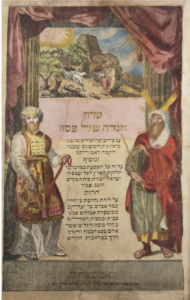
sefer in my collection with a very busy Shaar Blatt:

It is a Chumash printed by Yosef, Yaakov, and Avraham Proops in Amsterdam, 1767.[2] The Chumash contains some of the normal additions, such as Targum Onkelos and Rashi, along with two additions which are indicated as being “ואלה מוסיף על הראשונים. I would like to focus on one of these additions, the Sefer HaChinuch. Placing the words of the Sefer HaChinuch underneath the text of the Chumash certainly made sense in theory, as one could review its words as one studied the Parsha. But it caused two major problems, one of which could be solved by use of a magnifying glass, and the other which brought about a change in the Sefer HaChinuch “עד היום הזה.

The Sefer HaChinuch describes the details of, and reasons behind, the 613 Mitzvot.[3] Some of the explanations are very short, such as מצות אכילת מצה, (Mitzvah 10 -Shemot 12:18) so they fit nicely underneath a Pasuk. But when one Pasuk contains 3 Mitzvot and the lengthy explanations need to be placed underneath it (along with Onkelos, Rashi and Peirush Devek Tov), it creates a big problem with space. The only solution would be to have just one Pasuk on a page and to use smaller typeface for the Sefer HaChinuch than for Rashi. Here is how one page looks (Shemot 23:2). It includes Mitzvot 76,77 and 78.

This idea of including the Sefer HaChinuch in a “regular” Chumash was tried once again in 1783 in Frankfurt an der Oder, but perhaps because of this issue of space, never again after that.

This edition of the Chumash, which revised the order of the listing of the mitzvot, also altered the sequence in subsequent editions of the Sefer HaChinuch. This is despite the fact that the author of the Sefer HaChinuch specifically lists the Mitzvot of each parsha in one format. The Proops brothers’ edition of the Chumash overrode the author’s approach.[4] The original order for each Parsha is to list the מצוות עשה first and the מצוות לא תעשה afterwards. Here is how the Mitzvot of Parshat Tetzaveh are ordered in the oldest manuscript copy of the Sefer HaChinuch:

https://digi.vatlib.it/view/MSS_Vat.ebr.163[4]

This order was preserved in subsequent manuscripts, and in the first printed edition of Sefer HaChinuch.[6]

In placing the מצוות עשה first and then the מצוות לא עשה, the author of the Sefer HaChinuch is following the model of the Sefer HaMitzvot of the Rambam.[7] As he writes in Mitzvah 138:

עִם כָּל זֶה מִדֶּרֶךְ חֶשְׁבּוֹן הָרַמְבַּם זִכְרוֹנוֹ לִבְרָכָה אֲשֶׁר [נִתְפַּשֵּׁט] בַּמִּצְוֹת לֹא נִטֶּה…. כִּי הוּא בֶּאֱמֶת סִבָּתֵנוּ בְּעֵסֶק זֶה, וּמִיָּדוֹ זָכִינוּ לוֹ….

This division is also preserved in the headings of the halakhot in Mishneh Torah, and Sefer HaChinuch then follows it.

But this order would not work for a Chumash designed to have the Mitzvot aligned with the Pesukim in the order they appeared in the Parsha, because the מצוות עשה and מצוות לא תעשה are interspersed within the Parsha. For example, Mitzvot 98 and 99 are מצוות עשה and come first in the Parsha. But Mitzvah 102 (a מצות לא תעשה) follows Mitzva 99(a מצות תעשה) in the Parsha so it becomes Mitzvah 100. Here is how it looks in a modern volume:

This change in the numeration of the Mitzvot was not lost on the Proops brothers, and they note that they hoped Torah scholars would look favorably on this change.


“And now, this treasured Sefer ( HaChinuch) has been modernized according to the order ( of the Pesukim of the Chumash) so that the reader can easily follow it as he reviews the Parshat HaShavua. It is now presented page by page and therefore we have not followed the order of the author who presented all the מצות תעשה and מצות לא תעשה separately….and we have confidence that this will be pleasing to scholars who love Torah and who do the Mitzvot of Hashem…”

Artscroll has published a 10-volume series on the Sefer HaChinuch[8] and notes that the order of the Mitzvot is the way they are recorded in the Parsha. The introduction states that whereas “other Rishonim arranged the Mitzvot topically, Chinuch arranges them according to the Parshiyos (weekly readings) of the Torah, and within each Parsha, in the order in which the Torah records them”. There is a footnote to that statement which clarifies the matter by saying that originally “the author arranged the Obligations and Prohibition separately within each Parsha, first presenting all the Obligations and then all the Prohibitions. This arrangement was preserved in the earliest printed editions of Chinuch. In the 18th century, however, this format was changed, and since then the Chinuch has been printed with the Obligations and Prohibitions intermingled, in the order of the verses of the Torah”. There is no explanation as to why in the 18th century the order was changed. We are left to wonder why
something formulated by a Rishon was changed.

Rabbi Chaim Dov Chavel does not react quite as calmly to this change.[9] In his scholarly edition of Sefer HaChinuch first published in 1952 by Mosad HaRav Kook, he is quite critical of the Chumash which made these changes.[10] He writes:

במהדורה זו נעשו שינוים גדולים ורבים בטופס הספר שנכנסו בכל הדפוסים שבאו אחריה”

“In this edition, many major changes were made in the form of the book which were introduced into all the editions which followed”

He compares this edition to one which he feels is more authoritative, the first printed edition of Sefer HaChinuch, Venice 1523.[11]

Among the changes he lists is the one of re-ordering the positive and negative Mitzvot

מצות עשה ולא תעשה נסדרו כאן בפעם הראשונה בערבוב, כלומר ביחד, כמו שהן סדורות בתורה

He concludes his criticism of the Chumash with the Sefer HaChinuch by writing that it was if the printers had given the Sefer HaChinuch a “פנים חדשות “

את נוסח לשון רבינו בסדר המצוות ומנינן שינו המדפיסים לגמרי, וכמעט ששיזו לחלק זה פנים חדשות”

Because he feels it was wrong to change the order of the Mitzvot, he reverts back to the original order and numbering used in the Kitvei Yad and in the earliest printed editions.[12]

Rabbi Chavel is correct in that the order and the numbering of the Mitzvot was changed forever by the new order introduced in a Chumash which tried to incorporate in it the Sefer HaChinuch.[13] The initiative for changing the Order of Mitzvot was to for no other reason than to attempt to align the Sefer HaChinuch with a printed Chumash. No group of Torah scholars in the 18th century got together to decide to make this change. I imagine that the author of the Sefer HaChinuch might even have considered re-ordering the Mitzvot to conform to the flow of each Parsha but decided to keep the order of positive Mitzvot all together first and negative Mitzvos all together second.[14] It leaves unanswered the question of whether changing the order of the Mitzvot (even though done for what was seen to be a positive purpose) was the correct thing to do?

[1] I call this Chumash “obscure” because as you will see later on, a great scholar was unaware of it.
[2]
Encyclopedia.com notes in part on the Proops printers:

PROOPS, family of Hebrew printers, publishers, and booksellers in Amsterdam. SOLOMON BEN JOSEPH (d. 1734), whose father may have been a Hebrew printer as well, was established as a bookseller in Amsterdam and associated with other printers from 1697 to 1703….At his death, appointed guardians continued to operate the press, and even when his sons JOSEPH (d. 1786), JACOB (d. 1779), and ABRAHAM (d. 1792) took over, they traded under the old name until 1751.

https://www.encyclopedia.com/religion/encyclopedias-almanacs-transcripts-and-maps/proops

On my sefer, there is an ownership stamp of הרב י.ל. הכהן פישמן, also known as Rabbi Yehuda Leib Fishman Maimon who was one of the signers of Israel’s Declaration of Independence and was the first minister of Religious Affairs. He was also an avid book collector who owned 40,000 books. There is another ownership stamp belonging to him on the page preceding the Shaar Blatt which looks like this

It quotes part of the Pasuk in Breishit 49:10 לֹֽא־יָס֥וּר שֵׁ֙בֶט֙ מִֽיהוּדָ֔העַ֚ד כִּֽי־יָבֹ֣א שִׁילֹ֔ה and then says ספריה הרב יהודה ליב הכהן פישמןירושלים.
[3] The idea that there are 613 Mitzvot in the Torah, 365 negative Mitzvot and 248 positive Mitzvot, is first recorded in Talmud Bavli Masechet Makot 23b

דרש רבי שמלאי שש מאות ושלש עשרה מצות נאמרו לו למשה שלש מאות וששים וחמש לאוין כמנין ימות החמה ומאתים וארבעים ושמונה עשה כנגד איבריו של אדם

[4]There is much discussion as to who was the author who chose to remain anonymous.

Sefaria summarizes the issue as follows:

המחבר מזהה עצמו רק כאיש יהודי מבית לוי ברצלוני“, ויש חילוקי דעות לגבי זהותו המדויקת. יש המייחסים את הספר לר’ אהרן הלוי (ראה), אבל כבר הוכח בבירור שהוא לא חיברו. אחרים מיחסים אותו לרּ פנחס הלוי, אחיו של הראה.

[5] The bibliographic record at the National Library of Israel notes that it was written in 5093 (1333) based on the colophon which states:


נשלם על ידי אברהם בכמ”ר אברהם ז”ל ב”ר משה נ”ע ליל ו’ עשרים יום לחודש טבת שנת צ”ג

https://www.nli.org.il/en/discover/manuscripts/hebrew-
manuscripts/itempage?vid=MANUSCRIPTS&docId=PNX_MANUSCRIPTS990001132770205171&scope=PNX_MANU
SCRIPTS&SearchTxt=%D7%A1%D7%A4%D7%A8%20%D7%94%D7%97%D7%A0%D7%95%D7%9A
[6] I accessed the following manuscripts on KTIV, all of which had the same order. Parma 3016 – Laurentian Library, Florence, Italy Ms. Or. 473 -Casanatense Library, Rome, Italy Ms. 2857 – Paris BN 400vi.
[7] He was also following the pattern of the בעל הלכות גדולות, the first of the מוני המצוות.
[8] The Schottenstein Edition Sefer Hachinuch #1 / Book of Mitzvos, Brooklyn, NY, 2012 – General Introduction page xl.
[9] A comprehensive review of Rabbi Chavel’s works appeared in his “Peirush Rashi Al HaTorah” first printed in 1982 https://tablet.otzar.org/#/book/155543/p/1/t/1/fs/0/start/0/end/0/c
[10] Rabbi Chavel was not familiar with the Proops Amsterdam 1764 edition of the Chumash cited above and thought the first Chumash printed with the Sefer HaChinuch was the one of Frankfurt an der Oder of 1783. I assume he would have leveled the same criticism at the Amsterdam edition. The Bibliography of the Hebrew book notes this fact about the 1764 edition:

.ספר החינוך נדפס כאן לראשונה “אחר סדר הפסוקים” ולא לפי הסדר שקבע המחבר (עשין לבד ולאוין לבד). וכן נדפס ברוב ההוצאות הבאות. עיין במבוא של הרב חיים דוב שאוועל לספר החינוך, ירושלים תשי”ב, עמ’ כ-כא, שציין את השינויים שנעשו במהדורת תקמ”ג, שינויים אלו נעשו

[11] Here is the Shaar Blatt from Rabbi Chavel’s edition:

[12] An example would be Mitzvot 99-104. Both the order and the numbers are changed:


[13] Here are some examples of some modern editions which have it the “new” way:

מהדורת ספרי אור החיים – תשׁע״א
מכון מירב-תש״ד
מכון ירושלים-תשנ״ב
מכון אורות חיים – תשׁנ״ז
מעיל האפד- תשנ״ח
ספר החינוך המבואר השלם על מועדים- תשס״ח
ספר החינוך מבואר – צפת- תשע״ד
ספר החינוך ע”פ מנחת צבי – תשׁס״ח
Artscroll 2012-18

[14] At the end of his introduction, he writes,  עַל כֵּן רָאִיתִי טוֹב אֲנִי הַדַּל בְּאַלְפִּי, תַּלְמִיד הַתַּלְמִידִים שֶׁבִּזְמַנִּי, אִישׁ יְהוּדִי מִבֵּית לֵוִי בַּרְצְלוֹנִי, לִכְתֹּב הַמִּצְוֹת עַל דֶּרֶךְ הַסְּדָרִים וְכַסֵּדֶר שֶׁנִּכְתְּבוּ בַּתּוֹרָה זוֹ אַחַר זוֹ ….and yet he still grouped them the way he did.


New Sefer Announcement

New Sefer Announcement

By Eliezer Brodt

.מודעא לבית ישראל, ביטול מודעה, מודעה רבה, תשובות גדולי ישראל בנדון מצות מכונה בפסח, קיא + שיא עמודים, עי, רמרדכי קנאפפלער וישראל טרעס

I am very happy to announce the republication of the original seforim published at the beginning of the Machine Matzah Controversy in Galicia in 1859.  

One sefer, Modah Le’beis Yisroel is a collection of Teshuvot of those who were against Machine Matzah and the other one, Bitul Modah contains the Teshuvot defending Machine Matzah.

This volume was edited and produced by Rabbi Mordechai Knopfler and Sruly Tress.

This edition also includes many of the Teshuvos written over the years by various Gedolim on this subject, including from manuscripts.

Included in this volume is a fascinating article (65 pp.) by R’ Yechiel Goldhaber on the continuation of this Controversy that took place in Yerushalayim (including never before published documents).

In addition, this volume includes a useful introduction by Eliezer Brodt (43 pp.) about the Background regarding the original Controversy in 1859 and the History of the main Gedolim involved. This introduction is an expanded version of a presentation about the Machine Matzah Controversy given a few years ago, for All Daf available here and here.

For some sample pages and the introduction Email me at EliezerBrodt@gmail.com

Copies are available for purchase at the following locations:

In the US:

In Flatbush/ Marine Park at Mizrahi Bookstore (bluebirds15@yahoo.com)

In Boro Park at Biegeleisen.

In Lakewood at Numerous Locations.

For more Information

Contact me at EliezerBrodt@gmail.com

In Eretz Yisroel 

Contact EliezerBrodt@gmail.com


There is No Bracha on an Eclipse

There is No Bracha on an Eclipse
By Rabbi Michael J. Broyde

Rabbi Michael Broyde is a law professor at Emory University School of Law and the Projects Director in its Center for the Study of Law and Religion.  His most recent Torah sefer is entitled “A Concise Code of Jewish Law For Converts”.  This letter was written to someone after a shiur in 2017 on why there is no bracha on seeing a solar eclipse.

1.     You are correct that I said that I thought there was no bracha on an eclipse.  I had not seen Rabbi Linzer’s teshuva at the time that told that to you this, as it was not circulating on the internet at the time that I prepared for my shiur and I did not see it until Sunday, the day after the shiur.  I try to cite as much as relevant in these classes and his thoughts are clearly relevant.  He is a stellar writer on interesting topics of halacha and I read his material consistently.  I had seen that Rabbi Eliezer Melamed in Peninei Halacha Laws of Brachot 15:6 and note 5 which does permit a bracha on an eclipse.
2. Having said that, I would not change my mind at all in light of Rabbi Linzer’s teshuva and remain opposed to reciting a bracha over an eclipse for many reasons explained below.
3.  First, as many have noted, the giants of halacha are quite divided over the question of whether the listing in the Shulchan Aruch is paradigmatic or particular.  Some make no blessings other that for matters listed in the codes and other treat them as examples.  That dispute alone inspires me to be cautious, although I could be persuaded that the paradigmatic approach is correct and one could then make a bracha on a waterfall.  I have yet to see a clear proof that such a view is correct, but it does seem more intuitive.[1]  Yet, safek brachot lehakel is present.
4.  Second, and more importantly, if you look closely in the classical achronim, you see not a single achron who actually endorses saying a bracha on an eclipse.  Not a single one.  It is true that there is a dispute about whether the list in the Mishna is all inclusive or not (as many note, see Shar HaAyin 7:6), but even those who are of the view that the Mishnah’s list is merely examples, not a single achron actually endorses making a bracha on an eclipse as opposed to a volcano or some other natural wonder, which some clearly do permit a bracha on.  The group that favors expansive brachot on natural wonders endorse stalagmite caves, waterfalls, water geysers, volcanoes and many more: but not eclipses.  If you look, for example in Shar HaAyin 7:6 (the classical work on this topic) one sees this most clearly: even those who endorse making brachot on waterfalls, or other amazing facets of creation are uncertain נסתפק)) if one make a bracha on an eclipse, and we all know that when a posek is נסתפק, that posek does not make a bracha.[2]
a.      This contrast is made clear in the context of Rabbi Shmuel Halevi Wosner — who is the most clear and direct articulator of the view that list of wondrous sightings in the Shulchan Aruch are just examples, and one makes the bracha of oseh maaseh bereshit even on other wonders.  In Shar HaAyin page 431 he states directly that one makes a blessing on many wondrous things unlisted in the codes and he explains that “Volcanos are not present in our lands and thus are unmentioned in the Shulchan Aruch” and that it is “obvious” that one makes a blessing on them.  However, on eclipses he states “solar eclipses are mentioned a few times in the Gemera, and thus on the question of whether one needs to make a bracha when one sees them, needs more thought.[3]”  He does NOT endorse making a bracha on an eclipse. In fact, I am unaware of anyone other than Rabbis Melamed and Linzer who actually endorse the view in favor of making a bracha on an eclipse, (rather than merely ponders the possibility of such a bracha).  Rabbi Wozner’s point is important: this is not a modern issue – eclipses were well known for a few millennium, and silence in the Jewish Law codes is telling.  To the best of my knowledge the dispute about the eclipses is between two views: (1) Absolutely Not and (2) Maybe.  There is no (3) Yes view in the classical rabbinic literature for eclipses.  (That is why the listing of reasons why an eclipse might be different from other wonders below is important.)

5.     Why is an eclipse different from a stalagmite cave or a volcano?  I could think of a few reasons from a halachic perspective, even to those who believe that the Mishna’s list is not inclusive.
a.   Many perceive them to be a siman raah – a bad sign, either because of superstitious reasons or because darkness in the middle of the day is practically bad – and there is no blessing on bad omens (as Rabbi Moshe Feinstein is quoted in Mesorat Moshe 2:51).
b.     Because one sees nothing in an eclipse (as it is an absence of light, rather than a presence) and we do not make brachot on absences.
c.      Because the bracha of oseh maaseh breseshit does not apply to things whose existence can be mathematically predicted, but are merely rare: eclipses are not anomalies, but a product of the universes’ cycle of life, and more under the berkat hachama rule.
d.     Because full eclipses are exceedingly rare and partial eclipses are almost impossible to “see” without modern eclipse glasses (a 75% eclipse hardly is noticed on a functional level) and are naturally invisible.
e.      For other reasons that are less obvious related to the fact that these have to be wonders from “creation” and these are not from creation.
f.     Because some thought that eclipses were punishments and thus no blessing was ordained.[4]
6.     Based on all this, one can say that eclipses could be different from all other created natural anomalies as a matter of Jewish law and are not covered by the general idea of a wonder such that a blessing should be made. To my surprise, even as the primary source of the view that one can make a bracha on wonders beyond the Mishna’s list is Rabbi Wozner and he explicitly notes that eclipses are different from volcanoes, waterfalls, geysers and many other rare natural phenomena, the secondary codifiers of the last generation have completely missed this distinction.  Instead both Shar HaAyin 7:6 and Penenia Halacha Laws of Bracha 15:5 link the dispute about volcanoes and waterfalls with eclipses and state that one who permits a bracha for volcanoes and waterfalls would do so for eclipses as well, when in fact that is incorrect.  Eclipses were known in Talmudic times and yet no bracha was noted: that bothers Rabbi Shmuel Wozner, who permit a bracha on an erupting volcano, not to permit a bracha to be recited on an eclipse, by noting that he is uncertain if a bracha is proper.[5]
7.     Additionally, let me add a thought of my own about modern times and bracha’s over wonders.  The Shulchan Aruch OC 228:3 limits even the mountains that one can make a bracha on to such mountains in which the hand of our Creator is clear and apparent. (ולא על כל הרים וגבעות מברך, אלא דווקא על הרים וגבעות המשונים וניכרת גבורת הבורא בהם.)  I think in our modern times, with modern science explaining all of these events, no mountains or valleys ever meet the criterial of make it clear (to normal people) that God is in charge of the universe.  Based on this, I would not make any extensions of this halacha beyond its minimums recorded in the Shuchan Aruch because I think that the test for determining whether we can add to this list is and make a bracha is וניכרת גבורת הבורא בהם.  Given the secular environment we live in, I think no natural astrological events meets that bill in modern times so I only – at most — make such brachot on the things that the halachic tradition directly directs me to do, like lighting or thunder or great mountains and certain rivers. I would not make such a bracha on an erupting volcano or a solar eclipse, as seeing such does not cause normal people in my society to experience God.  (There are two formulations of my claim, each slightly different.  The first is experiential, in that I think that most people in my society do not sense any awe of God at an eclipse.  Second, even if any particular person does (and I do not doubt that some do), they cannot make the bracha since most people in America do not so sense God through these events and that is the halachic test found in the Shulchan Aruch.  The sense of wonder has to be obvious to normal people and that is lacking in the world we live in.
8.     Finally, all attempts to actually endorse making a bracha on an eclipse run directly against the combined force of both (1) the minhag, which is not to make a bracha and (2) the rule of ספק ברכות להקל. These two together make it difficult for any moreh horah to argue convincingly that there is clear proof that bracha should be made.
9.     I have consciously not engaged with Rabbi Linzer’s very worthwhile point (which I more or less agree with) that “we strive to bring our religious lives and our halakhic lives in sync” exactly because (as he himself notes) this calculus is limited to cases where there is a dispute between poskim about what to do.  Here, to the best of my knowledge, there is no dispute and since there is no classical halachic authority who actually says “yes make a bracha on an eclipse” there is no grounds to examining very important meta issues used to resolve disputes (since there is no dispute).
10. Based on all of this, I would not make a bracha on an eclipse.
11. Having said that, I am happy to endorse other forms of religions veneration for one who feels such wonder.
a.     One can certainly say this bracha without שם ומלכות.
b.   I am also somewhat comfortable with someone making this blessing in Aramaic (see Shulchan Aruch OC 167:10, 187:1 and 219:4) although I am aware of the view of Iggrot Moshe OC 4:20:27, but find the view of the Aruch Hashulchan OC 202:3 more analytically compelling.
c.      Both the suggestions of Rabbi Chaim David Ha-Levi (Responsa Aseh Lecha Rav, 150) that one recited va-yevarech david (Chronicles. 1:29:10) and adding “who performs acts of creation” at the end and of Rabbi David Lau, current Ashkenazic Chief Rabbi of Israel, to recite Tehillim 19 and 104 are completely reasonable as well.
d.     Other innovative non-bracha based solutions are also reasonable.
12. On the other hand, those who attended an eclipse – I myself traveled to Rabun, Georgia, an epicenter for the total eclipse and sat in total darkness at for three minutes in the middle of the day and did not feel any closer to the Almighty as Creator of the World during the eclipse than I did after or before — can feel free to engage in no innovative religious observance at all without feelings that they are deficient in any way.
13.  I welcome readers to direct me to a source written by an achron which directly discusses eclipses and permits a bracha.  (Please feel free to email me.) So far, I have only seen that the group that permits a bracha for an eclipse does so based on a putative ruling of Rabbi Wozner and others to permit such a bracha, which upon closer examination is not present.  I am willing to ponder the possibility that there is an achron who permits such a bracha even as others do not – that posek argues that all wonders deserve a bracha and the listing in paragraph 5 above about why eclipses are different from other wonders is incorrect – To the best of my knowledge, that is a theoretical position that is not actually adopted.

[1] I am inclined to the more expansive view because the formulation in the Beit Yosef in Tur OC 228.
[2] This is an important point.  Rabbi Wozner has the right as a morah horah to assert that he rules that the mishna’s list is not inclusive and that volcanoes get a bracha (which is exactly what he says, as does Rabbi Nissan Karletz in the same work on page 466).  When one asks him “how can he rule that a bracha needs to be recited, others disagree, and then the matter is in doubt”, Rabbi Wozner responds by stating that he sees no doubt and thus he feels a bracha should be recited.  When Rabbi Wozner states that he has doubt about this matter, he is being clear that this is exactly a case of doubt and no blessing should be recited.
[3] Let me add that eclipses are discussed in the rishonim and codifiers as well, with no mention of a bracha.  See Darchai Moshe on Tur OC 426 and the works cited by Rabbi Linzer in footnote 2 of his teshuva (see here).
[4] It is clear from the recounting of the Chafetz Chaim that he did not say a bracha on an eclipse.  See here.
[5] This is found both Shar HaAyin and Penine Halacha as well as Rabbi Linzer’ teshuva.  Shaar Haayin 7:6 is strict on the whole matter and does not permit a bracha practically on even volcanoes an water falls, so the mistake in that work – linking volcanoes and eclipses — is merely one of conceptual classification, but Peninia Halacha rules that המברך לא הפסיד (“one who makes the blessing is doing nothing wrong” for “volcanic eruptions, geyser, waterfalls and both lunar and solar eclipses” when it is clear to this writer that the source he is sighting – he cites Rabbi Wozner! – does not adopt that view.  (On page 466 of Shar HaAyin, Rabbi Nissan Karlitz is asked “Is the blessing oseh maaseh bereshit similar in that things that are wonders and not found in the Shulchan Aruch like an erupting volcano or a spouting geyser or other similar phenomena, also requiring a bracha” and Rabbi Karlitz answer “Logic indicates that such is the case also,” but no explicit discussion of eclipses, which could be different.


On Libraries, Bibliophiles & Images: Taj Auction 13

On Libraries, Bibliophiles & Images: Taj Art Auctions 13

by Eliezer Brodt and Dan Rabinowitz

Taj Art Auctions will hold its 13th auction this Sunday, April 7th (the catalog is available here). The auction contains many items worth highlighting, especially those related to historic Jewish libraries, as well as other unique books and ephemera.

Recently, arguably, the most significant Jewish library reopened its doors. The National Library of Israel, housed at Hebrew University for decades, moved into its own building, designed by the starchitects Herzog & de Meuron, who count the Tate Modern among other outstanding projects. Books are integral to the Jewish experience, and the library’s location, next to some of the most important institutions of the Jewish state, the Knesset, the Israel Museum, and the Supreme Court, echoes that sentiment. The library’s ground floor houses the Jewish Studies reading room, which contains over 200,000 volumes. The library itself holds over four million books (and counting). These are now accessed by a quartet of robots that fetch requested books. There is even a window to watch them in action. The Scholem room has been transformed from its small, cramped quarters into a spacious room that houses the collections of several kabbalah scholars. Scholem’s desk is still present. There is a permanent exhibit of some of the library’s treasures, but that is only accessible on an official tour.

Nonetheless, it is undoubtedly worth seeking out. An exhibition of manuscripts of one the greatest privately held collections of Judaica, the Braginsky Collection, opens this month. While the National Library’s new building and collection are exceptional, many precursor Jewish libraries existed throughout the Jewish diaspora.

The oldest functioning Jewish library in the world is the Ets Haim Library in Amsterdam, dating from 1616. (An exhibition of its books was held at the National Library of Israel, then known as the Jewish National and University Library, in 1980). Its antiquity is tied to the date the school opened with the same name. This school became well-known for its unique curriculum and success in imparting that curriculum. Unlike the Central and Eastern European schools that almost immediately started studying Mishna and Talmud, the Talmud Torah applied a more systematic approach to Jewish literature. R. Shabbetai Seftil, the son of R. Yeshaya ha-Levi Horowitz (Shelah or Shelah ha-Kodesh), traveled from Frankfurt to Pozen via ship. That journey took him through Amsterdam, where he saw that the students’ studies operated in sequence. First, they studied the entire corpus of Tanakh and then completed the Mishha, and when they matured, they only began studying Talmud, and this approach contributed to their unique success. Seeing the benefits, he broke down crying, “Why don’t we follow the same approach in our countries [of Central and Eastern Europe]? Suppose only we could institute this throughout the Jewish communities. What would the harm be in first completing the Torah and Mishna until the student reaches thirteen and then begins Talmud? With that background, it will take only a year to become proficient in the intricacies of Talmud study, unlike our current approach that requires years to reach that level of fluency.”

In an example of the intertwining nature of the library and the school, the bibliographer R. Shabbetai Bass (1641-1718), who wrote the first Hebrew bibliography, Sifte Yeshenim (today, most well-known for this commentary on Rashi, Sifte Hakhim). Bass was born and lived in what is today the Czech Republic (Czechia). Around 1680, he went to Amsterdam to print Sifte Yeshenim. During that time, he visited the library and school and described the students as “students of giants: young children dancing like locusts and like so many lambs. To my eyes, they were giants, so well-versed in their knowledge of Torah and grammar. They could write Hebrew verse and poetry in meter and converse in clear Hebrew.” He also describes the unique aspect of the library. “Within the midrash, they have a special school, and there they have many books, and all the time they are in the yeshivah, this room is also open, and whoever wishes to study, anything he desires is lent to him. But not outside the beit midrash, even if he provides a large sum of money.”

From Ets Haim Bibliotheek Website

Among the Ets Hayim Library treasures is an Amsterdam print, the first Haggadah with copperplate illustrations. While illustrations in printed Haggados began with the Prague Haggadah of 1526, these were woodcuts. Copperplates, however, produce much finer illustrations. In 1695, the convert, Abraham ben Yaakov, designed and executed these copperplates, and the Haggadah was printed by the famed Amsterdam publisher, Proops. (Copperplates were already used in printing decades before the Haggadah. Perhaps one of the most significant recent examples is a 1635 copper etching by Rembrandt that the Jewish art scholar Simon Schama donated to the Rijksmuseum in Amsterdam last year.)  The illustrations are based on the Christian biblical illustrations of Mathis Marin. While most are innocuous, the temple image at the end of the Haggadah is topped with a cross. In addition to the fine illustrations, the Haggadah also contains a large foldout map of the Jews’s journeys from Egypt to Israel; it is among the first Jewish maps of the Holy Land.

The Ets Hayim Library holds a unique edition of this Haggadah, considered one of its most treasured books. First, it contains an extra title page. But, more importantly, it is hand colored. While the copperplates are a significant improvement, the coloring makes this an especially striking Haggadah. It is listed among 18 Highlights from the Es Haim: The Oldest Jewish Library in the World, published by the library in 2016. The book includes three full-page reproductions of various details of the Haggadah and smaller reproductions of other pages. There are only two other copies of this version. One is at the Hebrew Union College in Cincinnati, and the other is being auctioned at Taj Art Auctions (lot 89). The copy at the auction was a gift from the printer Solomon Proops.

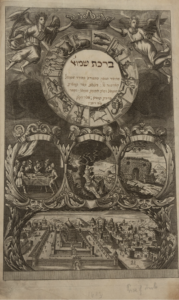
Similar images from the Haggadah’s title page were reused in Menoras ha-Me’or, Amsterdam, 1722, (lot 84), and the Amsterdam Haggadah final illustration of the Beis ha-Mikdash, that if one looks closely, the Christian cross was left intact from the original Mathis Marin illustration, also appears in the beautiful and unique title page adorning Birkas Shmuel, Frankfurt, 1782 (lot 152).

Birkas Shmuel, Frankfurt, 1782 Note the Cross on the Top of the Temple

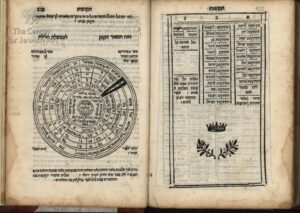
Amsterdam was home to another significant library, the Rosenthaliana. It was collected in Hanover but eventually landed in Amsterdam. The catalog related to this library attests to the rarity of another book in this auction. This library was amassed by Eliezer (Leeser) Rosenthal (1794-1868). Born in Warsaw, he eventually traveled to Hanover, where he served as a Rabbi. His wife came from a wealthy family that allowed Rosenthal to indulge in his passion, book collecting. At their death, his library comprised more than 5,200 volumes, including twelve incunabula and numerous rare and unique books. After his death, his son, George, commissioned the bibliographer Meyer (Marcus) Roest to complete a bibliography of the library. It was published in two volumes in 1875 and reproduced in 1966. Roest’s work incorporated Rosenthal’s catalog of his library, Yodeah Sefer. Despite the many rare books in the collections, there was at least one book he could not procure, at least a complete copy. In his entry, 1524, for the Ibbur Shanim, Venice, 1679, he says that “it is a terrible loss, that my copy is incomplete, it is missing the last pages, my copy ends at page 95 … and is missing the calendric charts for 150 years, beginning from 1675, my copy is missing from 95 of these charts, from 1731 onward… This is a scarce (yekar mitzius) book and is not listed in R. Hayim Michael’s [Or Meir] or the Shem ha-Gedolim, or Di Rossi’s bibliography.” The National Library of Israel received a complete copy from the Valmaddona Trust, which was digitized and available online. (One can bid on four of the Valmadonna books, Talmud Bavli, Seder Zeriam, Lublin, 1618, lot 70 , as well as lots 12, 54, and 68). A complete copy of the book appears in the auction at lot 2. (For more on calendar books, see Elisheva Carlebach, Palaces of Time: Jewish Calendar and Culture in Early Modern Europe, and pp. 51-55 regarding Ibbur Shanim. His work is also a source for the Tu be-Shevat seder, see our post, “Is there a Rotten Apple in the Tu be-Shevat Basket“). The book has its own intersting history that is briefly described in the timely post, “Kitniyot and Mechirat Chametz: Paradoxical Approaches to the Chametz Prohibition.”

Yet another seminal Jewish library was that of R. Dovid Oppenheim (1664-1736), considered “the greatest Jewish bibliophile that ever lived.” (See Alexander Marx, Studies in Jewish History and Booklore, 213). Oppenheim started his rabbinic career in Moravia, moved to Prague, and was eventually elevated to Bohemia’s Chief Rabbi. At age 24, his library consisted of 480 books, and by 1711, his library stood at over 2,100 books, missing only 140 books from those listed in Shabbetai Bass’s bibliography of all Hebrew books. After his death (with some additions from his son, Yosef), the library rose to 4,500 printed books and 780 manuscripts. Although Oppenheim lived in Prague, the library was in Hanover. This was due to the heavy book censorship, which included the potential for confiscation by the authorities. Oppenheim visited his library, but perhaps because his time was limited, his works do not indicate that he was acquainted with the book’s contents. Instead, he should be considered a consummate bibliophile, and his collection consisted of rarities and special beautiful and unique copies, with a considerable number on blue paper. For example, there were 51 books printed on vellum, 40 of which he commissioned himself, out of about 200 known books printed on that medium until 1905.

After his death and multiple attempts to sell the library, it eventually went to the Bodleian Library at Oxford University. A complete history of the library was most recently accounted for by Joshua Teplitsky in his Prince of the Press: How One Collector Built History’s Most Enduring and Remarkable Jewish Library. But before its final resting place, there were a handful of catalogs of the library or various aspects of it. The first complete printed catalog of the library was issued in 1782 and was intended to elicit interest from potential Jewish and non-Jewish buyers. Thus, it contains two title pages, one in Hebrew and the other in Latin. This rare bibliophilic item is lot 156.

Finally, the auction also includes books from the library of R. Nachum Dov Ber Friedman, the Sadigur Rebbe. His library was recently described in Amudei Olam by R. Zusya Dinklos, pp. 419-39. Aside from traditional works, the library also held Haskalah works, as the one in lot 71.

Illustrated Books

We discussed Ibur Shanim, and in addition to its rarity, it is also among the small number of Hebrew books that contain illustrations. Because the book’s purpose was to elucidate and explain Hebrew calendrical calculations, including the determination of the tekufos (which he vehemently criticizes some Rishonim and others for dismissing them as old wives tales), there are a handful of tutorial images.

Ibur Shanim
Gross Family Collection

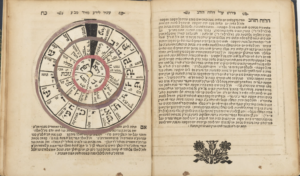
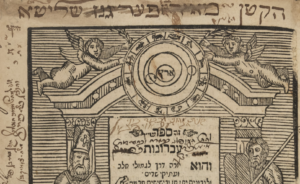
Likewise, Sefer ha-Ivronot, Offenbach, 1722 (lot 73) includes celestial images, in this instance, a movable wheel of the heavenly apparatuses. While there was some speculation that the title page image depicting a heliocentric universe was deliberately to align with the book’s contents, that is unlikely as the image was reused in at least three other books printed in Offenbach that are unrelated to astronomy.

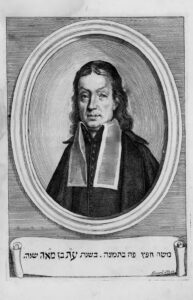
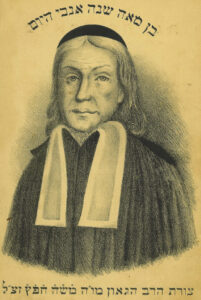
Moshe Hefetz, perhaps more well-known for the 19th-century modification of his portrait attached to the first edition of his Melechet Machshevet, which depicts him bare-headed, authored a book on the Bet ha-Mikdash, Haknukas ha-Bayis, 1696, (lot 20), within which several Temple elements are illustrated.

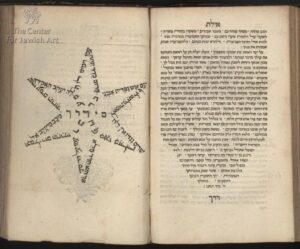
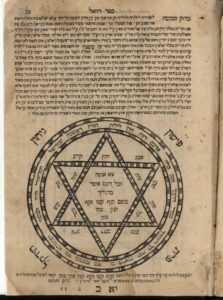
Two books contain eclectic images of the Jewish star. Igeret Ayelet Ahavim, Amsterdam, 1665 (lot 140) and the first edition, 170 Amsterdam, Raziel HaMalach, (lot 120) include unusual adaptations of the star. (For another kabbalistic rarity, lot 116, is the kabbalist, Rabbi Yosef Erges’ personal copy of the Rosh ha-Shana and Yom Kippur machzorim with his kabbalistic additions.)

Iggeres Ayyeles Ahahuvim
From the Gross Family Collection

Razeil ha-Malakh
From the Gross Family Collection

There are a handful of artistic title pages, with at least two Greek gods, Hercules and Venus (see lots 10 and 48), and some potentially objectionable ones that Marc Shapiro discussed in his book Changing the Immutable (lots 64 & 78).

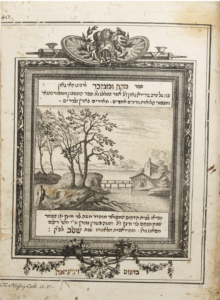
One of the most unusual title pages is a special one that its owner inserted into the book. The title page, taken from a non-Jewish architectural image by the 18th-century engraver Franz Carl Heissig, was filled in by hand with the book’s publication information (lot 5).

Finally, while censorship in Jewish books is somewhat common, undoing censorship is less common. Lot 62 is a unique copy of the Shu’T Maharshal that includes the otherwise expunged name of an informer. Other copies only refer to the person obliquely; this copy, although crossed out, the name is still visible. For more on this see Elchanan Reiner, “Lineage (Yihus) and Libel:  Mahral, the Bezalel Family, and the Nadler Affair,” in Elchanan Reiner, ed., Maharal: Biography, Doctrine, Influence, 101-26 (Hebrew).


Lekah Tov – What’s in a Name?

Lekah Tov What’s in a Name?
by Marvin J. Heller[1]

For I give you good doctrine (lekah tov); do not forsake My Torah (Proverbs 4:2).

The entitling of Hebrew books is a subject of considerable interest, varying as it does from the more common manner of labelling comparable works. Book titles generally reflect a book’s subject matter. In contrast, however, Hebrew book titles often reflect a subtle theme, considerably wide-ranging between books with a like title.

This subject has been addressed previously, by me and by others, in the latter case even in book format, and as the subject of encyclopedia articles. My previously addressed book titles are Adderet Eliyahu and Keter Shem Tov.[2] What the books with those titles and Lekah Tov have in common is that the books so entitled frequently do not share common subject matter.

Our listing of editions entitled Lekah Tov, a popular title, is based on the editions recorded in bibliographic works, primarily Ch. B. Friedberg’s Bet Eked Sepharim, which covers the period 1474 through 1950, and Yeshayahu Vinograd’s Thesaurus of the Hebrew Book, which covers titles printed from 1469 through 1863. Shabbetai Bass’ (1641-1718) Siftei Yeshenim (Amsterdam, 1680), the first bibliography of Hebrew books by a Jewish author, records five works entitled Lekah Tov. Isaac Benjacob, in his Oẓar ha-Sefarim, records fourteen works (through 1863) entitled Lekah Tov.[3]

The editions of Lekah Tov described in this article are the earliest editions from the sixteenth and seventeenth centuries and one title from the first decade of the eighteenth century, that is, in 1704. The order of the works addressed in this article is in chronological order, that is the order in which they were printed, rather than the time of writing or the author’s names.

I

We begin with four sixteenth century editions of Lekah Tov, the lead edition being R. Tobias (Tovyah) ben Eliezer’s Lekah Tov, known as Pesiḳta Zuṭarta (Venice, 1546), followed by R. Moses ben Levi Najara Lekah Tov (Constantinople, 1575), then R. Yom Tov ben Moses Zahalon’s commentary on the book of Esther, and R. Abraham ben Hananiah dei Galicchi Jagel’s Lekah Tov (Venice, 1595).

R. Tobias (Tovyah) ben Eliezer: Our first Lekah Tov, by R. Tobias (Tovyah) ben Eliezer (eleventh cent.), is also known as Pesiḳta Zuṭarta. A midrashic commentary on the Pentateuch and the Five Megillot, it published in רננ”ו (306 = 1546) at the renowned press of Daniel Bomberg in folio format (20:93 ff.). Bomberg, a non-Jew, came to Venice from Antwerp, obtained a privilege from the Venetian Senate to print three books, and issued as his first imprint a Latin Psalterium (1515). Soon after, in December, 1515, Bomberg requested and received the right to print Hebrew books, with a monopoly based on the expenses already incurred with such an activity. By the time his press closed, more than four decades later in 1548/49, it had published between two hundred to two hundred fifty titles, covering the gamut of Jewish literature, encompassing liturgy, Talmud, halakhah, philosophy, and grammatical works, books of high quality.

1546, Venice


R. Tobias (Tovyah) ben Eliezer 1880, Vilna
Courtesy of the National Library of Israel

Tobias (Tovyah) ben Eliezer’s (eleventh-twelfth centuries) place of residence has variously been given as Kastoria, Bulgaria, while others suggest Ashkenaz. Isidore Singer and M. Seligsohn suggest that Tobias might have been a native of Mayence (Mainz) and a son of Eliezer ben Isaac ha-Gadol, a teacher of Rashi. Ashkenaz is given suggested because Lekah Tov was written after 1097 and reference is made several times to the tribulations of the Crusades. In parashat (weekly Torah reading) Emor (Leviticus 21:1 – 24:23), for example, Tobias writes about the slaughter of the Jews in Mainz. However, as Tobias also frequently attacks Karaites and shows a knowledge of Mohammedan customs, it is suggested, by Solomon Buber, that that he was a native of Castoria in Bulgaria. Towards the end of his life Tobias settled in Eretz Israel.[4]

The pillared title-page of Lekah Tov has a header that, in a small font, states “There is neither wisdom, nor understanding, nor counsel against the Lord” (Proverbs 21:30). Below it is the phrase “the light of the righteous [will rejoice]” (Proverbs 13:9). Below in a larger font, is the title, given as Pesikta Zutarta, included here because later editions entitle and record Pesikta Zutarta as Lekah Tov.

This edition is on Vayikra, Bamidbar, and Devorim (Leviticus, Numbers, and Deuteronomy). Because the first edition was based on an incomplete manuscript which was lacking a first page, the printer entitled it Pesiḳta based on the word piska leading the words in the text. Tobias had entitled the work Lekah Tov because of the allusion to his name (tov, Tovyah, Tobias) in the title and begins each weekly Torah portion with a header verse with the word tov. For example, parashat Kedoshim begins with “Depart from evil, and do good (tov); seek peace, and pursue it” (Psalms 34:15); parashat Beha’aloscha “How sweet is the light, and it is good (tov) for the eyes to behold the sun!” (Ecclesiastes 11:7); and parashat Hukat “ You are good (tov) and beneficent, teach me Your laws.” (Psalms 119:68).

Tobias supports the literal meaning of the text but also quotes aggadot, midrashim, and the Talmud. He gives the grammatical meaning of words and quotes many halakhot, a recurrent source being R. Achai Gaon’s She’eltot. Tobias frequently refers to his father R. Eliezer, whom he refers to as ha-gadol or ha-kodesh (the great or the holy). As noted above, he attacks the Karaites and has a thorough knowledge of Mohammedan customs.

Tobias’ Lekah Tov has been cited by such leading rabbinic writers as R. Abraham ibn Ezra, R. Asher ben Jehiel (Rosh), R. Zedekiah (ha-Rofei) ben Abraham (Shibbolei ha-Leket), R. Menahem ben Solomon (Sekhel Ṭov, Even Boḥan), Rabbenu Tam, R. Isaac ben Abba Mari (Ba’al ha-Ittur), and R. Isaac ben Moses of Vienna (Or Zarua).[5]

Several editions of Tobias’ Lekah Tov on the Megillahs have been printed. The first reprint on the Torah commentary was in Vilna (1880) followed four years later by a second printing (1884), both by R. Solomon Buber at the Romm press.

R. Moses ben Levi Najara: Our next Lekah Tov is a commentary on the Torah with reasons for the mitzvot by R. Moses ben Levi Najara. This edition of Lekah Tov was printed in Constantinople at the press of the brothers, Jacob and Solomon ibn Isaac Jabez in folio format (20:150 ff.). They had printed previously in Salonica, for a brief interval in Adrianople and, after an outbreak of plague in Salonica in approximately 1570-72, Joseph Jabez sold his typographical material to David ben Abraham Azubib and left that city to join his brother Solomon in Constantinople. Solomon Jabez, had, in 1559, settled in Constantinople, founding a press that was active for about three decades. The brothers, issued more than forty titles in Constantinople.[6]

R. Moses ben Levi Najara was born in Turkey in c. 1502, perchance from a family whose origins were in Nájera, Spain. The family head, Levi Najara, settling in Constantinople after the expulsion of the Jews from Spain in1492. Moses Najara served as rabbi in Danaiditsch, spent time in Safed where at the age of thirty Najara was considered among the leading rabbinic scholars of Safed. In that location Najara was a student of R. Isaac Luria (Ari ha-Kodesh). He subsequently served as rabbi in Damascus. Moses Najara’s son, Israel Najara (c.1555 – c. 1625) was a noted poet, author of Zemirot Yisrael (Safed, 1587).

1575, Constantinople, Moses ben Levi Najara
Courtesy of the National Library of Israel

The title-page of this edition of Lekah Tov has a decorative border of florets, typical of Jabez brother publications. It dates the beginning of work to Friday, 4 Shevat, then gives the year with the chronogram “Truth will sprout from the earth אמת מארץ תצמח (331 = January 10, 1571) [and righteousness will peer from heaven]” (Psalms 85:12). The dating of this edition of Lekah Tov is problematic. With the exception of Shabbetai Bass, who gives the Hebrew chronogram date, the above bibliographic sources date publication as 1575, as does the National Library of Israel, despite the date on the title-page of מארץ (331 = 1571). Avraham Yaari transcribes the text of the title-page and then also dates it 1575.[7] In contrast to the preceeding, Abraham David, M. Franco, and Shimon Vanunu, respectively writing entries for the Najara entry in the Encyclopedia Judaica, the Jewish Encyclopedia, and Encyclopedia Arzei ha-Levanon, all date Lekah Tov to 1571. This is also the case for Isaac Benjacob who, in his Oẓar ha-Sefarim, dates publication to 1571.[8] Perchance, indeed likely, one early source erred and the later works copied and repeated the error without ever seeing the book. Another apparent error is the weekday date for the beginning of work as Friday, 4 Shevat. In 1571 that was a Sunday and in 1575 a Saturday, so that, whichever year is correct, the date for the beginning of work also appears to be in error.

There is an introduction from Najara in which he informs that he has entitled Lekah Tov for it is a good and important study, one that will guarantee the completion of their souls, truly and completely, as it was given at Sinai, to them for a goodly portion. The text follows, organized by parashah, in two columns in rabbinic letters and homilies on the Talmud, Mechiltah, Sifrah, and Sifri.

This is the only edition of Moses ben Levi Najara’s Lekah Tov. Sha’ar ha-Kelalim, published in the beginning of R. Hayyim Vital’s Etz Hayyim, is attributed to Najara in several manuscripts.

R. Yom Tov ben Moses Zahalon: Commentary on the book of Esther by R. Yom Tov ben Moses Zahalon. Entries in this article are supposed to be in chronological order of printing and this Lekah Tov was published two years after the preceding entry. However, bibliographical sources record and discount a possible, albeit questionable, Constantinople [1565], which is not noted in Avraham Yaari’ Hebrew Printing at Constantinople so that we too are discounting it. The definite publication of Zahalon’s Lekah Tov was in Safed on Friday, Rosh Hodesh Sivan, in the year “[Hear, O Lord, and have mercy on me;] O Lord, be my help! ה” היה עזר לי ([5]337 = Friday, May 27, 1577)” (Psalms 30:11) in quarto format (40: 83, 1 ff.) by Eliezer ben Isaac Ashkenazi.

This Lekah Tov is not only the first book printed in Safed, it is the first book printed in Asia, excluding Chinese imprints. Eliezer ben Isaac Ashkenazi who had printed previously in Lublin for almost two decades, leaving, with his son, to dwell in Eretz Israel – printing also, for a short time on the way, in Constantinople – anticipating that he would print books for a European market eager to purchase books from the land of Israel. Eliezer Ashkenazi became partners with Abraham ben Isaac Ashkenazi, mentioned in the colophon (apparently not a relative), the former supplying the expertise and typographic material, the latter the location and the financing.[9]

R. Yom Tov ben Moses Zahalon (Maharit Zahalon, 1558-1638), born to a Sephardic family in Safed, was a student of R. Moses Bassudia and R. Joseph Caro. He received semicha (ordination) from R. Jacob Berab II. Highly regarded by his contemporaries, who often requested his opinion on complex halakhic issues, Zahalon was a person of great integrity, not influenced by status. For example, it was his opinion, although he had the utmost respect for Caro, that the Shulhan Arukh was, “a work for children and laymen.” Zahalon made several trips as an emissary of the community in Safed to Italy, Holland, Egypt and Constantinople.[10]

1577, Safed, R. Yom Tov ben Moses Zahalon
Courtesy of the Library of the Jewish Theological Seminary

Lekah Tov was written by Zahalon at an early age, seventeen or eighteen, to send, as stated on the title page, for mishlo’ah manot (Purim gifts), to his father. Also on the title page is the prayer that, “the Lord should grant us the merit to print many books, for “from Zion shall go forth Torah, and the word of the Lord [from Jerusalem]” (Isaiah 2:3).

On the verso of the title page is a brief introduction, in which Zahalon refers to the burning of the Talmud in Italy and remarks that, “Great was the cry of the Torah before God and when He remembered the covenant that He made with us at Horeb (Sinai), the Lord roused the heart of the printer Eliezer [so that] honor dwelled in our land . . .” He encourages others to also print their books at the press in Safed. A second brief introduction from Joseph ben Meir follows, and then a longer introduction from the author. Zahalon informs that the book was named Lekah Tov because it has a reference to his name and because of the words of earlier sages on, “For I give you good doctrine (lekah tov); do not forsake my Torah” (Proverbs 4:2). The commentary, which is lengthy, includes both literal, homiletic, kabbalistic, and messianic interpretations. Zahalon does not reference a large number of other works. At the end of the volume is a copy of Marco Antonio Giustiniani’s (Justinian) device, a reproduction of the Temple in Jerusalem. Ashkenazi had used this mark previously in Constantinople.[11]


Zahalon was the author of more than 600 responsa, only partially printed (She’elot u’Teshuvot Yom Tov Zahalon, Venice, 1694); additional volumes of responsa and novellae on Bava Kamma were printed in Jerusalem (1980-81); and an extensive commentary on Avot de-Rabbi Natan entitled Magen Avot, still in manuscript.

R. Abraham ben Hananiah dei Galicchi Jagel: Catechism, or handbook on the principles of the faith, for Jewish youth by Abraham ben Hananiah dei Galicchi Jagel (1553-after 1623). This is the first edition of Jagel’s popular and much reprinted Lekah Tov. A small work, it was published as an octavo (80: 18ff.) by the press of Giovanni di Gara in Venice in 1595. Parenthetically, although the name Giovanni is given in non-Hebrew sources, the Hebrew name, which appears on the title-pages is Zoan, that is, Iohannes. The di Gara press, active from 1564 to 1611, is credited with more than 270 books, primarily in Hebrew letters, and only infrequently in non-Jewish languages.[12]

Jagel was born to the Galicchi (Gallico) family, one of the four noble families exiled from Jerusalem to Rome. The family name Jagel is taken from the liturgy of the afternoon Sabbath services (Abraham would rejoice יגל). Much of what is known about Jagel’s life is from Gei Hizzayon, an autobiographical and ethical work in the style of Dante. He settled in Luzzara, in the vicinity of Mantua in the 1570s, where, after his father’s death, he inherited the latter’s banking business, a venture, by his own admission, for which he was unqualified.

Jagel, mistakenly identified as Camillo Jagel, a censor of books from 1611, has been accused of apostasy. This identification has, however, been shown to be false. Jagel also had difficulties with business associates, particularly Samuel Almagiati, which resulted in their arranging his incarceration on several occasions, for carrying a small dagger, dining at night with a Christian, and for slander. In the last and longer imprisonment, he composed portions of Gei Hizzayon. Jagel later practiced medicine, but retained close ties with several Jewish bankers, among them Joseph ben Isaac of Fano, to whom Lekah Tov is dedicated. Jagel instructed Fano’s children, when, perhaps, he wrote Lekah Tov. In 1614, together with another banker, Jagel was kidnapped, but was able to pray three times a day with Tefillin and eat permitted foods only (Gei Hizzayon).

1595, Venice, Abraham ben Hananiah dei Galicchi Jagel
Courtesy of the Dorot Jewish Division, New York Public Library

Lekah Tov, the first catechism by a Jew, is stylistically copied from and conforms to the Catholic catechism of Peter Canisius (1521-97). It summarizes the principles of Judaism, based on Maimonides’ Thirteen articles of Faith, emphasizing Judaism’s moral and ethical aspects. Jagel also copied passages from Canisius = catechism, but without violating Jewish dogma and beliefs. The dedication, in Renaissance style, begins, “how a servant may benefit to find favor in the eyes of his lord,” followed by the introduction, in which Jagel defines his purpose as, to make a fence for the Torah and state the principles of Judaism, so that they should be fluent in the mouths of all, as did the prophets. He concludes that it is in truth a lekah tov (good doctrine, Proverbs 4:2) that I give you. The text is in the form of a dialogue between a rabbi and student, emphasizing the proper conduct for attaining happiness in the hereafter. Seven classes, each of sin and of virtue, are enumerated. The section on love towards one’s neighbor is quoted extensively in the Shelah’s Shenei Luhot ha-Berit.[13]

Lekah Tov has been reprinted thirty times, and translated into Latin, German, English, and Yiddish. Western European editions, beginning with a 1658 (Amsterdam) edition published by Naphtali Pappenheim, to compensate for insufficient Torah study. Pappenheim writes that Lekah Tov, a concise summary of the principles of the Torah, is suitable for all ages. A Yiddish edition (Amsterdam, 1675) by Jacob ha-Levi was intended for those who had difficulty with the Hebrew text and were engaged in earning a livelihood, not studying Torah sufficiently and who felt that it should be read daily by everyone.

Several editions were published by apostates, who found its style comfortable, and Christian-Hebraists, who wished to learn about Judaism, both utilizing it for missionary purposes. Eastern European editions are associated with precursors of the Haskalah in Russia. Jagel’s other works are Eishet Chail (Venice, 1606), an ode to womanhood and a code of behavior; Beit Ya’ar Levanon, a scientific encyclopedia, mostly unpublished; Be’er Sheva, also an encyclopedic compendium, and works on philosophy, astrology, and halakhah, also unpublished.

II

R. Moses ben Issachar Sertels: A Hebrew Judeo-German (Yiddish) glossary on the Prophets and Hagiographa, printed at the renowned Gersonides press in Prague, headed, from 1601, by Moses ben Joseph Bezalel Katz, his name appearing on the title-page. It was published in quarto format (40:284 ff.) in the year “Now I know that the LORD will give victory to His anointed עתה ידעתי כי הושיע ה” משיחו (364 = 1604)” (Psalms 20:7) in conjunction with Sertels’ Be’er Moshe (1605, 40: 104 ff.), a comparable work on the Torah, Hagiographa and Megillot.

Sertels (d. 1614-15) has been described by Aleander Kisch, et. al, as an exegete, resident in Prague in the first half of the seventeenth century. His name a “(סערטלש) is a matronymic from ‘Sarah.’” Olga Sixtová informs that he “shows up at the turn of the 17th century as one of the most active figures in Prague Yiddish (and Hebrew) book printing, as such he deserves more of our attention.” Sixtová writes that Sertel and his family came from Germany, likely from the Wurzburg area. A son, Issachar, died in Venna in 1625 and a daughter, Shendel, in Prague in 1631. His mobility is reflective of a Ashkenaz Jewish family, more so than of a settled Christian population. Sixtová also notes that the surname name Sertel (variously Sertl[e]in, sertl, Sertln), was after Sarah, his mother.[14]

Sertels’ Lekah Tov is described by Moritz Steinschneider as “a glossary on Pent. etc. (Moses explained), in which text is expressed separately and together with the text. Beginning as a paraphrase preceding it, in which is completed the version of words or sentences together with the expositions.”[15] It is similarly described by Otto Muneles, who records Lekah Tov together with “be’er Moŝe . . . lekah. Prag 1604, 40. (Yidd. Glossary on the Prophets and Hagigrapha.).[16] Be’er Moshe, is also glosses and notes in Yiddish.


1604, Prague, R. Moses ben Issachar Sertels
Courtesy of the National Library of Israel

Sixtová writes that Sertel’s glossaries reflect his long years and experience as a teacher. In the preface to Be’er Moshe he suggests that it could be used in place of a teacher, as the rabbis, who wander from place to place lack the time to go through the entire text with their pupils. 

The title-page of Lekah Tov has a somewhat lengthy text which begins that it is an attractive explanation in [Ashkenaz] (Judeo-German), informing that it is done with understanding and wisdom on the twenty-four books [of the Bible], of great benefit to the aged and the young. Further on Sertels notes that it was written with “an iron pen (stylus)” (Jeremiah 17:1; Job 19:24) and he entitled it Lekah Tov and included reasons. The text begins with Joshua and concludes with Daniel and Chronicles. Lekah Tov is primarily set in Vaybertaytsh, a semi-cursive type generally but not exclusively reserved for Yiddish books, so named because these works were most often read by women and the less educated.[17]

Strangely, Lekah Tov, which preceded Be’er Moshe, is recorded as a supplement to that work. Moreover, Lekah Tov, as noted above, is comprised of 284 ff. whereas Be’er Moshe, is comprised of 104 ff.

R. Abraham ben Hananiah dei Galicchi Jagel: As noted above, Jagil’s Lekah Tov has been translated into several languages. An example of these translations is the 1679 Latin edition with the title Catechismus Judaeorum. It was published in London at the press of Anne Godbid & J. Playford in duodecimo format (160: [26], 58, 58 pp.).


1679, Catechismus Judaeorum (Lekah Tov), Abraham Jagel, London
Courtesy of the National Library of Israel

It is a bi-lingual Hebrew-Latin c6atechism, or handbook on the principles of the faith, based on Maimonides’ thirteen principles of faith, for Jewish youth. Lekah Tov was written at a time when catechisms became popular as a genre due to the Reformation and Counter-Reformation. It is the first such work written for Jews. This notwithstanding, Lekah Tov became popular not only with practicing Jews but also with non-Jews and converts as a window into the beliefs of Judaism.

More unusual is this edition, the first Hebrew-Latin translation. It was prepared by an apostate, Ludovicus de Compeigne de Viel, who had been engaged by Colbert, Louis XIV’s minister of finance, to translate Maimonides’ Yad ha-Hazakah into Latin. Originally a convert to Catholicism, he subsequently converted to Protestantism under the tutelage of Henry Compton, Bishop of London.[18]

The title page, entirely in Latin, is followed by a dedication to Compton [3-10], an introduction in Latin with Hebrew [11-19] which traces the history of Jewish theology and works on Judaism, and errata. The text is in Hebrew and Latin on facing pages, each with its own pagination. The Latin text has marginal biblical references. The volume concludes with a prayer and a colophon from Meshullam ben Isaac. De Viel’s purpose, as expressed in the introduction, is to demonstrate the similarity of much Jewish and Christian doctrine. He also paraphrases Jagel’s introduction. The popularity of Lekah Tov with non-Jews may be partially attributed to the false belief, based on a misidentification, that Jagel had converted to Christianity; that unlike other works by apostates it was used to emphasize similarities rather than differences between the two religions; and that c7atechisms were part of the conversionary experience. None of this was Jagel’s intent when he wrote Lekah Tov, which was intended solely for Jewish youth.

Translations of Lekah Tov in our period were p8rinted previously in Amsterdam (1658, 1675 [Yiddish]), 9and reprinted in London (1680 [English]), Amsterdam (1686), Leipzig (1687 [Hebrew-Latin]), Franeker (1690 10[Hebrew-Latin]), Frankfurt am Oder (1691[Hebrew-Latin]), and Leipzig (1694 [Hebrew-German]).[19]

III

R. Eliezer Lipman ben Menahem Maneli (Menli) of Zamosc: Discourses and explanations of Talmudic aggadot and midrashim by R. Eliezer Lipman ben Menahem Maneli (Menli) of Zamosc, published at the Frankfurt on the Oder press of Michael Gottschalk. Originally a bookbinder and book-dealer, Gottschalk was brought into the press by Johann Christoph Beckmann, a professor of Greek language, history, and theology at the University of Frankfurt on the Oder. The latter, to, whom the press originally belonged, found that he had insufficient time to operate the press and he contracted with Gottschalk to operate the press. Among the latter’s publications is the Frankfurt on the Oder Talmud (1693-99).[20]

The title-page has a decorative frame comprised of two cherubim blowing horns at the top, at the bottom an eagle with spread wings. Within the wings is a carriage and figures, and in the middle of this scenario is a depiction of the Patriarch Jacob meeting Joseph in Egypt.[21] The text of the title-page begins “[The] wise man, hearing them, will gain more wisdom (Lekah ha-tov) ישמע החכם ויוסף הלקח הטוב” (cf. Proverbs 1:5). The initial letters of the first four words in that phrase enlarged, spelling the Tetragrammaton.


1704, Frankfurt on the Oder, Eliezer Lipman ben Menahem Maneli
Courtesy of Hebrewbooks.org

The title-page is followed by several pages of approbations, from fourteen rabbis, two pages of material that had been omitted from the text, an introduction that begins “come and partake of my food and drink of the wine that I mixed” (Proverbs 9:5). Below it a listing of the section heads, the author’s apologia, his introduction, further apologia, and finally the text, set in a single column in rabbinic letters.

IV

Seven editions of Lekah Tov have been described in this article, representing editions of that work published in the sixteenth and seventeenth centuries, as well as one work published in 1704. Among them are two editions of Abraham Jagel’s popular Lekah Tov, that is a Hebrew and a bilingual Hebrew-Latin edition. These works are varied, beginning with a midrashic commentary on the Pentateuch and the Five Megillot; a commentary on the Torah with reasons for the mitzvot; a commentary on the book of Esther; a Hebrew-Judeo-German (Yiddish) glossary on the Prophets and Hagiographa; discourses and explanations of Talmudic aggadot and midrashim, and as already noted, two editions of Abraham Jagel’s popular Lekah Tov.

These works encompass Bible commentaries, a glossary, and a Jewish catechism. None of these works are polemic, but rather, in keeping with the verse from which the title is taken “For I give you good doctrine (lekah tov); do not forsake My Torah (Proverbs 4:2), they are intellectually challenging and inspiring. That authors, from disparate places, and perchance cultures chose this title for their works, is clear, for the books described in this article represent “good doctrine.”

[1] I would like to express my appreciation to Eli Genauer for reading this paper and his editorial; comments.
[2] Previous articles on the varied use of a single book titles by Marvin J. Heller are “Adderet Eliyahu; a Study in the Titling of Hebrew Books” in Studies in the Making of the Early Hebrew Book (Brill, Leiden/Boston, 2008), pp. 72-91; and “Keter Shem Tov: A Study in the Entitling of Books, Here Limited to One Title Only,” http://seforim.blogspot.com, December 17, 2019 reprinted in Essays on the Making of the Early Hebrew Book, (Brill, Leiden/Boston, 2021), pp. 85-111. Menahem Mendel Slatkine wrote a two- volume work, Shemot ha-Sefarim ha-Ivrim: Lefi Sugehem ha-Shonim, Tikhunatam u-Te’udatam (Neuchâtel-Tel Aviv, 1950-54) on book names, Abraham Berliner, Joshua Bloch, and Solomon Schechter wrote articles on the subject and there are encyclopedia entires on the subject.
[3] Shabbetai Bass, Siftei Yeshenim (Amsterdam, 1680), pp. 35-36 nos. 44-48; Ch. B. Friedberg, Bet Eked Sepharim, (Israel, n. d), lamed 745-54 [Hebrew]; Isaac Benjacob, Ozar ha-Sefarim (Vilna, 1880, reprint New York, n. d.), p. 17 nos. 329-37; Yeshayahu Vinograd, Thesaurus of the Hebrew Book. place, and year printed, name of printer, number of pages and format, with annotations and bibliographical references I (Jerusalem, 193-95), p. 71 [Hebrew].
[4] Isidore Singer, M. Seligsohn, “Tobiah ben Eliezer,” Jewish Encyclopedia v. 12 (New York, 1901-06), pp. 169-71.
[5] Mordechai, Margalioth, ed., Encyclopedia of Great Men in Israel II (Tel Aviv, 1986), cols. 565-69 [Hebrew]; Shmuel Teich, The Rishonim: biographical sketches of the prominent early rabbinic sages and leaders from the tenth-fifteenth centuries, ed. Hersh Goldwurm (Brooklyn, 1982), p. 186; https://en.wikipedia.org/wiki/Tobiah_ben_Eliezer#Lekach_Tov.
[6] C. B. Friedberg, History of Hebrew Typography in Italy, SpainPortugal, and Turkey (Tel Aviv, 1956), pp. 134, 144 (Hebrew).
[7] Avraham Yaari, Hebrew Printing at Constantinople (Jerusalem, 1967), pp. 117-18 no. 183 [Hebrew].
[8] Isaac Benjacob, Oẓar ha-Sefarim (Vilna, 1880; reprinted New York, 1965), p. 269 no. 380; Abraham David, “Najara,” Encyclopedia Judaica 14 (Jerusalem, ) pp. 760-61; M. Franco, “Moses Najara,” 9 Jewish Encyclopedia (New York, 1901-06), p. 151; Shimon Vanunu, Encyclopedia Arzei ha-Levanon. Encyclopedia le-Toldot Geonei ve-Ḥakhmei Yahadut Sefarad ve-ha-Mizraḥ III (Jerusalem, 2006), p. 1574 [Hebrew]. A possible solution to the misdating was suggested by R. Aharon Berman, who wrote in a private communication dated December 5, 2023, “I would guess that the words on the line after “me’eretz” indicate that we are counting the 4 letters of the word “me’eretz” as part of the date. That is 331 + 4 equals 335.”
[9] Concerning Eliezer ben Isaac Ashkenazi see Marvin J. Heller, “Early Hebrew Printing from Lublin to Safed: The Journeys of Eliezer ben Isaac Ashkenazi,” Jewish Culture and History 4:1 (London, summer, 2001), pp. 81-96, reprinted in Studies in the Making of the Early Hebrew Book (Leiden/Boston, 2008), pp. 106-20.
[10] Hersch Goldwurm, The Early Acharonim: Biographical Sketches of the Prominent Early Rabbinic Sages and Leaders from the Fifteenth-Seventeenth Centuries (Brooklyn, 1989), pp. 127-28; Mordechai, Margalioth, ed., Encyclopedia of Great Men in Israel III (Tel Aviv, 1986), cols. 735-36 [Hebrew]; Abraham Yaari, Sheluhei Erez Yisrael (Jerusalem, 1951), pp. 236 [Hebrew]; Avraham Yaari, Sheluhei Erez Yisrael I (Jerusalem, 1951), pp. 238-40 [Hebrew];
[11] Concerning the widespread us of the temple device see Marvin J. Heller, “The Cover Design, ‘The Printer’s Mark of Marc Antonio Giustiniani and the Printing Houses that Utilized It,’” Library Quarterly, 71:3 (Chicago, July, 2001), pp. 383-89, reprinted in Studies, pp. 44-53; Avraham Yaari, Hebrew Printers’ Marks (Jerusalem, 1943), pp. 11 and 129-30 nos. 16-17 [Hebrew].
[12] Concerning the Di Gara press see A. M. Habermann, Giovanni di Gara: Printer, Venice 1564-1610. ed. Y. Yudlov (Jerusalem, 1982) [Hebrew].
[13] Morris M. Faierstone, “Abraham Jagel’s Leqah Tov and Its History,” The Jewish Quarterly Review LXXXIX (Philadelphia, 1999), pp. 319-50; David B. Ruderman, Kabbalah, Magic, and Science: the Cultural Universe of a Sixteenthcentury Jewish Physician (Cambridge, 1988), pp. 8-24, 158-68.
[14] Executive Committee of the Editorial Board, Aleander Kisch, “Moses Saerteles (Saertels) b. Issachar ha-Levi” J. E. 9, p. 92; Olga Sixtová, “The Beginnings of Prague Hebrew Typography 1512-1569,” in Hebrew Printing in Bohemia and Moravia, Ed. Olga Sixtová (Prague: Academia, 2012), pp. 67-68.
[15] “in ejus Glossario in Pent. etc. (Explicavit Moses), quod seorsim expressum et una cum textu (1604-5. etc.). [Incipit ut Paraphr. praecedens, sed in Ed. I. foll.12 absolvitur, sistitque Versionem verborum seu sententiarum una cum Expositionibus].” Moritz 2Steinschneider, Catalogus Liborium Hebraeorum in Bibliotheca Bodleiana (CB, Berlin, 1852-60), cols. 2428-29 no. 7038.
[16] Otto Muneles, Bibliographical survey of Jewish Prague: The Jewish State Museum of Prague (Prague, 1952), p. 29 no. 63-64.
[17] Concerning the early use of Vaybertaytsh see Herbert C. Zafren, “Variety in the Typography of Yiddish: 1535-1635,” Hebrew Union College Annual LIII (Cincinnati, 1982), pp. 137-63; idem, “Early Yiddish Typography,” Jewish Book Annual 44 (New York, 1986-87), pp. 106-119. In the former article, Zafren informs that the first book in which Yiddish was a segment was major was Mirkevet ha-Mishneh (Sefer shel R. Anshel), a concordance and glossary of the Bible (Cracow, 1534/35). In the latter article he suggests that the origin of Vaybertaytsh, which he refers to as Yiddish type, was the Ashkenaz rabbinic fonts, supplanted by the more widespread Sephardic rabbinic type which prevailed in Italy (p. 112).
[18] Morris M. Faierstone, op. cit.
[19] Charles Berlin and Aaron Katchen, eds. Christian Hebraism. The Study of Jewish Culture by Christian Scholars in Medieval and Early Modern Times (Cambridge, Ma., 1988), p. 44 no. 71; L. Fuks and R. G. FuksMansfeld, Hebrew Typography in the Northern Netherlands 1585 – 1815 (Leiden, 1984-87), II pp. 249 no. 283, 267-68 no. 332; Cecil Roth, Magna Bibliotheca Anglo-Judaica; a Bibliographical Guide to Anglo-Jewish History (London, 1937), pp. 329 no. 5, 428 no. 1.
[20] Concerning the see Gottschalk press and the Frankfurt on the Oder Talmud (1693-99) see Marvin J. Heller, Printing the Talmud: Complete Editions, Tractates, and Other Works and the Associated Presses from the Mid-17th Century through the 18th Century, (Brill, Leiden/Boston, 2019), pp. 47-73
[21] Concerning the eagle motif on the title-page of Hebrew books see Marvin J. Heller “The Eagle Motif on 16th and 17th Century Hebrew Books,” Printing History, NS 17 (Syracuse, 2015), pp. 16-40, reprinted in Essays on the Making of the Early Hebrew Book, (Brill, Leiden/Boston, 2021), pp. 5-29.


Do We Cut Off or Bury One’s Head in the Sand?

Do We Cut Off or Bury One’s Head in the Sand?

Review: Elliott Horowitz, Reckless Rites: Purim and the Legacy of Jewish Violence

In 2017, the erudite and eclectic scholar Elliott Horowitz unexpectedly passed away. His oeuvre is exceptionally diverse, having authored more than seventy-five articles and reviews and five books, with topics ranging from studies on Italian art, Jews and coffee, the significance of the beard among Jews, comparing and contrasting Jewish and non-Jewish biblical exegesis, and Jewish violence (see his Academia page for most of them). Seven additional articles appeared on this site, in a similar vein as his others, covering Bugs Bunny, nude imagery in the Haggadah, Isaiah Berlin, Saul Lieberman, among others. He regularly used the “Molkho Institute for Absurdly Abstruse Research” to identify his affiliation in his email signature. Jewish violence was a long fascination of Horowitz. Beginning in 1994, with an article in the Hebrew journal Zion, he revisited the issue in no less than six articles that culminated in his 2006 book, Reckless Rites: Purim and the Legacy of Jewish Violence (Princeton University Press, Princeton, New Jersey). Horowitz documents how the conclusion of the Purim story, culminating in the Jews massacring 75,800 people over two days, was used as a justification for Jewish violence against non-Jews throughout history. Horowitz revisited this topic on this website, “Modern Amalekites from Adolf to Avigdor.” In a later article, he also identified the Biblical story of Dinah as another source for this type of violence.

While arguably, the violence at the end is only a minor part of the story, for some, that aspect has clouded everything about the Book of Esther and Purim. First, Horowitz looks at how non-Jews viewed the Book. Some had a very negative view due to the Jewish revenge. They considered that motif un-biblical (read non-Christian). Horowitz goes through each character and how first non-Jews interpreted their actions. For instance, Mordechai was treated rather harshly by many of these commentators, as was Esther, due to her passivity. What is especially fascinating is how these non-Jewish understandings sometimes crept into Jewish thought. Thus, Horowitz documents Jews parroting these rather un-Jewish, as it were, interpretations.

Horowitz then tackles the overarching theme of Amalek and how this has been understood throughout history. Some hold there is no obligation to destroy Amalek today, while others are willing to label any perceived enemy of Jews as deserving of the harsh consequences of Amalek. Some of these examples are rather disturbing.

After dealing with the Book of Esther specifically, Horowitz focuses on the Jewish practice of Purim. Specifically, he deals with Jewish violence or violent acts on Purim directed at non-Jews. He provides a discussion of the stereotype of the “mild” (read the wimp) Jew, including its origins and whether it is borne out by history. He then discusses numerous diverse examples spanning from the 5th century until today of Jewish violence. Some are not physical violence. Instead, it is host desecration or general enmity of non-Jewish symbols, while other, most recently Barukh Goldstein, is physical violence in its worst form.

Horowitz is compelling in the scope of this idea and how prevalent this is. It is especially telling when tracing and seeing how systematically Jews have decided to sweep these under the rug these examples; it demonstrates that censorship is not limited to any one group, and even amongst supposedly dispassionate scholars; they too can fall prey to their own biases.

To play down some of these incidents, we have Jewish historians who decided to avoid discussion of such matters or, at times, downplay their significance. However, in light of the many examples here, it is challenging to ignore such examples. Indeed, Shaul Magid noted in his review that Horowitz’s book “seems to elicit a kind of cognitive dissonance among peers, as if to say ‘this simply cannot be true’ even given the detailed evidence and argumentation to the contrary. This is often because of the audacity of the thesis and the way it challenges how we understand the present.” Hillel Halkin’s review of Commentary magazine is one example that fails to adequately address Horowitz’s thesis and his substantial evidence. Halkin claims that the book is a distortion of history and places too much emphasis on too few examples. In the next issue, Horowitz responded to Halkin’s criticism, noting Halkin’s misreading of some texts and inability to present any contrary evidence. In his inimical style, Horowitz invokes the Godfather to prove his point.

Halkin remained obsessed with Horowitz’s book and, a year later, returned to it and attempted to compare it and Michael Stanislawki’s book (A Murder in Lemberg), to Ariel Toaff’s Pasque di Sangue that seemingly argued Jews regularly killed non-Jewish children.”, which is riddled with methodological errors and has been entirely discredited (here). This time, not only Horowitz took issue with Halkin. Three scholars, Allan Nadler (who previously wrote a very positive review of Reckless Rites and presciently noted that Horowitz is a “scrupulously honest voice, dealing in exemplary fashion with an important subject that has been ignored by scholars precisely because of its extreme delicacy. In his execution of narrating the repercussions of Haman’s execution, Horowitz has enriched us with a model of historical scholarship. Anything but reckless, “Reckless Rites” is a rare gem of academic work that will make a real difference”), Elisheva Carlebach, and Naomi Gratz, derided Halkin’s attempt to tar Stanislawki and Horowitz. Perhaps it is best to view Halkin’s criticism through the prism of his long history of minimizing Israeli responsibility for violence, Horowitz being but one example. Indeed, Halkin himself seemingly accepted Yigal Amir’s murder of Yitzhak Rabin. Halkin claims that Amir’s error was not in the assassination itself; instead, “What made Yitzhak Rabin’s assassination exceptionally atrocious was not it’s being a murder, but it’s being a cataclysmic political blunder.” Hillel Halkin, “Israel & the Assassination: A Reckoning,” Commentary Magazine, January 1996. Halkin, however, was willing to criticize one person affected by Rabin’s murder, his son. Halkin, under the pseudonym Philologos, pokes fun at Rabin’s son’s pronunciation of the Kaddish he said on behalf of his father. See “On Language,” “Yuval Rabin’s Kaddish,” Forward, November 17, 1995. Perhaps if Amir had butchered a blessing rather than Rabin, Halkin would have found occasion to criticize.

Commentary, however, wasn’t done with Horowitz. In 2010, Commentary published Abby Wisse Schachter’s essay, “The Problem with Purim,” which is generally about feminist views of Purim characters. As an aside, she claims that Horowitz’s book contains “the questionable claim” and the “bizarre thesis” that “Purim has long been the occasion for outbreaks of Jewish animosity and even violence toward Christians.” She asserts that Horowitz’s thesis is based solely on the example of Baruch Goldstein. This is incorrect. As Horowitz demonstrates in his letter to the editor, it is evident that she could not have spent more than ten minutes with the book to arrive at her conclusion. Horowitz shows that Schechter’s article contains other mistakes beyond her discussion of his book.

In the end, there is little doubt that he wrote a well-researched and thorough book that inevitably engenders discussion, whether or not readers agree with Horowitz, is less the point. (See, for example, Eliezer Brodt’s post, “The Origins of Hamenstashen in Jewish Literature (Revisited),” on this site. Brodt references Horowitz’s discussion regarding a Saudi scholar who alleges Jews use blood to make hamenstashen.) Instead, as with all groundbreaking scholarship, a Talmudic approach, one that values discussion over conclusion is the best one can hope for.


The Paper Brigade’s Recording of Epitaphs in Vilna’s Old Jewish Cemetery: A Literary Analysis

The Paper Brigade’s Recording of Epitaphs in Vilna’s Old Jewish Cemetery: A Literary Analysis

Shnayer Leiman

I. Introduction.

Shortly after the Nazis captured Vilna on June 24, 1941, representatives from the “Special Detail of Reich-Administrator Alfred Rosenberg” (Einsatzstab des Reichleiter Alfred Rosenberg) arrived in Vilna. Their task was to loot the literary (and other) treasures of Vilna’s Jewish community, and to ship them to Frankfurt.[1] Under the aegis of Nazi “experts” in Jewish matters, a slave-labor unit consisting at times of some 40 Jews was established.[2] Like the other slave-labor units, the group gathered early in the morning each day at the gate of the Jewish Ghetto. It was then marched outside the Ghetto to the nearby YIVO building at 18 Wiwulskiego Street, which had become the headquarters of Einsatzstab Rosenberg in Vilna. A variety of tasks were performed by the members of slave-labor unit, including the sorting of thousands of books and documents, cataloguing materials, and the preparation of essays on topics selected by, and of special interest to, Einsatzstab Rosenberg. The primary Nazi goal was to loot the best of the materials and to destroy the remaining materials. The primary goal of the members of the slave-labor unit was to stay alive by biding their time, and – at the same time – to rescue from destruction as many literary and artistic treasures as possible. They are the heroes of what is known as “the Paper Brigade.”[3]

II. Issues to be examined. One of the more important compilations of the Paper Brigade, completed in 1942, was a list of 51 epitaphs from Vilna’s Old Jewish cemetery in Shnipishok (in use until 1830)[4] and 140 epitaphs from Vilna’s New Jewish cemetery in Zaretcha (in use until 1941).[5] Given the fact that the vast majority of tombstones of both these cemeteries were destroyed, in part during the Holocaust, and primarily during its aftermath under Communist rule, it is imperative that the compilations of the Paper Brigade, prepared in 1942, be examined for their accuracy, and ultimately for their contribution to historical truth. Fortunately, these compilations have been preserved and can easily be accessed.[6] This study will focus only on the 51 epitaphs from Vilna’s Old Jewish cemetery. It will attempt to address, at least in a preliminary fashion, such questions as:

1. Did members of the Paper Brigade actually visit the Old Jewish cemetery and copy the epitaphs that are recorded in the compilations?

2. What other sources may have been used by the members of the Paper Brigade in preparing their compilation?

3. Why were these 51 epitaphs selected for the compilation, given the approximately 300 tombstones[7] with legible epitaphs that were still standing in the Old Jewish cemetery in 1942?

III. Methodology. We will examine samples of the transcriptions of the 51 epitaphs, as they appear in the compilation, and compare them to the transcriptions of the same epitaphs as published in books prior to the Holocaust and as preserved in photographs. We will look for patterns that repeat themselves in the 51 transcriptions of the epitaphs, patterns that may shed light on how, and from where, they were copied.

Epitaph 1: The Vilna Gaon (d.1797).

Discussion: This copy of the Vilna Gaon’s epitaph, for the most part, preserves the text as it first appeared in Yehoshua Heschel Levin, עליות אליהו (Vilna, 1856), p. 90, and in Shmuel Yosef Fuenn, קריה נאמנה (Vilna, 1860), p. 146 (and second edition: Vilna, 1915, pp. 155-156). Henceforth, we will refer to Levin as L. and Fuenn as F. The opening letters of lines 3-13 spell the acrostic רב אליהו גאון. The closing words of lines 3-13 are poetic, all of them ending with the rhyming letters עים or אים. The narrative portion (lines 14 on) follows the texts of L. and F., but not their line divisions.

What needs to be noted here is that this was not what the Vilna Gaon’s epitaph looked like in 1942. Probably due to both natural deterioration and human negligence, some of the letters on the extreme right of the tombstone were rubbed out or smudged. Attempts were made to re-ink some of the missing letters, often creating imaginary words. See below, for photographs A and B.

Photograph A[8] is a pre-Holocaust photo of the epitaph. Photo B[9] is a post- Holocaust photo, taken circa 1995. Notice line 10 in the epitaph, which must begin with an enlarged letter ג , for it begins the word גאון in the acrostic. But in the photographs, one clearly sees what looks like םכר (which probably was originally ג]ם פר[ישות ). In any event, we are served notice by the very first epitaph that the Paper Brigade did not always record what they saw; they surely did not see the words גם פרישות on the Gaon’s tombstone in 1942. They recorded what they knew from other literary sources.

Epitaph 3: R. Shlomo Zalman, father of the Vilna Gaon (d. 1758).

Discussion: The epitaph is replete with letters in parentheses. Parentheses, of course, do not ordinarily appear on Jewish tombstones. Clearly, then, the Paper Brigade either saw a mostly illegible epitaph, and filled in the missing letters, marking them in parentheses, or they copied the entire text from a published book. There is no need here for guesswork. The epitaph was published previously by three different authors: L. (in 1856); F. (in 1860 and 1915); and Israel Klausner, קורות בית-העלמין הישן בוילנה (Vilna, 1935), henceforth K. Here are the three editions of the epitaph:

L. (p. 27, n. 3):

F. (p. 123; second edition, p. 128):

K. (p. 45):

It should be noted that the Paper Brigade erred in the title of the entry, wrongly listing ר’ אליהו חסיד as the father of ר’ שלמה זלמן. Nevertheless, it seems obvious that the Paper Brigade copied the text of the epitaph almost exactly as it appeared in K., recording כסלו (and not א’ דחנוכה), and even inserting the hyphen that connects the names ישכר and בער. There was no need to visit the Old Jewish cemetery in order to copy the epitaph.

Epitaph 9: R. Avigdor b. Shmuel, father of R. Shmuel – the last Av Bet Din of Vilna (d. 1771).

Discussion: It is certainly worth noting that the format follows exactly that of epitaphs 1 and 8, and many others in the Old Jewish cemetery, namely an acrostic at the right of the epitaph, included in a rhymed poem praising the deceased and mourning his loss, followed by a narrative text listing the titles and name of the deceased and the date of death. More importantly for our purposes, this epitaph was copied almost exactly as it appears in F., p. 165; second edition, p. 171:

But note that F. included two sets of parentheses that would not have appeared on the original tombstone. In line 1, the opening word אבי is marked by parentheses, since all three letters were necessary for the acrostic. In the last line, the word תקל”א [5]531 = 1771 was added (in parentheses) for clarification of the year of death. No such markings or words would have appeared on the original tombstone. Again, it is obvious that the Paper Brigade copied the epitaph from a published text. No visit to the Old Jewish cemetery was necessary.

Epitaph 10: R. Eliyahu b. R. Moshe Kramer (d. 1710).

Discussion: The Vilna Gaon was a great-grandson of R. Eliyahu b. Moshe Kramer and, indeed, was named after him. The epitaph preserved in the compilation is taken directly from F., p. 99; second edition, p. 105:

A photograph of the original epitaph has been preserved, taken shortly before or during World War I. It features a three-line marker that identifies the grave, painted just above the epitaph. These lines may well have been added to the gravesite after F.’s visit in 1860. But an examination of the original epitaph indicates that its line division differed considerably from F.

It is clear that the Paper Brigade did not visit the gravesite itself. Below is a photo of the gravesite and a transcription of its epitaph into modern Hebrew font.[10]

Photo Transcription:

Epitaph 14: R. Yehoshua Heschel: Av Bet Din of Vilna (d. 1749).

Discussion: This was a wooden tombstone, well preserved, and photographed circa 1935 (see K., p. 52). The compilation slavishly follows the line division of F., p. 110; second edition, p. 116:

F

The circa 1935 photograph of the tombstone, however, presents a different line division for lines 8 and 10.

K Photo

In F., lines 8 and 10 end with the words זהב and לעולמו, respectively. In K., in the photo taken at the cemetery, the same lines end with the words פרוים and בך”ו , respectively. This suggests once again that the Paper Brigade did not actually copy epitaphs in the Old Jewish cemetery.

Epitaph 30: R. Noah Mindes Lipschuetz (d. 1797).

Discussion: R. Noah Mindes Lipshuetz, distinguished Kabbalist, was buried next to the Vilna Gaon. They died within three months of each other, and were מחותנים as well. (The Vilna Gaon’s son, R. Avraham, was married to Sarah, the daughter of Rabbi Noah and Mrs. Mindes Lipshuetz.) It was decided that they would share one tombstone, with only a narrow painted ivy decoration separating their epitaphs. The original tombstone, with its epitaphs, can be seen to this very day in the Sudervas Jewish cemetery in Vilnius.

Whatever reservations one may still entertain about the compilation having borrowed information directly from F., will surely be dispelled by a careful reading of F.’s recording of R. Noah Lipshuetz’s epitaph:

F 171

The last line of the epitaph in F. (p. 171; second edition, p. 177) reads:

וי”נ (= ויצאה נשמתו) שנת ג’ טבת לפ”ק תאמי צביה “And his soul departed in the year 3 Teveth, equivalent (not counting the thousands) to the numerical value of “Ta’amei Zeviah.” See Song of Songs 7:4. Now the numerical value of “Ta’amei Zeviyah” (not counting the thousands) is [5]558 = 1797, which works perfectly. But the words “and his soul departed in the year 3 Teveth” are senseless. This, of course, is an error (or: typo, if you like) in F. One need merely look at the original epitaph[11] and read the correct Hebrew text: נפטר ביו’ ג טבת שנת תאמי צביה. “He died on the 3rd day of Teveth in the year “Ta’amei Zeviyah.” But the senseless phrase “and his soul departed in the year 3 Teveth” reappears in the compilation prepared by the Paper Brigade! Had the Paper Brigade visited the Old Jewish cemetery in Shnipishok in 1942, it surely would have seen and recorded the correct text of the epitaph.

————————-

There are two epitaphs included in the 51 listed, that merit special attention.

Epitaph 51: R. Shneur Zalman Kaczerginski (d.1815).

The German title at the top of the entry identifies Kaczerginski as a talmudic scholar and philanthropist who died in 1815. As such, he certainly qualifies for inclusion in a compilation of persons buried in Vilna’s Old Jewish cemetery, which was closed in 1830. Alas, no such person was buried in the Old Jewish cemetery! It turns out that Shneur Zalman Kaczerginski was born in 1817 and died in 1887, and – of course – was buried in the Zaretcha cemetery, Vilna’s second Jewish cemetery. The Paper Brigade borrowed the full text of the Kaczerginski epitaph, word for word, from Hillel Noah Steinschneider, עיר ווילנא (Vilna, 1900), vol. 1, p. 290; once again, a sign that the members of the Paper Brigade read books sooner than copying tombstone inscriptions while standing outdoors in the cold.[12] In other words, the Paper Brigade recorded only 50 genuine entries of epitaphs for the Old Jewish cemetery (Alter Friedhof). “Epitaph 51” properly belongs to the Zaretche Jewish cemetery (Neuer Friedhof). Interestingly, Willy Schaefer, one of the Nazi “Jewish” experts who lorded it over the Paper Brigade, writes specifically in his report on Vilna’s Jewish cemeteries that the Paper Brigade had prepared a 108 page research paper with a total of 190 entries of epitaphs.[13] The 108 page research paper has been preserved (and its epitaphs are cited throughout this essay), but Schaefer’s 190 entries of epitaphs was based on the assumption that 50 epitaphs were copied from the Old Jewish cemetery and 140 from the New Jewish cemetery, i.e. Zaretcha, for a total of 190 epitaphs. In fact, we have 51 numbered entries for the Old Jewish cemetery, plus 140 numbered entries for the Zaretcha cemetery, for a total of 191 numbered epitaphs. One can only speculate as to why epitaph 51 was added to the research paper, and in the wrong place at that. And speculate we will! But before doing so, it should be noted that one key spelling difference separates Steinchneider’s recording of the Kaczerginski epitaph from what appears in the Paper Brigade’s report as Epitaph 51. Steinschneider spells the deceased’s last name as: קאצערגיסקי [Kaczergiski]. He even adds in a footnote that the deceased hailed from a town outside of Vilna called Kaczergisak, and that is why the family name is Kaczergiski. But the Paper Brigade lists the deceased’s last name as Katscherginski (in German) and קאצערגינסקי (in Hebrew).

One suspects this may have to do with the key role played by Shmerke Kaczerginski,[14] a Vilna born partisan, and a prominent member of the Paper Brigade.[15] He may have wished to memorialize a possible ancestor who was overlooked by the editors of the Paper Brigade report on epitaphs in the Jewish cemeteries. Perhaps turned down by the editor of the report on Zaretcha, Kaczerginski was able to persuade the editor of the report on the Old Jewish cemetery to add one more entry, epitaph 51 – but that required a falsification of R. Shneur Zalman Kaczergiski’s date of death, and a slight change in the spelling of his name. Whether Steinschneider’s קאצערגיסקי is interchangeable with the name קאצערגינסקי (and its Yiddish equivalent קאטשערגינסקי ) seems questionable to me; and it remains to be proven whether R. Shneur Zalman Kaczergiski was, in fact, an ancestor of Shmerke Kaczerginski.

Epitaph 31: R. Dov Baer Natansohn (d. 1804).

R. Dov Baer Natansohn is described as being active in Vilna’s Great Synagogue, and serving as an official of Vilna’s Jewish Community Council. We know too that in a later period, members of the Natansohn family would play a leading role among Vilna’s moderate Maskilim in the middle of the 19th century.[16] What’s unique about this epitaph is that it is the only one (of the 50 genuine epitaphs of Jews buried in the Old Jewish cemetery) that is not recorded in F. or K. or in any early source known to me. This is almost certainly an indication that R. Dov Ber Natansohn – at least in the eyes of Fuenn and Klausner – did not quite measure up to the names of those included in their monographs. In any event, one could argue, that this epitaph could only have been recorded by a member of the Paper Brigade who actually visited the gravesite at the Old Jewish cemetery. This may well be the case. But is also possible that a descendant of R. Dov Baer Natansohn in the Vilna Ghetto, kept a copy (or even a photograph) of the tombstone, and handed it to a member of the Paper Brigade, so that the epitaph would be preserved for posterity. It should also be mentioned that Khaykl Lunski,[17] the famed librarian of Vilna’s Strashun Library, was an early advisor to the Paper Brigade. In the Vilna Ghetto, he was busy working on a study of the epitaphs in Vilna’s Old Jewish cemetery.[18] He may well have provided a copy of R. Dov Baer Natansohn’s epitaph to a member of the Paper Brigade.

————————————-

In terms of which groups of Jews (buried in the Old Jewish cemetery) were selected for memory by the Paper Brigade, it is clear that a prior selection had already been made by F. and K. As indicated above, 49 out of the 50 genuine epitaphs were borrowed from the earlier accounts in F. and K. These were elitist accounts that focused primarily on professional rabbis and rabbinic scholars, and Jewish communal leaders. F. precluded women from the entries in his book; K. included women, but (for the most part) only to the extent that they were family members of famous rabbis, such as the Vilna Gaon. Looking specifically at the 50 epitaphs included in the Paper Brigade report, some 25 are distinguished professional rabbis and rabbinic scholars; approximately 8 others relate to the Vilna Gaon and members of his family (including women); approximately 8 relate to Jewish communal leaders; approximately 6 relate to professionals (e.g., doctors, printers, and cantors); with approximately 2 or 3 miscellaneous cases (e.g., the Ger Zedek; and R. Yehudah Asher Guenzberg, father of the Maskil Mordechai Aaron Guenzberg). Clearly, the report was prepared by someone who was sympathetic to the prominent role played by rabbinic culture in Vilna’s early modern period, and who knew where to look for the sources he needed in order to prepare the report.

Some will quibble over the tendency of the Paper Brigade to overlook the common man and woman when listing their selected epitaphs. After all, every Jewish man and woman who died in Vilna between 1592 and 1830 was buried in the Old Jewish cemetery. They seem to forget that it was 1942, under Nazi rule, and in the Vilna Ghetto, that the report was written, hardly the time and place to engage in original sociological research of any kind. At best, they could examine the printed books in the Ghetto library, or perhaps those gathered in the former YIVO building, now the headquarters of Einsatzstab Rosenberg. This they did with great skill, and often, at great risk to their lives.

In sum, it appears unlikely that the Paper Brigade spent much time, if any at all, in Vilna’s Old Jewish cemetery. The primary source for the epitaphs gathered by the Paper Brigade was a series of volumes published by a variety of scholars, including Shmuel Yosef Fuenn, Yisrael Klausner, and Hillel Noah Steinschneider. The content of those earlier volumes influenced the scope of the epitaphs that the Paper Brigade could choose for inclusion in their final report. Finally, we wish to stress that whatever is said here applies only to the Paper Brigade report regarding the Old Jewish cemetery. Even a cursory glance at the Paper Brigade report on the Zaretche cemetery indicates that its author recorded countless epitaphs that had – and have – never appeared in print. As such, it is imperative that the report be examined for the many epitaphs it, and it alone, preserves.

————————

NOTES

[1] For an early account of Alfred Rosenberg and his anti-Jewish “academic” activity, see Max Weinreich, Hitler’s Professors: The Part of Scholarship in Germany’s Crimes Against the Jewish People (New York: YIVO, 1946), pp. 77-78, note 171, and pp. 97-106. A vast literature exists on Rosenberg; for the more recent studies, see the bibliography appended to his entry on Wikipedia.
[2] On up to 40 Jews serving in the slave-labor unit, see Shmerka Kaczerginski, פארטיזאנער גייען: זכרונות פון ווילנער געטא (Buenos Aires: Union Central Israelita Polaca en la Argentina, 1947), p. 63.
[3] For the definitive study on the Paper Brigade, see David E. Fishman, The Book Smugglers: Partisans, Poets, and the Race to Save Jewish Treasures from the Nazis; The True Story of the Paper Brigade of Vilna (Lebanon, New Hampshire: ForeEdge, 2017). Cf. his Embers Plucked From the Fire: The Rescue of Jewish Cultural Treasures in Vilna (New York (YIVO, 1996; second expanded edition, YIVO, 2009); and his “Split Identity: Jewish Scholarship in the Vilna Ghetto,” אין געוועב : A Journal of Yiddish Studies, June 30, 2020, pp. 1-9.
[4]  For a history of Vilna’s Old Jewish cemetery, see I. Klausner, קורות בית-העלמין הישן בוילנה (Vilna: S. An-ski Jewish Historical and Ethnographic Society, 1935); Elmantas Meilus, “The History of Vilnius Old Jewish Cemetery at Šnipiškes in the Period of the Grand Duchy of Lithuania,” Lithuanian Historical Studies 12 (2007), pp. 63-92; and Vytautas Jogela, “The Old Jewish Cemetery in the Nineteenth and Twentieth Centuries,” Lituanus 61:4 (2015), pp. 76-93.
[5] A history of Vilna’s New Jewish cemetery in Zaretcha remains a scholarly desideratum. Tentatively, see I. Klausner, “צו דער געשיכטע פון יידן אין ווילנע: דאס נייע פעלד”, in צייט, October 4, 1933, p. 4; Zalman Szyk, יאר ווילנא 1000 (Vilne: געזעלשאפט פאר לאנדקענטניש אין פוילן, 1939), pp. 418-437; Vida Girininkiene, “The Jewish Cemetery on Olandų Street: History and Reflections,” in Rimantas Dichavičius, Paminklas Paminklui (Vilnius: UAB Balto Print, 2020), pp.19-25; and Irina Guzenberg, Vilnius: Traces of the Jerusalem of Lithuania (Vilnius: Pavilniai, 2021), pp. 691-700.
[6] The compilations of the Paper Brigade are available in Vilnius at the Judaica collection of the Mažvydas National Library of Lithuania. Based upon evidence from the Vilnius archives, Jogela (above, note 4), p. 84, claims that “a certain Goldbergas” compiled the list of 51 epitaphs. Jogela does not identify Goldbergas, but almost certainly it was Eliezer Goldberg, Jewish educator and historian. Prior to the Holocaust, he administered and taught at Vilna’s Esther Rubinstein School for Girls. In the Vilna Ghetto, he lectured widely on Jewish history in the various synagogues and schools. In 1943, he was deported by the Nazis to Estonia, where he perished in 1944. On Goldberg, see Shmerka Kaczerginski, חורבן ווילנא (New York: United Vilner Relief Committee, 1947), p.236; H.S. Kazdan, ed., לערער יזכור בוך: די אומגעקומענע לערער פון צישא שולן אין פוילן (New York: Martin Press, 1954), p. 72 (where Goldberg is described as א ייד א למדן און מיט וועלטלעכער בילדונג ); J. Biber, R. Kostanian, and J. Rozina, eds., Vilna Ghetto Posters: Album-Catalogue (Vilnius: Vilna Gaon Jewish State Museum, 2006), p. 265 (which includes a photograph of Goldberg); and A. Einat, חיי יום-יום בגטו וילנה (Haifa: Moreshet, 2013), pp. 240 and 417. It is too early to speculate how many other hands were involved in selecting the 191 epitaphs included in the Paper Brigade’s final report.
[7] See Klausner, pp. 77-82, who lists 220 named graves that were still standing in 1935. Actually, many of the “named graves” were grave sites with more than one named grave at the site, all of them listed by Klausner. Thus, a total of approximately 240 names are listed. On pp. 83-84, Klausner lists an additional 51 named graves , some of them grave sites, strewn throughout the cemetery. They actually total 55 names. The 240 names plus the additional 55 names yield an approximate total of 300 names.

[8] Photograph A is taken from the late Yeshayahu Epstein’s collection of pre-Holocaust photographs of Vilna. See Yitzchak Alfasi, ed., וילנא ירושלים דליטא חרבה! היתה ואיננה עוד (Tel-Aviv, 1993), p. 10.
[9] Photograph B is taken from the pamphlet Vilniaus Gaonas Elijahu אליהו הגאון מוילנה (Vilnius, 1996), no pagination, issued by the Lithuanian Jewish Community in anticipation of the commemoration of the 200th anniversary of the death of the Vilna Gaon (1797-1997).
[10] The photo and the transcription are taken from S. Leiman, “A Picture and its One Thousand Words: The Old Jewish Cemetery in Vilna Revisited,” The Seforim Blog, January 14, 2016, section A, item 7 and notes.
[11] See above, at Epitaph 1, Photo B, for a full frontal color photograph of the joint tombstone inscriptions of R. Noah Mindes Lipschuetz and the Vilna Gaon; cf. Photo A. In the light of the evidence presented here, R. Noah Mindes Lipschuetz did not die in November of 1797, as claimed by the German heading to Epitaph 30. He died on, or about, December 22, 1797 (= 3 Teveth, 5558), some two and a half months after the death of the Vilna Gaon on October 9, 1797 (= 19 Tishre, 5558). For an alternate reading of the somewhat unclear last lines of the epitaph (that correctly preserves the יום ג’ טבת date of death), see R. Yitzchok Arnstein’s edition of R. Noah Mindes Lipschuetz’ פרפראות לחכמה (Brooklyn: Edison Lithographic Corporation, 1995), Introduction, p. 17.
[12] Steinschneider’s text reads as follows:


[13] See Schaefer’s essay entitled “Friedhöfe und Grabsteine der Juden in Wilna,” dated 1/9/1943 (in the Judaica collection at the Mažvydas National Library of Lithuania). On the title page he refers (in German) to his gathering together of “190 tombstone inscriptions in 108 typewritten pages.”
[14] A vast literature was produced by, and exists on, Shmerke Kaczerginski (1908-1954), Yiddish poet and Vilna partisan. In general, see the entry on him in לעקסיקאן פון דער נייער יידישער ליטעראטור (New York: Congress for Jewish Culture, 1981), vol. 8, columns 48-50; and the more recent bibliography appended to his entry in Wikipedia.
[15] For some of Kaczerginski’s own reflections on the Paper Brigade, see his פארטיזאנער גייען! זכרונות פון ווילנער געטא (Buenos Aires: צאנטראל-פארבאנד פון פוילישע יידן אין ארגענטינא, 1947), pp. 61-69; חורבן ווילנע (New York: United Vilner Relief Committee, 1947), p. 337; and איך בין געווען א פארטיזאן (Buenos Aires: Cultura, 1952), pp. 40-44.
[16] See Mordechai Zalkin, בעלות השחר (Jerusalem: Magnes Press, 2000), p. 34, n. 45, and passim.
[17]  On Haykl Lunski, see Hirsz Abramowicz, Profiles of a Lost World: Memoirs of East European Jewish Life before World War II (Detroit: Wayne State University Press, 1999), pp. 260-264. Cf. Frida Shor, מ”לקוטי שושנים” ועד “בריגדת הנייר”: סיפורו של בית עקד הספרים ע”ש שטראשון בווילנה (Tel Aviv: Probook, 2012); and Dan Rabinowitz, The Lost Library: The Legacy of Vilna’s Strashun Library in the Aftermath of the Holocaust (Waltham: Brandeis University Press, 2019).
[18] S. Kaczerginski, חורבן ווילנע (New York: United Vilner Relief Committee, 1947), p. 198.


An Unexpected Epistolary Discovery and the Shared Medical Journeys of Tuviya HaRofe and Gabriel Felix (late 17th- early 18th centuries)

An Unexpected Epistolary Discovery and the Shared Medical Journeys of Tuviya HaRofe and Gabriel Felix (late 17th– early 18th centuries)

Rabbi Edward Reichman, MD

On January 26, 2024, I received an e-mail from an independent Italian Hebraica scholar[1] with references[2] and a bibliographical correction regarding a Seforim Blog article I had written about Rabbi Dr. Shimshon Morpurgo (1681-1740), a prominent medical graduate of Padua.[3] In the correspondence, he refers to a manuscript housed in the Jewish Theological Seminary (JTS) Library that not only contains a record of the original semikha granted by Rabbi Yehuda Briel (c.1643-1722) to Shimshon Morpurgo, it also contains a second issuance of semikha from Briel to Morpurgo some years later, after the latter had lost the original document. I clicked on the provided link to peruse the manuscript. The semikha text is not an autograph, but is part of a 380-page miscellany, dating from the late eighteenth century, of the writings of select Italian rabbis of the period from places including Venice, Ferrara, Florence, Mantua and Ancona. It includes responsa, legal contracts, and correspondence. The entire manuscript is in one anonymous hand. 

 While the JTS catalogue does not describe the details of the manuscript, the National library of Israel (NLI) catalogue entry includes an expansive itemization of the contents.[4] Here we find, for example, reference to the two Morpurgo ordinations, though nothing else seemingly of Jewish medical historical interest. Turning to the ordinations in the body of the manuscript, I see the section contains other correspondence of Rabbi Yehuda Briel. Skimming just a few folios ahead, my eye catches an addressee with a familiar name, Tuviya HaRofe. Could this possibly be the famous Tuviya HaRofe, graduate of Padua and author of Ma’aseh Tuviya? I had never read or heard of any direct correspondence between Briel and Tuviya. A careful analysis revealed the answer to be in the affirmative. As I continued browsing, I wondered if there would there be any other surprises. Behold, a few folios later, I find a letter from Rabbi Briel to one Gavriel ben heHaver R’ Moshe. This is most certainly Gabriel Felix, the longtime friend and fellow classmate of Tuviya. These letters are not mentioned in the expansive catalogue description and would thus escape any word search on the NLI site. They can only be found upon inspection of the manuscript itself. Furthermore, to my knowledge, historians, while certainly aware of this manuscript, have not previously noted either of these specific letters. Discovering letters by Rabbi Briel to these two famous figures in Jewish medical history, appearing mere pages apart from each other, who were in their lifetimes “ki’ahim ne’emanim” (like faithful brothers),5 inspired this brief contribution chronicling their shared trailblazing journey of medical training in the late seventeenth century.

Tuviya HaRofe (Tobias Cohen/Cohn/Katz) (1652-1729), author of the Renaissance work Ma’ase Tuviya, is one of the most famous personalities in Jewish medical history.[6] Tuviya and his close friend Gabriel Felix [7] were inseparable from their early years of medical training and beyond. Here is how Tuviya, at around the age of 55, describes his dear friend:[8]

These two Polish students began their medical journey together in 1678 in Frankfurt as the first Jewish students ever accepted to a German medical school. However, for reasons suggested below, they soon transferred to Padua, where they both completed their studies in 1683. Here we present some remarkable rarely seen archival records of their travails, after which we introduce historically overlooked correspondence they maintained with Rabbi Yehudah Briel.

Tuviya and Gabriel- The Frankfurt Years

While the University of Padua had allowed Jews into the medical faculty since the fifteenth century, Germany continued to restrict their acceptance for centuries. Tuviya and Gabriel were the very first Jewish students allowed to attend a medical school in Germany, the University of Frankfurt on Odor. This was only possible through the intercession of Friedrich Wilhelm, the Grand Elector of Brandenburg, Duke of Prussia, who ruled from 1640-1688. Part of the arrangement in exchange for Tuviya and Gabriel’s matriculation, as explicitly stated by the Duke, was for them to provide instruction in Hebrew language and grammar to the German university students. Tuviya and Gabriel happened to be particularly proficient in this area. Another transparent intent was for these young impressionable Jews to become “enlightened” and ultimately convert to Christianity.[9]

Tuviya’s medical application took the form of a poem he wrote for the Grand Duke.[10] Though referenced and transcribed in previous historical literature, the rarely seen image of the poem is presented here.[11] The choice of Hebrew as the language of the sonnet betrays the Duke’s linguistic interests in Tuviya’s matriculation. Note the acrostic, which includes not only reference to the Duke, but to his wife Dorothea as well.

Indeed, Tuviya explicitly states that he will be happy to instruct the university students in the Hebrew language:

There is a Latin version of the poem/petition as well, though the acrostics are literally lost in translation.

The university was not interested in altering its age-old policy in order to admit Jews, concerned that the Jews would pose a religious danger to the Christian students. The Grand Duke nonetheless approved their admission on April 29, 1678, over the university’s objections.[12]

English Translation[13]

Friedrich Wilhelm, Elector, etc.
Highly learned and well-learned scholars, dear faithful subjects, Gabriel Moschowitz and Tobias Moschowitz, both Jews from Poland, having approached us and tendered individual submissions in which they declare that they wish to set forth the study of medicine at our university and to learn German as well and, in return, are willing to teach Hebrew to those who desire to learn it and, at the same time, requested that they may enjoy privileges here like the other students, we have most graciously acceded to their request. We therefore hereby command you to admit both of them and to let them enjoy all the privileges of the other students freely and without hindrance.
We remain . . .

April 29, 1678

To the University of Frankfurt, His Electoral Grace of Brandenburg, Our Gracious Lord, hereby
graciously commands his Councilor and Treasurer Haydekampfen to dispense twenty Thalers to the two Jews Gabriel Moschowitz and Tobias Moschowitz, who desire to move to Frankfurt to study medicine.

April 29, 1678

On June 10, 1678, the Grand Duke reiterated his order, perhaps in response to the university’s continued opposition:

He added that the university should carefully observe whether Jewish students, in conversation with their fellow students, “might have the effrontery to persuade some to join their Jewish faith. In this case, you must report to us expediently so that we may issue further orders.” The Grand Duke hoped for the Jews’ conversion, for “when they interact for extended periods with Christians, they will acquire that much better an opinion of Christianity and perhaps, by the grace of God, they may be converted.”[14]

Tuviya and Gabriel matriculated at the University of Frankfurt on Odor on June 17, 1678.

In gratitude for their historical acceptance as Jews to a German university, Tuviya and Gabriel composed a special grammar tree[15] containing the totality of Hebrew grammar rules in a concise chart form. Though it might seem odd to gift a German ruler a work on Hebrew grammar as a token of appreciation, the historical context deems it perfectly appropriate. This document, as Tuviya’s poem, has been rarely seen[16] and is pictured below. It is likewise housed in Berlin, though at a different institution.[17]

In the circumferential text bordering the document, the authors[18] explain the impetus for its creation. Since the people of Israel have been spread geographically across the world, there evolved inconsistencies in the understanding of Hebrew grammar. The authors lament this fact with literary allusion to the Book of Esther, “How can I (stand by and) observe this tragic loss of knowledge in this field that has befallen my people!” This document therefore sets out to rectify the dire state of knowledge of Hebrew grammar.

In addition to the grammatical aspect, which is beyond the scope of this study, this document is perhaps even more remarkable for the inscription that it bears. The document, created in 1678, contains an inscription at both the header and footer. The texts are similar, though not identical, with the top in Latin and the bottom in Hebrew.

Latin Inscription

serenissimo ac potentionissimo Domino Fridricio Wilhelmo Electori Brandenburgico
Domino nobis Clementissimo, hoc schema arboris quod representat Epitomen
Gramatices Hebraicae sacraficamus, atque electorales ipsius sedes humillime
dependimus servi subjectissimi
Gabriel Felix Moschides
Tobias Moschides

Hebrew Inscription

טבלה זאת מחזקת בתוכה קצור דקדוק לשון הקודש ודוגמת אילן עשייה. אותה הקרבנו לאדונינו הדוכס הגדול המהולל
פרידריך וילהעלם יר
ה להיות לזכרון עולם תוך ביבליאהטעקא שלו המהוללה מעבדיו הנמוכים וצעירים לימים כה דברי
גבריאל רופא מבראדא וטוביה רופא כץ מזלקווי אשר היו שוקדים על שערי חכמי רופאים ופלוסופים בעיר פרנקפורט

English Translation (of the Hebrew)

This chart contains an abridged Hebrew (Lashon HaKodesh) grammar in the schematic form of a tree. This we present before our Master the Grand Duke
Friedrich Wilhelm as a constant reminder (memorial) to be placed in his magnificent library (bibliotek). From his humble and young servants
Gavriel the physician of Brody And Tuviya the physician Katz of Zolkiew. Who prostrate on the doorsteps (gates) of sage physicians and philosophers in the city of Frankfurt

In the Latin version their names appear as Gabriel Felix Moschides and Tobias Moschides, as both of their fathers were named Moshe (Moses). This grammar tree was gifted to Duke Friedrich Wilhelm. The Hebrew inscription mentions specifically that the grammar tree should be placed in Wilhelm’s magnificent library. Wilhelm built a massive personal book collection, which in the course of time ultimately became the German Imperial Library in Berlin,[19] wherein this item sits to this very day. Tuviya’s poem is also found in Berlin, though in a different library, where it has resided since gifted by him to the Grand Duke in the 1670s.

Tuviya and Gabriel achieved the near-impossible and, as Jews, attended the Frankfurt Medical School. Unfortunately, the social experiment was a resounding failure. Not only did the young Jewish students soon transfer to the University of Padua; it would also be some years till another Jewish medical student set foot on campus.[20] Perhaps the not so subtle directive of the Grand Duke to engage the Jewish students in dialogue and proselytize may have led to an uncomfortable or untenable environment for Tuviya and Gabriel. In the introduction to his Ma’aseh Tuviah, Tuviya recalls the extensive and incessant debates with students and faculty in Frankfurt, though he does not explicitly attribute his departure to this experience.

Tuviya and Gabriel- The Padua Years

Upon their transfer from Frankfurt, Tuviya and Gabriel’s matriculation at Padua was uneventful, with no need for political (or Papal) intervention, nor poetic applications or grammar trees. Suffice it say, the University of Padua was more receptive to Jews than Frankfurt. The experience of the Jewish medical student in Padua, a thriving center of Jewish life, Torah, medicine, and intellectual activity, was life altering not only from an educational perspective, but also in terms of the relationships formed with some of the greatest intellectuals[21] and rabbinic personalities of the day.

In a previous post, we documented the Torah learning of numerous medical graduates of the University of Padua in the seventeenth and eighteenth centuries, as reflected in their acquisition of a Ḥaver degree.[22] In addition to students who opted for programmatic learning, others maintained relationships with rabbinic leaders, who served as both informal educators and mentors.

Italy, and in particular Padua, was home to rabbis of great renown in the Early Modern period, as documented by the likes of Hananel Neppi and Mordechai Ghirondi,[23] Marco Mortara,[24] and more recently by Asher Salah.[25] A number of these rabbis, especially from Padua and nearby Venice, maintained relationships with the local medical students, establishing bonds that often endured throughout the students’ lives.

Rabbi Meir Katzenellenbogen (1482-1565), known as Maharam miPadua, served as leader of the Padua community for many decades. We have testimony of at least one young scholar, Avtalyon miModena, shuttling between Maharam’s yeshiva and the medical school, and presumably he was not alone.[26]

Rabbi Yehudah Aryeh de Modena (1571-1648) was a well-known personality of the Italian Renaissance, involved in halakhic discourse, dialogue with non-Jews, choral music performance in his synagogue, and discussions about the propriety of gambling, amongst other endeavors.[27] Though he lived in Venice, the close proximity to Padua facilitated much cross-pollination between these two cities. He maintained a close connection with a number of the medical students at the University of Padua. He not only wrote poems for some of the medical graduates, but in one case he collected and published an entire volume of letters and poems dedicated to his prized student Joseph Hamitz, who graduated in 1623.[28] Perhaps his most famous student from Padua’s medical school was Yosef Shlomo Delmedigo.[29]

One of the more colorful and controversial Jewish figures in Paduan history was Rabbi Moshe Haim Luzzatto (1707-1746), author of the well-known ethical work Mesillat Yesharim. While his works are part of the contemporary cannon of Jewish literature, he was controversial during his brief lifetime for his radical mystical and kabbalistic beliefs. Not only did a number of his family members graduate the medical school of Padua,[30] Ramḥal himself matriculated at the medical school for at least three terms, though we have no record of his graduation.[33] He maintained relationships with numerous Padua medical students[32] and wrote congratulatory poems in honor of their graduations as well.[33] Medical students attended his regular study group, an informal way of continuing their Jewish education, and two in particular, Moshe David Valle and Yekutiel Gordon, went on to become Luzzatto’s staunch advocates and supporters.

Here we draw particular attention to Rabbi Yehudah Briel (1643-1722),[34] another prominent Italian rabbinic figure who was involved in many of the day’s political issues (Shabtai Tzvi/Neemia Hayon controversy, Jewish-Christian debates) and whose responsa appeared, among other places, in Lampronti’s Paad Yitzak and Morpurgo’s Shemesh Tzedakah. Like his rabbinic colleagues, he likewise befriended, mentored and taught the medical students of Padua, and it is in this area that the JTS manuscript sheds new light. While living in Padua, Briel developed connections with medical students which he continued well beyond their years of training, when he served as Chief Rabbi of Mantua.

Rabbi Dr. Yitzḥak Lampronti corresponded with Briel regarding the interpretation of a Talmudic passage referring to spontaneous generation. This now famous exchange is recorded in Lampronti’s magnum opus, Paḥad Yitsḥak and is a focal point of discussions on the relationship of Torah and science.[35] As mentioned above, Briel also granted rabbinic ordination (twice) to Shimshon Morpurgo years after he graduated from Padua. Rabbi Dr. Yitzchak Cantarini, one of the more prominent medical graduates of Padua, penned a magnificent eulogy upon the death of his mentor, Rabbi Briel.[36]

Rabbi Brill and Gabriel Felix

Briel was also known to have had a relationship with Gabriel Felix, though the archival evidence is scant. In 1896, the scholar David Kaufmann published an article in French reproducing a single letter Felix wrote to Rabbi Briel on September 9, 1682.[37]

The depth of their relationship is evident from both the style and content of the letter. Gabriel bemoans the lack of Rabbi Briel’s response to his multiple attempts at communication. Though he anticipates the completion of his medical studies, he shares concerns about graduation due to his financial constraints. He reports a recent serious illness, though it appears that he recovered to the extent that he was able to recite the Hagomel blessing in synagogue. There is no mention by Kaufmann of additional extant correspondence between them.

In the JTS manuscript we find a letter from Briel to Gabriel.[38]

זה האיש מהרר גבריאל בן מעהחבר רמשה יושב בסתר סדרי התלמוד ויודע מהלכם ושבילם, גדול העצה בפסקי דינים לעקר שרשי דברי ריבות ולכרות זלזלם, רב העליליה לו עשר ידות במעלות המדות בשקל הקדש משקלם, דורש טוב לעמו במאמרים טובים וערבים להועילם, אשר עיניו פקוחות על כל נדחי נתחי בני אדם מקטנם ועד גדולם, מימינם ומשמאלם, מכיר את מקומם וטיבם מכשירם ופוסלם ולו בינה לו גבורה להעמידם על תלם, ולהחזירם לאיתנם בעת נפלם מורשי לבבו בחכמות הטבע נתנו חילם, נראה אלי (?) היום והנה בידו מגִלה מגַלה סתרי עולם, קטון וגדול שם הוא במצודת שכלו העלם, מנבכי ים המזימות העמוקות והוציאם לאור מתוך ערפלם, הליכות עולם לו לנוכח עיני הציבם להשכילם, האירו קצת פרקיו ברקיו ולפידיו אופל אדמתי בהלם, וכדברי דבר הלמד מעניינו יתנו עדיהם ויצדקו על כל חלקי החבור כלם, כי לא יטה לארץ מנלם(?) אין על עפר משלם, ולכן כאשר ענותו הרבתני להסכים עמו להרחיב גבולם, בהתחקקם בעט עופרת לדורות עולם, אמרתי מה טוב ומה נעים להראות על פני חוץ יפי מכלולם, כחם ואילם להגלות גלת(?) זהבם ואדרת מהללם הנשלם ובלתי נשלם, אשו(ר) הייא אשור הייא39[ להרים ניסם ולהקים דגלם אל כל צמאי בינה להנחילם, הבא במשפט על כל נעלם ולהסתופף בצלם יומם ולילם כה דברי הצעיר יהודה בכמאליעזר בריאל זל בעיר מנטובה בסישמעו ולמדו ליראה את השנת תמד לפק

It is signed only with the year, 5444 (1683/1684), which postdates the above correspondence by some one to two years. By this time, Gabriel had graduated from medical school.[40]

A section of the archival graduation record of Gabriel Felix (1683)[41]

While Briel does not explicitly refer to Gabriel as a “rofe” (physician), the following description of Gabriel’s capabilities certainly refers to his medical expertise:

אשר עניו פקוחות על כל נדחי נתחי בני אדם מקטנם ועד גדולם, מימינם ומשמאלם, מכיר את מקומם וטיבם מכשירם ופוסלם ולו בינה לו גבורה להעמידם על תלם, ולהחזירם לאיתנם בעת נפלם מורשי לבבו בחכמות הטבע נתנו חילם

In addition to the other references to Gabriel’s thorough scientific knowledge and powers of health restoration, the play on words “nitchei bnei adam” is likely a reference to anatomical dissection and his understanding of human anatomy.

This missive appears to be a request to provide an approbation for a work Gabriel had completed. Gabriel presented him with a scroll (i.e., manuscript) that “reveals the secrets of the world” (מגִלה מגַלה סתרי עולם). Briel responds with very positive review.

Rabbi Brill and Tuviya HaRofe

The JTS manuscript also contains a missive written by Rabbi Briel in response to Tuviya HaRofe.[42]


טובינא דחכימי, דלית ליה טימי, כרב אסי וכרב אמי, הרר טוביה הרופא שלום
וישע רב
רבתי צררוני צרות צרורות ומרורות דמר מורי נרו, אשר השמיעני
בספירי ספורי שפירי ספרו, עד כי בביתי לקשה יום עגמה נפשי
במשנה קצף על משנה שברו, ונוסף עצבוני באשר לא ידעתי היום נתיבות
פתחי נדיבים ואנה אפנה לעזרו, למצוא מעט צרי לצירו, כי ספו תמו מן בלהות
המתנדבים בעם והמשכילים אל דל לאשרו, ורבים מתעשרים ואין כל כי אם קול
ועמו שוברו, האמנם הגאון זכות המצדיק רבים בפועל כפיו ובמאמרו, ואתו עמש
אנכי הצעיר כל א‘(?) אצל יודעו ומכירו, שפכנו שיח וזה הכמוספה(?) פריו ניבו וקצירו
הלא מזער הוא cross out לתמוך ידי קצין עם שרו וטפסרו, הודו והדרו, וידענו אדוידענו
כי לא הגיע לפרק השואל והמקבל יחיד ומיוחד בדורו ואף אנו אמרנו מה נוביל
שיכלא (?) חשיב למחוסר צידה מעיקרו, והכתוב צווח די מחסורו, הלא כלמה תכסה פנינו
ונמצא קולו חומרו ואיסורו, אך מה נעשה אם המסים העודפים, תמידים ומוספים,
אכלו כל יגיענו ולא יניחו לב טוב להוציא חפצו לאורו, האלקים ירחם וינחם וירצה
המרבה והממעיט כפי יכלתו ויתרו ויקים סכת אדוהנופלת ויבנה גדרו ויחבוש
מזורו (?) יחזירהו לאיתנו, ויעטרהו רצונו, ויחכהו הון ועושר וגדולה כשברו, ויהי חמשה
ואלף שירו כעתירתי הקשור בעבותות אהבתו קשר של קיימא עבדו המוכן
לשמוע בקול דברו, יהודה בכמאליעזר באריאל זל הכותב(?) במנטובה בשנת תגיל
בהלפק כז כסלו

This letter is dated December 27, 1682, prior to Tuviya’s graduation from Padua. Tuviya is nonetheless identified as “HaRofe.” In fact, Tuviya similarly self-identified as “HaRofe” even before he attended the University of Frankfurt. It is assumed that he received some medical education through apprenticeship in Poland and thus identified as a physician even before his medical school application. University graduates were often called “rofe mumeh.”

The substance of this correspondence appears to be a response to a request for financial support, the nature and extent of which is assumedly found in Tuviya’s initial letter, not part of the manuscript. Was Tuviya, like his friend Gabriel unable to meet the tuition burden and was requesting assistance from Rabbi Briel? This would not be unprecedented. Carpi records the request of Hayyim Polacco for financial assistance from the Padua Jewish community in 1658 to complete the payments of his Padua medical school tuition, though Carpi believes this to be the only such case.[43] I procured the original request from the archives:[44]

As you can see from the bottom line, the committee voted to approve Polacco’s request by a vote of 16 in favor with 6 opposed. Tuviya was unfortunately not as lucky, and his appeal was met with rejection. What is clear however is the admiration and love Rabbi Briel expresses for Tuviya, reflecting a meaningful relationship between them.

Tuviya would go on to graduate just a few months later, on June 25, 1683.

A section of the archival graduation record of Tuviya HaRofe (1683)[45]

The previously published extant archival record reveals a rich and adventurous shared life of Tuviya and Gabriel, in particular with respect to their medical training. With the light shed by our epistolary discovery, it appears that they shared a common rabbinic mentor during their training as well.

[1] Fabrizio Quaglia.
[2] Quaglia referred me to his comprehensive bibliography of the extant manuscript works of Morpurgo. This work is accessible through the following link, which is associated with the Library of the Hungarian Academy of Sciences- http://opac.mtak.hu:80/F/S35SPDJ8LN795C8XIBHDVNATNIPHLP3YHGES8MRYX62C3BG4MK-91279?func=service&doc_library=MTA01&doc_number=000909393&line_number=0002&func_code=WEB-FULL&service_type=MEDIA%22);
[3] Edward Reichman, “The Illustrated Life of an Illustrious Renaissance Jew: Rabbi Dr. Shimshon Morpurgo (1681-1740),” Seforim Blog (https://seforimblog.com), June 22, 2021.
[4] https://www.nli.org.il/en/discover/manuscripts/hebrew-manuscripts/itempage?vid=MANUSCRIPTS&docId=PNX_MANUSCRIPTS990039344460205171
[5] Introduction to Tuviya HaRofe, Maa’aseh Tuviya (Venice, 1707).
[6]  For the latest contribution, see Kenneth Collins and Samuel Kottek, eds., Ma’ase Tuviya (Venice, 1708): Tuviya Cohen on Medicine and Science (Jerusalem: Muriel and Philip Berman Medical Library of the Hebrew University of Jerusalem, 2021). See also A. Levinson, “A Medical Cyclopedist of the Seventeenth Century,” Bulletin of the Society of Medical History (January 1917): 27-44; D. A. Friedman, Tuviah Ha-Rofe (Palestine Jewish Medical Association, 1940); M. J. Mahler, A Precursor of the Jewish Enlightenment: Dr. Tobias Cohen and his Ma’aseh Tuvia (unpublished thesis for ordination, Hebrew Union College, 1978); Nigel Allan, “Illustrations from the Wellcome Institute Library: A Jewish Physician in the Seventeenth Century,” Medical History 28 (1984): 324-8; David Ruderman, “On the Diffusion of Scientific Knowledge within the Jewish Community: The Medical Textbook of Tobias Cohen,” in Jewish Thought and Scientific Discovery in Early Modern Europe (Yale University Press, 1995), 229-55; S. G. Massry, et. al., “Jewish Medicine and the University of Padua: Contribution of the Padua Graduate Toviah Cohen to Nephrology,” American Journal of Nephrology 19:2 (1999): 213-21; E. Lepicard, “An Alternative to the Cosmic and Mechanic Metaphors for the Human Body? The House Illustration in Ma’aseh Tuviyah (1708),” Medical History 52 (2008): 93-105. See also Koroth 20 (2009-2010), in which five articles are devoted to Tobias Cohen and his Ma’aseh Tuviah. On the relationship between Cohen and the Jerusalem physician R. Dr. David De Silva, as well as for information about Cohen’s death, see Z. Amar, Pri Megaddim by Rabbi David de Silva, Physician of Jerusalem (Yad Ben Tzvi Press, 2003), 41-45.
[7] Much less has been written about Felix. See D. Kaufmann, “Trois Docteurs de Padoue: Tobias Moschides, Gabriel Selig b. Mose, Isak Wallich,” Revue des Etudes Juives 18 (1889), 293-298; D. Kaufmann, “Une Lettre de Gabriel Felix Moschides a R’ Juda Briel,” Revue Des Etudes Juives 32 (1896): 134-7; Louis Lewin, “Die Judischen Studenten an der Universitat Frankfurt an der Oder,” Jahrbuch der Judisch-Literarischen Gesellenschaft 14 (1921), 226-234. Leon Wulman, “A History of the Jewish Physicians in Poland,” in L. Falstein, ed., The Martyrdom of Jewish Physicians in Poland (Exposition Press: New York, 1963), 18-22; E. Reichman, “Notes on the Jewish Renaissance Physician Gabriel Felix: His Grammar Tree and His Family Tree,” Korot 25 (2019-2020), 339-353.
[8] From the introduction to Ma’aseh Tuviya (Venice, 1707).
[9] Nimrod Zinger notes that the universities under Protestant auspices, in particular those affiliated with the Pietistic Movement, were more inclined to admit Jews, as they were interested in the possibility of converting them. He mentions as examples Yitzak Isaac Wallich and his close relationship with Professor Hoffman at Halle, and that the student Avraham Hyman was admitted to Geissen with the intervention of the head of faculty, who was a Pietist. See his Ba’al Shem vihaRofeh (Haifa University, 2017), 263. Olaf Gerhard Tychsen also likely attempted to proselytize the Jewish medical students in Butzow and Rostock. See Edward Reichman, “What Became of Tychsen? The Non-Jewish ‘Rabbi’ and his ‘Congregation’ of Jewish Medical Students,” Seforim Blog (https://seforimblog.com), November 1, 2020. This seems to have been prevalent in German universities. The work of Monika Richarz on the Jews and German universities, cited below, is replete with examples of students being pressured to convert. This is part of a much broader issue throughout Jewish medical history. With few exceptions, Jews who professed their Judaism could not a professor be. Conversion was often the only path to promotion. This topic merits more dedicated research.
[10] Geheimen Staatsarchivs Berlin I_HA_Rep_51_Nr_98.
[11] I am unaware of its previous publication.
[12] Monika Richarz (trans., Joydeep Bagchee), German Jews and the University, 1678- 1848, (Camden House, 2022), 37.
[13] The original is found in Geheimen Staatsarchivs Berlin I_HA_Rep_51_Nr_98. A German transcription of this passage was first published in Louis Lewin, “Die Judischen Studenten an der Universitat Frankfurt an der Oder,” Jahrbuch der Judisch Literarischen Gesellschaft 14 (1921), 217-238, esp. 231. The English translation is found in Richarz (trans., Joydeep Bagchee), op. cit., 245.
[14] Richarz, 37.
[15] For further discussion on the use of schematics and tree diagrams see, Ayelet Even Ezra, Lines of Thought: Branching Diagrams in the Medieval Mind (University of Chicago Press, 2021); J. H. Chajes, The Kabbalistic Tree (Penn State University Press, 2022).
[16] I published a copy in Reichman, “Gabriel Felix,” op. cit. Chajes, op. cit., also published a copy more recently.
[17] StatsBibliotek of Berlin, 15.46 Brandenburg Preuben Berlin Deutsche Geschichte St 9480 ff./ St 7770- St 9480 St 5892.|
[18] I have made a case that Gabriel Felix was the author of the grammar tree. See Reichman, “Gabriel Felix,” op. cit.
[19] Michael Harris, History of the Libraries of the Western World (Scarecrow Press: Lanham, Maryland, 1999), 137-138.
[20] See Lewin, op. cit.
[21] For example, on Yosef Shlomo Delmedigo’s relationship with Galileo, see Stefano Gulizia, “The Paduan Rebbi: A Note on Galileo’s Household and Mediterranean Science in the Seventeenth Century,” Philosophical Readings VII:3 (2105), 43-52. Galileo taught at the university.
[22] E. Reichman, “The Physician-Ḥaver in Early Modern Italy: A Reunion of Long Forgotten ‘Friends,'” Seforim Blog (https://seforimblog.com), December 4, 2023.
[23] Toldoth Gedolei Yisrael U’Ge’onei Italia (Trieste, 1853).
[24] Indice alfabetico dei rabbini e scrittori israeliti di cose giudaiche in Italia: con richiami bibliografici e note illustative (F. Sacchetto: Padova, 1886).
[25] La Republique des Lettres: Rabbins, Ecrivains et Medecins, Juifs en Italie au XVIIIe Siecle (Brill: Leiden, 2007).
[26] Judah Saltaro Fano, Mikve Israel (Venice, 1607), 35a-36b.
[27] See Howard Adelman, “Leon Modena: The Autobiography and the Man,” in Mark R. Cohen, trans. and ed., The Autobiography of a Seventeenth-Century Venetian Rabbi: Leon Modena’s Life of Judah (Princeton: Princeton University Press, 1989), 30.
[28] See N. S. Libowitz, Seridim (The Writings of R. Yosef Chamitz, including Be-Leil Chamitz by R. Yehudah Aryeh Modena) (Darom Books, 5697).
[29] On the relationship between De Modena and Delmedigo, see Ruderman, “The Diffusion of Scientific Knowledge,” in his Jewish Thought, 118-52.
[30] A. Modena and E. Morpurgo, Medici E Chirurghi Ebrei Dottorati E Licenziati Nell’Universita di Padova dal 1617 al 1816 (Italian) (Forni Editore, 1967). See “Luzzatto” in index.
[31] Debra Glasberg Gail, Scientific Authority and Jewish Law in Early Modern Italy, Ph.D Dissertation, Columbia University (2016), 127, n. 56.
[32] See Isaiah Tishby, Messianic Mysticism: Moses Hayim Luzzatto and the Padua School (Oxford: Littman Library of Jewish Civilization, 2008).
[33] See Edward Reichman, “How Jews of Yesteryear Celebrated Graduation from Medical School: Congratulatory Poems for Jewish Medical Graduates in the 17th and 18th Centuries- An Unrecognized Genre,” Seforim Blog (https://seforimblog.com), May 29, 2022.
[34] On Briel, see, for example, Asher Salah, Le Republique des Lettres: Rabbins, Ecrivains et Medecins Juifs en Italie au 18th Siecle (Leiden: Brill, 2007), 99-103, n. 138; David B. Ruderman, Jewish Thought and Scientific Discovery in Early Modern Europe (Yale University Press: New Haven, 1995), 261-268.
[35] Paḥad Yitsḥak, s. v., tseda asura. On the Lampronti-Briel exchange and spontaneous generation, see, for example, Natan Slifkin, “The Spontaneous Sweat-Louse,” in his Sacred Monsters (Jerusalem: Gefen Books, 2007), 349-81; Moshe Meiselman, Torah, Chazal, and Science (Brookline, MA: Israel Bookshop, 2013), 279-95.
[26] See Samuel David Luzzatto in Y. Blumenfeld, Otsar Nehmad 3 (Vienna, 1860), 148-9. The eulogy is a masterpiece of word play, acronyms, and linguistic gymnastics.
[37] D. Kaufmann, “Une Lettre de Gabriel Felix Moschides a R’ Juda Briel,” Revue Des Etudes Juives 32 (1896): 134-7. I have as yet been unable to trace the whereabouts of the original letter. The archivists at the Kaufmann Collection housed in Budapest are unable to locate it.
[38] JTS Library, Ms. 7216, 181ra-181va. I thank Laura Roumani for her corrections of my transcriptions of the letters of both Gabriel and Tuviya.
[39] See Shabbat 119a.
[40] Felix graduated July 9, 1683.
[41] University of Padua Archives, CO. V. 284 c. 37r. I thank Filippo Valle for taking a photograph of the archival record.
[42] JTS Library, Ms. 7216, 177v.
[43] D. Carpi, “II rabbino Chayim Polacco, alias Vital Felix Montalto da Lublino, dottore in filosofia e medicina a Padova (1658),” Quaderni per la storia dell’ universita di Padova 34(2001), 351-352.
[44] I thank Ghila Pace for her assistance in obtaining this copy.
[45] University of Padua Archives, CO. V. 284 c. 36r. I thank Filippo Valle for taking a photograph of the archival record.


New Seforim Lists & Seforim Sale

New Seforim Lists & Seforim Sale

By Eliezer Brodt

The post hopes to serve three purposes. One, the first section lists some new, interesting seforim, and thereby making the Seforim Blog readership aware of their recent publication. While those that sell books are seeing that book purchases keep dropping, books are still being published at full force. Second, to make these works available for purchase for those interested. Third, the last part of the list has some harder to find books, for sale. (This is a continuation of this series.)

Part of the proceeds will be going to support the efforts of the Seforim Blog. Contact me at Eliezerbrodt@gmail.com for more information about purchasing or for sample pages of some of these new works.

Part One

חזלגאוניםראשונים

  1. תורת כהנים, חלקים ה-ו, מכון אופק (אברהם שושנה)
  2. פירוש רש”י למסכת ביצה, מהדורה ביקורתית, ההדיר והוסיף מבוא והערות: ד”ר אהרן ארנד
  3. פירוש רש”י ובית מדרשו, על פיוטי סדר עבודת יום הכיפורים
  4. חיבור ההכרעות לרבנו יעקב בן מאיר תם
  5. שערי מוסר לר’ אביגדור כהן צדק / עסק התורה לרבינו יחיאל אבי הרא”ש
  6. מדרש הגדול אסתר, עם ביאור שי”ח מאת מרן הגר”ח קניבסקי
  7. אוסף מדרשים, חלק ג, זכרון אהרן

8.רבינו אליקים על מסכת יומא, מכון ירושלים

9.מורה נבוכים, חלק א, פרקים א-ל, בעריכת ר’ יהודה זייבלד ואחרים, על פי כ”י, כולל פירושים מכ”י ועוד [ראה דפי דוגמא] [מצוין]

  1. ליקוטי מדרשים חלק ד

11.ליקוטי מדרשים חלק ה

  1. חומש עם תרגום יהונתן המפורש, שמות
  2. משנה עם פירוש הרמב”ם – המקור הערבי ותרגום – 7 כרכים

14.פסקי תוספות השלם, מכון ירושלים, ב’ חלקים

  1. מלחמת ה’ המבואר, בבא מציעא

16.חידושי ר’ יהונתן מלוניל, ברכות

17.פירוש רבינו דוד הנגיד על סדר התפילה שיסד הרמב”ם במשנה תורה, ריא עמודים [מהדורה מצומצמת]

  1. מחברת מנחם בן סרוק, מהדורה ביקורתית מבוארת, בעריכת אהרן ממן וחננאל מירסקי,

מחקר

1.פרופ’ יצחק ש’ פנקובר, תולדות פירוש רש”י לתנ”ך [מצוין]

  1. ר’ אהרן אדלר, על כנפי נשרים: מחקרים בספרות ההלכתית של הרמב”ם [מעניין]
  2. “על דעת רבו”, תורתו משנתו והליכותיו של הגאון המופלא רבי מנחם מנדל כשר בעל ה’תורה שלמה’ [כעין ספר יובל, מלא חומר מעניין]

4.ברכיהו ליפשיץ, סוגיות חסורי מחסרא בתלמוד בבלי, יד הרב ניסים

5.יעקב גולן, תנאים בקידושין ובגירושין, יד הרב ניסים

  1. יעקב שפירא, ילדים והוריהם מחקר הלכתי תרבותי

7.אברהם דוד, למען ירושלים לא אשקוט, אסופת איגרות ירושלמיות מראשית תקופת השלטון העות’מאני

8.אליעזר שריאל, מסורת בזמן משבר, הזיקה שבין תהליך המודרניזציה לבין התגבשות ההלכה, 248 עמודים [חומר חשוב, על רע”א, פוזן בזמנו, בעל הנתיבות, דיני בין השמשות, דיני תליה במכה, מאבד עצמו לדעת ועוד]

9.אהרן ממן, מילונאות עברית: מילונים ומילים [חומר חשוב]

  1. הרמב”ם וגניזת קהיר, פרופ’ מרדכי עקיבא פרידמן ופרופ’ שמא פרידמן [מצוין]

11.ספר היובל לכבוד מנחם בן ששון, שמעו כי נגידים אדבר’, עיונים בתופעת המנהיגות בקהילות ישראל בימי הביניים

  1. אסף תמרי, האל כמטופל והקליניקה של המקובל, קבלת האר”י כשיח רפואי [מעניין]

13.אסף ידידיה, דורש יש לה, חייו ומשנתו של הרב צבי הירש קלישר

  1. זהר עמר, כלכלת המקדש, והיערכותה של עיר הקודש לייעודה

15.ספר ירושלים, 1948-1973

16.יוסף שיטרית, חורבן ותקומה: הרס החיים ביהודיים במרוקו בשמד המווחדון ושיקומם [1154-1269], ג’ חלקים

17.היצירה בספרד ומסורותיה, משה חלמיש אורה שורצולד, הוצאת אידרא

  1. יוסף יצחק ליפשיץ, ובימי הקדמונים: התפתחות ההלכה האשכנזית

19.דרך הלב – בין אבו חאמד אלע׳זאלי ור׳ אברהם בן הרמב״ם

20.זאב וייס, ציפורי, פסיפס של תרבויות, 250 עמודים

  1. “עת לעשות לה’ הפרו תורתך” מסורת ומשבר בהגותו של ר’ משה בן מימון מאת: עומר מיכאליס
  2. שאלי שרופה באש – השואה וזיכרונה במבט דתי-לאומי, עורך איתמר לוין

23.גבריאל שטרנגר, רוחנית ודבקות מיסטית

24.רוברטו ארביב, הסוד בגבולות התבונה, במשנתו של רבי אברהם בן הרמב”ם

25.טיטוס טובלר, דפי מזכרת ירושלים, תרגום של דר’ שמעון שטרן, בעריכה של זהר עמר

26.אבישלום וסטרייך, ארבעה אבות נזיקין: מסורת משפט ופרשנות, כרמל

27.עמנואל אטקס, משיחיות, פוליטיקה והלכה – הציונות הדתית ו”השטחים” 1967 –1986, כרמל [מעניין]

28.מחקרי תלמוד, ד, שני חלקים [מצויין]

29. ברכיהו ליפשיץ, פרק אלו נערות – עיונים בסוגיות התלמוד

  1. מנחם קיסטר, אחור וקדם: המשכיות וצמיחה של מסורות בין ספרות בית שני לספרות חז”ל, [מצוין]

31.יונתן מאיר, תיקון הפרדוקס

  1. זלמן שזר, על תלי בית פרנק
  2. גרשם שלום, אלכימיה וקבלה, בלימה
  3. ג’ שלום, בעקבות משיח, מהדורה שנייה, כריכה רכה

אחרונים

  1. דרשות ר’ בצלאל אשכנזי, מכתב יד, מכון אהבת שלום

2.סמ”ג עשין, חלק ב, להמהרש”ל

3.ר’ יעקב עמדין, מטפחת ספרים, מהדורה שנייה [אין הוספות]

4.ר’ שמואל מקלווריעא, דרכי נועם, ביאור מאמרים רבה בר בר חנה, תל עמודים

5.סדר מועדות, מאת הגאון האדר”ת, על סדר מועדי השנה, שבת תשובה, סוכות, חנוכה, פורים, פסח ושבועות, מכון שובי נפשי, מכתב יד, תשע”ה עמודים [מצוין]

6.ר’ יוסף ענגיל, ציונים לתורה

7.חתם סופר, גנוזות, ב”מ, אגדה, ועוד

8.ר’ צבי הירש גליקזאהן, חתן מרן הגר”ח, שיעורי תורת חיים

9.ר’ יצחק בלאזער, כוכבי אור, עם כמה הוספות, שח עמודים

  1. חידושי רבינו יוסף זוסמנוביץ’ [כולל הרבה חומר מכ”י] [מצוין]
  2. ר’ עובדיה יוסף, מאור ישראל, ג’ חלקים בכרך אחד, מהדורה חדשה

12.ר’ בנימין הכהן ויטאלי, אבות עולם, על מסכת אבות

13.ר’ צבי פרבר, שיח צבי, על תפילה חלק א

14.ר’ אריה ליב עטלינגר, גיטין, אחיו של הערוך לנר

15.ערוך לנר כריתות

16.ר’ עזרא הבבלי, נתיבות עולם, מהדיר: פרופ שאול רגב

17.ר’ יונה קרפילוב, ק’ יונת אלם, מהדורה חדשה, עם הוספות

שותהלכהמנהג

1.ר’ שובאל בן שלמה, מבאר המים, הדרת פנים, ברכת חתנים, בר מצוה, מילואים

2.שו”ת מזבח אדמה, כולל הרבה הוספות

3.שו”ת חוט השני, מכון זכרון אהרן

4.ר’ דוב מנחם רעגענשבערג, שו”ת מנחת מנחם, מהדורה חדשה

5.ר’ יחיאל מיכל טוקצינסקי, שו”ת הגרימ”ט, ב’ חלקים, מכתב יד [מלא חומר חשוב]

6.פסקי תשובות חלק ד (עירובין)

  1. הלכה ברורה כרך כ

8.ר’ יקותיאל יהודה גרינולד, כל בו על הלכות אבילות [מהדורה חדשה]

9.ר’ יוסף עבאדי, מנהגי אר”ץ, ארם צובה

10.יד שאול לבעל שואל ומשיב, סי’ רמ-רצג

11.שו”ת באר עשק, מכון משנת ר’ אהרן

12.ר’ שלמה קלוגר, שו”ת טוב טעם ודעת, מהדורה שנייה

13.שו”ת שלמת יוסף המבואר, לבעל צפנת פענח

14.ר’ אריה ליב ליפקין, אור היום [בירור הלכה בענין בין השמשות וצאת הכוכבים…] [נדפס לראשונה ב-1901] עם הערות ולוחות כוכבים, מהדיר: ר’ משה ברוך קופמאן, 27 +רנז עמודים [ניתן להשיג אצלי עותקים בארץ ישראל]

15.ר’ ישראל אריאל, שופר ולולב בשבת, תנב עמודים [מעניין]

16.ר’ יעקב ישראל יהל, נפש ישראל, אוצר ענייני פיקוח נפש, תתרסט +47 עמודים [מלא חומר חשוב]

17.ר’ מרדכי הלוי פטרפרוינד, נתיבות הוראה, בדרכי קביעת והוראת ההלכה\הכרעת המחלוקות\ והנהגת היחיד במחלוקת, תתקנ עמודים [מצוין]

18.הליכות מנחם – מנהגים והנהגות הרבי

19.ר’ רפאל קרויזר, הגירושין בהלכה

  1. ר’ יוסף סאפרין, אוצר הקדיש, פסקי הלכה ומנהג, משנת הראשונים, תקפו עמודים

21.ר’ יצחק מאיר אירום, מכשירי חשמל בשבת,

22.ר’ דוד גאלדשטיין, דודאי ראובן על הלכות כיבוד אב ואם

  1. ר’ יוסף ויינר, עם לבדד ישכון, בענין ובחוקותיהם לא תלכו
  2. ציוני הלכה, חנוכה, פסקים מפי מרן הגרי”ש אלישיב זצוק”ל
  3. שלחן ערוך, אבן העזר, שתילי זיתים, ג’ חלקים, מכתב יד, מכון שובי נפשי

26.תשובות רב קאפח, חלק ז

  1. ר’ דוד אריה מורגנשטרן, פתחי דעת אבן העזר, חלק א,  פרו ורבו, פצוע דכה סריס ואנדרוגינוס ועוד, 544 עמודים [מצוין]

28.ר’ אליקום דבורקס, נתיבי המנהגים, בעניין חודש אלול, ראש השנה, עשי”ת יוה”כ והושע”ר, תקמד עמודים

  1. ר’ דוד בהר”ן ארח דוד, מהדורה שנייה עם הרבה הוספות [מצוין]

30.מדריך למורי הוראה לצום יום הכיפורים לחולים, זקנים מעוברות ויולדות, עם פסקים והוראות מאת ר’ אשר וייס

31.דרכי תשובה, כרך חדש, נדרים שבועות

32.ר’ מרדכי קוט, מים רבים, הלכות וענייני ברכות הראיה, תרטז עמודים

33.שמירת הגוף והנפש ע”פ שו”ע אדמו”ר הזקן, 340 עמודים

34.בן איש חי, עם הערות מאיר עינים, לר’ אריאל כהן

35.ר’ אלימלך פישל, ק’ שמעתתא דהוראה

36.ר’ וולדמן, כוונת שם ה’ כהלכה, דיני כוונות השמות, שכרה וענשה, עצות לכוונה, והנהגות צדיקים, 40 עמודים

37.ר’ שלום מזרחי, ק’ יעקב שלם, בענין ספק דאורייתא לחומרא עם הוא מהתורה בתוספות כמה עיונים בענייני ספק דאורייתא, קנג עמודים

39.ר’ ישראל יהושע מקוטנא, ישועות ישראל, חושן משפט

40.ר’ נתן ב”ר יעקב, זמן חצות, בירור זמן חצות לילה לפי כל השיטות עם גילויים חדשים מספרים נדירים וכתבי יד שטרם ראו אור

41.ר’ מרדכי טרענק, קונטרס מזלא טבא בעניני מזלות וכוכבים ובסופו חידושי רבינו ברוך רוזנפעלד על ספר החינוך, מכתב יד, תלמיד רע”א

42.הר הבית כהלכה, חלק ב

43.ר’ דניאל אשנברג, משנת בני נח, עניני בני נח ערוכים על סדר הרמב”ם

  1. ר’ פינחס גרסטל, אלפיים שנות הדר, מסורת אתרוגי מרוקו, שח עמודים

45.ר’ אליהו מטוסוב, אתרוגים בהלכה, מסורת אתרוגי קלבריה, רצו עמודים

46.שו”ת חוט השני, זכרון אהרן

47.ר’ מרדכי בנעט, שו”ת פרשת מרדכי [יפה]

  1. ר’ יוסף פלדמן, ושבית שביו, דיני אשת יפת תואר

49.ר’ אורי טיגר, לדופקי תשובה, מהדורה חדשה

50.ר’ יוסף כהן, כניסת הכהנים לעבודה, רלח עמודים

51.ר’ ישעיהו פייערשטיין, קונטרס כיצד מרקדין, רקידה בשבת ולצורך מצוה

52.ר’ ישעיהו פייערשטיין, קונטרס ברך אברכך, בענין מנהג ברכת הבנים

53.ר’ אלעזר מלמד, מסורת הגיור, 896 עמודים [אוסף חשוב]

  1. ר’ יעקב חיים סופר, דברי יעקב חיים, א-ב, מהדורה שניה [מצוין]

55.ר’ אפרים בוקוולד, קו התאריך במקורות, עיון במקורות בגמרא ובראשונים, ק’ עיון ביסודות הלוח

56.חקרי הלכה ומנהג – כרכים ה-ו – תורת העינים

57.שבות יצחק, מלאכת לישה

58.ספר מכבדי אכבד, בענייני הדלקת הנר, תוספת שבת, כבוד ועונג שבת

59.ר’ יהודה יונגרייז, מילי דקטן

קבלה

1.צנצנת המן, ב’ חלקים, על כתבי האריז”ל

2.כתבי ר’ ישראל סרוק ז”ל המבואר, כולל כ”י, א’מט עמודים

3.גורל כחול הים – קבלה מעשית / רבי יוסף אביגדור

קבצים

  1. גנזי קדם חלק יט

2.אכסניא  גליון  ב

  1. עץ חיים גליון מ

4.המעין, גליון 247

5.מן הגנזים גליון יח

6.סידרא לה

7.עלי ספר כרך לב-לג

8.היכל הבעש”ט כרך מד

  1. המשביר כרך י

תפילהפיוט

1.סידור נר יששכר, נוסח אשכנז, עדת ישורון ציריך

2.אוצר התפילות, ב’ כרכים [מהדורה חדשה ועבודה חשובה]

3.ראובן גפני, לכרוך את התפילה

4.ר’ אליהו גרינצייג, תפארת התפילה,  תקעט עמודים

5.סידור לימות החול ושבת, עם ביאור ערוגת הבושם, מאת ר’ חנוך זונדלמביאליסטוק, מכתב יד, ב’ חלקים

6.ר’ ישראל נאג’ארה, שארית ישראל, ב’ חלקים, מכת”י, מבואות וביאורים: בארי טובה, סרוסי אדוין]

  1. סיור סליחות, מסע חווייתי על פיוטי הסליחות ותפילת הימים הנוראים, 279 עמודים

תנך

1.ר’ מרדכי רוזנבלט, הדר מרדכי, שמות, מכתב יד [מצוין], מכון משנת ר’ אהרן

2.ר’ מאיר עראמה, אורים ותומים, ירמיהו

3.מתורתו של הצפנת פענח על  התורה והמועדים, חלק ג

4.ר’ משה דוד ואלי, תהלים מהדורא תליתאה, תקלד, מכתב יד

5.ר’ בנימין הכהן, אלון בכות על מגלת איכה, תקנג עמודים + מפתחות

6.ר’ שלמה קלוגר, חכמת שלמה, דחלקים, על התורה, סיום הסדרה, ניצבים, וילך, האזינו, וזאת הברכה

7.ר’ משה דוד וואלי, איוב

8.חמש מגילות, אוצר הראשונים

9.ר’ יוסף בן נאיים, שירי דוד – מעשה הרשים, תהלים

10.ר’ אפרים פישל הערשקאוויטש, שמע אפרים, שמות

11.ר’ אלחנן סמט, ימי ירבעם

12.ר’ אלחנן סמט, מלחמות אחאב

13.ר’ אלחנן סמט, מרד יהוא

תולדות היסטוריה

1.שבט יהודה, מהדורה שניה

2.שולמית אזרחי, אשירה, 464 עמודים

3.מנהיג בסער התקופה, פרקים בחייו של ר’ יצחק מאיר לוין, ב’ חלקים

  1. מהדורה חדשה של האיש על החומה, ב’ חלקים
  2. ר’ דב אליאך, החפץ חיים, 800 עמודים
  3. בשבילי ראדין, כולל שני חלקים חדשים, 150 עמודים על החזון איש ור’ חיים עוזר, וחיבור של ר’ יעקב עדס, דברי יעקב, 263 עמודים, בין השאר, ביקורת על החיבור ה’חזון איש’ של בנימין בראון, ועוד

7.ר’ מנחם מנדל פלאטו, מרן החזון איש, ב-ג, 366+360 עמודים

8.ר’ יאיר בורוכוב, הגאון הרוגצ’ובי, 618 עמודים

  1. ר’ יעקב שחור, אוצרות רבינו חיים עוזר, מהדורה שנייה, קנט עמודים
  2. מאורי ישראל, אלכנסדר

11.ר’ מרדכי שלמה אייזנטל, עובדות והנהגות, דברי תורה ויסודות ממשנתו של רבי שמעון שלום מאמשינוב

12.ק’ אמת ואמונה על ר’ מענדיל אטיק, קד עמודים

13.הכתבים שלי, החיד”א דברים שקיבל מרבו ר’ יצחק רפפורט [מכת”י]

שונות

1.ר’ יעקב ישראל סטל, סובו ציון והקיפוה: חומות ירושלים לעתיד לבוא.. על פי מדרשים פיוטים…

  1. ר’ אביעד נייגר, ק’ מלחמת מצוה

3.ר’ אביעד נייגר, ק’ והיה בכזיב בלדתה: על דמותו של בר כוזיבא, בראי חז”ל ראשונים ואחרונים

  1. ר’ שלמה גריינימן, לקט השבלים, כללי המשנה ולשונותיה, ב’ חלקים, [מצוין] תתרו+תתקסו עמודים [חומר חשוב ומעניין]

5.ר’ אליהו מרגליות, מבריסק עד קוסובה, יסודות ועקרונות פרשנות התלמוד, מהדורה שלישית [מאוד מעניין]

6.אחד היה אברהם, ספר זכרון למרן חזון איש, חלק א, 632 עמודים, כולל הרבה מאמרים של ר’ יהושע ענבל, עם מאות תיקונים והוספות [מלא חומר חשוב]

7.ר’ מנשה רוזן, נשמת הלוי, בענין מצוות שנאמר בהן ‘הוי זהיר מאד’

  1. ר’ שריה דבליצקי, אני לדודי, עניני ימים נוראים, תשיז עמודים, אהבת שלום
  2. אנציקלופדיה תלמודית, כרך לא* ערכי כלים, [כרך חדש], כולל נספח ‘ריאליה של הכלים’, מאת ד”ר קרן קירשנבוים
  3. אנציקלופדיה תלמודית, כרך נא
  4. ר’ ירוחם ווייכבויט ואחיו, בימים ההם, אופן החיים בזמן חז”ל התנאים ואמוראים, תקיב עמודים

12.תיאור המסע של אברהם לוי 1723-1719 מתורגם מיידיש מערבית עם הערות ונספחים, מהדיר: אלחנן טל

13.מדור לדוד, ספר דברי הימים לבני ישראל

14.ר’ ראובן מרגליות, פנינים ומרגליות, חלק ב

  1. אסתר פרבשטיין, בנות עמי מטלז

16.ר’ יואל בן-נון, מחביון תורתך, ב’ חלקים

  1. שדי חמד, חנוכה, צוואת המחבר
  2. הלכה כבית שמאי לעתיד לבוא

19.דידן נצח [חב”ד]

20.אוצרות אחרית הימים, מהדורה חדשה [בלי הוספות]

21.ר’ בנימין לובאן, שמע בני: הנהגות והדרכות בארחות חיים, חלק א, [מאוד מעניין]

22.ר’ רצון ערוסי, אמרי רצון, ג’ חלקים

  1. המעורר, הרפתקת דפוס עם הדפסת מחודשת של חוברת המעורר הראשונה 1906

24.מלאכת הדפוס של אריאל ורדי

25.דבר טוב, מכתבים עם ר’ דוב לנדא

26.ר’ אריה סמט, בטוב ירושלים, אוצרות אבולעפיה, קצח עמודים

27.ר’ אריה סמט, בטוב ירושלים, עניני קבלה בכתבי המהר”ל מפראג ליקוט מקורות, (תשס”ד), קלח עמודים

28.בניהו טבילה, הישיבה התיכונית החרדית

  1. ר’ אריה אידנסון, שערי אריה חלק ב
  2. שמע ישראל על קמעות סגולות ומאגיה

31.ר’ אהרן ליכטנשטיין, בדרשם פניך: פרקי תשובה

32.קהלת: סדר של אור, יונתן גרוסמן ועשהאל אבלמן

  1. יעקב שביט, כתוב בספרים, רשימות

34.ר’ קושניר, מחשבת האמת, 288 עמודים

35.ר’ קושניר, מלכודת האמת

36.ר’ שמעון ואנונו, היכלא דיוסף צדיקא

37.אוסף כתבי הרש”ר הירש – כרך ו, חיי קהילה יהודיים, בתרגום חדש ללשון הקודש

38.ר’ חיים בעלסקי, חלב הארץ, סדר המקומות, כולל כל המקומות המובאים בדברים חז”ל… ואצל כל אחד… עניניה ומקוריה, הלכות שנוגעים אליה… תקעג עמודים

39.אהוד נצר, טביעות אצבע בנוף הארץ בין ארכיאולוגיה לאדריכלות

PART TWO

  1. זית רענן על ילקוט שמעוני, להמגן אברהם, $30
  2. שלחן תמיד, ב’ חלקים, מכון ירושלים, $18
  3. אין תנאי בנישואין, לדור האחרון, $17
  4. משיבת נפש, קירוב רחוקים באספקלריית חז”ל, $15
  5. אליאב שוחטמן, מעשה הבא בעבירה, $18
  6. דוד שטרן המשל במדרש, $19
  7. פנקסי הראי”ה, חלק שני, $11
  8. ר’ יוסף כ’צנשטיין, קונטרס למען אחי, בענין תורה לשמה, בענין ‘הגאון’ של דב אליאך, $16
  9. יומן ליוורנו ד’, יומנו הפרטי האחרון של מרן החיד”א, מכתב יד $22
  10. העלם דבר חלק ב, מכתב יד החיד”א $21
  11. עיר גבורים – העיר הורדנא וגדוליה, $14
  12. מרדכי ברויאר, פרקי בראשית, ב’ חלקים $33
  13. אברהם גרוסמן, אמונות ודעות בעולמו של רש”י, $24

14.היא שיחתי על דרך לימוד התנ”ך, $18

  1. שלום רוזנברג, לא בשמים היא, תורה שבעל פה מסורת וחידוש $16
  2. שיטת הבחינות של הרב מרדכי ברויאר, קובץ מאמרים ותגובות, $21
  3. ירון זילברשטיין, בין אדם למדינתו מדינת ישראל במשנתו ההלכתית של רב שלמה גורן, $27
  4. ר’ יואל שילה, ותשקט הארץ: סוגיית פאה נכרית, $15
  5. ר’ יצחק ישעי’ ווייס, קונטרס ברכת אלישע, חלק ה, $16
  6. יוחנן סילמן, בין ללכת בדברכיו ולשמע בקלו – הוראות הלכתיות כהנחיות או כציוויים, $21
  7. יעקב בלידשטיין, עצב נבו, מיתת משה במדרשי חז”ל, $19
  8. זוהר רמח”ל, יוסף אביב”י, $25
  9. מרדכי ברויאר, פרקי ישעיהו, $21
  10. קובץ עגנון חלק א, $15

25.הרב שג”ר כלים שבורים, תורה וציונות דתית בסביבה פוסטמודרנית, $14

26..עלי עשור, דברי הוועידה העשירית של החברה לחקר התרבות הערבית היהודית של ימי הביניים בעריכת ד’ לסקר וחג בן שמאי, $15

27.מבעד למסוה, החסידיזמוס של אהרן מרקוס, דברי ביקורת על הספר, $12

  1. מחזור גולדמשידט פסח, $28
  2. מחזור גולשמידט שבועות,$28
  3. יחיאל וטמן, בחינת המצות, בחינת קיום המצוות, ב’ חלקים $32
  4. דב רפל, הנבואה, $19
  5. ר’ קלמן כהנא, טהרת בת ישראל, $9
  6. קסת הסופר, $10
  7. ר’ שמואל אריאל, נטע בתוכנו, פרקים ביסודות תורה שבעל פה, חלק א, מסורה ויצירה, חלק ב דרישת התורה לדורותיה, $36
  8. גלעד שפירא, מדרש הגדול – פואטיקה כסמן זהות $24

36.אורזולה שוברט, אמנות הספר היהודית, $20

  1. סדר קידושין ונישואין מאחרי חתימת התלמוד ועד ימינו, מחקר היסטורי דוגמתי בדיני ישראל, אהרן פריימן [מצוין], $30
  2. אברהם ברלינר, כתבים נבחרים, ב’ חלקים $40 [מצוין]
  3. מסכת אבות בבלי ירושלמי, $13
  4. יהודה קיל, פרקי הדרכה בהוראת נביאים ראשונים $15
  5. דקדוקי סופרים, מסכת גיטין, מאיר שמחה פלדבלום $17
  6. חיים קוליץ, החזוה מליטה, $16

43.חנה שמרוק, האיורים לספרי יידיש במאות הט”ז-י”ז, $14

  1. ר’ חיים בניש, מדות ושיעורי תורה, $19
  2. תורת המנחה לר’ יעקב סקילי, $28
  3. רבי יוסף קארו, אוסף מאמרים, מוסד רב קוק, $32

47.מנחם בן ששון, צמיחת הקהילה היהודית בארצות האסלאם, $32

  1. אילון וואיה, המבי”ט לדורו, $22
  2. עוטה אור על התרגום, $24
  3. במאבק על ערכה של תורה, הנומולוגיה לר’ שמנואל אבוהב, $33
  4. כסא רחמים, להחיד”א, $10 פורמט גדול
  5. שמעו כי נגידים אדבר, עיונים בתופעת המנהיגות בקהילות ישראל בימי הביניים, ספר היובל לכבוד פר’ מנחם בן ששון, $34

53.מבחר כתבים לר’ מתתיהו שטראשון, $26 [מצוין]

  1. שו”ת הרמ”א, מהד’ אשר זיו, $35

55.חנוך אלבק, מבוא לתלמודים, $32

  1. מבואות לספרות התנאים, יעקב נחום אפשטיין, $34
  2. ר’ יצחק כהנא, מבוא לספרות התשובות, $36 [מצוין]

58.תקופת הסבוראים וספרותה, אפרתי, $26

  1. מסילת ישירים, אופק, אביב”י, מהדורה ראשונה, $26
  2. משנת יעקב ר’ יעקב שור [על מסכת ברכות רבנו בחיי, ערוך] $23 [מצוין]
  3. צבי קארל, תרגום שבעים לתורה $27
  4. תשובות הגאונים הרכבי, $30

63.לקורות הגזרות על ישראל / ח”י גורלאנד, $28

  1. מאיר בניהו, מבוא לספר בנימין זאב, $24
  2. נח עמינח, עריכת מסכתות שבת ועירובין בתלמוד הבבלי, 1084 עמודים, $29
  3. אמרי שפר, דרשות לר’ שמואל פרימו, $26
  4. ר’ יצחק שילת, בתורתו של ר’ גדליה, $31
  5. חידושי רבני חיים הלוי, עם מורשת הגר”ח, $15

69.נטועים כרך, כג

70.אברהם הברמן, כתב לשון וספר, $25

  1. אברהם הברמן, אנשי ספר ואנשי מעשה, $27

72.מנגד תראה, אסופה ממאמרי א.ר. מלאכי בענייני ארץ ישראל, מצוין $30

73.חליפות שמלות על תרגום אונקלוס, $30

74.יום טוב ליפמן צונץ, מנהגי תפילה ופיוט בקהילות ישראל, $30 [מצוין]

75.ידידיה אלטר דינר, חכמי אשכנז בשלהי ימי הביניים דרכיהם וכתביהם בהלכה, [מצוין], $32

76.יפה זלכה, פרקי מועד באגדת הירושלמי, $20

77.אברהם דוד, עלייה והתיישבות בארץ ישראל במאה הט”ז, [חומר חשוב], $24

78.חיים סולוביצ’יק, הלכה, כלכלה ודימו עצמי, המשכונאות בימי הביניים, $40

79.ר’ מיכאל ואברהם ברור, זכרונות אב ובנו, [מצוין], $30

  1. בדרך עץ חיים על ר’ איסור זלמן מלצר, ב’ חלקים, [מצוין] $50
  2. נחלת אבות, אסופת גנזים מבית משפחת ששון, $50
  3. י’ רימון וי’ וסרמן, שמואל בדורו [על ר’ שמואל סלנט], $21

83.מאיר בניהו, הסכמה ורשות בדפוס ויניציאה, $45

  1. אברהם הברמן, הספר העברי בהתפתחותו, $42

85.אברהם הברמן, שערי ספרים עברים, $55

86.נפתלי בן מנחם, בשערי ספר, $25

87.משה הורוביץ, הרב שך שהמפתח בידו, $23

88.יעקב נחום אפשטיין, דקדוק ארמית בבלית, $20

89.תוספתא עירובין פסחים ביצה עם הגהות הגר”א מכתב יד בנו הגאון ר’ אברהם, $16

90.שד”ל, מבוא למחזור בני רומא $42

91.שי”ר, תולדות גאוני ישראל, ב’ חלקים $60

  1. שמואל פאזנאנסקי, מבוא על חכמי צרפת מפרשי המקרא, $24

93.ר’ יקותיאל גרינוואלד, לתולדות הריפורמציאן הדתית בגרמיא ובאונגריא \ המהר”ם שיק וזמנו, $23

94.ר’ יצחק שילת, במסילה העולה, סוטה $15

95.שד”ל, ויכוח, על חכמת הקבלה, $24

  1. ר’ ראובן מרגליות, נפש חיה [מצוין], $28

97.משה כרמלי, ספר וסייף, $40

  1. מאיר בר אילן, מוולאוזין לירושלים, ב’ חלקים $46 [מצוין]
  2. בין שקיעה לזריחה, שמואל מירסקי  $16
  3. שיבת ציון א”י סלוצקי, $27
  4. תמונת עבר – שי לירחמיאל כהן, עזרא מנדלסון
  5. מסה על התחיה הפיסית, המוסרית והמדינית של היהודים, גרגואר
  6. ביקורת החברה והנהגת הציבור בספרות המוסר והדרוש בפולין במאה הי”ח, ישעיהו שחר

104.ספר הקונדס [מאוד מעניין], $17

  1. משה (מוריץ) גידמן, היהדות הלאומית

106.בן ציון דינור, כתבים חדשים גם ישנים, $20

107.ספר חסידים כ”י פארמה H 3280 פקסמיליה, $26

  1. גרשום שלום ויוסף וויס, $28

109.ישיבות ליטא – פרקי זכרונות [מצוין], כריכה קשה, $28

  1. ימימה חובב, עלמות אהבוך, $26
  2. רש”י פין, מהשכלה לוחמת להשכלה משמרת [מאוד מעניין], $24

112.תרבות המחלוקת בישראל, דוד דישון, $12

  1. לצרוס בן דוד, משהו לאופיים של היהודים
  2. ספר דברי יוסף, יוסף סמברי [צילום של כתב יד] $22

115.תשובות הרמב”ם אגרות הרמב”ם, דפוס צילום, כריכה קשה, $16

  1. נחום רקובר, מטרה המקדשת את האמצעים [מצוין] $28
  2. מתולדות הרבנות בגרמניה במאה הט”ז יצחק זימר, $18 כרכיה רכה
  3. מתולדות הרבנות בגרמניה במאה הט”ז יצחק’ זימר כריכה קשה, $20
  4. יצחק בער לעווינזאהן, תעודה בישראל, $23 [מעניין,
  5. ר’ יצחק ברויאר, הכוזרי החדש $27
  6. משה סמט, החדש אסור מן התורה 65$ [מצוין]
  7. שו”ת מתנות באדם, $40
  8. ר’ רפאל קרויזר, הגירושין בהלכה, $26
  9. תמר אלכסנדר פריזר, מילים משביעות מלחם, $20
  10. יעקב פינק, יהדות צרפת, $19
  11. אברהם הרצברג, תנועת ההשכלה והיהודים בצרפת, $118
  12. יחיאל הלפלרן, המהפכה היהודית, מאבקים רוחניים בעת החדשה, ב’ חלקים, $34
  13. ר’ אהרן מרקוס, קדמוניות, $28

129.דוד תמר, מחקרים בתולדות היהודים בארץ ישראל ובאיטליה, $22

130.ר’ צבי אברהם סלושץ, מחקרי ארץ, אסופת מאמרים על נושאים בפרשנות התנ”ך ומחקרים בענינים שונים, 361 עמודים, $16

  1. ר’ שלמה זלמן הבלין, מסורת התורה שבעל פה חלקים ב-ג [מצוין] $40
  2. פירוש רבינו דוד הנגיד על סדר התפילה שיסד הרמב”ם במשנה תורה, ריא עמודים [מהדורה מצומצמת], $16
  3. שרגא אברמסון, בעלי תוספות על התורה, $22

134.יד אליהו קוק, חלק ב- נשים, $14

135.ש’ ווזנר, חשיבה משפטית בישיבות ליטא, עיונים במשנתו של הרב שמעון שקופ,$25

  1. שר שלום, שערים ללוח העברי $22

137.חסדי אבות, פירוש מסכת אבות לרבי דוד פרווינצאלו, מכתב יד, בעריכת פרופ’ יעקב שפיגל, $2

  1. ישראל תא שמע, הנגלה שבנסתר – 21$
  2. ביכלר, עם הארץ הגלילי , $19

140.א.א. אורבך, חז”ל אמונות ודעות [כריכה קשה], $35

141.ר’ חיים ביברפלד, מנוחה נכונה קצור הלכות שבת

142.יצחק לוין, מבוקר לערב, $17

143.משה אידל, החסידות בין אקסטזה למאגיה

  1. רמב”ן דפוס ראשון, דפוס צילום מקור $65 חדש

145.דקדוקי סופרים כולל מסכת גיטין, סט חדש $175

146.אוצר הגאונים סט $120

  1. זכור לאברהם, (תשפ”ב), ג’ חלקים [ניתן לקבל תוכן] כולל המון כ”י ועוד, $48
  2. אוצר הגאונים , עבודה זרה, 24 $
  3. אוצר הגאונים, בבא בתרא $28
  4. מירה בלברג, פתח לספרות חז”ל, $22
  5. מנחת שי על חמישה חומשי תורה  מהדורה שנייה, איגוד, $40

152.הנוספות למנחת שי  מהדורה שנייה, איגוד, $36

153.ר’ מנשה גראסבערג, דגל מנשה, כולל מכתבים מכתב יד [בעריכת ר’ משה היבנר], $10

154.מכילתא ג, $15

  1. מכילתא ב, $15
  2. מכילתא א, 15$ [כולל חיבור שלם של ר’ יוסף אביב”י על קול התור ] [מצוין]
  3. מכילתא ד, $15
  4. ר’ יעקב ישראל סטל, סְגֻלָּה: גליון לתורה ולתעודה המופיע מעת לעת – אסופת גליונות 25-01, 414 עמודים, כריכה רכה, [מהדורה מודפסת של גליונות ‘סגולה’], $12
  5.  ר’ יעקב ישראל סטל, גנזי תפילין: אסופת גנזים מתורתם של ראשונים בענייני מצוַת תפילין, 74 עמודים, כריכה רכה, $8
  6.  ר’ עקב ישראל סטל, (מהדיר), ארבע דרשות נישואין: לאחד מחכמי ביזנטיון הקדמונים, 98 עמודים, כריכה רכה, $8
  7. קובץ זכור לאברהם, כרך חדש, עניני ספר תורה $21 [ניתן לקבל תוכן

162.יעקב שפיגל, עמודים בתולדות הספר העברי, כתיבה והעתקה, [נדיר] [מצוין], $75

  1. נעימות הכהנים, ויכוח באיטליה בענין ניגון ברכת כהנים ותקפו של מנהג, מהדיר פרופ’ יעקב שפיגל, [עותקים אחרונים], $26 [ניתן לקבל דפי דוגמא]

164.רש”י עיונים ביצירתו, בר אילן, $34

  1. ר אורי טיגר, קונטרס משפט עשה, פירוש צח וקצר על שו”ח חו”מ, סי’ כו, בדיני איסור הליכה לערכאות, עם הגהות רבי חיים קניבסקי, $10
  2. מועד לכל חי, מנוקד, $6


Tikkun Olam Revisited

Tikkun Olam Revisited
Shmuel Lesher 

Shmuel Lesher is the assistant rabbi of the BAYT in Toronto, Canada. You may reach him at shmuel.lesh@gmail.com.

Tikkun Olam, translated as either “healing the world” or “repairing the world” is a phrase that evokes a variety of reactions today. This two-word Hebrew phrase has become known to many even outside of the Jewish world as the Jewish term for social action. In fact, while President of the United States, Barak Obama invoked tikkun olam in a speech he delivered in Israel in 2013.[1]

Notwithstanding the terms’ acclaim, there have been those who have severely criticized its popularity. In 2018, Jonathan Neumann, in his book To Heal The World? How the Jewish Left Corrupts Judaism and Endangers Israel writes that the “tikkun olam movement” (a term he coined) is one that is born out of a rejection of traditional Jewish law and practice is synonymous with a politically leftist agenda. In his words:

Tikkun olam has no basis in Judaism. It was conceived by Jews who rejected the faith of their fathers and midwifed by radicals who saw it as a pretext to appropriate Jewish texts and corrupt Jewish rituals — such as the Pesach Seder — to further political ends. Tikkun olam represents…for all the talk of liberation, the enslavement of Judaism to liberal politics.[2]

Neumann argues that the current popularity of tikkun olam actually undermines Jewish peoplehood and “gives sanction to Anti-Zionism and assimilation.”[3]

Neumann is right and he is wrong. He is right that many have used tikkun olam to further their own political agenda without much of a basis in traditional Torah sources. He is also correct to challenge those who have jumped onto the tikkun olam bandwagon. As none other than Rabbi Jonathan Sacks, a vocal advocate for tikkun olam and social action himself, has noted, for some, “social justice has become a substitute for religious observance or G-d.”[4]

This trend is further evidenced by Jack Wertheimer, a professor of American Jewish history at the Jewish Theological Seminary of America and its former provost:

The large majority of non-Orthodox Jews have internalized a very contemporary set of values and ways of thinking about ethical decision making indistinguishable from those of their non-Jewish peers. They have been encouraged in this direction by religious leaders who invented a new commandment in the 1980’s — the injunction to engage in tikkun olam…Whatever act a Jew undertakes in a well-meaning way has come to be seen as an act of tikkun olam.”[5]

However, Neumann is wrong to assert that tikkun olam, a concern for the welfare of general society, has no basis in Judaism. 

Granted, as R. Jonathan Sacks has argued in the context of “progress” and Judaism’s view of social justice, “It is anachronistic to read back into ancient sources ideas that made their appearance centuries later.”[6] Some of the literature on tikkun olam suffers from this mistake. It is intellectually dishonest for an author to use the term “tikkun” used in Kabbalah and Jewish mysticism, or in the Aleinu prayer, “li-taken olam bi-malkhut shakay,” a hope for a world devoid of idol worship that recognizes one single G-d, and repurpose it to support the cause of feeding the hungry, universal health care, caring for those who suffered from AIDS, and other social justice causes.[7] Neumann is certainly on point by noting that the usage of the term “mipnei tikkun ha-olam” in the Talmud and in most of rabbinic literature refers to rabbinic enactments specifically for the Jewish community and not for the betterment of society at large – a far cry from the way in which the concept is used in Jewish social justice activism.[8] However, if one looks beyond the technical usage and context of this one term, there are certainly traditional sources for the importance of Jewish involvement in the betterment of general society.

A Light Unto the Nations

When one takes a look at the sources, from the Talmud until the contemporary halakhic literature, it is clear that the recognition that the Jewish people is charged with the improvement of mankind as a whole has widely been accepted among rabbinic scholars.[9]

There is a Breita (a Tannaic teaching) cited in Gittin (61a) that states that Jews are to support the gentile poor, visit their sick, and bury their dead along with the dead of Israel, and maintain their poor “mipnei darkei shalom, for the ways of peace.” Whereas some authorities interpret this phrase to mean that we adopt a non-discriminatory policy for these social issues in order to avoid non-Jewish animosity,[10] Rambam appears to see a far-reaching principle in the Mishnah. When codifying this law, his formulation is instructive:

Even with respect to Gentiles, our Sages admonish us (tzivu hakhamim) to visit their sick, bury their dead along with the dead of Israel, and maintain their poor as well as the Jewish poor in the interests of peace (mipnei darkei shalom). Behold it is written, “The L-rd is good to all, and His mercies are over all His works” (Psalms 145:9). It is also written, “Its ways are ways of pleasantness and all its paths are peace (vikhol netivoseha shalom)” (Proverbs 3:17).

Rambam is advocating for a positive obligation given to the Jewish community by Hazal to engender peace with non-Jews. Complementing this, Rabbeinu Bahya writes that “tzedek tzedek tirdof”, “one should chase after justice” (Deuteronomy 16:20) includes our obligation to act justly with non-Jews as well.[11]

Rabbi Elazar and Rabbi Yoḥanan state in Pesahim (87b) based on a verse in Hoshea (2:25), that the purpose for the exile of the Jewish people among the nations was so that converts would join them. The Maharsha interprets this to mean not to proselytize, but rather “to spread faith among idol worshipers.”[12] These sources clearly demonstrate a legal and moral concern for the nations of the world.

Going even further, Rabbi J. David Bleich notes, “There are sources indicating that the divine intent is that…the nations of the world adopt the standards that are normative for Jews.”[13] R. Bleich cites the positions of Rabbi Yaakov Ettlinger, the author of the Arukh Laner, Rabbi Samson Raphael Hirsch, and Rabbi Naftali Tzvi Yehuda Berlin, or the Netziv, in support of his thesis.

The Netziv, in a number of places, emphasizes the Jew’s obligation towards general society. In the introduction to Shemot in his Ha-amek Davar, he writes, “It is Hashem’s desire that [gentiles] study Scripture and for that reason [He] commanded it be translated into seventy languages.”[14] Netziv comments on the character of our Patriarchs who “conducted themselves with nations of the world, even…idolaters…with love and with concern for their benefit since that is what sustains creation.”[15] He also writes of the concept of being a “light unto the nations.”[16] In his words, “Israel was created to be an illumination to the nations [of the world] and to cause them to achieve knowledge of Hashem.”[17]

R. Ettlinger interprets the same concept of the Jewish people being a light unto the nations, as serving as a moral example to which they should aspire.[18] R. Ettlinger’s student, R. Samson Raphael Hirsch writes at length of the Jewish people’s obligation to serve as a moral example for all of mankind.[19]

In his landmark 1964 essay on interfaith dialogue, Rabbi Yosef Dov Soloveitchik writes of the double confrontation we face with those outside of our faith community:

We Jews have been burdened with a twofold task: we have to cope with the problem of a ‘double confrontation.’ We think of ourselves as human beings, sharing the destiny of Adam in his general encounter with nature, and as members of a covenantal community…In this difficult role, we are summoned by G-d, who revealed himself at both the level of universal creation and that of the private covenant, to undertake a double mission — the universal human and the exclusive covenantal confrontation.[20]

R. Soloveitchik refers to the Jewish commitment towards society, the “universal human covenant” as the “story [the non-Jewish faith community] already knows.” In his words:

We are human beings committed to the general welfare and progress of humanity, that we are interested in combating disease, in alleviating human suffering, in protecting man’s rights, in helping the needy, etc. – but also what is still unknown to it, namely our otherness as a metaphysical covenantal community.[21]

Notwithstanding the many Torah sources cited above supporting a commitment to the general welfare of society, as well as R. Soloveitchik’s words themselves, I have a feeling that this story is regrettably not known to many, neither in the non-Jewish faith community or in our community. [22]

The Seven Noahide Laws

The Talmud in Sanhedrin (56a) states that non-Jews are obligated in the seven Noahide laws. The Rambam emphasizes a Jew’s obligation to encourage non-Jews to adhere to the seven Noahide laws in the land of Israel.[23] In fact, the Rambam writes that the Jewish courts are obligated to establish judges for non-Jewish residents in order to enforce adherence to the Noahide Laws.[24]

Some contemporary poskim have strongly cautioned against publicizing and encouraging non-Jews to observe the Noahide Laws. Rabbi Moshe Sternbuch was staunchly opposed to Jews in any way encouraging non-Jews to observe the Noahide laws.[25] Although less adamant than R. Sternbuch, Rabbi Moshe Feinstein writes that, although it is permitted to teach the Noahide Laws to gentiles, it best not to publicize this.[26]

Rav Yosef states in Bava Kama (38a) that Hashem saw that the nations of the world were not observing the Noahide laws and therefore, He revoked the prohibitions and permitted them. Based on a number of verses, the Gemara connects Rav Yosef’s statement to the moment in history when Hashem chose to give the Torah to the Jewish people. There are a variety of explanations offered for this passage in the Talmud. The Hatam Sofer cites a ruling of the Pnei Yehoshua who explains this passage to mean that after the giving of the Torah, there is no obligation whatsoever for Jews to influence non-Jews to observe the Noahide Laws as they are no longer commanded to keep them.[27]

However, the Hatam Sofer himself disagrees and posits that the when Rav Yosef stated Hashem permitted the Noahide laws, he only meant to say that non-Jews no longer receive reward for their obligated observance of the Noahide laws, rather they receive reward like an “eino metzuveh,” someone who is not commanded, however they are still punished for violating what they are obligated in.[28] According to this reading of the Gemara, one could still argue that Jews should still encourage the observance of the Noahide Laws. 

Rabbi Yosef Dov Soloveitchik, although not an advocate of interfaith dialogue within a religious context, somewhat surprisingly, does support teaching the Noahide laws:

The Torah was not given to non-Jews directly, but the Almighty has offered it to all of mankind indirectly, as a promise, a vision, an eschatological expectation, the ultimate end of history. The Torah was given to us so many millennia ago. Our task was and still is to teach Torah to mankind, to influence the non-Jewish world, to redeem it from an orgiastic way of living, from cruelty and insensitivity, to arouse in mankind a sense of justice and fairness. In a word, we are to teach the seven mitzvot that are binding on every human being.[29]

The strongest case for a Jew’s obligation to encourage non-Jewish observance of the Noahide laws can be found in the writings of Rabbi Menachem Mendel Schneerson, the Lubavitcher Rebbe, whose approach to social action will be analyzed in depth below. In a letter to Chaplain Brigadier General Israel Drazin, the Rebbe emphasized the importance of the Noahide laws and the Jewish community’s obligation to encourage the observance of these commandments.[30]

The Lubavitcher Rebbe: A 20th Century Hasidic Socio-Mystical Thinker and Social Activist 

One contemporary Jewish thinker who took an active role in general society stands in a league of his own — the Lubavitcher Rebbe, Rabbi Menachem Mendel Schneerson. One would be hard-pressed to find a better example in the 20th century of someone who was both staunchly committed to authentic Torah values and at the same time dedicated to the betterment of general society than the Lubavitcher Rebbe. The Rebbe developed a comprehensive, holistic, and deeply spiritual mandate for what sociologist Philip Wexler refers to as the “resacralization” of society. 

The Re-enchantment and Resacralization of Society

Borrowing from a term coined by Abraham Maslow, Wexler argues that today’s culture is in dire need of “resacralization,” a process of reintroducing values, creativity, emotion, and ritual into society. Instead of the social sciences and education in general assuming a totally secularized approach to the world, according to Wexler, we have now reached, what he deems to be, a post-secular era that demands a paradigm shift and a resacralization.[32]

Menorahs in the Public Square

The Rebbe’s campaign for the public lighting of Hanukkah menorahs is likely the most visible example of the Rebbe’s mission to bring spirituality, light, and a moral awareness to society at large. The public lighting of a giant menorah began in 1974 at the foot of Philadelphia’s Liberty Bell. By the late 1970’s, the practice began to gain visibility and traction. In fact, in 1979, President Jimmy Carter left a one-hundred-day self-imposed seclusion during the Iran hostage crisis in order to light the Chabad menorah in front of the White House.[33] But the Rebbe’s activities did not go without objections. In 1978, Rabbi Joseph Glaser, the head of the Central Conference of American Rabbis (CCAR), the organization of Reform Rabbis, penned a letter to the Rebbe criticizing the public display of religion:

It has come to my attention that the Lubavitcher Chassidim are erecting Hanukkiot and holding religious services in connection therewith on public property in various locations throughout the United States. This is as much a violation of the constitutional principle of separation of church and state as is the erection of Christmas trees…It weakens our hands when we protest this institution of Christian doctrine into the public life of American citizens and thus, it is really not worth the value received.[34]  

In an additional letter, Glaser indicates the future legal efforts that were to come to the fore to stop the Menorah Campaign.[35] He ends his letter with an appeal to the Rebbe to end the menorah lightings immediately.[36] In the Rebbe’s response, he notes that there has already been positive acclaim observed over a number of years as a result of the menorah lightings:

The fact is that countless Jews in all parts of the country have been impressed and inspired by the spirit of Chanukah which has been brought to them, to many for the first time.[37] 

Regarding the constitutional issue, an issue that emerged a number of times throughout his career, the Rebbe was more forceful and unequivocal:

I can most assuredly allay your apprehension on this score. I am fully certain that none of those who participated in or witnessed the kindling of a Chanukah Lamp in a public place (and in all cases permission was readily granted by authorities) felt that his or her loyalty to the Constitution of the U.S.A. had been weakened or compromised thereby…seeing that the U.S. Congress opens [its daily sessions] with a religious invocation…and surely the U.S. Congress, comprising each and every state of the Union, is the place where the Constitution…should be most rigidly upheld.[38]

In his final letter to the Rebbe, Glaser makes a new argument, one that may be quite surprising to today’s reader. Glaser notes that the Rebbe sees some intrinsic value in having Jews attend a public menorah lighting. Glaser counters, “Ultimately the survival of Judaism depends on the home.” It is there that the menorah should be lit. Having people observing the ceremony in public constitutes a “flamboyant religious exercise instead of sacred home ritual.”[39] It is more than ironic that a major figure in the very movement that champions contributing to general society as their raison d’etre, hence the centrality of tikkun olam, claimed that Judaism’s rituals should be relegated to the Jewish home. 

Although it is not explicitly stated in the Glaser correspondence, the Rebbe’s advocacy of menorah lighting was rooted in his deeper conviction in the crucial role religion must play for society as a whole. In a 1990 worldwide menorah-lighting satellite event the Rebbe made this clear:

G-d gave each of us a soul, which is a candle that He gives us to illuminate our surroundings with His light…We must not only illuminate the inside of homes, but also the outside, and the world at large.[40]

The Educational Model of The Lubavitcher Rebbe

Building on the social theories of Max Weber and Emile Durkheim, Wexler argues in his groundbreaking work Social Vision: The Lubavitcher Rebbe’s Transformative Paradigm for the World, that religion, and specifically the socio-mystical community model of Habad Hasidim, has the potential to usher in a new social paradigm for society today.[41]  Wexler documents that the Rebbe’s educational program provided the foundation for an all-encompassing revision of social policy and social life in the United States.[42]

The Lubavitcher Rebbe’s educational agenda made its way into the public square when in 1978 President Jimmy Carter acted upon a congressional resolution to declare R. Schneerson’s 76th birthday “Education Day, U.S.A.,” recognizing the Rebbe’s commitment to general education in the United States for over three decades. 

This was a reflection of the active role the Rebbe took throughout his life in the advancement of education in American society. In 1960, R. Schneerson sent a four-person delegation to the White House Conference on Children and Youth where they argued that “children and youth be granted greater opportunities for specific religious education.”[43] A decade later, a fuller memorandum of Lubavitch policy proposal was entered into the Congressional Record. Here, the Rebbe’s vision for education in the United States is sharply articulated:

An educational system must have a soul. Children are not computers to be fed a mass of informational data, without regard for their human needs for higher goals and ideals in life.[44]

Yet, the Rebbe did not stop at what was taught in the classroom. His approach to educational policy is that it is equally important for an educational model to impact the homes, streets, and the entire social context of the students. According to Wexler, in the new social ethos of Hasidism, as conceived by R. Schneerson, lies an alternative to our current educational system. In such a model, using Wexler’s terminology, pedagogy can be seen as “initiatory, awakening, interactive…imaginative divinization.”[45]

The Non-Denominational Prayer 

The Rebbe’s view of the paramount importance of an education with a soul was given concrete expression in his advocacy for non-denominational prayer in public school classrooms in the United States. In 1962, in the Supreme Court case Engel v. Vitale, this proposition was deemed unconstitutional.[46] The case sparked a great level of controversy about the nature of education in America and how schools should best negotiate the separation of Church and State. Many Jewish groups applauded the decision of the courts.[47] However, the Rebbe, in two powerful letters, one written in 1962 and one in 1964, made his position clear. I cite excerpts of the 1964 letter below at length because I feel it clearly shows the Rebbe’s passion about this issue:

Let me assure you at once that my view… [has] not changed…On the contrary, if there could have been any change at all, it was to reinforce my conviction of the vital need that the children in the public schools should be allowed to begin their day at school with the recitation of a non-denominational prayer, acknowledging the existence of a Creator and Master of the Universe, and our dependence upon Him. In my opinion, this acknowledgment is absolutely necessary in order to impress upon the minds of our growing-up generation that the world in which they live is not a jungle, where brute force, cunning and unbridled passion rule supreme, but that it has a Master Who is not an abstraction, but a personal G‑d; that this Supreme Being takes a “personal interest” in the affairs of each and every individual, and to Him everyone is accountable for one’s daily conduct.

Juvenile delinquency, the tragic symptom of the disillusionment, insecurity and confusion of the young generation, has not abated; rather the reverse is the case…The remedy lies in removing the cause, not in merely treating the symptoms. It will not suffice to tell the juvenile delinquent that crime does not pay, and that he will eventually land in jail (if he is not smart enough?). Nor will he be particularly impressed if he is admonished that law-breaking is an offense against society. It is necessary to engrave upon the child’s mind the idea that any wrongdoing is an offense against the Divine authority and order.

According to the Rebbe’s shrewd analysis, for most people, well-reasoned argumentation or rational decision making, is simply not enough of a foundation to compel the observance of universal moral standards. A deep and lasting moral sensibility is best cultivated through a more basic socio-spiritual sense of a personal relationship with the all-knowing G-d.[48] 

The Rebbe was also a realist. He understood that if society was to change, it would not be enough to relegate his prayer to places of worship or synagogues. Prayer had to be brought to the masses, and especially to the children:

At first glance this seems to be the essential function of a house of prayer and of the spiritual leaders. However, anyone who does not wish to delude himself about the facts of house of prayer attendance, both in regard to the number of worshippers and the frequency of their visits, etc., etc., must admit that shifting the responsibility to the house of prayer will not correct the situation. Nor can we afford to wait until the house of prayer will attain its fitting place in our society, and in the life of our youth in particular, for the young generation will not wait with its growing-up process.

Children have to be “trained” from their earliest youth to be constantly aware of “the Eye that seeth and the Ear that heareth.” We cannot leave it to the law-enforcing agencies to be the keepers of the ethics and morals of our young generation. The boy or girl who has embarked upon a course of truancy will not be intimidated by the policeman, teacher or parent, whom he or she thinks fair game to “outsmart.” Furthermore, the crux of the problem lies in the success or failure of bringing up the children to an awareness of a Supreme Authority, Who is not only to be feared, but also loved. Under existing conditions in this country, a daily prayer in the public schools is for a vast number of boys and girls the only opportunity of cultivating such an awareness.

The Rebbe wholeheartedly believed in the civic utility of prayer. In his view, a more prayerful and soulful education for America’s youth would lead to a more moral America. Accordingly, the Constitution should not be a barrier to the best interests of the country:

To oppose non-denominational prayer “on constitutional grounds” is, in my opinion, altogether a misunderstanding or misrepresentation of the problem. The issue is: Whether a non-denominational prayer wherewith to inaugurate the school day is, or is not, in the best interests of the children. If the answer is “yes,” then obviously it should be made constitutional, for there can be no difference of opinion as to the fact that the Constitution has been created to serve the people, not vice versa.[49]

Following the establishment of “Education Day, U.S.A.” in 1978, the Rebbe delivered a talk at a farbrengen in his Brooklyn synagogue to mark the occasion. In this address, the Rebbe stated that the Torah requires Jews to pay attention to the nation’s educational concerns and not merely to ensure that their own community’s educational needs are met.[50]

In an even broader vision, the Rebbe advocated strongly for a new and independent department of education. Well ahead of his time, the Rebbe encouraged the raising of teacher’s salaries and more federal spending to improve the public schools. He believed this would in turn cause diminishing expenses in the penal system, crime prevention, health and welfare. In the Rebbe’s words, “A morally healthy, strong and united nation is in itself a strong deterrent against any enemy.”[51] Remarkably progressive, as part of his broad vision for a healthy and morally strong society, the Rebbe also advocated for criminal justice reforms, creating alternative energy sources, especially solar energy.[52]

The Moment of Silence Initiative 

Later, in 1981, after the election of Ronald Reagan to the presidency, the debate over the non-denominational prayer took off once again. In May 1982, Reagan proposed an amendment to the constitution that would support non-denominational prayer. While the Rebbe supported this, he understood that it would be the subject of much debate and may never be enacted. Therefore, at this time he vied for the establishment of a daily moment of silence in the public schools which he thought had the potential to gain more support. 

In a 1983 talk the Rebbe delivered, he voiced his support for a moment of silence and also stressed the need for parents to contribute to their children’s education:

The actual situation in this country is that parents have no time — and even those who do have the time do not have the patience — to invest themselves in the education of their children.[53]

The Rebbe’s solution to this was a moment of silence each and every morning in school before classes or instructions began. According to Wexler and other scholars, the moment of silence initiative created an opening for a post-secular turn in education. According to the Rebbe, the teacher’s role during the moment of silence is not to fill it with educational content but rather to “empower the students to go beyond all the normative axioms of education and find their own ways to make good use of an educational opportunity of an entirely different sort.”[54] More broadly speaking, the Rebbe’s support of the moment of silence represents his universalization of contemplative prayer within broader society. Here again we see a shift within the Rebbe’s worldview, of how a successful educational model is to be imagined.

The Contemporary Scene

The Lubavitcher Rebbe notwithstanding, R. J. David Bleich has noted that most community activities done on behalf of tikkun olam have been done in the non-Orthodox camp. He attributed the apparent neglect of broader social causes in the Orthodox community to their manifold commitments to intra-communal values such as Jewish Education, Kashrus, and other important religious activities that take up much time, energy, and attention.[55]

While it may be true that the Orthodox community has a variety of additional community causes that vie for their attention not held by their non-Orthodox brethren, I believe there is a deeper reason for the Orthodox community’s hesitation about involvement in social action. For thousands of years, the Jewish people have been the victims of discrimination, oppression, and antisemitism from the non-Jewish world. This tragic history has caused us to collectively develop a form of communal isolationism as a defense mechanism. Perhaps this is why, on the whole, and understandably so, more traditional communities have generally steered away from taking any active role in promoting religion or values in the public square. 

A few notable exceptions should be made. R. Jonathan Sacks is a towering exception to this rule. A central theme within the career and thought of R. Sacks is the belief in Judaism’s ability and obligation to influence general society. R. Sacks argued that, if understood properly, religion, and particularly Judaism, can be a source of developing a shared and collective vision for society at large.[56] Often in his writings, he emphasized the importance of religion on the world stage arguing that “a Judaism divorced from society will be a Judaism unable to influence society or inspire.”[57] 

There have been others as well. The chief rabbi of South Africa, Rabbi Warren Goldstein has worked to bring the voice of religion and values into the public school system in South Africa. In 2008, as part of the National Religious Leaders Forum, he played a major role in drafting a “Bill of Responsibilities for South African Youth.”[58] However, these exceptions prove the rule. For the most part, the frum community has not taken an active role in the betterment of society at large. 

Although this is understandable, considering our troubled history with society at large, there can be some collateral damage. Over twenty years ago, Rabbi Berel Wein told interviewer and author Faranak Margolese of the book Off the Derech, that he sees a lack of interest in general society and its issues as a contributing factor for today’s youth leaving a life of Torah and mitzvot. In his words:

To a great extent, I think one of the greatest problems that Orthodoxy faces is that it doesn’t promise anything. It should. On an individual basis perhaps it does; but [not] on a national basis. I mean let’s say everybody would vote for the Orthodox parties tomorrow. What would be its platform? What are we going to do? We have no idea. The Torah [has ideas], but someone has to articulate them. What’s our attitude toward labor unions? What’s our attitude toward the poorer section of society? Toward the Arabs? Toward anything? So now the attitude is: do Torah and mitzvot. But doing Torah and mitzvot is not a foreign policy and it’s not a domestic policy either. We don’t promise anything to anyone…We don’t say that we are going to fix the world; we don’t say those things even though it is part of our heritage, even though that’s part of Torah. We don’t express it. It could be the reason we don’t is that we have been under attack for so long; we have been the minority of a minority so we can’t afford grandiose dreams. But I think that if we don’t express grandiose dreams, we doom ourselves to remain the minority within the minority.”[59]

If as a community, we do not want to remain “the minority within the minority,” devoid of any public policy at the national or global level, it would do us well to consider an alternative model. Tikkun Olam, perhaps more accurately understood as care and concern for the society in which we live, is not our only priority. However, following the Lubavitcher Rebbe’s example, more attention must be placed on it. In the last century, Orthodox leaders and public figures, including the Rebbe, R. Sacks, and R. Goldstein have made significant contributions to betterment of general society but there is still more work to be done.

[1] “Remarks of President Barack Obama To the People of Israel at the Jerusalem International Convention Center in Jerusalem” Obamawhitehouse.archives.gov (March 21, 2013).
[2]
Jonathan Neumann, To Heal The World? How the Jewish Left Corrupts Judaism and Endangers Israel (All Points Books, 2018), xvi-xvii.
[3] Ibid. xvii.
[4] R. Jonathan Sacks, To Heal a Fractured World (Schocken, 2005), 9.
[5] Jack Wertheimer, The New American Judaism (Princeton University Press, 2018), 41. Also see Paul David Kerbel, “The Tikkun Olam Generation,” Conservative Judaism 61(3) (January 2010), 88-91. For more on the misuse of the term, see Rabbi Yitzhak Aharon Korff, “The Fallacy, Delusion and Myth of Tikkun Olam,” Jewish News Syndicate (June 3, 2013) (https://www.jns.org/the-fallacy-delusion-and-myth-of-tikkun-olam/).
[6] R.
Sacks, To Heal a Fractured World 78-79.
[7] Jane Kanarek, “What Does Tikkun Olam Actually Mean?” In Or N. Rose, ‎Jo Ellen Green Kaiser, ‎Margie Klein (ed.), Righteous Indignation: A Jewish Call For Justice (Jewish Lights Publishing, 2008), 19-22.

With regards to Aleinu, Mitchell First argues that a very strong case can be made that the word “letaken” in the original version of Aleinu was actually written with a khaf (meaning to establish the world under G-d’s sovereignty), and not with a kuf (meaning to perfect/improve the world under God’s sovereignty). See Mitchell First, “Aleinu: Obligation to Fix the World or the Text?” Hakirah, Vol. 11 (Spring 2011), 187-197.
[8]
 Neumann 133-135. The content of the Talmudic enactments referred to as “mipnei tikkun ha-olam,” are generally additional rabbinic rulings made to account for and circumvent potentially negative outcomes of previous legislature for the Jewish community. For examples of Talmudic applications of the term see Gittin 33a-35a and Gittin 45a. Neuman cites many scholars who have noted the incorrect usage of the term tikkun olam to refer to Jewish social action. See Eugene Borowitz, Renewing the Covenant: A Theology for the Postmodern Jew (Jewish Publication Society, 1996), 51; Gilbert S. Rosenthal, “Tikkun ha-Olam: The Metamorphosis of a Concept,” Journal of Religion, Vol. 85, no. 2 (2005); Levi Cooper, “The Assimilation of Tikkun Olam,” Jewish Political Studies Review 25 no. 3-4 (Fall 2014).
[9] See Rabbi J. David Bleich, The Philosophical Quest (Maggid, 2013), 209-252.
[10] See for example Ramban, Bava Metzia 78b.
[11]  Rabbeinu Bahya, Kad Ha-kemah, Gezel 1:3.
[12]
 Maharsha, Pesahim 87b s.v. lo higlah.
[13] R. Bleich, Philosophical Quest 236-237.
[14] Netziv, Kidmat Ha-emek. Translation adapted from R. Bleich 238.
[15]
Netziv, Ha-amek Davar, Introduction to Bereishit. Translation adapted from R. Bleich 243.
[16]
 Isaiah 49:6.
[17]
 Netziv, Ha-amek Davar, Shemot 12:51. Also see Netziv, Harhev Davar, Bereishit 17:4 and Ha-amek Davar, Bereishit 9:27.
[18] R. Yaakov Ettlinger, Minhat Ani, Bamidbar. See R. Bleich, Philosophical Quest 236-237.
[19] See R. Bleich 239-246. For more on R. Hirsch’s belief in Judaism’s concern for mankind as a whole see my “For the Love of Humanity: The Religious Humanism of Rabbi Samson Raphael Hirsch,” Hakirah, Vol. 33 (Fall 2022), 65-98.
[20] R. Joseph B. Soloveitchik, “Confrontation,” Tradition 6:2 (RCA, 1964) republished in R. Joseph B. Soloveitchik, Confrontation and Other Essays (Maggid, 2015), 100.
[21] Ibid., 104.
[22] For more see David Shatz, Chaim I. Waxman, Nathan J. Diament (ed.) Tikkun Olam: Social Responsibility in Jewish Thought and Law (Aronson, 1997); Yosef ben Shlomo Hakohen, The Universal Jew (Feldheim, 1995); Rabbi Netanel Wiederblank, “Our Responsibility To Humanity,” Yadrim 4, (Sivan 5782), 5-29; R. Jonathan Sacks, “Tikkun Olam: Orthodoxy’s Responsibility to Perfect G-d’s World” (Speech delivered at the Orthodox Union West Coast Convention, December 1997 – Kislev 5758); Rabbi Dr. Jacob J. Schacter, “Tikkun Olam: Defining the Jewish Obligation,” in Rafael Medoff, ed., Rav Chesed: Essays in Honor of Rabbi Dr. Haskel Lookstein, vol. 2 (Jersey City: Ktav, 2009), 183-204.
[23] Rambam, Mishneh Torah, Melakhim 8:9-10.
[24] Rambam, Mishneh Torah, Melakhim 10:11.
[25] R.
Moshe Sternbuch, Teshuvot Vi-hanhagot Vol. 3 no. 317.
[26] R. Moshe Feinstein, Igrot Moshe, Yoreh Deah Vol. 3 no. 89.
[27] Teshuvot Hatam Sofer, Hoshen Mishpat, Vol. 5, no. 185.
[28]
Ibid. Whether non-Jews are obligated in the Noahide laws after the giving of the Torah is the subject of an earlier debate. Tosafot in Hagigah (13a) rule that although it is forbidden to teach Torah to non-Jews, there is no prohibition to teach them the Noahide laws. However, Tosafot cited in the Hagahot Ha-bah (Ibid. no. 40) disagree and state that after the giving of the Torah, gentiles are not obligated in the Noahide laws and there would be a prohibition of teaching them to non-Jews. For more on this see Dovid Lichtenstein, Headlines 2: Halachic Debates of Current Events (Orthodox Union Press, 2017), 125-128.
[29]
Rabbi Joseph B. Soloveitchik, Abraham’s Journey (Ktav, 2008), 182. Thanks to my father-in-law, Rabbi Hanan Balk for pointing this source out to me.
[30]
Letter to Israel Drazin from R. Menachem Mendel Schneerson (October 31, 1986). See “What Could Have Prevented the Holocaust, Chabad.org. For more statements of the Rebbe on the importance of encouraging non-Jews to observe the Noahide laws see R. Menachem Mendel Schneerson, “The Seven Noachide Laws,” Sichos In English Vol. 16 (Kislev-Nissan 5743). This talk was delivered on Shabbat Parshat Beshalach, 15th Day of Shevat, 5743 (1983). Also see “Reach Out to the Non-Jews”, Disc 31, Program 123 (Event Date: 4 Tishrei 5747 – October 07, 1986) Chabad.org.
[31] Feist and Feist: Theories of Personality, 7th edition, (The McGraw−Hill Companies, 2009), 303.
[32] Philip Wexler, Mystical Sociology: An Emerging Social Vision (Westview Press, 2000), 42-46.
[33] Joseph Telushkin, Rebbe (Harper Collins, 2014), 262.
[34] Jonathan Sarna and David G. Dalin, Religion and State in the American Jewish Experience (Notre Dame University, 1997), 288-300 cited in Telushkin 263-268.
[35] The most significant legal case made against public menorah lighting was brought before the Pennsylvania Supreme Court in 1989. See Allegheny County v. ACLU, 492 U.S. 573 (1989). Today, Chabad’s public menorah lightings have become normative in North American society. Several thousand public lightings take place every year under Chabad auspices with an increasing amount of non-Chabad and even non-Orthodox involvement. See Telushkin 269-270.
[36] Telushkin 264.
[37] Ibid. 265.
[38] Ibid. 266.
[39] Ibid. 268.
[40] Ibid. 269.
[41] Philip Wexler, Eli Rubin, and Michael Wexler, Social Vision: The Lubavitcher Rebbe’s Transformative Paradigm for the World (Herder & Herder, 2019).
[42] Wexler 148.
[43] Ibid. 149.
[44]
Cong. Rec. – Volume 116, Part 33 (December 28, 1970, 43738) cited in Wexler 173n12.
[45] Wexler 152.
[46] Engel v. Vitale, 370 US 421 – Supreme Court (1962).
[47] Most, although not all, of the opposition to the public prayer came from the organized Jewish community. See Telushkin 255.
[48] The Rebbe’s point that morality cannot be properly developed merely by reason and rational thinking, is not dissimilar to sociologist Jonathan Haidt’s theory that moral development happens primarily through intuitive and emotional processes rather than cognitive and reason-based judgments. See Jonathan Haidt, “The Emotional Dog and its Rational Tail: A Social Intuitionist Approach to Moral Judgment,” Psychological Review, 108 (2001), 814-834.
[49] R.
Menachem Mendel Schneerson, “Prayer in Public Schools and Separation of Church and State,” 26th of Nissan, 5724 (April 8, 1964) https://www.chabad.org/therebbe/letters/default_cdo/aid/2051611/jewish/Prayer-in-Public-Schools-and-Separation-of-Church-and-State.htm

For the first letter see “Excerpt from the Lubavitcher Rabbi’s שליט”א Letter on the Question of the Regents Prayer, (24th of MarCheshvan, 5723, November 21, 1962)” Chabad.org

https://www.chabad.org/therebbe/letters/default_cdo/aid/1274011/jewish/Non-Denominational-Prayer-in-Public-Schools.htm.
[50] R. Menachem Mendel Schneerson, Sihot Kodesh 5738, Vol. 2 (Vaad Hanachot Hatemimim, 1986), 119-20.
[51]  “Excerpt from a Letter by the Rebbe שליט”א on the Proposal Creation of a Special Department of Education,” in Report on “Education Day–U.S.A.” Legislation, 18-19 cited in Wexler 176n49.
[52] Wexler 194-217.
[53] R. Menachem Mendel Schneerson, “A Moment to Save the World – Part 2”: 10 Shevat 5743 (January 24, 1983) Chabad.org cited in Wexler 168.
[54] Wexler 171.
[55] R. J. David, Bleich, “Tikun Olam: A Jew’s Responsibility to Society,” YUTorah.org (Oct 26, 1988).
[56] See R. Jonathan Sacks, The Persistence of Faith (Weidenfeld & Nicolson, 1991. This book is an expansion on R. Sacks’s BBC Reith Lectures (1990).
[57] R. Jonathan Sacks, “A Judaism Engaged With The World” (2013). Also see his The Politics of Hope (Vintage, 1997); The Home We Build Together (Continuum, 2009); “Reconciling Religion’s Role in the West: An Interview with Rabbi Lord Jonathan Sacks,” Harvard International Review 38:1 (Fall 2016), 52-54 and Rabbi Yitzchok Alderstein, “How the Torah Helped Shape the Modern World,” Jewish Action (Fall 2010).
[58] Jonathan Rosenblum, “Hail to the Chief (rabbi),” Jerusalem Post (July 1, 2011). Also see the South African government’s website for the text of the “Bill of Responsibilities.” I thank Rabbi Daniel Korobkin for pointing this out to me.
[59] Faranak Margolese, Off The Derech (Devora, 2005), 202-203. The interviews with R. Wein were held on August 28, 2000 and January 8, 2001


“Praiseworthy are You Talmidei Chachamim” – Self-Definition, Torah Study, and Jewish Martyrdom

Praiseworthy are You Talmidei Chachamim”
Self-Definition, Torah Study, and Jewish Martyrdom

Yaakov Jaffe

There is a unique genre of video on youtube, facebook, or twitter, featuring Yeshivah students of a wide variety of ages, locations, and types of dress singing the song “Ashreichem Talmidei Chachamim” while standing or dancing around the Beit Midrash of their school or Yeshivah.  The song, often also heard at wedding, praises the portion of students of Torah scholars with the following words:

Praiseworthy are you, O students of the wise,
As words of Torah are exceedingly beloved[1] to you.
How much do I love Your [=G-d’s] Torah,
All day long she is my speech.

The words of the song are a quote from the Talmud (Menachot 18a, with the last two lines, themselves, being a quote from Psalms 119:97), and the implication of the song is that those that sing it (or those that dance at the wedding when it is sung) have achieved the status of Torah scholars and are aptly described as those for whom the words of Torah are “exceedingly beloved.”  The song exists as a quasi-performative, self-definitional, transformational act, as the singing of the words, themselves, confer a status and title upon those whom it is sung about.

Like many other Hebrew songs, this quote from the Talmud is taken out of context, and consequently it disguises what exactly are the conditions to consider Torah to be “exceedingly beloved” to someone.  The context is fascinating, and it provides necessary insight for the understanding of this song.


Thought-Based Invalidations of Temple Sacrifices

Tractate Menachot is a challenging Tractate, one of the dozen longest, studied through the Daf Yomi and in elite sub-groups of elite schools of Torah study; it is not for the faint of heart.  While some of the very lengthy Talmudic tractates are frequently studied on account of their contribution to the practice of Jewish ritual and family law (Shabbat, Chullin, Psachim, Yevamot and Ketubot), and others as they are vital for building the principles of community and social law (the three Bavot), Menachot is lengthy and on the whole not particularly relevant for contemporary Jewish life and practice.

The first 18 pages are the hardest part of the Tractate, focused less on the Korban Mincha, itself, but more on thought-based invalidations of a Korban Mincha, a Mincha that becomes invalid because of the intentions the Kohein had when performing the sacrifice.  Large parts of Menachot are concrete as they involve the process of the offering and real-world errors made while performing the sacrifice; the first dozen-and-a-half pages are formal, where the sacrifice looks no different from how it always looks but may be invalidated on account of improper thoughts. In these cases, even if the sacrifice was physically offered exactly as required, it might still be invalid because of the ruinous intent.

Much of the discussion focuses on invalidations that are at least alluded to in the Bible: “Pigul,” intent to eat or burn the sacrifice at the wrong time, or “Lo Leshmah,” intent for the action to find favor as a different sacrifice type than required by the owner or a different sacrifice substance.  The long, challenging discussion concludes with another type of thought-based invalidation, so rare that is only discussed in two pages in the entire Talmud, and never in the Bible commentaries or Midrash Halacha, intent to leave over the sacrificial substances of the sacrifice unused indefinitely.  Leaving over the eaten part of a sacrifice, “Notar,” is discussed in the Torah and frequently in the Talmud; leaving over the sacrificial substances is not discussed beyond Menachot 18a and Zevachim 36a.  Intent to sacrifice sacrificial substances on the wrong day, “Pigul,” is discussed in the Torah and frequently in the Talmud; intent to leave over sacrificial substances indefinitely, never to be used, is not discussed beyond Menachot 18a and Zevachim 36a.

In the final outcome, intent to leave over blood un-sprinkled until the next day does not invalidate a sacrifice according to the majority opinion, and so Rambam rules (Psulei Ha-Mukdashim 13:8).  The focus of Menachot 18a is how Yosef Ha-Bavli was interested in exploring the question, nevertheless.  Few realize that this often-sung tune is grounded in an esoteric, arcane sub-sub-topic of sacrificial law, irrelevant to daily practice, rejected in the final halachic conclusion, disconnected from the Biblical text, and regarding largely settled law, which still bothered the praiseworthy student of the wise, Yosef Ha-Bavli.

Who was Yosef Ha-Bavli?

Yosef Ha-Bavli is known for one teaching regarding a Kohen in mourning or who had not yet offered his post-impurity sacrifices who burned a red heifer (Tosefta Para 4:3, cited in Zevachim 117b and Yevamot 74a).  The Talmud (Psachim 113b, Yoma 52b) says that he was also known by a number of pseudonyms which would increase the number of teachings associated with his name from one to a handful; whether the Talmudic teaching should be taken literally is outside the scope of this essay (but see Tosafot and Aruch La-Ner, Nidda 36b and Hyman, Toldot Tanaim Ve-Amoraim, 152).  Yosef Ha-Bavli is not unique among the sages for having composed many Mishnayot, having taught many students, having mastered much Torah, or possessing deep insight; what makes him unique is precisely his care and concern for this rather esoteric topic. Yosef Ha-Bavli was a grand-student of Rebbi Akiva, and so appears to have lived in the late 2nd century, just around the time of the publication of the Mishnah.  Any law related to thought-based invalidations had not been relevant for a century when he lived, and was a detailed, theoretical question about a Temple that was fading from memory.

In his youth, Yosef Ha-Bavli had learned from his teacher, Rebbi Yehudah, that a Kohein’s intent to leave blood un-sprinkled indefinitely invalidates a sacrifice.  Yet, as he grew older, Yosef Ha-Bavli only heard discussions of the opinion of the other rabbis that it was valid.  One Shabbat, he sat before Rebbi Elazar ben Shamua, who taught him evening, morning, and midday that it was valid, in accordance with the majority opinion.  “Afternoon he said to him ‘It is Kosher, but Rebbi Yehudah says it is invalid.’  Yosef Ha-Bavli’s face brightened from joy… ‘Rebbi Yehudah taught me that it was invalid,[2] and I went after all his students and searched for a colleague [who had the same recollection as me] and did not find one.  Now that you taught me ‘invalid’ you have returned to me my lost object.’ ”

Seeing this scene, Rebbi Elazar ben Shamua burst into tears of joy and commented how beloved Torah was for Yosef Ha-Bavli.  Note, however, that it was not Yosef Ha-Bavli’s application of Torah, mastery of Torah, or even mere study of Torah that earned him praise, it was the passionate, deep connection to Torah that led him for years to travel, ask, and search for a sage that confirmed Yosef Ha-Bavli’s studies of his own youth.  Torah is exceedingly beloved when one passes by day from land to land, asking, inquiring, confirming the exact details of every possible law.  Learning the daily practical Halacha or the parsha is not evidence of a passionate, intimate relationship a scholar has with Torah; being madly driven to confirm every last piece of minutia that one has ever learned does.  That is what means for the Torah to be exceedingly beloved, in the view of the author of the text of the song, Rebbi Elazar ben Shamua.

Who was Rebbi Elazar ben Shamua?

We have demonstrated how the identity of the object of the quote, the Talmid Chacham Yosef Ha-Bavli, and the context of the conversation, thought based invalidations, is crucial in understanding the meaning of the quote in question.  Knowing the background of the speaker, Rebbi Elazar ben Shamua, is also vital.  

Rebbi Elazar ben Shamua was a student of Rebbi Akiva (Yeavmot 62b), and so he lived through a number of challenging times, including the various Roman persecutions which followed the Bar Kochva revolt and the death of Rebbi Akiva’s earlier generation of students.  A teacher of Rebbi (Yoma 79b, Eiruvin 53a), he was an important bridge figure between two different illustrious ages of sages of the Mishnah who lived an unusually long life (Megillah 27b).  Sanhedrin 14a relates that Rebbi Elazar ben Shamua was ordained by Rebbi Yehudah ben Bava just before the latter was martyred by the Romans for having perpetuated the chain or ordination.  He is a critical figure in the perpetuation of the tradition, and his eyes witnessed how close the tradition was to being lost.[3]

Moreover, the Midrash[4] and liturgy (Tisha B-Av’s Kinah “Arzei Ha-Levanon,” and Yom Kippur’s Slicha “Eileh Ezkera” [Reish]) count Rebbi Elazar ben Shamua among the 10 Martyrs, in which case he was the last of the 10 great sages who lost their lives Al Kiddush Hashem, for no reason other than the fact that they were Jewish.  According to these sources, Rebbi Elazar ben Shamua died at the start of Shabbat, while in the middle of reciting Kiddush; his soul departed while performing a Mitzvah.  

The costs of living a life of a Talmid Chacham are much lower today than they were in the past.  Jews across the globe live without fear of persecution for their Torah study and the financial stability of our community means that Jews who study Torah are mostly free of the fear of financial distress that may have been felt in the past.  Yet, speaking just before the year 200 and knowing the dramatic cost of being a Torah scholar, Rebbi Elazar ben Shamua proclaimed how praiseworthy Yosef Ha-Bavli was for his dedication to Torah, a statement that he would not make cavalierly or apply to just anyone who studied Torah in a situation of basic security.    

By Choice or by Necessity?

Today’s Torah scholars become Torah scholars by choice; they enjoy Torah study, feel nourished by, see its value, and are prodded and supported by a community to embrace that avocation.  Rebbi Eleazar ben Shamua was a Torah scholar by necessity – perpetuating a chain nearly lost, which would not have survived were it not for his dedication, and for which he eventually was murdered.  Yosef Ha-Bavli, too, felt similarly, the heart within himself burning for decades as he passed from land to land desperate with agony to substantiate the teachings of the earlier sages.  He didn’t choose to study the esoteric, complicated details of thought-based-temple-invalidations because he found it enjoyable, meaningful, applicable, or valuable, but because of an obsession and a dedication to both the truths of the Torah and to the concept of the tradition.

Rebbi Elazar ben Shamua doesn’t cry because of happiness that a student of his made a good choice to dedicate himself to Torah.  Rebbi Elazar ben Shamua cries because he sees the perseverance of the Torah and the legacy of the tradition even through challenging times, even decades after the Temple’s destruction, through the selfless dedication of students of the wise.[5] Indeed, had Rebbi Elazar ben Shamua not lived so long, and had Yosef Ha-Bavli not persevered to ask him the same question four times that one Shabbat, the teaching of Rebbi Eliezer might have been lost to Judaism for all of time and never have made its way into the Talmud.  100 years and one long summer Shabbat were needed to preserve one detail of Torah and ready it for inclusion in the Talmud.  And so, this is less a song for a wedding feast, as the words of Rebbi Elazar the martyr leave one of sense forlorn.  It’s a song of dedication and commitment to Torah, not a song of joy and happiness.

In the words of the Chazon Ish (Emunah U-Bitachon 3:20): 

The words of are sages are like fine oil which descends upon the bones to excite the hearts towards the love of Torah, and to enjoy the luster of its delight, until the soul of Yosef Ha-Bavli wasted away having lost one law, such that his face brightened upon the intense happiness in having his lost object returned.  And the enthusiasm of Rebbi Elazar upon his affection to his student, that he cried tears of happiness and pleasure of the luster of being exact in one’s learning.[6]

Those are the Talmidei Chachamim, and praiseworthy are they.

[1] We translate “exceedingly beloved” based on how the way Rashi uses the word “Chibah” to indicate a deep, intimate connection between two subjects; for Rashi it is not it is not merely a word which indicates liking, appreciating, or enjoyment of an object by its subject.  See Rashi’s Bible commentary: Bereishit 18:18, 22:11, 33:2; Shemot 1:1, 15:17, 19:5; Vayikra 1:1; Bamidbar 10:31, 14:14, 23:21, 29:36; Devarim 1:15, 2:16, 33:3; Shmuel 1:1:7, Tehillim 105:22, Shir Ha-Shirim 1:1, 4:10, 6:5; Talmud commentary Ketubot 75a, 96a. 

In Rabbinic Literature, the word “Chaviv” is often used in the context of the strong emotional connection one feels towards the preservation of one’s own body, see the famous Brayta of Rebbi Eliezer: Brachot 61b Psachim 25a, Yoma 82a, Sanhedrin 74a; the ironic reversal when considering the righteous Sota 12a, and as variations of this Bava Batra 110a.  “Beloved” is also the best translation of the word in Shabbat 105a. The word is translated “like” or “want” in Brachot 39a, Sanhedrin 8a and Bava Kama 117b, so the translation in Menachot cannot be established with absolute certainty.
[2] Rebbi Elazar ben Shamua explains that Rebbi Yehudah had heard this view from his father, Rebbi Ilay, who heard it from the late and post second temple period sage Rebbi Eliezer, but that the other rabbis disagreed with this view. In any event, one can sketch the chain of transmission of this idea as follows: Rebbi Eliezer taught Rebbi Ilay around the year 100, who then taught his son Rebbi Yehudah around the year 130, who taught Yosef Ha-Bavli around the year 160, who then had the view confirmed close to the year 190 by Rebbi Elazar ben Shamua.  

Our presentation above simplifies the Talmudic discussion in some measure for simplicity’s sake. In truth, the Talmud supposes that though Rebbi Elazar ben Shamua generally supported Yosef Ha-Bavli’s memory, there was a discrepancy between the two presentations. Yosef Ha-Bavli may have learned a different nuance from Rebbi Yehudah, that all Tannaim agree that it is invalid, both Rebbi Eliezer and his colleagues.  Still other rabbis believed that Rebbi Eliezer and his colleagues all agreed that it was valid. For Rebbi Elazar ben Shamua, the question was a debate between Rebbi Eliezer and the other rabbis.
[3]
Understanding his life story and his role in perpetuating a tradition can also help explain his teaching in Pirkei Avot (4:15) “Rebbi Elazar ben Shamua said: the honor of your student should be exceedingly important (Chaviv) upon you like your own, and the honor of your friend like fear of your teacher, and fear of your teacher like fear of Heaven.” The tradition survives through students and teachers, through the Rebbi Yehudah ben Bava’s and Yosef Ha-Bavli’s of Jewish history.
[4] Midrash Asarah Harugei Malchut in Judah Eisenstein, Ozar Midrashim (New York, 1915), 448.  His death does not appear in other Midrashim, however, and so others doubt that he was one of the 10 Martyrs, see Alter Welner, Asarah Harugei Malchut Be-Midrash U-Be-Piyut, (Jerusalem, 2005), 80-84.  Even if he was not a martyr himself, he was the student of martyrs and a Rabbi who spanned multiple generations of Torah study.

[5] Perhaps he even also cries for his dead teachers and colleagues, simultaneously sad for the parts of the Mesorah lost to the persecutions, while also happy for the parts that still live on.
[6] The Hebrew phrase used, “Mitzuy midot,” is borrowed from the idiom for allowing liquids to settle in a liquid measure, in a way resembling squeezing them (as in Vayikra 1:15).  In that context it indicates an exactness and a precision because the measurement is more precise after the liquid has settled.  As a metaphor, it is used here to mean being exact about learning, and to clarify things that are not clear.


Some Highlights of the Upcoming Taj Art Auction

Some Highlights of the Upcoming Taj Art Auction*

With the proliferation of auction houses and the centralized platform of Bidspirit, there are auctions of Judaica and Hebraica on a weekly, if not more frequent, basis. One of the more recent entrants into this arena is Taj Art, founded in 2021 by Tomer Rosenfeld and Aron Orzel. This Sunday, December 24th, at 7 pm Israel time, Taj Art will be hosting their 11th auction, which includes some items of particular bibliographical and historical note.

The full catalog is available here, and a pdf of the highlights brochure is here.

The first (lot 9) is a work that appears in a story that is a touchstone for the modern feminist agenda.

According to R. Barkuh HaLevi Epstein, he maintained a regular dialogue with Netziv’s first wife, Rayna Batya. Among the topics of conversation was the issue of women studying Jewish literature. Rayna was well-versed and regularly studied an impressive array of Jewish books.

Epstein, in his Mekor Barukh, attempts to place Rayna as less of an anomaly but more as one within a chain, albeit small of women throughout Jewish history that similarly shared Rayna’s interest and erudition of Jewish texts. While there is little doubt that there are examples of such women, many of Epstein’s examples are corrupt at best and deliberate misreading of the sources at worst. Nonetheless, there is little doubt that Rayna was an erudite woman. According to Epstein, Rayna eventually won him over to her position when she identified a responsa that provided that women could study traditional texts. The source was Ma’ayan Ganim. Epstein repeats the position of Ma’ayan Ganim in his commentary on the Torah, Torah Temimah (although without reference to Rayna or a particular episode).

First, we should note that Marc Shapiro has questioned the veracity of the entire story in his article on this site, which is subject to a rebuttal by Y. Lander. Eliyana Adler’s article, “Reading Rayna Batya: The Rebellious Rebbitzen as Self-Reflection,” (available here), collects additional discussions regarding the event and provides her approach to the story. While one can debate the merit and implications for Jewish feminism, it is worth briefly discussing the obscure work Ma’ayan Ganim.

The Ma’ayan Ganim, authored by the Italian rabbi Shmuel Archovalti, was published in 1553 in a small format and consisted of 50 letters intended to guide effective communication. Unlike many other legal systems, Jewish law largely relies on responsa, letters from rabbis in response to queries (although, in some instances, contrived rather than actual). Despite the format, not all letters are legal, and certainly, a text with sample letters intending to serve as a writing tool does not qualify as legally binding. Irrespective of the purpose, the letters demonstrate an interest in the issue that held the interest of many rabbis and others. Similarly, whether or not Epstein created the entire episode or embellished parts of it does not detract from his position that encouraged women’s study of Jewish texts.

While Rayna Batya has enjoyed questionable notoriety, it is disappointing that a woman whose advocacy for women’s study and Jewish women’s rights was well documented and received the respect of leading Jewish rabbis and scholars is today nearly forgotten. Ironically, as Dr. Leiman highlights, the New Jewish Encyclopedia notes that prior Encyclopedias Jewish women were marginalized, it too fails to record Esther. The one exception to this forgetfulness is the Encyclopedia for the Zionist Leaders, which records Esther and some of her accomplishments. Today, however, there is a very robust discussion of many of Esther’s unique contributions and essential ideas that appeared here: https://mizrachi.org/hamizrachi/the-time-of-our-freedom/

It includes translating one of Esther’s articles that appeared in the Jewish press.

Two books are written by R. Yitzhak Chaim Kohen MeChazanim (Cantarini), Et Kets and Pachad Yitzhak (Lot 22). The former was published in 1710 and the latter in 1685. Despite the gap in time, both contain a fully illustrated page that precedes the title page and depicts the Akadeh. Et Kets discusses the messianic era, while Pachad Yitzhak is devoted to discussing the Jews of Padua, avoiding being massacred by an angry mob. Despite the same iconography, the two illustrations were likely done by two different artists and contain subtle but important differences.

Et Kets

The overall depictions are of two different time periods of the Akedah episode. In the first, the illustrations depict Abraham just as he was about to slaughter Isaac and the angel calling to stop him. But, in the second, the illustration is of Abraham going after the ram, not Isaac. The significance of this is tied to the actual books. In Pachad Yitzhak, the book discusses a terrific threat to the Jews and their salvation. Thus, the illustration is similar – the terrific threat to Isaac and salvation. The second work, Et Kets, is a much more positive book. This work has no fear of the prior; instead, it is fully devoted to the Messiah, and thus, the illustration is only of the ram and its sacrifice. Lot 22 is Pachad Yitzhak, the rarer of the two.

Further, different Hebrew words appear in both illustrations. On the first, the word ערכה (prepared or set up) appears across Abraham’s chest. This word expresses Abraham’s readiness to sacrifice Isaac. It would seem, similarly, that the Jews of Padua were willing to sacrifice themselves for God. But the word ערכה only means to prepare and not actually to sacrifice. Thus, Isaac was only prepared but not sacrificed, and so too, the Jews of Padua were placed in danger but ultimately redeemed.

In Et Kets, the words ירא יראה appear. These words reference what Abraham called the place where the Akedah took place. Importantly, Abraham uttered these words after the entire episode. These were words of jubilation on his passing his test and Isaac’s redemption. Again, these words fit well with the content of Et Kets.

These allusions are unsurprising, considering the style of R. Dr. Cantarini. His books are written rather cryptically, with many allusions to Biblical and other themes throughout. (See our fuller discussion here.)

Many Hebrew books include a depiction of the Temple Mount, represented by the Dome of the Rock. However, Lot 43, Zikrohn Yerushalim, published in 1742, consists of a depiction of the Dome of the Rock (surrounded by a Medieval wall and town) but broke new ground in depicting the Kotel to represent the Jewish Temple. This is the first time the Kotel ever appeared in a Jewish book. Yet, only in the 19th century did the Jewish books fully transition to the Kotel rather than the Dome of the Rock.

There are two notable works by R. Emden, his Siddur, (lot 52), and R. Azreil Hildeshiemer’s copy of Meor u-Ketziah (lot 175). This edition of the Siddur is especially important as most of the reprints (until recently) only included the commentary, and the actual text of the Siddur did not reflect many of R. Emden’s approaches and, frequently, a direct conflict between the commentary and the text.

There are some very rare antiquarian books, an incunabulum from Radak, (lot 149), published in 1486 by Soncino. Lot 148 is a leaf from a manuscript of Rambam’s commentary of the Mishna dated to 1222 and transcribed in Yemen. One of the rarest Bomberg volumes of the Talmud is Mesechet Avodah Zarah, lot 32. Of course, because this tractate discusses non-Jews and their relationship to Jews, it was particularly fraught. Indeed, after the resumption of the printing of the Talmud in Basel after the ban in the early 16th century, it omitted this tractate entirely. (There are also two other Bomberg volumes, lots 3334).

Eliyahu HaBakhur (Elia Levita) wrote one of the earliest grammar and dictionaries of Hebrew and Aramaic in the modern period. Lot 86, is the first edition of his Sefer HaBakhur, Isny, 1541.  A more recent reprint was subject to censorship due to including a particular commentary.  See our discussion, “A New Book Censored.”

There are also a few books that contain noteworthy illustrations. Lot 87 is Tzurat ha-Arets, Basel, 1546, which includes astronomical images. Lot 89, is an edition of the fundamental kabbalistic work, Razeil ha-Malakh, that depicts the star of David and kabbalistic amulets.

The issue of rabbinic pay appears to have affected even the greatest of rabbis. Lot 205 is a letter from R. Chaim Ozer to the Vilna community pleading for a raise because he is so destitute that “he will not have money for rent or food.”

In all, there are a number of highly collectible items, and the catalog is certainly worth a closer look.


*This is part our series on upcoming auctions, “Auction Highlights.” These provide the opportunity to revisit previous posts and provide short notes about books and other related items.


The Books of Maccabees and the Al HaNisssim prayer for Hanukah

The Books of Maccabees and the Al HaNisssim prayer for Hanukah.

Reuven Kimelman


The Al HaNissim prayer inserted in the Amidah for Hanukah is a purposeful combination of 1 Maccabees with Rabbinic literature and liturgy. This becomes obvious upon comparing it with the less-developed version of Massekhet Sofrim20.6:[1]

בהודייה והודאת פלאות ותשועת כהנים
אשר עשית בימי מתתיהו בן יוחנן כהן גדול וחשמונאי ובניו
וכן עשה עמנו ה’ אלהינו ואלהי אבותינו נסים ונפלאות
ונודה לשמך לנצח
בא”י הטוב

In the Modim blessing of the Amidah, we acknowledge the wonders and the salvation of priests
that You wrought in the days of Mattathias son of Yohanan Kohen Gadol, the Hasmonean and his sons.
So perform for us Adonai our God and God of our ancestors miracles and wonders
and we will thank Your name forever.
Blessed are You Adonai, The Good One.[2]

In contrast is the Al HaNissim version of the early Medieval period that incorporates also material from 1 Maccabees. The following shows the links with Biblical and Rabbinic material, then that of Maccabees.

After the opener’s mention of God’s wondrous interventions, Al HaNissim focuses on the three agents of the Hanukah story: Greeks, God, and Israel. It goes as follows:

Al HaNissim

Opener: For the miracles, for the deliverance, for the acts of might, for the acts of salvation, and for the wondrous acts that you wrought for our ancestors in those days at this time.

Greeks

1. In the days ofMattathias, son of Yoḥanan, the distinguished priest, the Hasmonean and his sons,
2. when the evil Greek kingdom rose up against Your people Israel
3. to make them forget Your Torah and to get them to transgress Your laws

You (God)

4.You, in Your overwhelming mercy, stood by them in their time of distress,
5.You defended their cause, You sided with their grievances, You avenged them.
6.You delivered the mighty into the hands of the weak, the many into the hands of the few,
the defiled into the hands of the undefiled, the wicked into the hands of the righteous,
7.and the perpetrators into the hands of the those committed to Your Torah.
8.And You had Your name magnified and sanctified in Your world.
9.Regarding Your people Israel:
You performed a great deliverance and redemption unto this very day.

Israel

10. Afterwards, Your children entered the Holy of Holies of Your Abode,
11.
cleaned out Your Temple,
12. purified Your sanctuary,
13. and kindled lights in the courtyards of Your sanctuary,
14. and designated these eight days of Hanukah
15. for reciting “Hodu” and “Hallel” to Your great Name.

Selective line commentary based on biblical and rabbinic sources:

The Opener of Al HaNissim follows the preceding Modim blessing of the Amidah in its repetitive use of עַל and its reference to miracles and wonders —

Modim:

עַל־חַיֵּֽינוּ הַמְּ֒סוּרִים בְּיָדֶֽךָ
וְעַל נִשְׁמוֹתֵֽינוּ הַפְּ֒קוּדוֹת לָךְ
וְעַל נִסֶּֽיךָ שֶׁבְּכָל יוֹם עִמָּֽנוּ
וְעַל נִפְלְ֒אוֹתֶֽיךָ וְטוֹבוֹתֶֽיךָ שֶׁבְּ֒כָל עֵת

for our lives that are in Your hand,
and for our souls that are in Your charge ,
and for Your miracles that are daily with us,
and for Your wonders and kindnesses at all times

Al HaNissim:

עַל הַנִּסִּים
וְעַל הַפֻּרְקָן
וְעַל הַגְּ֒בוּרוֹת
וְעַל הַתְּ֒שׁוּעוֹת
וְעַל הַנִּפְלָאוֹת

For the miracles,
and for the deliverance,
and for the acts of might,
and for the acts of salvation,
and for the wondrous acts

Line 1. A Genizah version mentions only Mattathias.4 Since there is no known Yoḥanan or Mattathias as high priest, כֹּהֵן גָּדוֹל may indicate a distinguished priest, as 1 Mac. 2:1 designates him only as a priest of the sons of Joarib. Moreover, the term for high priest at the end of the biblical period was הַכֹּהֵן הָרֹאשׁ as in Ezra 7:5

פִּינְחָס בֶּן־אֶלְעָזָר בֶּן־אַהֲרֹן הַכֹּהֵן הָרֹאשׁ

and 2 Chronicles 31:10

וַיֹּאמֶר אֵלָיו עֲזַרְיָהוּ הַכֹּהֵן הָרֹאשׁ לְבֵית צָדוֹק

The reference to Hasmonean is also unclear.[5]

Line 2. The same expression of Greece rising up against Israel was applied in the Midrash (Exodus Rabbah 18:2) to Rome:

מִשֶּׁעָמְדָה אֱדוֹם אָמַר הַקָּדוֹשׁ בָּרוּךְ הוּא הַסִּימָן הַזֶּה יִהְיֶה בְּיֶדְכֶם בַּיּוֹם שֶׁעָשִׂיתִי לָכֶם תְּשׁוּעָה וּבְאוֹתוֹ הֱיוּ יוֹדְעִים שֶׁאֲנִי גוֹאַלְכֶם

Lines 6-7. The initial references to the “mighty” and the “many” refer to the Greeks while the concluding references to the “wicked” (וּרְשָׁעִים) and the “evil perpetrators” (וְזֵדִים) refer to the Hellenizing wicked of Israel, as in Daniel 11:32:

וּמַרְשִׁיעֵי בְרִית יַחֲנִיף בַּחֲלַקּוֹת וְעַם יֹדְעֵי אֱלֹהָיו יַחֲזִקוּ וְעָשׂוּ (דניאל יא:לב)

and in Nehemiah 9:16, 29:

(נחמיה ט:טז, כט) וְהֵם וַאֲבֹתֵינוּ הֵזִידוּ וַיַּקְשׁוּ אֶת־עָרְפָּם וְלֹא שָׁמְעוּ אֶל־מִצְוֺתֶיךָ

Thus, the contrast with the positive-oriented, Israel-oriented phrase

“those committed to Your Torah” of line 7.

The middle transitional one, “the defiled into the hands of the undefiled,” may be Janus-faced, encompassing both Greeks and Hellenizers.

Line 8. is based on the opening of the geonic Kaddish[6]

יִתְגַּדַּל וְיִתְקַדַּשׁ שְׁמֵהּ רַבָּא בְּעָלְמָא

May His name become magnified and sanctified in the world”
and alludes to the terminology of the miniature Shema at the beginning of Shaḥarit,7 which also mentions God’s salvation.

קַדֵּשׁ אֶת־שִׁמְךָ עַל מַקְדִּישֵׁי שְׁמֶֽךָ
וְקַדֵּשׁ אֶת־שִׁמְךָ בְּעֹלָמֶֽךָ
וּבִישׁוּעָתְ֒ךָ תָּרוּם וְתַגְבִּֽיהַּ קַרְנֵֽנו
בָּרוּךְ אַתָּה יְי מְקַדֵּשׁ אֶת־שִׁמְךָ בָּרַבִּים

1. Sanctify Your Name through those who sanctify Your Name
2. and sanctify Your Name in Your world.
3. And by Your salvation may our status be raised and exalted.
4. Blessed (are) You A-donai who sanctifies Your Name in public.

Line 9. The use of the Aramaic term for salvation פּוּרְקָן is common in geonic liturgy as in Yekum Purkan

יְקוּם פּוּרְקָן מִן שְׁמַיָּא
וְתִּתְפָּרְקוּן וְתִשְׁתֵּזְבוּן מִן כָּל עָקָא

and in some versions of Kaddish

וְיַצְמַח פּוּרְקָנֵהּ וִיקָרֵב (קֵץ) מְשִׁיחֵהּ

Line 15. The terms hallel and hodu appear together in Ezra 3:11; 2 Chronicles 5:13 and possibly 1 Mac. 4:24. Hodu may designate a specific liturgical response as in Psalms 106:1, 107:1, 118:1; 1 Chronicles 16:34, 41; 2 Chronicles 5:13; 7:3, 6; 16:41; 20:21, whereas Hallel may designate the liturgical use of Psalms 113-118, as is the practice on Hanukah.

Al HaNissim also integrates Hanukah-specific material from the Books of Maccabees.
The following lines of Al HaNissim have their parallels in 1 Maccabees.

Line 3: to make them forget Your Torah and to get them to transgress Your laws
Mac.1:49 : so as to forget the Torah and violate all the commandments

Line 6: You delivered the mighty into the hands of the weak, the many into the hands of the few,the defiled into the hands of the undefiled, the wicked into the hands of the righteous,
1Mac. 3:18: “Judah said: It is easy for many to be delivered into the hands of the few. Heaven sees no difference in gaining victory through the many or through the few.

Lines 7. and the perpetrators into the hands of the those committed to Your Torah.
10. Afterwards, Your children entered the Holy of Holies of Your Abode,
11. cleaned out Your Temple,
12. purified Your sanctuary,
1 Mac. 4:42-48:

“He (Judah)…, appointed unblemished priests committed to the Torah
who purified the sanctuary
and removed the defiled stones into an unclean place .
They deliberated what to do with the profaned altar…
they tore it down and stored it in the Temple….
Taking uncut stones as prescribed by the Torah,
they built a new altar after the pattern of the old.
They repaired the sanctuary and hallowed the interior of the house and the courts …

Line 13. and kindled lights in the courtyards of Your sanctuary

1 Mac. 4:49-50:

They made also new holy vessels, and into the temple they brought lampstand,
….
and lit the lamps on the lampstand that they might give light in the Temple.

Opener: in those days at this time.

Lines 14. and designated these eight days of Hanukah
15. for reciting “Hodu” and “Hallel” to Your great Name.

1 Mac. 4:54-56:

On the very time of year and on the very day on which the gentiles had profaned the altar, it was dedicated to the sound of singing…
The entire people prostrated themselves and bowed and gave thanks to God
Who had brought them victory.
For eight days they celebrated the dedication of the altar joyfully

1 Mac. 4:59

Judas and his brothers and the entire assembly of Israel decreed that the days of the dedication of the altar should be observed at their time of year annually for eight days, beginning with the twenty-fifth of the month of Kislev, with joy and gladness.

2 Mac. 10:6, 8

They celebrated it for eight days with rejoicing,
in the manner of the Festival of Sukkot…
They decreed by public edict, ratified by vote, that the whole nation of the Jews should observe these days every year.

The report of the Talmud underscores the miracle of the lights:

Shabbat 21b

.מַאי חֲנוּכָּה? דְּתָנוּ רַבָּנַן: בְּכ״ה בְּכִסְלֵיו יוֹמֵי דַחֲנוּכָּה תְּמָנְיָא אִינּוּן דְּלָא לְמִסְפַּד בְּהוֹן וּדְלָא לְהִתְעַנּוֹת בְּהוֹן
.שֶׁכְּשֶׁנִּכְנְסוּ יְווֹנִים לַהֵיכָל טִמְּאוּ כׇּל הַשְּׁמָנִים שֶׁבַּהֵיכָל
,וּכְשֶׁגָּבְרָה מַלְכוּת בֵּית חַשְׁמוֹנַאי וְנִצְּחוּם
,בָּדְקוּ וְלֹא מָצְאוּ אֶלָּא פַּךְ אֶחָד שֶׁל שֶׁמֶן שֶׁהָיָה מוּנָּח בְּחוֹתָמוֹ שֶׁל כֹּהֵן גָּדוֹל
.וְלֹא הָיָה בּוֹ אֶלָּא לְהַדְלִיק יוֹם אֶחָד
.נַעֲשָׂה בּוֹ נֵס וְהִדְלִיקוּ מִמֶּנּוּ שְׁמוֹנָה יָמִים
לְשָׁנָה אַחֶרֶת קְבָעוּם וַעֲשָׂאוּם יָמִים טוֹבִים בְּהַלֵּל וְהוֹדָאָה

What is Hanukkah? The Sages taught: On the twenty-fifth of Kislev, the days of Hanukkah are eight. One may neither eulogize or fast on them.
When the Greeks entered the Sanctuary they defiled all the oils that were in the Sanctuary.
And when the Hasmonean monarchy vanquished them,
they searched and came up with only one cruse of oil with the seal of the High Priest, only enough for one day of lighting.
A miracle occurred and they lit from it for eight days.
The next year, they fixed these days as holidays by reciting Hallel and the Prayer of Thanksgiving.[8]

.תָּנוּ רַבָּנַן: מִצְוַת חֲנוּכָּה, נֵר אִישׁ וּבֵיתוֹ
.וְהַמְהַדְּרִין, נֵר לְכׇל אֶחָד וְאֶחָד
וְהַמְהַדְּרִין מִן הַמְהַדְּרִין
בֵּית שַׁמַּאי אוֹמְרִים: יוֹם רִאשׁוֹן מַדְלִיק שְׁמֹנָה, מִכָּאן וְאֵילָךְ פּוֹחֵת וְהוֹלֵךְ
וּבֵית הִלֵּל אוֹמְרִים: יוֹם רִאשׁוֹן מַדְלִיק אַחַת, מִכָּאן וְאֵילָךְ מוֹסִיף וְהוֹלֵךְ וּבֵית הִלֵּל
,טַעְמָא דְּבֵית שַׁמַּאי כְּנֶגֶד פָּרֵי הַחַג
וְטַעְמָא דְּבֵית הִלֵּל דְּמַעֲלִין בַּקֹּדֶשׁ וְאֵין מוֹרִידִין

The Sages taught: The mitzvah of Hanukah is to have a light kindled by the head of the household (for his household each day).
The meticulous kindle a light for each and every one in the household.
The extra meticulous adjust the number of lights daily:
According to Beit Shammai: On the first day one kindles eight and decreases by one for the next seven days.
According to Beit Hillel: On the first day one kindles one and increases by one for the next seven days.
Beit Shammai’s reasons that the number of lights corresponds to the bulls of the festival of Sukkot: which declined by one each day.
Beit Hillel’s reasons that the number of lights increases, regarding matters of holiness one upgrades not downgrades.

Beit Shammai’s reference to Sukkot matches that of 2 Mac. 10:6. It aims to recapture the past event. Beit Hillel aims to recapture the wonder of the growing miracle.

Lines 13-14 of Al HaNissim are purposely ambiguous.

On the one hand, they allow for the two going interpretations.

That of the Maccabees that the eight-day festival was based on the biblical precedent of the dedication of the first Temple under Solomon in 1 Kings 8:66, 2 Chronicles 7:9, and 2 Mac. 2:12 along with making up for the eight-day holiday of Sukkot (2 Mac. 10:6) for which there had been no access to the Temple two months earlier that year.

On the other hand, the association of the kindling of lights with eight days allowed it to be also grasped talmudically as referring to the miracle of the burning of the oil for eight days as is still understood.

Compare this with the less-developed version of Massekhet Sofrim that makes no mention of the oil miracle as opposed to the explicit reference to the miracle of the oil in Megillat Antiochus 76-80:[9]

After these things, the sons of the Ḥashmonai came into the Sanctuary, restored the gates, repaired the breaches, and cleansed the hall of the dead and of all its impurity. And they sought pure olive oil with which to light the Menorah, but they found only one little vessel sealed with the seal of the High-Priest and they knew it to be pure. And it contained but sufficient oil for one day. But the God of Heaven Who caused His presence to dwell in the Sanctuary, gave His blessing and it sufficed to light the Menorah eight days.

Therefore did the sons of the Ḥashmonai together with the Israelites ordain that these eight days be ever celebrated as days of joy and feasting along with the festivals ordained in the Torah; that candles be lit to commemorate the victory they achieved through the God of Heaven.

Megillat Antiochus’s explicit mention of the miracle of the oil stands in contrast to Massekhet Sofrim’s lack of mention.10 Nonetheless, it concludes that the candles are to “be lit to commemorate the victory they achieved through the God of Heaven.” Al HaNissim, further navigates between the two with its ambiguous ending, saying:

וְהִדְלִֽיקוּ נֵרוֹת בְּחַצְרוֹת קָדְשֶֽׁךָ .13

וְקָבְ֒עוּ שְׁמוֹנַת יְמֵי חֲנֻכָּה אֵֽלּוּ .14

לְהוֹדוֹת וּלְהַלֵּל לְשִׁמְךָ הַגָּדולְ 15

which so sounds like the last two lines of the Rabbinic formulation of the miracle of the oil–

נַעֲשָׂה בּוֹ נֵס וְהִדְלִיקוּ מִמֶּנּוּ שְׁמוֹנָה יָמִים.
לְשָׁנָה אַחֶרֶת קְבָעוּם וַעֲשָׂאוּם יָמִים טוֹבִים בְּהַלֵּל וְהוֹדָאָה

— that it was taken as its equivalent.

The validation of both the Maccabean and the Talmudic account enabled all to join in celebrating Hanukah holiday for eight days by lighting lights.11

The ambiguity of Al HaNissim casts its shadow over its epitome, HaNeirot Hallalu, recited after the kindling of the lights . Besides alluding to 1 Mac. 4:42 in referring to the unblemished priests as “Your holy priests,” it also links the miracles, reusing at the beginning and the end three of the terms from the opener of Al HaNissim, with the eight days without spelling out the specific miracle in contrast to the Talmudic assertion to which it alludes (as color-coordinated below)

albeit assumed by all.

It states:

HaNeirot Hallalu

These lights that we kindle are
For the miracles, for the wondrous acts, and for the acts of salvation –
which You wrought then at this time for our ancestors through Your holy priests.
For all eight days of Hanukah these lights are special, used only for gazing.–
In order to give thanks and say Hallel to Your great name
for Your miracles, for Your wondrous acts, and for Your acts of salvation.

By finessing the basis of Hanukah – be it the miraculous victory, the rededication of the Temple, or the miracle of the oil – all can find their way to welcome in the celebration of the festival of lights.

Reuven Kimelman

[1] For the lateness of chapters 10-21 of Sofrim, see Debra Blank, “It’s Time to Take Another Look at ‘Our Little Sister’ Soferim: A Bibliographical Essay,” JQR 90 (1999): 1-26, p. 4, n. 10. In any case, the version matches a Palestinian Genizah text which, however, adds a reference to “the evil Greek kingdom that rose against them” (Ezra Fleischer, Statutory Jewish Prayers: Their Emergence and Development [Hebrew], 2 vols., ed. S. Elizur and T. Beeri (Jerusalem: The Magnes Press, 2012):1:182.
[2] For הטוב (“The Good”) as an epithet for God, see my forthcoming book The Rhetoric of the Jewish Liturgy: A Historical and Literary Commentary on the Daily Prayer Book, London: The Littman Library of Jewish Civilization, Chapter 8, n.326. Here it corresponds to the Divine epithet at the conclusion of the Modim blessing, הַטּוֹב שִׁמְךָ (“Your name is The Good”), or הַטּוֹב לְךָ לְהוֹדוֹת.
[3] The versions in the geonic Seder Rav Amram Gaon (Amram b. Sheishna), ed. E. D. Goldschmidt (Jerusalem: Mossad Harav Kook, 1971), p. 97; and Siddur Rav Sa‘adya Gaon. ed. I. Davidson, S. Asaf, and B. Joel (Jerusalem: Mekize Nirdamim, 1970), p. 255, lacks this, but add המלחמות והפדות (“the wars and the redemption”), making for six terms. There are other variants in other siddurim; see Maḥ̣zor Vitry. R. Simḥah Me-Vitry, ed. A. Goldschmidt, 6 vols. Jerusalem: Oṣar Ha-Posqim, 5764-5769 (2004-2023), 1:116; Ismar Elbogen, Jewish Liturgy: A Comprehensive History, Philadelphia: Jewish Publication Society, 1993, p. 52 (a translation by R. Schendlin of HaTefillah BeYisrael BeHitpatḥutah HaHistorit, Dvir: Tel Aviv,1972), p. 45; and Ephraim Zlotnik, Meqorei Ha-Tefillah: Ta’ameha, Nosḥoteha, U-Minhageha, 3 Vols., (Jerusalem, 2011-2021): 1:209-212. For mentions of Al HaNissim in general in geonic literature, see Neil Danzig, Introduction to Halakhot Pesuqot with a Supplement to Halakhot Pesuqot [Hebrew] (New York: The Jewish Theological Seminary, 1993), pp. 240-241.
[4] See Stefan Reif, Jewish Prayer Texts from the Cairo Genizah: A Selection of Manuscripts at Cambridge University Library (Leiden: Brill, 2016), p. 274, with n. 16.
[5] See Mitchell First, “The Identity and Meaning of Chashmonai,” The Seforim Blog (here).
[6] For Kaddish as a geonic liturgy, see reference in n. 2, chapter 9.
[7] For the context there, see reference in n. 2, chapter 3, section 6.
[8] This may refer to Al HaNissim which is incorporated in the Modim (= Thanksgiving); see the beginning of the citation from Massekhet Sofrim, above, at n. 1; and Jonathan Goldstein, I Maccabees (AB 42) (Garden City: Doubleday, 1976), pp. 286-87. Regarding the alleged parallel in Megillat Ta‘anit, see Vered Noam, “The Miracle of the Cruse of Oil: The Metamorphosis of a Legend,” HUCA 73 (2002), pp. 191-226.
[9] The numbering follows the version in Adolph Jellinek, ed. Bet HaMidrasch, 2 vols., 6 books (Jerusalem: Wahrmann Books, 1967), 6:7-8. See the Aramaic with Arabic translation in S. A. Wertheimer, ed., Batei Midrashot, 2 vols. (Jerusalem: Ktav Ve-Sefer, 1968): 1:329-330, lines 79-86.A later rabbinized version understandably only mentions the miracle of the oil; see Jellinek, ibid., 1:141.
[10] Since their dating, as Al HaNissim, is unclear no statement is made on historical development, only content difference.Nonetheless, mention of the miracle of the cruse of oil seems to be absent from Palestinian sources.
[11] See Goldstein (above, n. 8) pp. 283-284.


The Physician-Ḥaver in Early Modern Italy: A Reunion of Long Forgotten “Friends”

The Physician-Ḥaver in Early Modern Italy: A Reunion of Long Forgotten “Friends”[1]
[2]לפרסומי מילתא ולזכר עולם כתבתי

Rabbi Edward Reichman, MD

Introduction

The Italian Early Modern Period is fertile ground for Jewish medical historical study. Its appeal lies partially in the rich lives and interests of the Jewish physicians beyond the practice of medicine alone. For example, historians have written about physician-poets[3] and physician-philosophers,[4] as well as physician-rabbis. Here I introduce a new category of hyphenated physicians that has escaped notice.

Throughout the millennia, Jewish physicians, in varying degrees, have attempted to maintain their connection to Torah learning and Jewish heritage.[5] This tradition continues to this day. Some advanced to higher levels of Torah study, with a select few even obtaining rabbinic ordination in addition to their medical degrees. These physician-rabbis have garnered the attention of scholars the likes of Holub,[6] Sergei[7]  Epstein,[8] Margalit,[9] Salah,[10] and Steinberg.[11]

Early Modern Italy seems to have provided particularly fertile soil for the nurturing and growth of the physician-rabbi, with a high percentage of members represented. This unique geographic and chronological synthesis of medicine and Torah learning is also reflected in an under-recognized phenomenon. There is yet another group of physicians from Early Modern Italy whose commitment to Torah study, albeit less advanced than rabbinic ordination, was formally recognized by the Jewish community. These physicians, or in some cases, soon-to-be physicians, obtained the prestigious degree of Ḥaver, a lower form of rabbinic ordination.[12]

Little attention has been paid to this not insignificant group of Jewish physicians in Italy who procured a Ḥaver certificate. During this period, the University of Padua was, with few exceptions, the primary place of attendance for university-trained Jewish physicians. Indeed, Modena and Morpurgo, who compiled a comprehensive biobibliography of all the Jewish medical graduates of Padua from 1617-1816, omit any reference whatsoever to graduates who obtained a Ḥaver degree.[13] They do however mention students who later obtained rabbinic ordination, such as Samson Morpurgo or Isaac Lampronti. I assume that they were simply unaware of these achievements rather than considering them too insignificant to include.

Here we bring together the Physician-Ḥaver alumni spanning over a century for a virtual reunion, in celebration of their accomplishments, which seem to have been insufficiently appreciated, if not forgotten, with the passage of time. Unsurprisingly, all our Physician Ḥaverim are also alumni of the University of Padua.

The Origin, Requirements and Benefits of a Ḥaver Degree

The term Ḥaver traces itself back to at least Mishnaic times, referring to one versed and punctilious in the observance of the Torah laws, such as tithing (trumah and ma’aser).[14] Later in history the Ḥaver title became associated with a lower form of rabbinic ordination for those capable of independent Torah study. This title was popular in Europe in the Early Modern Period, including Germany, Austria, Moravia, Poland, Lithuania and Italy.

We learn a number of aspects of the Ḥaver degree in various European cities from the local community archives. For example. certain aliyot, as well as designated haftarot for the Torah reading for both Shabbat and Yom Tov were reserved exclusively for those bearing the Ḥaver title. Age limits for obtaining the Ḥaver title were instituted by different communities. For example, in the Moravian city of Mehrin, the Ḥaver title could only be bestowed upon one who was married for at least two years. In Frankfurt on Main completion of the Yeshiva curriculum was required. In 1651, the community of Padua, where many of our Ḥaver degrees were issued, set specific age requirements for both the Ḥaver and Rabbinic degrees.[15] For unmarried men, the age requirement for Havrut was twenty-five and above, while for married men it was age twenty and above. Rabbinic ordination was restricted to those thirty and above irrespective of marital status.

As opposed to rabbinic ordination, for which there are requirements to master specific areas of practical Jewish law, including a large section of Shulhan Arukh, there does not appear to have been a uniform curriculum for the Ḥaver degree.[16] Each location designed its own program. The student would spend a period of time dedicated to Torah study and display basic competency, as well as character traits consistent with Torah values. Those deemed worthy would receive the title Ḥaver, typically bestowed by local rabbinic authorities, often in the presence of communal leaders (parnasim). While the title was intended as an honorific for religious purposes, such as when being called up to the Torah, it could be used at the bearer’s discretion. Some communities required maintenance of daily Torah learning upon receipt of the Ḥaver title.[17]

Our Ḥaverim

Below are the attendees at our first ever physician-Ḥaver alumni reunion. The participants span from the early 17th to the mid 18th centuries. We begin our event with a tribute to our Guest of Honor, Solomon Lustro, who received his Ḥaver degree on August 13, 1697. Lustro was an obvious choice for this distinction. Not only does he possess a well-preserved and most attractive Ḥaver certificate, but the day of his Ḥaver ceremony was momentous for other reasons and reflects the very nature of the physician-Ḥaver relationship. Moreover, the additional archival evidence related to his Ḥaver title represents a major source for identifying our alumni.

Guest of Honor
HeḤaver Shlomo ben Yitzhak ben Shimon Lustro (Solomon Lustro)
Below is the Ḥaver diploma for Solomon Lustro, dated 26 Av 5457.[18]


Solomon Lustro was a member of a prominent Italian family, a physician and graduate of the University of Padua Medical School, and an accomplished poet.[19] In an essay by the twentieth-century scholar Meir Benayahu on Avraham HaKohen of Zante and his famed circle of physician-poets in Padua (“lahakat ha-rofim ha-meshorerim be-Padova”) in the late seventeenth and early eighteenth centuries, Lustro is identified as one of the three core members, along with the leader, HaKohen, and Shabtai Marini,[20] both of whom also grace this list of physicians who obtained a Ḥaver degree.

Examples of Lustro’s poetry can be found in the National Library of Israel. There are also numerous congratulatory poems written by others in honor of Lustro’s medical graduation from Padua, as was the custom during this period.[20] We will have occasion to refer to them below.1

We possess the full record of the Ḥaver diploma issued to Solomon Lustro in neatly written and spaced cursive Hebrew, accompanied by decorative flourishes and interspersed with larger block letters for names or important terms. Would it not be for the fact that this document is bound along with the community archives of Padua, I would assume this was the presentation copy for Lustro himself. It does appear however that while many of the archive entries are written in informal cursive, some, including a number of our Ḥaver degrees, are written by professional scribes.

The Ḥaver diploma of Solomon Lustro contains an element not found in any other known Ḥaver certificate. While it is not the only one to include personal details of the recipient, it is nonetheless a unicum. Attention to the date provides a clue. In addition to the Hebrew calendar date, the Ḥaver diploma includes the secular date- August 13, 1697. The significance of this date is reflected in another archival document related to Lustro:

This document is also dated Tuesday August 13, 1697, though no Hebrew correlate is included. This is Solomon Lustro’s medical graduation record found in the archives of the University of Padua.[22] Lustro’s Ḥaver degree was granted on the very same day.

While an astute historian might possibly have noticed this from the concordance of dates on the two diplomas, the author of the Ḥaver text chose not to leave this to chance and seized the opportunity to explicitly and expansively note the co-incidence of events. The Ḥaver text includes direct mention of Lustro’s medical graduation and gives details of the ceremonial nature of the event. It appears that the Ḥaver was the earlier of “graduations” on that day.[23]

The text reads: We have heard with our ears that on this very day specifically he is to receive from the sages who are not from our nation

הלווריאה הגדולה

I believe this refers to the great Laurea, or graduation ceremony of the University of Padua. The author then speaks of the fanfare with trumpets and flutes and other instruments, with music filling every corner of the city and the ground trembling with excitement. He adds, “And they will shout long live the scholar Shlomo, long live the scholar Shlomo.”[24] I understand this to refer to the medical graduation festivities, as I do not believe this was customary for the Ḥaver ceremony.

Furthermore, the graduation day is referred to as:

ביום זה שהוא יום חתונתו ויום שמחת לבו דהוה ליה ביומא טבא דידיה

The medical graduation is compared to a wedding day, the day of rejoicing of his heart, akin to a holiday (yom tov). This wedding metaphor for the graduation is not unique to this document and (?as we will see) is found in the congratulatory poetry for Jewish medical graduates of Padua.

COMPARE text to Marini and others much of the text is standard

Lustro’s Ḥaver degree was bestowed by three of the prominent rabbinic figures in Padua- Rabbi Shimon Heilpron, Rabbi Dr. Yitzhak Hayyim Cantarini, himself a medical graduate of Padua (1664), and Rabbi Shmuel David Ottolenghi. Lay leaders of the community (parnasim) were also in attendance.[25]

We have additional archival documents corroborating Lustro’s Ḥaver degree. They come from an untapped source which we use for a number of our Physician-Ḥaver alumni in this contribution. Upon graduation from the University of Padua, it was not uncommon for students to receive congratulatory poems from fellow students, physicians, family members, rabbis, or mentors.[26] This practice spanned from at least the early seventeenth century into the early nineteenth century. While I have yet to do a comprehensive review of the extant congratulatory poems, I have thus far identified several poems wherein the graduate is referred to by the honorific, “heḤaver.”

Two of the congratulatory poems penned for Lustro refer to him as a Ḥaver. One was written by Avraham Paltiel Macchioro,[27] where the word Ḥaver is even bolded. The only extant copy of this poem is found in the British Library.[28]

It is perhaps no coincidence that the author who acknowledged Lustro’s Ḥaver degree, who was also a Padua medical graduate, was himself the recipient of a Ḥaver degree some years earlier (see below). Macchioro certainly appreciated the effort required to obtain such a distinction and intentionally chose to acknowledge it in the text of his poem.

A Congratulatory Poem for Two Graduations- The Only One of its Kind

The other poem for Lustro which mentions his Ḥaver degree is found only in manuscript,[29] and the author is tentatively identified as Moshe Heilpron.[30]

Similar to the text of Lustro’s Ḥaver diploma, we find here the wedding-related expressions about the graduation: the day of his wedding (יום חתונתו) and the day of the gladdening of his heart (יום שמחת לבו). [31] We find these expressions in other congratulatory poems for Jewish medical graduates as well.[32] However, there is something unique in this poem that appears in no other medical congratulatory poem. The author adds:

בחתונת בשמחת התורה

Heilpron refers to the wedding (and the associated happiness) with the Torah. Could this be a reference to Lustro’s receiving of his Ḥaver degree? While I have not come across any congratulatory poems written for one who received a Ḥaver degree, it is certainly conceivable that they exist, though likely uncommon. A congratulatory poem for both a medical and Ḥaver graduation which occurred on the same day would constitute a rarity to the extreme.

One poem for Lustro was authored by Shmuel David Ottolenghi, one the rabbinic signatories of his Ḥaver degree. It is housed in the British Library.[33]

While the letters חבר appear in the poem, the word does not bear the meaning of the rabbinic degree.

Perhaps it is a veiled allusion.

I have identified six other congratulatory poems for Lustro,[34] none of which use the Ḥaver honorific. I suggest that since Lustro received his Ḥaver degree literally on the day of his graduation, it is possible that either the poems were written earlier, prior to the day of graduation, and the day the Ḥaver ceremony, or that the authors were simply unaware of this other event in Lustro’s life.

Our Reunion Attendees

Lustro’s experience and archival records set the stage for the remainder of our reunion. Below we discuss the remaining Physician-Ḥaver alumni in attendance, arranged in chronological order by the date of their graduation from the University of Padua Medical School, as the date of the conferral of the Ḥaver degree is unknown for a number of our alumni. For each alumnus we list the date of their medical graduation from Padua (if known); the date of their Ḥaver degree (if known); the historical source confirming their receipt of a Ḥaver title; a copy of the archival record of their Ḥaver degree (if available); and brief biographical notes (if known).

1) HeḤaver Yehuda (family name unknown)
University of Padua Medical Degree: date unknown, circa early 1600’s
Date of Ḥaver Degree: date unknown
Historical Record of the Ḥaver Degree: transcription found in miscellaneous manuscript of Solomon Marini[35]

This medical and Ḥaver graduate is identified only by his first name, Yehuda. Though we have no date for either Yehuda’s medical or Ḥaver graduation, he is likely the oldest of our alumni. Furthermore, we have Yehuda to thank for our Physician-Ḥaver reunion. It was through serendipity that I discovered a transcription of Yehuda’s Ḥaver diploma in a manuscript of the works of Rabbi Solomon Marini of Padua (1594-1670). In the text of the certificate only the recipient’s first name, Yehuda, appears, and the rabbinic granters of the degree are omitted. Yehuda is identified as a physician having trained at the University of Padua. I have more fully explored Yehuda’s identity elsewhere,[36] and have tentatively concluded it to be Yehuda de Lima, a scion of the de Lima medical dynasty in Poland. As the transcription is found in a manuscript attributed to Rabbi Solomon Marini, it is likely, though by no means certain, that the latter was the rabbi who bestowed the honor. It is this discovery of Yehuda’s Ḥaver transcription that led me to a closer look at the Physician-Ḥaver combination during this historical period.

2) HeḤaver David Morpurg
University of Padua Medical Degree: March 9, 1623[37]
Date of Ḥaver Degree: unknown
Historical Record of the Ḥaver Degree: cited in contemporary scholarly literature.[38]

Morpurg graduated from Padua in 1623 and received the title of Ḥaver from Rabbi Leon da Modena. Da Modena had a significant relationship with a number of Padua medical students.[39] Though a resident of Padua during the plague of 1631, we have no record of Morpurg’s medical practice during these times.[40] His father Shemarya was a rabbi, and distributed funds to the poor during the plague, from which he succumbed. After the death of his father, Morpurg moved to Krakow, where he lived the rest of his life, practicing medicine and serving as a head of the Jewish community. In Krakow, Morpurg was engaged in regulating the work of the paramedical personnel in the Jewish district as well, including determining which practitioners were competent to perform enemas and bloodletting.[41] His son Shimon became a physician,[42] and the physician Aron Morpurg, another relative, graduated from Padua in 1671.[43]

3) HeḤaver Shabtai Hayyim Marini[44]
University of Padua Medical Degree: October 10, 1685
Date of Ḥaver Degree: 18 Kislev 5447- December 4, 1686
Historical Record of the Ḥaver Degree: Padua Jewish Community Archives[45]

Shabtai Hayyim Marini received the title of Ḥaver at the age of 24,[46] one year after his medical school graduation from Padua. It was granted by Rabbi Shimon Heilpron. Marini was one of few who went on to obtain his rabbinic ordination and was one the most prominent Italian personalities of his time.

Below is the record of his rabbinic ordination, also from the Padua Jewish community archives, from January 3, 1700.

Marini was one of the circle of physician-poets in Padua and translated Ovid’s Metamorphosis into Hebrew.[47] A number of Marinis graduated the University of Padua medical school.[48] As the names Solomon, Shabtai and Isaac repeat themselves across the generations of the Marini family, there remains confusion regarding precise familial relationships.

4) HeḤaver Avraham HaKohen miZante (Abram di Sabbato Sacerdote)
University of Padua Medical Degree: August 21, 1693[49]
Date of Ḥaver Degree- before 1693
Historical Record of the Ḥaver Degree: congratulatory poem written in honor of his medical graduation.

Abram Sacerdote, also known as Avraham HaKohen, or Avraham miZante, was the first physician in his family and the first student from Zante to attend the medical school of Padua.[50] He was a prolific poet and a prominent figure and leader of the “lehakat harofim-hemeshorerim,” a group of physician-poets in Italy.[51] The other key members of this circle, Solomon Lustro and Shabtai Marini, both received Ḥaver degrees as well. HaKohen authored a volume of poetry on the Book of Psalms (Tehillim) entitled Kehunat Avraham (Venice, 1719) which contains his portrait on the title page.[52]

The source for his Ḥaver degree is gleaned from the congratulatory poem[53] authored by his medical and literary colleague, and our Guest of Honor, Solomon Lustro.[54] Therein, Lustro refers to HaKohen as ha-Ḥaver ha-Rofeh.

5) HeḤaver Rafael Rabeni[55]
University of Padua Medical Degree: May 10, 1696[56]
Date of Ḥaver Degree: November 19, 1698
Historical Record of the Ḥaver Degree: Padua Jewish Community Archives[57]

In addition to being a practicing physician, Rabeni was the secretary or scribe (sofer) of the Jewish community of Padua. He apparently ran a school for young men studying medicine, possibly similar to the that of Solomon Conegliano, which was designed to facilitate the transition of foreign Jews into the world of a major Italian university.[58] Rabeni learned medicine with Isaac Cantarini, the renowned rabbi-physician, and was acquainted as well as with Antonio Vallisneri, Professor of Medicine at the University of Padua. He engaged in a prolonged polemic with Biagio Garofalo on the nature of Biblical poetry[59] and the Protestant Hebraist Theophil Unger penned a letter of inquiry to him, though Rabeni died before receiving it.[60]

There is an erroneous mention of Rabeni obtaining rabbinic ordination at age 15,[61] but no mention by historians of his genuine Ḥaver degree, obtained at the age of forty-one, and published here for the first time. Rabeni’s degree, although granted the same day as two other physicians, Yosef Foah and Eliezer de Mordo, is entered into the archives as a postscript in a different and less formal hand.

The text of the entry explains why:

בליל הנ”ל ובועד הנ”ל הסכמנו לתת סמיכת החברות להחכם הרופא ר” רפאל רבינו דורש ברבים נודע בשערים שמו וסופר הקק”י ומרוב ענותנותו לא כתב שמו ולכן לפרסומי מילתא ולזכר עולם כתבתי אני שמו ויקרא מעלת החכם הרופא החבר ר” רפאל, בראש הקרואים= שמעון היילפרון

Rafael Rabeni was the scribe of the community and wrote some of the archive entries.[62] He himself received his Ḥaver degree on November 19, 1698, along with Foa and De Mordo (see below). Out of great humility, when he entered the proceedings of the Ḥaver ceremony into the community archives, he omitted his own name from among those who received a Ḥaver degree that day. The author of the postscript, Rabbi Shimon Heilpron, one of the rabbis who granted the degree, chose to rectify this omission and to include Rabeni’s name along with the other Ḥaver recipients to publicize, and as an “eternal memory,” that Rabeni also received a Ḥaver degree that day. As there are no entries by Rabeni in the archives in the following days, I wonder if he was even aware of Heilpron’s addition. Our inclusion of Rabeni in our reunion is due to Rabbi Heilpron, whose efforts over three hundred years ago are bearing fruits.

6) HeḤaver Yosef Foa
University of Padua Medical Degree: May 14, 1696[63]
Date of Ḥaver Degree: November 19, 1698
Historical Record of the Ḥaver Degree: Padua Jewish Community Archives[64]

There are many from the Foa family listed in Asher Salah’s comprehensive biobibliography, but alas, no Yosef.[65] Modena and Morpurgo spell the name Fua.

Foa’s ceremony was held together with de Mordo and Rabeni and the presiding rabbis were Rabbis Shimon Heipron, Rabbi Dr. Isaac Hayyim Cantarini and Rabbi Shmuel Dovid Ottolenghi, the same rabbis who bestowed Solomon Lustro’s Ḥaver degree.

7) HeḤaver Azriel Cantarini (Azriel ben Moshe Hayyim (ben Azriel) Katz min HaHazanim (Cantarini)
University of Padua Medical Degree: November 11, 1697[66]
Date of Ḥaver Degree: April 22, 1701
Historical Record of the Ḥaver Degree: Padua Jewish Community Archives[67]

Cantarini received his Ḥaver degree together with Cervo Marini.

Below is a reproduction of a congratulatory poem for Cantarini. The work is anonymous, and the author may possibly bear the acronym HaTORaH.[68] Cantarini is the author of a book on surgery dedicated to the famous scientist/physician, Antonio Vallisnieri.[69] Azriel’s relative, Isaac Cantarini, was close with Vallisnieri and consulted with him on a number of medical cases.[70]

This poem uses the expression “beyom simhat libo” (the day of the gladdening of his heart) to refer to graduation day, similar to the expression used in Lustro’s Ḥaver diploma and in other congratulatory poems.

8) HeḤaver Avraham Paltiel Macchioro
University of Padua Medical Degree: September 4, 1698[71]
Date of Ḥaver Degree: February 18, 1693
Historical Record of the Ḥaver Degree: Padua Jewish Community Archives[72]

A full record of Macchioro’s Ḥaver degree is found in the Padua Jewish Community Archives. He received his Ḥaver distinction years before the completion of his medical training.

9) HeḤaver Naftali (Cervo) Marini
University of Padua Medical Degree: September 4, 1698[73]
Date of Ḥaver Degree: April 22, 1701
Historical Record of the Ḥaver Degree: Padua Jewish Community Archives[74]

Naftali (Cervo) Marini is the brother of Shabtai Hayyim Marini and the son of the Ḥaver Yitzhak Marini. He received his Ḥaver degree in a ceremony along with Azriel Cantarini.

There is a congratulatory poem written for both for Marini and Isaac Pangalli,[75] who graduated Padua on the same day (September 4, 1698).[76] This is a rare example of one poem written for two graduates. The poem was authored by Shmuel David Ottolenghi. Ottolenghi granted the Ḥaver degree for a number of our alumni, and while the presiding rabbis are not listed for Marini’s Ḥaver degree (or for Cantarini), it is quite possible that he bestowed his degree as well. As the Ḥaver was granted a few years after Marini’s medical training, it would not have been mentioned by Ottolenghi in the text of the poem.

10) HeḤaver Maso di Michele (Della) Bella (Meir, son of Mikhael Alatrini)
University of Padua Medical Degree: December 30, 1698[77]
Date of Ḥaver Degree: April 23, 1701
Historical Record of the Ḥaver Degree: Padua Jewish Community Archives[78]

The Alatrini were called Della Bella in Italian. Michelin Della Bella (grandfather of Meir) was the one who rented the place used for the Sephardi synagogue in Padua, first in 1617 and again in 1629 after it was burnt down by a fire.[79]

11) HeḤaver Eliezer (Lazarus) de Mordo
University of Padua Medical Degree: May 21, 1699[80]
Date of Ḥaver Degree: November 19, 1698
Historical Record of the Ḥaver Degree: Padua Jewish Community Archives[81]

De Mordo received his Ḥaver degree along with Yosef Foah. Eliezer was the first of several members of the De Mordis (Mordo, De Mordio) family, hailing from the Island of Corfu, who would graduate from Padua’s medical school.[82] He has been confused with a later family member of the same name, Lazarus (the son of Shabtai) de Mordis (1744–1823), who was also a Padua medical graduate. There is a brief biography of Eliezer (Lazarus) de Mordo[83] which identifies him as a rabbi and physician in Corfu who authored poetry and prayers.[84] The approximate date given correlates with our graduate. De Mordo’s poems appear in the Harrison Miscellany (Corfu, Ca. 1720), which, in addition to its sixty full-page illustrations from the book of Genesis, consists of prayers, blessings, and poems for a wedding ceremony according to the custom of the Jews of Corfu.[85]

There is also reference to a Rabbi Eliezer de Mordo of Corfu, called a zaken ha-musmakh (learned elder), in a discussion published in 1755 about the propriety of singing the Shema prayer with a musical melody if it may lead to confusing the words of the sacred prayer. This is likely our graduate. As De Mordis was a poet and author of prayers for the liturgy, it follows that he would be consulted specifically on an issue related to music in the synagogue.[86] Eliezer De Mordis was also the signatory to a letter in 1751 attesting to the character of a Jew who appeared in Corfu and claimed to have repented from his former evil ways.[87]

Mordo’s medical diploma is extant and part of the Friedenwald Collection at the National Library of Israel.

Isaac Lustro, possibly Solomon’s father, served as a witness on Mordo’s diploma.

12) Shimshon Morpurgo
University of Padua Medical Degree: August 24, 1700[88]
Date of Ḥaver Degree: January 3, 1700
Historical Record of the Ḥaver Degree: Padua Jewish Community Archives[89]

The reference to Morpurgo’s Ḥaver degree is a postscript appended to the mention of the rabbinic ordination of Shabtai Marini (Padua, 1685) and occupies the last two lines of the section above.

Morpurgo’s Ḥaver was granted, like a number of his predecessors, by Rabbis Shimon Heipron, Rabbi Dr. Isaac Hayyim Cantarini and Rabbi Shmuel Dovid Ottolenghi. Morpurgo later received his rabbinic ordination from Rabbi Yehuda Briel and served as rabbi of Ancona for the latter part of his life. His responsa Shemesh Tzedakah were published posthumously by his son.

Morpurgo’s medical diploma is presently housed in the Italian Jewish Museum in Jerusalem.[90]

13) HeḤaver Moshe David Valle
University of Padua Medical Degree: October 22, 1713[91]
Date of Ḥaver Degree: September 20, 1725
Historical Record of the Ḥaver Degree: Padua Jewish Community Archives[92]

Valle received his Ḥaver degree along with the young Moshe Hayyim Luzzatto and Isaiah Romanin, in 1725. One of the rabbis who granted this Ḥaver certificate to Valle was Shabtai Hayyim Marini, a Padua medical graduate (1685) and earlier recipient of a Ḥaver degree (see above), who later became a rabbi.

While Luzzatto matriculated at the University of Padua Medical School for three terms,[93] we have no record of his graduation as a physician. Valle was both a teacher and student of Luzzatto and was a great Torah scholar and prolific author in his own rite.

14) HeḤaver Mandolin Navarra (Menachem di Isacco)[94]
University of Padua Medical Degree: April 29, 1740[95]
Date of Ḥaver Degree: Before April 29, 1740
Historical Record of the Ḥaver Degree: referred to as Ḥaver is congratulatory poetry written in honor of his medical graduation.

Navarra went on to become a rabbi as well as a mohel (ritual circumciser). Among those for whom he performed the rite were the children of Jacob Grassin Basilea and Raffael Ferrarese, both Padua medical graduates.[96]

The evidence for Navarra’s Ḥaver degree, like for Avraham haKohen miZante, is found in the text of the congratulatory poems written in honor of his Padua medical graduation. In Navarra’s case, I am aware of three such poems. As opposed to Lustro, where the title Ḥaver is found in only two of his nine known congratulatory poems, for Navarra, the title Ḥaver appears in all three of the known congratulatory poems in his honor. Two are reproduced below and one, mentioned by Roth, appears to be no longer extant.

15) HeḤaver Yitzhak Consigli
University of Padua Medical Degree: February 17, 1757[97]
Date of Ḥaver degree: unknown
Historical Record of the Ḥaver Degree: In a letter from Jerusalem dated 1782 there is mention of he-Ḥaver ha-Rofeh Ha-Muvhak Yitzhak Consigli.[98]

The title “muvhak,” loosely translated as “expert,” was likely reserved for those physicians who were university graduates.

There are three extant congratulatory poems written in honor of Consigli’s graduation, none of which mention his Ḥaver title. Perhaps he obtained the title after his graduation. One was authored by Moshe b. Yuda Ḥay Romanin, which was auctioned in Paris in 2006;[99] one in Italian, by an author with the initials M. D. L. R.;[100] one in manuscript of anonymous authorship.[101]

16) HeḤaver Menahem (Mandolin) Azzar
University of Padua Medical Degree: Surgical Degree 1764, Medical Degree 1778[102]
Date of Ḥaver Degree: unknown

In the synagogue of Corfu is a list held of piyyutim authored by different members of the community which were recited on a rotational basis. One of the authors is he-Ḥaver ha-Rofeh ha-Muvhak Menahem Azzar.[103] The title “muvhak,” loosely translated as “expert,” was likely reserved for those physicians who were university graduates.

The Columbia University Library possesses two documents for Azzar.[104] One appears to be an affirmation of his credentials in surgery from Corfu in 1761, along with a transfer letter addressed to the University of Padua. The second (pictured below) is a medical diploma from Padua dated 1778.

The University of Padua archives contains a record for a surgery license dated August 8, 1764:

Conclusion

This concludes our inaugural Physician-Ḥaver reunion. Thank you for joining. We boast seventeen alumni, a respectable showing for our first event, nine of whom graduated medical school between 1696-1700, roughly half the Jewish graduates from this period. Without the efforts of Rabbi Shimon Heiplron, we would not have even known to invite Rafael Rabeni.

As to the timing of the Ḥaver degrees and their relationship to the student’s medical training, it is possible that the students’ marital status played a factor. The typical student graduated medical school around the ages of twenty to twenty-two. If a student were married, he could obtain his Ḥaver either before or shortly after the completion of his medical training. If unmarried, however, he would have to wait at least until the age of twenty-five before receiving the title.

This phenomenon of the Physician-Ḥaver is yet further proof how over the centuries Jewish physicians have attempted to combine their medical practice with Torah learning. While with this preliminary study we begin to rectify the prior oversight of the Physician-Ḥaver combination, there will surely be additions to come, and I expect more attendees at our next reunion.

Addendum- Ḥaver Programs Today

The concept of a Ḥaver degree exists to this day in different forms and is a spiritual descendant of its Italian and German ancestors. Some decades ago, I participated in Rabbi J. David Bleich’s Ḥaver program at RIETS, tailored specifically to medical halakha. Rabbi Bleich, Shlit”a, also teaches a Ḥaver program in the field of law. This tailored, profession-specific Ḥaver learning curriculum is a modern iteration of the Ḥaver concept- a curriculum for the student with a serious interest in Torah learning but not interested, able, or yet ready to commit to a full rabbinic ordination program. Today, Yeshiva University has reconfigured its Ḥaver program and other similar programs, such as the popular Semichas Ḥaver program, have become popular.

[1] My profound thanks to Laura Roumani, who brought many of these Ḥaver records to my attention as she was reading through the Padua Jewish community archives. Laura was also instrumental in aiding in the deciphering of the 17th century Italian Hebrew cursive script. The Padua Jewish Community Archives have only very recently been digitized by the NLI and made widely available for study and research.
[2] See discussion of the Ḥaver degree of Rafael Rabeni below.
[3] Benayahu.
[4] See David B. Ruderman, Jewish Thought and Scientific Discovery in Early Modern Europe (Yale University Press: New Haven, 1995).
[5] See, for example, Edward Reichman, “The Yeshiva Medical School: The Evolution of Educational Programs Combining Jewish Studies and Medical Training,” Tradition 51:3 (Summer 2019), 41-56.
[6] David Holub, Pardes David, 2 vols. (Vienna, 1880 and 1882).
[7] Menachem Mendel Leib Sergei, Meshiv Nefesh (Vilna, 1906).
[8] Rabbi Barukh Halevi Epstein, Mekor Barukh vol. 2 (Ram Publishers, Vilna, 1928), 1113-1130.
[9] David Margalit, Hakhmei Yisrael ke-Rofim (Jerusalem: Mosad HaRav Kook, 1962).
[10] Asher Salah, La République des Lettres: Rabbins, écrivains et medecins juifs en Italie au 18th siècle (Leiden: Brill, 2007).
[11] Avraham Steinberg, HaRefuah Ke-Halakhah 6 ,2nd edition (Jerusalem, 5782), 196-206.
[12] The term Ḥaver dates back to Mishnaic times and has multiple uses and meanings. For a select few of these physicians, the Ḥaver, typically granted to the younger student, was a steppingstone to the more advanced semicha or rabbinic ordination, often restricted to those of a greater age, but most sufficed with the Ḥaver degree alone. I am unsure if a Ḥaver degree was a requirement for the more advanced rabbinic ordination, akin, for example, to a master’s degree and a Ph.D.
[13] Abdelkader Modena and Edgardo Morpurgo, Medici E Chirurghi Ebrei Dottorati E Licenziati Nell Universita Di Padova dal 1617 al 1816 (Bologna, 1967). (Heretofore referred to as M and M.)
[14] See Encyclopedia Judaica, s. v., “Ḥaver.” See also Bunim Tausig miMatersdorf, Minhagei HaKehilos in the environs of Bergenland-Austria (Jerusalem, 5765), 210-218, for a lengthy discussion of both the origin and evolution of the term Ḥaver, as well as a list of decrees from different European locations relating to its practice and application. I thank Rabbi Eliezer Brodt for the important reference. This source bears little mention of the Italian experience. Tausig also includes discussion of the introduction and history of the title “Moreinu,” (rabbinic ordination), a modified and diluted version of the original semiha. He cites Hatam Sofer H. M., 163 who notes that the titles “moreinu” and “Ḥaver” lack any talmudic origins and are later constructs of tenuous halakhic basis serving communal purposes.
[15] HM 3102 photo 811, folio 168b (for date Heshvan 5412-1651 and participants), photo 813 folio 169b decision 74 (for the decision).

ליל מש”ק ליל ראשון של ר”ח חשון התי”ב

הושמה פארטי מצד מעכ”ה שמכאן ולהבא לא יוכלו לתת סמיכה מחברות לשום אחד שאינו נשוי אשר לא יהיה מבן חמשה ועשרים שנה ומחמש ועשרים שנה ולמעלה ואם נשוי אשה יוכלו לתת סמיכה לו מחברות אם יהיה מבן עשרים שנה ומעשרים שנה ולמעלה, ולא יוכלו לתת סמיכה מרבנות לשום אחד אם לא יהיה מבן שלשים שנה ומשלשים שנה ולמעלה, ועל שאר מהפארטי על זה התקפה ובגבורתה תעמוד, ולא יוכלו לכשל פארטי זו אם לא יהיה נועד כל נועדי הקק”י חוץ משנים ושתשאר ע”פ שלשה רביעים מאשר ימצאו אז בועד. ונשאר ע”פ י”ז הן ח’ לאו

[16] The famous case of the non-Jew who received rabbinic ordination, was actually a Ḥaver degree. See Shimon Steinmetz, “On non-Jews with rabbinic ordination, real and imagined: some notes on Dr. Leiman’s post on Tychsen,” On the Main-line Blog (September 20, 2011), here.
[17] Taussig, 214-215.
[18] HM 3109 NLI 990041779830205171 photos 49-50, folios 21b-22a.
[19] For a brief bio and bibliography, see Salah n. 585, Benayahu, Avraham miZante 112-117, M and M, n. 133.
[20] Meir Benayahu, “Avraham HaKohen of Zante and the Group of Doctor-Poets in Padua” (Hebrew), Ha-Sifrut 26 (1978), 108-140.
[21] See E. Reichman, “How Jews of Yesteryear Celebrated Graduation from Medical School: Congratulatory Poems for Jewish Medical Graduates in the 17th and 18th Centuries- An Unrecognized Genre,” Seforim Blog (https://seforimblog.com), May 29, 2022.
[22]  CO. V. 285, c. 123 r. See M and M n. 133. I thank Filippo Valle for this photograph.
[23] The text begins with the word, “bayom,” “on the day of.” Some Ḥaver degrees were granted in the daytime, “bayom,” as is the case here, while others were bestowed in an evening ceremony and begin with the words, “baleilah hazeh.”
[24] Here is my transcription of this section:

וכל שכן כאשר באזנינו שמענו כלם כי בפרט היום דוקא ובעצם היום הזה עתיד הוא על פלא חריפא לקבל מאת מע’ החכמים מתא שלא מבני עמינו הלווריאה הגדולה הנהוגה ליתן לכל החכמים עד שבקהל רופאים היום ינוח ויען שבין כך ובין כךהיו מעלתיהם כלם נושאים ונותנים לתת לו כבוד והדר בכתרה של תורה בפתע פתאום כל ברמה נשמע אח”כ קול המולה גדולה בקלא דלא פסיק מכל פינה ופינה ברחוב העיר מחצוצרות וקול שופר בנבל וכנור מקול גדול ולא יסף נזדעזעו כלם והריעו ותקעו כל העם בכל רם חזק מאד ובפרט המון עם יחי החכם שלמה יחי החכם שלמה והעם ומרעים ומרננים אחריהם ומחללים בחליליהם ובשמחה גדולה ותבקע הארץ לקולם וישמעו גם הם ויאמרו מדוע קול הקריה הומה כזאת והביא (?והבינו והכירו) וידעו כי זו היא הבשורה שאמרו והשמחה היא שאמר הכתוב ולישרי לב שמחה וכששמעו בדבר אחר כל זה הסכימו כלם יחד באגודה א’ פה א’ ובשפה א’ ואמרו זה היום שקוינוהו מצאנו ראינו חובה לעצמנו לתת כבוד והדר להאי צורבא מרבנן ויותר ביום זה שהוא יום חתונתו ויום שמחת לבו דהוה ליה ביומא טבא דידיה כי הפיץ מעיינות חכמתו חוצה וברחובות בחוץ תרועה (?), ואם כן לכבוד ה’ ולתורתו הסכימו מעלותיהם כנף לפרוס גולתא דדהבא אצווריה דא(?) גברא ויאי(?) גולתיה ולעטרת תפארת בסמכה וחברות הסמיכוהו והכטירוהו ויהיה מן הסמוכים לעד לעולם ככל שאר כברייא(?) דילן עד שהלוך ילך ועלה יעלה ויגדל שמו כשם הגדולים אשל בארץ המה כי מובטחים מעלותהם וכלם כי קל חיש(?) יעלה ויבא מהרה ויבצבץ ויפרח כשושנה בחכמה ובינה בע”הו כחפצם וכחפץ וכל מע’ הוריו וכל אוהביו אכי”ר

[25] Shmuel Lustro, Avraham de Pase, and Yitzhak Mi-Marini.
[26] E. Reichman, “How Jews of Yesteryear Celebrated Graduation from Medical School: Congratulatory Poems for Jewish Medical Graduates in the 17th and 18th Centuries- An Unrecognized Genre,” Seforim Blog (https://seforimblog.com), May 29, 2022.
[27] M and M, n. 136. Modena and Morpurgo identify him with Abram di Isaac Macchioro. For more on Macchioro, see Benayahu, op. cit.
[28] The Oriental and India Office Collections, Shelfmark 1978.f.3.
[29] JTS Library Ms. 9027. A copy of the poem from JTS is digitized on the NLI website NLI film no. F40082, NLI system n. 990001116080205171-1, p. 326. I thank Laura Roumani for this reference.
[30] According to Laura Roumani, the heading of the poem says that the author is the brother-in-law of Yitzḥak Lustro, father of Solomon Lustro. In his note in Italian, Soave says that Yitzḥak Lustro married Dolcetta, daughter of Shelomoh Heilpron. According to Soave, Shelomoh Heilpron had a son named Moshe. The author should then be Moshe Heilpron. However, there are no cross-references to prove it.
[31] Below is my transcription of the poem:

צאינה וראינה בנות ציון במלך שלמה בעטרה שנתעטר היום יום חתונתו ושמחת לבו בחתונת בשמחת התורה והחכמה כאשר יצא ביד רמה הוכתר בכתר הפילוסופיה והרפואה בחקירות ודרישות הריאה כשמו כן חכמתו וכשלמה חכם הפליא בתכונתו ה”ה החכם החבר שלמה בן גיסי כרע כאח לי המפואר והנעלה כמה”ר יצחק לוסטרו ובכן באומרים לי בית החכמות נלך שמחתי ועל ידי שיר נאמן זה אליו שלחתי אהבתי ונפשי בנפשו קשורה בתורה וקול זמרה

הנה תורת אל(?) רפואת נפש
גבר שלמה זה בהוד עטרת
עתה לנו הורכב בטיט ורפש
רופא הלא נודע ברוב תפארת
דרש וחקר כל מחופש חפש
כחה וגם בזה ביד גוברת
מרפא לנו או לנשמה דוררשים
לבוא עניו(?) לא תהיו בששים

ויעלו האבר
בין כל אשר דת כח
גבר שלמה זה אנוש הגבר
זרח כאש דת למו
נודע ברוב תפארת
עלה עלי אנשי מרומי קדת(?)
השיב לכל שואל אשר קרהו
שם חק ומשפט לו ושם נסהו

[32] See Benayahu.
[33] The Oriental and India Office Collections, Shelfmark 1978.f.3. I thank Dr. Ilana Tahan for her assistance in identifying the location of this poem.
[34] See Edward Reichman, “Restoring the Luster of Solomon Lustro: Newly identified Congratulatory poems,” Forthcoming.
[35] Library of the Jewish Theological Seminary, Ms. 843, Catalogue Lutzki (L 710 Adler), Elkan Nathan Ms. 987, National Library of Israel System n. 990001130520205171. The manuscript is a miscellany of the writings of Solomon (Shlomo) Marini, including drafts and seed ideas for his sermons, among other items.
[36] Edward Reichman, “The Discovery of a Long Lost “Ḥaver”: A Previously Unknown Ḥaver diploma granted by Rabbi Solomon b. Isaac Marini (1594-1670) to a Medical Graduate of the University of Padua,” Koroth, in press.
[37] M and M, n. 11.
[38] S. Simonsohn, Zikne Yehuda (Mosad HaRav Kook: Jerusalem, 5716), 48. Simonsohn mentions the Ḥaver degree but does not provide a reference.
[39] See Edward Reichman, “Congratulatory Poems for Jewish Medical Graduates of the University of Padua in the 17th and 18th Centuries,” forthcoming.
[40] For the role of Jewish medical graduates of the University of Padua in the Plague of 1631, see Edward Reichman, “From Graduation to Contagion,” Lehrhaus (thelehrhaus.com), September 8, 2020.
[41] For the full Latin text of Morpurg’s diploma, see, Majer Balaban, Historja Żydów w Krakowie i na Kazimierzu 1304-1868 (History of Jews in Kraków and Kazimierz), vol. I (Kraków, 1931), 560. I thank Dr. Andrew Zalusky for this reference, and for the additional information on David Morpurg’s practice in Krakow.
[42] N. M. Gelber, “History of Jewish Physicians in Poland in the 18th Century,” (Hebrew) in Y. Tirosh, ed., Shai li-Yeshayahu (Center for Culture of Poel ha-Mizrachi: Tel Aviv, 5716), 347-371, esp. 350.
[43] M and M, 31.
[44] M and M, n. 100. On Marini, see M. Benayahu, “Rabbi Avraham Ha-Kohen Mi-Zante U-Lahakat Ha-Rof ’im Ha-Meshorerim Be-Padova,” Ha-Sifrut 26 (1978): 108-40, esp. 110-111.
[45] Minute Books of the Council of the Jewish Community of Padua (years 1651-1692), Folio 262v. HM-3104 NLI 990041779800205171.
[46] I thank Laura Roumani for this information.
[47] See Laura Roumani, “Le Metamorfosi di Ovidio nella traduzione ebraica di Shabtai Hayyim Marini di Padova” [Ovid’s Metamorphoses translated into Hebrew by Shabtai Ḥayyim Marini from Padua] (PhD diss., University of Turin, 1992). See also L. Roumani, “The Legend of Daphne and Apollo in Ovid’s Metamorphoses Translated into Hebrew by Shabtai Ḥayyim Marini” [in Italian], Henoch (Turin University) 13 (1991): 319–335.
[48] Modena and Morpurgo, as well as the Jewish Encyclopedia (entry on Solomon Marini) claim that Shabtai Marini (1594-1685), Solomon’s brother, was a physician, though the university does not have record of his attendance. The Ḥaver discussed here is a later Shabtai Hayyim Marini and graduated Padua in 1685. Solomon’s brother Shabtai Marini (1594-1685) may have been Shabtai Hayyim’s grandfather.
[49] M and M, n. 121.
[50] Benayahu, 109.
[51] See Benayahu, “Avraham mi-Zante,” op. cit. On this author and poem, see especially, 115, 124-125.
[52] Sacerdote was 47 years old at the time of this portrait. See also, Salah, op. cit., p. 156-157, n. 227.
[53] JTS Library, Ms. 9027 V5:6.
[54] M and M, n. 133.
[55] For a bio of Rabeni, see Salah, n. 817; Francesca Bregoli, Biblical Poetry, Spinozist Hermeneutics, and Critical Scholarship: The polemical activities of Raffaele Rabeni in early eighteenth-century Italy,” Journal of Modern Jewish Studies 8:2 (2009), 173-198. The biographical information below derives from these sources.
[56] M and M, n. 128
[57] HM 3109 NLI 990041779830205171 photo 55, folio 24b.
[58] Bregoli, 175. On Conegliano and his school, see S. Kottek “Tuviya Cohen in Context,” in Kenneth Collins and Samuel Kottek, eds., Ma’ase Tuviya (Venice, 1708): Tuviya Cohen on Medicine and Science (Jerusalem: Muriel and Philip Berman Medical Library of the Hebrew University of Jerusalem, 2021); Ruderman, Jewish Thought and Scientific Discovery (cit. n. 3), 111–113. For more on the Conegliano family, see D. Kaufmann, Dr. Israel Conigliano (Budapest: Adolf Alkalay, 1895).
[59]  See Bregoli.
[60] S. D. Luzzatto, “Correspondence between C. Theophile Unger and Isaac Hayyim Cantarini,” (Hebrew) in Y. Blumenfeld, Otzar Nehmad 3 (Vienna, 1860), 128-149, esp, 128-131. See also Bregoli, op. cit., 175.
[61] See Salah, op. cit., n. 817.
[63] For example, see the community archive entry for the rabbinic ordination of Shabtai Marini mentioned above.
[63] M and M, n. 131.
[64] HM 3109 NLI 990041779830205171 photo 55, folio 25b.

Below is the transcription of the text:

ליל שלמחרתו יום ד’ י”ו כסליו התנ”ט

להרבות תורה ולהגדיל תושיה עדות ה’ נאמנה לכתם אופיו לא תסולה מפז ומפנינים יקרה נתוועדו מעל’ הרבנים והפרנסים יע”א ובתוכם מע” אהרון הכהן במקום נכנס מעלה והכתירו בכתר חברות התורה עץ חיים היא למחזיקים בה מע” הרופא יוסף פואה ומע” אליעזר מורדו מקורפו הבירה ובמקום שאמרו להתר התירו המצועה שמכאן ולהבא בכל דבר שבקדושה בשם חבר יהיה כל אחד מהם נקרא ולחבר באחדות גמורה אהל למודי התורה בזה דבר למחיה לא יבצר משמה ויעלם על רום המרכבה

כמהר”ר שמעון היילפרון, הרופא יצחק חי כהן מהחזנים, שמואל דוד אוטולינגי רבני עיר הזאת המהוללה

מע” כ”מ יצחק לוסטרו, גבריאל לאונציני, משולם היילפרון פרנסים

אהרון כ”ץ במקום נכנס

[65] See Nathan Koren, Jewish Physicians: A Biographical Index (Jerusalem: Israel Universities Press, 1973), 49.
[66] M and M, n. 135.
[67] HM 3109 NLI 990041779830205171 photo 69, folio 31b
[68] This copy is from the Valmadonna Trust, now in the NLI n. 990040718570205171.
[69] Chirurgia pratica accomodata all’uso scolaresco dedicata all’illustrissimo signor Antonio Vallisnieri … dal dottor Angelo q. Grassin Cantarini (Padova, 1715) There is a copy in the British Library, Identifier: System number: 001490104 Shelfmark(s): General Reference Collection 7482.g.25. UIN: BLL01001490104. This may be the only copy.
[70] See Bregoli, op. cit., 175 and 190 (n. 19).
[71] See Modena-Morpurgo, n. 136.
[72] From HM-3109, Minute book of the council of Padova (years 1692-1710).

HM 3109 NLI 990041779830205171 photo 17-18, folio 6a-6b.
[73] M and M, n. 138.
[74] HM 3109 NLI 990041779830205171 photo 69, folio 32b.
[75] M and M, n. 137.
[76] JTS Library Ms. 9027 V5:22.
[77] M and M, n. 139.
[78] HM 3109 NLI 990041779830205171 photo 69, folio 32b.
[79] I thank Laura Roumani for this information.
[80] M and M, n. 141.

[8] HM 3109 NLI 990041779830205171 photo 55, folio 25b.
[82] See M and M, nos. 141, 213, 219, 220, 228, and 278.
[83] N. Y. ha-Kohen, Otsar ha-Gedolim Alufe Ya‘akov (Haifa, n.d.), 188, paragraph 673.
[84] See also Steinschneider’s Hebräische Bibliographie 21 (1881): 118 regarding the composition of a piyut (either by De Mordis or in his honor) with the acrostic Eliezer (in Hebrew). The text of one of the poems mentioned here, as well as additional acrostic poems by and for De Mordis, can be found in S. Bernstein, Piyutim u-Paitanim Ḥadashim me-ha-Tequfa ha-Bizantinit (collected from manuscripts of the maḥzor according to the custom of Corfu) (Jerusalem, 5701), 58, 59, and 71.
[85] This volume is housed in the Braginsky Collection BCB n. 67 (available online at the Braginskcollection.com). I thank Sharon Liberman Mintz for this reference.
[86] See Daniel Tirney, “Ikare ha-dalet tet” (the Hebrew letters correspond to the initials of the author), O. H., n. 4, p. 12. For more on De Mordo and this musical controversy, see S. Simonsohn, “Some Disputes on Music in the Synagogue in Pre-Reform Days,” Proceedings of the American Academy for Jewish Research 34 (1966), 99-110, esp. notes 31 and 53. I thank Sharon Liberman Mintz for this reference.
[87] See M. Benayahu, Ha-Yahasim she-ben Yehude Yavan li-Yehude Italya (Tel Aviv: Ha-Makhon le-Heker ha-Tefutsot, 5740), 283. There is additional information on De Mordis and his other family members in Salah, Le Republique des Lettres (cit. n. 27), 437–438.
[88] M and M, n. 147.
[89] HM 3109 NLI 990041779830205171 photo 61, folio 27b.
[90] For more on Morpurgo, see, Edward Reichman, “The Illustrated Life of an Illustrious Renaissance Jew: Rabbi Dr. Shimshon Morpurgo (1681-1740),” Seforim Blog (https://seforimblog.com), June 22, 2021.
[91] M and M, n. 184.
[92] Archivio della Comunità Ebraica di Padova, no. 13, p. 213. It was published in RMI 20 (1954), pp. 499-503 by Paolo Nissim.
[93] See Debra Glasberg Gail, Scientific Authority and Jewish Law in Early Modern Italy, Ph.D. Dissertation, Columbia University (2016), 127.
[94] On Navarra, see Cecil Roth, “Rabbi Menahem Navarra: His Life and Time 1717-1777. A Chapter in the History of the Jews of Verona,” Jewish Quarterly Review 15:4 (April, 1925), 427-466.
[95] M and M, n. 241.
[96] See Navarra’s circumcision ledger (1745-1783) at NLI system n. 990001857430205171. The original ledger is housed in the University of Leeds in the Cecil Roth Collection (MS Roth/208). The children of Basilea are listed at numbers 41 and 91, and the children of Ferrarese at numbers 116, 130 and 148.
[97] M and M, n. 267.
[98] Avraham ben Yaakov, Yerushalayim bein haHomot (Megilat Yuhsin), p. 367
[99] Tajan Judaica Auction House, June 27, 2006 (Paris).
[100] JTS Library Ms. 9027 V5:25.
[101] NLI, n. 990002098760205171, p. 33. I thank Laura Roumani for this reference and Dorit Gani of the NLI for her assistance in procuring a copy.
[102] M and M, n. 274.
[103] Otzar Yehudei Sefarad: Toldot Am Yisrael, p. 41.
[104] The following description appears in the Columbia University catalogue: Two diplomas for Menaḥem ben Natan Azar 1. Doctoral Diploma (September 28, 1778) for the Degree of Doctor of Philosophy and Medicine of Menachem (Mandolino) Ben Natan Azzar from the University of Padova, “under Venetian authority,” with three signers. The main signer is Leopoldus Marcus Antonius Caldani Bononiensis (4 leaves, illuminated) — 2. Surgeon Diploma (April 1, 1761) of Menachem di Natan Azzar from the Colleges of Padua and Venice with four signers on behalf of the Venetian “Proveditor General,” Francesco Grimani (1 leaf).


Special Sale

Special Sale

By Eliezer Brodt

פרנס לדורו, התכתבות ר’ אליעזר ליפמן פרינץ עם חכמי דורו, ההדיר וביאר מאיר הרשקוביץ, עורכת ראשית אלס בנדהיים, ערך והקדימם מבואות ר’ נריה גוטל, ירושלים תשנ”ב, 503+ 45 עמודים

פרנס לדורות, ר’ אליעזר ליפמן פרינץ הגהות ומאמרות, ההדיר וביאר מאיר הרשקוביץ, עורכת ראשית אלס בנדהיים, ערך משנה ר’ נריה גוטל, ירושלים תשנ”ט, 496 +15 עמודים.

About twenty years ago I discovered two remarkable seforim titled Parnas Ledoro and Parnas Ledorot in a library. Baruch hashem at the time I was able to find copies to purchase. Eventually I found some more copies and was able to supply them to some other friends.

These two volumes are beautifully produced and are “must owns” for those interested in the kind of works that contain fascinating bibliographical materials along side correspondences with many Gedolim and other “book people”. Just to Highlight some of the who’s who that the author R’ Eliezer Liepman Philip Prins corresponded with was the Netziv, R’ Chaim Berlin, R’ Meir Yona, His son R Mordechai, R’ Yaakov Shor the Chafetz Chaim and many others. In addition, the volumes include his glosses on Shas, the Yosef Ometz, Netziv , and numerous articles he wrote. These volumes are fully annotated, along with introductions to each letter, full of valuable background material.

In a recent, beautiful Tablet Magazine article devoted to the Person Behind the production of these remarkable volumes, Mrs. Els Salomon-Prins Bendheim, Dr. Theodor Dunkelgrun writes:[1]

Els Salomon-Prins Bendheim, who died this past January in her hundredth year, happened upon a spectacular library, a collection of more than 6,000 manuscripts, printed editions, and ephemera, when she first visited Jerusalem in 1949 at the age of 26. The library was the life’s work of the Dutch scholar Eliezer Liepman Philip Prins (Arnhem 1835-Frankfurt 1915). Els Salomon-Prins Bendheim was his granddaughter. With time, she discovered, the library had become an archive of sorts. The margins teemed with manuscript annotations and tucked between the pages she found letters from some of the most prominent rabbis and scholars of the 19th and early 20th centuries. The encounter with his books lit a double flame of love and learning within her, and she devoted the rest of her life to safeguarding her grandfather’s memory by editing his correspondence and his marginalia, in Hebrew and in Dutch, faithfully trying to capture the portrait in his library.

Dr. Theodor Dunkelgrun than goes on to describe:

Mrs. Bendheim… gave me copies of the three books (two in Hebrew, one in Dutch) that she had devoted to her grandfather: Liepman Philip Prins: His Scholarly Correspondence (1992), Liepman Philip Prins: His Scholarly Contribution (1999) and Marginalia: An Amsterdam Scholar from the Mediene (2001). Together, those books painted a portrait of a remarkable figure—a learned independent scholar, book collector, contributor to Jewish scholarly journals of the late 19th and early 20th centuries as well as to the Dutch Jewish press. From his home in Arnhem, he had set out to connect with the leading Jewish figures of his time. Eventually, his correspondents would include Solomon Buber, Meir Friedmann (Ish-Shalom), Solomon Geiger, Louis Ginzberg, Esriel Hildesheimer, British Chief Rabbis Nathan Marcus Adler and Herman Adler, Yisrael Meir Kagan (the Chafetz Chaim), Naftali Zvi Judah Berlin (the Netziv), his son Chaim Berlin, and Samson Raphael Hirsch.

It was through his membership of this modern republic of rabbinic letters that Prins had made his greatest contributions to Jewish scholarship, as a connector and go-between with unsurpassed knowledge about the worlds of Jewish scholarship and Jewish books. Aware of the Romm publishing house’s preparations for a new edition of the Babylonian Talmud and with an insider’s intelligence about Amsterdam’s Hebrew printers, Prins managed to secure a unique and invaluable source for Vilna editors to include: a copy of the Frankfurt 1720 edition of the Babylonian Talmud densely annotated by the brilliant Rabbi Jacob Emden (1697-1776) that had come into the possession of Amsterdam’s Proops printing family (Emden’s copy of the Talmud survived, and came to Jerusalem in 1934 when the National Library acquired books and manuscripts from the Romm printing house).

The inclusion of her grandfather’s glosses on Tractate Hullin in the “Vilna Shas” and the acknowledgement of his contribution to what became the Talmud’s canonical edition in the Acharit Davar (the publishers’ general epilogue at the end of Tractate Niddah) were the source of Mrs. Bendheim’s greatest yichus. Several years later, Prins supplied the Moravian scholar David Kaufmann with one of two surviving manuscripts to use for the first edition (1896) of the memoirs of Glikl bas Leib of Hameln (1646-1724), the most important surviving ego-document of any Jewish woman written prior to modern times.

For a short time only these two volumes are available for purchase ($24 for the TWO volumes before shipping). For more information about this email me at Eliezerbrodt-at-gmail.com.

Part of the proceeds will be going to support the efforts of the the Seforim Blog.

Here are the TOC of the two volumes.

Volume I:

Volume II:.

[1] Reprinted here with Permission from the Author.