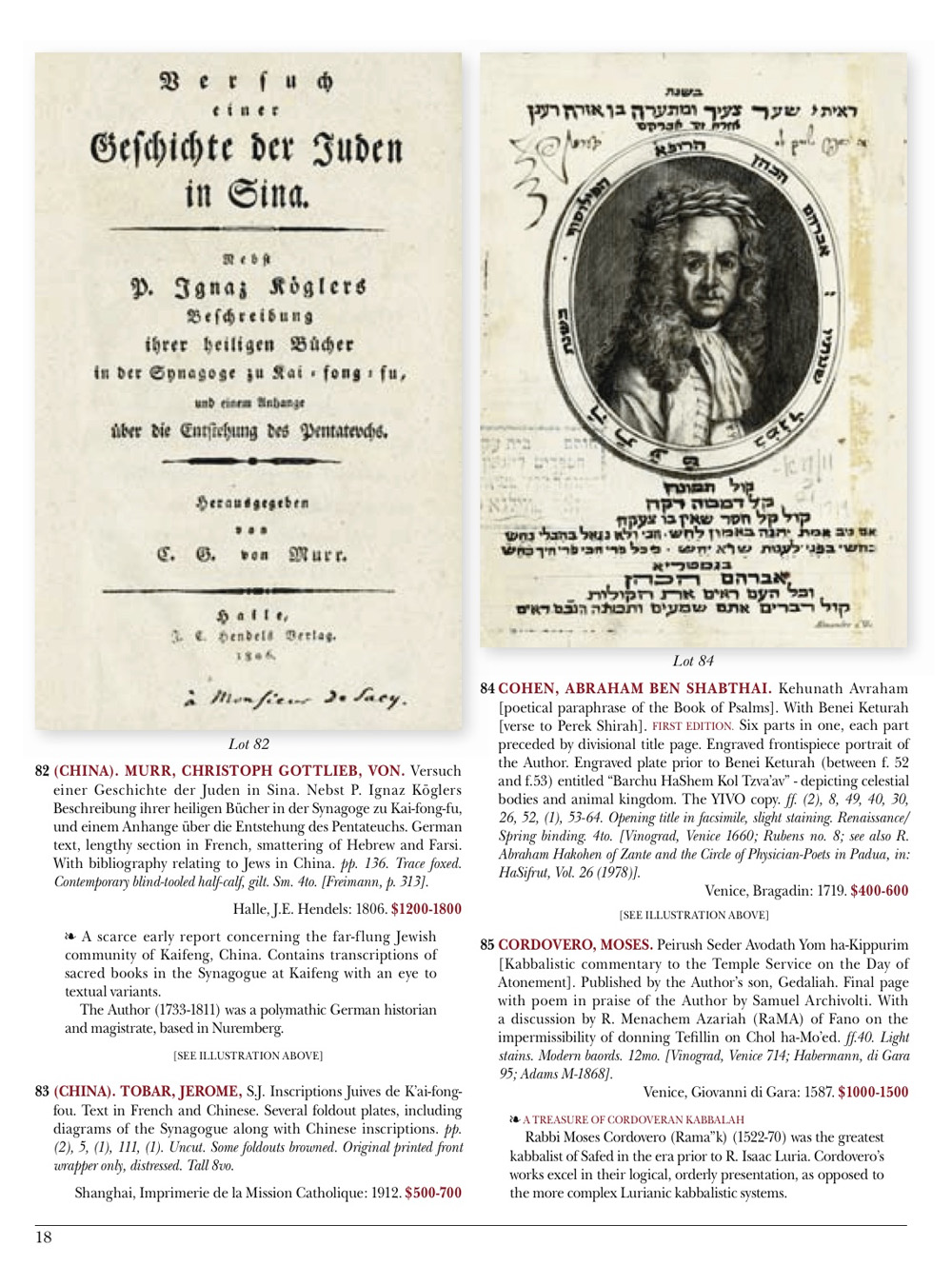
Illustrated Title Pages in Upcoming Auction Catalog

This Thursday, Kestenbaum & Co. is having an auction.  The catalog is available online and the viewing takes place this week.  For those interested in some highlights, the website provides those.  But, I wanted to highlight a theme that hasn’t been noted.  First, a quick background regarding Hebrew book auctions.  [Note, this is not a comprehensive attempt.] There are five auction houses that concentrate on Hebrew books, Kestenbaum, Judica Jerusalem, Asufa, Baronovitch, and, a recent entry, Kedem.  While all five concentrate on Hebrew books, they are all unique in many ways.  First, the catalog.  With the exception of Judaica Jerusalem, all offer their catalogs online.  Additionally, they also offer them in hard copy format through subscriptions.  Kestenbaum and Baronovitch are American auction houses, while the others are Israeli.  Of the two American, Kestenbaum has auctions more frequently.  Both American typically have two to three hundred lots, while the Israeli ones have as many as 800.  The Israeli ones provide illustrations for every lot and descriptions in Hebrew and English (although, at times, the English translations can be very poor).  Kestenbaum doesn’t have illustrations for every lot.  Which gets us to our hidden theme.  In the lots that provide photos of the title pages, many title pages carry a mythological or Christian theme.  Of course, we are not suggesting that these were selected because of this theme, instead, we are merely pointing it out. 
Mythological Title Pages
The first illustration is for lot # 4, Mirkeveth ha-Mishna Abrabanel’s commentary to Devarim. This edition of Sabbioneta, 1551 (the first Hebrew book published there), carries the illustration of Mars and Minerva.

This is not the only time this title page appears. Indeed, in this auction catalog’s illustrations it appears on three other illustrated books.  See lots 171, 191 and 217.  That is, these other books share the same title illustration.  Marvin Heller, in his article discussing this title page explains that, as one probably surmised, this title page with its mythical theme, first appeared in non-Jewish books. Beginning in 1523 this title page was employed in a variety of non-Jewish books.  It would be our book, Mirkeveth ha-Mishna, that would be the first Hebrew book to re-use this title page.  Heller, traces the subsequent history in his article for those looking for more information on this title page. Marvin Heller, “Mars & Minerva on the Hebrew Title Page,” in Papers of the Bibliographical Society of America, 98:3 (Sept. 2004). 

The second illustration related to mythological theme is that of lot # 221, Pirkei Rebi Eliezer, Sabbionetta, 1567.  This title page shows Hercules striking Hydra the multi-headed snake (the illustration seems very similar to that of Antonio del Pollaiolo’s “Hercules and the Hydra.”). 
We now turn to the Christian title page.  This one is from lot #129, Haggadah shel Pesach, Amsterdam, 1712.  The title page, at the top, depicts Moshe at the burning bush.  This Haggadah, which is known as the Second Amsterdam Hagaddah due to it being the second edition of the Haggadah to carry copperplate engravings rather than wood.  These engravings were done by a convert, Abraham ben Jacob (whose name was removed from the title page in this edition). Ben Jacob used a well known Christian engravers illustrations as models for the Haggadah illustrations.  So, Moshe at the burning bush illustrations is almost the same, with the exception that the triangle surrounding God’s name (depicting the Trinity) is removed in the haggadah.  Both appear below.

Yerushalmi, in Haggadah and History, shows other examples of borrowing in this Haggadah. 
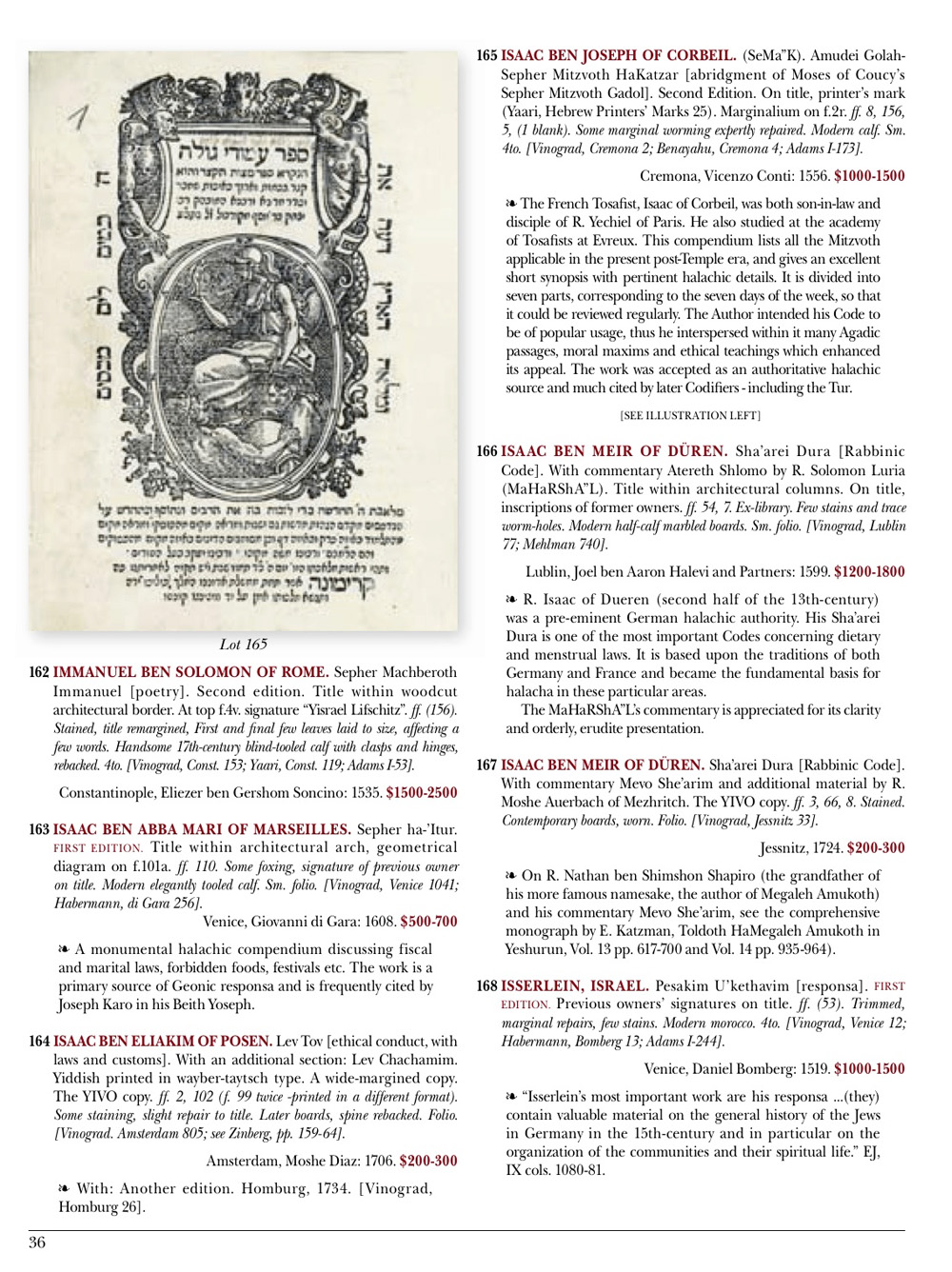
It is worth noting a few more benign title page illustrations that appear in this catalog.  The first is that of lot #165, Amudei Golah, Cremona, 1556 that shows in the center a medallion personifying Cremona, while in the “upper section is the head of a winged horse, with a bare-breasted woman to the right and a man to the left.” Marvin Heller, The Sixteenth Century Hebrew Book, p. 417.

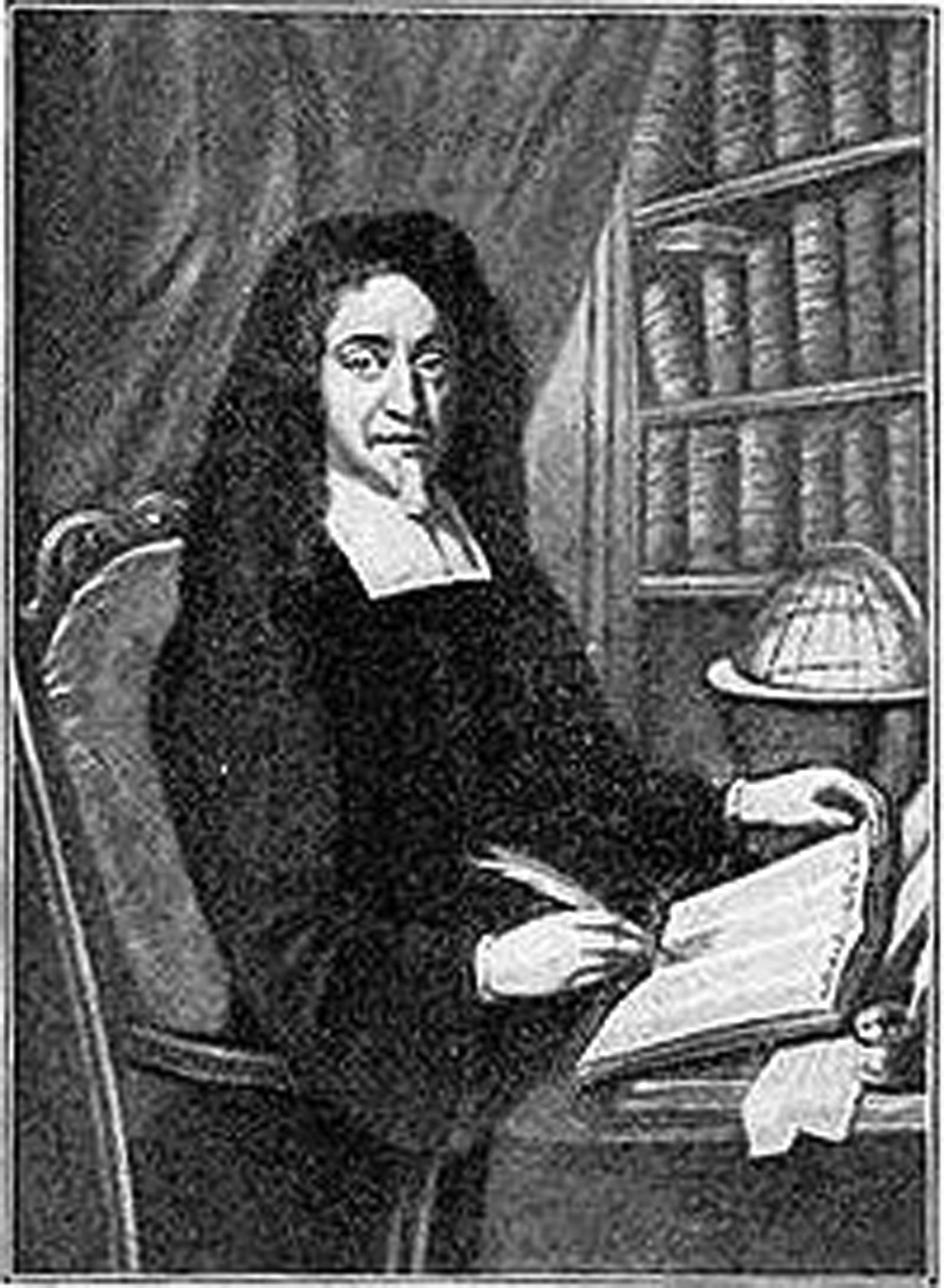
Finally, we get to the last book we shall discuss, one of the earliest to include a portrait of the author on the frontispiece, lot 84, Kehunat Avraham, Venice, 1719.  Additionally, one can see that he is wearing a wig, not all that uncommon amongst the Rabbinic sect for the period of time it was universially fashionable. For example, R. David Neito is shown with a wig, as are others.  One well known example of one who skipped the wig was R. Yehudah Areyeh Modena, who appears in his portrait completely bald. 


Shavua HaSefer sale on Hardrives

 Annual Shavua HaSefer sale on computerized (digital) Seforim Libraries.

1) Otzar HaChochma
This year the sale will be 30% off the regular price. The sale will be from June 7 thru June 27. The prices are as follows:
Full version (30,300 vol.) reg. 1920 sale $1299
Bnei Torah version (29,000 vol.) reg 1720 sale $1175
Library version (30,300 vol.) reg 1120 sale $820
There are also TWO additional optional sections that can be added to any of the above versions:
Seforim from Machon Yerushalayim (340 vol.) $180
Seforim from Kehos Publishing (3,500 vol.) reg 90 sale $60
All of the above (EXCEPT the Library edition) include a "search engine" which is very good and also the ability to convert the "image" to "text" (at the moment only seforim with "square" print, not "rashi" print).
It is also possible to buy the Otzar HaChochma with monthly payments.
NOTE: There will be a special BONUS for readers of the seforim blog (when mentioning seforim blog)!
2) OTZROT HATORAH aka The Morgenstern Library
Otzrot Hatorah/The Morgenstern Library NEW version 5 has arrived. In addition to the additional 8,000 volumes that were added the program has been updated with MANY new features and options.
The program also contains the OTZROT HaShut from Otzar HaPoskim. This too has been updated with the addition of parts of Yoreh De'ah. (The previous version did not contain any Yoreh De'ah.)
Prices are: Full version (21,000 vol.) reg. 1750 Sale $1215
Bnei Torah Version (20,000 vol.) reg. 1475 Sale $1035
It is also possible to buy the Otzar HaTorah with monthly payments.
3) BAR ILAN version 17
Bar Ilan's new version (17) has arrived. Price for Shavua HaSefer is: version 17 @ $449 (list $689) and version 17 "plus" (inc. Encyclopedia Talmudis) @ $539 (list $789).
Updates from ver. 16 are $100. (Updates for earlier versions also available.)
4) DBS version 15
DBS newest version is now available. Shavua HaSefer price is $399. Update price from ver. 14 is $89.
And finally, FREE Shipping (USPS) for all Seforim Blog readers for ANY of the above programs!
Moishe Flohr
Computer Maven
732-363-4941
cell: 917-456-7855


New Books from Biegeleisen – May 2009

See here for the previous lists.

Halkhot Gedolot, Berlin-Hildesheimer ed., Otzreinu, Toronto, 2009, 2 vol., 22, 162, [3]; 652 pp.: This is a reprint of the important Geonic work based upon a different manuscript than the other printed editions.  Additionally, it includes a new brief introduction and additions to the Seder Rav Amram Goan also published by Otzeinu.

Kol Brisk, Jerusalem, 2009, 797 pp. This is a controversial work that explores the Brisk school and attempts to locate the current Brisk school with the European one.  It is has already been subject to pashkevilin and one can read more about it all here and here.

Beyamin Shlomo Hamburger, Meshekhe ha-Sheker u-Mitnagdehem, Machon Moreshet Ashkenaz, Beni Brak, 2009, 703 pp.  This is an significantly updated and expanded version (the prior version is only 347 pages) of R. Hamburger's work on various false messiahs in Jewish history.  As anyone who read the original version knows, R. Hamburger takes a very broad view of the term "messiah."  (read more here)

Shmuel Glick, Mekorot le-Tolodot ha-Hinukh be-Yisrael, vol. 5, New York & Jerusalem, 2009, 30 [2] 452 pp.  This is the fifth volume in the revised work originally done by Simcha Assaf collecting sources on Jewish education.  The first three volumes reprinted Assaf's original work with some updating of the notes.  The fourth and now the fifth contains new material. In particular, the fifth volume focuses on the European responsa literature from the 15th-20th centuries.  As the editor points out in his introduction, Assaf's work is particularly weak in this area and thus this substantially adds to Assaf's sources.  The introduction also explains why the focus on responsa literature in particular, although one assumes it was natural for Glick, who has been editing a bibliography on responsa literature, to focus on the responsa. Additionally, in the introduction, the editor notes that volume six, which will focus on Sefard responsa, will be out soon.


Upcoming Auctions

There are three upcoming auctions, Kestenbaum , Asufa, and Jerusalem Judaica.  The first two have their catalogs online while the final one is only available in hardcopy.  Kestenbaum has two very rare and thus highly prized pieces, one the 1526 Prague Haggadah. (Lot number 124) This edition, which is the first complete (there were some leaves found in a binding containing illustrations that may or may not be earlier, but, in all events, it was not a complete copy), illustrated Haggadah.  We have discussed this edition here and here.  Additionally, we have mentioned that the illustration that adorns shefoch was used as the title page for the Levush and, most recently, was censored.  This haggadah is particularly rare (and expensive).  There are five known complete copies to exist and there are one or two copies complete copies on vellum (I have seen both numbers quoted).  The Valmaddona Trust owns a vellum copy, and at the time it was purchased in 1982 it was the most expensive printed Hebrew book sold when it sold for $143,000. In 1995 a paper copy of this edition sold for $300,000.  It is my understanding that today, the record for the highest price paid for Hebrew book is for the Shabbtai Sofer Siddur with the various autographs, although, if one counts the 11 volumes of the Bomberg Talmud printed on blue paper as one lot, those were recently sold for close to $2 million in the aggregate.  But, it is not only the amount of money paid that makes this haggadah important, many of the illustrations became the protype for subsequent haggadah illustrations.  The second very rare book at Kestenbaum is the first edition of the Ibn Ezra's commentary to the Pentateuch, which is an incunabula, printed in Naples, 1488. (Lot number 38). This particular copy is a wide margin copy and is described as the finest copy to come up for auction in decades. 
Additionally, the first edition of two important siddurim are here as well.  The Siddur Sha'ar ha-Shamayim from R. Isaiah Horowitz, the Shelah (lot no. 174) and R. Y. Emden's Siddur, (lot no. 101). Another important first edition of a liturgical work is R. Meir Ibn Gabbai's Tola'ath Ya'akov (lot no. 187) with the rare poem page.  Another work that contains a rare page is the Hon Ashir from R. Immanuel Ricci. (Lot no. 195) This work, a commentary on the Mishna, was printed in 1731, however, only some copies contain the final page that has musical notes and an accompanying poem. Finally, for those interested in forgery, Friedlander's Yerushalmi on Kodshim is lot number 224. 

On the manuscript front.  The Hida's manuscript of Birkei Yosef with some variants from the printed text. (Lot 253).  An autographed manuscript signed by R. Yonathan Eybescheutz that is "an unrecorded engagement proposal of" R. Eybescheutz daughter. (Lot no. 267).  There is a letter relating to R. J.B. Soloveitchik's failed bid for Chief Rabbi of Tel Aviv from his father, R. Moshe.  (Lot no. 296). 

Tomorrow, we will discuss the other two auctions. 


New Books from Biegeleisen

New Books from Biegeleisen

While Eliezer is in the midst of preparing a comprehensive list of new seforim issued in the past months, I wanted to provide a shorter list of new seforim that I have recently received from Biegeleisen.  All of these are of course available at Biegeleisen in Boro Park (and I assume elsewhere as well) and some will be reviewed in greater detail in the coming months. 

Batim le-Vadim, Yaakov Mosowitz, Beni Brak, 2008, 663 pp. a collection of laws and customs relating to marriage as well as the laws relating to mahzir gerushato.  The book covers both first marriages as well as second.

Sodei Humash ve-sha'ar, Students of Rebbenu Yehuda ha-Hassid, ed. Yaakov Stal, Jerusalem, 2009, 228 pp.  This is another work from the school of Yehudah ha-Hassid edited by R. Stal.  R. Stal's prior works in this area are excellent.  Eliezer has reviewed two here and here.

Kitzur Nahlat Shivah, Shmuel ha-Levi Segal & Asher Anshel Greenwald, ed. Yehezkel Shraga Shwartz, Beni Brak, 2009, 2 vols., 315, 649 pp.  This reprint, done by Otzar ha-Poskim, follows Otzar ha-Poskim's reprint of the full Nahlat Shivah.   This contains a short introduction as well as notes on the text. 

Pirush ha-Melitz Bentotam, Tzvi Fishbein, [n.p.], 2009, 567 pp.  A commentary on the Targum Yohnathan ben Uzzeil for the parshiyot Shemot Beshalach.  The commentary is divided into two parts, the first, beiurim is an straightforward explanation of the text, while the second, Iyunim, discusses the implications of the text in great detail providing both other rishonim's take as well as the relevant achronim.

Otzar Hemdat Yamim, David Shlomo Kosovitski-Schorr, Beni Brak, 2008, 885 pp. This work collects close to all the mentions of the controversial work Hemdat Yamim in other works.  Additionally, rather than just provide quotations, full pages are reproduced which is an added boon to the interested bibliographer.  Kosovitski-Schorr's stated purpose is to show that the author of Hemdat Yamim was active during the years 1599-1639.

Ve-Zarch ha-Shemesh, Shirah Devlisky, Beni Brak, 2008, 101 pp.  A collection of custom of R. Devlisky's congregation in Beni Brak with notes and sources for said customs.

Ma'aseh Rav, Jerusalem, 2009, 423, [102] pp.  This is a new edition of the Ma'aseh Rav which collects the customs of the Gra. This edition includes some additional notes and supposedly is a "critical edition."  They also include a photomechanical reproduction of the 1832 edition of the Ma'aseh Rav as well as the Tosefot Ma'aseh Rav.  Unfortunately, the editors seem to be unfamiliar with a few points about the 1832 edition.  First, they fail to include both title pages.  The 1832 edition contains two distinct title pages, only one is included. Second, and more importantly, Dr. Jordan Penkower has already suggested that the 1832 edition while the first edition chronologically in terms of publication date may not actually reflect the first edition of the Ma'aseh Rav.  Instead, according to Penkower as well as Yeshayahu Vinograd the bibliographer of all the Gra's works, the second edition, Lemberg, 1833 is actually the "mahdurah kama" of the Ma'aseh Rav.  See J. Penkower, "Minhag and Massorah: On the Recent Ashkenazic Custom of Double Vocalization of Zeikher Amalek," in Rimon Kasher, Moshe Zipor, Yitzhak Zafati, eds., Studies in Bible and Exegesis (Ramat Gan: Bar-Ilan University Press, 1997; Hebrew), 82-85; Y. Vinograd, Thesaurus of the Books of the Vilna Gaon, Kerem Eliahu, Jerusalem, 2003, entry 809.

Sefer haKol Bo, the critical edition of the Kol Bo has been completed in eight volumes bound in four volumes.

She'elot u-Teshuvot Rebi Akiva Yosef, Akiva Yosef Schlesinger, Jerusalem, 2008, 2 vols., 403, 397 pp.  The responsa of the eclectic R. Akiva Yosef Schlesinger on Orah Hayyim and Yoreh Deah with notes and an introduction. 


Upcoming December Auctions

In the next few weeks there are a bunch of auctions. First, is Sotheby's auction of the "Delmonico" collection.  This collection, of an anonymous collector, is amazing.  It includes fifty incunabula with the balance of the auction being 16 and 17th century books.  Included in the later portion are volumes of the first edition Bomberg Talmud printed on blue paper.  These are the only known copies of these volumes. The incunabula includes the first edition of the Rambam's commentary on Mishna, the second edition of the Mishna Torah, the first book printed in the author's lifetime – the Nofet Zufim by R. Yehudah Messer Leon, first edition of the Ramban's Commentary on the Torah, the first Hebrew book with a printer's mark, as well as many, many other gems. This auction takes place on December 17th in the morning, there is another Sotheby's auction of Jewish books and Judaica taking place that afternoon as well.

The next auction is Kestenbaum which takes place a day later, on the 18th.  Some highlights from the catalog include a letter from R. Joseph B. Soloveitchik (318) regarding the permissibility of teaching Talmud to girls.  "Rabbi Soloveitchik declines to present his views."  Because "'We have reached a stage at which party lines and political ideologies influence our Halachic thinking to the extent that people cannot rise above partisan issues to the level of Halacha-objectivity. . . . I am not inclined to give any of these factions an opportunity for nonsensical debates.'"  Also, in the manuscript section, are a collection of letters from R. Samson Morpurgo, (308) many dealing with the Ramchal controversy. While some have been published it appears there are discrepancies between the published versions and that of the letters in this collection.  Or for those interested in the R. Naftali Hertz Wessely controversy, the scribal copy of R. Tzvi Hirsch Berlin's resignation letter (296) is included.  Due to R. Wessely's Divrei Shalom ve-Emet, R. Berlin wanted Wessely expelled from Berlin; however, Mendelssohn defended Wessely leading Berlin to tender his resignation as Chief Rabbi of Berlin.  Later, Berlin, recinded his resignation and remained Chief Rabbi until his death in 1800.  Of course, R. Berlin was R. Saul Berlin's (publisher of Besamim Rosh) father. Although not as rare as the blue paper Bomberg, Kestenbaum has a complete copy of the Slavita, 1817-22 Talmud (256). The publication of this Talmud eventually led to the controversy betwen the Slavita and Romm presses.

When it comes to colored paper there are two lots of interest.  The first is Deinard's edition of the Zemir Aritzim (124) which is printed on multi-colored papers including blue, green, pink, and yellow, indeed, there are only two white pages in the book. The Amsterdam, 1669 Seder Keriah ve-Tikun le-Leilei Chag Shavout ve-Hoshana Rabba, "at the request of wealty bibliophiles, a handful of copies of this work were printed on colored paper" including blue or green paper.  This one (213) is on blue paper.  Returning to Deinard, there are three other books of his, including one which he inscribed (122-25).  As is well-known Deinard travelled the world, what is lesser known is the the book Sefer ha-Berit ha-Chadash (On the Life and Customs of the Jews of China), Pietrokov, 1911, (108) which Uzeil Haga describes his travels with the U.S. Armed Forces expedition in 1901 to China. In the end Haga "was suspected of espionage and was imprisoned by the Boxers where he died after suffering torture."  Two bibliographical notes.  The first is a rare catalogue of R. Pinner (translator of the Talmud into German) for the Odessa Society for History and Antiquities Holdings of Ancient Hebrew and Rabbinic Manuscripts (81).  The second is Ben-Zion Eisenstat's Otzar ha-Temunot (85) which is a collection of photographys of over 150 Rabbis from the turn of the twentith century.  The full catalog can be downloaded here


Baranovich Auction

Yeshiva Ahavas Torah, Baranovich is having an auction Wednesday, November 19th.  One can download the catalog here.  While I don't intend to cover the whole catalog, I want to briefly highlight a few items. Those interested in early Hebrew/English primers (or English Hebraica) and the like should take a look at lots 12-17.  For those interested in early 20th century American figures, such as Rodkinson and Eisenstein, see lot 62 for Eisenstein's quasi-autobiography, Otzar Zikronoti .  And for a polemic against Rodkinson by R. Yosef Kohen Zedek (of London, a fascinating figure in his own right) see lot 52, Sefat Emet.  For other polemical material, no auction is complete without the rare (but, again, somehow appear in every auction) polemics on the Emden-Eybshutz controversy, lots 35-36.  Another controversial piece is the 1535 Constantinople edition of the Machberet Emanuel , lot 66. While this is not the first edition which was published in 1491, it contains different material than the first edition.  See Machberet Emmanuel, Yardeni ed., Jerusalem, 1957 p. 20.  For those interested only in first editions, the first edition of the Hafetz Hayim, Vilna 1873, lot 72 is available. For earliest mention of the Ba'al Shem Tov see lot 81, Maayim Hayyim , discussed at length here. Finally, for those interested in illustrated seforim, the Maayan Ganim, with its fountain illustrations as well as a mention of women studying torah is lot 102.


Upcoming Auctions

There are two upcoming auctions. The first, Kestenbaum & Co. will take place this Thursday, June 26th, the catalog is available on their website. The auction includes R. S.R. Hirsch’s copy of the Zohar, which is interesting in that R. Hirsch is not readily associated with Kabbalah. Of course, R. Hirsch and other German Jews had a more nuanced view of Kabbalah and were not antagonistic as some others (think certain groups of Yemenites).

Additionally, for those interested in incunabula, R. David Kimchi’s (RaDaK) Sefer ha-Shorashim, Naples 1490 is for sale. It is worth noting that a tremendous amount of incunabula – by my count some 96 titles! – are available online at the JNUL Digitized Book Repository including this edition of the Sefer ha-Shorashim. To have access to so many rare titles is extrodinary. Even if one has access to a library that has a few incunabula it is difficult to view them let alone browse through and copy and print pages from these works.

This edition of the Sefer ha-Shorashim is also important in that it is different than the later editions. One of the readings this edition contains implicates the correct reading of Zekher Amalek. (See J. Penkower’s excellent article on the topic, “Minhag u-Mesorah – ‘Zekher Amalek’ be-Hamesh or be-Shesh Nikkudot” in Iyun Mikrah u-Parshanut, vol. 4 (1997) 71-128, esp. pp. 82-3.)

Another work of interest, especially in light of some recent controversies, is Tuv Ta’am by R. Aron Tzvi Friedman, discussing various laws of Shehitah. As noted by Goldman, “according to a family legend, the English translation of this work convinced President Ulysses S. Grant to eat only kosher meat.”

Other mentions include:

The first edition of R. Hutner’s Torat ha-Nazir, that includes R. Kook’s approbation (removed in some later versions).

Aneh Kesil, a polemic defending the authenticity of the Yerushalmi Kodshim.

Asufa has an auction coming up on July 3rd. Their catalog is available online here.


SEFORIM HARD DRIVES SALES UPDATE etc.

SEFORIM HARD DRIVES SALES UPDATE etc.
The Otzrot HaTorah (AKA “The Morgenstern Library”) is now ON SALE thru June 30.
The library contains 13,000 volumes in the “regular” version and 14,000 volumes in the “expanded” edition.
The SALE prices are as follows:
Expanded edition: Reg. price $1990 SALE price: $1480.
Standard edition: Reg. price $1480 SALE price: $1160.
There is a payment plan of (up to) 20 monthly payments. Payments can be made by cash, check or credit card.
For those making a one time payment by either cash or check there will be an additional $200 discount (i.e. $1280) for the Expanded version and a $165 discount (i.e. $995) for the regular version.
Please note: The Otzrot HaTorah program includes the 13,000 – 14,000 volumes (scanned originals, categorized but without search) as well as the Otzrot HaShut from Otzar HaPoskim (topic search) plus a few hundred digitized seforim (search, copy-paste, etc.). It also comes with the “HebrewBooks.org” collection (AKA Bayis Molay Seforim).
Purchasers will be entitled to the soon-to-be-released update which will include another 2,000 volumes as well as an update to the Otzrot HaShut as well as an update to the program itself.
Also, Bar Ilan version 16 is now IN STOCK.
Prices are as follows:
Version 16 is $469
Version 16 “plus” (inc. Encyclopedia Talmudis) is $569
Upgrades for previous owners are available as well.
Also, DBS version 14 has arrived! Updates from previous versions are available. (You can also purchase “older” versions for less).
Prices are as follows:
version 10 = $170
version 11 = $210
version 12 = $270
version 13 = $330
version 14 = $420
AND FINALLY, Otzar HaChochma 33% off SALE is still going on until June 22.
BONUS: Purchase any TWO of these Seforim programs (i.e. Otzar HaChochma, Otzrot HaTorah, Bar Ilan, or DBS) and receive a FREE all-in-one photo printer (print, copy, scan). A $100 vailue!
Please contact:
Moishe Flohr
Computer Maven
732-363-4941
cell: 917-456-7855
ezf613@hotmail.com
OtzarInfo@gmail.com


Shavuah ha-Sefer 2008: A Recommended Reading List

Shavuah ha-Sefer 2008: A Recommended Reading List

by Eliezer Brodt Book week just began in Eretz Yisroel. As I wrote last year Every year in Israel, around Shavous time, there is a period of about ten days called Shavuah Hasefer-book week. Shavuah HaSefer is a sale which takes place all across the country in stores, malls and special places rented out for the sale. There are places where strictly “frum” seforim are sold and other places have most of the secular publishing houses. Many publishing houses release new titles specifically at this time. Just as in last year’s post on Shavuah HaSefer, in this post I would just like to mention to some of the very recent titles from the various publishing houses which are available at this years Shavuah HaSefer. As to regular seforim that have come out in the past few months since my last seforim list a new list is being composed of the past few months.Bar Ilan University Press had a big awakening compared to last year. Amongst their new titles is Mechkarim be-Toldos Yehudi Ashkenaz which is a sefer ha-Yovel in honor of Professor Eric Zimmer. There are many excellent articles in this volume (see here for the table of contents). As the title indicates, these articles are related to Ashkenaz. Another important book, published in conjunction with Oxford University Press, is from the extremely prolific author Professor Sperber, The Jewish Life Cycle – Custom, Lore and Iconography. The book covers Jewish customs from the cradle to the grave. This book is based on his previous work Minhaghei Yisroel but as Sperber notes in the introduction, Minhagei Yisrael is not in any order and is eight volumes and thus is not the most user friendly when it comes to locating in a systematic fashion the topics covered. This volume is an attempt to organize some of that material, specifically, materials relating to the Jewish life cycle. Additionally, it includes many updates, corrections, and is the case with Sperber’s past works, many interesting illustrations and diagrams. The much awaited volume two of the Keter Mikros Gedolos Chumash on Shemot was printed. (Volume one was not printed yet.) With this volume, Bar Ilan is trying something new as they released this volume in two sizes – big (the previous size) as well as a smaller size version. Only time will tell if they will continue to print both sizes. [The Keter series now has Berashit Vol. 1 and 2, Yehosuha, Shoftim, Shmuel alef and beis, Melachim alef and beis, Yeshaya, Yehezkiel, and Tehilim Vol 1 and 2.] Iyunei Hamikra volume eight was printed this volume looks like it contains an excellent collection of articles. Another important work reissued (which unfortunately if you have the first edition you are stuck as I am) with many important additions to the first edition was their scientific version of Yesod Moreh of the Ibn Ezra. Amongst the many topics the Yesod Moreh deals with, one in particular around Shavout is worth noting. In this work, the Ibn Ezra takes issue with the “Miztvot counters” those you claim a set 613 mitzvot (see here for our discussion regarding mitzvot counts and the Azharot custom for Shavout.) Another issue of Badad was printed (#20). Another important title is Am Levodod which collected pieces all about Mesctas Avodah Zorah by Professor Z. Steinfeld. Another excellent looking volume is the Olam Nistar be-Maddei ha-Zeman from R. Shuchat. This volume contains in-depth studies on the Gra and his opinions in regard to the geulah. It also deals abit with the Ramchal and Rav Kook. There is an interesting chapter discussing the highly controversial work attributed to the Gra the Kol ha-Tohar. Just to add in a source the author seems to have missed Reb. Wolbe writes in his letters (vol 1 pg 227) that: בענין קול התוהר: הגר”י הוטנר שליט”א אומר, שבעל הלשם שהוא הבר סמכא בענין כתבי הגר”א בקבלה, אינו מזכיר את הספר בכלל. הוא גם השתדל להוציא לאור ספרי הגר”א, ואילו הי’ בדעה שזה ספר שיצא מבית מדרשו של הגר”א- לא יתכן שלא הי’ משתדל להוציאו או לכל הפחות היה מזכיר אותו. לעומת זאת אמר לי הגר”י קלופט שליט”א שהוא מאמין שזה ספר אוטנטי, ומה שישנם בו דברים המפלאים אותנו, אין בזה כל ראי’ שלא נישנו הדברים בבית מדרשו של הגר”א Reuvan Mass has a few good titles, two of which pertain to the holocaust era. One is called Zikhron be-Sefer from a few authors – E. Farbstein, N. Cohen and A. Yedidya. This book deals with Gedolim that wrote, in their introductions to their works, accounts of their experiences in the Holocaust. The second book, Tenous be-Chrovos by Y. Fund, is about the Agudah Yisroel before and during the war how they dealt with the issues at hand to save the Jews. Aside from these two Holocaust books, Reuvan Mass also has D. Sperber’s Nisviat Piskah already reviewed here. Another work is mi-Sinai le-LisKhat ha-Gazis by S. Kassierer and S. Glicksberg. This work deals with Torah she-Bal Peh in the writings of the Rambam and Ramban it looks like a very professional job. The Jewish Theological Seminary Press has reprinted Saul Lieberman classic, Yerushalmi Kifshuto with a few pages of additions. Also printed this year is volume two of the Kuntres hatushuvos Hachdash already reviewed here. Additionally, one should keep an eye out in their “cheap section” as there are always some good titles. The Israel Academy of Sciences and Humanities finally released the much awaited volume of Yerushalmi Nizkin with many additions from the Italian Gneziah. Machlekes Herzog advertises that they have a new book form Professor Grossman on Rashi called Emunah Vedoes Bolamo shel Rashi but this title will not be printed for another few months. Beis El has a new title from R. Reuven Margolis called Tal Techeyah. This work was very rare and has not been reprinted since 1922 it’s a collection of six pieces of his in his typical excellent style. Mechon Ben Zvi has a new volume in there set of critical editions of classics of Sefer Hamakabim and other works – the Chayeh Yosef from Yosef ben matisyhu. Another important work just printed is the Chemas Hachemdah (from 1285)on chumash Breishes. One should keep an eye out on there cheap section as there are some great titles for really cheap prices. Yediois Hachronis reprinted an old work of Shadal called Yesodei Hatorah. This new edition of theirs has a new name – Al he-Chemlah ve-Haskakha. Merkaz Zalman Shazar has released some new titles among them a book in there about Shai Agnon. This is another book which is part of their recent series on the great leaders throughout the generations. Another title is from E. Shoham- Steiner called Charigim Bal Charcahim which deals with crazy people, leprosy, and people who had physical problems how they were looked at in the Middle Ages. Kiyum Beidan Shel Temuras a collection of articles about life in Germany from 1618-1945 – 647 pages these are articles from the English and German parts translated into Hebrew. Another title is Histography be-Mivchan which is a collection on Jacob Katz. Another very important title which they printed is ha-Yayin be-Yemei ha-Benayaim. This volume is the much awaited part two of Professor C. Solovetick book Yaynam printed by Am Oved a few years back. This volume is 480 pages and looks incredible. Here again, one should keep an eye out on there cheap section as there are some great titles for really cheap prices. The Bialik Institute printed a very important work on Canonaztion of The Zohar from Boaz Huss. This book contains very valuable information on this controversial and senstive topic. [This title was printed with Ben Zvi and is a little cheaper by them]. An older title of theirs just reprinted is Y. Libeis book called Sod Hemunah Hashebatous. Meketzei Nerdamim released two important new titles one is a critical edition of Rashi on Meschtos Megilah. Another is Shiriei R Aron Al-ammani from twelfth century Egypt. Magnes Press this year has issued a few nice titles amongst them: Simchat Haregel be-Talmudum Shel Tananim by D. Henshke, Min ha-Rambam le-Shmuel Ibn Tibbon from C. Fraenkel. They also reprinted a few older titles amongst them E. Fleischer classic Shirat Hakodesh Byemi Habnayim, Rashi by S. Kamin and the Rashbam on Kohles by S.Japhet and R. Salters. Mechon Yerushalim promised last year a new volume to their critical edition of the Teshuvos of the Rishonim the Shut Harif well it is out and looks great. They did not edit out the important notes and haskomos of Rav Kook on one of the editions they printed in this volume as other people would do these days. This volume is only part one and looks well done hopefulay part two will be printed shortly. They used the works of R. Dovid Rothestein and R. Leiter. Some other new tiles of there are: volume three of the Ramban on chumash Vayikra, Mordechai on Pesachim, volume five to their Nodah Beyuhadh set. Seder Parshyious of the Adres on Shemois and Ginas Veradim of the Prei Megadim. Kibutz Hamechuad has put out many nice titles this year. One is a beautiful critical edtion of Mishnayis Shevies from professors S. and Z. Safrai. Other works of note include ha-Mavad Atzmos la-Daat by Y. Lichtenstein all about suicide. Another book from the same author put out earlier this year is called me-Tumah le-Kedusah which deals with going to Kevrei Tzadkim. Another title is a new study On the Jews in Germany in the middle ages called ha-Ashkenazim ha-Rishonim by A. Frischman. (reviewed here)


Sale On Hebrew Book Harddrives

This year the sale will be 33% off the regular price of Otzar HaChomah. The sale runs from May 13 through June 7. The prices are as follows:
Full version (25,800 vol.) reg. 2275 sale 1520
Bnei Torah version (24,500 vol.) reg 2050 sale 1370
Gemara v’Halacha (18,700 vol.) reg 1525 sale 1020
Tanach u’Midrash (17,200 vol.) reg. 1525 sale 1020
also an additional 2,400 from Kehos Publishing is $70
All of the above include a “search engine” which is very good. It also has the ability to convert the “image” to “text” (at the moment only seforim with “square” print, not “rashi” print).
Also available is the “Library” version which has 28,000 vol. without search. The SALE price for the Library edition is $1050 (reg. 1130).
NOTE: There will be a special BONUS for readers of the Seforim blog (when mentioning Seforim blog)!

Also, Bar Ilan’s new version (16) will be arriving in about 2-3 weeks. Pricing is not yet available.
DBS claims that there will be an update before Shavu’os as well.
The Morgenstern Library is supposedly going to be updated on or about Rosh Chodesh Sivan (June 4). They will also be having a BIG sale at that time.
Anyway, if you could post the above I’d greatly appreciate it.

Please contact Moishe Flohr at Computer Maven to take advantage of this pricing and with any questions.
732-363-4941
cell: 917-456-7855


New Auction Catalog

Kestenbaum & Co.’s latest auction catalog for its auction on April 3, 2008, is available online. The auction includes a collection of important bibliography catalogs including, Koheleth David, the catalog of R. David Oppenheimer’s books that eventually went to the Bodleian Libary; Ohel Avraham, catalog of R. Avraham Merzbacher, this catalog was complied by R. Raphael Nathan Nata Rabinowich the author of Dikdukei Soferim; Likutei Shoshanim, the catalog of R. Mattisyahu Straschun’s library (this library in part went to YIVO and part to Hecheil Shlomo, Hecheil Shlomo recently sold this library and YIVO has sold parts of the library as well); Koheles Moshe, the catalog of St. Petersberg library compiled by Shmuel Wiener considered one of the best bibliography catalogs (unfortunately Wiener never completed the catalog).

Another book of interest is Johann Jakob Schudt’s Judisher Merkwurdigkeiten (Jewish Curiosities) (lot 110). This book contains much in the way of providing evidence of what Jewish practice was in the 18th century. R. Goldhaver in his comprehensive article on the origins and spread of custom of kabbalat Shabbat uses Schudt as Schudt is the earliest mention of some Kabbalat Shabbat customs.

Some of the books here belong to important personages. For example, an edition of the Shabbthai Sofer siddur belonging to Sir David Solomons, the first Jewish Sheriff of London and the Lord Mayor of London, he was also one of the first Jews to serve in the British House of Commons. (lot 218). There is a book on agunah that was Chaim Heller’s copy. (lot 245) R. Shlomo Dubno’s copy of Meskhtat Derekh Erets. (lot 265) And, then there is R. Nathan Adler of Frankfort’s copy of Adugath Mordehai. (lot 4)

A few noteworthy first editions also appear in the catalog. First, there is a sixteenth century copy of a machzor according to the Karite rite. (lot 210) This is a very rare machzor, with the only complete copy in the Bodleian Library. Second, there are a few first editions of the Gra’s works including Tospehta Zeraim, Shenoth Eliyahu, Torat Kohanim, and Tikkunei HaZohar. (lots 96-99) There is also the first edition of R. Emden’s She’elot Ya’avetz. (lot 100)

The auction includes the Munich-Heidelberg Talmud that was printed with the help of the United States Army after the Holocaust. (lot 171) A miniature Tehillim that is extremely rare. (lot 55). And, an important edition of Rashi’s commentary on the Torah – it is a Spanish or Sephardic “version” that is distinct from the German/French and Italian versions. (lot 53)
Two manuscripts of interest. A portion of the Hatam Sofer’s commentary to the Torah written in his own hand. (lot 348). Second, is a manuscript of R. Saul Morteira’s work on the Truth of the Law of Moses. The manuscript includes information on the Jews of Recife.


Books Sale and New Auction Catalogs

Henry Hollander Books is having a 50% off sale on selected books. There are a significant number of books on sale, covering many different genres. The catalog is available online and the sale runs through the end of January.

There are two auction catalogs online. The first, Asufa, who is having their auction on Janaury 24 is available here. The second, Baranovich, is having their auction on the 23 of January and you need to first fill out a form to get the catalog in PDF.

The Asufa auction includes a rare proclamation regarding the Besamim Rosh, a slew of books relating to various controversies, as well as many other interesting books.


A Comprehensive (or close to it) List of New Seforim

A Comprehensive (or close to it) List of New Seforim

by Eliezer Brodt

In a recent Mishpacha article [November 28, 2007, ‘Seforim Supplement’, p. 48] they quote Shlomo Biegeleisen, of Biegeleisen Books, as saying that “they receive sixty new seforim every single week!” The seforim market has exploded in the past few years and continues to grow daily. While it is impossible to keep up with everything that comes out we hope to keep the readers updated from time to time with some of the interesting things that are printed. This current list includes some of the many titles printed in the past few months.

Rishonim:

Mechon Haktav reprinted the Magan Avos from R. Shlomo Duran, the Tashbatz (663 pp.). This work was first printed in 1785 and than again in a photo-mechanical edition by Mekor in the 1960’s. The plus of this recent edition is mainly the clarity of the print as the earlier edition is almost impossible to read. The editors of this edition did not, however, include notes of any sort on the sefer.

Sefer Al Esek Hatorah, Shtei Dershos Lrabenu Harosh (Kiryat Sefer, 2007); 76 pp. [08-974-0626].
This volume is a small sefer written by the father of the Rosh on Limud Hatorah. It also includes two dershos of the Rosh. Parts of all this had been printed before in A. Freimann’s book on the Rosh. In this edition the editor rechecked the manuscripts and reprinting the whole thing all together. [For another work by this Mechon see this prior post].

One of the dershos of the Rosh included in this work had been printed partially before by Professor Israel M. Ta-Shma in a few places [Kiryat Sefer, then in the journal MiGinzei L’taslume Kisvei Yad Ha’Ivriyim pp. 51- 52, and most recently in his Knesset Mehakarim vol. two pp. 184 -186]. The second dersha included herein had been printed in its entirety by Y. Galinsky in his doctorate on the Tur, Arbeh Turim V’safrus Halacha Shel Sefard b’Meha ha’arbah Aser (pp. 36-37, 74-75). In one of the dershos the Rosh gives strong mussar to the crowd for shying away to do certain Mitzvos such as lighting the Menorah in shul. There is a small historical argument between Professor Ta-Shma and Galinsky regarding the death of the Rashba (ibid.) based on the correct reading of a few words in the manuscript.

Mechon Yerushalim released their Ramban on Chumash Shemos see here for their earlier volume.

Avkas Rochel (Ashdod, 2007); 103 pp. [08-853-1651]
The author of this work was Rabbenu Macir, a talmid of R. Yehudah, the son of the Rosh. This edition is a nice reprint of the original. It deals with topics such as Gan Eden, Gehenim, Olam Habah, Moshicah amongst many others.

Chumash:

Maggid Meisharim (Jerusalem, 2007); 550 pgs, Ed. R. Y. Cohen [02 586-0457].
This edition is very helpful as it provides a parallel translation of the entire sefer from Aramaic into Hebrew. The editor also included paragraph highlights and many helpful notes on the sefer but hardly adequate for what this work actual deserves. [A while back there was a series of three articles by R. Yehuda Leib Kelers, in the Tzefunous journal (1990-91), where he mentions that someone was actually starting such a project but as far as I am aware, nothing has come from it.]

Nachalei Afersomin (Jerusalem, 2007); 360 pp., [04- 864-0135].
This is a reprinted edition of the sefer from R. Rephael Balzam, a talmid of R. Meir Arik (and others). This work is on the Parsha, Mitzvos and Yomim Tovim. It includes an index and a nice short biography on the author. There are all kinds of styles of Torah in this work dealing with Kabbalah, Halacha and Machshaveh.

She’elot u-Teshuvot:

Shu”t Yeshuos Yakov was reprinted after not having been available for many years. This edition includes some nice new additions of Torah printed in various places. Hopefully there will be a full post on this Goan and his works shortly.

Shu”t Mateh Menashe from R. Menashe Statoh [By Hillel Statohn 368 pp. 718-382-0085].
The author was the Av beis Din of Tzafas over 150 years ago and was the father of R. Chaim author of the famous work Eretz Hachaim. This work was in manuscript for all these years. In the second half of this sefer they include a fascinating work of the author called Knessiah Leshem Shamaim, which had been printed before. The topic of this work is about an interesting custom that existed in many communities when someone was sick or childless. The custom was to do a whole elaborate process to appease the shedim (evil spirits), a sort of offering to them (a korbon of sorts). He discusses the entire topic explaining why it one is prohibited form doing such things. He deals with many topics such as the power of shedim in general. This work includes the Teshuvous of many gedolim of the time amongst them R. Chaim Palagai.

Shu”t Sharei Tzion from R. Ben Zion Sternfeld was reprinted after not having been printed for a while. Besides for including R. Ben Zion’s excellent teshuvos it includes many of his deroshos. This Goan is famous for giving the Chofetz Chaim haskamos on his Mishana Berurah, Shimiras Halaoshon and Likitei Halachos. This edition includes the Kuntres Darcha Shel Torah and Kuntras Sharei Tzion on the topic of the importance of a proper education for one’s children. This edition includes a small biography of the author. These two works were written in response to Maskilim whom complained about not learning dikduk etc. One point of great interest from these Kuntreisim is the great importance and emphasis these Gedolim held of teaching Chumash properly to the children. They held that through the proper study of Chumash eventually the children will pick up Hebrew. Today, many school systems would do well to learn from these Gedolim to have proper methods to teach Chumash properly.

Shu”t Mishanat Sachir was reprinted. The author, R. Teichtel, was one of the biggest Rabbonim pre World War II in Hungary. As is very well known, originally R. Teichtel was a rabid anti-Zionist, however, later he completely changed his mind and eventually authored the incredible work called Em Habonim Semaicha. He authored many teshuvos over the years and eventually printing one volume of the teshuvos. After his death, his son printed a massive volume of Shu”t thru Mechon Yerushalim. This work has been out of print for many years. It is fantastic in respects of both depth and Bikeius. The son printed another volume a few years later. This current edition includes the whole volume that was printed by Mechon Yerushalim and parts of the volume that was printed afterwards. The original volume that the author himself printed was not reprinted here. This edition also includes some pages of additions based on notes of R. Teichtel not printed before. Just to give one an interesting tidbit on this sefer:

About six years years ago a journal from Chabad in Budapest called Tel Talpiyot (volume two) printed a few pages (pp. 42-55) of very interesting exchange of letters between R. Teichtel and his son R. Shlomo. This son went from Hungary to learn in Slabodkah Yeshivah. In the letters to his father he writes a few times how everyone in Slabodkah Yeshivah heard of his sefer and they enjoy it. He writes how many people asked him for a copy of the sefer but he only gave it to a few people amongst them the Divrei Yecheskel (see pp. 47, 48, 50).

Shas and Halacha:

Mezareph Le’Chachmah (Jerusalem, 2007); 174 pp.
This particular work of R. Yosef Delmedigo (Yashar) has been the subject of much discussion for many centuries. Already R. Yehudah Aryeh Modena wrote that the views in this sefer are not the authors real opinions rather he was playing “games.” After that, Graetz and others and as recent as Barzilay have attempted to prove that Modena was correct. However, I feel after a careful reading of the sefer that it was by no means a joke and this was the author’s real opinions. Recently, Professor David B. Ruderman has shown that Delmedigo did not intend this work to be a joke or game of some sort. Ruderman does so in his classic work Jewish Thought and Scientific Discovery in Early Modern Europe (pp. 128-152) dealing with all the problems Geretz and others raised. Mezareph Le’Chanchmah is full of interesting topics and information just to list a few: authorship of Zohar (52), Rashi (49) and Rambam’s knowledge of Kabalah (37, 51), against R. Avraham Abulafiah (31), and when Nekudos are from (21-22). He has a whole section showing that there are no contradictions between Halacha and Kabblah. The Shach in Yoreh Deah quotes him in regard to eating meat after cheese (89:16).

This current edition is printed beautifully, however, they edited out all the notes of Delmedigo’s student, R. Shmuel as well as some of the other stuff that were originally printed in this sefer. It is also lacking an index which would be very helpful with such a sefer enabling one to find all the treasures easily.

One original claim that I saw in the introduction of this edition and is recorded by many people and is in turn based on the Chida who states in R. Moshe Zechut’s name that the Delmedigo’s knowledge in kabbalah was not impressive based on specific things he writes in Mezareph Le’Chachmah. The page from Mezareph Le’Chachamah that lends credence to that opinion turns out that it was not from Delmedigo but instead from his talmid.

Kisvei Hagri (Jerusalem, 2007); 396 pp. [02 566-5240].
This a collection of the writings of R. Yaakov, Av Beis Din of Letichev. The author was born in 1730 and was rav there for many years. This was printed from manuscript for the first time by his descendants. The sefer has been waiting to be printed for nine generations. The editors put in lots of effort into this sefer giving you historical background. The sefer includes all kinds of genres, Chumash torah based on on old style pilpul, she’elot u-teshuvot, derush for all occasions (yom tovim etc.), hespedim, R. Yaakov’s tzavah and others. One of the many interesting things of interest in this sefer is a Megilas Yuchsin that R. Yaakov wrote. The editors put in much effort to track down lots of material about it. Also included is a list of his seforim collection (useful for certain fields of interest see for example Zev Gris, Hasefer K’Sochen Tarbus, pp. 65-72). Its unclear if the author was chassidish but he does quote from the Bal Shem Tov a few times.

Minhaghim and similar genre:

Chikrei Minhaghim (Cholon, 2007); 188 pp., [03- 556-3874]
This is a collection that focuses on Minhaghei Berlin gathered from many seforim including notes.

Orchos Hasofer (London, 2007); 173 pp.
This work is a beautiful collection of material about the Chasam Sofer gathered from a wide range of sources organized very nicely.

Bazel Hakodesh (Jerusalem, 2007); 334 pp.
This work is very interesting collection of material from R. B. Rakow collected together by his great-nephew. Topic ranges from chumash and halacha to stories he used to say over about various gedolim. Among the interesting discussions in this work are his opinions on learning and how to pasken, his connection with the Seridei Eish and his connection with R. Elyashiv resulting in getting R. Jonathan Sacks to take back what he wrote in one of his books [although the author does not mention R. Sacks by name] [See Marc B. Shaprio, Of Books and Bans, Edah Journal 3:2]. Another piece worthy of mention is his take on the Yeridos Hadoros question as it relates to learning.

Maseh Ish (Bnei Brak, 2007); 206 pp. Ed. R. Yabrov.
This is volume number seven of the on going series on the Chazon Ish. As with all such works there is lots of good stuff and some nonsense mixed in. This volume also includes a section on shemitah.

Halichos Kodesh (Brooklyn, 2007); 316 pp.[718 336-8971, 718 972-4078]
This is a collection of the hanhagohs of the whole year of R. Yisroel Rotenberg, Av beis Din of Kossin. He was killed by the Nazis. The sefer is from the notes of a close talmid of his. Its an extremely in depth description, providing a day by day going thru the whole year how he acted in each situation its full of interesting things.

History:

Rishimos Teshuvos Rav Sherira Goan (New York, 2007); 119 pp., ed. R. Nosson Dovid Rabinowitz [917- 753-5178].
This sefer includes an excellent history of Rav Sherira Goan from the most updated sources in the academic world. It also includes listings of all the Teshuvos of Rav Sherira Goan including many that were mistakenly attributed to others.

Tohar Haloshon, ed. Rothschild (Jerusalem, 2007); 80 pp.
The theme of this sefer is to show that the historical acceptance of the Hebrew language – Ivrit, was, according to the author, a very tragic story. The author shows through the statements of Ben Yehudah and Y. Klausner how anti-Jewish they were. He also shows which terrible methods they used to make this the language spoken amongst Jews in Eretz Yisroel. The book, however, is not to objective, rather it is presented in a very kannois way but all in all is still an interesting read to see a glimpse into that time period.

Olkieniki Radin Vilna (Jerusalem, 2007); 454 pgs, by R. Kalman Farber [02 571-1727, 03-731- 2149].
This is a diary of R. Farber of these places before World War Two and especially during the War. Among the interesting sections of this book are his accounts of his Rabaeim R. Naftoli Trop (known as Granat) and the Chofetz Chaim.

Yosor Yasroni (Bnei Brak, 2007); 469 pp., by R. Yitzchak Gibralter [03-618-8360]
This is a book about Kovno, R. Gibralter home town. This is a very interesting book which gives one a very nice picture of Kovno before World War Two not a typical Artscroll like history.

Journals:

Heichel Ba’al Shem Tov, issue 21,189 pp.
There are two articles of interest in this latest issue one, an article from R. Chaim Rapoport on the minhag of Chasidim of seeing ones rebbe in general and other areas relating to this topic.

One of the sources on the topic which he brings is from a teshuvah of R Yakov Kahna in his Shu”t Toldos Yakov (available here) (no. 33, pp. 72-74, in particular). What is specifically interesting about this teshuvah is his discussion of the Gra and his stance against Chassidim. He basically writes that the Gra made a mistake – he was fooled by false witnesses! What is interesting about this is this R. Yakov Kahan grandfather was the Gra brother author of the Maleos Hatorah! [I hope to return to this R. Yakov Kahana in a future post soon as his teshuvos are extremely interesting.]

Another point of interest, found in a different article, is a discussion of a grandson R. Chaim Volzhiner, Reb Eliyahu Zvi Soloveitchik, who became close with chassidus. The author references the extremely rare sefer by the Manhattan doctor, Arthur (Dov) Hyman, on this highly interesting personality.

Additions to earlier lists:

In an earlier post on new seforim I mentioned a sefer from R Chaim Vital.

Here is some updated information on it as I have had more time to go thru it a bit. This sefer was printed by R. N. Levi. This sefer is based on the handwritten copy of R. Chaim Vital himself. This volume was part of the famous Musaef collection. The rumors on the street are that this sefer legally ended up in the hands of dealers who cut it up page by page and sold each page for $15,000. After all the pages of the sefer were sold it was printed in this beautiful edition. This actual work was actually six parts a few of the parts were printed many years ago including haskomos of R. Kook [vol. 2, printed in Jerusalem, 1906] and more recently by Mechon Ahavat Sholom. It appears that there is still a part not printed which was to be found in the Ger Rebbi’s pre-World War II collection, which is currently still missing. As to the specific style of this sefer it is not heavy Kabbalah as there is much niglah in here. There are pieces of torah on everything – from chumash, aggdah gemaras and Mesectos Avos. Also included are many dershos which he said at chausunas, brisim and for hespedim. The dating of the sefer has been debated between R. Yakov Hillel and R. Manzur as to if this was before or after he learnt by the Arizal. Basically it seems that the bulk of the work was written before his learning with the Arizal and additions were added in by him throughout his lifetime.

The editor of this edition besides for presenting the work with nice layout and some sources include a basic history of R. Chaim Vital and his works. They consulted R. Y. Avivi who is a renowned Talmid Chacham and expert on Kabblah. Just to point out some minor comments on it. For some strange reason they quote a lot of material from M. Benayhu, but they can not properly write his name and instead refer to him as “the author of the Toldos HaAri” (for example see pp. 18, 19, 24, 31 and many more. They also can not properly write that he wrote the Sefer Yosef Bechrei which they also quote (pg 8, 14) or his Dor Eched baAretz (p. 72). Nor could they quote Avraham Yaari by name (pp. 45, 54) or Professor D. Tamar (pp. 48, 60) or Professor Tishbi (p. 67). What the problem in quoting these scholars name is beyond me. One more point in the end they deal with the sefer Kabalah Maseios of R. Chaim Vital making no mention that parts have been printed already. I have elaborated earlier on this particular sefer in this post (link). As an aside in the latest issue of Mekabtzeul from Ahavat Sholom they printed some more pieces from this work.


New Book List December 2007

December 2007 New Book List
By Eliezer Brodt

As previously mentioned before from time to time we hope to write up lists of new seforim with a short description. Here is a list of some new seforim that came out in the past few weeks [some of these seforim will be the subject of their own longer posts].

Iggeret Hamussar (Jerusalem, 2007); 269 pages. This sefer is the last will and testament of the Rambam (with nikkud) that he wrote to his son R. Avraham. This work has a lengthy commentary from R. H. Kupperman – 269 pages. The authenticity of this work will be discussed in a future post at the Seforim blog.

Tosaot Chaim from R. Eliyahu De Vedasch author of the Resheis Chochmah. This edition is 437 pages and contains 183 chapters from R. Akiva Yitzchak about various topics in this sefer mostly relating to Orach Chaim topics.

The Sefer Mitzvot Tefillen by R. Yeshaya Horowitz, author of the Shelah HaKadosh, was reprinted. This work was first printed by R. Kreizer over thirty years ago with notes from manuscript for the first time. It’s a complete work on the halakhot of tefillen written by the Shelah. Now R. Kreizer reprinted it with almost double amount of material in the notes than the original printing.

Yerushateinu vol. 2 (Beni Brak: Machon Moreshet Ashkenaz, 2007); 462 pages. Machon Moreshet Ashkenaz released the second volume. This journal will soon be reviewed at greater length at the Seforim blog.

R. Yadler has just printed his fourth volume of the popular work Meor HaShabbas. This work focuses on electrical products and Shabbas.

A new volume of R. Tzvi Pesach Frank’s Har Tzvi has been printed. This work is a collection of his notes on various classical acharonim, many of which have been printed before.

A new sefer called Nasiach BeChukechah was just printed by the Rosh Kollel of the kollel in Palo Alto, California, Rabbi Avi Lebowitz. This work is an excellent basic work on the klalaei hamitzvos. The volume is very organized and clear, but not overly exhaustive or encyclopedic. The author focuses on the kelalim that the Chayei Adam brings (in siman 68) and Nasiach BeChukechah has chapters on each of these kelalim, providing citations for the basic sources and relevant discussions on the various kelalim. He also has some chapters on some of the Kelalim that the Chayei Adam omitted. For some samples of this work see here.

Another volume from the Eitz Hadas Tov by R. Hayyim Vital was printed for the first time from manuscript. The introduction to this volume deals with, among other topics, the time when this work was written by R. Vital — before or after R. Vital studied kabbalah. [A topic which has already been sharply debated between R. Y. Hillel and R. Montzur]. This edition of Eitz Hadas Tov also includes a hundred page work on the history of R. Hayyim Vital and his writings.

Ahavat Sholom released two more volumes, numbers seven and eight, of their set of seforim of the Aderet. Other publishers are putting out other volumes of the Aderet’s writings as well. Amongst the seforim in these two volumes is a work of the Aderet’s father and a work on klalei Hamitzvot. All the works of the Aderet will be reviewed shortly at the Seforim blog.

HaMeor HaGodol, R. Meir son of R. Jacob Emden, ed. R. Shmuel Dovid Friedman (Brooklyn, NY, 2007), [30], 352, [6]. This is a commentary on Mishnayos Seder Nashim and the Rambam’s Mishneh Torah by R. Meir, the first born son of R. Jacob Emden. Included is a biography of R. Meir.