R. Yehuda Hachasid & Natural Phenomenon: A Review of Amaros Tehoros

R. Yehuda Hachasid & Natural Phenomenon: A Review of Amaros Tehoros
by: Eliezer Brodt

In Kovetz al Yad (new series), volume 12, Professor Y. Ta-Shma published, for the first time from manuscript, a small kuntres of R. Yehuda Hachasid, that he titled Zecher Asa Lenifleosav. More recently, this article was reprinted and included in Ta-Shema’s collected writings, Kenesset Mekharim, (vol. 1, chap. 14). Two years ago, R. Yaakov Stal decided to turn this small pamphlet in to a beautifully edited book. He turned the work into a 517 page sefer!

Professor Ta-Shma, for the most part, printed the text almost as is, and did not add citations for the statements of R. Yehuda Hachasid. Furthermore, Ta-Shema included only a brief introduction to this work (which in general is not like him, as I will elaborate in an upcoming post). R. Stal, however, in his work on Chasedei Ashkenaz in general and more specifically R. Yehudah Hachasid, decided to reissue this work in a proper critical edition.

First, R. Stal shows that the name of the sefer is really Amaros Tehoros Chizionis U’Pnemeis. Additionally, R. Stal went out of his way to research all the statements in this work and show parallels to other works of Chasidei Ashkenaz. He includes very lengthy notes to all the statements in this work. Moreover, R. Stal shows that there were many inaccurate readings of the actual words in the text by Ta-Shma. The end result is an excellent scientific edition of this sefer by R. Yehuda Hachasid.

This sefer is heavily influenced by R. Sa’adia Gaon’s haEmunah V’Deos. It is worth pointing out that R’ Yehuda Hachasid and the other Chasidei Ashkenaz had a different translation of this work than the standard ibn Tibbon translation of haEmunah V’Deos. This alternative translation has only recently been found by R.C. Kiener that he published in his PhD dissertation, The Hebrew Paraphrase of Saadia Gaon’s Kitab Al-amanat Wa’l-Ictiqadat (Penn. 1984) [according to Kiener’s website, he is working on a critical edition of haEmunah V’Deos]. [1] R. Stal highlights R. Sa’adia’s influence throughout the sefer and note the important distinctions between the two translations of the haEmunah v’Deos and its effect on R. Yehuda Hachasid’s work.

Turning now to the content of Amaros Tehoros. The main theme of the sefer is to explain difficult philosophical concepts and to do so the sefer uses items appearing naturally to explain the supernatural. Consequently, the sefer is full of topics relating to nature, how the world works, and animals. There is much about the topic of nevuah, and many topics relating to and about malachim. For example, R. Y. Hachasid writes everyone knows that Hashem is everywhere, but that’s incomprehensible. To help understand it, he gives the example of a magnet. A magnet has a force that we can’t see but everyone knows that hat force is there. This can help us understand a bit the concept that Hashem is everywhere even though we can’t see Him (pp. 6-7).

Another example of utilizing everyday occurrences to explain otherwise incomprehensible topics is a discussion of how Hashem knows the future. R. Yehuda Hachasid says that we can understand this from the fact that people sometimes see the future in their dreams (p. 33).

Or, the question of how the world was able to be created in six days, when a pregnancy takes nine months so the creation should have taken much longer. R. Yehuda Hachasid points to the fact that there are certain things are able to grow overnight, for example, certain mushrooms so the power exists to create fast and god has that power (pp. 36-37).

This work is the first mention of the compass in Jewish sources, again this mundane phenomena is used to show more complex notions. Specifically, R. Y. Hachasid writes:

ועוד רב החובל בים מנסה בה לאן ספינתו הולכת מביא אבל בספל מצד אחד, והמחט מצד אחד, ואיש אומר לחבירו: אנה נחפוץ שתלך הספינה? אם יאמר למזרח, והספינה פונה למעריב תלך המחט סביב לאבן דרך עקלתון, ותכנס המחט כמעט כולו באבן, ואם פונה למזרח תלך המחט דרך ישר

Aside from the focus on explaining philosophical questions, the work contains other interesting points as well. For instance, R. Yehuda Hachasid says some interesting things about a pregnancy of triplets (pp. 50 -51):

ואם תאמר הלא המעשה משתנה לפעמים? כגון… ואשה ג’ ילדים… ויש לומר כל אלו השנויים רומזים על בעליהם אשה שילדה ג’ ילדים לפי שגזר השם על בעל להעמיד תולדות הרבה ופשע בגופו בחטאו, וכדי לקיים גזירתו בתולדותיו, מיהר והרבה לו ביחד ג’ או ד’ בנים כדי להמיתו מהרה”..

On this topic R. Stal brings a wide range of sources about twins and triplets and whether or not such a pregnancy is a good or bad sign (pp. 371-388).

R. Y. Hachasid mentions the using of a sword to protect one from Demons by going around the bed with it. Here R. Stal includes many sources for this which was done especially by the bed of a woman who just gave birth (pp. 176- 178).

R. Y. Hachasid discusses and rejects the notion that a person can think two different thoughts simultaneously. (p.11). R. Stal, however, provides an excellent collection of sources that document many gedolim who were able to think two thoughts at the same time ( pp.304-312).

As R. Yehuda Hachasid mentions many unique ideas, R. Stal includes a 200 page section with lengthy articles about many of these topics. For example, R. Yehuda Hachasid discusses how many colors exist. R. Stal includes a chapter discussing the differences of opinion from early Jewish sources about the number of colors. R. Y. Hachasid has a discussion about magnets so R. Stal has a whole article on the topic of magnet from many sources – how it works, what the point is, etc. As mentioned above, this work is the first Jewish reference to a compass, so R. Stal includes a chapter from early Jewish sources about the compass and how it works, even getting into a discussion of the Bermuda triangle. R. Y. Hachasid mentions the famous Even Takumah, again, R. Stal includes a chapter on this to. R. Stal includes an excellent chapter on the topic of lengthy pregnancies – more than nine months and some as long as fourteen and fifteen months such as Yitzchak and Yissacar.

In sum, this work is great for anyone interested in philosophy, nature or a plain old real interesting read from a great rishon.

In the U.S. the book is available at Beigeleisen Books.

Note
[1] See also Kiener’s article, “The Hebrew Paraphrase of Sa’adia Gaon’s Kitab al-Amanat Wa’l-I’tiqadat,” AJS Review, Vol. 11, No. 1, (Spring, 1986), pp. 1-25.


Review of R. Yedidyah Tiyah Weil’s Levushi Badim: With An Eye Towards Yom Kippur

Review of R. Yedidyah Tiyah Weil’s Levushi Badim:
With An Eye Towards Yom Kippur
By Rabbi Eliezer Brodt

One aspect of our rich literature that is rarely tapped into properly is the area of Sifrei Derush. We have a complete literature of seforim in this genre from Rishonim until modern times, including many styles, from all kinds of gedolim, from completely different schools countries, etc. There are Sifrei Derush strictly written according to peshat, while others deal with allegorical interpretations, Halakha, Kabbalah, Derush, Mussar and Chassidus. This area is extremely important in our quest for information in many different fields. First and foremost, we have the actual interpretations said by the various darshanim. When reading through these works of derush, you will generally find answers to many topics that might interest you, explanations to many passages in chazal which until than you had been unsuccessful in locating satisfactory explanations. Unfortunately, there is no proper index for all of this material, although some attempts have been made over the years to fill this lacuna. Second of all, these seforim provide us with a rich history of the Jews through out the ages. When we read what the darshanim choose to deal with in the mussar section of these derashos, we can see the various areas they were lax in. We can see that Jews, in all eras, always had various issues in which they were lax. Besides for this, many times we can see various minhagim that Jews observed and why they observed them.

In an upcoming post at the Seforim blog, I will discuss more of the broader implications of studying Sifrei Derush, but in this post I shall discuss one such sefer and how it helps us prepare for Yom Kippur.

In 1988, the manuscript of the derashos Levushi Badim from R. Yedidyah Tiyah Weil were printed for the first time. In a previous post at the Seforim blog I briefly discussion a little about this great goan, R. Yedidyah Tiyah Weil, who was the son of R. Nesanel Weil, the author of the well-known commentary on the Ro”SH – the Korban Nesanel. Just a bit of biographical information about R. Yedidiah. Born in 1722, R. Yedidyah Tiyah Weil died in 1806 at the age of 84. He was a student of both his father, the Korban Nesanel, and R. Yonason Eybeschutz, and served as the Rav of Karlsruh, and as the Rosh Yeshiva there. He wrote much; however, aside for his Haggadah, nothing else was printed until 1977. (See the Introduction to R. Weil’s Hiddushe Rabbi Yedidyah Weil: Masekhet Niddah (Makhon Ahavat Shalom, 2003). And, although some has recently been published, much of his work remains in manuscript. However, recently the important and excellent notes of his on Hilkhot Shabbat (over 60 pages of material) have been printed in a Kovetz called Deror Yekro.

This sefer is a collection of thirty three derashos that R. Yedidyah Tiyah Weil gave over thirty-three years on Yom Kippur before Kol Nedrei. He writes that he saw this time was a successful time to give the derasha as this is the best time to have the crowd focused as they are not hungry or tired yet from fasting because the fast just began.

The style of these derashos are very interesting, one can see that people on many levels could enjoy them. He included all kinds of explanations on Gemarah and other difficult statements in chazal. Many times he veried off into a little kabbalah. He almost always included a mashul (parable) which is a highly effective way to captivate the masses to listen to ones derasha. The breadth of sources that he spoke about from Chazal, Rishonim and Achronim is just incredible. One can see a complete list of this in the very through index included in the back of the sefer. Many times he threw in specific examples of areas which the people were lax in (more on this soon).

As I mentioned this sefer has a wealth of information especially in regard to Yom Kippur. I will just give a partial list here of some of the minhaghim mentioned in this work.

As noted above, these derashos were said before Kol Nidrei, delaying the time when Kol Nidrei was said. This custom of saying a derasha and when to say it is widespread and has very early sources as is discussed by R. Freund in his Moadim le-Simcha (pp. 318-322). He also deals with pushing off Kol Nidrei a bit later for these derashos. One of the sources he missed is this sefer Levushei Badim. [For more on this topic, see my forthcoming article in the upcoming issue of Yerushateinu, vol. 2 (5768).] He explains a few reasons why we begin Yom Kippur with Kol Nidrei (pp. 3, 27, 103). For a very comprehensive article on Kol Nedrei see Minhaghei Hakehilos, pp. 209-226.

Many of R. Yedidyah Tiyah Weil’s derashos include an explanation for the Minhag of the Arizal as to why we say the passuk אור זרוע לצדיק (amongst them p. 14 in the introduction, pp. 3, 8, 11, 15 and 20). For more on this topic see Pardes Eliezer pp. 261-267 and Minhaghei Hakehilos, pp. 104-105.

One of the topics he returns to throughout the derashos is explanations for wearing white clothes – and the kittel on Yom Kippur. In his introduction he lists ten reasons for this Minhag amongst them is the famous one to remind one of death. Other reasons include that we are like malachim on Yom Kippur and that we are like the Kohen Gadol. (For a partial list, see introduction and pp. 6, 11, 20, 73, 94). For more on this topic in general see the Pardes Eliezer pp. 124-169 and my forthcoming work on Rosh Hashna and Yom Kippur (mentioned previously at the Seforim blog).

He has many reasons for the Minhag of asking ones friends Mecheilah (see pp. 11, 39, 84, 106, 123 and 143). For a recent discussion of this topic see Minhaghei Hakehilos (pp. 204-208). He also discusses the reason why one has to immerse oneself in a mikvah before Yom Kippur (p. 18).

R. Yedidyah Tiyah Weil writes that Minhag Polin was to end davening of Yom Kippur after the tekios with everyone saying לשנה הבאה בירושלים (p. 196). He repeats many times in the derashos that crying during davening is very important (pp. 99, 126, 171, and 193) and it even helps ones tefilos to be accepted (p. 159).

Besides for minhagim and interesting points in regard to Yom Kippur there are many other points of general interest; for example, R. Yedidyah Tiyah Weil has a discussion about making a golem, where he provides a source that R. Avigdor Kra created one (p. 37). See my earlier post at the Seforim blog on this great Goan. He also has a discussion on reading the ability of different Gedolim to read foreheads.

He has a very interesting discussion about giving Zedaka to a fraud saying even though you know he is a fraud still give him (p. 135) I will quote it in Hebrew as it loses a little in translation.

ונראה דאיתא בגמרא אר”ל באו ונחזיק טובה לרמאים שאלמלא הן היינו חוטאין, והנה אם מיירי בעניים מהדרי פתחין שידעינן בודאי שהן רמאין ואינם מהוגנים אין מן הראוי לתת להם צדקה ובעבור זה רבים נמנעין ליתן להם צדקה כי יודעין שהם רמאים ואינם מהוגנים ולא שייך דברי ריש לקיש, אבל האמת לפי החיקרה דתירץ זה ליתא לפי האמת, דהא אנו אומרים בתפילה אבינו מלכנו חננו ועננו כי אין בנו מעשים עשה עמנו צדקה וחסד והושיענו ואנחנו ודאי רמאים לפני הקב”ה כי הוא יודע כל הנסתרות וחופש כל חדרי בטל ולא יצדק לפני כל חי, והיאך ישעה עמנו צדקה הלא גם אתם אינכם נותנים צדקה לרמאים, לפיכך אנחנו חייבים לתת צדקה אפילו לרמאים, אם כן כמו שאנו עושין צדקה לרמאים, כן תעשה עמנו צדקה.

Another beautiful piece of his is on two other phrases in Aveinu Malkeinu. Here too, I will quote it in Hebrew.

כמו שתקנו אבינו מלכנו עשה למען הרוגים על שם קדשיך, אבינו מלכנו עשה למען טבוחים על יחודך, אבינו מלכנו עשה למען באי באש ובמים על קידוש שמך, ויש להבין וכי טבוחים לאו בכלל הרוגים כי כמה מיני הרג ואבדון הי’ לחסידי עליון, ועוד למה מזכיר גם הרוגים שם קדשך שהי’ מקדשים שמו ברבים, וגבי טבוחים אמר לשון יחודך, ונראה בזה בשעת גזרת שמד היו מתאספים אנשים ונשים ושחטו עצמן ואת בניהם ובנותיהם וצורחים שמע ישראל כדי לצאת נשמתם באחד… וכן רבינו קלונימוס בקינה מי יתן ראשי מים, וזהו למען טבוחים על יחודך שה’ טובחים עצמן על יחודך באמירת ה’ אחד והא דאמר’ למען באי באש ובמים אף על גב דהם נמי בכלל הרוגים, נראה לענית דעתי דאית’ בתעניות דף כט דכתות כתות של פרחי כהונה קפצו לתוך האש בשעת שנשרף ההיכל בבית הראשון, וכן בבית שני הפילו עצמן ד’ מאות ילדים וד’ מאות ילדות לתוך הים כדאיתא בהניזקין, לכך אמר באי מעצמן באש בחורבן ראשון ובמים בחורבן בית שני, והואיל שיצאת נשמתן לא הי’ באחד אמר למען קדוש שמך מה שאין כן בטבוחים על יחודך, שהיו מכוונים בגמר שחיטה אבות לבנים בה’ אחד.

One more piece of which I would like to quote is R. Yedidyah Tiyah Weil’s elaboration of an idea in the Zohar and R. Yosef Gitliah in his Sharei Orah which is a very important concept for Davening (p. 119):

בשערי אורה… וז”ל אם יחיד מתפלל תפילה שאינו הוגנת אז נקראת תפילה פסולה ודוחים אותה לחוץ, ואם תאמר נמצא רוב תפילות של יחיד נפסדות ונאבדות כי אחת מני אלף לא נוכל לכוין את תפילתנו בענין שראוי להתקבל, דע שיש רקיע למעלה ושם ממונים ושמורים, וכל אותן תפילות הפסולות מכניסין באותו הרקיע ואם חזר זה היחיד והתפלל תפילה אחת בכוונה גדולה והגונה ואז אם היא עולה למעלה מתדבקים כל התפילות הפסולות עמה ע”ש שהאריך. אמנם נראה, אם מת אותו יחיד ולא התפלל תפילה אחת בכוונה, וכי יעלה על הדעת שח”ו יפסיד כל התפילות שהיה מתפלל?! ואולי יש לומר, אם בנו היה מתפלל תפילה אחת בכוונה גדולה, אז מעלה בנו כל תפילות של אביו (ואפשר, דזה הטעם דאבל מתפלל בציבור), כי ברא מזכה דאבא. ויען, אם גם בנו לא התפלל תפילה אחת בכוונה או אם אין לו בן, אם כן הפסיד כל התפילות, לזה אם יגולגל נשמתו לבוא בעולם ויתפלל עוד תפילות אחרות בכוונה גדולה – מעלה כל התפילות הפסולות שהתפלל בגלגולים אחרים.

In my forthcoming work on Rosh Hashanah and Yom Kippur (mentioned previously at the Seforim blog) I have devoted an entire chapter on this topic.

Besides for all these interesting pieces and gems in the sefer there are many things which give us a historical picture of the author’s era. We see many of the problems that people had in those times. One very rich passage (p. 48) which I will quote in Hebrew is as follows:

ובענין המחלוקות מקורן מכמה סיבות שונות הגורמות לזה א, בעינן התורה והפלפול משרבו התלמידים שלא שמשו כל צרכן נעשתה התורה כשתי תורות. ב, מחמת סיבות ממון ופרנסה… וכל אחד מסיג גבול רעהו ומקנא במשא ומתן וגורם כמה מחלוקות. ג, מחמת שכנים וכבר צוח הנביא הוי נגע בית בבית ובונה עליותיו בלא משפט. ד, דרך אחים ואחיות להיות מריבות וקטטות ביניהם הן מחמת ירושה או מאהבת האבות לבן בין הבנים כמו ביוסף עם אחיו. ה, רגיל להיות מחלוקות בין השותפין שחושדו שלא עשה כהוגן ולא עסק כראוי ובכלל זה קטטת איש ואשתו דנקראין שותפין. ו, לפעמים נופל מחלוקת בבתי כנסיות הן מחמת עליות התורה או מחמת מקום שיושבים עליו או מחמת שמביאין טף עמהם.

I think its incredible how all these problems which we thought only exist today did even back than.

Amongst the sins that he mentions in the derashos that he wanted them to improve on and do teshuvah which gives us more of a picture of that time were: talking during davening (p. 134), shaving with a razor (pp. 2, 133), shaving on chol hamoad (p. 185), woman not dressing properly (pp. 143-144), drinking yayin nessach (p. 133) and buying food from goyim on shabbos sometimes by means of their children (p. 144).


Midrash Lekah Tov, part Deux

In a follow-up to Professor Carmi Horowitz’s recent post at the Seforim blog, I wanted to discuss, in a bit more detail, the new reprint of the Midrash Lekah Tov and further bolster Prof. Horowitz’s conclusion that this new reprint falls short of expectations as well as the Makhon who did this. In the world of Hebrew books there are many books published almost daily, while there is much quantity should not be mistaken for quality. In truth this is not a new phenomenon, rather R. Jacob Emden in the 18th century decries the mass amount of poor Hebrew literature and that although there is much published not much is that good. R. Yitzchak Satanow, R. Emden’s contemporary, also points out the dearth of quality literature and, perhaps more importantly, the masses willingness to accept this literature. He claims that he was thus forced to publish his own works under pseudonyms attributing the works to persons much earlier than was actually the case. With these comments we can turn to what will be the first part of a two part post discussing a particular publishing house as well as their most recent publication, the Midrash Lekah Tov. First, the “new” edition of this Midrash. This Midrash which was authored by R. Tuvia b. Eliezer who lived in the 11th century in the Byzantian Empire. Bibliographically, this Midrash has somewhat of a storied history. It was first published from an incomplete manuscript in 1546 in Venice and titled Pisketa Zutra. Only the portions on Vayikra through Devarim were published.

It was not until 1880 was the full edition on the Torah published by Dr. Solomon Buber. I have used the Dr. appellation as he had a doctorate but I am unsure if he had semikha, this however, is not a bar to the use of the Rabbi appellation, as in the Vilna Shas in the Achrit Davar at the end of Mesekhet Niddah, he is referred to as R. Solomon Buber. Dr. Solomon Buber dedicated this work to the memory of his father, R. Yeshaiah Avraham Halevi. Additionally, the portions on the five Meggilot were published around that time for the first time as well, Esther 1886, Ruth in 1887, Eicha in 1895 (there was an edition published the next year in Calford, England, which was touted as the first edition, in actuality it was the second edition), Kohelet in 1904, Shir haShirim in 1909. Now, as Prof. Horowitz has noted, Makhon Zikhron Ahron has republished the section on the Torah and five Meggilot with Buber’s comments as well as a few notes from R. Yerucham Fishel Perla.

Although they neglect to mention where they located that R. Perla’s notes, appeared 50 years ago in the journal Hadarom which they most probably found in Sa’rei haElef. Aside from the above they reset the type. Importantly, however, the text remains the same as it was in 1880. A simple search of the Jewish National and University Library (JNUL) catalog reveals that there are at least sixty some manuscripts available, most were neither available nor used by Buber in his edition, but nor are they used in this edition.

Instead, our edition is frozen in the late nineteenth-century. These manuscripts contain much additional information as was already pointed out by Prof. Yisrael Ta-Shema in his article on this work. Now, lest one think that Buber’s edition the type was unreadable, rather it was a highly readable edition, further, it was not unavailable, but instead reprinted on many occasions in photomechanical offsets, and in fact, as Prof. Horowitz noted, this new edition the Greek is almost unreadable as they did it by hand or via cut and paste. Why then this work was republished in this “special” edition but remained as it was is rather unclear.

This is not the only time this Makhon has failed to use important manuscripts when reprinting something. Additionally, this same Makhon reprinted the Perkei D’Reb Eliezer. What is shocking about this is that there are very important manuscripts, manuscripts which this Makhon did not bother using, which one doesn’t have to even go to a library, they are online! There is an entire project devoted to the correct text of the Perkei D’Reb Eliezer. Instead, as they did here, they merely reset the type and reprinted the Perkei D’Reb Eliezer. Of course, no one is obligated to use every manuscript, but when as is the case both here and in the case of the Perkei D’Reb Eliezer, the prior editions are available, what is the point in merely resetting the type and reprinting the books? A good example of a reprint where it was valuable was the case, by this same Makhon where they reprinted and reset the type of some important unavailable works on the Shulhan Arukh, including R. Chaim Buchner’s Or Chadash, Nachlat Tzvi, and Olat Shabbat (which the Magen Avraham refers to by the abbreviation O.S. on many occasions). This as an excellent reprint as the earlier editions were difficult to come by and difficult to read. Or, again the same Makhon, reprinted the Levush. This edition is beautiful. They reset the type included, in the proper place both the Eliyahu Rabba and Zuta, the commentary of the Hida’s grandfather from manuscript, as well as notes and other commentaries. This is excellent and has now been reprinted in a smaller format. The Makhon also printed an edition of Perek Shira which has three commentaries from manuscript one being from R. Dovid Oppenheim, that was also very good. Thus, I want to make clear, that while the books such as Lekah Tov are disappointing, this Makhon has published some excellent works.

Now, however, it is worthwhile noting that this Makhon is set up as a public service and as such is not out to make money. And, it is highly laudable to reprint seforim, my point here, is to merely point out some areas where the Makhon can improve.

It may be instructive to discuss how we know what we already do about this work, and I apologize to those readers who already know this. First, as mentioned above, for bibliographical information on this sort of work, R. Menachem M. Kasher’s Sa’arei HaElef is irreplaceable. As noted above, he records that R. Y. Perla’s comments had been printed. Additionally, he provides the location of reviews on Buber’s edition. As this work was updated by Kasher’s student, Mandelbaum he also adds to this information as well. Recently, Prof. Simcha Emmanuel has updated Sa’arei HaElef as well but only the poskim portion, hopefully a full update will happen soon.

Setting aside the more general tutorial, wWe can turn to the work itself. Prof. Ta-Shema wrote an article which he intended to publish in Sidra, however, he died before he was able to submit the final version for publication. Nevertheless, in the posthumously published Keneset Mechkarim vol. 3 (pp. 259-94) we have this article, “Midrash ‘Lekah Tov’ – Its Historic Place and Purpose.” Prof. Ta-Shema reviews the work and points out important details. He discusses the various laws and customs gleaned from this work.

Particularly timely is the appearance, in this work, of the custom to blow the shofar during the month of Elul.[1] this work contains much in the way of explicating the law, one of the purposes is to demonstrate the close connection between the written and oral Torah and thus much is devoted to showing how the laws are derived from the Torah. This focus was in part to disprove the Karaites. And, as Ta-Shema notes, it was not only strictly legal questions which the Lekah Tov disputes with the Karaites, rather substative theory is addressed as well. This is one of the many times the various available manuscripts come into play. (See Ta-Shema pp. 269-71). There are numerous examples where Lekah Tov takes issue with the Karaites, including lights on Shabbat, Yemi Taharah, an established calendar, and Shavuot.

Ta-Shema notes that the style of this work is to explicate the verses in a fairly peshat oriented manner similar, although not the same, as Rashi. In fact, they were contemporaries. This fact is particularly important for understanding Rashi. Specifically, there is a question whether Rashi’s commentary on the Torah as we have it today is all from Rashi or have there been additions. Obviously, whether we can say all which is attributed to Rashi is in fact from him is rather important. The question with the Lekah Tov is that there appear quotes from the Lekah Tov in Rashi. Well then we must decide when the Lekah Tov was disseminated. As if it was not until after Rashi then it is clear that there must be at least some later additions to Rashi’s commentary, if Lekah Tov significantly predates Rashi then this poses no problem. But, this is all complicated by the fact the Lekah Tov seems to have used Rashi and visa versa. One possibility which would explain this is that both these works went through more than one edition, thus in the very first edition of Rashi he did not include the Lekah Tov, but after he got a hold of it and Rashi was revising his commentary he included those comments and the same for the Lekah Tov’s use of Rashi. According to this explanation the fidelity of Rashi is not questioned.[2] But, as is apparent this is a very important question, one which could have been explored had an attempt to reconstruct when and how many editions the Lekah Tov was originally written in and when.

As should be apparent, Prof. Horowitz’s criticism of this edition are well-founded. It is especially unfortunate that today when it is so easy due in part to the advances in technology that it seems at times we have not progressed at all.

Notes
[1] For more on this topic see, among others, Pardes Eliezer, Chap. 1, 29-88; Yehiel Goldhaber, Minhagei HaKehilot, pp. 5-8; Oberlander, Minhag Avoteinu, Vol. 1, chap. 1, 3-23; Daniel Sperber, Minhagi Yisrael, vol. 2 pp. 204-14.

[2] For more and additional sources discussing this question see Yisrael Ta-Shema pp. 266-7 n. 25; on the various edition of Rashi’s commentary to the Talmud see Y. S. Speigel, Amudim B’Tolodot Sefer HaIvri Kitva V’Hataka, pp. 113-22. The claim that a work attributed to an author is not fully from him is used by many to explain various perceived inconsistencies. As Prof. Marc B. Shapiro pointed out, in his recent post at the Seforim blog, R. Moshe used this to explain controversial comments of R. Yehuda HaHassid. See Speigel, id. pp. 271-75 and generally id. chapter 6 discussing responsa literature. For an example of this in the case of a Torah commentary see the comments of R. M.M. Kasher Torah Shelmah where he claims that a particularly controversial passage of the Ibn Ezra’s commentary where he seems to imply Moshe did not write various portions of the Torah was inserted later.


Carmi Horowitz: A Critique of Two New Reprints

A Critique of Two New Reprints
by Carmi Horowitz *

Two new works have recently appeared on the market: a new edition of Midrash Lekah Tov and a new edition of the Perush on Sefer Yezirah of R. Yehudah b. Barzilai Barceloni. The following is based on an initial perusal of the two works. I have not read through the entire volumes.

I.

The new edition of Lekah Tov consists of three volumes published by Zikhron Aharon Jerusalem with a forward by Yonatan Blier. The first volume is on Bereshit and Shemot, the second on Vayikra, Bemidbar and Devarim and the third the five Megillot. All three volumes are newly typeset, clearly and beautifully printed with the Biblical verses commented on printed in clear bold type on very good quality paper, and handsomely bound. The volumes are aesthetically attractive and elegant.

The first volume contains R. Salomon Buber’s edition of Lekah Tov on Bereshit and Shemot, with his introduction and comments. The only addition that has been added beyond the original Buber edition are the scattered comments of R. Yeruham Perlow (author of the encyclopedic commentary on R. Saadia Gaon’s Sefer Hamitzvot). If collected, the comments would make up not more than two or three pages at the most. Buber’s introduction was moved to the end of the third volume. The typesetters of the new volume obviously did not have Greek on their computers. Thus Buber’s Greek references in the introductory essay were simply skipped. The Greek references in the footnotes to the text were literally (physically) cut and pasted from a printed edition. Thus beyond the aesthetics there is almost nothing new in this volume.

The second volume of Lekah Tov contains Vayikra, Bemidbar and Devarim with the commentary of R. Aharon Moshe Padwe of Karlin, all reset from the original Vilna 5681-4 edition. In addition this volume contains newly printed the commentary by R. Avraham Palaggi, the son of R. Hayyim Pallagi (author of Kaf Hahayyim et al). The commentary itself has very little to do with the Lekah Tov. It is a series of derashot or pilpulim based mainly on the works of the Ketav Sofer and adds very little to the understanding of the work. This volume also has scattered comments of Rabbi Perlow.

The only volume that is really useful is the third volume which contains the Lekah Tov to all the five Megillot with whatever comments the original editors added. To the best of my knowledge the Lekah Tov to the Megillot has not been collected until now, and thus only in this volume is there some real added value beyond the new typesetting.

II.

The Perush Sefer Yezirah of R. Yehuda b. Barzilai Barceloni was published once before by Shlomo Zalman Hayyim Halberstam in Berlin in 1885 with a detailed introduction. The present edition was published in 5767 (2007) by Aharon Barzani and Son, Tel Aviv with an introduction by Amnon Gross. The book is clearly printed and well bound; the text is divided into sentences and paragraphs, which was not done in the original edition. The division into sentences and paragraphs is the main contribution of this edition. The original edition did not contain any footnotes or sources. It contained an introduction by Halberstam which was partially reprinted in this volume. The editor Amnon Gross eliminated form the introduction the list of R. Yehuda Barceloni’s sources saying that they are now noted in the new text and hence it is unnecessary to include them in the introduction (!!). Indeed Gross inserted source references in the text, but they are inserted on a haphazard and inconsistent basis.

The original edition of the commentary on Sefer Yezirah contained important appendixes of Halberstam, David Kaufmann and Jacob Reifman. Those appendixes were not reprinted in this volume although only some of the corrections in these appendixes were incorporated into the text, again on an inconsistent basis.

I did not check the integrity of the text itself to see whether Gross accurately reproduced Halberstam’s text; in light of all the other inconsistencies in the editing – hashdehu.

In summary both publications are disappointing. The first has very little that is new, and the second is edited in such a careless fashion as to make one prefer the original printing.

*Professor Carmi Horowitz received his semikhah at the Rabbi Isaac Elchanan Theological Seminary (RIETS), an affiliate of Yeshiva University, where he studied with R. Joseph B. Soloveitchik. He received his doctorate from Harvard University (1979) where he wrotes his dissertation was on “A Literary-Historical Analysis of the Sermons of R. Joshua Ibn Shu’eib,” under the direction of Prof. Isadore Twersky. He has published on that topic as well as on the Rashba, the Mabit and on the Derashah literature. After teaching at Ben Gurion University he headed Touro’s Graduate School of Jewish Studies in Jerusalem and is now Rector of Machon Lander in Jerusalem (an independent academic institution). This is his first contribution to the Seforim blog.


S.Z. Havlin – Additional Notes on the New Encyclopeadia Judaica

הערות על אנ”י
מאת: ש”ז הבלין

הרב הנקין הזכיר מכשול בערך מערכי האנצ”י, ואולי ראו להוסיף, כי אכן נכון הדבר, ואף הרב הנקין שליט”א בעצמו, נכשל בעבר בהסתמכו על מידע שלקח מאצ”י. באחת מחוברות ‘קושט’, עלון רבני שעורך הרב הנקין (לצערי איני זוכר את מס’ חוברת, ואף אני עכשיו רחוק מביתי ומארצי), ציין הרב כמקור ראשון ל’אני מאמין’ שבסידורים, את הגדת ונציה שכ”ו. פרט זה לקוח מהערך על י”ג העיקרים שבאנציקלופדיה יודאיקה (שכתב פרופ’ אלטמן מברנדייס). והנה לא זו בלבד שאין שם ה’אני מאמין’, אלא שככל הנראה אף אין הגדה שנדפסה בונציה בשנה זו!

ציון זה הכשיל גם את עורך הסידור היפה מאוד, הן בתוכנו ובמקורותיו והן בצורתו הנאה מאוד, ‘עליות אליהו’,[1] שציין פרט זה כמקור ל’אני מאמין’.

מקורו של ‘אני מאמין’ לענ”ד עדיין נעלם. אמנם רבים חושבים שהוא הוא על פי דעת הרמב”ם, אך מי שיעיין וישוה ימצא ניגודים לא מעטים ואף חשובים בין דברי הרמב”ם ובין נוסח ה’אני מאמין’. בסידורים שבדפוס, דומני שהקדום מהם שראיתי בו את השיר הזה הוא סידור פראג רצ”ו (אני כותב כנ”ל מרחוק ומחוסר ספרים[אני בדקתי וזה אמת ד.ר.]), וכנראה הוא מצוי גם בכתבי יד של הסידור, אך מסופקני אם יימצא בהם קדום יותר מאשר המאה הט”ז.

במיוחד חשוב פרט אחד, שנאמר בשם הגאון מבריסק ר’ וולוולע זצ”ל, ואשר רבי מ”מ שולזינגר בספריו הפך אותו לאחד מעיקרי הדת ופלפל בו הרבה מאוד, והוא שהצורה הנכונה של האמונה בביאת המשיח, היא כמו שנאמר בסידור: ‘בכל יום שיבוא’, והיינו לפי פירושו שיש להאמין שמשיח יבוא בכל יום, היינו היום הזה, וכך יש להאמין בכל יום. ידוע ששאלוהו על דברי הגמרא בעירובין שאין משיח בא בשבתות או בערבי שבתות, והשיב, קודם כל יבוא, ואנו כבר נמצא תירוץ מתאים!

על כל פנים יש לעיין, מיהו מחבר ה’אני מאמין’ ומה סמכותו כפוסק בענין זה, והלוא ברמב”ם לא נאמר שיש להאמין שמשיח יבוא בכל יום! (פרט לכך אפשר לדחוק ולומר שגם ב’אני מאמין’ הפירוש להאמין בכל יום, שיבוא, ולא שיבוא בכל יום. . .)

וגם ברצוני להגיב על מאמרו היפה של פרופ’ ש”ז ליימן, על האנציקלופדיה יודאיקה החדשה. חשוב מאוד לדון כך, באנציקלופדיה שמהווה מקור עיקרי למידע, ובעיקר לחשוף מגמות ונטיות לא ענייניות ולא אובייקטיביות. כמובן שיש לבקר גם את הרמה ואת המקצועיות.

מסקנתו של פרופ’ ליימן, שרמתה של המהדורה הישנה גבוהה יותר מהחדשה. וזה פרדוכס שכמדומני מאפיין במידה רבה את המצב במדעי היהדות בכלל, לרבות התחומים הטכניים והאינפורמטיביים. בנהוג בעולם, בעיקר במדעי הטבע והרפואה,שמקיימים את צו התורה, וישן מפני חדש תוציאו. לא אחת ראיתי בספריות, שהגיעו מהדורות חדשות, ואף של סדרות גדולות,ומיד השליכו החוצה את הישן, כאבן שאין לה הופכים. אין הדבר כך לא ביהדות, לא במדעי היהדות, ואף לא בביבליוגרפיה שעדיין עלינו למשמש ולהשתמש בספרים הישנים, כגון ספרי הרחיד”א, חיים מיכל ועוד, ומוצאים בהם לעתים, גילויים שחוזרים ומתגלים כעת מחדש, ואין מחסור בדוגמאות.

כדי לשבר את האוזן, הרי אירוע שאירע לי בערך שכתבתי למהדורה הישנה (כתבתי בה למעלה מחמישים ערכים). הזמינו ממני ערך ‘הגהות’. נושא זה היה חדש, ולא מצאתיו בספרים קודמים (ראה למשל אצל יעקב שפיגל, עמודים בתולדות וכו’. הע’ 1, שלא מצא שכתבו על נושא ההגהות פרט ל’ערך’ זה באנצ”י), הסתפקתי אם הכוונה היא לתופעת ההגהות, או לתולדות ספרות ההגהות והשתלשלותה. פניתי למערכת ומתשובת העורך הבנתי שהשאלה לא הובנה, ואי לכך כתבתי על שניהן (ובמיוחד שנוכחתי שיש כנראה קו ישר והתפתחותי מהתופעה אל הספרות).

לאחר הכתיבה, לאחר העריכה, התרגום, הבדיקה וההגהה, לקראת סגירת העבודה, קבלתי קריאה בהולה מן המערכת, שקרתה תקלה, וכלל לא התכוונו לערך זה. אמנם מאחר שכבר נכתב ונערך וכו’ הם ישמחו להדפיסו, אך בגלל הטעות נמצא שעכשיו חסר להם הערך ‘הגהות מיימוניות’ שאותו התכוונו להזמין בשעתו. בקשוני אפוא להכין להם בדחיפות ובמהירות ערך כזה . . .

זוכר אני את הרעש ואת המהומה שהתחוללה בארץ, כאשר נודע שפרופ’ י’ לייבוביץ שהיה אז אחד מעורכי האנציקלופדיה העברית, מתעתד לכתוב בעצמו את הערך על דוד בן גוריון באנציקלופדיה. היו צעקות רמות, שלא יתכן שאדם בעל דעות כשלו, ושעמדותיו הפוליטיות והערכותיו לראשי המדינה היו ידועות ברבים, יקח על עצמו כתיבת ערך חשוב זה.

ברור שיש להבליט בכל מקרה כזה כמו לפנינו, את המגמות המעוותות, חוץ מהכשלונות האובייקטיביים, והשקפות מסוימות של חוגים מסוימים, שמשתמשים בהזדמנויות להשליט את דעותיהם על הצבור.

הערות [1]סידור ‘עליות אליהו’ הוא גם סידור הגר”א, היינו שאמנם אינו סידור שעשה הגר”א, שכידוע אין סידור כזה, אלא סידור על פי מה שמשוער להיות נוסחת הגר”א ודעתו בהלכות הנוגעות לסידור, כמו שנהגו בסידורי הגר”א כולם.
והנה לאחרונה הופיעה מהדורה חדשה של סידור, זה, על ידי המחבר והמהדיר של ‘עליות אליהו’ ובהשתתפות האדמו”ר מנוואומינסק שליט”א, בשם ‘קרני הוד’, ובנוסח ספרד. הרי לנו אפוא, סידור הגר”א בנוסח ספרד! ת


No more Bentchers: A Review of a Sefer Given as a Wedding Gift

No more Bentchers: A Review of a Sefer Given as a Wedding Gift
by Eliezer Brodt

A wedding carries with it many customs, one of which is an attempt to use this ceremony to disseminate Torah. There was an old custom in many communities for people to write poems in honor of the simchas chasan and kallah. Others even wrote plays in honor of the bride and groom. One example is the Ramchal who wrote the play Ma’ashe Shimshon (as well as other poems for various weddings). In other communities there was a custom for someone to say a derasha at the chasunah for the same reason (in certain circles this still exists). Recently a newer custom evolved to print a sefer and give it out at the wedding.

It used to be a plain old bentcher was given out at a wedding, some, wanting something more substantial than a bentcher began giving out siddurim or chumashim. Today, in many circles, a sefer of some sort is given out to the wedding guests. Some times it’s an old work of some old famous relative of the family that has never been printed before, other times is a reprint from a relative of one of the wedding parties work which had been out-of-print. Some times its it’s torah from the groom or from some family member that’s making the wedding. What’s even more interesting about these seforim is many times they never reach the stores even the famous Biegeleisen who generally gets close to everything printed (to some known as Gan Eden). The market for these seforim many times is very small so the family never bothers bringing it to any stores. [Although, recently, various works of R. Reuven Margoliyot were reprinted for a wedding. It seems these were more widely disseminated as the republication forced Mossad HaRav Kook to reprint the works and to note that, according to them, the wedding reprint was a violation of their copyright.] The only way one gets the sefer is by being at the wedding or knowing someone who has been there. Other times it’s just pure luck – somehow one gets lucky and stumbles upon it. It’s a shame that a complete bibliography of such works can not really be written because there is no way to know all the works that have been published for these occasions.

A few months ago I was at the wedding of a good friend. As is now commonplace, the guests received a sefer – more correctly a collection of seforim – at this wedding. What follows is a review of that wedding gift.

First, I can only refer to this work as Mazkeret Nisuin Yehudah Vyael Hershowitz (a keepsake from the wedding of Yehudah and Yael Hershkowitz) as no other title is provided. The sefer is a paperback and is one hundred and thirty six pages long. It includes a few parts some of which have never printed before. The book was edited by the groom – R Yehudah Hershkowitz. R. Hershkowitz has authored many articles some of which appeared in Or Yisroel and Yeshurun dealing with many areas of learning and history.

The sefer contains four sections: section one is the sefer Ashes Chayil from R. Avrohom Yagel, section two are Shelios Uteshuvot from R. Avigdor Kara, section three is the Mamar al targum from R.Yakov Ben Chaim (ibn Adonijah), and section four is a Kuntres from R. Noach Berlin. I assume the reason why he printed it in this order is because Ashes Chayil is the most relevant to the wedding and then the other placement is based on chronological order. Prior to each section R. Herskowitz includes an excellent historical introduction to the work which follows.

The first part is the sefer Ashes Chayil from R. Avrohom Yagel. This work has been printed a few times even at a chasunah in 1994 of Zvi and Sarah Friedman in this edition R Herskowitz reset the type, which had not been done in the prior reprint, and added some notes.

The author R. Avrohom Yagel has been discussed at great length by Professor David Ruderman in his book Kabblah, Magic and Science. R. Avrohum Yagel was born in 1553. He corresponded with many gedolim of the time, amongst them the Ramah Mepano and R. Mordechai Dato. He was highly respected by the Ramah Mepano. He wrote many works on all areas especially science, many of which are still in manuscript and await publishing. One of his seforim is called Gaie Chezyon this work has been recently reprinted in English and Hebrew by Professor David Ruderman. It is a highly original work written in the form of dreams dealing with many topics. Many aspects of R. Yagel’s personal life can be gleaned from this work.

Ashes Chayil was first printed in Venice in 1606 and is a commentary on the thirty-first chapter of Mishlei which contains the verse of Ashes Chayil . R. Yagel wrote this work in honor of a friend’s wedding. The main idea of the work is to discuss what the role of a wife in marriage, to fear and love god, fear and love her husband and not to sit idle. R. Yagel notes that these same attributes apply not only for marriage but also when serving God. In the work there are many interesting explanations to different aggados of Chazal. Besides for this he writes many practical pieces of advice relating to marriage. For example, he writes, how the wife should get up early to prepare the household needs (pg 36). He writes that her voice should not be heard outside (Pg 40). Another point he makes is she should be careful to dress in a ts’neius manner and not to dress up like many woman to impress everyone (pg 49-50).

The next section are the Shelios u’Teshuvot of R Avigdor Kara. These teshuvot are printed here for the first time from manuscript. Here too R. Hershkowitz includes an excellent historical background about R. Avigdor Kara and his times. Although not much is known about R Avigdor Kara, R. Hershkowitz includes a brief history as well as a listing of the writings of two of his contemporaries which help with R. Kara’s biography: R. Yom Tov Melehuzan and R. Menachem Shalem. They were all active on the beis din in Prague during the same time periods (approx. 1390-1439). Besides for this R. Yom Tov Melehuzan was involved in kabblah as many of his works show whereas R. Menachem Shalem was more involved in philosophy. R Avigdor Kara was somewhere in between them as he was involved with both areas. In one of the teshuvot printed in this collection we see how R Avigdor Kara struggled trying to reconcile contradictions between Kabblah and philosophy. In the end R. Kara writes that he was successful and felt that he was able to show that there were no contradictions between the two. Both R. Yom Tov Melehuzan and R. Menachem Shalem were close with R Avigdor Kara quoting him in their respective works. R Avigdor Kara wrote many works on all areas. Some were printed many others remain in manuscript. One work, the Sefer Hapliah (more on this in a future post) was attributed to him but as has been recently proven is certainly not from him. The Sefer Hapliah although many write it is from R Nechunyah Ben Hakonah (see the many sources R Hershkowitz cites) but Professor Ta Shema (see his Kneset macharim Volume 3) and others have demonstrated that it’s a much later work.

R Herskowitz was perhaps unaware of some more sources on R Avigdor Kara. R. Yididiah Tiyah Weil brings that R Avigdor made a golem (Levushim Levadim pg 37). There is a nice chapter on R. Avigdor Kara in the controversial book Hachasidus from R. Ahron Marcus (chapter 28). Another point R. Hershkowitz missed is that the Zemir Achud Yuchud is attributed to him . This song is sung in many circles when the chasun gets an aliyah and has been subject to an excellent article by one of the experts on minhagim, R. Hamburger in his Shorshei Minhag Ashkenaz (volume 3 Pg 373- 397). While these contemporary sources are not mentioned, R. Herskowitz does provide many other sources.

The teshuvos which are included in this volume are on some very interesting topics. He discusses davening to angels and in general what function they serve exactly in tefilah. This is another great source for the well-known discussion of Machnesei Rachamim which has been treated thoroughly in the classic article of R. S. Sprecher (Yeshurun, vol. 3, pp. 706-29). It is also an important source for the debate, recently restarted again on this blog, regarding Professor Marc B Shapiro book. Another teshuvah deals with a work of R. Avigdor Kara’s which we do not have called Even Sappir. R. Avigdor explains what this work was, it appears to be rectifying contradictions between Kabblah and philosophy. For both these teshuvot R. Hershowitz provides some excellent background behind these topics. One other (of the many) interesting points found in this section is a early source that one should remove ones shoes before entering shul. This subject has been treated by many, most recently by R. Yecheil Goldhever in his now classic Minhaghei Hakehilos (volume one pg 3-7).

The next section is the Mamar Al targum from R.Yakov Ben Hayyim. This Mamar was very rare and exists in less than five chumushim in the world. R. Yakov Ben Hayyim was the famous editor for the Bomborg publishers in Venice. Much has been written about Bomberg, but suffice it to say it played a very important role in the history of the printing of seforim. Many of the seforim printed in this printing house have remained the same layout to this day such as the Mikros Gedolos Chumash, Shas Bavli and Yerushalmi and Rambam. R. Hershkowitz has a nice discussion on how exactly did R.Yakov Ben Hayyim edit the seforim. One of the famous points of interest with R.Yakov Ben Hayyim is that he became a Christian, not much is known as to when and why. R. Hershkowitz wants to suggest an interesting possibility that R.Yakov Ben Adoneiah did not do so willingly but rather was forced. [The inclusion of R. Yakov and R. Yagel has another connection, in that R. Yagel was erroneously accused of converting to Christianity.]

The Mamar Al targum discuses many interesting things amongst them when was Targum Onkelos given and written. He also has a big chidish L’ehalacha that sh’naim mikra ve’achad targum needs to be done during K’reias hatorah.

The last section is a Kuntres from R. Noach Berlin. This kuntres was never printed before. In this section R Hershkowitz does not provide that much of a biography about R. Noach Berlin as he and a friend are currently working on another work of R. Berlin the Meyin Hachacmah (which we eagerly await). R. Noach Berlin authored many famous works amongst them the Atzei Arazim (on Shulchan Orach Even Ezer) and Aztei Almughim (on eruv chaserios and netlayas yadaim). R. Chaim Volozhiner writes that after the Gra died the only person he had to consult with was R. Noach Berlin. This kuntres is on the topic of woman doing semicha. While discussing this topic he goes thru many others (as was the style of learning in those days) and deals with woman and mitzvos aseh sheha’zman grama especially Tefilin.


Critique of the Oz VeHadar Edition of the Arukh HaShulhan

In some of the recent posts we have discussed various new publications of Rabbi Yehiel Mihel Epstein, author of Arukh HaShulhan.

Recently, Makhon Oz VeHadar reprinted the Arukh HaShulhan, and that reprint has been the subject of some harsh criticisms. The critique points to two major problems. First, this edition includes the Piskei Mishnah Berurah which, in the reviewer’s mind, unconscionable. His reasoning is as the Arukh HaShulhan is a “piskei” work in its own right, there is no need to include the work of someone else as it undermines the force of the Arukh HaShulhan’s pesak.

Second, the review highights the biography which is included in the introduction. The reviewer demonstrates that much of this biography comes from two sources, R. Meir Bar-Ilan’s MiVolohzhin l’Yerushalim and R. Maimon’s Sa’are haMeah, neither of which are ever mentioned. R. Lior posits the reason for this exclusion is both of these works are “Zionist” works and thus can not even be cited by some.

Of course, this would not be the first time Oz VeHadar is guilty of such viewpoint censorship. As pointed out previously, another recent Oz VeHadar edition has similar flaws.

You can read the entire article here.


god or God: A Review of Two Works on the Names of God

god or God: A Review of Two Works on the Names of God
Eliezer Brodt

Last week I picked up a new sefer titled Nekadesh es Shimcha. What caught my attention was that it included not only Nekadesh es Shimcha but also the work Meleches haKodesh from R. Eleazar Fleckeles (most well-known for his Teshuva m’Ahava). What follows is a short biography of R. Fleckes, a review of Meleches haKodesh, and a review of the new sefer – Nekadesh es Shimcha.

R. Eleazar Fleckeles was born in 1754 in Prague. He was a direct descendant of R. Shlomo Ephraim Luntschitz, author of the Keli Yakar, whom R. Fleckeles quotes many times throughout his writings. When R. Fleckeles was 14, he went to study with R. Ezekiel Landau and spent ten years studying there. R. Landau, as is evident from his haskamot to R. Fleckeles works, held R. Fleckeles in high regard. Additionally, many teshuvot in Noda b’Yehuda are penned to R. Fleckeles. In R. Fleckeles’s writings, he quotes many interesting statements from R. Landau [for one example see here]. When R. Fleckeles was twenty-four, he became the Rabbi of Kojetin, a town in Moravia. After four years, however, R. Fleckeles returned to Prague to sit on R. Landau’s Bet Din and serve as a head of a yeshiva.

R. Fleckeles authored many works, works covering halakha, derush, and a commentary on the Haggadah. R. Fleckeles was a skilled halakhist as is evident from his Teshuva m’Ahavah, but his fame also rests on his skills as a darshan. His derashot were published in a four volumes, Olat Chodesh. The fourth volume contains, R. Fleckeles series of derashot he gave against Shabbatai Tzvi and Jacob Frank (this section has a seperate title, Ahavat Dovid). One of themes which run throughout his derashot is an emphasis on learning Shas and Poskim and not Kabbalah. Recently, Professor Marc B. Shapiro printed an interesting correspondence between R. Fleckeles and Karl Fischer, a government censor, about Nittel Nacht, which first appeared as “Torah Study on Christmas Eve,” Journal of Jewish Thought and Philosophy 8 (1999): 350-55, and then as “A Letter of R. Eleazar Fleckeles Concerning Torah Study on Christmas Eve,” Ohr Yisrael 30 (2002): 165-168. This was not the only correspondence between the two, as a well-known teshuva appears in Teshuva m’Ahavah in response to Fischer’s question about Jew’s taking oaths. Teshuvah m’Ahavah, vol. 1, no. 26.]. In 1826, R. Fleckeles died after serving for 43 years on the Prague Bet Din.

Amongst R. Fleckeles lesser known seforim is the Meleches ha’Kodesh. The book differentiates between the names of Hashem, which are kodesh and which are chol, using the Bavli, Yerushalmi, Midrash, three Targumim, and all the various m’farshim on the Chumash. The reason the differentiation is important is that every time a sofer writes a kodesh name of Hashem, he needs to makes sure it is l’Shem Kedushas HaShem. If the sofer does not do so, the Sefer Torah is invalid. Although there are many instances it is obvious when the name is kodesh, there are many times it is unclear. Over time, there have arguments amongst the various poskim what to do in the ambiguous situations. R. Fleckeles collected all the prior opinions and provides his own conclusion for these questionable Shems.

R. Fleckes begins each of his discussions by quoting an earlier work on the topic Meir Netiv by R. Yehuda Piza [this first appeared in the Chumash R. Piza published in Amsterdam in 1767, Ezras HaSofer – R. Piza will be the subject a forthcoming post at the Seforim blog.] R. Fleckeles then provides additional sources not considered or quoted by R. Piza and then R. Fleckeles comes to his conclusion. In the process, R. Fleckeles demonstrates a tremendous breadth of knowledge in the works of Chazal, the Rishonim, and Achronim. What is extremely interesting about both of these works are the sources used to reach their conclusions. They use, amongst others, the Ibn Ezra, Abarbanel, and the Ralbag, these sources are not typically used to form a halachic conclusion. Even more noteworthy, are some of the sources R. Fleckeles uses, the Me’or Eynaim by R. Azariah di Rossi, as well as Mendelssohn’s Biur (pp. 4, 52, and 88). R. Fleckeles also quotes R. Shlomo Dubnow a few times (pp. 92, 115). What is particularly striking about the quotes from Mendelssohn, is that R. Fleckeles, like R. Landau [although R. Landau’s opinion is subject to some debate] was firmly against the Biur. (See Alexander Altman, Moses Mendelssohn, pp. 486-88; Moshe Samet, Chadash Assur Min haTorah, pp. 76-7; Meir Hildesheimer, “Moses Mendelssohn in Nineteenth Century Rabbinical Literature,” Proceedings of the American Academy for Jewish Research (PAAJR) 55 (1988): 79-133, esp. p. 87 n. 23.)

The Meleches haKodesh is divided into two parts, the first, discussing the ambiguous verses, and the second, a through exposition of writing holy-names more generally. Throughout the book, while discussing the specific questions, he includes many of his own explanations of the pesukim. Additionally, he discusses many things of interest in halacha and aggadah not directly related to the main topic. Both of these factors make this an important work even for someone not involved in the topic of the usage of Hashem. [The second part is not reprinted in this new work.]

For instance, there is a discussion when did the author of Onkoles live. (pp. 4, 77). A discussion about the famous controversy of reciting Machnesei Rachamim. R. Fleckeles cites his teacher, R. Landau, that R. Landua when he said Neliah was careful not to pray to the angels. (p. 15). R. Fleckeles writes that tzadikim are greater than angels. (p. 42). Elsewhere he writes that even regular people are greater than angels. (pp. 104-5). At least twice he quotes Torah he thought of in his dreams. (pp. 14, 95). He records an interesting rule that wherever Chazal use “lamah” (למה) it is because they want to find out the reason for doing something that they do not know any reason for. This is in contrast to the usage of mipneh mah (מפני מה) which is used when there is a known reason but are not satisfied with that reason. (p. 110).

When it comes to the Zohar, R. Fleckeles uses interesting language. After quoting one statement from the Midrash of R. Shimon bar Yochi, he notes that there is a contradictory statement found in the Zohar, to which R. Fleckeles writes:

והיא נפלאת בעיני כפי המפורסם זה שלש מאות שנים חבור הספר הזוהר מהתנא האלקי רשב”י עליו השלום . . . יאמר נא יראי ה’ אם זה הספר תולדות אדם גדול וקודש רשב”י הוא הוי ליה על פנים להזכיר דעתו בזה וצריך עיון רב ליישב על פי פשוט

ו

(pp. 5-6). Elsewhere he writes with regard to having special kavanot when saying the name of God “ומעולם לא עלה על הדעת קדושים הראשונים חכמים וסופרים לחשוב מחשבות וספירות כי בימיהם לא ידע מאומה, בלי מה מספירה.” (p. 133).

In general, throughout R. Fleckeles writings, there are interesting statements about Kabbalah and the Zohar especially, in the above mentioned Ahavat Dovid. In the introduction to that work he quotes a letter from R. Naftai Hertz Wessley which says

כי שמעתי מפי הגאון המקובל הגדול שהי’ ידוע הזוהר וכל ספרי האר”י ז”ל בעל פה הוא הרב ר’ יהונתן אייבשיטץ זצ”ל שהיה אומר לשומעי דבריו בעיני הקבלה כשראה שהם מפקפקים בהם ואמר אם לא תאמינו אין בכך כלום כי אין אלו מעיקרי אמונתנו, וכן היה אומר לאלו המביאים הקדמות מדברי קבלה לישב איזה גמרא או מדרש לא חפצתי בזאת ומה חדוש על פי קבלה תוכל ליישב מה שתרצה אמור לי הפשט הברור על ידי נגלה ואז אודך וכל זה אמת עי”ש עוד

Aside from the content of the letter, it is noteworthy that R. Fleckeles quotes R. Wessley at all, as Wessley was one of the early leaders of the haskalah movement and close to Mendelssohn.

The book ends with eulogies and has a separate title, Kuntres Nefesh Dovid v’Nefesh Chayah. This section is comprised of eulogies R. Fleckeles said on his parents, and includes many wonderful explanations of derush on all kinds of topics.

All of this is included in the back of the new work, Nekadesh es Shimcha. This work also is on the topic of the names and status thereof, of God in the Torah. Its author, R. Yehuda Farakas, includes many haskmos including that of R. Elyashiv. The main purpose of this book is to update R. Fleckeles work with the many sources which were unavailable to R. Fleckeles. There are also discussions of pesukim R. Fleckeles did not discuss at all.

Again, R. Farkas uses many works which are not typically used in a halachic context, this includes recently published manuscripts. Amongst the more noteworthy are the Pirush R. Avrohom ben HaRambam, Radak, and Bechor Shor. The use of these runs counter to the well-known opinion of the Chazon Ish regarding newly published manuscripts. R. Farkas also uses many commentaries on the Targumim and Ibn Ezra not otherwise used by most. Throughout, he quotes the pesakim of R. Elyashiv.

In conclusion, this an impressive, encyclopedic work on the topic of God’s name. This is helpful in understanding the meaning of various pesukim in the Chumash. It is noteworthy that the controversial quotes remained, such as that of Mendelsshon. It is possible R. Farkas was unaware the Nesivos Shalom is the title of Mendelssohn’s Biur. The one criticism is R. Farkas’s decision not to republish the second part of Meleches haKodesh which would have made this a complete one-volume compendium on this topic.


Will The Real First American Jews Please Stand Up?: A Review of Machon Yerushalayim’s New Book About the Jews of Recife

In the history of Jews on the American continent, many are unaware that the first Jewish settlement in the Americas was not in North America, but instead South America. Specifically, the Brazilian city of Recife was the first formal Jewish community in the Americas. Recife, for a brief period of time, came under the control of the Dutch government. In 1630 they took Recife from the Portuguese, this event was key in establishing a Jewish community, as the Portuguese enforced the inquisition. The Dutch, however, did not, Amsterdam being a city where Marrano could return to Judaism.

When the Dutch took Recife, a Jewish community was established soon after, and eventual for the next 14 years, a the community flourished. There were two synagogues as well as all the trappings of a budding Jewish community – Rabbis, schools etc. The Rabbi of Recife was R. Isaac Aboab da Fonseca (his original surname is Aboab, but later in life he took his mother’s name Da Fonseca as well) – and Machon Yerushalayim has published some of his writings as well as historic documents relating to the Recife community – Kitvei Rabbenu Yitzhak Aboab (De Fonseca) – Hakhmei Recife v’Amsterdam (Machon Yerushalayim, 2007).

The earliest responsum relating to the Americas concerns the community of Recife. As Recife is in the southern hemisphere and their season are the opposite of those in the northern hemisphere, they asked if they should still say ve’ten tal u’mattar at the time it is normally said as it is not the correct season for them.

R. Aboab, a student of R. Isaac Uzziel, was then appointed to the position of hakham and became the assistant of R. Saul Morteira and eventually took his position as Chief Judge of the Amsterdam court. R. Aboab was successed by R. Yakkov Sassportas.

In 1641 R. Aboab was sent to Recife to become the rabbi and head of the Dutch community there. Although the community was doing well, other forces spelled the demise of the community. In 1646, the Portuguese attacked Recife and although initially they were held off, they eventually were successful in reconquering the city and the rest of Brazil. The Jews were given three months to evacuate or come under the inquisition. R. Aboab, and many others returned to Amsterdam. Other refugees went and established communities in the Caribbean while one group, went to then New Amsterdam (eventually New York) and became the first Jews in New York.

In this new book, there is an extensive introduction, by R. Yosef Veitman, the Chabad shaliach in São Paulo, which gives all the above history and more. R. Veitman has done extensive research and this shows throughout the work. The history is very detailed and the sources consulted — both traditional and academic — are quite extensive. The one minor criticism is his use of statements of the prior Lubavitch Rebbi to prove a point of history (see, e.g., p. 39 n. 19 – also see p. 73 n. 123 which, as R. Veitman recognizes is highly suspect), otherwise the research is very good.

Aside from providing a history of R. Aboab and Recife, this work contains Torah from R. Aboab. The most important is the Machberet Nishmat Hayyim. This work was originally in Porteguse, and has now been translated into Hebrew. It has previously been translated into English by Alexander Altmann, “Eternality of Punishment: A Theological Controversy Within the Amsterdam Rabbinate in the Thirties of the Seventeenth Century,’ in Publications of the American Academy of Jewish Research 40 (1972): 1-88, which R. Veitman used with permission. [1] This work dealt with what was a “hot” topic in Amsterdam at the time – whether there is such a thing as eternal damnation. This was very important as many Jews in Amsterdam had relatives in countries under the control of the inquisition and were “practicing” Christians. What would be their status – could their souls ever be redeemed?

R. Saul Morteira essentially said that there is such a thing as eternal damnation. R. Aboab disagreed and penned this work to explain his disagreement. This work has much broader implications for just the inquisition, but to any Jew who for whatever reason did not practice.

Both Nishmat Hayyim as well as R. Morteira’s comments are found in this new volume as well as extensive notes. (Also, R. Meneshe Klein, in his approbation has his own take on this issue.)

Aside from this work, the communal laws of Recife are included, as well as a poem R. Aboab wrote on the Portuguese siege of Recife. It is worth mentioning that R. Aboab did not abandon the Recife community when faced with the Portuguese attack, rather he stayed and ministered to the community during this time of need. There are other smaller Torah pieces (including on the Amsterdam eruv) as well as the teshuva discussing ve’ten tal mentioned above.

The work contains excellent footnotes throughout and all in all this is an excellent work, especially for one interested in either the philosophy of reward/punishment or American Jewish history.

I purchased the book from Biegeleisen in Boro Park (718-436-1165), and I assume in Israel, Machon Yerushalayim should have copies.

Note:
[1] Although Altmann published this already in 1974 the “new” Encyclopeadia doesn’t update the Cecil Roth entry on R. Aboab and still has that R. Aboab’s “work on reward and punishment entitled Nishmat Hayyim [has] not been published.” vol. 1 p. 269.


Review – New Volume of Peskei Teshuvos on Mishna Berurah

Over the centuries, throughout our rich history, every time there has been a codification of halacha of any sorts there has been some opposition; the examples abound – the Rif who was opposed by the Bal Hamaor; the Rambam who was opposed by the Raavad. Even after that the Shach and Taz were also not accepted right away. One of the (many) reasons for this opposition was a fear of giving the law “to the simple people” who would then stop asking Rabbanim their questions as they could find the answers themselves in these works.

Another type of secondary source for halacha can be catagorized as likutim (collections). For example this catagory would include commentaries on the Shulchan Orach such as the Keness HaGedolah, Be’er Hetiv, and Sharei Teshvah. With these sorts of books there was an additional fear that the halachos might be not always be quoted correctly and people will fail to check the sources themselves. That fear appears prescient as in recent times many contemporary works err in the way they quote sources – making it almost impossible to even check the original sources. Some Gedolim even write in there haskamos on these works the author is a good person “but as this is a halachic work I can not back everything he says.”

An awareness of the above concerns is illustrated by the story surrounding the Shmiras Shabbas K’hilchasa. This sefer quotes literally thousands of pesakim of R. Shlomo Zalman Auerbach. After seeing the unexpected success to this sefer, R. Shlomo Zalman sat in a room a few hours a day for a few years and reviewed everything making sure anything quoted from him was one hundred percent accurate. This resulted in the third volume of Shmiras Shabbos K’hilchasa. Unfortunately, many works the authors themselves do not double check there own work let alone have a great person review it.

Today, there is no lack of books whose purpose is to be a repository of knowledge on a single topic. For instance, we have books devoted solely to the laws of washing one’s hands, how to bow properly (690 + pages), laws of lechem mishna (348 pages), the yarmulke (112 pages), and the list goes on. As it takes an almost heroic effort to write an entire book of hundreds of pages on but a single, minor topic, in most of the aforementioned cases, the authors indeed put forth a valiant effort to obtain anything and everything that, in the slightest way, remotely impacts on their selected topic.

Relatedly, there is another category of book, in which the author collects everything which discusses yet another book. The book that epitomizes this category of works is called Piskei Teshuvos al’pi Seder HaMishna Berurah (hereinafter “PT”). PT collects and addresses anything and everything which discusses the Mishna Berura. Just as the authors of the first category of books mentioned above go to great lengths, so too did the author of PT glean material from the most obscure sources on some of the most arcane topics.

At the turn of the century two excellent works were written almost the same time one on the whole Shulhan Arukh and one on just the volume of Orach Chaim. One is the Arukh Hashulhan and the other the Mishna Berurah. Each have their benefits (as will perhaps be discussed a different time) however, both were of great necessity as halacha is an endlessly complicated topic which, at that time, was especially evident. Before WWII the Arukh Hashulhan was much more widely accepted than the Mishna Berurah but after the war the Mishna Berurah became the more accepted one. What precipitated this change is unclear, some want to attribute it to the influence of the Chazon Ish who writes that the Mishnah Berurah is like the lishkas hagaziz etc. This is a rather ironic reason in that the Chazon Ish takes issue with the Mishna Berurah hundreds of times. Be that as it may today the more widely used work is the Mishna Berurah. There is even a Mishna Berurah cycle completing the whole Mishna Berurah every few years. However, as the years go by halakha has become larger especially with modern technology applications and the like, making it very hard for one person to master it all. The truth is throughout history there were various Gedolim that were experts in specific areas but not in everything – today such specialization is happening more and more.

As a result, R. Rabinowich came up with a great idea. He decided to put together all the newer sources according to the order of the Mishna Berurah. This idea of collecting the modern sources was actually one of the original goals of the Mishana Berurah as he writes in his introduction – to include all the recent literature from the seforim printed after the Sharei Teshuvah. R. Rabinowich’s work is the PT.

The first volume he released was on the laws of Shabbos. This first volume suffered a bit being the first born child. The sources were not that comprehensive and it did not cover many of the recent issues. The next volume, on the six volume of the Mishna Berurah, did get a bit better in the sources area. After that, the volume on fifth volume of Mishna Berurah came out here the sources got even better (as it much easier to put out a work on this volume thanks in part to the seforim Vayagid Moshe and Seder Arukh). After this he came out with a volume on the second volume of Mishna Berurah which he really out did himself on the sources. And recently the volume on first chelek on the Mishna Berurah came out.

The problem with this work is not that it does not have a wealth of information but rather one has to be careful to double check the sources to see if he quotes the pesak right and if he understood it.

So, thus far, five volumes of the PT have been published – the most recent, fifth volume covers volume one of the Mishna Berura. It is a very popular book. This latest volume was sold out in Israel within a week of publication and a distributor in the US ordered some 5,000 copies. R. Ovadia Yosef in a recent photograph in the Mispachah newspaper has a copy of the book on his table! This new volume of the PT weights in at a mere 995 pages. Readers may wonder how someone could write close to 1,000 pages on the first volume of the Mishna Berura alone? We now have our answer – it can’t be done.

The PT has a numerous flaws. First, the introduction. We are told that it is imperative to closely examine the words of the Mishna Berura because not doing so, “God forbid, could cause a person to err in the minutia of the laws and correctly interpreting them.” (p. 36). This statement is astounding. In the remainder of this volume’s introduction, there is no similar imperative to examine closely, or even cursorily look up, the many books the PT quotes. For that, we are expected to rely upon R. Rabinowich (the author of the PT) for his interpretations of the many, many books quoted – of course, he assumes that there is no need to double-check his work. However, if one were to go directly to Rabinowich’s collection without first reading the Mishna Berura, then one virtually is guaranteed to err. As we shall see, then, if one wants to avoid erring in a matter of law and its minutia, one should look up every single citation in the PT, as many are demonstrably wrong as will be explained below.

The PT instructs that when reading about unheard of laws, “one should make sure to test it logically.” (p. 37). So one would assume that the PT applied the same caveat when he was writing his book – unfortunately he does not. For instance, the PT informs us “that righteous and holy people have the custom [to wear a yarmulke] even when they are in the bath [mikvah] and only when they actually immerse do they remove it.” (p. 26). Or that it is a law that “one must close the door when using the restroom.” But, thankfully, the PT also informs us that “in cases that it is very dark or no one is around one can be lenient and not close the door.” (p. 29). Or, this gem, for example: one needs to wash his hands before invoking God’s name after “touching a Nochri, Yehudi Mumar . . .” but also, thankfully, that is “not an absolute obligation, [but that] one should be careful and strict whenever possible.” (p. 58). And this advice is vital, to be sure: one should not reveal more then necessary when using the bathroom – “however, that which is necessary not to soil oneself or the bathroom floor, or toilet” is permissible. (p. 28).

The PT also suffers from a lack of completeness. For example, the PT has a few columns on the custom of shuckelin (swaying) – but misses many of the sources. (p. 418) (See E. Zimmer, Olam k’Minhago Noheg pp. 72-113 for the sources). Or the entry related to the placement of the Ten Commandments in a synagogue (p. 17-18) — while the PT has a few sources, the bulk are missing. (See R. Goldhaver, Minhagi Kehilot (pp. 45-47) for a much more complete and balanced set of sources).

Next, we have the PT’s comments on the obligation to wear a yarmulke. The PT first quotes the passages in the MB, which in turn quotes the well-known opinion of the Turei Zahav, that not wearing a head covering is a halachic violation. The PT explains the violation is of the command be’chukosheihem lo sei’leichu. Unfortunately, the PT fails to cite anyone who disagrees with that opinion, including, most notably, the Vilna Gaon in his Biur haGra (Orach Hayyim, siman 8 – which is quoted in the famous first teshuva in the Iggeres Moshe). The PT does manage, however, to cite the same Gra to obligate a “complete covering of the head”?! (p. 24 n. 55). In addition, the PT does not cite, or even mention, R. David Tzvi Hoffmann’s view that follows the Gra. It is not only in this section that the PT appears to be blissfully unaware of the Gra’s view. Later in the book, where the PT discusses what someone should do if he prays by accident without a head covering, the PT makes no mention of the Gra’s view. (p. 719) Obviously, the Gra’s opinion on that topic is relevant, even if one were to hold that the Gra’s view is not optimal in the firs instance (i.e., in a post facto scenario, perhaps one can rely upon it).

Not only is the section on yarmulkes lacking in very important sources, it also completely distorts history. The PT makes the amazing statement that one must wear a yarmulke which is “noticeable” and, furthermore, that “this is what all Jews have done forever, in every generation.” (p. 24-25). This is absolutely not the case. There is a long history of even well known rabbis not wearing yarmulkes (or head coverings) at all, let alone ones that are capable of being seen from all sides. One example is a well known portrait of R. Hirsch. In that portrait, R. Hirsch appears bare headed. Of course, there are two possibilities – that he is actually bareheaded or that he is wearing a wig which gives the impression that he is bareheaded (and thus not complying with the PT’s requirement that a yarmulke be a “noticeable covering”). In either case, then, the PT’s absolutist claim is wrong. Not only is the PT’s ruling contrary to historical sources, it is erroneous with respect to halachic sources as well. There are numerous other examples where people either did not wear noticeable head coverings or they went completely bareheaded. Although the PT doesn’t have know about R. Hirsch, he should know that in fact R. Moshe Feinstein explicitly allows for someone to wear a non-obvious head covering. R. Feinstein allows for the wearing of a toupee which (if one has a decent one) will not be obvious.

In support of the position that one must wear a “noticeable covering,” the PT explains (p. 24 n. 57) that this understanding is premised on the prohibition of women wearing wigs. His “logic” is that because both women and men have obligations of head coverings, what is mandatory for one gender, must be for another. Although the PT cites to some sources holding that a wig is insufficient for women, as everyone knows there are many other opinions – as evidence by common custom today – which permit women to wear wigs. No such sources are cited or mentioned in the PT.

There are other similarly misleading statements throughout the PT. For example, the PT discusses the custom which some have to recite L’Shem Yichud prior to performing mitzvoth. He says that “as there are deep secrets in this recitation, there are some who disapproved of this custom . . . [H]owever, this custom has been justified and if Jews are not prophets, they are sons of prophets.” (pp. 63-64). This gives the erroneous impression that the concerns of those who disapproved of such recitations are no longer an issue. The source for this idea, inter alia, is the Siduro shel Shabbos. (p. 63 n. 21). It is correct that that sefer does justify this custom; however, many authorities, both before and after the Sidduro shel Shabbos, have strongly held it is inappropriate to recite this formulation. In no way did that sefer settle the issue.

The PT claims there is a tremendous obligation to wash one’s hands right after getting out of bed even before putting his feet on the ground – he notes a failure to comply is punishable by death. (pp. 5-8) First, he says that this stringency is based on the Zohar(which we do not actually have) , however, he failes to mention that it doesn’t appear in the Gemara or early poskim. Furthermore, buried in a footnote in passing he cites to the Gra who said that after the death of the Ger Tzedek the particular ruach ra which produces the stringency of the washing is no longer present. Nor does he even quote the Sheti Yados (already highlighted by the Hatam Sofer in his notes on Shulchan Orach) that one should not take the death penalty idea literally.

The PT also discusses the issue of reciting partial verses of the Torah and rules that this is not a problem “as it is already known that we are not concerned to split sections and even verses we find many times.” (p. 243) To whom is the PT referring (by use of the word “we”)? Indeed, there are some people who maintain the custom to not split verses. Most famous, perhaps, is the statement of R. Hayyim Volozhin regarding the veZos HaTorah passage when showing the Torah to the congregation.

Aside from misleading statements, there are some statements in the PT, out of which I can make no sense. For example, the PT discusses whether to use a patach or tzerei for the first two words of kaddish. (p. 506). He records that in R. Emden’s siddur and in the Siddur haRav, there is a patach, but “in all the other siddurim it is with a tzerei.” (Id.). First, what does the PT mean by all? Did he check every single siddur, both in published and in manuscript form? Or does he mean the siddurim at his shul or that he had on his bookshelf? Readers are left to guess because the PT does not elaborate further. Similar ambiguities (e.g., statements like “most siddurim”) abound. In any event, the PT is 100% wrong. In historical terms (i.e., how the siddurim vowalized the words in question), the custom up until the 18th century was to have a patach. (For a listing of the siddurim and the history see my article in the latest Ohr Yisrael).

Another example of this type of misstatement is in the PT’s discussion about praying where a married woman’s uncovered hair is visible. First, the PT states “we find that many achronim are lenient in this matter.” But, he then continues: “however, the majority of achronim” disagree. (p. 600). Who is the majority? Is the PT referring to contemporary persons or historic achronim (the period generally is considered to extend from approx. late 15th early 16th century until today)? Additionally, those in the “minority” include R. Moshe Feinstein, the Ben Ish Chai, the Oruch haShulchan, the Seridei Eish – and those are just the ones listed in the PT. Perhaps there are cases where usage of the term “majority” is appropriate but what about when there are such distinguished authorities in the “minority?”

Another example of the necessity to check the PT’s sources is the entry relating to the use of musical tunes whose origins were not Jewish. There, the PT misquotes the Kerach shel Romi. The PT says that even the Kerach shel Romi holds when a tune is specific to idolatry, then it cannot be used. (p. 470 n. 209) But, if one looks up the source, that sefer actually says the opposite.

The above represent some of the issues in the latest volume. I have not gone over the entire 995 pages with a fine tooth comb, but I have no doubt that there are numerous other examples of the kind discussed above. The biggest problem with the PT is, in fact, as Dayan Weiss states in his approbation: that the PT “has lovingly been accepted among klal yisrael.” [He also states that he greatly enjoys the PT.] While it is admirable that people are interested in expanding their knowledge, such efforts should not be at the expense of quality. This appears to be a clear case of trying to make available as much as possible irrespective of the content. Moreover, what is particularly troubling about the above discussed examples is that the PT consistently highlighting either chumrahs or outlandish and dubious “laws.” Relatedly, it seems that the PT’s the errors of omission always manage to omit out sources which would temper or obviate some of the more stringent statements found in the PT. This displays an ideological bias in favor of stringencies over leniencies (or in many cases over actual historical practice).

* I want to thank R. Eliezer Brodt for writing the introduction to this post.


Shnayer Leiman – The New Encyclopaedia Judaica: Some Preliminary Observations

The New Encyclopaedia Judaica: Some Preliminary Observations

by

Shnayer Leiman 1. In 1972, the first edition of the Encyclopaedia Judaica appeared in print. With 25,000 entries, it moved well beyond its distinguished predecessors, such as the Jewish Encyclopedia (New York, 1906), the Universal Jewish Encyclopedia (New York, 1939-43), and the short-lived German language Encyclopaedia Judaica (Berlin, 1928-34). Its special focus on the Holocaust and its aftermath, on the State of Israel, and on the centrality of the Jewish community in the United States, rendered it the most current and useful of all the Jewish encyclopedias. But 35 years have passed since its publication, and there was a felt need for a new version that would update many of the entries in the light of scholarly advance. Also, new entries had to be provided for all that was new in Jewish life during the past 35 years. Early in 2007, the 22-volume second edition of the Encyclopaedia Judaica appeared in print – in hard copy and electronic versions – and it was heralded as yet another milestone in the history of Jewish encyclopedias.

2. A striking difference between the first edition of the Encyclopaedia Judaica (henceforth: EJ) and the second edition of the Encyclopaedia Judaica (henceforth: NEJ [= new Encyclopaedia Judaica]) is the almost complete lack of visual images in NEJ. Whereas EJ contained some 8000 photographs and portraits (judiciously selected from a larger pool of 25,000), NEJ has only 8 pages of photographs in the center of each volume. Thus, for example, the entry on Solomon Dubno (d. 1813) in EJ is accompanied by a striking portrait of him [reproduced below]. The portrait is lacking in NEJ. Similarly, the entry on Vilna in EJ is accompanied by some 9 photographs that make the city come to life; none appear in the NEJ entry on Vilna. The almost complete lack of visual images in NEJ is a fatal flaw that renders it the least attractive (and arguably, the least informative, for often pictures inform even more than words) of all the Jewish encyclopedias listed above in paragraph 1.
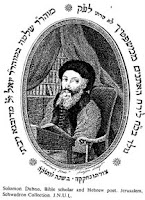
3. One of the key selling points of NEJ is that it updates – and allegedly supersedes – the 1972 edition of EJ. In the general introduction to NEJ, we are informed that more than 2,650 new entries were incorporated into NEJ, and that over half of the original entries (in EJ) were revised and updated for NEJ. Indeed, it is a delight to see entries in NEJ for Dina Abramowicz, Zvi Ankori, Gerson Cohen, Lucy Dawidovich, Marvin Fox, Ismar Schorsch, Yosef Yerushalmi and the like – none of whom were accorded entries in EJ. But upon inspection, it turns out that many key entries that needed to be revised and updated were neither revised nor updated. And regarding the new entries, there are serious errors of commission and omission.

Samples of entries that should have been updated, but were not, include:

a) Abraham b. Elijah of Vilna (d. 1808). NEJ reprints EJ, apparently unaware that some 130 printed pages of Abraham b. Elijah of Vilna’s writings on Bible, Talmud, Midrash, and Jewish bibliography were published for the first time, from manuscripts, in 1998 (see Yeshurun 4[1998], pp. 123-254). EJ and NEJ list Abraham b. Elijah of Vilna’s date of birth as 1750. Recent historical studies indicate otherwise and suggest he was born in 1766 (see, e.g., Yeshurun 14 [2004], pp. 982-996). These and other post-1972 studies on Abraham b. Elijah of Vilna surely merited mention in a revised and updated entry. In this instance, NEJ does not reflect the present state of modern scholarship.

b) Adam Ba’al Shem. NEJ reprints the EJ entry by Gershom Scholem, who – in one of the most controversial passages he ever wrote – identified the writings of the Sabbatean prophet Heshel Zoref (d. 1700) with the writings ascribed by Hasidic lore to the legendary Adam Ba’al Shem. The latter’s writings, according to Hasidic legend, formed the basis for the uniquely Hasidic teachings of R. Israel Ba’al Shem Tov. Scholars were quick to challenge Scholem’s identification during his lifetime and after his death. None are cited in the NEJ entry. An entire literature has grown around this particular issue. Much (but not all) of the relevant bibliography appeared in Y. Liebes, ed., גרשם שלום: מחקרי שבתאות, Tel Aviv, 1991, pp. 597-599. None of this appears in the NEJ entry. Once again, NEJ does not reflect the present state of modern scholarship.

c) Chajes, Zevi Hirsch (d. 1855). NEJ reprints the EJ entry. In the intervening years, numerous studies and two major books were published on Chajes, none of which is mentioned in NEJ. Here it will suffice to mention the titles of the two books:

Bruria Hutner David, The Dual Role of Rabbi Zvi Hirsch Chajes: Traditionalist and Maskil, Columbia University Ph.D., University Microfilms, 1971.

Mayer Herskovicz, רבי צבי הירש חיות, Jerusalem, 1972 (reissued: Jerusalem, 2007).

Here too, NEJ does not reflect the present state of modern scholarship.

d) Kalmanovitch, Zelig (d. 1944). NEJ reprints the entry in EJ. The diary (mostly in Yiddish and partly in Hebrew) of this Yiddish scholar — and victim of the Holocaust – is one of the most poignant of the Holocaust diaries. In 1977, Kalmanovitch’s son, Shalom Luria, publish an annotated Hebrew translation of the diary, together with a 50 page introduction that reveals much about Kalmanovitch that was not previously known. See Z. Kalmanovitch, יומן בגיטו וילנה, Tel Aviv, 1977, pp. 9-59. A sizeable and significant fragment of the diary, entirely in Hebrew, was discovered in the Lithuanian Central Archive in Vilna, and published in 1997. See Yivo Bleter 3(1997), pp. 43-113. None of this information appears in the NEJ entry. Regarding the Kalmanovitch entry, then, NEJ does not reflect the present state of modern scholarship.

e) Luria, David b. Judah (d. 1855). NEJ reprints the entry in EJ. No mention is made in either EJ or NEJ that a portrait of Luria is extant (in Vilna) and has been frequently published. See, e.g., Yahadut Lita,Tel Aviv, 1967, vol. 3, p. 62. More importantly, some 230 printed pages of Luria’s hiddushim on Bible, Mishnah, the Jerusalem Talmud, and Midrash Mishle, as well as responsa, were published for the first time, from manuscripts, in 1998-9. See Yeshurun 4(1998), pp. 489-647 and 6(1999), pp. 285-359. NEJ does not reflect the present state of modern scholarship regarding this entry as well.


4. Sins of commission are inevitable in any encyclopedia. The name of the game is to keep them at a minimum, and it is largely the responsibility of the editors to check and recheck possible misspellings, mistaken dates and facts, discrepancies, imaginary references, exaggerated claims, and the like. NEJ is not lacking in sins of commission in all of the above categories. One amusing instance will have to suffice for our purposes.

NEJ contains two entries of interest that appear several pages apart in volume 3. The first entry is entitled: Bloch, Chaim Isaac. The second entry is entitled: Bloch, Hayyim Isaac ben Hanokh Zundel Ha-Kohen. Innocent readers will assume, as they have every right to assume, that these represent two different persons. Alas, they are one and the same person. The first entry is a new one, designed especially for NEJ. The second entry is the old one, reprinted from EJ (minus the handsome photograph [reproduced below] that accompanied the original EJ entry). There are some interesting differences between the two entries. In the first entry, the reader is informed that Rabbi Bloch was born in 1867. Several pages later, however, Rabbi Bloch aged some 3 years, as we are informed that he was born in 1864. In the first entry, we are told mostly about essays he contributed to a variety of Torah journals – though mention is made of the fact that he published books as well. None of their titles are listed. In the second entry, not a word is said about his contribution to Torah journals. Instead, the titles of all his published works are listed. In the bibliographies appended to the two entries, each lists an item not in the other. The primary blame here hardly rests with the authors of the entries; presumably, they performed their assigned tasks as best they knew how. It is the sloppiness of the editors that allowed for the publication of two (sometimes contradictory) entries for one and the same person. Given the premium placed on space in any encyclopedia, this is a sin of no small import.
5. Sins of omission are inevitable in any encyclopedia. As the editors indicate in the general introduction to NEJ: “An obvious problem in the compilation of any encyclopedia is the decision as to which entries are to be included and which excluded …there is always a body of “borderline” entries which potentially could fall in either category. This problem becomes particularly sensitive when dealing with biographies of contemporaries. Which scholars receive entries and which do not? Where is the line to be drawn for rabbis or businessmen or lawyers or scientists? In some subjects, it was possible to fix objective criteria. For example when it came to U.S. Jewish communities, it was decided to include only those numbering more than 4,500.”

One can only sympathize with the impossible task before the editors. It was a no-win situation for them; whatever their decision, they would surely be open to criticism. If nonetheless I join the chorus of critics, it is not because of “borderline” entries. My own sense is that serious sins of omission occurred throughout NEJ, and in a broad range of categories. I shall attempt to illustrate this by selecting at random 5 categories of Jewish life that were of sufficient interest to me that I was even willing to leaf through the pages of NEJ in order to see how they were treated. I am well aware that others may consider unimportant what I consider important. What follows is no more than the personal opinion of one observer. The names listed below have no independent entry in NEJ and, at best, are mentioned in passing in other, often thematic entries.

a) Women. In the publicity relating to NEJ, it was stated openly that in earlier encyclopedias, including EJ, Jewish women were marginalized. They accounted for no more than 1.25% of the entries in EJ. This was a matter that would be rectified in NEJ. I do not know whether, in fact, this has been rectified in NEJ. But here are some omissions that seem striking to me.


1. Adele Berlin. A noted Bible scholar in the Department of Hebrew and East Asian Languages at the University of Maryland, her published books include:

Biblical Poetry Through Medieval Jewish Eyes; Dynamics of Biblical Parallelism; Poetics and Interpretation of Biblical Narrative; JPS Bible Commentary: Esther; Lamentations: A Commentary; Zephaniah: A New Translation with Introduction and Commentary; and more.

2. Esther Rubinstein (1883-1924). An early advocate of religious Zionism, she was a leading Hebraist, Zionist, educator, and social activist in Vilna. Her learned essays on women’s suffrage paved the way for a change in rabbinic attitudes toward this issue. She founded the first religious day school for Jewish women in Lithuania. See the entry in אנציקלופדיה של הציונות הדתית, Jerusalem, 1983, vol. 5, columns 582-585.

3. Rivka Schatz-Uffenheimer (d. 1992) served as Edmonton Professor of Jewish Mysticism at the Hebrew University. Her many books on Kabbalah and Hasidut (e.g., Hasidism as Mysticism; The Thought of R. Moshe Hayyim Luzzatto [Hebrew]; The Messianic Idea from the Spanish Exile On [Hebrew]; R. Dov Baer of Mezhirech’s Maggid Devarav Le-Yaakov: An Annotated Edition [Hebrew] ) are landmarks in the history of Jewish mysticism.

4. Sara Schenierer (1883-1935), educator and author, founded the first Beth Jacob school in Cracow in 1917. In 1923, she founded the first Beth Jacob teacher’s seminary, also in Cracow. By 1927, there were 87 Beth Jacob schools, with over 10,900 students, in Poland alone. The movement spread throughout Europe, and ultimately to the United States and Israel, where it continues to thrive – with well over 50,000 students – to this very day. She also spearheaded a Jewish youth movement for young girls in Poland, wrote children’s literature and plays. Her collected writings were published in 4 volumes in Hebrew in Tel Aviv, 1955-60.

b) Rabbis.


1. R. Shneur Kotler (1918-1982) succeeded his father, R. Aharon Kotler, as Rosh Yeshiva of the Lakewood Yeshiva. He served in that capacity from 1962 until his death. Under his watch, the Lakewood Yeshiva grew from a student body of 200 students to a student body of over 1000 students. He established a system of Kollels throughout the larger Jewish communities in the United States. He was active in Agudat Israel, Chinuch Atzma’i, Torah U-Mesorah and other educational organizations. It was largely due to his leadership that the Lakewood yeshiva and its affiliate institutions number today well over 4000 students.

2. R. Eleazar Menachem Shach (1898-2001) was Rosh Yeshiva of the Ponevezh Yeshiva in Bnei Brak. From 1970 until his death, he was generally recognized by the Yeshiva world and by much of the Haredi world as the Gadol Ha-Dor. He was an occasional supporter of the Shas party, and was the founder of the Degel ha-Torah party. As such, he wielded enormous power in Israeli politics and the world over. He was the author of a monumental commentary on Maimonides’ Code, entitled Avi Ezri.

3. R. Yosef Shalom Elyashiv (b. 1910) succeeded Rabbi Shach as Gadol Ha-Dor. He is, arguably, the single, most powerful figure in the Yeshiva world and in much of the Haredi world. An expert in Jewish law, he has published some 26 volumes of hiddushim on the Talmud and Shulhan Arukh, as well as collections of responsa.

c) Academic Scholars. Two of the women listed above, Adele Berlin and Rivka Schatz-Uffenheimer, could just as easily have been listed under this rubric, with absolutely no bending of the rules. They were listed above only because of the claim that a special effort was made to include as many women as possible in the new entries for NEJ. Despite the claim, they were not accorded entries in NEJ.

1. Gerald Blidstein holds the Miriam Martha Hubert Chair in Jewish Law at Ben-Gurion University. His publications are simply too numerous to be listed here. Suffice to say that he was awarded the Israel Prize in Jewish Thought in 2006.

2. Menachem Cohen, Professor of Bible at Bar-Ilan University, is the head of the Mikra’ot Gedolot Ha-Keter Project – a project that is preparing for publication the Aleppo Codex and its Masorah, the Aramaic Targums, and critical editions of medieval Jewish commentaries on the Bible. Some 10 volumes have already appeared in print under his aegis. They represent the finest edition of Mikra’ot Gedolot ever produced.

3. Yehuda Liebes holds the Gershom Scholem Chair in Kabbalah at the Hebrew University. His many publications include: Studies in the Zohar; Studies in Jewish Myth and Jewish Messianism; and Elisha’s Sin (Hebrew). His annotated versions of Scholem’s studies are indispensable for scholarly research.

4. Haym Soloveitchik, University Professor at Yeshiva University, taught for many years at the Bernard Revel Graduate School of Yeshiva University. His published books include: Halakhah, Economics, and Communal Self Image (Hebrew); Pawnbroking in the Middle Ages (Hebrew); Wine of Non-Jews (Hebrew); Responsa as Historical Sources (Hebrew). Some of his shorter essays (e.g.“Three Themes in Sefer Hasidim”; “Rupture and Reconstruction”) have stimulated more discussion than books by others on the same topics. He was a recipient of the prestigious National Foundation for Jewish Culture Jewish Cultural Achievement Award in Jewish scholarship.

5. Yaakov Sussman is a world class Talmudic scholar who was awarded the Israel Prize for Talmudic Research in 1997. His many publications on the manuscripts, editions, and the history of the publication of the Mishnah, the Jerusalem Talmud, and the Babylonian Talmud; his edition of the “Miqsat Ma’aseh Torah” fragments of the Dead Sea Scrolls; and his edition of the Rechov inscription are the point of departure for all scholarly discussion of those topics.


d) Jewish Communities. As noted above, NEJ allows for an entry on any Jewish community in the United States with 4,500 Jewish residents or more. Thus, e.g., there is an entry on Wilkes-Barre, Pennsylvania which, perhaps, once had that many Jewish residents. According to the entry in NEJ, there were only 3000 Jewish residents in Wilkes-Barre in 2005. It is therefore somewhat surprising that there are no separate entries in NEJ on:

1. Monsey, N.Y.

2. Teaneck, N.J.

3. Far Rockaway, N.Y.

4. Lawrence, N.Y.

5. Cedarhurst, N.Y.

6. Woodmere, N.Y.

7. Kew Gardens Hills, N.Y.

I do not know the exact Jewish population of any of the towns listed above, but I suspect that each has at least 3000, and in all likelihood more than 4500, Jewish residents. In all fairness, NEJ presents a somewhat detailed discussion of Monsey and Teaneck under other rubrics (Rockland County and Bergen County). But I could not locate any discussion of Far Rockaway, the Five Towns, or Kew Gardens Hills. Each of these communities has a rich history, with many
synagogues, schools, and often institutions of national and international repute. They surely merit entries in NEJ.

6. The previous paragraph presents a rather long list of sins of omission relating to women, rabbis, academic scholars, and Jewish communities. One could easily add more names to each of the categories; and certainly so if yet other categories are examined. Doubtless, some will argue that there is simply no room in a 22-volume encyclopedia for so many “borderline” entries. In order to counter such an argument, I will list here four entries – exactly as they appear on the printed page – that found their way into NEJ.

1. Calwer, Richard (1868-1927). German socialist, economist, and politician. He belonged to the reformist wing inspired by Ferdinand Lasalle within the German Social Democratic Party (SPD). Calwer harbored a strong anti-Jewish bias. In a brochure published in 1894, he attacked the SPD’s radical wing as having been “incited by a few Jews who make slander their business,” and deplored that such “specific” Jewish characteristics as “zealousness, contentiousness, and commercial craftiness” had found their way into the party press and literature. He also criticized the SPD for combating anti-Semitism to the extent of creating the impression that Social Democracy had been “Judaized” (verjudet). Calwer left the SPD in 1909. He was a pioneer in Western socialist non-Marxian economics, which he taught until his suicide in Berlin.

2. Cohen, Philip Melvin (1808-1879), pharmacist and civic leader in Charleston, South Carolina. Cohen, born in Charleston, was the son of Philip Cohen, lieutenant in the War of 1812. During the Second Seminole War Cohen served as surgeon to a detachment of troops in Charleston Harbor (1836). In 1838 he became city apothecary. He was a member of the city board of health (1843-49). Cohen was a director of the Bank of the State of South Carolina (1849-55). He was one of the citizens who served as honorary guard at the funeral of John C. Calhoun in 1850.

3. Nagin, Harry S. (1890- ), U.S. civil engineer. Born in Romny, Russia, Nagin went to the U.S. in 1906. From 1924 he was executive vice president of a large steel products company in Pennsylvania. He took out over a hundred patents on steel structures, bridge floors, gratings, concrete, and plastics.

4. Abrams, “Cal” (Calvin Ross; 1924-1997), U.S. baseball player, lifetime .269 hitter over eight seasons, with 433 hits, 32 home runs, 257 runs, and 138 RBIS. Born in Philadelphia to Russian immigrant parents, he moved with his family to Brooklyn when he was a child. Having grown up in Brooklyn in the shadow of Ebbets field, Abrams fulfilled a life-long dream when he signed with the Brooklyn Dodgers after graduating from James Madison High School. But after two weeks in the minor leagues he was drafted into the army., where he served four years. Abrams spent three years in the minor leagues, winning the Southern Association championship with Mobile in 1947 while hitting .336. Abrams, who batted and threw left-handed, played for the Brooklyn Dodgers (1949-52), Cincinnati Reds (1952), Pittsburgh Pirates (1953-4), Baltimore Orioles (1954-55), and Chicago White Sox (1956), and had a perfect fielding percentage in three different seasons, 1950, 1952, and 1956. Abrams is best remembered for one of the most famous plays in Dodger franchise history. In the final game of the 1950 season, with the Dodgers one game behind the Philadelphia Phillies in the pennant race, Abrams tried to score from second with two out in the bottom of the ninth of a 1-1 game on a hit by Duke Snider, but Abrams, who had been waved home by third base coach Milt Stock, was thrown out by the Phillies’ Richie Ashburn. Had Cal scored, the Dodgers would have won the game and forced a playoff with the Phillies for the pennant. Dick Sisler hit a three-run home run in the top of the tenth to win the game – and the pennant – for Philadelphia. It was the closest Abrams ever got to the post-season. Dodgers fans vilified Abrams for years but he was defended by both Ashburn and Phillies pitcher Robin Roberts for the play, who agreed with many others who said that Abrams should not have been sent home by Stock.

————————–

Far be it from me to deny Richard Calwer (a non-Jew), Philip Melvin Cohen, Harry S. Nagin , and Cal Abrams – not exactly household names – their rightful place in Jewish history. But at the expense of Professor Haym Soloveitchik? NEJ inherited the Calwer and Cohen entries from EJ. But the Nagin and Abrams entries are original with NEJ. In the case of Abrams, whose baseball career ended in 1956, this is somewhat surprising, for he obviously didn’t make the cut with EJ in 1972 (in contrast to Hank Greenberg and Sandy Koufax). Now I am well aware that Rav Shach could not hit major league pitching to save his life, and that his lifetime batting average would have paled in significance to Cal Abrams .269 lifetime batting average. But, really, does Cal Abrams take precedence over Rav Shach in a Jewish encyclopedia?


7. In sum, the returns are hardly in. Not for nothing did we label these comments “preliminary observations.” Much more needs to be investigated before one can judge how well NEJ has captured the totality of past Jewish life, and the pulse of present Jewish life, as reflected in the 2007 edition. But until all the returns are in, hold on to your 1972 edition of EJ for dear life! It is not at all clear that NEJ has superseded, or that it will ever supersede, EJ. All public libraries and private collectors will do well to retain their 1972 editions of EJ and keep them precisely on the same shelves they have now occupied for some 35 years.


Review of a new edition of the Sefer Chasidim

Review of a new edition of the Sefer Chasidimby R. Eliezer Brodt
As recently mentioned on this blog this generation is privileged to have many seforim especially rishonim being reprinted in critical editions based on manuscripts etc. One of the publishing houses which has been involved in publishing such works is Mechon Otzar haPoskim. A few years ago they released a few volumes of a critical edition of the Mahzhor Vitri which to date its still not complete. And now, a few weeks ago they published two volumes (of eventually four volumes) of the Sefer Hassidim. In this post I would like give some background on Mechon Otzar haPoskim, the Sefer Chassidim in general and this recent version in particular. Mechon Otzar haPoskim was founded in the 1950’s by two great gedolim R. Isser Zalman Meltzer and R. Yitzchak Isaac Herzog. R. Herzog explained (introduction to Otzar haPoskim compendium on Even haEzer) the reason for founding of the organization was due to the almost limitless nature of Halacha and thus at times poskim find themselves having to deal with very difficult topics and do not have access to most of the seforim of the many great Gedolim of the past that would help them deal with these difficult topics. Attempts to deal with the vast amount of halacha literature had been previously attempted by the Peschei Teshuva and Darkei Teshuvah. But, today, both of these works are limited as the body of literature has expanded significantly since these earlier works came out. R. Herzog thus had the idea to create a modern compendium using what he had available. He then heard that R. Isser Zalman had the same thoughts so they decided to work together and gather a group of Gedolim to systematically go thru the teshuvot literature, abridge it, and place it in the parallel place in the order of the Shulchan Orach. R. Isser Zalman had an additional reason why he wanted to start this organization. He felt that many talmdei chachamim needed parnasah so this was a great way to help them by employing them to go thru all the seforim (Derech Etz Chaim vol. 2 p. 327).
With the help of Dr. L. Magnes, R. Herzog was able to raise funds to start this organization. Card catalogs were made and the seforim were cataloged according to topics forming the now-famous Otzar haPoskim catalogs. These catalogs are the notes culled from thousands of seforim. A look in the index of earlier volumes of the Otzar haPoskim will show that they in the fifties were going thru more volumes of seforim than the Frankel edition of the Rambam did in their recent, final volume! Interestingly, R. Isser Zalman inherited an excellent library from R. Chaim Berlin which contained thousands of rare seforim which were unknown to most people. R. Isser Zalman made sure these seforim were used and quoted in the Otzar haPoskim (Derech Etz Chaim vol. 2 p. 328). R. Isser Zalman also the one who made the decision which works would make it into Otzar haPoskim and which would not. To date this catalog has helped many seforim such as the many volumes of Mo’adim l’Simcha. Otzar haPoskim’s main work has been the Otzar haPoskim on Even haEzer. Anyone needing sources on topics relating to Even haEzer; this has a tremendous amount of sources. One interesting point about this work is that one finds all kinds of Rabbonim getting along – quoted side by side. A few years ago they mentioned that the volumes of Otzar haPoskim on Orach Chaim are in preparation one only hopes that they will come thru to create such an important necessary work on Orach chaim [This is actually available on the Morgenstern, Otzrot haTorah, hard drive as well as on the Otzar haPoskim on Hoshen Mishpat.] Recently they have expanded their repertoire to include the publication of Rishonim such as the Machzor Vitri and, now, the Sefer Chasidim. The Sefer Chasidim has been reprinted many times ever since it was first printed in Bologna in 1538. R. Saadia Helvona in his introduction to his commentary on the Sefer Chasidim, Mishnat Chasidim, notes that the Sefer Chasidim is encyclopedic in nature as it includes both halacha and aggadah. The Sefer Chasidim is extremely popular and it is quoted by many rishonim and achronim for all kinds of things. Aside from quotations, there seems to be a certain awe about it which is hard to explain especially when it comes to the tzavah (the ethical will) which was printed in many of the editions (first printed in Yesod haTeshuva, Cracow, 1585).
The tzavah itself is the subject of many teshuvot and even some entire seforim. Without going into the whole history of this topic (which R Gutman promises us will be one of the forthcoming volumes) its worth mentioning aside from the well-known teshuva in the Nodah beYehudah (Even haEzer Tinyanah no. 79), where he writes that there are many things in the tzavah which conflict with Chazal and those statements do not need to be followed. There is an additional, lesser known statement from the Noda BeYehudah about the tzavah. R Eleazer Fleckels (most well know for his Teshuvah m’Ahahva), in his Olat haChodesh (vol. 1 p.15) records that the Nodah beYehudah would respond when asked if there is a problem marrying someone if that will cause the future father-in- law and future son-in-law will share the same name (which the tzavah states is a problem) “before you ask me about following the tzavah of R. Yehudah haChasid ask me about the tzavah (or statement) of Chazal which decries marrying the daughter of a am ha’aretz! [This sentiment, however, is disputed in the Teshuvos Matzav haYashar (volume 2 pg 44) where he writes “in his old age that whenever he saw people going against various statements in the tzavah nothing good ever came from it!] The true authorship of the Sefer Chasidim is unclear. Some attribute it to R. Yehudah haChasid (Chida and others) but R Avrohm ben haGra records that his father, the Gra, held R. Eleazer Rokeach wrote it (Yeshurun, vol. 4 p. 250). R Frumkin also records this statement from the Gra– R. Frumkin’s source is a manuscript of R. Yisrael of Shklov’s Pas haShulchan (Toldos Chachmei Yerushalim, vol. 2 p. 102 the end of note 1; see also Chaim Michal, Or haChaim p. 456). Abraham Epstein writes that the Sefer Chasidim doesn’t have a single author but instead it is from three different people – R Shmuel haChassid, his son R Yehudah haChasid, and R. Eleazer Rokeach (Kitvei R. Avrohom Epstein, vol. 1 pp. 258-261). R. Gutman in the introduction to his new edition of the Sefer Chasidim brings many other different sources in regard to the authorship of this sefer. Recently Professor Haym Soloveitchik shows in a beautiful article based on Yakov Reifman that not only are is the work of different authors but there are completely different styles and what one writes completely contradicts what the other does. (JQR XCII no. 3-4 pp. 455-493). Many manuscripts exist of the Sefer Chasidim , however, from the 1538 until 1891 there was basically one version printed based on only one of the manuscripts. In 1891, Yehudah Wistinetzki printed a new edited from another manuscript – the Parma manuscript – published by Chevra Mekitsei Nerdamim.
This Parma manuscript contains a almost double the material of the original edition. Aside from just adding material, the Parma edition is also important for the different versions of the previously published pieces. This edition was recently reprinted by Moznaim publishing house but without the important introduction of Y. Frieman. However, the Kest Leibowitz publishers also recently reprinted this edition and they reprinted the whole sefer including the introduction. Interestingly although the footnotes which appear in this edition are not that extensive as some of the prior editions, there are important notes on this edition albeit they don’t appear in the actual work. Instead, Wistinetzki, prior to printing this edition sent about fifty questions to R. Yosef Zechariah Stern in an attempt to locate sources for different statements of the Sefer Chasidim and the answers are included in R. Stern’s Zecher Yehosef (vol. 1 no. 78).
In 1955, Rabbi Avrahom Price from Toronto with the permission of Mekitsei Nerdamim reprinted the Parma edition in three massive volumes with extensive footnotes. But, one thing which R. Price stays clear from – which he admits in his introduction – is the kabalah aspects of the Sefer Chasidim as he was not familiar with this part of torah. These three volumes are available for free download at seforim online at Hebrewbooks.org.. In 1924, R. Reuven Margolis first published in Lemberg, what would become the most popular version of the Sefer Chasidim, in a critical edition . Subsequently, this was corrected and updated and eventually published by Mossad HaRav Kook. This edition to date is the best job done on the Sefer Chasidim. He has excellent notes, as many are familiar with from his many seforim – he writes straight to the point referencing all kinds of sources from everywhere – showing the sources which form the basis of the Sefer Chasidim. He also shows, with his unbelievable bikyus, whether the various authorities – rishonim and achronim – agree with the statements of the Sefer Chasidim. Besides for all this he has many excellent and original comments on the Sefer Chasidim which he is famous for in all of his works. He also includes notes from nine different people on the Sefer Chasidim. Until now, there was one other worthwhile addition to the Sefer Chasidim. In 1984, R. Moshe Herschler printed in his Kovetz Genuzot (vol. one) some thirty more pieces of the Sefer Chasidim which he found in a different manuscript. We now come to this most recent version published by Otzar HaPoskim and edited by R. Gutman. As mentioned above, thus far, two volumes have been issued of what is supposed to be four volumes of the Sefer Chasidim. The first impression one has when one picks it up is this is a beautiful job as the print is very clear and the layout it very organized. This is keeping with the famous statement of R Akiva Eiger where he writes to his sons in the introduction of his teshuvot that “one should print his sefer on nice paper and ink because one learns much better from such a sefer”. Although this statement is attributed to R. Eiger, in fact, this idea is found much earlier in the famous introduction to the Maeseh Efod (p. 13) of where he writes this concept at great length it’s quoted by R Yakov Emden in his work Migdal Oz (p.50 ) in short. Prior editions of the Sefer Chasidim included the perush of the Chida, Bris Olam, but it seems that many pieces were missing. R Gutman corrects these omissions. In addition to those corrections to that commentary, another common commentary Pirish Kadmon by R. Dovid Greinheit also suffered from lack of completeness and R. Gutman has correct that as well. Besides for all this R. Gutman includes a collection of comments of R Eliezer Papua from his Yalkut Chasidim that relate to the Sefer Chasidim and the Perush Mishnat Chasidim from R Sadiah Chalonah (it is only on the first seven simanim in the sefer).
Rabbi Guttman includes many notes (totaling twenty-nine) from different gedolim on the Sefer Chasidim many of them which he obtained from unpublished manuscripts amongst them from the Adres and R. Y. Palagai. In the back of volume two he includes a sixty page kuntres of notes from R. Chaim Sofer who is famous for his incredible bikyus. In addition to all this he has many lengthy comments on the whole sefer from a wide rang of sources to explain the Sefer Chasidim. He also has a section on each page where he brings down various readings from the different manuscripts on the particular pieces. All the above are the positive things about this reprint, unfortunately, there are notable points of criticism. It is true its is always easier to criticize than to the actual work oneself but here are some points I feel worthy of mentioning. To begin with the entire history and literature of the Chasidei Ashkenaz in general have been the subject of many articles and books. However, even today after all that has been published there is much left unclear. Just to list a few of the people who were and are involved in the study of the Chasidei Ashkenaz, Moritz Gudemann (haTorah v’Hahayim, vol. 1, pp. 119-156), A. Epstein (vol. 1 pp. 245-269), Y Y Frieman (introduction to Sefer Chasidim Meketzei Nerdamim ed.), Gershom Scholem, Y Baer, Ivan Marcus (all in Da’as v’Chevrah b’Mishnat Chasidei Ashkenaz), E. E. Aurbach (Balei haTosfos, vol. 1, pp. 345- 447 and volume four of his edition of Arugot haBosem), Yisroel Ta Shema (Keneses Mechkarim, vol. 1 pp. 181-317), E. Kanarfogel (Peering thru the Lattices), Yosef Dan (in his recent book on R. Yehudah haChasid published by Zalman Shazar), Eric Zimmer, Simcha Emanuel (in his introduction to the recently published Drasha of Rokeach) and Haym Soloveitchik (AJS Review vol. 1 (1976) pp. 311- 357).
Some of what has been found in these manuscripts has been the subject of great controversy causing great people to claim these manuscripts must be forgeries (see Kovetz Minchas haKayitz vol. 6 pp. 251-252). But besides for this there has been a great many manuscripts found in the past twenty-five years and printed such as the Rokeach al haTorah and Megilos or the Rokeach’s work on siddur and many other of his works, R. Efraim al haTorah. Other works by the Chasidei Ashkenaz have been put out in critical editions such as the Sefer Gematriyos of R. Yehudah haChasid and the Amaoros Tehoros (which I hope to return to in later posts) all containing many important explanations about all sorts of topics from the Chasidei Ashkenaz.
To date there is no way to many unknowns (for me at least) to even paint a brief picture of this group of rishonim but one hopes with the help of the recent seforim printed and what will be printed in the future we will be able to get a clearer understanding of these great rishonim. Being aware of the explosion in this genre of literature, any version of the Sefer Chasidim should keep this companion literature in mind and should take it in account as much of the printed torah of the Chasidei Ashkenaz as it relates to this most famous work, Sefer Chasidim, of this school.
Now R. Gutman seemed to be aware of this and he does use some of these new seforim. For example, he quotes the Sefer Gematriyos many times however the rest of this no mention to the many other recent seforim of Chasidei Ashkenaz. [For a comparison see the recent edition of the Sefer Gematriyos where the footnotes are full of such cross-references (although he might of done to much).] The purpose of referencing the other literature of the Chasidei Ashkenaz is many times they can help understand certain comments if one can see all the ways similar ideas are brought down by the different talmdim. In learning Gemara with rishonim this is very important to help one understand the particular shitos and so to here.
For example, the Sefer Chasidim (siman 548) writes if one wants to see if he will live the year light a candle during assert yemih teshuvah if it remains lit you will live the year if not, not. On this R. Gutman references nothing. Where as without going much into this topic I will just give a reference to the Sefer Hashem of the Rokeach (recently printed from manuscript for the first time) where he talks about this (p.140) which complements the statement found in the Sefer Chasidim.
I feel this is a very important part to anyone writing on the Sefer Chasidim and R. Gutman should have put in more work in regard to this part. If he could not do it himself because he is not trained in this sort of work he should of gotten people who are familiar with such this field. R. Reuven Margolis who did know how to do this in general unfortunately could not do this as most of these seforim of Chasidei Ashkenaz were not available in his lifetime. Another point that I would like to highlight is the many times R. Gutman cites to the Sefer Gematriyos he almost never references the exact page (see, e.g, pp. 23, 35, 39) in the Sefer Gematriyos making it very hard to find the piece he is quoting as it’s a massive two volume work. The same failing is apparent when R. Gutman quotes from the Sefer Amoros Tehoros (p. 23) or when R. Gutman cites the Sefer Hashem of the Rokeach (p. 429).
A more glaring omission is when Sefer Chasidim (p. 424) discusses the weird creature called שטריאה R. Gutman references the Sefer Gematriyos again not quoting the page and then R. Gutman writes ובסוף המאמר נשים הליליות ברושאם הנ”ל כתב which is an unintelligible citation. What R. Gutman means to say is that R. Stal in the back of his edition to the Sefer Gematriyos has a whole chapter devoted to this topic, however, this is totally unclear to the reader. Aside from the cryptic citation R. Gutman should have mentioned this is a comprehensive article on the topic. Another point I would like to criticize is the use or lack thereof of R. Reuven Margolis edition. As I have mentioned earlier the Margolis edition is the best work to date on the Sefer Chasidim. It’s quite interesting that there is not a single mention of R. Margolis’s name in the introduction mentioning that R. Gutman used this work. However, it is obvious from hundreds of places throughout this Gutman’s edition that in fact he did use this edition.
What is perhaps even stranger is the many times that R. Gutman says nothing on a very important point and R. Margolis has already discussed it in depth. Some examples are on page 180 -181 where the Sefer Chasidim (siman 158) writes against tefilah בקול רם and the Margolis edition references the famous collection on this topic called Yanenu B’kol there is no reason why R. Gutman could not mention this. Another example is on page 172 where the Sefer Chasidim (siman 155) has a long discussion about stealing torah from someone so R Gutman has a lengthy note of sources about this but once he is on the topic one should quote the Sefer Shem Olem of R. Margolis where he discusses this topic at great length. This omission is even more bizarre as later on R. Gutman does cite this work (p. 744).
One more example is on page 274 the Sefer Chasidim (siman 258) ויום כיפור קרוי כמו כן ראשית דכתיב ביחזקאל בעשרים וחמש שנה לגלותינו בראש השנה בעשור לחדש אלמא בעשור קרוי ראש השנה on this R Margolis references a comment of his from other places (see his Toldos haMahrsha p. 51 and the notes therein and his Nitzozei Or p. 158) proving that sometimes it says Rosh Hashanah and it refers to Yom Kippur affirming the statement in the Sefer Chasidim –again no mention at all on this by R. Gutman. Another such example is where the Sefer Chasidim (siman 822) talks about wiping ones feet off before entering a shul in the R. Margolis edition there are many sources on this topic. But, again R. Gutman mentions nothing about this custom.
Another example is where the Sefer Chasidim (Siman 858) talks about saving seforim from a fire on Shabbos again R. Gutman does not quote the excellent reference of R. Margolis citing in turn the Adres who says that if one has manuscripts of his own that he worked hard on he may save them from the fire first because it’s like pikuach nefesh! Throughout R. Gutman’s edition there are many such examples. Perhaps R. Gutman assumed what whomever purchases his edition already has R. Reuven Margolis edition and R. Gutman was merely adding to that. Even so, he should mention it in the introduction. Another deficiency in this edition is R. Gutman, in the section he includes comments collecting sources etc., his style is difficult as much of what he has could have been done shorter and more to the point. Unfortunately, this is a common weakness that many authors have today as I have previously mentioned on this blog. Besides for that I feel there are many more sources that he could have added to this part making it a true encyclopedic work that it should be.
Just to list a few examples of sources that he missed and on this there for sure is an element of lo alechu hamlacha ligmor. One where R. Gutman talks about the cherem to live in Spain (p. 394) he misses much on the topic amongst the omissions is the famous discussion of the Teruos Melech in Rosh Hashanah (siman 13 sec. 2) (for more on this see the great article of Marc B. Shapiro in Sefarad 49:2(1989) pp. 381-394).
Another such example is both times where the Sefer Chasidim talks about stealing torah from someone (pp. 172 and 774) he could have added the piece of R. Efraim Zalman Margolis in his introduction to the edition of the Maseh Rokeach which he printed. Another such example is where the Sefer Chasidim (siman 822) talks about wiping ones feet off before entering a shul so besides for not mentioning R. Margolis’s comments at all he could of referenced to the excellent discussion in the Minhaghei haKehelos of R. Golhaber (vol 1 pp. 3-8).
Another example is where the Sefer Chasidim (siman 158) writes against tefilah בקול רם he missed the very original discussion of the Matzevh Hayashar (volume 2 pg 28 and onwards). One last example is where the Sefer Chasidim (siman 461) discusses the topic of if something bad happens three times it is a bad sign he could of added the teshuvah of the Avnei Chefetz from R. A. Levine (siman 64). Many more examples could be given but this is not the place. Some minor bibliography points one on page R. Gutman records a statement from the Shach al haTorah which he attributes the Shach (p. 173). But, it is obvious he did not check into this source because the Shach did not write this sefer rather a talmid of talmid of the Ari”zal did which R. Gutman himself quotes correctly later on page 774. Another point is in the introduction R. Gutman speculates that based on the pieces he has included it seems that the Adres wrote an entire work on the Sefer Chasidim called Mishnat Chasidim. There is no need for speculation – this is correct – as the Adres in his autobiography (pg 33) writes “I bought a Sefer Chasidim with wide columns and I learnt it twice and I wrote a biur on it with sources … and I called it the Mishnat Chasidim.” Unfortunately, later in his autobiography the Adres writes (pg 56) that it was burned in a fire that destroyed most of his writings!
Another minor point on page 181-182 where he talks about a story brought down from various sources including the Kav haYashar he should of included the comments of R. Shmuel Askenazi appended to the Kav haYashar (end of volume 2 pg 8). Another example is where the Sefer Chasidim speaks (Siman 768) against singing tunes of non-Jewish origin, R. Gutman (pg 645) includes a number of nice sources on this topic at the end he mentions R. Yisroel Najara that he was a nizutz of Dovid haMelech. He should have at least referenced the Sefer Chizyonos of R. Chaim Vital against R. Najara (and this was actually the person the Shtei Yodos was writing against who R. Gutman quoted earlier in that same piece!) – which was discussed at greater length in an earlier post. In conclusion I feel that although there are some areas which this edition is weak in but there are a great many pluses to owning it the including the many sources that R. Gutman does add and especially the notes of 29 different gedolim. However there is definitely a need for an expert on the Chasidei Ashkenaz to put out a critical edition quoting all the relevant sources from Chasidei Ashkenaz.


Review of Dr. Michael Stanislawski, “A Murder in Lemberg: Politics, Religion, and Violence in Modern Jewish History”

Some have already pointed out that Columbia University Professor Michael Stanislawski has a new book/thriller.[1] This book describes the murder of R. Abraham Kohn and the events leading up to it and its aftermath.

Prof. Stanislawski attempts to discern whether, in fact, R. Kohn was murdered — Stanislawski thinks so — and in doing so, provides a wonderful description of Lvov (Lemberg) during the mid-nineteenth century. The basic background is that R. Kohn was a Reform Rabbi who became the main Rabbi in Lemberg. This allowed him to enact various rules, some such as the abolition of the various Jewish taxes which were collected by Orthodox Jews and thus they profited from it at the expense of the poor could be viewed as postive. But, as he was Reform, even the poor who benifited from this, still complained about such changes. As Stanislawski shows, much of R. Kohn’s actual reforms to Jewish practice were to be found in his articles (and his prior pulpit) rather than his public speeches or proclamations in Lemberg. While the book is interesting and Stanislawski does a good job on the whole, there are several points which I think need to be addressed.

The first is his conclusion. Although he does allow there may be room to doubt whether Kohn was murdered, anyone reading the book comes away with the impression that Stanislawski thinks Kohn was murdered. Stanislawski chides prior authors who don’t conclude Kohn was murdered. The problem with this, is Stanislawski provides the entire legal history after Kohn’s death, which seriously questions whether Kohn was murdered. That is, after Kohn died one person stood trial for his murder and was convicted. However, on appeal this was overturned. After the verdict was overturned, it was again reviewed by the highest court and the appellate court’s judgment was upheld.

While there are some issues with both of these appellate decisions, I don’t see how, after 150 years, and the fact that he admits he doesn’t have all the documentation, Stanislawski could then chide these other authors for relying upon these contemporaneous decisions! If Stanislawski unearthed some document which pointed to the perpetrator that would be one thing, but that is not the case here.

Additionally, Stanislawski intimates that as the accused was Orthodox, later Orthodox writers and publishers attempted to cover up the whole incident and label it as a death. He singles out the publishing house Mossad HaRav Kook and lays claim they also deliberately got it wrong. [2] Setting aside the possiblity that these Orthodox publications decided to rely upon the decision of the abovementioned courts, it is disingenuous to accuse Mossad HaRav Kook when in fact, another one of their publications — one that they have reprinted just a few weeks ago — includes the story as Stanislawski wants to believe it happened. Included in Prof. Meir Hershkovics’ biography on R. Tzvi Hirsch Chajes (Maharetz Chajes) published by Mossad HaRav Kook, it is noted that Kohn and his child were murdered by Orthodox Jews.[3]

While, a conspiracy theory makes for more exciting reading, the facts don’t seem to support it.

Notes:
[1] Michael Stanislawski, A Murder in Lemberg: Politics, Religion, and Violence in Modern Jewish History (Princeton University Press, 2007)
[2] See esp. id. p. 77
[3] See Meir Hershkovics, Maharetz Chayot: Toledot Rabbi Tzvi Hirsh Chayot u-Mishnato (Mossad HaRav Kook, 2007), p. 103-05.


Eliezer Brodt: Review of Halikhot Shlomo, by R. Shlomo Zalman Auerbach

Review of Halikhot Shlomo, by R. Shlomo Zalman Auerbach
By Eliezer Brodt

There is a well known joke which claims that some gedolim have actually been “writing from their graves.”[1] The most famous person to be “guilty” of this charge is R. Moshe Sofer (Hatam Sofer) as he printed nothing[2] in his lifetime and yet we have volumes and volumes of his Torah on literally every area and – to this day – they continue to be published.[3] Obviously, all of this material has come to light through his own notes and those of his many students.

Non-Republished works of R. Shlomo Zalman Auerbach

Another such person, who has had a similarly prolific posthumous literary output – although he did publish Torah novella in his own life time – is R. Shlomo Zalman Auerbach (1910-1995). After his death there has been a printing explosion of his writings covering all topics, including reprints of everything he has ever written! The only works of his not to be reprinted are two amazing works: the Meori Aish – a classic study on electricity and muktzah – and his Madeni Aretz on Shevi’it, as these two works have connections to one of the more controversial gedolim of the past century, R. Avraham Yitzchak Ha-Kohen Kook. As the Meori Aish has a haskamah from Rav Kook and the Madenei Aretz deals at great length with Rav Kook’s views on Shevi’it.

Halikhot Shlomo

For this post, however, I would just like to limit my focus to one of these recent works on R. Shlomo Zalman Auerbach — Halikhot Shlomo.

A few years ago R. Aron Auerbach and R. Y Terger started to print this work. It was printed by Feldheim for a rather low price. The first volume began with Hilkhot Tefilah and Berakhot. After that, they published a second volume discussing the Yom Tovim starting with Rosh Hashana until and including Purim. (Last year they released a limited edition of the Pesach section.) And this year, the third volume has just been published, completing the Yom Tovim, on Pesach and the rest of the year. The goal of this work is to collect everything spanning the gamut of R. Shlomo Zalman’s halakhic interests related to these topics of Tefilah, Berakhot and the Yom Tovim. These volumes are all well organized, culled from all the printed sources and from incidents recorded by his various students. Aside from these sources, they used many manuscripts and notes of R. Shlomo Zalman which have remained unpublished until this point. They try to reference exactly where everything came from; but, at times, this too becomes a bit confusing. The sefer has a nice layout the top part contains the statement of R. Shlomo Zalman, as well as his reasoning for the various pesakim. In the extensive footnotes, the editors demonstrate the breadth of where everything comes from. Sometimes they cite other sources on the topics under discussion. They also include many interesting stories, statements, and anecdotes of advice that R. Shlomo Zalman gave to different people. In addition to all this they include many interesting discussions of R. Shlomo Zalman on Aggadah. At the end of each volume, there is a collection of some lengthier pieces on relevant topics. Besides for all this they included a very thorough index assisting the interested reader in finding almost anything mentioned throughout in the sefer.

I would just like to quote a few interesting discussions from each volume for examples of what makes this work so special as there are literally thousands of gems scattered throughout this work.

Halikhot Shlomo, vol. 1

While talking about having perfectly squared tefillin, R. Shlomo Zalman says that its good enough if, according to viewing it with your eyes and that you do not have to measure the tefillin with a ruler. He than goes on to say – at great length – that the Torah goes according to ones eyes for everything including examining for bugs and checking etrogim (Halikhot Shlomo 1:53, and the footnotes therein).

On the topic of chumrot he writes that one should not just be machmir because he feels like it. Instead, such a position should be reached from one’s own understanding of the topic and that, in this instance, it is in fact the correct position. He contrasts this with the tendency, which can be attributed to many chumrot, which is a result of only utilizing secondary sources and not focusing on the primary sources. He goes on to write that he was very bothered when he would see people walking on shabbat and their wives would be pushing the baby carriages because the man held for himself it was prohibited to use an eruv. He writes that when he was young he was machmir and did not rely on the eruv but, when he got married, he was mater neder (annulled his vow) to be able to help his wife (Halikhot Shlomo 1:55).

Elsewhere they record, that R. Shlomo Zalman once met a chattan walking to shul without a shomer so he accompanied him until he got a shomer. R. Shlomo Zalman explained his actions that already the motzei shabbat before one gets married he is already called a chattan in regard to this that he needs a shomer (Halikhot Shlomo 1:63 1). He writes that a matmid is not one who learns many hours in the day but rather it is someone who learns set times carefully keeping them everyday (Halikhot Shlomo 1:67 2). He writes that a mourner can learn hilkhot aveilut in-depth during the week of shiva (Halikhot Shlomo 1:75 3). Also included is an interesting and in-depth step-by-step teshuva process (Halikhot Shlomo 1:77 4).

At the end of this volume, the editors printed a very interesting piece on the topic of saying ר’ פלוני בן ר’ פלוני – specifically the use of the Rabbi appellation – when calling someone up for an aliya at kriyat haTorah. R. Yosef Zechariah Stern writes that one should not say the title Reb because it is a problem of גבהות in front of God. R Shlomo Zalman, however, defends this custom at great length as we find everyone uses this title. He explains that the reason for its usage was because there are many different prayer customs that Chazal made to go against the tzedukim (צדוקים) to show that we have the Torah – both written and oral. So too, in the times of the Rishonim, there were people who denied the historicity of torah shebal peh, and these individuals were called Karaites; whereas the more-traditional sect of Jews were called Rabanim, and this is why when we call someone to the Torah we say “Reb” to show that he is not a karaite (Halikhot Shlomo 1:370-373; also included, in short, in the third volume, Halikhot Shlomo 3:33- 34).

Halikhot Shlomo, vol. 2

Some interesting points from volume two include: The famous topic of the prayer Machniseh Rachamim and how can it be said as it appears that we are praying to the angels. R. Shlomo Zalman responds to this concern and explains that one can pray to an angel if it is his job to carry the prayers – that is his job! Further, this is why one can sing the song Shalom Aleichem on Friday night as we are only asking them to do their job. However, he said the nussach which appears in kiddush levanah “כשם שאני רוקד כנגדך וכו’ כל לא יוכל כל אויבי לנגוע בי לרעה” makes it appears as if we are praying to the moon and is a mistake! Instead, it should read כשם שאני רוקד כנגדה (Halikhot Shlomo 2:4). When asked which kavonot one should have during the blowing of the shofar he said just that the Torah simply says to blow shofar! (Halikhot Shlomo 2:24). Another interesting idea is that R. Shlomo Zalman did not bless people with sticking out his hands except on very infrequent occasions. He quoted R S Alphandrei that there is no source for giving ones hand in chazal but rather its chukat hagoyim! (Halikhot Shlomo 2:10). At the end of the sefer include, as well, is a very interesting selection as to why the holiday of Hoshanah Rabbah, as a day of judgment or not, is not mentioned in the Torah (Halikhot Shlomo 2:428-434).

Halikhot Shlomo, vol. 3

The third volume of Halikhot Shlomo is the largest thus far, comprising over six hundred pages with many, many interesting and fascinating pieces.

Just to list a few: R. Shlomo Zalman writes that it’s very important to learn Masekhet Moed Koton and Hilkhot Aveilut as well, even though the Hatam Sofer (and others) said that one should not learn it (Halikhot Shlomo 3:439). On Tisha B’Av, R. Shlomo Zalman would read books about the Holocaust (Halikhot Shlomo 3:440). There is also an interesting discussion about the reason of the Mishneh Berurah as to why we eat dairy on Shavuot (Halikhot Shlomo 3:380-381). In regard to Pesach there is an amazing original piece as to why the bechorim (first born) fast on Erev Pesach. R. Shlomo Zalman writes that if it is solely due to the fact that the bechorim were saved from death, then all of the descendants of the bechorim should also fast – not just bechorim! (The answer is a bit more complex and includes several other components to this answer, as well.) To this, R. Shlomo Zalman says that the reason for the fast is not for the fact that they were saved but rather it was because the bechorim were supposed to do the avodah in the Beit Hamikdash, but that they lost it due to the sin of the Golden Calf. So on the fourteenth day of Nissan when they came to the Beit Hamikdash and they saw the kohanim and levi’im doing the beautiful avodah they felt very sad so they did not eat. So they decided to make a day to remember this as there was one time they were able to do this – when Hashem skipped over the houses and to atone for the Golden Calf which caused them to lose this great job (Halikhot Shlomo 3:179-180).

In sum, the Halikhot Shlomo is an excellent work and all in all, I feel that this is a beautiful work and well worth the money.

Sources:
[1] Upon hearing this aphorism, one cannot help but reflect on the passage in the Talmud: “R. Yohanan said in the name of R. Shimon bar Yochai: Any talmid hakham whose teachings are recited in this world, his lips move in the grave” (Yevamot 97a).
[2] Although the Hatam Sofer is the most popular target of posthumous publishing, in fact he did publish one work in his lifetime – although this is not well known. This is probably because his most famous work, his responsa volumes SHU”T Hatam Sofer, were published after he died. The Hatam Sofer died in 1839 and his teshuvot were not published until 1855. But, in the 1826 edition of the Hiddushei R”I Megash on Masekhet Shavout, there was appended a “Kuntres” which contains two Torah pieces and six teshuvot from the Hatam Sofer.
[3] For a discussion of the famous 1799 ruling of the Vilna beit din where they officially prohibited the ascribing any work to the R. Elijah, Gaon of Vilna which had not been personally sanctioned by that rabbinical body, see Gil S. Perl, “Emek ha-Neziv: A Window into the Intellectual Universe of Rabbi Naftali Zvi Yehudah Berlin,” (PhD dissertation, Harvard University, 2006), pp. 219, 226. Notwithstanding this prohibition, works ascribed to R. Elijah, Gaon of Vilna continued to appear for over two centuries. See also the introduction Yeshayahu Vinograd, Ozar Sifre ha-GRA (Jerusalem, 2003) for an extensive discussion surrounding the 1799 ruling of the Vilna beit din.


Review: Jay Berkovitz’s”Rites and Passages: The Making of Jewish Culture in Modern France” (Hebrew)

Merkaz Zalman Shazar has published Jay Berkovitz’s book מסורת ומהפיכה-תרבות יהודית בצרפת בראשית העת החדשה discussing French Jewry and specifically the changes and challenges of modernity. This book is an expanded version of the English Rites and Passages: The Beginnings of Modern Jewish Culture in France, 1650-1860 (UPenn Press) which is available at the previous link and here. Both versions are invaluable for viewing French Jewry and France gernally, a county typically neglected in milieu of Jewish history which tends to focus on Central or Eastern Europe. But, as France experienced emancipation in the late 18th century it is important to see how French Jews dealt with their new found freedom. As Berkovitz correctly points out to understand the impact of emancipation, one needs to examine the history beforehand as well – thus he begins in the 17th century.

Additionally, this book is important in some of the persons it discusses. For instance, there is an extensive discussion of R. Aaron Worms the author of the Me’ori Or. The Me’ori Or – a seven volume work which some may be familiar due to his suggestion that one should recite the blessings of “thank God for not making me a woman or a non-Jew” silently. (See Tradition 29:4 and the articles by Joel B. Wolowelsky and Emanuel Feldman and Shu”t Beni Banim 4:1).

While this is perhaps his most well known opinion, this work contains a treasure trove of information. As is evident from R. Yosef Zechariah Stern, a rather erudite person in his own respect, who cites the Me’ori Or extensively. As one can tell from R. Aaron Worm’s opinion for the blessings, he was a sort of iconoclast. While there have been a handful of articles discussing R. Aaron, this book now places him in his full historical context. Berkovitz fleshes out how R. Aaron fits with French change generally and further develops the thought and impact of R. Aaron. Aside from his Me’ori Or, R. Aaron was also part of the Sanhedrin which Napoleon convened, and Berkovitz includes R. Aaron’s address to that body. And while Rabbi David Sintzheim is perhaps the most well known, Berkovitz discusses the (important) impact R. Aaron had on this body. This impact is not limited to the Sanhedrin, but a deeper understanding of what R. Aaron was advocating places him in the forefront of modernity.

All in all, Berkovitz’s book is a worthwhile contribution to understanding modernity and some of the methods that prior generations have adopted in dealing with its challenges.