Review of Mada Toratekha: Studying Gemara in Broad-based Depth 

Review of Mada Toratekha Rav Yehuda ZoldanStudying Gemara in Broad-based Depth

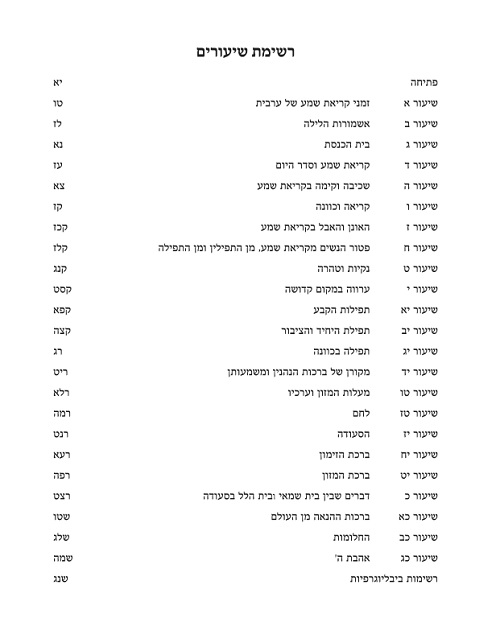
ר’ יהודה ברנדס מדע תורתך מסכת ברכות, מכללת הרצוג, אלון שבות תשעט 

The Following post is a short review on a new work from Rabbi Professor Yehuda Brandes on Berakhot.
For another recent article of Rabbi Brandes about Learning Gemara see this issue of Hakirah.
For a sample chapter of this new work or to purchase this work email Eliezerbrodt@gmail.com 

Over the years, a variety of different styles and approaches have been developed and applied by people who devote themselves to the study of Gemara in a serious manner. Popular genres include: iyun, pilpul, emphasis on the halakhic outcome, ethical and value-based insights, academic studies, linguistic content and literary structures, historical aspects and Talmudic realia, among others. Few individuals can successfully apply all – or even most – of the styles in their own learning, as it would require the ability to understand and master different approaches and “languages” of learning. 

Most people who sit down to learn and teach Gemara look at each issue on its own, using the approach with which they are most comfortable. They comment and suggest novel approaches on one specific matter or another, noting an interesting ruling of Maimonides or of one of the other commentaries on the issue, and so forth. In the commentaries of the aharonim (later commentaries), even after analyzing a topic in the Gemara and delving into its many details, we almost never find the presentation of a broad perspective containing insights that reflect on our place in the contemporary world. 

Rabbi Professor Yehuda Brandes, who serves today as head of Herzog College in Alon Shvut, is one of the few individuals who is conversant in the almost all of the abovementioned areas. He has succeeded in weaving all of this together in an impressive whole in his newly published book Mada Toratekha on Tractate Berakhot, the tractate that is currently being studied in the new daf yomi cycle. His yeshiva background – at Yeshivat Netiv Meir and Yeshivat HaKotel – the academic track in the Talmud that he has pursued, his rich experience as a high school teacher and lecturer in academic settings and in his community, his experience with different types of learners of different ages, his personal skills including an impressive ability to analyze different “languages” in depth, and the broad perspective that he offers, create a new and unique mix that is manifest in the book. [A previous book in this series, on Tractate Ketubot, was published in 2007.] 

There are 23 presentations in the book, each of which deals with topics appearing in Tractate Berakhot. Each one of the presentations contains material from the Jerusalem Talmud and from Midrash Halakha, together with the approaches of rishonim and aharonim (early and later commentaries), classic Yeshiva-style exegesis, references in footnotes to academic research, together with Hassidic and theological works that relate to the topic under discussion. All of this is presented succinctly, with grace and sensitivity, using modern language. The writing is both challenging and thought provoking. 

One place where this broad sweep can be seen is in the list of books and articles that appears in the bibliographic section at the end of the book – something that you rarely find in traditional commentaries. Under “alef,” for example, we find Rabbi Moshe Alashkar, Professor Hanoch Albeck, Rabbi Yosef Shalom Eliashiv, Professor Yaakov Nahum Epstein, Rabbi Yechiel Michel Epstein, and more – unusual neighbors to find sharing space on a bookshelfThis work represents a unique composite of different worlds. 

Structural analysis and existential insights 

Here is an example of one of the presentations in the book: “Praying with intent (Chapter 13). The presentation opens with the well-known Mishnah that appears at the beginning of the fifth chapter: 

One may only stand and begin to pray from an approach of gravity and submission (koved rosh). There is a tradition that the early generations of pious men would wait one hour, in order to reach the solemn frame of mind appropriate for prayer, and then pray, so that they would focus their hearts toward their Father in Heaven. Standing in prayer is standing before God and, as such, even if the king greets him, he should not respond to him; and even if a snake is wrapped on his heel, he should not interrupt his prayer. 

(b. Berakhot 30b) 

Rav Brandes gets right to the point, noting that the Mishnah contains three distinct messages:  

– One must pray from an approach of gravity and submission (koved rosh) 

– Serious preparation for prayer is an indication of piety;  

– It is forbidden to interrupt one’s prayers. This is emphasized by the Mishnah by presenting extreme situations, e.g., when greeted by a king or challenged by a snake. 

These three messages touch on different points. Submissive prayer describes the behavior and mental state of the worshiper. Preparation and focus in prayer concentrates on the content, the interpretations of the words, and the very consciousness of standing before God. The prohibition against interrupting one’s prayers is a practical issue emphasizing the need to maintain continuity in prayer even in the face of imminent danger. 

From here Rabbi Brandes moves to the Gemara’s discussion, analyzing the four Amoraitic opinions offered, interpreting the concept of koved rosh. Although only one opinion will be accepted as law, Rabbi Brandes examines each of the four opinions – and the verses that they quote – deriving how we are to approach prayer, how we can connect awe and fear, joy and trembling. From here we are treated to a close reading of the baraitot that are brought by the Gemara that parallel the structure of the Mishnah:  

One may neither stand to pray from an atmosphere of sorrow nor from an atmosphere of laziness, nor from an atmosphere of laughter, nor from an atmosphere of conversation, nor from an atmosphere of frivolity, nor from an atmosphere of purposeless matters. Rather, one should approach prayer from an atmosphere imbued with the joy of a mitzva. 

We continue with the flow of the Gemaraas the author deals with such issues as how we can focus our hearts towards heaven in prayer, or how to train ourselves in “the art of restraint” by emulating Rabbi Akiva who prayed privately in an enthusiastic manner, in contrast with his restrained prayer when praying in public. 

In the context of prayer, the Gemara brings a number of aggadic statements about Hannah, the prophet Shmuel’s mother, whose prayer (see 1 Sam. Chapter 2) serves as an archetype for Jewish prayer generally. These statements are analyzed and recorded under a series of headings, like: “Midrash Hannah – Characteristics of an eminent worshiper,” “Intoxicated prayer,” “The expanse of the worshiper.”  

Having gathered the many sources appearing in the Gemara together with those that he introduced in his presentations, Rabbi Brandes sums them up with insights that are practical, yet existential, and applicable to the here and now. He writes: “Every individual, whether young or old, has his or her role in prayer. The Talmudic discussions, both halakhah and aggadah, can serve as a guide and a compass, directing us towards the study and experience needed for meaningful prayer. Still, the unique characteristics and personal meaning of prayer can only be attained through the efforts of the individual and the community in every generation. They must shape their experiences according to their own image and principles, based on the guidance of the prophets of Israel, its sages and its founders” (p. 217). In concluding his lesson on birkat hamazon (the Grace After Meals), Rabbi Brandes writes: “When reading the Shema and its blessings, the worshipper accepts the Yoke of Heaven when you sit at home and when you travel on the way, with eyes closed and focused intent, disengaged from the surrounding environment. When going to pray in the synagogueone stands before God in the midst of one’s community. It is at the dinner table at home when we have the opportunity to bring Godliness into the very heart of the physical world. This is the responsibility of the Jewish people living in God’s land, enjoying the sweetness of its fruit and enjoying God’s presence (p. 243). 

The lessons on other topics that appear in this book are treated in a similar fashionThese include, for example: “Times of the evening recitation of the Shema,” “Women’s exemptions from the commandments of Shema, Tefillin and prayer,” “Sources of blessings and their significance,” “Bread,” “Points of difference between Bet Shammai and Bet Hillel in regard to a meal,” “Dreams,” and more. 

Calling for a New Approach 

The format of the book is also unusual. There are two columns on each page, with a different font for the sources quoted from the Talmudic works and the commentaries, and with rich footnotes for referenceThe book is written in a literary Hebrew and is well edited. This design is reminiscent of the layout in traditional commentaries on the Talmud, which often appear in two columns, albeit usually in “Rashi script,” with no subheadings, no footnotes, no language editing and many abbreviations. One can assume that the choice of this format is meant to suggest that what is found in this book is “new wine in a venerable container. 

In his introduction to the book, Rabbi Brandes notes the context in which these lectures were presented over the years: in the Himmelfarb school in Jerusalem, in Beit Morasha and in community lectures. Each group contributed their part, and the unique structure of these lessons drew from their participation. The variety of students and their different ages reinforces the argument that a high quality and challenging Gemara class speaks to everyone. The tempo may be different, the emphasis might change – there are bound to be other differences, as well – but if a broad and in-depth presentation is offered, everyone becomes a partner in thinking and suggesting solutions. The outcome will be fresh insights and understandings with no limitations based on age or place. 

Many of the Talmudic tractates – and Berakhot is among them – have a myriad of recent commentaries on them that have been publishedTo that list of books on Tractate Berakhot we now have a new – and unique – addition. This work offers a new approach that can speak to contemporary students.  We are a generation that collects everything that has been written throughout the ages. The challenge taken up by Rabbi Brandes is to gather all those styles of learning in a respectful and harmonious fashion, and to use them to build additional layers, in a manner that both inspires and challenges. 


Berakhot Koren Talmud Bavli and Ein Aya

Berakhot Koren Talmud Bavli and Ein Aya

by Chaim Katz

Berakhot Koren Talmud Bavli (KE) is a translation (into English) of Rav Adin Even-Yisrael Steinsaltz’s Hebrew edition of tractate Berakhot. It comprises the text of the Talmud, the in-line commentary, the explanation of foreign words, the mini-studies (iyunim), the biographies of selected sages, the description of cultural objects (hahayim), descriptions of fauna and flora and more. As far as I’ve noticed, they never mention in the front matter nor in the advertising blurbs that they added informational notes that don’t appear in the original edition, but there are more than 100 new notes in Berakhot KE.

In this paper, I’d like to present an overview of the new notes, and specifically examine the notes based on Ein Aya [1] – Rav Kook’s commentary to Ein Yaakov. [2]

I had a few questions about the notes based on Ein Ayah:

  1. In the Hebrew edition, Rav Adin created a bibliography of all the sources he used to compile his explanations. The list contains about 100 entries that stretch from Baal Halakhot Gedolot and Sheiltot (8th century) to Rabbi Akiba Eger (died 1837), the Hatam Sofer (died 1839), and  commentaries printed in the Vilna Shas and the Vilna Ein Yaakov, e.g., Maharatz Chajes (died 1855), Rav Samuel Strashun (died 1872), Rav Hanokh Zundel the author of Etz Yosef (died 1867).  Rav Adin did not incorporate any 20th century authors in his commentary. KE made an exception and included Rav Kook. What is the reason?
  2. Ein Aya is not really an explanation of Ein Yaakov. Rav Kook points out in its introduction that his work uses Ein Yaakov as a starting point. However, his goal was to expand the literature of Aggadah and produce a new type of reading material based upon ethical ideas in Jewish philosophy, kabbalah, musar and hassidut. Does KE realize that Ein Aya is not a commentary like the others?
  3.  Ein Aya is very long. A haggadic statement that Maharsha devotes 15 lines of explanation to, is discussed by Rav Kook in about 60 lines (30 lines of double column text). How will KE summarize all that material? [3]

First, I’ll briefly review some of the new notes in KE and then examine a few passages quoted from Ein Aya. The following are new:

1 KE Daf 16b (page 112) has a biography of Rav Safra which is copied from the Hebrew edition Moed Kattan 25a

2 KE Daf 57b (page 371) has a biography of Rabbi Yishmael ben Elisha copied from Gittin 58a

3 KE Daf 64a (page 409) has a note about the Chaldean astrologers, which is copied from the Hebrew Shabbat 156b. 

4 KE Daf 17b (page 115) has a note about Jesus the Nazarene copied from the Hebrew Edition Sotah 47a.

5 KE Daf 9b, (page 59) there is a note about tekhelet, similar but different from the notes in Menahot 38a  .

6 KE Daf 12b, (page 82) has a long note about tzizit – ritual fringes

7 KE Daf 13b, (page 91) there’s a definition of kavanah – intent

8 KE Daf 13b, (page 92) has a diagram of the placement of the tefillin on the arm and hand. 

9 KE Daf 56b, (page 365) has a note describing a lion. 

10 KE Daf 56b, (page 367) has a note describing an elephant. 

11 KE Daf 41a, (page 270) has notes for: radish, olive, wheat, barley, and fig. The following page has a definition of a date. 

12 KE Daf 59a (page 382) has a note about a rainbow.

13 KE Daf 7a, (page 42) has an unattributed explanation based on the words: “When I wanted you did not want . . . “.  The explanation is from Maharsha. 

14 KE Daf 10a, (page 64) has a comment concerning the relationship of the Holy One Blessed is He and the world. This explanation comes from Etz Yosef.

15 KE Daf 11b, (page 74) has an unattributed very long note about abounding love אהבה רבה and eternal love אהבת עולם. The note is taken verbatim from The Long Shorter Way (Chapter 4 – Two Ways of Loving G-d) [4].

16 KE Daf 51a, (page 323) has a clarification of a statement made by the angel Suriel. This is from the Maharsha. 

17 KE Daf 58a, (page 374) has an explanation concerning the statement: “When Samaria was cursed, its neighbors were blessed”. The explanation comes from Anaf Yosef.

18 KE Daf 17a (page 114) There is a short note about the “Divine Presence” (although it’s not the first time that the word שכינה appears in the tractate.)

My sense is that the Steinsaltz Hebrew edition only introduces a note when there is a problem (on the page) that the additional note might solve. KE relaxes this constraint. I’ll illustrate this difference using the first example in the above list. We read in our Gemara:

 After his prayer, Rav Safra would add: “May it be Your will, G-d our G-d, that You make peace among the members of the heavenly court…”

Rav Safra is one of many sages quoted. There is no problem that needs to be solved. The KE has a biography of Rav Safra that ends this way:

Since Rav Safra was an itinerant merchant, he never established his own yeshiva and did not spend much time in the study hall. Therefore, there were those among the Sages who held that he was unlike other Rabbis, that all are required to mourn their passing. 

This is a strange piece of information which doesn’t look like it belongs in a biography. However, the Talmud Moed Kattan 25a, records the following discussion:

When R. Safra died, the students did not rend their clothes for him, since, they said, we have not learned from him. Abaye argued with them: Does the baraita say: ‘When a teacher dies’? Rather it says ‘when a scholar dies’.  Moreover, every day in the study hall we discuss his interpretations of the halakha. 

KE’s biography was copied from Rav Adin’s biography in Moed Katan. 

There are many other examples of notes in KE that were copied from one location to another. They usually don’t fit very well in the destination location. In general, the notes regarding the religious objects add value. The notes describing the obvious (e.g., lion and elephant) are probably included for their esthetics.

Concerning Ein Aya: First, I’ll present the note, my translation and the Hebrew text of Ein Aya side by side and then I’ll discuss the note briefly. 

1 KE Daf 9a (Page 57), Ain Aya Berakhot 1 112 

When the children of Israel were redeemed from Egypt, they were redeemed only in the evening. And when they left, they left only during the day:

There are two separate elements to the transition from slavery to freedom. First, the slave acquires a personal sense of freedom and becomes master of his own fate. Second, he becomes free in the eyes of others, i.e., he is perceived by those surrounding him as a free man and has the potential to influence them. With regard to the children of Israel, the first element enabled them to receive the Torah and elevate themselves with the fulfillment of G-d’s commandments. The second element provided Israel with the opportunity to become a “light unto the nations.” Therefore, the redemption was divided into two stages. The first stage, in which they acquired private, personal freedom, took placed at night; the second stage, which drew the attention of the world to the miracle of the Exodus, took place during the day.

R. Aba said: All agree that when Israel was redeemed from Egypt, they were redeemed specifically during the night, and when they left Egypt, they left specifically during the daytime.

Redemption from slavery to freedom in general has two effects on an entire nation: 1) An inner liberation and exaltedness that it senses when it exchanges the submissiveness of slavery for autonomy and self-determination. 2) A freedom to perform actions that impact the world. 

In Israel these two effects are more pronounced. For the inner freedom is the beginning of their own perfection – developing holy behaviors in Torah, its mitzvot and its wisdom. While the outer public freedom allows Israel to be a light to the nations. A great part of the latter mission has already been accomplished even in our time and will be fully completed when G-d has compassion on His nation. For from Zion will the Torah go forth (Is. 2:3), Even the people in the far-way lands will wait to hear Torah of Israel (Is. 42:4)

Therefore, the redemptions are divided into two parts. When Israel was redeemed from Egypt – the inner redemption – this occurred during the nighttime. For the main point is not publicity or exposure to others, but a strong sense of their inner liberation. When they left, they specifically left during the daytime, publicly and openly for all the nations of the world to see, to demonstrate their worldly mission of instructing, benefiting and illuminating all of mankind with the light of G-d as it is written: Nations will walk in your light, kings in your glorious light. (Is. 60 3)

א”ר אבא הכל מודים כשנגאלו ישראל ממצרים לא נגאלו אלא בערב, וכשיצאו לא יצאו אלא ביום .

הגאולה מעבדות לחירות בכלל, פועלת בכלל עם-שלם שני עניינים. האחד הוא החופש שירגיש בנפשו התרוממות שיצא מכלל שפלות העבדות ונעשה בן חורין ואדון לעצמו. והשני הוא הפעולה הנגלית בעולם, בהיותו עם חפשי חי ופועל.

ובישראל עוד יתר שאת לשני אלה, כי החופש הפנימי הוא התחלה לשלמות עצמם, בקדושת המדות בתורה ומצותי’ וחכמתה. והחופש הגלוי החיצוני, הוא עומד בישראל להיות לאור גויים, כאשר כבר נעשה חלק גדול מזה גם לעת כזאת, ויגמר בתכליתו לעת ירחם ד’ את עמו, כי מציון תורה תצא ולתורת ישראל איים ייחלון.

 ע”כ נחלקו הגאולות לשני חלקים, כשנגאלו ישראל ממצרים הגאולה הפנימית, היינו מבערב, שע”ז אין העיקר הידיעה והפרסום של זולתם, כי אם ההרגשה הטובה בחופשתם הפנימית. וכשיצאו לא יצאו אלא ביום, ביד רמה גלוי לכל יושבי תבל, להורות על פעולתם הגלויה בעולם, להשכיל להיטיב לכל ברואי בצלם להאיר באור ד’, כדבר שנאמר “וְהָלְכוּ גוֹיִם לְאוֹרֵךְ וּמְלָכִים לְנֹגַהּ זַרְחֵךְ

KE skipped the nuance that Rav Kook was speaking about nations and not individuals. It also decided that redemption occurs in two stages, while Rav Kook only said that redemption has two components to it. They stopped short and didn’t capture the emphasis that Rav Kook placed on enlightening the nations (probably with the Noachide laws), but on the whole, it’s a fairly accurate summary.

2 KE Daf 10b, (page 65), Ain Aya Berakhot 1 141

From the chambers [kirot] of his heart – Often prayer is viewed as an act that combines the spiritual and the intellectual. There is a cognitive awareness of the necessity to turn to G-d in our time of need. When there is a pressing need, calling for a higher level of prayer, there can be an authentic call emanating from a person’s very heart, as the Psalmist declares: “My heart and my flesh sing for joy unto the living G-d” (Psalms 84:3) Hezekiah turned his face to the wall and prayed. Why wall? Rabbi Shimon b Lakish said: From the walls of his heart.

There is a prayer that accompanies emotions that are intellectual, when the intellect perceives the value of the necessity of praying and recognizes the great worth of prayer. For the intellect is associated with the spirit of the heart, which resides in the chamber of the heart. 

However, when one fortifies oneself in prayer so much so that the body’s powers are aroused by the feelings generated by prayer, then the prayer affects the body, not just the soul. This is called praying from the walls of the heart. Namely, not just with the spirit, which is in the chamber of the heart, but also with physical vitality as it written: my heart and my flesh sing to the living G-d (Psalms 84:3)

ויסב חזקי’ את פניו אל הקיר ויתפלל. מאי קיר ארשב”ל מקירות לבו

יש תפילה שבאה ברגש שכלי, שהשכל משקיף על ערך הנחיצות להתפלל ומכיר גדולת ערך התפילה. והנה השכל מיוחס לרוח הלב השורה בחלל הלב.

אבל כשמגביר ברחמים עד שגם כוחות הגופניים מתפעלים מרגשי התפילה, ונמצא שהתפילה פועלת על הגוף לא על הנפש לבדה, נקרא שמתפלל מקירות הלב. כלומר לא מהרוח לבדו שהוא בחלל הלב, כ”א גם בהתפעלות בשרית, כמו שכתוב “לבי ובשרי ירננו אל אל חי”.

This is a more difficult piece, particularly because we don’t relate to the view that (one side of) the heart is filled with spirit. We don’t identify with the description of the heart as a source of emotion and we no longer think of intellect affecting the flesh of the heart (but that’s another discussion).

The main problem with KE’s translation, is that Rav Kook is speaking here about the influence that prayer has on the person. He’s not speaking about “a higher level of prayer . . . an authentic call emanating from a person’s very heart”. He’s saying that a person can change himself through prayer.  He can change his thoughts (chamber of the heart) and he can even change his character (walls of the heart). KE’s translation misses all of this. It misses the distinction between walls and chamber, and it misses the connection to the verse from Psalms that Rav Kook cites.

(It’s not the right place now to trace the history of the idea that the person refines and elevates himself through prayer. See maybe Rav Shimshon Raphael Hirsch on Devarim 11:13, or Rabbi Soloveitchik’s Shiurim l’Zecher Aba Mori z”l  volume 2, page 29 and other places there.)

3 KE Daf 63b, (page 408), Ain Aya Berakhot 9 344

Matters of Torah are only retained by one who kills himself over it [5]

While educators often try to make Torah study easier because they believe that doing so will lead students to accumulate more information and Torah knowledge, their approach is fundamentally flawed. The significance of Torah education is qualitative, not quantitative. It is not the sheer volume of knowledge amassed; it is the quality of the Torah wisdom that is attained. Simplistic, facile methods of study do not facilitate deep understanding. That can only be achieved through hard work and serious effort

The school of R. Yannai taught: What is the meaning of (Mishle 30:33) The culturing of milk produces fermented milk (yogurt) …  In whom do you find fermented milk of Torah, in the one who spits out the milk he nursed from his mother.


There are many educators who pride themselves for introducing methods that make learning simpler. They imagine they’ll benefit the world by transmitting lessons and knowledge of Torah in an undemanding way, eliminating the need to for a person to work. 

This assistance is misguided. Knowledge isn’t measured by quantity but by quality, according to depth and perceptiveness that enable the student to apply the knowledge to any situation. More so regarding Torah knowledge, which is measured by the profound impression on the student in his ethical personality, virtuous behavior, and pure fear of Heaven.

Success will come when the studies do not follow an easy and undemanding curriculum. For through exertion and mental effort, a person is elevated to ethical behaviors, and turns with love and longing toward wisdom and holiness. The learning affects him such that he’s entirely dedicated and devoted to his lessons. Learning specifically with great effort produces a deep understanding, clarity in knowledge, and the pleasing way of serving G-d, fearing Him, and purifying one’s character. 

Studies that are acquired easily, without exertion and tremendous struggle will always be superficial, frozen and detached from the person’s inner soul. They will have minimal impact on his behavior and personality. 

Therefore, the fermented milk of Torah, the choice purified portion of Torah, the key aspect, clarified by deep thought and profound understanding that strengthens the soul in the fear G-d, and in the ways of holiness in whom will it be found? Only in one who was raised laboring in Torah and acquired Torah by following the beaten paths of strenuous effort and great toil; who distances himself from his childhood pleasures so that his Torah was not acquired though childish games.  He spits out the sweet milk he nursed from his mother

אמרי דבי ר”י: מאי דכתיב (משלי ל לג): “כי מיץ חלב יוציא חמאה במי אתה מוצא חמאה של תורה? – במי שמקיא חלב שינק משדי אמו עליה”

רבים הם הפדגוגים המתנשאים להביא דרכים להקל את עול הלימוד, וחושבים שיביאו ברכה לעולם בהקנותם את הידיעות והלימודים התורניים באופן קל, שלא יצטרך האדם להיות עמל בהם.

תועלת הדבר אינה אמנם אלא מתעה, כי הידיעות לא תימדדנה על פי כמותם כי אם על פי איכותם, על פי עומק ההבנה וחריפות השימוש בהם לכל חפץ.ביותר לימודי התורה, על פי גודל הרושם שפועלים על הלומד, לענין התכונה של המוסר המעשים הטובים ויראת ה’ הטהורה. 

ובזאת יהיה מועיל רק הלימוד שאינו בא בדרכים קלים ונוחים לקלוט, כי על-ידי היגיעה ועבודה שכלית מתעלה האדם למידות נעלות, ולהיות נוטה אל השכל ואל כל דברי קודש באהבה וחפץ לב, והלימוד פועל עליו להיות כולו נתון ומסור ללימודיו. על-כן יצא מהלמוד שעל-ידי היגיעה דווקא, עומק ההבנה והידיעה הברורה עם הפעולה הרצויה לעבודת ה’ ויראתו וכל טהרת המדות. 

אבל הלימודים הנכנסים באופן קל, בלא יגיעה ועבודה כבירה, ישארו לעולם שטחיים וקפויים, עומדים מחוץ לנפשו של אדם הפנימית, ופועלים מעט על מעשיו ועל יצרי לבבו.

ע”כ חמאה של תורה, הברור והמובחר שבה, העיקרי, המחוור בעומק רעיון ושום שכל והמרבה אומץ הנפש ביראת ה’ ודרכי קודש במי תמצא? רק במי שנתגדל על עבודת התורה בעמל, וקנה אותה בדרכים כבושים שע”י יגיעה ועבודה רבה, שעמדו לו להתרחק מן הילדות וכל געגועיה, לבלתי קנותם בדרך שעשועי ילדים, כ”א מקיא חלב שינק משדי אמו עליה

KE, missed the point here as well. Rav Kook isn’t speaking about education or Torah education. It’s not about “deep understanding that can only be achieved through hard work and serious effort” 

He’s speaking about love of G-d. The fermented milk of Torah represents the Torah studies that, under the proper conditions, lead the person to the love of G-d. Knowledge isn’t sufficient; one must labor and exert himself in these Torah studies and only then will they succeed in leading him to holiness.  

(The basis of Rav Kook’s idea might be in the Sifre Devarim (on Deut. 6 6) quoted by Maimonides Book of Commandments, Positive #3, “You shall love G-d your G-d with all your heart’, can I know how to love G-d? The Torah therefore says: These words which I command you today shall be upon your heart. Thus, you will come to recognize the One who spoke and the world was created and you’ll cling to His ways.)

4 KE Daf 10a, (page 62), Ain Aya Berakhot 1 128  

David… resided in five worlds and said a song of praise corresponding to each of them:

There is a tremendous difference between looking upon an experience in a superficial manner and reflecting upon it and contemplating it. An individual who merely sees the external will not come to understand the deeper, spiritual significance of a given experience or encounter. Natural events like pregnancy, birth and nursing may seem to be mundane events experienced by humans and animals alike. However, one with a higher level of spiritual discernment will appreciate the vast difference between man and animal. King David’s songs of praise, uttered at every stage of life, attest to the magnitude of his sensitivity to G-d’s beneficence and to his appreciation of His role in the world.

He lived inside his mother’s womb and offered songs of thanksgiving; he went out into the air of the world…

One who looks at the real world superficially cannot recognize the grandeur and beauty of the majesty of G-d nor the splendour of the human soul, as his perception of the real world is based exclusively on obvious visible traces of wisdom. In the words of the Duties of the Heart, (Hovot HaLevavot by Bahya ibn Pakuda Spain 11th century): based on the obvious visible traces of wisdom in the real world, both the intelligent man and the fool are equivalent. 

On the other hand, the truly gifted person will find hidden insights in the very things that didn’t inspire or elevate the person who looks at the world superficially. The truly gifted person will recognize the line of kindness that extends through all creations from their beginnings to their ultimate purpose. He will appreciate G-d’s wonders and thank Him. With happiness he will sing for G-d and for His goodness. He will recognize the majesty of his own soul that perceives the grandeur of the glorious King. Therefore, David (peace to him), who combined in himself depth of knowledge with sweet Divine song, sang about things that are discerned only with wisdom and deep contemplation. 

He lived inside his mother’s womb…  

Seemingly, there is no reason to be amazed. The experience is similar for a human or any other animal that doesn’t speak. In the womb, the human embryo is just like an amphibian or a lizard, the lowest rungs in the animal hierarchy.

 But when he reflects deeply, that in this lowly state all organs and limbs, which will serve the loftiest powers of the soul, are being completed. Not one is missing. If so, how great is the work taking place in the womb for the design of a person. Then, being so far from perfection, all the material and spiritual abilities he will later need are developing so that he’ll develop into a refined ethical person, who embraces in his brain and mind, the foundations of the world and its infinite expanses.

דר במעי אמו ואמר שירה, יצא לאויר העולם  . . . 

הבדל יש בין המסתכל רק בהשקפה שטחית על המציאות, הוא לא יוכל להכיר רוממות ה’ והדר גאונו ועם זה הוד נפש האדם, רק מהדברים הגלויים בסימני החכמה שבמציאות. כדברי חוה”ל, שבסימני החכמה הגלויים המשכיל והכסיל שוין בהם. 

אבל החכם האמיתי, הוא יחדור אל סימני החכמה הצפונים, שלעין הרואה רק חיצוניות הדברים לא יולד מהנה שום רוממות נפש. אבל החכם האמיתי, יכיר החוט של חסד ההולך בכל המעשים כולם מהתחלתם עד מטרתם, ויכיר נפלאות השם ית’ ויודה לשמו. ומטוב לב ישיר על ד’ ועל טובו, ויכיר הוד נפשו המכרת את הדרת מלך הכבוד. ע”כ דוד ע”ה שבו חובר עומק הדעת עם נועם השירה האלהית, אמר שירה על הדברים שרק בחכמה והשקפה רבה יוכר הודם ופלאם.

 דר במעי אמו, לפי החיצוניות אין להפליא כ”כ, מקרה האדם בזה כמו שאר החיים הבלתי מדברים, אז הוא במדרגת השרצים ג”כ שהם במדרגה הנמוכה של מערכת החי. 

אבל כשהתבונן, כי בהיותו במצב הנמוך הזה אז נגמרו ונוצרו כל יצוריו כולם, וכל האיברים המשמשים לכוחות הנפש היותר נשגבות אחד מהם לא נעדר. א”כ מה רבה התכונה הנעשה בבטן המלאה ביצירת האדם, שאז במצב רחוק משלמות והתפתחות כזה, צריכים שיוכנו לו כל הכוחות וכל הכלים הרוחניים והגשמיים שיצטרכו לו בהיותו אדם המעלה, המחבק זרועות עולם ומרחבי אין קץ בדעו ושכלו.

Here too, I think, KE missed the point. It’s not about “the vast difference between man and animal”, which Rav Kook never mentioned. Rav Kook picks the theory of recapitulation to explain David’s song. According to the theory (which was immensely popular in the second half of the 19th century), the stages of embryonic development correspond to adult stages in the evolution of the species (ontogeny recapitulates phylogeny). That’s why Rav Kook writes: the human embryo is then like an amphibian.  But the theory is based on superficial similarities. The truly wise man looks beyond the superficiality and sees that each embryonic phase is not an evolutionary ancestor, but a point on a line extending from the person’s beginning to his birth. Each point on the line contains a hidden potential that will unfold and finally develop into a moral and ethical man. The insight (probably disproves the theory and) results in a greater appreciation of the Creator’s kindness, which is the song of praise that David sings.

We can now come back and answer the three questions that I posed earlier. 1) KE is not looking at Ein Aya as a typical commentary; that’s why they had no problem including Rav Kook’s words in the Berakhot volume.  Additionally, I guess, the writers or editors have an admiration and affinity for Rav Kook and wanted to include some writings of his. 2) KE knows that in quoting a section from Ein Aya they are not explaining the text of the Talmud. Instead, they are attempting to follow the path of Ein Aya; to add thoughts and reading material of an ethical nature to KE. 3) It looks (at least in these few examples) that KE translated only the first few sentences of the Ein Aya section and then wrote up their own conclusions. They probably didn’t read to the end of the Ein Aya section(?), or if they did, they decided to “keep it simple”. I guess this can be excused too. In one of these notes they did write “see Ein Aya” instead of just attributing the section to Ein Aya.

Maybe the new notes in KE Berakhot aren’t of the same calibre as the original notes in the Hebrew edition. Still, they make the learning more interesting and more attractive. For this we should be thankful.

[1] Ein Aya is a work by Rav Kook on the Aggadah in Ein Yaakov, published by Makhon HaRav Tzvi Yehuda, Jerusalem. It consists of 4 volumes covering Berakhot and most of Shabbat. Though it was written over 100 years ago it was only published recently (approximately between 1995 and 2005). The text is also available at https://he.wikisource.org/wiki/
[2] Ein Yaakov is a collection of aggada from the Talmud Babli, by Rabbi Yaakov Ibn Habib (died 1516)
[3] I’m using as my example: Daf 3a “Rabbi Eliezer said: The night consists of three watches… during the first watch a donkey brays, during the second the dogs howl, during the third the infant nurses from its mother and a wife speaks with her husband”
[4] The Long Shorter Way, Discourses on Chasidic Thought, by Adin Even-Israel Steinsaltz, edited and translated by Yehuda Hanegbi, Koren/Maggid Publishers. Based on a series of lectures delivered by Rabbi Adin Even-Israel Steinsaltz on Rabbi Schneur Zalman of Liadi’s classic Chasidic work, the Tanya.
[5] There is a printing mistake here. They mixed up the passage’s key words (דיבור המתחיל) with another comment.  I’m not sure if this mistake affected the subsequent translation. 


Sinful Thoughts: Comments on Sin, Failure, Free Will, and Related Topics Based on David Bashevkin’s new book Sin•a•gogue: Sin and Failure in Jewish Thought

Sinful Thoughts: Comments on Sin, Failure, Free Will, and Related Topics Based on David Bashevkin’s new book Sin•a•gogue: Sin and Failure in Jewish Thought (Boston: Academic Studies Press, 2019)

By Rabbi Yitzchok Oratz

A Bashevkin-inspired Bio Blurb:[1] Rabbi Yitzchok Oratz is Rabbi of the Monmouth Torah Links community in Marlboro, NJ. His writings can be found in various rabbinic and popular journals, including Hakira, Ohr Yisroel, Nehoroy, Nitay Ne’emanim, and on Aish, Times of Israel, Torah Links, Seforim Blog, and elsewhere. His writings are rejected as often as they are accepted, and the four books he is currently working on will likely never see the light of day.

“I’d rather laugh[2] with the sinners than cry with the saints; the sinners are much more fun.”[3]

Fortunate is the man who follows not the advice of the wicked, nor stood in the path of the sinners, nor sat in the session of the scorners.

(Psalms 1:1)

One who hopes is always happy [and] without pain . . . hope keeps one alive . . . even one who has minimal good deeds . . . has hope . . . one who hopes, even if he enters Hell, he will be taken out . . . his hope is his purity, literally the Mikvah [4] of Yisroel . . . and this is the secret of repentance . . .

(Ramchal, Derush ha-Kivuy) [5]

Rabbi David Bashevkin is a man deeply steeped in sin.

The study of sin, that is.

His recent book, Sin•a•gogue: Sin and Failure in Jewish Thought, is his second foray into the murky waters of sin, the first being his Hebrew B-Rogez Rahem Tizkor, which appeared in 2015. Throughout the book he ably serves as a “choti umachti,” as he walks us along the paths of sinners and allows us to listen in to their scorn sessions, plumbs their thoughts and analyzes their intentions, all with goal of detecting the sometimes deeply concealed sweet smell and seeds of holiness that can be found even among the sinners of Israel.[6]

As sin and failure are topics with which I am all too familiar, I took the opportunity to offer a review of sorts of the Hebrew book for readers of the Seforim Blog. The ensuing years have only honed my expertise, bringing me back to offer some comments on themes discussed in the new book.[7] While the topics of the two books are fundamentally the same, the new volume does include a great deal of entirely new material; the same will be true of this review. Furthermore, the change of language, in both the book and the review, demands a new style and structure for even the repeated material, and opens up the discussion to those who do not feel entirely at home in traditional rabbinic language and literature.

An Open Discussion of Sin

Overall, I found the book to be enjoyable, informative, thought-provoking,[8] and even inspiring at times. But should this discussion of sin be taking place at all?

From a traditional Jewish perspective, the answer is far from simple. The most controversial idea in the book (chapter 4), is the radical theology of the Hasidic court of Izbica in general, and Reb Tzadok ha-Kohen of Lublin in particular,[9], that sin is sometimes inevitable and always the will of God.[10] This concept does not apply only to someone who is sick (p. 42), coerced (p. 39), or in a compromising situation (note 124), nor is it the case only for someone who is faced with the necessity of choosing the lesser of two evils (p. 41); all this is standard Talmudic discussion. Rather, Izbica theology teaches that the seemingly free-willed choice to sin, motivated solely by one’s internal desires, is also the will of God – “All is in the hands of heaven, including the fear of heaven.”[11] This, of course, seems to be in direct contradiction to the concept of free will, the “fundamental concept and pillar” that is the underpinning of the totality of the Torah (Rambam, Hilchos Teshuva 5:3).

But is this really a problem? Long before the radical statements of Izbica, Rambam (Hilchos Teshuva 5:5) noted that our free will is seemingly contradicted by the existence of an all-knowing God, and Chovos Halevavos[12] raised the problem of free will being controverted by the many verses that indicate that God is in complete control of every action that takes place.[13] Neither source offers a resolution, demanding that we live with this paradox. Why, then, can’t we deal with Izbicean though similarly, why is it considered uniquely controversial? [14]

The obvious answer is that both before and after noting the paradox between predetermination and free will, Rambam hammers home the idea that, resolution or not, free will is real:

However, this is known without any doubt: That man’s actions are in his own hands and The Holy One, blessed be He, does not lead him in a particular direction or decree that he do anything. This matter is known, not only as a tradition of faith, but also, through clear proofs from the words of wisdom (Hilchos Teshuva 5:5).

Chovos Halevavos, too, stresses that the proper path requires us to act with confidence in our freedom to make our own choices.

And because free will is real, sin, with all its consequences, is very real as well:

Accordingly, it is the sinner, himself, who causes his own loss. Therefore, it is proper for a person to cry and mourn for his sins and for what he has done to his soul . . . since free choice is in our hands and with our own decision we committed all these wrongs, it is proper for us to repent (Hilchos Teshuva 5:2). “Consequently, the prophets taught that a person is judged for his deeds, according to his deeds – whether good or bad. This is a fundamental principle on which is dependent all the words of prophecy.” (5:5) And as long as one has not repented he is “hated by God, disgusting, far removed, and abominable . . . separated from God, the Lord of Israel . . .” (7:6 – 7) .

Compare this with the Izbica/Rav Tzadok attitude toward sin as (correctly) presented in Rabbi Bashevkin’s book; the Izbica approach recognizes “the powerful religious energy present in sins and the potential to challenge such energy into greatness, ultimately result[ing] in the redemption” (p. 102, based on Divrei Halomot # 3). In the Izbica worldview, sinning doesn’t make one “hated, disgusting, and far removed” from God, because “wherever a Jew may fall, he falls into the lap of God” (p. 48, from Pri Tzadik, Naso 15). Rambam’s message to sinners is to “cry and mourn,” and hope that their misdeeds do not prevent them from ever returning (6:4), while Rav Tzadok urges sinners never to despair “in any circumstance” (p. 100, from Divrei Sofrim 16). The contrast couldn’t be starker.

Based on the above, the real challenge of Izbica is neither philosophical (determinism vs. free will), nor historical (“How did the adherents of Izbica prevent their deterministic notion of sin from developing into an antinomian concept of Judaism?” [p. 47]). Instead, the question is practical: How do we go about “incorporating the theologically and oftentimes radical aspects of Izbica Hasidut into the contemporary Jewish community” without “under[mining] the ideals that we are working towards” (p. 48)?

In truth, the real question is not how we go about incorporating aspects of Izbica, but whether we need to reassess or fine-tune the aspects that have already been absorbed into our modern theology. The relatively recent phenomenon of neo-Chassidus (of which Rabbi Bashevkin is described as an avid follower is not primarily influenced by Izbica, [15] but its understanding of sin and failure certainly have Izbician overtones.[16]

Every discussion of the neo-Chassidus movement, pro and against, raises some form of the question of whether it leads to “perver[sion] of Chassidic concepts of joy, prayer . . . to the detriment of halachic observance,” and whether the idea that one always “falls into the lap of God” is mere “sugarcoating” the reality that our connection and relationship to Him can be broken “through destructive habits and the like,” no matter how deeply spiritual one “feels.” [17]

In other words, while historically Izbica theology was not detrimental to the strict halachic observance of Izbica Chasidim, [18] the jury is still out on whether the same can be said regarding its contemporary application. [19]

Rabbi Bashevkin himself clearly understands that Izbica thought is frequently misunderstood, misinterpreted and misapplied, and has a fascinating discussion on where and why its application goes wrong (pp. 50 – 52). The proper application of Izbica theology, according to Bashevkin, has us look at religious life as having a floor and a ceiling, the floor being the way “we deal with failure and those still mired in sin,” and the ceiling being the “ideals and values we reach towards.” Izbician theology can offer a message of “comfort and optimism,” helping to cushion the floor of Jewish life for those still mired in sin, without altering the ultimate ideals – “The floor was carpeted, but the ceiling remained in place” (pp. 46 – 50 and here.

While this certainly does seem to be a proper application of Izbician thought, it leaves plenty of room for the devil in the details. How comfortable should the cushions be? If every time a Jew sins he falls onto the lush carpet of the Bashevkian Izbician floor, what incentive is there ever to get up, or not to fall again? Maybe the floor needs to be carpeted, but how much more plush than commercial grade is called for?[20]

An even more fundamental question is if Bashevkin himself does justice in applying his principle. He approvingly quotes (p. 49) the work of Dr. Jennie Rosenfeld as “a fine example of the contemporary application of Izbica-Lublin theology.” Writing on the Wexner Foundation blog, Dr. Rosenfeld[21] describes her work as “focused on singles and on the need to create a sexual ethic which can speak to Orthodox singles today even when they may violate the halakhah.” Even assuming that Rabbi Bashevkin did not see her comments on the Wexner blog[22], and without casting aspersions on Dr. Rosenfeld’s important body of work, I question if a work titled “Toward a Modern Orthodox Sexual Ethic” can claim to be a faithful contemporary rendering of Izbica thought. There never was an “Izbician sexual ethic,” only “comfort and optimism” for those who had fallen (always a large segment of the community [23]) to get up off the floor and move on.

Later in that same chapter, Rabbi Bashevkin writes: ““Our collective imperfection is not cause for collective allowance . . . Sin and failure, no matter how common, can never be communally condoned or publicly institutionalized” (p. 53). This would seem to disallow creating “a sexual ethic which can speak to Orthodox singles” that might violate halacha.  That was true in the community of Izbica, in the community of Rabbi Yitzhak of Arama (p. 53), and would seem no less so in the Modern Orthodox [24] community today.

The Audacity of Hope

The above discussion highlights the sensitive nature of any public discussion of sin.[25] But every generation has its challenges in handling delicate issues. Ours may the one where the overwhelmingly forgiving tone of Izbica (and Breslov) theology is most potentially dangerous, [26] but it also may be the one where it is most needed. [27]

Support for this idea may come from a surprising place.

In chapter thirteen of Bashevkin’s book, he discusses the fascinating personal correspondence of Rabbi Yaakov Yisrael Kanievsky (the Steipler), and correctly notes (p. 143) that the theme of “[p]roductivity, patience, and optimism return again and again” throughout his letters. But hidden in his message of optimism is another subtle, but important, point that should not be overlooked. Speaking to yeshiva students struggling with “the known sin,” the Steipler acknowledges that the message of optimism he offers was deliberately downplayed in previous generations.

“The holy books intentionally wrote with great clarity [about the devastating nature of this sin] in order to keep people from sinning,” but were “very sparse” in explaining the other side of things, how one can draw a tremendous “light of holiness upon himself and throughout worlds” each time he controls his burning desires and refrains from sin. Even if one continues to fall,  says the Steipler, each time he does successfully control himself is a source of great merit and enables him to achieve levels of  “unfathomable holiness,” which will eventually permit him to leave sin completely behind. It is “fundamentally important not to feel sad, and not to think of the past [sins] at all” until one has the maturity to deal with them properly. “[N]ever despair, God forbid, for one must always hope for God’s assistance . . . “ [28]

Take careful note of what he is saying:  In today’s world we need the audacity to speak of hope even when mired in sin, the clarity to acknowledge that the strict and unforgiving messages of the previous generations would be counterproductive today. Harsh warnings are a thing of the past; strident calls for change do not suffice. “Hope and change” are the language of our times. [29]

Crying with the Sinners, Laughing with the Sages

While our generation may require a message of optimism and hope, and it is appropriate to look for sources in the rabbinic literature that reinforce that approach, it is equally important that we do not overplay our hand and interpret every source in an unreservedly sanguine way.

In chapter eight, Bashevkin insightfully analyzes the various versions of the tragic story of the great Talmudic sage Elisha ben Avuyah, and his spiritual descent to become Aher, the Other. In Bashevkin’s rendering, Aher is the foil to Rabbi Akiva, a Bizarro Rabbi Akiva, of sorts. Aher enters the pardes (“orchard” of mystical knowledge) and goes off the Torah path; Rabbi Akiva enters and emerges complete. Aher begins as a scholar and ends as a heretic. Akiva, by contrast, begins his life antagonistic to rabbinic authority and ends his life as a scholar. Rabbi Akiva’s outlook is portrayed as optimistic – his “exegetical perspective suggests indefatigable opportunity”; even in face of destruction, Rabbi Akiva “found reason for laughter.” Aher, on the other hand, is an “unrelenting pessimist” who “saw closed doors even when there was still hope of an entrance.” (pp. 94 – 95).

At the risk of being regarded as an unrelenting pessimist myself, I will note that while fascinating and certainly not without merit, there are limits to this interpretation.

Firstly, it does not seem that Rabbi Akiva’s “exegetical perspective suggests indefatigable opportunity” in all cases.  In the Babylonian Talmud version of the story (Chagigah 15a-b), the second exegetical conversation, Rabbi Akiva’s statement that “even what is broken can be fixed” does indeed suggest a great deal of optimism. However, the first one is much more ambiguous. The concept that “the wicked take their share and the share of their friend in Gehinom” has undeniable pessimistic overtones. Furthermore, the version in the Jerusalem Talmud (cited on pp. 91 – 92), where Rabbi Akiva teaches that blessing at the end [of life] is due to good deeds at the beginning, is explicitly understood as a message of doom for Aher, as the good deeds of his beginning were not done for the sake of Heaven. [30]

More fundamentally, while Rabbi Akiva did indeed find reason for laughter as others were crying, when he would study Torah verses that indicate the severity of sin, he was brought to tears [31] (not of joy) – “When Rabbi Akiva came to this verse he would cry.” [32] Only when surrounded by his colleagues who were deeply cognizant of the severity and bleak results of sin – because of our sins we were exiled from our land – did he offer a message of hope and consolation.  But sin itself is never a laughing matter (link) [34].

The Ba’al Shem Tov and (lihavdil [34]) Christine Todd Whitman:  Guilty but not Charged?

Over twenty years ago, I received a ticket for having an expired New Jersey state inspection sticker on my car. I knew it was expired, but was hoping I wouldn’t get caught until I’d had a chance to get the car inspected. No such luck. Guilty as charged, I paid the ticket and moved on.

Later that week, I heard on the radio that Christine Todd Whitman, then Governor of the State of New Jersey, had extended the inspection deadline for all cars by thirty days. As I had already paid the ticket, I sent off a protest letter (yes, an actual letter) to the Governor, and was pleasantly surprised when I received a very apologetic reply, stating that I was one-hundred-percent correct, but it was the responsibility of the local township to return the funds. Armed with the letter, I went down to the town hall, where they also apologized profusely, refunded my fine, and expunged this nefarious crime from my permanent record. I wasn’t guilty after all. [35]

Or was I?

In his Hebrew work (p. 40), Rabbi Bashevkin cites a parable from the Ba’al Shem Tov about a man who tests his wife by pretending to be another, and seduces her to sin. When she later brokenheartedly admits her sin, he consoles her by telling her that he had been masquerading as the seducer all along, and therefore she never really sinned.

Christine Todd Whitman might agree, but for Rabbi Akiva this would be nothing more than hollow consolation. As discussed in Rabbi Bashevkin’s book (pp. 33 – 36) it was these types of scenarios that brought Rabbi Akiva to tears, and Rabbi Hiyya bar Ashi to a life of repentance and a death in misery. The very fact that one intended to sin was reason for tears and repentance; that no actual sin occurred as no source of consolation.

But the Ba’al Shem Tov was not the first to offer such consolation; Yosef offered similar solace to his brothers. Which is it? Are such scenarios causes for comfort or for crying?  Bashevkin offers a number of possible resolutions (pp. 35 – 36).

Besides those he offers, others are given; [36] I would like to offer my own.

Every sin has two components: the rebellion against God and the actual damage done. In these scenarios, the consolation is only that no damage was done (either because no sin was committed or the act turned out to be for the best). But the rebellion against God’s authority still exists, and is a cause for tears.[37] In the case of Yosef’s brothers, since they had already genuinely repented (see Genesis 42:21 with Sha’arey Aharon), no new tears were needed. Only because their sincere repentance had been accepted could their negative plans be viewed as a source of blessing. [38]

First there are tears and repentance, only afterwards is the consolation meaningful.

A Flag as White as Snow [39]

Both in the text and the notes, I have touched on some of the thought-provoking topics raised in Rabbi Bashevkin’s book, touching on some of the topics (and there are many more [40]), that are ripe for discussion, challenge, debate and clarification  k’darko shel Torah (see Chagigah 3b). Indeed, a strong point of the book is that it covers many fundamentally important topics in a way that is relatable to scholar and layman alike.

Besides being provocative, discussion of sin can also be inspiring. In chapter six, Bashevkin offers a touching rereading of Richard Pindell’s famous story, “Somebody’s Son,” that would be good material for any rabbi’s Yom Kippur derasha.[41] The chapter starts off with the theologically challenging question (based on Gemara Chullin 60b), “Does God Repent?”

But theology aside, the very idea that God is hoping – waiting, so to speak – to see if He will be allowed into our lives, is one that deeply resonates.[42]

For seven years straight I had the privilege of davening on Yom Kippur in Beth Medrash Govoha’s Bais Eliyahu Bais Medrash. All of those years, the revered Rosh Yeshiva, Rav Yeruchem Olshin, shlit”a, led the davening for Neilah and spoke beforehand, and for seven years straight he said, with great emotion, the same exact thing:[43]

Yom Kippur is a great thing; there is nothing better than it . . . if we only would take advantage . . . A parable: A king made a feast to show his love for his subjects . . . four hours went by, five hours went by and no one came . . . finally towards evening people started trickling in . . . the king ran over to them and said with great emotion “I owe you a great favor! If not for you the entire feast that I made would have to be fed to the dogs.”

Yom Kippur is not only about us returning to favor in God’s eyes.  It is also about His hope (kaviyachol) that we take the opportunity to let Him into our lives. Ultimately, this is what Rabbi Bashevkin’s book is about – finding a way to let God in, to allow His spark to uplift our very human, often sinful, lives.

If you extract the precious from the worthless, you shall be as my mouth . . .

(Jeremiah 15:19)

Es Va’heiv B’Sofa

(Kidushin 30b)

Notes:

[1] See Sin•a•gogue, pp. xv – xvi, and R’ Bashevkin’s earlier comments here.  The idea that one should have a bio that includes failure may be the reason why the Torah includes the sins of the ancient greats. See the commentary of Rabbeinu Asher on Beraishis 38:16.
[2] See Sin•a•gogue, p. 95, and our discussion below.
[3] I start with this line from Billy Joel’s “Only the Good Die Young” to highlight a striking feature of Bashevkin’s book. The chapters all begin with epigraphs that run the gamut of sources, ranging from John Milton (Paradise Lost) to Bob Dylan (“Absolutely Sweet Marie,” which Bashevkin misspells as Mary) to an HBO crime drama (True Detective). The common denominator is that there is not a Jewish source among them. Indeed, throughout the book there are seemingly more obscure pop-culture references than desultory Talmudic discussions (see p. 195). This style is common in the outreach world that he (and I) work in, and popular among certain segments of the Orthodox community. Through Bashevkin’s creative pen, these sources make the book a lighter, more enjoyable read, palatable to a wider audience, without diminishing the seriousness of the topics he discusses. Of course, for some Torah scholars, this approach would be considered misguided (if not blasphemous), and their concern should not be discounted. In his Foreword to the book (p. x), Shaul Magid writes that it is “precisely Bashevkin’s point” to level the playing field by comparing a comment by George Orwell to the Hazon Ish. I have my doubts if that really is his point. In any case, while it is certainly true that sin and failure are universal concerns, and, for example, a “preacher’s kid” may have struggles similar to those of a rabbi’s son (see note 309), this book is specifically about sin and failure in Jewish thought. By emphasizing similarities we sometimes gloss over fundamental differences.  See the comments of Rabbi Aharon Lichtenstein in Judaism’s Encounter with Other Cultures: Rejection or Integration?, ed. Jacob J. Schacter (Northvale, NJ, 1997), p.  278. See also his “The Future of Centrist Orthodoxy,” Leaves of Faith. vol. 2 [Jersey City: Ktav, 2004], p. 323, where he writes, “Does a universalist concern require that youngsters – and hence most adults as well – know a good deal about the Rolling Stones but nothing of the Avnei Nezer? “ To apply his point to one of the topics in the book under discussion – I know many more people who know about the question of determinism vs. free will from The Adjustment Bureau than those who have spent time studying the sacred sources of our tradition. See also the comments of Rabbi Zion Baoron, in his michtav beracha (point # 3) to Rabbi David Stav’s Bein HaZemanim (Yedioth Acharonoth books, Tel Aviv 2012).
[4] Mikvah has the same root as tikvah – hope.
[5] A new edition of this work, with commentary, was recently put out by R’ Mordechai Elbaz of Kollel Sha’arey Tzion. Reading the Hebrew, I found it shocking how much the theme, and even the words, are reminiscent of the teachings of Rav Nachman of Breslov. I subsequently found that others agreed (see here).
[6] See Gemara Chagigah 15b and 27a (I am not sure how this fits with Chagigah 14a), Beraishis Rabba 65:22, Rav Tzadok ha-Kohen of Lublin (Likutey Ma’amarim #8, 12, and 16, and Machshavos Charutz # 8), Rav Nachman of Breslov (Likutey Mohoran # 178), and Rav Nosson of Breslov (Likutey Tefilos 2:10).
[7] The earlier review was far easier to write, as it was during the month of Elul when sin and repentance are timely topics, and the roar of Elul from my yeshiva days was still ringing in my ears. But maybe this shouldn’t be the case. Maharsha (end of Megilah) writes that there is no specific mitzvah to expound on the laws of teshuva thirty days prior to Rosh Hashana and Yom Kippur, as teshuva is a year-round undertaking. Furthermore, some commentaries explain that we begin reciting Pirkey Avos during the spring, as this season renders us particularly susceptible to sin (see Piskey Teshuvos 292 # 9).
[8] One especially thoughtful and thought-provoking topic is Bashevkin’s extremely powerful discussion of the challenges facing rabbis’ children and the challenge of balancing love of Torah and love of family (chapter 10). This issue is not new – see Gemara Bava Metzia, 85a. Some important sources on this topic include Rav Matisyahu Solomon’s commentary on Rav Moshe Cordevaro’s Tomar Devorah (on the middah of L’She’airis Nachalaso), as well as his commentary of the last verses in Megilas Esther. Rav Matisyahu writes that in order to give meaning to God’s directive that we treat the entire Jewish people as family, we must first treat our actual family kindly (Rav Matisyahu is in favor of nepotism). Praying that God have mercy “like a father has mercy on his children,” is worse than meaningless if we don’t have mercy on our actual children.  It is not clear, however, if all the ba’aley mussar agree. See Rav Yitzchok Blazer’s comments in Kochvei Ohr (regarding Rav Yisroel Salanter) and Tenuas HaMussar (volume 4, pp. 173 and 271 – 272) about the Alter of Novardok’s disregard and seeming cruelty to his family. See also Gemara Gittin 6b, Eruvin 22a, Ta’anis 23b – 24a. I hope to discuss this topic in detail in an upcoming article (and book).

On this topic, a must-read is the powerful poem by Rabbi Samuel Adelman, and the beautiful letter by his daughter, Roz Duman, which can be found in Jewish Action (Fall 2017, p. 3). One can only hope all rabbis would be so sensitive to their children’s plight, and a daughter so understanding and appreciative of her father, as this parent and child. Speaking of rabbis’ children, see here where the Klausenberger Rebbe zt”l, is quoted as questioning a father’s qualifications based on how his son turns out as an adult. However, see there where Professor Marc B. Shapiro correctly points out that “there are many examples of pious people whose children ended up very differently.”  Considering whom some of these fathers were (see the book under discussion, p. 78), the Klausenberger Rebbe’s point is very difficult to understand.
[9] It should be noted, that the seforim of Rav Tzadok were understood to explain and moderate some of the more problematic statements of Izbica. See Sefer Yam Ha-Chochma (5779, p. 450 – 451).
[10] These are two related, but distinct, concepts. See my review of the Hebrew edition in Yitzchok Oratz, “Review of ‘Sefer Berogez Racheim Tizkor’, by Dovid Bashevkin,” the Seforim Blog (7 September 2015), available here.
[11] See the sources in the book (note 131) and in my Hebrew review in Yitzchok Oratz, “Review of ‘Sefer Berogez Racheim Tizkor’, by Dovid Bashevkin,” the Seforim Blog (7 September 2015), available here, at note 16.
[12] Sha’ar Avodas Hashem # 8.
[13] Rambam raises a similar question, but doesn’t leave this one unanswered — see Hilchos Teshuva 5:5 and 6:5.  Lechem Mishneh (6:5) assumes that the two questions are one and the same, but this is strongly challenged by Ohr Sameach (6:5) and Arba Turey Even (brought down in Sefer ha-Likkutim in the Frankel Rambam, 6:5).
[14] Indeed, maybe the answer here too is that it remains a paradox. See Tzidkas HaTzadik # 40 and my Hebrew review in Yitzchok Oratz, “Review of ‘Sefer Berogez Racheim Tizkor’, by Dovid Bashevkin,” the Seforim Blog (7 September 2015), available here, at note 18.
[15] Neo-Chassidus is influenced by many streams of classical Chasidus. Indeed, part of its charm is that it is not limited to any one school of thought or practice. That being said, I have heard its influences described with an acronym that spells out the name of the prophet Chabakuk – standing for Chabad, Breslov, (R’ Shlomo) Carlebach and (Rav) Kook. Throw in a little Komarno, Berditchev and Rav Tzadok, and I do think it is a workable description.
[16] We are not discussing Izbica ideology per se, but rather its effect on our attitude toward sin. It is likely that the neo-Chassidic attitude toward failure and sin may be more influenced by Breslov than by Izbica, but both play a role. While Breslov does not share the Izbica theology of free will (see Likutey Mohoran, Tinyana 110), they share much in common regarding the proper response to sin and religious failure (see pp. 284 – 285).  Whatever the exact influence, the questions, discussion and challenges that follow still apply.
[17] The first quote is from R’ Joey Rosenfeld (a strong supporter) in the Jewish Article article on neo- Chassidus, the second from Rabbi Noach Shafran (a harsh critic) in a Mishpacha magazine conversation in response to their earlier article on the subject.  Rabbi Shafran’s comments brought a firm, but calm, response from Rav Moshe Weinberger (rav of Congregation Aish Kodesh in Woodmere, New York, and the undisputed spiritual leader of neo-Chassidus in America) in print, but a far harsher one in two public shiurim he gave shortly after the printed response came out. (The shiurim used to be available here, but seem to have been taken down, possibly because Rabbi Weinberger felt he had been too harsh. The sources to “Hashem’s Unbreakable Love For Every Jew” are still available here. The greatest share of Rabbi Weinberger’s barely concealed ire was directed at the idea that a Jew can have his connection to Hashem broken.
[18] “[N]o one, scholar or Hasid, disputes the halakhic nature of Izbica life.” “The Izbica community and its associated communities in Radzyn and Lublin were quite halakhic.” – see here. See also and my Hebrew review in Yitzchok Oratz, “Review of ‘Sefer Berogez Racheim Tizkor’, by Dovid Bashevkin,” the Seforim Blog (7 September 2015), available here, at note 35.
[19] To clarify, and not to be accused of disparaging a large group of yeraim v’shlaimim, I am speaking about a relatively small percentage of the group. As a whole, it certainly seems to be a force for enhanced avodas Hashem. I, too, have gained much from the seforim of Rav Yitzchok Meir Morgenstern and Rav Avraham Tzvi Kluger (among others), and from the shiurim of Rav Weinberger and Rav Meilech Biderman,  and very much look forward to my annual pilgrimage to Aish Kodesh for Lag Ba’omer (see here). But as opposed to Izbica theology having no known negative effect on its original adherents (for reasons explained by Bashevkin on pp. 50 – 52), the same cannot necessarily be said about neo-Chassidus today. In Rabbi Weinberger’s written response he rhetorically asks, “Can it be that there is a holy reason why every passing year sees more and more people gravitating to places like Uman or Lizhensk?” No doubt. But as anyone who has been to Uman or Lizhensk (and now Kerestir) can testify, there can also be non-holy or unholy reasons, as well.
[20] In Rabbi Weinberger’s above-mentioned lectures, he says he was challenged to reconcile his teaching of “God’s unbreakable love for every Jew” (see also Zohar, Shemos 5b) with the words of the Rambam that speak of the sinner being “hated by God, disgusting, far removed and abominable.” Rabbi Weinberger’s response (oversimplified here) is that on the deepest level the love always remains. But the question remains — whatever the answer, Rambam did write the words “hated, etc.” Doesn’t that indicate that, on some level, the sinner is supposed to feel hated etc.? Is the sinner justified, upon seeing those words, to run straight to the teachings of Rav Nachman and Izbica for comfort? How does Rabbi Weinberger know that when Rabbi Shafran speaks of the broken relationship, he isn’t simply reiterating  the concepts expressed by Rambam? Should there be some degree of discomfort, even feeling of God’s (dare I say) hate after sinning? Or is the carpet so thick that we never even feel the fall?

It could be argued that the Rambam himself never tells the sinner that he is hated. Only once he repents does Rambam tell him how fortunate he is to have overcome his prior state. And the Breslov response is likely that any harsh message (like that of Reishis Chochma) is always intended to come with a concomitant sense of God’s love (see the sources in Rav Avraham Tzvi Kluger’s Yichud HaShabbos (volume 2, p. 32).  But I still think the matter needs much more clarification then it has received.
[21] Dr. Rosenfeld has another title – “manhiga ruchanit,” – and another she does not seem to have – “rabbi” (see here). The question of the appropriateness of both these titles may be related to Izbica as well – see here and here. See also the recent review by Dr. Rosenfeld of Sin•a•gogue at the Lehrhaus blog.
[22] It may have been too painful for Rabbi Bashevkin to go to the Wexner blog, as he was ‘rejected from the Wexner Graduate Fellowship. Twice.’ (here) (This would be the appropriate place to put a “JK” or smiley emoji, but I don’t want to be known as a pioneer in using text slang or emojis in rabbinic or academic writing. Although being that among the thousands of seforim online at HebrewBooks Dot Org, Bashevkin’s is likely the only one that includes the author’s Twitter handle (see here), maybe this review would be an appropriate place to introduce some 21st-century lingua franca. But I resist.)
[23] See Raishis Chochma, Sha’ar HaTeshuva 3:10, who writes that no one in his day was free of the sin of hotza’as zera livatala.
[24] This is the true regardless of whether the word “modern” is a qualifier or not.
[25] This is especially the case regarding sexual matters, see Chagigah 11b, and especially when presented to a popular, as opposed to scholarly, audience. See Iggeros Moshe (EH 1:64, and 3:14). This highlights a fundamental difference between Rabbi Bashevkin’s Hebrew and English books. Both are fine works, both cover similar sensitive and controversial topics, but even the most traditional reader would not find Rabbi Bashevkin’s Hebrew sefer problematic, not the case with the English one. Aside from the fact that he is far more cautious in the Hebrew work (see my Hebrew review in Yitzchok Oratz, “Review of ‘Sefer Berogez Racheim Tizkor’, by Dovid Bashevkin,” the Seforim Blog (7 September 2015), available here, at note 4), style (see note 3 above) and audience matter. To use Bashevkin’s terminology (from the introduction to Mei ha-Shlioah), Hebrew readers are more likely to be “Intimates who understand [its] true value” (p. 50).
[26] See B-Rogez Rahem Tizkor, page 42) for a fascinating explanation (from Rav Hutner) of why free will is under attack, especially in our days.
[27] See my Hebrew review in Yitzchok Oratz, “Review of ‘Sefer Berogez Racheim Tizkor’, by Dovid Bashevkin,” the Seforim Blog (7 September 2015), available here at end of note 4).
[28] See letters 11 – 15 in volume 1 of Kreina d-Igrassa (Bashevkin’s spelling. No one in history has ever pronounced it like that, including, I am willing to bet, the Steipler himself.)
[29] Despite these words of encouragement, some of the points raised above still need to be clarified. The Steipler was speaking to yeshiva students in despair, offering hope to those who already felt the pain of the fall and the extreme discomfort of the “floor.” His words of hope to them (and thousands of yeshiva students who subsequently read his words) was lifesaving. Furthermore, even to them, he does mention the fear of punishment as a tool to refrain from sin. (See, for example, letter # 14).
[30] I find it fascinating, yet tragic, that the one teaching in the Mishna recorded in the name of Elisha ben Avuya (Avos 4:20) is how a child is a clean slate. Yet, at the end of his life he claimed that from the very beginning his slate wasn’t clean.
[31] And sometimes he cried and laughed – see Gemara Avoda Zara 20a. (The laughter there does seem to indicate optimism, but the tears do seem to me somewhat pessimistic, seeing something good and already thinking that all good must come to an end.)
[32] Kiddushin 81b.
[33] It should be noted that that even contemplating the severity of sin permitted Rabbi Akiva to find a spark of hope. When Rabbi Akiva recognized the severe consequences of any involvement with sinful behavior, he realized that this must indicate an even greater reward for those who have any involvement in good deeds. See Rashi on Vayikra 5:17.
[34] The term “lihavdil” is not meant, God forbid, to disparage Whitman. See Senator Joe Lieberman’s The Gift of Rest (Howard Books, New York, 2011, p. 198).
[35] As noted in the book (p. 32), the idea that one cannot be held responsible for an attempt to commit crimes that were never actually possible to execute raises questions regarding the legality of certain sting operations. .

Bashevkin also discusses culpability for an attempt when, if successful, an actual crime would have occurred.   He concludes that a “conceptual category of attempt . . . does not seem to exist in Jewish law . . .  attempted murder . . . is not found in the Talmud” (p. 32 -33).   Bashevkin’s conclusion takes for granted that the concepts of being permitted to kill a rodef (a pursuer) and ba b’machteres (a burglar who tunnels/breaks into a home) are forms of preemptive strike to save the victim, not punishment for the attempted murderer. This is not remotely clear, as there is a large body of Talmudic debate on the topic. For some discussion, see the language used in Rambam, Sefer HaMitzvos (positive mitzvos # 239 and 247 and negative mitzvah # 293), Shiurey Rav Dovid (Povarsky, Bava Basra 7b), Shiurey Rav Shmuel (Rozovsky, Sanhedrin 72b, note 309), Noda B’Yehuda, Tinyana, CM # 60, and Aruch Laner (Sanhedrin 73a).

Even more questionable is why eidim zomimin (conspiring/falsified witnesses) are not an example of criminal attempted sins, as they are punished for thought only, but not when action takes place, See Rashi to Devarim 19:19. See also Chidushey Rabbenu Chaim HaLevi, Hilchod Edus chapter 20, and the comments of Rav Yechezkal Abramsky (Melech B’Yafyo, p. 301).  For a more kabbalistic approach, see Sefer Yam Ha-Chochma (5778, p. 152 – 153, based on Maharal, Be’er HaGolah chapter 2).
[36] See also Rabbi Yehoshua Oshinsky, Sefer Shalmey Levi (Modi’in Ilit, 5770), p. 58 – 60).
[37] This is likely the intent of the parable of the Ba’al Shem Tov (mentioned above); there, too, the consolation comes only after repentance. See Peri Tzadik, Roch Chodesh Menachem Av # 1.
[38] See my Hebrew review in Yitzchok Oratz, “Review of ‘Sefer Berogez Racheim Tizkor’, by Dovid Bashevkin,” the Seforim Blog (7 September 2015), available here, at note 2.
[39] On p. 3, Bashevkin writes that 19th-century anthropologist Frank Boas’s assertion that the Eskimos have numerous words for snow is “not entirely discredited,” but on p. 13 writes that it has “long been discredited.” I guess it took a long time two write those ten pages, but not long enough to correct the name to Franz (see note 22 above, and apply here). In any case, the earlier assertion seems correct (see here).
[40] Some additional, random comments on the book: 1) On the first page of the Foreword there is a typo on the third-to-bottom line (“or” instead of “our”). 2) Page xii – regarding sanitized storytelling – see my comments in The Torah U-Madda Journal (Volume 8, pp. 331 – 333). I was subsequently quite surprised to see that Prof. Kimmy Caplan wrote an entire article in Kimmy Caplan, “‘Absolutely Intellectually Honest’: A Case Study of American Jewish Modern Orthodox Historiography,” in Rachel Elior and Peter Schäfer, eds., Creation and Re–Creation in Jewish Thought: Festschrift in Honor of Joseph Dan on the Occasion of his Seventieth Birthday (Tübingen: Mohr Siebeck, 2005), 339-361 available online here, addressing one of my points, and especially pleased with his conclusion (p. 361): “Rabbi Oratz was correct in observing that Modern Orthodox historiographers are similar in nature to Haredi historiographers.” 3) Regarding the value of “Half Repentance” (p. 127), it should be noted that not all agree. See the first “Likkut” on Hilchos Teshuva in the Sefer HaLikuttim of the Frankel Rambam. 4) Regarding outward coercion bringing out inner desire (p. 129), see  Sefer Darkey Moshe (Rabbi Shachna Mendel Scheiner, 5778, p. 329) where Rav Moshe Feinstein is quoted as positing the radical idea that based on this there can almost never be a mitzvah done shelo lishma, as any external influence just represents inner desire!
[41] I plan on using it. Please don’t tell my community.
[42] Related to this idea, see the powerful story told by Shlomo Zalman Shragai, cited in Rabbi Norman Lamm’s “The Shema” [The Jewish Publication Society, Philadelphia, 2000, p. 118 – 119.]
[43] In Yiddish, of course.  This derasha, highly based on the Yom Kippur derasha of Rav Aharon Kotler, zt”l, can be found (with sources) in Rav Olshin’s Sefer Yareach L’Moadim on Yom Kippur (Ma’amar # 83). The version in print differs slightly from the version I heard each year.


The Lost Library by Dan Rabinowitz and the “Burial of Souls” by Yehuda Leib Katznelson: Different Expressions of the Same Sentiment

The Lost Library by Dan Rabinowitz and the “Burial of Souls” by Yehuda Leib Katznelson: Different Expressions of the Same Sentiment

By Rabbi Edward Reichman, MD

Having just completed Dan Rabinowitz’s superb book, The Lost Library, about the Strashun Library in Vilna, I am reminded of a remarkable, little-known short story written by a man who lived during the creation of the famous Strashun Library. He, like Rabinowitz, laments the loss of a famous Jewish library, though the literary nature of the lament differs. Rabinowitz has written a magnificent, captivating, thoroughly researched, historical lament. Our author has chosen the short story to metaphorically express his grief over the “loss” of one of world’s greatest Jewish libraries.

Yehuda Leib Katznelson (1846-1917),[1] a physician, poet, writer, and publicist of Hebrew Literature penned a short story in Hebrew entitled “The Burial of Souls.”[2] A summary of the story follows:

Stylistically based on Megillat Esther,[3] it tells the story of a man, Abul Said Ibn Alsalami, who possessed immense material wealth, and had everything one could wish for, save for one exception. As a child he neglected to study or read and his knowledge was sorely lacking. He realized that nothing could compensate for the lost opportunity and that he would never attain intellectual heights. His response to this fact comprises the substance of the story.

Essential to what follows is the notion that that every person is endowed with a soul while on this earth, a soul that departs and ascends to the heavens after death. However, those who amass much knowledge, and with the intent to share their knowledge and benefit others, commit their learning to paper in the form of a book, are granted an additional soul. This soul remains on earth even after the death of the author, and is embedded in the book he has written. This soul remains dormant until someone learns from this book. At that time the soul is reanimated and elevates the heavenly soul as well. In addition a new soul is replicated to dwell within the body of the book’s reader. While those with only a heavenly soul cannot advance their status after death, those with the additional soul can continue to accrue good deeds in perpetuity. For those who cannot author books, another option is available to obtain an additional soul. They can support houses of learning for those who cannot afford to study or hospitals for the poor and needy. The institutions can be called by the donor’s name and an additional soul will inhabit the walls of the building, surfacing when the children are learning or when the sick are being treated. Regretfully, Abul Said was either unaware or dismissive of the alternate track to obtaining a second soul, and had another more sinister plan.

Abul Said summoned his servant, Abdul Safran,[4] who served as his literary advisor and mouthpiece, and inquired if there was a list of all Hebrew books that have ever been written. The servant responded that indeed a man by the name of Azulai had compiled just such a list. The man instructed his servant to obtain a copy of every book on the list and to spare no expense. The servant scrupulously followed Said’s command sending messengers far and wide in search of every book on the list. The inhabitants of the land were all abuzz. What could Abul Said possibly want with all these books? He is no man of letters. Surely he desires to add a soul and build a massive public library for all to learn and study freely. Alas, Abul Said had other plans.

Meanwhile books arrived at the palace from all over the world. As there was insufficient place for the treasures, all the furniture of the palace was removed, and special shelves were built from floor to ceiling to line all the available walls. Each book was bound in special hand-crafted leather and labeled with gold leaf. Upon completion of the library, it was opened to the public for three days. The totality of the literature of the nation of Israel since its inception, all under one roof.

Abu Safran had succeeded in his mission and presented this remarkable library to Abul Said, though the former could not have been prepared for his master’s next request. “If we burn the entire library will this not curtail all Jewish knowledge?” Aghast at such a suggestion, Safran quickly thought to divert his master from such a plan. He succeeded in dissuading Said from his initial request and suggested the burial of the books instead. Abul Said was amenable to the suggestion, but stipulated that the burial should not be in a Jewish cemetery, but rather in cemetery far from the Jewish community where no one would have access. The servant reluctantly carried out the wishes of his master and the site was marked with a sign that read, “Here lies buried the spirit of Israel.”

And so it was, the entire library was unceremoniously buried in a non-Jewish cemetery. On the night after the books were interred, Abul Said was unable to sleep. He was ultimately drawn into the vast hall which just the day before had housed the library. Suddenly an apparition appeared before him. Where the books had once stood were now full size paintings of their authors, cloaked in shrouds. One painting slowly began to approach Abul Said, getting larger and larger as it drew nearer and nearer. “Do you recognize me!?” shouted the man in the painting. Abul Said was silent. “I am Chaim Yosef David Azulai! It is my book that you used as a guide to gather the books that you ultimately buried.” Azulai proceeded to vilify Abul Said for burying all the additional souls of the authors, thus depriving them all of the benefits when their books are learned on earth. The story concludes with Azulai relating Abul Said’s punishment and the latter’s entreaty to repent. While Azulai considered Said’s actions irrevocable, he nonetheless offered him the opportunity to make partial amends by supporting all future publications and restoring the library to its former glory for all to use.

I read this short story some years ago and found it compelling, though only recently did I come to the realization that Katznelson[5] had not conceived of this fictional tale de novo, but rather was likely expressing his lament about a factual historical event through the vehicle of this story.

Rabbi Chaim Yosef David Azulai (1724-1806) had indeed composed a monumental bibliographical work entitled Shem HaGedolim, which listed all extant Hebrew books until his time. In the course of his research for this project, he amassed one the world’s rarest and most comprehensive collections of Hebrew books and manuscripts up to his time. This is doubtless the work to which the servant Abu Safran refers in our story. When Azulai died, the collection was sold in its entirety by Azulai’s son to the Italian businessman Baruch Almanzi.[6] Almanzi’s son Joseph was a passionate bibliophile and poet and meticulously maintained and enhanced the collection, adding much valuable material. The great Judaica scholars of that time, including Zunz, Steinschneider and Luzzato, were welcomed into the Almanzi’s home to avail themselves of the treasures of this collection in pursuit of their research. In fact, Luzzato compiled a catalogue of the collection. When Joseph Almanzi died, however, there were apparently no heirs interested in maintaining the collection, and it was put up for auction. The name of the protagonist in our story, Alsalami, is perhaps derivative or reminiscent of Almanzi. The British Library purchased the manuscripts of the collection,[7] while the books were sold to an Amsterdam bookseller, ultimately finding their way to Temple Emmanuel in New York City, which subsequently donated the collection to Columbia University in 1893. Katznelson laments the “burial” of these precious books in a “non-Jewish cemetery,”[8] essentially precluding access to this library for the Jewish population who could benefit most from its use.[9]

I exhume this essay to both supplement and complement Rabinowitz’s lament of the loss of a great Jewish library. A number of elements of Katznelson’s story are reminiscent of the Strashun Library story – bookshelves from floor to ceiling covering every wall; open to the public with visitors from across the land; representative of the totality of rabbinic literature. Both the Azulia and Strashun collections began as the library of one scholar/bibliophile and were subsequently expanded and opened for broader access. Fortunately, however, the Strashun library books themselves remain accessible at a Jewish institution, though as Rabinowitz emphasizes, they are bereft of their unity as a distinct library and reflection of a remarkable period of intellectual Jewish history.

Perhaps the fate of the Hebrew book parallels the fate of the Jewish people, condemned to wander with only temporary respite. While the digitizing of large swaths of rabbinic literature, both print and manuscript, including parts of the Strashun Library, might partially mitigate our pain, there is no gainsaying the loss of the unity of the historically priceless Strashun collection. Let us hope that we will one day merit a permanent physical residence for the totality of Jewish/rabbinic literature,[10] but meanwhile, let us follow the instruction of Rabbi Azulai in our story and continue publishing books and supporting institutions for public access of Jewish knowledge. Rabinowitz’s remarkable contribution represents a historical continuation and expression of our longing to preserve the heritage of the books of our people, the people of the book.

[1] For a brief biography, see H. A. Savitz, “Judah Loeb Katznelson (1847-1916): Physician to the Soul of His People,” in his Profiles of Erudite Jewish Physicians and Scholars (Spertus College Press: Chicago, 1973), 56-61; On the literary contribution of Katznelson, see M. Waxman, A History of Jewish Literature 4 (Bloch Publishing: New York, 1947), 154-156. For his contribution, as well the contribution of others, to Biblical and Talmudic Medicine, see ibid., 702ff.

[2] For the full text of the story, see https://benyehuda.org/yogli/008.html. Katznelson introduces the story as a tale told to him as a child by his grandfather about events that transpired eighty years earlier. It is unclear to me whether this is factual or simply a literary device.

[3] The story is littered with literary and content allusions to the Megillah, which are literally lost in translation. My objective here is not to provide a full translation, nor to highlight these allusions, but rather to provide a summary of the story as it relates to our essay.

[4] Safran means librarian in Hebrew.

[5] Or perhaps his grandfather.

[6] The date of Rabbi Azulai’s death, and subsequent sale of his library, coincides with the time of the event mentioned in the story’s introduction, eighty years previous.

[7] See W. Wright, “The Almanzi Collection of Hebrew Manuscripts in the British Library,” The Journal of Sacred Literature and Biblical Record 9(1866), 354-365.

[8] The “burial” analogy was invoked regarding the loss of another important Hebraica collection in an article in Der Orient in 1846 cited by Ismar Schorsch, “Catalogues and Critical Scholarship: The Fate of Jewish Collections in 19th-Century Germany,” Tablet (December 28, 2015): “It is now nearly 20 years that a similar treasure, assembled for the same purpose, was shipped out of Germany to a remote corner of the scholarly world, where buried and inaccessible it is of no value to scholarship. … Let us not commit such a travesty a second time. May the new interest in Jewish scholarship that since then has been aroused contribute to fostering an appreciation for this vital task. It is a matter of honor for Germany, and especially for its Jews, that this collection remain here.”

[9] Katznelson’s story could have equally been written about other Jewish libraries, including the exceptional library of Moses Friedland, which Rabinowitz writes was sold in 1892 to the Imperial Library of St. Petersburg, where it lay “buried” and inaccessible to the Jewish readers. See D. Rabinowitz, The Lost Library (Brandeis University Press: 2019), 52-53. The library of Rabbi David Oppenheim was likewise “buried” in 1829 when purchased by the Bodleian Library of the University of Oxford.

[10] The National Jewish Library in Israel is continually bringing this dream closer to fruition. Another great Jewish library, the Valmadonna Trust Library of the late Jack Lunzer a”h, has been integrated into its collection, though a small portion of the collection was sold at auction.


Review of Kedushat Aviv: Rav Aharon Lichtenstein zt”l on the Sanctity of Time and Place

Kedushat Aviv:
Rav Aharon Lichtenstein ztl on the Sanctity of Time and Place
Rav Elyakim Krumbein
(Translated
by David Strauss)
Rav Elyakim Krumbein studied with Rav Soloveitchik at YU and made aliya in 1973. He has been a ram at Yeshivat Har Etzion since 1981 and heads its Tochnit Bekiut. He also served as a Pedagogic Advisor at Herzog College. Rav Krumbein’s guides for self-study on the Bavot, Ketubot and other tractates are widely used by Yeshiva students, and he has also written two volumes of study guides on Gittin and Kiddushin entitled Sho’el K’inyan. He is the author of Musar for Moderns and several courses on the Yeshivat Har Etzion’s Virtual Beit Midrash, as well as many articles on Talmud, Halakha, and Jewish thought, including seminal studies on the methodology of Brisk.
Review of Rav Aharon Lichtenstein, Kedushat Aviv: Iyyunim BeKedushat HaZeman VehaMakom, edited and adapted by R. Shai Lichtenstein, asst. ed. R. Chaim Navon (Maggid and Yeshivat Har Etzion, 2017; Hebrew); 512 pp., available here.
Kedushat Aviv: Iyyunim BeKedushat HaZeman VehaMakom consists of previously unpublished writings and lectures of Rav Aharon Lichtenstein ztl. Rav Aharon would periodically carve out time from his enormous duties as a teacher of Torah in order to cultivate this scholarly endeavor, the study of the concept of “sanctity.” He had hoped and planned that the work would develop into a book of three parts, discussing the sanctity of time, place, and personalities. Unfortunately, this dream was not fulfilled during his lifetime. Now, however, Rav Aharon’s son, R. Shai Lichtenstein, has edited and published the present volume, with the help of family members, disciples, and generous donors. (The book’s introduction details which chapters were written by Rav Aharon himself and which are based on recordings and notes.) The volume covers two topics – the sanctity of time and the sanctity of place.
A Book of Thematic Studies
This volume belongs to the genre of thematic studies. It is not a collection of novella on the Talmud or the Rambam or the like, but rather an examination of the various aspects of a particular topic. Such works take upon themselves a formidable task – collecting passages from all across the Talmud in which a particular issue is discussed by Chazal, arranging the principles arising from the sources, and clarifying the inner relationships between the various parts.
These works can be classified according to their various approaches. Some authors attempt to turn an obscure topic into a “Shulchan Arukh” (e.g., the Minchat Kohen on the laws of forbidden food mixtures). Others strive primarily to deal
with the difficulties of the topic and to rule about matters that are subject to doubt (e.g. Shev Shemateta), and, in recent generations, the goal may be to define the concepts in depth (e.g. Shaarei Yosher). Rav Aharon, as a prominent scholar of the Brisker approach, belongs to the latter group. The author immerses himself in the depths of Halakha and takes advantage of his mastery of the Talmudic passages, the Rishonim, and the Acharonim (attested to by indices at the end of the volume).

We were already able to benefit from the essays published in Rav Aharon’s previous book, Minchat Aviv (here), which was previously reviewed at the Seforim blog by Professor Aviad Hacohen (here) some of which constitute comprehensive thematic studies in themselves (see, for example, his examination of the issue of “lishmah”).

The current volume, however, is an entirely new development. The scope is astounding, and the imagination and ambition are inspiring. Leafing through the main headings, most of which are dealt with at length, reveals that the book covers the major issues relating to the sanctity of time and place.

The first part deals with the sanctity of Shabbat and Yom Tov, Kiddush, the sanctity of Yom Kippur, the Sabbatical and Jubilee years, the sanctification of the months, and the intercalations of the calendar. The second part opens with the sanctity of Eretz Yisrael, and then moves on to the sanctity of walled cities, Jerusalem, the Temple Mount, and the Temple and its various parts.

In Kedushat Aviv, Rav Aharon applies the unique scholarly approach that characterizes all of his teachings in order to elucidate the topic of sanctity. We will note below several points relating to the author’s methodological approach.

The grand plan of the work allowed Rav Aharon to give free rein to the fullness of his originality. This originality stems not necessarily from flashes of brilliance, but rather from the author’s fundamental and thorough examination of the material under study.

To illustrate this, let us examine one small element of a discussion concerning the sanctity of Eretz Yisrael, a classic subject in Talmudic scholarship. The chapter opens with a review of some of the well-known doctrines, as taught by the sages of Brisk – first and foremost the distinction between the “sanctity” of Eretz Yisrael and the “name” of Eretz Yisrael. This duality regarding the unique status of the land has a number of practical ramifications, which are quite familiar to anyone at home in the beit midrash.

Thus, for example, the geographical scope of the “name” of Eretz Yisrael extends to the broad boundaries of the land conquered by those who came out of Egypt (as opposed to the narrower borders achieved by the returnees under Ezra). Also, it is never cancelled, even according to those who say that the initial sanctification of Eretz Yisrael did not hold for the future. Thirdly, it obligates only some of the commandments connected to Eretz Yisrael (for example, egla arufa, but not terumot and ma’asrot). Rav Aharon considers these classical matters and declares that “Heaven has left me room to illuminate another facet of the issue.” From here he continues with novel clarifications and further developments that greatly broaden the halakhic concept of Eretz Yisrael, as the traditional dichotomy is restrictive and there is no reason to assume that it is necessarily true.

Rav Aharon argues that in addition to the sanctity of the land of Eretz Yisrael (which obligates the setting aside of terumot and ma’asrot), we can speak of three different concepts that underlie the “name” of Eretz Yisrael:

  1. the chosen land in which the Shekhina rests;
  2. the place where the sanctity of the Temple spreads out gradually (as explained in the first chapter of Keilim), this being reflected in the laws governing the removal of the ritually impure from the camp;
  3. the land where the people of Israel become a united community and in which they fulfill their public duties (e.g., egla arufa).

It is, of course, possible to attribute all of these things to the “name” of Eretz Yisrael and assume that they all apply within the borders of the land conquered by those who left Egypt. But Rav Aharon writes, in his characteristic language, that “one can distinguish between the different aspects.” It is possible, for example, that the indwelling of the Shekhina sanctifies the land independently of any connection to the Temple. It is also possible that neither of these is necessary for regarding the people of Israel as a community dwelling in their own land.

This approach allows for a certain flexibility when we attempt to define the geographical entity of Eretz Yisrael. It may be argued that the covenantal boundaries of Abraham are the determining factor regarding a particular matter, but regarding a different matter, it is the boundaries mentioned in Parashat Mas’ei or the boundaries of the conquests of Yehoshua. This discussion is entirely independent of the idea of the “sanctity” of Eretz Yisrael regarding terumot and ma’asrot, which relates to the land settled by those who ascended from Bavel.

Thus, we are liberated from the fixed idea that anything unrelated to terumot and ma’asrot depends on the boundaries of the land conquered by those who left Egypt. The dichotomous approach is indeed convenient, and it may, in fact, be implicit in the words of the Rambam. However, dissociating from it is important, for example, when we discuss Transjordan. This area was certainly subject to the laws of terumot and ma’asrot during the First Temple period by Torah law, but it is referred to as an “impure land” in Scripture. From this, the Radbaz learns that in Transjordan there is “sanctity of mitzvot,” but no “sanctity of the Shekhina.” We see, then, that the sanctity of the Shekhina is not found in all places conquered by those who left Egypt, despite their possessing the sanctity of the land with respect to mitzvot. According to the conventional terminology, this situation is difficult to explain, to say the least. In this context, Rav Aharon cites the Sifre Zuta: “Transjordan is not fit for the house of the Shekhina.”

Another example relates to the sanctification of the month. It is generally assumed that the sanctity of time depends on human action, as expressed in the blessing, “Mekaddesh Yisrael veha-zemanim, He sanctifies Israel, who sanctify the appointed times.” In Rav Aharon’s chapter on the topic, this statement is treated thoroughly, systematically and in detail.

First of all, we may ask: Who is “Israel” in this context? Does it refer to a court of three, the Great Sanhedrin, the leaders of the people (“Moshe and Aharon,” according to Scripture), the nation of Israel as a collective, or the people of Israel as individuals? The fact that there are so many possibilities necessitates precision in definition, and, as mentioned above, a readiness for liberation from convenient dichotomous thinking.

The added value in this discussion is significant. Some of the options mentioned appear in the existing literature, usually in a narrower and more localized version. For example, the controversy about whether the sanctification of the month requires a Sanhedrin is well-known and has been amply discussed. But here it plays a role not in a “closed” two-sided investigation, but in an open inquiry: Who is “Israel” with regard to the sanctification of the moadim? The horizons of consideration and understanding have thus been greatly broadened.

As for the fundamental question, a distinction must be made between the law in practice and the law in principle; it is possible that in practice the mo’adim are determined by a court, but as representatives of the people. It must also be kept in mind that the process of establishing the mo’adim is complex and has stages that can be distinguished from one another – the deliberations, the final decision, and the actual sanctification. We may propose, for example, that in principle the decision is in the hands of the community, but the court acts on their behalf; regarding the actual sanctification, however, the court acts independently. The practical ramification is that the decision itself must be made in Eretz Yisrael (the place of the people of Israel as a national entity), whereas the actual sanctification can take place anywhere. The identity of the body that performs the actual sanctification is also a central question when it comes to exceptional situations in which human involvement is in doubt – for example, when the month is not sanctified at its appointed time, but is rather “sanctified by Heaven.” Is there still a role for the court in such a case? Rav Aharon demonstrates that this issue is subject to a dispute.

The proceeding discussion turns to the manner in which the calendar is determined in our times, in the absence of a Sanhedrin and authorized judges. Does this prove that in the end the human factor is dispensable? Once again, the answer depends upon differing opinions – whether the calendar in our day is determined in practice by the inhabitants of Eretz Yisrael (Rambam), by an earlier decision made by R. Hillel II and his court (Ramban), or “in Heaven” (Ri Migash). The Ramban’s view is ostensibly the “conservative” one, as according to him, the mechanism for sanctifying the month remains in principle as it was throughout history, with one “slight” deviation – the matter was settled long in advance. Rav Aharon, however, with his penetrating observation, discerns a great difference between projective astronomical calculations and what took place during the time of the Temple. The latter was a direct sanctification of the current month in present time, whereas the court of Hillel established a calendar as a long-term directive, which dictates the mo’adim in advance based on how they fit the pre-determined framework. Thus, it turns out that, contrary to what we might have thought, the Ramban actually agrees with the Ri Migash, and not with the Rambam, that in our time the mo’adim become sanctified on their own, without any direct sanctification on the part of the court.

The volume under discussion is unique in its creative use of biblical verses. The window to this methodology was opened wide by the founder of the Brisker approach of Talmud study, who relied heavily on the idea of “gezeirat ha-katuv,” “Scriptural decree,” beyond what is generally found in the literature of the Acharonim. As a rule, this Brisker approach demonstrates sensitivity and precision with regard to the meaning arising both from the wording and from the context of the biblical text.

For example, we mentioned earlier that Rav Aharon distinguishes between two levels of human involvement in determining the calendar: establishing a system of dates, which can be done in advance, as opposed to immediate and direct sanctification. According to the Ramban, the calendar of R. Hillel II fulfills the first component, but it lacks the direct sanctification. R. Aharon identifies these two aspects in two different passages of the Torah. In Parashat Emor, we read: “These are the appointed seasons of the Lord… which you shall proclaim in their appointed season.” This describes a “proclamation” of a calendar as a framework, which can be done on a comprehensive scale and even long in advance. In contrast, in Parashat Bo we read: “This month shall be to you the beginning of months” – the source for the sanctification of each month in its time based on a sighting of the new moon. Thus it may be suggested that in our time, according to the Ramban (as well as the Ri Migash), we fulfill the command in Emor, but we are unable to carry out what is stated in Bo. From this it may be concluded that this element is not indispensable. On the other hand, according to the Rambam, who maintains that even in our time, the sanctification of the appointed times is executed in a direct manner, we fulfill both elements – the proclamation and the sanctification.

Rav Aharon uses the same method in his comprehensive discussion of the sanctity of Shabbat and Yom Tov, with which the book opens. Here the recourse to biblical texts is more extensive and is consistently present in the discussion. This is already apparent at the beginning of the essay, which is devoted to an examination of the Torah passages dealing with Shabbat, to the distinctions between them, and to their halakhic ramifications.

Rav Aharon’s main argument is that the verses in the passage of “Ve-shamru Bnei Yisrael et ha-Shabbat” in Parashat Ki-Tisa constitute a change with respect to the discussions of Shabbat in Yitro and in Mishpatim. Parashat Ki-Tisa introduces the concept of desecrating the Shabbat, as well as the death penalty for that offense. Prior to these verses, the foundation of Shabbat lay in its being a reminder of the act of Creation, and this foundation gave rise to the melakhot as prohibited actions.

But in Parashat Ki-Tisa, the Torah presents Shabbat as a sign of the covenant and as a focus of the resting of the Shekhina, which is why these verses are found in the context of the commandment regarding the building of the Tabernacle. Only now does performing a forbidden action on Shabbat become its desecration – after it has been established that it has sanctity that is subject to desecration (just as the sanctity of the Temple is desecrated by the entry of something that is ritually impure). The liability for the death penalty is not for the performance of the prohibited labor itself, but for its consequence – the desecration of the sanctity.

Thus, there are “two dinim” regarding the sanctity of Shabbat, and the attribution of various details of the laws of Shabbat to one or the other aspect of the sanctity of the day has halakhic ramifications.

Rav Aharon further explains why the prohibited labor of kindling is mentioned separately in Parashat Vayakhel (on the assumption that there is no halakhic difference between it and any other prohibited labor, on the Tannaitic view that its specification is a mere illustration of separate culpability for each transgression of Shabbat law). Kindling is fundamentally a labor connected to food preparation, and such a labor is prohibited only because of the “covenant” aspect of Shabbat. Therefore, it could not have been prohibited before Parashat Ki-Tisa. Hence the difference in the definition of the sanctity of the day between Shabbat and Yom Tov.

We have presented here only a few fundamental ideas on which the author proceeds to expand and build entire edifices.

Much of the richness of Rav Aharon’s writings derives from his commitment to the truth. By virtue of this commitment, he avoids adherence to conventional ideas and often raises doubts about commonly accepted matters, and thus he entertains many varied possibilities. Some readers will be frustrated by the fact that so much is left in question. In their view, Torah novellae are measured according to their success in clarifying and proving from the sources the opposing sides of the various investigations – “there is no greater joy than the clarification of doubt.” However, from Rav Aharon’s point of view, the ability to maintain a conceptual space in which different possibilities are open is a source of satisfaction. According to the atmosphere of the book, successfully removing a threat to one of the options, thus “proving” that everything is still possible, is a source of relief. This tendency is expressed in phrases such as “it may be argued” or “it may be suggested.” The fact that these possibilities are not directly supported by the views of any of the Rishonim is not a reason to ignore them.

For example, according to the well-known position of the Rambam, the opinion that maintains that a gentile’s purchase of land in Eretz Yisrael cancels the sanctity of the land for the purpose of terumot and ma’asrot further argues that the exemption continues even if the land is bought back by a Jew. This is because the Jew’s purchase falls into the category of “the conquest of an individual,” as opposed to a national acquisition. Rav Aharon explains at length why this is not necessarily so, despite the ruling of the Rambam. It is possible that even according to the view that the gentile’s ownership cancels the sanctity, that sanctity returns when Jewish ownership of the land is restored.

First of all, the Rambam assumes that “the conquest of an individual” is a problem even in Eretz Yisrael itself, and not only in Syria, a matter that is subject to dispute. Second, it may be suggested that when all of Eretz Yisrael is in Jewish hands, the private purchase of a particular field joins the collective ownership and becomes part of the conquest of the community, despite the fact that the purchaser himself is interested only in his private ownership. It is further possible that even if the purchase is the conquest of an individual and it cannot sanctify the land directly, it is able to join the field to the part of Eretz Yisrael that is already holy, and thus is endowed with automatic sanctity. It is also possible that even if the gentile’s purchase of the land cancels its sanctity, it is not fully cancelled (as would be in a situation of destruction or of general foreign occupation), but is rather temporarily frozen, and it is therefore liable to reveal itself once again without another act of sanctification.

In a related matter, the author discusses the view of R. Chayim Brisker regarding the status of the laws relating to the sanctity of the land when the majority of the nation is not found in Eretz Yisrael. According to the Rambam, during the time of the Second Temple, there was no obligation to set aside terumot and ma’asrot, since there was no return of all (or most) of the people of Israel in the days of Ezra, “bi’at kulkhem.” R. Chayim explains that this deficiency is not an independent condition for obligation, but rather a deficiency in the sanctity of the land. In accordance with this understanding, he assumes that the criterion of “bi’at kulkhem” refers to the moment of the sanctification of the land (the time of Ezra’s arrival). If it fails at that point, the situation is irrevocable despite subsequent immigration.

Rav Aharon raises doubts about this in light of the Rambam’s statement, “The Scriptural commandment to separate teruma applies only in Eretz Yisrael and only when the entire Jewish People is located there,” which does not mention this limitation. Even according to R. Chayim’s fundamental assumption, Rav Aharon asks, why not consider the later joining of most of Israel to be a continuation of the conquest, despite the fact that they did not arrive in the days of Ezra? Rav Aharon then proposes a different understanding that undermines the position of R. Chayim.

It is possible that what was suggested above regarding gentile ownership is also true of gentile conquest. In other words, even at a time of destruction, the sanctity of the land is not totally cancelled, but only frozen. This is because the sanctity of the land stems from its designation as the inheritance of the people of Israel. When the people of Israel are not there, the sanctity exists in potential. The people of Israel’s realized possession of and control over the land actualizes this sanctity. It is therefore possible that what is referred to as an “act of sanctification” of Eretz Yisrael is in fact merely the fulfillment of a condition for revealing this sanctity in actuality.

Even if we do not accept this understanding concerning the sanctification of Ezra, it is possible to accept it with regard to the condition of “bi’at kulkhem.” And even if Ezra had to perform some formal act of sanctification, after him – and even in our time, when the second sanctification is still in force – we certainly do not need “bi’at kulkhem” as part of the act of sanctification, but, as stated, as a reality that actualizes the destiny of the land and reveals its full sanctity.

These musings and their like open many theoretical avenues regarding concepts of sanctification and the sanctity of Eretz Yisrael, as well as their application in practice.

What Is Sanctity

Thus far we have noted some of the scholarly qualities of the book, but attention must also be paid to its contents. Given that the book encompasses so many facets of the laws of sanctity, does it also have something important to say about the nature of sanctity in the eyes of Halakha?

The editors of the book have done us a service by appending an essay that addresses this question, and we will make use of it here to deal with the issue, however briefly. The chapters of this volume reveal a conception of sanctity that is not only multi-faceted in itself, but is the object and background for human activity that reciprocally alters its nature. The Torah does not view sanctity as a guest from another world that lands in the human-natural world and transforms its order. On the contrary, it is integrated into the life of the individual, who responds to it with reciprocity and creativity.

Sometimes a person will find himself reacting to the appearance of sanctity with a declaration and with recognition, this in order to receive and integrate it into his earthly life, but without creating a new dimension. On the other hand, a person often does add a new dimension to existing holiness, what Rav Aharon calls its human “stratum.” Another possibility is not to add a new dimension to sanctity, but to “deepen” the existing dimension. These two latter options are certainly distinct, and illustrate once again the author’s close attention to precise definition and classification.

Finally, of course, there are cases in which man’s activity is the primary source of sanctity – whether deliberately initiated or spontaneously generated. At the same time, on the negative side, we must examine the situations in which a person can cancel holiness, or desecrate and impair it without abolishing it altogether, and when existing sanctity is completely indifferent to human actions. The editors illustrate these various avenues using detailed examples from the book.

The pages of Kedushat Aviv faithfully reflect the image of the author, who invested his heart and soul in this work. The volume exemplifies his love of Torah and his passion for truth, and provides an inspiring model of personal creativity. These are the foundations of Rav Aharon’s heritage, now bequeathed to his disciples.


Review of My Father’s Journey by Sara Reguer

Review of My Father’s Journey by Sara Reguer (Academic Studies Press, 2015)
 
By Moshe Maimon
About a year ago, Seforim Blog readers were informed by Prof. Marc Shapiro of the publication of Sara Reguer’s book My Father’s Journey, and they were further advised that this book would be of great value to anyone interested in the history of the yeshiva movement and Eastern European orthodoxy (see here). The following review illustrates the contribution the book indeed makes to these fields of study.
This basis of this memoir is essentially a diary which affords readers a very intimate view into the mind of a Lithuanian yeshiva student in the period between the two World Wars. Interspersed between the pages of this fascinating document is a fair amount of interesting yeshiva lore, including little-known facts about prominent Torah personalities contemporaneous with the author’s father. In highlighting some of these passages, I hope to give the reader a sense of the value of this work, while also calling attention to certain historical facts that might enhance the reader’s understanding.
The book, based on a Hebrew memoir by Dr. Moshe Aharon Reguer, son of the famed Brisker dayan, R. Simcha Zelig Rieger,[1] is translated and supplemented with additional material culled from interviews conducted with Dr. Regeur by his daughter, Prof. Sara Reguer, and from family lore she preserved. Additionally, it is bolstered by her insightful comments filling in detail and providing background. To avoid confusion, different fonts have been employed to represent the different sources. The translated text of the memoir appears in italics, the interviews in plain script, and Prof. Reguer’s comments in bold typeface.
This arrangement is helpful in distinguishing between the actual memoir, written by Moshe Aharon Reguer as a young adult in 1926, and the remaining material that relates to a later period in his life. Dr. Reguer wrote his memoir from the perspective of a young man poised at an important crossroads in life. As the narrative moves into his later years, the story takes on a nostalgic, backward-looking tinge.  Prof. Reguer deftly weaves the diverse sources that capture these epochs into a beautifully coherent story.
Here I might suggest that care should have been taken to more clearly distinguish the places where the written memoir “pauses” to include later reminiscences by the author obviously not part of the original document. One example is the references to dates and events after 1926,[2] the year of the composition of the original memoir. There is no documentation for these comments which are printed together with the text of the original memoir. In some instances these secondary sources recount events already recorded in the memoir with occasional variations; to arrive at a clear understanding of what actually happened, the reader would benefit by being able to differentiate between the various sources. Take for example Moshe Aharon’s account of his farher (matriculation exam) in the Slutzker yeshiva.
First, from p. 65:
So I went to Slutzk and the Slutzker Rav Isser Zalman with Rav Aharon Kotler, his son in law, hired
a teacher for me: Rav Shach (who is now famous in Ponovezh), who was then known
as the Vabulniker”. We stayed together in an inn and he learned with me, and
after a short time he went to Rav Aharon and Rav Isser Zalman and told them “I
don’t wan’t to take any money – he doesn’t need a teacher!” So Rav Aharon said:
“so, he doesn’t need any help and can learn alone?” and he took out a gemara,
Bava Kamma 76, where there are two lines of gemara and a huge tosfot, and he
told me to prepare it alone. I did it in a few hours, and I knew it, and he
said: “you do not need a teacher!” at eleven years old!
The editor has already pointed out that the author came to Slutzk only after his bar mitzvah; consequently he was actually thirteen years old at the time, not eleven.[3] As we will soon see, the above-mentioned scenario is fraught with additional chronological inconsistencies. Compare it with the following incident on p. 84 which seems to be referring to an event that took place the following winter, more than a year later that the author’s given date:
Until mid-winter, I studied with the student Babulnikai, but one day the son in law
of Rav Isser Zalman, Rav Aharon Pines, the ilui of Sabislovitz, called
me and on his own assigned me a “kri’a” – a group of gemara with all the
commentaries, which I was to read and then be tested on. I remember that the
“sugya” was in Baba Kama, p. 10. He set a deadline at which point I came to be
tested. I knew the entire sugya backwards and forwards, and on the test I
performed so well in both breadth and depth that Rav Aharon Pines ordered that
I should study alone. This announcement made a strong impression on the
yeshiva, especially on the younger students, because it was a tradition that
even the best students were never told at such a young age – fifteen – to study
alone without help or supervision.
The core of the story is the same: young Moshe Aharon learned under the tutelage of an older, more advanced student (R. Shach)[4] until such time as a thorough test, administered by R. Aharon Kotler (Pines),[5] revealed that he was adept at independent study, and was encouraged thereafter to learn on his own. Yet other important details are different, including the identities of the parties. In the first version R. Shach initiates the test, while in the second version R. Aharon takes the initiative “on his own”. In the first version, the subject matter is an extremely difficult passage comprising one of the longest Tosfos in Shas, while in the second; it entails the knowledge of a complex but more conventional sugya. The most glaring discrepancy is the timing of this event: while the first version portrays this as having occurred within a short while after his arrival in yeshiva, the second version has it more than a year later – when the author was already fifteen years old. Which version is the true version?
The clue to unraveling the many discrepancies lies in the author’s parenthetical remark on p. 65 identifying R. Shach as the rosh yeshiva “who is now famous in Ponovezh.” This comment belies the fact that the passage was not included in the original document written in 1926 (when the young R. Shach was entirely unknown), but rather dates to a later time period, at least 30 years later, and likely some 40 some odd years after the events they describe.
Taking this into account it is not difficult to surmise that the later version is actually the original version and likely the more authoritative one inasmuch as it was written closer to the events they describe. The events were quite possibly conflated in the author’s mind when he recounted tales of his youth later in life, and that would likely account for the discrepancies in the details. People do not necessarily intend to set down the historical record in their reminiscences, and the mind has a way of selectively remembering events without explicit attention to historical accuracy – particularly when aided by the haze of nostalgia. Certainly there can be no blame in that; it is the job of the editor to point out what material was penned for the record and that which was recounted later in other contexts.
Here is another interesting tidbit recounted by the author that has likely been blurred by nostalgic reminiscence, and should not be taken as historically accurate. Regarding the closing of the Volozhin yeshiva in 1892, in the course of an interview (pp. 29-30) the author recounts an original version of the events leading up to it:
In those days the yeshiva was closed because one of the students massered (informed) and
wrote a letter signing the name of the Netziv, and in a second letter he wrote
that the Netziv is a spy and all the students are spies in Volozhin, and the
reason why he sent this is because – father told me – when he came in on Yom Kippur,
the Netziv recognized that he had eaten, which was true, and he came over and
gave him a slap in the face in the presence of everybody. And this he couldn’t
stand and he massered on the yeshiva, and they sent soldiers from Vilna
and they surrounded the yeshiva and they asked, “where is the Netziv?” and they
showed the Netziv the letter, and asked if it was his signature, and he said,
“yes it is my signature”. But at the trial in Vilna he recognized that this was
a forgery because in all of his letters, after he wrote “Netziv”, he never made
a dot and this was with a dot. And they believed him and he was free, but they officially
closed the yeshiva.
The editor concedes that there are other versions to the story, and refers the reader to the attendant literature, but grants that this is another variant. However, it is readily apparent that here too, two different episodes – the story of the informant and the story of the closing of the yeshiva – have been inadvertently blended. In reality, they had nothing to do with each other.
The story of the informant has been supplied by the son of the Netziv, R. Meir Bar-Ilan, in his classic memoir מוואלאזין עד ירושלים,[6] as well as in the biography he wrote on his father, רבן של ישראל.[7] There we are told that the episode occurred a few years before the Great Fire; a catastrophe which struck Volozhin in the summer of 1886. The closing of the Yeshiva, on the other hand, didn’t occur until 1892. It is also apparent that some of the details of the episode are more reliably preserved in R. Bar-Ilan’s recounting, who also preserves the identity of the addressee in the forged letter, one R. Yaakov Reinowitz of London. In his account the charge brought against the Netziv was not that of espionage, but rather that of dealing in counterfeit currency, and unlike in Dr. Reguer’s version, the clever detection of the forgery was brought to light with the evidence that the Netziv signed his name נפתלי צביהודה by using the last letter of צבי as the first letter of יהודה,[8] a detail which the forger was not scrupulous in copying.[9]
Additional information has come to light in the discovery of other letters written by the Netziv to this very R.
Yaakov Reinowitz.[10] R. Reinowitz, who served as a dayyan on London’s beit din, was close to the Netziv and would assist him with the raising of finances for the yeshiva.[11]  Apparently the forger was aware of this individual’s connection with the Netziv, as well as his financial involvement with the yeshiva, and therefore chose to address the letter to R. Reinowitz to make it seem more authentic. Among R. Reinowitz’ papers are some 40 letters from the Netziv, including two which have been described thus:
In 1879 Rabbi Berlin informed Reinowitz that officials of the Russian government
had searched the documents and correspondence of the yeshiva and taken away
‘all my correspondence with you’ – the reason being that ‘a vile person forged
a letter of a secret nature which I am supposed to have sent to you’. In his
next letter Rabbi Berlin said that the correspondence was returned after a few
hours and that nothing untoward happened except that they had a big fright.[12]
When seen together it is clear the Netziv is referring here to the aforementioned episode. These letters indicate that the event happened in 1879, a fact now conclusively proven with the availability of the Russian government’s file on the episode,[13] and in fact had no direct effect on the subsequent closure of the Volozhin yeshiva some thirteen years later (although the involvement of the government in the yeshivas internal affairs almost certainly did contribute in the long run).”
Here is a photo of Rabbi Reinowitz:
As to the identity of the culprit, R. Meir Bar-Ilan indicates that it was never proven conclusively. He cites several theories; including a report not unlike the one cited by our author in the name of R. Simcha Zelig, namely that it was the student who had been chastised for his Yom-Kippur indiscretions. This seems to have been the predominant theory; in R. Bar-Ilan’s recounting of the episode in his aforementioned biography, this is the only version presented. This is also the version recorded by R. Moshe Shmuel Shmukler-Shapiro in his ר’ משה שמואל ודורו,[14] where he even identifies the student who was chastised, and the year when the event occurred (1878). (Interestingly, according to R. Shmukler-Shapiro’s version, this student didn’t perpetrate the forgery himself, although his humiliation at the hands (or better, hand) of the Netziv was the catalyst for the subsequent act of revenge).
Further, in the above account, R. Simcha Zelig’s report has the student eating on Yom Kippur. According to R. Bar-Ilan, however, the nature of the student’s sin was appearing late to the prayers after having evidently bathed and combed his hair on the day of Yom-Kippur. Also noteworthy is the fact that R. Bar-Ilan mentions only that his father had angrily chastised the errant student but does not reveal, as does R. Simcha Zelig, that he had done so with a public and humiliating slap to the face. In this regard, R. Simcha Zelig’s version is also confirmed by R. Moshe Shmuel Shmukler-Shapiro in his ר’ משה שמואל ודורו,[15] although the student’s sin is described therein in accordance with R. Bar-Ilan’s version. It seems reasonable to me to assume that R. Bar-Ilan, out of concern for his father’s honor, knowingly softened the story and omitted mention of the slap in order to cushion the Netziv’s reputation in the eyes of the modern and westernized reader.
Another bit of family lore, recounted by Prof. Reguer on pp. 30-31, includes the legendary tale of R. Simch Zelig’s sagacious advice to the townspeople of Brisk, saying that in order to spare themselves from the damaging exploits of a wild first-born goat, it would be providential if the animal were to come to injury and thereafter be permitted for slaughter. The townspeople then organized a chase which resulted in the goat injuring its shoulder while attempting to escape, rendering it unfit for ritual sacrifice and henceforth permitted for slaughter.
This episode sounds too similar to an episode recounted by Dr. Reguer himself in 1973 in a letter to the editor of
the journal הדרום[16] to dismiss as a coincidence. The incident referred to there was a cause célèbre in Volzhin and was the source of a halakhic dispute between the two Rosh Yeshivas at the time, the Beis Halevi and the Netziv. Dr. Reguer writes:
את הדברים כפשוטם שמעתי
בילדותי מפי
אבי מורי זצ”ל הרב הגאון ר’ שמחה זעליג, הראב”ד בבריסק דליטא,
וכך היו הדברים: ליהודי אחד בוולוז’ין היה בכור תיש,
ומכיון לאחר שגדל דרכו היה להזיק, מסר יהודי זה את התיש לרשות הכהן, כדי שיוכל
להנות מן התיש. הכהן העניק לילדים מעדנים והם רדפו אחרי התיש וערכו לו ציד בבית הקברות
הנמצא במורד העיר. כאשר קפץ התיש מעל גדר התיל של בית הקברות
נפצע
ונמצא
מסורס.
ואז פרצה
המחלוקת
מכיון
שהכהן
היה
הגורם למעשה
סירוס
זה.
This version is also not without its ambiguities,[17] but unless we are to assume that these are two separate incidents, it is clear that the episode in question happened in Volozhin, and not in Brisk, and it is equally clear that R. Simcha Zelig was just the source for the story, but was not actually an active participant in this episode.
As mentioned, there are a number of valuable first-hand accounts of important pre-war Torah figures, most prominent among them: father of the memoirist and famed dayan of Brisk, R. Simcha Zelig Rieger, who was renowned as one of Lithuania’s foremost halakhic authorities until his tragic martyrdom in the Holocaust. In a manner characteristic of biographies written by close family members who make no attempt to portray their subjects as larger-than-life,[18] Moshe Aharon’s memoir, particularly the correspondence and photographs he includes, provides us with a close-up glimpse into this scholar’s saintly life.[19]
The book opens a window on the terrible hardships he had to endure throughout his life, and we can surmise the tremendous spiritual fortitude and determination he must have possessed in order to cope with his hard lot. Poverty and illness, compounded by having a married daughter living with her family in his home were part of R. Simcha Zelig’s daily tribulations, yet this saintly man utters no word of complaint. Even after suffering the humiliating experience of having his beard forcibly removed by the Soviets at the beginning of the Second World War, in a most harrowing encounter from which he only narrowly escaped with his life, R. Simcha Zelig had just this to say to his son: “we are all well” (p. 227).
Nothing deterred R. Simcha Zelig from his unfailing dedication to his life’s ideal of learning and teaching – not even the tragedy of losing children to illness, nor the intense pain of watching the defection of most of his adult children from their religious upbringing to a life of communism and socialism. In the face of it all, this humble genius continued unfailingly on his path, giving of himself unselfishly to anyone who needed him. While many biographies of gedolim tend to omit any references to wayward children, the correspondence included in this memoir, and especially the attendant analysis thereof, introduces the reader to the whole Reguer family. One can readily appreciate the extent to which R. Simcha Zelig went to maintain fatherly relations with all of his children – to the point of addressing his letters to every child and spouse, and even their infant children, by name.
Prof. Reguer highlights this tendency in her comments (p. 191), and further makes the astute observation that in these instances R. Simcha Zelig is careful to append the customary salutation שיחיה or שתחיה only to the names of the religious relatives; however, no explanation is given for this interesting behavior. Since this appendage is merely a blessing for long life, and is not indicative of one’s social or religious standing, it therefore strikes me as somewhat odd that R. Simcha Zelig, who went out of his way to show fatherly care and affection to these children, would omit this blessing in connection with them. Perhaps R. Simcha Zelig was only being sensitive to the irreligious outlook of those of his children who having broken with tradition would not appreciate this customary, religiously inspired, prayer on their behalf.
The family background is also instrumental in helping us understand how R. Simcha Zelig was able to countenance Moshe Aharon’s transition from the traditional Lithuanian yeshivas to the modern and Zionistic Tachkemoni yeshivas of Bialystock and Warsaw. Although the Talmudic departments in these yeshivas were headed by Brisker protégés of R. Simcha Zelig, namely the Iluy of Meicheit, R. Shlomo Polatchek, and R. Moshe Soloveitchik, they were by and large considered to be beyond the pale in the traditional Lithuanian yeshiva world.[20] In fact, according to Dr. Reguer (p. 147), R. Chaim of Brisk had actually sought R. Simcha Zelig’s help in dissuading R. Moshe Soloveitchik from accepting a position at Tachkemoni.
This transition eventually saw Moshe Aharon pursue an academic career first in Palestine[21] and later in America (a move which was to eventually spare him from the ravages of the Holocaust). While a letter from Moshe Aharon’s brother in law (p. 232) indicates that R. Simcha Zelig was unaware as to the secular nature of these studies, there can be no doubt that the author is correct in surmising (p. 145) that R. Simcha Zelig’s acquiescence to Moshe Aharon’s desire to pursue secular studies was a direct result of the outcome his earlier chinuch approach had had on Moshe Aharon’s older brothers.
Besides for his grandfather, the author was also privileged to study under various other great Torah personalities including the Alter of Slabodka (R. Nosson Tzvi Finkel), R. Shlomo Heiman, R. Aharon Kotler, R. Isser Zalman Meltzer and the dynamic young Rosh Mesivta of Karilov, R. Yechezkel of Trestina.
The latter was later to become famous in his capacity as Rosh Yeshiva in the preparatory mesivta in Slabodka and his well known by the title of his work Divrei Yechezkel, a classic work of lomdus in the yeshiva world. Yet, precious little is known about the Karilov chapter in his life,[22] and this memoir, with its focus on the Karilov yeshiva, provides a valuable contribution to his biography.
Special attention may be drawn to the lauditory description of his personality, as well as the unique relationship he shared with his students. Of particular interest is the depiction of the inspirational late-night hashkafa sessions he often held with his students (pp. 111-114).[23] Inasmuch as most people today know him only as R. Yechezkel Berstein,[24] or, as mentioned, by the title of his work Divrei Yechezkel, it would be beneficial to have that had the connection drawn out in the book.
The book contains various other tidbits concerning many of these personalities which readers will certainly find interesting. However, it is worth pointing out the difficulty involved in identifying them as sometimes various colloquialism are used in referring to these people. The difficulty is often exacerbated by the different spellings employed for some of these names. We have already seen that R. Shach has alternately been referred to as ‘the Vabulniker’ and ‘the student Babulnikai’. Apparently, in the Hebrew original, the author had spelled וואבולניקי – which he pronounced orally as ‘Vabulniki’ – as באבולניקאי which was transliterated as ‘Babulnikai’. Similarly R. Aharon Kotler has been called R. Aharon Pines, ‘R. Aharon of Svislovitzch’ and ‘the Iluy of Sabislovitch’. R. Shlomo Heiman too, is alternately referred to as ‘Rav
Shlomo Heiman Ha-pritizi’ or ‘Rav Shlomo of Poritz’.
Compounding the problem is the fact that each name is listed separately in the index, and instances where only the colloquialism is used without a last name are often not included. Perhaps this is because the index was produced with electronic search engines according to spelling and therefore did not combine various entries for one person when the spelling was different. Yet, what this gains in expedience and convenience is offset by the frustration one encounters when trying to search for references using a last name which doesn’t appear in all the occurrences. (I might add that it also makes for the inclusion of some unorthodox entries, such as ‘Sha’agat, Arye’).
If this book is republished it may be prudent for the sake of uniformity to streamline the names and titles used throughout the book. Similarly, care should be taken in the phonetic spelling of other Hebraic phrases such as רב דמתא (meaning the rabbi of the city) which has been spelled as ‘Rav Damta’ on p. 105, and thus appears to be someone’s name.
The author’s acquaintance with the Alter of Slabodka began when Moshe Aharon first joined the Slabodka yeshiva, which was then in Kremenchug during its exile during the First Word War. At the time, young Moshe Aharon was duly impressed by the Alter’s sagacious personality, but later this perception is tarnished somewhat, and at the end of the memoir he blames the Alter’s high-handed (und unfair) method in dealing with those whom he suspected of having secular leanings for his ultimate decision to leave the mussar world cultivated by the Slabodka yeshiva. One can’t help but wonder if this perception of the Alter wasn’t colored by the author’s own negative experience, fresh at the time of the writing. Perhaps with the the passage of time and the benefit of hindsight, as well as nostalgia, Moshe Aharon may have come to see things differently.
One thing that stands out about his description of the Alter is that he calls him ‘a great scholar’ (p. 95).
In Slabodka’s heyday at the turn of the century, owing largely to the Alter’s secretive ways and mysterious habits, this facet of his personality was not common knowledge and different students had different reads on it. R. Yaakov Kamenetzky was convinced that the Alter was indeed a great lamdan and scholar, while in a recent blog post Professor Marc Shapiro has quoted R. Yehiel Ya’akov Weinberg’s opinion to the contrary.[25] It seems that about 15 years later, with the passage of time, the Alter’s reputation as a superior talmid chacham had firmly taken root.
One personality that is conspicuously under-represented in the book is the Brisker Rav, R. Yitzchak Zev Soloveitchik (as well as, to a lesser extent, his brother R. Moshe). The Rieger and Soloveitchik family lived under the same roof in a multi-family dwelling owned by the Kehilla, and R. Simcha Zelig was exceptionally close with his own rebbe, R. Chaim of Brisk, as well as R. Chaim’s sons, R. Moshe and R. Yitzchak Zev. In fact, from a reference in a letter from R. Simcha Zelig to the author, printed at the end of the book (p. 197), it seems R. Simcha Zelig would exchange annual Rosh Hashana greetings with R. Moshe, as well as his son R. Joseph Ber – that is, the famed Rabbi J.B. Soloveitchik of Yeshiva University – long after the two had emigrated from Europe to America. The relevant portion of the letter reads:
I wrote a Rosh Hashana greeting to R. Moshe Azaliion [?] as I write every year and I wrote to
R. Moshe’s son a Rosh Hashana greeting and nothing came back to me as usually
did each year. Perhaps I don’t have their correct updated address. Perhaps they
moved.
Careful examination of the facsimile of the original letter, reproduced on p. 198, reveals that Azaliion is a mistaken transcription of the Yiddish ‘אזויא’ (meaning ‘just like’) and is not part of R. Moshe’s name. This leads me to believe that R. Simcha Zelig is referring to R. Moshe Soloveitchik, as well as his son R. Joseph Ber who also enjoyed a relationship with R. Simcha Zelig, having received from him a personal smicha, as well as various halakhic traditions. In a passage interpolated into the memoir on p. 45, Moshe Aharon acknowledges this fact and mentions that he asked the Rav’s son (I assume this means R. Joseph Ber’s son, Prof. Haym Soloveitchik) for a transcript of these traditions.[26]
Perhaps Moshe Aharon did not enjoy the same relationship with the Brisker Rav as did his father, possibly on account of the Brisker Rav’s rebbetzin, whom Moshe Aharon considered a difficult woman (p. 67). Later in the book, R. Simcha Zelig’s correspondence with his son reveals that Moshe Aharon also had some sort of altercation with R. Chaim’s older son, R. Moshe (p. 223). The editor surmises that this was on account of R. Moshe having left the Tachkemoni yeshiva, where Moshe Aharon was studying, before the latter could receive smicha from R. Moshe. This seems like somewhat of a stretch, and although we may never know the real reason behind it, to me the ambiguous phrase that R. Simcha Zelig writes in an effort to persuade his son to drop the fight: “you do not know a family without opportunities” (p. 220), lends itself to the interpretation that at stake was some sort of position for which Moshe Aharon may have been jockeying for at the time when both found themselves employed by Yeshiva College.
On a final note: as mentioned before, the original memoir was written in Hebrew and the published edition is an English translation of the original. While the translation on a whole is an excellent one, and results in a fluid compelling read, there are also readers who might enjoy reading the original and would appreciate the biblical and talmudical prose the author sometimes employs. One example of this is when the author refers to the land of Israel as “the land of the deer” (p. 138), which was certainly ארץ הצבי in the original. The biblical expression for Israel as ארץ הצבי appears in Daniel 11:16, and according to most commentaries is based on the verse in Ezekiel 20:6, where the context shows that צבי is not a reference to ‘deer’ (the animal) but rather ‘dear’ (as in ‘desired’).
From the facsimiles of the pages of the manuscript included in the book, one can get a sense of the rich expressive language the memoir was written in, and it is hoped that perhaps it will be printed in the original one day. For the time being we must be content with the artful and masterful work produced by Prof. Reguer, and even as it is we certainly owe her much gratitude for preserving for us this rich and valuable memoir.


[1]
Rieger or Riger are the common spellings, although a facsimile of a letter
containing the mailing address of Moshe Aharon Reguer (seemingly in R. Simcha
Zelig’s own hand) indicates that Reguer is indeed the correct spelling.
[2]
Such as this remark on p. 55: ‘many years ago I found out that he had moved to
Boro Park, I met him there but he did not understand what I was saying’.
[3] I
can’t help but wonder as to the nature of this mistake. Could it be that the
author was induced to believe his own fictitious birth date, postdating him by
two years, as described in the book on p. 23?
[4]The
reference to “the student Babulnikai” in the preceding paragraph should read
Vabolnika’i, meaning ‘hailing from Vabolnik’, a reference to R. Shach’s
hometown. See also p. 75 where he mentions his studies “with a student from
Bubolnik who lived with me”.  I will
address this example when discussing the pitfalls of phonetic transliterations
later.
[5] The
editor, who is seemingly unaware that this is the same episode as the above, also
does not indicate that she is aware that R. Aharon Kotler and R. Aharon Pines are
one and the same (Pinnes was the family name; R. Aharon later took on the name
Kotler to help him evade the draft, see Making of a Godol, second ed.,
p. 295). Adding to the confusion, the index too has separate entries for each
name, but more on that later.
[6] תל אביב, תשל”ט, עמ’ 85-87
[7] ניו יורק, תש”ג, עמ’ 115-116
[8]
This can even be seen today in the facsimiles of the Netziv’s surviving letters,
such as the one addressed to our very same R. Reinowitz, in Reuven Dessler’s שנות דור ודור,
vol. 4 (Jerusalem 2013), p. 497. Whether the Netziv’s used this unusual format
merely to give his signature an individualized flourish, or whether his intent
was to avoid spelling out יהודה – in keeping with the pious custom of
avoiding the written combination ofיו”ד  and ה”א which
form a divine name, it is significant to note that his signature was altered in
the posthumous publication of his writings by his family. There, at the
conclusion of each responsum, the Netziv’s name appears in its conventional
spelling. (In his
Making of a Godol, second ed., p. 887, R. Nathan Kamenetzky points to
another example of a famous rabbinic personality who signed his name with an
ellipsis; R. (Yisroel Eliyahu) Yehoshua Trenk of Kutna who signed his name as ישראליהושע).
[9] See
also the report of this episode by a student in Volozhin from that era, R.
Eliyahu Mileikowsky, in his שו”ת אהלי אהרן, תל אביב
תרצ”ו, עמ’ ריח-רכ.
Eliezer Brodt has further called my attention to the translation of this memoir,
with additional references, in an article by Genrich Agranovsky and Sid Z.
Leiman: Three Lists of Students, in Turim: Studies in Jewish History
and Literature
, Vol. 1 (N.Y. 2008, pp. 3-6 fn. 7).
[10] See
Eugene Newman, The Responsa of Dayan Jacob Reinowitz, 1818—1893, in Transactions
& Miscellanies (Jewish Historical Society of England),
Vol. 23
(1969-1970), pp. 22-33.
[11] I
have already referred in a previous note to another letter to him from the
Netziv in Reuven Dessler’s שנות דור ודור. See also a responsum addressed to him in
the Netziv’s משיב דבר, vol 2, #17. According to Eugene Newman, ibid, pp. 26-27,
responsa #23 and #25 in vol. 4 were also addressed to R. Reinowitz. His
signature on a ruling from the London beit din is also confirmed by the
Netziv in responsa #56 in the same volume.
[12] See
Eugene Newman, ibid, p. 31. Note that according to this account the Netziv’s
documents were returned to him after a few hours, whereas in R. Mileikowsky’s
account they were only returned to him many months later after the case against
him was officially dropped. A further discrepancy, though by no means a
contradiction, concerns the lingering danger and prolonged fear and anxiety in
R. Mileikowsky’s account, missing in the Netziv’s own telling.
[13] See
Agranovsky and Leiman, ibid, p. 2-3.
[14] ניו יורק, תשכ”ג, עמ’ 59-60
[15] See
also R. Nathan Kamenetsky’s study of similar episodes in his Making of a
Godol
, second ed., pp. 889-890.
[16] גליון לז, עמ’ 264
[17] See
R. Chaim Karlinsky’s response to this letter in the subsequent volume of הדרום, גליון לח, עמ’ 187.
[18] I
think it is this sort of attitude at play in an interview on p. 27 in which he
said that he was unable to even approximate his father’s age. Here the editor
notes that research shows that it was likely around 1863. I don’t know what
research she had in mind, but just by using material supplied in the book it is
easy to demonstrate the accuracy of the year 1864 that is often given as the
year of his birth (for example see his grandson Chaim Ber Gulevsky’s שבת שבתון p.
365 where his birthday is listed as 20 Adar 1864). On p. 236, the author’s
sister, Esther, writes in a letter to him that their mother was 77 at the time
of her passing in 1938. Earlier on p. 27 the author himself states that his
mother was 3 years older than his father. Now, had R. Simcha Zelig been born in
1863 he would have been 75 in the summer of 1938 and his wife would then have
to be at least 78.
[19]
Perhaps the editor takes this too far in constantly referring to R. Simcha
Zelig without the honorary ‘R.’ before his name. Noteworthy in this context; some
critics look askance at biographies of this sort, as the approach they take may
strike a somewhat presumptuous, all-knowing note, and their tone is often less
deferential to their subject. See R. Yisroel Miller In Search of Torah Wisdom
(Mosaica Press, 2012), pp. 59-60, who makes this point in the name of R.
Avigdor Miller concerning the biography of the Chafetz Chaim that was penned by
his son R. Leib (Consistent with this approach is R. Miller’s own account of
his repelling of his great urge to read up on R. Yisrael Salanter’s life out of
concern lest his reverence for R. Yisroel be diminished, see R. Y. Hamburger’s
biography Rav Avigdor Miller (Judaica Press 2016), p. 22). However,
often times the authentic human portrait painted by a son is unmatched in its
accuracy and detail, and by extension that much more evocative in its
portrayal. See also מגד גבעות עולם vol. 1 p. 48-49 where it is reported in the name of R. Mendel Zaks that
he preferred the Chafetz Chaim biography written by his student R. M.M. Yoshor
over that of his son R. Leib, because the former doesn’t attempt to explain the
Chafetz Chaim’s actions as does his son R. Leib. Presumably this is just
another way of expressing the sentiment quoted before in the name of R. Avigdor
Miller. Conversely, in the Artscroll biography of the late Rosh Yeshiva of
Torah V’daath, R. Avrohom Yaakov Pam (Rav Pam, Brooklyn, 2003, p. 13),
it is reported that he was fluent in R. Leib’s biography of the Chafetz Chaim
and would often quote from it. (Also worth noting is the fact that R. Yoshor
himself, in his introduction, relates with pride the fact that his work had
found favor even with the usually critical R. Leib). Ultimately, this harks
back to the age-old question of whether a hagiography is preferable to a
biography. See the excellent discussion on the topic that forms the
introduction to R. Nathan Kamenetsky’s Making of a Godol.
[20] It
is worth noting in this context a story I heard from the Rosh Yeshiva of the
Kaminetz yeshiva in Jerusalem, R. Yitzchak Sheiner, concerning a student who
aspired to join the Yeshiva in Radin. This student was disappointed to find out
that he failed his entrance examination with the Chafetz Chaim, and was told to
seek other arrangements. On his way out he chanced upon the Rosh Yeshiva of
Radin, R. Moshe Landinsky, who noticed his dejected look and asked what had
transpired. After hearing the story, R. Moshe advised him to return to the
Chafetz Chaim and ask to borrow money for the train fare from Radin to Lida.
Knowing of the Chafetz Chaim’s aversion to the modern yeshiva founded in Lida
by R. Yitzhak Yaakov Reines, this move was guaranteed to make the Chafetz Chaim
reconsider his rejection of this bachur. Sure enough, that is exactly
what happened, and the bachur was thereupon accepted to the Radin
yeshiva.
[21] As
an interesting aside, Prof. Reguer recounts on p. 157 how Moshe Aharon was
involved in the physical construction of Hebrew University’s Mount Scopus
campus, and even provides (among the unpaginated illustrations [corresponding
to p. 153]) a photograph of him posing with fellow students at the site. It
seems that many students in those days involved themselves in such activities,
and this is likely what Prof. Avigdor Aptovitzer had in mind when he wrote to
Shalom Spiegel after arriving in Palestine in 1939: “וגם נוכחתי שכמעט אי אפשר למצוא
תלמידים מסייעים שכל התלמידים במלאכה, מלאכה ולא חכמה, ונתקיים בהם אל תקרא בניך
אלא בוניך, בוניך ממש מלאכת הבנין והסעת אבנים” (Tarbitz, vol. 81, p. 463).
[22] See
R. Betzalel Devlitzky’s biography of him in ישורון, vol. 28, pp. 871-899. The Karilov
chapter is mentioned there on p. 876. This article was later expanded and
included in a recent edition of דברי יחזקאל (הוצאת מישור, בני ברק, תשע”ג).
[23]
This section has been summarized in Hebrew here.
[24] In
some sources the last name appears as Berenstein. It is likely that at some
point he altered his name in an attempt at avoiding the dreaded draft to the
Polish army.
[25] See
here.
See also R. Nathan Kamenetzky’s discussion on the topic in his Making of a
Godol,
second ed., pp. 775-778, where conflicting opinions are cited in the
name of various students.
[26] He
also received (through R. Simcha Zelig) various traditions from R. Chaim, and
he would sometimes relay these very traditions, as can be evidenced by
following the references indexed under his name in Aharon Rakeffet’s The Rav.