Sixty Years Since Rabbi Dr. Yechiel Yacov Weinberg, the Seridei Eish: A Fire the World Still Needs

Sixty Years Since Rabbi Dr. Yechiel Yacov Weinberg, the Seridei Eish:
A Fire the World Still Needs

By Jacques (Yacov) R. Rothschild

This week marks sixty years since the passing of Rabbi Dr. Yechiel Yacov Weinberg, the Seridei Eish. He left this world on the 4th of Shevat in 1966, well before I was born, yet his presence has never felt distant to me – because it lived, vividly and lovingly, in my mother’s voice. “Shema b’ni musar avicha, v’al titosh Torat imecha” – “Hear, my child, the instruction of your father, and do not forsake the Torah of your mother.” For me, Rav Weinberg’s Torah was transmitted precisely this way: not first through books or institutions, but through a mother who spoke of him with reverence, warmth, and quiet awe.

The following brief sketch cannot do justice to the full arc of his life. Readers seeking a comprehensive biographical and intellectual account may consult Professor Marc B. Shapiro’s authoritative study, Between the Yeshiva World and Modern Orthodoxy: The Life and Works of Rabbi Jehiel Jacob Weinberg, 1884-1966 (London: Littman Library, 1999), as well as subsequent scholarly and popular essays. What follows outlines only the essential contours.

From a young age, Rav Weinberg displayed extraordinary promise. Born in Ciechanowiec in 1884, he rose from an unassuming background to become known as the Illuy of Czechanowic. As a teenager he was already delivering public shiurim, and at seventeen he entered the Slabodka Yeshivah, studying under the Alter, Rav Nosson Tzvi Finkel, and becoming a chavrusa of Rav Naftali Amsterdam, the foremost disciple of Rav Yisrael Salanter. There he absorbed a worldview that would shape him for life: uncompromising halakhic rigor joined to the Mussar movement’s insistence on human dignity, ethical seriousness, and disciplined moral self-formation. He forged close ties with leading figures of the Mussar world. Already then, he embodied a rare synthesis – intellectual rigor, spiritual sensitivity, and moral seriousness.

In the years that followed, Rav Weinberg served as Rav of Pilwischki and spent formative time in Warsaw, moving within the orbit of leading rabbinic, intellectual, and communal figures. In 1936 he published Lifrakim, a collection of essays in Hebrew, German, and Yiddish that already displayed the breadth of his mind: halakhic sensitivity, historical consciousness, literary power, and a refusal to simplify Judaism for ideological convenience. His path then led westward to Germany, where he became Rosh Yeshiva and effectively rector of Rav Esriel Hildesheimer’s Rabbinerseminar in Berlin, shaping a generation of rabbanim who carried Torah with courage, thoughtfulness, and depth, as he was confronted with unprecedented historical and theological upheavals. Unlike many of his contemporaries, he neither viewed engagement with general culture and academic scholarship as a betrayal of Torah nor mistook accommodation for capitulation. His posture was one of disciplined openness, with Torah sovereign yet resilient rather than brittle.

During the war, he served as president of the Agudas HaRabbanim of Warsaw and was also a lecturer at the University of Giessen. Universally recognized as a master of Shas and poskim, his knowledge extended far beyond Torah, encompassing history, philosophy, and Judaic studies.

He survived the destruction of European Jewry, but survival came at a severe cost. Rav Weinberg lost his entire immediate family in the Holocaust. His health was permanently damaged, and the world in which he had lived was gone. When the war ended, he emerged alone. He eventually found refuge in Montreux, Switzerland, carrying with him a loss that did not recede with distance or time. And yet it was there, after all of this, that the most consequential part of his written legacy still lay ahead.

Montreux was a quiet, picturesque town overlooking Lake Geneva and home to Yeshivat Eitz Chaim, a small and demanding institution that drew refugees, scholars, and young men who would later assume positions of leadership. Giants passed through its modest halls, carrying only fragments of the world that had been destroyed, unsure whether those fragments could be assembled into anything lasting. Torah life there was serious and inward, marked by uncertainty and strain. It was not sustained by institutions or prestige, but by individuals who lived with loss as a daily fact and understood responsibility as something that could not be deferred.

It was no accident that Rav Weinberg felt at home in Montreux. The town’s quiet dignity mirrored his own. Removed from ideological battles and institutional power, he could think clearly and write honestly. From this tranquil place, Torah once again flowed outward. Letters and visitors arrived from across the Jewish world: rabbanim, authors, medical researchers, historians, and even leaders of the young State of Israel, including David Ben-Gurion (a meeting my mother attended). Though physically distant from centers of authority, his voice remained indispensable. He was offered the position of Chief Rabbi of Israel, which he declined, choosing instead an obscurity that enabled him to remain faithful both to halakha and to the damaged human reality it was now required to address.

“From Montreux,” writes Professor Marc B. Shapiro, Rav Weinberg “resumed his correspondence with students, friends, and colleagues, writing many hundreds of letters a year, most of which have been lost to posterity.” Yet Montreux also imposed real constraints. Far from the great libraries and scholarly settings that had once sustained his academic work, serious research was difficult. More significantly, the shift from public authority to private existence carried a personal cost. For a man who had stood at the center of a major rabbinic institution, life in a small town brought with it a sense of narrowing that no material stability could fully counterbalance.

It was in Montreux, despite his broken health, that Rav Weinberg published three volumes of Seridei Eish – in 1961, 1962, and 1966 – with a fourth appearing posthumously. Seridei Eish, “Remnants of Fire,” was both literal and symbolic: much of his Torah had been lost in the Holocaust, yet what remained burned with clarity, depth, and moral courage.

It was also to Montreux that my mother arrived after the war as a young girl. She had lost the overwhelming majority of her family in Nazi Germany, surviving only through her mother’s courage in escaping clandestinely to Italy. Upon entering Italy illegally, her mother was suspected of being a spy, arrested and imprisoned, and the two young girls – my mother and her sister, both under five – were sent to a monastery. By miracle, they were reunited after the war and eventually reached Switzerland, settling in Montreux.

There, while my mother was entertained in school by Charlie Chaplin’s daughter, she also encountered Rav Weinberg, beginning a relationship that would quietly shape her life.

Starting as a teenager, my mother assisted him by typing his correspondence and helping with administrative work. She knew how to type, spoke several languages, and worked at a local Swiss bank. None of these skills was remarkable on its own; in combination, they answered a very specific need. For several years she assisted Rav Weinberg on a daily basis. She typed his responsa as he dictated them, organized and mailed his correspondence, and attended to the practical details that made sustained scholarly work possible. She sat with him for hours as he formulated replies to inquiries arriving from across the Jewish world, one after another, without interruption.

Jews in Montreux and neighboring towns knew she had daily access to Rav Weinberg, so they entrusted her with questions that structured postwar Jewish life. They would leave chickens – with kashrut questions – for her to bring to him. Kosher shechita was forbidden in Switzerland then, as it remains today, and Jews relied on mail-order poultry from France, salting their chickens at home. Observance was fragile, complicated, and deeply human.

These chickens carried more than halakhic questions; they carried hope. For Jews in post-war Europe, having a kosher chicken – literally examined and approved by a Gadol – was a way to sanctify Shabbat, to reclaim dignity and spiritual normalcy after devastation. Rav Weinberg approached each case with extraordinary care, ensuring that his rulings remained halakhically rigorous while never shattering the fragile dreams of Jews striving to observe Shabbat properly. This was not halakha in theory. This was Torah meeting kitchens, trauma, and lives slowly rebuilding.

Despite his circumstances, Rav Weinberg never sought popularity or easy acceptance. Some of his rulings were difficult and, at times, controversial – precisely because his deliberations reached beyond the present moment. He anticipated developments in science, technology, medicine, and society before they became unavoidable crises. Yet throughout, his loyalty to halakha and to Sinai was absolute, insisting that halakha be applied with foresight rather than reaction. For him, innovation did not mean rupture or accommodation. It meant responsibility, assumed fully and without evasion. His Torah moved deliberately, listened deeply, and spoke only after accounting for the full weight of human reality.

The questions that reached him were often complex and carried real consequences for those who asked them. At times Rav Weinberg did not respond immediately. My mother later recalled that he insisted on thinking matters through, and would occasionally ask her to walk with him along the shore of the lake while he worked through the questions before him. Only afterward would he commit his rulings to paper.

His involvement in my family’s life extended beyond advice and correspondence. He personally guided the shidduch of my mother’s older and only sister, and later that of my parents. These actions reflect the same moral world in which he lived and worked – a Torah attentive not only to texts and communal questions, but to the concrete ordering of individual lives from what remained after destruction.

Very recently, I learned something that cast this inheritance in an even deeper light. My sister discovered, quite by chance, a copy of Rav Weinberg’s German book Das Volk der Religion in my parents’ archives. Inside was a handwritten dedication by Rav Weinberg himself, addressed not to my maternal grandmother, whom he knew well from Montreux, but to my paternal grandmother – my mother’s future mother-in-law – Flora Rothschild. The inscription, written in German, is dated 4 Nissan 5709 (April 4, 1949), almost twenty years before my parents would marry, at a time when they were still in their early teens:

“In fond memory and in friendship of your visit to me in Montreux this past 4th of Nissan 1949.

Mrs. Flora Rothschild, the tireless one.

In admiration of our continued mutual cooperation for the fight to preserve Torah, the Jewish people and spirit, and the Land of Israel.

Best wishes and continued success.

Montreux, 4th of Nissan 5709.”

Only now does the deeper resonance of this moment emerge. Long before my mother could have imagined her future – and entirely unbeknownst to her – Rav Weinberg had already met the woman who would one day become her mother-in-law and formed a bond of respect and friendship with her.

Flora Rothschild, my paternal grandmother, was herself a remarkable woman, selflessly involved in the rebuilding of Jewish life after World War II. After surviving the camps, she settled back in Antwerp, having lost her husband, daughter, parents, and siblings to the Nazis. Read against this background, the dedication takes on added weight.

My grandfather, Tzvi Hersh Lerner HY”D – my mother’s father – whose yahrzeit falls on the 2nd of Shevat, was murdered in Sachsenhausen in 1939 after intervening on behalf of a young Jewish boy who had been caught stealing a piece of bread in the camp. His death left my mother without a father and forced my grandmother to flee Berlin with two small children. She moved first into hiding in Italy and, after the war, on to Switzerland, where they eventually settled in Montreux. And yet, even then – long before anyone could have named an outcome – quietly and almost imperceptibly, the threads of the next generation were already being woven.

This discovery opens a vivid window into the deeply human side of Rav Weinberg: his attentiveness to individual lives, his capacity for enduring relationships, and his role as a bridge between shattered pasts and rebuilding futures.

I never met the Seridei Eish, though I have studied his responsa. My mother knew him. She typed those responsa as he dictated them. She walked with him through Montreux. She carried chickens to his door so that he could examine them. Because of that, his presence never belonged to the past for me. It was part of the daily texture of my childhood. His Torah reached me not through institutions or ceremonies, but through work done repeatedly, quietly, and without display. In that way, what survived was not only his Torah, but the way it was lived.

Studying the Seridei Eish is for me a Torat imecha, grounded in my mother’s experience and in her years assisting Rav Weinberg in Montreux. To honor his memory is not only to study his writings, but to reckon with what his absence has cost, and with the kind of Torah leadership his life continues to require.

When Rav Yechiel Yacov Weinberg passed away at the age of eighty-eight, the Jewish world lost not only a great rabbinic scholar, but a model of Torah leadership grounded in judgment, humility, and moral seriousness. He combined intellectual breadth with personal restraint, and independence of thought with unwavering fidelity to halakha. Such a voice is acutely lacking today, especially in moments of internal crisis, when slogans replace deliberation and affiliation eclipses responsibility.

Even in death, Rav Weinberg did not fit neatly into any one world. Having no surviving children, his burial in Jerusalem became the subject of controversy. The two worlds that claimed him were the Chareidi and the Mizrachi. Though Rav Weinberg had requested to be buried beside his friend Rav Yitzhak Isaac Halevi Herzog, Chareidi leaders diverted the funeral to another cemetery, claiming him as their own. The tension itself was revealing: a man too broad for easy categories, too principled to be fully absorbed by any camp.

And perhaps the truest way to honor his memory is not only to study his writings – but to recognize how deeply the world still misses him, and how desperately it still needs leaders formed in his image.

Yehi zichro baruch, and may Rav Yechiel Yacov Weinberg’s purified soul be a melitz yosher for Am Yisrael.


Reflections & Two Hespedim: R’ Eliyahu Greensweig & R’ Dovid Kamenetsky

Reflections & Two Hespedim: R’ Eliyahu Greensweig & R’ Dovid Kamenetsky

By Eliezer Brodt

A few months ago, I launched my new podcast, Musings of a Book Collector, a deep dive into the world of rare and fascinating Jewish books (information can be found here). Some episodes are available to enjoy for free (here and here), while exclusive content is reserved for subscribers. You can also purchase individual episodes here. Any form of Sponsorship is helpful and appreciated (here).

Over the past month, the seforim world has lost several remarkable figures, true seforim people. I was privileged to have a personal connection with some of them, and I shared hespedim in their memory. These two episodes are available to listen to for free here. I welcome and appreciate all feedback.

One episode is titled The Quiet Pen of Torah: Reflections on R’ Eliyahu Greensweig.

In this episode, I share a hesped for R’ Eliyahu Greensweig זצ״ל, a hidden talmid chacham, a prolific author, filling notebooks, and pages with his vast Torah knowledge. He wasn’t a public figure, but his sharp mind, careful work on seforim, and constant writing made him truly stand out. I reflect on my personal connection with him and the lessons we can take from his life — humility, precision, generosity, and the discipline of writing Torah every day. His passing is a deep loss for the world of Torah, but his legacy of words and learning continues to inspire. [Available here and here]

Another episode is titled: Remembering R’ Dovid Kamenetsky: His generosity, Legacy, & Seforim

In this episode, I share a hesped for R’ Dovid Kamenetsky זצ״ל, a talmid chacham & prolific author. I reflect on my personal connection with him and the lessons we can learn from his life—especially his generosity and devotion to helping others. I also trace his legacy, highlighting his many significant works on the Vilna Gaon and his Beis Medrash, as well as his more recent focus on the life of R’ Chaim Ozer Grodzinski, including his two monumental volumes on the subject. His passing is a profound loss for the Torah world, but his seforim & articles ensure that his voice and teachings will continue to inspire. [Available here and here]

In addition, for those in Eretz Yisroel Note this coming Tuesday IYH:


Appreciations of Gedolei Yisroel

Appreciations of Gedolei Yisroel

By Avraham Willner

From conversation with Harav Shmaryahu Shulman zt’l. Rav in Jersey City and Norwich Ct. Member of the Agudas Harabbonim. Author of Be’er Sarim, Ohr Layesharim and more.

In previous posts, I focused on anecdotes, thoughts and quotes I heard Rav Shulman repeat on occasion from the vast array of Gedolei Yisroel with whom he was privileged to share a close relationship. Presented here are a collection of Rav Shulman’s appreciations and admirations of various Gedolei Yisroel that emerged from the countless conversations I have had with Rav Shulman over the course of nearly two decades.

Note: in my previous post. Rav Shulman’s memories of Rav Ahron Kotler, there was a technical error in formatting the Hebrew text for an English platform resulting in some of the footnotes disarranging of several lines. To avoid this from reoccurring, all footnotes were inserted into the text, proceeded and followed by the{ } symbols.

הערכות וזכרונות מור הרב שמרישולמאן זצל על גדולי ישראל

‘חלק א

א] כשיצא לאור ספרו הראשון באר שרים על סוגיות הש”ס בשנת תשי”א, שלח הספר כתשורה לכמה רבנים וראשי ישיבות וביניהם הרב יצחק הוטנר זצ”ל ששלח לו בחזרה מכתב עם קצת הערות על הספר וצי’ק על סך חמישים דולר! שהיה סכום עצום אז. ואמר לי מו”ר שבכלל לא היה לו קשר עם רב הוטנר מקודם, וברור לו שצי’ק ששלח היה רק מטובת ליבו שברצונו לחזק בן תורה אמריקאי צעיר שכותב חידושים בש”ס דבר נדיר ביותר אז

ב] לפני שהדפיס ספרו באר שרים היה מרצה כמה מחידושיו לפני הרב משה פיינשטיין זצ”ל ואם הסכים לדבריו אז היה מכניס אותם לדפוס. ואמר לי שהספר לא היה על מסכת אחת רק איסוף של חידושיו על הש”ס, וכל פעם שנכנס להרב משה להציע לו חידושיו היה על ענינים אחרים ומסכתות אחרות, ועם כל זה כל פעם שדיבר עם הרב משה היה לו שליטה חזקה על הסוגיא על אתר בלי אפילו להביט בגמ’ לרענן עצמו לא היה צריך, ואמר מו”ר שהיה נראה לו כאילו כעת עוסק הרב משה באותה סוגיא. פעם אחד הציע לו חידוש ארוך ומיד כשסיים דבריו, אמר לו הרב משה שכבר כתוב כן בשער המלך, ואמר לי מו”ר מיד כשחזר הביתה מחק אותו סימן שאין ברצונו לכתוב דבר שכבר נמצא באחרונים, ולכתוב בסוף שוב ראיתי בשער המלך לא ניחא ליה לכן רק מחק אותו סימן

{היה למו”ר קשר חזק עם הרב משה זצ”ל, ומלבד שהיה מרבה לספר אודות גאונתו שהיה להפליא, שמעתי הרבה פעמים ממנו אודות מידות הנעימות שהיה להרב משה. פעם סיפרתי למו”ר סיפור ששמעתי על הרב משה איך שלא הקפיד על אחד שזלזל בכבודו וכו’ והגיב מו”ר שהרב משה לא רק לא הקפיד, הרב משה בכלל לא ידע מה זה המילים מקפיד וקפדות וכו’ והיה מספר לי שהוא ראה כמה פעמים שבאמצע שיעור כללי נכנס אחד לאסוף כסף, והרב משה היה מפסיק אפילו באמצע משפט, לתת צדקה ולומר קצת דברי ברכה ועידוד והיה חוזר מיד להמילה שהפסיק בה והיה ממשיך שיעורו, והוסיף מו”ר שרק אצל הרב משה היה דבר כזה, אף ישיבה אחרת לא יתנה לאסוף כסף באמצע שיעור.}

ג] אמר לי בזה”ל “שהגן עדן שלי כאן בעולם הזה היה כשהייתי רב בדזערסי סיטי מעבר לנהר מישיבת תפארת ירושלים והייתי נוסע שם תמיד ודיברתי עם הרב משה ועם אחיינו הרב מיכל פיינשטיין זצ”ל ביחד”. ואמר לי שהרב משה מאוד אהב את הרב מיכל והיה קשה עליו פרידתו כשעלה ארצה, והיו נמצאים ביחד הרבה ודיברו בכל אורך ורוחב של סוגיות הש”ס, והוסיף מו”ר שהוא זוכר שלא רק בהישיבה ישבו יחד, גם ברחובות העיר זוכר אותם מטיילים ביחד. ואמר לי מו”ר שהרב מיכל היה בקי גדול בטהרות (מלבד שאר גדלותו בתורה) והיה מוסר שיעור לבעלי בתים בבית כנסת אחת שבאייסט סייד במשניות טהרות

ד] אמר לי מו”ר שאף שכל הלומדות של העולם הישיבות נכללות בספרי הדברות משה, מ”מ לא היה הרב משה מדבר או כותב בסגנון הישיבתי היינו הביטויים שמדברים בישיבות, רק היה מדבר בפשטות,ונתן לי דוגמא – שהרב משה היה אומר שעל אדם לעשות כך וכך ולא היה אומר שהוא “דין בגברא” וכדומה. ואמר לי מו”ר כשהוא זכה לדבר עם הרב משה והרב מיכל ביחד, כשהרב משה היה אומר חידוש בלומדות והיה אומר אותו בפשטות היה הרב מיכל מתערב עם חיוך ואומר למו”ר “שהוא (הרב משה) מתכוון לומר שזה דין בגברא או דין בחפצה” ושאר ביטויים ישיבתיות

ה] ועד כמה עמוקים הם ספרי הדברות משה יש ללמוד ממה שראיתי אצל מו”ר שהיה בעל כשרון עצום וראיתי אותו כמה פעמים לומד בספרים שונים דף אחר דף במהירות רבה ובתפיסה מהירה, ועכ”ז אמר לי מו”ר כשיצא לאור ספר דברות משה על מסכת בבא קמא רצה ללמוד ממנו סימן אחד בשלמותו להבין איך מתורץ כל הקושיות שהקשה הרב משה בתחילת הסימן וכו’ אמר לי שלקח לו שבועיים שלמים ללמוד כל הסימן כדבעי!

ו] מו”ר לא היה ניחא ליה מדיבורים אודות השוואת בין גדולי ישראל ולשפוט מי גדול ממי וכדומה [אני אמרתי לו פעם מה ששמעתי ממו”ר הרב שמואל בירנביום זצ”ל ראש ישיבת מיר ברוקלין שאמר “האיש הכי גדול שהכרתי בחיי היה רבי משה פיינשטיין זצ”ל”{ ושוב רואים גדלותו של הרב משה פיינשטיין זצ”ל, שהרי הרב שמואל היה חניך הישיבות באירופא קודם המלחמה} ושאלתי למו”ר מי היה אדם הכי גדול שהוא הכיר בחייו, וענה לי “אני לא עונה מאחר שלא ניחא לי בדברים כאלו”] ואף על פי כן שמעתי ממנו שהתבטא פעם “המתמיד הכי גדול שראיתי בחיי היה הרב חיים פנחס שיינברג זצ”ל” והסביר זאת משום שהוא זוכר שראה אותו כמה פעמים בתחנת אוטובוס מחכה להאוטובוס להגיע והיה שקוע בלימודו, וסיפר לי שפעם ראה אותו נשען על עמוד ליד התחנה שקוע בלימודו “כאילו הוא נמצא בבית מדרש”

{הוא דבר שהפתיע אותי שלא ניחא לו להביע דעתו מי גדול ממי, אני ראיתי אצל כמה מזקני יוצאי ליטא, וחניכי ישיבות הליטאית של פעם שכולם דיברו פתוח מי גדול ממי וכו’. ובאמת נושא הזה צריך מאמר בפני עצמו איך השתנו הדבר, שהיום שמתי לב שבעולם הישיבות לדון ולשפוט בין גדולי ישראל ובפרט על גדולי ישראל מדורות הקודמות, הוא דבר שלא קיים, הם ראוים הנושא כבזיון התורה וכאבק לשון הרע וכדומה. ואני זכיתי בציעורתי ללמוד בישיבת מיר ברוקלין כשקיים אז השרידים ממיר פולין, והמקצת ששמעתי מהם וביתר מה ששמעתי מתלמידיהם שלמדו אצלהם לזמן ארוך ובפרט ממו”ר ר”מ בישיבת מיר שהיה התלמיד מובהק של הגר”ש בירנבוים זצ”ל, ברור שהנושא הזה היה שיחה רגילה אצליהם, והגר”ש בירנבוים היה מלא וגדוש בדעות מי גדול ממי וכן גם שאר יוצאי מיר פולין לא הסתיר דעותיהם על מי גדול ממי. ואני שמעתי גם מהרב נטע גרינבלט שליט”א שלא רק אמר דעתו על מי גדול ממי אלא שהיה מצטט רבותיו שדיברו פתוח בענין זה ואכמ”ל. (וזכיתי להיות אצל מו”ר, כשבא הרב נטע לביקור חולים אצלו ודיברו מעל שעה ותוך דבריהם, סיפר הרב נטע למו”ר, כשהיה בחור בישיבת תפארת ירושלים היה רב אחד שניסה לשכנע אותו לעזוב תפארת ירושלים כדי שילך ללמוד אצל הרב אהרן קוטלר בלייקוואד, ואותו רב אמר לו שכל הבחורים המצוינים לומדים אצל הרב אהרן. יום אחד כשלחץ עליו אותו רב יותר מדי, הרב נטע אמר לו “ומי אמר לך שרב אהרן יותר גדול מהרב משה?!” והרב נטע תיאר איך שאותו רב הסתכל עליו כאילו הוא (הרב נטע) יצא מדעתו, ואותו רב התרחק ממנו ולא דיבר איתו עוד מילה. (שהיה כל כך פשוט לאותו רב שהרב אהרן יותר גדול). והרב נטע ביקש ממו”ר להביע את דעתו בנושא מי היה יותר גדול הרב אהרן או הרב משה, ומו”ר התחמק מלהשיב, והרב נטע אז אמר ” אין דער וועלט איז אנגענומען אז הרב משה איז געווען גרעסער” (מקובל בעולם שהרב משה היה יותר גדול). וגם על זה לא הגיב מו”ר כלום שלא היה רצונו כלל להתערב בנושא.}

ז] ואף שלא ניחא לדבר בעניני רמה בגדולי ישראל וכדומה, כשהרגיש פגיעה בכבוד התורה היה מביע את דעתו ללא התלבטויות, אני פעם אמרתי לו שראיתי בספר שכתב דברי גנאי על הרב אברהם אהרן יודעלאוויץ זצ”ל רב הכולל לאגה”ק בניו יארק ומחבר שו”ת בית אב ה’ כרכים ועוד הרבה ספרים, התרגז מו”ר ואמר “וואו קומט אים צו הרב יודעלאוויץ” (כלומר שהוא בכלל לא מגיע למדרגתו) ואמר שלהרב יודעלאוויץ היה לו תלמידים יותר גדול מהרב ההוא {ותוך כדי דיבור ‘תיקן’ את עצמו, שהרב יודעלעוויץ לא היה לו תלמידים “אילו היו לו תלמידים בוודאי היו הם גדולים ממנו”} ושמעתי ממנו כמה פעמים שהתלונן שלא העריכו את הרב יודעלאוויץ כדבעי עקב פסקו המפורסם בענין שליחות בחליצה, והעולם לא יודעים שהוא לא היה “סתם רב” אלא שהיה גאון עצום ופוסק בד’ חלקי שלחן ערוך וכו’. וסיפר לי כשהגיע הרב שניאור קוטלר זצ”ל לחופי ארצות הברית, הלך מיד לבקר אצלו ולקבל את פניו, ודיבר איתו במשך זמן ארוך ותוך הדברים התגלגלה השיחה אודות הרב יודעלאוויץ, והרב שניאור אמר לו שחבל שפסקו בענין חליצה “השחיר” דמותו של הרב יודעלאוויץ בעיני העם ולא ידעו על גדלותו.

ט] ועל הרב שניאור קוטלר זצ”ל עצמו, אמר לי מו”ר שהעולם לא העריכו אותו כמו שצריך והיה גאון גדול ובקי בש”ס, ואמר לי באותה פגישה כשקיבל את פניו מיד בבאו לארצות הברית דיבר איתו על כמה סוגיות שונות בש”ס והרב שניאור “ידע הכל”, (“ער האט געקענט איבעראל”, כלשונו) ואמר לי שהסיבה שלא העריכו אותו כמו צריך היה משום שהיה בנו של הרב אהרן קוטלר ומאחר שלא היה במדריגת אביו ביטלו אותו שהוא “לא אביו” אבל לא הבינו שהוא גאון גדול בפני עצמו אף שהוא לא אביו. ודימה אותו להרב צבי רבינאוויץ זצ”ל בנו של הרב יצחק אלחנן ספקטור זצ”ל, שגם הוא לא קיבל את הכבוד המגיע לו עקב שהיה בנו של הרב יצחק אלחנן ולא היה במדרגתו של אביו, ופעם אחת הוסיף מו”ר דאם הוא לא היה בנו של רי”א היו מחשיבים אותו כגאון וגדול, ורק משום שהוא לא אביו לא כיבדו אותו כראוי.

י] באותו פגישה עם הרב שניאור, שאל אותו מו”ר שהוא שמע הרבה בארצה”ב אודות שיעורו של הגרי”ז מבריסק בירושלים, ושאל את הרב שניאור “במה כחו גדול” ומה מיוחד בשיעוריו. וענה הרב שניאור לא כדרך רמי”ם אחרים שמקשים קושיות חזקות היה הגרי”ז, הוא לא הקשה שום דבר, רק קרא את דברי הגמ’ רש”י ותוס’ ומסביר אותם בביאורים קצרים, ועם אותם ביאורים קצרים לא נשאר שום קושיות שמקשים אחרים בספריהם וכו’.

יא] ומדי דברי לעיל אודות הרב יודעלאוויץ, פעם אמרתי למו”ר מה שראיתי בספר עולת שמואל מהרב שמואל בסקין זצ”ל (עמוד 247) שמספר כשאחד מן המזומנים לחתונה, שהיה הגאון ר’ אהרן יודעלעוויץ זצ”ל מכובד לסדר קידושין בשם, ביקר את הרב הנ”ל בזה ששמע ממנו את דרשתו שדרש להזוג זה כמה פעמים שהיה עמו בחתונות אחרות, השיב הרב יודעלאוויץ, ומה הפלא? האם רופא חולים כותב פתק רפואה שונה לכל חולה וחולה, אם כל החולים סובלים מאותה מחלה עצמה?!. וסיפרתי הנ”ל למו”ר שידעתי שהוא יהנה מה”הומור הליטאי”, והגיב שזה מזכיר לו מהרב גדליה סילברסטון זצ”ל הרב דוואשינגטאן הבירה ובעל מחבר ספרים רבים בדרוש ועל הש”ס, שביום כיפור לפני נעילה נשא אותה דרשה שנשא השנה שעברה לפני נעילה, וכשנשאל על כך השיב, אז מה? וכי זה לא אותו מחזור כל שנה! (כלומר שמתפללים אותה נוסח התפילה מדי שנה בשנה).

{ מו”ר לא הכיר אותו אישי, בזמן שמו”ר עבר לוואשינגטון הרב גדליה כבר עלה ארצה, אולם מו”ר שמע הרבה אודותיו מתושבי וואשינגטון שהתפללו אצלו.}

יב] אני שמעתי ממקור מוסמך (מהרב אבא ברונשפיגל שליט”א ה’ ישלח לו רפו”ש) שפעם יצא הרב שמואל וואלק זצ”ל ר”מ בישיבת רי”א ובעמ”ס שערי טהר מחדר שיעורו תוך שהוא אומר לתלמידיו שהוא הולך לבחון הרב יוסף דוב הלוי סולובייציק זצ”ל ראש ישיבת רי”א, לדעת אם הוא “יודע טהרות” וכשחזר לחדר שיעורו אמר לתלמידיו “ער קען טהרות טאקע” (הוא באמת יודע טהרות). ואני שאלתי את מו”ר אם הוא שמע סיפור כזה ומה דעתו עליו, וענה לי שהוא גם כן שמע סיפור הנ”ל מתלמיד ישיבת רי”א שהיה גר בשכונתו בקווינס. ודיברנו קצת על הסיפור ואז אמר לי מו”ר שכל זה דברים מיותרים שהרב יאשע בער לא זקוק להסכמת הרב וואלק, ולא היה צריך שהוא יחזיק ממנו! (כלומר שהרב יאשע בער הוא יותר גדול מהרב וואלק).

{וכדי לדעת כמה גדול הרב יוסף דוב היה, כדאי לדעת עד כמה גדול היה הרב שמואל וואלק, מלבד שהיה למדן מובהק ומחדש בכל התורה כולה וכתב חידושים עמוקים על כל הש”ס, ראוי לציין כשנפטר הרב חיים שטיין זצ”ל ראש ישבת טלז בקליוולאנד, כתבו עליו באחד העיתונים החרדיים שבבחרותו כיבדו אותו הישיבה בטלז לשבת ב”מזרח” יחד עם רבני השיבה! וסיפר לי חותן אחי ר’ ראובן גרשון שליט”א (ראש כולל בקליוולאנד ובעל מחבר ספרים רבים ומו”ל כמה מספרי רבו הרב גיפטר זצ”ל) כשקרא הנ”ל אמר שכל ימיו גדל בין כותלי ישיבת טלז וידע היטב הנהגתם וכו’ ודבר זה כל כך אינו בהתאם לרוח ישיבת טלז, ואמר למרות גדלותו של הרב חיים אי אפשר להאמין למה שכתבו עליו, לכן הלך לשאול היחיד שנשאר בחיים מטלז ליטא, הרב בארון זצ”ל שהיה גר אז בקליוולאנד. ושאל אותו האם זה נכון שהרב חיים ישב במזרח בטלז, וענה שלא היה דברים מעולם והישיבה לא היתה נותנת לאף מבחורי הישיבה לשבת במזרח ואפילו תוך ד’ אמות של המזרח לא היתה נותנת! ושוב הוסיף שאם היתה כן נותנות לבחור לשבת במזרח אז שמואל וואלק יהיה הבחור! ע”כ מה ששמעתי מר’ גרשון. צא וראה גדלותו של הרב יוסף דוב שיותר גדול מכל הנ”ל. }

{וכידוע הרב וואלק היה בקי גדול בטהרות, וגם מחדש גדול בטהרות, ורוב מחלקיו הראשונים של ספרו שערי טהר הם בענינים עמוקים בטהרות. הרב ברונשפיגל אמר לי אז שהרב וואלק היה גאון בכל התורה כולה אבל היה לו אהבה מיוחדת לקדשים וטהרות, ובשיעוריו על המסכתות הישיבתיות היה רגיל להביא משלים ודוגמאות מקדשים וטהרות, וסיפר לי כשלמד בבא בתרא אצלו זוכר שהביא כראיה לחידושו בתוס’ בבא בתרא מדברים עמוקים מקדשים והיה מאוד קשה להבין הכל שלא היה להבחורים הרבה רקע בקדשים וטהרות.}

ובאופן כללי, רגיל היה מו”ר להגן על כבודו של הגרי”ד הלוי ומאוד אכפת לו שהיו אלו שזלזלו בכבודו, וכמה פעמים שמעתי ממנו אודות אלו שפגעו בכבודו של הגרי”ד “הם לא יכולים להבין אפילו השיחת חולין שלו, ומדברים נגדו?!.

יג] היה אומר על הרב הענקין זצ”ל, “שהיה איש אחד שעשה עבודת ארבע אנשים” ותיאר לי איך היה נראה משרדו של הרב הענקין שמו”ר היה אצלו הרבה. הרב הענקין היה מדבר בטלפון להתרים כסף לעזרת תורה, ולידו היה עומד נציג מאגודת הרבנים עם גט בידו שבא לשאול אותו אודות כתיבה איזה שם וכדומה, ומיד שסיים הטלפון היה פוסק השאלה ואז נכנסו אנשים ונשים עם שאלות על עופות ומראות נדה וכדומה ומיד כשגומר איתם היה חוזר לטלפון להתרים עוד וכו’. ומו”ר היה נתפעל איך איש אחד היה מסוגל לעשות כל אלו הדברים יחד ולא היה מחלק חלק מתפקידו לאחרים.


“Seeing the Infinite in Torah” A Memorial to the Gaon Rabbi Shelomo Fisher (Author of Beit Yishai)

Seeing the Infinite in Torah”: A Memorial to the Gaon Rabbi Shelomo Fisher (Author of Beit Yishai)

By Rabbi Bezalel Naor

ANCESTRY

Rabbi Shelomo Yehonathan Yehudah Fisher was born in Jerusalem in 1932 to Rabbi Aharon and Devorah Fisher. He was named after his paternal grandfather, Shelomo Fisher (1852-1932), Rabbi of Karlsburg, Siebenbürgen.

Rabbi Shelomo Fisher the Elder, an Oberlander, was a disciple of Rabbi Abraham Samuel Benjamin Schreiber of Pressburg (Ketav Sofer) and of Rabbi Isaac Dov (Seligmann Baer) Bamberger (Würzberger Rav). When Rabbi Fisher assumed the rabbinate of Karlsburg in 1891, it was a Status Quo community. Eventually, he prevailed upon the community to become Orthodox. (In Hungary there were three types of Jewish communities: Neolog or Reform, Status Quo Ante, and separatist Orthodox.) After his passing, his son Aharon published in Jerusalem his sefer, Korbani Lahmi (2 parts, 1933-1937). Besides Talmudic erudition, the work evidences linguistic ability. (His son Aharon was also known to be a talented linguist.) At the beginning of the sefer there is a photo of the author. Our Rabbi Shelomo Fisher bore an uncanny resemblance to his paternal grandfather.

Rabbi Aharon Fisher arrived in Jerusalem in 1919. Settling into the Old Yishuv, he changed his clothing from European couture to the traditional Yerushalmi levush. Thus, the inhabitants of the Old Yishuv viewed him as a “ba‘al teshuvah,” or newcomer in their midst. In 1923, he married Devorah Yager. (See more on her background below.) Aharon became a disciple of the venerated Sephardic sage, Hakham Shelomo Eliezer Alfandari (MaHaRaShA, later known as the “Sabba Kadisha”) (d. 1930). Ideologically, Aharon Fisher followed Rabbi Yosef Hayyim Sonnenfeld, Rabbi of the separatist community of Jerusalem, known as the ‘Edah ha-Haredith. Along with the Dutchman Dr. Jacob Israel de Haan, Aharon Fisher lent a worldliness to Rabbi Sonnenfeld’s camp. Subsequent to de Haan’s assassination in 1924, Rabbi Aharon Fisher named his son “Yisrael Ya‘akov” after him. The Gaon Yisrael Ya‘akov Fisher (1928-2003) would go on to become the Rav of the Zikhron Moshe neighborhood of Jerusalem and dayyan of the Beth Din Tsedek of the ‘Edah Haredit, as well as author of the multivolume set Even Yisrael on Rambam and responsa.

Rabbi Aharon Fisher was the brother-in-law of the renowned posek, Rabbi Alter Shaul Pfeffer (1874-1936) of New York. They were married to two sisters. Rabbi Feffer’s Rebbetsin Hayah Sarah and Rabbi Aharon Fisher’s Rebbetsin Devorah were the daughters of R’ Meir Yehudah (Leib) and Rahel Yager of Bitchkov, Hungary. (Rabbi Pfeffer, a born and bred Galician, went to reside in Bitchkov, where he established a yeshivah, and would later serve as Rabbi of New York’s Beth ha-Medrash ha-Gadol Anshei Ungarn.) Responsum no. 99 of the second volume of Rabbi Pfeffer’s Avnei Zikaron (New York, 1931) is addressed to his brother-in-law Aharon Fisher of Jerusalem. The responsum concerns something Aharon Fisher’s maternal ancestor, “ha-gaon he-‘atsum Tiv Gittin” (i.e. Rabbi Tsevi Hirsch Heller) wrote concerning the mahtot (fire-pans) of Korah’s congregation. Rabbi Pfeffer also wrote to his brother-in-law a letter approving Korbani Lahmi.

ROSH YESHIVAH AND DAYYAN

Rabbi Aharon died prematurely in 1942, leaving young orphans. In the introduction to his Derashot Beit Yishai, his son, Rabbi Shelomo Fisher expresses his gratitude to the gaon and tsaddik, Rabbi Matisyahu Davis who raised him and his brothers. (Rabbi Matisyahu Davis was a kanai, a zealot, who after Rav Kook’s passing, revised his thinking about the man, and pointedly attended the levayah or funeral procession of Rebbetsin Reiza Rivkah Kook in 1951.) Rabbi Shelomo Fisher edited Rabbi Davis’ posthumous work on Rambam, Matat Melekh (Jerusalem, 1968).

In that same preface, the author expresses his eternal gratitude to Rabbi Eliezer Yehudah Finkel, Rosh Yeshivah of Mir in Jerusalem, where Rabbi Shelomo studied for some years. As he put it, he merited Rabbi Finkel’s “great closeness” (“kirvato ha-gedolah”).

Rabbi Fisher married Leah Brandt, the daughter of Rabbi Eliezer Brandt, a Jerusalem Torah scholar. (More on this remarkable tsaddeket later.)

Rabbi Fisher’s first “shtelle” (position) was as a maggid shi‘ur in Rabbi Yissakhar Meir’s Yeshivat ha-Negev in Netivot. Later he would become Rosh Yeshivah of Rabbi Mordekhai Elefant’s Yeshivat ITRI in Beit Tsefafa, Jerusalem. (Rabbi Elefant, an American, called his yeshivah, “Israel Torah Research Institute,” or ITRI.) Rabbi Fisher remained in that position for decades until his passing.

The lifestyle of Rabbi Fisher was spartan, to say the least. The entire week, he resided in a simple room of the yeshivah dormitory. There were no “creature comforts,” to speak of. In Lithuanian tradition, Rabbi Shelomo would learn standing at his “shtender” for hours on end. To that barebones room, would come visitors of various types: questioners seeking halakhic guidance; young men thirsting for knowledge. On one of my visits, Rav Shelomo told me that I had been preceded by three “mekubbalot” (women kabbalists)!

Once a week, for Shabbat, Rabbi Fisher would return home. Originally, the Fisher family lived in Me’ah She‘arim. Later, Rabbi and Rebbetsin Fisher moved to Rehov Hakablan 13 in the new Har Nof section of Jerusalem.

Rabbi Fisher would speak to his wife on the yeshivah phone in the morning at the conclusion of Shaharit. Otherwise, the Rebbetsin was on her own. In the introductions of all his works, Rabbi Fisher sings the praise of his beloved wife, “the tsaddeket Mrs. Leah who … all the days carries alone with true love and amazing devotion the entire yoke of the house and the family, and ‘without her help, Tushiyah (i.e. Torah) would be far from me.’(Rabbi Aharon Fisher had written those last words—a quote from Job 6:13, as interpreted in b. Yevamot 62b—concerning his wife, Shelomo’s mother, Devorah; see Korbani Lahmi, Introduction, p. 12.) Rebbetsin Leah Fisher passed in 2016.

At the invitation of Chief Rabbi Avraham Shapira, Rabbi Fisher also served for a time, in the 1990s, as a dayyan of the Beit Din of Jerusalem.

DEREKH HA-LIMMUD (METHODOLOGY)

Rav Shelomo Fisher’s intellectual hero was the Hazon Ish, Rabbi Abraham Isaiah Karelitz, the sage of B’nei Berak. In the introduction to Beit Yishai Hiddushim, he refers to him as “the greatest of the aharonim (late authorities), the man of God (ish ha-Elohim), our teacher, Maran he-Hazon Ish, of blessed memory.” Though Rav Shelomo encountered the Hazon Ish but once in his life, when, as a youth, he filed by to give “Shalom” to the great man, his printed works exerted an enormous influence upon him.

Rav Shelomo had some exposure to the Brisker Rav, Rabbi Isaac Ze’ev Soloveichik, in Jerusalem, yet his hero was definitely the Hazon Ish.

These two sages—the Brisker Rav and the Hazon Ish—represented two different darkhei ha-limmud or methods of studying Talmud. Rabbi Hayyim Soloveichik of Brisk had innovated a new method of analyzing a Talmudic sugyah. His hasbarah or conceptualization conquered the yeshivah world. The Hazon Ish, on the other hand, maintained the older method of peshat, or simple reading of the text. The Hazon Ish viewed himself as preserving the legacy of the Vilna Gaon, the pashtan par excellence. (It is not coincidental that Rabbi Fisher became proficient in the works of the Gaon, both nigleh and nistar, exoteric and esoteric. He once edited from manuscripts the Gaon’s notes to the Sifra or Torat Kohanim.)

In none of this was there any personal animosity. This was truly a “mahloket le-shem shmayim,” “a controversy for the sake of heaven” (m. Avot 5:17). Rabbi Fisher related that the Hazon Ish’s critique of Hiddushei Rabbeinu Hayyim Halevi (since published) was delivered to the Hazon Ish’s students on the Eve of Yom Kippur, so that none would suspect him of harboring any “negi‘ot” or vested interests.

Rav Shelomo did not think that the two methods of Brisk and the Hazon Ish were mutually exclusive. He viewed them as complementary, and in his teaching and writing, he would present insights of both the Brisker Rav and the Hazon Ish, providing the best of both worlds.

BEKI’UT (ENCYCLOPEDIC KNOWLEDGE)

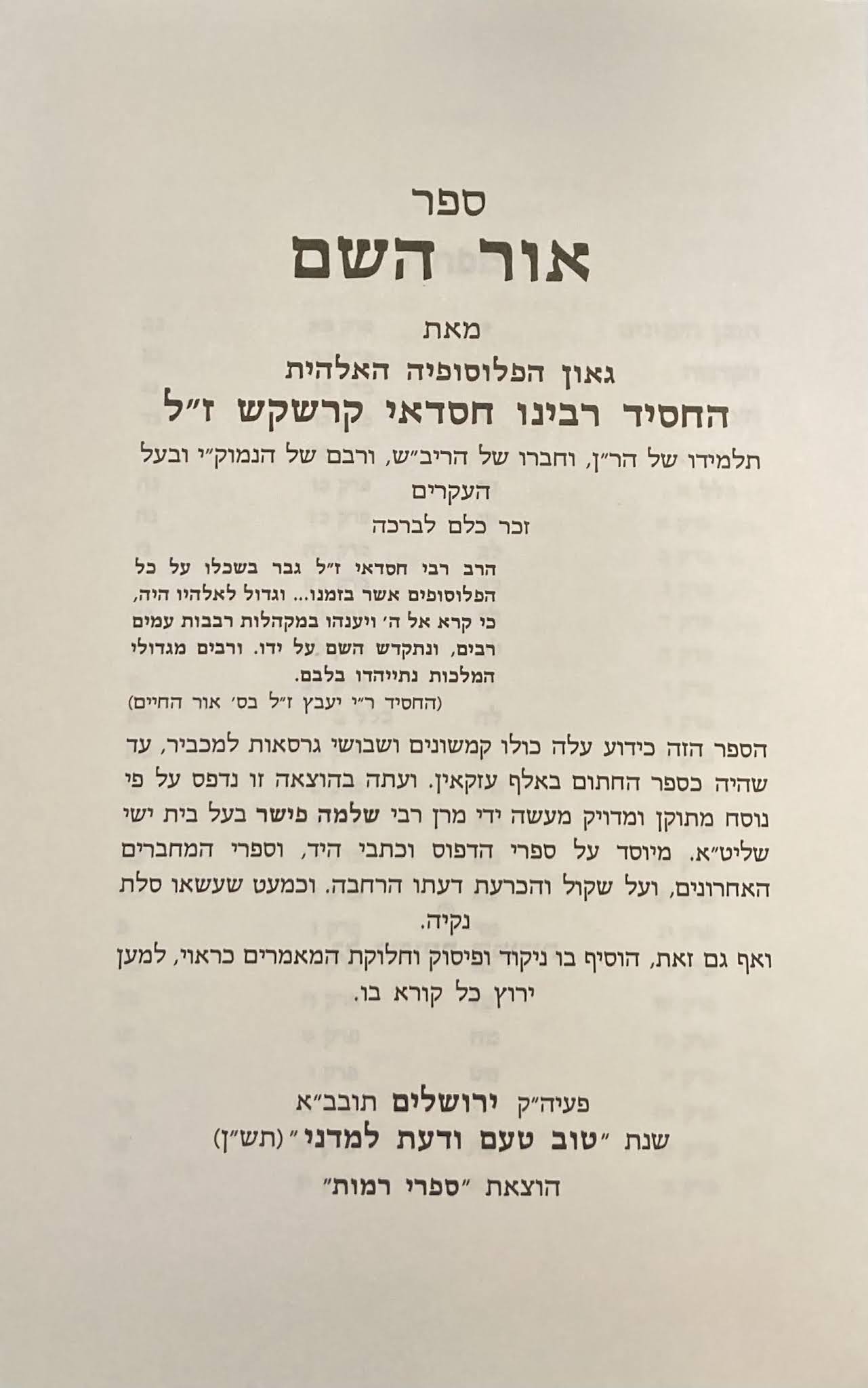
Besides his photographic recall of the Talmud, Rabbi Fisher was also thoroughly conversant with Hakirah, or Jewish philosophy, and Kabbalah (Jewish mysticism). His penchant for philosophy led him to publish a new edition of Hasdai Crescas’ ’Or Hashem (Jerusalem, 1990). His attraction to Kabbalah expressed itself especially in the expertise he developed in the Kabbalistic writings of the Vilna Gaon.

This made him unique among the sages of Jerusalem. Those in his league in Halakhah, such as Rav Yosef Shalom Elyashiv and Hakham ‘Ovadiah Yosef, did not claim proficiency in these other fields of Jewish learning. In this respect, Rav Fisher resembled—Rav Kook.

RAV FISHER AND RAV KOOK

Many wonder about Rav Fisher’s relation to the works of Rav Kook. One might say that he viewed Rav Kook’s sifrei mahshavah (works of Jewish Thought) the way Maimonides’ Guide of the Perplexed is viewed by some. Which is to say, if one is perplexed, then one needs to study the Guide; if one is not perplexed, then one need not study it. There were individuals whom Rav Fisher advised to study Rav Kook’s works; others, he would dissuade. He found ludicrous the recitation of Orot as if it were the Book of Psalms, just as he derided Breslover Hasidim who recited Likkutei MOHaRaN in this manner. (Rav Fisher himself made a careful study of Likkutei MOHaRaN and occasionally quoted the book.)

Rav Fisher came from a background that was highly critical of Rav Kook, yet he was able to free himself of many of the prejudices of his upbringing. (For the record, this writer [BN] once read a letter written by Rav Shelomo’s father, Aharon Fisher, to the editor of Kol Yisrael, the Agudah’s newspaper in Jerusalem, insisting that the paper not disrespect Chief Rabbi Kook.)

The last time I visited Rav Fisher, on a Friday morning, in his home in Har Nof, he gifted me the second, revised editions of his works, Beit Yishai Derashot and Beit Yishai Hiddushim, which had been recently published. On that occasion, he showed me how he slipped into a footnote a reference to Rav Kook’s Eder ha-Yekar. (See Beit Yishai Derashot [2004], p. 126, end note 3. In the earlier edition of 2000, the footnote is found on page 110.) The context is the important concept of “kabbalat ha-’ummah,” Kelal Yisrael’s acceptance as a Halakhic principle. The chapter in Beit Yishai (chap. 15) is entited “Be-‘Inyan Kabbalat ha-Rabbim.”

Perhaps the best way to sum up Rav Fisher’s perspective on Rav Kook, is by saying that it was “yeshivish” by today’s standards. He shared this outlook with his mehutan, Rabbi Simhah Kook of Rehovot, shelit”a. (Rabbi Fisher’s daughter is married to Rabbi Kook’s son, Rabbi Hayyim Kook.)

KELAL YISRAEL

Rabbi Fisher was unique in yet another aspect: his ability to bridge the gap between the “black hat” yeshivot of the so-called Haredim and the yeshivot of the “knitted kippot” (kippot serugot) or so-called Datiyim-Le’umiyim. (Back in the day, it was the great divide between Agudah and Mizrahi.)

Dressed in his distinctive Me’ah She‘arim apparel, consisting of a long black frock and a low, flat samet hat, Rav Fisher taught in the many yeshivot hesder: Kiryat Arba, Beit El, Gush ‘Etsion, Ma‘aleh Adumim, Sha‘alvim.

THE SPIRITUAL RENASCENCE IN ERETS YISRAEL

Rav Shelomo viewed our post-Holocaust era as being on a par with the generation that followed the Spanish Expulsion of 1492. In the aftermath of that tragic event, there exploded in Tsefat in the sixteenth century a burst of unparalleled creative energy. In a single generation, there was produced both Rabbi Joseph Caro’s Shulhan ‘Arukh and the Kabbalah of Rabbi Moses Cordovero and Rabbi Isaac Luria. Rabbi Fisher viewed the rebirth of Torah in Erets Yisrael after the terrible destruction of World War Two on such a grand historical scale.

REPOSITORY OF THE HISTORY OF THE OLD YISHUV

I would be remiss if I did not mention Rabbi Fisher’s role as a historian. Having grown up in the Old Yishuv of Jerusalem, he was often able to set the record straight on many accounts.

For starters, Hakham Shelomo Eliezer Alfandari—unlike the distortion of Rabbi Asher Zelig Margulies and the dramatization of Mas‘ot Yerushalayim (Munkatsh, 1931)—was not a kanai or zealot. (On the other hand, Rabbi Shelomo Eliashov, author of the kabbalistic work, Leshem Shevo ve-Ahlamah, was a kanai.)

Rabbi Fisher knew too of the intimate friendship of Rabbi Akiva Porush and Rabbi Ya‘akov Moshe Harlap before “a mountain rose up between them” (“gavah tura beinayhu”). Once an inseparable havruta, Rabbi Porush would go on to become Rav Kook’s worst detractor, and Rabbi Harlap, Rav Kook’s greatest defender.

LAKU HA-ME’OROT” (“THE LIGHTS WENT OUT”)

Rav Shelomo passed on the fourteenth of Kislev, 5782. He was buried that evening on the Mount of Olives. On that very night, the fifteenth of Kislev, in faraway North America, we witnessed a spectacular lunar eclipse. (Some astronomers called it “a once in a century celestial event”; others, “once in five hundred years”; others, “once in a millennium.”) The beraita in b. Sukkah 29a states: “A lunar eclipse is a bad omen for Israel, for Israel count time by the moon.” (See the discussion in Beit Yishai Derashot, pp. 207-208, note 13, regarding the supposed philosophic problem posed by the scientific predictability of eclipses.)

SEEING THE INFINITE IN TORAH

If one would ask me what was so special about Rabbi Shelomo Fisher, I would respond (in the words of Rav Ya‘akov Moshe Harlap): Through Rabbi Shelomo, hk”m, “we merited to see the aspect of the Ein Sof, the Infinite, that is in Torah.” (See Mei Marom, vol. 8, Bereshit [Jerusalem, 1994], Noah, ma’amar 8, p. 28.)


The Medical Training and Yet Another (Previously Unknown) Legacy of Rabbi Dr. Abraham J. Twerski, zt”l

The Medical Training and
Yet Another (Previously Unknown) Legacy
of Rabbi Dr. Abraham J. Twerski, zt”l

by Edward Reichman and Menachem Butler

Rabbi Dr. Edward Reichman is a Professor of Emergency Medicine and Professor in the Division of Education and Bioethics at the Albert Einstein College of Medicine. He writes and lectures widely in the field of Jewish medical ethics.

Mr. Menachem Butler is Program Fellow for Jewish Legal Studies at The Julis-Rabinowitz Program on Jewish and Israeli Law at Harvard Law School. He is an Editor at Tablet Magazine and a Co-Editor at the Seforim Blog.

On erev Shabbat Shira last week, in the course of a typically wide-ranging conversation between the authors of this article, Menachem mentioned that unfortunately Rabbi Dr. Abraham J. Twerski was critically ill. As hashgachah would have it, Menachem had happened upon a little-known precious work from 1997, entitled Sefer Ye’omar le-Yaakov u-le-Yisrael, compiled by Rabbi Dr. Abraham J. Twerski and comprised of letters written to him by Rabbi Yaakov Yisrael Kanievsky, zt”l (1899-1985), known as the Steipler Gaon and author of the multi-volume work Kehillot Yaakov.[1]

Scion of prominent Hasidic dynasties and related to the current Rebbes of Bobov, Karlin, Klausenberg, Talner, and Skver, Abraham J. Twerski was born in Milwaukee in 1930 to Rabbi Yaakov Yisrael Twerski and his wife Devorah Leah (née Halberstam), where he attended public school as a child.[2] After he received his rabbinic ordination from the Hebrew Theological College in Chicago, he began to serve as an assistant rabbi in his father’s congregation in Milwaukee in the 1950s, as Aaron Katz described in his 2015 profile of Rabbi Dr. Abraham J. Twerski (“The Wisdom of Peanuts”) at Tablet Magazine. He married Goldie (née Flusberg) in March 1952; and starting that summer, directed the Hebrew School at his father’s congregation Beth Jehudah, as well as officiated religious lifecycle events in his father’s community in Milwaukee. However, as he would later reflect in an interview “after I had practiced as a rabbi for a number of years, I felt I was not fulfilled in my work and — after consultation with the Steipler Gaon — I went to medical school to become a psychiatrist.”

Abraham J. Twerski wrote to the Steipler Gaon and expressed concerns about the propriety of attending medical school as an Orthodox Jew. He would regularly visit Rav Kanievsky at his home in Bnei Brak and corresponded with him by mail, maintaining an ongoing relationship with him until the Steipler’s passing in 1985. That year, a volume of collection of letters entitled Karyana de-Igarta was published, and included, for the first time, two letters that the Steipler Gaon had sent some thirty years earlier to a young Abraham J. Twerski in Milwaukee, who was then seeking his advice regarding his career choice.

The first letter was written at the end of the Summer of 1955 by a twenty-four-year-old Abraham J. Twerski and in this letter the Steipler Gaon addresses the value of making one’s livelihood through a non-rabbinic profession. As to the specific profession, he adds that medicine may be a preferred choice, as it is a mitzvah to learn, and additionally, excluded from the ban on secular knowledge of the Rashba.[3] However, this is on the proviso that the education is provided by proper teachers and in an environment conducive to Torah observance. As this is clearly not the case in a modern university, he offers some general guidelines, culled from the seforim hakedoshim, if not to guarantee, at least to enhance the chances of success: 1) kove’a itim – learn in-depth at least two hours daily; 2) recite all tefillos with a minyan; 3) regular mikva immersion; 4) meticulous Shabbat observance; and 5) a daily musar seder.[4]

The second question Abraham J. Twerski posed, the following year, was more specific to his situation. He inquired whether it was preferrable for him to be a rabbi in a largely non-observant community (he was serving as an assistant rabbi to his father in Milwaukee at that time), which would involve immersion in an irreligious environment with potential negative impact on the Jewish education of his children; or should he choose a medical career, which would allow him to remain in an environment of Torah observance.

Suffice it say, the Steipler Gaon’s tone in this letter is less than supportive of a career in medicine than its predecessor. His written response is unequivocal, “the rabbinate is much preferred” (adifa yoter viyoter). He lists no less than five reasons not to become a physician, relating to the challenges in maintaining Torah observance and modesty, as well as the time commitment, which would preclude Torah study. He adds on a personal note that given his estimation of the exceptional talents of the young Rabbi Twerski, the latter would likely become a highly successful and sought-after physician. As such, he would find no rest from those constantly “knocking on his door” and seeking his consultation. He was particularly concerned about what would happen to his Torah learning and observance in such a case.[5]

Notwithstanding the serious concerns expressed by the Steipler Gaon, and perhaps now better informed of the potential pitfalls, Abraham J. Twerski proceeded to pursue his medical education, as he wrote, “I went to medical school with the Steipler’s blessing and continued an ongoing relationship with him for years.”[6] Their fathers both grew up as friends in Hornsteipel, “and spent their boyhood years together and were on first name terms,” reminisced Rabbi Dr. Abraham J. Twerski many years later in a biographical memoir of his Hasidic ancestors.[7]

However, several years into his studies at Marquette University’s medical school, Abraham J. Twerski could no longer afford the tuition.[8] His assistance would come from a most unlikely source, as he would later describe in an interview with the Pittsburgh Quarterly:[9]

By that time, I had several children, so my dad and some members of the congregation helped me to pay for school. I applied for a scholarship through a foundation, but it didn’t come through, so in my third year, I fell two trimesters behind on tuition. One day, I called my wife at lunch as always, and she asked, “What would you do if you had $4,000?” I said, “I’m too busy to talk about fantasies.” She said, “But you really do have $4,000!” I said, “From where?” She said, “From Danny Thomas.” “Who’s Danny Thomas?” She said, “The TV star.” Then she read me an article from The Chicago Sun. Local officials had told Mr. Thomas about a young rabbi who was struggling to get through medical school. Thomas asked, “How much does your rabbi need?” They said, “Four thousand dollars.” He said, “Tell your rabbi he’s got it.”[10] So, I did my internship in general medicine, went to the University of Pittsburgh Psychiatric Institute for three years, and then worked two more years for a state hospital.

While the Steipler Gaon’s assessment of the success of Rabbi Dr. Abraham J. Twerski’s medical career was prophetic, his concerns about Torah observance and learning, at least for Dr. Twerski, would turn out to be unfounded. Upon his graduation from medical school several years later, Time Magazine (June 15, 1959) published a brief article about him entitled “Rabbi in White.” It is worth reprinting in its entirety:

Abraham Joshua Twerski, 28, graduated from medical school this week. It was no mean feat, for Twerski is a Jewish rabbi like his father, two uncles, father-in-law, two older brothers and (when they finish their studies) two younger twin brothers. And to keep the Torah as an Orthodox Jew for six years of studies in Milwaukee’s Roman Catholic Marquette University was something like running a sack race, an egg race and an army obstacle course at the same time.

First there was the problem of keeping his religion from growing rusty: he rose each day at 5:30am, put in an hour’s study of the Talmud before early service at Milwaukee’s Beth Jehuda Synagogue, where he is assistant rabbi. Medical school classes began at 8am, and here real complications set in. His full black beard was a sanitary problem in surgery, requiring special snood-like surgical masks. His tallith katan, a small prayer shawl worn by many Orthodox Jews under their shirts, had to be made of cotton instead of wool – which might set off a static spark and ignite the anesthetic in an operating room.

Lectures on Saturday.[11] Religious holidays sometimes required months of advance planning. The nine-day Feast of Tabernacles, for instance, with four days when work is forbidden, fell during a series of lectures before a make-or-break exam in pathology. Abe, as students and professors call him, met the situation by studying by himself all the preceding summer, put himself so far ahead of his class that he could afford to miss the lectures. “I hated like heck to miss them,” he explains, “but I creamed that exam.”

When lectures came on Saturdays – during which Orthodox Jews are forbidden to work, ride in a vehicle or talk on the phone – Abe would have a friend put a sheet of carbon paper under his lecture notes and hope he remembered to use a ballpoint pen. Sabbath restrictions begin on Friday night, just before sundown, and on occasion Fridays only a lucky break in the traffic has saved him from having to abandon his 1952 De Soto and walk the rest of the way home. On Saturdays Abe was not on duty, but sometimes, to follow up on one of the cases he had been observing, he would leave his car in the garage and walk five miles to the hospital and back.

Work on Tishah Be’ab. Abe brought his own kosher food to school every day and ate it in the student lounge, where he also said his midday prayers in a corner, surrounded by chattering fellow students. Hospital duty during the 24-hour fast without food and water at Tishah Be’ab (commemorating the destruction of the Second Temple in 70 A.D.) Dr. Twerski describes as “murder,” and the last six years have left him hollow-eyed and slightly sallow.[12] But he is eagerly looking forward to the next stage: a year of internship in Milwaukee’s Mount Sinai Hospital, followed by a three-year residency in psychiatry.

“Psychiatric training was the motivation for my going into medicine,” he says. “I felt I could be a better adviser to my people and more help to them with their problems.”

The Time Magazine profile of Abraham J. Twerski included just one photograph (wearing “a snood for surgery” over his yarmulke), but members of the Twerski family have shared in recent years nearly a dozen of the other photographs that were taken by George P. Koshollek Jr., a local photographer with The Milwaukee Journal, and later deposited in the LIFE Photo Archive. The following are two photographs of newly-minted physician Abraham J. Twerski, together with his philanthropic patron who supported his medical school studies, the comedian Danny Thomas:

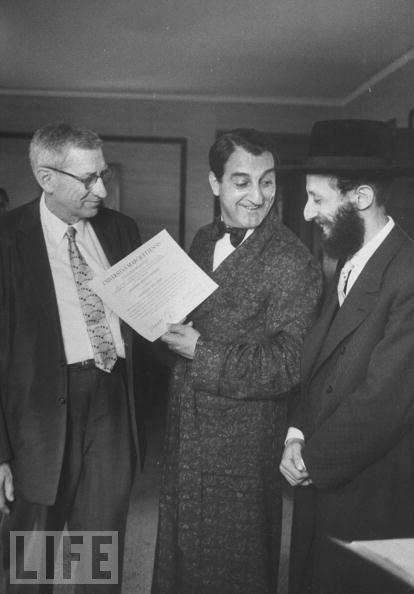
Upon his 1959 graduation from Marquette University Medical School, Rabbi Dr. Abraham J. Twerski left his pulpit in Milwaukee and moved with his family to Pittsburgh, where he completed his psychiatric training at the University of Pittsburgh’s Western Psychiatric Institute four years later, and was then named clinical director of the Department of Psychiatry at St. Francis General Hospital in Pittsburgh, supervised by Sisters of the Third Order of St. Francis, where he advanced his expertise for treating addiction. In 1972, Rabbi Dr. Abraham J. Twerski founded the Gateway Rehabilitation Center with the Sisters of St. Francis.[13]

Returning to our pre-Shabbat conversation, Menachem suggested that perhaps it might be appropriate for us to study through the 1997 volume of Rabbi Dr. Abraham J. Twerski, Sefer Ye’omar le-Yaakov u-le-Yisrael – one of his only Hebrew-language books of more than his eighty-authored volumes published over the past half-century – as a merit for Rabbi Dr. Abraham J. Twerski’s complete recovery. Menachem further asked if I would perhaps identify any medically related material that might be significant or previously unknown. Before Shabbat, I identified one particular letter, the final one in the book, which was of medical relevance, and I printed it out for learning, with Rabbi Twerski in mind. The topic: the obligation to prolong the life of a critically ill patient.

Just two days after our conversation, we read of the tragic passing of Rabbi Dr. Abraham J. Twerski, whose passing took place on Sunday, Chai Shvat 5781 (January 31, 2021). The nature of the letter from the Steipler Gaon to Rabbi Dr. Abraham J. Twerski, and its heretofore unknown origins, compels us to write this brief note l’zecher nishmato (in honor of his memory) and to add yet an additional item to his legacy.

Rabbi Dr. Abraham J. Twerski’s astonishing accomplishments, known to the Jewish community worldwide, are primarily in the fields of mental health, self-esteem, and addiction medicine.[14] We will leave it those with expertise in these areas to recall and recount his manifold contributions, including his voluminous literary output.[15] Here we note a contribution, which though indirect, may be on par with respect to its Jewish communal impact as those more widely known.

The Letter

In the introduction to this 230-page-work, Sefer Ye’omar le-Yaakov u-le-Yisrael, published in 1997 by the Kollel Bais Yitzchok on Bartlett Street in Pittsburgh (and with an effusive approbation from Rav Chaim Kanievsky, son of the Steipler Gaon), Rabbi Dr. Abraham J. Twerski recounts his unique connection to Rav Yaakov Yisrael Kanievsky, the Steipler Gaon. It stemmed back to the city in present-day Ukraine called Hornsteipel, to which they both trace their roots.[16] Rav Kanievsky had lived there in his youth and the appellation “the Steipler” is derived from the name of the town. Rabbi Dr. Abraham J. Twerski, though born in Milwaukee, Wisconsin is a direct descendant of Rebbe Yaakov Yisrael Twerski of Cherkas, the founder of the Hornsteipel Hasidic dynasty, which originated in that city.[17] His father was named Rabbi Yaakov Yisrael Twerski and was known both as the Hornsteipler Rebbe, and as the Milwaukee Rebbe.[18]

The last letter of this volume presents a medical halakhic query Rabbi Dr. Abraham J. Twerski posed to the Steipler Gaon in the Summer of 1973 about his ailing father. “May a son administer an injection to his ill father?” Despite the fact that Rabbi Dr. Abraham J. Twerski was a physician, and injections were part of his clinical scope of practice, he was acutely aware of the potential halakhic ramification of something as simple as an injection. An injection may cause bodily injury, and it is Biblically prohibited for a son to cause a wound to his father.[19] Rav Kanievsky answered that it would be permitted as long as there are no other options: “On the matter of delivering an injection to one’s father, as it may cause a wound, the law is found in Yoreh De’ah #241:3, that when no one else is available, it is permitted … .”[20]

It appears however that between the sending of the query and the completion of the response, Rabbi Dr. Abraham J. Twerski’s father passed away, as Rav Kanievsky offers condolences: “Behold, I who am bereft of good deeds [an allusion to the introduction to the High Holiday Musaf prayer recited by the chazzan] join in your great sorrow upon the passing of the honorable, great rabbi of the Hornsteipel dynasty. May God comfort you among the mourners of Zion and Jerusalem, and may his memory be a blessing for eternity.”[21]

It is the following paragraph, which includes a general comment about end-of-life issues, to which we draw your attention:

“Regarding the principle that one should do everything possible to prolong the life of the ill patient [even if he is in a terminal state (chayei sha’ah)]. In truth I also heard such a notion in my youth, and I do not know if this derives from a ‘bar samcha’ (authoritative source). In my opinion, this requires serious analysis…”

As I [ER] read these words, they were familiar to me. This letter appears in the Steipler Gaon’s collection of letters entitled Karyana de-Igarta,[22] though the questioner is not identified. It is only from this work of their correspondences that we learn that Rabbi Dr. Abraham J. Twerski is the author of the query!

It is not a lengthy halakhic analysis. In fact, the Steipler Gaon goes on to cite only two sources. The citations relate to the passage in Shulhan Arukh, Yoreh De’ah #339 regarding the treatment of a ‘gosses’, one whose death is imminent. Yet this pronouncement of Rav Kanievsky’s on the approach to the patient at the end of life may possibly be his most cited reference on any medical halakhic topic. Moreover, it is one of the more frequently cited sources in contemporary halakhic discussions on the end of life.

In the Modern era, with the likes of respirators and antibiotics, we now have the ability to prolong life to an extent not imaginable in the past. Must we utilize the entire armamentarium of medicine to prolong life in every circumstance, despite any associated suffering? There are some, such as Rav Eliezer Waldenberg, zt”l, who would answer in the affirmative.[23] Others, like Rav Moshe Feinstein, zt”l, allow for circumstances to refrain from aggressive care.[24] This debate has been the substance of halakhic discussions on end-of-life care in our generation.[25]

For someone of the stature of Rav Kanievsky’s to write that the notion to prolong life in all circumstances and at all costs may not derive from a “bar samcha” (authoritative source) is nothing short of revelational. This statement has guided many a rabbinic authority in their general approach to the treatment of the patient at the end-of-life and has certainly been part of the thought process of countless practical halakhic decisions.

It appears that this noteworthy contribution of Rabbi Dr. Abraham J. Twerski, zt”l to medical halakhic discourse, albeit indirect, has gone largely unnoticed. He is not only to be credited for his legendary contributions to broadening the possibilities of mental health in the Jewish community and beyond,[26] but he is also responsible for eliciting this letter of Rav Yaakov Yisrael Kanievsky, which has informed and guided halakhic-decision-making at the ‘end-of-life’ in the Modern era.

Sadly, we now invoke the same sentiment that the Steipler Gaon expressed above about the loss of another great rabbinic leader and member of the Hornsteipler dynasty:

May his memory be a blessing for eternity.

Notes:

[1] See Marc B. Shapiro, “The Tamim: Rabbi Yaakov Yisrael Kanievsky (‘The Steipler’),” in Benjamin Brown and Nissim Leon, eds., The Gedolim: Leaders Who Shaped the Israeli Haredi Jewry (Jerusalem: Magnes, 2017), 663-674 (Hebrew). A full biographical treatise on The Steipler Gaon along the lines of the magisterial scholarly work of The Hazon Ish, in Benjamin Brown, The Hazon Ish: Halakhist, Believer and Leader of the Haredi Revolution (Jerusalem: Magnes, 2011; Hebrew) remains a scholarly desideratum.
[2] In a December 25, 2020 email to Menachem Butler, Rabbi Dr. Abraham J. Twerski clarified some important details of an anecdote from when he participated in the Christmas play at his Milwaukee public school in his childhood. He wrote here:

That’s not quite the way it was. The week after the play, my mother called the teacher, to meet her. The teacher said, ‘I knew that Mrs. Twerski would reprimand me for putting Abraham in the Xmas play. But all she wanted to know was whether Abraham was self-conscious because he was shorter than the other children.’ I said, ‘I thought you were going to reprimand me for putting Abraham in the Xmas play.’ Mrs. Twerski said ‘If what we have given him at home is not enough to prevent an effect of a Xmas play, then we have failed completely.’

[3] For an overview of the controversy, see David Berger, “Judaism and General Culture in Medieval and Early Modern Times,” in Cultures in Collision and Conversation: Essays in the Intellectual History of the Jews (Boston: Academic Studies Press, 2011), 21-116, esp. 70-78. See also Joseph Shatzmiller, “Between Abba Mari and Rashba: The Negotiations That Preceded the Ban of Barcelona (1303-1305),” Studies in the History of the Jewish People and the Land of Israel, vol. 3 (1973): 121-137 (Hebrew); David Horwitz, “The Role of Philosophy and Kabbalah in the Works of Rashba,” (unpublished MA thesis, Yeshiva University, 1986); David Horwitz, “Rashba’s Attitude Towards Science and Its Limits,” Torah u-Madda Journal, vol. 3 (1991-1992): 52-81; and Marc Saperstein, “The Conflict over the Ban on Philosophical Study, 1305: A Political Perspective,” in Leadership and Conflict: Tensions in Medieval and Early Modern Jewish History and Culture (Oxford: Littman Library, 2014), 94-112.
[4] Avraham Yeshaya Kanievsky, Karyana de-Igarta: Letters of Rabbi Yaakov Yisrael Kanievsky, vol. 1 (Bnei Brak: privately published, 1985), 101-103, no. 86 (Hebrew), dated August 31, 1955.
[5] Avraham Yeshaya Kanievsky, Karyana de-Igarta: Letters of Rabbi Yaakov Yisrael Kanievsky, vol. 1 (Bnei Brak: privately published, 1985), 72-74, no. 66 (Hebrew), dated April 5, 1956.
[6] Rabbi Dr. Abraham J. Twerski, “Who is Honored? He Who Honors Others” (Pirkei Avos 4:1) at TorahWeb.org.
[7] See Abraham J. Twerski, The Zeide Reb Motele: The Life of the Tzaddik Reb Mordechai Dov of Hornosteipel (Brooklyn: Mesorah Publications, 2002), 11.

In 1965, Rabbi Dr. Abraham J. Twerski visited Bnei Brak and requested that he be permitted to take a photograph of Rav Kanievsky. After sharing a story about how Rav Meir Shapiro of Lublin convinced Rav Joseph Rosen, the Rogatchover Gaon, to allow him to take a photograph so that future generations would know what “a true Jew should look like,” the Steipler consented to a photograph to be taken.
[8] Financial difficulties for Jewish medical students are certainly not a new phenomenon. Indeed precisely four hundred years before Rabbi Twerski’s financial woes, in 1658, Chayim Palacco, another rabbi training as a physician in the University of Padua Medical School petitioned the Jewish community of Padua for assistance in paying his medical school tuition. The request, the only one of its kind in the archival records, was granted. See Daniel Carpi, “II Rabbino Chayim Polacco, Alias Vital Felix Montalto da Lublino, Dottore in Filosofia e Medicina a Padova (1658),” Quaderni per la Storia dell’ Universita di Padova, vol. 34 (2001): 351-352.

[9] Jeff Sewald, “Abraham J. Twerski, Psychiatrist and Rabbi: The Psychiatrist and Rabbi in His Own Words,” Pittsburgh Quarterly (Winter 2008), available here.

[10] For further details, see “Catholic Danny Thomas to Help Rabbi Become Doctor,” The Wisconsin Jewish Chronicle (27 June 1958): 1 and 3.

[11] The medical student Judah Gonzago, who trained in Rome in the early 1700s, recounts how one of his final (oral) exams was on Rosh Hashana. He recalls how he left the synagogue after the shacharit (morning) service and returned in time to hear the blowing of the shofar. His other trials and tribulations are reminiscent of those of Rabbi Dr. Twerski, though reflect a different historical reality. Though not a rabbi, Gonzago taught Torah in the local Jewish school. See Abraham Berliner, “Memoirs of a Roman Ghetto Youth,” Jahrbuch für Jüdische Geschichte und Literatur, vol. 7 (1904): 110-132 (German), of which excerpts are summarized and translated in Harry Friedenwald, “The Jews and the Old Universities,” in Harry Friedenwald, ed., The Jews and Medicine: Essays, vol. 1 (Baltimore: John Hopkins University, 1944), 221-240.
[12] How Rabbi Dr. Abraham J. Twerski navigated medical school while simultaneously maintaining meticulous religious observance, not to mention finding time for Torah learning, is truly exceptional. It reflects the challenges that every religious Jew faces in pursuing a medical education. These challenges have existed throughout history, though they have evolved over time. See Edward Reichman, “From Maimonides the Physician to the Physician at Maimonides Medical Center: The Training of the Jewish Medical Student throughout the Ages,” Verapo Yerape: The Journal of Torah and Medicine of the Albert Einstein College of Medicine, vol. 3 (2011): 1-25; Edward Reichman, “The Yeshiva Medical School: The Evolution of Educational Programs Combining Jewish Studies and Medical Training,” Tradition: A Journal of Orthodox Jewish Thought, vol. 51, no. 3 (Summer 2019): 41-56. See also Edward Reichman, “The History of the Jewish Medical Student Dissertation: An Evolving Jewish Tradition,” in Jerry Karp and Matthew Schaikewitz, eds., Sacred Training: A Halakhic Guidebook for Medical Students and Residents (New York: Amud Press, 2018), xvii-xxxvii.
[13] See Abraham J. Twerski, The Rabbi & the Nuns: The Inside Story of a Rabbi’s Therapeutic Work With the Sisters of St. Francis (Brooklyn: Mekor Press, 2013).

On his appointment to this position in August 1965, Sister Mary Adele announced: “The addition of Dr. Twerski to our staff is another important move toward our goal of making complete, comprehensive mental health care and treatment available to all the people of the community.” The following month, both Sister Mary Adele and Rabbi Dr. Abraham J. Twerski rejected the suggestion that his appointment embodies any aspect of the ecumenical movement, and she told The Pittsburgh Press: “The appointment came at an opportune time to fit into the spirit… but it was accidental.” See “St. Francis Ecumenical Movement? Rabbi, Catholic Hospital Team Up In Psychiatry: Mental Ward on the Move,” The Pittsburgh Press (26 September 1965): 11
[14] Rabbi Dr. Abraham J. Twerski’s contributions also extend to the sphere of music. A noted composer of Hasidic melodies (and also of musical grammen that he composed to be delivered at celebratory occasions, such as weddings and sheva brachot), one of his best-known (although often unattributed) compositions is “Hoshia Es Amecha,” which he composed more than six decades ago on the occasion of his brother’s wedding, and set to the words from Tehillim 28:9. The song is often chanted on Simchat Torah following each of the hakkafot in the synagogue, and has become a helpful tune to count the minyan-members ahead of starting prayer services. His story of the song’s composition is recorded here. At his request, there were no eulogies delivered at his funeral. Instead, he requested that his family sing “Hoshia Es Amecha,” which he had once described as his “ticket to Gan Eden…because people dance with it.” See the video of the funeral march here.
[15] For example, see Andrew R. Heinze, “The Americanization of Mussar: Abraham Twerski’s Twelve Steps,” Judaism: A Journal of Jewish Life & Thought, vol. 48, no. 4 (Fall 1999): 450-469.
[16] For the geographic map of the Hasidic dynasties that emerged from Hornsteipel, see Marcin Wodziński, Historical Atlas of Hasidism (Princeton: Princeton University Press, 2018), 159,162.
[17] See his book-length tribute to Reb Motele, the father of Rebbe Yaakov Yisrael Twerski of Cherkas ancestor, see Abraham J. Twerski, The Zeide Reb Motele: The Life of the Tzaddik Reb Mordechai Dov of Hornosteipel (Brooklyn: Mesorah Publications, 2002).
[18] See Israel Shenker, “The Twerski Tradition: 10 Generations of Rabbis in the Family,” The New York Times (23 July 1978): 38, which includes a photo of Rabbi Yaakov Yisrael and Devorah Leah Twerski, with their children and their spouses at a family wedding in 1958.

Peter Leo, “He Defies Melting Pot Tradition,” Pittsburgh Post-Gazette (4 September 1978): 15:

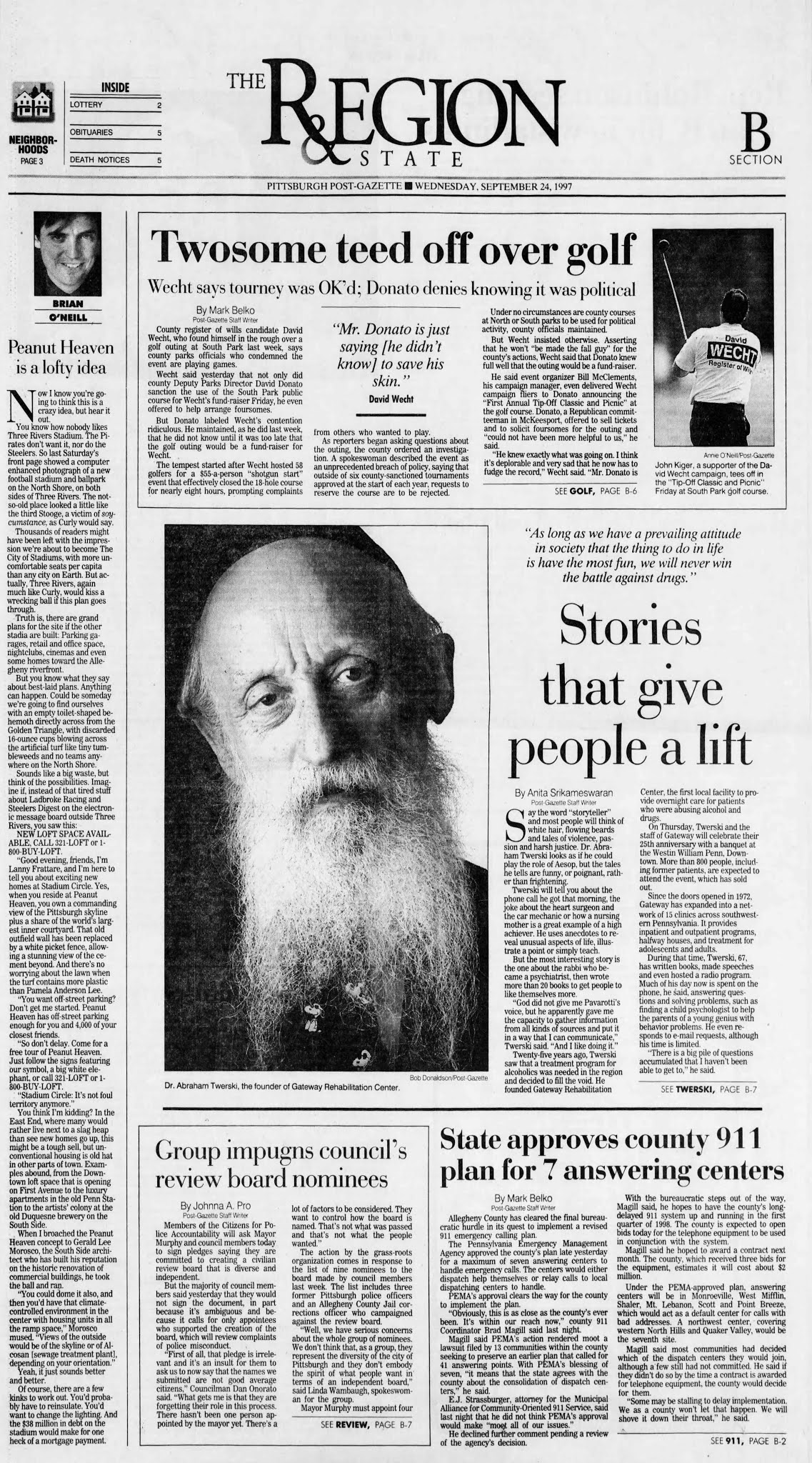
Anita Srikameswaran, “Stories That Give People A Lift,” Pittsburgh Post-Gazette (24 September 1997): B2,B7
[19] For treatise on the topic of providing medical care to one’s parent, see Avraham Yaakov Goldmintz, Chen Moshe (Jerusalem: privately published, 2002; Hebrew), available here.
[20] Abraham J. Twerski, Sefer Ye’omar le-Yaakov u-le-Yisrael (Pittsburgh: Kollel Bais Yitzchok, 1997), 177 (no. 86) (Hebrew), dated August 27, 1973.
[21] Grand Rebbe Yaakov Yisrael Twerski passed away on August 7, 1973.
[22] Avraham Yeshaya Kanievsky, Karyana de-Igarta: Letters of Rabbi Yaakov Yisrael Kanievsky, vol. 1 (Bnei Brak: privately published, 1985), 201, no. 190 (Hebrew)
[23] Alan Jotkowitz, “The Intersection of Halakhah and Science in Medical Ethics: The Approach of Rabbi Eliezer Waldenberg,” Hakirah, vol. 19 (2015): 91-115.
[24] See Moshe Dovid Tendler, Responsa of Rav Moshe Feinstein, vol. 1: Care of the Critically Ill (Hoboken, NJ: Ktav Publishing House, 1996). See also Daniel Sinclair, “Autonomy in Matters of Life and Death and the Withdrawel of Life-Support in the Responsa of Rabbi Moses Feinstein,” Jewish Law Association, vol. 23 (2012): 231-245; and Alan Jotkowitz, “Death as Implacable Enemy – Or Welcome Friend in the Theology and Halakhic Decision Making of Rabbis Moshe Feinstein, Eliezer Waldenberg, and Haim David Halevy,” in Kenneth Collins, Edward Reichman, and Avraham Steinberg, eds., In the Pathway of Maimonides: Festschrift on the Eightieth Birthday of Dr. Fred Rosner (Haifa: Maimonides Research Institute, 2016), 73-99.
[25] For a comprehensive review of the halakhic issues at the end of life – well beyond the scope of this brief essay – see, most recently, Avraham Steinberg, Ha-Refuah ka-Halakhah, vol. 6: The Laws of the Sick, the Physician, and Medicine (Jerusalem: privately published, 2017), 338-388 (section 10) (Hebrew).
[26] See, for example, his books in Abraham J. Twerski, Let Us Make Man: Self Esteem Through Jewishness (Brooklyn: Traditional Press, 1987); Abraham J. Twerski, The Shame Borne in Silence: Spouse Abuse in the Jewish Community (Pittsburgh: Mirkov Publications, 1996); Abraham J. Twerski, Addictive Thinking: Understanding Self-Deception (Center City, MN: Hazelden, 1997); Yisrael N. Levitz and Abraham J. Twerski, eds., A Practical Guide to Rabbinic Counseling (Jerusalem: Feldheim, 2005), and his dozens of other works published over the past half-century, including more than fifty works at the catalog of ArtScroll/Mesorah Publications.


An Appreciation of HaRav Gedalia Dov Schwartz, zt”l

An Appreciation of HaRav Gedalia Dov Schwartz, zt”l

By Rabbi Akiva Males

On Thursday, the 24th of Kislev, 5781 (December 10, 2020), Jews around the world prepared to use their Shamash candles to light their Chanukah Menorahs. On that same day, leading rabbinic representatives of Chicago’s strong and diverse Orthodox community delivered moving eulogies for a world-renowned Torah scholar: Rav Gedalia Dov Schwartz, zt”l. For 95 years, Rav Schwartz served as a powerful living Shamash, using his vast Halachic knowledge to illuminate Chicago — and communities around the world.

Several of the speakers remarked that in addition to all of his responsibilities heading the Beis Din of the Chicago Rabbinical Council (CRC), Rav Schwartz readily made himself available to answer the Halachic questions of rabbis across the USA. As a Shul rabbi who regularly reached out to Rav Schwartz, I can confirm that detail as being absolutely true. However, in all honesty, Rav Schwartz shared so much more than answers to the Halachic questions he was presented with.

Having served for decades as a Shul rabbi himself, Rav Schwartz readily understood the context of the Halachic questions he was presented with. He also knew the challenges, pressures, and anxieties that rabbis ‘out in the field’ often experience. In addition to providing clear answers to the queries of puplit rabbis, Rav Schwartz was an overflowing spring of wisdom, guidance, and practical rabbinic advice.

Why would a Shul rabbi out in Harrisburg, PA (where I served from 2007-2016) join a rabbinical association based in Chicago, IL? While membership in the CRC benefits a rabbi for numerous reasons, for the most part, I joined the CRC because of Rav Schwartz. As a young rabbi in my first pulpit position, I quickly realized how much I needed someone to turn to for Halachic and rabbinic guidance. On what seemed like a near-daily basis, I found myself facing numerous scenarios I had never imagined encountering — and certainly did not learn about in Yeshiva. After reaching out to Rav Schwartz on a few occasions, I quickly felt embraced and supported — and a long-distance relationship was born.

After Rav Schwartz’s funeral, I felt drawn to look over the notes I took of many of our conversations. Packed away in a box, I found a six-inch-thick file containing some of the incredibly diverse Halachic questions that came up — and that I had discussed with different Poskim — during my years in Harrisburg. Reading through those pages brought back a flood of memories and emotions. Using Post-It notes, I began flagging the pages that involved Rav Schwartz. When I was finished, I was shocked by the number of times (and the vast spectrum of issues about which) he had generously shared his time, Halachic knowledge, and direction with me.

Since so many of the matters we discussed were of a sensitive nature, I cannot share the details of those questions — as that would not be fair to the parties involved. However, here is a small sampling of some of the questions I asked Rav Schwartz about:

  • A Shul member is extremely allergic to bee stings. The community’s Eruv will be down for a few weeks for major repairs. Can this fellow go out on Shabbos carrying his EpiPen — or must he stay home and indoors the entire Shabbos?
  • One of the Shul members has an expensive African parrot that will only eat the Chometz crackers that it is used to. What should this parrot’s owner do with it over Pesach?
  • The apartment building in which a Shul member lives installed motion sensitive lights in the halls and stairwells. Is there a Halachically acceptable way for her to leave her apartment on Shabbos?
  • A Jewish-owned chain of stores asked me to be their agent to sell their Chometz before Pesach. However, they will be open and doing business as usual over Yom Tov. Does such a sale of Chometz accomplish anything?
  • A photographer working for the local newspaper took some beautiful pictures of our community while we were reciting Tashlich on the first day of Rosh Hashanah. The pictures appeared in the next day’s paper. Can we purchase those pictures from the paper for our own use?
  • I received a letter from a Pennsylvania State prison inmate claiming to be Jewish. With his newfound free time, he has been exploring his Judaism. He recently learned that although he received a medical circumcision as an infant, in order to meet the Halachic requirements of Bris Milah, he requires a Hatafas Dam. He wants me to advocate for him to be allowed to have this procedure done while serving his time behind bars. Is this a case I should take up?
  • An out-of-town Jewish college student has unfortunately been exploring her interest in Christianity. She reached out to a family in our Shul asking if she could stay with them in order to attend a Messianic conference that will take place in our locale. Could the family agree to host her — with the hope that they will be able to dissuade her from pursuing her attraction to another religion?
  • How far must a Ger Tzedek go to prevent the cremation of his / her non-Jewish parent?

In looking through that file, I was struck by how many of the questions I posed to Rav Schwartz had to do with: A) the myriad of complex issues that result from intermarriage, B) the delicate balance that needs to be found in dealing with the local Jewish Federation and non-Orthodox congregations (and their leaderships) when it comes to matters of communal concern, C) enabling the local Jewish day school to thrive and continue providing a Torah education to as many Jewish children as it can, and D) helping Jewish converts in every way possible.

As stated above, when I called Rav Schwartz, I was looking for more than just his clear answers to the Halachic questions that I had for him. I also craved his sound advice, reassurance, and sometimes, his support. On one page of my notes, I read how I had sought his guidance in a particular thorny issue. He listened to all that had taken place, shared with me what he thought I had done right, what I could have done better, how I might still be able to iron out a wrinkle I had created, and finally, some excellent ideas for dealing with similar situations that might arise in the future.

On another page of my notes, I read how he fully agreed with a position I had taken in a complicated matter. I was set to discuss what had happened with the Shul’s leadership, and had reached out to Rav Schwartz to learn what he thought. He told me he agreed with me 100%, and that if I experienced any pushback, I could let the Shul’s Board know that he absolutely stood behind me. Fortunately, this was not necessary – as, thankfully, the Shul’s Board supported me. Nonetheless, knowing that Rav Schwartz was in my corner, and willing to back me up, gave me the reassurance I greatly needed at that time.

As I looked through my files, the following five stories jumped out at me:

  1. While Rav Schwartz clearly had a phenomenal mastery and memory of all Torah-related subjects, he was also keenly aware of the world around him. His attention to detail — and his recall of those details — was often quite surprising. As an example: I once turned to him with an important Halachic question from an Israeli family who had joined our community for a year so the husband (a high-ranking IDF officer) could attend the U.S. Army War College in nearby Carlisle, PA. After answering the question, Rav Schwartz commented, “I wonder if that college is located on the campus of the boarding school that Jim Thorpe attended.” (Thorpe was a famous Native-American athlete who passed away in 1953 — and indeed, the U.S. Army War College is located on the grounds of the former ‘Carlisle Indian Industrial School’.)
  2. Often, after answering a question, Rav Schwartz would let me know that he could relate to what I was experiencing by sharing a story from his own rabbinic career. He once told me about how decades earlier, while serving as a young pulpit rabbi in Providence, RI he turned down the local Jewish Federation leader’s invitation to deliver an invocation at a gala dinner they were holding to honor one of the most prominent Jews in town (who was intermarried). The guest speaker was going to be the famous Rabbi Abba Hillel Silver (Reform), and the food being served at the dinner was in no way Kosher. Rav Schwartz told me how shocked the Federation head was upon hearing his refusal to deliver a blessing at a dinner that was so at odds with Halacha.
  3. Rav Schwartz once mentioned that Orthodox rabbis will make the greatest impression on the broader non-Orthodox Jewish community through their Chesed and Menshlichkeit — and not via their scholarship. He recalled how once while visiting Cincinnati, OH he leafed through a year book published by the local Jewish Federation. In one year’s edition, there was a small blurb on the great Rav Eliezer Silver, zt”l. (He noted that during the time of Rabbi Silver, Cincinnati’s Jewish Federation did not have the warmest feelings towards Orthodoxy.) In that small write-up they sang Rabbi Silver’s praises. What was it about Rav Eliezer Silver’s many accomplishments that had caught their notice? It was not his Torah brilliance. Instead, the Ohio River had flooded and parts of Cincinnati were devastated. In the middle of all the chaos, Rabbi Silver was spotted in a boat bringing food and aid to others. It was Rav Eliezer Silver’s selfless Chesed that had made a lasting impact on those who were not aligned with him.
  4. In 2011, my wife Layala faced a great health challenge, spent several months in hospitals, and underwent life-saving surgery. Thank G-d, she recovered, and we will always be grateful to everyone who helped us get through that extremely trying time. Over the course of those months (and the months that followed), I reached out to Rav Schwartz with many personal and Shul-related Halachic questions. Inevitably, the first words out of Rav Schwartz’s mouth were, “How’s Laya Adinah bas Chaya Esther?” My wife’s Hebrew name — as well as my mother-in-law’s — was on the tip of his tongue. Not only was Rav Schwartz thinking of my wife throughout that challenging time, but he was letting me know that he was Davening for her as well. I cannot begin to describe how much that meant (and continues to mean) to Layala and me.
  5. I once turned to Rav Schwartz for guidance with an extremely sensitive situation involving a Jewish man who had married a non-Jewish woman. In the course of conversation, Rav Schwartz taught me an important lesson I will never forget. In asking my question, I had initially used the word ‘Shiksah’ in referring to the the gentile spouse. Rav Schwartz stopped me and said that such language is not refined, and is not appropriate for anyone — especially a rabbi — to use. He went on to explain that the term ‘Shiksah’ has a derogatory connotation, and that is why it never appears in any rabbinic responsa literature. Instead, non-disparaging terms like ‘Nochris’ or ‘Goya’ are always used. Rav Schwartz told me that moving forward, I should use those terms as well. I sincerely thanked him for sharing his advice, and have made a conscious effort to remove ‘Shiksah’ from my vocabulary ever since. (Each year, I make a point of sharing this lesson with my high school students as well.)

Unfortunately, the notes of my conversations with Rav Schwartz end in May 2016. That was when the CRC membership received an email informing us that sadly, our beloved Av Beis Din, Posek, teacher, and role model had suffered a debilitating stroke while leading a Daf Yomi Shiur. In the years that followed, I would regularly mail Rav Schwartz cards and hand-written notes. However, that fateful stroke put an end to the phone conversations which I had valued so greatly. (During a quick trip to Chicago in November of 2016, I was able to visit Rav Schwartz at his home. Though my visit was short, I found much meaning in it. I truly envy all the CRC members living in Chicago who were able to regularly visit Rav Schwartz over the past four years.)

Looking back, there are so many matters I would have loved to discuss with Rav Schwartz since the last time I reached him by phone at his CRC office in 2016. Sadly, that was not meant to be.

In reflecting on the interactions I feel privileged to have had with Rav Schwartz I realize something unique about him. Whenever I spoke with him, I gained more than just additional Torah knowledge and the guidance he so generously offered. I always departed (or hung up the phone) feeling I was a better person than I had been before our conversation began. In his very humble — yet noble — manner, Rav Schwartz had a way of elevating and bringing out the best in others. Interacting with Rav Schwartz was an uplifting opportunity for self growth — one that I and so many others wish we could experience again.

_________________________

Rabbi Akiva Males is privileged to serve Young Israel of Memphis as its rabbi, and also teach Torah at the Margolin Hebrew Academy — Finestone Yeshiva of the South. He can be reached at rabbi@yiom.org