The Recently Published Photographs of Rav Yisrael Salanter: Real or Imaginary?

The Recently Published Photographs of Rav Yisrael Salanter: Real or Imaginary?

By Shnayer Leiman

As early as 2006, and continuing through 2022, a flurry of photographs, purporting to bear the likeness of Rav Yisrael Salanter, have either appeared in print or have been posted on the Internet (see below, section II). While the publication of these photos certainly attests to his abiding influence well into the 21st century, their authenticity seems less than certain, and demands investigation. At the very least, one wonders why the likeness of a world renowned rabbi, who died in 1883, did not come to light until almost 125 years after his death![1]

I. The Early Evidence for What R. Yisrael Salanter Looked Like.

A proper discussion of what R. Yisrael actually looked like must begin with an examination of the testimony of his contemporaries who interacted with him and knew him best. The Torah teaches us (at Dt.19:15) that a matter can be established by two or three witnesses, so we shall present below the testimony of three witnesses who knew R. Yisrael personally.[2]

1. In 1899, Emil Benjamin, published the first biography of Rav Yisrael Salanter.[3] At the time, Benjamin served as a teacher of Jewish religion in Memel, Prussia, a port city on the Baltic Sea with some 1000 Jews (today: Kleipeda in Lithuania). Benjamin, a native of Memel, was a disciple of R. Zvi Hirsh Plato (1822-1910) who was a son-in law of R. Samson Raphael Hirsch. R. Plato served as Rav of the separatist Orthodox community of Cologne, and head of its Teacher’s Seminary, where Benjamin was trained as a teacher. Benjamin was a young man between 1857 and 1878, the very years that R. Yisrael Salanter spent many a year in Memel, which served as a base of operations for his various educational activities in Lithuania, Prussia, Germany, and France. R. Yisrael invited Benjamin to serve as his aid during a significant portion of those years, and Benjamin wisely accepted the invitation. Intimately involved in R. Yisrael’s daily affairs, Benjamin was in a unique position to record for posterity what it was like to be in his presence. Benjamin wrote:[4]

Rabbi Lipkin was of medium height, seemingly strong but lean in stature, and of ordinary build. His outward appearance immediately revealed a man of unusual significance. The broad forehead, the interesting character reflected by the shape of his head, the sharp look, all reflected the great thinker that he was. His countenance was almost always flush red, probably due to the struggle between body and spirit within him. Often he was lost in thought, and he seemed to forget everything around him, and appeared to be talking to himself. In spite of his deep seriousness, his conversation was often spiced with a pleasant sense of humor and whimsical thoughts…Curiously, this humble and unselfish man never consented to allow the features of his face to be painted by the artist’s brush and, thus, to be preserved for posterity. [Italics mine, sl]

2. Yaakov Mark (1856-1929) was a graduate of the Telz Yeshiva (in Telshe, Lithuania) who devoted a good portion of his life to training Jews (in a variety of languages) to master bookkeeping, so that they could gain and hold jobs in the various countries where they would ultimately find themselves.[5] He also devoted his later years to making literary contributions to Hebrew and Yiddish periodical literature. His only book, entitledגדולים פון אונזער צייט (New York, 1927),[6] is devoted to biographies of the key persons that he knew personally, such as R. Hayyim Soloveichik, the Malbim, and R. Yisrael Salanter. His opening line regarding R. Yisrael Salanter reads: “In my younger years, I often had the privilege of meeting with R. Yisrael. I heard his public lectures, his private lectures, and had the opportunity to observe him at close range.” In his book, he writes:[7]

All who encountered him when walking in the streets, whether Jew or Gentile, greeted him courteously. Even in the most crowded street of Berlin it was rare that a passerby would not stop to behold the great thinker, who used to wander about while engrossed in deep thought. All were impressed by his stately figure, his especially handsome beard, and his particularly character-full head with its unusually wide forehead, his red-white face, his blue eyes, with his sharp, yet good-natured look. This, despite the fact that he never wore official rabbinic garb but, rather, simple lay dress, with an ordinary hat on his head – not particularly elegant – but always clean and tidy. How sad that no photograph of him exists! It was simply impossible to get him to agree to sit for a painting or a photograph. [Italics mine, sl]

3. David Sidersky (circa 1858-1943), a grandson of R. Yisrael Salanter who edited אמרי בינה (Warsaw, 1878), the first ספר by R. Yisrael that was printed during his lifetime and that listed his name as the author, also published a biography of his grandfather in 1936-7.[8] Sidersky wrote as follows:[9]

R. Yisrael, under no circumstances, allowed himself to be photographed. Indeed, not a trace of his image exists. [Italics mine, sl] This, however, is what he looked like: he was of medium height, handsome, with glowing face. He had a full beard, with curls surrounding its edges. He spoke pleasantly, and always greeted everyone warmly.

If one reads the full biographical accounts of R. Yisrael Salanter by the three witnesses listed above, it becomes quite obvious that these are three independent accounts. Each records significant material about R. Yisrael Salanter that does not appear in the other accounts.[10] But there can be no question that Mark was influenced by Benjamin’s account, and that Sidersky was influenced by both Benjamin and Mark. The literary influence of the earlier accounts on the later accounts is obvious, even in the snippets translated above. Nonetheless, notice that only Benjamin mentions R. Yisrael’s sense of humor; only Mark refers to R. Yisrael’s blue eyes; and only Sidersky notes the curls that surrounded the edge of R. Yisrael’s full beard.

II. What Might R. Yisrael Salanter Not Have Looked Like?[11]

1. In 2006-2008, R. Shlomo Lorincz – a political leader of Agudat Yisrael during 1951-1984 and a חבר כנסת – published his classic work במחיצתם של גדולי התורה. In vol. 2, p. 14,[12] there appeared a striking photograph, with the name רבי ישראל סלנטר under it.

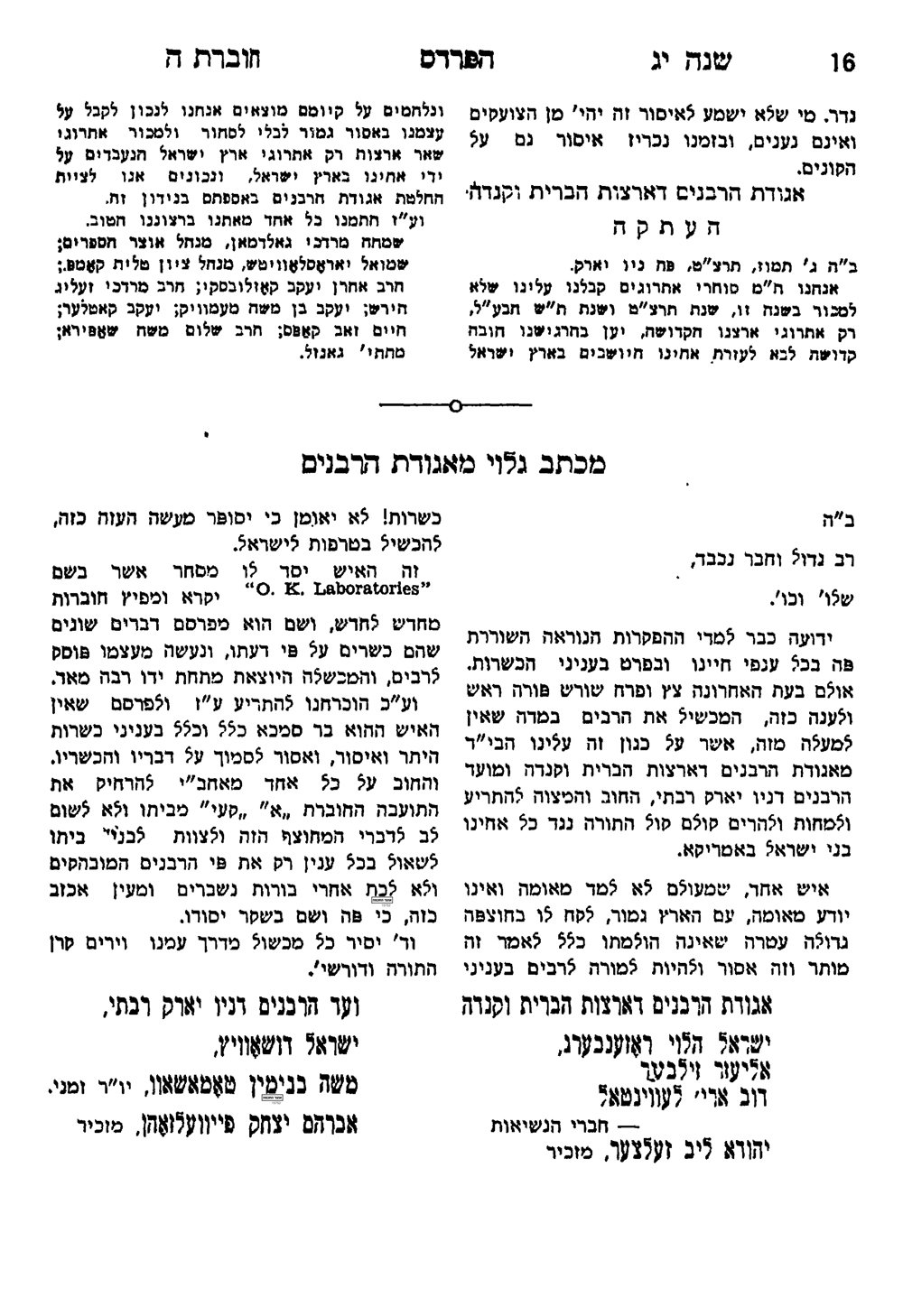
The photo appears to be that of a young R. Yisrael Salanter, perhaps 35- 45 years old. If so, the photo would have been taken between 1845 and 1855, at a time when the camera was mostly unknown and unavailable to the general public in Eastern Europe. One need not guess about the true identity of the person photographed. It is R. Yitzchak Lipkin (d. 1903), a son of R. Yisrael Salanter. Rav and Darshan, he was a distinguished תלמיד חכם who held several rabbinic posts in Lithuania before settling in Eretz Yisrael, where he died in his early 60’s.[13] Three photographs of him have been preserved by the Lipkin family. Aside from the early photo published by Lorincz, see below for two photos from a later period in his life:[14]

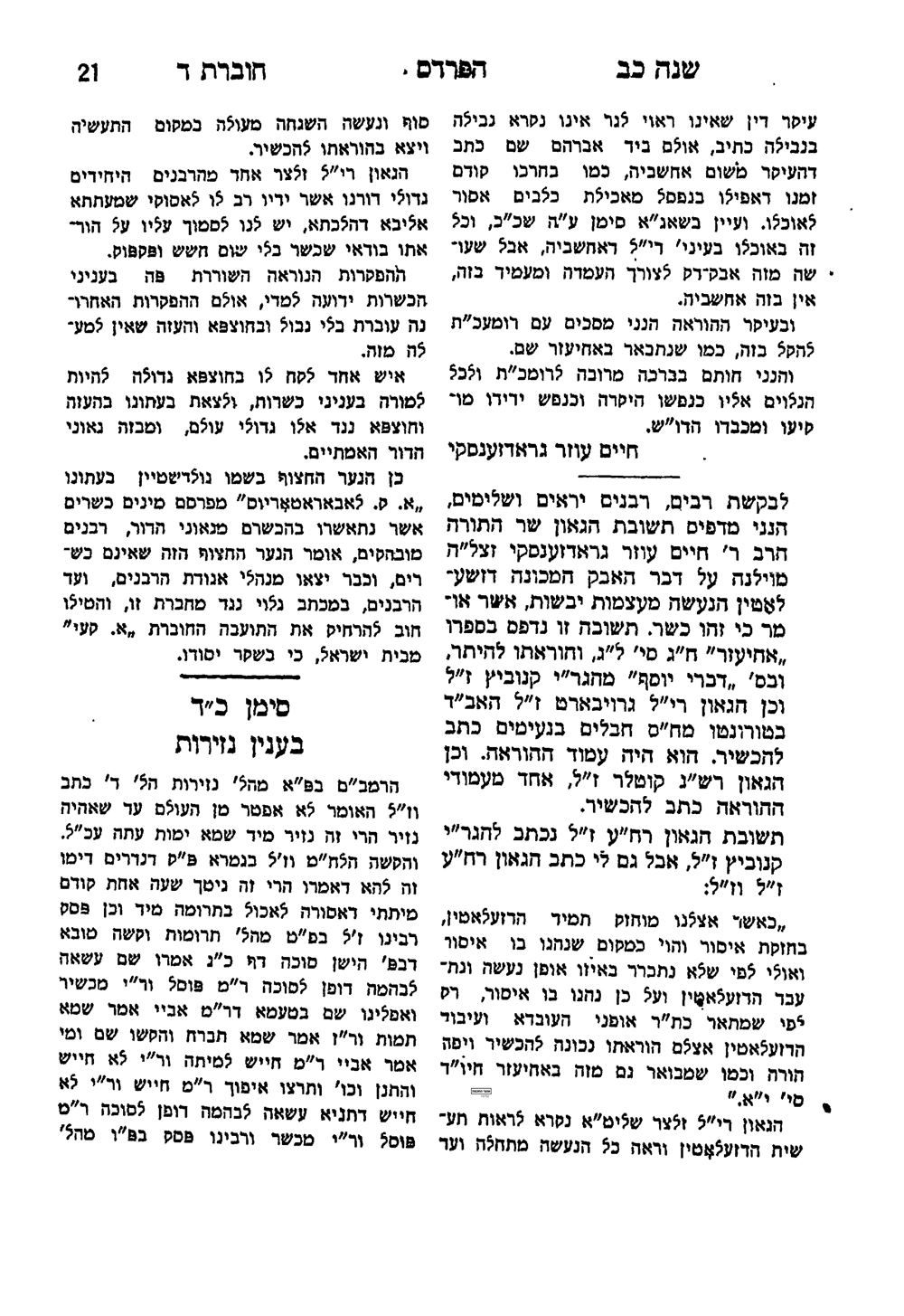
All that needs to concern us here is that R. Yitzchak Lipkin was R. Yisrael Salanter’s son, and not R. Yisrael Salanter himself. The photograph is a real picture of R. Yitzchak Lipkin, and an imaginary one of R. Yisrael Salanter. Not surprisingly, in later editions of במחיצתם של גדולי התורה , the misidentified photo was pulled. Thus, vol. 2, p. 14 now looks like this:[15]

2. On February 2, 2011, Jewish Currents magazine published the following tribute to R. Israel Salanter on his yahrzeit:

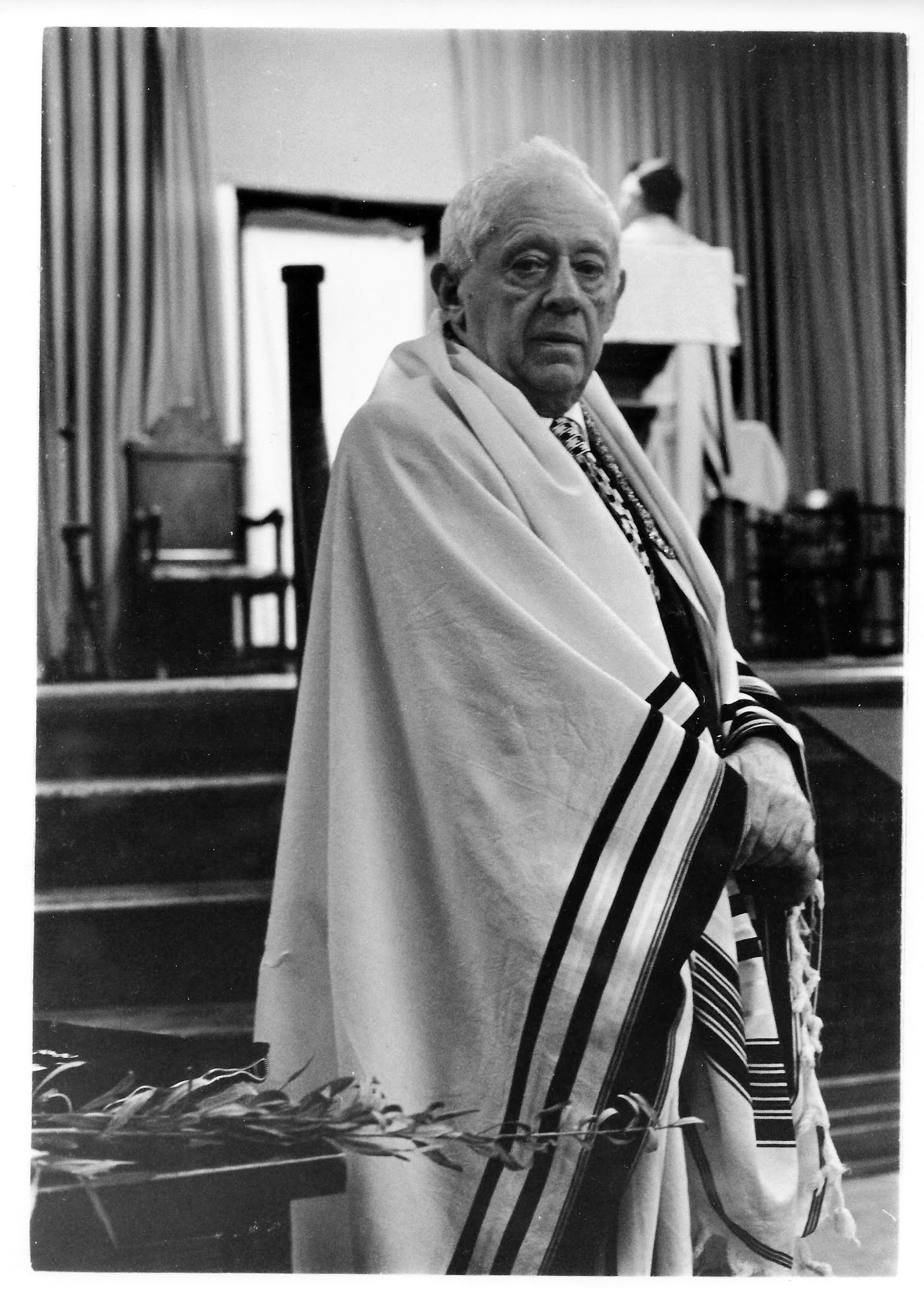
Not an ardent reader of Jewish Currents magazine (described by Wikipedia as a “a progressive, secular Jewish quarterly magazine and news site whose content reflects the politics of the Jewish left), I did not see this when it first appeared in print. It was brought to my attention later in 2011 by an East European Jewish historian about to publish an essay on R. Yisrael Salanter. She saw the tribute – and its photograph — on the Internet and was considering adding the photograph to her essay. She expressed surprise, since she had never seen a photograph of R. Yisrael Salanter. I immediately sent the following brief note to Jewish Currents magazine:

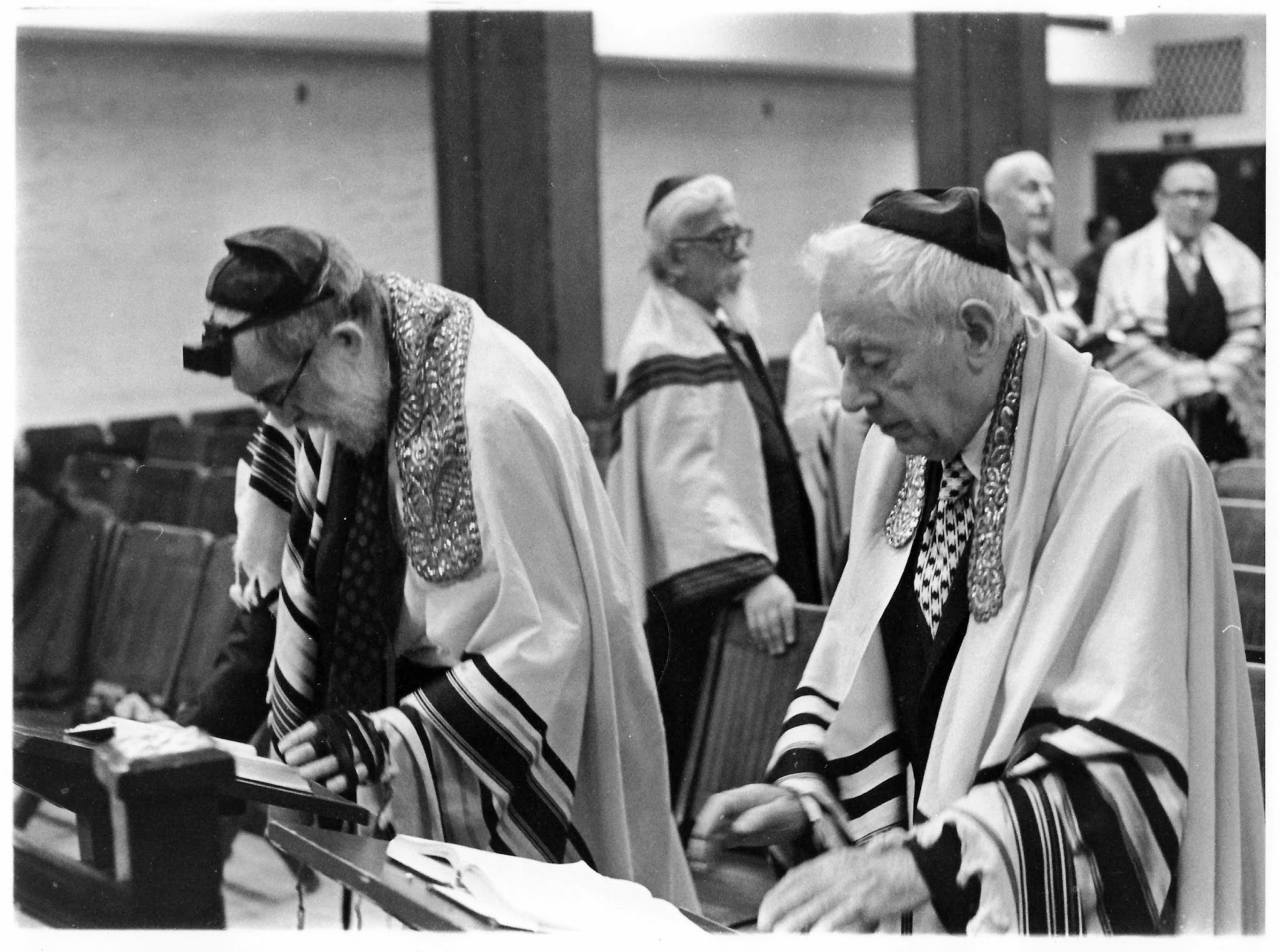
Thanks for remembering R. Israel Salanter on the day he died in 1883. Lest anyone be misled by the appended photograph, it clearly is a twentieth century photograph of someone other than R. Israel Salanter. In fact, it is a photograph of a Rumanian born rabbi (not a Litvak), Jacob Shachter, who was born after Salanter died. Shachter served with distinction as a rabbi in Manchester, England, then as rabbi in Belfast, Ireland. He died in Jerusalem in 1971.

Of course, I informed the East European scholar to cease and desist. Here I’ll add a bit more about Rabbi Shachter. He was a prolific author, whose publications included two very important works: a) A kind of Torah Shelemah on the Book of Proverbs, which gathers together all of Talmudic Commentary (Bavli and Yerushalmi) on the verses of Proverbs. It is entitled: ספר משלי בדברי חזל עם ביאור דברי יעקב (Jerusalem, 1963 and later editions), and b) The Student’s Guide Through the Talmud by Z. H. Chajes, translated, edited, and critically annotated by Jacob Shachter (London, 1952 and later editions). For our purposes, we need only to look at the title pages and frontispieces of two of his other publications, one in Hebrew and one on English: דברים לדוד (Jerusalem, 1966) and Ingathering: Collected Papers, Essays and Addresses (Jerusalem, 1966):

Clearly, the Shachter photo cannot pass for what R. Yisrael Salanter looked like. Even if we couldn’t identify the Shachter photo, a simple comparison of the beard in the photo with R. Yisrael Salanter’s beard as described by the testimony of eyewitnesses who knew him (“full beard, with curls surrounding its edges”) would have sufficed to disqualify the photo as a candidate for the actual likeness of R. Yisrael Salanter. In sum, the photograph is a real picture of R. Jacob Shachter, and an imaginary one of R. Yisrael Salanter.

3. On January 22, 2022, a YWN [Yeshiva World News] posting opened with a large imaginary photograph of R. Yisrael Salanter. It was, in fact, once again a photo of R. Jacob Shachter. To the credit of YWN, as soon as they were informed of the error the photograph was removed and replaced with a scan of the title page of R. Yitzchak Blaser’s classic anthology of R. Yisrael Salanter’s teaching, אור ישראל (Vilna, 1900).

4. In March of 2022, Rabbi Berel Wein’s Struggles, Challenges, and Tradition (Shaar Press) appeared in print. It is a magnificently produced volume, filled with vintage Rabbi Berel Wein wisdom. Alas, on p. 129 R. Jacob Shachter appears once again as R. Yisrael Salanter. One suspects that the culprit was an editorial assistant in charge of locating photos for the volume. Hopefully, the error will be corrected in the Second Impression.

We have listed 4 samples of misrepresentation of R. Yisrael Salanter. There are many more.[16] All one has to do is Google “Rabbi Israel Salanter.” One will see immediately many of the fake news photographs of R. Yisrael Salanter. And if you click on each one of the fakes, names like JewishHistory.org and Torah-Box.net will turn up. But it is neither history nor Torah, it is fake news. Sadly, once fake news is posted on the Internet, it multiplies even more rapidly than the Jews did in ancient Egypt. The Internet can be likened to the kind of sinner the Rabbis spoke about in b. Yoma 86b: כיון שעבר אדם עבירה ושנה בהנעשו לו כהיתר “Once a person sins, and repeats the sin, he considers it permissible.” Indeed, once fake news is posted on the Internet, it is not merely considered possible news, it almost immediately becomes authoritative news. The only remedy, if there is one, is to never post in haste, and to post only after much review, including review by others. Moreover, any and all errors need to be corrected as quickly as possible on the very site where the posting first appeared.

Notes:

[1] None of the authors (listed below in section II) who posted photographs of R. Yisrael Salanter took the trouble to source, or verify the authenticity of, the photographs they posted. Methodologically, it is essential that any materials, whether manuscripts or photographs, published some 100 or more years after the death of the person they are ascribed to, or identified with, be verified. This is especially the case when a plethora of historical biographies and scholarly studies already exist on the key person involved – as is the case regarding R. Yisrael Salanter – and the existence of the posted photographs has eluded all of them. For the basic bibliography on R. Yisrael Salanter (through 1993), see Immanuel Etkes, Rabbi Israel Salanter and the Mussar Movement (Philadelphia, 1993), pp. 373-379; and Hillel Goldberg, Israel Salanter: Text, Structure, Idea (New York, 1982), pp. 309-329. Much more of significance has been published since then (e.g., ספר הזכרון קדוש ישראל (Bnei Brak. 2003); Hayyim Yitzchak Lipkin, ed., תורת רבי ישראל מסלנט (Jerusalem, 2003); and קדוש ישראל (Bnei Brak, 2014).

[2] Many other witnesses could have been adduced. See, for example, R. Baruch Epstein, מקור ברוך (Vilna, 1928), vol. 4, pp. 1800-1804, for a vivid account of a chance encounter with R. Yisrael Salanter in Vilna, 1879. Our purpose here is not to overwhelm the reader with sources. Rather, it is to gather the most persuasive sources, and not more than necessary.

[3] Rabbi Jsrael Lipkin Salant: Sein Leben und Wirken (Berlin, 1899).

[4] Op. cit., pp. 34-35. The German original reads: “Rabbi Lipkin war von mittelhoher, ziemlich kräftiger aber hagerer Natur und von regelmässigem Körperbau. Schon seine äussere Erscheinung liess sogleich einen Mann von ungewöhnlicher Bedeutung erkennen. Die mächtige Stirn, der interessante Charakter- kopf, der scharfe Blick verrieten den grossen Denker. Sein Antlitz war fast beständig gerötet, wohl infolge des aufgehobenen Gleichgewichts zwischen Körper und Geist. Oft war er derart in Gedanken versunken, dass er alles um sich herum zu vergessen schien und im Alleingespräch mit sich selber beschäftig war… Merkwürdiger Weise hat dieser bescheidene und selbstlose Mann niemals seine Einwilligung dazu gegeben, dass die Züge seines Antlitzes durch den Pinsel eines Malers nachgeahmt und der Nachwelt erhalten würden.”

[5] See Yaakov Mark’s entry in לעקסיקאן פון דער נייער יידישער ליטעראטור (New York, 1963), vol. 5, column 514.

[6] A much abridged, and freely translated, Hebrew version of Mark’s גדולים פון אונזער צייט appeared under the title במחיצתם של גדולי הדור (Jerusalem, 1958). An accurate English translation of the original Yiddish volume would make a significant contribution to Jewish scholarship and culture.

[7] גדולים פון אונזער צייט, pp. 88-89. The Yiddish original reads:

אלע וועלכע פלעגען איהם באגעגענען אויפן גאס, סיי אידען סיי גוים, האבען איהם
העפליכסט באגריסט. זאגאר אין די לעבהאפטסטע גאסן פון בערלין פלעגט זעלטען
ווער איהם גלייכגילטיג פארבייגעהן און זיך ניט אפשטעלען באוואונדערן דעם
גרויסען דענקער, וואס פלעגט שטענדיג ארומגעהן פארזונקען אין געדאנקען
אימפאנירט האט אלעמען זיין שטאטליכע פיגור, זיין וואנדערבארשעהנעם הדרת
פנים, זיין אינטערעסאנטער כאראקטערקאפ מיטן גוואלדיגען ברייטען שטערן און
.וויסרויטליכען פנים, זיינע בלויע אויגען מיטן שארפען גוטמוטהיגען בליק
,טראצדעם וואס ער איז קיינמאל ניט געגאנגען אין אויפפאלענדע רבנישע קליידער
נאר אין פשוטע בעלהביתישע, מיט א געוועהנליכער היטעל אויפן קאפ און אויך
,ניט באזונדערס עלעגאנט, נאר שטענדיג געווען ריין און זויבער. א גרויסער שאדען
וואס פון איהם איז קיין שום בילד ניט נאכגעבליבען. מען האט בשוםאופן ביי איהם
.ניט געקענט פועלן זיך צו לאזען מאלען אדער פאטאגראפירען

[8] David Sidersky, רישראל סאלאנטר זל: תולדות חייו ופעולותיו“, היהודי (1936-7) 2:4, pp. 57-60; 2:5, pp. 81-84; 2:6, pp. 112-114; 2:8, pp. 153-155.

[9] היהודי (1937) 2:8, p. 155. The Hebrew original reads:

ישראל לא רצה בשום אופן להצטלם ולא נשאר שום זכרון מדמות דיוקנו
וזה תבניתו: קומה בינונית, יפה תואר עם פנים מאירים, זקנו מגודל וקוצותיו
.תלתלים, שיחתו היתה בנעימות והיה מקבל תמיד את כל אדם בסבר פנים יפות

[10] Most notably, Sidersky’s account is the only one (of the three accounts) that lists the names of R. Yisrael’s (and his wife Esther’s) six children (four sons and two daughters): Malkah Hindah, Shmuel, Aryeh Leib, Hodah Libah, Yitzchak, and Yom Tov Lipman.

[11] The formulation of the question is a playful echo of the title of the essay by Shimon Steinmetz entitled “What Might R. Yisrael Salanter Have Looked Like?,” On the Main Line, March 2, 2010. That essay was part II of his previous essay entitled “What Did R. Yisrael Salanter Look Like?,” On the Main Line, March 23, 2006. Both essays are must reading for this topic.

[12] במחיצתם של גדולי התורה (Jerusalem, 2006-8), 2 vols.

[13] For important writings by, and about, R. Yitzchak Lipkin, see R. Hayyim Yehoshua Kosovsky, ed., חוט המשולש (Jerusalem, 1904); R. Yitzchak Lipkin, לוחות אבנים (Jerusalem, 1978); and “רשימות רבי יצחק ליפקין בן רבינו” in ספר הזכרון קדוש ישראל (Bnei Brak, 2003), pp. 97-100.

[14] Cf. the Steinmetz essays cited above, n. 11.

[15] במחיצתם של גדולי התורה (Jerusalem, 2010), fifth edition, vol . 2, p. 14.

[16] On September 24, 2020, an essay was posted on the Internet entitled “Eating by Example on Yom Kippur, an Epidemic Story.” It revisited the story of R. Yisrael Salanter’s response to the cholera epidemic in Vilna in 1848. Once again, a photo of Rabbi Jacob Shachter was prominently displayed as the likeness of R. Yisrael Salanter.


Torah Genius, Infallibility and Augmented Intelligence

Torah Genius, Infallibility and Augmented Intelligence

by Avinoam Fraenkel

For details of Avinoam Fraenkel’s new book, Shomer Emunim: The Introduction to Kabbalah, and his previous two-volume Nefesh HaTzimtzum, see here.

To view his series of short Shomer Emunim Kabbalah explainers, that introduce the basic concepts of Arizal’s Kabbalah in the context of contemporary science and technology, see here.

This essay explores the nature of Torah genius, and how it can be dramatically enhanced by embracing technology. It investigates why, notwithstanding the remarkable awe-inspiring stature of true Torah geniuses, they must never be thought of as being beyond genuine human error. It also provides some insights on how the accelerating technological changes we are all witnessing around us, may shape the abilities of the Torah genius of the future.

With its central focus on Torah study, Jewish society has always prized scholastic excellence. Throughout the ages, the pursuit of excellence has been used as the primary tool to motivate Torah students. The Talmud therefore queries which of two types of Torah genius is optimal.[1] Would it be the “Sinai,” the person whose predominant skill is the instant recall and mastery over the breadth of scholarly sources, as fresh as if just heard at Mount Sinai? Or could it be the “Oker Harim/uprooter of mountains,” one who primarily has penetratingly deep analytical skills enabling the logical clarification of issues from first principles, even if unaware of all the sources? The Talmud states that the optimal quality is that of the wide erudition of the “Sinai.”

Some argue that the leaning towards being a “Sinai” was only applicable in Talmudic times due to the scarcity of written resources, and that with the proliferation of books in the age of printing, the primary skill that should now be encouraged is the “Oker Harim.” However, it appears that in the main, rabbinic consensus sides with the Talmud, in that while the intellect of the “Oker Harim” is certainly valued, the sheer scope of knowledge of the “Sinai” is deemed advantageous.[2] Jewish literature frequently records instances of great rabbis who were seen to have developed a balanced hybrid of both these areas of genius, referring to them with the ultimate accolade of “Sinai and Oker Harim.”

Nevertheless, it is also clear that gifted genius can sometimes not only be less than optimal in achieving correct Torah understandings but can even be an impediment. R. Avraham Yeshaya Karelitz, the Chazon Ish, beautifully expressed this paradox. Sometimes with great people who are geniuses and are lightning-fast at grasping concepts, it can be that their very genius puts them at risk of simply missing the point, especially with complex, deep topics expressed in difficult language. The Chazon Ish wrote a response challenging the Halachic legal ruling made by R. Yechiel Meir Tukachinsky about the nature of the International Date Line. R. Tukachinsky was known to be a genius not only in Halachic law but also in mathematics, which he used in arriving at this ruling. The Chazon Ish’s Halachic critique of R. Tukachinsky was published in Kuntres Shmoneh Esreh Shaot, where he includes the following statement:

It is human nature to read the contents of a book superficially and quickly, like when reading a letter. One of the attributes of acquiring wisdom is to become accustomed to being precise with the language of the Sages as their words were written with analytical precision. Reading quickly and reading analytically are generally opposites with divergent outcomes. Because of the human tendency to be hasty, which is especially so with those who grasp concepts quickly [with geniuses], it happens that Sages read books and attribute things to them that were not thought of [by their authors] and are indefensible, or that they don’t relate to their subtlety. This is particularly so with matters that are truly deep [expressed] with difficult text that emphasizes their depth.[3]

This same sentiment is also succinctly expressed more than once by the Talmud describing a sage who:

… because of his sharp intellect, he did not [properly] investigate it.[4]

This can be understood to be a possible flaw in the ability of an “Oker Harim,” who is potentially at risk of skimming over material and missing highly relevant information needed to reach a sound conclusion.

It can also be argued that there is a potential risk that can sometimes compromise the ability of a “Sinai” to reach correct conclusions, distorting this kind of sage’s understanding in his Torah study. This potential impediment comes from a combination of two primary factors.

The first factor is the essential nature of what Torah study has become over the millennia of exile. While the Jewish People are living in exile before the final redemption there is a lack of clarity of Torah, which is also in exile. This lack of clarity generates differences in opinion, a position that will remain until the onset of a final process of clarification with the final redemption. Consequently, it has unfortunately become second nature for us to accept differences and even great differences in all areas of potential Torah discussion. These differences deeply impact all the finer points of such discussion, ranging from the Halachic to the philosophical, and include approaches to serving God. This has cultivated a historical Torah study culture of primarily focusing on highlighting differences between views, instead of investing the lion’s share of our study effort on how to reconcile and unify these differences. Acceptance of difference is expressed by our Talmudic Sages with the principle of “both these and these are words of the Living God.”[5] This principle is used when we reach a stalemate in our understanding of a topic and cannot see any possibility of consensus, by allowing us to accept the current status quo and the acceptance of difference. It biases us to primarily focus on highlighting difference and to potentially miss opportunities for seeing unity.[6]

The second factor relates to those gifted with exceptional memories, who seldom forget anything, a key skill of a “Sinai.” The Talmud highlights that there are times when “Shikcha/forgetfulness” can be considered a blessing. In particular, in relation to the passing of beloved ones where the pain of their passing can be so great that if we were not able to forget them, our daily lives would be adversely impacted and, in some cases, we would cease to be properly functional.[7]

The dysfunctional impact of persistent memory was clearly illustrated with the case of Solomon Shereshevsky, a mnemonist, who was studied over a 30 year period starting from the 1920s, by the Russian neuropsychologist, Prof. Alexander Luria.[8] Shereshevsky’s remarkable memory was such that he retained everything he read, saw or heard, including lengthy sequences of random words and numbers, with his memory persisting with instant recall over many years. In later years, this caused Shereshevsky to have great social difficulties. He had total recall of the finest detail of every face he saw and the context in which he saw it. However, over time, a person’s face naturally changes. Most people, with regular memory ability, remember the general appearance of a person’s face without paying much attention to the finer details, and as a result, can recognize them. This is because the general appearance remains static and recognizable over time even if many finer points of detail in a person’s face change. Shereshevsky’s memory however, was so acute and precise that his memory stored the finest details of every face he saw, every time he saw it. His memory bank of faces was so vast that even the subtlest differences over time between faces of the same person were differentiated in his memory. Even differences in mood of a single person would be reflected in a different facial expression, which was enough to distinguish the face seen in one mood state from the face seen in another mood state. The result was Shereshevsky’s inability to recognize that it was the same person. While skilled in the most incredible way with the ability to identify difference, this prevented him from relating to the larger unified picture, to the extent that he became severely disabled in his ability to recognize people.

Although Shereshevsky’s case was extreme, his case helps us to understand the potential risk of error that a “Sinai” can make. Even someone with a lesser memory than Shereshevsky, but still with a significant power of instant recall of textual sources, is at risk of only seeing the difference in detail between them and of missing the bigger picture that may connect them. Such a person is in danger of sometimes not seeing the forest for the trees. This risk is significantly amplified when taking the first factor into account, where our current Torah study culture generally disposes us to focus on differences in the first place.

In sum, every person, no matter how great and how endowed with genius they may be, is therefore potentially at risk of human error.

To put the concept of potential human error on the part of our great leaders into perspective, there is no sage or leader greater than Moshe Our Teacher. Moshe was the primary lawgiver and the direct conduit through which the Jewish People received the details of most of its laws from God. Any possibility of even the slightest error on Moshe’s part would therefore risk provoking people to question the legitimacy of all the information he directly transmitted from God. In stark contrast, every other leader in Jewish History would only base their decisions on details derived from the laws received from Moshe and not directly on the word of God. The gravity of a potential error on their part would therefore be of far less consequence in comparison to an error on Moshe’s part. It would therefore be of paramount importance for Moshe to ensure that there would be no doubt cast over the accuracy of his transmission from God.

Nevertheless, Moshe considered that even with the gravity of this point, it was outweighed by the sheer magnitude of imparting a moral message to the future generations. A message that all Torah sages, no matter how distinguished, brilliant, or Divinely inspired they may be, are at risk of human error. Our Sages candidly explain an error that Moshe made in his statement of the law in an instance where his brother Aharon corrected him. Their comment in the Midrash states the following:

[The verse states] “And Moshe heard and it was good in his eyes,” [upon which the Midrash comments:] he [Moshe] made a public announcement saying, “I erred and my brother Aharon taught me.”[9]

R. Naftali Tzvi Berlin, the Netziv, highlights the significance of Moshe’s message, in his commentary on the Torah:

Moshe made a public announcement that he erred as per [Vayikra] Rabba [above]. The reason for this announcement was to teach the sages of the generation and of the future generations that a great person should neither be embarrassed nor flinch over an error in teaching, as Moshe Our Teacher also erred![10]

Therefore, no matter how great Torah leaders may be, to the extent that our Sages teach us to even accord them with an almost Divine reverence[11] and to carefully study their small talk,[12] no Torah sage is above the potential for human error and there is absolutely no concept of rabbinic infallibility in Judaism.[13]

Moreover, the possibility of potential leadership infallibility is categorically dismissed by the Torah when it explicitly provides instruction for how a Jewish High Court or leader should potentially atone, should it cause or act on an inadvertent error.[14] In Judaism the open acceptance of the possibility of unintentional human error of a leader and the forthright admission of such an error should it happen, does not compromise the preeminence of such a leader. In fact, it is the very mark of true human greatness.

On a deeper level it can be understood that it is the very nature of learning itself that requires errors to be made as part of the process of successful study. The inherent nature of analytical study is the breakdown of a concept into its component parts which are then reconstructed into a refined idea. This process is intrinsically prone to potential error as it is not straightforward to produce a refined idea from a place of conceptual breakdown. It is as the Talmud unequivocally states:

No person establishes [a proper understanding of] words of Torah unless he has first stumbled over [his interpretation of] them.[15]

R. Moshe Chaim Luzzatto, the Ramchal, amplifies this sentiment:

There is no sage that will not err and will not need to learn from his colleagues, and in many instances even from his students.[16]

R. Yosef Ergas highlights that this is even true for the most accomplished Torah scholar who regularly studies the deepest parts of the Torah, the Acts of Merkava and Creation:

It is impossible for even one who regularly studies the Acts of Merkava and Creation, not to be caused to stumble over them with some incorrect analogy and the like, to the extent that he needs the rebuke of admonition to cleanse him.[17]

Notwithstanding the sheer awe required to be accorded to one’s Torah teacher and ultimately to the Torah Sages, it does not mean there is no latitude for independent thought on the part of the student. On the contrary, the essential nature of true Torah study is such that all Torah students are actively encouraged to intellectually engage with the teachings handed down to them, independently debating and analyzing them within the framework of Torah. It was no less than R. Chaim Volozhin, a Torah sage of immense stature who deeply venerated his teachers,[18] who explains that it is the process of studious debate with one’s teacher which refines and expands a person’s understanding of Torah. He refers to it as “the war of Torah”[19] and that in the context of this war, even a father and son and a teacher and student are respectfully pitched as enemies in debate against each other[20] and that “it is forbidden for a student to accept his teacher’s words when he has serious questions about them and that sometimes the truth is with the student.”[21] It is significant that R. Chaim’s position of a student requiring independent thought was encouraged by no less than his own primary teacher, the Vilna Gaon.[22]

While it is rare for a Torah genius to err in his studies, should such an error genuinely be found, it in no way compromises the stature of that Torah sage, and that sage’s general teachings are all very much worthy of deep and close study.[23] Nevertheless, as has already been highlighted, it is the very nature of genius itself that can cause a true Torah sage to be disposed to occasional error. See examples of such occasional error in the note.[24]

As technology progresses in our current age of the “Digital Transformation,” Torah accessibility has and is being transformed in ways previously unimaginable even just a few decades ago. The widespread immediacy of textual and analytic access to huge libraries of Torah sources, has already fundamentally revolutionized the ways in which we can learn Torah. Therefore, it is now highly relevant to ask if the skills required to optimize Torah study excellence have changed in any way. More specifically, what skills should we reasonably expect the “Sinai” or a “Oker Harim” to have to acquire in our Information Age? Furthermore, is there scope to seriously reconsider which of the “Sinai” or the “Oker Harim” may now be thought of as being optimal?

Before presenting an approach to this, it is relevant to appreciate the nature of this revolutionary advancement and exactly why a change in skillset may be needed. This understanding delves deeply into the very essence of how humanity is being transformed by the Digital Transformation. Physical human beings are far from what most people conceive. We are not independent beings, separated from other life forms and materials in our world environment. Rather, we are a symbiotic composite of all those life forms and our lives are entirely dependent on them.

This is captured by an ancient understanding that there are 4 very general levels of created physical existence. These 4 levels are integrated in that they hierarchically build upon each other. First there is the inanimate, the basic minerals and materials from which everything is constructed. Then there is plant life. This is followed by animal life. The fourth and highest level is human life, a level characterized by speech, our ability to communicate in a sophisticated way. The key point here is that each higher level is a composite of all the lower levels. A human being is therefore a symbiosis of the mineral, plant and animal levels, with additional intellectual and communication dimensions that makes a person uniquely human. Surprisingly to many, the majority of the cells within a human body do not have human DNA and cannot be considered human. Nevertheless, without them a human cannot live. One example is the microbiota cells in the gut that form an essential part of digestive process. Another is the need for bacteria to stimulate the postnatal development of the brain. A human is nothing less than a symbiosis of all these levels, a remarkable ecosystem where these levels are integrated through a mind bogglingly complex set of interacting processes that are totally dependent on the wider environment.[25]

With the Digital Transformation, the ecosystem of mankind’s wider environment is fundamentally changing. It is now possible for a person to supplement and augment his intellectual abilities with computer resources. This is such that each component, the human brain (an analog processor) and the computer (a digital processor), combine their unique abilities to optimize problem solving and intellectual processes.

A striking example of this was demonstrated in the world of chess. Over an extended period, computers had been entered into chess tournaments pitted against the chess grandmasters. For many years the grandmasters always won these competitions. However, with the accelerating improvements in computing power, the inevitable happened in 1997. IBM’s Deep Blue supercomputer beat the reigning world champion, Gary Kasparov. In the face of the subsequent prospect of computers always defeating humans, a new type of chess tournament was invented. “Freestyle” tournaments were introduced where teams of human chess players and/or computers would play against each other. The shock came in 2005, when two amateur chess players with strong chess programming skills using ordinary computers, won the tournament, beating several teams of grandmasters who were supported by well-known advanced chess computers. The secret of this success is that certain human skills are unmatched by even the most powerful digital computers such that when humans and computers team up with optimum balance, the refined combination of their complementary skills gives such a team an unprecedented advantage. This resulted in an optimized inexpert human and ordinary computing hybrid that surpassed both grandmaster and supercomputer excellence.

With this in mind, we can now consider how the skills of a “Sinai” and “Oker Harim” may need to be enhanced. Traditionally, the primary skill of a “Sinai” would be to accurately amass Torah information. However, with the technological resources available today, everyone has immediate access to extensive databases and search capabilities of Jewish resources, such as the Bar-Ilan Responsa project, D.B.S., Sefaria, Hebrewbooks, Otzar HaChochma and many other internet resources. The sheer amount of information available at everyone’s fingertips far eclipses the amassed knowledge and the accurate immediacy of access to it of almost every historic “Sinai.” The skillset required to command this incredible body of knowledge is no longer the ability to amass it in the first place. Rather it is the ability to learn how to quickly identify what may be relevant out of this huge amount of information when pursuing a specific inquiry.

This is significantly assisted by mastering the use of sophisticated search tools. To do this efficiently, in addition to some computing skills needed to understand data and how to maximize use of search technology, new Torah study skills are required. To optimize searching, a deep understanding is needed of the expected similarities and differences in word usage, expression deployment and conceptual coded nuance, together with word and expression spelling differences, across the vast history of Jewish scholarship. The more effective this combined understanding, the more focused the search query and the smaller the search results. The search results can still often be large and will then require expert perusal to quickly identify which sources found are most likely to be relevant to probe further, to shed light on the inquiry being investigated. So, it seems that the key skill of a modern day “Sinai” is already fundamentally transformed and is now more about harvesting relevant information rather than having to acquire it all in the first place.

On the other hand, the primary skill of the “Oker Harim” has traditionally been one of deep analysis driven by the ability to ask penetrating questions. Perhaps the effectiveness of this skill is captured by the well-known adage “a Torah scholar’s question is already half the answer.”[26] Advanced computer searches now make it possible to ask a whole different genre of insightful questions, that were not previously possible. It is now relatively easy to investigate the development of concepts aided by the original context, usage and development of words, expressions and concepts, and to trace their historical usage over time. The greater the insight in framing the search question, the more refined the search result, enhancing the ability to harvest focused sources from which meaningful answers can be constructed. Therefore, while the adoption of technology augments the “Oker Harim’s” toolkit and dramatically extends his skillset, it has not yet fundamentally replaced it.

However, it could be strongly argued that with the currently available technology the excellence of the transformed “Sinai” is no longer the preserve of the rare genius and now has a lower entry bar accessible to a wider group of people. On the other hand, the qualities of an “Oker Harim” are thus far not yet transformed, but with the augmented ability of using technology to extend the depth of analysis, there is now an enhanced ability for the “Oker Harim” to widen the excellence gap. Moreover, it is now more than ever within the reach of an “Oker Harim” to also garner most of the skill of a current day “Sinai.” There is therefore scope to now consider that the optimum skill for scholastic excellence in Torah may indeed be that of the “Oker Harim.”[27]

Nevertheless, we are only at the beginning of the Digital Transformation. Attempting to predict what a future technology augmented “Sinai” or “Oker Harim” may be capable of, is near impossible. Technology industry experts already openly admit that with the incredible accelerating pace of technological change they can no longer predict what the technological landscape will look like in even as early as 5 years’ time. Technologies in areas such as cloud computing, big data, predictive analysis, artificial intelligence, swarm intelligence, augmented intelligence, brain research and biotechnology are rapidly developing and integrating together in truly unpredictable ways.

Although there is no clear visibility of how all this will be manifest, perhaps the most significant expected transformative change is the physical integration of humans with technology. Currently, this is at an embryonic stage, however it does already exist. Brain integrated technology already enables paraplegics to walk. Monkeys can already interact with computers through wireless brain implanted computer chips.[28] It is therefore only a matter of time before the human mind will become directly connected to an implanted computer and there will ultimately be a true symbiosis of humans with technology, literally taking mankind to a new level of existence. In this context it is impossible to predict what future transformations of the “Sinai” and “Oker Harim” will look like. One can however safely conclude that the future landscape for Torah study excellence will be unimaginably transformed and future Torah students will be motivated by the emergence of a new breed of technologically augmented Torah genius.[29]

[1] Berachot 64a; Horiot 14a.

[2] A good summary of the various views and sources is provided by R. Yisrael Eisenstein in his Amudei Eish, Siman 15, Sect. 4 (brought on p. 76a of the first edition, published in Lemberg, 1880).

[3] Kuntres Shmoneh Esreh Shaot, Chorev, Jerusalem, 1943, at the beginning of Ot 14.

[4] Eruvin 90a; Bava Batra 116b.

[5] Eruvin 13b; Gittin 6b.

[6] For in-depth discussion about the concept of “Torah in Exile” and how, in Messianic Times, there will be a “New Torah” (as per the expression in, e.g., Vayikra Rabba Shemini 13:3), that is new to us in the very specific sense that all perceived differences will be reconciled, clarified and unified, see Shomer Emunim: The Introduction to Kabbalah, pp. 923-924; Nefesh HaTzimtzum, Vol. 2, pp. 119-124; 126-127.

Specific examples reconciling famous differences of rabbinic opinion are presented in Shomer Emunim: The Introduction to Kabbalah, pp. 324-328. Another specific example is given in the early Chassidic work, Meor Einayim, Shemot, which prefaces it with the general statement: “We have a Torah wide principle that both these and these are words of the Living God. It is just that we won’t understand how this is so until the arrival of our Messiah, speedily in our days.” R. Shlomo Elyashiv similarly generally comments in his Leshem Shevo VeAchlama, Sefer HaDe’ah, Vol. 1, Maamar Kelali Al Yesod HaSefer, Ot 5, p. 4a, col. 1: “The concept of how the practice of Torah and Mitzvot is subject to conflicting opinions in the words of our Sages will be clarified in the times of the Messiah, how it is that both these and these are truly the words of the Living God.” Notwithstanding isolated examples of reconciliation, before the arrival of the Messiah, we are obliged to generally accept and focus on difference.

[7] Pesachim 54b, lists 3 things that were factored into the Creation to enable it to function properly, with one of them being about “the dead, that they should be forgotten from the heart/mind.” Also see Berachot 58b and Moed Katan 8b, which state different time periods after which the dead are forgotten.

[8] Prof. Luria’s The Mind of a Mnemonist (first published in 1968), recorded his research on Solomon Shereshevsky.

[9] Vayikra Rabba Shmini 13:1 quoting Vayikra 10:20. Also see Yalkut Shimoni, Shmini, Remez 533; Targum Yonatan on Vayikra 10:20.

[10] Harchev Davar commentary on Vayikra 10:20. Also see the Netziv’s Meishiv Davar 2:9.

[11] Mishna Avot 4:12, which states “the awe of your teacher should be like the awe of Heaven.”

[12] Sukkah 21b; Avodah Zarah 19b, as there is much to learn even from their incidental small talk.

[13] The Talmudic Sages are frequently recorded to have issued statements of error and retraction. E.g., “The statements I told you were my error,” in Shabbat 63b; Eruvin 16b/104a; Chulin 56a; Niddah 68a. E.g.2, “What I said was incorrect,” in Rosh Hashana 13a; Yevamot 20b; Ketuvot 33a; Gittin 23a; Bava Metzia 6b; Bava Batra 131a; Sanhedrin 61a; Makot 8a/8b; Zevachim 94a; Menachot 12b.

[14] Vayikra 4:13-26.

[15] Gittin 43a. Also see Shabbat 119b and Chagiga 14a. In Kabbalistic terminology, the concept of breakdown is known as “Shevira” and reconstruction is known as “Tikun.” The process of the creation or advancement of anything and everything in this world, whether it is the development of Torah ideas or the production of an item, goes through a process of Shevira/breakdown followed by Tikun/reconstruction/rectification. This is captured in Mishna Avot 5:23 that “according to the pain is the reward,” (or as commonly stated in contemporary language “more pain, more gain”). It is also captured by the expression commonly used in Chassidic literature of “Yerida LeTzorech Aliyah,” i.e., that a relative descent from a current level is a necessary step in order to ascend to anything higher than the current level. The concept of Shevira and Tikun and the sheer extent of its impact on our world is explained in detail in Shomer Emunim: The Introduction to Kabbalah, Kabbalah Overview, Chaps. 3-4.

[16] Mesilat Yesharim, Chap. 22.

[17] Shomer Emunim: The Introduction to Kabbalah, p. 368-369, where R. Ergas makes this comment based on a quotation he provides from Sefer HaBahir 150 immediately preceding it.

[18] R. Chaim Volozhin was the primary student of the R. Eliyahu, the Vilna Gaon. The awe and respect he had for his teacher are captured in the largest repository of student published anecdotes of the Vilna Gaon, that R. Chaim presented in his introduction to the Vilna Gaon’s commentary on Sifra DeTzniyuta (which is fully translated and commented on in Nefesh HaTzimtzum, Vol. 2, pp. 469-517). R. Chaim’s son, R. Yitzchak, in his introduction to his father’s work, Nefesh HaChaim, describes that the extent of his father’s veneration of the Vilna Gaon was even manifest physically in that, “When he would talk in learning and mention the name of his teacher [the Vilna Gaon], his whole body would tremble and his appearance changed.”

[19] Sanhedrin 111b.

[20] Kiddushin 30b.

[21] R. Chaim Volozhin’s Ruach Chaim commentary on Mishna Avot 1:4.

[22] See R. Chaim’s ninth responsum recorded in Chut HaMeshulash. Towards the end of this responsum he states, “… and my teacher, the holy one of Israel, our great master, the prodigy, the pious one, our Rabbi, Eliyahu of Vilna has already warned me not to be influenced by others in rendering Halachic decisions.”

[23] In addition, where an error was made, there is much to be positively learned from closely studying the circumstances and thought processes giving rise to that error.

[24] Shomer Emunim: The Introduction to Kabbalah includes several footnotes that provide detailed examples in the wider context of the main themes presented, of occasional factual errors made by various genuinely great Torah scholars, renowned for their outstanding and remarkable genius. These include:

  • An error apparently made by R. Shlomo Elyashiv, the Leshem, in his understanding of the position of R. Naftali Hertz Videnbaum HaLevi on the concept of Tzimtzum, on p. 780, fn. 358.
  • An error by the last Lubavitcher Rebbe, R. Menachem Mendel Schneerson, in stating that the Baal Shem Tov initiated a new understanding of Divine Providence where, in fact, the Baal Shem Tov’s position is unsurprisingly identical to that of the Arizal, on p. 859, fn. 452.
  • An error apparently made by R. Tzadok HaCohen, R. Baruch of Kosov, R. Pinchas Eliyahu Horowitz of Vilna, R. Yaakov Emden, in their understanding that Yosher Levav physicalized God, on p. 865, fn. 464.
  • A second error by R. Menachem Mendel Schneerson in how he related to those expressing a position of what is known as “Tzimtzum Kipshuto” and his understanding of the Vilna Gaon’s position on Tzimtzum, on p. 903, fn. 537 (also see Nefesh HaTzimtzum, Vol. 2, pp. 106-117).

[25] The Rambam mentions these 4 levels in Moreh HaNevuchim 1:72. It is beyond any question that these 4 general levels were expressed in terms of the scientific understanding of the Rambam’s day, deeply rooted in Greek philosophy. E.g., Aristotle’s De Anima/On the Soul discusses these 4 categories referring to the inanimate, the plant soul, the animal soul, and then to humans as having an intellectual soul. They are also mentioned in the introduction to the Ramban’s Commentary on the Torah. In R. Bachye’s Commentary on the Torah, these 4 levels are clearly framed in the context of the Creation Narrative at the beginning of the Torah, in the introduction to the portion of Vayakhel, Shemot 35:1, which states:

It is known that there are 4 categories of the lowly creations with one above the other. They are the inanimate, plant life, animal life, and the one who speaks [humans]. The inanimate are the mountains and the hills. This category does not have a soul at all, not a plant [soul], not a soul that animates [an animal soul] and not an intellectual soul [a human soul]. Above it there is plant life. It has an additional property over and above the inanimate in that it has a plant soul within it. Above the plant life are the other life forms, [animal life,] that have [both] an animate soul and a plant soul. Above animal life, which does not speak, there is man, who incorporates all of them with the plant soul and animate soul within him. He has the additional property over all of them with the intellectual soul. You will similarly find this sequence of coming into existence in the Creation Narrative. The inanimate, as written [on the third day of creation], “and let the dry land appear” [Bereishit 1:9]. Plant life, as written after this [on the third day of creation], “let the earth sprout [vegetation]” [Bereishit 1:11]. Animal life, as written on the fifth [day of Creation], “let the waters swarm with swarming living creatures” [Bereishit 1:20]. The one who speaks [human life], as written on the sixth [day of Creation], “let us make man in our image” [Bereishit 1:26]. With the lowly creations you will find that the later they are in the sequence [of creation] the better they are. This is the opposite of the supernal creations where the earlier they are in the sequence [of creation] the better they are. [I.e.,] the light on the first day [of creation]. On the second day, the firmament which is on a lower level than the light. On the fourth day [of creation], the luminaries which are on a lower level than the firmament.

This is reflected by R. Yitzchak ben Moshe Aramah in his Akeidat Yitzchak, Parshat Bereishit, Gate 3 (towards the end of the Gate):

This is the compelling reason why man was not created first. For if the one with the speaking soul [man] would have been created before the inanimate, the plant life and the rest of the animals, it would have opposed the natural order …. Therefore, the natural sequence is necessitated, and this is the reason that man was necessitated to be the last of all of them.

The concept of the advancement of the creation through the 4 levels of life is also reflected in the Arizal’s teachings in Etz Chaim 50:10, where each higher level is described as being given additional structure and organization, over and above each lower level. This piece from Etz Chaim is elaborated on in detail, within the context of a contemporary scientific framework of understanding called “Emergence,” in Shomer Emunim: The Introduction to Kabbalah, pp. 794-797.

[26] This maxim seems to have been first stated in the 14th century by R. Shem Tov ben R. Avraham ibn Gaon, in his Migdal Oz commentary on the Rambam’s Mishneh Torah, Hilchot Teshuva, Chap. 5.

[27] See R. Nachman of Breslov’s Likutei Moharan, Part 1, Sect. 15, which links the domain of the “Sinai” to a level of revealed knowledge and that of the “Oker Harim” to a higher level of currently concealed knowledge. He comments that while the Talmud identifies the “Sinai” as being optimal, that is in pre-messianic times. However, he highlights that in the future messianic times, the higher level of “Oker Harim” will be merited, together with an associated incomparably higher dimension of Torah knowledge.

[28] See an excellent example here, and independent in-depth analysis and validation of this example here.

[29] The concept of “Emergence” and how it leads to greater intellectual insight and ultimately to an explanation of the Messiah’s identity, is explained at length and in context in Shomer Emunim: The Introduction to Kabbalah.


Armin Wilkowitch about Shabbes Shekolim in his youth in Russia

Armin Wilkowitch about Shabbes Shekolim in his youth in Russia

by Gabriel Wasserman and Phillip Minden

Shabbes Shekolim (Shabbat Sheqalim) is the first of the four special Sabbaths in or near the month of Adar, when special passages are read from the Torah. In addition to the special readings from the Torah, Ashkenazic Jewry has distinguished these four Sabbaths with the inclusion of special piyyutim in the Sabbath service; these piyyutim – most, and perhaps all – are by Eleazar b. Qallir (or Qillir) of sixth- to seventh-century Eretz Yisrael, and they have been part of the liturgy of Ashkenazic Jewry ever since there has been such a thing as Ashkenazic Jewry, since before the year 1000 CE. Although many Ashkenazic communities today omit the piyyutim for Shekolim, happily there are still many Ashkenazic communities that maintain them through today, unlike many piyyutim for other occasions in the year, which have suffered almost complete extinction in living usage.

(As an aside: In the middle ages, many non-Ashkenazic communities, as well, recited piyyutim, different from the Ashkenazic ones, on the four special Sabbaths of Adar. These have fallen into complete disuse today, other than the piyyut “Mi Khamokha” by R. Judah Hallevi for Shabbat Zakhor. These piyyutim will not be the subject of this post.)

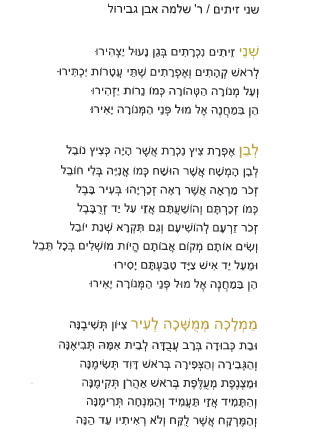
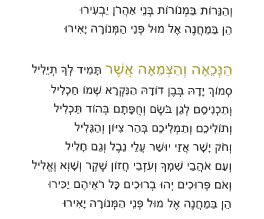
In the past, Shabbes Shekolim and the recitation, or singing, of these piyyutim had an aura of great emotional significance for many Ashkenazic communities. As an example of this, the Seforim Blog will present here a piece by Cantor Armin Wilkowitsch, originally published in the Österreichisch-Ungarische Cantoren-Zeitung (supplement to Die Wahrheit), vol. 24 no. 10 (4 March 1904), p. 10. Wilkowitsch writes here about the composition of a setting for the piyyut “Eshkol Ivvuy” (אשכל אווי), the opening of the piyyutim for Musaf of this Sabbath. Wasserman’s research, in a project to collect musical settings for all Ashkenazic piyyutim for special Sabbaths, has uncovered thirty different musical settings for “Eshkol Ivvuy,” and further research may discover far more; this piyyut was clearly very important to cantors, and communities, in generations preceding ours.

According to the biography on Geni.com, Cantor Wilkowitsch, was born in Kalvarija, in the Russian Empire (see map here), today in Lithuania. He lived most of his adult life in the Austro-Hungarian empire, and served as chief cantor of a community in Eger (Erlau, Cheb), in Hungary, for 32 years. In 1939, under Nazi occupation, Wilkowitsch got a visa to escape to America, to join his wife and children who were already there. He boarded the ship, but, in light of the terrible events going on in Europe at the time, he lost the will to live and committed suicide by jumping off the ship. Very sad, and creepy.

In his youth, Wilkowitsch was a meshorer in his native Russia. Meshorerim were a standard phenomenon in pre-modern Ashkenazic synagogues: a group of men and small boys who would accompany the cantor as a kind of choir, though without the Western rules of four-part counterpoint that define modern choirs.

Perhaps the most picturesque line in the story is: “the Special Sabbaths are coming, which are soon bound to chase the polar bear out of the land” (es kommen die ausgezechneten Sabbathe, die den Eisbären bald aus dem Land verjagen).

Wilkowitsch refers to a species of fish, eaten at shalleshuddes, by the Yiddish word shtinkes. This word may be familiar to some readers of this blog from halakhic literature (see, e.g., the commentary of Rashash on Sukka 18a, and here).

The text of Wilkowitch’s piece will be presented here, first in the original German (the educated language throughout the Austro-Hungarian Empire) and then in English translation. Hopefully it will give the readers a sense of what Shabbes Shekolim was like in those bygone days – as Wilkowitsch writes, in the Italian expression that concludes his story, tempi passati.

Jugenderinnerungen.
Von Kantor Armin Wilkowitsch.

Jüngst suchte ich unter meinen alten, längst ad acta gelegten Notenblättern herum. Wie pochte da plötzlich mein Herz, und als begegnete ich meinen besten Jugendfreunden, die mir Grüße von meiner Heimat brachte und längst vergangene und verschollene Geschichtchen auffrischten, so sprachen mich diese vergilbten, nach Moder riechenden Notenblätter an. Es waren hunderte von ein- und mehrstimmigen Kompositionen, die ich mir von verschiedenen Chasanim auf meinen Meschorer-Wanderungen mit vieler Mühe erworben hatte. Darunter auch russische und jüdisch-deutsche Liedlein, selbst Sabbathsemiroth, wie Zur mischelo ochalnu, oder Joh, ribbon olam, die ich in meinem Elternhause, im Vereine mit meinen Geschwistern, allsabbathlich sang. Später, als ich Einblick in die Harmonielehre gewann, gab ich den Semiroth regelrechte Rhythmen und bearbeitete sie für zwei Soprane und Klavierbegleitung.

Unter diesen losen Blättern fand ich u. a. für Sabbath-Schekolim einen Eschkol, welcher als Introduktion eine längere, polonaiseartige Melodie vorgespannt hatte und in einer „phrygischen“* Tonart sich bewegte. Herr Oberkantor Singer-Wien nennt, wenn ich nicht irre, diese Skala  „jüdische Tonleiter.“ Den russischen Chasanim ist aber meines Wissens keine jüdische Tonleiter bekannt und, wie gerne ich auch uns Juden eine Eigenart in der Musik einräumen möchte, muß ich trotzdem gestehen, daß ich dieser Skala schon bei mehreren kleinrussischen Volksliedern begegnete; auch das rumänische Volkslied dürfte wohl diese Tonart sich zu eigen gemacht haben.** Daß Anton Rubinstein die Melodie für die Worte:  „und der Sklave sprach“, in seinem  „Asra“ einem jüdischen Chasan abgelauscht hat, möchte ich stark bezweifeln. Das eine ist jedoch gewiß, daß den Deutschen diese Intervalle fremd sind, aber deswegen sind sie noch nicht speziell „jüdisch“.

Bei diesem Eschkol verweilte ich lange, lange…. Habe ich doch denselben  „mitkomponieren“ geholfen.

Der Kantor in Rußland betet nicht jeden Sabbath vor, höchstens, daß er am Sabbath-meworachim Jehi rozôn und Jechadschehu absingt, das weitere betet ein Balbos oder der Schammes, und hat der Chasan Chanukalichtlein mit den Meschorerim und Klesmorim entzündet, dann hält er seinen Winterschlaf, bis Sabbath-Schekolim, der erste von den ausgezeichneten Sabbathen, ins Land zieht.

Hui, wie tobt draußen der Sturm! Neue Schneeflocken häufen sich auf die längst zu Eis erstarrten und der grausame Winter herrscht noch mit unbeschränkter Macht. Was gilt ihm die Armut? Was die Not? Despot ist Despot! — Aber im Herzen regt sich die Hoffnung: es kommen die ausgezeichneten Sabbathe, die den Eisbären bald aus dem Lande verjagen, und ein Frühlingsahnen überkommt die geplagte Menschheit.

Es war Sabbath vor Schekolim. Wir, Meschorerim, saßen beim Chasan und halfen ihm zum Scholasch-sudos die länglichen, schmalen Stinkes (Fischlein) vertilgen. Da sprach Schimschon, der Tenor:  „Nu, Chasanleben, was wird sein mit eppes a neuen Eschkol? Wieder und aber die alten Trallalaikes?!“ Der Chasan ließ sich Majim-acharonim zum  „Benschen“ geben und machte dann eine Handbewegung, die soviel heißen sollte, wie:  „Bleibt alle hier!” Nach dem Tischgebet sprach er:  „Paßt auf!“ und fing leise eine Melodie zu singen an. Diese Melodie sangen wir, Soprane, einigemal nach, der Chasan sang indessen mit den Altisten die zweite Stimme, während die Tenöre und Bassisten sich nach eigenem Gutdünken ihre Stimmen bildeten. Und so entstand in zirka einer Stunde ein Eschkol fix und fertig, mit dem wir dann „die Welt eingenommen haben.“ Tempi passati!

Childhood memories

By Cantor Armin Wilkowitsch

Recently, I leafed through my old sheet music I had long filed away. How did my heart suddenly pound, and these yellowed sheets with their fusty odour talked to me as if I were meeting my dearest boyhood friends, who brought greetings from my homeland and revived stories long past and lost. There were hundreds of compositions for one and for several voices, which I had acquired with great effort from several chazzanim during my meshorer wanderings. Among them also Russian and Jewish-German songs, even Sabbath zemiroth such as Tzur mishelo ochalnu or Yoh, ribbon olam, which I used to sing every Sabbath in my parental home together with my siblings. Later, having gained some insight into harmonics, I gave regular rhythms to the zemiroth and arranged them for two sopranos with piano accompaniment.

Among other things, I found an “Eshkol” for Sabbath Shekolim in these unbound leaves, which was preceded by a longer polonaise-like tune as an introduction and moved in a “Phrygian”* mode. If I am not mistaken, Chief Cantor Singer of Vienna calls this scale “Jewish mode”. As far as I know, though, the Russian chazzanim are not aware of any Jewish modes or keys, and much as I should like to grant an original feature in music to us Jews, I have to concede that I’ve met this scale in several Little Russian [=Ukrainian] folk songs already, and it can be stated that the Roumanian folk song has embraced this mode as well.** I strongly venture to doubt that Anton Rubinstein overheard a Jewish chazzan and copied the tune for the words “und der Sklave sprach” [“and the slave said”] in his “Der Asra”. These intervals are certainly alien to Germans, but that does not make them specifically “Jewish”.

I dwelled long on this “Eshkol”… After all, I helped compose it.

A cantor in Russia doesn’t lead the prayers every Sabbath; at most he will sing “Yehi rotzon” and “Yechadshehu” on Sabbath Mevorachim, and a balbos or the shammes will lead the other prayers. As soon as the chazzan has kindled the Chanukkah lights with the meshorerim and the klezmorim, he goes into hibernation until Sabbath Shekolim, the first of the Special Sabbaths, comes round.

Oh, how does the storm rage out there! Fresh snowflakes pile onto those long frozen to ice, and grim winter still rules with unlimited power. What does it care about hardship? About affliction? A despot is a despot! But hope is rising in the hearts: the Special Sabbaths are coming, which are soon bound to chase the polar bear out of the land, and a hunch of spring spreads in plagued humankind.

It was the Sabbath before Shekolim. We meshorerim were sitting with the chazzan, helping him to devour the oblong, narrow shtinkes (little fish) during sholash-sudos. Shimshon, the tenor, then said: “So, my dear chazzan, is there maybe going to be a new ‘Eshkol’? Again and again the old trallalaikes?” The chazzan had mayim acharonim given to him for “benshen” and then waved his hand in a sense of “Everybody stay here!” When Grace After Meals was finished, he said “Listen!” and started to sing a tune in a low voice. We, the sopranos, repeated this melody a few times, the chazzan added the second voice with the altos, while the tenors and basses formed their voices as they seemed fit. And so, an “Eshkol” came into being, all done and ready in the course of approximately one hour, with which we then “conquered the world”. Tempi passati!

[1] d, es, fis, g, a, b, cis, d. Warum die Chasanim diese Skala  „phrygisch“ nennen, weiß ich freilich nicht, vielleicht aber findet sich ein Kollege, der uns Aufschluß zu geben vermag.
[2] Ich hatte einst Gelegenheit, in Wien eine Familie kennen zu lernen, die mehrere Jahre in Bukarest gelebt hatte. Eine Tochter des Hauses, die sich dem Gesangsstudium widmen wollte, trug mir ein rumänisches Lied mit Klavierbegleitung vor, in welchem ich wieder derselben Tonleiter begegnete.
[3] D, E flat, F sharp, G, A, B flat, C sharp, D. Why the chazzanim call this mode “Phrygian”, I cannot tell, however. But maybe a fellow cantor will be found who can enlighten us there.
[4] Once I had the opportunity to make the acquaintance of a family in Vienna who had lived in Bucharest for several years. The daughter of the house, who intended to dedicate herself to voice studies, performed a Roumanian song with piano accompaniment for me, in which I again encountered the same mode.


The Image of the Menorah in the Early Printed Hebrew Book

The Image of the Menorah in the Early Printed Hebrew Book

By Dan Rabinowitz

The menorah is one of the most recognizable Jewish symbols. Today it has been adopted by the State of Israel as her official symbol, and throughout history there are numerous examples of its use. Coins, headstones, paintings and synagogue walls etchings, lamps, mosaics, manuscripts, and books, all provide examples of the widespread usage and mediums. Many of these examples have been addressed by scholars, but there is a lacuna regarding the depiction of the menorah in the Hebrew book.[1]

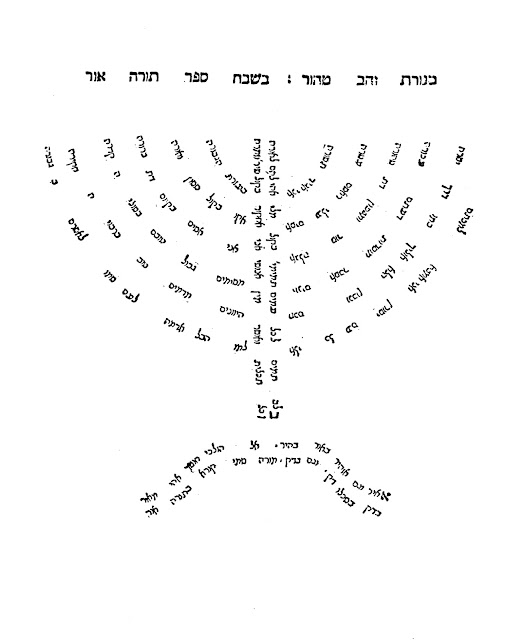
Despite that it is one of the most recognizable and ubiquitous symbols, the image of the menorah barely makes an appearance on Hebrew books. The first appearance of the menorah in a Hebrew book was Yosef Yikhya’s, Torah Or, Bologna, 1538. There is appears on the verso of the titlepage. The menorah is created via micrography and extols the value of the work. The designer even correctly places the menorah on a stand (and not a solid base as shown in the Arch of Titus). [2] 

From the inception of printing, Hebrew printers, like others, created and populated their works with their unique marks. These symbols served advertising for the publisher. Perhaps the only other symbol with such wide resonance and connection to the Jews as the Menorah is the star of David. There are over 200 printers’ marks, or emblems, close to 20 examples of the Magen David, and multiple appearances of other Jewish symbols, lions, David, Solomon, eagles, but two only of a menorah. [3]

Meir ben Jacob Parenzo, (aka Parentio, Parintz, or Maggius Parentinus), operated in Venice from 1545 until his death in 1575. He apprenticed in Daniel Bomberg’s printing shop, and in 1545 he began working for the Venetian printer, Cornelio Adelkind. Although most of his career was in the service of others, he did publish a handful of books on his own. He did not own a press and likely used Bomberg’s Press. All of these books bear Parenzo’s printers mark, a menorah. Whatever ambiguity there is about his surname, his personal name, Meir, alludes to lighting, thus a natural connection to the menorah. On either side of the menorah, “This is Meir’s menorah, he is the son of Yaakov Parenzo.”

Parnezo’s mark comprises around half of the title page. This grotesque design was called out for being unique among his contemporaries, but that it was “a pathetic bid for immortality.” As a measure of divine justice, according one scholar of Hebrew Italian printing, that “Meir Parenzo, notwithstanding his hope for immortality, is completely forgotten except for a small circle of Hebrew bibliographers, who, although conscious that the individual contributions of the men they commemorate are negligible in the great current of human affairs as it flows majestically down through the ages, nevertheless handing down (or transmitting) the knowledge of the existence of so many faithful men who have contributed their share to the enlightenment of the world.” [4] 

Another printer, also a Meir, incorporated the menorah into his mark, although on a much smaller scale. Meir ben Yaakob Ibn Ya’ir, here too, the surname, Ibn Ya’ir, references light. The menorah appears inside a border, flanked by olive trees surrounded by four verses, all mentioning either oil or light. Meir was active between 1552 and 1555. He published a few books abridged books on the laws of shehitah, as well as a work on Hebrew grammar, all exceedingly rare. [5]

The menorah next makes an appearance in Moshe Cordovero’s, (1522-1570), first book, Pardes Rimonim. This illustration is not of the biblical menorah, rather it is a kabbalistic representation of the sefirot overlaid on the menorah frame. This illustration was printed in most subsequent editions of Pardes Rimonim, although not as an exact reprint of the first edition.

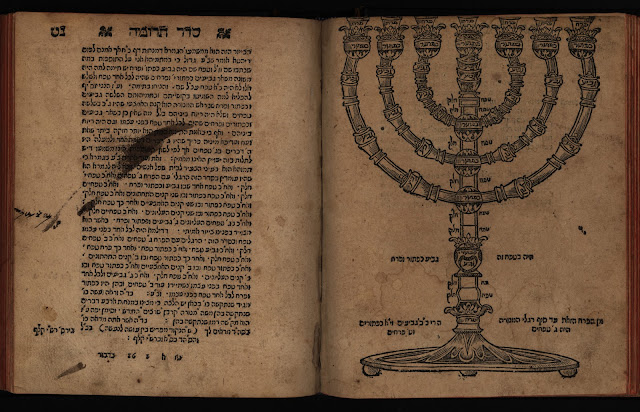
The first illustration of the menorah that was an attempt to depict and elucidate complexities of the biblical menorah only occurred in 1593. There were two books that include the illustration, Biurim and Omek Halakha.

R. Yaakov ben Shmuel Bunim Koppelman, (1555-1594) studied with R. Mordechai Jaffe, author of the Levush. In addition to traditional subjects, he was also well-versed in (my astronomy and mathematics. He published Omek Halakha in Cracow, 1593, a commentary on the Talmud. This slim volume of just 95 pages, is rich in illustrations, which appear on nearly every page. For example, there is a thirteen page an in-depth discussion of astrology with two full page diagrams of the lunar paths and many of the other pages include multiple illustrations. Koppelman includes a detailed diagram of the menorah with an accompanying commentary. [6]

The Biurim on Rashi was published in 1593 in Venice and attributed to R. Nathan Shapira. Shapira had died in 1577; his work includes three illustrations, the menorah, a map of Israel, and a diagram of how the spies carried the large bunch of grapes. This is the first Hebrew book to contain a map.

The book is one of the handful of examples of literary forgeries in Hebrew books. R. Shapira’s son, Yitzhak, published his father’s comments on Rashi in 1597 in a work titled Imrei Shefer. In the introduction he explains why there are two books that are attributed to his father on the same topic published within a few years of one another.

ואתם קדושי עליון אל תתמהו על החפץ שזה שתנים ימים יצא בדפוס איזה ביאורים הנקראים על שם הגאון אדוני אבי ז”ל, כי המציאוהו אנשים, אנשי בלי עול מלכות שמים, חיבור אשר מצאו, ומי יודע המחבר אם נער כתבו ורצו לתלותו באילן גדול אדני אבי ז”ל, חלילה לפה קדוש להוציא מפיו דברים אשר אין בהם ממש, כי הכל תוהו ובוהו ומזויף מתוכו, כלו עלו קמשונים כסו פניו חרולים. וכאשר הגיעו הספרים ההם בגלילות אלו הכרוז בהסכמת כל רבני ורשאי המדינות שלא ומכרו ויהיו בבל יראה ובבבל ימצא בכל ארצות אלו. ואשר קנו מהם יחזר להם המעות ולא ימצא בביתך עולה

[“Do not wonder why I am publishing what was published just two years ago, the Biurim, in my father’s name. As wicked people, people who found a book, a book which may have been written by a child. However, they wanted to use my father’s good name to publish their work. But, my father would never say such stupidities which appear in that book, their book is worthless and a forgery. When this was discovered all the Rabbis agreed that this book [Biurim] should be under a ban, no one should be allowed to keep it. Whomever purchased it should have their money returned, they should not allow a stumbling block into their home.”]

According to R. Shapiro’s son, the Biurim, is illicitly associated with his father. His son was not the only one to question the authenticity of the Biurim. R. Yissachar Bear Ellenburg in his Be’er Sheva and in his Tzedah L’Derekh states unequivocally that R. Shapiro did not write the Biurim.

The diagram of the menorah does not appear in Imrei Shefer. [7]

The diagram of the menorah appears in Yosef Da’at printed in Prague in 1609 by Rabbi Yosef ben Issachar Miklish (1580 -1654). He was a student of the Maharal of Prague and of Rabbi Ephraim Lonchitz, the author of the Klai Yakar. The purpose of the book was to correct errors in Rashi’s commentary. He used a 14th century manuscript to make those corrections. To better facilitate studying Rashi, the book includes illustrations including the menorah. This a full page with detailed descriptions of each part of the menorah. Interestingly, the base seems to combine two different approaches, one that has three legs and the other with a solid base. Miklish reproduces a solid base on top of three legs.

In 1656/57 Yalkut Shimoni with the commentary of Berit Avraham was published in Livorno, Italy. This one includes a menorah created via micrography, but unlike the others that appear at the front of the books, this one appears at the end. It is a colophon.

A unique example of the menorah appears in the 1684 edition of the Humash. It is the sole illustration on the title page. When the menorah appears on the title page, it is almost always in conjunction with other vessels or other symbols. This is perhaps the only instance of a stand-alone menorah on a title page.

The next appearance is the first time it illustrated a titlepage, in R. Shabbati ben Joseph Meshorer Bass’s (1641-1718), most well-known work, his commentary on Rashi, Siftei Hakhamim. This edition was published in Dyhernfurth, Germany at Bass’s press. This was the second edition of the work, (the first was published in 1680 in Amsterdam), and includes one of the most unusual Hebrew titlepages.

The titlepage depicts Moshe and Aaron, with the ark and other temple vessels, and prominently, and occupying the bottom third of the page, a menorah. Bass makes multiple luminary allusions on the title page. This edition includes

“.עם תרגום אנקלוס וביאור מאור הגדול רש״י ז״ל: ועליו מפרשי דבריו ככוכבים יזהירו: ובש״בעה נרות יאירו

The menorah makes another appearance on the next page. Like the Torah Or, Bass uses micrography, in praise of the book, to form the shape of the menorah.

Aside from the figurative arts there was also a musical component to the page. This is not surprising as Shabbati was a musician and singer, and a noted bassist singer, hence the “Meshorrer”/“Bass” surname. On the bottom of the page, in the left corner, appears “Az Yashir Moshe” the beginning of the one of the fundamental Jewish musical pieces, and musical notes appear at the bottom of the page, in what appears to be a composition of sorts. This is one of the few times musical notations appears in early Hebrew religious books. Another is Immanuel Hayi Ricci’s commentary on the Mishna, Hon Ashir, printed in Amsterdam in 1731. Appended to the end of the book are three songs, two set to music with notation.

Another menorah appears in Bass’s edition. On the next page, like the Torah Or, the menorah is comprised of micrography extoling this edition with the commentary. [8]

In 1694, R. Avraham Tzahalon published a portion of his grandfathers, R. Yom Tov Tzahalon’s (c. 1559-1638), responsa. R. Yom Tov was a child prodigy, only eighteen when he published his first work. That same year he was included in granting an approbation alongside R. Moshe Tarani (Mahrit) and R. Moshe Alschech. R. Yom Tov was no shrinking violet. And he had a dim view of R. Yosef Karo’s Shulhan Arukh. He belittled it, calling it only fit for children. The title page and the verso of the 1694 edition include depictions of the temple vessels and specifically the menorah. But his responsa do not discuss the temple vessels and this was included, “to beautify and embellish the title page of the book in a manner fit for print; the students illustrated holy concepts, the form of the Tabernacle and the Third Temple.” A rare of example of acknowledging the aesthetic beauty in the Hebrew book.

Three years later, the Italian scholar, Moshe Hafetz, (1663-1711), (aka Moses Gentili) published Hannukat ha-Bayit which discusses the Temple in great detail and includes numerous illustrations. Because of the illustrations, the book was printed in two parts. First all the text was printed with space left for the illustrations and illustrations were then added using etched copperplates.

His other work, Melekhet Mahshevet, includes his portrait, the first rabbinic portrait included in a Hebrew book, which is somewhat controversial because he is bareheaded. In a 19th century edition, a yarmulke was drawn on his head.[9]

The Bass titlepage served as the model for another lavishly illustrated titlepage. Although it served as a model, it was only a model and not a perfect facsimile. This was intentional. In this instance, the Menorah was the most important visual element of the titlepage and therefore is significantly larger than before and is in the center not the bottom of the page. Of course, this is because the book’s title includes menorah, Menorat haMeor. The book’s structure is based upon the biblical menorah and divided into seven parts, like the seven branches of the menorah. The title page was likely executed by the well-known engraver, Avraham ben Jacob, whose lavishly illustrated 1695 edition of the Haggadah, remains among the most remarkable illustrated haggadot and served as a model for dozens of other illustrated haggadot. Like in the Biruim, Jacob also produced a map, this one much more refined than the basic one in the Biruim. It is a large fold-out map of the Jews travels from Egypt to Israel. Most of his illustrations are copied from the Mathis Maren, a Christian, whose biblical illustrations were very popular. [10]

The illustration was reused by another Amsterdam printer, Solomon Proops, in 1723. Thus, this is one of the few instances of Hebrew titlepage images reflecting the title or the work itself rather than serving a mere ornamental purpose. The titlepage imagery was reused for a 1755 edition of the Torah. This time the menorah is significantly reduced in size.

While these menorahs depicted in Hebrew books, might differ in small details, they are consistent in depicting curved, and not straight, arm. Nearly every manuscript and all the archeological finds similarly depict the curved branches. Of late, this is subject to controversy. The Lubavitcher Rebbe heavily promoted his position that the arms of the biblical menorah were straight and not rounded. In the main, he based this on a manuscript in the Rambam’s hand that includes a depiction of the menorah with straight arms and the confirming testimony of his son that, according to Rambam, the arms were straight. This produced one of the more unusual exchanges in a haredi journal, in his instance, Or Yisrael, published in Monsey, New York. Those historic and documentary materials are used by R. Yisrael Yehuda Yakob, from Kollel Belz, as evidence against the Rebbe’s position. The article uses the mosaics in the 7th century Shalom al Yisrael Synagogue. The menorah is at the center of a large mosaic. The inscription near the mosaic indicates that the entire congregation, men, women, old and young, all took part in the creation of the mosaic. The Burnt House in Jerusalem’s Old City, that dates to the Second Temple period. Yakob then moves on to numismatic, citing a coin from the Hasmanoim period. Section three is then devoted to a discussion of the menorah on the Arch of Titus. Yakob references unidentified “hokrim” who posit that the base of the menorah was broken en route to Rome and was replaced with a base of a Roman creation. This explains why the base does not conform with the Rabbinic description and contains bas reliefs of various mythical and real animals. It was not the true one. Although unidentified, this position is that of the former Chief Rabbi of Israel, Rabbi Herzog as well as the nineteenth-century British Protestant academic, William Knight. Only in section four does Yakob turn to the more traditional Medieval Jewish commentaries. Ultimately, Yakob concludes that the rounded arms is the correct depictions and “justifies” the custom to draw it that way. Following the text, is a reproduction of the menorah from the second century synagogue, Dura Europas. A most unusual conclusion for a rabbinic article. (The image of the Dura Europos menorah actually depicts a straight arm menorah, that follows the Rebbe’s opinion. This is one of the only archeological examples of a straight arm menorah. The value of this image, however, is questionable. The menorah appears four times at Dura Europos. The straight arm one appears at the upper left corner of the opening for entrance. But, in the panel that specifically depicts the Mishkan and its vessels, there is a rounded arm menorah. While we don’t know what to attribute the differences to, it is more likely that greater care was placed in the accurate reproduction of the menorah within the context of the mishkan rather than were it serves as mere decoration.)

As would be expected, there was a rebuttal article that is more in line with the Haredi approach. The author concedes that his main objection is to Yakob’s approach, the “fundamental point which is almost litmus test of one’s religiosity: any evidence adduced from pictures and archeological evidence, God forbid, to rely upon these things or the conclusions of archeologists.” Although never directly discussed, presumably the author would dismiss the examples in the Hebrew book.[11]

* I would like to thank the bibliophile par excellence, Marvin Heller, for his assistance and close read of the article, and William Gross, whose library of objects and books is among the richest private collections, and provided most of the images, with credit to the Gross Family Collection. Many are available at the Center for Jewish Art website (https://cja.huji.ac.il/browser.php).

[1] See for example, Rachel Hachlili, The Menorah, The Seven-Armed Candelabrum (Leiden: Brill, 2001) who exhaustively catalogs the examples of menorah depictions but does not discuss the Hebrew book.
[2] For the history of the menorah, see Steven Fine’s comprehensive study, The Menorah, From the Bible to Modern Israel (Cambridge: Harvard University Press, 2016). Also see L. Yarden, The Tree of Light, A Study of the Menorah (Ithaca: Cornell University Press, 1971.
[3] Avraham Yaari, Degali Madfisim ha-Ivriyim (Jerusalem: Hebrew University Press, 1944), see index s.v. magen David and menorah; Yitzhak Yudlov, Degali Madfisim (Jerusalem: Old City Press, 2002); For examples of lions, eagles, and fish, see Marvin Heller, Essays on the Making of the Early Hebrew Book (Leiden: Brill, 2021), 5-84
[4] See Steinschnider, Catalogus Libr Hebr., col. 2984, no. 8761 (discussing his surname); Yaari, Degali, 128-29; Encyclopeadia Judaica, vol. 13 col. 101-02 (1996); David Amram, The Makers of Hebrew Books in Italy (London: Holland Press, 1963), 367-71.

Parenzo may have a second printers mark that only appears once, in the 1574 Bragadini edition of the Rambam. On the verso of the title page is, according to EJ, “a rather daring design” illustrating Venus hurling arrows at a seven-headed dragon. Unmentioned is Venus’ clothes, or lack thereof.

This mark is similar to the Cremona-Sabbioneta, printer, Vincenzo Conti’s mark, with the seven-headed hydra. His, however, has Hercules rather than Venus.

A nude Venus was also used by Allesandro Gardano for his printers mark. He only published one book, a pocket edition of the Shulhan Orakh in 1578. A naked Venus rising appears at the bottom.

Hans Jacob, who published in Hanau in the 1620s, also has a naked Venus rising from a seashell at the bottom of at least four works, R. Moshe Isserless, Torat Hatas, Sefer Mahril, and a Siddur.

For a detailed discussion of Parenzo’s printing activities, see A.M. Haberman, “Ha-madfeshim beni R’ Yaakov Parenzoni be-Veniztia,” in Areshet 1 (1959), 61-88.
[5] See Yudolov, Degali Madfisim (Jerusalem: Old City Press, 2002), 23-24.
[6] See Marvin Heller, “Jacob ben Samuel Bunim Koppelman: A Sixteenth Century Multi-Faceted Jewish Scholar,” Gutenberg-Jahrbuch (Mainz, 2018), pp. 195-207.
[7] Introduction Imrei Sefer, Lublin 1697 (on differences in the printings of the Imrei Shefer see Yudolov, Areshet, 6 (1981) 102 no. 7); Biurim, Venice 1693; R. E. Katzman, “Rabbi Nathan Nata Shapiro – Ha-Megaleh Amukot” in Yeshurun 13 (Elul 2002) 677-700; Introduction [R. E. Katzman], Seder Birkat HaMazon im Pirush shel R. Noson Shapiro, 2000 Renaissance Hebraica, 1-10.
[8] His original surname may have been Strimers. See Shimeon Brisman, A History and Guide to Judaic Bibliography (Cincinnati: Hebrew Union College Press, 1977), 267n.33. For additional biographical information see id. collecting sources.
[9] Dan Rabinowitz, “Yarlmuke: A Historic Cover-up?,” (here) Hakirah (4).
[10] Regarding the map, see Harold Brodsky, “The Seventeenth-Century Haggadah Map of Avraham Bar Yaacov,” in Jewish Art 19-20 (1993-1994): 149-157; David Stern, “Mapping the Redemption: Messianic Cartography in the 1695 Amsterdam Haggadah,” in Studia Rosenthaliana 42/43 (2010-2011), 43-63; Amir Cahanovitc, “Mappot be-haggadot pesah” (Masters thesis, Achva Academic College, 2015), 34-85. For a discussion of this edition and reproductions of some of its images and a comparison with Mathew Merian’s illustrations see Cecil Roth, “Ha-Haggadah ha-Metsuyyeret she-bi-Defus,” Areshet 3 (1961), 22-25; Yosef Hayim Yerushalmi, Haggadah and History (Philadelphia: The Jewish Publication Society, 2005), plates 59-62, 67, 69.
[11] See R. Yisrael Yehuda Yakob, “Tzurot Kani Menorah,” in Or Yisrael 18 () 131-139; R. Nahum Greenwald, “Kani Menorah Ketzad Havei,” in Or Yisrael 18 () 140-154.


Jacob ben Elhanan Heilbronn – A Multi-faceted Erudite Scholar

Jacob ben Elhanan Heilbronn – A Multi-faceted Erudite Scholar

By Marvin J. Heller[1]

Jewish history and literature is replete with individuals of stature, men of repute, leaders in their generation, whose memory has not fared well over time. Their reputations and accomplishments notwithstanding, they are not well remembered today, excepting in rabbinic or academic circles. This is, of course, not only a Jewish phenomenon, but our concern is with one individual in particular, prominent in his time in the Jewish community, justifiably so, but, outside of the aforementioned circles is, for the most, forgotten today. Among those who were prominent in their time but are not well known by the general public is R. Jacob ben Elhanan Heilbronn.

Heilbronn (or Halpron), a late sixteenth and early seventeenth century rabbi, was a highly regarded Talmudic scholar, evident from the esteem in which he was held by his correspondents and in the approbations to his work, as well as being a mathematician. Heilbronn was the author, compiler, and translator of several varied books on different subjects, indicative of his erudition. In this article we will briefly recount Heilbronn’s life and career and then, in somewhat greater detail, describe his literary works. Mordecai Samuel Ghirondi and Hananel Neppi, suggest that Heilbronn was a student of R. Samuel Judah Katzenellenbogen (1521-97) the son of R. Meir Katzenellenbogen (Maharam of Padua, 1473–1565).[2] Born in Italy to an Ashkenaz family, Heilbronn studied in Prague, afterwards traveling through cities in Germany and Italy, earning his livelihood from teaching. Heilbronn was also a tutor, among his students were the children of R. Nehemiah Luzzatto in Venice, for whom Heilbronn included a eulogy in his Nahalat Ya’akov (below).[3]

Jacob Heilbronn’s brother was R. Joseph ben Elhanan Heilbronn, who eventually settled in and became a resident of Posen. Also a person of repute, today Joseph Heilbronn is considered a German Jewish scholar. However, not only is he also poorly recalled, when Joseph Heilbronn is remembered, it is often as Jacob Heilbronn’s brother. Joseph Heilbronn was the author of Em ha-Yeled (Prague, 1597) a popular elementary Hebrew grammar, among the earliest of children’s grammar books, reprinted several times. The title-page of Em ha-Yeled informs that it is concerned with the grammar of words, for a child of seven, to familiarize him with word structure, the letters comprising word structure, tenses, future and past, singular and plural, male and female. The purpose is so that he will be able to speak the holy tongue (Hebrew) clearly and to write grammatically. Joseph Heilbronn’s other works are Me’irat Einayim (Cracow or Prague, c. 1600), an index of the taryag mitzvot according to Maimonides; and Kol ha-Kore (Cracow c. 1602), brief rules of grammar for schools based on the work of R. Elijah Levita (Bahur, 1469-1549).[4]

Jacob ben Elhanan Heilbronn, after teaching Torah in several communities, eventually settled in Padua where he was engaged as rabbi. Padua, a city of some distinction, counted among its residence such distinguished sages as R. Samuel Archivolti (Arugat ha-Bosem, c. 1515–1611), R. Simhah Luzzatto (1583–1663), and was home to a medical school which admitted Jewish students and therefore attracted Jews throughout Europe.[5]

I

Turning to Heilbronn’s literary activity. His works are in Yiddish (Judeo-German), Hebrew, and even in Italian, reflecting the composition and needs of contemporary Jewry. The Yiddish texts, three are noted here, were all printed at the press of Giovani di Gara. That press, active from 1564 to 1611, printed more than 270 books, primarily in Hebrew letters, and only infrequently in non-Jewish languages. Of that number, almost a third are seventeenth century imprints. Di Gara published a wide variety of books, encompassing liturgical works, Bibles, responsa, haggadot, and important first titles by authors. Given the positive reputation of the di Gara press it is not surprising that Heilbronn chose to print several of his titles with the di Gara press.

Heilbronn’s Yiddish titles are set in Vaybertaytsh, a semi-cursive type generally but not exclusively reserved for Yiddish books, so named because these works were most often read by the less educated and women.[6] These books were clearly meant for an Ashkenazi audience, for books in Vaybertaytsh were certainly not directed or intelligible to a market outside that community, but also evidence that that market was sufficiently large enough to justify the publication of works for a particular element of rather than for the entire Jewish community.

Orech Yamim – We begin our review of Heilbronn’s literary activity with his translations into Yiddish of several short but substantial works. The first of these titles is Orech Yamim, an ethical work by R. Samuel ben Jacob Benveniste, one of the sages of medieval Spain. The words Orech Yamim appear in several biblical verses, but based on Benveniste’s references, the appropriate verse appears to be “With long life (orech yamim) I will satisfy him, and show him My salvation” (Psalms 91:16).

Orech Yamim is an ethical manual for parents and children emphasizing the education of children, as well as addressing the subjects of haughtiness and humility.[7] There is a dedication by Heilbronn to Rosa, wife of the official קצין R. Nehemiah Luzzatto of Venice.[8]

First printed in Constantinople (c. 1580), Orech Yamim has proven to be a relatively popular work; it has been reprinted several times in various locations and translated into different languages, most often Yiddish, beginning with this Venice edition in 1599. Approximately a year after this edition appeared a Hebrew edition was published, also in Venice.[9] The 1599 Yiddish edition was printed as an octavo (80: 16 ff.) at the Venetian press of Giovanni di Gara. This is in contrast to the c. 1600 Hebrew edition, also printed in Venice, but at the press of Daniel Zanetti as a sixteenmo (160: 7ff.).[10] There was, three centuries later, even an Arabic edition (Baghdad, 1929).

1599, Orech Yamim

1602, Dinnim ve-Seder

Courtesy of the National Library of Israel[11]

Keter Malkhut – In 1600, the di Gara press published Keter Malkhut, Heilbronn’s Yiddish translation of R. Solomon ben Judah Ibn Gabirol’s (Arabic Abu Ayyub Sulayman ibn Yahya ibn Gabirul; Latin Avicebron, c. 1021-1057) Keter Malkhut. issued in octavo format (80: 24 ff.) Keter Malkhut has been described as,

rhymed prose dealing in high style with the essence of God, the work of the creation, with a description of the “spheres,” and a confession of the low condition of man, prone to sin. . . ;.

Keter Malkhut opens with praise for the Creator and an account of His attributes: His unity, existence, eternity, and life and His greatness, power, and divinity. God is also described as “Light,” according to the neoplatonic image of the deity, “Thou art the supreme light and the eyes of the pure soul shall see thee” (tr. Lewis, 31). Nevertheless, Gabirol stresses that God and his attributes are not distinguishable: we refer to attributes only because of the limited means of human expression.[12]

There is a dedication to Kilah, the wife of the official קצין R. Mendel Ottolenghi, presumably a member of the renowned Italian family of that name.[13]

Dinnim ve-Seder (Seder Meliḥah) – In 1602, Heilbronn published Dinnim ve-Seder (Seder Meliḥah), an important work on the principles of salting meat. This edition, in Yiddish, is based on R. Moses Isserles’ (Rema, c.1525/30–1572) Torat Hattat, which in turn follows the Sha’arei Dura of R. Isaac ben Meir Dueren (late 13th century) with additions according to the customs of Polish and German Jewry. The Rema, among the foremost halakhic authorities and the leading decisor for Ashkenazim, is best known for his Haggahot or ha-Mappah, glosses on the Shulhan Arukh. Dueren, a German halakhic authority, resident in Dueren in Germany, was an authority on the laws of issur ve-hetter (dietary laws)..

The Rema’s purpose in writing Torat Hattat was that due to the popularity of Sha’arei Dura, a work of considerable brevity, people wish to learn it while [standing] on one foot. Torat ha-Hattat is not, however, merely a clarification of Sha’arei Dura, although arranged according to and following the former work, but its purpose, as Rema writes, is not only to add contemporary customs, to which Rema placed great weight, but to teach practical halakhah. Furthermore, many of the laws, particularly in the area of issur ve-hetter, as explained by R. Joseph Caro (1488 –1575) in his Shulhan Arukh, which had become widespread, are not applicable in these lands, that is Poland and other Ashkenazi communities.

Torat Hattat was first printed in Cracow in 1569, and reprinted in 1577 and 1590. This, the first Yiddish edition, was published by the di Gara press in octavo format (80: 8 ff.). It has a dedication to Moskita, daughter of R. Hezkiah Perinto. There is also a memorial address on the death of R. Avigdor Cividal (Zuidal, d. 18 Heshvan, [5]362 = November 18, 1601), rabbi in Venice.[14]

These three titles, translations of distinguished works into Yiddish by Heilbronn, are varied. Orech Yamim and Dinnim ve-Seder, while quite different in subject matter, the former an ethical manual emphasizing the education of children, as well as addressing the subjects of haughtiness and humility, the latter dealing with the principles of salting meat, are eminently practical works, addressing that part of the community that was less learned but had a serious need for the books’contents. In contrast, Keter Malkhut, while unquestionably a work of great value does not appear to fit the practical pattern of the two other works. Heilbronn’s motivation is publishing Keter Malkhut is unclear.

Even less clear is Heilbronn’s purpose in dedicating each of these works to apparently unrelated women, even if married and women of great virtue. That would appear, unless with good reason or of close relatives, to be inconsistent with Jewish values. One needs assume that Heilbronn, a respected rabbi, translator of an ethical work, had good reason for doing so, even if for reasons that are unclear, but were appropriate.

II

Kizzur Abrabanel – We turn now to Heilbronn’s Hebrew works.[15] The first of Heilbronn’s three Hebrew titles is Kizzur Abrabanel, an abridgement of Don Isaac ben Judah Abrabanel’s (1437–1508) commentaries on Pirkei Avot and the Pesah Haggadah. A noted statesman, biblical exegete, and philosopher, Abrabanel’s works encompass commentaries on the Torah, most books of the Bible, and philosophical works. Abrabanel served as an advisor and financier to kings in Portugal and Spain, electing to go into exile at the time of the expulsion of the Jews from Spain in 1492. Among his books are these commentaries on Pirkei Avot, entitled Nahalat Avot, and on the Pesah Hagadah, entitled Zevah Pesah.

Kizzur Abrabanel is an abridgement of Nahalat Avot and Zevah Pesah; it was published in 1604-05 in Lublin at the press of Zevi ben Abraham Kalonymous Jaffe as a quarto (40: 79, [1] ff.). Both titles, apart from the abridgement, were printed in Constantinople in 1505 and reprinted several times in the sixteenth century; Nahalat Avot was reprinted in Venice (1545, 1567) and Zevah Pesah was reprinted in Venice (1545), Cremona (1557), Riva di Trento (1561) and Bistrowitz (1592). Both works have proven popular, were republished several times, particularly Zevah Pesah.

Abrabanel’s style in those works, as in his other commentaries, is lengthy, deep and thorough, but eminently readable. Nevertheless, it is the length of his commentaries that made an abridgement attractive.

The title page describes Kizzur Abrabanel as having been written by Heilbronn, known by all as Hertzkes, who diligently sat in the tent of Torah where sat the sages full of mitzvot like a pomegranate and saw that lengthiness hindered others from doing so. Heilbronn, therefore, for the public good, abridged these works so that they could be quickly read. The title page is dated Wednesday, 25 Sivan 364 (June 2, 1604). The colophon dates completion of work to Friday, Rosh Hodesh Adar “and Jacob had scarcely gone out from the presence of Isaac ויהי אך יצא יצא יעקב מאת פני יצחק (365 = 30 Shevat = February 18, 1605) his father” (Genesis 27:30). On the verso of the title page is an approbation signed by eight geonim in Jaroslav. Next is Heilbronn’s introduction

the commentary of the great Rav, wonder of the generation [Don Yitzhak] Abrabanel on Avot and the Pesah Haggadah, a truly wonderful commentary, accepted by everyone, joining all the Mishnayot and ma’amarim together into one tent which was not done by other commentators, before and after. It was the desire of all to continually delve into and delight in it daily and “find rest for their souls” (cf. Jeremiah 6:16). . . .

1604, Kizzur Abrabanel

Courtesy of the National Library of Israel

Heilbronn continues that due to the lengthiness of Abrabanel’s commentary, perhaps excessively, people are unable to read and complete it, and therefore but “one from a city, and two from a family” (Jeremiah 3:14) even begin it and it lays in the corner of the house “all grown over with thorns, and nettles had covered it over” (Proverbs 24:31). He has therefore prepared this abridgement and taken the queries with which the Abrabanel customarily begins each section and placed them at the end of the work.

The text of Kizzur Abrabanel follows, in two columns, the text of each work in a square unvocalized font, followed by Abrabanel’s commentary in rabbinic letters. Kizzur Abrabanel is comprised of the commentary to Pirkei Avot, from 46b the commentary on the Pesah Haggadah, and at the end the queries with which the Abarbanel began topics in Avot (69a-75b) and the Haggadah (76a-79b).[16]

Despite being an attractive and functional volume, Kizzur Abrabanel has not, unfortunately, been reprinted, this being the only edition of Kizzur Abrabanel.

Nahalat Ya’akov – Our second Hebrew title is Nahalat Ya’akov, responsa and halakhic novellae. Nahalat Ya’akov was published in Padua in 1622 at the press of Gaspare Crivellari in quarto format (40: 51 ff.).

The title page of Nahalat Ya’akov has a six-part frame comprised of floral patterns. The text states that Nahalat Ya’akov is responsa on halakhic matters (dinim) concerning monetary issues, dietary laws (issur ve-heter), and commentary on various subjects in Tosafot and Rashi. These were collected and assembled from “elderly rabbis רבנן קשישי (Berakhot 30a, 46b) who were in his days,” and to whom he submitted queries and received responses, טו”ב (17) in number and enumerated by name on the following page. The title page has the Hebrew date שפ”ג ([5]383) and the Arabic numeral date 1622, indicating that it was printed in the final months of 1622, when the new Jewish year has begun and the secular year had not yet concluded.

1622, Nahalat Ya’akov

Courtesy of the Fales Library and Special Collections, New York University

The verso of the title page is blank. Folio 2a has the names of the rabbis, all distinguished, with whom Heilbronn corresponded, and whose responses make up a substantial portion of Nahalat Ya’akov. Among them are R. Abraham Menahem Kohen Rapa Porto (Rapaport, Minhah Belulah), Judah Katzenellenbogen, Avigdor Cividal, Mordecai Jaffe (Levush), and Isaiah Horowitz (Shelah ha-Kodesh), the last, along with R. Kalonymus ben Samuel ha-Kohen, providing approbations. There is an introduction in a single column in rabbinic type from Heilbronn, who writes that “‘Nahalat Ya’akov (the heritage of Jacob, Isaiah 58:14) your father,’ this is my portion from all my labors and exertions.” There is a dedication to his benefactor R. Simḥah Luzzatto.

Heilbronn entitles it Nahalat Ya’akov for two reasons: it is all that he has accomplished to be an inheritance to the children of Jacob; and secondly, all will see that in it are “words of delight; [and words of truth] written in proper form.” (Ecclesiastes 12:10). The text is set in two columns in square type. The volume concludes with an index. This is the only edition of Nahalat Ya’akov.

Shoshannat Ya’akov – Our final Hebrew title, Shoshannat Ya’akov, Heilbronn’s introduction to arithmetic with mathematic puzzles. It was published together with R. Eliezer ha-Gadol’s (R. Eliezer ben Isaac of Worms, 11th cent.) Orhot Hayyim. The combined work, with the title-page heading Orhot Hayyim, was published in Venice at the press of Giovanni Caleoni in 1623 as a sixteenmo (160: 12 ff.). Orhot Hayyim is a popular ethical will often erroneously credited to R. Eliezer ben Hyrcanus (1st-2nd cent.), but also appearing with R. Asher ben Jehiel (Rosh, c. 1250-1327as the author.

Shoshannat Ya’akov, our title of interest, is, as, noted above, an introduction to arithmetic with mathematic puzzles. The title-page emphasizes Orhot Hayyim, stating,

is the testament of R. Eliezer ha-Gadol, which he commanded his son Hyrcanus at the time of his passing. It was brought to press by R. Jacob Heilbronn for the public good. He has added at the end an addition of his own from his “wisdom and knowledge” (Ecclesiastes 1:16, 2:26) in arithmetic to be able to understand his fellow’s calculations and to write with allusions in the manner of esotery and appetizers of wisdom. This addition is entitled Shoshannat Ya’akov to instruct to teach the youth of the children of Israel knowledge and stratagem in concealed secrets. . . .

Shoshannat Ya’akov, includes, in addition to its arithmetic content, riddles and epigrams. Both works are set in a single column in rabbinic type, with Shoshannat Ya’akov beginning on 8a. It does not have a separate title page but rather a one-line header giving the title. At the end of the volume is verse by R. David ben Shemariah Morpurgo. An example of the contents in Shoshannat Ya’akov is the last entry (11a),

To speak in allusions so that those standing by the speaker will not understand except for his companion who knows the matter as do you but none other.

First, I will instruct you in the alef bet and afterwards how to arrange words with the five fingers of the right hand beginning with the thumb. . . .

1623, Orhot Hayyim / Shoshannat Ya’akov,

Courtesy of the Library of Agudas Chassidei Chabad Ohel Yosef Yitzhak

Moritz Steinschneider, likely referring to this work, writes informs that “arithmetical puzzles were framed in Germany by JACOB BEN ELIAKIM (613 [sic]) for primary instruction and an exercise of subtlety.”[17]

Orhot Hayyim has been frequently reprinted. This is, however, the only edition of Shoshannat Ya’akov.

III

Mitzvot Nashim – We conclude with Heilbronn’s most popular (successful) work, based on the number of times it was reprinted, that is, Mitzvot Nashim, or, in Italian,

Precetti da esser
imparati
dalle donne hebree

The above meaning precepts to be learned by Hebrew women, and continuing that it was composed by Rabbi Bini amin D’harodono (R. Benjamin Aaron ben Abraham Slonik, Solnik, c. 1550 – c. 1619) and that it was translated by Rabbi Giacob Halpron (Jacob Heilbron) into Hebrew for women with a fear of God. Precetti da Esser Imparati is a translation into Italian of R. Benjamin Slonik of Grodno’s (c. 1550 – c. 1619) Yiddish Seder Mitzvot Nashim (a lovely booklet for women). Precetti da Esser Imparati was published in Venice in 1616 at the press of Giacomo Sarzina as a 20 cm. book ( [10], 3-101, [11] pp.).

The title-page is followed by a dedication to Alla Molta Magnifica et Nobilissima Signora Osservandissima, La Signora Bona Consorte Delmolto Magnifico, & Nobelissimo Signor Lazero d’Italia Hebreo in Mantova (below, left). Again, a dedication to a woman, with the comment noted earlier.[18] It should be noted, however, that there is no impropriety suggested, as the dedications are not only done publicly but in books with approbations from highly regarded rabbis.

1616, Mitzvot Nashim – Precetti da esser imparati dalle donne hebree

Courtesy of the National Library of Israel

Mitzvot Nashim is on the three mitzvot specific to women, the laws of niddah, hallah, and lighting of Sabbath candles, which, if not observed, “are the three transgressions for which woman die in childbirth” (Shabbat 31b). The text, in Italian with occasional Hebrew, is comprised or one hundred thirty-seven chapters followed by a listing (below, right) of the mitzvot; 76 for niddah, 77-87 for hallah, and 88-101 for lighting Sabbath candles.

In his detailed work on Seder Mitzvot ha-Nashim, Edward Fram suggests Slonik’s efforts were educational rather than legislative in insuring proper observance of commandments. He had to consider that the book was for both readers and listeners, for both the pious and rebellious. Israel Zinberg, in his brief description of this title, describes it as being “in a tender, gentle tone ‘the little book for women’ teaches the Jewish wife and mother how she ought to conduct herself in her family life and religious-social life.” Most chapters are brief but several are quite lengthy and, in addition to the halakhic detail, include ethical, motivational and homiletic supporting material which certainly enhanced the books popularity.[19]

Slonik’s Mitzvot Nashim been a popular and much reprinted work. Four editions, beginning with a Cracow 1577 edition, are known for the sixteenth century, three printed in Slonik’s lifetime, and six are recorded for the seventeenth century, beginning with a Yiddish edition, Ein Schon Frauen Buchlein (Basle, 1602). Heilbronn’s Italian translation (Venice, 1616) has also proven to be popular and has been republished.[20]

IV

We began by noting that Jewish history and literature is replete with individuals of stature, whose accomplishments notwithstanding, are not well remembered today. Among those who were prominent in their time but are not well known by the general public today is R. Jacob ben Elhanan Heilbronn. A review of his life and accomplishments, particularly the books he authored and printed, suggests that he indeed was a person of accomplishment, deserving more than a passing glance. A peripatetic individual, Heilbronn appears in several locations in Europe before finally accepting a position as rabbi and settling in Padua.

It is his books that are of greatest interest and set him aside from many of his contemporaries. While his works, in most cases, are not original, they are of merit, being tri-lingual, in Yiddish, Hebrew, and Italian. They are generally adaptations of the successful and important works of others. In translating and abridging those works, Heilbronn has made them available to a much larger public, one that likely might not otherwise have had access to them. His books encompass ethical and halakhic subjects, even a mathematic work, in Yiddish, abridgements in Hebrew, and finally in Italian, making it clear that Heilbronn, in his selection of these works was erudite, and in his preparing them for a larger readership shows his concern for that public.

Admittedly, these books, abridgments and translations into Vaybertaytsh, are not such as to capture the imagination of intellectuals and academics, yet they demonstrate a concern and interest in the needs of the wider community that was, is often overlooked. Heilbronn did not do so. Indeed, Heilbronn, a rabbi in the fullest sense of the word, was, of a surety, a person of accomplishment and erudition, one concerned with the needs of his public.

[1] I would, once again, like to express my appreciation to Eli Genauer for reading the article and his comments.

[2] Mordecai Samuel Ghirondi and Hananel Neppi, Toledot Gedolei Yisrael u-Ge’onei Italyah ve-Hagahot al Sefer Zekher Tzadikim li-Berakhah (Trieste, 1853, reprint Brooklyn, 1993), p. 173 [Hebrew].

[3] Jacob Hirsch Haberman, “Heilbronn, Jacob ben Elhanan,” Encyclopaedia Judaica vol. 8, (2007) p. 766.

[4] Jacob Elbaum, Openness and Insularity. Late Sixteenth Century Jewish Literature in Poland and Ashkenaz (Jerusalem, 1990), pp. pp. 48, 264 [Hebrew]. Concerning Joseph Heilbronn’s Em ha-Yeled see Marvin J. Heller, The Sixteenth Century Hebrew Book: An Abridged Thesaurus II (Brill, Leiden, 2004), pp. 872-73.

[5] Concerning Hebrew printing in Padua see Marvin J. Heller, “‘There were in Padua almost as many Hebrew printers as Hebrew books.’ The Sixteenth Century Hebrew Press in Padua,” Gutenberg-Jahrbuch (Mainz, 2003), pp. 86-92, reprinted in Studies in the Making of the Early Hebrew Book (Brill, Leiden/Boston, 2008) pp. 121-30.

[6] Concerning the early use of Vaybertaytsh see Herbert C. Zafren, “Variety in the Typography of Yiddish: 1535-1635,” Hebrew Union College Annual LIII (Cincinnati, 1982), pp. 137-63; idem, “Early Yiddish Typography,” Jewish Book Annual 44 (New York, 1986-87), pp. 106-119. In the former article, Zafren informs that the first book in which Yiddish was a segment was major was Mirkevet ha-Mishneh (Sefer shel R. Anshel), a concordance and glossary of the Bible (Cracow, 1534/35). In the latter article he suggests that the origin of Vaybertaytsh, which he refers to as Yiddish type, was the Ashkenaz rabbinic fonts, supplanted by the more widespread Sephardic rabbinic type which prevailed in Italy (p. 112).

[7] Shimon Vanunu, Encyclopedia Arzei ha-Levanon. Encyclopedia le-Toldot Geonei ve-Ḥakhmei Yahadut Sefarad ve-ha-Mizraḥ IV (Jerusalem, 2006), p. 2175 [Hebrew]

[8] A. M. Habermann, Giovanni di Gara: Printer, Venice 1564-1610. ed. Y. Yudlov (Jerusalem, 1982), p. 92 no. 186 [Hebrew].

[9] Yeshayahu Vinograd, Thesaurus of the Hebrew Book. Listing of Books Printed in Hebrew Letters Since the Beginning of Printing circa 1469 through 1863 II.(Jerusalem, 1993–95), p. 261: nos. 870, 890 [Hebrew].

[10] Sixteenmo (sextodecimo) refers to the size of book page resulting from folding each printed sheet into sixteen leaves (thirty-two pages).

[11] The images of Orech Yamim and Dinnim ve-Seder were reproduced from the library site from microfilm, accounting for their darker appearance.

[12] Angel Sáenz-Badillos and Shlomo Pines, “Gabirol, Solomon ben Judah, Ibn,” Encyclopaedia Judaica, vol. 7 pp. 321-327.

[13] A. M. Habermann, Giovanni di Gara, p. 97, no. 196.

[14] A. M. Habermann, Giovanni di Gara, p.105, no .213.

[15] The description of the Hebrew books in this section are extracted, with modifications, from Marvin J. Heller, The Seventeenth Century Hebrew Book: An Abridged Thesaurus (Leiden/Boston, 2011), var. cit..

[16] Isaac Yudlov, Ginzei Yisrael, The Israel Mehlman Collection in the Jewish National and University Library (Jerusalem, 1984), p. 39 no. 125 [Hebrew with English Appendix]; idem, The Haggadah Thesaurus. Bibliography of Passover Haggadot From the Beginning of Printing until 1960 (Jerusalem, 1997), p. 6 no. 42 [Hebrew].

[17] Moritz Steinschneider, Jewish Literature: from the eighteenth century with an introduction on Talmud and Midrasch: A historical Essay (Hildesheim, 1967), p. 261.

[18] In all fairness, while these dedications do seem to stand out, particularly given seventeenth century and Jewish sensibilities, I must note that I too have dedicated books to women. My first book is dedicated to my wife, Shoshana; my second book is dedicated to my parents and to my in-laws, mention being made by name of both my mother and of my mother-in-law.

[19] Edward Fram, My Dear Daughter. Rabbi Benjamin Slonik and the Education of Jewish Women in Sixteenth-Century Poland (Cincinnati, 2007), pp. xvi-xvii, var. cit.; Israel Zinberg, A History of Jewish Literature VII (New York, 1975), translated by Bernard Martin, pp. 142.

[20] The  popularity of this work can be seen by recent auction history. Two editions of Mitzvot Nashim, Precetti da Esser Imparati, the 1616 Venice and the 1625 Padua, editions were sold at auction by Kedem Auction House on May 23, 2017 for $3300. An auction for the Italian 1616 edition by Kestenbaum & co on November 17, 2017, Auction 74 lot 204 estimated. price: $600 – $900 and realized $1,300. Three additional auctions, for the 1717 edition beginning with Virtual Judaica, February 25, 2014, Lot 38646, price realized 200.00; by Winner’s Auctions on November 29, 2017, Lot 357, estimate $200-300, price realized $180; and again by Kedem Auction House, Auction 013, on May 2, 2018, price realized $150.00.


The Missing Nun Verse in Ashrei

The Missing Nun Verse in Ashrei[1]
Ben Zion Katz
Northwestern University

There are several alphabetic acrostics in the book of Psalms. These acrostics are found in Psalms 25, 34, 37, 111, 112, 119 and 145. Only three of these are complete acrostics – i.e., acrostics in which every letter of the alphabet is represented. Psalms 111 and 112 begin each half verse with the succeeding letter of the Hebrew alphabet following the psalm’s first word (Halleluyah). Psalm 119 is an eight-fold alphabetic acrostic with 176 verses. Psalm 34 is portrayed as a complete alphabetic acrostic in the ArtScroll siddur[2]; however, that is a misrepresentation as there is no verse that begins with the letter vav; the letter vav appears in the last half of verse 6, as it does in the last half of verses 1, 4, 5, 7, 11, 14, 16, 18, 19, 20 and 23, and is therefore not part of the acrostic. Psalms 25, 37 and 145 are also defective acrostics, in that they are missing at least one letter each (and may also have other irregularities). For example, Psalm 25 begins each verse with a succeeding letter of the Hebrew alphabet except for the letters bet (although the second word of verse 2 starts with a bet), vav and kuf (possessing a second resh verse instead). Psalm 37 begins every other verse with a succeeding letter of the alphabet, except that the daled and heh verses immediately follow each other, there are two vav and chet verses, there is no ayin verse, the peh verse follows immediately after what should have been the ayin verse (instead of skipping a verse), and the tav verse begins with a vav. Finally, Psalm 145 is famously missing a nun verse.

Psalm 145 is better known as Ashrei, because of the way it appears in the siddur. Ashrei is said thrice daily (twice in shacharit, the morning service, and once at minchah, the evening service) and is always preceded by two verses from Psalms (84:5 [whose first word, Ashrei, gives the prayer its popular name] and the last verse of the preceding Psalm [144:15]) and concludes with another verse from Psalms (115:18).

Probably because of its popularity and the prominent absence of a verse with the letter nun, the Talmud has the following discussion (Berachot 4b; my loose translation):

Rabbi Eliezer said in the name of Rabbi Avina: Whoever says Psalm 145 thrice daily is assured of a place in the world to come. Why? Is it because it is an alphabetic acrostic? But Psalm 119 is an eight-fold alphabetic acrostic. Perhaps it is because of the verse (verse 16) “You open Your hands and provide sustenance for all life as they require?” But Psalm 136:25 states “He gives food to all flesh” (expressing a similar sentiment)? [The reason is because Psalm 145] has both qualities (an alphabetic acrostic and the notion of God sustaining all life).

Rabbi Yochanan asked: Why does Psalm 145 lack a verse with a nun? Because that verse alludes to the downfall of (lit., the enemies of)[3] Israel, as it says: “Fallen, she will rise no more, the virgin of Israel” (Amos 5:2; the verse continues “She is cast out over her land, none can raise her up”). In the West (i.e., Israel, by placing the comma differently)[4]  they read the verse thus: “Fallen, (and) she will not (continue to) fall any more, rise O virgin of Israel”. Said Rabbi Nachman the son of Isaac: Even so, David prophetically alluded to this [missing] verse with the next verse [following]: “God supports all of the fallen”.

The preceding Talmudic discussion raises at least two related questions: Does the Talmud really mean that a verse in Amos should have been part of Psalm 145? And isn’t that verse (Amos 5:2) completely out of character with the rest of the Psalm, which praises God throughout? In the remainder of this paper I will propose a rationale for the approach of the rabbis of the Talmud in this case (which will have implications for other similar rabbinic speculations as well), and then proceed with a historical discussion of the missing nun verse.

It appears that the rabbis, in realizing that the nun verse is missing from Psalm 145, took a cue from the verse immediately following, as Rabbi Nachman alluded to in the Talmudic discussion above. The verse following where the nun verse should be begins: Somech Adonai lekhol ha-noflim – God supports all of the fallen. The rabbis couldn’t help but notice that the word fallen, noflim, begins with a nun, and if the verse following the missing nun verse states that God helps the fallen, the preceding may very well have started with the verb nafal. The rabbis likely then searched the Bible for such a verse, and found that there are only two verses in the entire Hebrew Bible that begin with the verb nafal – Amos 5:2 (above) and Lamentations 5:16 (“The crown of our heads is fallen, woe unto us for we have sinned”).[5] While neither are great choices from a literary perspective to precede the verse of God supporting the fallen, the verse from Amos, especially as it was reinterpreted in Israel, is less objectionable. It is possible that the rabbis meant that the verse from Psalms was somehow moved to Amos, but more likely the rabbis meant that David (prophetically) knew the verse was destined to be prophesied by Amos, did not wish to include it in Psalm 145 and instead merely alluded to it with the verse immediately following about God supporting the fallen.

There are two historical witnesses as to the text of the missing nun verse of Ashrei. The first is the Septuagint, the Greek translation of Scripture that was begun in the mid-third century BCE, in which there is an extra line in Psalm 145 where the nun verse should be, that reads: “Faithful is the Lord in his words, and holy in all his works”.[6] Scholars have long recognized that the Hebrew word “Ne-eman” means faithful or trustworthy, and could have been the Hebrew word beginning the verse from which the Septuagint translators worked. The reconstructed Hebrew verse then might have read: Ne-eman elohim bechol devarav, ve-kadosh bechol ma-asav.

The second witness is the Dead Sea scrolls, among which is a large Psalms scroll that contains parts of Psalm 145 with a refrain after each verse. See Fig. 1A, where Psalm 145 begins after the break in the column. Note that this text is written in modern, square Hebrew script, except for the Tetragrammaton, which is written using the ancient paleo-Hebrew script, perhaps as a sign of added reverence.

There are minor differences between the psalm as it appears here and in current (Masoretic) Bibles. For example, the first words in line 1 are Tefilah Le-David, a prayer of David, instead of our text, which reads Tehilah Le-David, a psalm of David[7] The first verse (line 1) also contains two names of God (although the first, the Tetragrammaton, missing in current texts, is dotted, perhaps signifying an uncertain reading).[8] A characteristic of the Dead Sea texts are that many words are spelled more fully (i.e., with more vowel letters such as aleph, heh, vav and yud) than is even seen in late Biblical Hebrew,[9] to the extent that the final heh in many instances appears awkward).[10] Notice the scribal corrective technique of adding missing words above the line[11] and the garbled line beginning with the letter kuf, where the scribe appears to have misread a few words.[12] Most noticeable is that each verse is followed by a refrain: Baruch adonay uvaruch shemo leolam vaed – Blessed is God and blessed is His name forever. Finally, there is a nun verse, (beginning the last word of line 9) similar to what it was postulated to be from the Septuagint: Ne-eman Elohim bedvarav ve-chasid bechol ma-asav – Faithful is the Lord in His words and gracious in all His works.

Now that we have seen the two ancient witnesses of the nun verse in Ashrei, several questions arise. First, why does this extra verse use Elohim (Lord) instead of God (the Tetragrammaton), which is the name of God used almost uniformly throughout the psalm? Second, the Greek text implied the word “holy” (kadosh), not “gracious” (chasid)? And finally, if this verse is authentic, why did it drop out?

The first two questions are less difficult than the third. Psalm 145, even in the current Masoretic version, has the word Elohy in the first verse, so it is not as if the form Elohim for God is absent entirely from Psalm 145 as it has come down to us. Also, the fact that the Dead Sea psalm has both names of God in verse 1 (even though one is dotted) provides a possible second usage for the form Elohim for God’s name in this psalm in antiquity. The second question is a matter of near synonyms. The third question is more profound. Perhaps because the last half of the nun verse in the Dead Sea text was exactly the same as the last half of the current verse that begins with the letter tazdi allowed it to be less memorable and more likely to be skipped or forgotten by a scribe. Recall how most of the verse beginning with the letter kuf is missing in Figure 1B (lines 17-18); if the next copyist who saw that manuscript did not know this psalm by heart, the few remaining, extraneous words from the kuf verse might very well have been deleted in the next manuscript version and the kuf verse could have been lost from the psalm as well.

One cannot prove that the nun verse(s) uncovered are original to the Hebrew Psalm 145. What can be said is that the ancient translators of the Greek Bible used a text very similar to that found in Qumran in making their translation. The rabbis, of course, did not have the Dead Sea scrolls available to them; while they did have the Septuagint and were aware of some differences between the Septuagint translations and their Hebrew text(s), the rabbis attributed most of the differences to tendentious translations performed purposefully by the Greek translators.[13]

Regarding the missing nun verse, the rabbis very cleverly tried to deduce, based on the evidence available to them, how the missing verse may have read. Whether the rabbis would have made use of the Dead Sea Scrolls had they been known in antiquity is uncertain. Whether that should prevent us from doing so is a question of hashkafah. For the more traditionally minded, any source not used by previous generations is questionable at best. For the more modern, any valid source (such as using knowledge of the ancient near East to understand the Bible) is not only useful but desirable.

Figure 1A. Psalm 145, verses 1-5. From Scrolls From the Dead Sea: An Exhibition of Scrolls and Archeological Artifacts from the Collections of the Israel Antiquities Authority, A Sussman and R Peled, Library of Congress Washington, 1993 in association with the Israel Antiquities Authority, the Field Museum, 2000, cover and second inner flyleaf, © the Field Museum. Used with permission.

Figure 1B. Psalm 145, verses 13-19. From Scrolls From the Dead Sea: An Exhibition of Scrolls and Archeological Artifacts from the Collections of the Israel Antiquities Authority, A Sussman and R Peled, Library of Congress Washington, 1993 in association with the Israel Antiquities Authority, the Field Museum, 2000, cover and second inner flyleaf, © the Field Museum. Used with permission.

Transcription of Fig. 1A, beginning after the paragraph break, the 1st 7 lines that are completely legible:

תפלה לדויד ארוממכה יקוק אלוקי המלך 1.

ואכרכה שמכה לעלם ועד ברוך יקוק וברוך שמו 2.

לעולם ועד ברוך יום אברככה ואהללה שמכה לעלם ועד 3.

ברוך יקוק וברוך שמו לעלם ועד גדול יקוק ומהולל מאדה 4.

לגדולתו אין חקר ברוך יקוק וברוך שמו לעלם ועד 5.

דור לדור ישבחו מעשיכה וגבורתיכה יגידו ברוך יקוק 6.

וברוך שמו לעלם ועד הדר כבוד הודכה ודברי נפלאותיכה 7.

Transcription of Fig. 1B, beginning at the top of the column, the 1st 13 lines that are completely legible:

וברוך שמו לעלם ועד מלכותכה מלכות כל עולמים וממשלתכה 8.

בכל דור ודור ברוך יקוק וברוך שמו לעלם ועד נאמן 9.

אלוקים בדבריו וחסיד בכול מעשיו ברוך יקוק וברוך 10.

שמו לעלם ועד סומך יקוק לכל הנופלים וזוקף לכול 11.

הכפופים ברוך יקוק וברוך שמו לעלם ועד עיני 12.

כל אליכה ישברו ואתה נותן להמה את אוכלמה בעתו 13.

פותח אתה את ברוך יקוק וברוך שמו לעלם ועד 14.

ידכה ומשביע לכל חי רצון ברוך יקוק וברוך שמו 15.

לעלם ועד צדיק יקוק בכל דרכיו וחסיד בכול 16.

מעשיו ברוך יקוק וברוך שמו לעלם ועד קרוב יקוק 17.

וברוך שמו לעלם ועד יקראוהו באמת ברוך יקוק 18.

וברוך שמו לעלם ועד רצון יראיו יעשה ואת שועתמה 19.

ישמע ויושעם ברוך יקוק וברוך שמו לעלם ועד 20.

Key: italics = dotted word

Underlined = letter or word above the line

Notes: The Tetragrammaton is spelled יקוק, and every heh in other names of God is replaced with a kuf.

[1] I thank my brother, Edward N. Katz, MD, for inspiring me to write this paper.

[2] Sherman N. The Complete ArtScroll Siddur: Weekday/Sabbath/Festival. Mesorah Publications, Ltd. Brooklyn, NY. First edition. 1984. P. 376.

[3] Literally the Talmud states that the verse deals with the downfall of the enemies of Israel, but this is a euphemism; the Talmud does not wish to actually say the downfall of Israel. See for example, M Simon. Berakoth. The Babylonian Talmud. Seder Zeraim. The Soncino Press. London. 1948. P. 15. N. 7 and A Ehrman. Babylonian and Jerusalem Talmud. Tractate Berakhoth. El-Am. Israel. 1965. P. 66.

[4] Ibid.

[5] A Even-Shoshan. A New Concordance of the Bible. Kiryat Sefer Publishing House, Ltd. Jerusalem. 1990. Pp. 769-770 (Hebrew).

[6] Slightly modified from SCL Brenton. The Septuagint with Apocrypha: Greek and English. Samuel Bagster & Sons, Ltd. London. 1851. Reprinted Hendricksen Publishers. Peabody, MA. 1987. P. 785; this is not a scholarly edition of the Septuagint, but is popular and readily available. There is also not one single authoritative text of the Septuagint, so the expression “the Septuagint” is somewhat of a misnomer.

[7] Psalms 17 and 86 also begin with the words Tefilah Le-David, while Psalms 90 and 102 also begin with the word Tefilah.

[8] See Katz BZ. A Journey Through Torah: A critique of the documentary hypothesis. Urim. Jerusalem and N.Y. 2101. Pp. 54-55.

[9] David is spelled daled vav daled in Samuel but daled vav yud daled in Chronicles, for example.

[10] E.g., At the end of lines 4 and 19 and towards the end of line 13.

[11] Indicated by a word or letters that is/are underscored in (the transcriptions in) Fig. 1.

[12] The words אשר לכל קוראיו לכל should be in place of the first four words of line 18. It is not clear exactly how the scribe might have made this error. This is in contrast to the use of ברוך instead of בכל at the beginning of the bet verse in line 3 which could easily be explained as a scribal error due to the psalm’s constant refrain of ברוך יקוק וברוך שמו לעלם ועד; as the verse now stands (beginning with the word ברוך in line 3) it makes little sense. A scribal error might also be the cause of the repetitious את אתה in the peh verse at the end of line 14. There is one more small difference between this psalm and the received text: the absence of a vav at the beginning of line 5.

[13] E.g., Babylonian Talmud, Tractate Megillah 9a-b.


Notes on the Book of Samuel, and the Eternal Sanctity of the Temple in Maimonidean Thought

Notes on the Book of Samuel, and the Eternal Sanctity of the Temple in Maimonidean Thought

By Rabbi Avi Grossman

avrahambenyehuda.wordpress.com

Rabbi Label Dulitz, who passed away last week, was an iconic figure at YUHSB. I was privileged to first meet him when I began my studies at the school in the fall of 1996. That year, Rabbi Dulitz was teaching Talmud to part of the tenth grade, but some of us lucky freshmen got to sit in his afternoon Navi class. His photographic memory of the Bible, Talmud, and Shakespeare has already been recounted by many; what struck me more about the man who sought to mold men was his persistence, his insistence that all of his students put every ounce of their efforts into their studies. For years, I found myself more comfortable in the library than in the beis midrash, not because I was not interested in Torah study, but rather because of the atmosphere. In this, I found a model in Rabbi Dulitz, who made the third-floor gallery of our high-school library his personal study and let me spend as much time as I wanted at his table, even when I was cutting other classes. (I am also indebted to the long-time librarian, Mr. Wexler, for his support and dedication.) 

That year, Rabbi Dulitz did not teach us about the Book of Samuel; he drilled it into our minds as though using a thumbscrew (his word), and when we did not do well enough on our exams, he would wail like Achish, “do I lack crazies?”  When I was fifteen years old, I had questions about Samuel, but it took almost 25 years for me to even begin to articulate them. I regret that I had not sought the opportunity to thank Rabbi Dulitz before he was gone, but I pray that this serves as a fitting monument to him.

This is the story of an interesting argument over the interpretation of historical matters incidentally described in halachic works. For a few years, I made a number of assumptions regarding Maimonides’s views in this regard but recently those assumptions were challenged. 

A note on terminology: I will follow Maimonides’s precedent in this regard. That which the Israelites built in the wilderness and then established in a number of places within Israel is referred to as the mishkan, which is invariably rendered as Tabernacle, or as ohel mo’ed, Tent of Meeting, while the Temple is the translation of habayith, or some other construction, like beith adonay, and the word miqdash, Sanctuary, is the term that includes both Temple and Tabernacle alike, and which Maimonides uses to halachically define and equate all of the historical Sanctuaries:

מצות עשה לעשות בית לה’, מוכן להיות מקריבים בו הקרבנות, וחוגגין אליו שלוש פעמים בשנה–שנאמר “ועשו לי, מקדש” (שמות כה,ח); וכבר נתפרש בתורה משכן שעשה משה רבנו, והיה לפי שעה–שנאמר “כי לא באתם, עד עתה . . .” (דברים יב,ט)

 ואלו הן הדברים שהן עיקר בבניין הבית:  עושין בו קודש, וקודש הקודשים, ויהיה לפני הקודש מקום אחד והוא הנקרא אולם; ושלושתן נקראין היכל.  ועושין מחיצה אחרת סביב להיכל, רחוקה ממנו כעין קלעי החצר שהיו במדבר; וכל המוקף במחיצה זו שהוא כעין חצר אוהל מועד, הוא הנקרא עזרה. והכל נקרא מקדש

כיון שנכנסו לארץ, העמידו המשכן בגלגל ארבע עשרה שנה שכבשו ושחלקו.  ומשם באו לשילה, ובנו שם בית של אבנים; ופרסו יריעות המשכן עליו, ולא הייתה שם תקרה.  ושלוש מאות ותשע וששים שנה, עמד מקדש שילה. וכשמת עלי, חרב ובאו לנוב ובנו שם מקדש, וכשמת שמואל חרב ובאו לגבעון ובנו שם מקדש. ומגבעון באו לבית העולמים וימי נוב וגבעון, שבע וחמישים שנה

However, in many instances, the Bible uses all four and even some others as poetic synonyms. For the sake of clarity, I shall not.  

For some years now, I have  wondered about three things: Why is the destruction of the Tabernacle at Shiloh, although alluded to in the Book of Samuel and explicitly described in the Psalms and Jeremiah and the Mishna, not explicitly mentioned in Samuel? On the other hand, why does the Torah devote so much detail to the materials and construction of the Tabernacle, and why do the prophets give so much detail concerning the materials and construction of the First Temple, and then so much detail and reiteration when describing the First Temple’s destruction? Lastly, although we have no clear Talmudic or Mishnaic source for this claim, why is it that many commentators echo the claim of the Or Hahayim, that had the Temple been built by Moses, it never would have been destroyed? How did the Or Hahayim know that?

This website analyzes a number of topics which we have studied in the past, and its author, a prominent faculty member at Merkaz Harav with whom I have corresponded on this matter, offers an explanation that does not satisfy me because part of its basis is the assumption that the Tabernacle as it stood in Nov and Gibeon was not considered a full, halachic Sanctuary, whereas I feel it is clear from both the Yerushalmi and Maimonides’s commentary on the Mishna that the Tabernacles at Nov and Gibeon, despite the fact that they never housed the Ark of the Covenant, were as much complete sanctuaries as those at Shiloh and Jerusalem. While I  agree with his assertion that the main tragedy of Shiloh was the Ark of the Covenant’s falling into enemy hands, the idea that the rest of the Sanctuary’s destruction was insignificant because the Ark was already removed does not satisfy me, because by that logic, according to the major opinions that the Ark had been removed from the Temple decades before the Temple’s destruction, the Temple’s destruction would have also not been so tragic. Similarly, the Second Temple, which never housed the Ark, would also not have had a remarkably tragic destruction. These ideas are untenable.

Instead, I answered that the Torah dedicates so much detail to the construction of the Sanctuaries because they were the physical manifestations of Israel’s dedication to God’s service. The contributions of gold and silver transcended their physical value. They were the pride and joy of our people. The tragedy of the destruction of the First Temple was that due to our sins, the neglect of God’s law, the great riches that had been dedicated to the Temple fell into the hands of the heathens for their own profane use. This is a theme addressed by the prophets and sages, and part of the consolation of Zion that led to the building of the Second Temple was that they were returned. However, as history attests, the only component of the Mosaic Tabernacle that ever fell into enemy hands was the Ark, while the rest of Tabernacle, including its structural components and appointments, was evacuated from Shiloh before the Philistines got there, and eventually made its way to Nov, then Gibeon, and then was brought to be put into g’niza, permanent storage, under the Temple in Jerusalem. The Philistines merely demolished the stone walls that held up the impermanent, tent-like roof of the Shiloh Sanctuary and its stone altar, but the original altars of wood, bronze, and gold, for the burnt offerings and the incense, were saved. Thus, major tragedy was averted, although the people learned a harsh lesson. This explains why the prophets did not in any way detail the destruction of Shiloh like they did that of Jerusalem. No spoils were taken. I therefore suggest, as others have done before me, that the fact, mentioned in Sota 9b, that Moses’s major handiwork, the Tabernacle, never fell into enemy hands, is the basis for the idea that the same would have been true for the Temple. 

I recently had the honor of discussing these issues with Rabbi Shendorfi, and in response to his challenges, I collected the various sources within the writings of the Meiri, the Meshech Hochma, and the Hevel Nahalato that point to the absence of the Ark of the Covenant from the Sanctuaries at Nov and Gibeon as the reason, or perhaps the halachic mechanism that allowed, for the hetter bamoth, the permission to offer sacrifice outside of the Sanctuary. The original and complete Hebrew version of my analysis and conclusions is available here,, while an oral explanation thereof can be found in a series of Youtube videos here. God willing, their English counterparts will be made available soon.

The following is a summary of my main original arguments:

Maimonides describes two positive commandments (to offer all sacrifices in the chosen Sanctuary, and to bring all sacrificially designated things outside of Israel to the Sanctuary) and two negative commandments (not to slaughter sacrifices outside the Sanctuary courtyard, and not to burn any sacrifice outside the Sanctuary courtyard) that, as the sages point out in Z’vahim 14:4-10, did not apply when the Sanctuary stood in Nov and Gibeon. This is the state we refer to as hetter bamoth, when anyone could build his own bama, a “high place”, i.e., an altar, for private sacrifice.

The aforementioned commandments were taken very seriously early in our history; Joshua 22 describes how shortly after the Sanctuary was established at Shiloh, the Transjordanian tribes of Israel built a large, purely symbolic altar along the Jordan, and the other tribes were prepared to go to war against them for what was their seeming intention not to follow these commandments, while the book of Kings judges every single king of both Israel and Judah by how well each upheld these commandments. Every king of Israel starting from Jeroboam onward with the exception of Hosea son Elah, the last king of Israel, is faulted for maintaining places of sacrifice other than Jerusalem, while many kings of Judah are criticized for not abolishing the private altars that stood in their realms, and Hezekiah is the described as the greatest, most righteous king because he finally put an end to the practice. (I have always said that the modern political and religious establishment preventing Jews from visiting the site of the Temple, etc., is merely another manifestation of Jeroboam’s main policies, policies he and almost every one of his successors adopted in order to maintain their own grips on power. Thus, until an Israeli Prime Minister once again allows the Jewish People to worship God as per the Torah, they will all have “done evil in the eyes of God.”)

The main question before us is, therefore, on what basis did our ancestors establish altars and offer sacrifice outside of the Sanctuary during the time when it stood in Nov and Gibeon? What was the source or reason for this temporary suspension of a number of Biblical commandments?

The Meiri, noting that since the Ark of the Covenant was never present in the Sanctuaries at Nov and Gibeon, as is clear from the Book of Samuel, writes that its absence was the ostensible halachic allowance for sacrifice on private altars:

 הואיל ולא היה הארון קבוע עם המזבח – הותרו הבמות

Many similar sources can be found in Hevel Nahalato, available here. One of them is the Meshech Hochma, who claims that the Israelites were permitted, in isolated incidents, to offer sacrifice beyond the Shiloh Sanctuary when the Ark was temporarily removed from the Sanctuary. The problem is that this view of the Meshech Hochma, and the views of those who followed him, can not be resolved with Maimonides’s own commentary to the fourteenth chapter of Z’vahim, in which he explicitly writes, as per both Talmudim, that the hetter bamoth of the  Nov/Gibeon era was on the authority of an expository tradition of our sages (Z’vahim 119a):

When they came to Gibeon [and set up the Mishkan there], bamoth were [once again] permitted. How do we know that? — Because our Rabbis taught: “For you have not yet come to the m’nuha, the resting place and the nahala, the inheritance.” ‘The resting place’ alludes to Shiloh, ‘the inheritance’ alludes to Jerusalem. Why does Scripture separate them? [That is, why does scripture mention that there are two destinations?] In order to grant permission between one and the other.

See Maimonides’s complete commentary to Z’vahim 14, in which he also describes how the bamoth that existed before the Tabernacle was at Shiloh, when it was in Gilgal, were allowed by yet another derivation from the relevant verses, and not because the Ark was usually outside of the Tabernacle:

לפי שתלה הכתוב איסור הבמות במחנה והוא שנאמר אשר ישחט שור או כשב או עז במחנה ונתן טעם בזה למען אשר יביאו בני ישראל את זבחיהם וגו’ וזהו איסור הבמות לפי שמיום שפסקו המחנות [תרגום הרי׳׳ק: ״חיסול מחנות״] ונכנסו לארץ ר”ל ארץ כנען והוא הזמן שבאו לגלגל נסתלקה מצות לא תעשה זו ונשאר מותר 

As a matter of fact, according to the non-Maimonidean school, it would actually be quite imprecise for the sages of the Mishna to declare that there was a hetter bamoth during the Gilgal period, or any period for that matter. As a matter of fact, the entire style of the Mishna, to state whether there was a hetter bamoth or issur bamoth when the Sanctuary stood in any place, is pointless according to the Meiri and Meshech Hochma. Instead, the Mishna should have just stated a general rule at the outset that when the Ark was kept in the Tabernacle, the bamoth were prohibited, and when the Ark was taken out of the Tabernacle, the bamoth were permitted. As we will be reminded later on, the fact that the Mishna describes certain periods is exactly as the Talmud concludes: the permissibility of the bamoth depended on the time period, and not on a particular condition that could change during that period. 

One particular passage in Hevel Nahalato is particularly perplexing because he acknowledges Maimonides’s explanation for why the bamoth were permitted during the Gilgal period, but he then writes that the permission during the Nov/Gibeon period was granted because the Ark was absent.

 ישנה הסיבה בזמן נוב וגבעון שארון לא היה במקומו ואז המזבח ירד ממדרגתו להיות במה גדולה. וישנה הסיבה שהיתה בגלגל שבטלה החלוקה למחנות שכינה לויה וישראל ולכן אף המשכן כולו ירד ממדרגתו לדרגת במה גדולה\

This idea, which explicitly contradicts Maimonides’s own words, is echoed in later works, including those on the internet, such as this article by Rabbi Prof. Yoel Elitzur, son of the late Bible scholar Rabbi Yehuda Elitzur, and in it, he brings an answer that I recall hearing was also offered by Rabbi Soloveichik. He begins by citing another relevant passage from Maimonides’s laws (4:1):

When Solomon built the Temple, he was aware that it would ultimately be destroyed. [Therefore,] he constructed a chamber, in which the Ark could be entombed below [the Holy of Holies] in deep, maze-like vaults. King Josiah commanded that [the Ark] be entombed in the chamber built by Solomon, as it is said: “He said to the Levites, consecrated to the Lord, who taught all Israel, ‘Put the Holy Ark in the House that Solomon son of David, king of Israel, built…’” (II Chronicles 35:3).

This is unusual, as Rambam generally does not rule on historical questions in Mishneh Torah, including the interpretation of texts and even halakhic questions that were only relevant in the past (such as the permissibility of the bamoth), unless there is some practical halakhic implication for the present or the future, or if the question touches on a fundamental foundation of faith. In light of this, why did Rambam choose to rule with such certainty in our case, weighing in on what amounts to a Tannaitic historical dispute?

It is likely that the reason behind this ruling can be found in the Talmud Yerushalmi:

Rabbi Yassa said in the name of Rabbi Yohanan: “This is the rule – whenever the Ark is within [the Sanctuary], the bamot are forbidden; when it has left [the Sanctuary], the bamot are permitted.” Rabbi Ze’ira asked Rabbi Yassa: “Even [when the Ark has left the Sanctuary] temporarily, as in the case of Eli?” (Yerushalmi Megilla 1:12)

In the style of the Yerushalmi, Rabbi Ze’ira’s question that was seemingly left unanswered serves as its own conclusion: Indeed, even when the Ark leaves the Sanctuary temporarily, the bamot become permitted. Rabbi Meir Simcha of Dvinsk, in his Meshekh Chokhma commentary on Parashat Re’eh, expanded on this notion, using it to explain the apparent violation of the prohibition on bamot during the Shiloh period. According to him, during the time of the Mishkan in Shiloh, the Ark would be removed regularly from its place to be present at national gatherings elsewhere, and sometimes it would even remain in those other locations for extended periods of time. During those periods when the Ark was absent from the Mishkan in Shiloh, claims the Meshekh Chokhma, the bamot were permitted.

Now we can return to Rambam’s unusual ruling. In a different, well-known statement that is accepted as the normative halakha, Rambam rules that the “first consecration” performed by Solomon in Jerusalem applied “for that time and for eternity” (Hilkhot Beit Ha-bechira 6:14). This ruling has several halakhic implications, both positive – we can offer sacrifices on the Temple site even without the Temple itself; we can eat the “most holy” sacrifices even without the “hangings” of the Courtyard; we can eat sacrifices of lesser sanctity and ma’aser sheni even without the wall surrounding Jerusalem (Mishna Eduyot 8:6; Hilkhot Beit Ha-bechira 6:15) – and negative – the impure may not enter the area of the Courtyard; and bamot are prohibited outside of Jerusalem. In order to reconcile this ruling with the statement of the Yerushalmi, Rambam was forced to rule in accordance with Rabbi Judah son of Lakish – the Ark was hidden in its own place![11] If so, according to Rambam the Ark is still in its original location, waiting for us in the depths of the Holy of Holies, beneath the Foundation Stone in Jerusalem.

I wrote to Prof. Elitzur about how this is not a valid resolution to the question regarding Maimonides’s formulation because it assumes that the exchange between Rabbi Yassa and Rabbi Ze’ira is the bottom-line halacha and the conclusion of that Talmudic discussion, but in reality, the Talmud continues, and brings, at the conclusion of that section cited above, an elaboration of the mishnayoth in Z’vahim we saw above. There, at the conclusion of the first chapter of YT M’gilla, it explains why bamoth were prohibited during the Shilonic period, then permitted in the intervening period, and then permanently prohibited once the Temple was built: it was a d’rasha, an esoteric rule encoded in the unusual language of the prohibition, and it did not condition the hetter bamoth on the Ark’s constant presence in the Sanctuary, and is along the lines of the passage from Z’vahim 119a, above, and in the corresponding section from the Yerushalmi, after quoting the same verse referencing “the resting place” and “the inheritance,” and explaining that the former was Shiloh and the latter was Jerusalem, the consequences are explained:

Thus, while the Tent of Meeting [stood during the sojourn in the wilderness], the bamoth were prohibited. While [it stood] in Gilgal, the bamoth were permitted. While [it stood] in Shiloh, the bamoth were prohibited. While [it stood] in Nov and Gibeon, the bamoth were permitted. While [it stood] in Jerusalem, the bamoth were prohibited. [This can be compared] to a man who told his servant, “do not drink wine from Tiberias, nor from Caesarea, nor from Sephoris,” implying that from areas between those places, he could [drink wine].

And that is how Maimonides explains the Mishnayoth in his uncensored commentary to Z’vahim. This seems necessary, because the exposition of the verse about “the resting place” and “the inheritance” does not seem to teach anything about the Gilgal period, and it must be that the hetter bamoth of that period was due to some other factor. Be that as it may, Maimonides reiterates why there was a hetter bamoth between the Shiloh and Jerusalem eras: Moses, when he related this command, had implied that there would be a period between the two major Sanctuaries when the bamoth would once again be permitted.

It therefore turns out that Rabbi Yassa’s rule, actually a k’lal in the original Hebrew, should more accurately be translated as a “general principle,” less a declaration of halacha, and more of a mnemonic, a correlation that does not imply causation. If you will ask, how are we to remember if high places were permitted during the days of a particular sanctuary, then look for the Ark. The Ark stood in Shiloh, so the high places were then prohibited, but it did not stand in Nov and Gibeon, and therefore high places were permitted in their days. But Rabbi Ze’ira points out that this is too simplistic, because it implies that if the Ark were to have been removed from Shiloh temporarily, then the high places would have been temporarily permitted, or if the Ark were to be removed from the Temple in Jerusalem, it would also result in a hetter bamoth until it would be brought back, which is untenable, and explains why Rabbi Yassa has no rejoinder for Rabbi Ze’ira’s point, because the hetter bamoth, according to the conclusion of this Yerushalmi, and according to the plain meaning of the Bavli in Z’vahim, and according to Maimonides’s commentary, does not depend on the strict and immediate presence of the Ark of the Covenant in the Sanctuary, and that is why the Temple is still the Temple in its state of desolation according to Maimonides, even though the Ark has not been present therein since the late First Temple Period.

I also have a hard time accepting Rabbi Shendorfi’s terminology which implies that when the Ark is absent, the Sanctuary’s altar loses (lit. descends from its level of) sanctity and becomes a “bama g’dola, a great high place.” This term, bama g’dola, is actually greatly misunderstood, as we shall see. We also disagreed regarding the application of the word miqdash to the Tabernacles of Nov and Gibeon; I had written that the interpretation of what Maimonides wrote in the first source cited above meant that the Nov and Gibeon Sanctuaries were מקדשים לכל דבר, “Sanctuaries for all intents and purposes,” and this was also stated by Rabbi Bar Hayim in a series of recent lectures posted to Youtube, but Rabbi Shendorfi argued that Nov and Gibeon were not ״,מקדשים לכל דבר״ that they were somehow inferior or of lesser status, and the prophets never referred to Nov and Gibeon the way they referred to Shiloh and Jerusalem, and challenged me to prove my assertion. I think Maimonides’s opening ruling/definition is sufficient, and my challenge was instead to answer why the destruction of Shiloh became an afterthought, and why the subsequent Sanctuaries were not described with reverence.

I Kings 9:2-5, I Chronicles 22:1, and Psalms 132:14, and other relevant verses, as well as Laws of the Chosen Temple 1:3 and 6:13-16 show beyond any doubt that according to Maimonides, there is no indication that the sanctity of the Temple and the eternal prohibition against bamoth that were initiated with the Temple’s inauguration had anything to do with the absence or presence of the Ark in the Temple. Rather, they were made known to us expressly by the prophets and the Mosaic tradition.

Not only that, in those latter laws, Maimonides actually explains the nature of the Temple’s eternal sanctity and its halachic ramifications, and how their unconditional nature stands in stark contrast to the sanctity of the land of Israel, which is conditional, and therefore subject to nullification:

How was [the Second Temple] consecrated? With the first consecration initiated by Solomon, for he consecrated the Temple Courtyard and Jerusalem for that time and for eternity. Therefore, we may offer all the sacrifices [at the Temple], even though the Temple itself is not built. Similarly, the most holy sacrifices can be eaten in the entire [area of the] Courtyard, even though it is in ruin and not surrounded by a formal wall. We may also eat less holy sacrifices and the second tithe throughout Jerusalem, even though it is not [presently] surrounded by a wall, for through its original consecration, it was consecrated for that time and for eternity.

Why do I say that the original consecration sanctified the Temple and Jerusalem for eternity, while with regard to the consecration of the remainder of the Land of Israel, specifically regarding whether the Sabbatical year, tithes, and other related [agricultural] laws are in force, [the original consecration] did not sanctify it for eternity? Because the sanctity of the Temple and Jerusalem stems from the Divine Presence, and the Divine Presence can never be nullified. Thus, Leviticus 26:31 states: “I will lay waste to your sanctuaries.” The Sages declared: “Even though they have been devastated, their sanctity remains.”

In contrast, the [original] obligation to keep the laws of the Sabbatical year and tithes on the Land stemmed from the fact that it was conquered by the [Jewish people as a united] community. Therefore, when the land was taken from their hands [by the Babylonians,] their [original] conquest was nullified. Thus, according to Torah law, the land was freed from the obligations of the Sabbatical year and tithes because it was no longer “Land of Israel.”

That is, according to Maimonides, the sanctity of something is whether or not the relevant commandments and laws apply to it. An Aaronite priest is holy because specific commandments apply to him beyond those that apply to an ordinary Jew, whereas a halal, the offspring of a priest and a woman not fit for him, is desecrated, and the commandments and laws of the priesthood do not not apply to him. The land of Israel was promised to the Patriarchs and is eternally in the possession of the Jewish people, but its sanctity only exists under certain conditions, and it is only under those conditions that the laws and commandments actually apply therein. The idea of sanctity is a fundamental tenet of halacha, and applies in various forms to inanimate objects, vegetation, animals, people, places, and even time periods.

Most importantly, Maimonides writes explicitly how the Holy of Holies was holier than every other place:

בית קודש הקודשים מקודש ממנו שאין נכנס לשם אלא כהן גדול ביום הכיפורים, בשעת העבודה

The Holy of Holies is holier than [the rest of the Sanctuary edifice], as only the High Priest may enter there on Yom Kippur at the time of the service.

We see from this halacha that the essence of the Holy of Holies’ sanctity derived from the fact it was the place designated for more commandments than the other places, i.e., it had even stricter rules of limited entry than the rest of the Temple, and it was designated for a unique sacrificial service not performed elsewhere, and that is what made it holy, even when, for centuries perhaps, the Ark of the Covenant was absent. In the Guide to the Perplexed (3:45, based on the Friedlander translation), Maimonides explains that these defined areas of additional sanctity have a specific utility:

It is evident that the object of giving different degrees of sanctity to the different places, to the Temple Mount, the place between the two walls, to the women’s courtyard, to the Hall, and so on up to the Holy of Holies, was to raise the respect and reverence of the Temple in the minds of all who approached it.

The sixteenth-century commentator Radbaz has a classic explanation of Maimonides’s distinction between the sanctity of the Temple and the sanctity of the land, and it answers a question regarding the Mishna (Keilim 1) that Maimonides cites regarding the ten levels of sanctity within the Land of Israel:

The land of Israel is sanctified above all other lands. What is its sanctity? From it we bring the ‘omer, the bikkurim, and the two loaves of (pentecostal) bread.

Why doesn’t the Mishna just state that the land’s sanctity is that the mitzwoth hat’luyoth ba’aretz, the agricultural commandments that are contingent on the land, only apply in the land of Israel?

The answer is that the Mishna was aware that the main sanctity of the land is transient, that it was once conditional and then nullified, and therefore there were times when the land had no sanctity, i.e., the usual commandments were not in force. But, because the Temple’s sanctity is eternal and unconditional, and never lapsed, the sacrifices were always required, and the offerings mentioned in this Mishna are all public offerings of the Temple, and therefore this aspect of the land’s sanctity, which is a derivative of the Temple’s sanctity, is also eternal. That means, for example, that if during the times of the Babylonian exile, before work even began on the Second Temple and the altar was rebuilt, the Jews had an opportunity to offer sacrifice at the Temple ruins, as apparently happened at certain times even after the destruction of the Second Temple, and it was Passover or Pentecost, they would have to make sure that the grains they were using for the ‘omer and the pentecostal loaves, (also called bikkurim) had to come from the land of Israel, even though they could not and did not count the years of the Sabbatical cycle, or tithe their crops, or keep the other commandments that were contingent on the land.

Were the Temple’s sanctity conditional like that of the land’s sanctity, as the Meiri and the Meshech Hochma claim, I would have expected Maimonides to say so, just as he wrote how the land’s sanctity was once conditional and subject to nullification, and just as he wrote in the Book of Commandments regarding a similar issue:

If we were to suppose that the people of Israel were to disappear from the land of Israel – although it is sacrilege to say that God allow such a thing, as He has already promised that the remnant of this people shall neither be erased or uprooted – then our calculation [of the calendar] would not be of any utility to us whatsoever, because we are not supposed to calculate and intercalate the years and establish new moons outside of the land except for specific circumstances, and as we have explained, “for Torah shall go forth from Zion, and the word of the Lord from Jerusalem.”

According to Maimonides, the complete removal of the Jews from the land of Israel would be the destruction of the Jewish people.

This passage teaches us that the responsibility/necessity of a court to establish the Jewish calendar is, at least in theory, conditioned on the presence of that court within the land of Israel.

Thus, if the Temple’s sanctity was conditional, for example, on the presence of the Ark of the Covenant, we would have expected Maimonides to write something along the lines of:

If we were to suppose that the Ark of the Covenant were to disappear from the Temple – heaven forbid – then the entire sanctity of the Temple would be nullified, and we would not be able to offer any of the public sacrifices therein, even though the Temple would still be standing in all its grandeur, and we would not be able to eat the most holy sacrifices in the Temple Courtyard even if its walls were standing, and neither would we be able to eat less holy sacrifices and the second tithe within Jerusalem even if it had a wall, because the original sanctification of the Temple only has effect as long as the Ark remains in the Temple.

But Maimonides never wrote any such thing. It is very difficult to argue that according to Maimonides, or the sages for that matter, the sanctity of the Temple would be contingent on the presence of the Ark.

We will now turn to explaining what Maimonides’s intent was in seemingly ruling that the Ark of the Covenant was hidden in a secret chamber beneath the Temple Mount. The matter of the Ark’s disappearance from history is a matter of dispute both among secular researchers (at least among those who believe it ever existed) and our sages, and it seems that many of the proposed narratives are speculative and conjectural. How and why did Maimonides see fit to take sides in this argument?

As we have mentioned, the Meiri and Meshech Hochma et al. claim that the Ark must have stayed within the Temple for its sanctity to be able to persist, thus allowing for us to keep all of the positive and negative commandments of the Temple throughout history, even during the times the Temple stands in ruins, and even during Second Temple times. Although this could very well be a valid explanation for why some of the sages may have claimed that the Ark was hidden under the Temple, it certainly could not have been Maimonides’s reason.

My tentative answer is that with regards to historical and halachic disputes that have no clear resolution, it is Maimonides’s general practice to side with the position that draws the most scriptural support. In this case, there is a verse that seems to describe Josiah instructing the Priests and Levites to hide the Ark, and although Kings, Jeremiah, and Chronicles describe how the Babylonians destroyed and despoiled the Temple in great detail, no mention is made whatsoever of the Ark. This seems to indicate that the Ark was safely hidden before the destruction. This may also be the reason why the Mishna assumes that the Ark was hidden under the Temple, even though differing opinions existed among the sages. 

But why would Maimonides include his historical view at this point in the laws of the Temple?

My first answer is that just like in his introduction to the Yad, Maimonides lists all of the transmitters of the Oral Tradition in order to emphasize that the halachoth he records are solidly grounded in positive tradition, and in the first chapter of these laws he emphasizes the unbroken Jewish tradition of Sanctuary service since the revelation at Sinai until the permanent Temple in Jerusalem, and in the second chapter he brings the importance of the historical, eternal tradition of the location of the Altar, and in this fourth chapter, Maimonides emphasizes the Foundation Stone that lay prominently in the Holy of Holies, which has a long history parallel to that of the location of the Altar, and serves as its reference point. Yes, in the First Temple the Ark and the manna and Aaron’s staff rested upon the stone, but in the Second Temple, when they had already been hidden, the Foundation Stone was still there, and that was the important part. That is why Maimonides then describes how, because the location of the Holy of Holies needs to be exactly that as demanded by positive tradition, the builders of the Second Temple adjusted the plan of the partitions between the Holy and the Holy of Holies because of the doubt that had arisen. In each of these chapters, Maimonides’s purpose is to define a specific place to the exclusion of all others: The Temple Mount in Jerusalem to the exclusion of all other places in Israel, the place of the Altar as it always was to the exclusion of any other place on the Mount; the place of the Holy of Holies to the exclusion of any other place on the western part of the Mount. 

(Considering that because Maimonides already wrote in his commentary to the Mishna that the Temple’s sanctity is eternal and inalterable, and certainly not contingent on the presence of the Ark, I would have expected the Meshech Hochma and others to suggest that the sanctity of the Temple emanates from the presence of the Foundation Stone. I would not be surprised to learn that others have already suggested this.)

On the other hand, one might have thought that perhaps the location of the Holy of Holies should depend on that of the Ark, for example, if the Ark were now hidden 30 feet underground and a few hundred feet to the east of the where the foundation stone is (the Chamber of Wood was at the eastern end of the Temple’s outer courtyard), the Second Temple’s edifice should have been built directly over that new spot.

Secondly, Maimonides mentions that the Ark and the other items, Aaron’s staff, and the manna and the anointing oil, are still intact because these items serve as the tokens of the covenant (see below). A couple can not stay together alone in the house, or vacation on the opposite side of the world together, if they do not know where their k’thuba is. So too, Maimonides needed to write that the Temple is still God’s chosen place to be with His chosen people, and the marriage contract and the tokens of the covenant are still there for safekeeping.

Thirdly, Maimonides is following an idea found in the Midrash (Genesis Rabba 79:7):

“[Jacob] bought the section of the field where he had pitched his tent for one hundred qesita.” Rabbi Judah b. Simon said, “this is one of three places with which the nations of the world cannot deride Israel saying, ‘they are not lawfully yours:’ the Cave of the Patriarchs, the Holy Temple, and Joseph’s burial plot.

The verse described how all of these places were bought by Abraham, David, and Jacob respectively, for large sums. History has shown time and again that the people of Israel have endured the strange fortune of having to fight to maintain their historical connection to their eponymous land, even though the Chinese and Bulgarians and most others have not had to fight to maintain theirs.

Maimonides foresaw how one day, the nations of the world would challenge Israel’s right to the land of Israel, Jerusalem, the Temple Mount, and the places of the Altar and the Sanctuary, and that they would thus challenge the intrinsic and eternal holiness of those places. He thus brought the history and the enduring connection of those places to the Jewish tradition when explaining how their eternal sanctity affects the commandments that are meant to be performed in those places.

Rabbi Shendorfi used Rashi’s comments on Z’vahim 61b in an attempt to show how the Sanctuaries at Nob and Gibeon were of lesser holiness, but I disagreed with him because, in that context, Rashi was specifically addressing the construction of the altars at those two Sanctuaries, and as per the discussion on the previous folio, those altars only possessed a temporary sanctity that had long since passed, as opposed to the sanctity of the transportable, bronze altar of the Tabernacle, which maintained some of its sanctity even when it was not in usable condition, and the holiness of the Temple altars, which exists to this day at the site of the altar, even though the altar itself still awaits to be rebuilt. 

I will not translate the detailed disagreement regarding the interpretation of Z’vahim 119a, regarding where the second tithe was consumed in the years after the destruction of Shiloh and before the Temple was built. The Hevel Nahalato wondered why Maimonides and the Bartenura did not interpret the Mishna according to Rabbi Judah’s position if the halacha is normally in accordance with Rabbi Judah. My answer is that the Hevel Nahalato assumes that Rabbi Judah’s opinion is as explained by Rashi, but Maimonides and Bartenura understand the discussion entirely differently, and in their view, they do interpret the Mishna as being in accordance with Rabbi Judah. 

I suggest that it is a fallacious tendency to causally link the facts that the Ark was not present in both Nov and Gibeon and that at those times there was a hetter bamoth. However, correlation does not mean causation, as can be seen from the conclusions of both Talmudim and Maimonides’s commentary. The hetter bamoth was not due to the absence of the Ark, although it did coincide with the absence of the Ark. As I wrote earlier, this was even a rejected hawa amina in the Talmud. I am therefore not surprised that the rabbinic-literary record shows that this hawa amina appeared a few times in history. 

In the 20th century works that did assume this causal relationship, a slew of Biblical and Talmudic sources was marshaled as proof, but each time the indication was that indeed there was a correlation, but no proof of causation. For example, the Tosefta at the end of Z’vahim says “What was the great bama during the period of the hetter bama? The Tent of Meeting was pitched as normal, but the Ark was not there.” This, as the Hevel Nahalato and Rabbi Shendorfi pointed out, seems to say that the hetter bamoth may have been due to the absence of the Ark, but we should first ask what this teaching tells us beyond what is explicitly mentioned in many verses in Kings, Chronicles, and Samuel, including this one (I Kings 3:3-4):

Solomon loved the Lord, walking in the statutes of David his father; he would only slaughter and sacrifice in the [official] high places. The king went to Gibeon to sacrifice there; for that was the great bama; Solomon offered a thousand burnt-offerings upon that altar. 

The answer happens to be found in the two previous verses (ibid., 1-2):

Solomon married into Pharaoh, king of Egypt’s, family; he married Pharaoh’s daughter, and brought her to the city of David until he completed building his own house, the Temple of the Lord, and the wall of Jerusalem roundabout. Yet the people still sacrificed at the high places, because there was still no Temple built for the name of the Lord in those days. 

That is, the bamoth would become prohibited once the Temple was built. This verse is the clearest Biblical source for the Talmudic/Maimonidean position. Indeed, the Tabernacle stood in Gibeon while the Ark was first in Abinadab’s house and then in Jerusalem, and at that time Gibeon was called the “great bama” and other bamoth were permitted, but the reason for bamoth being permitted was because the permanent Temple had yet to be built.   

This is actually quite profound. One might have argued that if a “great bama” was at Gibeon, while an ordinary [minor] bama is any other private altar, then ever since David brought the Ark to Jerusalem and the prophets had endorsed his plan to build a permanent Temple in Jerusalem, and they had established an altar at what would be the site of the future, permanent Temple, there were actually two national central places of worship: the great bama in Gibeon, and the bama that already stood in Jerusalem, at the site of the future Sanctuary which God had chosen and which was accompanied by God’s messiah and His Ark. The verses therefore teach us that even though Solomon was stationed in Jerusalem, and he already had an established altar at the designated site of the Temple and the Ark of the Covenant was already waiting there in Jerusalem, the Tabernacle at Gibeon, where only Aaronite priests could serve and where the sacrificial service was done on the nation’s behalf every day “as per the the Torah of Moses” (I Chronicles 16:39-40) was still the only place true place of national, central worship, and for example, the Paschal offering could only be brought there (Laws of the Paschal Offering 1:2-3). I believe that there were perhaps thousands who were of this belief already in the last few years of David’s reign, especially after many Israelites became uncomfortable with making their pilgrimages to Gibeon, which, although a priestly city (Joshua 21:17), was also inhabited by cruel, unforgiving non-Jews (II Samuel 21:1-7), and had twice been the site of inter-Israelite, political violence (II Samuel 2:12-17 and 20:8). 

This idea is actually alluded to in Moses’s prayer when the Israelites would begin their journeys in the wilderness. “the Ark of the Lord’s Covenant would travel before them… to seek out m’nuha, rest, for them” (Numbers 10:33). “And when the Ark traveled, Moses said, Arise O Lord, and Your enemies will be dispersed, and those who hate You will flee from before You” (ibid., 35). As we saw, m’nuha is a reference to the Shiloh Sanctuary and its time period. That is, when the Israelites first came into Canaan, as Maimonides described, the land was sanctified through their conquests, when the Ark of the Covenant would lead them out to war. (As we wrote earlier, every one of the Israelite’s journeys from Sinai were acts of war and conquest). The Ark would go out to war with the people throughout their conquests, until at the end of those conquests, it, along with the rest of the Tabernacle, was brought to its first resting place in Shiloh, but after that, once God had come to His permanent resisting place, His nahala, portion, the Land would be sanctified not through war and conquest, but by the mere presence of His people. 

Another ramification of the Talmudic outlook regarding the hetter bamoth is that we are not obliged, like the Meshech Hochma and others were, to explain examples in the Books of Joshua and Judges wherein the Israelites built altars and offered sacrifice beyond the Shiloh Sanctuary as instances of when the Ark was temporarily removed from the Sanctuary. Instead, just like we find explicitly regarding Elijah at Mt. Carmel, and Gideon (Judges 6:25-26) and Manoah (ibid., 13:16), God expressly instructed them to offer sacrifice then and there, what the sages called a hora’ath sha’a, a one-time dispensation, the other instances were also similarly prophetic temporary dispensations. 

Another Biblical passage presents a challenge to the Meiri’s position. Upon witnessing the Clouds of Glory fill the Temple, Solomon declared (I Kings 8:18-21):

Now it was in the heart of my father David to build a temple for the Name of the Lord, God of Israel, but the Lord said to my father David: Because it was in your heart to build a temple for My name, you have done well with what was in your heart; However, you shall not build the Temple. Rather, your son, who shall come from out of your loins, he shall build the Temple for My Name. The Lord has kept His word that He spoke, and I have risen up in place of my father David, and I have sat on the throne of Israel, as the Lord spoke, and I have built the Temple for the Name of the Lord, God of Israel, and I have set therein a place for the Ark in which is the covenant of the Lord, which He forged with our fathers when He brought them out of the land of Egypt.’

According to the Meiri et al., why would Solomon need to say this? Isn’t the Temple’s very sanctity conditional on the presence of the Ark? Isn’t it supposed to be there? So why is it remarkable that Solomon’s magnificent Temple had a place for the Ark?

The answer is that, as Maimonides already implied, the Temple does not necessarily need the Ark. Yes, it was there during our best eras, but, as the Gibeon/Nov and Second Temple eras show, the Ark is far from necessary, and one should not assume that it would always be housed in the Sanctuary. An amazing aspect of the First Temple was that for the first time in decades, the Ark could once again be housed in the Holy of Holies.

Concerning the fact that Maimonides did not list an independent commandment to fashion the Ark, it must be noted that as he lists only one commandment to build and upkeep the Temple, and all of the service vessels within the Temple are included in the one commandment, and he does even count independent commandments to make those vessels that were actually used in the course of the service, e.g., the altars and the candelabrum, it is understandable why the Ark, which served no ritual purpose, enjoys no commandment regarding its own fabrication. This also explains why no replacement ark was created for the Second Temple: it served no practical purpose and did not and could not be replaced, because its purpose was disconnected from any Temple service. Only Solomon, and not Samuel, David, or Saul, installed the Ark in the Sanctuary when the time came. We see from this that it did not bother anyone that the Sanctuary lacked the Ark until then.

Josiah’s aforementioned removal of the Ark from the Temple did not in any way change the function or sanctity of the Temple.

Zerubbabel and Jeshua the High Priest received a mandate from Cyrus to do whatever was necessary to found and rebuild the Temple, and although they were guided by three prophets, they never sought to locate the Ark and return it, and they were never told to do so. Neither Ezra nor Nehemiah tried to do so even though they could have. Neither did any subsequent Jewish ruler: Simon the Just, the Maccabees, Simon ben Shetah, or Herod, who demolished the original structure of the Second Temple in order to build an even grander one under the guidance of the sages. All of these Second-Temple figures had just as much legal access to the entire Temple Mount as the modern Israeli government, and much less outside interference, if any at all. 

The Mishna does mention that there was a priest who believed that he may have found an indication of the Ark’s hiding place, and that he died a miraculous, sudden, and horrific death before he could share his find. This was a heavenly sign that the Ark was not supposed to be in the Second Temple. (In a nod to the teachings of R’ Avigdor Miller, I would argue that the benefit here was that the testimony contained in the Ark could not be claimed and hijacked by sectarian groups, the Sadducees, the Boethusians, and the Christians, that arose in that era and who did hijack the Temple and our scriptures when they had opportunities. At the very least, the Philistines who seized the Ark respected it as a vanquished god and learned to treat it with awe, and one could imagine that the Babylonians, who, according to some scholars both Jewish and non-Jewish, may have likewise shown some reverence to the Ark, but in the hands of the Christians it would be treated in a manner completely sacrilegious, or, God forbid as proof to their legitimacy. Until today, the Ethiopian Christians make such claims regarding the non-Ark they claim to possess.)

From a philosophical perspective, there never was and still is no reason to seek the Ark. In Hebrew, the Ark is referred to as both the Ark of the Covenant and the Ark of the Testimony because it holds the testimony, the physical relics, of the covenant enacted at Sinai: the tablets and the Torah are analogous to the Jewish institution of the marriage contract which is signed by both parties. In this case, the covenant has one document signed by God Himself, so to speak, the tablets, and the other by Israel’s legal representative, Moses, the Torah written by his hand. The Torah scroll itself was finalized by Moses on the day he died, when he contracted a second covenant with Israel, the covenant in the Plains of Moab, with the new generation that replaced the first. Nahmanides writes about how the Redemption from Egypt climaxed with the construction of the Tabernacle, while Solomon, in his speech at the Temple’s dedication, emphasized that the new edifice was to house the Ark of the covenant that began with the Exodus, which is why, of all of the events in scripture aside from the Passover observed in the wilderness a year after the Exodus, the dedication of Solomon’s Temple is dated to the year of the Exodus, as it was a continuation of that redemptive process.

However, in the interim exile, when the Second Temple’s construction was drawn out, the Jews reaccepted the Torah and the commandments anew, and out of love, as per the sages’ teaching regarding the ninth chapter of Esther, “the Jews accepted and upheld for themselves and for their descendants” that which they had previously accepted, and thus we had a new diaspora-born covenant that ascended to Israel with the builders of the Second Temple. The signing of this New Deal took place in the rebuilt Temple, as described in the latter part of the book of Nehemiah, among the people and their representatives led by Ezra, who, as the sages tell us, was worthy of receiving the Torah on Israel’s behalf, and was the one who had the final say as to the authorized text of the Torah, and who changed its script. The new tokens of this new covenant, Ezra’s Torah scrolls, were kept safely in the Temple, while the artisans fashioned new, engraved cherubim to adorn the back wall of the Holy of Holies, as though a replacement for the Ark of the Covenant, and analogous to the replacement marriage contract that the sages ordered a man to write for his wife if the original is no longer. The Ark of the Covenant was made to contain the physical evidence of the covenant and act as a divine antenna, but during the time of the Second Temple, the people saw how the Divine Presence rests upon Israel even in the Ark’s absence, and the people themselves carried or demonstrated the tokens of the eternal covenant with their very bodies.

This was foretold in Jeremiah 31:

Behold, days are coming, says the Lord, and I will enact a new covenant with the house of Israel and with the house of Judah; not like the covenant that I made with their fathers the day that I took them by their hand to bring them out of the land of Egypt, for they abrogated My covenant, although I lorded over them, says the Lord. For this is the covenant that I will make with the house of Israel after those days, says the Lord: I will have placed My Torah within them, and I will write it upon their heart; I will be a God for them, and they shall be a nation for Me.

(See also Rashi’s commentary to Jeremiah 3:16.)

Even when the Ark’s whereabouts were known, its function was exclusively as a prophetic antenna, and even when it is was stowed away in Abinadab’s house, the prophets flourished, and when it was ultimately hidden, Josiah told the people that although the priests no longer had any responsibility to protect and transport the Ark, the people should continue to serve God as they always were supposed to have done. And even after that, new prophets arose in Israel. Thus, nothing actually changed when the Ark was lost, and we are hard-pressed to find any example of how, when the Ark’s location was known, our manner of serving God was supposed to be different from the way it is now.

The Mishna mentions that the sages approved of Hezekiah’s destruction of the brazen serpent Nehushtan that Moses had fashioned. At the time, the people had started to ascribe powers to the inanimate object, and this smacked of idolatry. I believe his great-grandson Josiah’s decision to hide the Ark was along the same lines, especially given the impending destruction which he sought to avoid. Shortly before the destruction of Shiloh, the people had looked to the Ark in an inappropriate manner, thinking that it somehow guaranteed them divine protection and victory in battle, and this was also slightly idolatrous. The Ark contains the documentation of the covenant, but the covenant still has to be kept if the Jews wish to merit divine protection. At that point, they were punished by being routed in battle, and having the Ark captured and the Sanctuary destroyed, and much of Samuel’s subsequent work was to get the people to abandon the idolatry to which they had become accustomed. The verse explicitly connects the Ark’s concealment with the people returning to the pure worship of God (I Samuel 7:2-3):

It was that from the day that the Ark abode in Kiriath-Jearim, that many years passed, it was ultimately twenty years, and the entire house of Israel was drawn to the Lord.

Samuel said to the entire house of Israel, saying: If you return to the Lord with all your heart, then get rid of the foreign gods and the ashtaroth from among yourselves, and direct your hearts to the Lord, and serve Him exclusively, and He will deliver you from the hand of the Philistines.

The first of these two verses describes the entire twenty-year period, the latter describes Samuel’s initiation of the repentance movement.

Josiah was trying to pre-empt this type of after-the-fact reaction to retribution. His generation believed that the very Temple was invincible and would afford them lasting protection (Jeremiah 7:4), and this may have been due to an overly literal understanding of the Sanctuary as God’s residence, as that is what seems to be indicated by the words in Exodus, but in actuality, in Moses’s own words in Deuteronomy and in the traditional Targumim, the Temple did not and can not possibly contain the One Whose glory fills the universe, but rather, it is a place dedicated to His name and service. Their reliance was possibly fatal, and Josiah therefore sought to show them that the Temple did not need the Ark in order to function, and that it was not some sort of talisman. In essence, he wanted to bring about the pure state of both private religious devotion and public sacrificial service that had been in Samuel’s time, but without having to suffer the destruction of the Sanctuary. The sages themselves discuss such forms of pre-emptive remedies, such as self-imposed lashes and exile for penitents, and praying outdoors and visiting cemeteries on emergency fast days.

This argument can be seen from the progression of events in II Chronicles 34 and 35. There are those who argue that the proof text for Josiah hiding the Ark, 35:3, actually describes Josiah returning the Ark to its rightful place within the Sanctuary, because either his father or grandfather had removed it, but if that were the case, we would have expected to find Josiah doing so much earlier in the narrative, when he became an adult and ordered the refurbishing of the Temple, during the course of which the priests found the ominous Torah scroll which prompted the king and his advisors to seek Hulda’s guidance. When her prophecy of impending destruction was heard, Josiah began his national campaign of repentance in an effort to stave off the impending disaster, ridding the land of idolatry and having the people enter into a new covenant to keep the Torah. In context, the hiding of the Ark can be seen as an act meant to ensure that the people’s intentions in their worship of God would be pure and exactly as the Torah had commanded.

Indeed, in the recently released Steinsaltz Tanakh in English, a similar point is made in the commentary to Jeremiah 3:16.

As for the important question, “isn’t the idea of the Sinaitic covenant being superseded dangerously close to the Christian doctrine which proposes a New Testament and a new covenant with a newly chosen people to replace Israel?” The answer is thankfully no, because what we have seen in our very own Torah (the covenant in the Plains of Moab) and in the rest of the Bible, as we mentioned, are not new covenants but merely reaffirmations of the original eternal covenant, and that which has been replaced is limited to the documentation thereof. To what is this analogous? To a lender who lost his promissory note, and has a new one issued to him by the court. The attestations are the same, that the loan was given on such a date to so-and-so and due at such time, except that it now supersedes the previous note if it were to be found. So too, the covenant since the time of the Second Temple is the same covenant of Abraham and Sinai, just attested to by different exhibits.

I certainly do not buy the argument that Josiah hid the Ark of the Covenant in order to protect it from falling into the hands of the Babylonian conquerors because there does not seem to be any scriptural support for this contention, and because unlike the other Temple appointments, which fell into the hands of both the Babylonians and Romans, and were then desecrated, we already have seen what happened to the Ark when it was captured by the uncircumcised heathens: it brought retribution upon them. Had the Babylonians or Romans been foolish enough to take the Ark, they would have learned their lesson even faster than the Philistines did.

Instead, I offer this passage from Sh’qalim (6:1):

מי גנזו יאשיהו גנזו כיון שראה שכתוב (דברים כח) יולך ה’ אותך ואת מלכך אשר תקים עליך אל גוי אשר לא ידעת אתה ואבותיך עמד וגנזו הדא הוא דכתיב (דברי הימים ב לה) ויאמר ללוים המבינים ולכל ישראל הקדושים לה’ תנו את ארון הקדש בבית אשר בנה שלמה בן דוד מלך ישראל אין לכם משא בכתף אמר להם אם גולה הוא עמכם לבבל אין אתם מחזירין אותו עוד למקומו אלא (שם) עתה עבדו את ה’ אלהיכם ואת עמו ישראל

Josiah said to the Levites, “if the Ark goes into exile with you, you will never return it to its place.”

Notice that Josiah was not afraid of the Babylonians taking the Ark; as we saw it it could take very good care of itself. Instead, he was afraid the Levites would take it to accompany the people in exile, and then once it would be there in Babylonia, the Levites would, for whatever reason, not return it to the Temple when the time came. Why not? Well, as we read in Ezra, there was little enthusiasm to leave Babylonia when the time came, and the Levites were especially lackadaisical. Nothing has changed in all these centuries. To take the Jews out of the exile, you first have to take the exile out of the Jews. Now imagine the Ark had joined the Jews in exile. They would have come up with all sorts of lofty-sounding divrei torah about how the Divine Presence is with them in Babylonia, how their synagogues are much more than miqd’shei m’at, and other such justifications, just as today we delude ourselves with excuses for not leaving the diaspora, not voting for leadership that pledges to uphold the Torah, and not pressing for the building of the Temple. W’hameivin yavin.

Rabbi Shendorfi then asked me incredulously, “The Ark does go in the Holy of Holies. Is that not what grants it its holiness?” and my answer was no, it has intrinsic holiness in that it has limited access, as the Mishna states. However, it is also the ideal place for storing not only the Ark, but also other major symbolic objects, like the manna and Aaron’s staff, but even so, sometimes circumstances call for some or all of those items to be removed from the Holy of Holies, but that by no means detracts from its holiness. 

Finally, returning to terminology, the sages followed the Biblical precedent of using the terms “great bama” and “minor bama” in the same way they referred to synagogues and study halls since the times of the Babylonian exile as miqd’shei m’at (based on Ezekiel 11:16), lit. “minor sanctuaries,” as opposed to THE miqdash. That is, during David’s time, because altars were called bamoth, even if they were not literally “high places,” the central, national altar was called “the great bama.” 

We should also note that even though we find the term “great bama” regarding Gibeon in the Bible, we do not find it regarding Nov, even though it is obvious that the Tabernacle stood there. Further, it is well known that the site of the Sanctuary at Shiloh was neither on top of any hill or mountain, nor was it in a particularly low spot, but rather in a level area on the side of a hill.

(The author standing in the vineyards below the site of the Tabernacle at Shiloh. The Tabernacle stood on the side of the hill in the center of the picture, above his left shoulder.)

We also have no indication that the Tabernacle, at any station in the wilderness or at Gilgal, was ever erected at a particularly high place. Thus, it seems to me that the novelty of these verses is two-fold: Gibeon was the first place that the Israelites erected the Tabernacle in a place that was noticeably elevated, and that place was called “the [great] bama” because of its appearance. That it, is in the Bible, the Sanctuary was always referred to as “the  Tabernacle” or House of the Lord, etc., while its location in Gibeon was descriptively called “the great bama,” and many years later, long after the Jerusalem Temple became established, the altar at Gibeon was then referred to as “the great bama“, and the sages eventually referred to the entire Sanctuary at Gibeon as “the great bama.” This is reminiscent of how, in the language of the Talmud and the Rishonim, there is the issue of k’nisa, entering, or biath, coming into, the miqdash (Maimonides even has a whole class of laws called “biath miqdash“), whereas today, the controversy is referred to as k’nisa l’har habayit, “entering the Temple Mount,” or even more distantly, aliya l’har habayit, “ascending the Temple Mount.” I, in the spirit of accuracy and fidelity to tradition, use the Maimonidean term in order to stress the importance of the commandment in our day; we are not just walking around the perimeter of the Temple Mount. לשכנו תדרשו, ובאת שמה. We are going to the Temple.[1]

Thus, we see that the prophets never referred to the Gibeon Sanctuary as “the great bama,” but rather to only its location as “the great bama,” and every halachic distinction between the private bamoth and “the great bama” discussed by the sages is only in the realm of the service on those altars, but with regard to every other aspect of the service that did not involve the altar, e.g., the services done with the other appointments, such as the candelabrum, the golden altar, and the table of the shewbread, and all the laws of the priesthood, there were no differences. That is, contrary to what the Hevel Nahalato argued, the public sanctuary service throughout the Nov and Gibeon periods was in no way different from that of the Shiloh and Jerusalem periods, with the only exception being the allowance to eat “the less holy sacrificial foods in any city of Israel,” as the Mishna states explicitly. Many, as can be seen, have suggested that certain sacrifices were simply not offered during the Nov and Gibeon periods, but these arguments can not be made within Maimonides’ understanding of the sources. 

I was then challenged by the following passage from the Guide wherein Maimonides proposes reasons for the Temple appointments (ibid.):

It is known that the heathens in those days built temples to stars, and set up in those temples the image which they agreed upon to worship; because it was in some relation to a certain star or to a portion of one of the spheres. We were, therefore, commanded to build a temple to the name of God, and to place therein the Ark with two tables of stone, on which there were written the commandments “I am the Lord,” etc., and “Thou shalt have no other God before me,” etc. Naturally the fundamental belief in prophecy precedes the belief in the Law, for without the belief in prophecy there can be no belief in the Law. But a prophet only receives divine inspiration through the agency of an angel… From the preceding remarks it is clear that the belief in the existence of angels is connected with the belief in the Existence of God; and the belief in God and angels leads to the belief in Prophecy and in the truth of the Torah. In order to firmly establish this creed, God commanded [the Israelites] to make the form of two angels on top of the Ark. The belief in the existence of angels is thus inculcated into the minds of the people, and this belief is second in importance to the belief in God’s Existence; it leads us to believe in prophecy and in the Torah, and opposes idolatry. If there had only been one figure of a cherub, the people would have been misled and would have mistaken it for God’s image which was to be worshiped, in the fashion of the heathen; or they might have assumed that the angel [represented by the figure] was also a deity, and would thus have adopted a Dualism. By making two cherubim and distinctly declaring “the Lord is our God, the Lord is One,” Moses clearly proclaimed the theory of the existence of a number of angels; he left no room for the error of considering those figures as deities, since [he declared that) God is one, and that He is the Creator of the angels, who are more than one.

Although this could be seen as Maimonides stressing that the Ark was an almost critical fixture of the Sanctuaries, when we consider that in his definition, three Sanctuaries never housed the Ark, we realize that here Maimonides is actually emphasizing the form of the Cherubim that adorned the Ark, and that, as pointed out by the sages, even when the Ark was absent from the Sanctuary, other Cherubim were still within the Holy of Holies: Solomon constructed two, larger wood and gold Cherubim that stood in the First Temple, while in the Second Temple there were Cherubim carved into the wooden interior wall of the Holy of Holies (Yoma 54), and they were overlaid with gold. Thus, the important symbolic and ideological message of the Cherubim was never missing from the Temple, even if the Ark was. 

This entire discussion began with an attempt to explain why the destruction of Shiloh was almost ignored in the book of Samuel, and is only invoked in passing in other prophetic books. In truth, the book of Samuel is entirely transitory in nature. It is the story of the transition between the old, egalitarian system, to a rigid, exclusive establishment.

In one of his previous videos, Rabbi Bar Hayim discussed the commandment to build the Temple, specifically the statement of the sages that the Israelites were commanded to appoint a king, destroy Amalek, and build the Temple, implying that the order described is required, and meaning that the Temple could only be built by a king, which many authorities understood to mean that in the event there is no king in Israel, as is the case, for example, now, then there is no obligation to build the Temple. Rabbi Bar Hayim disagrees with this position; Maimonides for example, in the previously cited section from the Guide explains that a king would only be required not for the construction of the Temple per se, but 

chiefly, every one of the twelve tribes would desire to have this place in its borders and under its control; this would lead to divisions and discord, such as were caused by the desire for the priesthood. Therefore it was commanded that the Temple should not be built before the election of a king who would order its erection, and thus remove the cause of discord. 

The king is necessary for us to get past the selection of a place for the Temple, but once that is no longer going to be disputed, a king would not be necessary.

Alternatively, a hereditary monarch might not be totally necessary; perhaps, as we have seen before, the role of a Jewish king can also be filled by a prophet or Judge, as Maimonides writes specifically regarding the commandment to conquer the land. This would explain how the Tabernacle and the Second Temple were built under the leadership of Moses and Zerubbabel as the undisputed leaders of Israel, respectively, even though neither held the title of king. A prime minister would be no different.

It is therefore my proposal that in the days of Joshua, who was the most faithful to Moses’s teachings and knew the Torah better than anyone else, the Israelites did fulfill these three commandments. Joshua was for all intents and purposes the king of Israel just like Moses was, the Israelites had concluded their wars for the security of the people, which is the essence of milhemeth amalek, and by building a semi-permanent Sanctuary at Shiloh, they fulfilled the commandment to build the Temple. For close to four hundred years, no one doubted that the Israelites and their chosen leader had not done exactly “as God commanded Moses.” However, as history has shown, the prophets were still among us, and even though once upon a time, certain crowns had yet to be taken, the prophets could inform us that eventually those crowns would fall into certain hands exclusively. 

Before David, they knew that the Tabernacle could be transferred to a new place, as long as God ordained it. Even Shiloh, the place that God did choose, was eventually “rejected” (Psalms 78:60, 67). The Tabernacle reverted to its original, transportable condition, until It finally found its permanent, never-to-be-replaced home. In that intervening period, the Ark was even waiting  for the Tabernacle to leave its temporary place in Gibeon and join it in Jerusalem. The Tabernacle was moving frequently, and when it reached its penultimate station, it was even rivaled by its eventual replacement. With regards to the priesthood, in the old system any of Aaron’s descendants were eligible for the high priesthood, and the sages pointed out that the high priests had been descended from both of Aarons’ surviving sons, Elazar and Ithamar. However, even though Eli’s family held the high-priesthood at the end of the Shiloh period, as we see from Saul’s massacre of that family at Nov, and the subsequent transfer of the Tabernacle to Gibeon where Zadok’s family apparently had lived since Joshua’s days, in the intervening period both Abiathar and Zadok enjoyed the privileges of the high priesthood, and many verses in Samuel, Kings, and Chronicles, as well as teachings of our sages, point to the growing tension between the two men and their families throughout David’s reign, leading to a dangerous intrigue that saw Zadok being appointed the exclusive high priest and Solomon letting Abiathar live despite his perhaps selfish involvement in insurrection. From then on, the prophets would describe how the high priesthood would be exclusively in the hands of Zadok’s house. The high priesthood was up for grabs, and when it reached its penultimate officeholder, he was rivaled by his eventual replacement. Most noticeably, in the old system leadership was open to all of the tribes of Israel, and the sages claimed that every tribe produced one of the Judges. However, Samuel, who was a Levite just like Moses, presided over the transition from his unofficial role in lieu of king, to a temporary, conditional, Benjamite dynasty, to a state of two competing kingdoms (Ishbosheth and David) to that of an eternal, Davidic dynasty, and even David’s own family suffered from instability until Solomon was a few years into his reign. Leadership was changing hands, and when it reached its penultimate office holder, he was even rivaled by his eventual replacement. These three houses, the House of God in Jerusalem, the House of David, and the House of Zadok, would form an inseparable union, and they would forever retain the crowns they had earned, even though those crowns used to change hands regularly.

These transitions were all described by Samuel and the anonymous prophet who preceded him (I Samuel 3:11-14). The destruction of Shiloh:

The Lord said to Samuel: Behold, I will do a thing in Israel, at which both ears of everyone who hears it shall tingle.

This expression is an allusion to the destruction of the Sanctuary, as can be clearly seen by its use in two later prophecies of the Sanctuary’s destruction, in II Kings 21:12 and Jeremiah 19:3. 

The House of Eli would be cursed:

On that day I will execute against Eli all that I have spoken concerning his house, from the beginning even unto the end. For I have told him that I will judge his house forever, for the iniquity, in that he knew that his sons did bring a curse upon themselves, and he did not rebuke them. Therefore, I have sworn unto the house of Eli that the iniquity of Eli’s house shall never be expiated with sacrifice nor offering. 

and replaced:

And I will raise up a faithful priest for Myself, who shall do according to that which is in My heart and in My mind; and I will build a steady house for him, and he shall walk before My anointed forever. 

And this prophecy foreshadowed the rise of the Davidians, under whose tenure the Zadokite priests officiated (I Chronicles 29:22):

They ate and drank before the Lord on that day with great gladness. They made Solomon the son of David king for a second time, and anointed him for the Lord as ruler, and Zadok as priest.

Later, in the days of the building of the Second Temple, the prophet Zechariah described how these three great houses which had suffered from so much corruption leading up to the First Temple’s destruction, would experience a period of divine renewal (Zechariah 4:9-13):

The hands of Zerubbabel laid the foundation of this house; his hands shall also finish it, and you shall know that the Lord of Hosts has sent me to you. For who has despised the day of small things? Even they shall see with joy the plummet in Zerubbabel’s hand, even these seven [candles], which are the eyes of the Lord which dart to and fro across the whole earth. I Then responded, and said to him: ‘What are these two olive-trees on the right of the candelabrum and on its left?’ I responded a second time, and said to him, ‘What are these two olive branches, which are beside the two golden spouts, that empty the golden oil out of themselves?’ He answered me and said, ‘Do you not know what these are?’ And I said, ‘No, my lord.’ Then he said, ‘These are the two b’nei yitzhar,  those anointed with oil, who stand by the Lord of the whole earth.’

The anointed ones being Zerubbabel and Jeshua, the high priest. 

This explains why the destruction of Shiloh is almost ignored in the book of Samuel, and why Nov and Gibeon were not treated as full-fledged Sanctuaries in the eyes of the prophetic authors. They are not described with the same reverence and majesty that Shiloh and Jerusalem enjoyed, and Nov is nowhere explicitly described by any of the usual Biblical terms for any of the Sanctuaries, even though from a halachic standpoint it was a Sanctuary. This explains why Saul, after being rejected, was no longer an ideal, legitimate king even if he was halachically king even after David was anointed. This explains why Abiathar (II Samuel 15:24, according to the sages) and his father (I Samuel 14:3, 18, 19, 37) received no answer from the Urim and Tummim even though they were halachic high priests.  

II Samuel 7:18 states that, “David came and sat before God.” This could mean that David either sat before the Ark of the Covenant in the tent that he had pitched for it in Jerusalem, or that he went to the Sanctuary at Gibeon, but the Talmud, in a number of places, declares that only Davidic kings may sit in the Temple courtyard, and uses this verse as the proof text for this important exception, meaning that David did go to Gibeon, and that the sages assumed that the laws that applied to The Temple courtyard in Jerusalem once accordingly applied to Gibeon. Similarly, just as Maimonides rules (Laws of Murderers and the Preservation of Life):

The altar in the Temple serves as a refuge for [unintentional] killers… if a person kills unintentionally and takes refuge at the altar, and the blood redeemer kills him there, [the blood redeemer] should be executed as if he had killed him in a city of refuge.

it would seem reasonable that both Joab and Adonijah fled to Gibeon, and not the Jerusalem altar, to seek refuge from Solomon, even though they were not priests.

A possible challenge: Midrash Tanhuma (Wayaqhel 6) states that the entire Tabernacle was made for the sake of [housing] the Ark!

Indeed, this may be a challenge, but Maimonides already wrote that the initial commandment to build the Tabernacle is the also the eternal commandment to build the Temple: 

It is a positive commandment to build a House for God, ready for sacrifices to be offered within. There, we are to make celebratory pilgrimages three times a year, as it says [Exodus 25:8] states: “And you shall make a sanctuary for Me.”

And the purpose of any sanctuary from a halachic standpoint is sacrifice and pilgrimage. The Midrash, which discusses Bezalel’s seemingly supernatural wisdom, is describing a deeper, esoteric idea. 

Secondly, the Midrash is answering a potential challenge. The sages, as we have seen, said that the Israelites were to keep three commandments when they would settle in the land of Israel, and the building of the Temple is one of them. Why then would God command Israel to construct His house even before they would arrive in the land? Indeed, the sages debated to what extent the service was even conducted in the wilderness Tabernacle (Hagiga 6. See also the commentaries to Amos 5:25). None of the seasonal offerings were ever brought, and it is a matter of Talmudic dispute as to what, if any, of the daily and holiday public offerings, including offerings of mineral, vegetable, and animal origin, were actually brought! According to Maimonides, the Tabernacle was not only temporary, it was never used as a place of pilgrimage and used for very limited sacrifice! Rather, it must be that although the main purpose of the Tabernacle/Sanctuary would only be realized once Israel settled the land, the covenant they entered at Sinai required of them to have a proper place of storage for the tokens of that covenant, the Torah and the Tablets, and that is why the Tabernacle had to at least be built decades before it could be used as completely intended.

In Conclusion: An Interesting Symmetry and the Nov Novelty

According to the Talmudic chronology in the last chapter of Z’vahim and quoted by Maimonides:

The Tabernacle was in the wilderness for 39 years (almost exactly, from 1 Nisan until the second week of Nisan 39 years later).

The Tabernacle stood at Gilgal for 14 years.

The Tabernacle stood at Shiloh for 369 years. 

The Tabernacle stood in Nov and Gibeon for 57 years.

We do not have strong traditions regarding the dates of all of these; for example, although the Tabernacle was brought to Gilgal in Nisan, we do not know at what time of year it was then transferred to Shiloh, nor at what times of year Shiloh and Nov were destroyed. However, I propose that because the sages said that Israel began to count toward Sabbatical years after the 14 years of conquest, which ended when the Tabernacle was brought to Shiloh, and that the count traditionally starts on Rosh Hashana, the Tabernacle was therefore officially inaugurated at Shiloh on or about Rosh Hashana, just like the Temple eventually was.  

The First Temple stood for about 410 years, and sat in ruin for 70 years.

These figures are also rounded. The Temple was inaugurated on the 8th of Tishrei, but destroyed on the 9th of Av, while construction on the Second Temple began in Iyar. 

Thus, the total years that the Tabernacle stood and there was an issur bamoth is 369 + 39 = 408, while there were 14 + 57 = 71 years of the Tabernacle’s history that there was a hetter bamoth.

The First Temple stood for 410 incomplete years of issur bamoth, and lay in ruins for 70 years. I have not seen any treatment of this strange, chronological symmetry.

Now, I find it very interesting that the Daat Mikra and other modern-day commentaries struggle to positively identify the location of Nov. Unlike other major Biblical locations, there is still no consensus as to where Nov was. People visit Shiloh everyday, and if Gibeon were not in Area A, it would probably have many visitors. Where is Nov?

Further, I Samuel 21 describes Nov as both the home of the Tabernacle and as a priestly city, yet unlike Gibeon and Anathoth and the rest of the classical priestly cities within the territory of Benjamin, Nov is not on the lists as they appear in Joshua 21:17 and I Chronicles 6:45. When did Nov become a priestly city?

Next, I Samuel 22 describes how the women and children of Nov, the priests’ families, were also massacred. That is, unlike Shiloh and Jerualem, which the on-duty priests visited without bringing their families, who were left behind in their hometowns, Nov was apparently originally a priestly town even before the Tabernacle was brought there. Abiathar was the sole survivor of Nov, yet, when Solomon expelled him from Jerusalem and the priesthood, he commanded him to go back to “his field” in Anathoth. This is strange, because I would have expected Solomon to send Abiathar back to Nov, from which he had fled, and why would a priest own a field in a priestly city? The Levites and priests were given personal possession of the houses within the city, while the limited open areas around the cities were public spaces not owned by anyone!

Lastly, where does the name Nov come from, and what does it mean?

The answer to all of these questions is mentioned in the Zohar: Nov is Anathoth! That is why Gibeon and Anathoth are listed as priestly cities within Benjamin’s territory, but Nov is not, why the priests’ wives and children were also present in Nov, and how Abiathar as the sole survivor of the family that resided in Nov would eventually return to the ancestral fields that he came to possess in Anathoth. This also adds an ominous allusion to Jeremiah’s story (1:1): the prophet of the destruction of Jerusalem and its Sanctuary hailed from a town that had once housed the Sanctuary, and that had been destroyed and had its people massacred just like what would happen to Jerusalem. As we have written before, a prophet from, say, Shiloh, would not have been so ominous, because the destruction of Shiloh was not as tragic, because its holy vessels and treasures did not fall into enemy hands, and its people were evacuated before they could be slaughtered. 

At first I did not like this answer, because, as Prof. Elitzur pointed out to me, there is ample Biblical evidence that Nov was somewhere in the area of what is now Mt. Scopus/Shuafat, while Anatot is considerably farther to the north-west, but then he also pointed out to me that the modern-day settlement of Anatot/Almon which I had in mind is not the Biblical Anathoth. Rather, the Arab neighborhood of Anata is generally identified with Anathoth. 

It seems that the western end of Anata, northeast of where Highway 60 crosses Route 1 (just to the left of the red place marker on the map) is right about where Nov stood. I wonder if any particular place around there has been offered as a possible location for the Tabernacle? Considering that all of the Tabernacle’s components were moved intact to Gibeon, that King Saul had the place destroyed in his anger, and that the Tabernacle was not there for long, there might be very little archeological evidence remaining. I would imagine that Saul would have also ordered that no one ever again refer to the place as Nov. Thus, upon his return to Anathoth/Nov, Abiathar would not have found much of a city, but instead a large city-sized scene of desolation entirely belonging to him and his children, which they would build up anew. 

(Interestingly, the Zohar also rejects this opinion that identifies Nov with Anathoth, arguing that while Nov was a city, Anathoth was just a village. As Yehuda Kyl and others have pointed out, the Bible does refer to both towns as cities, so the Zohar’s rejection is itself denied.)

So why was Anathoth called Nov during Samuel’s time, if when it was first settled it was called Anathoth and then shortly thereafter reverted to Anathoth?

I believe the answer is that when Eli’s surviving family evacuated the Tabernacle from Shiloh to Nov, they had to find a place outside of their original city large enough to accommodate the Tabernacle and its courtyard and its other attendant facilities, and the many expected pilgrims, who, like Doeg himself, would need places to stay overnight after discharging their sacrificial obligations. They would have to put this new Temple-precinct to the west of the city, closer to the ancient highway that also served Shiloh to the north, the aforementioned Route 60 of today, and where the weather was more pleasant and the views prettier (the Judean Desert basically begins just to the east of Anata), and not within the areas designated by Torah law outside of the city for the Levites’ fields and vineyards and for open space, just like the Shiloh Sanctuary was erected outside of the walls of the ancient city. By the sages’ count, for about fourteen years, including the entire tenure of Samuel as Judge, this “New Anathoth” served as our people’s religious nucleus, and its name, like a handful of other words in the Bible (alon, m’cherotheihem, hein, hadar, amor, totafoth, etc.,) is borrowed from the ancient Mediterranean Languages; in Old Latin, as in Classical Latin, “nova” means “new.”

[1] https://www.youtube.com/watch?v=v6lHPQvYX4A


The Discovery of a Hidden Treasure in the Vatican and the Correction of a Centuries-Old Error

The Discovery of a Hidden Treasure in the Vatican and the Correction of a Centuries-Old Error

Rabbi Edward Reichman, MD

In 2018, I was invited to speak at a conference co-sponsored by the Vatican and the CURA Foundation entitled, Unite to Cure: A Global Health Care Initiative. The mission of the conference was to “convene leading decision makers in medicine, business, media, advocacy and faith to encourage multidisciplinary collaboration, increase investment in research and innovation… education and better access to health care.”[1] My role, as a physician and rabbi, was to represent the Jewish faith in this dialogue and initiative. While “better access to health care” remains a desideratum, access to information in our age is historically unprecedented. The explosion of technology, communication, and social media have put the world’s vast knowledge, both present and past, within finger’s reach. The present contribution, detailing a fortuitous discovery at the Vatican, recalls an earlier period in Jewish history when access to sacred texts was generally limited. The advent of printing would portend an exponential increase in availability of Jewish books, but a controversy arose in its wake which ironically led to even greater inaccessibility of one of Judaism’s most fundamental texts.

No visit to the Vatican would be complete without a visit to its storied library. In anticipation of my trip, I contacted the Vatican Library to secure a reader’s pass.[2] I then scoured the catalogue and consulted colleagues for items of Jewish medical and general Jewish interest.

While I would only have a brief time to spend in the library I focused my list mostly on medically related works, both in manuscript and printed form. One of the works I included is not typically thought of as such. It is an incunable which was the answer to one of Professor Marc Shapiro’s Seforim Blog quiz questions- what was the first Hebrew book published in the lifetime of its author? The answer is Nofet Tzufim (Abraham Conat: Mantua, 1475) by Judah Messer Leon.[3]

Judah Messer Leon was an extraordinary physician, professor, and Torah scholar. He was granted the title of Count Palatine by the Holy Roman Emperor Frederick III[4] which allowed him to confer doctorates upon other Jews of proven worthiness. Nofet Tzufim is a treatise on rhetoric, utilizing the classical literary devices of the ancient discipline of rhetoric applied to the Torah. One of the uses for this work was to prepare the Jewish students who matriculated from foreign countries to the medical schools in Italy. Indeed, he organized a yeshiva where students could receive a comprehensive Jewish education while training in the secular disciplines necessary for higher studies in the humanities, philosophy, and medicine.[5]

In my pre-visit research of the library catalogue, I noticed the record of a two-volume Mishneh Torah (Giustiniani: Venice, 1550-1551).[6] Being familiar with the controversy surrounding this work, I put it on my list despite its non-medical nature. I took a snapshot of the entry and placed it in my files.

Upon my arrival at the library, I was introduced to the protocols. I found it somewhat ironic that while the manuscripts were requested through a modern digital system, the printed works, housed in a different section, were requested by hand-written paper slip. When I submitted my requests to the librarian, I half expected her to respond, “and by the way, no, we do not have the Menorah.”[7]

The final item I requested was the Giustiniani Rambam. A short while after I submitted my slip, I noticed two massive unidentifiable tomes resting one atop the other on the front desk. It did not initially occur to me that these would be my requested items. I ultimately approached the desk and inquired if my items had arrived, only to be directed to these two plain, unadorned (with neither print nor illustration), nondescript, off white, cloth-covered folios. The covers are shown below:

The two volumes were virtually indistinguishable. As I opened the top volume, I observed the following printer’s mark on the title page.

This is the characteristic printer’s mark of Giustiniani, as expected, consisting of a picture of the Temple in Jerusalem (though more reminiscent of the Dome of the Rock). This was volume two of the Mishneh Torah.[8]

However, when I carefully cracked (almost literally) open the binding of the bottom volume, I noticed something unexpected:

The printer’s mark did not reveal a depiction of the Temple, rather it was comprised of three crowns, the distinct mark of another printing house. At this point, a brief review of the controversy surrounding the Giustiniani Rambam is in order.

Rabbi Meir ben Isaac Katzenellenbogen (1482-1565), known as Maharam Padua, produced a new edition of Rambam’s Mishneh Torah, including his own notes, and providing some of Rambam’s Talmudic references. As Jews were generally prohibited from publishing books at this time, he initially approached a veteran non-Jewish printer of Hebrew books, Marco Antonio Giustiniani. For unknown reasons, this arrangement did not work, and R. Katzenellenbogen instead published his work with Alfonse Bragadini, a novice printer for whom this would be his first publication. Very shortly thereafter, within the year, Giustiniani published a similar edition of the Mishneh Torah, including the notes of R. Katzenellenbogen, though with some alterations and with accompanying criticism, without the latter’s consent. He proposed to charge one gold coin less for purchase, clearly intending to sabotage Bragadini’s newly minted press. Fearing the loss of his significant financial investment, R. Katzenellenbogen approached the then-young R. Moshe Isserles (Rama) to adjudicate what would be one of the first cases in rabbinic literature of copyright infringement.[9]

Rama ruled in favor of R. Katzenellenbogen / Bragadini, but having no recourse in the secular courts, placed a cherem (excommunication) on any Jew who purchased books from Giustiniani until the print run of R. Katzenellenbogen had been sold. Giustiniani reacted fiercely, appealing to the Catholic Church and casting aspersions of blasphemy on the work. The Vatican expanded its inquiry launching a frontal attack on the work of R. Katzenellenbogen and other rabbinic texts as containing objectionable/heretical material. The attack soon included the Talmud and ultimately culminated in the decree to burn all extant copies of the Talmud and related works in 1553 in Campo di Fiori Square, just a few blocks from the Vatican.[10] Other cities in Italy soon followed suit and virtually all the copies the Talmud in Italy in both manuscript and print, as well as related works, including some editions of Rambam,[11] went up in flames.

The printer’s mark bearing the three crowns I observed on the title page of this work is none other than that of the Bragadini Publishing House. Upon further inspection, it became clear that I was looking at the original Bragadini edition of the Rambam Mishneh Torah, volume one, with the notes of the Maharam of Padua, from which the Giustiniani edition was copied. The Vatican library did not list a Bragadini edition of Rambam in its catalogue and was unaware of its existence. The Bragadini is volume one of the Mishneh Torah, and the Giustiniani edition is volume two. By external visual inspection the volumes look virtually identical in size and appearance with similar bland covers, worn and worm-eaten to the same degree. It is quite possible that the librarian who received these volumes some centuries ago opened only the second of two volumes, entering the information accordingly for the two-volume work, and simply never bothered to open the other volume. This theory is possibly corroborated by the fact that pencil markings with the catalogue number of the Vatican Library appear only in the second (Giustiniani) volume (in the upper left hand corner) and not in the first (Bragadini).

Once I realized the cataloguing error, I immediately notified the librarian of this oversight, though she was of course unfamiliar with the historical significance of these volumes, and I was assured that the catalog would be corrected accordingly.

Upon my return home, in April 2018, I followed with an e-mail to the Vatican Library including additional references and a fuller discussion of the historical significance of the different editions. Shortly thereafter, I had the opportunity to visit the private medical historical library and collection of the late, world-renowned neurosurgeon, Dr. James Goodrich, known for his expertise in separating craniopagus conjoined twins (sharing or connected by the brain). I shared the details of my recent Vatican Library visit, to which he responded with his own slightly more dramatic experience at the same library. While inspecting a Medieval anatomy text, he noticed one of the famous illustrations was missing from the volume. He immediately notified the librarian. Within a few moments, he was surrounded by police, hands in the air, being threatened with arrest, himself accused of the theft.

Every few months I would check to see if the catalogue entry had been corrected. Sometime in late 2019 or early 2020, I gave up hope of any correction and did not check further. In November 2021, in preparing topics for an upcoming cruise to Northern Italy on Italian Jewish medical history, I was reminded of the Vatican Library visit and searched the catalogue for the Bragadini Rambam. To my pleasant surprise, the catalogue had been corrected to reflect the two editions, and the entries for both volumes of Rambam had been updated and expanded.

New Entry for the Bragadini Rambam

New Entry for the Giustiniani Rambam

How these two volumes of one set from different printers originally came together remains a mystery, but this “mixed” set of Rambam appears to have been owned by both Jews and non-Jews from at least the 17th century and possibly earlier. Previous ownership of the set by both institutions and individuals, Jews and non-Jews, is reflected by a number of similar inscriptions in the respective volumes.

Both volumes contain the imprint of the library of the Church Santa Pudenziana in Rome:

Volume 1

Volume 2

Both bear the inscription of D. Julius a S. Anast[asi]a with the added information that he purchased (emit) them in 1652.

Volume 1

Volume 2

That a set of Rambam would be owned by non-Jews, be it private or institutional, is not remarkable given the history of Christian Hebraism.[12] Julius de St. Anastasia was a pseudonym for Giulio Bartolocci (1613-1687),[13] an Italian Cistercian Monk and Hebrew scholar who authored a four-volume work on rabbinic literature, Bibliotheca Magna Rabbinica.[14] It was just a year before this purchase date, 1651, that he was appointed professor of Hebrew and Rabbinics at the Collegium Neophytorum in Rome and “Scriptor Hebraicus” at the Vatican Library. He may have purchased the volumes in 1652 either for his private collection or for the Vatican Library. In either case, it is likely that these volumes have been either in his possession or the Vatican Library’s since 1652. The residence of the Rambam volumes in the Biblioteca Santa Pudenziana thus likely precedes this period. Perhaps Bartolocci acquired the works from this library. This helps date another signature that appears on both title pages, one that escapes mention in the Vatican catalogue entry.

Volume 1

Volume 2

In the first I can clearly see the words שלי יצחק, which follow a decorative flourish, though cannot decipher the last name. In the second, I can see remnants of the words שלי יצחק, and the second name is missing entirely. At minimum, this establishes ownership by a man whose first name is Yitzhak sometime before the early to mid-seventeenth century. Who Yitzchak was, and when in the period between the publication of the volumes (1550) and their acquisition by the Biblioteca Santa Pudenziana he took possession, is unknown, though it is intriguing to contemplate. It is almost certain that he was the earliest of the known owners. It is unlikely that Yitzhak would have acquired a set of Rambam from representatives of the Catholic Church, though one can imagine how the Church acquired the works, be it directly or not, sometime after the events of 1553.

Let us consider the possibility that it was Yitzhak who first acquired the mixed set of Rambam during their time of publication. How would this have come about? Why did he not simply purchase both volumes of the Bragadini Rambam? Were both volumes issued together, or was volume two released later? The publication of the two volumes of the Giustiniani Rambam was separated by at least a number of months, with volume one appearing in 1550 and volume two released January 25, 1551.[15] Furthermore, what of the ban implemented by Rama? Would this not have prevented him from buying the Giustiniani Rambam altogether? When was the ban issued and when would he have even heard of it? Lastly, and most importantly, were these volumes not included in the decree to burn Jewish literature. How could they have survived?

In answer to this final question, copies of Rambam’s Mishneh Torah were confiscated and burned, though not as systematically as was the Talmud.[16] Rama’s ban would have had no impact whatsoever on Yitzhak’s purchasing preferences, as Rama explicitly limited his decree to “our country” (i.e., Poland). It is not known whether Italian rabbis adopted a similar stance for their communities.

Furthermore, these very volumes reflect the impact of the feud of their publishers, and of the subsequent burning and imposed censorship. According to the Vatican Library catalogue, they were censored by Lorenzo Franguello in 1575 and again in 1599 by Luigi Da Bologna.[17] Whether it was Yitzchak who presented the work to the censors we may never know.

The impact of the burning of the Talmud on Jewish literature in general has been treated elsewhere, but as my interests lie in Jewish medical history, I conclude by sharing its effect on one of the more prominent figures in Jewish medical history, Abraham Portaleone (d. 1612).[18] Portaleone, descendant of a long line of prominent physicians, and himself physician to dukes and princes, developed a stroke in his sixties leaving him partially paralyzed on one side of his body. His illness sparked reflection that led him to the conclusion that he had not devoted enough of his life to Torah study. To rectify this deficiency, he set out to compose a comprehensive work on prayer and the Temple service, Shiltei haGibborim, which he dedicated to his children. It is an encyclopedia of Renaissance knowledge, including extensive discussions on the composition of the Temple incense, drawing on contemporary botanical studies, as well as unprecedented research into the instruments and music of the Levites accompanying the Temple service.[19]

In his introduction, Portaleone details the nature of his early education, and recalls how while a student studying Talmud with R. Yaakov MiPano, the infamous decree led to the Talmud “being consumed by fire before our eyes.”[20] After the initial burning of the Talmud in Rome, other Italian cities followed suit with their own citywide burnings of the Talmud. Portaleone was witness to one such event. Decades later, as he penned his classic work, Shiltei haGibborim, the Talmud still remained unavailable in Italy. Portaleone was forced to use substitute works that alluded to or quoted the Talmud, if available, but sometimes the information was simply not accessible. For example, in his discussion of the Lechem Hapanim (shewbread) of the Temple, he writes, “Perhaps some place in the Talmud Hazal spoke of this, and I am not aware. As a result of the known decree [preventing access to the Talmud] I have not been able to properly ascertain this.”[21]

In one remarkable instance Portaleone reveals his elation at being able to acquire a bona fide Talmudic reference. He writes that after he completed the chapter on the Lishkat haGazit (Chamber of Hewn Stone), God ordained (“hikra”) that he happen upon a wise man from the city of Tzfat (where the Talmud was available) who had come to Italy to seek financial support for his family. “From his mouth I heard the sugya in the second chapter of Yoma on the laws of the Lishkat haGazit, and I write them here for you (my children) from his mouth…”[22]

In yet another place he excitedly relates of his accessing a small passage from Tractate Chagigah from a tattered manuscript remnant in the library of a great Torah scholar (Gaon) of Verona.[23]

These few, yet remarkable, instances reveal how the absence of access to the Talmud in Italy impacted the life and work of one of Jewish medical history’s most famous personalities.

While our ancestors yearned for access to even one miniscule fragment of the Talmud, we have unfettered access to virtually the totality of rabbinic literature literally at our fingertips, from a device likely smaller in size than the one fragment of Talmud Abraham Portaleone was so overjoyed to discover.

Conclusion

It is incredible to think that for hundreds of years, unbeknownst to the Vatican library, Bragadini has been hiding in plain sight under the cover of his arch nemesis and fierce competitor Giustiniani. Their feud led to one of the greatest tragedies in Jewish history, instigated by the very institution wherein they now lie. Giustinani’s press ceased production in 1552, shortly after and possibly related to his attack on Bragadini, while the Bragadini press, and the three crowns, continued for generations.[24] At long last Giustiniani’s reach from the grave to still overshadow Bragadini has been foiled and a centuries-long error has been rectified.

It is perhaps noteworthy that this discovery occurred while I was a presenter at a Vatican conference. As for the conference itself, the medical issues addressed (including stem cell research, CRISPR gene editing and longevity research) and their halakhic ramifications merit discussion in a different blog. However, let us pause and appreciate how far we have come with respect to religious tolerance.[25] Suffice it to say, had I lived in the times of Bragadini and Giustiniani, I would likely not have been invited to a conference at the Vatican.

[1] See http://vaticanconference2018.com for information about the conference and videos of all the presentations.

[2] I sent a copy of my medical degree and a copy of my semikha klaf. I still wonder whether they read the latter.

[3] VcBA 11013821. On Messer Leon and his work, see I. Rabinowitz, The Book of the Honeycomb’s Flow by Judah Messer Leon: A Critical Edition and Translation (Cornell University Press: Ithaca, 1983).

[4] Frederick also bestowed upon him a doctorate in medicine and liberal arts.

[5] Rabinowitz, op. cit., xxiii. For more on this yeshiva and other programs throughout history that combined the study of Torah and medicine, see E. Reichman, “The Yeshiva Medical School: The Evolution of Educational Programs Combining Jewish Studies and Medical Training,” Tradition 51:3 (Summer 2019): 41-56.

[6] BAVR.G.Bibbia.S.84(1-2).
 

[7] Yesh omrim an alternate version, “If you are interested in seeing the Menorah, follow me.”

[8] Parenthetically, the cover page of the first volume of the 1550 Giustiniani Rambam does not bear the printer’s mark. Rather, in this volume, the printer’s mark appears at the end of the volume. Accorded to Marvin Heller, “Indeed, … this printer’s mark … appears on almost all of Giustiniani’s imprints until his press closed in 1552, including the title page of every tractate of his Talmud, although there are instances where it appears on the verso of the title page or on the last page of the volume.” See M. J. Heller, “The Printer’s Mark of Marco Antonio Giustiniani and the Printing Houses the Utilized It,” in Studies in the Making of the Early Hebrew Book Studies in Jewish History and Culture 15 (2007), 44-53.

[9] On this topic see, for example, D. Amram, The Makers of Hebrew Books in Italy (Albert Saifer, 1983); A. Yaari, Sereifat Hatalmud B’Italia in Mehkarei Sefer (1958), 198-233; Neal Weinstock Netanel, From Maimonides to Microsoft: The Jewish Law of Copyright Since the Birth of Print (Oxford University Press, 2016).

[10] See Menachem Butler, “The Burning of the Talmud in Rome on Rosh Hashanah, 1553,” The Talmud Blog, https://thetalmud.blog/2011/09/28/the-burning-of-the-talmud-in-rome-on-rosh-hashanah-1553-guest-post-by-menachem-butler/ (September 28, 2021), accessed November 3, 2021. Not all scholars connect the copyright controversy with the Talmud burning. See, for example, William Poppers, The Censorship of Hebrew Books (Ktav, 1969), 29-37.

[11] See Natanel, op. cit.

[12] See, for example, Stephen Burnett, Christian Hebraism in the Reformation Era (1500-1660): Authors, Books, and the Transmission of Jewish Learning (Brill, 2012).

[13] See Friederich Bleek, An Introduction to the New Testament (T. and T. Clark, 1877), 315.

[14] Burnett, op. cit., 68 and 183.

[15] 8 Shevat, 5311 according to the title page.

[16] Netanel, op. cit. 113.

[17] For an account of Da Bologna’s less than accurate censorship, see “Christian Censors as Morality Police in the censoring of Hebrew Books – Luigi da Bologna,”
http://judaicaused.blogspot.com/2015/01/christian-censors-as-morality-police-in.html (January 30, 2015).

[18] On Portaleone, see Harry A. Savitz, “Abraham Portaleone: Italian Physician, Erudite Scholar and Author, 1542-1612,” Panminerva Medica 8 (12) (December 1966): 493-5; Samuel Kottek, “Abraham Portaleone: Italian Jewish Physician of the Renaissance Period – His Life and His Will, Reflections on Early Burial,” Koroth 8 (7-8) (August 1983): 269-77; idem, “Jews Between Profane and Sacred Science: The Case of Abraham Portaleone,” in J. Helm and A. Winkelmann (eds.), Religious Confessions and the Sciences in the Sixteenth Century (Brill, 2001). For a full text of his will, see D. Kaufman, “Testament of Abraham Sommo Portaleone,” Jewish Quarterly Review 4 (2) (January 1892): 333-41; Andrew Berns, The Bible and Natural Philosophy in Renaissance Italy (Cambridge University Press, 2014). Shadal discovered a remarkable letter by Portaleone recounting his brush with death on February 25, 1576, when he escaped unscathed from a vicious attack. Although his cloak was perforated in sixteen places from the perpetrator’s sword, miraculously no blood was drawn. See Y. Blumenfeld, Otzar Nehmad 3 (Vienna, 1860): 140-1.

[19] See Y. Katan and D. Gerber, eds., Shiltei haGibborim (Machon Yerushalayim, 5770); Berns, op. cit.

[20] Shiltei haGibborim (Mantua, 1607), 185b. This is the concluding section of the work, which includes biographical details of the author.

[21] End of Chapter 32.

[22] Chapter 23, p. 109.

[23] For discussion of these cases and the other sources of Portaleone, see Y. Katan and D. Gerber, eds., Shiltei haGibborim (Machon Yerushalayim, 5770), 28-29.

[24] Amram, op. cit., 253.

[25] For example, Rabbi Dr. Avraham Steinberg was appointed to the Pontifical Academy of Life in 2017.


Gelatin, Abraham Goldstein, R. Moses Isserles, and More, Part 2

 Gelatin, Abraham Goldstein, R. Moses Isserles, and More

Marc B. Shapiro

Continued from here

Among the matters I discussed in the previous post were gelatin and consumption of the human body as part of a medical cure. Believe it or not, consumption of human parts not in the context of medicine is mentioned in a short responsum of R. Joseph Kafih. R. Kafih was asked if it permissible to drink various non-Jewish milk products and also gelatin produced from non-kosher animals. He is strict when it comes to milk—and apparently unaware of the widespread rabbinic approval in the United States for regular milk—but lenient regarding gelatin.[1] Incredibly, he assumes that some gelatin comes from human bones, and he believes that it is halakhically preferable to consume this instead of gelatin from animals (although the latter is kosher as well).

Here is an image of the letter sent to R. Kafih and his reply, followed by a transcription of the relevant sections.

האם מותר לאכול כיום:

חלב עכוםאבקת חלב עכוםחמאת עכוםגלטין המיוצר מנבלות וטרפות (במיוחד במוצרים המיובאים מחול בהשגחת הרבנות הראשית)?

חלב גוים נאסר במניןואין להתירואמנם רבני אמעריקא התירו אבקת חלב בשעתווהרבנות כאן סמכה על כך בזמנואך אין להתיר חלב גוי על סמך התר זהחמאת גוים מותרת כמש הרמבם מפני שכבר הלכו צחצוחי חלב שבה. ”ג”לטין‟ לדעתי אין להחמיר בובפרט העשוי מעצמות אדםכי בשר האדם עצמו בעשה להרמבםולאחרים אפלו מצות ”פרוש‟ אין בווכל שכן עצמותיו.

In the comments to the last post, two people referred to the responsa of R. Nahum Zvi Kornmehl as a source regarding gelatin. In the first part of R. Kornmehl’s Tiferet Tzvi, vol. 1, there is a long discussion about gelatin, and it is here that R. Aharon Kotler’s responsum on the topic first appeared. R. Kotler’s letter and other letters found in the sefer also deal with a “kosher gelatin” that was produced by Barton’s candy. R. Kornmehl was the mashgiach of Barton’s so it makes sense that he would be involved in this halakhic issue. What many people might not realize is that R. Kornmehl’s brother-in-law was Stephen Klein, the owner of Barton’s. (Everyone over 50 can certainly remember Barton’s, especially on Passover. Many children, myself included, went house to house taking Barton’s Passover orders. Depending on how much you sold, there were all sorts of great prizes.)

While it was obviously perfectly acceptable for R. Kornmehl to involve himself in the halakhic research regarding Barton’s gelatin, would any of our rabbis today accept a situation where the mashgiach of a factory is a close relative of the owner? I think they would say that this defeats the entire purpose of a mashgiach, whose job is to ensure that kashrut standards are at the highest level, and he is therefore not supposed to have any close personal connections with the owner.

Here is a picture of R. Kornmehl at the Barton’s factory, from Rabbi A. Leib Scheinbaum, The World that Was America 1900-1945 (Brooklyn, 2004), p. 415.

Returning to Abraham Goldstein, one can imagine what he would have said had he been told about R. Moses Isserles’ responsum, no. 54. Here R. Isserles states that there is no halakhic problem consuming olive oil that was stored in containers in which they used pig lard to smooth the surface. (He later notes that there is even stronger support for this ruling if there is only a suspicion, but no certainty, that they used lard on a particular barrel). This ruling by R. Isserles is the exact sort of thing that today we would be told is absolutely forbidden, and Goldstein certainly would have attacked any hashgachah that followed the Rama in this matter.

Interestingly, R. Hanokh Henoch Meyer of Sassov could not accept that the Rama would allow us to eat something that might have pork residue, and he therefore adopted the old approach when confronted with “problematic” texts, namely, asserting that this responsum was not written by R. Isserles. Rather, some student must have been responsible for it, as it is impossible for R. Meyer to believe that R. Isserles would write something that in his mind is so obviously incorrect.[2] R. Judah Leib Landau, in his well-known work Yad Yehudah, Yoreh Deah 103:20 (Perush ha-Arokh), also has his doubts that R. Isserles could have written the responsum:

ובאמת הדבר הוא לפלא מאוד אם יצאו כלל דברים אלו מפי קדשו של הרמא זל

This is the exact approach that was adopted by some in explaining another responsum of R. Isserles, where he justified those in his day who drank non-Jewish wine.[3] There is also another difficult and controversial responsum of R. Moses Isserles—see the discussion on the Seforim Blog here—and in this case R. Yitzhak Hutner also denies that the responsum was written by R. Isserles.[4]

R. Isserles’ opinion in responsum no. 54 is based on the fact that any pork residue would be less than 60, and also that the pork taste is to be regarded as something detrimental to the dish (noten ta’am lifgam). This is indeed a difficult point to understand, as why should pork be noten ta’am lifgam? You can look around and see that lots of people enjoy it. R. Shimon Grunfeld goes so far as to say that it was only because of R. Isserles’ great holiness, which caused him to view pork with such disgust, that he could make the error of seeing pork as noten ta’am lifgam.[5]

עוד דבר אחד חידוש פלא שכתב ששומן חזיר הוא פוגם בכל דבר כמו נבלה מוסרחת עיין שםוהיא תמיה גדולה שהרי אנו רואין כל העכום וכל השרים אוכלים אותו והוא עולה על שלחן מלכיםהן אמת שנפש איש ישראל קצה באכילת חזיר אבל הוא רק משום איסורי של תוהק שאסרה אותו ולכן כל איש ישראל כשרואה חזיר הוא מואס אותו אבל בשביל זה לא חשוב נטלפג דנטלפג היינו שמצד עצם הדבר הוא פוגם . . . ופשוט דאין לסמוך בזה על התשו‘ הנלובודאי שומן חזיר אוסר עד ס‘ או יותר כפי הרגשת הטעםוהרמא זל ברוב קדושתו מחמת איסור התורה על בשר חזיר הי‘ קצה ממנו ככ עד שפלטה קולמסו לכתוב שאינו אוסר משום שהוא פוגם

In his discussion about how pork is noten ta’am lifgam, R. Isserles also says something which I found strange. He writes:

דשאני חזיר דדבר מאוס הוא ביותר מכל שרצים שבעולםעד שאמרו לא יאמר אדם אי אפשי בבשר חזיר וכו‘ ולא אמרו שאר שרציםשמ דזה גרע טפי

R. Isserles cites a passage from Sifra, Kedoshim 9:10, which is quoted in Rashi, Leviticus 20:26, that one should not say that he is repulsed by pork, and that is why he doesn’t eat it, but rather he doesn’t eat it because of the Torah’s command. (Rashi’s version is different than what is found in our versions of the Sifra, and also what is quoted by R. Isserles, but the point is the same.) R. Isserles sees it as significant that of all the non-kosher foods that could have been cited, it is pork that is used as an example, which he believes shows that it is the most repulsive of the non-kosher foods.

The reason I find R. Isserles’ point strange is that R. Isserles’ understanding is the exact opposite of how the passages in Sifra and Rashi are usually understood. The common way of understanding, and I don’t know of anyone who has a different approach, is that you should not say that you are disgusted by pork, and that is why you are not eating it. On the contrary, there is nothing wrong with pork and it is undoubtedly quite tasty. However, we do not eat it because God commanded us not to. This reading appears explicitly in both the Sifra and Rashi, Here is what Rashi states:

רבי אלעזר בן עזריה אומר מנין שלא יאמר אדם נפשי קצה בבשר חזיראי אפשי ללבוש כלאיםאבל יאמר אפשיומה אעשה ואבי שבשמים גזר עלי

This is very different than R. Isserles’ understanding that the rabbinic teaching reinforces the point that we should have a natural aversion to pork, even though the reason for abstaining from it is due to God’s command.

After mentioning how we don’t eat pork, the passage continues in Rashi (and this is also how it is quoted in the Rambam, Shemonah Perakim, ch. 6, but not in our version of the Sifra) that the same lesson is applied to the wearing of sha’atnez. We shouldn’t say that we have no desire to wear it, but on the contrary, we should feel that it would be nice to wear it but we cannot because of the divine command. The Sifra also adds the same point about sexual relations, that we do not avoid it because we are repulsed. Rather, we would enjoy this but abstain because of the divine command. Since the passage cites both pork, sha’atnez, and forbidden sexual relations to teach the same lesson, and there is no natural aversion to sha’atnez and sexual relations, it is clear that just as we might wish to wear sha’atnez and have forbidden relations but avoid them because of the mitzvah, so too one should assume that eating pork would be enjoyable. However, we avoid it because of the mitzvah.

The Rambam elaborates on this point in Shemonah Perakim, ch. 6, and he specifically cites the rabbinic passage we have been discussing. He goes so far as to say “that a man needs to let his soul remain attracted to them [pork, sexual relations, etc.] and not place any obstacle before them other than the Law.” What this means in practice is next time you see lobster in the supermarket, don’t be repulsed by it and think it is disgusting. The Rambam, following the Sages, is telling us that we should say “wow, that looks good. I would really enjoy eating it but the Torah says I can’t.” Easier said than done, I realize, but that is what the Sages and the Rambam have told us.

Returning to R. Moses Isserles, the Taz, Yoreh Deah 108:4, quotes another ruling of his that today would not be regarded as acceptable. R. Isserles testifies that the practice was to buy certain food items cooked by non-Jews in their non-kosher pots (Torat ha-Hatat 35:1):[6]

המנהג להקל לקנות מן הגוים דברים המבושלים בכליהם שאין בהם משום בישול גוים (הוא) [הואילוסתם כליהם אינן בני יומןואעפ דנותן טעם לפגם אסור לכתחלהמכל מקום לא חשבינן הקנייה לכתחלהלכן נוהגים היתר פה קראקא לקנות האגוזים של מים שמבשלים הגויםאו שאר דברים

Regarding other leniencies of R. Isserles, R. Zerach Eidlitz[7] is quoted as saying that it would have been OK for R. Isserles to have omitted all the humrot he records if he also omitted two particular kulot: non-glatt meat (Yoreh Deah 39:13) and that it is permitted to eat worms found in cheese (Yoreh Deah 84:16):

נוהגים בתולעים של גבינה לאכלן אעפ שקופצין הנה והנה על הגבינה אבל אם פירשו לגמרי אוסרין אותן

Returning to Goldstein, he would have been outraged by other halakhic leniencies mentioned by outstanding poskim, but again, he approached matters using logic and intuitive feelings, while the halakhic rules do not always fall into line with this. For example, R. David Ibn Zimra, She’elot u-Teshuvot ha-Radbaz, no. 1032, defends eating meat together with sugar that was cooked with milk. He states that this is permissible because the milk is batel. R. Hayyim Vital testifies that R. Isaac Luria would himself eat such sugar with meat.[8] Not only would Goldstein have protested against this leniency, but to my knowledge there is no kashrut agency today that would give a hashgachah to a meat product that includes sugar cooked with milk.

Another famous responsum which Goldstein would not have been able to accept—and I know that many Orthodox Jews today also would not be able to accept it—is Noda bi-Yehudah, Yoreh Deah, tinyana,[9] no. 56. Here R. Yehezkel Landau permits a drink produced by non-Jews that included a small amount of non-kosher meat (assuming the meat is 1/60 or less). The meat did not add a taste, and R. Landau ruled that it was batel, meaning that the drink was kosher. I could go on with other such examples but I think you get the point, which is that when it comes to kashrut, great halakhic authorities have come to conclusions that are far from what the average Orthodox Jew would regard as acceptable.

The phenomenon of the masses sometimes having stricter views than the rabbis is an old story. In fact, I once spoke to R. Aharon Felder about kitniyot. At the time, R. Felder was the halakhic authority for the KOF-K. As is well known, kitniyot is batel be-rov (see e.g., Mishnah Berurah 453:9), so I asked him why the KOF-K does not put a hashgachah on products with corn syrup since it is batel. He replied: “The people don’t want it.” In other words, the people will not accept that something with kitniyot can be kosher for Passover, even if it is batel be-rov.[10]

R. Felder also told me that if he was asked he would tell people that there is no problem eating a product with kitniyot if it is batel be-rov. According to this approach, one is permitted to drink regular Coke on Passover, and this is indeed the pesak of R. Yitzhak Abadi. (The other issue that comes up with regular Coke is whether kitniyot derivatives are forbidden on Passover.) I realize that if you extrapolate the “halakhot” of kitniyot from Yoreh Deah halakhic principles about when bitul can be applied, there are sources that would be strict in dealing with kitniyot (as the kitniyot is put in as part of production, rather than accidentally falling in). But what is interesting, I think, is that pretty much all the rabbis I have asked about this have replied in the same way. Rather than explain why we don’t follow the principle that kitniyot is batel be-rov, they have stated simply that when it comes to Passover we are extra strict. (R. Hershel Schachter is an exception, and he told me that kitniyot intentionally put in the product is not to be regarded as batel.)

This issue was raised by R. Alfred Cohen a number of years ago:

With this in mind, we should take another look at the furor which in the past few years has arisen concerning chocolate and candy manufactured in Israel under the supervision of the Rabbinate. Many candies contain corn syrup as the sweetener: Should this be considered a problem for Ashkenazic Jews? Based on the principle that if kitniyot are less than half of the total the food may be eaten, many people see no reason why such candy should be avoided.[11]

Returning to the gelatin issue, we saw in the previous post that R. Yehuda Gershuni was one of the rabbis who gave the hashgachah on Jello. This is noteworthy, as in 1952 he wrote a lengthy article in support of the position of his father-in-law, R. Eliezer Silver, that gelatin is forbidden.[12] Either he later changed his mind or perhaps he never really thought gelatin was forbidden, but it was only out of respect for his father-in-law that wrote his lengthy article. It seems that only after his father-in-law died in 1968 did R. Gershuni publicly express his lenient opinion about gelatin. In addition to his hashgachah on Jello, R. Gershuni also gave the hashgachah to Hormel gelatin.[13]

Incidentally, I found another example where R. Gershuni significantly changed his position. In Ha-Pardes, June and August, 1957, R. Gershuni discusses Yom ha-Atzmaut. Surprisingly, knowing how Zionist he was, in these articles he is not very positive about Yom ha-Atzmaut. He even says that according to Nahmanides establishing this holiday is a violation of bal tosif. As for saying Hallel on Yom ha-Atzmaut, R. Gershuni brings a variety of sources according to which this is improper. Yet in 1961 he published an article with the exact opposite perspective, in which he writes of the great significance of Yom ha-Atzmaut and that Hallel should be recited on this day.[14]

Those who wish to see a video of R. Gershuni can view it here. As far as I can tell, this is the only video of him available online. It is from the 1990 Yom Yerushalayim celebration at Merkaz ha-Rav. You can also see R. Shlomo Fisher in attendance.

In addition to gelatin, my previous post dealt with some of the history of hashgachot in America in the 1930s. In those days, no one could have imagined all the different hashgachot we currently have, as well as the various products that are under kosher supervision. In previous posts here I already mentioned how you can now get toilet bowl cleaner with a hashgachah. Here is an American hashgachah.

And for those who live in Israel, here is one with an Israeli hashgachah (thanks to Stanley Emerson for the picture).

I also noted how in Israel you can buy lettuce with no less than six different hashgachot. See here. But it gets even better, as Shimon Steinmetz sent me this image which shows that you can now get romaine lettuce with seven different hashgachot. Do I hear eight . . . ?

Yet I don’t think Israel has what we have, namely, ant and roach killer under hashgachah. (It is pareve.)

(For those who are wondering, the date on upper right of the OU letters is the date that you view the document, not when the contract was signed.)

You can even get enzyme replacement injections under OU supervision. See here.

According to the OU, when they are “approached by companies whose products would not inherently need a hechsher, the OU tells them that certification is not necessary. But some companies request kosher certification because that will make Orthodox Jews more likely to buy them.”[15]

Interestingly, since today we take it for granted that all sorts of unnecessary hashgachot are found on various non-food items, in previous years this was seen in a very different light. In 1896 the New York newspaper Ha-Ivri, in an attack on the rabbinical board headed by R. Bernard Drachman, noted how the board had given hashgachot to salt, soap for washing clothes, and stove polish.[16] This scandalous charge was denied by R. Drachman, who noted that these hashgachot were given by a private individual, not his organization. R. Drachman writes as follows, and look how he describes the unnecessary hashgachot:[17]

ההכשרים המוזרים והמעוררים שחוק אשר רמזת עליהם לא מעשי הועד המה כי אם מעשי ידי איש יחיד

While we are on the subject of hashgachot, I think readers will find it of interest that the OU did not accept all the products certified by R. Soloveitchik in Boston, as his hashgachah did not always meet OU standards which had been established by R. Alexander Rosenberg. R. Berel Wein, who succeeded R. Rosenberg as rabbinic administrator of OU Kashrut, reports that he was constantly criticized for this as people thought it very disrespectful to the Rav that the OU did not accept his hashgachah in all matters. R. Wein, however, explains as follow:

In all my meetings with the Rav. I never discussed this sensitive matter with him. However, he once said to me, “As the rabbi of Boston, it is my duty to grant kashrut certification to products that are kosher, even if they don’t necessarily reach the highest standards of kashrut. I know you have to operate under a different set of rules. Don’t be troubled that the OU doesn’t use certain products I certify. I’m not troubled by it.” I never revealed that conversation to the Kashrut Committee, nor did I change OU policy.[18]

However, my question would be, how is the role of OU kashrut different than what the Rav was trying to do? Isn’t the goal of the OU also to ensure kashrut for all types of Jews? How is the role of a communal rabbi in giving a hashgachah for his community different than that of the OU, which is a nonprofit organization that exists to serve the larger Jewish community?

Since part 1 of this post discussed the OK hashgachah, it should be noted that at one time there were actually two hashgachot identified with the OK symbol. Here is an early OK symbol used by R. Harold Sharfman’s Kosher Overseers Association of America. (A different looking OK symbol was actually first used by his father, R. Hyman Sharfman, in 1927.)[19]

It later developed into what was called the Half-Moon K, surrounded by a circle.

This led to a lawsuit by the OK in the 1990s, with the result that the Half Moon K had to appear without the circle.[20] (I don’t know why, as we have seen on other occasions as well, a dispute between Orthodox rabbis was decided in a secular court instead of in a beit din.) After Rabbi Sharfman’s death, the Half-Moon K was taken over by the OU and its symbol was retired.

Sharfman authored a few interesting works focusing on American Jewish history. He also wrote the book, Global Guide to Kosher Foods and Restaurants (Malibu, 1990), from which the above pictures of the OK symbol were taken. The book’s title is not going to interest many, although the subtitle is more intriguing: “An Illustrated History of Kashruth in 20th Century United States.” This is a very rare book and I recently was able to acquire a copy. I was surprised to find that it is really a fascinating work with some great pictures. Because it is so rare I have made a PDF of the book which you can see here.

When it comes to kashrut supervision in the United States, Roger Horowitz mentions an interesting point that in the 1950s there were rabbis who opposed supermarkets selling kosher meat as they claimed that it was forbidden for the meat to be sold on Shabbat.[21] The real reason for the opposition was presumably to protect the kosher butchers from competition, but the argument was not framed in this fashion. I think most will be surprised by such a stringent approach. After all, we don’t want Sabbath violators to also consume non-kosher meat, so why prevent them from buying kosher if they are in the supermarket on Saturday? Yet when asked by R. Yitzhak Zilberstein, R. Elyashiv ruled that if people are going on a trip on Shabbat, and want to order kosher food from a caterer for the trip, that the caterer should not provide them with the food even though this means they will eat non-kosher.[22]

Another surprising development in the kashrut world is that the OU has recently refused to give a hashgachah to a vegetarian product called Impossible Pork. See the Yeshiva World article here, and see also the Wall Street Journal article here. As the Yeshiva World reports, “[Rabbi Menachem] Genack clarified that although [the] OU certifies items related to pork such as Trader Joe’s ‘spicy porkless plant-based snack rinds,’ the agency decided that certifying a product called ‘pork’ was a red line they aren’t willing to cross right now.” 

In the Wall Street Journal article Rabbi Genack is quoted as follows: “The decision was based on the emotional reaction some kosher eaters have had to kosher-certified pork-related products in the past that also had no actual pork in them.” So now company kashrut decisions are based on people’s emotional reactions? Sounds crazy to me. The article continues: “Rabbi Genack of OU Kosher says he suspects that doubters might one day come around and allow faux pork to be certified as kosher.” I don’t understand this at all. Since when does the OU have to get approval from “doubters” to put a hashgachah on a product? Furthermore, I must note, there are already OU certified products that have the name “bacon” in them and are said to taste like the real thing. This includes Bacos (see here), Bacon Flavored Bits (see here), and even a product called Bacon Bits Milk Chocolate (see here). And of course, the Talmud, Hullin 109b, talks about the shibuta fish whose brain tastes like pork.[23]

Since we have been speaking about kashrut in America, let me make one final point about this. Many people are under the impression that it was Jewish emigration to America that led people to give up kashrut, I must therefore call attention to a fascinating article by Asaf Kaniel that shows that in the years 1937-1939 only one third of the Jews of Warsaw bought kosher meat. Granted, this was a very difficult period for the Jews of Warsaw, and had economic circumstances been different I have no doubt that most of these people would have been buying kosher. However, from the large number who abandoned kashrut, we can get a sense as to how tenuous their attachment to this mitzvah was, as it is always the case that during difficult times the ones who are not so attached to something are the first to give it up.[24] (Kaniel also has another valuable article that shows the growth of irreligiosity in Vilna in the early twentieth century.[25])

I know people will be shocked by hearing this, about Warsaw of all places. So let me note that in a 1937 interview given when he was in the United States, R. Elhanan Wasserman stated that religious life in Poland was worse than in America.[26]

2. In my last post I cited something from R. Shmaryahu Shulman who unfortunately recently passed away. In 1951 R. Shulman published his Be’er Sarim which contains hiddushim on the Talmud.

In R. Yitzhak Ruderman’s approbation he states that this is the first book of hiddushim on Shas published by an American-born author. Is this true? I am not aware of anything earlier. As far as I know, the first traditional rabbinic sefer (not hiddushim on Shas) published by an American-born author is R. Eliezer Zvi Revel’s Otzar ha-Sotah (New York, 1941).

R. Eliezer Zvi was the son of R. Bernard Revel.

Is there an even earlier sefer published by an American-born author? There is another sefer that I am aware of, but as it is not an original sefer, I gave Revel the honors. The other sefer was published by R. Bernard Drachman, who was born in New York in 1861. In 1907 he published an edition of Divrei ha-Rivot by R. Zerahiah ha-Levi and R. Abraham ben David, together with his commentary.

Who was the first American-born author to publish a book in Hebrew? This would appear to be Reuven Grossman (1905-1974; he later took the last name Avinoam). Born in Chicago, Grossman spoke Hebrew as his first language. His first book, Mi-Pi Olel (New York, 1915), containing essays, poetry, and the beginnings of a commentary on the Torah, appeared when he was ten years old. As far as I know, this makes him the youngest published Jewish author in history. One of the essays in the book was earlier published in a newspaper when Grossman was only eight years old. (I wonder how much help he had from his father who was a Hebraist.) You can find Mi-Pi Olel here.

The book contains a picture of the young author .

His next book, Ibim (New York, 1918), appeared when Grossman was thirteen years old. You can find it here.

Ibim also includes a picture of Grossman.

You can learn more about Grossman here and here, and in Yosef Goldman, Hebrew Printing in America (Brooklyn, 2006), p. 325.

3. In my last post, I gave a link to my Torah in Motion classes on Saul Lieberman. I also did a 53-part series on the sefer I published, Iggerot Malkhei Rabbanan. You can see it here. My four-part series on the escape of the Mir Yeshiva can be viewed here. My class on Torah study on Christmas eve is here; my class on kitniyot is here; my discussion of the Hazon Ish and R. Zvi Yehuda is here.

4. I can’t end the post without calling attention to an important new publication by Seforim Blog contributor, R. Bezalel Naor. Navigating Worlds is a collection of Naor’s essays that appeared from 2006-2020, including those that appeared on the Seforim Blog. As is to be expected, there are essays on R. Kook, further solidifying Naor’s standing as the leading expositor of R. Kook’s thought in English. There are also essays on a wide range of other topics including Maimonides, Kabbalah, and Hasidism, as well as discussions of passages in the Torah and Talmud, and book reviews.

In addition to the broad themes discussed, Navigating Worlds is full of individual items of historical and bibliographical interest. To mention just one of the many things I learned from the book, on p. 554 Naor cites a report from R. Uri Moinester in the name of R. Joseph Alexander, that R. Hayyim Soloveitchik told the latter that it had taken him two years to study Maimonides’ Guide.[27] This source should be added to what I mentioned in a previous post  here about R. Hayyim’s study of the Guide.[28]

* * * * * *

[1] In reply to a question from Tamir Ratzon, R. Kafih said that one should only eat a product with gelatin if there was no non-gelatin alternative. See Teshuvot ha-Rav Yosef Kafih le-Talmido Tamir Ratzon, ed. Itamar Cohen (Kiryat Ono, 2019) p. 306. This reply is more stringent than R. Kafih’s letter published in this post.
[2] Yad Hanokh, no. 23.
[3] See my Changing the Immutable, pp. 80ff., 95.
[4] See Sefer ha-Zikaron le-Maran Ba’al “Pahad Yitzhak, p. 334.
[5] She’elot u-Teshuvot Maharshag, vol. 1, Yoreh Deah, no. 68. This source and the two prior sources I mentioned, Yad Hanokh and Yad Yehudah, are noted by R. Yaakov Hayyim Sofer, Zikhron Moshe, vol. 3, no. 38.
[6] See R. Hayyim Oberlander’s article in Or Yisrael 56 (Tamuz 5769), pp. 58-59.
[7] See Literaturblatt des Orients, August 12, 1848 (no. 33), p. 525.
[8] Sha’ar ha-Mitzvot, parashat Mishpatim (end).
[9] In this context, where it means “second,” the word תנינא is pronounced tinyana. See Daniel 7:5 where the word appears. In the Talmud, the word appears as תניינא so the pronunciation is obvious. Onkelos, Gen. 1:8, has תנין, and all the editions I checked vocalize it correctly as tinyan. Yet if you google “Orah Hayyim Tanina” or “Yoreh Deah Tanina” you will find lots of examples where the word תנינא is written as “tanina”. Yet this is an error as tanina is a completely different word and means serpent or sea monster.
[10] I heard a shiur from R. Asher Weiss, and in explaining why things became so strict with kitniyot, he quoted R. Shlomo Zalman Auerbach who once gave a heter that the people did not want to accept. R. Auerbach joked that it was a kula she-ein ha-tzibbur yakhol la’amod bah. In speaking about the standards of the Triangle K hashgachah, Timothy D. Lytton quotes one kashrut professional as follows: “It’s permissible under Jewish law, but it’s a standard that many people are not willing to accept.” Kosher: Private Regulation in the Age of Industrial Food (Cambridge, MA, 2013), p. 83. In speaking of how the Jewish masses will not listen to the greatest rabbis if they tell them to stop observing even a small custom, R. Reuven Katz refers to the German expression that the rabbi is a rabbi, but the regular Jew is a chief rabbi (Oberrabbiner, lit. “above the rabbi”). “Der Rabbiner ist ein Rabbiner, aber der Jude ist ein Oberrabbiner.” Dudaei Reuven, vol. 1, p. 32a, and see also R. Katz’s letter published in R. Avraham Yudelevitz, Hiddushei Beit Av (New York-Jerusalem, 2012), pp. 18-19.
[11] “Kitniyot,” Journal of Halacha and Contemporary Society 6 (Fall 1983), p. 71.
[12] See his article in Kerem, Tishrei 5713, pp. 9ff.
[13] In my prior post I published a responsum on gelatin by R. David Telsner. As Menachem pointed out in his comment to the post, this responsum (with some changes at the end) was mistakenly included in R. Gershuni’s Hokhmat Gershon, pp. 405ff., as if it were written by R. Gershuni. As the editor notes in the preface, because of R. Gershuni’s ill health he was not able to review the book before publication, and this explains how the Telsner responsum could end up in the book (a phenomenon we also know from other books of responsa).
[14] “She’elat Yom ha-Atzmaut,” in R. Shimon Federbush, ed., Torah u-Melukhah (Jerusalem, 1961), pp. 180-192.
[15] Kenneth Lasson, Sacred Cows, Holy Wars (Durham, 2017), pp. 135-136. Lasson also writes (p. 113): “The OU requires that at a minimum all of its mashgichim have Orthodox ordination (semicha) from a recognized rabbinic individual or institution and pray only in Orthodox synagogues.” Yet I know of people in out of the way places who have checked on factories for the OU and they are not rabbis.
[16] See Ha-Ivri, Sep. 11, 1896, p. 1; Harold Gastwirt, Fraud, Corruption and Holiness (Port Washington, N.Y., 1974), pp. 82-83. I once had a rebbetzin insist to me that laundry detergent requires a hashgachah as we put tablecloths in the wash.
[17] Ha-Ivri, Oct. 23, 1896, p. 1.
[18] Wein, Teach Them Dilgently (New Milford, CT, 2014), pp. 97-98. R. Wein also mentions that R. Moshe Feinstein sometimes favored the immigrant rabbis who offered private hashgachot—which was an important source of income for them—over the OU’s more “practical and progressive directions in kashrut” (p. 99).

In earlier years, there were Agudas ha-Rabbonim rabbis who criticized the OU’s hashgachah because there were many synagogues in the OU that did not have mehitzot. These rabbis claimed that you cannot trust an organization that allows non-mehitzah shuls to be part of it. In the 1930s the Agudas ha-Rabbonim rejected the kashrut reliability of the OU after it agreed to work with representatives of the Conservative movement in establishing reliable kashrut in America. See Gastwirt, Fraud, Corruption, and Holiness, pp. 166-167. As for Agudas ha-Rabbonim rabbis, there were those who gave hashgachot—this was how they made a living— but they personally did not eat from all the food under their hashgachah. (Growing up there was a rabbi in my town who told my father not to buy from a certain butcher, even though this butcher was under his hashgachah. The rabbi’s attitude was that the butcher was good enough for non-Orthodox Jews, but Orthodox Jews should not shop there, as he was not able to visit the store as much as he would have liked.) R. Nachum Eliezer Rabinovitch, Siah Nahum, p. 171, completely rejects such an approach.

ברור שאם הרב אינו אוכל מן המאכלים שהוא אמור להשגיח עליהםדבר זה יגרום לזלזול וחילול השם חו

[19] See Harold Sharfman, Global Guide to Kosher Foods and Restaurants (Malibu, 1990), p. 68.
[20] For the lawsuit, see here. Another example of the OK involved in controversy was when it put in a bid to control the proposed “dot-kosher” suffix for Web addresses. The OU, Star K, CRC, and KOF-K opposed the OK’s bid, with the OU stating: “We think that if the term kosher, which has important meaning in the Jewish religion, is commercialized, it will do a disservice to how religion in general should be treated and will harm the kosher public specifically.” See here, and Lasson, Sacred Cows, Holy Wars, pp. 146-147.
[21] Kosher USA (New York, 2016), pp. 190-191.
[22] Zilberstein, Avnei Esh, pp. 892-893.
[23] See here for Ari Zivotofsky and Zohar Amar’s attempt to identify this fish.
[24] Kaniel, “Bein Hilonim Mesorati’im ve-Ortodoksim: Shemirat Mitzvot bi-Re’i ha-Hitmodedut im Gezerat ha-Kashrut,” Gal Ed 22 (2010), pp. 75-106.
[25] “Al Milhamah u-Shemirat ha-Mitzvot: Vilna 1914-1922,” Gal Ed 24 (2015), pp. 37-74. Regarding Kashrut in Vilna, Kaniel notes that due to the difficult economic circumstances, there were occasions when the rabbis permitted butchers to sell non-kosher meat to non-Jews, as long as they were careful to keep the kosher meat separate from that which was non-kosher. See ibid., p. 61.
[26] See R. Wasserman’s Morgen Zhurnal interview included in Mi-Pihem shel Rabbotenu (Bnei Brak, 2008), p. 345.
[27] Moinster, Karnei Re’em (New York, 1951), p. 104 n. 1.
[28] Another source that should be added is Shulamith Soloveitchik Meiselman, The Soloveitchik Heritage: A Daughter’s Memoir (Hoboken, 1995), pp. 109-110, where in addition to discussing R. Hayyim’s interest in the Guide, she also mentions that he had R. Moses Soloveitchik promise never to read this work. “Even years later, when his children were attending the university and the book was part of the family library, Father never touched it. Father always kept a promise” (p. 110).


Memories of Harav Shmryahu Shulman zt’l About Rav Ahron Kotler Zt”l

Memories of Harav Shmryahu Shulman zt’l About Rav Ahron Kotler Zt”l

By Avrohom Willner

In honor of the Sheloshim of Harav Shmryahu Shulman zt’l formerly Rav in Jersey City and Norwich Ct. and later of Queens NY. R’ Shulman was the author of numerous Seforim and was the last remaining member of the Agudas Harabanim. Presented here are memories of his great Rebbe, Rav Ahron Kotler Zt”l, as one of the first students to learn in Beis Medrash Govoha in Lakewood as well as member of the Agudas Harabanim alongside Rav Ahron, Rav Shulman was privileged to a close relationship with him.

Previous posts on the blog about R’ Shulman can be found here and here.

זכרונות ופנינים ודברי תורה ששמעתי ממור רבי שמרישולמאן זצל אודות רבו הגדול הגאון רבי אהרן קוטלר זצל

מאת: אברהם וילנר

מו”ר הכיר היטב רבי אהרן קוטלר זצ”ל, פעם ראשון ששמע שיעור ממנו היה בשנת תש”ב שהגיע לנר ישראל. ובשנת תש”ג למד מו”ר אצל רבי אהרן לזמן קיץ ושוב חזר בשנת תש”ז לתקופה קצרה ללמוד אצלו. ועמד בקשר איתו עד פטירתוi. היה מבקר אצלו בבית וגם כשרבי אהרן היה בקווינס מו”ר היה נפגש איתו, מו”ר שרת כחבר האגודת הרבנים הרבנים באותו זמן שרבי אהרן שרת כחברii. לכן אמרתי להעלות בכתב קצת ממה ששמעתי ממו”ר מרבו הגדול רבי אהרן זצ”ל וכן עובדות עליו לתועלת שוחרי תורת הגאון רבי אהרן זצ”ל.

סיפורים ששמע מור מפי רבי אהרן קוטלר זצל

א] רבי אהרן היה רגיל לספר סיפורים בסעודת שבת, ובתחלה אקדים שרבי אהרן היה דייקן גדול בסיפורים והזכיר כל פרט ובפרטי פרטים בדייקנות יתירה, ואמר לי מו”ר דוגמא אחת, שהוא זוכר איך רבי אהרן סיפר כשהמלבי”ם עבר בתחנה רכבת סמוך לאזורו של הבית הלוי, הבית הלוי יצא בבגדי שבת לקבל את פניו, רבי אהרן פירט בדיוק מאין נסע המלבי”ם ולאן הוא נוסע ובדיוק באיזה תחנות עברו וכו’.

ב] סיפר, שבגזרות ת”ח ות”ט ברח הש”ך והגיע לפראג לפני חג הסוכות, ובכל העיר לא היה אלא אתרוג אחד שהיה שאלה על כשרותו, והראו האתרוג להמרא דאתרא רבי שמעון, שפסק שכשר בדיעבד אבל אין לברך עליו. וכשהראו האתרוג להש”ך פסק שהוא כשר וגם אפשר לברך עליו. והנה ביום טוב, הראשון שנטל האתרוג רצה לברך עליו, ומיד לפני שבירך נפל האתרוג מידו ונפסל (מו”ר אמר שהוא זוכר בדיוק האיך רבי אהרן חייך כשסיפר הפרט הזה שנפל מידיו ואמר וז”ל אז כבר לא היה שום שאלה של ברכה על האתרוג). לפני פטירת הש”ך ביקש הש”ך מבנו שילך לבקש מחילה מאותו רב בפראג, ונימק טעמו לא שהוא חושב שהרב צדק בפסקו, עדיין אני חולק עליו אבל לא היה לי לפסק אצלו בעיר שהוא המרא דאתרא.

ג] רבי אהרן פעם דיבר באורך על הרעיון של נשיאת כפים בכל יום בחו”ל לאשכנזים, ואמר שהגאון מווילנא רצה לתקן אותו אבל הבין מאיזה סימן מן השמים שאין מסכימים לתקנתו. דור הבא ביקש רבי חיים מוואלאזין לתקן נ”כ בכל יום, והסכים ביום אחד שביום המחרת יצוה לישא כפים. ובאותו לילה נשרף חצי העיר ובה”כ שבעיר, והבין שבשמים אין מסכימים להתקנה החדשה, וחדל מרעינוiii. והמשיך רבי אהרן ואמר כשרבי ישראל סלאנטר סיפר הדברים הוסיף ואמר שאם זה היה הוא שרצה לתקן נ”כ כל יום לא היה עוזב רעיונו עקב מה שקרה, משום שהתורה לאו בשמים היא. ורבי אהרן חייך ואמר שהצדק עם הגאון מווילנא ורבי חיים, שהם הבינו שזה לא רק סימן מן השמים שלא מסכימים איתם, רק הם הבינו שבשמים בשום אופן לא יתן שזה יכול לקרות לכן צודקים הם שעזבו רעיונם.

ד] אמר לי מו”ר שרבי אהרן מאד אהב ה”חריפים” והזכיר רבי משולם אגרא ורבי יהושע ליב דיסקין ואמר שהם היו “זיינע מענטשאן” (האנשים שלו) ואמר מו”ר שרבי אהרן סיפר לו, שבפורים אחד כשרבי חיים מבריסק בדיחה דעתיה, אמר לתלמידיו להקשות לו קושיות שונות מראשונים ואחרונים בעילם שם והוא יגיד להם מי מקשה הקושיא, ואמר לא שהוא יודע כל קושיא מכל ראשון ואחרון אלא מסגנון הקושיא ודרך הלימוד שלהם אפשר לדעת מי המקשה, והקשו לו כמה קושיות וענה התשובה הנכונה, ושוב שאל עוד קושיא וענה הרשב”א מקשה קושיא הזאת ואמרו לו שלא נכון אין זו קושית הרשב”א אלא קושית המהרי”ל דיסקין והגיב הגר”ח “נו נישט ווייט” (לא רחוק) ואמר רבי אהרן רואים עד כמה הגר”ח אחז מרבי יהושע ליב שאמר עליו, לא רחוק מהרשב”א.

רבי אהרן פעם תיאר סדר לימודו של המהרי”ל דיסקין ובתוך דבריו אמר שהיה לו סדר קבוע ללמוד שלשים דף מסדר מועד כל יום וגם שלשים דף מסדרי נשים נזיקין וקדשים. ובזרעים וטהרות היה לו קצב אחר וגם סדר קבוע בירושלמי ובמדרשים וכל ל’ יום עשה סיום על כל התורה כולהiv.

ה] רבי אהרן אמר שהגר”ח מבריסק ערך את רבי מאיר שמחה מדווינסק בעמ”ס אור שמח כהגדול הדור, וזהו כשנפטר רבה של לאדז’ היו אלו שרצו שבנו של הרב ימלא מקומו כרב העיר ואחרים טענו שאין בנו ברמה הנדרשת להיות רב של לאדז, ושאלו את הגר”ח מה לעשות. וענה להם שמן הראוי שעיר גדולה כלאדז יכהן גדול הדור כרבה, אבל מסתמא רב מאיר שמחה לא יעזוב עירו דווינסק לבא ללאדז’. ולכן אמר הגר”ח שאם בין כך לא יהיה לכם הגדול הדור אז אפשר כבר ליקח בנו של הרב הקודם להיות הרב. ע”כ המעשה. ומדבריו למדנו את מי אחז הגר”ח גדול הדור. (מו”ר שמע כל הנ”ל מפיו של רבי אהרן)

ענינים שונים ודת

ו] פעם החליטו אנשי ממשלת ארצות הברית, שאופן שחיטת הבהמות הוי צער בעלי חיים ורצו לתקן חוק שישחוט רק כשאוחזין הבהמה באיזה צורה מסויימת שלדעתם פחות צער להבהמה, ושלחו מכתב אז להאגודת הרבנים על רעיונם החדש ורצו לדעת מה דעתם בזה ואם הם מסכימים לשחוט רק בצורה הזאת, ואחד מראשי האגודה מיד שלח מכתב בחזרה שהם מקבלים הצעתם. מו”ר היה נוכח בועידת האגודת הרבנים אחרי שאירע הסיפור הנ”ל, ואמר לי שהוא זוכר בדיוק האיך רבי אהרן היה ממש ברוגז על אותו רב שהסכים להצעתם, ועיקר טענתו היה אפילו אם אין שאלה הלכתית, אבל לשנות צורת השחיטה הנהוג עד עתה דורש הסכמת כל הרבנים ולא היה לו להחליט לבד, ורבי אהרן תוך דבריו אמר לאותו רב וז”ל אפילו רבי חיים עוזר לא היה עושה דבר כזה לבד מבלי לשאול הרבנים האחרים.

ז] מו”ר היה נוכח בפעם הראשון שהגיע רבי אהרן לקווינס, למגבית לטובת הישיבה שהיתה בבית ר’ אלכסנדר שטיינברג (אביו של יבל”ח הרב פרץ שליט”א) ונשא שם דרשה על פרשת השבוע פרשת קרח ותמצית דבריו הוא- מצינו שאחרי המחלוקת של קרח ועדתו, התורה מדברת על הכ”ד מתנות כהונה וצ”ב הקשר שבניהם (ורש”י פרק יח פסוק ח, כבר עמד בזה ע”ש) ורבי אהרן אמר דרך דרוש,שטענת קרח היתה שגם הוא רוצה חלק במצות הנשגבות של כהונה ולמה רק לכהנים יהיה להם הזכות הזאת, ולזה באה התורה לתת תשובה תגובה ותיקון לקרח, שאפשר גם לכולם לזכות במצוות אלו ע”י נתינת מתנות כהונה להם, לכם יש גם חלק איתם עם הנתינהv.

ח] מו”ר אמר ששמע מרבי אהרן שהא שתנן במסכת סוכה פרק ב משנה ט גבי גשמים בחג משלו משל למה הדבר דומה לעבד שבא למזוג כוס לרבו ושפך לו קיתון על פניו, אינו אלא בא”י אבל בחו”ל אם יורד גשם בחג אין בזה שום סימן רע וכו’vi

אודות רבי אהרן זצל

ט] מו”ר אמר שבשנות המלחמה היה רבי אהרן מגיע לישיבה יום חמישי בערב מנוי יורק מותש לגמרי מכל עבודתו במשך השבוע עבור ועד הצלה וכו’ ועם כל זה, חמש דקות אחר שהגיע רבי אהרן לישיבה כבר היה יושב עם כוס תה ולומד. ולמרות שצרות רבות הכלל והפרט היו יודעים לו, וכמה צרות ודאגות סחב על כתפיו, אמר מו”ר, שהתחיל ללמוד היה נראה כאיש אחר לגמרי, מלא שמחה, השמחת התורה היתה ניכרת על פניו וכשמסר שיעור היה נראה שהוא בעולם אחר לגמריvii.

י] לרבי אהרן היה לו כח מיוחד והוא “כח הנצחון” שהיה מוכיח שחידושיו נכונים, ותמיד הביא ראיות ועוד ראיות לבסס דבריו, ואמר לי מו”ר שהרב רודערמאן היה הראשון שאמר לו כך, (ושוב ראה את זה בעצמו כשלמד אצלו) וזה כתיאר הרב רודערמאן למו”ר ביקורו של רבי אהרן בביתו עוד קודם המלחמה שבא לאסוף כסף עבור ישבתו בקלעצק, ואמר שמהבוקר עד הערב רבי אהרן היה טרוד באסיפת כספים, ולפעמים לא היה חוזר לביתו של רב רודערמאן עד עשר בלילה, ומיד כשחזר היה מרצה חידושיו אליו, ורב רודערמאן אמר למו”ר שאם היה רבי אהרן מרגיש לא משוכנע שהוא באמת הסכים לדבריו היה תמיד אומר יש לי עוד ראיה ועוד ראיה וכו’ עד שהוא ראה שבאמת רב רודערמאן מסכים ומשכנע מדבריו. (אגב. רב רודערמאן גם אמר למו”ר שראה איזה זריז היה רבי אהרן, שלפעמים דברו בלימוד על שלש לפנות בוקר, ובשש בבוקר רבי אהרן היה קם כבר ויוצא לדרכו)

יא] ומעין הנ”ל מו”ר אמר לי שאצל רבי אהרן לא היה כזה דבר להניח קושיא בלי תירץ, ותמיד אימץ כחו לחשוב תירץ, ולפחות לתת עצה (עצה גיגעבאן) על קושיא, אבל להרים ידים שאין תירוץ לא היה רבי אהרן מוכן לעשות.

יב] בשעת מסירת השיעור היה רבי אהרן כאש בוער, ולא אהב שיפסיקו אותו באמצע עם קושיותח, ולפעמים מהריתחא דאורייתא היה רבי אהרן מגיב עם דברים חריפים, אבל כשרבי ניסן וואקסמאן זצ”ל רבה של לייקוואד היה מגיע לשיעור ושאל באמצע, אמר מו”ר שהיה אפשר לראות בחוש האיפוק של רבי אהרן לכבודו של רב העיר, והיה מתאפק ורק אמר אני לא מבין מה שאתה רוצה וכו’

יג] לאיזה תקופה התקיימו אסיפה של בוגרי תלמידי קלעצק וליקוואד, וכשהיה בקווינס מו”ר היה משתתף לראות את רבו הגדול. ואמר לי שפעם אחת דרש שם רבי שמואל סלאנציע מחשובי רבני הבראנקס נ”י ובעמ”ס חזון שמואל ואמר (דרך צחות) שהיה מחלוקת בין רבי איסר זלמן מלצר זצ”ל ובין חתנו רבי אהרן אודות הישיבה בקלעצק, שרבי איסר זלמן אמר אמר שהישבה מזכיר לו מישיבת וואלאזין ואילו רבי אהרן אמר שהישבה מזכיר לו מסלאבאדקה.

יד] אלול אחד כשמו”ר היה כבר בקווינס, הרגיש שחסר ה”רוח” של אלול והוא לא מרגיש אלול בקווינס והחליט לנסוע ללייקוואד להיות במחיצת רבו רבי אהרן להרגיש אלול, ותכנן להשאר שם עד הלילה והגיע בזמן תפילת מנחה בישיבה, והתפלל מו”ר ביחד עם רבי אהרן, ואחר מנחה כבר יצא מו”ר לדרכו בחזרה לקווינס ואמר שמנחה אחת עם רבי אהרן כבר מספיק להרגיש אלול ולא צריך להישאר יותר

i .רבי אהרן גם החזיק מו”ר כ”קרוב” מאחר שאמו של רבי אהרן היתה מעירת ראזאווע וגם אביו של מו”ר היה משם, והרבה ממשפחות העיר התחתנו חד עם השני לכן מן הסתם היו קרובים

ii מו”ר גם מביא בספריו המרובים דברים ששמע מרבי אהרן ע’ בקונטרוס שש אנכי על אמרתך הנדפס בסוף ספר שומר הפתח על יו”ד פרשת כי תשא, וע”ע בספרו באר שרים (סימן יט). ובספרו שומר מצוה (סימן ב) יש כמה הערות ע”ס שו”ת משנת רבי אהרן

iii .ע’ בשו”ת משיב דבר חלק ב סימן קד ד”ה מש”כ בענין הזה, והביא שהסימן שראה הגר”א שלא מסכמים שלקחו לבית האסורים בעת המחלוקת הנוראה בווילנא ל”ע

iv .’שאלתי למו”ר מאין ידע רבי אהרן פרטים מחיי המהרי”ל דיסקין שכמובן הוא לא הכיר אותו אישי וכו’ וענה לי שהוא לא ידוע אבל הדגיש לי כמו שכתבתי באות א’ שאצל רבי אהרן לא היה סתם סיפורים כל מה שסיפר היה בדייקנות ובירור הפרטים וכו’.

v .ואמר מו”ר שיש להזכיר לשבח העסקן הנודע ר’ בונים, שרבי אהרן דיבר למעלה מחצי שעה באידיש, וכשגמר דבריו תירגם ר’ בונים כל הדרשה עם כל הפרטים לאנגלית לאלו שלא מבינים אידיש.

vi .דבר זה מצאתי מובא גם בשם אחרים אבל חשוב לדעת שגם רבי אהרן סבר כן.

vii.’וכשנפטר רבי אהרן, ביקשו ההסתדרות הרבנים ממו”ר להספידו, ואמר לי שהעיקר שהדגיש אז היה השמחה של רבי אהרן בשעת לימודו והאיך היה נראה כאיש אחר לגמרי בשיעורו וכו’.

ח ואמר לי מו”ר שהיה קשה להבין את עומק כוונתו בשעה שמסר השיעור ועד שחזרו השיעור לא ירדו לעומק כוונתו וכו’ מלבד מהרב משה אייזמאן זצ”ל שהיה היחיד שתפס דבריו בשעת מסירת השיעור שעד כדי כך יכול להקשות קושיא אחר קושיא בשעת השיעור. ואמר מו”ר שרבי משה היה עילוי ורבי אהרן היה לו “נחת גדול” ממנו.


ענין הריגת עשו והמסתעף

ענין הריגת עשו והמסתעף

Shlomo (Steven) Flamer is a fourth-year medical student at the Albert Einstein College of Medicine. He previously studied at Yeshivas Ohr Hachaim (Queens, NY), and holds an M.A. in Jewish Studies from Touro College

רש”י לפרשת ויחי (מט, כא) ד”ה הנותן אמרי שפר מביא דברי חז”ל אודות מיתת עשו, ז”ל רבותינו דרשוהו על יום קבורת יעקב כשערער עשו על המערה במסכת סוטה דף יג עכ”ל. ובאמת יש לכל הפחות ד’ דיעות מי הרג לעשו: (א) חושים בן דן, (ב) יהודה, (ג) חושים בן דן ויהודה, (ד) יעקב אבינו; וכמו שנבאר.

א. הסוברים שחושים בן דן הרג את עשו

כמעט שגור בפי כל שחושים בן דן הרג את עשו, וכמו שמבואר להדיא בגמ’ (סוטה יג.) ז”ל, אמר להו [עשו לבני יעקב], הבו לי איגרתא. אמרו ליה, איגרתא בארעא דמצרים היא, ומאן ניזיל, ניזיל נפתלי דקליל כי איילתא, דכתיב (בראשית מט, כא) נפתלי אילה שלוחה הנותן אמרי שפר, אמר רבי אבהו אל תקרי אמרי שפר אלא אמרי ספר, חושים בריה דדן תמן הוה ויקירין אודניה, אמר להו מאי האי, ואמרו ליה, קא מעכב האי עד דאתי נפתלי מארעא דמצרים, אמר להו ועד דאתי נפתלי מארעא דמצרים יהא אבי אבא מוטל בבזיון, שקל קולפא [פירש”י מקל] מחייה ארישיה, נתרן עיניה ונפלו אכרעא דיעקב, פתחינהו יעקב לעיניה ואחיך” וכו’, עכ”ל הגמ’.

ועיין במדרש ספר הישר (פרשת ויחי) שהביא כל הסיפור עם קצת שינויים, דבגמ’ איתא שחושים הכהו במקל, ובספר הישר איתא שהתיז את ראשו בחרב ונתגלגל ראשו. וז”ל שם: “ויהי בהבינו הדברים אשר עשה עשו ובניו, ויחר אפו מאד עליהם, וימהר ויקח חרב וירץ אל עשו אל תוך המלחמה, ויך את עשו בחרב ויכרות את ראשו וילך למרחוק ויפול עשו בתוך אנשי המלחמה, ויהי בעשות חושים את הדבר הזה ויגברו בני יעקב על בני עשו”.

התזת ראשו של עשו בחרב מוזכרת גם בתרגום יונתן בן עוזיאל (נ, יג), וז”ל: “מן יד אזל נפתלי ורהט ונחת למצרים, ואתא בההוא יומא ואייתי אוניתא דכתב עשו ליעקב אחוי על פלגות מערת כפלתא, ומן יד רמז [1] לחושים בר דן, ונטל סייפא וקטע רישה דעשו רשיעא, והוה רישיה דעשו מתגלגל עד דעל לגו מערתא ואתנח בגו עיטפה [פירוש חיקו] דיצחק אבוי, וגופיה קברו בנוי דעשו בחקל כפילתא, ובתר כן קברו יתיה בנוי ליעקב במערת חקל כפלתא”.

וכן הוא בפרקי דרבי אליעזר (פ’ לט), ז”ל: “מיד שלף את חרבו והתיז את ראשו ונכנס לתוך מערת המכפילה, ואת גוייתו שלחו לארץ אחוזתו להר שעיר, [2] מה עשה יצחק, אחז בראשו של עשו, והיה מתפלל לפני הקדוש ברוך הוא ואומר לפניו, רבונו של עולם יוחן רשע וכו’ ” (וע”ע בגמ’ מגילה ו: תפילת יצחק).

ועיין עוד בילקוט שמעוני (תהלים רמז, תשעו) נוסח שלישי, שחושים הסיר ראשו של עשו בידים בלי שום מקל או חרב, ז”ל: “עד שהוא הולך בא לו חושים בן דן והיה חרש, כשראה שהיו מונעין לקבור את יעקב, הכהו בידו על צוארו

והתיז את ראשו, ונפלו שני אזניו על מטתו של יעקב”. [3] וביותר תיאור כתב המושב זקנים לבעלי התוספות (מט, כא) ז”ל: “בא חושים בן דן ורקד בידיו על צואריו והתיז את ראשו”.

והנה, ידוע ומפורסם שראשו של עשו נקבר במערת המכפלה, אבל באמת בגמ’ במס’ סוטה נאמר רק על עיניו שנתגלגלו לשם, ובילקו”ש (שם) נאמר רק על אזניו שנפלו על יעקב, ובמדרש ספר הישר נאמר רק שראשו הלך למרחוק, אבל לא נזכר שראשו נתגלגל ונקבר בתוך מערת המכפלה. אמנם בתרגום יונתן ובפרקי דרבי אליעזר שהבאנו נמצא מפורש שראשו של עשו נכנס ונקבר בתוך מערת המכפלה.

ובספר פנים יפות (ויחי מט, לא) ביאר באופן נפלא, שאפילו לאחר שמכר עשו חלקו ליעקב, עדיין נשארה לו טענת אמת שיש לו חלק ששית ממקום קבורת יעקב, ולפיכך קברו שם ראשו שהוא חלק ששית מן האדם, ע”ש מה שהאריך בזה.

ועיין עוד בספר אוצר פלאות התורה (ויחי עמ’ תש הערה קסד, אמור עמ’ תתפט) שציין לשו”ת מנחת אלעזר (ח”ג סי’ סד) בשם מקובלים הראשונים והרמ”ע מפאנו, שכל ראשו של עשו קבור בתוך המערה, וכמו שמבואר בפרקי דרבי אליעזר. ועל פי זה כתב המנחת אלעזר, שאין להביא ראיה שקברי צדיקים כמו האבות מטמאים, ממה שרבי בנאה ציין את מערת המכפלה כדי לסמן מקום הטומאה (גמ’ ב”ב נח.), כי אפשר שקברי צדיקים אינם מטמאים, ואף על פי כן הוצרך לציין הקבר, משום שראשו של עשו קבור שם, והגולגולת מטמא באהל אפילו אם אין בשר עליו, ואף שקברי עכו”ם אינם מטמאים באהל (יבמות סא.), לעשו יש דין של ישראל מומר [4] שמטמא באהל. וכ”ה בשו”ת אבני נזר (יו”ד סי’ תסט, אות ג).

ב. הסוברים שיהודה הרג את עשו

למרות שבגמ’ סוטה הנ”ל נאמר שחושים הרג את עשו, בשני מקומות בירושלמי (גיטין פ”ה ה”ז, כתובות פ”א ה”ה) למדו מהפסוק בברכת יעקב ליהודה “ידך בעורף אויביך” (בראשית מט, ח) שיהודה הרג את עשו, וז”ל הירושלמי כתובות: בראשונה גזרו שמד על יהודה, שכן מסורת בידם מאבותם יהודה הרג את עשו, דכתיב ידך בעורף אויביך, עכ”ל. וכן הביאו כדבר פשוט כמה ראשונים הנזכרים בתחילת דברינו (תוס’, רבנו קרשקש, תלמידי רבינו יונה, מאירי). וצריך ביאור אם ולמה דעה זו חולקת על דברי הגמ’ במסכת סוטה (יג.) שחושים בן דן הרג את עשו.

ובאמת כבר עמדו בזה התוס’ (גיטין נה: ד”ה ביהודה), וכתבו, שע”פ הירושלמי הנ”ל והספרי (וזאת הברכה סי’ שמח) שדרש “ידיו רב לו, בשעה שהרג את עשו” צ”ל שיהודה הרג את עשו, וכתבו ליישב זאת עם הסיפור של חושים בגמ’ סוטה, וז”ל: “שמא לא מת [עשו] באותה הכאה, עד שעמד עליו יהודה והרגו”. וכ”ה במושב זקנים לבעלי התוספות (תולדות כז, מה), בתוס’ הרא”ש (גיטין שם), בתוס’ איוורא (סוטה שם), ובתוס’ שאנץ (סוטה שם, לפי הנוסח המוגה בהערות מהדורת עוז והדר “ויכול להיות ששניהם הרגו לעשו באותו שעה”).

ומלבד מהירושלמי וספרי הנ”ל, יש כמה עוד מדרשי חז”ל שיהודה הרג את עשו. למשל, ז”ל המדרש אגדת בראשית (פרק פג): “ידך בעורף אויביך” שהוא הרג לעשו, עכ”ל. וכעין זה איתא במדרש תנאים (הובא בתורה שלמה ויחי פמ”ט אות קיג), ז”ל: “ידיו רב לו” בהריגתו את עשו, שנאמר “ידך בעורף אויביך”, עכ”ל.

וראה במדרש שוחר טוב (תהלים יח, לב) “ואויבי נתתה לי עורף, פסוק זה מדבר ביהודה, אמר רבי יהושע בן לוי, מסורת אגדה יהודה הרג את עשו, אימתי בשעה שמת יצחק אבינו, הלכו עשו ויעקב וכל השבטים לקבור אותו, שנאמר ויקברו אותו עשו ויעקב בניו, והיו כולן במערת המכפלה יושבין ובוכין, והשבטים עומדין וחולקין כבוד ליעקב, ויוצאין חוץ למערה, כדי שלא יהא יעקב בוכה ומתבזה לפניהם, השחיל עשו עצמו ונכנס למערה, ואמר עכשיו אני הורגו לאחר שמת אבי, שנאמר (בראשית כז, מא) יקרבו ימי אבל אבי ואהרגה את יעקב אחי, נסתכל יהודה וראה שעשו נכנס אחריו, ואמר מיד הוא הורג לאבא בפנים, [5] מיד השחיל וצף הוא בעצמו, ונכנס ונמצא עשו שהיה מבקש להרוג את יעקב, מיד עמד יהודה והרגו מאחריו, ולמה לא הרגו מנגד פניו, לפי שהיה קלסתר פניו דומה לאביו, לפיכך חלק לו כבוד והרגו מאחריו, והוא שיעקב אביו מברכו, ידך בעורף אויביך”.

והנה, במדרש שוחר טוב מבואר שיהודה הרג את עשו בשעת קבורת יצחק, ובגמ’ סוטה איתא, שחושים בן דן הרגו בשעת קבורת יעקב. ומכח זה כתבו החיד”א (ברכי יוסף או”ח סי’ קלא ס”ק ד) והגהות בן אריה (על התוס’ בגיטין שם) שעל כרחנו נחלוק על דברי התוס’, משום שאי אפשר ליישב את כל הסתירות, אלא צריך לפרש שיש מדרשים חלוקים אי יהודה או חושים בן דן הרג את עשו, ואם נהרג בשעת קבורת יצחק אביו או בשעת קבורת יעקב אחיו.

והשתא דאתית להכי שיש מחלוקת בין המדרש שוחר טוב לבבלי, מסתברא שגם אין צורך לדחות כמו שדחו התוס’ שרצו להשוות הירושלמי והספרי עם הגמ’ בסוטה ולפרש שיהודה גמר מה שהתחיל חושים בן דן, שהרי בירושלמי לא נאמר מתי נהרג עשו על ידי יהודה, ויתכן שסבר כדעת השוחר טוב שהרגו יהודה בשעת קבורת יצחק. [6] והוסיף החיד”א (ראש דוד פר’ וישב) לבאר, שרק קשה על התוס’ “בהגלות נגלות מאמר השוחר טוב”, ונראה שלא היה לפניהם מדרש זה.

ועיין בהדר זקנים לבעלי התוספות (ויחי מט, ח) שגם סובר שיש כאן מדרשים חלוקים, ז”ל: “ידך בעורף אויביך”, מדרש, שהרגו יהודה לעשו הרשע כשביקש להרוג את אחיו ויהודה בא והרגו, ולפי שקלסתר פניו דומים קצת ליעקב לא רצה יהודה להרגו דרך פניו משום כבוד יעקב אביו, והכי איתא במדרש בחנוכה שגזרו גזרות על שבט יהודה לבד, לפי שקבלה היא בידם שהרג עשו, ודלא כאותו מדרש דאמר דחושים בן דן הרגו כדמפורש בחלק בשעה שערער על המערה, עכ”ל.

שוב ראיתי, שהוא גם להדיא בילקוט שמעוני (ויחי רמז קסב) שיש מחלוקת על ידי מי ומתי נהרג עשו, שכתב שם בתחילה כסיפור הדברים שיש במס’ סוטה, שחושים הרג את עשו בשעת קבורת יעקב. ואחר כך כתב “אית דאמרי” והביא את דברי המדרש שוחר טוב הנ”ל שיהודה הרגו בשעת קבורת יצחק.

וכעין כל זה נמצא גם בסדר הדורות (ב”א רנ”א) בקיצור, וכתב שם, שאם יהודה הרג את עשו בשעת קבורת יצחק עולה, שחי מאה ועשרים שנה, כי יצחק היה בן ששים כשנולדו יעקב ועשו, ויצחק חי לאחר מכן ק”כ שנה (שהרי מת בן ק”פ), נמצא לפי החשבון שיעקב ועשו היו בני ק”כ שנה כשמת יצחק. אבל אם חושים בן דן הרגו בשעת קבורת יעקב, אז חי עשו קמ”ז שנה (כמו יעקב תאומו). נמצא שיש הבדל של כ”ז שנים בין הבבלי לירושלמי. ועיין בחידושי אגדות למהר”ל (סוטה יג:) שגם סובר שמדרשים חלוקים הם, וכתב שהעיקר כשיטת הגמרא דידן שחושים הרגו.

ויש להוסיף, שדברי התוס’ “דעשו שמא לא מת באותה הכאה עד שעמד עליו יהודה והרגו” יכול להיות רק לפי הגמ’ בסוטה שחושים הכה במקל את ראשו של עשו ונפלו עיניו, ואם כן יתכן שלא מת מאותה הכאה עד שבא יהודה והרגו, ובאמת זהו המקור שדנו בו התוס’ ליישבו עם הירושלמי. אבל לפי נוסחת הילקו”ש תהלים (וכן דעת מדרש ספר הישר, תרגום יב”ע, ופרדר”א כנ”ל) שחושים התיז את ראשו, דוחק לפרש שלא מת באותה התזת ראשו.

ועיין בספר אוצר פלאות התורה (אמור עמ’ תתפט הערה מ) שדייק מלשון פירוש התוס’ כת”י המבורג (הובא בספר תוספות השלם ויחי מט, כא, אות יד) שהתוס’ הללו סוברים כי גם לפי הגמ’ סוטה הותז ראשו של עשו, כי כתבו הסיפור

כמות שהוא במסכת סוטה אלא ששינו התוס’ בלשונם וכתבו בזה הלשון: ובא חושים אל המערה ושקל קלפו והכה עשיו וניתז ראשו של עשיו ונפלו שתי עיניו אכרעיה דיעקב אחיו וצחק, עכ”ל התוס’. ובשו”ת מנחת אלעזר (ח”ג סי’ סד) כתב, וז”ל: “וגם מגמרא נוטה יותר פשטות הפירוש שנפל רישיה, רק עיניו נפלו ביחוד על עיני דיעקב כנזכר”. ולפי המדרשים הנ”ל נראה, שמוכרחים לומר שהם חולקים על המדרשים האומרים שיהודה הרג לעשיו ואי אפשר ליישבם

ששניהם הרגוהו כמו שרצו התוס’.

היוצא מזה, שהתוס’ בגיטין ודעימיה (תוס’ הרא”ש, תוס’ שאנץ, תוס’ איוורא) סוברים שאין שום סתירה בין הגמ’ סוטה שחושים הרג את עשו לירושלמי שיהודה הרגו, כי שניהם הכוהו בזה אחר זה עד שמת. אמנם יש כמה מדרשים וראשונים שמפרשים שעל כרחך שיש כאן שתי סיפורים חלוקים, או שיהודה הרג את עשו בשעת קבורת יצחק, או שחושים הרגו לבדו בשעת קבורת יעקב ואי אפשר ליישבם.

ובחיד”א (פתח עינים גיטין נה:) הביא מספר יפה מראה וספר שדה יהושע מהלך אחר ליישב הגמ’ סוטה שחושים הרגו עם הירושלמי שכתב שיש מסורת ביד אדום שיהודה הרגו. והיינו, שהיה מסורה בידי האדומים שיהודה הרגו ולפיכך גזרו גזירות על ערי יהודה, אלא שהמסורה בידם אינה אמת כי חושים הרגו וכמו שאמרו בסוטה. אבל קשה מאוד לסבול יישוב זו, והחיד”א תמה עליהם שזה מיישב רק לשון הירושלמי, אבל יש כמה מדרשים אחרים שדרשו מן הפסוקים שיהודה הוא שהרגו, ובהם אי אפשר ליישב שאינם אמת והיא מסורה מוטעה ביד הרומיים.

ג. שיטה אחרת שיעקב הרג את עשו

בספר היובלים [7] (פל”ז ופל”ח) נמצא שיטה רביעית בענייננו, ופשוט ששיטה זו חולקת לגמרי על הבבלי והירושלמי ואי אפשר ליישבם. שהרי מסופר שם שאחרי מיתת יצחק, התחילו עשו ובני ביתו מלחמה גדולה נגד יעקב ומשפחתו, ובתוך המלחמה הרג יעקב את עשו בקשתו. ז”ל ספר היובלים: ואחרי כן דבר יהודה את יעקב אביו ויאמר אליו: אבי, דרך נא קשתך ושלח חיצך והפילה את השונא ארצה והמיתה את האויב. התאזר בכוחך אתה, כי אין את נפשנו להמית את אחיך, והוא אצלך ועמך הוא לכבוד אצלנו. וימהר יעקב וידרוך את קשתו וישלך חיצו, ויפל את עשו אחיו ארצה וימיתהו וכו’, וירדפו בני יעקב אחריהם עד הר שעיר, ויעקב קבר את אחיו על הגבעה אשר לעדורים וישב על בניו, עכ”ל.

ועיין עוד במדרש ויסעו (פרק ג, עמ’ כה במהדורת זכרון אהרן), וכן הביאו בילקוט שמעוני (וישלח רמז קלג) ובמדרש בראשית רבתי (וישלח לו, ו, אות קנט) שמתאר המלחמה שערך עשו עם ארבע אלפים גיבורים על יעקב ובניו בשעה שהתאבלו על מיתת לאה, [8] ז”ל המדרש ויסעו (בא”ד): “כיון שראה יעקב לעשו שהחציף פניו לבא עליהם למלחמה להרוג אותם בתוך הבירה והיה מורה עליהם חצים, באותה שעה עמד יעקב על חומת הבירה והיה מדבר עם עשו אחיו דברי שלום ריעות ואחוה, ולא קבל ממנו עשו. מיד ענה יהודה ליעקב אביו, עד מתי אתה מאריך עמו דברי שלומים ואהבה והוא בא עלינו כאויב לבושי שריונים להרגנו. כיון ששמע כן, משך בקשתו והרג לאדורם האדומי, ועוד משך קשתו והכה לעשו בכסל [פירוש שריר הירך הסמוך לכליה] ימנית, ואז נחלה מן החץ נשאוהו בניו והרכיבוהו על עיר [חמור] והלך ומת שם בארודין [שם מקום], ויש אומרים לא מת שם”, עכ”ל. וכתב על זה בזית רענן (ילקוט שם, אות ב) שהיש אומרים שלא מת עשו באותו הזמן הוא הגמ’ סוטה שסובר שחושים בן דן הרגו לאחר זמן.

גם בסדר הדורות (ב”א רי”ד) הביא דעה זו בשם הילקוט שמעוני, שיעקב הרג את עשו סמוך למיתת לאה, ז”ל: “כשהיה יעקב אבל על לאה, בא עשו בחיל גדול, וילחם בו יעקב וי”א בניו כי יוסף כבר נמכר, ונהרג עשיו באותו פעם על ידי יעקב”.והנה הזית רענן (על הילקוט שם, אות ג) דייק שלפי הדעה שנהרג עשו סמוך למיתת לאה, אז מוכרחים גם כן לומר שמתה לאה אחר שמת יצחק, כי נאמר בפסוק מפורש (בראשית לה, כט) שעשו קבר את יצחק אביו עם יעקב, ואם כן ודאי היה חי עדיין באותה שעה, א”כ נמצא שמתה לאה יותר מי”ב שנה אחר מכירת יוסף שאז מת יצחק. והקשה בעל סדר הדורות על דעה זו, שהרי יש מדרשים חלוקים אם מתה לאה בשעת מכירת יוסף או ב’ שנים קודם לכן, אבל לא מצינו מי שסובר שחיה לאה שנים רבות כל כך (לכל הפחות י”ב שנה אחר מכירת יוסף) ומתה רק כשהיתה בת יותר מנ”ה שנים, אחרי מיתת יצחק.

ד. מי היה שוע חותנו של יהודה?

בפרשת וישב (לח, ב) לומדים שיהודה נשא “בת איש כנעני ושמו שוע”, ובמדרש ספר הישר איתא, ששמה של אשתו היה עלית. ולגבי מי היה שוע חותנו של יהודה, התורה תיארו כאיש כנעני, ועי’ בספר למכסה עתיק להגר”ח קניבסקי שיש ב’ דיעות אם הוא כנעני ממש (תנחומא החדש סי’ י, אגדת בראשית פס”ג סי’ ג) או שקראו כנעני על שם שהיה תגר (פסחים נ.). והנה, בספר מדרש תלפיות (ענף יהודה) כתב דבר פלא בשם רבי שמואל קלונימוס, ששוע חותנו של יהודה הוא עשו. וביאר בזה הלשון, “בשביל שהיה רשע, הפך האותיות וקראו שוע” (גם שיטה זו הובאה שם בספר למכסה עתיק).

הבעל מדרש תלפיות עצמו תמה על שיטה זו, איך יתכן שיהודה נשא את בתו של עשו, אחרי שעשו החזיק את עצמו כעבודה זרה כדאיתא בזוהר (ח”א קעא.). וכתב ליישב, ז”ל: “ואולי כוונת הרב לומר, דאיש הכנעני הזה הוה שמו עשו כשם עשו אחיו של יעקב, ולכבוד יהודה שלקח בתו הפך שמו שוע דהיינו אותיות עשו, וטעם הפיכת שמו משום שעשו רשע היה וגנאי להיות עליו שם רשע”. אבל הודה שלא משמע כן מלשונו של הרב שמואל קלונימוס, ומסיק ז”ל: “אך אם איתא שהוא קבלה שמוכרחים אנו לקבלה שיהודה לקח בתו של עשו, אינו מהתמיה כל כך איך ער ואונן בני יהודה צדיק גמור שמשו שלא כדרכה כאומרם חז”ל, שבא להם זה מצד האם על היותה בת עשו הרשע. ולתת טעם ליהודה איך לקחה, אפשר שכיון אולי יכול להחזירו למוטב”, עכ”ל.

ומוסיף המדרש תלפיות, שלדעה בירושלמי שיהודה הרג את עשו בשעת קבורת יעקב, אתי שפיר למה דוקא יהודה שהיה חתנו הרגו בעצמו, ז”ל: “משום דכיון דטרח יהודה להחזירו בתשובה ולא חזר, לו נוגע להורגו, דאיך לקח בת רשע אולי יכול להחזירו ועלה חרס בידו”. אם כן, לפי הרב שמואל קלונימוס ששוע חותנו של יהודה היה עשו, בשילוב עם דעת הירושלמי שיהודה הרג את עשו, מרוויחים שלא די שיהודה הרג את דודו, אלא שהרג את דודו שגם היה חותנו.

ה. הטעם שגזרו הרומיים על ערי יהודה דוקא

שנינו במשנה (כתובות יב.): “האוכל אצל חמיו ביהודה שלא בעדים, אינו יכול לטעון טענת בתולים מפני שמתייחד עמה”. ומצינו בגמ’ (דף ז:), שרבי יהודה סובר שמברכין ברכת חתנים אף בבית האירוסין, ומבאר שם אביי, שרבי יהודה אינו חולק על הת”ק (כך פירש השטמ”ק), אלא שהוא מוסיף שדוקא ביהודה תיקנו כן חכמים בכדי שיהא מותר לו להתייחד עמה לאחר האירוסין, שכן היה המנהג ביהודה.

והנה, בשיטה מקובצת (שם ז:) ובהגהות הגר”א (אה”ע סי’ נה ס”ק ג) מבואר, שיש כאן מחלוקת רש”י ותוס’ אם ברכת חתנים שתיקנו מועלת רק כדי להתירו בייחוד או שמועלת אפילו להתירו בביאה. שרש”י סובר שמתרת רק ייחוד, ותוס’ סוברים, שמתרת גם ביאה. ובשטמ”ק (שם) הביא שיטה שלישית בשם תלמידי רבינו יונה, וז”ל: “שלא היה בועל אותה, דכלה בלא ברכה אסורה לבעלה כנדה, אלא מתוך שהיה מחבק ומנשק לה, היתה חיבה יתירה ביניהם”.

על כל פנים צריך ביאור למה התירו מה שהתירו [ביאה, או יחוד, או חיבוק ונישוק] דוקא ביהודה. ובדברי הראשונים מצינו ב’ טעמים לזה. השטמ”ק (יב.) מביא דברי רבינו יהונתן, שתיקנו כן משום שהרומיים גזרו שכל בתולה הנשאת ברביעי, תיבעל להגמון תחילה, ואם כבר נתייחדו החתן והכלה, או שנבעלה לו, אז הכלה תאהב את החתן ביותר ותהיה לבה גס בו, ואף אם תצטרך להיבעל להגמון, לא תעשה כן אלא באונס ממש. אי נמי, אם ימצאנה ההגמון בעולה שמא יפרוש ממנה ההגמון. ובטעם הדבר שגזירת ‘תיבעל להגמון’ היתה דוקא על ערי יהודה, ביאר רבינו יהונתן, ז”ל: “משום הכי היה מנהג ביהודה יותר משאר מקומות, לפי שרוב גזירותיו ביהודה, משום שיודע שממנו עתיד לצאת משיח שיושיע את ישראל וישפוט את הר עשו”.

ובשטמ”ק (ז:) נתן טעם אחר למה גזרו דוקא על ערי יהודה בשם תלמידי רבינו יונה, וז”ל: “מפרש בירושלמי (פ”א ה”ה), שבשעה שבאו בני יעקב לקבורת אביהם, בא עשו לערער על מקום הקבורה, וקם יהודה והרגו ואחר כך כשגברה ידו של עשו, גזרו על יהודה שכל בתולה שתנשא מהם תבעל לסרדיוט תחילה, ומפני זה היה מנהגם שהיה מתייחד החתן עם ארוסתו בשעת האירוסין”. וכן פירש המאירי (יב.) ז”ל: “והוא שאמרו בתלמוד המערב, בראשונה גזרו שמד ביהודה, שכן מסורת בידם שיהודה הרג את עשו דכתיב (בראשית מט, ח) ידך בעורף אויבך, והיו אונסין את בנותיהן, והתקינו שיהא איסטרטיאוט בועל בתחילה”.

ובמשנה בפרק הניזקין (גיטין נה:) מצינו גזירה אחרת שגזרו הרומיים דוקא על ערי יהודה, והיא הגזירה דסקריקון. ז”ל המשנה שם: “לא היה סקריקון ביהודה בהרוגי מלחמה, מהרוגי מלחמה ואילך יש בה סקריקון”, עכ”ל המשנה. ובהמשך המשנה והגמרא שם מבואר שבתקופת מלחמת טיטוס ביהודה וירושלים, גזרו הרומיים שלש גזירות. הגזירה הראשונה היתה, שכל רומאי שהיה בידו להרוג יהודי ולא הרגו, יהרג [הרומאי], ושוב גזרו גזירה אמצעית, שכל רומאי ההורג יהודי, חייב רק לשלם ארבע זוזים, ולבסוף גזרו גזירה אחרונה, שרומאי ההורג יהודי יהרגוהו. ולפיכך בשעת הגזירה הראשונה והשנייה, כשאנס סקריקון איזה יהודי שימכור לו קרקעו, היה גומר ומקנה לו מחמת פחדו וחל הקנין, והקונה מיד הסקריקון מקחו קיים. אבל בתקופה האחרונה שנתיירא הסקריקון להרוג יהודי, כשאנס הסקריקון איזה יהודי למכור לו קרקעו אינו גומר ומקנה לו ואינו חל הקנין, ולפיכך תיקנו החכמים “שיש בו סקריקון”, היינו שיש תקנת סקריקון שהקונה מידם מקחו בטל, שלא יצא הקרקע מרשות בעלים הראשונים.

על כל פנים נמצינו למדים מהמשנה, שבשעת “הרוגי מלחמה” [דהיינו הגזירות ראשונה ושנייה] גזרו הרומיים על ערי יהודה שהרומאים כמעט יכולים או חייבים להרוג יהודיים בלא עונש מלכות, ומבואר שהגזירה דסקריקון [ותקנת סקריקון מהחכמים] היתה רק על ערי יהודה, וגם כאן צריכים להבין למה גזרו דוקא על ערי יהודה. והנה ממה שכתב השטמ”ק (כתובות יב.) בשם רבינו יהונתן “שרוב גזירותיו ביהודה משום שיודע שממנו עתיד לצאת משיח שיושיע את ישראל וישפוט את הר עשו”, אולי אפשר לדייק מלשונו “רוב גזירותיו” שמפרש בזה גם את הטעם שגזרו הדין דסקריקון דוקא ביהודה.

ויתכן, שגם תלמידי רבינו יונה יפרשו כפי דרכם שגזרו הרומיים על ערי יהודה כמו נקמה על זה שיהודה הרג את עשו אבי אביהם. ובאמת כבר ביארו כן התוס’ (גיטין נה: ד”ה ביהודה) בשם הירושלמי הטעם שגזרו הרומיים על ערי יהודה, ז”ל: “לפי שמסורת בידם מאבותם שיהודה הרג עשו”, עכ”ל התוס’. וכ”ה ברבנו קרשקש (שם) ז”ל: “ובירושלמי פירש, דתקנות אלו לא היו אלא ביהודה, אבל לא בגליל, משום דביהודה היו משתעבדין טפי ואונסין אותם, משום דמסורת בידם מאבותם דיהודה הרג את עשו וכו’ “.

והנה כבר ביארנו שבמסכת סוטה נאמר שחושים בן דן הוא שהרג את עשו, ואף שיש מפרשים הסוברים שאין כאן מחלוקת ומיישבים את דברי הבבלי והירושלמי זה עם זה, עדיין יש מפרשים שסוברים שאכן יש מחלוקת בין הבבלי והירושלמי מי הרג את עשו, אם יהודה או חושים בן דן. ולפי דעתם מובן למה פירש רבינו יהונתן בדרך אחרת את הטעם שגזרו הרומיים דוקא על ערי יהודה, ולא נקט כהתוס’ ודעימיה שזהו נקמה על מה שיהודה הרג את עשו כדברי הירושלמי, והיינו משום שסבר שיש כאן מחלוקת בין התלמודים, והבבלי אינו סובר שיהודה הרג את עשו אלא חושים בן דן, ולפיכך נתן טעם אחר.

הערות:

[1] בסיפור המוזכר במסכת סוטה מבואר, שחושים החליט מעצמו להרוג את עשו בגלל הפגם בכבוד יעקב זקנו, ועיין בדברי ר’ חיים שמואלביץ המפורסמים (שיחות מוסר שערי חיים, שנת תשל”ג מאמר יא) שביאר למה רק חושים בלבד הקפיד על בזיון יעקב, ז”ל: “שכל בני יעקב ובני בניו הנלוים עמו, כיון ששמעו את ערעורו של עשו על מקום הקבורה, החלו נושאים ונותנים עמו והשיבו לו על כל טענותיו וכמבואר בגמ’, ואדהכי והכי התרגלו למצב ושוב לא חשו בבזיון שבדבר, ברם, חושים בן דן שהיו אזניו כבדות, לא שמע את אותן טענות שקדמו, וכיון שראה פתאום את יעקב מוטל בבזיון, מיד בערה בו קנאת כבוד אבי אביו, שקל קולפא מחייה לרישיה”, עכ”ל. ולביאור אחר עיין בחידושי אגדות למהר”ל (סוטה יג:).

אבל בסיפור המוזכר בתרגום יב”ע מבואר, שהריגת עשו לא היתה החלטתו של חושים, אלא שנפתלי ציוהו לעשות כן, כמו שכתב “ומן יד רמז לחושים בר דן”. ובתרגום יונתן הנדפס במקראות גדולות מהדורת ארטסקרול יש גירסא “ומן יד רמז [יוסף] לחושים בר דן”, ולפי גירסא זו הריגת עשו היתה החלטתו של יוסף. עוד יש לציין, שמדברי התרגום יונתן נראה שנפתלי כבר חזר עם השטר ואף על פי כן הרג חושים את עשו, אבל בגמ’ סוטה ופרדר”א מפורש שעדיין לא חזר נפתלי ולפיכך הרג לעשו כדי שלא יהא יעקב מוטל בבזיון עד שיחזור נפתלי.

[2] משמע שיש מחלוקת היכן נקבר גופו של עשו, שהרי בתרגום יונתן כתוב שנקבר בשדה שליד מערת המכפילה, אבל בפרקי דרבי אליעזר איתא ששלחו את גופו להר שעיר. ובספר אוצר פלאות התורה (פרשת אמור, הערה מ) הדגיש מחלוקת זו, והוסיף שהחיד”א בספרו חומת אנך (ירמיה מט, טו) כתב בשם המקובלים, שחושים בן דן גם קצץ את רגליו של עשו, ונשאר שם רק גופו בלי ראשו ורגליו. וע”ע בסדר הדורות (ב”א רנ”ה) ששם נמצא שאחר שגברו בני יעקב על בני עשו במלחמה, הביאו עמם בני עשו את גופו להר שעיר אבל ראשו נקבר במקום המלחמה בחברון.

[3] בתרגום יב”ע ובפרדר”א מבואר, שראשו של עשו נתגלגל עד חיקו של יצחק אביו, אבל בגמ’ סוטה נאמר שעיניו של עשו נפלו על כרעיו של יעקב אחיו, ובילקו”ש איתא, שנפלו אזניו על מטתו של יעקב, נמצא שיש שינויים בין המדרשים גם לגבי איזה איברים הותזו, וגם לגבי על איזה אדם נפלו.

[4] על זה שלעשו יש לו דין ישראל מומר, עי’ להלן בהערה 5.

[5] לפי דעת המדרש שיהודה הרג את עשו כדי להציל את יעקב מעשו הבא מאחוריו להרגו, מובן למה הרגו יהודה, כי יש לו דין רודף ממה שניסה להרוג את יעקב ודמיו בראשו. אבל לפי השיטה שחושים הרגו בשעת קבורת יעקב משום שעיכב את הקבורה, יש להקשות כיצד הותר לחושים להרגו. וכן הקשה בספר תורת הקנאות (סוטה יג:), והוסיף, שאף שעשו בודאי עבר כמה עבירות שחייבים עליהם מיתה (למשל, עיין בגמ’ ב”ב טז: ז”ל אמר רבי יוחנן חמש עבירות עבר אותו רשע באותו היום, בא על נערה מאורסה והרג את הנפש וכו” עכ”ל, וכן הובא ברש”י תולדות כה, כט ד”ה והוא עיף שפירש מרציחה), אבל מהסיפור כאן משמע שהיה חייב מיתה בשביל אותו משא ומתן אודות קבורת יעקב.

ופירש בעל תורת הקנאות על פי המשנה למלך (מלכים פ”י ה”ז ד”ה ודע) שהבין מהירושלמי (מס’ נזיר) שבן נח מוזהר לקיים שבועתו שהוא סניף של איסור ברכת השם, ולבן נח אזהרתן זוהי מיתתן, לפיכך היות שערער עכשיו על חלק הבכורה שמכר בשבועה (“ויאמר יעקב השבעה לי כיום וישבע לו וימכר את בכורתו ליעקב” תולדות כה, לג), חייב מיתה על חילול שבועתו.

והנה, תירוץ זה מבוסס על כך שלעשו היה דין בן נח, אמנם כבר הבאנו לעיל שהאבני נזר והמנחת אלעזר סבורים שלעשו היה דין של ישראל מומר. ובאמת זהו גמ’ מפורשת בקידושין (יח.), שרצה הגמ’ להוכיח שמן התורה עכו”ם יורש את אביו ממה שעשו ירש את הר שעיר, ופריך על זה, “ודלמא ישראל מומר שאני”, הרי מבואר שלעשו היה דין ישראל מומר. ובכדי ליישב את התורת הקנאות אפשר לומר, שהוא סובר כשיטת חכמי צרפת שאפילו האבות עצמן לא יצאו מכלל בן נח להקל וכל שכן עשו הרשע, אלא שהרמב”ן (אמור כד, י) הקשה על דעה זו מגמ’ זו, שממנה מוכח שאף קודם מתן תורה היה לאבות (וגם לעשו) דין ישראל. ועל ראיה זו כתב הפרשת דרכים (תחי’ דרוש א’ ד”ה הרי מבואר) שלדעתו היא “ראיה חותכת”, ועי’ ביעב”ץ (קידושין יח.) שפירש שזוהי השקלא וטריא של הגמ’, שהמקשן שהביא ראיה מירושת עשו סבר שלאבות היה דין בן נח, והגמ’ דחה את דבריו ומסיק שהיה להם דין ישראל, ועדיין דברי התורת הקנאות צריכים ביאור. [עוד תירוץ לקושיא ראיתי בשם הרב יששכר פראנד, שחושים צדק בהריגת עשו, כי עיכוב מקום הקבורה שקנה ממנו יעקב נחשב כמעשה גזילה על ידי עשו שהוא כבן נח וממילא נתחייב מיתה על הגזילה, וגם על תירוץ זה קשה מכח הגמ’ בקידושין הנ”ל.]

ובאמת אינו כ”כ פשוט שהיה לעשו דין ישראל אע”פ שמשמע כן מקידושין יח., כי על הגמ’ ב”ב טז: הנ”ל שעשו עשה עבירה במה שבעל נערה מאורסה, הקשו התוס’ (שם ד”ה בא) דלא נצטוו בני נח על עריות דארוסה, רק על בעולת בעל כדאיתא בסנהדרין (נז:), ותי’ שם בשם הר”י (וכן בתוס’ סנהדרין נז: ז”ה לנערה בסתם, ובחידושין על התורה לרבינו תם ובית מדרשו, ובמושב זקנים (תולדות כה, כט) בשם ר”ת) שמכל מקום “מכוער הדבר”. והוסיף על זה התוס’ רי”ד שאינו חייב מיתה עליה, אבל עדיין עבירה איכא (ולעוד תירוצים, ע”ע בהגהות יעב”ץ סנהדרין נז: ובספר חבצלת השרון פר’ תולדות עמ’ שפח).

אכן הדברות משה (ב”ב ח”א עמ’ קסה הערה עט) חידש שלא חייב עשו על הנערה המאורסה מחמת איסור עריות, אלא משום גזל, ז”ל: “אף שעדיין לא בעלה וליכא איסור דעריות דבן נח, שהוא דוקא אחר שנבעלה, מ”מ איסור גזל דהלקיחה לביתו ורשותו הוא קנין לענין חשיבות גזל”, עכ”ל [ונפק”מ אם הארוס נתן רשות לבן נח אחר לזנות אם ארוסתו]. והנראה מזה שהתוס’ והדברות משה שניהם סבורים שלעשו יש דין בן נח.

וכן משמע מתוס’ קידושין לט: ד”ה מחשבה (והוא מירושלמי פאה א, א אבל לא ציינו כן) ז”ל, ובעובדי עבודת כוכבים איפכא מחשבה רעה הקב”ה מצרפה למעשה דכתיב (עובדיה א) מחמס אחיך יעקב תכסך בושה ונכרת לעולם ולא מצינו שעשה עשו ליעקב שום רעה אלא מחשבתו הרעה אשר חשב עליו מצרפה הקב”ה למעשה, עכ”ל. הרי מבואר שהתוס’ סברו שעשו אינו נחשב כישראל. והקשה שם המהרי”ט בחידושיו שבקידושין יח. מבואר שעשו היה ישראל מומר, וע”ז תירץ החיד”א (דברים אחדים, דרוש טז ד:ה ומהרימ”ט) דלק”מ כי התוס’ אזלו לשיטתם שהאבות לא יצאו מכלל בני נח, ודחק הוכחת הרמב”ן שמה שכתב הגמ’ “ודלמא ישראל מומר שאני” אינה מסקנת הסוגיא אלא דחייה בעלמא ונקטו לרווחא דמילתא (וכן הביא מהרמ”ע). ועיי”ש איך שהצילו הרמב”ן מהירושלמי פאה הובא בתוס’.

שו”ר שכן תי’ הרב מנשה קליין (חידושי משנה, משנה הלכות, מס’ קידושין יח. עמ’ קנד) בדעת התוס’, ז”ל: ונראה דדבר זה במחלוקת שנויה, ויימצא לפי”ז דמה שאמרו בסוגיא דידן “ודלמא ישראל מומר שאני”, ע”כ דכלפי עשו דרך דיחוי אמרו כן ולאו הלכה פסוקה הוא, עכ”ל. וע”ע בספר ציץ הקדש (סי’ לד, אות ח) שנו”נ לברר דינו של עשו וחידש שמאז שנשתמד עשו ונעשית מומר, היה לו דין בן נח לכל דבר חוץ מלענין ירושה שעל זה דחה הש”ס דאולי יש לו מעלה יתירה משאר עכו”ם.

ויש להוסיף שלפי הדעה שעשו היה ישראל מומר אבל ישראל מיהו הוי, מכל מקום בני עשו אין להם דין ישראל כעשו אביהם, וכמו שדורש הגמ’ (סנהדרין נט:) שבני עשו אינם חייבים במילה מהפסוק כי ביצחק יקרא לך זרע (בראשית כא, יב), “ביצחק – ולא כל יצחק”. ולבאר למה בני עשו אינם ישראלים, והלא קודם מתן תורה היחס הלך אחר האב ועשו היה ישראל מומר, עי’ בקנטרס ברכת יצחק להרב מנחם גנק (הערות למסכת סנהדרין, סימן נב, עמ’ עז) שביאר ע”פ הגרי”ד והגר”ח סולובייצ’יק שעשו היה ישראל מלידה כמו יעקב אלא שהיה גזה”כ שהכנסת ישראל תצא רק מזרע יעקב, אבל מאז שהשתמד עשו, הוא נעשה כישראל מומר ובניו אחריו הם גויים גמורים (מדאורייתא) דפקע דין ישראל מבני מומר שאינם מכירים כלל שהם מישראל, ע”ש. וע”ע מש”כ על זה בעל המשנה הלכות (שם, עמ’ קנח) בשם הבה”ג דבן מומר הנולד מגויה הוא גוי גמור, ובעל משנה הלכות נתן טעם לזה דחז”ל הפקירו זרע המומר מטעם הפקר ב”ד הפקר, וכן ביאר (שם, עמ’ קס) הסוגיא ריש כתובות (ג.) “תינח קדיש בכספא, קדיש בביאה מאי איכא למימר, שויוה רבנן לבעילתו בעילת זנות”, שהפקירו חכמים לזרע המקדש ואינו נתייחס לו לקנות באישות, ואכמ”ל.

[6] לכאורה לכו”ע יש להקשות ממאי דאיתא בגמ’ ב”ב (קכג:), “בעא מיניה ר’ חלבו מר’ שמואל בר נחמני כתיב ויהי כאשר ילדה רחל את יוסף וגו’ מאי שנא כי אתיליד יוסף אמר ליה ראה יעקב אבינו שאין זרעו של עשו נמסר אלא ביד זרעו של יוסף שנאמר והיה בית יעקב אש ובית יוסף להבה ובית עשו לקש”, עכ”ל הגמ’, והרי בין אם חושים בן דן הרג לעשו ובין אם יהודה הרגו, שניהם אינם מזרעו של יוסף.

החיד”א (ראש דוד פר’ וישב) תי’ שנחשב כאילו נפל ביד זרעו של יוסף משום שיוסף היה שם עם בניו ויותר מכן הוא היה המלך ושאר השבטים נחשבים כמו אנשי חיילו. וכתב עוד שכ”ז די אם נניח שחושים הרגו בשעת קבורת יעקב, אבל החיד”א עצמו פי’ שאם נניח שיהודה הרגו זה היה בשעת קבורת יצחק, והרי זה קיים הרבה שנים לפני שמלך יוסף על מצרים, ויוסף עצמו לא היה כלל בקבורת יצחק כי כבר נמכר למצרים, ועדיין קשה שיהודה לא היתה מזרעו של יוסף. ותירץ ע”פ הילקוט שמעוני (שופטים רמז נא) ז”ל הילקו”ש, “אמר רבי שמואל בר נחמני מסורת אגדה הוא בידינו שאין עשו נופל אלא ביד בניה של רחל, למה, שאם באים השבטים לדין עם עשו לומר לו למה רדפת את אחיך, הוא אומר להם למה רדפתם את יוסף אחיכם ואינכם מועלין ממני, וכיון שהוא בא אצל יוסף אומר לו למה רדפת את אחיך ואינו יכול להשיבו אם תאמר שעשה לך רעה אף אחי שלמו לי רעה ואני שלמתי להם טובה, מיד הוא שותק”, עכ”ל המדרש. ומבואר שם שר’ שמואל בר נחמני (שהוא בעל המימרא במס’ ב”ב) סובר שהקפידה היא שההורגו של עשו יהיה מזרעה של רחל, ולפי זה י”ל שכיון שבנימין היה שם באותו מעמד בקבורת יצחק, שפיר נחשב שעשו נפל בידי זרעה של רחל אע”פ שיהודה הוא ההורגו.

[7] המכונה מדרש בראשית זוטרתא, והוא אחד מספרים החיצוניים שנכתבו בימי בית שני. [וכעי”ז גם בספר החיצון צוואות השבטים (צוואת יהודה ט, ג), נדפס בתוך ספר הספרים החיצונים ח”א, הוצאת אברהם כהנא.]

[8] הרי שלפי הילקוט יעקב הרג את עשו סמוך למיתת לאה, אבל לפי ספר היובלים זה היה מיד אחר מיתת יצחק, ויצחק מת י”ב שנה (או יותר) אחרי מיתת לאה שהיה סמוך למכירת יוסף או ב’ שנים לפניה (כמו שמבואר בסדר הדורות ב”א רי”ד).


Gelatin, Supposed Retractions, and Abraham Goldstein, Part 1

Gelatin, Supposed Retractions, and Abraham Goldstein, Part 1

Marc B. Shapiro

In my last post I quoted something from Mesorat Moshe and wondered whether R. Moshe Feinstein could have actually said that which is attributed to him. While the Mesorat Moshe series is quite valuable, whenever one deals with “table talk” there is always going to be the issue of how much authority do you give to such reports, especially compared with written texts of R. Moshe. Here is an example of what I am talking about.

In the new Mesorat Moshe, vol. 4, p. 191-192, R. Moshe Feinstein is asked why gelatin is forbidden, and he replies that it is because gelatin tastes good. Unfortunately, R. Moshe was given false information, as gelatin has no taste whatsoever. If this was all we had, then I think we could assume that R. Moshe should not be regarded as strict in this matter (since the strict ruling was based on an error). Yet in R. Moshe’s responsum forbidding gelatin, Iggerot Moshe, Yoreh Deah 2, no. 23, there is no mention of gelatin having a taste, so clearly this was not an important consideration for him in coming to a stringent decision. In other words, one whose only source of information in this matter comes from Mesorat Moshe will be misled. (In Iggerot Moshe, Yoreh Deah 2, no. 27, we see that R. Moshe did not know if gelatin has a taste.)

The gelatin issue has long been an interest of mine, both the halakhic and also the sociological angles. Those interested in how the gelatin controversy played out in the United States should examine Roger Horowitz’s wonderful book, Kosher USA. Chapter 3 is titled “The Great Jell-O Controversy”. The hashgachah on Jell-O was first given by Rabbis Samuel Baskin and Shimon Winograd. They later removed the hashgachah after being pressured by R. Eliezer Silver and other members of Agudas ha-Rabbonim. See R. Baskin and R. Winograd’s public statement here.

By the 1960s R. David Telsner was giving the hashgachah, and he was later joined by R. Yehuda Gershuni. (Incidentally, R. Telsner was the one who translated R. Soloveitchik’s Hamesh Derashot into Hebrew.) Here is a letter from 1975 in which these rabbis affirm that Jell-O is kosher.

Here is R. Telsner’s responsum permitting gelatin. This was printed by R. Telsner and distributed to those who wanted to know the basis for his permission. As far as I know, this responsum never appeared in any publication and it is not found on the internet.

When it comes to gelatin, there were great rabbis on both sides of the issue, and those who permitted it were able to point to the lenient position of R. Hayyim Ozer Grodzenski. Even among those rabbis who were lenient, there were disputes as to whether all gelatin is OK, including from pigskins, or only gelatin made from bones or hides of kosher animals. Not so well known is the report that R. Kook permitted gelatin.[1] Also of note is that in 1952 R. Simhah Elberg testified to the wide acceptance of gelatin in the Orthodox community:[2]

שכבר נתפשט היתר והותר ע”י גדולי וגאוני ארץ

R. Noah Sheinkopf has prepared the following list of poskim who permitted bovine gelatin. (I have not checked the sources.)

1) Rabbi Dovid Tzvi Hoffmann, Melamed L’Hoil, Y.D., #24 and #35 (By Inference)

2) Rabbi Mordechai Leib Winkler, Levushei Mordechai, Yoreh Deah Tineyna, #60

3) Rabbi Yehuda Leib Tzirelson, Lev Yehuda #39

4) Rabbi Ze’ev Bidnovitz, Divrei Ze’ev, vol. 18. #12

5) Rabbi Y.L. Graubart, Chavalim Baneimim, vol. 4. #23; (See also HaPardes, Aug. 1942, p. 19)

6) Rabbi Shmuel Pardes, Avnei Shmuel, Berurei Halacha, #19

7) Rabbi Yosef Konvitz, Divrei Yosef, vol. 1, p. 172

8) Rabbi Hayyim Ozer Grodzenski, Achiezer, vol. 3, #33, sec. 5; see also Avnei Shmuel, pp. 10-11

9) Rabbi Simcha Zelig Regeur (Brisker Dayan), printed in Kovetz Moriah, issue 400-402, p. 76-77

10) Rabbi Yitzchak Burstein, Mataamei Yitzchak, vol. 2, chap. 24-25

11) Rabbi Yosef Eliyahu Henkin, HaPardes, July 1952; Edus L’Yisrael, p. 177

12) Rabbi Yehuda Leib Seltzer, HaPardes, July 1952; Vezos L’Yehuda, O.C. #26

13) Rabbi Simcha Elberg, HaPardes, July 1952; HaPardes, October 1952 

14) Rabbi Nissen Telushkin (Chabad), Taharas HaMayim, vol. 1, chap. 54

15) Rabbi Nachum Weidenfeld, Chazon Nachum, #61

16) Rabbi Tzvi Pesach Frank, Har Tzvi, Y.D., #83

17) Rabbi Yechezkel Abramskyintroduction to Tzitz Eliezer, vol. 4; Chazon Yechezkel, Zevachim, Sh“ut #6

18) Rabbi Eliezer Waldenberg, introduction to Tzitz Eliezer, vol. 4; Tzitz Eliezer, vol. 20, #33

19) Rabbi Koppel Kahana, Teshuva B’Inyan Gelatin, 1966 (By Inference)

20) Rabbi Moshe Nosson Nota Lemberger, Ateres Moshe, vol. 1, Y.D., # 42-43

21) Rabbi Yitzchak Glickman, Kol Torah, Shana 13, Choveret 4

22) Rabbi Yosef Shalom Elyashiv, Kovetz Teshuvos, #73, sec. 3 (In terms of practical halakhah, for R. Elyashiv the crucial point is if some taste remains, but as long as it is rendered completely tasteless, then he identifies with the R. Hayyim Ozer Grodzenski’s lenient decision.)

23) Rabbi Ovadya Yosef, Yabia Omer, vol. 8, Y.D., #11

24) Rabbi Ben Tzion Abba Shaul, Ohr L’Tzion, vol. 5, #32, sec. 6 (By Inference)

25) Rabbi Shlomo Amar, Shema Shlomo, vol. 5, Y.D., #12

26) Rabbi Yechezkel Roth, Emek HaTeshuva, vol. 3, #67 (By Inference)

27) Rabbi Yisroel Yaakov Fisher, Even Yisroel, vol. 8, #56

28) Rabbi Yirmiyahu Menachem Kohen, V’Heirim Kohen, vol. 2, Y.D., #31; vol. 4, Y.D., #40

29) Rabbi Moshe Levi, Tefilla L“MosheY.D., #4

30) Rabbi Almog Levi, Avnay Levi, Y.D., #1

31) Rabbi Yitzchak Mekayis and Rabbi Yaakov Mekayis, Ohr HaHalacha, Kuntres #3

32) Rabbi Amit Chadad, Pri Eitz Chaim, p. 529

33) Rabbi Moshe Dan Sheinkopf, a Vice President of the Agudas HaRabbonim, who certified Kojel until the late 1970s.

To this list from R. Sheinkopf, we can add R. Yaakov Ariel, Be-Oholah shel Torah, vol. 5, pp. 76-77, R. Eliezer Melamed, Peninei Halakhah: Likutim 3, pp. 352-353, R. Shlomo Aviner (see here) and R. Yitzhak Abadi (as seen on learn.oheltorah.com and prior to this on the old site, kashrut.org). R. Abadi’s view is particularly interesting as his teacher, R. Aharon Kotler, was one of the major forces behind the general rejection of gelatin in the United States. It is also noteworthy that for a short time in the 1950s the OU also approved of gelatin.[3] R. Avraham Vilner, in an earlier post at the Seforim Blog here, provides evidence that the Hazon Ish felt that one could rely on R. Hayyim Ozer Grodzenski’s heter for gelatin.

כשאמרתי למו”ר [הרב שמריה שולמאן] שראיתי הרבה חולקים על פסקו של רבי חיים עוזר בענין הג’אלאטין, וגם אלו שבדרך כלל לא היו פוסקים נגדו כמו הרב אליעזר סיבלר, בזה פסקו אחרית ממנו, אמר לי שהראש ישיבה הרב רודערמאן זצ”ל אמר לו, שהחזון איש אמר שעל כל פסקי רבי חיים עוזר אפשר לסמוך בלי שום פקפוק, חוץ ממה שהתיר לשמש במוך היכא שהסיבה לשימוש במוך הוא מצד האיש, שבזה א”א לסמוך

Ironically, it was Conservative Rabbi Louis Ginzberg who was mahmir, writing with great certainty:

I am convinced that no rabbinical scholar who is in a position to comprehend a problem in chemistry would ever permit the use of gelatin. . . . The late Rabbi Chaim Ozer Grodzinski was well known to me personally; as a matter of fact, his wife was a close relation to me, and I would certainly attach great weight to any decision by him on Jewish Law, but not in a case for which some knowledge of chemistry or physiology is necessary.[4]

On the other hand, Conservative Rabbi Isaac Klein, who was one of only three people to receive private semikhah from Ginzberg—the other two being Louis Finkelstein and Boaz Cohen—permitted gelatin.[5]

Returning to Mesorat Moshe and the problems with oral reports, I saw something relevant in R. Yehuda Spitz’s comprehensive new book, Food: A Halachic Analysis. The matter under discussion is whether one can use the same dishwasher for meat and milk utensils. R. Moshe has a number of responsa where he says that this is permissible as long as you have separate dish racks. His first responsum on the topic appears in Iggerot Moshe, Orah Hayyim 1, no. 104, and is from early 1957. It is the second part of one of his famous responsa on bat mitzvah, and was sent to R. Baruch Aharon Poupka of Pittsburgh. (For some reason, the heading of the responsum only mentions bat mitzvah, not the dishwasher question). R. Moshe’s answer is short and to the point:

ובדבר הכלי החדשה [!] לרחץ את הכלים שנקרא בשם “דיש וואשער” אם יכולין לרחוץ שם כלי בשר וכלי חלב זה אחר זה. הנה צריך שמה שבתוכו שהוא על מה שמניחין הכלים, שיהיה לכלי בשר אחרים ולכלי חלב אחרים, ועצם הדיש וואשער שמשימין בתוכו הדבר שמניחין עליו הכלים שהוא רק הדפנות שסביבותם יכולין להשתמש בו לשניהם בזה אחר זה

This is a very simple reply, and it is not possible to misunderstand what R. Moshe is saying. R. Moshe later sent two other responsa where he explains his reason for requiring separate dish racks (Iggerot Moshe, Yoreh Deah 2, nos. 28, 29). In the latter responsum, he mentions that different water should be used for the milk and meat washings. (In the earliest dishwashers you could use the same water more than once.) He states that he did not mention this point in the original responsum because in any event those who have a dishwasher change the water between cycles. He specifically tells us that he is referring to householders, not that anyone would have any doubt about this.

ובפרט שזמן גדול בהרבה שעות יש לכל בעהב מרחיצת כלי חלב עד רחיצת כלי בשר ולא ישאירו שם המים סרוחין זמן כזה

In this responsum, R. Moshe also recommends running an empty rinse cycle between milk and meat dishes. R. Moshe repeats his basic position in a couple of other responsa,[6] and a simple internet source will reveal that lots of people have discussed R. Moshe’s view and there is no room for misunderstanding.

R. Spitz, Food: A Halachic Analysis, p. 70, quotes someone who spoke to R. Moshe about his “dishwasher leniency.” According to this person, R. Moshe explained that everyone misunderstood what he wrote, and his view that one can use the same dishwasher with separate racks was only stated regardingcommercial dishwashers. However, when it comes to the home, one cannot use the same dishwasher, even with separate racks. Based on this report, R. Spitz writes, “If so, there is ample reason to be stringent, certainly lechatchilla, regarding using the same dishwasher for both milk and meat dishes.”

I have to say that testimony such as this has absolutely no halakhic significance. There is indeed reason to be stringent, based on the views of other poskim (and most people do not seem to follow R. Moshe’s heter of two dish racks). However, if all we had was this report, it would not lead us to ignore R. Moshe’s explicit position in his responsa.

We have many examples of such statements, where a posek supposedly said something privately that completely contradicts what he said in print. In such cases, one cannot rely on these supposed retractions or statements of clarification, except in very rare cases where the author makes his opinion widely known or the person reporting the retraction is a universally recognized Torah scholar[7] (although even in the latter case we cannot always rely on the scholar reporting the supposed retraction).[8] I have no way of knowing what the man R. Spitz quotes was told by R. Moshe. It could be that he completely misunderstood what R. Moshe said. It could also be that R. Moshe had a reason for telling this person what he did, as perhaps R. Moshe thought that this man should hold to a higher level. But it is simply incorrect to suggest that R. Moshe was not referring to a home dishwasher when all can see that he certainly was. R. Spitz himself, p. 71 n. 23, recognizes that R. Moshe was referring to home dishwashers. He also cites R. Baruch Moskowitz, Ve-Dibarta Bam, vol. 2, no. 244, that R. Dovid Feinstein also explained his father’s position as referring to home dishwashers. You can also listen to R. Shmuel Fuerst, a leading student of R. Moshe, explain the matter here.

Quite apart from my point just mentioned, that reports of private conversations that contradict a posek’s written opinion do not have halakhic significance, I must again stress the larger problem raised by books like Mesorat Moshe which is how much significance we should give to works that report oral teachings of great rabbis. Since we have so many examples of contradictory reports and incorrect statements in such texts, I think it is obvious that even such a wonderful work as Mesorat Moshe has to be used carefully, and in no way can it be seen as rising to the level of authority of what R. Moshe himself wrote.

Returning to the gelatin issue, Horowitz tells the story of Abraham Goldstein (1861-1944), who really should be given the title of originator of industrial hashgachot in the United States. Here is his picture.[9]

It was Goldstein who was behind the OU’s kosher certification program and who established the agreements with the early companies. He was also the OU’s “chemical expert,” yet as Horowitz notes, he has been completely erased from the OU’s institutional memory.[10]

In 1935 he broke with the OU and founded the OK Laboratories. This would be sold in 1969 to Rabbi Berel Levy, and would then become a universally recognized hashgachah. However, this was not the case when Goldstein was in charge, and it is when Goldstein founded the OK that the controversial period of his life begins. This was because Goldstein, who was not a rabbi and had no expertise in Jewish law, set out to determine what was kosher and what was not. He made it clear that in determining what was kosher, chemists (such as himself) were a more reliable source than rabbis, as the latter did not understand food technology and were mistakenly giving approval to non-kosher food items. Goldstein had a very simple approach to the matter: If a product had any non-kosher element in it, it was treif and forbidden to be eaten. The notions of bitul or that the non-kosher food had so changed its form were not considerations he paid any attention to.[11] He also did not rely on rabbis whom he felt were not careful in such matters. Thus, he refused to accept the hashgachot issued on Coke by R. Samuel Pardes, editor of Ha-Pardes, and later by R. Tuvia Geffen.[12]

As Horowitz notes, R. Geffen was not happy with R. Pardes’ hashgachah on Coke because the drink included 0.09 percent glycerin from a non-kosher source. This is a very tiny amount—less than 1 in 1000—which according to halakhah is batel, and thus of no halakhic significance. Yet there are some fundamental questions involved here. One is if the tiny amount of non-kosher is put in as part of production, rather than accidentally falling in, do we still say that it is batel? Most authorities assume yes, so from this angle R. Pardes would have been on firm ground to declare the drink kosher. However, there is another issue, and that is can you officially give a hashgachah to an item relying on bitul, especially when the company will then be advertising the product as kosher? This can certainly be seen as distasteful and perhaps even bringing us to a situation of ein mevatelin issur lekhathilah (as the kashrut organization is now involved with the company).

R. Geffen believed that Coke should not be given a hashgachah as long as the non-kosher glycerin was not replaced with a kosher alternative. In fact, as far as I can see, R. Pardes himself never argued that it is acceptable to rely on bitul in issuing a hashgachah, since he flatly declared—mistakenly it turns out—that there were no non-kosher ingredients in Coke (that is, he was not saying that the non-kosher ingredients were of no halakhic significance).[13]

Goldstein had nothing but contempt for the way the old-time rabbis went about issuing hashgachot, and R. Pardes’ hashgachah on Coke was just another illustration of this. In speaking of R. Pardes, Goldstein wrote that “such men undermine the very foundation of our religion” and “there is no room for such scoundrels in decent company.” To reiterate, this was not a dispute between two rabbis but rather a layperson with no yeshiva training declaring that a learned rabbi did not understand the basic laws of kashrut. As far as the rabbis were concerned, the chutzpah here was unbelievable, and this was doubled by the fact that Goldstein’s Kosher Food Guide, which included all sorts of important information about kosher food together with Goldstein’s attacks on various rabbis, had a circulation of 150,000.[14] Significantly, Goldstein refused the OU’s demand that his publication be reviewed by rabbinic scholars.[15] Goldstein believed that when it came to modern food technology, he should be the one telling the rabbis what was kosher, not the reverse.

As Horowitz describes, Goldstein ratcheted up his attacks on R. Pardes after the latter gave a hashgachah to Junket, a product that was used to make a custardlike desert but which contained rennet that came from calves that were not ritually slaughtered. R. Pardes also received the backing of the OU for both his Junket hashgachah and his hashgachah on gelatin. (In 1952, after R. Eliezer Silver’s expressed a stringent opinion regarding gelatin, the OU removed its endorsement.[16])

Here is an ad from Ha-Pardes, April 1938, for Junket, with R. Pardes’ hashgachah.

Here is an ad from Ha-Pardes, April 1943, for Carmel gelatin, with R. Pardes’ hashgachah.

Here is an ad from Ha-Pardes, April 1943, for Kojel gelatin, with R. Judah Leib Seltzer’s hashgachah.

In Goldstein’s opinion, the fact that the OU would support R. Pardes when it came to Junket—he was no longer alive when the OU approved of gelatin—only showed how low his former organization had fallen and how little it understood of food technology. For Goldstein, it was not only a sign of ignorance on the part of R. Pardes and the OU, as he also wondered if there was financial corruption involved. Addressing R. Pardes, Goldstein asked, “How much money has been paid for this false Hekhsher.” Turning to the OU, he asked if any them “participated in the division of this money.”[17] When it came to the issue of gelatin—which had great rabbis on both sides of the issue—Goldstein expressed his ire over Jello-O advertisements in the Jewish press, stating that these advertisements “are not only deplorable from a Jewish religious standpoint,” but were “an outrageous attempt to smuggle an absolutely trefa article into Jewish homes.”[18] He later repeated his warning regarding other brands of gelatin: “Neither Carmel, Emes, or Kojel gelatines can be used in Orthodox homes. They are trefa gelatines, despite the Rabbinical Heckshers.”[19] So here we have a layperson declaring that a product endorsed by leading American rabbis was “absolutely trefa.”

It was one thing for a rabbi who opposed the kashrut of gelatin to say such a thing, but to have a halakhically unlearned layperson setting himself up as the arbiter of what is, and is not, kosher was too much for the rabbinic leadership in the United States. Now it was no longer a question about the kashrut of Junket and gelatin—both of which R. Eliezer Silver himself would later reject—but respect due to talmidei hakhamim. As far as the rabbis were concerned, it simply was unacceptable for a layperson to establish himself as an authority when it came to kashrut. The most that he could do was supply information to the rabbis so they could make the proper halakhic decisions, but to publicly challenge the rabbis about their scientific facts and halakhic interpretations went over the line, and it was time for the rabbis to put Goldstein in his place. Here is the public statement issued by Agudas ha-Rabbonim and the Rabbinical Board of Greater N.Y.[20]

This is the English translation of the following Hebrew proclamation that appeared in Ha-Pardes, August 1939, p. 16.[21]

Almost ten years later it was Goldstein’s son, George, who was running the OK after the death of his father. He too was causing problems for R. Pardes. In Ha-Pardes, January 1948, p. 21, R. Pardes attacked the younger Goldstein, referring to him as הנער החצוף.

Despite the virtual herem on Abraham Goldstein, I agree with Horowitz[22] that at least to some extent Goldstein was posthumously vindicated. While the notion that a layperson could challenge learned rabbis in halakhic matters was never countenanced (and this is presumably the reason why Goldstein is completely absent from the OU’s institutional memory), Goldstein’s other point, that knowledge of chemistry and food technology is vital for kosher supervisors, has been accepted by all the mainstream hashgachot. Furthermore, despite the opposition of the rabbis to Goldstein’s OK, it remained a popular hashgachah with a wide following. In fact, until the mid-1950s, the OK supervised more products than the OU.[23]

One can only imagine Goldstein’s reaction had he heard of a pesak of the famed R. Ishmael ha-Kohen of Modena (1723-1811) in his Zera Emet, vol. 2, no. 48. The question is as follows:

נשאלתי מהו ליתן רפואה לחולה שאין בו סכנה חתיכות עגולים קטנים שקורין בוקונ”י בלע”ז מרוקחים בהרבה מינים ובכללם יש ג”כ עצם גולגלות אדם שרוף וכתות

R. Ishmael was asked about using a medicine for someone who was sick but not in serious danger. The issue was that the medicine contained pieces of a ground up human skull. This is what has been called “powdered skull,” and was a common medicine in the eighteenth century.[24] R. Ishmael permits one to consume this “medicine”.

A few centuries earlier, R. David Ibn Zimra was also asked about medicine that was made from flesh of non-Jewish dead bodies (מומ”יא — mummies).[25] R. Ibn Zimra focuses his responsum on the issue of benefiting from a dead body, since when it comes to eating the flesh, he sees no problem at all in this, as its form has been entirely changed:

איסור אכילה לא הוצרכת לשאול דודאי מותר באכילה שהרי נשתנה צורתו וחזר להיות עפר בעלמא וכ”ש ע”י סמים שהרי המומי”א היא בשר החנוטין שחונטין אותם בכמה מיני סמים כדי להעמיד צורתו וגופו וחזר להיות כעין זפת ואין בו איסור אכילה

For those interested in learning more about the subject of “corpse medicine”—which included much more than the skull—and if your stomach can handle it, I recommend Richard Sugg, Mummies, Cannibals and Vampires: The History of Corpse Medicine from the Renaissance to the Victorians (London and New York, 2016). What passed for medical cures in pre-modern times is shocking, and often downright disgusting.

As late as 1907, the Adeni Rabbi Samuel Yeshuah[26] discusses sick people who consume “mummy medicine,” what he refers to as

 רפואת ההבל שנתפשט בין העם . . . באמת המומיא הזו לא יועיל ולא יציל והיה כלא היה

I assume many readers will be shocked to learn that great poskim permitted what I have just described. Today, of course, it would turn our stomachs to even think about consuming part of a corpse, much like Goldstein was outraged that anyone could think that it is permissible to consume something from a non-kosher animal, even from a pig no less. Yet this revulsion does not arise from halakhah. Speaking personally, I can’t imagine that anyone I know would eat a piece of meat from a pile if he knew that a non-kosher piece had fallen into the group of kosher pieces, despite what the halakhah says; all the more so if a piece of pork fell into a kosher dish even if it was nullified by 60. Again, our revulsion has its origin in feelings that have little to do with pure halakhah. In fact, some authorities feel that to be strict in such cases is akin to heresy, as it is in practice (but not in theory) a denial of the halakhic principle of bitul.[27]

If I could have spoken to Goldstein, I would have tried to explain to him that the halakhic system does not work in accord with what has been called “da’at baalei batim,” and those who forbid gelatin also acknowledge that not everything from a non-kosher animal is forbidden. The gelatin dispute concerns the role of gelatin in the finished food product, not with the existence of non-kosher per se. Thus, even one who is strict in the matter of gelatin would not start screaming if he saw his son standing in right field chewing on his non-shechted leather baseball mitt.

To be continued

*************

My Torah in Motion trips are starting again. I am leading a group to Morocco in January, and there is a full line-up for next summer. You can see details here.

*************

I am currently doing a series of classes for Torah in Motion on R. Saul Lieberman. You can see them here on YouTube. Here are some pictures that were taken at the Jewish Theological Seminary minyan in Unterberg Auditorium on Hoshana Rabba 1971. (At this minyan there was separate seating but no mechitzah.) The pictures were taken by Joel Mandelbaum, son of R. Bernard Mandelbaum who held many positions at the Seminary, including serving as president from 1966-1973 under Chancellor Louis Finkelstein.

Here is Lieberman.

Here is Lieberman and Louis Finkelstein. Abraham Joshua Heschel is standing between them and Bernard Mandelbaum is on the far right.

In front of Lieberman, leading the procession, is Moshe Zucker. Behind Lieberman is Simon Greenberg.

*************

[1] See Ha-Pardes, August 1942, p. 19. It also states here that R. Shlomo Natan Kotler permitted gelatin.

[2] Ha-Pardes, October 1952, p. 31.

[3] See Horowitz, Kosher USA (New York, 2016), pp. 59-60.

[4] The Responsa of Professor Louis Ginzberg, ed. David Golinkin (New York and Jerusalem, 1996), p. 152.

[5] Responsa and Halakhic Studies (n.p., 1975), ch. 7.

[6] Iggerot Moshe, Yoreh Deah 3, nos. 10, 11.

[7] For example, the Shulhan Arukh, Yoreh Deah 201:75, famously forbids heated mikvaot. (R. Karo cites the stringent view as יש מי שאוסר and he does not offer a lenient alternative). However, R. Eliezer ben Arha of Hebron (died 1691) reported that R. Karo abandoned this stringency and permitted the heating of a mikveh.

ואפילו בזמן הרב מוהרי”ק זלה”ה עשה מעשה נגד מה שפסק שחשש וכתב סברת האוסר, כי רבים מבני עליה הם המתירין, ועלייהו קא סמכינן

See She’elot u-Teshuvot Rabbenu Eliezer ben Arha (Jerusalem, 1978), no. 18, and see note 1 for the impact of this reported change in R. Karo’s position.

Another interesting phenomenon, which I will not discuss in this post, is when a posek refuses to put a leniency into writing. How authoritative is this posek’s oral ruling? A classic example of this is R. Moshe Feinstein’s opinion about turning off the flame of a gas stove on Yom Tov. In Iggerot Moshe, Orah Hayyim I, no. 128, R. Moshe writes that he doesn’t wish to put his opinion in writing, but it is known that he permitted this.

[8] See e.g., here where I discuss the false claim that R. Ezekiel Landau retracted his view that sturgeon is kosher. For the claim that R. Joseph Hayyim retracted his permission to ride a bicycle on Shabbat where there is an eruv (Rav Pealim, vol. 1, Orah Hayyim, no. 25), see R. Ovadiah Hadaya, Yaskil Avdi, vol. 3, Orah Hayim, no. 12:5:4, vol. 5, Orah Hayyim, no. 40. For a rejection of this claim, see R. Ovadiah Yosef, Yabia Omer, vol. 9, Orah Hayyim, no. 108:189. See also here where R. Doniel Neustadt writes: “Several sources report that the Chafetz Chayim eventually changed his ruling and exempted cooked fruits served for dessert from a blessing; see Orchos Rabbeinu 66 and Vezos ha-Berachah, pg. 78. Others dispute that the Chafetz Chayim changed his ruling.” The forger Chaim Bloch, Ha-Maor, Dec. 1951, p. 7, who was himself opposed to the gelatin heter, claims to have discussed the matter with R. Hayyim Ozer Grodzenski. Not surprisingly, Bloch records that R. Grodzenski told him that he never actually gave a ruling on the question of gelatin. Rather, he was only stating that his opinion inclined in this direction. For a rejection of Bloch’s false testimony, see R. Samuel Baskin and R. Shimon Winograd in Ha-Maor, Aug. 1952, pp. 7-8. Here is some of what they write:

אם הגאון רח”ע באמת חזר מתשובתו ומהיתרו על תוצרת הנ”ל, איך לא הודיע זאת ברבים, כדי שלא יכשלו ח”ו ויסמכו על פסקו ותשובתו בשו”ת אחיעזר, ויעשו מעשה לכתחילה בדבר שלא נתן הגאון הנ”ל היתר מוחלט, ועוד אם הגאון רח”ע ז”ל דיבר עם הרב ח”ב בשנת תרצ”ה כאשר כותב בהירחון “המאור”, איך כתב הרב הגאון רח”ע ז”ל להרב הגאון ר’ יוסף קאנוויץ ז”ל בחודש אייר שנת תרצ”ו שנה או יותר לאחר שיחתו עם הרב ח”ב, שמסכים עמו על היתרו בדבר הכשר הז’לטין

[9] The picture is found here and comes from the Ezra and Monica Friedman collection.

[10] Kosher USA, p. 26.

[11] See Spitz, Food: A Halachic Analysis, p. 459: “Dr. Goldstein . . . publicly maintained that any food item whose origins lie in a non-kosher source may not be considered kosher, no matter how “changed” it may currently appear.”

[12] Horowitz, Kosher USA, pp. 33ff.

[13] See Adam Mintz, “Is Coca-Cola Kosher?” in Rafael Medoff, ed., Rav Chesed: Essays in Honor of Rabbi Dr. Haskel Lookstein (Jersey City, 2009), vol. 2, p. 80; Horowitz, Kosher USA, p. 36.

[14] Horowitz, Kosher USA, pp. 29, 37.

[15] Horowitz, Kosher USA, p. 41.

[16] Horowitz, Kosher USA, p. 64.

[17] Horowitz, Kosher USA, pp. 38, 41.

[18] Horowitz, Kosher USA, p. 50.

[19] Horowitz, Kosher USA, pp. 54-55. Kojel is no longer is made with problematic gelatin and is currently under the OU hashgachah.

[20] Document provided courtesy of the Israel Rosenberg Archive, The Library of the Jewish Theological Seminary, New York, NY, ARC 98, Box 6, Folder 23.

[21] This proclamation was reprinted in Ha-Pardes, October 1939, p. 29. For other attacks on Goldstein see Ha-Pardes, August 1942, p. 17; Ha-Mesilah, Adar 5702, p. 20, sections ב, ה.

[22] Horowitz, Kosher USA, p. 42.

[23] See here.

[24] See here.

[25] She’elot u-Teshuvot ha-Radbaz, vol. 3, no. 548.

[26] Nahalat Yosef (Jerusalem, 1907), pp. 15a-b.

[27] For one discussion, see here.


Shnei Zeitim: Two Olive Branches – Piyut by Solomon Ibn Gabirol

Shnei Zeitim: Two Olive Branches

Piyut by Solomon Ibn Gabirol

Translated & Annotated by Ben Zion Katz[1]

Two[2] olive branches[3] cut down in the garden[4] will again produce fresh, pure olive oil[5],

For the leaders of the Kohatites[6] and the Ephratites[7] will be crowned as one[8].

They will shine[9] like candles on the holy Menorah[10]-

There in the camp opposite the menorah, they shined![11]

The son of Ephrat[12] whose ornament[13] was cut off and then dried up[14]

Has now become the anointed one[15] for those who were laid low and directionless[16].

Recall the vision of Zachariah[17] –

As you remembered it, you were saved[18] by the hand of Zerubabel[19],

Their generation remembered and were saved[20], and that year[21] was called a Jubilee Year!

They were resettled[22] in the place of their forefathers where they were given sovereignty[23]

And from the oppression[24] of the hunter[25] they were spared[26], and

There in the camp opposite the menorah, they shined![27]

The interrupted[28] kingship was returned to the city of Zion,

The honored daughter[29], after much work, was brought back to her mother’s home (i.e., Israel),

The Kingship[30], the [beautiful] diadem[31] was placed back on David’s head,

The covered turban[32] was [re]established on the head of Aaron[’s descendants],

The daily sacrifice was reinstated and the meal offering [again] raised up [to the Lord]

The anointing oil[33] that was being used[34] hadn’t been seen in quite a while![35]

The fires are lit [again] in the menorahs by the descendants of Aaron,

There in the camp opposite the menorah, they shined[36]

[Regarding] the depressed and the thirsty who complain to You constantly –

Put your trust[37] in the son of the beloved[38] who is called ruddy[39]

Enter the garden of spices (i.e., Israel)[40] whose canopy is glorious[41]

And lead them, rule over them in Mt Zion and in the Galilee,

[Whence] just laws will be issued[42] with harp and flute.

The nation that loves Your Name and who abandon false prophets, nothingness and idols.

The nation that toiled[43] will now be so blessed, that it will be obvious to all who gaze upon them[44], that

There in the camp, opposite the menorah, they shined![45]

Figure. Synagogue motif quoting Zacharia 4:2-3 with olive branches, from India. Photo courtesy Michael R. Stein.

[1] This piyut reprinted here is from https://web.nli.org.il/sites/nlis/he/Song/Pages/song.aspx?songid=438 (accessed 12/23/20). It can also be found in Siddur Avodat Yisrael edited by Seligman Baer, corrected edition, Breidelheim, 1818, reprinted Jerusalem, no date, pp 640-1. This piyyut is known as a me’orah because it is (fittingly) inserted before the blessing Or Chadash (a new light) on Shabbat Chanukah. I have relied extensively on Baer’s notes for my annotations. I thank Michael R. Stein for the online link to this piyut and for helpful discussions.
[2] The 2 refer to priesthood and kingship; see below.
[3] Zeitim  can mean olives or olive branches or trees; olive branches is better suited to the context and to general synagogue imagry; see Figure.
[4] Lit., “enclosed garden” from Song of Songs 4:12, taken by the rabbis as a metaphor for the Jewish people; see for example Rashi on that verse.
[5] Hebrew yitzhar, is a triple play on words. I have translated literally, but it is also the name of a priestly family (e.g., Exodus 6:18; see also the following note) and can mean (sky)light or zenith.
[6] Kehat, one of the 3 sons of Levy, is the father of Yitzhar. Kehat serves as another stand-in for the priesthood.
[7] King David, who ruled over the united kingdom of Israel and Judah was descended from Ephratites (Ruth 1:2). Efrat is another name for Bet Lehem, a city in Judah (Micah 5:1). I thank another Michael Stein for help with this note.
[8] Lit., “they will be crowned with 2 (royal) wreaths”, but the sense is of combined authority uniting the priesthood and kingship. Note how this unity is presented as the ultimate achievement of the Maccabees, unlike in classical rabbinic thought where the priestly Maccabees were criticized for (also) usurping kingship (see Yerushalmi Horayot 3:2 and Ramban on Gen. 49:10 [I thank Rabbi Joel Guttstein for helping me locate these references.])
[9] This word yazhiru in this line is nearly identical to the word yatzhiru above; see note 5.
[10] If the menorah is also a reference to Israel (“a light unto the nations”) then this line means that the Maccabees were an inspiration to the Jewish people
[11] Numbers 8:2 uses similar terminology describing Aaron the high priest lighting the menorah in the desert tabernacle for the first time. This line is the refrain of the piyut and depending on what precedes it may take on slightly different meanings.
[12] See note 7
[13] This is the term used for an ornament on the miter of the high priest; cf. Exod. 29:6
[14] Cf. Isaiah 28:1 and 40:7, 8
[15] Literally “the son of the anointed one” which is alliterative in the Hebrew with what precedes and follows.
[16] Literally “like a boat without a captain”
[17] The text adds “in the city of Babylonia” immediately following, but Zachariah was one of the last prophets during the era of the rebuilding of the second Temple in Jerusalem after the exiles returned from Babylonia. Perhaps Ibn Gabirol meant that Zachariah was originally from Babylonia, that he originally had this vision in Babylonia or perhaps there is some textual confusion with the name Zerubabel, the Jewish political leader during the early second Temple period; see the following note.
[18] In Zachariah chapter 4 a vision is recounted that has relevance to Hanukah and from which Ibn Gabirol took inspiration for the current piyut. Zachariah sees a 7 branched menorah with 2 olive branches, one on each side. The 2 olive branches are called the 2 sons of oil – i.e., the 2 anointed ones (yitzhar is the word used in Zechariah 4:14 [see note 5]), who represent the priestly and political leaders of the Jews in Zachariah’s time. These 2 institutions, as Ibn Gabirol notes in this piyut, are united in the Maccabees. See the previous note and note 8, above.
[19] See note 17 and the following note.
[20] This line is a bit obscure and is missing in some manuscripts according to Baer.
[21] Literally “she” or “you”.
[22] Literally “placed”.
[23] Literally “where they could rule over all the whole Earth”.
[24] Literally “hand”
[25] A reference to Esau (cf. Gen. 25:27), a stand in for countries that conquered ancient Israel and Judah.
[26] Literally “they took his ring” a reference to Pharaoh giving Joseph his ring as a symbol of transfer of power (Gen. 41:42). An alternative reading to being spared from the hand of the enemy is that Israel will wrest the power from the hand of the oppressor.
[27] See note 11, above.
[28] Literally “extended”
[29] Cf. Psalm 45:14. An alternative to “after much work” could be “with many servants”.
[30] Literally “Queen mother” but this is probably a play on the Hebrew word for strength.
[31] Cf. Isaiah 28:5.
[32] One of the priestly garments; cf. Exod. 29:27 and Lev. 16:4.
[33] Literally “medicines”
[34] Literally “taken”
[35] Literally “till now”; cf. Gen. 45:28.
[36] See note 11, above.
[37] Literally “support your hand”
[38] A reference to the messiah – see note below
[39] For this use of ruddy or red, see Gen 49:12, part of the blessing of Judah, David’s tribe; David was a red head (I Sam. 16:12).
[40] Cf. Song of Songs 6:12.
[41] Or perhaps “whose canopy is royal blue”
[42] Literally sung; cf. Exod. 15:1.
[43] Cf. Exod. 1:14.
[44] Cf. Isaiah 61:9
[45] See note 11, above.


Haftaros of Vayetze and Vayishlach – A Mistake Rectified

Haftaros of Vayetze and Vayishlach – A Mistake Rectified[1]

By Eli Duker

There had been one practice throughout the Jewish world concerning the Haftara of Vayishlach until the print revolution. The book of Ovadia is the Haftara listed in every Haftara list, including the one in the Rambam’s Seder HaTefillos in the Mishneh Torah, MS Ginsburg Moscow of the Machzor Vitry,[2] Etz Chaim (written in London on the eve of the Edict of Expulsion),[3] Abudarham,[4] and the list of Rabbi Shmuel Hanagid, cited in the Sefer HaEshkol.[5] It is also the Haftara in the “Emes” piyyut written by Rabbi Shmuel Hashelishi[6] and the “Zulas” piyyut written by Rabbi Yehuda B’Rabi Binyamin.[7] This is also the Haftara listed in all chumashim in manuscript[8] and in all Cairo Geniza fragments9 that I have seen.

This was also the practice of those who followed the triennial cycle in Eretz Yisrael,[10] the Haftara for the sidra of Vayishlach Yaakov was from the book of Ovadia. The reason for the Haftara is clearly due to it being a prophecy about Edom, and Edom is discussed in depth in the parasha.

The universal practice in all communities was to read from the book of Hoshea for the Haftara of Vayetze, but not everyone read the same verses. In all Geniza fragments[11] the Haftara begins at 11:7, “Ve’ami seluim.” In the fragments with a clear end to the Haftara I have found 3 that end at 12:14,[12] which is similar to what appears in the list of in the Rambam’s Seder HaTefillos, making it a classic Haftara of exactly twenty-one pesukim. One source has it end at 13:4,[13] which is the “Zulas” piyyut written by Rabbi Yehuda B’Rabi Binyamin for this parasha,[14] as well as in the Sefer HaShulchan, written by a student of the Rashba. The reason for the Haftara is due to the verse “Vayivrach Yaakov ,” which is clearly related to the events of the parsha, as well as, possibly, the mention of “Bes El” in 12:5

There were two different Ashkenazi practices in the pre-printing era. One was to begin at 12:13, “Vayivrach Yaakov ,” and to read until the end of the book. This is the Haftara found in MS Ginsburg Moscow of the Machzor Vitry,[15] Etz Chaim,[16] and in 12 of the 16 Ashkenazi chumashim in manuscripts I checked. Outside of Ashkenaz this was the practice among the Romaniots. It is also found in the “Zulas” piyyut of Rabbi Shmuel Hashlishi,[17] who lived in Eretz Yisrael in the 10-11 centuries and belonged to a community that read the Torah according to the annual cycle (although the Haftara ends there at 13:4, making it a Haftara of just seven verses!). It was also the Haftara for the sedra of “Vayetze Yaakov” in the triennial cycle of Eretz Yisrael.[18]

The secondary practice in Ashkenaz, which I found in three chumashim in manuscript, was to read starting from 11:7. One manuscript has the Haftara ending at 12:14,[19] and the other two end at 13:5.[20] The latter is the practice of the Ashkenazi community of Amsterdam.[21]

The first printed chumash with Ashkenazi Haftaros was the Soncino, printed in Brescia in 1492. It had the Haftara beginning at 12:13, following most other Ashkenazi sources. The 1517 Bomberg chumash, printed in Venice, has printed Haftaros according to both the Ashkenazi and Sephardi practices, and has the Haftara for Vayetze beginning at 11:7. After 13:5, the word “כאן” in written, followed by something that was erased (in the microfilmed copy of the Israel National Library) followed by “ההפטרה לספרדים,” that this is where the Haftara ends according to the Sefardi practice, which is quite normative. But before 12:13, at the front of the page, the words “הפטרת וישלח לאשכנזים” appear. The Haftara of Vayishlach in that chumash is from Ovadia, without any instructions, indicating a discrepancy between the two practices. It is clear that a mistake was made here, as Hoshea 12:13 is an Ashkenazi Haftara for Vayetze, not Vayishlach.

The 1517 chumash did not sell well among Jews, likely because its editor, Felix Pratensis, was a Jewish convert to Christianity.[22] In 1524 Daniel Bomberg published another chumash, this time with Yaakov ben Chayim ibn Adoniya as his editor, and this edition was much more popular among Jews. It is essential an entirely different book, as this editor did not rely on the first edition, yet, the Haftaros were, by and large, copied from the first edition, with only minor changes. Concerning our topic, the Haftara for Vayetze is 11:7, without any indication that there are other practices. Right before 12:13 it is written “כאן מתחילין הפטרת וישלח האשכנזים” with no indication where Sephardim finish the Haftara. Here too, Ovadia is listed as the Haftara for Vayishlach, without any instructions indicating that there is a discrepancy between communities.

The popularity of the chumash (already called “Mikraos Gedolos”) created a situation where a new reality was created. The Ichenhausen chumash, published in 1544, merely copied the Haftaros and their instructions from the second Bomberg chumash.

By contrast, another Venetian publisher, Marco Antonio Giustiani, also in 1544, went even further, and wrote in his chumash concerning the Haftara from Ovadia as “הפטרת וישלח כמנהג בני ספרד”. The instructions in this chumash created three changes:

  • It shortened the Sephardi Haftara for Vayetze and ended it at 12:12, a verse that that discusses the Israelites performing pagan sacrifices and the ramifications of this, an extremely inappropriate way to complete a Haftara.
  • It ignored the widespread Ashkenazi practice to begin the Haftara of Vayetze from 12:13. Instead, it has them all starting at 11:7 (as well as completing the Haftara at 12:12, which was unheard of).
  • It created a new Ashknenazi Haftara for Vayishlach, from Hoshea, which has nothing to do with the parsha at all, and did away with the reading from Ovadia, which had been a universal practice until that time.

Not all chumashim “ruled” in such a manner. In the Lublin chumash of 1517, the original Ashkenazi Haftaros of Hoshea 12:13 for Vayetze and Ovadia for Vayishlach were listed. Likewise, the Levush, published in 1590, listed these Haftaros as well.

Soon after, we begin to see many chumashim following the new practice. For example: Manitoba – 1589, Frankfurt am Main – 1662, Venice – 1684, as well Haftara books published in Frankfurt Oder in 1685 and in 1708. Yet, I found chumashim from this period with the original Ashkenazi Haftaros, but they were both printed in Prague, which is known to have kept the original practice, as will be discussed below.

The first to point out the error of the new chumashim was Rabbi Avraham Gombiner, in his commentary, Magen Avraham, on Orach Chayim of Shulchan Aruch in siman 428:[23]

מה שכתב בחומשי’ ויברח יעקב לפ’ וישלח ט”ס הוא ושייכ’ לפ’ ויצא (לבוש)

Magen Avraham was first published in 1692, after the author’s passing. He does not explicitly mention what the Haftara for Vayishlach is, but as he cites the Levush, it is clear that he meant it is from Ovadia, as with the exception of the new practice of reading Hoshea 12:13 for Vayishlach, which the Magen Avraham clearly rejects, Ovadia was the only known Haftara for Vayishlach. Nevertheless, chumashim printed after the publication of the Magen Avraham continued to list Hoshea 12:13 as the Ashkenazi Haftara for Vayishlach.[24] Even the chumash published by R’ Shabs ai Bass, author of the Sifsei Chachamim and publisher of Magen Avraham, had this as well.

In 1718 the book “Noheg Katzon Yosef” by Rabbi Yosef Yozefa Segal was published, a work on the practices of German communities in general and Frankfurt am Main in particular. He wrote the following concerning parashas Vayetze:[25]

כתב בלבוש החור ס’ תרס”ט שהפטרה של סדר זו הוא ויברח יעקב, והפטרת וישלח הוא ועמי תלואים, עיין שם. והנה באמת במקומות שמחלקים שתי פרשיות אלו מהושע לאמרם לשתי הפטרות משתי שבתות אלו היה הדין עם הלבוש להקדים המאוחר ולאחר המוקדם. דכד נעיין ביה שפיר נראה שכתיב ויברח יעקב “ובאשה שמר” שהוא מלשון ואביו שמר את הדבר, כלומר המתין עד שתנא ראויה לביאה, או ששמר את הצאן בעד האשה, שהוא מעין פרשת ויצא. ובעמי תלואים כתיב וישר אל המלאך ויוכל , שהוא על שם הכתוב כי שרית עם אלקים ועם אנשים ותוכל הכתוב בוישלח. א”כ למה לנו ליתן את של זה בזה ושל זה בזה? ואפשר שיצא משבשתא זו מפני ששתי הפטרות אלו הם סמוכים בקרא, ועמי תלואים מוקדם במקרא, לפיכך שמו המוקדם במקרא לפרשת ויצא המוקדמת, והמאוחר לפרשת וישלח המאוחרת. והמנהג בק”ק פ”פ שמפטירין בויצא מן ועמי תלואים עד סוף הנביא, דהיינו שתי הפטרות אלו ביחד, שמספר מה אירע ליעקב. ועיין מה שכתבתי בפרשת וישלח

It is written in the Levush Hachur siman 769 that the Haftara for this seder is “Vayivrach Yaakov ,” and the Haftara for Vayishlach is “Ve’ami seluim.” In reality, places that divide the Haftara from Hoshea in order to read it as two Haftaros over two Sabbaths should follow this Levush and read the latter part first and the earlier later, as when one looks examines the matter one see it says in “Vayivrach Yaakov ” (the words) “he guarded his wife,”[26] which is similar to, “and his father kept the matter in mind,”[27] meaning [Yaakov] waited until she was fit for marriage, or it means he guarded the sheep in order to marry the woman, which is similar to parshas Vayetze. And in “Ve’ami seluim” it is written “he strove with an angel and prevailed,” which is based on the verse “for you have striven with beings divine and human and prevailed,” which is written in Vayishlach. Therefore, why should we read them in the opposite order? It is possible that this mistake occurred because these Haftaros are adjacent to each other, and “Ve’ami seluim” appears first. Therefore, they put the first Haftara for Vayetze, which is the earlier parsha, and the latter one for the later Vayishlach. But the practice in Frankfurt is to read “Ve’ami seluim” until the end of the book, meaning to read both Haftaros together.

This piece is rather difficult to comprehend.

  • First, the Levush says nothing of the sort. The author proceeds to try to explain the mistake that developed due to the Levush, who did not write what is ascribed to him.
  • He recommends reversing the orders of the Hoshea Haftaras, rather than recommending that Ovadia be read, which he cites later as the practice in Frankfurt.[28]
  • He claims that the Frankfurt practice is to read from 11:7 until the end of Hoshea for Vayetze. All other sources claim that the practice there was to read from 12:13 for Vayetze and to read Ovadia for Vayishlach, and there is no other source for this “double Haftara” anywhere.

The Rav of Frankfurt, Rabbi Yaakov, author of the Shav Yaakov, wrote an approbation for the book “Noheg Katzon Yosef,” but after he found many errors he asked Rabbi Yehuda Miller, the author’s father-in-law, to fix the errors.[29] Some later printings of the book included these corrections in a booklet called “Tzon Nachalos,” where he wrote that the author was indeed mistaken with regard to the practice in Frankfurt.[30]

In 1729, eleven years after the publication of Noheg Katzon Yosef, Rabbi Yitzchak Aizik Mis wrote a commentary on the Haftaros known as Be’er Yitzchak, which was published in Offenbach, a town quite close to Frankfurt. He listed there various halachos and practices connected to Haftaros. He wrote there:[31]

בכל החומשים נפל טעות שציינו להפטורת ויצא ועמי תלואים ולפ’ וישלח ויברח יעקב וצריך להיות לפ’ ויצא ויברח יעקב לפי שבו כתיב ובאשה שמר שהוא מעניינא דפרשה ששמר את הצאן בעד האשה ולפ’ ושילח ועמי תלאים לפי שבו כתיב וישר אל מלאך ויוכל וגו’ שהוא מעניינא דפ’ כי שרית עם א-הים ועם אנשים ותוכל ובק”ק פרנקפורט דמיין אומרים לפ’ ויצא ועמי תלואים וגם ויברח יעקב ולפ’ וישלח חזון עובדיה

All of the chumashim have a mistake, as they cite the Haftara of Veyetze as “Ve’ami seluim” and that of Vayishlach as “Vayivrach Yaakov ,” while the Haftara for Vayetze should be “ Vayivrach Yaakov ,” as is written there “he guarded a wife” which is the matter of the parsha where (Yaakov) guarded the sheep for the wife’s sake, and that of Vayishlach should be “Ve’ami seluim,” as it is written there he strove with an angel and prevailed, which is the matter of “for you have striven with beings divine and human and prevailed.” In Frankfurt am Main they say “Ve’ami seluim” and “Vayivrach Yaakov ” for Vayetze, and “Chazon Ovadia” for Vayishlach.

It is clear that he did not just copy this out of the Noheg Katzon Yosef, as he views what is printed in chumashim as a mistake, while the Noheg Katzon Yosef mistakenly attributed it to the Levush. But it seems likely that his (erroneous) statement concerning the Frankfurtian practice does come from there.[32]

The famous printing press in Amsterdam, Proops, published a chumash in 1712 with similar Haftaros for these parshiyos to the Venice chumashim, but in another chumash, the 1734 edition, in the Haftara for Vayetze before 12:14 it is written כאן מתחילין האשכנזים פרשת ויצא while for Vayishlach, Ovadia is listed as the Haftara for Sephardim, with no mention of the Ashkenazi practice at all. It is likely that the publisher, who published a Shulchan Aruch with Magen Avraham,[33] was aware of the comment there concerning the mistake in the chumashim about the Haftara of Vayetze, but someone along the line did not realize the ramifications of this and just left Ovadia as the Haftara for Sephardim alone.

The 1754 Proops chumash cited the Venteian Haftaros, possibly as the best method to correct the error of the earlier chumash omitting an Ashekenzi Haftara for Vayishlach. But in the chumash they published in 1762, the following appears before the Haftara for Vayetze, Hoshea 11:7:

והמנהג הנכון לאשכנזים להפטרת ויצא ויברח יעקב וכן כתוב באחרונים

Before Hoshea 12:14 the following appears:

כאן מתחילים האשכנזים הפטרת וישלח, והמנהג הנכון לאשכנזי’ זהו הפטר’ ויצא ועמי תלואים שייך להפטר’ וישלח

It seems that the so-called “achraronim” mentioned here are the Be’er Yitzchak and the Noheg Katzon Yosef.

These Haftaros appear in later Proops chumashim in 1767 and 1797, as well as in another Amsterdam chumash, published in 1817 by a doctor named Yochanan Levi.

Other chumashim of the period continue to cite the Haftaros as they were listed in the Venice chumashim.[34]

Rabbi Shlomo Ashkenazi Rappaport of Chelm, in his Shulchan Atzei Shitim, wrote that the Haftara for Vayetze is Hoshea 12:14, and the Haftara for Vayishlach is from Ovadia, and in his Zer Zahav commentary he wrote:[35]

ויברח יעקב – ודלא כמו שנרשם בחומשים בטעות ויברח יעקב לפרשת וישלח דשייך לפ’ ויצא (ס’ תכ”ח)

This is clearly based on Magen Avraham.[36] It seems that his opinion concerning the Hafatros was not accepted in his day.[37]

Eighteenth-century Amsterdam was major center of Hebrew printing, and Proops was quite famous in terms of print quality, and in particular for using new methods for marketing their books.[38] Books from there were shipped to Danzig, from where they made their way into Eastern Europe. [39] Proops’ books were very popular there, which enabled them to raise the necessary funds to print a new edition of the Talmud Bavli[40] Rabbi Avraham Danziger, having grown up in the city, would have likely been exposed to the many sefarim published by Proops, and it is likely that he had their chumashim. The first edition of his Chayei Adam was published anonymously in 1810, and the matter of these Haftaros is not raised there, but in the second edition, published in the author’s lifetime in 1819, is it written:

מה שכ’ בחמשים הפטרת וישלח ויברח יעקב הוא טעות אלא בויצא מפטירין מן ויברח עד ויכשלו בם ובוישלח מפטירין מן ועמי תלואים וגם מקצת ויברח יעקב עד ומושיע אין בלתי (תכ”ח):

What was the source for this statement of the Chayei Adam? It does not seem likely that it is Noheg Katson Yosef, as that book had been published only once, a century earlier.[41] It is also not likely to be the Be’er Yitzchok, which was published in faraway Offenbach. It seems reasonable that he was exposed both to the Proops chumashim (or others with those Haftaros), as well as other chumashim with the Venetian Haftaros, which he saw as mistaken, and when he referred to “what is written in the chumashim,” he did not mean all of them.

The publishers of this of this edition, Menachem Mann and Zimmel, published a chumash for Ashkenazim in 1820 with Hoshea 14:12 as the Haftara for Vayetze and 11:7 for Vayishlach, likely following what was the ruling of the Chayei Adam at the time.

The next edition of the Chayei Adam was published in 1825, several years after the author’s death. As it had the same publisher, it seems unlikely that any changes were made by anyone but him. It is written there:

מה שכ’ בחומשים הפטרת וישלח ויברח יעקב הוא טעות אלא בויצא מפטירין מן ויברח עד סוף הושע (ואח”כ פסוקים מיואל ואכלתם אכול וכו’ וידעתם וכו’ ג”כ מטעם לסיים בטוב( ובוישלח מפטירין מן ועמי תלואים וגם מקצת ויברח יעקב עד ומושיע אין בלתי ועפ”י הגר”א נוהגין להפטיר בפ’ וישלח וישלח חזון עובדי’ (תכ”ח)

We see two changes here.

  • That two verses from Yoel should be added in to the Haftara for Vayetze (which he already pointed out in the previous edition is Hoshea 12:14) which otherwise ends with the mention of sinners stumbling.[42] Evidently, earlier authorities did not think it necessary to avoid such an ending. This is cited by the Mishna Berura,[43] but is not written in any chumashim published before the Holocaust.
  • He mentions that the Vilna Gaon ruled that we read Ovadia as the Haftara for Vayishlach, and those who follow him do so. The author of the Chayei Adam was related to the Vilna Gaon by marriage, and prayed with him in the Vilna Gaon’s Kloyz.

These additions were printed in later editions of the book.[44]

During the same year, 1819, Rabbi Efraim Margolies published the Sha’arei Efraim,45 which sounded similar to what was written in the Chayei Adam published in that same year:[46]

מה שנרשם במקצת חומשים הפטורת ויברח יעקב לפ’ וישלח הוא ט”ס, כי הוא שייך לפ’ ויצא, והפטורת וישלח בהושע ועמי תלואים למשובתי

It is unlikely that he saw the edition of the Chayei Adam that had been published just a few months beforehand. The fact that he writes that reading Hoshea 12:14 as the Haftara for Vayishlach is a mistake that appears in some chumashim indicates that he saw other chumashim with the Haftaros in what he considered the correct order, and is likely agreeing with them.

In the first edition of Shulchan Hakriah and Misgeres Hachulchan by R’ Dov Reifman, published in 1864, the opinion of the Sha’arei Efraim is cited,[47]  but in the second edition[48] it is not.

Later, the above-mentioned publisher of the Chayei Adam, Menachem Mann, changed his name to Romm and began publishing many books in Vilna, including the famous Shas Bavli. The chumashim published there had Hoshea 14:12 as the Haftara for Vayetze, and soon other publishing houses followed suit. Romm themselves continued to follow this approach,[49] even though luchos for Vilna printed in 1826[50] and 1839[51] had Ovadia as the Haftara for Vayishlach. It seems likely that in Vilna itself the publication of the Vilna Gaon’s practice in the Chayei Adam had an immediate effect.[52] Romm published the Toras Elokim chumash in 1874,[53] continuing to list Hoshea 11:7 as the Ashkenazi Haftara for Vayishlach, yet the following note was inserted before the Haftara:

הפטרה זו וגם הפטרת ויברח יעקב היא הפטרת ויצא לספרדים מפני שהם בנביא אחד אבל האשכנזים מפטירין בויצא רק ויברח יעקב ובוישלח חזון עובדיה כמבואר ברמב”ם ובלבוש

It is not clear what it means that both Haftaros are read by Sephardim for Vayetze, and it is rather strange that Hoshea 11:7 is listed for the Ashkenazi Haftara for Vayishlach with instructions that Ashkenazim actually read from Ovadia. Before the Haftara from Ovadia the following appears:

הגם שנמצא בחומשים כתוב שהיא הפטרה רק לספרדים אך מבואר ברמב”ם ובלבוש שהיא הפטרת וישלח בין לספרדים בין לאשכנזים

These instructions appeared in the Mikraos Gedolos chumash they published in 1880, and others used these rather strange instructions as well.[54]

The Mikraos Gedolos chumash published by Kadishson in Piotrkow had the Haftara from Hoshea 11:7 without any instructions, but wrote the following before the Haftara from Ovadia:

“כ”ה דעת הלבוש וראה עוד לזה ג”כ בסי’ תרפ”ד… הפטרת שבת א’ של חנוכה …

The Levush here explains that the reason why Zecharia is the Haftara on the first Sabbath of Chanuka while the fashioning of the menoras in Melachim in read on Chanuka only in the event that there is a second Sabbath is that that a Haftara discussing the future redemption is preferred, and the editor here felt the same applies to preferring Ovadia over Hoshea for parashas Vayishlach. The same instructions appear in the Romm Mikraos Gedolos printed in 1904.

Another Romm Chumash from 1898 had Ovadia as the Haftara for Sephardim only and Hoshea 11:7 for Ashkenazim. This chumash was reprinted in 1938, but that chumash was just a copy of one that was printed in Zhitomer in 1867, which is to this day viewed as the standard “shul chumash.”

The Chayei Adam as printed in 1825 edition onward is cited by the Mishna Berura.[55] It seems that by then many communities were reading Ovadia for Vayishlach.

The practice of returning to the original Ashkenazi Haftara was not limited to Vilna and its environs. Shortly after the publication of Sha’arei Efraim, we find many communities in what became the Austro-Hungarian empire (where Rabbi Efraim was from) who read Ovadia for Vayishlach. This includes Vienna,[56] Tarnow,[57] Pressburg[58] Erlau,[59] and Eperjes.[60] But the practice in Gálszécs[61] was to read Hoshea 11:7 for Vayishlach. This was the practice in Warsaw in Russian Poland as well, according to the luach from there in 1889. By contrast, in Przeworsk[62] they still maintained the Haftaros, based on the Venice chumashim, Hoshea 11:7 for Vayetze and 12:13 for Vayishlach.

Cities that retained the original Ashkenazi practice throughout

It is impossible to know the effect of printed chumashim in various eras on every local practice, but it is clear that there were communities that simply ignored them and continued the old practice from before the era of printing. We have already seen that that was the case in Frankfurt. This was the practice in Worms as well, as seen in “Minhagei K”K Vermeiza” by Rabbi Yosefa Shamash, circa 1648.[63]

Concerning Mainz, in “Minhagei K”K BeSeder HaTefilla Unuschoseha” in the Sefas Emes siddur printed in 1862,[64] Hoshea 12:14 is the Haftara for Vayetze. Although this is a late source, it seems to reflect a very early practice and only Haftaros that are not universal in Ashkenaz[65] are written there, which is why it does not mention the Haftara for Vayishlach, which by then was standard in Ashkenaz.

Concerning Prague (Bohemia), as mentioned earlier, chumashim there retained the original Haftaros of Hosea 13:12 for Vayetze and Ovadia for Vayishlach after they ceased to be printed as the Haftaros elsewhere. One chumash printed there 1697 does not, but it states explicitly that the Hafatros are as they are printed in Amsterdam. In Mendelsohn’s Biur, printed in 1836, the following is written:

‘מנהג פראג ויברח יעקב – והיא הפטרת וישלח כמנהג האשכנזים, ויש מתחילים אותה בהושע י”א פסוק ז

The verses between Hoshea 11:7-12:13 are printed in small letters, indicating they are generally not meant to be read by the intended audience. In a chumash printed in 1893, Ovadia and Hoshea 11:7 appear as Haftaros for Vayishlach, with these instructions before the former:

כמנהג האשכנזים רק בפראג ובמדינת בעהמען מפטירין חזון עובדיה

Before the Haftara from Ovadia the following appears:

כמנהג הספרדים פראג ומדינת בעהמען

In a chumash printed in Budapest in 1898 it is mentioned as a practice of Prague; not as one of all of Bohemia.

Just like there are different sources whether the original Haftaros were maintained in Prague alone or in all of Bohemia, there is a similar matter with regard to Frankfurt. In the chumash printed in Roedelheim in 1818 the Haftara for Vayetze is Hoshea 11:7. The note there states:

בק”ק פפד”מ ורוב אשכנז מפטירין בפ’ ויצא ויברח יעקב ואינם אומרים כלל ועמי תלואים

And for Vayishlach, where the Ashkenazi Haftara is listed as Hoshea 12:14, it is written:

כאן מתחילין האשכנזים הפטרת וישלח אבל בק”ק פפד”ם ורוב אשכנז מפטירין בפ’ וישלח חזון עובדיה דלקמן

The same appears in the 1854 chumash published there, as well as all subsequent printings, including the edition this chumash published in Basel in 1964.[66] The same notes appear in a chumash printed in Konigsberg[67] in 1851 and Vienna in 1864. A chumash printed in Furth in 1901 had Hoshea 11:7 as the Ashkenazi Haftara for Vayishlach, but mentioned that the practice in Frankfurt was to read from Ovadia.

Here there is evidence that the retaining of the original Haftaros spread beyond Frankfurt, as it was the practice in the old communities of Mainz and Worms.

Another community that appeared to have retained the old practice throughout is Posen, from which there is a Pinkas[68] with unique practices and carefully retained customs.

The original practice returned, as it was mentioned in sources and chumashim in the 19th century. It was in the luchos in the Austrio-Hungarian empire mentioned before and it was the practice in Chernowitz as of 1868. Later it was mentioned in the all of the luchos in Eretz Yisrael69] and in that of Ezras Torah in the United States, causing (or reflecting) that the old/new Haftaros became the standard practice for Ashkenazim.

The reacceptance of the two original Haftaros was and is not universal. The Beis Medrash Hayashan in Berlin read Hoshea 11:7 for Vayishlach until its bitter end,[70] while the practice of Kehal Adas Yisrael there was to read Ovadia.[71] The United Synagogue communities in the United Kingdom[72] (and some synagogues in some other Commonwealth countries) still read Hoshea, as it is listed as the Ashkenazi Haftara in the Hertz Chumash.[73] The Chabad[74] practice is similar to the Sephardi practice, and Amsterdam Ashkenazim read Hoshea 11:7 for Vayetze.

Adding verses from Yoel

The Chayei Adam cited this idea, which is then cited by the Mishna Berura. Two other options are mentioned in order to finish with a positive matter. One is to finish the Haftara earlier, at 14:7, and another is to add from Micha 7:18-20.[75]

Luach Eretz Yisrael of Rav Yechiel Michel Tucazinsky cites the practice of adding the two verses from Yoel. Lately, this practice has been cited by the Ezras Torah Luach in the United States.[76] Nonetheless, out of all of the chumashim that list the Haftara from Hoshea 12:13 for either Vayetze or Vayishlach, none mentioned this practice until the Koren Chumash of 1963, which cited that there are those who add the verses, and so is written in subsequent editions until today. By contrast, there are other Israeli chumashim that do not cite this practice.

The first edition of the popular English Stone Chumash, published by ArtScroll in 1993, did not cite this practice, but from the second edition onward the verses from Yoel are there, along with instructions in English that there are those who add them.

Summary

In the pre-printing era most Ashkenazi communities read Hoshea 12:14 for Vayetze and everyone read Ovadia for Vayishlach. This changed due to a mistake in the Venice chumash of 1517, after which most chumashim listed Hoshea 12:14 as the Ashkenazi Haftara for Vayishlach and Hoshea 11:7 for Vayetze. Magen Avraham noted this error, but mentioned only the correct Haftara for Vayetze, leading Noheg Katzon Yosef, Amsterdam chumashim, and after them the Chayei Adam and Sha’arei Efraim, to claim that Hoshea 11:7 is the Ashkenazi Haftara for Vayishlach. As time passed, and possibly due to the influence of the Vilna Gaon, the practice reverted to what it originally had been, to read Ovadia for the Haftara of Vayishlach.

[1] The topic of this article is the development of the Ashkenazic practices regarding these Haftaros. Any mention of other practices is just an aside. I would like to thank R’ Avraham Grossman for editing the original Hebrew and my brother R’ Yehoshua Duker for editing the English translation. I would also like to thank Dr. Gabriel Wasserman, R’ Dr. Eliezer Brodt, R’ Elli Fischer, R’ Mordechai Weintraub, my uncle Dr. Joel Fishman, and the staff of the National Library of Israel for their assistance and input.
[2] Goldshmidt Ed. Vo. 2. Krios Vahaftaros, p. 589
[3] Hilchos Krias Hatorah Ch. 4. P. 53.
[4] Keren Re’em edition, Vol. 3 29:23 (p. 29).
[5] Albeck edition, Hilchos Krias Hatorah p. 181.
[6] The Yotserot of R. Samuel the Third, Vo. 1 227-229
[7] Piyutei R Yehuda BiRabbi Binyamin (Elitzur ed.) pp. 113-114.
[8] See Fried, “Haftarot Alternativiot Befiyuttei Yanai Ush’ar Paytanim Kedumim” Sinai 2. He states one of my main claims there; i.e., that the change of the Haftara began at the onset of the printing era, but he does not mention specifics.
[9] Cambridge T-S A-S10241, B14.22, B14.88, B14.95, B15.5, B16.21, B20.2 B20.4 20.14 Cambridge Lewis-Gibson MISC 25.53.16.
[10] See list by Y. Ofer https://faculty.biu.ac.il/~ofery/papers/haftarot3.pdf
[11] T-S AS19.241, B20.2, 4,14, B14.62c, 125, B15.5
[12]  T-S B15.2, B20.2, 4.
[13] T-S B16.21
[14] Pp. 107-108
[15]  ibid.
[16] ibid.
[17] pp.214-215
[18] See Ofer
[19] Ms. Par. 2168.
[20] Ms. Lon Bl Add. 9408, Kennecott 3 (the last 3 verses are not vowelized),
[21] Hahogas Beis Haknesses DK”K Amsterdam, Proops ed. p. 519 , and Machon Yerushalayim ed. p. 221. It is not clear whether or not the Ashkenazim, who established their community there in 1632, adopted the practice of the Sephardim who had arrived in the city a half century earlier, or whether they had another Ashkenazi source. Concerning Ashkenazi Amsterdam practices in general, see the introduction to the Machon Yerushalayim edition pp 41-42.
[22] Concerning Pratensis and the publication of the chumash in general, see, Penkower, J.  “Mahadurat HaTanach Harishona Bomberg Laor V’Reishit Beit Defuso,” Kiryat Sefer, 1983 pp. 586-604.
[23] Meginei Eretz edition, Dyhernfurth (today Brzeg Dolny), Shabtai Meshorer pub.
[24]  This is the case in the chumashim published by Levy, H. in 1735, Atias J. in 1700, and Antonis A. in 1719, all in Amsterdam, as well as the di Foc. Florence, 1755.
[25] 179:2 pp. 239-240 Machon Shlomo Auman ed.,
[26] שמר in the original.
[27] שמר in the original.
[28]  p. 240
[29] Concerning the errors in the book see the introduction to this edition pp. 17-19, as well as Shorshei Minhag Ashknenaz, Hamburger R.B. vol. 2, pp. 250-251.
[30] Printed in same edition of Noheg Katzon Yosef, p. 441. Besides the chumashim (discussed later on) that discuss the Frankfurt practices, similar to what is cited in the Tzon Nachalos, this practice is also mentioned in Frankfurt by Divrei Kehillos, Geiger, R SZ, p. 369, but this source is later, as it is from 1864.
[31] Halacha 16.
[32] The book has Hoshea 12:13 as its Haftara for Vayetze. He lists Hoshea 11:7 as the Haftara for Vayishlach, followed by Ovadia under the headline “יש מפטרין הפטרה זו”. In a Haftara book with Mendelssohn’s bi’ur published by Shmidt A., in Vienna in 1818, all of the halachos mentioned in the Be’er Yitzhak were quoted, with the exception of the one with regard to Vayetze-Vayishlach. It is possible that the publisher was aware of the error here and did not want to insert it. Moreover, in the luach published by Shmidt for Vienna in 1805, he listed Hoshea 12:13 as the Haftara for Vayetze and Ovadia for the Haftara of Vayishlach, and it could be that he did not want to give the impression that the dominant practice is different from what he wrote there. The guidelines from Be’er Yitzchok, with the omission of this one, were also printed in chumashim published in Feurth by Tzendarf, D. in 1801, and another in Livorno by Prizek, A. in 1809.
[33] Published in 1720.
[34] Salzbach (1802, 1820), Livorno, 1795. Paris 1809.
[35] Siman 6:6:1.
[36] Magen Avraham was added as the source in the Krauss edition of 2013.
[37] See introduction to Krauss edit. p. 6.
[38] See “Hebrew Printing” by Fuks, L. Translated from Dutch in “European Judaism” 5:2 (summer 1971).
[39] See “Hebrew Book Trade in Amsterdam” Fuks-Mansfeld R. G. in Le Magasin de l’univers: the Dutch Republic as the centre of the European book trade: papers presented at the international colloquium, held at Wassenaar, 5-7 July 1990 / edited by C. Berkvens-Stevelinck [et al.].
[40] See Fuchs ibid.
[41] See Auman edition. Intro. p. 16.
[42] This matter is discussed at length in Zera Yaakov, Zaleznik, R.S.Z. S. 138
[43] 28:22
[44] Menachem Mann and Ziml ed. Vilna, 1829, and 1839. Huffer ed. Zhovkva 1837, Wachs Jósefów, 1839. Menachem Mann and Ziml ed. Vilna, 1839. Shklover ed. Warsaw, 1840.
[45] Published in Dubno.
[46] 9:18.
[47] S. 25 at the end
[48] Berlin, 1882.
[49] This is the case in the Mendelssohn Biur they published between 1848-1853, Tikkun Soferim in 1860, and again in 1864.
[50] Publisher unknown.
[51] Published by Menachem and Simcha Zisl, sons of R’ Boruch.
[52] Later luchos from Vilna listed Ovadia as the Haftara for Vayishlach. I was unable to read what it said for Vayetze on the 1880 copy I saw. No Haftara was listed in the 1890 edition, as only Haftaros that had alternative practices were mentioned, and Hoshea 12:13 for Vayetze had become quite widespread among Ashkenazim by them, leaving no need to mention it.
[53] There was an earlier version in 1872 but I have not been able to locate it.
[54] This includes chumashim published in Vilna by Rosenkrantz in 1893 and Metz in 1913, and a chumash published in New York by the Jewish Morning Journal (דער מארגען זשורנאל) in 1914.
[55] Ibid.
[56]  Luach in 1879
[57]  Found in luchos printed there annually through 1887-1890, as well as in 1894 in Vienna by Sturm, D. Luchos are the source for the other practices listed here as well.
[58] Now Bratislava from 1870, 1892, 1893, and 1894. Printed in Vienna by Elinger, M.
[59] Eger in Hungarian  1889.  Printed in Vienna by Engalder.
[60] Today Presov  1887. Printed in Vienna by Ster, D.
[61] Pronounced “Gossach”, the ancestral home of my wife’s family. Today it is called Sečovce. 1888. Printed in Vienna.
[62]  1888. This appears to be the last time there is a record of the Haftaros being read that resulted from the misprinting in the Venice chumashim.
[63]  Machon Yerushayaim ed. Vol II. p. 195.
[64] p. 12
[65] Ashkenaz here refers to western Germany.
[66]  These instructions are found in Haphtoroth / translated & explained by Mendel Hirsch, rendered into English by Isaac Levy. London, 1966. I believe this is the last time they were given.
[67] Now Kaliningrad
[68] See Pinkas Beis Hakneses DK”K Posna, Mirsky S.K. in Brocho l’Menachem: essays contributed in honor of Menachem H. Eichenstein, rabbi of the Vaad Hoeir, United Orthodox Jewish community, St. Louis, Missouri  published by the Vaad Hoeir, United Orthodox Jewish community, 1956. What is written there, that the Haftara for Vayetze is “VVayivrach Yaakov” from S. 11 is clearly a mistake in the numbering.
[69] 1947 onward.
[70] Minhagei Beis Medrash Hayashan DK”k Berlin, 1937.
[71] Minhagei Beis Hakanesses D’Khal Adas Yisrael, Berlin 1938.
[72] Heard orally from Henry Ehreich of London, as well as on the website of the Muswill Hill Synagogue. https://u.pcloud.link/publink/show?code=kZzoTE7ZiRKq7OeCnFVtgCP2qaUuqJtpwP27

A chumash was published by Valentine in the U.K. in 1868 with an English translation that had Ovadia as the main Haftara for Vayishlach, qualifying that some communities read Hoshea 11:7.
[73] First Edition, published in 1929 in both London and New York.
[74] p. XIII, Sefer Haftaros Lifi Minhag Chabad, Kehot, New York.
[75] In “Luach Halalachos Vihamingim LChu”L Lishnas 5779 (Weingarten edition) these practices were cited from Luach Vilna. In R. Tucazinsky’s luach he recommends that those communities that read the Haftara from a scroll that has the entire text of “Trei Asar” refrain from reading from Micha, as it is a violation of the principle not to skip to somewhere when it takes more to time to roll the scroll then for a translator to complete translating the previous verse.
[76] Nothing about this appears in the luach for 1995 and this does appears in 2000 onward.  I was unable to obtain the luchos in the interim. In 2005 it is written “כתוב בחיי אדם” and nothing else, most likely a printer’s error.


How Dare You Translate Kabbalah!

How Dare You Translate Kabbalah!

by Avinoam Fraenkel

Avinoam Fraenkel’s new book, Shomer Emunim: The Introduction to Kabbalah (Urim Publications, 2021), is a full facing page translation and expansive commentary on Shomer Emunim by R. Yosef Ergas, together with an extensive Kabbalah Overview systematically explaining key concepts of Lurianic Kabbalah in the context of a revolutionary framework of scientific understanding (see here).

His previous two-volume Nefesh HaTzimtzum (Urim Publications, 2015), is a full facing page translation and expansive commentary on Nefesh HaChaim together with all related writings by R. Chaim Volozhin, and a broad study on the Kabbalistic concept of Tzimtzum (see here).[1]

Before publishing Nefesh HaTzimtzum and Shomer Emunim, I sought the feedback and approbation of several scholarly Kabbalists of note. Most were warmly encouraging and actively supportive. However, I encountered some who vigorously opposed any form of translation of Kabbalistic texts from their original Hebrew/Aramaic and who fundamentally challenged my objectives in the strongest terms.

When subsequently approaching potential publishers, I discovered that this vocal group exerts substantial influence over various Jewish publishers serving the ultra-orthodox community. In 1996, Artscroll/Mesorah Publications was halfway into a Nefesh HaChaim translation project, when the project was suddenly shelved following the intervention of a respected Kabbalist.[2] I understand from an authoritative senior source at Artscroll, that the project was stopped as they were fearful that continuing would jeopardize their multimillion-dollar Talmud business. As a result, to this day, they do not publish serious Kabbalah works in English. For example, their publication of an English translation of Nachmanides/Ramban’s commentary on the Torah, while keeping the original Hebrew intact, omits the translation of all the many Kabbalistic comments. Feldheim Publishers, who act as a distribution channel for several Jewish book publishers, also refused to distribute English Kabbalah works.[3]

Then we have Judaica Press who published what they claim is a translation of Nefesh HaChaim, where in the translator’s introduction it states “Please note: The sections of Nefesh HaChaim dealing with Kabbalistic subjects have been omitted, as the subject matter is not suitable for translation.”[4] Given that Nefesh HaChaim is a Kabbalistic work with its primary messages expressed in Kabbalistic language, it is beyond comprehension how Judaica Press can consider their publication to be anything other than a radical distortion of the original work. Not only is the English translation severely expurgated and summarized, without any hint given to its reader either in its Hebrew or English sections, the original Hebrew text published at the back of the book has also undergone a drastic act of editing. It entirely omits R. Chaim Volozhin’s fifty-two notes, many of which are lengthy and Kabbalistic, amounting to a major part of the original Hebrew text, that were written and published as an integral part of Nefesh HaChaim.[5]

The Kabbalists of this genre that I encountered very firmly expressed their objection. Primarily, there were those who argued that the subtle and diverse array of multiple meanings and nuances of both names and expression of the Kabbalistic concepts, embedded within the original Hebrew/Aramaic, are entirely lost in translation. This, they explained, would result in a translated text that diverges from the original, misleading its reader into thinking that it may accurately capture at least some of the depth encrypted in the original. Surprisingly to me, they suggested this to be the case even when translating basic introductory texts that were specifically designed to combat widespread misinformation and distortion of Kabbalistic concepts. One such example is Shomer Emunim, which communicates the basic concepts simply, clearly and unambiguously, so that they cannot be taken out of context.[6] 

Remarkably, another view expressed by one individual, went even further. This view additionally holds that just as it is forbidden to eat non-Kosher meat, so too, it is forbidden to use either a foreign language or even scientific analogies to express Kabbalistic concepts!

These Kabbalists hardly pointed to any sources to support their position of forbidding the translation of Kabbalistic texts from their original Hebrew/Aramaic. We will soon look at the key points from the sources and arguments they did provide to appreciate the basis of their position.

However, before doing so, it is important to briefly examine why the communication of Kabbalistic ideas was historically considered so sensitive in general, even in its original language, thus generating a Kabbalistic culture that fostered an aversion to public discourse. In contrast, over the centuries there have been several highly esteemed Kabbalists who very openly broke rank and chose to record these concepts in a format for wider consumption. There were several primary factors and various historical triggers that motivated them to do so and for the purpose of this essay it will be helpful to focus on one of these triggers. It will then be relevant to reflect on the nature of contemporary access to Kabbalah by the many who are currently intrigued with it.

Kabbalah is the inner understanding of the depth of Torah. Given that Torah is the blueprint for all creation and for everything we see in the natural world around us, Kabbalah is therefore the body of knowledge that captures the underlying essence of God’s Creation.[7] As an essential part of the Torah, there is an obligation to study it just like every other part of the Torah. For example, the Baal HaTanya sets out a syllabus for an adult beginner in Torah study that includes a portion on Kabbalah, and advocates that the proportion of Kabbalah study is to increase as the beginner advances. In particular, there is a substantial obligation for every Torah scholar to study it.[8]

However, while Kabbalah study should certainly be an aspiration for all who study the Torah, R. Ergas also highlights that it is not necessarily for everybody and quotes the Lurianic caution for those beginning its study. In introducing this caution he states, “The foundations of the Kabbalah and the paths of Divine Wisdom are such that not every person is suited to search out and be involved with them as not everyone who wants to take God’s Name, [i.e., to study Kabbalistic knowledge,] should do so.”[9] Primary requirements for such engagement include a genuine aspiration for increased personal improvement, a rechanneling of life focus from physical pursuits to intellectually guided spiritual goals, and a maturity of understanding.[10] A Kabbalah teacher should therefore be discerning in choosing a student, as R. Ergas states based on a source from the Zohar, “It is incumbent on the teacher to only teach one who properly serves God.”[11]

Historically, after Moshe received the Torah on Mount Sinai and handed it over to the Jewish People, it was fervently transmitted from generation to generation. In contrast to the rest of the Torah, however, the transmission of Kabbalah from generation to generation has been heavily restricted. Instead of being passed down the generations via the entirety of the Jewish People like the rest of the Torah, the Kabbalistic tradition has been passed down via select individuals in each generation. These select individuals were all rabbinic sages of the highest caliber, however, while many were well-known, this chain also often included sages who were completely unknown.

This mode of transmission was very necessary due to the subtle nature of Kabbalistic concepts, especially in the earlier generations. Due to the limitations of human language to express these subtle non-physical ideas, it was all too easy for the highly cryptic expression of these concepts using human physically related language to be completely misinterpreted and used to build a physicalized perspective of God, either in a partial or complete way. Since a belief in any form of a physicalized perspective of God fundamentally contravenes the Jewish Faith, there was no choice but to restrict the Kabbalistic transmission to individuals of sterling character and maturity of understanding, with whom there would be zero risk of misinterpretation.[12]

During and beyond the Middle Ages, with the circulation of ancient cryptic Kabbalistic manuscripts, and particularly in the subsequent age of printing when these texts were frequently published, Kabbalistic ideas became increasingly widespread. The great fear the rabbinic sages had of the risk of distortion of the Kabbalah in physical terms, materialized in the most dramatic and public way with the appearance of the false messiah, Shabbetai Tzvi, in the mid-17th century. Shabbetai Tzvi distorted Kabbalistic concepts to justify gross Halachic malpractice, licensing flagrant and unspeakable transgressions of Jewish Law. With his extraordinary charisma, he spawned a wide following and sparked a movement that from approximately 1650 until 1800, attracted and led astray many tens, if not hundreds, of thousands of Jewish followers from authentic Judaism.

With the episode of the Shabbetai Tzvi, several great Kabbalist sages felt compelled to break rank from their avoidance of publicly explaining and widely sharing Kabbalistic concepts. The Kabbalistic concepts were already in the public domain, however the misinformation surrounding them now had to be urgently corrected to stem the flow away from authentic Judaism.

One example was R. Ergas, who was engaged in a vitriolic polemic with a follower of the school of Shabbetai Tzvi, Nechemia Chiya Chayun,[13] who distorted Kabbalistic principles, including the framing of God in a physical context. R. Ergas vigorously attacked Chayun’s position in his polemic work Tochachat Megula, expressing his intention to set the record straight by providing an explanation of these principles, commenting as follows:

If God grants [me] life, I will be the talebearer who reveals secrets that are hidden and hinted at about these [Kabbalistic] matters. [To explain] what is Tzimtzum? What is Makom Panui/Empty Space? What are the pipe[/Kav], dissemination, removal, marital relations, pregnancy and other similar expressions? To save students from error so that they should not stumble and be trapped in the net of error and distortion as happened to this excommunicated one, [to Nechemia Chiya Chayun].[14] 

R. Ergas expressed the inappropriateness of such a future act of revelation by stating that he would be a “talebearer who reveals secrets.”[15] Nevertheless, the circumstances of those times dictated that he must save future students from error. He did indeed subsequently materialize this intention in his writing of Shomer Emunim, whose succinct clarity of explanation of basic Kabbalistic concepts is striking.

Another stark example was from R. Ergas’ contemporary, R. Moshe Chaim Luzzatto, the Ramchal, who also attacked the Sabbatians in his work Kinat Hashem Tzvaot. This work addresses what the Ramchal perceived to be fundamental Sabbatian errors in the way they misinterpreted Kabbalistic concepts to license committing terribly sinful acts of lust. The Ramchal felt the urgent need to explain some very deep Kabbalistic secrets that had not previously been publicly explained. His motivation was that they would no longer be taken out of context and pose what he saw as nothing less than a life-threatening risk to the continuity of Judaism. In doing so he repeatedly justified the need to explain these matters and to override the strict policy of silence over them. In one of several such justifications he commented as follows:

Dear reader, know that I need to tell you the most awesome and significant secrets here in Part Two. Matters that stand at the highest point of the Universe, about which it states … “it is God’s honor to conceal a matter.”[16] However, you should know that “everything has its season and there is a time for everything,”[17]for it is “a time to act for God, they have voided Your teaching.”[18] Just as we were commanded to be silent about the smallest or greatest details of these exalted matters, so too, there is a great commandment and imposed obligation to save many great lives from the current destruction. There are substances that kill a healthy person but heal the sick, for “there is a time for silence and a time to speak.”[19] Since the area of failure of these foolish boors [the Sabbatians,] is with the roots of the Holy Wisdom [of the Kabbalah], I must therefore reveal these roots in their proper context, to properly establish them and to extract them from their untrue [Sabbatian] falsehood.[20]

While, during the Sabbatian crisis, individual Kabbalists responded to it by clarifying the distorted Kabbalistic concepts, the overarching rabbinic response was to publicly impose restrictions on Kabbalah study to dampen its allure. For example, the Brody ban of 1756 forbade the study of almost all Kabbalistic works for people under the age of 40. This was in response to a resurgence of a cult branch of Sabbatianism under the auspices of Jacob Frank and his followers, the “Frankists.” Although this policy of restriction may have eventually been successful, with Sabbatianism and its offshoots eventually dying out around 1800, nevertheless it added to the mystique surrounding the Kabbalah.

Moving forward to today and the age of the internet, not only does the mystique surrounding Kabbalah study still exist, it is also greatly accentuated due to the ease of access to information over the internet. There are many genuine knowledge seekers who are intrigued by the now very widely discussed Kabbalistic concepts and are thirsting to deepen their understanding. However, almost invariably and unknown to many of these seekers, the Kabbalistic information currently available via internet articles and presentations, and in the plethora of available books, is generally highly misleading and distorted. The presentation of Kabbalah information tends to present watered-down ideas based on secondary indirect sources, with the ideas for the most part being transformed into oversimplified motivational, behavioral and ethical messages, taken far from their original context. These watered-down ideas are also often used as a medium to support various disciplines of study, many of which are New Age related, but also appear in some more traditional disciplines such as psychology. In addition, it is unfortunately often the case that many of these distorted Kabbalistic ideas are disseminated by charlatan organizations and individuals, motivated primarily by financial gain. In sum, there are currently many thirsting for a real understanding of the depth of Jewish thought and for true Kabbalistic knowledge, who are unwittingly forced to quench their thirst with distorted information.

Against this background there is a Kabbalistic tradition brought in the Zohar that “as we draw closer to the future redemption, even children will be able to relate to hidden wisdom … and at that time it will be revealed to all.”[21] This piece from the Zohar elaborates with a depiction of a simultaneous opening of the gates of Kabbalistic and scientific knowledge from the year 1840 onwards together with the subsequent continued acceleration of the revelation of both these areas of knowledge over time. Before the “opening of the gates” the sheer depth of abstract subtlety of the Kabbalistic concepts made them impossible to transmit except on a one-to-one basis to a select few individuals alone. These individuals were able to relate to the concepts, even though they were framed with highly limited human language, without misinterpreting the vagueness of the analogies that were available at the time. The Zohar’s reference to the opening of the gates of both Kabbalistic and scientific knowledge is not accidental. It is the opening of the gates of scientific knowledge that acts as the primary key to provide a language of expression with more accurate and relatable analogies, enabling ordinary people to relate to the deepest Kabbalistic ideas in the run-up to Messianic times.[22]

Looking at the world around us it is impossible to miss the exponential pace of accelerating increase in scientific and technological knowledge. The Zohar predicts that there will be a corresponding increase in Kabbalistic understanding. Some Kabbalistic concepts can already be related to using analogies from relatively recent scientific discoveries, and as the Zohar notes, even by children.[23] As demonstrated in Shomer Emunim: The Introduction to Kabbalah, several fundamental Kabbalistic concepts can now be properly related to using very recently understood scientific concepts and language. These Kabbalistic concepts are therefore now truly accessible to the wider public in a way they have never previously been, and most importantly, without any danger of misinterpretation.

However, the sheer volume of distorted Kabbalistic information that is currently available is seriously preventing many from properly learning Kabbalah, and by extension from learning Torah. There are many who as a result of this distortion, disconnect Kabbalah from Torah and think they can be studied independently of one another. They engage with what they believe to be Kabbalah, often unwittingly disconnected from Torah, and with no appreciation of the depth of Kabbalah’s intrinsic and vital connection to Torah.

It is therefore incumbent upon those who are familiar with real Torah true Kabbalistic knowledge, to make this information widely and publicly available. In particular, it is imperative for them to use various languages, together with analogies of contemporary science, as mediums through which the many can now genuinely relate to the underlying concepts. As was the case in R. Ergas’ and the Ramchal’s day, now is also a “a time to act for God,” as those who earnestly search for true knowledge can have their thirst quenched with real Kabbalistic understanding framed in a language they understand and genuinely relatable contemporary analogies.

With all the above in mind, let us now return to the arguments of those few scholarly Kabbalists who vigorously oppose any form of translation of Kabbalistic concepts from their original Hebrew/Aramaic. A primary source they quote is a responsum of the Kabbalist, R. Yosef Chayim of Baghdad, the Ben Ish Chai,[24] answering a question posed to him if it is permissible to translate and publish one of the most esoteric sections of the Zohar, the Idra Rabba, into Arabic or other languages. A detailed English outline together with a link to the full original Hebrew text of this responsum is brought in the note.[25]

The opening comments of this responsum suggest that it may indeed have been the first responsum forbidding the translation of esoteric Kabbalistic texts. This could account for why this was the only authoritative Kabbalistic focused source quoted to me by the few Kabbalists I encountered who insisted that Kabbalah must not be translated into English.

The key points expressed by the Ben Ish Chai in this responsum are as follows:

  • The Kabbalistic texts – in particular the Zohar and the Lurianic texts (and also the texts of Shir HaShirim, and of the Aggadah/story narrative of the Talmud) – refer to God, His Attributes and Actions, in highly physical terms. Nevertheless, they are written in a highly esoteric and cryptic way, such that there is absolutely no literal meaning of their words. The keys to unlock the cryptic information were handed down, by word of mouth only, to individuals of great stature, and even then, almost always partially. Therefore, a literal translation of these texts cannot even begin to capture any truth of their meaning and can only mislead its reader into thinking that any understanding of the underlying text has been conveyed. Much worse, it can convince its reader that God can be related to blasphemously in physical terms.
  • Furthermore, the Ben Ish Chai understands that the Zohar was specifically written with Divine inspiration like the text of Jewish prayer, such that in addition to its words being written in the form of a deeply encrypted analogy, there is another dimension of encoded esoteric concepts. These encoded concepts are contained within the specific letter sequences and numerical values of the words and phrases of the Zohar. This clearly cannot even be vaguely hinted to in any form of translated text. The Ben Ish Chai therefore concludes that it is forbidden to translate the Zohar.
  • A final point is made by quoting a section from Shomer Emunim highlighting the sheer importance of not framing the Sefirot in a physical context, such that one should only focus on the concept of each Sefira and on the image of the Hebrew letters from which its name is constructed. The Ben Ish Chai understands from this that when the Sefirot names are translated, the letters of the translated names do not represent the same underlying encoded concepts as the original Hebrew names. A translation of these Sefirot names therefore bears no relationship with their original intended meaning.

The Ben Ish Chai’s position is crystal clear. He strongly forbids the literal translation of any Kabbalistic text that is written in a deeply cryptic style for fear of physicalizing God. However, he does not forbid a non-literal, highly explanatory translation of an encrypted Kabbalistic text that provides conceptual background underpinning Kabbalistic terminology referred to with transliterated Hebrew, (i.e., not translated). Much more significantly, he most certainly does not forbid the translation of an unencrypted Kabbalistic text designed to properly explain Kabbalistic concepts such that there is zero risk of any physical misinterpretation of Divine concepts.

The quotation brought by the Ben Ish Chai from Shomer Emunim to bolster his view is significant, in that it emphasized the clarity of that work in distancing its reader from the physicalization of God. As mentioned earlier Shomer Emunim communicates basic Kabbalistic concepts in a simple, clear and unambiguous manner. It was specifically written as an entirely unencrypted and accessible text. It is therefore extremely difficult to understand how any of the Kabbalists I encountered who forbid the translation of all Kabbalistic texts, including Shomer Emunim, can use the Ben Ish Chai’s responsum as a basis to support their opinion. Moreover, there is clear evidence that the Ben Ish Chai’s responsum has unfortunately been misrepresented by these Kabbalists, as per the example in the note.[26]

In addition to the Ben Ish Chai’s responsum, only one other source was mentioned. A responsum of the contemporary Halachist and prolific author, R. Menashe Klein.[27] While R. Klein had no claim of Kabbalistic expertise, he wrote an interesting rich responsum going much further than just forbidding the translation of encrypted hidden concepts. He forbade the translation of any texts of Jewish learning and primarily the Halachic texts.[28] He absolutely refused to endorse any translated text as he put it “especially in the current times when translations already exist of the Shulchan Aruch, the Talmud and the entire Torah such that it is as if [the Torah] was not given in the Holy Tongue.” He closed his responsum by objecting to outreach programs translating the Torah in order to reach those on the periphery of Judaism and stated that “they should be drawn near, by teaching them the Holy Tongue and only then teaching them Torah from holy works, rather than distancing them even further from Torah by translating the Torah for them.”

It is beyond any question that R. Klein’s extreme views on this are not accepted by the mainstream rabbinic authorities and publishing houses, including the ultra-orthodox publishers, and we are indeed blessed with a vast library of meaningful translated Torah texts that are of significant assistance to all requiring them in their Torah study. It is also clear that his outreach strategy is not taken seriously or considered acceptable by any of the successful outreach programs like Chabad and Aish HaTorah. R. Klein’s position therefore has no meaningful bearing on the Kabbalah translation discussion.

Another view encountered, as mentioned earlier, was the statement that just as it is forbidden to eat non-Kosher meat, so too, it is forbidden to use either a foreign language or even scientific analogies to express Kabbalistic concepts. This appears to be an incorrect assertion and the technicalities of this issue are discussed in the note.<[29]

From all the above, it is beyond question that great care needs to be invested to ensure that Kabbalistic concepts are correctly built up and presented in their proper context, especially when translated into other languages. However, it seems that the objection to the translation and proper explanation of these concepts is entirely unwarranted, especially in relation to the translation of unencrypted Kabbalah works such as Shomer Emunim. This is particularly true in our current times when, as stated above, it is “a time to act for God” for those who earnestly seek true knowledge.

No-one understood this better than the brilliant Kabbalist and prolific author, R. Aryeh Kaplan,[30] who blazed the trail in not only presenting Kabbalistic concepts in English, but also even going so far as to translating and unlocking encrypted Kabbalistic works, such as Sefer Yetzirah, with proper contextual explanation on a level that arguably had never been done before him.

When it came to the provision of ethical teachings for the future generations, our Sages never held back from heaping praise or providing stinging critique for various types of actions. There are a pair of Mishnayot in Yoma that starkly illustrate this.[31] The first Mishna praises four individuals for their different types of gifts and sponsored initiatives related to the Temple. In contrast, the second Mishna describes four groups of people, all of whom had perfected a specific area of knowledge that facilitated serving God in different ways. The commonality between these four groups is that they each refused to teach their acquired knowledge and for this our Sages severely castigated them. While there is discussion in the Talmud and various commentators as to whether some of these groups may or may not have been justifiably motivated in withholding this information, the overriding message of the second Mishna is that by default there is an obligation incumbent on all to share all knowledge facilitating our service of God.

This sentiment is echoed by the Kabbalist, R. Yehuda HaChassid, who says, “Anyone who God revealed information to and doesn’t write it and is capable of writing it, such a person is stealing from the One who revealed it, for [God] only revealed it to him so that he should write it, as written ‘God’s secret is to those who fear Him, and His covenant is to make it known [through] them.’”[32]

Therefore, in our day and age, in the run-up to Messianic times, there is an incumbent obligation upon all those who have knowledge of true Torah based Kabbalah, to translate, explain and share Kabbalah texts and concepts for the consumption of the many who deeply thirst and yearn for them.[33] Through this and the wider study of true Torah based Kabbalah, may it be God’s Will that the prophecy of the Zohar will be fulfilled that “In the future, Israel will taste of the Tree of Life, which is this book of the Zohar [the knowledge of Kabbalistic wisdom], and with it will exit the exile with mercy [with minimal hardship].”[34]

[1] The author’s conclusions in this essay are based on his observations, detailed research and consultations with various Rabbis and Kabbalists. In addition, his Kabbalistic translations, commentaries, and in-depth presentations have been published with the blessing and approbation of leading Rabbis and Kabbalists. Notwithstanding that, there may be those who disagree with him.

[2]  The Artscroll Nefesh HaChaim translation project had reached the end of the 2nd Gateway.

[3] This was certainly true as per inquiries made at the time of publishing Nefesh HaTzimtzum, when investigating publication possibilities with a boutique publishing house who used Feldheim Publishers as their distribution channel. Although not personally validated, I recently heard that Feldheim Publishers have changed their policy on this.

[4] This Judaica Press edition was published in 2009.

[5] The integral nature of these notes is clearly evidenced by several direct references to them from the main text of Nefesh HaChaim (see Nefesh HaTzimtzum, Vol. 1, p. 54, fn. 50).

[6] R. Ergas’ Shomer Emunim was first published in 1736 and is also known today as Shomer Emunim HaKadmon. This is to differentiate it from the much later work first published in 1942, composed by the leader of a specific Chassidic sect that is known for its extreme views. As we will see, one of the primary objectives of Shomer Emunim was to specifically combat the Kabbalistic distortions of the Sabbatians.

[7] Mishna Avot 3:14: “A desirable vessel [the Torah] was given to them [Israel] … with which the world was created.” (It should be noted that this statement does not appear in all versions of Mishna Avot. It does however appear in the Bar Ilan Responsa version. It is also directly referred to in several important commentaries on this Mishna, including those from Rashi, Rabbeinu Yona, Tosefot Yom Tov and Tiferet Yisrael.)

Bereishit Rabba 1:1: “God looked into the Torah and created the world. The Torah states ‘With Reishit, God created’ [Bereishit 1:1], and there is no ‘Reishit’ apart from Torah.”

Zohar II Pekudei 221a: “When God wanted to create the world, He looked into the Torah and created it.”

See Nefesh HaTzimtzum: Vol. 1, p. 128, fn. 74; Vol. 1, p. 666/682; Vol. 2, p. 162.

[8] Detailed sources relating to the importance of including Kabbalah within a Torah curriculum from the Ramchal, Vilna Gaon, Baal HaTanya and others, are brought and discussed in Shomer Emunim: The Introduction to Kabbalah, Translator’s Introduction, Chap. 4, pp. 46-52.

[9] Shomer Emunim: The Introduction to Kabbalah, Second Introduction, Third Prerequisite, p. 340.

[10] There are many who consider that Kabbalah study is primarily subject to a minimum age. However, the real criterion is not reaching a particular age, rather it is the attainment of a suitable level of maturity of understanding. This is explained with sources in Shomer Emunim: The Introduction to Kabbalah, Translator’s Introduction, Chap. 4, pp. 51-52.

[11] Shomer Emunim: The Introduction to Kabbalah, Second Introduction, Fourth Prerequisite, p. 362 (and fn. 133 there).

[12] Details of the transmission contrast between the Kabbalah and the other parts of Torah are brought in Shomer Emunim: The Introduction to Kabbalah, Translator’s Introduction, Chap. 5, pp. 58-63. The details touched on in the following paragraphs relating to the greater accessibility to Kabbalistic concepts directly resulting from recent scientific advancement are expanded upon in Shomer Emunim: The Introduction to Kabbalah, Translator’s Introduction, at the end of Chap. 4, and also in Chap. 5.

[13] Details about Chayun are provided in several places in Shomer Emunim: The Introduction to Kabbalah that can be found from its Index of People’s Names.

[14] Tochachat Megula, London, 1715, p. 9a

[15] A play on Mishlei 11:13. The connotation of a “talebearer” being highly pejorative, as e.g., expressed in the Mishna brought in Sanhedrin 29a.

[16] Mishlei 25:2.

[17] Kohelet 3:1.

[18]  Tehillim 119:126. This verse underpins a Halachic concept brought down in many places, e.g., Berachot 54a, that justifies developing or changing a previously accepted practice to prevent error arising from the changed circumstances of a new era. In this case it relates to the practice of being silent about Kabbalistic secrets.

[19] Kohelet 3:7.

[20] Kinat Hashem Tzvaot, as per the complete edition published in Ginzei Ramchal, compiled by R. Chaim Friedlander, Bnei Brak, 1980, pp. 73-74.

[21] Zohar I Vayera 118a.

[22] See further comment on this Zohar piece by R. Shlomo Elyashiv, the “Leshem,” in Leshem Shevo VeAchlama, Sefer HaDe’ah (Sefer Derushei Olam HaTohu), Vol. 1, Derush 5, Siman 3, Ot 4 (see Nefesh HaTzimtzum, Vol. 2, p. 153).

[23] E.g., there is a Kabbalistic principle that every whole contains all the parts but at the same time every part contains the whole. Until recently this was a very difficult concept to relate to. However, with the recent scientific understanding of what DNA is, every educated child knows that all human cells in a person’s body contain DNA and that the DNA is a code structure from which the whole body is constructed. So, using the DNA as an analogy a child can, nowadays, easily relate to this Kabbalistic concept.

[24]  The Ben Ish Chai (1835-1909) was an outstanding Kabbalist, a highly respected rabbinic authority, a gifted educator and a prolific author writing about all parts of Torah.

[25] Rav Pe’alim, Part 1, Yoreh De’ah, Question 56. The full responsum is lengthy and can be seen here. The following is a detailed outline of the key points of this responsum:

  • Previous authors have not forbidden translation of the Idra Rabba as it has not previously occurred to anyone to do such a thing.
  • There was however a precedent recorded in a responsum which the Ben Ish Chai quotes in full, from R. Yosef Chanina Lipa Meisels, the head of the Bet Din of Przemyśl, written to R. Chaim, the head of the Bet Din of Sanz. It deals with a question about the permissibility of translating Ein Yaakov, the Aggadah/story narrative of the Talmud, into German [This responsum was published in R. Meisels’ Tiferet Yosef, Przemyśl 1869 edition, p. 133a].
    • R. Meisels strictly forbids such a translation. His key point is that the Aggadah of the Talmud contains exalted secrets that are only accessible to select individuals and he states “it is forbidden to explain the majority of the Aggadah in a literal way so that one will not come to physicalize God, God forbid.”
  • If these sages were so zealous about translating Talmudic statements then how very much more so should this apply to the Idra Rabba, which is entirely comprised of exalted secrets. “It is certainly forbidden to translate it into any other language as a translation will [misleadingly] appear to its reader as giving over the real meaning of the original author.”
  • In addition, in contrast to the rest of the Torah, the book of Shir Hashirim was written as an analogy that significantly departs from its literal presentation as a love song. This is reflected in the official Targum, Aramaic translation, of Shir Hashirim, which is not a literal translation, compared to the Targum of the rest of Torah, which is literal. Therefore, in response to an approach by someone who had written a literal Arabic translation of Shir Hashirim for his young students, the Ben Ish Chai forbade it and considered it misleading for young children and the uneducated, who would consider the literal translation to be the real meaning.
    • This demonstrates that if a literal translation of Shir Hashirim is inappropriate, how much more so that the Idra Rabba should not be translated into another language.
  • A translation into Arabic of the Idra Rabba which literally expresses Divine concepts in physical terms, would expose it to misinterpretation by Jews and non-Jews, leading to erroneous understanding and blasphemy “when they see the Higher Realms described in physical terms.”
  • The Zohar and in particular its sections, the Idra Rabba and Idra Zuta, contains great depth and was written with multifaceted meaning in a highly encrypted way, such that it is only accessible to one who is on an appropriate level. The Lurianic teachings were also written down in an encrypted format such that only a great sage, who was verbally handed down the keys to relate to them, can unlock an understanding of their meaning. Even with this, there are concepts from the Lurianic teachings that have remained locked and beyond the grasp of even the greatest such scholars.
  • More than this, with the exception of the Arizal’s primary student, R. Chaim Vital, even the greatest students of the Lurianic teachings who heard them directly from the Arizal himself were requested by the Arizal to desist from their study as their incorrect understanding could lead them to blasphemy and self-destruction. How very much more so is this the case with one who studies these ideas from books without receiving a handed down verbal tradition.
    • “This is because these secrets can only be spoken about when framed in the context of human physicality … but they don’t have even the slightest physical nature about them at all.”
  • An additional strong argument as to why the Idra Rabba and Idra Zuta should not be translated is that they, together with the rest of the Zohar, were written with Divine Inspiration. This means that every word contains great encoded secrets, far beyond the meaning of the words, related to hinted meaning encoded in the sequence of its letters, numerical letter values etc., such that is found in the words of prayer constructed with Divine Inspiration by the Men of the Great Assembly.
  • Now, our Torah also contains great encoded secrets related to letter sequences, numerical values etc. so how can it be permitted to translate the Torah? There is a clear distinction, as with all the great secrets embedded in the Torah, it nevertheless has a true literal meaning. However, the Idra Rabba and Idra Zuta, together with the Zohar, only have encrypted and encoded meaning and do not have any literal meaning at all.
  • “With all that has been said above … it should suffice to forbid the translation of the Idra Rabba and Idra Zuta, and the Zohar, into any other language, and there is no need to elaborate on this.”
  • The Ben Ish Chai closes his responsum with the following statement:
    • “There is just one point I will bring to strengthen our words from the teaching of the well-known Kabbalist, R. Yosef Ergas in Shomer Emunim [2:11, from the discussion of the 5th principle ] as follows:
      • “‘Take care, that when you think about any of the Sefirot, that you should not apply your abilities of imagination [to them] and that through such imagination come to frame the Sefirot in a physical context. This is a complete mistake and serious offense. Rather, you should intellectually focus on the concept [of each Sefira] and imagine the form of the letters of the Names [of God, as each Sefira is associated with a different Name of God], as you are permitted to do this. But, one who imagines more than the letters, frames [the Sefirot] in a physical context. Imagining the letters [of the Names of God, is done] with the intellectual thought that this [structure of the Name] ‘YHVH’ relates to the secret of a particular Sefira as is known from Sefer HaKavanot and is similarly written in [R. Moshe Cordovero’s] Sefer Eilima [Maayan 1 (Ein Kol), Tamar 1, Chap. 5, which is the source for this entire statement].’
    • “[The Ben Ish Chai continues:] It is therefore that even with the names of the Sefirot it is required to think about their letters. As it is with [the letters] that the conceptual secret of the Sefira is hinted. If you translate the names of the Sefirot, which are Keter, Chochma, Binah, etc. to another language, constructing each Sefira out of different letters as per the foreign language, then you have corrupted the secret of that Sefira, as this is not the name of the Sefira or its secret. For that Sefira is only called with these letters of Keter, or Chochma, or Binah etc. When you read them with different letters [pronouncing them] as per a translation the result is that you are lying.
    • “These words are true and the Rav [R. Ergas] brought them from R. Moshe Cordovero. These are exactly the points that I argued above about the translation of the holy Idra [Rabba] into another language ….”

[26] R. Yaakov Moshe Hillel writes about the conditions and methods for Zohar study in his Vayeshev HaYam, Part 3, Siman 32, sect. 11, which includes the following statement (the original Hebrew is followed by its translation and analysis):

… ובפרט יש להודיע ולהזהיר, לגבי אותם הקטעים שבזוהר העוסקים על דרך הסוד, שאיסור חמור הוא לתרגם אותם, כי אין בהם שייכות עם הפשט, והם סודות מופשטים ונעלמים, ורק שהלבישום במשלים גשמיים, אבל אין להם שום דמיון עם המשל החיצוני לפי האמת. ולכן אין בתרגומם שום תועלת כלל, כי הרי אין הדברים כפשטן כלל. ואדרבא הוא מזיק מאד, שמגשים בתכלית את הסודות. (ופשוט דגם ללשון הקודש אין נכון לתרגם לשונות כאלו). וכבר האריך בזה בתשובה רבינו הרי”ח טוב ז”ל בשו”ת רב פעלים (חלק א’ חלק יו”ד סימן נ”ו), וגזר חרם ושמתא על אדם אחד על שתרגם שיר השירים והאדרות וספר שומר אמונים ללשון ערבי המדוברת בין היהודים (באותיות עבריות). ואסר בכל תוקף לתרגם סודות התורה, עי”ש באורך.

“It should specifically be made known and the caution given, that there is a severe prohibition to translate those passages of the Zohar that relate to Kabbalistic secrets, as they do not have any associated literal meaning. They are abstracted and concealed secrets expressed using physical analogies. However, in truth, they are not comparable with the external analogy. Therefore, there is no purpose in translating them at all, as these matters are not like their literal meaning at all. On the contrary, it is very damaging, as it absolutely physicalizes the secret concepts. (It is obvious that it is also improper to translate these expressions [from Aramaic] into Hebrew.) This has already been elaborated upon by R. Yosef Chaim in a responsum in Rav Pe’alim (Part 1, Yoreh De’ah, Question 56). He decreed the excommunication of an individual who translated Shir Hashirim, the Idrot [Rabba and Zuta] and the work Shomer Emunim into Arabic that was spoken by the Jews (using Hebrew letters). He forbade, in the strongest terms, the translation of the secrets of the Torah. Refer there at length.”

R. Hillel’s comment broadly echoes one of the key points of the Ben Ish Chai’s responsum. However, his brief closing statement summarizing the Ben Ish Chai’s responsum is highly inaccurate, as follows:

1. While the Ben Ish Chai strictly forbids translation, he did not decree excommunication of anyone;

2. There were three people involved in acts of translation, not one. One from Bombay who translated the Idra Rabba into Arabic, the primary subject of the responsum. Another, referred to in a quoted responsum, who translated Ein Yaakov into German. Then there was a third person from Baghdad who translated Shir HaShirim into Arabic, referred to within the detailed discussion;

3. The responsum gives no indication or any reason to assume that the translations were written down using Hebrew letters, and they all appear to have been written in their translated language of Arabic and German;

4. There is no mention in the responsum of anyone having translated Shomer Emunim into any language;

5. Most importantly, in contrast to explicitly stating that it is forbidden to translate Idra Rabba, and to literally translate Ein Yaakov and Shir HaShirim, the responsum does not say that it is forbidden to translate Shomer Emunim!

[27] R. Klein (1924-2011) penned at least 19 volumes of responsa together with more than 20 other works.

[28] Mishne Halachot, Vol. 10, Siman 164. R. Klein also wrote a brief responsum on Kabbalah study in current times (Mishne Halachot, Vol. 7, Siman 220) in which he unsurprisingly mentions his disfavor with the fact that “Kabbalistic works have already begun to be translated into English and studied in English.”

[29] The single individual providing this view explained that the Hebrew language is holy, whereas Aramaic is something called “Kelipat Nogah,” a milder form of impurity that can be used for the good. In contrast, he considered that other languages and scientific concepts, like non-Kosher meat, are part of what is called the “3 Core Kelipot,” a stronger form of impurity that has no good application. A proper contextual explanation of Kelipat Nogah and the 3 Core Kelipot has been provided elsewhere (see Shomer Emunim: The Introduction to Kabbalah, Kabbalah Overview, Chap. 3, Section 4), however, the basic point is that the essential difference between them relates to different levels of impurity, and it this difference that specifically determines much of the Halachic legal practice required by the Torah. Most entities in this physical world are either Kelipat Nogah or from the 3 Core Kelipot. An entity that is Kelipat Nogah is what would Halachically be defined as “Mutar,” permitted to engage with, and the purpose of the Torah Commandments is to engage with Kelipat Nogah in a positive way to elevate it from impurity to holiness. For example, a Kosher piece of meat is Kelipat Nogah. If it is eaten in the correct measure to cater for the body’s needs so that the body is specifically empowered to engage in good activities, then the Kosher meat together with the person eating it are elevated in holiness by this action. However, if it is eaten gluttonously in surplus quantities for no other purpose than to satisfy an animalistic desire, then the person eating it descends into a level of impurity. This level of impurity is relatively easier to subsequently rectify. So, Kelipat Nogah is an entity that has the potential to either be used for holiness or impurity, it can go either way depending on how we choose to use it. In contrast an entity that is part of the 3 Core Kelipot is Halachically defined as “Assur,” as forbidden by the Torah to engage with. For example, a non-Kosher piece of meat is part of the 3 Core Kelipot. If it is eaten, the person eating it descends into a severe level of impurity that is far more challenging to subsequently rectify.

Against this background, the question is which category of Kelipah truly includes the foreign languages. Are they Kelipat Nogah and therefore Mutar, or are they part of the 3 Core Kelipot and Assur. There is a principle that Kabbalah must be consistent with Halacha and this is a key to answer this question (e.g., expressed by the Vilna Gaon, see Nefesh HaTzimtum, Vol. 1, p. 42). Therefore, if the Halacha permits the Torah to be translated into foreign languages, it must be Mutar and Kelipat Nogah. The Torah records Moshe’s instruction to the Jewish People that after crossing over the Jordan River into Israel, they should set up large stones upon which the Torah should be written,“Ba’er Hetev/in a well explained manner” (Devarim 27:8). Our Sages comment that “Ba’er Hetev/well explained” means “in 70 languages” (Sotah 32a/36a, see Shomer Emunim: The Introduction to Kabbalah, p. 834, fn. 407 for deeper insight). It is therefore very clear that our Sages understand that it is Mutar to translate the Torah into 70 languages (see bracketed paragraph below marked with *). Furthermore, we have various Halachic practices that are specifically permitted to be performed in any language. For example, the Mishna Berura writes that “the Acharonim write that the [commandment of] counting the Omer can be fulfilled in any language” (Mishna Berurah, Hilchot Pesach, 489:1:5). It is therefore very clear that Torah permits the usage of any language, that all foreign languages are Mutar, Kelipat Nogah, and are not part of the 3 Core Kelipot as was asserted. (Note that in Likutei Moharan 1:19, R. Nachman of Breslov seems to say that the “holy language” is differentiated from the 70 languages which are part of the “3 Core Kelipot.” However, there is no contradiction, as other teachings from R. Nachman and his school clarify this by defining his use of the term “holy language” as referring to the purity and sanctification of speech, in all languages and not just Hebrew. E.g., see Likutei Eitzot, Erech Hitbodedut, 13/Erech Brit Pegamo Vetikuno, 11; Hishtapchut HaNefesh, Ot 70; Kitzur Likutei Moharan MiMoharanat, 1:19:9.)

In relation to the use of scientific concepts as analogies however, the individual who expressed this view is clearly unaware that much of the language of Kabbalah is based on and expressed through the contemporary scientific knowledge available at the time of writing. It is therefore clear that the use of scientific analogies to properly explain Kabbalah is also Mutar and is certainly not part of the 3 Core Kelipot. The historic usage of contemporary science to explain Kabbalah is detailed in Shomer Emunim: The Introduction to Kabbalah, p. 47-48, fn. 38.

*(Further insight is provided in the Kabbalistic work Shela, Masechet Shabbat, Perek Ner Mitzva, 13, who quotes the Halachic work Mateh Moshe, 464, which provides an explanation of why our Sages explain that we are required to review the Torah portion three times each week, twice in Hebrew and once with Aramaic translation. In particular, Mateh Moshe explains why fulfilment of this requirement is specifically in the sequence of first twice in Hebrew and only then the third time in Aramaic. He bases himself, without quoting it, on the Talmud, Chagigah 6b, which states “R. Akiva said: The generality and details [of the Torah] were said over at Sinai. They were repeated in the Ohel Moed/Tent of Meeting. They were repeated again BeArvot Moav/in the Plains of Moav.” It should be noted that Moshe’s instruction to set up large stones upon which the Torah should be written Ba’er Hetev, in 70 languages, was given BeArvot Moav. Mateh Moshe as quoted by Shela, says the following: “I heard the reason why it is necessary to complete the weekly portion [three times]. It corresponds to the Torah which was given three times. The first time on Mount Sinai. The second time in Ohel Moed and the third time Ba’er HeTev. It is for this reason that we read each verse twice [in Hebrew] and the third time is the Aramaic translation, corresponding to Ba’er HeTev.”)

[30] R. Aryeh Kaplan (1934-1983) left a substantial legacy of Torah literature in English, plumbing all aspects of Jewish thought. This included several important works on Kabbalah.

[31] Mishna Yoma 3:10-11. The second of these, Mishna 11 (quoting Mishlei 10:7) is as follows:

“And these are to be denigrated: Those of the House of Garmu did not want to teach how to make the [Temple] showbread. Those of the House of Avtinas did not want to teach how to produce the [Temple] incense. Hugras the Levite had a special musical skill and did not want to teach it. Ben Kamtzar did not want to teach a [special] writing skill. Concerning the first ones [listed in the previous Mishna, Mishna 10], it is said ‘The mention of a righteous one is for a blessing.’ And concerning these [listed above in this Mishna], it is said ‘And the name of the wicked will rot.’”

[32] Sefer Chassidim, 530. A more complete quotation from this source is as follows:

“God decrees who will be wise and what the nature of his wisdom will be, how many years [he will live] and how many works he will produce. There are those who are decreed to produce one work, or two, or three. Similarly, [in producing commentary on the] Talmud. Similarly, [in producing] Scriptural explanations. Similarly, with other secrets. Anyone who God revealed information to and does not write it and is capable of writing it, such a person is stealing from the One who revealed it, for [God] only revealed it to him so that he should write it, as written ‘God’s secret is to those who fear Him, and His covenant is to make it known [through] them’ [Tehillim 25:14], and it is written ‘Your wellsprings shall disseminate outwards’ [Mishlei 5:16]. This is the meaning of the verse ‘Judgment is brought for all that which is concealed, [whether good or evil]’ [Kohelet 12:14], as he causes that it should be concealed, ‘whether good’ [meaning the information] that was revealed to him, ‘whether evil’ [meaning] that he does not write it [causing it to be concealed].”

R. Chaim Yosef David Azulai, the “Chida,” wrote a commentary on Sefer Chassidim named Brit Olam (published at the end of the Livorno/Leghorn 1789 edition of the Chida’s work Lev David). His comments on Sefer Chassidim, 530, conclude with:

“I saw in the manuscript work of R. Ephraim on the Torah, on the Torah portion of [Ki] Tissa, that he wrote in the name of [the Kabbalist] R. Elazar of Garmiza of blessed memory [the author of Sefer HaRokeach], that whoever Heaven reveals Torah secrets to and does not write them will ultimately undergo judgement.”

[33] One may ask that surely the Talmud, Chagiga 11b, restricts the Kabbalistic study that it refers to as the “Maaseh Bereishit/Act of Creation” and “Maaseh Merkava/Act of the Chariot” to just one or two people. Therefore, how can we even begin to discuss the mass dissemination of this information? The answer is that the stern injunction given by this section of the Talmud is only applicable to the teaching of practical acts using Kabbalah and does not forbid the teaching and publication of general Kabbalistic knowledge. This is explained in context with sources in Shomer Emunim: The Introduction to Kabbalah, p. 49, fn. 40.

[34] Zohar Raya Mehemna III Naso 124b.