Rambam The Poet?

Rambam The Poet?

Ovadya Hoffman

Most readers are familiar with the general character and productivity of Maimonides, I will therefore keep the preamble to a minimum. The indelible legacy left by Maimonides is that of a legalist and thinker, not of a poet or a preacher. That’s not to say that Maimonides lacked the poetic skill. In fact, even from his purely legal works one can detect his elegant tongue and imaginative faculties, never mind the many missives, introductions and intermittent non-legal material included in his Code which exhibit overt tones of a skillful mouthpiece characterized by his eloquent and passionate appeals, charming metaphors and moving rhetoric.[1] And yet, not much –if any- of his authentic, complete pieces of poetry survived.[2]

One poem ascribed to Maimonides was composed in Arabic depicting the story of Purim. Recently, a dear friend, Jacob Djmal of The Jewish Bookery, showed me a book containing this poem declaring it to be of Maimonidean authorship. I will use this source as my point of departure.

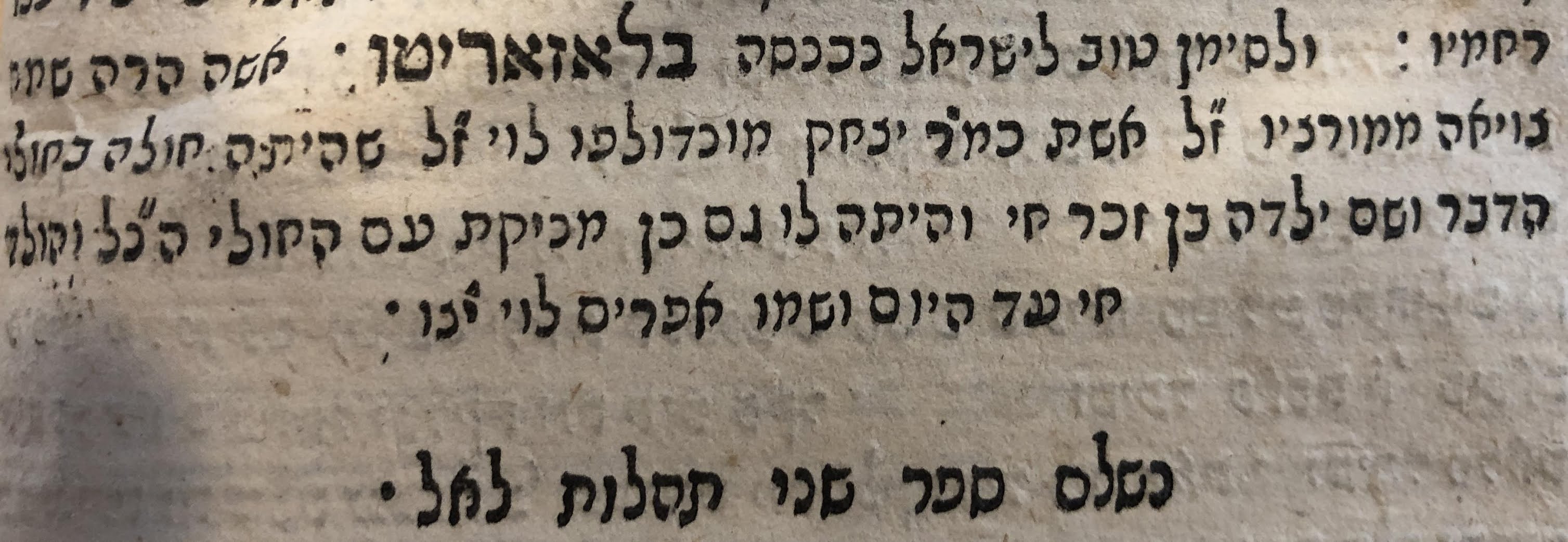
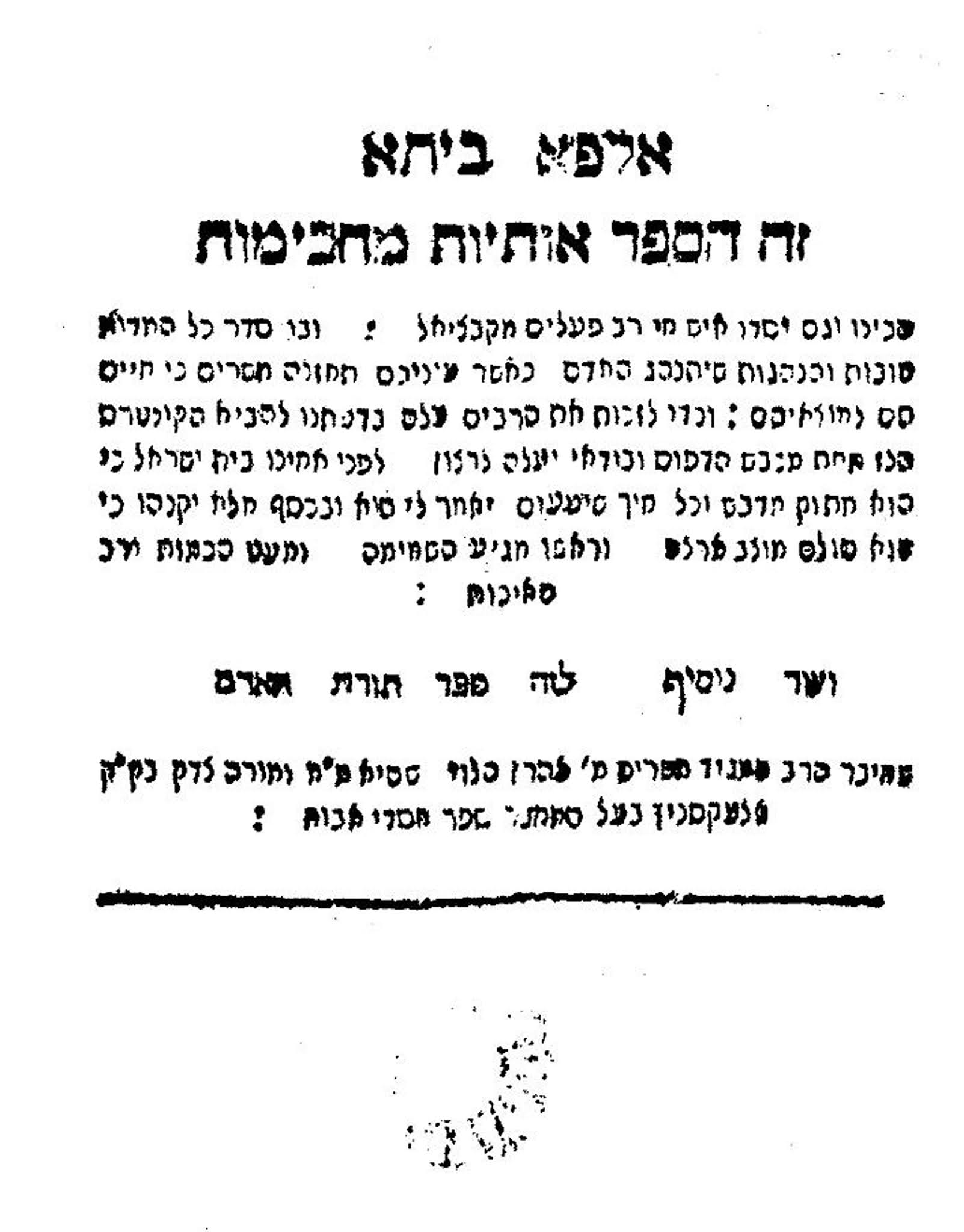
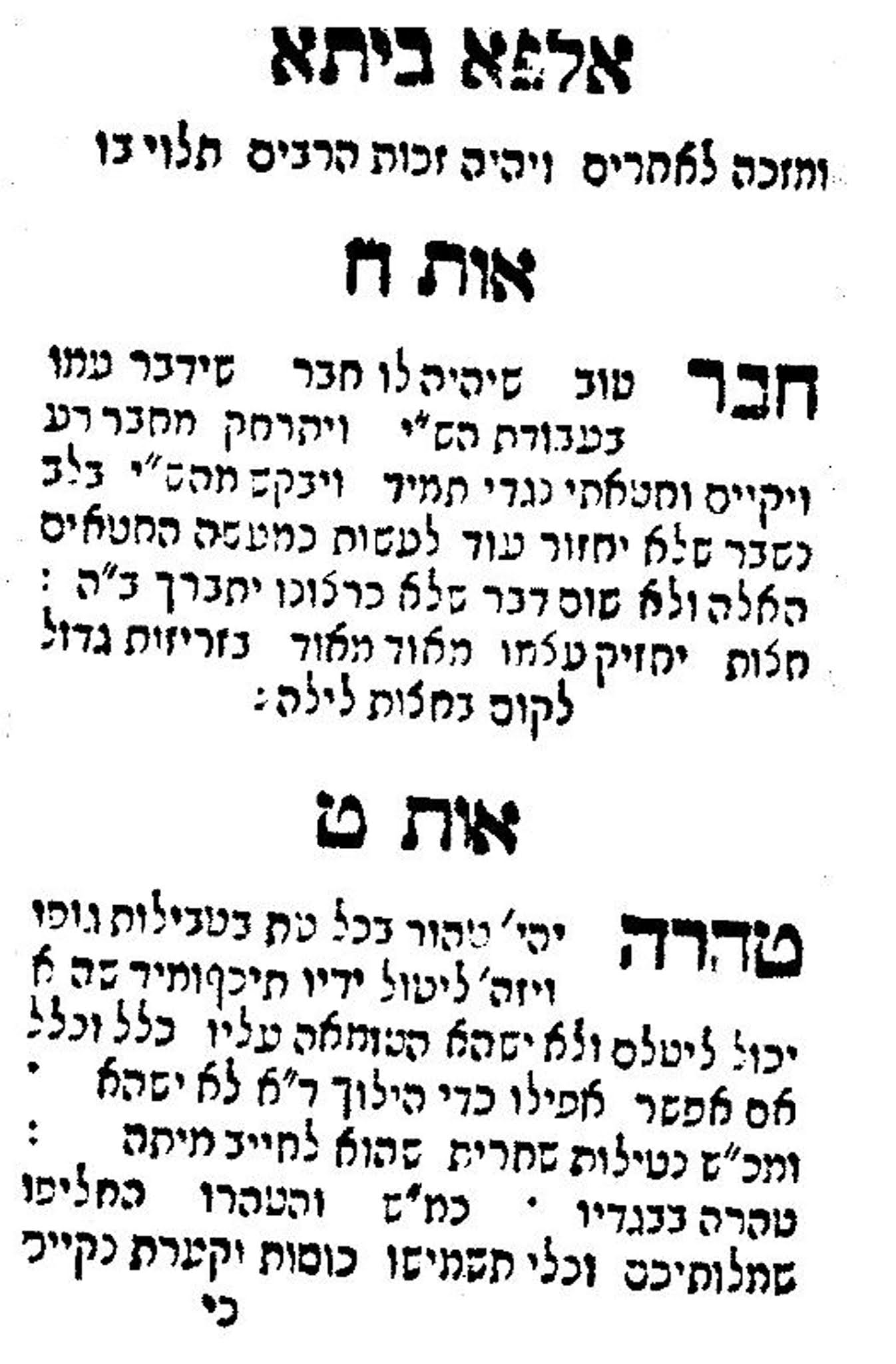
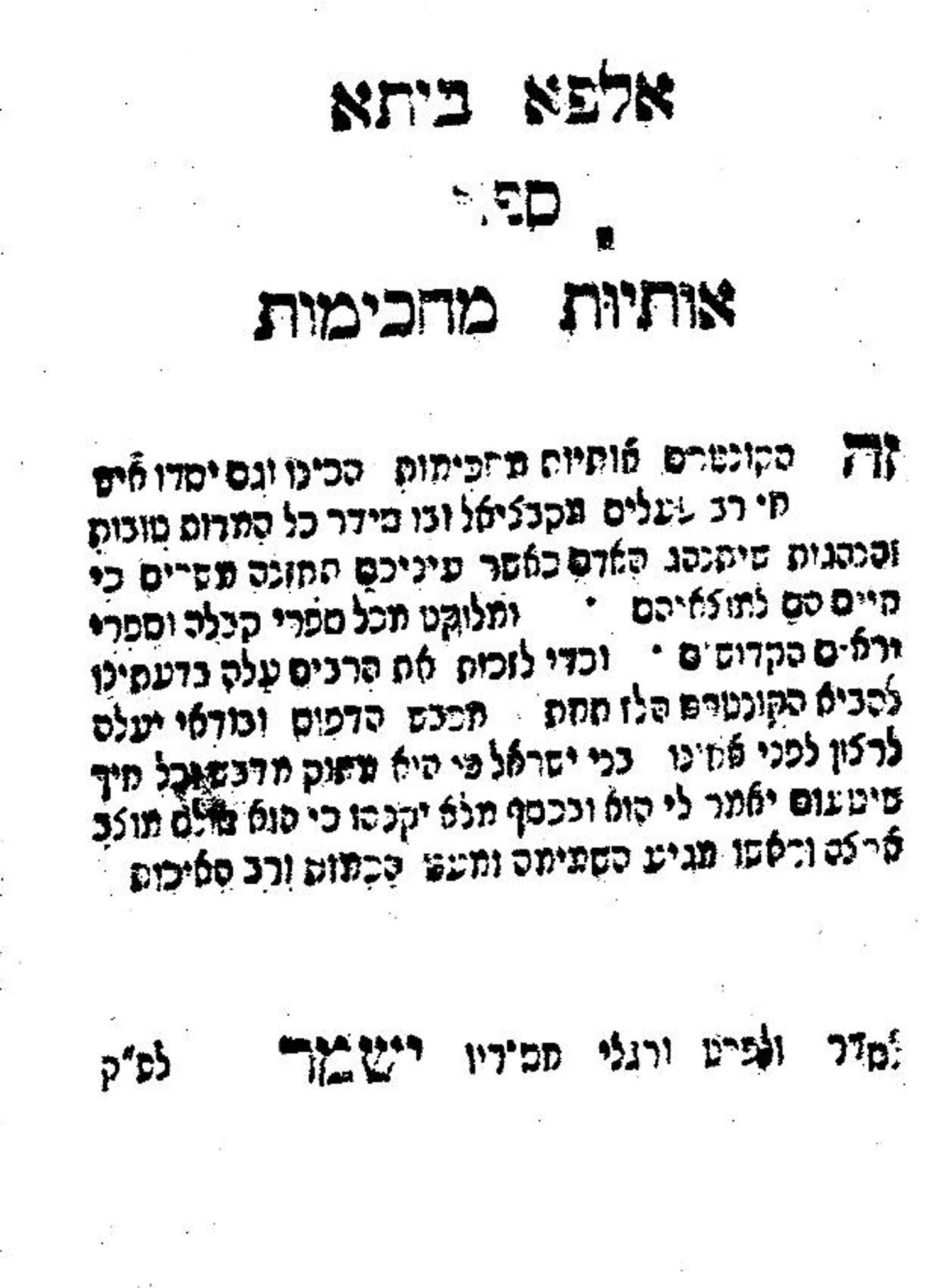
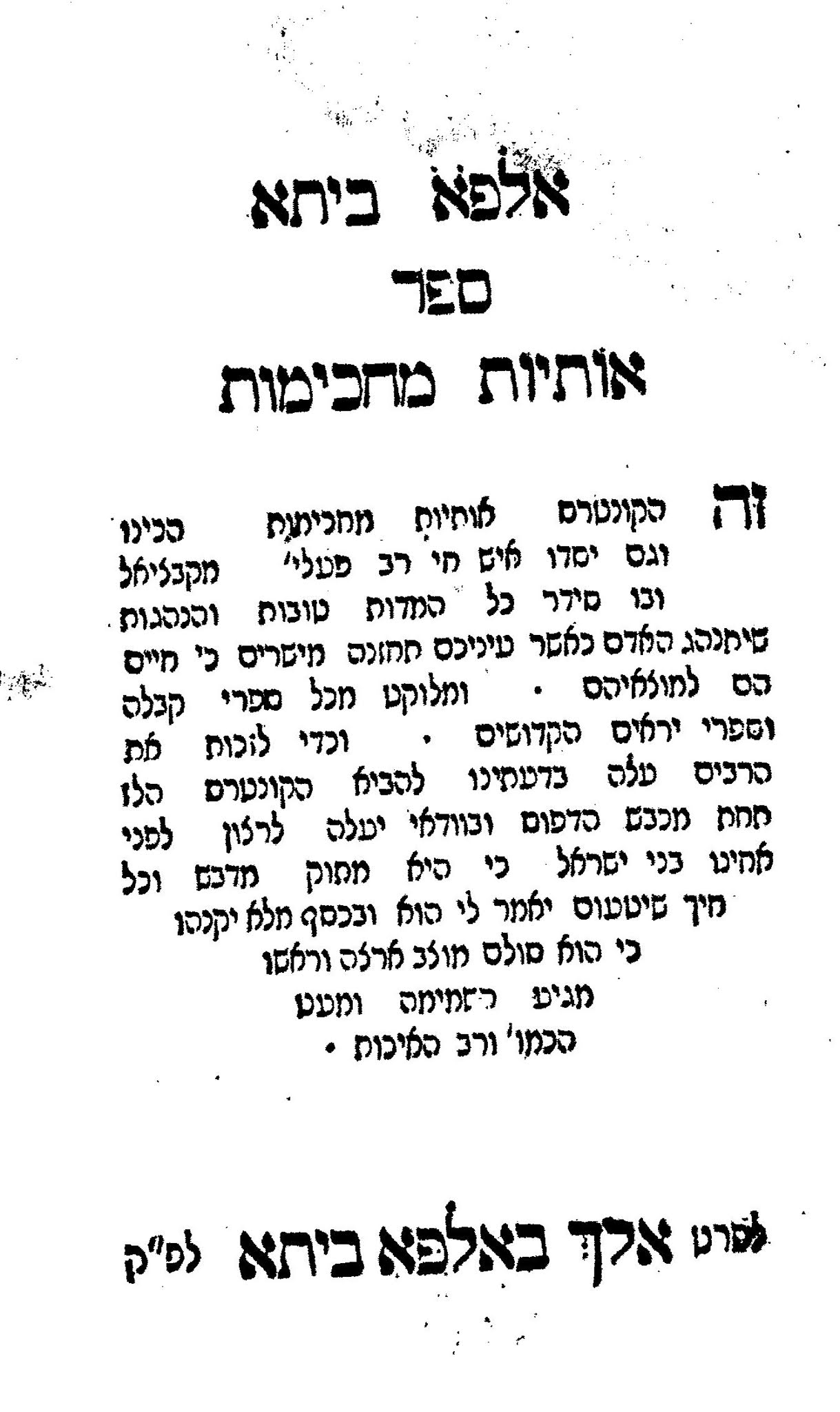
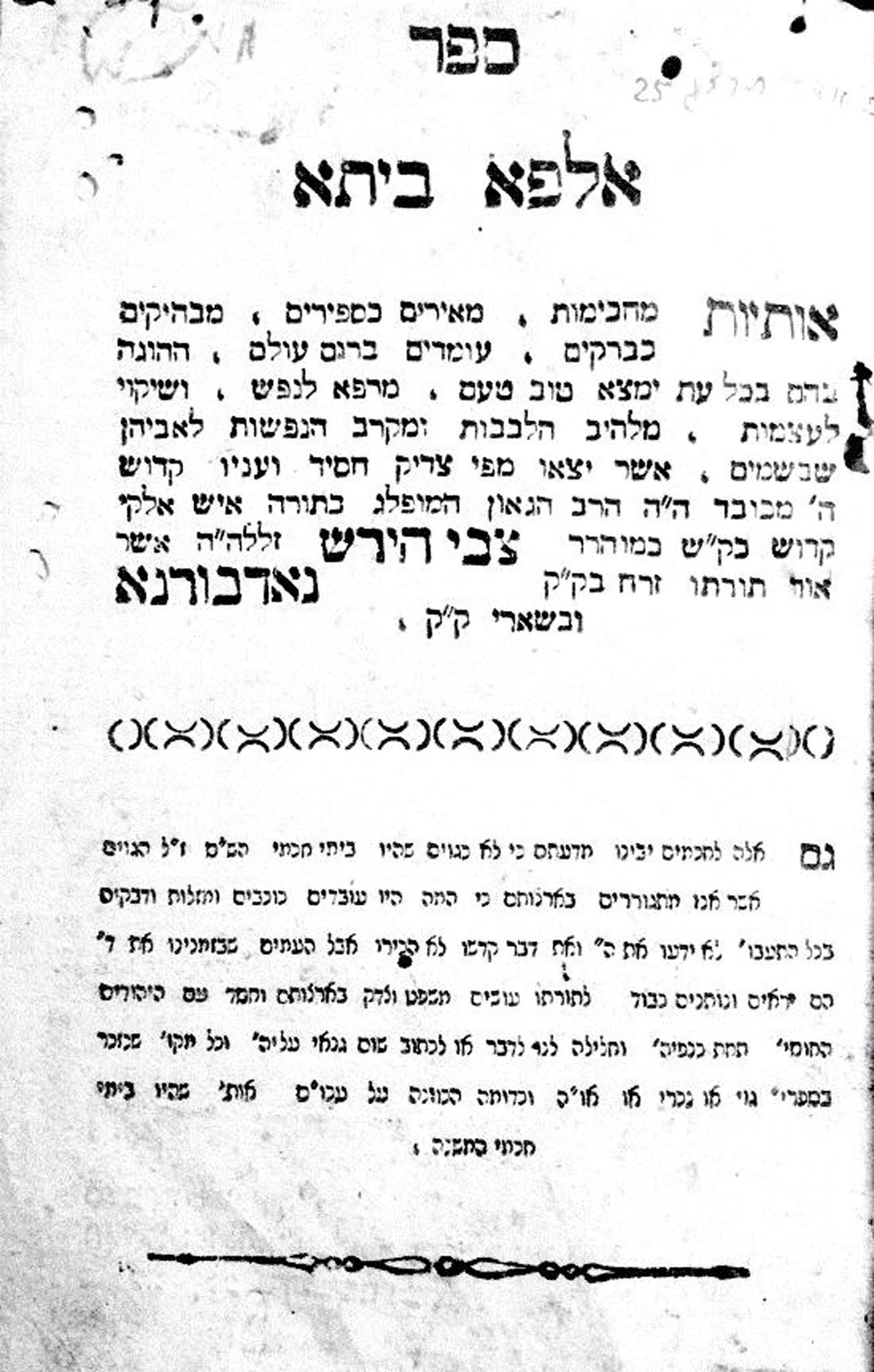
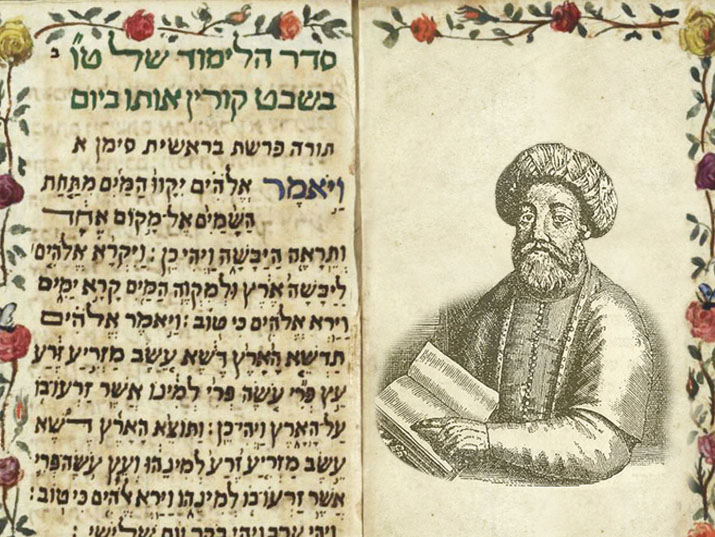
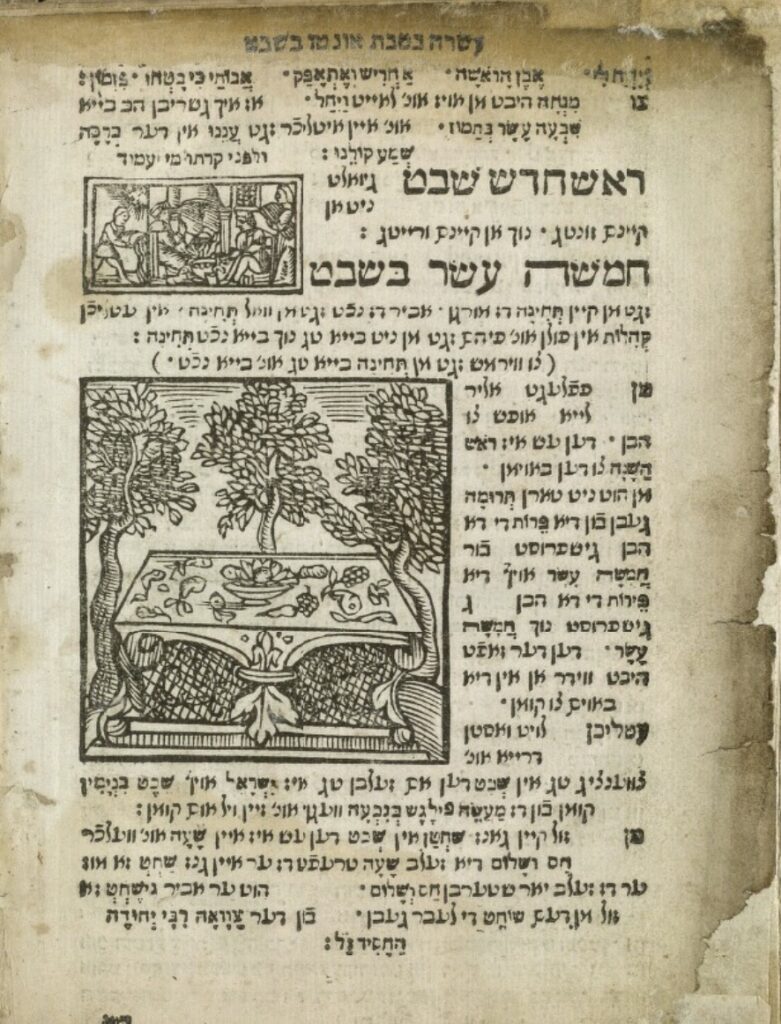
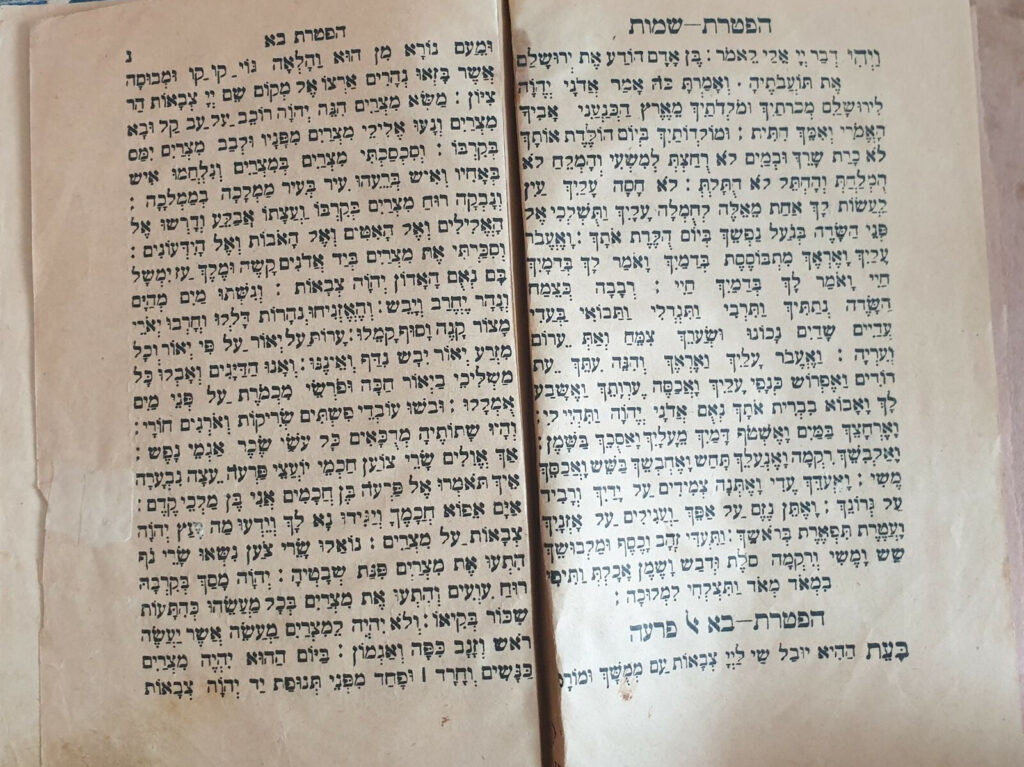
R. Yosef Shabbtai Farhi published a book titled Nora Tehilot in Livorno 1864.[3] On the title page the author states he has translated the book of Esther into colloquial Arabic (“ולכן נתתי אל לבי… להעתיקה בלשון ערבי”) and included a piyyut in Arabic authored, so he claims, by Maimonides (“ונפך שפי’ר[4] פיוט בל’ צח ערבי מהרמב”ם ז”ל יפה אף נעים”). However, Farhi provides no information as to the piyyut’s provenance. One wouldn’t be afoul to suspect that, regardless of the piyuut’s origin, its attribution to Maimonides could easily garner sales. Who would pass up a book containing a rare glimpse of the great Maimonides’ poetic creativity? Again later on (31a) the author titles the aforementioned piyyut “בלשון ערבי מהרמב”ם ז”ל מיוסד על פי מאמרי רז”ל על סדר א”ב… לחן אימפיסאר קירו קונטאר”. So what are we to make of this piyyut? Where did Farhi get it from?

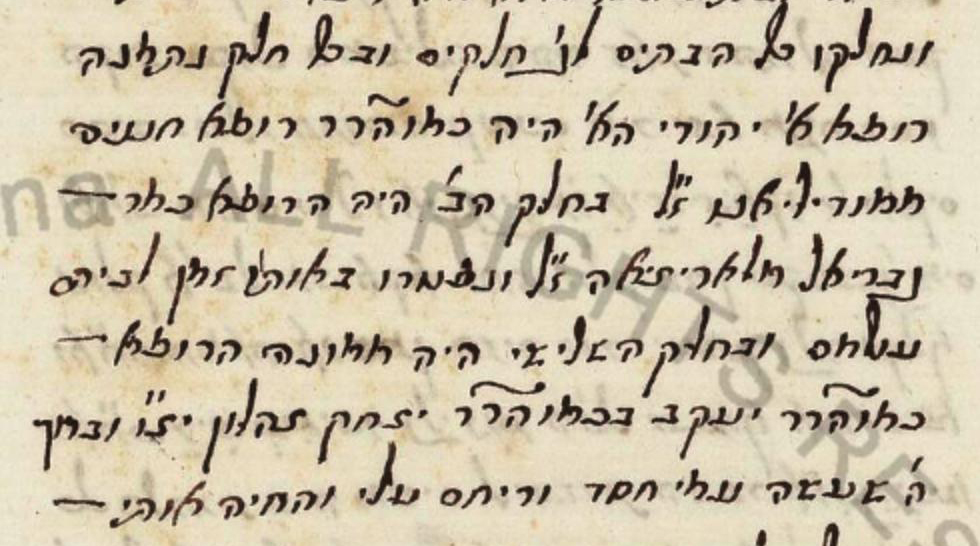
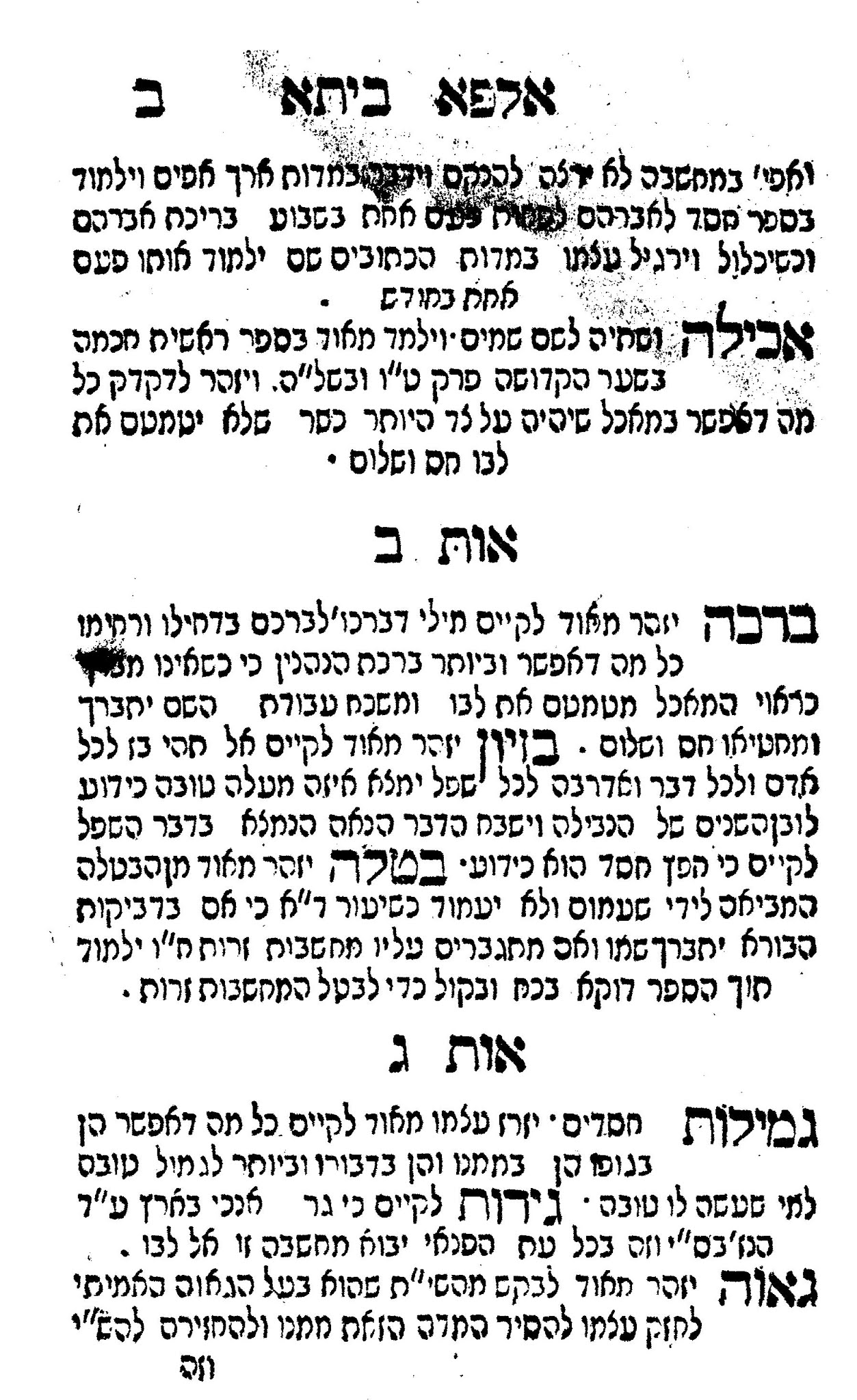
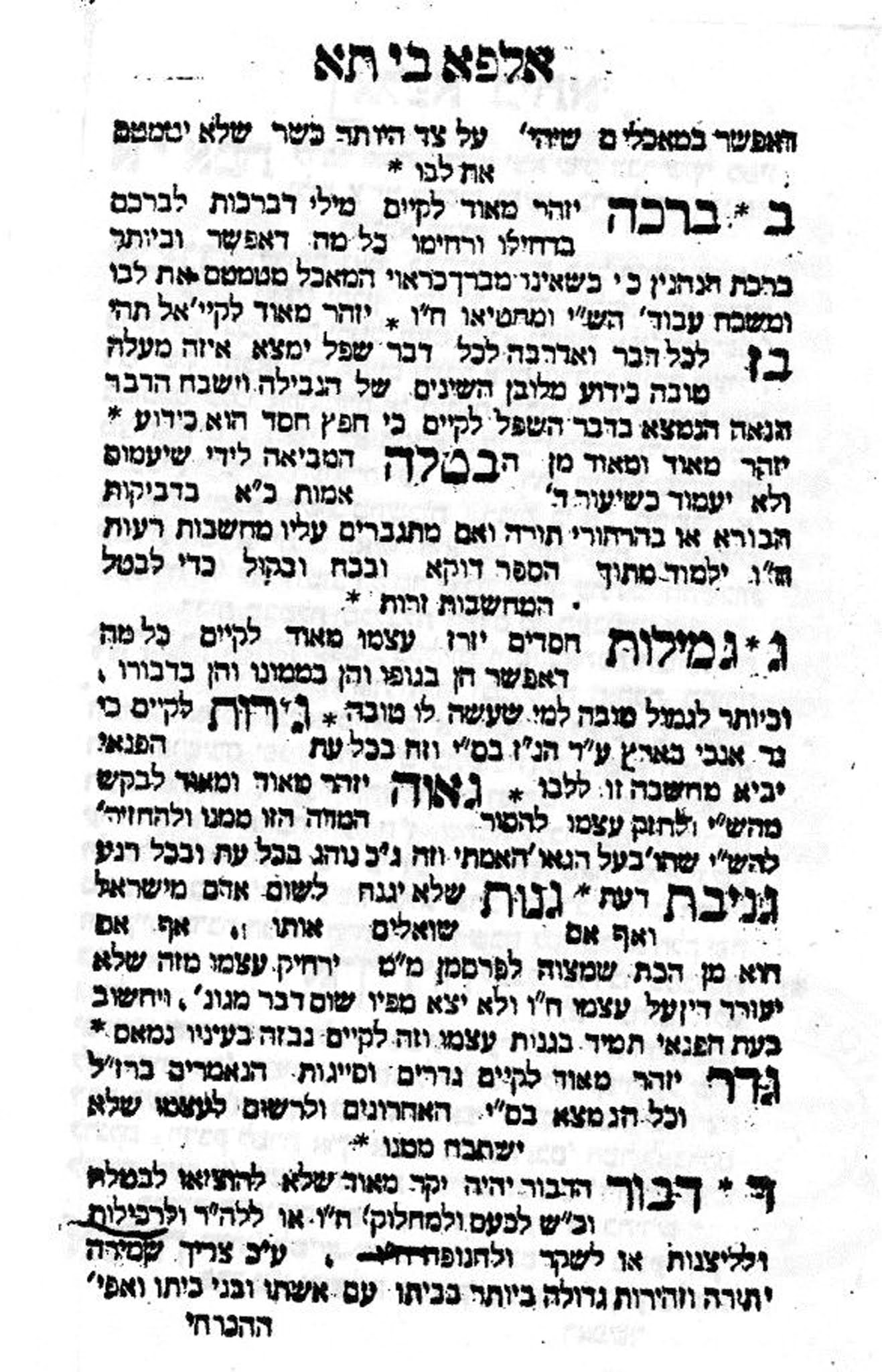
A manuscript housed at the Ben Zvi institute (MS. 1327), dating from a year before Farhi’s book was published, is a handwritten copy of what alleges to be an Arabic translation of Esther authored by Maimonides (“ספר מג'[ילת] אס'[תר] מלערבי הנקרא שרח אל מגלה להר’ משה בר מימון זלה”ה”).[5] At the end of the manuscript (beginning on p. 76) the same piyyut which appears in Farhi’s book is produced here except it lacks any attribution.[6] It could be fair to assume that the copyist only naturally considered the piyyut to be of the same authorship as the translation, Maimonides, although he didn’t state as much. He may have chosen to include it in the manuscript on the belief that it was from Maimonides or he may have harbored doubts as to its authenticity and therefore left it unattributed. In any case, where did this copyist get it from?

Another book titled “פירוש מגלת אסתר בלשון ערבי הנקרא שרח אל מגלה להנשר הגדול ארך הכנפים ורב הנוצה הרמב”ם ז”ל” was published in Livorno 1759 at the behest of Abraham b. Daniel Lombroso.[7] At the end of the first paragraph (2a) it reads: “ואל שרח משחר אליה מלקוטין מן כלאם רבותינו ז”ל ואל תלמודיין אל בבלי ואל ירושלמי” (loosely translated: a translation based on an anthology of both Talmuds). At the conclusion of the translation a number of piyyutim by various authors are produced. One of those piyyutim are evidently of anonymous authorship and simply titled “פיוט בלשון ערבי מיוסד על פי מאמרי רז”ל לחן אינפיסר קיירו אקונטאר” (p. 46a).

With no older documentation of this piyyut, I can only guess that one -possibly Farhi himself- hastily assumed an Arabic poem, appended to an Arabic translation authored, allegedly, by Maimonides belonged to him as well and consequently formalized the attribution.

Addendum

In 1845 Michael Sachs wrote that he was skeptical about Maimonides’ involvement and authorship of poetry.[8] About a year later, in a letter to Sachs upon receiving his book, Samuel D. Luzzatto argued with one of Sachs’ points regarding a particular piyyut ascribed to Maimonides and then marshaled evidence from R. Shimon b. Tsemaḥ (Duran) in his Magen Avot p. 84[a] where it is evident that Maimonides wrote two other piyyutim. However, Luzzatto added, the word “הרמב“ן” in Magen Avot is a printing error and should read “הרמב“ם”; [9] more on this below. Years later, in 1854, Shneur (Senior) Sachs repeated the notion of Maimonides’ aversion to composing poetry and maintained that all which we have from him is a single piyyut.[10] Eliezer Landshuth further attempted to set the record and addressed the later Sachs in his book, quoting Shadal and his emendation to the text of the Magen Avot.[11] I won’t go on to list a record of all the authors who followed suit in quoting the Magen Avot as a source for Maimonides’ authorship of a couple other piyyutim and will suffice to say that as late as the early 1900s Meir S. Geshuri asserted the same claim[12] and he was likewise cited by the celebrated Hayyim Schirmann.[13]

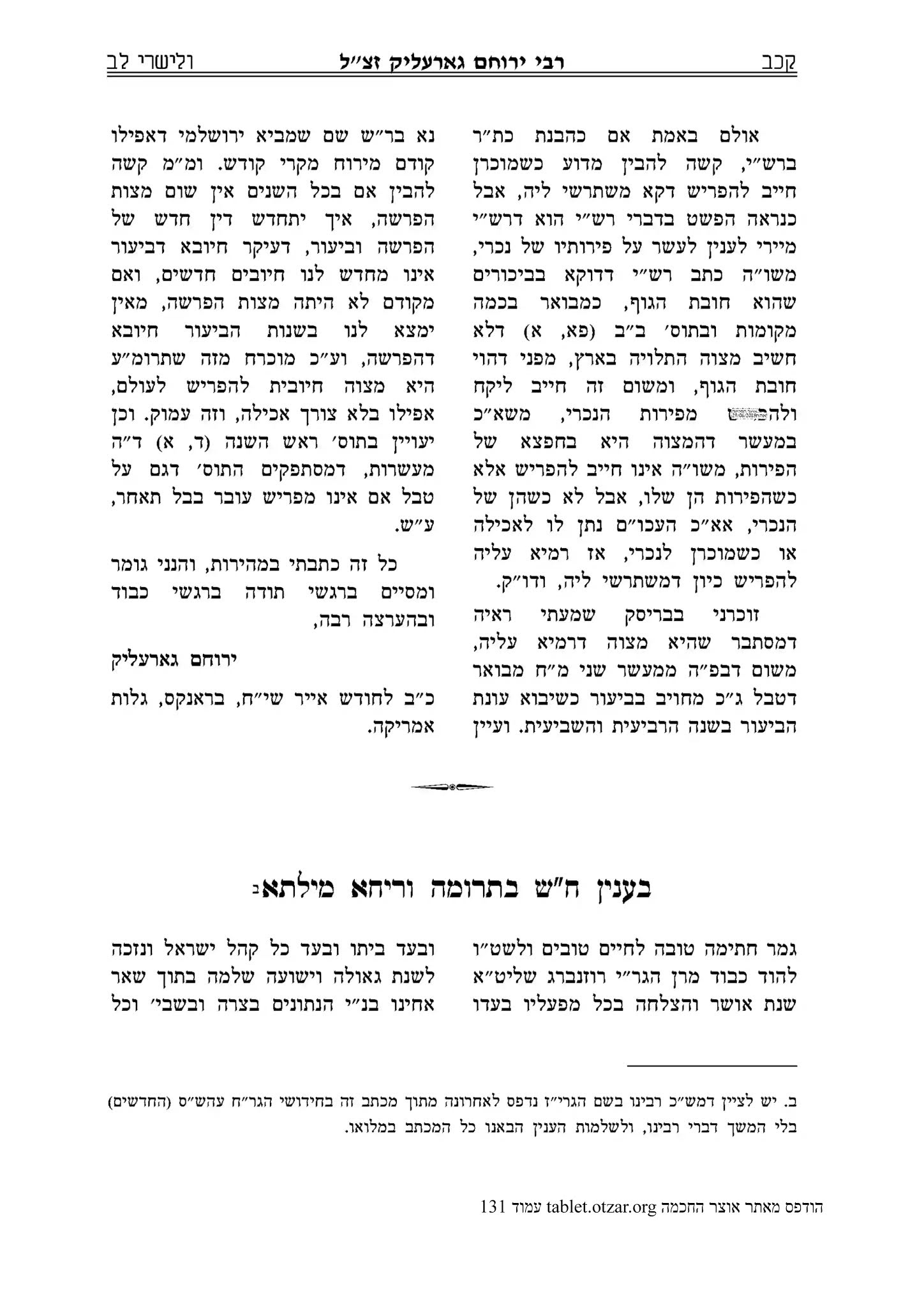
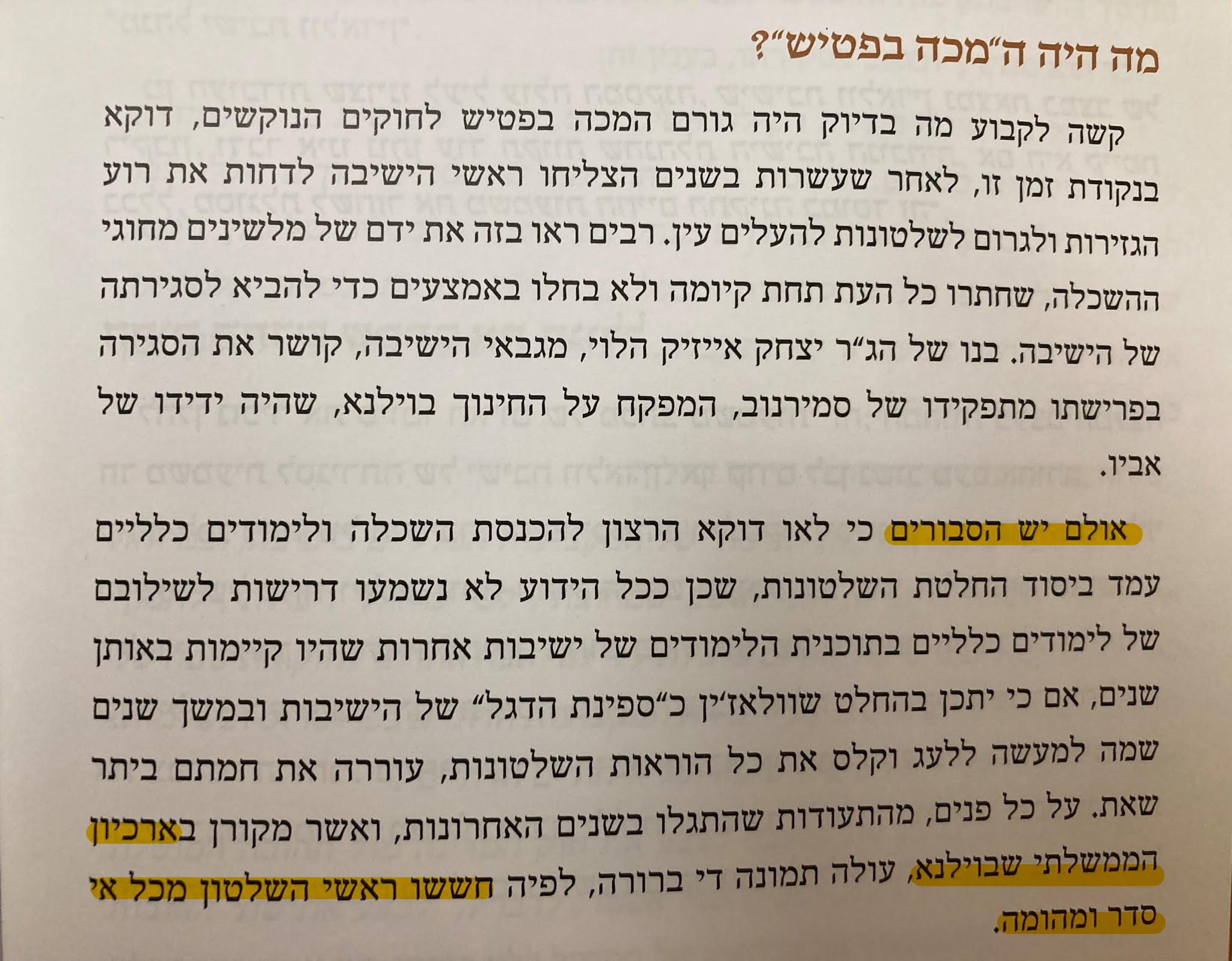
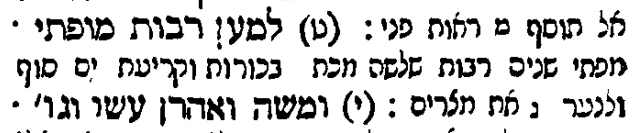
The Magen Avot was first published in Livorno 1785. Here[14] is the page:

Alternatively, here is the text:

כבר כתבתי כי הן הם דברי הרמב”ן בה’ יסודי התורה וכן כתב בתשובה שהנפש צורה בלא גולם ולא גוף אבל זוהר וגזרה ומקור הדעת ואינה צריכה לגוף לפי’ … אבד הגוף לא תאבד היא אלא עומדת בעצמה וקיימת כמו מלאך ונהנית באורו של עולם והוא עה”ב וכן יסג הוא ז”ל במחרך א’ בך רוח בשם נקבה חיה כשגל נצבה. ממקור החיים חוצבה. מידעה שגבה. מגלגל שכל שאבה. חכמתה כים רחבה. ייהי הגיית איש לראש. נשמה שרי דרוש. אכן רוח היא באנוש. וכן יסד בגאולה המתחלת אמרו בני אלהים כמה אתן לפועלי צדק וגם אני מכם מה לבני שאול ולי. וכן בפיוט יפתה עלמת לא נודע מי יסדו אבל אומר כי המיסד סוח יענים יסדו שאומר כי ירמיה יסדו אכל נראה שחכם גדול היה דבר באותו פיוט בסוד הנשמה ובבית א’ אומר על הנשמה שאלה חופש מאשר עובר בה יחלה יום להנפש בו ואל תכבד העבודה כי יסוד נפש חי כלי אובד יום פרידה כאשר קדמת הגוף יהי נמצא הוא קדומה אך לפי תומת מעשיה נרצה או זעומה

Besides for the unintelligible sentences and typos, the most glaring error is, as Shadal and others called attention to, the printing error of רמב”ן instead of רמב”ם. Now, if that’s all one corrects it is now conceivable that Duran ascribed to Maimonides the piyyutim which he mentioned. Somewhat surprising, or not, is that the same errors appear exactly so in the newer edition of Magen Avot published by Mechon HaKtav in Jerusalem 2007, despite the publisher’s claim of it being critically edited.[15]

Of the different manuscripts I consulted in determining the original text only one had a different and coherent read. This manuscript is estimated to be from 15th-16th century and is housed in The Royal Danish Library.[16] In order to grasp the flow of the material it is necessary to include the preceding paragraph (in the image above, it begins four lines above the yellow box). Following, is my transcription of the manuscript:

וכן החכם ר׳ אברהם ז״ל כתב בפי׳ קהלת כי מה שאמ׳ והרוח תשוב אל האלהים אשר נתנה סותר דברי האומרים שהנפש מקרה שהמקרה לא ישוב וכן נראה שזה הוא דעתו כי כתב בפי׳ תלים כי הנפש והנשמה והרוח שם אחד לנשמת האדם העליונה העומדת לעד ולא תמות ונקראה נפש גם רוח בעבור שלא תראה לעין כי אם אלה וכן כת׳ בפרש׳ כי תשא ובכל מקום קורא אותה נשמה עליונה כמו שכתב בפרש׳ ואלה המשפטים ר״ל כי היא אינה מושגת אלא מצד פעולותיה הנקראים נפש ורוח רואה החכם ז״ל כי הנשמה יצאו ממנה כח ההזנה הנקרא נפש וכח ההרגש הנקרא רוח אבל הוא עצם אלהי לפי הנראה מדעתו ולא הכנה לבד. וכן יסד הוא ז״ל במחרך אחד בך רוח בשם נקבה חיה כשגל נצבה ממקור אור יוקבה מצור החיים חוצבה מי דעה אותה שגבה מגלגל שכל שאבה חכמתו היא רחבה ויהי בגויית איש לראש נשמה שדי דרוש וכן רוח היא באנוש. וכן יסד בגאולה המתחלת אמרו בני אלהים במה אתן לפועלי צדק וגם אני מכם מה לבני שאול ולי. וכבר כתבתי כי כן הם דברי הר״ם במז״ל בהלכות יסודי התורה. וכן כתב בתשובה שהנפש צורה בלא גולם ולא גוף אבל טהר וגזרה ומקור הדעת ואינה צריכה לגוף לפי׳ כשיאבד הגוף לא תאבד היא אלא עומדת בעצמה וקיימת כמו מלאך ונהנית באורו של עולם והוא עולם הבא וכן בפיוט יפתה עלמת לא נודע מי יסדה אבל אומרי׳ כי המיסד סורו יענים יסדו אשר אומרים כי ירמיה הנביא יסדו אבל נראה שחכם גדול היה דבר באותו פיוט בסוד הנשמה ובבית אחד אומר׳ על הנשמה שאלה חופש מאשר עובד בה יחידה יום להנפש בו ואל תכבד העבודה כי יסוד נפש חי בלי׳ אובד יום פרידה באשר קדמת גוף יהי נמצא היא קדומה אך לפי תומת מעשים נרצה או זעומה

As observed by others, we see that the correct reading is רמב”ם instead of רמב”ן. But most significantly, we see that some lines from Duran’s discussion of Abraham ibn Ezra’s view [regarding the nature of the soul] were transposed to after the mention of Maimonides, giving the impression that “וכן יסד הוא ז”ל” and “וכן יסד” refers to Maimonides, thereby leading scholars to believe that Duran attributed these piyyutim to Maimonides. Indeed the quoted muḥarrakh[17] “בך רוח” and the geulah[18] “אמרו בני אלהים” are both compositions of ibn Ezra.[19] In conclusion, the basal support, which for years scholars have pointed to for evidence of Maimonides’ rôle as a poet, is negated.

At this point we should make mention of the last piyyut which Duran notes that “some say Jeremiah authored, nevertheless it’s apparent a great sage spoke it”. This piyyut, also of the muḥarrakh genre, has since been identified as being authored by R. Joseph ibn Zaddik (11-12th century) and subsequently published in a collection of his piyyutim.[20]

As I attempted to have this brief essay completed in time for Purim I lay here the pen and hope to return to a discussion of a perplexing and elusive piece quoted by Duran.

[1] See, however, Isadore Twersky, Introdution to the Code of Maimonides (New Haven & London 1980), 250 fn. 29.
[2] Cf. Hayyim Schirmann, Toldot HaShirah Ha’Ivrit BeSfarad HaNotsrit Ubederom Tsarfat (Jerusalem 1997), 280 fn. 6 for bibliographical references. See also addendum below.
[3] https://hebrewbooks.org/34131
[4] A play-on-words of Ex. 28:11 “והטור השני נפך ספיר”; with ‘שפיר’ meaning ‘good, fine’.
[5] See the journal Sarid U’palit (R. Yaakov Moshe Toledano, Tel Aviv n.d.), i p. 65 and Perush Megilat Esther LeHanesher HaGadol Rabbenu HaRambam (trans. Yosef Yoel Rivlin, Jerusalem 1952 [in a note to the latter’s preface 1943 is given as the publication year for Toledano]). Toledano believed this to be an original translation by Maimonides and only alluded to anonymous gainsayers. See however Hartwig Hirschfeld’s critical analysis of the translation in his essay Notiz uber einen dem Maimuni untergeschobenen arabischen Commentar zu Esther (Semitic Studies in Memory of Rev. Dr. Alexander Kohut, Berlin 1897) 248ff. Per Toledano’s dismissal of the translation belonging to Rabbi Maimon, Maimonides’ father, on account of a quote not found in the respective translation, cf. Tiferet Yisrael (R. Shlomo b. Tsemaḥ Duran, Venice c. 1600) 118b, quoting an Arabic translation, which according to his father, was authored by Rabbi Maimon.
[6] https://www.nli.org.il/en/manuscripts/NNL_YBZ000115506/NLI#$FL31920894
[7] https://www.nli.org.il/en/books/NNL_ALEPH001773455/NLI . Cf. above, fn. 5.
[8] Die religiöse Poesie der Juden in Spanien (Berlin 1845), 204.
[9] Ozar Nechmad (Vienna 1857), vol. 8 p. 27. Shadal’s letter is dated 26 Kislev 1846. Leopold Zunz likewise suggested the correction, Literaturgeschichte der synagogalen Poesie (Berlin 1865), 478.
[10] Kerem Hemed (Berlin 1854), viii p. 30.
[11] Amude Ha-Aboda (Berlin 1857), 230.
[12] Rabbenu Moshe ben Maimon, ed. J.L. Fischman (Tel Aviv 1935), 289.
[13] Toldot HaShirah Ha’Ivrit BeSfarad HaNotsrit Ubederom Tsarfat (Jer. 1997), 281 fn. 9; see also Yosef Tobi in Ben ‘Ever La’arav (Tel Aviv 2014), vii 83 fn. 148. Regarding the halachic texts of Maimonides and the Geonim which Tobi cites to demonstrate Maimonides’ assailment of poetry, cf. Boaz Cohen’s Law and Tradition in Judaism (New York 1959), 167ff.
[14] https://hebrewbooks.org/pdfpager.aspx?req=9446&st=&pgnum=171&hilite=
[15] https://hebrewbooks.org/pdfpager.aspx?req=39932&st=&pgnum=552
[16]  http://www5.kb.dk/manus/judsam/2009/sep/dsh/object21822/en/#kbOSD-0=page:174
[17] Arabic for ‘mover’; alternatively, ‘prompter’. Of Spanish style, and often employed by ibn Ezra, the muḥarrakh was usually recited before a reshut for Nishmat Kol Ḥai. On the reason for the given name, cf. Ezra Fleischer’s Shirat Hakodesh Ha’ivrit Beyeme Habenaim (Jerusalem 1975) 399-400, Leon J. Weinberger’s Jewish Hymnography (London & Oregon 1998) 436, Peter Cole’s The Dream of the Poem (Princeton University Press 2007) 537 and an original theory suggested by Ephraim Hazan in Tarbiz (Jerusalem 1977) xlvi 323.
[18] The concluding piece of a Yotser sequence.
[19] The former was published in toto in Jacob Egers’ Diwan LeRabbi Avraham ibn Ezra (Berlin 1886), 21 fn. 67 [beginning “אל מתנשא על כל לראש”], but confused, and thence omitted, by Israel Davidson in Otsar HaShirah VeHapiyyut (New York 1970), i n. 3854 with another “אל מתנשא” incorrectly supplying Egers as a source. Davidson’s reference to David Rosin’s Reime und Gedichte des Abraham ibn Esra (Breslau 1887) “ב 16”, does not yield our piyyut and appears to be incorrect. The latter was published, most recently, in Avraham ibn Ezra – Shirim, ed. Israel Levin (University Tel Aviv 2011), 191; here and other editions have “במה אתן לפועלי חסד ואם אני…” unlike Magen Avot. Cf. Egers, ibid., 165 n. 198; translated into English in Leon J. Weinberger’s Twilight of a Golden Age (University of Alabama Press 1997), 246ff.
[20] Yonah David, Shire Yosef ibn Zaddik (Israel 1982), 55 and elegantly translated into English by Peter Cole, ibid., 139.


No, Achashverosh Never Served a Stable-Boy

No, Achashverosh Never Served a Stable-Boy

Yaakov Jaffe

Writings about Purim from virtually every stripe make reference to a well-known myth that Achashverosh, King of Persia, rose to power from being a former stable-boy. A simple google search yields dozens of online results for this myth, some in passing and others expanded,[1] some academic[2] and others some more traditional;[3] some on blogs and others in books.[4] Yet, it seems that these references to Achashverosh the stable-boy are all rooted in a common mistranslation of the Talmud in Megilah.

This essay will investigate the myth that Achashverosh was a stable-boy from a bibliographical, traditional, and textual perspective, and not from a Biblical, historical, or archeological perspective. Our goal is not to prove – based on historical or archeological evidenced – that a king of Persia did or did not rise to power from the stables; it is to analyze whether Jewish tradition has such a view about one specific king of Persia.

Before looking at the key texts, we should note two important factors in this midrash about Achashverosh and reasons to be skeptical about it:

  1. Most Midrashim are grounded in some Biblical textual evidence. Haman comes from Amaleik as he is “Agagi” the name of the prior king of Amaleik; the king’s party recalls the exile from Jerusalem as Mordechai’s exile from Jerusalem and the subsequent dispersal of all Jews is a leitmotif across the megillah. But there is no textual evidence anywhere in Tanach connecting Achashverosh with stables or horses.

  2. Many of the Midrashim related to Megilat Esther, find numerous echoes across the many Midrashic texts about Esther – the Midrashim in the Talmud (Megilah 11-17), Esther Rabba, and the two Targumim to Esther. Indeed, the idea that Haman came from Amaleik or that the king’s party and garments related to the temple appear numerous times across the many Midrashim. Yet, outside of the gloss of one line in the Megilah found in Talmud Megilah, the other extended Midrashic tradition never develops the idea of the king who was once a stable boy.

We should already therefore be skeptical whether the Jewish Midrashic tradition treats Achashverosh as a former stable-boy or stable-mater. Closer inspection of the Talmud reveals that the Talmud, itself, seems also to not consider him a former stable master, either.

Megilah 12b

The Talmud reads as follows (Megilah 12b):

“ויקצף המלך מאד” אמאי דלקה ביה כולי האי? אמר רבא, שלחה ליה “בר אהורייריה דאבא אבא ‘לקבל אלפא חמרא שתי‘ ולא רוי; וההוא גברא אשתטי בחמריה.” מיד “וחמתו בערה בו

This Talmudic quote begins and end with the same verse in Megilat Esther (1:12), that the king became very angry, and his anger burned hot within him. In between the quotes from the Megillah, the Talmud wonders why the king became so angry, and answers that it was because his first wife Vashsti had sent a particularly egregious insult in his direction. The thrust of the insult is that Achashverosh had gotten drunk, intoxicated after a little bit of wine, but that a greater figure from Vashti’s own family had the capacity to drink wine in the presence of 1000 other people[5] and not become drunk. Essentially, the king’s virility is insulted through his inability to consume large quantities of alcohol. The queen has successfully insulted her husband the king, but without invoking stables or horses.

But is there a second insult here as well? The insult includes an unusual Talmudic word “בר[6] אהורייריה” that appears to be part of the criticism. The word is used in only one other occasion in the Talmud (Bava Metziah 85a and its verbatim parallel in Shabbat 113b), and its meaning is not clear in that context either. The traditional translation of the word is that the אהורייריה runs the stables of a king or another wealthy individual, and so explain Rashi (to Megilah,[7] Bava Metziah, and Shabbat[8]) and Aruch (אהורייר).[9]

As a result, Soncino and most Talmudic translations take the reference to stables to be a second insult:

She sent him back answer: Thou son of my father’s steward![10] My father drank wine in the presence of a thousand, and did not get drunk, and that man [=Achashverosh] has become senseless with his wine. Straightway, his wrath burnt within him.

Clearly, this translation is the basis of the view that Achashverosh served as a stable-master prior to becoming king. Yet, the translation should give us pause for grammatical reasons. At the start of Vashti’s answer, Achashverosh is addressed directly “Thou son of my father’s steward!” But at the end, he is referenced coldly in the third person as “that man.” The shift from the second to the third person renders the sentence clunky and difficult to read. We have already been skeptical of this view to begin with, and the feel of the translation seems to be lacking somehow.

Comparatives and Stable-Masters

The wider context of the Talmud in Bava Metzia is a conversation about the great wealth of Rebbi Yehudah Ha-Nasi. His wealth is demonstrated using a comparative sentence, contrasting Rebbe’s great wealth, with the wealth of the Persian King Shapur. The comparative sentence follows the structure that the stable masters of Rebbi were wealthier than King Shapur. The stable master is not an actual person who exists in the story, the stable master provides an even more extreme basis of comparison: not only was Rebbi great, even his stable-masters were great! We can diagram as follows:

“a”

Were more “Y”

Than “b”

אהורייריה דבי רבי

הוה עתיר

משבור מלכא

The stable master of Rebbe

were wealthier

than King Shapur

This suggests that referring to a wealthy individuals stable masters is a turn of phrase to indicate how great the wealthy person’s attendants were, and not an actual fact or reference about his stables, horses, or mules. Indeed, a similar quip appears also in Hebrew regarding the comparison between the mules of Yitzchak and king Avimelech (Bereishis Rabba 64:7 cited by Rashi 26:13), “the dung of the mules of Yitzchak, and not the gold and silver of Avimelech (see Ritva Bava Metziah).

Having deduced this special אהורייריה sentence form, which is a special comparative for a very wealthier or powerful individual, suggests a different punctuation of the Gemara in Megillah, consisting of one insult not two:

“a”

Were more “Y”

Than “b”

אהורייריה דאבא אבא

חמרא שתי ולא רוי לקבל אלפא

וההוא גברא אשתטי בחמריה

The stable master of grandfather

Drank more and did not become intoxicated

Compared to that man who has become intoxicated

Punctuated not בר אהורייריה דאבא! אבא ‘לקבל אלפא חמרא שתי‘ ולא רוי, וההוא גברא אשתטי בחמריה

But בר אהורייריה דאבא אבא ‘לקבל אלפא חמרא שתי‘ ולא רוי, וההוא גברא אשתטי בחמריה

In this view, the only insult was that the stable master of Vahsti’s grandfather could hold his alcohol better than Achashverosh could. The virility of her grandfather’s lowly stablemaster demonstrates how greater her grandfather was. This translates fits the grammar of the sentence in Megilah better, and has the added benefit of not inventing a new Midrash that Achashverosh served as a stable master. Indeed, one version of the Talmud in megillah reads: בר אהורייריה דאבא ‘לקבל אלפא חמרא שתי‘ ולא רוי וההוא גברא אשתטי בחמריה, and in this version the deletion of the second word “aba” necessitates our reading as well: my parents stable master drunk before 1000..

Which ancestor of Vashti’s was worthy of a boast?

Our reading of the Talmud confers yet another benefit, besides its consistency with the rest of Midrashic literature and its conformity to the grammar and sentence structure of the Talmud. It shifts the queen’s boast from her father Belshatzar, to her grandfather Nevuchadnetzar. The Talmud and Midrash often present Vashti as the granddaughter of Nevuchadnetzar; see Megilah 10b where as part of two separate drashot, one from Isaiah 14 and one from Isaiah 55, she is called the granddaughter of Nevuchadnetzar. Targum Esther 1:11 also refers to “Nevuchadnetzar Avuy de-aba,” her grandfather.[11] Associating her more with her grandfather than her father is sensible, because Nevuchadnetzar is a heroic, conquering figure throughout Tanach – expanding territory, exiling the Jews, “even the beasts of the field I have given to him” (Jeremiah 28:14). Nevuchadnetzar’s sons were not heroic figures, and Belshatzar the second son (see Daniel 5:2, 11, 13, 18, 22[12]) was stricken by fear and then defeated by the Persians in the famous story of the handwriting on the wall (Daniel 5). Thus, when boasting of Vashti’s lineage, it would make more sense that she would boast of the virility of her grandfather more than of her father. Our reading correctly connects her with the great Nevuchadnetzar, and not with his less impressive sons.

The common mistranslation of the Talmud, in contrast, connects the boast to her father, ostensibly Belshatzar.[13] Was Belshatzar known for holding his alcohol? Daniel 5:1 does indicate that Belshatzar was able to drink large quantities of wine, but the balance of the chapter suggests the exact opposite of Vashti’s boast – that he was indeed affected by his drinking, weakened by it, and not that he was strong and able to overcome it. As the last Babylonian king, defeated by the Persians, Belshatzar would be a curious choice to be included in any boast about the strength of the Babylonians.[14]

Vashti’s boast speaks about having the capacity to drink in the presence of 1000 men, a turn of phrase which recalls the party of Belshatzar in Daniel 5. But does the Talmud intend to quote and reference the party and drinking of Belshatzar directly? Or does it just use the turn of phrase that appears in that context? The Torah Ohr Commentary of Yehoshua Boaz to the standard Vilna Shas does not source the quote – implying the Talmud uses the language of the phrase but does not intend to reference Belshatzar’s party. In contrast, Rashi does explicitly connect the words to Daniel 5, implying Vashti boasted of her father Belshatzar’s own virility, and not of the fortitude of the stable-masters of her grandfather Nevuchadnetzar.[15]

Was Achashverosh born into royalty?

One final topic related to the stable-boy myth is the question whether Achashverosh was born into royalty or not. Clearly, had the Talmud referenced humble, stable boy origins, then we would see him as a warlord or ruthless strongman who rose to power from outside. Yet, the Midrashim give no account of him exterminating the previous royal family or rebelling and usurping power from the previous king.

In contrast, Targum Sheni argues that Achashverosh was the son of Darius the Mede;[16] thus even if Beltshatzar was Vashti’s father, Achashverosh would still not be considered a stable master. Midrash Aba Gurion shares this view as well. Yalkut Esther (1049) is also of the view that Achashverosh was born into royalty, and was not her father’s stablemaster – but yet still quotes the boast of the king being unable to hold his alcohol compared to the stablemasters of Nevuchadnetzar. The primary boast stands, whether or not Achashverosh was a stable master.

The story of the stable-boy who rose to become king is an imaginative one that grips the mind and inspires the imagination. Yet, it seems to be a particularly late addition to Rabbinic literature, and one based in its core on a mistranslation of the Talmud.

[1] See https://www.ou.org/holidays/a-literary-analysis-of-the-book-of-esther-based-on-midrashic-comments-and-psychological-profiling/
[2] See Geoffrey Herman “Ahasuerus, the former Stable-Master of Belshazzar, and the Wicked Alexander of Macedon: Two Parallels between the Babylonian Talmud and Persian Sources” AJS Review 29(02):283 – 297 (November 2005), or https://www.thetorah.com/article/ahasuerus-the-son-of-a-stable-master
[3] See Yosef Deutsch, Let My Nation Live (Artscroll, 2002), 23. See also multiple times in the 16th century Bible commentary to Esther of Alshich, the early 19th century commentary on the Talmud “Iyey Hayam” commentary to Megilah 11a, the mid 18th century commentary Rosh Yosef to Megilah 12b, and Vilna Gaon to Esther 1:12-18.
[4] J.T. Waldman, Megillat Esther (Jewish Publication Society, 2010), 16.
[5] It remains unclear both within the Talmud and in the verses in Daniel (5:1) why drinking in the presence of others is a greater feat than drinking in private. Perhaps one drinking in public requires greater fortitude not to be carried away by full intoxication than one drinking in private. Tosafot Ha-Rosh to Megilah explain that the verse means he was the best drinker found among 1000 individuals, not that he drunk wine before 1000.
[6] In some versions of the text in Megilah, this word “son of” is absent. Its presence or absence is largely immaterial for the discussion that follows.
[7] See Rashash and Ein Yaakov. Rashi should read שומר סוסים and not שומרי סוסים in the plural. This is also the text of Rashi in the 1714 Amsterdam printing.
[8] Adding horses or mules.
[9] As a proof, he cites Targum to Yeshayahu 1:3.
[10] Whether we refer to a steward or stable-master, the position is similar. Jastrow’s dictionary also reads “thou, son of my father’s steward.” Jastrow believes the word derives from horrearius (a storehouse), and not from horse. Yet, the proof from Targum Yeshyahau suggests that the position involves care of animals and not just general storage.
[11] Targum Esther believes her father was Nevuchadnetzar’s first son Avel-Merodach, who also appears at the end of the book of Melachim.
[13] The sheer number of times he is called Nevuchadnetzar’s son suggest that he was actually his son, and not his grandson, and this is the view of Megilah 10b. Some versions of Seder Olam (28) say Belshatzar was Avel Merodach’s son. There is considerable confusion on this point. Contrast for example Rashi to Daniel 5:1 and Yeshayahu 14:22 with Rashi Yirmiyahu 27:7 and Chabakuk 2:5. For our purposes, we recall that we are less interested in factually determining the relationships based on the historical record, than we are in establishing how the Talmud would have understood the Belshatzar-Vashti-Nevuchadnetzar relationship.
[13] Many midrashim consider her the daughter of Belshatzar, and this is the sense one gets from Megilah 10b, but not from Targum 1:1 (who says she is the daughter of Avel-Merodach). Targum Sheini also appears to connect her to Avel Merodach and not Nevuchadnetzar.
[14]
 Targum Sheini does connect the boast to Belshatzar, however. Yet, see previous note.
[15] One cannot tell definitively how Rashi read the Gemara. A number of earlier Midrashim, both seemingly working off of the Gemara and glossing it offer the translation later associated with Soncino (Midrash Aba Gurion [see also] and Midrash Lekach Tov). The exact date and provenance of those Midrashim is not fully known, but they appear to be post-Talmudic.
[16] There is much controversy about the identity of Darius the Mede, who is featured in Daniel 6:1, and my be a different person entirely form the more famous Darius the Persian who gave the final permission to rebuild the second temple (Chagai 1:1, Zecharyah 1:1, Daniel 9:1, Ezra 6:1). See Megilah 11b and D. J. Wiseman, “Some Historical Problems in the Book of Daniel,” D. J. Wiseman, ed., Notes on Some Problems in the Book of Daniel. London: The Tyndale Press, 1965. pp. 9-18. Who Darius the Mede was, and whether he actually existed isn’t the focal point, however; our interest is in demonstrating that for the Midrashic tradition, he was born inro royalty.


The Physicians of the Rome Plague of 1656, Yaakov Zahalon and Hananiah Modigliano

The Physicians of the Rome Plague of 1656, Yaakov Zahalon and Hananiah Modigliano
Reclaiming a Long-Lost Role and the
Only Known Example of Father and Son Diplomas

By Edward Reichman

Ellen Wells of the Smithsonian Libraries wrote,[1] “The plague of Rome of 1656 was one of the best recorded medical events of the 17th century. It was referred to in most major political and ecclesiastical histories, in diplomatic correspondence and in personal memoirs. Books and pamphlets were issued in profusion. Commemorative prints were published …” The Jewish physician Yaakov Zahalon[2] contributed to this documentary phenomenon from the Jewish perspective.[3] Zahalon is one of the most famous physicians in Jewish history, and his book Otzar HaHayyim, published in Venice 1683, is one of only few original Hebrew medical treatises written in the premodern era. Therein, Zahalon added to the personal memoir genre of the plague.[4]

In the context of his discussion of pestilential fevers and plague, Zahalon records his recollections, both medical and non-medical, of the Bubonic Plague in Rome of 1656.[5] This passage is well-known and has been partially translated by Friedenwald.[6] It is in this passage that we read of Zahalon preaching from the balconies of the Rome Ghetto due to the closure of synagogues during the plague, an account recalled frequently over this past year.[7]

Zahalon was clearly present and practicing medicine in Rome during the epidemic, as he mentions a first-hand encounter with a patient, Shabtai Kohen, who died with fever and groin swelling, typical of bubonic plague. Zahalon diagnosed an intestinal hernia, despite the insistence of the non-Jewish physician that the patient had succumbed to plague. A diagnosis of plague would have necessitated quarantine of Kohen’s entire household. A postmortem exam confirmed Zahalon’s diagnosis. Yet, Zahalon’s exact role during the plague has remained elusive.

Regarding the administration of medical care in the Ghetto during the plague, Zahalon identifies a number of medical roles. An isolation house, called a Lazaretto, was set up in the Ghetto to accommodate those afflicted with plague.[8] The medical care in the Lazaretto was provided by Samuel Gabai, and his father, Ciroccio (Mordechai), who succumbed to the plague.[9]

Zahalon discusses the division of the ghetto into three sections, each with its appointed physician.[10]

The three physicians who equally divided the medical care of the city were Hananiah Modigliano, Gavriel Lariccia, and Yitzhak Zahalon. Who were these three physicians?

On Lariccia, I have found no additional information, and it is possible that this mention by Zahalon may be the only historical record of his existence. As recorded by Zahalon, Lariccia died during the plague.

On Modigliano, we are fortunate to have archival material. Hananiah Modigliano was a graduate of the University of Siena in 1628 and was one of a mere eleven Jewish graduates from this university from the years 1543 to 1695.[11] His medical diploma is extant and housed in the Jewish Theological Seminary Library.[12]

The invocation reads “In Dei Nomine Amen” (in the Name of God, Amen). While I have not seen any other diplomas of this period from the University of Siena,[13] there are a number of extant medical diplomas from this period issued by the University of Padua. The typical Padua diploma invocation reads “In Christi Nomine, Amen” (in the Name of Christ, Amen). The only diplomas that deviated from this norm were those of non-Christian students, in particular diplomas of Jewish graduates. Virtually every Jewish graduate’s diploma begins with the invocation, “In Dei Aeterni Nomine.” It is possible that the University of Siena made the same accommodations for its Jewish graduates as did Padua, few as they may have been.[14] Modigliano was also identified as a Jew in his diploma, with the word “Hebreo” appearing after his name:

This was also commonly found in the diplomas of the Jewish graduates of Padua, where the word “Hebreus” or “Iudeus” would typically, though not always, follow the name of the Jewish graduates.

We next hear of Modigliano on August 14, 1650, when upon the departure of Rafael Corcos,[15] the Roman Jewish community appointed three new worthy teachers, one of whom was the doctor Hananiah b. Rafael Modigliano.[16] As reported by Zahalon, Hananiah tragically died while serving as a physician for the Jewish community in Rome during the Bubonic Plague of 1656.

Modigliano’s son Raphael was also a physician, as well as a rabbi.[17] Extant medical diplomas of Jewish students are exceedingly rare, yet in this case, we are fortunate not only to possess a copy of Hananiah’s diploma, but we also possess the diploma of his son Raphael as well.[18] This is the only known case of extant father and son diplomas. A copy of his medical diploma from the University of Ferrara in 1662 is below:[19]

The invocation, similar to his father’s diploma, reads, “In Dei Nomine, Amen,” and he is likewise identified as “Hebreus.”

Of note, the document explicitly restricts his medical practice to Jewish patients.

We also have record of Raphael delivering weekly Shabbat sermons in the synagogue in Siena. Moses ben Samuel ben Bassa of Blanes records in his manual for preachers, Tena’ei ha-Darshan,[20] that both he and Raphael Modigliano would deliver weekly sermons, after which they would each provide constructive criticism of the other’s sermon.

What of our third and final physician, Yitzhak Zahalon? Regarding the third of the Jewish plague physicians for Rome in 1656, the author does not reveal additional details about him, despite their sharing the same last name. A few sentences later, however, Yaakov Zahalon enumerates the fatalities of the plague at around eight hundred deaths and mentions his cousin, the young skilled surgeon, Yitzhak Zahalon, amongst the casualties.

This has led at least one scholar to identify the physician in charge of one third of the city as the same Yitzhak Zahalon, the surgeon and cousin of Yaakov, the author. Sosland writes, “Three Jewish doctors are mentioned by Zahalon as having charge over the patients. One of them was a first cousin of our author, a certain Isaac Zahalon, a “skilled surgeon” who died toward the end of the epidemic.”[21]

With the physicians in charge of the medical care of the Lazaretto, as well as the different sections of the Ghetto, accounted for by name, we are left to wonder about the role, if any, the author, Yaakov Zahalon, played during the plague. As Sosland notes, “as to the exact role Jacob filled, we have no direct knowledge.”[22]

Zahalon’s medical work was published in Venice in 1683, and unlike the work of his rough contemporary, Tuviya Cohen, whose Ma’aseh Tuviya has been reprinted numerous times, has not yet merited even a second printing.[23] There is however one extant manuscript of Zahalon’s Otzar HaHayyim housed in the Vatican,[24] dated from no later than 1675, and it is in this manuscript that we find the solution to the riddle of Zahalon’s role in the administration of medical care to the Jews in the Rome Ghetto during the plague.

The manuscript appears to reflect that Otzar HaHayyim was initially part of a larger multi-section work entitled Ohalei Yaakov Otzar HaHokhmot. Zahalon’s medical work is labelled as section two, Hokhmat HaRefuah, the only section in the Vatican manuscript.

Below is the section describing the division of the city into three sections, each with its respective physician.

There is one key difference in this passage between the printed edition and the manuscript version. The physician in charge of the third section of the city is not Yitzhak Zahalon, whose identity is ambiguous, but rather, Yaakov ben Yitzhak Zahalon, none other than the author himself! A part of the name was accidentally omitted in the printed work. Zahalon refers to himself here in third person. This correction now facilitates a better understanding of the next sentence in the text, in which Zahalon continues to refer to himself, expressing gratitude to God for having rescued him from the ravages of the plague.

In this vein, I conclude with a comment on Zahalon’s conclusion to his plague passage. Despite the unspeakable tragedies experienced by the Jewish community, Zahalon ends his plague discussion by sharing a positive, though bittersweet, thought reflecting the continuity of the Jewish community:

As a good sign for the people of Israel, a pregnant woman named Zivia, the wife Yitzhak Mondolfo, contracted the plague, and though confined to the Lazaretto, was able to deliver a healthy child, whom she was able to nurse for a period before her demise. In the final line of this section in the printed work, we read that the child was still alive “until today,” and that his name was Efraim Levi. Though Zahalon’s book was published in 1683, this line appears in the manuscript, thus “until today” would be some twenty years after the plague.

While this indeed is some form of consolation, the manuscript adds an additional sentence which yields a far more powerful conclusion.

“And the circumcision was performed there (in the Lazaretto), and I say to you by your blood you shall live, and I say to you by your blood you shall live.” Zahalon concludes with the phrase from Yechezkel 16:6 which is traditionally recited as part of the circumcision ceremony. The allusion here to the plague is obvious.

Omitting this last sentence denies us not only the additional factual information about the performance of the circumcision in the Lazaretto, itself a remarkable event, but also Zahalon’s homiletic flourish which marked the community’s (re)birth after the tragedies of the plague. As I write these words, we are still in this midst of the Covid 19 pandemic, though the dissemination of the vaccines portends, God willing, for its cessation in the near future. These final intended words of Zahalon resonate deeply with us today, perhaps even more so than they would have when Otzar HaHayyim was published, some three decades after the plague.

[1] Ellen B. Wells, “Prints Commemorating the Rome 1656 Plague Epidemic,” Annali dell’Istituto e Museo di Storia della Scienza di Firenze 10 (1985), 15-21.
[2] On Zahalon, see Harry A. Savitz, “Jacob Zahalon, and His Book, ‘The Treasure of Life,’” New England Journal of Medicine 213:4 (July, 1935), 167-176; Harry Friedenwald, “Jacob Zahalon of Rome: Rabbi, Physician, Author and Moralist,” in his The Jews and Medicine 1 (Ktav Publishing House: New York, 1967), 268-279; J. Ph. Hes, “Jacob Zahalon on Hypochondriasis,” (Hebrew) Koroth 4:5-7 (December, 1967), 444-447; A. Danon, A. Kadar and D. V. Zaitchek, “Physiology and Pathology of Lactation in Zahalon’s Work,” (Hebrew) Koroth 4:11-12 (December, 1968), 667-678; D. Margalit, “Shmirath Habriuth by Maimonides and Comment by R. Jacob Zahalon,” (Hebrew) Koroth 5:1-2 (September, 1969), 96-98; Yehoshua Leibowitz, “R’ Yaakov Zahalon Ish Roma uPizmono liShabbat Hannukah 1687,” Sefer Zikaron liHayyim Enzo Sereni: Ketavim al Yehudei Roma (Shlomo Mayer Institute: Jerusalem, 5731), 166-181; Jonathan Jarashow, “Yakov Zahalon and the Jewish Attitude Towards Medicine,” Koroth 9:9-10 (1989), 725-736; Zohar Amar, Maimonides’ Regimen Sanitatis: Commentary of R. Jacob Zahalon on “Hilchot Deot” – Chapter Four, With an Added Brief Preface to the Treatise Ozar ha-Hayyim (Hebrew) (Neve-Tzuf, 2002); Samuel Kottek, “Pediatrics in the work Otzar HaHayyim of Jacob Zahalon,” (French), in Gad Freudenthal and Samuel Kottek, eds., Melanges d’Histoire de la Medicine Hebraique: Etudes Choisies de la Revue d’Histoir de la Medicine Hebraique (1948-1985) (Brill: Leiden, 2003), 183-207; Eliezer Brodt, Bein Keseh Le’Asor (Jerusalem, 5768), 184-185; Eliezer Brodt, “Segulot leZikaron uPetihat haLev,” Yerushateinu 5 (5771), 337-360, esp. 352; Michal Altbauer-Rudnik, “Love For All: The Medical Discussion of Lovesickness in Jacob Zahalon’s The Treasure of Life (Otzar Ha-Hayyim),” in Asaph Ben-Tov, Yaakov Deutsch and Tamar Herzig (eds.) Knowledge and Religion in Early Modern Europe: Studies in Honor of Michael Heyd (Brill: Leiden, 2013), 87-106. For discussion of the sources of Zahalon’s medical work, see Iris Idelson-Shein, “Rabbis of the (Scientific) Revolution: Revealing the Hidden Corpus of Early Modern Translations Produced by Jewish Religious Thinkers.” American Historical Review 126, no. 1. Forthcoming, March 2021.
[3] For the response of the Italian Jewish community to plagues in this period, including the plague in Rome of 1656, see Yaffa Kohen, The Development of Organizational Structures by the Italian Jewish Communities to Cope with the Plagues of the Sixteenth and Seventeenth Centuries (Hebrew) (Doctoral Dissertation: Bar Ilan University, submitted Tishrei, 5740). I thank Naomi Abraham, librarian at Bar Ilan University, for her truly exceptional efforts in making this dissertation available to me in the midst of the Covid pandemic.
[4] For more on this passage and on the plague in the Jewish Ghetto of Rome, see Yehoshua Leibowitz, “Bubonic Plague in the Ghetto of Rome (1656): Descriptions by Zahalon and by Gastaldi,” (Hebrew) Koroth 4: 3-4 (June, 1967), 155-169; Kohen, op. cit., 72-95.
[5] Y. Zahalon, Otzar HaHayyim (Venice, 1683), 21a-21b. Elsewhere we have discussed the Jewish physicians of the 1631 plague in Padua. See E. Reichman, “From Graduation to Contagion: Jewish Physicians Facing Plague in Padua, 1631” Lehrhaus (thelehrhaus.com), September 8, 2020.
[6] See H. Friedenwald, “Jacob Zahalon of Rome,” in his The Jews and Medicine (Johns Hopkins Press: Baltimore, 1944), 268-279.
[7] On Zahalon’s abilities and reputation as an orator, see Henry A. Sosland, A Guide for Preachers: The Or HaDarshan of Jacob Zahalon—A Seventeenth Century Italian Preacher’s Manual (Jewish Theological Seminary: New York, 1987). On the plague sermons, see pgs. 23-28.
[8]  See, for example, Guenter Risse, “Seventeenth-century Pest Houses or Lazarettos: Rome 1656,” in his Mending Bodies, Saving Souls: A History of Hospitals (Oxford University Press, 1999), 190-214.
[9] On the medical members of the Gabai (and Zahalon) families, see S. Plashkes, “Two Jewish Medical Families in 17th Century Italy: Gabai and Zahalon,” (Hebrew) Koroth 3:1-2 (October, 1962), 97-99.
[10] Otzar HaHayyim 21b.
[11] Israele Zoller, “I Medici Ebrei Laureati a Siena negli Anni 1543-1695,” Revista Israelitica 10 (1913), 60-70 and 100-110. In contrast, the University of Padua counts 127 Jewish medical graduates from 1617 to 1695. See A. Modena and E. Morpurgo, Medici E Chirurghi Ebrei Dottorati E Licenziati Nell’Universita di Padova dal 1617 al 1816 (Italian) (Forni Editore, 1967). For Jewish graduates of Padua earlier than this period, see D. Carpi, “Jews who received medical degrees from the University of Padua in the 16th and early 17th centuries,” (Hebrew) in Scritti in Memoria di Nathan Cassuto (Ben Tzvi Publishers: Jerusalem, 1986), 62-91.
[12] JTS, MS 8519. I thank Sharon Liberman Mintz for bringing this diploma to my attention. As part of my research interest in Jewish medical history, I have sought out copies of medical diplomas of Jewish students from previous centuries. Sharon, aware of this interest, notified me of a medical diploma in the JTS collection. The record does not identify the graduate but lists the University of Siena as the granting institution. I had never seen a diploma of a Jewish medical student from this institution; the majority of extant medical diplomas of Jewish students are from the University of Padua. However, due to the Covid 19 pandemic, access to the original diploma, stored in the remote site of the library, has been impossible. Fortunately, the National Library of Israel had taken black and white photographs of this document some years ago, and I was able to acquire copies. Since the onset of the pandemic, I have been focusing of the history of pandemics in Jewish medical history. When I received the copies of the diploma, and read the name, Hananiah Modigliano, it sounded familiar to me. It was a short while until I realized that I had seen the name mentioned in Zahalon’s passage on the plague.
[13] As per the librarian for the University of Siena Archives, the university does not possess any diplomas of this period.
[14] On the differences in the diplomas of Jewish medical graduates of the University of Padua, see E. Reichman, “Confessions of a Would-be Forger: The Medical Diploma of Tobias Cohn (Tuviya Ha-Rofeh) and Other Jewish Medical Graduates of the University of Padua,” in Kenneth Collins and Samuel Kottek, eds., Ma’ase Tuviya (Venice, 1708): Tuviya Cohen on Medicine and Science (Muriel and Philip Berman Medical Library of the Hebrew University of Jerusalem: Jerusalem, 2019), in press; E. Reichman, “The ‘Doctored’ Medical Diploma of Samuel, the Son of Menasseh ben Israel: Forgery or ‘For Jewry’?” Seforim Blog (https://seforimblog.com) (forthcoming).
[15] The Corcos family was a prominent Jewish Italian family. Another Jewish graduate of the University of Siena was Isaac Corcos, who graduated in 1654. See Zoller, op. cit. He may have been a relative and possibly a brother of Raphael Corcos.
[16] See H. Volgstein and P. Reiger, Geschichte der Juden in Rom, 2 vol (Berlin, 1895-1896), 267.
[17] On Raphael Modigliano, see Asher Salah, La Republique des Lettres: Rabbins, ecrivains et medecins juifs en Italie au XVIIIe Siecle (Brill: Leiden, 2007), 428-429.
[18] What makes this even more exceptional is that Hananiah’s diploma is the only known Jewish diploma from the University of Siena, and Raphael’s diploma is one of only two known Jewish diplomas from the University of Ferrara, the other being from 1802 (Samuel Vita Della Volta).
[19] The diploma was originally part of the Valmadonna Trust Library, Ms. 292, and is now incorporated into the National Library of Israel, system n. 990000822160205171. See Benjamin Richler, The Hebrew Manuscripts in the Valmadonna Trust Library (Valmadonna Trust: London, 1998), n. 269.
[20] Columbia University Library, Ms. X 893 T 15, p. 15a. See Sosland, op. cit., 82-83.
[21] Sosland, op. cit., 25. Others just listed the name as Isaac Zahalon without comment. See H. Volgstein and P. Reiger, Geschichte der Juden in Rom, 2 vol (Berlin, 1895-1896), 212-213.
[22] Sosland, op. cit., 25.
[23] Some years ago, Chaim Reich, ah, of Renaissance Hebraica, produced a high-quality reproduction of Otzar HaHayyim. I thank Rabbi Eliezer Brodt, who owns one of these copies, for this information.
[24] The manuscript is available online at https://digi.vatlib.it/mss/detail/Vat.ebr.466. On this manuscript see, Malachi Beit-Arié and Nurit Pasternak, Hebrew Manuscripts in the Vatican Library (Vatican City, 2008), 405. I have only compared the manuscript to the printed edition for this brief passage. A comprehensive comparison remains to be done.


Depression Angles

Depression Angles
By William Gewirtz

Introduction:

Depression angles measure the level of darkness or illumination prior to sunrise and, in a parallel fashion, after sunset.

There are two halakhic disagreements that might appear to relate to the use of depression angles. First, there is a long-standing argument about what defines the transition from one day to the next and what is (merely) an indicator that the transition has occurred. Some consider the appearance of three stars as the basis of a definition, while others assume that darkness is defining, with the appearance of three stars merely being an indicator that a specific level of darkness has already occurred. However, this dispute is not consequential to the use of depression angles. Even though depression angles relate directly to (the level of) darkness, since darkness levels and the appearance of stars occur approximately simultaneous, the argument is primarily of theoretical interest. As a result, the disagreement does not influence the use or the operation of depression angles.[1]

Second, a present disagreement is particularly consequential. Do we adopt fixed zemanim, e.g. 42 or 72 minutes after sunset or one hour before sunrise, or variable zemanim that change based both on location and day of the year? In Talmudic literature, physical events like the first appearance of light across the eastern sky, the ability to differentiate between blue and white, the sky’s apex and the eastern horizon appearing equally dark, the appearance of 3 medium stars, etc. all describe events whose occurrence vary at different locations and during different days of the year; they cannot be specified by a single fixed interval. As a result, I have a strong preference for variable versus fixed zemanim.[2] In spite of this being a still active dispute, I will assume that the argument is settled, and will not address the issue further in this paper. Clearly, depression angles are (largely) irrelevant to those who determine zemanim using fixed intervals. Therefore, this paper provides an explanation focused on depression angles themselves, as a methodology to formalize the use of variable zemanim. In what follows, I will explain the use of depression angles, the scientific method that has emerged over the last 150 years that makes use primarily[3] of both latitude and season / date to calculate various zemanim.

How this disagreement between using fixed versus variable zemanim developed would require its own detailed historical study, which I believe has not yet been attempted. Absent such a study, three factors appear to have had some bearing on the issue.

First, from the 12th through the 18th century, most observant Jews followed what is referred to as the opinion of Rabbeinu Tam, which equated the length of the intervals

  • between sunset and the end of Shabbat and
  • between alot hashaḥar and sunrise.

Because the length of the interval between sunset and the end of Shabbat was never lengthened, logic dictated that the (assumedly) equal interval between alot hashaḥar and sunrise be left invariant as well.[4]

Second, Pesaḥim 94a was (surprisingly)[5] read as implying that the time to walk a four milin interval applied year-round.

Third, in his forceful rejection of the opinion of Rabbeinu Tam, the Vilna Gaon proposed both seasonal and latitude-based variation with respect to both the intervals between sunset and the end of Shabbat and between alot hashaḥar and sunrise. While his view gained broad acceptance with respect to the end of Shabbat, its implications for variation based on both latitude and the time of the year with respect to alot hashaḥar, were (and still are) often ignored.

Without further attention to detailed halakhic issues, we will concentrate on the functional aspects of depression angles, (without requiring familiarity with spherical trigonometry on which they are formally based.) But first, we begin with a brief summary of some fundamental elements in the area of zemanim, which will help anchor the discussion.

Zemanim:

Two areas dominate the study of zemanim:

  • First, how is the length of the 12 halakhic hours of every daytime period, which begins at alot hashaḥar, to be calculated given variation in the length of the daytime period during the different times of the year? Do we calculate from the daytime period’s halakhic beginning at alot hashaḥar or from the point of sunrise?
  • Second, how do we determine the precise delimiters of a day of the week,[6] which almost all agree concludes approximately at the end of the of the bein ha-shemashot period in the evening?[7]

Avoiding the many disagreements in the halakhot of zemanim, we will assume without loss of generality that:

  • The amount of time by which alot hashaḥar precedes sunrise, in the Middle East and around the spring and fall equinox when both the daytime and nighttime periods are equal, is 72 minutes.[8]
  • The transition point between the days of the week and most critically, the end of Shabbat follows the opinion of the geonim (as opposed to Rabbeinu Tam.)[9]

Addressing primarily only alot hashaḥar and the end of Shabbat is sufficient to illustrate how depression angles can be used in halakha. In many communities, the methods used to determine the end of Shabbat versus alot hashaḥar are different and demonstrate concretely the issue that we will address. In those communities, alot hashaḥar is always a fixed 72 minutes before sunrise and the calculation of alot hashaḥar in those communities does not involve use of depression angles. On the other hand, the number of minutes after sunset at which 3 stars appear or a requisite level of darkness has been achieved varies considerably depending on where you are and the time of the year as well. As a result, very often the end of Shabbat is (either explicitly or implicitly) calculated using depression angles or a near equivalent.

Clocks:

Before addressing depression angles some background on the introduction of clocks into the halakhic literature is required. Beginning at the turn of the 16th century, about two centuries after the first introduction of mechanical clocks in Europe, clocks were first mentioned in the halakhic literature; at that time, knowledge of the impacts of latitude and season was still non-existent. Throughout the entire period of the rishonim, time intervals were typically referred to not by the number of minutes on a clock, but primarily as estimated intervals. Clocks added a mechanism that allowed various opinions previously specified in terms like the time required to do X, to be translated into a precise, easily specified interval of time.

Clocks began to proliferate almost 200 years before the first recorded reference to either the impacts of latitude or season appear in the halakhic literature. Those impacts were included by R. Avraham Pimential in his comprehensive sefer on zemanim, Minhat Kohen, written during the 17th century.[10]

The first mention of a clock in the halakhic literature was by R. Yosef ben Moshe, a student of R. Yisroel Isserlein, in Leket Yosher appearing around the turn of the 16th century;[11] it appeared more than a century earlier than Minhat Kohen. During the 14th through 16th century clock making accelerated, well before the nature of variances between zemanim at different locations and during different times of the year were appreciated.

Unfortunately, the precision that clocks provided may have resulted in their increased prominence at the expense of observation. Precision and accuracy are often confused. Clocks provide precision for measurements that may or may not be accurate halakhically. If someone tells you that Shabbat ends at a specific time, that assertion may be very precise but totally inaccurate. Clocks also provided a level of precision that may have been overly seductive. What is yet more disconcerting, clocks allowed pesak to be rendered independent of observation. With an assumed reduced reliance on observation, it is likely that critical halakhic definitions became more subject to disagreement. Examples abound in the halakhic literature:

  1. distinguishing between levels of darkness,
  2. differentiating between medium and small stars, or
  3. establishing the amount of illumination necessary to recognize a friend after dawn

are three clear examples. In each of those three cases, posekim’s opinions often varied significantly and/or recommended caution based on a level of acknowledged doubt.

In the 19th century, as personal timepieces proliferated and greater uniformity between clocks in different locations became necessary with the growth of the railroads, time took on a yet greater role, something we note but do not address further.

Variation by the time of the year and location/latitude:

In the entire period of the rishonim, instead of time-based measures, most mitzvot dependent on zemanim were performed based on the observation of natural events. The effects of latitude and the time of the year were incorporated implicitly by the use of observation. The occurrence of darkness or the appearance of stars varied naturally between locations regulated by a yet unknown science. How zemanim differed at different locations was largely immaterial; as far as I know, prior to the 17th century there is no discussion in the halakhic literature comparing zemanim at different locations.

After a significant interval where clocks proliferated, depression angles first appeared in the halakhic literature at the end of the 19th century. A depression angle[12] measures how far below the horizon the sun appears at a specific moment, providing an accurate measurement of the level of illumination; a larger angle indicates that the sun is further below the horizon with less discernable light coming from the sun. If a depression angle of X degrees occurs at 4:40AM in London and 5:10AM in New York on the same or different days, then one can be certain that the amount of light from the sun is the same at those two times.

If alot ha-shaḥar is defined by the degree of illumination from the sun, to determine alot ha-shaḥar across different latitudes and times of the year, one can[13] utilize depression angles. The first step is to establish the number of degrees below the horizon the sun is located 72 minutes before sunrise in the Middle East around the spring / fall equinox. The second step is to use that same number of degrees to determine alot ha-shaḥar elsewhere and during other times of the year. The 72-minute interval commonly accepted for alot ha-shaḥar corresponds to the sun being approximately 16 degrees below the horizon.

In Israel around the spring / fall equinox, scientists consider the sun to provide no measurable light until approximately 80 minutes before sunrise corresponding to a depression angle of approximately 18 degrees.[14] As the halakhah often disregards miniscule, non-visible quantities, this provides observational support for the standard pesak tacitly assumed that alot ha-shaḥar precedes sunrise by 72 minutes.

From everything I can determine, depression angles capture the halakhic notion of the degree of darkness and light accurately; no alternative for “measuring” ḥashekhah or alot ha-shaḥar has ever been formulated, nor has anyone ever proposed any problem that depression angles might create. Depression angles naturally adjust zemanim based on latitude and the time of the year. Clearly, we may not need such precision; observation was adequate for generations. Nonetheless, a depression angle is to darkness / illumination what a watch is to time.

A small depression angle corresponds to a significant amount of illumination coming from the sun even though the sun is below the horizon. After sunset the level of illumination decreases in a mirror image to the way the level of illumination increases as we approach sunrise. At a depression angle of around 5 – 6 degrees, the halakhic end of a day as specified in the Talmud occurs;[15] at a depression angle of around 11 – 12 degrees we arrive at the point of misheyakir. In between, at a depression angle of 8.5 degrees, Shabbat, as typically practiced currently, concludes. Translating a zeman into a depression angle is neither always straightforward nor undisputed. For certain zemanim, alot hashaḥar for example, the basis is clear: the level of illumination at the beginning of the daytime period, in the Middle East around the spring or fall equinox corresponding to an average time to walk 4 milim. To determine the transition point between days of the week and the end of Shabbat according to the geonim, both biblically and in practice incorporating various ḥumrot, is more complex. Fortunately, following R. Yeḥial Miḥal Tukatzinsky’s calendar for Jerusalem, the practiced end of Shabbat is almost universally accepted by those who rely on depression angles to equate to an angle of 8.5 degrees. Very few posekim following the geonim are more stringent; the practice of the overwhelming majority of 19th century posekim for whom we have calendars (from which depression angle equivalents can be inferred) were more lenient. However, the earlier point of ḥashekha or 3 medium stars, absent any ḥumrot, is still disputed.[16]

Given the earth’s circular shape, tilt, and rotation, computing depression angles involves spherical trigonometry, which is fortunately not needed for purposes of this paper. Similarly, albeit without the precision, Ḥazal used terms like mi-she-yakkir, hikhsif ha-elyon, the appearance of small/medium stars, etc. all of which relate to the degree of darkness or equivalently the amount of residual illumination from the sun. As noted in the introduction, there is a long-standing halakhic dispute pitting the primacy of darkness against the appearance of stars; which is defining, and which is just a useful indicator? I am strongly biased in the direction of darkness as defining; darkness was already recognized as causing the visibility of stars in geonic times. Since the level of darkness and the appearance of stars are strongly correlated, the dispute, as noted in the introduction, is not consequential to this short paper.[17]

Latitude, the time of the year and depression angles:

For any halakhik zeman, besides the level of darkness specified by a depression angle by which it is defined, two additional variables – the location’s latitude and the date of the year – must also be provided to calculate the time at which that halakhik zeman occurs. The intuition is important. To determine the time (after sunset or before sunrise) at which a level of darkness is achieved, we must know

  1. where you are, defined only by your distance from the equator,
  2. where the sun is, which can be calculated knowing the exact time of the year, and
  3. the level of darkness required.

The former two inputs are just unarguable facts; the latter requires a halakhic determination.

Those mathematically inclined, should think of this as a function of three variables: 1) latitude, 2) date, and 3) darkness level, where those inputs generate a number, the value of the function. That number equals the length of time before or after sunrise or sunset, respectively, at that latitude, on that day, when the degree of illumination expressed by that depression angle is achieved.

Both the latitude and the date play a critical role. However, until latitudes exceed 40 degrees, the seasonal variation for alot hashaḥar is less than about 20 minutes. For ease of explanation, the impact of the date, i.e. the seasonal variation, will be covered separately in the next section. To better understand the impact of latitude, the following discussion focuses on an arbitrary but specific day. The critical inputs in addition to that one day selected are 1) the latitude of the location and 3) the desired level of darkness, specified by a depression angle. I can input, for example, 1) latitude: 30 degrees and 3) the degree of darkness associated with a depression angle of 10 degrees.

For that specific day, given the latitude and a specified depression angle, the function calculates how many minutes before sunrise or after sunset the degree of darkness associated with that depression angle is achieved.[18] If you go further away from the equator, getting dark takes longer. What takes 42 minutes in Jerusalem takes approximately 50 minutes in New York. But things are a bit harder. Mathematicians will describe the result as non-linear, something that equates to “it is not simple.” For a depression angle of 8.5 degrees, it takes 8 minutes longer to reach that level of darkness in New York, situated about 9 degrees further from the equator than Jerusalem. If things were simple, i.e. linear, you might guess that it takes about 8 minutes more for every 9 degrees further from the equator that you are located. If you go 18 degrees further north of Jerusalem, you might expect having to wait (only) another 8 minutes, 16 minutes longer after sunset than the time it took to reach that level of darkness in Jerusalem. However, when we go 18 degrees further north of Jerusalem to Prague, an equivalent level of darkness is achieved 26, and not (a linear) 16 minutes, later.

Prague is further south than the locations of most European Jews who lived in Poland and Russia, about 48 to 56 degrees north latitude where change based on latitude accelerated. Additionally, depression angles have a second complicating factor. Instead of varying latitude, let us hold latitude fixed at say 50 degrees, the latitude again of Prague. Compare, for example, the number of minutes after sunset that it takes to reach a depression angle of 8.5 versus 16 degrees, the latter number being less than twice the former. On a day in early May those times for Prague are 58 and 130 minutes respectively, the latter being more than twice the former; a second non-linearity.

As both latitudes and desired level of darkness change, either very careful observation or scientific knowledge is required. It is not all that surprising that such precision was not always exhibited in the halakhic literature. Note that at latitudes further from the equator and at greater levels of darkness, the degree of seasonal variation increases as well, as we will see in the next section.

Dealing with seasonality

Posekim deal appropriately with seasonality in one of two fundamentally different ways:

  1. Some use a simple upper bound for a zeman where use of a such a number does not create significant inconvenience. Some treat R. Moshe Feinstein’s 50-minute zeman for the conclusion of Shabbat in the New York area that way.
  2. Alternatively, a posek can use depression angles; R. Yisroel Belsky adjusted R. Feinstein’s 50-minute zeman using depression angles to vary the conclusion of Shabbat between 40 and 50 minutes after sunset during different times of the year.[19]

To begin with, it is important to recognize that the magnitude of seasonal variation increases (non-linearly) both for:

  1. Locations further from the equator (thus greater variation in Montreal than Miami.)
  2. Greater degrees of darkness (thus greater variation in misheyakir than in the end of Shabbat.) (The average depression angle for misheyakir is approximately 3 degrees greater than the currently prevalent depression angle used to compute the end-time for Shabbat.)

For example, the seasonal variation for the end of Shabbat in Jerusalem is only 6 minutes, from about 36 minutes after sunset near the spring or fall equinox to about 42 minutes after sunset near the summer solstice. On the other hand, the variation in alot hashaḥar in Lithuania is “infinite.” Alot hashaḥar is 102 minutes before sunrise at the spring equinox, 120 minutes before sunrise at the winter solstice, and set to halakhic midnight during periods of the summer. In periods during the summer, the requisite level of darkness equating to a depression angle of 16 degrees does not occur; it never gets that dark during the night, something the Gaon observed.[20] Said differently, illumination from the sun never diminishes to that level either in the evening or equivalently in the morning. The extent to which this was neither recognized by posekim prior to the Gaon nor followed even after the times of the Gaon would require its own (lengthy) essay to illustrate.

The impact on the point of misheyakir provides another interesting topic for study. Pesakim from the Middle East tend to have an earlier point of misheyakir, often equating to a depression angle of between 13 and 11.5 degrees; pesakim from European posekim tend to use 11.5 degrees or less.[21] It suffices to say, posekim from northern Europe need to be read with care in discussions of this issue. Their views on alot hashaḥar and misheyakir are obviously linked; a delayed point of alot hashaḥar would likely delay the point of misheyakir as well.

Those following the 72-minute approach of Rabbeinu Tam should behave equivalently with respect to the end of Shabbat and alot hashaḥar, a practice rarely observed. It is alleged that R. Chaim of Brisk made havdalah Sunday morning, recognizing that Shabbat ends at (halakhic) midnight, coincident with alot hashaḥar and after the time he had already gone to bed. Such practice was rare. Interestingly, in Vilna, using a depression angle of 8.5 degrees to compute the end of Shabbat, a prevalent practice today, even the approach of the Gaon requires waiting 95 minutes after sunset to end Shabbat during the weeks around the summer solstice.

Unfortunately, many incorrect alternatives remain prevalent. Depression angles confirm that the shortest intervals occur in the spring or fall close to either equinox. The longest intervals occur around the summer solstice. Surprisingly to many, the interval around the winter solstice is longer than the interval in the spring or fall, but shorter than the interval in the summer. Because this was not properly understood, an error, going back to R. Pimential[22] persists until today.

While acknowledging that intervals vary by the time of year, in place of depression angles the error links variation in the interval with variation in the length of the period between sunrise and sunset. With this mistaken approach the summer interval is lengthened as it should be, but the variation is calculated imprecisely. In the winter the interval is shortened as opposed to lengthened, a very consequential error.

Interestingly and for reasons I can only suspect, posekim advised against using the implied wintertime reduction in time when it creates a leniency; perhaps the observed result did not conform to expectations or, as some might suggest, their counsel is another example of siyattah di-Shemayah.

A large and well entrenched group chooses not to make any seasonal adjustment. If done to promote simplification, as noted, that is a reasonable approach where implemented with care, (particularly for the end-time for days of the week at latitudes under 45 degrees.)

Often the implementation is entirely indefensible (most often for alot hashaḥar,) very often in combination with an equally poor approach to latitude, and often challenged by careful) observation. The clearest and most prevalent example is given by those who insist that alot hashaḥar is always 72 minutes before sunrise. Using this approach, one can easily end up with misheyakir visibly occurring before alot hashaḥar, a halakhic absurdity of the first order.

Conclusions:

The use of depression angles allows the determination of various zemanim without the need for observation. Given that the observation of various zemanim has become less widely understood and potentionally subject as well to various human frailties, it is likely that depression angles should become (yet more) widely accepted.[23]

[1]
In fact, on some calendars that clearly use depression angles to determine various zemanim, to avoid controversy the time given is stated in terms of the appearance of stars.

[2] A defense of fixed intervals practiced by a considerable number of posekim is provided by Rabbi Yisroel Reisman in his lecture (available on CD) “A Dawn’s Early Light, October 13, 2007.

[3] Other factors like elevation, temperature, humidity level, etc. have relatively minor impact and are not addressed. The halakhic significance of elevation is widely disputed.

[4] To the contrary, in the 17th century, R. Avraham Pimential, in the 19th century both R. Yaacov Loberbaum and R. Moshe Sofer and R. Moshe Feinstein in the 20th century reduced Rabbeinu Tam’s interval between sunset and the end of Shabbat to approximately 50 minutes, a complex topic not pursued further.

[5] This is rather ironic given that many rishonim remarked that the 12-hour day assumed by the gemara occurs only around the spring and fall equinox.

[6] Ironically, in both Hebrew and English, the words yom and day denote both the daytime period and the day of the week.

[7] According to the vast majority of rishonim, the day ends when bein ha-shemashot ends or at most 2 minutes later.

[8] 90 and on rare occasions 120 minutes are two alternatives to 72 minutes.

[9] As is often practiced in the New York area, it is approximately 45 versus 72 minutes after sunset.

[10] R. Pimential was acknowledged as an expert in zemanim by R. Avraham Gombiner, the author of Magen Avraham. Minḥat Kohen was carefully organized and argued; unfortunately, including two significant errors, which haunt us to this very day. Given his halakhic mastery and his unique role in introducing the important notions of latitude and season, his errors are inconsequential compared to his brilliantly organized analysis. In an odd but regrettable way, the persistence of his errors is testament to his monumental impact.

[11] Attempts to understand the use of a clock in those centuries is complex; unlike current clocks, many had astronomical significance linking clock time and real events like sunset, dusk, or midday.

[12] Depression angles were first discussed by R. Dovid Tzvi Hoffman; they were prominently used and advocated by R. Yechial Michel Tukitzinsky. Depression angles were popularized by R. Tukitzinsky in his work Bein HaShemashot and by Prof. Leo Levi in his book Halakhic Times (Jerusalem, 1967). In recent times, most online internet sites that provide zemanim (as well as many printed calendars) use this methodology extensively, albeit disguised on occasion. Among contemporaries, many posekim including R. Belsky and R. Willig and most seforim on zemanim use depression angles extensively.

[13] Even before one reaches the Arctic and Antarctic circles, particularly as one moves more than 60 degrees from the equator, many halakhot must be carefully examined.

[14] There is an interesting comment by R. Hoffman, Melamaid Le-hoil 30, like that of R. Pimential, relating the comment of R. Yehudah that oveyo shel rakiya are 1/10th of the day to 18 degrees being 1/10th of the 180-degree daytime movement of the sun.

[15] That point is relevant according to many posekim to determine the time at which to terminate a rabbinic fast.

[16] Remember that we benefit from a significant amount of artificial illumination at night, something that grew at various rates in many places. In areas where artificial illumination is entirely absent, the above depression angles will appear more reasonable.

[17] In my mind, the following represent the strongest arguments in favor of darkness:

  1. Early tannaic literature speaks almost exclusively of darkness.
  2. Darkness causes the appearance of stars that are present but not visible during the daytime period.
  3. The sugyah about Teveryah and Tzipporri (Shabbat 117a) strongly implies darkness as defining. (I found a visit to Tzipporri extremely helpful in understanding why the sugyah did not choose an elevated location closer than Tzipporri, over thirty miles from Teveryah.)

One side benefit of relying on darkness is that unlike counting the number of stars, measuring the darkness of the eastern horizon versus the top of the sky is less subject to light pollution.

Nonetheless, absent light pollution, by about 30 minutes after sunset in Israel there is little practical difference. Given the larger number of posekim promoting stars as defining, including the Gaon of Vilna, it is hard to be obstinate in maintaining an unrestrained bias for darkness as defining.

[18] With respect to depression angles one will often hear / read the sun appears, as opposed to is, X degrees below the horizon to incorporate accurately the critical importance of the position, i.e. latitude, of the observer. An observer at different latitudes will perceive the sun differently based on both 1) their distance from the equator and 2) whether they and the sun on the same or opposite sides of the equator.

[19] This is strongly implied in his approbation for the website www.myzemanim.com.

[20] See the Gaon’s lengthy comment on O.H. 459.

[21] See the various pesakim quoted in R. Benish, HaZemanim BeHalakha chapter 23.

[22] Without a wintertime observation R. Pimentel (incorrectly) assumed the period was 1/15th of the daytime (sunrise to sunset) period assuming a linear relationship that conformed to his two points of observation at the spring equinox and summer solstice.

[23] This paper is meant to explain the use of depression angles; even for those who completely follow what was presented, halakhic conclusions can be drawn only at the reader’s peril.


What if the Maharal of Prague Had Access to Leipzig 1 and Other Manuscripts?

“What if the Maharal of Prague Had Access to Leipzig 1 and Other Manuscripts?”

On Shemos 23:19 – Rashi on ראשית בכורי אדמתך

By Eli Genauer

Summary: There is a statement in Rashi which appears in the overwhelming majority of early Rashi manuscripts, and in early printed editions. But because Gur Aryeh and others did not have access to these manuscripts, and because they felt that what Rashi said was incorrect, they ascribed the statement to a טעות סופר. Knowing that Rashi really did write these words might have changed their approach to this Pasuk.

שמות כג

(יט) רֵאשִׁ֗ית בִּכּוּרֵי֙ אַדְמָ֣תְךָ֔ תָּבִ֕יא בֵּ֖ית ה’ אֱלֹקיךָ לֹֽא־תְבַשֵּׁ֥ל גְּדִ֖י בַּחֲלֵ֥ב אִמּֽוֹ

Rashi in Al HaTorah based on Leipzig 1:

ראשית בכורי אדמתך – אף השביעית חייבת בביכורים, לכך נאמרה אף כאן

Sefaria records it the same except it adds בִּכּוּרֵי אַדְמָתְךָ at the end.

ראשית בכורי אדמתך. אַף הַשְּׁבִיעִית חַיֶּבֶת בְּבִכּוּרִים, לְכָךְ נֶאֱמַר אַף כָּאן בִּכּוּרֵי אַדְמָתְךָ.

Oz VeHadar Rashi HaMevuar records it as above without parentheses but comments that there are some who do not include this comment because one is not Chayav in Bikurim during Shemittah.

The discussion in their Miluim section records many opinions on this matter. It concludes by saying that this statement of Rashi contradicts a statement of his in Yevamot, thereby leaving the impression that the statement in Shemot 23:19 is questionable.

Artscroll Rashi Sapirstein Edition (1994) records these words in parentheses to indicate that there is a true doubt whether Rashi wrote them.[1]

Artscroll notes that “Mizrachi and Gur Aryeh argue that it cannot be Rashi’s work”, but that Nachalat Yaakov defends this version of Rashi.[2]

Chumash Ateret Rashi (Jerusalem 1998) records the words without parentheses but only cites Gur Aryeh who say that Rashi did not write them and Mizrachi who says that there are Seforim which don’t have them.

The position of Mizrachi and Gur Aryeh is based on the fact that they feel that the Halacha is that during the Shemitah year one is not obligated to bring Bikurim. Mizrachi cites some “Nuschaot” which do not have this comment and Gur Aryeh writes that this comment is בודאי טעות סופר

Mizrachi:

ראשית בכורי אדמתך אף השביעית חייבת בבכורים לכך נאמר אף כאן בכורי אדמתך. ברוב הספרים כתיב אף השביעית חייבת בבכורים. ונראה לי שאשר הביאם לזה הוא מפני שראו של גבי וביום השביעי תשבות פירש אף בשנה שביעית לא תעקר שבת ממקומה שלא תאמר כוּ ולגבי שלשה פעמים בשנה פירש גכ לפי שהעניין מדבר בשביעית הוצרך ללמד שלא יסתרסו ג’ רגלים ממקומן חשבו שלגבי בכורים נמי שלא יהיו הבכורים נדחין ממקומן ולכך אמרו אף השביעית חייבת בבכורים ואין הדבר כן שהרי במכילתא שנו גבי וביום השביעי תשבות נאמר כאן שבת בראשית לעניין שביעית שלא תסתרס עניין שבת בראשית ממקומה ולגבי ג’ פעמים בשנה שנו נאמר שלשה רגלים בשביעית שלא יסתרסו ג’ רגלים ממקומן ואלו לגבי ראשית בכורי אדמתך שנו למה נאמרה פרשה זו לפי שנאמר ולקחת מראשית כל פרי האדמה אין לי אלא פירות משקין מניין תל תביא בית ייּ אלהיך

ממ אבל בקצת נוסחאוּ אינו כתוב אלא בכורי אדמחך אדם נכנס לתוך שדהו כוּ

Gur Aryeh:

אף השביעית חייב בבכורים. בודאי טעות סופר הוא, דאיך שייך דיהיה השביעית חייב בביכורים, שאיך קורא אני כאן ועתה הבאתי ראשית פרי האדמה אשר נתת לי” (דברים כו, י), דהא לא לו נתן, ואיך שייך שחייב בביכורים:

Yosef Da’at writes that these words are in some sefarim and not in other sefarim, (בספרים אחרים אינו ), and that “מהר״ל(גור אריה) מוחק ורא״ם(ר׳ אליהו מזרחי) מיישב״

Berliner in Zechor L’Avraham (Berlin 1867) lists only Erfurt #2 (which is now known as Berlin 1222) as a manuscript which doesn’t have these words (“ליתא בכתב יד ערפערט ב׳“). He also cites Mizrachi, Divrei Dovid and Gur Aryeh as saying these words are a ta’us sofer.[3]

Here is Berlin 1222 (13th-14th century) which doesn’t have the comment:

Berliner cites[4] Divrei Dovid דיהרנפורט 1689:

What needs to be determined is whether Rashi wrote these words or not. If he in fact did, one would then need to understand the background to Rashi’s comment but one would not be able to argue that it is a טעות סופר or put forth arguments against this Girsa “MiSevara”.

Gur Aryeh does not cite any books or manuscripts without these words, only that it was בודאי טעות סופר . Berliner cites only one manuscript without this Nusach. Divrei Dovid cites קצת ספרים which do not have it as does Yosef Da’at. Mizrachi says that ברוב הספרים כתיב אף השביעית חייבת בבכורים …… אבל בקצת נוסחאות אינו כתוב אלא בכורי…. Mizrachi does not say if those נוסחאות were books or manuscripts.

We started by citing Leipzig 1 which has this statement in Rashi. To claim that it was a טעות סופר would mean that this mistake ended up involving either Rav Shemayah or Rabbeinu Makhir. v These words are in 13 manuscripts from the 13th century I checked aside from Berlin 1222.[6] I feel it is easier to explain why these words were not included in one manuscript, (possibly for the reasons cited by Gur Aryeh and Mizrachi) than to argue that the words were not written by Rashi and were added by Sofrim later on.

[1] This comment is in parentheses in all Artscroll Chumashim, including the Stone Chumash. While the Artscroll series on Chumash is one of the only modern editions which has this comment in parentheses, it has enjoyed unparalleled distribution. According to its website, the Stone Chumash alone has been printed over a million times. “The Stone Edition of the Chumash, — with 1.5 million copies in print, is the Chumash of choice in the English-speaking world. Its flowing, inspiring translation and commentary speak to today’s Jews.”
[2] This is how it is presented in Yosef Hallel.
[3] It is unclear to me whether Mizrachi says that it is a טעות סופר. Yosef Da’at writes that ורא״ם(ר׳ אליהו מזרחי) מיישב while Berliner lists Mizrachi as one who says that the words are a טעות סופר. Artscroll seems to put Gur Aryeh and Mizrachi together in opinion.
[4] This is how it appears in Berliner 1905 (Frankfurt am Main).
[5] This manuscript was written in the 13th century by R. Makhir b. Karshavyah, who states that he produced it from a copy of the commentary transcribed and annotated by Rashi’s own secretary, R. Shemayah. R. Makhir not only copied Rashi’s base commentary from R. Shemayah’s manuscript, but he also reproduced many of the marginal glosses contained in R. Shemayah’s text, a good number of which R. Shemayah explicitly attributes to Rashi himself. (From Al HaTorah)
[6] Here is a group of manuscripts, aside from Leipzig 1 shown above, available through Al HaTorah “Selected Online Rashi Manuscripts-13th Century:”

https://alhatorah.org/Commentators:Online_Rashi_Manuscripts

Oxford CCC165 (Neubauer 2440) (This one is from the 12th century):

Munich 5:


Hamburg 32 ( Steinschneider 37):

 Hamburg 13 adds שלא תאמר הואל ופטורה מן המעשר תהא פטורה אף מבכורים״:

Berlin 1221:


Parma 3081:


Oxford Bodley Opp. 34 (Neubauer 186):

London 26917 (Neubauer 168) – same as Hamburg 13 with “שלא תאמר”:

Berlin Qu 514:

Florence Plut III 03:

Vatican Urbanati 1:

Paris 155:

Parma 2708:

Parma 2868 is the only manuscript in this group which doesn’t have these words of Rashi embedded in the text, but rather has them written on the side:


Tzevi Hirsch of Nadworna’s Sefer Alpha Beta

Tzevi Hirsch of Nadworna’s Sefer Alpha Beta

by Marvin J. Heller[1]

By the riches of the sea they will be nourished, and by the treasures concealed in the sand. (Deuteronomy 33:19).

Sefer Alpha Beta (1799) Nowy Dwor
Courtesy of the National Library of Israel

A primary component of the corpus of Hebrew literature is ethical works. The Torah is replete with examples of virtuous deeds, such as the patriarch Abraham’s numerous acts of kindness, and moral principles and commandments are a primary component of the taryag (613) mitzvot. Subsequent ethical works are innumerable, among the earliest and undisputedly the most popular being Pirkei Avot

Pirkei Avot, the last tractate of Mishnayot in Seder Nezikin, was redacted in the third century C. E. It has since been copied, studied regularly, and been the frequent subject of commentaries. First printed in the incunabular period, it continues to be reprinted to the present-day. The popularity of Avot is attested to by the number of editions, both independently and together with either Mishnayot or prayer books. Dr. Steven Weiss records, in his authoritative bibliography on Avot, from the first printing through 2015, 1,503 such editions.[2]

Among the many other frequently reprinted ethical works are such classics as R. Bahya ben Joseph ibn Paquda’s (second half of 11th century) Ḥovot ha-Levavot; R. Jonah ben Abraham Gerondi’s (Rabbeinu Yonah, c. 1200–1263) multiple ethical works, Iggeret ha-Teshuvah, Sha’arei Teshuvah, and Sefer ha-Yir’ah; R. Hayyim ben Bezalel’s (c.1520-1588) Sefer ha-Ḥayyim; the anonymous Orhot Zaddikim (Prague, 1581), written in Germany in the 15th century, preceded by an abbreviated Yiddish edition as Sefer ha-Middot (Isny, 1542); R. Moses Hayyim Luzzatto’s (Ramhal, 1707–1746) Mesillat Yesharim; and more recently and most notably R. Israel Meir ha-Kohen’s (Kagan, 1838-1933) Hafetz Hayyim, who is referred to today by that title.

Among the many other ethical works of value but less well known, is a small book, booklet really, by R. Tzevi Hirsch ben Shalom Zelig of Nadworna (d. 1801), entitled Sefer Alpha Beta, aphorisms based on hassidic works arranged alphabetically. Zevi Hirsch was a student (disciple) of R. Dov Baer, the Maggid of Mezhirech (d. 1772) but his primary influence was R. Jehiel Michal of Zloczow (c. 1731–1786), both among the early and foremost proponents of the Hassidic movement. Zevi Hirsch was a preacher in Dolina and afterwards was av bet din in Nadworna (Nadvornaya), in the Ivano-Frankovski section of Galicia, his name being associated with the latter community. According to R. Efraim Zalman Margulies of Brody, Zevi Hirsch “turned many sinners to repentance.” He had several illustrious talmidim (students) among them R. Menahem Mendel of Kosov, R. Tzevi Hirsch of Zydaczov, R. Abraham David of Buczacz, R. Tzevi Hirsch of Dilatin, and R. Isaac Landman of Visnitz.[3]

1818, Sefer Tsemah ha-Shem la-Tzevi, Berdichev
Courtesy of the National Library of Israel

Tzevi Hirsch was the author of several other titles in addition to Alpha Beta, well received and reprinted several times. Yitzhak Alfasi writes that Tzevi Hirsch was unusual for Hassidic rabbis, for, in contrast to other Hassidic leaders whose words were written by others, Tzevi Hirsch wrote his own books. That his father was a prolific author is attested to by R. David Aryeh Leib, Tzevi Hirsch’s son, in the introduction to Sefer Tsemah ha-Shem la-Tzevi (above), hassidic homilies on the weekly Torah readings (Berdichev, 1818), printed between two pages of approbations.[4]

1910, Haggadah shel Pesah, Saigat
Courtesy of Hebrewbooks.org

“This is the blessing which” (Deuteronomy 33:1) I found in his treasured files, a detailed listing of his holy writings, in his actual script, on the Torah, on the Prophets, and on many of the sayings of our sages on the Talmud and Aggadah, “founded on the holy mountains” (cf. Psalms 87:1) according to pardes (literal, allusive, discursive, and esoteric interpretations of Torah), mussar, and insight. All written by the hand of the Lord that guided him. If I brought them as they were to a press, hundreds of pages would be insufficient. . . .

Another of Tzevi Hirsch’s works is Sifte Kedoshim (Lemberg, 1873) also homilies on the weekly Torah readings and Psalms, and Haggadah shel Pesah, described on the title-page as having been concealed from the light for more than a hundred years.

We turn now to our subject book, Alpha Beta. That work, according to Ze’ev Gries, reflects the influence of the Maggid of Mezhirech.5 Initially printed as Otiyyot Mahkimot (Instructive Letters) Alpha Beta consists, as noted above, of ethical maxims arranged according to the letters of the alphabet based on Hassidic works. The date of printing is unclear, bibliographic sources giving conflicting dates and places of publication. The Bet Eked Sefarim dates the first edition to Breznitz (1796), followed soon after by Nowy Dwor (1799) and Berdichev (1817) editions. The Thesaurus of the Hebrew Book records a Russia-Poland (1790) edition followed by Ostrog (1793), Zolkiew (1794), Podberezce (1796), Nowy Dwor (1799), Lemberg (1800), Russia-Poland ([1800]), and then the Berdichev (1818) edition.[6] Among the early imprints of Alpha Beta in The National Library of Israel, which has a large collection of that work, are Ostrog (1794), Nowy Dwor (1799), Poland (c. 1800), and Berdichev (1810).

Among the earliest printings of Alpha Beta is the c. 1794/1800 edition, published in octavo (80: [12] ff.) format. The title-page of that edition does not record the date or the place of printing, thus accounting for the dating variances in the bibliographic records. The Library of Agudas Chassidei Chabad Ohel Yosef Yitzhak records it as a 1794 imprint and the press as Zolkiew. In contrast the National Library of Israel records the same edition as c. 1800, place of publication Poland. The title-pages states that it is,

1794/ 1800, Alpha Beta
Courtesy of The Library of Agudas Chassidei Chabad Ohel Yosef Yitzhak

Alpha Beta
This is the book Otiyyot Mahkimot

“A valiant man of many achievements from Kabzeel” (II Samuel 23:20, I Chronicles 11:22). In it are the order of all the middot tovot (good virtues) and the manner in which one should conduct himself as your eyes can see, “for they are life to him who finds them” (Proverbs 4:22). For the public good we have brought this booklet to press. Certainly, it will be pleasing to our brothers the children of Israel for it is “sweeter than honey” (Judges 14:18; cf. Psalms 19:11). All of your days you will taste of it and say for me it “was acquired at the full price (Genesis 23:9, I Chronicles 21:22, 24)” for it is “a ladder set earthward and its reaching heavenward] (Genesis 28:12).” Small in size but of great value.

Furthermore, we have added to this the sefer Torat ha-Adam.

Written by the rav, ha-Maggid R. Aaron ha-Levi, who is the moreh zedek (righteous teacher) in the [holy community] of Zaksanin and author of the sefer Hasdei Avot,

Tzevi Hirsch’s name does not appear on the title-page. The text follows immediately after the title-page, beginning with the phrase “‘these are the words’ (Deuteronomy 1:1) which a man shall carry out and live by them’ (Leviticus 18:5, Ezekiel 20:11, 13, 21), everlasting life, and whomever fulfills these words will assuredly be a great zaddik.” Below this opening phrase is the text, comprised of entries in alphabetic order.

Examples of the subject matter are אות א (letter alef) emet (truth); א ahavah (love): letter ב bet; bracha (blessing): ג gimmel; gemilat hesed (acts of loving kindness): ד daled, no entry; ה heh; hihor (thoughts); ו vav; ve-tikvah (and hope), ז zayin; zahiros, (caution); and concluding with ר resh ratzon (will); ש shin shtikah (silence); and ת tav: teshuvah (repentance). Entries vary in length. Examples of brief entries are:

חבר ח (friend). It is good for a person to have a friend to speak with concerning serving the Lord and to maintain distance from a bad companion, fulfilling “my sin is before me constantly” (Psalms 51:5) and seek from the Holy One, blessed be He, with a broken heart that I should not repeat these sinful deeds nor anything that is not according to the will of the Holy One, blessed be He. It is a mitzvah to very much strengthen oneself with great zeal to arise at chaztot lilah (middle of the night).7

טהרה ט (purity) A person should be pure at all times by immersing his body [in a mikvah, ritual bath) and be careful to wash his hands immediately afterwards so that there should absolutely not be any defilement on them and if possible so as to not go even daled amos. All the more when washing one’s hands in the morning one is responsible for his life (literally subject to death). Purity of his garments, as it is written “cleanse yourself and change your garments” (Genesis 35:2)and all your utensils , cups and plates shall be [ritually] clean for this arouses purity of the soul.

קדושה ק (holiness). A person should sanctify himself in all the ways that hazal (rabbinic sages) has cautioned him and as what is written, one should be very careful to sanctify all his limbs and senses.

The text of Alpha Beta is followed by Torat ha-Adam written by R. Aaron ben Judah ha-Leṿi (18th cent.), also author of Hasdei Avot.8 Torat ha-Adam is also a collection of moral maxims, concluding with a brief alphabetical list of dictums, a few a bit strange, such as כ “all your companions and your brothers will betray you: and even those who lie in your bosom will forsake you”9 and, more customary, ת “give thanks to the Lord your God and then you may go in safety on your way.”


Sefer Alpha Beta (c. 1799) Nowy Dwor
Courtesy of the National Library of Israel

Shortly after the first printing of Alpha Beta several other editions of Alpha Beta were published. Among them is a clearly dated תקנט (559 = 1799) Nowy Dwor edition (title-page above). Nowy Dwor, located in east-central Poland, thirty-one kilometers from Warsaw, was published at the press of Anton Krieger (Krüger), a Christian German cloth merchant.10 The title-page has a brief text, simply stating that it is Alpha Beta, Sefer Otiyyot Mahkimot and giving the place of printing. Here too Tzevi Hirsch’s name is omitted. The volume begins with a brief preface praising the work and then an introduction by Tzevi Hirsch’s son stating that it was previously printed as Otiyyot Maḥkimot, undated and without the place of publication. This edition, more complete, has added material, among it the following entry,

דיבור ד speech. Speech is very precious and should not be used in vain, and all the more to anger or for dispute, G-d forbid, derogatory speech, talebearing, disparaging speech, mockery, or falsehood . . .

Some letters are amplified, that is they are enlarged subheadings within entries, such as א ahavah (love) has been expanded to highlight אמת (truth), followed by ahavah (love), and then אכילה (eating), but this is infrequent. The text of Alpha Beta is followed by Be-Ezer ha-Zur, an alphabetical listing of concise aphorisms, for example,

ו One should be careful to not go daled amos (approximately 6 feet) without netilat yadaim (washing one’s hands).

ז One should be careful to join day and night times with Torah or tefillah (prayers).

יג One should not look at any animal, wild beast, or bird at the time they are occupied one with the other.

יד One should not look at any idol or graven image for his prayers will not be accepted for forty days, G-d forbid.

כד One should be careful not to embarrass anybody.

Sefer Alpha Beta (1799) Nowy Dwor
Courtesy of the National Library of Israel

There is yet another edition late eighteenth-century edition (below) this with the location unknown but clearly dated “He guards the steps of His devout ones ורעלי חסידיו ישמר (550 = 1790)” (Samuel 2:9). If the date is correct this would be the earliest of our printings of Alpha Beta. It was noted above that the Thesaurus records a 1790 Russia-Poland edition, likely referring to this printing, presumably the first printing, prior to the Nowy Dwor edition, which may have been the second edition and the first complete printing of Alpha Beta, excepting the recorded Breznitz Alpha Beta (1796), which was not seen. However, this 1790 Alpha Beta mentions Otiyyot Mahkimot but otherwise makes no reference to earlier printings.

It stands out, however, for within the entries portions of the text are highlighted so that they now appear as several entries. For example, within the above entry on ד דיבור speech there are now two additional entries, that is, the words are highlighted in the text, for example ד דיבור speech, דין judgement, and דרך ארץ respectfulness.

1818, Alpha Beta, Russia-Poland
Courtesy of the National Library of Israel

Two distinct editions of Alpha Beta are recorded as 1818 imprints. One clearly dated as 1818, lacking the place of publication, is recorded as a Russia-Poland imprint and omits Zevi Hirsch’s name. The second edition, tentatively dated 1818, the place of publication also lacking, is frequently recorded as a Berdichev imprint. It clearly identifies Zevi Hirsch as the author. These are the eighth and ninth editions of Alpha Beta.

The Russia-Poland edition is dated אלך באלפא ביתא (578 = 1818) but no printer is given. It is described as 19 cm. (8 ff.). The title-page states,

Alpha Beta
Sefer
Otiyyot Mahkimot

This brochure Otiyyot Mahkimot was prepared and created by “a valiant man of many achievements from Kabzeel” (II Samuel 23:20; I Chronicles 11:22). In it he arranged all the good middot (traits) and conduct with which a person should conduct himself as “your eyes can behold righteousness” (cf. Psalms 17:2) “for they are life to he who finds them” (Proverbs 4:22).

Selected from all the works of Kabbalah and by God fearing men. For the public good we have brought this brochure to press, and it will certainly be pleasing to our brothers the children of Israel for it is “sweeter than honey” (Judges 14:18) and all your life you should taste of it and say for full silver he acquired it for it is “a ladder set earthward its top reaching heavenward” (Genesis 28:13), of small size.

Tzevi Hirsch of Nadworna’s name does not appear on the title-page nor in the brief introductory paragraph that precedes the text, set in rabbinic letters.

The second 1818 edition is generally recorded as a Berdichev imprint, 16 cm. [28] ff. However, a word of caution. Isaac Yudlov notes that Avraham Yaari, in his article on Hebrew printing in Berdichev, in which Yaari records Bedichev imprints, omits this edition of Alpha Beta, suggesting that Yaari, who recorded fifty-six Berdichev titles, either did not believe it was a Berdichev imprint or omitted items that were questionable.11 Nevertheless, most bibliographies do record this edition as a Berdichev imprint.

The most active printer in Berdichev at this time was Israel Bak, who published Tzevi Hirsch’s Tsemh ha-Shem la-Tsevi, also in 1818 (above), also lacking the date of publication. Tzevi Hirsch’s name is clearly given, in enlarged bold letters, on the title-page of this edition of Alpha Beta. The title-page states,

Sefer
Alpha Beta

Otiyyot Mahkimot. Illuminating as saphires, shining as lightening, standing at the top of the peak of the world, who reflects on them at all times will find in it “good reasoning” (Psalms 119:66), a healing for the soul (cf. Proverbs 16:24) and a tonic for your bones (Proverbs 3:8), arousing hearts, and bringing souls closer to their Father in heaven. That came from the mouth of the righteous, the pious, and humble, holy one of the Lord, the esteemed , the rav, the gaon, illustrious in Torah, the godly man Tzevi Hirsch the light of whose Torah shined in Nadworna and other communities.

A second paragraph states that references in the Talmud to idol worshippers and various terms used to describe them do not apply to contemporary nations who are not idol worshippers but give honor to the Torah and its followers and rule with justice and kindness. Such proforma statements are often found in contemporary Hebrew works and editions of the Talmud. The title-page is followed by the introduction of Tzevi Hirsch’s son, David Aryeh. He writes,

Behold, the above holy words that were already published by one who exited and entered in the tent of the Torah of the Rav [Tzevi Hirsch], placing it in his bag, the identity of the one who took this awesome work[12] הכר”ך הנורא הזה completely unknown (lit. obscured from sight) and there is no reason as to why in places it was abbreviated and others lengthened from the author. Now time has turned, thanks to the will of the Creator, to merit my father . . . and to bring the book to press . . .

1818, Alpha Beta, Berdichev
Courtesy of the National Library of Israel Courtesy of Steven Weiss

Ze’ev Gries and Ya’akov Shemu’el Shpiegel both note, referencing the introduction, that the reason for the omission of Tzevi Hirsch’s name in the previous printings was that, beginning with the 1790 Poland or Russia edition, Alpha Beta was frequently printed without the author’s name as the book was plagiarized or printed with changes unbeknownst to the author. The situation was corrected when Tzevi Hirsch’s son, David Aryeh, issued the Berdichev, 1818 edition.[13]

Gries, after comparing the Berdichev and the previous editions, finds that the errors are insignificant, the differences minor, the texts generally alike. He concludes that David Aryeh’s complaints are primarily based on the unauthorized use of his father’s work and the omission of the aphorisms included at the end of the Nowy Dwor edition, which may have been omitted intentionally or because the manuscript in question lacked them.[14]

Printed with this edition of Alpha Beta is Mille d’Avot, a commentary on Pirke Avot. The latter work frequently printed together with Alpha Beta. In Pirke Avot: A Thesaurus Steven Weiss records eleven editions of Alpha Beta beginning with the 1818 Berdichev edition through a 2011 Benei Brak edition.[15] In the introduction David Aryeh informs that the work of “many pearls” (Proverbs 20:15) Mille d’Avot is printed from a manuscript of his father’s, the author of that work, and also notes the publication of Tsemah ha-Shem la-Tzevi.

1848, Alpha Beta, Zolkiew
Courtesy of Otzar Hahochma

Subsequent editions of Alpha Beta clearly mention Zevi Hirsch’s name, for example the 1848 Zhitomir (Zhytomyr), edition (above). That edition was printed by Ḥanina Lipa, Aryeh Leib and Joshua Heschel Shapira, sons of Samuel Abba and Phinehas Shapira, grandsons of R. Moses Shapira. The original family press, in Slavuta, highly regarded, was forced to close after charges were brought by central authorities, but denied by the local Russian authorities, concerning the alleged murder by the Shapira family of a non-Jewish worker who had denounced the press to the authorities for printing Hebrew books without the approval of the censor. The press was reestablished by the Shapira sons in Zhitomir in 1847.

There is at least one recent edition that not only recognizes Zevi Hirsch as the author of Mille d’Avot but even emphasizes Mille d’Avot over Alpha Beta, the Lodz 1930 edition (below).

1930, Alpha Beta/ Mille d’Avot, Lodz
Courtesy of Steven Weiss

Tzevi Hirsch ben Shalom Zelig of Nadworna’s Alpha Beta has been a moderately popular work. The Thesaurus of the Hebrew Book records thirteen editions, the last being a questionable Zolkiew 1850 printing; The Bet Eked Sefarim records an equal number, the latest being a Lublin 1934 printing. While Alpha Beta is highly regarded this number of printings is not, in comparison to the ethical works noted at the beginning of this work, an impressive number of editions. Alpha Beta is a small brochure, portable and more easily learned than the other books mentioned, which are large and, in some instances, multi-volume works. One would have thought that this would have resulted in many more printings of Alpha Beta rather than the relatively small number noted. Given these considerations and the value (importance) of the ethical teachings in Alpha Beta the verse quoted at the beginning would appear to be appropriate for Alpha Beta.

By the riches of the sea they will be nourished, and by the treasures concealed in the sand. (Deuteronomy 33:19).

[1] I would like to express my appreciation to Eli Genauer for reading this article and for his suggestions, Dr. Steven Weiss and R. Yitzhak Wilhelm, Library of Agudas Chassidei Chabad Ohel Yosef Yitzhak Lubavitch, for their assistance.
[2] Steven J. Weiss, Pirke Avot: A Thesaurus: An Annotated bibliography of Printed Hebrew Commentaries, 1485- 2015 [Hebrew with English introduction]. A reason for the custom of saying Pirkei Avot between Pesah and Atzeret is that in these days each and every member of the people of Israel is obligated to purify himself during the days of Sefirah as the children of Israel purified themselves from the defilement of Egypt as is known from the holy Zohar. Seven weeks comparable to the seven days of niddah. (Ohev Yisrael for the Shabbat after Pesah 3:1).
[3] Yitzhak Alfasi, Entsiklopedyah la-Hasidut: Ishim כ-ת (Jerusalem, 2004), cols 603-07 [Hebrew]; Tzvi M. Rabinowicz, The Encyclopedia of Hasidism (Northvale, London, 1996), p. 335.
[4] Alfasi.
[5] Ze’ev G,ries, Sifrut ha-Hanhagot: Toldoteha u-Mekomah be-haye Haside R. Yisrael Ba’al Shem Tov (Jerusalem, 1989), p. 119 [Hebrew].
[6] Ch. B. Friedberg, Bet Eked Sefarim (Israel n.d.), alef 1422 [Hebrew]; Yeshayahu Vinograd, Thesaurus of the Hebrew Book. Listing of Books Printed in Hebrew Letters Since the Beginning of Printing circa 1469 through 1863. I (Jerusalem, 1993-95), p. 11 [Hebrew].
[7] Arising at chaztot lilah (middle of the night) refers to the kabbalistic custom of arising at the middle of the night to recite prayers and lamentations over the destruction of the Temple. (Aaron Wertheim (Author), Shmuel Himelstein (Translator), Law and Custom in Hasidism (Hoboken, 1992), p. 99.
[8] Torat ha-Adam has been printed independently several times, beginning with an Oleksinetz edition (c.1769) entitled Zot Torah ha-Adam. It is refeered to by that title in the Sudilikov (1819) and Munkatch (1904) printings.
[9] Cf. “Trust no friend, rely on no intimate; be guarded in speech with her who lies in your bosom” (Micah 7:5).
[10] Concerning the Nowy Dwor press see Marvin J. Heller, Printing the Talmud: Complete Editions, Tractates, and Other Works and the Associated Presses from the Mid-17th Century through the 18th Century (Leiden/Boston, 2019), pp. 211-18.
[11] Avraham Yaari, “Hebrew Printing at Berdichev,” Kiryat Sepher (1944), p. 100-24 [Hebrew]; Isaac Yudlov, The Israel Mehlman Collection in the Jewish National and University Library: An Annotated Catalogue of the Hebrew Books, Booklets and Pamphlets. Jerusalem 1984, pp. 190-91 no. 1171 [Hebrew].
[12] Concerning this phrase Gries references Ezekiel 1:22 the letters of הכר”ך reversed, the verse stateing “There was a likeness of an expanse above the heads of the Chayah החיה רקיע כעין הקרח, like the color of the awesome ice, spread out over their heads from above.” Also see TB Bava Mezia 24b and Hullin 95a where the phrase “obscured from sight” appears, albeit in a very different context.
[13] Gries, pp. 120-21; Ya’akov Shemu’el Shpiegel, Amudim be-Toldot ha-Sefer ha-Iṿri: hadar ha-meḥaber: be-Sha’ari ha-Defus (Jerusalem, 2014), pp. 25-26 [Hebrew].
[14] Gries, p. 21.
[15] In a private correspondence, dated May 27, 2020, Dr. Weiss writes that, concerning Alpha Beta, he “only listed the editions with Avot.”


Rav Gorelick, the Rav, and Revision by Omission

Rav Gorelick, the Rav, and Revision by Omission

By: Yaacov Sasson

Many readers of the Seforim Blog no doubt remember Dr. Shapiro’s post from 2009, in which he documented a back-and-forth from the pages of the journal Or Yisrael, regarding whether Rav Yerucham Gorelick zt”l taught Gemara at Yeshiva University.[1] As a refresher, Or Yisrael (Num. 50, Tevet 5768, p. 39) published a summary of a shiur given by Rav Mordechai Leib Gorelick (son of Rav Yerucham), regarding the publication of the Talmud with translation and elucidation (presumably referring to Artscroll). Rav Gorelick argued that such translations are inappropriate, as they make learning Gemara too easy, and learning Gemara requires hard work and toil (ameilus). Furthermore, Talmud study had always been reserved for the elite, not the masses, who studied other topics like Mishnayos and Ein Yaakov; daf yomi study for the masses was only approved reluctantly by the Chafetz Chaim. But it is inappropriate to print these crutches to enable the masses to study the Talmud, which they are incapable of studying on their own.[2]

In a follow up in that same issue of Or Yisrael (p. 42), Rav Yehuda Heller of London raised some doubt about whether Rav Leib Gorelick really said what was attributed to him in Or Yisrael. In the course of attempting to show that Rav Leib never made these claims against English translations and daf yomi, Rav Heller mentioned that Rav Leib’s father, Rav Yerucham, taught Gemara in YU for many years, even though the students there did not meet the very rigorous conditions that Rav Leib required to qualify for learning Gemara. From this, Rav Heller attempted to demonstrate that Rav Leib did not actually say what was attributed to him.[3]

Rav Heller wrote a further follow-up in a later volume of Or Yisrael (Num. 57, Tishrei 5770, p. 255), in which he said that Rav Leib Gorelick told him that his father did not teach Gemara in YU, and he only taught hashkafa there.[4] This statement understandably prompted quite a response, as Dr. Shapiro criticized Rav Leib and these revisionist comments rather harshly. A number of other websites also made note of this episode and added their own criticisms.[5] A follow-up letter written by a former student of Rav Yerucham was also published in Or Yisrael (Num. 58, Tevet 5770, p. 248), titled איך החי יכול להכחיש את החי , in which the writer states that he studied Gemara, Rishonim and Acharonim with Rav Yerucham, as did thousands of other students.

The claim that Rav Yerucham never taught Gemara at YU/RIETS is clearly false. Yet, it would appear that no one followed up with Rav Leib to clarify his statement, or to confirm that he actually made the seemingly impossible statement that had been attributed to him. In a conversation I had with Rav Leib Gorelick this past summer, I took the opportunity to ask him about this claim that his father never taught Gemara there, and only taught hashkafa. Rav Leib immediately informed me that he was misquoted, and his father certainly taught Gemara at YU/RIETS. What he said was that his father’s goal in teaching Gemara at YU was not to teach Gemara per se, but was to impart hashkafa, mussar, and emuna to the talmidim; in Rav Leib’s own words, “He wasn’t teaching them daf yomi.” Recall that the original context of these statements was regarding the propriety of Artscroll English translations enabling the masses to study daf yomi. It was in this context that Rabbi Heller brought Rav Yerucham’s position in YU as a proof, and Rav Leib was responding to this argument, all in the context of English translations and daf yomi. Regarding this point, he was arguing that his father’s position at YU is not relevant to teaching daf yomi to the masses, because his father was using the Gemara as a vehicle to impart mussar and hashkafa.

Interestingly, Rav Hershel Schachter has expressed similar sentiments, but from the perspective of a student (academic year 1957-1958) of Rav Yerucham Gorelick[6]:

Rabbi Gorelick used to give a shiur in the yeshiva, a regular shiur in Gemara, and he used to pepper his shiur with a lot of hashkafa, and a lot of mussar, emunah, he would say over a lot from the Nefesh Hachaim…The year that I was in Rabbi Gorelick’s shiur we learned Sanhedrin, I don’t remember anything that Rabbi Gorelick said about Sanhedrin, but I do remember all the Nefesh Hachaim’s that he said in the course of the year…I remember vertlach that he said from Rav Velvele on chumash…That’s what I remember from the year of learning by him. What he said on Gemara Sanhedrin I don’t remember. I remember what Rav Soloveitchik said, I don’t remember what Rabbi Gorelick said. But I remember all the Nefesh Hachaim’s that he said, and all the vertlach from Rav Velvele on the hagada, and all the vertlach on chumash that he said, and the stories that he told about Rav Velvele, that I remember, he used to tell over stories…”

If we could generalize from Rav Schachter’s experience, it would appear that Rav Yerucham Gorelick’s lasting impact on talmidim was mostly in line with how Rav Leib presented Rav Yerucham’s goals in teaching Gemara in YU.

There have been instances, however, in which Rav Gorelick’s association with YU has been omitted or glossed over. As an example, see the journal U’lYishrei Lev, volume 11, published in honor of the marriage of a son of Rav Shmuel Yeshaya Keller (son of the late Rav Chaim Dov Keller), to a granddaughter of Rav Chaim Ozer Gorelick, a great-granddaughter of Rav Yerucham.[7] This journal contains two letters from Rav Gorelick, which originally appeared in YU/RIETS Torah journals. One of them, shown below, בענין חש בתרומה וריחא מילתא , was originally printed in Beis Yitzchak volume 25 p. 241, and was discovered and arranged for publication by the late Rabbi Joshua (posthumously known as The Hoffer) Hoffman.[8]

There is no mention in U’lYishrei Lev that this letter was found and published in Beis Yitzchak. Similarly, the other letter in U’lYishrei Lev, במצות הפרשת תרומות ומעשרות, was originally published in Kol Zvi volume 2 page 107. It is noteworthy that, in addition to the more recent family connection by marriage, Rav Yerucham Gorelick was Rav Chaim Dov Keller’s rebbe in YU. It was Rav Gorelick who encouraged Rav Keller to go to Telz, and arranged for Rav Keller to learn b’chavrusa with Rav Mordechai Gifter.[9]

The aforementioned letter בענין חש בתרומה וריחא מילתא also appears in Mishor’s 5768 printing of חידושי הגרח על השס on page 32, surprisingly with the disclosure that the piece is taken from Beis Yitzchak.[10] I say surprisingly, because this volume does engage in revision by omission in other cases, specifically those having to do with the Rav, Rav Yosef Dov Soloveitchik. Here is a piece from that volume (page 302) on the topic of אין שליח לדבר עבירה, which is attributed to the very nebulous “Reshimos Talmidim”, but is copied word-for-word from Igros Ha-Grid Halevi, page 9, דה אכן, shown below.

Similarly, the piece in the Mishor volume (page 97) on מצות תקיעת שופר is once again attributed to the nebulous “Kisvei Talmidim”, yet is taken from Igros Ha-Grid Halevi, this time an amalgam of the pieces on page 33-34 and page 91, shown below. Most of the verbiage is taken from pages 33-34, while the phrases “אינו חל לגביה“ and “בכלל מתעסק“ are taken from page 91.

Another recent example of revision by omission as relates to Rav Soloveitchik appears in Yishurun, volume 41 (Elul 5779), in a biographical article on Rav Elya Baruch Finkel, on p. 388. There we are told of Rav Elya Baruch’s safek regarding Erev Shabbos Chanuka. The halacha (Rambam Chanuka 4:12) is that someone who does not have candles must even sell his garment in order to purchase Ner Chanuka. Rav Elya Baruch understood that there is no such requirement for Ner Shabbos according to the Rambam (see Yishurun volume 18 p. 675.[11] The article in Yishurun volume 18 also appears in Mishulchan Rabi Eliyahu Baruch- Moadim, volume 2, p. 283, where a note mentions that it was prepared for print by Rav Elya Baruch’s son.) The halacha (Rambam Chanuka 4:14) also states that someone with one candle on Erev Shabbos Chanuka should use it for Ner Shabbos, as Ner Shabbos takes precedence to Ner Chanuka. In the event that someone has no candles or money on Erev Shabbos Chanuka, he is obligated to sell his garment to buy a Ner Chanuka, but once he has the candle, he is supposed to give precedence to Ner Shabbos over Ner Chanuka, even though he is not obligated to sell his garment for Ner Shabbos. Rav Elya Baruch raised the question – should he use the candle for Ner Chanuka or for Ner Shabbos?

We are told in Yishurun that Rav Elya Baruch presented this question to גאון אחד who was נודע בכשרונותיו העילויים. This Gaon stated that there are three logical possibilities, and these possibilities are laid out in Yishurun volume 18 p. 677.[12] 1) He need not sell his garment, because even if he does he will be unable to fulfill Ner Chanuka, and it is as if he knows that if he buys the Ner Chanuka a lion will eat it, in which case he certainly need not sell his garment. 2) He should sell his garment and use the candle for Ner Chanuka 3) He should sell his garment and buy a candle for Ner Chanuka, but then use it for Ner Shabbos. This Gaon rejected the third possibility out of hand, and he was unsure how to decide between the first two possibilities.

This anonymous Gaon is none other than Rav Soloveitchik. I know this because the same story appears in the name of Rav Elya Baruch Finkel in the book “Read and Remember” by Rabbi Yirmiyahu Cohen, and there it names Rav Soloveitchik as the Gaon who laid out the three possibilities and rejected the third possibility.[13]

Ironically, “Read and Remember” has itself been the object of revision by omission. On p. 161, Rabbi Cohen relates that Rav Nochum Partzovitz was asked if a resident of chutz laaretz who is in Israel for the second night of Pesach could fulfill his mitzva by telling the story of Yetzias Mitzrayim to a resident of Israel, for whom it is not the seder night.

It seems to me that this piece from “Read and Remember” is obliquely referenced in Kuntres B’lev Yam Siman 41 number 2, page 629[14], by the current-day Rav Yaacov Moshe Shurkin, which is appended to the Shiurei Rabi Yaacov Moshe Shurkin of his grandfather (the magid shiur from Chaim Berlin); although this question is attributed to אחד מספרי מחברי זמנינו, with no more precise reference.

In this case, I imagine the omission of a specific reference is not due to hashkafic concerns, nor to the author cited being too modern, as R. Cohen is quite a kanai who is affiliated with Satmar and Natruna, and has written several books espousing anti-Zionism. I think it’s more likely in this case that the reference is obscured because it doesn’t “pas” to quote halachic material in a sefer from an English book.

Another example of revision by omission as relates to Rav Soloveitchik appears in R. Shimon Yosef Meller’s Harav MiBrisk volume 4, p. 17. The story about the Brisker Rav refusing to speak to a Rav who had helped Solomon Freehof is clearly taken without attribution from Rav Schachter’s Mipninei Harav, and Echad Mibnei Mishpachas Maran is obviously the Rav.

Rav Schachter’s omission of this particular Rav’s name is a different kind of omission, as that omission is because the story is rather critical of him. Rav Schachter often omits the names of Rabbanim towards whom Rav Soloveitchik expressed criticism. (This is in contrast to the prior examples of omission, where the omission is meant to prevent someone else from looking bad due to their association with the person or institution whose name is omitted, or because it doesn’t “pas” to cite that person or give him publicity.) I will follow suit and not mention the name of the Rav who helped Freehof, although his identity was first pointed out to me by my good friend Rabbi Dovid Bashevkin, and should be known to those who have thoroughly read through Dr. Shapiro’s “Saul Lieberman and the Orthodox.”

In R. Meller’s new biography of Rav Chaim Soloveitchik, Raban Shel Kol B’nei HaGolah (volumes 1 and 2), he appears to have reversed course somewhat, and does cite many times from Rav Schachter’s Nefesh Harav series, as well as from Ish Hahalacha, and other sources from Rav Soloveitchik. However, some sources still appear be out of bounds for citation. For example, the material from the government archive cited in Raban Shel Kol B’nei HaGolah volume 1 p. 396-399 appears to be taken without attribution from the updated version of Dr. Shaul Stampfer’s Hayeshiva Ha-Litait Be-Hithavuta. The Yesh HaSvurim mentioned on p. 400 who attribute the closing of Volozhin to the government’s concern about the chaos and machlokes in the yeshiva, rather than the government’s desire for secular education, would appear to be referring to Dr. Stampfer.

Another recent example of omission was brought to my attention by my father-in-law, R. Dovid Grosser, and is found in a recent appreciation of Rav Moshe Bick that appeared in Hamodia on September 9, 2020. “Immediately upon his arrival in New York, the young Rav Moshe spent his days in the “Poilishe shtiebel,” learning diligently. Eventually, he joined a suitable yeshivah, led by outstanding Gedolei haTorah… At that time, the renowned Gaon, Harav Shimon Shkop, zt”l, Rosh Yeshivah of Grodno, was in America for a fundraising visit and briefly served as a Rosh Yeshivah there… Subsequently, Harav Moshe Halevi Soloveitchik, zt”l, son of Harav Chaim of Brisk, zt”l, served as Rosh Yeshivah.”

I admit that I am perplexed by the purpose of this omission, as the references to Rav Shimon Shkop and Rav Moshe Soloveitchik make clear that this is referring to Yeshivas Rabeinu Yitzchak Elchanan. I don’t know what is gained by not mentioning the name, when it is clear which yeshiva Rav Bick attended. More misleading, however, is an Editor’s note about Rav Bick that appeared in the Jewish Observer (January 1991).

While it may be true that Rav Bick initially enrolled in Yeshivas Rabeinu Yitzchak Elchanan on the Lower East side before there was a college program, he certainly continued to learn there in Washington Heights, after the college was already operating. The move uptown occurred in January 1929, and Yeshiva College was founded in March of 1928, and graduated its first class in June of 1932.[15] Rav Moshe Soloveitchik only departed from Europe for America on September 18, 1929.[16] For Rav Bick to have learned under Rav Moshe, as the Jewish Observer mentions, he had to have been learning in RIETS in the uptown campus, and after the establishment of the college program. (I am not claiming that Rav Bick himself attended the college program, only that he learned in RIETS after the establishment of the college program, contra to the implication of the Jewish Observer.)

Returning to Rav Soloveitchik, one of the more well-known examples of revision by omission as relates to Rav Soloveitchik is Rav Chaim Dov Altusky’s Chiddushei Basra Al Chiddushei HaMasbir. As is well known, the “Masbir” refers to Rav Soloveitchik. (This has been documented previously on the Seforim Blog by Rav Nosson Kamenetsky.[17] See also Rav Shlomo Pick’s “The Rav: Biography and Bibliography” fn. 6, in BDD volume 6, where Rav Pick sharply criticizes Rav Altusky’s behavior.) As mentioned earlier in this post, Rav Schachter says he does not remember anything that Rav Gorelick said about Sanhedrin from his time in Rav Gorelick’s shiur. However, he did preserve many interesting haaros from Rav Gorelick at the time in his notes, and these have been published in the footnotes of my Shiurei Harav on Sanhedrin. Rav Schachter told me that Rav Gorelick would often ask him what the Rav said about a certain topic, and would then comment on what the Rav said, and these are the comments that Rav Schachter recorded at that time. Some of these comments are also reproduced in Rav Altusky’s Chiddushei Basra Al Chiddushei HaMasbir on Sanhedrin, which is based on Rav Schachter’s notes from the Rav’s shiur, without attribution to either. Rav Altusky, however, misunderstood some of Rav Schachter’s citations of Rav Gorelick. For example, on Sanhedrin 3a (p. 11), he cites an explanation in the name of “Rabeinu Yerucham”, but this is actually Rav Yerucham Gorelick’s explanation.

Rav Schachter attributed the explanation to רירוחם in his notes, and Rav Altusky misunderstood the reference.[18] By Sanhedrin 5b (p. 18), Rav Altusky apparently realized that these references were to Rav Gorelick, and he cites דודי הרהג רירוחם זל. (Rav Altusky’s mother was Rav Gorelick’s sister.)

For more on Rav Gorelick and his family, Rav Simcha Elberg wrote a beautiful appreciation of Rav Gorelick in his Einei Ha-eida. On p. 119, Rav Elberg writes that Rav Gorelick’s home was not an apartment with rooms; his home was a beis medrash. And the crowning achievement of Rav Gorelick’s life’s work was his home, in which he raised all of his sons to be Gedolei Torah Ve-yirah, as well as great marbitzei torah.

I would add that the aforementioned Rav Leib Gorelick is a great talmid chacham and lamdan. In my interactions with him, I have been astonished at his wide-ranging knowledge of even obscure rishonim and other seforim, as well as his analytic abilities. Listen here at approximately 1:35:15 to 1:38:13 where Rav Schachter cites a lomdish explanation from Rav Leib to explain the Rama in 472:4 who says that only women rely on the opinion of the Ravyah that heseiba is no longer required.[19] (Rav Leib has been suffering from some health problems lately and readers are asked to daven for Mordechai Leib ben Chana.[20])

Besides for Rav Leib, another son, Rav Tzvi Abba Gorelick was a Rosh Yeshiva at the Yeshiva Gedolah Zichron Moshe in South Fallsburg. Another son, Rav Chaim Ozer Gorelick, is author of sefer Otzar Chaim, and is currently Rosh Yeshiva of Yeshiva Gedolah of Spring Valley. I think the blog readers will find interesting this excerpt about Rav Chaim Ozer Gorelick, and the continuation about Rav Aharon Lichtenstein, from Alt un Nay in Yisrael, by Nissan Gordon, in 1964.

I will translate the excerpt for those readers who don’t read Yiddish:

The young bochurim and yungeleit who learn by Rav Berel, as Rav Velvel’s bechor is called in the Yerushalmi yeshiva world, sit and learn b’kvius in the Achva neighborhood shul, and to shiur they come to the Rosh Yeshiva’s house. And indeed here, in the illuy’ish chabura, who learn by Rav Soloveitchik, a cousin of our American Rav Soloveitchik from Boston and New York, I found a bochur’l from the Bronx, on whom the Yerushalmi lomdim testified, that he is among the best, if not the very best, student in the Brisker chabura. The bochur’l is called Chaim Ozer Gorelick, a name after the great Rav of Vilna, and a son of Rav Yerucham Gorelick from the Bronx, a Rosh Yeshiva in Yeshivas Rabeinu Yitzchak Elchanan and himself one of the b’nei aliyah in the world of lomdus and actions for Torah in America.”

It seems the original “best bochur in Brisk” was Rav Chaim Ozer Gorelick, who indeed became a great talmid chacham. The following is a translation of the ensuing conversation with Rav Berel about Rav Aharon Lichtenstein:

Do you correspond with your famous cousin in America?”, I asked a quick question to Rav Soloveitchik of Yerushalayim.

In Brisk we don’t write letters[21]”, came a fast answer with an addition, that he did meet with his cousin’s son-in-law, Rav Dr. Aharon Lichtenstein, when the young Rosh Yeshiva and scholar was on a visit in Israel. “We spoke in learning and he is a great lamdan”, did the Yerushalmi Soloveitchik notice about his cousin’s son-in-law, who is an assistant Rosh Yeshiva to his father-in-law in Yeshivas Rabeinu Yitzchak Elchanan, and a professor in Stern College.

Meaning that there is room for both, for Torah and worldly knowledge”, I tried asking Rav Berel, knowing the strong speaking out of the house of Brisk in Yerushalayim against learning anything other than Torah.

Sometimes succeeds…an exception…and from an exception we don’t bring a raya”, he didn’t leave me to wait long for his answer.

One final recent example of revision by omission that I want to call attention to, is from the journal Hamaor (Nissan-Iyar 5779, p.5). A piece from Rav Chaim Soloveitchik’s chiddushim is published there, which was written down in 1932 by his nephew Rav Yisrael Soloveitchik. The piece is an alternate version of the piece that was eventually published in Rav Chaim’s sefer, on Hilchos Chametz U’Matza Perek 6 about greira. We are told that Rav Yisrael attached the divrei torah to a letter from Erev Pesach 1932, and that he wrote to the recipient that it would be an Oneg Yom Tov for him to read.

What we are not told, however, is that this letter and accompanying divrei torah were sent to Rav Herzog, and are found in Rav Herzog’s archive.[22] (I had not yet come across this letter when I wrote my Seforim Blog posts on Rav Herzog’s archive.) Here is the first page of the letter, addressed to Rav Herzog, with the mention of the divrei torah from Rav Chaim, and then the first page of the divrei torah.

Additionally, the transcription in Hamaor contains numerous errors. I plan to publish an accurate transcription in my forthcoming sefer שש אנכי.

These are some examples of revision by omission that I have come across recently. I am certain that there are many more waiting to be discovered.

Regarding Rav Herzog, here are a few photos that the blog readers will enjoy, of Rav Herzog being mesader kiddushin at the wedding of a young Shlomo Gorenczik. The entire photo album is available in Rav Goren’s archive.[23] It is also noteworthy that the wedding seudah was separate seating.

Appendix: The Rav and Professor Saul Lieberman on the Langer Case

Related to Rav Goren’s archive, I know that the blog readers are especially interested in the Rav and Professor Saul Lieberman, so I thought I would make note of their positions on the Langer case, which to the best of my knowledge have not been noted yet.

The Rav addressed the Langer case in his well-known speech in 1975 on the topic of the Rabbi Rackman’s aguna plan.[24]

However, if you think that the solution lies in the reformist philosophy, or in an extraneous interpretation of the Halacha, you are badly mistaken. It is self-evident; many problems are unsolvable, you can’t help it. For instance, the problem of these two mamzerim in Eretz Yisrael – you can’t help it. All we have is the institution of mamzer. No one can abandon it – neither the Rav HaRoshi, nor the Rosh HaGola. It cannot be abandoned. It is a pasuk in Chumash: “לא יבא ממזר בקהל ה‘”. It is very tragic; the midrash already spoke about it, “והנה דמעת העשוקים“, but it’s a reality, it’s a religious reality. If we say to our opponents or to the dissident Jews, “That is our stand” – they will dislike us, they will say that we are inflexible, we are ruthless, we are cruel, but they will respect us. But however, if you try to cooperate with them or even if certain halachic schemes are introduced from within, I don’t know, you would not command love, you would not get their love, and you will certainly lose their respect. That is exactly what happened in Eretz Yisrael! What can we do? This is Toras Moshe and this is surrender. This is קבלת עול מלכות שמים. We surrender.[25]

The Rav is clearly referring to the Langer case, and he considered Rav Goren’s heter to be illegitimate. He refers to the Langers as two mamzerim, and he uses the Langer case as an example of something “unsolvable” and that “you can’t help it.” He seems to be using Rav Goren’s heter as an example of “an extraneous interpretation of the Halacha.” And according to the Rav, the more appropriate response would have been to surrender to halacha; that the attempted heter was a futile attempt to coax love out of dissident Jews. I have not seen this speech of the Rav mentioned in the context of the Langer case and I thought it appropriate to mention here.

It appears that Professor Lieberman felt differently. This is a heretofore unknown, and very fascinating letter that he wrote to Rav Goren supporting the heter, found in Rav Goren’s archive, with my transcription below.[26] (Rav Goren’s response to this letter is printed in “Saul Lieberman and the Orthodox, Hebrew section p. 9.) Lieberman’s cynicism in this letter is biting, and he seems to be rather hurt and bitter. The advice and observations that he shares with Rav Goren are obviously informed by his own experiences. I would ask if any readers (or Dr. Shapiro) have any idea which Gedolei Torah asked Lieberman to review Rav Goren’s psak. I am also not entirely clear on Lieberman’s explanation at the beginning of the letter as to why he is not offering a bracha. I think it is related to what he writes in his postscript from his wife, and that he viewed Rav Goren’s appointment with ambivalence because of the difficulty in the position, but any further suggestions from readers would be appreciated.

בעהי אור ליום גפרוישלח תשלג

לידינ הגאון הגדול וכווכומוהרר שלמה נרו

לא כתבתי לך ברכה מפני שלא היה לבי שלם אתי, אבל התפללתי בלב שלם שהיצליח את דרכך. היום קראו לי מרדיו ירושלים ובקשו ממני לחוות את דעתי על הפסק שלך ולמרות הלחץ עמדתי בשלי ואמרתי שלא חקרתי את הדבר ואין לי מה לומר. אבל לך אכתוב את האמת: יברך אותך הויישר כוחך. אני מכיר גם את תורתך ואת יראת שמים שלך, ובטוח אני שצדקת. לא אמרתי להם כן, מפני שחששתי שאגרום לך רעה. יאמרו הקנאים נמצא עוד רב קונסרבטיבי שמסכים להרב הראש—[27], מצא מין את מינו.

בהיותי בקיץ בירושלים לחצו עלי גדולי תורה מן הרבנים שאקרא את תשובתך בענין, וסרבתי בהחלט. אמרתי: אין לי פנאי. הבינותי את כוונתם. דע לך שבמקום שיש קנאה ושנאה שום דבר אינו מועיל. אף פעם לא תפייס את הקנאים, ובעיקר את המקנאים. אם תכנע להם תאבד את עולמך. אני מכיר יפה מה שעשית בצבא, ולוא נוצרת רק לשם זה כבר קנית את עולמך. אדם ירא שמים אמיתי יחשוב עשר פעמים לצאת נגדך אפילו אם יהיבטוח שלא כיוונת לאמת. עליך להחזיק בידידים שלך יפה, יפה, מפני שקל מאד לאבד ידיד (בפרט אם הוא איננו גדול בתורה ואינו בר דעת), ושונא מקנא לעולם לא תהפוך לידיד, וכל מה שתעשה בשבילו אינו אלא לשעה קלה. יבטל את תורתך ויכפור ביראתך. לך והצלח וישמור שומר ישראל עליך.

בכבוד ובאהבה,

שאול ליברמן

הגבשלי מבקשת למסור דרש להרבנית שתחי‘. רצתה גם היא לכתוב אלא שעדיין אינה מרגישה את עצמה בטוב. היא באמת שמחה על בחירתך, שהרי היא אינה יודעת מהו להיות רב בירושלים.

[1] https://seforimblog.com/2009/10/some-assorted-comments-and-selection-2/
[2] https://www.hebrewbooks.org/pdfpager.aspx?req=50519&st=&pgnum=39
[3] https://www.hebrewbooks.org/pdfpager.aspx?req=50519&st=&pgnum=42
[4] https://www.hebrewbooks.org/pdfpager.aspx?req=50521&st=&pgnum=255
[5] See R. Gil Student’s criticism here: https://www.torahmusings.com/2009/10/reb-yerucham-and-yu/. See also: http://theantitzemach.blogspot.com/2008/01/blog-post_13.html and https://machshavos.wordpress.com/2013/01/02/r-yerucham-gorelick-and-talmud-vs-hashkafa/.
[6] https://www.yutorah.org/lectures/lecture.cfm/741763/rabbi-hershel-schachter/remembering-rav-yeruchim-gorelik/ at approximately 5:08, 11:57 and 18:09
[7] https://matzav.com/engagement-of-grandchildren-of-rav-chaim-dov-keller-and-rav-yitzchok-sorotzkin/
[8] For a full collection of Rabbi Hoffman’s own divrei torah, see http://yeshivasbrisk.freeservers.com/netvort.html. For Rabbi Hoffman’s thesis on Rav Gavriel Zev Margolis, see http://repository.yu.edu/handle/20.500.12202/4899
[9] See Yated Ne’eman (English), August 21,2020, page 46-47
[10] My thanks to Rabbi Menashe Mazurek and Rabbi Avi Harari for bringing this reference to my attention
[11] https://hebrewbooks.org/pdfpager.aspx?req=46424&st=&pgnum=672
[12] https://hebrewbooks.org/pdfpager.aspx?req=46424&st=&pgnum=674. Here, the three possibilities, as well as the rejection of the third possibility, are attributed to “Gedolei Torah”.
[13] My thanks to my good friend Rabbi Nosson Rich for providing the scans from “Read and Remember”.
[14] https://www.hebrewbooks.org/pdfpager.aspx?req=50479&st=&pgnum=629
[15] https://www.yu.edu/about/history
[16] The Rav, volume 1, p. 9
[17] https://seforimblog.com/2012/12/a-letter-from-r-nathan-kamenetsky/
[18] Another error is on 7b (p.30), where Rav Altusky has a discussion about whether דינו לבקר משפט applies to ”אומות העולם”. This entire section is mistaken, because the Rav spoke about “איסור והיתר”, not ”אומות העולם”. Rav Schachter had written אוה in his notes and Rav Altusky opened the abbreviation incorrectly.
[19] See here.
[20] https://www.thelakewoodscoop.com/news/2020/12/tehllim-reb-leib-gorelick-to-undergo-emergency-surgery.html
[21] I assume he was referring specifically to social correspondence that they don’t write in Brisk, not torah correspondence.[22] https://www.archives.gov.il/archives/Archive/0b07170680024756/File/0b071706806d9fc7 on p. 49-53.[23] https://www.archives.gov.il/archives/Archive/0b07170684e17c68/File/0b07170687520f3c
[24] https://www.yutorah.org/sidebar/lecture.cfm/767722/rabbi-joseph-b-soloveitchik/gerus-mesorah-part-1/ at approximately 39:00 to 40:53.
[25] Transcription from https://www.torahweb.org/torah/special/2019/ryds_rietsalumni.html
[26] https://www.archives.gov.il/archives/Archive/0b07170684e17c68/File/0b07170685459764 on p. 281.
[27] I was expecting this word to be הראשי but there appear to be two hyphens at the end. Does it say הראשיי with two yud’s? I don’t believe that is a common spelling. I would be indebted to any reader who can explain what this means.


Picturing Pandemic Prayer

Picturing Pandemic Prayer

Edward Reichman

(with invaluable assistance and inspiration from Menachem Butler and Sharon Liberman Mintz)

Among the precious items recently offered by Sotheby’s at its auction of important Judaica (December 17, 2020) was a richly illustrated miniature book of prayers written and illustrated by Nathan ben Samson of Meseritch, 1728 (here). Nestled among the spectacular illustrations and prayers reflecting all aspects of life we find the page below:[1]

This largely forgotten prayer recited upon seeing one recently recovered from illness derives from the Talmud. Rav Yehuda said in the name of Rav that four must offer thanks to God with a special blessing. One of them is a person who was ill and recovered. The passage then continues to record the proper blessing, which we today know as hagomel. The Talmud then recounts the following story which seems to deviate from the required practice:[2]

רַב יְהוּדָה חֲלַשׁ וְאִתְפַח. עָל לְגַבֵיהּ רַב חָנָא בַגְדָתָאָה וְרַבָנַן. אָמְרִי לֵיהּ: “בְרִיךְ רַחֲמָנָא דְיַהֲבָךְ נִיהֲלַן וְלָא יַהֲבָךְ לְעַפְרָא“. אֲמַר לְהוּ: פְטַרְתּוּן יָתִי מִלְאוֹדוֹיֵי.

The Gemara relates: Rav Yehuda fell sick and recovered, Rav Hana of Baghdad and the Sages entered to visit him. They said to him: Blessed is God Who gave you to us and did not give you to the dust. He said to them: You have exempted me from offering thanks, as your statement fulfilled my obligation to recite a blessing.

While there are seeming difficulties, the Talmud resolves them and considers this alternative expression of thanks, offered not by the patient himself, acceptable under certain halakhic guidelines. Today we routinely utilize the primary formula mentioned in the Talmud for giving thanks after the recovery from illness- birkat hagomel, recited by the patient, though this template could certainly suffice.

I do not think I am being presumptuous in saying that prayer, in some shape or form, in varying degrees, has been on all of our minds, hearts and lips these past few months. Here I do not discuss personalized improvisational prayer, but rather halakhically required or indicated tefillah. From a halakhic perspective, the types of prayers employed throughout this period have been varied and unique.

The Phases[3] of Pandemic prayer

There have been a number of phases of prayer during this pandemic period, each involving a different aspect or focus of prayer.

Phase 1- Techinah (supplication)

The first phase of prayer we encountered during this pandemic was the composition of special prayers to serve as protection and prevention from Covid 19.[4] We previously discussed one aspect of these prayers, the pitum haketoret.[5] There have been countless prayers of this kind written for plagues and pandemics throughout history. A search on the National Library website for the terms magefah and tefillah will sufficiently confirm this. During pre-modern times, when communities endured plague after plague, these prayers were regretfully all too familiar to the European Jew. The liturgy would have been kept under the Aron Kodesh as opposed to the back storage. Current rabbinic authorities thus had ample precedent upon which to draw to compose these prayers. Though we were previously “immune,” both literally and figuratively to this experience, and were unfamiliar with these prayers, we have now all been “exposed” to them.

Phase 2- Hoda’ah (thanksgiving) After Illness

The next prayer discussion to follow, as patients with God’s help began to recuperate from the disease, was an halakhic analysis of the requirements for reciting birkat hagomel. Issues included both when it should be recited, for example if one suffered only a mild case or conversely still had lingering symptoms,[6] to how it should be recited- whether a minyan is absolutely required and, if so, would a zoom minyan suffice.[7] Nathan ben Samson’s illustration might help with at least one of these questions. In order to recite the blessing, the disease should have been severe enough for one to have been bedridden, and one’s recovery advanced enough that he should begin getting out of bed.

Perhaps the rabbis could have considered resurrecting the alternate blessing from our illustration, d’yahavakh lan, during the pandemic. However, it would not have provided any halakhic advantage, as it too requires a minyan. If anything, it would potentially be even more challenging as this brachah is recited by others who observe the patient’s recovery. Perhaps zoom would not be sufficient for this assessment.

Phase 3- Hoda’ah for Preventing Illness

We now b’ezrat Hashem, find ourselves in phase 3 of pandemic prayer. With the development of a successful vaccine we are seeing a new phase of our prayerful preoccupations. Social media is currently abuzz with discussions about whether one should recite a blessing upon receiving the vaccine, and if so, which one.

I have not seen discussions in the halakhic literature on the recitation of a specific tefillah or brachah for previous vaccinations in medical history, neither for smallpox, nor polio, nor measles, nor any others. While admittedly my search has not been exhaustive, assuming there was indeed no previous vaccination prayer discussion, to what would we attribute the sudden change in halakhic perspective? I submit that the answer is rapidity and simultaneity. The rapidity with which Covid 19 spread across the world, leading to the prolonged closure or restriction of religious Jewish practice throughout the entire globe simultaneously is truly unprecedented. While we have experienced pandemics in the past, there has never been a simultaneous, global, real time, communal sense of tragedy on this scale before. Social media contributed exponentially to this experience. The production of multiple effective vaccinations in a mere few months to potentially rescue us from this abyss is likewise unprecedented.

The very aspects that have made this pandemic unprecedented have led to an unprecedented response to the vaccine. The elation at the vaccine’s dissemination is palpable, and the spiritual desire to find tangible verbal expression of gratitude is unrestrained. Rabbinic authorities are responding to this reality.

Furthermore, many rabbinic authorities are strongly supporting if not requiring vaccination.[8] Thus, as opposed to hagomel, or d’yahavakh lan, almost all of us could potentially have an opportunity to recite this brachah. The question then is which blessing.[9]

Talmudic Prayer Prior to Medical Treatment

There is one rabbinic formula mentioned in the Talmud that is to be recited upon undergoing the medical procedure of bloodletting:[10]

.”דְאָמַר רַב אַחָא: הַנִכְנָס לְהַקִיז דָם, אוֹמֵר: “יְהִי רָצוֹן מִלְפָנֶיךָ האֱלֹהַי שֶיְהֵא עֵסֶק זֶה לִי לִרְפוּאָה, וּתְרַפְאֵנִי. כִי אֵל רוֹפֵא נֶאֱמָן אָתָה וּרְפוּאָתְךָ אֱמֶת, לְפִי שֶאֵין דַרְכָן שֶל בְנֵי אָדָם לְרַפּאוֹת אֶלָא שֶנָהֲגוּ

As Rav Aḥa said: One who enters to let blood says:
May it be Your will, O Lord my God, that this enterprise be for healing and that You should heal me. As You are a faithful God of healing and Your healing is truth. Because it is not the way of people to heal, but they have become accustomed.

This passage has been codified in Shulchan Arukh,[11] and though stated in the context of bloodletting, has been traditionally recited throughout history when undergoing any medical treatment or taking any medications.[12]

This blessing with accompanying illustration appears in another eighteenth century illustrated compendium similar to Nathan ben Samson’s:[13]

The modern reader may be forgiven for believing this scene to possibly depict a vaccination, especially given our current preoccupation with the procedure. You would be sorely mistaken. While it is true that the date of the manuscript, 1724, antedates Jenner by some seventy years, a form of smallpox inoculation was being administered long before. However, the Talmudic source of this blessing is associated with bloodletting, in addition to the fact that the clinician is making his incision in the basilic vein, the common location for bloodletting, not inoculation.[14]

This blessing, not unlike d’yahavakh lan pictured above, has, until now, fallen into disuse and atrophy. It has been resuscitated today by contemporary rabbinic authorities for recitation with vaccination for Covid 19. Rav Asher Weiss, Shlit”a recited this upon receiving his first dose of vaccine.[15]

Shehecheyanu

Another brachah considered for vaccination is shehecheyanu. It certainly seems like a logical choice based on its wording alone: “Blessed are You, our God, Sovereign of all, who has kept us alive, sustained us, and brought us to this occasion.” However, it is far more halakhically complex. Rabbi Dr. Daniel Sperber recited this formula and briefly wrote discussing the different options and the logic behind his decision.[16] Rav Asher Weiss devotes his weekly essay on the parashah of Vayigash, 5781 to this blessing, its parameters, and whether it should be recited upon receiving a vaccination for Covid 19.[17] Rav Weiss concludes that it should not be recited in this case.

Hatov Vihametiv [18]

Rav Yosef Rimon, Shlit”a addresses the propriety of reciting another blessing, related to shehechiyanu, hatov vihametiv, as this blessing requires tangible benefit.[19] Allowing that the vaccine’s benefit is indeed tangible in nature, a remaining question is whether it is entirely beneficial, or perhaps not, as there could be adverse reactions. Should one then preferably, he suggests, recite the blessing upon hearing of the vaccine’s effectiveness rather than upon personally receiving the injection. Rav Rimon concludes that one may recite the blessing depending on one’s subjective perception of the value of the vaccine. Rav Hershel Schachter, Shlit”a recited this brachah upon receiving his vaccine.[20]

Treatment Specific Prayer

A lesser known, event specific, prayer was composed by Rabbi Shmuel Eliyahu, Chief Rabbi of Tzfat:

מודִים אֲנַחְנוּ לָךְ האֱלהֵינוּ וֵאלהֵי אֲבותֵינוּ אֱלהֵי כָל בָשָר. בּוֹרֵא רְפוּאוֹת. שאַתָה חונֵן לְאָדָם דַעַת וּמְלַמֵד לֶאֱנושׁ בִינָה לִמְצֹא וּלְהַמְצִיא חִסּוּן לַמַגֵפָה. יְהִי רָצוֹן מִלְפָנֶיךָ שֶהַחִסּוּן הַזֶה יִמְנַע אֶת הִתְפַשְטוּת הַמַגֵפָה וְיַצִיל חַיִים שֶל אַלְפֵי רְבָבוֹת בָעוֹלָם כֻלּוֹ. אָנָא השְלַח רְפוּאָה שְלֵמָה לְכָל חולֵי עַמֶךָ. הִצִילָנוּ מִכָל תּוֹפְעוֹת הַלְוַאי, רְפָאֵנוּ הוְנֵרָפֵא הושִיעֵנוּ וְנִוָשֵעָה כִי תְהִלָתֵנוּ אָתָה. וְהַעֲלֶה אֲרוּכָה וּמַרְפֵא לְכָל תַחֲלוּאֵינוּ. וּלְכָל מַכְאובֵינוּ וּלְכָל מַכּותֵינוּ. כִי אֵל רופֵא רַחְמָן וְנֶאֱמָן אָתָה. יִהְיוּ לְרָצון אִמְרֵי פִי וְהֶגְיון לִבִי לְפָנֶיךָ. הצוּרִי וְגאֲלִי

This prayer thanks God specifically for granting man the wisdom to discover and create a vaccine for this pandemic and beseeches that it should be effective in saving countless lives across the entire world. When I received my vaccination,[21] as a so-called frontline worker, I personally recited the formula of the Shulchan Arukh above, in addition to this tefillah, which personally deeply resonated with me.

Whether one uses the classic formulation of Rav Asher Weiss, the hatov vihametiv of Rav Schachter, or the shehechiyanu of Rabbi Dr. Sperber is not so much the issue.[22] What is far more important is that the tefillah conversation has shifted from the tefillah of techinah (supplication) to the tefillah of hoda’ah (thanksgiving). While hagomel is also a form of hoda’ah, one must have contracted disease to recite it. This form of hoda’ah is a “healthier” form of thanksgiving and represents an appreciation of the introduction of a cure (or more accurately prevention) of the disease that will potentially end the pandemic for us all. It is an appreciation of the advances in medicine which through Hashem’s guidance have enabled scientists to create a novel and exceptionally effective treatment in a remarkably short time, as Rabbi Eliyahu so beautifully encapsulates in his prayer.

Phase 4- Communal Retrospective Hoda’ah

The fourth and final phase of prayer, which we have yet to experience, is communal gratitude for surviving the plague. This form of prayer can only be expressed once the pandemic has abated. Throughout the centuries, communities that survived bouts of plague offered services of communal prayer and thanksgiving for their survival. I offer one such example.

In the nineteenth century there were multiple cholera pandemics. Jewish communities were profoundly affected by these events. The famous cases of Rabbi Yisroel Salanter (supposedly) making kiddush from the bimah on Yom Kippur and of Rabbi Akiva Eiger recommending social distancing in synagogue to minimize contagion were both associated with cholera pandemics.[23] In 1835, the city of Ferrara experienced a severe cholera outbreak.[24] In gratitude to Hashem for the community’s salvation from this particular event a special community prayer service was instituted.[25] The order of prayers was to be recited in every synagogue in the city of Ferrara in the month of Adar after the Shacharit (morning) service. It included selections from Tehillim as well as specific prayers written for the occasion:

Let us conclude by taking a closer look at our first illustration:

This picture I believe accurately reflects our present state of affairs in the midst of the Covid 19 pandemic. We are collectively as a people beginning to get out of bed on the road to recovery. To be sure, we are not there just yet, but we have transitioned gradually from the prone position to sitting off the side of the bed, with our feet dangling. We are still socially distancing, and as in the picture, there is no one in the room with us. Yet, it appears the door is open. The vaccine has been released and we as a people will soon be walking together unmasked outside and standing together shoulder to shoulder in shul, iy”H. We will then transition to the next and final phase of pandemic tefillah, when this pandemic is behind us- the collective community hoda’ah. I look forward to this final phase of reciting the prayer for the salvation of the world from the Covid 19 pandemic together with you, in person (sorry, no Zoom allowed).

Notes:

[1] Seder Birkat ha-Mazon u-Birkat ha-Nehenin (Grace After Meals and Occasional Blessings), written and illustrated by Nathan ben Samson of Meseritch, 1728 (private collection)

[2] Berachot 54b. translation from Sefaria.org.

[3] I use the term “phase” intentionally to be reminiscent of the phases of the vaccine trials, for which there are also four phases, though the connection is admittedly loose.

[4] See Rabbi Dr. Avraham Steinberg’s compendium on the laws relating to Coronavirus, available here.

[5] Edward Reichman, “Incensed by Coronavirus: Prayer and Ketoret in Times of Epidemic,” Lehrhaus (March 15, 2020), available here.

[6] Steinberg, op. cit.

[7] Rabbi Hershel Schachter, Piskei Corona, available here.

[8] Rabbi Dr. Aaron Glatt, “What Do Poskim Say About The Covid-19 Vaccine?” JewishPress.com (December 24, 2020) (here); HaGaon HaRav Yitzchak Zilberstein: “The Vaccine Has The Authority Of Beis Din” theyeshivaworld.com (December 24, 2020), available here. For a video of Rav Schachter and Rabbi Willig receiving the vaccine see here.

[9] An in-depth halakhic analysis is beyond the scope of this essay.

[10] Berachot 60a. text from Sefaria.org

[11] O. C. 230:4.

[12] Mishnah Berurah 230:6

[13] Seder Birkat ha-Mazon u-Birkat ha-Nehenin (Grace After Meals and Occasional Blessings), written and illustrated by Aaron Herlingen of Geitsch, 1724. The Library of the Jewish Theological Seminary, MS8232. I thank Sharon Liberman Mintz for this illustration.

[14] It is curious that there is no bowl to receive the blood, which one would typically find in illustrations of bloodletting. I also looked at the instruments on the table thinking they might be associated with bloodletting specifically, though could not find definitive evidence.

[15] For a more expansive treatment of vaccination in general by Rav Weiss, see here.

[16] For a video of his reciting the blessing while being vaccinated, see here. For his halakhic analysis, see here. I thank Menachem Butler for these references.

[17] Rav Asher Weiss weekly parashah series, year 23, issue 11.

[18] On the history of this blessing, see Adolf Büchler, “The History of the Blessing HaTov veHaMetiv and the Situation in Judaea after the War,” in Avigdor (Victor) Aptowitzer and A.Z. Schwarz, eds., Zvi Peretz Chajes Memorial Volume (Vienna: Alexander Kohut Foundation, 1933), 137-167 (Hebrew)

[19] I thank Rabbi Warren Cinamon for this reference.

[20] A video is available online here.

[21] Of the Pfizer variety.

[22] On the proviso of course that they are following the guidelines of their posek.

[23] Edward Reichman, “From Cholera to Coronavirus: Recurrent Pandemics with Recurrent Rabbinic Responses,” Tradition Online (April 2, 2020), available here.

[24] Myrna Gene Martin, “Outsiders on the Inside: Italian Jewish Ghettos and Cholera in the 1830s,” European History Quarterly 49:1 (2019), 28-49.

[25] Courtesy of the National Library of Israel, item number 990001066250205171


Is there a rotten apple in the Tu-BeShevat Fruit Basket?

Is there a rotten apple in the Tu-BeShevat Fruit Basket?

By Dan Rabinowitz and Eliezer Brodt

[This post is heavily updated from an earlier Seforim Blog post – here]

Some claim that the origins of the custom to celebrate Tu-beShevat as a holiday that includes eating fruits and other rituals, is Sabbatean. In the main, this assertion is based upon identifying  the work Hemdat Yamim as the source for Tu-beShevat as a holiday and eating fruit and other rituals.  Thus, an article in Ha’aretz trumpets, “The New Year for the Trees, Isn’t it for Sabbatai Zvi.” And the National Library of Israel’s blog includes a post “The Holiday of Tu-beShevat is an Auspicious Time to Pray for the Only (?!) Jewish False Messiah.”  They even include this photoshopped image.

However, a closer look at the history reveals, that although some of the customs on Tu-beShevat can be traced to Hemdat Yamim the actual celebration dates much earlier. Contrary to the popular song, Tu-beShevat hegihu hag ha-ilannot, the 15th of Shevat was not a “chag” of the trees.  Instead, the earliest discussions regarding Tu-beShevat do not mention any holiday associated with the day.  The first Mishna in Rosh Hashana, identifies the 15th of Shevat as the new year for trees.  This designation merely defines how to calculate annualized tithes and is otherwise silent as to the significance of the date.  One can’t tithe fruits from one year using a different year’s fruits. Thus the 15th of Shevat is the cut-off point. [For other contemporaneous examples see Safrai, Mishnat Erets Yisrael, Mesekhet Rosh HaShana (Jerusalem:  Mehlelet Lifshitz, 2011), 305-06]. It was not until R. Gershom’s time that there were any of the traditional holiday markers, but only that fasting is prohibited.

The first mention of the custom to eat fruit and other holiday rituals appears in 16th century Machzor, published between 1548 and 1550. 

That Machzor follows the Ashkenazi rite and includes a discussion of customs according to that rite and the commentary of R. Benyamin ha-Levi Ashkenazi, Ma’aglei Tzedek. He was the rabbi of the Ashkenazi community in Saloniki (of contemporary interest is that he records the death of four of his sons during a plague).   This source, however, was not well-known, and, historically, a different, later, source is identified.  For example, Avraham Ya’ari in his otherwise comprehensive article claims that R. Issachar ibn Susan (c. 1510-1580) is the first mention.  Susan, in his Ibur Shanim, published in 1578, provides that “the Ashkenazim have the custom [on Tu-beShevat] to eat many fruits in honor of the day,” confirming the custom recorded in the Machzor.  1578 was the first authorized printing of R. Susan’s work but not the first time this custom is associated with him.  In 1564, Shlomo Rie published Susan’s Tikkun Yissachar.  (Ibur Shanim 48b and Tikkun Yissachar 62a).  Susan, in Ibur Shanim, accuses Rie of publishing an unauthorized edition, one that contains errors and unacknowledged additions by Rie. Ibur Shanim includes a corrected and otherwise only slightly modified version of Tikkun Yissachar.  [See Susan’s introduction; see also Yaakov Shmuel Spiegal, Amudim be-Tolodot Sefer ha-Ivri: Hadar Mechaber (Jerusalem, 2018), 321-22.]

Mention of this custom also appeared in a Judeo-German Minhagim book first published in 1590. “The custom is to eat many fruits as it is the New Year of the trees.”

Venice, 1593 edition


In the community of Worms, there was a rather interesting variation of the custom. As R. Jousep Schammes (1604-1678) in his custom-book states:

On Purim and the 15 of Av and Shevat these were vacation days for the Rabbis, . . . [on the 15th of Shevat] one says tehina even during the morning prayer. It is a vacation day for the students and the teachers, especially the younger students, it is a day of feasting and joy for or the teachers and their students. The custom is for the teachers to distribute whiskey to the students and make merry with them.”  Minhagei [de-Kehilah Kedosha] Vermisai le-Rebi Joszpa Shamesh (Jerusalem:  Machon Yerushalim, 1988), 249-50, no. 211.

The first mention of Tu-beShevat in a Sefardic source appears in R. Hayyim Benveniste’s (1603-1673) Kenneset ha-Gedolah, first published in Livorno in 1658, where he quotes Susan from the Tikkun Yissachar.  Although Benveniste would later be associated with the Sabbatian movement, his inclusion of this custom in 1658, long pre-dates the movement. Benveniste’s source does not include a seder, nor does it testify to any adoption amongst Sefardim.

Kabbalah first enters the picture in 1728 with a somewhat obscure source. In 1728, Eliyahu Malhlenov published, Birkat Eliyahu, his commentary on the Talmud.  Amongst his papers,, he had a few pages of materials from R. Moshe Hagiz and appended those to Birkat Eliyahu. These materials include responsa and discussions regarding customs.  Hagiz records a custom from his grandfather, R. Moshe Galante.  R. Galante was also Hagiz’s teacher as his father died when Hagiz was a boy.  According to Hagiz, his grandfather had “the custom that on the 15th of Shevat he would eat many fruits that required many blessings and prayed to God that he should decree for us and them a good year. He ate the following 15 fruits, and on each one would recite … a chapter of Mishna…”  Hagiz then provides the order to eat the fruits.

Hagiz might technically be the first to describe a specific ceremony associated with eating fruits, but the source that popularized Tu-beShevat amongst Sefardim, and that incorporated a seder is Hemdat Yamim. Hemdat Yamim, first published in 1732 anonymously has the entire seder for Tu-beShevat. This includes passages from the Bible as well as specific foods. This in turn was popularized to a greater degree when it was included in the book Pri Etz Hadar first published in 1753 and republished an additional 29 times by 1959, and now digitized on Sefaria.

National Library of Israel

The author of Hemdat Yamim concedes that this is not a custom that originated with the Ari or his students.  Nonetheless, the author provides his own kabbalistic ideas and wrote his own kabbalistic prayers for the occasion, and a specific order to the ceremony.  According to many scholars, Hemdat Yamim is not reflective of the kabbalah of the Ari but that of Sabbatai Tzvi and his disciples.  Indeed, Boaz Huss has identified specific prayers in the Hemdat Yamim Tu-beShevat liturgy that allude to Sabbatai Tzvi. Whether or not this assertion is correct, because we can trace this custom, that of eating fruits, to over 100 years prior to the Sabbatian movement as already a pre-existing custom, it is likely unrelated to Sabbatian theology or custom.

Plagiarism

Avraham Ya’ari, the noted bibliographer, wrote a comprehensive article tracing the history of Tu-beShevat.  That article appeared in Machanim and is available at Daat.  This article, at times entire paragraphs, are reprinted verbatim, without any attribution, in a recent book ostensibly authored by Tuvia Freund, Moadim le-Simchah.  Published in six volumes between 1998-2010, this work is replete with such examples of plagiarism.  Here, however, Freund did something arguably even more egregious.  In the pages of materials he steals, Freund cites Yaari and his article by name.  Not for the fact that all the above material comes from there but a small tangential item, the number of times a book was printed.  Indeed, Freund is so unwilling to give Yaari any credit in a paragraph lifted word for word from Yaari, the work Hemdet Yamim is discussed.  Freund provides in a footnote, “see the long discussion regarding this work in Sefer Talmumot Sefer page 134 and on.”  Freund doesn’t reveal the author of Talmumot Sefer, who is none other than Yaari.  Freund doubly removed Yaari from the picture.


Magen Avraham

The Magen Avraham cites the Tikkun Yissachar as the earliest source for the custom to eat fruits on the 15th of Shevat.  This, despite the fact that he had accessed, and indeed quotes on many occasions, the Machzor with the Maageli Tzedek commentary. See, e.g.,

נה:יז, פח:ג, קלא:י, תכז:א, תלא:ה, תלז:יז, תכז:א, תנ:יב, תנג:יא, תקפא:ד, תקפא:ז, תקפא:ח, תקפב:ח, תקפג:ב תקפד:ג, תקפט:ד, תרכד:ז, תרכט:ה, תרנא:יט, תרנא:כא, תרנח:יב, תרסא:, תרע:ב [2X], תרעב:ה, תרעג:ז, תרפא:א, תרפח:יא, תרצ:יט, תרצא:ח

While he had access to the Machzor, he did not have access to the Tikkun Yissachar.  The Magen Avraham quotes the Tikkun Yissachar on a few occasions, but always via a secondary source. See Brodt Halachic Commentaries to the Shulchan Aruch on Orach Chayim from Ashkenaz and Poland in the Seventeenth Century (PHD Bar Ilan 2015), pp. 68-69. The Mekor Chaim in O.C. 686:1 is the first to point to the Machzor for this minhag.

The halachot in the Machzor were collected by  Yitzhak Hershkowitz ed., Maglei Tzedek (Jerusalem, 2000), pp. 156-157.  Regarding R. Benyamin see Y.S. Emmanuel, Matsavos Saloniki, vol. 1 (Jerusalem, 1973), 36, 68-69; Meir Benayahu, “Rebi Shmuel Yaffa Ashkenazi,” in Tarbiz, 42 (1973), 423-24 and note 37; M.S. Molcho, Matsevot Bet ha-Olamin she Yehudi Saloniki (Tel Aviv, 1975), 59-60; Yitzhak Rivkin, “Dikdukei Soferim,” in Kiryat Sefer 4 (1927), 278 no. 32; Daniel Goldschmidt, Mehkerei Tefillah u-Piyyut, 252-65, Meir Benayahu, Defus ha-Ivri be-Kremonah (Jerusalem, 1971), 141-78. About Knesset Hagedolah and being a Sabbatean see Brodt, Halachic Commentaries to the Shulchan Aruch on Orach Chayim from Ashkenaz and Poland in the Seventeenth Century, pp. 56; Brodt, Yeshurun 35 ( 2016 )p. 775; See also the recent work, R. Shmuel Ashkenazi, Igrot Shmuel (2021)-, 1, pp. 4-5. 

R. Shmuel Ashkenazi

As the Seforim Blog just published Iggrot Shmuel from R. Shmuel Ashkenazi (see here and here) we reprint two letters from his collection, one discussing the origins of the holiday of the 15th of Shevat and the other Hemdat Yamim.


Notes:

Additional sources discussing the 15th of Shevat, see  Meir Rafeld, Netivi Meir, (2013), 185-189; R Mandelbaum, Tehilah Ledovid (Jerusalem, 1993);  Guttman, Otzar TuBeshvat.

Tikkun Yissachar was republished in 1988 with an excellent introduction from R. Betzalel Landau.  Most recently, in 2019, it was reprinted and re-typeset, with additional notes. This edition also includes R Landau’s introduction and another introduction of material about the work. See also Elisheva Carlebach, Palaces of Time: Jewish Calendar and Culture in Early Modern Europe (London: Belknap, 2011),  51-58; יוסף הקר, ‘יששכר אבן סוסאן עליית כוהנים לתורה בשמחת חתנים’, בתוך: ‘מנחה למנחם’, קובץ מאמרים לכבוד ר’ מנחם כהן, בעריכת חנה עמית, אביעד כהן וחיים באר, ירושלים תשס”ח, עמ’ 79-97

Regarding Hagiz, see Elisheva Carlebach, The Pursuit of Heresy (New York: Columbia University Press, 1990).

After the Birkat Eliyahu was published it was attacked by some rabbis.  See Meir Benayahu, “Sefarim she-Hiburum R. Moshe Hagiz she-Hotsyim le-Or,” in Ali Sefer 4 (1977), 143, 150-52; see also Shlomo Yaakovovitch, “Sefer Shehitot u-Bedikot le-R’ Yaakov Weil,” in Tsefunot 4 (1989), 112; Carlebach, Pursuit of Heresy, 247-49. Regarding R. Eliyahu see Y. Halpern, Pinkas Vaad Arba Arotsot (Jerusalem, 1990) 362; Tzvi Horowitz, Le-Tolodot ha-Kehilot be-Polin (Jerusalem, 1989), 1.

The literature on Hemdat Yamim is substantial and we hope to return to the work in an upcoming post.  For the most recent discussion see Y. Goldhaber, “Le-Birur Zehuto shel Mehaber Hemdat Yamim,” in  Sefer Zikhoron le-Professor Meir Benayahu, vol. 2 (Jerusalem: Karmel, 2019), 873-908.

Huss’s article appears as Boaz Huss, “Ha-Ets ha-Nehmad ben Yishi Hayi al ha-Adama: al Mekoro ha-Sabbatai shel Seder 15 Shevat,” in Sefer Zikhoron le-Professor Meir Benayahu, vol. 2 (Jerusalem: Karmel, 2019), 909-20.


Four Perplexing Words in Rashi

Four Perplexing Words in Rashi

By Eli Genauer

Shemot Perek 11, Pasuk 9:

(ט) וַיֹּאמֶר יְהוָה אֶל-מֹשֶׁה, לֹא-יִשְׁמַע אֲלֵיכֶם פַּרְעֹה–לְמַעַן רְבוֹת מוֹפְתַי, בְּאֶרֶץ מִצְרָיִם׃

Al HaTorah (based on the manuscript Leipzig 1) records Rashi’s comment on למען רבות מופתי as follows:

רשי: למען רבות מופתי – מכת בכורות, וקריעת ים סוף, ולנער את מצרים.

Here is Leipzig 1:

Artscroll Sapirstein edition (Brooklyn 1994) adds the words “מופתי שנים, רבות שלשה” in brackets at the beginning.

The words appear without any type of parentheses in Mikraot Gedolot HaBahir 2005. Oz Vehadar HaMevuar also has the words without parentheses. [1][2] 

It seems then that in some newer editions, the words מופתי שנים, רבות שלשה are an integral part of Rashi’s comments. Oz Vehadar explains those words as follows:

But there is a perplexing issue with the presentation of Oz Vehadar. It explains the words “מופתי שנים רבות שלשה” based on Rav Ovadiah MiBartenura, in the sefer attributed him called עמר נקא. I expected to see the words “מופתי שנים רבות שלשה” in the portion quoted in עמר נקא but we don’t find them at all in the quotation from Rashi, rather it appears like this:

It is clear that those words were not in Rav Ovadiah’s text of Rashi.

It is also odd that Oz Vehadar Rashi HaMevuar would have those words as an integral part of Rashi because it acknowledges that those words are missing from the defusim rishonim and from the critical editions of Avraham Berliner: In Rome (רומא), Dfus Rishon (דפוס ראשון Reggio di Callabria) and Avraham Berliner (רא״ב Zechor L’Avraham Frankfurt a/M 1905) the (four)words are missing.”

Aside from the early editions just mentioned, the words “מופתי שנים רבות שלשה” are not found in Soncino 1487, Zamora 1487, Lisbon 1491 or Napoli 1492.[3]

Here is Zamora:

Rashi HaShalem ( Mechon Ariel, 4th Volume 1992)doesn’t have it or even comment on it.

Rav Eliyahu Mizrachi ( Sefer Mizrachi Venice 1527) has a long comment on Rashi but does not include those words in his citing of what Rashi said:

למען רבות מופתי מכת בכורות וקריעת ים סוף ולנער את מצרים.

Avraham Berliner who was cited above (Berlin 1867 and Frankfurt am Main 1905) does not have “מופתי שנים רבות שלשה” either:

Most importantly, the words “מופתי שנים רבות שלשה” do not appear in any Rashi manuscript from the 40 I examined from 12th to the 15th century. As shown above, Leipzig 1 does not contain those words.[4]  Here is another example of an early manuscript without the words “מופתי שנים רבות שלשה”:

Berlin 1221

Based on not finding those words in any manuscript I examined, and the fact that the words were not recorded in any early printed edition, nor were they included by Berliner, nor do they appear in the Vienna 1859 Mikraot Gedolot of Shlomo Zalman Netter, nor mentioned in any way by Rashi HaShalem, I feel comfortable saying that the words“מופתי שנים רבות שלשה” most likely were not written by Rashi. So where did they come from and how did they get to be included in such prominent editions such as Artscroll (where they appear in brackets) and Oz VeHadar Rashi HaMevuar?

As mentioned, the words are not in any manuscript nor in any early printed edition of Rashi. Going forward in the history of printing, they don’t appear in any edition of Rashi all through the 1500’s and 1600’s including the important Bomberg Venice 1518 and 1526 Mikarot Gedolot, Rashi and Chizkuni Venice 1524, Venice 1538, and Sabionetta 1638.

Here is the important Rashi edition of Sabionetta 1557 where the four words are missing:

The first time that I found the extra words included in print is in Yosef Da’at (Prague 1609) Though ordinarily the author Rav Yosef ben Yissachar cites a source for his additions, here he does not.

He just says כן נראה לי –כנ״ל. It is unclear to me whether he had a manuscript which had the words “מופתי שנים רבות שלשה” or it was just his opinion that they be added to explain the words of Rashi which followed.

It does not appear in an edition of Rashi printed soon after Yosef Da’at, that of Amsterdam 1644:

Nor in the first edition of Siftei Chachamim of Amsterdam 1680 ( which often includes the edits of Yosef Da’at) or the Amsterdam Chumash of 1682.

It is not in Dhyenfurth 1693 nor in Berlin 1705 or Frankfurt an der Oder in 1728 and even later there in 1784. It is not in Fuerth 1841 or Vienna 1831 or Vienna 1859 (Netter) nor Warsaw 1861.

The first edition after the Yosef Da’at in which I found it was in Amsterdam 1749:

It is also in Amsterdam 1757:

Amsterdam 1797 has it also with no parentheses,

The words are included in the highly regarded edition of Zhitomir 1870:

It is also in Bait Dovid Lemberg 1909 w/o parentheses.

I find this case to be quite unusual. There are words that most likely were not written by Rashi which have made it into mainstream editions today. They appear because of a comment made by Yosef Da’at where it is not even clear if he meant them to be included in the text of Rashi. Normally when Yosef Da’at introduces some words, they are included in the first edition of Siftai Chachamim in 1680 but here they don’t show up until the mid-1700’s. They appear from then onwards in some editions and some do not have them. The very influential Mikraot Gedolot of Vienna and Warsaw do not have them. Those editions usually set the standard for those that followed but here that is not the case.

[1] Accessed through Otzar HaHochma which now temporarily has open access

[2] Oz VeHadar on page 2 of their forward to Breishit (2018) states that they used the Frankfurt AM edition of 1905 as their base text and to avoid confusion, they did not include parentheses. But they also say that they had Defusim Kedumim which they used to further edit the text. I believe that this is one case where they might have considered doing so as these words do not appear in any Defusim Kedumim nor in Avraham Berliner’s book of 1905 which they cite in this case.


[3] It differentiates Alkabetz (signified by באל׳) from Rome, Dfus Rishon and Berliner, but I found that portion the same there.


[4] The manuscripts are available through the Al HaTorah website at https://alhatorah.org/Commentators:Online_Rashi_Manuscripts. Here are a few more: 

Oxford CCC 165 (Neubauer 2440)- 12th century

Munich 5

Bodelian Library MS Oppenheim 34

Paris 155


The Haftarah of Parashat Shemot

The Haftarah of Parashat Shemot[1]

By Eli Duker

The Babylonian haftarah for Parashat Shemot was from Ezekiel 16: “Hoda’ et yerushalayim.

The haftarah appears in at least six fragments from the Cairo Geniza,[2] is the haftarah used in the “Emet” piyyut of R’ Shemuel Hashelishi[3] and in the “Zulat” piyyut of R’ Yehuda Beirabbi Binyamin,[4] and is listed in the Seder Hatefillot in Rambam’s Yad Hahazakah as well as in the Siddur of R Shlomo Beirabbi Natan.[5]

This haftarah, an extremely graphic and difficult prophecy, was chosen because it begins by describing the Egypian enslavement and the Exodus. In all of the fragments that describe where the haftarah ends, the last verse is verse 16:15, likely so as not to continue with the difficult words of rebuke that follow that do not have anything to do with the parasha. The Baylonian custom allowed for haftarot that were less than twenty one verses even if the subject is left uncompleted because they still had the practice to read Jonathan’s Targum along with the haftarah, and thus were exempted from the twenty-one verse minimal requirement, as per the ruling of R’ Tahlifa bar Shemuel (Megilla 23b).[6]

This choice of haftarah seems to be problematic in light of the Mishna (Megilla 4:10):

מעשה ראובן נקרא ולא מתרגם מעשה תמר נקרא ומתרגם מעשה עגל הראשון נקרא ומתרגם והשני נקרא ולא מתרגם ברכת כהנים מעשה דוד ואמנון נקראין ולא מתרגמין אין מפטירין במרכבה ורבי יהודה מתיר ר’ אליעזר אומר אין מפטירין (יחזקאל טז, ב) בהודע את ירושלם.

The Mishna brings, without dissent, the opinion of Rabbi Eliezer, which forbids this haftarah. However, the Tosefta as it appears in MS Vienna National Library Heb. 20 seems to allow this haftarah, while Rabbi Eliezer’s view is brought as a dissent:[7]

הודע את ירושלם נקרא ומתרגם ומעשה באחד שהיה קורא לפני ר’ ליעזר הודע את ירושלם אמ’ לו צא והודע תועבותיה של אמך.

However, according to that same Tosefta as it appears in MS Berlin Staatsbiliothek Or. Fol. 1220, the Tanna Kamma merely permits haftarot with general rebuke directed at Jerusalem (תוכחת ירושלים), while Rabbi Eliezer objected to the particular choice of Ezekiel 16:

תוכחת ירושלים נקרא ומתרגם ומעשה באחד שהיה קורא לפני ר’ ליעזר הודע את ירושלים ואמ’ לו צא והודע תועבותיה של אמך.[8]

Like the Mishna above, the Talmud Yerushalmi brings Rabbi Eliezer’s prohibitive opinion regarding this haftarah, and presents no other view:

ר’ אליעזר אומר אין מפטירין בהודע את ירושלם את תועבותיה מעשה באחד שהפטיר בהודע את ירושלם את תועבותיה אמר לו ר”א ילך אותו האיש וידע בתועבותיה של אמו ובדקו אחריו ונמצאו ממזר.[9]

The following appears in both printed versions of the Talmud Bavli [10] as well as in three manuscripts of the Bavli:

הודע את ירושלם את תועבותיה נקרא ומתרגם פשיטא לאפוקי מדרבי אליעזר דתניא מעשה באדם אחד שהיה קורא למעלה מרבי אליעזר הודע את ירושלם את תועבותיה אמר לו עד שאתה בודק בתועבות ירושלים צא ובדוק בתועבות אמך בדקו אחריו ומצאו בו שמץ פסול .

This is very difficult to understand. How can the Gemara assume (פשיטא) that this haftarah can be read if the Mishnah already brought Rabbi Eliezer’s unchallenged opinion forbidding it?

Accordingly, two other manuscripts do not have the word פשיטא.

For example, MS. Columbia 294-295 has the following:

הודע את ירושלם את (..)[ת]ועבותיה נקרא ומיתרגם ומעשה באחד שקרא לפני ר’ אליעזר הודע את ירוש’ את תועב’ אמ’ לו צא והודע תועיבות שלאימך עד שאתה בודק בתועבות ירושלם צא ובדוק בתועבות אמו בדקו אחריו ומצאו בו שמץ פיסול.

Here, the story with Rabbi Eliezer is brought within the context of the view of the Tanna Kamma that it is permissible to read this haftarah. Rabbi Eliezer clearly does not reject this view outright, but still deemed this haftarah a poor choice and an inappropriate one at least under the circumstances.[11]

All of the other manuscripts besides this one feature an explicit disagreement between the Tanna Kamma, who permits this haftarah, and Rabbi Eliezer, who forbids it. The Gemara rejects Rabbi Eliezer’s opinion.

Communities that followed the triennial cycle of the Torah reading never read the beginning of Ezekiel 16 as a haftarah. However for the sidra of V’atta Tetzaveh, they did begin the haftarah from Ezekiel 16:10.[12] It could very well be that this haftarah was deemed permissible despite the Yerushalmi’s ban on the preceding prophecy due to the fact that they held a view later cited by the Levush[13] that the problem with Ezekiel 16 is not the severity of the rebuke but but merely verse 16:3, “Your father was an Amorite and your mother a Hittitess,” which was referenced in Rabbi Eliezer’s retort, seemingly because it casts aspersions of the kind with which no one would be comfortable.

In Europe there were two alternative haftarot for Parashat Shemot: Jeremiah 1:1 and Isaiah 27:6. It seems that many communities either did not want to read Ezekiel 16 even though it was allowed by Halacha because of the weight of Rabbi Eliezer’s rejection, or because they had versions of the Talmudic sources which unanimously presented the haftarah as permissible but undesirable.

In the Iberian peninsula, there were communities that retained the haftarah of Ezekiel 16. It is brought as the haftarah for Parashat Shemot by the Sefer Hashulhan, which was authored by Rabbeinu Hiya ben Shlomo ibn Habib, a student of the Rashba. However, R’ Shemuel Hanagid’s list of haftarot in Sefer HaEshkol lists Jeremiah 1 as the haftarah of Parashat Shemot. The same can be found in Sephardic haftarah books in manuscript[14] and in Sephardic lists of haftarot found in the Cairo Geniza.[15] The reason for this choice of haftarah is the parallel between Jeremiah’s first prophecy and that of Moses. Abudarham lists both of these practices, although it is unclear whether he meant that they were both read in Sepharad or whether he had other locales in mind.

In an early printed humash that is assumed to be Spanish and from around the year 1480, the haftarah for Parashat Shemot is Jeremiah 1:1, while the Hijar Humash from 1487-90 (the only dated humash with haftarot printed before the Expulsion) has Ezekiel 16 as the haftarah.[16] It would be at least over two hundred years later before any other humash was again printed with this as the haftarah.

The Italians adopted Jeremiah 1 as the haftarah for Parashat Shemot as well[17] which is quite surprising, as they preserved more Babylonian haftarot than any other community.[18]

In Ashkenaz, France-England, and Provence the practice was to read Isaiah 27:6 as the haftarah for Parashat Shemot. The same was used as the haftarah for the sidra of V’Eila Shemot in the triennial cycle of Eretz Yisrael.[19] This haftarah was chosen due to its literary rather than thematic associations with the Torah reading, as was generally the case with the rest of the haftarot read according to the triennial cycle. (The haftarot favored in the annual cycle were chosen for their thematic content.)

The first verse of the haftarah,הבאים ישרש יעקב יציץ ופרח ישראל parallels the first verse in the sidra: ואלה שמות בני ישראל הבאים מצרימה את יעקב איש וביתו באו. Three of the haftarah’s first six words are in the first verse of the sidra.[20] We also find that the Romaniote community, which often adopted haftarot from the triennial cycle, adopted Isaiah 27:6 as the haftarah for Parashat Shemot.[21]

This haftarah is also attested to in the Ginzburg manuscript of Mahzor Vitry, in Sefer Etz Haim, in the Sefer HaEshkol’s glosses on the Nagid’s list (where it begins at 27:5, one verse earlier), and in all Ashkenazic humashim and sifrei haftarot in manuscript (although three of them also begin the haftarah one verse earlier).[22]

This haftarah was read in some Morrocan communities.[23]

There were different practices regarding the end of this haftarah. In some manuscripts the final verse is 28:13 making it a “classic” haftarah of exactly twenty one verses, especially appropriate as it was never read with its translation by any community using the annual cycle. Some, in order to end on a clearly positive note, would skip from 28:13 to 29:22 and read two more verses. This is how it appears in all printed humashim with Ashkenazic haftarot. In other manuscripts, we find an alternate practice of extending the reading to verse 28:16, instead of skipping to a later point.

The ensuing printed humashim with Sephardic haftarot post-Expulsion all listed Jeremiah 1 as the Sephardic haftarah for Parashat Shemot

In spite of its absence from the printed humashim, Ezekiel 16 was still retained by many communities as the haftarah for Parashat Shemot. This created a bit of difficulty for those communities. In the recently published Kaf Naki, R. Khalifa Malka, who was active in Agadir, Morocco, between c. 1720-1760,[24] wrote:[25]

The early Magreb practice, as well as our practice, is to read for Parashat Shemot the haftarah of “Hoda’,” based on the Rambam at the end of Sefer Ahava. It is proper to act this way, as he is the rabbi of the Sephardim and the Magrebim. Also concerning this haftarah,[26] I requested of the printer, R’ Shlomo Proofs, to print it together with the haftarah of Hoda’…and he did this to please me in the humashim that he published later on, which had not been done in the days of the publishers who preceded me.[27]

I have not been able to locate any such humashim.[29] The first printed post-expulsion humash I was able to find with this haftarah was printed in Jerusalem by Zuckerman in 1866.

Besides Agadir, this haftarah was (dare I say, miraculously,) retained in many places in various Medditerian and Middle Eastern communities including Algiers,[29] Tafilalt,[30] Fez,[31] Libya,[32] Djerba,[33] Persia/Bukhara,[34] Yemen, and Baghdad.[35] In order to deal with the fact that it did not appear in printed humashim, the practice in Baghdad was to print this haftarah along with the haftarah from Isaiah they would read for Parashat Bo (that was not commonly featured in many printed humashim[36]) in special “Nokh” booklets which had lists of verses and selections from the Mishna that would be recited at home on Shabbatot.[37]


Nokh booklet with the haftarot for Shemot and Bo according to the Bavli custom. (Baghdad, 1930)

[1] I would like to thank Rabbi Avi Grossman for editing this.

[2] Cambridge T-S A-R A13, T-S A-S 19.241, T-S B14.54, T-S B14.62f, T-S B15.5, T-S B20.4

[3] The Yotserot of R. Samuel the Third, Yahalom and Kastuma ed., Vol. 1, pg. 294-295.

[4] Piyyutei R’ Yehuda Beirabbi Binyamin, Elitzur ed., P. 136.

[5] Siddur Rabbeinu Shemuel Beirabbi Natan Hagi ed. Pg. 200.

[6] See Teshuvot Hageonim, Sha’arei Teshuva 84, in the name of R Hai.

[7] Megilla 3:34

[8] See Tosefta Kifshuta, Part V, pg. 1216

[9] Megilla 4:12, This is the version in MS Leiden and all printings of the Yerushalmi.

[10] Vilna, Venice 1520-3, and Pesaro 1509-17.

[11] See Hiddushei HaRan there for an explanation as to why he objected in spite of its permissibility.

[12] See Ofer’s list at https://faculty.biu.ac.il/~ofery/papers/haftarot3.pdf

[13] Levush Hahur 478. See also Duker, Hahaftarot Lefarashiyot Aharei Mot UKdoshim L’fi Minhag Ashkenaz in Hitzei Gibborim Vol. 11, pg. 387-498.

[14] PARM 2054 and Angelica Rome 55.

[15] Cambridge T-S B20.2 and T-S B20.14

[16] Based on this and the Sefer Hashulchan, it could be that the retention of that haftarah was an Aragonian practice

[17] MS Parm 2169.

[18] Besides from retaining the original haftarot for Bo, Behar, and Behukkotai, the Italians only read the special haftarot of Destruction and Consolation during the month of Av, but not in Tammuz or Elul, thus retaining the Babylonian haftarot for the parashiyot of Matot, Masei, Shoftim, Ki Tetzei, Ki Tavo, and Nitzavim. The fact that, unlike as in other communities, the Italians did not read Jeremiah 1 on the Sabbath following the Seventeenth of Tammuz, may indicate that the practice of reading Jeremiah 1 as the haftarah for Shemot originated in Italy, but this is just conjecture at this point.

[19] Ibid. Ofer’s list.

[20] Heard orally from Prof. Yosef Ofer.

[21] See Fried list in the back of Encyclopedia Talmudit Vol. 10

[22] The haftarah appears as such in Geniza Fragment Cambridge T-S B16.19b as well. It is also the haftarah in the “Emet” piyyut of R’ Shelomo Suleiman al-Sinjari, but he vacillates between using haftarot from the Babylonian custom and the haftarot from the triennial cycle. See The Yoserot of Rabbi Selomo Suleiman al-Sinjari for the Annual Cycle of Torah Reading. Hacohen, ed. Pg. 368-370.

[23] Naziri, Otzar HaMinhagim VeHamesorot LiKhillot Tafilalt V’Sijilmasa pg. 84 footnote 128, and Danino, Miminhagei Yahadut Morocco. Avaialble at http://www.daat.ac.il/daat/toshba/minhagim/mar-tfi.htm. Avitan, Minhagei Halacha Lefi Kehillot Morocco., link. The fact that Isaiah 27:6 was read as the haftarah for Parashat Shemot in Morocco opens up the possibility that this may have been the practice somewhere in Spain prior to the Expulsion. Moroccan communities retained all three of the haftarot that we have for Parashat Shemot, as Jeremiah 1 was read in Sefrou (Naziri, ibid.) and is still read today in at least some communities that follow Morrocan practices. Others read Ezekiel 16, as discussed below.

[24] Published 2012, Orot Yehudei HaMagreb, Halamish M. ed.

[25] I would like to thank Rabbi Yehoshua Duker for translating this.

[26] Referring to Isaiah 19 as the haftarah for Parashat Bo.

[27] He proceeds to claim that it had not been printed due to the influence of the Levush which, (in his opinion,) was influential because of the dearth of other works on the Shulhan Aruch back then. I think it is merely because the haftarah was not printed in the Venetian humashim published by Bromberg (in particular, the 1524 edition), which had a heavy influence on the selection of haftarot in later humashim. I will address this in an article on the haftarot of Vayetze and Vayishlach that I hope to publish soon.

[28] He clearly saw the humash with these haftarot as he wrote about how the last verse of the haftarah for Shemot was left out.

[29] Zeh Hashulhan, Minhagei K”K Algier p. 245

[30] Naziri, pg. 84

[31] Ibid. footnote 128 quoting Sefer Ahavat HaKadmonim pg. 6a. It is also written there that this was the practice in Izmir and Turkey.

[32] Biton, Nahalat Avot, p. 65

[33] HaCohen, Brit Kehuna, pg. 16.

[34] Zuckerman Humash

[35] Sitbon, Alei Hadas, pg. 360.

[36] It was only printed in humashim with Italian haftarot (before the late 20th century) such as the following: Manitoba 1589, Amsterdam 1712 (Proofs), 1729 (Binyamin ben Uri Katz), and Venice 1820.This list not exhaustive.

[37] Simanei Pesukei Nokh, 1920. A complete listing of the various printings (seven in all) can be found in Ben Yaakov, Minhagei B’nei Bavel B’Dorot HaAharonim.


Rabbi Steinman and the Messiah, part 3

 Rabbi Steinman and the Messiah, part 3

Marc B. Shapiro

Continued from here

1. In the last post I wrote: “R. Hayyim Soloveitchik is reported to have said that if the messianic era will bring even one Jewish death, then he doesn’t want it, and if we had a choice in the matter the halakhah would require us to reject the Messiah in such a circumstance.” A perspective quite different than that of R. Hayyim was offered by R. Menahem Mendel of Rimanov. He thought that it would be good if Jews, even many Jews, were killed during Napoleon’s war against Russia, as he believed that this loss of life would bring the redemption.[1]

ואמר כי לדעתו טוב שישפכו דם ישראל ומפריסטיק עד רימנוב ילכו עד ארכבותיהם בדם ישראל כדי שיהי’ הקץ לגאולתנו

R. Moshe Sternbuch has an interesting passage, the upshot of which is that we shouldn’t be so anxious for the Messiah to come, as from at least one perspective, namely, the reward given those who observe the Torah in the pre-messianic era, it is better for us without the Messiah.[2]

וקבלה שמעתי שכמה צדיקים וקדושי עליון לפני פטירתם אמרו כשיעלו למרום לא ינוחו אלא יתחננו ויפצירו שמשיח יבוא ונזכה כבר לגאולה, ובאו אח”כ לתלמידיהם בחלום וגילו שבעולם האמת רואים את הכל אחרת, כשרואים את השכר הגדול הגנוז לעולמים למי ששומר אמונים כראוי לתורה ומצוות בסוף הגלות בזמן הסתר תוך הסתר, אינו [!] מפציר כ”כ לביאת המשיח שאז לא יהא כבר נסיונות ושכר רב, וכ”ש בני תורה בזמנינו שהם כצבא ה’, שכר כפול ומכופל

There are a few more things about the Messiah that I could not include in the last post. I mentioned reasons why rabbinic leaders offered dates for the Messiah’s arrival even though the Talmud, Sanhedrin 97b, states: “Blasted be the bones of those who calculate the end (i.e., the Messiah’s arrival).” I neglected to quote the even stronger passage in Derekh Eretz Rabbah, ch. 11:

רבי יוסי אומר הנותן את הקץ אין לו חלק לעולם הבא

An interesting perspective is suggested by R. Isaac Abarbanel who claims that the opposition to calculating the date of the Messiah was only directed against those who do it by astrological means. However, the talmudic sages did not oppose those who calculate the end by using biblical texts. He also adds that this lack of opposition is only when those who offer predictions are clear that their predictions are not absolute.[3]

I mentioned the concept of Messiah ben Joseph. It is worth noting that Samuel Feigenzohn argues that any passage in rabbinic literature that mentions Messiah ben Joseph, such as Sukkah 52a-b, is a heretical insertion by the early Christians and refers to Jesus (son of Joseph)![4]

Regarding R. Akiva and Bar Kokhba, it is significant that R. Jonathan Eybeschuetz writes that R. Akiva declared Bar Kokhba the Messiah, not because he really believed this – although presumably he had hope that it might be the case – but in order to give strength to the Jewish people, so that they not despair in the face of all their difficulties. In doing so, R. Akiva was following in the path of earlier sages and even prophets who also proclaimed that the Redemption was near even though they did not believe this, or at least were not certain of this. R. Eybeschuetz even sees the rabbinic obligation to observe certain agricultural laws in parts of the Diaspora as part of this plan to keep Jews believing in the soon-to-come Redemption.[5]

ואמר במדרש [איכה פ”א נד] קראתי למאהבי המה רמוני, הם נביאים שתקנו תרומה וחלה בבבל, וכי חייב חוץ לארץ בתרומה, אלא שרמוני. והקשה היפה ענף, ודאי שאמרו להם כי מהתורה פטור רק הם תקנוהו, כי ח”ו לומר להם דין שקר על דבר שמהתורה . . פטור, ולהורות שלא כהלכה, ועל כן תפוג תורה, וכמה מכשולים יבואו על ידי כך, ולאין ספק שאמרו להם שהוא רק חומרא וגזירה שלהם, וא”כ מה רמוני, ומה ערמה יש בזה . . .

אבל הענין, כי אילו ידעו ישראל ההולכים בגולה שיהיה קץ כל כך ארוך, וישבו זמן רב כזה בעוונותינו הרבים בגולה, היו מאבדים עצמם לדעת לרוב השבר, והיה נאבד שארית יעקב, ובפרט בזמן השמדות, בעו”ה לא היו אוזרים חיל כל כך לעמוד בנסיון. ולכך התחכמו תמיד לקרב הקץ, לומר חזו דאתא, חזו דאתא, ובזה חזקו ידים רפות וברכים כושלות אמצו. ותמיד בבוא עקא וגזירא לישראל, תלו אותו בחבלי משיח לומר, הנה מלכנו יבא ויושיענו. ולכך רבי עקיבא תיכף אחר חורבן התחיל לומר משיח על בן כוזיבא וכדומה, כולם כדי לחזק ומבלי להכניע לבבות בני ישראל. ולכך נסתם ונסתר הקץ, שלא ידעו אריכות הגלות.

ועל זה צווח ירמיה (ירמיה יג, יז) במסתרים תבכה נפשי, וכוונתו על קץ שהוא נסתר כל כך עד שלבא לפומא לא גליא, על זה תבכה נפשי, כי זהו לאות שיהיה לזמן ארוך למאוד מאד. והנה לכך הנביאים וחכמי קדם התחכמו לתקוע בלבב ישראל כי קרובה ישועת ה’ לבוא, ובל יתייאשו מן רחמים, ולכך תקנו תרומות ומעשרות בחוץ לארץ באומרם הטעם, מחר ישובו לארץ ישראל ויאמרו כמו שאכלנו בחוץ לארץ בלי תרומה כן בארץ ישראל נאכל בלי תרומה, ושם חיוב גמור, ולכך תקנו אף בחוץ לארץ, והרגל נעשה טבע, וזהו אם הגאולה מהר מהר, אבל אם היא לזמנים ארוכים, ויעברו קרוב לב’ אלפים שנה, מה צורך לתיקון הזה, הלא דורי דורות לא יצטרכו לזה, והנח לחכמים שיהיו בדור אחרון, ואם כן ברואים ישראל שתיקנו כך, ישפטו לאות אמת כי תהיה מהר הגאולה, וזו היתה עורמת נביאים וחכמים.

וזהו אמרו, קראתי למאהבי המה רמוני, כי תקנו תרומות ומעשרות בחוץ לארץ, שאחשוב שישועה תהיה מהר, ובעו”ה עברו דורי דורות, ואין קול ישועה.

In terms of hoping for the Messiah’s arrival, R. Moses Sofer makes a fascinating point. He claims that to pray for the Messiah to come shows a lack of faith, because God has already promised that we will be redeemed. Therefore, he says that one should pray that the Messiah come speedily as this is something extra that has not been promised.[6]

אע”פ שבטוחים אנחנו בביאת המשיח והמתפלל עליו הוא מחסרון אמונה אבל מ”מ יתפלל שימהר ויחיש במהרה בימינו

Once the Messiah arrives, he stills needs to be accepted by the people. Thus, R. Yaakov Kamenetsky stated that the Messiah will have to be a real Torah scholar so that the Litvaks accept him, he will have to pray with enthusiasm so the hasidim accept him, he will have to fight against the evildoers so the zealots accept him, and he will have to rebuild the Land of Israel and work on its behalf so the Religious Zionists accept him.[7]

Let me make another point about the Messiah. The Jerusalem Talmud, Kilayim 9:3 states:

רבי מאיר הוה אידמך ליה באסייא אמר אימורין לבני ארעא דישראל הא משיחכון דידכון

ArtScroll translates:

R’ Meir was dying in Asia. He said [to those surrounding him], “Tell the residents of Eretz Yisrael, ‘This your great one [who has passed away here. Please assist in bringing him to Eretz Yisrael for burial].’”

The first thing I should mention is that there should have been a note on the word “Asia,” as most people who see this word this think about territory such as Russia or China. However, as Jastrow points out, when the word appears in rabbinic literature it usually refers to what we call Asia Minor, which is today part of Turkey.[8] Interestingly, Jastrow himself, following Adolphe Neubauer, assumes that in this case what the Talmud refers to is a town called Essa, east of the Sea of Galilee.[9] However, the commentators, both traditional and academic, generally agree that the Talmud here refers to Asia Minor.

The last part of the sentence has R. Meir saying הא משיחכון דידכון. What does this mean? The literal translation is “This is your Messiah.” Is it possible that R. Meir would refer to himself this way? ArtScroll thinks not and in its note justifies its translation as follows:

The term משיחה is used sometimes in the sense of authority and greatness [and not anointment] (Rashi to Exodus 29:29, from Sifri, Korach §2). That seems to be its sense here.

ArtScroll’s approach is found in the standard commentaries to the Yerushalmi, including that of R. Hayyim Kanievsky, but other approaches have also been suggested.[10]

2. Returning to the passage from R. Hayyim quoted at the beginning of this post, R. Joseph B. Soloveitchik had a different perspective than his grandfather.[11] Here is what he writes in Kol Dodi Dofek, available here

Second, the knock of the Beloved was heard on the battlefield. The tiny defense forces of ‎‎[the ‎State of] Israel defeated the mighty Arab armies. The miracle of “the many delivered into ‎the ‎hands of the few” materialized before our eyes, and an even greater miracle happened! ‎God ‎hardened the heart of Ishmael and commanded him to go into battle against the State of ‎Israel. ‎Had the Arabs not declared war on Israel and instead supported the Partition Plan, the State ‎of ‎Israel would have remained without Jerusalem, without a major portion of the Galilee, ‎and ‎without some areas of the Negev.

R. Soloveitchik sees it as a positive thing that God hardened the hearts of the Arabs so that they went to war against Israel, allowing Israel to conquer more territory than it was given in the Partition Plan. Yet this war brought about many deaths, so wouldn’t R. Hayyim say, “How can we see this as a good thing, and a miracle no less, that God ‘hardened the heart of Ishmael’?”

In a talk after the Six Day War, R. Soloveitchik offers what appears to be a different perspective than what I just quoted, as he stresses the importance of human life over territory, including the Western Wall. The following appears on the Mesora.org website here and was originally posted here.[12] I have underlined the crucial words for the purposes of this post.

Rav Joseph B. Soloveitchik on Territorial Compromise

[Translation of a five-minute segment of the Rav’s 1967 Teshuva drasha (although the drasha was summarized in “Al Hateshuva”, this portion never appeared. From Arnold Lustiger)

I don’t intend here to engage in politics, but this is a matter that has weighed heavily upon me since last June. I am very unqualified to assess the extent of the deliverance that the Ribono Shel Olam accomplished on behalf of Klal Yisrael and the Jewish victory over those who hate Israel. But in my opinion, the greatest deliverance, and the greatest miracle, is simply that He saved the population of Israel from total annihilation. Don’t forget that the Arabs were Hitler’s students, Amalek, and in regard to the Arabs there is a Mitzvah of utterly blotting out Amalek’s memory. Today, they are Hitler, they want to uproot the Jewish people, and it is possible that Russia is together with them in this regard, so the status of Amalek falls upon Russia as well. The blood congeals when one considers what would have happened to the Yishuv, to the hundreds of thousands of religious Jews, of gedolei Yisrael, or to all the Jews in Israel for that matter — “there is no difference” — all Jews are Jews. This is the greatest salvation — but also that the State itself was saved. Because even if the population would remain alive, but if God forbid the State of Israel would fall, there would be a wave of assimilation and apostasy in America as well as in all Western countries. In England I heard that Rothschild said that Israel’s victory saved Judaism in France. He is 100% correct — this was better articulated by him than many Rabbis in Israel regarding the ultimate significance of the victory.

But one thing I want to say. These reasons constitute the primary salvation behind the Six Day War. Indeed, we rejoice in the [capture of] the Western Wall, in the Cave of the Patriarchs, in Rachel’s tomb. I understand the holiness of the Kotel Hamaarovi. I studied Kodshim since I was a child: Kidsha le’asid lavo, kedushas makom, kedushas mechitzos, lifnei Hashem — these are concepts with which I grew up in the cradle. The Kotel Hamaarovi is very dear, and the Har Habayis is very dear to me: I understand the kedusha perhaps much more than many religious journalists who have written so much about the Kotel Hamaarovi. But we exaggerate its importance. Our Judaism is not a religion of shrines, and it seems from this that it lies in the interests of the Ministry of Religions to institute a [foreign] concept of holy sites in Judaism — a concept we never had.

We indeed have the concept of kedushas mokom, this is the Bais Hamikdash, [but] graves are not mekomos hakedoshim. As important as kivrei tzaddikim are, they are not holy. Perhaps there is a different halacha. To visit kivrei tzaddikim is important, like mekomos hakedoshim. I will tell you a secret — it doesn’t matter under whose jurisdiction the Kotel Hamaarovi lies — whether it is under the Ministry of Parks or under the Ministry of Religions, either way no Jew will disturb the site of the Kotel Hamaarovi. One is indeed on a great spiritual level if he desires to pray at the Kotel Hamaarovi. But many mistakenly believe that the significance of the victory lies more in regaining the Kotel Hamaarovi than the fact that 2 million Jews were saved, and that the Malkhut Yisrael was saved. Because really, a Jew does not need the Kotel Hamaarovi to be lifnei (in front of) Hashem. Naturally, mikdash has a separate kedusha which is lifnei Hashem. But there is a lifnei Hashem which spreads out over the entire world, wherever a Jew does not sin, wherever a Jew learns Torah, wherever a Jew does mitzvos, “minayen sheshnayim yoshvim ve’oskim beTorah hashechinah imahem” — through the entire world.

I want you to understand, I give praise and thanks to the Ribono Shel Olam for liberating the Kotel Hamaarovi and for liberating and for removing all Eretz Yisrael from the Arabs, so that it now belongs to us. But I don’t need to rule whether we should give the West Bank back to the Arabs or not to give the West Bank to the Arabs. We Rabbis should not be involved in decisions regarding the safety and security of the population. These are not merely Halakhic rulings. These decisions are a matter of pikuach nefesh for the entire population. And if the government were to rule that the safety of the population requires that specific territories must be returned, whether I issue a halakhic ruling or not, their decision is the deciding factor.

If pikuach nefesh supersedes all other mitzvos, it supersedes all prohibitions of the Torah, especially pikuach nefesh of the yishuv in Eretz Yisrael. And all the silly statements I read in the newspapers — one journalist says that we must give all the territory back, another says that we must give only some territory back, another releases edicts, strictures and warnings not to give anything back. These Jews are playing with 2 million lives. I will say that as dear as the Kotel Hamaarovi is, the 2 million lives of Jews are more important.[13] We have to negotiate with common sense, as the security of the yishuv requires. What specifically these security requirements are, I don’t know, I don’t understand these things. These decisions require a military perspective, which one must research assiduously. The borders that must be established should be based upon that which will provide more security. It is not a topic appropriate for which rabbis should release statements or for rabbinical conferences.

3. In the last post I mentioned a couple of great rabbis from earlier eras, and how the praise they were offered for mastering the Talmud is nowhere near what is said about great rabbis in more recent years. A few people emailed me with examples of how different rabbis in modern times are praised for having completed Shas twenty or thirty times. R. Kook’s father stated that when his son, R. Abraham Isaac Kook, was in Volozhin he completed 60blatta day be-iyun.[14] Chaim Meiselman, whose videos about seforim can be seen here, called my attention to R. Samuel Darmstadt of Mannheim (died 1782),[15] who is reported to have completed Shas 112 times.[16] But this is nothing compared to what R. Shlomo Lorincz writes about R. Moshe Feinstein. He reports in the name of R. Reuven Feinstein that R. Moshe completed Shas over two hundred times. (R. Reuven denies having said this.) If that is not enough to impress you, he also states that R. Moshe finished Tractate Shabbat every week, and he quotes an unnamed member of R. Moshe’s family who claims to have been at a siyum where R. Moshe completed Shabbat for the thousandth time.[17] One would think that a member of the Kenesset for over thirty years would know enough not to repeat such an obviously ridiculous and impossible story.

4. In June 2018 Yaacov Sasson published a letter, found in the Israel State Archives, from R. Joseph B. Soloveitchik to President Chaim Herzog dealing with R. Meir Kahane. See here. In two later posts it was claimed that this letter is a forgery. See here and here. After careful analysis, I, too, agree that the letter is a forgery. (I also know that had I discovered the letter, I would have been very excited to publish it and would have never considered the possibility of forgery.)

Sasson does not mention that the Chaim Herzog archive also contains Herzog’s reply to the Rav upon receipt of the letter. One can only wonder what the Rav’s reaction was when he received this correspondence responding to the forged letter.

I found an interesting letter from Kahane in the Israel State Archives.[18] R. Dov Katz’s reply to Kahane is from December 22, 1954, which means that Kahane’s letter was written when he was 22 years old. Kahane’s letter was not addressed to an individual chief rabbi, but the Chief Rabbinate as a whole. It deals with something he was concerned with his entire life, namely, the place of non-Jews in the State of Israel. In his later years, Kahane was adamant that it was against halakhah for non-Jews to have any political role in Israel, including serving in the Knesset. Here we see that he was not sure about the matter, and wonders if the Meiri’s more liberal view on these sorts of issues should be our guide. It is not surprising that in his response R. Katz dodges the issue.

Regarding Kahane, a few days before his November 5, 1990 assassination, he delivered a public lecture at Brandeis University. I uploaded the video to YouTube.

In 1985 Kahane debated Brandeis Hillel Director Rabbi Albert Axelrad. Only a portion of this debate survives, and I have uploaded it to YouTube.

For R. Shear Yashuv Cohen’s response to Kahane, referring to him as an am ha-aretz, see here. Among other things he writes:

כל מי שחושב, שאפשר לקחת את הסעיפים מ”משנה-תורה” לרמב”ם ולהפוך אותם לחוק המדינה כמות שהם, בלי להתחשב בנסיבות, הוא לא רק עם-הארץ, הוא יותר מזה, הוא טועה ומטעה את הרבים. משום שהרמב”ם לעצמו היה כותב את הלכותיו בפני המדינה, עם בעיותיה העכשוויות, אחרת מאשר הוא כתב אותן בזמנו. לא שהתורה משתנית, חלילה, אלא המושגים החברתיים הם אחרים ולכן הניסוח של ההלכה מוכרח להיות מחודש. ניסוח של הלכה נצחית צריך להתמודד עם בעיות חדשות שעולות לפני הפוסק. אי אפשר לפסוק היום על סמך ניסוח קדום ומבלי להביא בחשבון את השינויים שחלו מאז ועד היום

4. During the Rosh ha-Shanah and Yom Kippur prayers there are times when we prostrate ourselves. Many people use a cloth for this even though technically, if the floor is not stone, there is no need. Where are people supposed to put the cloth, under their head or under their knees? I have looked around and also asked people from a variety of synagogues, including Modern Orthodox, yeshivish, and Hasidic. What I have learned is that while many put the cloth under their head, many also, in all sorts of Orthodox shuls, put it under their knees. In some shuls, almost everyone puts it under their knees.

The ArtScroll Machzors for Rosh ha-Shanah and Yom Kippur state the following in Musaf before Alenu (and I have underlined the relevant sentence):

The Torah forbids one to prostrate himself (i.e., with outstretched arms and legs) on a floor of hewn stone (Leviticus 26:1). The Sages forbade complete prostration even on a floor not of hewn stone, and they forbade even kneeling (without outstretched limbs) on a stone floor. Therefore, if the synagogue has a stone floor, one must cover the surface upon which he will kneel (Rama, Orach Chaim 131:8; Mishnah Berurah §40). There are some views, however, that it is preferable to cover the floor no matter what it is made of. This is the source of the general practice to put something on the floor when kneeling, even if the floor is surfaced with linoleum or carpeting.[19]

ArtScroll states that if there is a stone floor then you must cover the surface upon which you kneel. It doesn’t say to cover the surface upon which you place your head. This means that according to ArtScroll the cloth should be under your knees.

Yet this is mistaken, and the sources ArtScroll cites do not support this claim. Rama, Orah Hayyim 131:8 states:

וכן אסור לכל אדם ליפול על פניו בפישוט ידים ורגלים אפילו אם אין שם אבן משכית אבל אם נוטה קצת על צדו מותר אם אין שם אבן משכית וכן יעשו ביו”כ כשנופלין על פניהם אם יציעו שם עשבים כדי להפסיק בין הקרקע וכן נוהגין

The Rama says nothing about covering the surface where you kneel, and neither does the Mishnah Berurah. The point of the Rama is that on Yom Kippur, when you bring your head entirely to the ground – he does not mention doing this on Rosh ha-Shanah – that you need to have something separating between your head and the ground. The Mishnah Berurah, in the section directly after the one referred to by ArtScroll, 131:41, is explicit that the issue is one’s head touching the floor not one’s knees.

ודוקא כשפניו דבוקים בקרקע אבל אם שוחה בתפלה אפי’ יש שם רצפה שרי

A complete discussion of this issue, with the point of correcting the widespread error, is found in R. Elhanan Printz, Avnei Derekh, vol. 4, no. 99.[20]

5. Since theMishnah Berurah just quoted mentions the word רצפה, let me say something about this as well. There is a common mistake that many readers of Megillat Esther make. From speaking to people, and watching online videos, it seems that at least 75 percent of Ashkenazim who read the Megillah make this mistake. Among Sephardim it is significantly less.

Esther 1:6 reads:

ח֣וּר ׀ כַּרְפַּ֣ס וּתְכֵ֗לֶת אָחוּז֙ בְּחַבְלֵי־ב֣וּץ וְאַרְגָּמָ֔ן עַל־גְּלִ֥ילֵי כֶ֖סֶף וְעַמּ֣וּדֵי שֵׁ֑שׁ מִטּ֣וֹת ׀ זָהָ֣ב וָכֶ֗סֶף עַ֛ל רִֽצְפַ֥ת בַּהַט־וָשֵׁ֖שׁ וְדַ֥ר וְסֹחָֽרֶת

The fifth word from the end of the sentence reads רִֽצְפַת. However, when the Megillah is read this word is usually pronounced as ritzpat. This is a real mistake, the sort that should be corrected. Since it is not pleasant to correct the Megillah reader during the reading, the best thing is to speak to him (or her) beforehand.

The reason this mistake should be corrected is that if you read the word as ritzpat, it is actually a different word, with a different meaning, than the word that appears in the Megillah: רִֽצְפַת. In the Bible, the word for floor or pavement is רִֽצְפָה. There is no dagesh in the פ. For example, II Chron. 7:3 reads:

וַיִּכְרְעוּ֩ אַפַּ֨יִם אַ֤רְצָה עַל־הָרִֽצְפָה֙ וַיִּֽשְׁתַּֽחֲו֔וּ

Ritzpah, with a dagesh in the פ, means glowing stone or hot coal. See Isaiah 6:6:

וַיָּ֣עָף אֵלַ֗י אֶחָד֙ מִן־הַשְּׂרָפִ֔ים וּבְיָד֖וֹ רִצְפָּ֑ה בְּמֶ֨לְקַחַ֔יִם לָקַ֖ח מֵעַ֥ל הַמִּזְבֵּֽחַ

People make the mistake in reading the Megillah since in modern Hebrew, unlike biblical Hebrew, “floor” is ritzpah, with a dagesh in the פ. Eliezer Ben Yehudah in his dictionary, s.v. רצפה, already noted the mistake of Hebrew speakers (כטעות המדברים) who put a dagesh in the פ of רצפה when saying “floor”. Languages change so today we would not say that this is a mistake, but when reading from the Megillah on Purim it certainly is an error, and one that should be corrected.

Some people who are careful readers see that there is no dagesh in the פ and therefore read the word in the Megillah as ritzfat. However, this is also incorrect. If you look in the Bible you will find that all the times the words רצפה and רצפת appear there is a gaya after the ר. You can also see this in the two examples given above. This indicates that the shewa under the צ is a vocal shewa. There are different traditions as to how exactly to pronounce the vocal shewa, but all are in agreement that pronouncing this word as ritzfat is a mistake (though it is not a mistake that needs to be corrected). You can hear the outstanding ba’al keriah R. Jeremy Wieder read the verse here.

6. Since the publication of Changing the Immutable, I have discovered many more instances of censorship, almost enough for a volume 2. Readers have also alerted me to a number of examples, and let me now share one that I was recently sent.

In the Ralbag’s commentary on the Torah, for each parashah he includes all sorts of lessons under the heading תועלת. Here is a page from parashat miketz (in the Birkat Moshe edition).

In no. 13 Ralbag states that the Torah teaches us to avoid inappropriate sexual relations, which only people lacking in intelligence fall into. He adds that Reuben, who slept with Bilhah, is portrayed in the Torah as a חסר דעת, which I guess could be translated as “imbecile.” He gives another example of Reuben’s foolishness in that when attempting to reassure Jacob that he would bring Benjamin back to him after taking him down to Egypt, Reuben states: “Thou shalt slay my two sons, if I bring him not to thee.” Ralbag sees this as unbelievable stupidity, since if Jacob were to lose Benjamin, how would he be comforted by killing two of his own grandchildren?

Here is the corresponding page from the work Toaliyot ha-Ralbag (Jerusalem, 2006). This volume is a collection of all the Ralbag’s “lessons” from the parashiyot of the Torah.

As you can see, lesson no. 13 has been deleted. I am actually surprised that the publisher did not simply renumber the lessons, so people would not realize that no. 13 is missing. The “problem” with what Ralbag wrote is not simply his judgment about Reuben’s intelligence, but that he also understands Reuben to have slept with Bilhah, following the simple meaning of Genesis 35:22 as opposed to the talmudic explanation (Shabbat 55b) that the verse is not to be understood literally.[21]

Once again, we can only wonder where a 21st century editor gets the idea that it is OK for him to censor the writings of one of the great rishonim.

7. In the past, I have shown how material I have posted on the Seforim Blog has appeared in other places, sometimes with acknowledgment and other times without. I also have shown how pictures posted here have become public domain and understandably no one even remembers where they first appeared, and this is indeed the case with all images posted online. Here is another example which I recently came across. In an earlier post I included this picture of myself with the late Rabbi Aharon Felder.

Both The Yeshiva World here and the Keystone-K Kashrus organization here have the following picture of R. Felder on their websites.

I am happy that in looking for a picture of R. Felder they thought that the one he took with me was nice enough to use. In a circumstance like this, there is nothing wrong with cropping the picture (unlike, for instance, in pictures of historical significance, like when R. Soloveitchik was removed from a picture with R. Aaron Kotler or the Hafetz Hayyim’s wife was removed from the famous picture of her standing behind her husband).

I had thought that in this post I would discuss R. Mordechai Elefant’s memoir and offer my take on it, but I see that the post is already long enough so I will return to this in the future.

***************

[1] R. Zvi Ezekiel Michaelson, Ateret Menahem, pp. 35b-36a (no. 182).
[2] Teshuvot ve-Hanhagot, vol. 4, p. 206.
[3] Ma’aynei Yeshuah, printed in Abarbanel’s commentary to the Prophets, p. 283.
[4] Elbonah shel Torah (Berlin, 1929), pp. 24a-b. See similarly Joseph Judah Leib Sossnitz, Ha-Maor (Warsaw, 1889), p. 103.
[5] Ye’arot Devash, vol. 2, Derush 6 (p. 95 in the Jerusalem 1988 edition). See R. Chaim Rapoport, “Shitat ha-‘Ye’arot Devash’ be-Inyan Rabbi Akiva u-Ven Koziva,” Kovetz Divrei Torah 27 (5770), pp. 101-105. The words I have underlined were previously emphasized by R. Rapoport. Elsewhere, R. Eybeschuetz presents a different perspective and states that R. Akiva erred in declaring Bar Kokhba the Messiah. By saying that R. Akiva erred it means that R. Akiva really believed what he said. See Elyasaf Frisch in Ha-Ma’yan 57 (Nisan 5777), pp. 84-85. Because he views R. Eybeschuetz’s opinion as shocking, R. Yaakov Koppel Schwartz suggests that the passage, or at least the section dealing with Bar Kokhba, is not authentic but is either a “mistake” (whatever that is supposed to mean) or was inserted by an unknown heretic. See Yekev Efraim: Mikhtevei Torah, vol. 5, p. 215.

In discussing R. Akiva’s belief that Bar Kokhba was the Messiah, Maimonides writes (Mishneh Torah, Hilkhot Melakhim 11:3):

והוא היה אומר עליו שהוא המלך המשיח ודמה הוא וכל חכמי דורו שהוא המלך המשיח עד שנהרג בעוונות

R. Zvi Yehudah Kook claimed that out of respect Maimonides did not use the wordטעהwith reference to R. Akiva and the other sages. Instead, he used the word דמה. See Yosef Badihi, Yosef Lekah (Jerusalem, 2012), p. 224. See, however, R. Chaim Rapoport, “Be-Inyan Ben Koziva ha-Melekh ve-ha-Lekah Mimenu le-Dorot,” Kovetz Hearot u-Veurim 920 (5766), pp. 11ff., who cites passages from the Mishneh Torah that show that when Maimonides uses the word דמה it means טעה.

One other point about the word דמה is worth noting. In the Bible you find this word, but you also find a similar word whose root is דמם. (There is a another word which also has the root דמה, and means “to cease”, see e.g., Lamentations 3:49. But I will not deal with it at present). The difference between דמה and דמם is seen clearly in a verse that we all know, as it is a part of the daily prayers (Exodus 15:16):

                          בִּגְדֹל זְרוֹעֲךָ יִדְּמוּ כָּאָבֶן

In this verse, the word ידמו comes from the root דמם. As noted by R. Seraya Deblitsky, in his haskamah to R. Yehudah Aryeh Gutman, Kelalei Ta’amei ha-Mikra (Brooklyn, 2001), it is vital that the ba’al keriah reads the word ידמו with a vocal shewa on the ד (indicated by the dagesh). The words then mean: “By the greatness of thine arm, they are as still as a stone.” If, however,  ידמו is read with a silent shewa, it means that the word comes from the root דמה. In that case, the verse means that the Egyptians “appear like a stone”. Correct me if I’m wrong, but it appears clear to me that if ידמו is read this way that the ba’al keriah should be corrected, as the word has a different meaning than what it should have.
[6] Torat Moshe ha-Shalem, vol. 2, p. 66 (parashat Be-Shalah, s.v. מה תצעק אלי). See R. Yaakov Koppel Schwartz, Likutei Diburim, vol. 3, p. 179.
[7] Emet le-Yaakov al Nevi’im u-Ketuvim (Jerusalem, 2015), p. 424 n. 4.
[8] Regarding this place, see Michael Guttmann, Mafteah ha-Talmud, vol. 3, s.v. אסיא.
[9] Neubauer, La géographie du Talmud (Paris, 1868), p. 38.
[10] See e.g., R. Zechariah Frankel, Darkhei ha-Mishnah (Leipzig, 1859), p. 155 n. 7, who suggests a textual emendation. For other suggestions, see R. Jacob Brill, Mavo ha-Mishnah (Frankfurt, 1876), pp. 162-163; R. Judah Leib Landesberg, Hikrei Lev (Satmar, 1909) vol. 4, p. 44; R. Hayyim Fishel Epstein, Teshuvah Shelemah, vol. 2, Yoreh Deah,no. 15.

R. Elijah ben Solomon ha-Kohen,Mizbah Eliyahu(Izmir, 1867), p. 229b, writes:

שרבי מאיר הכיר בעצמו שאם הדור היה זכאי היה ראוי הוא להיות משיח. וכשמת וראה שלא זכה הדור גילה להם הדבר ומה שגרמו עוונותיהם

Interestingly, in the days of R. Saadiah Gaon there was a Karaite scholar named Hasan ben Mashiah, who generally is referred to as simply בן משיח. Ibn Ezra mentions him in the introduction to his commentary on the Torah. In this case משיח must have been an actual name. The nineteenth-century rabbinic scholar R. Israel Moses Hazan, author of Kerakh shel Romi, would occasionally sign his name משי”ח (the letters of his name), but more often he would use המשי”ח (the ה standing for הרב). You also find him writing about himself: אמר המשי”ח


[11] Although he idealized his grandfather, R. Soloveitchik was not a blind follower. See Zorah Warhaftig, Hamishim Shanah ve-Shanah: Pirkei Zikhronot (Jerusalem, 1998) pp. 100-101, who reports that he was told by R. Soloveitchik that his grandfather made three mistakes: 1. He opposed the new aliyah to Eretz Yisrael, as he was worried that it would lead to a religious decline among the settlers. 2. He did not grasp the significance of Jewish immigration to America. 3. He thought that the religious life of Brisk would not be affected by the societal changes sweeping Europe.
[12] See also the recently published letter of the Rav to Prof. Ernst Simon in Yair Kahn and Kalman Neuman, “A Rabbinic Exchange on the Disengagement: A Case Study in R. Aharon Lichtenstein’s Approach to Hilkhot Tsibbur,” Tradition 47 (Winter 2014), pp. 161-162, 185-186, available here.
[13] The Rav has often been quoted as saying that it if it cost even one life to recapture the Kotel, it was not worth it.
[14] See R. Yehoshua Kaniel’s eulogy for R. Kook in Me-Avnei ha-Makom 11 (2000), p. 57. I wonder how many pages a day this amazing kid is doing? At age 11 he already knew the entire Mishnah by heart.

[15] See Isak Unna, Die Lemle Moses Klaus-Stiftung in Mannheim (Frankfurt, 1908), pp. 13-14.
[16] Unna, Die Lemle Moses Klaus-Stiftung in Mannheim, p. 63.
[17] Shlomo Lorincz, Bi-Mehitzatam shel Gedolei ha-Torah, vol. 2, p. 610. He also reports that R. Moshe reviewed fifty pages of Talmud a day, and that he had a siyum upon completing the Shulhan Arukh for the seven hundredth time.
[18] File 8564/4, new call no.: 000i8nt. The file can be seen here.
[19] Is this indeed the general practice? In my experience it seems that many people do not put something on the floor if there is a carpet. See also R. Aharon Leib Steinman’s Ke-Ayal Ta’arog be-Inyanei ha-Moadim, p. 423:

הרה”ג רבי דוד הילמן שלח לשאול את רבנו האם בבתי כנסת שהרצפה מעץ צריך לכרוע בהפסק על פניהם או לא, דהרי כל החסרון הוא באבן דמחזי כאבן משכית ולא בעץ. וענה רבנו שבעיר בריסק הרצפה היתה מאבן וע”כ כולם עשו כורעים עם הפסק, אבל במשך השנים יצא לו להתפלל גם בבתי כנסת מעץ ושם רוב האנשים עשו כורעים בלי הפסק מלבד כמה יחידים (מפי נכדו הרה”ג ר’ אשר שטינמן. ועי’ הליכות שלמה תפילה יט, ו [צ”ל ח] שבשטיח מחובר שהוא קבוע המנהג להחמיר, אם כי מעיקר הדין מותר

[20] Regarding ArtScroll, someone I know mentioned that he thinks it is surprising that ArtScroll does not have יתגדל ויתקדש with a tzere under the ד in accord with the Mishnah Berurah’s opinion (56:2), or at least mention that this is the opinion of the Mishnah Berurah. As he put it, in yeshivish circles, the Mishnah Berurah is king and ArtScroll comes from that world.

I don’t think it is surprising that they did not change the text (although I would have expected them to note the different vocalization in a note). ArtScroll is producing a siddur for the Jewish community as a whole, and the overwhelming majority of people pronounce the words with a patah under the ד. In fact, I am sure that there are a number of other examples where ArtScroll does not follow the Mishnah Berurah’s opinion. I found one such case: In 8:10 the Mishnah Berurah states that when putting on one’s Tallit, in the blessing להתעטף בציצית, there should be shewa under the ב in the word בציצית. Yet ArtScroll places a patah under the ב which is the standard Ashkenazic practice. In fact, other than Tehillat Hashem (Chabad), are there any other current Ashkenazic siddurim that have a shewa under the ב?
[21] For other rishonim who reject the talmudic reinterpretation of the verse, see Changing the Immutable, p. 5.


Recent Notes On Hebrew Pronunciation

Recent Notes On Hebrew Pronunciation

By Rabbi Avi Grossman

Edited by Mr. Jonathan Grossman 

Many of the ideas discussed in this article were in my notebook for some time, and just as I was getting around to preparing them for publication, my prolific colleague Rabbi Reuven Chaim Klein sent a copy of Professor Geoffrey Khan’s The Tiberian Pronunciation Tradition of Biblical Hebrew to me. After reading it and briefly corresponding with the author, I concluded that it was time to release this article. Professor Khan invites the yeshiva world to read his book, available for free at this link, and to check out his website. Full disclosure: although Prof. Khan’s research is enlightening, not only do I not agree with or endorse everything he claims, I do not believe that certain points are admissible as halachic sources in the Bet Midrash. 

With regards to the details of halachic pronunciation, I have already released my own book wherein I try to show how the rishonim would pronounce Tiberian Hebrew, and I direct readers to Rabbi Bar Hayim’s videos on the subject. Rabbi Bar Hayim follows the views of Rabbi Benzion Cohen. All of us are attempting to recreate something that we cannot really know, and for now, we still have to debate the fine details. I seriously doubt that the Masoretes spoke a ritual Hebrew that sounded exactly the way any of us describes it. 

Before getting into the nitty gritty of Prof. Khan’s arguments, I would like to introduce some basic ideas that can be gleaned from an elementary, comparative study of Arabic.

A few years ago I took some classes in modern spoken Arabic, which I hoped would help me begin to read Maimonides’s original writings. Aside from helping me realize how there is so much I have to learn about that language, it helped me learn more about Biblical Hebrew. Fifteen years ago, when I started working on what would become my aforementioned book about Masoretic Hebrew, I wondered about certain missing consonants. Thankfully, those and many other questions I had have been somewhat answered, and I now wish to present some of my own findings. I realize that for some, these may not be so novel, but my intention is to bring them to the attention of those in the yeshiva world who, for whatever reason, would enjoy learning about this but will not come across these issues in their regular courses of study.

Concerning the Consonants:

Arabic has only a cursive form, unlike our Hebrew which has had over the course of time many forms, including the common, Assyrian block form and the various cursive forms, which thanks to the advent of modern-Hebrew education has become much more standardized. Also, many letters have up to four forms: the isolated (stand-alone) form, the initial form, which the letter takes at the beginning of the word or in the middle of the word when the previous letter is cursively non-connective, the medial form, and the final form. For some letters, there is significant overlap. See a chart here, for instance. 

The Arabic letter alif is basically the Hebrew alef, but it is used much more often as a mater lectionis, the Latin translation of the Hebrew אם קריאה. (See below.) 

The Arabic equivalent of bet, ba, is always strong, meaning that in most forms of Arabic there is no letter that represents the weak bet sound, that of V, while the Arabic equivalent of pei, fa, is always weak, and never strong.This means that in most forms of Arabic there is no letter that represents the strong pei sound, that of P. Thus, many native Arabic speakers have a hard time pronouncing foreign words that have the P or V sounds. Today, in Israel at least, the solution is to use the stop, B, to also represent the P, thus giving us words like بيانو, biano, for piano, while the V sound is a variant of the fa, ف, and sometimes it is marked with three dots on top instead of one to indicate the V. Consequently, Israelis who pronounce their surnames that begin with vav in the standard, European-influenced accent, e.g. Vaynshtain instead of Weinstein, have the Arabs spell their names with a variant of fa

Unlike in Hebrew, the diacritical dots you find above and below certain Arabic letters are not vocalizations but rather critical components of the letters. It seems that early on the diacritics were used to distinguish between alternate sounds created by single letters, like the dagesh qal is and was used to distinguish between sounds made by single letters, while other letters originally had unique forms, but evolved into identical forms, and the diacritics were introduced in order to preserve the distinctions. The initial and medial forms of the Arabic letters ba, nun, ya (the equivalent of the Hebrew yod), and ta (the equivalent of the Hebrew tau) are orthographically identical and distinguished by the diacritics, the ba with one dot below, the ya with two; the nun with one above, and the ta with two, even though in all of the earlier Semitic alphabets, the equivalent consonants had distinct forms. This has made Arabic very receptive to new letters: it is very easy to modify an already existing letter form by adding anywhere from one to three dots as a superscript or subscript. In Hebrew, we still have not completely assimilated new consonantal symbols into new letters (the ג׳, ץ׳, ז׳, etc.), and the typical method of representing them looks out of place in context. 

Gimmel: In many languages, the hard G sound has been assimilated to a soft one, and this is as true in Arabic as it is with certain English words. However, the Arabic jim is not always pronounced like a J, which, as I pointed out in my book, is a combination of the D sound followed by a voiced shin (SH) sound, or the voiced equivalent of the CH sound achieved by clustering the T and SH sounds. Rather, jim makes the voiced shin sound (the G in massage) on its own. Also, the jim is still pronounced like a hard G in some countries, such as Egypt. 

Dal is the Arabic equivalent of our dalet, and it, like our dalet, has a weak, fricative counterpart, the dhal, (as in “the”), although unlike Hebrew, in which the weakness or strongness of the bet, gimmel, dalet, kaf, pei, or tau (the “beged kefet” letters) depends on the form of the word, and one set of rules governs all of these letters, in Arabic it seems that dal and dhal no longer have such a relationship, and as above, are now considered separate letters. 

The Arabic waw serves the same purposes as our vav. More on that soon. 

Het has its equivalent in the Arabic ha, while the sound of our kaf’s weak counterpart, khaf, appears in Arabic as a variation of the ha, pronounced kha, and the latter is represented by writing the former with an additional upper dot: ح and خ, respectively, while the one with a lower dot, ج, is the aforementioned jim. This seems to indicate that the weak sound of the khaf that distinguishes our Hebrew so much from English is a historical latecomer, and that while we first made it a variation of kaf, the Arabs made it a variation of het, and indeed, since in most Jewish circles the het is pronounced (incorrectly) as a khaf, perhaps the Arabs were just anticipating us. Many academics claim that the sound migrated; even in Hebrew the sound of the khaf was made by the het in certain words, but later, when all hets were pronounced alike, the sound was given to the weak kaf. This would explain why, for instance, certain proper nouns have been historically transliterated unusually. E.g., Jericho, Rachel, etc.

The Arabic counterpart of tet is the ta, but unlike our Hebrew tet which has no voiced counterpart, like tau has dalet and samech has zayin, the Arabic ta does have a voiced counterpart, the dad, ض, which is the D in words like Ramadan. Just like English transliterations of Hebrew commonly lose the distinction between tau and tet, they also lose the distinction between dal and dad, and in many systems used to teach Arabic to Hebrew speakers, they simplify the dad and tell them that just like they always pronounce the tet like a tau, they can pronounce the dad like a dal.

The Arabic counterpart of the yod is ya, and it pretty much behaves like the yod, but has traditionally been used as a mater lectionis even more than yod has. For example, many transliterations of Hebrew into Arabic not only use the ya to represent the Hebrew tzeirei, they even use the ya to represent the segol in open, accented syllables.

I was asked concerning the yod in second-person-possessive male suffixes, as in, for example בנֶיךָ ba-NE-cha: if the yod is not meant to be pronounced as part of the segol vowel, why is it even there? My proposed answer is that it is there to distinguish the singular from the plural, along the lines of the silent yod in the third person counterparts of those nouns, for example in בנָיו ba-NAW, which most never even get around to wondering why we do not pronounce as ba-NAYW. I believe that the yod in words such as בניו may have once been pronounced, and this explains the suffix’s relationship to its Aramaic counterpart, וֹהִיx or וֹיx. In essence, the two languages present the combined sound of the low vowel with the two semivowels, just that in Hebrew the Y sound preceded that of the W, whereas in Aramaic the W sound preceded the Y. Similarly, up until the common era, decisors would represent the western sound of “OW” (as in “brown” and Ashkenazi surnames with “baum” in them) in Yiddish and Yiddish-influenced written Hebrew as וֹי, “oy,” despite the inaccuracy. In any event, the silent yod in the plural possessive suffix is a critical indicator of the plural state, even more so than the potential vav of the holam in words like אבֹתֶיך  and עֹלֹתֵיכם. As a matter of fact, the vast majority of these words are written in the Torah with the yod and not the vav, and even when there is no need for a possessive or constructive suffix, the vav of the (generally) feminine plural suffix is usually omitted. Rather, the holam is usually written plene when the vav (or the yod that it replaces) is part of the root of the word. Thus, there is always a vav after the first tau in the word Torah (of the root yod-reish-silent hei) and its derivatives, but more often than not there is no vav after the reish indicating the plural of Torah.)

Sometimes, at the end of words, the alif is in the form of a ya minus the two lower dots that  distinguish the ya from the ta, ba and nun. Such an alif is called an alif maqsura (a “shortened alif”), and is often used in place of the ya that was part of the root word. See below for how this may relate to the phenomenon of the equivalency of yod and silent hei as the third letter of many Hebrew roots.

The Arabic counterpart of kaf, ka, is always strong. This would remind us of the instances in which the suffix khaf in Hebrew is strong, as in ארוממךָּ, although in spoken Arabic, what was once the sound of qamatz/patah after the suffix ka has now been placed before the kaf, such as in possessives that end with the sound “ak” instead of “ka.”  Similarly, the possessive suffix is pronounced “kha” in Hebrew, while in Aramaic it is pronounced as “akh.” 

The Arabic counterpart to lamed, lam, is often orthographically combined with the alif that precedes it or comes after it. Certain Hebrew printers would use a combined letter for alef and lamed; I do not know who learned from whom (no pun intended), or if it is just a coincidence. 

Samech has no true Arabic counterpart because the Arabic sin corresponds to both the Hebrew sin and samech. Considering how the samechsin redundancy in other Semitic languages predates the Arabic’s language’s evolution, this is understandable. Yiddish also has this phenomenon: in native Yiddish words, only samech is used to represent the S sound, and the sin is only used for words that have their source in semitic languages. Rav Mazuz recently pointed out that in Rashi-era French, not only did the samech and sin sound like an S, but the shin also did, and this is why when Rashi invokes French, the shin is usually used for the S sound. 

Ayin exists also in Arabic, although orthographic variants thereof, specifically the addition of a diacritic dot above, changes the ayin to a ghayn. (I would have expected the aforementioned jim to therefore to be an orthographic variant of this letter instead of the ha.) Many have pointed out that early Greek translations of personal nouns such as ra’am, ‘amora and ‘aza have used the progenitor of the latin G, and this would indicate that Hebrew once had a similar dual use for the ayn symbol, and as Professor Khan has shown me, the jim was once actually the equivalent of a hard G, and still is in some places, so it would be a natural and eventual variant of the ghayn

Pei’s equivalent is the fa. It has this weak form, and never a strong form. As I wrote above, modern Israeli Arabic uses a new variant of the ba, but with three lower dots, to represent the P sound. 

The tzadi has the Arabic sad. Further, the sad has a voiced counterpart, ظـ, ẓāʾ, the most recently developed letter in the Arabic language, and the sad and tet are already variants of each other, with the ta being a sad with a vertical line. Strangely, the voiced counterpart of the ta is a sad with an extra dot, ضـ, while the voiced counterpart of the sad, the ẓāʾ, is a ta with a dot. I would have done the opposite. Years ago I wondered why Hebrew did not have these letters. I now realize that they are just too inconvenient, or else we could also expect to see the fricative forms of both the tet and the dad in Arabic. Thus, Arabic developed and maintained letters to represent many of the consonantal sounds that were either lost by spoken dialects of Hebrew, or were never present in Hebrew. Considering that the twenty-two-letter Hebrew alphabet is considered sacrosanct by the Hebrews, and that even the weak sounds from the six beged kefet letters did not earn their own letters, I do not believe we will see new Hebrew letters to represent these sounds any time soon, although the sound of the jim (represented in Modern Hebrew by ג׳) and the modern English CH (represented by צ׳), for instance, are today ubiquitous. I was prompted to think about this by my daughter, who, in second grade, was mindful enough to point out that her version of the Alphabet had both bet and vet, but Ashrei, as printed in her siddur, only had a verse for bet.

Modern Hebrew tutorials for spoken Arabic use the samech to represent the Arabic sad, because the samech is much closer to the way sad should be pronounced than the way the Modern Hebrew tzadi is, although on some street signs, proper nouns with sad’s are rendered with tzadi in Hebrew, e.g. the town of Musmus in the Galilee is מוצמוץ, which delighted my daughter. Also, the ubiquitous condiment hummus, although spelled חומוס in modern Hebrew, should be spelled חֻמֻץ to accurately reflect its Arabic spelling. There are even some families here in Israel that do not eat chickpeas on Passover not because they are legumes but because back in the old country, the word was too similar to חמץ, “leaven.”

Quf: Many people know that the Hebrew quf should be pronounced like the true Arabic quf, what the speech professionals call the voiceless uvular stop, or, to the rest of us, the sound made by pressing the tongue farther back in the mouth, but like the quf in Modern Hebrew, the Arabic quf has also suffered from neglect. In some places it is pronounced like a hard G, while in others it is pronounced like a K, as we do, and sometimes, especially in local dialects, it is not pronounced at all, and is basically treated like an alif. For example, local speakers refer to Jerusalem as al-uds instead of al-quds, and even al-uds often comes out as il-uts, all of the previous with a short vowel sound. Or the imperative of stand up is um instead of qum, and daqiqeh, minutes, becomes da’i’eh

Reish: The Arabic sign for reish is the zayn with an additional dot on top, which may indicate the closeness of the two sounds. According to Sefer Yetzira, the reish is produced by the teeth, just like the zayin and samech.  

Shin and sin are one symbol, with the shin having three dots on top. They both even resemble the Assyrian shin: س ش. The extra tails do not appear mid word.

Tau: Both the strong and weak tau have Arabic counterparts, the ta and tha, respectively, with the former with two dots, the latter with three. As we mentioned, the strength of the Hebrew beged kefet letters depends on a letter’s position in a given word, while in Arabic that is not the case. 

More interestingly, the ta has a common silent form, called “ta marbuta,” literally, a “sad ta,” that appears as the feminine suffix roughly equivalent to the qamatz-silent-hei suffix in Hebrew. Interestingly enough, this ta marbuta is silent, like our hei, and is even written as a ha but distinguished by the characteristic two dots on top, just like a ta. That is, orthographically it is a combination of ha and ta. Just like the Hebrew hei suffix becomes an actual tau in various construct states, the ta marbuta becomes an actual ta in construct states. For example, the Arabic word for automobile is sayara, while “his car” is sayarato. When we consider Hebrew, we often think of the silent hei as converting to tau in construct forms, whereas from this point of view, the tau can be considered the default letter, and the hei that exists in isolated forms is the simplified form. This explains, for instance, why we encounter words like zimrath as in עזי וזמרת י-ה and aqereth in מושיבי עקרת הבית are spelled with the tau although they are not in the construct state. (Hat tip: Rabbi Yedidya Naveh of Koren Publishers.)

This is reminiscent of the phenomenon in Hebrew that in certain roots, the final silent hei become a tau in certain conjugations, e.g. ראה is ראתה in the feminine, while in other conjugations it becomes a yod, e.g., as in ראיתי and ראינו. Had an alef been in those roots, it would have stayed in both types of conjugations: the feminine of ברא is ברָאת, and the first persons are בראתי and בראנו.

Concerning the possessive suffixes, in spoken Arabic the male form is as in Hebrew, an O sound, but it is written with a silent ha, reminiscent of uncommon instances where the mater lectionis is also hei for the holam, as in שלמֹה, שילֹה, אהלֹה, and סֻכֹּה. Whereas in Hebrew, the female possessive suffix is usually qamatz-nonsilent (mappiq) hei, and this is mostly overlooked in spoken Hebrew. I know of no one, (not even the usual professionals who otherwise pronounce things properly) who actually tries to pronounce the mappiq hei in conversation. The equivalent suffix in spoken Arabic is much easier to say, as it is written as ha-alif, and is pronounced as “ha.”

The lack of a local Arabic equivalent to the hard G sound made by gimmel has led to some interesting inconsistencies regarding how to spell Ben Gurion, which comes up often considering all the places named after him. Some spell his name with a jim, others with a ghayn, and others with the new, hard-G gim, the aforementioned jim but with three dots instead of one. The first version enjoys the precedent that the Hebrew gimmel has been represented by the Arabic jim, and it is up to the reader to know that historically both were pronounced as G, while the second version enjoys the precedent that foreign words with a hard G have been represented with a ghayn because vocally it is is closest to the hard-G sound. For example, in Arabic a gorilla is called a ghorilla. Indeed, in this case they would be pronouncing “Gurion” with a form of gimmel, just the weak form. I have noticed that, especially around the eponymous airport, all three Arabic spellings of Gurion are commonplace.

Otherwise, many Israeli street signs can be seen as the work of vigilant trolls, who mock the way most Jews pronounce the tzadi, vav, tet, and quf incorrectly. For example, the signs pointing to my town, Kochav Yaakov-Tel Zion, appear as they should in Hebrew, כוכב יעקב – תל ציון, but in Arabic they are rendered as كوخاڤ ياكوڤ تل تسيون, which, represented in Hebrew characters, is כּוכאבֿ יאכּובֿ תל תשיון. That is, although the Biblical name of Jacob has a well-known classical rendering in Arabic, because the Jews pronounce the ayin and quf as alef and kaf respectively, they are rendered as such, and the same with the tzadi of Zion, rendered ts because that is how it is pronounced. Similarly, place names with tet are transliterated with the counterpart of tau, ta, because that is how it is incorrectly pronounced. An example: טירת צבי, Tirat Zvi, is rendered by the Arabic equivalent of תיראת תשבֿי. Lastly, פתח תקוה is (thankfully) transliterated into formal English as Petah Tiqwa, but in Arabic it is   ‎بتاح تكفا, or in Hebrew characters, פּתאח תכּבֿא, although it would have been more egregious had they rendered the first word as פתאך.

The Vowels

The Arabic counterpart of the dagesh hazaq is the shadda, a small W or shin-like symbol written above the letter indicating its gemination. The counterpart of the sh’wa nah (silent sh’wa) indicating that the consonant closes the previous syllable is the sukkun, which appears as a small circle above the letter in question.  

As a general rule, the major vowels are represented with their plene spellings, while the minor vowels are defective, and the ya represents what sound like the Hebrew tzeirei and hiriq, while the waw represents the holam and shuruq sounds. However, there is more ambiguity with regard to the representations of the minor vowels: there is one vowel superscript symbol that represents the short patah sound, and not coincidentally it is called fat-ha, while a single waw-like superscript is used to represent both the equivalents of the qamatz qatan and qubbus, and a single subscript dash represents the equivalents of the short segol and hiriq. Surprisingly, accented, segols in open syllables are transliterated into Arabic also as plene. For example, Petah Tiqwa, above, is sometimes spelled with a yod after the pei equivalent, פיתאח. And, along those lines, many of the counterparts of the qamataz gadol are represented by an additional alןf, as are patahs in open-accented syllables. Thus, names like Ibrahim (Abraham) and Binyamin are written with alif’s after the reish and ya respectively, and in Israel place names with the words sha’ar and har are represented by the Arabic equivalents of האר and שאער. This far more liberal use of the alif to represent the presence of vowels is also characteristic of Yiddish, in which the alef has completely transformed from a mater lectionis into a vowel-letter, although I would be very grateful if someone could enlighten me as to why in Yiddish, our ancestors chose to represent the segol with the ayin. I cannot fathom even a tenuous connection between that particular vowel and the consonant.

Concerning mater lectionis it must be noted that although in many of the languages under discussion they are silent place holders that do not affect the pronunciation, once upon a time they did. It is not due to some arbitrary decision or convenience that the prophets chose to represent the holam and shuruq sounds, for example, with a waw. Rather, it is because the vav and yod once were, and often should still be, a natural, necessary, and logical component of the vowels’ pronunciations, and as I wrote about in my book, the true hiriq and shuruq sounds cannot be articulated without the natural semivowels that complete them, and when they are followed by guttural letters that necessitate the additional patah g’nuva, or the epenthetic in Prof. Khan’s jargon, the semivowel is even geminated. 

Plural suffixes: Instead of im, יםx, in Arabic, as in Aramaic, “in” is often used. In feminine forms, instead of oth, ותx,  ات, which is the equivalent of אתx, is used. However, many nouns have a unique plural form that does not employ a suffix or any set rule of new vowel structure.

And now for the nitty-gritty of Prof. Khan’s book. The second volume of Khan’s work is a translation of the Hidāyat al-Qāri, which was written by a prominent grammarian, and it and other Karaite works and documents make up a significant portion of his sources. Although there may be that which we can learn from both Karaite and Samaritan sources, they can hardly be considered by traditional Jews to be sources for anything halacha l’ma’aseh. For example, the notion that the shuruq form of vav hahibbur before labial letters is pronounced as “wu,” and not “u,” is very hard for me to believe, especially because it contradicts most modes of pronunciation among world Jewry, and makes one wonder why such a vav would not therefore be considered a complete syllable unto itself. As I wrote about last time, an analysis of the trop indicates that the Masoretes did not not count the prefix vav as a syllable even when it was pronounced as a shuruq. If they had been pronouncing such a vav as “wu”, it would count as a full syllable, especially if it preceded a letter with a sh’wa. I believe that even the Karaites and Samaritans themselves do not pronounce it that way anymore, if they ever did. R’ Schachter likes to relate a story about a conversation between Rabbi Soloveitchik and Rabbi Saul Lieberman, in which the former was dismissive of certain medieval sources, because just like today when we have pseudo-scholars who write halachic nonsense, they also had such things back then. Just because you can find that Karaites distinguished between the mobile and silent sh’was using different criteria from ours, we should do as they do?!

I would also like an explanation as to why, considering the mountain of proof that the vav was and should be pronounced like a W and not like a V, he recommends that it be pronounced as a V in certain instances. It is inconsistent in theory as well as in practice. However, it is interesting to note that historically Jews in Palestine began to assimilate the vav into a V sound around the same time that speakers of Greek began to assimilate the sound. Although I am happy to let people speak however they may like, I would strongly recommend against this and another common phoneme, namely the Modern Hebrew pronunciation of reish. Both made it into Modern Hebrew via Yiddish, and both make Modern Hebrew sound unpleasantly Germanic. For example, the word aquarium is both pleasant and easy to pronounce, and sounds like a fun place to visit with children, while ak-VA-ghi-um is jarring, hard to pronounce, and sounds sinister. If most can pronounce the vav and reish properly, they should try to do so. For those who may ask, I spell the name of the letter v-a-v in order to distinguish it from the Aarabic waw, although I believe that it makes the W sound. 

Prof. Khan’s take on orthoepy on page 101 fits with my point here that the Sifrei Emet have a higher tendency toward conjunctive cantillation marks than the rest of the books of the Bible. Along similar lines, you will find that in the majority of the biblical books, the non-Emet books, the lower level disjunctives, which therefore also occur earlier in a particular half of a verse, tend to be musical flourishes, and not unsurprisingly, can have many more conjunctive words (i.e., words marked with conjunctive trops) preceding them. For example, silluq and ethnah have at most one conjunctive word connected by either a mercha or munah, respectively, and the second-level disjunctives like tip’ha and zaqef have at most two conjunctives, while the pazer and t’lisha g’dola often have four or five conjunctives, and even up to seven at my last count. (Often, a string of connective words form one adjectival phrase beginning with asher, that or who, even if that phrase itself has many parts of speech.) Jacobson has already pointed out that there are no disjunctives lower than these, and therefore, even at preceding words where we would expect disjunctives, we find conjunctives. There is thus a proportional relationship between musicality and connectivity. 

A recurring argument is that when the Karaite transliterations into Arabic omit mater lectionis, the indication is a short vowel in the original Hebrew. I disagree, because we see that the farther back we go in Biblical Hebrew, fewer and fewer long vowels, especially qamatz and holam, are in the plene form. Incidentally, some have asked me for rules of thumb as to when the holam is plene or deficient. I have two of them: 1. In post-biblical Hebrew, the accented holam of segolate nouns is deficient (e.g., חֹדֶש, עֹשֶק, אֹכֶל, etc.) while in participles, the holam is unaccented and written in the plene form (e.g., אוֹכל, עוֹשֶק, etc.). In Biblical Hebrew, the older the book, the less likely these participles are to have the vav. 2. In the Torah and the earlier biblical books, the holam is often deficient when it is part of a plural suffix. Those words in which it is written plene, e.g., in בנות, are the exceptions. However, when the vav is part of the root, it usually is written, for example when the root of the word is yod-reish-(silent) hei and the conjugation is in the hif’il, which is why the word תורה and its variants are written in the plene form. 

Pg. 113. I used to joke that the common Ashkenazi practice of distinguishing between qamatz and patah and tzeirei-segol was an enactment of the biennial convention of Ashkenazic Jewry, for if you were to claim that qamatz and patah used to sound the same, and tzeirei-segol sounded the same, why do Ashkenazim distinguish between? However, Prof. Khan seems to say that it was apparently the case, and we are left looking for an explanation as to how our ancestors figured out the difference in theory and adopted it in practice. 

The argument on page 409 regarding epenthetic vowels fits with the argument I made previously about the pronunciation of ohela.

Pg. 428: Yaamdu. I believe that Prof. Khan and I are making similar proposals, except that he is using much more advanced terminology. 

Pg. 450: As per the brilliant and indispensable treatise on cantillation found in the classic Tiqqun Mishor, I believe that it is much easier to explain the vocalization of the word מה (ma) with the rules governing the hei hay’dia, the definite article. The atei merahiq (dehiq) explanation may account for the dagesh in the first letter of the second word, but it does not account for the variety of possible vowels: segol, qamatz, patah, etc. that parallels that of the hei hayedia and that can be explained using the general principles of vowel shifts. 

Pg. 509. Is the masoretic hyphen supposed to be called a מַקֵּף or מַקָּף? I can entertain either, just like the exact vowelization (and names for that matter) of the words we use for the vowels are also pretty dynamic, and the same can be said of the trop. 

Pg. 519: Prof. Khan does not find any lengthening of the vowel in the syllable marked by the metiga of the zaqef gadol, nor of the geresh of the ravia mugrash. As I wrote earlier, I am of the belief that these particular symbols are quite arbitrary, and their placement is less about accentage, etc., and more about distinguishing them from similar symbols, and explains why trop like the dehi and t’lisha gedola are always marked on the first syllables even if those syllables are not accented. 

Pg. 524: Concerning the verb להניח, Prof. Khan offers that the forms which have the dagesh are not reflective of a different root altogether, but rather are a convention to create a distinctive meaning. The forms with the weak nun imply “to give rest,” while the forms with the strong nun imply placement. It would thus seem logical that the blessing on laying t’fillin should be להַנּיח תפלין and not להָניח תפלין. However, most siddurim follow the Shulhan Aruch’s ruling (Orah Hayim 25:7) to use the latter formulation, and indeed, the Mishna B’rura there explains that the weaker form implies placement, while it is the strong form that implies handing over. However, in the original source in the Beth Yosef, it is mentioned that there is no actual difference in meaning between the two forms, but the weak form is preferred because it is the one used in the verse (Ezekiel 44:30), להָניח ברכה, “to place a blessing within your house.” The Vilna Gaon seems to endorse this view. 

The following is from a letter I wrote to the publishers of the Makbili edition of the Mishneh Torah:

במהדורתכם, בהלכות תפילין, פרק ד׳, כל פעם שמדובר על מעשה הנחת תפילין וברכתה, הנו״ן דגושה והתנועה לפניה או חיריק חסר או פתח, ושתיהן תנועות קלות, וזה למרות דעת השולחן ערוך וכמה אחחרונים שצ״ל נו״ן רפה והתנועה לפניה או קמץ או צירה, ושתיהן תנועות גדולות. לדעת מרן הבית יוסף, זה בגלל שהנחת תפילין שורשו נו״ח, ומעשה ההנחה הוא בבנין הפעיל, לעומת הנחה בנו״ן דגושה, שהיא באה משורש אחר ומשמעותה לשון עזיבה

?האם דעתו של הרמב״ם מפורשת שכן צריכים להגות ״הנחה״, או האם יש לכם סיבה אחרת בשיטת הניקוד

In short, they decided to vowelize l’haniah t’fillin, the blessing on laying t’fillin, with a dagesh in the nun, l’hanniah t’fillin. This is in contrast to most known opinions, including that of the Shulhan Aruch. Whose opinion were they following, bearing in mind that Maimonides himself did not actually state anything in regards to the matter and his own editions of the Mishneh Torah were not vowelized?

The editor answered that

:זוהי תמצית תשובת ד”ר יחיאל קארה, עורך המשנה של המהדורה לענייני ניקוד

במהדורתנו ניקדנו על פי המסורת התימנית, וכן הוא גם בכ”י קאופמן של המשנה. אכן במקרא אפשר שיש מקום להבחין בין “והניח לכם מכל אויביכם” ב-נ’ פשוטה לעומת “והניחם שם” ב-נ’ דגושה, כהבדלה בין נתינת מנוחה לבין שימה, אך הדבר אינו מוחלט, ובכל מקרה מדובר במה שמכונה “פועל עלול”, שבו יש תנועה בין הגזרות השונות. וראה גם במילון אבן שושן, שמביא את שתי הצורות בלא להבחין ביניהן

Or in short, that there is a Yemenite tradition that it should be that way. Indeed, one Yemenite rabbi showed me some Yemenite codes that explicitly record the practice.

A few years ago, I found what may be the source for the Yemenite/Maimonidean tradition.  According to the Shulhan Aruch, the three-letter root of l’haniah is nunyod (or waw)-heth. Thus, all the letters of the root are present in that conjugation, and thus do not require any letter to be geminated in order to compensate. However, In The Guide for the Perplexed, 1:67, Maimonides wrote (Friedlander translation):

Our Sages, and some of the Commentators, took, however, nuaḥ in its primary sense “to rest,” but as a transitive form (hif’il), explaining the phrase thus: “and he gave rest to the world on the seventh day,” i.e., no further act of creation took place on that day.

It is possible that the word wayyanaḥ is derived either from yanaḥ, a verb of the class pe-yod, or naḥah, a verb of the class lamed-he, and has this meaning: “he established” or “he governed” the Universe in accordance with the properties it possessed on the seventh day”; that is to say, while on each of the six days events took place contrary to the natural laws now in operation throughout the Universe, on the seventh day the Universe was merely upheld and left in the condition in which it continues to exist. Our explanation is not impaired by the fact that the form of the word deviates from the rules of verbs of these two classes: for there are frequent exceptions to the rules of conjugations, and especially of the weak verbs: and any interpretation which removes such a source of error must not be abandoned because of certain grammatical rules. We know that we are ignorant of the sacred language, and that grammatical rules only apply to the majority of cases.

Thus, it seems that in the form l’hanniah, the yod of the beginning of the shoresh has been left out, necessitating the dagesh in the second letter of the root, the nun. However, Maimonides acknowledges the apparent difficulty: usually, when the first letter of a root is yod, verbs in the hiph’il conjugation are vowelized with a full holam after the prefix, for example להוציא from יצא and להושיב from ישב, and even להוליך from הלך, which does not even have a yod

Pg. 599-600: The discussion reminds me of my epiphany concerning the Vilna Gaon’s pronunciation of זֵכר. The difficulty native speakers have when trying to distinguish between sets of similar sounds is very frustrating, especially when they attempt to add their own vowelizations. I tell Israeli schoolteachers that it is not even worth it for them to try, because when it comes to qamatz-patah and segol-tzeirei, they will always get it wrong. 

Finally, Prof. Khan is not alone in advocating that the sh’wa na’ of Tiberian Hebrew be pronounced basically like a hataf patah. Support for this position comes from written testimony that describes it as such. However, I do not accept this. It seems to me today, linguists discuss dozens of types of vowels, and spoken English, for example, utilizes dozens of vowel sounds, but in the medieval period, they used to only discuss three, and then five, different vowel qualities. It makes sense that to them, the sh’wa would have to fit into one of those descriptive categories even if we now have the tools to be more specific. Further, if the sh’wa was supposed to sound like a hataf patah in the majority of cases, why did the Msaoretes choose the sign of the sh’wa, which half the time is used to mark a letter that closes a syllable, and not the hataf patah, which they had already created to mark specific sh’wa’s? Also, it would be a practice that contradicts the living custom of most of Jewry, and would require a thoroughly novel explanation as to why the pronunciation of the vav hahibbbur changes before words that begin with a letter vowelized with sh’wa. However, I also believe that a sh’wa should not be pronounced identically to the short I sound as is common in most places today. The best description of the sound that I can offer today is the sound in the word “the,” as in “I went to the store.”

Concerning Vav Hahippuch

As opposed to the conjunctive vav, the vav hahippuch generally turns a past-tense verb into future tense, and a future-tense verb into past tense. Many thus believe that the hippuch, inversing, refers to the tense. But, the vav hahippuch inverses a lot more:

The accentage: In most past-tense verbs converted to future, the accent is shifted from the middle syllable, if that is its position, to the last syllable. E.g. a-HAV-ta is “you loved,” whereas w’A-hav-Ta is “you shall love”. (Most speakers of Hebrew are unaware that the past-tense second person plural verbs are accented on the last syllable: אהבתם is ahav-TEM, and not aHAV-tem, and when marked with the vav hahippuch stay accented as such.) Notable exceptions occur in verbs with yod/silent hei as the last letter of the root. E.g., w’a-SI-tha, “you shall make,” is accented on its middle syllable even though it is future tense. Once again it is verbs of this category that are the major exception; last time I pointed out that the singular masculine past-tense conjugations of these verbs do not follow the rule of athei merahiq. In the case of a future-tense verb made past, the accent is shifted from the last syllable to an earlier one. (e.g., ya-QUM becomes way-YA-qom, and yo-MAR becomes way-YO-mer).  

The syntax: Standard form would be subject-verb-object. When vav-hahippuch is utilized, the order is verb-subject-etc.. This is the usual form used throughout the Bible when describing events, and usually in chronological order. When I teach about vav hahipppuch, this is the first indication: Does the verb start the sentence or clause instead of the subject? If yes, then you most likely have vav hahippuch.

Lastly, the vocalization is changed, at least from future to past. Instead of simply being marked with a sh’wa, or whatever would have taken the sh’wa’s place based under other considerations (e.g., becoming a shuruq before labial letters), the vav hahippuch is vowelized with either a patah before the future-prefix tau, yod, or nun, or a qamatz before the future prefix alef, which cannot receive a dagesh. Thus, when you have a vav hahippuch before a first-person singular pi’el verb like avaqqesh, which starts with an alef vocalized with a hataf patah, the vav hahippuch will be marked with a qamatz. There are two practical applications with regard to the meaning: If the vav preceding such a verb was not a vav hahippuch, it would be marked with an ordinary patah and the verb is in standard future-tense form, and therefore the reader must distinguish between the two. If he does not, he should be corrected, and normally, the vocalization of the vav hahippuch actually matters.  However, the vocalization of the vav hahibbur, which can prefix all parts of speech, is not critical, i.e., whether one pronounces it with a sh’wa, or any vowel, or as a shuruq, does not affect the meaning and intent. Because vav hahippuch only prefixes verbs, any time a vav prefixes anything but a verb, I would not correct the reader if he pronounces it with the wrong vowel. For example, if one were to read וגדולה as vig-do-LA  instead of ug-do-LA, or ושמעון as wa-shim-’ON instead of w’shim-’ON.

As far as I can tell, classical Aramaic has no vav hahippuch, and perhaps others can weigh in on whether such a form exists in other semitic languages.  

Once one is familiar with the style of the vav hahippuch, he will notice that certain verses (or parts of verses) actually follow standard syntax: The subject will precede the verb, which will be in the correct tense. In such cases, the subject may be preceded by a vav hahibbur, and the overall indication will be that the information expressed is that which had happened previously. I.e., such a style of syntax indicates the past perfect. Some examples:

Genesis 4:1: והאדם ידע את חוה אשתו, “The man had known his wife, Eve.” Many scholars have pointed out that this indicates that Eve had at least conceived her first children before Adam ate of the forbidden fruit, with the Midrash even describing Cain’s birth the day Adam and Eve were created.

Genesis 14:1: עָשׂוּ מִלְחָמָה אֶת-בֶּרַע מֶלֶךְ סְדֹם, “They had made war against Bera, King of Sodom, etc.” As is evident from the subsequent verses, the initial war preceded the events of the running narrative by some fourteen years.

Genesis 18:17: וַה׳ אָמָר הַמְכַסֶּה אֲנִי מֵאַבְרָהָם אֲשֶׁר אֲנִי עֹשֶׂה “And the Lord had said, would I conceal from Abraham that which I am doing?” That is, God had already decided, so to speak, that He would inform Abraham of the judgment against Sodom and Gomorrah. 

If you read II Samuel 2, it seems that Abner crowned Ishbosheth in the aftermath of Saul’s death, shortly before or right around the time David was crowned king of Judah, and considering that the verse describes how Ishbosheth’s kingdom gradually expanded as more tribes accepted him, it seems to me that it took David five and a half years after Ishbosheth’s death to then be accepted as king over all of Israel, and in support of the Ttosafists’ classical position against that of  Rashi’s (Sanhedrin 20a) , it took some time before Ishboshesh was accepted  by all of the tribes, but the five years of no kingdom seem to have been after his death, as the tribes came around to accepting David as king.  


On the History of the Custom to Announce Upcoming Fasts in the Synagogue on the Shabbat Preceding the Fasts

On the History of the Custom to Announce Upcoming Fasts in the Synagogue on the Shabbat Preceding the Fasts

By Ezer Diena

About the author: Ezer Diena teaches Science and Judaics at Bnei Akiva Schools of Toronto. After studying at Yeshivas Toras Moshe for two years, Ezer received his B.Sc. in Chemistry and B.Ed. from York University.  He then joined Beit Midrash Zichron Dov of Toronto, where he studied for two years while serving as Rabbinic Assistant at BAYT and teaching in the Toronto and Thornhill communities. He welcomes any comments or feedback at ediena@torontotorah.com

Part 1: The sources of this custom

Many communities have the custom to make some type of announcement1 of a fast day on the Shabbat preceding it. In what is likely the best-known version of this custom, Shulchan Aruch (Orach Chaim 550:4) writes:

:(בשבת קודם לצום מכריז שליח צבור הצום חוץ מט”ב וצום כפור וצום פורים וסימנך אכ”ף עליו פיהו2 (ומנהג האשכנזים שלא להכריז שום אחד מהם

On the Shabbat prior to a fast, the Shaliach Tzibbur announces the [upcoming] fast, except for the 9th of Av, the fast of Kippur, and the fast of Purim [i.e. Ta’anit Esther], and the mnemonic for this is “AKaF alav pihu” [A = Av, K = Kippur, F = Purim] (Mishlei 16:26). Rema:3 And the custom of the Ashkenazim is not to announce any of them.

While the source of Shulchan Aruch’s formulation of the custom to announce fasts on the Shabbat prior is Abudarham4, this custom is described in a number of early sources. Two sources cited in support of this custom appear to be from Geonic times5, while another seven major sources span the first half of the second millennium. The Hebrew and English text of these nine sources, along with minimal analysis, follows:

Masechet Soferim (no later than 8th Century CE)

In standard printings of Masechet Soferim, Chapter 21 Halacha 36 references a custom that some individuals had to fast on Monday(s) and Thursday towards the end of the month of Nissan.7 The next passage8 reads

.במה דברים אמורים בצינעה, אבל לקרוא צום בציבור אסור, עד שיעבור ניסן

When is the above said? [When the fasting is done] privately, but to call a fast in public is prohibited, until Nissan has passed.

Rabbi Dr. Michael Higger (in his critical edition of Masechet Soferim, Volume II, p. 354, notes to line 13) notes no less than four other versions of the words that appear in the place of לקרוא צום בציבור, to call a fast in public: להטריח ציבור, to burden the community; להכריז צום בציבור, to announce a fast in public; להזכיר צום בציבור, to mention a fast in public; and להדין צום בציבור, to rule (?) a public fast. (Note as well that some of the versions lack the word צום, fast, but their meaning likely remains the same.)

Some commentaries to Masechet Soferim9 have therefore suggested that this line references this custom to announce fasts on the preceding Shabbat. While it is indeed the custom of many communities, even now, to recite a Mi Sheberach blessing on the first Shabbatot following Rosh Chodesh Iyar and Cheshvan for those who fast the Monday/Thursday/Monday fasts following Nissan and Tishrei,10 this does not seem to be the simple meaning of this passage of Masechet Soferim, for a number of reasons. Firstly, the passage in Masechet Soferim makes no mention of Shabbat, unlike all of the other sources discussing this custom. Secondly, it seems to be discussing the nature of the fast day itself as a fast of an individual, as opposed to the fast of the public. Thirdly, similar wording is used by Shulchan Aruch (Orach Chaim 429:2) to describe the prohibition of fasting during the month of Nissan, and the overwhelming majority of commentaries11 explain this phrase to refer to the act of public fasting, having nothing to do with an announcement on the Shabbat preceding the fast.12

A more plausible explanation13 of this passage in Masechet Soferim would be that this refers to the public display of fast day rituals, such as reading the Torah portion associated with a public fast day, or that there was some announcement of the fast to the public, but had nothing to do with the Shabbat preceding the fast.

In conclusion, there is no evidence from this passage in Masechet Soferim to suggest that the its author was aware of a custom to announce fast days in the synagogue on the Shabbat preceding.

Seder Rav Amram Gaon (9th Century CE)

Another early source supporting the custom of announcing fasts on Shabbat may be Seder Rav Amram Gaon. In Seder Hilchot Ta’aniyot (usually indicated as Section 57), some editions14 of this work contain the following paragraph:

ונהגו בכל המקומות שמכריז ש”ץ בשבת קודם התענית ואומר צום פלוני ביום פלוני שיהפוך אותו הקב”ה עלינו ועל כל עמו ישראל לששון ולשמחה. ככתוב. כה אמר ה’ צבאות צום הרביעי וצום החמישי וצום השביעי וצום העשירי יהיו לבית יהודה לששון ולשמחה ולמועדים טובים והאמת והשלום אהבו. תענית של צום הרביעי י”ז בתמוז, צום החמישי ט’ באב, וצום השביעי ג’ בתשרי, צום העשירי עשרה בטבת

It is the custom in all communities that the Shaliach Tzibbur announces on Shabbat before the fast and says “the fast Ploni will [take place] on the day Ploni, may Hakadosh Baruch Hu transform it for us and for His entire nation of Israel to gladness and happiness.” As it is written: “Thus said the LORD of Hosts: The fast of the fourth month, the fast of the fifth month, the fast of the seventh month, and the fast of the tenth month shall become occasions for joy and gladness, happy festivals for the House of Judah; but you must love honesty and integrity.” (JPS 1985 translation of Zechariah 8:19) The fast of Tzom Harevi’i is the 17th of Tammuz, Tzom Hachamishi is the 9th of Av, and Tzom Hashevi’i is the 3rd of Tishrei, [and] Tzom Ha’asiri is the 10th of Tevet.15

Unfortunately, this passage is not authentic. In addition to language that does not seem to fit the rest of the work16, it appears only in Manuscript Aleph (Oxford Bodleian Library Opp. Add. 4028) of this work, a manuscript known for many later interpolations based on French customs.17 Also, if such a custom was so widespread at that time, one would expect other evidence from approximately the same time period or earlier, which, if extant, has eluded this author entirely. Indeed, Professor Daniel Goldschmidt treats this section as a later addition in his edition of Seder Rav Amram Gaon.18 Therefore, it is significant as testimony to the custom in France in the 1400s, but not as a report from 500-odd years prior in a different part of the world.

Machzor Vitry (11th-12th Century CE)

Standard printings of the Machzor Vitry (Section 190), a French work composed around 1100 CE,19 read as follows:

וכשחל תענית כתוב בשבת הבאה יאמר הכי: מי שעשה כו’. עד לירושלם עיר הקודש ונאמר אמן. צום פלוני יום פלוני זה הבא עלינו יהפכהו הק’ לנו ולכל ישר’ לששון ולשמחה ולברכה ולשלום ונאמר אמן. ככת’ כה אמר י”י צום הרביעי צום החמישי צום השביעי וצום העשירי יהיה לבית יהודה לששון ולשמחה ולמועדים טובים האמת והשלום אהבו

When a “written fast” falls in the coming week, he should say as follows: “He who did…” until “to Yerushalaim, the holy city, and we say ‘Amen’!” [This text is found in the previous section as part of the prayer recited on the Shabbat before Rosh Chodesh.] “The fast of Ploni is on this day, Ploni, which is approaching. May Hakadosh Baruch Hu transform it for us and all of Israel to gladness and happiness and blessing and peace, and we say ‘Amen’!” As it is written, “Thus said the LORD of Hosts: The fast of the fourth month, the fast of the fifth month, the fast of the seventh month, and the fast of the tenth month shall become occasions for joy and gladness, happy festivals for the House of Judah; but you must love honesty and integrity.” (JPS 1985 translation of Zechariah 8:19)

Although there are various manuscripts of Machzor Vitry, and many of them have slightly different readings, the passage is considered entirely authentic. The details of this retelling of the custom, as well those which follow, will be analyzed at length later in this piece, and are brought here as a form of introduction, as well as if the reader would like to reference the full texts during other portions of this article.

Sefer Eitz Chaim (13th Century CE)

Rabbi Yaakov Ben Yehudah Chazzan lived in London in the 1200s, and produced a Halachic work called Eitz Chaim.20 Page 109 of the Brody Edition reads:

כשיארע צום21 לשבוע יאמר: צום פלוני יהיה יום פלוני, יהפכהו הקב”ה עלינו ועל כל ישראל לששון ולשמחה ולמועדים טובים, לריוח והצלה והצלחה, לברכה ושלום ונאמר אמן, כאמור: כה אמר יי [צבאות] צום הרביעי צום החמישי צום השביעי וצום העשירי יהיה לבית יהודה לששון ולשמחה ולמועדים טובים האמת והשלום אהבו

When a fast will fall in the week, he should say: “The fast of Ploni will be the day of Ploni, may Hakadosh Baruch Hu transform it for us and all of Israel to gladness and happiness and holidays, relief, deliverance and success, blessing and peace, and we say ‘Amen’!” As is said, “Thus said the LORD of Hosts: The fast of the fourth month, the fast of the fifth month, the fast of the seventh month, and the fast of the tenth month shall become occasions for joy and gladness, happy festivals for the House of Judah; but you must love honesty and integrity.” (JPS 1985 translation of Zechariah 8:19)

Kol Bo (13th-14th Century CE)

In an anonymous halachic work from around 1300, often attributed to Rabbi Aharon Ben Yaakov Hakohen22, we find the following in Hilchot Tefillat Yotzer Umussaf, Chapter 37:

.ועל ד’ הצומות שהן י”ז בתמוז וט’ באב וצום גדליה ועשרה בטבת מכריז בשבת שלפניהן ואומרים צום פלוני יהיה יום פלוני וכו’, אבל23 אין מכריזין על ט’ באב ועל צום גדליה24 לפי שהם ידועים לכל

On the four fasts, which are the 17th of Tammuz, the 9th of Av, the fast of Gedaliah, and the 10th of Tevet, he announces on the Shabbat prior to them, and they say: “The fast of Ploni will be on the day of Ploni…”. But we do not announce on the 9th of Av and the fast of Gedaliah, since they are known to all.

Orchot Chaim (13th-14th Century CE)

Standard printings of Orchot Chaim, an early 14th Century work by Rabbi Aharon Ben Yaakov Hakohen25 (Volume I, Seder Tefillat Shabbat – Shacharit, Section 8) read:

ועל ד’ הצומות שהן י”ז בתמוז וט’ באב וצום גדליה וי’ בטבת מכריז בשבת שלפניהם צום פלוני יהיה יום פלוני וכו’26 ועל ט’ באב וצום גדליה י”א שאין מכריזין עליהם לפי שהן ידועים לכל.27

On the four fasts, which are the 17th of Tammuz, the 9th of Av, the fast of Gedaliah, and the 10th of Tevet, he announces on the Shabbat prior to them: “The fast of Ploni will be on the day of Ploni…”. [Regarding] the 9th of Av and the fast of Gedaliah, some say that we do not announce them, since they are known to all.

Sefer Mitzvot Zemaniyot (13th-14th Century CE)

Rabbi Yisrael Ben Yosef Hayisraeli of Toledo, Spain, authored an Arabic work known as Sefer Mitzvot Zemaniyot around the beginning of the 14th Century. It was translated into Hebrew not long after his death by Shem Tov Ben Yitzchak Ardotial, and that translation alone remains.28 In his Hilchot Ta’aniyot, he writes:

וצריך להזהר בהם ולהזכירם ש”ץ ביום השבת הקודם אחר ההפטרה קודם שיאמר אשרי “אחינו ישראל [שמעו] צום פלוני יום פלוני. יהפוך אותו לנו29 הקב”ה לנו לששון ולשמחה, כמו שהבטיחנו בנחמות, ונאמר אמן”. והענין לזה, כדי שיקבלו עליהם הצבור קודם בואו. כי אם לא יקבלוהו ולא כיונו בו אלא אחרי בואו, יקרא תענית שעות, שאינו יום צום אלא מעת שכיון לקבלו עד תשלום היום. ואמרו אין מתענין לשעות. ואמרו עוד כל תענית שלא קבלו עליו מבעוד יום לא שמיה תענית.

One needs to be careful about them and the Shaliach Tzibbur should announce them on Shabbat Day after the haftarah before he says “Ashrei”: “Our brothers, Israel, hear: The fast of Ploni is on the day of Ploni. May Hakadosh Baruch Hu transform it for us to gladness and happiness, as he promised us in the consolations, and we say “Amen”!” The purpose of this, is so the community accepts [the fast] upon themselves before it arrives. For if they do not accept it, and only focus upon it after it arrives, it will be called a Ta’anit Sha’ot [fast of hours], which is [only considered] a day of fasting from the time that he intended to accept it until the completion of the day. And they said (Ta’anit 11b): “[One] does not fast for hours.” They also said (Ta’anit 12a): “Any fast which they did not accept while it was still [the previous] day is not considered a fast.”

Although he lived in Spain, he was tremendously influenced by Rabbi Asher Ben Yechiel (Rosh), who had lived in and travelled through various Ashkenazic communities before settling in Spain in 1306. Thus, this work may reflect an Ashkenazic custom, albeit one that may have become accepted in Spain at that time. It is also imperative to note that scholars have documented the influence of this work on the next two works listed, Sefer Abudarham and Sefer Menorat Hama’or.30

Sefer Abudarham (14th Century CE)

As mentioned above, Sefer Abudarham, a classic 14th Century Spanish liturgical work,31 served as the source for Shulchan Aruch’s ruling on this matter. The original text, found in printed versions of Sefer Abudarham (Seder Tefillat Hata’aniyot), reads:

ובשבת שקודם להם אחר קריאת ההפטורה קודם אשרי צריך שיכריז שליח צבור ולהודיע לקהל באיזה יום יחול הצום ואומר אחינו ישראל שמעו צום פלוני יום פלוני יהפוך אותו הקב”ה לששון ולשמחה כמו שהבטיחנו בנחמות ונאמר אמן. וג’ תעניות אין מכריזין עליהם ט’ באב יום הכיפורים ופורים וסימניך אכ”ף.32

And on the Shabbat before them, following the reading of the Haftarah, prior to Ashrei, the Shaliach Tzibbur must announce and notify the congregation on which day the fast falls, and he says: “Our brothers, Israel, hear: The fast of Ploni is on the day of Ploni. May Hakadosh Baruch Hu transform it to gladness and happiness, as he promised us in the consolations, and we say “Amen”!” There are three fasts which we do not announce [the date of]: The 9th of Av, Yom Hakippurim, and Purim, and the mnemonic is AKaF [A = Av, K = Kippur, F = Purim].

Sefer Menorat Hamaor (Rabbi Yisrael Al-nakawa; 14th Century CE)

Finally, at approximately the same time and place as Sefer Abudarham was written, Sefer Menorat Hama’or, a chiefly ethical work by Rabbi Yisrael Al-nakawa, was also composed.33 Standard printings of Chapter 2 of the book, entitled Hilchot Hata’aniyot (p.p.278-279 in the Anlau Edition), contain the following passage, in the context of formally accepting the “minor fasts”:

…ולפי’ נהגו להכריז ש”צ ביום השבת שהתענית חל להיות באותו שבוע הבאה אחריו. ואומר, אחינו ישראל שמעו, צום פלוני ביום פלוני, יהפוך אותו הב”ה לששון ולשמחה, כמו שהבטיחנו בנחמות, ונאמר אמן. כדי שיקבלוהו הקהל עליהם קודם שיחול, לפי שאין רובם בקיאים לקבל אותו עליהם מבעוד יום בתפלת המנחה, כמו שאמרתי.

…therefore, they have the custom that the Shaliach Tzibbur announces the fast on the Shabbat Day on which the fast falls in the week which follows it. And he says: “Our brothers, Israel, hear: The fast of Ploni is on the day of Ploni. May Hakadosh Baruch Hu transform it to gladness and happiness, as he promised us in the consolations, and we say “Amen”!” [This is done] in order that the congregation should accept it upon themselves before it arrives, since most of them are not expert enough to accept it while it is still daytime [before the fast] during the Mincha prayer, as I said.

To sum up the history of this custom, we see that it arose sometime near the start of the Second Millennium CE and was reported to be the custom of French Ashkenazic communities for at least the next few hundred years. We also see it in a distinct group of Spanish sources in the 1300s, which may have been influenced by Ashkenazic rabbis who either emigrated to Spain or were well-known in Spain, causing this to become common practice in those Sephardic communities. In the 1400s and 1500s, it appears that this custom was strong in certain Sephardic communities (especially Spanish ones), and possibly still in French communities, but virtually nonexistent in many Ashkenazic communities.

Following the dissemination of the rulings of Rabbi Yoseph Karo and Rabbi Moshe Isserles in the Shulchan Aruch and Mappah, we see significant adoption of this custom by communities that tended to follow Sephardic customs, and strong rejection of the custom by Ashkenazic communities across Europe. Ashkenazic codes of law from this point on either rejected this custom (which may be evidence that it was known to them, possibly via the ruling in Shulchan Aruch), or failed to mention it altogether, since it was not practiced.34 However, we see evidence of adoption of this custom among Yemenite Jews,35 Egyptian Jews,36 and Italian Jews.37

Part 2: Approaches to this custom

In order to properly understand this custom, we must ask the following questions:38

  1. What benefit might there be to people to announce a fast day on the Shabbat beforehand, and why would someone initiate such a custom?
  2. Why might some communities not have adopted this custom or disagreed with it?
  3. How do these reason(s) fit in with various details of the custom, as indicated in the sources noted above, including:
    1. the language of the announcement?
    2. the placement of the announcement in the prayer service?
    3. the dates which some communities do not announce?

In answering these questions, we find three distinct conceptual approaches39 to this custom, which will be outlined below. Each of these approaches finds support among the various details of this custom, as mentioned in the sources introduced above. However, rather than attempt to assign these understandings to various authorities, this article presents the general approaches and incorporates appropriate material from the primary sources. Assigning a particular approach to each source is inappropriate, since they do not fully reflect exactly how that author may have understood the custom, but rather, how it was being practiced in that locale at that time.

Approach #1: Informing the Community

Perhaps the simplest way to explain this prayer and custom is that it serves as a method of alerting the community to an upcoming fast day.40 The custom may have begun simply by necessity – members of a particular community may have not been fully aware of upcoming fast days, and as a result, it could have been decided by the community leaders that an announcement on Shabbat would be most effective to share this information with the community. Notably, around the times which we see this custom first being mentioned, there is reason to believe that there were more participants in the Shabbat prayer service than at other weekday services,41 and in addition, it provides significant time to prepare for the fast, which could be no earlier than the following day.42

One could further conjecture that in communities where the fasts were communicated otherwise, or where the general population was more aware of such dates, this announcement was simply unnecessary. Alternatively, even if there were more communities that would have benefitted from a public declaration about the upcoming fast, it is possible that while some communities incorporated this into their prayer service, others may have felt it unnecessary or inappropriate.

Such an approach is primarily taken by Abudarham43, who adds the words ולהודיע לקהל, emphasizing the element of announcement. (Truthfully, it is hard to reject this reading of virtually any source that mentions this custom.) If so, the words “אחינו ישראל שמעו44, צום פלוני [ב]יום פלוני”, serve as a crucial part of the announcement, as they serve the main goal of passing this information on to the congregation. This would also explain the proximity of this prayer to the similar announcement of when Rosh Chodesh will take place the following week.45

Commentaries to Shulchan Aruch that take this position are quite limited.46 One example is Kaf Hachaim (Orach Chaim 550:24), who cites the language of Sefer Abudarham, and in 550:26, he also cites Yafeh Lalev (Volume III, Orach Chaim 550:2), who in turn cites Orchot Chaim’s language (brought above). Since Orchot Chaim writes that according to some, we do not announce the fasts of the 9th of Av and Tzom Gedaliah “because they are known to all”, many understand this phrase to reflect an understanding that the purpose of the announcement is to make these dates known to all.47 This would be true of the passage in Kol Bo as well, which also gives that rationale without citing another view. Similarly, in Sefer Abudarham (and Shulchan Aruch), three dates are given on which we do not announce the fast on the preceding Shabbat. Yom Kippur and the 9th of Av were likely well-known, and did not need to be announced, and the Fast of Purim (Ta’anit Esther) need not be announced due to its proximity to Purim.48 However, it would be hard to understand why Tzom Gedaliah, which immediately follows Rosh Hashanah, would not fall into this category as well.49

Of particular interest50 to those who follow this approach is the custom in Egypt. Sefer Minhagei Mitzrayim (authored by Rabbi Yom Tov Ben Eliyahu Shirizali, Rabbi of Cairo in the mid-late 1800s; note 55) testifies that the custom in Egypt was not to announce any of the fasts. However, his successor Rabbi Rafael Aharon Ben-Shimon, in Sefer Nehar Mitzrayim (Hilchot Ta’aniyot 1) spoke very harshly against the custom of not announcing these fasts, since he was personally aware of complaints from G-d-fearing Jews who had unintentionally eaten on the 17th of Tammuz, and he re-instituted this custom in accordance with the view of Shulchan Aruch.51

Notably, a recent authority that takes this approach is Rabbi Mordechai Eliyahu. In Kol Tzofayich (Balak 5761), p. 3, he advocates that even in communities that do not have this custom, on the Shabbat preceding the fast, the Gabbai should announce the date on which the fast falls, as well as the start and end times for the fast.52

Approach #2: A Prayer

It is quite clear that the actual text of this addition to the Shabbat morning services contains two major components:

  1. An announcement of when the fast will be taking place
  2. A prayer that Hashem turn it into a day of happiness

When examining the various versions of this passage and the way it is described, one can see different emphases on each of these components. For example, in Orchot Chaim’s version, which reads “צום פלוני יהיה יום פלוני וכו’”, the only text mentioned outright is the announcement of the fast, although it is clear that some form of prayer was recited, since he includes וכו’, or “etc.” at the end of his statement. Thus, one would presume that the main focus of this addition is to alert the community to the upcoming fast, but we take the opportunity to also request from Hashem that these days be turned into happy occasions.53

In a second set of texts, we find the second component, the prayer, clearly written following the announcement, but it tends to be fairly short. For example, Sefer Abudarham has “יהפוך אותו הקב”ה לששון ולשמחה כמו שהבטיחנו בנחמות ונאמר אמן”.

In Machzor Vitry, we find two interesting changes. Firstly, prior to the actual announcement, there is an opening prayer which matches the opening prayer recited before the announcement of Rosh Chodesh. Secondly (and this is found in various early French records54), it concludes with a citation of the verse in Zechariah (8:19) that these days will be transformed into happy occasions. It cannot be determined if this verse was actually recited as part of the prayer at the time that these texts were written, or if the verse was printed following this prayer to explain it,55 but it clearly demonstrates a strong connection to the consolation of that verse. Additionally, in Machzor Vitry as well as Sefer Eitz Chaim, the list of blessings that we pray for is significantly longer than in other sources.

Furthermore, in Machzor Vitry we find an odd phrase – it refers to each fast that we recite this before as a “תענית כתוב”, a written fast. Different interpretations have been proposed,56 one of which is that this phrase refers to those fasts enumerated in Zechariah 8:19.57 What criterion would be only applicable to those four fast fasts, and why refer to it in this strange way? Perhaps the emphasis of Machzor Vitry was on the fact that these four fasts are enumerated in a verse which explicitly states that they will be turned into days of happiness, which according to him, would be the main purpose of this passage and custom.58

In addition to the above, many versions of Machzor Vitry omit the day of the week on which the fast will fall.59 This too serves to deemphasize the notion that this section was added to remind others of an impending fast, and perhaps further emphasizes the role of this addition primarily as a prayer.

Additionally, another text can be called upon to support this notion that the primary reason for adding this section was to pray for a reversal from sadness to happiness. Kol Bo’s language about this custom appears to be internally contradictory. It opens saying that on each of the four fasts listed in Zechariah, the fast should be announced, and the prayer text should be recited. He then writes that Tzom Gedaliah and Tish’a B’av should not be announced. Why would he open by stating that we do announce those fasts, and one line later, write that we don’t?60

Perhaps this contradiction can be resolved by noting a slight difference between the language of Orchot Chaim and that of Kol Bo.61 Kol Bo adds the word ואומרים, and they say, prior to the passage recited in the synagogue. Thus, Kol Bo opens with a statement that on these four fasts: a) one individual announces the fast to the congregation, and b) the community recites the following prayer text. Kol Bo continues by noting that on two of the aforementioned fast days, the announcement is not made, but it is possible that the prayer is still recited.62 In Orchot Chaim, however, the prayer recited is the same as the announcement, and thus, it is brought as two separate opinions as to whether the announcement/recitation takes place at all.

This suggests that the Kol Bo distinguishes between the announcement element and the prayer element of this passage, and according to him, although the announcement is recited only prior to the 17th of Tammuz and 10th of Tevet, the prayer is recited prior to each of the four fasts listed in the verse, which would also seem to indicate that its primary purpose was to ask G-d for this reversal.

If the main or sole purpose of this addition to the Shabbat morning service would be for prayer, its placement within the prayer service (as opposed to before or after, or at a completely separate time) is quite appropriate. The parallel to the mention of Rosh Chodesh, which is also surrounded by prayers for a successful month, is very easy to understand. However, as stated above, this view is limited in regards to the applicable dates on the Jewish calendar, since according to this view, the most appropriate fast day to ask for a reversal of would be the 9th of Av, yet, many sources, including Shulchan Aruch, designate that day as one that we do not recite this passage on the Shabbat prior.63 Additionally, it is hard to understand the opposition to this custom – why wouldn’t other communities have followed this custom as well?

Although there is no certain answer to this question, there are two factors worth noting:

  1. If one were to view the passage announcing the upcoming Rosh Chodesh as fulfilling a different role than a prayer for the future, this passage seems out of place. If some Ashkenazic authorities viewed the Birkat Hachodesh as either an announcement or as some ritualistic acceptance of the new month,64 they may have felt it inappropriate to add another section to the prayers which did not serve that same purpose.
  2. There is a general hesitancy to mention sad things on Shabbat;65 some have suggested that the rejection of this custom was in line with this ethic.66 Indeed, there were even communities that did not recite the general Rosh Chodesh passage during the month of Av, due to its negative nature, so as not to bring that up on Shabbat.67

While this view that this addition to the service serves primarily as a prayer is not explicitly mentioned by commentaries to the Shulchan Aruch, nor almost any writers,68 it is clear that there is certainly an element of prayer according to all views of this custom, and that it may indeed be the main purpose of the custom according to some of the authorities that we brought above.

Approach #3a: An Informal Acceptance

The final general approach brought here is the one that has been most discussed in previous sources. In particular, Rabbi Dr. Daniel Sperber’s article on the topic mainly addresses this approach, and the classic commentaries on Shulchan Aruch who take note of this custom (in this case, Be’ur Hagra to Shulchan Aruch Orach Chaim 550:4 and, following in Gra’s footsteps, Aruch Hashulchan (Orach Chaim 550:4) also follow this approach.69 However, as we will see, there is much material on this topic that has not yet been addressed, and therefore, it would be best to present the following spectrum of views within this approach, ranging from a wholly unofficial and non-halachic acceptance of the fast, to an extremely formal and legally valid acceptance of the fast.

On the less-formal side of things, Be’ur Hagra suggests that as per Talmud Bavli Rosh Hashanah 18a, the status of the fasts listed in Zechariah (likely excluding Tish’a B’av) depends on the situation of the Jewish people at that time. As the Talmud states there:

.אין גזרת המלכות ואין שלום רצו מתענין רצו אין מתענין

At a time where there is no decree of the kingdom and no peace, if they wish to fast, they should fast, and if they don’t wish to fast, they should not.”70

Based on one opinion71 that nowadays (assuming there is no persecution), or at the very least, several hundred years ago, when this custom first appeared, the status of these three72 fast days was still in the hands of the people, an announcement on the Shabbat beforehand was a form of “accepting” the fast as a community by declaring that the community wishes to fast. According to this approach, those who disagree with the institution of this custom believe that these fasts have already been formalized, and they are no longer dependent on community will at all.73

This approach does well in explaining the exclusion of Yom Kippur and the 9th of Av, since they have a status of being completely established,74 and do not require the will of the community to take effect. However, the exclusion of Ta’anit Esther is somewhat perplexing. Although it is certainly not included in the list of fasts that depend on community will, it doesn’t seem to be particularly established, especially when we contrast other halachot of the day. This led Gra to suggest that Shulchan Aruch was of the opinion that Ta’anit Esther is considered to be established in our day, that just as the Jewish people fasted as a community on the 13th of Adar, we too continue to fast each year. This is in line with Esther 9:31, as applied in Rambam Hilchot Ta’aniyot 5:5.75 On the other hand, based on Rema (Orach Chaim 684:2), Sperber suggested that Ta’anit Esther was simply a weak custom, and not obligatory to fast on at all,76 which is why it was excluded from this list.

This approach, while initially appealing, has several issues. Firstly, it is impossible to suggest this as a plausible understanding of Sefer Abudarham, the source of Shulchan Aruch, since he brings the view of Ramban that the fasts are considered absolutely obligatory and not subject to communal approval, without bringing a dissenting view. Thus, to suggest that those who support announcing the fast must disagree with Ramban would be a clear contradiction. Furthermore, a number of commentaries77 (possibly including Gra himself) understand that Shulchan Aruch also follows Ramban’s view, in which case Shulchan Aruch would also be subject to this contradiction.78

Addition issues are the lack of a clear parallel to the Rosh Chodesh announcement79, as well as language that doesn’t seem to indicate any sort of acceptance80.

Approach #3b: A formal acceptance

Many descriptions of this custom are very consistent in presenting it as a form of acceptance. Sefer Mitzvot Zemaniyot makes extensive reference to the possibility of this addition being an acceptance of the fast, and earlier in his Hilchot Ta’anit, he mentions that only the 9th of Av has status as a public fast day, unlike the other fasts. Sefer Menorat Hamaor, earlier in his Hilchot Hata’aniyot is also explicit that each individual must accept these fasts for them to be considered binding. One could certainly argue that the purpose of the announcement is to remind people to accept the fast individually, but it seems more likely that these sources viewed the mention on the Shabbat prior to be some sort of acceptance. It is also worth mentioning that this may be a more formal and individualized type of acceptance than what Gra and Sperber were referring to.

(It is also interesting to note the placement of this halacha in the various works which refer to it. In general, although it is not absolute, it seems that those authorities who place it in the Shabbat section81 tend to view it more as a prayer or announcement than an acceptance, whereas others who place it in the laws of fast days82 may view it as more of a formal acceptance.)

The question which must be posed for the adherents to this approach is by what mechanism mentioning a fast on the Shabbat prior is considered acceptance of a fast. For Mitzvot Zemaniyot (and possibly Menorat Hama’or), who view those fasts as optional, one would expect a halachically-binding acceptance.

Firstly, regarding the time gap that may occur between Shabbat and the actual fast day, it is possible that the acceptance is binding even a number of days prior to the fast. Interestingly, this halacha is derived by Ra’avyah (Ta’aniyot 857; also cited in Mordechai Ta’anit Remez 624 and Or Zaru’a Volume II, Hilchot Ta’anit 404) from the Mi Sheberach blessing of those who accept the fasts of Bahab (Monday-Thursday-Monday) around the time that the Torah is returned to the Aron on Shabbat morning on the Shabbat preceding those fats. Ra’avyah notes that if an individual answers Amen to this blessing and intends to fast on those days, they do not need an additional acceptance of the fast. Ra’avyah contends that despite the disagreement found in the Talmud (Ta’anit 12a) between Rav and Shemuel as to whether the fast must be accepted during the Mincha prayer, or simply at Mincha time, they would both agree that an agreement on the Shabbat before would be binding.83 While to lay out the specific details of accepting fasts according to all authorities is far beyond the scope of this article, it is still our custom to accept the Bahab fasts by answering to the Mi Sheberach on the Shabbat preceding, which means that practically speaking, we follow Mordechai. Nevertheless, Shulchan Aruch Orach Chaim 563:1 (based on Tur Orach Chaim 563 and Rosh Ta’anit 1:13) clearly implies that accepting a fast prior to Mincha-time on the day before the fast is insignificant, and that one would not need to fast if they accepted the fast earlier.84

Secondly, as to whether an announcement may serve as a formal acceptance of the fast, Shulchan Aruch (Orach Chaim 562:12) writes:

תענית שגוזרים על הצבור אין כל יחיד צריך לקבלו בתפלת המנחה, אלא שליח צבור מכריז התענית והרי הוא מקובל. ויש אומרים דהני מילי בארץ ישראל שהיה להם נשיא, לפי שגזרתו קיימת על כל ישראל, אבל בחוצה לארץ צריכים כל הצבור לקבל על עצמם כיחידים, שכל אחד מקבל על עצמו

A fast that they decree on the public, each individual does not need to accept it during the Mincha prayer, rather, the Shaliach Tzibbur announces the fast85, and it is accepted. And some say, that this was stated [only about] the land of Israel where they have a Nasi, since his decree is binding upon all of Israel, but in the diaspora, the entire community needs to accept the fast upon themselves as individuals, in that each [person] accepts it upon themselves.

It appears that this pronouncement of the community establishes the fast as a communal fast, which does not require any acceptance from anyone – they all must fast regardless.

If we follow the earlier view that the fasts of the 10th of Tevet, 17th of Tammuz and Tzom Gedaliah are still dependent on communal will, such an announcement might be required in order to formalize the fast. Such a view is ascribed by Sperber to Tur.86 However, one could argue that the purpose of the announcement here is to create a fast which would otherwise not exist, but for these established fasts, there is no such need. This position is explicitly taken by a number of authorities.87 Furthermore, even if there is a need to announce these fasts as a form of acceptance, as noted above, according to the second view in Shulchan Aruch, it is ineffective, so this seems to be a weak basis for announcing the fast. However, it is possible that it may be effective at continuing the custom of generations past to fast on this date,88 and despite the above challenges, Menorat Hama’or, noting that the general public was not knowledgeable and many did not formally accept the fasts as individuals, appears to suggest that this serves as a form of acceptance.89

However, both of these concerns (the acceptance of a fast not being effective prior to Mincha-time of the day before, and the potential inability of a non-Nasi Shaliach Tzibbur to affect a fast) can be addressed. Firstly, it is possible that this was not simply something announced by one individual, but that this section of the prayer service was actually recited by every individual (similar to what we find with the Rosh Chodesh announcement).90

Alternatively, one could posit that the Amen recited at the end of the passage acts as a verbal acceptance, just as it does in the case of the Mi Sheberach for those who commit to fast on the aforementioned Bahab days.91

As to the second concern, that the acceptance was made too early, it is possible that this custom of announcing the fasts was at one point practiced only in the afternoon prior to the fast. Sefer Mitzvot Zemaniyot brings up the fast in the context of the fast days which fall on Shabbat and are delayed to Sunday, and writes “therefore”, leading into his description of the custom to recite this extra passage on Shabbat. It is possible that this point in the prayer service was close enough to the time of Mincha to be considered an acceptance of the fast even by those who would require it to be accepted at Mincha-time. However, this is admittedly a very creative and innovative read of Mitzvot Zemaniyot, and various considerations make it highly unlikely that this was the author’s intent.92

The same cannot be said for Machzor Vitry. Firstly, of the four manuscript copies of this passage of Machzor Vitry, Rabbi Aryeh Goldschmidt notes that one version reads “וכשחל תענית כתוב למחר”, when a fast falls the next day.93 Additionally, he notes that three of the four manuscripts do not mention the day on which the fast falls, from which he concludes (Shinuyei Nuscha’ot note 15 and footnote 2) that the custom was not to announce the day on which it would fall, and that this indicates that the passage served more as a prayer than anything else. However, his analysis was based on looking at the sum of the manuscripts, rather than following each manuscript tradition individually. MS ex-Sassoon 535, which (as noted above) limited the prayer to when the fast fell on a Sunday, could not possibly include a day on which the fast falls, since the prayer is only recited the day before the fast! This leaves three manuscripts, two of which omitted the day. These two manuscripts94 read “וכשחל תענית כתוב לאחר השבת”, “when a fast falls after Shabbat”. This phrase, used in various places in Machzor Vitry95 refers to Sunday, which would explain why no weekday is provided in that version of the supplication text.

If so, three manuscripts of what appears to be the earliest record of this custom testify that this passage was added only on the day prior to a fast day.96 Thus, historically speaking, this addition may indeed have served as a form of accepting a fast for individuals or the community.97 This would also explain the emphasis on the verse in Zechariah, which serves as a reminder that these fasts are not as established as one might think, in that they are dependent on the will of the community, as above.

In conclusion, while many later authorities suggest that this announcement served as a form of accepting the impending fast, there is little explicit support for this notion among early records of the custom. Only Menorat Hamaor and possibly Mitzvot Zemaniyot seem to conceptualize the added passage in this way, but it may be a major factor in the origin of this custom.

Conclusion

This custom to add a short passage announcing an upcoming fast to the Shabbat morning services is multi-faceted. While many authors have tried to provide a clear conceptual framework for this custom, based in one of the three approaches outlined above, in truth, there is no clear approach to explain every detail of this custom. Rather, as we analyze the text, placement and framing of the custom over many hundreds of years across different locales, we find that it incorporates elements of each of these three understandings. Such is the richness of this custom, that we find a way to provide practical reminders to the community, properly accept these fasts upon ourselves, and simultaneously pray for G-d’s salvation, may it come speedily in our days!

[1] Note: Although this article presents three major conceptual framings of this custom, the custom itself will be often described as an “announcement” or “prayer” throughout the article, even when those approaches to the custom are not being discussed.
[2] While the mnemonic AKaF is the product of Rabbi David Abudarham, who served as Shulchan Aruch’s source for this law (see below), Rabbi Karo appears to have expanded it on his own, as when he cites Abudarham in Beit Yosef, only the mnemonic AKaF appears, not the verse. (It is possible that other versions of Abudarham included this expansion as well – in the damaged St. Petersburg Russia Ms. C 98, folio 122, there is a larger gap than would be expected at that point in the text. His selection of this verse as an expansion of this mnemonic is interesting, since one could have also chosen Michah 6:6, “אכף לאלהי מרום”. Perhaps the reference to a verse about hunger is appropriate for a fast day, or, that the compulsion of one’s mouth refers to the acceptance of the fast by pronouncing it in advance. For a kabbalistic interpretation of this hint, see text box following note 44 in Halachot Uminhagim – Hilchot Ta’aniyot (Kovetz Halacha Umesorah – Teiman).
[3] See Rabbi Dr. Daniel Sperber, Minhagei Yisrael 4 (p.p.248-9) in regards to whether this comment was actually written by Rema, or whether printers added this in accordance with Rema’s view in Darkei Moshe (Orach Chaim 550:1) that the custom of the Ashkenazim is not to announce any of these fasts on the preceding Shabbat. Early printings of Shulchan Aruch with the comments of Rema (such as the early 1600s Krakow edition) contain this comment but lack an introductory “הגה:”.

It should also be noted that the Knesset Hagedolah, whom Sperber noted brought this comment from the Sefer Hamapah (possibly as opposed to Darkei Moshe) seems to not have had a copy of Darkei Moshe on Orach Chaim, as both times he cites something from it in his works, it is a secondary citation.
[4]Seder Tefillot Hata’aniyot; p. 254 in Abudarham Hashalem, (Yerushalaim/Usha Edition). This text will be presented in full later in this article.
[5] Tosfot Yom Tov (Ta’anit 2:9) raises the possibility that this was the custom in Mishnaic times as well, but this seems to be without a firm basis.
[6] All of this is part of Halacha 1 in the Higger/Debei Rabbanan Edition of Masechet Soferim (Volume II, p. 354).
[7] See Tur, Beit Yosef, and other commentaries to Orach Chaim 429 and 492 for discussion of this custom, and interpretation of this passage of Masechet Soferim; some understood this to be referring to fasts following the conclusion of Nissan.
[8] Halacha 1, lines 12-13 in Higger’s edition, Halacha 4 in standard printings.
[9] See e.g. Be’urei Soferim (Wasserstein) to Masechet Soferim 20:4, citing Nachalat Ariel to Masechet Soferim 20:4.
[10] See e.g. Shach Yoreh Deah 22:31
[11] See e.g., the comments of Chok Ya’akov, Magen Avraham, and Mishnah Berurah to Shulchan Aruch there.
[12] It would be appropriate to note that similar phraseology appears in multiple places in Tanach, such as Melachim I 21:9, Yonah 3:5 and various other places. See Sperber, Minhagei Yisrael 1:24, footnote 5 for some sources that address this.
[13] Be’urei Soferim (Wasserstein) to Masechet Soferim 20:4 (citing Nachalat Ariel, as above) does offer an alternative explanation as well, and the Kerem Re’em Edition of Masechet Soferim (Chapter 21, note 28) concludes similarly.
[14] See e.g. Seder Rav Amram Hashalem (Frumkin), Volume 2, p. 78. As we will discuss, any printing which used the Oxford Bodleian Library manuscript of the work includes this passage.
[15] Two notes on translating this passage, which apply to the remaining translations as well: 1. Although the citations of Zechariah 8:19 found in the different sources are not identical, the same JPS translation was used throughout. 2. Whether to close the quotes before or after the citation of the verse from Zechariah was not certain; some versions of the prayer include the verse, but others do not.
[16] For example, elsewhere, the author identifies customs by locale, rather than write “all places”.
[17] See Seder Rav Amram Gaon (Goldschmidt/Mossad Harav Kook Edition), p. 12, which details the history of this manuscript.
[18] Seder Rav Amram Gaon, Mossad Harav Kook Edition, p. 96, section 57*.
[19] See e.g., the Encyclopedia Judaica entry for Mahzor Vitry and The Jewish Encyclopedia entry Simha Ben Samuel of Vitry.
[20] See e.g. The Jewish Encyclopedia entry for Jacob ben Judah Hazzan of London.
[21] This term, as opposed to Ta’anit (found in other descriptions of the custom) may indicate that it refers to the four fasts in Zechariah, which are referred to in that fashion; compare the language of Orchot Chaim and Kol Bo. For further discussion of the differences between these two terms, see The Academy of the Hebrew Language, Tzom Veta’anit (published August 4, 2014).
[22] There is a significant amount of literature devoted to the relationship between (and history of) Kol Bo and Orchot Chaim, a work authored by Rabbi Aharon Ben Yaakov Hakohen, and virtually every edition of either work addresses this issue to some degree. Rabbi Mordechai Menachem Honig (“On the new Edition of Sefer Hamaskil of Rabbi Moshe ben Rabbi Elazar Hakohen” (Hebrew), published in Yerushateinu Volume I (5767), p. 237 and footnotes 144-145) writes, based on various sources, that Kol Bo was authored in Provence in the late 13th Century, and served as an early version of Orchot Chaim, which was published in Majorca at a much later point in the author’s life.
[23] Shu”t Olat Yitzchak (Ratzabi) Orach Chaim 167 (p. 372) suggests that the words יש אומרים (and presumably the prefix of the next word) were omitted by a scribe; although this lacks manuscript support (e.g. Russian State Library, Guenzburg Collection, MS 72), it should not be discounted. This suggestion is motivated by the open contradiction in Kol Bo’s words, where he first writes that one announces the fast on all four days, then immediately writes that Tish’a B’av and Tzom Gedaliah are not announced. An alternative reading of Kol Bo will be presented later in the article.
[24] Based on the contradiction noted in the previous footnote, Rabbi David Avraham (Kol Bo Feldheim Edition, Volume 2, Column 218, footnote 59) suggests that this is a scribal error and should read “Tzom Kippur”. This is completely incorrect, as in addition to a lack of manuscript evidence, comparison to Orchot Chaim demonstrates that this is not the case, and even if one were to change this word, the contradiction in regards to the 9th of Av would still remain.
[25] See footnote 22 above, as well as the Encyclopedia Judaica and The Jewish Encyclopedia entries for Aron Ben Jacob haKohen (spellings vary slightly). It should be noted that the author of Orchot Chaim was expelled from France (likely Narbonne) in 1306 and moved to Majorca. Although it is not clear exactly when this work was written, it is likely, however, that this work represents the French custom at the time, and not necessarily the Spanish custom.
[26] The previous section in Orchot Chaim contains a prayer recited on the Shabbat prior to Rosh Chodesh Av, which is intended to be recited here as well.
[27] According to this latter view that the announcement is only made on the Shabbat preceding the 17th of Tammuz and the 10th of Tevet, Or Torah (Elul 5777, p. 1204) provides the mnemonic יאמר ד”י לצרותינו (a play on words from Bereishit Rabbah 92:1), which references the fast of the 4th (Daled) and 10th (Yud) months.
28 See Dr. Nahem Ilan, “He who has This Book Will Need no Other Book”: A Study of Mitzvot Zemaniyot by Rabbi Israel Israeli of Toledo (published in various languages in various journals).
[29] The only printed version of Mitzvot Zemaniyot (published from manuscript by Rabbi Moshe Blau in 1985) contains this word, but it is clear that it is an error. Indeed, in the manuscript that Blau used, Oxford Bodleian Library Or. 603, one can observe folio 39v and see that this word does not appear. )The same is true of National Library of France Heb. 831 manuscript, folio 386v and Oxford Bodleian Library Reg. 63 manuscript, folio 141r, although in the latter, neither occurrence of לנו appears.) The full list of manuscripts of this work is available in Dr. Ilan’s article, and many of them are available online.
[30] See Dr. Nahem Ilan, “He who has This Book Will Need no Other Book”: A Study of Mitzvot Zemaniyot by Rabbi Israel Israeli of Toledo (published in various languages in various journals), especially footnotes 80 and 81; it is quite apparent that Mitzvot Zemaniyot was used as the basis for their formulations of this custom.
[31] See Encyclopedia Judaica and Jewish Encyclopedia entries for David Ben Joseph Abudarham.
[32] Note that Shulchan Aruch appears to have completed the verse in the mnemonic (see footnote 2), as it does not appear in printings of Abudarham. It is also unclear if this mnemonic was created by Abudarham, or may have been known in communities that followed this practice. Some considerations include the usage of the term Purim as referring to Ta’anit Esther (see Sperber’s comments on this in a footnote to Minhagei Yisrael 1:24), the lack of testimony to it in other contemporary sources, and Abudarham’s general tendency towards such hints.

It is also fascinating to note that Avraham Almaliach (Meichayei Hayehudim Betripolitania, in Mizrach Uma’arav, Volume III, p. 124) writes that the custom of Libyan Jews was to refer to Tzom Gedaliah as Achi Kippur, the brother of [Yom] Kippur, since they always fall on the same day of the week, and therefore, they have a special relationship. Or Torah (Elul 5777, p. 1204) suggests that this hint, AKaF, also includes Tzom Gedaliah, interpreting the mnemonic as Achi KiPPur.
[33] See Encyclopedia Judaica and Jewish Encyclopedia entries for Israel Ben Joseph Al-Nakawa (or Alnaqua).
[34] In addition to Rema’s comments in Darkei Moshe (Orach Chaim 550:1), Levush (Orach Chaim 550:4) writes explicitly that these fasts are not announced, and the vast majority of Ashkenazic commentators/codifiers, as well as books of customs from Ashkenazic communities, make no mention of such a custom altogether.
[35] See e.g., Moshe Gavra, Mechkarim Besidurei Teiman – Shabbat Uvirchot Hanehenin, p. 216 and Shu”t Olat Yitzchak (Ratzabi), Orach Chaim 167 (p. 371).
[36] Evidence and discussion of this practice will be brought later in this article.
[37] Early versions of the Italian liturgy contain no such custom, and modern-day siddurim do. Further research is required to track exactly when these changes occurred for many of the communities influenced by Sephardim, including Italian communities.
[38] A more basic version of these questions appears in Sperber’s treatment of this topic (vis-à-vis the disagreement between Shulchan Aruch and Rema), found in Hebrew in Minhagei Yisrael Volume 1, Chapter 24 and in English in Why Jews Do what They Do: The History of Jewish Customs Throughout the Cycle of the Jewish Year, Chapter 11.
[39] These do not include kabbalistic approaches; for more on the kabbalah that relates to this, See Rabbi Chaim Ben Avraham Hakohen, Tur Bareket to Orach Chaim 550:4 (1654 Amsterdam Printing, p. 244) and text box following note 44 in Halachot Uminhagim – Hilchot Ta’aniyot (Kovetz Halacha Umesorah – Teiman).
[40] Note that such announcements (not on Shabbat) are very ancient in nature; see footnote 12 for further documentation of this practice.
[41] See e.g. Shibbolei Haleket Section 170 (a 13th Century German/Roman Rabbi), who writes in the name of his brother that some don’t always come to synagogue on weekdays.
[42] Specifically, in communities where individuals may have formally accepted the fasts at Mincha (or Mincha-time) on the day before, this would make sure that the entire community was aware in advance. The notion of accepting the fast will be discussed at great length in Approach #3.
[43] Likely, by extension, Shulchan Aruch takes this approach as well; even though the language of Sefer Abudarham is not copied in Shulchan Aruch itself, it is copied in Beit Yosef Orach Chaim 550.
[44] The addition of these three opening words, which don’t appear in many of the early versions of this custom, indicate that this was viewed as an announcement. Almost identical language is found in Talmud Bavli Ketubot 28b, also in the context of alerting the community.
[45] In his critical edition of Machzor Vitry (Tefillot Shabbat, Section 16, footnote 2, p. 287), Rabbi Aryeh Goldschmidt suggests that if the focus of the announcement of the upcoming Rosh Chodesh, in accordance with various Rishonim, is to alert the community to the upcoming day of Rosh Chodesh so that they may properly follow the associated halachot, it is logical to assume that this announcement fills a similar need. If, however, the purpose of the announcement of Rosh Chodesh is some form of Kiddush Hachodesh (as suggested by Rokeach, Section 53), this pre-fast announcement should simply be a prayer. (Interestingly, in the Nissan 5775 (Volume 70) Or Yisrael Journal, p. 240, footnote 10, Rabbi Meir Rose supports the notion that the Rosh Chodesh prayer is an announcement from this following section about fasts.)

While the main comparison to the announcement of Rosh Chodesh is certainly valid, there are two clear issues with his argument:

  1. a) Since Machzor Vitry itself follows the former view (that the Rosh Chodesh announcement is intended to alert the public to the upcoming Rosh Chodesh, so that they can properly follow the laws of the day), one would expect that the same purpose is served by the announcement of the upcoming fast. However, Rabbi Goldschmidt concludes (based on some manuscript evidence) that this section functions only as a general prayer and follows some manuscripts which remove the day of the fast from this prayer! These manuscript issues will be discussed later in the essay, but there are various possible explanations for the omission of the day of the fast in those manuscript without creating somewhat of an internal contradiction.
  2. b) In terms of Rabbi Goldschmidt’s second comparison (to a watered-down version of Kiddush Hachodesh, which establishes the date as Rosh Chodesh), it would be more natural to view this announcement as a form of accepting the fast (which establishes the date as a fast day) rather than viewing it as a general prayer, which seems to be less related.

[46] As noted above, many Ashkenazic commentaries seem to ignore this ruling altogether, so this custom is addressed primarily by Sephardic commentaries.
[47] Although one could counter that the first opinion brought in Orchot Chaim (to recite this prayer in advance of all four fasts) clearly disagrees with this reason.

Fascinatingly, the custom to avoid announcing the fast of Tzom Gedaliah was addressed at length by Rabbi Menachem Ben Yosef Chazan in Seder Troyes, a 13th Century work addressing customs of Troyes. The printed version (Section 9; Weiss Edition p. 25) reads:

ומן הזכרת צום גדליה מצאתי בשם הר”ר יהודה ז”ל וז”ל היה קשה לי מפני מה אין מזכירין צום גדליה שהוא בחדש השביעי כמו שמזכירים צום הרביעי וצום החמישי וצום העשירי, לסוף נ”ל מפני יום כפור שאינן מניחים להזכיר צום גדליה, ועוד ט”א טוב שלא יטעו העם כשישמעו צום הרביעי ויסברו זיהו צום כפור ונפיק חורב’ מיניה, מ”ר יהודה עכ”ל. ואמנם מורי אבי היה מזכירו גם מנהג ק”ק טרוייש להזכירו גם בשבת, אך שאין מזכירים חדש תשרי כשאר החדשים

In regards to mentioning Tzom Gedaliah, I found in the name of Rabbi Yehudah z”l, and these are his words: “It was troubling to me, for what reason don’t we mention Tzom Gedaliah, which is in the seventh month, just as we mention the fast of the fourth, the fast of the fifth, and the fast of the tenth? It later seemed to me because of Yom Kippur that they do not allow to mention Tzom Gedaliah, and another reason it is good that the nation should not err when they hear the fast of the fourth and think that it is the fast of Kippur, and destruction will emerge from it. Rabbi Yehudah.” However, my father would mention it, and the custom of the holy congregation of Troyes was to mention it also on Shabbat, even though they don’t mention the month of Tishrei like other months.

These words are particularly hard to understand, no doubt due to a very corrupt text. If we restore this text from available manuscripts (Cod. Parm. 1902 and JTS Rab. 1489; unfortunately, this entire chapter is missing from the copy of Seder Troyes in the Austrian National Library Cod. hebr. 175 manuscript, and the German Senckenberg Ms. Oct. 227 has been catalogued incorrectly; it contains a different Seder Troyes (usually spelled differently in Hebrew), often printed at the back of standard copies of Sefer Haminhagim – Tyrnau), we find three very significant changes to the text:

  1. מפני יום כפור שאינו נזכר מניחים להזכיר צום גדליה. Presumably, since Yom Kippur is not mentioned, it seems inappropriate to give so much honour and exposure to a minor fast that is so close in proximity.
  2. שלא יטעו העם כשישמעו צום השביעי ויסברו זיהו צום כפור. If people misunderstand the “fast of the seventh” to refer to Yom Kippur, there are various issues that may arise, including not fasting properly on Yom Kippur itself. This is an obvious emendation and should have been changed even without other manuscript evidence.
  3. גם מנהג ק”ק טרוייש להזכירו גם כשחל רה בשבת. This text may indicate that they regularly announced Tzom Gedaliah on Rosh Hashanah, even when Rosh Hashanah coincided with the Shabbat prior, or the reverse.

Both this source and general topic requires much further study and analysis and could certainly serve as the basis of another full article of its own. Some additional sources to see are Rabbi Yair Rosenfeld, Hama’ayan 56:1, #215 (Tishrei 5776), p. 17 and footnote 12, Halachot Uminhagim – Hilchot Ta’aniyot (Kovetz Halacha Umesorah – Teiman), note 44 and Shu”t Olat Yitzchak (Ratzabi), Orach Chaim 167.

[48] Mark Mietkiewicz pointed out that in some communities, there might already be changes to the liturgy on these Shabbatot that would remind any attendees of the impending fast, even without explicitly noting the date of the fast, although one would expect that the same applies to Tzom Gedaliah as well, since it follows Rosh Hashanah.
[49] Indeed, Kaf Hachaim (Orach Chaim 550:27) rules in accordance with the view that this is not recited, and a quick survey of modern-day siddurim shows that this is the accepted view.
[50] And as brought by Sperber in Minhagei Yisrael 1:24 footnote 3, as evidence that not all “classic” Sephardic communities followed this rationale. One can add that Ateret Avot (Machon Moreshet Avot Edition, Volume II, Chapter 26 footnote 1 p. 378) writes that some communities in Jerusalem, Tunis and Djerba did not have the custom to announce fasts either.
[51] He even instituted that there should be further announcement on Shabbat, not just the prayer recited in the synagogue.
[52] This does seem superfluous in a world where synagogue calendars, which generally include this information, are so well disseminated, both in print and online forms, and it is possible that now, Rabbi Eliyahu would be more lenient in this regard than he was approximately 20 years ago.
[53] Although it is more likely that Orchot Chaim did not print the full prayer to save space, since an identical prayer was mentioned in the previous section to be recited on the Shabbat prior to Rosh Chodesh Av.
[54] Sefer Eitz Chaim, the selection from Seder Rav Amram Gaon, as well as the 12th Century Provencal work, Malmad Hatalmidim (Parshat Devarim), which explores why this verse was chosen to be recited in this passage.
[55] In the versions found in Eitz Chaim and Machzor Vitry, the words ונאמר אמן, which appear to conclude the prayer, appear before the citation of the verse. However, one could argue that this was recited after the answering of amen, and the evidence from Malmad Hatalmidim (above) appears to favour this interpretation.

If one looks to modern versions of this passage, there are various customs and siddurim that include the verse as part of the prayer (e.g. Siddur Sha’ar Binyamin – Damascus, p. 402), and many others that do not (e.g. Tichlal Hamevu’ar – Baldi (Korach Edition, p. 302)). Also note the Provencal custom to recite it, as recorded in the 1762 Amsterdam printing of Seder Le’arba Tzomot Ule’arba Parshiyot according to the Provencal custom.
[56] Sperber (Minhagei Yisrael 1:24 footnote 6) assumes that this refers to any Biblical fast (which would include Yom Kippur), and this seems to be the understanding of Rabbi Dr. Alter Hilewitz in his Chikrei Zemanim, p. 375 (Ta’anit Esther). In 1954, Sefer Keter Shem Tov (by Rabbi Shem Tov Gaugin) Volume IV p. 49 suggested that this refers to any fasts listed in the verse in Zechariah, and this is also the position taken by Rabbi Goldschmidt in his commentary to Machzor Vitry (p.p. 287-8, footnote 5).
[57] In line with the latter view above.
[58] As noted in footnotes 21, 47 and 55, similar emphasis is found in Eitz Chaim, Seder Troyes and Malmad Hatalmidim.
[59]  While Rabbi Goldschmidt puts tremendous emphasis on this point, even choosing to follow the versions that do not list the weekday, we will provide an alternate reading later in the article that significantly weakens the argument from this detail.
[60]  See further footnotes 23 and 24 for suggested emendations that attempt to resolve this contradiction, which may render the following suggestion unnecessary.
[61] As outlined in footnote 22, these works are strongly related.
[62] These two elements could be roughly equivalent to the two major components of Birkat Hachodesh, one of which is to announce the day on which Rosh Chodesh actually falls, and the prayer which follows.
[63] A similar argument was made in the Sinai periodical (Tishrei-Adar 5729, 64) by Rabbi Dr. Alter Hilewitz on p. 27 of his article on Ta’anit Esther. See also his article in Chikrei Zemanim referred to in footnote 56.
[64] See the views mentioned in Rabbi Goldschmidt’s footnote 2 on p. 287 of his edition of Machzor Vitry, referred to in footnote 45.
[65] See various details relating to fasting and crying or otherwise relating to troubles on Shabbat in Tur and Shulchan Aruch (and their various commentaries) to Orach Chaim 288 and note Mishnah Berurah Orach Chaim 307:3.
[66] Rabbi Amram Aburbia, in his Netivei Am (Orach Chaim 55:2 p.p.323-324 in the 5766 edition) appears to be the first to invoke this reason, although Professor Zvi Zohar (in his article on Rabbi Aburbia, published in Harav Uziel Uvnei Zmano, p. 148) understands this not to be the rationale of Rema in his disagreement with Shulchan Aruch, but rather, an external reason which happens to support Rema. This is quoted by name in a few Sephardic works, and interestingly, appears word for word in Nitei Gavriel Hilchot Chanukah (Chapter 60, footnote 2) in the name of “Poskim”. Rabbi Yitzchak Abadi (Shu”t Or Yitzchak 1:216) also mentions this possibility.
[67] See mentions of this custom in Mordechai (Hagahot Tish’a B’av, found in Hagahot Mordechai to Moed Katan Section 934, citing Tosfot), Orchot Chaim (Seder Tefillat Shabbat – Shacharit, note 7) and Kol Bo, Chapter 37. See also Sefer Yisrael Vehazemanim (Rabbi Mordechai Hakohen, Volume II, p. 225), who writes that the custom to avoid blessing Rosh Chodesh Av is related to (if not influenced by) the hesitation to announce upcoming fasts on Shabbat.

One could argue that there is a connection between these two practices, although a less direct one. Although Mordechai (cited above) brings the custom to not announce Rosh Chodesh Av on the Shabbat prior, he also brings a number of objections to this practice, and concludes that one should announce even Rosh Chodesh Av. One objection brought is that one should specifically pray for blessing in this month, since it is “מוכן לפועניות”, or, in other words, a time of bad luck. One could make a similar argument regarding announcing the fasts, which might have been instituted specifically to pray for a reversal. Those who opposed this custom might not have felt it to be that important to pray for the upcoming month (or that mentioning these fasts would be in some way inappropriate).
[68] The various footnotes on this section list some of those who do raise this possibility.
[69] Quite shockingly, despite significant overlap between his own presentation and the presentation of Gra (and Aruch Hashulchan), Sperber does not mention their views at all throughout his article, which is especially strange since he focused on the disagreement between Shulchan Aruch and Rema, and quotes lesser-studied commentaries, such as Kaf Hachaim. This was later pointed out to him by two colleagues, Professor David Henshke and Rabbi Chaim Cohen (of Ramat Modi’in), and he noted this omission in Minhagei Yisrael 4, p.p.249-50.
[70] The details and exact parameters of this statement (e.g. which body decides whether or not they wish to fast – individuals, communities, or the entire Jewish people?) are discussed by various Rishonim and Acharonim, and are far beyond the scope of this article. Some details are discussed by Sperber in his presentation of this view, and interested parties are referred there.
[71]  See Sperber’s article (Minhagei Yisrael 1:24), which includes Mar Rav Cohen Tzedek cited in Shibolei Haleket 278, Rabbeinu Chananel (Rosh Hashanah 18a), Rashba (Rosh Hashanah 18a), and other Geonim. Be’ur Hagra to Orach Chaim 550:1 seems to identify Tosfot (Megillah 5b, d.h. verachatz) as potentially agreeing with this group of authorities, or at the very least, taking a lighter stand than Ramban (cited in the coming notes).
[72 ]The fast of Gedaliah, the 10th of Tevet, and the 17th of Tammuz. The Talmud in Rosh Hashanah continues with a discussion of the differences between the 9th of Av and the remaining three fast days. Various commentaries there address whether it is possible that the 9th of Av may also have this status; while the majority assume that the 9th of Av is not subject to the will of the public, there is a minority view which does understand that the 9th of Av is equivalent to the other “minor” fasts – see Rashba Megillah 5b, as well as Tur Orach Chaim 550 with Bach; the view of Rashba is elaborated upon by Rabbi Asher Weiss in “Gidrei Hatzomot Bazman Hazeh” (5777).
[73] This view is generally identified with Ramban (Torat Ha’adam Sha’ar Ha’evel – Inyan Aveilut Yeshanah, Chavel edition p. 243), who is widely cited by modern-day authorities, and is identified by many as the source of Tur’s comments in Orach Chaim 550.

In that passage, Ramban offers two reasons for fasting, which appear to be distinct: a) the Jewish people have accepted this as a custom, and one must not veer from that custom, b) various communities are experiencing persecution, and therefore, these fasts return to their original status, that of Divrei Kabbalah as established by Nevi’im. However, Tur omits the detail of persecution, and it is not clear if he assumes that these fasts return to their original status just through our acceptance of them. This confusion is compounded by various authorities who mix these reasons without clarifying, and who compare other views to them. It is particularly hard to understand Sperber’s classifications in Minhagei Yisrael 1:24. A much clearer classification of views is provided by Professor David Henshke, who is quoted by Sperber in Minhagei Yisrael 4, p. 249.
[74] Yom Kippur certainly does not require acceptance, and as noted in footnote 72, the vast majority of authorities agree about the 9th of Av as well. Note also Talmud Bavli Ta’anit 11b and 12b, that the only public fast day in Babylonia is the 9th of Av.
[75] Birkat Eliyahu commentary on Be’ur Hagra, p. 212, footnote 2 notes that although Gra also states that Ra’avad wrote the same, the author was unaware of a source. It is possible that Gra is referring to the second answer of Ra’avad cited in Rosh Ta’anit 2:24, which is similar to the approach detailed above. Once again, there is a lot more to be said about the status of Ta’anit Esther, but this is not the forum for it. Various authors have written excellent articles on it, and some of them incorporate this comment from Gra.
[76] See Minhagei Yisrael 1:24, footnote 28 (spanning p.p.175-177), much of which is relevant to Gra’s view as well.
[77] Only Ba’er Hagolah, Nachalat Tzvi and Gra cite Ramban by name as the source for Shulchan Aruch, and Gra also cites a dissenting view. However, Machatzit Hashekel and Ma’amar Mordechai also make reference to Ramban’s view (all commentaries are found in Orach Chaim 550:1).

Truthfully, the association with Ramban likely depends on how one understands the two statements made by Ramban (see footnote 73), since Shulchan Aruch uses similar language to both Ramban and Tur but omits their key statement that the status returns to one of Divrei Kabbalah. Sperber argues therefore that Shulchan Aruch believes that these fasts are theoretically dependent on community will, but we simply have a strong custom which cannot be violated. See Magen Avraham Orach Chaim 550:1 as well.
[78] One could resolve this contradiction by suggesting that historically the custom was intended as a form of acceptance but was later adopted and adapted by these authorities (perhaps as an announcement), despite their disagreement with the original reason.
[79] Although one could reasonably argue that this view is parallel to the minority view that the Rosh Chodesh announcement is a form of Kiddush Hachodesh, which also creates the status/sanctity of that day and informs our behaviour on it, that view is almost universally rejected; see Rabbi Goldschmidt’s notes to Machzor Vitry (Tefillot Shabbat, Section 16, footnote 2, p. 287). See further footnotes 45 and 64.
[80 Compare this to the regular prayer used to accept fasts during the Mincha prior, which explicitly mentions acceptance.
[81]  Machzor Vitry, Eitz Chaim, Orchot Chaim and Kol Bo.
[82]  The addition to Seder Rav Amram, Mitzvot Zemaniyot, Abudarham and Menorat Hama’or.
[83] This is far from being universally accepted; see Tur and Beit Yosef to Orach Chaim 562 and 563 for extensive discussion of sources on this topic. In particular, the view of Rabbeinu Tam (cited there) that an actual verbal acceptance may not be necessary at all would seem to support the notion that an announcement in advance might qualify as a formal acceptance of a fast.
[84]  Note the very strong disagreement with this view from Taz, Orach Chaim 562:16 and 563:1. For further discussion, see Magen Avraham Orach Chaim 563:1, Peri Megadim (Mishbetzot Zahav) Orach Chaim 563:1, Sha’ar Hatziyun to Orach Chaim 562, note 37, and various other sources in these two sections of Orach Chaim.
[85]  Note: there is no indication that this happens on Shabbat.
[86] Tur writes “תענית שגוזרין על הציבור אין כל יחיד ויחיד צריך לקבלו תחלה אלא ש”ץ מכריז התענית והרי הוא מקובל וכל שכן תעניות הכתובים בפסוק”. Sperber assumes that the final clause, which references the fasts listed in Zechariah, is referring to Tur’s comment that the Shaliach Tzibbur announces it, and then it takes effect. It seems more likely that Tur is referring back to the fact that it needs not be accepted, and that an announcement is necessary only when a fast is being instituted anew, but that for an established fast, there is no need for an announcement. This fits well with the usage of “כל שכן” by Tur here. Additionally, Tur himself clearly follows the stringent opinion of Ramban that these fasts have returned to their original status of Divrei Kabbalah, and also does not bring the custom of announcing the fasts on Shabbat.
[87] Sperber notes Levush (Orach Chaim 562:12) and Elyah Rabbah (note 11)/Zutah (note 4), who are followed by a number of later commentaries.
[88] See Sperber’s conclusion. See also Aruch Hashulchan Orach Chaim 562:32.
[89] Albeit with some reluctance. Rabbi Blau, in his notes to Mitzvot Zemaniyot, footnote 6, understands that Mitzvot Zemaniyot follows suit, and traces this to Rosh Ta’anit 1:13 (citing Ra’avad) that an announcement certainly works to accept a fast, and it would not require a formal acceptance. This is significant, since Mitzvot Zemaniyot (and following it, Menorat Hama’or) appears to be influenced by the school of Rosh, and such an announcement may have been far more acceptable at that time and place than at later times. On the other hand, Rosh also does not allow for early acceptance of the fast, as noted above, so this approach is hard to understand.
[90] For example, the language of Kol Bo seems to indicate that each individual recited the formula, as the printed versions read “ואומרים” prior to the text recited. Having an individual acknowledge out loud that the fast will be taking place on a specific day is tantamount to verbal acceptance. However, other (earlier) printings and manuscripts only had the word ואומר or a shortened form from which no conclusions can be drawn.
[91] See Levush, Orach Chaim 562:9, Magen Avraham 563:1 and commentaries for further discussion of this.
[92] The full citation of Mitzvot Zemaniyot is:

ואמנם שאר הצומות כשנופל ביום שבת, ואפילו ט”ב, ידחה ליום ראשון שלאחריו. וצריך להזהר בהם ולהזכירם ש”ץ ביום השבת הקודם אחר ההפטרה קודם שיאמר אשרי

However, it is far from certain that this was his intention, since those who relied upon this passage (Abudarham and Menorat Hamaor) interpreted it as referring to any fast which falls within the same week. Furthermore, the wording used includes “יום פלוני”, which would be entirely unnecessary if it was only ever practiced when a fast fell on Sunday.
[93]  Manuscript Shin, MS ex-Sassoon 535, which is the oldest, and possibly most authentic version. Rabbi Goldschmidt writes (Shinuyei Nus’cha’ot there, note 14) that this requires further study.
[94] Manuscript Nun, JTS Library MS no. 8092 and Manuscript Mem, Russian State Library, Guenzburg Collection, MS 481.
[95]  Sections 222, 499, 500, and Hilchot Pesach, Sections 23, 106, 108, albeit without the lamed prefix.
[96]  The only manuscript which does not support this reading is the British Museum MS no. 655, which contains various additions (see Rabbi Goldschmidt’s introduction to Machzor Vitry, where he dedicates Chapters 7 and 8 to discuss this manuscript). We can only speculate as to whether this was accidentally or purposefully changed, and it may have been due to a different custom at that time, or a harmonization to the custom of mentioning Rosh Chodesh.
[97]  It is still unlikely that this was the intention of Machzor Vitry, for there would be no reason to include the 9th of Av, for as part of the school of Rashi, the author would have understood that the 9th of Av does not require any form of acceptance (see Rashi to Rosh Hashanah 18a and Megillah 5b; contrast to the view of Rashba, mentioned in footnote 72). One other plausible explanation would be that this announcement was made on the day before every fast, not necessarily on Shabbat only; compare the language of Seder Troyes cited in footnote 47.

Note as well that if the fasts were originally scheduled for Shabbat, but pushed to Sunday, that may also be a basis for accepting them early (meaning, on the day that they were originally scheduled to take place on), or general leniency. This factor is discussed in Aliba Dehilchesa 97 (Haminhag Veta’amo, p. 36), in regards to the possibility of requiring an announcement prior to when the fast of Tish’a B’av falls on Shabbat, and by Rabbi Yair Rosenfeld, Hama’ayan 56:1, #215 (Tishrei 5776), p. 17 and footnote 12 in regards to Tzom Gedaliah.


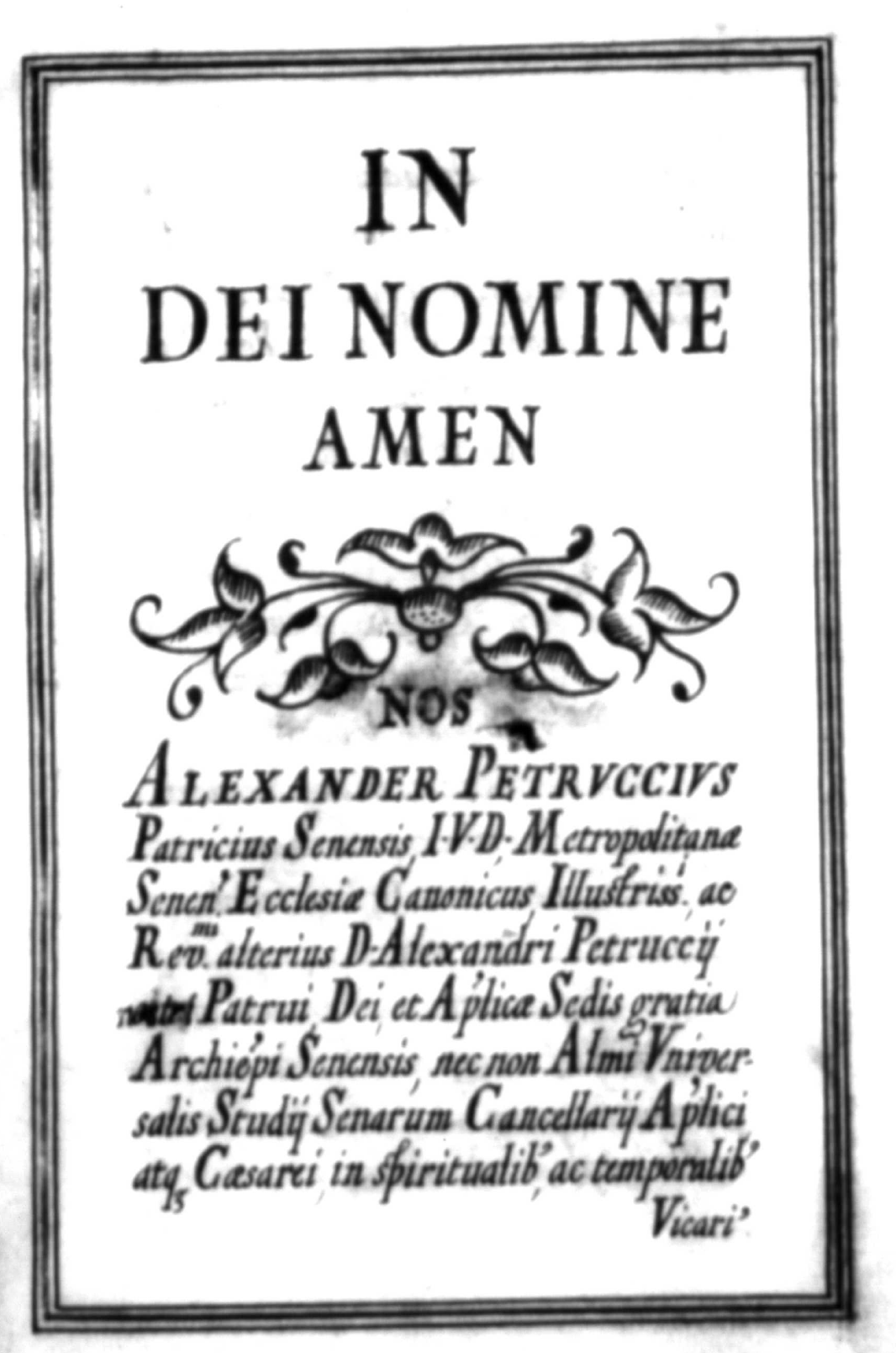

Rabbi Steinman and the Messiah, part 2

Rabbi Steinman and the Messiah, part 2

Marc B. Shapiro

Continued from here

1. R. Yehudah Herzl Henkin has a different perspective than what we have seen so far.[1] He rejects the notion that “waiting” for the Messiah means that one must believe that he can come at any second, for the Sages already said that the Messiah will not come at certain times. He writes:[2]

ובעיקר הענין הרביתי בראיות מן הגמרא שחז”ל לא ציפו שהמשיח יבוא בכל עת

Contrary to the Brisker Rav (whom he mentions by name), R. Henkin writes: “There is nothing in the Rambam requiring one to believe that the Messiah is ready to come at any moment.”[3] He claims that the Rambam’s real point is that one should not be at ease with the Messiah not having arrived, but rather one should be upset that he hasn’t yet come. A similar argument was made by R. Shmuel Yaakov Weinberg.[4] Unlike R. Shulzinger (see the previous post), R. Henkin does not find a problem with those who mentioned dates for the redemption (and this includes a few important figures[5]), since he suggests that the dates were never intended to be absolutely certain.

Yet R. Henkin adds that it is clear that the sages who gave dates for the Messiah—even if their suggested dates were not certain— did not have אמונה שלמה that the Messiah would come before the dates they predicted, and they obviously are not to be regarded as heretics. He sees this point as contradictory to the Brisker Rav’s claim (as it is usually understood) that one must hope for and await the Messiah’s arrival every day. R. Henkin’s explanation is certainly not in contradiction to the Rambam’s Principle. If the sages who gave dates for the Messiah did not deny that they could be wrong, and that the Messiah could come at any time, then they were not contradicting the Rambam’s Principle. The only thing they were contradicting is the version of the Principle in the siddur which adds the words באמונה שלמה. Yet these words not appear in the Rambam’s formulation.

R. Henkin adds that it is strange that the Brisker Rav would declare that anyone who does not have his understanding of the Twelfth Principle is a heretic, when his understanding is not explicitly found in the Torah, the Talmud, or the rishonim.[6]

ואפילו לדברי הגרי”ז שצריך להאמין שהנה ממש היום הזה הוא בא וכו’ עכ”ל, מן התימה על האי גאון וצדיק ז”ל להחזיק מי שאינו מאמין כן ככופר כיון שהדבר אינו מבואר לא במקרא ולא בחז”ל ולא בראשונים.

R. Henkin concludes that it is enough to believe that the Messiah will come even if you assume that he will not come today or tomorrow. He also cites his grandfather, R. Joseph Elijah Henkin, that “to wait for the coming of the Messiah” does not mean that you think he is ready to come at any instant.[7]

קושטא דמילתא המאמין באמונה שלמה בביאת המשיח ומחכה לו ומתאווה לבואו קדוש ייאמר לו אף על פי שסובר שלפי מאמרי חז”ל לא יבוא היום או מחר, וכן אמר מו”ז הגה”צ זצלה”ה שלחכות לביאת המשיח אין פירושו שעומד לבוא בכל רגע וכן עמא דבר.

In support of R. Henkin, we can cite R. Yohanan ben Torta, who when R. Akiva declared that Bar Kokhba was the Messiah, responded as follows: “Akiva, grass will be growing out of your cheeks and the Messiah will still not have come.”[8] As R. Meir Mazuz notes, R. Yohanan ben Torta believed in the concept of the Messiah, but he did not see any chance that the redemption would come in his generation.[9] In other words, he was not “actively waiting” for the Messiah.

R. Menachem Kasher has another approach. He understands Maimonides’ words that one must wait for the Messiah in a negative sense, namely, that if one despairs of the Messiah’s arrival he is in violation of Maimonides’ words, but not that there is a continuous obligation to wait for the Messiah’s arrival.[10] R. Yisrael Weinman also questions the Brisker Rav’s understanding (although he is not certain the Brisker Rav really said it), since according to some rishonim the Messiah cannot come on Shabbat and Yom Tov. He therefore assumes that it is enough to wait for the Messiah to arrive whenever he is able to come.[11]

R. Yaakov Nissan Rosenthal explains that the siddur’s version of Maimonides’ principle,

עם כל זה אחכה לו בכל יום שיבוא

does not mean that you must believe and expect every day that today is the day the Messiah will come. Rather, the meaning of בכל יום is that every day you must believe in the coming of the Messiah and await his arrival, whenever that will be.[12] He offered an example to illustrate this point: A man’s daughter married and moved to the Diaspora. The father waits every day for his daughter to return to Israel, but on every day he does not expect that all of a sudden he will hear a knock at his door and his daughter is standing there.[13]

אין המאמין מחכה דוקא שלפתע פתאום יבוא האדון אל היכלו באופן ניסי ושיודיעו לו שהיום בא המשיח, אך הוא כן מחכה בכל יום לביאת המשיח

Significantly, R. Shlomo Zalman Auerbach agreed with R. Rosenthal and didn’t even think this was a hiddush, but rather the simple meaning of the words אחכה לו בכל יום שיבוא. R. Rosenthal then tells about how he was at a meeting with R. Shlomo Zalman and other rabbis, and he presented his understanding. A few of the hasidic rebbes present started screaming that what he said was wrong and in contradiction to one of the Principles of Faith. R. Shlomo Zalman didn’t say a word. After the meeting R. Rosenthal asked R. Shlomo Zalman why he didn’t defend him from the attacks of the hasidic rebbes. R. Shlomo Zalman replied that you shouldn’t start up with Hasidim

עם חסידים לא צריך להתחיל

R. Rosenthal couldn’t recall if the following witticism was said to him by R. Shlomo Zalman or someone else later told it to him: In the Amidah we say: על הצדיקים ועל החסידים. We see that the word צדיקים goes before חסידים

כי לא “מתחילים” עם חסידים

It is noteworthy that according to the Vilna Gaon’s understanding, if the Messiah does not come in a “hastened” fashion (see Sanhedrin 98a), it certainly seems that no one would be able to hope for the Messiah to arrive in Tishrei. The reason I say this is because of how the Vilna Gaon describes the terrifying things that will happen if the Messiah arrives in its “due time,” and this is in Tishrei.[14]

אם חלילה לא יזכו ותהיה “בעתה” ואז אם היתה הגאולה בתשרי לא היה להם תקומה ח”ו ולא היו נשארים חלילה אלא אחד מעיר ושנים ממשפחה מפני שמדת הדין שולט בתשרי

Also of interest is the report of how R. Jacob Kamenetsky told someone that the Messiah would not be arriving soon. A certain man had been convinced by people in Chabad that the Rebbe would soon reveal himself as the Messiah, and this had led him to start observing Shabbat. However, R. Kamenetsky thought that it was important to uproot the man’s belief that the Messiah would soon be here, as he worried about the negative consequences to the man’s Judaism when the Messiah did not arrive as he had been expecting.[15]

אל תאמין להם. משיח, לצערנו, עדיין אינו עומד לבוא . . . [רי”ק הסביר לתלמידיו] מה שהשיגו אנשי חב”ד הוא הישג מדומה, שיצא שכרו בהפסדו. בעתיד הקרוב, כשיראה יהודי זה שההבטחה לא נתמלאה והמשיח לא הגיע, יתחיל שוב לחלל את השבת. יתרה מכך, עד עכשיו הוא האמין בתמימות מוחלטת בביאת המשיח, ואם יתאכזב, יפסיד את אחד היסודות החשובים ביהדות – האמונה בביאת המשיח.

Based on this, I think we can say that R. Kamenetsky did not expect the Messiah to arrive in the near future.

Some Jewish traditions speak of a great war that will occur before the coming of the Messiah, and even of the death of Messiah ben Joseph in this war.[16] Other traditions see this great war as occurring after the coming of the Messiah. R. Hayyim Soloveitchik is reported to have said that if the messianic era will bring even one Jewish death, then he doesn’t want it, and if we had a choice in the matter the halakhah would require us to reject the Messiah in such a circumstance. I wonder, therefore, if R. Hayyim was really able to look forward to the messianic era, knowing that its arrival would bring the possibility of Jewish death.
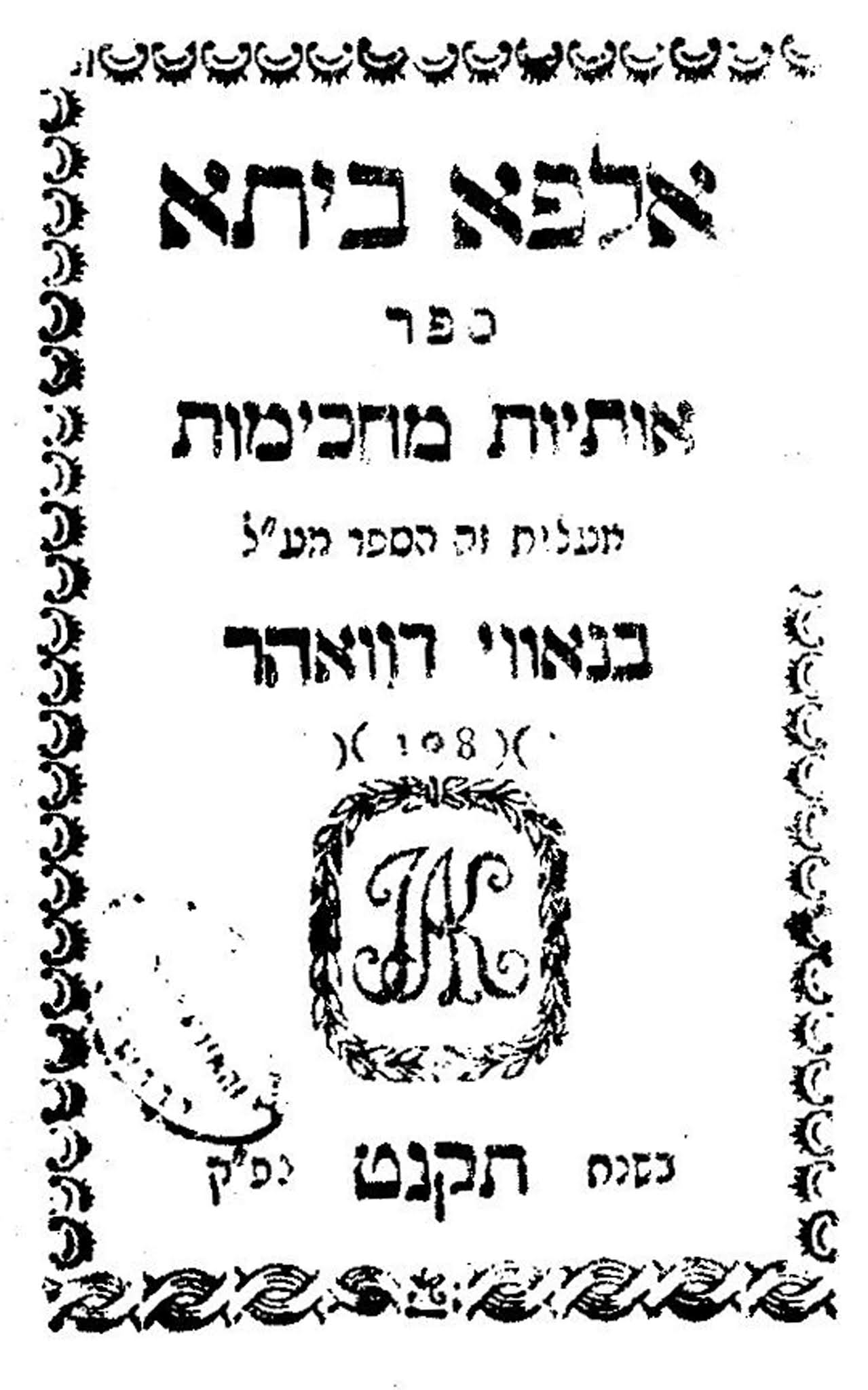
Here is how R. Hayyim is quoted by R. Dov Katz.[17]

מספרים בשמו של ר חיים סולובייצ’יק מבריסק, הגאון של הדור הקודם, שבימי המלחמה כשנפלו כל כך הרבה חללים בחזית המלחמה וסבלו כל כך הרבה, אמרו לו פעם בשיחה, שלוא היתה לכל הפחות מביאה המלחמה הזו את הגאולה, כי אז היה אולי כדאי הדבר. גער בהם ר’ חיים ואמר להם: “תדחינה מאות גאולות ואל תפול נפש אחת מישראל, כי אם היתה באה שאלה לפנינו שאם על ידי קרבן של אדם אחד יבא המשיח, בודאי שהיינו פוסקים שלא יבוא המשיח ולא תמות נפש אחת, כי הלא פיקוח נפש דוחה כל התורה כולה, ואף המשיח והגאולה בכלל.”

I have no reason to doubt the accuracy of this report. It is very much in line with what we know about R. Hayyim’s views both about the value of human life, and also about the downplaying of messianism. R. Joseph B. Soloveitchik stated: “To R. Chaim, a good chidush in Torah and Kodshim – if I may say so, perhaps I shouldn’t say it – was more important than the whole beis ha-mikdash, in his intuitive weighing.”[18] R. Soloveitchik had some hesitations about what he said, because he knew it would be shocking to people, but he said it anyway. R. David Holzer, in his note on this sentence, writes: “Obviously, the Rav is speaking derech guzma, just to express the concept.” Even if the Rav is exaggerating his point is clear, namely, that Torah study is much more important than what will take place in the future Temple.

I think the Rav’s point is that an Ish Halakhah is simply not interested in the messianic era in any practical way. He believes it will come (and thus fulfills Maimonides’ requirement), but he doesn’t focus on it, for he has everything he needs in a non-messianic world, namely, the study of Torah and the fulfillment of mitzvot. As for the study of Torah, as the Rav said, creating a chiddush about the laws of sacrifices is more important than the sacrifices themselves, because at the end of the day Torah study is the focus of our lives, not sacrifices which we have been without the last two thousand years.

Even though I said that I have no reason to doubt what is reported in the name of R. Hayyim, and this report is also cited by R. Ovadiah Yosef,[19] I must note that R. Eliyahu Zini completely rejects the reported statement which he sees as absolute nonsense.[20]

טענות אלו דברי תימא גדולים הן. הלא הן סותרות כל מלחמה יזומה, אף כל מלחמת מצוה, וכ”ש מלחמת רשות! ואם נקבל אותן, נצטרך לגזור אומר, שגם כבוש הארץ בזמן יהושע איסור גמור היה, ושהיה עדיף להשאר במדבר כדי לחסוך בחיי יהודים רבים. ואסור להאמין שגדול בישראל אמר דבר כזה, שהרי טענות מרגלים יש כאן, מסוג “ארץ אוכלת יושביה היא וכל העם אשר ראינו בתוכה אנשי מידות”. ואם נאמץ אותן, עלינו לומר שהיה אף אסור לצאת ממצרים, כי יציאת מצרים הביאה למות דור שלם, ולכן היה עדיף לדחות אפילו גאולת מצרים!

לכן אסור להאמין לעדות זו. וגדול כר’ חיים מבריסק לא יאמר דברי הבל כאלו ויש כאן הוצאת דיבה על גאון זה, ובפרט שעדות זו מוכחשת ממה שכתב במפורש ר’ חיים עצמו [שלפי ר’ חיים אין דין פיקוח נפש חל בשעת מלחמה], והבאנו אותה כבר פעמיים לעיל

I don’t believe that R. Zini’s words, which come from a right-wing religious Zionist perspective, create any difficulty in believing that which R. Hayyim is quoted as saying, namely, given the choice between a Messiah which will require the loss of human life or no Messiah, that he would prefers the latter. What about R. Zini’s point that according to what is reported in R. Hayyim’s name, that human life stands above all, that the concept of milhemet mitzvah makes no sense? I think the answer is clear, namely, that R. Hayyim obviously acknowledged that in a halakhically valid war, and certainly in a war commanded by God (such as to conquer the Land of Israel), human life will be lost and we cannot have “conscientious objection.” (It is, however, hard to imagine how R. Hayyim would have been able to support a milhemet reshut.) 

Yet there is no halakhic imperative to bring the Messiah, and if given a choice between the Messiah with loss of life or no Messiah, R. Hayyim would forego the Messiah. Given the choice between a Jewish state that will require the loss of life—even a state that functions according to halakhah—or no state, R. Hayyim would forego the state. This was one of the two reasons for the anti-Zionism of R. Isaac Zev Soloveitchik, namely, that the actions of the Zionists endangered Jewish life. His other reason was that he believed that the Zionists would persecute religious Jews in a Zionist controlled state.

To be continued

Excursus

The old question is why did rabbis give dates for the Messiah’s arrival when the Talmud, Sanhedrin 97b, states: “Blasted be the bones of those who calculate the end (i.e., the Messiah’s arrival).” Maimonides actually mentions a family tradition as to when prophecy will be renewed, and this will precede the messianic era. See Iggerot ha-Rambam, ed. Sheilat, vol. 1, pp. 152-153.

On the second day of the Ten Days of Penitence, one of the selihot we read (Tohelet Yisrael) states:

חשבון אחר חשבון עמך יפתור

“Thy people interpret reckoning after reckoning.” This refers to predicted dates of the Messiah’s arrival. R. Zev Wolf Leiter sees this as a proof that there is no prohibition in offering dates for the Messiah as long as one does not lose faith in the messianic principle if the projected date comes without the Messiah’s arrival. See his Kevod Melakhim, Hilkhot Melakhim 12:2, found here and on Otzar haChochma.

In agreement with R. Leiter’s perspective, R. Menasheh Grossberg, Shevet Menasheh, no. 46, also suggests that there is no problem in giving dates of the Messiah’s arrival, and what the Talmud is criticizing is those who, if the Messiah does not come on the predicted arrival date, would then deny the principle of messianic redemption. His proof for this interpretation is the passage that comes directly after what I quoted above from Sanhedrin 97b: “For they would say, since the predetermined time has arrived, and yet he has not come, he will never come.” Thus, we see that the Talmud itself explains the reason for the curse of those who predict the Messiah’s arrival, and it is because if the Messiah does not arrive at the predicted date it will lead to heresy in that people will completely deny the principle of the Messiah. R. Grossberg goes so far as to write:

הנה הראשונים שהיו כמלאכים או כבני אדם מאמינים באמונה שלמה להם ראוי לחשוב בקצין ולחקור באמונה

R. Joseph Kafih states that the reason why sages gave dates for the Messiah’s arrival, or in Maimonides’ case the renewal of prophecy, was only in order to strengthen the people, that they not despair of redemption. In other words, the sages themselves did not take the dates seriously, as the point of publicizing this information was for an entirely different purpose. In R. Kafih’s words:

לא פעל רבינו כפי ההלכה לכתחילה, אלא בכדי לעודד את העם

See Teshuvot ha-Rav Yosef Kafih le-Talmido Tamir Ratzon (Kiryat Ono, 2018), p. 389.

This is the very same reason Maimonides gives for R. Saadiah’s messianic calculations. Maimonides writes as follows in his Letter to Yemen (Abraham Halkin and David Hartman, Crisis and Leadership: Epistles of Maimonides [Philadelphia, 1985]), p. 116):

As for Rabbi Saadiah’s calculations, there are extenuating circumstances for them though he knew they were disallowed. For the Jews of his time were perplexed and misguided. The divine religion might have disappeared had he not encouraged the pusillanimous, and diffused, disseminated, and propagated by word of mouth and the pen a knowledge of its underlying principles. He believed, in all earnestness, that by means of the messianic calculations he would inspire the masses with hope to the Truth. Verily all his deeds were for the sake of heaven. Consequently, in view of the probity of his motives, which we have disclosed, one must not decry him for his messianic computations.

R. Meir Leibush Malbim also provided dates for the messianic era. He believed that the initial stage of the Redemption would be between 1868 and 1913. The Temple would be rebuilt in 1925, sacrifices would begin to be offered in 1928, and the resurrection of the dead would take place in 2203. See Noah Rosenbloom, Ha-Malbim (Jerusalem, 1988), pp. 159-160.

R. Judah Leib Maimon reports that his father asked the Malbim how he could offer such dates in opposition to the talmudic statement against this. He replied that the proscription against offering dates was only in the early years after the destruction of the Temple, when the path until the end was still long. However, as we are now close to the end of the Exile it is permitted to give dates. See Maimon, Le-Ma’an Tziyon le Ehesheh (Jerusalem, 1954), p. 19. The same answer in the name of the Malbim is found in R. Yissachar Dov Teichtal, Em ha-Banim Semehah (Jerusalem, 1998), pp. 150-151. In both sources, in order to offer a parable explaining his point, the Malbim tells the story of a father and son taking a long journey. At the beginning of the journey, when the son asks if they almost there, the father is annoyed with him. However, after much time on the road, when the father asks the coachman the same question, he explains to his son that now that they have journeyed far the question is appropriate. It is the same with the exile, the Malbim explains. At the beginning, it was improper to offer predictions of its end. However, now that we are almost near the end, it is OK to do so. (In the version of the story told by Maimon, the young son is none other than the Malbim himself, and the answer comes from his father.)

R. Jacob Isaac Horowitz, the Chozeh of Lublin, is quoted as saying that those who, based on hints in the Torah, predicted dates for the Messiah’s arrival were really just offering a strong suggestion to God that it is time for Him to redeem the Jews. This is just like a son does not explicitly tell his father that he is doing something wrong, but instead shows him the Torah source so his father can draw the proper conclusion.

כי עפ”י הלכה באם בן רואה לאב שאינו עושה חלילה כיאות אז משום כיבוד אב לא יוכל לומר לו שאינו עושה כשורה רק החיוב להראות לו הדין בתורה ופוסקים ולומר לו אבא כך כתוב בתורה (עיין יור”ד סימן ר”מ סעיף י”א מש”ס קידושין דף ל”ב) וכיון שאנו רוצים לחות דעתינו לאבינו שבשמים שירחם על בניו ויגאל אותנו בקרוב וכי אין מן היושר כביכול שיסבלו עוד עול גלות לכן צדיק הדורות מחדשים איזה קץ משיח ועושים על זה רמז באיזה פסוק בתנ”ך איך שבשנה זו יבוא משיח צדקינו והוא להראות לאבינו הבורא ית”ש אבא כך כתוב בתורה היינו דבאותו מקום בתוה”ק כתוב שבשנה זו יבוא משיח בב”א

See R. Moshe Menahem Mendel Walden, Or ha-Niflaot, p. 12a, included in Ohel ha-Rabbi (Petrokov, 1913); Mendel Piekarz, Ha-Hanhagah ha-Hasidit (Jerusalem, 1999), p. 190.

******************

2. In the last post I mentioned Elliot Wolfson’s argument that the Lubavitcher Rebbe’s secret teaching is that there will be no physical redeemer, but the messianic redemption is able to occur within each person. A number of people were surprised to hear about this, as there is, I believe, literally not one person in Chabad who accepts this argument. While I do not believe that Wolfson is correct, it is important to note that one does find in Hasidic thought the concept of inner redemption.[21] Although this is not intended to replace the ultimate physical redemption, these Hasidic teachings do turn passages in the Talmud on their head. For instance, R. Meir of Apta asks why we need to pray for redemption if God has promised that he will redeem us. He quotes the Chozeh of Lublin who said that the Talmud, Megillah 16a, mentions that if you repeat a teaching in the name of someone else, you “bring redemption to the world.” The Chozeh points out that this is difficult, as every page of the Talmud has someone repeating a teaching in the name of someone else, and yet the redemption still has not come. The Chozeh replies that the redemption being spoken about is a personal redemption, that one is delivered from his difficult circumstances. Similarly,  when we pray for redemption, it is a prayer for personal redemption.[22]

דהנה השי”ת הבטיח לנו לפדותינו ולגאלינו מהגלות המר, ולכאורה יפלא מה צורך להתפלל על הגאולה, ההוא אמר ולא יעשה. אך ששמעתי [!] מרבינו הקדוש מוהרי”י זצללה”ה מלובלין על הגמרא כל האומר דבר בשם אומרו מביא גאולה לעולם, והתמיה נשגבה, כי בגמרא מצינו ממש בכל דף שאומר התנא דבר בשם חבירו או בשם רבו, ומדוע עוד לא נושענו מהגלות. ותירץ, כי הבאת הגאולה הוא גאולה פרטית לאיש ישראל ממצוקותיו, כאשר אמרנו, ותקם בעוד לילה שבהגלות יוושעו ישראל ויקומו בהרחבה והרוחה, וע”ז אנו מתפללים, וזה בכלל גאולה

3. In recent months there have been a number of discussions about epidemics in Jewish history and how the rabbis responded. No one has yet cited what the great R. Elijah Klatzkin wrote.[23] You can see this in R. Klatzkin’s Miluim le-Sefer Devar Halakhah (Lublin 1923), pp. 126-128. For some reason, the copy of this book on Otzar haChochma is missing the second half of the book. However, the complete work is available on hebrewbooks.org here.

R. Klatzkin prints an open letter he wrote in 1916 to his community in Lublin, when they were suffering a typhus epidemic. It originally was published in Yiddish and Polish. He obviously thought it was important that his message should be preserved for posterity, and over a hundred years later what he says unfortunately remains relevant to us.

R. Klatzkin tells the community that he has to write to them, rather than speak to them, as due to the danger they can no longer gather together in the synagogue. He mentions that although the government established rules to keep people healthy, nevertheless there are many who are ignoring the laws. (To this I would add, the more things change the more they stay the same.)

R. Klatzkin stresses that the various government rules are also required according to the Torah, and one who violates the rules, which bring danger to him and his neighbors, “his sin is too great to bear.” R. Klatzkin expresses wonder that he needs to warn people about these matters, which relate to their health and the health of their families. What he observed over a hundred years ago has of course repeated itself in our time, when for incomprehensible reasons entire communities simply ignored basic health guidelines which allowed the virus to spread very quickly, leaving a terrible toll.

R. Klatzkin states that he wouldn’t need to warn people to watch over their money, so how is it that people treat their health with less concern than their money? He then turns to the issue of hillul ha-shem, and we see that in his day it was also the case that there were Jews who created a hillul ha-shem in how they responded to the crisis. R. Klatzkin notes that even repentance, Yom Kippur, and personal suffering do not atone for hillul ha-shem.[24] “If we would behave in accordance with the Torah, then we would be a light unto the nations and would sanctify the name of heaven and the honor of the holy Torah.” In R. Klatzkin’s day, one of the reasons for the spread of the epidemic was the unsanitary conditions that the poor lived in, and he concludes his letter by appealing to the wealthy to support the poor so they can improve their living conditions.

In his open letter R. Klatzkin states that he spoke about the issue of hillul ha-shem and kiddush ha-shem in his book אמ”ש. This refers to his responsa Imrei Shefer which appeared in 1896, and he has in mind no. 92 in this book. In this responsum he makes a number of noteworthy points. To begin with, R. Klatzkin makes very clear that when it comes to halakhah there is a great distinction between real idolaters and the nations among whom Jews currently live. He cites the Meiri to back up this position and the entire lengthy responsum is in support of this point.

ורבים טועים ומתעין עצמם לחשוב שכל מה שמבואר בספרים להחמיר בטעות ואונאת אינו יהודי הוא רק מפני איבה ובאמת לא כן הדבר והוא איסור גמור . . . ומזה מבואר דכל מקום שכתוב בטור ושו”ע עכו”ם היינו בדיוק עובדי כוכבים ממש ואינו מדבר כלל מהאומות שבזמנינו המאמינים בהשגחה ושכר ועונש וכמו שמפורש במאירי

This shows that he really means what he says, unlike other works that include a comment at the beginning of the book saying that any time non-Jews are referred to it means idolaters who live in places like India and China. Comments like this were never taken seriously. In fact, the very existence of these comments was said by R. Moshe Feinstein to be a proof, contrary to R. Solomon Luria, that one is allowed to alter Torah teachings in the face of danger.[25]

R. Klatzkin begins his responsum by calling attention to a passage in R. Joseph Albo, Sefer ha-Ikkarim 3:25, where Albo states that one is not allowed to charge interest to a ger toshav. The problem is that this contradicts an explicit Mishnah, Bava Metzia 5:6, as well as the talmudic explanation of this Mishnah, Bava Metzia 71a.[26] R. Klatzkin offers an original explanation that when the Talmud says that you can charge a ger toshav interest this refers to one who is wealthy, but if a ger toshav is poor, and he needs the money to survive, then he is not to be charged interest. Also significant is R. Klatzkin’s point that in this matter, and similar things, contemporary non-Jews who observe the Noahide laws fall into the category of ger toshav. He assumes that Christians are not to be regarded as idolaters, so they too fall into this category.

R. Klatzkin discusses R. Moses Isserles’ responsum in which he tries to find some justification for the practice in Moravia to drink non-Jewish wine.[27] R. Klatzkin suggests that this leniency arose due to theological reasons, because most of the inhabitants of Moravia were followers of Jan Hus (i.e., Hussites) who rejected many Catholic practices, including the veneration of images. In other words, they were distant from any “idolatrous” practices, and thus there was a reason in people’s minds why the prohibition on non-Jewish wine should not apply to them.

R. Klatzkin also takes up the issue of darkhei shalom. He cites the Talmud and Maimonides that when it comes to non-Jews – even idolaters – the Sages said to bury their dead, visit their sick, and support their poor because of darkhei shalom. After mentioning this, Maimonides also quotes Psalms 145:9: “The Lord is good to all; and His tender mercies are over all His works,” and Proverbs 3:17: “Her ways are ways of pleasantness, and all her paths are peace.”[28] R. Klatzkin derives from this that the expression מפני דרכי שלום does not mean that Jews behave a certain way to avoid non-Jewish enmity. Rather, it means that by Jews acquiring the trait of mercy for all people, there will be peace on Israel. He cites the Jerusalem Talmud, Eruvin 7:9, which states:

מפני מה מערבין בחצרות מפני דרכי שלום

In this passage it is obvious that darkhei shalom means something positive, to create neighborliness. R. Klatzkin claims that this is exactly what the expression means when dealing with non-Jews, He states that when Jews extend themselves for non-Jews in the ways mentioned by the Talmud, there will be real peace – in a positive sense – between Jews and non-Jews.[29]

ומוכח מזה דמ”ש מפני דרכי שלום, אין הכוונה שלא ינטרו שנאה לישראל, אלא דקאמר שעי”ז שידבקו ישראל במדת החמלה ורחמים על כל יציר נוצר, יהיה שלום לישראל . . . הרי דפירוש מפני דרכי שלום, היינו שעי”ז אוהבין זא”ז ונעשה ביניהם שלום אמת, וה”נ הפירוש שיהא שלום אמת עם העמים, כאשר ידבקו ללכת בדרכי ה’ המרחם על כל מעשיו

******************

3. In my last post I had a quiz with two questions. A number of people got one of the questions correct, but only a few individuals got them both correct. I won’t mention any names because one of those who answered correctly asked to remain anonymous.

The first question was: Where in Rashi’s commentary on the Talmud does he say that a certain individual knew all of Shas?

In Beitzah 24b s.v. ולערב, Rashi writes about R. Kalonymus ben Shabbetai of Rome who had journeyed from Rome to Worms:[30]

גם עתה בא אלי מכתב מגרמיי”ש שבא לשם אדם גדול זקן ויושב בישיבה מן רומא ושמו ר’ קלונימוס ובקי בכל הש”ס

I took this question from R. Shlomo Schneider, author of the responsa volume Divrei Shlomo. In a work that has not yet been published he has a number of “quiz questions,” and in future posts I will cite more of them.

In terms of “knowing Shas,” it is noteworthy that today we hear about different great rabbis who have completed Shas twenty or thirty times, or even more than this. Yet in earlier days we see that the achievements of great rabbis are described in much more limited fashion. R. Joseph Karo’s maggid said to him that he would finish Shas three times, and that was thought to be a great blessing.[31] This was not just the prediction of the maggid, as R. David Conforte quotes the grandson of R. Karo that when his grandfather was on his deathbed he, too, said that he merited to complete the Talmud three times.[32] R. Karo also testified as to how rare it was in his day for anyone to complete the Talmud:[33]

בדורות אלו לא ימצא מי שלמד כל התלמוד כי אם אחד מעיר

Of course, it must be noted that when R. Karo speaks of completing the Talmud he is not referring to daf yomi style, but rather an in-depth study of every page.

Just like with have seen with R. Karo, in a letter to R. Betzalel Ashkenazi, the author of Shitah Mekubetzet, R. Moses Galante of Safed (1620-1689) writes that he has finished the Talmud three times.[34]

In describing the unique greatness of his teacher, R. Nissim of Gerona, R. Isaac ben Sheshet states that he was expert in three sedarim of the Talmud. Today, saying this about a leading sage would not be viewed as a compliment, as what about the other three sedarim, is he not also an expert in them? But this is what the Rivash writes.[35]

ה’ צב-אות הותיר לנו שריד דַבָּר אחד לדור הוא מורנו הרב הגדול רבינו נסים נ”ר היה כאחד מהם לדעת טוב טעם ודת בקי בשלשה סדרים ודמו לי’ כמאן דמנחי בכיסתיה ודעתו רחבה מני ים ושכלו זך וישר אין ערוך אליו בכל חכמי ישראל

For the other quiz question, I asked about the letters שב that are found after the first and second set of shofar blasts. What is this about?

I was going to discuss this matter and present various sources. However, Moshe Babad alerted me to the existence of a comprehensive article that recently appeared on this very topic, and thus there is no need for me to go into any detail. The article is by R. Yehudah Aryeh Markson and appears in the journal Etz Hayyim 30 (Elul 5778), pp. 408-437 (it is not yet on Otzar haChochma). The title of the article is

שב בני שב – לגלגוליו של מנהג קדמון שנשתכח

R. Markson begins by noting that he, like everyone else, simply paid no mind to the word שב that appears together with tekiat ha-shofar. It was only after he was asked what the meaning of שב is that he investigated the matter. This led him to uncovering the story of what used to be a widespread minhag that for some reason simply disappeared and was almost entirely forgotten from Jewish communal memory (with the exception of a few “pure” German minyanim, such as KAJ in Washington Heights).

R. Markson mentions various explanations that have been offered for שב including the incorrect suggestion that it is one of the holy names that you need to have in mind before shofar blowing. Another incorrect explanation was offered by R. Simhah Bunim of Peshischa that שב is an abbreviation for שוטה בלאז – “Idiot, blow.” In other words, blow the shofar without any special kavvanot and just have in mind to fulfill the mitzvah. (I am sure that R. Simhah Bunim didn’t really think that this is the meaning of שב but was only offering a “midrashic” understanding. This is probably also the case with those who explain the letters to mean שוואנץ בלאז.) A third incorrect explanation is that שב is related to תשובה and is directed to the people to urge them to do teshuvah. A fourth incorrect explanation mentioned by R. Markson is that שב should be read שֵב, as in שב ועל תעשה, and the meaning is that the person who blows the shofar should cease his blowing and wait a bit before resuming the next set of shofar blasts. According to this explanation, the reason for waiting is to give him time for silent prayer or to separate the different groups of shofar blasts. R. Markson records other incorrect explanations as well.

The fourth explanation mentioned in the previous paragraph is closest to the truth, which, as R. Markson shows, has its origin in medieval Ashkenazic minhag where it is first mentioned by Maharil. The word שב should indeed be read שֵב, and it means “sit”. The one calling out the shofar sounds was telling the blower to sit down between the series of blasts. R. Markson, p. 426 n. 71, refers to Maharil as ‘אבי ומייסד מנהג אמירת ה’שב. However, I don’t know on what basis one can say this, as opposed to assuming that Maharil is simply recording a minhag that was already practiced in his day. After all, as R. Markson notes, R. Meir of Rothenburg records the practice of the shofar blower to sit between the series of blasts, though there is no mention of the shofar blower being told שב.

Why is the person blowing the shofar told to sit? R. Markson presents a variety of explanations such as to show that the three groups of shofar blasts are separate from each other, to show that these blasts are the tekiot di-meyushav, to give the shofar blower a chance to focus on teshuvah or just to rest, or to confuse the Satan.

*************

The Seforim Chatter podcasts are fascinating shows conducted by a skilled interviewer. I think Seforim Blog readers will especially enjoy the show focused on Dan Rabinowitz’s book on the Strashun Library. See here.

On December 24, 2020, 9pm Eastern Time, I will be giving a Zoom class on the topic: “Christmas Eve: Is it a Time for Torah Study?” Those interested can sign up here. Those who are interested in my continuing series of classes can sign up at Torah in Motion here, and you can also download my previous classes on the website. The current series is being placed on YouTube here.

Coming soon:

Rabbi Steinman and the Messiah, part 3

Fighting Over the Rav’s Legacy in the Algemeiner

Response to Criticism, part 4

*************

Notes


[1] Benei Vanim, vol. 3, pp. 181ff.

[2] Benei Vanim, vol. 3, p. 42.

[3] Benei Vanim, vol. 3, p. 182.

[4] See R. Yohanan Meir Bechhofer, Even Shetiyah (Ramat Beit Shemesh, 2005), p. 98:

ומו”ר זצ”ל חידש כי המלה “חכה”, אין פירושה להמתין, אלא ר”ל לקוות וליחל לבואו. ומה שבא רבינו לומר כאן הוא שכל יהודי חייב להרגיש בחסרון של העדר המשיח, ולקוות וליחל לבואו ולא להתיאש ממנו אף אם יתמהמה, ולא שאנו צריכים להיות ודאים שהוא יבוא בשעה הקרובה

[5] See Excursus.

[6] Benei Vanim, vol. 3, p. 182.

[7] Benei Vanim, vol. 3, p. 184.

[8] Yerushalmi, Ta’anit 4:5 (24a).

[9] Bayit Ne’eman, no. 222 (18 Av 5780), p. 2.

[10] Ha-Tekufah ha-Gedolah, p. 380.

[11] Mishnat Yisrael, p. 416. He concludes that if the Brisker Rav really said that which is attributed to him, then he retracts what he wrote.

[12] See, similarly, R. Mordechai Peterfreund, “Nusah Yud Gimmel Ikkarim va-‘Ani Ma’amin,’” Yeshurun 22 (2010), p. 711 (called to my attention by Nochum Shmaryohu Zajac).

[13] R. Nahum Stepansky, Ve-Aleihu Lo Yibol, vol. 3, pp. 369-370.

[14] Even Shelemah (Jerusalem, 2013) p. 177 (ch. 11). Many vocalize this as Even Shlomo, and I have also done so in the past. However, based on what the editor, R. Samuel Maltzan, writes in the introduction, it is clear that Even Shelemah is correct.

וקראתי שם הספר הזה אבן שלמה על שם ענינו כי הוא אבן שלמה וצדק לפלס בו דרכי העבודה, וגם ע”ש מרן הגר”א ז”ל אשר ממעינות חכמתו שאבתי בששון הדברים הקדושים האלה וכמ”ש בהקדמה לספר פאת השולחן בשם מרן הגר”א ז”ל כי שמו מרומז בתורה בפ’ כי תצא בתיבות אבן שלמה שהוא ראשי תיבות אליהו בן שלמה, וכמו שאל”ף הוא פל”א ונעלם כך תורתו נסתרת ונעלמת, ולכן שמו בהעלם בראשי תיבות.

This is also how the words are transliterated in Russian on the title page of the first edition (Vilna, 1873).

[15] Shlomo Lorincz, Bi-Mehitzatam (Jerusalem, 2008), vol. 2, p. 588.

[16] R. Judah Leib Landesberg, Hikrei Lev (Satmar, 1905), vol. 1, p. 67, suggests that the entire tradition of Messiah ben Joseph has been misunderstood, and that it really refers to Bar Kokhba. After his defeat, due to fear of the Romans the Sages did not wish to mention him by name. So instead they referred to Bar Kokhba as משיח בן יוסף, which should be understood as “Messiah of the son of Joseph,” and “son of Joseph” refers to R. Akiva, whose father’s name was Joseph. After mentioning this provocative idea, R. Landesberg immediately says that it should be retracted. But this is obviously done so as to prevent him from being attacked for his new idea, since if he really wanted it to be retracted, he would not have published it in the first place.

ויש מן החכמים כמו ר”י בן תורתא היה מקוראי תגר על בר כוכבא עד שאמר לר”ע: עקיבא! יעלה עשבים בלחייך ועדיין משיח לא יבא! אולם ר”ע לא שת לבו ולא השגיח לדבריהם, ובכל עוז עמד למשען לו וקרא עליו: דין הוא מלכא משיחא! ואחרי כי זה ב”כ עלה והצליח שנתיים ימים על במות ההצלחה, רק בהשתדלות ר’ עקיבא “בן יוסף”, נקרא אח”כ בפי חז”ל בשפה הנעלמה, כי יראו באמת לישא שמו על שפתיו מפחד הרומיים – משיח בן יוסף, ר”ל: משיח של “בן יוסף” יען רק ר’ עקיבא בן יוסף גדלוהו ורוממוהו והכתירוהו בכתר משיח – אמנם רק השערה בעלמא הוא התלוי’ בשערה ובדמיון. ועל כגון דא הנני אומר: אל תגעו במשיחי וחלילה לפרש נגד המסורה הטהורה שקודם ביאת המשיח צדקנו יתראה לפניו בהדר גאונו משיח בן יוסף.

[17] Divrei Hagut u-Reut (Jerusalem, 1979), vol. 1, p. 170.

[18] The Rav Thinking Aloud, pp. 174-175.

[19] Masa Ovadiah, p. 340.

[20] Eretz Hemdatenu, p. 131.

[21] See e.g., Gershom Scholem, The Messianic Idea in Judaism and Other Essays on Jewish Spirituality (New York, 1971), pp. 176-202. Regarding hasidic thinkers, Mendel Piekarz, Ha-Hanhagah ha-Hasidit, p. 320, calls attention to the interesting view of R. Shalom Perlow of the Koidanov hasidic dynasty. R. Perlow states that things are better now than they will be in the messianic era, because at present we have free will. Thus, we can perform mitzvot in the proper way, which will not be possible in the messianic era. He also states that the delay in the redemption is to lessen the birth pangs of the Messiah. In other words, it is good for the messianic era to be delayed. This delay also has spiritual benefits for those souls that need a tikun. There appears to be some real ambivalence here about the messianic era, and R. Perlow was not interested in “Moshiach now”. See his Shem Aharon (Warsaw, 1910; bound with R. Pinhas of Koretz, Midrash Pinhas he-Hadash), pp. 5-6:

הנה המון ישראל נכספים ומתגעגעים לביאת המשיח מצד ההטבה, ובאמת עתה יותר טוב, כי ברוחניות הלא ארז”ל ע”פ אשר תאמר אין לי בהם חפץ אלו ימות המשיח, וכוונתם שתתחלש [!] הבחירה והעיקר הוא הבחירה, ע”כ ארז”ל יפה  שעה אחת בתשובה ומעש”ט בעוה”ז מכל חיי העוה”ב, ורבי’ הק’ אמר קודם פטירתו על תורה ומצות קא בכינא, ואם על טובת הגשמיות הלא אם נעיין בדחז”ל התנהגות ביאת המשיח הלא אנשי’ כערכנו תסמר שערות ראשנו, אך באמת אין אנו צריכים להשגיח ע”ע כלל רק צריך לחכות ולצפות לגאולה בשביל שכינתו ית’ וכבוד שמו המחולל, והקב”ה כביכול אינו משגיח על כבוד שמו ומלכותו, ומאחר את הגאולה בשביל טובת ישראל ברוחני וגשמי, כי ידוע מספה”ק שע”י אריכות הגלות ואיחור המשיח יתמעט חבלי משיח, וגם ברוחני ידוע מס”צ אשר הקב”ה חשב מחשבות לבלתי ידח ממנו נידח, ע”כ הקב”ה חס על הנשמות שאינם מתוקנים שיתתקנו [!] קודם ביאת המשיח
 
Piekarz, Hasidut Polin (Jerusalem, 1990), p. 212, cites R. Israel Friedman of Chortkov, who cited his father, R. David Moses, the founder of the dynasty that the hasidic leaders don’t want the Messiah to come so quickly, as they still have a lot of spiritual work to do. See Ginzei Yisrael (Jerusalem, 1986), vol. 1, p. 167:
 
אקדים מה ששמעתי מכ”ק אאמו”ר הקדוש זצ”ל, שאמר פעם, אחר הסדר אומרים העולם, משיח כבר היה בא, לולא הצדיקים שאינם מניחים אותו לבוא. נבאו ולא ידעו מה נבאו. דהאמת היא כן, כי הנה כתיב (ש”ב יד, יד) “כי לא ידח ממנו נדח”, וע”כ הצדיקים חסים שאם יבא משיח קודם הבירור האמתי, מה נעשה איפוא עם הנשמות האלה, על כן מאחרים הם את ביאת המשיח, אולי בינתיים יתוקנו כל הנשמות
 

[22] Or la-Shamayim (Jerusalem, 2003), p. 214 (parashat Be-Hukotai).

[23] I also haven’t seen anyone refer to R. Isaac ben Todros (fourteenth century), who wrote a work Be’er Lahai dealing with a plague in Avignon. This was published in Jubelschrift zum Neunzigsten Geburtstag des Dr. L. Zunz (Berlin, 1884), pp. 91-126 (Hebrew section).

[24] Regarding hillul ha-shem, R. Menachem Genack has recently written:

What we are witnessing in parts of the Orthodox Jewish world today is the greatest desecration of God’s name — chillul Hashem — I have witnessed in my lifetime. Asked by friends outside our community to explain the actions of some within it, I have been at a complete loss. For some reason that I cannot fathom, parts of the Orthodox community today act as if the principle of pikuach nefesh no longer applies and disregard the government regulations enacted to protect their own lives and those of their neighbors.

For R. Mayer’s Twersky’s recent comments about Covid-19 and hillul ha-shem, see here.

[25] See Changing the Immutable, p. 42.

[26] See also Mishneh Torah, Hilkhot Malveh ve-Loveh 5:1.

[27] See Changing the Immutable, pp. 81-82.

[28] Mishneh Torah, Hilkhot Melakhim 10:12.

[29] The same idea is famously expressed by R. Isser Yehudah Unterman, Shevet mi-Yehudah, vol. 3, no. 70.

[30] See Avraham Grossman, Hakhmei Ashkenaz ha-Rishonim (Jerusalem, 1981), pp. 348ff.

[31] Maggid Meisharim (Petah Tikvah, 2000), p. 182 (parashat Va-Yakhel).

[32] Kore ha-Dorot (Modi’in Ilit, 2008), p. 128 (ch. 3).

[33] Avkat Rokhel, no. 202.

[34] Mikavtzi’el 37 (2011), p. 546. This is how the name of the journal is to be transliterated, and this is also how the Ben Ish Hai’s book מקבציאל is to be pronounced. Yet when the word appears in the Bible, 2 Sam. 23:20, it is written מקבצאל with a shewa under the צ, not a hirik. See the discussion here.

[35] She’elot u-Teshuvot ha-Rivash, no. 375.