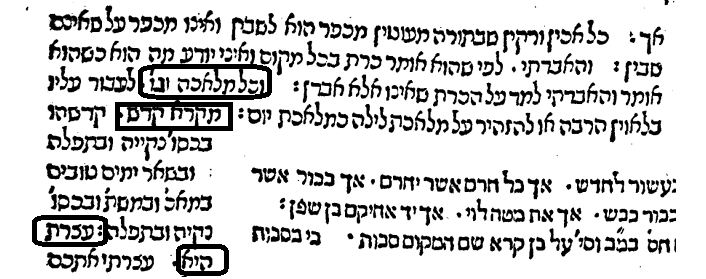
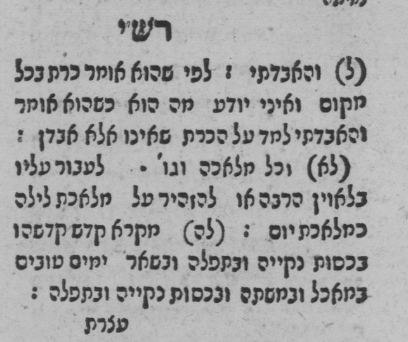
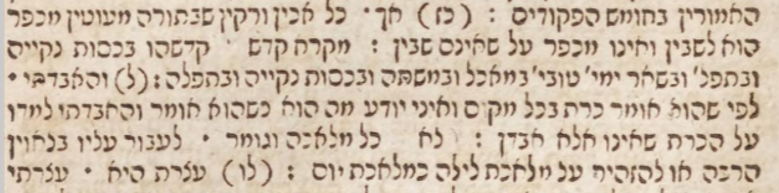
English abstract:Siddur Bet Ya‘akov (Warsaw, 1881) is based on R. Jacob Emden’s siddur Ammudé Shamayim Ve-sha‘are Shamayim (Altona, 1745–1748), but in fact it contains a large amount of new material from the printer, R. Moshe Shub, who effectively created an entirely new work. Among the added material is a section Seder Ba‘al Keri, which presents the approach that the ancient “Edict of Ezra”, that one whose body has emitted semen must immerse in a mikve before prayer, has never been abolished, and thus is still in effect. While this approach is found in the Talmud, Geonim, and Rishonim, it is virtually unheard of in the nineteenth century. Though Moshe Shub’s added material to the siddur is not from Jacob Emden, and it would be wrong to attribute it to Emden, nonetheless this example shows that the material is worthy of study, and can be fascinating.
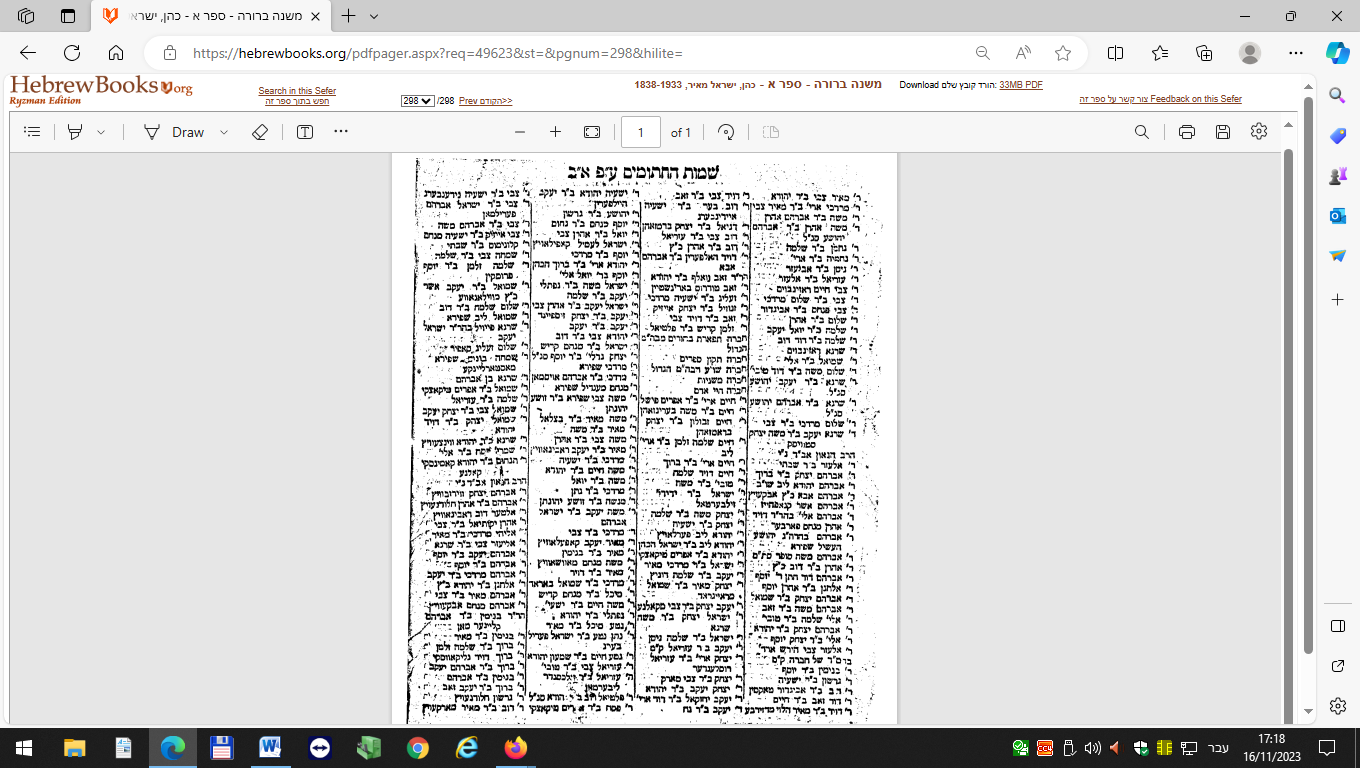
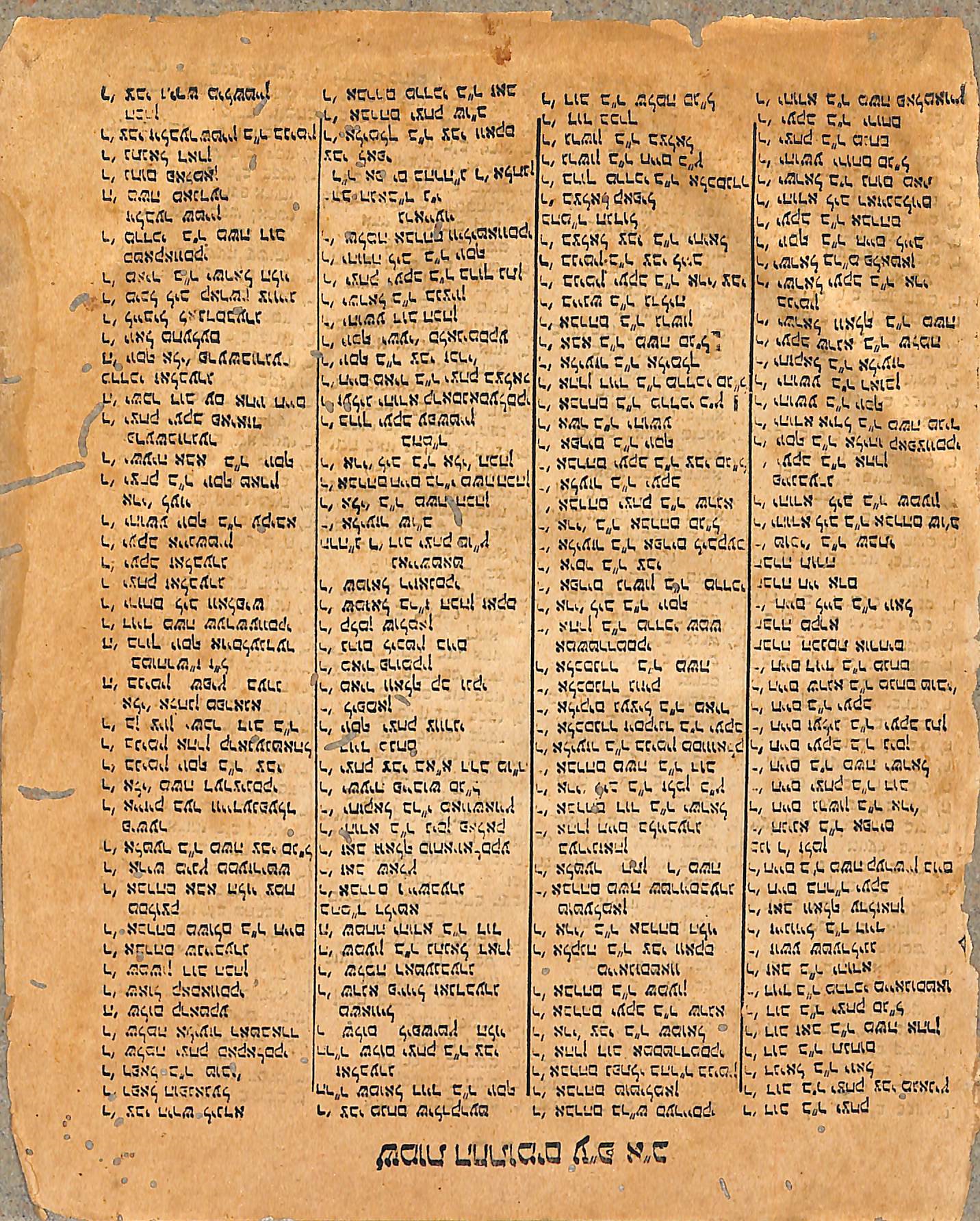
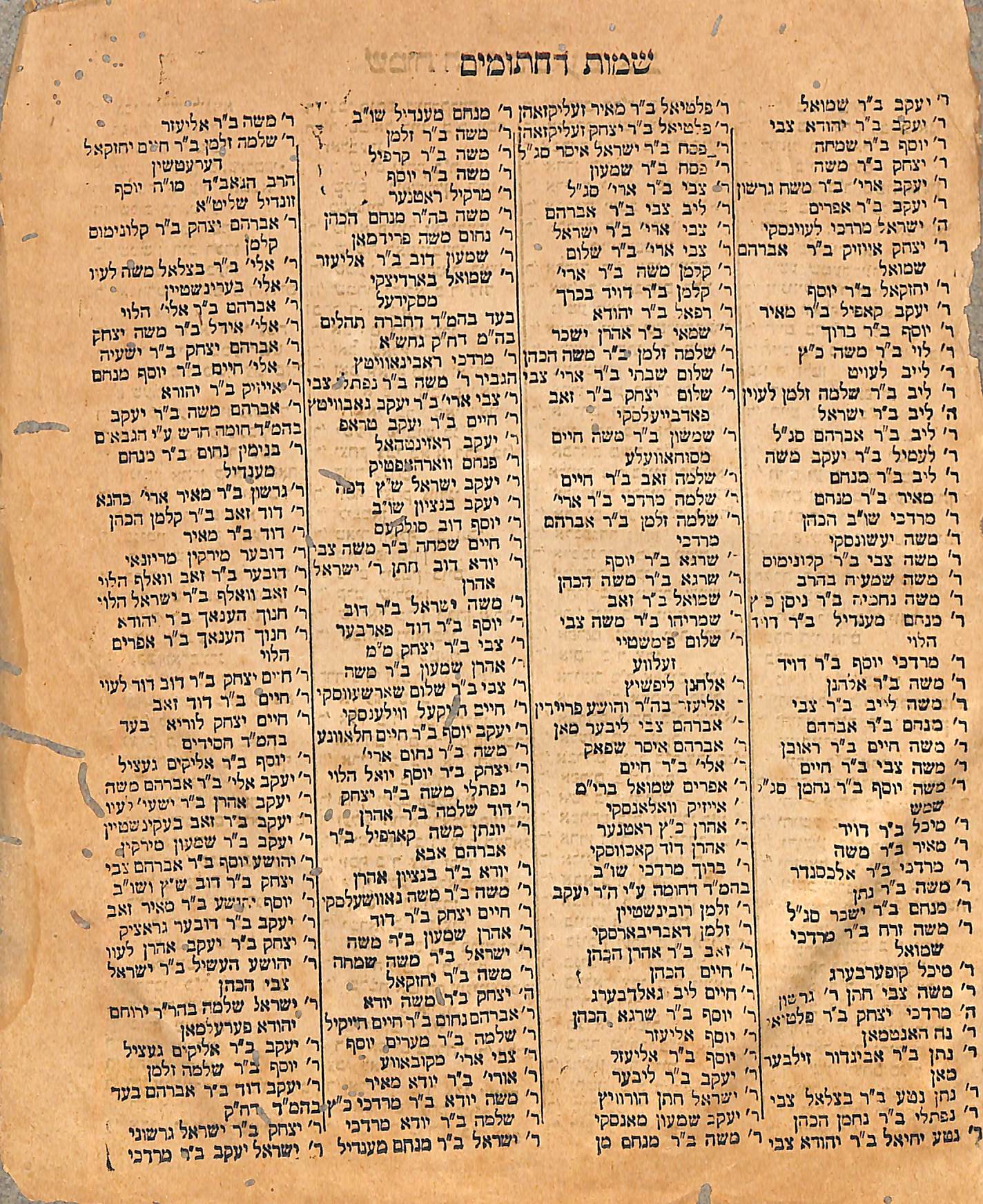
הרקע: סידור בית יעקב אינו סידור היעב”ץ המקורי
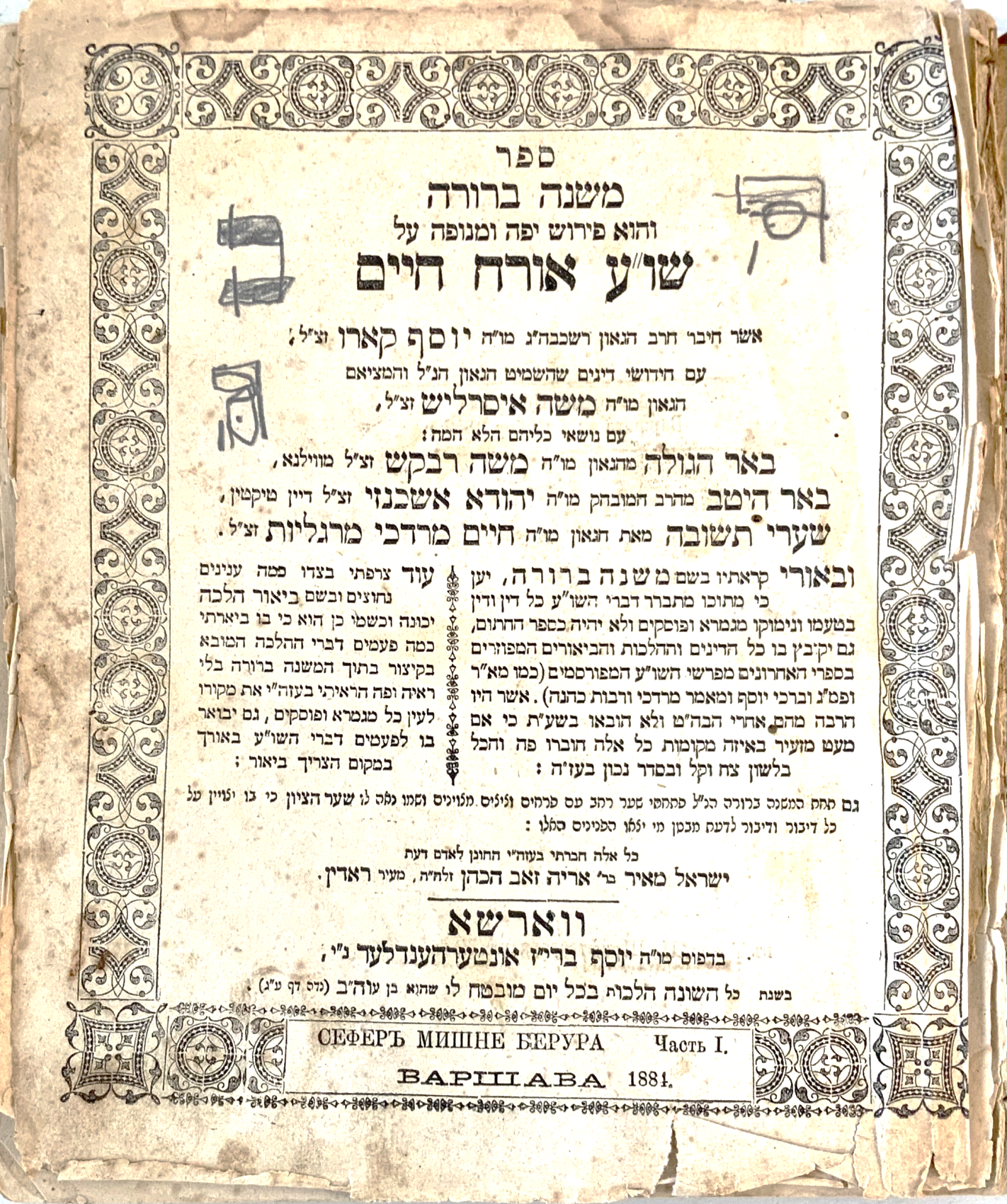
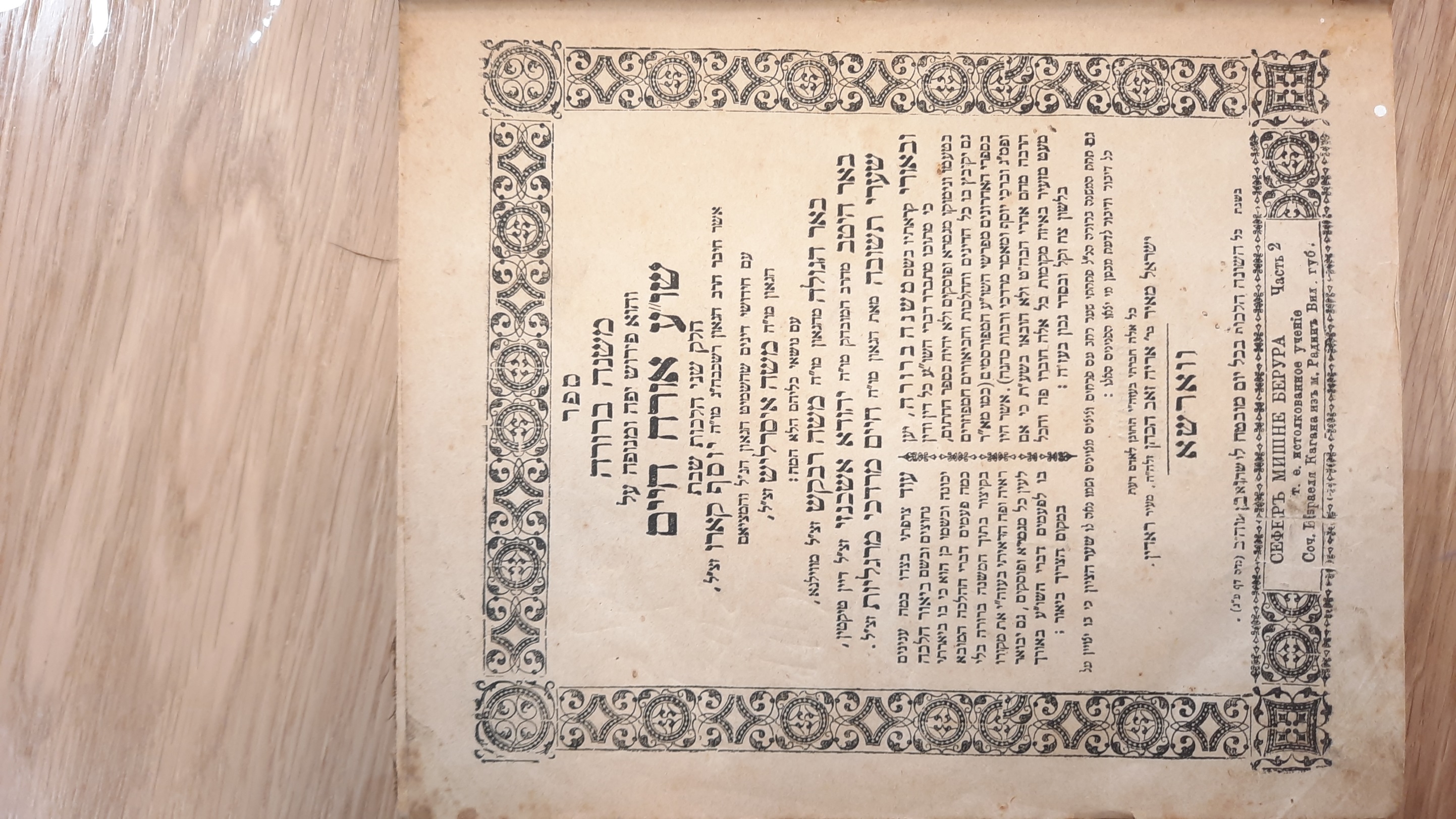
בעולם התורה נפוץ הספר ‘סידור בית יעקב’, שנקרא ‘סידור היעב”ץ’ או ‘סידור ר’ יעקב עמדין’. אכן היעב”ץ (תנ”ח/1698 – תקל”ו/1776) חיבר והוציא סידור, והוא מן המעטים מאוד בין גדולי הפוסקים שחיברו סידורים. (חוץ ממנו לא ידוע לי אלא האדמו”ר ר’ שניאור זלמן מליאדי בעל התניא.) אבל סידורו ‘עמודי שמים ושערי השמים’ (אלטונה תק”ה–תק”ה/1748-1745) אינו זהה לסידור בית יעקב.
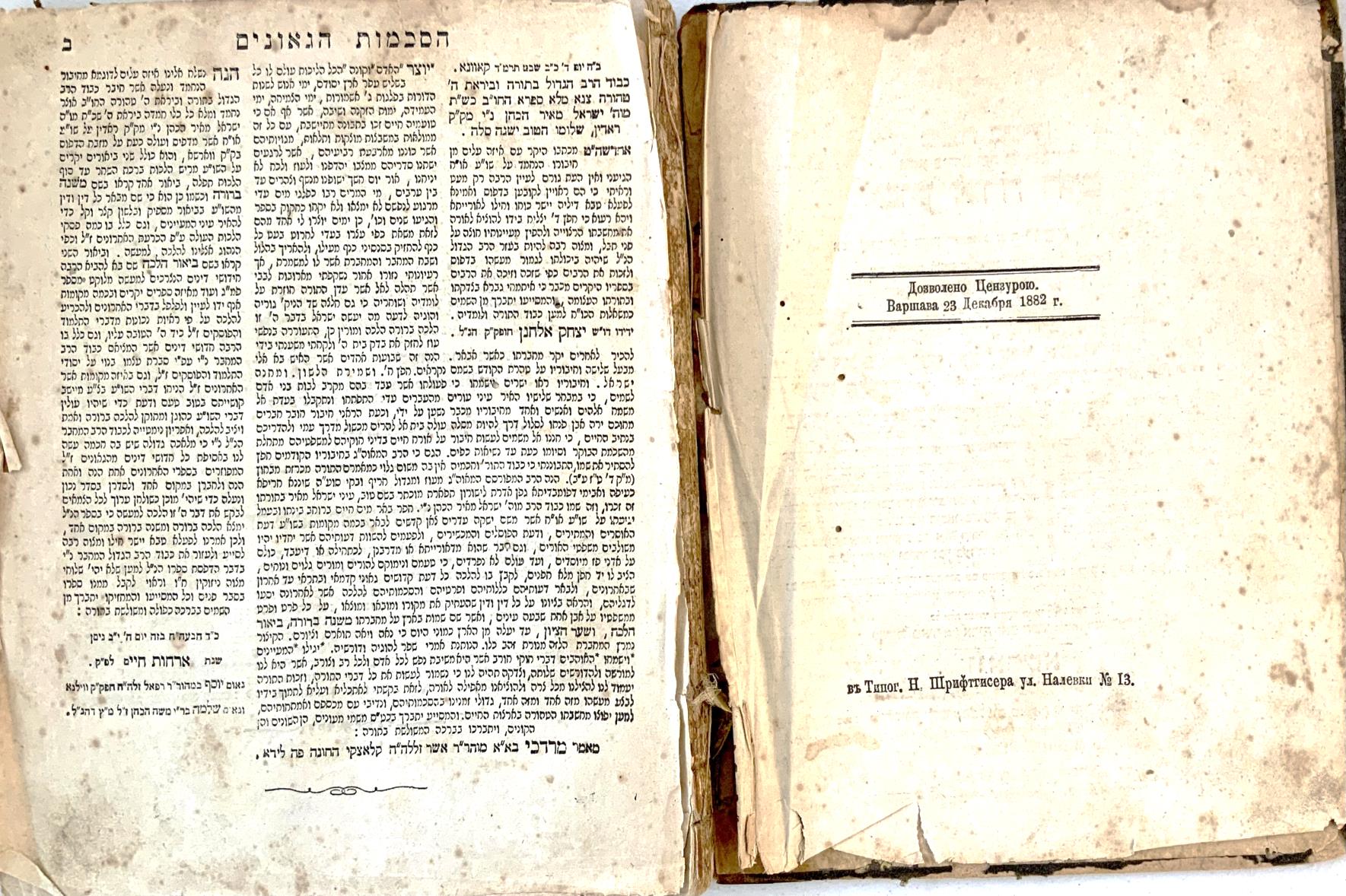
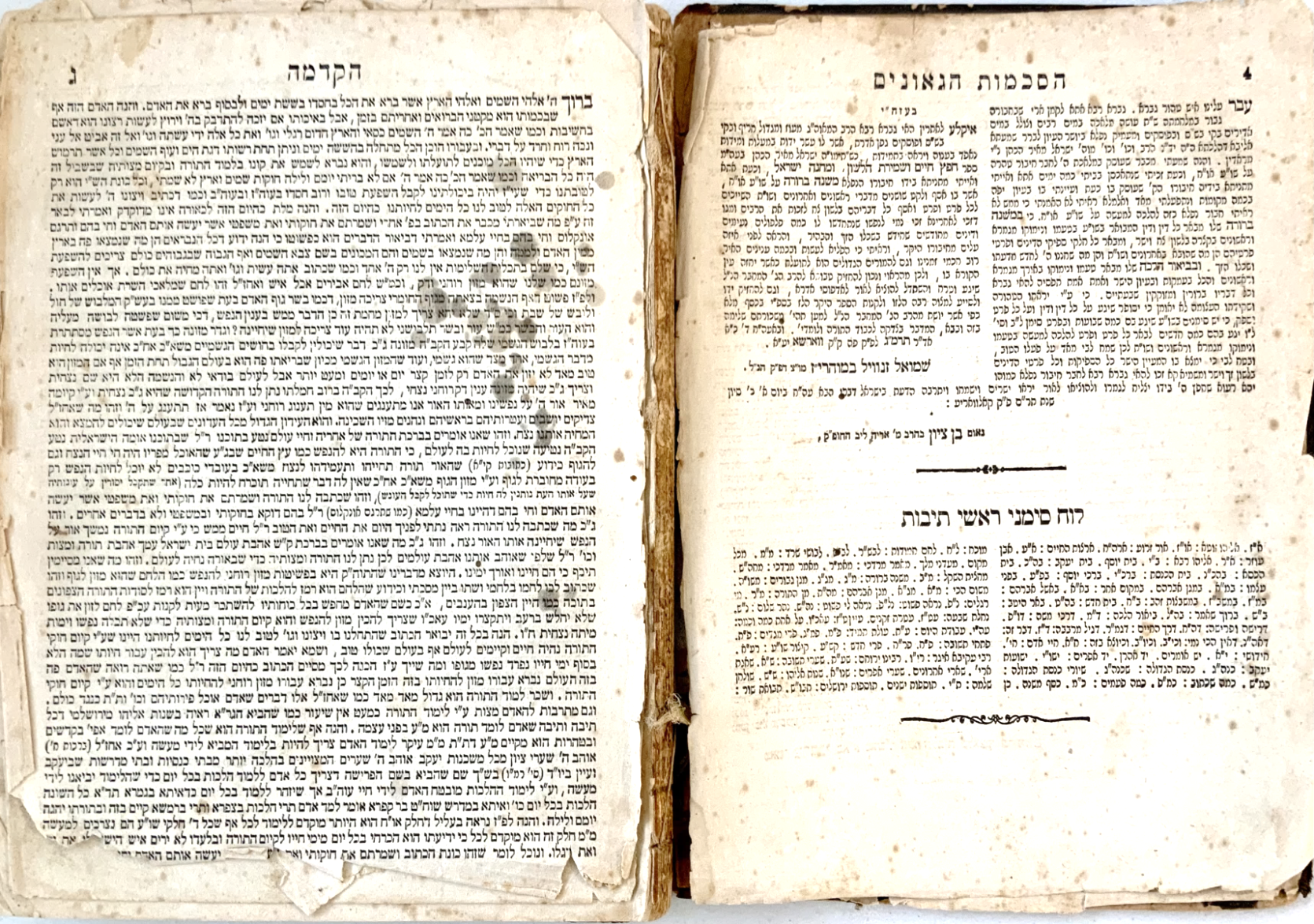
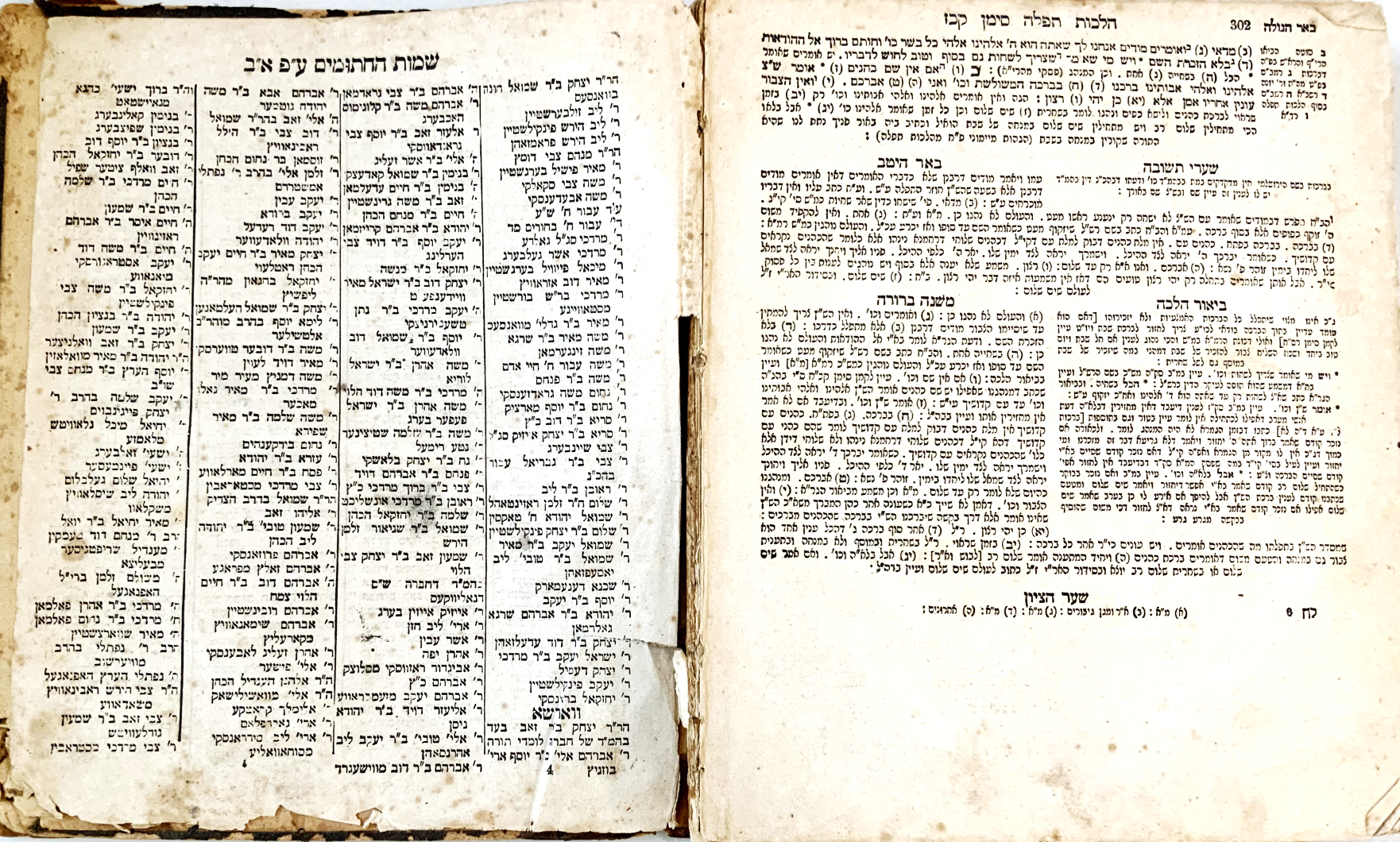
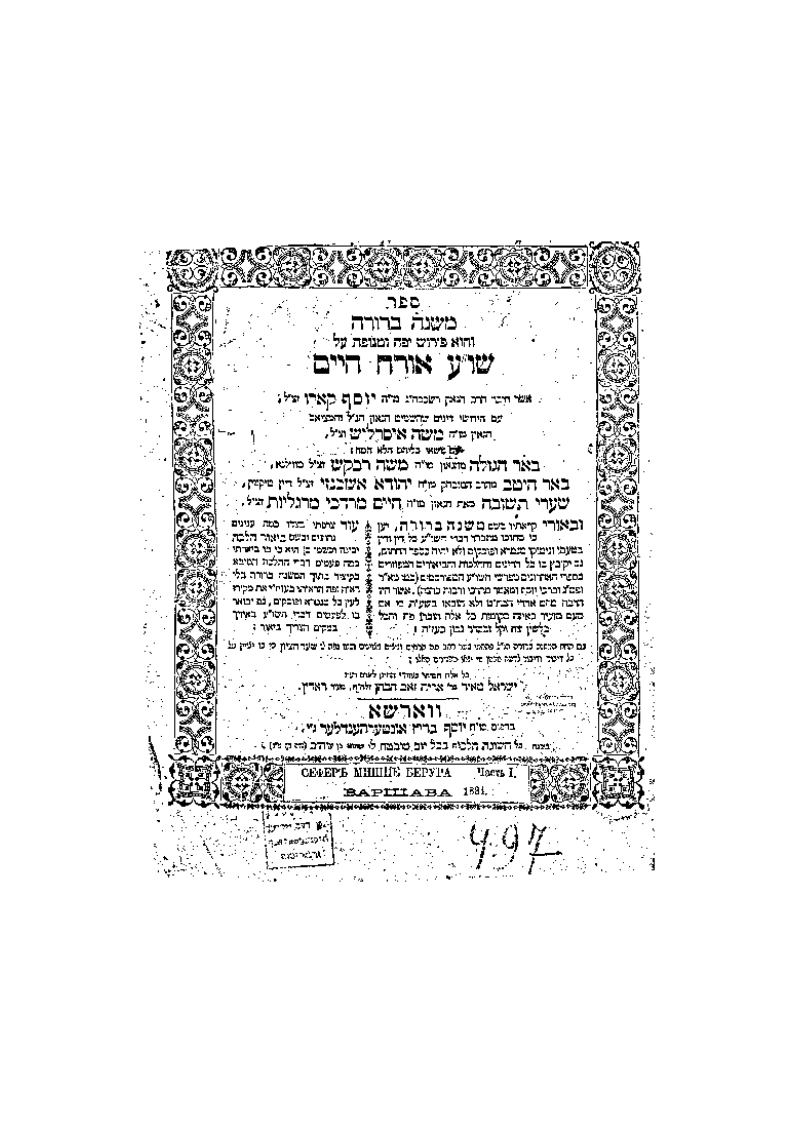
אם כן מי חיבר את ‘סידור בית יעקב’ ומה טיבו? המדפיס ר’ משה שו”ב מז’יטומיר שהוציא את הסידור בוורשא בשנת תרמ”א (1881) הוא בעצם המחבר. את נוסח התפילות הוא הדפיס שם כנוסח ספרד הנהוג בין החסידים במזרח אירופה בזמנו, ולא ע”פ הנוסח שבסידור ‘עמודי שמים ושערי שמים’, שהוא סוג של נוסח אשכנז ע”פ שיקולי היעב”ץ עצמו. ר’ משה שו”ב גם הוסיף הרבה תפילות זמירות תחינות ופיוטים שלא היו בסידור ‘עמודי שמים ושערי שמים’. בסידור היעב”ץ המקורי יש פירוש ארוך והוראות מרובות הכוללות דיון הלכתי מרובה. ר’ משה שו”ב הדפיס את כל זה, אבל הוסיף עליו מלא חופניים מתוך ספרים מספרים שונים. כל החומר הנוסף אינו מצוין שם כתוספת; במהדורות ‘סידור בית יעקב’ אי אפשר להבחין בין דברי היעב”ץ לדברי המדפיס. ואם זכורני היטב, לפעמים יש סתירות בין דברי היעב”ץ לדברי המדפיס, והכל כתוב ביחד למרות הסתירות.
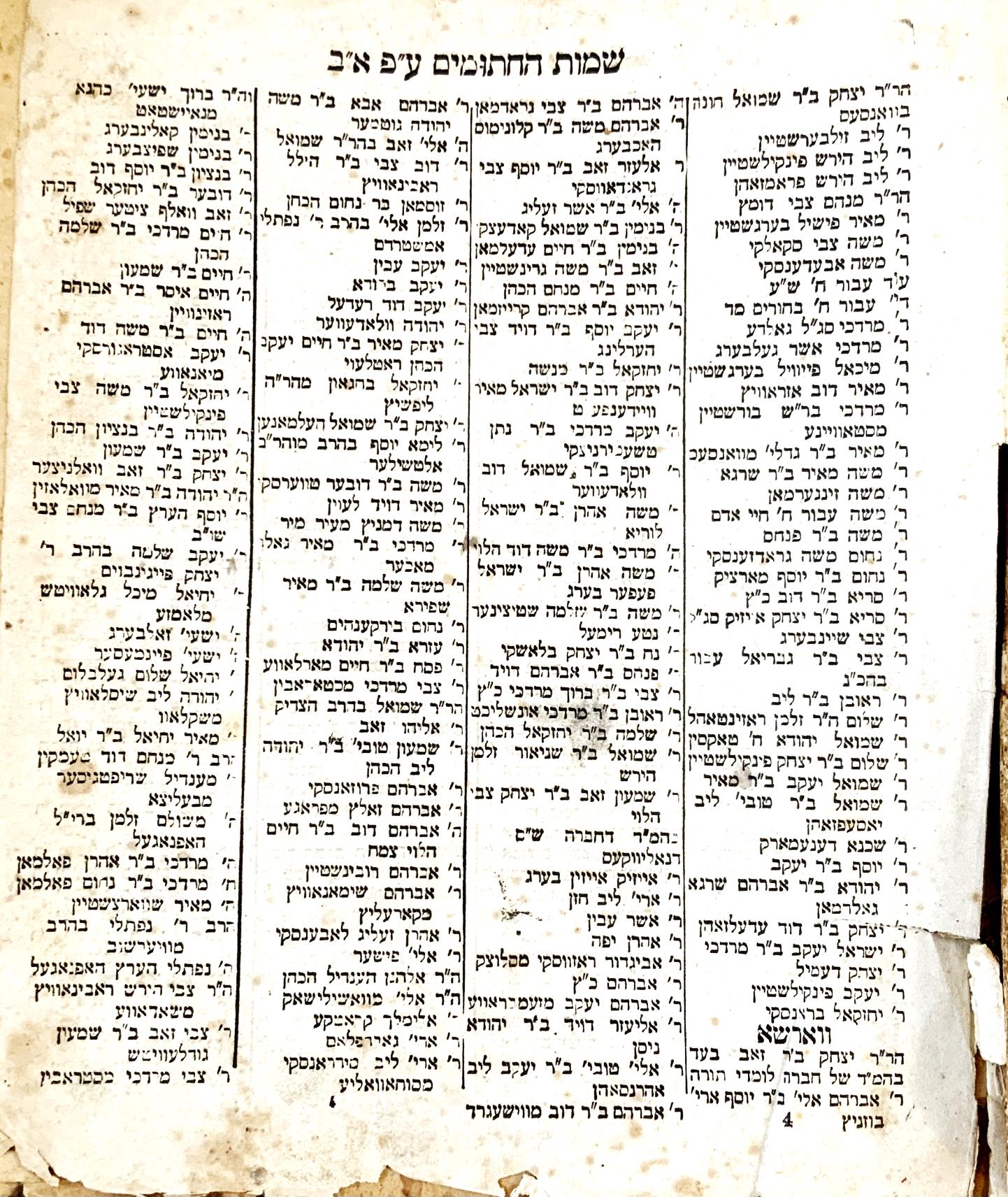
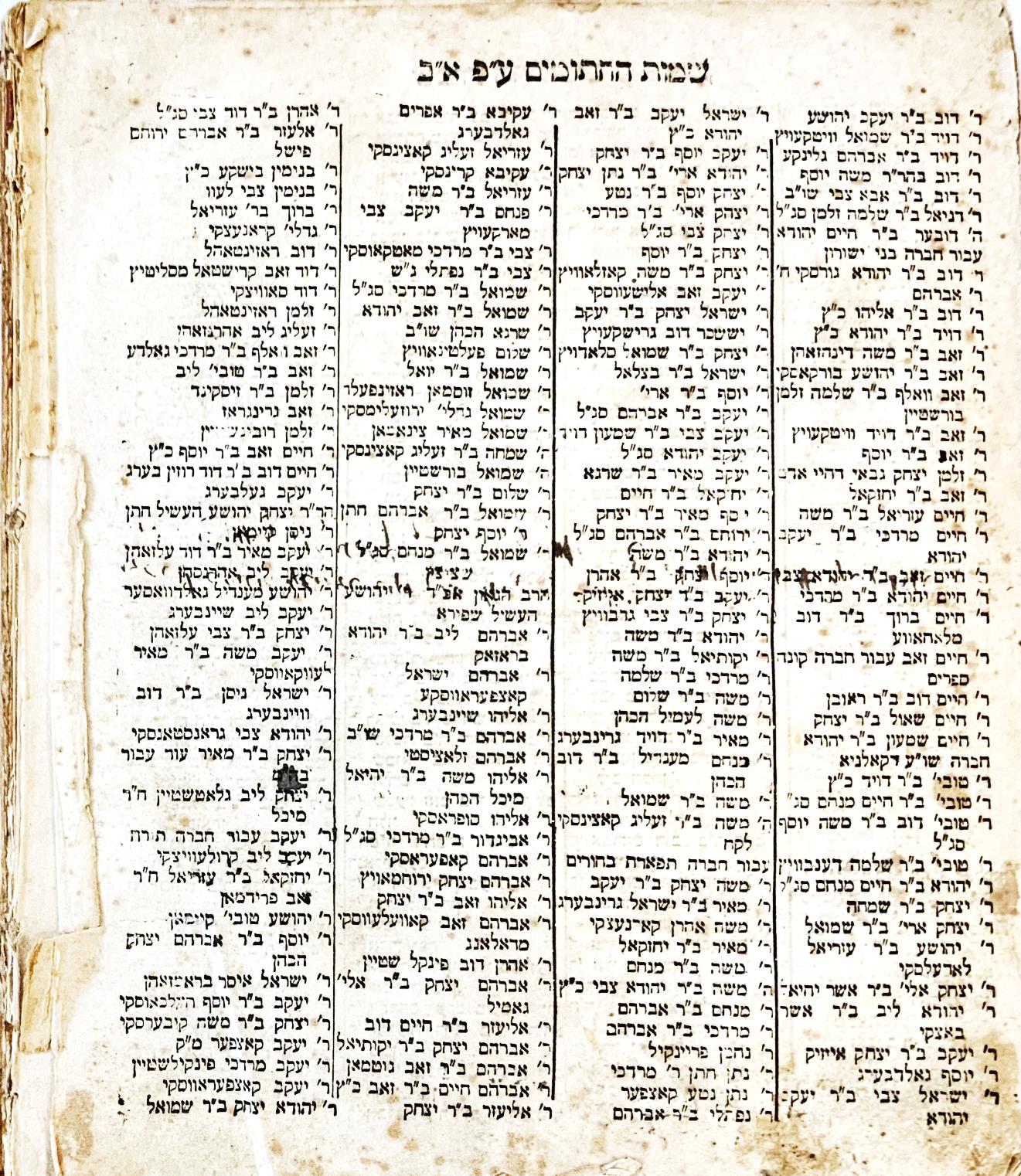
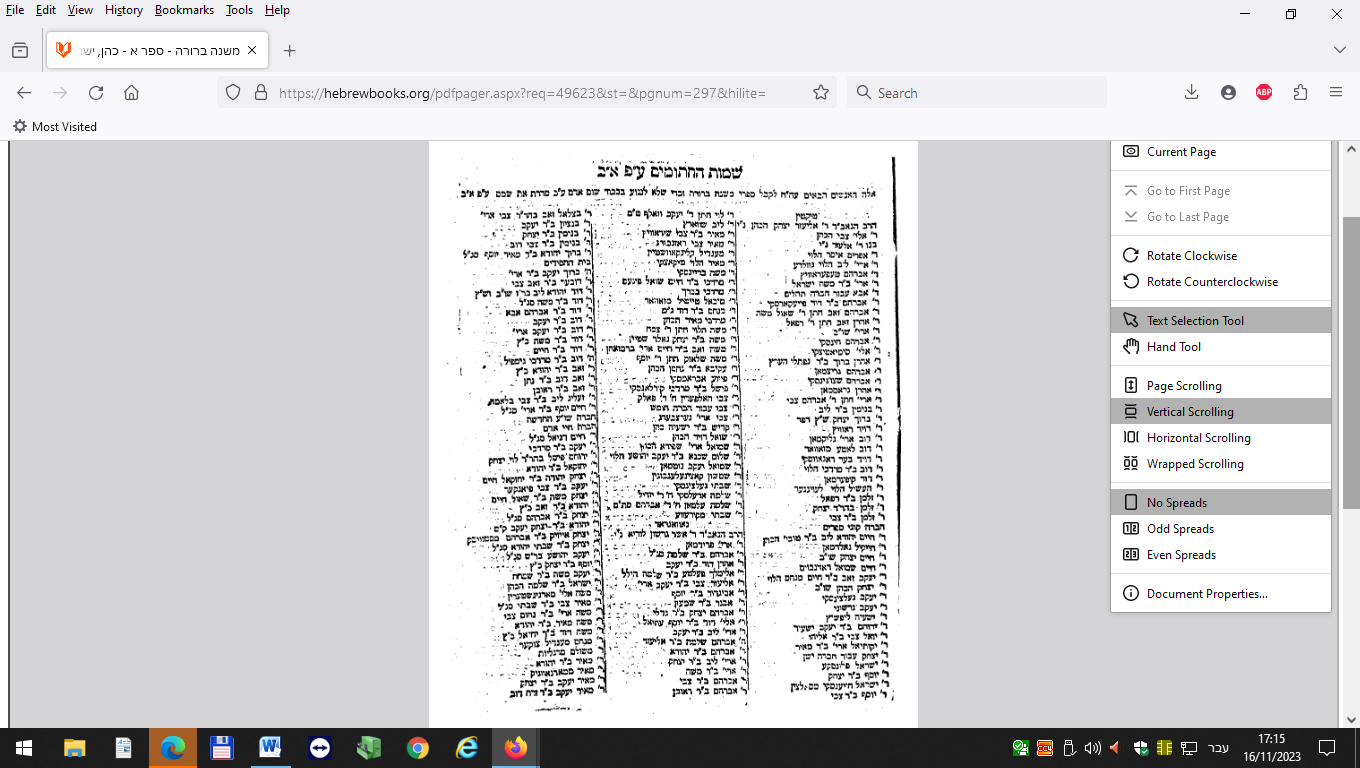
מאז שנת תרמ”א היתה זאת המתכונת של ‘סידור היעב”ץ’ הנודעת ברבים, ומעט מאוד מהקוראים ידעו שהרבה מהחומר אינו מפרי עטו של היעב”ץ. אמנם בשנת תשכ”ו (1966) הוציא ר’ משה ביק מהדורת צילום של הסידור המקורי, אבל הוא קשה מאוד לקריאה. בשנת תשנ”ד (1994) הוציא ר’ יוסף שלום הלוי וינפלד מהדורה חדשה של הסידור בהוצאת אשכול, שהוא מהדורה חצי-ביקורתית: הוא הדפיס את כל ההוספות שבביאורים ובהוראות באותיות קטנות ושונות, אבל את נוסח התפילות הוא לא הדפיס לפי נוסח היעב”ץ, אלא בנוסח אשכנז ונוסח ספרד (בשתי מהדורות נפרדות) כפי שהיו נהוגים בארץ ישראל בסוף המאה העשרים. ועוד: הוא לא תמיד שילב את ההוספות במקום ששילבם ר’ משה שו”ב אלא במקומות אחרים, מבלי לציין על זה; וסביר מאוד שר’ משה שו”ב גם השמיט דברים מהסידור המקורי, אבל אין רמז לזה במהדורה הזאת, ועדיין נשאר לעשות מחקר מקיף על כל זה. לכן אנחנו יכולים לומר שמהדורת אשכול היא כעין מהדורת כלאיים ולא מהדורה מדעית של ממש, אבל בכל זאת יש לנו תועלת מרובה ממנה. בסוף הכרך השני יש ‘אחרית דבר’, ובו הסביר ר’ י”ש וינפלד את השתלשלות מהדורות הסידור, ורוב ידיעותיי על הפרשה הזאת לקוחות משם.1 מכל מקום, גם אחר הוצאת המהדורה הזאת המשיכו העם לקרוא בדפוסי ‘סידור בית יעקב’ של ר’ משה שו”ב.
לאחרונה ממש (תשפ”ו/2026) יצא לאור ‘סידור יעבץ’ בהוצאת זכרון אהרן, שהוא מבוסס אך ורק על הסידור המקורי ‘עמודי שמים ושערי’ שמים, ואין בו שמץ דבר מסידור בית יעקב. ואכן זה טוב למי שרוצה ללמוד את דברי היעב”ץ, אבל כאן במחקר הזה נתמקד דווקא בקטע הנמצא רק בסידור בית יעקב, שאין לו שייכות ליעב”ץ.
סדר בעל קרי בסידור בית יעקב
סידור היעב”ץ המקורי מתחיל במבוא ארוך, ואחר כך ‘פרק שירה’ עם ביאור, ואח”כ כך ‘סדר השכמת הבוקר’. ואילו ב’סידור בית יעקב’ הוסיף ר’ משה שו”ב ‘סדר הנהגת הבוקר’ לפני פרק שירה, והוא חיבור חדש הכולל ‘סדר קימה ונטילת ידים’, ‘סדר לבישה’, ‘סדר בית הכסא’, ‘סדר בעל קרי’. במהדורת אשכול הוסיף וינפלד את כל זה אחר (!) סדר השכמת הבוקר של היעב”ץ, באותיות קטנות כמובן.
לכל סעיף ציין ר’ משה שו”ב את הספר ממנו נטל את העניינים: שולחן ערוך, זוהר, ראשית חכמה, וכדומה. מדי הפעם המקור הוא ‘יעב”ץ’ (סידור בית יעקב דפוס וורשא דף יד עמ’ ב), שהוא בוודאי אמור להתמיה את הקורא שאינו מבין שהמחבר של ‘סידור בית יעקב’ הוא מדפיס בשילהי המאה הי”ט ולא היעב”ץ עצמו.
שיטת ר’ משה שו”ב ב’סדר בעל קרי’ שונה מאוד ממה דאיתא בשולחן ערוך, שהוא המקובל על רוב הפוסקים.
מרן המחבר בשולחן ערוך כותב שהיום אין חיוב כלל לבעל קרי לטבול לפני שיתפלל (או”ח סימן פח): ‘כל הטמאים קורין בתורה וקורין קריאת שמע ומתפללין, חוץ מבעל קרי שהוציאו עזרא מכל הטמאים ואסרו בין בדברי תורה בין בקריאת שמע ותפלה עד שיטבול כדי שלא יהיו תלמידי חכמים מצויין אצל נשותיהן כתרנגולין. ואחר כך בטלו אותה תקנה והעמידו הדבר על הדין שאף בעל קרי מותר בדברי תורה ובקריאת שמע ובתפלה בלא טבילה ובלא רחיצה דתשעה קבין וכן פשט המנהג.’ לא הזכיר מרן, ואף לא הרמ”א, אפילו שיש מידת חסידות לבעל קרי לטבול לפני התפילה. בסידור היעב”ץ המקורי לא שיבח את מנהג המחמירים לטבול לקרי אלא כתב בפשטות (במדור ‘סדר הלילה’ אחר תפילת ערבית, סימן יג): ‘ראה קרי בשנתו, ירעד ויזדעזע וירחץ וישטוף הזרע במים, אם אינו נוהג טבילה לקרי.’ כלומר: יש כאלה שמחמירים לטבול לקרי, אבל אין היעב”ץ מעודד את ההנהגה הזאת וגם אינו מגנה אותה; נראה שלדעתו ההנהגה הזאת היא רשות ממש.
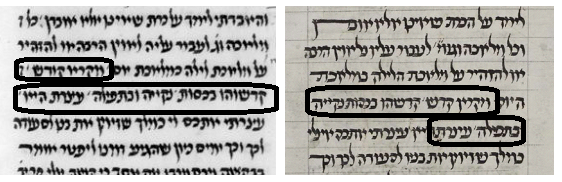
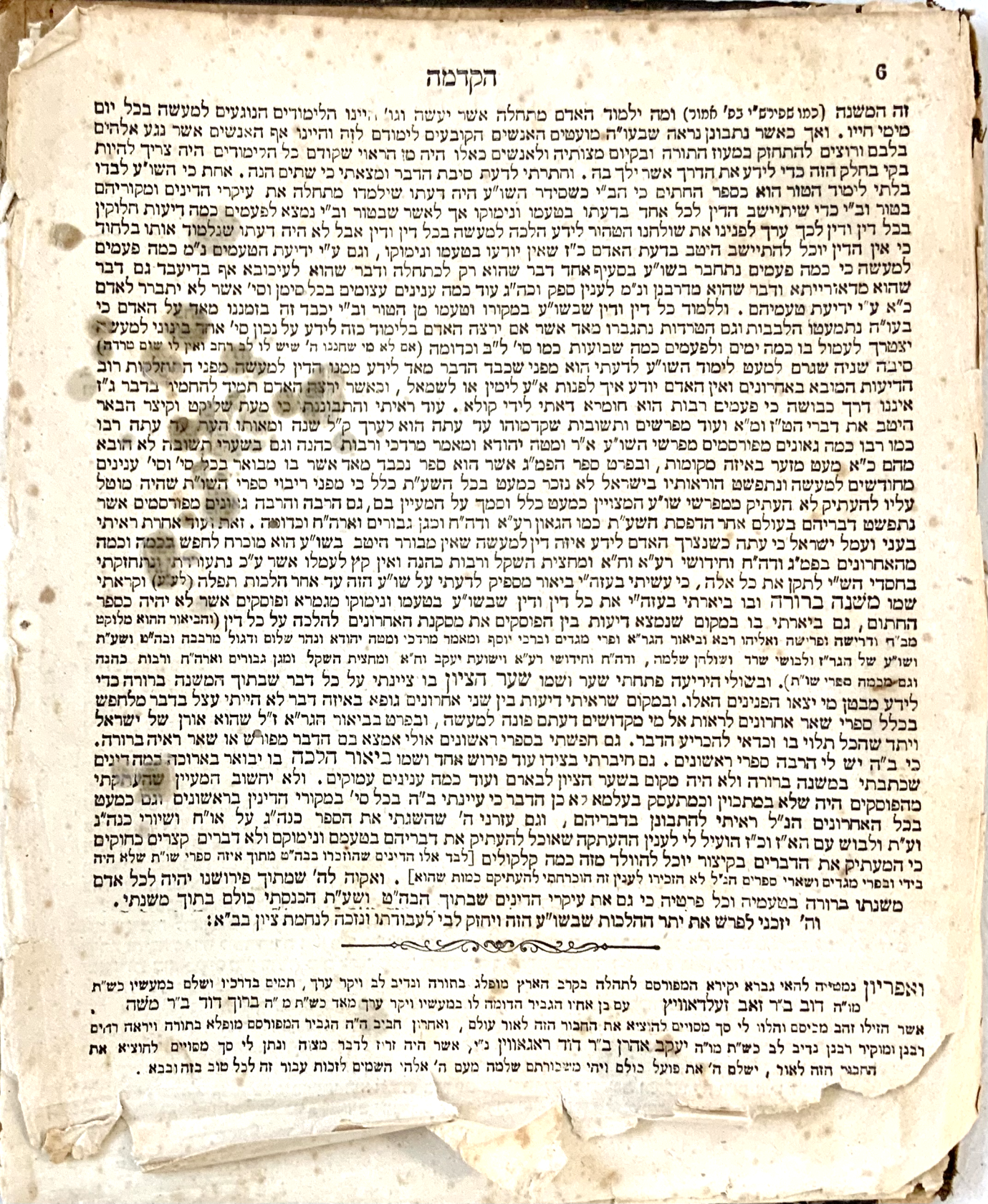
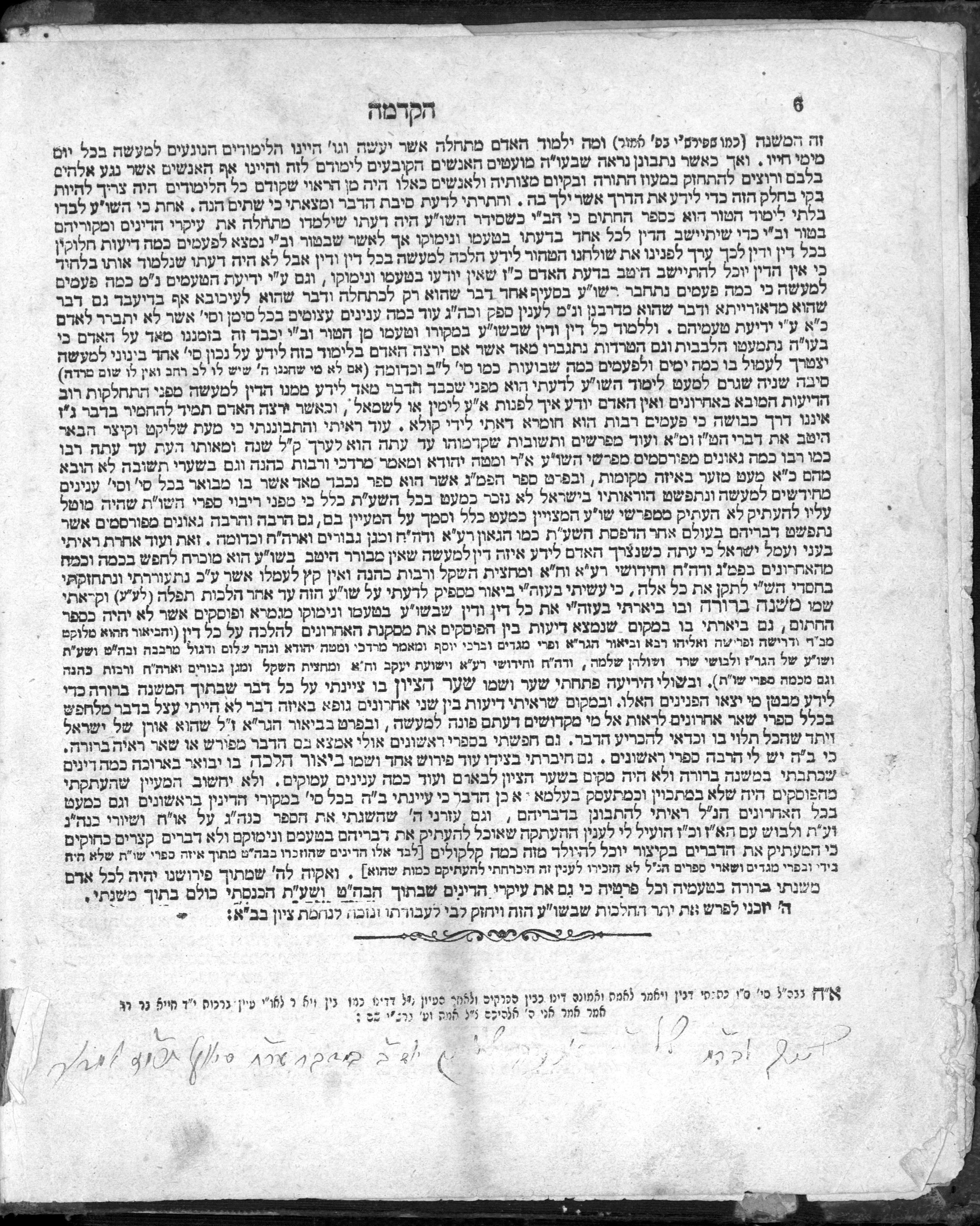
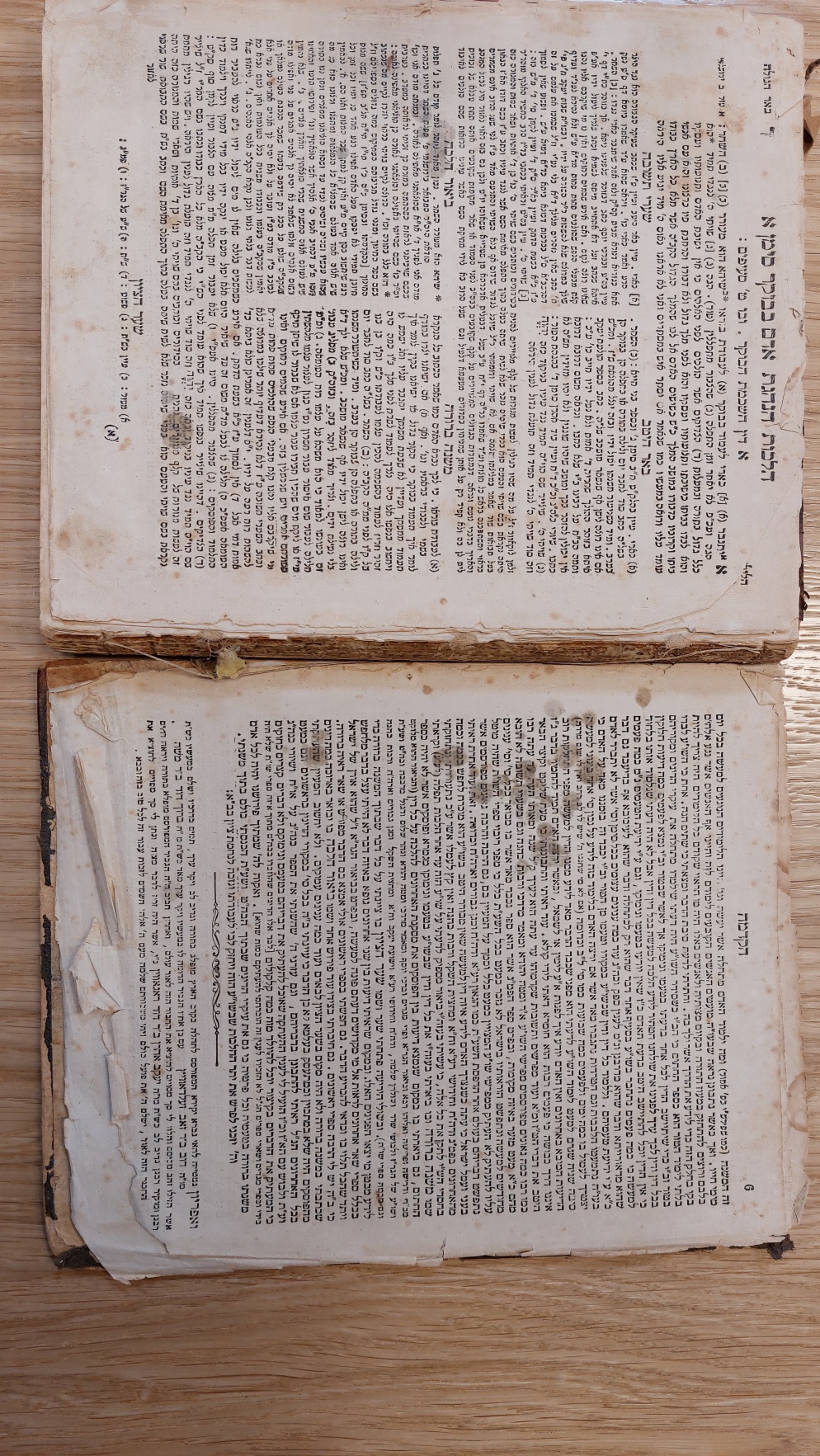
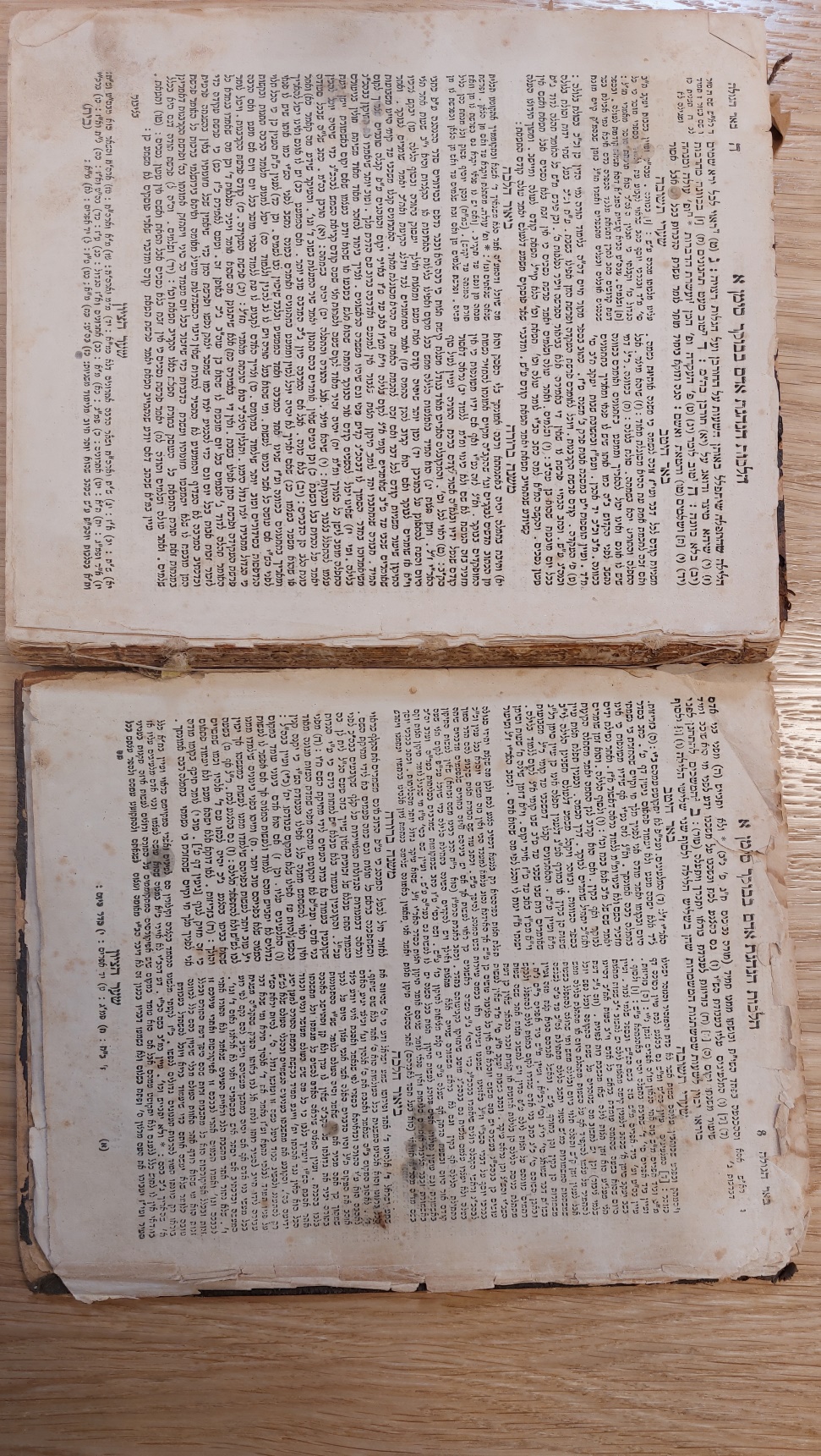
ואילו ר’ משה שו”ב כתב בשיטה שונה לגמרי ב’סידור בית יעקב’ במדור ‘סדר בעל קרי’ בראש הסידור אחר המבוא ולפני פרק שירה (דף יד עמ’ א):
סדר בעל קרי.
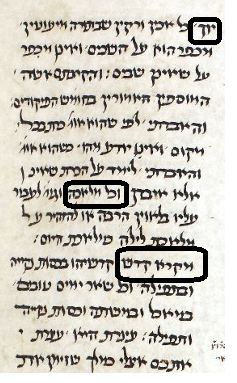
(א) דבר תורה. שחייב אדם ליטהר מטומאת קרי בכל מקום ובכל זמן. ואסור לשהות בטומאתו אפילו שעה קלה. וכמו שכתוב (ויקרא יט,ב) קדושים תהיו כו’. היו נכונים לשלשת ימים כו’ (שמות יט,טז). וכדי שלא ליבטל מפריה ורביה לא צותה התורה בפירוש בטהרת קרי רק בתרומה וקדשים. ומשרבו הרגילין בתשמיש עד שלקחו נשים נכריות. קם עזרא ובית דינו (וחכמים שאחריהם) ופרסמו הדבר ותקנו טבילה לבעל קרי. שלא יהיו תלמידי חכמים רגילים בתשמיש כתרנגולים. והעיקר שלא בטלו להתקנה. (ב”מ)
(ב) הזהיר לטבול לקרי נקרא צדיק ועתיד לנחול ש”י עולמות כמספר קרי. ויאריך ימים ותפלתו מקובל (שם):
(ג) בקיץ צריך בעל קרי טבילה אפילו להמקילין בה שלא הקילו רק בחורף מפני הצינה. ואפילו בחורף יזהר בה מאוד. ולא כל אדם יכול לומר איסטניס אני (שם):
(ד) אפילו במקומות הקרים ביותר שאי אפשר לכל הצבור לטבול. על כל פנים לא יניחו לשליח צבור להתפלל עד שיטבול לקרי. (בארבעים סאה. ולא סגי בתשעה קבין אפילו בחולה לאנסו. ומי שלא ראה קרי כלל ביום זה קודם לו) וכן העולים לתורה. והכהנים העולים לדוכן יטבלו או לא יעלו לדוכן. וחובה על הצבור בכל עיר לתקן מקוה חמה בשביל קרי. וביותר בשביל נשים החלושין מאד וטבילתן צריך דקדוק רב. ומפני הקור אי אפשר לדקדק ויכול לבא חס ושלום לספק נדה שבכרת. והעוסק בצורך צבור הזה יאריך ימים (שם):
(ה) בעל קרי אסור להתפלל (ואסור בקריאת שמע אפילו בהרהור) וללמוד תורה נביאים כתובים משנה גמרא הלכה אגדה. אבל שונה בהלכות דרך ארץ. והמחמיר תבא עליו ברכה (רק ימהר לטבול כל שאפשר) ואין עולה מטומאתו אפילו אחר כמה שנים עד שיטהר (שם):
הוא [=ר’ משה שו”ב] מייחס את כל הדברים הללו לספר ב”מ, אבל פשר ראשי התיבות נשאר עמום וסתום. חיפוש באוצר החכמה של צירופי מילים מתוך הדברים האלה העלה חרס. והציע ידידי ר’ י”ש הויזמאן שאין ב”מ אלא חיבור של ר’ משה שו”ב עצמו!
ואם כן יש לר’ משה שו”ב שיטה ייחודית מאוד בתקופתו: לא בטלה תקנת עזרא כל עיקר, אלא נשארת בתוקפה לתפילה וגם לקריאת שמע (כך משמע מדבריו בהמשך); לא ברור מה שיטתו לגבי השאלה אם בעל מותר לקרוא בתורה וללמוד תורה. ועוד, הוא סובר שגם מדאורייתא היה ראוי לחייב בעל קרי לטבול לדברי קדושה, אבל הקלה לנו התורה כדי שלא יימעטו ישראל מפריה ורבייה, ותקנת עזרא לא היתה אלא החזרת הדין למה שהיה ראוי להיות מדאורייתא!
הנה רואים מזה שמלבד המסלול העיקרי של פוסקי ההלכה, שנטו לִפְסוֹק ‘בטלוה לטבילותא’ (כדברי התלמוד הבבלי ברכות, כב עמוד א) שרדה השיטה האחרת, שלא בטלה תקנת עזרא, גם בתקופת האחרונים במאה הי”ט.
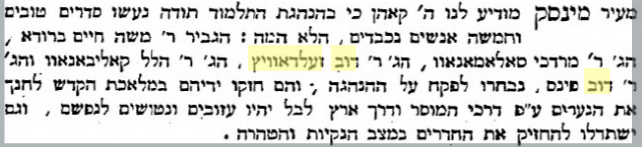
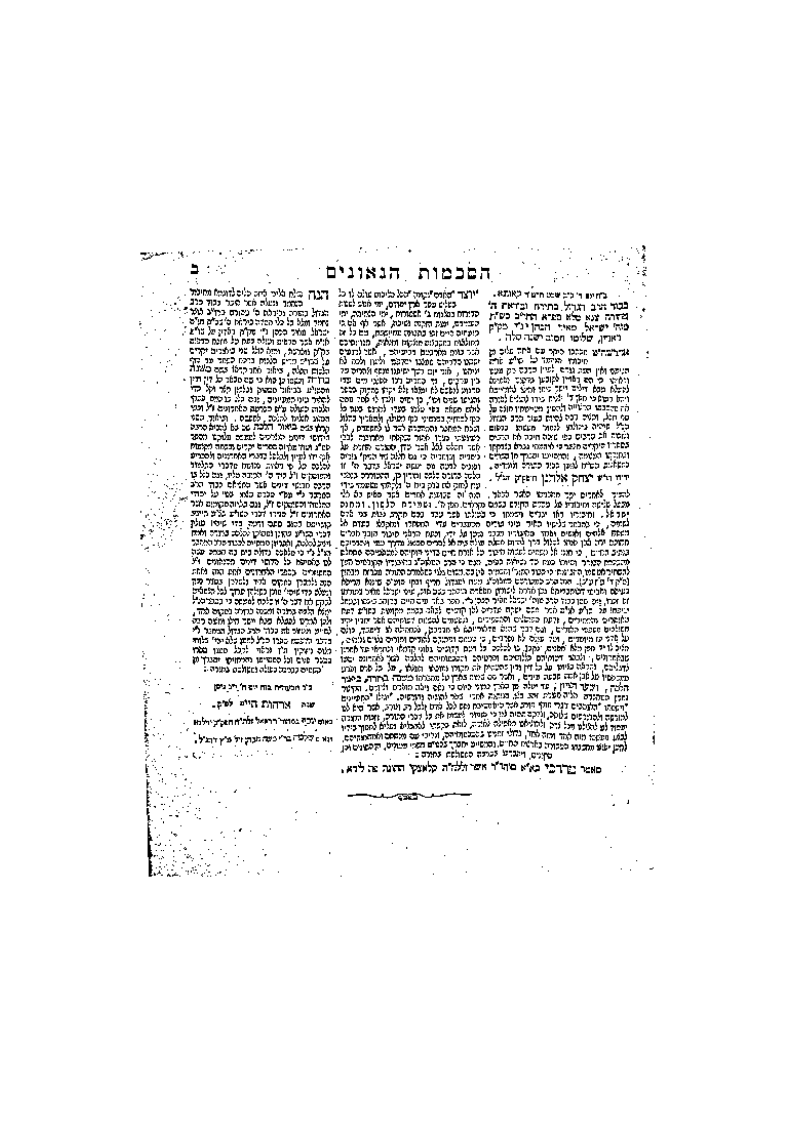
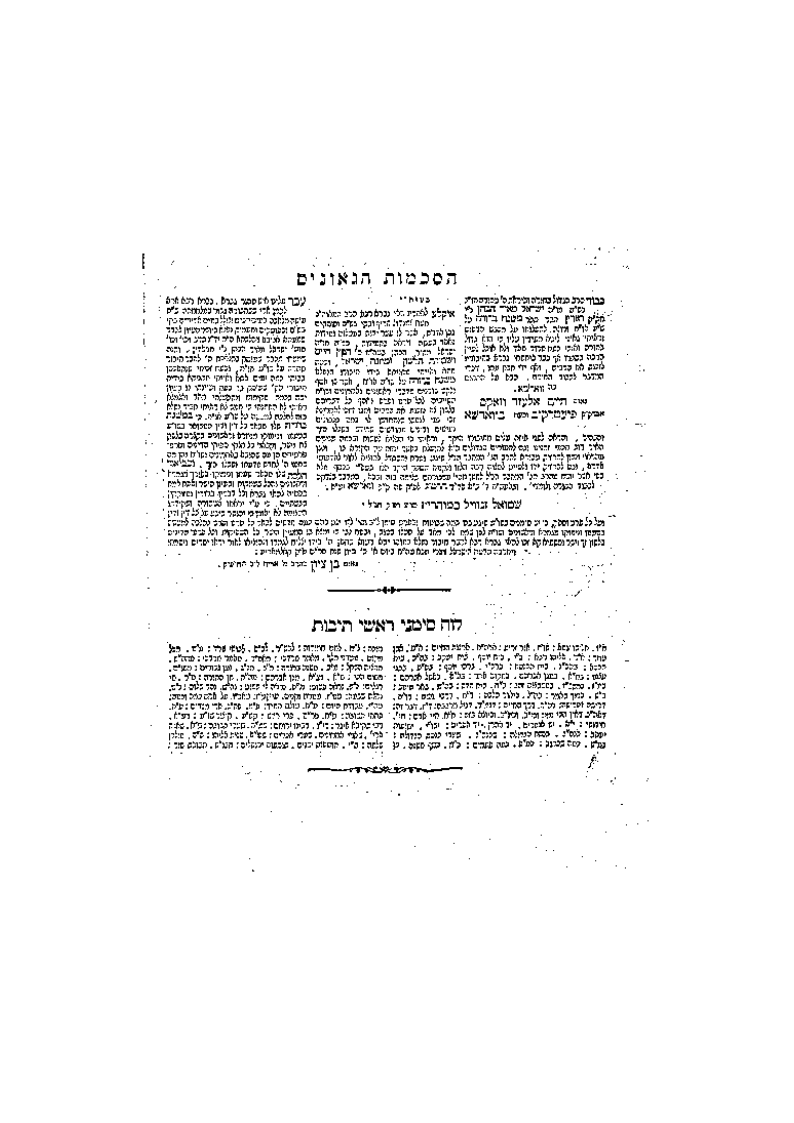
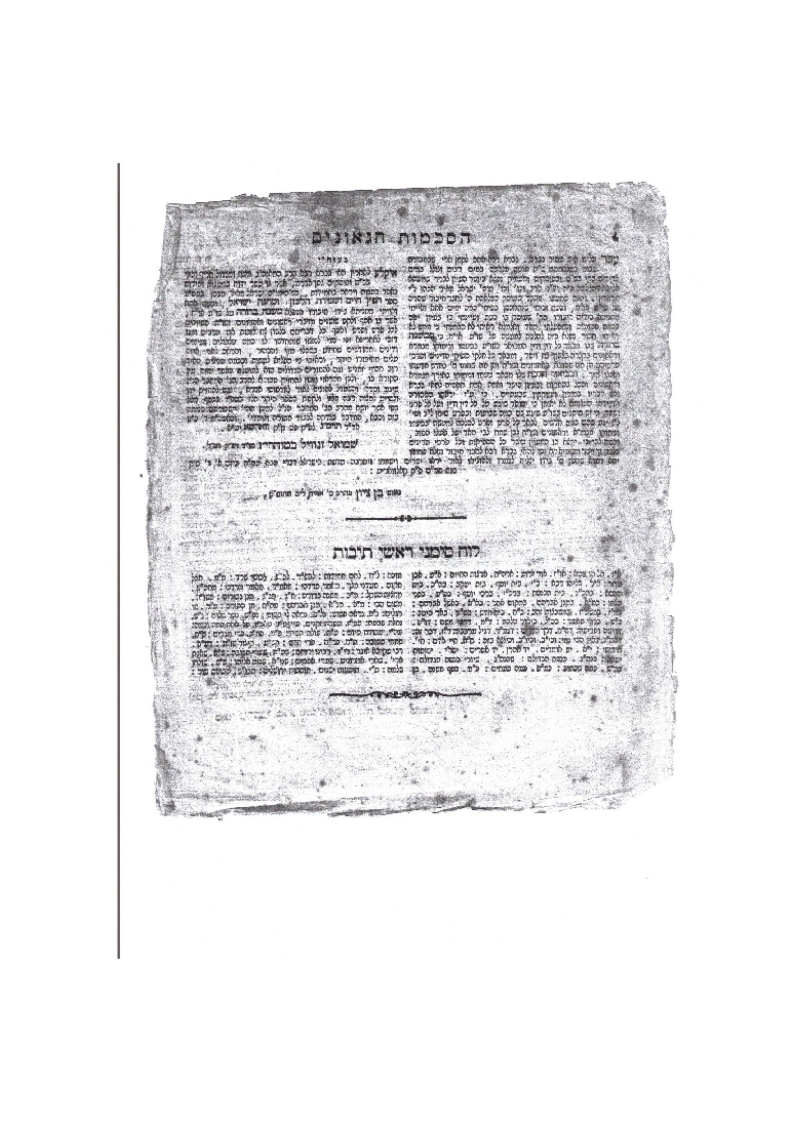
האדר”ת (ר’ אליהו דוד רבינוביץ־תאומים, תר”ג/1843 – תרס”ה/1845, חותנו של הרב קוק) שם לב לחריגות הזאת והתרעם עליה. קונטרסו ‘עובר אורח’ נשאר בכתב יד במשך מאה שנה, ויצא לאור ע”י ר’ דניאל ביטון כספר בהוצאת מכון המאור בשנת תשס”ג/2003. לפי דף השער הוא ‘חידו”ת (=חידושי תורה) ופלפולים בענינים שונים שנתחדשו בשיחות בין המחבר לגדולי ישראל בשבתם אצלו בשנים תרנ”ז – תרנ”ט’. בשנים ההן היה האדר”ת מרא דאתרא של העיר מיר, ואחר כך בשנת תרס”א/1901 הוא עלה לארץ ישראל (כך לפי ויקיפדיה). בסימן פח שם הוא כותב:
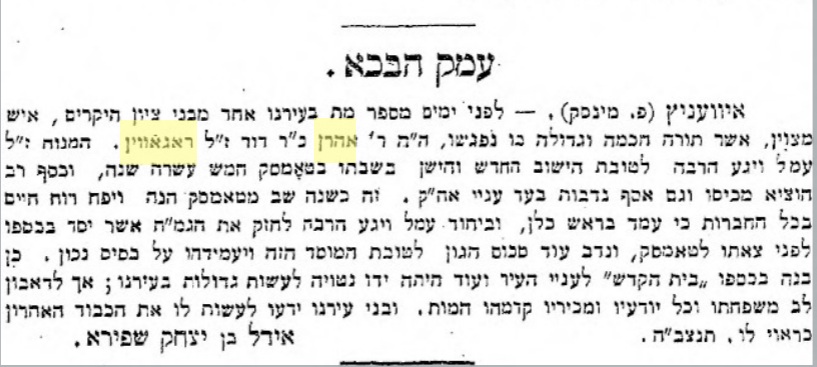
מכשול גדול נתן המו”ל את סידורו של הגריעב”ץ ז”ל בווארשא שהדפיס מאמר ‘סדר בע”ק’ נגד כל הראשונים ואחרונים דלא בטלו לטבילותא כלל. וכי גם ביוהכ”פ וט”ב ובימי האבל ר”ל מותר לטבול והוא העתיק מספר קטן בשמו טהרת ישראל ונלקט מס’ מקור הברכה פי’ על ד’ פרקי משניות הראשונים וכמה גדולים לדברי הח”ס ז”ל על ההדפסה בלא הסכמות וגם זולת זה קלקל הרבה בהדפסתו את גוף הסידור ואכמ”ל.
(תודתי נתונה לידידי ר’ י”ש הויזמן שהראה לי את מקור הזאת, שהוא מצאו במובאה בתוך המבוא לסידור היעב”ץ בהוצאת זכרון אהרן.)
אבל הטענה הזאת של האדר”ת אינה מדויקת. אין השיטה הזאת ‘נגד כל הראשונים’. הרב בראל שאח כתב תמצית דברי הראשונים בדף ‘הרחבות לפניני הלכה’ (https://ph.yhb.org.il/plus/14-03-09/, נבדק בתאריך 16 יולי 2026). ואלה דבריו שם:
לעומת זאת, דעת חלק מהראשונים, שתקנת עזרא בטלה רק לעניין דברי תורה בלבד, אבל לעניין תפילה עדיין עומדת התקנה בעינה. מהם שהצריכו לתפילה טבילה ממש, וכ”כ ר”ת (ספר הישר, החידושים שצא); רוקח (סי’ שכא); רבנו אפרים (מובא במאורות פסחים ז, א). ויש שכתבו שדי ברחיצת ט’ קבין, וכ”כ רה”ג; ר”ח (כ”כ בשמו או”ז א, קיז; ראבי”ה סח; ועוד. ויש שהבינו שמחייב טבילה ממש, כגון תוספות חולין קכב, ב, ‘לגבל’, ופסקי הרי”ד); או”ז (א, קיז); ארחות חיים (תפילה לב) בשם ר”ש. וכ”כ טור (או”ח פח), בשם ראב”ד.
אם רבנו תם פסק שלא בטלה תקנת טבילת בעל קרי לתפילה, אי אפשר לטעון שהשיטה הזאת היא ‘נגד כל הראשונים’. אלא נראה שתמיד היתה שיטה כזאת
הן בזמן הגמרא
הן בזמן הגאונים (עי’ אוצר הגאונים, ברכות, עמ’ 55, סימן קמד, תשובה מאת רב האיי גאון, על מי שראה קרי בשבת ואינו יכול לטבול במים קרים: ‘וזכורים אנו כמה שבתות ממר רב אהרן גאול ז”ל שהיינו מתפללין בביתו והוא יושב מן התפלה עד הערב’ מפני שהיה בעל קרי ולא נקט שבעל קרי אסור לגמרי להתפלל עד שיטבול)
הן בתקופת הראשונים
והן בתקופת האחרונים, בסדור בית יעקב של ר’ משה שו”ב מזיטומיר
גם אינה נכונה טענתו של האדר”ת שההיתר ב’סידור בית יעקב’ לטבול לקרי ביום הכיפורים ובתשעה באב הוא נגד דברי הכול, אלא לדעת כמה ראשונים יש לעשות כן, וגם במאה הי”ט פסק כן האדמו”ר מקומרנא ר’ יצחק יהודה יחיאל ספרין בספרו ‘זוהר חי’, ועי’ הדיון בספר נטעי גבריאל הלכות יום הכיפורים פרק מח אות ט (עמוד שכו) הערה יד.
ועדיין כדאי לברר מהו ‘ספר קטן בשמו טהרת ישראל ונלקט מס’ מקור הברכה’ שהזכיר האדר”ת וטען שר’ משה שו”ב העתיק ממנו, ואם לראשי התיבות ‘ב”מ’ יש שייכות כלשהו לספר הזה. וברור שאין מדובר בספר טהרת ישראל של החפץ חיים ולא בספר טהרת ישראל של ר’ יצחק ישראל ינובסקי, שהם לא חוברו עד אחר הדפסת סידור בית יעקב ונראה שלא חוברו עד אחר פטירתו של האדר”ת.
מכל מקום, מתוך עיוננו בסוגיא הזאת עלה לנו שאף דבריו של ר’ משה שו”ב תורה הם וצריכים עיון ומחקר.
הערות
1. לאחרונה העירני ידידי ר’ יעקב ישראל סטל שבפורום אוצר החכמה היה דיון ‘ואתא שוחט – הוספת המדפיס בסידור יעב”ץ’ בשנת תשע”ז/2017. (הכותרת של האשכול, ‘ואתא שוחט’, רומזת לשמו של ר’ משה שו”ב, שכן שו”ב = ‘שוחט ובודק’.↩︎
Cherubim: Winged Celestial Beings on the Title-Pages of Early Hebrew Books
Cherubim: Winged Celestial Beings on the Title-Pages of Early Hebrew Books
by
Marvin J. Heller[1]
And having driven out the man, He stationed at the east of the Garden of Eden the Cherubim and the flame of the ever-turning sword, to guard the way to the Tree of Life (Genesis 3:24).
You shall make two Cherubim of gold—hammered out shall you make them—from both ends of the cover. You shall make one cherub from the end at one side and one Cherub from the end at the other; from the cover shall you make the Cherubim at its two ends. The Cherubim shall be with wings spread upward, shielding the Cover with their wings with faces toward one another; toward the cover shall be the faces of the Cherubim being turned toward the cover. (Exodus 25: 18-20).
Rav Ketina said: When the Jewish people would ascend for one of the pilgrimage festivals, the priests would roll up the curtain for them and show them the cherubs, which were clinging to one another, and say to them: See how you are beloved before God, like the love of a male and female (B.T. Yoma 54a).
Cherubim (angels) are a frequent presence on the title-pages of early Hebrew imprints in the sixteenth century and afterward, the latter beyond the scope of this article. They are also to be found in incunabula, on the frames of initial pages and head-pieces for text.
How do you define what are cherubim? One definition, that of the Encyclopedia Judaica, is “a winged celestial being which appears in the Bible in several different guises.” It then proceeds to give several descriptions of cherubim. The Jewish Encyclopedia begins with a more detailed description, stating cherubim are “the name of a winged being mentioned frequently in the Bible. The prophet Ezekiel describes the cherubim as a tetrad [set of four] of living creatures, each having four faces—of a lion, an ox, an eagle, and a man—the stature and hands of a man, the feet of a calf, and four wings.”[2]
The use of cherubim is also noted in the 1911 Encyclopædia Britannica where they are described as “imaginary winged animal figures of a sacred character, referred to in the description of Solomon’s temple (1 Kings vi. 23-35, vii. 29, viii. 6, 7), and also in that of the ark of the tabernacle (Ex. xxv. 18-22, xxvi. 1, 31, xxxvii. 7-9). . . . In Gen. iii. 24 the cherubim are the guards of Paradise . . .”[3]
The frequency of the appearance of cherubim in Hebrew literature can be found on Sefaria, a bibliography of Jewish texts, which records fifty-six entries for cherubim under biblical, Mishnah 27, and Talmud 991. Among other entries are Midrash, 590; Halakhah 7947; Kabbalah 747; and yet still others as well as multiples of commentaries on the first works.[4]
These multi-winged creatures are also a feature in general literature. Franz Sales Meyer, under the heading Miscellaneous heads, describes the “Angel faces, youthful heads, with a circular or disc-like halo, are first met-with in the Byzantine style, as the result of ecclesiastic articles,” He continues that in the early Italian Renaissance such renderings were charmingly naïve. They appeared as adornments on friezes and arches, medallions, and in borders. They also are to be found on tombs and are “Much used in Modern ecclesiastical decorations.” The text is accompanied by a page of examples of the cherub head, including one of a skull.[5]
It had been my intention to describe Hebrew title-pages with images of cherubim over a period of two centuries.[6] The numerous instances of such usage, however, has necessitated a considerable limiting of our subject period. Indeed, rather than noting all the examples in our current period, in the sixteenth century, we only describe several exemplars, giving background about the books in which they appear, that is, the publisher, author, and book subject.[7] This article is expansive, that is, in describing cherubim, it discusses the varieties of Hebrew literature, the authors of the subject works, the presses that published them, and even Hebrew book history. The title-pages and infrequent text pages with displays of cherubim addressed here are in chronological order, but from diverse locations and, again, on a variety of books, indicative of how widespread Hebrew publishing was and even more so the depth and nature of Hebrew literature.[8]
1514-18, Hameshei Humshei Torah – Our first work with the appearance of cherubim is a folio (20) edition Hameshei Humshei Torah (Pentateuch) with haftorat and commentary of Rashi printed in 1514-18 in Prague at the press of Gershom ben Solomon ha-Kohen and partners. Gershom later received a royal privilege from King Ferdinand of Bohemia, allowing him, that is Gershom alone, to enjoy a monopoly on Hebrew printing in Prague. His descendants, known as the Gersonides, continued to print in Prague until the mid-seventeenth century.
1514, Hameshei Humshei Torah Courtesy of the Library of the Jewish Theological Seminary
A magnificent edition, with ornate woodcut frames and large type for the text. Each book has a unique decorative opening page, there is no title page, comprised of four separate pieces, those on the pillared sides with vases, leaves, and cherubim, similar but not identical, the top piece with a concave bottom edge. Genesis has a convex curved piece to fit with this top piece on the upper half of the page, with winged cherubim holding a shield with the spread hands of the Kohen giving the priestly blessing.[9]
Work on the Pentateuch began on 10 Sivan (June 14, 1514) but, perhaps as a result of the success of the prayer book, the partners found they had overextended themselves and found it necessary to suspend work on this project for two years. In 1530 Gershom and his sons reprinted this Pentateuch in an identical format, except for changes to the decorated initial pages.
1527, Dictionarium Chaldai – Our next entry with cherubim is an Aramaic grammar by the Christian-Hebraist scholar Sebastian Muenster (1489-1552). It was printed in Basle in 1527 at the press of Johannes Froben in quarto format (40: [1], 434, [7] pp.). The Froben family was the most significant printers of Hebrew books in Basle. Johannes Froben published as many as 250 titles, among them Hebrew/Latin books of the Bible and grammatical works, primarily works by Muenster.
Sebastian Muenster, a cosmographer, astronomer, and orientalist was, for twenty three years, professor at Basle. Born in Niederingelheim, Hesse, the son of a Spitalmeister (hospital master), Muenster had no university education nor did he ever receive a degree. His education consisted of some private instruction in Latin and later studies at Frieberg and attendance at lectures given by the Franciscans. In 1506, Muenster entered the Minorite order and was sent to study in Rufach under Conrad Pellican (Pellicanus, 1478-1556). The following year he took vows and, in 1512, was ordained a priest. Muenster assisted Pellican in teaching in Pforzheim and, from 1524-29, occupied the chair of Hebrew at the University of Heidelberg. In 1529, Muenster converted to Protestantism and moved to Basle, where he occupied the chair of Hebrew, at a salary of 60 gulden; from 1547/8 he was rector. From about 1525, Muenster was a student of Elijah Levita, translating and editing his grammatical works. Muenster also translated a number of other Hebrew works into Latin and was a prolific author in his own right. By the time of his death more than 100,000 volumes of his works were in circulation. His Jewish oeuvre, more than three-score publications, covers all aspects of Judaica, excepting Kabbalistic studies, which did not interest him. In 1523, Muenster published Dictionarium Hebraicum . . . adiectis Chaldaicis vocabulis, his study of the Aramaic language. The book reads from left to right but the text follows the Hebrew alphabet. Words are given in vocalized Hebrew, followed by their etymology, definition and examples.
The title page of the Dictionarium Chaldai has an architectural frame with cherubim in various positions, as well as additional cherubim below mounted and otherwise. This title page, designed by Hans Holbein, was used as early as 1516 on Basel statutes and into the seventeenth century.[10][11]
Not long afterwards, from 1540 through 1543, at least five titles were printed in three locations with varied images of cherubim on the title-page, that is Augsburg, Prague, and Bologna. That is not to say these frames were not used on other books, most likely they were, but rather these are examples of cherubim used by the printers of Hebrew books at the time.
Augsburg has an early history related to Hebrew printing. Several early anti-Jewish works beginning with the apostate Johannes Pfefferkorn’s Der Judenfeind (1509) and other anti-Semitic books by apostates were published there. Another early Augsburg publication of note, this certainly more positive, albeit not a Hebrew edition of that popular and much republished work, is the first printing of R. Joseph ben Abraham Gikatilla’s (1248–c. 1325) kabbalistic classic, Sha’arei Orah, which explains and analyzes the ten Sefirot. This edition of Sha’arei Orah is a Latin translation of that work by the apostate Paulus Ricius (Paulus Israelita, 1480-1541) under the title Portae lucis, published in 1516 at the press of Johann Miller.
1527, Dictiorionarim Chaldai Courtesy of the Fales Library and Special Collections, New York University
Serious Hebrew printing in Augsburg begins when Hayyim ben David Shahor, among the pioneers of Hebrew printing outside of Italy, came to Augsburg in about 1533/34. In Augsburg, Schwarz worked in the print shop of Silvan Otmar (d. 1540), a renowned and highly productive printer, and resided in the home of Bonifacius Wolfhart, a Protestant pastor who also served as the censor of Hebrew books for Augsburg.[12] Shahor printed several works in conjunction with his son, Isaac, and his son-in-law, Joseph ben Yakar, who assisted him at the press, although their names are not mentioned on the title-pages.[13]
Shahor likely joined with a non-Jewish printer, perhaps August Wind, a printer of Hebrew works for Christian clergyman. Hayyim left for Italy, returning to Augsburg in 1540. He then printed three books, Avkat Rokhel, Arba’ah Turim and a prayer book for, according to the Thesaurus of the Hebrew Book, a total of ten works in Augsburg. Due to a lawsuit by an apostate, Paulus Aemilus, with whom Shahor had been associated in Ferrara, resulting from their failed venture, Shahor and his family were forced to cease publication and leave Augsburg. Aemilus, seeing a market in Augsburg for Hebrew/Yiddish books, began to print on his own account. He issued a small number of titles, most notably the Melokhim Bukh (1543) and the Shmuel Bukh (1544), Yiddish poetical renditions of the books of Kings and Samuel, both with images of cherubim (below).[14]
1540, Avkat Rokhel – Our first Augsburg title is Avkat Rokhel, an eschatological work on the principles of faith attributed to R. Machir ben Isaac Sar Hasid, a student of R. Judah ben Asher, son of the Rosh. Printed in octavo format (80: 18 ff.), perchance by Shahor. The Thesaurus of the Hebrew Book attributes it, albeit in brackets, to Hayyim Shahor, in contrast to the National Library of Israel that records the printer as unknown.[15]
The text of the title page is set within a decorative frame with nineteen cherubim and a number of animals. The title-page states that it is,
Sefer Avkat Rokhel
Printed by the printers named at the end of the volume. Edited with great care, with all our ability, “the good hand of our [Lord] upon us,” (ref. Ezra 8:18). And it was completed, here Augsburg, the great city, with the help of the Lord and His salvation. In the year, “[Rejoice, O you nations, with his people; for he will avenge the blood of his servants,] and will render vengeance to his adversaries, and will make expiation כפר (300=1540) for the land of his people” (Deuteronomy 32:43).
The names of the printers, Hayyim Shahor, Isaac ben Hayyim, and Joseph ben Yakar, the statement on the title page notwithstanding, are not given at the end of the volume. A brief introduction informs that the work was named Avkat Rokhel (the perfumer’s powders, Song of Songs (3:7)) for as the perfumer’s powders strengthen the soul, so too when one reads this book will he fear and cause his soul to be pure and free from all sin and transgression, thus meriting the good.
1540, Avkat Rokhel
Courtesy of the Dorot Jewish Division New York Public Library
The like title-pages of Avkat Rokhel and Unterricht Wie ain Christenmensch, the latter a non-Hebrew work printed approximately two decades earlier, reflect a relationship between Jewish and Christian printers, that is, Christian printers published Hebrew books in association with Jewish associates. The relationship between the printers was mutually beneficial. For the Christian publisher “the Hebrew books sector, being unique, was attractive to investors, being more limited and not so wildly competitive as the Italian book sector.”[16] In addition to the non-Jewish printer’s access to the Jewish book market, the Jewish publisher was able to not only publish Hebrew books, but he also gained access to the typographical material of his Christian associate. The latter, for example, frequently provided attractive frames to the former after having used them for his market and the Jewish partner also utilized the printer’s other ornamentation. This was of value to the Jewish partner as he did not have to go the expense of having decorative material prepared, at a relatively much greater expense as it would be utilized for a much smaller market. This despite the fact that the frames were often incompatible with traditional Jewish sensibilities.[17]
The like title-pages of Avkat Rokhel and Unterricht Wie ain Christenmensch, the latter a non-Hebrew work printed approximately two decades earlier, reflect a relationship between Jewish and Christian printers, that is, Christian printers published Hebrew books in association with Jewish associates. The relationship between the printers was mutually beneficial. For the Christian publisher “the Hebrew books sector, being unique, was attractive to investors, being more limited and not so wildly competitive as the Italian book sector.”[19] In addition to the non-Jewish printer’s access to the Jewish book market, the Jewish publisher was able to not only publish Hebrew books, but he also gained access to the typographical material of his Christian associate. The latter, for example, frequently provided attractive frames to the former after having used them for his market and the Jewish partner also utilized the printer’s other ornamentation. This was of value to the Jewish partner as he did not have to go the expense of having decorative material prepared, at a relatively much greater expense as it would be utilized for a much smaller market. This despite the fact that the frames were often incompatible with traditional Jewish sensibilities.[20]
The title-page of Avkat Rokhel has the largest number of cherubim of our title-pages, nineteen in all, of our title-pages. The cherubim appear on the bottom, sides, and top of the frame, all active, albeit in different activities. The text of Avkat Rokhel is in three parts, each further subdivided. The first section addresses the struggle against one’s evil urge prior to redemption and the birth pangs and advent of the Messiah, and an explanation of the pertinent midrashim; the second part discusses the rewards and punishments of the soul after the resurrection, the nature of the world to come according to Judaism, in contrast to the views of non-Jews, and resurrection; and the third part the laws stated by the sages of the Talmud as halakhah Moshe me-Sinai, the formation of man and the number 248 limbs in a person, the statement of our sages concerning three partners in that process (God, man, and woman) and some gematriot.
This is the third edition of Avkat Rokhel, it having been printed previously in Constantinople (1516) and Rimini (1526). Ch. B. Friedberg records, in his Bet Eked Sepharim, more than twenty-five printed editions of Avkat Rokhel. It was translated into Latin by A. Hulsius and printed in his Theologia Judaica, (Breda, 1653) and a Yiddish edition was prepared by Naphtali Pappenheim (Amsterdam, 1647).[21]
1543, Melokhim Buch – Two additional works printed in Augsburg, attributed to Moses (Esrim ve-Arbeh) Ashkenazi, are Yiddish poetical renditions of the books of Kings and Samuel. Moses’ appellation, Esrim ve-Arbeh (24), derives from either his birthplace, Vierundzwanzig Hoefe (24 courts) in Wuerttemberg, or from his extensive knowledge of the 24 books of the Bible. Moses’ accreditation with either authoring or transcribing the Melokhim Bukh is due to its similarity to the Shmuel Bukh, more reliably attributed to him. Nevertheless, sufficient differences exist between the two works that many scholars believe they do not share a common author. It is clear, however, that the author, even if not this Moses, was an Ashkenazi Jew. The Melokhim Bukh was published in quarto format (40: [123] ff.) by, according to the colophon, Paulus Aemilus. A Latin colophon states, Augustae Vindelicorum/ per Paulum Aemilium, Anno/ Domini M. D. XLIII. Meyer Waxman suggests that it is doubtful, the colophon notwithstanding, that the publisher was Aemilus; more likely it was Hayyim Shahor.
We have noted above that the frames on these title-pages were first used by Christian printers and that when that market no longer needed the frames, they were made available to Jewish printers. The cherubim frames noted above were generally acceptable to a contemporary renaissance Jewish public, although some, many, were questionable and would not be used today. In contrast, the title-page of the Melokhim Buch has a border made up of a four-part frame, the top with a representation of a king, the left and right sides respectively with images of Adam and Eve, unclad, the latter with the snake, two small children, and expecting. At the bottom are two cherubim. Use of this frame is surprising, for in contrast to other frames its’ contents appear to be objectionable, more so than other frames, even those with mythological characters. It seems likely that this frame might also be distasteful to Christian sensibilities.[22]
1543, Melokhim Buch Courtesy of Dr. Moshe Rosenfeld
The title page states that it is “The book Melokhim (Kings) in Taytsher sprach, beautiful and clear and very entertaining to read. Printed in the imperial city of Augsburg in the year 303 (=1543)” [23] The colophon dates the completion of the work to Friday, 14 Av, 303 (July 25, 1543), which was a Sunday in 1543.
The Melokhim Bukh was not written as a sequel to the Shmuel Bukh. It is the older of the two books, originally written as a separate work, possibly as early as the fourteenth century. The format of the Melokhim Bukh, a rhymed paraphrase of the book of Kings, is that of the heroic epic, stylistically modeled after comparable German sagas, such as the Nibelungen. The subject matter is the events in Kings I and II, imaginatively and colorfully enhanced by material from the Talmud and Midrashim, all expressed with a deep piety. Intended as a complete history, it begins with a hymn of praise to God in three strophes followed by nine strophes from the Exodus to the last days of David, the contents of Kings, and as a sequel, the history of the Jews to the end of the second commonwealth in thirty strophes). An example of the text is,
You have frequently performed signs for the children of Israel;
Therefore they are obliged to have You for their Lord.
And to fear Your name-that is useful and good for them.
That man is foolish who acts contrary to Your word.[24]
1544, Shmuel Bukh – The Shmuel Bukh was published, also likely by Hayyim Shahor in quarto format (Format 40: [102] ff.). It has an ornate title page made up of figurines above and about pillars with cherubim on the sides. It too is in Vaybertaytsh; among its reprints is a Latin edition (Ingolstadt,(1562). Waxman suggests that the Shmuel Bukh was likely written at least a hundred years earlier, most likely an original production of medieval Jewry. The author reworked the biblical material and incorporated aggadic elements. It was written in “vigorous poetic style” in eight line strophe and was meant to be sung.[25]
1544, Shmuel Bukh Courtesy of Dr. Moshe Rosenfeld
In contrast to what was written above, “works that many scholars believe they do not share a common author,” Zinberg informs that both the Melokhim Bukh and the Shmuel Bukh are composed in the same verse-meter. Moreover, the title-page states that “Shmuel is the first part of
the book Melokhim, for it is all related.” Nevertheless, Zinberg quotes other sources that “these are two quite different works and were probably written by two different poets.”[26]
1553, Ma’yan Gannim – A composition book comprised of sample letters from R. Samuel ben Elhanan Jacob Archivolti (c. 1515-1611). Ma’yan Gannim was published in a small sextodecimo format (160: 45, [1] ff.) at the Venice press of Alvise Bragadin. The Bragadin press was active before the papal bull, dated August 22, 1553, by Cardinal Giovanni Pietro Caraffa, the future Pope Paul IV, an extreme reactionary and bitter anti‑Semite, who ordered the confiscation and burning of the Babylonian and Jerusalem Talmuds. This had a chilling effect on Hebrew printing and resulted in a considerable decline if not outright cessation of printing in Venice, and the subsequent expurgation and censorship of Hebrew books. When Hebrew printing resumed in Venice in 1563, among the Christian printers who took up the publication of Hebrew books was Alvise Bragadin. Bragadin died in the mid-1570’s, he was succeeded by his son, and after him by successive members of the family well into the eighteenth century, the last known Bragadin being Alvise III. Throughout that time the press remained a leading printer of Hebrew books in Venice.
1553, Ma’yan Gannim Courtesy of the Library of Agudas Chassidei Chabad Ohel Yosef Yitzhak
Archivolti, a student of R. Meir Katzenellenbogen (Maharam, 1473-1565), served as rabbi, av bet din, and rosh yeshivah in Padua. Among his students was R. Judah Aryeh (Leon) Modena (1571-1648). Prior to settling in Padua in 1568, Archivolti worked as a corrector for the Hebrew presses in Venice.
In contrast to our preceeding examples of cherubim, this exemplar does not appear on the title-page of the book, which has the Bragadin device, that is, three crowns, but rather at the beginning of each of the book’s five chapters, a woodcut illustration comprised of three cherubim in a cage, surrounded on all four sides by a verse.
The title is from “A fountain of gardens (ma’yan gannim), [a well of living waters, and streams from Lebanon” (Song of Songs 4:15). The text states that there are fifty letters, that is, twenty-five letters with their responses, written by Archivolti. There is a preface and introduction from Archivolti, followed by a table of contents, and, beginning on 7a, the text. Ma’yan Gannim is the first book written by Archivolti, for he describes it as his first fruits, an offering to the Lord. Archivolti also wrote Degel Ahavah (Venice, 1551), an ethical work; He’arot le-Sefer he-Arukh (Venice, 1553), textual references for the Arukh of Nathan ben Jehiel; and, his most important title, Arugat ha-Bosem (Venice, 1602) a grammatical work in 32 chapters.
The sections or chapters, each on a different theme, are correspondence between a father and son; between friends; from an older to a younger man; with government officials; and others, including letters of a romantic, and even sensual nature. Such letters, at the very least inappropriate by modern religious standards, are intermingled with those of a sacred nature, reflecting contemporary mores and addressing current issues, including therefore, information of historical and cultural value. Ma’yan Gannim is designed to teach through example the rules of correspondence. The letters are in metrical form, designed by Archivolti as literary models, many with ethical content, for his students.[27]
1556, She’ilot u’TeshuvotJacob ben Moses Moellin (Maharil) – Two hundred and five responsa from R. Jacob ben Moses Moellin (Maharil, c. 1360-1447). The She’ilot u’Teshuvot were published in Cremona at the press of Vincenzo Conti in octavo format (80: [7] 79 ff.). After the Talmud was burned in Venice in 1554 there was a precipitous decline, if not a complete cessation, in the number of Hebrew books printed in Venice for several years. The breach was filled by presses in Ferrara, Sabbioneta, Cremona, and Riva di Trento. Vincenzo Conti (d. 1569) printed briefly in Sabbioneta and subsequently in Cremona, where his press was active from 1556 to 1567, issuing more than forty titles.
Maharil was the leading halakhic authority of his time. His most important work is Sefer Maharil (Minhagei Maharil, 1556, Sabbioneta), a popular and influential work on customs and laws. It was composed by his pupil Eleazar ben Jacob (Zalman of St. Goar), from the discourses that he heard from Maharil. She’ilot u’Teshuvot is comprised of Two hundred and five responsa, a small part only of Maharil’s responsa. The subject matter, as in the Sefer Mahril, deals to a great extent with custom, but also includes much personal material. They also reflect Maharil’s considerable humility and compassion.
1556, She’ilot u’Teshuvot Jacob ben Moses Moellin (Maharil)
Courtesy of the Library of Agudas Chassidei Chabad Ohel Yosef Yitzhak
The title-page has an ornamental frame made up of four parts, enabling the printer to use them in other arrangements, although this is the manner in which the parts are most often employed. The top frame has the face of a man and cherubin; on the sides are suits of armor, shrubs, and musical instruments and, in the center of the left vertical frame the letters SPQR, reputedly standing for Senatus Populusque Romanus; and on the bottom a two headed crowned eagle and on the sides the cherubim. This frame was used by Conti on his early imprints, appearing on about ten works.
1558, Sefer Rav Alfas –Sefer Rav Alfas, (Hilkhot Rav Alfas, Sefer ha-Halakhot of Alfasi, Rif) was published in Riva di Trento by R. Joseph Ottolenghi and Cardinal Cristoforo Madruzzo in a three volume folio format (20: 288, 268, 302 [8] ff.). The Tyrolese town of Riva di Trento is the source of an unusual episode in the history of the Hebrew book. It was for a short time, from 1558 to 1562, a refuge for the Hebrew book; one in which about forty Hebrew titles were printed. Believed to be the first work printed in Riva di Trento, Hilkhot Rav Alfas was likely selected, in addition to its inherent popularity and value, due to the ban on the Talmud, the Rif, being a halakhic compendium of the Talmud, filling, to some extent, the gap left by the scarcity of that work.
It was in Riva di Trento that Cardinal Cristoforo Madruzzo (1512-78), Cardinal of Trent, a scholar and supporter of learning, who argued at the Council of Trent (1562) for leniency and moderation in condemning books, became the patron and protector of a Hebrew press, which was also a source of revenue for him. Ottolenghi (d. 1570), originally of Ettlingen, in Baden, Germany, reflected in its Italianized form in his name, was rosh yeshivah at Cremona, and under his tutelage Talmudic studies had continued in Cremona after that work had been banned and burned elsewhere. He assisted the press, providing indices and annotations to a number of works and assuring that material offensive to the church had been deleted from those books of value to his yeshiva. and R. Jacob Marcaria, a dayyan on the bet din presided over by Ottolenghi and a physician, recruited by Madruzzo help finance and play a role in the press. Marcaria edited and wrote brief prefaces for most of the books printed in Riva di Trento. The press was located in the house of Antonio Broën.
Sefer Rav Alfas is a halakhic compendium by R. Isaac ben Jacob Alfasi (Rif, 1013-1103). Alfasi, born in the Algerian village of Qal’at Hammad, was a student of the great sages R. Nissim ben Jacob (c, 990-1062) and Hananel ben Hushi’el (d. c. 1055) in Kairouan. After learning with them Alfasi relocated to Fez, from where his surname al-Fasi (Rif) is derived, and became recognized as the leading Talmudic sage of the time. In 1088, at the age of 75, two informers denounced him to the government – the charges are unknown – and he was forced to flee to Spain. Eventually settling in Lucena, Alfasi succeeded R. Isaac ben Judah ibn Ghayyat (c. 1020-89), who had died a few months earlier, as head of the yeshiva.
1558, Sefer Rav Alfas Courtesy of the National Library of Israel
The text of the title-page of each volume has cherubim at the sides, and below bears the Cardinal’s coat‑of‑arms , a significant statement of the Cardinals’ support and protection of the press at a time when his church was burning and banning Hebrew books. Furthermore, the title pages informs that Sefer Rav Alfas was edited with great care by the gaon R. Joseph Ottolenghi and was printed and financed by him, and that this was done, “in the dominion of” the following in bold letters “Cardinal Cristoforo Madruzzo.”
Sefer Rav Alfas, Alfasi’s major work, is one of the greatest works in halakhic literature. It is extracts all pertinent legal decisions from the Talmud, eliminating non-halakhic material, discussions, and subject matter not applicable today. It covers the following orders of the Talmud, Mo’ed, Nashim, and Nezikim, as well as tractates Berakhot and Hullin. Laws in Kodashim and Tohorot, such as mezuzah and tefillin, are organized as Halakhot Ketannot. Sefer Rav Alfas differs from earlier works, such as Halakhot Gedolot, in that it is more comprehensive, more detailed, and by the inclusion of material from the geonim, although, like them, it follows the order of the tractates.
1559-60, Zohar – Classic kabbalistic work of Jewish mysticism, attributed to R. Simeon bar Yohai (second century). This, the second printing of the Zohar, it was published previously in Mantua (1558-60), published in Cremona at the press of Vincenzo Conti in a three volume folio format (20: 132, 122, 146 ff.) by Vincenzo Conti (d. 1569). Conti, who had printed briefly in Sabbioneta, is better known for his activity in Cremona, where his press, active from 1556 to 1567, issued more than forty titles.
The title page of has a decorative architectural frame with an arch, at the top a vignette of Akedat Yizhak (the binding of Isaac), surmounted by an eagle, and accompanying cherubim; below in the bottom squares, figurines, perchance also cherubim. It is dated, “For the Lord will not forsake כי לא יטש (319=1559) his people [for his great name’s sake] (Samuel I 12:22), and it was completed in the year ש”ך ([5]320=1560).” At the bottom of the page is an imprimature from the Inquisition on the title page, the sole Cremona imprint to place it there, as well as a longer permission at the end of the book.
1559-60, Zohar Courtesy of the Library of the Jewish theological Seminary
Written in Aramaic and Hebrew, Sefer ha-Zohar al ha-Torah is a comprehensive system of kabbalistic theosophy, encompassing cosmology, the soul, and good and evil. It is an esoteric commentary on the Torah, with homilies, midrashic passages, parables, and numerous discursive passages. It is based on the concept that within scriptures is a concealed stratum, deciphered by Kabbalah, expressing the inner meaning of the Torah, with its “splendor, beauty, and greatness.”
The corrector (and expurgator) was the apostate Vittorio Eliano, grandson of the foremost grammarian, Elijah Bahur Ashkenazi Segal. A member of a Dominican commission to review Hebrew books, Eliano was associated with all the books published by Conti from 1558 through 1559. Although begun later than the Mantua edition, noted above, this printing, done in haste, was completed earlier. Nevertheless, it was not immediately released for sale, for when more than 10,000 Hebrew books were burned in Cremona, with the complicity of Eliano, the entire edition was seized. It was just barely saved, in contrast to other works, by the apostate Dominican, Sixtus of Siena. It is known as the Zohar Gadol (large Zohar), in contrast to the smaller Mantua edition (Zohar Katan), and is also referred to, because of Eliano’s involvement, as the “Christian edition.” This notwithstanding, the Cremona edition was the preferred of the two editions by eastern European kabbalists.[28]
1560,Shir ha-Yihud – Shir ha-Yihud (Hymn of Divine Unity) an anonymous piyyut (liturgical poem) written in the mid-twelfth century, most often attributed to Samuel ben Kalonymus he-Hasid (c. 1130-1175), less often to his son, Judah ben Samuel he-Hasid (c. 1150-1217), author of the Sefer Hasidim, both among the foremost representatives of the Hasidei Ashkenaz, and, on occasion, to yet others.
Shir ha-Yihud Courtesy of the National Library of Israel
Shir ha-Yihud was published at the press of Eliezer and Joseph ben Naphtali Hertz Treves. Active for one year only, in 1560, they issued six books, before being forced to close by a meeting of the leaders, both Protestant and Catholic, of the Swiss Confederation in June, 1560, who feared that they were about to print the Talmud.
The frame, one of several with cherubim employed by the press, also was used on the title-page of Begidat Hazman, an allegoric maqāma (a poetic narrative in rhymed prose) by Mattathias (Mattityah ben Moses), a 15th century Spanish or Provençal Hebrew poet or Mattathias ha-Yiẓhari, a representative of the Jewish communities of Aragon at the Tortosa disputation (1413–14).
1568, Passover Haggadah– Passover Haggadah printed in Mantua in folio format (20: 36 ff.) by Joseph Shalit ben Jacob Ashkenazi of Padua. This edition is a reprint of the 1560 Passover Haggadah, also printed in Mantua, but with modifications and the addition of the marginalia of R. Joseph Shalit ben Jacob Ashkenazi of Padua entitled Nimukei Yosef.
1568, Passover Haggadah Courtesy of the National Library of Israel
The title page frame has representations of the Mars and Minerva followed by the first text page, which has two woodcuts of cherubim along the top. Following text pages have those cherubim image, as well as numerous other cherubim images, including several marginal cherubim images. This Haggadah shares some features with the Prague Haggadah of 1526. Woodcuts are accompanied by captions, given as rhymed couplets, a feature of Ashkenaz manuscript Haggadot. In some instances, for example, by the four questions, the earlier edition was framed by a lush Italian border, without illustrations. Here the types and the top and upper left borders with their vines and cherubs only are alike.[29]
1576, Yosef Lekah – Yosef Lekah is a commentary on Megillat Esther by R. Eliezer ben Elijah Ashkenazi (1513-86). It was published in Cremona in 1576 by Christopher Draconi in octavo format (40: 83, 1 ff.). Draconi, previously associated with Vincenzo Conti, attempted to publish Hebrew books in Cremona. Although he would issue Latin books from 1569 to 1614, he printed one Hebrew book only, Yosef Lekah.
1576, Yosef Lekah Courtesy of the Fales Library and Special Collections, New York University
R. Eliezer ben Elijah Ashkenazi was a multi-faceted individual, a Talmudist, physician, and well-rounded scholar, who served as rabbi in a number of varied communities. His first rabbinic position, from 1538-61, was in Fostat, Egypt. Forced to leave Fostat, Ashkenazi went to Famagusta, Cyprus, where he was rabbi for two years, and then to Venice. He left for Prague (1561), after a dispute with the Maharam of Padua, and after traveling as far as the Crimea, returned, via Famagusta, to Venice. Ashkenazi was next rabbi in Cremona, where he published Yosef Lekah. Shortly after he left to be rabbi of Posen, and, from 1584, was in Cracow. Ashkenazi experienced difficulties in Poland, disputing over his right to open a yeshiva in close proximity to an existing yeshiva, so that Joseph Solomon Delmedigo (1591-1655) wrote about him, “You have brought a vine from Egypt; you have cast out the nations, and planted it” (Psalms 80:9). Ashkenazi was highly regarded by his contemporaries, corresponding with prominent rabbinic figures such as R. Joseph Caro, R. Joseph Ha-Kohen (Katz), R. Moses Isserles (Rema), and R. Solomon Luria (Maharshal), several mentioning him in their responsa. R. Elijah of Pesaro, in Famagusta in 1563, praised Ashkenazi’s scholarship, noting that he was fluent in twelve languages.
The title-page has four cherubim images, two reclining at the top of the structure, two standing erect by the pillars at the sides. The title-page is dated “Therefore they called these days Purim קראו לימים האלו פורים (336 = 1576)” (Esther 9:26). Yosef Lekah is dedicated to Don Joseph Nasi, Duke of Naxos, whom Ashkenazi, in the introduction, compares to Joseph in Mizraim and Mordecai at the time of Ahasuerus. Ashkenazi, therefore, entitled this work Yosef Lekah. Two, almost identical, editions of Yosef Lekah exist, both dated 1576. Although almost exact copies of the original, it is clear, upon close examination, that the book was reset. Christopher Draconi’s Yosef Lekah was the last Hebrew book printed in Cremona.
Ashkenazi’s most important work is Ma’aseh HaShem (Venice, 1583), on the historical occurrences in the Torah, with a commentary on the Passover Haggadah; selichot; and, not extant today, a super-commentary on the Ramban (Nachmanides) and annotations to R. Caro’s Beit Yosef.[30]
Conclusion – In this article we have described books printed in Augsburg, Basle, Cremona, Mantua, Prague, and Venice. The cherubim imagery on these title-pages, reflecting the influence of Renaissance humanism, their attractiveness notwithstanding, do not appear on the title-pages or accompanying the text in Hebrew books published in more modern times. A review of the title-pages reproduced here, all dissimilar, with their numerous depictions of cherubim, attest to the popularity of that image. Given the strictures on Hebrew printing from the mid-sixteenth century in Italy, the frequent use of cherubim testify to the cooperation of Jewish and non-Jewish printers, their frequency perchance suggesting a positive relationship going beyond mere monetary gain.
We conclude with the Talmudic statement above, which suggests why the image of cherubim was so popular:
Rav Ketina said: When the Jewish people would ascend for one of the pilgrimage festivals, the priests would roll up the curtain for them and show them the cherubs, which were clinging to one another, and say to them: See how you are beloved before God, like the love of a male and female. (Yoma 54a)
Lastly, in conclusion an image of a cherub, both chronologically and, in cherubian activity, quite different from those depicted in this article. It is included as it is unusual and eye catching, an image of a Cherub smoking a pipe. It appears in in at least two Basle imprints published by Israel ben Moses ben Abraham Halle, active in Offenbach, although not continuously, from 1718/19 to c. 1738/43. The works are Anaf Etz Avot, R. Benjamin ben Yekutiel Wulff’s commentary on Pirke Avot, and tractate Sanhedrin (1721).[31]
Once again, I would like to express my gratitude and appreciation to Eli Genauer for reading the article and his insightful comments. ↑
Emil G. Hirsch, W. Muss-Arnolt, J. Frederic McCurdy, Louis Ginzberg, “Cherub ( ; plural, Cherubim)” Jewish Encyclopedia IV (New York, 1901-06), pp. 13-16; Shalom M. Paul, Louis Isaac Rabinowitz, “Cherub” Encyclopedia Judaica IV (Jerusalem, 2007), pp. 600-01. ↑
Franz Sales Meyer, Handbook of Ornament: a Grammar of Art, Industrial and Architectural Designing in all its Branches for Practical as well as Theoretical use (New York, 1957), pp. 108-09.↑
Codices and early imprints did not have title-pages, the first leaf normally being left blank to protect the book, that page later becoming a dedicated page. The first book with a detailed title-page was the Calendarium of Johannes Regiomontanus, appearing in 1476 (Venice), being a fifty-five year calendar (1475-1530), printed by Johannes Regiomontanus. The first Hebrew book with a title-page was the Sefer ha‑Roke’ah (Fano, 1505) of R. Eleazar ben Judah of Worms (c. 1165 – c. 1230). ↑
Cherubim also appear on the frames of Hebrew books printed in the incunabular period. For examples of such frames see Marvin J. Heller “Behold, you are beautiful, my love: The Use of Ornamental Frames in Hebrew Incunabula” Printing History NS 10 (New York, July, 2011), pp. 39-55, reprinted in Further Studies in the Making of the Early Hebrew Book (Leiden/Boston, 2013), pp. 3-33. ↑
The following book descriptions are selected, modified from Marvin J. Heller, The Sixteenth Century Hebrew Book: An Abridged Thesaurus ( Brill, Leiden, 2004), var. cit. ↑
Avraham Yaari, Hebrew Printers’ Marks (Jerusalem, 1943), pp. 7 and 126-27 n. 10 [Hebrew]. ↑
Jerome Friedman, The Most Ancient Testimony. Sixteenth-Century Christian-Hebraica in the Age of Renaissance Nostalgia (Athens, Ohio, 1983), pp. 44-48, 214-15; A. M. Habermann, Title Pages of Hebrew Books (Tel Aviv, 1969), p. xi [Hebrew with English introduction], pp. 19-20, 125-26 nos. 4-5; Joseph Prijs, Die Basler Hebräischen Drucke (1492-1866) (Olten, 1964), pp. 49-51 n. 26; Frank Rosenthal, “The Rise of Christian Hebraism in the Sixteenth Century,” Historia Judaica II (New York, 1945), (New York, 1945), pp. 182-91; and Richard S.Westfall, “Sebastian Muenster,” http://es.rice.edu/ES/humsoc/Galileo/Catalog/Files/muenster.html ↑
An interesting example of this later usage is R. Moses ben Hanokh Altschul’s (c. 1546–1633) Brant Shpigl, a popular Yiddish work on ethics, correct demeanor, and customs for women, published by Konrad Waldkirch (Basle, 1602), also indicative of the passage of typographic material between printers. ↑
Stephen G. Burnett, “German Jewish Printing in the Reformation Era (1530-1633),” University of Nebraska – LincolnUniversity of Nebraska – Lincoln DigitalCommons@University of Nebraska – LincolnDigitalCommons@University of Nebraska. ↑
Ch. B. Friedberg, History of Hebrew Typography of the following Cities in Central Europe: Altona, Augsberg, Berlin, Cologne, Frankfort M., Frankfort O., Fürth, Hamberg, Hanau, Heddernheim, Homberg, Ichenhausen, Neuwied, Wandsbeck, and Wilhermsdorf. Offenbach, Prague, Sulzbach, Thannhausen from its beginning in the year 1513 (Antwerp, 1935), pp. 29-31 [Hebrew]. ↑
A. M. Habermann, “The Printer Hayyim Shahor, his Son Isaac and Son-in-law Joseph Yakar,” in Studies in the History of Hebrew Printers and Books (Jerusalem, 1978), pp. 103-07 [Hebrew]. ↑
Yeshayahu Vinograd, Thesaurus of the Hebrew Book. place, and year printed, name of printer, number of pages and format, with annotations and bibliographical references II (Jerusalem, 1993-95), p. 2 no. 10 [Hebrew]. ↑
Zipora Baruchson, “Money and Culture: Financing Methods in the Hebrew Printing Shops in Cinquecento Italy,” La Bibliofilia 92 (1990), 25. ↑
For examples of such usage see Marvin J. Heller, “Behold, you are beautiful, my love: The Use of Ornamental Frames in Hebrew Incunabula” Printing History NS 10 (New York, July, 2011), pp. 39-55, reprinted in Further Studies in the Making of the Early Hebrew Book. (Brill, Leiden/Boston, 2013), pp. 3-33; “Mars and Minerva on the Hebrew Title Page,” The Papers of the Bibliographical Society of America 98:3 (New York, N. Y., 2004), pp. 269-92, reprinted in Studies in the Making of the Early Hebrew Book (Brill, Leiden/Boston, 2008), pp. 1-17; and the “The Printer’s Mark of Marc Antonio Giustiniani and the Printing Houses that Utilized It,’ Library Quarterly, 71:3 (Chicago, July, 2001), pp. 383-89, reprinted in Studies, pp. 44-53. ↑
Unterricht Wie ain Christenmensch by Urbanus Rhegiosu (1489-1541), a Protestant Reformer active in Northern and Southern Germany promoting Lutheran unity in the Holy Roman Empire. Unterricht is one of several titles with this frame printed by Silvan Otmar of Augsburg (https://www.flickr.com/photos/58558794@N07/6576279085). ↑
Zipora Baruchson, “Money and Culture: Financing Methods in the Hebrew Printing Shops in Cinquecento Italy,” La Bibliofilia 92 (1990), 25. ↑
For examples of such usage see Marvin J. Heller, “Behold, you are beautiful, my love: The Use of Ornamental Frames in Hebrew Incunabula” Printing History NS 10 (New York, July, 2011), pp. 39-55, reprinted in Further Studies in the Making of the Early Hebrew Book. (Brill, Leiden/Boston, 2013), pp. 3-33; “Mars and Minerva on the Hebrew Title Page,” The Papers of the Bibliographical Society of America 98:3 (New York, N. Y., 2004), pp. 269-92, reprinted in Studies in the Making of the Early Hebrew Book (Brill, Leiden/Boston, 2008), pp. 1-17; and the “The Printer’s Mark of Marc Antonio Giustiniani and the Printing Houses that Utilized It,’ Library Quarterly, 71:3 (Chicago, July, 2001), pp. 383-89, reprinted in Studies, pp. 44-53. ↑
Ch. B. Friedberg, Bet Eked Sepharim, (Israel, n. d), alef 286 [Hebrew]. ↑
A later example of an objectionable title-page is the responsa of R. Joel ben Samuel Sirkes’ (Bach, 1561-1640), She’elot u-Teshuvot Bayit Hadash, printed in Frankfurt am Main (1697) by Johann Wust. The title-page had an ornate frame with forms of unclad women which aroused rabbinic opposition, for those authorities considered the title-page inappropriate and offensive to Jewish sensibilities. The quire had to be reprinted with a new title-page, now with two cherubim holding a floral wreath with grapes. A similar situation occurred earlier in Hanau in 1630. Sefer ha-Roke’ah, by R. Eleazer of Worms, was issued in a small format, 12×16 cm., due to the economic restrictions resulting from the Swedish War. On the title-page “Venus rises naked from the waters on a seashell – a common pagan motif” (The book was issued by a press belonging to a non-Jew, Hans Jacob Hena, so that, it has been suggested, no attention was initially given to the title-page. When the book was sold, “many Jewish purchasers tore out the offending page” (Raphael Posner and Israel Ta-Shema, ed. The Hebrew Book: An Historical Survey [Jerusalem: Keter Publishing House, 1975]). There does not appear to have been any opposition to this last title-page in Venice, for the Venus rising from the waters motif appears in Hebrew works printed there, where it was the press mark of Alessandro Gardoni (Venice, 1577-78) and can be found in the Mishneh Torah printed by Meir Parenzo at the press of Alvise Bragadin in 1574. ↑
Taytsher sprach (Vaybertaytsh), is a type generally but not exclusively reserved for Yiddish books, so named because these works were most often read by the less educated and women. Concerning the early use of Vaybertaytsh see Herbert C. Zafren, “Variety in the Typography of Yiddish: 1535-1635,” Hebrew Union College Annual LIII (Cincinnati, 1982), pp. 137-63. ↑
Israel Zinberg, A History of Jewish Literature, translated and edited by Bernard Martin VII (Cleveland, 1973), p. 116. ↑
Meyer Waxman, A History of Jewish Literature (1933, reprint Cranbury, 1960), II pp. 632-33. ↑
Robert Bonfil, Jewish Life in Renaissance Italy (Berkeley, 1994), tr. Anthony Oldcorn, pp. 133, 169; Deror Schwartz, “Samuel Archivolti, his Life and Writings,” Asufot VII, ed. Meir Benayahu (Jerusalem, 1993), pp. 82-83 [Hebrew]; and Zinberg, II p. 130. ↑
Amram, pp. 324-27; Robert Bonfil, “Change in the Cultural Patterns of a Jewish Society in Crisis: Italian Jewry at the Close of the Sixteenth Century,” in Essential Papers on Jewish Culture in Renaissance and Baroque Italy, ed. David B. Ruderman (New York, 1992), p. 418; Rachel Elior, “Messianic Expectations and Spiritualization of Religious Life in the Sixteenth Century,” in Essential Papers . . ., p. 286. ↑
Yaari, Printers’ Marks, pp. 12, 132 n. 19; Yosef Hayim Yerushalmi, Haggadah and History (Philadelphia, 1975), nos. 28-31; and Isaac Yudlov, The Haggadah Thesaurus. Bibliography of Passover Haggadot: From the Beginning of Printing until 1960 (Jerusalem, 1997). p. 4 n. 25 [Hebrew]. ↑
David Amram, The Makers of Hebrew Books in Italy (Philadelphia, 1909, reprint London, 1963), p. 319; Meir Benayahu, Hebrew Printing at Cremona: Its History and Bibliography (Jerusalem, 1971), pp. 22-24, 232-34; and Jacob Elbaum, Openness and Insularity. Late Sixteenth Century Jewish Literature in Poland and Ashkenaz (Jerusalem, 1990), p. 47, [Hebrew]. ↑
This image appeared in my article “Offenbach Revisited: An enigma Reexamined,” published in the Gutenberg-Jahrbuch (Mainz, 2012), pp. 219-28, and reprinted in Essays on the Making of the Early Hebrew Book (Brill, Leiden/Boston, 2021) pp. 273-92. It was noted there that “in his observations to a draft of this paper, Professor Dr. Hans Schneider observes that he has never seen ‘a cherub smoking a pipe’ and suggests that if the figure is an angel the instrument is a flute. He agrees, however, that the object in question does look like a clay pipe as in the self-portrait of Gerrit Dou. Professor Dr. Schneider suggests that the figure might be an oriental man or boy, as was often painted in the seventeenth and eighteenth century, wearing a turban-like cap with plumes, and that what appears to be an angel’s wings might be a fluttering cape. The reader may draw his or her own conclusions.” ↑
Translating the Aruch HaShulchan with AI: Method and Lessons
Translating the Aruch HaShulchan with AI: Method and Lessons[1]
Joshua Broyde (PhD)
Joshua Broyde is an AI/ML Healthcare & Life Sciences specialist at Google Cloud, where he works from strategy to implementation with enterprise medtech, healthcare, and biopharma companies to design, build, and deploy secure, production-grade AI and Generative AI systems. He has a PhD in the field of Computational Biology.
Abstract
I present a complete AI-written English translation of the Aruch HaShulchan — Rabbi Yechiel Michel Epstein’s comprehensive nineteenth-century code of Jewish law — covering all four sections of the Shulchan Aruch: Orach Chaim, Yoreh De’ah, Even HaEzer, and Choshen Mishpat. The translation was produced using Google’s Gemini 3 Flash model at its MINIMAL thinking level. Translation quality is consistently high for a first-pass working text, although it clearly sometimes makes mistakes. The full translation is freely available online at aruch-hashulchan-transla-53666.web.app, and the translation data and code are available at github.com/JoshB29/Texts_AI_Translations.
Introduction
The Aruch HaShulchan, by Rabbi Yechiel Michel Epstein (1829-1908) of Novardok, is one of the most authoritative and comprehensive codes of Jewish law in the modern era. Written in rabbinic Hebrew, it has remained largely inaccessible to English readers outside of a handful of translated sections.[2]
AI-driven translation represents a qualitative shift in what is possible for rabbinic literature. This does not fully replace careful human translation, but it creates an opportunity to scale massively: human scholars can now function primarily as editors, reviewing and refining AI-generated drafts rather than translating from scratch. A multi-year scholarly translation project can now be approximated in hours for a few dozen dollars.
Corpus
The Aruch HaShulchan comprises four sections (i.e. chelakim) corresponding to the four parts of the Shulchan Aruch: Orach Chaim, Yoreh De’ah, Even HaEzer and Choshen Mishpat. I first obtained the Hebrew source text from Sefaria[3]. In total, this corresponds to 1,507 Simanim (chapters) and comprises 24,161 seifim (subsections) and around 3,400,000 words.
Translation Method
Model and Thinking Level
I used Google’s Gemini 3 Flash (gemini-3-flash-preview) to create the translation[4]. Gemini Flash supports four “thinking levels” — MINIMAL, LOW, MEDIUM, HIGH — which trade computation budget against reasoning depth. I chose to use the MINIMAL setting, which created a good translation at a very low cost.
Each seif was passed as an isolated API call[5] with a fixed system prompt containing[6]:
A style guide specifying conventions for rabbinic titles (e.g., Rambam, Rema, Beit Yosef), standard formulaic phrases (e.g., עד כאן לשונו → “Thus far his words”), and transliteration conventions (siman, seif, seif katan).
Few-shot examples illustrating the original text and style of translation.
An instruction to preserve the paragraph and logical structure of the original.
In order to make the translations more consistent with each other, I applied a post-processing normalization to all translated seifim after translation was complete.
Choosing the Model Thinking Level to Use
In order to understand which model thinking level is best for rabbinic translations, I chose 5 randomly selected seifim from each chelek, and had Gemini Flash translate them at the different thinking levels. Below are the results:
I found the MINIMAL setting to produce translations of roughly equivalent quality[7] compared to the higher thinking models. The additional expense of higher thinking did not seem to create significantly better translations. You can see from the graph that the cost for each seif at the HIGH thinking level is around 5 cents, about 33 times the MINIMAL thinking level[8]. This would represent a total cost of about $1300, as opposed to only $40 I spent using the MINIMAL setting[9]. Most of this cost is due to the significant amount of thinking tokens used by the high model. These results would also suggest that Gemini’s larger model, Gemini-Pro, would be overkill for the project. However, I did not formally test Gemini Pro, or any other model family[10].
Post-Processing Results
One thing I noticed was inconsistency of the word *seif* and the names of certain rabbinic works. Specifically, *seif* was sometimes kept in transliteration and sometimes translated as “section.” To address this, I applied a post-processing step using regular expressions to standardize these renderings: *seif* was normalized to “section” and *seif katan* to “subsection.” I applied the same approach to certain rabbinic names — for example, the *Shach* was sometimes transliterated as “Shakh” — normalizing these to a single canonical spelling throughout the corpus. For future translations, this should be fixed with better prompting.
Despite the fact that each seif is translated separately, my overall impression is that the translations were reasonably good and consistent.
Translation Quality
To more systematically validate the translation quality, I selected 100 random seifim and had a separate model evaluate the translations[11]; specifically, I used OpenAI’s GPT-5.4 model with a low reasoning effort. Each of the 100 seifim was passed to the model together with its original Hebrew, and the model was asked to classify the translation into one of four categories: Good, StyleImprovementNeeded, Mistake, or EgregiousError.
The egregious error category was defined strictly: a translation qualifies as egregious if it fundamentally inverts or distorts the author’s meaning — even if the error itself is subtle. To illustrate this, the following example was included in the evaluation prompt:
Original Hebrew
OC 635:5:
ובוודאי אין זה רק זהירות בעלמא, דאיזה פסול יש בעשיית הגג קודם הדפנות? דאין זה דמיון לחוטט בגדיש, שאין על זה שם גג כלל. אבל הכא גג גמור הוא.
Hypothetical mistranslation:
And certainly this is not only a mere stringency, for what disqualification is there in making the roof before the walls? For this is not comparable to hollowing out a haystack, where it does not have the status of a roof at all. But here, it is a complete roof.
The Aruch HaShulchan is in fact saying the opposite – the Rema’s statement is only a mere stringency. The mistranslation — inserting the words “not only” — is superficially consistent with the Hebrew, but is inconsistent with the actual context of the text and completely inverts the intended meaning.[12]
I had ran the analysis 3 times, and took a majority vote to determine the classification of the seif. If there was a 3 way-tie, the most serious category was taken. Here are the results:
Classification
Percentage
Good
29%
StyleImprovementNeeded
54%
Mistake
17%
EgregiousError
0%
You can see that the GPT model thinks that the translations overall need to be improved in style, and found 17% of the translations had a mistake. Importantly though, there were no egregious errors found.
Most of the mistakes were mistranslations of specific words/phrases or incorrect abbreviation expansions; some of the mistakes are a bit humorous. Here are a few examples:
[עח”ד סק”ה שכתב דדווקא ברואה מ”ת אמרינן כן משום די”ל שמש עכרן אבל בשלא מחמש (sic) תשמיש …]
Translation: [see Chavot Daat subsection 5 who wrote that specifically regarding one who sees from the Torah…]
However, מ”ת means “due to sexual intercourse”. The model seems to have incorrectly expanded this to “מן התורה׳”, despite that making no sense in context.[13]
כל צרכי ציבור שאינם יכולים להשוות עצמן מפני שינוי דיעות יש להושיב כל הבע”ב הנותנים מס ויקבלו עליהם ברכה שכל אחד יאמר דעתו לש”ש וילכו אחר רוב דיעות
Translation: Regarding all communal needs where they are unable to reach an agreement due to a difference of opinions, they should seat all the householders who pay tax and they shall accept upon themselves a blessing that each one will state his opinion for the sake of Heaven, and they shall follow the majority of opinions.
This is flagged as a mistake by GPT- “blessing” is not the right translation in this context; admonition or a similar word would be better.
Translation: And drinking a small amount of burnt wine – certainly stimulates.
“Burnt wine” is a clear mistake for distilled alcohol.
Here’s a few more examples that I found of clear mistakes or stylistic quirks:
In OC siman 475, seif 16, the abbreviation “עק”נ” is incorrectly rendered as “see Ketzot HaChoshen” — the correct translation should be “see Korban Netanel”.
In YD siman 19, seif 6, the word “poskekim” appears twice — a word that does not exist in Hebrew or in standard transliteration. It appears to be a model-generated corruption of poskim (the standard plural of posek, a halachic decisor). The model occasionally makes up this word a few times in its translation.
In EH, Siman 1 seif 2, האשה אינה מצווה על פריה ורביה is translated as “The woman is not commanded regarding pruz u-revu”. This should be “The woman is not commanded regarding pru-urevu” or even better would be “Women are not commanded in pru-urevu”.
CM 24:1 “רבותינו ז”ל אמרו [רפ”ה לב”ק] שאין נזקקין אלא לתובע תחלה “ “Our sages, of blessed memory, said [at the beginning of the eighth chapter of Bava Kamma]”. This should be “At the beginning of the fifth chapter”
My overall conclusion is that the translation overall avoided serious errors, but that it does occasionally mistranslate more complex words or phrases, and will sometimes incorrectly expand abbreviations. The model is also no Shakespeare in terms of prose, and is sometimes stylistically awkward. Still, it is mostly correct and I think it is a useful resource. Not bad for $40.73.
Conclusion and Lessons for Future Translations
Based on my experience on using AI to translate the Aruch HaShulchan, I offer the following recommendations for those undertaking similar large-scale AI translation projects in rabbinic or other specialized religious and legal literature.
Invest in the system prompt. The single highest-leverage action is writing a strong system prompt. The prompt should do two distinct things: (1) establish the content guidance — what the model is translating, from what tradition, at what level of expertise; and (2) establish stylistic guidance — how specific terms, titles, phrases, and citation styles should be rendered, consistently and unambiguously. The prompt I used included a style guide with explicit rules for rabbinic titles, standard formulaic phrases, and transliteration conventions.
Few-shot examples are highly effective. I found that including two or three worked examples in the prompt — a Hebrew passage followed by its correct English rendering — substantially improved consistency and register. The model learns from examples what it cannot fully internalize from rules alone, particularly for the tone and sentence structure expected in halachic prose. In the prompt I used, the few shots were not even entire seifim and were actually quasi-synthetic quotes; they were meant simply to show the style of source and target text.
Smaller, lightweight models are sufficient. There is no need to use the largest or most expensive models for this class of task. LLMs have essentially solved the problem of rabbinic Hebrew translation at the level of legal accuracy. Gemini 3 Flash at MINIMAL thinking — the smallest and cheapest configuration I tested — produced translations that were as good as those produced by higher thinking levels at 33 times the cost. The marginal quality improvement from more compute is real but small; the marginal cost increase is enormous.[14]
Prompt Iteration is essential. It took a few tries to get the model to translate in the way I wanted, and running the model on a few seifim, looking at the translation, and adjusting the prompt was very helpful. This was especially helpful for certain expressions I wanted translated consistently.
Context improves consistency, but potentially at significant cost. The primary weakness of this pipeline is that each seif is translated in complete isolation: the model has no memory of the spelling choices, transliteration decisions, or citation delimiter styles it used in prior seifim. Including previous seifim as context — either by passing the already-translated text of the current siman, or through a more dynamic agent-based RAG system — would improve within-siman consistency meaningfully. However, because halachic terminology and cross-references can reach back not just to the previous seif but to earlier simanim and even different sections of the work, the amount of context needed to capture these dependencies could quickly become expensive. For a first-pass translation, I found the isolated-call approach worked remarkably well. For a definitive scholarly edition, context-aware translation is the clear next step.
Conclusion
Translating the complete Aruch HaShulchan — approximately 24,000 seifim across four major sections — is technically feasible, inexpensive ($40.73), and fast (taking a few days on my personal Mac) using current AI technology. The resulting translation is of high quality for a working text, albeit with clear and addressable weaknesses that can be addressed in future iterations of the translation. The full translation is freely available at aruch-hashulchan-transla-53666.web.app.
Appendix A: Example Gemini translations at different thinking levels
# Orach Chaim 475:16 — Thinking Level Comparison
## Hebrew Source
וכתב רבינו הבית יוסף בסעיף ד: אכל מצה בלא כוונה, כגון שאנסוהו אנסים או לסטים לאכול – יצא ידי חובתו, כיון שהוא יודע שהלילה פסח, ושהוא חייב באכילת מצה. אבל אם היה סבור שהוא חול, או שאין זה מצה – לא יצא. עד כאן לשונו. סברא זו כתב כדי לתרץ דברי הרמב”ם, שכאן פסק דיצא ובפרק שני משופר פסק דבלא מתכוין – לא יצא, לחלק בין אכילה לשאר דבר. ומיהו גם באכילה, אם לא ידע שפסח היום או שזהו מצה – וודאי לא יצא, דמצות צריכות כוונה. ובאכילה כשידע, אף שנעשה באונס – הוה ככוונה. וסברא זו הוזכרה בתוספות פסחים (קטו א). אבל מדברי הרא”ש שם, והטור בכאן, לא משמע כן, עיין שם. (עק”נ שם אות ק’, שהאריך בזה.)
—
## Minimal Thinking
Our teacher, the Beit Yosef, wrote in section 4: If one ate matzah without intent, for example, if oppressors or bandits forced him to eat—he has fulfilled his obligation, since he knows that the night is Pesach and that he is obligated in the eating of matzah. But if he thought it was a weekday, or that this is not matzah—he has not fulfilled it. Thus far his words. He wrote this reasoning in order to reconcile the words of the Rambam, who ruled here that he has fulfilled it, yet in the second chapter of Shofar ruled that without intent—one has not fulfilled it, to distinguish between eating and other matters. However, even regarding eating, if he did not know that today is Pesach or that this is matzah—he certainly has not fulfilled it, for mitzvot require intent. And regarding eating, when he knew, even though it was done under duress—it is like intent. This reasoning was mentioned in the Tosafot in Pesachim (115a). But from the words of the Rosh there, and the Tur here, it does not appear so, see there. (See Ketzot HaChoshen there, letter 100, who elaborated on this.)
—
## Low Thinking
And our teacher, the Beit Yosef, wrote in section 4: If one ate matzah without intent, such as if oppressors or bandits coerced him to eat—he has fulfilled his obligation, since he knows that tonight is Pesach, and that he is obligated in the eating of matzah. But if he thought it was a weekday, or that this is not matzah—he has not fulfilled [his obligation]. Thus far his words. He wrote this reasoning in order to reconcile the words of the Rambam, for here he ruled that he has fulfilled [his obligation], and in the second chapter of Shofar he ruled that without intent—he has not fulfilled [it], to distinguish between eating and other things. However, even regarding eating, if he did not know that today is Pesach or that this is matzah—certainly he has not fulfilled [it], for mitzvot require intent. And regarding eating, when he knew, even though it was done under duress—it is like intent. And this reasoning was mentioned in Tosafot Pesachim (115a). But from the words of the Rosh there, and the Tur here, it does not appear so; see there. (See Korban Netanel there, letter 100, who elaborated on this.)
—
## Medium Thinking
Our teacher, the Beit Yosef, wrote in section 4: If one ate matzah without kavanah, such as if coercers or bandits forced him to eat—he has fulfilled his obligation, since he knows that tonight is Pesach and that he is obligated in the eating of matzah. But if he thought it was chol, or that this was not matzah—he has not fulfilled his obligation. Thus far his words. He wrote this reasoning in order to reconcile the words of the Rambam, for here he ruled that he has fulfilled his obligation, and in the second chapter of Shofar he ruled that without kavanah—he has not fulfilled his obligation, to distinguish between eating and other things. However, even regarding eating, if he did not know that today is Pesach or that this is matzah—certainly he has not fulfilled his obligation, for mitzvot require kavanah. And regarding eating, when he knew, even though it was done under coercion—it is like kavanah. And this reasoning was mentioned in Tosafot Pesachim (115a). But from the words of the Rosh, ibid., and the Tur here, it does not appear so; see there. (See Korban Netanel, ibid., letter 100, who elaborated on this.)
—
## High Thinking
And our teacher, the Beit Yosef, wrote in seif 4: If one ate matzah without intent, for example, if oppressors or bandits forced him to eat—he has fulfilled his obligation, since he knows that tonight is Pesach and that he is obligated in the eating of matzah. But if he thought it was a weekday, or that this is not matzah—he has not fulfilled. Thus far his words. He wrote this reasoning in order to reconcile the words of the Rambam, for here he ruled that he has fulfilled, and in the second chapter of Shofar he ruled that without intent—he has not fulfilled, to distinguish between eating and other matters. However, even regarding eating, if he did not know that today is Pesach or that this is matzah—certainly he has not fulfilled, for mitzvot require intent. And regarding eating, when he knows, even though it was done under duress—it is like intent. And this reasoning was mentioned in Tosafot Pesachim (115a). But from the words of the Rosh ibid., and the Tur here, it does not appear so; see there. (See Korban Netanel ibid., letter 100, who elaborated on this.)
These translations are substantially the same, but have a few differences:
The minimal thinking omits the initial “and”, which is technically an error but does not impact the meaning. The most glaring error is that the minimal translation expands עק”נ as Ketzot HaChoshen there, whereas the more advanced models correctly expand this to Korban Netanel.
Appendix B: Some Sample Translations
# Aruch HaShulchan — Translation Samples
## OC 67:2 — Doubt about Keriat Shema
**Hebrew**
ופשוט הוא דמיירי שיש כאן ספק על הכל: על הקריאת שמע ועל הברכות. אבל אם הספק הוא רק על קריאת שמע, והברכות וודאי קרא – פשיטא שאומר הקריאת שמע ולא הברכות, דהברכות אינם שייכים לקריאת שמע כמו שכתבתי בסימן נ”ט. אך דיש לומר דאם פשיטא ליה דאמר “אמת ויציב” – גם קריאת שמע אינו חוזר וקורא, דוודאי קרא גם קריאת שמע דסירכיה נקיט ואתי. כמו שכתבתי בסימן ס”ד, דכשפתח “למען ירבו” אמרינן דוודאי אמר “והיה אם שמע” דסרכיה נקיט, עיין שם. והכא נמי כן הוא. ואם ברי לו שברכות שלפני קריאת שמע אמר, והספק הוא מקריאת שמע והברכות שלאחריהן – קורא קריאת שמע והברכות שלאחריהן.
**Translation**
And it is simple that this refers to a case where there is a doubt regarding everything: regarding the Keriat Shema and regarding the blessings. But if the doubt is only regarding the Keriat Shema, and the blessings he certainly recited—it is simple that he recites the Keriat Shema and not the blessings, for the blessings are not connected to the Keriat Shema, as I wrote in siman 59. However, one could say that if it is certain to him that he recited “Emet VeYatziv”—he also does not return and recite Keriat Shema, for he certainly also recited Keriat Shema, as he follows his habit. As I wrote in siman 64, that when he began “Lema’an Yirbu” we say that he certainly recited “VeHayah Im Shamoa” because he follows his habit, see there. And here too it is so. And if it is clear to him that he recited the blessings before Keriat Shema, and the doubt is regarding the Keriat Shema and the blessings after them—he recites Keriat Shema and the blessings after them.
<## OC 292:1 — Mincha on Shabbat: Ashrei and Va’ani Tefilati **Hebrew**
אומרים ‘אשרי’ ‘ובא לציון’, דבכל יום אומרים אותו בשחרית, ובשבת שבלאו הכי יש אריכות בשחרית – הניחוהו למנחה. ואומרים חצי קדיש. ואחר כך אומרים פסוק ‘ואני תפלתי’, על פי המדרש שמקודם כתיב: ‘ישיחו בי יושבי שער ונגינות שותי שכר’, אמר דוד לפני הקב”ה: אף על פי ששתינו – ואני תפלתי לך ד’. כלומר דשארי בני אדם שותים ומשתכרים ועוסקים בהוללות, ואני כשאשתה – עוסק אני אחר כך בתורה ותפ(י)לה. ולכן ביום טוב דליכא קריאת התורה – אין אומרים אותו, ועוד דעת רצון הוא רק בשבת במנחה, ונקרא בזוהר (שמות דף פ”ח:) ‘רעוא דרעוין’, וזהו רק בשבת כידוע. ולכן בשבת אף כשמתפלל ביחידות או במקום שאין ספר תורה – מכל מקום אומרים אותו (עיין מג”א סק”א), וכן הוא בזוהר תרומה.
**Translation**
We say ‘Ashrei’ and ‘Uva LeTziyon’, for on every day we say them in Shacharit, and on Shabbat, since in any case there is length in Shacharit—they left it for Mincha. And we say a half Kaddish. And afterwards we say the verse ‘Va’ani Tefilati’, based on the Midrash that previously it is written: ‘Those who sit in the gate talk about me, and I am the song of drunkards,’ David said before the Holy One, Blessed be He: Even though we have drunk—’as for me, may my prayer be unto You, Hashem.’ That is to say, that other people drink and become intoxicated and engage in revelry, but I, when I drink—I engage afterwards in Torah and prayer. Therefore, on Yom Tov, when there is no reading of the Torah—we do not say it; and furthermore, the time of favor is only on Shabbat at Mincha, and it is called in the Zohar (Shemot page 88b) ‘the favor of favors’, and this is only on Shabbat as is known. Therefore, on Shabbat, even when one prays in private or in a place where there is no Sefer Torah—nevertheless we say it (see Magen Avraham subsection 1), and so it is in Zohar Terumah.
—
## OC 615:1 — Marital Relations on Yom Kippur
**Hebrew**
יום הכיפורים אסור בתשמיש המטה, וגם זה בכלל “ועניתם”, דמניעת תשמיש מקרי “עינוי”. ובגמרא (עז ב) יליף זה מקרא, עיין שם. ואפילו במקום שאין טובלין לקרי – אסור התשמיש (טור), כלומר: דלא תימא דהאיסור הוא משום הטבילה שאחר כך, מפני איסור רחיצה, אלא התשמיש עצמו אסור. ולכן יתרחק אדם מאשתו כל יום זה כמנידה. והיינו: שלא יישן עמה במיטה אחת, ולא יגע בה בלילה. אבל ביום אין חשש כמובן (ט”ז). ויש שאוסר גם ביום (מגן אברהם), וכמדומה שאין המנהג כן. ולא ירבה לדבר עמה (שם).
**Translation**
Yom Kippur is forbidden for tashmish hamitah, and this too is included in “and you shall afflict yourselves,” for the withholding of tashmish is called “affliction.” And in the Gemara (77b) this is derived from a verse, see there. And even in a place where they do not immerse for keri—tashmish is forbidden (Tur), that is to say: so that you should not say that the prohibition is because of the immersion that follows, due to the prohibition of washing, but rather the tashmish itself is forbidden. Therefore, a man should distance himself from his wife all this day as if she were a niddah. And that is: that he should not sleep with her in one bed, and he should not touch her at night. But during the day there is no concern, of course (Taz). And there is one who forbids even during the day (Magen Avraham), and it seems that the custom is not so. And he should not speak extensively with her (ibid.).
—
## YD 38:13 — The Appearance of a Lung
**Hebrew**
ולפע”ד היה נראה להשוות הדיעות במקצת דבאמת אמראה בשר קשה מאד הרי זו אדום ולכן כתב אחד מהגדולים שצריך להבחין באדמימות אם אינה נוטה למראה בשר [שמ”ח סעי’ ד’] אבל מי הוא האיש החכם ויבן את זאת ולכן נראה דזה שכתבו כמראה בשר לאו משום המראה של אדמימות אלא גם על המראה העצמיות שלה דידוע דריאה היא חלקה מאד ולהיפך מזה הבשר אינו חלק כלל שהרי נמשכת לחוטים דקים ולכן אם הרואה לעינים לא יאמר עליה שזו היא ריאה אלא בשר היא טרפה ואם יאמר הרואה שזהו כבד כשרה וה”ה אם יאמר עליה שזהו טחול ג”כ כשר ולפ”ז זה שאמרו כמראה בשר טרפה לאו משום המראה אדמומית אלא משום מראה העצם שגשמיותה נראית כבשר [ומתורץ בזה קושית המאור למה לא אמר הש”ס כעין בישרא ע”ש]:
**Translation**
In my humble opinion, it would seem possible to reconcile the opinions somewhat, for indeed, regarding the appearance of meat, it is very difficult, as this is red. Therefore, one of the great authorities wrote that one must discern in the redness if it does not lean toward the appearance of meat [Siman 38, section 4]. But who is the wise man who can understand this? Therefore, it seems that what they wrote, “like the appearance of meat,” is not because of the appearance of redness, but also regarding its essential appearance. For it is known that a lung is very smooth, and conversely, meat is not smooth at all, as it is drawn into thin fibers. Therefore, if the observer would not say of it that this is a lung, but rather that it is meat, it is terefah. But if the observer would say that this is liver, it is kosher; and the same law applies if he would say of it that this is a spleen, it is also kosher. According to this, that which they said, “like the appearance of meat is terefah,” is not because of the appearance of redness, but because of the appearance of the substance, that its physical essence appears like meat [and with this, the difficulty of the Maor is resolved as to why the Shas did not say “like meat,” see there].
—
## CM 378:13 — Both Parties With or Without Permission
**Hebrew**
ומה נקרא שניהם ברשות כגון חצר השותפים או שנתן הבעה”ב רשות לשניהם ליכנס לחצרו או שהניזק נתן רשות למזיק ליכנס לחצרו או המזיק לניזק וכן כששניהם הלכו ברה”ר או בסימטא מקרי שניהם ברשות דהלא לשניהם יש רשות להלוך אבל כשרצים ברה”ר ובסימטא מקרי שניהם שלא ברשות דאין רשות לאדם לרוץ במקום הילוך רבים ושלא במקום הילוך רבים כמו בשדה ובקעה מקרי ברשות גם כשרצים [נ”ל] וכן בחצר שאינו של שניהם ובעל החצר לא נתן להם רשות מקרי שלא ברשות אבל כשלאחד נתן רשות ולא להשני הוי לזה שנתן רשות כחצרו:
**Translation**
And what is called “both are with permission”? For example, a partners’ courtyard, or where the homeowner gave permission to both of them to enter his courtyard, or where the injured party gave permission to the damager to enter his courtyard, or the damager to the injured party. And similarly, when both were walking in a public domain or in a side-alley, it is called “both are with permission,” for behold, both have permission to walk. But when they are running in a public domain or in a side-alley, it is called “both are without permission,” for a person does not have permission to run in a place where many walk. And in a place that is not a place where many walk, such as in a field or a valley, it is called “with permission” even when they run [it appears to me]. And similarly, in a courtyard that does not belong to both of them and the owner of the courtyard did not give them permission, it is called “without permission.” But when he gave permission to one and not to the other, it is for the one to whom he gave permission like his own courtyard.
Special thanks to Emory University’s Law and Religion Center, which funded the model calls for this project. I want to thank my father, Rabbi Michael Broyde, for his thoughts on this piece and general helpful discussions when engaging in this project. His work on the Aruch Hashulchan is what inspired this project in the first place. I thank him also for all the Torah he has taught me and continues to teach me. Thank you also to Sefaria for publishing the original Hebrew text. ↑
My father, Rabbi Michael Broyde, undertook a scholarly translation of the Hilchos Shabbos chapters of the *Aruch HaShulchan* (*Orach Chaim* 242–292, see here). Aryeh Press is separately producing AI-assisted translations of the Aruch HaShulchan that integrates commentary from the Mishneh Brurah and the Shulchan Aruch HaRav — a more ambitious and editorially intensive project targeting the same text. ↑
For Yoreh Deah, I had to combine two different files from Sefaria: Arukh HaShulchan – he – Arukh HaShulchan, Yoreh De’ah — Wikisource.json and Arukh HaShulchan – he – Aruch HaShulchan, Vilna 1923-29.json ↑
Previously, in September 2024, I used GPT-4o to translate the Aruch HaShulchan, covering Orach Chaim, Yoreh De’ah, and Even HaEzer. You can find that older translation here. I found that it also produced translations of good quality. I have since updated the translation using Gemini 3 Flash, and extended coverage to all four sections of the Shulchan Aruch. ↑
All translation pipeline code — including the API client, the translation script, the thinking-level experiment, the post-processing normalization pass, and the code powering the website — was written with Claude Code (Anthropic’s AI coding assistant). Claude Code also assisted with some qualitative analysis of the translations and assisted drafting this article. ↑
You can find the code for creating the translation, including prompts for the model, here. All model API calls had a temperature of .4. ↑
See appendix for an example. You can see the full results of the experiment here. ↑
In the translation, I found that the MINIMAL setting never did any thinking. However, this is not guaranteed, and the minimal thinking setting sometimes can engage in thinking. ↑
Even this higher rate remains significantly lower than professional human translation, which typically ranges from $0.05 to $0.20 per word. Even at the lower estimate of $0.05 per word, a professional translation of the Aruch HaShulchan would cost approximately $170,000, making the AI-driven alternative a fraction of the market rate. ↑
That being said, my impression with informally testing with Anthropic’s Claude model and OpenAI’s ChatGPT are that they generated similarly reasonable translations. As I stated above, even the older GPT4o model did a solid job of translating sections of the Aruch Hashulchan. ↑
I chose a totally different model to avoid any potential bias of Gemini both creating the translations and also evaluating. However, in principle, LLMs of the same family can be used to evaluate their own responses. ↑
The actual Gemini generated translation correctly translates this phrase as “And certainly this is only a mere stringency”. I want to thank Claude Code for accidentally surfacing this nice example. Claude Code originally flagged this correct translation as being incorrect and I had to fight with it to persuade it that in fact the original translation was correct(!) ↑
My impression is that about a third or a half of all mistakes are incorrectly expanded abbreviations. ↑
For true publication quality translations, I think more work needs to be done to test whether smaller models can be used, especially if those translations will incorporate auto-generated commentaries and cross-references. ↑
Vayikra Perek 23 Rashi on Pasuk 35 or 27 A “Misplaced” Comment of Rashi
Vayikra Perek 23 Rashi on Pasuk 35 or 27
A “Misplaced” Comment of Rashi
Eli Genauer
The 23rd Perek of Sefer Vayikra speaks about the festivals, and ends with the discussion of Yom Kippur (Pesukim 27-32) and Succot (Pesukim 33-43). In Pasuk 27 Yom Kippur is called a “מִקְרָא־קֹ֑דֶשׁ” (a holy convocation/assembly)
Rashi comments as follows on the words מִקְרָא־קֹ֑דֶש
מקרא קדש – קדשיהו בכסות נקייה ובתפילה. וכל שאר ימים טובים, במאכל ובמשתה וכסות נקייה ותפילה
“Sanctify it with clean clothing and prayer, and on other festivals, with food and drink, with clean clothing and with prayer”
There is a disagreement among various editions of Chumash and Rashi on which מקרא קדש Rashi writes his comment. Logically, it belongs on Pasuk 27 which speaks about Yom Kippur. Rashi is telling us that the way you make Yom Kippur into a מקרא קדש is by wearing fine clothes and saying special prayers, and on other festivals, you observe them with food and drink, with clean clothing and with prayer.
This is the Artscroll Stone Chumash (Brooklyn 1993) which place the comment in Pasuk 27
However, there are other Chumashim which do not place the comment in Pasuk 27, and wait until Pasuk 35 to record it. This means that Rashi is telling us that on Succot, we sanctify the day with nice clothing and prayer, and on other festivals, we add in food and drink. It seems to be quite illogical.
This is Chumash Habahir (Jerusalem 2005)
What is the source for recording Rashi’s comment on Pasuk 35?
It turns out that most Rashi manuscripts and early printed editions have it that way.
A good example is the authoritative manuscript Leipzig 1 which looks like this:[1]
The manuscript has the comment on the word “אַ֡ךְ” in Pasuk 27, followed by a few more comments continuing on to Pasuk 31, where a comment on the words “וכל מלאכה וגומ’” appears. This is followed by the comment on “מקרא קדש”. Those words only appear afterwards in Pasuk 35 meaning that Rashi wrote his words of “קדשיהו בכסות נקייה ובתפילה” as a comment on the festival of Sukkot.
The website Al Hatorah uses Leipzig 1 as its base text for Rashi, yet it positions this Rashi as a comment on Pasuk 27 which speaks of Yom Kippur. It notes though that this Dibur Hamatchil appears in Leipzig 1 and in other Eidei Nusach after the comment in Pasuk 31
דבור המתחיל זה מופיע בכ”י לייפציג 1 ובעדי נוסח אחרים לאחר הביאור על פסוק ל”א
I looked at many other manuscripts and found it to be true in the following 34 cases. I did not find one manuscript which had the comment on Pasuk 27
Oxford CCC 165 (Neubauer 2440), Munich 5, Hamburg 13, London 26917 (Neubauer 168) (1272), Paris 155, Berlin 121, Vatican ebr. 4, Vatican ebr.18, Vatican ebr.33, Vatican ebr. Vatican ebr. 94, Vatican ebr. 480, London 19665 (Margoliouth 174), London 22122 (Margoliouth 178) Oxford-Bodley Opp. 34 (Neubauer 186), Casanatense 2848 (1284), Berlin Qu 514 (1289), Florence Plut.III.03, Oxford Bodleian 69, Hamburg 32, Vatican urb. Ebr 1, Vienna codex Hebr. 220, Vienna Codex Hebr.3, London Harley 5708, Bavarian State Library, Cod.hebr. 148, HUC JCF 1(called Cincinnati 51), Paris 49, Paris 154, Parma 2708, Parma 3204 (DeRossi 181), Cambridge University Library, Ms. Add. 1828, Casantense 2988, and Sassoon 369.[2]
Most of the early printed editions of Rashi also have this comment on Pasuk 35. A good example is Rome 1470 where the comments on “וְהַֽאֲבַדְתִּ֛י” (pasuk 30) and “כׇּל־מְלָאכָ֖ה” (pasuk 31) precede that of “מקרא קדש” (presumably Pasuk 35)
The rest of the incunabula ( the 9 editions printed before 1500) present it that way except for Napoli 1492 where it is presented as part of Pasuk 27[3].
The most influential edition of the 16th century was the Bomberg Mikraot Gedolot Venice edition 1524-26 and it was recorded in the same manner. The comment on מקרא קדש comes after the comment on כָּל־מְלָאכָ֖ה of Pasuk 31, and before עֲצֶ֣רֶת on Pasuk 36. It is clearly assigned to מקרא קדש of Pasuk 35.
Many who analyzed Rashi’s work struggled with the issue of the manuscripts placing the comment on Pasuk 35, and logic dictating that it belonged on Pasuk 27. Chief amongst that group was the dean of supercommentators Rav Eliyahu Mizrachi (רא״ם)
He writes at first that logically Rashi is commenting on the words “מקרא קדש” which are written describing Yom Kippur (Pasuk 27)
שאין פירוש מקרא קדש האמור ביום הכפורי’ כפירוש מקרא קדש האמור בשאר ימים טובים כי פירוש מקרא קדש האמור ביום הכפורים הוא שתקדשהו בכסות נקייה ובתפלה לבד מאחר שאין בו אכילה ושתייה ופירוש מקרא קדש האמור בשאר ימים טובים הוא שתקדשהו באכילה ובשתייה ובכסות נקייה ובתפלה
“The interpretation of מקרא קדש on Yom Kippur is not the same as the interpretation of מקרא קדש on the other ימים טובים, because the interpretation of מקרא קדש on Yom Kippur is that you sanctify it with a nice clothing and prayer alone, since there is no eating or drinking on it, and the interpretation of the מקרא קדש on the other ימים טובים is that you sanctify it with eating and drinking, with nice clothing and prayer”
But Rav Eliyahi ran into the roadblock of the Girsa of all the manuscripts he had seen and it really bothered him
וגם בזה לבי נוקפי שהרי בכל הנוסחאות שראיתי בכולן כתוב הפירוש של מקרא קדש אחר הפירוש של והאבדתי ואחר הפירו’ של כל מלאכה
“But that makes my heart pound, because in all the Nuschaot I have seen, the interpretation of מקרא קדש is written after the interpretation of ” וְהַֽאֲבַדְתִּ֛י” (Pasuk 30) and after the interpretation of כָּל־מְלָאכָ֖ה ( Pasuk 31) .”
He nevertheless concludes that the comment belongs on Pasuk 27
אלא ע”כ לומר דהאי מקרא קדש שפיר’ בו הוא הכתוב ביום הכפורים שהוא משונה מכולם
“but rather one must say that this מקרא קדש, which is the one written on Yom Kippur, is the one which is different.”
Notice how he emphasizes that all the Nuschaot he has seen have it as the Dibur HaMatchil after “והאבדתי” (Pasuk 31) making “מקרא קדש” Pasuk 35. (regarding Succot)
However, there are a number of Rashi supercommentators who try to explain why this comment of Rashi does belongs after Rashi’s comments on Pasuk 30 and 31 (seemingly when it talks about Succot), such as Gur Aryeh( Maharal MiPrague 1512-1609).[4] The Yeriot Shlomo, which is a commentary on the Mizrachi by Maharshal (1510-1573), also addresses the issue.[5] Rav Shabtai Meshorer Bass places Rashi’s comment in Pasuk 35, and in his commentary Siftei Chachamim (Amsterdam 1680) advances this resolution:
בכסות נקיה. והא דמהפך רש”י הקרא דמקרא קדש דהיה לו לפרש לעיל קודם פירוש והאבדתי וקודם כל מלאכה לא תעשו. וי”ל דלעיל לא יכול לפרש קדשהו בכסות נקיה וכו’ דלמא הא דכתיב מקרא קדש לאסור הלילה כיום לעניין עשיית מלאכה וכרת, אבל עכשיו דכתיב כל מלאכה לא תעשו שהוא מיותר ובא ללמד ולהזהיר על מלאכת לילה כיום ע”כ האי מקרא קודש בא ללמד על קדשהו בכסות נקיה וכו’
“Fine clothing. That which Rashi turned around the verse “מקרא קדש “? He should have explained it [where it first appears in verse 27] before explaining “והאבדתי ” and before ” כל מלאכה לא תעשו?” The answer is: He could not explain above” קדשהו בכסות נקיה,” because perhaps when it wrote ” מקרא קדש ” this was to make the night forbidden like the day regarding work and “.כרת”. But now that it is written ” כל מלאכה לא תעשו ” which is superfluous, it is to teach and warn that work is forbidden by at night as well as by during the day, therefore this ” מקרא קדש ” must be teaching that we ” קדשהו בכסות נקיה.”
How did Rashi’s comment on “מקרא קדש” fare throughout printing history?
As mentioned, 8 out of 9 incunabula placed the comment on Pasuk 35, as did Bomberg’s Mikraot Gedolot of 1524-26. Going forward, the same was true for Augsburg 1533, Bomberg 1548, Sabionetta 1557, Riva di Trento 1561, Cracow 1587, and Mantua 1589
In fact, most editions through the 19th century continued to place the comment in Pasuk 35. Clearly, they were following the manuscripts and the earlier printed editions. Examples of these were Hanau 1611-14, Amsterdam 1670, Amsterdam 1701, Venice 1702, Berlin 1703, Amsterdam Proops 1721, Livorno 1807, Ostroh 1827, Warsaw 1854, Vienna 186, Zhitomir 1867, and Vienna 1875
Here is Berlin 1703
The earliest more modern edition I could find the comment placed in Pasuk 27 was the 1787 Devek Tov Hamburg edition.
Another example is Furth 1812
Avraham Berliner in Zechor L’Avraham (Berlin 1867) does not assign a Pasuk number to it but records it after Pasuk 31. In note 30 he writes that it belongs in Pasuk 27, before the comment of והאבדתי which appears in Pasuk 30.
More recently, Oz Vehadar Rashi Mevuar of 2016 does not assign מקרא קדשׁ to Pasuk 35 but just to somewhere after Pasuk 31 but before Pasuk 36. It also adds the words ביום הכפורים to emphasize that the comment is made about Yom Kippur
However it admits that ביום הכפורים is not found in any early edition
Here is an example of the words “ביום הכפורים” appearing in parentheses
Malkah Shel Torah (Jerusalem 1990)
Chumash Torat Chaim (Jerusalem 1993) published by Mosad HaRav Kook maintains that it should be in the Yom Kippur section and places it in Pasuk 27, but admits that the manuscripts and early printed editions do not support this placement.
The Artscroll Elucidated Rashi, Siftei Yeshainim section (Rahway, NJ 2025) writes on this matter
שם: ד”ה מִקְרָא קֹדֶשׁ. בכמעט כל הנוסחאות (כ”י ודפוס, חדשים גם ישנים), דיבור זה כתוב להלן אחרי ד”ה “וכל מלאכה”, וא”כ לפי הסדר נראה שמוסב על פסוק לה (גבי סוכות). אבל לפי הענין נראה ברור שדברי רש”י מוסבים על יוה”כ, וכן כתב הרא”ם כאן, לכן כתבנו אותו כאן. וע’ בדברי המפרשים בפסוק לה.
Rashi Hashalem Mechon Ariel 2019) places it in Pasuk 35 but blames the incorrect placement on the mistake of printers.
Note: I believe it is difficult to assign blame to the printers after looking at all the manuscripts which placed the comment on Pasuk 35.
To summarize:
Rashi made a comment regarding Yom Kippur that one sanctified it as a מקרא קדש through fine clothing and prayer, whereas other ימים טובים are sanctified additionally with food and drink.
The comment of Rashi on מקרא קדש is clearly focused on Yom Kippur
For some reason, all the manuscripts and early printed editions of the Chumash (except for one) place the comment of Rashi in the section dealing with Succot (Pasuk 35)
Rav Eliyah Mizrachi says that logically the comment belongs in the Yom Kippur section (Pasuk 27) but notes that all the manuscripts have it in the Succot section ( Pasuk 35)
Printers chose between three courses of action in terms of where they placed the comment.
Place the comment in Pasuk 35 as it appears in all the manuscripts and rely on supercommentaries to explain why it is there.
Place it in Pasuk 27 which speaks about Yom Kippur and where the comment seemingly belongs
Place it in Pasuk 35 and, even though they appear in no manuscript, add the words ביום הכפורים with or without parentheses
The final word on this perhaps belongs to the Rashi scholar Dr. Aharon Ahrend, who wrote me
“I agree that once you examine many manuscripts, it strengthens the hypothesis that the original text was like the manuscripts. But we must always remember that we do not have Rashi’s own manuscript, and therefore when there is something strange, it can still be attributed to an error by an ancient copyist, from whom others copied.”
Notes
The website Al Hatorah includes this information on the manuscript named Leipzig 1
“The popularity of Rashi’s Torah commentary and the tendency of medieval scholars and copyists to add to it their marginal glosses combined to create enormous variation between different manuscripts and editions of the commentary. As a result, it is often difficult to determine how Rashi’s original text read, and whether words, sentences, and even entire passages from the commentary, were written by Rashi himself or are merely later accretions… On this backdrop, the importance of the Leipzig 1 (Universitätsbibliothek Leipzig, B.H.1) manuscript of Rashi can hardly be overstated. This manuscript was written in the 13th century by R. Makhir b. Karshavyah, who states that he produced it from a copy of the commentary transcribed and annotated by Rashi’s own secretary, R. Shemayah. R. Makhir not only copied Rashi’s base commentary from R. Shemayah’s manuscript, but he also reproduced many of the marginal glosses contained in R. Shemayah’s text, a good number of which R. Shemayah explicitly attributes to Rashi himself. MS Leipzig 1 is, thus, an extremely valuable textual witness which comes tantalizingly close to the original source. In addition, its glosses shed significant light on Rashi’s thought processes and the development of his commentary.” ↑
There were two manuscripts which had the comment after Pasuk 31, but left out the last part of it which is “וכל שאר ימים טובים”
קדשהו בכסות נקייה כו’. פירש רש”י דבר זה שלא במקומו אחר “כל מלאכה”, ועוד, דהוי ליה לפרש זה למעלה בחג המצות (פסוק ז). ויראה טעמו, דלמעלה לעולם כתיב איסור המלאכה אצל “מקרא קדש”, ויש לפרש “מקרא קדש” לקדש אותו שלא לעשות בו מלאכה, ובזה הוא מקודש, ו”מלאכת עבודה לא תעשו” פירושו ד”מקרא קדש”, שרוצה לומר בזה הוא קדש – “כל מלאכת עבודה לא תעשו”. אבל ביום הכפורים לא כתיב (בפסוק כז) “מקרא קדש” אצל המלאכה, על כרחך האי “מקרא קדש” מילתא אחריתי הוא, דלא איירי במלאכה, לכך פירש “מקרא קדש” ‘קדשהו כו’. לכך כאשר פירש כאן “וכל המלאכה וכו’ ”, הוקשה לו דלא כתיב “וכל מלאכה” גבי “מקרא קדש”, לכך פירש ד”מקרא קדש” אין פירושו שהוא קדוש ממלאכה, רק ‘קדשהו בכסות נקיה וכו”. אף על גב דהוי מצי לפרש זה על “וכל מלאכה” דלעיל (פסוק כח), אין זה קשיא, דלא פירש עליו מידי, אבל כאן (פסוק לא) פירש על “כל מלאכה” ‘לרבות כו”, פירש אחריו “מקרא קדש” ‘קדשהו כו” ↑
ולא הוצרך לומר זה, דבלאו הכי אי אפשר לומר שה’מקרא קדש’ הזה שפירש בו, הוא הכתוב בחג הסוכות (פסוק לה), דאם כן למה נחלק חג הסוכות משאר ימים טובים לענין מאכל ומשתה.
ואפשר דלכך פירש”י מקרא קדש (פסוק לה) אחר שפירש קרא דכל מלאכה וגו’ (פסוק לא), משום דבזולת זה אפשר לפרש מקרא קדש האמור ביום הכיפורים (כאן) לענין איסור עשיית מלאכה אפילו אוכל נפש, מה שאין כן בשאר ימים טובים דמותרין במלאכת אוכל נפש לכן מפרש זה אחר קרא דכל מלאכה וגו’. כן נראה לי ↑
תיובתות דחפץ חיים תיובתות – עלומות בשולי ההדפסה הראשונה של המשנה ברורה חלק א
תיובתות דחפץ חיים תיובתות – עלומות בשולי ההדפסה הראשונה של המשנה ברורה חלק א
מנשה קפלן, רחובות
Copies of the 1884 of the Mishnah Berurah first printing aren’t identical. Working from several surviving exemplars, Menashe Caplan documents the variants: Rav Chaim Elazar Wacks’s haskama appears in some copies but not others; the last line of the introduction comes in three versions (blank, a halakhic gloss, or thanks to three specific donors); a printing warning appears sporadically; three different subscriber lists circulate in different combinations. Nothing is accidental. The Chafetz Chaim sat in the Warsaw press daily for months, and had to personally orchestrate which bundle of haskamot, acknowledgments, and subscriber lists went to which community.
Along the way Caplan raises questions the Chafetz Chaim never addressed: why isn’t financing print runs listed among forms of Torah support in Shem Olam? Why is ribbit devarim absent from Ahavat Chessed? Which edition of the Shulchan Arukh did he copy the base text from? Each puzzle gets the Talmudic refrain teyuvta de-Chafetz Chaim teyuvta — an unanswered challenge.
The piece is dedicated to Rabbi Eitam Henkin הי”ד, (see here and here) who was planning to write a doctorate about the Chafetz Chaim (see here), and would have probably addressed these questions. R’ Eitam HYD was cruelly murdered with his wife Na’ama on the third day of Chol Ha-Mo’ed Sukkos (1 October 2015).
לזכר הרב איתם הנקין הי”ד. חסרונו חי עימנו. אנקדוטות דפוס, ומסביבן, שבאופן טבעי, אותו היינו משתפים, עימו היינו מתייעצים, וממנו היינו לומדים. “ספר משנה ברורה – תהליכי כתיבתו, הדפסתו והפצתו” היה פרק מתוכנן בהצעת הדוקטורט שהרב איתם תכנן לכתוב על הח”ח ואין שום ספק, שכדרכו, היה נכנס לפרטים ולפרטי הפרטים. חבל על דאבדין. המקום ימהר עמידתו בקרוב, יחד עם כל נשמות חללי הטרור האזרחים, חללי צה”ל ומערכות הבטחון – ההרוגים על, ובשביל, עם ישראל ומלכות ישראל – המעלים את חימת המקום, במחיצת פפוס ולולינוס. הרחמן יקום נקמת דמיהם בקרוב.
את ספר משנה ברורה, והמקום המרכזי שתפש ותופש בחיי היהודים שומרי תורה ומצוות אין צריך להציג. מהדורות המשנה ברורה נסקרו היטב ע”י גב’ ברמה (ראו בהמשך) אך עדיין יש פרטים ביבליוגרפים הטעונים בירור ורישום (ולהעיר, אף מקור נוסח המחבר והרמ”א שבספר מ”ב טעון בירור, וכן כמה הערות מתודה1 ).
למען ירוץ בו הקורא נא ראו ראשי תיבות עותקי המ”ב המוזכרים במאמר2.
בתשמ”ד יצא ספרון: כתבי “החפץ חיים”: הרב ישראל מאיר הכהן מראדין: רשימה ביבליוגרפית, הרב משה גליס ואביעד הכהן, בצירוף תעודות ומסמכים לתולדות “החפץ חיים” (המשנה ברורה בעמ’ 76) – אך הוא קצר, ואין בו תיאורים או הערות.
בעבודת המ”א החשובה של גב’ מרב ברמה3: לדרכו של ה”חפץ חיים” בספר “משנה ברורה”, עבודת גמר (מ”א) – אוניברסיטת בר אילן, תשס”ח 2008 – המחברת רשמה, בנספח ו’ (עמ’ 119 ואילך) את מהדורות המשנה ברורה, באופן די מפורט, והוסיפה הערות כהנה וכהנה. הרשימה כוללת את המהדורות הרגילות (מה שקרוי הסטריאוטיפיות) שהן הקשות לרישום. המחברת לא נכנסה לפרטי ההדפסה של חלק א’ – נשוא רשימתנו.
המחברת מציינת (עמ’ 122, הערות למהדורות השונות, הערה 1) שההדפסה הראשונה נדירה ביותר, ומן הסתם, ההדפסה הראשונה אינה מצויה, נכון לאז. אך משנת 2008 נוסף מקור לא אכזב בדמות המכירות האינטרנטיות הפומביות, בעיקר באתר בידספיריט. בציון המהדורות הסטריאוטופיות נפלו שגיאות רישום, כפי שהמחברת ציינה, בצדק, שם בהערה, וגם בבידספיריט יש מוכרים ששוגים ברישום. להלן, בעזרת מפעל הביבליוגרפיה של הספריה הלאומית, יובהר מהי ההדפסה הראשונה ומה סימניה, ובעז”ה נעמוד על וואריאנטים נוספים.
עיקר עבודתה החשובה של הגב’ ברמה עוסקת במתודיקה של החפץ חיים בחיבורו המשנה ברורה, ולא בהיבטים – הצדדיים לתוכן החיבור – שאנחנו מעלים כאן. אגב אורחא, ובשולי עבודתה, בעמ’ 15, המחברת התייחסה להיעדר הסכמת ר’ ישראל סלנטר לספר חפץ חיים, והיא משערת, שההסכמה ניתנה – למרות הסתייגות הרב סלנטר ממתן הסכמות – אך בשל ריבוי שבחי הח”ח, הח”ח הוא זה שנמנע מלהדפיסה (ראה המקור לזה שם בהערה 43). המעיין בהסכמות הקיימות במ”ב יראה די שבחים. סיבה אחרת, ומרתקת, שההסכמה כלל לא ניתנה, הביא הרב אהרן סולוביציק, מהרב הוטנר (פרח מטה אהרן, ספר המדע, תשנ”ז, עמ’ 88, ועמ’ 187)4.
מכיוון שמן השמיים זימנו לנו עותק מההדפסה הראשונה של המשנה ברורה חלק א’ (אמנם לא עותק יפה – תן עיניך למהדורה), וחלק ב’ הראשון שיצא, הלכות שבת (ראו בהמשך), הזדמן לנו לבחון מקרוב, ומשם רשימתנו צמחה. כמעט שלא מדובר על התוכן ההלכתי של החיבור עצמו, אלא על עניינים בדפים שלפני גוף החלק ההלכתי שבספר, ולאחריו, שאף בהם, הלכה, הנהגה, ותלמוד מעורבבים.
מלבד גאונותו ומידותיו, החפץ חיים היה אינדיבידואליסט ו”קנאי” של ממש בכל הנוגע להכנת ספריו לדפוס, מכירתם והפצתם. הערותינו הביו-ביבליוגרפיות נוגעות, איפוא, בו, ובאישיותו הגדולה.
ולהערה שמקומה כאן: בתחילת הדרך כשכבר ידעתי לאן פניי מועדות, החלפתי דברים עם ביבליוגרף מוערך מאוד. הוא העירני שחלק מהשאלות שלי על הח”ח מוגזמות וכי אני מדייק בו, ומפלפל בו, בהגזמה רבתי – משל היה הלכה סתומה ברמב”ם – הרי מדובר בסך הכל בהליכי הדפסה, ובחלק מהמקרים, פכים קטנים, ושוליים, וזה “לא כ”כ מקצועי”. הביקורת במקומה, ממקומה. האומנם שאני הקטן, בע”ב פשוט – איני מסכים לה. הח”ח היה דייקן בכל דבר שכתב ועשה, כתפיים רחבות לו להכרעות פסיקה, קפדן גדול בכל הליכותיו, קפדן טקסטים, קפדן בפרטים, שישב פיזית בבית הדפוס, מדי יום, זמן ממושך, על חשבון לימודיו הקבועים. כל זיז ורז דפוס לא אניס ליה, והיה איכפת לו. איש גדול, שאופיו אופי פרטים – גם בפרטים קטנים וגם בפרטים “קטנים”, וזה חותמו. ברור לנו לגמרי שהח”ח חשב על הכל. אין כאן “פרומקייט”, ואף לא “האדרה” מלאכותית. כי זה האיש הגדול הזה, וזה אופיו. הקורא החושש שהמאמר יעסוק במופלג, שולי ומוגזם, יוכל לפרוש עכשיו.
יובל מאה וחמישים שנה להתחלת הדפסת המשנה ברורה יארע בעז”ה בעוד שנים ספורות (תשצ”ג-ד, 2033-4). היובל צפוי לעורר הד גדול בעולם היהודי, למשוך תשומת לב מכל גווני העולם היהודי, בכתב ובע”פ. כולם יכנסו לטרקלין ההשפעה העצומה של החיבור, ולשיטת עבודתו. רשימתנו אינה אלא סנונית קטנה ב”עטיפה” וב”פרוזדור” של החיבור. משגיאות ושגגות נקני.
סימני ההדפסה ראשונה
נקודת התחלה ראויה, תהיה במפעל הביבליוגרפי של הספריה הלאומית, על מנת לדעת שהיו שתי הדפסות של המשנה ברורה חלק א באותה שנה לועזית – 1884. באשר להדפסה הראשונה נרשם כך:
המדפיסים שבלועזית – במקור באותיות קיריליות.
5 הסכמות5: ר’ יצחק אלחנן [ספקטור], קאוונא, כב שבט תרמ”ד, ר’ מרדכי קלאצקי לידא, רבני ווילנא: ר’ יוסף ב”ר רפאל [סאקוביץ] ור’ שלמה בר”י [ב”ר ישראל] משה הכהן, יב ניסן תרמ”ג , ר’ בן ציון ב”ר אריה ליב [שטרנפלד], קאלוואריע, כ סיון תר”ם, ו- ר’ שמואל זנוויל במוהרי”ז [יעקב זאב קלפפיש], ווארשא, כא אדר א תרמ”ג
משה מאיר ישר בספרו “החפץ חיים, חייו ופועלו”, כרך א, בני ברק תשנ”ז, עמ’ 222, כותב: ’בקיץ של שנת תרמ”ג הופיע הראשון לששת חלקי ה”משנהברורה“’. אך בנו של המחבר, ר’ אריה ליב פופקא, כותב “בשנת תרמ”ד הדפיס אבי את חיבורו משנהברורה ח”א” (מכתבי הרב חפץ חיים, וורשה תרצ”ז, עמ’ 30(
1 דף בסוף: “שמות החתומים”
שער משנה ברורה חלק א’ מהדורה ראשונה הדפסה ראשונה– עותק מ”קהדפסה ראשונה עמודים 2-3 – אישור הצנזור 23 לדצמבר 1882הדפסה ראשונה עמודים 4-5.הדפסה ראשונה, עמ’ 6, העמוד השני של ההקדמה, בתחתית, ההודאה לתורמים – עותק מ”קהדפסה ראשונה העמוד השני של ההקדמה, בתחתית, הערה הלכתית – עותק ס”ל
ובאשר להדפסה השניה נרשם כך:
בשער: 1884. הפרט משנת תרמ”ג. מעבר לשער צנזורה מתאריך 1 למאי 1884 וכן שם הספר, שמו של המחבר ברוסית, ושוב התאריך 1884.
לעומת הוצאת 1884 המקורית, יש כאן השינויים הבאים: אין כאן שמו של המדפיס, לא בשער ולא מעבר לשער; תאריך רשיון הצנזורה שונה; בהוצאה המקורית אין שם הספר והמחבר ברוסית, ועוד. כמו כן נשמט כאן הדף האחרון עם רשימת החותמים. בשולי העמוד האחרון נוספה אזהרה מאת המחבר שלא להדפיס הספר ללא רשותו.
בעמ’ 192 יש שינויים בתוכן (ב”ביאור הלכה”): נוספה הערת-כוכב בשולי העמוד; באמצע דבור-המתחיל ’יצא’, במקום “בלבדו שלא הוציא בשפתיו”, תוקן ונדפס : “בלבו שלא השמיע לאזנו משמע”. [להעיר שבטופס ההדפסה הראשונה שתח”י כתוב “בלבו שלא הוציא בשפתיו”, לא “בלבדו” – שמא זו ט”ד של המפעל?]
עם הסכמות ר’ יצחק אלחנן ספקטור, ר’ מרדכי קלאצקי, ר’ יוסף סאקוביץ, ר’ שלמה ב”ר ישראל משה הכהן, ר’ בן-ציון שטרנפלד ור’ שמואל זנוויל קלפפיש, מההוצאה הקודמת (אף היא משנת 1884).
הסכמת הרב וואקס אינה רשומה במפעל הביבליוגרפיה בשתי ההדפסות. בעותק ה”ב ההסכמה מופיעה. בעותק ההדפסה השניה של 1884 היא מופיעה בעותק לג/2 (מכירה 3.11.24 פריט 45). עכ”פ יש לנו כמה סימנים להדפסה הראשונה: תאריך הצנזור 23 לדצמבר 1882, שם המדפיס נמצא, והפרטים האחרים. כנראה שעורכי מפעל הביבליוגרפיה ראו רק דף חותמים אחד, בעותק שלפניהם, ולא ידעו שיש עוד שניים.
צילומי עותק ה”ב ביחס להסכמת הרב וואקס הבאנו בהערה 5. אמנם הוספה או גריעה של הסכמה היא שינוי, אך לא מסוג עלומות הדפוס שנצביע עליהם. זה לעיתים תלוי-מקום, או תלוי שוק, ודבר טבעי. לעניין אחד השינוי הזה מתווסף: הצורך לסדר ולנתב את העותקים לאנשים וקהילות, באופן שההסכמה “תתאים”, או היעדרה.
מעורבותו העמוקה של הח”ח בהדפסת ספריו
פרטים על מעורבותו של הח”ח, בהדפסת ספריו, מצויים בספר של בן הח”ח, הרב אריה ליב הכהן: תולדות וקורות חייו של החפץ חיים שיצא בשנת 1927 והדפסה חוזרת 1952. חזר ונדפס בראש ספרו האחר של הרב אריה: מכתבי הרב חפץ חיים זצ”ל, מהדורה שניה ניו יורק תשי”ג, אך המדפיס לא שמר על העימוד המקורי, צופף את הדפוס, ועימד מחדש. התיחסותנו תהיה, איפוא, למהדורה המקורית שנמצאת באתר היברובוקס.
ליקטנו כמה פרטים מתוך הספר – בסוגריים עגולות מספר העמוד, והערותינו בסוגריים מרובעות באותיות קטנות יותר. בסוף המאמר הבאנו נספח צילומי הדפים הרלבנטים.
הח”ח נסע בעצמו לגייס חותמים – פרענומערנטן – לספרו החפץ חיים (עמ’ י”א), [כנראה בשנת 1872 שכן הספר יצא בתרל”ג], הוא גייס כמה אלפי ! חותמים (י”ב), [בסוף הספר הדפיס 8 עמודים עם כ- 1,200 שמות], ובשנת תרל”ח הדפיס בווילנה 4,000 עותקים ונסע לחלק לחותמים (י”ב) [זו המהדורה השניה ולא ראינו שיש בה רשימות חותמים].
הנה הקישור למהדורת תרל”ג שבסופה נמצאים 8 עמודי הפרענומערנטן – עמ’ 161-168 לפי עמודי היברובוקס:
על המשנה ברורה הח”ח עבד 28 שנים (י”ז). בשנת תרמ”ד הדפיס חיבורו משנה ברורה חלק א’ (כט) [רישום האותיות בשער הוא תרמ”ג. יתכן שהשער הוכן עוד בתרמ”ג אך ההדפסה גלשה לתרמ”ד – עדיין 1983 – והלאה לשנת 1884 ככתוב בתחתית השער. האם יתכן שכתבו את השנה הלועזית מראש? באופן שהספר אכן יצא בקיץ תרמ”ג – 1883 – כפי שהרב ישר כתב בספרו: החפץ חיים חייו ופועלו, הוצאת נצח, תל אביב, תשי”ח – 1958, כרך ראשון, עמ’ ריד? וכמצוטט במפעל הביבליוגרפיה? איננו יודעים6].
בעת ההדפסה ישב בוורשה ונכנס יום יום לבית הדפוס להשגיח שלא יצא קלקול, לא בטח בשום אדם, ביטל בשביל זה כמה חודשים מלימודיו התמידיים, וכך נהג בכל חלק וחלק בעת הדפסתו (ל).
מקום תפילתו בורשה היה בבית המדרש של הליטאים שעזרו לו בקיבוץ הפרענומערנטן (ל), ונקבצו חתימות הרבה והדפיסם בדפים האחרונים בספרו (לא) [“דפים” גרסינן ולא דף אחד. הגבירים שעזרו לח”ח באופן מיוחד אינם מוזכרים אצל הרב אריה. לכאורה, נעדר אצלו פרט משמעותי, שמא לא מקרי, כי ההודאה לתורמים הללו אינה מופיעה בכל ספרי המהדורה, ועל כך בהמשך דברינו].
אחרי צאת ספר משנה ברורה, הח”ח חילק למנויים בוורשה, ונסיעותיו הראשונות היו למעזריץ ולובלין. נסיעותיו עם ספריו היו כמעט רק בפלכי ליטא. לפלכי פולין הרחוקים שרוב הקהילות חסידים לא נסע מעולם עם ספריו (ל”ג) [“מעולם” ! זו קביעה קטגורית די מפתיעה ומעוררת השתאות. וכי למה לא? הלוא גם חסידים רכשו ולמדו את המ”ב. מ- 1883 ועד 1933, שנת פטירת הח”ח, יחלפו חמישים שנה, וכי לא נסע עם ספריו ל”כרכי פולין הרחוקים” בכל חמישים השנים הללו? טעון בדיקה]
החלק הבא של משנה ברורה דילג להלכות שבת, מפני שראה דחיפות לעורר את הדור על השבת, ורק לאחר הדפסת הלכות שבת התפנה לחזור להלכות נ”כ וברכות הנהנין, לפיכך נדפס על השער של הלכות שבת, בהדפסה הראשונה, “חלק שני”, אם כי כבר בהדפסה הבאה, ועד היום, הוא חלק ג’ (ל”ח). כותרת “חלק שני” היא איפוא סימנה המובהק של ההדפסה הראשונה של הלכות שבת.
מהדורה ראשונה ויחידאה – תרנ”א – שהלכות שבת הוא חלק שני (מהמהדורה הבאה הלכות שבת הוא חלק שלישי)
ממה שאנחנו יכולים להתרשם, הח”ח לא בטח באיש והשגיח יום יום בבית הדפוס על מלאכת ההדפסה, ביטל מלימודו הרוטיני חודשים רבים, בכל חלק וחלק מהמשנה ברורה שהדפיס. אין ספק שהיה “קנאי” וקפדן גדול בכל הנוגע לתהליכי ההדפסה, והמכירה. לאור מעורבותו המלאה של הח”ח בהדפסה ובהגהה, פשיטא שלא ניתן לייחס מקריות בשינויים שנציג, ואין לנו שום ספק שחותמו של הח”ח, טבוע, על כל שינוי ושינוי, ועל הכל חשב.
“מוגה”
הח”ח הוציא הרבה הוצאות למגיהים ועל כל ספר היה כתוב מוגה, והקפיד על זה מאוד (אצל בנו, עמ’ ל”א)7.
בתי המכירות מציינים בהבלטה, כאשר המלה “מוגה” כתובה, בעט או עיפרון, כי כולי עלמא מאמינים שזה סימן מובהק שהספר יצא מידיו של הח”ח בכבודו ובעצמו, וכי המלה “מוגה” נכתבה על ידו. למרות שהשוואה אקראית של המילה “מוגה” נראית אולי דומה לעין רגילה, לא מקצועית, אך, ככל הנראה, על זה אין לסמוך כלל.
היות והרב אריה היה דייקן גדול והשתתף בכתיבת המשנה ברורה – ברא כרעא דאבוה – הוא מציין שאביו שכר מגיהים, וכי אביו הקפיד שעל כל ספר – “היה כתוב מוגה” גרסינן – ולא “היה כותב”. מדובר, כנראה, באלפי ספרים, ולכאורה, אם הח”ח היה כותב, אישית, על כל ספר “מוגה”, היינו מצפים שטרחה כזו, שלוקחת הרבה זמן ומאמץ, תהיה די חשובה, מרעישה ובולטת, שבנו יציין זאת.
לאחר העלאת הספיקות בשורות הללו, ראינו שגב’ ברמה, הוסיפה בעבודתה החשובה, מקור מפורש יותר (פסקה 3 בעמ’ 122), מבת הח”ח, פייגע זקס, שהמלה “מוגה” נכתבה ע”י הח”ח, או בני משפחתו או המגיהים ששכר. על פי שני ילדי הח”ח, יקום דבר.
בעותקים שבידינו (מ”ק) של הדפסה הראשונה של חלק א’, ובחלק שני המקורי – הלכות שבת תרנ”א – המלה “מוגה” איננה. אין לנו הסבר להיעדר “מוגה” בחלק שני-הלכות שבת (אם נכתב בעיפרון אולי נמחק?). ביחס להיעדר “מוגה” בחלק א’ אולי חסר עמוד חוצץ ששם היה כתוב, או שמא ההיעדר מכוון? איננו יודעים. עיון אקראי בבידספיריט יראה שלא תמיד נמצא את המלה “מוגה”. כנראה שההקפדה לא הייתה מאה אחוז, על אף עדות ילדי הח”ח.
בכל אופן, ולאור ורסיות הדפוס של ההסכמות, ההודאה המיוחדת לתורמים, ודפי החותמים שנעסוק בהמשך – האם “מוגה”, והיעדרו, הם יד המקרה? לאור דברינו צריך להניח שאין מקריות אצל הח”ח. מה הטעם? לא נדע. על כן גם זו תיובתא דח”ח תיובתא, מדוע לא נרשם “מוגה” בכל העותקים, במיוחד שהיה צוות שעסק בזה. על רקע הווריאציות השונות של עמודי הפתיחה של הספר, ודפי החותמים בסוף – “מוגה” מקבל משנה חשיבות. האם “מוגה” שימש אות: הרכב ספר זה דווקא לפלוני? או לקהילה פלונית? אין לנו אפשרות היום לראות כמות גדולה ומייצגת של ספרי ההדפסה הראשונה, ולא נוכל לבדוק ולהיווכח מה היה ה-“כלל ופרט” של הח”ח, או בלשון העידן שלנו, מה היה “תו התקן” של הח”ח.
בתי המכירות והקונים ישימו לב כאשר רואים את המלה “מוגה”. אך אדרבה, יזהר הקונה שרואה את המלה “מוגה”. ממש לא בטוח שזה כתב ידו של הח”ח, והסיכוי הסטטיסטי שכתב ידו הוא זה, הוא, נניח, אחד לעשר בערך, במקרה הטוב, בלקיחה בחשבון את בני המשפחה והמגיהים. תשע כתיבות “מוגה”, ו”מוגה” אחד כת”י הח”ח בעצמו, כמחצה על מחצה דמי?
צילומים של המשנה ברורה ח”א
הספר מצולם במספר אתרים, ונחזור על הסימונים.
עותק הספריה הלאומית סימנו ס”ל, יש לחפש לפי הרשומה:
990011055150205171 , השלישי ברשימה (דרך הקטלוג מגיעים לטופס ה”ב שלהלן ולא לטופס המצולם של הספריה הלאומית).
עותק בית המכירות Legacy Judaica עם צילומים בודדים סימנו ל”ג/1 – מכירת 13.9.20 פריט 64.
עותק נוסף ממכירה אחרת של Legacy Judaica עם צילומים בודדים ל”ג/2 – מכירת 3.11.24 פריט 45.
העותק ברשותנו סימנו מ”ק.
השינויים בשורות לאחר ההקדמה
אנחנו רוצים להצביע על שינוי מעניין. בטופס ה”ב לאחר סוף ההקדמה המשך העמוד ריק. בעותק מ”ק מופיע הודאה לתורמים. בעותק ס”ל בסוף ההקדמה מודפסות שתי שורות של הערה הלכתית בנוגע לסימן ס”ו:
“א”ה [אמר המחבר מ.ק.] בבה”ל סי’ ס”ו כתבתי דבין ויאמר לאמת ואמונה דינו כבין הפרקים, ולאחר העיון נ”ל דדינו כמו בין ויאמר לאו”י עיין ברכות י”ד חייא בר רב אמר אמר אני ה’ אלהיכם צ”ל אמת וע’ ברש”י שם”.
גירסה קמא מופיעה בביאור הלכה בסימן ס”ו, בד”ה *ואלו הן בין הפרקים וכו’, עמ’ 200, פיסקה שניה.
לפחות בעותק מ”ק נוכל להעיד שמדובר באותו קטע קמא ללא השינוי. ואכתי קשיא מדוע ההערה ההלכתית אינה מופיעה בכל ההדפסה ראשונה? תיובתא דחפץ חיים תיובתא.
ועוד שינוי. בעותק מ”ק, לאחר ההקדמה, מודפס קטע של כמה שורות הודאה, לשלושה תורמים שעזרו בהדפסה: דוב ב”ר זאב זעלדאוויץ, בן אחיו ברוך דוד זעלדאוויץ ו- יעקב אהרן ב”ר דוד ראגאווין. השניים הראשונים “הלוו לי סך מסויים”, והשלישי “נתן לי סך מסויים”. לא מצויין מהיכן הם. הקטע הזה אינו נמצא בעותקים האחרים שראינו. זה מעורר תמיהה. וכי מדוע יישמט נדבתם בעותקים אחרים? ותמיהה כפולה – הכיצד בעל ספר החפץ חיים (שקדם למשנה ברורה) – לא יוקיר להם תודה בכל מהדורת ההדפסה? גם זה תיובתא דחפץ חיים תיובתא.
ההודאה לתורמים – עותק מ”ק
אי אזכור מקום מושבם מושך תשומת לב, במיוחד על רקע ציון ערי חותמי הפרענומערנטן. בגוגל לא מצאנו עליהם פרטים, אבל באתר המצויין עיתונות יהודית היסטורית, נמצאו, כפי הנראה, קצת פרטים על שניים מהם, ונקווה שקלענו, ואכן הם המה. הג’ [הגביר] דוב זעלדאוויץ מוזכר ב”הצפירה” 7.7.1885 כתושב מינסק, וב”המליץ” 8.7.1894 הוא עדיין תושב מינסק. ב- 1896 הוא תושב אודיסה, וב- 1900 כתורם לספריה שיסד ד”ר חזנוביץ (לימים הספריה הלאומית), והוא מהעיר יליסובטגרד (כיום קרופיבניצקי) דרום מזרח לקייב. ז”א שבזמן הקרוב להדפסת הספר, דוב זעלדאוויץ הוא תושב מינסק. המרחק בין מינסק לראדין הוא 192 ק”מ, והמרחק בין מינסק לוורשה הוא 557 ק”מ. גם אם המרחק לא כ”כ רחוק מראדין – הוא מספיק רחוק מוורשה.
הצפירה 7.7.1885
בהמליץ 9.3.1899 מופיעה ידיעה על פטירת [יעקב] אהרן ב”ר דוד ראגאווין, במינסק. “זה כשנה שב מטאמסק”, ז”א 1898. הוא היה כנראה נדבן גדול, וצויין שישב בטומסק חמש עשרה שנה. זה מביא אותנו לשנת 1883, כך שכנראה היה בעיר טומסק בזמן הדפסת חלק א’ של המשנה ברורה. העיר טומסק היא בירת מחוז טומסק, המחוז הפדרלי בסיביר, במערב סיביר. המרחק בין טומסק לראדין הוא 4,581 ק”מ, והמרחק בין טומסק לוורשה הוא 4,938 ק”מ ! רחוק ממש.
המליץ 9.3.1899
אם כנים דברינו, והאנשים הם המה, הנדבנים רחוקים מוורשה, ומקהילתה, והרבה. לפי הדברים היפים שהח”ח כתב עליהם, הם הלוו לו, והרימו תרומה משמעותית, שכנראה הייתה נחוצה מאוד לח”ח בהדפסת הספר, על כן בדין יזכירם לטובה. ולמה לא יזכירם בכל עותקי ההדפסה הראשונה? מוכרח להיות לזה סיבה, וסיבה כזו שתעמוד במבחן מחבר ספר החפץ חיים. האם יכול להיות שהח”ח לא רצה לציין את תרומתם כדי לא לבייש אחרים, או את אנשי וורשה? הנה נדבנים רחוקים מוורשה, האחד במרחק 557 ק”מ, והשני במרחק 4,938 ק”מ, הם שעזרו, ומתוך שבחם יבוא לגנות את אנשי וורשה חותמי הפרענומערנטן שלא הרימו די? מצד שני, בעותק מ”ק (ראה להלן) מצורף דף חותמי וורשה, ובתחילת העותק ההודאה לתורמים. תיובתא דחפץ חיים תיובתא.
עם סגירת הגליון, ראינו שבית המכירות Winner`s במכירה 148, פריט 174, מיום 30.3.25, מכר עותק של חלק א’ הדפסה ראשונה הכוללת את ההודאה לתורמים, ובסופה עמוד פרענומערנטן מסוג לג/2.
הוצאות הדפסת ספרי לימוד – בכלל החזקת התורה?
הח”ח כתב ספר בשם: שם עולם [חלק ראשון] 1895, וחלק שני 1897. על פי שער הספר, תעודתו, בין היתר, לעודד את החזקת התורה. בחלק ראשון, פרק ט”ו, שכותרתו היא: “בו יבואר גודל חיוב החזקת התורה וגודל שכרה”. בעמ’ 40, עמודה ראשונה, מונה הח”ח את סוגי החזקת התורה: לשלם שכר לימוד התורה של עניים, החזקת ישיבות ות”ת שלא יתמוטטו, החזקת תלמידים ורבנים הלומדים תורה, נתינת סחורה לת”ח להשתכר, ולהשיא בתו לת”ח. בחלק שני, עמ’ 14, בהערה השניה בעמוד, שנמשכת לעמוד 15, הח”ח מרחיב על תמיכת זבולון ביששכר, באופן שסוחר יקח מופלג בתורה ויתן לו כל צרכי חיותו בשלמות, והאופן השני של החזקת תורה, להחזיק ישיבות.
על פי שניים עדים יקום דבר, ועל פי שניים עדים יעדר דבר. די מפתיע, לכאורה, שמימון להדפסת ספרים אינו ברשימה. בשנת 1895, הח”ח הרי כבר אחרי הדפסת שמירת הלשון, ואחרי הדפסת שתי הדפסות מ”ב חלק א’, וגם חלק שני הלכות שבת – בודאי בשנת 1897. קשיי המימון – הרי חש היטב. על כן גם זו – תיובתא דחפץ חיים תיובתא. ודו”ק: אמנם אולי אפשר להסתפק האם סיוע במימון הדפסת ספר היא צדקה במובנו הממוני, אך כאן ההדגשה היא על החזקת התורה, ולכאורה עזרה במימון הדפסת ספר – בודאי ספר יסוד הלכתי – היא החזקת תורה במובן הכי קלסי, ללמוד ולקיים, בין בהלוואה ובין בתרומה. וגם זו – תיובתא דח”ח תיובתא. ומה זה אומר על הנדיבים? מה המצווה שהם קיימו? חסד ודיו?
מחיר הספר לחותמים מראש
הרב ישר (בספרו: החפץ חיים חחיו ופועלו, הוצאת נצח, תל אביב, תשי”ח-1958, כרך ראשון, עמ’ ריג) מצטט מכתב שהח”ח כתב לר’ חיים ליב הכהן מטיקטין, מיום ד בשלח תרמ”ג (ט’ שבט – 17.1.1883) , ובו בקש ממנו להשיג פרענומערנטן לספרו החדש המשנה ברורה. הח”ח צרף דפים לדוגמה של הספר, וכמו בספרו “חפץ חיים” שהיו לו יותר מאלף חותמים, התשלום יהיה כשיקבלו את הספר, במחיר רובל כסף, ושמותיהם יודפסו. אין אנו יודעים מה היה מחיר הספר לקונה הרגיל שלא חתם מראש – אותו מחיר? תמצאו את שמו של ר’ חיים הכהן רשום בעמוד הראשון של דף החותמים השני (טיקטין) – עותקים ס”ל, ה”ב ו- ל”ג/1, עמודה ימנית שורה 17 למטה, ראו להלן התמונה.
באשר למחיר הספר לחותמים מראש, יש אי בהירות. במכתב המצוטט המחיר רובל כסף אחד. הרב אריה, בנו, כותב בעמ’ ל”א (ראה בנספח) שהמחיר היה 1 רובל כסף ו-15 קופייקות (עם כריכה?). עכ”פ בנו מציין שם בעמ’ ל”א שהוצאות ההדפסה היו כאלף וחמש מאות רובל (לשתי הדפסות שנת 1884? לא נראה – רק להדפסה הראשונה). לפי שלושה דפי החותמים הידועים לנו, היו כאלף חותמים. אזי למחיר הפרענומערנטן יש משמעות כלכלית גדולה. לאלף חותמים, ההפרש משמעותי: אלף רובל או רק חמש מאות רובל. אפילו תאמר אלף רובל עדיין השלמת חמש מאות רובל זה סכום נכבד, וההודאה המיוחדת לשלושה מתבררת כמשמעותית ביותר. עכ”פ התיובתא – באשר להיעדר תמיכה בהדפסת ספר בגדר החזקת התורה – ממקומה, לא יצאה.
אין כאן ריבית דברים
דבר אחד ניתן להגיד בבטחה: ציון שם חותם מראש (למרות שמשלם רק עם קבלת הספר), ציון שם המלווה, וציון שם תורם – כולם אינם בכלל ריבית דברים לדעת הח”ח. על רקע ההלכות של ריבית דברים, היה מעניין לדעת מה דעת הח”ח מתי מותר לשבח בדברי ברכה החמים למי שהלווה לו, ולמי שתרם לו8. אגב אורחא, חיפשתי אצל הח”ח בספר אהבת חסד התייחסות לריבית דברים. לא מצאתי, ופניתי לצאט איי אי (בתשלום). בתחילה מסרו קטעים עם ציון לספר. בבדיקות במהדורות שונות שהם ציינו, לא נמצאו הקטעים. חזרתי לצאט, הם בדקו בדיקה חוזרת, חזרו בהם והתנצלו (ומכאן משנה זהירות בשימוש בצאט. אך אדרבה, שימוש מושכל והעמדת הצאט על התיקון מועילה לכלל המשתמשים, וחשובה, כי הצאט מתגבש, למעשה, לסטנדרד עולמי. יש להקפיד לרשום לצאט בצורה ברורה שהציטוט אינו נכון ולבקש, בנימוס, שיתקנו על אתר. הצאט מודה בטעות, מודה לתיקון, ומתקן על אתר. במקרה אחר ביקשנו מאדם אחר שיבדוק אחרי כמה ימים, וראינו שתיקנו הכל. והרי הכל במהירות “תוך כדי דיבור”). אכן אין באהבת חסד התיחסות לריבית דברים, וזה, לכאורה, המקום הטבעי להתייחס לזה. מכיוון שאין מקריות אצל הח”ח, ההשמטה, גם היא תיובתא דח”ח תיובתא.
דפי הפרענומערנטן
חותמים מראש על ספרים – פרענומערנטן – היא תופעה די מוכרת9. יש בזה עזרה כלכלית בקבלת תשלום מראש, אולי גם הנחה מהמחיר המלא לאחר ההדפסה וההפצה, ושוברו בצדו – הוקרה מודפסת. הח”ח, דווקא הקפיד שלא לקבל שום תשלום מראש אלא רק עם קבלת הספר. יש בזה הכרה שהספר ראוי, ומעלין בקודש אם משיגים גם שמות ת”ח חשובים, דבר העוזר לקונה להחליט לקנות. מלבד ההיבטים הללו, אגב אורחא, יש עיסוק גדול סביב עצם רשימות השמות למקצוע הגניאולוגיה, וזיהוי מקומם של אנשים. ספר יסודי הוא ספרו של בערל כהן: פרענומערנטן (1975), שיש בו הקבלת שמות, ערים, וספרים. הוא הקיף הרבה ספרים, ויש לקוות שיום אחד הספר יושלם בספרים שכהן לא רשם.
חשבנו שאנחנו יודעים על שני דפי רשימות חותמים – ארבעה עמודים של שמות. בית המכירות ל”ג/1 ציין בהגינות, בתארו את העותק שהעמיד למכירה – שבעותק הנמכר יש דף אחד משני דפים, וצילם את הדף. מדובר בדף אחד שבראשו אנשי העיר טיקטין (וכן נובוגרד, סטוויסק ו-קאלנע). דף טיקטין מופיע גם בעותק ס”ל וגם בעותק ה”ב. בשני העמודים של דף טיקטין מופיעים 325 שמות בשבעה טורים.
בעותק מ”ק יש רק את הדף השני. בסוף העמודה הימנית בעמוד הראשון מנויי וורשה (והעיר שציצין), 8 עמודות עם 322 שמות. 5.5 עמודות לאנשי ורשה, ועמודה וחצי לאנשי שציצין. הדפים הם בסדר אל”ף בי”ת “כדי שלא לנגוע בכבוד שום אדם” ככתוב בכותרת דף טיקטין. השם החותם בסוף עמ’ 2 בדף טיקטין הוא: ר’ דוב ב”ר מאיר מארקעוויץ, ושם החותם הבא בעמודה הראשונה בדף השני הוא: הר”ר יצחק ב”ר שמואל חונה בוואנסעס (לא איתרנו). אומנם קפיצה מאות דל”ת-דוב, לאות יו”ד-יצחק, אבל הרצף, אפשרי.
עם סגירת המאמר, מצאנו שבית המכירות ל”ג העמיד למכירה עותק מההדפסה הראשונה עם דף שמות חותמים שלישי, השונה משני הדפים שהכירונו. על רקע הערת הרב אריה ליב בן הח”ח (עמ’ ל”ג) שהבאנו לעיל, על כך שהח”ח לא נסע לקהילות החסידים הרחוקות בפולין לחלק את ספריו – היה מעניין לראות שבצילום עמוד החותמים שבאתר בידספיריט ל”ג/2 – עמודה רביעית, שורה 18 מלמטה מופיע: ר’ חיים יצחק לוריא בעד בהמ”ד חסידים. הערים המנויות בדף שלישי זה הם (העתקנו ככתבם): נאיישטאט, גרעאייעוי (גריבה), מייאגוסטאוו, זעלווע, ו-דערעטשין.
האם מותר להעלות השערה שהח”ח הפריד את דפי החותמים, במכוון? באופן שדף חותמי וורשה יהיה צמוד לעותקים שחילק בוורשה ושציצין, דף טיקטין צמוד לעותקי חותמי טיקטין והערים שנמנו, ובשאר המקומות לא צרף את דפי החותמים האחרים10? מדוע לא יצרף את כל שלושה הדפים לכל עותק? מטעמי חיסכון? לא מסתבר. אולי זה נעשה כדי שלא לבייש מי שלא היה בין החותמים? אולי טפסים שנמכרו אחרי ההדפסה לקונים שלא חתמו מראש, לא כללו שום רשימת חותמים? ולמי הלכו ספרים שכללו את התודה לנדבנים בסוף ההקדמה? מצד שני, על המשקל, תודה לחותמים מראש מראש! דבר אחד ברור לנו: היות ואין מקריות אצל הח”ח, על כן תיובתא דחפץ חיים תיובתא.
העמוד הראשון של דף החותמים – עותק מ”קהעמוד השני של דף החותמים – עותק מ”קעמוד ראשון של דף החותמים השני (טיקטין) – עותקים ס”ל, ה”ב ו- ל”ג/1עמוד שני של דף החותמים השני (טיקטין) – עותקים ס”ל, ה”ב ו- ל”ג/1עמוד ראשון של דף החותמים – באדיבותLegacy Judaica–לג/2עמוד שני של דף החותמים – באדיבותLegacy Judaica–לג/2
ביחד, בששת העמודים, מופיעים כאלף שמות. היות ואין לנו ידיעה על דפי חותמים נוספים (אולי עוד נגלה!) מעניין ומוצדק לתהות מדוע הח”ח ציין, פחות חותמים למשנה ברורה מספר חפץ חיים? האם מפני שהיו, יחסית, פחות חותמים למשנה ברורה? האם ששת העמודים משקפים את כל החותמים? הזכרנו לעיל שבספר חפץ חיים, מהדורה ראשונה, תרל”ג, הודפסו כ-1,200 שמות של חותמים. מדוע מוצאים פחות במשנה ברורה? האם היו יותר חותמים מהמודפס? ואם היו מדוע נפקד מקומם? אם נכונה השערתינו שהח”ח בחר בקפידה את דף החותמים המסויים, להפצה אישית, באזור או קהילה, ובכלל זה את התודה המיוחדת לשלושה התורמים שבסוף ההקדמה – אין מנוס, וכל השאלות מוצדקות. אם איכשהוא יישבנו בדוחק את התמיהה על השמטת קטע התודה לנדבנים – מה נאמר כאן? ועל כולנה מרחפת התיובתא הגדולה – מדוע הח”ח לא כלל בכל עותקי ההדפסה גם את ההערה ההלכתית, גם את התודה לשלושה התורמים וגם את ששת עמודי החותמים? תיובתא דחפץ חיים תיובתא. ותיובתא בתוך תיובתא: ראינו לעיל שהרב אריה ציין שהנסיעות הראשונות של הח”ח לאחר הדפסת המשנה ברורה חלק א’, היו למעזריץ ולובלין – ולפלא ששתי הערים אינן ברשימת חותמי הספר (אולי אכן עוד יתגלו דפי חותמים?).
גליונות הדפוס
כדאי להתעכב על פרט טכני של הדפוס. בתי דפוס משתמשים בגליונות דפוס בגדלים שונים כדי שקיפולם, וחיתוכם יביא לכמות דפים הדרושים, ולגודל הפיזי של ספר. איש הדפוס, היה מקפל ומסדר את הקונטרסים המודפסים זה אחר זה. כדי למנוע בלבול ושיבוש מקום הגליון כסדרו, בטעות, לעיתים הודפס בצד התחתון של העמוד הראשון בקונטרס, בצד, סימון מספר הקונטרס והדף, למען יקופל, ויונח במקומו הרץ, הנכון. לאחר מכן הספר מוכן לחיתוך, שיפריד את הדפים, ומשם לכריכה. כשהוצאות דפוס ונייר יקרים, עושים חשבון בבחירת גודל הגליון ע”מ להתאימו לגודל הדפים הרצוי, ומשתדלים שהגליונות ינוצלו באופן מלא ללא עודפים, במיוחד כשמקבלים תרומות להדפסה.
גודל הדף של המ”ב הדפסה ראשונה שבידינו הוא: 21.8 על 18 ס”מ. בתחתית העמוד בצד ימין (ראה בתמונה הבאה), בעמוד האחרון של ההלכות, מסומן “לח 6” – עמוד שישי בגליון 38. נוצר עודף לא מנוצל של דף אחד (שני עמודים). כך בשני העותקים (לג/2 לא ראיתי). יש סימונים לגליון לכל החלק ההלכתי מסימן א’ ואילך, אך לא בעמודים הפותחים או בדפי החותמים. בדיקה בדפי הספר תראה שמכל גליון יוצאים 4 דפים, יחד 8 עמודים. היוצא הוא, שלהשלמת הגליון, נשאר דף אחד ריק (2 עמודים), שהיה יכול להתאים, בהנחה שצורף רק דף חותמים אחד. אך דף אחד לא יספיק, שכן דף השער וההקדמה גם הם מחוץ לחשבון, וממילא יש שלושה דפי חותמים. את החשבון ננסה לערוך בהמשך.
העמוד האחרון של ההלכות ולידו העמוד הראשון של החותמים – עותק מ”ק ללא שורת האזהרה שלא להדפיס ללא רשות. ראה סימון גליון הדפוס בעמ’ 302 צד ימין למטה “לח 6”.
לפעמים רואים ספרים, שנייר דפי ההפרדה, בתחילה וסוף, הם אותם דפי הדפסה, ולפעמים רואים דפי הפרדה מאיכות שונה של דפי הספר, שכנראה באים מנייר זול, או משאריות נייר של בית הדפוס, ולא מגליונות הדפוס של הספר.
לאור שלוש וורסיות של תחתית העמוד האחרון של ההקדמה, ורסיית הסכמת הרב וואקס, ושלושה דפים שונים של חותמים, תכף ננסה לעשות חשבון לגליון הדפוס. היות ובכל הדפים הללו אין סימן גליון, מתחזקת מאוד הנחתנו שהח”ח ברר את כל הדפים הללו בנפרד, וסדר להם צירופים שונים, כנראה בהתאם למקומות, לאנשים ולקהילות ששלח את עותקי ההדפסה הראשונה, או שנסע לשם בעצמו. ושוב, אין מקריות אצל הח”ח. מאי טעמא? איננו יודעים – תיובתא דח”ח תיובתא.
בטרם ניכנס לחשבון, נכון לציין כי בחלק שני (הלכות שבת), שתחת ידינו, דפי הספר קצת יותר גדולים – 22.4 על 18.3 ס”מ, וכל גליון דפוס הכיל 8 דפים-16 עמודים, כאשר הגליונות מסומנים החל מהשער. הגליון האחרון היה רק 3 דפים-6 עמודים. כאן רואים שנייר, כנראה, בוזבז, אך סימון הגליון הוא, על הסדר, מתחילה ועד סוף.
שורת האזהרה שלא להדפיס ללא רשות
בטרם ניכנס לחשבון הגליונות, עלינו להתייחס לואריאציה נוספת. בחלק מעותקי ההדפסה הראשונה מופיעה אזהרה בסוף ההלכות:
“אזהרה בל יזיד איש לחזור ולהדפיס את הספר משנה ברורה בלתי רשותי או רשות ב”ב, המחבר”
אצל כמה מוכרים בבידספיריט מודגשת ההערה הנכונה, שהשורה הזו לא חזרה ונדפסה אח”כ. בעותקי ס”ל, ה”ב, ו- מ”ק היא לא נדפסה. יתכן שהשורה הושמטה בטעות ממטריצת הדפוס הראשונה, וכשהח”ח גילה, הוסיפה. על כן יימצאו טפסים ללא האזהרה, עד ששמו לב, הוסיפוה, והח”ח לא רצה לחזור ולהדפיס את הגליון האחרון של ההלכות – גליון לח – מחדש, בכל הטפסים, כדי לא להטריח ולהכביד על ההוצאות. בהנחה זו, לא מדובר בהשמטה מכוונת. או דילמא שלכתחילה דווקא סבר שלא להגביל, ולא הדפיס את האזהרה, ואח”כ חזר בו והוסיף את השורה למטריצת הדפוס. או איפכא שבמטריצת הדפוס הראשונה ההגבלה הודפסה, והח”ח חשב שנית, והחליט שלא תודפס משם ואילך, ומחק את השורה ממטריצת הדפוס. תיובתא דח”ח תיובתא.
כך או כך, שוברו בצידו. הסכמות כוללות לעיתים איסור הדפסה ללא רשות המחבר, ובדר”כ הגבלה למספר שנים. ההסכמות, לרבות הסכמת הרב וואקס, אינן כוללות הגנה כזו, וכאן, לאו מקרה הוא. מותר לנו להניח שהמסכימים שאלו את הח”ח אם הוא חפץ בהגנה כזו, והח”ח, כנראה השיב בשלילה. אם כך הוא, והרי הח”ח הדפיס את האזהרה – מדוע לא בקש גם מהמסכימים שיציינו את האזהרה? יתכן להסביר שההגנה בהסכמות בדרך כלל נקובה בזמן של כמה שנים, והגבלת הח”ח, ללא הגבלת זמן, לא הייתה נוחה למסכימים.
אפשר והח”ח חשב קדימה (על יסוד הצלחת הספר חפץ חיים?), ודעתו הייתה, שלמחבר, מותר באופן כזה להגביל את ההדפסה, ללא הגבלת זמן, שתהיה רק “בלתי רשותי או רשות ב”ב”. אך נוסח ההגבלה, מעומעם למדי, דבר, שלא היינו מצפים שיצא תחת הח”ח, המדקדק הגדול. “ברשותי” – ניחא שהתכוון לחייו הוא, אך “בני ביתי”? גם אחרי לכתו מהעולם? או במקביל לחייו? מיהם? הכוונה לכל ילדיו? או שמא כל צאצאיו החיים כאן היום, או אף לאחריהם? ניתן להניח שלא נחה דעתם של המסכימים, והם לא חשבו שזה ראוי, וחששם בידם. כשמדקדק בשיעור קומה של הח”ח משאיר הוראה מעומעמת – תיובתא דח”ח תיובתא, בדינא היא.
באופן כללי, הגבלה שלא להדפיס למספר שנים, תסתיים במועדה, כי תלמוד תורה ולימוד תורה חייבים להמשיך, וללא ספרים קשה. אולי רבנים-מסכימים לא ימהרו להטיל הגבלה שיתכן ותמנע תלמוד תורה בעתיד, כי לך תערוב מה יחשבו “בני ביתו” בעוד דור – ובכלל, כמה שני תקופת “בני ביתו”? – הן לעצם הרשות להדפיס והן לשמירת מחירו העממי (ובדומה, אף בימינו, למרות עושר הספרות במאגרים, עדיין יש ספרים שבעלי-זכויות או יורשיהם אינם מרשים להעלות לרשת). גם כך הייתה, אז, מצוקת ספרים קשה11 – מצוקה שאינה קיימת היום כלל.
סוגיית ההסכמות לספרים נדונה הרבה ואכמ”ל. אך הערתנו צריכה תלמוד של הח”ח, לרבות משמעות השמטת השורה במהדורות הבאות. לכתחילה מאי קסבר? ולבסוף מאי קסבר? ולמה חזר בו? ההגבלה הרי יצאה מהח”ח (לא בדקנו את מכתבי הח”ח המרשים להדפיס את הספרים). תהא מסקנת הדין איך שתהא, זה יכול, אולי להתאים, לתשובה שהח”ח נתן, כששאלוהו מדוע אינו ממשיך לחבר את המשנה ברורה על חו”מ (הרב ישר: החפץ חיים, כרך ראשון, הוצאת נצח, תל אביב תשי”ח -1958, עמ’ רח’ הערה 4), והוא ענה: בנוגע לחו”מ אי אפשר לסדר הלכה ברורה מיוסדת על רוב הפוסקים, יען כי כידוע, המוחזק יכול לטעון קים לי כמיעוט פוסקים, ולפיכך הדבר תלוי בהכרעת דיין, לכן לא שייך לכתוב ספר הלכות על כך. מה היה איפוא ה”קים לי” קמא של הח”ח? אפשר והסתמך על “תקנת הקדמונים”12 אם כי לא ראינו ש”בני ביתו” בכלל התקנה.
כך או כך, בין אם שורת ההגבלה הודפסה בתחילה והושמטה, או איפכא, לא הודפסה ונוספה, במכוון, ואף אם נשמטה בטעות והוספה, תיובתא דח”ח תיובתא.
גליונות הדפוס של תחילת הספר וסופו
כעת נחזור לתחתית עמוד מספר 6 בחלק א’ שיש בו שלוש ורסיות: ריק (עותק ה”ב), עם הערה הלכתית קצרה לאחת ההלכות (עותק ס”ל), ו- ההודאה לתורמים (עותק מ”ק). נזכור שגם הייתה ורסיה של תוספת הסכמה של הרב וואקס בעמוד 4, אם כי ניתן לשער שזו הייתה בכל ההדפסה השניה של חלק א’ באותה שנה, אך רק בחלק מההדפסה הראשונה, לפי שמצאונה רק בעותק ה”ב.
הממצאים זהים בעותקים (מלבד לג/2 שלא ראיתי). גיליון א מתחיל בדף ראשון של ההלכות, הוא דף ד’, הרביעי לספר, ובצדו השני עמ’ 8 (2 עמודים). מהדף הבא, עמ’ ה’ לספר, מתחיל גליון ב’ 4 דפים-8 עמודים, במתכונתו, עד סוף ההלכות בספר. זה ממצא מעניין. הרי יש 4 דפים מהשער ועד דף ההלכות הראשון (כולל), וזו הרי מתכונת הגליון של הספר. ולא היא. גליון א הוא של שני עמודים, והוא מתחיל לאחר שלושה הדפים ראשונים (6 עמודים) ללא ציון גליון. זה מתאים מאוד, כאמור, למי שעושה שינויים, ומתכוון לעשות צירופי דפים שונים. בנוסף, לא ברור מדוע גליון א’ הוא 2 עמודים, והספר מסתיים בעמ’ 6 לגליון לח. הרי 2 עמודים זה בדיוק מה שחסר לניצול מלא של גליונות הדפוס, של פנים הספר.
העמוד הראשון של גליון א – דף ד’ התחלת ההלכותעמ’ 8 העמוד השני של גליון א. דף ה’ מתחיל גליון ב כסדרו
בואו חשבון לגיליון:
דף ראשון – 2 עמודים: עמוד שער ועמוד אישור הצנזורה. העותקים שווים בזה = דף אחד (ושני העמודים הללו אפשר להדפיס 4 פעמים בכל גיליון דפוס).
דף שני – הסכמות. היות והסכמת הרב וואקס נמצאת בהדפסה הראשונה בעותק ה”ב, לזה צריך 2 דפים שונים = 4 עמודים.
דף שלישי – העמוד הראשון של ההקדמה שווה בכולם. אך בעמוד הבא, לאחר ההקדמה יש שלוש ורסיות: ריק, הערה הלכתית, ו- הודאה לתורמים. לזה צריך 3 דפים = 6 עמודים (כדי להדפיס דף אחד עם כל ואריאציה).
עד כאן מנינו 6 דפי דפוס שהם גליון וחצי של דפוס.
לו הח”ח היה מדפיס את ההסכמות באופן אחיד, ובסוף ההקדמה היה מאחד את ההערה ההלכתית ואת ההודאה לתורמים היה לו 4 דפים, שהוא גליון אחד שלם, והיה חוסך חצי גליון דפוס. על רקע זה תמיהתנו מתחזקת, וכי מה הפריע לח”ח שלכל הקונים תודפס ההערה ההלכתית וגם ההודאה לתורמים. התיובתא, איפוא, חוזרת וניעורה.
3 דפי החותמים – 6 עמודים. לזה צריך להדפיס 3 דפים שונים.
לו הח”ח היה מפרסם את כל 6 עמודי הפרנומערנטן יכול היה לצמצם לגליון אחד. ואם היה מדפיס את העמודים הראשונים בשלמותם כאמור לעיל, היה יוצא עם שארית של דף אחד בלבד. מה היו שיקוליו בהפרדת דפי התורמים ולמה לא יזכיר את כולם לכל עותק? התיובתא חוזרת וניעורה מהכיוון הזה.
ומכיון שלא עשה כך, הפיזור יצא לו 9 דפים שהם 18 עמ’. על כן במתכונת הרגילה של גליונות הדפוס המסומנים – 4 דפים שהם 8 עמודים – 9 דפים הם 2.25 גליונות, נוצר “בזבוז” של 3 דפים. מכיוון שאיננו יודעים את כלל הרכבת הואריאציות, תמיד קיימת אפשרות של הכנת סוגי גליונות שונים, באופן שלא יהיה בזבוז. חזקה על הח”ח שחסך ולא בזבז את כספי התורמים. לפי השערתנו לעיל לא נצרכו לשתי מאטריצות דפוס בשל השמטת אזהרת הדפוס של הח”ח, אלא הוסיפו או החסירו שורה למאטריצה, אחרת היה בזבוז נוסף.
נראה לנו שניתן להסיק מכל הממצאים, שליטה וגמישות מלאה של הח”ח בתהליך הדפוס, ושליטה מלאה של הח”ח בסידור הדפים הראשונים והאחרונים של הספר, הדפים שיש בהם שינויים, וצירופיהם. את סידורם לא ניתן להניח ליד המקרה של עובדי בית הדפוס, או עובדי הכריכה. בסבירות גבוהה מאוד, נדרשה השגחה צמודה לסידור הדפים בספרים, לפי הואריאציות השונות, לאחר חיתוך הגליונות והכנסת הדפים, עובר לכריכה, וסידור כל סוג בנפרד.
כל החשבון שעשינו לדפים הוואריאנטים הוא על בסיס ההנחה שצריכת הדפים הוואריאנטים שווה. הנחה זו, כמובן אינה מבוססת, כי איננו יודעים מה הייתה הכמות המדוייקת של הצריכה, ויכול מאוד להיות שהיא הייתה לא שווה. אולי טפסים עם הסכמת הרב וואקס היו רק 20%, או טפסים עם ההודאה לנדבנים היו רק 18%, או טפסים עם דף חותמים פלוני היו רק 15%, וכן הלאה. זאת אומרת שהיה ויסות. יכול מאוד להיות שעבור 9 הדפים הווארינטים, הח”ח השתמש בכל 3 גליונות הדפוס ללא שאריות וללא בזבוז, כי הכפילו דף בגליון, שהיה צריך יותר.
כך או כך, הח”ח היה צריך לדעת ולתכנן מראש כמה טפסים יהיו בהרכב דפים כזה או אחר, ולהתאים את החשבון, מראש, על מנת לעשות שימוש יעיל בגליונות. זו אופרציה מהותית, ארגונית וטכנית גדולה, שבודאי דרשה זמן ומאמץ. זאת אומרת שהנוכחות של הח”ח בבית הדפוס הייתה לא רק להשגחה על ההגהה, אלא, גם, לתכנן, עד הפרט האחרון, את הרכב הטפסים, והכמויות. מכיוון שמלכתחילה הח”ח תכנן שיהיו הרכבי טפסים שונים, היה עליו גם להקפיד להימנע מטעויות. היה צריך לסמן את הערימות הממוינות, ולהשגיח שהם ילכו לחיתוך הדפים ואח”כ לכריכה, ויישארו מסומנים, גם אחרי הכריכה (או ללא כריכה שכן ראינו שמכר טפסים ללא כריכה). מכיוון שהיה חשוב לח”ח הרכב הדפים הוואריאנטים, הייתה צריכה להיות השגחה קפדנית על המיון והסימון של החבילות, ע”מ שלא תהיינה טעויות. אין ספק שהוא ידע היטב שזה מחייב הרבה זמן ומאמץ, שאינו דומה לשום ספר “אחיד” אחר. לא פלא שהיה יום-יום בבית הדפוס. הח”ח היה איפוא איש פנטסטי גם בארגון וסדר.
לא קשה איפוא לדמיין את הח”ח, בני ביתו ומגיהיו, עומדים טרודים ודרוכים בבית הדפוס ביום סידור הטפסים, מול ערימות של גליונות מקופלים ולא חתוכים, של כל החלק ההלכתי, ולפניהם 9 דפים שונים מופרדים וחתוכים לבודדים, בשורה על השלחן, כשהח”ח נותן הוראות: כך וכך עותקים לסדר כאשר דף אחרון של ההקדמה ריק, כך וכך עותקים עם דף חותמים מסויים בסופו, וכך וכך עותקים עם ההודאה לתורמים ודף חותמים כזה או אחר בסופו, וכך וכך עותקים עם סיום ההערה ההלכתית עם דף חותמים מסויים, הסכמת הרב וואקס, וכן הלאה כל האפשרויות השונות שהח”ח תכנן, לפי תוכנית סדורה מראש. הארגון הקפדני הזה המשיך למסעותיו למכירת הספרים, שהיו צריכות להיות מתוכננות עד הפרט האחרון, לאן נוסעים, איזה הרכבי טפסים לוקחים, וכמה. הצורך הארגוני הקפדני הזה כנראה הצריך שהח”ח יסע, אישית, לחלק את הטפסים למנויים, ולמכור את היתר לאחרים. זה מסביר למה הוא טרח לנסוע ולא שלח שליחים. יכול להיות ששלח אחרים לקהילות שהחלוקה הייתה פשוטה – של טופס מסויים, או שניים, אבל לא במקומות המורכבים. איננו יודעים אם יש עלומות הדפסה מסוג זה גם במהדורות הבאות של המ”ב חלק א’, וכן בחלקים הבאים. אם יש תיעוד מסודר של כל הנסיעות של הח”ח להפצת ספריו, בשנים הראשונות, אולי יהיה אפשר לנסות לבנות “תוכנית התאמה” של הרכבי טפסים למקומות. עכ”פ מ- 1884 ועד 1891, השנה בו הוציא את “חלק שני” הלכות שבת – במשך 7 שנים של מכירת חלק א’, לכאורה היה צריך לנדוד למכור את הספר, אישית, כדי להימנע מטעויות, על פי ההרכב ה”מתאים” שהח”ח החליט, די בכל אתר ואתר.
נדמה (דל”ת קמוצה) לעצמנו: מה נכבד המעמד הזה. שולחן ארוך, מעברו, או מאחור, כמה אנשים מסדרים את הדפים הוואריאנטים לפי הוראות הח”ח, זה לכאן וזה לכאן, מעל ומתחת לחלק ההלכתי הלא כרוך. מצרפים את הדפים, כל אחד לפי יעדו או יעודו הוא, מסדרים בערימות, מסמנים, הלאה לכריכה, ומשם בחבילות מסומנות. מחזה גדול ומרשים. מן הסתם בני ביתו ומגיהיו שאלוהו באותו מעמד: רבינו החפץ חיים על מה ולמה צרפתם כך? ועל מה ולמה צרפתם אחרת? והח”ח השיב להם אחת לאחת. ואולי לבסוף, היה גם מי ששאל, לתדהמת כל הסובבים – שמא נער קטון בבית הדפוס או בכריכיה – רבינו הגדול, ולמה לא כל העותקים יהיו מלאים ושווים? והח”ח נשקו על מצחו, נצחתני בני נצחתני. מי יתננו.
כמות ההדפסה הראשונה
בכמה עותקים הח”ח הדפיס את חלק א של המשנה ברורה? איננו יודעים. אפשר לשער שמדובר באלפים – דבר שחייב את הח”ח להתכונן ולהיערך, כלכלית, והפצתית (ובודאי כשהוא מקפיד למי הספרים יגיעו לפי הדפים הוואריאנטים!), ולאותה כמות היה עליו להיערך לחלקים הבאים של המ”ב. כנראה שלא נדפסו די עותקים בהדפסה הראשונה והיה ביקוש גדול להדפסה שניה או שהח”ח חיכה לקבל את ההכנסות מההדפסה הראשונה כדי לממן את ההדפסה השניה. הזכרנו לעיל את דברי הרב אריה בן הח”ח שספר חפץ חיים מהדורה שניה, 1878, הודפס בארבעת אלפים עותקים, בנקל, אפשר לשער שהודפסו אלפים רבים של ספרי משנה ברורה בשנת 1884, בשתי ההדפסות. הח”ח הרי כבר היה ידוע, והיה פעיל במכירת ספריו.
אין לדעת כמה עותקים מההדפסה הראשונה של חלק א’ נמצאים כיום בעולם. אף אם יימצאון חמישים, מאה, מאתיים או אפילו ארבע מאות עותקים, ונדע בכמה מהם מופיעה ההסכמה הנוספת, בכמה ההודאה לתורמים, ההערה ההלכתית או היעדרה, שורת ההגבלה, ובכמה דפי חותמים, או דף חותמים אחד – לא יהיה בזה די כדי לבסס ממצא כללי, אלא רק ממצא מדגמי. לעניינינו, אם מעט ואם הרבה, תיובתות דח”ח תיובתות, במקומן עומדות.
אגב אורחא, מעניין לציין שבערל כהן בספרו פרענומערנטן (1975), שהזכרנו, רשם את המשנה ברורה ורשה 1884 ומציין את אנשי ורשה (עמ’ 88-89, 316), ז”א שדווקא ראה את דף חותמי ורשה, אך את דף טיקטין לא ציין, ולא ראהו, כמו גם את דף החותמים ל”ג/2.
סיכום הוואריאנטים
נסכם את הוואריאנטים:
עם או בלי הסכמת הרב וואקס
בסוף ההקדמה, אחת מאלה:
ריק
ההערה ההלכתית
ההודאה לתורמים
בסוף ההלכות, עם או בלי, ההערה על קבלת רשות
אחרי ההלכות: 3 דפים (6 עמודים) של שמות חותמים
נסכם את הוואריאנטים (מלבד דפי החותמים שסוקרו במאמר) בעותקים הפתוחים לציבור (לא של בתי המכירת):
עותק ס”ל – ללא הסכמת הרב וואקס, בסוף ההקדמה ההערה ההלכתית, אין אזהרת הדפסה
עותק מ”ק – ללא הסכמת הרב וואקס, בסוף ההקדמה הודאה לתורמים, בסוף ההלכות אין אזהרת הדפסה
עותק ה”ב – הסכמת הרב וורקס קיימת, בסוף ההקדמה ריק, בסוף ההלכות אין אין אזהרת הדפסה
סוף דבר
דבר אחד אי אפשר להגיד על הח”ח והדפסת ספריו – מקריות. כל רז הדפסה לא אניס ליה. העולם התורני מתנהל על פי המשנה ברורה מזה 140 שנה באורח החיים. ער, מודע, ומנסה להיזהר בשמירת הלשון מזה 150 שנה. הח”ח כתב עוד חיבורים. את כולם הדפיס תחת השגחתו הקפדנית. כדאי וראוי הח”ח שנדקדק בדרכי הדפוס שלו, כי הוא היה איש גדול גם בזה.
תיובתות דחפץ חיים תיובתות, ואידך זיל גמור. הרב איתם, אייכה?
תודה להרב יוני וידר, הרב הראשי של יהודי אירלנד, העסוק, גם, בכתיבת דוקטורט על החפץ חיים, שהתפנה לקרוא את המאמר, האיר והעיר.
לא היה באפשרותי לעיין בסדרה מאיר עיני ישראל.
1. א. אגב אורחא למאמר, לעת עתה לא מצאנו התייחסות הח”ח מאיזה מהדורה, או מהדורות הש”ע, העתיק הח”ח את טקסט המחבר והרמ”א לספר מ”ב. אין ספק שהח”ח היה חייב להחליט על כך, ולהחזיק בידיו את מהדורת הש”ע או מהדורות הש”ע, שממנו ציווה להדפיס. מה היו כל המהדורות שהיו לפניו לבחירה? אף זו איננו יודעים. מדוע הח”ח לא ידבר על זה? האין זה טבעי ובסיסי? הרי בסוף ההקדמה (תשע שורות מהסוף) יכתוב הח”ח “כי ב”ה יש לי הרבה ספרי ראשונים” והוסיף כמה חשוב להעתיק במדוייק כל ספר שציטט. הלוא, לכאורה, ק”ו, עאכ”ו היה מצופה שיפרש מהיכן העתיק את נוסח השו”ע והרמ”א?! לא כן? תעלומה, ותיובתא דח”ח תיובתא.
ב. באשר לדפוסי השולחן ערוך, ראו בקובץ החשוב: רבי יוסף קארו, בעריכת יצחק רפאל, מוסד הרב קוק, תשכ”ט-1969, במאמרים של הרב ראובן מרגליות (עמ’ פ”ט), של נפתלי בן מנחם (עמ’ ק”א), ובמיוחד במאמר של הרב יצחק ניסים: ההגהות על שולחן ערוך (עמ’ ס”ד). נוסח המחבר והרמ”א מחייבת בחירת מקור, ק”ו ההגהות והמקורות שבסוגריים, שכולם נכנסו למהדורות לאחר פטירת המחבר והרמ”א.
ג. אציג הלכה מאתגרת מהרמ”א שנקרתה בדרכנו, המראה, עד כמה צריך עיון מתודי בנוסח הח”ח במ”ב: או”ח סימן נ”ג סעיף כ”ה עוסק בהעברת חזן ממקומו עקב התנהגות לא הולמת. המחבר כותב: “אין מסלקין חזן מאומנותו אלא אם נמצא בו פסול“. הרמ”א הרחיב גם לחזן המזמר מוסיקה או שירה מסויימים, וכך זה מנוסח במהדורה הראשונה של הרמ”א, קראקא ש”ל-1570, שיצאה בחיי הרמ”א: מרנן בשירי הגויים עובדי עבודה זרה. במהדורת קראקא 1646 כשבעים שנים אחרי פטירת הרמ”א: מרנן בשירי עכו”ם (ז”א מה שאינו ע”ז מותר). בדומה, בהגהת הרמ”א בשולחן ערוך שתילי זיתים של התימנים – מרנן בשירי אלילים (זו מהדורה סלקטיבית של הגהות הרמ”א. המחבר, הרב דוד משרקי, הביא נוסח השולחן ערוך ללא הגהות הרמ”א, ונהג להוסיף את הגהות הרמ”א רק במקום שבו הן מסכימות לשיטת השולחן ערוך ולמנהגי תימן על מנת להקל על הלומד!). בגוף השולחן ערוך שבספר משנה ברורה: מרנן בשירי עגבים. ועכשיו לאתגר: בדבור המתחיל של המשנה ברורה (ס”ק פ”ב): מרנן בשירי הנכרים. רואים כאן דבר די פנטסטי. הח”ח שינה את נוסח הגהת הרמ”א באופן שאיננו מתאים לטכסט הרמ”א למעלה. כמה פעמים במ”ב יש כזה? אם הרבה ואם מעט, מכל האמור, המתודה של הח”ח בקביעת נוסח המחבר והרמ”א – היא משימה בפני עצמה.
ד. ראה דיון אקראי: https://forum.otzar.org/viewtopic.php?t=33844, המביא, מקור, שלח”ח היה עותק המהדורה הראשונה של הש”ע שיצאה בחיי רבי יוסף קארו, שכ”ה – 1565. העורך ר’ אליעזר בראדט – ותודה לו – הפנה אותי למכתב הח”ח לר’ אליעזר פרינץ המזכיר שהיה לח”ח עותק דפוס ראשון שנדפס בחיי המחבר (פרנס לדורו, התכתבות אליעזר ליפמן פרינץ עם חכמי דורו. הוצאת כתב, תשנ”ב, עמ’ 310). ומכאן, נראה שהמהדורה הראשונה של הרמ”א קראקא ש”ל-1570 לא הייתה לפניו. היות ולח”ח היה עותק דפוס ראשון של הש”ע הנ”ל, בודאי שם לב שאין שם שום הערות למקורות בסוגריים וברוך שכיווננו לדעת הרב איתם הי”ד להלן (וכנ”ל אין הערות מקורות במהדורה הראשונה של הרמ”א).
ה. בכתבי הרב איתם הי”ד נמצאה ההערה הבאה – ברשות הרבנית חנה הנקין באמצעות העורך ר’ אליעזר בראדט – תודה לשניהם:
“המשנ”ב השתדל והשיג שולחן ערוך דפוס ראשון, והשתמש בו כמה וכמה פעמים כדי לתקן את הגירסאות: במשנ”ב סי’ תנ”א שעה”צ ס”ק ע”א הוא כותב: “וכן ראיתי בספר השולחן ערוך שהדפיס המחבר ז”ל בחייו, שזכני השם יתברך להשיגו”, ובדומה לזה בסי’ שפ”א שעה”צ ס”ק ה’, “וכן מצאתי הגירסא בשו”ע הראשון שהודפס בחיי המחבר”, ובמשנ”ב סי’ תצ”א ס”ק א’, “וכן מצאתי בשו”ע הראשון שהדפיס המחבר בחייו”, ובסי’ תמ”ז ס”ק כ’, “וכן מצאתי הגירסא בשו”ע הנדפס עם נחלת צבי ובשו”ע הראשון שהדפיס המחבר בעצמו (ובדפוסים האחרונים נשתבש הגירסא)”. ושוב הזכיר בקצרה דפו”ר זה בסי’ תקל”ה במשנ”ב ס”ק ג’, ובסי’ תקל”ג בביה”ל ד”ה ואם לקטן, ובסי’ תקל”ו במשנ”ב ס”ק ג’, ובסי’ תקנ”א ס”ק כ”ח. הכל בחלקים ד’-ו’ של משנ”ב. ובקצת מקומות בדק את הגירסה מול “דפוס ישן”, בביה”ל בסי’ תרנ”ו ד”ה אפילו, וראה גם בסי’ תכ”ז ביה”ל ד”ה כשראש – מעניין שגם דוגמאות אלה הם בחלקים ד’-ו’. ואגב את מה שהציונים ברמ”א אינם ממנו, למד המשנ”ב ממה שהם חסרים בשו”ע במהדורות הראשונות – עיין ביה”ל סי’ ת”ח ד”ה ויש לו. — במקום אחד ציין המשנ”ב כראיה את גירסת השו”ע שנדפס בספר עולת שבת, “במחבר שבעולת שבת” (סי’ שנ”ח ס”ק כ’)”.
עד כאן הערת הרב איתם הי”ד. העורך ר’ אליעזר בראדט העירני גם לאזכור כללי לדפוסים אחרים בסימן תכ”ח, שער הציון ס”ק ב’ “ויש ספרי שו”ע ישנים שכתוב בהן…”.
ו. כאמור, נחוץ יהיה לזהות את הדפוסים שהח”ח השתמש בהם להגהות הרמ”א, והדפוסים שהשתמש בהם למקורות שבסוגריים הן במחבר והן ברמ”א (עיין היטב במאמר הרב ניסים בקובץ רבי יוסף קארו שהזכרנו לעיל). לכאורה, לא פחות חשובה השאלה, האם יש משמעות לכך ביחס לפוסק מובהק כמו הח”ח, שלא היה לפניו דפוס ראשון של הגהות הרמ”א, קראקא ש”ל-1570, שנדפס בחיי הרמ”א. וגבוה מעל גבוה, מה, אם בכלל, יש להסיק, היום, הלכה למעשה, בעקבות דיון-המהדורות. האם יתכן בזה נ”מ לדינא? בין לחלוק, ובין השערה שאם המ”ב היה יודע על שינוי אולי היה פוסק אחרת? או דילמא, זה לא משנה כלום, כי המ”ב חוק חקק לנו, על כן אין שום משמעות לדיון-מהדורות. השאלה נכונה בין אם נמצא מעט מקרים של שינוי, ק”ו אם יש מקרים הרבה. קשה לקבל שהח”ח לא היה מוטרד מנוסחים, ומדפוסים, ומי שטוען כך, עליו, להבנתנו, להביא ראיות מובהקות. ושתיקתו, תיובתא דח”ח תיובתא.
ז. פן נוסף שיש להבין במתודיקה של המ”ב: מתי, ומה המשמעות, כאשר הח”ח לא התייחס לדין של פוסק מובהק, במקום מובהק. בביאור הלכה ובשער הציון יש התייחסויות לדעות אחרות בשפע. הנה הלכה שנקרתה בדרכנו. הח”ח מזכיר את שלחן ערוך הרב בעל התניא (“הגר”ז”) לעיתים קרובות, וגם בסימן תמ”ח, “דין חמץ שעבר עליו הפסח” (ובערוה”ש הוסיף לכותרת: “ודיני מכירת חמץ”), הגר”ז מוזכר. הח”ח בביאור הלכה (ד”ה דבר מועט – עמ’ 63) כתב שלאחר תשלום מקדמה במכירת חמץ, היתרה היא בזקיפת מלווה, אך הח”ח נמנע מכל התייחסות לשיטה המיוחדת של בעל התניא, שהקדיש לה פרק מיוחד וסוער בשו”ע הרב (יחד עם דין מכירת בהמה מבכרת), שיתרת התשלום במכירת חמץ אינה יכולה להיות בצורת זקיפת מלווה על החוב (דין חוב-מכר ולא זקיפת הלוואה ויש נ”מ ביניהם). בעל התניא כתב קונטרס על שיטתו, שאבד בשריפה. נכתב ספר מקיף על הנושא ע”י הרב יצחק יוסף בעלינאוו: ספר מכירת חמץ בערב קבלן, תשמ”ה – ואין להשיגו. לשיטת שו”ע הרב, מחוייבים למכור חמץ (וצריך להשאיר חמץ למכירה). ובדווקא מכירת החמץ חייבת להתבצע באמצעות ערב קבלן יהודי, שיהיה ערב לחוב הלא-יהודי שקנה את החמץ, ולנתק את הקשר בין מוכר החמץ לגוי. במהדורת משנה ברורה דרשו (תשפ”ב) חשו בזה, והעירו: “ומשמע מדברי הביה”ל [יותר נכון משתיקת הביה”ל! מ.ק.] שאין לחוש לדברי השו”ע הרב”. זו הנמקה לא מוצלחת, שהרי יכול היה ללא קושי להזכירו ולחלוק או לציין בעצמו “ואין לחוש”. זה דין מובהק של פוסק מובהק במקום מובהק. נחוץ לברר, איפוא, מה משמעות ההתעלמות, וכמה פעמים זה קורה בחיבור כולו. לטעמנו, אין מקריות אצל הח”ח, והוא היה איש גדול שירד היטב לפרטים. ואגב הלכת בעל התניא, מוזר ומפתיע לראות שטופסי הרשאה למכירת חמץ של חב”ד שראינו, לא מצאנו תנאי, שהמכירה תיערך בשיטת ערב קבלן. שאלתי מומחה גדול ומובהק של חב”ד, והוא לא חשב שהשאלה רצינית. הקשיתי עליו: הרי שטרי הרשאת מכירת חמץ מתגלגלים עד שמגיעים לאחרון שמבצע את המכירה, ומי יודע אם יתגלגל לידי למדן משנה ברורה, שאינו ער לשיטת בעל התניא וימכור בזקיפת מלווה – והרי שיטת בעל התניא היא, שאין בלתה, ומכירה בזקיפת מלווה אינה תקפה?! הלה ענה: אכן אם יארע כזה, כל החמץ הזה הוא חמץ שעבר עליו הפסח! הדרא קושיא לדוכתא. מה יותר פשוט מלציין תנאי שיהיה בערב קבלן? כמו כל תנאי אחר? לבעל בית פשוט כמוני, התשובה אינה מתיישבת.
ח. בערוך השלחן (תמ”ח ס”ק כ”ב) לאחר שכתב שהיתרה, מעבר למקדמה, זוקף עליו במלווה, הזכיר את דינו של שו”ע הרב ללא ציון שמו, ובאופן טבעי יישם: “ויש מהגדולים שאמר דמקצת מעות לא מהני ותיקן שהקונה יעמיד ערב קבלן בעד המעות וכבר בארנו שם סעיף ג’ [חו”מ סימן ק”צ] דאין שום חשש בזה וכל רבותינו הראשונים והאחרונים סוברים דמקצת כסף קונה ע”ש ומ”מ טוב גם לעשות ערב קבלן וכן אנו נוהגים”. זה דינו של שו”ע הרב, שמיושם אצל ערוה”ש ללא קושי, למרות שלדעתו אין שום חשש בזה. א”כ התחזקה הקושיה על הח”ח שהתעלם – וגם זו תיובתא דח”ח תיובתא. אמרנו שמיושם באופן טבעי, כי רבנותו של ערוך השולחן הייתה בתחילת דרכו בנוביזיבקוב – עיירה של חסידי צ’רנוביל וחב”ד, והייתה קירבה וכבוד בינו לאדמו”ר חב”ד הצמח צדק. ראה ספרו המונומנטלי של הרב איתם הנקין הי”ד: תערך לפני שלחן, תשע”ט, שעורך האתר, ר”א בראדט התקין, בעמ’ 51-58. פרשת נסיעת הרב אפשטיין ללובביץ’ לפגישה המפורסמת עם הצמח צדק, טופלה לכל פרטיה ודקדוקיה שם בנספח א’, עמ’ 321-348.
ט. העבודה המצויינת של הגב’ ברמה שנציין בהערה 3, טיפלה, ביסודיות, בשיטת הליקוט והעיבוד של הח”ח במשנה ברורה. כאן הוספנו כמה פירורים, שהרב איתם הי”ד היה בודאי מעלה ומפצח אחד לאחד. ↩
2. העותקים שהמאמר מתייחס אליהם: עותק הספריה הלאומית – ס”ל, עותק היברו בוקס – ה”ב, עותק בית המכירות Legacy Judaica – ל”ג/1, עותק נוסף של Legacy Judaica – ל”ג/2, ועותק המחבר – מ”ק. ↩
3. תודה גדולה לעורך ר’ אליעזר בראדט שהפנה אותי לעבודה. הנה הלינק לעבודה המצויינת של גב’ ברמה – וממש כדאי לקרוא ולעיין בה: ↩
4. הח”ח פסק (ח”ח חלק א’ כלל ד’ סעיף י”ב) שצריך לפייס אדם שדבר לשון הרע נגד חבירו, אפילו אם האיש שדבר נגדו אינו יודע מזה. כשגמר הח”ח לכתוב את ספר ח”ח, נסע לרבי ישראל סלנטר לבקש הסכמה. רי”ס אמר לו שלא יוכל לתת הסכמה אלא אם יקרא את כל הספר. הח”ח השאיר את הספר לכמה ימים וחזר לרי”ס. רי”ס אמר לו שעבר על כל הספר בעיון גדול והכל נכון מלבד פסק הח”ח על האיש שאינו יודע שדברו עליו לה”ר שהמדבר חייב לפייסו, ולדעת רי”ס זה אינו נכון, ואם לא יוציא את ההלכה מהספר לא יתן הסכמתו. הח”ח ענה לו שכך הוא הבין את רבינו יונה בשערי תשובה סעיף ר”ז. רי”ס טען שמוכרחים להניח שרבינו יונה מדבר על איש שדברו נגדו, היודע שדברו עליו, אך אינו יודע מה דברו, ולא מדובר על איש שאינו יודע מאומה על כך שדברו עליו, כי אז המפייס רק יצער אותו לחינם. האחד לא הצליח לשכנע את השני. הח”ח הציע, איפוא, שרי”ס יכתוב הסכמה ויסתייג מההלכה הזו. רי”ס השיב שאינו יכול לעשות זאת משום שיש הרבה אנשים שקוראים את הספר, לא מסתכלים בהסכמות, או לא יקראו את ההסכמה היטב, ואז הוא עובר על “לפני עוור”. ההסכמה, איפוא, לא ניתנה. ↩
5. בעותק ה”ב קיימת ההסכמה הנוספת של הרב חיים אלעזר וואקס (זה איות שמו בהסכמה) של ההדפסה הראשונה (צנזור 23 לדצמבר 1882 ושם המדפיס מופיע). כדי שהקורא יראה שמלבד עמוד ההסכמות יתר הדפים זהים להדפסה הראשונה, הבאנו כאן את צילומי ארבעת העמודים הראשונים, ואת עמוד ההדפסה ללא הסכמת הרב וואקס מעותק מ”ק, וסליחה על איכות הצילום. רואים בבירור שהעמוד – ובמלאכת הדפוס הדף משני צדדיו – סודר מחדש. ↩
עותק ה”ב עמוד השער – זהה להדפסה ראשונהעותק ה”ב העמוד מעבר לשער – זהה להדפסה ראשונה (צנזור 1882)עותק ה”ב עמ’ 3 – הסכמות, זהה להדפסה ראשונהעותק ה”ב עמ’ 4 – הסכמות,כולל הסכמת הרב וואקסאותו עמ’ 4 בהדפסה ראשונה ללא הסכמת הרב וואקס – מעותק מ”ק (סליחה על איכותו, צילמתי מהמקור הגם שכך הנראה העמוד בהוצאות המשוכפלות). רואים בבירור שהעמוד נסדר מחדש
ההסכמה והיעדרה היא פרשה בפני עצמה. הרב וקס היה בעל רקע חסידי מובהק, וישב בוורשה, ובאופן טבעי עולה מחשבה שההסכמה כוונה לעודד את הציבור החסידי לרכוש את הספר. נקדים במעט את המאוחר, בשולי הדיון על דפי החותמים בהמשך המאמר בפרק דפי הפרענומערנטן. מעניין לציין, שלעותק הזה, היינו אולי מצפים לראות את דף החותמים מוורשה מצורף, אך לא היא, ודווקא דף חותמי טיקטין נמצא בעותק זה. לכאורה, הציפייה אינה במקומה, שכן ההנחה היא שהחותמים מוורשה הם הליטאים הקשורים לח”ח, ואכן בנו של הח”ח העיד שמקום תפילתו בוורשה היה בבית המדרש של הליטאים שעזרו לו בקיבוץ הפרענומערנטן (ראו בהמשך בפרק: מעורבותו העמוקה של הח”ח בהדפסת ספריו). שמא, ע”מ שזה לא ייראה מוזר שהרב החסידי נותן הסכמה והחותמים הם מתנגדים, צורף דף חותמי טיקטין הרחוקה 180 ק”מ מוורשה ע”מ לעודד לקנות? לאור דברינו במאמר, קשה לשלול את האפשרות. עכ”פ אין באפשרותנו לערוך בירור, ולא בירור על השמות ולוודא את היותם כולם או רובם מתנגדים. אומנם, הרוצה קצת לחדד, יוכל לעורר ספק-ספיקא שמא תמיד צורפו שני דפי החותמים ודף אחד או שניהם נשרו, אך על החידוד להתאים לממצאים ולהערות להלן בדיון סביב גליונות הדפוס, וסביב דף החותמים השלישי. לבסוף נעיר שהסכמת הרב וואקס אינה רשומה במפעל הביבליוגרפיה. גם כאן עשה הח”ח שימוש בשתי ואריאציות – עם ובלי ההסכמה.
6. אגב אורחא, ראינו דבר קצת דומה בעוד ספר: מסכת סנהדרין דפוס וילנה המפורסם שהיה במחלוקת (עותק ת”י). בשער הראשון: תר”ד, בתחתית השער 1844, ומעבר לעמוד השער (מתחת לאישור הצנזור לב בורובסקי מיום 18 לפברואר 1835!), מודפסת הערה על דינא דמלכותא, של חיים דוד זאהן מוורשה (הוא הרב דוידזון אב”ד והרב הראשי של וורשה) מיום כ”ז תמוז תר”ה! הוא יום 1.8.1845, כשנה אחר כך! ובמסכת עבודת כוכבים שת”י (בספר מאמר על הדפסת התלמוד, עמ’ קל”ו, רשם הכותרת “עבודת כוכבים ומזלות”) לאותו דפוס וילנה, בשער: תר”ד (ובספר הנ”ל עמ’ קל”ד רשם תר”ג). בתחתית השער 1843, ומעבר לעמוד השער מודפסת אותה מודעה הנ”ל של הרב דוידזון מאותו תאריך (מתחת לאישור הצנזור פרופ’ איבן אשקביץ מיום 31 למרץ 1843). זה לשונה: ↩
“הנני מודיע לאחי בני ישראל, כי פסקי התלמוד לענין דיני ממונות, עונש בידי אדם וכדומה, אין להם בזמן הזה כח בפועל, כי לפי התלמוד בעצמו דינא דמלכותא דינא, בלי שום שינוי והתנגדות. ווארשוי יום ה’ כ”ז תמוז תר”ה לפ”ק הק’ חיים דוד זאהן חונה פה ק”ק ווארשויא” [ההגדלות במקור – מ.ק.]
מה גרם למדפיסי וילנה להוסיף את המודעה של הרב דוידזון? לא ברור על רקע איזה חשש. שמא כדי להשקיט את קוני ש”ס וילנה בוורשה שהכל כשר וישר? אולי זו הייתה דרישת הצנזורה? או שזו הייתה מעין “הסכמה נסתרת”? איננו בקיאים בכל פרטי הפרשה הסוערת. עכ”פ רנ”נ רבינוביץ: מאמר על הדפסת התלמוד, מוסד הרב קוק, תשי”ב, עמ’ קלו (והברמן לא העיר על כך), כתב:
“…בחודש אדר שנת ת”ר נשרף בית הדפוס בווילנא, ועל ידי כך ירדו המדפיסים ממצבם ולא עצרו כוח להדפיס עוד אלא רק לאט לאט. ובראשית שנת תר”ג השתתפו עמהם בהדפסה הגביר מו”ה יוסף עלישבערג וחתנו הרה”ג מו”ה מתתיהו שטראשון מווילנא, וקיבלו עליהם שישלימו הדפסת התלמוד על הוצאותיהם. אבל הצענזור מווארשא היה בעוכרם, שלא הניח להביא את הכרכים הנדפסים בכל ממלכת פולין, ושם היו להם שמונה מאות חותמים, ועל כן התנהגה המלאכה גם אצלם בכבדות עד שנשבתה ההדפסה לגמרי בשנת תר”ה, אחרי שהיה חסר להם עוד כל סדר קדשים. וקרוב לאותו הזמן מת המדפיס ר’ מנחם מן, ונשאר הדפוס בידי בנו ר’ יוסף ראובן, והוא שכר מן הממשלה את הזכות להדפיס ספרים עברים לבדו בלי שותף, ובזמן קצר התעשר מזה, והתחיל בשנת תרי”א להשלים את התלמוד אשר לא זכה אביו לגומרו”.
האם יתכן שהדפסת ההערה של הרב דוידזון הייתה מעין הסכמה נסתרת, או אות לאנשי וורשה ופולין, שהגבלת הצענזור מוורשה – “שהיה בעוכרם” – הוסרה או הסתיימה? וכי ניתן לרכוש את הכרכים שכבר נדפסו, לפני תר”ה, ללא חשש? על הבקיאים בפרשה הסוערת, המלאכה לגמור.
בחזרה לשינויי הזמנים, יש כאן קצת “אין מוקדם ומאוחר” שיכול לנבוע מחישובי המדפיס או הצנזורה, או הגבלות שיווק וכיוצ”ב. בעותקי אוסף ליובאוויטש, המצולמים בקטלוג המאוחד, הערת הרב דוידזון איננה מודפסת בשתי המסכתות, ולא ראינום בשום מסכת אחרת המצולמת שם. לעת עתה לא מצאנו מי שהעיר בזה. מעניין שהן בטופס לובביץ’ והן בטופסים שת”י, ספירת הגליונות מתחילה בדפי התלמוד, ולא מהשערים. זה מעורר את האפשרות ששערים הודפסו בנפרד וכך התאפשר לצרף דף אחר, שונה או “מעודכן” יותר, מאוחר יותר. נרחיב את הדיבור בהמשך המאמר בנוגע לתופעה דומה בהדפסת המ”ב. מרחק הזמן מאישור הצנזורה הוא ג”כ פרט מעניין, בכלל, ובמסכת סנהדרין הנזכר 9 שנים! בהדפסה הראשונה של המ”ב האישור הוא מדצמבר 1882, ז”א לפחות שנה וחצי עד להתחלת ההדפסה, ובהדפסה שניה של 1884 האישור הוא ממאי 1884, ז”א קרוב להדפסה. מדוע היה נחוץ אישור חדש? איננו יודעים.
7. גם בזה הח”ח היה יוצא דופן שהקפיד שיהיה כתוב “מוגה” – תופעה לא כל כך מוכרת אצל מחברים (למרות שלא רואים “מוגה” בכל עותקי המ”ב). מחברים השאירו את ההפצה לבית הדפוס או למו”ל, שלעיתים היה רחוק מהמחבר (למשל ר”י קארו היושב בצפת וספריו יוצאים בויניציאה). ואילו הח”ח עסק בהפצה ובמכירה בעצמו, וגם משפחתו. לפעמים נמצא מדפיס שמציין שאם ספר אינו חתום בחתימה או חותמת, הוא נגנב מבית הדפוס, אך זה לא מקרה הח”ח. ↩
8. תיתי לו להרב דוד גוטפרב מח”ס אהבת חסד עם ביאור תורת חסד, תשע”ד. העליתי בפניו את השאלה היאך השבחים שהח”ח העטיר על אלה שהלוו לו, מתיישב עם ריבית דברים, ומה דעתו על השמטת ריבית דברים בספר אהבת חסד, שלכאורה זה מקומו הטבעי. הרי התופעה של שבחים נפוצה והיינו מצפים שהח”ח יעיר. שאלת ריבית הדברים נמצאה ראויה על ידו ומאתגרת. הרב גוטפרב שיתף ת”ח ופוסקים אחרים, והם הציעו כמה כיוונים, אלא שלבעל בית פשוט כמוני, מסופקני: א. נפסק דריבית דברים היא באיסור דרבנן ומבואר ביו”ד קס ס”י דהותרה לצורך תלמוד תורה (מסופקני, כי העירונו במאמר שהוצאות דפוס אינן בגדר החזקת תורה לדעת הח”ח). ב. בספר דרכי אבי מבן המחבר שהח”ח לא היה לו רווחים מספריו ולכן כולו קודש ללמד דעת את העם ולכן הותר לו בזה ריבית דברים (זה צריך חיזוק. ראו במאמר, בדיון סביב ההערה, בסוף ההלכות של ההדפסה הראשונה, שנותן רשות לבני ביתו להדפיס, וכי ההגנה הזו, או כל הגנה אחרת, אינה מופיעה בהסכמות. הח”ח לא סייג את עניין הרווחים. אמנם ההערה לא חזרה על עצמה בהדפסות הבאות, וממ”נ לא ברור מה הייתה כוונתו כפי הדיון שעוררנו, שהרי במחשבה קמא, איך ישלוט בדורות אחריו? על כן צריך חיזוק מפורש). ג. דברי המרדכי, והרמב”ם פ”ה הי”ב דריבית דברים אחר הפירעון מותרת ויתכן שהספר הודפס אחר שח”ח פרע כבר חובו (מסופקני מאוד. הרי הח”ח נסע לחלק הספרים, ומהחותמים קבל, רק אז, את התשלום. כל המכירה התנהלה אחרי ההדפסה. כדי שההשערה תתפוס נצטרך ראייה ברורה שאכן החוב נפרע, ואיך ייפרע לפני ההדפסה? מהלוואה אחרת? מתרומה?). ד. יתכן שלא ניתן כהלוואה ממש אלא כפיקדון עד שיקבל תמורת הספר מהקונים שבזה אין איסור ריבית כלל (אינו נראה, שכן הח”ח קבל תשלום מהחותמים רק עם מסירת הספר, ופשיטא שמי שהלווה לו לא לקח ספרים תחת ההלוואה, ואם מדובר על שני המלווים שהזכירם, היה מציין זאת…). ה. המציאות היתה אז, כנראה, שהח”ח קיבל את ההלוואה כעיסקא, דהיינו שאם לא יהיו רווחים ההלוואה תהיה כתרומה ואם יהיו רווחים ישולם רק מכספי הריווח (כנ”ל אינו נראה. וכי לא חזקה על הח”ח שהיה כותב כך במפורש? הרי אם יש ספק הלכתי, וכי הח”ח לא יהיה הראשון להגיד: עשיתי על פי הכללים?). קיצורו של דבר איני רואה כיצד “הוברח” הח”ח מהבעיה, מקום בו היינו מצפים להתייחסות מפורשת. אולי מוטב להישאר ב”תיובתא”. גם היעדר התייחסות לריבית דברים, צמוד להערות על ריבית, בספר אהבת חסד, תיובתא היא. הרב גוטפרב לא מצא מקום אחר בו דבר הח”ח על ריבית דברים. היות וברור לנו שאין מקריות אצל הח”ח, התיובתות במקומן. לאחר הדברים האלה נתוודענו לקונטרס שפת תמים של הח”ח שהוא מדריך ליושר בעסקים, ואזהרות גזל. כאן גם היה, לכאורה, מקום טבעי לעסוק בריבית, אך לא מצאנו שם התייחסות לריבית. תיובתא דח”ח תיובתא. ↩
9. סביב חותמים מראש, ומסכימים, יש אנקדוטות מעניינות. העירונו על שניים, ברשימה בבלוג הספרנים – הערות על ספרים – גיליון כ”ג, שיצא ע”י הספרן, הביבליוגרף, והידען הגדול רבי אבישי אלבוים (ובהזדמנות זו נודה לו על עזרתו בכל עניין, תמיד, ותכף לבקשה, מענה). בקצרה, הראשון – בספר אבן משה, ווארשא תרי”ט – 1859, כותרתו “הסכמה”, היחידה שיצאה מהרבי מקוצק, שנעשתה ע”י שמשו, בשמו, ובחייו, שיקח ספר אחרי שיודפס (ואין לך הסכמה גדולה מזו!). עד שהספר יצא, הרבי מקוצק נפטר, וברשימת הפרנומערנטן מופיע שמו ולצידו ז”ל. השני – ספר נחלה לישראל, נא אמון (אלכסנדריה), מצרים תרכ”ב – 1862 (ובמקרה הספר הראשון שיצא בעיר זו ראה A Gazetteer of Hebrew Printing, Aron Freimann, New York 1946) – שתי הסכמות שניתנו ע”י שני כמרים (!) נוצרים לספר תורני מובהק. ביבליוגרפים ואספנים יכולים בודאי להוסיף כהנה וכהנה אנקדוטות לרוב. ↩
11. ראו, אקראית, הערה 14 במאמרו של יצחק ריבקינד: ראש ישיבה אלמוני בוולוזין ר’ יחיאל-מיכל מנשויז, עמ’ 236 בספר טורוב, בוסטון, 1938 – שכאשר המחבר למד בישיבת וולוזין סחו לו סבי-וולוזין, שמלמדים בעיירות הסמוכות היו באים מדי שבוע בשבוע לישיבה כדי להעתיק לעצמם דף או שני דפי גמרא ע”מ ללמד לתלמידיהם. ↩
12. לאחרונה ראיתי הסכמה מעניינת שיכולה, אולי, ללמד על דעת הח”ח. הספר הוא: “קיצור שלחן ערוך מהדורא חדשה וסביב לו ספר מסגרת השלחן והפירוש החדש הנקרא בשם לחם הפנים”, לובלין תרמ”ח – 1888. זו המהדורה השניה של מסגרת השלחן והמהדורה הראשונה של לחם הפנים (ראה הרב יהודה רובינשטיין: תולדות הגאון רבי שלמה גאנצפריד זצ”ל וביבליוגרפיה של ספריו, המעין, ניסן-תמוז תשל”א. בעמ’ 20 ציין שלא ראה מהדורה זו, לובלין תרמ”ח). שם במאמר, הביא את ציטוט הרב גאנצפריד בהסכמתו לספר מסגרת השלחן תר”מ – 1880 שיצא ללא טקסט הקש”ע: ↩
“אך את אשר עלה בדעתו להדפיסו אצל ספרי קצור שו”ע לא ניחא לי מכמה טעמים, אם יש את נפשו הטובה להדפיס חיבור בפני עצמו יהי ה’ עמו, יגדיל תורה ויאדיר”.
שניים מהמסכימים למהדורת לובלין 1888, הוטרדו מכך שהרב גאנצפריד (שנפטר 1886), לא הסכים, בחייו, שהמחבר ידפיס את התוספות הללו יחד עם גוף הספר. ואכן יש לשאול שתיים: א. מדוע לא רצה? ב. אם הרב גאנצפריד לא רצה בחייו אזי למה אחרי מותו הצירוף נכון? השניים – הרב אברהם רויטנברג מתלמיד הרב יוסף שאול נתנזון, והרב יהודא ליביש ליכט – העירו על כך. הרב ליכט כתב:
“אמנם כן כי עתה אשר הרב ר’ שלמה ז”ל הוא בעולם האמת ודאי ניחא ליה למלאות רצונו” (!).
הרב רויטנברג כתב:
“והאומנם כי לא אדע טעמו מדוע אז לא חפץ בזה להיותם נצמדים יחד ספר מסגרת השלחן עם הקיצור שלחן ערוך ויכול להיות יען כי יש להמחבר זכות בהדפסת חיבוריו לכן לא רצה לאבד זכותו אם יבואו פנים חדשות על ספרו.”
רושם פרשת מחלוקת הדפסת הש”ס סלאוויטא-וילנה, עודנו פועם אצלו. הרב רויטנברג, בכנות רבה יש לומר, הוטרד והתלבט מאוד באשר לעצם הלגטימיות להסכים להגבלה על הדפסת הספר מסגרת השלחן שהודפס עכשיו – 1888 – פעם שניה תוך זמן יחסית קצר, והוא די נדחק. נעתיק את דבריו:
“אמנם אודה ולא אבוש כי לפע”ד לא אדע על פי הדין למה יש להמחבר הספר הכח הזה לעצור בעד הרוצה להדפיס חיבורו עוד הפעם אחרי אשר מכר חיבוריו אשר הדפיס המחבר בפעם הראשון. ולא יבוא לידי הפסד. ועיין בחו”מ סימן רצ”ב סעיף כ’ ובסמ”ע ובש”ך שם לענין העתקת ספרים שלא מדעת בעלים דשרי מטעם לא יבוזו כו’. ובאמת יש לדון בזה אם המחבר ספרים לזכות הרבים הוא בכלל לימוד תורה לרבים ויהיה מחויב להיות בחנם משום מה אני בחנם וכו’. אמנם עיקר מה שיכול להנות הוא משום שכר בטילה בעד העת שעוסק בהדפסת החיבור. והדברים ארוכים. וגם לענין פסק דין מבואר בש”ע חו”מ סימן כ”ג דאחרי אשר יצא הפסק דין מתחת יד הדיין הרי הוא כאיש אחר [?-מ.ק.]. וכבר נודע תשובות הגאונים המפורסמים דק”ק ווילנא להדפיס ש”ס בשם טרם כלות הזמן מהסכמות על הש”ס סלאוויטא. אמנם הש”ס סלאוויטא היה נמכר. ולא באו לידי הפסד. רק רצו להדפיס ש”ס עוד הפעם עם הסכמות הראשונים. והאריכו הגאונים בתשובותיהם שהכח שיש בזה ביד הרבנים לעצור בעד המדפיסים עוד הפעם הוא רק תקנת הקדמונים להרבות תורה בישראל. ולא יהיו נמנעים המדפיסים לעשות הוצאות על הדפסת ספרים פן יסיגו גבולם. ועיין בליקוטי שו”ת חתם סופר סימן נ”ז. ולפע”ד גם הזכות שיש להמחבר הספר שלא להדפיס בלתי רשותו הוא ג”כ תקנת הקדמונים מטעם הנ”ל”.
כאן רואים גישה מאוד דומה לאזהרת החפץ חיים, אם כי הח”ח הוסיף את בני ביתו. ז”א, לכאורה, תקנת הקדמונים, אינה מוגבלת בזמן, אלא לאדם. אפשר שזה מקור אזהרת ההדפסה של הח”ח, שאולי לא הייתה מוסכמת על דעת המסכימים. לא ראינו דיון על הגבלת זמן בתשובה הנ”ל של החתם סופר, ואף לא בתשובתו, הוא, שהפנה אליו בליקוטי שו”ת סימן נ”ז: חו”מ מ”א, אם כי עסק שם גם בהגבלת הגבול הגאוגרפי. בין השורות של ההתלבטות של הרב רויטנברג, יוצא, לכאורה – דבר מתוך דבר – שכשם שפטירת הרב גאנצפריד עשתה שינוי, כך תנאי מתן הרשות הוא לחיי המחבר בלבד, ולזה אין הגבלת זמן מוגדרת – כל ימי חייו. זה יתאים לאזהרת הח”ח על קבלת רשות ממנו, אך לא בקבלת רשות מבני ביתו. אם כן בני ביתו מנין? תיובתא דח”ח תיובתא.
נספח – העמודים הרלבנטים מהספר: תולדות וקורות חייו של החפץ חיים, 1927
‘And How Can One Behold a Sefer Torah in Distress?’ On the Relationship between Rabbi Chaim Heller and Rabbi Joseph B. Soloveitchik
‘And How Can One Behold a Sefer Torah in Distress?’
On the Relationship between Rabbi Chaim Heller and Rabbi Joseph B. Soloveitchik
by Aviad Hacohen and Menachem Butler
This article, published on the occasion of the anniversaries of the passing of Rabbi Chaim Heller (14 Nisan 5720) and Rabbi Joseph B. Soloveitchik (18 Nisan 5753), may their memories be a blessing, reexamines their relationship through a newly published body of correspondence, situating their bond within the intellectual and material conditions of mid-twentieth-century American Orthodoxy.[1] The letters document both a relationship of unusual personal and scholarly closeness and the economic precarity and institutional instability that affected even leading Torah scholars of the period.
One such document, written by R. Soloveitchik in 1942 at a moment of acute crisis, reads as follows:
“Your esteemed honor has surely heard that our friend, the great and mighty gaon, luminary of the Diaspora and its glory, the crown of Israel’s splendor, our teacher and master Rabbi Chaim Heller, may he live long, has fallen gravely and dangerously ill. To our joy, and to the joy of all who fear God, our prayers have been accepted, and the Healer of all flesh has sent recovery and healing to the great one of our generation. Yet he remains weak and requires exceptional care. I therefore request of your esteemed honor, as a friend of the aforementioned gaon, to exert yourself on his behalf in every possible way. The supervision of the illness has entailed great expense, and even now the outlay is considerable while there is no income – and how can one behold a Sefer Torah in distress? I am confident that your esteemed honor will do all that is necessary, secure a fitting sum, and deliver it to the gaon R. H. Heller, may he live long, or to the fund ‘For R. H.’ I thank him in advance for his efforts. Your admirer and one who honors you.”[2]
In this letter, Soloveitchik addressed his friend Rabbi Simon (Abraham Yeshayahu) Dolgin,[3] then rabbi of Congregation Beth Jacob in the Beverly Hills neighborhood of Los Angeles, where he would serve for more than three decades and build one of the most significant Orthodox communities on the American West Coast. Upon receiving the appeal, Dolgin promptly sent a contribution; it appears, however, that its amount did not meet Soloveitchik’s expectations.
In a subsequent letter of appeal sent to Rabbi Dolgin approximately one month later [=14 July 1942], R. Soloveitchik again wrote:
“I received your letter together with the check. To my great regret I cannot deliver it to our friend, the great gaon, the mighty shepherd, may he live long, for the sum is not commensurate with the honor and majesty of a gaon of Israel, a luminary of the Diaspora, who dispersed his wealth to the poor and destitute, and whose home was open wide to all who were embittered and broken in spirit. Woe unto us, that the rabbi of Israel stands in need of aid and assistance. I request of your esteemed honor – who, as I have heard, is among the friends of the aforementioned gaon – to do all that lies within your power and to send a proper and worthy sum.”
The letters published here for the first time provide a rare window into the distinctive relationship, a bond of unusual personal and intellectual intimacy, and the enduring ties that prevailed for decades between two of the leading Torah scholars in the United States in the twentieth century. At the same time, they illuminate the manifold hardships, including acute financial privation, humiliation, and disappointment, that rabbis of that period were compelled to endure as they sought even minimal means of livelihood with which to sustain their households. This fate did not spare even one of the foremost sages of the generation, R. Chaim Heller, who, in order to support his family, was compelled to piece together sporadic and temporary sources of income until he eventually attained, albeit only in relative terms, a measure of stability and a settled position that afforded him and his family a degree of economic security.[4]
Beyond their intrinsic interest, these letters are of particular importance by virtue of the period in which they were written. They date to the years of the Second World War, from which very little of Rabbi Joseph B. Soloveitchik’s correspondence has survived.
Already in these early letters, the literary Hebrew of R. Joseph B. Soloveitchik and his distinctive stylistic register stand out prominently.[5] They attest both to the profound bond between the two scholars and to R. Soloveitchik’s sustained concern for the welfare of his colleague and intimate friend, R. Chaim Heller. Their connection began years earlier in Berlin.
R. Chaim Heller (1879-1960) was among the leading Torah scholars of the early twentieth century. Alongside his greatness in Torah, he was deeply engaged in the scholarly study of Talmudic literature and biblical translation.[6] His work was characterized by a distinctive methodological orientation that sought to challenge the prevailing assumptions of modern biblical criticism through philological rigor grounded in the resources of the rabbinic tradition. In his introduction to On the Jerusalem Targum to the Torah (New York, 1921), R. Heller sharply criticized what he termed the “mechanical method” of comparing ancient translations in order to posit divergent textual recensions. Against this approach, he argued that the multitude of so-called “variants” in translations such as the Peshitta, the Septuagint, and the Samaritan Pentateuch do not reflect alternative Hebrew originals, but rather systematic exegetical practices. In his view, the translators did not render the biblical text literally, but interpreted and expanded it in light of traditions preserved in Hazal. This thesis enabled him simultaneously to undermine the conclusions of contemporary critics and to reaffirm the centrality and antiquity of the Oral Torah as an interpretive matrix for Scripture.[7]
This distinctive synthesis of traditional learning and critical scholarship was already prefigured in the formative trajectory of his early life. Born in Białystok and raised in Warsaw, he was already in his youth known as “the prodigy of Warsaw.” From the age of ten he ceased studying with melammedim; he never attended a yeshiva and acquired his entire Talmudic learning independently, as an autodidact. He married the daughter of a wealthy member of the Łódź community, and in the home of his uncle in Warsaw encountered the leading sages of the generation, engaging them in rigorous dialectical discussion. Among them were R. Yosef Dov Soloveitchik, author of Beit ha-Levi; R. Isaac Elchanan Spektor of Kovno; and the Netziv of Volozhin. During these years he also formed especially close ties with R. Chaim Soloveitchik, his relative by marriage R. Eliyahu Feinstein of Pruzhany, and R. Eliyahu Chaim Meisel of Łódź. In later years, he received a doctoral degree from the University of Würzburg.
Following the death of Rabbi Malkiel Tzvi Tannenbaum, the community of Łomża was left without a rabbi, and its leaders resolved to appoint Rabbi Heller, already known as a sharp and penetrating scholar and a man of broad learning who held a doctoral degree. By that time he had published studies on the Septuagint and on Maimonides, which drew the respect of both rabbinic and academic circles. Yet after only a few months he resigned his post. Various explanations have been offered for his departure: some point to his reluctance to devote extensive time to communal responsibilities, which he regarded as bittul Torah, while R. Joseph B. Soloveitchik recounted that Rabbi Heller himself expressed concern that members of the congregation might pressure him to act against his convictions.
R. Heller soon left for Berlin, where, in 1922 he established the Beit Midrash ha-Elyon, an advanced institution for rabbinic training that drew a small but serious circle of students. Berlin at the time was a meeting ground of worlds, traditional learning and modern scholarship, and Heller moved between them with unusual authority. In R. Heller’s case, this was not merely a sociological juxtaposition but a fully integrated intellectual stance, in which Wissenschaft methods were appropriated and redirected in defense of the integrity of the Masoretic text and the authority of the Oral Torah.[8] It was there that the young R. Soloveitchik spent several formative years. He was not formally enrolled in the institution, but he attended Heller’s lectures and was deeply influenced by them. What impressed him was not only R. Heller’s mastery of Torah and scholarship, but the range of his mind – the sense that he inhabited both disciplines fully, without strain or concession.
In 1929, R. Chaim Heller was appointed as a Visiting Professor of Bible at RIETS,[9] and “for close to ten years Heller taught in New York while occasionally traveling to Berlin and elsewhere before settling in the United States.” More than a decade later, his name was even floated by Rabbi Dr. Leo Jung as a potential successor as Rosh Yeshiva of RIETS following the death of R. Moshe Soloveichik in 1941.[10] A contemporaneous portrait of Heller’s intellectual profile appears in a 1930 article by R. Yerahmiel Elimelekh (Max J.) Wohlgelernter in the ha-Pardes journal, in which R. Heller is presented not merely as a scholar of unusual range, but as a figure who entered directly into confrontation with modern biblical criticism on its own terms, armed with philological expertise yet grounded in the authority of the rabbinic tradition. Against what R. Wohlgelernter characterizes as the “mechanical” methods of contemporary critics, R. Heller is depicted as demonstrating that the multiplicity of textual variants in ancient translations reflects interpretive practice rather than divergent textual recensions, thereby reasserting the integrity of the Masoretic text and the centrality of the Oral Torah as its interpretive matrix.[11]
In 1937, several years after the rise of the Nazis to power and the intensification of anti-democratic measures directed especially against the Jews, R. Chaim Heller emigrated to the United States and settled in New York. That same year, R. Moshe Feinstein likewise arrived in New York. During this period, R. Heller renewed his connection with R. Joseph B. Soloveitchik, who had come to the United States some five years earlier at the urging of his father, R. Moshe, then Rosh Yeshiva of the Rabbi Isaac Elchanan Theological Seminary. In Boston, R. Joseph B. Soloveitchik led his community with distinction and, alongside his teaching, increasingly assumed a position of broader intellectual and religious leadership, establishing himself as a central figure for a growing circle of students and adherents.[12]
Despite this recognition of his intellectual stature, the conditions that Heller encountered upon his arrival in the United States were markedly different. Like many rabbis who fled Germany on the eve of the Second World War and arrived in the United States as refugees,[13] R. Chaim Heller entered a professional landscape that was structurally inhospitable. The lingering effects of the Great Depression continued to constrain both the rabbinic and academic labor markets.[14] Congregational positions, even in smaller and more remote communities, were typically occupied by long-established incumbents, while the few available posts offered only modest remuneration. Universities, for their part, were in a period of contraction, with limited hiring and little institutional appetite for figures whose scholarly profile did not align neatly with existing departmental frameworks. For a scholar of Heller’s unusually wide and interdisciplinary range, no obvious institutional niche presented itself.
In response, Heller adopted a peripatetic mode of intellectual livelihood. Lacking a stable appointment, he supported himself through public lectures, assembling an income that remained precarious and contingent. This required sustained mobility, persistence, and a readiness to engage even relatively small audiences. At one stage, this itinerant circuit took him as far as Los Angeles, a journey that, under the conditions of the time, entailed considerable logistical and physical demands, where he delivered a series of lectures in his areas of expertise. It was likely in the course of this visit that he first encountered Rabbi Dolgin.
The notice of R. Chaim Heller’s arrival in Los Angeles appeared in the Los Angeles Times, March 22, 1940.
It may be assumed that, in the wake of this visit, the relationship between the two was further strengthened. Expression of this is found in three letters written during those years by R. Chaim Heller to R. Dolgin, which are published here for the first time.
The first letter is dated 4 Nisan 5700 [= 12 April 1940], a short time, approximately three weeks, after R. Chaim Heller’s arrival in Los Angeles. It reads as follows:
“To the honorable Rabbi Abraham Isaiah Dolgin, may he live long: Your esteemed letter has reached me. Although Magnin[15] caused considerable damage, it seems to me that his words made no impression upon ploni, notwithstanding the saying, ‘When a word cannot enter in its entirety, it enters in part.’[16]
I have a conjecture as to whose soul spoke through Magnin, and whose finger was involved in undermining the matter there, but why should we speak of what has passed.
Since Your Honor requested of me “to forgive him for his errors,” I hereby note that, indeed, your entire letter was written well; however, two errors slipped from your pen: first, that you wrote also “concerning the matters of his נשיאתו (nesi’ato, ‘his presidency/bearing’) to Chicago,” whereas it should read נסיעתו (nesi‘ato, ‘his travel’); and second, that you wrote שגיאותי ושגיעותי (shegiyotai, ‘my errors’), and such a latter form does not exist.
I have drawn his attention to this out of my great affection for him,[17] and your honor should take care to be precise in his writing. You also wrote to me that Mr. Sh. desires to discuss matters with Rabbi B. [Bernard Revel[18]]; however, your honor knows that the latter has recently opposed me with full force, though I do not know the cause of his reversal,[19] and I am uncertain whether your honor acted wisely in writing to him, for he and those associated with him may think that I prompted your honor to do so. I have been brief in all this, and I conclude with blessings of peace and all good to your honor, according to your will and the will of one who esteems and cherishes you, and who inquires after your welfare.
Chaim Heller”
In the margin of the letter, his wife added a brief greeting of her own: “I too inquire after his welfare. Miriam Heller.”
The second letter was written approximately two months later, on the eve of the festival of Shavuot, in which R. Chaim Heller gives expression to his frustration that promises made to him, apparently concerning the provision of a stable source of livelihood, had not been fulfilled. It reads as follows:
3 Sivan [5700] [9 June 1940]
To the honorable Rabbi Abraham Isaiah Dolgin, may God preserve and sustain him,
Your esteemed letter reached me with delay, as is the way of ordinary post, and I shall respond to all your inquiries: regarding the matter of the years [?], up to this day there is nothing whatsoever, and I had indeed waited and hoped for this, and accordingly set aside and abandoned other undertakings which I now lack greatly – very greatly.
I very much wished to meet with […], but in truth it was difficult for me to request this.
Concerning the attitude toward the war,[20] it is certainly an obligation and a commandment, and I have much to elaborate on this matter. Books addressing this subject are not presently known to me, for I am entirely without books in my home; with God’s help, I shall set my mind to seeking them out.
I shall be brief this time. With blessings for long life, a joyous festival, and days of gladness always, in accordance with your will and the will of one who esteems and honors you, who inquires after your welfare and goodness.
Chaim Heller
[p.s.] My wife and daughters inquire after your welfare, and bless you with every good, selah.
The third letter was written approximately a year later, on the eve of Passover 5701. At that time, reports in the press in the Land of Israel[21] indicated that R. Heller was about to receive a teaching appointment at Yeshiva University alongside his colleague R. Joseph B. Soloveitchik. Having grown accustomed to disappointment, R. Heller feared that this announcement amounted to no more than a “trial balloon” lacking any concrete foundation. This apprehension, together with his distress at both the substance and the tone of the report, found expression in a letter he addressed to R. Dolgin:
“12 Nisan 5701 [9 April 1941]
To the honorable Rabbi Abraham Isaiah Dolgin, may God preserve and sustain him,
After a long period of silence while confined to bed, I received your letter. Concerning the report that you read: to this day I have no connection whatsoever with the yeshiva.[22] I have not spoken even a word – however slight[23] – with any person, and I was selected entirely without my knowledge; indeed, I am far removed from accepting an appointment in such a manner. I immediately considered issuing a denial in the very newspaper that published the report, but many worthy individuals dissuaded me, on the grounds that matters might yet develop otherwise, and that the counsel of the Lord shall prevail.”
In this connection, he related to his friend his deliberations regarding an additional source of livelihood – delivering lectures to vacationers in the Catskill Mountains during the summer months:
“You surely recall that two years ago I was approached to deliver lectures, for remuneration, before rabbis and scholars, etc., during the summer season (be-idna de-qayta), in the vacation period; and now this matter has again been raised, and I am prepared to lecture for six weeks in one of the pleasant locales to which people travel.
The lectures would be held three times a week and would encompass a comprehensive and wide-ranging treatment of biblical scholarship and the Talmuds, such that ‘the ear would not be sated with hearing’.[24] Over this period, the listener would gain far more than he would in a year or two at any college or seminary in the world. However, I require a highly energetic organizer who will undertake to arrange this enterprise properly. May your honor be blessed with all good and prosperity, and may you celebrate the Festival of Unleavened Bread with joy and delight.”
After several years in the United States, during which he lacked a stable source of livelihood, R. Chaim Heller secured a position on the teaching staff of Yeshiva University and served alongside his colleague R. Samuel Belkin, R. Joseph B. Soloveitchik, and R. Moshe Shatzkes on the RIETS Ordination Board.[25]
Screenshot
Yet, as emerges from a letter cited below, his salary conditions remained far from favorable. Efforts were made to improve them and, over time, met with a measure of success. The literary oeuvre of R. Chaim Heller is vast in scope. Yet, as R. Joseph B. Soloveitchik would later describe in his eulogy, what was published only represents only a minute fraction, “mere remnants of remnants,” of the breadth of his orally transmitted Torah. It should also be borne in mind that the overwhelming majority of his writings were composed prior to his arrival in the United States.
Among his works in the field of biblical scholarship, particular note should be taken of his studies on the textual tradition of the Bible and its various translations: his work on the Jerusalem Targum to the Torah (New York, 5681 [1921]); on the Samaritan Pentateuch (Berlin, 5684 [1924]); on the Septuagint in the Concordance Heikhal ha-Qodesh, with appended notes, commentaries, and investigations in biblical studies (New York, 5704 [1944]); and on the Peshitta, the Syriac translation of the Bible (transcribed into Hebrew script, with notes, glosses, and commentaries by Chaim Heller: Genesis, Berlin, 5687 [1927]; Exodus, Berlin, 5689 [1929]). He prepared a revised edition of the Peshitta to Exodus for publication but did not succeed in completing its printing prior to his death. Among his halakhic works, his annotated edition of Maimonides’ Sefer ha-Mitzvot (first edition, Piotrków, 5674 [1914]) is well known. A subsequent edition of this work was published by Mossad HaRav Kook in Jerusalem (5706 [1946]) – and has since appeared in numerous further editions – and for this work he was awarded the Rav Kook Prize in 5707 [1947]. His writings also include Hiqrei Halakhot, analytical investigations of legal rulings and issues in the section Hoshen Mishpat (vol. I, Berlin, 5684 [1924]; vol. II, Piotrków, 5692 [1932]); as well as studies on various topics in Maimonides and the halakhic decisors concerning the laws of lending and borrowing and their ancillary matters (Chicago, 5706 [1946]). In addition, he published, in jubilee and memorial volumes, several qontrasim that functioned as a kind of Masoret ha-Shas for the Jerusalem Talmud.[26]
Even after R. Chaim Heller had joined the faculty of Yeshiva University, R. Joseph B. Soloveitchik continued to seek ways to assist him, inter alia by working to secure an increase in his salary. Expression of this may be found in a brief letter that he wrote to R. Chaim Heller on 23 Sivan 5713 (5 June 1953), which is likewise published here for the first time:
Erev Shabbat, 22 Sivan 5713 [5 June 1953]
To my honored friend, the true gaon, luminary of the Diaspora, crown of Israel and its glory, pillar of halakhah and instruction, may he live long,
Greetings and blessings!
I departed New York on Thursday morning and arrived in Boston utterly exhausted. On the preceding Wednesday I met with Rabbi Rosenberg at a certain inn, and we resolved to add two thousand dollars annually[27] to your honor’s salary. It seems to me that next month you will receive a check in accordance with the new scale. We trust in God that the matter will be brought to a good conclusion and that no obstacle will arise in connection with it. Naturally, the matter must remain in absolute confidence, and no one need be informed of it.
I conclude with abundant blessing and faithful affection,
This quiet intervention on Heller’s behalf was not an isolated act, but part of a sustained pattern of concern. In this connection, it is instructive to recall R. Aharon Lichtenstein’s characterization of R. Joseph B. Soloveitchik, in his eulogy. Reflecting on his father-in-law’s own self-understanding, he writes:
“The personal self-conception that characterized the Rav, of blessed memory, with respect to his own functioning was bound up with educational–pedagogical activity, and this across multiple spheres. He would often remark that when he arrived in the World of Truth, and were he to be asked to specify by virtue of what he merited a share in the World to Come, he would indicate three points: (a) that he studied Torah with his children; (b) that he founded the Maimonides School in Boston; (c) that he was concerned, over an extended period, for the honor and welfare of a certain talmid hakham.”[29]
This final point refers to R. Soloveitchik’s sustained and well-documented efforts on behalf of R. Chaim Heller. The depth of this personal concern was not confined to the private sphere, but found parallel expression in a sustained intellectual and institutional collaboration between the two. A further expression of their bond and cooperation is found in their joint letter of response to Israeli Prime Minister David Ben-Gurion, who in 1958 approached them, among other “Sages of Israel,” to solicit their opinion on the question “Who is a Jew?” Although the inquiry was addressed to each of them separately, the two resolved to compose a joint reply. Thus they wrote, inter alia:
“We are indeed perplexed that the State of Israel now seeks to hew down our traditional branches and thereby smear the ancient glory of Israel which has long been sanctified through the spilt blood and sufferings of preceding generations. It is only because of these roots that we preserve our uniqueness as a holy people and that we are inextricably bound to the Holy Land. … Will the present State of Israel be built up by (maintaining a threat of) destruction to its very sanctity?”[30]
The same bond found further expression in another brief letter issued by R. Joseph B. Soloveitchik some two years later, likewise published here for the first time. The occasion for its dispatch was the forthcoming wedding of R. Joseph B. Soloveitchik’s daughter, Tova, to Rabbi Dr. Aharon Lichtenstein, his most distinguished student.
In September 1959, a small notice appeared in the “Announcements” column of The Commentator, the student newspaper of Yeshiva University, reporting the engagement of Dr. Aharon Lichtenstein, a member of the class of 1953, to Tova Soloveitchik. It appeared alongside advertisements for driving instruction and for Barton’s confectionery (under OU supervision).[31]
Approximately a month and a half later, in November 1959, the parents of the couple sent a formal invitation to family members and acquaintances. The Hebrew text was ornate, replete with distinctive idioms, and clearly bore the imprint of R. Joseph B. Soloveitchik’s unique stylistic signature:
“To our friends in all their places of residence – may your peace flourish without end! We hereby inform you that Tova shall be betrothed and married to Aharon, with the grace of God, on the evening preceding the fourth day of the week, on the twenty-second day of the month of Kislev, in the year five thousand seven hundred and twenty from Creation, according to the reckoning we follow here in Boston, the city situated at the approaches of the sea. Pray assemble at six o’clock on that evening in the Dorothy Quincy Hall, in the John Hancock Building (355 Stuart Street), for the celebration of bride and groom, for the festive meal, and for the joy of a commandment. Rejoice with us in the joy of our offspring’s wedding day and in the gladness of our hearts. Joseph Dov HaLevi and Tonya Soloveitchik; Yechiel and Bluma Lichtenstein.”
By contrast, the English version was brief, formulated in a more formal and utilitarian manner. The period during which the invitations were sent was one of particular intensity in the Soloveitchik household. At that time, R. Soloveitchik received an informal invitation to put forward his candidacy for the position of Chief Rabbi of Israel[32]; concurrently, he was engaged in intensive preparation for the major eulogy for his uncle, the Griz, R. Yitzhak Ze’ev Soloveitchik, later known as the discourse “Mah Dodekh mi-Dod.”[33]
On account of the mention of his name as a candidate for the office of Chief Rabbi, an extensive journalistic interview with R. Soloveitchik was conducted in Yedioth Ahronoth.[34] The interviewer, Elie Wiesel (later a Nobel laureate), reported that, following the Rav’s annual Teshuvah Derashah several months earlier, the Israeli consul general in New York had sent a telegram to Jerusalem declaring: “Here is the best candidate to replace Rabbi Herzog.”[35] Wiesel asked R. Soloveitchik whether he would agree to assume the position if it were offered to him. R. Soloveitchik replied that no such offer had yet been made, but added in principle: “One does not decline an invitation that comes from the Land of Israel… When I receive it, if indeed it is sent, I shall consider it with utmost seriousness. I shall ask myself whether I am worthy of so exalted an office.” When Wiesel further inquired whether it was true that his uncle, R. Yitzhak Ze’ev Soloveitchik, had instructed him not to accept the position, R. Soloveitchik dismissed the report: “It is difficult to believe such rumors. In our family there is a tradition not to compose wills… perhaps because we fear death and its reality.”[36]
In the course of the interview, R. Soloveitchik spoke with evident pride of the religious and spiritual revival among youth and young adults in America, yet added that talk of their immigration to the Land of Israel was, at most, “a beautiful dream.” He attributed the gap between the intensification of Jewish and religious consciousness and the reluctance to immigrate, inter alia, to Prime Minister David Ben-Gurion, who, in his view, failed to appreciate the potential inherent in religion to draw youth to Israel and to demand sacrifice on its behalf. “In my view,” said the Rav, “Ben-Gurion is a religious Jew, though it is possible that he himself does not know this.” These remarks, whose precise formulation was itself questioned in contemporaneous discussion, elicited sharp criticism from several prominent figures within American Jewry. Among them was Moshe Meisels, editor of ha-Doar, who, in a pointed “open letter,” challenged both the claim that Israel had lost its ‘messianic’ hold on the Jewish imagination and the attribution of this development to deficiencies in the religious posture of the Israeli state.[37] Questioning the very premise of R. Soloveitchik’s formulation, Meisels asked rhetorically whether it could truly be maintained that “the concept of Israel has lost its messianic content,” and whether the responsibility for such a development could plausibly be laid at the feet of the state. The Rav sought to respond, but was exceedingly occupied with the final polishing of the eulogy for his uncle, R. Yitzhak Ze’ev Soloveitchik, which he was to deliver within a matter of days.[38]
Indeed, as the Yiddish adage has it, a mentsh trakht un Got lakht – man plans, and God laughs. Only a few days after the wedding invitations for his daughter and R. Aharon Lichtenstein had been dispatched, R. Joseph B. Soloveitchik was diagnosed with colon cancer and was required to travel urgently to Boston to undergo life-saving surgery. R. Soloveitchik informed his family, including the bride and groom, on the night that he delivered the eulogy for his uncle. On the following day, he departed for Boston. The couple, of course, immediately announced the postponement of the wedding, and all prayed for the Rav’s recovery.
R. Soloveitchik himself, only fifty-seven years old at the time, confided to those close to him: “I suddenly ceased to be immortal; I became a mortal being.” In the nights preceding the operation, he undertook a profound reckoning of his life. In later years, he described something of his experience during those turbulent days:
“My existential awareness was an absolute one. Non-being did not enter into it. I would not sustain my gaze upon nihility. Whenever I started to think of death, my thoughts were dashed back and they returned to their ordinary objective, to life. When I looked upon my grandson, I always tried to think of him as if he were my contemporary. I believed that we would always do things and play together. Then sickness initiated me into the secret of non-being. I suddenly ceased to be immortal; I became a mortal being.
The night preceding my operation I prayed to God and beseeched him to spare me. I did not ask for too much. All I wanted was that he should make it possible for me to attend my daughter’s wedding, which was postponed on account of my illness – a very modest wish in comparison with my insane claims to life prior to my sickness. The fantastic flights of human foolishness and egocentrism were distant from me that night.
However, this ‘fall’ from the heights of an illusory immortality into the valley of finitude was the greatest achievement of the long hours of anxiety and uncertainty. Fundamentally, this change was not an act of falling but one of rising toward a new existential awareness which embraces both man’s tragedy and his glory, in all its ambivalence and paradoxality. I stopped perceiving myself in categories of eternity. When I recite my prayers, I ask God to grant me life in very modest terms.”[39]
Further testimony to R. Soloveitchik’s state of mind during this period is found in a letter he sent to R. Reuven Katz, Chief Rabbi of Petah Tikvah. At its outset, the Rav explains that he had fallen gravely ill and been confined to bed, describing the experience in stark terms:
“Dark days, filled with anxiety, suffering, and silent loneliness, passed over me. My world was suddenly overturned. Yet the merit of my forefathers stood by me in the hour of wrath, and the Holy One, blessed be He, in His abundant mercy redeemed my soul in peace and did not allow me to die… Even now, as I begin to recover, I have not yet shaken off the physical weakness and the psychological dread that overcame me during those bitter and difficult hours of illness and suffering.”[40]
He then turns to the question of the Chief Rabbinate, noting both the changed circumstances and his own unsuitability for the role:
“However, the recent developments concerning the Chief Rabbinate… have cast a new light upon the situation, and I doubt whether I would be able to engage in Torah study with peace of mind… There is compelling reason to assume that I would become entangled in all the convolutions of politics, a matter that is neither to my spirit nor to my desire… Therefore I am compelled to acknowledge that, under the present circumstances, I am not fit for this office. I am a teacher, and I have in my world nothing but the four cubits of halakhah. I do not wish to depart from them, even were I to be offered an entire kingdom.”
These remarks make clear that R. Soloveitchik’s refusal to consider candidacy for the position of Chief Rabbi was shaped both by the lingering effects of illness and by a principled resistance to political entanglement, together with a self-conception rooted in the life of Torah within “the four cubits of halakhah.”[41]
As a result of his illness, R. Soloveitchik remained in Boston for approximately three months, during which he gradually recovered. In the course of this period, he merited to bring his daughter Tova and his son-in-law, R. Aharon Lichtenstein, under the wedding canopy. In consultation with the family, it was decided to postpone the wedding by only one month following the operation, and it was ultimately held on 26 Tevet 5720 (26 January 1960).[42]
A week before the rescheduled wedding, still confined to his bed and not yet recovered from surgery, R. Soloveitchik insisted on writing to his close friend R. Chaim Heller. The letter, published here for the first time, was not written in his own hand. The script shows that he dictated it, most likely to his wife, and, in his weakened state, managed only to sign his name.
“To my honored friend, the gaon of Israel and its glory, luminary of the Diaspora and pillar of halakhah and instruction, may he live long; greetings and blessings! Although the physicians have forbidden me to engage in writing on account of my extreme weakness, I cannot refrain from writing this letter in order once again to extend a heartfelt invitation to your esteemed honor, to your esteemed wife, and to your distinguished daughter, may they live, to participate in the wedding of Tova and Aharon. Their presence on the day of our heart’s rejoicing will lend joy and splendor to the celebration. With great affection, Joseph Dov HaLevi Soloveitchik.”
His wife, Dr. Tonya Soloveitchik, appended a moving appeal of her own in Yiddish:[43]
January 19, 1960
To the honorable and true gaon, R. Chaim Heller, to his esteemed wife, the rebbetzin, and to their refined daughter, may they live – greetings and blessings!
We had hoped that we would have the opportunity to visit you once more and to invite you personally to the wedding of our Tova. To our regret, however, my husband’s illness has altered our plans, and we have no possibility of coming to New York to do so.
What we are unable to do orally, we must now do in writing: we warmly invite you all to the wedding! Your presence will greatly enhance our joy.
I also wish once again to thank you for the friendship you have shown during my husband’s illness. Your good wishes and blessings gave us strength at a critical time.
With regards and respect,
Tonya Soloveitchik
In the end, R. Chaim Heller did not attend the wedding, apparently due to his frail health and the difficulty of traveling from New York to Boston. Within a few months, on the Fourteenth of Nisan 5720 (10 April 1960), the Eve of Passover, he returned his soul to his Creator.[44] Although the constraints of time and the approaching festival precluded extended eulogies, R. Joseph B. Soloveitchik flew from Boston to New York to attend the funeral, delivered brief words of farewell, recited kaddish at the funeral,[45] and returned to Boston before the onset of Passover. The rabbinic journal ha-Pardes would later note that “his close friend and trusted associate, Rabbi Joseph Dov Soloveitchik of Boston, eulogized him in moving words.”[46] Although these remarks were long thought to have been lost, a partial and mediated record preserved in the Yiddish press makes it possible to recover something of their content:
“A visit to Rabbi Chaim Heller was in the nature of a pilgrimage… When I would arrive at the elevator of the building at 210 West 99th Street… I would experience a sensation as though a curtain had descended, separating between the sacred and the profane. The Temple comprised three divisions: the Holy of Holies, the Sanctuary, and the Courtyard. Rabbi Chaim embodied all three. He conducted himself within the Holy of Holies… his occupation was solely with Torah… The entirety of the Torah lay before him as an open book… Yet he also partook of the character of the Courtyard, engaged with the community of Israel as a whole… From him radiated both the light of immense knowledge and the simplicity of humanity.”[47]
Even in this compressed form, the structure of the eulogy is already fully present: Heller is cast simultaneously as a figure of absolute immersion in Torah, of intellectual breadth, and of human accessibility, an integration that would find fuller expression in Soloveitchik’s later memorial address. Several weeks later, he returned to the task in a more formal setting, delivering a powerful and deeply moving eulogy at a memorial gathering at Yeshiva University.
As is well known, and in keeping with the characteristic reserve of the Lithuanian Torah greats, R. Joseph B. Soloveitchik was generally sparing in his expressions of affection, esteem, and praise for fellow scholars, and rarely employed language of overt admiration. In the case of R. Chaim Heller, however, he departed from this pattern and bestowed upon him an exceptional and uncommon measure of appreciation, the like of which he appears to have granted to few, if any, other Torah scholars.
This finds expression in the great and moving eulogy that R. Soloveitchik delivered for R. Chaim Heller nine weeks after his passing, at a public gathering at Yeshiva University on June 13, 1960, which also included eulogies by the institution’s president, Dr. Samuel Belkin. R. Soloveitchik’s eulogy was published the following year on the occasion of the first yahrzeit under the title “Rabbi Chaim Heller: The ‘Shmuel ha-Katan’ of Our Generation,” and opened with the following words:
“Who was this man who departed from us in silence and with gracious humility? What was his stature, and what were his deeds? Who was R. Chaim, who held no public office and had no need for conventional titles – whose entire greatness was encapsulated in two simple words: ‘R. Chaim,’ greater than ‘Rabban’ was his name? Some years ago… when the president of this institution, Rabbi Samuel Belkin, introduced R. Chaim… he employed the following formulation: ‘R. Chaim belongs to that small company of men of virtue for whom we pray each day in the Amidah: for the righteous, for the pious, for the elders of Your people the House of Israel, and for the remnant of their scribes. R. Chaim,’ the rabbi continued, ‘is of the remnant of Israel’s scribes.’ In this utterance he encapsulated all that was singular and wondrous in the man. At the time, I was seated on the platform beside R. Chaim, and as I beheld him – entirely withdrawn, enclosed and self-contained, as though scorched by the gaze of the audience fixed upon him – his lips murmuring, ‘What does he want of me?,’ and the pained embarrassment of a solitary individual, thrust against his will into a bustling and clamorous crowd, spread across his face…”[48]
R. Chaim Heller and R. Joseph B. Soloveitchik in New York, in the vicinity of Yeshiva University.
Notes
A shorter, and non-annotated, version of this article appeared in Hebrew as Aviad Hacohen and Menachem Butler, “‘A Sefer Torah in Distress’,” Makor Rishon, Pesach Supplement, no. 1495 (1 April 2026): 10-11, 16 (Hebrew), available here.We are grateful to our friend Aaron R. Katz and to the Dolgin family for granting us access to letters sent by Rabbi Joseph B. Soloveitchik and Rabbi Chaim Heller to the family patriarch, Rabbi Simon (Abraham Isaiah) Dolgin, of blessed memory. We thank Shulamith Z. Berger of the Yeshiva University Archives for providing photographs of Rabbi Joseph B. Soloveitchik and Rabbi Chaim Heller. We are also grateful to Rabbi Moshe Dembitzer, author of several landmark biographical studies of Rabbi Chaim Heller, for sharing with us a forthcoming, as yet unpublished essay on Rabbi Soloveitchik’s graveside eulogy for Rabbi Heller. ↑
The letter bears no date; however, the postmark on the envelope indicates that it was sent from Boston to Los Angeles on June 9, 1942. ↑
On Rabbi Simon (Abraham Isaiah) Dolgin (1915-2004) and his extensive activities, see Jubilee Volume Minḥah Le-Ish: Presented to HaRav Simon A. Dolgin on the Occasion of His 75th Birthday, ed. Itamar Warhaftig (Jerusalem: Ariel, 1990). Ordained at the Hebrew Theological College in Skokie, Illinois, Dolgin assumed the rabbinate of Congregation Beth Jacob (later in Beverly Hills) in 1938 and served there for approximately thirty-two years, during which he transformed it into a prominent Orthodox community and developed a broad educational infrastructure, including the Harkham Hillel Hebrew Academy. In 1971 he immigrated to Israel, where he served as rabbi of the Ramat Eshkol neighborhood and later as Director-General of the Ministry of Religious Affairs. On his correspondence with David Ben-Gurion, see On the Character of the State of Israel: Correspondence between Prime Minister David Ben-Gurion and Rabbi Simon (Abraham Isaiah) Dolgin, ed. Yitzhak Goldshlag (Jerusalem, 1973; Hebrew). ↑
By way of comparison with the present, this phenomenon still finds occasional resonance in the lives of rabbis today. ↑
On this point, see the remark of Rabbi Aharon Lichtenstein, at the conclusion of his discussion of “The Rav as Eulogist” (forthcoming):“It is difficult for me to conclude without saying a word about the literary dimension of these eulogies. For all my admiration of the Rav’s Torah greatness, and of the content of these eulogies – which is, of course, primary – it is hard not to be left in astonishment at his literary and linguistic ability. We are speaking of a person who was not educated in the Hebrew language, and whose knowledge in this area was drawn from reading Haskalah literature. Let us recall: the Rav did not live in a Hebrew-speaking environment, nor did he speak Hebrew fluently. Yet the richness of his language is truly astounding. Were one to read these texts for this purpose alone, I have no doubt that he would be amply rewarded.” ↑
On the most recent biography and intellectual profile of R. Chaim Heller, see the now substantial body of recent scholarship, which has significantly advanced our understanding of his life and work, see Moshe Dembitzer, “The Letters of Rav Chaim Heller,” Hitzei Giborim, vol. 9 (2016): 923-952 (Hebrew), which assembles and analyzes a wide corpus of correspondence and reconstructs key aspects of his personal and scholarly networks; Uriel Banner, “Towards a Profile of Rabbi Chaim Heller,” Asif, vol. 8 (2023): 720-766 (Hebrew), offering a synthetic biographical portrait grounded in both contemporary testimony and archival material; and Moshe Dembitzer, “‘To Show My People a New Type’: The Academic Chapter in the Life of Rabbi Chaim Heller,” Mekhilta, vol. 5 (February 2024): 365-382 (Hebrew), which reconstructs in detail his academic formation and intellectual program, particularly his engagement with philology and the Wissenschaft des Judentums milieu. ↑
For earlier biographical and bibliographical information on Heller, see Jacob I. Dienstag, “Ein ha-Mitzvot: Bio-Bibliographical Lexicon of the Scholarship on Maimonides’ Sefer ha-Mitzvot,” Talpiyot, vol. 9, no. 3-4 [=Rabbi Chaim Heller Memorial Volume] (September 1970): 663-759, esp. 697-702 [#20] (Hebrew), available here, which underscores both his expertise in biblical translation and linguistics and his programmatic effort to defend the integrity of the Masoretic text. For a critical assessment of R. Heller’s methodology, see Marc B. Shapiro, Between the Yeshiva World and Modern Orthodoxy: The Life and Works of Rabbi Jehiel Jacob Weinberg, 1884-1966 (Oxford: Littman Library, 1999), 169-171, who characterizes R. Heller’s work as driven by a dogmatic commitment to the integrity of the Masoretic text and questions the scholarly validity of his attempts to account for all textual variants within that framework. On the polemical reception of Heller’s work among contemporaries, especially R. Yehiel Jacob Weinberg and Paul Kahle, see ibid. On the reception of Heller’s halakhic method within the American-yeshiva world, see Mordechai Gifter, “Halakhic Studies in [Rav Chaim Heller’s] ‘Le-Hikrei Halakhot’,” Talpiyot, vol. 9, no. 3-4 [=Rabbi Chaim Heller Memorial Volume] (September 1970): 913-921 (Hebrew). Rabbi Mordechai Gifter, at the time Rosh Yeshiva of the Telshe Yeshiva in Cleveland and a former student of R. Chaim Heller at Yeshiva College/RIETS in the early 1930s (prior to his subsequent entry to the world of Telshe in Lithuania), presents the work as a sustained program of conceptual halakhic analysis, marked by rigorous coordination of the Rishonim. In contrast to the reading of both Professor Jacob I. Dienstag and Professor Marc B. Shapiro, it is in Rabbi Mordechai Gifter’s reading of R. Chaim Heller that there is a reflection of the work’s reception within advanced yeshiva circles as an instance of high-level lomdus rather than as an idiosyncratic or marginal enterprise. ↑
See Moshe Dembitzer, “‘To Show My People a New Type’: The Academic Chapter in the Life of Rabbi Chaim Heller,” Mekhilta, vol. 5 (February 2024): 365-382 (Hebrew). ↑
“To Join Yeshiva Faculty: Dr. Chaim Heller of Berlin Will Be Professor of Bible,” The New York Times (18 September 1929): 24. ↑
Jeffrey S. Gurock, The Men and Women of Yeshiva: Higher Education, Orthodoxy, and American Judaism (New York: Columbia University Press, 1988), 130-131, 275n21. See also “Rabbi Chaim Heller, Yeshiva U. Professor, Dead at 81,” Yeshiva University News (5 April 1960), 6-7; and Gilbert Klaperman, The Story of Yeshiva University: The First Jewish University in America (New York and London: Macmillan, 1969), 152 ↑
See Yerahmiel Elimelekh (Max J.) Wohlgelernter, “Rabbi Chaim Heller: Prince of the Torah and Ruler over the Treasures of Knowledge,” ha-Pardes, vol. 4, no. 2 (May 1930): 26-30 (Hebrew); and for a later popular portrayal in the American context, see Aaron Rosmarin, “Reb Chaim Heller – One in Generations,” The Jewish Criterion, vol. 20, no. 104 (15 September 1944): 175-178. Special thanks to Shimon Steinmetz for pointing us to this article by Dr. Aaron Rosmarin. ↑
See Seth Farber, “Reproach, Recognition and Respect: Rabbi Joseph B. Soloveitchik and Orthodoxy’s Mid-Century Attitude Toward Non-Orthodox Denominations,” American Jewish History, vol. 89, no. 2 (June 2001): 193-214; Seth Farber, “Immigrant Orthodoxy’s Last Stand: The Rise of Rabbi Soloveitchik to Rosh Yeshiva,” in Immanuel Etkes, ed., Yeshivot u-Batei Midrashot: Mordechai Breuer Jubilee Volume (Jerusalem: Shazar, 2006), 417-430 (Hebrew); Seth Farber, “Immigrant Orthodoxy’s Last Stand: The Appointment of Rabbi Joseph B. Soloveitchik as Rosh Yeshivah at RIETS and the Coming-of-Age of American Orthodoxy,” in Bentsi Cohen, ed., As a Perennial Spring: A Festschrift Honoring Rabbi Dr. Norman Lamm (New York, 2013), 173-187; and earlier in Seth Farber, An American Orthodox Dreamer: Rabbi Joseph B. Soloveitchik and Boston’s Maimonides School (Hanover, NH: Brandeis University Press, 2004). ↑
See, for example, Michael A. Meyer, “The Refugee Scholars Project of the Hebrew Union College,” in Bertram W. Korn, ed., A Bicentennial Festschrift for Jacob Rader Marcus (Waltham, MA: American Jewish Historical Society, 1976), 359-375; Michoel Zylberman, “Yeshiva’s Response to World War II and Revel’s Rescue of European Refugees,” The Commentator, vol. 69, no. 4 (16 November 2004): 22-23; and most recently, Cornelia Wilhelm, The Last Generation of the German Rabbinate: German Refugee Rabbis in the United States, 1933-2010 (Bloomington: Indiana University Press, 2024). ↑
On the difficulties faced by immigrant rabbis in securing stable positions in the United States during the interwar and Depression years, including the need to obtain congregational contracts as a condition of entry and the scarcity of viable pulpits, see Jonathan D. Sarna and Zev Eleff, “The Immigration Clause that Transformed Orthodox Judaism in the United States,” American Jewish History, vol. 99, no. 3 (July 2017): 357-376. ↑
Rabbi Edgar F. Magnin (1890-1984) was a prominent American Reform rabbi who served for decades as the spiritual leader of Wilshire Boulevard Temple in Los Angeles, one of the most influential Reform congregations in the United States. ↑
Bereshit Rabbah 56:4; that is, a statement containing lashon hara – if it does not enter in its entirety [into the heart of its recipient], at least part of it enters. ↑
“Out of the abundance of my affection for him”; a common idiom found in the sources of Mishpat Ivri. ↑
Yeshiva’s founding president Rabbi Bernard Revel passed away a few months later, on December 2, 1940, in the prime of his life, at the age of fifty-five (!). For a biography from more than a half-century ago, see Aaron Rakeffet-Rothkoff, Bernard Revel: Builder of American Jewish Orthodoxy (Philadelphia: The Jewish Publication Society of America, 1972). See also Sidney B. Hoenig, “Rabbinics and Research: The Scholarship of Dr. Bernard Revel,” in Leon D. Stitskin, ed., Studies in Judaica in Honor of Dr. Samuel Belkin as Scholar and Educator (New York: Yeshiva University Press, 1972), 401-467; Harvey Horowitz and William M. Kramer, “Stamp of Approval: Oklahoma Oilman and Rosh Ha-Yeshiva Bernard Revel,” Western States Jewish History, vol. 18, no. 3 (April 1986): 256-261; Jeffrey S. Gurock, “An Orthodox Conspiracy Theory: The Travis Family, Bernard Revel, and the Jewish Theological Seminary,” Modern Judaism, vol. 19, no. 3 (October 1999): 241-253; and Moses Mescheloff, “As I Knew Him: Memories of Rabbi Dr. Bernard Revel,” in Menachem Butler and Zev Nagel, eds., My Yeshiva College: 75 Years of Memories (New York: Yashar Book, 2006), 76-80; and William L. Lee, “President Bernard Revel’s Triple Program: Inventing Jewish and Semitic Studies for the Original 1928-1929 Yeshiva College Curriculum,” in Hayyim Angel and Yitzchak Blau, eds., Rav Shalom Banayikh: Essays Presented to Rabbi Shalom Carmy by Friends and Students in Celebration of Forty Years of Teaching (Jersey City, NJ: Ktav Publishing House, 2012), 201-224. ↑
This remark (dated 12 April 1940) may plausibly be connected to the negotiations then underway between Rabbi Joseph B. Soloveitchik and Dr. Bernard Revel concerning the proposed affiliation of Heikhal Rabbeinu Haym ha-Levi, the Boston graduate-level yeshiva founded by Rabbi Soloveitchik in 1939, with RIETS and Yeshiva College. Following a period of negotiation, a formal memorandum of agreement was drafted in May 1940, envisioning the Heikhal as a New England branch of the New York institution, with coordinated academic governance and shared institutional interests. In this context, R. Chaim Heller’s reference to Dr. Revel’s sudden opposition might reflect tensions surrounding these negotiations and suggests that Heller was attempting to advocate on Rabbi Soloveitchik’s behalf before Dr. Revel. See Rabbi Joseph B. Soloveitchik, Community, Covenant, and Commitment: Selected Letters and Communications, ed. Nathaniel Helfgot (Jersey City: Ktav Publishing House, 2005), 168-169 (no. 7, “Memorandum of Agreement Between RIETS, Yeshiva College and the Graduate-Level Yeshiva in Boston Opened by Rabbi Soloveitchik”); and Samuel Pardes, “Observations on Sukkot in Boston on the Occasion of Ha-Pardes’ Jubilee,” ha-Pardes, vol. 14, no. 8 (November 1940): 27-29 (Hebrew), who describes the rapid consolidation of Orthodox communal life in Boston under Soloveitchik’s leadership, including the central role of the Heikhal, thereby providing contemporaneous evidence for the institutional significance of the Boston enterprise. See also Menachem Genack, “Rabbi Nota Greenblatt, zt”l,” Jewish Action, vol. 83, no. 2 (Winter 2022): 67-68, who notes that during the six months in which Rabbi Greenblatt studied at Heikhal Rabbeinu Haym ha-Levi, Rabbi Soloveitchik “sat opposite the sole portrait in the room – that of ‘the Zeide, Reb Chaim’.” Although the proposed affiliation with RIETS and Yeshiva College ultimately did not materialize, Rabbi Soloveitchik’s Boston enterprise continued to consolidate locally.As Maimonides School historian Seth Farber notes, on December 31, 1940, the Maimonides Educational Institute merged with Yeshivat Torat Israel and Heikhal Rabbeinu Haym ha-Levi, forming a unified institution soon relocated to a centrally situated campus serving the Orthodox communities of Dorchester, Roxbury, and Mattapan. In 1962, reflecting shifting demographic patterns in Greater Boston, the Maimonides School relocated to Brookline under the leadership of Rabbi Soloveitchik and his wife, Dr. Tonya Soloveitchik, chair of the School Committee. See Seth Farber, An American Orthodox Dreamer: Rabbi Joseph B. Soloveitchik and Boston’s Maimonides School (Hanover, NH: Brandeis University Press, 2004), 56. See also Seth Farber, “Reproach, Recognition and Respect: Rabbi Joseph B. Soloveitchik and Orthodoxy’s Mid-Century Attitude Toward Non-Orthodox Denominations,” American Jewish History, vol. 89, no. 2 (June 2001): 193-214; Seth Farber, “Immigrant Orthodoxy’s Last Stand: The Rise of Rabbi Soloveitchik to Rosh Yeshiva,” in Immanuel Etkes, ed., Yeshivot u-Batei Midrashot: Mordechai Breuer Jubilee Volume (Jerusalem: Shazar, 2006), 417-430 (Hebrew); Seth Farber, “Immigrant Orthodoxy’s Last Stand: The Appointment of Rabbi Joseph B. Soloveitchik as Rosh Yeshivah at RIETS and the Coming-of-Age of American Orthodoxy,” in Bentsi Cohen, ed., As a Perennial Spring: A Festschrift Honoring Rabbi Dr. Norman Lamm (New York, 2013), 173-187; and Tovah Lichtenstein, “Mrs. Soloveitchik: A Biographical Sketch,” Tradition: A Journal of Orthodox Jewish Thought, vol. 55, no. 2 (Spring 2023): 95-112. ↑
The letter was written in the midst of the Second World War. ↑
“Leading Torah Sages Appointed Heads of Yeshivat Rabbeinu Yitzchak Elchanan in New York: Rabbis Dr. Chaim Heller, Rabbi Yitzhak Rubinstein of Vilna, and Rabbi Joseph B. Soloveitchik,” ha-Tsofeh (4 April 1941): 1 (Hebrew). ↑
This is a reference to the Rabbi Isaac Elchanan Theological Seminary. ↑
An expression from Kabbalistic and Hasidic literature, in its fuller form: “ata qalila de-leit beih meshasha,” meaning a slight utterance devoid of substance. ↑
This photo appears in Aaron Rakeffet-Rothkoff, The Rav: The World of Rabbi Joseph B. Soloveitchik, vol. 2 (Jersey City, NJ: Ktav Publishing House, 1999), 216. ↑
At the time, a rumor circulated that these booklets were composed as part of a commentary on the entire Jerusalem Talmud; if such a work existed, it has not come down to us. ↑
$2,000 in June 1953 is equivalent to approximately $24,386.94 in present-day value, adjusted for inflation based on the U.S. Consumer Price Index. ↑
This letter was made available to us, through the courtesy of the family of R. Chaim Heller, in August 2012. ↑
See Aharon Lichtenstein, “Eulogy for Rabbi Joseph B. Soloveitchik,” Mesorah Journal, vol. 9 (1994): 8-33, esp. 24 (Hebrew). ↑
The letter was printed in English translation in Joseph B. Soloveitchik and Chaim Heller, Jewish Identity: Who Is A Jew?, ed. Baruch Litvin and Sidney B. Hoenig (New York: Feldheim, 1965), 116-117, and reprinted in a slightly different translation in Rabbi Joseph B. Soloveitchik, Community, Covenant, and Commitment: Selected Letters and Communications, ed. Nathaniel Helfgot (Jersey City: Ktav Publishing House, 2005), 168-169 (#27. “On the ‘Who is a Jew?’ Question [a]”). ↑
The Commentator, vol. 50, no. 1 (24 September 1959): 4. See also Jesse Sodden, “A Jewish Ideal Realized on the American Scene (Interview with Stephen Klein),” The Jewish Forum, vol. 34, no. 6 (June 1951): 105-108; and Morris Freedman, “Orthodox Sweets for Heterodox New York: The Story of Barton’s,” Commentary Magazine, vol. 13, no. 5 (May 1952): 472-480. ↑
On this episode, see Jeffrey Saks, “Rabbi Joseph B. Soloveitchik and the Israeli Chief Rabbinate: Biographical Notes (1959–1960),” Bekhol Derakheha DeAhu (BaDaD), no. 17 (September 2006): 45-67. For a detailed account of an earlier, unsuccessful candidacy and its broader implications, see Aviad Hacohen, “‘You May View the Land from a Distance, but You Shall Not Enter It’: Rabbi Joseph B. Soloveitchik’s Candidacy for the Tel Aviv Chief Rabbinate and the Riddle of His Subsequent Refraining from Visiting Israel,” in Dov Schwartz, ed., Religious Zionism: History, Thought, Society, vol. 9 (Ramat Gan: Bar-Ilan University Press, 2023), 153-222 (Hebrew). ↑
See Gerald J. Blidstein, “Rabbi Dr. Soloveitchik Eulogizes Famed Uncle, The Brisker Rav,” The Commentator, vol. 50, no. 5 (17 December 1959): 1,3. The eulogy was later published as Joseph B. Soloveitchik, “Mah Dodekh mi-Dod,” ha-Doar, vol. 43, no. 39 (27 September 1963): 752-759 (Hebrew), and reprinted in Joseph B. Soloveitchik, Besod Hayahid Vehayahad, ed. Pinchas Peli (Jerusalem: Orot, 1976), 191-253 (Hebrew). ↑
Elie Wiesel, “‘The Immigration of Jewish Youth from the United States Is in the Nature of a Beautiful Dream’…: said Rabbi Joseph B. Soloveitchik, who has been mentioned as a candidate for the position of Chief Rabbi of Israel, in a conversation,” Yedioth Ahronoth Sabbath Supplement (13 November 1959): 7 (Hebrew). ↑
See Jeffrey Saks, “Rabbi Joseph B. Soloveitchik and the Israeli Chief Rabbinate: Biographical Notes (1959-1960),” Bekhol Derakheha DeAhu (BaDaD), no. 17 (September 2006): 45-67, esp. 50. ↑
Elie Wiesel, “‘The Immigration of Jewish Youth from the United States Is in the Nature of a Beautiful Dream’…: said Rabbi Joseph B. Soloveitchik, who has been mentioned as a candidate for the position of Chief Rabbi of Israel, in a conversation,” Yedioth Ahronoth Sabbath Supplement (13 November 1959): 7 (Hebrew). ↑
See Moshe Meisels, “The State of Israel and the Land of Israel: A Sort of Open Letter to Rabbi Joseph B. Soloveitchik,” ha-Doar, vol. 40, no. 5 (4 December 1959): 71 (Hebrew). ↑
Gerald J. Blidstein, “Rabbi Dr. Soloveitchik Eulogizes Famed Uncle, The Brisker Rav,” The Commentator, vol. 50, no. 5 (17 December 1959): 1,3. ↑
These reflections were published only decades later, in Joseph B. Soloveitchik, Out of the Whirlwind: Essays on Mourning, Suffering and the Human Condition, eds. David Shatz, Joel B. Wolowelsky, and Reuven Ziegler (Hoboken, N.J: Ktav, 2003), 131-132. On this, see Dov Schwartz, “Finitude and Suffering: ‘Out of the Whirlwind’,” in From Phenomenology to Existentialism: The Philosophy of Rabbi Joseph B. Soloveitchik, vol. 2 (Leiden: Brill, 2013), 227-289. ↑
Published in full in Marc B. Shapiro, “Letters from the Rav,” Hakirah: The Flatbush Journal of Jewish Law and Thought, vol. 32 (2022): 135-168, at 165-166 (Hebrew). An abridged version appeared in “Rabbi Dr. Joseph B. Soloveitchik Refuses to Stand for the Office of Chief Rabbi of Israel [Letters to MK Haim-Moshe Shapira and Rabbi Reuven Katz],” ha-Doar, vo. 40, no. 19 (11 March 1960): 330 (Hebrew), and a partial English translation is found in Rabbi Joseph B. Soloveitchik, Community, Covenant, and Commitment: Selected Letters and Communications, ed. Nathaniel Helfgot (Jersey City: Ktav, 2005), 173-176 (no. 29, “Declining the Offer to Submit His Candidacy for the Position of Chief Rabbi of the State of Israel [a]”). ↑
See also Menashe Unger, “What Disappointed Rabbi Soloveitchik in the Chief Rabbinate?” Tog-Morgen Journal (11 March 1960): 5 (Yiddish); Menashe Unger, “Rabbi Soloveitchik Reflects upon the Great Responsibilities of the Rabbinate,” Tog-Morgen Journal (14 March 1960): 5 (Yiddish); and Menashe Unger, “Conversation with Rabbi Joseph B. Soloveitchik, ‘The Rabbinate and that of the State Are Two Separate Domains’,” ha-Tsofeh Literary Supplement (18 March 1960): 3-4 (Hebrew). An edited translation appears in Rabbi Joseph B. Soloveitchik, Community, Covenant, and Commitment: Selected Letters and Communications, ed. Nathaniel Helfgot (Jersey City: Ktav Publishing House, 2005), 179-185 (no. 31, “On the Chief Rabbinate of Israel [c]”); ↑
For the literary gift from Rabbi Jehiel Jacob Weinberg to the newlyweds, see Shaul Seidler-Feller, “‘Amru Lo HaKadosh Barukh Hu … Yodea Ani Kavanato shel Aharon Heikh Hayetah Le-Tovah’: On a Short Wedding Wish to the Lichtensteins from the Pen of Rabbi Jehiel Jacob Weinberg,” The Seforim Blog (18 June 2015), available here. ↑
Our thanks are extended to Dr. Vicki Shifris and Dr. Nathan Shifris for their assistance in translating the letter. ↑
R. Chaim Heller passed away at the Hospital for Joint Diseases in Manhattan (now NYU Langone Orthopedic Hospital). See “Rabbi Chaim Heller, Yeshiva U. Professor, Dead at 81,” Yeshiva University News (5 April 1960): 6-7. ↑
See Aharon Benzion Shurin, “The Gaon Rabbi Chaim Heller Who Passed Away on the Eve of Passover,” Forverts (15 April 1960): 6 (Yiddish); and the testimony regarding the recitation of Kaddish attributed to Aharon Benzion Shurin’s brother, Rabbi Israel Shurin, in Hershel Schachter, Mi-Peninei ha-Rav (Jerusalem: Flatbush Beth Hamedrosh, 2005), 266 (Hebrew). ↑
Samuel Pardes, “The Gaon Rabbi Chaim Heller,” ha-Pardes, vol. 34, no. 8 (May 1960): 40 (Hebrew). ↑
We thank Rabbi Moshe Dembitzer for sharing an unpublished forthcoming essay on Rabbi Soloveitchik’s eulogy at Rabbi Heller’s graveside. The present English translation is based on a Hebrew rendering of the text in a forthcoming study by Moshe Dembitzer, “Words of Farewell at the Bier of Rabbi Chaim Heller,” and has been checked against the Yiddish original published by Hillel Seidman, “Rabbi Chaim Heller: His Genius in Torah and in Hokhmat Yisrael,” Tog-Morgen Journal (20 April 1960): 5 (Yiddish). See also Hillel Seidman, “The Combatant for the True Meaning of the Torah: After the Passing of Rabbi Chaim Heller,” ha-Doar, vol. 40, no. 23 (29 April 1960): 443 (Hebrew); and Hillel Seidman, “The Gaon Rabbi Chaim Heller: In His Halakhic Rulings and His Practices,” ha-Doar, vol. 40, no. 24 (6 May 1960): 460-461 (Hebrew). ↑
Joseph B. Soloveitchik, “Rabbi Chaim Heller: The ‘Shmuel ha-Katan’ of Our Generation,” ha-Doar, vol. 41, no. 23 (21 April 1961): 400-405 (Hebrew), reprinted in Ohr ha-Mizrach, vol. 9. 1-2 (September 1961): 1-11 (Hebrew); and then republished under a new title in Joseph B. Soloveitchik, “Rabbi Chaim Heller,” Panim El Panim, no. 514-515 (2 April 1969): 20-25 (Hebrew); and Joseph B. Soloveitchik, “Profile of Rabbi Chaim Heller (On the Tenth Anniversary of his Passing — Eve of Passover, 5720),” Shana be-Shana (1970): 197-221 (Hebrew). It was later reprinted under the title “Peletat Sofreihem” (lit. “The Surviving Remnant of Their Scribes”) in Joseph B. Soloveitchik, Besod Hayahid Vehayahad, ed. Pinchas Peli (Jerusalem: Orot, 1976), 254-294 (Hebrew); and Joseph B. Soloveitchik, Divrei Hagut ve-Ha’arakha, ed. Moshe Krone (Jerusalem: World Zionist Organization, 1982), 137-162 (Hebrew). A translation of this essay appears in Joseph B. Soloveitchik, “A Eulogy for R. Hayyim Heller” (trans. Shalom Carmy),” in Joseph Epstein, ed., Shiurei ha-Rav: A Conspectus of the Public Lectures of Rabbi Joseph B. Soloveitchik (Hoboken, NJ: Ktav Publishing House, 1974), 46-65. ↑
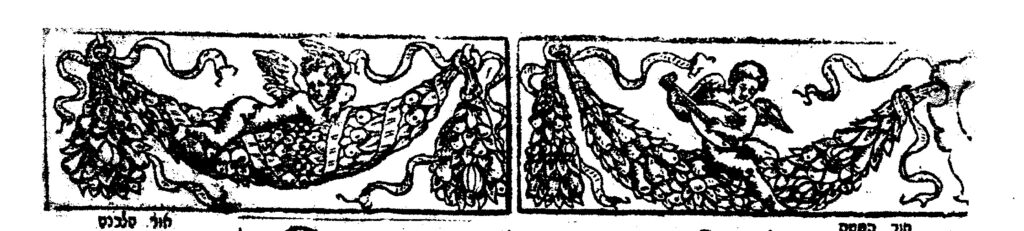
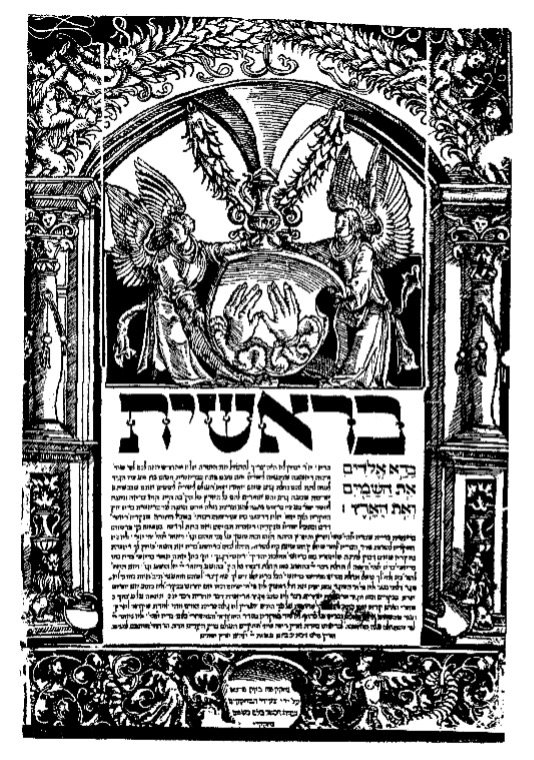

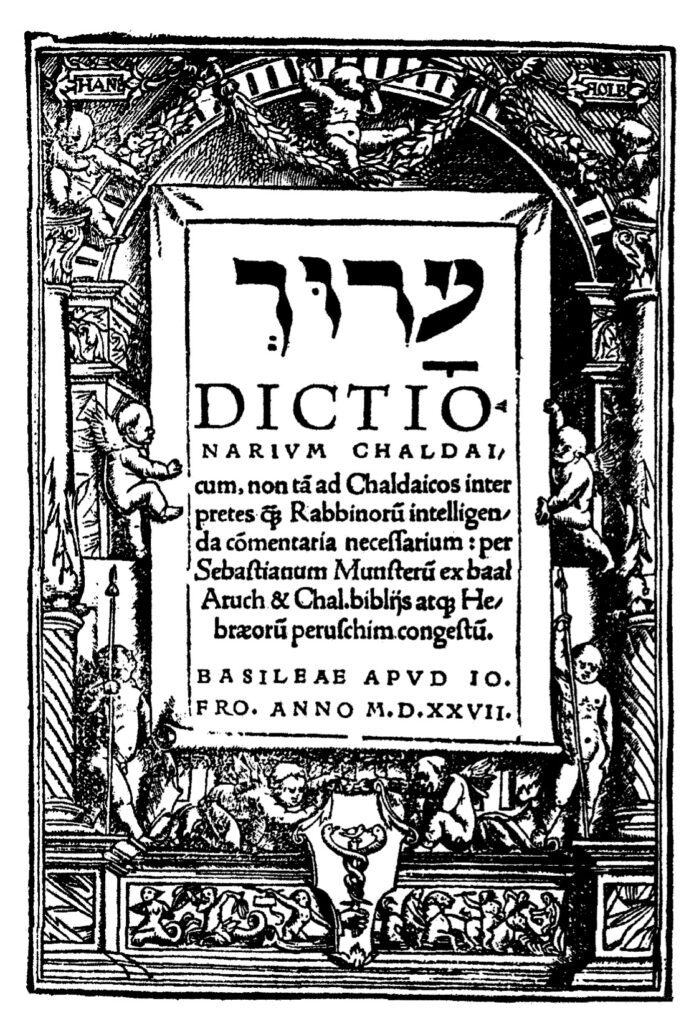
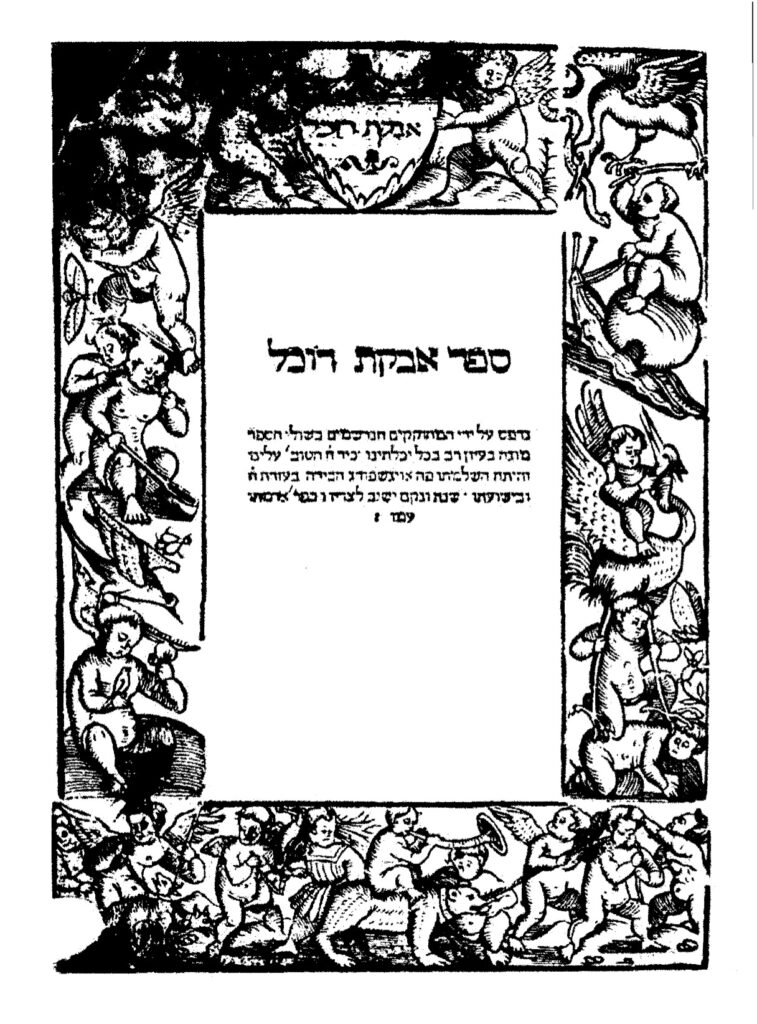 1540, Avkat Rokhel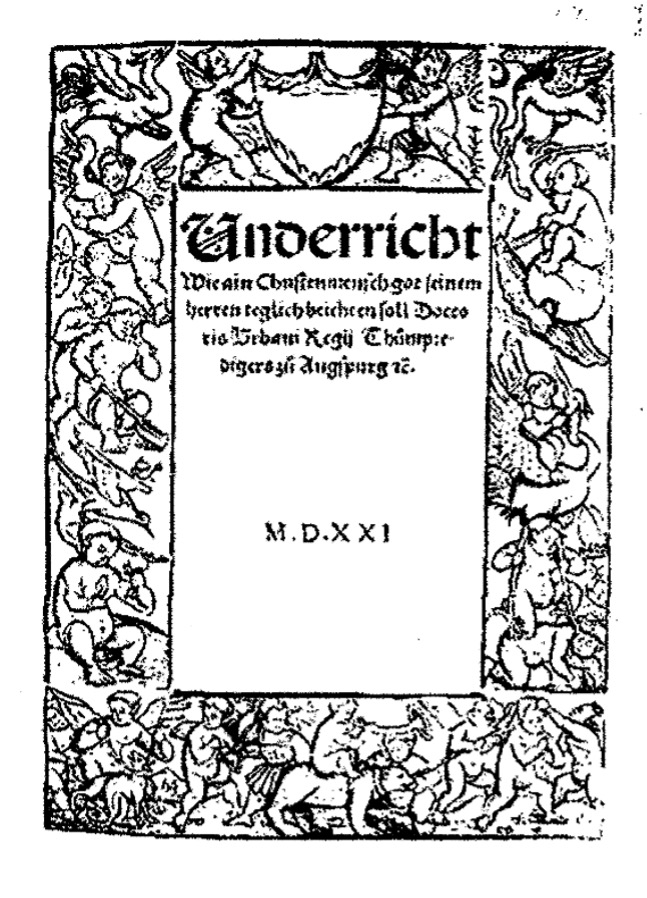
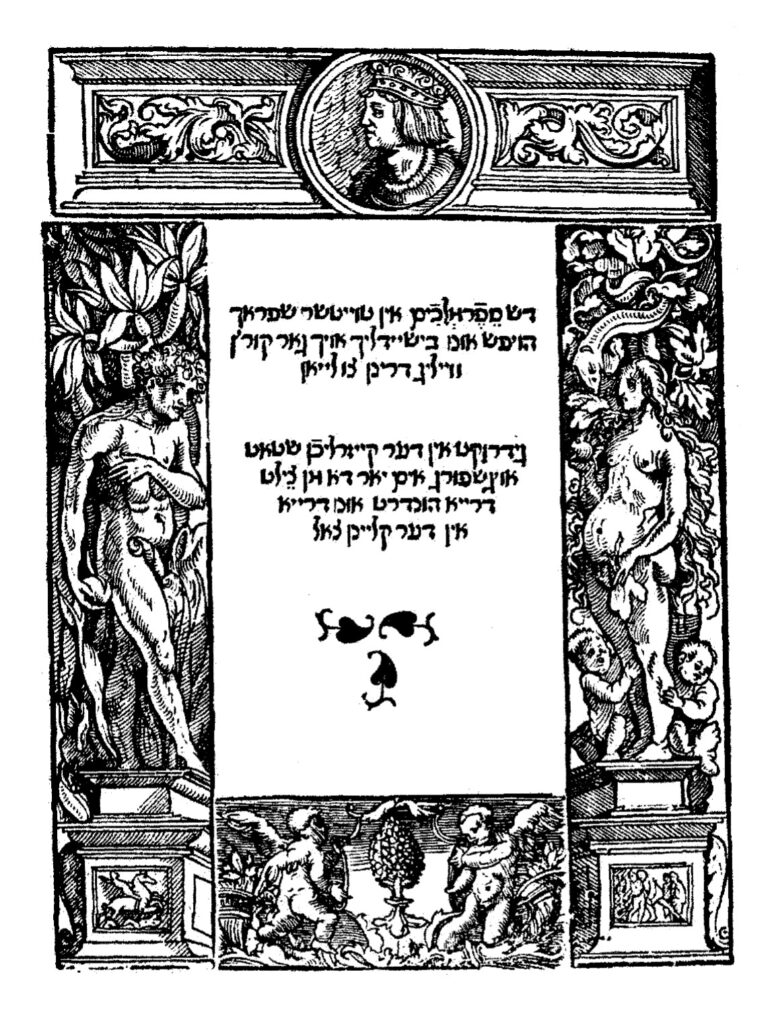
 1543, Melokhim Buch
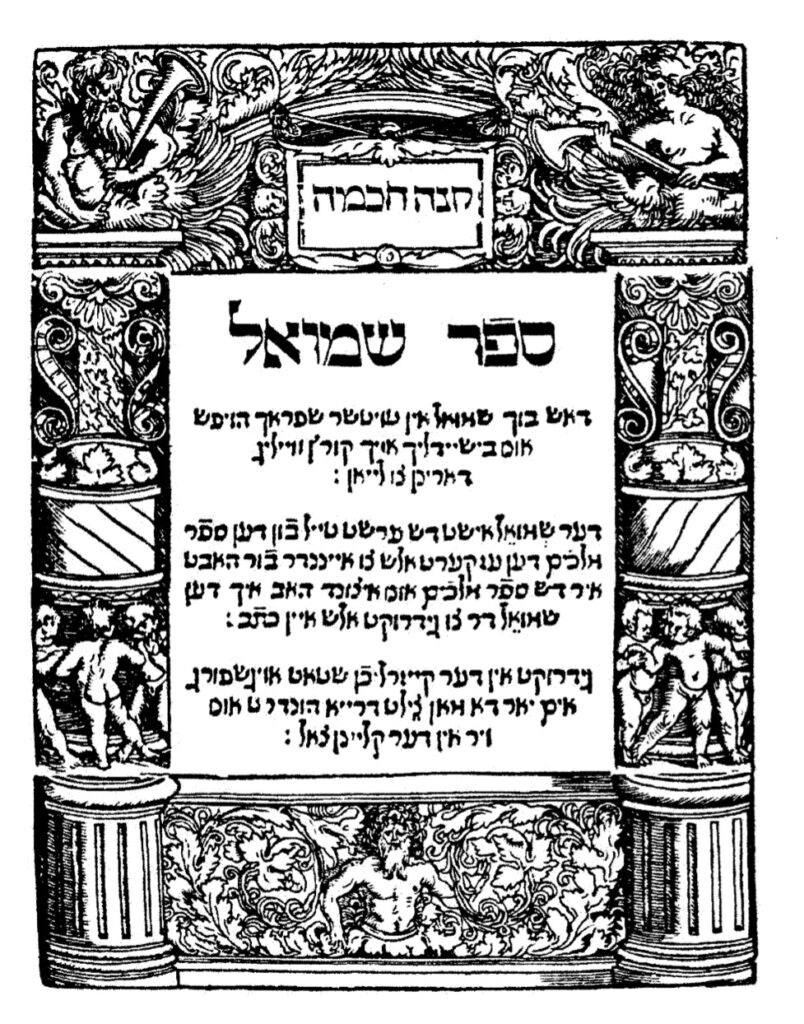 1544,
1544, 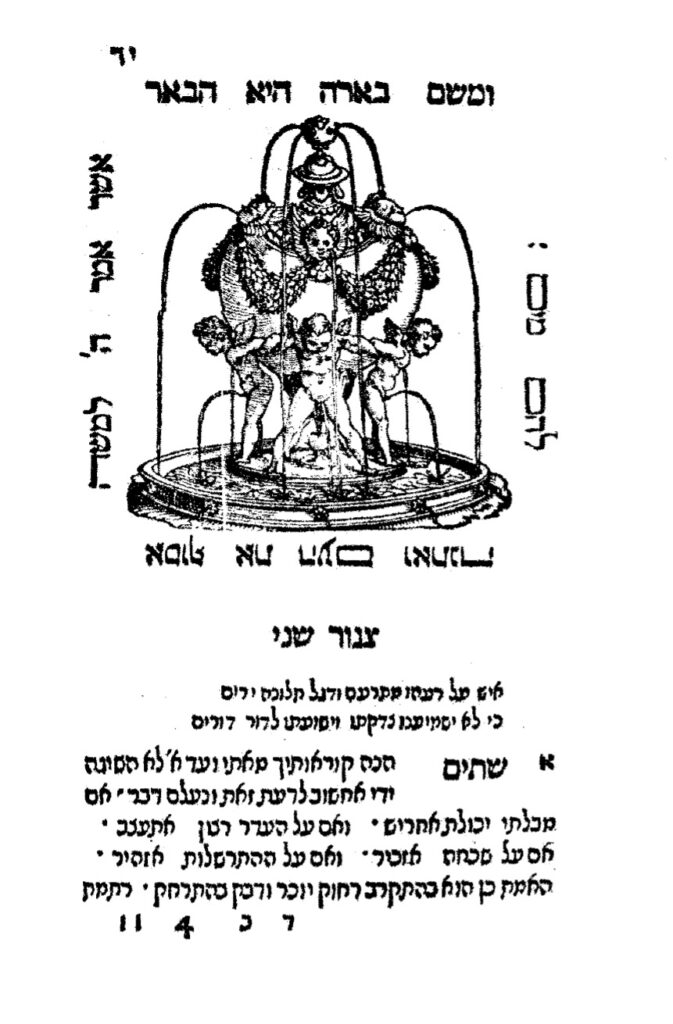 1553, Ma’yan Gannim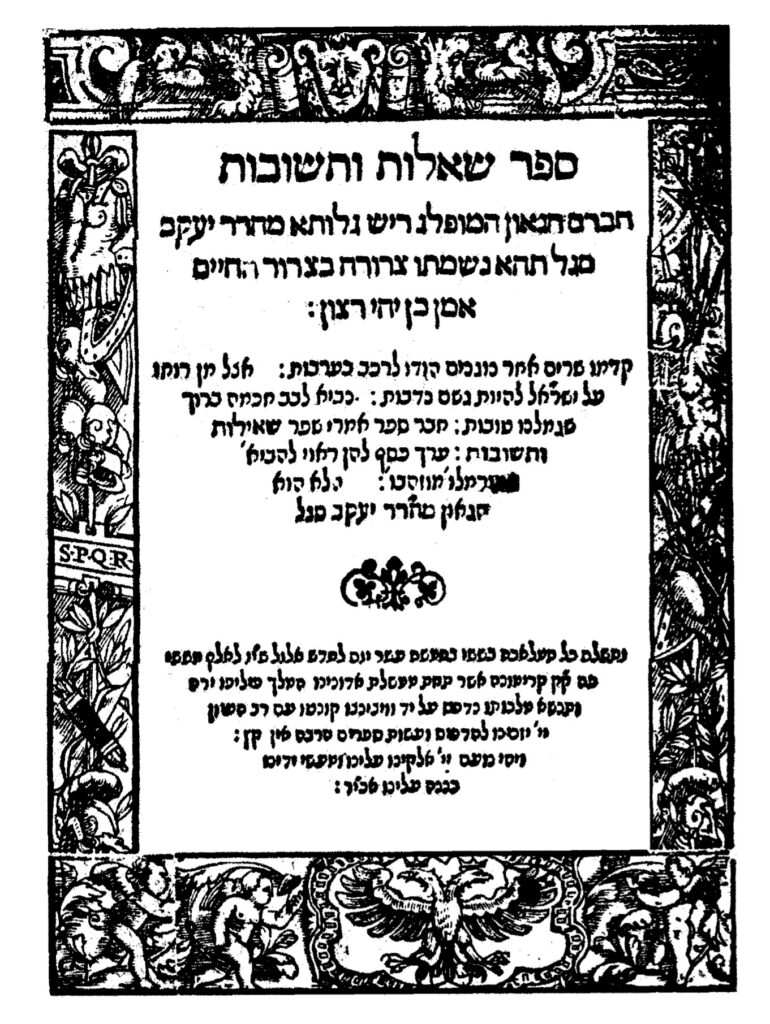
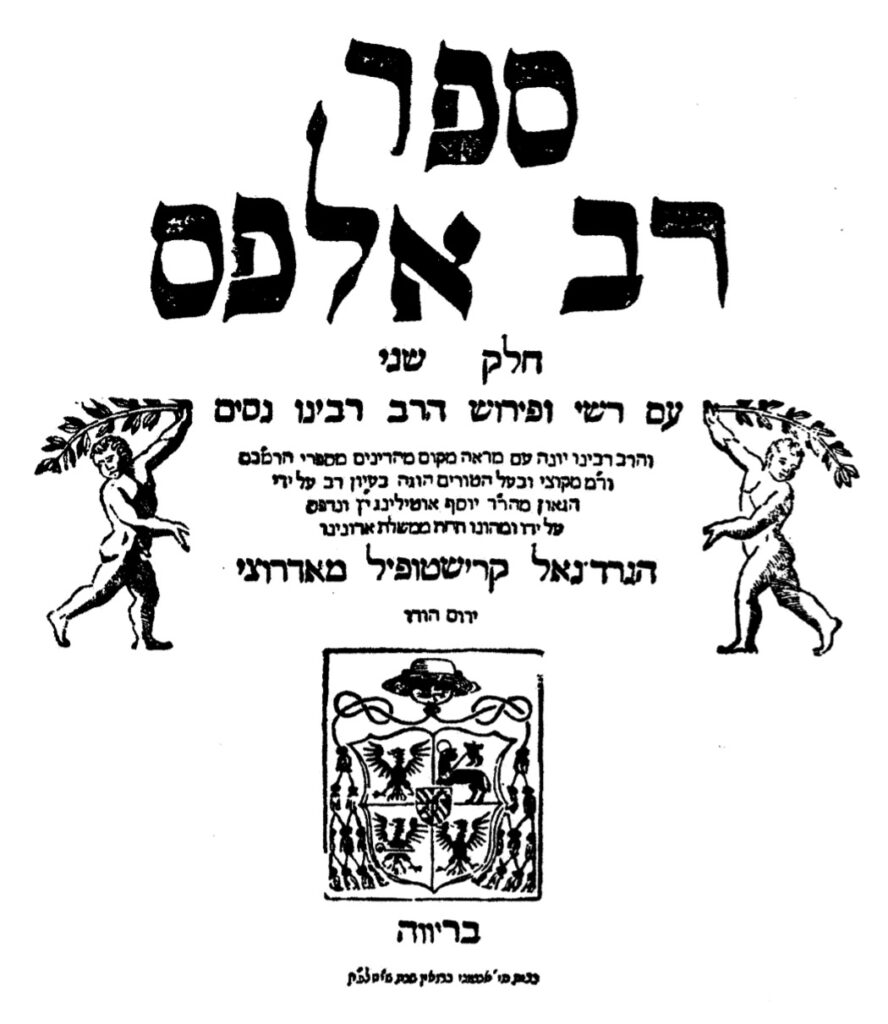
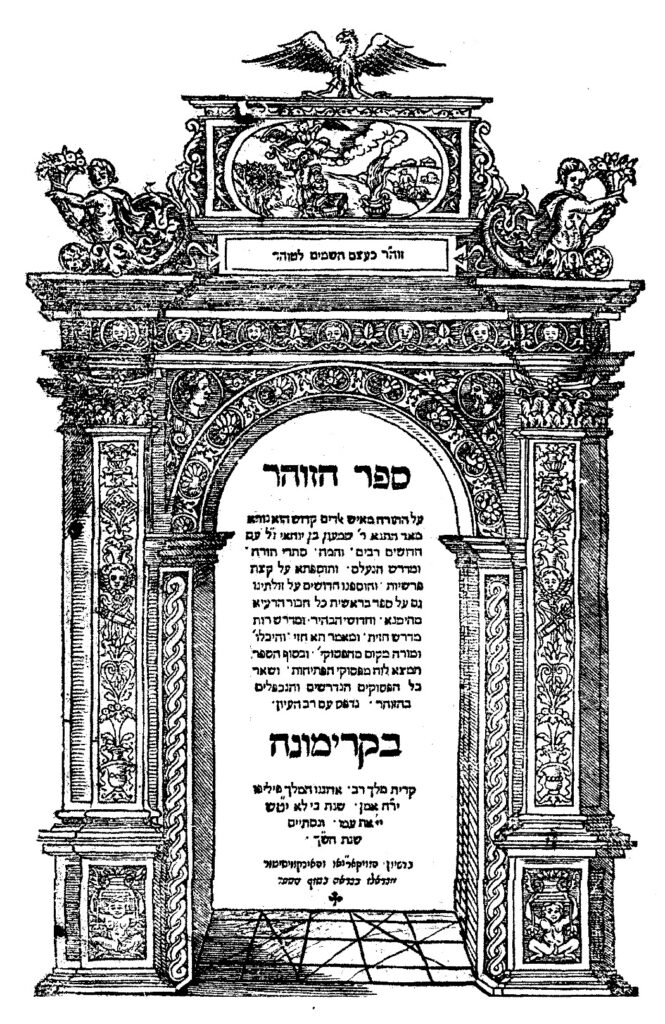
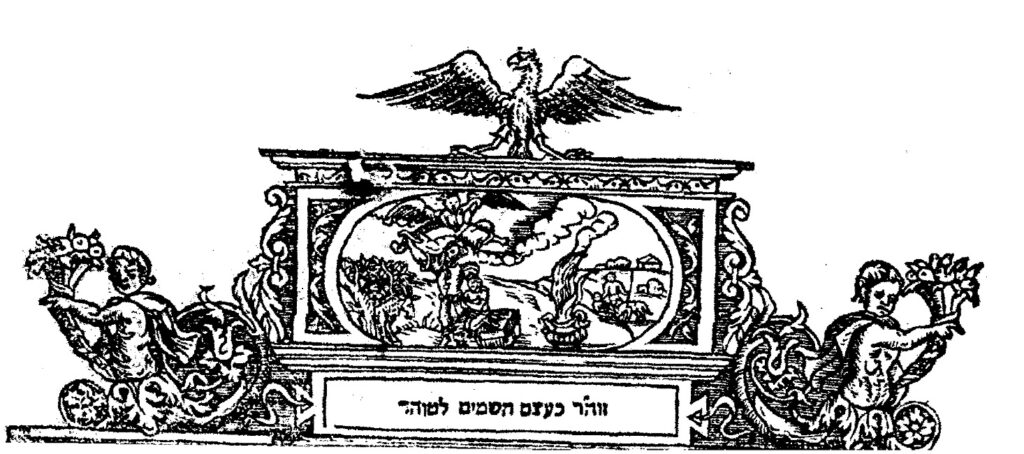
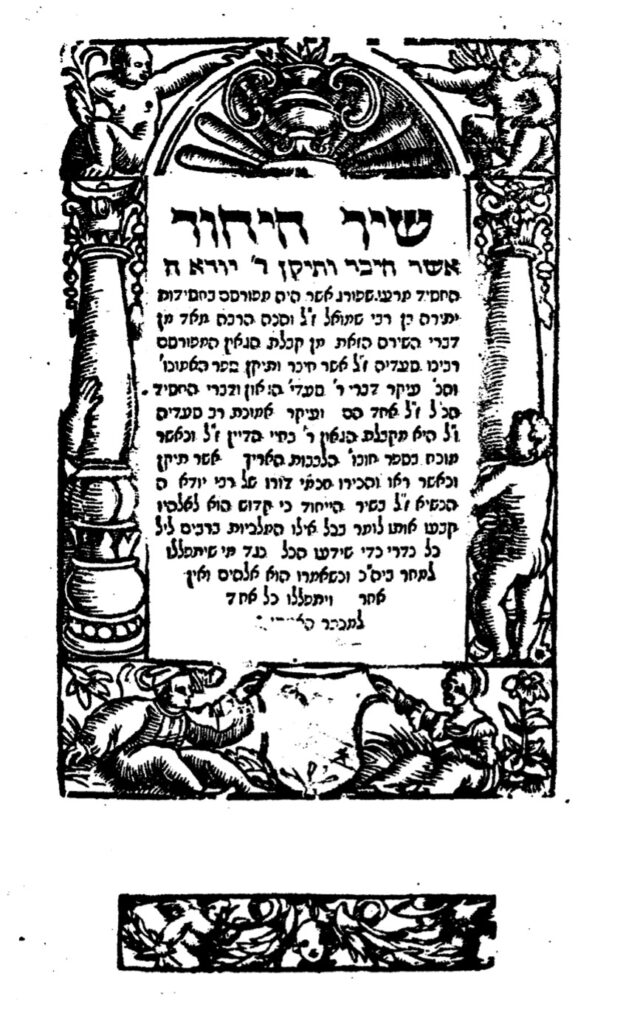
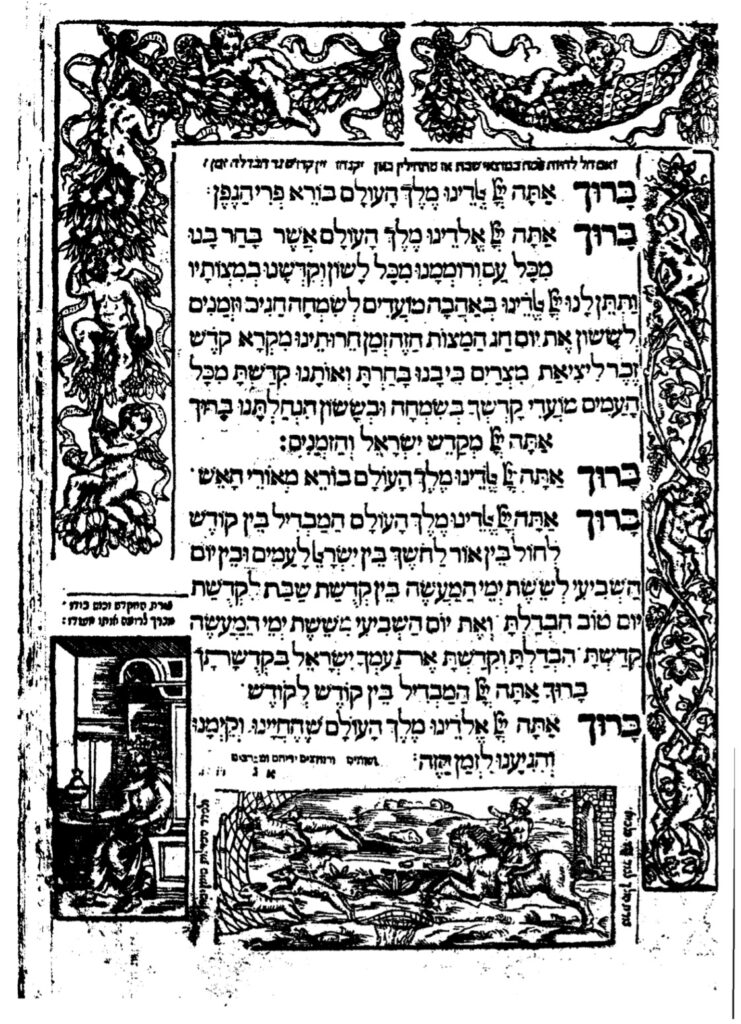
 1568, Passover Haggadah
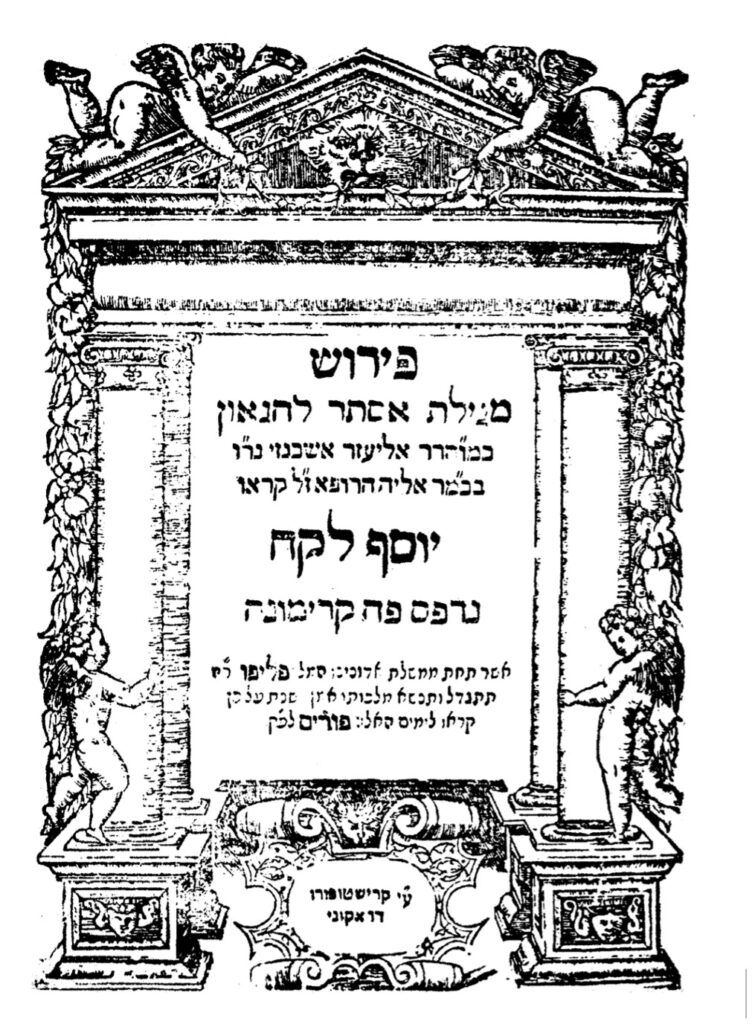 1576, Yosef Lekah
 ; plural, Cherubim)” Jewish Encyclopedia IV (New York, 1901-06), pp. 13-16; Shalom M. Paul, Louis Isaac Rabinowitz, “Cherub” Encyclopedia Judaica IV (Jerusalem, 2007), pp. 600-01.