R. Shlomo Yosef Zevin, Kitniyot, R. Judah Mintz, and More

R. Shlomo Yosef Zevin, Kitniyot, R. Judah Mintz, and More
Marc B. Shapiro
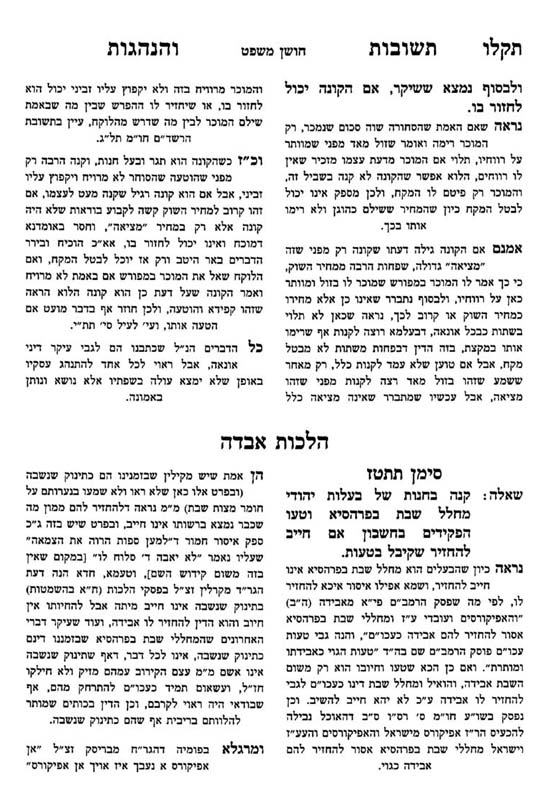
1. The last post dealt with R. Shlomo Yosef Zevin and I pick up with him here. Before moving forward, I have to thank R. Moshe Maimon who sent me a PDF of the essay attributed to R. Zevin which I discussed in the last post. It comes from the hebrewbooks.org hard drive that was released some time ago.[1] You can see it here. I also thank R. Eliezer Brodt who pointed out that both R. Zvi Pesah Frank and R. Eliezer Waldenberg deal with the essay.[2]
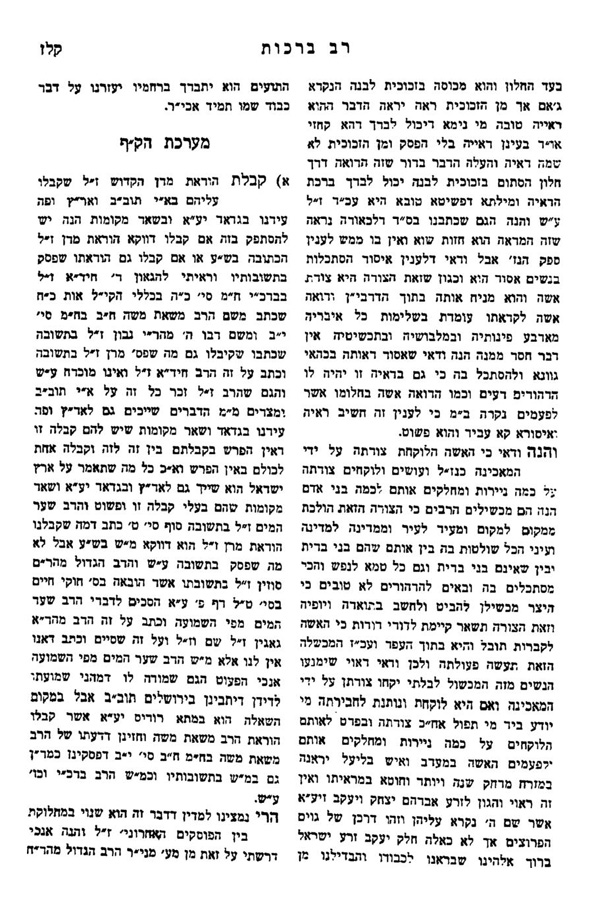
One of the most famous examples of haredi censorship relates to R. Zevin. In his classic Ha-Moadim ba-Halakhah, in the section “Ha-Tzomot”, end of ch. 5 (p. 442 in the most recent edition), in discussing if one still needs to do keriah upon seeing the destroyed cities of Judea, R. Zevin writes:
מסתבר, שעם שיחרורן של ערי יהודה משלטון נכרים והקמת מדינת ישראל (אשרינו שזכינו לכך!) בטל דין הקריעה על אותן הערים.
This is not an extreme Zionist statement. It is simply an expression of happiness that the State of Israel came into being. I have no doubt that the typical haredi agrees that this was a good thing (and see in particular the comments of R. Moshe Feinstein quoted later in this post). However, even this very “pareve” statement was too much for Artscroll. Here is how Artscroll translated this passage (The Festivals in Halachah, vol. 2, p. 294):

It could be argued that since the liberation of the cities of the Judean hills from gentile rule, the law of rending the garment for these cities may no longer be in force.

The first thing to notice is that while R. Zevin wrote מסתבר, which must be translated as “it is reasonable”, “it makes sense”, or something similar, Artscroll has turned this into a tentative argument (“it could be argued”). Yet this is not what R. Zevin is saying. “It could be argued” implies that R. Zevin is on the fence on this matter, while מסתבר shows clearly what his view is.[3]
However, the really egregious action of Artscroll comes later in this sentence where Artscroll deletes mention of the establishment of the State of Israel and, most significantly, R. Zevin’s feeling of joy at this event: אשרנו שזכינו לכך!
I have learnt that the men who run Artscroll did not originally know about the censorship just mentioned. They never authorized any distortion of the translation and were surprised to find out what had been done. Yet once learning what had happened, they never took any steps to correct the translation and even defended the alterations. To this day, the matter has not been rectified. It is one thing if in its own works Artscroll tolerates or even encourages distortions, but to take the work of someone else, especially a great Torah scholar, and “correct” it so as to bring it into line with haredi “Daas Torah” is unforgivable. Furthermore, it is a violation of a sacred trust which every translator should be cognizant of. I also wonder if there isn’t a real issue of geneivah involved. If you sell a book supposed to be a translation, and you alter the translation, it is not merely a matter of geneivat da’at but real thievery, since you are selling a product that is not authentic.[4]
When this matter was raised in Tradition by Jack Feinholtz, Rabbis Nosson Scherman and Meir Zlotowitz replied by quoting one of the translators, Meir Holder:[5]
Mr. Holder has, for many years, maintained the closest contact with Rav Zevin’s family and has been a prime force in the dissemination of this great Tzaddik’s writings, in both Hebrew and English. It is unthinkable that he would tolerate or engage in any attempt to misrepresent Rav Zevin’s thoughts. . . . According to Mr. Holder, the lines which Mr. Feinholtz quotes were added to the edition published just a few months after the State of Israel was founded, a time when Rabbi Zevin and others still held high hopes for the spiritual impact of the State upon the lives of those Jews living there. As time went on, Rabbi Zevin became disappointed and, in the opinion of the members of his own family, his final Halachic opinion with regard to the law of rending garments on seeing the Judean hills is more accurately reflected in the Artscroll translation than in the version of the passage cited by Mr. Feinholtz.
There is a good deal of falsehood here. To begin with, other than Shemirat Shabbat ke-Hilkhatah, I think Ha-Moadim ba-Halakhah has been reprinted more times than any other modern halakhic text. Neither R. Zevin nor his family ever made any changes to the work. So who are these mysterious family members that Mr. Holder consulted with? R. Nahum Zevin, the one grandson of R. Zevin who is a haredi rabbi, is completely honest in his descriptions of his grandfather’s strong Zionist feelings.[6] R. Nahum tells anyone who asks that the change in the English translation was done without his (or anyone else in the family’s) knowledge or approval. He completely rejects the attempts to distort his grandfather’s legacy, as his grandfather never moved from his Zionist outlook. Thus, in addition to what has already been noted, the distortion of R. Zevin’s words must be seen as a betrayal of the family’s trust. (See also the second to last paragraph of the Hebrew article included in this post.)
More offensive than Artscroll’s distortion of R. Zevin’s halakhic opinion is the omission of his words of thanks for the creation of the State, an omission that goes unmentioned in the letter of Scherman and Zlotowitz. In a typical debating tactic, they offer a response that allows them to pretend that the only issue being discussed is R. Zevin’s halakhic view of rending garments rather than the deletion of his comments about the State of Israel. (Regarding the first matter, does this really have anything to do with Zionism? Is there anyone today, even among the non-Zionist haredim, who rends his garment upon seeing the cities of Judea?[7] Even when it comes to mekom ha-mikdash it seems that for many the practice of keriah has fallen by the wayside, and a number of people have written to justify this. And while I am on the topic, is there any halakhic justification for people not to do keriah when they see places like Bethlehem that have been returned to Arab rule?[8])
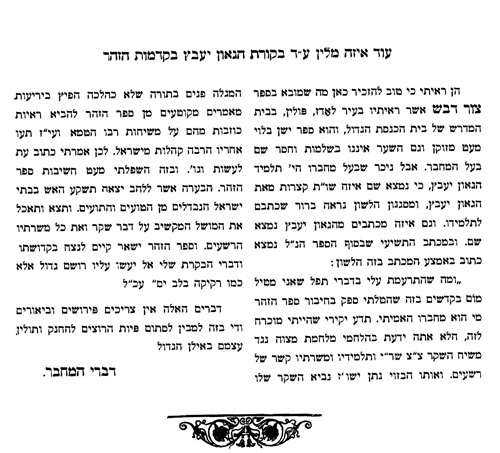
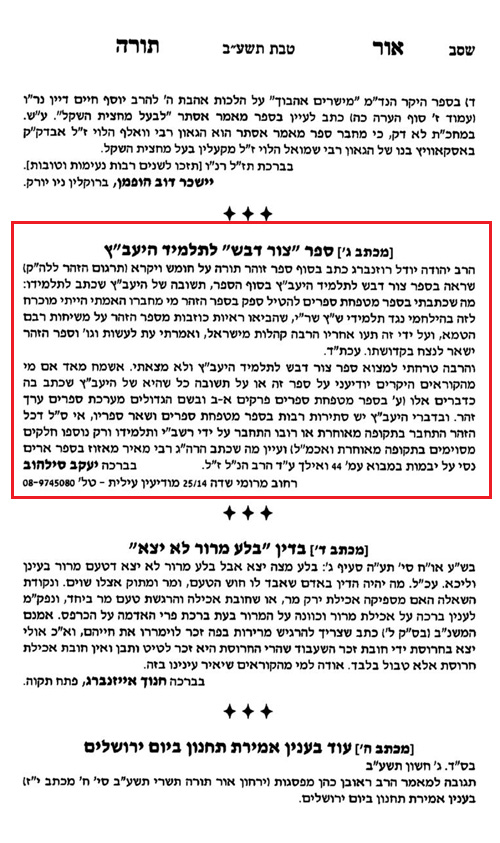
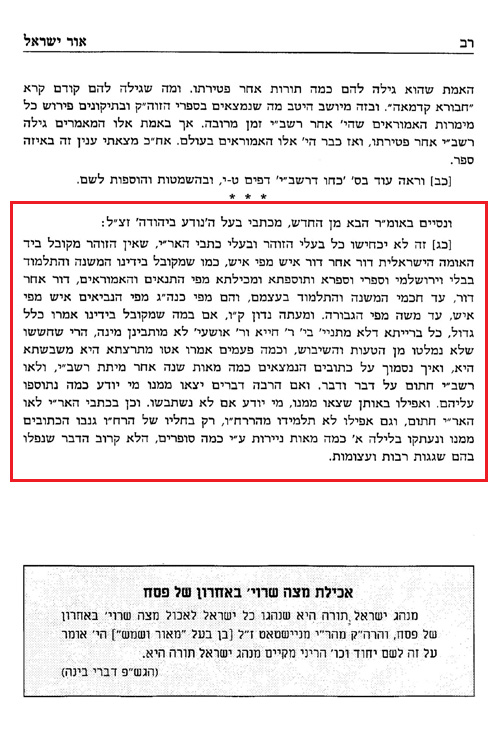
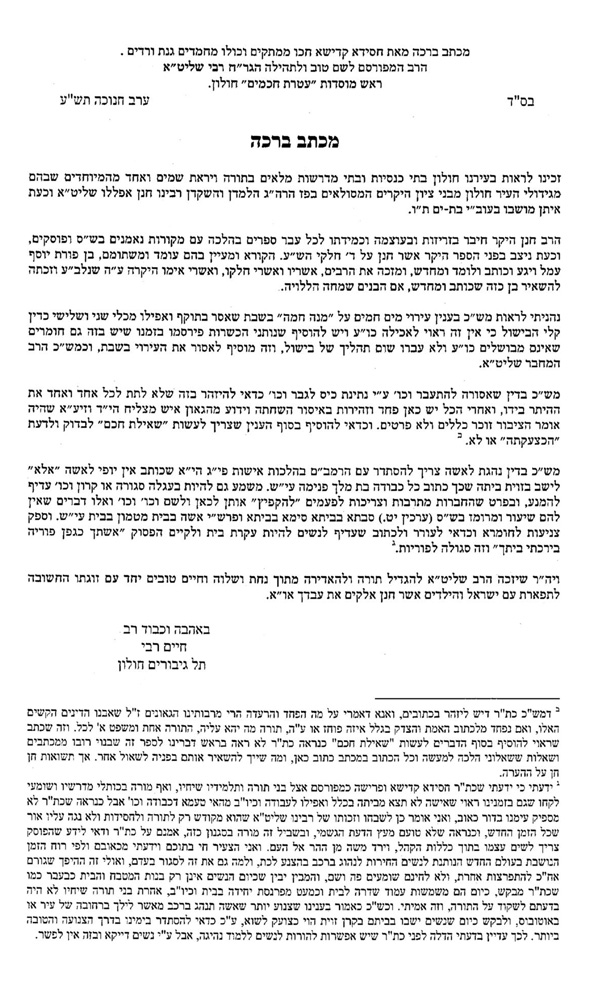
Before going further, let me present a short article in Hebrew written by a friend of mine that also details Artscroll’s fraudulence in this matter.
בשו”ת אגרות משה או”ח ח”ה סימן לז כתב, וז”ל: בענין חיובים דקריעה על ראיית ירושלים וראיית מקום המקדש, ודאי הוא חיוב, כמפורש בברייתא דמו”ק דף כ”ו ע”א. וגם על ערי יהודה איתא שם דקורע, ואיפסק כן ברמב”ם פ”ט מאבל ה”ב, ויותר מפורט בסוף פ”ה דתעניות. ובטור וש”ע סימן מיוחד באו”ח סימן תקס”א, וגם ביו”ד סוף סימן ש”מ . . . . [אבל] עתה שבחסדי השם יתברך אין מושלים האומות על ערי יהודה ועל ירושלים, והם גם מיושבים, הוא טעם גדול שלא לקרוע, אף שעדיין לא באה הגאולה ע”י מלך המשיח ואנו מתפחדים מהאומות, אין לקרוע, דהא הקרא שלמדים משם שצריך לקרוע על ערי יהודה . . . ויבואו אנשים משכם משלו ומשמרון שמנים איש מגלחי זקן וקרעי בגדים וגו’, הרי באו אחר שנחרבו ממש, שאין ללמוד מזה אפילו ליום אחד קודם החורבן, אף שהיה ידוע על ידי ירמיהו הנביא ועוד כי יהיה החורבן. וכל שכן עתה שמקווים אנחנו שמלך המשיח יבוא בקרוב כשיהיו כל ערי ישראל על מכונם, שאין צורך לקרוע. אבל כשרואה מקום המקדש שעדיין הוא בחורבנו, ולא שייך שיבנה אלא על ידי מלך המשיח, צריך לקרוע בפשיטות. וכשיבוא מלך המשיח במהרה בימינו, אף אם נימא שיהיה קצת זמן עד שיבנה, יורנו מלך המשיח וסנהדרין איך לעשות עכ”ל.
וכ”כ הגאון ר’ שלמה יוסף זווין זצ”ל בספרו “המועדים בהלכה” בפרק חמישי של חלק “הצומות” (במהדורת תשמ”ג – עמוד תמב), שגם טרם מלחמת ששת הימים “מסתבר שעם שיחרורן של ערי יהודה משלטון נכרים והקמת מדינת ישראל (אשרינו שזכינו לכך!) בטל דין הקריעה על אותן הערים”. עכ”ל. 

אמנם בתירגום “המועדים בהלכה” לאנגלית שנעשה בחסות הוצאת “ארטסקרול-מסורה” חלק שני (הוצאת “מסורה” תשמ”ב), עמוד 294, עשו המו”ל שני שינויים לקטע זה: (א) במקום “מסתבר” כתבו “יש מקום לטעון”; (ב) השמיטו מ”ש הרב זוין: “והקמת מדינת ישראל (אשרינו שזכינו לכך!)”. וכבר עוררו על שינויים אלו במכ”ע “טראדישען” ה’תשמ”ז-ח (במדור ‘מכתבי הקוראים’) – ראה מ”ש מר ג’ק פיינהאלץ (טראדישען 22:4, עמוד 120).


העורכים הכלליים של ספרי “ארטסקרול” (הרבנים מאיר זלאטאוויץ ונתן שרמן שיחיו) התייחסו לטענת מר פיינהאלץ במכתב למערכת “טראדישען” [שנדפס ב”טראדישען” שם]. במכתב זה הצדיקו את השינויים האמורים, אשר לפי דבריהם נעשו בשיתוף פעולה עם מר מאיר הולדר ז”ל, (בעל בית הדפוס “הלל” בירושלים עיה”ק, שעמד בראש מלאכת התירגום, ואשר הי’ שותף לארטסקרול בההו”ל של ספרי הרב זוין באנגלית), על יסוד מסורה בע”פ שקיבל הלה ממשפחת הרב זוין. לפי מסורה זו, סיגנון השורות המופיעות ב”המועדים בהלכה” בלה”ק (עד עצם היום הזה) ע”ד ביטול דין קריעה על ערי יהודה אינן מתאימות לסוף דעתו של הרב זוין. שורות אלו ניתוספו ע”י הרב זוין במהדורת הספר שי”ל כמה חדשים לאחרי התייסדות מדינת ישראל, נכתבו בתקופה שהיו, להרב זוין (ולאחרים כמותו), תקוות גדולות לעתידה של המדינה ולהשפעתה על החיים הרוחניים של הגרים בארץ ישראל. ברבות הזמן בטלו סיכויים אלו, אז התאכזב הרב זוין וחזר בו ממ”ש ב”המועדים בהלכה” הנ”ל. עכת”ד מסורת מר הולדר.


הרבנים שרמן וזלאטאוויץ טוענים שאין להעלות על הדעת שמר הולדר, שהי’ [לפי דבריהם] מידידי בית הרב זוין ואיש רב פעלים בהפצת “כתבי הצדיק הזה” [=הגרש”י זוין] זצ”ל, הי’ חשוד על נתינת יד למזייפים. עאכו”כ שלא הי’ עושה בעצמו שום שינוי ב”המועדים בהלכה” שאינו בהתאם גמור ל”מחשבת הרב זוין”. ע”פ שנים עדים אלו (הרבנים שרמן וזלאטאוויץ) הסיגנון המופיע ב”המועדים בהלכה” מהדורת ארטסקרול משקף ביתר דייקנות את משנתו האחרונה של הרב זוין בקשר לחיוב קריעה על ערי יהודה.


[יש לציין שגם במהדורא חדשה של “המועדים בהלכה” שנדפסה ע”י “ארטסקרול” בשנת תשנ”ט – בה תיקנו כמה שגיאות וכיו”ב – עמדו הרבנים זלאטאוויץ ושרמן על משמרתם והניחו את הגירסא החדשה (שע”פ מסורת מר הולדר) במקומה. לאידך גיסא, בכל המהדורות של “המועדים בהלכה” שי”ל בלה”ק לאחרי פטירתו של הרב זוין (שראיתי) נמצאות השורות הנ”ל כצלמן וכתבניתן במהדורות שראו אור בחייו].


מר הולדר כבר שחל”ח וע”כ אין אפשרות לברר אצלו אם אכן הי’ ממעתיקי השמועה ומה באמת היתה מדת מעורבתו בהשינויים הנ”ל, שע”פ העדים הנ”ל נעשו ע”פ מסורת שקיבל ממשפחתו של הגרש”י זוין. [אם אמת נכון הדבר שמר הולדר הי’ מחולל השינוי, צע”ק שלא מצא מר הולדר לנכון לעשות השינויים במהדורת “המועדים בהלכה” שהו”ל באותה תקופה בלה”ק, ועכ”פ לציין בשוה”ג שהנדפס אינו אלא משנה ראשונה של המחבר]. ובכל אופן, נ”ל שטענות הרבנים זלאטאוויץ ושרמן [ומר הולדר?] ע”ד עמדתו של הגרש”י אינן עומדות בפני הביקורת, ומפני כמה טעמים. [מקצת מטענות א-ב דלהלן כבר הביע בשעתו מר טרי נאוועטסקי במכתב תגובה לטענות הרבנים הנ”ל ונדפס במכ”ע טראדישען שם 23:1 עמוד 98 ואילך].


(א) מאז היווסד מדינת ישראל נדפס ספר “המועדים בהלכה” בכו”כ מהדורות בחייו של הרב זוין [
מהדורא שניה – ירושלים תש”ט; מהדורא שלישית – ירושלים תשי”ד; מהדורא חמישית – תל אביב תשט”ז; מהדורא שישית – ירושלים תש”כ. ועוד]. הרב זוין עשה כמה כמה תיקונים והכניס כמה וכמה הוספות קטנות וגם גדולות במהדורות השונות של הספר. על כן, למרות שבספרו זה “לא נתכוון המחבר להקנות לקוראיו דינים ופסקים” (הקדמת הרב זוין ל”המועדים בהלכה”), מ”מ בהתחשב עם זה ש”הספר נועד בעיקר לקהל הרחב . . . מורים ומחנכים” (הקדמה הנ”ל שם) מסתבר שאם באמת חזר בו הרב זוין לא הי’ מניח משנה ראשונה במקומה, וע”ד האמור (איוב יא, יד. כתובות יט, ע”ב) “אל תשכן באהליך עוולה”. ומדחזינן שבענינים אחרים אכן שינה, הוסיף וגרע [אפילו בכה”ג שלא הי’ מקום לחשוש לביטול מצוה או לאפרושי מאיסורא], ובנדו”ד השאיר את הדברים על מכונם, מסתבר לומר שבאמת לא חזר בו, וחזקה על חבר שאינו מוציא מתח”י דבר שאינו מתוקן.
(ב) אין התשובה ממין הטענה כלל, דאם אמנם על השינוי מ”מסתבר” ל”יש מקום לטעון” [אין ולאו ורפיא בידי’] אנו דנים, אכן יש מקום להסברא שהתאכזבותו ממצבה הרוחני של מדינת ישראל גרם להרב זוין לנטות מצידוד חזק [“מסתבר”] לביטול חיוב קריעה [כשיטת האג”מ הנ”ל] ל”הלכה רופפת” [“יש מקום לחלוק ולומר”] בענין זה, וע”פ המבואר לקמן בפנים שיש אומרים דשלטון מדינת אינו בגדר שלטון ישראל. אבל אין אכזבה זו דורשת (1) העלמת שם “מדינת ישראל”, שם שהרבה הרב זוין להשתמש בו בכ”מ. (2) השמטת ביטוי של שמחה והודי’ להשי”ת – “אשרינו שזכינו לכך” – על הקמת המדינה. הגע בעצמך: אין ספק שהגרמ”פ (שהי’ מחברי מועצת גדולי אגודת ישראל) גם הוא התאכזב ממצב היהדות בארץ ישראל תחת שלטון מדינת ישראל [ראה מ”ש באג”מ יו”ד ח”ב סמ”ה בא”ד ש”במדינת ישראל, אין אנו אחראין להנהגת המלכות דשם שהיא בעוה”ר אצל כופרים ומומרים ואין מתחשבים עם . . . כל איסורי התורה החמורים ביותר והמפורשים בגמרא ובקראי”. וראה גם אג”מ חו”מ ח”ב סו”ס סט, ועוד], ואעפ”כ כתב באג”מ בשנת תשמ”א, וכנ”ל, “עתה שבחסדי השם יתברך אין מושלים האומות על ערי יהודה ועל ירושלים [הוא טעם גדול שלא לקרוע]”, הרי שהעברת השלטון מידי האומות לידי ממשלת ישראל הוא מ”חסדי השי”ת”! ואם הגרמ”פ הי’ מודה להקב”ה על חסד זה, מה הכריח את הרבנים זלאטאוויץ ושרמן לעשות את הרב זווין (שגם בסוף חייו פירסם בקהל רב שהוא נוהג להצביע עבור רשימת המפד”ל) לכפוי טובה שאינו מכיר בניסו?
והוא העיקר: יחסו החיובי של הרב זוין למדינת ישראל בא לידי ביטוי בעוד מקומות מפיו ומפי כתביו. הנה שתי דוגמאות לכך: (1) בספרו “לאור ההלכה” (מהדורא שניה, תל אביב תשי”ז, כמה שנים לאחרי הקמת המדינה) תיקן את מאמרו “המלחמה” והוסיף בה דברים שלא היו יכולים להכתב במהדורא הראשונה של המאמר שהדפיס לפני הקמת המדינה (ב”לאור הלכה” ירושלים ה’תש”ו), ובתו”ד (עמוד סה) כתב לאמר: “בימינו אנו שזכינו לתקומת מדינת ישראל העצמאית, משוחררת מעול מלכויות . . . הרי מלחמת השחרור ברור שהיו לה כל דיני מלחמת מצוה וחובה”. [גם ספר “לאור ההלכה” חזרה ונדפסה כמ”פ (במשך ימי חיי הרב זוין) עם תיקונים והוספות, ומשנה זו לא זזה ממקומה]. (2) (2) בראיון שהעניק למכ”ע “הצופה” שי”ל לראש השנה ה’תשל”ו קרוב לשלשים שנה לאחרי הקמת מדינת ישראל וכשנתיים לפני פטירת הרב (בשנת תשל”ח). באותו ראיון אמר הרב זוין: “הרי מדינת ישראל עם כל ליקוייה הרבים בשטח החינוך הלא-דתי וכו’ הרי עם כל זה עלינו לראות את צדדיה החיוביים: הלא רק בחמש השנים האחרונות בלבד היא הצילה יותר ממאה אלף יהודים מטמיעה מוחלטת ושמד רוחני ברוסיה הסובייטית, אשר רבים מהם לומדים עתה כאן בבתי ספר דתיים ואף בישיבות; ועוד היד שלנו נטוי’ לקלוט מהם בעז”ה כהנה וכהנה”.
לית דין צריך בושש שהרב זוין, שהכיר מקרוב את תהליך התפתחות אופיה הרוחני של מדינת ישראל, כבר ידע היטב בשלהי שנת תשל”ה את כל מה שיש לדעת ע”ד צביונה החילוני של מדינת ישראל, ובכל זאת הרי שלך לפניך, שהביע את הערכתו הרבה להקמת מדינת ישראל וחזר והדגיש באר היטב שלמרות כל חסרונותי’ וליקויי’ (‘רבים הם ואי אפשר לפורטם’) הרי הקמת המדינה בארץ ישראל והרווחה בגו”ר שהביאה לעם ישראל הינה זכי’ גדולה וה”ה מהטובות הגדולות שעשה הקב”ה לעמו ישראל וחייבים אנו להודות להקב”ה על קיומה. וא”כ אי אפשר לומר שהשמטת תיבות ההודאה על קיומה של המדינה [“אשרינו שזכינו לכך”] הולמת את שיטת הרב זוין לאחרי אכזבתו.
אמנם למרות כל הנ”ל לא מלאני לבי לבטל מסורתם של מר הולדר ויבלחט”א הרבנים שרמן וזלאטאוויץ עד שהתקשרתי עם משפחת הרב זוין ע”מ לברר וללבן את הדבר. ה’משפחה’ שאיתה עמד מר הולדר בקשר מתמיד, ה”ה הרה”ג ר’ נחום זווין שליט”א, רב בעיה”ק חיפה ת”ו. [בנו יחידו של הגרש”י זווין נלב”ע בחייו, ובנו הרב נחום ירש את הכתבים וכו’ של הגרש”י והוא הוא שמכר את רשות ההדפסה באנגלית למר הולדר]. בשיחה טלפונית שקיימתי עם הרב נחום ביום חמישי י”ד טבת ה’תשס”ד אמר לי בלשון צחה וברורה שלא היו דברים אלו מעולם. הרב נחום זוין נתן לי רשות לפרסם בשמו את אשר מסר לי בענין זה: (א) עד יומו האחרון לא זז הגרש”י מעמדתו ויחסו החיובי למדינת ישראל, עמדה שהתבטאה בכמה משיטותיו והנהגותיו [ולדוגמא: עד שנתו האחרון עלי אדמות ועד בכלל נהג הגרש”י לומר הלל (בלי ברכה) ביום העצמאות וביום ירושלים]. (ב) מעולם לא שמע ממנו שחזר בו משיטתו ע”ד חיוב הקריעה על ערי יהודה, ועד היום הזה (שהודעתיו ע”ד השינויים הנ”ל ב”המועדים בהלכה” מהדורת ארטסקרול) לא ידע אפילו שהי’ אי פעם איזו סברא והו”א (בתוך המשפחה או מחוצה לה) לומר שהגרש”י שינה את דעתו בנידון, ולמותר להגיד שמעולם לא דיבר, לא דבר ולא חצי דבר, לא עם מר הולדר ולא עם שום נציג הוצאת ארטסקרול, על דבר ענין זה. והשתא הדברים מחוורים כשמלה, שמעולם לא היתה ולא היתה יכולה להיות ‘מסורת חשאית’ ממשפחת הרב זוין בנדו”ד, כי מעולם לא חזר בו הרב זוין מדעתו הראשונה, ואין שום סתירה כלל במשנת הגרש”י שהיתה קב ונקי. אין כאן המקום להאריך בהשערות, על מה ולמה החליטו המו”ל של כתבי הגרש”י באנגלית לעשות בדבריו כבתוך שלהם ולייחס אליו דברים שהם זרים לרוחו. מה שחשוב למבקשי האמת הוא, בירור דעתו של הרב זוין בנידון, ולזה הגענו בעז”ה – ואין שמחה כהתרת הספיקות.
[דא”ג: ראה זה פלא! לאחרונה יצא לאור “תלמוד בבלי מסכת מועד קטן” מהדורת שוטנסטיין (דפוס “מסורה” ה’תשנ”ט) תחת השגחת הרבנים זלאטאוויץ ושרמן, ושם דף כו ע”א הערה 43 ציינו (בקשר לחיוב קריעה על ערי יהודה וירושלים בזמן הזה) לדברי הגרמ”פ באג”מ ח”ה הנ”ל, שם כתב שבזמן הזה בטל חיוב קריעה גם על ירושלים עיר הקודש, ולא ציינו כלל להפוסקים הרבים המובאים לקמן בפנים דס”ל שחיוב קריעה על ירושלים במקומו עומד, גם לא ציינו לעמדתו הרופפת של הרב זווין (ע”פ ‘מסורת מר הולדר’) שקנתה שביתה במהדורתם של “המועדים בהלכה” לפיה אין להחליט שחיוב קריעה (אפילו על ערי יהודה – ובמכ”ש על ירושלים) בטל בימינו. וצע”ג].


In Saul Lieberman and the Orthodox, I called attention to two other examples of censorship (omitting Lieberman’s rabbinic title) in Artscroll’s translation of R. Zevin, so it is obvious that the translators felt it was OK for them to take liberties with the text. I know from speaking to people in the haredi world that this sort of thing is very distressing to them. It is no longer surprising when we see censorship and intentional distortions in haredi works. We even expect this and are surprised when a haredi work is actually honest in how it presents historical matters and issues that are subject to ideological disputes. Yet it doesn’t have to be this way. There is no fundamental reason why haredi works can’t express their position without the all-too-common falsehoods. I think the ones most offended by this are those who are part of the haredi world and believe in its ideology, and don’t understand the need to resort to distortions in order to further the truth.


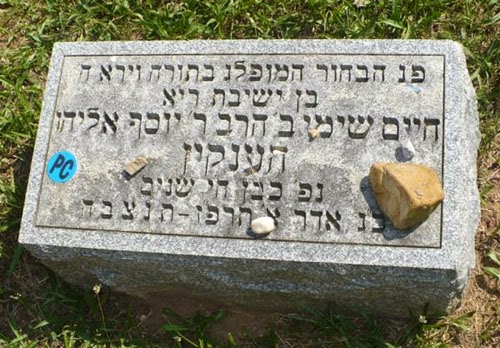
In a recent post I gave an example of fraudulence when it came to a haredi newspaper’s obituary of Louis Henkin, the son of R. Joseph Elijah Henkin. In this post, I mentioned that R. Henkin sent his sons to Yeshiva College. R. Eitam Henkin kindly sent me this picture of the tombstone of R. Henkin’s son, Hayyim, who predeceased his father.


It is noteworthy that R. Henkin saw fit to mention on the tombstone that Hayyim was a student at Yeshiva College (= Yeshivat R. Yitzhak Elhanan).
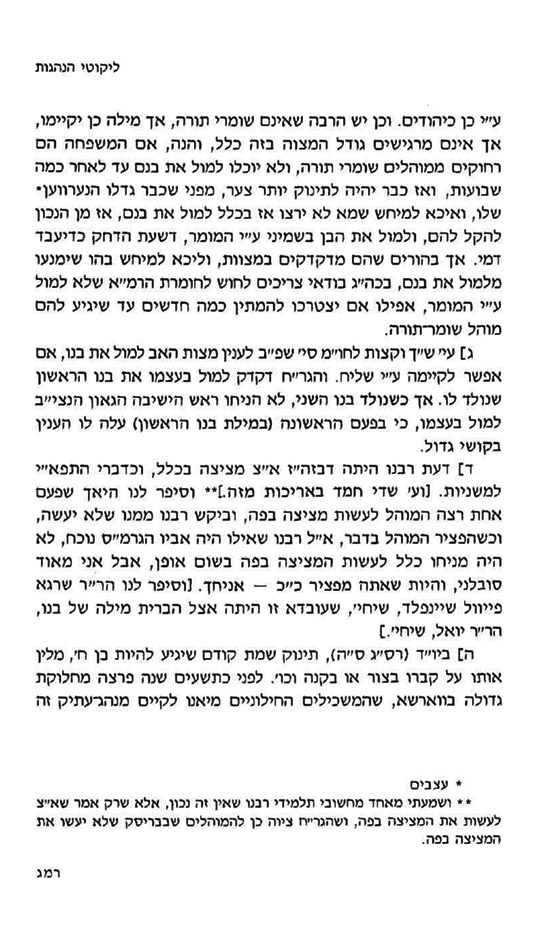
I would now like to point to an unintentional error in Artscroll’s translation of Ha-Moadim ba-Halakhah. Before last Pesah I took out my copy of The Festivals in Halachah. In reading the chapter on kitniyot, p. 118, I came across the following.
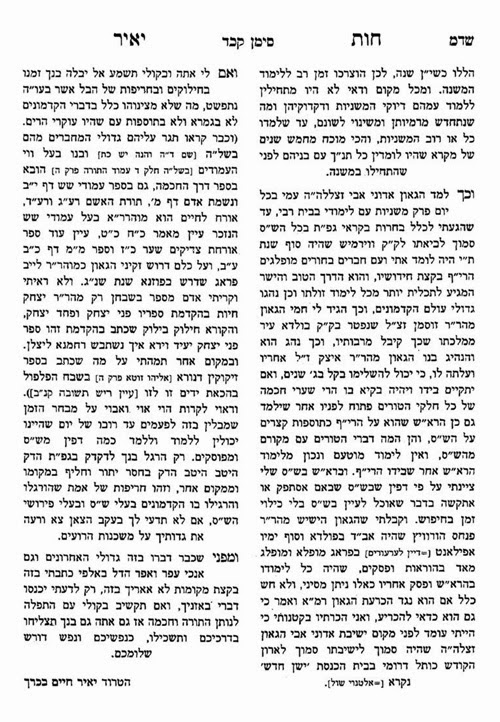
By way of reply, Rav Shmuel Freund, “judge and posek in the city of Prague”
((דין ומו”צ בק”ק פראג published the pamphlet Keren Shmuel, in which he demonstrates at length that no one has the authority to make these prohibited items (kitnios) permissible.
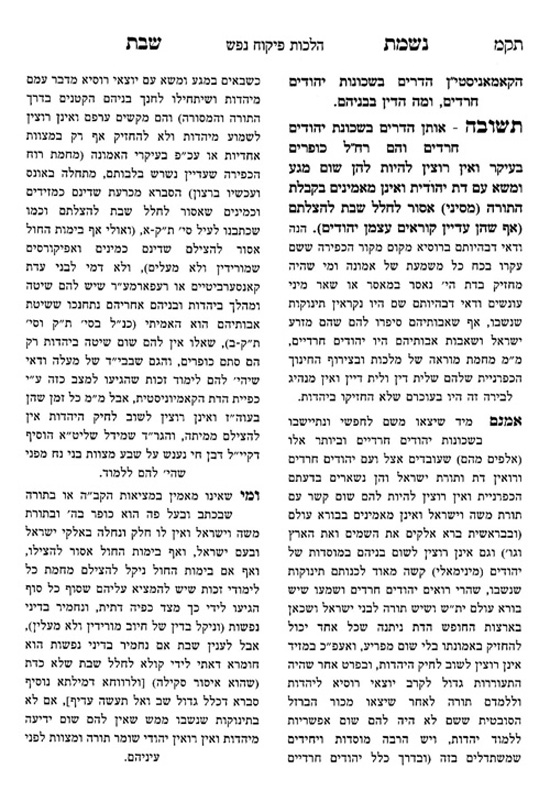
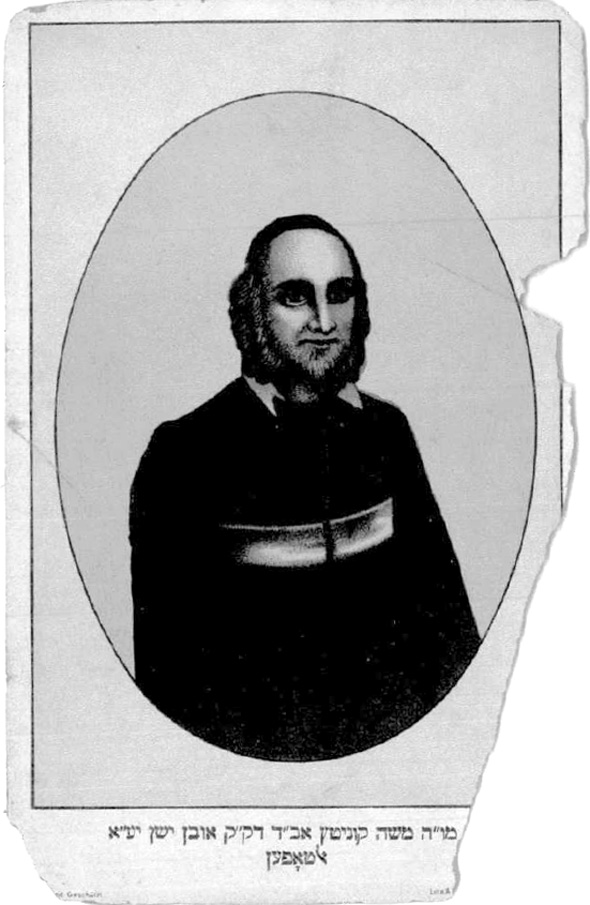
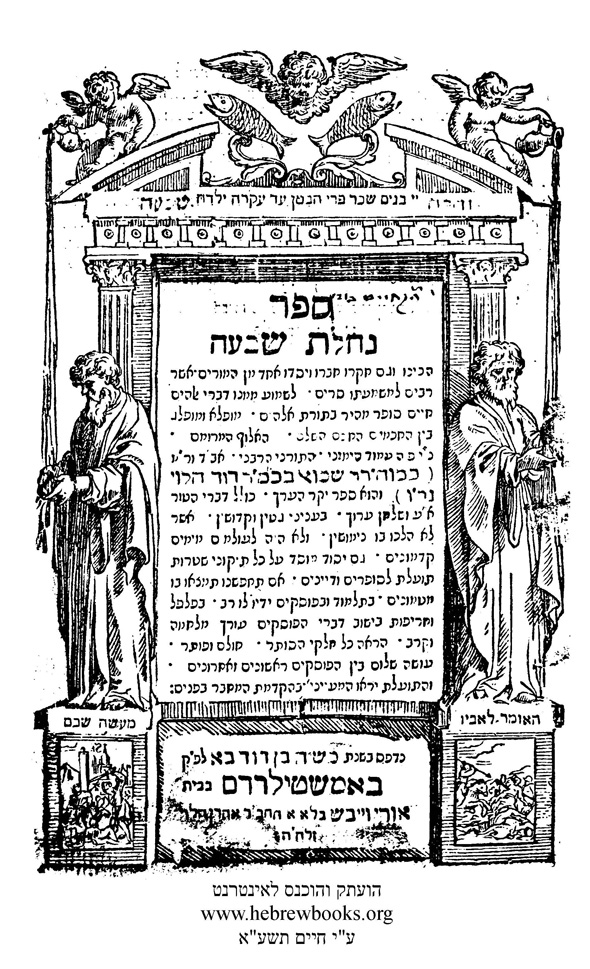
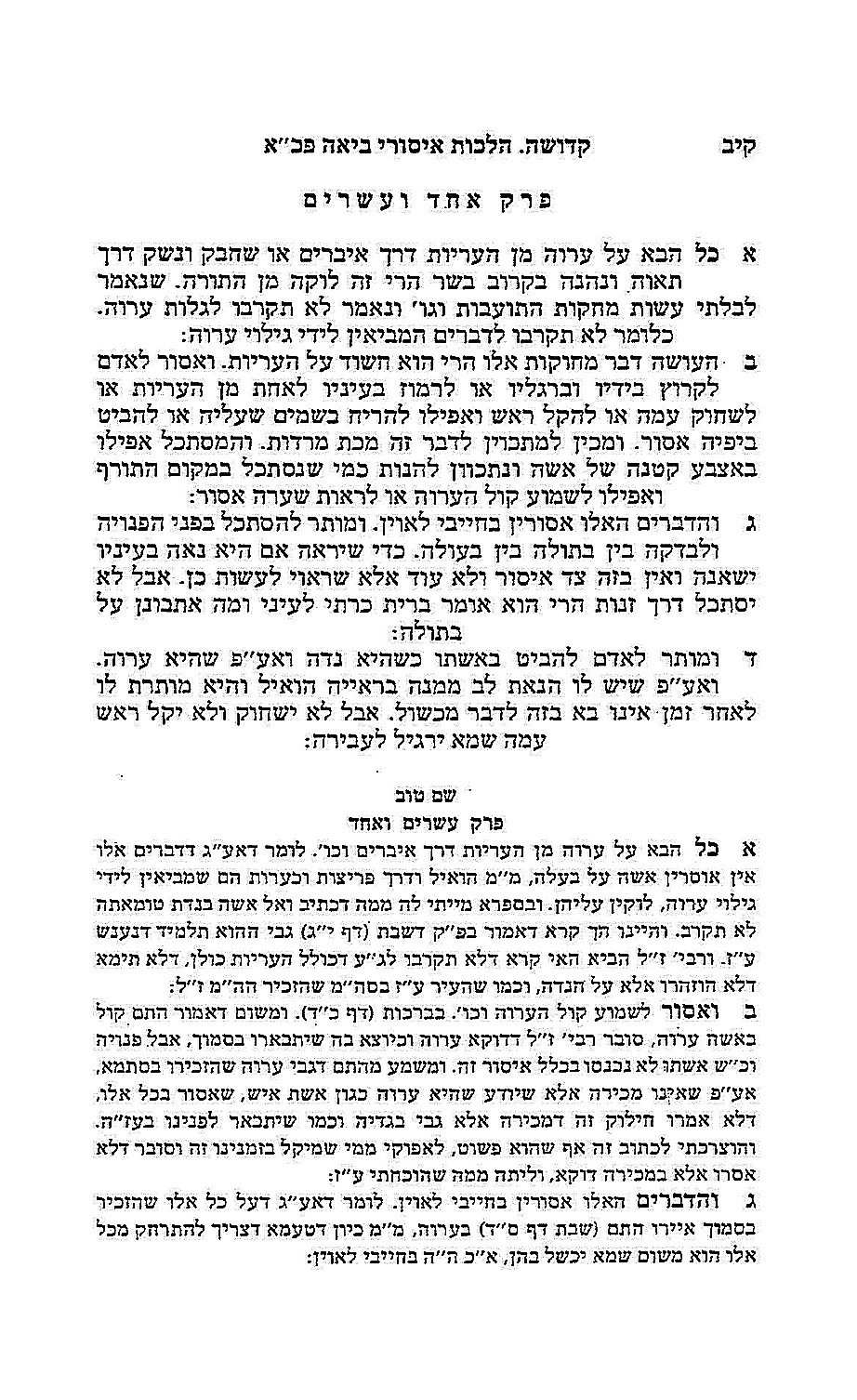
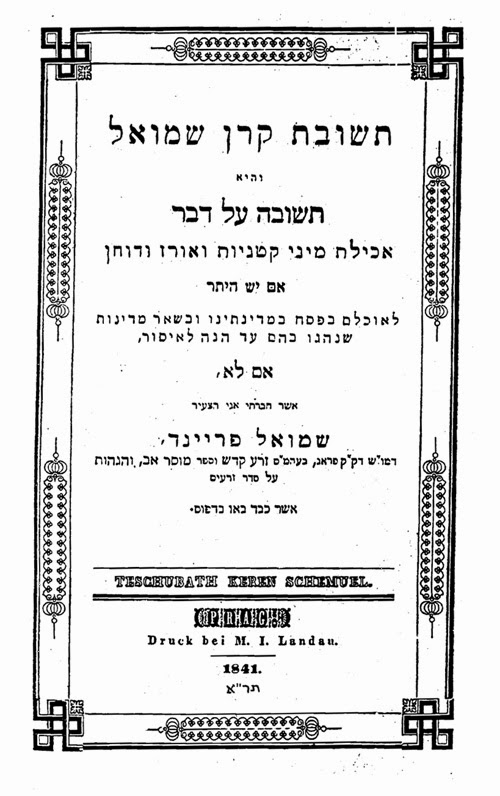
I immediately suspected something wasn’t right, and when I looked at the original I saw that R. Freund was described as דיין מו”ש דק”ק פראג. In translating these words into English, דיין מו”ש  became דין ומו”צ  (since the English version puts vowels on the Hebrew words  דיין became דין), and דק”ק became בק”ק (this latter point is only a minor error).
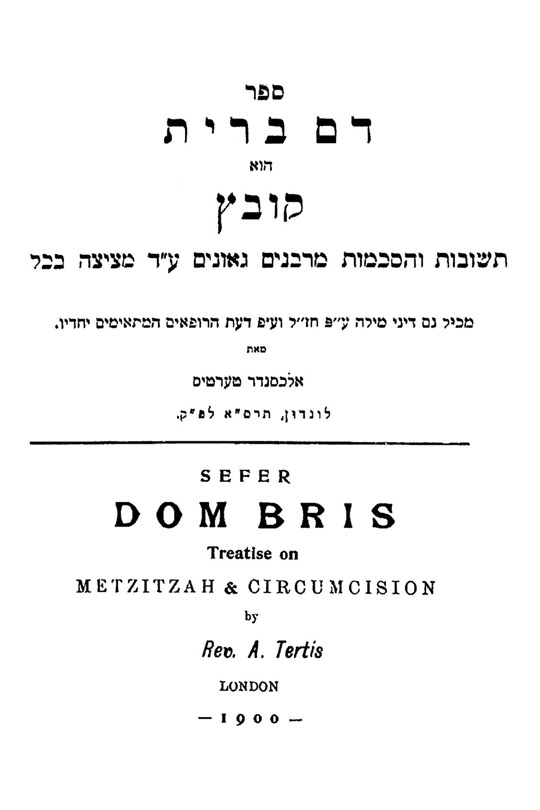
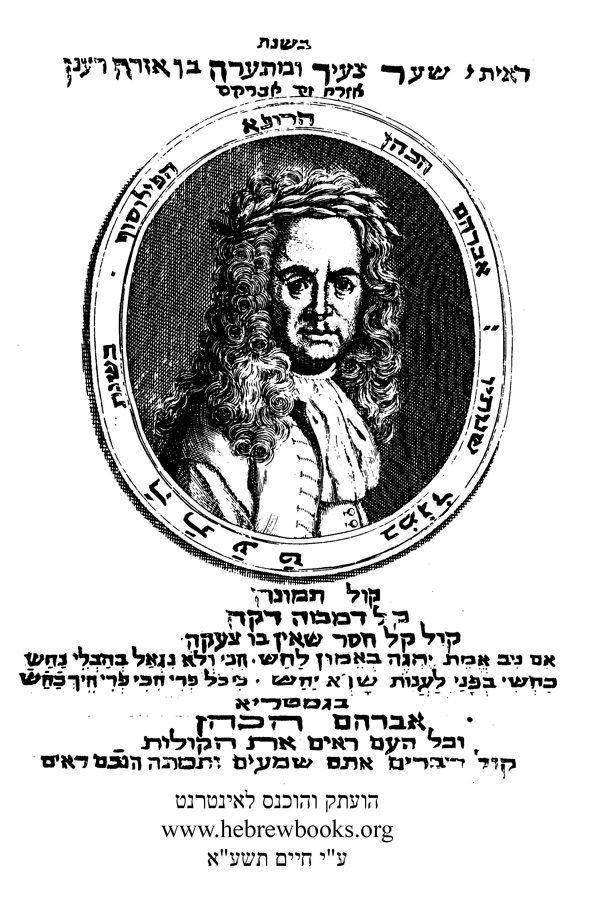
R. Zevin’s description of R. Freund is put in quotation marks since it is taken from the cover of his Keren Shmuel, as you can observe here.
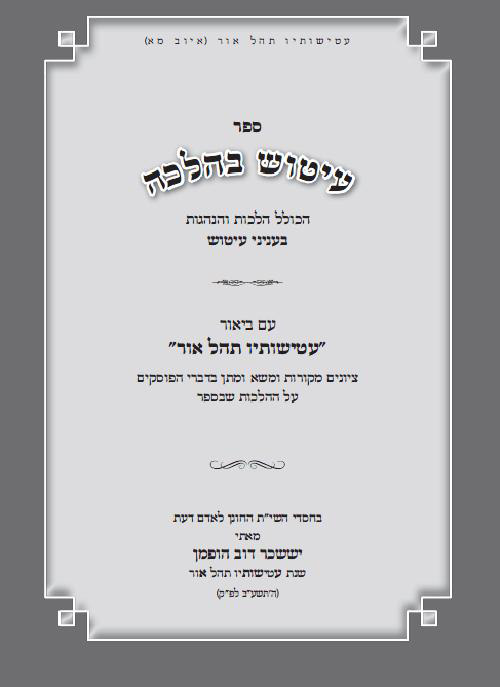
The translators (who must never have seen the title page of Keren Shmuel) didn’t know what to make of מו”ש  and assumed that it was a mistake for מו”צ. They therefore “corrected” R. Zevin’s text. This is one of those cases where a few well-placed inquiries would have solved the translators’ problem. Some of the blame for this error should be laid at the feet of R. Zevin, for he never bothered explaining what מו”ש  is and he should have realized that that the typical reader (and translator) wouldn’t have a clue as to its meaning.[9]
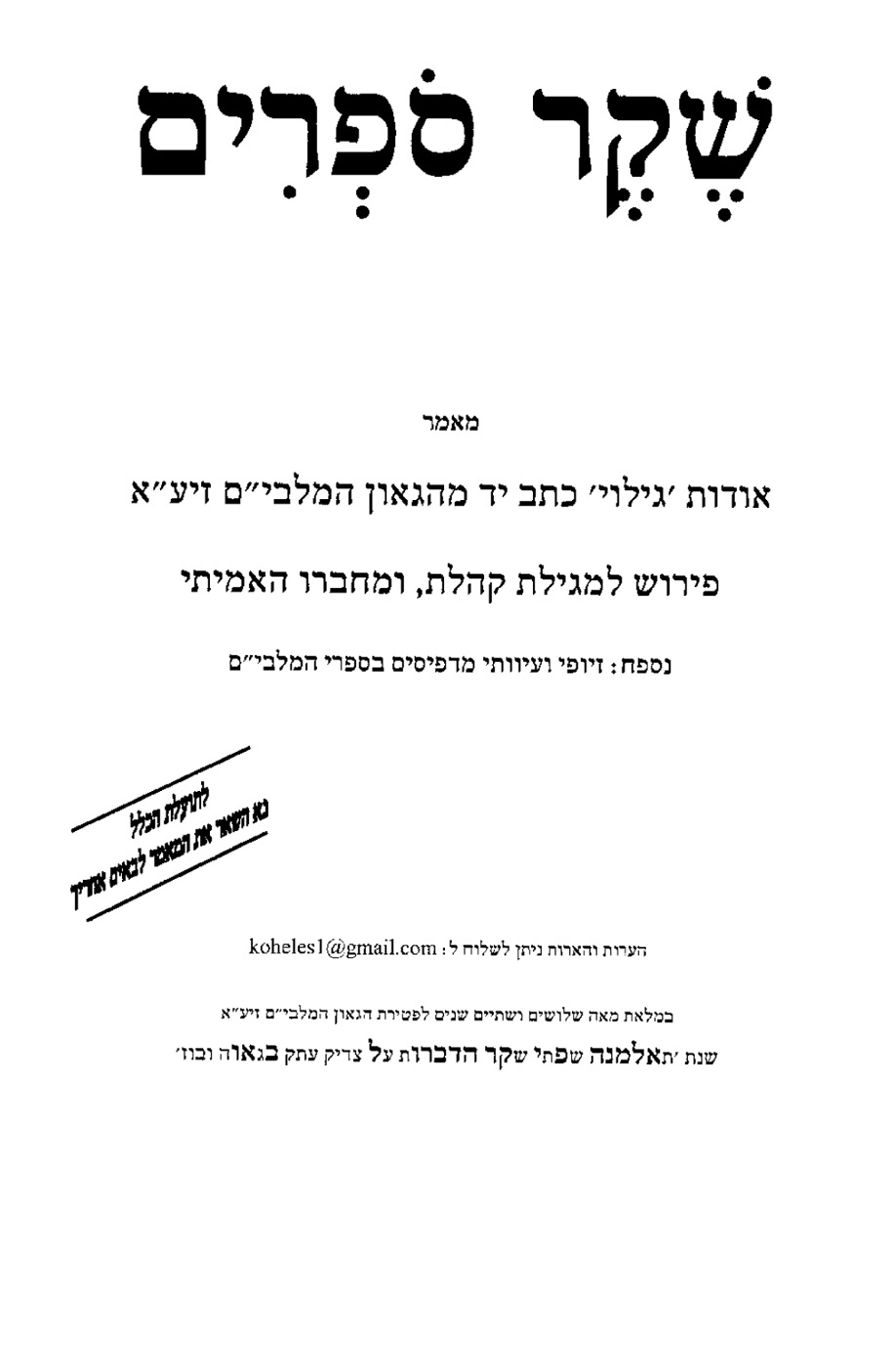
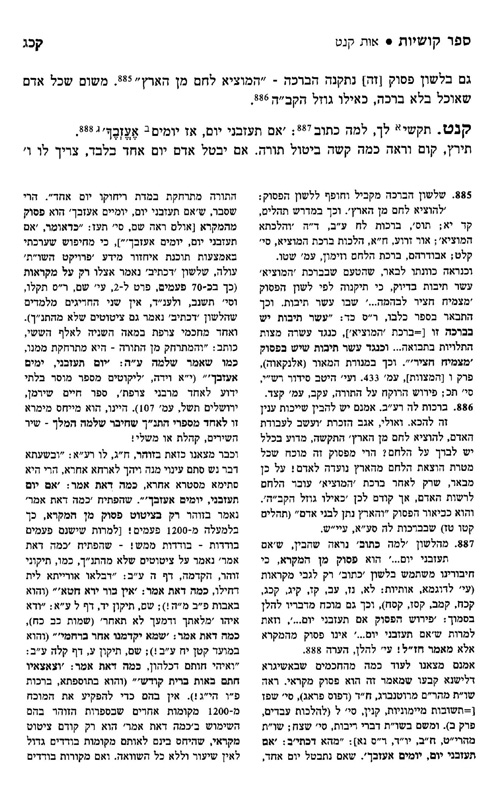
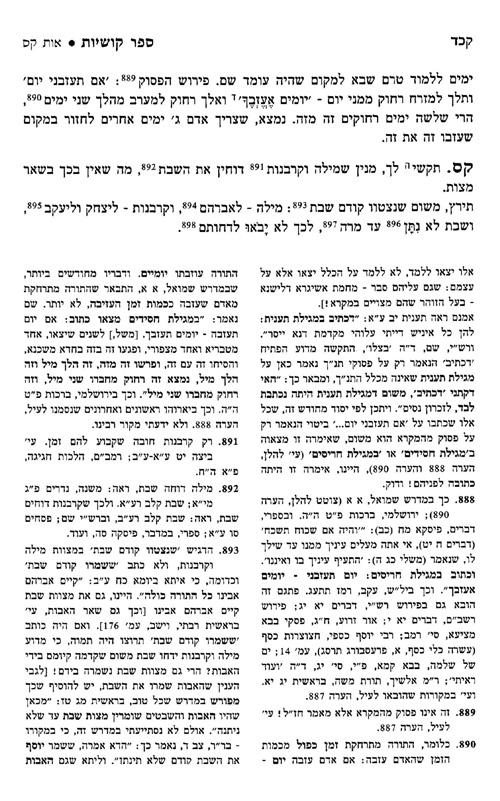
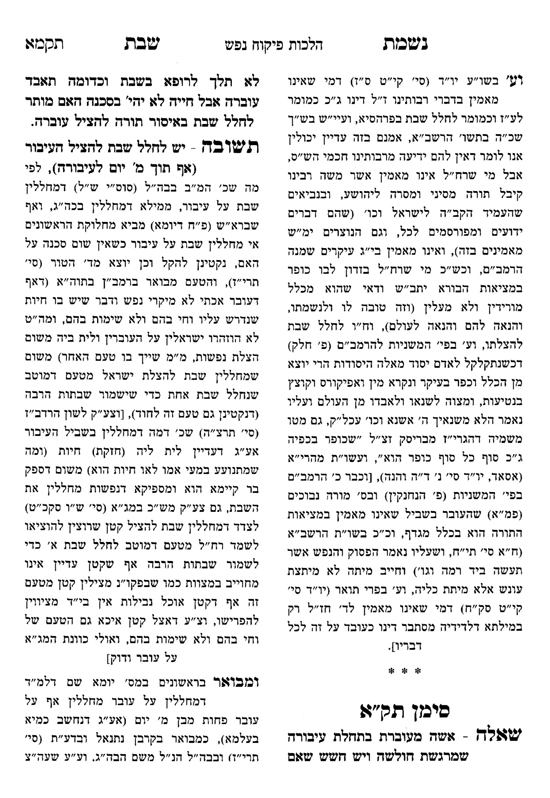
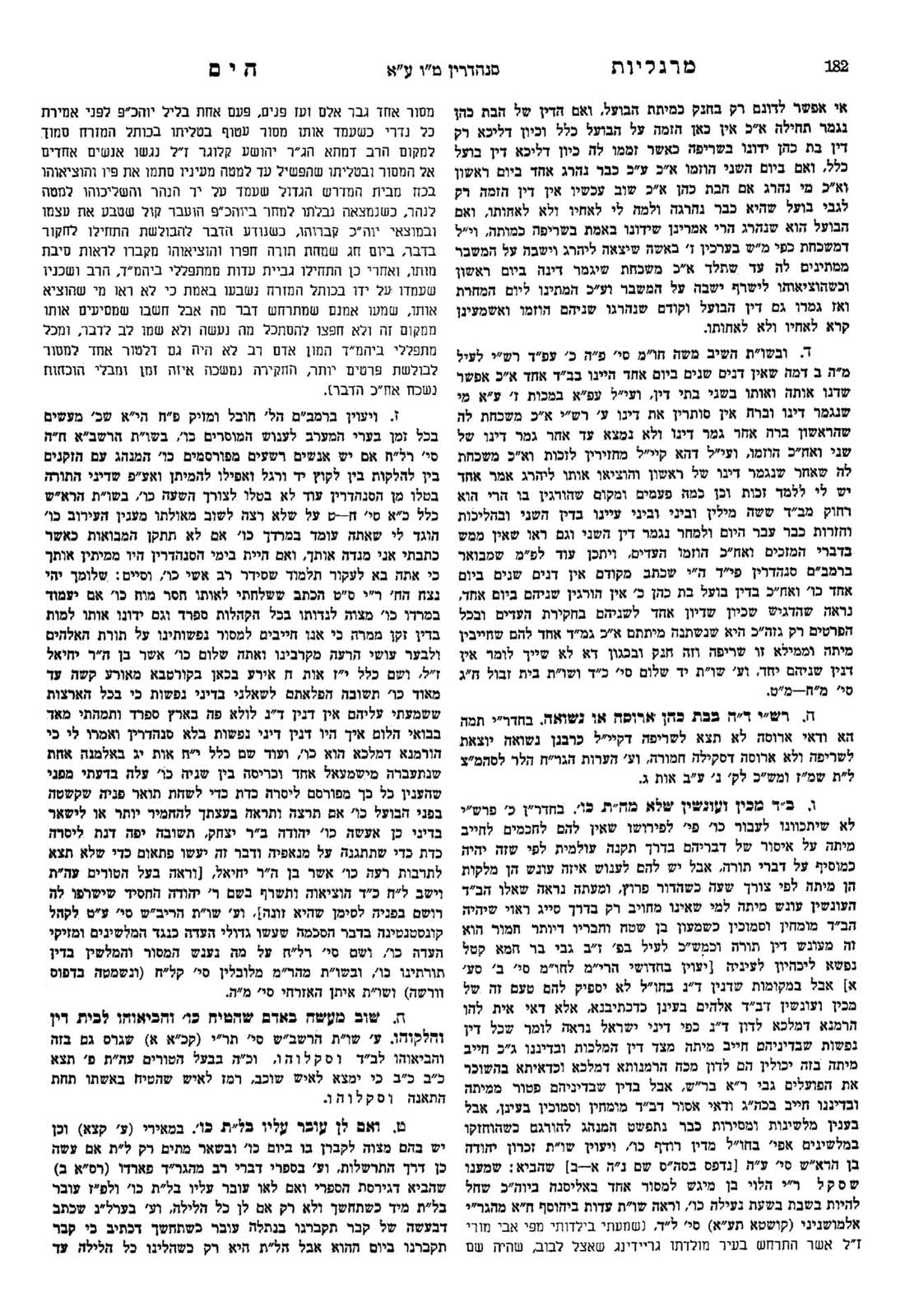
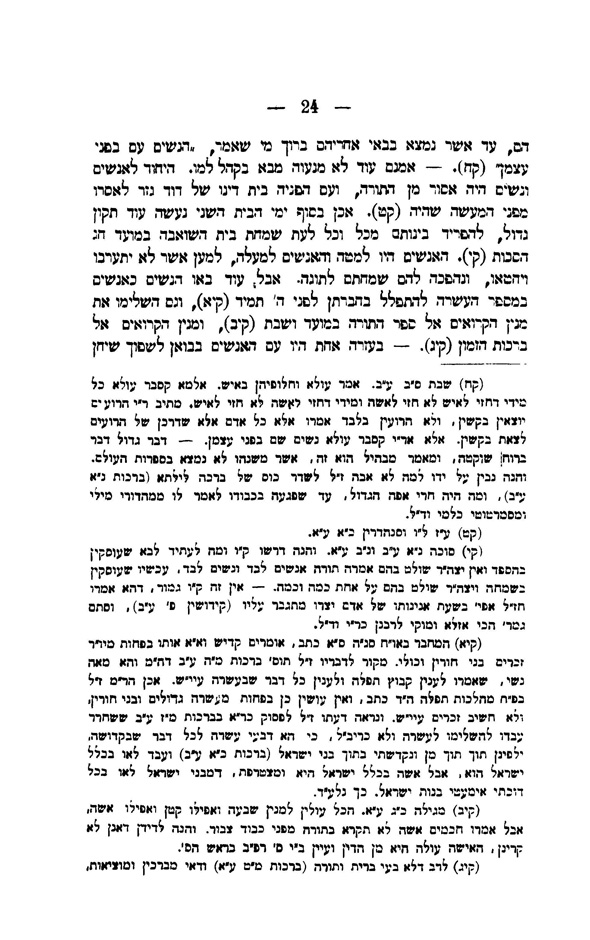
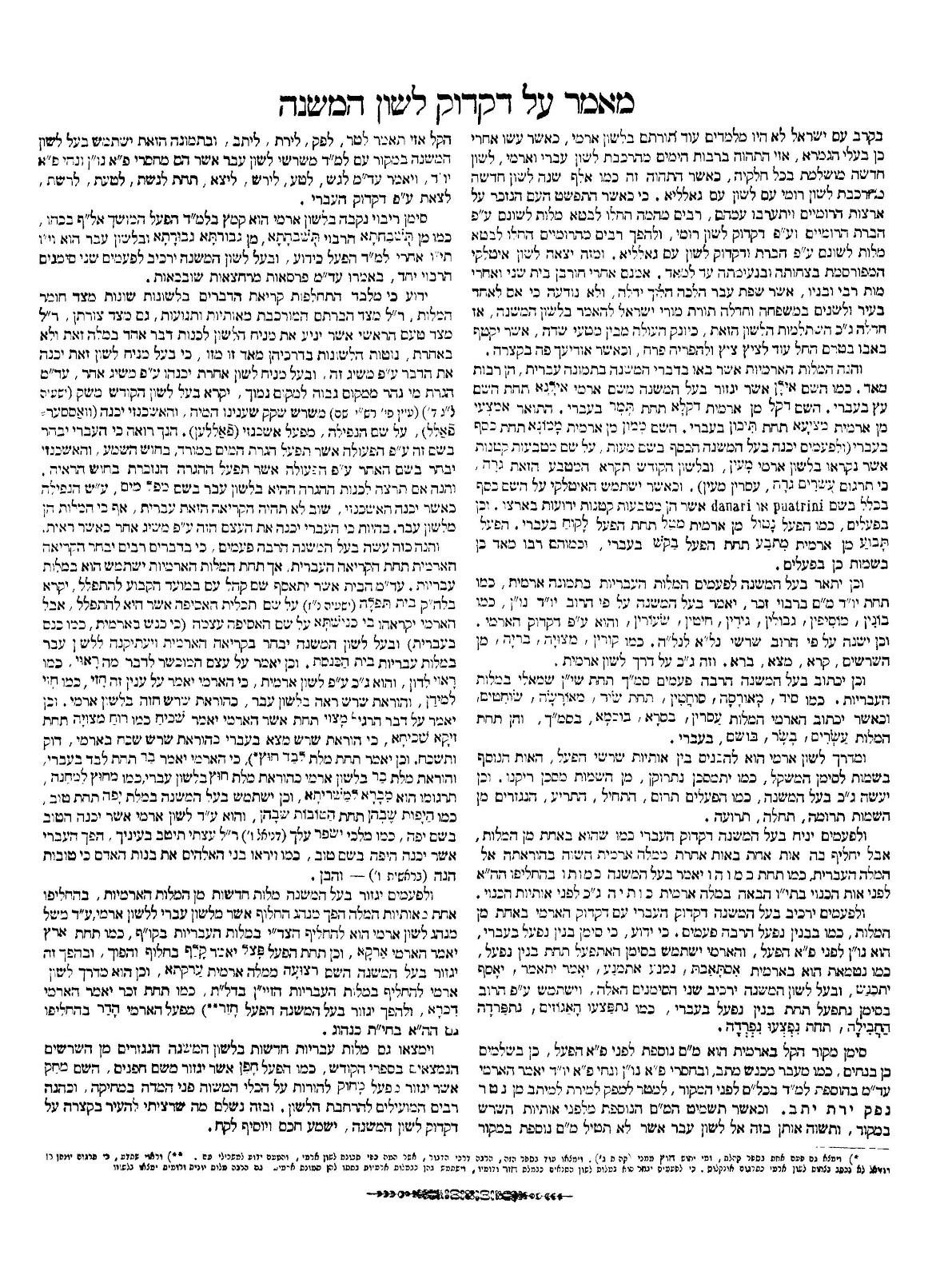
מו”ש refers to the highest beit din in Prague, as used in the phrases דיין מו”ש and בית דין מו”ש. But what do the letters מו”ש stand for?[10] This is the subject of an essay by Shaul Kook,[11] and he points out that there has been uncertainty as to the meaning of מו”ש.[12] In fact, R. Solomon Judah Rapoport, who was chief rabbi of Prague and a member of the בית דין מו”ש, was unaware of the meaning.[13] After examining the evidence, Kook concludes that מו”ש stands for מורה שוה. This appears to mean that all the dayanim on the beit din were regarded as having equal standing. The בית דין מו”ש of Prague actually served as an appeals court, something that was found in other cities as well, even going back to Spain.[14] R. Yair Hayyim Bacharach, Havot Yair, no. 124, refers to one of the dayanim on this beit din as  אפילאנט, and the new edition of Havot Yair helpfully points out that the meaning of this is דיין לערעורים.[15]
Some people have the notion that the appeals court of the Israeli Chief Rabbinate is a completely new concept, first established during the time of R. Kook. This is a false assumption.[16] (The Chief Rabbinate’s בית דין לערעורים is also known as בית דין הגדול).
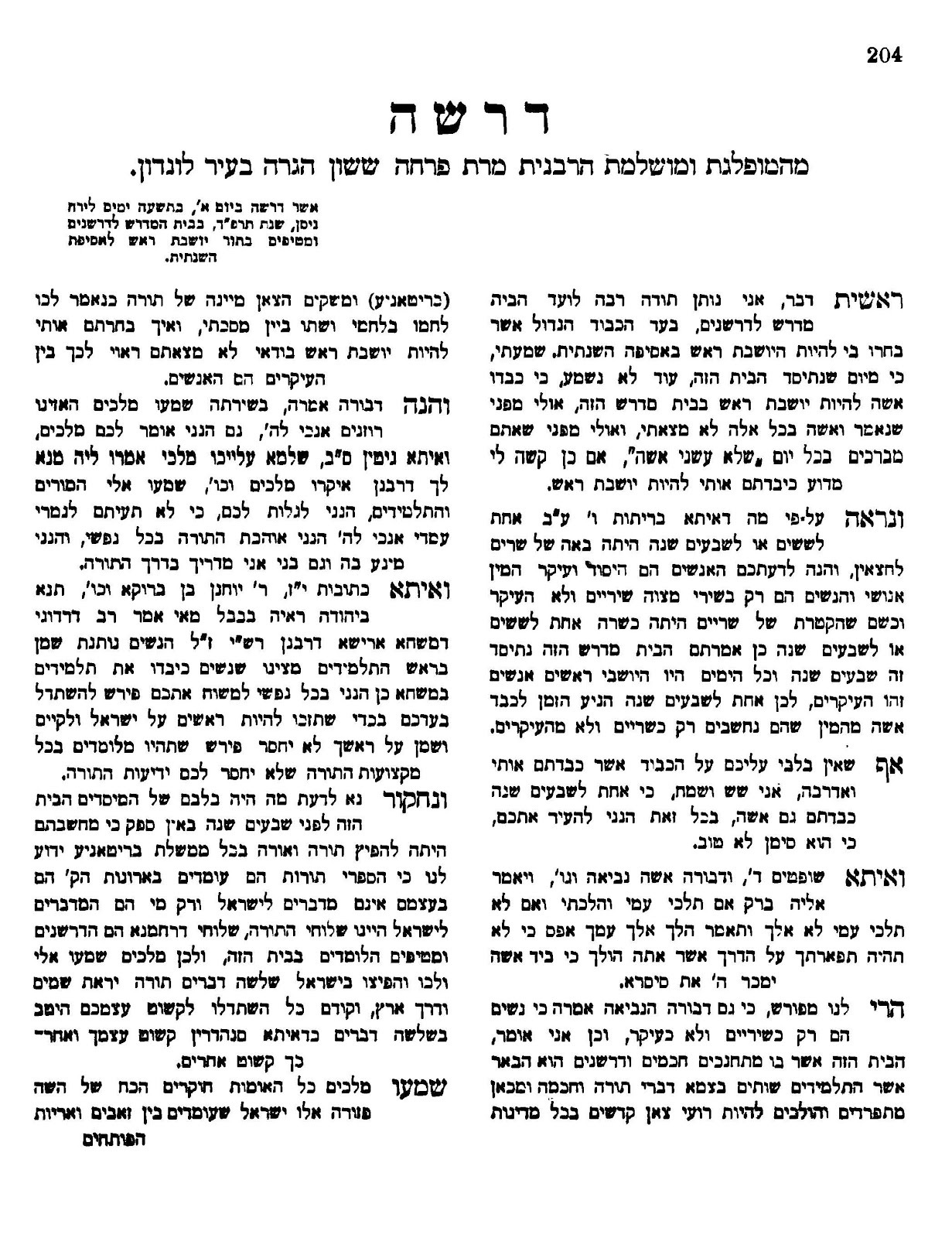
R. Moshe Taub has called my attention to another error in the translation of Ha-Moadim ba-Halakhah. In discussing what should be done first, Havdalah or lighting the menorah, R. Zevin writes (p. 204):
ברוב המקומות נתקבל המנהג שבבית מבדילים קודם, ובבית הכנסת מדליקים קודם
The translation, p. 89, has this sentence completely backwards: “Most communities have adopted the following custom: at home – Chanukah lights are lit first; in the synagogue – Havdalah first.”
Since we are on the issue of errors in Artscroll, here is another one which was called to my attention by Prof. Daniel Lasker. In the commentary to Numbers 25:1, Artscroll states:
After Balaam’s utter failure to curse Israel, he had one last hope. Knowing that sexual morality is a foundation of Jewish holiness and that God does not tolerate immorality – the only time the Torah speaks of God’s anger as אף, wrath, is when it is provoked by immorality (Moreh Nevuchim 1:36) – Balaam counseled Balak to entice Jewish men to debauchery.
Yet Rambam does not say what Artscroll attributes to him. Here is what appears in Guide 1:36:
Know that if you consider the whole of the Torah and all the books of the prophets, you will find  that the expressions “wrath” [חרון אף], “anger” [כעס], and “jealousy” [קנאה], are exclusively used with reference to idolatry.
The Rambam says that the language of “wrath” is only used with reference to idolatry, but somehow in Artscroll idolatry became (sexual) immorality. This text of the Moreh Nevukhim is actually quite a famous and difficult one, and the commentators discuss how Maimonides could say that ויחר אף is only used with reference to idolatry when the Torah clearly provides examples of the words in other contexts. In his commentary, ad loc, R. Kafih throws up his hands and admits that he has no solution.
ושכאני לעצמי כל התירוצים לא מצאו מסלות בלבבי, והקושיא היא כל כך פשוטה עד שלא יתכן שהיא קושיא, אלא שאיני יודע היאך אינה קושיא
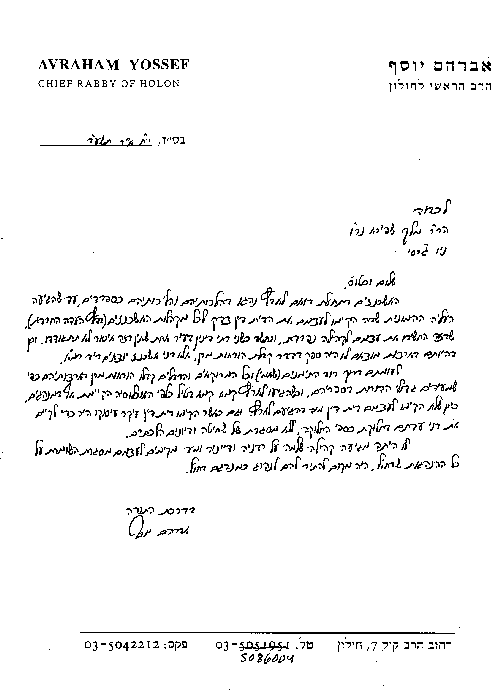
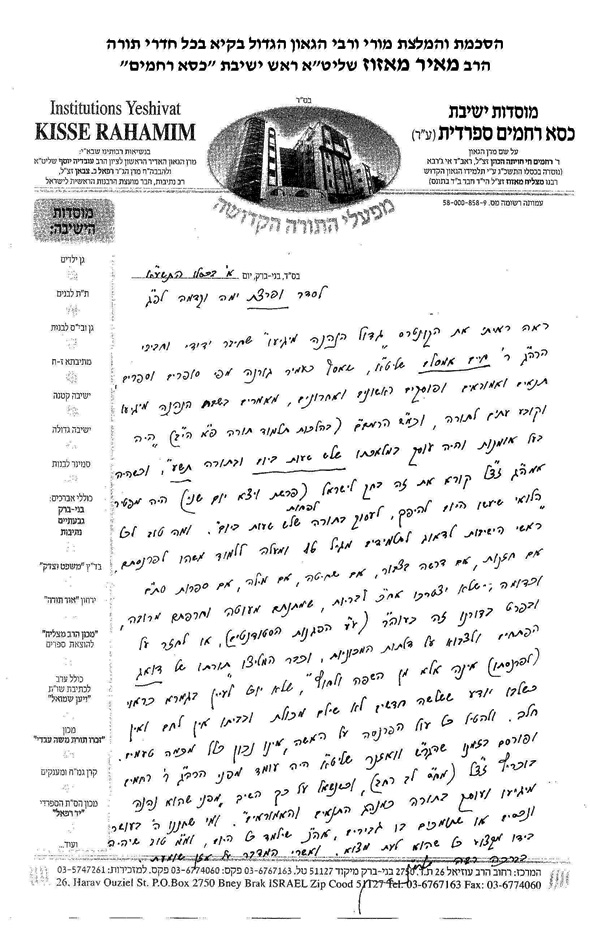
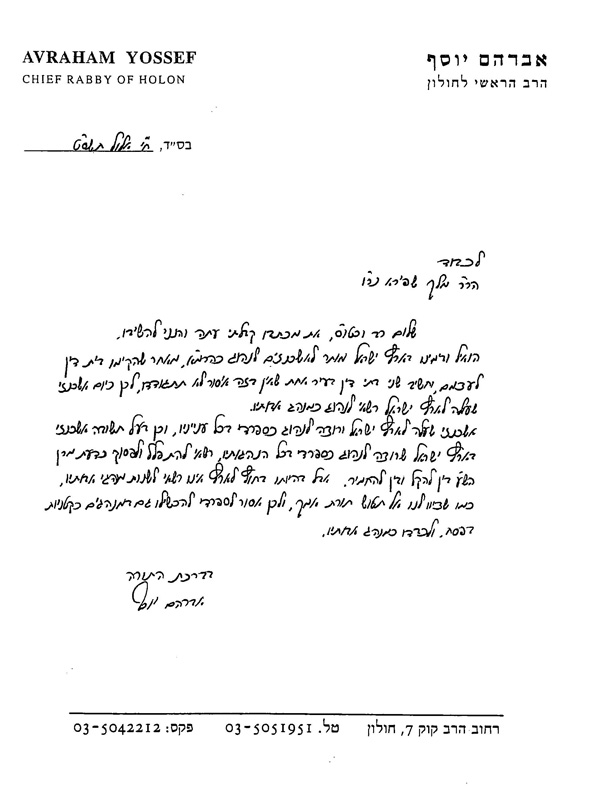
Returning to the issue of kitniyot, in a previous post I raised the question as to why, according to R. Ovadiah Yosef, all Sephardim and Yemenites who live in Israel are to follow the practices of the Shulhan Arukh but he doesn’t insist on this when it comes to Ashkenazim. If R. Joseph Karo is the mara de-atra, shouldn’t this apply to Ashkenazim as well?[17] I once again wrote to R. Avraham Yosef and R. Yitzhak Yosef seeking clarification. Here is R. Avraham’s letter.
Unfortunately, his history is incorrect. To begin with, it is not true that all of the Ashkenazim who came on aliyah before the “mass aliyah” (which apparently refers to the late nineteenth century) adopted the practices of the Sephardim.[18] It is also not true that the beit din established by the Ashkenazim in the nineteenth century is the beit din of the Edah Haredit. The Edah Haredit is a twentieth-century phenomenon. The historical successor of the beit din of R. Shmuel Salant was the Jerusalem beit din of which R. Kook was av beit din, as he was the rav of Jerusalem (and R. Zvi Pesah Frank served on the batei din of both R. Salant and R. Kook). The Edah Haredit beit din was a completely new creation. As for the Yemenites, Moroccans, and Iraqis, when the great immigration of these groups occurred, many thousands came on aliyah together, (i.e., as complete communities) and thus they never saw themselves as required to reject their practices in favor of the Shulhan Arukh. The fact that they didn’t establish special batei din is irrelevant. In fact, R. Avraham’s last paragraph is a good description of how these communities arrived in the Land of Israel, and is precisely the reason why their rabbinic leaders almost uniformly rejected R. Ovadiah Yosef’s demand that they adopt the Shulhan Arukh in all particulars.
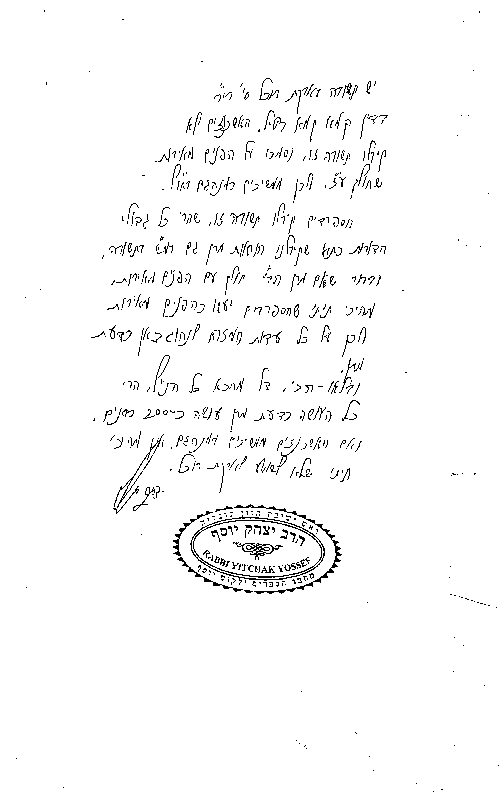
Here is R. Yitzhak Yosef’s letter to me, which has a different perspective.
He cites R. Joseph Karo’s responsum, Avkat Rokhel, no. 212, which requires newcomers to adopt the practices of the community to which they are going even if they come as large groups. He then says that Ashkenazim never adopted this viewpoint, but instead held to the opinion of R. Meir Eisenstadt (Panim Meirot, vol. 2, no. 133). According to R. Eisenstadt, only individuals who come to a town must adopt the local practice, but not if they come as a group and establish their own community.[19]
Let me now complicate matters further. If you recall, in the earlier post I discussed how R. Ovadiah Yosef’s writings assume that Ashkenazim have to abstain from kitniyot on Pesah. I raised the question if an Ashkenazi could “become Sephardi” and thus start eating kitniyot (and also follow Sephardic practices in all other areas). R. Avraham Yosef wrote to me that this is permissible while R. Yitzhak Yosef wrote that it is not.
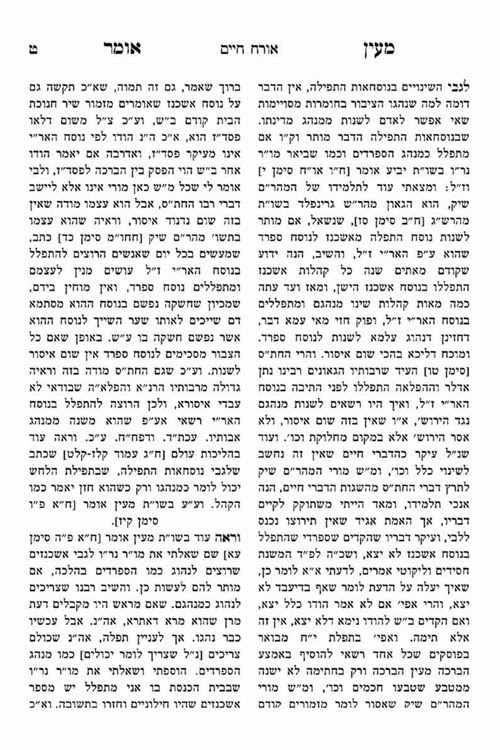
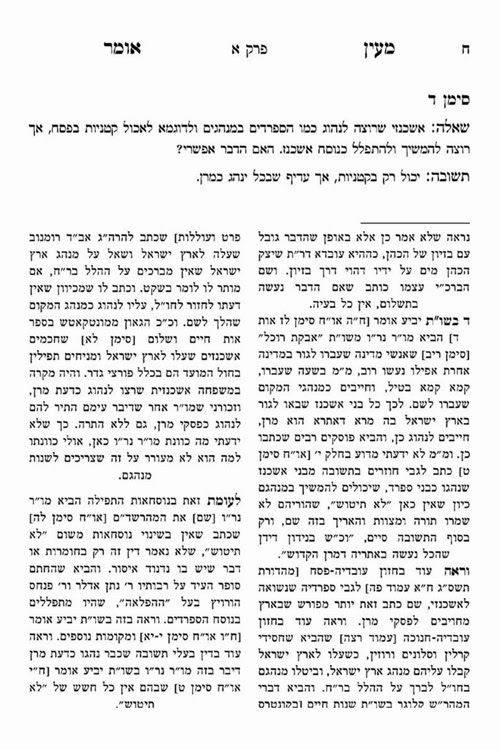
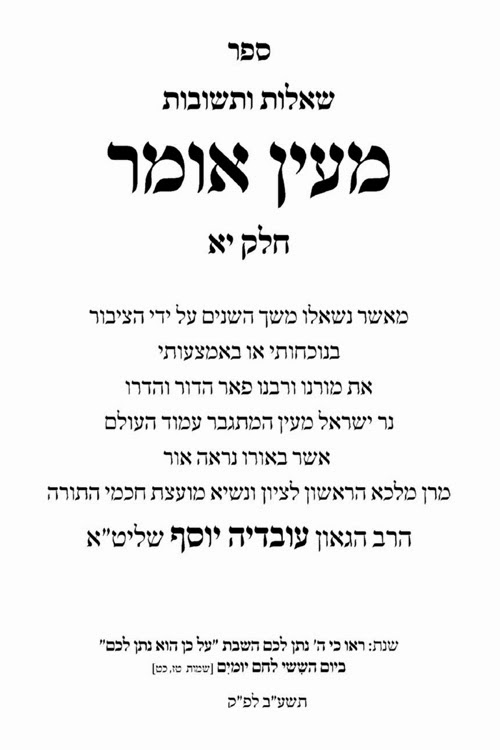
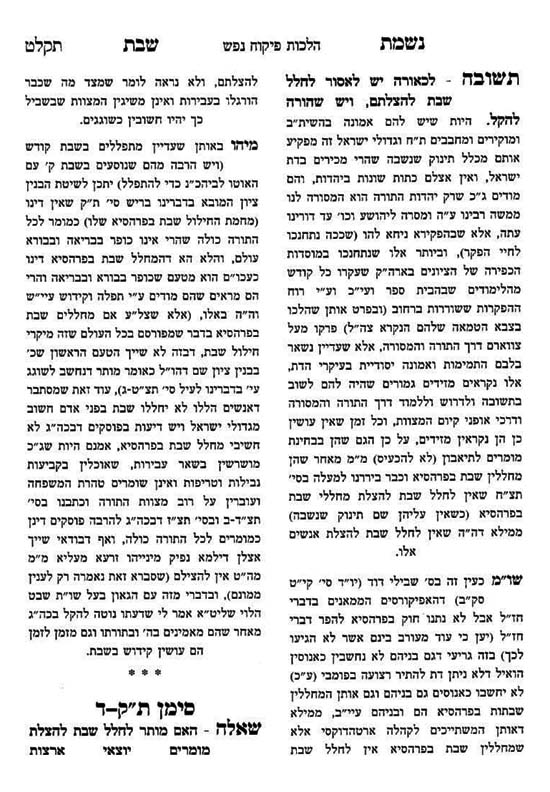
R. Yissachar Hoffman called my attention to the fact that in the recent Ma’yan Omer, vol. 11, p. 8, R. Ovadiah was himself asked the following question:
אשכנזי שרוצה לנהוג כמו הספרדים במנהגים ולדוגמא לאכול קטניות בפסח, אך רוצה להמשיך ולהתפלל כנוסח אשכנז. האם הדבר אפשרי.
R. Ovadiah replied:
 יכול רק בקטניות, אך עדיף שבכל ינהג כמרן
What R. Ovadiah is saying (and see also the editor’s note, ad loc., for other examples) is that R. Avraham’s answer is correct, namely, that an Ashkenazi can “become Sephardi” (and eat kitniyot). It is significant that R. Ovadiah allows such a person to continue praying according to Ashkenazic practice. Here are the pages.
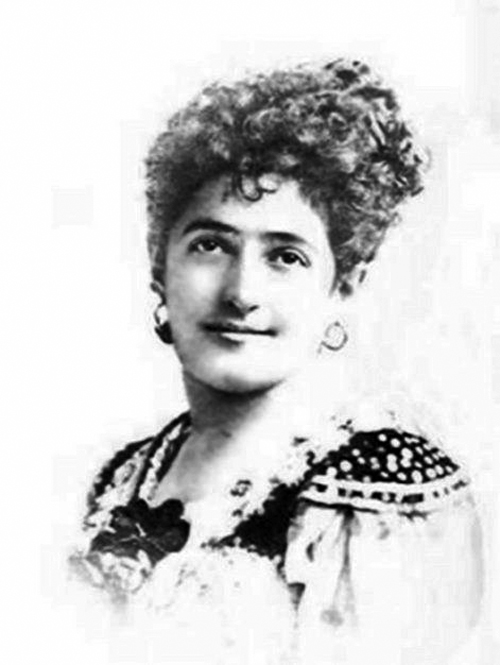
2. On my recent tour of Italy I spent a good deal of time speaking about the great sages of Venice and Padua. One such figure was R. Samuel Judah Katzenellenbogen (1521-1597), known as מהרשי”ק, the son of the famous R. Meir Katzenellenbogen, known as Maharam Padua. While R. Samuel Judah Katzenellenbogen is basically forgotten today, he was the most important Venetian rabbi in his day. He was also the father of Saul Wahl, who became famous in Jewish legend as Poland’s “king for a day.”[20]
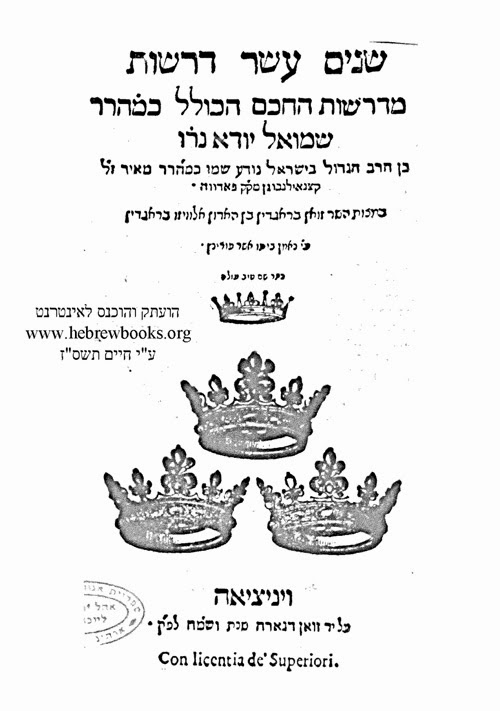
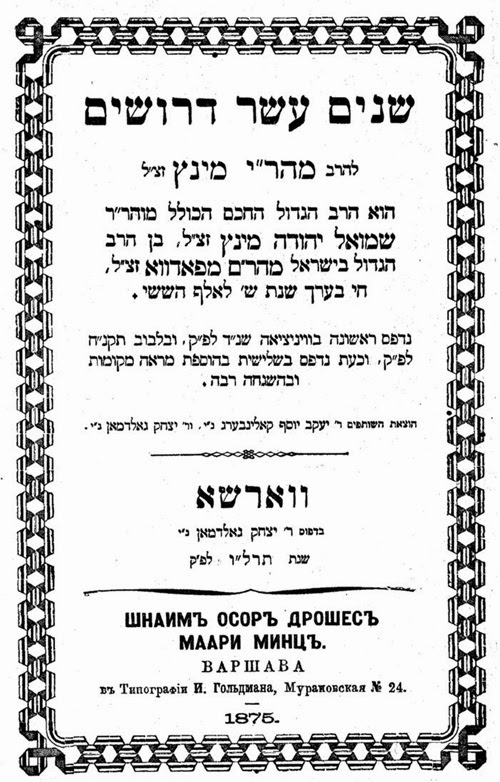
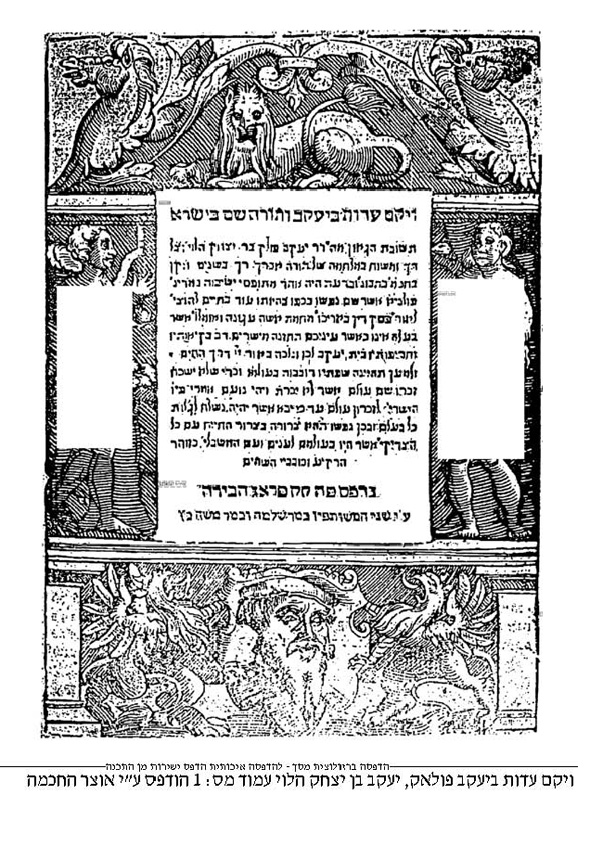
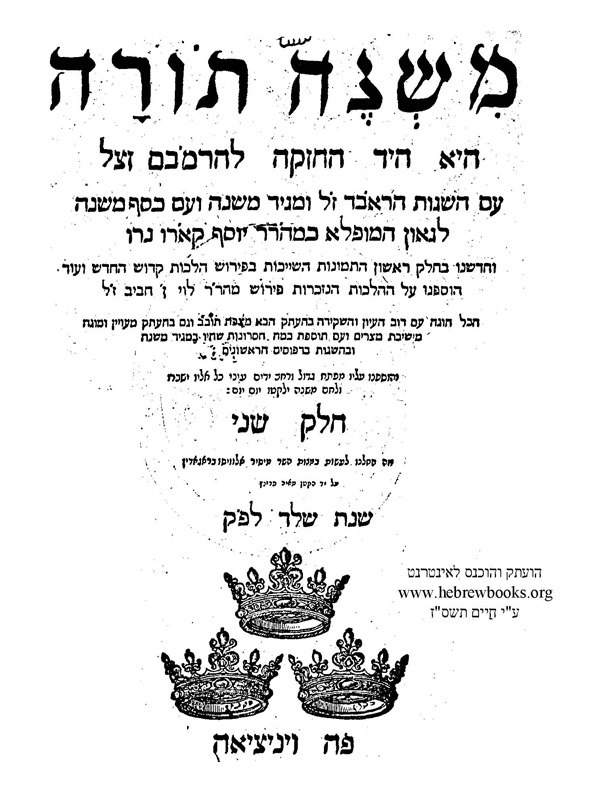
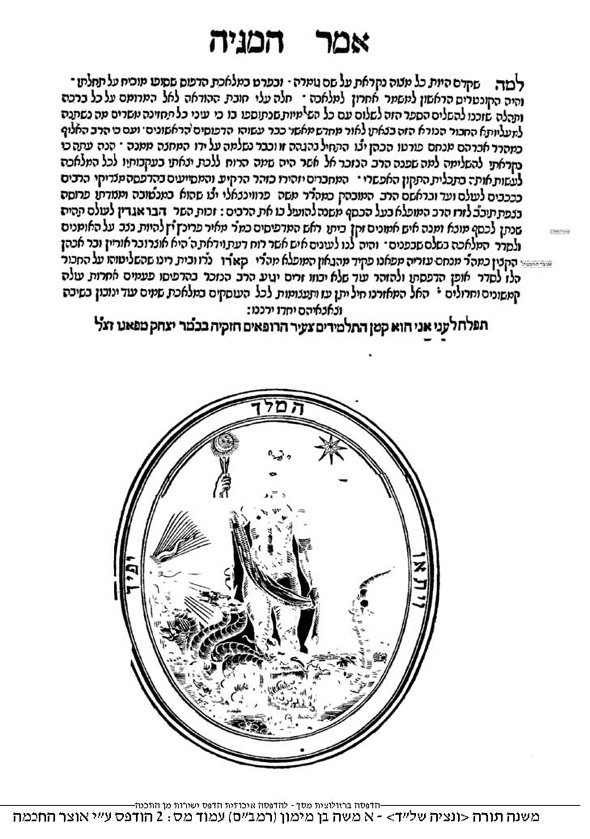
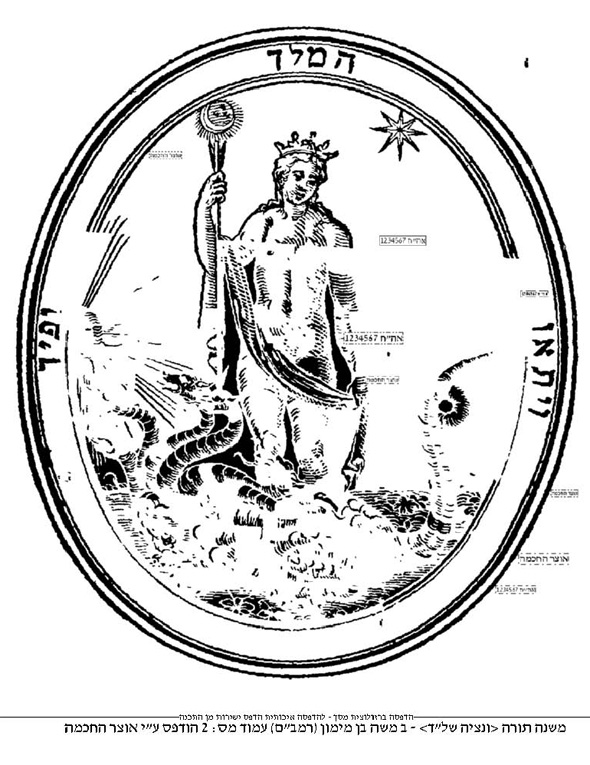
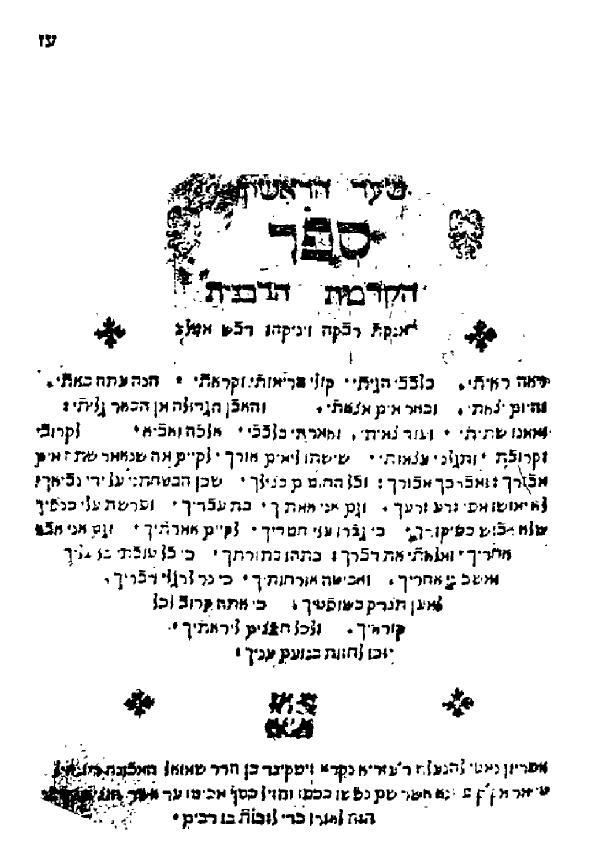
In 1594, R. Katzenellenbogen’s collection of derashot, entitled Shneim Asar Derashot, appeared. Here is the title page.
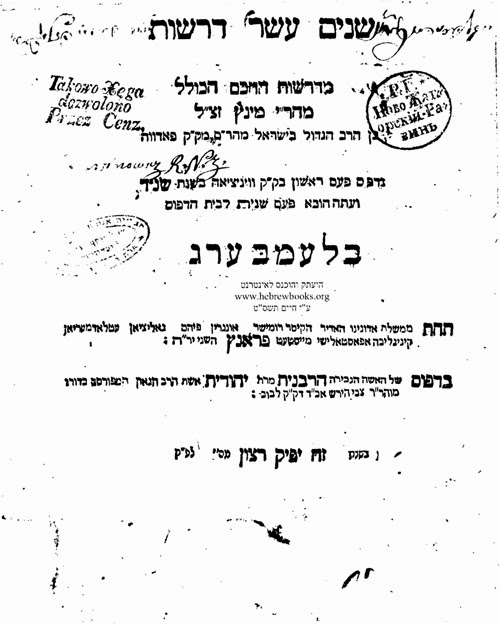
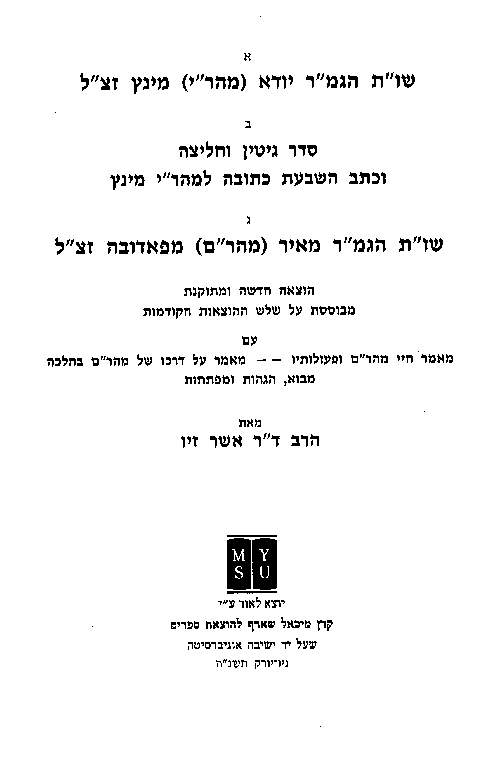
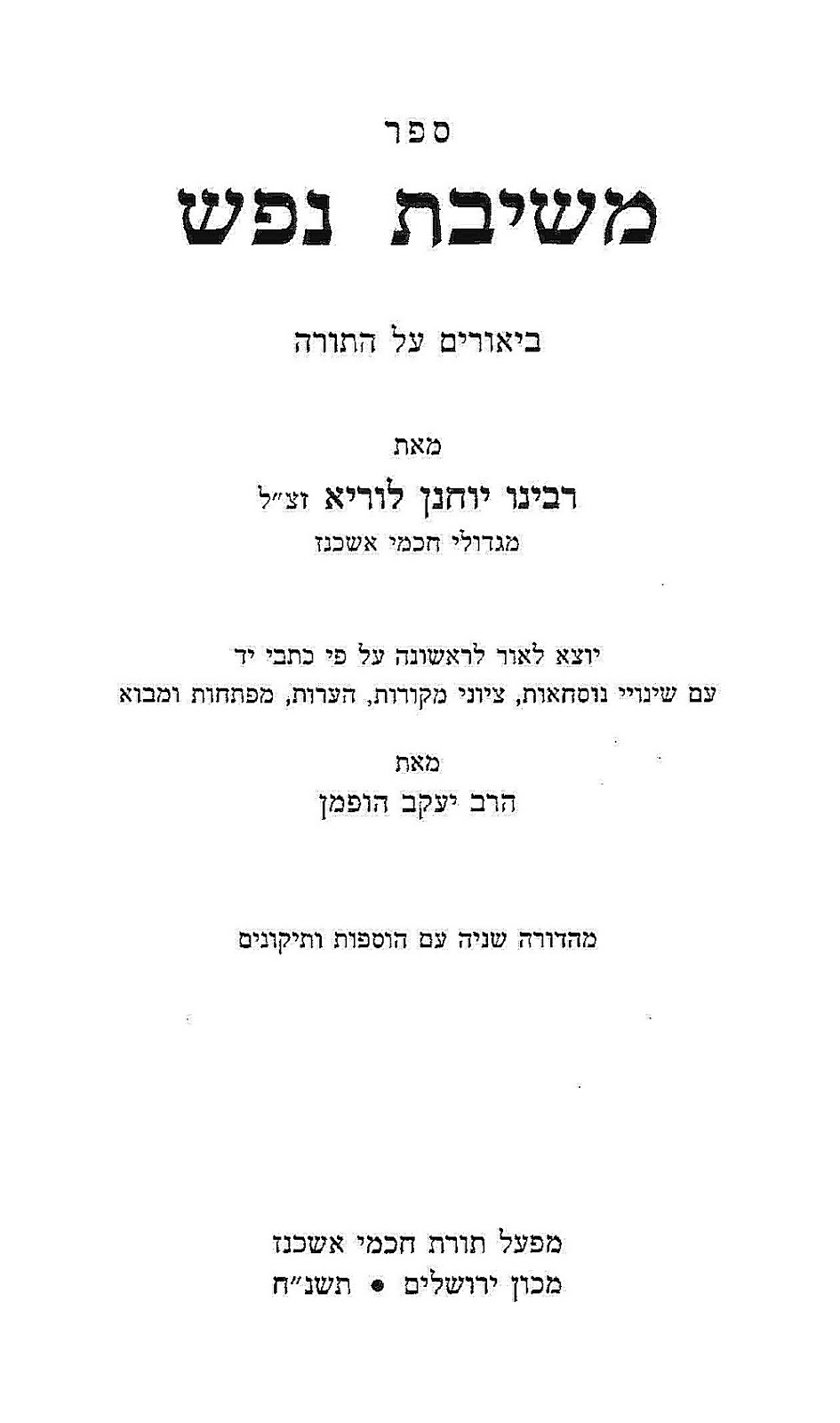
When the volume was reprinted in Lemberg in 1798, the publisher made an error and on the title page attributed the volume to מהר”י מינץ , the son of Maharam Padua.
Apart from not knowing who the author of the volume was, the publisher also didn’t realize that R. Judah Mintz (died 1508[21]) was the grandfather of Maharam Padua’s wife, meaning that he was the great-grandfather of R. Samuel Judah Katzenellenbogen.
When the volume was reprinted in Warsaw in 1876 the publisher recognized the problem but confounded matters.
Rather than simply correcting the mistake from the 1798 title page by attributing the volume to R. Samuel Judah Katzenellenbogen, he kept the information from the mistaken title page but tells the reader that מהר”י מינץ is none other than “R. Samuel Judah Mintz”, a previously unheard of name.
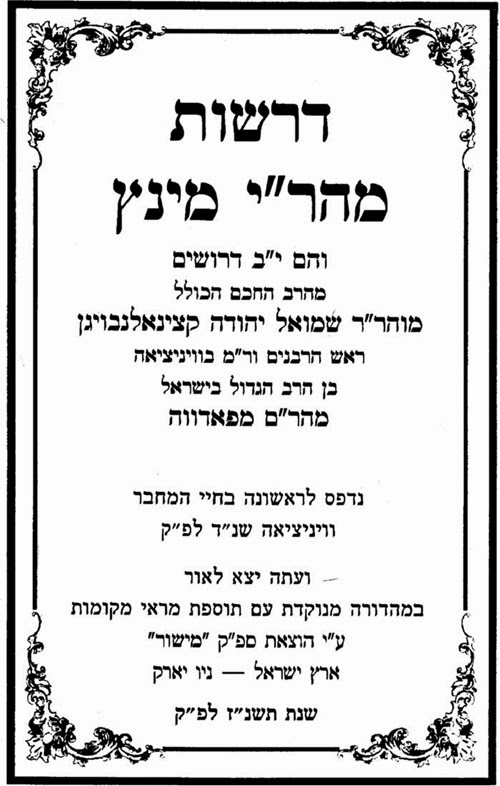
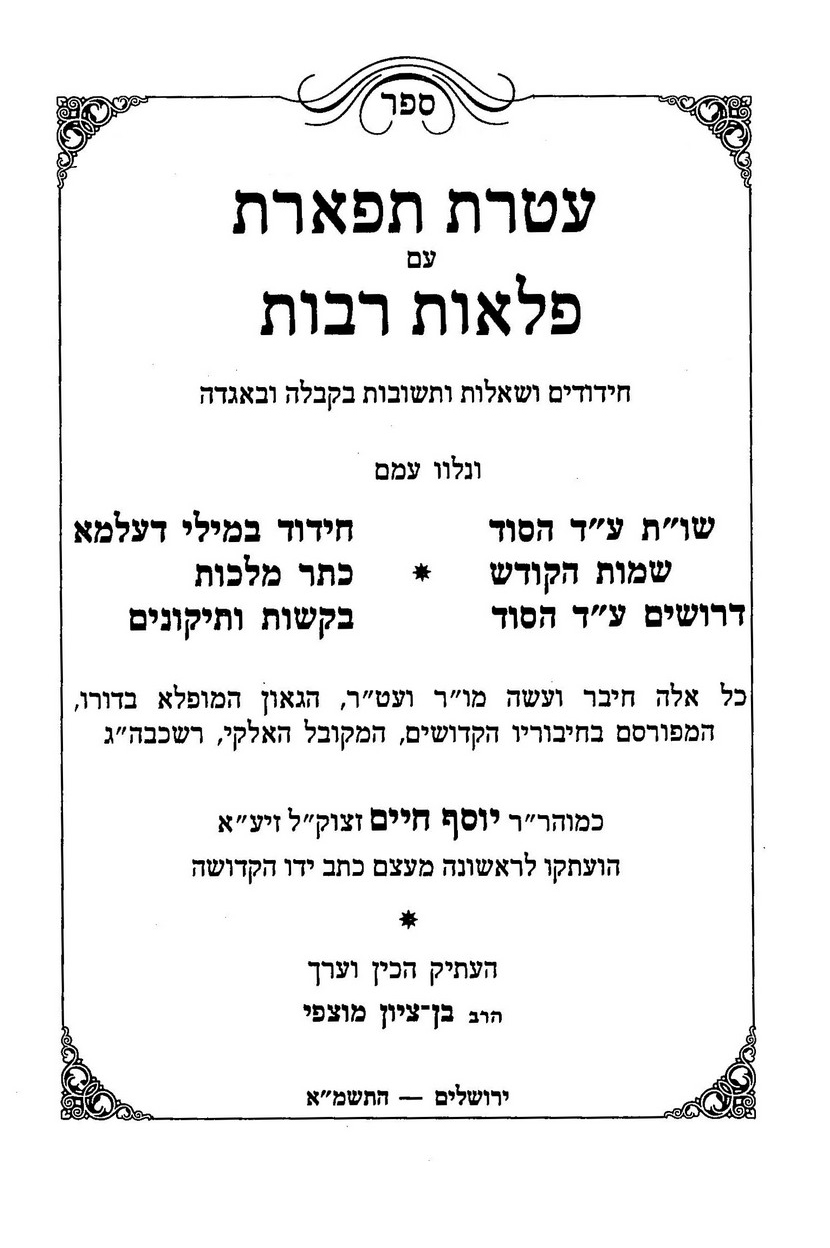
The most recent printing has gets it even worse.
Now the original title of the book, שנים עשר דרשות, is simply omitted, and the book is called דרשות מהר”י מינץ
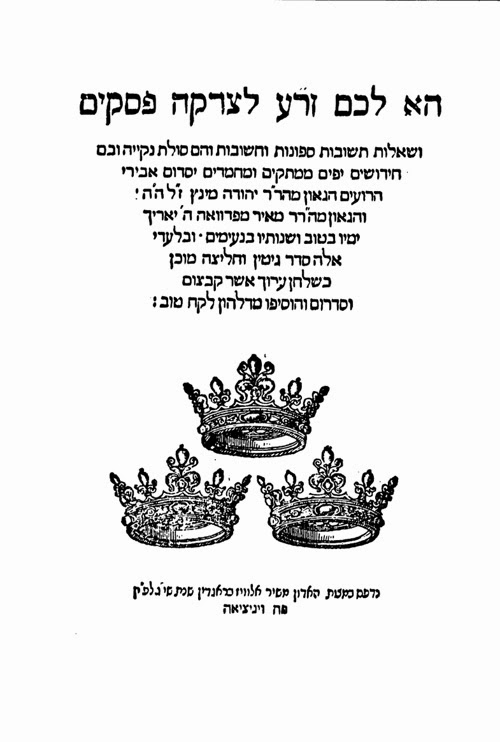
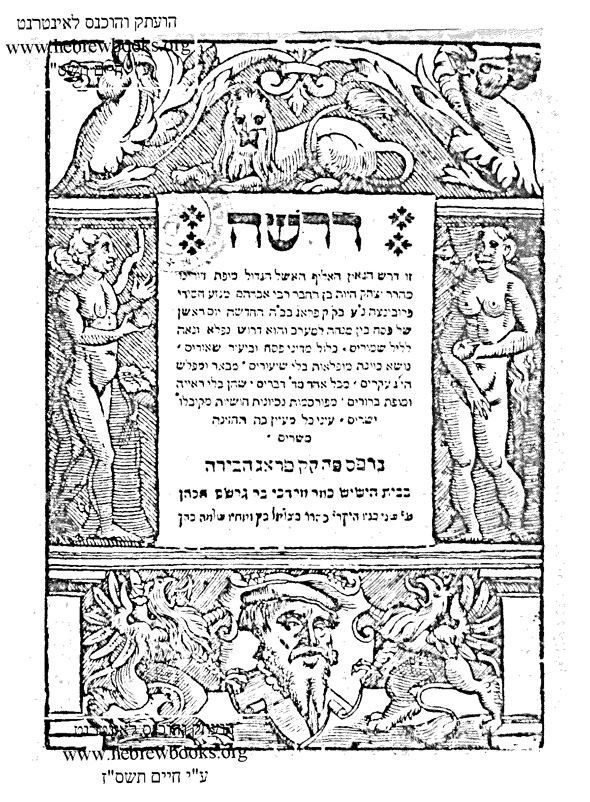
The authentic R. Judah Mintz of Padua is known for his volume of responsa that was published in Venice in 1553, together with the responsa of R. Meir Katzenellenbogen. Here is the title page.
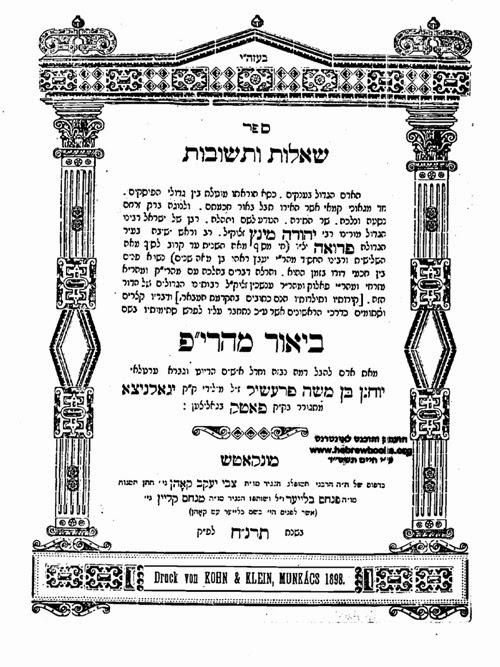
R Judah Mintz’s responsa were reprinted in Munkacs in 1898 together with a lengthy commentary by R. Johanan Preshil.
The book was also reprinted in 1995, edited by R. Asher Siev.
Unfortunately, Siev was unaware of the 1898 edition. He also makes the mistake (see p. 353) of stating that R. Samuel Judah Katzenellenbogen was referred to as מהר”י מינץ because his mother’s family name was Mintz. I have seen no evidence that he was ever referred to as such in his lifetime or in the years after, and as mentioned, this was simply a printer’s mistake. I consulted with Professor Reuven Bonfil and he too is unaware of any reference to Katzenellenbogen being referred to as מהר”י מינץ, which supports my assumption that this all goes back to the mistaken title page.[22]
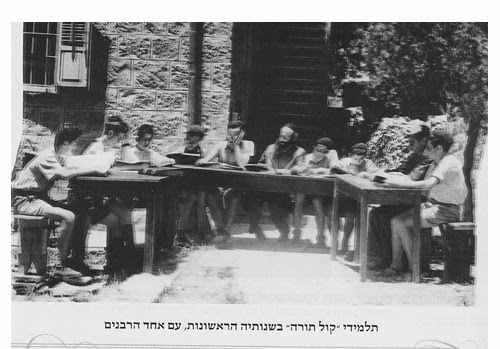
3. In my last post I mentioned how in years past there were shiurim combining students from Merkaz and Chevron and also Merkaz and Kol Torah. This is obviously unimaginable today. For another example showing how Yeshivat Kol Torah has changed, look at this picture, which appears in Yosef and Ruth Eliyahu, Ha-Torah ha-Mesamahat (Beit El, 1998), p. 105.
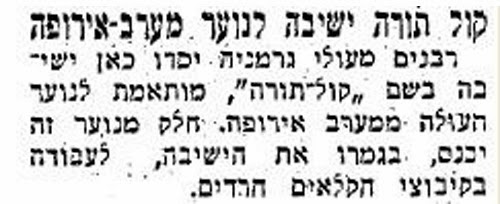
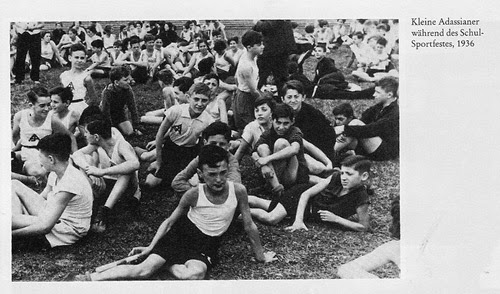
I guarantee you that even on the hottest of days, none of the Kol Torah students will be wearing shorts. For those who don’t know, Kol Torah was founded by German Orthodox rabbis and was originally very different than it is today. Here is how it was described upon its founding, in a short notice in Davar, August 27, 1939.
It is hard to imagine today, but this was a yeshiva that actually intended for some of its students to take up agriculture. See also here which cites R. Hayyim Eliezer Bichovski, Kitvei ha-Rav Hayyim Eliezer Bichovski (Brookyn, 1990), p. 180, that the Chafetz Chaim said that yeshiva students in Eretz Yisrael should learn nine months a year and work the land the other three months
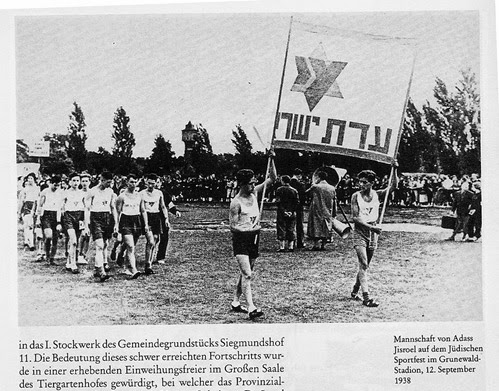
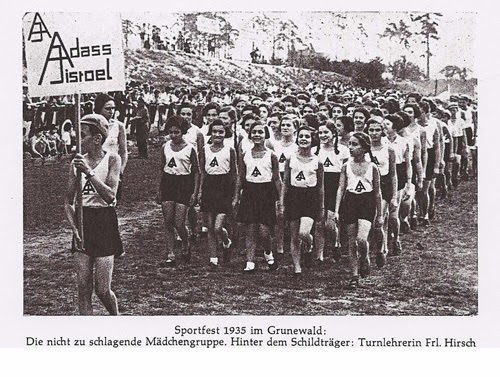
Speaking of shorts, here are a couple of pictures showing how the boys of the German Orthodox separatist Adass Jisroel community looked when playing sports (also notice the lack of kippot).
This was the community of R. Esriel Hildesheimer and R. David Zvi Hoffmann. The pictures come from Mario Offenburg, ed., Adass Jisroel die Juedische Gemeinde in Berlin (1869-1942): Vernichtet und Vergessen (Berlin, 1986).
Here is how the girls dressed for sports, also with shorts and sleeveless.
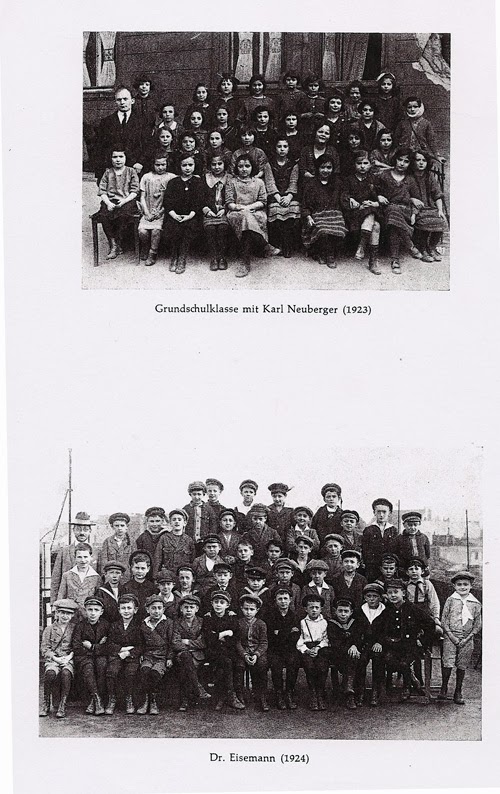
And here is how the boys and girls looked when not at a sporting event.
These pictures come from Max Sinasohn, ed., Adass Jisroel Berlin (Jerusalem, 1966).[23]
4. Some people didn’t appreciate the humor in my post with regard to the Gaon R. Mizrach-Etz. I think they should lighten up, and in a previous post, available here, I gave some references to humor in rabbinic literature. This was followed up by a more extensive post by Ezra Brand, available here.
According to the commentary Siftei Hakhamim, it is not just the talmudic sages who would at times show their humorous side, but on at least one occasion Moses thought that God himself was joking with him!
In Ex. 33:13 Moses says to God: ועתה אם נא מצאתי חן בעיניך. Rashi explains this to mean: “If it is true that I have found favor in Your eyes.” This means that Moses was in some doubt as to whether he found favor in God’s eyes, but this is problematic since in the previous verse Moses quotes God as saying to him, “you have also found favor in My eyes.” So if God told Moses that he found favor in His eyes, how can Moses be in doubt and say to God, “If I have found favor in Your eyes”?
Here is the Siftei Hakhamim.
According to Siftei Hakhamim, Moses was in doubt if he really found favor in God’s eyes, since even though God said he did, perhaps God was joking just like people joke around!
דלמא מה שאמרת מצאת חן בעיני מצחק היית בי כדרך בני אדם
5. I want to call readers’ attention to a recent book, Shevilei Nissan, which is a collection of previously published essays from R. Nissan Waxman. There is lots of interesting material in the book, and let me mention just a few things.
In Studies in Maimonides and His Interpreters, p. 75 n. 302, I referred to R. Yaakov Avigdor’s strong criticism of R. Hayyim Soloveitchik’s approach. R. Avigdor also criticized R. Solomon Polachek, the Meitchiter. R. Waxman was a student of the Meitchiter, and on p. 23 n. 1, he comes to his teacher’s defense.
On p. 150, R. Waxman, who was the rav of Lakewood, mentions the problem of how some yeshiva students are halakhically more stringent than their teachers. He quotes R. Yaakov Kamenetsky in the name of R. Aharon Kotler how a student once visited R. Kotler and when the latter offered the student some cookies, the student was reluctant to take before asking which bakery they came from. (Perhaps this behavior can be explained by what I have heard – and maybe someone can confirm this – that in R. Aharon Kotler’s day the Lakewood bakery Gelbstein was not under hashgachah, and yet R. Kotler bought his challot from it. See also here and here The original post referred to in these links has definitely been taken down.)
On p. 233, R. Waxman notes that even though we have the principle, “A Jew who sins remains a Jew”, in actuality, it is possible for a Jew to so remove himself from the Jewish people (e.g., apostasy) that as far as most things are concerned, he is indeed no longer regarded as Jewish. This essay was written concerning the “Brother Daniel” case, and R. Waxman’s approach is similar to that of R. Aharon Lichtenstein who also wrote a famous article on the topic, “Brother Daniel and the Jewish Fraternity,” republished in Leaves of Faith, vol. 2, ch. 3.
On pp. 251ff., R. Waxman deals with Menahem Mendel Lefin’s Heshbon ha-Nefesh, an influential mussar text which as many know was influenced by a work of Benjamin Franklin.
6. I want to also call readers’ attention to two other books recently sent to me. The first is R. David Brofsky, Hilkhot Moadim: Understanding the Laws of the Festivals. This is very large book (over 700 pages) dealing with the Holidays and is a welcome addition to the growing number of non-haredi halakhah works in English.. In a future post I hope to deal with it in greater depth. The second book is Haym Soloveitchik, Collected Essays, vol. 1, published by Littman Library, my favorite publisher. This book is required reading for anyone with an interest in the history of medieval halakhah. I was happy to see that it also includes two essays that appear here for the first time. Furthermore, Soloveitchik’s classic essay on pawnbroking (which was his first significant article) has been expanded to almost double the size of the original. In the new preface to the essay, he writes: “Every essay is written for an imagined audience, and mine was intended for the eyes of Jacob Katz, Saul Lieberman, and my father.”
[1] I also must point out that someone involved with hebrewbooks.org informed me that the essay was not removed from the site because it was viewed as “problematic”, but because they were requested to do so by one of the members of R. Zevin’s family who claimed to hold the copyright to the work. This is obviously a false claim, since as we have seen there is no proof that R. Zevin wrote the essay.
[2] See R. Waldenberg, Hilkhot Medinah, vol. 2, pp. 14, 60, 62, and R. Frank’s haskamah, ibid., pp. 17.
[3] See Jack Feinhotz’s letter in Tradition 22 (Winter 1987), p. 120. R. Zevin’s view, that there is no need for keriah, was also advocated by R. Reuven Katz, Sha’ar Reuven (Jerusalem, 1952), p. 32.
[4] See Terry Novetsky’s letter in Tradition 23 (Summer 1987), pp. 98-99.
[5] Tradition 22 (Winter 1987), p. 120.
[6] In the interview with R. Zevin that appeared in my last post, R. Nahum’s comments tended to be somewhat dogmatic, even “haredi”, and should be contrasted with his grandfather’s words.
[7] Even among the vast majority of Lubavitchers this is the case (so I am informed by R. Chaim Rapoport). This is quite strange since the Rebbe held that you have to do keriah. What this shows us is that not everything advocated by the Lubavitcher Rebbe was adopted by his hasidim.
[8] See R. Dov Lior, Devar Hevron (Kiryat Arba, 2009), Orah Hayyim no. 567
[9] Even the incredibly learned Meir Benayahu was stumped by מו”ש. See this page from his Tiglahat be-Holo Shel Moed (Jerusalem, 1995), p. 21.


Regarding Benayahu, a recent book argues that the missing pages of the Aleppo Codex were not destroyed in Aleppo, but were actually stolen by Benayahu after arriving in Jerusalem. See Matti Friedman, The Aleppo Codex (Chapel Hill, 2012).
[10] I have found one occasion where it is written מ”ש, although this is probably a typo. See R. Yaakov Reischer, Shevut Yaakov, vol. 2, no. 129. R. Reischer was a member of this beit din,
[11] Iyunim u-Mehkarim (Jerusalem, 1963), vol 2, pp. 179ff.
[12] In the Vilna Shulhan Arukh, Yoreh Deah, there is a commentary by R. Jacob Emden. Yet R. Yaakov Hayyim Sofer, Menuhat Shalom, vol. 6, p. 116, shows that it was not written by him, and one of his proofs is that the commentary refers to הגאון אב”ד וב”ד מו”ש, implying that the author lived in Prague.
[13] See Kook, Iyunim u-Mehkarim, p. 180.
[14] See Simhah Assaf, Batei ha-Din ve-Sidreihem Aharei Hatimat ha-Talmud (Jerusalem, 1924), ch. 11.
[15] See ibid., pp. 80ff. for other examples of אפילאנט
[16] This statement should not be taken to imply that the leading rabbis in Eretz Yisrael were happy with the institution of this court, which was pretty much forced upon them by the British. See Amichai Radzyner’s book-length article, “Ha-Rav Uziel, Rabanut Tel Aviv-Yafo, u-Beit Din ha-Gadol le-Irurim: Sipur be-Arba Ma’arakhot” Mekhkerei Mishpat 21 (2004), pp. 120-242.
[17] R. Ovadiah Hadaya, in his approbation to R. Amram Aburabia, Netivei Am (Jerusalem, 1964), states that everyone in Jerusalem should follow “minhag Yerushalayim”. If his opinion is accepted, it would mean the end of any Ashkenazic practices in the city.
[18] Regarding earlier in the nineteenth century, see Yehoshua Kaniel, “Kishrei ha-Edot be-Inyanei Halakhah u-Minhag bi-Yerushalayim ba-Meah ha-Yod Tet,” Morashah 4 (5736), pp. 126-136. In the eighteenth century, the Vilna Gaon was of the opinion that Ashkenazim who come on aliyah should indeed adopt Sephardic practices. See Bezalel Landau, Ha-Gaon he-Hasid mi-Vilna (Jerusalem, 1978), p. 250, n. 30.
[19] This has indeed been the Ashkenazi approach, yet R. Abraham Danzig disagreed. See Hokhmat Adam: Sha’ar Mishpetei ha-Aretz 11:23:
נ”ל דהבאים לא”י אם יקבעו עצמם בעיר שיש שם מנין אעפ”י שהבאים הם מרובים יש להם דין יחיד וחייבים לנהוג חומרי מקום שהלכו לשם ופקעו מהם החומרות שהיו נוהגין במקומם.
[20] As far as I know, R. Samuel Judah Katzenellenbogen was the first great rabbi to have his picture made (unfortunately, it no longer exists). See R. Moses Porti, Palgei Mayim (Venice, 1608), p. 6b (referred to by R. Gedaliah Oberlander, Minhag Avoteinu be-Yadenu [Monsey, 2012], p. 451):
והלא אנכי הייתי הראשון שבקשתי להציב תמונתו לנגד עיני ע”י הצייר ואותה לקחתי לי והצבתיה בבית מדרשי לקיים מה שנאמר והיו עיניך רואות את מוריך
While this picture was hung in the beit midrash, see this post where I mention how R. Pinchas Teitz took down the poster of R. Elchanan Wasserman that I hung up in a room used for tefillah. (R. Porti’s Palgei Mayim is devoted to the famous dispute about the mikveh in Rovigo.)
[21] The standard biographies all record that R. Judah Mintz lived a very long life. This is based on R. Joseph Yavetz, Hasdei Ha-Shem (Jerusalem, 1934), Introduction, p. 9, where R. Yavetz’s son mentions that R. Mintz recited birkat ha-hamah when he was כבן מאה שנה. This would have been in 1505, and he lived another three years after that. R. Meshulam Fishel Behr, Divrei Meshulam (Frankfurt, 1926), pp. 147ff., rejects the younger Yavetz’s testimony and claims that R. Mintz died in his seventies. See, however, R. Naftali Yaakov ha-Kohen, Otzar ha-Gedolim (Haifa, 1967), pp. 35ff.
[22] See also Jewish Encyclopedia, s.v. Katzenellenbogen, Samuel Judah. R. Yissachar Hoffman called my attention to She’elot u-Teshuvot Hakham Zvi, no. 15, where R. Samuel Judah Katzenellenbogen is (mistakenly?) referred to as מהר”י מפאדואה. See also R. Aryeh Yehudah Leib Lifshitz, Avot Atarah le-Vanim (Warsaw, 1927), p. 48 n. 44
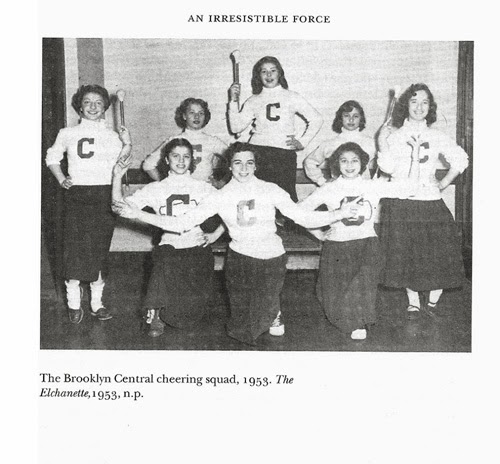
[23] When I was in high school in the early 1980s, in the New Jersey-New York yeshiva league only the girls of Bruriah wore sweat pants during basketball games (and the boys were not allowed to attend home games). At the other high schools the girls wore shorts. Today, the league requires all girls to wear sweat pants (i.e., not even long shorts). For a wonderful discussion of the yeshiva basketball league, see Jeffrey S. Gurock, Judaism’s Encounter with American Sports (Bloomington, 2005), ch. 7. Gurock discusses how for six years in the early 1950s, Yeshiva Chaim Berlin was part of the basketball league together with the Modern Orthodox co-ed high schools, something that could never happen today. During this time co-ed schools had cheerleaders, and this was a major factor in forcing Chaim Berlin to leave the league. (Mesivta Tifereth Jerusalem was also in the league for two years.) When I mention cheerleaders, don’t think of current NFL cheerleader outfits. Here, for example, is how the Brooklyn Central girls looked (from Gurock, p. 143).
Yet Gurock, ibid., points out that “as the 1950s progressed, the Brooklyn Central cheerleaders’ skirts also got shorter and shorter.” (Speaking of short skirts, anyone who has looked at Modern Orthodox yeshiva high school yearbooks from the early 1970s will see that the mini-skirt craze was also tolerated at these institutions.)


R. Shlomo Yosef Zevin and the Army, and Joe DiMaggio

R. Shlomo Yosef Zevin and the Army, and Joe DiMaggio
by Marc B. Shapiro

1. There is a lot of talk these days about haredim serving in the army. Understandably, the famous essay of R. Shlomo Yosef Zevin has been cited. In this essay, R. Zevin rejects the notion that yeshiva students shouldn’t have to serve.[1] The essay used to be found at http://www.hebrewbooks.org/32904 but it was removed, together with other “problematic” books. (You can see evidence of it having been on hebrewbooks by this archive.org snapshot of the page.)
Here is the essay in its entirety.[2]


You can find an English translation here.
In my series of classes on R. Zevin at Torah in Motion, I discussed this essay and stated that while the sentiments expressed in it are wonderful, I am aware of no evidence that R. Zevin actually wrote it. People say he wrote it but that is not evidence. I also stated that it is not even accurate to say that everyone assumes he wrote it, since his family denies his authorship. That, at least, was the impression I was under.
David Eisen participated in the classes (which were from 4-5am Israel time!), and after hearing what I said decided to pursue the issue further. I am grateful for his research. Here is the first email he sent to me on the topic.

I surfed the web a bit and came across the following website created by Hanan Zevin, R. Zevin’s great-grandson dedicated to R. Zevin and that includes many of his writings: http://ezevin.com/. As the site made no reference to the article from 1948, I contacted Hanan via the e-mail address on the site (see attached).
I just received a phone call from Hanan’s father, [R.?] Yaakov Zevin, who told me that Hanan had forwarded my e-mail to him to respond to me. I subsequently saw that Yaakov also has a website with his own hiddushim on parashat hashavua and the holidays (http://jzevin.com – the cell phone on the website is the same number that called me; interestingly, Yom HaAtzmaut and Yom Yerushalayim are included in the list of holidays and the divrei Torah are quite cynical). He called to tell me that he did not wish to respond in writing as this indeed is a very sensitive matter to the extended family, yet he felt a need to not simply ignore my e-mail. In short, he would not outright confirm that his grandfather indeed wrote the article and repeatedly told me that “if ‘ahad harabbanim’ decided not to disclose his name, he must have had very good reason to do so, yet the authorship of the article is apparent to anyone who is sensitive to the ‘signon’ of the writing in the article.” In other words, he led me to believe that R. Zevin indeed wrote the article but wished to state that “whoever” wrote it had very good reason to have written it anonymously.
I proceeded to ask him if indeed his grandfather ever addressed the question of the article’s authorship, yet he evaded that question. I also told him that the catalog of the Israel National Library attributes his grandfather as the author (see here) and he simply said that indeed this is what is widely accepted but the family does not confirm this. I told him that I heard that his brother, R. Nahum, denies that his grandfather wrote the article, yet he wished to say that he simply does not confirm that their grandfather wrote the piece. I mentioned the Hapardes article that R. Zevin wrote in 1973 (attached is the journal) where he sharply attacked the Mafdal party for supporting the draft of yeshiva students as if to ask if this contradicted the 1948 article, and he simply responded by saying that his grandfather’s views were relevant for each context in which they were made. Personally, I do not see a contradiction either as the war of 1948 was indeed an existential battle for Israel’s survival and its extremely limited and untrained military as opposed to the radically improved situation that existed 25 years later, post-67.
I suggested that Eisen call R. Nahum Zevin, the grandson of R. Shlomo Yosef, and here is the lengthy email he sent me. It is an important document and deserves to be placed in the public sphere.
I just had a lengthy call with R. Nahum Zevin; though we never spoke with one another before, I was very pleased with his accessibility and willingness to speak to a complete stranger on the phone (he answered the phone himself), and above all, I was most impressed by his honesty and candor, which he seems to have inherited from his grandfather.
He wished to clarify that neither he nor anyone else in his family denies that his grandfather wrote the 1948 pamphlet לשאלת הגיוס של בני הישיבות; I did not mention your name, but simply told him that it recently became known to me that the family denies the attribution to him and that this flies in the face of what I grew up upon as a product of Religious Zionist yeshivot and my great admiration for R. Zevin’s writings. He simply said that the family had absolutely no indication that he wrote the pamphlet and proceeded to present the following facts:
1. Of all the grandchildren, he was the closest with R. Zevin, and he went through all of his grandfather’s writings and had a major role in publishing R. Zevin’s posthumous works. He says that he meticulously went through his grandfather’s study and never found a copy or any draft of this pamphlet among the many manuscripts he found in the house.
2. The attribution of this pamphlet to his grandfather was made only years after his grandfather’s petira in 1978. The first time he had heard about this attribution was during the early 1980s from R. Menahem Hacohen when he was still an MK in the Labor party. As such, no one in the family had the opportunity to discuss it with his grandfather. He said that if anyone would have known about his grandfather’s authorship of the article it would have been his father, R. Shlomo Zevin’s only son, yet he told him that he also first heard about this attribution only after his father passed away.
3. He referred to the article entitled אל תגעו במשיחי that was published in 1973 on the heels of the Mafdal’s decision to support drafting yeshiva students. I told him that I am very familiar with that article published in the Iyar 5733 (47:8) edition of Hapardes[3] he told me that he just happened to have a copy of that article on his desk as we spoke yet was unaware of its publication in Hapardes as it was first published on the 12 Adar 5733 edition of Hatzofe and that he (R. Nahum) was the one who personally delivered the text of the article to the editorial staff of Hatzofe. He said that this article created a veritable earthquake in the Dati Leumi camp, and R. Zevin was greatly attacked on the pages of Hatzofe and other related media over the proceeding weeks and months, yet despite the voluminous criticism no one mentioned the pamphlet as if to show that R. Zevin had radically changed his views. I responded that I, too, had the very same question yet nonetheless did not see these two articles as contradicting one another given the existential threat facing the nascent State of Israel as sharply opposed to the hubris-filled post-6 Day War era and preceding the sobering aftermath of the Yom Kippur War that took place half a year later. He agreed with the distinction, yet [to my mind, correctly] noted that had it been known that R. Zevin wrote the 1948 pamphlet it is impossible to think that this connection would not have been made by the numerous pundits.
Apropos the article that originally appeared in Hatzofe and R. Menahem Hacohen’s assertion that his grandfather wrote the pamphlet, R. Nahum told me that there was a good deal of criticism against his grandfather’s article against drafting yeshiva students in the Dati Leumi magazine Panim el Panim. R. Nahum said that he contacted R. Menahem Hacohen after he attributed the pamphlet to his grandfather and reiterated the point that none of the critiques in Panim el Panim mentioned the apparent about-face from 1948, and noted that the editors of Panim el Panim were none other than his brothers, R. Shmuel Avidor Hacohen and R. Pinhas Peli. That said, I probably misunderstood the reference R. Nahum made to Panim el Panim as according to Wikipedia, the magazine was discontinued in 1970, three years before the publication of R. Zevin’s article against drafting yeshiva students.[4]
4. Beyond all of the above points, R. Nahum said that what makes the attribution puzzling is the fact that his grandfather was never reserved about his beliefs, and that it makes no sense to him that he would have published that pamphlet anonymously. After all, his highly positive views on the State of Israel and annual celebrations of Yom HaAtzmaut were well known. He told me that he was so closely linked with the Mizrahi party that he remembers up to the 60’s that R. Zevin would affix his signature along with R. Meshulam Roth and R. Zvi Yehuda Kook on endorsements prior to elections to vote for the Mafdal party (and its Mizrahi and Hapoel Hamizrahi precursors). He also mentioned the parenthetical phrase of “ואשרנו שזכינו לכך” in Moadim B’Halakha with respect to the establishment of the State of Israel and the suggestion that one is no longer required to perform qeriah on Arei Yehuda, and that when it was removed from the English translation (and perhaps a subsequent Hebrew edition).[5] This was used to claim that he no longer held these positive feelings towards the Medina, but R. Nahum utterly rejected this assertion as wholly false and that he never changed his views in this regard.
5. That said, and similar to what his brother Yaakov told me, he said that one cannot avoid comparing the writing style of the pamphlet with R. Zevin’s unique and eclectic writing style; moreover, he said the substance and analysis of the Torah reasoning in the pamphlet is indeed very similar to his grandfather’s Torah writings and very good Torah indeed. R. Nahum clearly has no agenda and was completely honest in saying that this could very well have been written by his grandfather though there is no proof to this effect, and he acknowledged that לא ראינו אינו ראיה so the fact that the family has not found the existence of any manuscripts showing that he wrote the kuntres certainly does not constitute cogent evidence that he did not write it. 
I must agree that if indeed no attribution to R. Zevin was made until after he passed away, then this is a major hurdle to address, and while I appreciate his cautious approach in refusing to conclude one way or the other, it seemed to me a bit naive on R. Nahum’s part to think that it was implausible for him to have written this piece anonymously; I remind you of what his brother, Yaakov Zevin, told me that there is no doubt as to the similar writing styles and that if the author felt a need to write it under the pen name of “אחד הרבנים” he must have had very good reason to do so (shiddukhim, etc.?).
As R. Nahum claims that he first heard the attribution from R. Menahem Hacohen who is alive and well, I guess the next step in delving deeper into this investigation would be to contact R. Hacohen himself. What do you think? If I had the time, which I certainly do not, then I would think that it would make sense to find the first time the pamphlet became attributed to R. Zevin in Israeli newspapers and other writings and track down the paper trail.
Some time later I received the following email from Eisen, which only thickened the plot.
I just came back from the Bat Mitzva party of Naama Rosenbaum, Prof. Zvi Yehuda’s granddaughter, whose daughter, Talli, is a very good friend in my Bet Shemesh neighborhood (unfortunately her father was unable to make the trip to Israel from Florida due to an extended illness). The paternal grandfather of the bat mitzvah girl is Irving Rosenbaum Z”L, the founder of Davka Software and who was very friendly with R. Menahem Hacohen, who attended the party this evening. I seized the opportunity to ask him about the attribution of the 1948 essay to R. Zevin. I actually began the conversation by asking him if he is familiar with you, and his eyes lit up and he said, “Yes, he e-mailed me twice in the past few years… though I forget what it was he contacted me about.” When I then mentioned that R. Nahum Zevin claims that R. Hacohen is the one who attributed the essay to his father only after R. Shlomo Zevin passed away, he then confirmed that it was precisely on this issue that you had approached him.
He quickly got to the heart of the matter and said that he had held in his hands an original copy of the essay and said that there was no question that R. Zevin was the author, though he said that he has misplaced the copy and had no proof to substantiate his assertion. He did say that R. Nahum is incorrect in saying that the attribution to his grandfather was made only after his grandfather passed away and that he had already seen the letter in the early 70’s when he was working alongside R. Goren; and that he believes that R. Zevin himself was asked to confirm that he indeed wrote the letter. In R. Hacohen’s words, R. Zevin neither denied nor confirmed that he wrote the letter inasmuch as R. Nahum essentially says the same thing, yet R. Hacohen added that R. Nahum at the time had (as he still has today) an agenda to disassociate himself from the position taken in the 1948 essay as he is well ensconced in the haredi rabbinate. That said, I told him that R. Nahum’s “proof” by omission that in all the criticism levied against his grandfather’s “Al Tig’u BiM’shihai” by religious Zionists, the fact, as he claims, that no one had noted the seemingly about-face that he had made from the essay he supposedly penned 25 years earlier, was pretty compelling to me. He responded by reiterating that R. Nahum’s allegiances render him unable to confirm what R. Hacohen maintains is the simple truth and that he unfortunately does not have any documented proof regarding R. Zevin’s authorship. He also rebuffed the claim that R. Nahum knows everything that his grandfather had written and preferred Yaakov Zevin’s nebulous formulation that the person who wrote that essay must have had good reason to have done so anonymously. With that, we parted.
So, it seems to me that in order to forge ahead on this issue, it remains vital to read the reactions to the Panim el Panim article along with those generated from R. Hacohen’s assertion made when he was a Labor MK.
Here is Eisen’s fourth email to me, which I believe also raises questions about the attribution of the essay to R. Zevin. At the very least, it discounts the notion that this attribution was widely known, which raises the problem as to when and why people started attributing the essay to R. Zevin.
I have additional information that I have been meaning to write to you after spending a number of hours at the National Library going through the 1972-1973 issues of Panim el Panim and the lengthy articles that appeared in the secular (Yediot, Maariv, Haaretz and Davar) and religious newspapers (Hatzofe, Yated and Hamodia) during the 30 month period following his [R. Zevin’s] passing between February to March 1978. In short, I found NO reference to this article in any of the many articles in which his position against drafting the haredi yeshiva students was discussed following his fiery speech delivered before the members of the Chief Rabbinate Council on the heels of the Mafdal’s support of legislation to draft yeshiva students. . . . I then spoke with one of the chief librarians at the National Library asking what is the basis for its attribution of this article to R. Zevin and when was it made. He made an inquiry and said that the attribution indeed was made many years ago (he believe it goes back to the 60’s though he had no documentation to substantiate this).
In his fifth email, Eisen wrote as follows:
            On the R. Zevin authorship controversy, I had some meaningful conversations on Friday with Prof. [David] Henschke, who put me in touch with his hevruta at Yeshivat Hakotel, R. Yossi Leichter, who is a senior librarian at the National Library, who in turn put me in touch with R. Yitzhak Yudlow, the now retired head of מפעל הביבליוגרפיה הלאומית that was likely the body that attributed the article back in the 60’s to R. Zevin, and he put me in touch with R. Nahum Neria who said he is quite certain that his father [R. Moshe Zvi Neria] told him that R. Zevin indeed was the author and that he would look through his papers and asked that I follow up with him this week. R. Neria also suggested that I contact R. Shear Yashuv Cohen, which I intend to do tomorrow. In short, none of them had any solid information. David Henschke looked into the matter out of curiosity many years ago and concluded that the attribution made by the National Library was made years before R. Zevin passed away and reliable. . . . It seems that that the first time the article was reprinted with the R. Zevin attribution was back in 1980 in a thin booklet of articles compiled by Dr. Yehezkel Cohen, the founder of נאמני תורה ועבודה. Unfortunately, he passed away this past Sukkot, and as someone who devoted a great deal of research on the topic of military exemptions for yeshiva students and actively worked to stem this tide, he is someone who would have been a vital source. I may call his wife for any leads, especially since he was attacked by R. Mordechai Neugorschel in his polemic haredi work entitled “למה הם שונים” for making this attribution when he claims that there was no way that R. Zevin could have written the article given his impassioned speech delivered in 1973 and the fact that no one noted the change in his position from 1948 as noted by R. Nahum Zevin. When Tradition translated the article into English in 1985, they credited נאמני תורה ועבודה as being the original source for attributing the article to R. Zevin in 1980, see here. Truth be told, when Yehezkel Cohen reprinted the 1948 article, he made a point to also include a photocopy of the National Library’s catalog entry as if to show that he was preceded by the National Library in making this attribution.
Here is Eisen’s final email to me on the topic.:

           I just got off the phone with Eliyahu Zevin, 60, the youngest brother of Yaakov and R. Nachum (their father, Aharon, had 3 sons and he passed away in 2006; R. Zevin also had 1 daughter, Shoshana, but I have not been able to track down her family), who is an attorney in Tel Aviv. I believe he is religous-Zionist. He told me that he is certain that his grandfather was not the author of the 1948 article, again, based on his clearly-stated position in 1973, though, he then greed with me that 1948 was an entirely separate matter relating to an existential threat upon the state and the thrust of the article relates only to sugyot of pikuah nefesh and whether or not talmidei hakhamim require protection, without addressing the separate question of whether or not full time yeshiva students should receive an exemption of a military draft. He had no idea what was the source of the attribution to his grandfather and simply said that the similar “signon” of the writing is likely what caused this attribution to be made. I did not discuss with him the fact that I spoke with his other 2 brothers and specifically did not tell him that his oldest brother, Yaakov, led me to believe that his grandfather indeed wrote the article yet had “good reasons” to publish it anonymously.

Regarding the essay and its attribution to R. Zevin, R. Chaim Rapoport has commented to me that since the essay has two references to Shulhan Arukh ha-Rav, this too would seem to point to R. Zevin’s authorship. There is little doubt that in this sort of essay only a Habad author would refer to Shulhan Arukh ha-Rav.

In his research, Eisen discovered this interesting interview with R. Zevin and his son and grandsons that appeared in Maariv, July 31, 1970. 


I thought that I found proof for R. Zevin’s authorship in the Torah journal Yagdil Torah, the last Torah journal  published in the Soviet Union. The first issue of this journal appeared in 1927 edited by R. Yehezkel Abramsky. The second and last issue appeared in 1928 edited by R. Zevin. In the table of contents there are some contributions by אחד הרבנים. Could this be proof that R. Zevin used this pseudonym already in the 1920s? It turns out, however, that אחד הרבנים in this issue of Yagdil Torah is actually R. Abramsky, and this information has been inserted in the reprint of the journal that is found on Otzar ha-Hokhmah.


Surprisingly, however, the person who inserted this information apparently did not know what to make of the pseudonym ב”מ-ו עזפמט. It doesn’t take much imagination to see that in atbash this equals ש”י-ף זעוין. See Aharon Sorasky, Melekh be-Yafyo ((Jerusalem, 2004), pp. 188-189. See also ibid., p. 241 n. 12, for another time when R. Abramsky signed an article אחד הרבנים.


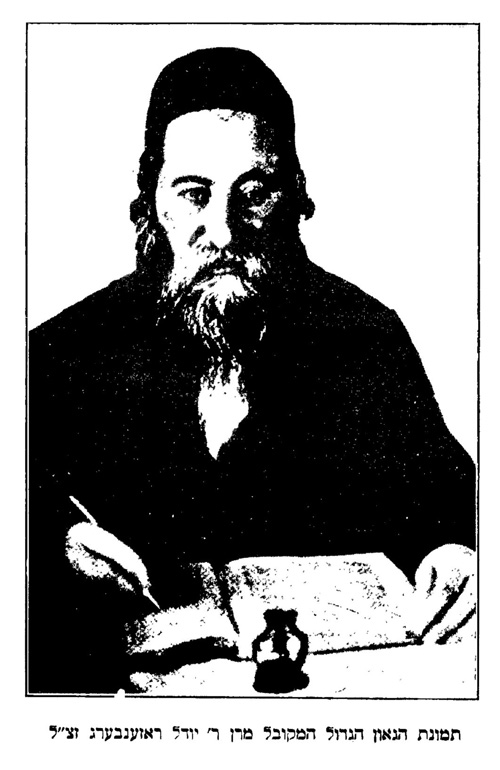
Finally, here is something very nice put together by Yisrael Kashkin. Most of the great rabbis included were what we can call card-carrying Religious Zionists, and the remaining few were positively inclined to the movement. Not surprisingly, R. Zevin’s picture is found here. Kashkin informs me that anyone interested can order framed 8.5 x 14″ and laminated 8.5 x 14″ copies. The former are meant for a wall and the latter for a Succah. He can prepare and ship the frames for $25 and the laminated for $10. You can contact him at yisrael@email.com. I recommend that every Modern Orthodox school order an enlarged copy in order to hang it in the hallway.
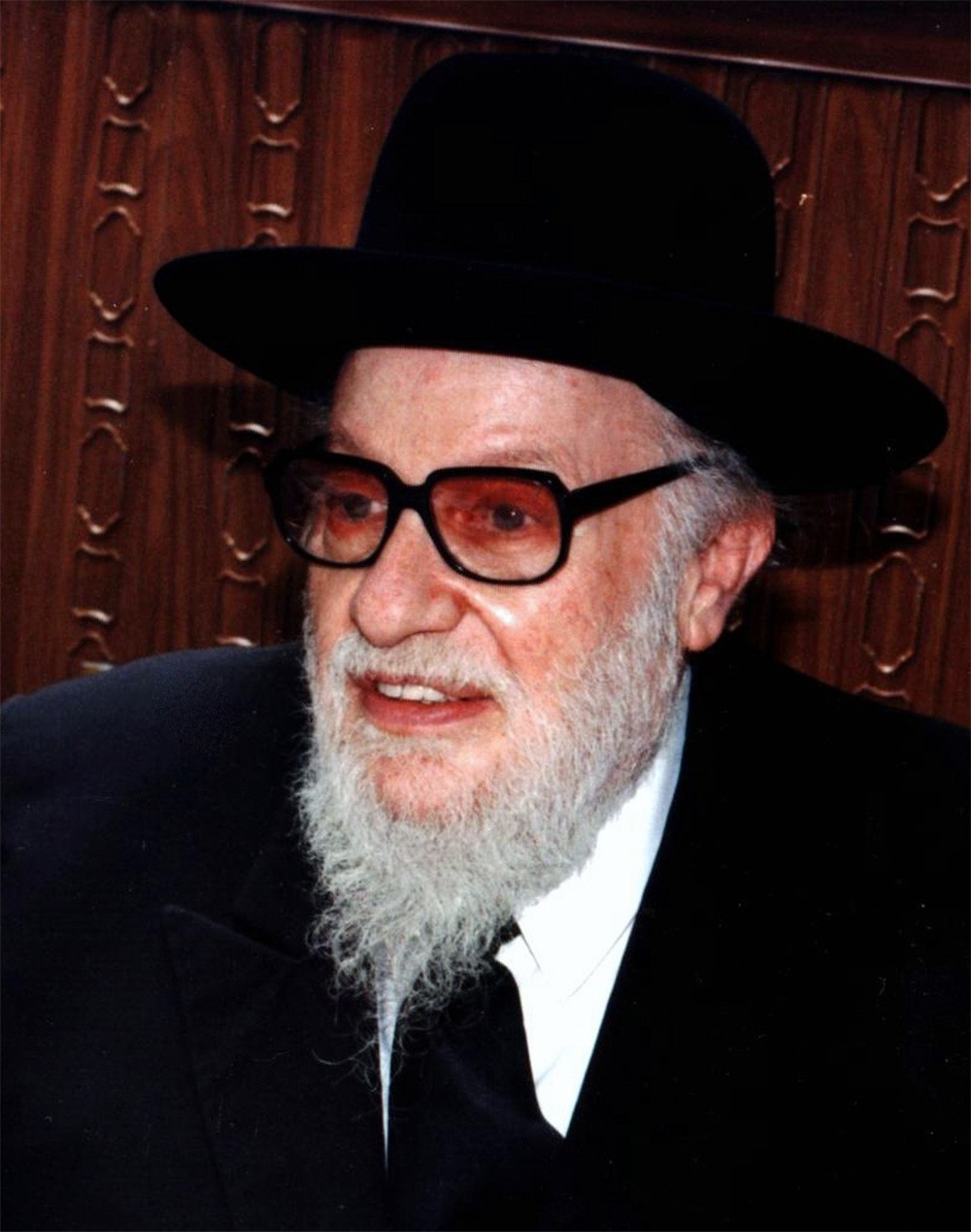
2. Many people wanted to hear more from R. Mordechai Elefant, late Rosh Yeshiva of the ITRI yeshiva, but first, here is his picture.

And now, R. Elefant speaks:
I called Sholom Spitz in Queens the other day. I gave him the phone number of Joe DiMaggio’s secretary, Nick Nicolozzi, and I asked him to wish Joe DiMaggio well from me. Five minutes later he called me back to say that they announced on the radio that he died.
Joe and I were very good friends. I met him through a man from Miami named Kovins, a wealthy man, big in the construction business. He met DiMaggio through Nicolozzi, who had worked in a Sheraton hotel he owned in New Jersey. To make a long story short, I became a partner in the Sheraton. It was a 520-room hotel. Joe, Kovins, and I each had a third. I didn’t buy it. I had made a deal and got it as an agent’s fee. There were halachic problems involved concerning the operation of the hotel on Shabbos, so I wanted to unload it, and I talked Joe into it.
Joe DiMaggio had a suite on the fifth floor of that hotel called ”The Joe DiMaggio Suite.” Rav Zelig Epstein, one of the great Talmudists of our day, came to see me when I happened to be staying on the fifth floor of that hotel. We’re walking along the corridor when out steps Joe. So I introduced Rav Zelig Epstein to Joe DiMaggio. He knew who DiMaggio was. He’s a very intelligent man.
Two years ago when I was sick in bed I got a letter from Joe. There was a picture of him in the paper with a big yarmulke. He sent the accompanying article. Mel Allen died, so he went to the memorial service in the synagogue. Joe writes me, “I did it for you, Rabbi.” He wore the yarmulke just for me.
Joe was from the old days. He was born in America, but had a European sensibility. He never went to school but he had style and he was smart. He wasn’t good looking, but he had great charm. He gave me an autographed copy of his autobiography. He hated the Kennedys. He claimed they killed Marilyn Monroe. It wasn’t a normal husband and wife relationship between them. He was like Marilyn’s patriarch.
They didn’t make big money in baseball in his day, but he would do a lot of advertisements. Joe loved a dime because it wasn’t a nickel. He’s from a place called Hackensack [not true – MS] and he came up the hard way.
I saw the respect people would give. It was like they give Rav Shach (one of the most esteemed rabbis in Israel). I said to him, “You’re nothing but a little wop. I’m the chief rabbi of Bethlehem. They don’t give me the kind of respect you get. And they pay you fifteen or twenty thousand dollars just to come to a party.” It was said in a spirit of good humor. Joe wasn’t offended. He said,  “One day I’ll explain it to you.”
Once I was at the hotel in New Jersey, and he said to me, “Rabbi, I have to go to the Super Bowl. Come along.” I didn’t know what Super Bowl meant at the time. Naturally, I paid for his ticket. He loved that. He took me into a fancy hotel on Wilshire Boulevard, into a big ballroom. All the chairmen of the big companies were there. Carl Icahn was there. They had come in for the Super Bowl. Joe was paid to just be there. He walks in, and they all stand up for him, just like for Rav Shach. I can’t imagine what went through their minds when they saw me together with Joe. He said to me, “You see, I’m not just a little wop.”
One Sunday morning he comes into my hotel room – it’s right across from his – and says, “Rabbi, turn on the TV at 2:00 today.” I asked him what’s going to be on. He says, “You’ll see.” He went to Washington on the shuttle. He was invited to meet Gorbachev by President Reagan. Reagan had been a baseball announcer and he was a great fan of DiMaggio’s. Reagan asked him to sign a ball for Gorbachev. Joe tells him, “No problem, Mr. President, but let’s make that three baseballs, one for each of us, and all three of us will sign them.” This is all on TV.
He comes back at night and shows me the ball. I said, “Joe, give it to me.” He said, “Are you crazy, You know what that’s worth?” He did give me ten balls with his autograph. I gave them to children of friends. They would go wild over them.
When Joe was on that trip to Washington, he was on the White House lawn. Everybody gathered around Joe and left Reagan standing alone. I saw it on television. But Joe was so smart. He stepped back and stood next to Reagan. He didn’t want to show that he’s above Reagan. He was humble.
I would sit with him in the lobby of a hotel and people would stand in line to get his autograph. He was really an aristocrat. He was a pleasure to be with.

3. In case anyone is interested, for some reason Amazon is now selling my book Between the Yeshiva World and Modern Orthodoxy for the low price of $16.63. This is a 33% discount.. 
           
Notes
       
[1] I don’t want to go into the matter in too much detail in this post, but I think there has been a lot of confusion in recent months regarding the issue. While the current controversy is often portrayed as the haredim insisting that yeshiva students not be required to serve in the army, my sense is that this is a distortion. It appears to me that the mainstream haredi position in Israel is that no haredi should have to serve, even if he is not in yeshiva and even if his service would be in a haredi unit. In this mindset (which appears to be slowly changing), the rest of the population’s primary purpose is to monetarily support and protect (and if necessary die for) haredi society, while haredi society has no reciprocal obligations and for those in yeshivot not even any financial obligation to support their own children, as this obligation falls upon the population at large which provides the money for welfare payments. (The existence of haredi hesed organizations that also assist non-haredim does not affect my assumption, as I am speaking here about obligations.)

R. Samson Raphael Hirsch wrote (Collected Writings, vol. 7, p. 270): “Judaism believes that a truly viable state cannot be founded solely on collective power or individual need; it must be based on a sense of duty shared by all and on a universal respect for human rights.” (emphasis added) As for the obligation of fathers to support their children, the Shulhan Arukh, Even ha-Ezer 71:1 writes:
חייב אדם לזון בניו ובנותיו עד שיהיו בני שש אפילו יש להם נכסים שנפלו להם מבית אבי אמם ומשם ואילך זנן בתקנת חכמים עד שיגדלו
Seeing the terrible mess Israeli haredi society has created for itself, in which the leadership purposely keep the masses poor and unskilled in the name of ideological conformity (of course, the Knesset members pushing this agenda make a very nice salary, and see this unbelievably sad story about the forced shut-down of a part-time kollel for those who were also working), I thought of R. Samson Raphael Hirsch’s words in a letter he wrote in 1849 while he was rabbi in Nikolsburg (see Ha-Rav Shimshon Raphael Hirsch: Mishnato ve-Shitato [Jerusalem, 1962], p. 337). What he says is neither complicated nor profound, but its value is that it reminds people of what happens when you ignore and even reject the clear teaching of our Sages, who always assumed that not everyone is suited for only Torah study:
ואם שבר בת ציון תעלה על לבך, וראית כי אחת היא מחלתינו ובאחת תעלה ארוכתינו, היא עזיבתנו תורת חכז”ל הצוחת ועומדת מימי קדם: יפה תלמוד תורה עם דרך ארץ ואם אין תורה אין דרך ארץ, ואם אין דרך ארץ אין תורה, ומאז מאסנו לשמוע דברי חכז”ל האלה באמת דרך ארץ שלנו חסר יראת ה’, ואנשי התורה יכשלו רגליהם במעגלי דרך הארץ. והנה רק יגיעת שניהם משכחת עון ויבור רוח הטומאה מבינינו, ופרידתם השכיחה שניהם הדרך ארץ והתורה מבני דורנו
See also my post here where I quoted R. Aharon Leib Steinman’s advocacy, and idealization, of haredi poverty (which by definition means that the welfare state [which in some ways is even worse than the nanny state] will have to provide financial support, which in turn means higher taxes for what is nothing less than enforced charity on behalf of able-bodied people).
In the future, I think people will look back and realize what terrible mistakes the haredi leadership made. Just a few years ago it was obvious that changes were needed and rather than take the bull by the horns and institute these changes and thereby control the direction, the leadership did nothing, meaning that when changes came it was the non-haredim who were in charge. Haredi Judaism, like its pre-haredi predecessors, is completely reactive, never proactive and thinking ahead. It was this trait that led Isaac Breuer to become so disillusioned with Agudat Israel, as he describes in his autobiography. It was also this lack of proactivity that in the early nineteenth century let Reform grow in Germany and in later years allowed secularism to grow in Eastern Europe. Just think about how many young women left traditional Judaism before Beis Yaakov was established, and then consider how many could have been saved if instead of creating Beis Yaakov as a reaction to the widespread defections, it had actually been created thirty years prior by people thinking ahead and acting proactively (traits that while found among German rabbis and R. Israel Salanter, are very hard to find in a traditional conservative society).
My own opinion is that the haredi community has no one to blame but itself for the situation it is in. Much of the ill-will could have been avoided by taking appropriate steps years ago. For example, the haredi community in Israel is the recipient of an enormous amount of what in the U.S. we call “entitlements” (a crazy term if there ever was one). Yet they have never shown any appreciation for this. They are protected by the Israeli army, and yet they refuse to express any thanks for this or say a prayer for the soldiers. Think how public opinion would have been different if the haredim in Israel had acted like American haredim. Just think how people in Israel would view the haredi community if, when the rockets started falling in certain places, instead of yeshivot leaving, young men came to these cities precisely in order to learn Torah. Imagine how people would have reacted if great yeshivot devoted days of Torah study specifically in the merit of the soldiers, or if yeshiva students en masse attended funerals of soldiers, or visited wounded soldiers in the hospital, or paid shiva calls to grieving families to let them know how much they value the sacrifice of those in uniform. Just think how much better the haredi situation would be at present if in past years the haredi community as a whole had simply shown that it cared about what was going on in the rest of the country. One would have thought that this approach would have been followed if only from a purely utilitarian perspective, but again, as Isaac Breuer pointed out, being proactive in meeting challenges has never been a strong point of this community.
A number of years ago I asked someone in Merkaz ha-Rav how his yeshiva differed from the haredi yeshivot, since in both yeshivot one could find people learning instead of going to the army. He replied that there is a great difference since in Merkaz those learning are doing so for the sake of the nation, while in the haredi yeshivot those learning are doing so for themselves. I can’t say how true this statement is, but I mention it to show the sentiment that existed even twenty years ago.

Since I mention Merkaz, let me also note two little known facts that would be unimaginable today. For a long time there was a special shiur given by R. Zvi Yehudah Kook in his home for students and graduates of the Chevron yeshiva. Also, for one winter “zeman” R. Shlomo Zalman Auerbach gave a shiur for students of the highest class at Kol Torah together with students of Merkaz (and it was the Merkaz students who took the initiative in organizing the shiur). See R. Yitzhak Sheilat, “Mi-Seridei Dor ha-Nefilim” in Itamar Warhaftig, ed., Afikei Yehudah (Jerusalem, 2005), p. 18.

Two more points about haredim and the army: (1) There have been some incidents of violence directed against haredi soldiers from extremist haredim. This is not unexpected and one can expect more of this in the future, and it also has historical precdent. See e.g., Degel Mahaneh Ephraim (Elitzur Memorial Volume; Bnei Brak [2012]), p. 304, regarding how a group of Ponovezh students beat up one of their co-students who joined the Irgun. This led to the beaten student entirely abandoning religious life. (2) I might have missed it, but in all the haredi attacks on efforts to draft haredim, I haven’t seen anyone cite Nedarim 32a which states that Abraham was punished and his descendants doomed to Egyptian slavery “because he pressed scholars into his service, as it is written, He armed his dedicated servants born in his own house (Gen. 14:14).”

Regarding the haredi stress on Torah study above all else (and certainly army service) a reader called my attention to R. Hayyim Kanievsky, Derekh Sihah, vol. 2, p. 300, who explains why at a circumcision we speak of raising a boy  to “Torah, huppah, and ma’asim tovim.” Shouldn’t “ma’asim tovim” come before “huppah“? R. Kanievsky explains that before marriage the young man should only be focused on Torah, nothingelse. Ma’asim tovim, i.e., hesed, can come after marriage, but should not interfere with a young man’s intensive Torah study..  

[2] In the original publication, the author was identified as אחד הרבנים. Saul Chajes, Otzar Beduyei ha-Shem (Vienna, 1933), p. 20, identifies this pseudonym as belonging to R. Isser Zalman Meltzer, and refers to its use in Yagdil Torah, the journal published by R. Meltzer and R. Moses Benjamin Tomashoff. Chajes does not offer any source for this identification. If correct, it would be tempting to see R. Meltzer as the author of the essay we are discussing. He was part of the circle of R. Kook, and later R. Herzog, and his positive attitude towards Zionism is well known.
With regard to R. Herzog, there is a good deal that could be cited about their close relationship. R. Meltzer’s admiration of R. Herzog entered the halakhic realm as well. See e.g., his 1939 responsum in R. Hananyah Gavriel, Minhat ha-Hag, vol. 1, Even ha-Ezer no. 8, where R. Meltzer makes his ruling dependant on the concurrence of R. Zvi Pesah Frank and ידידי הגאון הגדול מוה’ יצחק אייזיק הלוי הרצוג שליט”א הרב הראשי לאה”ק
Nevertheless, any identification of R. Meltzer as the author of the essay attributed to R. Zevin would be incorrect for the simple reason that Chajes was mistaken in stating that אחד הרבנים was R. Meltzer. In Yagdil Torah 9 (1917), p. 136, R. Tomashoff reveals that אחד הרבנים was R. Isaac Jacob Rabinowitz of Ponovezh.
Let me make a few more comments on R. Meltzer: According to an unpublished collection of Brisker stories in my possession, R. Hayyim Ozer Grodzinski opposed R. Meltzer’s selection to the Agudah Moetzet Gedolei ha-Torah since אינו תוקף בדעת, פעם אומר כך ופעם כך
Moshe Tzinovitz, “Gadlut ve-Amkut,” in Pinkas Kletzk (Tel Aviv, 1959), p. 46, claims that R. Meltzer was a member of Nes Tziyonah, the secret Hovevei Tziyon society in the Volozhin yeshiva. Tzinovitz was an expert on the Lithuanian yeshivot and presumably his information is accurate. However, I can find no reference to R. Meltzer in Yisrael Klausner, Toldot ha-Agudah Nes Tziyonah be-Volozhin (Jerusalem, 1954) or in Yedael Meltzer, Be-Derekh Etz ha-Hayyim (n.p., 2006)..
R. Meltzer’s outlook when it came to Zionism was obviously much different than that of his son-in-law, R. Aaron Kotler. In his memoir, Slutzk, Johannesburg, Jerusalem (Pittsburgh, n.d.), Moshe Chigier writes (pp. 41, 42):

I began to think about Palestine. My imagination played strongly and emphatically upon my mind, so that at last I decided to try. I went to Rabbi Meltzer and told him that I would like to go to Palestine with him. At first he hardly realized what I was driving at, but when I unfolded my plan that I would like to go to Rabbi Kook’s Yeshiva, he immediately agreed, possibly because he himself was zionistically inclined and he liked the plan. I immediately wrote  a letter to Rabi Kook to which Rabbi Meltzer added a few words of praise about me. . . . 

When it became known that I intended to go to Palestine, Rabbi Kottler [!] became furious. He called me and strongly scolded me for my venture. When he saw that I was adamant, he reminded me of my first act of disobedience and rebellion. He simply told me that I had no place in his Yeshiva anymore. This was a hard blow to me. Where could I go? How could I find food to eat? But the Almighty had not forsaken me. When Rabbi Meltzer heard of this situation, he offered me to come to stay in his house until I could go to Eretz Israel. . . . Now that I was provided with board and lodgings, I could manage without the allowance which Rabbi Kottler had withheld from me, and I could continue planning on how to get to Israel.  

(I thank David Eisen for providing me with a copy of the memoir.)
[3] Here is the article.


The letter of R. Moshe Feinstein on the first page is directed against R. Emanuel Rackman. He was also the subject of the following attack which appeared in the Nisan 5733 issue of Ha-Pardes.


[4] This is incorrect. Contrary to what it says in the Hebrew Wikipedia. Panim el Panim was still published in 1973 (it stopped sometime that year) See the JNUL catalog (MS)

[5] I am unaware of any removal of this phrase from a Hebrew edition. I will deal with the Artscroll censorship of R. Zevin in my next post (MS).


Plagiarism, Halakhic Paradox, and the Malbim on Kohelet

Plagiarism, Halakhic Paradox, and the Malbim on Kohelet
by
Marc B. Shapiro
1. A story recently appeared alleging plagiarism in the writings of R. Yonah Metzger.[1] Such accusations are nothing new and the topic of plagiarism in rabbinic history is of great interest to me. Many of the scholars of Jewish bibliography have also written about the phenomenon,[2] and a good deal on the topic has appeared on the Seforim Blog.[3] Suffice it to say that every generation has had problems in this regard, and we see even see apparent instances of it in the Talmud.[4] The examples range from taking another’s ideas (including one’s teacher[5]), to copying sections of another work, to reprinting an entire book and changing the title page.[6] It is interesting that R. Moses Sofer, unlike others, is reported not to have been troubled by people plagiarizing from him. As he put it, he doesn’t mind if they attach his hiddushim to their names, as long as they don’t attribute their own hiddushim to him.[7]
R. Isaac Sternhell, in the introduction to his Kokhvei Yitzhak, vol. 1, gives a good illustration of how widespread the problem of plagiarism has been in explaining why R. Joseph Karo and R. Moses Isserles don’t mention anything in the Shulhan Arukh about the obligation to repeat a Torah teaching in the name of one who said it (itself of great importance, not to mention the geneivat da’at involved if one doesn’t give proper credit [8]). R. Sternhell states that that since so many people plagiarize, including תלמידי חכמים שיראתם קודמת לחכמתם, therefore, just like it is a mitzvah to say that which people will listen to, so too it is best to be quiet about something they won’t pay attention to [9]. R. Sternhell reports that this reason was actually given by R. Yissachar Dov Rokeah of Belz in explanation of why there is nothing in the Shulhan Arukh about the prohibition of leshon hara.[10]
והם מתוך שחששו מלהביא קטרוג על כלל ישראל התעלמו מדינים אלה בפסקי הלכה והשמיטום. ובכך קיימו דברי הנביא עמוס (ה’ ג’) והמשכיל בעת ההיא ידום
R. Sternhell then lists a few books that plagiarized, and the books from which they stole. The problem is that he only identifies the plagiarizing books by their initials, which makes identifying them quite hard.
Today we have Otzar ha-Hokhmah which makes spotting plagiarism easier. Let me share with you one example. I am a long time reader of the journal Or Torah, which is where so many of R. Meir Mazuz’s writings have been published. In Tamuz 5758 an article appeared by a certain R. Daniel Weitzman. Here are the first two pages. On the second page there is something suspicious, which I don’t know if anyone other than me would take notice of. He cites R. Weinberg’s famous responsum on abortion but instead of citing it from Seridei Esh, he refers to an earlier appearance in Ha-Pardes. This sort of thing immediately sets off bells for me, since how would a rabbi in Israel in the pre-hebrewbooks.org and pre-Otzar ha-Hokhmah era have access to a thirty-year-old issue of Ha-Pardes? How would he ever come to that? In fact, if you look at the article, it seems that he doesn’t even know what Ha-Pardes is, referring to it as Pardes. The title he gives to R. Weinberg’s article is also not correct and is taken from the source he plagiarized from.


Now compare what Weitzman wrote with what appears in R. Shmuel Hayyim Katz’s Devar Shmuel (Los Angeles, 1986).


Weitzman has not just plagiarized, but he has copied word for word from Katz. Needless to say, I was quite distressed when I saw this. Since it is rare that someone plagiarizes only once, I decided to check Weitzman’s other articles that appeared in Or Torah.

Here is an article from Tamuz 5757 (first page, but here is a link to the complete article).

This article is also plagiarized from R. Katz’s Devar Shmuel.

And here Weitzman’s article from Or Torah, Av 5758, and it too is plagiarized from R. Katz’s Devar Shmuel.


Here are the pages from Devar Shmuel:

With the aid of Otzar ha-Hokhmah I was able to find the following. Here is the first page of Weitzman’s article that appears in Or Torah, Heshvan 5761.

It is taken almost word for word from R. Mordechai Friedman’s Pores Mapah (Brooklyn, 1997).


Pores Mapah is not a well-known book (although it has much to recommend it), and having been published in the U.S. was probably hard to come by in Israel. This is the perfect sort of book for an Israeli to plagiarize from, and years ago it would have been virtually impossible for anyone to realize what had happened. Yet with Otzar ha-Hokhmah I was able to locate the plagiarism in a matter of seconds.
I think the explanation for plagiarisms like this is simply because people are greedy. They not only want that which they can achieve, but want to take from others as well. To once again cite the Gaon R. Mizrach-Etz, “a man’s got to know his limitations.”
Yet I must also note are cases of men who plagiarized in their early years but later became great Torah scholars, showing that a youthful error need not determine the course of one’s subsequent development.[11]
Sometimes, what appears to be a plagiarism has a much simpler explanation.[12] Here is a page from R. Moses Teitlebaum’s Heshiv Moshe, no. 87.

Compare this responsum with what appears in R. Abraham Bornstein, Avnei NezerHoshen MishpatLikutei Teshuvot no. 101. The responsa are basically identical except for the dates and addressee.

What is going on here? I think it is obvious that R. Bornstein had a handwritten copy of the responsum, which he presumably copied out of Heshiv Moshe, a work published in 1866. After his death the one who put together his responsa did not realize that this was a responsum of R. Moses Teitelbaum, so he published it adding Bornstein’s signature and a new date. He also assumed that when the original responsum referred to the questioner as ש”נ it meant שינאווי when in fact it means שיאיר נרו or שיחיה נצח. Furthermore, in the original responsum it states דבר זה מתורת משה ילמדני which is an allusion to the one being asked the question, R. Moses Teitelbaum. Yet this was overlooked when the responsum was included in the Avnei Nezer.

Here is another example of what has been alleged to be plagiarism.[13] It is a passage from the Beur Halakhah, 494, s.v. מבחודש השלישי.


Now look at the Shulhan Arukh ha-Rav, 494:8-11, and you can see that it has been copied word for word, even though at the end of the Beur Halakhah it states: זהו תמצית דברי האחרונים


What to make of this? One of the commenters on the site that calls attention to this text sees here an indication that the Hafetz Hayyim’s son was also involved in the writing of the Mishnah Berurah (as he claimed), since the Hafetz Hayyim himself would not do such a thing. Yet matters are more complicated than this, as there are also other places where the Mishnah Berurah copies word for word from the Shulhan Arukh ha-Rav (and presumably from others sources as well).[14] Are we to assume that these were all inserted by his son?

It appears that the Hafetz Hayyim’s conception of what was proper in using earlier sources differed from what is accepted today, much like standards were also different in medieval times. Furthermore, since the Hafetz Hayyim writes זהו תמצית דברי האחרונים, even from a contemporary perspective we are not dealing with plagiarism. But the question is – and I don’t have the answer – why in some places the Hafetz Hayyim did not indicate when he was taking material from the Shulhan Arukh ha-Rav. He does mention in the introduction that the Shulhan Arukh ha-Rav is one of the sources from which his own commentary derives its material, and he constantly refers to it, so why in this case is there no indication of his source? Maybe one of the readers can answer if the Shulhan Arukh ha-Rav is unusual in this regard, or if this is done with other sources as well. As far as I know, we don’t yet have an edition of the Mishnah Berurah that provides all the sources used in the text.
2. In Ha-Ma’ayan, Tishrei 5771 and Tevet 5771 there are articles on the idea of “Halakhic Paradox” by R. Michael Avraham and R. Meir Bareli. You can see Ha-Ma’ayan online here.
Here is another halakhic paradox that I found in the journal Ohel Yitzhak, Sivan 5668, p. 4b. Take a look at R. Menahem Ratner’s second question. I tried to actually put what he is asking into English but was unsuccessful as my mind kept going in circles. As with all such cases, and one immediately thinks of Zeno’s paradoxes, the problem is to determine if we are indeed dealing with a real paradox or if the paradox is only apparent. So I ask those readers who want to try to get their head around what Ratner is saying, is this a real paradox or is he missing something?

3. In the past few years there were many topics I wanted to get to, but simply didn’t have the time. These matters are not much in the news now so I won’t discuss them in detail as I had originally hoped to. However, I will make a few comments as I think readers will still find the topics of interest.
Let’s start with the commentary of the Malbim on Kohelet that was published in 2008. Here is the title page.

Understandably, there was much excitement when this book appeared since it is quite an event when an unknown commentary of such a major figure is discovered. However, the excitement was short-lived, as it soon became known that the commentary was not by the Malbim but by a nineteenth-century maskil, Jonah Bardah. Even more embarrassing for the publisher, Machon Oz ve-Hadar, is that Bardah’s commentary even appeared in print in 1850. Here are the title pages.


This would be bad no matter who the publisher was, but the fact that Machon Oz ve-Hadar is from New Square, which is as far removed from Haskalah imaginable, makes the mistake drip with irony.
How did such a blunder happen? Today, it seems that everyone is looking for unknown material to publish. There are a number of journals that devote a good deal of space to this, and I often wonder what will happen when we run out of unpublished documents. With this mindset you can imagine how excited the publisher was when he was informed that someone had located a previously unknown commentary by the Malbim. The assumption that this was the Malbim’s text was due to the similarity between the method of commentary in the newly discovered work and other commentaries of the Malbim. Without careful examination, the Kohelet commentary was published and this would in turn lead to great embarrassment, not to mention a lot of wasted time and money.
The story of this mistake is found in a document entitled Sheker Soferim. Here is the title page.

(A softened version of this article appeared in Yeshurun 25 [2011], pp. 724ff., and there the author’s name is revealed: R. Avraham Yeshaya Zecharish.[15]) This is really a damning document as it shows that the publisher had already been told that the handwriting of the commentary was not that of Malbim. I am not going to say that the publisher knowingly printed a fraud in order to profit by the Malbim’s name. But I think it is obvious that that the publisher’s great desire to publish the work caused him ignore what he had been told and to instead rely on his own “experts.” Whoever edited the work also showed his (their?) ignorance, since when the commentary referred to רמבמ”ן , not knowing that this referred to Mendelssohn the text was “corrected” to read רמב”ן!
Despite my sense that there was no intentional fraudulence in this publication, I don’t entirely discount the possibility that the publisher knew the commentary was not by Malbim but printed it anyway. I say this because as shown in Sheker Soferim there is one passage in the commentary where the “Malbim” claims that there is a mistake in the biblical text. The editors censored this passage, and this to be expected as from a haredi perspective such a comment is heretical. But if so, could the publisher actually believe that the Malbim wrote that which was censored?
Lest people think that things like this don’t have real effects in the world, let me just note that, as pointed out by Eliezer Brodt, an entire chapter of a doctoral dissertation is devoted to the false Malbim commentary on Kohelet.[16] Just think of how many hours were devoted to this dissertation chapter, all of which were wasted.
While Zecharish points to various “problematic” elements of the commentary that the publisher should have been aware of, he misses one right on the first page.

The notes at the bottom of the page are found in the original manuscript and publication. Here is the page.

In the commentary to the first verse the “Malbim” explains how the beginning of biblical books, where the author is introduced, is written by a later person.
.ואדמה כי לא יטעה כל משכיל לחשוב אשר המחבר בעצמו דיבר אלה הדברים
In the note the “Malbim” adds:
.עיין בהראב”ע בהתחלת ספר דברים
The beginning of Deuteronomy states: “These are the words which Moses spoke unto all Israel beyond the Jordan.” Upon these words Ibn Ezra introduces his “secret of the twelve” which focuses on post-Mosaic additions to the Torah. It is incredible that while the “Malbim’s” intention is crystal clear, namely, that the beginning of Deuteronomy was written after Moses, the editors didn’t catch this and see anything problematic in the comment, a comment that would never have been made by the Malbim.[17]
——

[1] See here. For former French Chief Rabbi Gilles Bernheim’s plagiarism, see the statement in First Things available here.
I think this sentence, from the article, is particularly apt:

One of the perversions of our era is to make a god of intellectual property. Most commentators described Bernheim as “stealing” words and sentences. This is wrongheaded. Plagiarism is a sin against truth, not property. It’s first and foremost a kind of lying, not a kind of stealing. He violated our trust by speaking in a voice that was not his own, which is why in this and other cases of plagiarism the writer loses intellectual and moral authority broadly.

The importance of our spiritual leaders speaking the truth cannot be stressed enough. R. Kook writes about how forces of heresy were strengthened when people saw unethical behavior among בעלי תורה ואמונה. See Eder ha-Yekar, p. 43.
R. Joseph Ibn Caspi explains at length how a prophet, who models himself on God who is called א-ל האמת, always speaks the truth, even when speaking to his wife and children (!). See Shulhan ha-Kesef, ed. Kasher (Jerusalem, 1996), pp. 146, 163. This is so important to Ibn Caspi that he deals with a number of biblical examples where it appears that a prophet did not speak truthfully, and he argues that the meaning is not what appears at first glance. The one case where he acknowledges that we are dealing with a lie is Jacob telling Isaac, “I am Esau your firstborn” (Gen 27:19). Yet this does not affect Ibn Caspi’s thesis because he claims, p. 150, that when Jacob told this lie he was not yet a prophet.
.הנה כחש אבל עדין לא הגיע למדרגת הנבואה עד היותו בדרך חרן וראה הסולם
After his discussion about prophets and how they were always truthful, Ibn Caspi concludes, p. 163, that this is also how a חכם should behave. Our rabbis now stand in place of the prophets of old, thus they too much be paragons of truth.
With regard to Ibn Caspi’s Shulhan ha-Kesef, I would like to make one further point. In a previous post, see here, I discussed how, according to Ibn Caspi, the Torah contains statements that are not actually true, but were believed as such by the ancients. We see another example of this in Shulhan Kesef, p. 147, where he writes, in seeking to explain an example where it appears a prophet lied:
.כי הנביא שם משותף וכבר הרחיב הכתוב ואמר “חנניה הנביא” בסתם
What Ibn Caspi is saying is that even though the Bible refers to someone as a prophet, this doesn’t mean he was really a prophet. It could be that he is referred to as such because this is what the people believed, even though the people were incorrect. In other words, the Bible incorporates the incorrect view of the people in its narrative. The proof he brings is from Jeremiah 28 where Hananiah is referred to as a prophet but in reality he was a fraud.
[2] See most recently Shmuel Ashkenazi, “Ha-Gonev min ha-Sefer,” Yeshurun 25 (2011), pp. 675-690.
[3] See here.
[4] See e.g., Bekhorot 31b, Menahot 93b; R. Moses Zweig, Ohel Moshe, vol. 1, no. 41. The fact that the Sages had this problem in their own day is probably also why they stressed the importance of proper attribution. This is pointed out by R. Nathan Neta Olevski, Hayei Olam Nata (Jerusalem,1995), p. 241:
מזה נראה כי גם בימיהם כבר פשתה המספחת להתגדר בגנבי גנובי את תורת אחרים ולכן ראו חז”ל להגדיל ערך המשתמר מזה ולחשוב דבר זה בין המ”ח דברים שהתורה נקנית בהן
[5] See e.g., R. Yekutiel Yehudah Greenwald, Mekorot le-Korot Yisrael (n.p., 1934), p. 48.
[6] See e.g., Nahum Rakover, Zekhut ha-Yotzrim bi-Mekorot ha-Yehudi’im (Jerusalem, 1991), pp. 38ff.
[7] Otzrot ha-Sofer 14 (5764), p. 91:
.זה אני מוחל לכם אם אתם אומרים חידושיי בשמכם, אבל אם אתם אומרים חידושים שלכם בשמי זה אינני מוחל לכם
For a communal rabbi, who was expected to prepare his own derashot, it was unacceptable to inform his listeners that he was using material from others. However, R. Asher Anshel Yehudah Miller, Olamo shel Abba (Jerusalem, 1984), p. 187, reported one tongue-in-cheek justification of this practice if due to circumstances beyond his control the rabbi was unable to properly prepare for his Shabbat ha-Gadol derashah. Since the Talmud, Pesahim 6a, states שואלין ודורשין בהלכות פסח, one can derive from this that מותר “לשאול” מאחרים בשעת הדחק ולדרוש בהלכות פסח
[8] I mention geneivat da’at, yet according to some one who plagiarizes actually violates the prohibition against actual geneivah. See R. Yaakov Avraham Cohen, Emek ha-Mishpat, vol. 4, nos. 2, 24; R. Yaakov Hayyim Sofer, Hadar Yaakov, vol. 5, no. 38. R. Isaiah Horowitz, Shenei Luhot ha-BeritMasekhet Shevuot, no. 71, writes about plagiarism:  יותר גזילה מגזילת ממון
R. Eleazar Kalir states that the plagiarizer violates a positive commandment. See Havot Yair (Vilna, 1912; printed as the second part of the Malbim’s Eretz Hemdah), p. 26a:
ואומרים חידושי תורה מה שלא עמלו בו רק מפי השמועה שמעו ואומרים משמיה דנפשם ועוברים על עשה . . . שכך אמרו כל האומר דבר בשם אומרו מביא גאולה לעולם
See also the very harsh comments of R. Joseph Hayyim David Azulai in his Berit Olam to Sefer Hasidim, no. 224, which should be enough to scare away at least some of the plagiarizers:
אם כותב ספר וגנב תורת אחרים . . . בחצי ימיו יעזבנו ואחריתו יבא בגלגול אחר ויהיה נבל ויהיה מזולזל כי נבל הוא ונבלה עמו. רחמנא ליצלן
[9] Robert Klein called my attention to the final part of R. Solomon Ephraim Luntshitz’s introduction to his Keli Yekar, where he suspects that some of the commentators who preceded him were guilty of plagiarism. See also his Olelot Ephraim, at the end of the introduction, where he claims that all the plagiarisms are delaying the arrival of the Messiah. He plays on the verse עשות ספרים הרבה אין קץ  and explains that since so many new books are full of plagiarisms, עשיית ספרים הרבה גורם איחור קץ הימים.
R. Solomon Alkabetz, Manot ha-Levi (Lvov, 1911), p. 91b, also refers to the plagiarizers of his day. I called attention to R. Eliyahu Schlesinger’s plagiarism in my review of Avi Sagi’s and Zvi Zohar’s book on conversion, available here. See p. 9 n. 29. See also my post from June 25, 2010, available here, where I cite another case of plagiarism from Schlesinger. I found these examples by chance, and I am sure that if I were to carefully examine the latter’s writings I would come up with more. Yet there doesn’t seem to be much point in doing so, since in the haredi world there simply is no accountability in matters like this.
A number of scholars have discussed plagiarism with regard to Abarbanel, and I hope to return to this. For now, let me just note the following. In his introduction to Trei Asar, p. 13, Abarbanel explicitly denies that he plagiarized, while at the same time accusing R. David Kimhi of doing so.
שהמובחרים והטובים מהפירושים שזכר רבי דוד קמחי מדבר [!] הראב”ע לקחה [!], עם היות שלא זכרם בשמו ואני איחס כל דבר לאומרו פן אהיה ממגנבי דברים
At the end of his commentary to Amos, he repeats the accusation:
ומה שפירש עוד בהלא כבני כושיים בשם אביו הנה הוא לקוח מדברי הרב רבי אברהם בן עזרא ומה לו לגנוב דברים
See R. Dovberish Tursch, Moznei Tzedek (Warsaw, 1905), p. 195; Abraham Lipshitz, Pirkei Iyun be-Mishnat Rabbi Avraham Ibn Ezra (Jerusalem, 1982), p. 131.
[10] It is hard to take this explanation seriously. Talking during the repetition of the Amidah has always been common, yet rather than omit mention of this matter, the Shulhan ArukhOrah Hayyim 124:6, writes:
לא ישיח שיחת חולין בשעה שש”צ חוזר התפלה ואם שח הוא חוטא וגדול עונו מנשוא וגוערים בו
R. Zvi Yehudah Kook reported that his grandfather, R. Shlomo Zalman Kook, once strongly rebuked someone for talking during the repetition of the Amidah. When it was pointed out to him that דברי חכמים בנחת נשמעים, he replied that the Shulhan Arukh uses the word גוערים and that does not mean a gentle suggestion but a sharp rebuke. See R. Yair Uriel, Be-Shipulei ha-Gelimah (n.p., 2012), p. 32. (The story immediately following this one is also of interest. It records that R. Zvi Yehudah opposed the common practice [at least in America] of singing אשמנו בגדנו:
יש לומר את הדברים ברצינות, בצער ובכאב, ולא מתאימה לזה שירה 
It seems that R. Abraham Isaac Kook followed in the path of his father. See ibid., pp. 58-59, for the famous story of how R. Kook, while rav in Bausk, once slapped a “macher” in the face when he insulted R. Zelig Reuven Bengis. (The story is told in great detail in R. Moshe Zvi Neriyah, Sihot ha-Re’iyah [Tel Aviv, 1979], ch. 22.) R. Kook later explained that he did not slap the man in a fit of anger, but was of completely sound mind and did it in order to follow the Sages’ prescription of how to respond to one who degrades a Torah scholar:
“וכך אמר: “דינא הכי, מי ששומע זילותא של צורבא מרבנן צריך למחות
All I would say is that one must be careful with who one slaps. R. Yekutiel Yehudah Greenwald, Li-Felagot Yisrael be-Ungaryah (Deva, 1929), p. 25, records a story from mid-eighteenth-century Hungary where in the synagogue and in front of the congregation the head of the community slapped the rabbi in the face. This was the last straw for the rabbi (who was really a phony), and he, his wife, and children converted to Christianity.
R. Naphtali Zvi Judah Berlin would occasionally slap a student in the face. On one occasion it even led to a noisy protest by the students. Because the students refused to back down, the Netziv unable able to deliver his shiur. This led to him making a public apology to the students, which they happily accepted. See M. Eisenstadt, “Revolutzyah bi-‘Yeshivah,’” Ha-Tzefirah, June 2, 1916, pp. 1-2 (referred to by Shaul Stampfer, Lithuanian Yeshivas of the Ninteenth Century [Oxford, 2012], p. 113).
Since we are on the subject of slapping in the face, and since I mentioned R. Yitzhak Zilberstein in my last post, here is something else from his Hashukei Hemed on Bava Kamma, pp. 492-493.


I think it is quite interesting that he takes it as a given that policemen in Israel will beat thieves until they confess. Is there any truth to this at all? He himself thinks it is good that thieves be given a good slap in the face.

There are many more examples I could cite of people being slapped in the face, including by rabbis. One thing that is clear is that face-slapping has gone out of style.. It is like fainting, which was common in old movies. But when was the last time you saw a woman faint? It just doesn’t happen anymore.
Returning to R. Bengis, it is noteworthy that he and R. Kook were great friends from their days in Volozhin.  See the booklet Or Reuven (Jerusalem, 2011), which is devoted to their relationship R. Bengis’ letters to R. Kook in Iggerot la-Rei’yah show that he regarded R. Kook as rav of Jerusalem and chief rabbi of the Land of Israel. Only after R. Kook’s death did R. Bengis become Rosh Av Beit Din of the Edah Haredit in Jerusalem. His life-long admiration for R. Kook, even in his new position with the Edah Haredit, is, of course, not usually mentioned in haredi discussions of him. Since in the past I have criticized Yeshurun for its conscious distortions (all in the service of the haredi cause), let me now praise it for including the following in vol. 12 (2003), p. 156 n. 35.

Rabbi Nathan Kamenetsky, Making of a Godol, pp. 305-306, reports in the name of R. Yosef Buxbaum that R. Bengis knew the poetry of Pushkin. (He also quotes a report that R. Bengis did not know Russian and when tested by a government official to ensure that secular studies were being taught in Volozhin, he just repeated the page of Pushkin from memory which he had prepared ahead of time by having another student read it for him. This strikes me as an apologetic attempt to “kasher” R. Bengis, as followers of the Edah Haredit will not take kindly to the knowledge that R. Bengis knew Russian poetry.)
For a recent discussion of R. Bengis and his brother, who went by the name of “Ben Da’at”, see here.
According to an unpublished collection of Brisker stories in my possession, R. Velvel Soloveitchik said about R. Bengis that just because one is a great talmid hakham does not mean that he is also a leader. Perhaps R. Velvel had this view of R. Bengis because the latter’s extremist credentials left something to be desired.
[11] Marvin J. Heller, Studies in the Making of the Early Hebrew Book (Leiden and Boston, 2008), p. 204, writes as follows about R. David Lida: “I would suggest, and this is highly speculative and certainly not a justification, that Lida’s acts of literary piracy were youthful improprieties, albeit of a most serious nature. A young man, inexperienced, perhaps immature, from whom much was expected, hoping to impress others and to further a burgeoning career, erred and claimed authorship of works he had not written, but rather discovered in manuscript.”
[12] The following example, with some of the explanations I give, is found here.
[13] This too was noted here.
[14] In a comment to my last post, someone wrote:

“The part about Anshei Keneset ha-Gedolah requiring the Amidah to be recited twice a day and that women are also obligated in this is not from Nahmanides. This is the Mishnah Berurah speaking.”

Actually, these are the words of the Shulchan Aruch HaRav (או”ח קו,ב), quoted here verbatim.

This practice of the MB citing whole paragraphs from the SAH – without attributing the author – is common throughout the his work, in leads many times to run-on sentences and disambiguation such as the one at hand.

[15] See also the online discussion here.
[16] “Ha-Sinonomyah bi-Leshon ha-Mikra al Pi Shitat Malbim,” (unpublished doctoral dissertation, Bar Ilan University, 2009).
[17] See here where I mention how R. Yosef Reinman also didn’t know anything about Ibn Ezra’s “critical” views. In the post I also discuss the controversy regarding Reinman co-authoring a book with a Reform rabbi. In the introduction to his Avir Yosef (Lakewood, 2008), Reinman defends himself.


Partnership Minyanim and More

Partnership Minyanim and More
Marc B. Shapiro

1. A few people have wanted me to comment on the recent debate between Rabbis Barry Freundel and Zev Farber about the so-called Partnership Minyanim in which women lead Kabbalat Shabbat. See here. The issue goes back to R. Freundel’s article in Tradition 44:2 (2011) on the topic. I was planning to respond to this article when it first appeared, and even wrote some pages, but I never completed the piece. Since the issue has once again surfaced, now is a good time to deal with it. Some of what I will say was also stated by an anonymous commenter on the Torah Musings blog, but both R. Zev Farber and Lazer Kaganovitch can testify that I sent them these points before the commenter posted anything, so I see no reason not to record my thoughts. (I should also note that this anonymous commenter, while pointing out errors and misreadings by R. Freundel, did not show proper respect in recording his criticisms.)
In his article, R. Freundel argues against the Partnership Minyanim with an original approach. Rather than summarize his viewpoint in my own words, this quotation sets forth his thesis, which the article attempts to prove:

In those communities which do not employ a Hazan for Kabbalat Shabbat, that lack would indicate that they view this liturgy as neither mandatory nor communal. Nonetheless, putting a woman (and maybe a child) into the role of Hazan would still be problematic. Adding a Hazan makes the prayer mandatory and communal but women and possibly children cannot lead a mandatory communal prayer. As a result, even in a setting that currently has no Hazan, the innovation of using a Hazan who cannot serve as a Hazan for communal prayer creates a halakhic dissonance that is unsustainable.
This is quite an argument and if it could be sustained, then it would be a significant contribution to the debate. However, in my opinion, and the opinion of everyone I know who has examined the issue, R. Freundel’s argument is completely unconvincing. There is simply no way that having a person read a few paragraphs of Psalms or more recent compositions before some other people makes the prayer “mandatory” and “communal.”
Before getting into some particulars of R. Freundel’s piece, let me offer a more general criticism. Reading the article I was troubled by the author’s need to come up with a halakhic argument to forbid that which pretty much everyone can see is not a halakhic matter at all (apart from possible halakhic concerns of tzeniut). Those who are in favor of Partnership Minyanim devote great efforts to show that there is no halakhic objection, and therefore these minyanim should be instituted, and R. Freundel is playing the same game, but from the other side. He feels that he needs to show why Partnership Minyanim are halakhically forbidden, and therefore shouldn’t be instituted.
The truth of the matter is that many of the most important things traditional Jews do and don’t do have nothing to do with halakhah. Something can be a bad idea, even a very bad idea, and deserve to be rejected even if there is no technical halakhic objection to it. As the Steipler wrote (Karyana de-Igarta [2011 ed.], vol. 2 no. 581):

יש כמה דברים שאין בכח החכם להורות איסור אע”פ שבאמת אינו נכון כלל
There are good reasons people can offer in opposition to Partnership Minyanim without falling into the “pan-halakhic” trap that everything you oppose has to be shown to be halakhically improper. Opponents of the Partnership Minyanim should be able to acknowledge that if non-bar mitzvah age boys are permitted to serve as a hazan for pesukei de-zimra or Kabbalat Shabbat then, apart from issues of tzeniut (in which I include kol ishah), there is no “technical” halakhic objection with women doing so as well. But as mentioned already, lack of a prohibition doesn’t necessarily make something a good idea. Plenty of synagogues will not let someone serve as a hazan if he is wearing jeans (or if he is not wearing a jacket or hat), yet this doesn’t mean that we need to find a technical halakhic objection for something which is at essence a matter of synagogue custom and propriety, and therefore does not need to be supported by halakhic sources. By the same token, I think we have reached the point whereby the typical Orthodox rabbi acknowledges (privately, at least) that there is no real halakhic objection to a woman rabbi, while at the same time continuing to oppose the concept (much like many oppose yoatzot halakhah). They oppose it because of how women rabbis will change the structure of traditional Judaism, change it in way they view as negative. This point can be made without using halakhic arguments that after a little investigation people will see don’t carry any weight. This is especially so in the Modern Orthodox world where there are women principals of Jewish day school, women synagogue presidents, women teachers of Talmud, women learning advanced halakhah, and no one bats an eye when a woman speaks in front of men.
For those who oppose things like women leading Kabbalat Shabbat, a weak halakhic argument is worse than no argument at all. The best tactic for the opponents is simply to keep the issue focused on what direction is best for Judaism. It is known that a number of great rabbis refused to provide halakhic reasons for particular decisions they gave, especially when the halakhic justification was weak. They chose this path precisely because they didn’t want these issues to become matters of halakhic debate, as there were other, even more important considerations guiding them. (In a future post I will give examples.) What R. Freundel’s article does is empower the proponents of Partnership Minyanim because they can rightfully say, “If this is the best our opponents can muster in terms of halakhic objections, then there really is no reason to oppose what we are doing.”
Now let’s turn to some particulars, as there are a couple of points in R. Freundel’s article that I would like to comment on. He writes:
The second oft-cited opinion in Rishonim is that of Nahmanides, who argues for obligatory twice a day recitations of the Amidah by women at Shaharit and Minha. The problem is that, despite the fact that the Mishna Berurah quotes this approach in the name of Ramban, I cannot find this opinion anywhere in Nahmanides’ writings. An examination of the section of Shulhan Arukh where Mishna Berurah makes this statement indicates that he is quoting R. Akiva Eiger.
There is a misunderstanding here. Here is the passage from the Mishnah Berurah 106:4 referred to by R. Freundel.

What the Mishnah Berurah is saying is that Nahmanides’ view is that prayer is a rabbinic commandment. The part about Anshei Keneset ha-Gedolah requiring the Amidah to be recited twice a day and that women are also obligated in this is not from Nahmanides. This is the Mishnah Berurah speaking. Contrary to what R. Freundel writes, the Mishnah Berurah is not quoting R. Akiva Eger.
           
In the next paragraph, Freundel writes:
R. Eiger cites Nahmanides from section 89 of Responsa Besamim Rosh. At one time this book was attributed to a variety of important scholars including Ramban, but now it is known to have been written by Isaac Molina in the 16th century. . . . Section 89 of Besamim Rosh tells us that women “in our area” are required to pray twice a day because “they have accepted this practice upon themselves.” This is hardly an indication that all Jewish women are required to recite the formal liturgy at Shaharit and Minha as Mishna Berurah claims.
Here is the responsum from Besamim Rosh.

It never uses the words “in our area”, and furthermore, the responsum is not from Nahmanides. It seems that R. Freundel makes the false assumption that at one time this book was attributed to Ramban because he thinks that R. Akiva Eger is citing a responsum of Ramban in Besamim Rosh. Yet Besamim Rosh was never attributed to Nahmanides nor to Isaac Molina.[1] The latter supposedly gathered the teshuvot (that is what it says on the title page, but this is part of Saul Berlin’s forgery). This means that R. Freundel’s critique of the Mishnah Berurah falls by the wayside, since the responsum in Besamim Rosh has nothing to do with the Ramban and thus nothing to do with the Mishnah Berurah’s point, which is derived from the Ramban. .

Here is the text from R. Akiva Eger.


In his heading he cites Ramban, but that is simply a quote from the Magen Avraham, and has nothing to do with the Besamim Rosh that he cites immediately following this. All R. Akiva Eger is doing by citing Besamim Rosh is providing another relevant text dealing with the issue under consideration, i.e., women and prayer. In R. Akiva Eger’s responsa, vol. 1, no. 9, he cites this same responsum in Besamim Rosh. (R. Akiva Eger thought that Besamim Rosh was an authentic work.[2]) 

However, how did R. Freundel ever assume that Besamim Rosh was citing Nahmanides? He never could have concluded this if he used the Machon Yerushalayim edition, which is the text I just used. He also could not have concluded this if he used one of the older editions of the Shulhan Arukh in which R. Akiva Eger’s note doesn’t even refer to Ramban. See here:

Yet here is the text as it appears in what used to be the standard edition of the Shulhan Arukh. In this edition there is a mistake in R. Akiva Eger’s text and it indeed has him stating that Nahmanides’ view is found in Besamim Rosh.

R. Freundel writes:
While all agree that women do not count towards adding Elokeinu, there is some debate about whether women can count among the three for zimmun. Nonetheless, even for those who say that women do count for the three no one suggests that a woman can lead if there are both men and women present. This is either because women’s obligation is rabbinic while men’s is Biblical or because the formal text of Birkat ha-Mazon contains references to certain mitsvot (e.g., circumcision) which are not applicable to women (emphasis added).
The passage I have underlined is incorrect. Ritva writes as follows[3]:

נשים חייבות בברכת המזון מן התורה, ולפיכך אשה מברכת לאיש על ידי זימון, או אם הוא עם הארץ להוציאו ידי חובתו כדרך שהאיש מוציאו.
See also R. Asher Ben Hayyim, Sefer ha-Pardes, ed. Blau (New York, 1984), pp. 176-177, and also the Hazon Ish, Orah Hayyim 30:8, who mentions that according to one approach in the rishonim גם הנשים רשאות לזמן כה”ג אם אין אנשים בקיאין . 

R. Yitzhak Yosef, Yalkut Yosef, Orah Hayyim 186:5, writes:
אשה שבירכה ברכת המזון ונתכוונה להוציא את האיש ידי חובתו, ושניהם אכלו כדי שביעה, בדיעבד יצא ידי חובה, ואינו צריך לחזור ולברך
A good discussion of the issue is found in R. Yehudah Herzl Henkin, Bnei Vanim, vol. 3, no. 1.[4]
R. Freundel writes:
The presence of a Hazan was essential to Magen Avot becoming a mandatory tefillah be-tsibburMagen Avot became mandatory with a Hazan. . . . If the presence of a Hazan makes a prayer mandatory, then Kabbalat Shabbat, which today has a Hazan in the vast majority of synagogues, is also mandatory.
I think R. Freundel has it all backwards. The presence of a hazan never made Magen Avot mandatory. Rather, when Magen Avot was made mandatory, it was required that there be a hazan. But what does this have to do with Kabbalat Shabbat which was never made mandatory by anyone?
R. Freundel writes:
R. Kook maintained that one who has heard the repetition of the Amidah on Rosh Hodesh thereby fulfilling his tefillah be-tsibbur requirement, but who must repeat his silent Amidah because he forgot Ya’ale ve-Yavo[,] counts among the six to whom four who previously prayed are added for recitation of devarim she-bi-kedushah. His repeat prayer constitutes tefillat rabbim in that venue, which is sufficient to count him in the majority of a tsibbur that has not yet prayed. Tefillat rabbim is, therefore, not a larger form of individual prayer, rather it is a diminished form of tefillah be-tsibbur and therefore, he counts because his is a minor act of communal prayer.
This description is incorrect as R. Kook does not “maintain” that which is being attributed to him. In his responsum, Orah Mishpat, no. 23, R. Kook presents both sides of the matter and concludes וצריך בירור. What this means is that he does not make a final decision. In any event, what does this have to do with someone such as a minor or a woman leading a prayer that is not obligatory?
The larger problem of R. Freundel’s article is that he makes assumptions which are simply not in accord with the practice of Jewish communities. For example, his argument leads to the conclusion that it should be forbidden (not just inappropriate, but forbidden) for someone under bar mitzvah age to lead any part of the service. Yet this is the practice in communities all over the world. Doesn’t every Modern Orthodox synagogue have a child lead Adon Olam? R. Freundel assumes that the only reason this can be permitted is because of hinnukh considerations. That is possible, but it is just as likely permitted precisely because there is no prohibition, and it is a nice thing to do. In other words, there is no default position that it is prohibited, from which one then needs to then find a way to permit.
The Beit Yosef, Orah Hayyim 53, discusses the practice of children leading the congregation in maariv and those who objected. He explains that the practice can be defended since there is no repetition of the Amidah, the hazan is not fulfilling anyone’s obligation for him, and maariv is also reshut. In other words, there are no considerations of hinnukh raised here, and for the Beit Yosef there is no default position that it is prohibited, and certainly no concept of tefillat rabbim, (which is mostly a hiddush of R. Freundel). It seems to be entirely a matter of synagogue etiquette, i.e., kevod ha-tzibbur, and if this can be overcome, then there is no halakhic problem. R. Yitzhak Zilberstein even argues that in an extreme circumstance (the particular case concerned a prison) one need not protest if a non-Jew leads the maariv service![5]
Let me stress that there is nothing wrong with R. Freundel coming up with a hiddush dealing with tefillat rabbim. However, a hiddush such as this cannot be the basis for forbidding a practice such as Partnership Minyanim. To see how far R. Freundel’s model takes him, in response to criticism he even stated that it is forbidden for a woman to recite tefillat ha-derekh on behalf of men and also to lead a communal recitation of Psalms. R. Freundel assumes that this is all tefillat rabbim and therefore forbidden for a woman to lead.
I have no doubt that if you ask the typical posek about a woman reciting tefillat ha-derekh or reading a Psalm before a mixed group of men and women, he will say it should not be done, for reasons of tzeniut or mesorah. But if you ask him if it is forbidden on account of tefillat rabbim, he won’t have a clue what you are talking about. Speaking historically, there is simply no such halakhic framework, and I find it hard to believe that people are going to be convinced that if some men and women sit down to read a few Psalms together (or a liturgical text of more recent vintage) that there is a prohibition for a woman to lead the recitation. (Again, I am not referring to tzeniut issues here.). Let me just remind readers that R. Ovadiah Yosef, relying on numerous rishonim, has ruled that if necessary a woman can read the Purim megillah for men (which might arise if no men know how to read it).[6] If the halakhically obligatory Megillah can be read by women for men, with none of the poskim saying a word about a concept of tefillat rabbim, then why should people accept that there is a prohibition for a woman to lead a group of men and women in recitation of a Psalm? (I realize that one can respond that reading the Megillah is not tefillah, but it would nevertheless be strange to permit a woman to read an entire book of the Bible before a group of men, and at the same time not allow her to read even a few verses from another book, i.e., Psalms.)
There is a good deal more to say about the phenomenon of Partnership Minyanim and the strange way they came about. Before Prof. Daniel Sperber got involved, the basis for them was an article written by an otherwise unknown rabbi in the Edah Journal. I can’t help but wonder about the halakhic methodology of changing traditional Jewish practice simply because a rabbi writes an article with some suggestions. If tomorrow a rabbi, any rabbi, writes an article arguing that in today’s day and age when men and women mix freely, that there is no need for a mehitzah in prayer (after all, it is not mentioned in the Shulhan Arukh), would that then give people carte blanche to remove the mehitzah? Had this not already been an issue between the Orthodox and Conservative, and thus of great symbolic significance, I am sure the mehitzah would already have been removed in liberal Orthodox synagogues. And what about counting women in the minyan? Halakhic arguments can be advanced for this as well. Is the only reason the liberal Orthodox don’t accept R. Ethan Tucker’s and R. Micha’el Rosenberg’s arguments[7] because of their non-affiliation with Orthodoxy? If an Orthodox rabbi had advanced the same argument as them, would it then be OK to move to complete halakhic egalitarianism?[8]
2. In a previous post I wrote about the dispute over whether there is pesak in hashkafah. Only recently did I see the following relevant statement of R. Soloveitchik, The Emergence of Ethical Man, p. 6 (emphasis added).
It is certain that the fathers of the Church and also the Jewish medieval scholars believed that the Bible preached this doctrine [the separateness of man from nature]. Medieval and even modern Jewish moralists have almost canonized this viewpoint and attributed to it apodictic validity. Yet the consensus of many, however great and distinguished, does not prove the truth or falseness of a particular belief.
In my article, I discussed some of the difficulties with the Hatam Sofer’s position that principles of faith can change with time, and are determined in a fashion no different than typical halakhic decisions. I argued that this understanding diverges from that of the rishonim. In R. Dovid Cohen’s recently published Ha-Emunah ha-Ne’emanah (Brooklyn, 2012), p. 41, he appears troubled by the Hatam Sofer’s approach.
                       
וקשה מאד להתאים דברי הח”ס שעיקרי הדת חשובים עיקרים שהכל צריכים להאמינם מפני ההכרעה שאז י”ל שהפורק עול שאינו רוצה לקבל ההכרעה נענש מטעם זה, אבל איך זה שייך לסברת האברבנאל והגרי”ז שמי שאינו מאמין אין לו התפיסה שיוכל להשיג עולם הבא האם ההשגה תלויה בהכרעה או במציאות של האמת והאם שייך לומר שלרב הלל יש חלק בעוה”ב והבא אחריו שסובר כוותיה אין לו חלק לעולם הבא שאינו יכל להשיג. . . . ועיין לקמן בעיקר ז’ שהערתי שמשמע מהאריז”ל ומבעל התניא שהם חולקים על החתם סופר ודו”ק.
What does the last word (abbreviation) mean, as it does not stand for ודוחק קצת, which is how it is usually understood? Furthermore, what are we to do with the expression והדברים ברורים ודו”ק that appears in Maharsha and elsewhere? I remember how in yeshiva we didn’t know what to make of this, since it obviously doesn’t  mean  ודוחק קצת. One rebbe told us that the abbreviation mark is a mistake and it should be read as  ודוק, that is, “examine it carefully” (like ודייק). It is also possible that the abbreviation stands for ודיק וקרא, although this meaning is not mentioned in Otzar Rashei Tevot. R. Meir Mazuz recounts that in Tunis they explained it: ואחר דרישה וחקירה קל. (Otzar Rashei Teivot has ודייק ותמצא קל). See his Lo Tashikh (Bnei Brak, 2005), p. 8 (first numbering). But he assumes that the real meaning is as I mentioned, i.e., ודייק.
Returning to R. Cohen’s book, it really requires a post of its own, as it contains all sorts of interesting things. Here is one example, from p. 127, where he suggests an interpretation of the Twelfth Principle of Maimonides according to which belief in a personal Messiah and other details in the Principle are not really  required beliefs.
וצ”ל שהעיקר הי”ב הוא גאולה באחרית הימים והכופר בזה הוא כופר גמור והפרטים שכתב הרמב”ם שיהיה משיח והוא מיו”ח של שלמה בן דוד אין זה מהעקרים שהכופר בהם אינו נחשב ככופר והוא חידוש עצום.
I only quote this for its novelty, as it is contradicted by Maimonides’ explicit words in the Principle. With reference to the detail of the Messiah’s genealogy, Maimonides states: “Included in this fundamental principle is that there will be no king of Israel except from David and from the seed of Solomon exclusively. Anyone who disputes concerning this family denies God and the words of His prophets.”
On p. 162 R. Cohen states that according to Maimonides even non-Jews are obligated to believe in the Thirteen Principles. He concludes his paragraph with ודו”ק, and again, it does not mean ודוחק קצת.
ועיין סוף פ”ח ממלכים שכתב וז”ל כי [כל] המקבל שבע מצות ונזהר לעשותן הרי זה מחסידי אומות העולם ויש לו חלק לעולם הבא. והוא שיקבל אותן ויעשה אותן מפני שצוה בהן הקב”ה בתורה והודיענו על ידי משה רבינו שבני נח מקודם נצטוו בהן. אבל אם עשאן מפני הכרע הדעת אין זה גר תושב ואינו מחסידי אומות העולם ולא מחכמיהם עכ”ל. ומשמע מכאן שהרמב”ם בא לכלול הגוים שהם חסידי אומות העולם שמאמינים בתורה, אבל אינם מאמינים בי”ג עיקרים שאין להם חלק לעוה”ב . . . הרי מוכח כנ”ל שגוי צריך להאמין בי”ג עקרים ודו”ק
Contrary to R. Cohen, when Maimonides speaks of righteous non-Jews being required to believe in the revelation at Sinai, this has nothing to do with acceptance of the complete Thirteen Principles.
One more point about R. Cohen’s book is that it is obvious that at times he is responding to what I wrote in The Limits of Orthodox Theology (and he also makes use of many of the sources I cite). While I am not mentioned by name (no surprise there) I am apparently included among the משמאילים referred to on p. 5 (see Limits, pp. 7-8).
Finally, let me add more comment about the Thirteen Principles. Just when I was about send in this post, I received the latest issue (Spring 2013) of the journal Conversations, published by Rabbi Marc Angel’s Institute for Jewish Ideas and Ideals. Each issue is a great read as it includes material from both well-known scholars as well as talented newcomers who have a lot to contribute and whose writings have often been real eye-openers for me.
Among the established writers in the new issue is R. Nathan Lopes Cardozo. If there is any contemporary writer in the Orthodox world who reminds me of the early Hasidic masters, the Kotzker, or even R. Jehiel Jacob Weinberg in his private moments,[9] it is R. Lopes Cardozo. Reading him one can sense how difficult it is for R. Lopes Cardozo to live in a world in which spiritual authenticity is in such short supply. As with his similar-minded predecessors, he too must protest, and the real perplexity is why so many others don’t join in this protest. The questions he asks, and what keeps him up at night, are exactly what should be on the mind of all thinking Orthodox Jews, even if one may disagree with the answers he gives.
His latest article, which appears in Conversations, is entitled “Lonely but Not Alone: An Autobiography by a Jew Who Should Never Have Been.” On p. 10 he writes:
It became clear to me that Judaism is based on the need for absolute questioning. I discovered that there are no absolute dogmas in Judaism, at least not in the way they are found within the Catholic Church. Maimonides’ famous Thirteen Principles of Faith, which are sung in nearly every synagogue on Friday nights, were never accepted as the final version of Jewish belief and were in fact heavily attacked and challenged by the greatest rabbinical authorities. Today, I see that Maimonides’ thirteen principles caused major damage to Judaism. It was the famous Professor Leon Roth who once remarked: “For this Hebrew of Hebrews had in many respects a Greek mind and through his sense of logic and his passion for precision, he brought Judaism into a doctrinal crisis, the echoes of which are with us yet” (Judaism, A Portrait, 1960, p. 122). How true! Judaism, while surely consisting of certain beliefs, is open to self-critique, debate, and ongoing discussions that have almost never been resolved. This spoke to my imagination. A religion with no dogmas, always open to new ideas! What could be better than that!

3. In a previous post I called attention to a bizarre segulah from R. Zvi Hirsch Kaidonover which I didn’t translate and which I suggested the police might regard as a form of sexual abuse. The text is as follows:
ועוד סגולה נפלאה לתינוק הנולד שלא יקרה עליו חולי נכפה בר מינן, מיד כשנולד ישימו בפיו ברית קודש של תינוק ויהיה ניצול כל ימיו מחולי נכפה
If you thought that this was strange, I guarantee that you will find the following, which was sent to me by a friend, even stranger.


The text comes from Meir Benayahu, Toldot ha-Ari (Jerusalem, 1967), pp. 224-225, and describes a “cure” recommended by R. Isaac Luria. The passage is too bizarre to translate. If the man who “came to the rescue” was just a man off the street it would be one thing. However, we see that it was none other than R. Moses Galante, a great sixteenth-century Torah scholar of the land of Israel who was given real semikhah by R. Joseph Karo. Even though the pre-modern mind was able to come up with all sorts of strange “cures”,  I would like to believe that the entire story is a fiction. But even if it never happened, the fact that people believed it happened tells us a great deal about their mindset.

On p. 110 n. 4, Benayahu cites the following text from R. Hayyim Vital (and note the shocking passage I have underlined):

בענין לילית ההורגות את הילדים מבן שמונה ימים ללידתם . . . נטיתי אז ושמתי אבר מילת נער קטן בפי הילד תכף כשנולד טרם שיינק . . . ואמנם פעמים אחרות עשיתי כל הנ”ל וגם דברים אחרים, שנבאר עתה, ולא ניזוק. ואלה הם: לשים אבר מילת אבי הנולד עצמו בפי הילד טרם שיינק
On p. 111 he records a story that once when a lion was about to attack R. Hayyim Ben Attar

גילה בריתו ברית קדש, וכשראה אותה האריה ברח מפניו . . . שמעולם לא ראה טפת קרי

All of these texts relate to the power of circumcision, a topic that is relevant to an earlier post here where I discussed the notion that Eliezer took an oath to Abraham by placing his hand on Abraham’s circumsision.

Returning to the first story quoted from Benayahu, there is no doubt that people can believe all sorts of strange things. There is currently a situation in London where a leading rabbi is charged with inappropriate contact with women. This rabbi denies the charges. However, he has admitted, so I am informed, that he did touch women in non-sexual ways, but this was done as part of his “therapy” which he claims was halakhically permitted. Now obviously we can’t have a situation where a male therapist, or  “therapist”, is arm wrestling or massaging his female patients. In fact, after everything we have seen these last few years, I think we can all agree that there can’t be any touching.

Imagine my surprise, therefore, when in the most recent volume of Ma’ayan Omer I came across the following text:


R. Ovadiah gives permission for a kabbalist to touch a woman as part of his kabbalistic healing. R. Ovadiah requires that he wear gloves when touching her, but this is still surprising, as once such a heter is given it is not too difficult to see where this can lead..

I didn’t know what to make of the words צריכה להתפשט. Does this mean that a woman can remove all her clothes if that’s what the kabbalist needs in order to complete the healing process? (According to news reports, the Breslov figure currently in the news for sexual impropriety operated in this way). I was certain it couldn’t mean this, but then what does it mean? I wrote to R. Avraham Yosef and here is his reply.

Even with R. Avraham’s explanations, both regarding the nature of the pesak and the limited removing of clothes, it is still very difficult to stomach. But I acknowledge that this is only because of my rationalist perspective and my assumption that virtually all of these “kabbalists” are more snake oil salesmen than anything else. (R. Yitzhak Kaduri, a real kabbalist, said that an authentic mekubal does not charge money for helping people, so that immediately knocks out some of the most popular “kabbalists” who make a very good living at their craft.) However, for one who believes that a kabbalist can heal just like a doctor, then all the heterim that apply to a male doctor, including touching a woman while healing her, would also apply to a kabbalist. Skeptical as I am, I wonder why such a powerful kabbalist can’t do his healing without touching the woman.[10]

[1] This information is available simply by googling “Besamim Rosh”, and the first two results are from Seforim Blog posts. The third result is Wikipedia which also states that Besamim Rosh is an eighteenth century forgery.
[2] This can be seen from how he cites the source, and see also his note to Shulhan Arukh, Even ha-Ezer 117, where he is explicit (this source was noted by one of the commenters on Torah Musings).
[3] Hilkhot Berakhot 7:2 (p. 106 in the Mossad ha-Rav Kook edition).
[4] R. Baruch Gigi, one of the roshei yeshiva of Yeshivat Har Etzion, believes that women saying birkat ha-mazon together with their families can be counted towards a mezuman. See Yonatan Gershon, “On Women Joining in a Zimmun,” Meorot 9 (2011), available here. I have yet to see this acted on in practice.
[5] Hashukei Hemed, Berakhot 51b. R. Zilberstein’s books contain some of the strangest cases. I don’t know whether these are actual cases or if people just ask him the strange questions knowing he will respond, or if perhaps even he makes up the questions so that he can then discuss the matter להגדיל תורה ולהאדירה
[6] See Yalkut Yosef, Dinei Keriat ha-Megillah, no. 12.
[7] See here.
[8] David Berger has recently alluded to Partnership Minyanim in his “Texts, Values, and Historical Change: Reflections on the Dynamics of Jewish Law,” in Michael J. Harris, et al., eds., Radical Responsibility: Celebrating the Thought of Chief Rabbi Lord Jonathan Sacks (Jerusalem, 2012). In referring to Haym Soloveitchik’s thesis in “Rupture and Reconstruction,” Berger writes (p. 204): “[S]ome of those who lionize the mimetic society as they savour the anti-haredi uses of Soloveitchik’s analysis are simultaneously impelled by feminist convictions to change generations of synagogue practice on the basis of textual analysis far more tenuous than the considerations that lead the traditionalist Orthodox to their usually more stringent deviations from the practices of the past. Affirmation or rejection of a mimetic ideal can depend very much on whose ox is being gored.”
[9] I think readers will appreciate this letter of R. Jehiel Jacob Weinberg. It first appeared in Mordechai Eliav and Yitzhak Rafael, eds., Sefer Shragai (Jerusalem, 1981), p. 275, and was reprinted in Ba’ayot Aktualiyot le-Or ha-Halakhah (Jerusalem, 1993), pp. 58-59. We are now sixty years after R. Weinberg wrote his letter, and not only have things not gotten better, but they have actually gotten much worse.

[10] In the recently published Mesorat Moshe, p. 612, it records that R. Moshe Feinstein responded as follows, after being told of a dentist who sexually assaulted female patients while they were sedated: אמר רבינו שממש פלא, דהלא זה כנגד החזקה שאומן לא “מרע אומנותו”. I don’t understand R. Moshe’s surprise, as he could say the same thing about teachers or anyone else who engages in this sort of behavior. Since we are dealing with people who are sick, there is no rational calculation for which you can apply the concept of מרע אומנותו. We have already seen numerous people who have destroyed their lives and their families by engaging in the sort of behavior, and taking the sort of risks, that simple self-interest would be enough to deter normal people from. (In a future post I will discuss other passages in Mesorat Moshe.) Also regarding sexual (and physical) abuse, R. Yosef Shalom Elyashiv writes, in discussing whether to inform the authorities (Kovetz Teshuvot, vol. 4, no. 198):
יש גם לשקול בגדר של ההתעוללות, שבהשקפה שלהם היא אחרת לגמרי משלנו
What does this mean? In what way is the religious Jewish approach to this matter superior to that found among non-Jews and non-religious Jews?

And finally, I found what I thought was a strange passage in R. Abraham Bornstein, Avnei Nezer, Even ha-Ezer no. 44. Much like Todd Akin, the Avnei Nezer thought that a woman couldn’t get pregnant through rape (unless . . . actually I would rather not explain it).

ואם היתה אנוסה מתחילה ועד סוף ולא רצתה בו כלל אי אפשר שתתעבר, רק שיש חשש שמא תחילה באונס וסופו ברצון . . . אלא ודאי כמ”ש משום דבאונס מתחלה ועד סוף אי אפשר שתתעבר

I have not found such a notion in any earlier rabbinic source. However, S. of On the Main Line called my attention to Rachel P. Maines, The Technology of Orgasm (Baltimore, 2009), pp. 51-52, from which we see that there was indeed a long-standing view that conception was not possible without female orgasm or at least desire.


Torah mi-Sinai and More

Torah mi-Sinai and More
by Marc B. Shapiro
1. Some people have requested that I do more posts on theological matters, as I have done in the past. So let me begin with what I think will be a three-part series on Torah mi-Sinai.
In a previous post, available here, I mentioned R. Shlomo Fisher’s rejection of R. Moshe Feinstein’s view that R. Yehudah he-Hasid’s “biblical criticism” was not authentic. As R. Fisher put it, R. Moshe assumed that even in the past everyone had to accept Maimonides’ principles, but that was not the case, and when it came to Mosaic authorship R. Yehudah he-Hasid disagreed with Maimonides. R. Uri Sharki has apparently also discussed this with R. Fisher, as he cites the latter as claiming that the issue of whether post-Mosaic additions are religiously objectionable is a dispute between the medieval Ashkenazic and Sephardic sages. See here
What this means is that in medieval Ashkenaz it was not regarded as heretical to posit post-Mosaic additions, while the opposite was the case in the Sephardic world (and this would explain why Ibn Ezra could only hint to his view). I am skeptical of this point, particularly because Ibn Ezra’s secrets are, in fact, explained openly by people who lived in the Sephardic world.[1] Yet Haym Soloveitchik has also recently made same point, and pointed to differences between Jews living in the Christian and Muslim worlds. His argument is that since medieval Ashkenazic Jews were not confronted with a theological challenge of the sort Jews dealt with in the Islamic world, where Jews were accused of altering the text of the Pentateuch, there was no assumption in medieval Europe that belief in what we know as Maimonides’ Eighth Principle was a binding doctrine of faith.
Here is some of what Soloveitchik wrote (the emphasis does not appear in the original):
One tanna had stated, simply and with no ado, that the last eight verses were of Divine origin but not of Mosaic authorship, and R. Yehudah he-Hasid added that there were several more verses that were not penned by Moses. Was such a position seen as being thoroughly mistaken? Most probably. Was it viewed as odd and non-conformist? Undoubtedly; though hardly more eccentric than R. Yehudah’s view that King David, to flesh out his book of Psalms, lifted from the text of the “original” Pentateuch many anonymous “psalms” that Moses had penned! Were these strange and misguided views, however, perceived as being in any way heretical or even dangerous? At that time and place, certainly not. They contained no concession to the surrounding culture, opened no Pandora’s Box of questions. Indeed, one can take the religious temperature of R. Yehudah he-Hasid’s explanation by the matter of fact way European medieval commentators (rishonim) treated the passages in Menahot and Bava Batra where the tannaitic dictum of Joshua’s authorship is brought.[2] In their world, these words did not abut any slippery slope of a “documentary hypothesis” or of “Jewish forgery”. No need, therefore, to reinterpret this passage or to forfend any untoward implications. What concerned R. Yehudah he-Hasid’s contemporaries, the Tosafists, in this statement were its practical halakhic implications for the Sabbath Torah readings, not its theological or dogmatic ones, for to them, as to R. Yehudah, there were none.[3]
Sharki, who is a leading kiruv figure in the Religious Zionist world, adds something quite amazing. From the standpoint of Ibn Ezra and R. Yehudah he-Hasid, which he sees as an acceptable approach, he writes that what is important is the belief that the Torah is true and from God.
 עיקר האמונה הוא להאמין שכל דברי התורה אמת ושהם מפי ה’
In other words, Mosaic authorship is not something people need to put such a focus on.
Sharki goes even further, stating that according to the Kuzari, post-Mosaic prophets could add to and delete material in the Torah. As support for this viewpoint, he cites an article by R. Yosef Kellner in Tzohar 22. (Kellner is a leading interpreter of R. Kook from the hardali camp.) I looked at Kellner’s article and found nothing that says this explicitly. However, I did find an interesting statement in Kellner’s article, and presumably this is what Sharki was referring to (although it still doesn’t say what Sharki claims it does):
אך לכוזרי, כמו לבה”ג, לא כל התרי”ג מצוות התגלו בסיני ההיסתורי, אם כי כולם דברי קבלה ממשה בסיני-הפנימי-נשמתי
This could be a very radical statement, depending on how it is interpreted. On the one hand, it could mean that some mitzvot in the Torah were actually established in a post-Mosaic era, but that is OK since these mitzvot arose from the spiritual wellsprings of Sinai. This is how Sharki must understand the passage. But I think it is obvious that Kellner doesn’t mean this at all, and the reference to the Halakhot Gedolot is the give-away. As is well known, the Halakhot Gedolot counts among the 613 commandments certain rabbinic laws. What the logic of this position is is not our concern at present. For our purposes what is important is that the Behag, and Kuzari, never say that  there are mitzvot in the Torah that are post-Mosaic, only that post-Mosaic mitzvot can be counted as part of the 613. There is an enormous difference between this understanding and the following, which is Sharki’s formulation:
לפי שיטת הכוזרי שגם הנביאים יכולים להוסיף או לגרוע בתורה, בניגוד לדעת הרמב”ם
David Halivni, Breaking the Tablets: Jewish Theology After the Shoah, p. 99 (called to my attention by Cemmie Green), states that according to R. Saadiah Gaon, “certain areas of the Law were originally more complete and more explicit in the Torah given by Moses to the people.” Here is the text he bases this statement on, found in Lewin’s introduction to Iggeret R. Sherira Gaon, p. X:
שבתורת משה אנו מוצאים הרבה ענינים הכתובים באריכות כמו למשל מעשה משכן, פרשת מלואים, פקודי ישראל וחנוכת המזבח. ובנגוד לזה כתובים בקצור נמרץ חוקי הזיבות, וחוקי עבור השנה נכללים רק במלת “אביב” גרידא, מה שהוא תמוה מאד אם לא נניח, שגם החוקים הללו היו כתובים באר היטיב אלא שאינם אצלינו בכתב אלא מסורים בעל פה.
It certainly does seem as if R. Saadiah is saying that some laws were removed from the Torah. Yet I also see how someone can argue that, contrary to Halivni, it does not say anything about these laws originally appearing in the Torah. It could be that he is only telling us that part of the “Oral Law” was written down in Moses’ day.
Assuming the latter explanation is what R. Saadiah means, there is good reason to assume that he was not being frank here. At a lecture at the University of Scranton, Prof. Daniel Lasker memorably stated that “all is fair in love and polemics.” If R. Saadiah issaying that part of the Oral Law was written down in Moses’ day, I believe he was twisting the truth as part of his battle with the Karaites. The Karaites were arguing that the Oral Law was not authentic, and R. Saadiah replied that not only was it authentic, but at least some of it was even written down in Moses’ day, thus precluding the sorts of errors that would arise from an oral tradition. R. Saadiah’s approach here would thus be no different than his claim that the calendar was the original way to determine the new moon, with sighting a later innovation. Already Maimonides declared that R. Saadiah did not really believe this, but found it useful to argue this way in the midst of a polemic against the Karaites.[4]
R. Yuval Sherlo was recently asked if it is acceptable to posit post-Mosaic authorship of passages of the Torah, following in the paths of R. Judah he-Hasid and Ibn Ezra.[5] Rather than reject the latter viewpoint, he claims that it is important to stress the ikkar ha-ikkarim, namely, that the authority of the Torah does not depend on who wrote it. What is crucial is that it was given by God. Even if there are verses that were written by someone else other than Moses, as was held by R. Judah he-Hasid and Ibn Ezra, this is not heresy, unless one assumes that these portions were not written through Divine Inspiration. Sherlo himself acknowledges that there is a good deal of evidence apparently pointing to the fact that some verses are post-Mosaic.
ישנם סימנים רבים בתורה שלכאורה מעידים על כך שחלק מפסוקי התורה נכתבו לאחר משה רבינו
 He concludes:
על כן, בשעה שמאמינים במוצא העליון המוחלט של כל פסוקי התורה אין איסור להרחיב את מה שאמרו חכמינו על הפסוקים האחרונים בתורה לעוד מקומות בתורה, בשל העיקרון הבסיסי הקיים בדברים אלה – התורה היא מוצא “פיו” המוחלט של ריבונו של עולם.
Needless to say, this is in direct contradiction to Maimonides’ Eighth Principle, and is an opening for Higher Biblical Criticism to enter the Orthodox world. For those who don’t read Hebrew, what Sherlo is saying is that Mosaic authorship does not matter, as long as one accepts that the Torah is divine. This is a huge theological step (a “game changer”), which for those who accept it entirely alters the playing field. This is such a break with the standard Orthodox view that I don’t know why Sherlo’s position has not received any publicity. Let me say it again, in case people haven’t been paying close attention: Sherlo’s argument permits Higher Criticism, as long as one asserts that the entire Torah is divinely inspired.
Sherlo is not some fringe figure. He is Rosh Yeshiva of the Hesder Yeshiva in Petah Tikva and a major personality in religious Zionism. (In the next installment of this series I will present further evidence that in some parts of the Modern Orthodox world the old taboo against Higher Criticism has begun to fade.)
Not surprisingly, Sherlo’s position was challenged by some commenters and he in turn defended what he wrote. Interestingly, one of the commenters writes about Ezra editing the Torah, and Sherlo does not reject this. Instead, he asserts that whoever arranged the Torah did it with prophecy that was the equal of Moses’ prophecy.
מי שסידר את התורה אף הוא עשה זאת בנבואה [!] התורה ולא בנבואה שהיא פחות מנבואת משה רבינו
In other words, Sherlo has adopted Rosenzweig’s point that “R”, instead of standing for “Redactor”, really means “Rabbenu.”[6]
When this formulation was challenged, since how could there be prophets of the level of Moses as this would contradict the Seventh Principle, Sherlo was unperturbed.
[שאלה] מה פירוש נביא שסדר את התורה עשה זאת בנבואת משה רבינו. האם היו עוד נביאים כמשה? הלא מעיקרי הדת שלא היו.
[תשובה] לפי הרמב“ם אלו עיקרי הדת. ברם, אפילו אמוראים סברו אחרת לגבי הפסוקים האחרונים בתורה
In other words, since there are amoraim who disagree with Maimonides’ Principle, it is not binding.[7]
In speaking of the Torah, Sherlo uses this provocative formulation (emphasis added):
ניסוח התורה הוא ניסוח שאנו מתייחסים אליו כולו כאילו כולו יצא מרבונו של עולם בדרגת “תורה” ולא בדרגה נמוכה ממנה.
One of the commenters asks as follows (and both of the possibilities he suggests are far from traditional):
הרב כותב כי “ניסוח התורה הוא ניסוח שאנו מתייחסים אליו כולו כאילו כולו יצא מריבונו של עולם”. האם זהו רק יחס שלנו, והיינו שיש לכתוב סמכות של תורה, או שבאמת אלוקים דיבר וסיעתו של עזרא כתבה?
Sherlo replies that he simply does not know, and that we don’t know what the Torah looked like in the years after it was given (until the days when the Torah she-ba’al peh was written down, and quotations of the Torah are found there). In other words, it might be significantly different than the Torah we have today:
אנחנו לא יודעים. יש חור שחור בתולדות מסירת התורה, כי אין לנו בדיוק מושג מה היה באלף השנים שבין מתן תורה לבין כתיבת התורה שבעל פה. לכן התנסחתי בנוסח זה.
In a previous post I already called attention to a comment by the great R. Solomon David Sassoon, who wrote as follows (Natan Hokhmah li-Shelomo, p. 106 [emphasis in original; I learnt of this passage from  R. Moshe Shamah]):

אבל אם יאמר פסוקים אלה נביא אחר כתב אותם מפי הגבורה ומודה שקטע זה הוא מן השמים ומפי הגבורה, אדם שאומר כך אינו נקרא אפיקורוס, מה שהגדיר אותו כאפיקורוס אינו זה שאמר שלא משה כתב את הקטע אלא בזה שהוא אומר שדבר שזה מדעתו ומפי עצמו אמרו ושאין זה מן השמים

This too can provide a religious justification for Biblical Criticism.

Let me make one more comment relating to Biblical Criticism. (There is, of course, more to say, but this can wait until the next installment.) Those who have read my posts know that I find it very interesting when Orthodox figures attack a position as foolish or heretical not knowing that this very position was stated by a great sage. If one was dealing with a detached academic, obviously heresy wouldn’t be a concern. And as for regarding a position as foolish, even if it is pointed out to the detached academic that, for example, Aristotle held this view, he would not retract from his statement that the position he criticized was foolish. It would just be an example where the great Aristotle adopted a foolish position. But in the Torah world, this sort of attitude is improper, so people are in a bind when they learn that the position they thought was foolish was actually held by a great sage.[8] In many cases I assume the people cannot change the way they think. They still think the position is foolish, but they can’t say this publicly anymore. Let me given an example of this relating to Biblical Criticism.

As is well-known, one of the arguments of early Biblical Criticism was that the “Book of the Law”, found by Hilkiah and given to Josiah (see 2 Kings 22 and 2 Chronicles 34), was actually the book of Deuteronomy, which the Critics assume to be the latest of the books of the Pentateuch.[9] They regard it as a pseudepigraphical document, attributed to Moses. In other words, it was a pious fraud created to provide the basis for Josiah’s reform. Readers can correct me if I’m wrong, but I don’t think that this theory has many advocates in recent scholarship. In any event, what concerns me here is that when rabbis and polemicists argue against Biblical Criticism, they often tear part the claim that Deuteronomy is the subject of the Josiah story. One can find lectures online where the speaker will mention this notion, and then reject it with great contempt. The attitude expressed is that anyone with any understanding of the Torah, or even of simple peshat of the relevant verses, would realize that Josiah story must be dealing with a complete Torah, not one book of the Pentateuch. Some go so far as to make it seem that only an idiot could conclude that Josiah is dealing with the book of Deuteronomy. For a traditionalist, this would appear to make perfect sense, since who ever heard of dividing the Torah into separate scrolls?[10]         
Yet if the people arguing so strongly against the Josiah-Deuteronomy connection would look at the version of the story in 2 Chron. 34, they would find something that would shock them. While verses 14 and 15 speak of finding ספר תורת ה’ ביד משה  and ספר התורה, the commentary attributed to Rashi understands this to mean משנה תורה, i.e., the book of Deuteronomy! In other words, the position of the Bible Critics as to which book was “found”,[11] and the position attacked so mercilessly by the opponents of the Biblical Critics, is in fact held by a rishon! I am not saying that this rishon is a proto-Biblical Critic, or that he denies the Mosaic authorship of Deuteronomy. But he does say that the book found, and which was read to Josiah and so affected him, was not the Torah itself, but only the book of Deuteronomy. I grant that this is an unusual position, but now that we have seen what this rishon holds, does this mean that this viewpoint now has to be treated with more respect, as opposed to the current treatment it gets at the hands of Orthodox polemicists?[12]
This notion, that the book Hilkiah found was Deuteronomy, is also advocated by R. Elijah Benamozegh. [13] Benamozegh states that if this viewpoint is correct, it means that from early on there was a practice to write the book of Deuteronomy separately from the rest of the Pentateuch. He also cites a rabbinic view that the Torah that the king carried was only the book of Deuteronomy.[14] Based upon this, he explains why the book found was brought to the king, since it was precisely this book that the king was obligated to write and carry with himself. Benamozegh concludes:
סוף דבר קרוב ונראה שהיו מעתיקים ס’ מ”ת בפ”ע כמו שנוכיח להבא בע”ה כי ספר תורת משה נכתבה בימי קדם חלקים ונתחים כל א’ בפ”ע, ובראש כל אתוון מה שהעידו רבותינו באומרם: תורה מגלה מגלה נתנה
2. Since in the previous section I referred to Ibn Ezra’s view on post-Mosaic additions to the Torah, let me say a little bit more about this. At the beginning of his commentary to Deuteronomy chapter 34, Ibn Ezra states that the last twelve verses of the Pentateuch were written by Joshua. The Talmud only offers this possibility concerning the last eight verses. The Kol Bo, Seder Tefillat ha-Moadot (ed. Avraham [Jerusalem, 1992), vol. 3, p. 220) writes:
ושמנה פסוקים אשר בזאת הברכה שהם מויעל משה עד ויהושע בן נון, יחיד קורא אותם.
The problem with this formulation is that there are twelve verses from ויעל משה (Deut. 34:1), not eight. I presume that instead of ויעל משה  the text should read וימת משה (Deut. 34:5), which is the eighth verse from the end and what the Talmud refers to. It is also possible that instead of stating “eight verses” it should read “twelve verses,” and the Kol Bo would then be agreeing with Ibn Ezra.[15]
In The Limits of Orthodox Theology I referred to Avat Nefesh, an anonymous medieval commentary on Ibn Ezra, as one of those who understood the latter as positing post-Mosaic additions. I had access to the Genesis portion of the commentary which appeared in William Gartig’s 1994 Hebrew Union College doctoral dissertation. A typescript of the complete commentary is now available on Otzar ha-Hokhmah, and this typescript pre-dates 1994. (In the preface to the typescript, the transcriber presents evidence that the author is R. Yedayah ha-Penini [ca. 1270-1340].)[16] In his commentary to Gen. 12:6, Avat Nefesh states that according to Ibn Ezra “many verses” in the Torah were only added after Moses’ death. He also notes that this is the focus of most of Ibn Ezra’s “secrets”.
כי כונתו שזה לא כתב משה אך נכתב אחר שנכבשה הארץ וכן דעתו בהרבה פסוקים ורוב סודותיו סובבים בזה כאשר אמר בראש אלה הדברים.
With the complete commentary we can also see what he says in Deut. 1:1. Here again he explains Ibn Ezra’s secret to be referring to post-Mosaic verses. Yet he also expresses his disagreement with Ibn Ezra and defends Mosaic authorship, although it is not clear if he is disagreeing in general or only with regard to the example he is discussing, where he explains why the expression בעבר הירדן is not an anachronism.
The principle by which Ibn Ezra determined that certain verses are post-Mosaic is if they contain what he regarded as clear anachronisms. All of the examples he gives in his commentary to Deut. 1:1 fall into this category. R. Joseph Bonfils famously argues that while Ibn Ezra acknowledged post-Mosaic additions of individual words and verses, which function as explanatory glosses, Ibn Ezra did not believe that there could be entire sections that are post-Mosaic. This is how Bonfils explains why Ibn Ezra, in his commentary to Gen. 36:31, responded so sharply to Yitzhaki’s suggestion that Gen. 36:31-39 is post-Mosaic:
וחלילה חלילה שהדבר עמו . . . וספרו ראוי להשרף
The problem with these verses is that they begin with the following: “And these are the kings that reigned in the land of Edom, before there reigned any king over the children of Israel.” Some viewed it is an anachronism to speak of the Israelite monarchy when still in the desert. As mentioned in The Limits of Orthodox Theology, R. Judah he-Hasid, R. Avigdor Katz, and according to one Tosafist collection also Rashbam identified these verses as post-Mosaic. As far as I can tell, there is no evidence to support Bonfil’s supposition that Ibn Ezra, for dogmatic reasons, denied that there could be post-Mosaic additions of entire sections. In the case of Gen. 36:31-39, there are internal reasons why Ibn Ezra would not see it as problematic, as he explains in his commentary.
Returning to Avat Nefesh, there is something else noteworthy in the commentary. He mentions that Ibn Ezra believes that “many verses” are post-Mosaic. Although Ibn Ezra himself doesn’t supply us with that many verses, once we assume that Ibn Ezra was guided by what he viewed as anachronisms in pointing to post-Mosaic additions, there is no reason to conclude that the examples he gives in his commentary to Deut. 1:1 exhaust the list. In support of Avat Nefesh’s point, let me mention the following: Ibn Ezra lists Gen. 12:6, “And the Canaanite was then in the land,” as one of the post-Mosaic additions. Understood according to their simple sense, these words can be seen as anachronistic as the Canaanites were still in the Land of Israel in the days of Moses. In other words, the words are written from the perspective of one living in a generation when there were no longer Canaanites in the Land of Israel. If these words are post-Mosaic, then the second half of Gen. 13:7 must also be post-Mosaic, as it says, “And the Canaanite and the Perizzite dwelt then in the land.” Just as Ibn Ezra didn’t feel it was necessary to spell out his view with regard to Gen. 13:7, so too, Avat Nefesh believes, there are other similar cases.
Avat Nefesh provides an example of this in his commentary to Num. 13:24, where he writes that according to Ibn Ezra (see his commentary, ibid.) at least some of what appears in this verse was written in the days of the Judges.
ר”ל שוירדוף עד דן נכתב לפי דעתו בימי השופטים שאז נקרא שם העיר דן כשם דן אביהם, כן כוונתו בנחל אשכול שנכתב אחרי כן בשמו שקראו הקורא
3. Let us now return to R. Shlomo Fisher, with whom we began this post. Despite coming from a very haredi background, he has close ties with the religious Zionist world. You can see many of his shiurim on www.yeshiva.org.il and here is his picture.
It is because of his ties with religious Zionists that R. Shach criticized him in conversation with R. Mordechai Elefant, late Rosh Yeshiva of the ITRI yeshiva, presumably as a way of pressuring R. Elefant to fire R. Fisher.

Here is how R. Elefant told the story, in his own words:

Rav Shlomo Fisher is a member of my faculty and one of the most brilliant talmudists of this generation. He was born and raised in the heart of Meah Shearim, but he has connections with religious Zionist institutions. I once came into Rav Shach, and he started calling Rav Shlomo a kalyekker [someone not firmly devoted to the purest Torah ideals]. I was annoyed, but I didn’t say anything. This happened a second time. I said to myself then, “If this happens again, I have to do something about it.” It happened again. So I went into Rav Shlomo’s room here in the yeshiva, and I took out a letter written by the Steipler in which he calls Rav Shlomo “pe’er ha-dor” (glory of the generation). Next time I went to Rav Shach, he said again that Rav Shlomo is a kalyekker. I said, “Rav Shach, listen to me. The Steipler is also a kalyekker.” He looked at me like I was crazy, but then I showed him the letter. I never heard any more complaints about Rav Shlomo. I told this to Rav Shlomo and it didn’t mean a thing to him. The only thing he cares about is understanding the Torah.
R. Elefant continued with the following story:
Then there was a time when a member of my own staff came to me with similar objections. He wanted me to get rid of Rav Shlomo. He quotes Bialik, Nietzsche, and all sorts of other things that are generally unacceptable in yeshivot.[17] I told him, “You’re right, but I’ve got one problem. You and me, we can teach these boys here how to understand Talmud. But there’s a lot more to education than that. Who’s going to teach these kids about purity, humility, and integrity? You? Me? That’s what we need Rav Shlomo for.” The guy chuckled and agreed with me.
I have previously mentioned that R. Fisher is, to my knowledge, the only gadol be-Yisrael who is also an expert in medieval Jewish philosophy. Many are disappointed that he does not take a public profile and express his views on issues of the day. If you are part of the group that studies with him every week, then you are fortunate to hear his views (which sometimes filter out). But what about the rest of the world?
A couple more stories R. Elefant told of his relationship with R. Shach are worth repeating. The two of them were close friends for decades, from before the time when R. Shach was recognized as the leader of the Lithuanian Torah world. That is why R. Elefant was able to speak to him in a way that others would never have dared.
Once R. Elefant was in Bnei Brak to give a shiur, and he went to visit R. Shach.
I went into Rav Shach’s room. He greeted me and asked what my lecture was about. I said, “Rav Shach, let’s be frank with each other. You don’t want to know what I lectured about, and I don’t want to know what you lectured about. I came here because you want to shoot the breeze.” His laugh was worth a million bucks to me.

The other story relates to a conflict between R. Shach and R. Yehudah Zev Segal of Manchester. R. Shach was upset with R. Segal because the latter didn’t accept R. Shach’s views which were creating great conflict between the yeshiva world and the hasidim.

Rav Shach heard that I was a friend of Rabbi Segal’s, so he told me he wanted to talk with me about him next time I was in Bnei Brak. It wasn’t too long before I was there, and Rav Shach asked me what I knew about Rabbi Segal. I told him, “I’ll tell you the truth. Rav Shach, you are the most powerful man in this world. You build governments, you break governments. What you say goes. People say about you “kocho ug’vuraso molei olam.” But Rabbi Segal is different. His opinion counts over there in the other world.Rav Shach’s attendants were dumbstruck. They couldn’t believe I had the nerve to say that to his face. But I didn’t meant to insult Rav Shach and he wasn’t fazed. He asked, “Do you really mean that?” I said I did, and after that he left Rabbi Segal alone.
Here is some of what R. Elefant said about Saul Lieberman.

When Lieberman came to Israel, the Brisker Rav acted like he was his best friend. They asked him why, and he had a one-word explanation, “mishpochoh.” They were cousins.

One of the Rav’s sons, I think it was Meir, got engaged to a girl from a family called Benedikt. I was invited to the engagement party. The Brisker Rav was sitting next to Saul Lieberman. I saw it. On Lieberman’s other side was the Mir Rosh Yeshiva, Reb Leizer Yehudah Finkel. That time Lieberman was persona non grata.
Here is another story from R. Elefant.
Lieberman was good friends with Rav Hutner. They were both students of Rav Kook, and they palled around in New York back in the fifties. They both used to go to the 42nd Street Library because there were lots of seforim there. Rav Hutner had a beard as black as coal back then. He wore a short jacket. Lieberman was once standing there in the library and who should come in but his friend, Rav Hutner. Lieberman says in Yiddish, “Here comes God’s dog.” Rav Hutner retorted, “Better to be a dog of God than to be a god to dogs.” Rav Hutner told me that one himself.
4. In a recent post on his blog, R. Daniel Eidensohn refers to my comment in this post where I suggested that the lenient attitude towards pedophilia in much of right wing Orthodoxy is due to the fact that the real trauma of sexual abuse is not something that one can learn about in traditional Jewish sources but comes to us from psychology, and as such is suspect in those circles that see psychology as a “non-Jewish” discipline. Let me offer another example that illustrates how today we take sexual abuse much more seriously than in previous years. Here is a responsum no. 378 from R. Joseph Hayyim’s Torah li-Shemah.

As you can see, the sexual abuse of a child under nine years old was not regarded by him as an earth-shattering violation (certainly not at the level of violating Shabbat or eating non-kosher food). While we regard child sexual abuse as one of the worst things imaginable, it is easy to see how someone whose only exposure to these matters would have been through traditional sources would not see it as such a terrible offense, namely, an offense that would require one turn the person into the police. In another responsum, Torah li-Shemah no. 441, R. Joseph Hayyim writes as follows regarding one who has sex with a child under nine years old:
והרי זה הבועל כמי שמשחית זרעו ע”ג עצם ואבנים
In other words, he sees this as an issue of wasting seed, without any cognizance of the terrible damage done to the child.[18] Responsa like this are important in showing how, with increased knowledge, attitudes have changed. What our generation regards as the most vile behavior was often seen in a very different light in previous generations. This is the only limud zekhut for those who in past years did not take sexual abuse seriously.
R. Ysoscher Katz also called my attention to a relevant discussion on a Yiddish site. See here. One of the matters discussed is a responsum of R. Yair Hayyim Bacharach, Havot Yair no. 108.

I think any modern person reading it will be surprised to see that there is no emotion shown, no reflection on the difficult circumstances of the girl. Everything is examined from a halakhic standpoint. But this again shows how differently we approach these sorts of matters than was the case years ago.
If sexual abuse is treated just like another sexual transgression, then the lenient approach some rabbis have adopted towards it makes sense. After all, shouldn’t a rabbi want to give a sinner the opportunity to repent? Sexual sins have always been regarded differently than kashrut or Shabbat violations. If a rebbe was seen eating a hamburger in McDonalds or driving on Shabbat he would immediately be fired, without any opportunity to repent. But more leeway is given when it comes to sexual sins, the reason being, no doubt, that everyone understands the power of the evil inclination in this area. A good illustration of my point is seen in R. Aaron Walkin, Zekan Aharon, vol. 2, no. 30.

The responsum deals with a shochet who was seen entering the home of a “loose” woman. R. Zalman Sorotzkin didn’t know what do about it and wrote to R. Walkin. R. Walkin refuses to disqualify the shochet, and tells R. Sorotzkin that even if there were two witnesses testifying to the matter it would not change his mind, since this would only turn the shochet into a mumar le-davar ehad! It is true that not all rabbis would have been as lenient as R. Walkin,[19] but the fact that this great posek ruled the way he did is quite significant.[20]

Finally, I am curious to hear what some of the lawyers reading this post have to say about the following: Some time ago, I was contacted by a man who wanted to talk to me about being an expert witness for the defense in the appeal of a sexual abuse conviction. The case is actually one of the worst we have seen. I was told that my role would only be to answer questions about sexual mores in the hasidic world, in particular, how they understand tzeniut. While I am far from an expert on this, not being from that world, the defense team wanted an academic on the stand. (Needless to say, there are academics who would also be much better choices than me.) .

Nothing came of this discussion, and I myself decided that I would have nothing to do with the case after learning the particulars, which are indeed sickening. My question is as follows: We know that defense lawyers are not personally tainted even if they represent horrible people. We recognize that this is their job. My sense is that people would not give the same leeway to an expert witness, and he would be viewed very negatively, as one who was helping to free a sexual abuser. Yet I would like to get some feedback from the lawyers. If I would have agreed to be called to the stand to answer general questions about halakhah and tzeniut, does the fact that I was part of the defense team’s strategy mean that I would be “helping” the defense? It was made clear to me that my role would be to simply to answer general questions and I would have nothing to do with the defendant per se. Another way of framing the question is, would it have been immoral for me to agree to this role if, after having examined the evidence, I was convinced that the defendant committed terrible crimes and  should remain in jail?  

5. For the runoff quiz I asked the following:

A. What is the first volume of responsa published in the lifetime of its author?
B. There is a verse in the book of Exodus which has a very strange vocalization of a word, found nowhere else in Tanach. (The word itself is also spelled in an unusual fashion, found only one other time in Tanach). The purpose of this vocalization is apparently in order to make a rhyme. What am I referring to?
Some got the answer to the first question, and others got the answer to the second question. But only one person, Peretz Mochkin, got the answers to both.
The answer to the first question is the responsa volume Binyamin Ze’ev (Venice, 1539), by R. Benjamin Ze’ev of Arta.
The answer to the second question is the word אתכה in Ex. 29:35. It is spelled and vocalized the way it is in order to rhyme with the word ככה that appears earlier in the sentence.
וְעָשִׂיתָ לְאַהֲרֹן וּלְבָנָיו, כָּכָה, כְּכֹל אֲשֶׁר-צִוִּיתִי, אֹתָכָה
One of the sources that refers to this text is Zev Grossman, Darkhei ha-Melitzah be-Sefer Tehillim. This is a very interesting book on aspects of grammar in Tanach. Here is the title page, with an approbation of sorts from William Chomsky. I don’t know of any other book that puts the approbation on the title page, and in this case the approbation is in English. (William Chomsky, incidentally, is the father of Noam Chomsky.)

One of the things Grossman points out in his book is that there are many examples of verses where we find words in non-grammatical forms in order that they rhyme. Here is just one example, from Psalms 5:8:
וַאֲנִי–בְּרֹב חַסְדְּךָ, אָבוֹא בֵיתֶךָ;    אֶשְׁתַּחֲוֶה אֶל-הֵיכַל-קָדְשְׁךָ, בְּיִרְאָתֶךָ
In context, the final word, ביראתך, means “in fear of you”, even though this is not grammatically correct. This form is used to make the rhyme, because if one were applying grammatical rules it would not be spelled this way.
At the end of the Hebrew section of the book, Grossman has a page listing his published books.

As you can see, he also produced a set of gedolim cards. When I was young, in the 1970s, there were gedolim cards. I know this because I collected them.[21] But I never imagined that they existed already in the early 1950s.
6. In my post of January 13, 2013, I wrote: “R. Meir Schiff (Maharam Schiff) is unique in believing that one without arms should put the tefillin shel yad on the head, together with the tefillin shel rosh. This is the upshot of his comment to Gittin 58a.” I saw this comment of Maharam Schiff many years ago, and unfortunately did not examine it carefully before adding this note. As R. Ezra Bick has correctly pointed out, Maharam Schiff is not speaking about wearing tefillin shel yad on the head to fulfill the mitzvah, but only stating that this is a respectful way to carry the tefillin shel yad if you have to remove it from your arm. This has no relevance to what I wrote about someone without arms (unless he has to carry the tefillin shel yad).

[1] In The Limits of Orthodox Theology I listed numerous rishonim and aharonim who understood Ibn Ezra’s hints to mean that there are post-Mosaic additions the Torah. I have added to this list in various blog posts, and we are now up to around thirty-five different sources. Yet until now I overlooked an important text, namely, a comment by Tosafot. See Tosafot ha-Shalem, ed. Gellis, to Gen. 12:6 (p. 14):
זהו אמרו ואם איננו כן יש לו סוד, כי כוונתו שזה לא כתבו משה אך נכתב אחר שנכבשה, וכן דעתו בהרבה פסוקים
Tosafot rejects this opinion, stating:
 ואנחנו לא ניאות בזה הדעת שכל התורה כתבה משה מפי ה’ בלא חילוק ושנוי.
It is significant that Tosafot does not refer to Ibn Ezra’s interpretation as heretical. For another source that assumes that Ibn Ezra believes that there are post-Mosaic additions in the Torah, see R. Aharon Friedman, Be-Har ha-Shem Yeraeh (Kerem be-Yavneh, 2009), p. 30.
[2] I am aware of no evidence that the rishonim in the Islamic world interpreted these passages in a fundamentally different way than the Ashkenazic rishonim. As noted in The Limits of Orthodox Theology, R. Joseph Ibn Migash openly accepted the viewpoint that Joshua wrote the last eight verses of the Torah.
[3] “Two Notes on the Commentary on the Torah of R. Yehudah he-Hasid,” in Michael A. Shmidman, ed. Turim (New York, 2008), pp. 245-246. In his just published The Intellectual History and Rabbinic Culture of Medieval Ashkenaz (Detroit, 2013), p. 32, Ephraim Kanarfogel writes: “The availability of this kind of interpretational freedom and variety also allowed Hasidei Ashkenaz to be comfortable with Ibn Ezra’s stipulation of verses that may have been added to the Torah after the revelation at Sinai.” 
[4] I deal with this in my forthcoming book, where the relevant citations will be found.
[5] See here
http://www.moreshet.co.il/web/shut/shut2.asp?id=68707
[6] Rosenzweig wrote: “We, however, take this R to stand not for Redactor but for rabbenu [our rabbi]. For whoever he was, and whatever text lay before him, he is our teacher, and his theology is our teaching.” See Dan Avnon, Martin Buber: The Hidden Dialogue (Lanham, 1998), p. 50.
[7] Sherlo’s answer is not clear. He was asked about the Seventh Principle, that Moses’ prophecy is superior to all others. Rather than replying to this, he answers that there were amoraim who did not think that Moses wrote the last verses of the Torah. This, however, relates to the Eighth Principle, not the Seventh. None of the amoraim who thought that Joshua wrote the last verses assumed that he was on Moses’ prophetic level, so Sherlo’s answer is really a non-sequitur.
[8] In recent years I have seen many examples of this. Some extreme statement or ban is attributed to a haredi gadol, and commenters on haredi news sites declare that Gadol X could never have made such a hurtful and counterproductive statement. These commenters argue that it must be the “askanim” who are responsible for this. (I specifically remember such arguments in the first few days after the ban on Making of a Godol was announced.) When a few days later it becomes clear that the statement is accurate, and was indeed made by the gadol, what then are these people to do, people who just a few days prior were so adamant in rejecting the position? 

People convincing themselves that their leaders could not really mean what they say is obviously not merely a haredi issue. Here is what Paul Veyne writes: “Under France’s Old Regime, people believed and wanted to believe in the king’s kindness and that the entire problem was the fault of his ministers. If this were not the case, all was lost, since one could not hope to expel the king the way one could remove a mere minister.” See Did the Greeks Believe in Their Myths (Chicago, 1988), p. 91.

[9] Regarding the Sefer Torah found by Hilkiah, R. Jacob Emden, Birat Migdal Oz (Zhitomir, 1874), p. 152a, claims that Josiah was unable to read the old Hebrew script in this Torah, and that is why it had to be read to him. For a rejection of this view, see R. Jacob Bachrach, Ha-Yahas la-Ketav Ashuri u-le-Toldotav (Warsaw, 1854), pp. 47-48.
[10] The division of the Pentateuch into different books is itself quite ancient. See R. Hayyim Hirschensohn, Seder la-Mikra (Jerusalem, 1933), vol. 1, p. 52.
[11] As mentioned already, the Bible Critics of whom I speak don’t really believe that it was “found”.
[12] There is another unusual tradition that appears in Yemenite texts according to which the entire Torah (and also the rest of the Bible) was forgotten by the Jews during the First Exile, and Ezra later reconstituted it from memory. See R. Saadiah ben David, Midrash ha-Beur, ed. Kafih, vol. 2, p. 676. See also here.
[13] Mavo le-Torah she-Baal Peh, ed. Zini (Jerusalem, 2002), pp. 25-26.
[14] See also Bezalel Naor, The Limit of Intellectual Freedom (Spring Valley, 2011), pp. 77, 253. In Deut. 17:18 it says about the king: וְהָיָה כְשִׁבְתּוֹ, עַל כִּסֵּא מַמְלַכְתּוֹ–וְכָתַב לוֹ אֶת-מִשְׁנֵה הַתּוֹרָה הַזֹּאת
For a rejection of the view that the words “Mishneh Torah” refer to Deuteronomy, see Bachrach, Ha-Yahas la-Ketav Ashuri u-le-Toldotav, p. 70.
I have often heard the notion expressed, in line with Ibn Ezra to Deut. 4:14, Nahmanides to Lev. 8:38 and in his introduction toDeuteronomy, and Abarbanel in his introduction to Deuteronomy, that all of the mitzvot were given at Sinai or soon after. I don’t think this is the simple meaning of the Torah. After all, there are loads of mitzvot in the book of Deuteronomy, and this was years after the revelation at Sinai. Apparently, Nahmanides’ viewpoint was motivated by his dogmatic assumption. R. Bahya ben Asher, Commentary to Gen. 24:22, and Radbaz did not share Nahmanides’ outlook, with Radbaz writing: ודברי [הרמב”ן] תימה הם בעיני. See She’elot u-Teshuvot ha-Radbaz, no. 2143. Radbaz has a very provocative formulation in this responsum, and I am not sure what to make of it.
אין הכי נמי שצוה במצוות רבות בערבות מואב וכמה מצוות מצינו שאמרן משה לישראל ולא נאמר בהם צו את בני ישראל או דבר אל בני ישראל אלא משה יושב ודורש והכל יודעין שהכל מפי הגבורה
The words משה יושב ודורש are found in Bava Batra 119b where it means that Moses was expounding on a certain biblical law. As these words are used here, however, they appear to mean that Moses generated new mitzvot by means his יושב ודורש. This is not the same as God directly informing Moses of these new commandments, and I don’t know any earlier source that portrays mitzvot as originating in this fashion. It is also contradicted by how Maimonides describes the revelation of the Torah in his Eighth Principle.
               
Yet I am not certain about this, since the passage immediately following the one quoted above seems to offer a different perspective: 
וכל המצוות המחודשות אשר במשנה תורה הקב”ה אמר למשה בערבות מואב ומשה אמרן לישראל בכלל שבאר להם המצוות אשר כבר נאמרו וכל מה שנתחדש בהם מפי הקב”ה הוא ומשה לא דרש דבר מדעתו.
[15] See R. Eliah Shapiro, Eliah Rabbah 669:17.
[16] Avat Nefesh is discussed here.
[17] One student told me that he would often cite Kierkegaard.
[18] Both of these responsa, and others as well, are analyzed by Dr. Yitzhak Hershkowitz in a forthcoming article. I thank him for sharing his article with me prior to publication.
[19] For more stringent rulings, see R. Yekutiel Yehudah Greenwald, Ha-Shohet ve-ha-Shehitah ve-Sifrut ha-Rabbanut (New York, 1955), pp. 86ff.
[20] In Between the Yeshiva World and Modern Orthodoxy, p. 211 n. 172, I refer to R. Walkin as R. Jehiel Jacob Weinberg’s “short lived successor to the rabbinate of Pilwishki.” Some have wondered how I know this information, and indeed there is nothing about this in Eliezer Katzman’s articles on R. Walkin in Yeshurun vols. 11 and 12. That R. Walkin was rav of Pilwishki is found in R. Weinberg’s article about the town in Kitvei R. Weinberg, vol. 2, p. 390. In a letter to R. Kook, R. Walkin asks his advice on whether he should accept the rabbinate of Pilwishki. See Iggerot la-Reiyah (Jerusalem, 1990), no. 151. The date given in R. Walkin’s letter to R. Kook is Heshvan 5684 (1923), but this can’t be correct, as by this time R. Walkin was the rav of Pinsk. The original must say תרפ”ב not  תרפ”ג.
[21] A few readers might remember my bar mitzvah party, where some of these gedolim pictures were turned into posters. Also, smaller blow-ups were placed on each table as the table identifier. While most of the posters were thrown out, I saved one. When I attended JEC in Elizabeth for high school, I brought in the poster made from this picture of R. Elchanan Wasserman, and hung it on my classroom wall..

Everyone in the class thought this was very nice. One day I came to school and the poster was gone. Someone told me that R. Pinchas Teitz had taken it down. I couldn’t for the life of me understand why he would do that. I didn’t know then what I know now, about how many people strongly opposed R. Elchanan’s viewpoints (e.g., R. Zvi Yehudah Kook wouldn’t allow R. Elchanan’s Kovetz Ma’amarim in Merkaz ha-Rav’s library. See Hilah Wolberstein, Mashmia Yeshuah [Or Etzion, 2010], pp. 192-193, 404). But even if I knew that, this would not have been a reason for R. Teitz to take down the poster. I went to see him, first to get my poster back, and also to understand why he took it down. He explained that since we had a minyan in the classroom, it was improper to have a picture of a man on the wall, even if this man was R. Elchanan.


Quiz Runoff

Quiz Runoff
by Marc B. Shapiro

Written on 4 Shevat, 5773, the yahrzeit of R. Jehiel Jacob Weinberg

1. In the last post, as the quiz question, I asked for the name of the first Hebrew book published by a living author. The answer is Nofet Tzufim by R. Judah Messer Leon. As the Wikipedia entry for Messer Leon states, this work “was printed by Abraham Conat of Mantua in 1475-6, the only work by a living author printed in Hebrew in the fifteenth century.”
A number of people got the right answer, and as a few of them told me, and I confirmed for myself, it was not that difficult to find the answer using Google. There is nothing wrong with using Google or any other search tool, and it is my fault for not realizing that the answer could be found so easily.
Some of the material in the Wikipedia entry for Messer Leon comes from the Jewish Encyclopedia, but not the sentence I quoted above. The second part of the sentence is in fact incorrect, as there is at least one other work by a living author printed in Hebrew in the fifteenth century. I refer to the Agur, by R. Jacob ben Judah Landau (died 1493). This work appeared sometime between 1487 and 1492, so Wikipedia tells us, and in this instance Wikipedia’s information comes from the Jewish Encyclopedia. These sources also tell us that “The ‘Agur’ was the first Jewish work to contain a rabbinical approbation, besides being the second Hebrew book printed during the author’s lifetime.”
Why then did a number of those who contacted me think that the Agur was the first book to appear in the author’s lifetime, rather than the second? Perhaps because in the Encyclopaedia Judaica entry “Haskamah”, which is reprinted here, we find the following incorrect statement: “The first haskamah appeared in the 15th century, in the Agur by Jacob Landau (Naples, c. 1490), the first Hebrew book printed during its author’s lifetime.”
Starting now, I will try to make my quiz questions a bit harder (i.e., not so easy to find the answers via Google). Here are the names of those who answered correctly on the last quiz: Shalom Leaf, Alex Heppenheimer, Leor Jacobi, Eric Lawee, Moshe Lapin, Shimon S., Ari Kinsberg, Yonason Rosman, Peretz Mochkin, Yehudah Hausman, Dovid Solomon
Since I can’t reward all of them, there will be a runoff. The following questions are to be answered only by them and only by emailing me the answer. If you can only answer one of the questions please do so.
A. What is the first volume of responsa published in the lifetime of its author?
B. There is a verse in the book of Exodus (hint: we haven’t yet reached it this year) which has a very strange vocalization of a word, found nowhere else in Tanach. (The word itself is also spelled in an unusual fashion, found only one other time in Tanach). The purpose of this vocalization is apparently in order to make a rhyme.[1] What am I referring to?
I had thought to ask: What is the first Hebrew work to use modern punctuation including question marks, but via Google I found the answer in a few seconds. So hopefully the answers to what I have asked are not so easily found.
2. I have a good deal more to say on themes discussed in the last post, which I will get to in future posts. But I have one piece of information that I think is quite significant (a real “chiddush”) and I don’t want to delay passing it on. It turns out that R. Schachter was too quick to add the correction in Nefesh ha-Rav. Here is an email I received by someone who prefers to remain anonymous.
I am not into writing reactions (Israelis call them “talkbacks”) on blogs, since I have not become accustomed to the 21st Century. But I want to give you a bit of information that is relevant to your discussion of Metzitza. I attended Rav Aharon Lichtenstein’s shiurim at Gruss for a number of years, and I clearly remember what he said on the subject during what the guys called “a press conference.” He said very clearly that the Rav was against any Metzitza at all, and he expressed this view explicitly at the brit of one of Rav Aharon’s sons. To me such a view makes lots of sense, if one understands that it is required in the gemara only because it was then thought that the lack of Metzitza was dangerous.(כי לא עביד סכנה הוא (שבת קלג,
3. Many people have mentioned to me the problems with the commenting feature (at least for those using Chrome). When you click on it, you often don’t see the most recent comments. One way to fix this is after you click to see the comments, where it says “Discussion” check “Newest” or “Oldest”, and everything will come up. We will try to come up with a fix for this.

[1] I am referring to the level of peshat, as I realize that all sorts of explanations based on derush, remez, and kabbalah can be offered. 


Hakirah, Metzitzah, and More


Hakirah, Metzitzah
, and More
Marc B. Shapiro

Hakirah has performed a valuable service in dealing forthrightly with the matter of homosexuality. Issue no. 13 (2012) contains R. Chaim Rapoport’s “Judaism and Homosexuality: An Alternative Rabbinic View,” which I think is an outstanding presentation of the alternative to what has seemingly become the “official” haredi position in this matter. This “official” position is, in my opinion, so misguided that I would like to say a few words on the topic, since R. Rapoport did not go far enough in his criticism.
To remind readers, Hakirah no. 12 had a discussion on homosexuality with R. Shmuel Kamenetsky. This was followed by the publication of a document signed by many rabbis which follows R. Kamenetsky’s approach. It is available here. (The document is also signed by an assortment of mental health professionals,  rebbitzens and “community organizers”.)
There are so many problems with the approach found in this document (called a “Torah Declaration”), some already noted by R. Rapoport in his response to R. Kamenetsky, that it would take a lengthy piece to go through them all. Let me just call attention to a few points that I don’t think have been made yet. To begin with, while many rabbis have signed this document, including a number that I know personally, I have yet to speak to someone who actually believes what the document says, and this includes the people who have signed it! Many will regard what I have just said as pretty shocking, in that I have declared that people who signed the document do not believe what it says. Yet I know this to be true, at least with regard to some of the signatories (those that I know personally), and I suspect that other than R. Kamenetsky, it might be that no one who signed the document really believes what it says (and it wouldn’t be the first time that people sign declarations that they really don’t believe in).
Let me explain what I mean. According to the document,
Same-Sex Attractions Can Be Modified And Healed. From a Torah perspective, the question whether homosexual inclinations and behaviors are changeable is extremely relevant. . . . We emphatically reject the notion that a homosexually inclined person cannot overcome his or her inclination and desire. . . . The only viable course of action that is consistent with the Torah is therapy and teshuvah. The therapy consists of reinforcing the natural gender-identity of the individual by helping him or her understand and repair the emotional wounds that led to its disorientation and weakening, thus enabling the resumption and completion of the individual’s emotional development.
The ideas just quoted are the very foundation of the Torah Declaration, and as we see in his Hakirah interview, R. Kamenetsky has been convinced by the dubious proposition that homosexuals can change their sexual orientation. He goes so far as to say that “no one is born gay with an inability to change” (p. 34 [emphasis added]. Not long after the appearance of the interview and the Torah Declaration, the man most prominently identified with the notion that gays can change publicly rejected his earlier viewpoint.)
Whether people can change their sexual orientation is a scientific or psychological issue, no more and no less. The first objectionable point of R. Kamenetsky’s approach is turning this into a matter of theology. Indeed, R. Kamenetsky has created a new dogma in Orthodoxy. According to him, believing that a homosexual can change his orientation is a basic Torah value. The reason for this is stated in the document: “The Torah does not forbid something which is impossible to avoid. Abandoning people to lifelong loneliness and despair by denying all hope of overcoming and healing their same-sex attraction is heartlessly cruel. Such an attitude also violates the biblical prohibition in Vayikra (Leviticus) 19:14 “and you shall not place a stumbling block before the blind.”[1]
There you have it. Human beings are deciding what God can and cannot do and declaring that it is impossible for someone to be created with an inalterable homosexual nature. That this is completely incorrect is acknowledged by none other than the most extreme advocates of reparative therapy. They themselves acknowledge that there is a significant percentage of people who cannot change their orientation. They have never claimed that everyone can change. What the document gives us, therefore, is a theological statement that is rejected by all scientists and psychologists, including the ones who provide the very basis for reparative therapy. That itself should be reason enough to reject it. (On Nov. 29, 2012 the RCA acknowledged “the lack of scientifically rigorous studies that support the effectiveness of therapies to change sexual orientation.” See here.)
This relates to my point above that no one really believes what they signed. To those who doubt what I say, do the following experiment and report back if your results differ. Ask someone who signed the document if he really believes that every homosexual can change his sexual orientation. The answer you will get will be “Of course not everyone. You can never speak about everyone. But many (or most) can change.” In other words, the signatories will acknowledge that they diverge from the document on a basic point. You will have to ask them why they signed a document if they don’t accept everything it says, and the response will probably be that there is much about the document that they do accept, and that is why they signed it. But I repeat my point that this is an unusual document in that I don’t think that there is any signatory, with the possible exception of R. Kamenetsky, who accepts the Torah Declaration on Homosexuality in its entirety.

Furthermore, it is not a “liberal” idea to say that people can’t change their sexual inclinations. By looking at another example we can see that it is indeed nonsense to say that everyone can change their sexual orientation and recreate themselves as typical heterosexuals. There are some men who have strong urges for pedophilia. No matter what they do, and how much therapy they get, they can’t get rid of these urges. (I am obviously not comparing homosexuals with pedophiles, or implying that there is any connection between the two. I am only using the example of pedophiles to make a point.[2]
) If we adopt the theology of the Torah Declaration, it means that even hardened pedophiles, who have abused lots of children, can change, because God wouldn’t create someone without a possibility for a healthy sex life. Yet we know that this isn’t the case, and some people simply can’t change. They might be able to control their urges, but as they have told us again and again, the urges don’t go away. It is hardwired into them. (Is it perhaps the false theological notion expressed in the Torah Declaration that explains why yeshivot continued to allow known pedophiles to work? That is, did the rabbis assume that just because someone sexually abused children last week, there is no reason to think he can’t repent and cease to be a danger this week?)
And what about the people who are created with uncontrollable urges to kill? We know about these people, as they usually become murderers. And what about the people who are created with diseases that kill them before they are able to marry and have children, or the ones created without arms so they can’t wear arm tefillin[3]? In other words, sometimes people are created a certain way and they are not what we regard as normal. That is the world, and we simply can’t understand why things are the way they are. But one thing I would hope that we can agree on is if people can keep their faith in a good God even while knowing that some children are born with terrible illnesses that will cause their death, it certainly should not shake their faith to believe that some people are born with inalterable homosexual urges. A homosexual who can’t be changed hardly presents a challenge to theodicy the way a child with cancer does, so I can only wonder why the Torah Declaration feels that only the former is theologically untenable.
All traditional sources cited in support of the Torah Declaration’s assumption that people can change their orientation only refer to behavior. That is, it is an accepted belief that all people have the ability to control their behavior. Without this belief, the notion of a mitzvah doesn’t make sense. This distinction between orientation and behavior is so obvious that I don’t know how so many learned rabbis overlooked the document’s collapsing the two categories.
The more problematic element of the document, which I have already mentioned and which verges on the blasphemous, is that the Torah Declaration presumes to tell God what he can and cannot do. Based on the human intellects of the authors of the document, they establish as dogma that God would never create someone whose only sexual attraction is to his own gender. This is all very nice, but since when can humans dictate to God what he can and cannot do? If God “wants” to create a person who only has same-sex attraction, He can, and the proper response is silence, since we can’t understand why God would do that. Humans don’t have all the answers, and the Torah Declaration should stop pretending that we do. Whether homosexuality is nature or nurture is something the scientists and psychologists can discuss, but contrary to the document, all of the evidence is that there are plenty of people who cannot be “fixed.”
2. In my last post I mentioned that Agudat Israel has transformed itself into a lobbying organization. One of the areas they have been involved with is metzitzah ba-peh, so let me say a few things about this. It is really incredible how for many the debate around metzitzah ba-peh has become one in which the Modern Orthodox are one side, and the traditionalists on the other. I say this because the truth is that the virtually all of the rabbinic greats of Lithuania approved of metzitzah without oral contact. Alexander Tertis’ Dam Berit is a valuable resource that all interested in this matter must consult. Here is the title page.
On p. 33, R. Shlomo Cohen, the famed dayan of Vilna, says the following about metzitzah, which is very relevant to what we ourselves have seen (namely, the rejection of the firm opinions of countless doctors and scientists on the matter, all in the name of tradition).
דבר הזה אינו שייך לרבנים רק לרופאים המומחים ולכן אין לי מה להשיב על שאלתו
According to R. Shlomo, the question of how to perform metzitzah is entirely a medical issue, and the rabbis therefore have nothing to say on this matter, much like in all other halakhot dealing with medical issues the opinions of the doctors are determinative. (It hardly needs to be said that in matters of pikuah nefesh the opinions of thousands of experts, including the world’s most outstanding authorities, cannot be overruled by one idiosyncratic figure who appears to be motivated by non-scientific concerns.) 
Also of interest is that in 1906 R. Hayyim Ozer Grodzinski reported that in Vilna virtually all of the mohalim did metzitzah with a sponge. He wasn’t happy with this, but this was the reality.[4]
An interesting tidbit regarding metzitzah ba-peh is found in the Taz, Orah Hayyim 584:2. Here he mentions that he heard that R. Feivish of Cracow, when he circumcised on Rosh ha-Shanah, would not clean the blood out of his mouth. Rather, he would blow the shofar with the blood in his mouth so that the mitzvot of milah and shofar were joined.
Finally, for those who want to understand why it was only in the nineteenth century that metzitzah came to be regarded as central to the mitzvah of milah, Jacob Katz’s article “Polmos ha-Metzitzah” in his Ha-Halakhah ba-Metzar is crucial. In short, the centrality of metzitzah, and its description as a basic part of milah, is a product of the Orthodox defense of metzitzah in the face of Reform attacks. I think we are seeing something similar today. The digging in of haredi heels in defense of metzitzah ba-peh, complete with over-the-top rhetoric, is understandable (to a certain extent) and due precisely to the fact that it is an outside force that is threatening the practice. Had their own poskim suggested what the government is now insisting on, we would not have seen the same reaction. Yet it is still difficult for outsiders to grasp why some rabbinic leaders of these communities seem entirely oblivious to any medical dangers associated with the practice,  וסלחת לעונם כי רבנים המה
Let me say a few more things about metzitzah ba-peh. 

1. I saw on one of the blogs (I can’t locate it at present) that someone stated as self-evident that metzitzah ba-peh is only done with babies, not adults. The truth is that while the accepted opinion is indeed that metzitzah ba-peh is only done on babies (and maybe also on older child converts – I haven’t been able to find an answer to that), there are indeed opinions that even adult converts have to have metzitzah ba-peh performed on them. R. Moshe Klein (the son of R. Menasheh), Mishnat ha-Ger, p. 71, states without qualification that a convert has to have metzitzah, and if the mohel is afraid of catching a disease he should inquire of a posek if it can be done without the mouth. However, R. Yitzhak Yosef, Yalkut Yosef, Hilkhot Milah 6:1, rejects this viewpoint and states that there is no metzitzah, ba-peh or otherwise, with an adult convert.

2. According to R. Marcus Horovitz, Mateh Levi, vol. 2, Yoreh Deah no. 60, R. Samson Raphael Hirsch was prepared to accept the government’s abolishment of metzitzah without objection. It is difficult to square this assertion with Hirsch’s writings on the topic that show him as a strong defender of the practice.[5] Is it possible that Horovitz’s comment, meant as a criticism of Hirsch, reflects the difficult relationship these two men had?
3. In Iggerot Moshe, Yoreh Deah I, no. 223, R. Moshe Feinstein, in writing to a hasidic rebbe, expresses the standard viewpoint that metzitzah is only a medical procedure and has nothing to do with the mitzvah of milah. There is nothing surprising here. However, his correspondent had written otherwise, that metzitzah was an essential part of the mitzvah. In response to this, R. Moshe writes: חושב אני שהוא רק פליטת הקולמוס. The language R. Moshe uses implies that he did not know that among the hasidim metzitzah isindeed viewed as part of the mitzvah. Is it possible that R. Moshe was unaware of this? I don’t think so. It would appear, therefore, that the words I just quoted are a polite way of R. Moshe telling his correspondent that “what you wrote is without any substance.”
4. In 1994 R. Schachter’s Nefesh ha-Rav appeared. On p. 243 he states that R. Soloveitchik thought that today there is no need for metzitzah at all, not just metzitzah ba-peh. I remember how shocked I was when I read this, and was certain that it had to be wrong. As far as I know, no Orthodox authority has ever agreed to abandon metzitzah entirely, and I therefore couldn’t believe this report. My doubts were strengthened by the fact that R. Schachter quotes the Tiferet Yisrael as agreeing that metzitzah could be abandoned, when the truth is that the Tiferet YisraelShabbat 19:2, says the exact opposite, that metzitzah must be continued no matter what the doctors say.
As part of this post I wanted to include this page of Nefesh ha-Rav, so I went to Otzar ha-Hokhmah to download a PDF. Here it is.

Lo and behold, the copy on Otzar ha-Hokhmah is the third edition published in 1999, and there is a note on this page in which R. Schachter states that he has been told that what he wrote was incorrect, and that R. Soloveitchik only opposed metzitzah ba-peh. This makes much more sense and is what I assumed all along, so I was happy to see that my suspicions were confirmed.

R. Schachter recently spoke publicly about metzitzah ba-peh, and he is entirely opposed to it.[6] You can listen to his talk here.
Some might be surprised to hear R. Schachter say, after explaining that the Sages followed the most advanced medicine of their times, “When we look back at Chazal, look at medical statements in the Gemara, we laugh. . . . So you look back in the Gemara, it’s ridiculous, but the Gemara, in the days of the Tannaim, they were following the latest information of the doctors of their generation, of the scientists of their generation.”
I have to say, however, that R. Schachter is mistaken in his description of how the Hasidim understand metzitzah ba-peh. He incorrectly assumes that no one really regards it as a basic part of the mitzvah, i.e., halakhah le-Moshe mi-Sinai. “You know and I know and we all know that it is not halakhah le-Moshe mi-Sinai.” He claims that all those who do say it is halakhah le-Moshe mi-Sinai are exaggerating for rhetorical purposes, much like the expression yehareg ve-al yaavor is used for all sorts of things but is not meant to be taken literally. (R. Schachter himself created a good deal of controversy a couple years ago when he said that the refusal to ordain women was a matter of yehareg ve-al yaavor.)
Finally, I would like to make a general statement about how many in the Modern Orthodox world have been relating to metzitzah ba-peh. There is no question that for those in this segment of Orthodoxy, metzitzah ba-peh should not be done, both for medical reasons and also, I have learnt, for aesthetic reasons. With regard to the latter point, there is a sense among many in the Modern Orthodox world, and I myself have heard this and seen it in writing, that metzitzah ba-peh is “disgusting”. I understand that this is how people feel, but it is an improper feeling. Until the nineteenth century, metzitzah ba-peh was universal at every circumcision. How can observant Jews regard a practice that was basic in every Jewish community of the world as “disgusting”? I understand that it doesn’t fit in with today’s aesthetic sense, and that itself is perhaps reason enough for people not to do metzitzah ba-peh. However, everyone should be careful to avoid any denigration of metzitzah ba-peh that does not originate in medical concerns.
Don’t get me wrong, as I don’t mean that every practice that we find in Jewish communities throughout history should get such a “pass”, but here we are talking about a universal practice over thousands of years. It can’t be denied that there were “repulsive” and “gruesome” practices in Jewish communities.[7] Here are two cited by Shlomo Sprecher in his article mentioned in note 6: 1. Barren women would swallow the foreskin of newly circumcised boys as a segulah so that they could become pregnant. 2. Epileptics drank a potion that contained a girl’s first menstrual blood as a segulah to cure them of their epilepsy.[8]
I recently found another bizarre segulah that also falls under the rubric of “repulsive”, and I think that it would probably also be regarded by law enforcement as a form of sexual abuse. It comes from R. Zvi Hirsch Kaidonover (1646-1712), Kav ha-Yashar, ch. 51. For obvious reasons I am not going to translate this into English.
ועוד סגולה נפלאה לתינוק הנולד שלא יקרה עליו חולי נכפה בר מינן, מיד כשנולד ישימו בפיו ברית קודש של תינוק ויהיה ניצול כל ימיו מחולי נכפה
3. Following one of my previous posts I had correspondence with a reader and the discussion turned to the issue of how much of rabbinic literature is inner directed, that is, from intellectuals to other intellectuals.[9] I assume that this was the mindset of the Sages, and this explains some texts that I don’t think would have been recorded had there been an expectation that the masses would ever see them. In particular, I have in mind the talmudic stories that do not reflect well on certain rabbis. If we understand these texts as scholars talking to other scholars, then it makes sense that they would criticize each other, and even make fun of one another.[10] People in a closed community (in this case, the rabbinic elite) converse with one another in a different way than when outsiders are allowed in.[11] The problem is when the masses are studying Talmud, as today, that they have a difficult time with these texts, and Artscroll needs to explain them in an appealing fashion.
Here is one example of the sort of story I am referring to, that I assume was designed for internal consumption only, as it doesn’t reflect well on one of the Sages who is portrayed as being quite rude and insensitive. Taanit 20a-20b:
Our Rabbis have taught: A man should always be gentle as the reed and never unyielding as the cedar. Once R. Eleazar son of R. Simeon was coming from Migdal Gedor, from the house of his teacher, and he was riding leisurely on his ass by the riverside and was feeling happy and elated because he had studied much Torah There chanced to meet him an exceedingly ugly man who greeted him, “Peace be upon you, Sir”. He, however, did not return his salutation but instead said to him, “Raca,1 how ugly you are. Are all your fellow citizens as ugly as you are?” The man replied: “I do not know, but go and tell the craftsman who made me, ‘How ugly is the vessel which you have made’.” When R. Eleazar realized that he had done wrong he dismounted from the ass and prostrated himself before the man and said to him, “I submit myself to you, forgive me”. The man replied: “I will not forgive you until you go to the craftsman who made me and say to him, ‘How ugly is the vessel which you have made’.” He [R. Eleazar] walked behind him until he reached his native city. When his fellow citizens came out to meet him greeting him with the words, “Peace be upon you O Teacher, O Master,” the man asked them, “Whom are you addressing thus”? They replied, “The man who is walking behind you.” Thereupon he exclaimed: “If this man is a teacher, may there not be any more like him in Israel”! The people then asked him: “Why”? He replied: “Such and such a thing has he done to me.” They said to him: “Nevertheless, forgive him, for he is a man greatly learned in the Torah.” The man replied: “For your sakes I will forgive him, but only on the condition that he does not act in the same manner in the future.” Soon after this R. Eleazar son of R. Simeon entered [the Beth Hamidrash] and expounded thus, A man should always be gentle as the reed and let him never be unyielding as the cedar. And for this reason the reed merited that of it should be made a pen for the writing of the Law, Phylacteries and Mezuzoth.[12]
It appears that we see a continuation of this internal conversation in post-talmudic times. For example, I don’t think the rishonim who so harshly criticize their colleagues — I am referring to the colleagues they respected — would speak this way in a derashah before the common man. However, in internal dialogue they exercised more freedom. I think this can also explain the strange way that R. Isaac of Corbeil, the author of Sefer Mitzvot Katan, is referred to. He is called בעל החוטם. According to tradition, he was called this לפי שהיו לו שערות על החוטם.[13] Here too, I think that this was a humorous nickname that his colleagues knew him as, but not something that the average person would be expected to use. (Those who went to BMT will probably recall how various rabbis would speak of “Whitey Horowitz”. I don’t recall students ever referring to R. Moshe Horowitz this way.)  
I came across another example of what appears to be “internal conversation” from modern times that I think readers will find interesting. Both are found in R. Pinchas Miller’s Olamo shel Abba. Miller’s father, R. Asher Anshel Yehudah Miller, was a posek and author of seforim. I can’t imagine that the following comment, cited in the name of R. Shmelke of Nikolsburg, was something Miller, or R. Shmelke, wanted the masses to hear. Rather, I assume that it was an insider’s joke, designed to be shared among colleagues.
Shabbat 118b states that if Israel observes two Sabbaths properly they will immediately be redeemed. R. Shmelke explained that this refers to Shabbat ha-Gadol and Shabbat Shuvah. It is traditional that on these Sabbaths the rabbis give derashot before the community. R. Shmelke added that the rabbis act as if what they are saying is original to themselves, even though they have taken it from others. The Sages say that if you repeat something in the name of one who said it, you bring redemption to the world (Avot 6:6). Based on this text in Avot, R. Shmelke explained the above talmudic passage as follows: “If Israel observes two Sabbaths properly”, that is, if the rabbis who give the derashot on Shabbat ha-Gadol and Shabbat Shuvah (“two Sabbaths”) actually acknowledge where they get their ideas from (“repeat something in the name of one who said it”), “immediately Israel will be redeemed” (p. 501). This is such a provocative text because not only does it accuse the rabbis of plagiarism, but it states that the redemption itself is being delayed because of their behavior. If it was repeated by the masses it would be regarded as terribly degrading of the rabbis, but seen as a somewhat playful “derashah” to be shared among rabbinic colleagues, it loses much of its sharpness.[14]
There is another interesting passage on p. 326, which despite being humorous, I would have also assumed could only be said among colleagues. Yet Miller’s son tells us that his father used to repeat the following in his derashah at weddings: We know that it is a mitzvah to help the bride and groom to rejoice, but the rabbis come to weddings and instead of doing this, they deliver a long derashah and speak words of mussar to the young couple and thus disturb their joy.[15] That is why at the sheva berakhot we state שמח תשמח רעים האהובים כשמחך יצירך בגן עדן מקדם. In other words, we wish the bride and groom that their joy should be complete like the joy Adam felt when Eve was created for him, because in their time, in the Garden of Eden, there were no rabbis around who were able to disturb their joy!
* * * *
4. I want to call attention to a book that has just appeared. Its English title is Jewish Thought and Jewish Belief and it is edited by Daniel J. Lasker. You can read more about it here. It is available for purchase at Bigeleisen.
This is just the latest in a series of valuable books published by Ben Gurion University Press as part of the Goldstein-Goren Library of Jewish Thought. The articles that I think readers of this blog will find particularly interesting are David Stern, “Rabbinics and Jewish Identity: An American Perspective;” David Shatz, “Nothing but the Tuth? Modern Orthodoxy and the Polemical Uses of History,” Baruch J. Schwartz, “Biblical Scholarship’s Contribution to the Concept of Mattan Torah Past and Present;” Menachem Kellner, “Between the Torah of Moses and the Torah of R. Elhanan;” Tovah Ganzel, “‘He who Restrains his Lips is Wise’ (Proverbs 10:19) – Is that Really True?” and the symposium on Jewish thought in Israeli education, with contributions from R Moshe Lichtenstein and Adina Bar Shalom (R. Ovadia Yosef’s daughter).
Here are a few selections from Shatz’s article:
To be clear, academics, I find, generally shun blogs that are aimed at a popular audience because the comments are often, if not generally, uninformed (and nasty). A few academics do read such blogs, but do not look at the comments. One result of academics largely staying out of blog discussions is that non-experts become viewed as experts. Even when academics join the discussion, the democratic atmosphere of the blog world allows non-experts to think of themselves as experts and therefore as equals of the academicians. Some laypersons, though, as I said earlier, are indeeed experts in certain areas of history.
(In this quotation, one could also substitute “rabbis” or perhaps better, “poskim”, for “academics”, and “areas of halakhah” for “areas of history.”) Shatz is specifically speaking about historians, and contrasting experts vs. non-experts in this area. Yet when it comes to the sort of things I often write about here, I can attest that it is usually non-academics who are the real experts. Time and again I am amazed at the vast knowledge of so many of the people who read this blog. As for the general phenomenon of blogs, there are many people who for whatever reason (usually lack of interest, ability, or patience) are not going to write lengthy articles. Yet they often have a great deal to contribute, much of which is very important to the world of scholarship (almost always in terms of uncovering unknown sources and correcting earlier errors, as opposed to offering new interpretations or original theories). Academics ignore this to their own loss.[16]
In my future book I refer to numerous blog posts, and posts from the Seforim Blog have already been mentioned in a number of scholarly publications. My own reason for writing posts is because most of the material I discuss is, I think, interesting and sometimes even important. While this material is often not of the sort that can be included in a typical article, the genre of the blog post suits them just perfectly. Speaking of the Seforim Blog in particular, its readership encompasses a very large percentage of English speaking traditionally learned Jews of all backgrounds, beliefs, and professions (from Reform rabbis to Roshei Yeshiva and poskim, and everything in between). Thanks again are due to Dan Rabinowitz for providing this unique and wonderful platform.
Here are two more quotes from Shatz:
Be the causes what they may, there is an intramural struggle among the Orthodox, a competition for the soul of Orthodox Judaism, and the primary weapon with which it is being waged is history. For Modern Orthodox Jews today, instead of history being a threat to belief, as in earlier periods, it has become a way of arguing for one version of Othodoxy over another. And it is used for polemical purposes far more than philosophy. There are today few Orthodox philosophers, but comparatively many Orthodox academically trained historians.
Can the Modern Orthodox explain why it is admissible for Hummash and the Sages (in aggadot) to write non-accurately and provide inspiration and memory, but inadmissible for those on the right to write in that genre?
My article in Jewish Thought and Jewish Belief is entitled “Is there a ‘Pesak’ for Jewish Thought.” Those who publish know that it is often the case that only after it is too late does one realize that one’s article or book omits something important. Here too that was the case. In the article I discuss Maimonides’ view in Guide 3:17 that there is no punishment without transgression. That is, he rejects the notion of yissurin shel ahavah. I note that Maimonides claims that this is the opinion “of the multitude of our scholars,” and he cites R. Ammi’s opinion in this regard from Shabbat 55a. What is significant is that later in the sugya the Talmud states that R. Ammi’s opinion was refuted. Maimonides ignores this rejection, and even states that R. Ammi’s opinion is the majority view. This illustrates how Maimonides felt free to reject a talmudic viewpoint in a non-halakhic matter, even when it seems that the opinion is deemed authoritative by the Talmud.
What I unfortunately neglected to mention is that in Guide 3:24 Maimonides also deals with yissurin shel ahavah. Here he acknowledges that there are talmudic sages who accept this notion, but he adds that his own opinion, i.e., the rejection of yissurin shel ahavah, “ought to be believed by every adherent of the Law who is endowed with intellect.” In our own language, we might say that this viewpoint should be obvious to anyone with “half a brain.” Yet this is quite a shocking statement when one considers that there were talmudic sages who had a different perspective. Did Maimonides regard them as lacking intellect?
Here is another point I would like to add: In my Limits of Orthodox Theology I argue that it is most unlikely that Maimonides would choose to establish something as a dogma if it was a matter of debate among the Sages. (If establishing dogma was simply part of the halakhic process, this would not be problematic.) I see that R. Shlomo Fisher apparently has the same perspective, as he writes in his Hiddushei Beit Yishai, no. 107 (p. 413):
וגוף הדברים שכתב הרמב”ם בפה”מ ועשאן עיקר גדול תמוהין מאד. חדא, אם הם עיקר גדול היכי פליג עלה ר’ יהודה.
The issue of deciding matters of hashkafah in a halakhic fashion has also recently been discussed by R. Yaakov Ariel in his new book Halakhah be-Yameinu, pp. 18ff. I have to say that the more I read by Ariel the more impressed I am, as everything he writes is carefully formulated and full of insight. He strikes me as very open-minded with a good grasp of Jewish philosophy. He is, of course, also an outstanding posek. I now understand why it was so important for the haredim, under R. Elyashiv’s lead, to prevent him from being elected Ashkenazic Chief Rabbi of the State of Israel. What the haredim wanted, and were successful in this, was to destroy the Chief Rabbinate as a force to be reckoned with. The way to do this was to make sure that its occupant would be nothing but a “crown rabbi”. That is, they wanted to appoint a chief rabbi who is a figurehead, who interacts with the government on behalf of the haredi leadership, who goes around the world speaking about Jewish topics to the masses, and who can deal with non-Jews. What they absolutely did not want in a chief rabbi was a figure who had any rabbinic standing and who could thus challenge haredi Daas Torah.
At a time when much of the right wing religious Zionist world appears to have gone off the deep end, R. Ariel stands as a voice of sanity. Be it his attack on Torat ha-Melekh (a book which I still plan on discussing) or his strong rejection (together with R. Aharon Lichtenstein and R. Nachum Rabinovitch) of the outrageous letter written by Rabbis Tau, Aviner and others in support of Moshe Katzav, or his defense of women voting (arguing that today R. Kook would not be opposed; Halakhah be-Yameinu, p. 189) he shows that right wing religious Zionism need not be identified with the craziness we have been accustomed to see in recent years. 
Let us return to his recent essay where he argues, in opposition to what I wrote in my article, that Maimonides often does “decide” in matters of hashkafah no different than in halakhah. To illustrate his point, Ariel notes that there is a dispute among the Sages about whether there are reasons for commandments. He claims that Maimonides מכריע ופוסק  in accord with the position that there are reasons. He concludes:
אף על פי שלדעתו כללי ההלכה אינם חלים בענייני אמונה, בכל זאת ניתן להכריע את האמונה על פי דרך הלימוד הנקוטה גם בהלכה.
The notion of a pesak emunah, if it is to be parallel to a pesak halakhah, would mean that after Maimonides gives his pesak, in his mind it is now forbidden to adopt the other viewpoint (just as when Maimonides rules that something is forbidden on Shabbat) .Yet where does Maimonides ever say that there is an obligation to accept his viewpoint about reasons for the commandments? What Maimonides does is show why his viewpoint is correct, and Ariel cites these sources. But just because Maimonides wants his readers to adopt his own viewpoint, in what way is this a “pesak emunah”? Maimonides is simply expressing his strongly held belief. He is not ruling alternative positions out of bounds, as he does in deciding halakhah. This appplies as well to the other examples Ariel brings to prove his point. All he has established is that Maimonides argues for a position in matters such as the nature of prophecy and providence, but that is far removed from the notion that Maimonides saw his opinions as halakhically binding. On the contrary, just because Maimonides tells us what he thinks the Torah’s position is in a matter such as providence, he had no expectation that the masses would (or in some cases even should) follow him in this, and he was fully tolerant of the masses holding to their errant opinions as long as the matter was not an authentic dogma.
5. I have now finished my book on censorship. I can’t say when it will appear as it still has to be properly edited, typset etc., but hopefully this won’t take too long. I have loads of interesting material that for various reasons I was unable to include in the book, so the Seforim Blog will give me a good opportunity to bring it to the public’s attention. Let me begin with something sent to me by Rodney Falk.
Professor Louis Henkin, the son of R. Joseph Elijah Henkin, died in 2010. Here is his obituary as it appeared in Ha-Modia.


Notice what is missing! The obituary won’t even mention who his father was. Had Louis Henkin been a businessman or a doctor this information would not have been excluded, of this there is no doubt. But it is considered a disgrace to R. Henkin’s memory that his son was an intellectual, one who lived the life of the mind, and yet he didn’t become a rav or a rosh yeshiva . People in the haredi world can understand how not everyone is cut out to be a rosh yeshiva or sit in kollel, and these “unfortunates” are therefore forced choose a profession. But apparently, the notion that one who has the brains and intellectual stamina to become a great scholar might choose to devote himself to non-Torah subjects borders on the blasphemous for Ha-Modia. As such, while Louis Henkin can be acknowledged for his achievements, he has to be severed from his father’s house (the same father who sent him and his two brothers to Yeshiva College).
I think Yoel Finkelman has put the matter quite well in discussing the larger issue of which this example is  part and parcel of:
Haredi writers of history claim to know better than the great rabbis of the past how the latter should have behaved. Those great rabbis do not serve as models for the present. Instead, the present and its ideology serve as models for the great rabbis. Haredi historiography becomes a tale of what observant Jews, and especially great rabbis, did, but only provided that these actions accord with, or can be made to accord with, current Haredi doctrine. The historians do not try to understand the gedolim; they stand over the gedolim. Haredi ideology of fealty to the great rabbis works at cross purposes with the sanitized history of those rabbis.[17]
6. Rabbi Jason Weiner, a fine musmach from Yeshivat Chovevei Torah, has recently published a Guide to Traditional Jewish Observance in a Hospital. Formerly assistant rabbi at the Young Israel of Century City, he now serves as Senior Rabbi and Manager of the Spiritual Care Department at Cedars-Sinai Medical Center in Los Angeles. The book comes with approbations from R. Asher Weiss and R. Yitzchok Weinberg, the Talner Rebbe, and the halakhot in the book have been reviewed by Rabbis Gershon Bess, Nachum Sauer, and Yosef Shuterman. The book can be downloaded here.
7. Some readers have asked me about upcoming shul lectures. Here is what is on my schedule through Passover.
Feb. 15-16: Sephardic Institute of Brooklyn
March 1-2: Beth Israel, Miami Beach
March 8-9: Shearith Israel, New York
March 15-16: Beth Israel, Omaha
If any readers are interested in having me speak at their shuls, please be in touch.
8. No one got the answer to the last quiz, so let me do it again. The winner gets a copy of one of the volumes of R. Hayyim Hirschensohn’s commentary on Rashi. If you know the answer to the question, send it to me at shapirom2 at scranton.edu.

What was the first Hebrew book published by a living author?

[1] What does this last sentence mean? How can an attitude violate a biblical prohibition?

[2] As a good illustration of changes in attitude in the last forty years, here is what R. Norman Lamm wrote in his classic article on homosexuality in the 1975 yearbook of the Encyclopaedia Judaica. Such a sentence would, today, be quite politically incorrect, and regarded by gays as incredibly offensive: “Were society to give its open or even tacit approval to homosexuality, it would invite more aggresiveness on the part of adult pederasts toward young people.” 
[3] R. Meir Schiff (Maharam Schiff) is unique in believing that one without arms should put the tefillin shel yad on the head, together with the tefillin shel rosh. This is the upshot of his comment to Gittin 58a.
[4] See R. Sinai Schiffer, “Mitzvat ha-Metzitzah,” p. 106 (printed together with R. Sinai Adler, Devar Sinai [Jerusalem, 1966])
[5] See Eliyahu Meir Klugman, Rabbi Samson Raphael Hirsch, pp. 292-293.
[6] “Following in the Footsteps of Our Fathers,” Nov. 13, 2012.
[7] The words are those of Shlomo Sprecher from his article on metzitzah in Hakirah 3 (2006), p. 51.
[8] Speaking of drinking, take a look at this strange passage. It appears in R. Hayyim Rabbi’s letter at the beginning of R. Haggai Ben Hananyah’s Nimukei Levi (Ashdod, 2008), p. 2. Add this to the long list of texts that I refuse to translate.
בדין חלב אשה. נשאלתי פעם, אם בזמן תשמיש עם אשתו, החלב שלה אסור עליו, או שבעל ואשתו כגופו, ואין בו דין של יונק שרץ. ובפרט לטעם שמא יינק מבהמה טמאה, ובאשתו כגופו שהתירו לו בשעת פיוס וכו’, לא גזרו בזה. ויתכן שמותר כדין פסיק רישיה בדרבנן. ובנידון כזה, שזה חשש גזירה, גם בניחא ליה יש מקום להתיר. כן נראה לכאורה.
[9] The previous post is found here.
In the comments, Yehudah Mirsky wrote:

Fwiw, as I recall, Steve Wald in his book on Eilu Ovrin shows that the genuinely awful am-haaretz passages in Pesachim are a later stammatic addition, and that Jeff Rubinstein argues has a chapter on this in his “The Culture of the Babylonian Talmud” where he argues both that that sugya in Pesachim is sui generis in Hazal and – interestingly – reflects the Stammaim’s needing to justify their very scholastic lifestyle vis-a-vis people who were working for a living. Rubinstein cautions that the whole sugya may have been intended as a series of private jokes and need not necessarily reflect actual social relations between the stammaim and their surrounding society.

[10] Yeshayahu Leibowitz quipped that the Sages must have had a good sense of humor, since they included the following passage in the Talmud: תלמידי חכמים מרבים שלום בעולם. See Sihot al Pirkei Ta’amei ha-Mitzvot (Jerusalem, 2003), p. 289. In all seriousness, however, there are indeed humorous passages in the Talmud, as pointed out by R. Moses Salmon, Netiv Moshe (Vienna, 1897), pp. 45-46. Here is one example he gives (Bava Batra 14a).:
The Rabbis said to R. Hamnuna: R. Ammi wrote four hundred scrolls of the Law. He said to them: Perhaps he copied out the verse  תורה צוה לנו משה
Salmon claims that anyone with a bit of sense can see that R. Hamnuna’s reply is a wisecrack made in response to the obvious exaggeration about R. Ammi.
Nehemiah Samuel Leibowitz states that even in the Zohar we have passages that show a humorous side. One of the many examples he points to is Zohar, Bereshit, p. 27a:
וימררו את חייהם בעבודה קשה בקושיא. בחומר קל וחומר. ובלבנים בלבון הלכתא. ובכל עבודה בשדה דא ברייתא. את כל עבודתם וגו’ דא משנה.
See Leibowitz, “Halatzot ve-Divrei Bikoret be-Sefer ha-Zohar,”Ha-Tzofeh le-Hokhmat Yisrael 11 (1927), pp. 33-45. For more on humor in the Talmud, see Yehoshua Ovsay, Ma’amarim u-Reshimot (New York, 1946), ch. 1; R. Mordechai Hacohen, “Humor, Satirah, u-Vedihah be-Fi Hazal,” Mahanayim 67 (5722), pp. 8-19.
[11] Such a community also establishes special rules for itself, of which I can cite many examples. Here is one, from R. Solomon Luria, Yam Shel Shlomo, Bava Kamma 8:49:
ואם חוזר בפעם השלישי א”כ הוא משולש בחטא, אזי אין מניחין כלל לפדותו מן המלקות אלא ילקה בב”ד ודיו, אם לא שהוא בר אורין שאין ראוי להלקותו
After all we have seen in the last few years, I am quite certain that today the average person would not accept that when it comes to criminal matters that the rabbis should be given special privileges and exemptions.
[12] See also Va-Yikra Rabbah 9:3 where it describes how R. Jannai called his host “a dog”, and then learnt how wrong he was.
[13] See the introduction to the Constantinople 1510 edition of the work, reprinted in the Jerusalem, 1960 edition.
[14] On p. 187 Miller offers a different perspective. Here he quotes another rabbi who said that if necessary it is OK for one to repeat another’s hiddushim in the Shabbat ha-Gadol derashah, because the Sages tell us (Pesahim 6a): שואלין ודורשין בהלכות פסח.  This means:
מותר “לשאול” מאחרים בשעת הדחק ולדרוש בהלכות פסח
[15] I am told that it is still the practice in certain communities for the rabbi to deliver a derashah at a wedding..
[16] I think in particular of S.’s wonderful blog On the Main Line, which routinely provides important, and until now unknown, primary sources that are vital to a wide range of areas of scholarship.
[17] Strictly Kosher Reading, p. 122.


A Letter from R. Nathan Kamenetsky

A Letter from R. Nathan Kamenetsky
In response to my last post on the Seforim Blog, R. Nathan Kamenetsky sent me a long e-mail. Because of its value to those with an interest in the Lithuanian Torah world, I asked Rabbi Kamenetsky for permission to post it here, and he graciously agreed – Marc Shapiro
The central figure, albeit a mostly passive one, in the story I shall tell below is R’ Maisheh Finkel, one of the twin sons who were the youngest children of the Alter of Slabodka, born around 1887. The other twin was R’ Shmuel Finkel, whose son became a caterer in Chicago and is the father of the recently deceased son-in-law of R’ Bainish Finkel (son of the the Alter’s oldest son R’ Laizer-Yudel), R’ Noson-Zvi Finkel, a namesake of his great-grandfather the Alter of Slabodka who served as the Rosh of the mighty Yeshivat Mir of Jerusalem for about thirty years.
R’ Maisheh was far superior in Torah talent to his twin R’ Shmuel. Someone described to me R’ Maisheh’s learning pose; he would pace back and forth the length of the beit midrash, and if someone asked a good question, R’ Maisheh would give him one reply as he passed the questioner on the first time he transversed the beit midrash, then give him a second answer when he passed by him a second time, and a third answer when he passed him by for the third time. Raised by his mother – the Alteh lived in Kelem, not Slabodka, till the latter part of the first decade of the 20th century: see MOAG pp. 594-596 — the Alter had at first sent him to learn under R’ Baruch-Ber Leibowitz in Hlusk, and then brought him to Slabodka. R’ Maisheh married Zlateh, the daughter of the Slabodka Rosh Yeshiva, R’ Moshe-Mordkhai Epstein, in 1913, and was appointed as a maggid shiur in the Slabodka Yeshiva.
When the Slabodka Yeshiva opened a branch in the city of Chevron in the winter of 1925, R’ Maisheh was sent along with the first talmidim to be a maggid shiur there. The Alter himself came to Palestine in the summer of 1925 – not as the mashgiach, but as a retiree – and three months later, R’ Maisheh died. Chiddushei Torah of R’ Maisheh Finkel were published beginning in 1986 by R’ Chaim-Dov Altusky, Rabbi Pinchas Scheinberg’s late son-in-law, under the name “Chiddushei Hagram Mislabodka” (together with “Chiddushei Hamasbir”, with the last word created from the acronym of Harav Morainu Soloveitchik Ber Yosheh, Reb) on various massekhtot. Rabbi Altusky had gotten R’ Maisheh’s manuscripts from a (posthumous) daughter-in-law of R’ Maishe’s.
Before we go on with the story, I will quote Rabbi Altusky from one of the introductions of “Chiddushei Hagram Mislabodka” where he quotes R’ Yeruham Levovitz, celebrated Mashgiach of the Mirrer Yeshiva, as having written about R’ Maisheh: “I always said that in a generation which has a great timber as he (ilan gadol kamohu), Israel is not yet widowed (od lo alman Yisrael), and in his light shall we see radiance (b’oro nir’eh or).” Rabbi Altusky points out that R’ Yerucham wrote this when such greats as R’ Chaim-Ozer, R’ Shimon Shkop, R’ Baruch Ber Leibowitz and the Kovner Rav fully functioned; but Rabbi Altusky does not explain why it was R’ Maishe Finkel’s presence that assured R’ Yeruham that lo alman Yisrael. The Alter and his talmid R’ Yeruham saw the ideal gadol baTorah, the ilan hagadol, as one who is equally great in Torah and in Musar – and this combination was very rare to find. They both saw that R’ Maishe filled that prescription – also cf. MOAG pp. 805-806 on what the Alter thought of his son.
Verily, according to one of Altusky’s introductions, R’ Maisheh was “designated (m’yu’ad)” to succeed both his father as Mashgiach and his father-in-law as Rosh Yeshiva; this is surely something that his daughter-in-law had heard within the family and passed on, together with the manuscripts, to Rav Altusky. Also see MOAG pp. 756 and 765 that R’ Maisheh would be his father’s agent to carry through sensitive matters. [Do you, R’ Mailech, have my Improved Edition or only the original MOAG? The Improved Edition has a asterisked footnote on page 1278 regarding the Alter’s high estimation of his son and also pertains to the subject of your landmark book, viz., to R’ Yehiel-Yankev Weinberg.]
Now to the body of the story. I shall tell it in the way it came to me. My father had said several times, “The (Slabodka) Yeshiva was so dear to the Alter, that he would be willing to sacrifice a child for it.” I never understood what he meant by this Aqaidah metaphor (nor did I question my father about it) until I arrived in Israel and repeated it to R’ Laizer Goldschmidt, a dayyan on the Beit Din Hagadol and husband of Miriam nee Plachinsky, a granddaughter of the Alter of Slabodka, asking him what my father had meant. He explained that Slabodka talmidim attributed R’ Maisheh death at so early an age to his having broken his engagement to another girl in order to marry R’ Moshe-Mordkhai’s daughter. He had been engaged to Chava-Leah Hutner of Warsaw (who later became the wife of R’ Tzvi-Yehudah Kook). (You may look up MOAG pp. 791-798 where I conjecture that this breakup brought about [in a convoluted way] R’ Hatzqel Libshitz’s decision to turn down the rabbanut of Kovno – thus opening the door for R’ Avraham-Dober Kahana-Shapiro’s appointment.) Incidentally, when R’ Yitzchak Hutner, later of Yeshivat Rabbenu Chaim Berlin, came to study in Slabodka after WWI, the Alter was ill at ease with him because he was closely related to the jilted young lady, and had his major talmid R’ Avrohm Grodzinsky, by then part of the Musar-hanhalah – see MOAG p. 806 – deal with the neophyte.
And why did R’ Maisheh break up? Because the wife of the Rosh Yeshiva, R’ Moshe-Mordkhai, insisted on it: she insisted that R’ Maisheh marry her daughter Zlateh. The Alter of Slabodka felt that if he would enter into bad relations with (Menuhah Epstein, and hence with) R’ Moshe-Mordkhai, the yeshiva would suffer. And he was willing to sacrifice his son on the altar of Yeshivas Slabodka. It is said that when the Alter was told of his son’s demise, he repeated Job’s words (3:25) “What I greatly feared is come upon me; what I had apprehended has come on me.” In MOAG, I have an excursus on pp. 1061-1064 about the power certain wives of rashei yeshiva wielded in some old yeshivot – especially the Netziv’s (niece, who became his) second wife, sister of R’ Baruch Epstein. When R’ Maisheh broke his engagement, R’ Hayyim Soloveichik was angry with the Alter, saying, “For politics one does not embarrass a Jewish daughter” – see MOAG pp. 419-420.
But I had a problem: if Menuha Epstein was intent enough on having the ‘iluy Maisheh Finkel marry her daughter that she would have him break his earlier engagement, why did she allow him to get engaged to someone else to begin with? Why didn’t she interfere with Maisheh Finkel’s proposed shiddukhim immediately?. This was bothering me for a long time – until I heard another story about R’ Avrohm Kalmanowitz, of Va’ad Hatzalah fame, from a son of his sister, R’ Osher Katzman, an author of many popular articles in the Aguda monthly “Dos Yiddisheh Vort” (and whose son Eli’ezer is on the editorial board of “Yeshurun”).
R’ Avrohm Kalmanowitz had learned in Slabodka, having come there from the town of Aishishok (the town perpetuated by Yaffa Eliach) where he learned with its rav, Reb Zundel Hutner. In his famous speeches in the United States after WWII, Rav Kalmanowitz would often refer to his study sessions with Reb Zundel and would recall that they studied through the long commentaries of the Shakh in Section 25 of Hoshen Mishpat (about the laws of a judge who erred in his ruling) – and that Reb Zundel lamented that there is no one “nowadays” who learns thoroughly through the subject at which the Shakh had toiled so hard. R’ Avrohm then studied under Reb Laizer Gordon in Telz (see fn. t on p. 964 of MOAG), and, by the time he came under the wing of the Alter of Slabodka, he was already close to 20 years of age. By that time he had already completed the 4 Sections of the Shulkhan ‘Arukh. In fact, when he arrived in Slabodka, he would look down upon a bachur his age who had not completed covered as much Torah as he had. He was considered a ‘iluy in the yeshiva, and there was an ongoing debate among the talmidim of the Yeshiva on who was the greater ‘iluy, Avrohm Kalmonowitz or Aaron Sislovicher (later Kotler). In fact, when R’ Avrohm died, in 1964, two years after R’ Aaron Kotler, my father za”l remarked, “The last member of our chabhurah in Slabodka is gone.”
According to “Kulmos Hallev”, a volume about Rav Kalmanowitz and “his Da’ath Torah and spiritual fervor (sa’arot ruach)” (published by his family in Jerusalem, 1996), p. 4, R’ Zundel had spread his pupil’s fame as a “wondrous ‘iluy” and the Alter sent a wagon to fetch him and bring him to Slabodka; the Alter then arranged that he should learn together with his talented son R’ Maisheh. R’ Avrohm’s father,
who served as rav in Volhyn, in the town of Barashi, near Rogachov, once came to Slabodka to see how his son was faring. When the Alter told him, “He can already lead half the world,” he became upset, and said, “I sent him here to learn, not to lead.”
The story Katzman told was as follows: R’ Avrohm had gone home for Pesach, at a time when two shiddukhim were being proposed to him; one was a daughter of his rosh yeshiva R’ Moshe-Mordkhai Epstein, and the other was an orphaned daughter of the Rav of Rakov, a town between Volozhin and Minsk, and he had already met both young ladies. From home, he wrote out two envelopes addressed to the two female candidates, and then sat down to write out the letters he was planning to send them. First he wrote the letter to the Rakov girl and he put her letter into an envelope and took it to the post office. He then wrote a letter to the Epstein girl, and as he was putting the letter into the remaining envelope — woe is him! – he saw that the remaining envelope was the one addressed to Rakov. This meant that the letter to the Rakov girl would arrive at the home of the Epstein girl. He rushed to the post office and asked the postman to return the letter he had given him, but the postman refused. R’ Avrohm went on to offer the postman up to 10 Rubles to get his letter back, but the postman explained that the law is that once a letter is in his hand he must deliver it only to the addressee. In short, when the Rakov girl’s letter arrived in Slabodka, and the daughter of R’ Moshe-Mordkhai saw that Avrohm had even considered another shiddukh but herself, the proud granddaughter of the famous Kovno philanthropist R’ Shraga-Feivel Frank (cf. MOAG Index), was beside herself, and decided she would hear no more of Avrohm Kalmanowitz.
When I heard this story I pieced two and two together, to wit: in the winter of 1913, Rebbitzen Epstein was not interested in Maisheh Finkel because she had as good a catch, if not a better one, for her Zlateh in Avrohm Kalmanowitz, the latter being not only a great ‘iluy, but a tall, handsome and charismatic leader as well. So why should she care if R’ Baruch-Ber Leibowitz, by-this-time the Rosh Yeshiva of Knesset Beit Yitzchak, the “other”, non-Musar, yeshiva in Slabodka, had cast his eye on Maisheh for his daughter (see MOAG p. 525), and why should she care if Maisheh gets engaged to Chava-Leah Hutner of Warsaw? At the beginning of that winter, R’ Moshe-Mordkhai presented R’ Avrohm with an effusive Certificate of Ordination (Smikhah) testifying that he is “a wondrous baqi in all of Shas with Tospoth, and in the posqim, rishonim v’acharonim, as one of the greats of the generation.” The Certificate manuscript is pictured on the page facing page 1 of “Kulmos Hallev”, and is laid out in print on p. 5, together with ordinations by R’ Elya-Barukh Kamai, Rav of Mir, and R’ Rephael Shapiro of Volozhin, both awarded to R’ Avrohm about a month later than R’ Moshe-Mordkhai’s, the manuscripts of which are pictured on the page following p. 220 of “Kulmos”, the last page of the volume.
It is worth noting that in transcribing the manuscript of R’ Moshe-Mordechai, the family misread one word, for, after praising the ordainee as “yet from his youth he stood out as a wondrous ‘iluy,” the end of the fifth and beginning of the sixth written lines read: “Va’yiph va’yigdal va’yehi l’erez may’arzei Hatorah (he became beautiful and grew to become a cedar among the cedars of Torah),” while the printed transciption misreads the beginning of the quotation, that is, its first word, to: “Aph va’yigdal va’yehi (he also grew and became).” The family obviously did not realize that R’ Moshe-Mordkhai used the language of Ezekiel 31:7 which describes “a cedar of Lebanon, that is Assyria (Verse 3)” which “Va’yiph b’godlo (became beautiful in its greatness)” to describe R’ Avrohm who, after being a wondrous ‘iluy in his youth, grew to become a cedar-like tall and handsome young man and one of the Torah cedars of his generations. (I had seen the manuscript Smikhah before “Kulmos Hallev” was published, and I immediately connected R’ Moshe-Mordechai’s expression to Ezekiel. I’ll just add that R’ Moshe-Mordechai used the expression from his by-heart knowledge of the verse, and did not look up the verse in a Tanakh before penning it, else he would have spelled the word “va’yiph” with two Yoddim – and the family would not have been mislead to read his Vav and single Yod as an Aleph, “aph” instead of “va’yiph.)
I believe that R’ Moshe-Mordkhai wrote the extremely flattering Smikha when R’ Avrohm was a candidate to become his son-in-law, but R’ Avrohm obtained the other two smikhot soon thereafter because he was also interested in the Rakov girl whose hand was offered together with her late father’s rabbanut of the town of Rakov – as you know from the case of R’ Yehiel-Yankev Weinberg of Pilvishok, a town would keep its rabbinical post vacant until their deceased rav’s daughter would find a match suitable to take over the rabbinate. Therefore, R’ Avrohm sought out ordinations from well-known rabbanim who served in towns close to Rakov, not in faraway Slabodka. During the same winter that the Epsteins were sure that R’ Avrohm would close a shidduch with their Zlateh, R’ Maishe became engaged to the well-to-do and pedigreed Chava-Leah, daughter of R’ Yehudah-Laib Hutner, a Motz in Warsaw who also owned a printing company. After Avrohm’s Pesach blunder, Zlateh was left with a second-choice mate, one who was already engaged, Maisheh Finkel: her mother took care of the rest. Under the hand of the daughter-in-law who supplied Rav Altusky with R’ Maishe’s Torah manuscripts, I saw the ketubah of Zlateh and Maisheh: they were married two months after the Pesach debacle, in Sivan 5673 (June 1913), and one of the two witnesses thereon is my grandfather, R’ Bereh-Hirsh Heller, the “younger” mashgiach of the Slabodka Yeshiva. Rav Kalmanowitz went on to wed the Rakov girl and its rabbinate, and became known throughout his lifetime as “the Rakover Rav”. It is said that R’ Laizer Rabinowitz, who succeeded his father-in-law the Minsker Godol, R’ Yeruham-Yehudah-Laib Perlman, as Rav of Minsk, took no major action in that metropolis without first discussing it with Rav Kalmanowitz. The latter verily became a great Torah leader as the Alter had predicted.
I’ll end by doing justice to the historically underrated Rav Kalmanowitz. During the First World War, Rav Kalmanowitz organized aid for the refugees who streamed from Poland into Russia, as recorded at length in “Kulmos Hallev”. He also went on to become close to the Chafetz-Chaim and followed the latter’s guidance in klal Yisrael activism. When the Mirrer Yeshiva underwent a financial crisis, he became the major fundraising representative of the Mirrer Yeshiva in Europe, and then traveled to America on behalf of that yeshiva. Because he was not a simple executive director but a great talmid chakham, he was given the title of “Nasi” of that yeshiva, and was promised that he would eventually deliver shiurim therein. (Nowadays, many religious institutions raise their stature by claiming to be uner the “n’si’ut” of one gadol or another. But the first to hold that title was Rav Kalmanowitz, who not only contributed his good name to the Mirrer Yeshiva, but earned the title by literally saving it from collapse.)
But delivering shiurim in the Mirrer Yeshiva never worked out for R’ Avrohm. I conjecture that it was due to the opposition of Reb Yeruham Levovitz, the Mashgiach who shared at least equally with the Rosh Yeshiva, R’ Laizer-Yudel Finkel, the adulation of the talmidim. As a ba’al Musar who sought to raise the stature of bnai Torah who devoted themselves exclusively to Torah study, R’ Yeruham felt that super-activist Rav Kalmanowitz was an improper role model. (See MOAG pp. 573-576 that R’ Yeruham disagreed strongly with the Chafetz-Chaim’s approach to the training of yeshiva students.) Instead, the Mirrer Yeshiva fulfilled its obligation by providing a group of its outstanding talmidim to set up a kolel in Otwotzk (near Warsaw) for its Nasi to head. The Kalmanowitz family told me that R’ Avrohm always looked back at that time in his life when he sat and learned in the Mir-sponsored kolel as the happiest period of his lifetime.
In spite of this, Rav Kalmanowitz could not bring himself to shun the public arena for long. He returned to his activism and became Rav of Tiktin, an ancient and highly prestigious rabbanut. His many activities on behalf of Jewry and his prolific writings about them are recorded in “Kulmos Hallev”, a book which should be read by all bnai Torah. When the Second World War broke out, he happened to be fundraising in the United States, and there became the linchpin of the Vaad Hatzalah organization. Among other accomplishments, he raised the monetary means to sustain the Mirrer Yeshiva throughout its Shanghai exile. In connection with this supreme achievement, there is a famous vort which R’ Avrohm expounded. He asked: why did the lion claw and injure Noah when he was once late feeding it in the Ark, when, after all, he had fed it in time all the other meals? And he answered: there can be no excuse for treating the very last lion in the world in any manner less than royally. Rav Kalmanowitz used this bon mot when asking people to contribute to saving the last yeshiva remaining when the Jewish world was destroyed with the onset of the war.
I’ll end with an exchange between gedolim that R’ Yankel Leshinsky witnessed and relayed to me. The three Slabodka talmidim, R’ Reuven Grozovsky, R’ Avrohm Kalmanowitz, and R’ Aaron Kotler were meeting in the Vaad Hatzalah office, and a heated argument broke out between Rav Kalmanowitz and Rav Aaron Kotler as to which course of action to take. Rav Kalmanowitz lost his composure and said, “Listen R’ Aaron, if I had sat and learned all the years as you did, I would have been greater than you.” To which R’ Reuven retorted, “Yes, R’ Avrohm, but R’ Aaron did learn!” The point is that Rav Kalmanowitz sacrificed the pinnacle of personal rank in favor of the public needs: and he was never properly appreciated for it.


German Orthodoxy, Hakirah, and More

German Orthodoxy, Hakirah, and More
Marc B. Shapiro
1. I recently published a translation of Hirsch’s famous lecture on Schiller. You can see it here.
At first I thought that this lecture remained untranslated into English for so long because of ideological concerns. (I still think that this is the reason it was never translated into Hebrew.) Yet before the article appeared, I was informed that the reason it did not appear in the English translation of the Collected Writings of Hirsch was not due to ideological censorship, but censorship of a different sort (see the article, note 2). I will let readers decide if this was a smart choice or not. I plan on publishing another translation from Hirsch which has also never appeared in English or Hebrew, and which many people will regard as not “religiously correct” for the twenty-first century.
With regard to the Schiller lecture, I thank Elan Rieser who called my attention to the following: Hirsch quoted Schiller as saying about a plant, “What it [the plant] unwittingly is, be thou of thine own free will.” It so happens that this very thought also appears in the Nineteen Letters, Elias translation, p. 56: “The law to which all forces submit instinctively and involuntarily—to this law you, too, are to subordinate yourself, but consciously and of your own free will.” This shows that even in his earliest work, Hirsch was influenced by Schiller.
While on the topic of non-Jewish writers influencing German rabbis, here is another example which might lead some to wonder if we have crossed the line from influence into plagiarism. (I do not think so, as I will explain.) Rabbi Marcus Lehmann (1831-1890) was a well-known German Orthodox rabbi. He served as rabbi of Mainz and was founder and editor of the Orthodox newspaper Der Israelit. Apart from his scholarly endeavors, he published a series of children’s books, and is best known for that. These were very important as they gave young Orthodox Jews a literature that reflected traditional Jewish values and did not have the Christian themes and references common in secular literature. Yet despite their value for the German Orthodox, R. Israel Salanter was upset when one of Lehmann’s stories (Süss Oppenheimer) was translated into Hebrew and published in the Orthodox paper Ha-Levanon. Although R. Israel recognized that Lehmann’s intentions were pure and that his writings could be of great service to the German Orthodox, it was improper for the East European youth to read Lehmann’s story because there were elements of romantic love in it. This is reported by R. Isaac Jacob Reines, Shnei ha-MeorotMa’amar Zikaron ba-Sefer, part 1, p. 46. Here is the relevant passage:
והנה ברור הדבר בעיני כי הרה”צ רמ”ל כיון בהספור הזה לש”ש, ויכול היות כי יפעל מה בספורו זה על האשכנזים בכ”ז לא נאה לפני רב ממדינתינו להעתיק ספור כזה שסוף סוף יש בו מענייני אהבה.
This passage is followed by another, which was made famous by R. Jehiel Jacob Weinberg in Seridei Esh, vol. 2 no. 8. This is Weinberg’s well-known responsum on co-ed groups. He describes how R. Israel Salanter visited R. Esriel Hildesheimer and saw him giving a shiur in Tanakh and Shulhan Arukh before young women. R. Israel commented that if a rabbi from Lithuania would institute such a practice in his community they would throw him out of his position, and rightfully so. Yet he only hoped that he would be worthy enough to share a place in the World to Come with Hildesheimer: הלואי שיהי’ חלקי בג”ע עם הגה”צ ר”ע הילדסהיימר.
Weinberg doesn’t say where he learnt of this story, but it comes from Reines, who heard it directly from R. Israel Salanter. Yet Weinberg’s recollection was not exact. Before World War II, Weinberg had access to Shnei ha-Meorot, and he refers to it in his essay on Reines (Seridei Esh, vol. 4, p. 355, originally published before the War). After the War he no longer had access to this book, and thus was not able to check R. Israel Salanter’s exact words. Although, based on Weinberg, people often repeat Salanter’s comment that he hopes for a share of the World to Come together with Hildesheimer, he never actually said this. Here are his words, as recorded by the only witness, Reines, and I hope that from now on the great R. Israel Salanter will be quoted accurately. (The passage in the parenthesis is a comment from Reines himself.)
הלכתי לבקר גם את ביה”ס אשר לבנות, ששמעתי שגם שם מגיד הרה”ג הנ”ל [הילדסהיימר] איזה שעור, ומצאתי שבחדר גדול ורחב ידים עומד באמצע שולחן גדול וסביב השולחן יושבות נערות גדולות, והרה”ג הנ”ל בראש השלחן מגיד לפניהם שעור בשו”ע (הוא אמר לי אז גם באיזה הלכה שאמר להם אבל שכחתי) והוסיף לומר בזה”ל “ברור הדבר בעיני כי כוונת הרב היא לש”ש, וגם נעלה הדבר בעיני מכל ספק, כי כל התלמידות האלה השומעות לקח מפיו תהיינה לנשים כשירות, תמלאנה כל המצות שהנשים חייבות בהן, תחנכנה ילדיהן על דרכי התורה והאמונה, באופן שיש לומר בוודאות גמורה ומוחלטת כי הרה”ג הנ”ל עושה בזה דבר גדול באין ערוך, בכ”ז ינסה נא רב במדינתינו לעשות ב”ס כזה, הלא יקראו אחריו מלא ומן גיוו יגרשוהו; ואין ספק כי יהי’ מוכרח לנער את חצני’ מן הרבנות כי לא תהלמו עוד”, כל הדברים האלה דבר הרה”ג הצדיק הנ”ל בהתרגשות מיוחדה והתלהבות יתירה
Returning to Lehmann, one of his short stories is titled Ithamar. Eliezer Abrahamson called my attention to the fact that chapter 17 tells the same story as is found in Lew Wallace’s classic American novel, Ben-Hur, Book 3, chs. 2-3. I prefer to call this “borrowing”, rather than plagiarism, since Ben-Hur was a worldwide sensation and Lehmann was not trying to hide his borrowing. At that time, any adult reading Lehmann’s book would know what he was basing the chapter on, and that he was providing a Jewish version of certain episodes. In fact, the name of the main character of Lehmann’s book, Ithamar (not a very common name), is also the name of the father of the main character of Ben-Hur (Judah ben Ithamar ben Hur). By naming his character Ithamar, Lehmann was signaling his debt to Wallace.[1]
Regarding Lehmann’s stories, in the 1990s they also appeared in a censored haredi version. Ha-Modia actually published an article attacking this “reworking”. Here it is, followed by the response. (You can right-click to open larger images, or download it as a pdf here.)

I found these on my computer and don’t remember anymore how I got them (and unfortunately, there is no date visible on the articles). Click them to enlarge.

2. Not too long ago Hakirah 13 (2012) appeared, and as with the previous issues, it is a great collection of articles. The other Orthodox journals have to ask themselves why Hakirah has been so successful in overshadowing them. I think the answer is obvious. Hakirah is not afraid to take risks in what they publish. They don’t mind rocking the boat a bit, and dealing with controversial matters. I want to respond to two articles in the issue. The first is R. Elazar Muskin’s piece in which he discusses a 1954 Yom ha-Atzmaut event in Cleveland, which featured R. Elijah Meir Bloch, the Rosh Yeshiva of the Telz yeshiva. From the article one sees that Bloch had a positive attitude towards the State of Israel. Before reading further, I suggest people look over Muskin’s article again, so you can best appreciate that which will follow. You can find the article here.
Muskin notes that Bloch’s letter justifying his appearance at the Yom ha-Atzmaut event was published in R. Joseph Epstein’s 1969 book Mitzvot ha-Shalom. Although there have been many books that express a positive, or tolerant, view towards Zionism, anti-Zionist extremists chose to focus on this volume. Muskin quotes Gerald Parkoff who wrote as follows in a letter published in the Torah u-Madda Journal 9 (2000), p. 279:

When the first edition of the Mizvot ha-Shalom was published, the unsold inventory, which represented most of the extant copies, was kept in Rabbi Epstein’s garage. As it turned out, the sefer came to the attention of some misguided people[2] who were particularly upset with Rabbi Epstein’s association of Rabbi Eliyahu Meir Bloch with Yom ha-Azmaut. They proceeded to burn the first edition of Mizvot ha-Shalom in Rabbi Epstein’s garage. Subsequently, the perpetrators of this dastardly act were found and brought to a Satmar Bet Din. Financial restitution was then made to Rabbi Epstein.

As Parkoff notes, when the next edition of the work was published, Epstein took out Bloch’s letter, so as not to have another confrontation with the extremists. Yet something doesn’t make sense. Why would Satmar (or Satmar-like) extremists care about a letter from Bloch in Epstein’s book? What does this have to do with them? The extremists certainly had no interest in defending the honor of an Agudist whose ideology is rejected by them just as they reject the Mizrachi position. So why would they care about Epstein’s book at all?
If you compare the first edition of Mitzvot ha-Shalom to the second edition, the answer is, I think, obvious, and it has nothing to do with the Bloch letter. Pages 605-624 from the first edition are omitted in the second edition. The first few pages of this is Bloch’s letter, but beginning on p. 612 there is a section titled “Al ha-Geulah ve-al ha-Teshuvah.” This section is a rejection of R. Joel Teitelbaum’s views (in which, by the way, Epstein refers to the writings of R. Zvi Hirsch Kalischer, R. Yissachar Shlomo Teichtal, and R. Menachem M. Kasher). The very title of the section is an allusion to the Satmar Rav’s book, Al ha-Geulah ve-al ha-Temurah. While Epstein’s views are expressed respectfully, it is easy to see why the extremists would have gone after him, as a means of upholding the honor of their Rebbe. They presumably also saw the following passage, p. 611, as directed against the Satmar Rav, and even if it wasn’t directed against him personally, it is certainly directed against his followers.
אמנם השטן מרקד בין תלמידי חכמים על תלמי הפירוד והפילוג בישראל להטיל קטטיגוריא ביניהם, עד כדי השמצת שמות אהלי תורה ויראה, ועד כדי הורדת כבוד גדולים ארצה בכתבי פלסתר והוצאת דיבה, ללא חשש הלבנת פנים, וחטא מבזה תלמיד חכם, ונמצאים נכשלים בחטאים יותר חמורים מאלה שבאו לצעוק עליהם.
On p. 615 he writes as follows (even referring to the Satmar Rav’s views as “has ve-shalom”):
עיני גדולי וצדיקי הדור רואים נסים ונפלאות (ראה לעיל מבוא, מ”מ 32) – קול דודי דופק – אם אתחלתא דגאולה, אם רק פקידה, אם רק רמז רמיזה “מן החרכים” מאבינו שבשמים לריצוי, לפיוס – בהדי כבשי דרחמנא למה לן – איתערותא דלעילא הקוראת לאיתערותא דלתתא – וכי כל זה אך אור מתעה הוא חו”ש? (ראה “על הגאולה ועל התמורה עמ’ כ’ . . . )

I found a relevant “open letter” in the R. Leo Jung archives, File 2/1, at Yeshiva University. I thank the Yeshiva University Archives for permission to reproduce the letter here.

From this letter we see again that the issue had nothing to do with Bloch. Yet since there were other people attacking the Satmar Rav’s views during this time, I still think we need an explanation as to why these crazies decided to focus on Epstein. From the “open letter” it would appear that this was just another way to attack R. Moshe Feinstein, who wrote a haskamah for Epstein. In the “open letter” it states that if R. Moshe does not retract his haskamah then those behind the letter will take action. This action no doubt includes the burning of Epstein’s sefer.[3]

Here is how these wicked people expressed themselves, sounding just like mobsters:
משה’לע תדע שזה היא האזהרה האחרונה שאם לא תתחרט ברבים על ההסכמה שכתבת להספר הנ”ל לא נבוא עוד בכתב רק בידים נעשה מעשים נבהלים שתסמר שערות ראשך שתבוש להראות פרצופך הטמא.
Regarding R. Elijah Meir Bloch, he was a real Agudist, even serving on the U.S. Moetzet Gedolei ha-Torah. Yet his positive view of the establishment of the State of Israel is not unexpected. I say this because his father, R. Joseph Leib Bloch, Rosh Yeshiva of Telz and also rav of the city – the combination of rosh yeshiva and city rav was not so common [4] – appeared to be inclined to a type of Religious Zionism. Here is his letter to R. Zvi Yehudah Kook, published in the latter’s Li-Netivot Yisrael (Beit El, 2001), vol. 1.


I realize that R. Joseph Leib Bloch is usually portrayed as a strong anti-Zionist. This needs further investigation, but it could be that his opposition was only against secular Zionism and what he regarded as the Mizrachi’s compromises with the secular Zionists. From his letter, we see that he had a much different view of R. Kook’s Degel Yerushalayim.[5]
The letter above that of R. Joseph Leib Bloch is from R. Avraham Shapiro, the Kovno Rav, who unlike many other Lithuanian gedolim was a real opponent of Agudat Israel. (Another noteworthy opponent was R. Moses Soloveitchik.) Here is R. Shapiro’s picture.

R. Shapiro also was a supporter of Religious Zionism and a great admirer of R. Kook. Unfortunately, we don’t yet have a biography of his life. Those who want to know a little more about his attitude towards Zionism can see his 1919 letter to R. Kook in Iggerot la-Re’iyah, no. 94. Here he writes as follows:

החלטנו שבהמעשים הפוליטיים להשגת חפצנו באה”ק, כלומר העבודה לפני אסיפת השלו’, נלך ביחד עם הציונים שלא בהתפוררות כבאי כח מפלגה ומפלגה, כי אם כבאי כח כל העם העברים בסתם. למטרה זו נבחרה קומיסיה פוליטית לבוא בדברים עם הציונים, וכבר נעשה הצעדים הדרושים לזה. מקוה אני שתמצא הדרך להתאחדות הפעולות.
We see very clearly from this letter that the Kovno Rav supported working with the non-Orthodox Zionists in order to achieve the Zionist objective, which became a real possibility after the defeat of the Ottoman Empire in World War 1.
In a 1921 letter to R. Zvi Yehudah Kook, Iggerot la-Re’iyah, p. 557, the Kovno Rav refers to the Agudah paper Ha-Derekh in a mocking tone: כפי שראיתי מ”הדרך” לא-דרך. In this letter he tells R. Zvi Yehudah that it is important for the Orthodox in Palestine to be involved in the political process that was set up by the British Mandatory authorities. Yet instead of doing that, he claims that the Orthodox have turned a large portion of the women against them, alluding towards the Eretz Yisrael rabbis’ ruling forbidding women’s suffrage, a ruling which R. Avraham Yitzhak Kook was at the forefront of. Look at these words and remember that the one writing them was one of the greatest poskim of his time, the great rav of Kovno, not some minor Mizrachi figure:
האומנם חושבים הם את השתתפות הנשים לאיסור גמור המפורש בתורה שאין אומרים בו מוטב יהיו שוגגים כו’? לדעתי הסכילו עשה.
This opposition to women voting in Israeli elections has disappeared from the haredi world, for obvious political reasons. Yet examination of haredi writings leads to the conclusion that female suffrage is only a hora’at sha’ah, and that if the haredim ever became a majority the right to vote would be removed from women. But I think that this is more theory than reality, as I can’t imagine that even a haredi society would take this step as the backlash from women would be quite significant. As for the followers of R. Kook, do they also think that female suffrage is hora’at sha’ah and hope for a day when the vote will be taken away from women, for all the reasons R. Kook offered? Based on a recent statement by R. Aviner, it appears that for some of them the answer to this question is yes.
The Kovno Rav ends his letter to R. Zvi Yehudah with these strong words against Agudat Israel:
כנראה אסע אי”ה בקרוב בשביל צרכי צבור ללונדון. כמובן לא בשביל אגודת-ישראל. כנראה אחר כ’ את האספה בפ”ב. מה דעתו עליה? אנכי בכוונה לא נטלתי חלק בה, לפי שכל מעשיהם עד עכשיו אינם רצוים בעיני ואינם בדרך האמת. הדו”ח של רוזנהיים לא הי’ אמת. הקומיסא הפוליטית איננה יודעת מאום מאשר עשו ולכה”פ אנכי איני מסכים על כל דרכיהם שהזיקו רק להאורטודקכסיא ולא לאחרים. אני אומר זאת לכל מפורש מבלי התחבא בהשקפתי.
I mention the Kovno Rav’s opposition to Agudat Yisrael not only for its historical significance, but also because it brings us back to a time when Agudat Israel actually did something other than put on a big Daf Yomi celebration every seven years.[6] There was a time when Agudat Israel tried to accomplish great things, so there was reason to oppose it by those who thought that it was moving in the wrong direction. Today, however, what is Agudat Israel? There was a time when it was a movement, and today it is a lobbying organization, pure and simple, and without much influence at that. I guess that’s what happens when you don’t even have a website or a journal. You sink into oblivion, only to be remembered in another seven years at the next Siyum ha-Shas.
In a 1931 letter to R. Kook, Iggerot la-Re’iyah, no. 273, the Kovno Rav asks R. Kook if he agrees with him that a world congress of rabbis should be convened – אספת רבנים עולמית . I mention this only because in later years it became almost an article of faith in the haredi world that such rabbinic gatherings were absolutely forbidden. The fear was that the gatherings would make decisions at odds with the haredi Daas Torah. The only way to make sure that their followers would not attend these gatherings, where they might actually hear different viewpoints, was for the haredi leaders to ban these gatherings.[7] This is as good an example of any of how the haredi leadership uses its rabbinic “muscle” for political goals. If someone were to ask on what basis can one state that it is forbidden for rabbis with different viewpoints to gather to discuss issues, the answer is obviously not going to be that the Talmud or Shulhan Arukh says it is forbidden. It is forbidden because the gedolim say it is forbidden, i.e., Daas Torah.
R. Jehiel Jacob Weinberg writes as follows about the Kovno Rav (Kitvei ha-Rav Weinberg, vol. 2, p. 234):
ועלי להעיר כי הגאון דקאוונא שליט”א הוא אחד מגדולי הדור בזמננו, אחד המוחות היותר טובים שבתוכנו. ואעפ”י שאנשים ידועים משתדלים להשפילו ולהמעיט את ערכו, מ”מ אי אפשר להחשיך את אור תורתו וחכמתו.
What does Weinberg mean when he speaks of those who oppose the Kovno Rav and try to minimize his importance? Who are these people and what led them to this judgment of the great Kovno Rav? Let me thicken the plot. The late R. Tovia Lasdun wrote to me as follows: “Kovner Rav was a great person, but his views did not always meet the views of the Orthodoxy [!]”[8] By “Orthodoxy” he meant Lithuanian yeshiva world Orthodoxy. From what we have seen already, namely, his anti-Agudah stand and the other points I noted, one can begin to understand why there would be opposition to the Kovno Rav from yeshiva circles.

R. Jeffrey Woolf recorded the following story about the Kovno Rav. He heard it from an eyewitness and it is very illuminating.[9]

The pre-war Jewish community of Kovno (Kaunas, today) Lithuania was divided into different components, divided by the Neris River. On the one side was the general community, which was made up of every type of contemporary Jewish religious and cultural population. Indeed, the community was a bit notorious for a lackadaisical form of religiosity. On the other side of the Williampol bridge, was the famous Slabodka Yeshiva, a flagship of the Mussar Movement. As might be expected, relations between the two sectors were often tense. There was a saying attributed to the Alter of Slabodka, R. Nosson Zvi Finkel זצ”ל, that the bridge from Kovno to Slabodko only went one way.

Coping with the myriad of challenges, modernization and secularization in Kovno was its illustrious rabbi, R. Avraham Dov-Bear Kahana-Shapira זצוק”ל, author of the classic collection of responsa and Talmudic essays דבר אברהם, and known more popularly as the ‘Kovner Rov.’ One central concern of his was the alienation of young Kovner Jews from the synagogue. Thus, when the administration of the Choral Synagogue came to him with an intriguing approach to the problem, he jumped at it.

The idea was to have the synagogue’s cantor, the internationally renowned tenor Misha Alexandrovich, offer public concerts that would feature classical חזנות alongside renditions of serene Italian bel canto compositions. The hope was that this type of cultural evening would draw modernizing young Jewish men and women to the synagogue, where they would socialize and (perhaps) find mates. 

The first concert was a smashing success and more were planned. Everyone was thrilled, except for the heads of the Slabodka Yeshiva. They turned angrily to the Kovner Rov and demanded that he intervene to stop the concerts. They were indecent, the Rashe Yeshiva objected. The led to fraternization between men and women, and in the synagogue. Worse still, they might corrupt yeshiva students.

The Kovner Rav listened quietly, and then firmly rejected the Yeshiva’s objection. “You are responsible only for your yeshiva,” he asserted. “I am responsible for the spiritual welfare of all of the Jews of Kovno.” The concerts, he declared, would continue.

Returning to R. Elijah Meir Bloch, there is another relevant source and that is found in Chaim Bloch’s Dovev Siftei Yeshenim. (There was no familial relationship between the two Blochs.) As we have discussed numerous times, one can’t believe anything that Bloch wrote, and all of the letters of gedolim he published must be assumed to be forgeries. However, this only applies to the letters he published of deceased individuals, but the letters he published of living figures are indeed authentic. In vol. 1 (1959), p. 392, he published a letter he received in December 1944 from Jacob Rosenheim, the president of World Agudat Israel, then living in New York. Chaim Bloch had written to him asking on what basis the Agudah was now supporting the establishment of a Jewish state. Rosenheim replied that this policy was based on the decision of the “gedolei ha-Torah.” He also mentioned that this support was dependent on two important points. (1) The State had to be run according to Torah, and (2) that the new State would be accepted peacefully by the Arabs. He states that if the Arabs and the world governments agree to the establishment of the State, then there is no prohibition of שלא ימרדו באומות. He also adds that there is no prohibition to establish a state without a Temple, i.e., a State before the coming of the Messiah.
Chaim Bloch strongly rejects Rosenheim’s words, and declares that based upon what Rosenheim writes, there is now no difference between the Agudah and the Mizrachi. This was exactly the claim of the Edah Haredit in Jerusalem, and eventually it and the Agudah would go their separate ways.
The end of Rosenheim’s letter is of interest to us, because after stating that he personally doesn’t believe that in the current (end of 1944) circumstances there is any chance of a Torah state, he adds that R. Eliezer Silver and R. Elijah Meir Bloch do think such a Torah state is possible. I don’t know what this says about the political acumen of Silver[10] and R. Elijah Meir Bloch, but it shows that R. Bloch had a very optimistic view of the religious development of the future State.
Rosenheim concludes his letter by stating that, unlike Silver and R. Elijah Meir Bloch, “we” (by which he must mean the rest of the Agudah leadership) regard the creation of a State as a real catastrophe. Rosenheim and the others assumed (correctly) that the non-religious would be the majority and that this would create a very difficult circumstance for Orthodox Jews. Their preference was that the land remain under British control, with religious freedom given to all. Rosenheim’s comments today appear surprising, but we must remember that from the perspective of most Agudists, nothing was worse than having a secular “Hebrew State”. Many of them assumed that Zionist control of the Land of Israel would lead to anti-religious measures (which turned out to be correct in some instances). Others might even have believed that the Zionists were to be suspected of wanting to kill the Orthodox![11]
Regarding R. Elijah Meir Bloch, let me call attention to one more interesting source. In the volume Yahadut Lita, vol. 2, pp. 234-235, Bloch contributed an article on Agudat Israel, in which, as mentioned, he was very involved. In this article he says the following, which fits in very well with what we learn from Muskin’s essay (I have added the emphasis).
“אגודת ישראל” בליטא, כמו מרכז “יבנה”, התענינו גם בהפצת הדיבור העברית והשתמשו בטקסיהם בדגל הכחול-לבן, שכן סיסמתה של ה”אגודה” בליטא היתה ללחום רק נגד הדברים שהם בניגוד להשקפתה, אבל לא נגד דברים נכונים כשלעצמם, אף שאחרים דוגלים בהם בדרך מנוגדת להשקפת העולם החרדית. סיסמתנו היתה שכל דבר טוב שייך לנו, אף שאחרים הרימוהו על נס, ונקבל את האמת ממי שאמרו. אדרבה, בזה יכולנו לרכוש את דעת-הקהל לצדנו בהיות מאבקנו רק נגד הדברים שהם בניגוד למסורת.
As Bloch says, the approach of the Lithuanian Agudah was not to oppose something just because it was supported by the non-Orthodox. Just because the non-Orthodox spoke in Hebrew in their schools and used the blue and white flag didn’t mean that the Orthodox had to avoid these things. (I have to admit that for Agudah members to use the blue and white flag strikes me as very strange, as from its beginning this was a Zionist flag, not a flag for the Jewish people as a whole.)
In his article, Bloch describes how in the 1930s two hundred Agudah halutzim went on aliyah, after hakhsharah at Tzeirei Agudah kibbutzim in Lithuania. Sounding very Zionistic, he notes that among them were those who took part in defense of the yishuv against Arab attacks: ופעלו במסירות למען בנין הארץ.[12]
* * * *
In a previous post I asked two quiz questions. No one was able to answer no. 1, which means that the prize will remain for the winner of a future quiz. These were the questions.
1. Tell me the only place in the Shulhan Arukh where R. Joseph Karo mentions a kabbalistic concept? I am referring to an actual concept e.g., Adam Kadmon, Ein Sof, etc.
2. If more than one person answers the above question correctly, the one who answers the following (not related to seforim) will win: Which is the only United States embassy that has a kosher kitchen?
Nachum Lamm and Ari Zivotofsky both got the answer right for no. 2. The embassy is in Prague and the ambassador is Norman L. Eisen. I had the pleasure of davening with him every morning on my trip to Prague last summer. You can read about him here.
Now let’s turn to the question no. 1. The first thing to note is that there are many halakhot in the Shulhan Arukh. If R. Joseph Karo was a mystic, as in the title of Werblowsky’s book on him,[13] one would expect to see evidence of this in the Shulhan Arukh, and also in the Beit Yosef. Yet we don’t have this, and references to the Zohar and even basing halakhot on the Zohar have nothing to do with whether one should be thought of as a mystic. By the 16th century the Zohar was a canonical text, so referring to it says nothing about whether one is a mystic, neither then nor today.
However, we know that R. Joseph Karo was a mystic because of his book Magid Meisharim, which recounts his visions of a heavenly figure, who taught him over many decades.[14] Interestingly, R. Leopold Greenwald denied that Karo wrote this book. He attributes it to an anonymous לץ.[15] This reminds me of something I noted in an earlier post. See here where I mention how Abraham Samuel Judah Gestetner denies that R. Jacob Emden wrote Megilat Sefer, his autobiography. Gestetner claims that it could only have been written by a degenerate maskil! (There is no doubt whatsoever that Emden wrote the work.)
Despite the fact that the Shulhan Arukh does not generally mention kabbalistic ideas, there is one place, and only one place, where he indeed does so. It is in Orah Hayyim 24:5, where he states that the two tzitzit in front have ten knots, which is an allusion to the ten Sefirot:
כשמסתכל בציצית מסתכל בשני ציציות שלפניו שיש בהם עשרה קשרים רמז להויות

* * *

I am happy to report that this summer, God willing, I will once again be leading Jewish history-focused tours to Central Europe and Italy. (A trip to Spain is being planned, but will not be ready by the summer.) For information about the trip to Central Europe, please see here.
Complete information about the Italy trip will will soon be available on the Torah in Motion website.

To be continued

[1] With regard to Ben-Hur, there are at least eight different Hebrew translations, and they all censor Christian themes in the novel. See Nitsa Ben-Ari, “The Double Conversion of Ben-Hur: A Case of Manipulative Translation,” Target 12 (2002), pp. 263-302.
[2] Why such lashon nekiyah? I can think of many more appropriate ways to refer to such criminals.
[3] In the introduction to Iggerot Moshe, vol. 8, p. 27 (written by the sons and son-in-law), it states that some Satmar hasidim would come to R. Moshe for advice and to receive blessings. But on p. 26 it also records as follows:
בגלל עמדת האגודה לגבי ארץ ישראל וההתנגדות החריפה של חסידות סטאמר לעמדה זו, הוחלט אצלם לתקוף את רבנו ופסקיו (כך ספרו לרבנו אנשי נטורי קרתא בירושלים כאשר היה שם בשנת תשכ”ד). כמטרה להתקפה זו נבחרו תשובותיו בעניין הזרעה מלאכותית ושיעור מחיצה של עזרת נשים. מחלוקת זו שלא היתה לאמיתה של תורה גרמה לרבנו עגמת נפש מרובה. התקפות אלה לא היו רק באמצעות מאמרים ותשובות, אלא גם בהתקפות אישיות חירופים וגידופים, מעשי אלימות, איומי פצצות, הטרדות טלפוניות ושריפת ספריו.
[4] His father-in-law, R. Eliezer Gordon, also held both positions, as did his son, R. Avraham Yitzhak Bloch (who was martyred in the Holocaust). Although in the U.S. the Telz yeshiva adopted a very anti-secular studies perspective, this was not the case in Europe. R. Joseph Leib Bloch was very involved with the Yavneh day school system in Lithuania, which incorporated secular studies (and also Tanakh), and in the context of Eastern Europe can be regarded as a form of Modern Orthodox education. It is also significant that in Yavneh schools Hebrew was the language of instruction for all subjects. The preparatory school (mekhinah) of the Telz yeshiva also contained secular studies (which the government insisted on if students wanted to be exempted from the draft).
The graduates of Yavneh attended universities, in particular the University of Kovno, and they had an Orthodox student group named Moriah. By the 1930s, Lithuania had begun to produce an academically trained Orthodox population. Had the Holocaust not intervened, much of Lithuanian Orthodoxy would have come to resemble German Orthodoxy. This is important to realize since people often assume that Bnei Brak and Lakewood are the only authentic continuation of Lithuania, when nothing could be further from the truth. What R. Ruderman attempted to establish in Baltimore was, speaking historically, the true successor of the pre-War Lithuanian Orthodox society’s dominant ethos. (I am speaking of Orthodox society as a whole, not the very small yeshiva population.)
In speaking of R. Joseph Leib Bloch, Dr. Yitzhak Raphael ha-Halevi Etzion, the head of the Yavneh Teacher’s Institute in Telz, writes as follows:
בדברי על הגימנסיה העברית לבנות “יבנה” בטאלז ובהזכרי על החינוך בעיר בכלל אינני יכול שלא להזכיר את דמותו המופלאה והדגולה של הרב ר’ יוסף ליב בלוך זצ”ל, רבה של טאלז וראש ישיבתה. אחד הרבנים הגדולים והקנאים ביותר של ליטא – היה הראשון שהבין את הנחיצות של חינוך עברי דתי-מודרני לבנות ולבנים.
See “Ha-Zerem ha-Hinukhi ‘Yavneh’ be-Lita,” Yahadut Lita, vol. 2, pp. 160-165.
R. Shlomo Carlebach wrote as follows, after describing the creation of the Kovno Gymnasium, a Torah im Derekh Eretz school established by R. Joseph Zvi Carlebach (Ish Yehudi: The Life and the Legacy of a Torah Great, Rav Joseph Tzvi Carlebach (Brooklyn, 2008), pp. 74, 76):

The Kovno Gymnasium left a deep impression upon the Lithuanian Torah leaders, who could not help but notice the enthusiastic response to the Torah im Derech Eretz educational approach on the part of students and parents. They realized that this approach caused no compromise in Yirat Shamayim. The enormous upheaval in the political and social structure of Jewish society throughout the land, in the aftermath of war, threatened the stability and loyalty of Jewish youth. Under those circumstances, these Torah leaders felt an urgent need to introduce a similar educational program, on a broad scale, by reorganizing existing schools and establishing new ones, where subjects in Derech Eretz would be taught alongside Limuday Kodesh.

At the behest of the Telzer Rav, Rav Joseph Leib Bloch, a world-renowned gaon and Rosh Yeshivah of the equally renowned Telzer Yeshivah, Dr. [Leo] Deutschlaender, director and guiding spirit of the Keren Hatorah Central Office in Vienna, was summoned to Kovno to organize, in consultation with the Rav [Joseph Zvi Carlebach] such an educational system, to be called Yavneh. . . . At its conclusion, he published a summary of the “Yavneh educational project” in the “Israelit”. He reported that separate teachers’ seminaries for men and women had been established in Kovno, in addition to “gymnasium-style high schools in Telz, Kovno, and Ponevesh, and approximately 100 elementary schools spread throughout the land.”

It is interesting that when the late, unlamented, Jewish Observer published a review of this book by R. Yosef Gavriel Bechhofer, the editor felt constrained to insert the following “clarification,” knowing that its readers would be shocked to learn that Lithuanian Torah Jewry was not an enlarged version of Lakewood.

The best part of this “clarification” is the final sentence. I wonder, why does such a careful scholar and talmid hakham as Rabbi Carlebach need to have his book vetted by “gedolei Torah and roshei yeshivos”, who for all their talmudic learning are not known as experts in historical matters? Since the Agudah gedolei Torah and roshei yeshivot are prepared to cover up historical truths (as seen in their signing on to the ban of Making of a Godol), why in this case did they agree to allow the masses to learn what really was going on in Lithuania? Is it because they too feel the need to change the direction of American haredi Orthodoxy to a more secular studies friendly perspective, and this could help set the stage for this?

Returning to Telz, the question remains why Telz in Cleveland adopted such an extremely negative outlook regarding secular studies? Maybe a reader can offer some insight. R. Rakeffet has reported that R. Samuel Volk of YU, who was himself an old Telzer, commented that Telz in Cleveland distorted what Telz in Europe was about.

An interesting story about the Cleveland Telz was told to me by Rabbi M.C., a Cleveland native (and YU musmach). He was at the Telz high school and upon graduating decided to go to YU. R. Mordechai Gifter summoned M.C.’s mother and told her that if her son goes to YU, within a few months he will no longer be religious. She then angrily demanded that R. Gifter return to her all the years of tuition she had paid. She said: “If you tell me that after all the years my son has studied here, it will only take a few months at YU before he becomes non-religious, then the education you offer must be pretty lousy, and I want my money back!”
R. Dov Lior recalls that R. Zvi Yehudah Kook had a similar reaction when at a meeting of roshei reshiva with Minister of Defense Shimon Peres a haredi rosh yeshiva claimed that putting yeshiva students in the army could lead to them becoming non-religious (Hilah Wolberstein, Mashmia Yeshuah [Merkaz Shapira, 2010], p. 296):
הרכין הרב צבי יהודה את ראשו כולו בוש ונכלם. הרי צבא ישראל, צבאנו הוא, ולא צבא הפריץ הנוכרי, ולכן חובה עלינו להשתתף בו. זאת ועוד, האם המטען שהבחורים קיבלו בישיבות אינו חזק דיו שיש לחשוש כל כך לקלקולם?
[5] See his Shiurei Da’at (Tel Aviv, 1956), vol. 3, p. 65 (in his shiur “Dor Haflagah”), where we see that he was also opposed to messianic Zionism, so it appears that he didn’t really understand R. Kook’s ideology.
הגאולה אי אפשר להביא על ידי תחבולות בני אדם ואי אפשר לדעת אותן, נעלה ונעלם הוא ענין הגאולה, ולכן תבא בהיסח הדעת, כי לא ידעו בני אדם אל נכון איזה מצב הוא הראוי לגאולה.

[6] In all the discussions recently about the success of Daf Yomi, I didn’t see anyone note that one of the reasons this success is so surprising is that the whole notion of Daf Yomi goes against what for many years was the outlook of the rabbinic elite. The Shakh, Yoreh Deah 246:5, quoting the Derishah, states that laypeople should not only study Talmud but also halakhah, which he thinks should be their major focus as practical halakhah is שורש ועיקר לתורתינו. It is not hard to understand the point that since a layperson’s time is limited, he will get more out of his learning by focusing on practical material. If, for example, one has an hour a day to learn, what makes more sense: to go through hilkhot Shabbat or to study Talmud? While people today prefer Talmud, the Shakh prefers halakhah, and I don’t know of any rabbinic figures in years past who disagreed with the Shakh. This Shakh is also mentioned in the introduction to the Mishnah Berurah. While it is obvious that one who has time to learn both Talmud and practical halakhah is in the ideal circumstance, how did we get to the situation where those whose time is limited are now encouraged to focus on Talmud? The credit (or blame, depending on your outlook) for this development can, I think, be laid at Artscroll’s door, for Artscroll made learning Talmud exciting for the masses, in a way that halakhah is not, and maybe can never be.
Daf Yomi is so revolutionary precisely due to its democratic ethos, that everyone is welcome to study that which used to be the preserve of only the elites. Much like American universities opened up higher learning to the masses, and created a situation where for the first time in history texts such as Plato and Aristotle were now taught (or spoon-fed) to all, so too, for he first time in history, Daf Yomi allowed Talmud to become a product of mass consumption.
[7] See e.g.. R. Eleazar Shakh, Mikhtavim u-Ma’amarim, vols. 1-2, no. 111.
[8] Rabbi Rakeffet has reported the following story that he was told by R. Bernard Revel’s widow, Sarah. When the Kovno Rav was in New York he was at some gathering with Revel. Revel told him that he had to excuse himself as he had yahrzeit and had to go recite kaddish at a minyan, The Kovno Rav replied: “You also believe in that?” The implication was that the notion of saying kaddish on a yahrzeit was folk religion, not something that Torah scholars take seriously. Mrs. Revel was shocked when she heard the comment, but Rakeffet is probably correct that this was an example of Lithuanian rabbinic humor.
[9] See here.
[10] I heard from a Holocaust survivor that in 1946 Silver came to Kielce. Dressed in a military uniform, he gave a speech telling the people to remain in Poland in order to rebuild Jewish life there. The man who told me this thought that Silver’s speech was directed against the Mizrachi. (Silver was in Poland on July 4, 1946, the date of the infamous Kielce pogrom, yet I don’t know if his visit to Kielce was before or after the pogrom.) Silver was not a chaplain, but rather an emissary of Agudat ha-Rabbanim and Vaad Hatzalah. “The American government agreed to Silver’s wearing an Army uniform so its insignias would add to his protection in areas where anti-Semitism was still rife.”Aaron Rakeffet-Rothkoff, The Silver Era (Jerusalem/New York, 2000), p. 228.
[11] It has been reported that R. Moshe Sternbuch claims that he was told by R. Velvel Soloveitchik that his father, R. Hayyim, once expressed fear of not being left alone with a religious Zionist. He was worried that the latter would kill him, since the Zionists are suspected of shefihut damim. See Mishkenot ha-Ro’im, vol.1, p. 271, quoting Om Ani Homah, Sivan 5732. (I don’t know if Sternbuch is being quoted accurately, but I can’t imagine that R. Hayyim would ever have said this about a religious Zionist. A number of his own students and relatives were religious Zionists!). The exact same fear was, according to Moshe Blau, expressed by R. Joseph Rozin, the Rogochover:
הלא הם [הציונים] חשודים על הכל, הם חשודים גם על שפיכות דמים
See Yair Borochov, Ha-Rogochovi p. 70. (After the killing of Jacob de Haan, this viewpoint was given some basis.) See ibid., where Blau also quotes the Rogochover as saying that the reason he stopped publicizing his anti-Zionist views was because he was asked to do so by his daughter, who was married to R. Yisrael Abba Citron, the rav of Petah Tikvah. Citron was a Mizrachi supporter and it was creating problems for him that his father-in-law was attacking the Zionist movement. Regarding Citron, see the fascinating book-length biography of him that appears at the beginning of his volume of hiddushim, published in 2010.
[12] As Eliezer Brodt noted in his last post, Bloch’s son, R. Yosef Zalman Bloch, Be-Emunah Shelemah (Monsey, 2012), pp. 115-116, quotes a strongly anti-Zionist and anti-Mizrachi letter of the elder Bloch, attempting to leave the impression that when it came to this issue his father had a completely negative attitude. However, as we have seen, the truth is more complicated. In general, Y.Z. Bloch’s book is quite a strange mix of wide learning combined with unbelievable nonsense, a point alluded to much more gently by Brodt. On the very page that he quotes his father’s view of Zionism, he tells us that one who does not believe that God’s individual providence encompasses everything in the world, even the animals, insects, falling leaves, etc. הרי הוא כופר בעיקר, ואין לו חלק לעוה”ב. He says that the sages in earlier times who didn’t have this perspective were tzadikim and they are at present in Olam ha-Ba, but today, after the matter has been “decided” by the Masorah, holding such a position is heretical. Leaving aside the question as to why he feels he is a prophet and can in bombastic fashion declare who has lost his share in the World to Come (something he is fond of doing in this book), does he not realize how many great Torah scholars from even recent generations he has (inadvertently?) condemned as heretics?
This is all so obvious to me that I don’t see any need to cite “authorities.” But for those who want this, let me offer the following. A few years ago, an author writing in Mishpahah asserted that one who believes that animals are not subject to individual providence, it is like he is “eating fowl with milk” (which is a lot less severe than Bloch’s judgment that such a person is a heretic with no share in the World to Come). R. Meir Mazuz, Or Torah, Tamuz 5769, pp. 867-868, responded to this strange assertion by citing many authorities who indeed held this position, and he mentions nothing about it being “rejected by the Masorah.” He concludes:
אבל אטו מי שסובר כדעת הרמב”ם והרמב”ן והרד”ק ורבינו בחיי וספר החינוך ומהרש”א והרמ”ק ומהר”י אירגאס והגר”א נקרא אוכל בשר עוף בחלב?
A large section of Bloch’s book is designed to show that the only acceptable Torah belief is that the sun, planets, and stars revolve around the earth. As for Copernicus, he refers to him as קופירניקוס הרשע שר”י (p. 351 n. 36).
Among his nuggets of wisdom is that astronomy is the most heretical, and anti-Jewish, of all the sciences. P. 387 n. 1:
וצריכה למודעי, דספרי חכמת התכונה גרעי טובא יותר מכל שאר ספרי חכמתם, שמלאים אפיקורסות ושנאת הקב”ה ר”ל, שנאת דת יהודית, ושנאת האמת, שטויות ושגעונות, עד שיש להתפלא מה טעם יהיו “חכמיהם” וספריהם האלו כל כך מטופשים ומלאי ארס הכפירה יותר מכל שאר ספרי חכמיהם.
Since, as he states, these scientists are not only heretics but also stupid fools, one can only wonder how they were able to figure out how to put a man on the moon.
On p. 331 he refers to the view of R. Jacob Kamenetsky (without mentioning him by name) that the first four chapters of Hilkhot Yesodei ha-Torah are not to be regarded as Torah but as פילוסופיא בעלמא. See Emet le-Yaakov (New York, 1998), pp. 15-16. Bloch sees this as absolute heresy, and he quotes R. Yehudah Segal of Manchester as saying that even if the Hatam Sofer or the Noda bi-Yehudah said this, we would not accept what they said, and would be forced to reinterpret their words. Bloch quotes this approvingly, and this illustrates the problem. He is so locked into his dogmatic assumptions that his mind is closed and doesn’t want to be confused with the facts.. If most people were shown an explicit text of the Hatam Sofer or Noda bi-Yehudah that diverges from their dogmatic assumption, they would conclude that their assumption of what is “acceptable” needs to be revised. But Bloch refuses to even acknowledge the possibility that people greater than him might have a different perspective on what constitute the fundamentals of faith.
Bloch advocates this approach even when it comes to the rishonim (p. 117):
ואפילו מה שכתבו עמודי העולם הראשונים ז”ל, אם אינו מתאים עם האמונה הפשוטה הברורה שבה”אני מאמין”, וכפי שנמסרה לנו ה”אני מאמין” מאבותינו ואמותינו הצדיקים והצדקניות, הַניחו אותה בקרן זוית.
On p. 336 Bloch goes further than merely rejecting the Copernican outlook that earth revolves around the sun. He also denies that the earth rotates on its axis. According to him, it is a Torah truth that the earth stands still: שהארץ עומדת על עמדה ואינה זזה כלל.
The absolute craziest thing he says, in a book filled with absurdities, is that the sun, moon, and all the stars [!] revolve around the earth every twenty-four hours!:
שהשמש והירח וכל הכוכבי-לכת וכל הכוכבים וכל צבא השמים סובבים יחד את כדור הארץ בכל עשרים וארבע שעות.
I  guess it is a neat trick that stars so many light years away (i.e., trillions of miles away) are able to circle earth each day. (Our galaxy alone has hundreds of billions of stars.) But seriously, is one supposed to laugh or cry when reading this? How should one relate to a rabbi who so dishonors the Torah by claiming that this is Torah truth, and a required belief of any religious Jew?
On p. 289 Bloch writes:
והא דמצינו לפעמים שאחד מרבותינו הראשונים או אחד מגדולי האחרונים ז”ל אשר מימיהם אנו שותים, אמרו על איזה אגדתא שזה גוזמא, תדע לנכון דלא משום שח”ו לא הרכינו ראשם לכל הנאמר בגמרא, וחשבו שמה שרחוק מהמציאות שלעינינו בהכרח יתפרש רק כגוזמא, אלא דכך היתה קבלתם דזה המאמר המובא בתלמוד לא נאמרה מעיקרא כפשוטה אלא כגוזמא.
Everything in this sentence is incorrect, and is contradicted by numerous explicit statements in rishonim and aharonim.
[13] Joseph Karo: Lawyer and Mystic (Oxford, 1962)
[14] Regarding why R. Joseph Karo doesn’t mention the maggid in his halakhic writings, see Eliezer Brodt, Likutei Eliezer (Jerusalem, 2010), pp. 106ff. As usual, Brodt shows incredible erudition.
[15] Kol Bo al Avelut (Brooklyn, 1951), vol. 2, p. 31, in the note. Greenwald elaborates on this position in Ha-Rav R. Yosef Karo (New York, 1953), ch. 8.


Concerning the Zohar and Other Matters

Concerning the Zohar and Other Matters
Marc B. Shapiro
1. In the last issue of Milin Havivin I published an article dealing with the Zohar and the supposed obligation to accept that it was written by R. Shimon ben Yohai. You can see it here. In the article I mentioned authorities who pointed to passages that in their minds were certainly post-Rashbi interpolations.[1] At the end of the article I also published a letter from R. Isaac Herzog in which he briefly deals with the issue of non-literal interpretation of the Torah. We see that he was uncertain as to what the boundaries are in this matter, and thought that this was an issue that needed to be worked out. That is, he did not believe that the last word on this issue had been stated.
Subsequent to publication I found some more interesting material and I also received a number of emails making various points, so now is as good a time as ever to return to the topic.
First, let me mention what David Farkas wrote to me in an email. In the article I cited Bruriah Hutner-David who brings the following proof that R. Zvi Hirsch Chajes rejected the traditional authorship of the Zohar: In order to show that the Targum to Ecclesiastes should be dated to the geonic period, Chajes notes that while the angel Raziel is mentioned in this Targum, he is not mentioned in talmudic literature. Hutner-David notes that Raziel is mentioned in the Zohar, a fact that Chajes was presumably aware of, meaning that he was hinting that the Zohar is also a late work.
Chaim Landerer called my attention to the fact that in a talmudic era Aramaic incantation bowl the name Raziel does appear, and I cited this to show that Chajes was incorrect in his assumption that the name Raziel post-dates the rabbinic period. However, Farkas has correctly noted that the name Raziel in the bowl refers to God, while Chajes was specifically referring to Raziel as a name of an angel. In other words, there is no refutation of Chajes. Yet I still think that Chajes assumed that the name Raziel itself was post-talmudic. Once we see that the name existed in the rabbinic period, even if so far the only evidence of its use is for God, it is certainly possible that it was also used for angels as well. If that is the case, there is no evidence that the use of the word Raziel as an angel’s name points to a post-rabbinic date.
I also found that Saul Berlin notes, in the introduction to his Kasa de-Harsana (his commentary to Besamim Rosh), that unlike all other ancient Jewish books, the Zohar has an introduction. Because of this, he writes that when it comes to the authorship of the Zohar he inclines to the view of his great-uncle, R. Jacob Emden.
A few years ago the outstanding scholar, R. Yaakov Yisrael Stoll, published the anonymous Sefer Kushyot. Here are pages 123-124.

I ask readers to look at note 887. He discusses a mistake made by many in assuming that an expression is a biblical verse. He then notes that the Zohar also makes the same mistake, and refers to other such mistakes made by בעל הזוהר. He doesn’t say so explicitly, but I think the way he formulates the note lets the reader, who is attuned to these things, know that in his mind בעל הזוהר is not R. Shimon ben Yohai.

Someone called my attention to this video

I have no idea who the speaker is, and if he has ever even read a page of the Zohar, but he does seem very sure of himself. I have no objection to discussing the authorship of the Zohar and the ideas found there, or Kabbalah as a whole. However, I would think that a little humility is called for when discussing a discipline that was a basic part of the religious worldview of so many central figures. Do the names Nahmanides, R. Joseph Karo, or the Vilna Gaon mean anything to this speaker?
In my article, I cited all sorts of texts by Orthodox figures dealing with the authorship of the Zohar. Yet I overlooked the following by R. Joseph Hertz.
The question of the authorship of the Zohar, like that of Sefer Yetzirah, is one of the cruces of Jewish literature. The authorship by Simeon ben Yochai, or by his immediate disciples, though this is still an article of faith with millions of Jews in Eastern Europe, has from internal evidence long proved to be untenable. The Zohar explains Spanish words, contains quotations from Gabirol, and mentions the Crusades.[2]
As noted, in my article cited a number of sources that point to additions to the Zohar. Rabbi Akiva Males commented to me that I neglected to mention R. Isaac Haver, Magen ve-Tzinah, ch. 21. This book was written in response to R. Leon Modena’s Ari Nohem, a work aimed at disproving the antiquity of the Zohar. Unless one’s head is totally in the sand, it is impossible to deny that there are passages in the Zohar that post-date the tannaitic era. For Modena, this was proof that the Zohar could not have been written by Rabbi Shimon ben Yohai. Haver, who wants to hold onto the ancient dating, adopts the only path open to him, arguing that there are indeed many post-tannaitic additions, but the core of the book is ancient.
ובאמת ספר הזוהר נכתב כמה דורות אחר רשב”י מה שנכתב ונתקבל משמו ומשאר חבריו ותלמידו שהיו בימיו, וגם זה נעשה בו הוספות רבות עד מאוד מן אחרוני האחרונים אחר שבאו בכתב וניתנו להעתיק ושלטו בו ידי רבים כל אחד מה שנראה בדעתו ומה שנתחדש לו וכתב בגליון על ספר הזוה”ק מן הצד ואח”ז בא ריעהו מעתיק מן המעתיק ומצא בגליון דברים רבים ובמעט התבוננות חשב שזה היה חסרון בגוף ספר והכניסם בפנים.
Haver points out that is how we can explain the obviously late passages, where we see that the Zohar includes material that comes from Rashi and R. Tam. Among kabbalists, it was not unheard of to say that Rashi actually knew the Zohar and was influenced by it.[3] But Haver will have none of this and recognizes that the influence is in the reverse direction, i.e., Rashi influencing the Zohar. He states that anyone who understands the Zohar will recognize these additions.
What does Haver mean when he mentions that there is material from R. Tam in the Zohar? I am aware of one obvious example. It says in Kiddushin 30b that “one should always divide his years into three: [devoting] a third to Mikra, a third to Mishnah, and a third to Talmud.” R. Tam explains why the practice in his day was not in accord with what the Talmud states, an explanation that became very influential and served as a justification for the widespread ignoring of the study of Tanakh in the Ashkenazic world[4]
בלולה במקרא ובמשנה וכו’: פירש רבינו תם דבתלמוד שלנו אנו פוטרין עצמנו ממה שאמרו חכמים לעולם ישלש אדם שנותיו שליש במקרא שליש במשנה שליש בתלמוד.
What he says is that since the Talmud itself contains Bible and Mishnah, there is no need to divide one’s time among the three categories. Rather, by studying Talmud one combines all three areas. I always found this a difficult explanation, for if the Talmud agreed with this perspective, it would have said so, instead of stating that one is to divide one’s time. The intention of the talmudic instruction in Kiddushin was that people become well acquainted with all three subjects, and if they only devote themselves to Talmud, there is a great deal of Bible and Mishnah[5] they will never encounter. (According to Maimonides, Hilkhot Talmud Torah 1:12, once one is already a scholar, he does not need to divide his time between the three areas, but can focus almost entirely on Talmud.)
Despite what R. Tam says, R. Samson Raphael Hirsch claims that it was due to a misunderstanding of this opinion that people were led to stop studying Tanakh.[6] Not mentioned by Hirsch is that even before R. Tam some scholars ignored Tanakh. There were even talmudic Sages who were not expert in Bible. Bava Kamma 54b-55a states:
R. Hanina b. Agil asked R. Hiyya b. Abba: Why in the first Decalogue is there no mention of wellbeing [טוב], whereas in the second Decalogue there is a mention of wellbeing?[7] He replied: While you are asking me why wellbeing is mentioned there, ask me whether wellbeing is in fact mentioned or not, as I do not know whether wellbeing is mentioned there or not.
Tosafot, Bava Batra 113a, s.v. travayhu, cites this text to support its contention about the amoraim: .פעמים  היו שלא היו בקיאין בפסוקין After referring to this strange passage in Tosafot (concerning which there is an entire literature), R. Moses Salmon sarcastically declares[8]: ועל זה סומכים הלומדים עמי הארץ וד”ל
Unlike Salmon, R. Samuel Strashun, in his note to Bava Batra 8a, defended those talmudists who were deficient in knowledge of Bible.
משמע דאפשר שיהיו בעלי משנה או בעלי גמרא ולא בעלי מקרא . . . ודלא כאותן ששופכין בוז על מקצת גדולי זמנינו בש”ס ופוסקים ואין להם יד כ”כ במקרא.
So returning to my question, what does Haver mean when he says that there is material from R. Tam in the Zohar? Well it turns out that R. Tam’s explanation, which we have just been discussing, is also found in the Zohar Hadash (ed. Margaliyot), Tikunim p. 107b:
תקינו רבנן לשלש שנותינו במקרא בתלמוד . . . ואוקמוה דמאן דמתעסק (במשנה) [בתלמוד] כאלו התעסק בכלא בגין דאיהי בלילא במקרא במשנה בתלמוד.
There is no question that this passage is adopted from R. Tam, who lived a millennium after R. Shimon ben Yohai.
Incidentally, regarding R. Tam’s view, here is a page of an article by R. Yehudah Aryeh Schwartz that appeared in the Agudah journal Kol ha-Torah, Adar 5765 [2005], p. 102 (second pagination).

The following page comes from R. Yehiel Michel Stern’s Ha-Torah ha-Temimah on the Book of Joshua, p. 84 no. 3, which appeared in 2009.

As you can see, Stern’s comment is lifted word for word from Schwartz’s article. I am not sure what to make of this. That is, are dealing with a simple plagiarism? Perhaps one of the readers has some insight. (Stern may be the world’s most prolific writer of Torah publications.)

In my article I referred to passages in the Zohar which traditional authorities had claimed were really later interpolations. There are examples of the opposite phenomenon as well, namely, attributing things to the Zohar that are not found there. The most famous instance of this that I know of is found in the Bah, Orah Hayyim 4 (and quoted from there in Be’er Heitev, Orah Hayyim 1:2) that upon waking up if you walk four amot without washing your hands you are subject to the death penalty![9]  This Zoharic text is quoted in the name of the work Tola’at Yaakov, authored by R. Meir Ibn Gabai (1480-ca. 1543). The passage is cited over and over again by aharonim in trying to show the importance of the morning washing. Yalkut Meam Loez, Deut. 4:9, doesn’t even mention the Zohar, stating simply:
ואמרו חז”ל כל המהלך ד’ אמות בלי נטילת ידים חייב מיתה
A few scholars actually point out that this passage is not to be found in the Zohar.[10] One of those who realized this is R. Eleazar Fleckeles, Teshuvah me-Ahavah, vol. 1 no. 14, whom we will come back to later in this post. He writes that he looked in the Zohar and didn’t find the passage referred to. With reference to the Tola’at Yaakov, whom he (falsely) thinks cited the Zohar (since that is what it says in the Bah), Fleckeles writes:
ושארי לי’ מארי’ שעשה רוב ישראל לחייבי מיתות
Because very few of the aharonim actually had the sefer Tola’at Yaakov (which is itself a little strange as the book was printed a number of times), they were unable to see that the Tola’at Yaakov never quotes the Zohar!  Here is p. 9a from the Cracow 1581 edition.

If you look in the second paragraph you will see that Ibn Gabai does state that one who doesn’t wash his hands is חייב מיתה, but he doesn’t attribute this to the Zohar. How he derives this idea is worthy of investigation at a different time. For now, it is important to just note that what we have here is an independent idea of a sixteenth-century Kabbalist which for some reason was misquoted by the Bah as if Ibn Gabai was citing the Zohar. This misquotation was to be repeated again and again, down to the present day.

The supposed Zohar text has led to additional stringencies. For example, the hasidic master R. Meshulam Zusha of Anapole stated that that one should not even to put one’s legs on the ground before washing one’s hands.[11]

Here is an interesting story that relates to the false Zohar quotation: A very learned and rich student came to study with R. Simhah Bunim of Peshischa.[12] The problem was that this young man was a bit of an independent thinker, and the Kotzker, who was also there, didn’t think that the young man belonged with them. The story explains how the Kotzker was able to convince the young man to leave. What was it about this man that turned the Kotzker against him? We are told the following:
הוא הגיה בזוה”ק שכתב “ההולך ד’ אמות בלי נטילת ידים חייב מיתה”, והוא הגיה: “והוא שהרג את הנפש”, וזה נגד חז”ל.
So here we have a story of an emendation of a non-existent Zoharic text. And even if we assume that the man was emending the text as it appears in the Bah, we see from the story that the Kotzker thought that the quote was authentic.

I wasn’t sure what to make of this passage. I therefore consulted a learned friend who said that the problem was that the young man who emended the text to read והוא שהרג את הנפש was making a joke at the expense of the (supposed) Zoharic passage. He was saying that you are only deserving of the death penalty if you kill someone while walking the four amot. I then sent him a page from R. Zvi Yavrov, Ma’aseh Ish, vol. 4, p. 113, where it appears that the Hazon Ish took the emendation-explanation just mentioned as an authentic understanding of the passage. The text in Yavrov reads as follows:

על מה שהביא ה”באר היטב” (או”ח סימן א’ סק”ב) שההולך ד’ אמות בלי נטילת ידים שחרית חייב מיתה, אמר רבינו להגאון ר’ שמריהו גריינימן זצ”ל, שמישהו כתב בגליון הספר “והוא שהרג את הנפש” (מבנו הג”ר ברוך שליט”א).

My friend replied by referring me to a discussion on Hyde Park here where the text from Yavrov is also mentioned. One of the commenters there claims that the Hazon Ish was also joking in his remark, and the one who heard this (who was hardly a tyro), or the person who passed on the information to Yavrov, didn’t realize that it was a joke. The commenter also assumes that despite what appears in the Bah and Be’er Heitev, the Hazon Ish would have known that that it wasn’t an authentic quote from the Zohar. I find this very unlikely, as the Hazon Ish is not known to have been an expert in the Zohar, and what reason would there be for him to doubt that which is quoted in numerous earlier sources? 

The one point that the commenter has going for him is that he is correct that there are many examples in this book, and others like it, from which we see that the author does not know how to distinguish between what should and should not be included in a book. The commenter gives an example to illustrate this. In vol. 5, p. 141, Yavrov gives us the following important information about the Hazon Ish, recorded by one of his students: They never saw the Hazon Ish picking his nose! I kid you not.

העיד אחד מגדולי תלמידי רבינו: מעולם לא ראו את הרבי עם אצבע באף (מהרב מרדכי ויספיש)

Regarding this issue, R. Eliezer Melamed – who really is a great halakhic scholar – writes that picking one’s nose in public is forbidden.[13]

ויש מעשים שכשאדם עושה אותם בסתר, אין בכך פגם, אבל בפני אנשים אחרים הם נחשבים למגעילים ואסורים משום ‘בל תשקצו’ ומשום המצוות שבין אדם לחבירו. למשל, המחטט באף או מגרד פצעונים שבפניו, עובר באיסורים אלו. וכן אמרו חכמים (חגיגה ה, א): “כִּי אֶת כָּל מַעֲשֶׂה הָאֱלוֹהִים יָבִא בְמִשְׁפָּט עַל כָּל נֶעְלָם. אמר רב: זה ההורג כינה בפני חבירו ונמאס בה. ושמואל אמר: זה הרק (היורק) בפני חבירו ונמאס בה”. ובמיוחד בעת שאוכלים, צריך להיזהר בכך יותר, כי מעשים מאוסים, וכן דיבורים מגעילים, מבטלים את התיאבון ומעוררים בחילה בקרב הסועדים.
Getting back to the supposed Zoharic passage, R. Yitzhak Abadi discusses this in Or Yitzhak, vol. 1, no. 1. He begins his responsum by pointing out that despite the fact that the Mishnah Berurah records how one is not to walk four amot before washing one’s hands, R. Aaron Kotler did not concern himself with this. Abadi then explains that the words of the Zohar are not intended for everyone,[14] and none of the rishonim write that it is forbidden to walk four amot before washing. He concludes by stating that he is inclined to rule – ולולי דמסתפינא הייתי אומר להלכה למעשה – that the entire practice of negel vasser is no longer relevant to us because ruah ra’ah is no longer a concern.[15] Here again we see that the author of a responsum assumes that the issue he is discussing, of not walking four amot before hand washing, is based on the Zohar, when in fact the Zohar doesn’t mention this at all.

Finally, I must mention that R. Hayyim Joseph David Azulai, Birkei Yosef, Orah Hayyim 1:1, recognizes that there is nothing in the Zohar about being subject to the death penalty for walking four amot. However, he notes that both he and his forefather, R. Abraham Azulai, saw an alternate version which indeed states that one who walks four amot אתחייב מיתא לשמיא. Based on this alternate text, the Hida declares that the Tola’at Yaakov is correct in how he quoted the Zohar, and the criticism of him for the inaccurate quotation is therefore misplaced. Even the Hida didn’t have access to the Tola’at Yaakov, and based on the Bah assumed that the Tola’at Yaakov quoted the Zohar and must indeed have had the alternate text. Yet as we have already seen, the Tola’at Yaakov does not quote the Zohar, and there is no actual alternate version of the text such as quoted by the Hida.

What happened was that someone saw the Bah quoting the Tola’at Yaakov as quoting the Zohar that one who walks four amot is subject to the death penalty. Not finding this passage in the Zohar, this individual inserted it into his text of the Zohar in the section that deals with hand washing in the morning (Zohar, vol. 1 p. 10b). I don’t think this was intended as a forgery. Rather, whoever put it in assumed that it was an authentic Zoharic teaching, found in an alternate text, and he was inserting it where it should be. He thought that it was an authentic Zoharic teaching because the Tola’at Yaakov had testified to it. But as we have already seen, Tola’at Yaakov said nothing of the sort. This alternate girsa can therefore be traced back to the Bah’s misquotation of the Tola’at Yaakov.

How can we explain the Bah? I think the answer is simple. When the Bah cited the Tola’at Yaakov he did not have the book in front of him, and was relying on his memory, the sort of mistake that is found among all of our great sages. That is how this error crept in which has had a great influence on Jewish religious texts and practice for hundreds of years, and yet it all goes back to a simple mistaken quotation.

Returning to my article on the Zohar, Rabbi Akiva Males called my attention to the following paragraphs that appear in an essay by R. Aryeh Kaplan.[16] It would be great if a reader has examined the manuscript and can testify to the accuracy of what Kaplan reported.

Rabbi Yitzchok deMin Acco is known for a number of things. Most questions regarding the authenticity of the Zohar were raised by him, since he investigated its authorship. He was a personal friend of Rabbi Moshe de Leon, who published the Zohar. When questions came up regarding the Zohar’s authenticity, he was the one who investigated, going to the home town of Rabbi Moshe de Leon. The whole story is cited in Sefer HaYuchasin, who abruptly breaks off the story just before Rabbi Yitzchok reaches his final conclusion. Most historians maintain that we do not know Rabbi Yitzchok’s final opinion – but they are wrong.

Around three years ago, someone came to me and asked me to translate parts of a manuscript of Rabbi Yitzchok deMin Acco, known as Otzar HaChaim. There is only one complete copy of this manuscript in the world, and this is in the Guenzberg Collection in the Lenin Library in Moscow. This person got me a complete photocopy of the manuscript and asked me to translate certain sections. I stated that the only condition I would translate the manuscript is if I get to keep the copy. This is how I got my hands on this very rare and important manuscript.

Of course, like every other sefer in my house, it had to be read. It took a while to decipher the handwriting, since it is an ancient script. One of the first things I discovered was that it was written some 20 years after Rabbi Yitzchok investigated the Zohar. He openly, and clearly and unambiguously states that the Zohar was written by Rabbi Shimon bar Yochai. This is something not known to historians, and this is the first time I am discussing it in a public forum. But the fact is that the one person who is historically known to have investigated the authenticity of the Zohar at the time it was first published, unambiguously came to the conclusion that it was an ancient work written by Rabbi Shimon bar Yochai.
Leaving aside for now the important information recorded by Kaplan, there is a good deal that can be said about R. Moses de Leon and the creation of the Zohar, and it is questionable if one can even speak of a single author. One essential point that must be recognized by all who investigate this matter is that De Leon himself was involved in other forgeries, in particular forgeries of geonic responsa.[17] As such, he obviously is not the most reliable source when he announces to the world that he is in possession of a text of mystical lore dating from the tannaitic period.

Regarding the Zohar and forgery, I think readers will also find the following interesting.  (Many already know some of the story, but it is worth repeating for those who don’t.) In the journal Or Torah, Tevet 5772, p. 362, a reader, whose knowledge of Jewish bibliography is not that great, had a question. He saw the following page in R. Yudel Rosenberg’s Hebrew translation of the Zohar to Va-Yikra.


This is important information, as Emden confesses that his attack against the Zohar was only designed to pull the wool out from under the Sabbatians, whose ideology was linked to the Zohar. The man who wrote to Or Torah, not knowing anything about Rosenberg, asked for help from the readers. He tried to locate the book Tzur Devash quoted by Rosenberg, but was unable.

In Or Torah, Adar 5772, pp. 555-557, two individuals let the first writer in on the “not-so-secret” that there is no book Tzur Devash, and that Rosenberg had a long history of making up texts; see here. This is so even though Rosenberg was a respected rabbi and posek. Here, incidentally, is the picture of Rosenberg that appears at the beginning of his Zohar translation.

With some of Rosenberg’s “forgeries”, it seems that what he was doing was creating a form of literature, and anyone who takes the story literally has only himself to blame (much like anyone who thinks that Animal Farm is really about animals has no one to complain to but himself). At times, Rosenberg would even hint to the reader what he was doing, as in Hoshen ha-Mishpat shel ha-Kohen ha-Gadol, where in the preface he mentions that part of the story also appeared in a work of Arthur Conan Doyle. If any reader would have taken the time to find out who this was, he would have realized that we are dealing with a fictional account. At other times, however, Rosenberg offers no such hint, at least none that I am aware of, and what we have appears to be a simple forgery. That would seem to be the case here, with the phony letter from Emden.

The second correspondent in Or Torah also calls attention to R. Yaakov Hayyim Sofer’s discussion in Etz Hayyim 7 (5769), pp. 267-268. While for a long time everyone has known that the Emden letter was a forgery, Sofer identifies another forgery. Rosenberg’s translation (second edition) vol. 1, contains a letter of approbation from R. Hayyim Hezekiah Medini, the Sedei Hemed.[18] Sofer claims, and I think he is correct, that this approbation is a forgery. His prime proof is that in the approbation Medini refers to the Hida as האזולאי. There are many hundreds, if not thousands, of references to the Hida in Medini’s work, and not once does he refer to the Hida as האזולאי, which is a form only used by Ashkenazic rabbis. What Sofer didn’t realize, and further supports his point, is that Rosenberg himself, in his introduction, p. 5a, refers to Hida as האזולאי.

In Or Torah, Iyar 5772, p. 744, another writer called attention to Sedei Hemed, Peat ha-Sadeh, kelalim, mah’arekhet bet, no. 47, where Medini states that it is disrespectful to use this sort of language, referring specifically to the expression האלגאזי.[19] This is another proof, if any was needed, that Medini would never have referred to the Hida as האזולאי. Let me also add that the way Medini (=Rosenberg) concludes the forged haskamah is not like any of his other letters, which are included in Iggerot Sedei Hemed (Bnei Brak, 2006). In the authentic letters, before his name Medini always adds הצב”י or הצעיר , which he does not do in the forged haskamah.. In his authentic letters, he also never closes them by adding to his name רב ומו”ץ בעיר הקדש חברון. Therefore, there can be no doubt that the letter of approbation sent by Medini to Rosenberg is simply another one of the latter’s forgeries.

Now let us turn to the incredible recent publication of a derashah by R. Yehezkel Landau, the Noda bi-Yehudah.[20] But before doing so, it is necessary to say a few words about R. Eleazar Fleckeles, the outstanding student of the Noda bi-Yehudah. (Fleckeles’ grave, entirely ignored by tourists, stands right near that of his teacher.) Ever since the publication over two hundred years ago of the strong comments of Fleckeles downplaying the authority of the Zohar, people have wondered where this came from. It just seemed strange that an 18th-19th century traditional Torah scholar would express himself this way. We now have the answer. Fleckeles was following in his teacher’s footsteps. Thanks to the publication of the Noda bi-Yehudah’s derashah by Michael Silber and Maoz Kahana, a derashah that had previously only appeared in a censored form, we now know that that the Noda bi-Yehudah had a skeptical view of the Zohar, at least in the form that it has come down to us. The issue that the Noda bi-Yehudah was concerned with was the same thing that bothered Emden and Fleckeles, namely, distinguishing the authentic ancient Jewish mysticism from the many later additions that found their way into the Zohar.

What caused the Noda bi-Yehudah in his later years to adopt a skeptical position, one so much at odds with his earlier outlook, is of course worthy of investigation and something for the scholars to fight over (and they already have!).

Regarding Fleckeles, his negative comments about the Zohar that appear in Teshuvah me-Ahavah are well known and have often been cited. In my article I also referred to Fleckeles’ citation of Wessely who quoted R. Jonathan Eibschuetz as supposedly stating that one need not believe in Kabbalah. (Needless to say, it is very difficult to believe that Eibschuetz could have ever expressed himself this way.) In preparing for my Torah in Motion talks on R. Moses Kunitz,[21] I found another relevant text from Fleckeles that as far as I know has gone unnoticed among those who have discussed the matter. It appears in Kunitz’s responsa Ha-Metzaref,[22] which happens to be one of the strangest responsa works ever published. It is also noteworthy in that it contains something extremely rare, namely, a responsum from R. Nathan Adler, the Hatam Sofer’s teacher. Knowing that some people might doubt that the teshuvah could really have been authored by R. Nathan, he also included a letter from the Hatam Sofer testifying to the responsum’s authenticity. 

In Ha-Metzaref, vol. 1 no. 11, Fleckeles again focuses on additions to the Zohar that are not part of the authentic work, but here he adds a new point which is important for an accurate description of Fleckeles’ position. He says that if a Zoharic text is quoted by R. Isaac Luria, R. Moses Cordovero, or R. Menahem Azariah of Fano then you can assume that it is part of the original Zohar, authored by R. Shimon ben Yohai.

One final comment regarding the Noda bi-Yehudah’s derashah: Yehoshua Mondshine somehow got hold of it before it was published by Silber and Kahana. Here is the relevant page, from Or Yisrael, Nisan 5766, p. 202.

Notice how Mondshine doesn’t reveal where this text comes from, something not expected from a careful scholar. Since this is such an amazing passage, and Mondshine’s article was the first time it appeared in print, you can be sure that loads of people must have turned to Mondshine asking him for its source. Presumably, when he was given the text he gave his word not to reveal its source. He might not have even known the source, and was only given the small passage.

2. Due to correspondence with a couple of people, I realized that I forgot to include something about the word מחיה in my last post. So here it is now.

In the Amidah we say מחיה מתים אתה. There is a tzeirei under the yod meaning that this is not a verb. Artscroll correctly translates “Resuscitator of the dead.” Sacks,[23] on the other hand, gives the mistaken translation “You give life to the dead”. The next line reads

מכלכל חיים בחסד, מחיה מתים ברחמים רבים

Is מחיה in this verse a verb? Ifמכלכל  is translated as a verb, then מחיה will also have to be translated this way. The Tehilat ha-Shem siddur has a segol under the yod of מחיה, and with this vocalization it is correct to translate it as a verb. However, for siddurim with a tzeirei the only accurate translation is a noun. Metsudah, which we have seen is consistent in this matter, translates: “Sustainer of the living with Kindliness, Resurrector of the dead with great mercy.” Both Artscroll and Sacks, however, translate מחיה as a verb which is incorrect. But why is it incorrect? It is only incorrect because of the vocalization (tzeirei), but I think that in the sentence מחיה is indeed a verb. This means that it is the vocalization that is incorrect, and that instead of a tzeirei under the yod, there should be a segol, as in the Tehilat ha-Shem siddur[24]. So my recommendation to Artscroll and Sacks would not be to change the translation, but only to change the vocalization.

After reading my last post, Ben Katz sent me an example where of all the translations, only Artscroll gets it right. The last lines of Adon Olam read:
בידו אפקיד רוחי בעת אישן ואעירה
ועם רוחי גויתי ה’ לי ולא אירא

Sacks translates as follows (and Metsudah is similar):

Into His hand my soul I place,
when I awake and when I sleep.
God[25] is with me, I shall not fear;
Body and soul from harm will He keep.
What this means is that God has my soul at all times, when I am awake and when I sleep, and  that that is why I have no fear.

Artscroll translates as follows:

            Into His hand I shall entrust my spirit
            When I go to sleep – and I shall awaken!
            With my spirit shall my body remain.
            Hashem is with me, I shall not fear.
Before getting to what I think is the significant  part of the translation, let us look at the last line: ועם רוחי גויתי, ה’ לי ולא אירא. In his translation, Sacks has turned the order of the sentence around. That is OK as it was done so that the rhyme works (and Sacks deserves enormous credit for having most of the song rhyme in English). The real problem is Sacks’ rendering of the words  ועם רוחי גויתי. There is no way this can be translated as “Body and soul from harm will He keep.” The words imply nothing about keeping from harm. The typical translation sees ועם as referring to God, meaning that God is with my soul and body and therefore I will have no fear.

However, Artscroll gets it right, I think, by translating these words literally: “With my spirit shall my body remain.” To see how Artscroll gets to this translation, we have to look at the previous verse, and that is where we see Artscroll’s brilliance. בידו אפקיד רוחי בעת אישן ואעירה. The other translations understand this to mean that I place my spirit (or soul) in God’s hands when I sleep and when I am awake. The problem with this rendering is that if my spirit is always in God’s hands, then what sense does it make to say that I place it there? If it is always there, during the day and at night, there is nothing for me to place.

Artscroll translates: “Into His hand I shall entrust my spirit when I go to sleep – and I shall awaken!” This is an allusion to the famous Midrash that we are all taught in school, that when you go to sleep your spirit returns to God, and is given back to you in the morning.[26] This isn’t just some random Midrash, but is derived from Psalm 31:6, which states: בידך אפקיד רוחי.[27] In other words, the Midrash is commenting on the exact words used by Adon Olam. This shows that Artscroll’s translation has indeed beautifully captured the correct meaning.

We now can properly understand the next verse. Since my spirit has returned and joined with my body, I know that God is with me and I shall not fear.

3. There is a relatively new publication for all who are interested in Jewish intellectual life. I refer to the Jewish Review of Books, expertly edited by Abraham Socher. Modeled after the New York Review of Books, each issue is full of great material. In the latest issue I published a translation of part of an essay by R. Jehiel Jacob Weinberg on Berdyczewski. Only subscribers can access the essay, but everyone can see the artwork that went along with it. See here. (Due to copyright restrictions, I can’t reproduce the artwork in the post.)

If you examine the picture of Weinberg produced by the artist, you will see that it was modeled after this picture that appears in my book on Weinberg, and also on the front cover of the soft-cover edition.


The original photograph was part of a faculty picture taken when Weinberg taught at the University of Giessen. However, the artistic reproduction adds something that is not found in the original, something that the artist assumed no rabbi should be without; see here.

4. Those outside of the United States who want to post (or read) comments, please access the Seforim Blog site by going to http://seforim.blogspot.com/ncr.  Only by doing this will you be taken to the main site (and not have a country code in the URL). Readers outside the United States do not have access to the comments posted in the U.S. We don’t know why this is, or how to fix it yet, but the above instruction fixes the matter.

* * * *
Quiz

I have an extra copy of one of the volumes of R. Hayyim Hirschensohn’s commentary on Rashi. The person who answers the following question will receive it. Send answers to me at shapirom2 at scranton.edu

1. Tell me the only place in the Shulhan Arukh where R. Joseph Karo mentions a kabbalistic concept? I am referring to an actual concept e.g., Adam Kadmon, Ein Sof, etc.

2. If more than one person answers the above question correctly, the one who answers the following (not related to seforim) will win: Which is the only United States embassy that has a kosher kitchen?

If no one can answer question no. 2, I will do a lottery with the names of those who answer no. 1 correctly.

[1] R. Moshe Zuriel kindly sent me the following additional sources that should be added to my list.

[א] ספר “אור החמה”, ביאור בשלשה כרכים על הזוהר, נלקט ע”י הרב אברהם אזולאי, מביא דברי ר’ אברהם גלאנטי שם על זהר ח”א קסח, והוא בנדפס דף קנט ע”א ראש טור שמאל, “הם דברי מחבר הספר בימי הגאונים או חכמים אחרים שחברו כל המימרות יחד שכתב ר’ אבא, שהיה סופר של רשב”י והם חלקום לפרשיות כל פסוק בפרשה שלו, והם אמרו משלהם”.
[ב] בפירוש ר’ יוסף חיים מבבל (בן איש חי) בשם “בניהו” (דף ד ע”ב בנדפס) פירוש על תיקוני זהר, בתחילת ההקדמה לתקו”ז (ב ע”ב) מזכיר “ועל האי ציפור רמיזו רבנן בהגדה דבתרא דרבה בר בר חנה” כותב הרב: “נראה פשוט בספר בתקונים הראשון אשר הועתק מכתיבת יד חכמי הזוהר כך כתוב ‘קא רמיזו רבנן’ וכו’ אך חכם אחרון שראה דבר זה כתוב בגמרא דבתרא במאמרי רבב”ח הוסיף על הגליון תיבות אלו בהגדה דבתרא דרבב”ח וכו’ ואחר כמה שנים המדפיסים הכניסו בפנים מה שראו כתוב בגליון. ועל חינם הגאון יעב”ץ הרעיש העולם לערער בדבר זה וכיוצא בו”.
[ג] אדמו”ר ר’ יצחק אייזיק קומרנא בספרו “נתיב מצותיך” שביל התורה אלף, מהד’ שנת תש”ל עמ’ קא  כתב: “ור’ אבא היה כותב כל מה ששמע, הן ממנו הן מהחברים וכו’ בסוף ימי רבנן סבוראי תחילת הגאונים היה איש קדוש אאחד שהיה בו נשמת משה רבנו ממש וכו’ וכו’ והוא חיבר ספר רעיא מהימנא וקרא לזוהר חיבורא קדמאה”.
[ד] ר’ צבי אלימלך (מחבר בני יששכר) בספרו “הגהות מהרצ”א” (נמצא בתוכנת אוצר החכמה) על פרשת בא לח ע”א (בנדפס בספר שם דף קכו) כותב: “לפי גירסא הזו ע”כ [על כרחך] צ”ל דהזהר נתחבר בג”ע [בגן עדן] בזמן הגאונים, דהרי רב חסדא אמורא היה בזמן האמוראים” עכ”ל.
[ה] הרב אברהם יצחק קוק, מאמרי הראי”ה, עמ’ 519: מתוך מכתב להרב קאפח: “אפילו אם נשתלשלו דורות רבים והיו בהם הוספות והערות מחכמים שונים, ואם אפילו נתערבו בהם איזה דברים שראויים לביקורת, כמו שעשה הגאון יעב”ץ במטפחתו, אין העיקר בטל בכך”.
[2] Sermons, Addresses and Studies, vol. 3 p. 308. I learnt of this passage from Ben Elton, Britain’s Chief Rabbis and the Religious Character of Anglo-Jewry, 1880-1970, p. 176.
[3] See Studies in Maimonides and his Interpreters, p. 89 n. 376, where I mention that R. Abraham ben ha-Gra, who (for his time) had a critical sense, was among those who thought that Rashi knew the Zohar.
[4] Tosafot, Sanhedrin 24a s.v. belulah. The uncensored text, found in the Venice edition, reads בתלמוד, but the Vilna edition has בש”ס.
[5] Since the Daf Yomi siyum is just about upon us as I write these words, let me add the following: While I don’t think that R. Joseph B. Soloveitchik can be called an opponent of Daf Yomi, I was present at a shiur in the summer of 1985 where he expressed his dismay that due to the growing popularity of Daf Yomi, people were no longer studying all six orders of the Mishnah, much of which has no Talmud and is thus not included in the Daf Yomi cycle. (Due to how the Talmud was printed, Kinnim and Middot are the only tractates of Mishnah included in Daf Yomi. )
[6] Nineteen Letters, Letter Eighteen.
[7] See Deut. 5:15: כבד את אביך ואת אמך כאשר צוה ה’ אלקיך למען יאריכן ימיך ולמען ייטב לך על האדמה אשר ה’ אלקיך נתן לך
R. Samuel Schonblum offers an explanation of the talmudic passage that many will no doubt claim attributes a heretical assumption to one of the Sages. See his edition of R. Isaac Ibn Latif, Rav Pealim (Lemberg, 1885), p. 54:
כפי השקפה הראשונה נוכל לומר כי השנוים שבדברות האחרונות משה אמרן מדעת עצמו כמ”ש הראב”ע ז”ל כמוסיף וגורע ואפשר לומר כי לא נאמר טוב בסיני כלל ע”כ כאשר שאל לו מ”מ [מפני מה] בראשונות לא נאמר טוב ובאחרונות נאמר טוב השיב לו שאלני אם נאמר טוב אם לאו, שאפשר שגם באחרונות לא נאמר טוב כך משה הוסיף או גורע עד שבא לר’ תנחום בר חנילאי ואמר לו כי באמת נאמרו כך בסיני ע”י משה וזה שלא נכתבו על הלוחות הראשונות יען כי היו עתידין להשתבר ע”כ לא נאמר ע”י הדיבור הנעלם רק ע”י משה, ה’ יראני מתורתו נפלאות.
In Limits of Orthodox Theology, I did not discuss the commentary of Ibn Ezra (Ex 20:1) referred to by Schonblum. That is because I assumed that he agreed with the standard medieval view that even though Moses may have written things on his own accord, when these texts were later included as part of the Torah given to the Children of Israel, this was done at God’s direction and that is what sanctified the text. I am no longer convinced of this. All Ibn Ezra says in his commentary to Ex. 20:1 is that minor variations in wording are due to Moses changing God’s original words. Nowhere in his commentary does Ibn Ezra state that Moses’ changes were ever given divine sanction.
[8] Netiv Shalom (Budapest, 1898), p. 33.
[9] I wonder if this exaggeration is related to the seeming exaggerations found in Sotah 4b regarding those who are not careful with netilat yadayim:  כל האוכל לחם בלא נטילת ידים כאילו בא על אשה זונה . . . כל המזלזל בנטילת ידים נעקר מן העולם  See also Yalkut Shimoni, Ki Tisa, no. 386:  כל האוכל בלא נטילת ידים כבא על אשת איש (I say “seeming” exaggerations, because maybe these are not exaggerations. See the story with R. Akiva in Eruvin 21b.) Why were the Sages so strident in this matter? After citing the two rabbinic passages just mentioned, R. Zvi Hirsch Chajes points to an anti-Christian motivation. See Kol Sifrei Maharatz Chajes, p. 1003:
והטעם שהחמירו חז”ל בזה, דענין נטילת ידים הוא הענין הראשון אשר זלזל בו המחוקק לנוצרים, כמבואר בספריהם דשאלו אותו מדוע תלמידיו אוכלים בלי נטילת ידים והשיב מה שיצא מן הפה הוא טמא ומה שהולך לפה הוא טהור, ומפני זה למען לא יהיה לנו השתוות עמהם, החמירו בנטילת ידים, דהמזלזל בזה הוי כמודה להם.
See R. Mordechai Fogelman, Beit Mordechai, part 2, no. 15:2 (p. 224), who uses the Christian angle to explain another talmudic passage dealing with washing of hands. (Those who have read R. Israel Meir Lau’s wonderful autobiography will recognize Fogelman’s name.) See also Abraham Buechler, Am ha-Aretz ha-Gellili, ch. 4.
[10] See e.g., R. Pinchas of Koretz, Imrei Pinhas ha-Shalem (Bnei Brak, 2003), p. 209:
מה שכתב הבאר היטב (או”ח א, ס”ק ב) בשם תולעת יעקב בשם הזוהר, ההולך ארבע אמות בלי נטילת ידים חייב מיתה, הקפיד מאד הרב ז”ל על זה, שאינו בזוהר כלל, וגם במגן אברהם (או”ח ד, א) ובתולעת יעקב עצמו לא כתב בשם הזוהר רק דעת עצמו.
[11] See R. Zvi Elimelech of Dinov, Igra de-Firka, no. 9.
[12] See Menachem Yehudah Baum, Ha-Rabbi Rabbi Bunim mi-Peshischa (Bnei Brak, 1997), vol. 1, p. 212.
[13] See here.

See also R. Shmuel Eliyahu’s responsum on the topic here, R. Yaakov Peretz, Emet le-Yaakov (Jerusalem, 1979), p. 29, and R. Moshe Zuriel, Tziyon be-Mishpat Tipadeh (Bnei Brak, 2007), pp. 107-108. The section in Zuriel’s book is entitled
                               
 בענין הנוהג הנפסד של חיטוט באף ובאוזן, בעת לימוד תורה והתפילה
There might even be enough material for a booklet dealing with the halakhot related to picking one’s nose. I know some of you are laughing right now, but I am entirely serious. See also R. Israel Pesah Feinhandler, Avnei Yoshpeh, vol. 5, Orah Hayyim no. 71, who discusses if it is permissible to pick one’s nose on Shabbat.

See also R. Ovadiah Yosef, Yabia Omer, vol. 5, Orah Hayyim no. 30:

ואתה תחזה שע”פ האמור יש להעיר עמ”ש הגאון מהר”ח פלאג’י בס’ רוח חיים (סי’ שכא סק”ב וסי’ שמ סק”א), ובס’ כף החיים (סי’ ל אות קה), שיש להזהיר לאלה שמקנחים צואת החוטם (ובפרט כשהיא יבשה), שתולשים עי”ז כמה שערות, ואע”ג דדבר שאינו מתכוין מותר, היכא דפסיק רישיה יש להחמיר

There is also the issue of phlegm and hatzitzah that has been dealt with by many. It is interesting that halakhic sources regard putting one’s finger in one’s ear the same way as in one’s nose (e.g., in discussing if you have to wash your hands after this), while contemporary mores sees the latter as being in much poorer taste.

While on the topic of unusual halakhic subjects, let me call attention to a new book by the young scholar R. Yissachar Hoffman, from whom I have learnt a great deal. It focuses on sneezing. In his approbation, R. Gavriel Zinner writes: ראינו חשיבות התורה שיכולים מכל ענין לעשות ספר שלם

Here is the title page.

[14] I heard from a former student of the Lakewood yeshiva that someone once challenged one of R. Abadi’s pesakim by pointing out that the Mishnah Berurah stated that a “ba’al nefesh” should be stringent in the matter. Abadi replied that in the entire yeshiva, of which he was the official posek, maybe there were four people who would fall into the category of what the Mishnah Berurah designates a “ba’al nefesh”.

[15] I asked R. Yehudah Herzl Henkin the following question: Would you have any hesitation telling someone who didn’t believe in demons that it’s OK to only wash one time in the morning, in accordance with the Rambam’s opinion?
He replied:
“I don’t think ruach ra’ah has any operative role nowadays, either, but I hesitate to encourage the abandonment of accepted practices particularly when they are innocuous (as opposed, say, to doing kaparot with a live chicken). There is something to be said for doing what klal Yisrael does even if one doesn’t believe in the activity. That being said, yes, certainly, if the person is bothered about it to that extent, tell him to follow the Rambam.”
Another posek wrote to me: “These are in my view simply matters of minhag yisrael, and not subject to psak in the classical sense of the word. There are questions of minhag ha’avot and the like – but in the end, I do not sense that one would be sinning if one washed only once.”
[16] “The Age of the Universe:  A Torah True Perspective,” pp. 17-18, available here.
[17] See Elliot R. Wolfson, “Hai Gaon’s Letter and Commentary on Aleynu: Further Evidence of Moses de León’s Pseudepigraphic Activity,” JQR 81 (1991), pp. 365-409; and the sources cited by Shmuel Glick, Eshnav le-Sifrut ha-Teshuvot (New York, 2012), pp. 237-238. Meir Bar-Ilan sugests that the Zohar is the first example of what would later become a common practice: the creation of a forgery by attributing one’s own work to an ancient manuscript. In earlier times, pseudepigraphical works made no such claims. See “Niflaot Rabbi Yehudah Yudel Rosenberg,” Alei Sefer 19 (2001), available here
[18] Sofer didn’t realize that the Medini approbation is also found in the first edition, published in 1906.
[19] Medini also says that he will not mention the name of the rabbi who used this expression. Regarding whom he had in mind, see R. Yaakov Hayyim Sofer in Moriah, Av 5769, pp. 143-144. Despite Medini’s feeling, the expression האלגאזי does appear in numerous rabbinic texts.
[20] All bibliographical information for sources cited in this paragraph is found in my article.
[21] Torah in Motion how has a great deal. For only $10.99 you can get a silver membership (good for one month) that allows unlimited access to recorded lectures. See here.
[22] Some have mistakenly transliterated the title as Ha-Matzref. On the title page itself it is spelled in Latin letters Hamzaref; see here.
[23] Regarding the Sacks siddur, I recommend that all listen to the wonderful dialogue between Rabbi Sacks and Leon Wieseltier available here.

I have to say, however, that I was surprised to hear Sacks say at minute 49: “There is no doubt that the actual construction of the Temple was an extraordinarily disastrous moment for the Jewish people.” He then discusses how Solomon, in order to build the Temple, used force labor and thus “turned Israel into Egypt.” What surprises me is that I know of no other Orthodox thinker who sees the building of the Temple as a negative development in Jewish history. Nor, for that matter, have I ever seen an Orthodox thinker read the Bible as criticizing Solomon for this endeavor. If the construction of the Temple was such a negative event, then why on Tisha be-Av are we supposed to mourn its absence?
[24] On my recent trip to Italy, I learnt that the Italian nusah also always puts a segol under the yod of מחיה.
[25] Sacks does not consistently translate ה’ as “Lord”. Metsudah actually translates it as “A-donay”, which I have never seen before.
[26] This is also the meaning of the blessing המחזיר נשמות לפגרים מתים . A similar concept is found among Christians. I am sure many are aware of the Christian prayer recited by children
Now I lay me down to sleep,
I pray the Lord my soul to keep,
If I shall die before I wake,
I pray the Lord my soul to take. Amen.
[27] Midrash Tehillim (ed. Buber), 252::
זהו שאמר הכתוב: ‘בידך אפקיד רוחי’ . . . וכשהוא ישן הוא יגע, ומשלים [ומשליש?] נפשו ונפקדת ביד הקב”ה, ולשחרית היא חוזרת לגופו בריאה חדשה, שנאמר ‘חדשים לבקרים רבה אמונתך’.
See also Devarim Rabbah 5:14
והן ישנים וכל הנפשות עולות אצלו, מנין, שנאמר ‘אשר בידו נפש כל כי’, ובבקר הוא מחזיר לכאו”א נשמתו, מנין, שנאמר ‘נותן נשמה לעם עליה’.
Bereshit Rabbah 78:1 (parallel text in Eikhah Rabbah 3:21) states:
על שאתה מחדשנו בכל בקר ובקר אנו יודעין שאמונתך רבה להחיות לנו את המתים.
See also Tosafot, Berakhot 12a s.v. le-hagid.


The Future of Israeli Haredi Society: Can The Written Word Offer Some Insight? (And Assorted Other Comments)

The Future of Israeli Haredi Society: Can The Written Word Offer Some Insight? (And Assorted Other Comments)
by Marc B. Shapiro

 1. Months ago I was asked to write about the situation in Beit Shemesh that everyone was then focused on (and which will probably heat up again in the future). At the present, I don’t have anything to add to the discussion, and if I did it would be with reference to Jewish books, as this is, after all, a site devoted to seforim. While I have in the past given my views on various issues, it was in the context of Jewish books, and this case would be no different. This point was actually sorely missing in discussions of the Beit Shemesh situation and the haredi world in general. While what happens in real life does not always correspond to what appears in the books, knowledge of the latter is a great help in understanding what is going on in the community, at least with regard to the rabbinic elite. For example, if I were going to write something about the Neturei Karta faction that cozies up to Iran and Hamas, I would deal with how these people have tried to justify their actions from talmudic sources. They have even attempted to justify the sending of congratulations to Hamas after the latter succeeded in blowing up Jews in a terrorist attack.

I have also been asked a number of times to write about the more basic issue of haredi ideology and democracy, which is on many people’s minds. They are wondering if the Israeli haredi community really believes in democracy and allowing everyone the freedom to live as they see fit. More than one has asked me straight out if a haredi majority would mean the end of a democratic Israel.[1] I can’t speak about the haredi man on the street, but examination of the writings of the haredi leadership – and in the haredi world that is what really matters – shows that time and again they have expressed opposition to democratic values as well as democracy as a governmental system.

From the haredi leadership’s perspective, while at the present time the haredi world is forced to take part in the democratic process, they assume that if haredim ever became a majority they would dismantle Israel’s democracy and institute a Torah state (i.e., a theocracy led by the haredi gedolim).[2] Since that is their goal, stated explicitly, we have to wonder what such a society would look like. To begin with, if haredim were ever the majority, funding for non-Orthodox (and perhaps even Religious Zionist/Modern Orthodox) schools would be halted. There would be massive decreases of funding for universities, with the humanities taking the biggest cuts, and money for the arts, culture, and institutions connected to Zionism would dry up. Freedom of the press would be abolished, artistic freedoms would be curbed, and organ transplants would almost entirely vanish. Public Shabbat observance and separate-sex public transportation would likely be required. There would also be restrictions on what forms of public entertainment and media are permissible and on public roles for women. Of course, women’s sporting events would no longer be televised and men would not be permitted to attend them. From the haredi perspective, these steps are all halakhic requirements, and no one who reads haredi literature can have any doubt that these sorts of things are intended when haredi writers refer to the time when it will be possible להעמיד הדת על תלה. How many non-haredim will be affected by this is questionable, because as soon as the haredi numbers come close to a majority, the non-religious and non-haredi Orthodox emigration will begin (followed no doubt by the yeridah of some haredim as well). No one who has lived in a Western style democracy will want to live in a society where cherished freedoms are taken away.

Everything I am saying now could change. It is indeed possible that the haredi leadership could do a complete turn-around and decide that it is not helpful to take the country in a direction which while more “pious” would end up destroying it at the same time. But this would take some incredible acts of courage by the haredi leadership. They would have to break with a message that has been advocated for the last thirty years or so.

Here is what R. Shakh wrote about democracy (Mikhtavim u-Ma’amarim, vol. 5, p. 124):

בל נחשוב, שהשיטה הנקראת “דמוקרטיה” היא דבר חיובי . . . האמת היא שהיא אסון לעולם. היא נותנת הרגשה מדומה של “חופש” בו בזמן שלאמיתו של דבר היא רק הפקר, ותו לא . . . הדמוקרטיה היא דבר טרף, וכל כוונתם לעקור דרכה של עם ישראל ולהרסו

On p. 127 he writes:

ואנו תפילה להרבונו של עולם, אנא פטור אותנו מקללת הדמוקרטיה החדשה שנשלחה לעולם, שהיא ממש כמו מחלת הסרטן שנשלחה לעולם. כי רק התורה הקדושה היא הדמוקרטיה האמיתית.

If the “curse” and “cancer” of democracy is so bad, what would take its place in a haredi dominated society? The answer is obvious, namely, a theocratic state with a religously sanctioned parliament along the models of Iran. Reading the history of Iran in the years prior to and immediately following the revolution provides great insight into how religious figures learned to make use of the mechanisms of power which they had never before had access to. Just like in Iran the theocracy is for the people’s “own good”, so too will be the case in a haredi theocracy. Here is R. Shakh again, offering the paternalistic explanation as to why people should be denied democratic freedoms, freedoms that are the only guarantee that different types of Orthodoxy can flourish (forgetting for a moment about the non-Orthodox[3]; p. 126):

 האדם חייב לחיות בתוך מגבלות, לצורך אושרו וטובתו. ודוקא הדמוקרטיה ההורסת את המגבלות היא המחריבה את האנושות

Do any American haredi leaders agree with these sentiments, that it is democracy that is destroying humanity? I highly doubt it. But by the same token, I don’t think there can be any doubt that the Israeli haredi political parties, if they ever achieved electoral success, would put R. Shakh’s vision into practice by dismantling Israeli society’s democratic protections. So yes, the non-haredi segment of Israel has plenty of reason to be worried about the growth of the haredi electorate, especially when they hear the haredi triumphalist assertions that the future will be theirs. If the comments one sees on Voz is Neias and elsewhere are any indication, there are also many in the haredi world who recognize that the haredi ideology is really only suited for a minority community, and that troubles begin when people attempt to impose this ideology on others, or insist that no matter how large the haredi community is, its young men should never have to go to the army or receive any vocational training.[4] It didn’t have to be this way, as there are plenty of precedents even in haredi writers for a different perspective. But those alternative views are entirely forgotten today.

If anyone still has doubts that the future growth of the haredi parties will present a serious threat to Israeli democracy, here is a passage, from R. Yissachar Meir, that appeared in an official Degel ha-Torah publication, Ve-Zarah ha-Shemesh (Bnei Brak, 1990), p. 630 (emphasis added; many other similar passages could be cited). What will take the place of democracy in the haredi state is spelled out right here:

טעות אחת טעו מנהיגיה הראשונים של המדינה, הם חוקקו חוק הנקרא “דמוקרטיה”. כל אחד יודע דמוקרטיה זו מהי, על פי השיכורים הנמצאים במדינה – שלוש מאות אלף מסוממים חיים במדינה – ועל פי זקנים מסוידים וכו’ נקבע השלטון. כמו כן בכל מיני שוחד, ודרכי כפיה, נקבע ע”י מה שנקרא “בחירות”, איך תנהג המדינה בכל הנושאים העולים על הפרק. על פי דרך התורה, גדולי התורה הם הקובעים את המנהיגות.

Meir could have used a little lesson in history, because just like the Islamic world never had a theocracy until the Iranian revolution, Jewish history also does not know of theocracies (and the closest example we had, with High Priests involved in rulership, did not bring good results).[5]

The truth of the matter is that we get no honesty from haredi spokesmen in these matters. They go on about how the non-religious have such a negative view of them. Well, what about the reverse, namely, what the haredim think of the non-religious? One of the leaders of the extremist haredim is R. Moshe Sternbuch. Here is the first page of a responsum he wrote (Teshuvot ve-Hanhagot, vol. 1, no. 816) in which he states that if a non-religious store owner makes a monetary mistake (e.g., gives you too much money) there is no obligation to point out the error.

He even quotes a 19th-20th century authority (and one who has a fairly moderate reputation) that there is no obligation to save his life! If this is what a well known haredi posek is teaching his followers, by what right can one criticize the non-religious for what they think of the extremist haredim? Let me pose this question to Avi Shafran and the rest of the apologists: How exactly should the non-religious feel about the extremist haredim when the latter are being taught that they don’t have to deal with the non-religious in an honest fashion, and that their lives are not important?

(Quite apart from his religious views, Sternbuch’s political views are perhaps even more distasteful. At the recent protest against haredim serving in the army, he said that “the Zionists expelled the Arabs from the Land of Israel.” See here).

Here is another responsum, by R. Israel David Harfenes, Nishmat Shabbat, vol. 5 no. 500:4.

I know that people wouldn’t believe me without seeing with their own eyes. The author is asked if you can violate Shabbat to save the lives of irreligious Jews who came from the former Communist countries, that is, Jews who never had the benefit of a Jewish education. His answer is absolutely not, and he questions whether it is even permitted to save their lives during the week! Incredibly, he puts the Reform and Conservative in a better position than the secular Russian Jews, seeing the former as brainwashed by a false ideology. There is thus a possible limud zekhut regarding them.

None of this makes any sense, as people can be under the influence of a secular or anti-religious ideology much like they are under the influence of a Reform or Conservative ideology. If you can apply the logic of tinok she-nishbah to one, there is no coherent reason not to apply it to the other. For good measure, Harfenes also throws in that one who doesn’t believe in the Rambam’s Thirteen Principles is among those who should be killed. Taking a line from the Inquisition, he adds that killing these people is actually good for their souls, not to mention a benefit to the community at large.

In a previous responsum, 400:1, he discusses the same question with regard to the typical secular Jew and concludes likewise that one cannot save them on Shabbat. The only heter he can find is that if the haredi doctors don’t save them, then the secular doctors will refuse to save haredi patients. But unbelievably, rather than seeing this as a natural reaction of the secular Jews upon learning how people like Harfenes don’t value their lives, and are even are prepared to let them die, Harfenes sees this as an example of anti-Orthodox hatred! You can’t make this stuff up.

שאם יתפרסם שרופאים חרדיים אינן מטפלין בשבת עם החולים החילוניים אז הרופאים החילוניים ינקמו נקם ולא ירצו גם הם לטפל להציל חולים מסוכנים מן יהודים חרדיים  (כידוע תוקף שנאת הדת הארצינו הקדושה ירחם ה’).

Some might assume that this extremist Satmar outlook [6] is not to be found in the non-hasidic yeshiva world. However, this is not the case. I can cite parallels to what we have just seen in non-hasidic authors as well. I will mention just one such text, as it happens to be among the most depressing, and extreme, of the books to appear in recent years.[7] I refer to R. Menahem Adler’s Binah ve-Daat. Here is the title page.

This book engages in the most crude incitement of hatred for the non-religious that I have ever seen in a sefer, all packaged as a typical halakhic text. Are the views expressed in this book taught in any heders or yeshivot or held by any but the most extreme in Israel? Perhaps the fact that the standard haskamot from figures such as R. Elyashiv, R. Wosner, R. Scheinberg and others are missing is a sign that they didn’t agree with the author. It would take a complete post to cover this book properly (some aspects of the book were already discussed on Hyde Park here).

I will call attention to only some of the points Adler puts forth as halakhah. When I read things like this I wonder, how big can the Orthodox tent really be? When are the various communities in Orthodoxy so much at odds with each other that we must speak of two entirely different communities, much like the Protestants are divided into various sects?

One of the main points of the book is to argue that contemporary non-Orthodox Jews are not to be regarded as tinok she-nishbah, and thus they are subject to all the disabilities of brazen Sabbath violators. This means that they do not need to be treated with any respect or dignity. Those who know the relevant halakhot know what I am referring to, but let me cite some examples that you might not have thought of and which are results of his position. These come from chapter 31 and are stated with reference to most contemporary non-religious Jews (since only very few of them qualify as a tinok she-nishbah). How should the non-religious respond when they hear that this is what a rabbi is saying about them:

אין להקדים שלום לאדם רשע . . . אסור לראות פני הרשע . . . ונראה דהוא הדין תנוק שנשבה
In other words, although he denies that contemporary non-religious are tinok she-nishbah, even if you want to argue that they are, you still can’t look at them.

אין נוהג בו איסור אונאת דברים . . . נראה דאין כלפיו איסור “לא תחמוד”
And talking about humrot, how about this one?
יש מחמירים ליטול ידים אחר שנגעו בהם

When I saw this I thought of the following wonderful story recorded in R. Asher Anshel Yehudah Miller, Olamo Shel Abba, p. 415:

פעם ביקר אצל הרבי יהודי חילוני מגולח ובכ”ז הושיט לו הצדיק [ר’ ישראל האגער] את ידו וקבל אותו בסבר פנים יפות, כדרכו בקודש. ישב שם אחד מחסידי צאנז, שהיה מוכר כמתנגד לבית-וויז’ניץ. לחש החסיד באזני הרבי ושאל “מדוע פושט הרבי ידו לפושעי-ישראל זה?” אמר לו הצדיק: “עד שאתה מתפלא עלי, תתפלא על הקב”ה, שגם הוא דרכו בכך, כמו שנאמר ‘אתה נותן יד לפושעים וימינך פשוטה לקבל שבים


On p. 408 Adler writes:
המחלל שבת בפרהסיא (גם אם מחלל לתיאבון) יוצא לענין דינים שונים מכלל “אחיך” עמיתך” “רעך” ומכיון שיצא מכלל עמיתך, אין כלפיו את המצוות הנוהגות “בין אדם לחבירו” וכן אין נוהגים כלפיו את האיסורים, כגון הכלמה ולשון הרע.

Is there anyone in the kiruv world who believes this? Would anyone ever become religious if he even had an inkling that there are rabbis who advocate this position about the future baal teshuvah’s parents?[8] Aren’t the many haredi hesed organizations that don’t distinguish between Jews’ levels of religiosity a good sign that the mainstream haredi world rejects the viewpoints of Adler and Sternbuch?

On p. 470 he says that it is forbidden to belong to an organization that has non-Orthodox members, and this even includes charitable organization. The reason given for this position is as follows:

כיון שהישיבה עמהם גורמת קירור בעבודת השי”ת, ומלבד זאת, אופן החשיבה וקבלת ההחלטות אינם לפי דעת תורה.

So we see that it is problematic for an Orthodox Jew to have any dealings with the non-Orthodox. Although the author cites R. Samson Raphael Hirsch to justify this extreme position, this is a complete distortion. Hirsch opposed membership in organizations that were led by the non-Orthodox or even had organizational ties with non-Orthodox groups. He never said that individual non-Orthodox Jews would not be welcome to join with the Orthodox for the betterment of the Jewish community.

On p. 406 Adler tells us that one cannot sell or rent an apartment in a religious neighborhood to a non-religious person. Will the author then complain when the non-religious don’t want to sell or rent to haredim (especially if they think that these haredim might hold the same views as Adler)? If it is OK for haredim not to want to live together with secular Jews because of  the “atmosphere” the latter bring, why have the haredi Knesset members cried racism when secular residents don’t want an influx of haredim for exactly the same reason? In a democracy one can’t have it both ways.[9]

Adler is part of a growing trend in haredi writings not to see the secularists as tinok she-nishbah, with all the halakhic implications this entails. While Adler acknowledges the existence of tinok she-nishbah as a category, note what he puts in brackets which pretty much empties the category of any meaning (p. 31):

ולענין הלכה, מכיון שאין בנו כח להכריע, במחלוקות אלו, וגם אין כל הענינים שוים, מתי נקרא בשם “תנוק שנשבה” ומתי לא, ובפרט קשה ההכרעה המציאותית של “שיעור ידיעת כל אחד ואחד” בזמנינו, לכן, בכל הנוגע לדיני תורה, יש להחמיר ולנהוג כלפי מחלל שבת בפרהסיא [שלא ידוע ככופר] ככל דיני “אחיך”, כגון לענין דיני גמילות חסד, לבקרו בחוליו, לתת לו צדקה, להלוות לו, להשיא לו עצה טובה. וכן יש להצילו ולהחיותו.

But when it comes to Shabbat, Adler states that it is absolutely forbidden to violate the Sabbath to save a non-religious person, even if he is a tinok she-nishbah! (p. 556).

I realize that, with only some exceptions, Adler hasn’t made up any of the material in his book, and even the most extreme rulings can be found in earlier traditional sources. So what does it say about so much of contemporary Orthodoxy, be it haredi, Habad, or Modern Orthodox, that its adherents would never dream of relating to the non-Orthodox the way Adler prescribes?[10] The reason they wouldn’t dream of relating to the non-Orthodox this way is not because they can point to other halakhic sources that disagree with the ones Adler cites (although the scholars among them can indeed point to these sources). There is something much more basic at work, namely, the moral intuition of people which even when it comes into conflict with what appears in halakhic texts does not agree to simply be pushed aside. Most Orthodox Jews of all stripes refuse to believe that what Adler is advocating is what God wants. It is impossible for them to accept that the Judaism they know and cherish, which has been taught to them by great figures, would have such a negative outlook, and all the halakhic texts in the world won’t be able to change their minds.

Since we are dealing with Adler, let me also note that he gives us advice on how to create anti-Semitism in the world and reinforce the stereotype of the “cheap Jew” (p. 415):

אין לתת לגוי מתנת חינם [כגון “טיפ” (-תוספת) הנהוג לשלם למלצר או נהג מונית]

On p. 417 he writes (emphasis added):

אין איסור לייעץ לגוי עצה שאינה הוגנת ולא זו בלבד אלא שאסור להשיא לו עצה הוגנת

As the source for the underlined halakhah he cites Sefer ha-Hinukh no. 232. To begin with, there is the methodological problem of recording something as halakhah because it is found in the Sefer ha-Hinukh when it is not found in the Shulhan Arukh or any of the classic responsa volumes. This is what I call cherry picking halakhot, and is quite common today. People write books on the most arcane topics and in order to fill the pages they cite opinions from any book ever written, and record all the opinions they find as if they are halakhah. In this case, however, the halakhah cited here does not explicitly appear in the Sefer ha-Hinukh. All the Sefer ha-Hinukh states is that there is a biblical prohibition to give bad advice to a fellow Jew. But who says that this means that it is permitted when dealing with a non-Jew? It could still be forbidden for a variety of other reasons (perhaps even rabbinic), just not from this particular verse. Even if the Sefer ha-Hinukh does mean what Adler says (and the Minhat Hinukh also assumes that this is the meaning), only in the note does Adler reveal that the Minhat Hinukh explicitly holds an opposing position. This is the general trend in the book. He puts extreme positions in the text itself, which are on some occasions based on his own understanding, while only in the notes does he reveal the authorities who disagree.

(R. Chaim Pinchas Scheinberg defends the Minhat Hinnukh‘s position in his Mishmeret Hayyim, vol. 1, pp. 125-126. But it still makes for uncomfortable reading as he writes:

כיון דבעלות דגוי אינו חשוב כל-כך אין לאו דגזל שייך גבי גוי, וכן באיסור רציחה דהאיסור הוא דנוטל נשמתו וגבי גוי דלא חשוב נשמתו כל-כך לא שייך לאו זה

It would be pretty hard to be an Or la-Goyim while at the same time following Adler’s prescriptions. In a previous post I already mentioned that there is no Modern Orthodox synagogue in the country that would hire someone who had his perspective, and this shows a real cultural divide between at least some haredim and the Modern Orthodox. (I say “some haredim” because I believe that in this matter many, and perhaps most, haredim share the Modern Orthodox perspective.)[11]

At the end of the section in which Adler records what I quoted from him about tipping waiters or cab drivers, he adds:

מפני דרכי שלום מותר

I would like someone to explain to me how it could ever not be darkhei shalom?[12] Adler is speaking to people who wear black suits and hats, the sort that everyone recognizes as Jewish. So by definition if you stiff the cab driver or the waiter it is an immediate hillul ha-shem? Therefore, what sense does it make to even quote the halakhah mentioned above? Isn’t it irresponsible to allow yeshiva students on their own to determine when their actions will cause a hillul ha-shem and when not?

Since this post has dealt with how to relate to the non-religious and non-Jews, let me now turn once again to something relevant in Artscroll. Originally I thought that the example I will now point to was an intentional falsehood, because the Hebrew Artscroll gets it right. However, based upon the note to the passage that we will see, I am now no longer sure. It is one thing to translate a censored passage in the name of good relations, but it is hard to imagine that people who know the truth would go so far as to insert a false note. As thousands of people doing daf yomi have been misled as to the meaning of the talmudic passage we will see, if the distortion is intentional this would seem to be a classic case of ziyuf ha-Torah. When authors added a note at the beginning of their books stating that all references to non-Jews referred to those pagans in China and India, everyone knew it wasn’t to be taken seriously, so there was no ziyuf ha-Torah. Yet people who reads the Artscroll translation and note assume that they are getting the Torah truth. As such, I am more inclined to think that what we will now see is a simple error, rather than a “tactical” mistake.

Avodah Zarah 26a-b reads:

העובדי כוכבים ורועי בהמה דקה לא מעלין ולא מורידין אבל המינין והמסורות והמומרים היו מורידין ולא מעלין

Artscroll translates: “Idol worshipers and shepherds of small animals, the law is that we neither raise them up from a pit nor lower them into a pit. But as for the minin, the informers and the renegades, they would lower them into pits and not raise them up.”

This is, indeed, a proper translation of what appears in the Talmud. Yet in every edition of the Talmud before the Vilna Shas of 1883 the text states אבל המינין והמסורות והמומרים מורידין ולא מעלין  . That is, the word היו, which makes the passage past tense (and thus no longer relevant), is not authentic but was added to avoid problems with the censor. The Oz ve-Hadar edition of the Talmud points out that the word היו was only recently added. Soncino and Steinsaltz also recognize this. What is particularly noteworthy is that the Hebrew Artscroll also knows this, and tells the reader that the word היו is not authentic.

In its note on the passage in both the Hebrew and English editions, Artscroll quotes the Hazon Ish, Yoreh Deah 2:16, that the type of actions referred to in the Talmud are no longer applicable. Why then didn’t Artscroll mention in the English edition that the word היו is not authentic? Furthermore, Artscroll’s citation of the Hazon Ish is mistaken, although as mentioned, I am not sure whether it is an intentional falsification. Contrary to what Artscroll states, the Hazon Ish’s comment was only made with reference to heretics. His “liberal” judgment was never stated with regard to informers.

In its note, Artscroll states: “It goes without saying that the law never applied in places where government regulations would prohibit such an act.” Once again, I am not sure whether Artscroll really believes that this is true. As a historical statement it is false. Here is a page from R. Reuven Margaliyot’s Margaliyot ha-Yam, vol 1, p. 91b (to Sanhedrin 46a), that shows how even in the not-so-distant past an informer could be killed.

2. In this post I mentioned the outrageous accusation, based on nothing at all, that the telegram from Kobe was actually sent by the Chief Rabbinate in order to be able to pressure other rabbis to accept the Chief Rabbinate’s position on the dateline issue. Dr. Dov Zakheim sent me the following valuable email:

I noted in your recent blog you point out that some chareidim are asserting there was never a telegram from Kobe. There was. My father zt”l sent it. He had been the legal counsel of the Jewish community of Vilna (as well as a musmach of Ramailes) and also Reb Chaim Ozer ztl’s personal assistant and legal advisor (see his introduction to his sefer Zvi ha-Sanhedrin). He escaped from Vilna in 1941 and managed the Mirer Yeshiva’s legal affairs (where my uncle zt”l was a talmid) when they left Vilna, on the trans-Siberian, in Kobe and then in Shanghai.

Also in the post I referred to the letter published by R. Kasher in which lots of great rabbis refer to the State of Israel as the beginning of the redemption. I noted how Zvi Weinman has shown that this is a religious Zionist forgery, as at least some of the rabbis never signed such a letter. I mentioned that we don’t know if Kasher was responsible for the forgery (as Weinman appears to think) or someone else. Sholom Licht was kind enough to call my attention to this source from where we see that the letter Kasher published already appeared in Ha-Tzofeh many years prior, so Kasher clearly had nothing to do with the forgery.

3. In the last few posts I have dealt with Artscroll a good deal, as is only proper since Artscroll is the most significant Jewish publishing phenomenon of our time. I still have a lot more to say, but let me now turn to R. Jonathan Sacks’ siddur, and give an example where Sacks gets it wrong while Artscroll gets it right.

The blessing to be recited upon lightning and Birkat ha-Hamah is עושה מעשה בראשית This goes back to Mishnah Berakhot 9:2. Although the standard version of the Mishnah omits the word מעשה, it is recorded in various medieval texts and this is how the blessing has come down to us.

What does עושה מעשה בראשית mean? The first thing we must do is figure out if there is a segol or a tzeirei under the shin in עושה. Looking at the siddurim in my house that have English translations, I found that Sacks, Birnbaum, Sim Shalom, and Artscroll, have a segol.[13] This is also what appears in the Kaufmann Mishnah. See here. However, the Metsudah siddur and the Blackman Mishnayot have a tzeirei.

What is the difference between the vocalizations? If there is a segol than the words עושה מעשה בראשית should be translated in the English present, as עושה is a verb. If there is a tzeirei then עושה  is a noun, as in the words of Hallel (from Ps.115:15): עושה שמים וארץ, which means “Maker of heaven and earth.” Let us see if the translations follow this rule. Artscroll, which has a segol, translates: “Who makes the work of Creation.” This translation is correct, although I don’t know why the C in creation is capitalized. This translation implies the continuing work of creation, as reflected in the words of the prayer: המחדש בטובו בכל יום תמיד מעשה בראשית

Birnbaum translates עושה מעשה בראשית as: “Who didst create the universe.” This is incorrect, as the passage is not in the past tense. Sacks, who also has a segol, translates: “Author of creation.” This too is incorrect, as עושה with a segol is a verb, not a noun. Sim Shalom, also with a segol, translates: “Source of Creation.” This too is incorrect.

Now for the texts that have a tzeirei: Blackman translates: “the author of the work of the creation”, which is a correct rendering. Metsudah, on the other hand, translates: “Who makes the work of Creation.” Leaving aside the capital “C”, this is a mistaken translation. While Metsudah has עושה with a tzeirei under the shin, it translates as if there was a segol.[14]

Artscroll, while being correct when it comes to this blessing, does not get a pass when it comes to the word עושה. In the Artscroll siddur, pesukei de-zimra, p. 70, we find the words עושה שמים וארץ. This comes from Psalm 146:6. There is a segol under the shin which means that it is a participle and should be translated here with the English present tense, as are all the other verbs in this Psalm. Yet Artscroll translates עושה שמים וארץ as “Maker of heaven and earth”, which is incorrect. Sacks follows many other translations by rendering the words: “who made heaven and earth”. Yet this too is not correct and doesn’t follow the model of the Psalm, which has a series of participles that are to be translated as the present tense:
עושה שמים וארץ
השומר אמת לעולם
עושה משפט לעשוקים
נותן לחם לרעבים
מתיר אסורים
פוקח עורים
זוקף כפופים
אוהב צדיקים
שומר את הגרים

What about the word בונה in the blessing בונה ירושלים? There is a tzeirei under the nun in בונה which means that it is not a verb. Artscroll correctly translates the phrase as “Builder of Jerusalem”. Birnbaum and Metsudah also get it right. However Sacks (and also De Sola Pool and Sim Shalom) are mistaken in their translation. Sacks renders בונה ירושלים as if the nun had a segol: “Who builds Jerusalem.”

Since בונה ישראל must be translated as “Builder of Jerusalem”, and all translations are in agreement that גואל ישראל means “Redeemer of Israel”, does this mean that the conclusion of all the blessings of the Amidah should follow this model? What about חונן הדעת? Artscroll translates : “Giver of wisdom”, seeing חונן as a noun. Birnbaum and Metsudah do likewise. However, Sacks assumes חונן is a verb and translates: “who graciously grants knowledge.” This rendering (which I thinnk is in error) is also found in De Sola Pool and Sim Shalom.

How about מחיה המתים? Is the word מחיה a verb? Artscroll assumes yes and translates: “Who resuscitates the dead.” Sacks agrees with this, but Metsudah, striving for consistency, translates: “Resurrector of the dead.” Metsudah is, in fact, the only siddur that as a rule translates the concluding blessings of the Amidah along this model, while the other translations alternate between verb and noun. Here are some of Metsudah’s translations:

רופא חולי עמו ישראל – Healer of the sick of His people Israel
מברך השנים – Blesser of the years
מקבץ נדחי עמו ישראל – Gatherer of the dispersed of His people Israel
שובר אויבים ומכניע זדים – Crusher of enemies and subduer of the insolent

Although Metsudah follows this rule, for every rule there are exceptions, and even Metsudah translates שומע תפלה as “Who hears prayers”. Yet perhaps this is not an exception, and even here Metsudah intended “The hearer of prayers”, but since this doesn’t sound so good in English they came up with a more felicitous wording. It is true that the underlined words of the blessings המחזיר שכינתו לציון and המברך את עמו ישראל בשלום  have to be seen as verbs, and Metsudah translates them as such. But I think that these are a different type of blessings than the ones in the middle of the Amidah.

The question to be asked is must we assume that there is a consistency of form in a prayer like the Amidah? If the answer is yes, then Metsudah is the only translation to get it right, and they must be recognized as having picked up on something that eluded all their predecessors and successors.

Finally, let me return to the blessing מחיה המתים. I asked if the word מחיה is a verb, and noted that Artscroll and Sacks indeed translated it this way. However, they are both incorrect for the simple reason that in their siddurim there is a tzeirei under the yud of מחיה. There are siddurim, such as Tehilat ha-Shem, that have a segol under the yud. In such a case,  the word should be translated as a verb. However, when there is a tzeirei it must be translated as a noun. Metsudah once again gets it right, translating “Resurrector of the dead.” [15] Right before this, we find the words מלך ממית ומחיה. Here there is a segol under the yud, meaning that it is a verb and is to be translated as “Who causes death and restores life”.

Artscroll and Sacks also err in their translation of מחיה מתים במאמרו in Magen Avot in the Friday night service. There is a tzeirei under the yud meaning that it must be translated as “Resurrector of the dead with His utterance.” Artscroll mistakenly renders: “Who resuscitates the dead with His utterance,” using the same translation from the Amidah for the words  מחיה המתים.

I can’t figure out Sacks’ method here. In the Amidah he translates מחיה מתים as: “who revives the dead”, but in Magen Avot he translates: “By his promise, He will revive the dead.” This is incorrect, as it turns the sentence into the future tense, which it is not. Furthermore, if it was to be translated as such, why not do so in the Amidah as well, as the words are identical? Indeed, Magen Avot is nothing but an abridged version of the Amidah, so by definition the translation must be the same.[16] Translating במאמרו as “By His promise”, which I assume means “in accordance with His promise,”[17] is also incorrect, as the passage refers to God’s word, or better yet, the power of God’s word, not any promise.[18]
3. I want to briefly call attention to three books that have recently appeared and which I hope to discuss in future posts. The first is Gil Perl’s The Pillar of Volozhin: Rabbi Naftali Zvi Judah Berlin and the World of 19th Century Lithuanian Torah Scholarship. The second is Eugene Korn and Alon Goshen-Gottstein, ed., Jewish Theology and World Religions. The third is Ben Zion Katz, A Journey Through Torah: A Critique of the Documentary Hypothesis. I know that there are many Seforim Blog readers who will find these books worth reading.

4. Those who want to post (or read) comments, please access the Seforim Blog site by going to http://seforim.blogspot.com/ncr  Only by doing this will you be taken to the main site (and not have a country code in the URL). We have recently learnt that readers outside the United States do not have access to the comments posted and in the U.S. We don’t know why this is, or how to fix it, but the above instruction fixes the matter.

[1] As a result of these discussions, which led to investigations of haredi literature and discussions with haredi friends, another point became ever more obvious to me. It appears – and I welcome being corrected – that once someone has been crowned a gadol in the haredi world, it is almost impossible for him to lose this status, no matter what he says (and we have seen examples of this time after time). If, for instance, a recognized gadol expresses racist or misanthropic sentiments, or declares that a known and continuing sexual abuser or wife abuser must not be turned over to the authorities, even that would not be sufficient to “defrock” him. In other words, the “immunity” given to haredi (and hardal) gedolim is much more far-reaching than anything that could be imagined in the Modern Orthodox world.
[2] A January 2012 Avi Chai poll found that 7 percent of the Israeli population defines itself as haredi, 15 percent as dati, and 32 percent as traditional. Only 3 percent defines themselves as secular anti-religious. However, approximately 20 percent of primary school students are haredi, which shows the direction the future is going.
[3] It was actually the Religious Zionists who were responsible for creating the undemocratic situation in which Israel is perhaps the only country in the world in which Jews are not free to be married by the rabbi of their choice. I would like someone to show me where, in the entire history of halakhic literature, it is stated that people who are not observant must be forced, or even encouraged, to have a halakhic marriage. The current situation means that when secular Israelis leave Israel and then get divorced, being that they are secular most will simply get a secular divorce. Thus, any future marriage will be halakhically adulterous and the children will be mamzerim. Outside of Israel this is almost never an issue since non-Orthodox people generally don’t get married by Orthodox rabbis, which means that in the event of a divorce we can assume that the first marriage was not halakhically binding. But in Israel, where everyone gets married halakhically, it opens the doors to mamzerut on a massive scale. This was actually recognized by R. Eliyahu Bakshi Doron when he was chief rabbi. He created a big controversy when he revealed that it is a practice among some rabbis that when they perform weddings for the non-religious, they make sure that the marriage is not halakhically binding, precisely in order to prevent future mamzerut. Just this week R. Yaakov Yosef publicly advocated this position. See here.

[4] R. Eliyahu Pinchasi writes as follows in his Dibrot Eliyahu, vol. 1, p. 19:
החכמה נמצאת בגוי אבל היא רחוקה מאוד מלהיות דוגמת התורה. שהרי הוגי דעות נודעים בנו לעצמם פילוסופיה מתוחכמת הממלאים ספרים עבי כרס להצדיק את ההפקרות שנקראת בלשונם דמוקרטיה חופש הבטוי, רעיונות זדוניות מחרבי העולם.
The sheer ignorance of what democracy means is beyond comprehension. Do people like Pinchasi have so little knowledge of basic history that they do not know that it is only democracy that ensures protections for Jews around the world? Does he want the world to go back to the era of dictators when Jews suffered so terribly? Presumably yes, as he feels democracy is destroying the world.. I can easily provide parallels to the language used by Pinchasi in the writings of communists and fascists, especially from Weimar Germany. I was also shocked to read what R. Elhanan Wasserman writes in his Ikveta di-Meshiha, par. 2, published on the eve of the Holocaust.
“ראו כי אני אני הוא”. הגיע כבר העת שתבינו, כי בלעדי אין מושיע. אבל העם מסרבים להבין. עוד נאחזים בשולי הדמוקרטיה הגוססת. אף היא לא תועיל, בדומה לעבודות הזרות הקודמות.
I can’t for the life of me understand how he could regard democracy as avodah zarah, and why he sees democracy as being in opposition to proper faith in God, as if we are dealing with a zero-sum game. Instead of democracy, what political system did R. Elhanan want the Jews to support?
[5] I have many other sources regarding democracy, including traditional sources very much in favor of it (especially in pre-messianic times). I hope to provide them on a future occasion. Reading the haredi attacks on democracy, I can’t help but be reminded of Pius IX’s 1864 Syllabus of Errors and the later silencing of John Courtney Murray. The Church identified certain doctrines as false, yet now recognizes that its position in these matters was mistaken. I mention these examples because I am convinced that the American haredi world also rejects the anti-democratic sentiments that I have quoted, seeing them as out of step with where their world is. 
It is worth contrasting the anti-democratic sentiments of haredi leaders with the response of the Church, which fortunately was able to examine its own long history of anti-democratic abuses and come to the conclusion (much later than it should have) that in modern times democracy is the only viable system. As Pope Benedict put it (see here), democracy “alone can guarantee equality and rights to everyone.” He continues with the following valuable words:

Indeed, there is a sort of reciprocal dependence between democracy and justice that impels everyone to work responsibly to safeguard each person’s rights, especially those of the weak and marginalized. This being said, it should not be forgotten that the search for truth is at the same time the condition for the possibility of a real and not only apparent democracy:  “As history demonstrates, a democracy without values easily turns into open or thinly disguised totalitarianism”  (Centesimus Annusn. 46).

[6] R. Asher Anshel Yehudah Miller, Olamo shel Abba (Jerusalem, 1984), p. 308, reports that the Satmar Rav, R Yoel Teitelbaum, once declared that there were 50,000 Jews in the world. When asked how he could give such a figure when there were many millions of Jews, he replied:
בעיני, יהודים הם רק יהודים שששומרים תורה ומצוות כמוני . . . [שאר היהודים] או שיחזרו בתשובה, או שצריך להוציא אותם מכלל ישראל

[7] I will deal with Torat ha-Melekh in a future post.
[8] Alan Brill, Judaism and Other Religions: Models of Understanding (New York, 2010), p. 255 n. 43, has recently noted that since many laws stated with reference to non-Jews apply equally to heretical Jews: “the main problem is the fundamental use of a double ethic as described by Max Weber in his description of an ethnic economy.”
[9] Interestingly, R. Avraham Yosef has recently spoken of the spiritual advantages of living together with the non-religious. See here.

For Israeli haredim, there is now a mindset that they can only live among other haredim, and this is why they create exclusively haredi neighborhoods and towns. Such a concept is entirely new, and not only did it not exist in Europe but didn’t even exist in Israel in the first decades of the State. Many readers probably recall the time when hasidic rebbes lived in Tel Aviv.

[10] I have to admit, however, that one sometimes does find even moderate haredim who seem to have sympathy with Adler’s approach. R. Moshe Eisemann, who used to have a great deal of influence in the moderate haredi camp, wrote as follows with reference to the Jerusalem fanatics who throw stones at passing cars (not knowing, of course, if the drivers are Jewish or Arab): “If it is true that he who hurls a stone were well-advised to be pretty sure that he is doing the right thing, I believe that the one who feels no urge to do so, must engage in even deeper soul-searching.” Tradition 26 (Winter 1992), p. 34. Maybe I was absent that day in yeshiva, but I was never taught that it is normal to have an urge to throw a stone at a fellow Jew (which of course could kill him, as we have seen with the Palestinian stone-throwers). On the contrary, I was taught that I should have an urge to show the non-religious Jew about the beauty of Shabbat, which an invitation to a Shabbat table will accomplish much better than a rock in his windshield. 
[11] What is one to make of R. Shmuel Baruch Genot, Va-Yomer Shmuel (Elad, 2008), no. 84, that it is forbidden for Jews to oppose the death penalty in places where Jews are not affected (unless done for reasons of darkhei shalom): דאסור להציל גוף נכרי. This is the sort of pesak (and I can cite many similar examples) that in the Modern Orthodox world is regarded not simply as wrong, but as deeply immoral (especially since during the Holocaust so many non-Jews adopted Genot’s position vis-à-vis the Jews!).
While at least since Jacob Katz’s Exclusiveness and Tolerance scholars are now no longer deterred from studying the medieval Jewish view of “the other”, there is still great reluctance to examine contemporary views, for fear of how this might play into the hands of anti-Semites. I am curious to hear what readers think about this. How long can we keep all of this “under the carpet,” and should we even be attempting to do that?
Ruth Langer has discussed the medieval tradition in her new book Cursing the Christians? A History of the Birkat HaMinim (Oxford, 2012), p. 12:
For Jews engaged in dialogue, it has been much easier to identify the problems within Christianity than to turn that scrutiny back on our own heritage. Jews, after all, were very much the victims, not just of the Holocaust, but also of centuries of Christian anti-Jewish venom and oppression. Consequently, traditions developed among those studying Judaism in the wissenschaftflich mode to obscure embarrassing elements of the tradition rather than to confront them. . .  Christian anti-Judaism in its many expressions led to Jewish responses and attitudes that were equally vicious; the power relationships between the two communities prevented Jews from expressing this with physical violence, but Jews still lacked respect for their neighbors. . . . In our time, Jewish publishers are restoring uncensored versions of many texts, reclaiming a difficult heritage. While from an academic perspective, this has merit, there has been all too little discussion about its impact on the Jewish community.
I would, however, dispute the use of the expression “equally vicious.” Once Langer assumes that it was Christian anti-Judaism (and I would add “anti-Semitism”) that led to the Jewish responses and attitudes, then I don’t think it is correct to portray them as “equally vicious.” The one who is responding to widespread murder of his coreligionists, and responding only through the pen, cannot be regarded as “equally vicious.” Furthermore, considering the oppression that Jews suffered in medieval times, all the anti-Gentile sentiments found in texts from this period are completely understandable.
[12] I have often heard people pronounce דרכי as darkei. This is incorrect. There is no dagesh in the kaf.
[13] The Artscroll Talmud also has a segol but the Artscroll Mishnah has a tzeirei.
[14] There are times in the Bible where the word עושה with a tzeirei is to be translated as if it has a segol, but these are exceptions. When it comes to vocalizing a text, one should certainly not insert a tzeirei if one is going to translate the word as a verb. The exceptions, where we find a tzeirei under the shin, are Ex. 15:11: עושה פלא, which appears to mean “doing wonders”, although,  as R. Mazuz pointed out to me, it could also be translated as “doer of wonders”= עושה-הפלאים. Amos 5:8: עושה כימה וכסיל, and Ps. 14:1, 3, 53:2, 4: עושה טוב, could perhaps also be read in this way. However, in Jer. 51:15: עושה ארץ בכחו, the word appears to be a verb.
[15] See R. Mazuz’s comment in R. Yosef Hayyim Mizrahi, Yosef Hayyim (Jerusalem, 1993), p. 123, Or Torah, Adar 5772, p. 568.
[16] See Abudarham ha-Shalem (Jerusalem, 1963), p. 148:
וכיצד היא ברכה זו מעין שבע, מגן אבות בדברו כנגד מגן אברהם. מחיה מתים במאמרו כנגד מחיה מתים. הא-ל הקדוש שאין כמוהו כנגד הא-ל הקדוש . . .
[17] See Daniel 12:2.
[18] See Abudarham ha-Shalem, p. 148: מחיה מתים במאמרו על שם (יחזקאל לז) כה אמר ה’ הנני פותח את קברותיכם


Taliban Women and More

Taliban Women and More

Marc B. Shapiro

1. In this post I am going to respond to a number of emails and requests to deal with certain topics. I can’t get to everything I was asked about, and will only touch on some topics, but here is a start.
Let’s begin with the common practice in the Israeli haredi world of ignoring what the Sages tell us in Kiddushin 29a and not teaching young men a trade so that instead they can devote themselves to Torah study.[1] People assume that this is a late twentieth-century phenomenon. While it is true that the numbers of people who currently follow this approach is much larger than ever before in history, it must be noted that even in previous years there were those who acted in the same fashion. We see this from R. Pinhas Horowitz’ strong words against this approach in his Sefer ha-Berit, vol. 2, ma’amar 12, ch. 10.
R. Meir Mazuz has recently suggested that this negative attitude towards work explains a passage in one of the most popular Shabbat zemirot.[2] The following lines appear in Mah Yedidot.

חפציך בו אסורים וגם לחשוב חשבונות, הרהורים מותרים ולשדך הבנות, ותינוק ללמדו ספר למנצח בנגינות
Artscroll, Family Zemiros, translates as follows:

Your mundane affairs are forbidden on it [Shabbat] and also to calculate accounts; Reflections are permitted and to arrange matches for maidens; To arrange for a child to be taught Scripture, to sing a song of praise.

(R. Jonathan Sacks, in his siddur, p. 388, translates the last words similarly: “singing songs of praise.”)
The first thing to note is that the translation is incorrect. The words למנצח בנגינות do not mean “to sing a song of praise”. The word למנצח is not an infinitive (that would be לנצח, patah under the nun). It is a noun with a prefix, and means “to the choirmaster” or something like that. Artscroll, in its Tanach (Ps. 6:1), translates למנצח בנגינות: “For the conductor, with the neginos.” The note tells us that neginos are a type of musical instrument.
I sympathize with Artscroll when confronted with the need to translate the words למנצח בנגינות in the song. It is obvious that the words make no sense. Until then the passage was speaking about what was permitted on the Sabbath and then you have למנצח בנגינות .
This is an old problem and while a couple of forced answers have been suggested, others have argued that what we have here a mistaken reading, and instead of למנצח בנגינות it should read וללמדו אומנות (perhaps even reading אומנות with a final holam in order to make it rhyme). The entire paragraph in Mah Yedidot is derived from Shabbat 150a, and there it states: משדכין על התינוקות ליארס בשבת ועל התינוק ללמדו ספר וללמדו אומנות. After seeing this, can anyone still have a doubt that the standard version is incorrect?

R. Mazuz is apparently unaware that others before him had already suggested that וללמדו אומנות was the original version,[3] but he is the only one to suggest why the text was changed. Although it strikes me as a bit far-fetched, he assumes that when people stopped teaching their sons a trade this verse became problematic, and therefore someone took it upon himself to alter the text.
After criticizing Artscroll’s translation (and in future posts I will have more such examples), let me now mention an instance where of all the translations I have consulted, only Artscroll gets it right.

Every Friday night we say the following (which is based on Isaiah 52:1):
התנערי מעפר קומי לבשי בגדי תפארתך עמי
Sacks translates: “Shake yourself off, arise from the dust! Put on your clothes of glory, My people.” All the translations I have consulted render along these lines. The problem, however, is obvious. If “My people” is being addressed, then why are the verbs and the suffix of תפארתך  feminine?
Artscroll recognized the problem and translates: “Shake off the dust – arise! Don your splendid clothes, My people.” The translation is explained in the note: “Jerusalem – your most splendid garment is Israel. Let the redemption come so that they may inhabit you in holiness once more.” In other words, Jerusalem is being addressed, not the people of Israel. “My people” is therefore identified metaphorically with “your splendid clothes.” The stanza thus needs to be read as a continuation of the prior stanza – מקדש מלך עיר מלוכה – which is also addressed to Jerusalem.
Furthermore, if you look at Isaiah 52:1, upon which the text is based, it reads: לבשי בגדי תפארתך ירושלים עיר הקודש  “Put on your beautiful garments, O Jerusalem, the holy city.” So we see that also in the original verse it is Jerusalem that is being addressed. Artscroll cites this interpretation in the name of Iyun Tefillah (found in Otzar ha-Tefilot) and refers to it as “novel”. This understanding (which is actually the peshat of the words) was also suggested by R. Kook[4] R. Baruch Epstein,[5] and R. David Hadad.[6] 
2. A long time ago I was asked to deal with the so-called Jewish Taliban women, who completely cover their faces when they go out. I know that everyone has downplayed their significance and referred to them as crazy. I think that this is too optimistic an assumption. Although I am not predicting it, I would not be surprised if this turned into a real phenomenon. All these women need is one somewhat respected Torah scholar to support them and they will then become just another faction in extremist Orthodoxy. You will then have groups that don’t allow women to drive (or smoke, or use a cellular phone, etc.), and another group that also requires that they cover their faces when they leave home. The real difference today is that while with the other groups we have men telling women how to behave for reasons of tzeniut, the Taliban group is completely female driven and led.

The truth of the matter is that the Taliban women make a certain amount of sense. They are part of a community that forbids women’s (and even little girl’s) pictures to appear in printed matter because seeing this might arouse sexual thoughts in men.[7] Even though these women never studied Talmud, we know that one doesn’t need to be talmid hakham to derive a basic kal va-homer. Even these uneducated women can conclude that if men’s souls can be destroyed by seeing a picture of a woman or a little girl, how much more so can they be driven to sexual frenzy by seeing a live woman or girl? As such, it makes perfect sense that when they go out on the street they are completely covered and only their husband and children are permitted see their faces.[8] It is their opponents in the haredi word who have to explain why it is permitted to see the faces of real live women but forbidden to see their pictures. It doesn’t make a lot of sense, as the Taliban women have rightly concluded.
I am sure that any rabbinic authorities that come to support the Taliban women will be able to find relevant sources to defend this lifestyle. I know this will surprise readers, especially as many rabbis have declared that the Taliban women are completely distorting Jewish rules of modesty. These rabbis have claimed that unlike Arabs, Jewish women have never dressed this way (unless they were forced to) as the face is not ervah. Therefore, these rabbis have asserted, Jewish tzeniut has never, has ve-shalom, seen it as a value for women to completely cover their faces.

Lines like this are good for applause in a Modern Orthodox (and even a haredi) shul, among people anxious to be reassured that these Taliban women couldn’t possibly have any sources in our tradition for their actions. The truth of the matter is that, whether we like it or not, there are sources that are strong supports for the Taliban women, and there is no reason to deny that they exist.[9] Sotah 10b is clearly praising Tamar when it mentions that she was so modest that she covered her face in her father-in-law’s house. R. Joseph Messas (Mayim Hayyim, vol. 2, Orah Hayyim no. 140) points out that Shabbat 6:6 refers to Arabian Jewish women going out veiled, which means that their entire face was covered except for their eyes. He also points to Shabbat 8:3: כחול כדי לכחול עין אחת, which as explained in the Talmud refers to those women who were so modest that they were completely veiled, with only one eye showing in order for them to see (see Rashi, ad loc. See also Rashi to Isaiah 3:19.) Messas tells us that in his youth he personally saw Jewish women who dressed like this: וכן ראינו בימי נעורנו. R. Meir Mazuz’s mother testified that brides in Djerba would only show one eye, also for reasons of modesty.[10]

Here we have evidence that the Taliban dress was actually a traditional Jewish dress, just the sort of material that can be used to support the new dress code. In fact, one doesn’t even need to look to Morocco or Djerba, or even to talmudic literature, to find sources that women dressed this way. It is found right in the Song of Songs 4:9. This verse states: “Thou has ravished my heart with one of thine eyes.” The Soncino translation explains: “It is customary for an Eastern woman to unveil one of her eyes when addressing someone.” In other words, normally, for reasons of modesty, the woman is entirely covered (although this covering would be see-through so she could walk properly), and only at certain times would she remove it to reveal one eye. I know some people are thinking that this is exactly the sort of explanation you can expect from Soncino, which loves to quote non-Orthodox and even non-Jewish commentators, and if you look at the various traditional commentaries they do indeed provide all sorts of allegorical meanings for this verse. Yet the Jerusalem Talmud, Shabbat 8:3, also understands the verse as giving an example of modest behavior on the part of the woman, that she only uncovers one eye. As explained by Korban ha-Edah:
מביא פסוק זה לראיה שדרך הצנועות לצאת באחת מעיניה מכוסה ואחת מגולה
(Korban ha-Edah and all the other traditional commentaries I have seen assume that the woman always goes with one eye uncovered, while Soncino explains that she only uncovers this one eye on special occasions.)
R. Baruch Epstein takes note of this passage in the Jerusalem Talmud in his commentary to Song of Songs, and adds.
לפנים בעת שהיו נוהגות הנשים ללכת עטופות היו מגלות רק עין אחת כדי לראות מהלכן, ומכאן רמז שמנהג כזה הוא מנהג כשר וצנוע, שהרי כן משבחה הכתוב שלבבתו בעין אחת.
If this practice is, as Epstein says, a מנהג כשר וצנוע, then I don’t think we should be surprised if some circles attempt to bring it back into style.
A few paragraphs above I quoted a responsum of R. Joseph Messas.[11] In this teshuvah he also explains why women can’t be given aliyotAs is well known, in earlier days this was permitted but the Sages later forbid it on account of kevod ha-tzibbur (Megillah 23a). There have been lots of interpretations of what kevod ha-tzibbur means, but Messas has a very original perspective. He claims that the reason women were banned from receiving aliyot is because this would lead to sexual arousal among the male congregants. Messas believes that this came from the actual experience of the Sages, who saw what happened when women received aliyot. He also assumes that these women would have been dressed in a Taliban-like fashion[12]: בהסתר פנים כמנהג נשים קדמוניות. But even such a woman, covered head to toe, still created problems with the sexually fixated men.[13]
ובדורות שאחריהם ראו שיש בזה מחשבת עריות, שהצבור היו שואלים זה לזה, מי זאת עולה . . . ואם היה קולה ערב מוסיף להבעיר אש היצר, ולכן עמדו ובטלו את הדבר.
Knowing how concerned the Sages were about avoiding situations that could lead to sexual thoughts, it makes sense that they would ban the practice if they thought that women’s aliyot would lead in this direction.[14] But Messas now has a problem, because the Talmud doesn’t give this as a reason for abolishing women’s aliyot. Instead, it states that they were abolished because of kevod ha-tzibbur. This leads Messas to offer one of the wonderfully original interpretations that can be found so often in his writings. He claims that because the Sages didn’t want to insult the (male) community by telling them the real reason why they abolished the aliyot, namely, that even during Torah reading men can’t control themselves from sexual thoughts, therefore they invented the concept of kevod ha-tzibbur! However, this is not the real reason, and therefore all attempts to explain the meaning of the term are irrelevant. The real reason is the male sexual desire which as Messas states, is always in need to being fenced in:[15]
וכדי שלא להראות את הצבור שחשדו אותם, תלו הטעם מפני כבוד הציבור, שלא תהא האשה הפטורה מן הדבר מתערבת עם האנשים המחוייבים בו וכן בכל דור היו גודרים גדרים בעריות
Based on this male weakness, Messas claims that the mehitzah has to be built in such a fashion that the men cannot see the women. He even has a most original way to explain to the women why they are placed in what amounts to a completely other room. Rather than being a sign of their insignificance, it is a sign of how important they are. The proof of this importance is that men are constantly drawn to look at them. Therefore, by building a high mehitzah we are able to save the men from themselves.
I haven’t yet mentioned the shawls that some women have started wearing (and which was the practice in the days of the Rambam; see Hilkhot Ishut 13:11) Most shawl-wearers are not so extreme as to completely cover their faces, and because of this the practice has been defended by some fairly mainstream people. According to R. Ovadiah Yosef’s son-in-law, R. Aharon Abutbol, and R. David Benizri, R. Ovadiah sees the practice in a positive light for those women who are able to take it on.[16] Among others who have spoken out in favor of the shawls are R. Yitzhak Ratsaby,[17] R. Avraham Baruch,[18] and R. Mendel Fuchs, a dayan for the Edah Haredit (who refers to the “heilige shawl”).[19] There is even a fairly recent book that discusses the matter in detail. It is Ahoti Kalah, by R. Avraham Arbel. Here is the title page.
Arbel is a great talmid hakham.[20] His book carries haskamot from mainstream figures, including R. Ovadiah, R. Neuwirth, and R. Nebenzahl. In the book, he explains the importance of the shawl, how women are not supposed to leave their home and if they must go out they should appear unattractive so that men are not drawn to them, and how it is absolutely forbidden for women to wear jewelry outside their home. (Recently, Arbel expanded the section of the book dealing with women’s tzeniut into a full-fledged book of its own.)

3. In the last post I quoted R. Kook’s comments about the holiness of the am ha’aretz. This is not a sentiment that has been widely shared among the rabbinic elite, and negative comments about the am ha’aretz abound in rabbinic literature from all eras. Most of these comments appear in non-halakhic contexts, but there are plenty that are found in classic halakhic works. See for example Shulhan Arukh, Yoreh Deah 198:48, where R. Moses Isserles states that if a woman coming home from the mikveh enounters a דבר טמא או גוי , if she is pious she will immerse again. This is obviously not so applicable today, as in any big city in the Diaspora, where people walk to the mikveh, it is impossible not to come across a non-Jew on the way home. The formulation of Rama was made in an era when Jews lived in their own quarters, and at night it wouldn’t be common to come into contact with non-Jews. On this halakhah, the Shakh quotes the Sha’arei Dura who expands the lists of things a woman hopes to avoid on the way home to include an am ha’aretz. (This formulation obviously troubled some, and Pithei Teshuvah quotes the opinion that only an am ha’aretz gamur is meant, i.e., one who doesn’t even recite keriat shema [due to his ignorance]. This definition of an am ha’aretz is found in Berakhot 47b and Sotah 22a. Examination of rabbinic literature shows that the term “am ha’aretz” has a variety of meaning, ranging from a simple ignoramus to one who is actually quite wicked and hates the Sages.)
Speaking of the am ha’aretz, here is something interesting, as it includes both a difficult comment of Rashi (actually, the commentary falsely attributed to Rashi) and what might be is an example of Artscroll purposely omitting mention of it because of how problematic it would be to explain. Nedarim 49a states: “Rav Judah said: The soft part of a pumpkin [should be eaten] with beet; the soft part of linseed is good with kutah. But this may not be told to the am ha’aretz.”
Why don’t we tell this to the am ha’aretz? Artscroll quotes the explanation of the Ran that if the boors knew about this, they would uproot the plants before they could be harvested. Tosafot claims that the ignoramuses won’t believe what we tell them and they will mock the teaching of the Sages. “Rashi” has a completely different explanation. He writes:
משום דדבר מעולה הוא לרפואה ואסור לומר להם שום דבר שיהנו ממנו
What this means is that we don’t let the am ha’aretz know about the medicinal property of this plant. In other words, we don’t want the am ha’aretz, even though he is another Jew, to benefit, and he is thus treated no differently than an idolater. (Tosafot cites this explanation and rejects it.) Even though “Rashi” is referring to a real am ha’aretz, as per the Talmud’s description in Berakhot 47b, it is still quite a shocking explanation. It is true that there is a passage in Pesahim 49b which states: “R. Eleazar said: An am ha’aretz, it is permitted to stab him [even] on the Day of Atonement which falls on the Sabbath . . . R. Samuel b. Nahmani said in R. Johanan’s name: One may tear an am ha’aretz like a fish.” Still, these passages are according to almost everyone not meant to be taken literally,[21] while “Rashi,” on the other hand, means exactly what he says.
[1] Many have discussed why Maimonides doesn’t explicitly record this halakhah in the Mishneh Torah. See the interesting approach of R. Hayyim Eleazar Shapira, Divrei Torah, Eighth Series, no. 18 (p. 974), which can be used to justify the Israeli haredi perspective.
[2] See Or Torah, Heshvan 5772, pp. 169-170. R. Mazuz’s own attitude towards yeshiva students preparing themselves to earn a living is seen in his haskamah to R. Hayyim Amsalem’s Gadol ha-Neheneh mi-Yegio. The book is available here.
Here is R. Mazuz’s haskamah.

Here is the letter of R. Mazuz that appears at the end of the volume.

There are numerous texts I could bring in opposition to the approach of Amsalem and Mazuz (which I believe is also the approach of the Sages). One noteworthy one is found in Ateret Menahem, p. 23a, where R. Menahem Mendel of Rimanov is quoted as follows:

אם א’ אומר לחתנו היושב ולומד תורה בהתמדה שיתחיל לעסוק במו”מ עבור כי איתא [אבות פ”ב מ”ב] יפה ת”ת עם דרך ארץ וכו’, זה הוא מערב רב חו”ש
[3] See e.g., Naftali ben Menahem, Zemirot shel Shabbat (Jerusalem, 1949), p. 134.
[4] See Zev Rabiner, Or Mufla, p. 92.
[5] Barukh She-Amar, p. 238.
[6] See R. Meir Mazuz, Darkhei ha-Iyun, pp. 127ff.
[7] Regarding not seeing women’s pictures, this position can also find sources to support it. R. Joseph Hayyim, Rav Berakhot, ma’arekhet tzadi (p. 137), writes quite strongly against women’s pictures, because men will come to look at them. Here is the page.

[8] For some, it is better if the women basically do not go out of the house at all at all. Such a position is held by R. Hayyim Rabbi, a mainstream Sephardic rabbi (who like all significant Sephardic rabbis, also has a website. See here).
Here is his haskamah to R. Hanan Aflalo’s, Asher Hanan, vol. 3, and see Aflalo’s response that a rabbi has to actually be part of a community and know its situation in order to properly decide matters for it.

While Aflalo’s reply is phrased very respectfully, his feeling that Rabbi is way off base comes through very clearly.

Rabbi’s position about a woman not leaving the house can find support in a variety of traditional texts (not least, the Rambam, Hilkhot Ishut 13:11). What makes it significant is that he offers this advice even today. While it is true that in the Islamic world Jewish women were more accustomed to stay inside than their co-religionists in Europe, we also find European rishonim who see this as something to strive for. See e.g.,, Radak to 2 Samuel 13:2: ודרך הבתולות בישראל להיות צנועות בבית ולא תצאנה החוצה. See also Rashi, Deut. 22:23: פרצה קוראה לגנב הא אלו ישבה בביתה לא אירע לה. For other relevant sources, see R. Mazuz’s comment in R. Raphael Kadir Tzaban, Nefesh Hayah, vol. 2, p. 267.
I was surprised to find that the Moroccan R. Raphael Ankawa, in the twentieth century, ruled that a husband could forbid his wife from leaving the house without his permission. If she didn’t listen, she would lose her ketubah. See Toafot Re’em, no. 3. In a letter of support for Ankawa by R. Shlomo Ibn Danan and R. Mattityahu Serero they go so far as to state that if the woman doesn’t go along with the husband’s command and take an oath binding herself in this matter, the husband can, if he wishes, refuse to divorce her and she will remain an “agunah” her entire life without any financial support from him! He, of course, will be given permission to remarry.
ואם לא ירצה לגרשה תשב עד שתלבין ראשה ונותנין לו רשות לישא אשה אחרת אחר ההתראות הראויות והיא אבדה כתוב’ ואין לה לא מזונות ולא פרנסה ולא שום תנאי מתנאי הכתובה.
(As late as 1965, another Moroccan posek, R. Yedidyah Monsenego, ruled that where the husband had reason to suspect his wife of being unfaithful, he could require her to never leave home without him, even to visit relatives, except when she had to go to work. See Peat ha-Yam, no. 24)
All I can say is that contemporary women should be thankful that the RCA beit din and many of the rabbinic courts in the State of Israel have realized that in modern times men and women must be treated equally in the divorce proceedings, and women can no longer be held prisoner in a dead marriage as was often the case in earlier times. With this in mind, let me remind people that in an earlier post, available here, I wrote as follows:
R. Hayyim Benveniste, Keneset ha-Gedolah, Even ha-Ezer 154, Hagahot Beit Yosef no. 59, in discussing when we can force a husband to give a divorce, writes:
ובעל משפט צדק ח”א סי’ נ”ט כתב דאפי’ רודף אחריה בסכין להכותה אין כופין אותו לגרש ואפי’ לו’ לו שחייב להוציא.
Can anyone imagine a posek, from even the most right-wing community, advocating such a viewpoint? I assume the logic behind this position is that even if the man is running after her with the knife, we don’t assume that he will actually kill her. He must just be doing it to scare her, and that is not enough of a reason to force him to divorce her. And if we are wrong, and he really does kill her? I guess the reply would be that this isn’t anything we could have anticipated even if we saw the knife in his hand, sort of like all those who have let pedophiles run loose in the yeshivot, presumably on the assumption that just because a man abused children in the past, that doesn’t mean that he will continue to do so.
(I will return to the issue of sexual abuse in a future post, because readers might recall that I expressed doubt that any rabbis would ever join the Agudah’s proposed rabbinic panel to determine if an accusation warranted going to the police. See here. The Agudah has just acknowledged that it was impossible to form such a panel precisely because of the legal jeopardy it would place the rabbis in. See here. Since it looks like all the public pressure will lead to clergy being made mandated reporters, it will be interesting to see what the Agudah response will then be. Will they instruct their followers to follow the law or expect them to go to jail in order to avoid mesirah?)
Regarding Aflalo’s point mentioned earlier in this note that a rabbi has to know the situation of a community, I recently found a very interesting comment by R. Levi Yitzhak of Berdichev, Kedushat Levi ha-Shalem (Jerusalem, 1958), Likutim, pp. 316-317. He asks why we say תשבי יתרץ קושיות ואבעיות, that in Messianic days Elijah will answer all problems. Since Moses will be resurrected, and he is the giver of the Torah, why don’t we say that he will provide the answers? R. Levi Yitzhak explains that only one who is living in this world knows what the situation is and how the halakhah should be decided. This is not the case with one who is dead and has lost his worldly connection. This explains why Elijah will provide all the answers, as he never died and was always part of the world. Therefore, unlike Moses, Elijah is the one qualified to decide matters affecting us. The lesson here is obvious, especially for those who think that every issue must be decided in Israel by authorities who really have really no conception of how American Jews live.

[9] I can’t tell you how often I have been with people (usually at Shabbat meals) who go on about how backwards the Muslims are, the proof being how they treat their women. This is usually contrasted to Judaism, which puts women on a pedestal. As an example of this “backwardness” people have pointed out that in Saudi Arabia (which is only one Muslim country, mind you), women are not even permitted to drive. I never have the heart to point out that there are hasidic sects, less than an hour away from where we are, that also don’t allow women to drive.
[10] See Ma’amar Esther, printed together with Va-Ya’an Shmuel (n.p., 2001), vol. 4, p. 19 (third numbering).
[11] Messas’ responsum is analyzed by Avinoam Rosenack, “Dignity of the Congregation” as a Defense Mechanism: A Halakhic Ruling by Rabbi Joseph Messas,” Nashim 13 (2007), pp. 183-206. On p. 201 n. 41, he provides references to scholarly literature that discusses medieval Jewish women’s adoption of Muslim modes of dress.
[12] Contrary to what Messas assumes, as far as I know there is absolutely no evidence that Jewish women generally dressed like this in the Rabbinic period. The fact that the Mishnah specifies the Arabian Jewish women shows that only one specific group dressed this way.
[13] Since he mentions women’s voices, let me return briefly to my second to last post which dealt with kol isha. I neglected to note the pesak of R. Abraham Yaffe-Schlesinger, Be’er Sarim, vol. 2, no. 54, who sees it as obvious that a woman is permitted to sing in front of non-Jews.
In the post, I mentioned three Modern Orthodox high schools that allow young women to sing solos. I was informed that the North Shore Hebrew Academy also has to be added to this list. See here.
My correspondent further wrote: “I wanted to let you know that the son of Rabbi _____ (former president of the RCA [name deleted by MS]) told me that his father used to go to see Broadway shows based on the Psak of the Rav, who felt that if you couldn’t totally make out the face of the female singer it would be permitted.”
One of the commenters on the post called attention to R. Yehudah Herzl Henkin, Bnei Vanim, vol. 4, no. 7. In this responsum, he says a couple of things very relevant to the post. To begin with, he writes that it is permitted to listen to the singing of a single woman if this is something that you are used it, and it will not be sexually arousing.
לע”ד מדינא מותר לשמוע קול שיר של בתולות אם רגיל בקולן שאז שמיעתן זהה לראיית שערן
This is the same viewpoint I quoted from R. Jacob Pardo, who distinguishes between married women, whose singing is always forbidden, and single women whose singing is only forbidden if it is sensual song. Also noteworthy is that R. Henkin rejects the viewpoint found in various aharonim that a post-pubescent female (i.e., niddah) has the same status as a married woman, and her singing is therefore forbidden:
וכיון שנהגו להקל בשערן של בתולות ולא חלקו בין נדות לטהורות הוא הדין בקולן, כל שהוא רגיל בו ואינו מהרהר.
He concludes his responsum by stating that if the song is not sensual, and the woman’s voice is heard on the radio or out of a loudspeaker, since this is not really “her” voice it is permissible to listen. What this apparently means is that any time a woman sings into a microphone, it is permissible to listen to her (assuming her very appearance is not arousing). This basically gets rid of the entire kol isha prohibition in our time (when the songs aren’t sensual), since today every event with a woman singer uses a microphone. Based on R. Henkin’s responsum, all Modern Orthodox high schools could once more return to having young women sing solos (even though I am certain that this is not his intention).. Here is his conclusion (emphasis added):
ולא מפני שאנו מדמים נעשה מעשה להתיר לכתחילה לשמוע קול אשה המזמרת לפננו לבדה, אבל בשירה ברדיו או דרך רמקול וכו’ שעל פי דין אינה קולה ממש ובצירוף עוד טעמים [ראה להלן מאמר כ’] ובתנאי שהשירה אינה של עגבים נראה פשוט להקל.
In Bnei Vanim, vol. 2, p. 211, he quotes his grandfather as even permitting watching a woman sing on the television, because again, the voice is not her actual voice. He also notes that his grandfather later expressed doubt on this point.
שמעתי מפיו הקדוש שקול אשה על הרדיו אינו נקרא קול אשה ומותר לשמעו [בפעם הראשונה ששאלתי אותו על זה אמר בפירוש שגם בטלביזיה אינו נקרא קול אשה ומותר לשמעו, אבל כשחזרתי ושאלתי אותו על זה אחרי זמן לא היה ברור אצלו – ואולי מפני חולשתו]

In vol. 4, p. 30, he refers to a woman singing the national anthem, which based on his argumentation would, I think, be quite easy to permit, even watching on television. As he notes, this is not the sort of song that arouses sexual thoughts:
ורבים מקילים לשמוע קול שיר של אשה ברדיו כשהיא אינה לפניהם, ואינה שרה שירי עגבים אלא שירי מולדת וכיוצא באלה ורחוק שיהרהרו בה ואינו תלוי באם מכירה או לא.
I would also like to share an email I received from Benny Hutman which relates to R. Moshe Feinstein’s opinion. In my post I called attention to a responsum of R. Moshe Feinstein which I claimed cast doubt on R. Mordechai Tendler’s assertion that according to R. Moshe kol isha is entirely situational and depends on whether or not someone is aroused.
Benny writes:

It seems to me that R’ Moshe must hold that the prohibition on Kol Isha depends on whether a person is used to hearing women sing. R’ Moshe holds like the Aruch Hashulchan that nowadays one can say Shema in front of a woman with uncovered hair because the reality is that we are constantly confronted with such hair and therefore it is no longer arousing. For this to make sense we need to understand the Gemara in Berachos when it says “sear b’isha erva” to mean that hair could be ervah, meaning I would have thought that ervah by definition could only refer to parts of her body, ka mashma lan that hair despite not being skin can be ervah. However it won’t actually be ervah unless it is normally covered. Since the language of the Gemara is exactly the same (as is the source) it follows that the gemara means that Kol Isha could be ervah despite not physically being attached to the body at all. However, just as R’Moshe says that our constant exposure to uncovered hair makes sear no longer be ervah, the same logic dictates that if someone has been listening to women sing all his life kol isha will not be ervah. Arguably it can also be situational so that if someone has been going to the opera all his life such singing will not be kol isha, but pop music will be. It seems to me that this heter should apply to almost all Modern Orthodox men. This would explain how Rabbi Tendler could say that R’ Moshe held that the prohibition is situational despite R’ Moshe’s tshuva apparently holding it is forbidden. It depends on who is asking the question and the time, place and manner of the singing.

Finally, R. Hayyim Amsalem, in his recently published Derekh Hayyim, p. 45, states that it is a well known fact that great Torah scholars and chief rabbis have in the past been present at various official events that included women singing, and they did not walk out. As he explains:
הם ידעו לחשב שכר “מצוה” כנגד הפסדה, ושגדול כבוד הבריות שדוחה לא תעשה שבתורה (ברכות דף יט ע”ב), שלא לדבר על העלבת פנים העלולה להגרם, והרי המלבין פני חברו ברבים אין לו חלק לעוה”ב (בבא מציעא דף נט ע”א), יתכן וכשהיו יכולים להשתמט מלהופיע בטקס כזה שידעו מראש שיכלול גם שירת נשים היו נמנעים מלהופיע, אבל היכן שההכרח אלצם להשתתף הרי שמעולם לא נשמע רינון אחריהם על השתתפותם, או על העלבת המעמד ביציאה פומבית.
[14] Rosenack writes (“Dignity”, p. 190): “Messas’s remarks allow the inference that he knew of an ancient tradition—either from the days of his own ancestors, or from the time of the talmudic sages—of women going up to the Torah, before the institution of the [talmudic] prohibition discussed here.” This is incorrect. What Messas is doing in this responsum is describing what he imagines the situation was like in the era that women received aliyot, and why this was later prohibited. There is not even the hint that he knew of any ancient tradition in this regard, and he certainly did not.
In terms of women’s aliyot, in my post here I called attention to R. Samuel Portaleone’s opinion that in theory it is permitted to give a woman an aliyah in a private synagogue. Without knowing of Portaleone’s view, R. Yehuda Herzl Henkin concluded that ”if done without fanfare, an occasional aliyyah by a woman in a private minyan of men held on Shabbat in a home and not in a synagogue sanctuary or hall can perhaps be countenanced or at least overlooked.” “Qeriat Ha-Torah by Women: Where We Stand Today,” Edah Journal 1:2 (5761), p. 6. (Henkin also assumes that women’s aliyot on Simhat Torah are permissible.) There is another source in this regard that has been overlooked by those arguing for women’s aliyot in so-called partnership minyanim (I hate this term!). R. Moses Salmon, Netiv Moshe (Vienna, 1899), p. 24 n. 112, sees no problem with women getting aliyot today. As mentioned already, women are denied aliyot because of kevod ha-tzibur. Yet according to Salmon, since today men who get aliyot no longer read from the Torah, kevod ha-tzibur is no longer a concern. This was all theoretical for Salmon, as no one in his Hungarian town was dreaming of calling women up to the Torah, but from the standpoint of pure halakhah, he saw no objection. He also claims that according to Maimonides, women can be counted in a minyan. See ibid., n. 111. Here is the page from Salmon.
[15] The same approach is adopted by R. Matzliah Mazuz, Ish Matzliah, vol. 1 no. 10. He writes:
לע”ד כבוד ציבור דהתם, אינו כפשוטו, אלא לישנא מעליא, ועיקר הכוונה כאותה ששנינו בסוכה דנ”א תיקון גדול

[16] See here and here.
[17] See here and here. See also his Shulhan Arukh ha-Mekutzar, vol. 6, pp. 246ff., and here for a placard signed by some leading Sephardic rabbis.
[18] See here. He thinks that a woman who refuses to say good morning to her male neighbor is demonstrating proper tzeniut.
[19] See here.
[20] Incidentally, in no. 328:2, he states that there is no longer a problem taking medicine on Shabbat, since people today do not grind their own medicine.

  • [21] See the numerous explanations of these passages in R. Moshe Zuriel, Leket Perushei Aggadah, ad loc. Tosafot, ad loc., quotes one opinion that does take the passage literally, but this opinion assumes that the am ha’aretz spoken of is a violent person suspected of murder


Kalir, False Accusations, and More

Kalir, False Accusations, and More
by Marc B. Shapiro
1. I now want to return to Kalir and the criticism of me. To recap, I had earlier mentioned how Artscroll originally correctly identified Kalir as post-tannaitic, but later changed what it wrote in order to be in line with Tosafot’s opinion that he was a tanna. Some think that it is wrong to criticize Artscroll by using academic methodology instead of judging them by traditional sources, since they don’t recognize the academic approach.
My first response is that this is nonsense and a textbook example of obscurantism. If there is evidence of a certain fact, one can’t say that it is only a fact if it appears in some “traditional” source, and therefore one who ignores this evidence gets a pass.
Furthermore, when it comes to Kalir one can also date him using traditional sources.[1] One of these sources is quite fascinating. Whether there is any truth to the event described, I can’t say, but the fact that a traditional source dates him after the tannaitic era is what is important for us at present. This shows that Tosafot’s dating is not the only traditional source in this matter. The source I refer to is the medieval R. Ephraim of Bonn who states that the paytan Yannai, who is usually dated to the seventh century but could even be a few centuries earlier (but still post-tannaitic), was the teacher of Kalir.
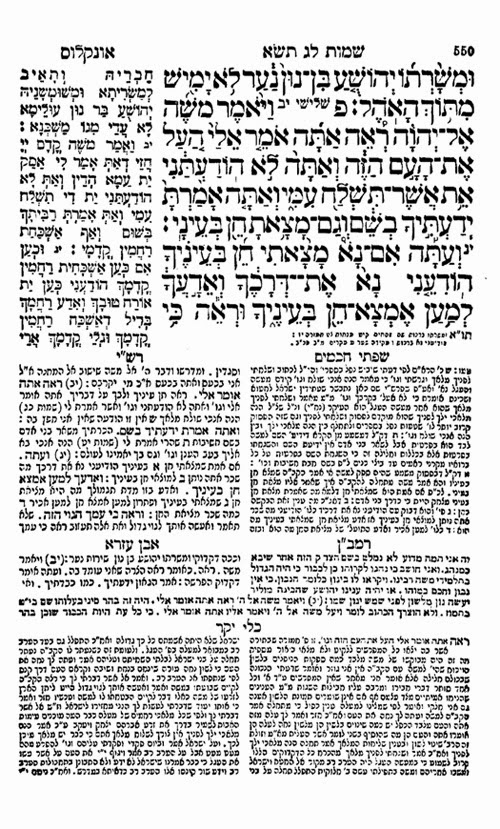
R. Ephraim notes that Yannai was not the most kind of teachers and he was jealous of his student Kalir, showing that the Sages’ statement that people are jealous of all, except for a son and student (Sanhedrin 105b), can have exceptions. In order to deal with his problem, Yannai decided to terminate Kalir, with extreme prejudice of course. He therefore put a scorpion in Kalir’s sandal which took care of matters. R. Ephraim reports that because of this murder, in Lombardy (Italy) they refused to recite one of Yannai’s hymns.[2]
אוני פטרי רחמתים. ואמר העולם שהוא יסוד ר’ יניי רבו של רבי אלעזר בר קליר, אבל בכל ארץ לומברדיאה אין אומרים אותו, כי אומרים עליו שנתקנא בר’ אלעזר תלמידו והטיל לו עקרב במנעלו והרגו. יסלח ה’ לכל האומרין עליו אם לא כן היה.
R. Ephraim is the source for this report and as you can see from his final words, he took the report very seriously and literally, declaring that if it wasn’t true then those who spread this rumor were in need of repentance. Israel Davidson, however, claims that to take the report literally would be “absurd”, and the report of the scorpion is merely an “idiom, undoubtedly Oriental in origin, for expressing unfriendliness.”[3] The problem with this is, as we have seen, R. Ephraim and the community of Lombardy did take the report literally, so why should Davidson, living well over a thousand years after the supposed event, know more than people who lived in medieval times?[4] It is one thing to say that the murder never occurred, but that doesn’t mean that the story as told was not meant to be understood literally, and there is every reason to assume that it means what it says. If it happened, it would hardly be the first murder committed by a Jew. Thus, although the story is almost certainly a legend, our reason for making this determination is not because it is impossible to imagine one Jew doing such a thing to another.
Another important source is found in R. Hayyim Joseph David Azulai, Mahazik Berakhah, Orah Hayyim 112 (end). Azulai, as we all (should) know, had a keen bibliographical sense, and knew rabbinic history very well. After mentioning how Tosafot and the Rosh state that Kalir was really the tanna R. Eleazar ben Shimon,[5] the Hida quotes R. Isaac Luria as follows:
דהפייטן היה בו ניצוץ מנשמת ר’ אלעזר ברבי שמעון.
In other words, it is not that Kalir was actually a tanna, but that his soul was connected with R. Eleazar ben Shimon. I presume that this is an attempt to preserve the old tradition identifying the two, while at the same time recognizing that historically they were two different people. We find the same approach among many commentaries that deal with aggadic statements that make all sorts of identifications, of what can perhaps be called the rabbinic “conservation of people.” In other words, there is a tendency to identify biblical figures with other known biblical figures, such as Elijah with Pinhas and Harbonah, Hagar with Keturah, Pharaoh with the King of Nineveh, Yocheved and Miriam with Shifrah and Puah, Mordechai with Malachi[6] and Ezra, Tziporah with the Cushite woman,[7] Balaam with Laban, Daniel and Haman with Memukhan, to mention just a few.[8]
I don’t think people should be surprised that also among traditional commentators one can find the viewpoint that these identifications are not to be taken literally[9]—kabbalists are often inclined to see these texts as referring to reincarnation[10]—and some modern scholars have spoken of these identifications as examples of what they term “rabbinic fancy.” Some of these identifications are so far-fetched that I have no doubt that R. Azariah de Rossi and R. Zvi Hirsch Chajes are correct that the Sages who expounded them never intended them to be taken literally.[11]  Although I haven’t investigated the matter, I assume one would find the same tendency to non-literal interpretation when dealing with Aggadot that insert historical figures into other biblical episodes, e.g., Balaam and Jethro becoming Pharoah’s advisors, or when the Aggadah identifies spouses, e.g., Caleb marrying Miriam and Rahab marrying Joshua (and having daughters with him[12]).
2. In the previous post I quoted what the late R. David Zvi Hillman said in the name of R. Shlomo Yosef Zevin regarding Saul Lieberman. Some people were incredulous, and this raises the question of how reliable Hillman was and if he would distort things for ideological purposes.[13] I have spoken about him before, and I reproduced his defense of the Frankel edition of the Mishneh Torah not citing R. Kook.[14] Despite his strong ideological leanings, as of yet I haven’t found any evidence that he would purposely distort. My sense is that he was quite honest in his scholarship (and the issue with R. Zevin and Lieberman might have been something he misunderstood or perhaps R. Zevin wasn’t clear in what he said. It simply is impossible now to reconstruct events.)
Even though I believe that Hillman was honest in his scholarship (i.e., not intentionally distorting as is so often the case with haredi writers), we do find that his ideology led him to unfounded conclusions. These are not intentional distortions because he really believed what he was saying, but they are distortions nonetheless. Here is one example.
In 1999 a memorial volume appeared called Ohel Sarah Leah. Beginning on p. 246 is an article by Hillman dealing with R. Joseph Saul Nathanson’s view of the International Date Line. In this article, he deals with a letter by R. Zvi Pesah Frank published by R. Menachem M. Kasher. He believes that Kasher added material to the letter so as to align it with his own viewpoint. The fact that Kasher published the letter in 1954, almost seven years before R. Zvi Pesah Frank’s death, does not deter Hillman from his argument. Other than Hillman, I think everyone realizes that if you are going to forge something in another’s name, you don’t do it when they are still alive![15] We can thus completely discount Hillman’s argument and see it as an ideologically based distortion.
Despite this defense of Kasher, it must also be pointed out that there are serious questions about the reliability of some things he published. In Between the Yeshiva World and Modern Orthodoxy I mentioned R. Eliezer Berkovits’ claim that the Weinberg letter Kasher published was not authentic. Berkovits clearly thought that Kasher forged it, but when I pressed him to say so openly, he wouldn’t. All Berkovits would say is that Weinberg never wrote such a letter, and it was fraudulent. When I asked, “So R. Kasher forged it?” he replied that he wasn’t going to speculate about this, and would only say that the letter did not exist. Being that Kasher claimed that Weinberg wrote the letter to him, this means that Berkovits was accusing him of forgery, but for whatever reason did not want to say so openly.
I have a 1982 letter from Berkovits to another rabbi, and in this letter he is not as circumspect as he was with me. Here he pretty much states that Kasher forged the letter “le-shem shamayim.”
בענין מו”ר הגאון זצ”ל אני בטוח שהוא מעולם לא כתב אותם הדברים שהרב כשר מוסר בשמו בנועם. אדרבה יראה לנו את מכתבו של מו”ר זצ”ל. לפני כשנה כתבתי לו בדואר רשום ובקשתי בעד צילום או העתק של מכתבו של הרב וויינברג זצ”ל. עד היום לא קבלתי תשובה ממנו. מבטחני שהדברים שנאמרו ושנכתבו בשמו אינם אמיתייים. בעונותינו הרבים הגענו למצב שגם אנשים ירא שמים וכו’ מורים היתר לעצמם בכל מיני ענינים כשהם חושבים שכל כוונתם לשם שמים היא. והוא רחום יכפר וכו’.
In the recently published Genazim u-She’elot u-Teshuvot Hazon Ish, pp. 263ff. the unnamed editor also levels serious accusations against Kasher, in a chapter entitled הזיוף החמור והנורא. He puts forth a series of claims designed to show that another letter Kasher published on the International Date Line, this time a posthumous letter from R. Isser Zalman Meltzer, is also forged. I have to say that in this example, unlike the one dealt with by Hillman, there is at least circumstantial evidence, but no smoking gun. The most powerful proof comes from Kasher himself in which he tells of a meeting with the Hazon Ish and how at that meeting he told the Hazon Ish about the letter he received from R. Isser Zalman in opposition to the Hazon Ish’s position. Yet the letter Kasher publishes from R. Isser Zalman is dated from after the Hazon Ish’s death. There is clearly a problem here, but more likely than assuming forgery is that Kasher was simply mistaken in his description of his visit with the Hazon Ish. Let’s not forget that this element of the account of his visit was published thirty-three years after the event, and it is possible that Kasher didn’t recall everything that was said. The followers of the Hazon Ish have indeed always claimed that his description of his visit, in Ha-Kav ha-Ta’arikh ha-Yisraeli (Jerusalem, 1977), pp. 13-14, is not to be relied upon. Since his own recollection of his visit is the strongest evidence in favor of Kasher forging R. Isser Zalman’s letter, it is not very convincing.
In the previous paragraph I wrote that “this element” of Kasher’s account was published thirty-three years after his visit, so let me explain by what I mean by that. In Ha-Pardes, Shevat 5714, p. 30, soon after the Hazon Ish’s death, he originally published his account. Only when he later published his Kav ha-Ta’arikh ha-Yisraeli did he mention that he told the Hazon Ish that he received letters from R. Zvi Pesah and R. Isser Zalman, and this point is mentioned after his description of his visit. In his original description he mentions nothing about receiving letters, only that R. Zvi Pesah told him his opinion and R. Isser Zalman agreed with this. I think what likely happened is that in the passing decades Kasher forgot that the letters he received only arrived after the Hazon Ish’s death. As mentioned, if you look at what he wrote right after the death of the Hazon Ish, he doesn’t mention any letters, and he even states explicitly that he didn’t have anything in print from R. Zvi Pesah. I think this shows that while Kasher’s recollection was not exact, there is no evidence that he forged the letter.
I do, however, have to mention that in the 1977 version of the visit Kasher adds something that is not in the original recollection and must therefore be called into question. In the original recollection he reports that the Hazon Ish began reading Kasher’s work on the dateline and then said that he is tired and asked if he could hold on to the work to read later. In the 1977 version Kasher then adds the following, which shows the Hazon Ish as not very committed to his own position, a point which is at odds with everything else we know about the Hazon Ish and the dateline:
והוסיף בזה הלשון: נו, יעדער מעג (קען) זיך האלטען ווי ער פערשטעהט. [כל אחד רשאי (יכול) להחזיק כפי הבנתו].
Kasher was also involved in another problematic episode related to his book Ha-Tekufah ha-Gedolah, which is dedicated to showing the messianic significance of the State of Israel. In the book, pp. 374ff., he includes a proclamation urging participation in the Israeli elections. This proclamation is signed my many rabbinic greats and states that the State of Israel is the beginning of the redemption. This is a very significant document and is often referred to, because among the signatories are some who were never identified with Religious Zionism.
But is the document authentic? Zvi Weinman has shown (and provided the visual evidence) that a number of the rabbis signed a document that did not mention anything about athalta di-geula but instead referred to kibutz galuyot.[16] In Kasher’s book, their names are listed together with those who signed the document referring to athalta di-geula, even though they never agreed with this formulation. This would appear to be a Religious Zionist forgery (unless it is simply a careless error), although it is impossible to know whether Kasher was responsible for this or if he was misled by someone else.
If it can ever be proven that Kasher was indeed responsible for a forgery, there is still a possible limud zekhut for this type of behavior (and I mentioned it in a prior post): If you are convinced of the correctness of your position, it is not hard to construct an argument, based on traditional Jewish sources, that false attribution and even forgery is permissible. In the book I am currently working on I bring all sorts of examples of this which I think will be very distressing for readers, as it is in complete opposition to what most of us regard as basic intellectual honesty.
Returning to the recently published Genazim u-She’elot u-Teshuvot Hazon Ish, the editor also makes an outrageous accusation and I am surprised that no one has yet publicly protested. The canard is leveled at Chief Rabbi Isaac Herzog, whose saintliness was universally acknowledged even by those who opposed his Zionist outlook. It was R. Herzog who in early 1940 flew to London and was able to convince the English government to grant a number of visas for Torah scholars. He was thus directly responsible for saving the lives of, among many others, R. Velvel Soloveitchik and R. Shakh.[17] This fact alone should have been enough to prevent any scurillous accusations directed against R. Herzog.
On pp. 226ff. there appears a 1941 letter, dated 24 Elul, from R. Shlomo Yosef Zevin to the Hazon Ish asking him about the problem of Shabbat in Japan for those who had escaped the Nazi clutches. R. Zevin wrote to the Hazon Ish at the request of R. Herzog, who said that only two people in the Land of Israel were expert in this matter, R. Tukatchinzky and the Hazon Ish.
There is a good deal that can be said about R. Zevin’s letter and the Hazon Ish’s response, but that is not my concern at present. Yet I must at least mention that the editor provides another letter from the Hazon Ish in which he expresses his displeasure that R. Zevin’s Torah writings had appeared in the newspaper Ha-Tzofeh. According to the Hazon Ish, these should have been published as a special booklet, as it is inappropriate to publish Torah articles in a newspaper that in the end is used to wrap food in. He also mentions that Ha-Tzofeh itself is not suitable, referring obviously to its Religious Zionist outlook. (R. Zevin would, over his lifetime, write hundreds of articles for Ha-Tzofeh, many of which have not yet been collected in book form.)
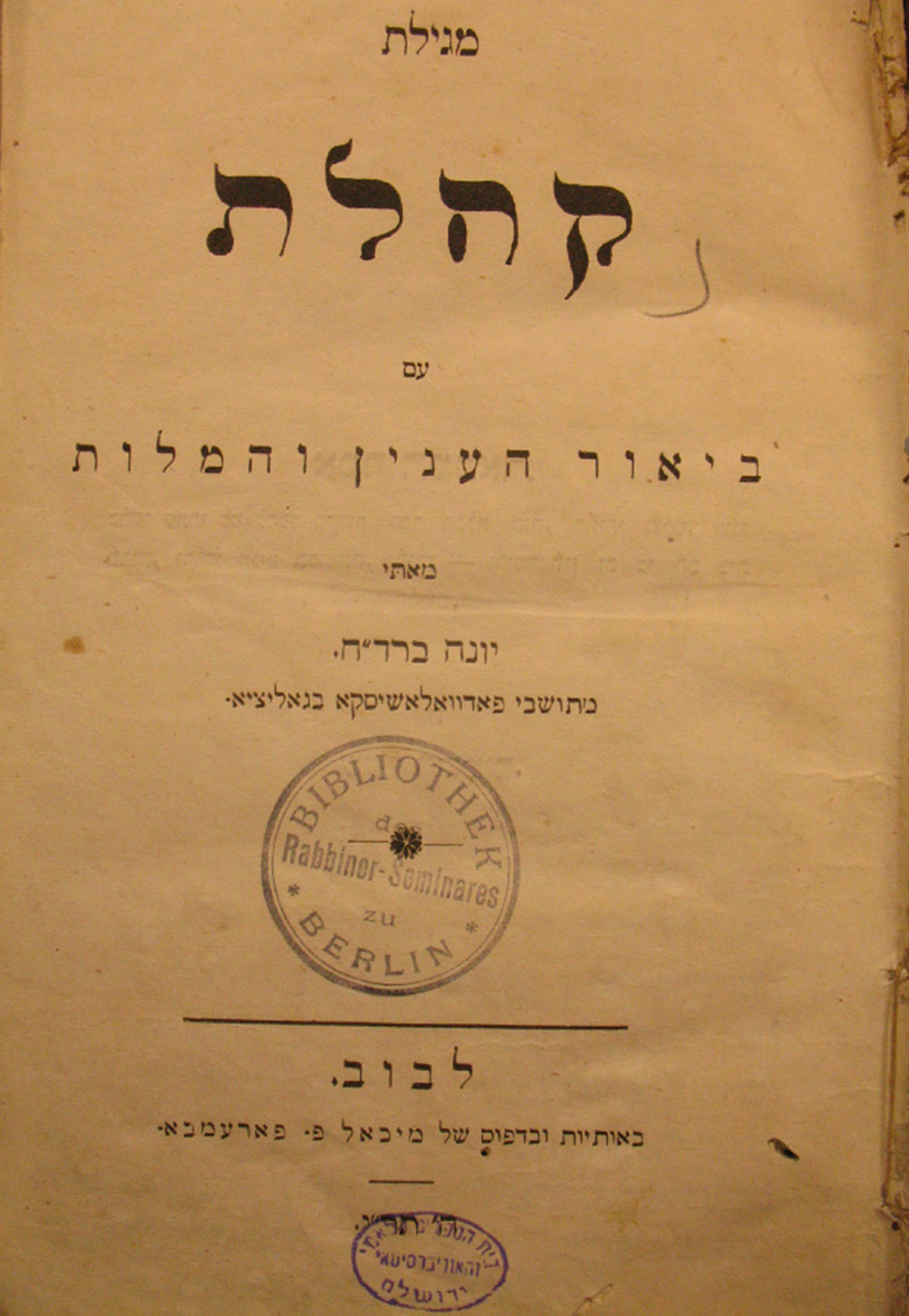
Also noteworthy is that in his reply to R. Zevin the Hazon Ish raises the possibility that the viewpoint of the rishonim would have to be rejected if it turns out that they were mistaken in their understanding of the metziut.

העומד עדיין על הפרק הוא אם טעם הראשונים ז”ל הוסד על המחשבה שאין ישוב בתחתית הכדור, ואז נקח עמידה נועזה לנטות מהוראת רבותינו ז”ל ולעשות למעשה היפוך דבריהם הקדושים לנו ולכל ישראל, או שאין לדבריהם שום זיקה לשאלת ישוב התחתון.
(In a later letter, quoted on p. 231, we see a different perspective.) In R. Zevin’s letter he mentions why the issue of Shabbat in Japan was so pressing. R. Herzog had recently received a telegram from Kobe, Japan, asking on what day the Jewish refugees should fast.[18] Here is a copy of the telegram, as it appears in David A. Mandelbaum’s Giborei ha-Hayil, vol. 1.


Genazim u-She’elot u-Teshuvot Hazon Ish, p. 227, makes the astounding assertion that this telegram was a scheme cooked up by the Chief Rabbinate (i.e., R. Herzog).This would enable R. Herzog to call a gathering a great Torah scholars at which time he could push them to accept his opinion in opposition to the viewpoint of the “gedolei Yisrael.” It is hard to imagine a more outrageous accusation directed against a man of unquestioned piety such as R. Herzog.

Quite apart from the slander I have just pointed to, the volume also contains a good deal of ideologically based distortion, which is why it is noteworthy that it not only includes the letter from the Hazon Ish to Saul Lieberman (p. 330) that I published in Saul Lieberman and the Orthodox,,[19] but even identifies him in the following respectful way:
המכתב נשלח לבן דודו פרופ’ ר’ שאול ליברמן ז”ל מחה”ס תוספתא כפשוטה, ירושלמי כפשוטו וש”ס.
Considering how Lieberman is persona non grata in the haredi world, I find this identification, as well as mention of his books, nothing sort of remarkable.[20]
In fact, the story gets even more interesting. A couple of months ago volume two of Genazim u-She’elot u-Teshuvot Hazon Ish appeared. Before I was able to get a copy, people emailed me to let me know that this volume contained a lengthy letter from Lieberman to the Hazon Ish. (I thank Ariel Fuss for sending me a copy of the letter.) It appears on pages 207-209 and is really fascinating. Leaving aside the talmudic analysis, the end of the letter shows the different outlooks of these cousins. We see that the Hazon Ish had criticized Lieberman for referring to Prof. Jacob Nahum Epstein as mori ve-rabbi. Lieberman didn’t understand why the Hazon Ish found this objectionable, since Epstein was a pious Jew and Lieberman learnt many things from him, “true Torah and not the path of the maskilim but that of our teachers of blessed memory, who search for the truth in the words of Hazal, in all possible ways, and many obscure places in the Jerusalem Talmud were explained to me precisely through this approach.”[21]
Lieberman then turns to another criticism of him by the Hazon Ish, that he was not devoting himself adequately to his Torah study. It is hard to know what to make of this critique, as who was more devoted to his studies than Lieberman. Lieberman defends himself from this accusation, noting:
אני לפעמים נופל על הספסל מחוסר אונים מרוב התאמצות ויושב אני לפעמים כמה ימים על סוגיא אחת עם ראש חבוש.
Here is Lieberman’s grave, in the Sanhedria cemetery. Note who he is buried next to. (As I mentioned in Saul Lieberman and the Orthodox, according to Chaim Herzog, Lieberman was R. Herzog’s closest friend. It is therefore fitting that he be buried next to R. Jacob David.)
3. Regarding the last post, a number of people emailed me pointing out other “immodest” title pages and also learned women that I didn’t mention. I thank all who emailed. Many of the other title pages I knew about and might refer to at a future time, but the post was specifically concerned with censorship of title pages, and this explains the ones I cited. One of the commenters did refer to a title page that I did not know, from a 1731 Hamburg manuscript. See here (the rest of the Haggadah has other interesting pictures). If you ever needed an example of how what we today regard as unacceptable is not necessarily how people hundreds of years ago viewed matters, this is it.[22]
Regarding learned women, a great deal has obviously been written about this and I don’t see it as my purpose to simply repeat what others have written elsewhere. I hope that in the prior post (and indeed in all my posts), people find new material and learn things that they wouldn’t know from elsewhere, even those who are experts in the various topics.
Since the matter has been raised again, le me mention something that I originally was going to write about. At the last minute I took it out, as I was convinced (by both a scholar who will remain anonymous and Prof. Shamma Friedman) that I was in error.
Tosefta Ketubot 4:7 (and the parallel passage in J. Ketubot 5:2) reads:
נושא אדם אשה . . . על מנת שתהא זנתו ומפרנסתו ומלמדתו תורה.
It then follows by telling us that R. Joshua son of R. Akiva arranged exactly this sort of marriage. I think that if you show this passage to people, and cover up the commentaries, they will translate it to mean that a man can marry a woman on the condition that she will take care of his physical sustenance “and will teach him Torah.” (This is how Neusner translates in his Tosefta and Yerushalmi translation, and is also found in some academic articles.) Yet all of the traditional commentaries understand this text to mean that the woman provides the financial support her husband needs in order that he is able to study Torah on his own. For a while I assumed that this was an apologetic understanding by the commentators, and we know that the Talmud does offer a few examples of learned women. Yet as mentioned, I was convinced of my error.[23] In email correspondence, Friedman also called attention to other unusual Hebrew formulations which don’t mean what they literally say. For example, Yevamot 13:12 states: בא על יבמה גדולה תגדלנו. Yet this does not mean that she has to raise the boy, but only that she has to wait until he is of age to give her a divorce. He also pointed to Nazir 2:6 (and see also 2:5) which uses the language of הרי עלי לגלח חצי נזיר and this has nothing to do with shaving the Nazir.
One final point I would like to make about learned women is that before drawing any conclusions about their knowledge, we must be sure that we are not dealing with ghost writers. For example, Dov Katz, Tenuat ha-Mussar (Jerusalem, 1982), vol. 1, p. 242 n. 30, refers to the wife of R. Aryeh Leib Horowitz (the son of R. Israel Salanter) as a “learned woman” based on the introduction she wrote to her deceased husband’s Hayyei Aryeh (Vilna, 1907). Here is the text.

I can’t prove it, but I am very confident that someone wrote this on behalf of the wife, who was a traditional rebbetzin, not a maskilah.

4. In preparation for the trip I am leading to Italy in July (we still have room for some more people, and also for the August trip to Central Europe), I thought it would be helpful to read the letters of R. Ovadiah Bartenura. Right at the beginning of the first letter[24] I found something very interesting. I immediately suspected that this passage would be omitted from a translation directed towards the Orthodox masses. I checked, and lo and behold, the passage is indeed deleted. Here is the text:

Note how R. Ovadiah testifies that while the Jews in Palermo were careful about not drinking non-Jewish wine, which was noteworthy since elsewhere in Italy Jews routinely consumed this, their sexual morality and observance of the Niddah laws left something to be desired. He claims that most young women there were already pregnant at their wedding.
Here is how the page appears in the translation by Yaakov Dovid Shulman:
This text was censored even though the preface to the book states: “In publishing these letters in their entirety, including the critical comments made by Rabbi Ovadiah Bartenura of those people and practices of which he disapproved, the assumption is made that these criticisms were written to instruct the reader and not to denigrate any individuals.” As you can see, the letter has not been published in its entirety, and if one were to go through the text carefully, perhaps some other deleted passages would be discovered.[25]
5. I have done six posts on R. Kook and from email I receive I know that some people want me to return to this. I plan to, but I still have a few more posts to do before I get to that. In the meantime, however, I want to inform readers that a new volume of R. Kook’s writings has just appeared. It is called Ginzei ha-Rav Kook and I thank R. Moshe Zuriel for drawing my attention to it. My sense is that this volume does not have much importance, as much of it, and maybe even the majority, has already appeared in other collections, particularly the Shemonah Kevatzim. I was able to determine this using the R. Kook database, which except for the most recently published material includes all of R. Kook’s writings.
I did find one passage (p. 87, no. 85) which I am pretty sure has not yet appeared, even in the most recent writings. It relates back to a point I already called attention to in R. Kook, namely, his privileging of the pious masses over the Torah scholars in certain ways. One rabbinic text that would appear to oppose R. Kook’s conception is the famous Avot 2:5: ולא עם הארץ חסיד. See how R. Kook neutralizes this text, pointing out that there are a lot of things more important than being a hasid. Here is R. Kook, a member of the rabbinic elite, nevertheless insisting that the am ha-aretz can have just as much holiness as the Torah scholar, be visited by Elijah, and even have ruah ha-kodesh:
“ולא עם הארץ חסיד”. אבל מה שהוא למעלה מהחסידות, כמו קדושה וענוה ותחית-המתים וגילוי אליהו ורוח-הקודש, מפני גודל קדושתם הם שוים לכל נפש. כי כל לבבות דורש ד’, ואחד המרבה ואחד הממעיט ובלבד שיכוון לבו לשמים, ומעיד אני עלי שמים וארץ, אמר אליהו, בין איש בין אישה, בין עבד בין שפחה, בין נכרי בין ישראל, הכל לפי מעשיו רוח הקודש שורה עליו. וכיון שלא יצאו שפחה ונכרי מכלל רוח-הקודש, קל-וחומר שלא יצא עם-הארץ שהוא מזרע קודש, מעם ה’ וצבאותיו אשר הוציא ממצרים להיות לו לעם נחלה כיום הזה, סגולה מכל העמים.
(The reference to Elijah is from Tanna de-Vei Eliyahu, ch. 9.)
P. 112, no. 104, returns to a theme I have also dealt with, that study of halakhic details can be problematic for a mystical personality such as R. Kook.[26] Yet he adds that this is still the job of the righteous ones, and we can see here an autobiographical reflection.
אף על פי שלימודם של המצוות המעשיות בדקדוק קיומם מכביד לפעמים הרבה על הצדיקים הגדולים השרויים תמיד באור המחשבה העליונה, מכל מקום מתוך כח היראה העליונה שבלבבם, מתגברים הם גם על שפע קדושתם, ועוסקים בתורה ובמצוות במעשה ובדקדוק, אף על פי שהם צריכים למעט על ידי זה את אורם העליון.
Can we also see an autobiographical reflection on p. 114, no. 106, where R. Kook speaks about the righteous who want the world to recognize their greatness and holiness?
לפעמים מתגלה בצדיקים גדולים תשוקה גדולה, שיכירו הכל את מעלתם ושיאמינו בקדושתם. ואין תשוקה זו באה כלל משום גסות הרוח או אהבת כבוד המדומה, כי אם מפני החשק הפנימי של התפשטות האור הטוב שבהם על חוג היותר רחב האפשרי. וזהו מעין התשוקה של הופעת החכמה על ידי המצאות טובות וספרים טובים שכשהיא אידיאלית היא עומדת בנקודה היותר עליונה שבאור הנשמה הא-להית.
He then returns to the difficulty the Tzaddik has with halakhic particulars (p. 115):
ישנם צדיקים גדולים כאלה, שהם למעלה מכל שרש הדינים, ועל כן אינם יכולים ללמוד שום דבר הלכה. וכשהם מתגברים על טבעם ועוסקים בעומקא של הלכה, מתעלים למעלה גדולה לאין חקר, והם ממתקים את הדינים בשרשם.
[1] R. Yaakov Yisrael Stoll, in his recently published Segulah (Jerusalem, 2012), pp. 50ff., takes it as a given that Kalir is post-tannaitic.
[2] Israel Davidson, Mahzor Yannai (New York, 1919), p. xlix                     
[3] Ibid, p. xxv.
[4] Unless R. Ephraim was misinformed about Lombardy, this practice must have changed at some time because we know that in Lombardy the piyut was recited on Shabbat ha-Gadol. See R. Moshe Rosenwasser, Le-Hodot u-le-Halel  (Jerusalem, 2001), p. 379. As Rosenwasser points out, R. Ephraim is also the source for the story of R. Amnon of Mainz writing U-Netaneh Tokef.
[5] This is impossible as in one of his hymns he tells us that is father’s name is Jacob. See R. Simon Federbush, Ha-Lashon ha-Ivrit be-Yisrael u-ve-ha-Amim (Jerusalem, 1967), pp. 70-71.
[6] This identification explains how in Italy Jews with the Hebrew name Mordechai were sometimes given the vernacular name Angelo (= מלאכי). See Cecil Roth, Venice (Philadelphia, 1930), p. 168.
[7] This identification is rejected by Rashbam. See his commentary to Num. 12:1. Regarding Rashbam’s comment, see the lengthy discussion of Lockshin in his translation. While Rashbam rejects the notion that the Cushite is Tzipporah, he apparently has no problem repeating the legend  that “Moses reigned in the land of Cush for forty years and married a certain queen [from there].” He knew this legend from the work Divrei ha-Yamim de-Moshe Rabbenu, although as Lockshin mentions, it is also found in more “kosher” sources, such as Yalkut Shimoni. Ibn Ezra also cites the legend of Moses ruling in Cush in his commentary to Num. 12:1, despite the fact that in his commentary to Ex. 2:22 he writes:
Do not believe what is written in the book called the History of Moses. I will give you a general rule. We should not rely on any book not written by prophets or by the sages who transcribed traditions passed on to them. We definitely should not rely on these books when they contradict reason. The same applies to the Book of Zerubavel, the Book of Eldad ha-Dani, and similar compositions.
In a previous post I discussed Rashi’s understanding of the word Cushite, and how it is not to be taken literally. Ibn Ezra does take it literally (and still thinks that it refers to Tziporah). As with Rashi, he assumes that Cushites are not very attractive and explains that Miriam and Aaron, who spoke negatively about Moses, “suspected that Moses refrained from sleeping with Tzipporah only because she was not beautiful.” (Commentary to Num. 12:1).
Regarding the Cushite woman, I found something strange in R. Joseph Solomon of Posen’s Yesod Yosef (Munkacs, 1907), p. 8b. This is how he explains Aaron’s and Miriam’s talk against Moses on account of the Cushite he married (Num. 12:1):
מרים ואהרן רצו לתלות בוקי סריקי במשה ולהטיל מום בקדשי’ לפי דברי התרגום שני שפירש אשה כושית מלכה כוש שטימא את ברית קודש ובעל בת אל נכר וכל ביאה שאינה בהיתר נקרא הוצאת זרע לבטלה
R. Joseph Solomon goes on to explain why Aaron and Miriam were mistaken in their judgment.
[8] See R. Joseph Zekhariah Stern, Zekher Yehosef, Orah Hayyim no. 121 (p. 34a). R. Shmuel Avraham Adler, Aspaklaryah, vol. 27, s.v. shem, pp. 119ff
[9] R. Menahem Azariah of Fano acknowledges that when it comes to Elijah-Pinhas, most scholars understood this literally. Yet he rejected this position, perhaps because it would require Pinhas to have lived at least 350 years.) See Asarah Ma’amarot, Hikur Din section 4 ch. 18:
ואף על פי שיש מרבותינו אומרים בפשיטות פינחס הוא אליהו אין הדבר כמחשבת המון החכמים שפינחס לא מת ושקיים בעצמו שנוי השם.
[10] Opponents of gilgul had argued that if this was an authentic Jewish doctrine, certainly the Talmud would have mentioned it. R. Elijah Benamozegh argues that these texts, identifying various people as one and the same, are the proof that the talmudic sages indeed accepted reincarnation. He assumes that for many of these passages, where the different eras of the individuals mentioned is an obvious problem, no one with any intelligence can believe that the Talmud meant these passages to be understood literally. The meaning must therefore be reincarnation. See Eimat Mafgia, vol. 2, p. 2b:
איככה יוכל האיש לא טח עיניו מראות להניח כי לבן הארמי אשר חי בימי יעקב אבינו הוא עצמו בלעם הרשע, אשר היה בימי בני בניו האחרונים . . . וחירם שהיה בימי שלמה הוא אשר היה בימי יחזקאל . . . כיצד נוכל לייחס הבנתם הפשטית לחכמינו הקדושים אשר גם לפי דעות המנגדים לא יתכן לתלות בהם חסרון ושגעון כ”כ עצום כאשר כל אחד יראה בדמיונות האלה.
There are two books entitled Eimat Mafgia, one by Benamozegh and the other by R. Moses ben Ephraim of Brody (Warsaw, 1888). Both of them are directed against R. Leon Modena’s Ari Nohem. The title comes from Shabbat 87b: אימת מפגיע על ארי
[11] Meor Einayim, ch. 18; Mevo ha-Talmud, ch. 21, in Kol Sifrei Maharatz Chajes, vol. 1. In other words, the peshat is not literal. According to traditional commentaries, we find plenty of examples of this in the Bible also. Thus, when the Torah speaks of God’s outstretched arm, Maimonides insists that the peshat is that these words are not to be understood literally. Many have argued that even according to the peshat “an eye for an eye” is not to be understood literally. I think that most people today who read the book of Job will conclude, as did Maimonides, that the peshat is that it is not a historical tale.
[12] See Megillah 14b, Tosafot, Megillah 3b s.v. melamed, Maharsha, Hidushei Aggadot, Eruvin 63b (why does he quote Tosafot and not the Talmud in Megillah14b?), R. Samuel Strashun’s note to Eruvin 63a.
[13] Some people might have been led to thinking this because his letter was published in Yeshurun, which has in the past published articles that have engaged in censorship and ideological distortion. In the most recent volume, Nisan 5772, which also contains the Hillman letter, we find another instance of the disrespect for Torah scholars that is routine, and almost required, in haredi literature, and which in previous posts I have provided numerous examples of. (I refer obviously to Torah scholars not in the haredi camp.) On pp. 456-467,  there are letters from five deceased rabbis to R. Avraham Zeleznik. Four of them have the acronym זצ”ל put after their name. The only one who doesn’t merit זצ”ל, and instead is given ז”ל , is the Zionist R. Avraham Shapira (who incidentally was by far the most distinguished Torah scholar of the five.) R. Shapira also wasn’t provided with a short biography, presumably because then his position as Rosh Yeshiva of Merkaz ha-Rav and Chief Rabbi of the State of Israel would have to be mentioned.
[14] See here. With regard to Hillman, in this post I misstated his genealogy. Prof. Shlomo Zalman Havlin wrote to me as follows:
יש לתקן: הגרד”צ אינו נכד של הגרמ”מ חן הי”ד כפי שכתב [ע”פ האיזכור מבטאון חב”ד שהשתבש.] הוא בנו של ד”ר אשר הילמן בעל משרד רו”ח בת”א, נינו של הגרד”צ, רבה הידוע של צ’רניגוב, אביו של הרמ”מ. אגב, גם המשוררת זלדה [מישקובסקי] היתה נכדת הגרד”צ מצ’רניגוב, ואף אחיינית האדמו”ר האחרון מליובאוויטש.מאחיו של הגרמ”מ היה הרב אברהם חן, שהיה סופר מעולה, מחבר ‘במלכות היהדות’, קונטרס יפה ומרגש על אביו  
הגאון. היה רבה של שכונת בית הכרם [כמדומה שהיתה זו שכונה שלא נזקקה לרב]. מעניין לעניין, כדאי להוסיף, כי לגרמ”מ דובר בשעתו שידוך עם בתו של ר’ חיים מבריסק. לצ’רניגוב בא שליח להכיר את החתן המיועד, ולפי התיאורים ששמעתי ,הוא היה כנראה הגאון ר’ זלמן סענדר, אביו של הגאון ר’ אברהם בעל דבר אברהם, ורבה של קובנה [הוזכר ג”כ במאמר זה]. וכמה נשים ממשפחת הגרד”צ נסעו לבריסק להכיר את הכלה ומשפחתה. בגלל שיבושי הדואר הרוסי, חשבו בצ’רניגוב שאין תשובה, בעוד התשובה החיובית נדדה לעיר אחרת, והשידוך כידוע לא יצא אל הפועל. אגב, שמעתי, כי הנשים ממשפחת הגרד”צ כששבו אמרו, שלאור המסופר על גדולת ר’ ‘חיים וכו’, הרי כאשר שמעוהו בתפילת ערבית, אמרו, אצל אבא רואים יותר אפילו ב”אשר יצר
[15] See the response to Hillman by R. Ephraim Greenbaum (Kasher’s grandson), in Ohel Leah Sarah, pp. 942-943.
[16] Mi-Katovitz ad Heh be-Iyar (Jerusalem, 1995),  pp. 130ff.
[17] See A. Bernstein et al., Yeshivat Mir: Ha-Zerihah be-Fa’atei Kedem (Bnei Brak, 1999), vol. 1, pp. 218-219.
[18] One of my high school teachers was with the Mir yeshiva during the War. He told us how on Yom Kippur some people actually fasted for two days, eating pahot mi-ke-shiur after the first day so that they would be able to fulfill both the opinion of R. Herzog and the rabbis aligned with him as well the Hazon Ish’s view.
Fasting two days on Yom Kippur is actually not new. Ibn Ezra records how certain people did it in medieval times. He minces no words about what he thinks of them. See Sefer ha-Ibur, ed. Halbertam, pp. 4a-b:
ואם טען טוען הלא אתם אומרים כי שני ימים טובים צוו לעשות קדמונינו בעבור הספק למה לא קבעתם צום כפור שני ימים גם יש טפשי עולם מחברינו שיתענו שני ימים ואני אראה להם שלא יועיל להם תעניתם כי הוא שוא ושקר.
[19] This letter was previously printed in Sefer Zikaron Tuv Moshe (Bnei Brak, 2008), p. 253, and here too Lieberman is referred to respectfully. This book does not inform the reader where it found this letter, although Genazim u-She’elot u-Teshuvot Hazon Ish informs us that its source is Sefer Zikaron Tuv Moshe. I know that a number of copies of Saul Lieberman and the Orthodox made their way around Bnei Brak, and one of them apparently found its way to the editor of Sefer Zikaron Tuv Moshe.
[20] With reference to the Hazon Ish’s family, in Saul Lieberman and the Orthodox I noted how the Steipler stated that one should not study Lieberman’s books since he left the Orthodox world. Last year a new edition of the Tosefta was published and included some questions to R. Chaim Kanievsky. In the original question the authors spoke negatively about Lieberman. When they gave the page with their question and R. Hayyim Kanievsky’s reply to the typist (who might even have been a woman) they added the word להשמיט with reference to the comment about Lieberman. Perhaps this was because they didn’t want people to know about the family connection between the Hazon Ish and Lieberman. However, the typesetter didn’t understand their intention and included the word להשמיט, thinking that this word was to be added to the text. Here is the page (click to enlarge, or see detail directly below it).

Portions of the letter of the Hazon Ish to Lieberman, referred to on this page, are also found in Kovetz Iggerot Hazon Ish, vol. 3, no. 2.

I just mentioned women typists, which is common in the haredi world (Kitvei R. Weinberg vol. 1, which was printed by a Satmar company, was typed by a woman.) Let me now turn to what I think is an example of a woman translator, and I thank Elchonon Burton for bringing this text to my attention. Here are two pages from R. Shakh’s Lule Toratekha.

In it he mentions how the Hafetz Hayyim famously referred to Adam ha-Kohen as yemah shemo. Adam ha-Kohen was the pen name of Abraham Dov Baer Lebensohn, and for more on how the Hafetz Hayyim viewed him, see S.’s post here. Note how R. Shakh adds שר”י  to Adam ha-Kohen’s name. This stands for שם רשעים ירקב (“the name of the wicked shall rot” – Prov. 10:7) and is only applied to the most wicked.

Here is how this passage appears in Artscroll’s English translation, Rav Shach on Chumash.

The translator did not understand what שר”י means and assumed that it was part of his name, creating a previously unknown maskil, Adam HaKohen Sherry. Based on this error, I assume that the initial translation was done by a woman who knew modern Hebrew but not “rabbinic code.” The final translator, who is a talmid hakham, probably just revised the initial translation. Now knowing anything about the Haskalah, when he saw the name Sherry it didn’t raise a red flag leading him to check the original. S. pointed out to me that in the Wikipedia entry for Yimach Shemo, Adam HaKohen Sherry also makes an appearance.

[21] While on the topic of Lieberman, let me note that he has an unknown article in Otzar ha-Hokhmah 10 (1934), pp. 83-84, signed ש. ל.. In this short article he criticizes some of what R. Leopold Greenwald wrote about the Jerusalem Talmud. I refer to this article as “unknown” because I have never seen anyone refer to it, and it is not found in Tuvia Preschel’s bibliography of his writings included in Sefer ha-Zikaron le-Rabbi Shaul Lieberman, ed. Shamma Friedman (New York and Jerusalem, 1993).
 [22] After writing these words I saw that the title page of this haggadah was included in Leon Wieseltier’s article in the most recent Jewish Review of Books (Spring 2012), which is presumably where the commenter saw it. See here. See also this post regarding a different Haggadah, and see also Dan’s post here.
Here are some other pictures that I think people will find interesting. They appear in R. Leon Modena’s Tzemah Tzadik (Venice, 1660). This is not found on hebrewbooks.org but is on Otzar ha-Hokhmah (at least for now). This particular copy was originally part of Elkan Nathan Adler’s collection. (Adler used for his middle name the name of his father, R. Nathan Adler, chief rabbi of England. This was not unusual. To give another example, R. Samson Raphael Hirsch’s father’s name was Raphael.) Here is Adler’s book plate. His Hebrew name was Elhanan.
From Tzemah Tzadik, here is an illustration showing love of people.
Here is one showing love of man and wife.

Here is an “immodest” picture showing mermaids, which Modena, like so many others of his time, believed in.

Modena’s name does not appear on the title page of Tzemah Tzedek, but he reveals his authorship at the beginning of ch. 1, where first letters of the first sixteen words read: יהודה אריה ממודינא

Here is the page.

[23] He had already corrected Tal Ilan in this regard. See “A Good Story Deserves Retelling – The Unfolding of the Akiva Legend,” Jewish Studies Internet Journal 3 (2004), p. 85 n. 96.
[24] Darkhei Tziyon (Kolomea, 1886), pp. 5a-b
[25] As part of my preparations for the trip I have also been reading Elliot Horowitz’ many important articles on Italy. Not long after finding the censored text I saw that Horowitz had already discussed this passage and showed that there is indeed a history of omitting and distorting it. See “Towards a Social History of Jewish Popular Religion: Obadiah of Bertinoro on the Jews of Palermo,” Journal of Religious History 17 (1992), pp. 140ff. While the examples Horowitz discussed are motivated by a Victorian style of writing, the example I give is probably motivated by a desire to shield the masses from the knowledge that even in pre-Reform Europe violation of halakhah was in many places a common phenomenon. It never ceases to amaze me how little knowledge of history some otherwise very intelligent people have, which I guess means that the censorship and rewriting of history is having an effect. Not long ago I was with someone who had spent a number of years in yeshiva, and he really believed that in 19th century Eastern Europe the porters and wagon drivers were all great talmidei hakhamim whose free time was devoted to mastering Shas.
[26] See also Tomer Persico, “Ha-Rav Kook: Al Tzadikim Gedolim ve-Yishrei Lev – be-Ma’alah ha-Hasagah ha-Mistit,” Moreshet Yisrael 5 (2008), available here.


Post-script by S. of On the Main Line:

Two points may be of further interest.

1) Regarding the Western Askenazic custom of using the father’s name as a middle name ala  the aforementioned R. Hirsch and Elkan Nathan Adler, E. N.’s two older half brothers also used  their father’s name, Nathan, as middle names; there was Marcus Nathan Adler, best known for his edition of Benjamin of Tudela’s Travels. In addition, Chief Rabbi Herman Adler also used it as a middle name, especially in his earlier years. In his university matriculation record from 1856 he is listed as “Hermann Nathan Adler.”

2) In addition to the coded acrostic self-reference by the author of Zemach Zedek in the opening lines referred to above (‘יושר האהבה וכו), R. Yehuda Aryeh Modena also refers to himself in the opening lines of the hakdamat ha-mekhaber: נודע ביהודה אלקים ובישראל אריה שאג.


Answers to Quiz Questions and Other Comments, part 2

Answers to Quiz Questions and Other Comments, part 2
 
by Marc B. Shapiro
1. In my previous post, in discussing the words in Ecclesiastes 2:8 עשיתי לי שרים ושרות, I referred to the interpretation in Kohelet Rabbati. This very section of Kohelet Rabbati has an amazing comment, which as far as I know was never referred to in the dispute over Sara Hurwitz’ rabbinical ordination. Commenting on the words שדה ושדות, which appear in the same sentence as שרים ושרות, the Midrash states:

שדה ושדות: דיינים זכרים ודיינות נקבות
In other words, Solomon is portrayed as appointing female dayanim! (See also Ruth Rabbah 1:1 where Deborah and Yael are described as judges.[1]) The standard commentaries find this passage very difficult and offer alternative explanations, sometimes in opposition to the plain sense of the words. Etz Yosef suggests that the job of the women was to judge other women. R. David Luria adopts the lav davka approach, and assumes that דיינות must mean policewomen of sorts.
ודיינות נקבות: לאו דווקא דיינות דאשה פסולה לדון. אלא שופטת להשגיח שלא ישלטו [ישלחו?] הנשים בעולתה איש לרעותה את ידה
His position is rejected by R. Abraham Horowitz, Kinyan Torah ba-Halakhah, vol 1, no. 8:3. Rabbi Horowitz, who was a member of the Edah Haredit beit din, assumed that when the Midrash referred to female dayanim, it didn’t mean that they actually took part in beit din proceedings, but it did mean that they decided halakhic matters, and in that sense they are דיינות. Here are his words, which everyone should examine closely.
ובאמת ל”י [לא ידעתי] מה החרדה הזאת דהא הפת”ש בחו”מ סי’ ז’ סק”ה הביא מספר החינוך מצוה קנ”ח דאשה חכמה ראוי’ להורות . . . אפש”ל דיינות שנתמנו [ע”י שלמה] רק לפסוק הוראה ולא לדון. ועימנ”ח סו”מ ע”ח דפשיטא לי’ דנשים מצטרפות לרוב חכמי הדור אם חולקין באיזו דין . . . מכ”ז נראה דאין לזלזל בסמכות אשה כשירה
I requested that readers examine his words, because in the backlash over Hurwitz’ ordination a number of statements were made the upshot of which was that halakhic decision-making is reserved for men. Ironically, this position is given support by at least some of the women serving as yoatzot, for they are careful to stress that while they provide guidance, they don’t, Heaven forbid, actually decide halakhah. When there is a real halakhic question they turn to the experts, that is, the male rabbis. The message of this is, of course, that women, no matter how learned, are disqualified from deciding halakhah.[2]
Returning to Kohelet Rabbati, R. Yisrael Be’eri accepts that the Midrash means what it says when it refers to dayanim, but suggests that Solomon not only had female courts, but also “co-ed” batei din. See Ha-Midrash ka-Halakhah (Nes Tziyonah, 1960), p. 317:
ולולי מסתפינא אמינא שזה היה הרכב זוגי ז”א אותו דין היה מתברר בפני בי”ד רגיל וכן הוסיף שיתברר בפני דיינות נקבות שאולי יש בהן בינה יתירה וגישה מיוחדת ואחר כך שוקלין זה מול זה ואז היה מתברר הדין בדקדוק ושיקול מיוחד וצ”ע.
It is noteworthy that he sees value in having the female dayanim examine the matter, since they can bring a feminine perspective to bear. If I just presented the text without telling you who the author was and when it was written, I am sure people would assume that only a modern feminist type could have penned these words. Yet we see that this is not the case.
R. Hayyim David Halevi also deals with this Midrash (Aseh Lekha Rav, vol. 8, pp. 247-248). He suggests that the Midrash is indeed operating under the assumption that there is no problem with women dayanim. Alternatively, he suggests that Solomon and his council accepted the authority of the women, and therefore this was permissible. In other words, there is only a halakhic problem when a woman is made a dayan against the will of the community, but if she is accepted by them, then she can serve. And how do we determine if the community accepts her as a dayan? Halevi explains:
וקבלה ודאי שמועילה, והכל כשרים לדון בקבלה, וקבלת גדולי הקהל מספיקה ואין צורך שכל העומדים לדין יקבלו עליהם. וכן מצאנו “דיינות נקבות” כלשון המדרש, ואין סתירה להלכה
What this means is that if the leaders of the community accept women dayanim, then this is sufficient. (I am speaking about in matters of Hoshen Mishpat, not dayanim for Even ha-Ezer.) Therefore, if leaders of the OU or the RCA declare that they accept women, that would open the door to appointing a woman as a dayan on the RCA beit din. Halevi refers to acceptance by גדולי הקהל. In the context of the United States, where there are lots of different kehilot, I would assume that this means that if the leaders of any one community, or even of one synagogue, agree to accept a woman as dayan, then this is sufficient.
R. Ben Zion Uziel also claimed that women can serve as dayanim, and the means of achieving this would be through a takanah. He cites meta-halakhic reasons to explain why this is not a good idea, but from a pure halakhic standpoint, he sees it as entirely acceptable.[3]
Leaving aside the issue of serving as a dayan, it is obvious to me that women rabbis are coming to Modern Orthodoxy, even if the powers that be are standing firmly against it. Yet they have already let the genie out of the bottle. By sanctioning advanced Torah study for women, there is no question that the time will come when there will be women scholars of halakhah who are able to decide issues of Jewish law. The notion that a woman who has the knowledge can “poskin” is not really controversial, and has been acknowledged by many haredi writers as well.[4] Very few rabbis are poskim, but every posek is by definition a “rabbi”, whether he, or she, has received ordination or not.[5] So when we have women who are answering difficult questions of Jewish law, they will be “rabbis”,[6] and no declarations by the RCA or the Agudah will be able to change matters. I am not talking about pulpit rabbis, as this position has its own dynamic and for practical reasons may indeed not be suitable for a woman. Yet as we all know, very few rabbis function in a pulpit setting, and much fewer will ever serve as a dayan on a beit din.
The reason why the issue of ordaining women has been so problematic is because the Orthodox community is simply not ready for it. Yet when women will achieve the level of scholarship that I refer to, and are already deciding matters of halakhah, then their “ordination” will not be regarded as at all controversial in the Modern Orthodox world, and will be seen as a natural progression. People will respond to this no differently than how they responded to the creation of advanced Torah institutes for women. [7] Since women were already being taught Talmud, the creation of these institutes was a natural step.
There is one more thing that needs to be added, and that is that we have not reached the point where there are women halakhic authorities.[8] I hope I won’t be accused of bashing women by pointing out the following fact, that as of 2012 not one traditional sefer, in Hebrew, written by a woman has been published. By traditional sefer I mean a halakhic work or a commentary on a talmudic tractate. I am waiting for this day, which I hope won’t be too long in the future. I also hope that a learned woman is currently working on a commentary to a tractate, even if it is one of the easier tractates such as Megillah. The point is that for women to be recognized as talmudic and halakhic authorities they will have to do exactly what the men do, and that is show the world that they are serious talmidot hakhamim. The major way to do this is through publishing. (Publishing has its own significance, even if no one actually reads the book. Let’s be honest, of the many volumes of commentary on talmudic tractates that are published by people in yeshiva and kollel every year, does anyone read them? With so many great works of rishonim and aharonim on the tractates, as well as the writings of contemporary gedolim, the modern commentaries by unknown talmidei hakhamim are understandably not anyone’s focus. Yet they are of great benefit to the author, in developing his ideas and advancing his learning, and that is reason enough for the works to appear.)
I agree that it isn’t “fair” that while men can be given the title “rabbi” simply by learning sections of Yoreh Deah, the women must do a lot more to be accepted. But that is required any time new developments come into place. I have been assured by people in the know that the day is coming when we will have first-rate women halakhists and talmudists. It will be fascinating to see what insights they bring to matters, and if a woman’s perspective affects how halakhah is decided. But we haven’t reached that day yet, and just as importantly, the Orthodox world as a whole is not yet ready for that day, as they have not yet become comfortable with the idea of a woman poseket.
In note 7 I refer to the recent article by Broyde and Brody in Hakirah 11. While they leave open the possibility of a future with women rabbis, R. Hershel Schachter also has a very short article in that issue, and he is completely opposed. What I think is interesting is that the only recent authority he cites in support of his rejection of women rabbis is “Rabbi Shaul Lieberman.” I guess R. Schachter regards Lieberman as one of the gedolei Yisrael.[9]
Regarding R. Schachter’s opposition to women rabbis, there is one other point worth noting. In an earlier post, available here, I wrote as follows:
R. Hayyim Joseph David Azulai has an entry for “rabbanit” in his Shem ha-Gedolim. He lists there a few learned women. When Azulai uses the term rabbanit, it does not mean “rebbetzin” but “female rabbi”. I am sure that there are those who would object to the Hida that these women were never “ordained”. Yet the Hida also includes many others who were not ordained, but I don’t think anyone would take the title of “rabbi” away from them. One such figure is Moses ben Maimon.
My point in this was to show that women have already been given the title approximating that of rabbi by no less than the Hida (obviously in a pre-feminist context).[10] As far as I know, I was the only one to make this point during the hullabaloo a couple of years ago about the ordination of Sara Hurwitz. I was surprised that no one else picked up on this as I happen to think it would give the pro-ordination side a strong piece of ammunition.
My post went up on June 25, 2010, and someone must have mentioned this to R. Schachter because on July 7, 2010 he responded. You can listen to what he says here (beginning at minute 6). He mentions that the Hida’s use of rabbanit was cited in support of women’s ordination, and concludes that nevertheless this proof is “not so conclusive.” [11]
Flora Sassoon (1859-1936) was an extremely learned woman who lived too late to be included by the Hida.[12] In 2007 the Sassoon family published Nahalat Avot, which is a large collection of letters sent to the Sassoons by great Torah figures. Many of the Torah letters in this book were sent to Flora, and she is addressed in a number of them as “rabbanit”. Her husband held no rabbinic office and I think we can therefore conclude that the term “rabbanit” is being used as a title of respect for her knowledge.[13] Another example of this is seen in how she is introduced by R. Joel Herzog, who published a derashah she delivered in his Imrei Yoel, vol. 3, pp. 204-206. (Are there any other examples of a traditional sefer including something written by a woman?) Herzog too uses the term rabbanit as a title of respect.
Finally, with regard to women’s roles, let me call attention to what I think is a little known fact. Liberal Orthodoxy is very interested in finding ways to expand the opportunities for women to be involved in Jewish rituals. This encompasses everything from reading the Torah and leading Kabbalat Shabbat, to reciting sheva berakhot and reading the ketubah at a wedding. I haven’t yet seen any proposals to have a woman serve as a sandak. This would not be a new practice. R. Meir of Rothenburg writes that in his day in “most places” a woman sat in the synagogue and held the baby during circumcision.[14] In other words, this was the mainstream Ashkenazic minhag. R. Meir opposed this practice and made efforts to uproot it. This opposition was successful and is the background of R. Moses Isserles, Shulhan Arukh, Yoreh Deah 265:11, declaring that a woman cannot be a sandak, because it is peritzut.[15] Yet despite Rama’s comment, my experience is that this is the sort of judgment that the liberal Orthodox are quick to revise. Certainly, the Rama would assume that there is more peritzut in having a woman serve as a hazzan than in holding the baby during a circumcision. Yet for some reason, while the latter has become accepted on the left of Orthodoxy, I haven’t heard anyone speak about instituting female sandakot. (If there are places where women are indeed serving as sandakot, please leave a comment.)
2. In an earlier post I discussed how R. Moses Kunitz’s biography of R. Judah the Prince was censored from a recent printing of the classic Vilna Mishnah. I also included a picture of Kunitz. Here is another, completely unknown, picture of Kunitz.
I found it in the Yeshiva University Archives, call no. 1992.008, and I thank the Archives for permission to publish it here.
In the earlier post dealing with Kunitz, I wrote:
Immediately following Kunitz’ essay, there is another article on the grammar of Mishnaic Hebrew by Solomon Loewisohn.[16] In the very first note he refers to the book of Ecclesiastes, and concludes his comment with והטעם ידוע למשכילי עם. What he is alluding to in this note is that Ecclesiastes is a late biblical book, and thus could not have been written by Solomon. To show this he points to the word חוץ, which in its usage in Ecclesiastes 2:25 is an Aramaism, and thus post-dates the biblical Hebrew of Solomon’s day. To use an expression of the Sages, we live in an olam hafukh. Kunitz’ essay was thought worthy of censorship, and at the same time this note remains in every printing of the Vilna edition of the Mishnah. Yet as I mentioned above, let’s see how long it is before this note, or even the complete essay, is also removed.
What I didn’t realize, and I thank an anonymous commenter for pointing out, is that this note has already been tampered with, and in such an ingenious fashion that there is now no need for it to be deleted. Here is how it appears in the Vilna Mishnah.[17]
And here is the page in the 1999 Zekher Hanokh edition of the Mishnah, published by Wagshal (an edition which also deletes Kunitz’ introduction).
Now, instead of והטעם ידוע למשכילי עם, we have והדבר ידוע למשכילי עם. In the original, Loewisohn is telling the reader that the reason why there is an Aramaism in Ecclesiastes is known to the wise (i.e., the book is post-Solomonic), In the Zekher Hanokh edition all he is saying is that the existence of Aramaisms in Ecclesiastes is known to the wise, with no daring implication as to dating.
I also found something else of interest. Here is the last page of Kunitz’ essay on R. Judah the Prince.
Notice how he mentions Mendelssohn, Rabe’s German translation of the Mishnah, and how in his opinion R. Judah would be happy with such a translation.
This all sounds a little too “maskilish,” and here is what same page looks like as it appears on Otzar ha-Hokhmah.
Look at what has been removed. Is there really such an edition with the removed lines, or did Otzar ha-Hokhmah censor the material itself? (I will return to the censorship of Kunitz in the next post, as new information regarding this has recently come to light.)
There are other examples where I think it is Otzar ha-Hokhmah that is responsible for the censorship. Here is the title page of the book Va-Yakem Edut be-Yaakov (Prague, 1594) as it appears on Otzar ha-Hokhmah
Here is the uncensored page, as is found on hebrewbooks.org
Incidentally, the title page of R. Yitzhak Chajes’ Derashah (Prague, 1589) used the exact same model.
Dan already discussed the Chajes title page here and called attention to how an auction catalog ridiculously suggested, without any evidence whatsoever, that the non-Jewish workers of the Jewish publisher put this immodest picture in.
How were the workers able to get away with this? The catalog has the “religiously correct” answer: it was hol ha-moed and the owner was not around! Since a pious Jew would never have anything to do with such a picture, the non-Jewish workers must have used their own money to buy the plates for this engraving. And why would the non-Jewish workers have spent their own money doing something that would anger the owner and get them fired? It must be that they wanted to cause Jews trouble, which is what non-Jews are always interested in. Knowing that when the owner saw what they did he would never agree to sell a book with such a title page, the non-Jewish workers must have taken all the books from the printing press and, at their own expense, sent them out to all the book sellers. All this could happen without the owner being aware because it was hol ha-moed and during this time the owner of the press wouldn’t dream of dropping by his shop (so much did he trust his workers), just like today none of us know any religious Jews who would ever consider going to work on hol ha-moed.
The title page of Va-Yakem Edut be-Yaakov, published in Prague five years after Chajes’ Derashah appeared, shows us that the non-Jewish workers must have once more, on hol ha-moed of course, surreptitiously inserted the same picture as a title page for a different book. I think everyone has to wonder, why didn’t the publisher learn anything from the first time these non-Jewish trouble makers played around with a Jewish printing press?
Another example of censorship on Otzar ha-Hokhmah is seen with the Venice 1574 edition of the Mishneh Torah. Here is the title page.
Here is how the second page looks, from volume 2 (as seen on hebrewbooks.org). The verse along the edges is from Psalm 45:12: “The king shall desire your beauty.”.
This edition was published in four volumes. In the copy on Otzar ha-Hokhmah, three of the four volumes contain the second page. Two of the pictures are significantly whited out, and in the second picture below you can see that they have whited out enough so that the reader will think he is looking at a man.
There are, to be sure, plenty of examples where the pictures appear without any censorship on Otzar ha-Hokhmah (and even with the examples I have given, it is not clear if Otzar ha-Hokhmah is responsible for the censorship or the book came to them this way). Here, for example, is the famous family crest of R. Abraham Menahem Rapa of Porto, which appears at the end of his Minhah Belulah.
S. has already pointed out that this picture was altered in a recent printing of the sefer.[18] Here is what the altered version looks like.
Michael Silber has noted that in Binyamin Shlomo Hamburger’s recent book Ha-Yeshiva be-Fiorda, the women have been turned into men, complete with beards![19]
Here is what the Encyclopaedia Judaica, s.v. Rapoport, writes:
The name Rapa originated in the German Rabe (Rappe in Middle High German), i.e., a raven. In order to distinguish themselves from other members of the Rapa family, the members of this family added the name of the town of Porto, and thus the name Rapoport was formed . . . The family escutcheon of Abraham Rapa of Porto shows a raven surmounted by two hands raised in blessing (indicating the family’s priestly descent).
Regarding the sefer Minhah Belulah, at the beginning of each book of the Pentateuch the following “immodest” picture also appears.
As far as I know, hebrewbooks.org has not censored any of the books that appear on the site. (We have previously discussed books that it refuses to put up.) A few years ago the Reich collection of reprints was added to hebrewbooks.org and these have all sorts of interesting title pages. Here is the title page of R. Samuel ben David Ha-Levi’s Nahalat Shivah.
The year is expressed as משיח בן דוד בא. This adds up to 427 (i.e., 5427), and is an allusion towards Shabbetai Zvi. The year 5427 corresponded to 1666-1667, and the convention normally would be to write 1667 (and this is the date given in the Harvard catalog). However, in this case I assume it is more accurate to give the date as 1666. We know that Shabbetai Zvi converted on September 15, 1666. By 1667 this information would have reached Amsterdam and the title page would no longer refer to him as the Messiah. Therefore, I think we can conclude that the book appeared after Rosh ha-Shanah of 1666, but before January 1, 1667. Nevertheless, it is noteworthy that if you look at the end of the book there is a comment by the typesetter from which we see that, despite the date on the title page, the book was not actually ready for publication until the beginning of 1668. In other words, the title page was not changed in the interim, despite Shabbetai Zvi’s apostasy.
Among the Reich reprints, here is another fascinating title page (actually the first of two title pages in this book). It is from R. Abraham ben Shabbetai’s Kehunat Avraham (Venice 1719).
Here is the author’s picture, that appears on the second page. He clearly is wearing a wig.
3. In the previous post I mentioned something I was told by R. Avraham Yosef, the son of R. Ovadiah. He is the chief rabbi of Holon and while a great talmid hakham, unlike his brothers R. Yitzhak and R. David he has not published very much. Here is his picture.
Like his father, R. Avraham is known for some controversial statements. He has also surprised people with his viewpoints. See here, for example, where he expressed his support for Livni becoming prime minister. I have found that he is very accessible and will answer any letter written to him. Since we are approaching Passover, let me share with readers the following.
From reading the works of R. Ovadiah Yosef,[20] I have always assumed that in his opinion even Ashkenazim living in Israel are obligated to follow R. Joseph Karo. Despite what R. Yitzhak states in his letter published below, I haven’t seen any convincing explanation as to why the Moroccans and the Yemenites should be obligated in this according to R. Ovadiah, but not the Ashkenazim. And yet R. Ovadiah does not say so openly, perhaps to avoid involving himself in controversy. He also doesn’t say that Ashkenazim should keep their practices in the Land of Israel, except for one issue, namely, kitniyot, where he is explicit that Ashkenazim are obligated to follow their tradition.[21] However, based on my assumptions from reading R. Ovadiah, I assumed that the obligation of kitniyot in the Land of Israel only applied to those who identified as Ashkenazim. If, on the other hand, someone wanted to “convert,” as it were, to Sephardi practice, he would no longer be obligated in kitniyot.
To test my theory, I wrote to three of R. Ovadiah’s sons, R. David, R. Yitzhak, and R. Avraham, asking if it was permissible for an Ashkenazi to adopt Sephardi practices in all areas, meaning that he would no longer have to avoid kitniyot. R. David never replied, but I did receive replies from R. Yitzhak and R. Avraham. Readers might recall how R. David and R. Yitzhak differed about what blessing should be recited over Bamba, and each claimed to have the support of their father. In the kitniyot case as well there is a dispute. R. Yitzhak wrote to me that an Ashkenazi, even in Israel, is bound to his communal practices. The only exception is if he is a baal teshuvah., In this case, he hasn’t yet adopted the Ashkenazic practices, and he can therefore “become Sephardi”. Here is R. Yitzhak’s letter (it was one letter, with two signatures).
However, R. Avraham has a different perspective, believing that he too is properly representing his father’s outlook (and what he writes is what I also assumed based on my own reading of R. Ovadiah). According to R. Avraham, an Ashkenazi in Israel (and only in Israel) is permitted to become Sephardi, בין לטוב ובין למוטב. Here is R. Avraham’s letter.
4. Rabbi Moshe Shamah’s commentary on the Torah has recently appeared. At over one thousand pages, it is titled Recalling the Covenant: A Contemporary Commentary on the Five Books of the Torah. In a future post I hope to deal in more detail with one of Shamah’s essays, but in the meantime I wanted to let readers know about the book’s appearance. Many volumes of Torah commentary appear each year, usually written in the same style. Shamah’s book is different. The sources used and the questions asked will be eye-opening for many. It is not derush and does not psychoanalyze biblical figures. Rather, Shamah’s book is high level Torah scholarship in the tradition of the great peshat commentators, both medieval and modern,. I also found it interesting that the book contains a blurb from the noted biblical scholar Gary Anderson (as well from Yaakov Elman, Barry Eichler, and Jack Sasson).
Just as I was about to send in this post I also received Rabbi Nathaniel Helfgot’s just published Mikra and Meaning: Studies in Bible and Its Interpretation. This is a collection of essays on different themes in Tanakh and is a good example of the Modern Orthodox revolution in the study of Bible. Just as the Rav commented that that it would be impossible today to (successfully) teach Talmud to students who are secularly educated if not for R. Chaim’s approach, something similar can be said regarding Tanakh. For those with a secular education, who have read great books, it is very difficult to connect to Tanakh without the new approach that has been developed in the last forty years or so. As R. Yoel Bin Nun puts in his preface to Helfgot’s book: “It is impossible to study Tanakh in the land of Israel as if we are still residing in Eastern Europe prior to the Holocaust.”[22]
[1] There are, to be sure, opposing passages. See e.g., Bamidbar Rabbah 10:17, where it records that Manoah stated: והנשים אינם בנות הוראה. This text is cited by a number of halakhists to show that women are not to issue halakhic rulings. Both R. Hayyim Hirschensohn, Malki ba-Kodesh, vol. 4 p. 104 and R. Yissachar Tamar, Alei Tamar, Zeraim, p. 151, reject drawing any conclusions from the passage. Both of them claim that one can’t rely on what Manoah said, as he was an am ha-aretz (see Berakhot 61a: מנוח עם הארץ היה). This is an interesting point, but I wonder if it has any validity. It obviously depends on how one is supposed to read Midrash. On the one hand, Manoah may have been an am ha-aretz, but the sage who put this expression in his mouth was not, and neither was the redactor of the text, so perhaps Manoah’s statement should indeed be seen as a rabbinic position. On the other hand, since it was put in the mouth of an am ha’aretz, perhaps it should be regarded as simply that, namely, an uninformed opinion.
It is interesting that the well-known author, R. Aaron Hyman, responded to Hirschensohn in Malki ba-Kodesh, vol. 6, p. 204. He criticized Hirschensohn for writing as if he believed that because the Midrash quoted a statement of Manoah, that the historical Manoah actually said this:
ומה שמביא חתנו הלשון מבמ”ר נשים אינן בנות הוראה, ורוצה אדוני לתלות יען שמנוח ע”ה הי’ אומר דבר זה, חס מלהזכיר שיאמין כבודו שבאמת מנוח אמר דבר זה, האם אמרו חז”ל מדברי נביאות או בקבלה, הלא אך בדרך דרש אמר הדרשן כן וכן והוא דברי הדרשן הי’ מי שהי’ אבל מדרש הוא ואדם גדול קבצם, וכן ידוע כל השקלא וטריא שהיה בין קרח ומשה בענין טלית שכלה תכלת והאלמנה והכבשה, זהו אך מליצה נשגבה אבל לא שבאמת היה כן.
See Hirschensohn’s reply, ibid., p. 209, that his intent was only that the Midrash, בדרך דרש, attributed words to Manoah.
[2] Another irony is that the halakhic textbook written by the most distinguished of these yoatzot turns out to be more stringent, and requires consultation with rabbis more often, than halakhic texts written by men. See Aviad Stollman’s review of Deena R. Zimmerman’s A Lifetime Companion to the Laws of Jewish Family Life in Meorot 6 (2007), p. 5. I can’t imagine that women think that there is an advantage in having halakhic works written by other women if these works actually reduce female autonomy in intimate hilkhot niddah matters and require more consultation with male rabbis.
With regard to calling the women yoatzot and not poskot, Stollman, p. 8, n. 20, believes that “this is merely a tribute to Orthodox political correctness.” Maybe someone who knows the situation better than I can comment on Stollman’s point. That is, are these women really giving halakhic decisions and merely “covering” themselves by using the politically correct term yoatzot?
Regarding Stollman, I should point out that he is an academic scholar, and in addition to articles has published a critical edition and commentary of Eruvin, ch. 10, Ha-Motze Tefillin (Jerusalem, 2008). He has also published a volume of responsa, Pele Yoetz (Jerusalem, 2011). Responsum no. 45 is, I think, unique in responsa literature. Stollman was asked if it is permitted to create Santa Claus dolls that sing Jingle Bells. He rules that it is permissible. If I’m not mistaken, Stollman is the first one since R. Jehiel Jacob Weinberg to combine academic Talmud study with the writing of halakhic responsa.
Returning to yoatzot, I think many will find interesting that in Yemen and in some of the Sephardic world there was never a concept of asking a rabbi intimate niddah questions. This was because the women were embarrassed to do so, seeing it as “untzniusdik”. I mention this only because I have heard rabbis say that in truth there are no tzeniut issues with this, and women shouldn’t be embarrassed. They make it seem that it is only due to modern values that all of a sudden this sort of thing is uncomfortable for women. This is clearly not the case, as we see from what happened in the Yemenite and some of Sephardic worlds, hardly centers of modernity. (I am only speaking of the historical reality, not the wisdom of the Yemenite and Sephardic approaches, which usually meant that any doubt would be assumed to render the woman impure.) R. Yitzhak Shehebar, the Sephardic rav of Buenos Aires, writes as follows in his Yitzhak Yeranen, no. 95 (quoted in Beit Hillel, Tamuz 5769), p. 120:
ואשר לעניין מראות הדמים לא נהגנו בזה כלל, כי מעולם לא ראיתי להרבנים באר”צ [ארם צובה] שטפלו בזה, אך הנהיגו את הנשים שכל מראה הדומה למראית אדמומית שהוא טמא, זולתי אם יהיה כמראה לבן או ירוק שהוא טוהר.
Regarding Yemen, R. Yitzhak Ratsaby writes (Piskei Maharitz, vol. 3, section Be’erot Yitzhak, pp. 339-340):
אצלנו בק”ק תימן יע”א אין שואלין כלל לחכמים בעניין הכרת מראות הדמים, ובכל ספק הנשים מחזיקות עצמן טמאות ויושבות ז’ נקיים [ואפי’ לבעליהן נמנעות מלהראות כדי שלא יתגנו בעיניהן . . .] וכ”ה גם ברב ק”ק ספרדים יע”א . . . האידנא דהשאלה בדרך כלל היא רק לעיתים רחוקות, עי”ז נשתלשל הדבר שנמנעו מלשאול לגמרי מחמת בושתן היתירה וצניעותן המרובה כנודע
Ratsaby points out that this practice developed even though talmudic literature provides plenty of examples showing that in the days of the tannaim and amoraim the Sages did examine ketamim.
Regarding Yemen, see also R. Nachum Eliezer Rabinovitch, Siah Nahum, no. 60. In this responsum, Rabinovitch supports the institution of yoatzot and suggests that this practice, of turning to women in niddah matters, even existed in tannaitic times: כי לפנות לאשה חכמה אין חשש שמא תתגנה
In a note to this responsum, the editor provides further testimony about Yemen.
שמעתי עדות מחכם נאמן, שהיו מקומות בתימן בהם היו זקנות שהיו מוחזקות כבקיאות בעניני מראות, והנשים היו פונות אליהן, ומעולם לא ערער אדם על כך.
R. Moshe Maimon called my attention to the Meam Loez’s discussion of the laws of niddah, addressed to both men and women, and there is no mention there of bringing anything to the rabbi. This omission was rectified by R. Aryeh Kaplan, who in his translation (vol. 1, p. 136) adds: “When in doubt, a competent rabbi should be consulted.”
[3] Mishpetei Uziel, Hoshen Mishpat, no. 5.
[4] For sources on women deciding halakhic questions, see the three responsa in support of Sara Hurwitz’ being ordained as a “Maharat,” authored by Rabbis Yoel Bin-Nun, Daniel Sperber, and Joshua Maroof, available here.
[5] The Hafetz Hayyim, who was a “rabbi” if there ever was one, only received semikhah when he was 85 years old, and that was to satisfy a bureaucratic requirement. See Moshe Meir Yashar, He-Hafetz Hayyim (Tel Aviv, 1958), vol. 1, p. 19. According to R. Isaac Abarbanel, rabbinic ordination as currently practiced arose due to Christian influence. See Nahalat Avot, beginning of ch. 6:
אחרי בואי באיטאליאה מצאתי שנתפשט המנהג לסמוך אלו לאלו. וראיתי התחלתו בין האשכנזים כלם סומכים ונסמכים ורבנים. לא ידעתי מאין בא להם ההתר הזה אם לא שקנאו מדרכי הגוים העושים דוקטורי ויעשו גם הם.
[6] The title “rabbi” is indeed significant. This can be seen by the fact that when Sara Hurwitz was called Maharat there wasn’t any outcry, but when she was given the title “rabba” that is when the controversy really broke out, even though her job description didn’t change in the slightest. Does this mean that there was no objection to a woman functioning as a rabbi as long as she didn’t have the title? Only after she was renamed “rabba” did the RCA adopt a resolution rejecting the “recognition of women as members of the Orthodox rabbinate, regardless of the title.” Yet despite that resolution, there are synagogues where women are still serving, for all intents and purposes, as members of the rabbinate minus the title.
[7] Similar, though not identical, perspectives have recently been offered by Rabbis Norman Lamm, Michael Broyde and Shlomo Brody. See Broyde and Brody, “Orthodox Women Rabbis? Tentative Thoughts that Distinguish Between the Timely and the Timeless,” Hakirah 11 (Spring 2011), pp. 25-58. None of them reject the notion of Orthodox women rabbis at some time in the future. From speaking to many people, my own sense is that a majority of the Modern Orthodox community supports women rabbis (although not necessarily pulpit rabbis). When I say “support,” I mean if asked the question, the reply will be yes. But at the same time, the overwhelming majority of the Modern Orthodox world doesn’t care about this issue at all, and this includes women also. However, I believe that the minority will continue to push this issue, and when women rabbis become a reality, the Modern Orthodox will not reject these women or the congregations that employ them, as we can already see at present with Rabba Hurwitz and other female synagogue rabbis (in everything but name). I think this will happen before the natural development of female poskot who, as already indicated, will by definition be rabbis even without a formal ordination.
One more point that needs to be mentioned with regard to women rabbis is the issue of economic fairness. There are significant tax savings, due to parsonage, that an ordained clergyman receives from the government. While it is true that R. Michael Broyde has written that even women teaching Torah are eligible for this even under current tax laws (see here) and a prominent New York law has firm also expressed this opinion, many yeshiva day schools, acting under the advice of their accountants, have refused to adopt this policy. Some sort of formal ordination for women would settle the parsonage question, and give a financial boost to many of our underpaid teachers.
[8] There are, however, a number of very good articles on halakhah written by women. See e.g., Devorah Koren’s article in the recently published Milin Havivin 5 (2011), available here.
[9] Regarding Lieberman, I would like to call readers’ attention to what appears in the latest Yeshurun, vol. 25. On p. 21 the following footnote appears:
“How Much Greek in Jewish Palestine לגרסאות ופירוש תיבות אלה, ראה דברי הגר”ש ליברמן “
Here Lieberman is given the title due a gadol be-Yisrael. Perhaps this can be seen as making up for the censorship of references to Lieberman (and Louis Ginzberg) in an article by R. Mordechai Gifter that appeared in an earlier Yeshurun. See Saul Lieberman and the Orthodox, p. 32 n. 117. After my book appeared, I was informed by one of the editors of Yeshurun that the censorship of R. Gifter’s piece was carried out by the one who prepared the article for print, and the editors knew nothing about this and were upset when they learnt what had occurred.
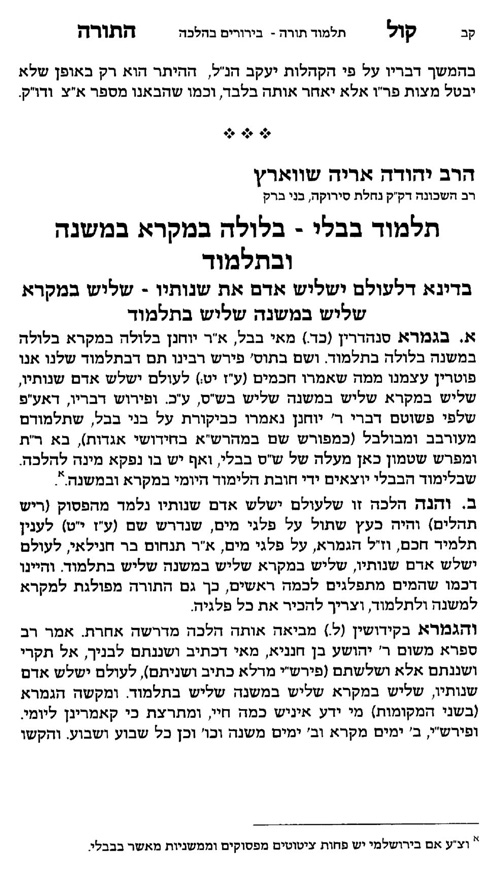
On p. 632 of the new Yeshurun there is a letter from R. David Zvi Hillman to Prof. Shlomo Zalman Havlin in which he states the following: In the early volumes of the Encylopedia Talmudit Lieberman was referred to as ר”ש ליברמן, a point I noted in Saul Lieberman and the Orthodox. Yet American rabbis protested and insisted that he not be mentioned. These rabbis are identified with the Rabbinical Council of America: מהסתדרות הרבנים ר”ל המזרחניקים. In response to this, R. Zevin from that point on only mentioned the name of Lieberman’s books but not Lieberman himself. A Bar Ilan search reveals that vol. 13 is the last volume where ר”ש ליברמן is mentioned. (Vol. 15 was the last volume to appear in R. Zevin’s lifetime. See Zevin, Ishim ve-Shitot [Jerusalem, 2007], p. 40 [first pagination]).
Why would R. Zevin agree to this? The answer is obvious: money. The Mizrachi in America was an important source of funds for the Encyclopedia Talmudit.
[10] The term “rabbanit” was primarily used for the wife of a rabbi. See Robert Bonfil, Rabbis and Jewish Communities in Renaissance Italy, p. 77 n. 186. My point is only that it was also used for scholarly women.
[11] The continuation of the shiur is also of great interest, as he explains that if one ends up in a hotel on Shabbat and sees that the lights in the hall go one every time one leaves one’s room, it is still permissible to walk in the hallway and it is not even regarded as a pesik reisha.
[12] See the biography and picture of her here. For pictures of Flora and her family, see also here.
[13] Rivka bat Meir of Prague (died 1605) was another learned woman who was called “rabbanit”, see Frauke von Rohden, ed. Meneket Rivkah (Philadelphia, 2009), pp. 6-7. Rivka authored the Yiddish mussar work Meineket Rivka, published in Prague, 1609. On the title page she is referred to as הרבנית הדרשנית . (In the Altneuschul memorial book it also says that she preached. See Von Rohden, p. 6) Here is the first page of the book, where she is again referred to as “rabbanit”.
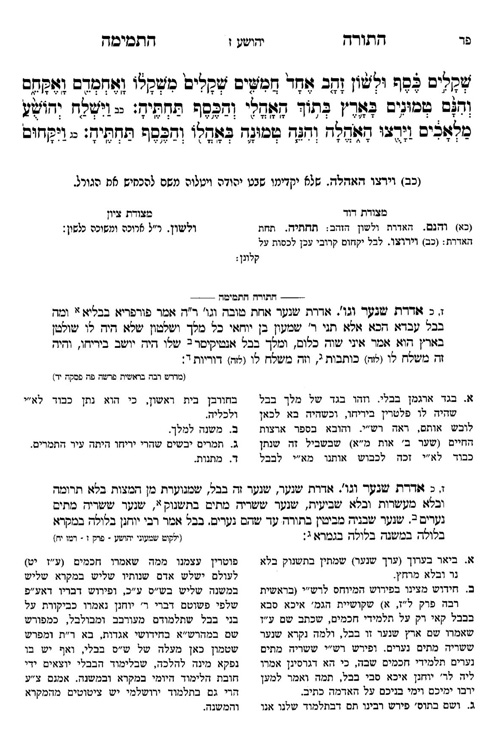
Lest anyone misunderstand, I must stress that Rivka only served as a rabbi and preacher for other women, and was therefore not a prototype for twenty-first century women rabbis. My point in referring to her is to highlight the use of the term “rabbanit” as designating a learned woman.
[14] Teshuvot Pesakim u-Minhagim, vol. 2, ed. Kahana, nos. 155-156.
[15] See Daniel Sperber, Minhagei Yisrael, vol. 1, pp. 65-66.
[16] I originally wrote Levinsohn, and thank a helpful reader for the correction. Loewisohn’s essay originally appeared in his posthumously published Mehkerei Lashon (Vilna, 1849).
[17] Incidentally, the note as it appears in the Vilna Mishnah has also been altered from what appears in the original work. In the original it states אשר אינם על טהרת לשון עבר, and in order that people understand what Loewisohn was saying, these words were altered to read: אשר המה כפי תכונת לשון הארמי
[18] See here.
[19] See here. As one of the commenters pointed out to this post, the women appear to be mermaids. He helpfully provided this link.
[20] For my essay on R. Ovadiah, see here.
[21] See Yabia Omer, vol. 5, Orah Hayyim no. 37, Yehaveh Da’at, vol. 1, no. 9, vol. 5 no. 32.
[22] R. Aharon Lichtenstein also has a preface to the book, where his ambivalence about the new approach comes through very clearly. This short essay deserves its own analysis.


Answers to Quiz Questions and Other Comments, part 1

Answers to Quiz Questions and Other Comments, part 1
By Marc B. Shapiro
It is now time to announce the names of those who were able to answer the quiz questions I posed. The only two people to answer both questions correctly were Alex Heppenheimer and Yonason Rosman. I fortunately had two CDs so both of them received the prize.

Question no. 1 was: The word for turkey is תרנגול הדו. There is a dagesh in the dalet. Why? Bring a proof for your answer from Berakhot between page 34a and 38a.

Alex Heppenheimer emailed as follows: “The dagesh represents a missing nun in the word הדו. The Aramaic form, in Berachot 36b, is הנדואי. (There is also similarly הנדויין in Yoma 34b and ר’ יהודה הנדואה in Kiddushin 22b.)”

This is correct. The name India (and thus also Hindu) originates with the Persians and Greeks for the land beyond the Indus River. You can see in the Aramaic terms referred to by Heppenheimer that the nun is part of the word. See also the Targum to Esther 1:1 where הדו is translated as .הנדיא Bava Batra 74b, Avodah Zarah 16a, and Bekhorot 37b have other forms of the word, all including the nun.[1] Berakhot 37b refers to נהמא דהנדקא, i.e., “Indian bread.” Targum Ps. Jonathan to Gen. 2:12 translates translates חוילה as הינדקי.

(As to why turkey was referred to by those in Spain, and later the rest of Europe, as “Indian fowl”, that is because when it was first brought back to Europe it was believed to be coming from the area around India, which is where Columbus himself thought that he had ended up.)

For those who are interested in grammatical matters like how the dagesh is used, let me recommend a new book, Adir Amrutzi’s Dikdukei Aviah (Tel Aviv, 2010). In speaking of nuns that drop off, on p. 13 he calls attention to Kiddushin 70a where the word אתרונגא appears. The nun in this word shows us that the plural of etrog is not etrogim, but etrugim, with a dagesh in the gimel and a kubutz under the resh. The singular word etrog should be written as אתרג (All this follows the pattern of tof-tupim [תף-תפים], dov-dubim [דב-דבים]. When the vav holam is in the word, the holam sound remains: חול-חולות, עוף-עופות).

Returning to India, the passage in Berakhot 36b reads: “The preserved ginger which comes from India (הנדואי) is permitted.” The problem is that when you look at Rashi, for his translation of הנדואי he writes: כושיים.

Cushi’im means “Ethiopians” (Translating “Cush” as “Ethiopia” does not imply that it corresponds to the borders of modern day Ethiopia. Some even prefer “Nubia” to Ethiopia”, as Ethiopians are Semitic while Nubians are “Hamitic” [and Cush was a son of Ham]. It perhaps also can refer generally to black Africa. This can explain Pesahim 94a which states that Egypt is one sixtieth of Cush. Also, the Targum to II Chron. 21:16 translates כושים as אפריקאי.)

So where does Rashi get the idea that Cushites are Indians? Did he not know that הנדואי means India? In his commentary to Kiddushin 22b he writes as follows:


הנדואה: מארץ כושי כוש מתרגמינן הנדואה

We see the same identification by Rashi in Yoma 81b.[2] Since the book of Esther distinguishes between India (הדו) and Cush, and Rashi identifies הנדואה with Cush, one might be tempted to conclude that Rashi didn’t realize that הנדואה is the same as הדו. But is it possible that he wouldn’t know this?

And to confuse matters even more, in Avodah Zarah 16a, where הינדואה is mentioned, Rashi explains that it means ארץ הדו.

So not only do we have the problem of Rashi identifying הנדואה as Cush, but we also have the problem of consistency, because in one instance he identifies the place correctly. To add one more thing to the mix, in his commentary to Sukkah 36a Rashi states that Cush is further from the Land of Israel than it is from Babylonia. This means that Rashi thought that Cush is to the east of Babylonia. In other words, Rashi does not believe that Cush is Ethiopia.[3]

So where does Rashi get this notion? He actually gives us his source in his commentary to Yoma 34b, where he refers to the Targum to Jeremiah 13:23. This verse famously states: “Can the Cushi change his skin, or the leopard his spots?” If you look at the Targum on this verse Cushi is translates as .הנדואה In the Targum to Isaiah 11:11 Cush is also identified as India.

So again, I ask, what is going on here? How could the Targum translate Cushi as “Indian”?

P. S. Alexander writes as follows: “It was a common view in ancient geography, shared by Ptolemy and probably also the author of the book of Jubilees . . . that Ethiopia was joined to India in the east. It is this idea that lies behind the [talmudic] statement that Cush and Hodu are adjacent.”[4] He also notes that the Indians dark skin was one reason for the identification. Furthermore, Alexander tell us, there was an ancient belief that there was a land connection between Ethiopia and India south of the Indian Ocean.

Since we have been speaking of India,[5] let me share with you what I found in R. Hayyim Hirschensohn’s Nimukei Rashi on Bamidbar (a copy of which I will give out to the winner of my next quiz[6]). On p. 81b he suggests that the revolt in India against English rule was a punishment of England for splitting the Land of Israel when it created Transjordan.

Returning to the quiz, my second question was: There is a rabbinic phrase that today is used to praise a Torah scholar, but in talmudic days was used in a negative fashion. What am I referring to?

Megillah 28b speaks of a צנא דמלא סיפרי . Today this expression is used to praise scholars. Yet if you look at the talmudic passage its meaning is the exact opposite. Rashi explains:
אינו אלא כסל שמילאוהו ספרים ואין מבין מה בתוכה אף שונה הלכות ולא שימש ת”ח ללמוד שיבינוהו טעמי משנה ופעמים שדברי משנה סותרין זה את זה וצריך לתרצה כגון הכא במאי עסקינן וכגון הא מני רבי פלוני היא וכגון חסורי מיחסרא אינו יודע מה שונה.

Rashi’s explanation should remind people of a phrase used by R. Bahya Ibn Paquda in Hovot ha-Levavot 3:4. In its medieval Hebrew translation it became famous: חמור נושא ספרים. I first heard this expression in yeshiva. Only later did I realize that it came from R. Bahya, and only some time later did I learn that R. Bahya didn’t invent it. Rather, it originates in the Quran 62:5.[7]

* * *

Since this post is not up to my normal length, let me make some more comments. At least one person thinks that my criticism of Artscroll regarding Kalir is unfair. If you recall, I originally criticized them for identifying Kalir as a tanna. In my last post I mentioned that in the first edition of the Artscroll Machzor this identification is rejected, and only in subsequent editions does the Machzor state that Kalir was a tanna. I also claimed that Artscroll knows the truth but in order to mollify its critics, changed what it originally wrote.

This, incidentally, is not the only time that I assume that Artscroll knows what it is writing is incorrect, but writes so anyway. I have a good example of this in the book I am currently working on, so I don’t want to give it away now. I already noted another example in Limits, where I call attention to the introduction to the Artscroll Chumash which states: “Rambam sets forth at much greater length the unanimously held view that every letter and word was given by God to Moses” (emphasis added). This statement, that the view of the Rambam is unanimously held, is false. Furthermore, Artscroll knows it is false, and in its commentary to Deut. 34:5 it mentions the talmudic view that the last verses were given to Joshua.[8]

Here is another example along these lines that I think readers will find interesting. It comes from the new Artscroll Midrash Rabbah, and was called to my attention by R. Avrohom Lieberman (who already called my attention to the Kalir change in the Machzor).

In explaining Tikun Soferim, Artscroll’s note states that this “cannot, Heaven forbid” be taken literally. Yet the editors of Artscroll, who are learned men, know perfectly well that there are traditional sources that state precisely this (See Limits, pp. 98ff). There is no question that the intent of the words “Heaven forbid” is to make the reader think that Artscroll’s perspective is unanimously held.

Since we are now on the subject of Artscroll (the most important and influential Orthodox publishing venture of all time), and lots of people want me to post more on this topic, let me give one final example.[9] It comes from Ecclesiastes, as I dealt with this book in the last series of posts. The upshot of what I and others have already pointed out is something everyone already knew, namely, that Artscroll has a religious agenda. Much like the New York Times’ agenda can be seen not only in the editorial page, but in the news reports as well, so too Artscroll’s agenda is seen not only in the “overviews,”[10] but in the selection of commentaries also. There is enough material for a very long and detailed article spelling all this out.

Eccl. 2:8 states: .עשיתי לי שרים ושרות
What does this mean? The simple explanation is that the author, traditionally Solomon, is telling us about all the wonderful things he amassed with which to enjoy himself, and among them are “men singers and women singers.” Artscroll translates the passage as “I provided myself with various musical instruments.” Now this might be an apologetic translation, but if so, it is not Artscroll that is to be too criticized, but the Talmud, Gittin 68a, since according to Rashi this is how the Talmud explains the words.[11] Artscroll is obviously within its rights to adopt this understanding, even if one assumes that this explanation is not in accord with the simple sense of the verse.

The problem comes with the next passage in the Artscroll commentary which states: “Rav Yosef Kara, Alshich, Metzudas Zion and others translate ‘singers.’” I will get to Kara and Alshich shortly, but let’s begin with Metzudat Tziyon, since this is easiest for most people to access as it appears in the Mikraot Gedolot. He writes as follows:

שרים: משוררים זכרים. ושרות: משוררות נקבות

So now I ask my fair-minded readers: Is Artscroll’s statement that Metzudat Tziyon translates שרים ושרות as “singers” accurate? I think the answer is clearly “no”. Metzudat Tziyon translates the words in question as “male singers and female singers,” and yet—don’t tell me you are surprised—in Artscroll this morphs into “singers”. Why would Artscroll fudge the translation? The answer is obvious. They don’t want people to think that Solomon would have listened to women singing. I am not sure why this is so problematic for them. After all, if Solomon engaged in idolatry (at least according to the biblical text’s simple meaning),, hearing women sing is not so far-fetched. In fact, in his comment on some other words in the verse, R. Jacob Lorberbaum[12] writes as follows):

רמז על שעבר על לא ירבה נשים שהזהירה התורה

Lorberbaum, therefore, has no difficulty in seeing the verse as pointing to misdeeds of Solomon.

Let us now see what Kara and Alshich say on the verse, since they too were quoted by Artscroll. Kara’s commentary is printed in Otzar Tov, ed., Berliner and Hoffmann (Berlin, 1886-1887), p. 10: עשיתי לי שרים ושרות: תיקנתי לי זכרים ונקיבות לשורר לפניי

Alshich explains the verse to be referring to משוררים ומשוררות

So we see that the commentators Artscroll refers to are explicit that the meaning of the passage is “male and female singers.”

Among other sources that interpret this way are Kohelet Rabbati, ad loc:


שרים ושרות: זמרין וזמרתא

Yalkut Shimoni, Kohelet no. 968:

עשיתי לי שרים ושרות: משוררים זכרים ונקבות.

See also the Targum to Eccl. 2:8, where שרים ושרות is translated as .זמריא וזמריתא

R. Moses Almosnino, Yedei Moshe (Tel Aviv, 1986), Eccl. 2:8 (p. 58), even explains why the female singers were desirable, as they helped create a better harmony:


על כן אמר שהיו לו שרים ושרות שהם המשוררים והמשוררות, אנשים ונשים יחד, שבהתמזגם יהיו הקולות ערובות, שקול האשה דקה וקול האיש הוא קול יותר עב, ובהתמזגם יחד יצא השיר בנועם.

When the Jews returned from Babylonia to the Land of Israel in the days of Ezra and Nehemiah, the Bible (Ezra 2:65, Nehemiah 7:65) states explicitly that they came with משוררים ומשוררות, “male and female singers.”

As for how Solomon could listen to women sing, for those who feel the need to answer this question, perhaps Solomon agreed with those authorities who feel that there is no blanket prohibition on hearing a woman’s singing voice,[13] a viewpoint that has recently been resurrected by Rabbis Moshe Lichtenstein,[14] David Bigman[15] and Avraham Shammah.[16] According to this perspective, only singing that is sexually arousing is forbidden.[17] Let us not forget that the Talmud speaks of a woman’s voice. It is the post-Talmudic authorities who clarify that this refers to a singing voice, but does this mean any singing voice or only one that in the minds of normal men could be arousing?

R. Marc Angel agrees with the rabbis mentioned in the last paragraph. He writes: “When the prohibition of “kol ishah” is applied to all instances of women singing in the presence of men, this is a distortion of the intent of the halakha. . . . Men and women may sing in the presence of those of the other gender, as long as the songs are of a religious nature, or of a general cultural nature (e.g., opera, folk songs, lullabies).”[18]

R. Yonatan Rosenzweig doesn’t go so far as to permit one to attend a concert with a female singer, but he does say that since today many people are used to hearing recordings of women’s voices, that possibly it is even permissible to watch a woman singing on television.[19]

A number of years ago there were ads in New York Jewish papers for a concert by Neshama Carlebach. The ads stated that the concert was open for women, as well as for men for whom the singing was permissible. This was a very strange formulation. Knowing that R. Mordechai Tendler was Neshama’s posek, I asked him about this. He explained to me that the language originated with him and was based on the notion that the prohibition against kol ishah is not a blanket prohibition, but depends on whether the singing is sexually arousing. (This approach can be supported by the view found in some rishonim that kol ishah that is not sexually arousing is only forbidden during keriat shema. Otherwise, there is no prohibition.[20]) Therefore, men who are used to hear women sing and will not be aroused by Neshama are permitted to attend the concert, and this explains the strange language in the ads.[21] Tendler also told me that this view of kol ishah as being what we can call a “situational prohibition” rather than an absolute issur, was held by his grandfather, R. Moshe Feinstein.[22]

This opinion, that whether or not a woman’s singing voice is prohibited depends on how men will react to it, will no doubt strike some as “unorthodox.” This approach is definitely not as widely held today as in years past. Yet many people reading this post can recall a time when kol ishah, as a general prohibition, was simply not an issue for the Modern Orthodox, or even for many of the more right-wing Orthodox. This was no different than the situation in Germany, where pretty much all of the Orthodox, including members of Hirsch’s community, saw no problem in attending the opera.

If you went back to the 1960s, other than the hasidim and the tiny yeshiva world, it would be hard to find an Orthodox Jew in New York City who didn’t see the Broadway performance of “Fiddler on the Roof.” I would even assume that that there were some roshei yeshiva who saw it. Until the 1980s there was no problem with Modern Orthodox synagogues sponsoring trips to Broadway musicals. My own shul even put on a performance of “Fiddler on the Roof” in the early 1980s. That would be unimaginable today at almost all Orthodox shuls.[23] (Yet somehow YU is able to continue its long tradition of a fundraising night at the opera, and I have not heard of any attempt by the roshei yeshiva to end this practice.)

Until the 1980s, girls would also have solo singing roles in the musical productions put on by many Modern Orthodox yeshiva high schools and summer camps. (Was there a Modern Orthodox summer camp where girls did not sing?) Readers can correct me if I am wrong, but as far as I know, only Ramaz, Flatbush, and SAR still have girls singing solos.[24] The other schools that have girls sing have them do so in groups, or at least with one other girl.

To bring us back to the earlier era, where women singing was acceptable in the Modern Orthodox world, let me quote Rabbi Marc Angel:

I was raised in the Sephardic community of Seattle, Washington, and well remember our many family gatherings where romances were sung. Jews of great piety sang right along with those of lesser piety. I do not remember anyone ever objecting to the singing of love songs by men and women. In the early 1980s, Haham Dr. Solomon Gaon, himself a Judeo-Spanish-speaking rabbi, taught classes in Sephardic folklore at my Congregation Shearith Israel in New York City. I well remember him singing love songs, enthusiastically and nostalgically. Both of us participated in a program of Sephardic culture sponsored by the Hebrew College of Boston. A female soloist sang a selection of romances, after which Haham Gaon not only applauded loudly but rose to speak in praise of the singer for her beautiful rendition of the songs. Haham Gaon, who served as chief rabbi of the Spanish and Portuguese Congregations of England and as head of the Sephardic Studies Program of Yeshiva University in New York, was a very prominent Orthodox Sephardic rabbi and a man of impeccable piety.[25]

R. Eliezer Berkovits wrote:


Nowadays, the singing of a woman is not fundamentally different from what the original Halakhah termed “her regular voice.” A woman’s voice, even when she is singing, is nothing unusual today, and it is no more distracting during the Shema prayer than that of a man singing. Only in specific amorous situations as in the Song of Songs, may it have a sensual quality.[26]
In Hirsch’s famous Schiller speech, delivered at his Frankfurt school, a note states that male and female students alternatively sang songs.[27] As I pointed out in my own note to the speech, girls were permitted to sing at Hirsch’s school. Mordechai Breuer, Modernity Within Tradition, p. 411 n. 11, calls attention to a report in Jeschurun 18 (1885), p. 11, of a public function at the school at which a teenage girl sang in the presence of a crowded audience.

In Between the Yeshiva World and Modern Orthodoxy, p. 216, I quote Jacob Rosenheim who attempts to explain why Hirsch permitted girls to sing at public examinations in the higher grades (and I also note that this passage was censored in the Netzah translation). A halakhic justification of hearing unmarried girls sing was actually penned by R. Isaac Unna, the rav of Mannheim. The short responsum appears in his Shoalin ve-Dorshin no. 2.

Unna cites the Ba’er Heitev thatקול פנויה מותר . In context, what this means is exactly what it says, namely, that unlike a married woman’s (singing) voice, which is always prohibited, the singing of an unmarried woman is permitted to be heard. When he says this is permitted, he means if it doesn’t cause sexual thoughts. (Moderate sensual thoughts would be permitted according to Maimonides, as I mention below.) If it does, then of course it is forbidden. But this prohibition is a general prohibition against arousing oneself sexually and has nothing to do with the prohibition of kol ishah, which only refers to married women and is apparently based on the assumption that the voice of a married woman is always sexually arousing.[28]
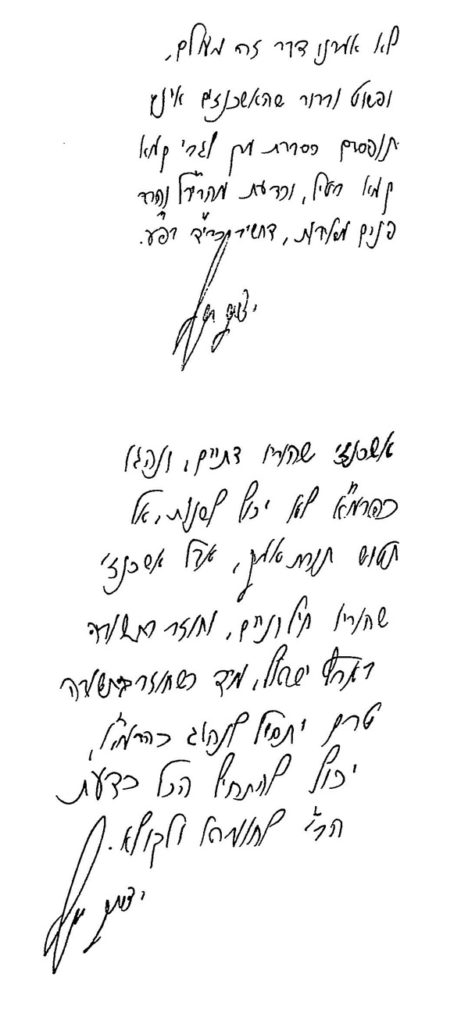
In recent generations, poskim have all written that the פנויה referred to here is one who does not have the status of a Niddah, that is, a pre-pubescent girl. The first source to adopt this approach seems to be the eighteenth-century Peri Megadim, Orah Hayyim 75:3. As far as I can tell, none of the early poskim who discuss the matter even mention this point, and they all assume that פנויה mean an unmarried woman, of any age. This approach also continued among certain poskim even subsequent to the Peri Megadim.

See for example this page R. Jacob Pardo’s Apei Zutrei (Venice, 1797), Even ha-Ezer 21:8:

Pardo is very clear that פנויה means exactly what it says. He compares the halakhah of kol ishah to that of hair covering, and just like only a married woman has to cover her hair, so too it is only a married woman’s voice that is prohibited, not the voice of a single woman. (As mentioned already, this would only be prohibited if it was sexually arousing.) As for extending the prohibition to unmarried women, he sees this as an excessive stringency and applies the rabbinic phrase kol ha-mosif gorea, noting that the people will not listen to such a ruling and this will turn them into brazen sinners.

This is not to say that Pardo approves of listening to single women sing. He doesn’t, and applies to such singing the rabbinic phrase מוטב שיאכלו ישראל בשר תמותות כשרות, which comes from Kiddushin 22a and is stated with reference to something distasteful. It is distasteful, yet permitted nonetheless. Pardo’s careful distinction between what is preferred behavior and what the halakhah actually requires is seen in this comment as well, where he refers to Job. 31:1: “[I made a covenant with mine eyes;] how then should I look upon a maiden?”[29]


הן אמת דלבטל ההרהור יש להחמיר ע”ד ומה אתבונן על בתולה. אך אינו מן הראוי להשוותה לנשואה לאסור מפאת הדין.

Here is a page from R. Aaron ha-Levi, Mateh Aharon (Salonika, 1820), p. 260b, where we see some more interesting comments, including defending a rabbi who permitted listening to the voice of a single woman.

And finally, here is a page from R. Hayyim Kasar’s Shem Tov, a twentieth-century commentary on the Mishneh Torah, Hilkhot Issurei Biah 21:2. While Kasar is quite strict in forbidding a man to hear the voice of an ervah, even if he is not familiar with her, he is also clear that a penuyah means an unmarried woman and that there is no blanket prohibition on hearing her voice, just like there is no blanket prohibition on seeing the hair of an unmarried woman.

I would only add that this makes perfect sense according to Maimonides. If, as Maimonides says, one is permitted to look at an unmarried woman and enjoy her beauty,[30] it stands to reason that one can listen to the singing of an unmarried woman and also enjoy it.[31]

Returning to German Orthodoxy, Der Israelit was the newspaper of the German separatist community. Yet it seems to have had no problem highlighting an Orthodox female opera singer and stressing her commitment to Orthodoxy.[32] Mordechai Breuer called attention to this last point, and I assume that he didn’t have any knowledge of opera or he would have pointed out that the female singer referred to by the paper, Rosa Olitzka (1873-1949), was quite famous in her day. Here is a picture of her.

Right after telling us that Olitzka is the daughter of the hazan of the Berlin Adass Jisroel (i.e., R. Esriel Hildesheimer’s separatist community), Der Israelit mentions her starring as Carmen in the London Opera production. One can find a good deal of material about Olitzka online,[33] and can even purchase recordings of hers.[34] Maybe a reader knows whether she remained observant in her later years.

Breuer also refers to the JüdischePresse’s review of the opera “Samson and Delilah”.[35] While Der Israelit was the paper of the Frankfurt Orthodox, Jüdische Presse was published by the Orthodox of Berlin.[36]

The view that kol ishah is not an absolute prohibition, but depends on whether or not the singing is sensual in nature, was also held by R. Joseph B. Soloveitchik, at least according to R. Aharon Rakeffet.[37] Rakeffet has also reported on a number of occasions that the Rav attended the opera in Berlin.[38] At the Maimonides School first Hanukkah Banquet in 1939, “the program included Betty Brooks, a prominent radio personality singing a variety of Jewish and English songs, Mabel Wingert, a dancer, and Frost and Helene, society dancers.”[39]

R. Ovadiah Yosef’s viewpoint on kol ishah is also worth noting, especially as it has undergone a change. In the first volume of Yabia Omer, published in 1954, R. Ovadiah deals with the following question (Orah Hayyim no. 6):

נשאלתי בדין קול זמר של אשה בגרמפון או ברדיו, אם יש בו משום קול באשה ערוה, וצריך להזהר שלא לשמעו בעת ק”ש ותפלה.
His formulation reflects the notion we have already seen, expressed by some rishonim, that the prohibition of kol ishah is a special prohibition related to shema (and prayer), rather than a general prohibition on hearing women sing (which if sexually arousing would be forbidden on other grounds.)

Here is how he formulates the question and answer in the table of contents:

קול זמר של אשה ברדיו וגרמפון, אין צריך להזהר מלשמעו בשעת ק”ש ותפלה, כשאינו מכיר את המשוררת, ואין בזה משום קול באשה ערוה
We see from here that there is no problem of kol ishah when you are not familiar with the female singer. In other words, you can recite shema and tefillah while hearing this. Again, however, this is not related to the wider issue of sensual songs. If you are “turned on” by hearing a song even if you don’t know the singer, then it is forbidden at all times. But by the same token, since the prohibition of kol ishah is exclusive to shema and tefillah, the implication is that a woman’s voice at other times is not prohibited if it doesn’t arouse sensual feelings.

Based on this understanding of R. Ovadiah’s responsum, I don’t think there is a contradiction between this teshuvah and R. Ovadiah’s well known love for the music of the Egyptian singing sensation Umm Kulthum.[40] Here is what Umm Kulthum looked like in her younger years.

If R. Ovadiah’s responsum in Yabia Omer intended a blanket prohibition on hearing the voice of a woman you are familiar with, rather than just confining this prohibition to shema and tefillah, then we would be confronted with a tremendous contradiction between the responsum and how R. Ovadiah lived his own life. It is not like R. Ovadiah wrote something in his responsum and did something else in his private life where people couldn’t see. His love of Umm Kulthum’s music was something everyone knew about, and he listened to it in the company of others. Clearly, therefore, his responsum which prohibits listening to the singing of one you are familiar with only applies during shema and tefillah. At other times, it is only prohibited if one is sexually aroused by the music, and since R. Ovadiah was not, he was permitted to listen to Umm Kulthum. Rabbi J. David Bleich is therefore incorrect when he summarizes R. Ovadiah’s responsum as follows: “Rabbi Yosef concurs in this ruling but adds that it is forbidden to listen to a female vocalist who is known to the listener even if the woman in question is known to him only through photographs.”[41] (I hope no one attempts to argue that R. Ovadiah didn’t know what Umm Kulthum looked like. She was only the most prominent celebrity in Egypt, with her picture everywhere.)

I was also informed by R. Avraham Yosef that his father, R. Ovadiah, later retracted his ruling in this responsum that if you are familiar with the singer that you can’t hear her voice in shema and tefillah. I later saw that R. Ovadiah himself states as much in Yabia Omer, vol. 9 no. 108:43:

ומה שכתבתי שם שאם ראה אותה בתמונה ג”כ, אסור, אינו מוכרח, שיש לומר . . . “ביודעה ומכירה”, זהו רק כשראה אותה בחיים חיותה במלא קומתה

If you hear her voice while you are saying shema or reciting blessings, R. Ovadiah advises וירכז מחשבתו לכוין בברכותיוR. Ovadiah’s words בחיים חיותה במלא קומתה might be taken to imply that even if you know the woman from television, there still is no prohibition of kol ishah.

R. Avraham Yosef states that while it is permitted to hear a woman sing even if you know what she looks like, it is not permitted to attend a live performance or even watch on television. R. Avraham assumes that alllive and television performances are prohibited, not only those that could be sexually arousing.[42] It also needs to be stated that despite how I interpreted R. Ovadiah, that female singing is only prohibited if it is sensual music, the upshot of what R. Ovadiah states throughout his writings is that by definition a live female singer is sexually arousing and thus prohibited. Although I think the evidence shows that R. Ovadiah agrees that theoretically kol ishah is only forbidden if it leads to <>hirhurim >, in practice he assumes that <>alllive female singing falls into this category. (I wonder, however, if he would also forbid the live singing of a very old woman, which would in no way be sensual.)


I found another interesting passage regarding kol ishah in the Meshivat Nefesh of R. Yohanan Luria (16th century). On p. 144, after explaining how the women of the desert could sing in front of the men (Ex. 15:21), he writes:

ומזה הטעם ראוי למחות לנשים המשוררות לכלות לפני האנשים רק הבתולות שמותרים בזה כדי לחבב הבחורים לקפוץ עליהם לשם אישות.

He makes the same point on the previous page, and concludes (p. 143):

רק הבתולות ראוי להם שיחבבו עצמם על הבריות לקפוץ אחריהם

What it means is that while married women can’t sing in front of men, unmarried women are permitted to do so in order to attract the attention of the young men, similar to what they did in Temple days when they would dance before the eligible bachelors.

Some might be wondering, how was this permitted since married men will also hear the women sing, and being that they are not in the “market” for a wife, what permission is there for them to listen to and be physically attracted to the young women? I think the answer is obvious, that those men who would have had improper thoughts were not supposed to listen to the women, just as I presume they were not supposed to watch the single women dance in Temple days. Yet the Sages did not ban this dancing because of what some men might be thinking, and similarly, Luria permits the singing by single women and is not concerned that some married men might also be listening. The logic behind Luria’s position is that young men looking for brides are supposed to be attracted to young women. The latter dress up nicely so that the men look at them, they put on makeup for this purpose, and yes, they sing in front of the men, all in order to make themselves attractive.

Here is the title page of Luria’s sefer.

I already mentioned the opera, so before concluding I refer you to S.’s post here.

He points to an early eighteenth-century communal decree in Altona-Hamburg-Wandsbek forbidding attendance at the opera, except for on Hanukkah and Purim when it was permitted. The text is also found in Simhah Assaf, Ha-Onshin Aharei Hatimat ha-Talmud, p. 116.

Finally, I would like to point to a very interesting source that as far as I know has never been mentioned in any of the many halakhic articles dealing with kol ishah. I refer to R. Joseph Hayyim’s Imrei Binah, ch. 3, no. 79. Here is the page.

For those who are unclear as to what he means, he explains it himself in his book Ateret Tiferet im Pelaot Rabot. Here is the title page of the book, which for some reason is not on hebrewbooks.org or Otzar ha-Hokhmah. The text that appears in Imrei Binah also appears in this book, and R. Joseph Hayyim’s explanation is found on p. 116 (no. 202).

According to R. Joseph Hayyim, if the singing of an individual woman is accompanied by instruments, meaning that there are “many voices”, then it is permissible. This is an incredible limud zekhut, because pretty much every singer today is accompanied by music.[43]
[1] Referring to the beginning of Esther, where Ahasuerus is said to rule from Hodu to Cush, the Talmud, Megillah 11b, states:
From Hodu to Cush: Rav and Samuel gave different interpretations of this. One said that Hodu is at one end of the world and Cush at the other, and the other said that Hodu and Cush adjoin one another, and that [the meaning is that] as he ruled over Hodu and Cush, so he ruled from one end of the world to the other.
This passage should immediately raise a couple of questions in people’s minds. 1. Since there is no doubt that both amoraim knew where India and Ethiopia were located, why did one of them explain that the two countries are next to each other? How come he didn’t accept the common identification of Cush and Ethiopia? 2. According to the first opinion, that Hodu is at one end of the world and Cush at the other, are we to understand from this that he thought that the world was flat? (I realize that “end of the world” could be used the same way we use it today, but I wonder if that is the peshat.)

[2] See also his commentary to Isaiah 18:1, where he regards Cush as being in the East.

[3] In the last post I spoke a bit about what Rashi regarded as beautiful, based on his commentary to Song of Songs. We also find from other comments of his that he did not regard Cushim as beautiful. Based upon what we have already seen, I assume that for Rashi a Cushi would have an Indian complexion. (See Moed Katan 16b regarding the skin of the Cushites.) In his commentary to Gen. 12:11 he speaks of “black and repulsive people, brothers of the Cushim.” In Num. 12:1 the Torah speaks of the Cushite that Moses married. Rashi does not take this literally and writes: “Because of her beauty she is called Cushite, as one calls his handsome son ‘Cushite’ in order that the evil eye should not have power over him.” (This same passage appears in Midrash Tanhuma 96:13, and see Yitzhak Aviner, Heikhal Rashi [Tel Aviv, 1960], vol. 4, p. 234, that it was inserted from Rashi into the Tanhuma). I think it must be very hard to teach this Rashi in elementary and even high school. One can easily see that if one of the students is a “person of color” or the student’s parent is, that the assumption of this Rashi could be very hurtful to the student. Has any reader had to deal with this?

For the same approach by Rashi, and here too it appears to be his own interpretation (although obviously based on the earlier rabbinic understanding of Cushite), see Sukkah 53a, where it mentions that Solomon had two Cushite servants. Rashi writes:

תרי כושאי: על שם שהיו יפים קרי להו הכי
See Arukh la-Ner, ad loc., who questions Rashi’s explanation, since while the Sages speak of Tziporah as being called Cushite in Num. 12:1 because of her beauty, they never say that a man would be called Cushite if he was handsome. This is precisely why I noted that what Rashi writes here is apparently his own interpretation.

Incidentally, the Artscroll translation to this passage makes as unfortunate error. While the Talmud speaks of “two Cushites”, Artscroll translates תרתי כושאי as “two Cutheans.”


The Vilna Talmud’s version is תרתי כושאי, while Rashi has תרי. Rashi’s text preserves the correct version (see also Arukh ha-Shalem, s. v. כש, p. 348 n. 4) as תרי is masculine while תרתי is feminine. In R. Meir Mazuz’s new book, Darkhei ha-Iyun, p. 5, he deals with these words and calls attention to the common grammatical error when people write תרתי דסתרי. Since דסתרי(=(הסותרים is masculine, the proper formulation is ether תרי דסתרי or תרתי דסתרן.

For more on the identification of Cushite with ugliness, see Jonathan Schorsch, Jews and Blacks in the Early Modern World (Cambridge, 2004), chs. 3-4, and Abraham Melamed, The Image of the Black in Jewish Culture (London, 2003).
[4] “Toponomy of the Targumim,” (unpublished doctoral dissertation, Oxford University, 1974), p. 134.

[5] I think readers will find this document interesting: link (pdf).

It contains the Chief Rabbinate of Israel’s acknowledgment that Hinduism is monotheistic. I don’t even think that one can speak of shituf when it comes to Hinduism. What you have in Hinduism are manifestations of the one God, and this does not appear to violate any Noahide commandment. This is significant since in the Jewish imagination Hinduism has often been seen as a classic example of real idolatry. Thus, right at the beginning of many seforim it states that passages dealing with Gentiles are only referring to idolators in places like India.


Related to the latter point, there is an unbelievable error by the great R. Judah Aszod. In 1833 the Hatam Sofer responded to the following query of a Hungarian rabbi: During Christian religious ceremonies that pass through the city, are Jews permitted to put candles in their windows? The fear was that if the Jews don’t do that, their homes would be attacked on Christian thugs (Hatam Sofer, Yoreh Deah, no. 133 [end]). The Hatam Sofer concluded that while it was permissible to indirectly request a non-Jew to light the candle, it is absolutely forbidden for a Jew to do so.

הישראל אסור לעשות וצריך למסור נפש ע”ז
The same issue is dealt with by the Hatam Sofers’s son in Ketav Sofer, Yoreh Deah no. 84, and a similar issue by his grandson in Da’at Sofer, Yoreh Deah, no. 59. See also R. Eliezer Deutsch, Peri ha-Sadeh, vol. 3 no. 10.

In the Hatam Sofer’s responsum he speaks of the candle lighting that takes place in “India”.

ולענין מה שמסבבים בארץ הודו בע”ז שלהם, וכל הדרים באותו המבוי צריכים להדליק נרות, ויהודים הדרים שם אם אינם מדליקים הם בסכנה מפני ההמונים.
There is no doubt whatsoever that the word “India” is not to be taken literally and that the Hatam Sofer is referring to local Christian practices. After all, he was responding to the question of a Hungarian rabbi! The responsa by his son, grandson, and Deutsch don’t even feel that it is necessary to point this out, as it is so obvious.

It is incredible is that R. Judah Aszod, Yehudah Ya’aleh, Yoreh Deah, no. 170, takes the Hatam Sofer to really be speaking of India, even though as just mentioned, he was responding to a halakhah le-ma’aseh question from Hungary, not from a rabbi in Bombay! This misunderstanding contributes to Aszod’s lenient decision.


לענ”ד הח”ס דוקא קאי על ארץ הודו שמסבבים בע”ז שלהם . . . משא”כ במדינתינו אינו חק המדינה כ”א באיזו מקומות ולא עפ”י המושל אלא מרשעת שונאי ישראל, והדלקת הנרות אצלם נמי רק אין כוונתם להעביר על הדת כ”א שיהודים ישמחו עמהם וזה מותר משום איבה כברמ”א ביו”ד ססי’ קמח . . . וגם בזה”ז לא עובדי ע”ז הן לא מקרי אליל שלהם עכו”ם כמ”ש הש”ך סי’ קנא ס”ק יז.
In this passage he cites two sources. The second one is the Shakh, whom he cites as claiming that the Christian religious item (I assume he means the crucifix) does not have the status of an אליל. However, the Shakh actually says the exact opposite of what Aszod quotes him as saying.

ודוחק לומר דכיון דבזמן הזה לאו עובדי עבודת כוכבים הן לא מיקרי אליל שלהם עבודת כוכבים
The other source he cites is R. Moses Isserles, whose comments are indeed quite significant. I don’t understand why this source is not cited in support of celebrating Thanksgiving even by those who assume that there is some religious component to the holiday.

אם נכנס לעיר ומצאם שמחים ביום חגם ישמח עמהם משום איבה דהוי כמחניף להם ומ”מ בעל נפש ירחיק מלשמוח עמהם אם יוכל לעשות שלא יהיה לו איבה בדבר
Presumably, the opponents of Thanksgiving assume that there is no enmity in not celebrating, so the Rama’s permission doesn’t apply. I wonder though, do the people in Lakewood who require the non-Jewish bus drivers to work on Thanksgiving really think that this insistence doesn’t create enmity?
Returning to the responsum of Aszod, the problems I have pointed to were noted by R. Hayyim Eleazar Shapira, Minhat Eleazar, vol. 1 no. 53:3, and he is dumbfounded. It is precisely with regard to this sort of responsum, where the errors are obvious (misunderstanding the clear meaning of the Hatam Sofer, misquoting the Shakh), and it was published posthumously, that people are often tempted to claim that it is not authentic. I won’t go this far, but is it possible that a student wrote the responsum and Aszod just signed his name without examining it carefully?
[6] As with the other volumes of this series, one can find lots of interesting passages in vol. 4. Here are just a few. P. 56b: Moses opposed the eating of meat, but he could not forbid it because the people would regard this as heresy. P. 98b: Hirschensohn mentions the notion, already expressed by the Vilna Gaon, that sometimes the Talmud’s explanation of the Mishnah is to be understood as a form of derash. In other words, the explanation is not in accord with what the Mishnah really intended. He also refers to Berdyczewski and writes zikhrono li-verakhah after his name. P. 14a: There is no obligation in contemporary times for married women to cover their hair.

וזהוא ההיתר שנוהגים היום ברוב המדינות שהנשים מבנות ישראל הולכות בגלוי הראש, אם שהראשונות שבטלו את המנהג היו נקראות עוברות על דת משה אבל הבאים אחריהם אחרי שכבר נתבטל המנהג אין בזה איסור עוד.
This source has not been mentioned in any of the recent discussions about women’s hair covering. I hope to soon discuss Hirschensohn’s viewpoint at greater length, including his radically new understanding of שער באשה ערוה. I will do so as part of a larger discussion of the issue of women’s hair covering.
[7] See S.’s post here.

[8] R. Moshe Taub reminded me of Artscroll’s commentary to Deut. 34:5, which I neglected to mention in my book.
[9] I had been planning to offer one further example, but I was shown to be wrong. Let me explain: A little while ago R. Natan Slifkin had a post on werewolves, citing R. Efraim ben Shimshon’s strange comments in this regard. See here.

Slifkin earlier had written about this in his Sacred Monsters. None of this was a revelation to me since I had earlier seen the material from R. Efraim in R. Yosef Aryeh Lorincz’ Pelaot Edotekha, vol. 2, pp. 136-137. Not surprisingly, Lorincz takes this all very seriously. Readers might recall that I mentioned Lorincz’ book here. I called attention to his discussion of whether it is permitted to eat the flesh and drink the blood of demons. After this post I had a correspondence with someone who wanted to know what I thought about what Lorincz had written. I told him although I don’t know what the halakhah is in this matter, I nevertheless promise to eat the first demon that Lorincz is able to capture. I further told him that I would even volunteer to shecht it. My correspondent wasn’t seeing the comedy in this, as he thought that this was a very serious issue, that someone whom we are told to respect for his Torah knowledge could actually, in the twenty-first century, be discussing such a matter as a real halakhic problem. He was also adamant that if such a book was published by someone who taught at a Modern Orthodox school, the principal should immediately fire the author. Further correspondence revealed that he also didn’t think that anyone who believed in demons should be allowed to teach at Modern Orthodox schools.

My response to him was that I don’t think we need to get all out of shape about demons. To begin with, and readers can correct me if I am wrong, I don’t think that most people in the American haredi world really believe in demons. Yes, I know they study the talmudic passages that refer to demons, and will mention them as the reason for washing one’s hand three times in the morning, but based on conversations I have had with people in the haredi world (admittedly, most of them from the intellectual elite), I don’t think that they take it seriously. (When I say they don’t “believe” in demons, I mean real belief in the role of demons and how they affect humanity, as expressed in the Talmud and elsewhere.) It is almost like the emperor has no clothes, in that they don’t believe it but continue acting as if they do, afraid of what will happen if they are “outed”. (I have found a similar phenomenon with regard to Daas Torah. I have discussed this issue with many people in the haredi world, and have yet to find even one who accepts the version of Daas Torah advocated by so-called Haredi spokesmen and Yated Neeman.) But even if I am wrong in this, there are lots more important things to keep out of Modern Orthodox schools than an occasional reference to demons. How about the negative comments about non-Jews and even racist statements (sometimes under the guise of Torah) that children are exposed to in Modern Orthodox schools? How about rebbes telling the students that there is such a thing as spontaneous generation, which is akin to telling the students to sign up with Flat Earth society?

Getting back to werewolves, there is someone much better known than R. Efraim who refers to them, namely, Rashi. In his commentary to Job 5:23, Rashi explains that חית השדה means werewolf. (He offers the Old French, for which see Moshe Catane, Otzar ha-Loazim, no. 4208, and Joseph Greenberg, Otzar Loazei Rashi be-Tanakh, p. 211) He further adds that this is also the meaning of אדני השדה (See Kilayim 8:5). I have to admit that I was all set in this post to mention that Artscroll, which always cites Rashi’s interpretation, in this example chose to omit it. Without even examining the commentary, I was sure that Artscroll would choose to avoid mentioning anything about werewolves. Yet when I actually opened up the commentary, prepared by R. Moshe Eisemann, I was pleasantly surprised to see that he indeed tells the truth, and the whole truth, i.e.,, that Rashi was referring to a werewolf. I found something else in this volume that I didn’t expect. In an appendix he discusses whether the commentary attributed to Rashi was actually written by him. Unfortunately, Eisemann did not feel that he should inform the reader which academic sources he used in preparing this appendix.
[10] I don’t understand why Artscroll uses this word. The overviews found at the beginning of their books are actually not overviews. (Look up the word if you are not sure what it means). They should have been called what they are, namely, “introductions.”
[11] The Talmud explains sharim ve-sharot as מיני זמר, and Rashi, Eccl. 2:8, clearly based on the Talmud, explains sharim ve-sharot as מיני כלי זמר. Either Rashi’s text of the Talmud also included the word כלי , or this is how he understood the talmudic expression מיני זמר. (Literally, מיני זמר means “types of music”, and when the word כלי is added it means “various musical instruments.”)
[12] His commentary, Ta’alumot Hokhmah, is found in the standard Mikraot Gedolot.
[13] According to R. Jehiel Jacob Weinberg, the Rambam’s opinion is that kol ishah is only forbidden if one derives sensual pleasure from it. See Seridei Esh, vol. 2 no. 8.
[14] See here.
[15] See here.
[16] See here.
[17] R. Yuval Sherlo does not permit one to attend the opera, but if one is stuck in a situation, such as a soldier at a military event, then he rules that it is permissible to remain even though women are singing. See here.
[18] Conversations 12 (Winter 2012), pp. 43, 47; also available here. At the end of the article, Angel concludes: “Married women need not cover their hair, as long as their hair is maintained in a modest style. The wearing of wigs does not constitute a proper hair-covering for those married women who wish to cover their hair. Rather, such women should wear hats or other head coverings that actually cover their hair.” He also discusses hair covering on YouTube here.
[19] “Kol Ishah Bimeinu,” Tehumin 29 (2009), p. 143.
[20] See Seridei Esh, vol. 2 no. 8, and see also the helpful summary of positions available here.

[21] In support of this view, one can cite Hagahot Maimoniyot, Hilkhot Keriat Shema 3:16:
וקול אע”ג דאינה נראית לעינים הרהור מיהא איכא וכל אלה דוקא שאין רגילות להגלות אבל בתולה הרגילה בגלוי שער לא חיישינן דליכא הרהור וכן בקול לרגיל בו
[22] It seems to me that Tendler’s description of R. Moshe’s opinion is contradicted by Iggerot Moshe, Orah Hayyim 1, no. 26, Orah Hayyim 4, no. 15.

[23] For a contemporary example of an Orthodox synagogue allowing women to sing, see here.

[24] See e.g., here, here, here and here.
[25] Foundations of Sephardic Spirituality (Woodstock, VT, 2006), p. 186.
[26] Jewish Women in Time and Torah (Hoboken, 1990), p. 62. Berkovits also understood the matter of women’s hair covering in the same fashion, and did not regard it as an obligation in contemporary times (heard from Berkovits’ son, Prof. Avraham Berkovits).

[27] See here.
[28] Note the language of the Shulhan Arukh, Even ha-Ezer 21:1: ואסור לשמוע קול ערוה או לראות שערה

I don’t think anyone today assumes that there is a prohibition in seeing the uncovered hair of an ervah, if one is not sexually aroused, the reason being that we see it all the time and are thus used to it. By the same logic, if one is unaffected by hearing a woman sing, even if she is married, there should be no prohibition even according to how I explained the Ba’er Heitev. This is indeed the conclusion of R. Aharon de Toledo, Divrei Hefetz (Salonika, 1795), p. 113a:

עלה בידינו דהא דאמרי’ קול באשה ערוה היינו כשהיא הומיה ושוררת שירי עגבים ומתכווין ליהנות ממנה
However, the subsequent words of Toledo show that he only permits listening to a woman who is singing non-sensual songs on her own. He specifically forbids female songs directed towards men, as in a concert.

[29] The verse from Job is used in an Aggadic sense in Bava Batra 16a and Avot de-Rabbi Nathan, ch. 2, and then used by Maimonides in Hilkhot Issurei Biah 21:3.


ומותר להסתכל בפני הפנויה ולבודקה, בין בתולה בין בעולה, כדי שיראה אם היא נאה בעיניו, יישאנה; ואין בזה צד איסור. ולא עוד, אלא ראוי לעשות כן. אבל לא יסתכל דרך זנות, הרי הוא אומר “ברית, כרתי לעיני; ומה אתבונן, על בתולה”
Since he cites a verse from the book of Job, it appears that looking דרך זנות is only a rabbinic prohibition.
[30] Commentary on Sanhedrin 7:4. What this means is that one can look at a possible future wife and appreciate her beauty, for after all, one is supposed to be attracted to her. As we have seen already, in Hilkhot Issurei Biah 21:3, Maimonides adds a caveat. He states that is forbidden to look at an unmarried woman דרך זנות. What this means is that while one can look at and admire the beauty of a single woman (what I earlier referred to as “moderate sensual thought), one cannot leer at her, i.e., with lascivious intent.
[31] When Maimonides speaks of enjoying an unmarried woman’s beauty, I am certain that he is speaking of a Jewish woman, whom you can marry.
[32] Breuer, Modernity Within Tradition, p. 150. See Der Israelit, April 5, 1894, p. 503. See my post here, where I deal with the unsubstantiated rumor that Hirsch attended the opera. I quote from Prof. Breuer’s email to me where he writes: “When I went to the opera as a boy of 13-14 years my father [Isaac Breuer] did not express his dissatisfaction.”

[33] See e.g. here.
[34] See e.g. here.
[35] Modernity Within Tradition, p. 150.
[36] Since I am speaking about German Orthodoxy, let me use this opportunity to correct something I wrote. In Between the Yeshiva World and Modern Orthodoxy, p. 53, I record the recollection of Judith Grunfeld, “daughter of a learned German rabbi,” that she had never heard of a prohibition against women singing in front of men until she went to Poland (where she taught at the Beth Jacob school). Dr. Yitzchok Levine pointed out to me that Grunfeld’s father, while living in Germany, was actually Hungarian.
[37] Listen to his shiur from Feb. 8, 2010, available here, beginning at 48:20. Rakefet also quotes R. Aharon Lichtenstein that the Rav held that in modern times there is no obligation for married women to cover their hair. Listen to the shiur just mentioned beginning at 62 minutes. I will return to this point in a future post when I deal with R. Michael Broyde’s article on the topic.

[38] See, however, R. Hershel Schachter, Mi-Peninei ha-Rav, p. 269, that the Rav told YU students that due to kol ishah it was forbidden for them to sell tickets to the opera (presumably referring to the annual YU fundraising event). This is not necessarily a contradiction to Rakefet’s point. If the Rav felt that a woman’s singing voice was only prohibited if it was sexually arousing, who can say if that applies to the person you sell the ticket to? Perhaps that is why he told them it was prohibited.
[39] Seth Farber, An American Orthodox Dreamer: Rabbi Joseph B. Soloveitchik and Boston’s Maimonides School (Hanover, NH, 2004), p. 165 n. 19.
[40] See Zvi Alush and Yossi Elituv, Ben Porat Yosef (Or Yehuda, 2004), p. 37. See p. 408 that to this day he listens to her music, and see also the testimony to this in Or Torah, Tevet 5770, pp. 383-384. According to R. Avraham Shammah, cantors used her tunes for various tefillot, a practice that continues to this day. See here, p. 10.
[41] Contemporary Halakhic Problems, vol. 2 p. 151. One could be led to this summary by reading the conclusion of the responsum, which states as follows:

המורם מכל האמור דביודעה ומכירה אפי’ ע”י תמונה אסור לשמוע קולה בגרמפון או ברדיו, אבל אם אינו מכירה מותר, ואין בזה משום קול באשה ערוה.
However, this conclusion needs to be read in conjunction with the question as well as the summary of the answer in the table of contents, both of which are quoted in the text and clearly state that the issue is kol ishah in the context of shema and tefillah.

[42] See here.

[43] For another important limud zekhut by R. Joseph Hayyim, see here. In the newly translated text, we see that R. Joseph Hayyim believed that the practice of European Jewish women to go with uncovered heads can be justified, and is not to be regarded as sinful.