Were the Ba’alei Tosafos Familiar with Aesop or Buddhism?

Were the Ba’alei Tosafos Familiar with Aesop or Buddhism?

By Rabbi Akiva Males

I – The European Cheder Rebbi and the Ba’alei Tosafos[1]

While completing my Kollel studies in the early 2000’s, I took part in a well-run teacher’s training program. During one session, a noted Jewish educator shared the following first-hand experience: In speaking with an old-school European cheder rebbi years earlier, he asked that rebbi how he shared positive reinforcement with his young charges. The rebbi was confused by the question, so our instructor re-phrased it. This time, he asked the older rebbi how he dealt with students who misbehaved. With a heavily-accented Yiddish he responded matter-of-factly, “I give patsh”. A bit taken aback, our instructor followed up by asking that rebbi what he did when his students had done something right. Surprised by the question, the older man responded, “I don’t give patsh.”[2]

The lesson conveyed to our group of aspiring young educators was that a lack of punishment should never be seen as a replacement for rewarding good behavior. I fondly recalled that humorous incident as I prepared my Shabbos Derasha for Parshas Toldos 5786 / 2025. While looking over that week’s Torah portion, I chanced upon a remarkable explanation offered by the Da’as Zekeinim mi-Ba’alei Tosafos[3] which seemed to mirror the remarks of that old-school cheder rebbi.

In Bereishis 26:26, we find that not long after having expelled Yitzchak Avinu from his locale (Ibid. 26:16-17), Avimelech – king of the Pelishtim – had a change of heart. Together with his military leadership, he approached Yitzchak interested in entering into a peace treaty. Taken aback by Avimelech’s offer, Yitzchak expressed his surprise. In explaining himself, Avimelech commented (Ibid. 26:29) on how nicely he and his people had previously treated Yitzchak: “וכאשר עשינו עמך רק טוב ונשלחך בשלום – and as we have done with you only good, and we sent you away in peace”.

Avimelech’s words are startling. By all measures, Yitzchak had been terribly mistreated by Avimelech and the Pelishtim. After his people destroyed the vital wells which had been previously dug by Yitzchak’s father Avraham, Avimelech himself ordered the expulsion of Yitzchak and his family from his lands (Ibid. 26:15-16). How could such actions be described as, “we have done with you only good, and we sent you away in peace”?!

In order to explain Avimelech’s seemingly bizarre statement, the Da’as Zekeinim mi-Ba’alei Tosafos (Ibid. 26:29) offers a wonderful parable:

משל לארי שהיה לו עצם בגרונו. אמר כל מי שיבא ויטלנו יעשרנו המלך עושר גדול. בא עוף אחד ששמו אגרון שצוארו ארוך. אמר, אני אטלנו. הכניס העוף ראשו בגרון הארי והוציא העצם. לאחר שהוציאו שאל שכרו. אמר לו הארי, לא דייך ששלחתיך בשלום ולא אכלתיך כשהכנסת ראשך בגרוני, אלא שעדיין אתה שואל שכר?! כך אמר לו אבימלך ליצחק, חסד גדול עשינו ממה ששלחנוך בשלום, כי דרכנו להזיק כל הבא.

A parable can be made to a lion who had a bone stuck in his throat. He proclaimed, “Anyone who comes and removes it will be greatly enriched by the king!” Along came a bird named Agron[4] that had a long neck and said, “I will extract it.” The bird inserted its head into the throat of the lion and removed the bone. After he extracted it he asked for his reward. The lion responded, ‘Is it not enough that I sent you off in peace, and I did not eat you when you placed your head in my throat? Now you still ask for a reward?!’ This is what Avimelech said to Yitzchak, “We behaved with great kindness by sending you away in peace – as we normally harm all who enter our locale.”

According to the Ba’alei Tosafos, Avimelech truly felt that he had behaved compassionately with Yitzchak. How so? He normally treated foreign visitors in a more brutal fashion. Thus, in Avimelech‘s mind expelling Yitzchak – in a way which did not hurt him – qualified as having acted in a manner that was “only good”, and that he had in fact sent Yitzchak away in peace. I grinned as I thought of the old-school cheder rebbi who confused his “not giving patsh” with actively rewarding his students for their good behavior.

II – Aesop’s Fables and Buddhist Texts

It soon hit me that there was something about the Ba’alei Tosafos’ parable which I recognized. The more I thought about it, the story of a long-necked bird who plucked a bone out of the throat of an ungrateful predator seemed familiar to me. Where had I seen / heard this story before?

After conducting some online research, I was shocked to discover a tale in Aesop’s Fables[5] entitled, “The Wolf and the Crane.” Here is that short story as translated by George Fyler Townsend:[6]

A Wolf who had a bone stuck in his throat hired a Crane, for a large sum, to put her head into his mouth and draw out the bone. When the Crane had extracted the bone and demanded the promised payment, the Wolf, grinning and grinding his teeth, exclaimed: “Why, you have surely already had a sufficient recompense, in having been permitted to draw out your head in safety from the mouth and jaws of a wolf.”

The moral of the story according to Townsend: “In serving the wicked, expect no reward, and be thankful if you escape injury for your pains.”[7]

The striking similarities between the parable of the medieval Baalei Tosafos and that of Aesop left me quite confused. After all, Aesop told his stories in ancient Greece nearly 1,800 years earlier than the Ba’alei Tosafos had flourished in France. In order to explain a difficult passage in Parshas Toldos, had the Ba’alei Tosafos borrowed this tale from Aesop?

I paused to better understand what troubled me. After all, Jewish tradition encourages us to accept wisdom from outside sources. For example, our Sages taught in Pirkei Avos (4:1): “איזהו חכם? הלומד מכל אדם – Who is wise? One who learns from all men.” The Sages again taught in Midrash Eicha Rabbah (2:13): אם יאמר לך אדם יש חכמה בגוים תאמין” – Should someone say to you that there is wisdom among the nations, believe him.” Finally, in his introduction to his Shemoneh Perakim, Rambam – who was well known for his openness to Greek wisdom – famously expressed: “שמע האמת ממי שאמרה – Listen to the truth from whoever said it.”

Nonetheless, I had a hard time believing that the Ba’alei Tosafos had applied those aphorisms to use one of Aesop’s parables in their commentary to Parshas Toldos. After all, were the Ba’alei Tosafos known to be as comfortable as Rambam in employing ancient Greek wisdom in service of their Torah learning? Even if they were, to my knowledge, Aesop the storyteller was never grouped together with the famous philosophers, scientists, and naturalists of classical Greece. Is there any indication that Aesop’s Fables were viewed by our Rishonim as an important font of wisdom?

While I considered all this, my research soon revealed that a nearly analogous version of this same parable exists in Far Eastern traditions. I learned of a work in Buddhist literature known as the Jataka Tales. That text is a collection of stories – each containing a moral lesson – of what the Buddha said he experienced in previous lives. I was surprised to discover one of those stories known as the ‘Javasakuna Jataka’. In that tale, the Bodhisatta (i.e. the one who would eventually become the Buddha) was a woodpecker. It reads as follows:[8]

The Bodhisatta was once a woodpecker. One day he saw a lion suffering and asked what ailed it. The lion answered that a bone was stuck in his throat, causing him pain and preventing him from eating anything. After the lion promised not to eat him, the Bodhisatta agreed to help. But not entirely trusting the lion, he propped his mouth open with a stick for added safety before poking his head in to dislodge the bone. Then he kicked out the stick and flew away into a tree without a word of thanks from the lion.

Sometime later, the Bodhisatta saw the lion eating a wild buffalo. He flew onto a tree branch nearby and asked if he could get something for saving the lion’s life. The lion told him that not eating him when he had the chance was sufficient reward.

I now felt completely flummoxed. How was one to make sense of the Ba’alei Tosafos proposing a parable to explain a difficult verse in Parshas Toldos – when that parable was nearly identical to a much earlier Buddhist teaching? (After all, Buddhism can be traced back to the sixth or fifth century BCE[9] – which would make Aesop and the Buddah almost contemporaries.) Putting aside the question of using Aesop’s Fables, it seemed entirely unreasonable to imagine that the medieval French Ba’alei Tosafos had any familiarity with Far Eastern Buddhist texts.

Additionally, I had discovered three nearly identical versions of the same parable. Considering the numerous startling similarities they each shared, it seemed too unlikely for them to be unrelated. However, considering the vast distances in geography, culture, and time which separated all three, how could their commonality be explained?

III – The Jewish Origins of the Ba’alei Tosafos’ Parable: Two Possibilities

After some more research I became confident that the source of the Ba’alei Tosafos’ parable was found on the shelves of their own Beis Medrash. At least two Jewish texts contain the same parable employed by the Ba’alei Tosafos. Of those two sources, one was contemporaneous and the other was of much older vintage.

Berechiah ben Natronai ha-Nakdan[10] (Hebrew: ברכיה בן נטרונאי הנקדן) was an acclaimed Jewish writer, grammarian, translator, poet, and philosopher. Scholars believe he lived in 12th or 13th century England or France (or both). He is best-known for his work entitled Mishlei Shu’alim (“Fox Fables”).[11]

Although it is now little-known, Mishlei Shua’lim was once quite popular. According to Dr. Anchi Ho (a program specialist in the African and Middle Eastern Division of the Library of Congress):

Fox fables were a popular genre in his day, and scholars have noted that Berechiah could have drawn his fables from any number of existing collections, including the Aesop’s Fables then circulating in various vernaculars or the French fox fables written closer to his own time by Marie de France. Berechiah did not so much make up his stories as render them in Hebrew for a Jewish audience.[12]

In his introduction, Berachiah readily states that he collected many valuable parables from other cultures and languages. After adding Jewish themes, rhymes, and poems to those parables he produced a unique work filled with ethical and moral lessons. Though the makeup of his book seems rather unusual for his era and locale, until modern times, Berachiah’s Mishlei Shua’lim was readily found in Jewish libraries and homes throughout Europe.

Parable number eight in Mishlei Shu’alim is entitled: זאב ועגור / The Wolf and the Crane – the exact same appellation used by Aesop for his fable involving identical creatures. While Berachiah’s version of that parable is far more verbose than Aesop’s (it is nearly four times longer), it shares the very same story and moral lesson. As such, it seems clear that Aesop – who preceded Berachiah by over 1,500 years, was the source for the eighth parable found in Mishlei Shu’alim.

One could posit that when commenting on Avimelech’s strange choice of words in Parshas Toldos, the Ba’alei Toasafos readily recalled the parable of the wolf and the crane found in Mishlei Shu’alim. Realizing that story could beautifully explain the verses in question, they employed Berechiah ha-Nakdan’s parable. Unfamiliar as they may have been with Aesop’s Fables, by making use of Mishlei Shu’alim, the Ba’alei Toasafos unknowingly enshrined one of Aesop’s tales into their commentary to the Torah.

However, there is a second – and much older – authentically Jewish text where the Ba’alei Toasafos’ parable can be found. See Midrash Bereishis Rabbah (64:10), where it is recorded that the Sages – living over a thousand years earlier than the Ba’alei Tosafos – utilized that very story, and even connected it to the same Biblical verses in Parshas Toldos.

Before we see the parable as recorded in the Midrash, the context in which it was taught is crucial for our discussion. According to that Midrash, at some point following their destruction of the second Beis HaMikdash, the Roman Empire had a change of heart, and granted the Jews permission to rebuild their temple in Jerusalem. Upon hearing this news, our ancestors in the Holy Land were ecstatic. They quickly began making great preparations to accommodate the anticipated return of their exiled brethren.

Soon, however, the Samaritans – who had long caused problems for their Jewish neighbors – strongly petitioned the Roman government to cancel their earlier allowance. The Romans sided with the Samaritans and reneged on their short-lived permissive proclamation.

With their hopes now dashed, the Jewish people were understandably devastated. In their frustration, some began talking of rebelling against the Romans once again. Knowing what the terrible outcome of such an effort would certainly be, the Sages sought to calm the Jewish zealots who were considering this uprising.

The Midrash reports that the Sages felt that the great Rav Yehoshua ben Chananya was capable of speaking to and calming his aggrieved countrymen before it was too late. He was dispatched on this crucial mission, and he shared the perfect message with the people who most needed to hear it. Rav Yehoshua succeeded by means of the following parable:

ארי טרף טרף ועמד עצם בגרונו. אמר כל דאתי מפיק ליה אנא יהיב ליה אגריה. אתא הדין קורא מצראה דמוקרה אריך, יהיב מוקריה ואפקיה. אמר ליה הב לי אגרי. אמר לו זיל תהא מלגלג ואומר דעלת לפומא דאריה בשלם ונפקת בשלם. כך דינו שנכנסנו לאמה זו בשלום ויצאנו בשלום.

A lion tore its prey and a bone became stuck in its throat. He said: “Anyone who extracts it, I will give him a payment.” An Egyptian koray [bird] with a long neck[13] came, inserted its neck, and removed it. It said to him [the lion]: “Give me my payment.” He [the lion] said to it: “Go, boast, and say that you entered the mouth of a lion in peace and emerged in peace.” Likewise, it is sufficient that we entered into dealings with this nation in peace, and departed in peace.[14]

Using this parable, Rav Yehoshua ben Chananya successfully calmed his kinsmen. He validated their feelings of immense frustration and expressed his agreement that they were in fact owed recompense by the Roman Empire. At the same time, he reminded them of their opponent’s brutal nature. Considering that track record, it would be wise to take note of their well-being and view that as compensation of sorts.

The Midrash states that this parable can be used to explain Avimelech’s seemingly strange statement in Bereishis 26:29. Based on his normally violent behavior, in a sense, he really had done good for Yitzchak when he sent him away in peace.

One could argue that after taking note of Avimelech’s odd choice of words in Parshas Toldos, the Ba’alei Toasafos recalled the Midrash’s parable of the lion and the long-necked bird. Realizing that tale could perfectly explain the verses in question, they made use of it as well. If Rav Yehoshua ben Chananya’s teaching from the Midrash was the source of the Ba’alei Toasafos’ parable, it follows that nothing from Aesop’s Fables was inadvertently included in their Torah commentary.

IV – Which Jewish Text Was the Most Likely Candidate?

We have seen two Jewish texts from which the Ba’alei Tosafos could have sourced of their parable. For the following four reasons, I believe that the Ba’alei Tosafos’ parable was based on the Midrash Rabbah and not on Mishlei Shu’alim:

  1. Length and style of the parable: The Midrash’s version of this parable is only forty-nine words long. It is concise and to the point. Similarly, the length of the story recorded by the Ba’alei Tosafos is just sixty-nine words. Like the tale found in the Midrash, the Ba’alei Tosafos’ parable is also written in a straightforward fashion. In stark contrast, with a word count of two hundred and ninety-four (not including an additional poetic moral lesson), the parable found in Mishlei Shu’alim is extremely verbose. Furthermore, unlike the Ba’alei Tosafos’ parable, Berachiah’s tale is a winding elaborately rhyming poem.
  2. The animals involved: The parable taught by Rav Yehoshua ben Chananya in the Midrash Rabbah involved a lion and a long-necked bird. It was precisely those same two animals which were the key figures in the Ba’alei Tosafos’ version of the story.However, the predatory animal in Mishlei Shu’alim’s parable was a wolf – not a lion. In fact, the two animals involved in Berachiah’s tale were a wolf and a crane – the very same creatures in Aesop’s version of the story.
  3. Use as Biblical commentary: Midrash Rabbah serves as a running commentary on the Torah. Rav Yehoshua ben Chananya‘s parable of the lion and the long-necked bird was specifically cited by the Midrash to explain Shemos 26:29. In order to make sense of Avimelech’s strange choice of words, the Ba’alei Tosafos used that same tale in their commentary to that very verse. Mishlei Shu’alim, however, shares that parable completely unconnected to any Biblical narrative. It is not used in the context of offering any commentary on the Torah.
  4. Likelihood of familiarity: Mishlei Shu’alim was penned by a contemporary of the Ba’alei Tosafos. With the advent of the printing press still a few hundred years away[15], that work was only available in manuscript form. Copying such texts by hand was a laborious process. As such, it would take time for handwritten editions of Mishlei Shu’alim to spread across Europe. One can imagine that during the period of the Ba’alei Tosafos, they were far more familiar with a classical Jewish text – such as the Midrash Rabbah – than they were with an unusual new work like Mishlei Shu’alim.

Thus, the Ba’alei Tosafos’ parable seems to have been based on a lesson they knew from the Midrash Rabbah rather than on a tale in Mishlei Shu’alim. As such, it was Rav Yehoshua ben Chananya’s teaching in the Midrash – and not Aesop or a Buddhist text – that was the basis of the Ba’alei Tosafos’ parable.

V – The Need for Further Clarity

I now felt confident that the Ba’alei Tosafos had drawn their parable from a much earlier – and authentically – Jewish source. I realized, however, that I had only kicked the proverbial can down the road. After all, Rav Yehoshua ben Chananya’s parable – as found in the Midrash Rabbah – was taught to quell a would-be-rebellion against Rome after the destruction of the second Beis HaMikdash. That places his teaching of this parable at some point after the year 70 CE.

However, as we have seen, that same parable was shared by both Aesop and Buddhism some 500-600 years before the incident recorded in our Midrash. That being the case, I wondered about the originality of what Rav Yehoshua ben Chananya taught. In the spirit of the Sages’ earlier cited teachings in Pirkei Avos and Midrash Eicha Rabbah about being open to foreign wisdom, might he have borrowed his parable from the works of Aesop or Buddhism? On the other hand, based on what I shared in Part II regarding the Ba’alei Tosafos, it seems just as unreasonable to claim that Rav Yehoshua ben Chananya had based his parable on either of those earlier sources.

VI – The Spread of Jewish Teachings in the Ancient World – Approach A

I would like to present two approaches which can explain how this parable is of authentic Jewish vintage.

In 1995, I had the good fortune of spending close to six months furthering my Yeshiva studies in Jerusalem. While there, I discovered that Ohr Somayach – a nearby Yeshiva catering to English speaking men beginning their Jewish journeys – had an extensive Torah tape cassette lending library. While looking through their offerings, I was pleasantly surprised to find several tapes of question-and-answer sessions that had been led by Rabbi Simcha Wasserman, zt”l.[16] I borrowed them and quickly discovered that they contained a treasure trove of information.[17]

During one of those recorded sessions, a recent arrival to the Yeshiva posed the following question to Rabbi Wasserman: Prior to exploring his Jewish identity and finding his way to Israel, he had spent a significant amount of time in the Far East. While there, he immersed himself in the culture and study of various Eastern religions. The young man expressed his surprise at the similarity between several of the moral lessons he had imbibed in the Far East and some of the ancient Jewish wisdom he was now studying in Jerusalem. He found this occasional confluence of ideas confusing, and he asked Rabbi Wasserman for help making sense of those unexpected commonalities.

I remember being struck by Rabbi Wasserman’s response, and how I rewound the tape to listen to it a few times. Rabbi Wasserman began by validating that sincere student’s query. He stated that he too had thought about that question and then shared an approach that he had found helpful.

Rabbi Wasserman referred to the end of Parshas Chayei Sarah (Bereishis 25:6), which states:

ולבני הפילגשים אשר לאברהם נתן אברהם מתנת וישלחם מעל יצחק בנו בעודנו חי קדמה אל ארץ קדם.

“And to the sons of Avraham’s concubines, Avraham gave gifts, and he sent them away from his son Yitzchak while he [Avraham] was still alive, eastward to the land of the East.”

The Torah clearly states that Avraham had children other than Yitzchak whom he had raised and (one can assume) educated. In order to ensure that there would be no doubts as to Yitzchak being the sole heir to his legacy, Avraham sent those other children away before his passing. Where were those children sent? The Torah tells us they were sent “קדמה אל ארץ קדם – eastward to the land of the East.” That double expression, suggested Rabbi Wasserman, may indicate that they were sent not just east of Israel, but very east – i.e. the Far East.

It would make sense that those children of Avraham took many of his teachings with them to their new locales. With time, those children – and the Abrahamic teachings they had brought with them – fully assimilated into their new societies. Rabbi Wasserman posited that this could explain why some ideas contained in ancient Far Eastern cultures / religions bore strong similarities to several of Judaism’s ancient teachings. Those particular Far Eastern concepts may have originated with Avraham. However, due to the vast number of miles and years, their Jewish origins had been forgotten.

In the years since hearing Rabbi Wasserman’s novel (and ever so practical) theory, I thought of an additional way to support and expand on it. The Torah tells us that accompanying Avraham and Sarah to the land of Canaan were the “נפש אשר עשו בחרן – the souls whom they had made in Charan” (Bereishis 12:5). Rashi quotes the Midrash which explains that the verse refers to the students whom Avraham and Sarah had shared their unique monotheistic teachings with. According to Rambam (Mishneh Torah, Hilchos Avodas Kochavim 1:3), Avraham amassed a following of tens of thousands of students – and composed texts of religious instructions for them as well (see also tractate Avoda Zarah 14b). Rambam adds that both Yitzchak and Yaakov continued teaching others – outside of their immediate family.

As such, there were thousands of people who had been exposed to – and learned directly from Avraham, Yitzchak, and Yaakov. In time, those multitudes of devotees parted ways with the Jewish people and charted their own destinies. Despite the eventual assimilation of those one-time-students of the Jewish patriarchs (and matriarchs), some of what they had learned surely stuck with them, and would align with what would eventually become known as Jewish teachings.

VII – The Spread of Jewish Teachings in the Ancient World – Approach B

Tanach provides us with another clear avenue to explain how Jewish teachings spread throughout the ancient world. In I Melachim 3 we find that Shlomo HaMelech asked Hashem to bless him with wisdom – and that his wish was granted. In I Melachim 5:11-12 we read that Shlomo’s wisdom exceeded that of all other men, and that he composed thousands of parables and songs. As word of his incredible wisdom gained renown, many traveled from around the world to meet Shlomo and bask in his wisdom (Ibid. 5:14).

It follows that after spending time learning from Shlomo HaMelech in Jerusalem, those visitors returned to their homelands and shared some of what they had learned with their countrymen. As such, much of Shlomo’s teachings (including his parables) would have been introduced to many ancient nations and religions quite distant from Israel and Judaism. With time, and a lack of recorded history, the origins of that imported wisdom were forgotten as it was subsumed by the nations whose ancestors had imported it.

VIII – The Jewish Origin of Lion and Bird Parable

Based on either of the above-mentioned approaches, it makes perfect sense why occasional similarities are found between the age-old teachings of Judaism and those of other ancient cultures / religions. One can argue that those ideas from extraneous sources which mirror Jewish teachings may have originated with the earlier teachings of either Avraham Avinu or Shlomo HaMelech. As we have seen, each of those foundational pillars of the Jewish people shared their knowledge and wisdom with a vast number of foreign pupils eager to learn from them. Those students, in turn, took what they had learned with them when they returned to their home countries – both near and far.

We can propose that the Midrash’s parable of the ungrateful lion that required a bird to dislodge a bone from its throat was absolutely Jewish in origin. It was a creative lesson first taught by either Avraham or Shlomo to those who had gathered around them to partake of their knowledge. Those who appreciated the lesson of that parable brought it back home (along with other teachings) and shared it with their students, families, and friends. Thus, a teaching which had originated with either Avraham Avinu or Shlomo HaMelech was later taught and recorded with a few minor tweaks (which perhaps reflect the wildlife found in each locale) by both Aesop and Buddhist scribes.[18] [19]

IX – Rav Yehoshua ben Chananya’s Role

In order for this theory to function, there is one final detail which must be ironed out. As pointed out in Parts III and V, Rav Yehoshua ben Chananya’s taught this parable in order to quell a would-be-rebellion against Rome. This incident occurred in the aftermath of the destruction of the second Beis HaMikdash.

However, we proposed that this parable was authentically Jewish, and originated with either Avraham Avinu or Shlomo HaMelech. That being the case, how are we to make sense of the Midrash attributing this parable to Rav Yehoshua ben Chananya – who lived after 70 CE?

I would posit that the Midrash never stated that Rav Yehoshua ben Chananya created this parable. Instead, the Midrash taught us that he transmitted that parable. I would further suggest that this was an ancient Jewish parable – developed by either Avraham Avinu or Shlomo HaMelech – that Rav Yehoshua shared with an audience who needed to hear it.

At a time when Torah she-Ba’al Peh – Judaism’s oral teachings – was not yet written down, only the great Sages and their students were knowledgeable of the full corpus of Jewish wisdom. The Sages saw Rav Yehoshua ben Chananya as a walking repository of the Torah she-Ba’al Peh. They felt confident he could recall the perfect homiletic teaching that would convince the zealots to end their saber rattling.

This understanding fits perfectly with the words of the Midrash. In selecting Rav Yehoshua ben Chananya for this role, the Midrash stated: “אמרין יעול חד בר נש חכימא וישדך צבורא. אמרין יעול רבי יהושע בן חנניא דהוא אסכולסטקיא דאורייתא. – They [the Sages] said, ‘One wise man should go and pacify the community.’ They said, ‘Rabbi Yeshoshua ben Chananya should go, for he is the master scholar of the Torah.’”[20] The commentaries[21] to the Midrash suggest the term “אסכולסטקיא דאורייתא – the master scholar of the Torah”, connotes one who is fully proficient in the traditional Jewish homiletic teachings which calm the hearts of those who know them.[22]

According to the Midrash, our Sages acted wisely in selecting Rav Yehoshua ben Chananya for this task. At that fateful moment in Jewish history, he was able to recall the perfect ancient parable – first taught by either Avraham Avinu or Shlomo HaMelech. That parable contained the precise lesson which successfully averted a disastrous rebellion against Rome.[23]

X – Conclusion

Not all of us will spend time immersed in the cultures of the Far East. Nonetheless, it is quite likely that we will one day find ourselves just as perplexed as that sincere young man in Jerusalem who turned to Rabbi Simcha Wasserman for a lifeline. While studying Torah, we are bound to stumble upon instances where age-old Jewish wisdom and a teaching or two from ancient foreign cultures seem to mirror one another. Being able to point to Avraham Avinu or Shlomo HaMelech to explain how some of our people’s venerable teachings may have spread far beyond Israel is an extremely useful tool to have in our toolkits. One never knows when it might even prove invaluable.
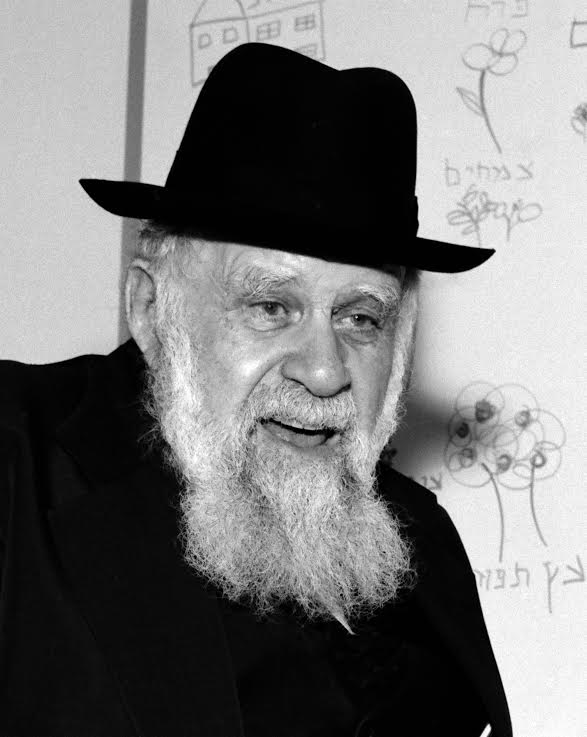
Photo of Rabbi Simcha Wasserman by Harry Green, c. 1986, South Bend, IN harrygreenphoto@gmail.com

  1. I thank Rabbi Yitzchok Shapiro (Boca Raton, Florida) and Rabbi Dr. Eliezer Brodt (Ramat Beit Shemesh, Israel) for their important comments to an earlier version of this article. I thank my father, Mr. U. Harold Males (Jerusalem, Israel) for his editorial assistance.
  2. In a humorous Forward article linked below, the author turned to an expert who proposed these definitions for the following Yiddish words: “A zets is a strong punch. A patsh is a common slap, whereas a frask is a sharp, stinging one, given with a vengeance.” See: https://forward.com/news/547/martial-arts-in-yiddish/ . After reading this, I felt relieved that the older cheder rebbi had only made use of a patsh – and not a zets or a frask.
  3. The Da’as Zekeinim mi-Ba’alei Tosafos is a Torah commentary compiled from the writings of French and German Tosafists who lived in the 12th and 13th centuries.
  4. I was unable to find information about a bird named אגרון / Agron. However, the Hebrew word for the crane is עגור / Agur (see Isaiah 38:14 and Jeremiah 8:7). A crane is a long-necked bird which certainly matches the winged creature in the Ba’alei Tosafos‘ parable.
  5. Aesop (c. 620–564 BCE) was a Greek storyteller credited with a number of tales which are collectively known as ‘Aesop’s Fables’. See: https://en.wikipedia.org/wiki/Aesop
  6. See: https://classics.mit.edu/Aesop/fab.1.1.html
  7. I have no recollection of ever reading Aesop’s Fables as an adult. Did my parents or older siblings read a children’s book of Aesop’s Fables to me when I was young? Had I read such a book to my nieces / nephews when they were little?
  8. See: https://thejatakatales.com/javasakuna-jataka-308/
  9. See: https://en.wikipedia.org/wiki/Buddhism
  10. See: https://en.wikipedia.org/wiki/Berechiah_ha-Nakdan and https://en.wikipedia.org/wiki/Mishl%C3%A8_Shu%27alim
  11. The term Mishlei Shua’lim is clearly taken from Sanhedrin 38b where we learn ג’ מאות משלות שועלים היו לו לרבי מאיר ואנו אין לנו אלא שלש – Rabbi Meir had composed 300 fox fables (i.e. parables involving animals – the fox being chief among them), but we are only left with three of them.
  12. https://blogs.loc.gov/international-collections/2021/09/a-fox-fable-goes-digital-bialiks-classic-hebrew-story-for-children-finds-new-life-at-the-library-of-congress/
  13. Eitz Yosef quotes Aruch who translates מוקרה as ‘its neck.’ It should be noted, however, that Rashi translates מוקרה as ‘its beak.’
  14. I initially wondered if this Midrash might also be the basis for the lyrics “פרוק ית ענך מפום אריותא – save Your flock from the mouths of the lions” in the Shabbos song ‘Kah Ribon’. However, a little research revealed that the term “פום אריותא – the mouths of the lions” is a clear reference to Daniel 6:23.
  15. See: https://en.wikipedia.org/wiki/Printing_press
  16. Rabbi Elazar Simcha Wasserman (1898 – 1992) was a son of the storied Rabbi Elchonon Wasserman, zt”l (1874 – 1941) – head of the pre-WWII Yeshiva in Baranovich, Poland. Prior to the Holocaust, Rabbi Wasserman (the son) immigrated to the United States where he played important roles in Jewish education and outreach (particularly in California). He and his wife moved to Israel in 1979, where they spent the final and ever-productive chapters of their lives in Jerusalem. I vividly recall attending the funerals of both Rabbi Simcha and Rebbetzin Faiga Rochel Wasserman (sadly, she passed away just after observing Shiva for her late husband) while first studying in Jerusalem in 1992. On November 5, 1992, the Los Angeles Times published an obituary for Rabbi Wasserman. See: https://www.latimes.com/archives/la-xpm-1992-11-05-we-1397-story.html . For a book-length biography, see: Fox, Dovid (1995) Greatness in Our Midst: The Life of Rav Simcha Wasserman. Jerusalem: Feldheim Publishers. For a more recent article on Rabbi Wasserman, see Eytan Kobre, “Building Worlds.”, Mishpacha, November 14, 2023. https://mishpacha.com/building-worlds/.
  17. Some of Rabbi Wasserman’s presentations have been digitized and are posted on Ohr Somayach’s website. However, among those that are available, I was unable to find the question-and-answer session cited in this article. See: https://audio.ohr.edu/showperson/id=20
  18. At this point, I believe an important disclaimer is in order. By suggesting that this parable is of ancient Jewish vintage, I am not claiming that that it was stolen from Jewish sources and plagiarized by foreigners. (Neither was that what Rabbi Wasserman had suggested.) A long tradition of such claims seems to go back to Philo (c. 20 BCE – 50 CE), and Josephus (c. 37 CE – 100 CE). For a scholarly treatment of such assertions, see Norman Roth, “The ‛Theft of Philosophy’ by the Greeks from the Jews,” Classical Folia, vol. 32, no. 1 (1978): 52-6. For some important rabbinic sources on such claims, see Rabbi Moshe Isserless’ Toras Ha’olah 1:11 (end of the chapter) and Metzudos Dovid to I Melachim 5:12. For a more recent rabbinic source see Rabbi Joseph B. Soloveitchik’s commentary to Tisha B’Av Kina 37 on page 574 in Posner, Simon. 2010. The Koren Mesorat Harav Kinot: The Lookstein Edition: Tefilla for Tisha B’Av, Kinot, Eikha. New York: OU Press; Jerusalem. (See footnote 19 for additional sources on this theme.)
  19. See the link below for a series of five thorough articles (with extensive footnotes) published in the Ohr Yisroel journal (Monsey, NY) by Rabbi Yaakov Yisroel Stahl: (10) מקור חכמת אומות העולם מעם ישראל In these articles, Rabbi Stahl cites an incredible amount of material on the theme of ancient Jewish wisdom making its way into the teachings of the nations of the world. I thank Rabbi Dr. Eliezer Brodt for bringing these articles to my attention.
  20. I credit Artscroll / Mesorah’s Kleinman Edition of Midrash Rabbah (2010) for the translation of this passage.
  21. See Matnos Kehuna, and Eitz Yosef Ibid.
  22. Both Rashi and the Eitz Yosef (Ibid.) note the clearly Latin roots (i.e. scholastic) of the word אסכולסטקיא.
  23. As demonstrated above in Part IV, this Midrash was the source of the parable shared by the Ba’alei Tosafos.


Jewish Communal Workers, Preacher’s Kid Syndrome, and Sefer Shmuel

Jewish Communal Workers, Preacher’s Kid Syndrome, and Sefer Shmuel [1]

This article is dedicated to the memory of HaRav Gedalia Dov Schwartz, zt”l, – whose 5th Yahrtzeit was on Erev Chanukah, the 24th of Kislev 5786 (2025). Rav Schwartz was an overflowing spring of Halachic guidance, wisdom, and practical rabbinic advice. I will always feel indebted to Rav Schwartz for the numerous times he graciously shared his vast knowledge — as well as his compassionate heart — with me.

______________________

. . . וכל מי שעוסקים בצרכי צבור באמונה, הקדוש ברוך הוא ישלם שכרם . . .

. . . and all those who faithfully occupy themselves with the community’s needs, may the Holy One, Blessed is He pay their reward . . . [2]

Yichus [pedigree] is a lot like potatoes – often times, the best part is underground.” [3]

While great ancestry may sometimes provide a person with a head start in life, pedigree offers no guarantee of achieving greatness. We have observed this reality in the world around us, we know this fact from our study of Jewish history, and we certainly know this to be true from countless episodes in Tanach.

It is important to remember, however, that while a child may not have emulated the lofty character traits and/or achievements of his/her parents, those parents and their child-raising efforts are not necessarily at fault. After all, numerous factors (i.e. inborn nature, environment, etc.) play a role in shaping a child’s development. Unless there are clear indications of bad parenting, it would be foolish speculation (at best) or outright cruelty (at worst) to accuse parents of failing to properly raise their children.

If we agree not to automatically label friends and neighbors as bad parents based on how their child(ren) turned out, do our great ancestors — our role models found in Tanach — deserve any less? Of course, we ought to extend them the same courtesy. Hence, we should not assert that any of the great figures of Tanach were guilty of poor parenting without clear indications from the texts themselves, the teachings of our Mishnaic / Talmudic Sages, or the early Biblical commentaries that this was in fact the unfortunate case.

In the Book of Shmuel I, we sadly find two tragic cases where the sons of great Jewish leaders — Eli and Shmuel — did not live up to the hopes of their fathers or their people[4]. While our Sages and the classic commentaries suggest interpretations which minimize the guilt of each leader’s sons[5], it is clear nonetheless that the sons of Eli (the High Priest of the Tabernacle at Shiloh) as well as the sons of Shmuel (the great selfless prophet) abused the power of their respective offices and were therefore unworthy of leading the Jewish people.

Do Eli’s and Shmuel’s sons’ failures to live up to their fathers’ examples indicate poor parenting on the part of their fathers? Fortunately, there is at least one of our classical commentaries to offer us some direction.

Among the early Biblical commentaries, the explanations of Ralbag[6] to Tanach are most unique. Aside from authoring a running commentary, Ralbag also provides us at regular intervals with what he refers to as the To’eliyos — the practical lessons to be learned from many Biblical episodes. Ralbag’s takeaway lessons offer a treasure trove of insights into human nature, the character traits which we aspire to attain, and a better understanding of the Mitzvos. Finally, Ralbag often utilizes his To’eliyos as a vehicle for explaining the Torah’s worldviews.

In two places in his To’eliyos to Shmuel I, Ralbag provides us with a great deal of insight into the sons of Eli and Shmuel — as well as their fathers’ roles in their unfortunate outcomes.

Ralbag #1

רלב”ג שמואל א פרק ז

העשרים ושלשה[7] הוא להודיע כי לא היתה הסבה בחטא בני עלי הוא היות עלי בלתי משגיח בענינם ובלתי מיישיר אותם אל הטוב. וזה כי את פני עלי ובהשגחתו נתיסר שמואל לשרת את ה’. ועם כל זה לא הועילה הנהגת עלי להישיר בניו אל השלמות מצד רוע תכונתם.

To paraphrase Ralbag, the sins of Eli’s sons were not due to a lack parental oversight and/or an effort to steer them in the proper direction. After all, it was Eli’s oversight and guidance which brought Shmuel to properly serve G-d. Unfortunately, Eli’s efforts did not succeed in steering his own sons towards wholesomeness, for they were born with a propensity for wrongdoing.

In this To’eles, Ralbag relates several details about Eli and his sons:

A) Eli was an involved parent. He was משגיח בענינם — he looked after the affairs of his sons and tried to be מיישיר אותם אל הטוב — steer them in the right direction.

B) Eli’s parenting skills were successful in ensuring that Shmuel — his young charge and student — developed into the consummate servant of G-d we know him as.

C) Despite Eli’s valiant efforts as a parent, unfortunately, he was unsuccessful with his own sons. Why were Eli’s parenting skills effective with Shmuel but not with his own biological children?

רוע תכונתם — unlike Shmuel, Eli’s sons naturally possessed a propensity for wrongdoing.

The picture of Eli which emerges from this To’eles / lesson of Ralbag is that of an involved parent. Though he was successful in raising Shmuel, Eli saw no such success with his own sons. Why not? The fault was not Eli’s. With a natural disposition for wrongdoing, Eli’s sons had a handicap working against them which they failed to overcome.

On the surface, this To’eles of Ralbag, wherein Eli seems blameless for the failures of his sons, stands in sharp contrast to a second To’eles of Ralbag found just a bit later in Shmuel I.

Ralbag #2

Following Chapter 12 of Shmuel I, Ralbag records another To’eles which assesses Eli’s parenting efforts.[8]

רלב”ג שמואל א פרק יב

הראשון הוא להודיע שראוי לשלם שידקדק בהנהגת בניו שתהיה באופן הראוי, ולא יקל מזה מפני רוב טרדותו בהנהגת העם. הלא תראה מה שקרה לשמואל בעבור שלא דקדק בהנהגת בניו שתהיה לפי הראוי. וזה, שזה היה סבה שסרה הממשלה מזרעו. ונמשך מזה ששאלו להם ישראל מלך, שהיה סבה בסוף לגלות ישראל מעל אדמתם, כמו שזכרנו. וכזה בעצמו קרה לעלי, מפני שלא דקדק בהנהגת בניו לפי הראוי. כי זה היה סבה שמתו בניו, וסרה מבי’ עלי בסוף הענין הכהונה הגדולה ונתנה לזרע פנחס בן אלעזר.

To paraphrase Ralbag, a wholesome person ought to be exacting in regard to his children’s conduct. One must not let communal responsibilities get in the way of his familial obligations. As an example, see what resulted from Shmuel’s not having been as exacting with his sons as he should have been. As a result, his children were not worthy of being leaders of the Jewish people. This led the people to request a King, which was the eventual cause of their exile from Israel. This is exactly what befell Eli — and it was all a result of his not having been as exacting with his sons as he should have been. This is why Eli’s sons died and the office of the High Priesthood was transferred to the offspring of Pinchas the son of Elazar.

In this To’eles / lesson, Ralbag teaches us that:

A) A truly good parent is one who is מדקדק בהנהגת בניו — exacting regarding his/her children’s conduct — despite the many communal responsibilities he/she may be tasked with.

B)  Unfortunately, Shmuel could have done better in this regard. As he was so occupied in his selfless work on behalf of the Jewish people, he neglected to be as exacting as he should have been with his own sons. Regrettably, Shmuel’s neglecting to properly involve himself in his sons’ lives eventually resulted in tragedy for the Jewish people. This sounds very much like what is referred to nowadays as “preacher’s kid syndrome” – which is “a situation in which the parents of a preacher’s kid are attuned to everyone’s problems but those of the kid.” [9]

C) Sadly, Eli preceded Shmuel in this very regard. He too was not as exacting with his sons as he should have been. Eli’s deficiency in this parental role had grave consequences for his immediate family.

The second To’eles of Ralbag clearly ascribes the failure of the sons of both Eli and Shmuel to some lack of parental involvement. On the surface, this second To’eles of Ralbag seems to contradict what he wrote about the diligent parenting efforts of Eli in the previously quoted To’eles. In that first comment, Ralbag had written that Eli’s sons failed in life as a result of their own deficiencies — not because of any lack in Eli’s parenting.

Can these two seemingly contradictory comments of Ralbag be reconciled?

I believe the following approach best resolves the apparent contradiction between Ralbag’s two Toeliyos involving the parenting efforts of Eli:

According to Ralbag, there are two different levels of parental involvement one can exercise when raising children:

  1. Ralbag’s lower level of parental involvement is described as being – משגיח בענינם. Such a parent is by no means oblivious of what the child is up to. On the contrary, that parent keeps tabs on the child, monitors the child’s affairs, and maintains a certain level of involvement in the child’s life.[10]
  2. Ralbag’s higher level of parental involvement is described as being – מדקדק בהנהגת בניו. That parent is exacting and even more involved, taking a hands-on interest in the life of the child. Such a parent is not just a משגיח / observer looking in on the child’s life. This level of parental involvement connotes one who is actively involved in every aspect of the child’s conduct.

From Ralbag’s perspective, neither Eli nor Shmuel was an uninvolved father who gave no time to their sons and left their kids alone to raise themselves. They were fathers who were definitely involved in their sons’ lives. Their commitment in raising their sons, however, was simply limited to משגיח בענינם — general oversight, that is the lower level of parental involvement. Neither Eli nor Shmuel could claim to have been a father who was מדקדק בהנהגת בניהם. According to Ralbag, they just were not exacting with, or extremely involved in every aspect of their sons’ lives.

Thus, there is no contradiction between the two To’eliyos of Ralbag. In his first To’eles, Ralbag noted that Eli fulfilled the first level of his parental responsibilities vis-à-vis his sons — that of being משגיח בענינם. While that level of parental involvement may suffice when raising a child with a propensity for goodness — i.e. Shmuel — it is not the level of involvement needed when raising children with an inclination for wrongdoing — i.e. Eli’s own sons.

In his second To’eles, Ralbag stated that while one would be wrong to claim that both Eli and Shmuel completely ignored their parental responsibilities, neither of them was as fully involved of a father he should have been. Both Eli and Shmuel should have realized that in order to successfully raise their sons, each would need to be a father who was מדקדק בהנהגת בניו. Their sons’ inborn dispositions demanded a greater level of parental involvement from their fathers.[11]

Why did Shmuel fail to be as exacting with his sons as he should have been? Ralbag clearly states that Shmuel erred due to his pre-occupation with being the consummate Jewish communal leader.[12] While Shmuel never fully ignored his parental responsibilities, Ralbag learns that in his passion to selflessly address the very real needs and concerns of his people, unfortunately, Shmuel neglected to give his sons the full measure of parental involvement which — due to their dispositions — they so desperately required.[13]


Conclusion

Having presented a working approach to reconcile two seemingly conflicting תועליות of Ralbag, it behooves us to conclude by emphasizing Ralbag’s crucial message.

In Koheles (2:14) we read: . . . הֶחָכָם עֵינָיו בְּרֹאשׁוֹ, וְהַכְּסִיל בַּחֹשֶׁךְ הוֹלֵךְ — The wise man’s eyes are in his head, but the fool walks in darkness . . . Long before the Boy Scouts of America coined their motto, King Solomon taught how important it is to “Be Prepared”. In a similar vein, during World War II, Winston Churchill is credited as having stated: “He who fails to plan is planning to fail”.

In his To’eliyos cited above, Ralbag reminds us how crucial it is that every Jewish communal worker adopt a strategy for juggling his/her many responsibilities. Jewish communal workers must struggle with allocating their limited amounts of time, attention, and energies. Anyone involved in such work must be ever alert to ensure that the needs of his/her family are not overlooked in the process of nobly serving the needs of their community.

Is there any one proven formula to help a Jewish communal worker properly balance the very real and competing needs of one’s spouse, family, and community? Absolutely not — after all, the characteristics and circumstances of no two spouses, families, communities, or Jewish communal workers are perfectly alike.

There are, however, three crucial steps which I believe each Jewish communal worker should take when allocating his/her time, attention, and energies:

  1. Communicate — One must truly know and understand their spouse, family, and community in order to correctly allocate the time and attention each requires. The only way to accomplish this is through frequent and meaningful communication.
  2. Re-evaluate — As good a balance one may have achieved in the past, the needs of one’s spouse, family, and community constantly change. As such, it is wise for every Jewish communal worker to periodically reassess the formula he/she has created to meet the needs of those requiring his/her time, attention, and energies.
  3. Pray — Ultimately, each and every Jewish communal worker is only human. As such, even one’s most thought-out plans to allocate his/her limited resources may have been made in error. Without G-d’s help, no Jewish communal worker can possibly hope to succeed in the balancing act he/she must perform. Once one has done his/her part in this process, the Jewish communal worker should sincerely ask G-d for His assistance as he/she strives to work on behalf of His people.

May the lives of Eli HaKohoen and Shmuel Hanavi serve as an inspiration — as well as a lesson — to all Jewish communal workers.[14]

  1. I am greatly indebted to my Rabbeim who introduced me to Ralbag’s commentary to Tanach during my years in Yeshiva; Rabbi Avrohom Semmel (Queens, NY) and Rabbi Yitzchok Shapiro (Boca Raton, FL) for their assistance (several years ago) with the sources cited in this article; and my father, Mr. U. Harold Males for his editorial assistance.
  2. From the pre-Mussaf prayer recited each Shabbos in synagogues around the world.
  3. A number of years ago, I heard that sharp remark from Rabbi Berel Wein, zt”l, during a Jewish history lecture. In a personal communication with Rabbi Wein regarding the origins of this adage, he told me that while he was not aware of a specific source, he believes it to be one of our people’s great Yiddish folk sayings.
  4. See Shmuel I, 2:12-22 and Shmuel I, 8:1-5.
  5. See for example the ideas mentioned in Rashi to Shmuel I, 2:22 and Radak to Shmuel I, 8:2.
  6. Ralbag (רלב”ג) is the acronym for Rabbi Levi ben Gershom — sometimes referred to by his Latinized name — Gersonides. Ralbag (1288-1344) lived in the region of Southern France known as Provence. In recent years, Ralbag’s commentaries on much of Tanach have been masterfully annotated and republished by Mossad Harav Kook in Jerusalem, Israel.
  7. In the standard Mikra’os Gedolos editions of Nach, this To’eles is listed as number 23 and can be found after Chapter 7 of Shmuel I. In the newer Mossad Harav Kook edition, however, it is listed as תועלת number 24.
  8. In all editions of Ralbag’s commentary this lesson is listed as number 1 in this group of To’eliyos.
  9. From: http://en.wikipedia.org/wiki/Preacher’s_kid
  10. According to Ralbag, this parent also makes efforts to be מיישיר אותם אל הטוב — to steer his/her children in the proper direction.
  11. Although he did not state so overtly, it seems clear that Ralbag understood Shmuel’s sons as having propensities for wrongdoing just like Eli’s sons did. Otherwise, the lower level of parental involvement, which Ralbag described as משגיח בענינם in his first To’eles would have sufficed for Shmuel’s sons.
  12. See Shmuel I 7:15-16 and Ralbag’s accompanying comments for an example of Shmuel’s devotion to serving his people in such a time-consuming and selfless fashion.
  13. Why did Eli fail to be as involved of a parent as he should have been? Ralbag does not address that question. Was Eli overly occupied with the needs of his people — like Shmuel — so that his sons’ needs were neglected? Or, perhaps Eli was not as busy with the needs of the Jewish people, but he just did not realize his sons had propensities for wrongdoing, and therefore required a higher level of parental involvement on his part? While one could certainly speculate, Ralbag does not seem to clearly address this point.
  14. Two additional comments of Ralbag concerning Dovid HaMelech are very relevant to this discussion. See Ralbag’s comments to Shmuel II 8:18 as well as To’eles #3 to Melachim I chapter 2. In both of those places, Ralbag introduces an even greater level of parental involvement which he called משגיח במוסר בניו – ensuring that one’s child is reprimanded and/or punished for his/her wrongdoings. This highest level of parenting goes beyond mere oversight, and is necessary when one’s child has stepped beyond the lines of acceptable behavior. According to Ralbag, had Dovid achieved that level of parental involvement, several of his sons might have turned out better. (It is important to note that unlike his treatment of Shmuel, Ralbag did not overtly attribute Dovid’s parental failings to his untiring efforts on behalf of the Jewish people.)


A World War II Liberator’s Letter to his Hometown Rabbi

A World War II Liberator’s Letter to his Hometown Rabbi

By Rabbi Akiva Males

I recently realized that this year, January 26th will correspond to the 26th of Teves. That date marks the tenth Yahrtzeit of a remarkable man — who lived through some extraordinary experiences exactly eighty years ago. I had the honor of knowing Mr. Charles Press (1920 – 2015) for the last eight years of his life. However, others in Harrisburg, PA (where I served as a pulpit Rabbi from 2007 – 2016) enjoyed his friendship for over nine decades. Over the course of those many years, Charlie (as he was lovingly known) was a very active member of his synagogue (Kesher Israel Congregation) and the Jewish community that had nurtured him. With his devoted wife Eunyce (1924 – 2023) at his side, Charlie was also among the most dedicated volunteers that his Shul ever knew.

Charlie was a member of the heroic cohort which journalist Tom Brokaw reverently labeled as “The Greatest Generation”. On several occasions, I had the opportunity to hear him speak about some of his World War II experiences. As the 80th anniversary of those events approaches, I believe some of what Charlie told me needs to be shared with a broader audience.

Measuring over six feet, Charlie was a very tall man — yet one of the gentlest people I ever met. As much as I try, it is hard for me to imagine him as a strapping young man in his early twenties, struggling to stay warm under his olive drab steel helmet, and spending sleepless nights in frigid fox holes, while slugging it out with the Nazis. However, that is exactly what the early months of 1945 were like for Charlie Press.

After the US entered World War II in December of 1941, Charlie saw many of his childhood friends leave Harrisburg to join the fight in both the European and Pacific theaters of war. As an employee of the Pennsylvania Railroad, the powers-that-be saw Charlie’s role as essential to the US war effort. As much-needed personnel and war supplies were constantly being shipped through Pennsylvania from other states, he received a draft deferment. In fact, his superiors pleaded with Charlie to remain at his railroad position in the Keystone State. Nonetheless, as a proud Jewish-American, Charlie yearned to play a more direct role in the fight against the Nazis. Unable to continue observing from the sidelines, he quit his job, enlisted in the US Army, and left the safety of Pennsylvania behind.

Charlie trained to be part of a two-man bazooka team and was assigned to the 90th Infantry Division, 357th Battalion. The bazooka (a shoulder-fired rocket launcher) was a relatively new — and highly-appreciated — weapon which gave US soldiers the firepower they needed to attack the enemy’s tanks and fortifications. In addition to his rifle and personal gear, Charlie also carried the bazooka’s shells and loaded the weapon for his partner (another Jewish GI named Harvey Goldreyer from Queens, NY) who would carefully aim and fire it.

Charlie joined his unit as a replacement following the bloody ‘Battle of the Bulge’ (December 1944 – January 1945). In the months that followed, he and his bazooka partner’s skills were called upon numerous times.

On April 23, 1945, US forces liberated the Flossenburg Concentration Camp. Decades later, this is how Charlie described those events:

I was in the 90th Infantry Division which liberated the Flossenburg Concentration Camp, located about six kilometers (about 3.5 miles) from the German-Czech border as the war in Europe drew to a close in 1945. We were not prepared for what we saw: Still smoldering crematoria and open gravesites of human ashes, piles of corpses and shoes stacked about 20 feet high. When we arrived there were about 70 men and women who survived. They were so emaciated; they were just skin and bones. Speaking with them we found out that this was a political camp as well as an exterminating camp for Jews, Gypsies, and the disabled. The camp guards and personnel had fled before our unit arrived.

In addition, there were [US] soldiers that were captured by the Germans in the Battle of the Bulge and were forced to undergo long forced marches in the cold after being deprived of their overcoats and warm clothing. As the Americans began falling by the wayside the SS guards shot them. Many never made it to Flossenburg.

The German soldiers that were taken prisoners and returned to the camp as prisoners of war were very arrogant in defeat. They [repeated how they] were following orders and were proud that they were Germans.

For many years I never talked about what I saw. My granddaughter had to do a paper for school about who was her hero. That was the first time that I told her about what I experienced at Flossenburg.

Shockingly, in the years since WWII, the outlandish claims of Holocaust deniers have gained traction in some quarters. As a result, in his later years, Charlie became more open about what he had personally witnessed at Flossenburg. What follows is the text of a letter Charlie wrote in Flossenburg and sent to his beloved Rabbi back home — Rabbi David L. Silver (1907 – 2001).

Rabbi David L. Silver — the son of the famed Rabbi Eliezer Silver (1882 – 1968) — founded Harrisburg’s Jewish day school, and led Kesher Israel Congregation for more than 50 years. Charlie Press told me that he had one goal in publicizing this historic letter which contains his eye-witness account:

Read the letter. Now tell me there was no Holocaust!”

____________________________________

Germany, July 3, 1945

Dear Rabbi,

At present my outfit is located at the Flossenburg Concentration Camp guarding Hitler’s elite. This camp was at one time a living hell for many Jewish, Polish, Czech, and German political prisoners. The atrocities which I have witnessed are uncountable. At this moment I am in a guard tower which is equipped with weapons to hinder any attempted break by the criminals. At one time though, this same tower was occupied by some of the criminals who are now inside the fence.

To the left of this tower is a crematorium where daily human beings were burned. In the rear of this crematorium is a room with small vases in which the ashes of only the German dead were placed and sent to their families. The other prisoners’ ashes and bones were piled in a small ravine and covered up. The rain washed all the dirt off and uncovered the hideous evidence. In another section of the field is where human bodies were stacked crosswise on top of wood, and oil was poured over and lighted. When one row would be burned, the next row would be started, and so they kept the fires burning continuously.

The past few Sundays I have been visiting in a small town called Floso, where there are about fifteen Jewish displaced persons who at one time have been in this camp. We go there and have services and sing songs and tell stories. It’s really wonderful to make them happy although in their hearts there is unrest from what they have gone through. They are having a synagogue rebuilt and as soon as it is finished I am going to try and have services there for all of the soldiers and civilians around. It will be great to go to Shul once more.

I thank you again for the holiday greetings, and hope next Pesach I can be home with the family in a civilian suit, and enjoying a good Pesach-dig Seder.

Sincerely yours,

Charles Press

____________________________________________

Young Israel of Memphis’ Rabbi Akiva Males can be reached at rabbi@yiom.org

Mr. Charles Press and Pennsylvania Governor Ed Rendell at the Governor’s Civic Commemoration of the Holocaust in April 2009 (Photo taken by Rabbi Akiva Males)

WWII-era photo of Charlie Press in his US Army uniform — note the 90th Infantry Division insignia

A plaque honoring the 90th Infantry Division at Flossenburg

WWII-era US soldier aiming a bazooka

Kesher Israel Congregation’s 1953 dinner honoring Rabbi David L. Silver

Left to right: Rabbi David L. Silver; Samuel Brenner (President of Kesher Israel); Rabbi Eliezer Silver (father of Rabbi David L. Silver and former Rabbi of Kesher Israel); Rabbi Dr. Samuel Belkin (President of Yeshiva University)

Charlie Press in September of 2014 – just four months before his passing (Photo taken by Rabbi Akiva Males)


Mrs. Ethel Abrams – Ettel Ha’Ivriya of Clarksdale, Mississippi

Mrs. Ethel Abrams – Ettel Ha’Ivriya of Clarksdale, Mississippi

By Rabbi Akiva Males

________________________

Introduction[1]

Stepping out of my car on Monday morning, July 3rd 2023, I received a warm welcome from the heat and humidity of Clarksdale, Mississippi. I opened the gate of the black iron fence surrounding the Beth Israel Cemetery and stepped inside. It didn’t take me long to survey the surprisingly well-maintained grounds where the members of that small Jewish community now rest in peace. Within a few minutes I found what I had come to see: the tombstone of Mrs. Ethel Abrams, of blessed memory.

Beth Israel Cemetery in Clarksdale, MS
Photo by Rabbi Akiva Males


The gravestone of Mrs. Ethel Abrams, a”h
Source: https://www.findagrave.com/memorial/86841744/ethel-b-abrams#view-photo=108781020

In the paragraphs that follow, I hope to answer the following questions:

  • Who was Mrs. Ethel Abrams?

  • Why did I drive nearly 75 miles from my home in Memphis, TN to visit her grave?

  • What is the history of the small Jewish community which once flourished in Clarksdale, MS?

Part I – The Story of Mrs. Abrams

In January of 2017, I was researching the topic of using a flowing river as a Mikvah (see Rema to Shulchan Aruch YD 201:2, and Aruch Hashulchan YD 201:41-42). After Maariv one night, I approached Rav Nota Greenblatt, zt”l, while he was leaving Shul. I told him what I was looking into, some of the sources I had found, and inquired if anyone had ever asked him about this on a practical level. After all, the city of Memphis sits on the eastern bank of the Mississippi River. I figured this question must have arisen over the nearly seven decades Rav Nota had been fielding – and resolving – all sorts of Halachic questions in Memphis (and far beyond).

Rav Nota stopped, looked me in the eyes, and with a grin on his lips he asked me if I was familiar with Clarksdale, MS. I shrugged, shook my head, and responded that I had never heard of the place. Rav Nota went on to tell me that a prosperous group of Jewish small business owners and their families had once thrived there. He explained that in his younger years, when he was an active Mohel, he had made the roundtrip from Memphis to Clarksdale on many occasions upon the birth of baby boys.

Rav Nota became serious as he continued his story:

Sadly, other than a cemetery, there’s nothing left of Clarksdale’s Jewish community.” He explained that while economic forces were mostly responsible, other factors had also played a role. His eyes moistened as he described how religious observances – particularly those of Shabbos – became less and less prevalent among the immigrant Jews who had sought to earn their livelihoods in the Mississippi Delta.

In retrospect, the handwriting of religious decline was on the wall. Like so many other small communities across the US, Clarksdale had a very limited infrastructure to support traditional Jewish observance, a lack of readily available Kosher food, and no strong Jewish educational structure for their children. It was not long before the Orthodox practices with which most of that community’s Jews were once familiar were no longer part of their routines.

However,” continued Rav Nota, “there was one woman in Clarksdale who wouldn’t let go. Her name was Mrs. Abrams, and she remained absolutely committed to Yiddishkeit. In fact, she tried her best to convince others around her to remain Shomer Torah U’Mitzvos.”

Rav Nota shared that there was one Mitzvah that Mrs. Abrams – whom he called as a Tzadeikes – succeeded in convincing others to observe. Mrs. Abrams was passionate about Taharas HaMishpacha and would speak to the young married women of Clarksdale about how important that Mitzvah was for their marriages, and their families’ futures. However, Clarksdale had no Mikvah. If women were not willing to travel nearly 75 miles to Memphis and back (before modern highways would make that journey more manageable) how could they possibly observe this Mitzvah? Amazingly, on many nights a month, Mrs. Abrams would accompany women from Clarksdale to the nearby Mississippi River where she would help them discreetly immerse in its murky moving waters!

Rav Nota became emotional as he shook his head and exclaimed, “Can you believe it? Mrs. Abrams would take women – just about all of whom were far from keeping Mitzvos – to be Tovel themselves in the Mississippi River! If I wouldn’t have known her, I never would have believed it. But I knew her well, and it’s true!”

I listened in astonishment as Rav Nota described how over the course of many years, Mrs. Abrams had personally reached out to the Jewish women of her community, and respectfully spoke to all who would listen. In an era when everyone around her was dropping Mitzvah observance, somehow, Mrs. Abrams succeeded in encouraging many women to keep Taharas HaMishpacha. She did not persuade those women to visit a pristine new Mikvah. On the contrary, on an untold number of nights, this heroine of the Delta accompanied numerous young marrying and married women to the nearby silt-filled Mississippi River. There, in a spot she had cordoned off along the muddy riverbank, Mrs. Abrams would serve as both a Mikvah lady and a lifeguard!

I was in awe as Rav Nota spoke about Mrs. Abrams. She wasn’t just some sort of a “last of the Mohicans” when it came to Halachic observance in Clarksdale. From the way Rav Nota described this incredible woman, she had been the catalyst for many Jewish women of her locale observing the Mitzvah which was most uniquely theirs. The fact that she succeeded to the degree which she did – and under the most challenging of circumstances – boggled my mind.

As I left Shul and walked Rav Nota to his car, he added another detail about Mrs. Abrams. In speaking with her on his numerous Bris Milah runs to Clarksdale, she had demonstrated extensive knowledge of the other small communities of Jewish merchants living in towns across Mississippi. As such, Rav Nota reached out to her on many occasions to verify the Jewish credentials of people originating from her environs when matters arose pertaining to marriages, Gittin, and funerals. He told me that he had trusted Mrs. Abrams absolutely, and that she had been a vital resource for him in a number of cases that had come his way over the years.

I remember making a mental note to find out more about Mrs. Abrams and Clarksdale, MS, but other pressing issues always seemed to demand my attention. I filed this conversation with Rav Nota in my notes, and I nearly forgot about Mrs. Abrams until the summer of 2023.

Part II – Clarksdale’s Jews in the News

On Monday afternoon, September 6, 1926 – almost 100 years before my visit to Clarksdale – two short items concerning that town’s Jewish community appeared on the local newspaper’s front page. The Clarksdale Daily Register’s two articles related to Rosh Hashanah – which would occur later that same week on Thursday, September 9th and Friday, September 10th.

The first piece was entitled “Jews Observe Holy Season”, and was subtitled “Services To Be Held For The New Year In Local Synagogue All Week”. The first and last paragraphs of that article read:

Services commemorative of Rosh Hashanah or the Jewish New Year will be observed here at the Beth Israel Synagogue. Beginning Wednesday evening at 7:30 when the opening service will be held. Thursday morning services will begin at 8. Since the congregation is an Orthodox one, members will observe two days and services will also be held Thursday evening at 7:30 and Friday morning at 8 o’clock. Regular services for the Sabbath will be held Friday evening and Saturday morning …”

“ . . . The New Year’s day is one of solemn joy and greeting of the day “L’shanah tovah,” A Happy New Year, is heard on all sides in the homes and in the synagogue. The festival is observed two days, the 9th and 10th of September, by the orthodox Jew.”

Just two columns to the right, Clarksdale’s paper ran a second article pertaining to the local Jewish community’s observance of that year’s Rosh Hashanah. It was entitled: “Pupils Enroll For Semester”, and was subtitled: “Jewish Children May Enroll Saturday Since Thursday and Friday Are Religious Holidays”. The first paragraph of that article reads:

Due to the fact that Thursday and Friday of this week are Jewish holidays, Supt. Heidelberg of the city schools announced this morning that all Jewish children would be expected to enroll at their respective schools Saturday morning at 8:30, and that it would not be necessary for them to be present on either of the holidays. However, it is very necessary that they be present Saturday morning, at which time they will be classified . . .”

From the front page of the Clarksdale Daily Register, Monday Afternoon, September 6, 1926

The sad irony of that second article was not lost on the Museum of the Southern Jewish Experience.[2] Their newsletter of September 2022 opened with the following paragraphs:

In 1926, the city of Clarksdale, Mississippi, unknowingly scheduled school registration for the two days of Rosh Hashanah, the Jewish New Year. This didn’t sit well with the Jews of Clarksdale, so they asked for and got an accommodation: Jewish children could register for school on Saturday, instead of the Thursday and Friday of Rosh Hashanah.

This accommodation, in a way, encapsulates well the Southern Jewish experience: Clarksdale’s Jews stood up for their religious identity and the town acceded. But at the same time, there was an accommodation on the Jewish side, as well. Saturday is Shabbat, the Jewish sabbath. By the 1920s, most (but not all) of Clarksdale’s Jews were Reform, keeping their stores open on Saturdays, the busiest shopping day of the week. This was a necessity in a region where Sunday Closing Laws were the norm.

The Southern Jewish experience has always been about adapting, accommodating, and conforming to new surroundings, while at the same time embracing, sustaining, and celebrating our history, culture, and religious practices . . .”[3]

This commentary on the Clarksdale’s Jewish community’s 1926 Rosh Hashanah dilemma offers an eye-opening window into their struggles with religious observance. It also helps resolve the apparent contradiction between the two stories appearing on their newspaper’s front page. Although the first article twice stressed that the congregation was an Orthodox one, the second article described a synagogue whose membership overwhelmingly did not observe Shabbos in an Orthodox fashion. It seems that the condition of Clarksdale’s Beth Israel was much like that of many other early 20th century American synagogues. Though the congregation’s services may have been conducted in an Orthodox manner, by 1926, the lifestyles of many of that congregation’s families were not necessarily congruent with Halacha.

Discovering this eye-opening tidbit of Mississippi Jewish history made me curious to learn more about the Jewish community that once existed in Clarksdale.

Part III – Clarksdale: The Lifecycle of a Jewish Community in the Mississippi Delta

Thankfully, a good deal of research has already gone into the history of Clarksdale’s Jewish community. What follows are excerpts from two excellent articles published by The Goldring/Woldenberg Institute of Southern Jewish Life (ISJL)[4] and the Jewish Historical Society of Memphis and the Mid-South.[5] For the purpose of this article, I took the liberty of combining excerpts from both of those articles. I also rearranged the order in which some of those excerpts originally appeared.

Clarksdale, Mississippi, sits on the Little Sunflower River a few miles east of the Mississippi River. The seat of Coahoma County, Clarksdale emerged as a trading hub in the late 19th century and has long served as an important cultural center for the Mississippi Delta region . . .

. . . The town’s population more than doubled during the 1890s, reaching 1,773 residents by 1900. Migrating African Americans—many of them formerly enslaved—contributed to this population increase, as they sought to make a living in the area’s booming cotton economy . . . .

. . . Prior to the depression of 1921, The Wall Street Journal reported Clarksdale as “the richest agricultural city of the United States in proportion to its population” . . .

. . . Jewish history in Clarksdale and surrounding towns dates to the arrival of German speaking Jews around 1870. Jewish organizational life began in the 1890s and continued to grow in the early 20th century. In the 1930s, the area’s Jewish population reached 400 individuals, and for a time Clarksdale boasted the largest Jewish community in the state. Although Jewish communal life remained vibrant into the 1970s, the Jewish population declined for the next few decades. In 2003 Clarksdale’s only Jewish congregation, Congregation Beth Israel, closed its synagogue . . .

. . . Jewish occupational patterns in Clarksdale mirrored trends not only in other developing towns in the Mississippi Delta but also in new sites of Jewish migration throughout the world. Jewish settlers often began as peddlers before founding dry goods or other retail stores, and they served customers from town as well as the surrounding countryside . . .

. . . By 1896, enough Jews lived in Clarksdale and the surrounding area to hold religious services. That year, five Clarksdale Jewish families founded a congregation known as Kehilath Jacob . . . Early worship services followed Orthodox practice . . .

. . . Kehilath Jacob continued to hold services in borrowed or rented spaces until 1910, when the congregation dedicated its first synagogue, a white stucco building at 69 Delta Avenue. With the erection of their first synagogue came a name change, and the congregation was known as Congregation Beth Israel from that point on . . .

Historic marker in front of Beth Israel Congregation’s first building in Clarksdale, MS
Photo by Rabbi Akiva Males

. . . As of 1920, the local community consisted of approximately 40 Jewish families in Clarksdale, with additional congregants in outlying areas . . . Temple Beth Israel accommodated a variety of Jewish observances during its early decades, but younger members began to push for Reform services with more English prayers. The rift between Orthodox and Reform congregants threatened to split the congregation during the 1920s, until the construction of a new synagogue in 1929 allowed Temple Beth Israel to hold two concurrent services on separate floors . . .

. . . The Orthodox members used the lower auditorium and the Conservative and Reform used the upper floor. It was the only synagogue in Mississippi that provided for Orthodox, Conservative, and Reform worship in the same sanctuary . . .

. . . As the 20th century progressed, Jewish shops remained a visible presence in downtown Clarksdale. Of fifteen dry goods stores listed in Clarksdale’s 1916 city directory, at least two-thirds belonged to Jewish merchants. Other Jewish retail businesses included “general goods” and grocery stores, as well as later department stores . . .

. . . The arrival of Rabbi Jerome Gerson Tolochko in 1932 marked a turning point for Beth Israel. Not only was Rabbi Tolochko the congregation’s first formally ordained resident rabbi, but his training at Hebrew Union College in Cincinnati reflected the Jewish community’s movement toward Reform Judaism . . .

. . . Clarksdale was home to nearly 300 Jewish residents at the end of World War II . . . In 1970 Congregation Beth Israel still claimed 100 families, but a series of economic changes had begun to have a visible effect on the Jewish community. The agricultural labor force in the Mississippi Delta had declined in preceding decades, as a consequence of New Deal programs that paid landowners to reduce crop production and the introduction of mechanical cotton pickers in 1947. As the number of sharecroppers and other agricultural workers decreased, so too did the customer base for many Jewish retail stores . . .

. . . During the late 20th century, the rise of chain discount stores accelerated the decline of Jewish retail businesses, and Clarksdale’s Jewish population continued to shrink . . . Many members relocated to Memphis but continued to support the Clarksdale congregation and maintained ties to the Clarksdale community.

In the early 21st century, Beth Israel’s remaining 20 members decided they could no longer sustain a congregation. They made plans to close the synagogue and organized a deconsecration service on May 3, 2003 . . . The building was ultimately sold, leaving the Jewish cemetery as the landmark that most explicitly testifies to the existence of a once vibrant Jewish community . . .”

Elsewhere,[6] I learned that Beth Israel’s cemetery was established in 1919. In recent decades, a fund was established to ensure the perpetual care of the final resting place of Clarksdale’s Jewish community. Indeed, I can attest to that cemetery’s dignified upkeep.

Part IV – Finding Mrs. Abrams

Rav Nota Greenblatt’s amazing story about Mrs. Abrams had piqued my curiosity about Clarksdale’s Jewish history. The articles I discovered helped me better understand that community’s rise and decline. However, as I reflected on Mrs. Abrams’ excursions to the Mississippi River with the Jewish women of her locale, there were more details I wanted to learn about that incredible woman:

  • What was her first name?

  • What was her background?

  • How did she remain so committed to Torah and Mitzvos in a place without a supportive populace or infrastructure?

  • What compelled her to remain in Clarksdale when she obviously desired to live a fully observant Jewish life?

  • How did she deal with Clarksdale’s 1926 Rosh Hashanah / Shabbos dilemma?

  • How did she successfully convince numerous women who were not seriously committed to Jewish observance to use the Mississippi River as a Mikvah?

  • How did she ensure the safety of the women she led into that mighty river?

Unfortunately, on Friday, April 29, 2022 (28 Nissan 5782) Rav Nota Greenblatt, zt”l, passed away. Although I asked some of Rav Nota’s children and Talmidim if they had more information on Mrs. Abrams, no one seemed to know more about her than what he had shared with me.

Rav Nota Greenblatt, zt”l, in his home study on Erev Pesach 2017
Photo by Rabbi Akiva Males

Through some internet sleuthing, I discovered a grandson of Mrs. Abrams, and he was excited about my interest in his grandmother.

When we spoke, I learned that her first name was Ethel, she was born on December 10, 1876, and that she hailed from a renowned Rabbinic family named Bronitsky from the vicinity of Minsk and Pinsk in Russia (modern-day Belarus). Ethel married her husband David (1877 – 1947) back in the Old Country, and that’s where their daughter and son were born. In search of a livelihood, David Abrams came to America in either 1904 or 1905, and a job opportunity brought him to Clarksdale, MS. The family was reunited in 1908 when Ethel and her two children were able to join David in Clarksdale.

According to family tradition, Mrs. Abrams was deeply unhappy about the decreasing levels of Jewish religious observance she witnessed all around her. Her determination to adhere to the Torah and Mitzvos must have caused her to feel quite isolated – yet she held firm. I learned that Mrs. Abrams raised chickens in her backyard, and that her husband would travel to Memphis by train with some of them on Friday mornings. Once there, they would be properly slaughtered, and he would take the train back to Clarksdale so those chickens could be prepared for Shabbos. Memphis was also where the Abrams family procured the Matzah and other staples they required for Pesach. On December 8, 1968 Mrs. Ethel Abrams passed away – just two days shy of her 92nd birthday.

I told Mrs. Abram’s grandson the beautiful story Rav Nota had told me about her, the Mississippi River, and the numerous Jewish women of Clarksdale who observed Taharas HaMishpacha because of her. He was not aware of these details about his grandmother, and he greatly appreciated my sharing those gems with him.[7]

As our friendly conversation drew to a close, I felt glad to have gained many biographical details of Mrs. Abrams’ life. Unfortunately, I also realized that I would never learn all that I wanted to understand about her. After all, no one could truly answer my questions about her thoughts and experiences other than Mrs. Abrams herself – and she did not seem to have left a written record before passing away in 1968. I thanked Mrs. Abrams’ grandson, and told him that I looked forward to visiting Clarksdale in the coming weeks.

Part V – Visiting Mrs. Abrams

As I stood before Mrs. Abrams’ tombstone on that July morning, I thought about her iron-clad resolve to remain true to Torah and Mitzvos in the midst of the most trying times and circumstances. I glanced at the many graves to her right and left and wondered how many of those neighbors had immersed themselves in the Mississippi River because of her. I recited a Perek of Tehillim followed by a Kel Maleh, and I pledged to give some Tzedakah in memory of that Tzadeikes upon returning to Memphis. As I exited Beth Israel’s cemetery, I looked back, and mentally bid farewell to Clarksdale’s Jewish community. After shutting the gate behind me, I returned to my car.

While driving back to Memphis, I thought of the famous Midrash[8] about why the Torah refers to Avraham Avinu as Avraham Ha’Ivri.[9] According to ChazalAvraham did not simply come to Canaan from the other side of the river (which the word Ha’Ivri connotes in its plain meaning). Rather, Avraham Avinu earned the honorific title of Ha’Ivri because he found the strength to swim against the tide – living a life that was distinct from all who surrounded him. Even when the rest of the world metaphorically positioned themselves on one side of a river, Avraham was at peace remaining in solitude on the other side. Furthermore, not content in just behaving differently than his neighbors, Avraham Avinu also tried his best to persuade a great number of them to join him in his worldview and way of life – on his side of the river.

Like her forefather Avraham Ha’Ivri, Mrs. Ethel Abrams found the strength to go her own way, and not live her life by following the crowd. Regardless of her surroundings, Mrs. Abrams followed her own convictions, and also did her best to persuade others to observe Mitzvos – especially Taharas HaMishpacha. The river associated with Avraham Ha’Ivri was the Euphrates. In Mrs. Abrams’ case it was the Mississippi. After visiting her grave, I will always associate this Midrash with her. As far as I’m concerned, Mrs. Ethel Abrams was Ettel Ha’Ivriya of Clarksdale, MS.

Yehi Zichrah Baruch.

_____________________

Rabbi Akiva Males serves as the Rabbi of Young Israel of Memphis. He also teaches at the Margolin Hebrew Academy-Feinstone Yeshiva of the South. He can be reached at rabbi@yiom.org

[1] I thank my father Mr. U. H. Males for his valuable editorial assistance.
[2] The Museum of the Southern Jewish Experience is located in New Orleans, LA. See here.
[3] See here.
[4] Available online in the ISJL’s Encyclopedia of Southern Jewish Communities – Clarksdale, Mississippi. See here.
[5] Kerstine, Margie, “Clarksdale: A Mississippi Delta Jewish Legacy,” Southern Jewish Heritage 18, no. 2 (2005). Available online here.
[6] Bennett, David, “Temple Beth Israel Active Despite Recent Decline,” The Clarksdale Press Register, January 22, 1994, page 5B.
[7] He also wondered if Mrs. Abrams may have taken women to immerse in the Sunflower River – a smaller tributary of the Mississippi River which runs through Clarksdale. After all, that would have been simpler than going to the Mississippi River itself. Of course, this would have only been possible when the Sunflower River’s water levels allowed for immersion.
[8] Bereishis Rabbah 42:8.
[9] Bereishis 14:13


An Appreciation of HaRav Gedalia Dov Schwartz, zt”l

An Appreciation of HaRav Gedalia Dov Schwartz, zt”l

By Rabbi Akiva Males

On Thursday, the 24th of Kislev, 5781 (December 10, 2020), Jews around the world prepared to use their Shamash candles to light their Chanukah Menorahs. On that same day, leading rabbinic representatives of Chicago’s strong and diverse Orthodox community delivered moving eulogies for a world-renowned Torah scholar: Rav Gedalia Dov Schwartz, zt”l. For 95 years, Rav Schwartz served as a powerful living Shamash, using his vast Halachic knowledge to illuminate Chicago — and communities around the world.

Several of the speakers remarked that in addition to all of his responsibilities heading the Beis Din of the Chicago Rabbinical Council (CRC), Rav Schwartz readily made himself available to answer the Halachic questions of rabbis across the USA. As a Shul rabbi who regularly reached out to Rav Schwartz, I can confirm that detail as being absolutely true. However, in all honesty, Rav Schwartz shared so much more than answers to the Halachic questions he was presented with.

Having served for decades as a Shul rabbi himself, Rav Schwartz readily understood the context of the Halachic questions he was presented with. He also knew the challenges, pressures, and anxieties that rabbis ‘out in the field’ often experience. In addition to providing clear answers to the queries of puplit rabbis, Rav Schwartz was an overflowing spring of wisdom, guidance, and practical rabbinic advice.

Why would a Shul rabbi out in Harrisburg, PA (where I served from 2007-2016) join a rabbinical association based in Chicago, IL? While membership in the CRC benefits a rabbi for numerous reasons, for the most part, I joined the CRC because of Rav Schwartz. As a young rabbi in my first pulpit position, I quickly realized how much I needed someone to turn to for Halachic and rabbinic guidance. On what seemed like a near-daily basis, I found myself facing numerous scenarios I had never imagined encountering — and certainly did not learn about in Yeshiva. After reaching out to Rav Schwartz on a few occasions, I quickly felt embraced and supported — and a long-distance relationship was born.

After Rav Schwartz’s funeral, I felt drawn to look over the notes I took of many of our conversations. Packed away in a box, I found a six-inch-thick file containing some of the incredibly diverse Halachic questions that came up — and that I had discussed with different Poskim — during my years in Harrisburg. Reading through those pages brought back a flood of memories and emotions. Using Post-It notes, I began flagging the pages that involved Rav Schwartz. When I was finished, I was shocked by the number of times (and the vast spectrum of issues about which) he had generously shared his time, Halachic knowledge, and direction with me.

Since so many of the matters we discussed were of a sensitive nature, I cannot share the details of those questions — as that would not be fair to the parties involved. However, here is a small sampling of some of the questions I asked Rav Schwartz about:

  • A Shul member is extremely allergic to bee stings. The community’s Eruv will be down for a few weeks for major repairs. Can this fellow go out on Shabbos carrying his EpiPen — or must he stay home and indoors the entire Shabbos?
  • One of the Shul members has an expensive African parrot that will only eat the Chometz crackers that it is used to. What should this parrot’s owner do with it over Pesach?
  • The apartment building in which a Shul member lives installed motion sensitive lights in the halls and stairwells. Is there a Halachically acceptable way for her to leave her apartment on Shabbos?
  • A Jewish-owned chain of stores asked me to be their agent to sell their Chometz before Pesach. However, they will be open and doing business as usual over Yom Tov. Does such a sale of Chometz accomplish anything?
  • A photographer working for the local newspaper took some beautiful pictures of our community while we were reciting Tashlich on the first day of Rosh Hashanah. The pictures appeared in the next day’s paper. Can we purchase those pictures from the paper for our own use?
  • I received a letter from a Pennsylvania State prison inmate claiming to be Jewish. With his newfound free time, he has been exploring his Judaism. He recently learned that although he received a medical circumcision as an infant, in order to meet the Halachic requirements of Bris Milah, he requires a Hatafas Dam. He wants me to advocate for him to be allowed to have this procedure done while serving his time behind bars. Is this a case I should take up?
  • An out-of-town Jewish college student has unfortunately been exploring her interest in Christianity. She reached out to a family in our Shul asking if she could stay with them in order to attend a Messianic conference that will take place in our locale. Could the family agree to host her — with the hope that they will be able to dissuade her from pursuing her attraction to another religion?
  • How far must a Ger Tzedek go to prevent the cremation of his / her non-Jewish parent?

In looking through that file, I was struck by how many of the questions I posed to Rav Schwartz had to do with: A) the myriad of complex issues that result from intermarriage, B) the delicate balance that needs to be found in dealing with the local Jewish Federation and non-Orthodox congregations (and their leaderships) when it comes to matters of communal concern, C) enabling the local Jewish day school to thrive and continue providing a Torah education to as many Jewish children as it can, and D) helping Jewish converts in every way possible.

As stated above, when I called Rav Schwartz, I was looking for more than just his clear answers to the Halachic questions that I had for him. I also craved his sound advice, reassurance, and sometimes, his support. On one page of my notes, I read how I had sought his guidance in a particular thorny issue. He listened to all that had taken place, shared with me what he thought I had done right, what I could have done better, how I might still be able to iron out a wrinkle I had created, and finally, some excellent ideas for dealing with similar situations that might arise in the future.

On another page of my notes, I read how he fully agreed with a position I had taken in a complicated matter. I was set to discuss what had happened with the Shul’s leadership, and had reached out to Rav Schwartz to learn what he thought. He told me he agreed with me 100%, and that if I experienced any pushback, I could let the Shul’s Board know that he absolutely stood behind me. Fortunately, this was not necessary – as, thankfully, the Shul’s Board supported me. Nonetheless, knowing that Rav Schwartz was in my corner, and willing to back me up, gave me the reassurance I greatly needed at that time.

As I looked through my files, the following five stories jumped out at me:

  1. While Rav Schwartz clearly had a phenomenal mastery and memory of all Torah-related subjects, he was also keenly aware of the world around him. His attention to detail — and his recall of those details — was often quite surprising. As an example: I once turned to him with an important Halachic question from an Israeli family who had joined our community for a year so the husband (a high-ranking IDF officer) could attend the U.S. Army War College in nearby Carlisle, PA. After answering the question, Rav Schwartz commented, “I wonder if that college is located on the campus of the boarding school that Jim Thorpe attended.” (Thorpe was a famous Native-American athlete who passed away in 1953 — and indeed, the U.S. Army War College is located on the grounds of the former ‘Carlisle Indian Industrial School’.)
  2. Often, after answering a question, Rav Schwartz would let me know that he could relate to what I was experiencing by sharing a story from his own rabbinic career. He once told me about how decades earlier, while serving as a young pulpit rabbi in Providence, RI he turned down the local Jewish Federation leader’s invitation to deliver an invocation at a gala dinner they were holding to honor one of the most prominent Jews in town (who was intermarried). The guest speaker was going to be the famous Rabbi Abba Hillel Silver (Reform), and the food being served at the dinner was in no way Kosher. Rav Schwartz told me how shocked the Federation head was upon hearing his refusal to deliver a blessing at a dinner that was so at odds with Halacha.
  3. Rav Schwartz once mentioned that Orthodox rabbis will make the greatest impression on the broader non-Orthodox Jewish community through their Chesed and Menshlichkeit — and not via their scholarship. He recalled how once while visiting Cincinnati, OH he leafed through a year book published by the local Jewish Federation. In one year’s edition, there was a small blurb on the great Rav Eliezer Silver, zt”l. (He noted that during the time of Rabbi Silver, Cincinnati’s Jewish Federation did not have the warmest feelings towards Orthodoxy.) In that small write-up they sang Rabbi Silver’s praises. What was it about Rav Eliezer Silver’s many accomplishments that had caught their notice? It was not his Torah brilliance. Instead, the Ohio River had flooded and parts of Cincinnati were devastated. In the middle of all the chaos, Rabbi Silver was spotted in a boat bringing food and aid to others. It was Rav Eliezer Silver’s selfless Chesed that had made a lasting impact on those who were not aligned with him.
  4. In 2011, my wife Layala faced a great health challenge, spent several months in hospitals, and underwent life-saving surgery. Thank G-d, she recovered, and we will always be grateful to everyone who helped us get through that extremely trying time. Over the course of those months (and the months that followed), I reached out to Rav Schwartz with many personal and Shul-related Halachic questions. Inevitably, the first words out of Rav Schwartz’s mouth were, “How’s Laya Adinah bas Chaya Esther?” My wife’s Hebrew name — as well as my mother-in-law’s — was on the tip of his tongue. Not only was Rav Schwartz thinking of my wife throughout that challenging time, but he was letting me know that he was Davening for her as well. I cannot begin to describe how much that meant (and continues to mean) to Layala and me.
  5. I once turned to Rav Schwartz for guidance with an extremely sensitive situation involving a Jewish man who had married a non-Jewish woman. In the course of conversation, Rav Schwartz taught me an important lesson I will never forget. In asking my question, I had initially used the word ‘Shiksah’ in referring to the the gentile spouse. Rav Schwartz stopped me and said that such language is not refined, and is not appropriate for anyone — especially a rabbi — to use. He went on to explain that the term ‘Shiksah’ has a derogatory connotation, and that is why it never appears in any rabbinic responsa literature. Instead, non-disparaging terms like ‘Nochris’ or ‘Goya’ are always used. Rav Schwartz told me that moving forward, I should use those terms as well. I sincerely thanked him for sharing his advice, and have made a conscious effort to remove ‘Shiksah’ from my vocabulary ever since. (Each year, I make a point of sharing this lesson with my high school students as well.)

Unfortunately, the notes of my conversations with Rav Schwartz end in May 2016. That was when the CRC membership received an email informing us that sadly, our beloved Av Beis Din, Posek, teacher, and role model had suffered a debilitating stroke while leading a Daf Yomi Shiur. In the years that followed, I would regularly mail Rav Schwartz cards and hand-written notes. However, that fateful stroke put an end to the phone conversations which I had valued so greatly. (During a quick trip to Chicago in November of 2016, I was able to visit Rav Schwartz at his home. Though my visit was short, I found much meaning in it. I truly envy all the CRC members living in Chicago who were able to regularly visit Rav Schwartz over the past four years.)

Looking back, there are so many matters I would have loved to discuss with Rav Schwartz since the last time I reached him by phone at his CRC office in 2016. Sadly, that was not meant to be.

In reflecting on the interactions I feel privileged to have had with Rav Schwartz I realize something unique about him. Whenever I spoke with him, I gained more than just additional Torah knowledge and the guidance he so generously offered. I always departed (or hung up the phone) feeling I was a better person than I had been before our conversation began. In his very humble — yet noble — manner, Rav Schwartz had a way of elevating and bringing out the best in others. Interacting with Rav Schwartz was an uplifting opportunity for self growth — one that I and so many others wish we could experience again.

_________________________

Rabbi Akiva Males is privileged to serve Young Israel of Memphis as its rabbi, and also teach Torah at the Margolin Hebrew Academy — Finestone Yeshiva of the South. He can be reached at rabbi@yiom.org


Keser vs. Kesher: What’s In A Name?

Keser vs. Kesher: What’s In A Name?[1]
 
I – The Puzzle
Kesher Israel (KI) Congregation has enhanced Jewish life in Pennsylvania’s capital of Harrisburg for almost 115 years. During that time, KI has been blessed with outstanding rabbinic leadership: The famed Rabbi Eliezer Silver[2] first headed the congregation from 1911-1925. He was followed by Rabbi Chaim Ben Zion Notelovitz who served KI from 1925-1932. Rabbi David L. Silver (a son of Rabbi Eliezer Silver) led the congregation from 1932-1983. Rabbi Dr. Chaim E. Schertz served KI as its rabbi from 1983-2008.
Soon after arriving in Harrisburg in 2007, I found myself intrigued by the synagogue’s name. Since the congregation is called Kesher Israel, I just assumed its Hebrew name was קשר ישראל (pronounced ‘Kesher Israel’, meaning Bond of Israel). However, I soon learned that upon being founded in 1902, the synagogue was in fact named כתר ישראל (pronounced ‘Keser Israel’ in classic Ashkenazis – which KI’s founders surely spoke – meaning Crown of Israel). I soon noticed that below the words ‘Kesher Israel Synagogue’ on the cornerstone of KI’s current building (pictured above), appears the Hebrew name כתר ישראל.
This seemingly minor detail puzzled me greatly. Why did a congregation whose proper Hebrew name was כתר ישראל choose to call itself Kesher Israel? Had anyone ever taken note of – or attempted to correct – this inconsistency? During the summer of 2015, I found time to research the matter, and I now have a theory to propose.
II – An Enigmatic Account
In 1997, KI honored its beloved Rabbi Emeritus – Rabbi David L. Silver (1907 – 2001)[3] – with a community-wide weekend celebration on the occasion of his 90th birthday. As part of that celebration, the congregation published “Silver Linings” – a 90 page book of Rabbi D. Silver’s memoirs. Those memoirs were excerpted from some 35 hours of taped interviews conducted from April, 1996 – April, 1997. On pages 43 – 44 of that book we find the following account:
When the shul was founded, it was called Keser . . . which means a crown. Some fellow who was a Hebrew teacher . . . spelled it as C-a-s-s-e-u-r. He should have put it down as K-e-s-e-r. Some people – Lithuanian Jews, I want you to know, because I am of that breed – pronounced and spelled it “sh”. Kesher means “the bond” . . .
My father came here in 1907. He was a good Hebraist and he didn’t like the name. He said, in the Bible when there is the term “kesher” it’s “kesher bodim”[4]. A bond of bodim means rebels, period[5]. My father said that’s no name for a shul and changed it from Kesher Israel to Keser Israel, a crown of Israel. I don’t know whether it happened on the first day he came here but that’s what it became.
Rabbi D. Silver’s eye-opening account of the history of KI’s name is quite enigmatic. In attempting to understand this explanation, the following questions must be answered:
1)      If the congregation’s original name was in fact ‘Keser Israel’ (כתר ישראל), why would Lithuanian Jews have pronounced it ‘Kesher Israel’?
2)      If the congregation’s original name actually was ‘Keser Israel’, what exactly did Rabbi Eliezer Silver change?
3)      As the synagogue is called ‘Kesher Israel’ to this very day, what did Rabbi D. Silver mean when he reported that his father had successfully changed its name from ‘Kesher Israel’ to ‘Keser Israel’?
III – Sabesdiker Losn
In the Book of Judges, we learn of a terrible civil war that flared up between the tribes of Ephraim and Manasseh. As the beaten forces of Ephraim attempted to retreat across the Jordan River we read (Judges 12:5-6):
5 – And the Gileadites seized the crossings of the Jordan that belonged to Ephraim; and it was that when any of the survivors of Ephraim said, “Let me go over,” and the men of Gilead said to him, “Are you an Ephraimite?” and he said, “No.”
6 – And they said to him, “Say now ‘Shibboleth,’ ” and he said “Sibboleth,” and he was not able to pronounce it properly, and they grabbed him and slew him at the crossings of the Jordan; and there fell at that time of Ephriam, forty-two thousand.
At that point in Jewish history, the tribe of Ephraim was unable to correctly pronounce the hushing sound of the Hebrew letter “Shin” in the word “Shibboleth”. They instead pronounced the word with the hissing sound of the Hebrew letter “Sin”, and the word came out as “Sibboleth”.[6] With their identities compromised, many Ephraimites lost their lives.
In the course of my research, I learned that the inability of many Lithuanian Jews to properly distinguish between the hushing and hissing sounds of the Hebrew letters “Shin” and “Sin” was once common knowledge. Like the Ephraimites before them, many Lithuanian[7] Jews also pronounced the word ‘Shibboleth’ as ‘Sibboleth’.[8] As a result of their enunciation, other Yiddish speakers jokingly referred to the Lithuanian dialect of Yiddish as ‘Sabesdiker Losn’. In an often quoted article on Sabesdiker Losn, Prof. Uriel Weinreich writes:
One of the most intriguing instances of non-congruence involves a peculiar sound feature of the northeastern dialect of Yiddish: the confusion of the hushing series of phonemes (š, ž, č) with the hissing phonemes (s, z, c), which are distinguished in all other dialects . . . This dialect has come to be known as sábesdiker losn ‘solemn speech’ (literally ‘Sabbath language’), a phrase which in general Yiddish is šábesdiker lošn, with two š’s and an s. This mispronunciation of it immediately identifies those who are afflicted with the trait; to them the term litvak is commonly applied.[9]
Later in that same article Weinreich writes:[10]
The Ephraimites . . . paid with their lives for their inability to distinguish hissing and hushing phonemes in a crucial password. No litvak has ever been slain for his sábesdiker losn, but he has been the butt of innumerable jokes. The derision with which the feature was regarded by other Yiddish speakers sent it reeling back under the impact of “general Yiddish” dialects from  the south . . . In addition to dialectical pressure from the south, there were other influences tending to introduce the opposition, as it were, from within. There was for example, the growing need to learn foreign languages in which hissing and hushing phonemes are distinguished, and the promotion of Standard Yiddish by the schools, the theater, and political and educational organizations.[11]
As we have seen, many Lithuanian Jews were unable to distinguish between hushing and hissing sounds. While this led many to pronounce ‘Shibboleth’ as ‘Sibboleth’ (hence the term Sabesdiker Losn), this was not always the case. There is much evidence that in some locales, the inability of Lithuanian Jews to distinguish between the hushing and hissing sounds resulted in the exact opposite: they pronounced the word ‘Sibboleth’ as ‘Shibboleth’.[12]
In his article dealing with Sabesdiker Losn, Prof. Rakhmiel Peltz[13] quotes sources showing that many Lithuanian Jews mispronounced their words in the following manner:

. . . šuke ‘Sukkoth tabernacle’, šimkhe ‘joy, festivity’, šeykhl ‘reason, sense’, šider ‘prayer book’ . . .  [14]

A fascinating episode involving none other than Rabbi Eliezer Silver himself relates to this point, and can be found in the book “A Fire In His Soul”. A good part of that volume documents the activities of the Vaad Hatzala – the emergency rescue committee which worked so hard to save Jewish lives during the dark years of the Holocaust.[15] Soon after the fighting ended, the committee sent Rabbi E. Silver to the war-ravaged European continent to aid Jewish refugees and survivors. The following colorful incident is recorded:[16]
Rabbi Eliezer Silver, acting as a Vaad representative and president of the Agudas Harabonim, spent three months visiting Holland, Belgium, France, Czechoslovakia, Germany and Poland. Wearing a surplus American Army uniform purchased for this mission, he moved about freely, distributing funds to build mikvaos, yeshivas and kosher kitchens. He also located children who had been in hiding throughout the war.
This bearded rabbi in uniform did experience some awkward moments. When an allied soldier saluted him, Rabbi Silver did not respond in kind, causing the soldier to doubt his credentials. When Occupation officials asked to see his military identification – after all, he was a man in uniform – Rabbi Silver stared defiantly and proclaimed, “I don’t need papers. I am the Chief Rabbi of the United States and Canada!” (It came out “United Shtates” in Rabbi Silver’s characteristic accent.) Understandably, the American authorities did not believe him and were not inclined to let him go.
Chagrined, Rabbi Silver pointed to the telephone and barked, “Call Shenator Taft. Tell him Shilver’s here!” The officials looked at each other. They didn’t know that the small man, seething with almost comical anger, enjoyed a personal and political friendship with the powerful Ohio Senator Robert Taft.[17]
Rabbi Silver’s “characteristic accent” described above is a rare glimpse into how his Lithuanian upbringing and pronunciations affected his ability to articulate his words. Rabbi Eliezer Silver was born in the hamlet of Abel – in the Kovno province of Lithuania in 1881.[18] His pronunciation of “Shtates”, “Shenator”, and “Shilver” was most likely the result of his growing up in an environment where no distinction was made between hissing and hushing sounds in the Yiddish spoken all around him. In his case (and probably in the case of many others in his locale), words that should have been pronounced with a ‘hiss’, were instead pronounced with a ‘hush’.[19]
With this better understanding of how many Lithuanian Jews pronounced their words, I believe we can now solve the mystery of KI’s name.
IV – Solving the Puzzle: A Theory
Making use of KI’s historical records, I propose the following theory:
KI was founded in 1902. The congregation was officially named כתר ישראל in Hebrew, and was given the English name of ‘Casseur Israel’ – instead of the more straight-forward ‘Keser Israel’. This can be clearly seen from a document – dated January 1, 1903 – presented to Mr. Max Cohen (a founding member) which stated that he had purchased a pew in his new Harrisburg synagogue. This certificate was signed on behalf of “The Trustees of the Congregation – Casseur Israel, Harrisburg, Pennsylvania”. The document was also embossed with the new congregation’s official seal. In English, the stamp reads “Congregation Casseur Israel – Harrisburg, Pa.” In Hebrew it reads, “חברה כתר ישראל – האריסבורג פא”  [20]

Although KI was chartered as ‘Casseur Israel’ in October of 1902, the Lithuanian founders and members of this new synagogue pronounced its name as ‘Kesher Israel’. This was a result of the manner in which their version of Sabesdiker Losn Yiddish affected their enunciation of the hissing and hushing sounds.[21] As a result of the way in which the congregation’s members pronounced their own synagogue’s name, local newspaper articles began referring to the synagogue as ‘Kesher Israel’ – as early as 1903 (just months after the congregation was founded).[22]
Though Rabbi Eliezer Silver arrived in Harrisburg in 1907, he was not officially hired by KI to serve as their spiritual leader until February 11, 1911.[23] In 1908, shortly after Rabbi E. Silver arrived in Harrisburg – but still three years before he would become KI’s first rabbi – the six-year-old congregation hired a local Yiddish printer to write up its constitution.[24] The following detail on the constitution’s cover page[25] is striking: Although the synagogue’s official seal used in 1903 listed the new congregation’s Hebrew name as חברה כתר ישראל (Keser Israel Congregation), KI’s 1908 constitution records the Hebrew name of the synagogue as חברה קשר ישראל (Kesher Israel Congregation).[26] This was a result of either:
A)   The printer – unfamiliar with the congregation’s official Hebrew name of  כתר ישראל – published a document in which he spelled the congregation’s Hebrew name true to the way its own members all pronounced it – קשר ישראל – Kesher Israel.
B)   The version of Lithuanian Yiddish spoken by so many of the congregation’s founders and members caused them to refer to the synagogue as ‘Kesher Israel’ from the day it was founded. Perhaps by 1908 a movement arose within KI to have its Hebrew name officially changed from כתר ישראל (Keser Israel) to קשר ישראל (Kesher Israel). This proposed switch would enable the young congregation to have complete consistency between; 1) the synagogue’s Hebrew and English names, 2) what all of KI’s founders and members already called it, and 3) the name used by all the newspapers when referring to the congregation.

When KI hired Rabbi Eliezer Silver as its rabbi in 1911, he accepted the pulpit of a synagogue whose Hebrew name had begun as כתר ישראל (Keser Israel), but for one reason or another, was now given the Hebrew name of קשר ישראל (Kesher Israel) in its official constitution. Rabbi E. Silver could live with the fact that everyone pronounced the congregation’s name as ‘Kesher Israel’ (and from what we have seen above, he most probably pronounced it that way as well) – and did not even mind if they spelled it that way in English. However, seeing the synagogue’s name spelled in Hebrew as קשר ישראל was too much for Rabbi E. Silver to bear. Having mastered Biblical and rabbinic literature, he clearly knew the negative connotations of the word קשר . He associated that word with conspiracies and rebellions – concepts which he strongly believed had no place in a Jewish house of prayer that was to be loyal to G-d and Jewish tradition. As such, Rabbi E. Silver insisted that KI’s official Hebrew name should revert back to כתר ישראל (Keser Israel). He insisted on this Hebrew name for the synagogue despite the fact that (he and) his fellow Lithuanian Jews pronounced the congregation’s name as ‘Kesher Israel’ – and would continue spelling it that way in English as well.[27]
Rabbi E. Silver’s efforts to ensure that KI would retain its original Hebrew name of כתר ישראל (Keser Israel) can be seen in two early projects of his.
A)      Upon his arrival in Harrisburg, Rabbi E. Silver instituted a Hevra Shas – wherein he studied the Talmud together with members of Harrisburg’s Jewish community each morning and evening.[28] Rabbi Silver’s Hevra Shas moved into KI’s facility after he became its rabbi in February of 1911.[29] A large hand painted sign proudly displaying the names of the dedicated members (and supporters) of that Talmud study group was created – and still hangs in one of KI’s offices. At the top of that sign, the following Hebrew words appear: בית הכנסת כתר ישראל חברה ש”ס – האריסבורג, פא.  (Keser Israel Synagogue Hevra Shas – Harrisburg, PA.).[30] The wording of KI’s name on that sign reflects Rabbi E. Silver’s goal of reclaiming כתר ישראל as the congregation’s official Hebrew name.

B)      In 1917, KI commissioned an artisan to create a special ‘Pinkus HaZahav’ or Golden Book. This incredibly large and heavy leather-bound volume (hand-written in beautiful Hebrew calligraphy) contains a brief history of the congregation.[31] The bulk of the volume consists of a ledger listing the names of those who had made significant pledges towards the new building KI would soon move into. [32] On the book’s front cover, the congregation’s name is written in Hebrew as חברה כתר ישראל. Like the Hevra Shas sign, the wording of KI’s name on its special Golden Book reflects Rabbi E. Silver’s goal of reclaiming כתר ישראל (Keser Israel) as the congregation’s official Hebrew name.[33]

In addition to explaining Rabbi David L. Silver’s above-cited enigmatic account, I believe the puzzle of how a synagogue, with the Hebrew name of כתר ישראל (Keser Israel), ended up with the English name of ‘Kesher Israel’ has now been solved.
VI – Conclusion
Upon reflection I realize that the only time the membership of KI hears the congregation referred to as כתר ישראל (Keser Israel) is after the solemn Yizkor memorial prayers, which are recited during the holidays. At the conclusion of Yizkor, special collective Kel Maleh memorial prayers are recited on behalf of the deceased members and relatives of the congregation.[34]  Since my arrival in 2007, I listened closely as KI’s Cantor Seymour Rockoff would clearly enunciate the words קהילת כתר ישראל (Keser Israel Congregation) during that prayer – pronouncing the synagogue’s Hebrew name exactly as Rabbi Eliezer Silver would have wanted.
Following Cantor Rockoff’s sudden passing in the summer of 2015,[35] I recited those collective Kel Maleh prayers at KI this past Shemini Atzeret (5776). As I clearly pronounced the words קהילת כתר ישראל, I thought about all the history behind KI’s name. I also envisioned Rabbi Eliezer Silver grinning as he tipped his signature black silk top hat in my direction.
___________
רַבִּי שִׁמְעוֹן אוֹמֵר, שְׁלשָׁה כְתָרִים הֵם, כֶּתֶר תּוֹרָה וְכֶתֶר כְּהֻנָּה וְכֶתֶר מַלְכוּת, וְכֶתֶר שֵׁם טוֹב עוֹלֶה עַל גַּבֵּיהֶן.
Rabbi Shimon would say: There are three crowns – the crown of Torah, the crown of priesthood, and the crown of royalty – but the crown of a good name is the most valuable of them all.
(Pirkei Avot 4:13)

                 
Rabbi Eliezer Silver in his younger and older years.

[1] This article is dedicated to the memory of Cantor Seymour Rockoff – Harav Eliyahu Shalom ben Harav Chaim Shmuel, z”l. With his melodious voice and meticulous attention to the details of prayer, Cantor Rockoff greatly enhanced Kesher Israel Congregation’s services from 1986 – 2015.
[2] (1882-1968). For an excellent biography of Rabbi E. Silver, see Rakeffet-Rothkoff, Aaron. The Silver Era: Rabbi Eliezer Silver and His Generation. Jerusalem: Feldheim Publishers, 1981. This out-of-print book was republished by the Orthodox Union and Yeshiva University Presses in 2014.
[3] Yeshiva University placed an obituary for Rabbi D. Silver – one of its oldest rabbinic alumni – in The New York Times on July 11, 2001. It can be viewed online here.
[4] I am confident that the word Rabbi D. Silver used in the interview from which this account was excerpted was “Bogdim” and not “Bodim”. The term “Kesher Bogdim” means a band of traitors, and can be found in Maimonides’ Mishneh Torah Hilkhot Sanhedrin 2:14, Shulhan Arukh Hoshen Mishpat 3:4, and according to the Vilna Gaon (note 22 there) the expression is based on the term “Kesher Reshaim” – a band of evil-doers – used by the Talmud in BT Sanhedrin 26a.
[5] For examples where the word ‘Kesher’ is used in describing conspiracies in the Bible see: I Samuel 15:12, I Kings 16:20, II Kings 11:14, II Kings 12:21, II Kings 14:19, II Kings 15:15, II Kings 15:30, and II Kings 17:4.
[6] In his commentary to Judges 12:6, Rabbi Dovid Kimhi (1160 – 1235) notes that in his day, many in France were also unable to properly pronounce the hushing sound of the letter “Shin”.
[7] The region which Jews historically referred to as “Lithuania” or “Lita” included the territory of present-day BelarusLatvia, and Lithuania – and even parts of EstoniaPolandRussia, and Ukraine.
[8] See Turei Zahav note 30 to Shulhan Arukh Orah Haim 128:33
[9] Weinreich, Uriel. (1952). Sábesdiker Losn in Yiddish: A Problem of Linguistic Affinity. Word, 8, page 58. I thank Vilnius-based Professor Dovid Katz for making me aware of this important article.
[10] Ibid, page 70.
[11] While researching this topic, I took note of the fact that while Sabesdiker Losn was such a new concept to me, many Yeshiva graduates in their sixties whom I interacted with instantly recognized this phenomenon. Several shared with me fond memories of their older Lithuanian-born and educated teachers who would refer to ‘Rasi’ instead of ‘Rashi’. (For one such light-hearted published account see page 40 in Rakeffet-Rothkoff, Aaron. From Washington Avenue to Washington Street. Jerusalem: Gefen Publishing House / OU Press, 2011.) Why then was the concept of Sabesdiker Losn so new to me? I soon realized that in addition to Prof. Weinreich’s explanations (above) regarding the disappearance of Sabesdiker Losn, there was another factor which he never could have foreseen: the utter decimation of Lithuanian Jewry during the Holocaust. As a child who only began his Jewish day school education in the late 1970’s, I simply never had the chance to interact with authentic Lithuanian-born and educated teachers like many Yeshiva graduates a generation or two older than me had.  
[12] As such, this version of Lithuanian Yiddish might be described as “Shabeshdiker Loshn”. I thank Dr. Edward Portnoy of Rutgers University’s Department of Jewish Studies and YIVO’s Academic Advisor, as well as Isaac Bleaman – a doctoral student in the Department of Linguistics at New York University – for clarifying this important point for me.
[13] Peltz, Rakhmiel. (2008). The Sibilants of Northeastern Yiddish: A Study in Linguistic Variation. In Kiefer, Ulrike and Neumann, Robert and Herzog, Marvin and Sunshine, Andrew and Putschke, Wolfgang (eds.), EYDES (Evidence of Yiddish Documented in European Societies), 241-274. Berlin, New York: Walter de Gruyter – Max Niemeyer Verlag. Page 255.
[14] Peltz also notes (page 255) that some Lithuanian Jews even confused the hissing and hushing sounds within the same term / phrase. For example, some might refer to a house of study / prayer as the bešmedres instead of besmedraš. One rabbi I communicated with told me he remembered hearing a highly-regarded Lithuanian-born and educated rabbi refer to his NY study hall as the bešmedres.
[15] For more information on Rabbi E. Silver’s work with the Vaad Hatzala, see Rakeffet-Rothkoff (ibid.) pages 186-250.
[16] Bunim, Amos. A Fire in His Soul: Irving M. Bunim, 1901-1980, the Man and His Impact on American Orthodox Jewry. Jerusalem: Feldheim Publishers, 1989. Pages 166-7.
[17] The story concludes with Senator Taft eventually being reached in Washington, DC. After vouching for Rabbi Silver, the rabbi was released and allowed to continue his mission on behalf of the Vaad Hatzala.
[18] Rakeffet-Rothkoff (ibid.) page 43.
[19] In addition, Rabbi Hershel Schachter of Yeshiva University’s Rabbi Isaac Elchanan Theological Seminary related to me that he remembers hearing Rabbi Eliezer Silver pronounce Cincinnati – the city where he served as rabbi for close to 40 years – as “Shinshinati”.
[20] Pictures of this document and its accompanying stamp can be seen in KI’s 75th Anniversary Yearbook (1977) pages 5 – 6.
[21] i.e. they pronounced the word ‘Sibboleth’ as ‘Shibboleth’. In suggesting an explanation for KI’s name, someone already alluded to this point on the Shul’s Wikepedia page (here) with the following sentence: “One explanation is that the “s” and “sh” sounds were conflated in the Lithuanian Yiddish pronunciation of the time.” This was attributed to the following sentence on YIVO’s website (here):” . . . much traditional Lithuanian Yiddish collapses the hushing and hissing consonants (“confusion of sh and s sounds”), a feature most Litvaks have tried to overcome in recent generations.” See footnote 12.
[22] See for example, (1903, April 2). Jewish Synagogue Gets a Cemetery. Harrisburg Daily Independent, page 1, and (1903, April 9). Passover Services. HarrisburgTelegraph, page 3.
[23] See KI’s 75th Anniversary Yearbook (1977), page 4, and Rakeffet-Rothkoff (ibid.) page 53 which record that from 1907 – 1911, Rabbi E. Silver served the entire Orthodox Jewish community of Harrisburg – and was not employed by any one congregation exclusively.
[24] Interestingly, like Rabbi E. Silver, it seems that KI’s Lithuanian founders were also from the Kovno region. One finds the directive to follow the customs of Kovno at least twice in KI’s constitution (see KI constitution pages 8 and 22).
[25] A picture of this constitution’s cover page appears on page 5 of KI’s 75th Anniversary Yearbook. I thank Rabbi Ahron Silver (Rabbi David L. Silver’s son) of Jerusalem, Israel for e-mailing me photos he took of this important historical document. I also thank KI’s Dr. Sandy Silverstein and Dr. Mark Cohen for helping me obtain an original copy of this constitution.
[26] The congregation is referred to as קשר ישראל several times within the constitution as well – but never as  כתר ישראל.
[27] It seems that while Rabbi Eliezer Silver was quite concerned with the congregation’s Hebrew name, he did not concern himself in ensuring the congregation’s English name would be firmly registered as ‘Keser Israel’. I would suggest that the spelling of the synagogue’s English name was of little or no concern to Rabbi E. Silver. After all, it was the Hebrew word קשר which conjured up all sorts of negative connotations in his mind – not the English transliteration of that word.
[28] Rakeffet-Rothkoff (ibid.) page 54, and KI’s 75th Anniversary Yearbook (1977), page 4.
[29] Kesher Israel’s 1949 Dedication Book page 11. Interestingly, this book was published the same year it dedicated its new building. Just like the congregation’s new cornerstone, the Dedication Book records the Hebrew name of KI as  כתר ישראל, and its English name as ‘Kesher Israel Synagogue’.
[30] Just beneath the words:בית הכנסת כתר ישראל חברה ש”ס – האריסבורג, פא.  (Keser Israel Synagogue Hevra Shas – Harrisburg, PA.) on that sign, appear the words:  נתיסדה ע”י הרב מהר”א זילבער שליט”א, זאת חנוכה  התרס”ח (Established by the rabbi our teacher Rabbi Eliezer Silver, may he live for many good and long days, the 8th day of Hanukah, 5668). That date corresponds to December 8, 1907. While the Hevra Shas may have begun studying the Talmud together in Harrisburg on that date, KI would not have created this sign – which claimed the Hevra Shas as its own – until some time after February of 1911 when Rabbi E. Silver officially became KI’s rabbi.
[31] For a nice write-up on this special book, see here.
[32] Though the book contains several hundred pages, only the first 16 were ever used.
[33] On the book’s back cover, KI’s name is written in English as ‘Keser Israel Congregation’. That is the only example I could find where KI’s English name was ever officially recorded that way.
[34] While only those who have lost a parent remain in the sanctuary during the actual recitation of Yizkor, the entire congregation gathers again in KI’s sanctuary for the collective Kel Maleh prayers once Yizkor has been completed.
[35] For more on Cantor Rockoff, see here.