New sefer announcement: Asufah of Rabbi Shmuel Ashkenazi
By Eliezer Brodt
אסופה, ארבעה מאמרים מאוצרות הר”ש אשכנזי שליט”א [‘העלם דבר וטעות סופר’, ‘הגונב מן הספר’, ‘הרמב”ם כמתרגם מלשון התלמוד ללשון המשנה’, ‘מילונות עברית כיצד’?], ערך והשלים והביא לבית הדפוס, יעקב ישראל סטל, בהשתתפות אליעזר יהודה בראדט, כריכה רכה, 166 עמודים.
It is with great pleasure that I announce the release of another volume of Rabbi Shmuel Ashkenazi’s work- Asufah. As I have written in the past, we are trying to print the collected material Rabbi Ashkenazi has written over a seventy year period. Many additional volumes are ready to go to print, but we lack funds to
do so [any help would be greatly appreciated].
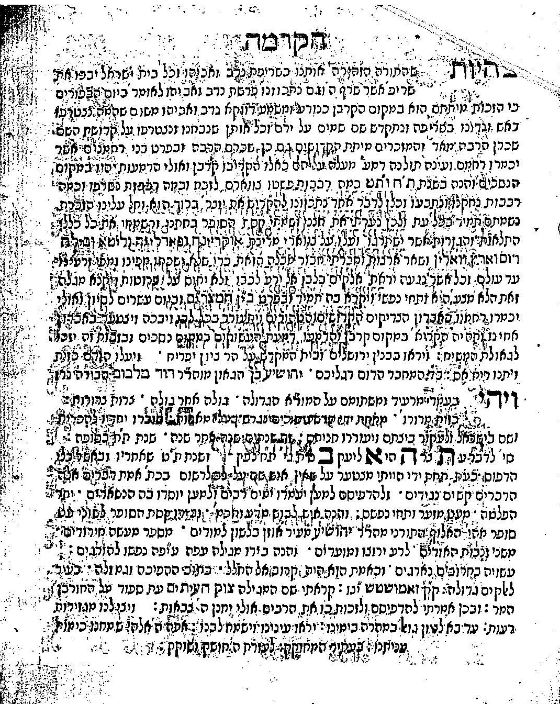
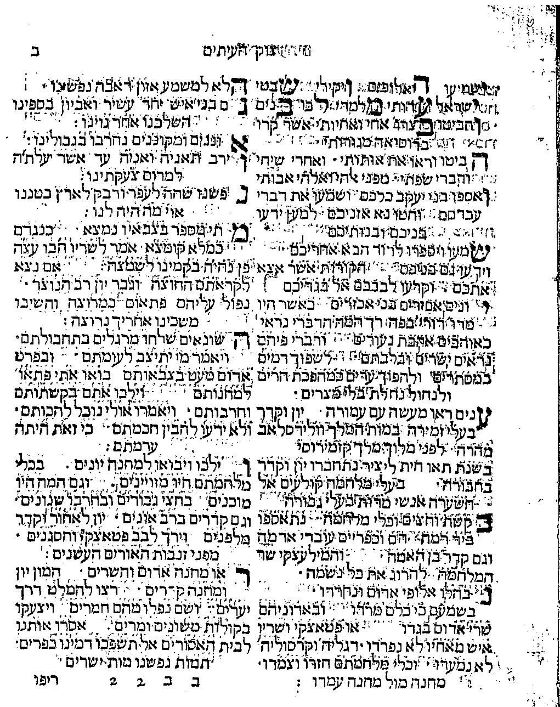
This new volume is composed of four articles. Two of these articles (no. 3 and 4) were printed in Leshonenu and Leshonenu L’Am, almost fifty years ago. A third article (no. 2) was partially printed in a recent volume of Yeshurun, and the fourth article (no. 1) was supposed to have been printed in the journal Or Yisrael but was excluded from the volume right before printing.
The first article deals with mistakes that great people have made in their writings. The point of the collection is to show that anyone can make a mistake, however this does in no way detract from their greatness. This sampling is only a small part [18 samples] of a much larger collection of similar kinds of mistakes that we hope to print in the future.
The second article is a list of 85[!] cases of plagiarisms. It’s seventy two pages long and includes a very broad introduction on the subject. Hopefully this list will encourage others to collect similar instances and work to complete such a list.
The third article deals with the Rambam as a translator. As is well known, the Rambam wrote his classic work Yad Hachzakah in the Hebrew of the Mishna, as opposed to Talmudic Hebrew which is comprised of many Aramaic loanwords as well. Thus, the Rambam had to translate many Aramaic terms into Hebrew. This article deals with this topic and shows many interesting points related to this.
The fourth article is a review of the popular Hebrew dictionary HaMilon HaChadash, by Avraham Even-Shoshan. This article was first published in 1967 in the language journal Leshonanu in three parts. Some of the material from these articles was added into later editions of the dictionary. There is a wealth of information in this article about words and expressions. Rabbi Ashkenazi had made a 12 page index for his own personal copy of the article; this index is published here for the first time in this volume. Additionally,
Rabbi Ashkenazi added many notes which he recorded over the years on the side of his copy of the article. All of the above addenda have been included in this printing.
In sum, this volume is of importance to any person interested in the Jewish book or the Hebrew Language.
The book was printed in a limited run of 300 copies and is not being sold in retail stores. If one is interested in purchasing a copy he can do so either through me, or at Beigeleisen in the U.S. or Girsa in Jerusalem. The price of the book, including air mail shipping to the U.S., Canada or England is $24.
For a sample of this work or for any other information regarding this project, feel free to email me at: eliezerbrodt@gmail.com
חכמים הזהרו בציון מקורותיכם – חוסר עיון במקורות ועל ראשי תיבות
חכמים הזהרו בציון מקורותיכם –
חוסר עיון במקורות ועל ראשי תיבות
מאת
עקביא שמש
לאחר שקראתי את
הפוסט המעניין מאוד של פרופ’ מרק שפירו, אמרתי כי עכשו הזמן להוסיף עוד משהו
בבחינת מעניין לעניין באותו עניין. מה הוא דיבר על דרכם של כותבים בדורנו, אף אני
אכתוב על פרט מסויים בדרכם של הכותבים בדורנו. הפרט שאני רוצה להצביע עליו הוא שיש
מחברים המציינים את המקור לדבריהם, ואף מפנים את הלומד לעיין באותו מקור, אבל הם
עצמם לא עיינו באותו מקור. אילו היו מטריחים עצמם לעשות כן, היו רואים שמקור זה לא
היה ולא נברא. ואם תאמר, אם לא עיינו באותו מקור הכיצד ציינו אליו. תשובתך, הם ככל
הנראה העתיקו את המקור מספר מסויים, והעלימו את שמו של אותו ספר. פרט זה אינו בא
ללמד על עצם הספר שכתבו, שאפשר שהוא ספר טוב וראוי, אלא בא לומר את שכתבתי בכותרת:
חכמים הזהרו בציוניכם. אם אתם מפנים למקור, עליכם לעיין בעצמכם באותו מקור, כדי
שלא תתבדו. אם מאיזה סיבה אינכם מסוגלים לעיין באותו מקור, אזי יש לכתוב במפורש כי
המקור המוזכר על ידכם נזכר בספר אחר, ואזי יידע הקורא כי לא אתם טעיתם בציון המקור,
אלא אתם סמכתם על פלוני שהפנה לאותו מקור.
כדי שהקורא יראה
במו עיניו במה מדובר, אדגים תופעה זו, שהיא חוזרת אצל כמה וכמה מחברים ביחס לאותו מקור
ממש, ודומני שזה מקרה לא שכיח.
אני מסדר את
הספרים לפי שנות ההדפסה, כאשר הקדום מביניהם הוא הראשון.
בספר עמודי
השמים עמוד ד’ אות כ”ג כ’ בשם האריז”ל שכל השמות שבעולם אינם במקרה כמו
שחושבים הבריות שאביו קורא לו כן במקרה בלי שום טעם אלא הכל בהסכמה מאתו ית’ שגלוי
לפניו מה ענין האיש הזה ופעולתו כן מזדמן בפה אביו לקוראו בשם שהשם ממש יורה על
ענין ופעולה שבאותו אדם אם הוא… עכ”ל.
אם ברצוננו
לראות את הדברים במקור, עלינו לפנות כדברי המחבר לספר עמודי השמים. ובכן, ספר בשם עמודי
השמים נכתב על ידי ר”ב שיק, ברלין, תקל”ז. חלק א של הספר הוא פירוש על
הלכות קידוש החודש לרמב”ם. חלק ב נקרא תפארת אדם, והוא עוסק בתיאור גוף האדם.
לשני החלקים אין כל קשר עם האמור. לכן עולה בדעתנו כי אולי המחבר לא דייק בשם
הספר, וכוונתו לספר עמודי שמים (ללא ה’ הידיעה). ובכן הבה נבדוק אפשרות זו.
קיימים שני
ספרים בשם זה. האחד, עמודי שמים לר”א ליכטשטיין, וורשה, תקס”ג. המחבר
עוסק בכמה וכמה עניינים, וזה ספר מורכב, אבל מכל מקום האמור אינו נמצא שם. ספר שני
הנקרא בשם עמודי שמים הוא סידורו של ר’ יעקב עמדין, אלטונא, תק”ה-תק”ח.[2]
סידור זה נדפס פעמים רבות ובמהדורות שונות, ואף נקרא בשמות שונים, ומן הדין היה
לציין לאיזה מהדורה התכוון רמ”ב פירוטינסקי, כדי שנוכל למצוא את המקום. אלא
שכאן הקושי אינו גדול כיון שמדובר בתחילת הספר, בעמוד ד. אבל המעיין בתחילת הסידור
לא ימצא שם מאומה, ומה עוד שהציון הנוסף: אות כ”ג, אין לו מובן שהרי אין שם
אותיות. אם כן הציון של הרב פירוטינסקי צריך עוד בירור.
המעניין הוא
שמצאנו איזכור מעין זה בעוד חמישה עשר ספרים, שנדפסו אחריו כפי שנראה מיד, וכולם
מציינים שהמקור הוא ספר עמודי שמים (או: השמים). אפשר שטעו בעצמם כפי שרמ”ב
פירוטינסקי טעה, אבל קרוב בעיני שנמשכו אחריו או אחרי ספר אחר שטעה בזה. הבה ונראה
את שאר הספרים.
בשם
האריז”ל שכל השמות שבעולם אינם במקרה כמו שחושבים הבריות שאביו קורא לו כן
במקרה בלי שום טעם אלא הכל בהסכמה מאתו ית’ שגלוי לפניו מה ענין האיש הזה ופעולתו
כן מזדמן בפה אביו לקוראו בשם שהשם ממש יורה על ענין ופעולה שבאותו אדם אם הוא…
(ס’ עמודי שמים עמוד ד’ אות כ”ג).
מכאן נראה
שפרטים רבים על האדם מתגלים בשמו כפי שאומר עמודי שמים (אות כ”ג) בשם
האר”י הקדוש: …[6]
שהשם ממש יורה על ענין ופעולה שבאותו אדם אם הוא מצד הטוב או מצד הרע ובאיזה אופן
יהיה…
על פי הציטוט,
שלא מועתק כאן עד תומו, נראה למעיין שר”מ גלזרסון העתיק ישירות מספר עמודי
שמים. אבל כאמור עניין זה אינו נמצא בעמודי שמים. מה עוד שכאן לא ציין המחבר את
מספר העמוד, וברור שלא ניתן למצוא את המקור רק לפי אות כ”ג. ובכן, אין אנו
יודעים מניין הגיע המחבר לספר עמודי שמים.
5. בספר שיחות
הרב צבי יהודה הכהן קוק על ספר שמות, ירושלים, תשנ”ח, עמ’ 19 הערה 33, נאמר:
אמר האר”י
ז”ל שכל השמות שבעולם אינם במקרה כמו שחושבים הבריות שאביו קורא לו במקרה בלי
שום טעם אלא הכל בהסכמה מאיתו ית’ שגלוי לפניו מה ענין האיש הזה ופעולתו כן מזדמן
בפה אביו לקוראו בשם. עמודי השמים עמ’ ד אות כג.
אמנם יש לציין
כי הדברים נאמרו בהערה, ועל פי הרשום בספר “עריכה מקורות כותרות וסיכום על
ידי הרב שלמה חיים הכהן אבינר”. כלומר, הרב אבינר הוא אחראי על כתיבת המקורות
בספר, וא”כ הוא זה שכתב כי המקור הוא עמודי השמים בה’ הידיעה. שם הספר בה’
הידיעה, מזכיר לנו את האמור המקור מס’ 1.
6. כתב ר”מ
גרוס:[7]
“כתב רבנו האריז”ל וז”ל שכל השמות שבעולם אינם במקרה כמו שחושבים
הבריות שאביו קורא לו כן במקרה בלי שם טעם אלא הכל בהסכמה” וכו’. כמקור לכך
נכתב: “ברית אבות סי’ ח או’ מז בשם ספר עמודי שמים”.
ר”מ גרוס
מגלה לנו כי המקור לדברי האריז”ל הוא בספר ברית אבות, שכתב כן בשם ספר עמודי
שמים, ונשוב לכך בהמשך.
דהא כבר נתפרסם
בעולם למ”ש בספר בספר עמודי שמים (עמוד ד אות כג) בשם רבינו האר”י
ז”ל בזה”ל אפילו מספר שמו וכל אות ואות ונקודה שבשמו הכל מורה על פעולתו
ועניניו אשר באותו איש עכ”ל ע”ש, וכ”כ רבי שבתי ליפשיץ בספר ברית
אבות (סימן ח אות מז) שמספר שמו העולה בגימטריא יש לו משמעות והשפעה עליו ע”ש.
ר”ד טהרני
כתב: “ע”ש”, דהיינו שיש לעיין במקור. לכאורה משמע מכאן שהוא עצמו
עיין במקור, אבל כאמור לשוא יחפש המעיין בעמודי שמים, כי לא ימצא שם דבר. אבל גם
הוא כקודמו מפנה לספר ברית אבות ועל כך נדבר בהמשך.
8. כאמור ציון
זה מוצא את דרכו הלאה גם לספריהם של חכמים נוספים. כך כתב ר”ר עמאר:[9]
כיוצא בזה ראתה
עיני להיעב”ץ ז”ל בספר עמודי שמים עמוד ב’ אות כג בשם רבנו האריז”ל
דכל השמות שבעולם אינם במקרה כמו שחושבים הבריות שאביו קורא לו שם במקרה ככל העולה
על רוחו ועם לבבו בלי שום טעם וסיבה אלא הכל בהשגחה ובהסכמה…
המחבר הגדיל
לעשות בכך שכתב בבירור כי עמודי שמים הוא ספרו של ר’ יעקב עמדין (יעב”ץ). יתר
על כן הוא כתב “ראתה עיני”, בהכרח עלינו לומר שכתב כן כמליצה בעלמא,
שהרי כאמור אין בעמודי שמים מאומה מעניין זה.
מובא בכתבי
האריז”ל שער הגלגולים (שער כ”ג ונ”ט) שבזמן שההורים נותנים את שמו
של התינוק נכנסת בהם רוח הקודש כיצד לקרוא שמו וכן היעב”ץ בספרו עמודי שמים (עמוד
ד’ אות כ”ג) מביא בהרחבה ענין זה בשם האר”י שכל השמות בעולם אינם במקרה
אלא הכל לפי מה שהניח הקב”ה בפיו של אביו בגלל עתידו יעו”ש.
המחבר מודיע לנו
שהכוונה היא לסידורו של היעב”ץ, ואף הוסיף: “יעו”ש”. כלומר,
יש לעיין שם, ואתה מבין מכאן שגם הוא עיין שם, שהרי הוא מוסיף וכותב כי
היעב”ץ “מביא בהרחבה”, והרי כאמור אין שם מאומה מעניין זה.
10. עדיין לא
נסתיימה רשימת המחברים שכותבים כך. ר”א קיציס כותב:[11]
וראיה מופלאה
לדבר כתב בספר נועם אלימלך שכאשר אדם ישן ורוצים להקיצו משנתו הדרך הקלה היא לקרוא
בשמו ומיד יקיץ ויתעורר משום שהשם מהות נשמתו (פרשת שמות דיבור המתחיל או יאמר) וכן
האריך בענין זה בספר עמודי שמים (יעב”ץ) ומביא כן בשם האר”י הקדוש שכל
שרשי האדם מרומזים בשמו.
המחבר השמיט
מראה מקום מדוייק לספר עמודי שמים, אולי מפני שלא מצא כן בספר, ולא הבין את פשר
מראה המקום. אבל הוא יודע כי את הספר כתב יעב”ץ ואף האריך שם, דבר שאינו
קיים.
11. גם ר”א
דבורקס ממשיך ומאמץ טעות זו, וכותב:[12]
“כן מבואר בספר הגלגולים פ’ נט ובספר עמודי שמים אות כ”ג מה שהביא בשם
האריז”ל שהאריכו רבות בגודל וחשיבות הענין של נתינת שם לבן או לבת ע”י האב
בעצמו”…
המחבר השמיט חלק
ממראה המקום לספר עמודי שמים, וברור שלפי הציון: אות כ”ג בלבד, לא ניתן למצוא
דבר, ואין לציון זה מובן.
דשמות אישי
ישראל אינם מקרה אלא בהשגחה פרטית לפי שהוא שורש נשמה ומקרא מלא הוא במספר שמות
לגולגולתם וכל אשר יקרא לו אדם נפש חיה הוא שמו והשי”ת אשר לו נתכוונו עלילות
הוא ממציא בפי אבי הילד בשעת קריאת השם שמו הנאה לו כפי שורשו עכ”ל וסוד
דבריו אלו הובא בספר עמודי שמים (אות כ”ג) בשם האר”י הק’ שממנו מקור
ענין זה והאריכו בזה בספר הגלגולים (פרק נ”ט) ובספר אגרא דכלה ועוד ספרים.
כאמור קודם,
הציון: אות כ”ג, אינו אומר מאומה למעיין, ואלו הם דברים בעלמא.
13. רי”י
הלוי אשלג כתב:[14] “בספר
עמודי השמים עמוד ד’ אות כ”ג כ’ בשם האריז”ל שכל השמות שבעולם אינם
במקרה כמו שחושבים הבריות שאביו קורא” וכו’. כאן הספר נקרא עמודי השמים (בה’
הידיעה), וזה מזכיר לנו כי כך כתב גם בספר הברית (מס’ 1).
14. ועוד מחבר המצטרף
לרשימה זו והוא ר”י רצאבי:[15]
ובמקור דבריו
של מהרי”ץ שהוא בספר חסד לאברהם מעיין ה’ נהר ו’ לא נזכר לשון זה שרוח הקודש
לובשת לאב אלא שה’ יתברך מזמין אותו שם בפי אביו ואמו יעו”ש, וכן הוא בשער הגלגולים
הקדמה כ”ג ובמשנת חסידים מסכת חתונה ומילה אות ג’ ובספר ברית אבות סימן ח’
אות מ”ז בשם ספר עמודי שמים בשם רבינו האר”י יעוש”ב.
ר”י רצאבי
שלח אותנו לעיין בדבריו, ואי אתה יודע אם התכוון לספר ברית אבות, ובזה לא הטעה את
המעיין כפי שנראה בהמשך, או שהתכוון לספר עמודי שמים, ובזה הטעה את המעיין.
15. כתב
רק”מ בר:[16] “אמר
האר”י ז”ל שכל השמות שבעולם אינם במקרה כמו שחושבים הבריות שאביו קורא
לו במקרה בלי שום טעם” וכו’. ובהערה 9 כתב כי המקור הוא: “עמודי השמים
עמוד ד אות כג”. אף הוא כתב את שם הספר עמודי השמים בה’ הידיעה, וזה כאמור
דומה לכתוב בספר הברית (לעיל מס’ 1).
ובס’ עמודי
שמים (עמ’ ד’ אות כ”ג) כתב בשם האריז”ל (שער הגלגולים הקדמה כ”ג דף
כ”ד ע”ב) שכל שבעולם אינם במקרה, אלא הכל בהסכמה מאתו יתברך, שמזדמנין
בפה אביו לקראו בשם שבו ענין האיש ופעולתו מצד הטוב ומצד הרע, ולא זו בלבד אלא
אפילו מספר שמו וכל אות ואות ונקודה שבשמו…
עד כאן רשימת
הספרים, שלחלק מהם הגעתי בסיוע תוכנת אוצר החכמה.
ובכן, מה הוא
ספר עמודי שמים שכולם מפנים אליו. עלינו להחזיק טובה לר”מ גרוס (לעיל מס’ 6),
ר”ד טהרני (מס’ 7), וגם לר”י רצאבי (מס’ 14) שציינו לספר נוסף, הוא ספר
ברית אבות,[18] שכנראה הוא
המקור לדבריהם. ר”ד טהרני אף הגדיל לעשות שכתב גם את שם המחבר: “וכ”כ
רבי שבתי ליפשיץ בספר ברית אבות (סימן ח אות מז)”.
לכן פניתי לספר
ברית אבות לראות מה נאמר בו, וכך כתוב שם:[19]
“בספר עמוד”ש עמוד ד’ אות כ”ג כתוב בשם רבינו האריז”ל
וז”ל שכל השמות שבעולם אינם במקרה כמו שחושבים הבריות שאביו קורא לו כן במקרה
בלי שום טעם… אלא אפילו מספר שמו וכן אות ואות ונקודה בשמו” וכו’.
מעתה ברור כי יש
כאן טעות בפתרון ראשי התיבות: עמוד”ש.[20]
הפתרון הנכון הוא: עמודיה שבעה, שהוא ספרו של ר’ בצלאל ב”ר שלמה מקוברין,
לובלין, תכ”ו, ובמהדורות נוספות. עיון בספר זה מוכיח שזהו הפתרון הנכון הואיל
והעניין נמצא שם, בעמוד ד, אות כג.
יש להבהיר, כי
‘עמוד ד’ אינו המספר של העמוד בספר כפי שכל מעיין סבור לתומו, שהרי כך אנו רגילים
לציין לעמודים שבספר. אלא הספר מחולק לשבעה עמודים וזה פשר שם הספר: עמודיה שבעה, המלמד
כי הספר מחולק לשבעה עמודים, כלומר לשבעה חלקים. לכן, הציון ‘עמוד ד’ משמעותו
העמוד הרביעי, היינו החלק הרביעי בספר.
יש לציין כי
לפתרון של ראשי תיבות יש כיום ספרות עזר. נכון הוא כי פתרון לראשי התיבות:
עמוד”ש, לא מצאתי בספרים העוסקים בראשי תיבות. אמנם גם אם היה מקום לדון לכף
זכות את הפותרים ששגו, הואיל ולא היה להם במה להעזר, הרי שעדיין היה עליהם לפתוח
את הספר, ולוודא אם פתרו כהלכה את ראשי התיבות.
לסיכום, אלו
הדברים העולים מהאמור לעיל:
א.
ששה עשר
מחברים בדורנו כותבים שעניין מסוים נמצא בספר פלוני, בדוגמה שלפנינו הספר הוא ספר
עמודי שמים (או עמודי השמים), אבל אף אחד מהם לא טרח ובדק אם אכן העניין נמצא בספר
זה. אילו היו עושים כן, היו רואים שהעניין אינו נמצא בו.
ב. שלושה
מחברים (מס’ 6, 7, 14) מתוך ששה עשר המחברים הללו, מציינים לספר ברית אבות כמקור
לדבריהם. לכן, אף שלא טרחו לעיין בספר עמודי שמים (שאליו הם מפנים), הרי שהם עשו
עמנו חסד בכך שנתנו בידינו את האפשרות לברר כיצד הגיעו לכך שהעניין שכתבו נמצא בספר
עמודי שמים.
ג.
ואכן, על
ידי עיון בספר ברית אבות מתברר שאין בו הפניה לספר עמודי שמים, אלא יש בו הפניה
לספר: עמוד”ש. הפתרון לראשי התיבות עמוד”ש שהוא לדבריהם ‘עמודי שמים’
הוא פתרון שגוי, שהרי דבר זה אינו נמצא בספר זה. ברור אפוא שעלינו לחפש פתרון אחר
לראשי התיבות עמוד”ש. הפתרון הוא: עמודיה שבעה.
ד.
לגבי שלושה
עשר המחברים האחרים קשה לדעת אם מי מהם ראה את ספר ברית אבות (או ספר אחר שלא
הוזכר כאן) ושגה בפתרון ראשי התיבות עמוד”ש. או שהוא ראה את ההפנייה ‘עמודי
שמים עמוד ד’ וכו’ בספר שקדם לו (מרשימת הספרים שהובאה כאן, או מספר שלא הוזכר
כאן). כך או כך, בשל מחברים אלה המעיינים בספריהם לקו בכפליים – לא רק שהופנו
הלומדים למקור שאינו קיים, אלא גם נמנע מהם לדעת כיצד הגיעו המחברים למקור זה. לו
כתבו המחברים את שם הספר שממנו העתיקו את המקור הזה (כדוגמת מס’ 6, 7, 14), היה
באפשרות הלומדים לעקוב אחר גלגול העניין.
[1] ספר
הברית, ניו יורק, תשל”ח, סי’ רס”ה, סימן י, קונטרס קריאת השם, אות א, דף
דש ע”ב. תודה לר”א ברודט על שהפנני לספר זה.
[2] יש
לציין שלסידור זה יש שמות נוספים, ולא נאריך בזה כאן.
[8] כתר שם
טוב, ירושלים, תש”ס, חלק א, עמ’ שס. וחזר על כך עוד מספר פעמים במקומות שונים
בספרו.
[9] מנהגי
החיד”א, יו”ד, חלק א, ירושלים, תשס”ב, דף קנט ע”א.
[10] נחלת שדה
על בראשית, ירושלים, תשס”ג, עמ’ קיד. אגב, בשער הספר כתוב שהשנה היא: דרוש
סודות תורה. וברור שיש כאן שיבוש בהדפסה.
[11] הגדה של פסח עם
פירוש מנחה שלוחה לר”א קיציס, בני ברק, תשס”ה, עמ’ רנב.
[12] על בן אמצת לך,
ירושלים, תשס”ה, עמ’ נח, סוף הערה ג.
[13] נהרות איתן,
ח”א, או”ח, רחובות, תשס”ז, פתיחה רבתא, עמ’ כט. הוא חזר על כך בספרו נהרות איתן,
ח”ב, יו”ד, רחובות, תשס”ח, עמ’ שפו, וכן בח”ג, רחובות,
תשס”ח, עמ’ שצז, אות יח. והנה בח”ג כתב כי בשו”ת ערוגות הבושם
ח”א סי’ ריח, כתב כן בשם עמודי שמים, ושכח דברי עצמו מחלק ב, ששם הוא זה שכתב
כי מקורו של ערוגות הבושם הוא בעמודי שמים, אבל בעל ערוגות הבושם מעולם לא הזכיר
את עמודי שמים בעניין, ע”ש, ואין להאריך.
[14] ילקוט ספר
הזוהר על ברית מילה, בני ברק תשס”ח, עמ’ רנד, אות תקעו.
[15] נפלאות מתורתך,
במדבר, חלק שני, בני ברק, תשס”ט, עמ’ קצ.
[16] מעשה רקם
על פרשיות השבוע, בני ברק, תשס”ט, עמ’ 279.
[17] מטל
השמים, בני ברק, תשע”ב, פר’ ויחי, דף קו ע”א.
[18] קצת תימה
על רמ”ב פירוטינסקי (מס’ 1), שהרי על פי תוכנת אוצר החכמה הוא מביא
כ- 30 פעמים את ספר ברית אבות, ומדוע נמנע במקום זה מלהזכיר כי ספר זה הוא המקור
לדבריו.
[19] בשער
נכתב: שרביט הזהב החדש הנקרא גם ברית אבות [הואיל ור”ד טהרני נהג כהלכה
בציינו גם את שם המחבר, לכן ניתן היה למצוא את הספר גם תחת השם השני של הספר: ברית
אבות], מונקאטש, תרע”ד, דף סה ע”ב, אות מז.
[20] אפשר
ששלושה אלו טעו בכך שפתרו את ראשי התיבות הללו באומרם שהכוונה היא: עמודי שמים.
אפשר גם לומר שראו פתרון זה (עמודי שמים) בספר אחר, כגון ספר הברית המצויין במס’
1, ולא ראו הבדל בין השם עמודי השמים (בה’ הידיעה כנזכר בספר הברית) לבין עמודי
שמים (ללא ה’ הידיעה), אלא שלא ציינו באיזה ספר ראו פתרון זה.
Plagiarism, Halakhic Paradox, and the Malbim on Kohelet
Plagiarism, Halakhic Paradox, and the Malbim on Kohelet
by
Marc B. Shapiro
1. A story recently appeared alleging plagiarism in the writings of R. Yonah Metzger.[1] Such accusations are nothing new and the topic of plagiarism in rabbinic history is of great interest to me. Many of the scholars of Jewish bibliography have also written about the phenomenon,[2] and a good deal on the topic has appeared on the Seforim Blog.[3] Suffice it to say that every generation has had problems in this regard, and we see even see apparent instances of it in the Talmud.[4] The examples range from taking another’s ideas (including one’s teacher[5]), to copying sections of another work, to reprinting an entire book and changing the title page.[6] It is interesting that R. Moses Sofer, unlike others, is reported not to have been troubled by people plagiarizing from him. As he put it, he doesn’t mind if they attach his hiddushim to their names, as long as they don’t attribute their own hiddushim to him.[7]
R. Isaac Sternhell, in the introduction to his Kokhvei Yitzhak, vol. 1, gives a good illustration of how widespread the problem of plagiarism has been in explaining why R. Joseph Karo and R. Moses Isserles don’t mention anything in the Shulhan Arukh about the obligation to repeat a Torah teaching in the name of one who said it (itself of great importance, not to mention the geneivat da’at involved if one doesn’t give proper credit [8]). R. Sternhell states that that since so many people plagiarize, including תלמידי חכמים שיראתם קודמת לחכמתם, therefore, just like it is a mitzvah to say that which people will listen to, so too it is best to be quiet about something they won’t pay attention to [9]. R. Sternhell reports that this reason was actually given by R. Yissachar Dov Rokeah of Belz in explanation of why there is nothing in the Shulhan Arukh about the prohibition of leshon hara.[10]
והם מתוך שחששו מלהביא קטרוג על כלל ישראל התעלמו מדינים אלה בפסקי הלכה והשמיטום. ובכך קיימו דברי הנביא עמוס (ה’ ג’) והמשכיל בעת ההיא ידום
R. Sternhell then lists a few books that plagiarized, and the books from which they stole. The problem is that he only identifies the plagiarizing books by their initials, which makes identifying them quite hard.
Today we have Otzar ha-Hokhmah which makes spotting plagiarism easier. Let me share with you one example. I am a long time reader of the journal Or Torah, which is where so many of R. Meir Mazuz’s writings have been published. In Tamuz 5758 an article appeared by a certain R. Daniel Weitzman. Here are the first two pages. On the second page there is something suspicious, which I don’t know if anyone other than me would take notice of. He cites R. Weinberg’s famous responsum on abortion but instead of citing it from Seridei Esh, he refers to an earlier appearance in Ha-Pardes. This sort of thing immediately sets off bells for me, since how would a rabbi in Israel in the pre-hebrewbooks.org and pre-Otzar ha-Hokhmah era have access to a thirty-year-old issue of Ha-Pardes? How would he ever come to that? In fact, if you look at the article, it seems that he doesn’t even know what Ha-Pardes is, referring to it as Pardes. The title he gives to R. Weinberg’s article is also not correct and is taken from the source he plagiarized from.
Now compare what Weitzman wrote with what appears in R. Shmuel Hayyim Katz’s Devar Shmuel (Los Angeles, 1986).
Weitzman has not just plagiarized, but he has copied word for word from Katz. Needless to say, I was quite distressed when I saw this. Since it is rare that someone plagiarizes only once, I decided to check Weitzman’s other articles that appeared in Or Torah.
Here is an article from Tamuz 5757 (first page, but here is a link to the complete article).
This article is also plagiarized from R. Katz’s Devar Shmuel.
And here Weitzman’s article from Or Torah, Av 5758, and it too is plagiarized from R. Katz’s Devar Shmuel.
Here are the pages from Devar Shmuel:
With the aid of Otzar ha-Hokhmah I was able to find the following. Here is the first page of Weitzman’s article that appears in Or Torah, Heshvan 5761.
It is taken almost word for word from R. Mordechai Friedman’s Pores Mapah (Brooklyn, 1997).
Pores Mapah is not a well-known book (although it has much to recommend it), and having been published in the U.S. was probably hard to come by in Israel. This is the perfect sort of book for an Israeli to plagiarize from, and years ago it would have been virtually impossible for anyone to realize what had happened. Yet with Otzar ha-Hokhmah I was able to locate the plagiarism in a matter of seconds.
I think the explanation for plagiarisms like this is simply because people are greedy. They not only want that which they can achieve, but want to take from others as well. To once again cite the Gaon R. Mizrach-Etz, “a man’s got to know his limitations.”
Yet I must also note are cases of men who plagiarized in their early years but later became great Torah scholars, showing that a youthful error need not determine the course of one’s subsequent development.[11]
Sometimes, what appears to be a plagiarism has a much simpler explanation.[12] Here is a page from R. Moses Teitlebaum’s Heshiv Moshe, no. 87.
Compare this responsum with what appears in R. Abraham Bornstein, Avnei Nezer, Hoshen Mishpat, Likutei Teshuvot no. 101. The responsa are basically identical except for the dates and addressee.
What is going on here? I think it is obvious that R. Bornstein had a handwritten copy of the responsum, which he presumably copied out of Heshiv Moshe, a work published in 1866. After his death the one who put together his responsa did not realize that this was a responsum of R. Moses Teitelbaum, so he published it adding Bornstein’s signature and a new date. He also assumed that when the original responsum referred to the questioner as ש”נ it meant שינאווי when in fact it means שיאיר נרו or שיחיה נצח. Furthermore, in the original responsum it states דבר זה מתורת משה ילמדני which is an allusion to the one being asked the question, R. Moses Teitelbaum. Yet this was overlooked when the responsum was included in the Avnei Nezer.
Here is another example of what has been alleged to be plagiarism.[13] It is a passage from the Beur Halakhah, 494, s.v. מבחודש השלישי.
Now look at the Shulhan Arukh ha-Rav, 494:8-11, and you can see that it has been copied word for word, even though at the end of the Beur Halakhah it states: זהו תמצית דברי האחרונים
What to make of this? One of the commenters on the site that calls attention to this text sees here an indication that the Hafetz Hayyim’s son was also involved in the writing of the Mishnah Berurah (as he claimed), since the Hafetz Hayyim himself would not do such a thing. Yet matters are more complicated than this, as there are also other places where the Mishnah Berurah copies word for word from the Shulhan Arukh ha-Rav (and presumably from others sources as well).[14] Are we to assume that these were all inserted by his son?
It appears that the Hafetz Hayyim’s conception of what was proper in using earlier sources differed from what is accepted today, much like standards were also different in medieval times. Furthermore, since the Hafetz Hayyim writes זהו תמצית דברי האחרונים, even from a contemporary perspective we are not dealing with plagiarism. But the question is – and I don’t have the answer – why in some places the Hafetz Hayyim did not indicate when he was taking material from the Shulhan Arukh ha-Rav. He does mention in the introduction that the Shulhan Arukh ha-Rav is one of the sources from which his own commentary derives its material, and he constantly refers to it, so why in this case is there no indication of his source? Maybe one of the readers can answer if the Shulhan Arukh ha-Rav is unusual in this regard, or if this is done with other sources as well. As far as I know, we don’t yet have an edition of the Mishnah Berurah that provides all the sources used in the text.
2. In Ha-Ma’ayan, Tishrei 5771 and Tevet 5771 there are articles on the idea of “Halakhic Paradox” by R. Michael Avraham and R. Meir Bareli. You can see Ha-Ma’ayan online here.
Here is another halakhic paradox that I found in the journal Ohel Yitzhak, Sivan 5668, p. 4b. Take a look at R. Menahem Ratner’s second question. I tried to actually put what he is asking into English but was unsuccessful as my mind kept going in circles. As with all such cases, and one immediately thinks of Zeno’s paradoxes, the problem is to determine if we are indeed dealing with a real paradox or if the paradox is only apparent. So I ask those readers who want to try to get their head around what Ratner is saying, is this a real paradox or is he missing something?
3. In the past few years there were many topics I wanted to get to, but simply didn’t have the time. These matters are not much in the news now so I won’t discuss them in detail as I had originally hoped to. However, I will make a few comments as I think readers will still find the topics of interest.
Let’s start with the commentary of the Malbim on Kohelet that was published in 2008. Here is the title page.
Understandably, there was much excitement when this book appeared since it is quite an event when an unknown commentary of such a major figure is discovered. However, the excitement was short-lived, as it soon became known that the commentary was not by the Malbim but by a nineteenth-century maskil, Jonah Bardah. Even more embarrassing for the publisher, Machon Oz ve-Hadar, is that Bardah’s commentary even appeared in print in 1850. Here are the title pages.
This would be bad no matter who the publisher was, but the fact that Machon Oz ve-Hadar is from New Square, which is as far removed from Haskalah imaginable, makes the mistake drip with irony.
How did such a blunder happen? Today, it seems that everyone is looking for unknown material to publish. There are a number of journals that devote a good deal of space to this, and I often wonder what will happen when we run out of unpublished documents. With this mindset you can imagine how excited the publisher was when he was informed that someone had located a previously unknown commentary by the Malbim. The assumption that this was the Malbim’s text was due to the similarity between the method of commentary in the newly discovered work and other commentaries of the Malbim. Without careful examination, the Kohelet commentary was published and this would in turn lead to great embarrassment, not to mention a lot of wasted time and money.
The story of this mistake is found in a document entitled Sheker Soferim. Here is the title page.
(A softened version of this article appeared in Yeshurun 25 [2011], pp. 724ff., and there the author’s name is revealed: R. Avraham Yeshaya Zecharish.[15]) This is really a damning document as it shows that the publisher had already been told that the handwriting of the commentary was not that of Malbim. I am not going to say that the publisher knowingly printed a fraud in order to profit by the Malbim’s name. But I think it is obvious that that the publisher’s great desire to publish the work caused him ignore what he had been told and to instead rely on his own “experts.” Whoever edited the work also showed his (their?) ignorance, since when the commentary referred to רמבמ”ן , not knowing that this referred to Mendelssohn the text was “corrected” to read רמב”ן!
Despite my sense that there was no intentional fraudulence in this publication, I don’t entirely discount the possibility that the publisher knew the commentary was not by Malbim but printed it anyway. I say this because as shown in Sheker Soferim there is one passage in the commentary where the “Malbim” claims that there is a mistake in the biblical text. The editors censored this passage, and this to be expected as from a haredi perspective such a comment is heretical. But if so, could the publisher actually believe that the Malbim wrote that which was censored?
Lest people think that things like this don’t have real effects in the world, let me just note that, as pointed out by Eliezer Brodt, an entire chapter of a doctoral dissertation is devoted to the false Malbim commentary on Kohelet.[16] Just think of how many hours were devoted to this dissertation chapter, all of which were wasted.
While Zecharish points to various “problematic” elements of the commentary that the publisher should have been aware of, he misses one right on the first page.
The notes at the bottom of the page are found in the original manuscript and publication. Here is the page.
In the commentary to the first verse the “Malbim” explains how the beginning of biblical books, where the author is introduced, is written by a later person.
.ואדמה כי לא יטעה כל משכיל לחשוב אשר המחבר בעצמו דיבר אלה הדברים
In the note the “Malbim” adds:
.עיין בהראב”ע בהתחלת ספר דברים
The beginning of Deuteronomy states: “These are the words which Moses spoke unto all Israel beyond the Jordan.” Upon these words Ibn Ezra introduces his “secret of the twelve” which focuses on post-Mosaic additions to the Torah. It is incredible that while the “Malbim’s” intention is crystal clear, namely, that the beginning of Deuteronomy was written after Moses, the editors didn’t catch this and see anything problematic in the comment, a comment that would never have been made by the Malbim.[17]
——
[1] See here. For former French Chief Rabbi Gilles Bernheim’s plagiarism, see the statement in First Things available here.
I think this sentence, from the article, is particularly apt:
One of the perversions of our era is to make a god of intellectual property. Most commentators described Bernheim as “stealing” words and sentences. This is wrongheaded. Plagiarism is a sin against truth, not property. It’s first and foremost a kind of lying, not a kind of stealing. He violated our trust by speaking in a voice that was not his own, which is why in this and other cases of plagiarism the writer loses intellectual and moral authority broadly.
The importance of our spiritual leaders speaking the truth cannot be stressed enough. R. Kook writes about how forces of heresy were strengthened when people saw unethical behavior among בעלי תורה ואמונה. See Eder ha-Yekar, p. 43.
R. Joseph Ibn Caspi explains at length how a prophet, who models himself on God who is called א-ל האמת, always speaks the truth, even when speaking to his wife and children (!). See Shulhan ha-Kesef, ed. Kasher (Jerusalem, 1996), pp. 146, 163. This is so important to Ibn Caspi that he deals with a number of biblical examples where it appears that a prophet did not speak truthfully, and he argues that the meaning is not what appears at first glance. The one case where he acknowledges that we are dealing with a lie is Jacob telling Isaac, “I am Esau your firstborn” (Gen 27:19). Yet this does not affect Ibn Caspi’s thesis because he claims, p. 150, that when Jacob told this lie he was not yet a prophet.
.הנה כחש אבל עדין לא הגיע למדרגת הנבואה עד היותו בדרך חרן וראה הסולם
After his discussion about prophets and how they were always truthful, Ibn Caspi concludes, p. 163, that this is also how a חכם should behave. Our rabbis now stand in place of the prophets of old, thus they too much be paragons of truth.
With regard to Ibn Caspi’s Shulhan ha-Kesef, I would like to make one further point. In a previous post, see here, I discussed how, according to Ibn Caspi, the Torah contains statements that are not actually true, but were believed as such by the ancients. We see another example of this in Shulhan Kesef, p. 147, where he writes, in seeking to explain an example where it appears a prophet lied:
.כי הנביא שם משותף וכבר הרחיב הכתוב ואמר “חנניה הנביא” בסתם
What Ibn Caspi is saying is that even though the Bible refers to someone as a prophet, this doesn’t mean he was really a prophet. It could be that he is referred to as such because this is what the people believed, even though the people were incorrect. In other words, the Bible incorporates the incorrect view of the people in its narrative. The proof he brings is from Jeremiah 28 where Hananiah is referred to as a prophet but in reality he was a fraud.
[2] See most recently Shmuel Ashkenazi, “Ha-Gonev min ha-Sefer,” Yeshurun 25 (2011), pp. 675-690.
[4] See e.g., Bekhorot 31b, Menahot 93b; R. Moses Zweig, Ohel Moshe, vol. 1, no. 41. The fact that the Sages had this problem in their own day is probably also why they stressed the importance of proper attribution. This is pointed out by R. Nathan Neta Olevski, Hayei Olam Nata (Jerusalem,1995), p. 241:
מזה נראה כי גם בימיהם כבר פשתה המספחת להתגדר בגנבי גנובי את תורת אחרים ולכן ראו חז”ל להגדיל ערך המשתמר מזה ולחשוב דבר זה בין המ”ח דברים שהתורה נקנית בהן
[5] See e.g., R. Yekutiel Yehudah Greenwald, Mekorot le-Korot Yisrael (n.p., 1934), p. 48.
[6] See e.g., Nahum Rakover, Zekhut ha-Yotzrim bi-Mekorot ha-Yehudi’im (Jerusalem, 1991), pp. 38ff.
[7] Otzrot ha-Sofer 14 (5764), p. 91:
.זה אני מוחל לכם אם אתם אומרים חידושיי בשמכם, אבל אם אתם אומרים חידושים שלכם בשמי זה אינני מוחל לכם
For a communal rabbi, who was expected to prepare his own derashot, it was unacceptable to inform his listeners that he was using material from others. However, R. Asher Anshel Yehudah Miller, Olamo shel Abba (Jerusalem, 1984), p. 187, reported one tongue-in-cheek justification of this practice if due to circumstances beyond his control the rabbi was unable to properly prepare for his Shabbat ha-Gadol derashah. Since the Talmud, Pesahim 6a, states שואלין ודורשין בהלכות פסח, one can derive from this that מותר “לשאול” מאחרים בשעת הדחק ולדרוש בהלכות פסח
[8] I mention geneivat da’at, yet according to some one who plagiarizes actually violates the prohibition against actual geneivah. See R. Yaakov Avraham Cohen, Emek ha-Mishpat, vol. 4, nos. 2, 24; R. Yaakov Hayyim Sofer, Hadar Yaakov, vol. 5, no. 38. R. Isaiah Horowitz, Shenei Luhot ha-Berit: Masekhet Shevuot, no. 71, writes about plagiarism: יותר גזילה מגזילת ממון
R. Eleazar Kalir states that the plagiarizer violates a positive commandment. See Havot Yair (Vilna, 1912; printed as the second part of the Malbim’s Eretz Hemdah), p. 26a:
ואומרים חידושי תורה מה שלא עמלו בו רק מפי השמועה שמעו ואומרים משמיה דנפשם ועוברים על עשה . . . שכך אמרו כל האומר דבר בשם אומרו מביא גאולה לעולם
See also the very harsh comments of R. Joseph Hayyim David Azulai in his Berit Olam to Sefer Hasidim, no. 224, which should be enough to scare away at least some of the plagiarizers:
אם כותב ספר וגנב תורת אחרים . . . בחצי ימיו יעזבנו ואחריתו יבא בגלגול אחר ויהיה נבל ויהיה מזולזל כי נבל הוא ונבלה עמו. רחמנא ליצלן
[9] Robert Klein called my attention to the final part of R. Solomon Ephraim Luntshitz’s introduction to his Keli Yekar, where he suspects that some of the commentators who preceded him were guilty of plagiarism. See also his Olelot Ephraim, at the end of the introduction, where he claims that all the plagiarisms are delaying the arrival of the Messiah. He plays on the verse עשות ספרים הרבה אין קץ and explains that since so many new books are full of plagiarisms, עשיית ספרים הרבה גורם איחור קץ הימים.
R. Solomon Alkabetz, Manot ha-Levi (Lvov, 1911), p. 91b, also refers to the plagiarizers of his day. I called attention to R. Eliyahu Schlesinger’s plagiarism in my review of Avi Sagi’s and Zvi Zohar’s book on conversion, available here. See p. 9 n. 29. See also my post from June 25, 2010, available here, where I cite another case of plagiarism from Schlesinger. I found these examples by chance, and I am sure that if I were to carefully examine the latter’s writings I would come up with more. Yet there doesn’t seem to be much point in doing so, since in the haredi world there simply is no accountability in matters like this.
A number of scholars have discussed plagiarism with regard to Abarbanel, and I hope to return to this. For now, let me just note the following. In his introduction to Trei Asar, p. 13, Abarbanel explicitly denies that he plagiarized, while at the same time accusing R. David Kimhi of doing so.
שהמובחרים והטובים מהפירושים שזכר רבי דוד קמחי מדבר [!] הראב”ע לקחה [!], עם היות שלא זכרם בשמו ואני איחס כל דבר לאומרו פן אהיה ממגנבי דברים
At the end of his commentary to Amos, he repeats the accusation:
ומה שפירש עוד בהלא כבני כושיים בשם אביו הנה הוא לקוח מדברי הרב רבי אברהם בן עזרא ומה לו לגנוב דברים
See R. Dovberish Tursch, Moznei Tzedek (Warsaw, 1905), p. 195; Abraham Lipshitz, Pirkei Iyun be-Mishnat Rabbi Avraham Ibn Ezra (Jerusalem, 1982), p. 131.
[10] It is hard to take this explanation seriously. Talking during the repetition of the Amidah has always been common, yet rather than omit mention of this matter, the Shulhan Arukh, Orah Hayyim 124:6, writes:
לא ישיח שיחת חולין בשעה שש”צ חוזר התפלה ואם שח הוא חוטא וגדול עונו מנשוא וגוערים בו
R. Zvi Yehudah Kook reported that his grandfather, R. Shlomo Zalman Kook, once strongly rebuked someone for talking during the repetition of the Amidah. When it was pointed out to him that דברי חכמים בנחת נשמעים, he replied that the Shulhan Arukh uses the word גוערים and that does not mean a gentle suggestion but a sharp rebuke. See R. Yair Uriel, Be-Shipulei ha-Gelimah (n.p., 2012), p. 32. (The story immediately following this one is also of interest. It records that R. Zvi Yehudah opposed the common practice [at least in America] of singing אשמנו בגדנו:
יש לומר את הדברים ברצינות, בצער ובכאב, ולא מתאימה לזה שירה
It seems that R. Abraham Isaac Kook followed in the path of his father. See ibid., pp. 58-59, for the famous story of how R. Kook, while rav in Bausk, once slapped a “macher” in the face when he insulted R. Zelig Reuven Bengis. (The story is told in great detail in R. Moshe Zvi Neriyah, Sihot ha-Re’iyah [Tel Aviv, 1979], ch. 22.) R. Kook later explained that he did not slap the man in a fit of anger, but was of completely sound mind and did it in order to follow the Sages’ prescription of how to respond to one who degrades a Torah scholar:
“וכך אמר: “דינא הכי, מי ששומע זילותא של צורבא מרבנן צריך למחות
All I would say is that one must be careful with who one slaps. R. Yekutiel Yehudah Greenwald, Li-Felagot Yisrael be-Ungaryah (Deva, 1929), p. 25, records a story from mid-eighteenth-century Hungary where in the synagogue and in front of the congregation the head of the community slapped the rabbi in the face. This was the last straw for the rabbi (who was really a phony), and he, his wife, and children converted to Christianity.
R. Naphtali Zvi Judah Berlin would occasionally slap a student in the face. On one occasion it even led to a noisy protest by the students. Because the students refused to back down, the Netziv unable able to deliver his shiur. This led to him making a public apology to the students, which they happily accepted. See M. Eisenstadt, “Revolutzyah bi-‘Yeshivah,’” Ha-Tzefirah, June 2, 1916, pp. 1-2 (referred to by Shaul Stampfer, Lithuanian Yeshivas of the Ninteenth Century [Oxford, 2012], p. 113).
Since we are on the subject of slapping in the face, and since I mentioned R. Yitzhak Zilberstein in my last post, here is something else from his Hashukei Hemed on Bava Kamma, pp. 492-493.
I think it is quite interesting that he takes it as a given that policemen in Israel will beat thieves until they confess. Is there any truth to this at all? He himself thinks it is good that thieves be given a good slap in the face.
There are many more examples I could cite of people being slapped in the face, including by rabbis. One thing that is clear is that face-slapping has gone out of style.. It is like fainting, which was common in old movies. But when was the last time you saw a woman faint? It just doesn’t happen anymore.
Returning to R. Bengis, it is noteworthy that he and R. Kook were great friends from their days in Volozhin. See the booklet Or Reuven (Jerusalem, 2011), which is devoted to their relationship R. Bengis’ letters to R. Kook in Iggerot la-Rei’yah show that he regarded R. Kook as rav of Jerusalem and chief rabbi of the Land of Israel. Only after R. Kook’s death did R. Bengis become Rosh Av Beit Din of the Edah Haredit in Jerusalem. His life-long admiration for R. Kook, even in his new position with the Edah Haredit, is, of course, not usually mentioned in haredi discussions of him. Since in the past I have criticized Yeshurun for its conscious distortions (all in the service of the haredi cause), let me now praise it for including the following in vol. 12 (2003), p. 156 n. 35.
Rabbi Nathan Kamenetsky, Making of a Godol, pp. 305-306, reports in the name of R. Yosef Buxbaum that R. Bengis knew the poetry of Pushkin. (He also quotes a report that R. Bengis did not know Russian and when tested by a government official to ensure that secular studies were being taught in Volozhin, he just repeated the page of Pushkin from memory which he had prepared ahead of time by having another student read it for him. This strikes me as an apologetic attempt to “kasher” R. Bengis, as followers of the Edah Haredit will not take kindly to the knowledge that R. Bengis knew Russian poetry.)
For a recent discussion of R. Bengis and his brother, who went by the name of “Ben Da’at”, see here.
According to an unpublished collection of Brisker stories in my possession, R. Velvel Soloveitchik said about R. Bengis that just because one is a great talmid hakham does not mean that he is also a leader. Perhaps R. Velvel had this view of R. Bengis because the latter’s extremist credentials left something to be desired.
[11] Marvin J. Heller, Studies in the Making of the Early Hebrew Book (Leiden and Boston, 2008), p. 204, writes as follows about R. David Lida: “I would suggest, and this is highly speculative and certainly not a justification, that Lida’s acts of literary piracy were youthful improprieties, albeit of a most serious nature. A young man, inexperienced, perhaps immature, from whom much was expected, hoping to impress others and to further a burgeoning career, erred and claimed authorship of works he had not written, but rather discovered in manuscript.”
[12] The following example, with some of the explanations I give, is found here.
“The part about Anshei Keneset ha-Gedolah requiring the Amidah to be recited twice a day and that women are also obligated in this is not from Nahmanides. This is the Mishnah Berurah speaking.”
Actually, these are the words of the Shulchan Aruch HaRav (או”ח קו,ב), quoted here verbatim.
This practice of the MB citing whole paragraphs from the SAH – without attributing the author – is common throughout the his work, in leads many times to run-on sentences and disambiguation such as the one at hand.
[16] “Ha-Sinonomyah bi-Leshon ha-Mikra al Pi Shitat Malbim,” (unpublished doctoral dissertation, Bar Ilan University, 2009).
[17] See here where I mention how R. Yosef Reinman also didn’t know anything about Ibn Ezra’s “critical” views. In the post I also discuss the controversy regarding Reinman co-authoring a book with a Reform rabbi. In the introduction to his Avir Yosef (Lakewood, 2008), Reinman defends himself.
On the Plagiarism of a Tach-ve-Tat Chronicle
On the Plagiarism of a Tach-ve-Tat Chronicle
During this period, between the 17th of Tamuz and the 9th of Av, there is an increased focus upon various historical calamities that befell the Jewish people. Jewish history is unfortunately replete with such examples. Some instances have spawned specific days of commemoration while others have produced whole bodies of literature. And, while the literature surrounding these events is diverse, covering liturgy, poetry, history, we focus on one type: the chronicle. Additionally, our focus is the Chmielnicki Massacres, or Gezerot Tach ve-Tat. The Hebrew refers to the dates – 1648-49 – when the majority of Jew-killing took place. While these events took place hundreds of years ago, its effects including the total number of Jews killed is still being debated by scholars. (See Jits van Straten, “Did Shmu’el Ben Nathan and Nathan Hanover Exaggerate: Estimates of Jewish Casualties in the Ukraine During the Cossack Revolt in 1648,” Zutot 6:1 (2009), 75-82, calling into question the lower estimates of Shaul Stampfer, “What Actually Happened to the Jews of Ukraine in 1648?” Jewish History 17:2 (May 2003), 207-27.)
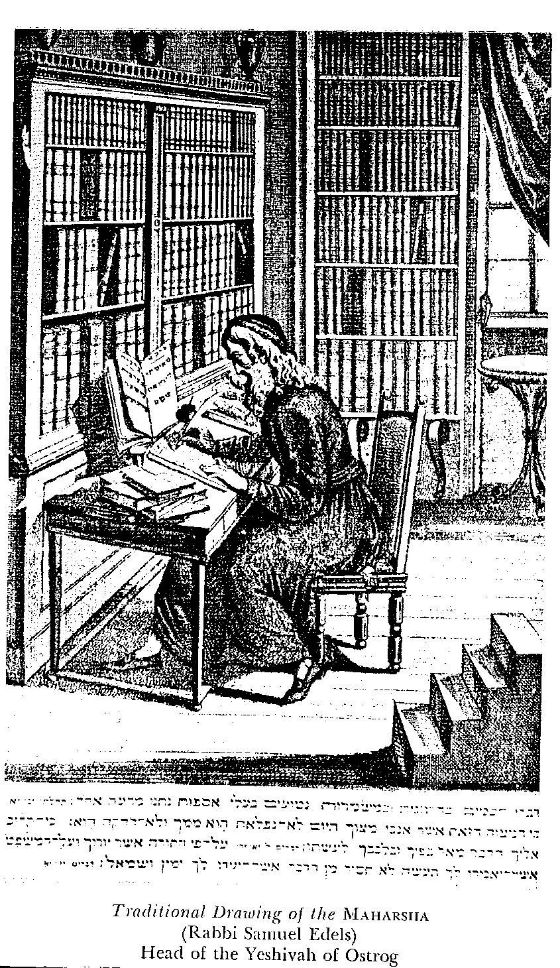
The most well-known chronicle describing the events is that of R. Nathan of Hanover, Yaven Metzulah. There is an English translation of Hanover’s work, Abyss of Despair, translated by R. Abraham J. Mesch. The translation includes a “traditional drawing of Maharsha.”
While it is not noted, this illustration, that has Maharsha with long flowing hair first appears in the Vienna, 1814 edition of the Maharsha’s commentary (vol. I, vol. II). While Mesch indicates this is the “traditional drawing” we know of no earlier instance than the Vienna edition. This was not the only Vienna edition that includes a questionable portrait. The 1804 Vienna edition of R. Yitzhak Alfasi’s Halakhot also includes a portrait that is claimed to be R. Alfasi. Again, we know of no earlier evidence that would confirm such a rendering.
A collection of these chronicles was published most recently Gezerat Tach ve-Tat, Jerusalem, 2004. Additionally, Joel Raba, Between Remembrance and Denial, Columbia Univ. Press, 1995, discusses these chronicles as does the collection of articles that appears in the journal, Jewish History 17:2 (May, 2003).
We turn our attention, however, to a lesser known work from this period, Tzok ha-Itim. Tzok was actually the first chronicle regarding the 1648-49 events published. It was first published in Krakow, 1650 (link). Indeed, some have argued that Hanover relied heavily on Tzok in compiling Yaven Metzulah (first published in 1653).
Tzok was republished in Constantinople in 1652. This edition is exceedingly rare. According to Ya’ari, there is but one complete copy extant. (See Ya’ari, Kiryat Sefer, (16) 1939-40). This edition was published by R. Shmuel ben R. Shimson who on his way to Israel after fleeing the massacres. At the end of the book he includes a dirge (kinnah) about the events. He also penned his own introduction which describes his own suffering. He says that “I am the only remaining survivor in my family as the rest were killed sanctifying god’s name . . . although I was spared . . . my wife and children I buried, I lost all of my possessions . . . .” He explains that “all I wanted was to dwell in the bet midrash and therefore I decided to travel to Jerusalem” and that while he was on his journey he came across Tzok and decided to reprint it in Constantinople “so that what has occurred shall not be forgotten.” (Ya’ari, Mechkerei Sefer, Jerusalem, 1958 p. 16 reprints the entire introduction, he also provides other accounts of people, who, on their way to Israel, issued works related to 1648-49 massacres.)
Tzok was then reissued in Venice in 1656.
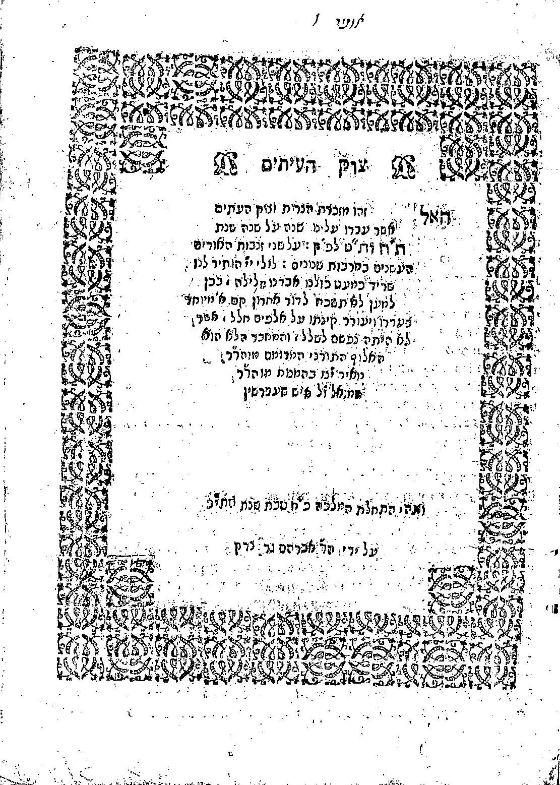
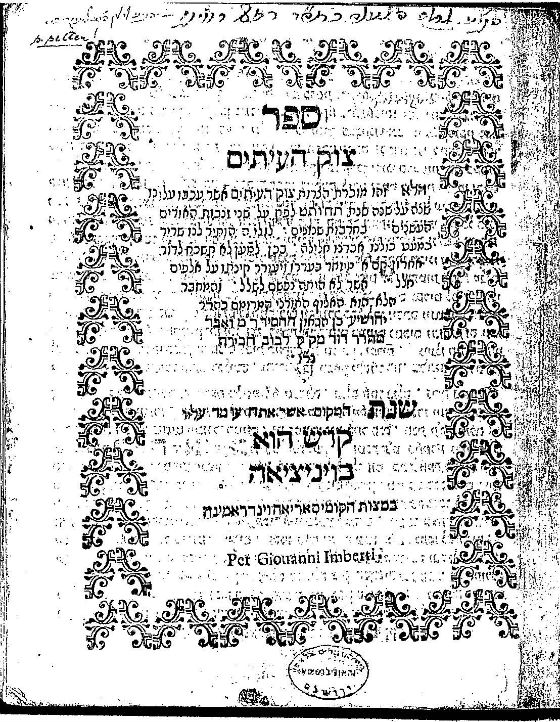
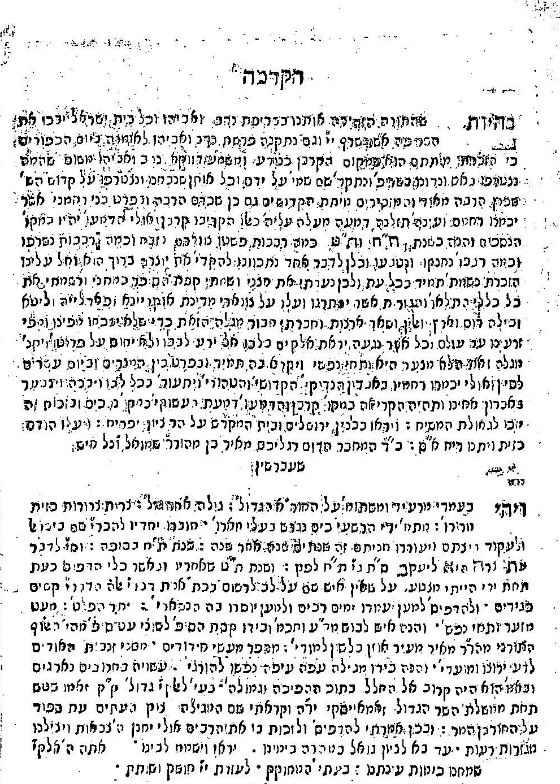
The first two editions list R. Meir ben Shmuel of Szczebrzeszyn as the author. The 1656 edition, however, lists a completely different author, R. Joshua ben David of Lemberg. It is not only on the title page that a different author is listed. The work itself is not composed as traditional narrative. Instead, it is written in verse. The first verses in all the editions spell out the author’s name in an acrostic. Thus, the 1650 and 1652 editions have an acrostic that spells out R. Meir of Szczebrzeszyn’s name while the 1656 edition acrostic spells out R. Joshua’s name. In some instances words are added to create the “new” acrostic, while in other instances, the highlighted letters are changed.
Here is the introduction to the Constantinople edition:
And here is the introduction to the Venice edition:
As an aside it is worth noting that this is not the only time a plagiarizer has been forced to change the acrostic to hide his stolen goods. (See Kitvei Pinchas Turburg, ed. A. R. Malachi, 24-36 for additional examples of acrostic changes, and see this earlier post discussing similar changes to hide the identity of the true author, and see this post where the plagiarizer was caught in the act and forced to admit his guilt and apologize). Additionally, at least in one instance the acrostic was able to demonstrate authorship. In the Siddur Bet Ya’akov (although attributed to R. Y. Emden, this siddur contains numerous additions as compared to R. Emden’s actual siddur called Ammudei Shamayim – Sha’arei Shamayim; this is one of them) the Belzer Rebbe asserts that the author of the zemer Yom Shabbat Kodesh Hu had his song stolen. He came across the plagiarizer and challenged him to prove authorship. Specifically, the real author showed that his name, Yonatan, could be seen in the acrostic, and with this he vanquished the thief. R. Emden uses this story to explain the meaning behind the final verse which loosely translated as “all the talk [about authorship] should [now] end now that I have enlarged the song [and demonstrated my authorship] . . . and that no one should ever steal from me as this song is my property.”
An example where the acrostic actually has the opposite effect, obscuring the original author is also a zemer, Yom Zeh le-Yisrael. At times, this song can be confusing depending upon which bencher one is using. This so, because some version have a shorter version while others have a longer ( see here for example). Some argue that the two versions are indicative of two authors, one, the original author which only spelled out Yitzhak (and then lamed vav) to which all the other verses were added, now spelling Yitzhak Luria Hazak. (Regarding this zemer see Naftali ben Menachem, Zemirot shel Shabbat, Israel, 1949, 144-45; I. Davidson, Thesaurus of Mediaeval Hebrew Poetry, Ktav, 1970, vol. II, 348.)
Returning to Tzok, because the acrostic lends support for either author, some didn’t know who the “real” author was. In the 1890s, a number of these chronicles regarding bad events in Jewish history were collected and published under the title Le-Korot ha-Gezerot ‘al Yisraelby C. Gorlin. Included is Tzok. But, instead of a traditional introduction, he prefaces Tzok with a section “Who is the real author?” Gorlin argues that the real author is indeed R. Meir and not R. Joshua. This is not the first time that there is some confusion regarding who is the real author and who is the thief, for another example see here and for another example of modern day plagiarism see here.
With regard to the Constantinople edition, Ya’ari demonstrates that this edition is better than the first, in that many of the typos and the like have been corrected. Unfortunately, perhaps due to its rarity, the 2004 edition of Tzok relies upon the 1650 edition and not the better 1652. Additionally, the 1652 edition is one of the works published by a convert. Of course, this is probably what first got Ya’ari interested as he provides a bibliography of works published by converts.
It should be noted that Tzok was rather popular even if it is no longer. When R. David ha-Levi Segal, author of the commentary on Shulhan Orakh, Turei Zehav, sent a delegation to the false messiah, Shabbatai Tzvi, when the delegation entered, they record that Shabbatai Tzvi had a copy of Tzok on the table. (See G. Scholem, Sabbati Sevi, Princeton Univ. Press, 1976, p. 623 quoting Leib Ozer, Sippurei Ma’ashi Sabbati Tzvi, p. 81 and Sefer Tziz Nobel Tzvi, ed. I. Tishby, pp. 77-79.)
Finally, we note that the most recent edition, the 2004 op. cit., uses the Krakow first edition, even though Ya’ari has already shown that the rare Constantinople edition corrected numerous errors that appear in the Krakow edition.
Attribution and Misattribution: On Computational Linguistics, Heresy and Journalism
Attribution and Misattribution: On Computational Linguistics, Heresy and Journalism
by Moshe Koppel
Prof. Moshe Koppel is on the faculty of the Computer Science Department at Bar-Ilan University. He has published extensively on authorship attribution, as well as on a diverse array of topics of Jewish and scientific interest.
A few days ago, newspaper readers from New Jersey to New Zealand read about new computer software that “sheds light on the authorship of the Bible”[1]. By the time the news circled back to Israel, farteitcht and farbessert, readers of Haaretz were (rather gleefully) informed that the head of the project had announced that it had been proved that the Torah was written by multiple human authors[2], just as the Bible critics had been saying all along.
I’m always skeptical about that kind of grandiose claim and this is no exception, even though the person who allegedly made the claim in this particular case happens to be me. The news reports in question refer to a recently published paper[3] in computational linguistics involving decomposition of a document into authorial components. A brief reference to application of the method to the Torah (Pentateuch) is responsible for most of the noise.
In what follows, I’ll briefly provide some background about authorship attribution research, sketch the method used in the paper, outline the main results and say a few words about what they mean. My main purpose is to explain what has actually been proved and, more crucially in this case, what has not been proved.
Authorship Attribution
One of my areas of research for over a decade has been authorship attribution, the use of automated statistical methods to identify or profile the author of a given text. For example, we can determine, with varying degrees of accuracy, the age, gender and native language of the author of a text[4]. Under certain conditions, we can determine, with varying degrees of certainty, if two texts were written by the same person[5]. Some of this work has been applied to topics of particular interest to students of Jewish texts, such as strong evidence that the collection of responsa Torah Lishmah was written by Ben Ish Chai[6] (although he often quoted the work as if it were written by someone else) and that all of the letters in Genizat Harson are forgeries[7].
Whenever I have lectured on this topic, the first question has been: have you ever analyzed the Bible? The honest truth is that I never really understood the question and I suspect that in most cases the questioner didn’t have any very well-formed question in mind, beyond the vague thought that the Bible is of mysterious provenance and ought to be amenable to some sort of statistical analysis. I would always mumble something about the question being poorly defined, Bible books being too short to permit reliable statistical analysis, etc. But, while all those excuses were quite true, I also had a vague thought of my own, which was that whatever well-formed research question I could come up with regarding Tanach, it would probably land me in hot water.
One research question that I have been working on with my graduate student, Navot Akiva, involves decomposition of a document into distinct stylistic components. For example, if a document was written by multiple authors, each of whom presumably writes in some distinct style, we’d like to be able to identify the parts written by each author. (Bear in mind this is what is known in the jargon as an unsupervised problem: we don’t get known examples of each author’s writing to analyze. All we have is the composite text itself, from which we need to tease apart distinctive looking chunks of text.) The object is straightforward: given a text, split it up into families of chunks in the best possible way, where by “best” we mean that the chunks that are assigned to the same family are as similar to each other as possible.
Even I could see that this could have some bearing on Tanach. So when Prof. Nachum Dershowitz, a colleague with whom I share a number of research interests, introduced me to his son, Idan, a graduate student in the Tanach program at Hebrew University, we agreed to consider how to apply this work to Tanach (sort of fudging the question of whether this meant Torah or Nach). It happens that, apart from being the most studied and revered set of books ever written, Tanach offers another advantage as an object of linguistic analysis: precisely because it has been the subject of so much study, there are many available automated tools that we could exploit in our research.
The Method
Here’s how our computerized method works. Divide a text into chunks in some reasonable way. These chunks might be chapters or some fixed number of sentences or whatever; the details aren’t critical and need not concern us at this stage. I’m going to call these chunks “chapters” (only because it is a less technical sounding word), but bear in mind that we are not assuming that a chapter is stylistically homogeneous; that is, the split between authors might take place in the middle of a chapter.
Our object is to split our collection of chapters into families of stylistically similar chapters. (The chapters in a family need not be contiguous.) All the chapters that look a certain way, please step to the left; all others, please step to the right.
As a first step, for any pair of chapters, we’re going to have to measure the similarity between them. The trick is to measure this similarity in a way that captures style rather than content.
The way we do it is as follows: we begin by generating a list of synonym sets. For example, for the case of Tanach, we would consider synonym sets such as betoch, bekerev; begged, simla; sar, nasi; makel, mateh, shevet; and so on. There are about 200 such sets of Biblical synonyms. We generate this list automatically by identifying Hebrew roots that are translated by the same English root in the KJV. Note that not every occurrence of, for example, shevet (which can mean either “staff” or “tribe”) is a synonym for makel (which is always “staff”). We use online concordances to disambiguate, that is, to determine the intended sense of a word in a particular context. (In this respect, Tanach is especially convenient to work with.)
For every chapter and every such set of synonyms, we record which synonym (if any) that chapter uses. The similarity of a pair of chapters reflects the extent to which they make similar choices from among synonym sets. The idea is that if one chapter uses – for example – betoch, sar and mateh and the other uses bekerev, nasi and makel, the two chapters have low similarity. If a chapter doesn’t use any of the synonyms in a particular synonym set, that set plays no role in measuring the similarity between that chapter and any other chapter.
Once we know the similarity between every pair of chapters, we use formal methods to create optimal families. Ideally, we want all the chapters in the same family to be very similar to each other and to be very different from the chapters in other families. In fact, such clean divisions are unusual, but the formal methods will generally find a near-optimal clustering into families. (What we call families are called “clusters” in the jargon, and the process of finding them is called “clustering”. The particular clustering method we used is a spectral approximation method called n-cut.)
A key question you should ask at this point is: how many families will we get? You might imagine that the clustering method will somehow figure out the right number of families. Indeed, there are clustering methods that can do that. But – note this carefully – the number of families we obtain is not determined by the clustering method we use. Rather it is given by us as an input. That is, we decide in advance how many families we want to get and the method is forced to give us exactly what we asked for. This is a crucial point and we’ll come back to it when we get to the meaning of all these results below.
In any case, at this stage, we have a tentative division of chapters into however many families we asked for. (For simplicity, let’s assume that we have split the chapters into exactly two families.) This is not the final result, for the simple reason that we have no guarantee that the chapters themselves are homogeneous. The next step is to identify those chapters that are at the core of each family; these are the chapters we are most confident we have assigned correctly and are consequently the ones most likely to be homogeneous. (Note that when I say “we are confident” I don’t mean anything subjective and wishy-washy; all this is done automatically according to formal criteria a bit too technical to get into here.)
Now that we have a selection of chapters that are assigned to respective families with high confidence, we use them as seeds for building a “model” that distinguishes between the two families. Very roughly speaking, we look for common words (ones not tied to any specific topic) that appear more in one family than in the other and we use formal methods (for those interested, we use SVM) to find just the right weight to give to each such word as an indicator of one family or the other. We now use this model to classify individual sentences as being in one family or the other.
Results
Wonderful, so we did all sorts of geeky hocus-pocus. Why should you believe that this works? Maybe the whole synonym idea is wrong because we ignore subtle differences in meaning between “synonyms”. Maybe the same author deliberately switches from one synonym to the other for literary reasons. Maybe we are biased because we believe something wicked and we subtly manipulated the method to obtain particular results.
These are legitimate concerns. That’s why we test the method on data for which we know the right answer to see if the method gives that right answer. In this case, our test works as follows. We take two books, each of which we can assume is written by a single distinct author, mix them up in some random fashion, and check if our method correctly unmixes them. In particular, we took as our main test set random mishmashes of Yirmiyahu and Yechezkel.
We found that the method works extremely well. About 17% of the psukim could not be classified (no differentiating words appeared in these psukim or their near neighbors). Of the approximately 2200 psukim that were classified into two families, all the Yirmiyahu psukim went into one family and all the Yechezkel psukim went into the other, with a total of 26 (1.2%) exceptions. We obtained similar results on a variety of other book pairs.
So maybe we should have left well enough alone. But with a power tool like this in hand, how could you not want to see how it would split the chumash? Shoot me, but for me, like Rav Kahana hiding under his rebbe’s bed, Torah hee velilmod any tzarich. We did the experiment. I should hasten to mention, though, that the chumash experiment is only briefly mentioned in the published paper, which focuses on proving the efficacy of the method (it’s a computational linguistics paper, not a Bible paper).
Now, I should point out that until I got involved in this, I was a complete am haaretz in Bible Criticism, a perfectly agreeable state of affairs, as far as I was concerned. However, Idan Dershowitz immediately observed that our split was very similar to the split between what critics refer to as the Priestly (P) and non-Priestly portions of the Torah. Bear in mind that there are ongoing disagreements among the critics about precisely which psukim should be regarded as P and which not. We took two standard such splits, that of Driver and that of Friedman, and refer to the set of psukim for which they agree as “consensus” psukim. (They agree just over 90% of the time.)
Here’s the result. Our split of the Torah into two families corresponds with their split for about 90% of all consensus psukim.
Let me say a few words about the main areas of disagreement. To a significant extent, our split runs along lines of genre. One family is mostly – not completely – legal material and the other is mostly narrative. Since what the critics call the Priestly sections include pretty much all of Vayikra (which is mostly laws), as well as selected portions of Bereishis, Shemos and Bemidbar, their split also corresponds somewhat to the legal/narrative split. Most of the cases where our split is different than theirs involve narrative sections that they assign to P and our method assigns to the family that corresponds to non-P, for example, the first chapter of Bereishis. (The rest of the disagreements involve P sections that scholars now refer to as H and consider some sort of quasi-P, but I don’t want to get into all that, mostly because I’m still pretty clueless about it.)
Before you dismiss all this by saying that all we did was discover that stories don’t look like laws, let me point out there are plenty of narrative sections that the computerized analysis assigned to the P family (or, more precisely, to the nameless family that turns out to be very similar to what the critics call the P family). Two prominent examples are the story of Shimon and Levi in Shechem and the story of Pinchas and Zimri.
One more point: when we split the Torah into three or more families, our results do not coincide with those of the critics. In the case of three families, Devarim does seem to split off as its own family, as the critics claim, but there are a fair number of exceptions. And even with four or more families, no hint of the critics’ E/J split shows up at all.
Interpreting the Results
So does all this mean that we have proved that the Torah was written by at least two human authors, as the breathless reports claim? No.
First of all, as I noted above, our method does not determine the optimal number of families. That is, it does not make a claim regarding the number of authors. Rather, you decide in advance how many families you want and the method finds the optimal (or a near-optimal) split of the text into that number. If you ask it to split Moby Dick into two (or four or thirteen) parts, it will do so. Thus the fact that we split the Torah into two tells us exactly nothing about the actual number of authors.
Having said that, I want to temper any religious enthusiasm such a disclaimer might engender. First of all, with a few improvements to the method we could probably identify some optimal number of families for a given text. We simply haven’t done so. Second, the fact that – for the case of two families – the results of our method coincide (to some extent) with those of the critics would seem to suggest that the split the method suggests is not merely coincidental.
But, the deeper reason that our work is irrelevant to the question of divine authorship is simply that it does not – indeed, it could not – have a thing to say on that question. If you were to have some theory about what properties divine writing ought to have and close analysis revealed that a certain text probably did not have those properties, then you might have to change your prior belief about the divine provenance of that text. But does anyone really have some theory about what divine texts are supposed to look like? Several press reports about this work referenced the idea that “God could write in multiple voices”. I find that formulation a bit simplistic, but it captures the fact that any attempt to map from multiple writing styles to multiple authorship must be rooted in assumptions about human cognition and human performance that are simply not relevant to the question of divine action[8].
In short, our results seem to support some findings of higher Bible criticism regarding possible boundaries between distinct stylistic threads in the Torah. These results might have some relevance regarding literary analysis of the Torah. Taken on their own, however, they are not proof of multiple authorship. Furthermore, there is nothing in these results that should cause those of us committed to the traditional belief in divine authorship of the Torah to doubt that belief.
[8] I realize that this argument comes close to asserting that the claim of divine authorship is unfalsifiable, which for some might cast doubt on the meaningfulness of that claim. A proper response to that concern would involve a discussion of the nature and content of religious belief, a discussion that is well beyond the scope of this brief peroration.
More on Chaim Bloch
More on Chaim Bloch
By Marc B. Shapiro
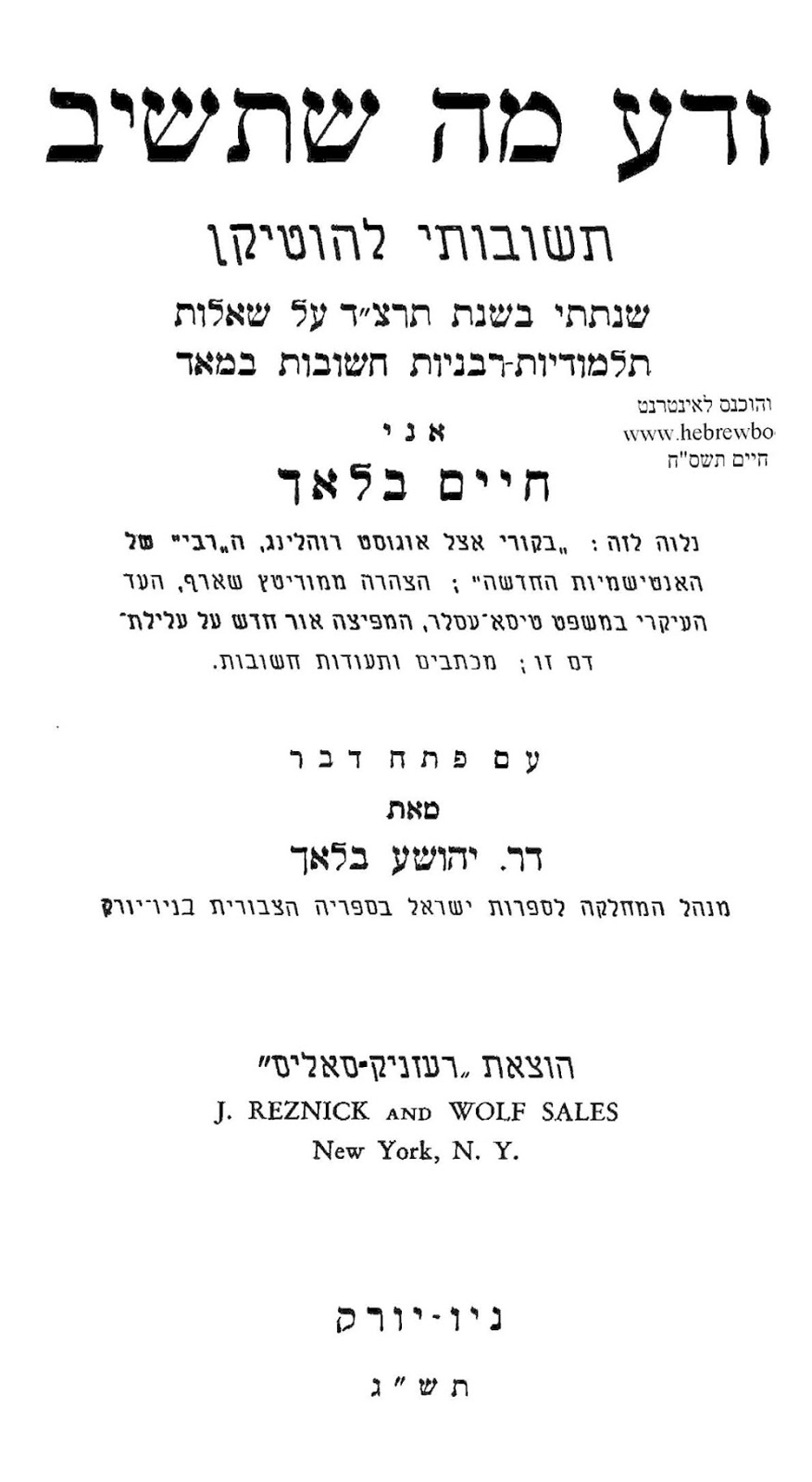
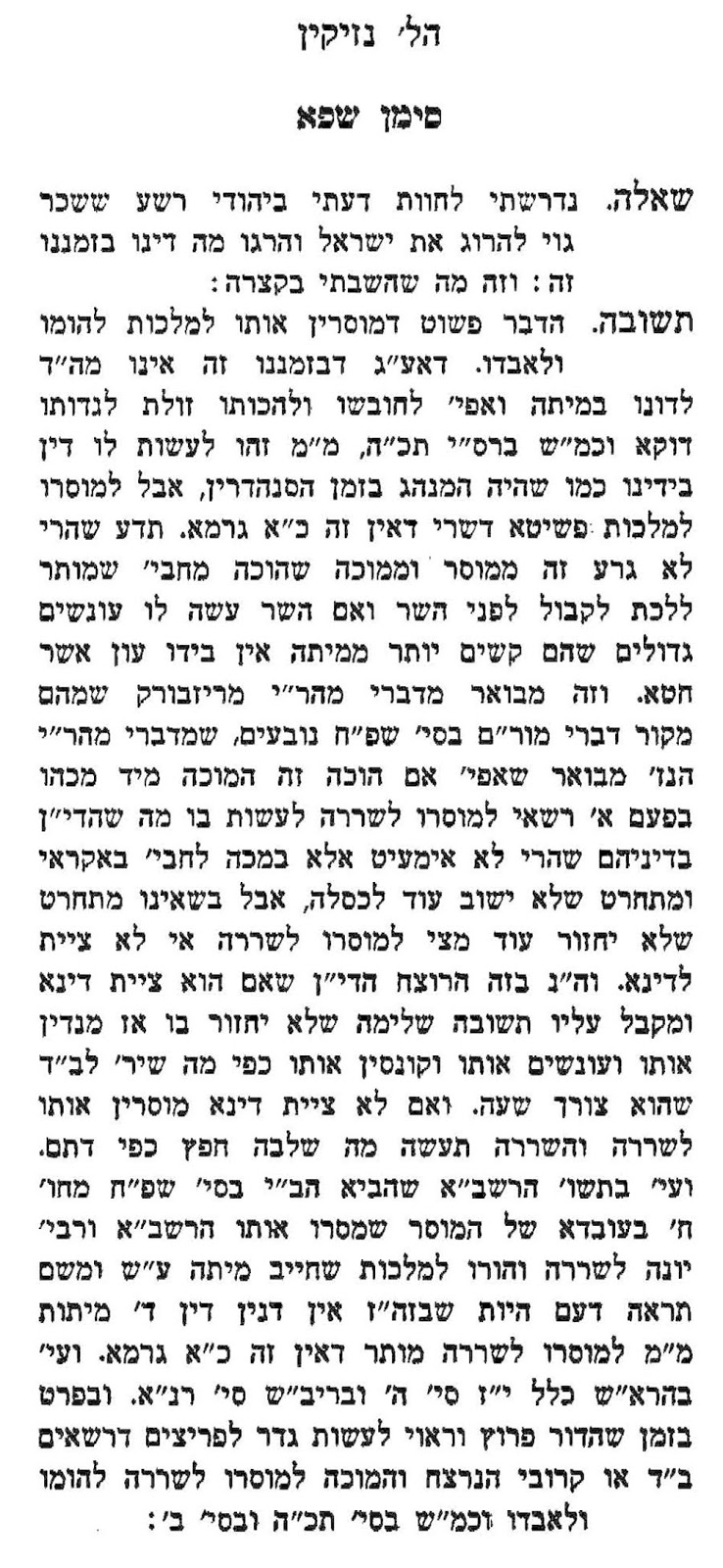
In a previous post I mentioned how the non-Jewish Austrian minister Leon Bilinski was descended from the rav of Posen, R. Samuel ben Moses Falkenfeld, the Beit Shmuel Aharon. More information about Bilinski’s Jewish roots is found in Chaim Bloch’s Ve-Da Mah she-Tashiv (New York, 1943), p. 74 n. 1. In general, I have found that when Bloch is reporting about other people’s biographies and history in general, he is very reliable. It is only when he is somehow involved in the story that he is full of lies.1 His Ve-Da Mah she-Tashiv is a good example. Here is the title page.
In this book he makes up an entire story that he was asked by an important Catholic figure to answer questions from the Vatican dealing with Judaism. The whole story is a fiction, as is so much else he writes about himself. As for Bilinski, Bloch tells us that he is in possession of Bilinski’s 1146 page (!) unpublished diary. As Bloch himself notes, he provided various scholars (e.g.., N. M. Gelber) with selections of this diary which they then used in their own works, thus misleading the world. In these selections, Bilinski comes off as a strong anti-Zionist, who even warns Herzl about how the Arabs will never accept a Jewish state in Palestine.2 In an article in the Herzl Year Book, Bloch published what he claimed was an 1893 letter from Herzl and uses this to prove that Herzl was interested in the Jewish problem already in 1893, a year before the 1894 Dreyfus trial which is usually cited as having turned Herzl to Jewish matters.3 Various scholars have cited this letter, as they understandably regard it as significant in understanding Herzl, but of course it is a forgery. Another way Bloch misled scholars, in particular Gelber, is with regard to an anonymous booklet that speaks of a return of the Jews to the Land of Israel and the establishment of a state.4 According to Billinski’s diary, so Bloch tells us, the author of this booklet was Benjamin Disraeli. Bilinski would certainly have been in a position to know this information, and therefore a number of people have been misled by this, thinking the diary authentic
Look how Bloch’s forgeries were able to have such an impact. I think, in the end, this is what gives the forger satisfaction, watching everyone taken in by his creation. In 1948 no one would have believed that Bloch was capable of this. In fact, if not for his blatant forgeries in Dovev Siftei Yeshenim, some people today would still assume that he is reliable. As the Talmud tells us, tafasta merubah lo tafasta! Bloch should have stuck with his smaller forgeries, because when he decided to publish complete volumes of forged material, that’s when people really began to take notice. It is therefore very surprising that no less a scholar than Robert S. Wistrich, who is aware of the accusations of forgery against Bloch, nevertheless cites material from Bloch’s Mi Natan li-Meshisah and states that in his opinion at least some of the material must be considered authentic. Why he thinks this he doesn’t tell us. The truth is that this book, like Dovev Siftei Yeshenim, is full of Bloch’s forgeries, and not only of rabbis but also of political leaders (including summaries of supposed letters from Bismark about Zionism!)5
Just to illustrate that you can’t judge people by appearances, here is a picture of Bloch, which previously appeared in Dr. Shnayer Leiman’s post on the Seforim Blog.6
Throughout Bloch’s various books, he quotes numerous letters from gedolim who were no longer alive, and none of these letters are found in his archives, currently kept at YIVO and the Leo Baeck Institute. In other words, he simply made up these letters, as he did with the entire volumes of anti-Zionist letters of gedolim that he published. The rule is that whenever Bloch cites a previously unpublished letter from someone, either addressed to himself or to another, and the author of the letter is no longer alive, you can assume that the letter is forged. We know this now, after Shmuel Weingarten’s exposé of Dovev Siftei Yeshenim.7 Yet the evidence was there all along, had people paid attention. But people had no reason to assumed that Bloch was not reliable. R. Joseph Elijah Henkin, however, who was involved in a terrible dispute with Bloch, did accuse Bloch of dishonesty, and pointed out that he would attribute quotes to rabbis who were no longer alive so that he couldn’t be contradicted. In the late 1930’s Bloch published a letter from R. Kook. R. Zvi Yehudah Kook was very skeptical of its authenticity and requested that Bloch send him a copy of it. Bloch replied that he was unable to do so since he had lost the original.8 This was Bloch’s pattern, and I assume that all of the many letters he published from leading rabbis and hasidic leaders, beginning in the early part of the twentieth century, are forgeries.9
Here is another example of Bloch’s tendency to fabricate things. It comes from his Heikhal le-Divrei Chazal u-Fitgameihem (New York, 1948), p. 9. Everything he reports here is a fantasy. As with some of his other forgeries, Bloch is obviously motivated here by good intentions, but it is all complete nonsense.
Ve-Da Ma she-Tashiv also contains forged letters. I am certain that the letter of R. Chaim Ozer Grodzinski on pp. 52-53 is an example of this. Anyone can look at the style of R. Chaim Ozer’s many letters and see how he consistently used certain formulas in concluding his letters. Nowhere does R. Chaim Ozer conclude a letter with
ונזכה כולנו לראות בישועת עמנו במהרה
He does use the expression
ועיניהם תחזינה בישועת עמנו במהרה
and this is found in a letter that Bloch would have had access to, the letter of R. Chaim Ozer to Agudat ha-Rabbanim about the Louis Epstein proposal.10 I assume he used the concluding portion of this letter to help him create his forgery. But in other areas he wasn’t so careful. For example, in the supposed letter of R. Chaim Ozer to Bloch, he refers to the latter as a צנא מלא ספרא , yet this expression does not appear in R. Chaim Ozer’s other letters (based on Otzar ha-Hokhmah’s database, which only has the first edition of R. Chaim Ozer’s letters, not the expanded Iggerot R. Chaim Ozer.)
We should assume the same for all of the other letters in this book from people who were not alive when the book was written. It is fascinating that on p. 44 n. 1 Bloch refers to the anti-Zionist letters he would later publish in Dovev Siftei Yeshenim. Ve-Da Mah she-Tashiv was published in 1943 and the first volume of Dovev Siftei Yeshenim didn’t appear until 1959, meaning that this forgery was very long in the making, and Bloch was setting the stage for it many years prior.
There is more to say about this book, in particular his argument that there are passages in the Talmud that were inserted by heretics – a viewpoint earlier mentioned by R. Joseph Zvi Duenner, as I have pointed out elsewhere, see here.
I will leave that for another time, but to give you an example of what I am referring to, here is a passage from p. 39 (emphasis in the original):
אופינית היא “המעשיה” בר’ שמעון בן גמליאל “שהיה על גב מעלה בהר הבית וראה נכרית אחת נאה ביותר. אמר: מה רבו מעשיך ד'” (ע”ז כ ע”א) המאמר הזה זיוף . . . לא יעלה בדעתנו, שר’ שמעון בן גמליאל הביט על אשה, היינו הך, נכרית או ישראלי – לשם יפיה. ומצאתי עוד מאמר בשם רב, שזיופו עומד מחוץ לכל ספק: “בשעה שבקש נבוכדנצר לעשות לאותו צדיק (צדקיהו) כך, נמשכה ערלתו ש’ אמה והיתה מחזרת על כל המסבה כולה שנאמר: שבעת קלון מכבוד, שתה גם אתה והערל” (שבת קמט ע”ב). מלבד הנבול שבמאמר זה, הוא חסר טעם, ולא יתכן, שמפי רב יצאו הדברים.
I don’t know which position is “frummer”? To defend the honor of the sages and therefore deny that these “obscene” passages are authentic, or to defend the Talmud as we have it and thus have to deal with these passages.
Yet whatever the answer to this is, if Bloch were alive today, the haredi world would put him in herem for another reason. Here is what he writes on p. 38, with regard to how to view Aggadah in contrast to the halakhic sections of the Talmud. (What he says is nothing other than the Geonic and Spanish tradition, which is largely unknown in today’s yeshiva world.):
היא אינה נחשבת ליסוד קיומה של היהדות ויש לה אופי של ספר עם . . . לחלק האגדה נכנסו דברי מוסר ודרך ארץ, מליצות ובדיחות, סגולות ורפואות, אזהרות ועצות, פתרון חלומות ואגדות, שלהרבה מהם יש ערך גם מחוץ להיהדות. יתכן שהרבה הושפעו בעלי התלמוד בזה מהעמים שכניהם.
Also interesting is that in Ve-Da Mah she-Tashiv, p. 44 n. 1, he refers very positively to R. Henkin, something that would later change when their great battle began.
Bloch claimed that he had a close relationship with the great R. Judah Leib Zirelson of Kishinev (Speaking for myself, Zirelson’s greatest achievement had to have been standing up to the extreme anti-Zionist elements in Agudat Israel, led by R. Elhanan Wasserman and R. Aaron Kotler. They wanted the Agudah to officially oppose the creation of a Jewish state. Zirelson, as president of the 1937 Kenesiah Ha-Gedolah in Marienbad, was able to convince the Moetzet Gedolei ha-Torah to agree with his own position, which was not to oppose a state but to attempt to bring Torah values into it. See Ha-Pardes, Oct. 1937, p. 8). In this book, Bloch cites a number of things from Zirelson of which, again, I have no doubt that he has made them up. For example, can anyone imagine that Zirelson would offer the following Haskalah-Reformist interpretation that Bloch puts in his mouth (p. 34)?
יתכן שהיתה כוונתו של ר’ שמעון בן יוחאי, בחפשו יסוד במקרא שהנכרים אינם מטמאים באוהל, כדי שלא ימצאו הרומיים תואנות ואמתלאות חדשות על ישראל, ומאימת המלכות הורה כן.
Although I can’t go into it in any detail now, the truth is that we do on occasion find Haskalah-Reformist types of interpretation even in traditional sources,11 but since these are very rare and we have no evidence that Zirelson ever said what is attributed to him, I assume it is another of Bloch’s forgeries. In other words, as he did so often, Bloch attributed his own understanding to one of the great Torah sages.
In chapter fourteen of Ve-Da Mah She-Tashiv, where he stresses the need for honesty in one’s dealings with non-Jews, he claims that Zirelson told him about a Zoharic passage in parashat Lekh Lekha that states:
כל מאן דמשקר בהאי עלמא בערל כמאן דמשקר בשמיה דקוב”ה
This is a beautiful thought. The only problem is that it doesn’t exist anywhere in the Zohar. I am certain that Zirelson would never have misquoted the Zohar and that the mistake is Bloch’s. I assume that the mistake is unintentional, perhaps quoting from memory, since a great forger like Bloch would never have dared falsely attribute anything to the Zohar, the accuracy of which could easily be checked.
Here is the actual Zohar text (vol. 1, p. 93a):
דכל מאן דמשקר בהאי כמאן דמשקר בשמיה דקב”ה
If you examine the entire passage you will find that it has nothing to do with being honest, and the word משקר here does not mean “to lie”, but “to betray”. The text is actually speaking about berit milah and how one is obligated to treat it properly, especially דלא עייל ליה ברשותא אחרא, which certainly refers to refraining from having sex with non-Jewish women. What the text is saying is that if you have illicit sex you betray the mark of the circumcision, and this is like betraying God’s name.
Since I mentioned Haskalah-Reformist interpretations in traditional texts, let me note one of the most famous of these. In Shabbat 140b, R. Papa’s states that if one can drink beer but instead drinks wine, he violates the prohibition on baal tashchit. Maharsha explains that R. Papa said this because he was a beer salesman! What this apparently means is that R. Papa lied about the halakhah in order to drum up more business for himself. How else to interpret Maharsha’s explanation?
ורב פפא לטובת עצמו אמרה שהוא הי’ עושה שכר.
This explanation is, to be sure, quite shocking. If you want to stretch things a bit you can say that according to Maharsha, R. Papa didn’t consciously alter the halakhah to benefit himself, but since he was a beer maker he was unconsciously led to this position, as it would benefit him. This explanation – which could easily have been offered by Jacob Katz – is suggested by the noted Yemenite posek, R. Yitzhak Ratsaby12:
והנה כל העובר ישום וישרוק, היתכן כדבר הזה שרב פפא יפסוק הלכה משום ריוח ממונו?! . . . ובודאי גם לדעת מהרש”א לא יתכן שרב פפא יאמר פסקי הלכה רק מתוך נגיעה, חלילה לו. אלא היה זה כעין “שוחד סמוי”, שלא הרגיש בו הוא עצמו, שמתוך כך בא לידי טעות בהלכה זו. כמו שהכתוב צווח ואומר (שמות כג, ח): “כי השוחד יעוור פקחים ויסלף דברי צדיקים”, ועל דרך שמצינו בכתובות (קט, ב) בגדולי עולם שאמרו על עצמם שהשוחד היטה את ליבם.
I think most people will tell you that this sort of explanation, which points to unconscious factors influencing halakhic decisions, was not how people thought in the days of the Maharsha. I myself do not see this as an anachronistic explanation, as the Talmud, Ketubot 105b, already discusses precisely this sort of unconscious influence.13 I believe that this is also how we are to understand all the discussions about נוגע בדבר, and how it applies even to the greatest tzadikim. It is not that these people will consciously twist the truth, but that unconsciously this is what can happen. Presumably, this is also the meaning of Hullin 49a: ישמעאל כהנא מסייע כהני
I think this is also how we are to understand R. Moses Isserles, Yoreh Deah 242:36:
תלמיד חכם שאמר דבר הלכה בדבר השייך לדידיה . . . אין שומעין לדידיה דלמא מדמי דברים להדדי שאינן דומים
See also Ritva, Yevamot 77a:
דחיישינן שמא מתוך שנושא ונותן בהלכה כדי לקיים את דבריו אמר בדדמי כסבור שקיבל מרבו
I am not going to analyze the Maharsha in any depth, because either way you explain him, this is the exact sort of explanation that according to the Rav is heretical as it falls under the Rambam’s category of מכחיש מגידה.14 And it is not just the Rav who would be shocked by what Maharsha wrote. R. Yehoshua Heschel of Monistritch15 states:
ועל מאמר המהרש”א הזה צווחי קמאי
R. Abraham Vengrober16 says concerning the standard explanation of Maharsha (before offering a different understanding of his words):
ופריצי עמנו מצאנו בקעה לדבר סרה על רז”ל . . . גם רבינו המהרש”א ז”ל לא כיוון בזה ח”ו להכוונה אשר העולם סוברים שבשביל זה שהי’ מסחרו שבח את הדבר לטובת עצמו.
R. Samuel Strashun in his commentary to the passage takes strong issue with Maharsha, and R. Hayyim Hezekiah Medini17 is astounded by what Maharsha wrote:
הדבר תמוה לפרש דנחשד רב פפא לדבר שקר חלילה לטובת עצמו.
I assume it is only a matter of time before this explanation of Maharsha is deleted from a future printing.
Here is another example (Ta’anit 14a-14b):
In the time of R. Judah the Prince there was distress. He ordained thirteen fast days and their prayer was not answered. He thought of ordaining additional fasts but R. Ammi said to him, “Did not [the Sages] declare we should not trouble the community unduly.” Said R. Abba the son of R. Hiyya b. Abba, “R. Ammi [in saying this] was studying his own interests.”
Rashi explains R. Abba’s declaration:
לעצמו דרש: דלא אמר אלא לפי שהוא לא היה רוצה להתענות
If anyone other than Rashi wrote this, wouldn’t it be regarded as an example of מכחיש מגידה?
Here is another example, from the Jerusalem Talmud, Shabbat 6:1:
R. Abbahu in the name of R. Yohanan, “It is permitted for a man to teach Greek to his daughter, because such learning is an ornament for her” Simeon bar Ba heard and said, “It is because R. Abbahu wants to teach his daughter such that he has assigned the teaching to R. Yohanan.”
R. Abbahu responded quite sharply to Simeon bar Ba, proclaiming: “May a curse come upon me, if I did not hear it from R Yohanan.” But I am more interested in Simeon bar Ba’s accusation. He assumed that the great R. Abbahu would falsely attribute a halakhic ruling to an earlier sage in order that his daughter would benefit. When Geiger and Graetz said things like this, no one was surprised, and the Orthodox condemned them for these type of interpretations. Yet here you have a Haskalah-Reformist type of interpretation offered by one of the Sages.
Returning to Bloch, another example where he deceived the world is found in his Heikhal le-Divrei Hazal u-Fitgemeihem, pp. 591-592. In line with his apologetic approach to Jewish sources, he claims that he saw an old version of the Passover prayer Shefokh Hamotkha, that went as follows:
שפוך אהבתך על הגוים אשר ידעוך
Even a great scholar such as Naftali Ben-Menachem was taken in by Bloch (and if you search online you will find a number of others who assume that Shefokh Ahavatkha is a real text, rather than another Bloch forgery18). Ben Menachem’s article appears in Mahanayim 80 (1963), and here is the page where he refers to Bloch’s version.
Incidentally, in Heikhal le-Divrei Hazal Bloch claims that he wrote about this version at length in his 1935 book Der Judenhass im Spiegel der Jahrtausende, and also printed a copy of the manuscript there. (In 1935 Bloch was living in Vienna.) Although he mentions this book in a couple of his other writings, there is no evidence that any such book ever appeared. Now we have the internet which allows us to check all the greatest libraries in a minute, yet in a prior era, simply mentioning that he had published such a book and that it contained a copy of the manuscript would have been enough to convince everyone. After all, it was not like people in the United States, England, or Palestine/Israel could easily check the holdings of libraries in Austria and Germany.
Meir Hershkovitz, in his fine book on R. Zvi Hirsch Chajes, also quotes Bloch a number of times. Bloch claimed to have seen unpublished material from Chajes and he included some of it in his Heikhal, but everything he mentions is fraudulent, and some of the comments are really outrageous. For example, on p. 565 he quotes Chajes as saying as follows about Rabbi Akiva19:
ר”ע מבני בניו של סיסרא היה ולמרות קדושת התורה ששלטה בו נשאר בו משהו מאופיו של סיסרא
(Some are probably wondering why I didn’t underline the first part as well, which states that R. Akiva was descended from Sisera. After all, in a few weeks Daf Yomi will reach Sanhedrin 96b and there you find the following, with no mention of R. Akiva: “Descendants of Sisera studied20 Torah in Jerusalem; descendants of Sennacherib taught Torah to the multitude. Who were these? Shemaya and Avtalion. Descendants of Haman studied Torah in Bnei Brak.” Yet numerous texts21 record a version of this passage that identifies R. Akiva as among the descendants of Sisera.)
What motivated Bloch to invent this negative comment about R. Akiva? I think that this too can be attributed to anti-Zionist motivations (an anonymous commenter on Soferim u-Seforim offered a similar explanation; see the link in n. 1). R. Akiva was associated with Bar Kokhba’s rebellion, and in the popular mind at least, this was a matter of pride for twentieth-century Jews. The thrust of the comment attributed to Chajes is to see this “warlike” aspect of R. Akiva as a throwback to Sisera. In other words, this is not something good. We see another example of Bloch’s anti-Zionism in his attempts to argue that a passage in Maimonides’ Letter on Astrology is not authentic. In this passage, Maimonides states that the Temple was destroyed and the Jews exiled because instead of focusing on “the art of military training and conquering lands,” they involved themselves with astrology, thinking it would help them. (Iggerot ha-Rambam, ed. Sheilat, vol. 2, p. 480) This passage was too “Zionistic” for Bloch, and not surprisingly he argues that it is a forged interpolation. See his article in Ha-Pardes 34 (April 1960), pp. 39-42, where once again it is Bloch who is the forger, citing a supposed letter from a Christian scholar to Dr. [Daviid?] Kaufmann and also telling us about the support he supposedly received from the Tchortkover Rebbe. (This Rebbe, incidentally, happened to be a one of the leading Agudah supporters of settlement in the Land of Israel.) One of Bloch’s major proofs that Maimonides could not have written this passage is his assumption that Maimonides was not impressed with R. Akiva’s support of Bar Kokhba. He bases this argument on Mishneh Torah, Hilkhot Melakhim 11:3. Yet Maimonides’ viewpoint in this matter is not enough for Bloch, and to achieve his purpose he has to actually find fault with R. Akiva’s character, something Maimonides would never do. Bloch even attacks some modern writers (such as Aaron Zeitlin and Hillel Seidman) who had stressed the contemporary significance of Maimonides’ words. In Bloch’s mind, by doing so they were showing the non-Jews that the Protocols of Elders of Zion were correct, namely, that Jews really did want to conquer the world! Bloch’s Neturei Karta side comes out very well in this article.
As a way of covering himself, so that people will believe the manuscripts of Chajes are authentic, Bloch states that he assumes that the material he is quoting from has survived in Israel, either with the family or at the National Library (Heikhal, pp. 520, 560). Yet in Hershkovitz, this supposition is stated as fact (Rabbi Zvi Hirsch Chajes, p. 438). It is quite surprising that Hershkowitz, who wrote such a comprehensive biography of Chajes, didn’t attempt to track down these manuscripts. Had he done so, he would have realized that they don’t exist.
* * *
This is a blog about seforim, but with Dan’s permission, in a future post I am going to write about the various blogs and news sites, both haredi and Modern Orthodox, that focus on Jewish matters (halakhah, hashkafah, etc.). In the last six months I have visited them a good deal, left a number of comments (some quite provocative and opposed to my own outlook [e.g., dealing with sexual abuse, Zionism, Daas Torah, Torah mi-Sinai, etc.], and always under a pseudonym) and gathered the reactions. I also corresponded with people I met on the sites and with various anonymous baalei ha-blogs. I tried to be a bit of a reporter, gathering information, and just like a reporter sometimes has to hide his identify, I felt that in this circumstance it was permissible, especially as almost everyone I was dealing with was also anonymous. We all know that the ability to be anonymous is basic to the internet (and there has been a good deal of discussion recently about whether this is a good idea). I also felt that if I got involved in a debate on a haredi or Modern Orthodox site, my name would be recognizable to some of the people and they might respond differently than if I was some anonymous person.
Most of the information is publicly available (as are my comments), but I won’t cite any names, as I am not interested in individuals but in some of the thought processes that I observed. As always, I will tie this in with seforim, especially the phenomenon of anonymous and pseudonymous (as opposed to pseudepigraphal) seforim and articles, and also discuss the modern anonymous halakhic questions that R. Yuval Sherlow has written about. (He has also published a couple of volumes of his answers to these questions.) How is Judaism perceived and portrayed when people can live in two worlds, the public one and the private anonymous world of the internet? What does it mean when most people who comment about controversial topics choose to do so under a pseudonym? I think that what I found also has implications to an issue I have been concerned with for a long time, namely, the value of private letters and conversations vs. published word in seeking to evaluate the personality of an individual. This directly relates to David Holzer’s book on the Rav and was also a topic that became a dispute between the late Prof. Twersky and myself when writing my dissertation on R. Weinberg–more on that to come.
I mention all this because I have a request: If anyone is aware of a similar study with regard to Christian or political blogs and websites, please let me know. As a friend commented to me when I told him about my project, “we all know that there are registered Democrats on the Upper West Side who secretly vote Republican, but in order not to scandalize their friends, will only post their true opinions anonymously.” Yet has anyone written about this? There are serious methodological issues that must be dealt with in any such inquiry.
* * *
My new Torah in Motion class begins this Monday. I invite all who are free on Monday nights at 9PM Eastern to join us. This semester we are covering R. Eliezer Berkovits, R. Chaim Ozer Grodzinski, R. Elijah Benamozegh and R. Joseph Messas. You can sign up for it here
If you want to watch or listen to previous classes, to get a sense of how they work, you can download them here.
Notes
1 For a recent discussion of Bloch, see here which contains a number of informative comments.
2 See Bloch, Mi Natan li-Meshisah Yaakov ve-Yisrael le-Vozezim (Bronx, n.d.), pp. 54ff.
3 “Herzl’s First Years of Struggle: Unknown Episodes and Personal Recollections” Herzl Year Book 3 (1960), pp. 77-90.
4 The booklet is found in N. M. Gelber, Tokhnit ha-Medinah ha-Yehudit le-Lord Beaconsfield (Tel Aviv, 1947), pp. 35ff. Gelber’s book is devoted to this booklet.
5 “Zionism and its Religious Critics in Fin-de-Siècle Vienna,” in S. Almog, et al., eds., Zionism and Religion (Hanover, 1998), pp. 150, 157 n. 45.
8 See Weingarten, Mikhtavim, pp. 164-165. In Ha-Posek 11 (1950), p. 802, Bloch published another letter from R. Kook. It is also found in Heikhal le-Divrei Hazal u-Fitgamehem, p. 614. Again he tells us that he only has a copy of the letter, as the original was lost, and here too the letter in unquestionably a forgery. Bloch had R. Kook sign the letter עבד לעם קדוש , which he knew is found in numerous authentic letters. But the letter also contains the phrase כל יקר ראתה עיני , and this does not appear in any of the almost 2000 letters and responsa of R. Kook, as can be determined from the new database of R. Kook’s writings
9 I don’t know whether this also applies to halakhic writings, e.g., the supposed manuscript from R. Shalom Schwadron that came from Bloch and is published in R. Isaac Liebes, Beit Avi, vol. 3 no. 157. Incidentally, a few responsa after this, in no. 161, Liebes discusses whether a rabbinic organization could publicly advocate the institution of the death penalty, since it might happen that a Jew would also be sentenced to death (sound familiar?). Liebes begins his reply:
לא רק שמותר להתריע בכיוון זה רק מצוה לעורר את דעת העם את חומר הסכנה המרחפת על תושבי הארץ.
During the discussions about the Grossman execution, I looked at some of the haredi websites (until the comments made me sick). What I found interesting was the incredible level of ignorance of most of the writers, all of whom had been in yeshiva and many of whom had studied there for years. They were able to declare that a murderer can’t be executed unless he was observed by two kosher witnesses and was given warning, which they thought settled matters. Had these people known a bit of responsa literature, there would have understood how things worked in the real world, and especially what was done in the days of the rishonim. Do these people think that if a guy stood up in shul and opened fire with a machine gun, killing 20 people, that a Jewish court couldn’t execute him because he was never given a warning? Let’s continue with R. Liebes:
יש כח להבי”ד בזמן שרואין צורך השעה לענוש עונש מות אפילו בכל יום אפילו אם מן התורה פטורין הם כדי שעל ידי זה כל העם ישמעו וייראו ולא יזידון עוד.
As for the possibility that a Jewish man will be executed:
מצוה וחיוב לעורר את דעת הקהל להתריע את בתי המשפט שיראו להעביר בכל המדינה משפט מות ולענוש בכל החומר הרוצחים והפושעים ואת מדינתינו ארצות הברית אשר מאמינה בתנ”ך יכולים לשכנע אותה ולהראות לה עד היכן תוה”ק מקפידה לבער את רשעי הארץ בתור חיוב ומצוה. ומש”כ כת”ר לחשוש דלפעמים ימצא רוצח יהודי א”כ אנחנו נהיה אשמים במיתתו זה אינו כלום . . . מוכח מזה דהמחוייב מיתה עפ“י דין המלכות מותר למסרו להם מטעם דינא דמלכותא. מובן ממילא שכל דברינו מוסבים רק על המדינות שיש להם שוויון הזכויות לכל אזרחיה בלי שום אנטישמיות ושנאת ישראל ולכן אם ח”ו יהודי נתפס באיזה עון ופשע הרי הוא נידון כמו כל אזרחי המדינה.
Many who commented on the various sites were people who never opposed the death penalty before and do not oppose it now, yet they were anti-death penalty in this case because, quite simply, they think the death penalty is just fine except when it is a Jew being executed. They vote for all the right wing candidates and then have the chutzpah to complain when their man actually follows through on his support of capital punishment and doesn’t share their view that a supposed baal teshuvah (whose last meal on earth was a non-kosher chicken sandwich bought from the prison canteen) should not be executed. Some of them cited Sanhedrin 17a, סנהדרי שראו כולן לחובה פוטרין אותו , as if this had any relevance. First of all, this passage only means that he is not executed in the normal fashion, but he can certainly be executed as an emergency measure. In addition, some understand this passage to mean that if on the first day of deliberations all conclude that he is guilty, he is not condemned to death immediately but the case is revisited on the next day. If then, all find him guilty, he is executed. None of the commenters who mentioned this law quoted the view of R. Meir ha-Levi Abulafia (cited in many sources) and the Tosafot Hakhmei Anglia that the meaning of פוטרין אותו is ממהרין אותו להורגו . This understanding is praised by the Reisher Rav, R. Aharon Lewin, Ha-Derash ve-ha-Iyun, Deut. no. 119:5, and R. Baruch Epstein, Torah Temimah, Ex. 23:2. Epstein is convinced that this understanding is correct because otherwise היש לך חוטא גדול ונשכר מזה . For more on the subject, see Zorach Warhaftig, “Rov u-Miut be-Veit ha-Din,” in Itamar Warhaftig, ed., Minhah le-Ish (Jerusalem, 2001), pp. 100ff. See also R. Reuven Margaliot, Margaliyot ha-Yam, Sanhedrin 17a, no. 19, who cites the Tashbetz:
שהם ז”ל לא אמרו ב”ד שהסכימו כולם לחובה פטור, חלילה להם שיאמרו ככה, ואם על פי הרוב הורגים כל שכן ע”פ כולם ויותר טוב ויותר משובח הוא שיהיה הפסק דין מוסכם מהכל ולא שיהיה שום חולק.
There is a good deal more to say on this topic, but in the interests of space I will leave it for another time. Suffice it to say that as in all such matters one can find a variety of viewpoints. See e.g., R. Yair Hayyim Bacharach, Havot Yair, no. 146. Some poskim have even ruled that when a murderer has been sentenced to death it is forbidden to try and save him. See R. Nathan Leiter, Tziyun le-Nefesh Hayah, no. 121. (Others disagree, see e.g., Teshuvot Hatam Sofer, vol. 6, no. 14.) Obviously, such a ruling has no relevance to people who oppose the death penalty on principle, but it does speak directly to those who normally support it—as I daresay includes most, if not virtually all of the people who were commenting so outrageously on the haredi sites. Let me close by citing a responsum of R. Meir Zak in TeshuvotEitan ha-Ezrahi, no. 45. What he said in the seventeenth century, in a case involving a Jewish murderer, is just as relevant today, and it is incredible how this responsum speaks to the Grossman case (he even uses the term “hillul ha-shem”!). Notice how he also includes the manhigei ha-dor in his criticism.
מאחר שניתן ביד גוים ערכאות הם יעשו בו משפט וידינו לא תהיה בו . . . ואפשר שעל נדון דידן נאמר מורידין מאחר שכתב הרב מהר”ד ה”ל האב”ד דק”ק ה”ל שדעתו לעשות כפרה והיה כל ימיו חוטא גדול ופושע, נאמר לישרי’ ביה גודא רבא ואף אם יאמר שרוצה לעשות תשובה ולפי דעתי על אלו אמרו חז”ל אין נחת רוח בתשובתן של רשעים להקב”ה כי ראה עצמו ביד גוים רוצה לרמות אותנו, אבל להפריז ממון לפדות אותו בשביל שאומר שרוצה לעשות תשובה זה הוא חילול השם שיאמרו אין עונש שפיכות דמים אצל יהודים נחשב חטא והיה אם גוי יהרוג ח”ו ליהודי ג”כ לא ידונו לעשות נקמה. ותמיד אני צועק ככרוכיא על מנהיגי הדור שכל גנב או חוטא שבא למאסר עושין השתדלות לפדות אותו ע”י שחדים דבר זה בעו”ה מרבה פשעים וגניבות כל א’ עושה מה שלבו חפץ ורבו פריצי הדור כאלו אנחנו רואים בעו”ה רוב גנבי ישראל ע”כ שלא לתת פרוטה לפוטרו ממות.
Isn’t it amazing that hundreds of years ago he was condemning the leaders who think that every thief or sinner who goes to jail should be the focus of pidyon shevuyim? From this responsum we learn that the warped values we have seen these last few years go back a long time. And what is one to make about his statement that the majority of thieves are Jewish? (using the language of Avodah Zarah 70a). I pray we never reach this point, although we probably have to do keriah over the fact that the Agudah spokesmen have been insistent in letters to the editor and in interviews that Orthodox Jews are not more dishonest than anyone else. In other words, no one, neither Jew nor non-Jew, even assumes anymore that being an Orthodox Jew means that you hold yourself to a high ethical standard. Their goal now is to convince the public that when it comes to obeying the law, Orthodox Jews (and their institutions) are simply no worse than everyone else. If that is not an indictment of our entire educational system, I don’t know what is.
For those interested in pursuing further the topic of Jewish murderers, here is a nineteenth-century responsum by the Moroccan R. Joseph Berdugo (Divrei Yosef no. 381).
10 Le-Dor Aharon (Brooklyn, 1937), p. 36. In this letter R. Chaim Ozer uses the expression והנני חותם בברכה , and this also appears in his supposed letter to Bloch.
11 In my Studies in Maimonides, I tried to show that “academic” interpretations of Maimonides can also be found in the most traditional sources. The same thing can be done with regard to the Talmud, and Prof. Halivni has cited many examples of traditionalists who offered explanations of the sort he focuses on (Higher Criticism). When “academic” explanations are found in rishonim, even the most conservative will be hesitant to attack them. But that was not always the case a few hundred years ago. For example, R. Nissim writes as follows in his commentary on the Rif, Megillah 26a, s.v. zo divrei R. Menahem:
ודאמרינן במעמדות לאו דוקא ומשום אשגרת לישן נקטיה
(This same view is actually advocated by Ramban, as noted in Gilyon ha-Shas, Megillah 26a.) This was too much for R. David Pardo, Mikhtam le-David, Orah Hayyim no. 14:
מלבד הלחץ זה הדחק שסובל הדבר בעצמו לומר דהש”ס וכל הפוס’ מעתיקי הש”ס נקטו באשגרת לישן מלתא דשקרא ממש דבר זר ורחוק.
12 Pa’amei Yaakov, Adar II 5768, p. 108.
13 The Talmud deals there with how even the desire of one of the parties in a dispute to give a gift to a rabbi who will rule on the case impairs his objectivity. This talmudic passage provides all the explanation one needs to understand how so many learned rabbis remained silent as the Tropper scandal played out. If amoraim admitted that they couldn’t properly judge a matter if they had only been offered a gift, certainly one in our day who actually received such a gift is not capable of judging the case of his benefactor. The Steipler refused to take as much as a cigarette from one of his admirers whose case he was to judge, and continued to refuse gifts from this person even after the case was concluded. See Avraham Yeshayahu Kanievsky, Toldot Yaakov (Bnei Brak, 1995), p. 208.
With regard to the more troubling (and I believe rare) circumstance of rabbis who will actually lie to benefit themselves, I have a number of sources on this. For now, let me just cite the words of the Shulhan Arukh, Yoreh Deah 314:1:
הכהנים חשודים להטיל מום בבכור אפילו אם הוא חכם ויושב בישיבה
As for the sordid details of the Tropper scandal itself, and those who refused at first to believe what they heard with their own ears (not to mention the Elon scandal as well as others), here is what the hasidic master, R. Meshulam Feivish Heller (died 1794), had to say in an earlier era, a presumably holier era as yet uncontaminated by television and the internet (Yosher Divrei Emet [Jerusalem, 1974]), p. 113:
והלא ידוע ומפורסם שיש בעוה”ר כמה לומדים שהם בעלי ניאוף רח”ל, ובעלי עבירות ידועים.
R. Hayyim Eleazar Shapira, Divrei Torah 5:82, writes about
הרבנים ובפרט האדמורי”ם הגונבים דעת ולבות הבריות, וכל כונתם אך לטובתם, בעצמם בגופם ובשרם וממונם ותאותם.
This is what the Ropshitzer is reported to have said:
דעו כי קודם ביאת המשיח יתרבה כ”כ השקר בעולם עד שרב העיר יסע יחדו עם אשה נכריה בעגלה אחת, ורבים מבני העיר יאמרו אחריו אין קדוש כמוהו.
R. Isaiah Asher Zelig Margulies, Ashrei ha-Ish (Jerusalem, 1927), p. 49, who records the saying, assumes that the Gentile woman spoken of really means “heresy”, but I don’t know why it should not be understood literally. It is not like the Ropshitzer was confronted with many secularly educated rabbis that he would need to make such a statement. (I assume that Margulies was led to his assumption by Maimonides’ famous letter to R. Jonathan of Lunel, where he speaks of non-Torah studies—which for Margulies equals heresy—as being נשים נכריות . See Iggerot ha-Rambam, ed. Sheilat, vol. 2, p. 502.)
Since a concern with kavod is also so often present in the various scandals, the following comment by R. Elimelech of Lizhensk is noteworthy (quoted in Or Elimelekh [Jerusalem, 2003], no. 75):
19 For an example of genealogy in the reverse direction – i.e., from righteous to wicked, see Rashi to I Kings 10:1, where it very strangely states that Nebuchanezar was the son of Solomon and the Queen of Sheba. This only appears in the later printed editions of Rashi, and is cited in the name of R. Isaac Luria. It is difficult to know what to make of this. I find it hard to believe that the passage ever could have been meant literally, since Solomon lived some three hundred years before Nebuchadnezar. Even legends, if understood literally, have to make chronological sense. Perhaps it means that the origin of the later disaster involving Nebuchadnezar can be traced to Solomon involving himself with foreign women such as the Queen of Sheba. In other words, not that Solomon is the literal father of Nebuchadnezar, but rather he is his “ultimate cause”.
As for the ultimate origin of the notion that Solomon was Nebuchadnezar’s father, I have been unable to find any other source that records that this was stated by R. Isaac Luria. R. Menahem Azariah de Fano (1548-1620), Asarah Ma’amarot (Jerusalem, 2005), pp. 412-413 (Ma’amar Eim Kol Hai 2:23), states that Nebuchadnezar descended from Solomon. Two points are significant here. First, he does not say that Solomon is his father, and second, he does not attribute this to any source, which presumably means that it was a well-known kabbalistic idea. R. Jehiel ben Solomon Heilprin, Seder ha-Dorot, year 2935, states that according to a Midrash, Solomon fathered a daughter with the Queen, and Nebuchadnezar was her son. R. Hayyim Joseph David Azulai, Midbar Kedemot, ma’arekhet yod, no. 47, claims that Nebuchadnezar was descended from this daughter. See also R. Joseph Palache, Yosef et Ehav (n.p., 2005), ma’arekhet bet, no. 17.
20 למדו תורה . This should probably be read as לימדו תורה , “taught Torah”, since in the parallel text in Gittin 57b it has למדו תינוקות, which means “taught children”. See also Dikdukei Soferim, Sanhedrin 96b.
21 To give just one, here is a page from R. Nissim Gaon’s Sefer ha-Mafteah to Berakhot 27b.
Note how Jacob Goldenthal, the editor, assumes that it is actually Haman from whom R. Akiva is descended! Jacob Reifman agreed with this. See Iggeret Bikoret, ed. Ben Menahem (Jerusalem, 1969), p. 17. Louis Finkelstein, Akiba, p. 321 speaks of the R. Akiva-Sisera connection as a “legend widely repeated in medieval works.” He doesn’t seem to realize that the medieval works were citing from their texts of the Talmud. See also Dikdukei Soferim, Sanhedrin 96b, which cites one such manuscript.
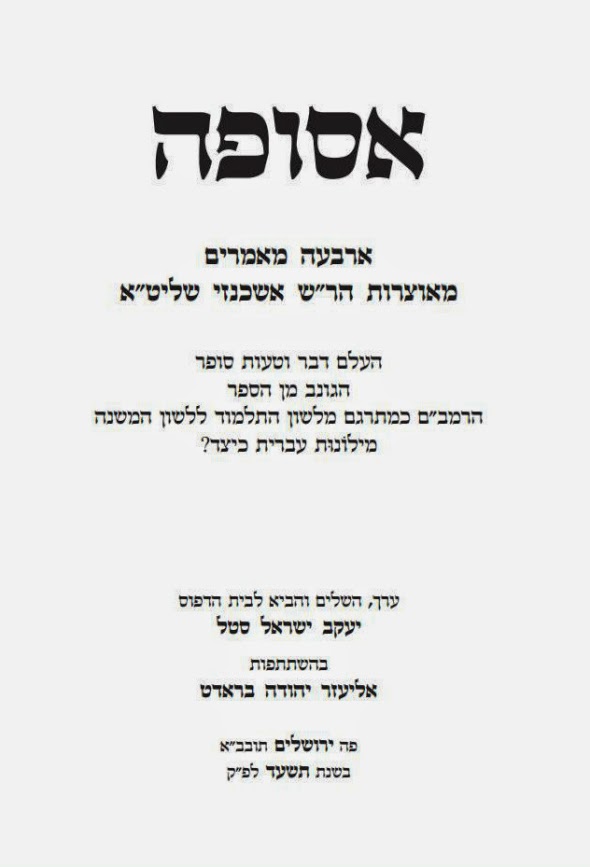


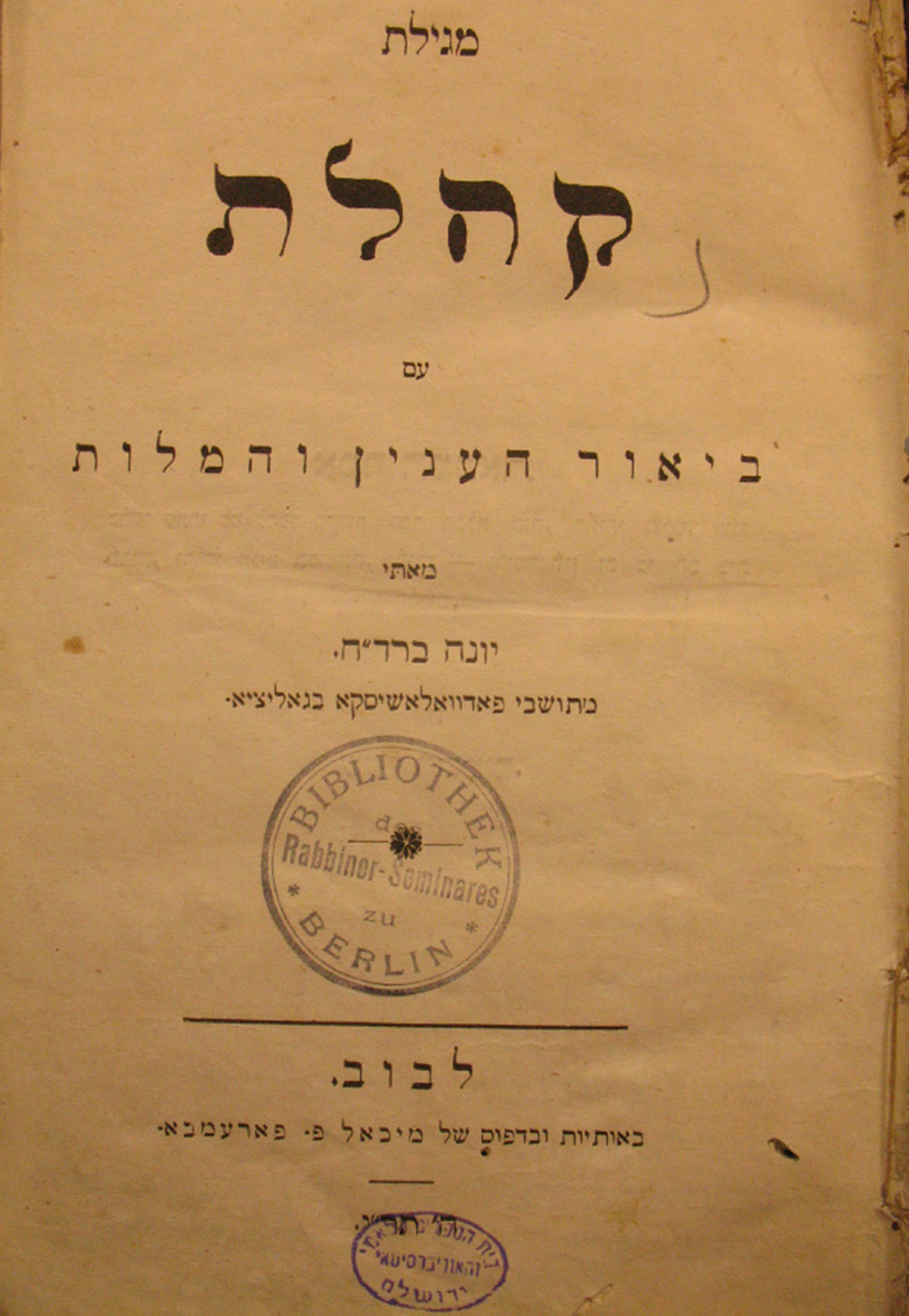

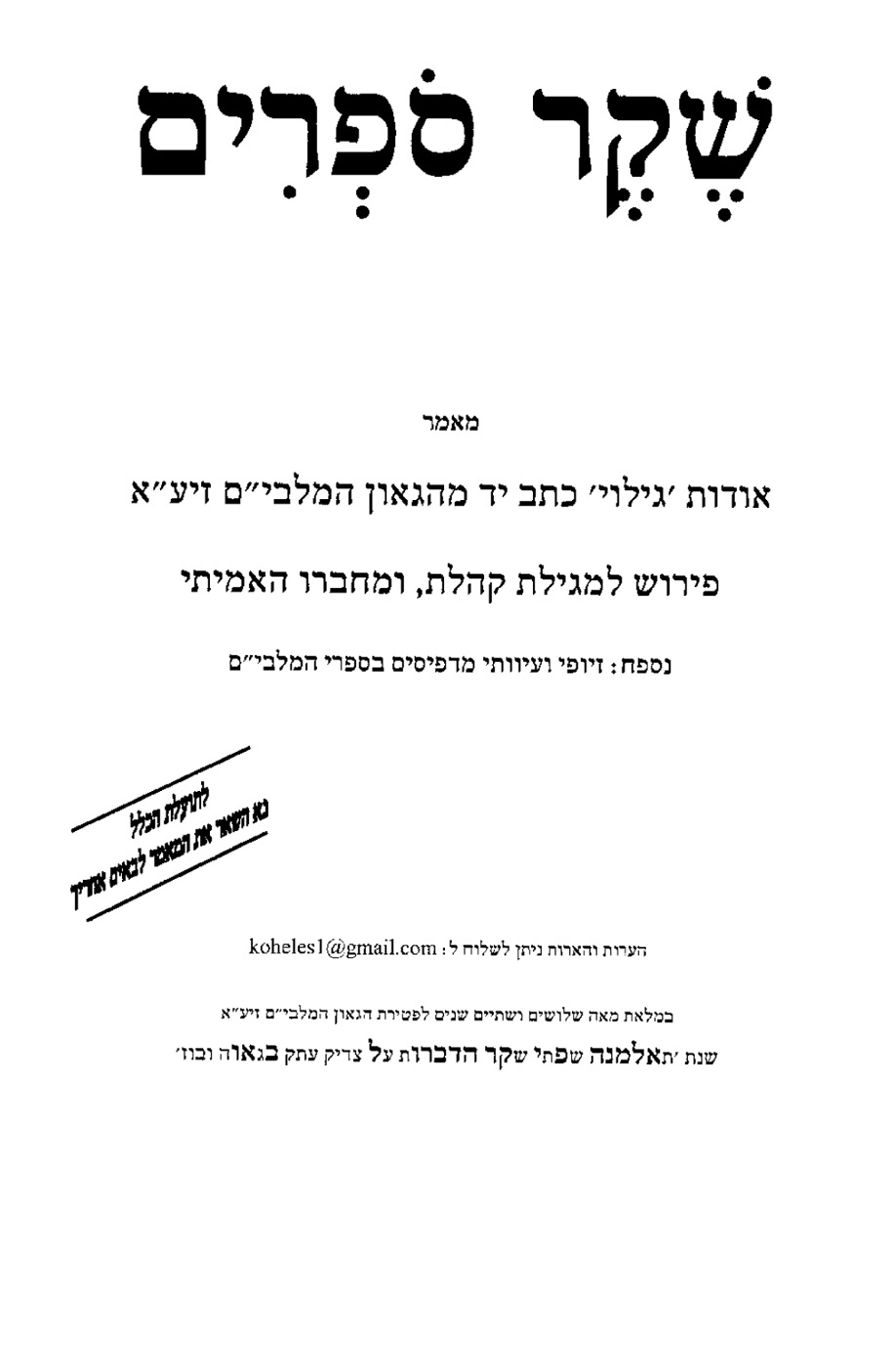-1.jpg)