A Footnote on What the Chasam Sofer Did Not Say

A Footnote on What the Chasam Sofer Did Not Say

By Shnayer Leiman

The Problem. I’m the proud owner of a copy of Rabbi Shimon Finkelman’s Rav Pam: The Life and Ideals of Rabbi Avrohom Yaakov HaKohen Pam (second edition, seventh impression, June 2023, ArtScroll History Series, Mesorah Publications, Rahway, N.J.). It is a magnificently written and produced biography of Rav Pam, a close friend of my father, who like Rav Pam was a disciple of both Rav Shraga Feivel Mendlowitz and Rav Dovid Leibowitz. The biography captures Rav Pam as our family knew him. Indeed, it is the definitive model of how a biography of a גדול בישראל should be written. It informs and inspires as it tells the truth.

As we shall see, a minor error made its way into the volume, and no one can really be faulted for the error. Nonetheless, I am confident that Rav Pam being the איש אמת that he was, will surely not fault me (in עולם האמת) for making the correction.

The reader, at p. 336, is informed that at the 1991 Torah Vodaath dinner at which Rav Pam was the Guest of Honor, he thanked the one thousand guests for coming, and then said:

Often, I think to myself that I go around with a “false pass,” for people think I am that which I am not. But I take comfort in a comment of the Chasam Sofer. Rema is of the opinion that if a stranger enters a shul and claims to be a Kohen, we may rely on his word and call him to the Torah for the Kohen’s aliyah, for even if he is, in fact, not a Kohen, calling him to the Torah would not involve a biblical transgression. Asks the Chasam Sofer: Why would calling up a non-Kohen not be a transgression of “Vekidashto” (And you shall sanctify him),[1] the requirement that we accord honor to those who truly are Kohanim? He answers that this mitzvah is fulfilled when we show honor for the Kehunah (the exalted status of the family of Kohanim). Therefore, even if the person whom we honor is, in fact, not a Kohen, we are fulfilling the mitzvah of “Vekidashto” if we honor someone whom we think is a Kohen.

Therefore, even though, in fact, I am not deserving of honor, if people honor me thinking that I deserve it, then they are considered as having shown k’vod HaTorah (honor for the Torah).

This is truly an inspiring דבר תורה – worthy of the Chasam Sofer and appropriately selected by Rav Pam, a Kohen, for the occasion. Alas, it was not said by the Chasam Sofer.

A Brief Survey of the Chasam Sofer’s Attitude Toward the Publication of His Writings.

Much has been written about the Chasam Sofer (1762-1839), and much more remains to be written. He was a remarkable גדול הדור and פוסק הדור. He lived in a world without radio, TV, telegraph, telephone, or digital communication, yet was recognized during his lifetime as גדול הדור and פוסק הדור. What makes this even more remarkable is the simple fact that he refused to publish any of his Torah insights or halakhic rulings during his lifetime. Of course, the fact that he served as Chief Rabbi of Pressburg (today: Bratislava) and simultaneously as Rosh ha-Yeshiva of the Pressburg Yeshiva – with thousands of disciples during his long reign (1806-1839) – spread his fame throughout the Jewish world. And while he refused to publish his Torah insights, he had a gifted pen and wrote thousands of Jewish legal responsa which he sent to all who asked. All of Torah Jewry knew who the Chasam Sofer was and what he could do.

It is worth examining what the Chasam Sofer had to say about publishing one’s Torah insights. In 1841, his son R. Shimon Sofer, who would later serve as Chief Rabbi of Krakow, published for the first time a personal letter of the Chasam Sofer dated 1829, where he addressed the issue.[2] It reads in part:

Regarding the rumor that you heard that I published a particular volume, and you requested that I send you a copy,[3] I never considered such a matter; it has not even entered my mind, at least until the present time. For the majority of the [Torah] world, that are greater and better than I am – or, at the very least, at the same level that I am – they have no need for me. For the minority of a minority that are less learned than I am, why should I weary myself for a minority? And if, perhaps, it were true that the majority of the [Torah] world needs me – heaven forbid – I am unaware that I would have the obligation to publish my Torah insights and distribute them to the public. So long as G-d grants me life and strength, I am prepared to study [Torah] with all who are interested in learning with me. I will neither pause nor rest – as the L-rd my G-d has commanded me “Just as I teach without charge, so you shall teach without charge”[4] – in responding, as far as my hand and mind reach, to all who ask, at no charge. It is my practice to record in writing whatever Torah insights G-d has graced me with, whether in Halakhah or Aggadah. These writings are freely available. Whoever wishes to copy them is welcome to do so. Such was the practice before the invention of the printing press. More I am not obligated to do. If, heaven forbid, one publishes in order to increase his fame, I worry about the curse of our Sages, of blessed memory: “He who seeks fame will lose his name.”[5] Indeed, such has been the fate of most authors of seforim. How much more so is it prohibited for an author to publish his sefer for financial gain! For these reasons, it never entered my mind to publish a sefer.

Only once did several of the Chasam Sofer’s Responsa and Torah insights appear in print during his lifetime. A disciple of the Chasam Sofer who had access to manuscript copies of his writings, published an edition of חידושים על מסכת שבועות מאת רבינו יוסף הלוי אבן מיגש (Prague, 1826), and appended some 14 large folios of Chasam Sofer’s Responsa and Torah insights to the volumeThe Chasam Sofer was livid when he learned about this unauthorized publication of his writings, but ultimately granted his approval. Towards the end of his life, and at the constant urging of members of his family, he agreed to publish some materials, including a review of R. Zvi Hirsch Chajes’ תורת נביאים . The project fell through, perhaps due to the illness and subsequent death of the Chasam Sofer, but not before he addressed an important note to Rav Zvi Hirsch Chajes, which sheds light on his view of the publication of Torah insights in general, and on his sensitivity to the effect his writings could have on others. The letter was written in 1837, when the Chasam Sofer was 75 years old, and at the height of his fame. Rav Chajes, was 32 years old, still at the start of a brilliant career.[6]

I keep the L-rd before me always. Pressburg, the evening preceding Monday, 27 Marchechvan, 598 according to the short account.

Greetings and blessings for all that is good to my friend and dear Rabbi, the great Rabbi and Gaon, master of Torah, discerning in study and expert in mastery of texts, whose many words are beautifully expressed, the honorable teacher and rabbi Zvi Hirsch, may his light glow, Chief Rabbi and Head of the Yeshiva of Zolkiev, may G-d watch over it.

Dear Friend,

I have a request to make of you. It has never entered my mind to publish a sefer. However, several years ago, some pages of my Responsa and Torah insights were published by a certain rabbi, R. Mordechai Schlank, who set out to publish Ramban’s commentary on Kiddushin and R. Yosef Ibn Migash’s commentary on Shavuot. He had copies of some of my writings with him and published them in the back of the books mentioned. This was done initially against my will, but ultimately with my permission, for he was not with me here [in Pressburg], but was rather in Prague.

Now the following has occurred. A worthy individual from Brody, R. Mordechai Bisliches,[7] a printer who publishes the works of the Rishonim, has managed to get copies of 3 or 4 of my Responsa and copies of some of my Torah insights. He plans to append them to one of the above publications of the Rishonim. Initially, this was done against my will and protest, but my family forced me to acquiesce and remain silent. (For all my Torah insights and writings are freely available for anyone to copy them. I do not discourage anyone from doing so, for nothing I wrote was intended as a secret.) The above mentioned printer is already engaged in the process of publishing my material. These include two responsa that I addressed to you, one on whether a physician who is also a Kohen can administer to a dying or already dead patient,[8] and the other regarding my comments on your sefer, Torat Nevi’im.[9] Now I said: I can do as I please regarding my property; but I cannot do as I please regarding someone else’s property.” Perhaps you don’t want your name, and the name of your community, mentioned regarding that matter. Or, perhaps you will find some passage that, heaven forbid, is a slight to your honor. For those reasons, I implore you to review my comments and let me know what you think. In my humble opinion, there is nothing in my responsa that in any way slights you, heaven forbid. Quite the opposite, they are sources for you of glory and praise. And if, when engaged in halakhic discourse, I criticized something you said, it means nothing. Such are the ways of Torah discourse. Perhaps you will publish yet another sefer and you will be able to defend yourself against any and all criticism. But heaven forbid that I should allow my pen to record anything that would dishonor you! Should you feel that anything I wrote [about you] is improper, I will erase those words, or if necessary, I will neither mention your name or the title of the book. I hope this won’t be the case, and anxiously await your quick reply, before the volume goes to press. I sign with all the usual blessings, the one who loves your soul,

Moshe ha-Katan Sofer of Frankfurt-am-Main

We have included this brief survey of the Chasam Sofer’s attitude toward the publication of his writings, in order to bring home the message that, with one or two exceptions, the Chasam Sofer did not edit, or prepare for publication, any of his writings during his lifetime. He left a vast literature, literally thousands of manuscripts, ranging over a wide variety of topics (such as Responsa, Lectures on the Talmud, Sermons, Commentaries on the Torah, Notes on the Shulchan Arukh, Poetry, personal letters, and more), all still being published – and always in better editions – to this very day.

The Solution. What remains to be addressed is:

1. Why did Rav Pam ascribe the passage (that justifies why a stranger who claims that he is Kohen is allowed to get an aliyah to the Torah as a Kohen, even though we have no evidence other than his say-so) to the Chasam Sofer?

2. How do I know that it wasn’t said by the Chasam Sofer?

3. Who did contribute the insightful justification that ultimately was misattributed to the Chasam Sofer?

Rabbi Finkelman provides a helpful footnote, in an attempt to identify the source of the alleged Chasam Sofer comment.[10] He sends the reader to Toras Moshe on Vayikra 21:8. Alas, in all of the recent editions of Toras Moshe published under the auspices of Makhon Chasam Sofer, the official collection of all of the genuine Chasam Sofer commentaries on the Torah published in the various editions of Toras Moshe (as distinct from his sermons [דרשות] or other collections of Torah commentary that never appeared under the name Toras Moshe ), no such passage appears. See, e.g., the massive six-volume edition of Toras Moshe ha-Shalem veha-Mefoar (Jerusalem, 2021), vol. 3, p. 255, to Vayikra 21:8. There is a comment on Vekiddashto, but not a word about the fact that a stranger who claims that he is a Kohen is allowed to get an aliyah to the Torah as a Kohen, even though we have no evidence other than his say-so.

Almost certainly, neither Rav Pam in 1991, nor Rabbi Finkelman in later years, had access to a Makhon Chasam Sofer edition of Toras Moshe. But they certainly had access to earlier editions of Toras Moshe, which is what led them astray. It’s best to begin our examination with one of the earliest editions of Toras Moshe – and little more needs to be said.

Like almost all the writings of the Chasam Sofer, his Toras Moshe was published posthumously. It first appeared in print in a three-volume set published in Pressburg between 1879 and 1893. The editor of the three-volume set was an אדם גדול, a grandson of the Chasam Sofer, Rav Shimon Sofer (1850-1944). He was the son of Rav Avraham Shmuel Binyamin Sofer (1815-1871), the כתב סופר, who succeeded the Chasam Sofer as Chief Rabbi and Rosh ha-Yeshiva of Pressburg. Rav Shimon Sofer, a distinguished rabbinic scholar in his own right, served as Chief Rabbi of Erlau and was the founder of the Erlauer Chasidic dynasty. In 1893, he published for the first time the third and final volume of Toras Moshe, the volume with the Chasam Sofer’s comments on Vayikra-Devorim. Later editions were usually printed in 2 to 5 volume sets.

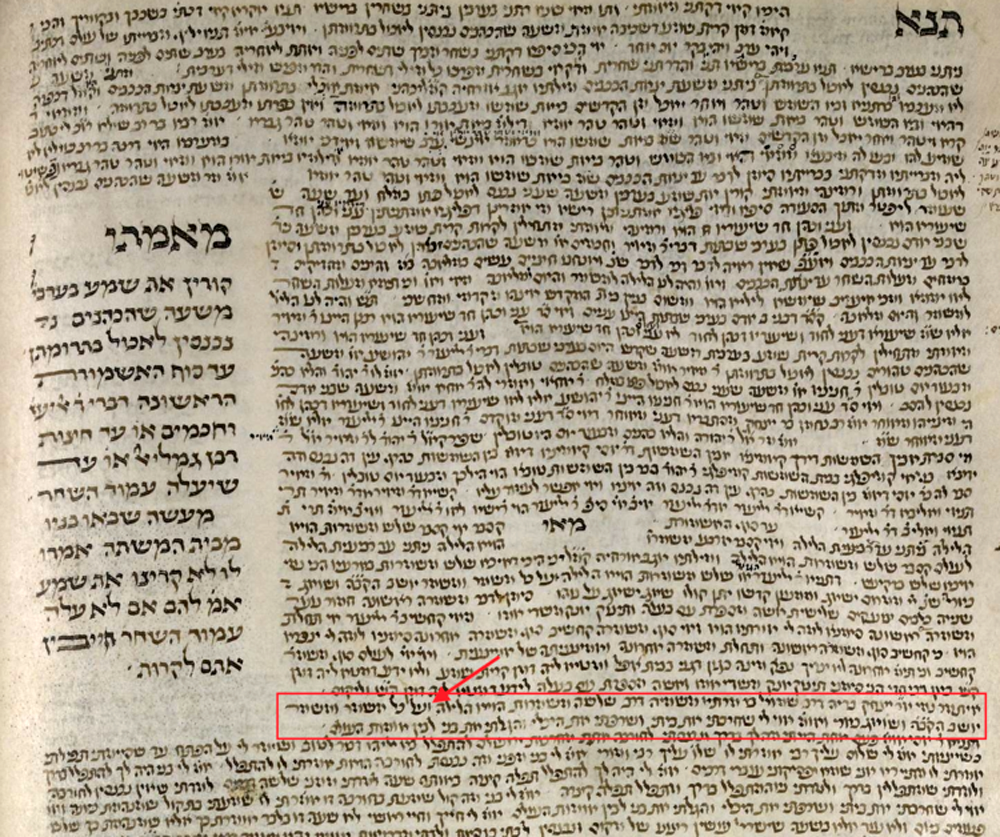
Here is what Rav Pam saw and quoted (almost certainly from one of the many later photo-mechanical reprints of the 1893 volume that appeared throughout the 20th century).

He may have owned a copy of a reprinted edition, and if not, he surely would have had access to a copy at the famed Torah Vodaath Library, curated for many years by the late R. Yitzchok Meir Traube and catalogued by the late R. Shlomo Biegeleisen. It is a library I remember well that (in my day) was just-off to the side of the main Bais Medrash at the South Third Street campus in Williamsburg.


No one could really fault Rav Pam for citing a passage – and with great precision – in the name of the Chasam Sofer, when that very passage appears in a sefer entitled Toras Moshe, and whose title page clearly identifies the author of its content as being none other than the Chasam Sofer! Moreover, the sefer was edited by the grandson of the Chasam Sofer, who surely wouldn’t misrepresent what his grandfather wrote!

But it is clearly a case of אליה וקוץ בה. If one examines carefully the text that Rav Pam cited (as seen in the scan above), one notices a coded abbreviation at the end of the paragraph that reads in parentheses: (משמ). (Other passages on the page are coded with an asterisk at the start of each paragraph; they need not concern us.) No dictionary of Hebrew abbreviations will solve the strange abbreviation משמ. But what will solve the problem for us is the editor’s full introduction to his edition of Toras Moshe.

It appears only, as one might expect, at the start of the volume on Bereshis. Here is the key passage, which appears at the very end of the lengthy introduction.

Translated it reads: “I also had in my hands a handwritten book, named Shir Ma’on. The author’s name is not recorded in it. But I felt comfortable taking some of its fruits and inserting them into the present text, for there is a proper time for everything, a fixed time for every desirable matter.”

Incredibly, there are many passages, marked with the code משמ strewn throughout the Toras Moshe volume! What the editor was really telling us is that he had access to a handwritten notebook with no personal name recorded in it. Of course no personal name was recorded in it; it was his private notebook! The Hebrew title Shir Ma’on clearly alludes to the name “R. Shimon.” And משמ is surely an abbreviation for מספר שיר מעון. As a gifted rabbinic scholar, and as the grandson of the author of most of the passages in Toras Moshe, he felt comfortable adding appropriate passages to the volume. But being scrupulously honest, he knew that he could not do so without informing readers of what he was doing, and clearly identifying which passages belonged to his grandfather, and which passages belonged to him.

It is all to the credit of the editors of the latest editions of Toras Moshe that they now publish two separate sections of the book, each with its own title page, and both with notes and commentary. One section is called Toras Moshe and prints only what the Chasam Sofer wrote, and the other section is called Shir Ma’on and prints only what R. Shimon Sofer wrote.


In sum, Rav Pam resonated to a beautiful 
דבר תורה he saw in an early edition (or reprint) of Toras Moshe, and cited it in the name of the Chasam Sofer at a Torah Vodaath dinner held in his honor. Opening to a page in Sefer Vayikra of the multi-volume set of Toras Moshe, there was no obvious reason for him to assume that it was not a Torah insight of the Chasam Sofer. In fact, it was a Torah insight of the Chasam Sofer’s grandson, R. Shimon Sofer, who served with great distinction as Rabbi and Rosh ha-Yeshiva of Erlau in Hungary for over 50 years, and authored the multi-volume שות התעוררות תשובה (printed mostly in Budapest, 1923-1944), and died a martyr’s death in Auschwitz at age 94.


Notes

[1] The reference is to Vayikra 21:8. See b. Gittin 59b, where the verse is understood as a general obligation to honor all Kohanim.
[2] R. Shimon Sofer, “
פתוחי חותם,” introduction to R. Moses Sofer, ספר חתם סופר חלק יורה דעה (Pressburg, 1841). It is reissued in שות חתם סופרחלק יוד, vol. 1 (Jerusalem, 2000), introductory pages, p. 15.
[3] The reference is to the unauthorized publication in 1826 of several of the Chasam Sofer’s responsa and Torah insights, for which see below.
[4] See b. Bechorot 29a.
[5] M. Avot 1:13. Cf. 
שות חתם סופראוחסימן רח.
[6] The letter is included R. Yisrael Stern’s anthology, 
לקוטי תשובות חתם סופר (London, 1965), pp. 92-93.It was first published in 1842 by the recipient of the letter himself, R. Zvi Hirsch Chajes. See presently: כל ספרי מהרץ חיות (Jerusalem, 1958), vol. 1, p. 206. For a comprehensive study of the relationship between the Chasam Sofer and R. Zvi Hirsch Chajes, see Mayer Herskovics, מהרץ חיותתולדות רבי צבי הירש חיות ומשנתו – מהדורה מתוקנת  (Jerusalem, 2007), pp. 143-189.
[7] Mordechai Leib Bisliches (1756-1851) was a bibliophile, dealer in manuscripts, and printer. He printed books that were published in Carlsruhe, Lvov, Prague, and Pressburg. At least two of his printed books carried 
הסכמות from the Chasam Sofer (אוצר נחמדחדושי הרמבן על מסכת שבת , Pressburg, 1837; and מנחת קנאות מהרב הגדול אבא מרי בר משה מחכמי לוניל , Pressburg,1837). In 1846, Bisliches and his partner S.G. Stern sold 111 manuscripts in 102 volumes to the archduchess Marie Louise of Parma, which were added to the de Rossi Collection in the Biblioteca Palatina. See the entry “Bisliches” in Encyclopaedia Judaica and cf. N.M. Gelber’s תולדות יהודי ברודי (Jerusalem, 1955), p. 204.
[8]
 In the standard printed editions, this responsum appears in שות חתם סופריודסימן שלח.
[9]In the standard printed editions, this responsum appears in
שות חתם סופראוחסימן רח .
[10] 
Rav Pam: The Life and Ideals of Rabbi Avrohom Yaakov HaKohen Pam, p.336, note 9.


“Ha’Rotzeh Lichanek, Hitaleh B’Ilan Gadol”: Notes on some Literary forgeries of Jewish works in the the Late Modern Period (1756-1965)

Ha’Rotzeh Lichanek, Hitaleh B’Ilan Gadol”: Notes on some Literary forgeries of Jewish works in the the Late Modern Period (1756-1965)

By Ezra Brand

Ezra Brand is an independent researcher based in Tel Aviv. He has an MA from Revel Graduate School at Yeshiva University in Medieval Jewish History, where he focused his research on 13th and 14th century sefirotic Kabbalah. He is interested in using digital and computational tools in historical research. He has contributed a number of times previously to the Seforim Blog (tag), and a selection of his research can be found at his Academia.edu profile. He can be reached at ezrabrand-at-gmail.com; any and all feedback is greatly appreciated.

Introduction

Jewish literary forgeries are a topic often discussed on the Seforim Blog, especially in the postings of Dr. Marc Shapiro (see the tag “Literary Forgery” for some of the relevant posts).[1] A “literary forgery” refers to a writing which claims to have been written by a certain, usually respected, figure, while in fact written by a later, usually much lesser known, writer.

A recent collection of articles on forgeries states: “There has been a growth in the number of publications dedicated to fakes and forgeries for around thirty years now, many of which have focused on books and literary works.”[2]

The classic source regarding literary forgeries in Jewish writing is that of the Talmud Bavli, Pesachim 112a:

חמשה דברים צוה ר”ע את רבי שמעון בן יוחי כשהיה חבוש בבית האסורין […] אמר לו אם בקשת ליחנק היתלה באילן גדול.

Translation by Koren-Steinzaltz, as appears in Sefaria website (bold in the original translation):

Rabbi Akiva commanded Rabbi Shimon ben Yoḥai to do five matters when Rabbi Akiva was imprisoned […] if you wish to strangle yourself, hang yourself on a tall tree.

Koren-Steinzaltz translation adds the explanation:

“This proverb means that if one wants others to accept what he has to say, he should attribute his statement to a great man.”

This interpretation is based on Rashi’s explanation:

אם בקשת ליחנק – לומר דבר שיהיה נשמע לבריות ויקבלו ממך. היתלה באילן גדול – אמור בשם אדם גדול.”

According to Rashi’s interpretation, this source permits fabricating a quote from an authority in order to be believed.[3] 

Based on this interpretation, the term often used in rabbinic writing for “forging” in someone else’s name is “תלה ב”, literally “hung on X”, meaning “ascribed (falsely) to X”.

The great scholar of Mishpat Ivri, Nahum Rakover, devotes a portion of his book on intellectual property in halacha, to a discussion of the sources that permit fabricating a quote from an authority in order to be believed.[4]

Some recent historians seem to imply that the 19th century saw a relative uptick in Jewish literary forgeries. Golda Akhiezer, in a 2018 article on Jewish historical forgeries in the 19th century, writes:[5]

One of the paradoxes of European cultural life of the nineteenth century, especially in the Russian Empire, was a combination of two parallel yet apparently conflicting processes: the emergence and increasing importance of modern science and the rise of multifarious forgeries of historical documents.”[6]

It should be pointed out that this isn’t truly paradoxical. Anthony Grafton famously noted the deep relationship between critical scholarship and forgeries.[7]

Ira Robinson also implies an uptick in Jewish literary forgeries in the 19th century, and gives a somewhat different theory as to why this time period gave rise to so many forgeries:

By the end of the nineteenth and the beginning of the twentieth centuries, the highly charged ideological atmosphere, as well as an ever-growing demand for Jewish books, engendered a situation in which there was great temptation to manufacture documents.[8]

However, it is remains speculative whether in fact there were a relatively larger number of Jewish literary forgeries in the 19th century. This question awaits a more quantitative study of the topic.[9]

Table of Notable Forgeries

It’s important to note that this list is not to be comprehensive. Rather, it’s a collection of especially notable forgeries, and some notes on them. I hope to update this list at a later date, and of course happy to hear suggestions.

Title Editor Earliest date (terminus post quem) Previous posts and bibliography
Divrei Gad Ha’Chozeh Leopold Immanuel Jacob van Dort 1756 10
Mishle Asaf (haskamot) Isaac Satanov 1783-1791 11
Besamim Rosh Saul Berlin 1793 12
Ramschak Chronicle Marcus Fischer 1828 13
Zekher Tzaddikim Mordecai Sultansky 1841 14
Sefer Avnei Zikaron Abraham Firkovich 1845-1872 15
The Roads of Jerusalem Eliakim Carmoly 1847 16
Sefer Ha’Eshkol R’ Zvi Binyamin Auerbach 1863 17
Baraita de-Ma’aseh Bereshit Lazarus Goldschmidt 1894 18
The Protocols of the Elders of Zion series of articles in Russian newspaper 1903
Goral HaAsiriyot (1904); Seder Hagada Le’Maharal (1905); Nifla’ot Maharal (1909); Refa’el HaMalach (1911); Tiferet Maharal MiShpoli (1912); Hoshen Mishpat (1913); Divrei HaYamim Asher LiShelomo HaMelech (1914); and more R’ Yehudah Yudel Rosenberg 1904-1914 19
Yerushalmi on Kodshim Solomon Judah Friedlander 1907–1909 20
Genizat Kherson 1922 21
Der Prager Golem (1917); Kovetz Michtavim Mekori’im MiHaBesht VeTalmidav (1923); Heichal LeDivrei Chazal (1948); Sefer Dovev Siftei Yeshenim (1959-1965) Chaim Bloch 1917-1965 22
Kol Hator R’ Shlomo Zalman Rivlin 1939 23

Forgers

There are two works whose genre can be described as “halachic”: Saul Berlin’s Besamim Rosh (1793) and R’ Zvi Binyamin Auerbach’s Sefer Ha’Eshkol (1863).

It is quite noticeable that perpetrators of literary forgery of Jewish texts were especially prominent outside of mainstream Orthodox Judaism, and created their forgeries for polemical reasons: Karaites (forgeries of Sultan and Firkovich), Maskilim, and anti-Semites (Protocols of the Elders of Zion).

Forgery of tendentious works relating to history are especially common:[24]

  1. Forged tombstone inscriptions and manuscript colophons (Firkovich)
  2. Forged chronicles (Sultanski ; Ramschak Chronicle)
  3. Forged travelogue (The Roads of Jerusalem of R’ Isaac Hilu)
  4. Forged protocols of meetings (Protocols of Elders of Zion)
  5. Forged letters (Genizat Kherson ; Bloch’s Kovetz Michtavim and more)[25]
  6. Fake stories (Rosenberg ; Bloch)

Bloch and Rosenberg, who create forgeries for popular entertainment purposes, are closer to the end of the date range, and both made prominent forgeries about the golem of the Maharal: Bloch’s The Letter of the Maharal on the Creation of the Golem (1923) and Rosenberg’s Nifla’ot Maharal. For Bloch, the polemical motivation of anti-Zionism played a role in other forgeries.

Isaac Satanow is the most playful, self-aware forger of them all. He even added fake “haskamot” to his Zohar Chibura Tinyana from well-known late 18th-century rabbinic figures (R’ Yosef Teomim and R’ Chaim Halberstam of Sanz), having the haskamot point out the possibility that Satanov himself wrote the works, but giving halachic justification for the permissibility of forgery.[26]

Rakover, in his book Zekhuyot Yotzrim (cited above), was misled by Satanow. In his discussion of permissibility in halacha of false quotation and literary forgery,[27] Rakover quotes the “haskamot” to Satanov’s as showing that forging is halachically permitted. It appears that Rakover wasn’t aware that the haskamot themselves are most likely forged.

Two of the first forgers discussed here, Saul Berlin and Isaac Satanow, had similar ideologies, and. Satanow may have assisted in fabricating Besamim Rosh.[28]

Conclusion

The issue of Jewish literary forgeries has received further prominence recently in the scholarship of R’ Moshe Hillel. R’ Hillel has written a number of works exposing forgeries. His most famous work is on Divrei Gad HaHozeh, a work purporting to be from the times of King David, published from an 18th century manuscript by Professor Meir Bar-Ilan in 2015. R’ Hillel argues that it is in fact an 18th century forgery.[29]

Hillel also wrote a book earlier this year called Hazon Tavrimon devoted to R’ Yakov Moshe Toledano (1880-1960), dealing with various historical documents that Toledano “discovered”, demonstrating that they are fake.[30]

Computer algorithms have also played a role in detecting forgeries, or refuting allegations of forgery, most prominently in the work of Professor Moshe Koppel. Some of this work has been featured in the Seforim Blog.[31] Hopefully, this software will be further refined to shed light on additional works that have been accused of being forged, to supplement the traditional tools used for proving authenticity on the one hand, and uncovering forgeries on the other.

[1] Thanks to Eliezer Brodt for reviewing and providing very helpful comments on this piece. I’d also like to thank my father for looking over a previous version of this blog post.

[2] Cécile Michel, Michael Friedrich (eds.), Fakes and Forgeries of Written Artefacts from Ancient Mesopotamia to Modern China (De Gruyter 2020), p. 1. See further bibliography in footnote there.

[3] However, Rashbam there gives a different explanation of the passage. He interprets that it’s not saying anything about deception. Rather, it’s simply giving advice that if you want people to listen to what you have to say, you should study from a master, so that you can then (correctly) quote him. The term “choke” is used simply because the term “high tree” is used.

For a wide-ranging discussion of sources discussing the interpretation of this passage, see Marc Shapiro, Changing the Immutable, pp. 259-261.

[4] See נחום רקובר, זכות היוצרים במקורות היהודיים, תשנ”א, עמ’ 25-36.

See also Shapiro, Changing the Immutable, and bibliography there.

[5] “Historical Research and Forgeries in the Age of Nationalism: The Case of the Russian Empire Between Jews and Russians”, East European Jewish Affairs 48. 2 (2018): 101 – 102.

For a general article on Jewish forgeries, see Cecil Roth, “Forgeries”, Encyclopedia Judaica, 1st edition (1972), pp. 125-126.

[6] In general, Ahiezer ibid. states on p. 110: “Due to the vastness of the topic, it is impossible to provide an exhaustive treatment of Jewish ahistorical writing and forgeries in this article.”

[7] Grafton, Forgers and Critics: Creativity and Duplicity in Western Scholarship, 2019 (2nd edition).

[8] Robinson, “Literary Forgery and Hasidic Judaism: The Case of Rabbi Yudel Rosenberg”, Judaism, 40 (1991), pp. 61-62.

[9] I’d like to thank Eliezer Brodt for raising this point in private communication.
[10] See Hillel, משה הלל, מגילות קוצין: בין דברי גד החוזהלאגרת רבן יוחנן בן זכאי“, על עמנואל יעקב ואן דורט וחיבוריו הבדויים (תשע”ח).
[11] See משה פלאי, “יצחק סאטאנוב ושאלת הזיוף בספרות“, קרית ספר נד תש”ם, עמ’ 817-824 ; בנימין ש’ המבורגר, “האם ניתן לסמוך על יצחק סאטאנוב?“, המעין, גליון טבת תשס”ט, עמ’ 86-91. here
[12] Previous Seforim Blog posts: 2006 ; Rabinowitz and Brodt 2010 ; Shaprio 2007 ; Brodt 2019 ; Maimon 2020. See bibliographies here נריה גוטל, ‏יחסו של הראיה קוק לספר בשמים ראש” “, JSIJ‏ 5, 2006, הערה 4 ; ר’ אליעזר יהודה בראדט, “ציונים ומילואים למדור נטעי סופרים“, ישורון כד (ניסן תשע”א), עמ’ תכה, והערה 5 (עמ’ תכה-תכז).

To those bibliographies can be added: Talya Fishman, “Forging Jewish Memory: Besamim Rosh and the Invention of Pre-Emancipation Jewish Culture,” in Jewish History and Jewish Memory, ed. by Elisheva Carlebach et. al (1998), pp. 70-88; Emile G. L. Schrijver, “Saul Of Berlin’s “Besamim Rosh” : The Maskilic Appreciation Of Medieval Knowledge”, Sepharad in Ashkenaz, Ed. by Resianne Fontaine et. al (2007), pp. 249-259.
[13]  Meir Lamed, “Fischer”, Encyclopedia Judaica, 2nd edition (2007); Meir Lamed, “Lieben, Salomon Hugo”, Encyclopedia Judaica, 2nd edition (2007); Iveta Cermanová, “The Ramschak Chronicle: New Findings about the Genesis, Reception and Impacts of the Forgery”, Judaica Bohemiae 52/2 (2017), pp. 33-67 ; Ahiezer (2018), p. 111 ; E. Randol Schoenberg, Who was the first Ramschak? | Schoenblog.com (February 5, 2021).
[14] Golda Akhiezer, Encyclopedia Judaica, 2nd ed. (2007), “Sultansky, Mordecai Ben Joseph”; גולדה אחיעזר, “מרדכי סולטנסקיקווים לדמותו וכתיבתו ההיסטורית“, קראי מזרח אירופה בדורות האחרונים: ד’ שפירא, ד’ לסקר (עורכים), מכון בן-צבי, ירושלים 2011, עמ’ 170–196; Akhiezer (2018), p. 105.
[15] See the many articles by Dan Shapira, most recently Michael Nosonovsky, Dan Shapira, and Daria Vasyutinsky-Shapira, “Not by Firkowicz’s Fault: Daniel Chwolson’s Comic Blunders in Research of Hebrew Epigraphy of the Crimea and Caucasus, and their Impact on Jewish Studies in Russia,” Acta Orientalia Hung., vol. 73, no. 4 (2020): 633-668, footnote 1, and his two-part popular article in Tablet Magazine in June 2021: “Inventing the Karaites” and “Forging History”. See also: Roth (1972); Haggai Ben-Shammai, “Abraham Firkovich”, Encyclopedia Judaica 2nd ed. (2007); Artem Fedorchuk, “New findings relating to hebrew epigraphic sources from the Crimea,with an appendix on the readings in king Joseph’s letter”, The World of the Khazars: New Perspectives (2007) pp. 109-122; Ahiezer (2018), p. 110 and footnote 40; Malachi Beit-Arié, Supplement: The Forgery of Colophons and Ownership of Hebrew Codices and Scrolls by Abraham Firkowicz, Fakes and Forgeries of Written Artefacts from Ancient Mesopotamia to Modern China (2020), pp.195-206; Yosef Ofer, “Two dedicatory inscriptions in manuscripts of Scripture and the question of their authenticity”, Journal of Jewish Studies (2020).
[16] See here, גרשם שלום, “סשבילי דירושלם המיוחס לריצחק חילומזוייף“, ציון ט, תרצ”ד, עמ’ לט–נג; מיכאל איש-שלום, “על שבילי דירושליםלריצחק בריוסף חילו“, תרביץ כרך ו’, טבת תרצ”ה, עמ’ 197–209; Roth 1972.
[17] Previous Seforim Blog posts: Shapiro 2007a ; Shapiro 2007b ; Shapiro 2008 ; Shapiro 2010. Roth 1972.
[18] Roth 1972; מאיר בר-אילן, “נפלאות ריהודה יודיל רוזנברג“, עלי ספר, יט, תשס”א, עמ’ 178-176, הערה 20.
[19] Previous Seforim Blog posts: 2006 ; Leiman 2010 ; Shapiro 2012 ; Brodt 2013 ; Shapiro 2022. Ira Robinson, “Literary Forgery and Hasidic Judaism: The Case of Rabbi Yudel Rosenberg”, Judaism, 40 (1991), pp. 61-78; Shnayer Leiman, “The Adventure of the Maharal Of Prague in London: R. Yudl Rosenberg and the Golem Of Prague” in Tradition 36:1 (2002), pp. 26-58; א. בנדיקט , “הגדת מהר”ל או אגדת מהר”ל”, מוריה, יד, גליון ג-ד, תשמ”ה, עמ’ קב-קיג; הרב שלמה פישר, “אל תשכן באלהיך עולה“, צפונות ג ניסן תשמ”ד, עמ’ סט; מאיר בר-אילן, “נפלאות ריהודה יודיל רוזנברג“, עלי ספר, יט, תשס”א, עמ’ 178-176; “זיופים וזייפנים” (2013) – פורום אוצר החכמה. ere
[20] Previous Seforim Blog post: 2007 . See bibliography here, ר’ אליעזר יהודה בראדט, “ציונים ומילואים למדור ‘נטעי סופרים’ “, ישורון כד (ניסן תשעא), עמ’ תנד-תנה. See especially R’ Boruch Oberlander’s series of articles in the journal Or Yisra’el . And see also this 2016 article on an unpublished manuscript of Yerushalmi Menahot that should be ascribed to Friedlander, אביעד ברטוב, “ליקוטים מאוחרים לירושלמימסדר קדשים“, נטועים כ (תשע”ו), עמ’ 221. here
[21] Previous Seforim blog posts: Leiman 2010 ; Koppel 2011. Ahiezer (2018), p. 110 and footnote 5.
[22] Previous Seforim Blog posts: Shapiro 2007b ; Leiman 2010 ; Shapiro 2010. See גרשם שלום, “קובץ מכתבים מקוריים”, קרית ספר א, i (1924-5), pp. 104-106; הרב יוסף תבורי, “שפוך חמתך: משמעותו וניסיונות לשנותו”, כרמי של, בעריכת נחם אילן ועוד, (2012), עמ’ 213-221; “שפוך אהבתך על הגויים‘… – זיוף משונה“, פורום אוצר החכמה (2012); “משמת הגרדצ הילמן זצל בטלו אשכולות“, פורום אוצר החכמה (2011) ; Alan Brill, Pour out thy Love Upon the Nations and Miriam at the Seder-Updated”, The Book of Doctrines and Opinions (March 23, 2010); “Fifty Shades of Greatness: The Archive of Rabbi Chaim Bloch (1881-1973) and his colorful personality”, Musings of a Jewish Bookseller (October 17, 2018); R’ David Golinkin, “Dressing as Elijah & Pouring Out Love”, My Jewish Learning.
[23] עמונאל אטקס, “הגאון מווילנה ותלמידיו כציונים הראשונים‘ – גלגוליו של מיתוס“, ציון פ,א (תשע”ה), ע’ 69-114; הנ”ל, הציונות המשיחית של הגאון מווילנה: המצאתה של מסורת (תשע”ט); יוסף אביב”י, “קול התור – דור אחר דור”, מכילתא א (תש”פ), עמ’ 159–336.

Summary at Avivi’s blog קול התור דור אחר דור.

See also the lengthy and detailed thread on Avivi’s article in Otzar HaChochma forum, עליית תלמידי הגרא גירסת רשז ריבלין עמוד 42 – פורום אוצר החכמה: and המאמר על קול התור תשובות והוספות פורום אוצר החכמה.

And see Allan Nadler’s review of Etkes’s and Avivi’s work, “Like Dreamers”, in Jewish Review of Books, Winter 2021, pp. 15-18 (thanks to Eliezer Brodt for pointing out this article).

[25] Compare also Yosef Perl’s famous Megaleh Temirin. This a collection letters ostensibly written by Hasidim, and which is clearly a satire. Wikipedia describes it as follows: “Megalleh Temirin is an anti-Hasidic satirical composition written by Yosef Perl in 1819 as a parodic novel of letters between Hasidim, which became a symbol of the battles of the Jewish Enlightenment movement against the Hasidic movement.” This work was put out in a scientific edition by Jonathan Meir, available on Kotar, with additional volumes of appendices and studies.

[26] Moshe Pelli (משה פלאי, “יצחק סאטאנוב ושאלת הזיוף בספרות“, קרית ספר נד תש”ם, עמ’ 817-824) p. 822, footnote 31 who agrees with Zinberg that the haskamot themselves are most likely written by Satanow. Haskamot being forged by Satanov is also mentioned by Hamburger in his article on Satanow (בנימין ש’ המבורגר, “האם ניתן לסמוך על יצחק סאטאנוב?“, המעין, גליון טבת תשס”ט, עמ’ 86-91), p. 87 footnote 11, citing Encyclopedia Hebraica.

[27] Rakover, pp. 29-31.

[28] Pelli, p. 817 footnote 2.

[29]  ר’ משה הלל, מגילות קוצין.

See also Otzar Hahochma forum (July 2021 and on), חדש מאת רמ הלל מגילות קוצין | גד החוזה או פלוני ההוזה? – עמוד 2 – פורום אוצר החכמה.

See there the attached PDF of Bar-Ilan’s response (March 2022), with a discussion.

[30] ר‘ משה הלל, חזון טברימון: תעודות מזויפות מבית היוצר של האחים טולידאנו מטבריה (תשפ”ב).

See Eliezer Brodt’s Seforim Blog post (March 2, 2022): Book Announcements: Five recent works – the Seforim Blog.

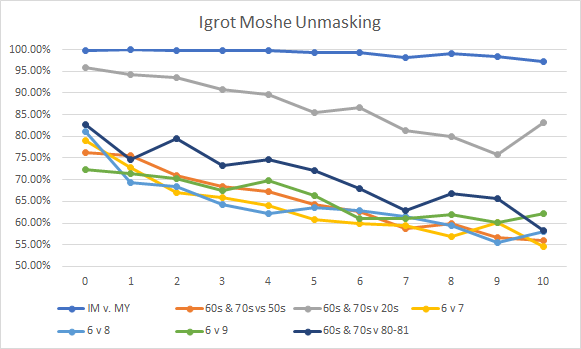
[31] For example, see Moshe Schorr, Who Wrote the Late Volumes of Igrot Moshe? – The Seforim Blog (January 20, 2019).See also his work on Genizat Herson (cited in Koppel’s Seforim Blog blogpost, footnote 7):

מ. קופל, “זיהוי מחברים בשיטות ממוחשבות: “גניזת חרסון””, ישורון כג (אלול ה’תש”ע), תקנט-תקסו.

Koppel’s program has also been used to indicate that Ben Ish Hai is the author of Shu”t Torah LiShmah, see Brodt here, item #33.

Not directly related, but see the announcement of exciting progress on Dicta, a suite of digital tools for traditional Hebrew texts spearheaded by Koppel, reported recently in the Jerusalem Post (August 4, 2022) : New AI technology hopes to change everything we know about Jewish texts – The Jerusalem Post


Rabbi Joseph Hertz, Women and Mitzvot, Antoninus, the New RCA Siddur, and Rabbis who Apostatized, Part 1

Rabbi Joseph Hertz, Women and Mitzvot, Antoninus, the New RCA Siddur, and Rabbis who Apostatized, Part 1

Marc B. Shapiro

1. In my last post here, in discussing R. Joseph Hertz’s suggested alternative text for Maoz Tzur, I wrote that this suggestion “was simply made up by Hertz or perhaps suggested by an unnamed collaborator on his siddur commentary.” At least one person wondered if I had anything in mind when I wrote about “an unnamed collaborator.” Indeed, these words were chosen deliberately. I do not know anything specifically about collaborators on the siddur commentary. However, we do know about the collaborators on his famous Torah commentary. This Chumash used to be found in every Modern Orthodox synagogue, and now, just like the Birnbaum siddur, it is missing from most of these synagogues.[1]

When it comes to what I will describe about the Hertz Chumash, it is possible that we are dealing with a great injustice. At the very least, it was a great misunderstanding between Hertz and his collaborators. Here are the Hebrew and English title pages of the Hertz Chumash.
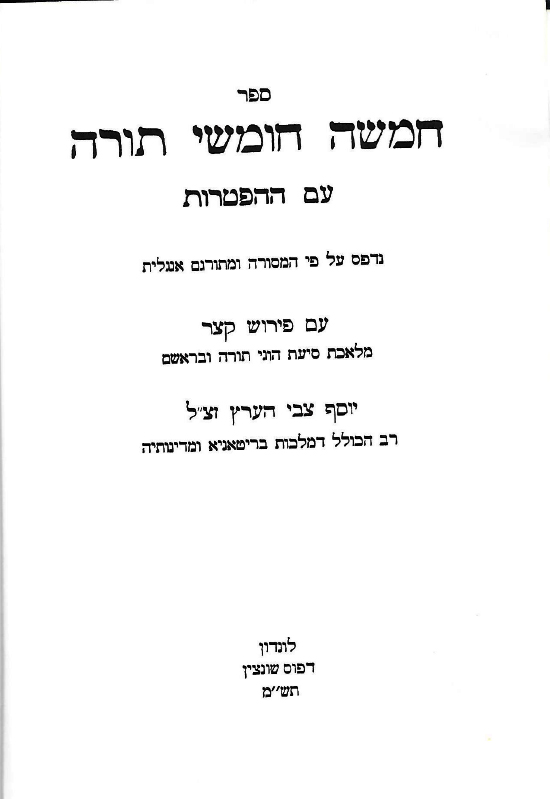
 

The English title page refers to the Chumash as edited by Hertz. The Hebrew title page, which most people don’t even bother looking at, even if they understand Hebrew, refers to a commentary that is the work of a group of Torah scholars headed by Hertz. These are quite different formulations.

Most people who have used the Hertz Chumash, even those who have used it for many years, will not know anything about this group of Torah scholars. Indeed, when people quote from this Chumash, Hertz is given exclusive credit for everything in it. Thus, when citing this Chumash’s commentary, people will say, “Hertz writes.” Yet is this correct?

If we turn to the Chumash’s preface, we learn that Hertz was assisted by J. Abelson, A. Cohen, G. Friedlander and S. Frampton. The first three individuals prepared the commentary to sections of the Torah (the exact sections are listed), and Frampton prepared the commentary to the Haftorahs. Hertz writes: “In placing their respective manuscripts at my disposal, they allowed me the widest editorial discretion. I have condensed or enlarged, re-cast or re-written at will, myself supplying the Additional Notes as well as nearly all the introductory and concluding comments to the various sections.” We see from this that Hertz had an important role, not just as editor, but in contributing content to the Chumash. Yet the commentary itself was not the product of Hertz. He was simply the editor of the material provided by the men mentioned above. In this role, he performed the regular task of an editor who takes texts and condenses and enlarges, re-casts or re-writes, but this editorial involvement does not make the editor the author.

We therefore have to wonder why it is that the men who labored so hard in creating the commentary are given no recognition, apart from the mention of their names in the preface which virtually no one bothers to read. As I already noted, the commentary to the Chumash is universally understood to have been written by Hertz when in fact most of it – other than the “introductory and concluding comments to the various sections” – is not his at all.

Now that the facts have been laid out, I don’t think anyone will be surprised to learn that Abelson, Cohen, and Frampton were not at all happy when the Chumash appeared and they were given no recognition for their labors on the title page. (Friedlander was no longer alive.) They thought that on the title page, following the mention of Hertz as the editor, it should have said something like, “With the collaboration of the Revs. Dr. A. Cohen, Dr. J. Abelson, the Rev. S. Frampton and the late Rev. G. Friedlander.” Hertz responded to their complaint that it had already been established at the initial stages of the planning of the Chumash that the contributors’ names would not appear on the title page.[2] In fact, this a major reason for R. Salis Daiches[3] withdrawing from collaboration on the project. (Obviously, Abelson, Cohen, and Frampton had a different understanding of how Hertz was supposed to acknowledge their work.) Daiches was also unhappy with Hertz’s “editorial policy of extensively rewriting and revising the installments submitted to him by the various annotators.”[4] Hertz later implausibly claimed that his revisions were “an incredible amount of labor, easily ten times the amount of my collaborators.”[5]

Another matter that must be noted is that in the preface found in the first volume of the first edition of the Chumash—it originally appeared in five volumes—Hertz writes that he supplied “nearly all the Additional Notes.” Yet in the one volume edition this sentence has been changed and the word “nearly” has been deleted, making Hertz the only author. Harvey Meirovich has called attention to this, and shows that the Notes dealing with evolution and sacrifices came from R. Isidore Epstein.[6]

I do not know why the following paragraph, which explains the method of the commentary and appeared in the preface to volume 1 of the first edition, was deleted from the preface of the one volume Chumash. This is exactly the sort of explanation of the commentary that the reader would find helpful.

Method of Interpretation: A word must be added as to the method chosen for leading the reader into what the Jewish Mystics called the Garden of Scriptural Truth. The exposition of the plain, natural sense of the Sacred Text must remain the first and foremost aim in a Jewish commentary. But this is not its only purpose and function. The greatest care must be taken not to lose sight of the allegorical teaching and larger meaning of the Scriptural narrative; of its application to the everyday problems of human existence; as well as of its eternal power in the life of Israel and Humanity. In this way alone can the commentator hope not merely to increase the knowledge of the reader, but to deepen his Faith in God, the Torah and Israel.

Also of interest is that the first edition of the Hertz Chumash includes maps which are not found in the one volume edition.

2. In my post here I mentioned that R. Shmuel Wosner defends the practice of women saying שלא עשני גוי and שלא עשני עבד instead of substituting the words גויה and שפחה. R. Yehudah Tesner agrees with R. Wosner and adds the following: If a woman would say שלא עשני גויה this would only mean that she does not want to be a non-Jewish woman. However, she might still prefer to be a non-Jewish man instead of a Jewish woman. Also, if she said שפחה it might only mean that she does not want to be a female maidservant, as this has two negative things, namely, that she is both a woman and enslaved.

שאין רצונה להיות שפחה, שיש בזה תרתי לריעותא, גם אשה וגם משעובדת

However, it might imply that if she could get rid of one of these negative things, i.e., the female, and be a male slave, that this might be acceptable to her. In order to prevent these misunderstandings, R. Tesner says that she must keep the standard text which includes women as part of גוי and עבד. This way she is thanking God that she is not a non-Jew, male or female, and that she is not a slave, male or female.[7]

There is no question in my mind that R. Tesner’s approach is somewhat convoluted and would never represent the thinking of any woman who recited the prayer. I only mention it because R. Tesner takes it for granted that it is better to be born as a Jewish man than a Jewish woman. Yet he also sees as obvious that it is still better to be a free Jewish woman than a male slave.

With regard to this latter point, it is of interest that R. Joseph Teomim states that there are a few things in which a male slave has an advantage over a woman:

עבד חשוב לענין קצת דברים . . . במקצת דברים עדיף מאשה

One of the things he mentions is that a male slave is circumcised, and circumcision is a great mitzvah given to men that women do not have the opportunity to fulfill.[8] This perspective is obviously very different than the outlook advocated by various kiruv speakers that while women are created perfect, men are created defective and thus need a berit milah to get them up to the level of women.[9] I have no doubt that if this argument was first made by someone who identified with Open Orthodoxy, that it would have been regarded as blasphemous for denigrating the commandment of circumcision.

Regarding women not having the opportunity to fulfill the great mitzvah of circumcision (and other mitzvot), I was surprised to find that R. Leon Modena, who was quite “modern” for his time, explains that this is because they do not rank very high in God’s eyes, which is another way of saying that women are simply unworthy of these mitzvot. Here are his misogynistic words:[10]

ומצינו שלא החשיב השי”ת בתורתו הנשים בשום אופן, ולא נתן להן אפי’ אות ברית במילה, ולא רוב מצוות עשה.

Apart from circumcision, it is a popular kiruv perspective that in general women are created with more spiritual perfection, and thus do not need all the mitzvot of men. R. Meir Mazuz attacks this position which he sees as absurd.[11]

דוגמא אחת  מהסילופים: המקשים מצביעים על ברכת “שלא עשני אשה”, והמתרצים מתפלפלים להוכיח שהאשה איננה צריכה כל כך סייגים וגדרים, כי מטבעה דיה במספר מועט של מצוות, ולכן היא מברכת בשמחה רבה “שעשני כרצונו” – שהקב”ה ברא אותה תמימה ושלימה שאיננה צריכה כל כך מצוות, והאיש מברך “שלא עשני אשה” – הוא על דרך שמברכין על הרעה כשם שמברכין על הטובה . . . [ellipses in original] ואילו היה כדבריהם, למה מברכין הנשים ברכת “שעשני כרצונו” בלי שם ומלכות . . . והאנשים מברכים “שלא עשני אשה” בשם ומלכות, ואדרבא איפכא מסתברא?! ובטור א”ח (סימן מ”ו) כתב שנהגו הנשים לברך שעשני כרצונו, ואפשר שנהגו כן כמי שמצדיק עליו את הדין על הרעה . . . ולדעת המתרצים הנ”ל אפשר לומר ג”כ שהגוים עדיפי מישראל, שאינם צריכים לתרי”ג מצוות רק לשבע דוקא, אתמהה.

To R. Mazuz’s words I would only add that if people find it problematic to say that men are created more perfect than women, why do they not find it also problematic to say that women are created more perfect than men? Should I have been offended when a woman once said to me that she is exempt from a number of mitzvot because women are on a higher spiritual level than men, as they are naturally more connected to God, while men can only achieve this connection through mitzvot? I am sure she would have been offended if someone said to her that women are on a lower spiritual level than men, as they are naturally less connected to God, and the evidence of this is that do not have as many mitzvot as men.[12] And what about Torah study? Can we say that men are only commanded to study Torah because they are not at the same spiritual level as women? This would be a complete inversion of the value traditionally assigned to Torah study.[13]

Yisrael Ben Reuven’s book, Male and Female He Created Them (Southfield, 1995), devotes a good deal of discussion to the kiruv perspective. On pp. 132, 133, he writes:

A number of recent books in English propose this idea of women’s spiritual superiority over men, and reportedly, the idea is taught as well in numerous schools for women. The reader should note that none of the books in question offer a classical source for the idea, and none of several teachers of the idea have been able to supply a source when interviewed by this author and numerous individuals known by the author. . . . [T]he teaching contradicts a principle from the Gemara that commandments are placed on a person as a result of his having spirituality (as opposed to his lacking it).

I believe that Ben Reuven is correct in noting that attributing this notion to the Maharal is a mistake. Yet I disagree with his discussion of the view of R. Samson Raphael Hirsch, as Hirsch indeed suggests that women are not commanded in the positive time-bound commandments because they do not need them, for they, by nature, have “greater fervour and more faithful enthusiasm for their God-serving calling.” Contrary to Ben Reuven, doesn’t this mean that they are created with a superior innate spirituality? Men, on the other hand, according to Hirsch, can only reach their spiritual potential through the mitzvot. Hirsch includes circumcision as one of the commandments that men need because they are by nature on a lower spiritual plane then women.[14]

R. Zvi Yehudah Kook also thinks that women are inherently spiritually superior to men. The problem is that men don’t realize this. However, R. Zvi Yehudah claims that in Messianic days when men will understand the truth, they will no longer be able to able to make the blessing שלא עשני אשה, as they will see that women are superior to them.[15]

במצב העכשווי האיש יותר חזק בגופו, ומתוך כך בפרקטיקה האנושית. הוא אקטיבי יותר בכל החיים המעשיים. יש הרגשה שהוא תופס יותר מקום. הרגשה זו היא לפי המדריגה האנושית, והברכות נקבעו על פי ההרגשה האנושית היחסית. זאת התפיסה האנושית הרגילה, והברכה מתייחסת למציאות זו. משום כך אומר האיש כהרגשתו “שלא עשני אשה”, שהרי זו האמת היחסית, והאשה מברכת “שעשני כרצונו”. אך, כאמור, זו תפיסה אנושית חלקית, וההרגשה היא רק עניין יחסי של מצב עכשווי נתון, אמת נוכחית.

לעומת זאת, ההשקפה האלהית, האמת המוחלטת, אינה ענין של הרגשה חולפת, אלא האמת הנצחית מראשיתה ועד סופה. לעתיד לבוא, כאשר גם האדם יכיר את האמת, ויהיה כולו מבחינת “הטוב והמטיב”, לא יוכל לברך “שלא עשני אשה”, שהרי אז יכיר שבניינה של האשה יותר רם, יותר אלהי ופחות אנושי, ממצבו הוא.

For virtually all, the approaches suggested by Hirsch and R. Zvi Yehudah Kook in which women are created more perfect than men would have been inconceivable in pre-modern times. One possible exception, and the only exception I know of, was the sixteenth-century R. Gedaliah Ibn Yahya, author of Shalshelet ha-Kabbalah. He actually enumerates numerous ways in which women are superior to men. He also claims that women are not intellectually inferior to men, and they can thus understand all the wisdoms of the world. In the sixteenth century, this was a very radical position.[16]

Regarding women, R. Yonason Rosman called my attention to the following. The ArtScroll Chumash, p. 1086 (beginning of parashat Nitzavim) states:

On the last day of his life, Moses gathered together every member of the Jewish people, from the most exalted to the lowliest, old and young, men and women, and initiated them for the last time into the covenant of God. What was new about this covenant was the concept of ערבות responsibility for one another, under which every Jew is obligated to help others observe the Torah and to restrain them from violating it. This is why Moses began by enumerating all the different strata of people who stood before him, and why he said (v. 28) that God would not hold them responsible for sins that had been done secretly, but that they would be liable for transgressions committed openly (Or HaChaim).

According to the ArtScroll summary, R. Hayyim Ben Attar, the author of Or ha-Hayyim, states that women are obligated in ערבות. But is this really what he says? Here is his commentary to Deuteronomy 29:9:

R. Hayyim ben Attar actually says the exact opposite of what appears in the ArtScroll summary, in that he states that women are not obligated in ערבות, and they are grouped together with children and proselytes. R. Ben Attar tells us that children are not obligated because they do not have the requisite understanding for such an obligation. Proselytes are not obligated because it is not their place to be rebuking, and thus exercising authority over, those who were born Jewish.[17] Why are women not obligated? R. Ben Attar writes:

ואין הם נתפסים על אחרים שהטף אינם בני דעה והנשים כמו כן הגרים גם כן אין להם להשתרר על ישראל

The sentence is ambiguous, and it all depends on where you put the comma. Here is one way to read the sentence:

ואין הם נתפסים על אחרים שהטף אינם בני דעה והנשים כמו כן, הגרים גם כן אין להם להשתרר על ישראל

If you place the comma after the words והנשים כמו כן, the sentence seemingly means that women are just like children in not having the requisite understanding of the various sins to be obligated in ערבות. R. Yaakov Hayyim Sofer finds it incomprehensible that R. Ben Attar would say that women’s level of understanding is comparable to that of children.[18] He therefore explains that when R. Ben Attar says והנשים כמו כן, he only means to say that the law for women is like the law for children, but not that the reason is the same.

You can also place the comma after the words אינם בני דעה so that one reads the sentence this way:

ואין הם נתפסים על אחרים שהטף אינם בני דעה, והנשים כמו כן הגרים גם כן אין להם להשתרר על ישראל

Now the sentence means that children do not have the requisite understanding to be obligated in ערבות, and women are like proselytes in that it is not their place to be rebuking, and thus exercising authority over, Jewish men. Although this is how R. Avraham Sorotzkin understands the Or ha-Hayyim,[19] I find it difficult as the second half of the sentence does not read well this way.

3. In my post here I referred to Nero and Antoninus and their supposed conversions to Judaism. The Talmud, Gittin 56a, indeed states that Nero converted, and it adds that R. Meir was descended from him. Soncino’s note to the passage reads: “This story may be an echo of the legend that Nero who had committed suicide was still alive and that he would return to reign (v. JE IX, 225).” The Koren Talmud’s note, which is a translation of what appears in Steinsaltz, states that the talmudic story cannot be referring to the famous Nero: “The Roman emperor Nero was killed under strange circumstances and after his death rumors circulated that he was not actually killed but had taken refuge elsewhere.” The note continues that even though Nero is referred to in the passage in Gittin 56a as ,נירון קיסר the story actually refers to another person who was an officer in the Roman army in the campaign against Judea. This person’s name was also Nero, and since he was from the larger Caesar family, he too was called Nero Caesar. This explanation apparently first appears in Seder ha-Dorot.[20]

Graetz thought that the story of Nero converting was part of a rabbinic polemic against Christianity, while Bacher “attributed the origin of the legend to the view which considers the power of Judaism to be so great, that even its greatest enemies become converts either themselves, or, at any rate, their descendants.”[21]

Let me offer another way of explaining the story of Nero’s conversion, which I have not seen anyone else suggest. Josephus tells us that the Jews put up a wall in the Temple to prevent King Agrippa from viewing the sacrificial service. This upset both Agrippa and the Procurator, Festus, and Festus ordered that the wall be torn down. The Jews decided to go over Festus’ head and turned to Nero. Nero’s wife, Poppaea Sabina, pleaded their case, and as a favor to his wife, Nero ordered that the wall should stay.

Why would Poppaea plead the case of the Jews? Josephus tells us that she was a “God-fearer.”[22] Whatever the exact connotations of this term, which has been greatly discussed, she was clearly a sympathizer of the Jews. Josephus tells us that on another occasion she helped secure the release of some Jews who had been placed in prison in Rome. He also tells us that that Poppaea gave him many presents.[23] Could it be that originally the story about the conversion of Nero was said about his wife, and that in the hundreds of years before it was recorded in the Talmud, it was transferred to Nero himself?

As for the Emperor Antoninus, who was friends with R. Judah ha-Nasi, we do not know who this refers to as the title Antoninus was used for various emperors.[24] However, I want to call attention to a different point. In Sefer Yuhasin ha-Shalem, ed. Filipowski, p. 115, in listing the talmudic sages, R. Abraham Zacut includes a “Rabbi Antoninus”. Where does he get such a name? As he indicates, it comes from Mekhilta de-Rabbi Yishmael, and there are actually two separate references there to R. Antoninus.[25] The first reads:[26]

[א”ר אנטונינוס למלך שהוא דן על הכימה [הבימה

The second reads:[27]

…ר’ אנטונינוס אומר ג’ היו והוסיף עליהם עוד אחד והיו ד’

R. Antoninus is being cited as the source for halakhic teachings. Yet the text is corrupt, as was already pointed out by the Vilna Gaon. He emended both passages so that while Antoninus is mentioned, he is not identified as a rabbi.[28]Thus, in the first passage the Vilna Gaon emended it to read:

 [אמר רבי אנטונינוס המלך שהוא דן על הכימה [הבימה

The second passage he emended to read:

רבי אומר ג’ היו הוסיף עליהם עוד אחד והיו ד’ הוסיף אנטונינוס עוד אחד והיו ה’

While the Vilna Gaon may have only sensed intuitively that the text was corrupt, manuscript evidence exists that offers versions similar to or identical with that suggested by the Vilna Gaon.[29]

As for the conversion of Antoninus, R. Solomon Judah Rapoport argues that this is a late, and non-historical, aggadah.[30] He points to a passage in the Jerusalem Talmud, Megillah 1:11, which shows that it was not clear whether Antoninus converted.

אית מילין דאמרין דאתגייר אנטונינוס ואית מילין אמרין דלא אתגייר אנטונינוס

Nevertheless, despite these words, the continuation of this talmudic passage records that he did in fact convert. This is also the conclusion in the Jerusalem Talmud, Sanhedrin 10:5. However, the matter is still not clear, since regarding the Megillah text the Leiden manuscript has a different version which leaves the matter of Antoninus’ conversion undecided.[31] Furthermore, as Shaye J. D. Cohen writes, “the Bavli clearly implies that Antoninus was not a convert, unlike the Roman dignitary Qetia who was.”[32] Cohen also calls attention to Yalkut Shimoni: Isaiah, no. 429, which states that Antoninus was one of the tzadikei umot ha-olam, that is, not a convert.

R. David Zvi Hoffmann examined the various aggadot regarding R. Judah ha-Nasi and Antoninus. With regard to most of them he concludes that they arose in Babylonia long after the events described, and that “it is difficult to find a historical core to them.”[33]He does not tell us whether he regards these stories as simply legends that arose from the people or if they should be seen as didactic tales no different than the numerous other aggadot that describe actions and dialogues of various biblical figures, matters that were also never intended to be taken as historical. R. Hoffmann also discusses how the notion of Antoninus actually converting to Judaism developed from earlier sources that only regard him as a “God fearer.”[34]

Regarding referring to people as rabbis when they do not deserve the title, such as Rabbi Antoninus, here is another interesting example that I believe was pointed out to me many years ago by Prof. Shnayer Leiman. When R. Jonathan Eybeschuetz’s Luhot Edut was reprinted in 1966, the publisher helpfully added an index of names at the back. What seems to have happened is that he went through the index putting “Ha-Rav” before all the names, and mistakenly added this title before Shabbetai Zvi’s name.

When the book was reprinted again by Copy Corner in the 1990s, they fixed this mistake and added שר”י.

It is interesting that in Solomon Zeitlin’s review of Gershom Scholem’s biography of Shabbetai Zvi, he criticizes Scholem for referring to Nathan of Gaza as “Rabbi Nathan.”[35] Had Scholem wished to defend himself from an Orthodox perspective, he could have pointed to the fact that decades after Nathan’s death (and also after Shabbetai Zvi’s death), one of the leading rabbis in Salonika, R. Solomon ben Joseph Amarillo (died 1722), refers to Nathan as הרב הקדוש מהר”ר נתן [36].אשכנזי ז”ל R. Joseph Molho (1692-1768), another leading rabbi in Salonika, refers to Nathan as הרב נתן ז”ל.[37] This positive reference to Nathan is found in R. Molho’s response to R. Solomon ben Isaac Amarillo, who also referred to Nathan this way.[38] In his famous work, Shulhan Gavoah, R. Molho refers to Nathan as follows: וכן קבלו מהרב נתן אשכנזי ז”ל המקובל האלהי.[39] I was surprised to see that in the new edition of Shulhan Gavoah (Jerusalem, 1993), this appears without any censorship, which presumably means that the editor did not know who R. Nathan Ashkenazi is. One final example: The famed R. Moses Zacuto (c. 1620-1697) refers to Nathan as הרב המופלא כמהר”ר נתן הידוע זלה”ה.[40]

Those who are interested in rabbinic history are familiar with R. Naphtali Yaakov Kohn’s nine volume Otzar ha-Gedolim. In vol. 4, p. 125, we find an entry for none other than the notorious Spanish apostate, Joshua Lorki, and his name is followed by שר”י ימ”ש.

Why is such a person included in a book of “gedolim”? The author explains that before he apostatized, he was a rabbi. (I do not believe this is correct. I have never before seen him described as a rabbi and know of no evidence to support such an assumption.) One can easily understand that even if someone was a rabbi, if he later converted, or became a Reform rabbi for that matter, including him in a book of “gedolim” is not going to sit well with many. This is so even though most of the rabbis included in the book are far from what one can consider “gedolim” in the way the term is used today.

Kohn did not print any letters or haskamot in the first four volumes of his work. These first appear in volume 5, and are from such varied figures as R. Joel Teitelbaum and the Chief Rabbis of Haifa. Kohn also includes a four-page letter from R. Yekutiel Yehudah Halberstam, the Klausenberger Rebbe. R. Halberstam saw the entry for Lorki and was very upset. He writes that just as no one would dream of including Dathan and Abiram among the great Jewish leaders, all the more so one should not include Lorki among the rabbis of Jewish history. He further asks, rhetorically, if אותו האיש ימ”ש שר”י   should also be included because he was a student of R. Joshua ben Perahiah?

R. Halberstam is even upset that the book includes an entry for Lorki’s father, and unfairly wonders what type of man he must have been if his son turned out this way. (I say “unfairly” since there are many examples of pious people whose children ended up very differently.) Finally, R. Halberstam makes the following strong point to Kohn: If you are going to sayyemah shemoafter someone’s name, then it has to actually mean something. By including an entry for Lorki in the book, not only are you not blotting out his name, but you are doing the exact opposite by preserving his name for all to see.

ובאמת שאצל המומר לורקי כתב כת”ה בתר שמו ימ”ש שר”י. אבל זה לא רק להלכה אלא גם למעשה ואם אומרים ימח שמו א”כ איך חוקקים שמו להזכירו בזכרון קדוש אחרי שבע מאות שנים?

Kohn thought that it was OK to include an entry for Lorki because he was a rabbi before he apostatized. With this logic it would be OK to also study the Torah works of rabbis who later apostatized, since these works were written before their apostasy. (In part 2 of this post I will deal with rabbis who published seforim and then apostatized.)

5. In my last post here, I wrote that the new RCA siddur will come to be the standard siddur at hundreds of synagogues for decades to come. This was a reasonable conclusion to reach, since ArtScroll is no longer allowed to sell the RCA ArtScroll siddur which has become the standard at Modern Orthodox synagogues. Thus, when these synagogues need to purchase new siddurim – and these siddurim must have the prayers for the State of Israel and the IDF – they would naturally buy the new RCA siddur. Yet it seems that I was mistaken, as I did not anticipate ArtScroll’s response to its anticipated enormous loss of revenue. Here is the ad that many of you have already seen.

ArtScroll is continuing to sell the RCA siddur, minus the name “RCA” on the cover and Rabbi Saul Berman’s introductory essay. Instead of being the RCA edition, this siddur is now called the “Synagogue Edition.” This is designed to ensure that Modern Orthodox synagogues, when they need to buy new siddurim, continue purchasing the ones congregants are used to.

This move by ArtScroll is obviously a serious threat to the success of the new RCA siddur, as the typical Modern Orthodox synagogue will probably find it easier just to buy the new “Synagogue Edition.” It is going to take a lot of effort from the RCA to ensure that the new siddur becomes accepted across America, and only time will tell who will win the battle for the loyalty of the Modern Orthodox synagogues. I don’t know the details of ArtScroll’s contract with the RCA, so I can’t say if what ArtScroll has done is illegal. It certainly appears unethical.

When the original ArtScroll siddur appeared some thirty-five years ago, it immediately caught on, so much so that today it is hard to find an English-speaking Orthodox home that does not have an ArtScroll siddur. This is an enormous historical achievement. However, there was an obvious lack in that the classic ArtScroll siddur did not include the prayers for the State of Israel and the IDF. This meant that it could never be adopted as the siddur for Modern Orthodox synagogues. There were many people who were upset with ArtScroll for not including these prayers. Would it have been so difficult for ArtScroll to have included them with the note that “Some congregations recite these prayers”? In a siddur that found room to include Gott fun Avrohom at Havdalah, for the tiny population of ArtScroll siddur-users that says it, why could it not include prayers recited by many thousands every Shabbat? They could also have put these prayers in the back of the siddur, with the Yotzerot that today hardly anyone says. These steps would have made for an inclusive siddur, and there never would have been a need for the RCA ArtScroll Siddur.

We were led to believe that as a matter of principle, as dictated by ArtScroll’s gedolim, the prayers for the State of Israel and the IDF could not be included. It was thus a surprise that ArtScroll agreed to include these prayers in the RCA edition of the ArtScroll Siddur. The RCA recognized that everyone was moving over from Birnbaum to ArtScroll, and therefore it made sense to produce a Religious Zionist version of ArtScroll. How was ArtScroll able to include the religiously objectionable prayers? Obviously, the reason was money, but there was also deniability, as people could say that it wasn’t actually an ArtScroll siddur. Rather, it was an RCA siddur using the text of ArtScroll, so in this way ArtScroll wasn’t implicated as a partner in religious Zionism and its objectionable prayers.

With the publication of the new “Synagogue Edition” siddur, we now have a situation where ArtScroll itself is publishing a siddur with the prayers for the State of Israel and the IDF. In other words, ArtScroll is publishing a Religious Zionist text. This is definitely news. You can be as cynical as you wish in explaining why when it comes to making lots of money from Modern Orthodox synagogues, Daas Torah can be pushed aside, but it is significant that a so-called haredi publishing house has broken with haredi standards in such a significant way. Nevertheless, I hope that Modern Orthodox synagogues will realize that there is a great difference between the old RCA ArtScroll siddur, which is just the standard ArtScroll siddur with a few extra pages, and the new RCA Siddur which, in its ideological outlook and historical sophistication, is a siddur perfectly suited for today’s Modern Orthodox community.

6. Rabbi Pini Dunner recently publishedMavericks, Mystics and False Messiahs, and I know readers of the Seforim Blog will find it a wonderful read. If you have ever watched any of Dunner’s videos, you know that no one can tell a story like him. The figures and events he discusses (Samuel Falk, Emden-Eybeschuetz dispute, ClevesGet, Lord George Gordon, R. Yudel Rosenberg, Ignatz Timothy Trebitsch-Lincoln) are ones that are perfectly suited for his skill in this area. Readers should not go to this book looking for new discoveries of the sort that he has spoken about in some of his online lectures. Some people will have even read the published works upon which the chapters are based (e.g., Scholem, Leiman, Wasserstein). These sources are discussed in the concluding chapter which is itself fascinating, especially for those who love books. I heartily recommend the book even for those who know the original sources, because no one can bring a story to life quite like Dunner.

There is one thing, however, that I wish had been explained by Dunner. In the longest chapter of the book, dealing with the Emden-Eybeschuetz dispute, there are lengthy dialogues recorded between different people. We also read about when individuals smiled, when they gasped, when they turned pale, when their voice was shaky, when tears flowed down their cheeks, when they sat upright in bed, etc. Occasionally, we find this also in other chapters. Since all this is made up by Dunner (and with regard to the Emden-Eybeschuetz dispute could even be the beginnings of a movie storyline), it would have been helpful for some discussion as to why he decided to spice up the book this way. The most we get is that in the concluding chapter (p. 172), Dunner tells us that portions of the book “have been written in a style that has much more in common with dramatic fiction than with non-fiction history, including details of private conversations, and descriptive elements that may cause readers to wonder about their accuracy.” Yet the reader is never told why Dunner sometimes adopts this approach and at other times he sticks to the facts.

The chapter on the Emden-Eybeschuetz dispute includes as part of the story the legendary account of how R. Emden, on his deathbead, said, “Barukh haba, my revered father, barukh haba, Rabbi Yonatan.”[41] This was understood to mean that he was finally reconciled with his longtime adversary, and explains why they were buried in the same row. Unless one reads the concluding chapter of the book, which deals with the sources, the reader will have no way of knowing that there is no historical basis for this tale. It is attributed in the original source to R. Abraham Shalom Halberstam of Stropkov (1857-1940), though he presumably was repeating a tradition he had heard. The story was obviously invented to create a posthumous peace between the two great rabbis.

I realize that what I have described is part of the liberties taken by any good storyteller. However, anyone who reads the book will wonder why the Emden-Eybeschuetz chapter in particular, which freely mixes fact with fiction, is written in such a different style than the other chapters, which stick much more closely to what the evidence tells us. Dunner has shown that he can be both expert storyteller and historian, but speaking as a fellow historian, my preference would have been not to mix these genres in one book.

[1] Regarding the Hertz Chumash, see the articles by Mitchell First here, and Yosef Lindell here.

[2] See Harvey Meirovich, A Vindication of Judaism: The Polemics of the Hertz Pentateuch (New York and Jerusalem, 1998), pp. 187-189.

[3] Unlike the other contributors, Daiches was actually a rabbi (something not so common in Britain at the time). He received semikhah from the Rabbinical Seminary of Berlin as well as from his father, the great R. Israel Hayyim Daiches, R.  Solomon Cohen of Vilna, and R. Ezekiel Lifshitz of Kalisz. See Hannah Holtschneider, “Salis Daiches –  Towards a Portrait of a Scottish Rabbi,” Jewish Culture and History 16 (2015), p. 4. Holtschneider’s biography of Daiches will be out later this year. See here. The famous author David Daiches was his son, and his book Two Worlds (Edinburgh, 1997) has a lot about Salis Daiches. Here are some passages that I think readers will find of interest, as it speaks to the differences between what it meant to be an Orthodox rabbi in Britain a century ago vs. today.

Pp. 29-30: The electric radiator – which did, I suppose, make some difference, though memory links it only with extreme cold – could be switched on and off on the sabbath, as the electric light also could, in accordance with a decision of my father’s which differentiated his position sharply from that of my grandfather, patriarchal rabbi of an orthodox Jewish congregation in Leeds, who would have been shocked if he had known how cavalierly we treated electricity. Gas light or heat, which required the striking of a match, was another matter that was clearly prohibited. But electricity was a phenomenon unrecognized by the Talmud, and my father felt free to make his own interpretation of the nature of the act of switching on the electric light or heat. He decided that it was not technically ‘kindling a fire’, which a biblical injunction prohibits in the home on the sabbath.”

Pp. 81-82: “For years we travelled with our own meat dishes (for we could not eat off the meat dishes of a non-Jewish house) and Mother had supplies of meat sent out by post from the Edinburgh Jewish butcher. Packing a trunk full of dishes was an arduous business, and eventually Mother gave it up and we went vegetarian throughout August – which was no hardship for Mother could do marvelous things with fish (the term vegetarian in our family meant simply eating no meat but did not exclude fish). Slowly and gradually, and I am sure never consciously on my parents’ part, we relaxed a bit in the matter of diet. When she was first married Mother baked all her own bread, but ceased to do this after her illness in 1919. And on holiday one found oneself going a little further than one would have done in the city. In Edinburgh, we usually ate bread from the Jewish bakery, but occasionally we would get a loaf from a non-Jewish shop. Cakes and biscuits we regularly got from non-Jewish sources. But though Mother would buy ordinary cakes from a non-Jewish baker, she would always make her own pastry, for pastry from a gentile shop was liable to have been made with lard. On holiday, however, pastries started to creep in among the cakes bought for tea, and nobody raised the question of what they were made with.”

I am certain that Daiches is mistaken in his last sentence, and that his father confirmed with the bakery that there were no non-kosher ingredients in these pastries.

Pp. 92: “At home we always covered our heads to pray, and to say grace before and after meals, but we were never expected to keep our heads covered continually. My father wore a black skull cap when receiving members of his congregation in his study, but as the years went by he developed the habit of keeping it in his pocket throughout much of the day and diving hastily for it when the bell rang. In his father’s presence he wore it continually.”

Pp. 174, 176: The rabbi did not believe in a literal personal Messiah; he believed in historical movements, in progress, in amelioration, and in the acceleration of movement in the right direction by the actions of individuals. . . . The Messiah was not a person, but a historical ideal. God, the rabbi was in the habit of telling his congregation, works in history.”

Pp. 175-176: “The priestly benediction recited on High Festivals, when all the Cohens assembled to bless the congregation in the old biblical words of benediction, had been abolished by the rabbi in his Sunderland synagogue and he would not allow it in Edinburgh either.”

[4] Meirovich, A Vindication of Judaism, p. 31.

[5] Meirovich, A Vindication of Judaism, p. 33.

[6] Meirovich, A Vindication of Judaism, pp. 41ff.

[7] Siah Tefilah (Ofakim, 2003), p. 361.

[8] Mishbetzot Zahav, Orah Hayyim 46:4.

[9] See Excursus which will be in part 2 of this post.

[10] Magen ve-Herev, ed Simonsohn (Jerusalem, 1960), p. 47.

[11] See his derashah in R. Rephael Kadir Tsaban, Nefesh Hayah (Bnei Brak, 2007), vol. 2, pp. 269-270.

[12] See e.g, Derashot Rabbi Yehoshua Ibn Shuaib (Cracow, 1573), p. 48a:

כי נשמתן של ישראל הן קדושות יותר מן האומות ומן העבדים הכנעניים הפחותים ואפילו מן הנשים ואם הם שייכי במצות והן מזרע ישראל אין נשמתן כנשמת הזכר השייך בתור’ ובכל המצות עשה ולא תעשה.

[13] R. Shlomo Aviner, in discussing this matter, does not go so far as to say that men are obligated in Torah study because they are not at the same spiritual level of women. However, he comes close, and he is led to this approach because of his understanding of Torah study as leading to devekut, a position which is at odds with the Lithuanian perspective on Torah study. See Aviner, Bat Melekh (Jerusalem, 2013), p. 104:

שאלה: מדוע האשה, שניחנה בבינה יתרה, אינה מחוייבת בלימוד תורה?

תשובה: האיש, שאין בו בינה יתרה, דווקא הוא צריך להרבות בלימוד, אך האשה, שיש לה בינה יתרה, מבינה גם ללא הלימוד הרצוף והממושך. המהר”ל מסביר, שמי שיש לו נטיה טבעית לדבר, הוא משיגו בנקל. ללא נטיב טבעית יש צורך בעמל רב. לאשה באופן טבעי יש נטיה, שהאיש צריך לעמול עליה קשה (מהר”ל, דרוש על התורה עמ’ כז-כח). אלא, עמל לימוד התורה אינו איסוף ידיעות, בעומק הנפש, ודבקות בתורה. האיש הוא קשה עורף, מתקשה לשמוע לכן יש להכותו בגידים (שמות רבה כח ב. רש”י, שמות יט ג), בשוט השכלי של הלימוד. מי שניחן בנטיה טבעית לתורה אינו זקוק ל”גידים” כדי שתחול בו אותה תמורה פנימית, והיא מגיע אליו ביתר קלות . . . זו נטיה עמוקה באישיות האשה, לכן היא מגיעה לדבקות וקישור והתמלאות בתורה בנתיבים שונים מן האיש. האיש מגיע לדבקות זו בנתיב הלימודי, והאשה בנתיב ספיגת הדברים מן החיים.

See here from a Chabad site where we are told that “the female child inherently carries a higher degree of holiness, due to her own biological, life creating capability.” Would anyone today write the same sort of comment, but instead state that the male child has a higher degree of holiness? Faced with a situation where many people believe that women are regarded as inferior in traditional Judaism, defenders of Judaism are often led to offer apologetic answers that argue the reverse, namely, that it is actually women who are more special, spiritual, holy, etc. than men.

In my experience, men never seem to be offended when they hear this. One haredi friend explained to me that this is because the men do not believe it to be true, and thus no reason to be offended if it makes the women feel better. This is a cynical answer, but can anyone come up with a better reason? Imagine the scenario: A Shabbat meal with many guests and the father offers a devar Torah whose upshot is that men are more holy and spiritual than women. This will not go over well and the women (and some men also) will be offended. Yet if the message of the devar Torah is that women are more holy and spiritual, no one will take offense. Why not? And my more basic question is, why we can’t just say that men and women are equally holy and spiritual (albeit with different roles)? Why do people feel a need to say that one is more special than the other?

All this is in the realm of Jewish thought. However, when it comes to explaining halakhic matters in which women might be portrayed in a way that they would take offense at, here too new approaches must be offered. For example, can anyone imagine explaining to modern women why they cannot perform shechitah by telling them what R. Joseph Messas quotes from manuscript from the nineteenth-century R. Jacob Almadyoni (spelling?) of Tlemcen, Mayim Hayyim, vol. 2, Yoreh Deah no. 1?

אין להניח הנשים לשחוט ואפי’ בדיעבד ראוי להחמיר שאף המכשירין יודו האידנא שאין דעת נשי דידן מכוונות כדעת נשי דידהו. ואם על נשיהם אמרו אין חכמה לאשה אלא בפלך [יומא דף ס”ו ע”ב], קו”ח לנשי דידן

[14] See Hirsch’s commentary to Lev. 23:43, and regarding women and circumcision, see also Hirsch to Gen. 17:15. The most comprehensive discussion of Hirsch’s view of women and Judaism is found in Ephraim Chamiel, The Middle Way (Brighton, MA, 2014), vol. 2, pp. 152ff. On p. 153 he titles the section of a chapter: “Revolution: Women are Superior to Men.” Hirsch obviously opposed the notion found in R. David Abudarham that the reason women are not obligated in positive time-bound commandments is because they are “enslaved” to their husband to do his will, and if they were busy performing these commandments they could not serve him properly and this would create marital discord. See Abudarham ha-Shalem (Jerusalem, 1963), p. 25:

והטעם שנפטרו הנשים מהמצות עשה שהזמן גרמא לפי שהאשה משועבדת לבעלה לעשות צרכיו. ואם היתה מחוייבת במצות עשה שהזמן גרמא אפשר שבשעת עשיית המצוה יצוה אותה הבעל לעשות מצותו ואם תעשה מצות הבורא ותניח מצותו אוי לה מבעלה ואם תעשה מצותו ותניח מצות הבורא אוי לה מיוצרה לפיכך פטרה הבורא ממצותיו כדי להיות לה שלום עם בעלה.

The same reason is offered by R. Jacob Anatoli, Malmad ha-Talmidim (Lyck, 1866), pp. 15b-16a:

לפי שהנקיבה היא לעזר הזכר ואל אישה תשוקתה והוא ימשל בה להנהיגה ולהדריכה בדרכיו ולעשות מעשה על פיו והיותה על הדרך הזה הוא גם כן סבה שהיא פטורה מכל מצות עשה שהזמן גרמא כי אלו היתה טרודה לעשות המצות בזמן היה הבעל בלא עזר בזמנים ההם והיתה קטטה נופלת ביניהם ותסור הממשלה המכוונת שהיא לתועלתו ולתועלתה.

R. Ahron Soloveichik adopted an approach similar to that of Hirsch. He claimed that Judaism “recognizes the feminine gender as possessing an innate, unique spiritual blessing as compared with the male gender. . .  [T]he woman has innate spiritual advantage as compared with men.”Logic of the Heart, Logic of the Mind(Jerusalem, 1991), p. 93.

[15] Itturei Kohanim, no. 167 (5759), 4-5; R. Aviner, Panim el Panim (Jerusalem, 2008), p. 194. Significantly, R. Zvi Yehudah’s explanation acknowledges that the blessing שלא עשני אשה implies male superiority. While this was a common understanding in pre-modern times, in recent generations this interpretation was usually rejected. Yet R. Zvi Yehudah claims that the blessing’s formulation was a concession to human feelings. Does this then mean that if a contemporary man recognizes the superiority of women, or even just that they are equal to men, that according to R. Zvi Yehudah he can stop saying this blessing?

[16] See Avraham Grossman “Ma’alot ha-Nashim ve-Adifutan be-Hibur shel R. Gedaliah Ibn Yahya,” Zion 72 (2007), pp. 37-61.

[17] R. Simhah Bunim Lieberman raises a strong objection to Or ha-Hayyim‘s position. See Bi-Shvilei Orayta al Kol Yisrael Arevim Zeh la-Zeh, p. 124:

אבל האמת דעצם דברי האור החיים צ”ע, דאטו מוכיח יש בו שררה, וכי מצאנו איסור לגר להוכיח ישראל שחטא

[18] Edut be-Yaakov, vol. 2, p. 164.

[19] See R. Avraham Sorotzkin, Rinat Yitzhak, Deut. 29:10.

[20] R. Yehiel Heilprin, Seder ha-Dorot (Bnei Brak, 2003), vol. 1, p. 251.

[21] Naomi G. Cohen, “Rabbi Meir, A Descendant of Anatolian Proselytes,” Journal of Jewish Studies 23 (1972), pp. 54-55. Cohen also provides the Graetz reference.

[22] Antiquities 20.8.11.

[23] Life of Flavius Josephus, ch. 3. See A. Andrew Das, Solving the Romans Debate (Minneapolis, 2007), pp. 77ff.; Louis H. Feldman, Jew and Gentile in the Ancient World (Princeton, 1993), p. 351.

[24] R. Maimon ben Joseph (the father of Maimonides), Iggeret ha-Nehamah, trans. Binyamin Klar (Jerusalem, 2007), p. 38, states:

וכבר אמר פעם אחת אחד ממלכי רומי – קללה תבוא על כולם, חוץ מאחד רם המעלה המובדל מהם, הוא אנטונינוס שהיה בדורו של רבנו הקדוש ע”ה.

[25] R. Yehiel Heilprin, Seder ha-Dorot, vol. 2, p. 138, has a version of the Mekhilta that reads Antigonos, and he therefore identifies a “Rabbi Antigonos”.

[26] Beshalah, hakdamah. In the edition with the Netziv’s commentary it is on p. 79.

[27] Beshalah, parashah 1. In the edition with the Netziv’s commentary it is on p. 111.

[28] Surprisingly, Abraham Joshua Heschel did not take note of the Vilna Gaon’s emendation, and cited one of the Mekhilta texts as is. See Torah min ha-Shamayim be-Aspaklaryah shel ha-Dorot (London and New York, 1962), p. 183 n. 3.

[29] See the Horovitz-Rabin edition of the Mekhilta, pp. 82, 89.

[30] See Rapoport, Erekh Milin (Prague, 1852), p. 270.

[31] See the comprehensive discussion in Shaye J. D. Cohen, “The Conversion of Antoninus,” in Peter Schäfer, ed., The Talmud Yerushalmi and Graeco-Roman Culture (Tübingen, 1978), pp. 141-171.

[32] “The Conversion of Antoninus,” pp. 164-165.

[33] “Die Aggadot von Antoninus in Midrash und Talmud,” Magazin für die Wissenschaft des Judenthums 19 (1892), p. 46.

[34] “Die Aggadot von Antoninus in Midrash und Talmud,” pp. 51-52.

[35] See Jewish Quarterly Review 49 (1958), p. 153.

[36] Penei Shlomo (Salonika, 1717), p. 43d.

[37] Ohel Yosef (Salonika, 1756), no. 14 (p. 13a).

[38] Devar Moshe (Salonika, 1750), vol. 3, no. 11 (p. 8a). The three sources just cited are mentioned by Meir Benayahu, Ha-Tenuah ha-Shabta’it be-Yavan (Jerusalem, 1978), pp. 191, 274-275.

[39] Shulhan Gavoah (Salonika, 1756), Orah Hayyim, vol. 2, Hilkhot Yom ha-Kippurim 620 (p. 68a). He also refers to Nathan this way ibid., Hilkhot Rosh ha-Shanah 584 (p. 35a).

[40] See Benayahu, Ha-Tenuah ha-Shabta’it be Yavan, p. 119. For sources regarding Zacuto, see Gershom Scholem, Mehkerei Shabtaut, ed. Yehuda Liebes (Tel Aviv, 1991), p. 528; Bezalel Naor, Post Sabbatian Sabbatianism (Spring Valley, 1999), p. 176 n. 8.

[41] The source of the story for Dunner is David Ginz, Gedulat Yehonatan, vol. 2, p. 286. Abraham Hayyim Simhah Bunim Michaelson, Ohel Avraham (Petrokov, 1911), p. 28b, also heard the story from R. Halberstam, but in his version R. Emden states simply, ברוך הבא אבא.


Who Wrote the Late Volumes of Igrot Moshe?

Who Wrote the Late Volumes of Igrot Moshe?
By: Moshe Schorr[1]
Though this article deals with a factual question, it often seems to devolve into an ideological one. I therefore wish to state: I have no horse in this fight. I have not taken halakhic positions from Igrot Moshe volumes 7-9. I went into this with a genuinely open mind, and in the course of researching this question, I have taken the affirmative and negative sides of this question at different points.
Ever since Igrot Moshe volume 8 was published, and to a lesser degree volume 7, people have cast aspersions or directly accused it of being a forgery. The claim, generally, has been some variation of direct accusation or insinuation that somebody, usually either one of the Tendlers or R. Shabtai Rappaport, inserted his own teshuvot into the volume. Volume 9 is, as they say, ‘right out’. Some even call these volumes ‘Igrot Moshe David’.
As an example, Hirhurim several years ago published this quote from R. J.D. Bleich, though the comment thread is likely a better example.
Given the overwhelming consensus among latter-day authorities affirming the prohibition against drinking wine touched by a Sabbath-violator, Iggerot Moshe‘s position is surprising, to say the least. Moreover, the thesis developed in that responsum stands in sharp contradiction to Iggerot Moshe‘s earlier-cited multiple statements affirming the prohibition. Perplexed by Rabbi Feinstein’s surprising volte face, Rabbi Genut turned to a long-time, but unnamed, disciple of Rabbi Feinstein for clarification. Rabbi Genut quotes the disciple’s reply in which the latter writes that “it is known to me that many of the responsa [included in the posthumously-published eighth volume of Iggerot Moshe] were not before the eyes of my master and teacher… and there is also doubt with regard to many responsa in the seventh volume.”
The counterclaim, presented by the editors in the introduction to volume 8, is that the editors did exactly what their job entails: editing. While they added references, the teshuvot are by R. Moshe Feinstein.
I decided to test this. So the first thing I did was use an dataset given to me by Michael Pitkowsky, giving the dates, by year, of each teshuvah in volumes 1-8 of Igrot Moshe. This immediately yielded a stark result.
 
The spike in output in 1980-1981 is shocking. It is reminiscent of Barry Bonds’ late career.[2] It looks like a steroid year spike — how does a man in his eighties suddenly have more productivity than ever before? This, the first thing I saw, made me extremely suspicious. For comparison, Hatam Sofer’s chart looks like this:
 
 
I have published more on this at HaMapah, but suffice it to say: we expect to see a good deal of statistical noise in the amount of output,[3] though we do not expect to see changes that drastic, certainly not massive increases from authors in failing health.
This gave me the impetus to take the analysis a step further. So Avi Shmidman and I applied authorship analysis to it.[4]
Let me give a brief explanation of the algorithm. We are trying to look at the differentiability of the two classes. So, we take the 250 most common words, and then we look at the ability of a fairly standard model to separate the two classes. We expect to see some flukes or minor differences, so we’ll remove the most useful features — the words that are most predictive, and re-run. We will repeat this process ten times, removing three words each time. Different authors will have very substantially different linguistic usage — how often do you use the word ‘הוא’, ‘אבל’, etc., so even after removing the 30 most predictive words out of the 250 we’ll start with, it’ll be easily differentiated. However, with the same author, by this point the flukes should be gone, and we’ll lose any meaningful ability to differentiate the two classes. After the ten rounds we will be barely better than random guessing. (You’ll see at one point 58% accuracy — don’t be impressed — coin tossing is 50% accurate.)
Let’s start with our null hypothesis. Nobody, as far as I am aware, believes that the authors of Igrot Moshe and Minhat Yitzchak were one and the same. When running them against each other (IM vol. 6 vs Minhat Yitzchak), we get a final round accuracy of 97%. As we would expect. Now if we look at Igrot Moshe until we get to our “steroid spike”, if we compare the 60s and 70s to the 50s, we can get a sort of parallel null hypothesis.
 
 
So then we can just turn to our suspicious sets, and see where they fall.
 
Igrot Moshe volume 6, being the most recent undisputed volume, is the natural choice to benchmark here in terms of volumes. So let’s look at the three disputed volumes against volume six, and for good measure, let’s look at our “steroid spike” in 1980-1981 against the 60s and 70s.
 
 
The results are pretty clear. Bupkis. Nada. Zilch. None of the potential ways to slice and dice any of the potential forgeries turn up anything at all. And for the icing on the cake, most people who’ve learned Igrot Moshe would probably tell you that his prewar stuff is pretty different. Let’s compare the 20s against the 60s & 70s (the gray line).
 
 
So we see that not only are the differences between the new volumes and volume six minimal to the point of nonexistence, they’re far less differentiable than parts of his own corpus which are otherwise not under any suspicion are.
 
Let’s look at one last thing. Let’s look at our top ten features in favor of volume 9 over volume 6 when we tell them apart:
  1. עא
  2. עב
  3. ולכן
  4. תמה
  5. רשי
  6. בעניין
  7. לו
  8. התוספות
  9. חייב
  10. דה
We generally consider ע”אע”בד”ה — markers 1, 2, and 10 — to be markers of a good editor, and people pay good money for the expanded references in Mossad HaRav Kook editions. Numbers 5 and 8 are also components of references, as is 4, generally. So I’d like to suggest the following: the late volumes of Igrot Moshe bear substantial marks of editing. Having seen those, and generally getting a whiff of a difference, people justifiably viewed the late volumes of Igrot Moshe as tampered with, as fake even, with good reason, despite it just being editing. This isn’t without precedent. The common reyd, that the Terumat HaDeshen made up his own questions, has been disproven.[5] It seems to be from a similar reason – ‘good’ editing (as it was then considered) – stripping ‘unnecessary’ detail from the questions. So too here. The editor’s changes might be more immediately visible, but the consistent usage of simple function words – how often do you use function words like אניהואזה, etc. — belies the true nature of the author.
Given
the preponderance of evidence that the later 
Igrot
Moshe 
volumes
are real (and spectacular), I think we can put the various theories
of alternative authorship to rest. The claims of the editors — that
the latest 
teshuvot were
dictated[6] — explains the ‘steroid spike’, and all available
evidence supports their central contention, that they didn’t change
the actual content. In short: it’s legit.
[1] Software
by Avi and Shaltiel Shmidman. Data from Michael Pitkowsky. Algorithm
as described in Koppel et al. (see below, footnote 4). With thanks to
Elli Fischer.
[2]
*
[3] To
clarify: I’m not saying it didn’t happen, just it’ll fluctuate
a lot without an actual cause or real reason.
[4] Koppel,
Schler, Bonchek-Dokow: “Measuring Differentiability: Unmasking
Pseudonymous Authors,” Journal of Machine Learning Research 8
(2007) 1261-1276.
[5] J.
Freiman, 
Leket
Yosher
,
Berlin ed. p.
XIV. http://hebrewbooks.org/pdfpager.aspx?req=8860&st=&pgnum=10
[6] See
volume 8, p. 3 in the introduction.


Plagiarism, Citation, and Redemption

Plagiarism, Citation, and Redemption
 By Jeremy Brown
Jeremy Brown is
the author of New Heavens and a New
Earth; the Jewish Reception of Copernican Thought
. He
writes on science, medicine and the Talmud at Talmudology.com
Plagiarism, it
seems, has never been so widespread. Remember How Opal Mehta Got Kissed, Got
Wild and Got a Life
, the 2006 debut novel from Harvard
undergraduate Kaavya Viswanathan? The author had plagiarized several
passages from others (including Salman Rushdie) and the publisher Little
Brown recalled
and destroyed all its unsold copies. It’s not just authors;
politicians plagiarize too. In 2013 the German minister for education
resigned amid allegations
she had plagiarized
her PhD. thesis, and last year Senator Jon
Walsh of Montana had his Master’s Degree revoked by the US Army
War College, which determined that it
had been plagiarized
. (Walsh dropped
out
of the Senate race as a result of the scandal.)  
Plagiarism is
not just for politicians; academics do it to. Retraction Watch has reported at least
268 academic papers that were plagiarized. In fact plagiarism has become
so pervasive in academia (and the need to report it has become so
important) that a recent
paper
paper in Ethics & Behavior gives advice for academics
considering becoming plagiarism whisleblowers. 
This seems
to be a very good time in which to remind ourselves that the full and proper
attribution of the work of others is a core Jewish value.  When authors of
ideas are properly acknowledged, the Talmud (Yevamot 97a) states that “their
lips move in the grave.” Life is briefly restored to the author when his
teachings are recalled.
Sadly, Jewish
literature has a many examples of plagiarism, improper attribution, and other
infractions of publication etiquette. So widespread is the plagiarism of
Jewish texts that it might even be considered a separate genre of Hebrew
literature. Some examples have already been examined in the virtual pages of
this Seforim Blog, but we will focus on
three. They are each different, and their ethical breaches are not to be
equated, but they are reminders of the responsibility of those who publish to
check, double check, and attribute. 
1. PARTIAL
OR INACCURATE CITATION
Inaccurate
citation is a relatively lightweight problem, but it’s a problem
nevertheless. The English language Schottenstein Talmud, published by
ArtScroll, chose a censored text of the Talmud as the basis for its
translation project. (Full disclosure: I enjoy the Schottenstein
Talmud, and study from it each day, God bless it).  As I’ve
pointed out before on
this blog,
this was a sad choice, and a missed opportunity to return the
text to its more pristine (and more challenging) state. 
One example of
ArtScroll’s decision is found very early on in Berachot
(3a). There, the original uncensored text records a statement said in the
name of Rav:
 אוי
לי שהחרבתי את ביתי ושרפתי את היכלי והגליתים לבין אומות העולם
Woe is me
[God], for I destroyed my home [the Temple], burned my Sanctuary,
 and sent [the Jewish People] into exile among the nations of the
world. 
However, the
editors of the English ArtScroll Talmud chose to use a censored text in which
an additional phrase was slipped in by the censor:
Woe to my
children who sinned, [and hence made me, God] destroy my home
[the Temple], burn my Sanctuary, and send them into exile among
the nations of the world. 
Here is
a version of the uncensored text- the one that ArtScroll could have
used.  As you can see, the censor’s additional text is not there:
Then, to
compound the error, the ArtScroll Talmud adds a footnote explaining the
metaphorical meaning of this erroneous text!

To be clear:
ArtScroll did not plagiarize anything, but they should have done a better
job of quoting the text accurately. After all, isn’t that what Rabbi Yochanan
taught us to do? Had they done so, the lips of the great sage Rav, whose
teachings were improperly amended by the censor, would again
“move in his grave”.
Now on to
more egregious issues – hard-core plagiarism.
2.  PLAGIARISM
IN PART

Copying a chunk
of text or some choice word phrases without proper attribution is also
plagiarism. One example of this is found in the 500 year-long debate over
whether Jews could believe in the Copernican model of the solar system in which
the sun was stationary.  In the late nineteenth century Reuven Landau (c.
1800-1883) took a conservative position against this model. He found it to be
existentially threatening, and argued that because humanity was the center of
the spiritual universe, it must live in the very center of the physical one.
But rather than outline his claims in his own words, he stole from the very
-widely read Sefer Haberit, an encyclopedic work that had been published
some one hundred years earlier. Here is an excerpt from Landau’s text, in which
he raises what he believes to be scientific objections to the Copernican model.
The bold text shows where the text is identical to Sefer Haberit,
first published in 1798. 
Quite simply
put, Landau stole from Sefer Haberit. A simple attribution was all that
was needed. And it was not there. (You can read more about this plagarism here,
and more about Sefer Haberit in my
book
, and in this
recently published work
from David Ruderman.)


Finally, let’s
look at an example of full, unadulterated plagiarism: the stealing, word for
word, of paragraphs – and then an entire book.
 3.
PLAGIARISM IN FULL: STEALING AN ENTIRE CHAPTER, WORD FOR (ALMOST) WORD
In 1788 in
Berlin, Barukh Linda (not to be confused with the plagiarist Reuven Landau)
published a small encyclopedia for children called Reshit Limmudim. In
it, Linda carefully explained the heliocentric model of Copernicus and how the
planets moved around the sun. This book became, in the words
of the historian Shmuel Feiner the “most famous, up-to-date book on the
Hebrew bookshelf at the end of the eighteenth century,” And then, a year
after it was published a Rabbi Shimon Oppenheimer, living in Prague, stole from
it.
Oppenheimer
(1753-1851) objected to the claim that the earth revolved around the sun, and
in 1789 in Prague he published Amud Hashachar in which he detailed his
opposition. But rather than use his own words, he stole, word for word,
the descriptions of the solar system from the pro-Copernican Reshit Limmudim,
carefully leaving out the bits that supported Copernicus. In a move that pushes
hutzpah to a new level, Oppenheimer even published a moving dedicatory
poem as if it had been written to him, though he changed a few awkward phrases
here and there, since the original poem mentioned Linda by name. However, the
poem plagiarized from one written as a dedication to the real author Linda –
from the great man of letters Naphtali Herz Wessely. 
When it came to
plagiarism, this Rabbi Oppenheimer was a repeat offender.  Because in 1831
he published Nezer Hakodesh,
a book on religious ethics (I’ll say that again in case you missed it – it’s
a book on religious ethics
)…which he plagiarized from the 1556 work Ma’alot
Hamidot
!  Here’s an example so you can see the scale of the
plagiarism.
There is a
fascinating end to the story. The famous Rabbi Yechezkel Landau (that’s
the third Landua/Linda in this little post –sorry), head of the Bet Din in
Prague, banned Oppenheimer from printing further copies of Amud Hashachar,
but not because it was plagarized.  Rather, Chief Rabbi Landau
objected to the book’s frontispiece, in which Oppenheimer described himself as
“The great Gaon, sharp and famous, the outstanding investigator Shimon”.
Read it for yourself:


First edition of השחר עמוד, Prague 1789. From
the Jewish National and University Library, Jerusalem

Remarkably, in
his rebuke, the head of the Bet Din made no mention of the fact that sections
of the book were plagiarized, even though this information was widely known.
Oppenheimer proceeded undeterred, and published a second edition of his
plagiarized and anti-Copernican work – although he was “honest” enough to
remove the stolen poem praising his book – the poem that had originally been
written by Naphtali Herz Wessely in praise of Lindau’s Reshit Limmudim.
In his recently
published autobiography
, the British comedian John Cleese (of Monty
Python
and Fawlty Towers fame) recalls how he reacted the very
first time that he was recognized after a stage performance. As he walked home,
a family who had been in the audience pointed at him and waived. It was by all
accounts a small gesture, but Cleese recalled its effects in
detail even fifty years later:
I can still
remember the sudden feeling of warmth around my heart that swelled and swelled
and lifted my spirits. It is as though I had been accepted into a new family,
and acknowledged as having brought them something special that they really
appreciated. It was only a moment but  it was wonderful, and they didn’t
even know my name…in today’s celebrity culture it must be hard to imagine
that a tiny moment of recognition like that could feel so uncomplicated and
positive…
The need for
recognition is not a vice or a character flaw, but a profound human need.
To ignore it is not just an oversight but an act of neglect.  The rabbis
of the Mishnah and the Talmud understood the corollary: that to attribute
is to nourish. To acknowledge the creative act of another person is a kind
of blessing, like those required before eating, or on seeing a beautiful vista.
 Blessings and citations acknowledge the creative impulse in others, and
so make the world a little bit better. They are redemptive. As we approach
Pesach, the festival of our redemption, we should remember one final text about
the power of correct citation. It was, after all, a citation that saved the
Jewish people:
“Whoever cites
something in the name of the person who originally said it, brings redemption
to the world. As the prooftext states – “And Esther told the King in the name of Mordechai…”  (Pirkei Avot 6:6)


A Mild Case of Plagiarism: R. Abraham Kalmankes’ Ma’ayan Ha-Hokhmah

A Mild Case of Plagiarism:  R. Abraham Kalmankes’ Ma’ayan Ha-Hokhmah
by Shnayer Leiman
1.  The Accusation.

Rabbi Joseph Samuel ben R. Zvi (d. 1703) – more popularly known as ר’ שמואל ר’ חיים ר’ ישעיה’ס – served as a member of the rabbinic court in Cracow for some 26 years, after which he was appointed Chief Rabbi of Frankfurt in 1689.1 An avid collector of books and manuscripts, he made good use of them in listing in the margins of his copy of the Talmud variant readings, emendations, and annotations to the text of, and commentaries on, the Babylonian Talmud. These were published posthumously in the Amsterdam and Frankfurt editions of the Talmud, 1714-21. Today, they are incorporated in every edition of the Vilna Talmud, and every student of the Talmud benefits from the efforts of this great rabbinic scholar.2
One of the many tasks of the leading rabbis in the 17th and 18th centuries was to write letters of approbation on behalf of mostly young rabbinic scholars seeking to publish their manuscripts. R. Joseph Samuel wrote some 40 such letters of recommendation during his lifetime, not an insignificant number in those days.3 This, despite the fact that he looked askance at the recommendations that many of his colleagues were writing, and was less than impressed by the quantity and quality of books being published. Indeed, at one point he called for – and apparently instituted – a moratorium on the publication of rabbinic works in Germany, claiming that many of them were superfluous and some were even harmful.4
On January 2, 1701, R. Joseph Samuel wrote a letter of approbation for a kabbalistic work by R. Mordechai Ashkenazi, an otherwise unknown author (then) who was a protégé of the distinguished Italian rabbi and kabbalist, R. Abraham Rovigo (d. 1713).5 The book, entitled אשל אברהם, and the letter of approbation, were published later in 1701 in Fürth. After a lengthy critique of the proliferation of works on Kabbalah in the late 17th century, the letter reads, in part:6
They [the new authors of kabbalistic works] are guilty of two evils. First, they neither know nor understand the deeds of God. Second, they cause the common folk to slight the rabbis expert in the exoteric Torah. The common folk assume that rabbis not expert in Kabbalah are not true scholars. So they cast away their expert rabbis, listening instead to the enchanters, whose wisdom is borrowed from others. I can testify that this is true [i.e., that the enchanters’ wisdom is borrowed from others], for I was involved in such a case. I recall vividly how some fifty years ago I owned a copy of a delightful kabbalistic work entitled התחלת חכמה. Some upstart student, a novice with no knowledge based on accumulated learning, printed the book under his own name. He simply plagiarized the entire book.

2.  The Identity of the Plagiarized Book.
No book entitled התחלת חכמה has ever appeared in print. It therefore could not have been plagiarized by anyone. Moreover, R. Joseph Samuel did not reveal the name of the plagiarist and the title of the book in its plagiarized form. This literary riddle was first raised in print early in 1976 by the noted bibliophile, Abraham Schischa of London.7 The solution was not long in coming. That same year, R. Shmuel Ashkenazi, also a noted bibliophile, solved the riddle.8 He correctly identified התחלת חכמה as the title of a kabbalistic book in manuscript form, still available in a variety of contemporary libraries.9 In book form, it was entitled מעין החכמה and it first appeared in print in Amsterdam in 1652.10 The plagiarist who published מעין החכמה under his own name was R. Abraham Kalmankes of Lublin. Ashkenazi provided other useful information as well, but all that is important for our purposes is that he clearly identified R. Abraham Kalmankes as a plagiarist. As such, he agreed fully with R. Joseph Samuel’s characterization (in his letter of approbation) of the novice upstart student. The  late Professor Gershom Scholem also identified R. Abraham Kalmankes as a plagiarist. He would write:11
והוא [ר’ אברהם קלמנקס] הדפיס ס’ התחלת חכמה הגניבה [כך כתוב] על שמו,
וכבר יש רמז לדבר בהסכמת הרב מפרנקפורט לס’ אשל אברהם.

“He [R. Abraham Kalmankes] published the pirated book entitled Hathalat Hokhmah under his own name. The matter is alluded to in the letter of approbation by the rabbi of Frankfurt to the book entitled  Eshel Avraham.”

It is our contention that R. Abraham Kalmankes has received less than a fair hearing in the court of modern scholarship. If we reopen the investigation, it is because much of the evidence has either been misconstrued or overlooked. The reader will have to decide for himself whether or not Kalmankes was, in fact, a  plagiarist, and whether or not he should be better remembered for his seminal contribution to Jewish teaching and literature.
3. מעין החכמה.
            a) Claims of the Author/Editor
מעין החכמה, the first book to appear under R. Abraham Kalmankes’ name, is a short introduction to Lurianic Kabbalah. Indeed, it was among the earliest such works to appear in print. The title page of the quarto sized volume is followed by a one-and-a-half page introduction (pages 2-3). The introduction is followed by the text (pp. 4-22), which consists of 78 tightly-knit chapters (פרקים), perhaps more properly labeled today as paragraphs. Thus, several of the “chapters” consist of no more than15 lines of print (and, sometimes, even less). Scattered throughout the book are occasional comments in parentheses. These may reflect an educational tool used by the original author to clarify a difficult term by means of a gloss, creating — in effect — what we would call today a footnote. Or, as appears likely, these may reflect a second hand, i.e., material added to the base text by someone other than the author, e.g., a later editor of the original manuscript. Our immediate concern, however, will not be with the book’s content or structure, but rather with its authorship. What are the claims of the title page and the introduction? What do they tell us about the authorship of
מעין החכמה?
The title page basically announces the content of the book.12 It is a kabbalistic manual, we are informed, the likes of which has yet to appear in print. It provides the kabbalistic underpinning upon which all of R. Isaac Luria’s teachings rest. The title page then indicates that the book’s secret teachings are being  brought to press [ Hebrew:תעלומים  הוציא לאור] by “the exceedingly wise and young divine kabbalist, R. Abraham, son of the Gaon, Chief Rabbi and Head of the Yeshiva, R. Aryeh Leib, scion of the Kalmankes family of Lublin.” Note that the phrase “being brought to press by” is ambiguous. It is unclear from the title page whether R. Abraham Kalmankes is being presented as the author, editor, or publisher of מעין החכמה.
We perforce turn to the introduction, which – if read carefully – resolves much of the ambiguity of the title page.13The introduction, written and signed by R. Abraham Kalmankes, begins with a justification for the book’s publication. Briefly, Kalmankes, himself a victim and survivor of the Chmielnitzki massacres, informs the reader that he was puzzled by the seemingly endless exile of the Jews, with redemption nowhere in sight. After much reflection – and deeply influenced by kabbalistic teaching – Kalmankes concluded that it was faulty prayer that was prolonging the exile of the Jewish people. Jewish prayer was not piercing the heavens and reaching God on high. He compared the state of the Jewish people to a ship adrift at sea, with no one on board who knows how to steer the ship to safety. Nothing will change, argued Kalmankes, until kabbalistic teaching spreads throughout the Jewish communities. The seeds of redemption were planted by R. Isaac Luria, the master of proper kabbalistic prayer. Alas, he died before redemption set in, but he left a successor, R. Hayyim Vital, who in turn left “a basket full of manuscripts,” i.e. he reduced to writing the kabbalistic teachings of R. Isaac Luria, especially those relating to prayer. Once these teachings were mastered by Jews the world over, redemption would be at hand.
Unfortunately, “the basket full of manuscripts” was not being made available to the Jewish community at large. Kalmankes explains that those who horde the manuscripts refuse to publish them. This, for two reasons. First, for reasons of vanity. By retaining the manuscripts for themselves, they became the masters of esoteric teaching and the power brokers to whom all had to turn for guidance. Second, for reasons of profit. The owners of the manuscripts charged a hefty price for those who wished to view and copy them. Kalmankes decided to put an end to this scandalous state of affairs by acquiring and publishing one of the manuscripts that preserved some of the key esoteric teachings of R. Isaac Luria. Moreover, he “added a few comments of his own, in order to benefit the many readers,” almost certainly a reference to the comments in parentheses mention above. He gave the manuscript a new title, מעין החכמה [Wellspring  of Knowledge], for “just as a wellspring begins with a narrow opening that ultimately widens as it fills with water, so too this book begins with nuggets of wisdom that broaden and deepen as one grows in wisdom.” Kalmankes concludes the introduction with the following signature: “These are the words of the youngest
member of the group, Abraham, son of my father and teacher Rabbi Aryeh, son of the Gaon, our teacher and rabbi, the honorable R. Joseph Kalmankes Yaffe of Lublin.”
            b) Editions
Some of the confusion surrounding מעין החכמה relates to the multiplicity of published kabbalistic works with the title מעין החכמה, some of which have been mistakenly ascribed to Kalmankes in library catalogues throughout the world.
Confusion surrounding Kalmankes’ alleged plagiarism is also due, in part, to variant readings that appear in the later printed editions of מעין החכמה, for which Kalmankes can hardly be held responsible. After brief mention of some unrelated kabbalistic works with the title מעין החכמה, we will list and describe each of the printed editions of Kalmankes’ מעין החכמה.
An anonymous kabbalistic treatise entitledמעין חכמה  (ascribed in part to Moses) is included in the collection entitled ארזי לבנון (Venice, 1601).14 It is unrelated to Kalmankes’ מעין החכמה. The Ashkenazic printing house of the partners Judah Leib b. Mordecai Gimpel and Samuel b. Moses Ha-Levi published yet another anonymous kabbalistic treatise entitled מעין החכמה (Amsterdam, 1651).15 Frequently reprinted, it too is unrelated to Kalmankes’ מעין החכמה.
Four different editions of Kalmankes’ מעין החכמה have appeared in print. They are:
1. מעין החכמה, Amsterdam, 1652. Printed by the Immanuel Beneviste publishing house during the lifetime of its author/editor Abraham Kalmankes, it is the only reliable edition of Kalmankes’ מעין החכמה. As such, we will claim that Kalmankes can be judged only on the basis of this, and no other, edition of מעין החכמה. For a detailed description of the book, its title page, and introduction, see above.16
2. מעין חכמה, Koretz, 1784. This edition was printed by the Johann Anton Krieger publishing house which, in Koretz, was devoted to the publishing of kabbalistic and hasidic works.17 Although Kalmankes’ title of the book is retained, the title page ascribes the book to R. Isaac Luria and makes no mention of Abraham Kalmankes. More importantly, this edition omits Kalmankes’ introduction to the book. The text is a slightly revised and updated version of the Kalmankes edition. It incorporates most of Kalmankes’ parenthetical notes, with slight revision.18 The text was edited in its present form sometime between 1698 and 1784, i.e. well after Kalmankes’ death.19
3. מעיין חכמה, Polonnoye, 1791. Printed by the Samuel b. Yissokhor Baer Segal publishing house, this edition of מעין החכמה  appears at the end of a collection of kabbalistic works whose title page reads: ספר הר אדני.  מעיין חכמה is accorded no title page of its own. It begins with a skewed version of Kalmankes’ introduction, entitled: הקדמת המחבר ספר מעיין חכמה. No such title is applied to Kalmankes’ introduction in the first edition. We have already indicated (see above) that the introduction is omitted entirely from the second edition, so no such title appears there. The introduction to this, the third edition, closes with the name of the author:  אברהם בן מהו’ ארי’ בן הגאון מה’ משה יוסף קלמן מלובלין. In the first edition, however, Kalmankes’ grandfather’s name is given as: הגאון מורנו ורבנא כמוהר”ר יוסף קלמנקס ייפה מלובלין, with no mention of either משה or קלמן. The text that follows is entitled: התחלת החכמה האלהות כפי דרך האר”י אשכנזי ז”ל הנקרא ספר מעיין החכמה. It differs considerably from the text published in the first two editions. It  mostly lacks Kalmankes’ parenthetical comments strewn throughout the first two editions. It regularly omits readings that appear in the first two editions, and often adds material that is lacking in the first two editions. Indeed, it is a different manuscript version of the Lurianic digest that was first published by Kalmankes in 1652.20
4. מעין החכמה, Lvov, 1875. No publisher’s name is given. This is a hybrid version drawn from two earlier printed editions. Kalmankes’ introduction is drawn from the skewed version that accompanies the Polonnoye, 1791 edition. The text is drawn from the Koretz, 1784 edition.21 As such, this edition has no independent value and requires no further discussion.
            c) Relationship of the Published Editions to the Extant Manuscripts
No one has written more intelligently about the history of Lurianic kabbalistic manuscripts than Yosef Avivi.22 What follows is essentially a brief account of the relationship between the published editions of Kalmankes’מעין החכמה and the extant manuscripts, based largely (but not entirely) upon the results of Avivi’s investigations.
Numerous manuscripts copies of the kabbalistic treatise entitled התחלת החכמה, most of them dating to the 17th and 18th centuries, are extant in libraries throughout Europe, Israel, and the U.S. While they vary slightly from each other, they clearly reflect a single recension of an early 17th century kabbalistic treatise. The anonymous treatise, whose original title is unknown, was written by a disciple of Luria in Damsascus and then sent to Italy. There, the manuscript was copied and circulated under a variety of names such as קונטרס ההיכלות, כללי חכמת שיעור קומה, התחלת החכמה, and התחלת חכמה. It was precisely because a manuscript copy of התחלת חכמה came into the possession of R. Joseph Samuel b. R. Zvi of Cracow sometime prior to 1652, that he was so startled when he saw Kalmankes’ printed edition of מעין החכמה. Even after the printed edition made its debut in 1652, new manuscript copies of the kabbalistic treatise were written and circulated under a variety of titles, now including the title מעין החכמה.
Avivi has shown that the  התחלת החכמה manuscripts formed the first part of a larger Lurianic treatise that originally included a second part as well. Whereas the first part focused entirely on עולם האצילות, the second part focused  on עולם הבריאה — and is extant in manuscript form only. The two parts were separated from each other, and largely due to Kalmankes’ publication, the first part became an independent work entitled מעין החכמה. In sum, Kalmankes’ מעין החכמה is an accurate copy (with the addition of occasional glosses by Kalmankes) of an anonymous early 17th century Lurianic treatise that circulated widely under a variety of titles, including the title התחלת החכמה.
4. R. Abraham Kalmankes.
            a) Family History
The accusation of plagiarism leveled against R. Abraham Kalmankes by R. Joseph Samuel b. R. Zvi, and seconded by both R. Shmuel Ashkenazi and  Gershom Scholem, was not accompanied by any discussion of R. Abraham Kalmankes himself. When and where did he live? How did he make a living? What other books did he author? Was he an inveterate plagiarizer?23 Had such an investigation been conducted, we suspect that the accusation of plagiarism would not have been leveled at all.
In a brief biographical account of Kalmankes published in 1992, the author of the account bemoans the fact that so little is known about Kalmankes’ life history.24 Nonetheless, much more is known about him – and his family — than the meager snippets of information recorded in the 1992 biographical account or in the standard discussions of מעין החכמה. We will take as our point of departure the clear reference in Kalmankes’ introduction to מעין החכמה to his distinguished grandfather, “the Gaon, our Teacher and our Rabbi, R. Joseph Kalmankes Yaffe of Lublin.” For our purposes, what is most important about the grandfather is that after an illustrious rabbinic career in Lublin, he spent his last years in Prague, where he died, and remains buried to this day.25 The elaborate epitaph on his tombstone informs us that he died at the age of 56 on Sunday,13 Tishre, in the year 5397 (= October 12, 1636).26 The significance of this information will become apparent shortly, but first we need to turn elsewhere.
In 1678, at the family owned printing press in Lublin, R. Abraham Kalmankes published the only other work he would publish in his lifetime. Entitled ספר האשל, it is a masterful (and typical seventeenth century) rabbinic commentary on the book of Genesis.27It was the first installment of a planned commentary on the entire Torah, but apparently the rest of the commentary either never materialized or was never published.  The commentary is essentially a midrashic-halakhic work, replete with citations from the Midrash, Talmud, Codes (especially R. Joseph Karo’s שלחן ערוך), and kabbalistic literature. The volume itself is accompanied by a series of letters of recommendations by rabbis from Kremenitz, Lublin, Brisk, Pinsk, Grodno, Vilna,28 and more, all attesting to Kalmankes’ rabbinic scholarship. Once again, Kalmankes prefaced his work with an informative introduction. Kalmankes alludes to the many trials and tribulations that accompanied him through life, including hazardous trips to Egypt and the land of Israel. He was near death on several occasions during his travels, but managed to make his way back safely to Lublin.29 Upon his return, he undertook to publish two works in his lifetime. This, in order to fulfill the talmudic dictum: “Happy is he who arrives here [i.e., on High] with his talmudic teaching in hand.”30 Since according to biblical teaching, a matter is established by “two witnesses,” Kalmankes was determined to author two books and publish them, so that he would have them “in hand” when necessary. The first book, ספר האשל, intended for a more or less popular audience, took the form of a commentary on the book of Genesis. The second book, entitled ברכת אברהם, was intended for talmudic scholars only. Kalmankes informs us that the manuscript copy of ברכת אברהם was completed and that he looked forward to its publication. Sadly, it was never published. What  needs to be noted immediately is that Kalmankes never imagined that his earlier publication of מעין החכמה could count as one of his “two witnesses”! (And this was in 1687, long before R. Joseph Samuel b. R. Zvi leveled his accusation of plagiarism in 1701.) Indeed, מעין החכמה is not mentioned at all in Kalmankes’ introduction to ספר האשל. Clearly, he did not consider it a book that he had authored.
Elsewhere in the introduction, Kalmankes notes that he will make a special effort to cite דברי תורה from his grandfather, R. Joseph Kalmankes, who he describes as: “א”א זקני מ”ו הגאון מוהר”ר יוסף קלמנקס, זצ”ל, אשר מנוחתו כבוד בק”ק פראג.”  Kalmankes adds that upon his grandfather’s death in Prague, all of his writings were lost, and that he – Kalmankes – will therefore record his grandfather’s teachings as he heard them from his disciples. “For,” explains Kalmankes, “I merited to sit at his feet only until the age of ten. Thus, I was a child, and have no real knowledge of his novellae.” We, of course, cannot be certain whether Kalmankes sat at his grandfather’s feet in Lublin or Prague (or both). If only in Prague, and if Kalmankes was ten years old when his grandfather died, we have the latest possible date of birth for Kalmankes, namely 1626, for we have already established that Kalmankes’ grandfather died in 1636. Kalmankes, of course, could have been born earlier than 1626, and we have reason to believe that this was the case.
At the other end of the spectrum, it seems likely that R. Abraham Kalmankes died somewhere between 1678 and 1701. That he was still alive in 1678 is attested by the publication of ספר האשל in that year, and by several of the letters of recommendation dated 1678, all of which describe Kalmankes as alive and well. Since Kalmankes never responded to the devastating accusation of plagiarism made against him in 1701 by a leading rabbinic contemporary, it is probably safe to assume that he died before the accusation appeared in print. Though we cannot pinpoint the year of his death with precision, the most likely candidates are either 1692 or 1693. Kalmankes died in Lvov, where he served on its rabbinic court as דיין.31 The text of the epitaph on his tombstone was copied and published in 1863 and reads:32
שנת תתן אמת ליעקב
                          ביום טוב נהפך כי טוב פעמים ואבל ומספד ונהי בכפלים
ט”ו בחודש ניסן נגנז צנצנת המן המאיר באספקלריא המאירה
כבוד מורינו ורבנו ומאורנו נתבקש בישיבה של מעלה
הגאון האלוף עין הגולה מו”ה אשר יעקב אברהם בן הרב מוהר”ר אריה קלמנקש
צלל במים אדירים של תורה וחיבר ס’ אשל אברהם על שמו נקרא
ובשביל שזיכה את הרבים יבוא שלום וינוח על משכבו בשלום
תנצב”ה
Thus, Kalmankes died on 15 Nisan on a Tuesday.33 But in which year? The text states unequivocally that it was in the year whose numerical value was embedded in the biblical phrase תתן אמת ליעקב.34 But the copyist (in 1863) informed his readers that, due to an erasure, he could no longer determine which letters from the phrase were enlarged or highlighted on the original tombstone. This makes it difficult, but not impossible – as we shall see – to calculate Kalmankes’ approximate year of death. Since Kalmankes died on the first day of Passover which fell on a Tuesday, seven candidates (between the years 1678 and 1701) present themselves: 1679, 1686, 1689, 1692, 1693, 1696, and 1699. The Hebrew equivalents for these years are: [5]439, [5]446, [5]449, [5]452, [5]453, [5]456, and [5]459. Now the numerical value of a combination of letters from the phrase תתן אמת ליעקב must add up exactly to one or more of the above Hebrew dates. Only two solutions are possible: [5]45235 and [5]453.36 These are 1692 and 1693, respectively.37 In sum, if we had to give mostly approximate dates for the three generations of the Kalmankes family mentioned by R. Abraham Kalmankes in both of his publications, they would be:
R. Joseph Kalmankes:    1580-1636
R. Aryeh Kalmankes:      1600-167038
R. Abraham Kalmankes: 1620-169339
b) Citation from מעין החכמה in ספר האשל
Critical for our discussion is the fact that R. Abraham Kalmankes cites מעין החכמה in his ספר האשל!40 It is the only reference to מעין החכמה in ספר האשל.The passage reads:41
       או יאמר מאמר הר”י ז”ל באשר נקדים מאמר מהאר”י לור”י[א] הנזכר בספר מעיין החכמה
אשר הביאותיו לבית הדפוס בפ’ י”ד שבשעת הבריאה…
Or we can explain this by citing a passage from R. Isaac of blessed  memory, i.e., by first introducing a passage by R. Isaac Luria Ashkenazi — which is mentioned in chapter 14 of the book מעיין החכמה, which I brought to press [literally: to the publishing house] — which states that during the period of creation…
If one examines chapter 14 of מעין החכמה, the passage cited by Kalmankes in ספר האשל appears exactly as referenced, but Luria’s name appears nowhere in the text of chapter 14! This is precisely because מעין החכמה was a repository of Lurianic teaching which he – Kalmankes – brought to press. Kalmankes never claimed authorship of the book, and he tells us so in his own words in 1678, long before any accusation was leveled against him.
5. Conclusions.
Ultimately, whether or not Kalmankes is viewed as a plagiarist will depend largely on one’s definition of plagiarism.42 In terms of literary (as distinct from oral) plagiarism, a reasonable definition would seem to be:
Plagiarism is the act of appropriating in print another person’s ideas,          writings, or words, and passing them off as one’s own by not providing proper attribution to their original source.
Even aside from the definition itself, the moral opprobrium attached to any specific act of plagiarism will depend on a variety of factors. Thus, it seems to me, that the more literal and lengthy the borrowing, the more heinous the offense. Motive too will surely play a role in determining the severity of the offense. We turn to the specifics of the Kalmankes case.One can certainly sympathize with R. Joesph Samuel’s outrage when, in the 1650’s, he chanced upon a copy of the recently published מעין החכמה. He leafed through its pages and realized instantaneously that it was virtually word for word a printed copy of a manuscript he owned under the title התחלת חכמה. Worse yet, prominently displayed on the title page of the pirated book was the name of the “divine kabbalist,” R. Abraham Kalmankes, a name otherwise unknown to R.Joseph Samuel. He could only conclude that this was a blatant case of plagiarism that called for condemnation. Indeed, he was still upset about the matter some fifty years later!
But, as we have seen, the title page of מעין החכמה is somewhat ambiguous about Kalmankes’ role in its authorship and publication. It simply states that Kalmankes הוציא לאור the תעלומים, i.e., he published the secret or hidden digest of Lurianic teaching. One suspects that R. Joseph Samuel never examined Kalmankes’ introduction to מעין החכמה. Had he done so, he surely would have noticed that Kalmankes admits openly that he is publishing a manuscript that contains a digest of Lurianic teaching, authored by a disciple of Luria – and not by him. Kalmankes’ states unequivocally that his contribution to the volume is limited to the few comments he added (almost always in parentheses) and to the new title, מעין החכמה, he provided for it. It is only in the third edition of מעין החכמה, published in Polonnoye, 1791 – long after Kalmankes’ death – that a skewed version of Kalmankes’ introduction is labeled: הקדמת המחבר ספר מעיין חכמה, in effect suggesting that Kalmankes was the author of מעין החכמה. Anyone who reads this skewed version of Kalmankes’ introduction, and compares it to the original, will realize at once that it is was created in 1791 in order to harmonize its content with that of a different manuscript version of the Lurianic digest (one that lacked Kalmankes’ comments) that was being attached to it.43
 We have also the clear evidence from Kalmankes’ introduction to ספר האשל, published by him in 1678, that he sought to author and publish two books in his lifetime, so as not to be embarrassed when he was called “on High.” He provides the titles of both books, yet makes no mention of the fact that he had authored and published a book called מעין החכמה. He knew full well that this was a book written by others, which he had brought to press. Indeed, as we have seen, he cited מעין החכמה in his ספר האשל. When doing so, he stated openly that it was a Lurianic work that he had brought to press.
            There doesn’t seem to be much evidence here for plagiarism, as defined above. Kalmankes’ מעין החכמה was based upon a Lurianic manuscript that was anonymous and was circulating under a variety of titles. Kalmankes never claimed authorship of the manuscript, and indicated clearly that all he did was to provide the manuscript with a new title and some brief annotation. This he did for the best of motives, namely to bring about the ultimate redemption of the Jewish people. He did not pass off the work as his own (other than the title and the annotations, which were legitimately his own creation); he withheld no proper attribution.
On the other hand, three distinguished scholars, R. Joseph Samuel of the seventeenth century, and R. Shmuel Ashkenazi and the late Professor Gershom Scholem of the twentieth century, were persuaded that Kalmankes was a plagiarist. Perhaps they felt that the appearance of Kalmankes‘ name on the title page of מעין החכמה,  preceded by the words “אב בחכמה ורך בשנים המקובל האלוהי כמוהר”ר,” with no mention of any manuscript or attribution to others, was sufficiently misleading – and, perhaps, even deliberately intended – to create the impression that Kalmankes was the author of the book. If so, they would argue, he deserves to be listed among the plagiarizers. I am not persuaded that this is the case, but in deference to the three distinguished scholars mentioned above, I have allowed the title of this essay to read as it does. At best (or: worst), it is a mild case of plagiarism, if even that.44
NOTES
1 For biographical studies of R. Joseph Samuel b. R. Zvi, see H.N. Dembitzer,
כלילת יופי (Cracow, 1893), vol. 2, pp. 144b-152b; M. Horovitz, Frankfurter Rabbinen (Jerusalem, 1969), ed. J. Unna, pp. 94-97 and 296-297; and idem,
רבני פרנקפורט (Jerusalem, 1972), ed. J. Unna, pp. 67-69 and 212. For the epitaph on his tombstone, see idem, אבני זכרון (Frankfurt, 1901), p. 151. For legendary accounts of R. Joseph Samuel, see E. Sternhell, “,תולדות יצחק” p. 2b, in Y.I. Billitzer, באר יצחק (Paks, 1898); and Y.L. Maimon, שרי המאה (Jerusalem, 1955), vol. 1, pp. 231-233.
2 For an assessment of R. Joseph Samuel’s contribution to the printed text of the Talmud, see Y. S. Spiegel, עמודים בתולדות הספר העברי: הגהות ומגיהים (Ramat-Gan, 2005), second edition, pp. 404-407.
3 See L. Loewenstein, מפתח ההסכמות (Lakewood, 2008), ed. S. Eidelberg, pp. 99-100.
H.N. Dembitzer, op. cit., vol. 2, p. 150a.
See G. Scholem, חלומותיו של השבתאי ר’ מרדכי אשכנזי (Jerusalem, 1938); and Y. Tishby, נתיבי אמונה ומינות (Jerusalem, 1964), pp. 81-107. Cf. the historical vignette in Rabbi P. Katzenellinbogen, יש מנחילין (Jerusalem, 1986), ed. Y.D. Feld, pp. 74-75.
The original reads:
ושתים רעות עושים כי לא ידעו ולא יבינו אל פעולות השם,  גם גורמים להשניא  בעיני המון את חכמי תורה שבנגלה, כסבורים העם דמאן דלא ידע האי לאו גברא רבה הוא, ומשליכים אחרי גיום חכמים חרשים ושומעים לקול מלחשים, אשר בטליתות שאינן שלהם מלבשים, כאשר בקושטא קא אמינא בדידי הוה עובדא, נהירנא זה חמישים שנה שבידי ספר נחמד כתוב על חכמת הקבלה נקרא תחלת חכמה, והנה קם מאן דהו תלמיד חדש שישן אין בו והדפיסו על שמו, והנה גנוב הוא אתו.
A. Schischa, “שלושה ספרים נעלמים,” עלי ספר 2(1976), pp. 237-240.
S. Ashkenazi, “שתי הערות,” עלי ספר 3(1976), pp. 171-173. For an expanded version of Ashkenazi’s comments in עלי ספר, see his אסופה: ארבעה מאמרים מאוצרות הר”ש אשכנזי שליט”א (Jerusalem, 2014), pp. 49-53. Cf. S.Z. Havlin, “הערת העורך,” עלי ספר 11(1984), p. 134.
These include the National Library in Jerusalem, the Bodleian Library at Oxford, and a host of other libraries in Europe and the United States. For an early description of two such manuscripts in the National Library in Jerusalem, see G. Scholem, כתבי יד בקבלה (Jerusalem, 1930), p. 63, manuscript 2512, and p, 117, manuscript 47. The Bodleian Library lists some 10 manuscript copies of התחלת חכמה in its collection. See A. Neubauer, Catalogue of the Hebrew Manuscripts in the Bodleian Library and in the College Libraries of Oxford (Oxford, 1886), column 1001. Cf. the corrections to these listings in M. Beit-Arie and R.A. May, eds., Catalogue of the Hebrew Manuscript in the Bodleian Library: Supplement of Addenda and Corrigenda (Oxford, 1994), passim. A manuscript copy of התחלת חכמה was in the private library of R. Joseph Solomon Delmedigo in 1631. See his נובלות חכמה (Basel, 1631), p. 195a. The precise title of the book varies in the manuscripts, with the most common titles being התחלת חכמה  and
התחלת החכמה.
10 See L. Fuks and R.G. Fuks-Mansfeld, Hebrew Typography in the Northern Netherlands 1585-1815 (Leiden, 1984), vol. 1, pp. 176-177, entry 233.
11 See the undated loose page, in Scholem’s hand, appended to Scholem’s copy of מעין חכמה at the National Library in Jerusalem. Cf. ספריית גרשם שלום בתורת הסוד היהודית: קטלוג (Jerusalem, 1999), vol. 1, p. 312, entry 4188.

12 See the scan of the title page.


13 See the scan of the introduction.
14 The title is so listed on the pages of the treatise itself in ארזי הלבנון, pp. 46b-47a. On the title page of ארזי הלבנון, it is listed as מעיין החכמה. The frequent and easy interchange between the spellings מעין and מעיין and the spellings חכמה and החכמה characterizes virtually all the printed editions of the various books bearing these titles.
15 L. Fuks and R.G. Fuks-Mansfeld, op. cit., vol. 1, p. 195, entry 270,
16 Only a handful of copies are extant world wide. To the best of my knowledge, the first edition of Kalmankes’ מעין החכמה has not been photo-mechanically reproduced, and it is not available online (as of the date this note was recorded). Nor is it available on any of the standard electronic collections of rabbinic literature, such as HebrewBooks, אוצר החכמה, or אוצרות התורה. I am indebted to the National Library in Jerusalem and the Jewish Theological Seminary in New York for making their copies available to me. The scans of the title page and the introduction are reproduced here courtesy of the Bibliotheca Rosenthalia, now in the Special Collections of the University of Amsterdam (online catalogue: http://permalink.opc.uva.nl/item/001748453).
17 H. D. Friedberg, תולדות הדפוס העברי בפולניא (Antwerp, 1932), p. 61.
18 One key revision appears on p. 1, chapter 2, where ספר ויקהל משה is referenced. The book is not mentioned in the first edition of Kalmankes’ מעין החכמה, nor could it have been, since ספר ויקהל משה was not published until 1698. The reference is to R. Moshe Graf, ויקהל משה (Dessau, 1698). It does not appear likely that Kalmankes saw Graf’s work in manuscript form, since מעין החכמה was published in 1652 and Graf was born in 1650.
19 For the date of Kalmankes’ death, see below. The Koretz, 1784 edition was photo-mechanically reproduced in Jerusalem, 1970.
20 The Polonnoye, 1791 edition of מעיין חכמה was photo-mechanically reproduced in Jerusalem, n.d. (circa 1998), in a thin, dark blue, hardbound volume whose spine and outer cover read צדיק יסוד עולם, and whose title page reads הר אדני. (In other words, when seeking a copy in a bookshop of the reprint of the Polonnoye, 1791 edition of מעיין חכמה, whatever else you do, don’t ask for a copy of מעיין חכמה.)
21 As noted by S. Ashkenazi (see above, note 8), the title page of the Lvov edition indicates that its text is based upon the Koretz edition, and reproduces the very biblical phrase used by the Koretz edition for indicating its original date of publication in 1784. But by highlighting a different set of letters within the same biblical phrase, the Lvov edition announces to the reader that its date of publication is 1875.
22 Y. Avivi, קבלת האר”י (Jerusalem, 2008), 3 volumes, passim. See especially vol. 1, pp. 204-208, 443; and vol. 2, pp. 565-568, 840-841. See also, idem, “כתבי האר”י באיטליה עד שנת ש”פ”,” עלי ספר 11(1984), pp. 91-134; and “הערה,” עלי ספר 12(1986), p. 133.
23 “Plagiarism is something people may do for a variety of reasons but almost always something they do more than once.” So T. Mallon, Stolen Words: Forays into the Origins and Ravages of Plagiarism (New York, 1989), preface, p. xiii.
24 Rabbi M.Y.S. Goldenberg, “פתח דבר,” to the reissue of R. Abraham Kalmankes’ ספר האשל (Brooklyn, 1992).
25 On R. Joseph Kalmankes Yaffe of Lublin, see J. Kohen-Zedek, שבת אחים ( St. Petersburg, 1898), pp. 59-76; S. B. Nissenbaum,  לקורות היהודים בלובלין, (Lublin, 1920), second edition. pp. 36-37; S. Buber, אנשי שם (Cracow, 1895), p. 89, entry 217;  and S. Englard, “צפונות יוחסין (א), “ ישורון 3(1997), p. 680, note 6 and p. 694, note 36a.
26 See K. Lieben, גל עד (Prague, 1856), German section, p. 46; Hebrew section, pp. 34-35.
27 R. Abraham Kalmankes, ספר האשל (Lublin, 1678). Few copies have survived. For the copy at the Bodleian Library, see M. Steinschneider, Catalogus Librorum Hebraeorum in Bibliotheca Bodleiana (Berlin, 1860), vol. 1, column 752, entry 4458:1; and A.E. Cowley, A Concise Catalogue of the Hebrew Printed Books in the Bodleian Library (Oxford, 1929), p. 45. For the copy at the British Library, see J. Zedner, Catalogue of the Hebrew Books in the British Museum (London, 1867), p. 14. For the copy at Yeshiva University’s Mendel Gottesman Library, see B. Strauss, אהל ברוך (London, 1959), p. 31, entry 534. To the best of my knowledge, the first edition of Kalmankes’ ספר האשל has not been photo-mechanically reproduced, and is it not available online (as of the date this note was recorded). Nor is it available on any of the standard electronic collections of rabbinic literature, such as HebrewBooks, אוצר החכמה, or אוצרות התורה. A new edition of this exceedingly rare volume was made available by Rabbi M.Y.S. Goldenberg (Brooklyn, 1992) and we are indebted to him. Nonetheless, one needs to use this new edition with caution; the text has been “improved” for the modern reader. A comparison of the texts of the title page, as they appeared in 1678 and 1992, serves as an indicator of the occasional liberties taken with the text. A seemingly enigmatic woodcut (opposite the opening page of the commentary on Genesis) depicting a Jew (Kalmankes?) drawing water from a well (מעין החכמה?) – and framed in an elaborate frame marked by two angelic beings holding up a crown inscribed with the words כתר תורה – was not reproduced in the 1992 edition. See the attached scans:
 
28 The letter of recommendation from Vilna, dated 1673, was written by its Chief Rabbi, R. Moses b. David Kramer (d. 1687), the paternal great-great-grandfather of the Vilna Gaon.
29 These vicissitudes of life may account for the additional first names of Kalmankes, who in ספר האשל is identified as אשר יעקב אברהם קלמנקס. For the practice of changing names and/or adding additional first names when confronted by difficult circumstances, see R. Judah He-Hasid, ספר חסידים (Jerusalem, 1957), ed. R. Margulies, p. 214, paragraph 245 and notes. Cf. A. Teherani, כתר שם טוב (Jerusalem, 2000), vol. 1, pp. 293-315.
30 B. Pesahim 50a and parallels.
31 S. Buber, op. cit., p. 45, entry 101.
32 G. Suchestow, מצבת קודש (Lemberg, 1863), second edition, vol. 1, no pagination, entry 32.
33 The opening line ביום טוב נהפך כי טוב פעמים signals that Kalmankes died on a holiday that fell on the day when כי טוב was said twice. The next line identifies the holiday as 15 Nisan, i.e., the first day of Passover. The day כי טוב was said twice refers, of course, to the third day of creation, i.e. Tuesday. See Gen. 1:10 and 12.
34 Buber, loc. cit., writes with confidence that the highlighted letters are אמ”ת, which would indicate that Kalmankes died in [5]441 or 1681. But in 1681, the first day of Passover fell on a Thursday, not on a Tuesday. Suchestow was more circumspect, indicating it was no longer possible to determine which of the engraved letters were enlarged or highlighted. He left the problem unresolved. The usual practice for highlighting was the placement of a protruding dot over the engraved letters that were to be used for reckoning the year of death. The problem cannot be resolved by emending the second line to read ט”ז בחודש ניסן instead of ט”ו בחודש ניסן, since the second day of Passover can never fall on a Tuesday. See שלחן ערוך, אורח חיים, סימן תכח: א.
35 By highlighting the letters תתן אמ’ת’ לי’עקב’.
36 By highlighting the letters תתן א’מ’ת’  לי’עקב’.
37 These dates are based upon the assumption that the text of Kalmankes’ epitaph, as copied and published by Suchestow in 1863, is an accurate copy of the original. But this may not be the case. Suchestow’s מצבת קודש is marred by egregious errors. He sometimes copied and published as many as four different versions of the same epitaph! In another instance, he divided an epitaph into two parts, creating two dead persons when only one was called for. See the critiques of Suchestow in S. Buber, op. cit. (above, note 25)pp. vi-viii and in R. Margulies, “”,לתולדות אנשי שם  סיני 26(1949-50), p. 113 ( and throughout the later installments to this essay published in סיני between 1950 and 1952). Given that Kalmankes’ tombstone was close to 200 years old when it was copied in 1863, it is likely that the epitaph could be read only with great difficulty. While any attempt at emending the received text is speculative, a slight emendation of the first lines of the epitaph yields the following text:
שנת תתן אמ”ת ליעקב
ביום טוב נהפך טוב פעמים ואבל ומספד ונהי בכפלים
ט”ו בחודש ניסן נגנז צנצנת המן המאיר באספקלריא המאירה
The sense would be that Kalmankes died on 15 Nisan, on יום טוב, on a day when טוב was twice overturned. It was overturned first, because every day of the week of creation was described as  טוב(with the exception of the second and seventh days); and second, because it was יום טוב, a holiday. This would allow for 15 Nisan to fall on a Thursday, and indeed in 1681 (the numerical equivalent of אמ”ת), the first day of Passover fell on a Thursday. If so, Kalmankes may well have died in 1681.
38 These dates are an approximation. We know only that R. Aryeh Kalmankes died in 1671 or earlier, as his name appears with ברכת המתים in several letters of approbation dated 1671 and appended to ספר האשל.
39 These dates, as well, are an approximation. For possible evidence that R. Abraham Kalmankes died in 1681, see above, note 37. If Kalmankes was born in 1620, he would have been 32 years old when מעין החכמה was published in 1652. This fits well with his description on its title page as a רך בשנים. It also fits well with R. Joseph Samuel’s characterization of him (at the time) as an “upstart student.” It would also mean that he was nearing 60 years of age in 1678, when he published ספר האשל. This fits well with his bemoaning the fact – in the introduction to the volume – that the hair on his head and beard had turned gray and that old age was overtaking him.
40   It is astonishing that the author of the most comprehensive study of the Kalmankes family, J. Kohen-Zedek, שבת אחים (see above, note 25), concluded on pp. 67-68, that the authors of מעין החכמה and ספר האשל were two different people named Kalmankes (cousins, of course)! Among his proofs is the alleged fact that the author of ספר האשל was unaware of the existence of מעין החכמה. Alas, Kohen-Zedek overlooked the passage cited here. So too Gershom Scholem, who wrote: “המחבר [של ספר מעין החכמה] לא הזכיר את הספר בספריו הוא, כגון ספר האשל.” See the loose page in Scholem’s hand and the Scholem Library Catalogue, referred to above, note 11. Scholem, however, did not conclude with Kohen-Zedek that the authors of מעין החכמה and ספר האשל were two different people. Even more astonishing is the fact that the late bibliophile, R. Reuven Margulies, cited Kohen-Zedek’s conclusion approvingly. See R. Margulies, “לתולדות אנשי שם בלבוב,” סיני 26(1949-50), p. 219. It appears likely that Scholem (in part) and Margulies were misled by Kohen-Zedek.
41 ספר האשל (Lublin, 1678), p. 8b. We have printed the text as it appears
  in the first edition. In the 1992 edition, it appears on p. 29 as follows:
או יאמר באשר נקדים מאמר הר”י לוריא הנזכר בספר מעיין החכמה אשר הביאותיו לבית הדפוס בפ’ י”ד, שבשעת הבריאה…
 42 In general, see A. Lindey, Plagiarism and Originality (New York, 1952); T. Mallon, op. cit. (above, note 23); and J. Anderson, Plagiarism, Copyright Violation and Other Thefts of Intellectual Property: An Annotated Bibliography with a Lengthy Introduction (Jefferson, North Carolina, 1998).
43 Thus, in the introduction to the first edition of מעין החכמה, Kalmankes states:
וגם מעט מזער מדעתי הוספתי אך לזכות הרבים היא כוונתי (I added but a few comments of my own; my only intention is to benefit the many). In the Polonnoye, 1791 edition this was radically changed to: וגם מעט מזער מדעתי לא הוספתי אך לזכות הרבים היא כוונתי (I added not even the fewest of comments of my own; my only intention is to benefit the many). This change was made necessary because the kabbalistic manuscript now appended to Kalmankes’ introduction, and being published together with it for the first time, did not contain Kalmankes’ additional comments.   
44 I am deeply grateful to Rabbi Menachem Silber for reading and commenting on an earlier draft of this essay. The errors that remain are entirely mine.