The Netziv, Reading Newspapers on Shabbos in General & Censorship (Part Three)

The Netziv, Reading Newspapers on Shabbos in General & Censorship (Part Three)
By Eliezer Brodt

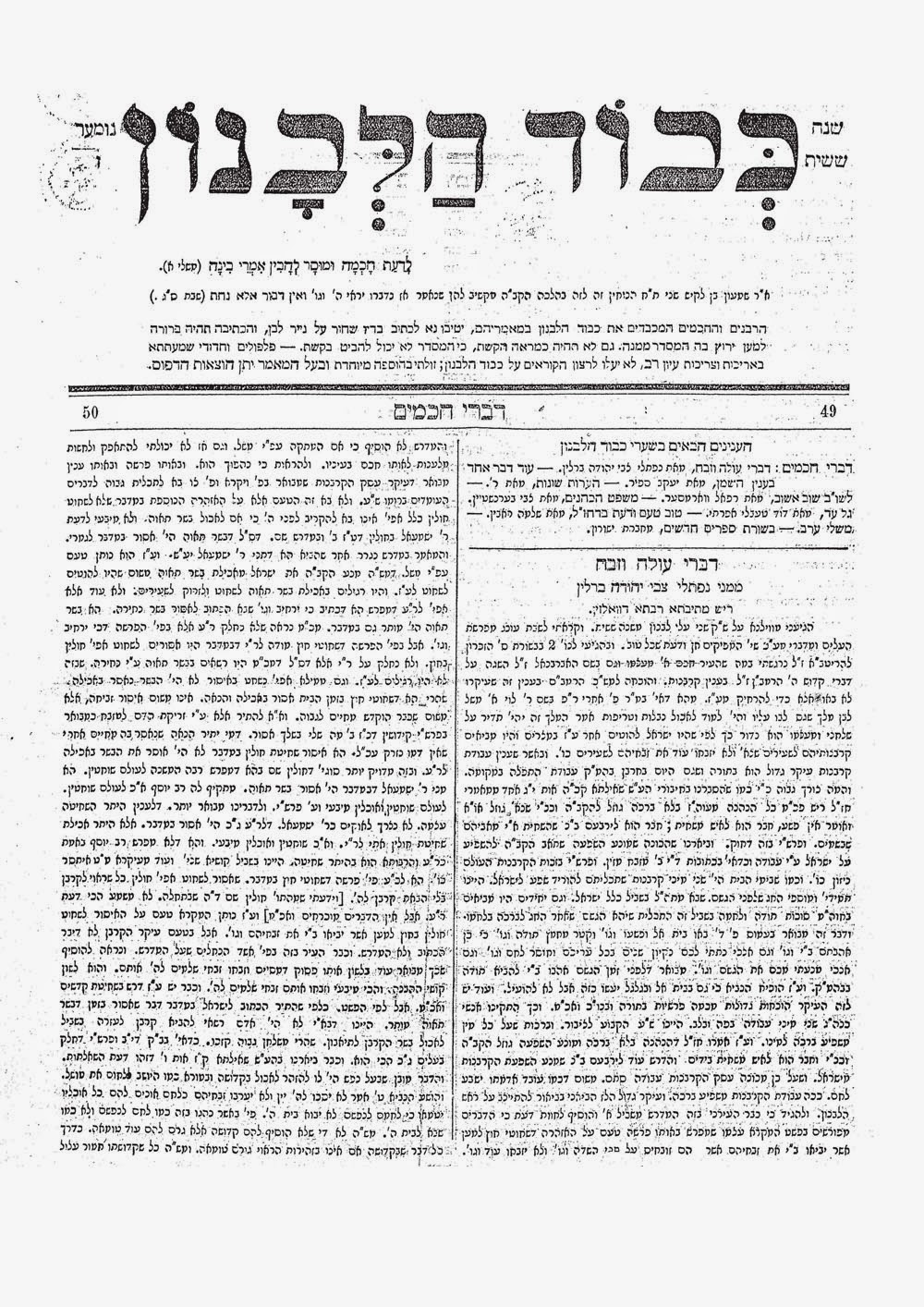
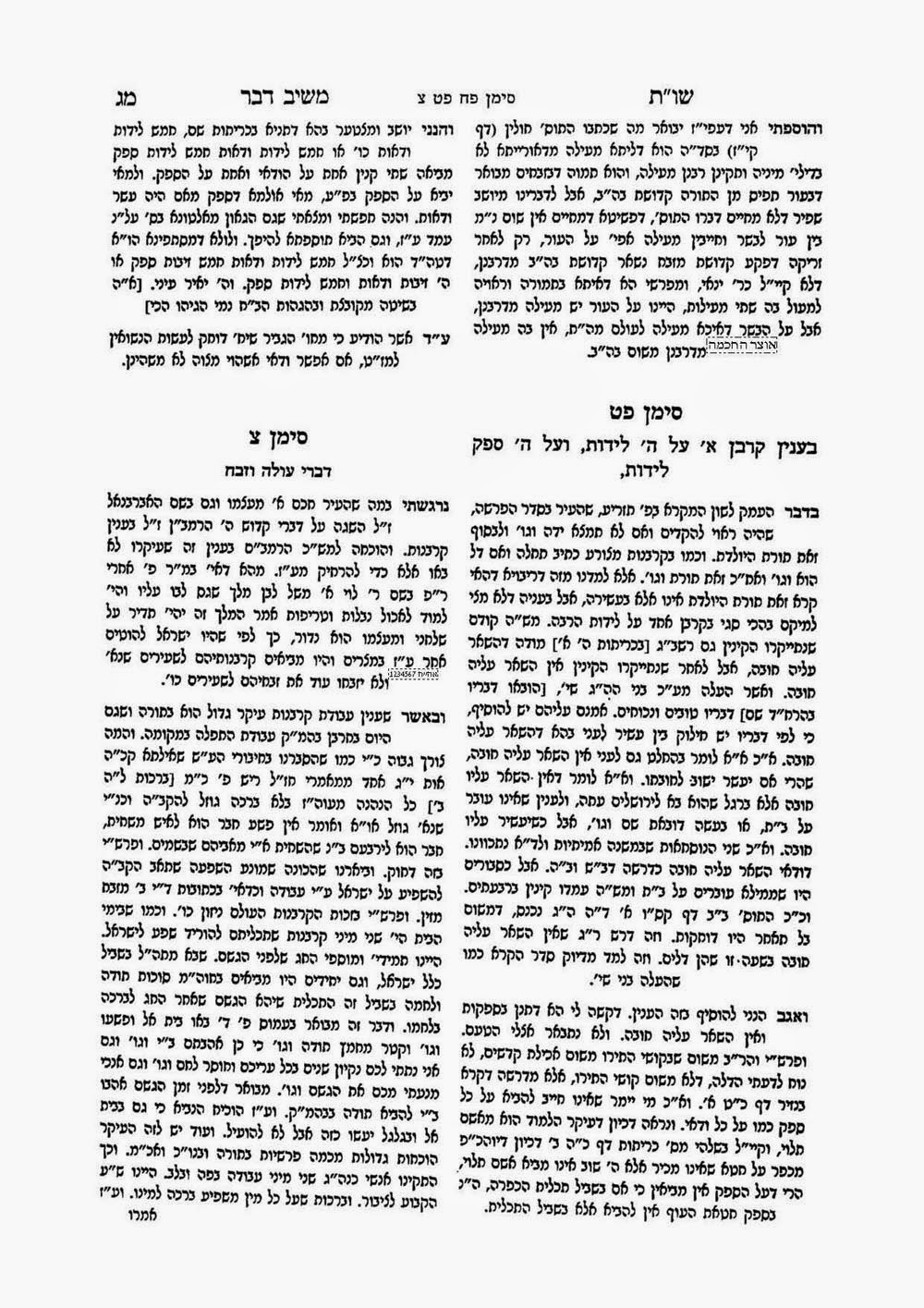
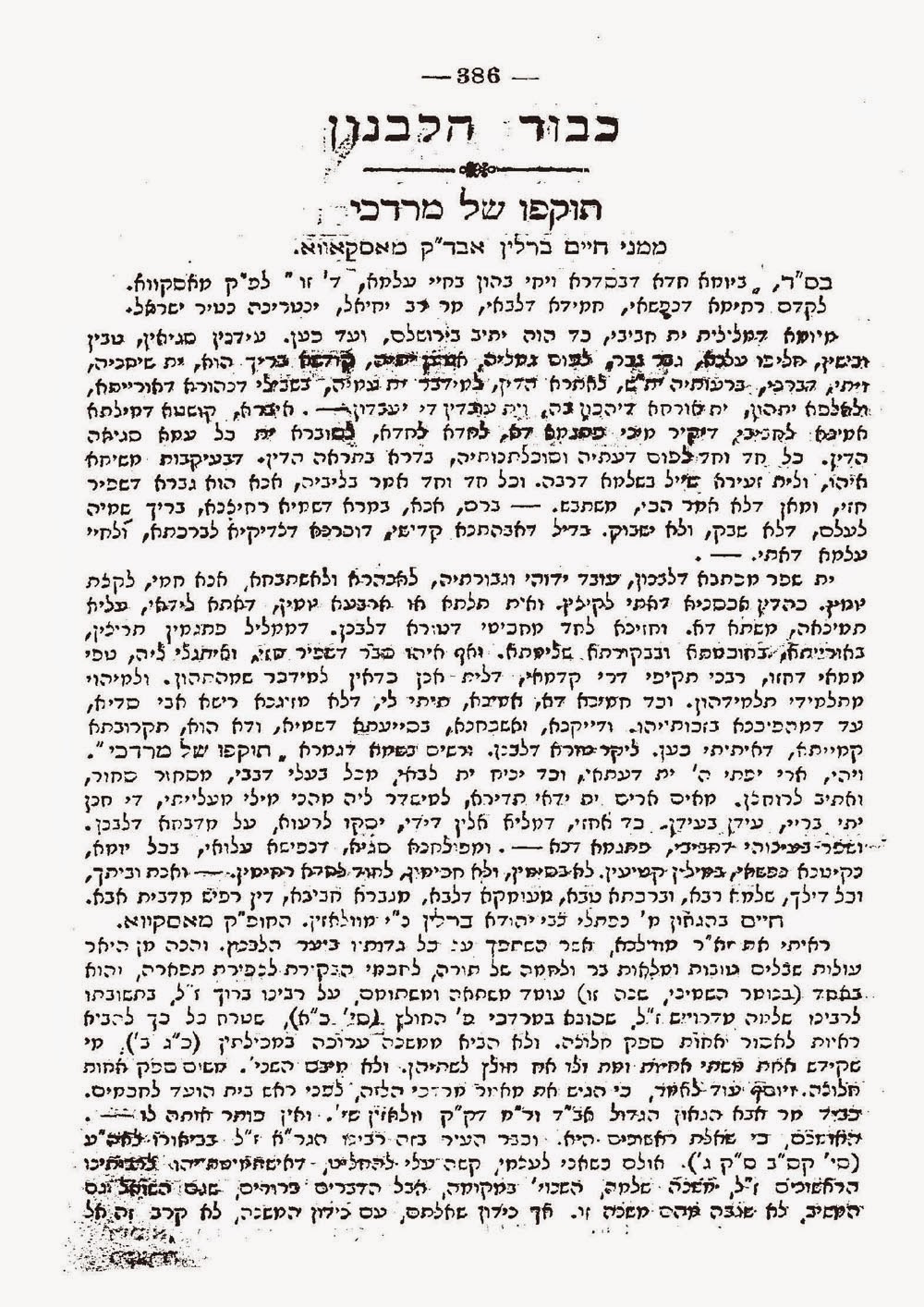
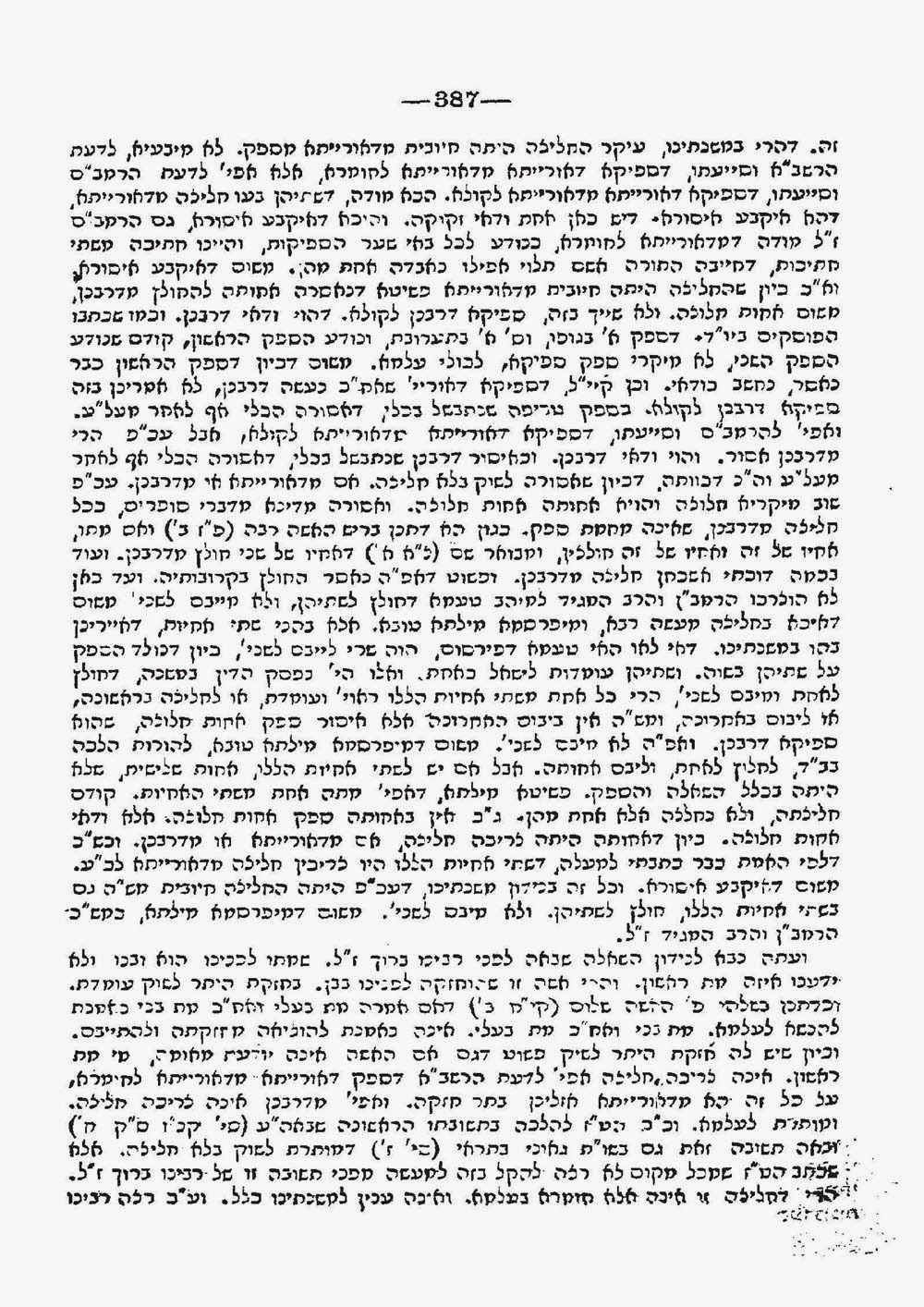
This post is devoted to discussing comments received regarding parts one (here) and two (here).  I will also add in some of the material which I had forgotten to quote [some of which I was reminded of by readers] along with additional material that I have recently uncovered. From the outset, I would like to thank all those people who sent in comments regarding the post. My email address is eliezerbrodt@gmail.com; feel free to send comments.
Censorship

To begin, a few people commented in the comments section and others wrote to me disagreeing with Professor S. Stampfer’s “rule” I quoted on the general topic of censorship: “Those who impose censorship presumably assume that they are wiser than the author whose text they wish to suppress”.
In the case of the Netziv, in all of the issues I have mentioned in the past two articles and in the many others I hope to write about, I feel this rule is one hundred percent true. Is there ever a case that censorship is “permitted”? I am sure there is. I will leave all this to discussions about Marc Shapiro’s new book. My concern here is, for example a sefer or other writings which the author himself printed in his own lifetime, quoted newspapers and never as far as we know wrote to take those quotes out. For us to tamper with the authors work that is wrong and thus I invoke Stampfer’s maxim.
In general, on the subject of censorship which relates to educating children and more, it would be apropos to quote an important passage from the Netziv himself:
ואמרתם אלהם. כבר נתבאר בריש הספר לשון ואמרת אליהם שהוא הלכות המקובלות בפרשה, והנה לא מצינו בכל פרשיות שבתורה זה הלשון ואמרתם אליהם, רק דברו אל בני ישראל לאמר, שביאורו שגם אהרן ידבר אותו הפרשה בעל פה בזה הלשון שאמר משה, אבל ואמרתם אליהם, שהוא הלכות ומשניות אינו מן הצורך לכתוב שילמוד אהרן עם ישראל, שהרי כל המשניות ותורה שב”פ חובה על כל רב ללמוד עם תלמידיו, וא”כ למאי כתיב בזו הפרשה ואמרתם אליהם, אלא כלפי שקשה לדבר בעניני זיבה וקרי שהוא באברי הזרע שמתפעלים במחשבה, והיינו סבורים שיותר טוב למעט הדיבור והלמוד בהם, ורק משה הוא מוכרח ללמד לישראל הקבלות שיש לו בע”פ, שלא יאבדו מישראל, אבל אחר שכבר למדם שוב אין המצוה להגות בהם כמצות ת”ת שהמה למצוה אפילו בלי תועלת למעשה ולזכירה, מש”ה כתיב בפרשה זו ואמרתם אליהם, שגם אהרן ילמוד עם ישראל אחר שכבר למד משה בסדר המשנה כמנהגו, וה”ה כל רב לתלמידיו, ומשום שבאמת בלמוד התורה אין יוצא רע והיא אילת אהבים ויעלת חן. [העמק דבר, מצורע, טו:ב]
This passage would possibly also explain why in Volozhin, Moed Kotton was learnt even though it was not learned in some other Yeshivot.[1]
Relying on Berdyczewski & Bialik in Volozhin

Cyril Fotheringay-Phipps has a very valid comment when he wrote:

I find it odd that this blog post describes MYB’s article as “well  written and appears to be a very accurate portrayal of Volozhin” when the post goes on to quote RCB’s letter in which he writes about that same article that he “found it to be full of errors and mistakes”.

This touches upon a few issues.

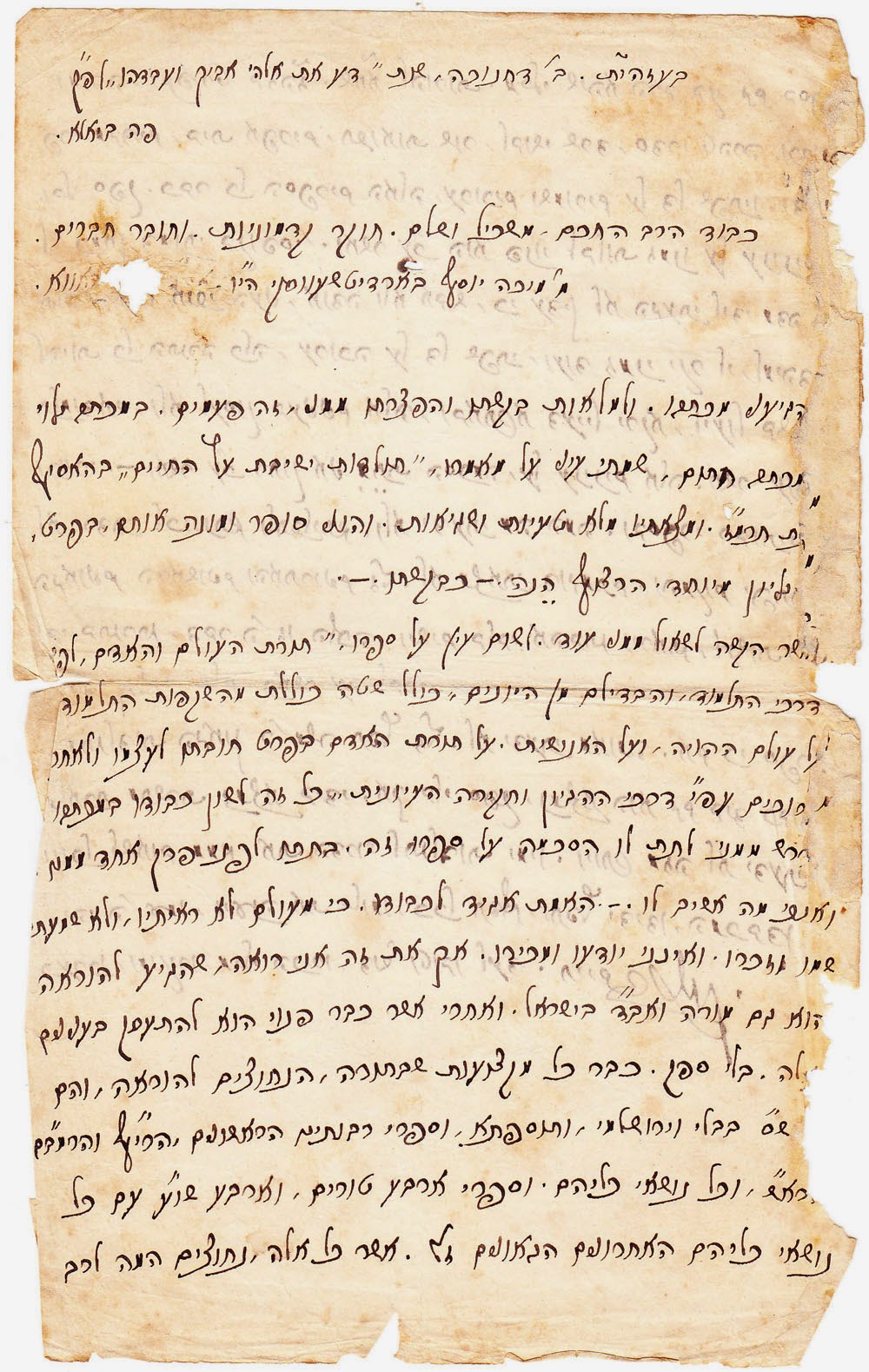
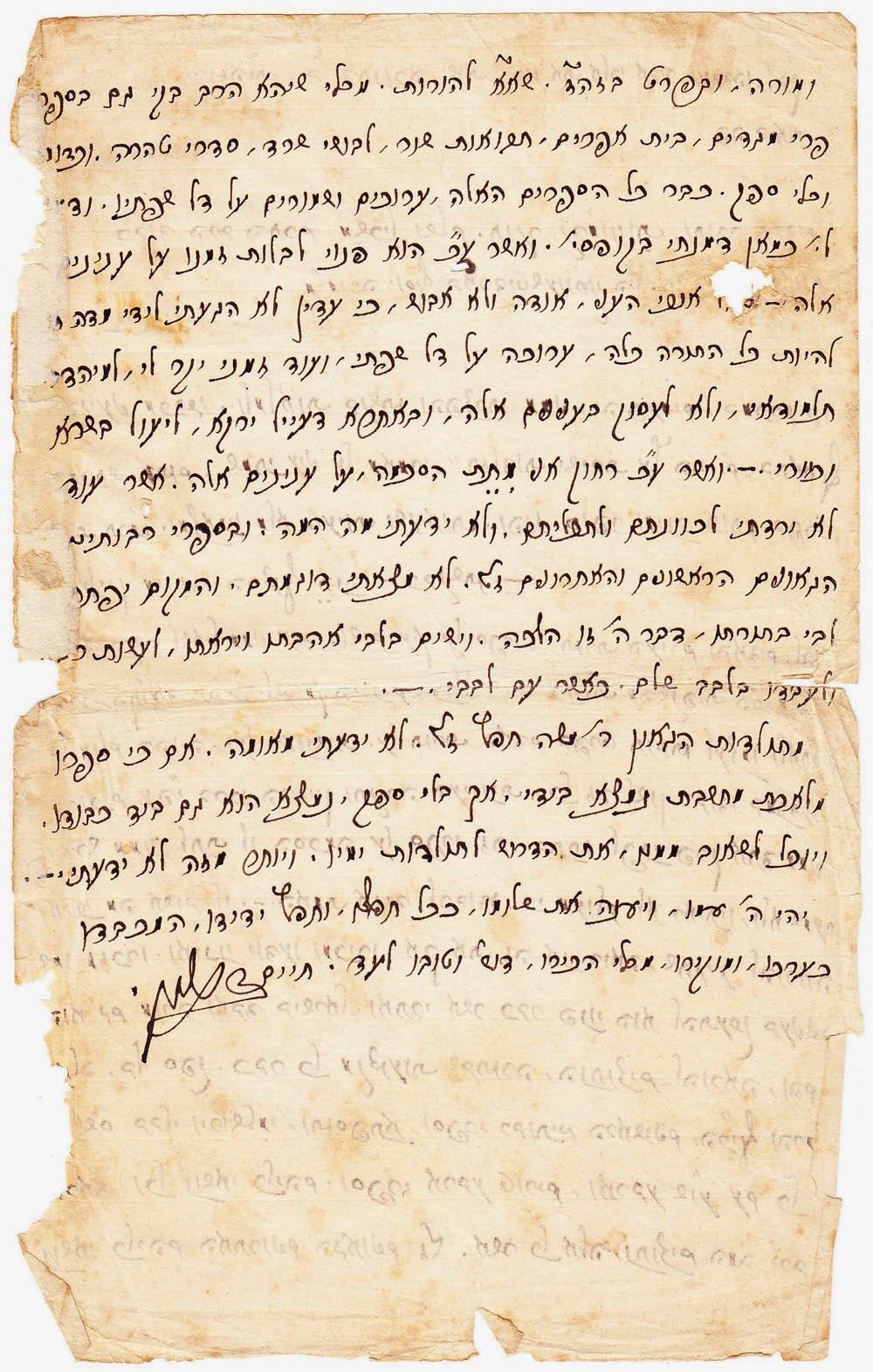
In the letter I printed from manuscript R’ Chaim Berlin it says:

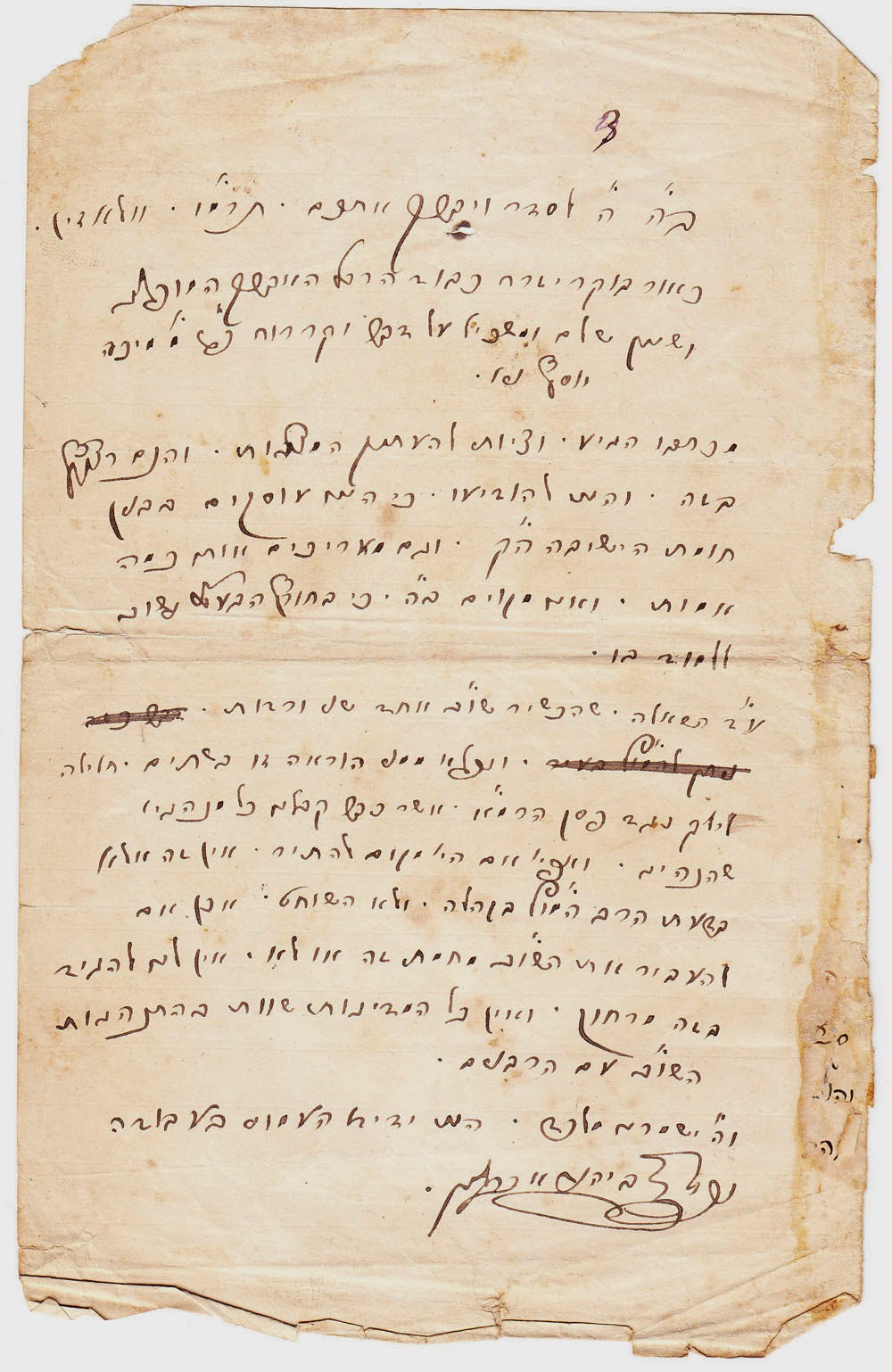
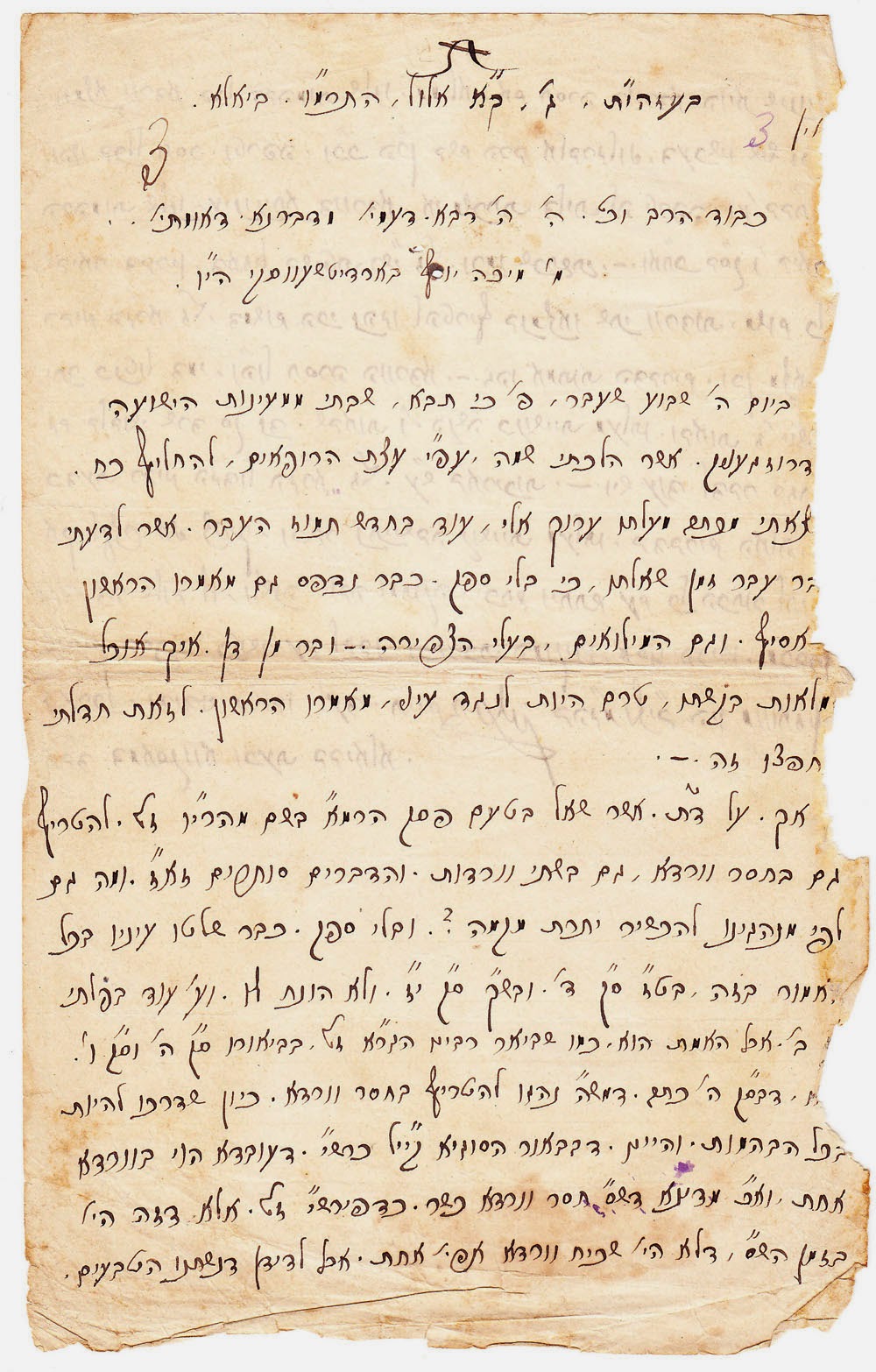
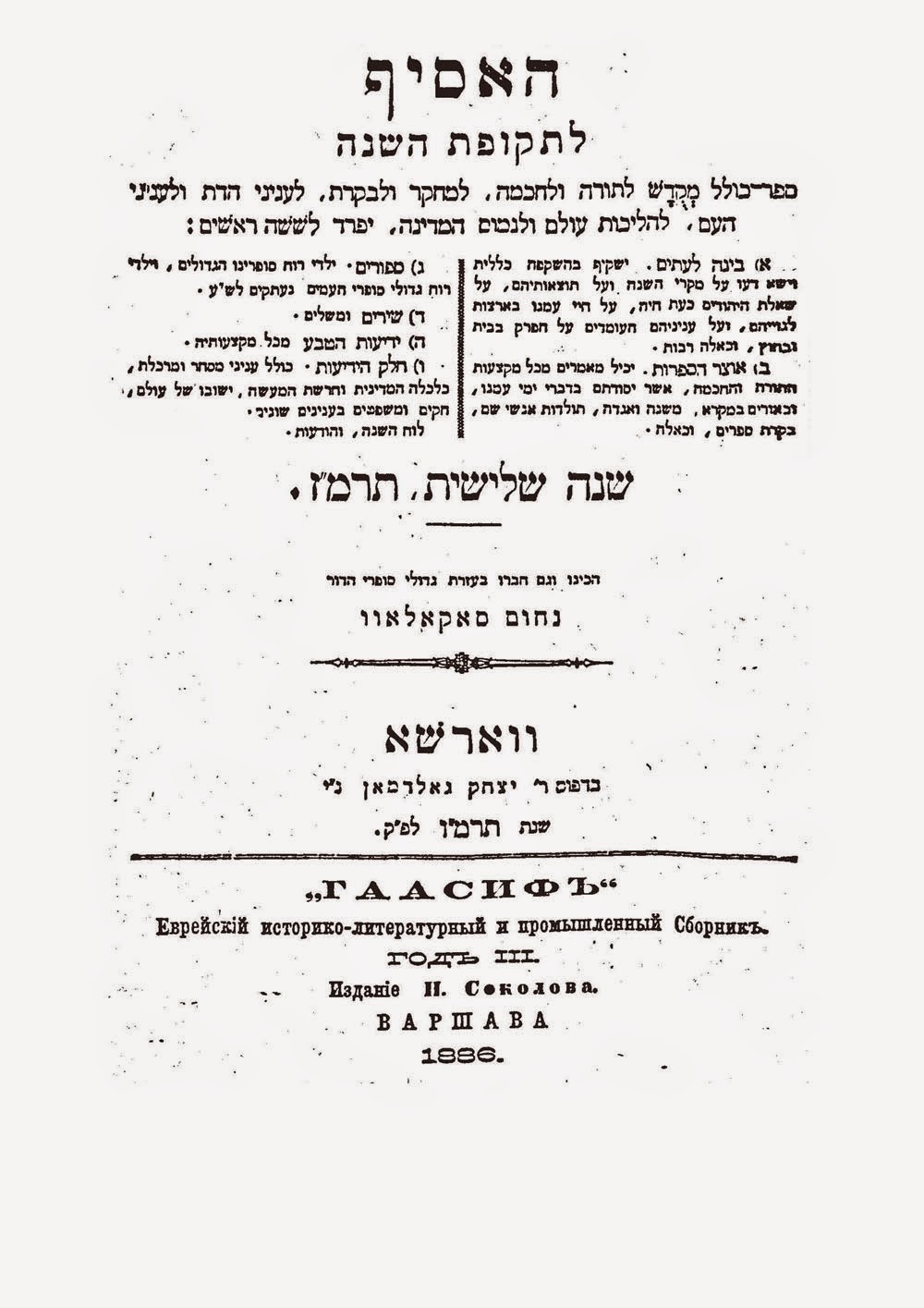
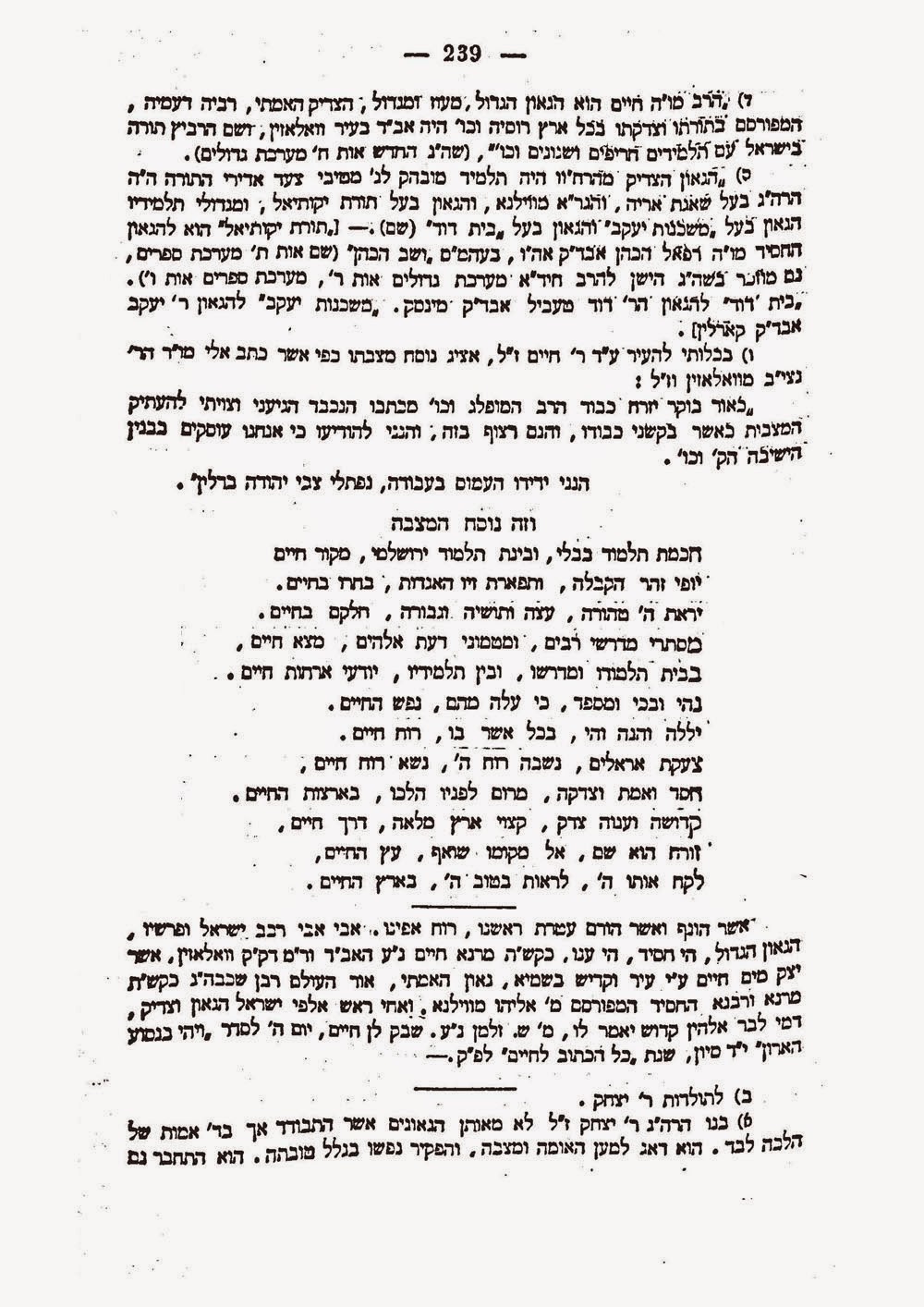
במכתב גלוי [וב]מכתב חתום, שמתי עיני על מאמרו, “תולדות ישיבת עץ החיים” בהאסיף [שנ]ת תרמ”ז. ומצאתיו מלא טעויות ושגיאות. והנני סופר ומונה אותם, בפרט, [ב]גליון מיוחד, הרצוף הֵנה – כבקשתו.

A translation of this line would be that this article is full of errors and mistakes. However to be fair to Berdyczewski, we have this part of the letter- I printed it at the end of part two. In all there are only four corrections; even more importantly all those corrections relate to side issues – but nothing about daily life in the yeshiva, which is what I am “relying” on in my article.  I would hardly call that a faulty article. Of course it is possible that Berdyczewski did not print the whole letter, However at that time Berdyczewski was not “off the derech” and I doubt he would print publicly an article while R’ Chaim Berlin was alive which could easily be printed elsewhere. [I am sure others will argue for the sake of arguing].

However in a footnote I wrote:

See S. Stampfer’s Lithuanian Yeshivas of the Nineteenth Century, (p. 159) who cites Bialik that everything Berdyczewski wrote in HaAsif about Haskalah was false. However this is a major issue with relying solely upon autobiographical information; each person is referring to the time he was in the Yeshivah and his experience.

Originally I was not planning on going into this topic, but as it relates to all this, I feel clarification is justified.

On Berdyczewski in Volozhin, a fellow student writes:

הוא הסופר העברי העתידי הד”ר מיכה יוסף ברדיצבסקי ז”ל. זה האברך הקטן הצנום, בידו האחת היה מחזיק את הגמרא, ובשניה הוא ומסלסל בפאותיו הקטנות, הולך וחושב מחשבותיו (בודאי מחשבות ומעשים שלו העתידים) [ישיבות ליטא, פרקי זכרונות, עמ’ 124].
Shmuel Mirsky writes:

זכורני, כשמת מיכה יוסף ברדיצ’בסקי הספידוהו ד”ר הוגו ברגמן ור’ אלתר דרויאנוב. הראשון דיבר על ברדיצ’בסקי שהיה חי בשני עולמות, והשני אמר שהוא הכירו בשני העולמות גם יחד, והוסיף שכשלמד בוולאזין היה יושב מעוטף בטלית ומוכתר בתפילין ולומד, ואעפי”כ הכיר בו הנצי”ב שהוא מעולם אחר, והוא צדק [מוסדות תורה באירופה, עמ’ 61]
In a memoir written by a student of Volozhin we find that he writes about the article of Berdyczewski:
הנה התגלגל לידי האסיף לשנת התרמ”ז ובהחומר הנאסף שם במאמר מיוחד על ידי מר מיכה יוסף ברדיטשבסקי לתולדות ישיבת ולזין נאמר… החמר נאסף ממקרות ראשונים ומדויקים ויש לו ערך היסטורי שלם בלא שום פקפוק [ישיבות ליטא, פרקי זכרונות, עמ’ 71].[2]
Bialik writes in a letter written while he was learning in Volozhin about Berdyczewski’s essay:

וכל מה שכתוב ברדיטשבסקי להאסיף, לא מניה ולא מקצתיה… [אגרות חיים נחמן ביאליק, א, תרצח, עמ’ כא-כב].
In an autobiographical essay Bialik writes a bit more:

תחלה לוולאזין ואח”כ לברלין. ולמה וואלאזין מפני שכפי השמועה לומדים שם בוואלאזין, יחד אם התלמוד גם שבע חכמות ושבעים לשון, בגליו או בסתר… תקותי לא באה. בוואלאזין אין זכר לשבע חכמות ולשבעים לשון, אבל יש שם בחורים כמוני, וטובים או רעים ממני, שיושבים ולמודים גמרא, גמרא, גמרא… [ספר ביאליק, תל-אביב תרצד, עמ’ 80-81].
Menachem Zlotkin, another student of Volozhin writes about this essay:

 שכל אלו שכתבו על בניה הישיבה בוולוז’ין ונתנו לנו את תמונתם, התמונות והציורים האלה אינם אלא של חלק קטן מתלמידי הישיבה, של הבחורים והאברכים הידועים להם מקרוב, ולא של הרוב הגדול של תלמידי הישיבה. בכתיבת ציורים כאלה הצטיין ביחוד הסופר מיכה יוסף ברדיטשבסקי, שנתן בהאסיף, ובהכרם תמונות של תלמידי הישיבה, שלא התאימו כלל למה שהיו באמת כפי שכתב ביאליק מוולוז’ן… על פי הציורים האלה היה מקבל הקורא את הרושם כאילו היתה ישיבת וולוז’ין, באותה תקופה, משתלה של משכילים, וכל הבא לוולוז’ין התמשכל מיד ונעשה חכם בשבע חכמות. קריאת ציורים כאלה היתה בודאי גורמת צער לראשי הישיבה ולתלמידי הישיבה שהיו רחוקים מרחק רב מהשכלה ומלימודי חול, ולא באו לוולוז’ין אלא כדי להשתלם בלימוד התלמוד ולא יותר… [פרקי זכרונות, עמ’ 183-184].
It appears from Zlotkin and Bialik that at least one aspect of Berdyczewski’s essay was not correct.
I would venture to disagree, as anyone who learned in any particular Yeshivah and left and decides to follow up a few years later about life in said Yeshiva will usually find that some things change – different crowds bring different habits and the like. It’s very possible when Berdyczewski was in Yeshiva, Haskalah was being learnt in Volozin and when Bialik got there, there was not.
 Furthermore another student of Volozhin who learned there at the same time as Bialik writes:

חדר הכרמלית שלהם נעשה רשות הרבים שבני הישיבה היו מצויים בו תמיד, מקום כינוס לתמימי דעים, בית ועד לאנשי שלומנו, מעין מרכז לעסקנות ולהשכלה. מכאן נשלחו בשם הישיבה מכתבי תנחומים למשפחות הנפטרים: רש”י פין צ”ה גרץ ול’ פינסקר מכאן יצאה ההתעוררות לאסוף כסף בתוך הישיבה לתמיכתו של יעקב רייפמן לעת זקנתו, פה נאגדו אגודות למינוי על עתונים, ולהפצת ספרי אגורה של בן אביגדור שהתחילו להופיע בשנה ההיא. בכל יום ויום היו בחורים מתכנסים לשם, ודנים ומתוכחים על דברי קודש וחול, על עניני הישיבה ועל עניני האומה, על עניני הכלל ועל עניני הפרט. חומר לשיחות שימשו מאמרים ראשיים, ושאר מאמרים ודברי סופרים שבעתונים ובמאספים ובספרים… [פרקי זכרונות, עמ’ 165]
Even more strange is Zlotkin in the aforementioned  account, a mere few pages later also mentions a few times (pp. 187-188)[3] that there was haskalah being learned in Bialik’s time, so I am not sure what exactly the issue with Berdyczewski was – maybe it was he made it out to be even more.  As far as Haskalah being learned in Volzohin, there is no need to deal with it as it has been dealt with properly by Jacob J. Schacter in his frequently quoted article “Haskalah, Secular Studies and the Close of the Yeshiva in Volozhin in 1892“, Torah u-Madda Journal 2 (1990), pp. 76-133 and S. Stampfer, Lithuanian Yeshivas of the Nineteenth Century.
Bochurim knowing what went on in the Netziv’s home

Cyril Fotheringay-Phipps wrote regarding a further issue:

I continue to disagree with your assumptions about what people knew or didn’t know about what the Netziv did in his house. I don’t think there was nothing to talk about in Volhozhin besides what the Netziv did, but even if there was, that wouldn’t apply to things that they wouldn’t have a basis to know about and didn’t impact them. And even if they did know certain things of this sort, that doesn’t mean that they were in a position to rule out the Netziv engaging in some activity if an insider claimed he had done so. (Especially since the MB was published decades after Volhozhin closed.)
First, here is an account of a fellow student of Volozhin who read the accounts of R’ Epstein:
חבל מאד שגדולינו אדירי התורה והחכמה שקבלו חינוכם בישיבת וואלוזין לא העניקו לנו מזכרונתיהם על הישיבה הזאת, שבודאי ערכם רב לתולדות ישראל, ואלה החיים ב”ה אתנו, כדאי היה שיתקנו וימלאו את חובתם זו. עד היום לא נמצא איש שיאסף את כל החומר לתולדות ישיבת וולאוזין, אם כי אמנם חומר רב יש בספר הגאוני מקור ברוך לר’ ברוך הלוי אפשטיין, גיסו וקרובו של הנצי”ב. אבל לא די החומר הזה, ואולי עוד יוסיף תת לנו החכם הנ”ל ספר מיוחד לתולדות הישיבה [ישיבות ליטא, פרקי זכרונות, עמ’ 126]

As I have written in the past, relying on this work is a topic that much has been written about and perhaps I will return to one day.

However, in regard to what I wrote about the Bochurim watching every move of the Netziv, one talmid of Volozhin writes in his memoirs:

מנהגים קלים של כפרות ושל תשליך, שרבים מגדולי ישראל קוראים להם מנהגים של שטות, היו מדקדקים בהם בכל זאת כבחמורות, וקראו עבריין למי שעבר עליהם ולא נזהר בהם. ובולוז’ין העמידו התלמידים משמרות על בית הרב בערב יום הכיפורים ובראש השנה, כדי לאמת את השמועה שאין נוהגים בו מנהג של כפרות ושל תשליך… [פרקי זכרונות, עמ’ 174].

It could be you (CFP) personally did not do so when you were in yeshivah, but from what I hear it’s still done by many bochurim.

Why did the Netziv read newspapers?

Another commenter wrote:

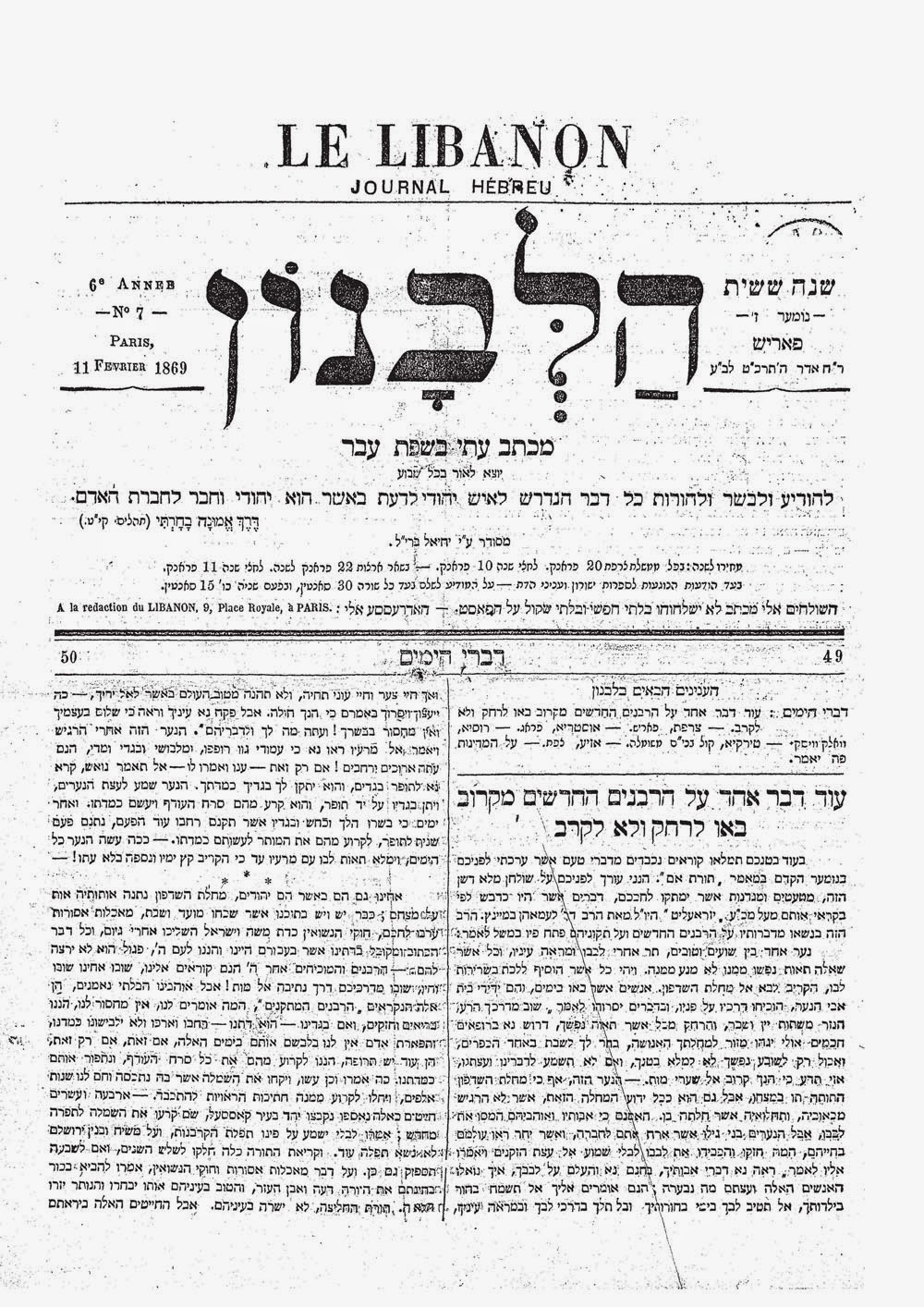
What’s the big deal if the Netziv read “newspapers” such as HaLevanon or HaMaggid? It’s not like we’re talking about The NY Post or The Seattle Times. I’d consider them to be closer to something like a blend of the Me’asef and The Jerusalem Report which, apparently, the Netziv didn’t feel was a problem.

To be fair I did not say it’s a big deal if the Netziv read newspapers, merely that some appear to feel it was a big deal and decided to cover it up. This gives me an excuse to talk about the Netziv! I would also like to emphasize something I have not yet done. The Netziv was one of the greatest gedolim of the past 200 hundred years. In the future I will elaborate at length about this subject. One of the most impressive attributes that everyone who knew him writes about was his tremendous Hasmadah, how he did not waste any time. For over forty years, he ran the largest Yeshivah in Europe, dealing with most of its daily issues, traveling often to defend the Yeshivah and at the same time giving shiur a few times a week and a daily Chumash Shiur. He also penned dozens of letters daily, was a world renowned posek and wrote and published numerous works. All this, making him one of (if not the most) prolific litvish author(s). It bears noting his concluding remark he signed most of his letters with:
העמוס בעבודה.

One student relates:

אף בלכתו מביתו להישיבה שהיה מהלך של חמשים רגל, היה מחזיק בידו את התנ”ך הקטן, או המשניות בפורמאט קטן ומעיין בו [פרקי זכרונות, עמ’ 125].[4]
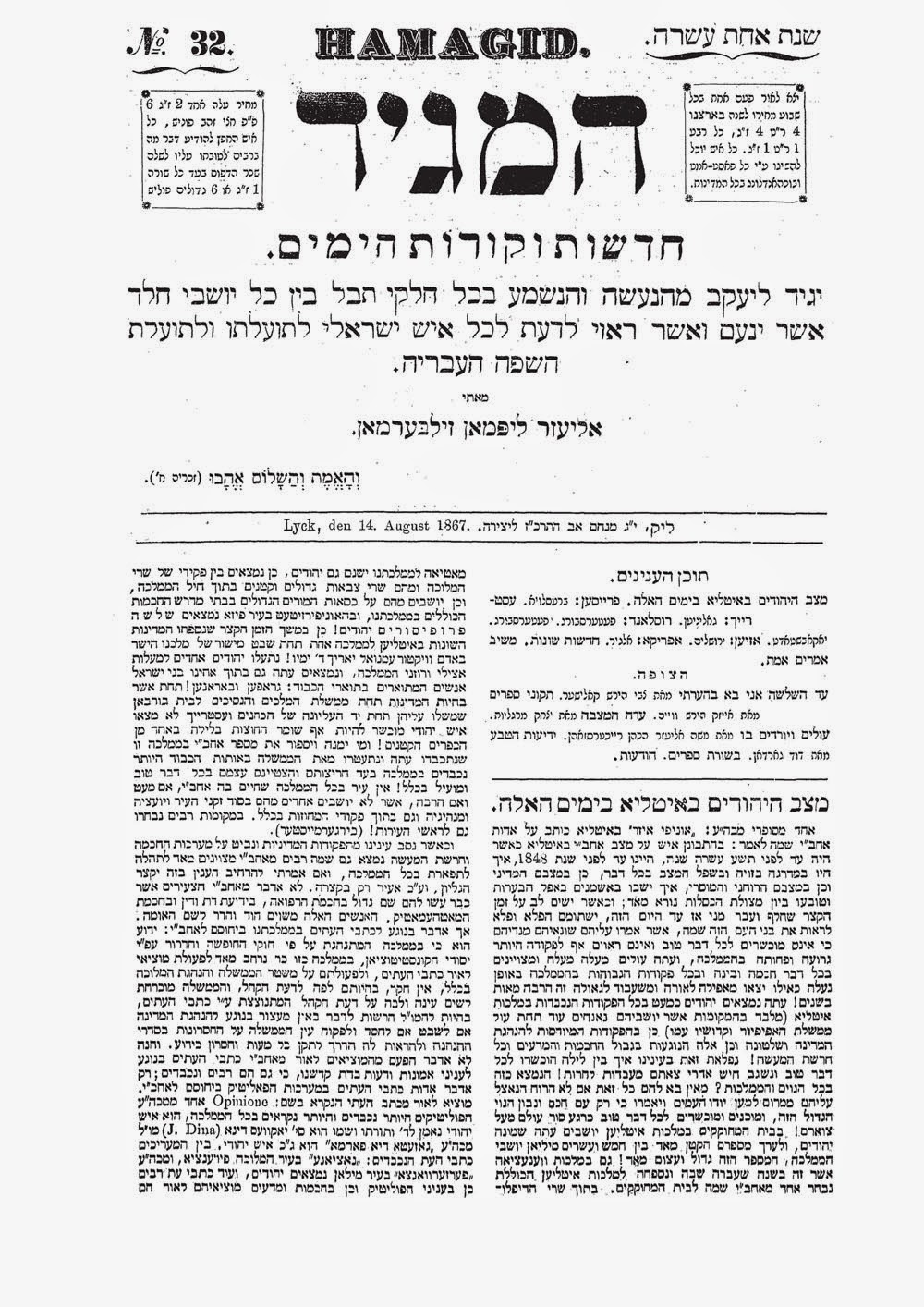
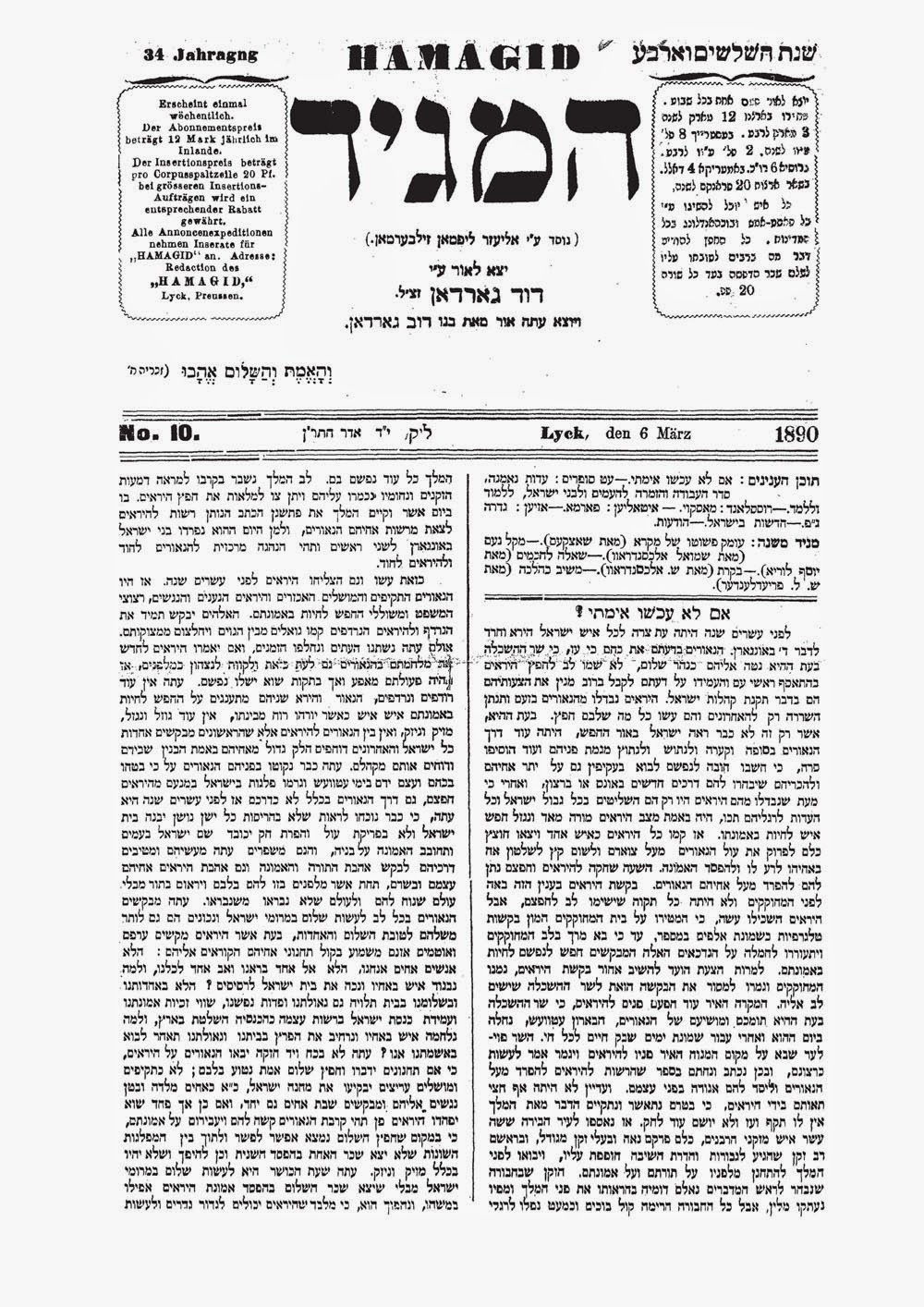
Yet he found time to read and comment in newspapers. He obviously felt it was very important, as it gave him a window to the world which he needed to understand. His son R’ Meir Bar Ilan writes:
קריאת העתונים היתה לו לא בילוי זמן, אלא כפי הנראה צורך פנימי להיות קרוב לכל מה שמתרחש בעולם הגדול. מטבעו לא היה זר לעולם, לכל דבר שאירע כל עוד לא מצא בזה סתירה לאהבת התורה [מוולוזין עד ירושלים, א, עמ’ 138].
If one wishes to understand what newspapers were like in those days, one need go no further than to peruse the thousands of issues that are currently on-line. Perhaps at a later date I will elaborate on this subject, for now see Roni Beer Marx, Between Seclusion and Adaption; The Newspaper Halevanon and East European Orthodox Society’s Facing Up to Modern Challenges,(Heb.)PhD. Dissertation, Hebrew University, 2011. After reading this dissertation, one can understand much more the types of newspapers, importance of newspapers and why the gedolim needed to read them.
To be clear, I never said these newspapers were similar to the NY Post or the like.
Did the Netziv read other parts of the Newspapers besides for the Torah sections?

Cyril Fotheringay-Phipps writes further:

Regarding the Netziv and RCB reading newspapers on Shabbos, it would appear that these newspapers contained a section of Torah writing and all examples of the Netziv referencing them apparently refer to those sections (unless I’ve missed something). It’s worth bearing this in mind before conjuring up images of the Netziv reading something like the NYT on Shabbos.

Once again I must disagree. It is clear that the Netziv read these newspapers cover to cover and not just the Torah sections. If one looks at the some of the articles the Netziv wrote in the Papers, collected in Igrot HaNetziv Me-Volozhin, one will see he comments on different things he read in different parts of the various papers.[5]

I would like to point to a few places in his work on Chumash that the information he is using is from the non-Torah parts of these papers. Many of these papers had sections dealing with science, nature and other worldly issues.[6] Of course, it is very possible that some of this information he could [or did] have gotten from other sources.

See for example the following passages[7]:

א. ויברא וגו’ למינהם. הודיע הכתוב דאע”ג דבשעת מאמר הקב”ה. יצאו כמה מיני בריות במים ובעוף. מ”מ גם אח”כ הוסיף הקב”ה לברוא מאלו אשר יצאו כבר במאמר כמה מינים. כגון תרנגול שיצא במאמר ברא בו ה’ כמה מינים באותו תכונה של תרנגול וכולם מין א’ לענין הרכבה כידוע. וכן בכל הנזכרים בזה המקרא הוא כן [העמק דבר, בראשית א:כא]
ב. עפר מן האדמה. קיבץ מכל חלקי האדמה עפר מזה המקום מעט ומזה מעט. ולא ככל בהמה וחיה. וכדאי’ בסנהדרין דל”ח א’ אדם הראשון מכל העולם כולו והצבר עפרו. וטעמו של דבר שמשונה טבע האדם מכל בהמה וחיה שאינם יכולים לחיות אלא באקלים של כל בריה לפי טבעו. ובאותו אקלים הוא נוצר (וע’ מ”ש להלן ו’ י”ב) משא”כ האדם נוצר באופן שיהא יכול לחיות בכל העולם בין במקום היותר קר בין במקום שיותר חם וניזונים בכל אופן שהמקום גורם… [העמק דבר בראשית, ב:ז]
ג. והנה נשחתה כי השחית וגו’. הכי מיבעי וירא אלהים כי השחית כל בשר. אלא ה”פ שראה כי גם אדמת הארץ נשחתה מטבעה שהטביע הבורא ית’ להספיק מזון לכל הברואים והנה אבדה כחה. ופי’ הטעם משום שהשחית כל בשר את דרכו וטבעו. כי כל בריה יש לה טבע מיוחדת במזונותיה ואויר הראוי לה. וכך טבע האדמה אשר הם עליה וכמש”כ לעיל ב’ ז’ י”ט. אבל כאשר השחיתו בדור הלז כל המינין ע”י הרכבות זרות את טבעון ודרכן על הארץ ממילא נשחתה האדמה לפניהם. וע”ע מש”כ לעיל ה’ כ”ט [העמק דבר, נח, ו:יב]
ד. וימח את כל היקום. נמחו הגופות ודייק הכתוב אשר על פני האדמה דוקא אלו שהיו מונחים על פני האדמה. אבל נשתיירו כמה גופות שנפל עליהם עפר הרבה ע”י שטף המים ונשארו הגופות קיימין. והן הנה עצמות שמוצאין חופרי ארץ ומוצאין עצמות מבריות שלא נמצא עתה בעולם. ומזה שפטו הרבה שהי’ לפני בריאה זו עולם אחר ואז היו בריות אחרות… ומה שמוצאין בריות משונות הוא ממה שהרכיבו שני מינים שונים ונולד ע”י זה בריות משונות כמו הפרד היוצא מהרכבת סוס וגמל… [העמק דבר, נח, ז:כג]
ה. ובכה ובעמך ובכל עבדיך יעלו הצפרדעים. גם בהיותם בבתיך שמה יוסיפו לעלות. היינו שיולידו שם הרבה כמותם. וכדכתיב בתהלים (ק”ה) שרץ ארצם צפרדעים בחדרי מלכיהם. היינו בחדרי מלכיהם שרצו. וכאן כתיב ובעמך בשו”א היינו עם מיוחד שומרי ראש פרעה. ומש”ה כתיב בזה המקרא קודם לבכל עבדיך. משום דחשיבי יותר. וזה המכה היתירה לא שלטה בכל עמי פרעה אלא בו תחלה ובשומרי ראשו ובעבדיו המה שרי יועציו. והנה ידוע דעות שונות בין מפרשים ראשונים ז”ל אם היו הצפרדעים מין הידוע המשחית הנמצא עוד היום ביאור ונקרא (קראקאדיל) או הוא מין הנמצא ברובי הנהרות וצועקים ומכרכרים… [העמק דבר, וארא, ז:כט][8].
 ו. לא תקיפו וגו’ ולא תשחית וגו’. מנהגם היה להשמר בשערות הראש והזקן כמו שעוד היום מנהג בני ישמעאל כך ומי שהוא איש המעלה משמר ביותר שלא יגע באיזה שערות הפאות והזקן לרעה… [העמק דבר, קדושים, יט: כז]
ז. את חקתי תשמורו. כפי’ חז”ל ברבה ר”פ אם בחקתי חוקותי שחקקתי שמים וארץ. כך הפי’ כאן כמבואר ברבה החקים שחקקתי עולמי בטבע כל אחד. והמערב מין בשא”מ ה”ז משחית טבעם כמש”כ ר”פ נח עה”פ את הארץ והנה נשחתה כי השחית כל בשר את דרכו עה”א. וכן לבישת שעטנז משחית סגולת חוטי צמר ופשתים וממה שהיה בפ”ע. והוא מסתרי הטבע וידועים לחכמי הטבע…. [העמק דבר, קדושים, יט:יט]

In the additions to the HD the Netziv adds to the last sentence:

שהקושר חוט שזור של צמר ופשתים יחד על חוט הברזל של הטעלעגראף מפסיק המשכת הדיבור שנדבר ממרחק, הרי הוא משנה טבע הברזל וחקי הטבע שבברזל, ומכ”מ אינו אסור…
ח. ושרט לנפש לא תתנו בבשרכם. מנהג האוה”ע לעשות הוספת צער למת שריטות על הבשר של אדם חי. וגם לעשות זכרון ע”י כתב קעקע שם המת. ומי שלא רצה לעשות על בשרו היה שוכר אדם אחר עני לעשות על בשרו ומשלם לו כמו שעוד היום הנהג שם לשכור מקוננות ומתופפות על הלב… [העמק דבר, קדושים, יט: כח]
ט. ונתנה הארץ יבולה. לא כתיב פריה כמו לעיל כ”ה י”ט. דפרי הארץ אחר עבודת הארץ אינו שכר מצוין שהרי כך דרך העולם אלא יבולה משמעו הולכה ממקום למקום כמש”כ לעיל בפי’ יובל. ונכלל בזה פירות שאין באים ע”י הזריעה וגידול במקומו אלא ממציאים כחות הארץ מרחוק ומעומק עד שנעשו הפירות גדלים מהרגלן וכמו שידוע שיש לזה המצאות מאומנים במלאכת גידולי הארץ… [העמק דבר, בחוקתי, פרק כו:ד].
יא. הוא משל על אוהל אנשי יעקב. והנה משונה גידולי גנה לשדה. דשדה אינו נזרע אלא מין א’ או שנים משא”כ זרעוני גינה המה רבים. מכ”מ כל גן יש בו מין א’ שהוא העיקר אלא שסביביו נזרע עוד הרבה מינים מעט מעט… והיינו שהמשיל כל א’ מאנשי יעקב כגנה שיש בה מין מיוחד ומכ”מ מלאה מינים רבים. אמנם גנה שאינה על הנהר ממהרת לשנות צורתה. ועלי ירקות נובלים מהר ונראים כמושים. אבל שעל הנהר בכל בוקר מתחדש ומתחזק ביופי גידול כל ירק… והנה כבר המשיל הכתוב בפרשת שופטים כי האדם עץ השדה אמנם יש ד’ מיני עצים. א’ הוא קוץ מונד אשר לא ביד יקחו שאין בהם תועלת. ולא נבראו אלא כדי להזיק לאחרים ולהיות כברזל ועץ חנית. היינו מזיקים בעצמם או משמשים למזיקים. או לשרוף אותם להחם בם בימי שבת היינו בעת מנוחה… ב’ עץ האטד. שחסים בצל ענפיו ועליו וכדומה לו… ג’ עץ פרי… אבל אין נהנים מגוף האילן בקיומו. ד’ ארז שנהנים מגוף האילן בבנין וכדומה…. ויש ארז טוב לתורן עלי מים…[העמק דבר, בלק, כד:ו]
יב. יזל מים וגו’. אחר שהראהו הקב”ה שבחן של בניו. הראהו שבחי הדורות משעה שנכנסו לארץ עד ימי משיח שיבא ב”ב. ולא ראה ימי הרעה רק ימי הטובה כדי לנקר את עיניו ונגמר זה הענין בפעם הרביעית. ואמר על דור השופטים שהיה להם מלחמות וגלו הרבה בקרב אוה”ע. ואנו לא ידענו ועוד היום יש מקומות שנמצאים ישראל שאומרים שהן מזמן פילגש בגבעה…[9] [העמק דבר, בלק, כד:ז]
יג. וחכמים התרים את התבל מעידים שיש עוד היום במדבר סלע מוציא מים אלא שלא בשפע כ”כ… [העמק דבר, חקת,  כ: ח]
יד. כי תצא למלחמה על אויביך. בפרשה הקודמת למדנו שני אופני מלחמות. א’ במלחמת תנופה שיוצאים במחנה מול מחנה. ובזה כתיב כי תצא למלחמה על אויבך וראית סוס וגו’. ב’ שמצירים על עיר ובזה כתיב כי תצור על עיר. ומדכתיב כאן כי תצא למלחמה על אויבך. מבואר דמיירי באופן הראשון. ולא כמש”כ הראב”ע. מעתה יש להבין דלפי הנראה ענין פרשה זו שייך יותר במלחמת מצור על עיר מלאה אנשים ונשים וכשנפתחה והרי רואה אשה יפ”ת. משא”כ כשיוצאים במלחמה בשדה מה לנשים בשם. אבל כבר ביארנו בס’ בראשית י”ד ט”ז שדרכם היה באוה”ע. בעת שיוצאים בחורים למלחמה יוצאות ג”כ נשים יפות מקושטות ועומדות לינשא. ומי בחור שמזדרז במלחמה ורוח גבורה נוססה בו. קופצות עליו נשים היפות. ועפ”י זה מתחרים הבחורים בעוז. והיינו דכתיב שמלת שביה. ומשמעות שמלה בכ”מ בגד חשוב כמו ושמת שמלותיך עליך. ומשום שהיו מתקשטות וכשלוקחים אותן בשביה נמצאות בקישוטן. משא”כ במלחמת מצור ואין הבחורים עושים מלחמה ודבר גבורה ומה להנשים להתקשט אז בשעת השבי [העמק דבר, כי תצא, כא:י]
More additions and comments related to part one:
Additions to note six about the Journal ‘Ittur Sofrim’
Here are parts of the fourth part of the journal which was never published.
Addition to note ten:

About the Netziv’s letters see; Mekor Baruch, 4, pp. 2000-2010.
Moshe Tzinovitz writes:

בקשר לכתיבת מכתביו יש לציין, כי בכל מכתב ומכתב היה כותב פרט מיוחד מפרשת השבוע, כשהוא מתאים תמיד לתוכנו המכתב ולאיש שאליו נערך המכתב [עץ חיים, עמ’ 238].
Rabbi Chaim Berlin writes in his Hesped on the Netziv:

אבל תלמיד חכם יחיד בדורו… הרי שמו הולך מסוף העולם עד סופו, הוא השליט בכל דבר הוראה, בתשובותיו לכל אפסי ארץ… לכולם היה רב מובהק… [דרשות הנצי”ב, עמ’ קמה].
לכתוב כל הלילה חידושי תורה ותשובות, ומכתבים לחזק הישיבה… וכמה מכתבים פיזר בענין ישוב ארץ ישראל… [דרשות הנצי”ב, עמ’ קמו].[10]
 Rabbi Meir Bar Ilan writes:

בין עשרות המכתבים, ממש עשרות שאבא ז”ל היה כותב כמעט בכל יום בעצם ידו… היו רבים לא תשובות בדברי הלכה, גם לא בעניני הישיבה, אלא תשובות לשאלות בענינים מסויימים של כלל ישראל או בעניני הקהילה בערים שונות… לצערנו לא היה אז המנהג להעתיק את המכתבים, וכל אלפי המכתבים שהיו יכולים לשמש מקור לחקר החיים התרבותיים במשך שני דורות אבדו…
דעתו היתה שונה ממחשבותים של רוב רבנים… מדפסים שו”ת שלהם, וכמה מהם קנו שם בעולם רק על ידי התשובות. אבא ז”ל לא התייחס לזה בחיבה יתירה הוא היה אומר כשפונים בשאלה יש להשיב, ואם יש דברים שאינם פשוטים מן הראוי כמובן לברר את ההלכה על פי המקורות, אבל לעשות מתשובה או שאלה חיבר שלם עם ענפים או סניפים כמו שהיו מחברים גדולים ידועים נוהגים לעשות אז הרי זה קצת יותר מדי… דבר זה מוכיח, כי אין הכוונה להשיב על השאלה אלא לחבר ספרים ולהראות גדולה… נוסף לזה לא היה אבא ז”ל מחשיב הרבה כתיבת חיבורים והדפסתם רק לשם פירסום והיה אומר מה ערך יש לזה כשכל אחד יפרסם בדפוס כל מה שהוא כותב ומוצא חן בעיניו, הרי על זה נאמר עשות ספרים הרבה אין קץ… [מוולוז’ין עד ירושלים, א, עמ’ 137-138][11].
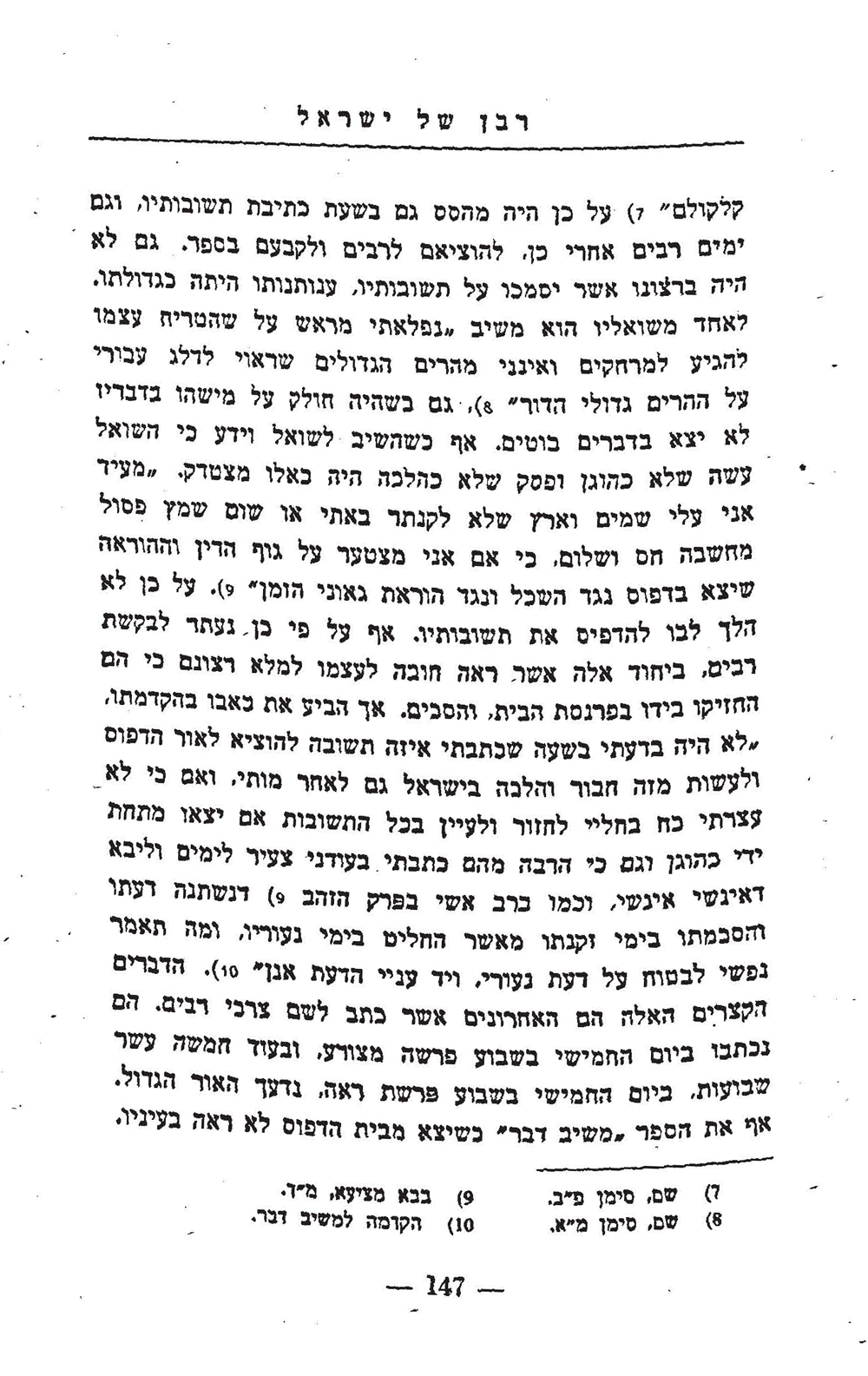
Elsewhere Rabbi Meir Bar Ilan writes:

Addition for note 22: In regard to Chumash being learnt in Volozhin

Reb Itzeleh Volozhiner writes in his introduction to Nefesh Ha-Chaim about his father Reb Chaim Volozhiner:

לא הניח ידו מלהגיד לבני עירו אחר תפלת השחר פרשה מסדרא דשבוע יום יום. וכל הנכנסין לביהמ”ד יצאו מלא דבר כשאר כ”א קלט לפי דרכו. אוהבי הפשט קלטו עומק פשוטו במקרא. ודורשי הרשומים דרוש דרשו ממה שלקחה אזנם. מה שנזרקה מפיו מדי דברו בקצרה. וכל השומעים שמחו במתק שפתיו אשר ברור מללו כקורא הפרשה לפני תשב”ר.

A student of Reb Itzeleh Volozhiner writes:

ומדי דברי בה אזכור ימי נעורי ועד היום לא אשכח את רגשי העונג, עת אשר בכל יום ויום ראיתי אה הגאון הגדול הקדוש… הנעלה על כל בני דורו מו”ה יצחק זצל”ה מוואלאזין יורה לנו בבקר בבקר הפרשה חומש מפרשת השבוע עפ”י פשוטו של מקרא הממשיך את הלב, מי שלא ראה את פני הגאון הנ”ל אשר תואר פנים כפני מלאך אלקים, ומי שלא שמע מדברותיו המרעיפים כטל וכמטר לקחו לא יכול לצייר עונג הנפש ורחשי לב טהור שברא לנו אלקים… [המליץ, שנה יז, יום כג אדר, גליון ו, תרמ”א, עמ’ 119].
Another talmid writes:

דרכו של הגאון מהרי”ץ הי’ להתפלל ביום השבת בבהמ”ד של הקהל ואחר התפלה הי’ מגיד פרשה אחת מן הסדר של יום והיו כל בני הישיבה הולכים לבהמ”ד לשמוע הדרוש [ר’ אליהו לעווינזאהן, מכתב מאליהו, עמ’ 47].
R’ Simcha Edelman (father of the Marcheshes) writes:
נהירנא כד הוינא בר שיתסר למדתי בקיץ תקצז בישיבת וולאזין והרב הגאון האב”ד מ’ יצחק ז”ל הגיד לפני התלמידים יום יום אחר תפלת השחר פרשה בתורה מסדר השבוע ושמעתי מפיו… [התירוש, ג, עמ’ 155].
Additions to the sources in note 22 about the Netziv’s Chumash shiur:

הוא זכה ללמד תורה ברבים בישיבת עץ החיים אשר באוואלאזין כיובל שנים והעמיד לאלפים בישראל ומורים, הוא הגיד יום יום אחר תפלת השחר, לפני בני הישיבה, פרשה בתורה ויפרשנה כדרכו בקדש, בהלך נפש בפשט ודרוש, עד להפליא… [הספד של תלמידו,[12] ר’ ישראל בנימין פייוולזאהן, צרור החיים, ווארשא 1914, עמ’ טו (= ר’ זאב רבינר, מרן הרב קוק זצ”ל, עמ’ רכה)].
יש אשר בבוקר לאחר התפלה, אך ישב הנצי”ב אל מקומו בראש השלחן והתחיל מבאר לתלמידי הישיבה את פרשת השבוע [פרקי זכרונות, עמ’ 88].
הדבר הי’ באחד הימים… אחר תפלת שחרית, ואחר שהגיד שעור פרשה חמש מסדר פרשיות השבוע, כדרכו יום יום, [מקור ברוך, ד, עמ’ 1978].
ראש הישיבה הראשי היה הרב הגאון נפתלי צבי הירש בערלין ז”ל… ראש הישיבה הטיף פרשה מחומש בכל יום בבוקר אחרי תפילה… [יהושע ליב ראדוס, זכרונות, עמ’ 65].
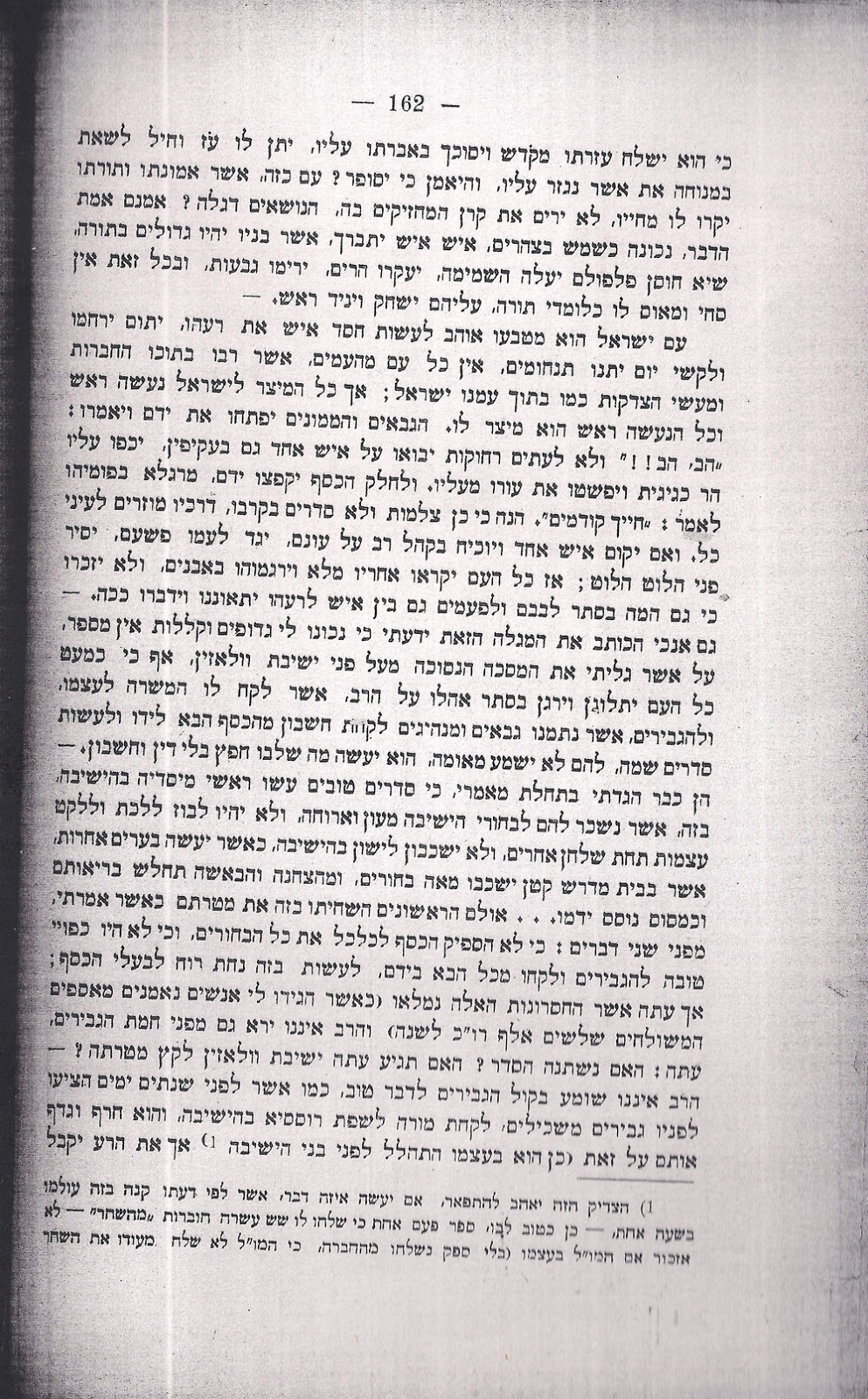
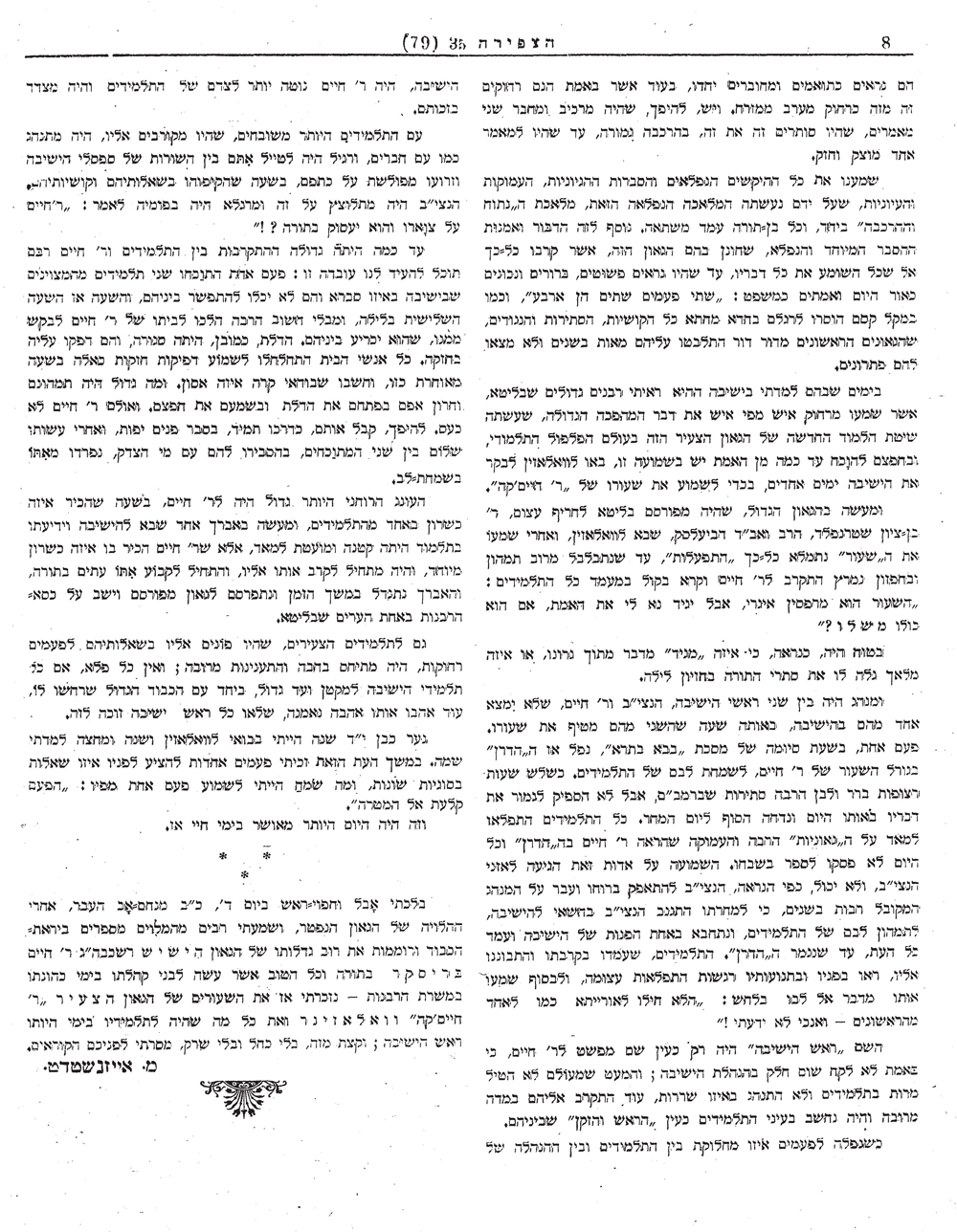
בעלות השחר קמתי… התפללתי בלי כונה, שמעתי את הפרשה של חומש מפי’ הנצי”ב אשר הטיף כדרכו, בכל יום ויום לאחר התפלה, והדברים לא נכנסו לאזני… [מ’ אייזנשטדט, הצפירה, תרע”ח, מספר 35].[13]
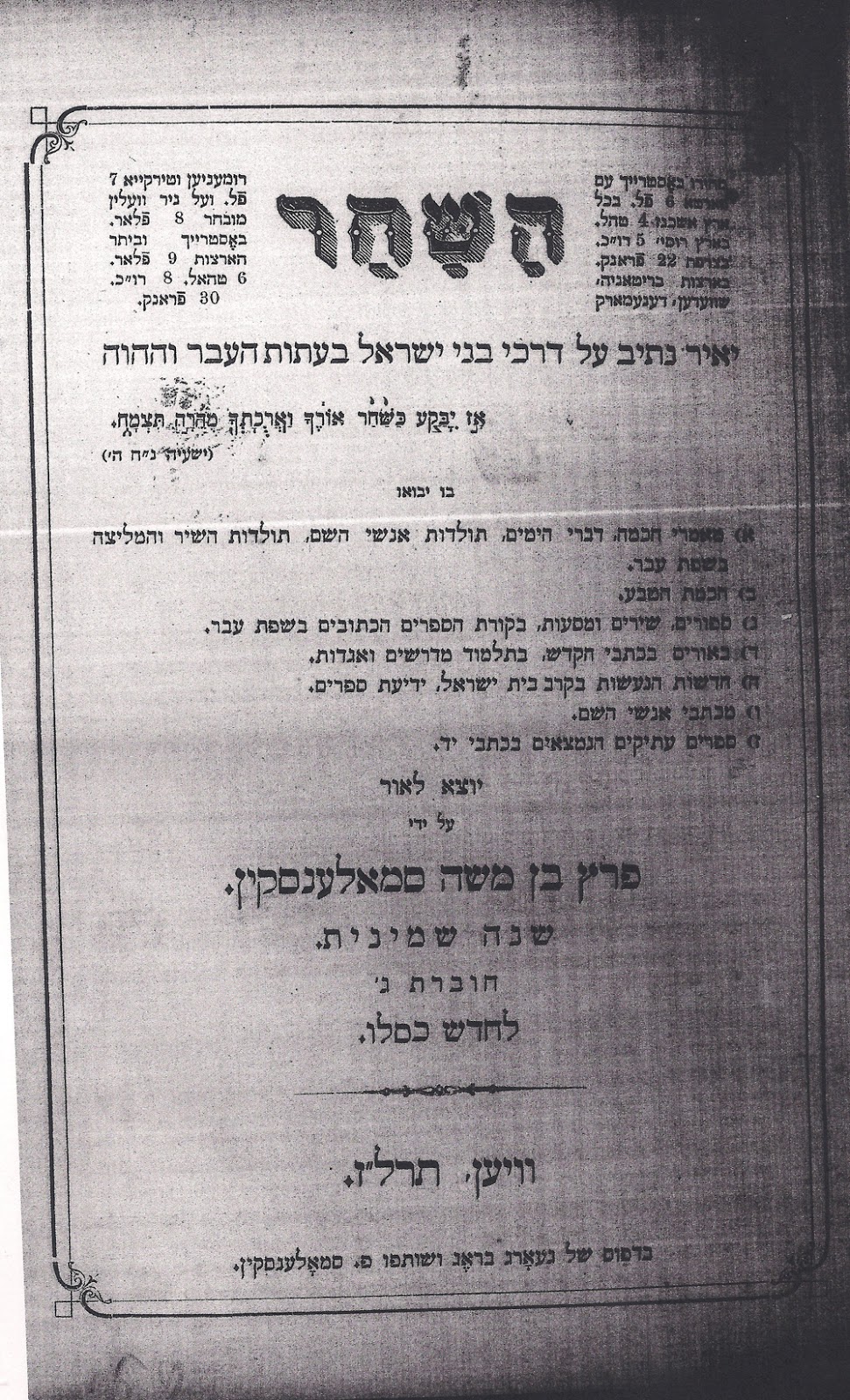
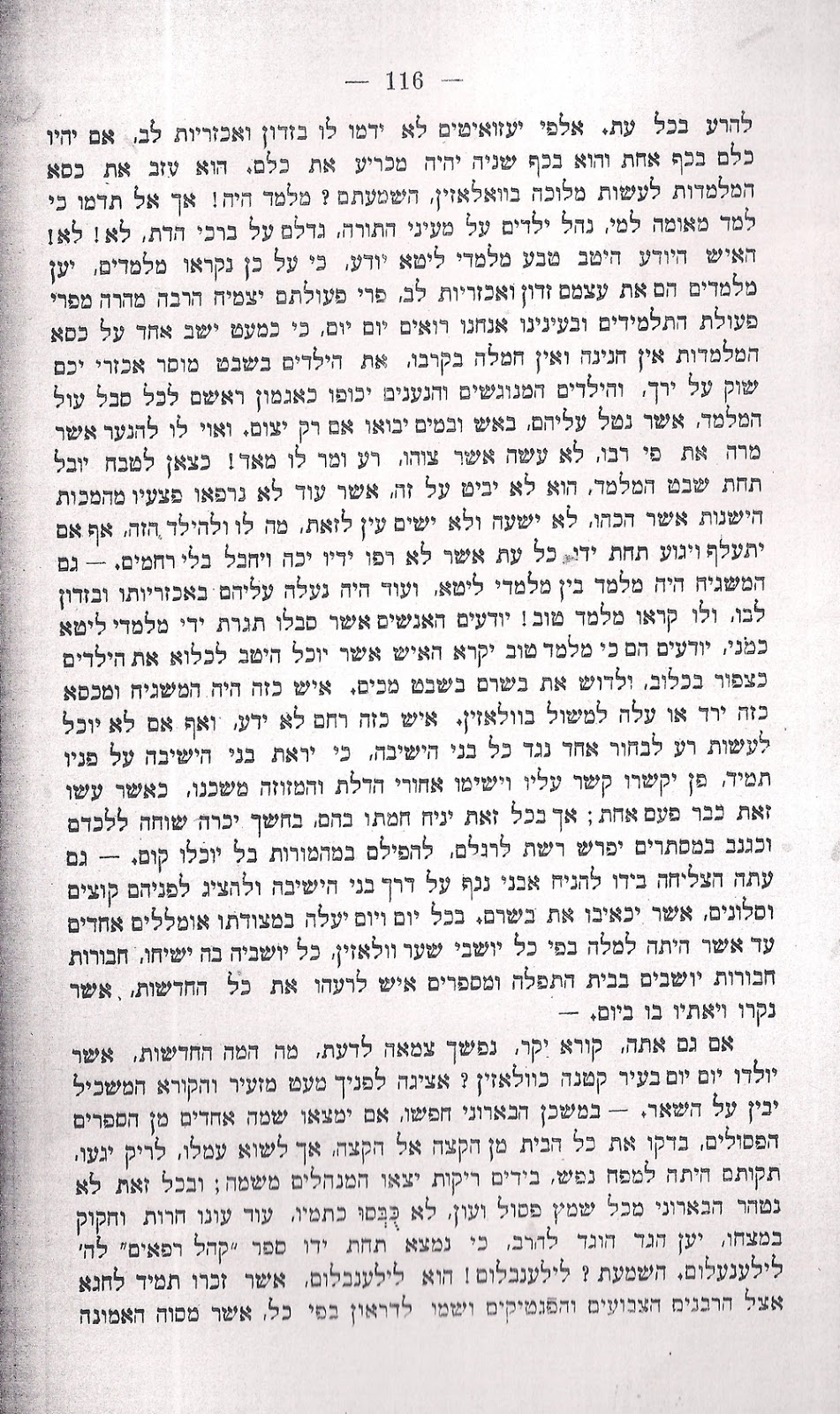
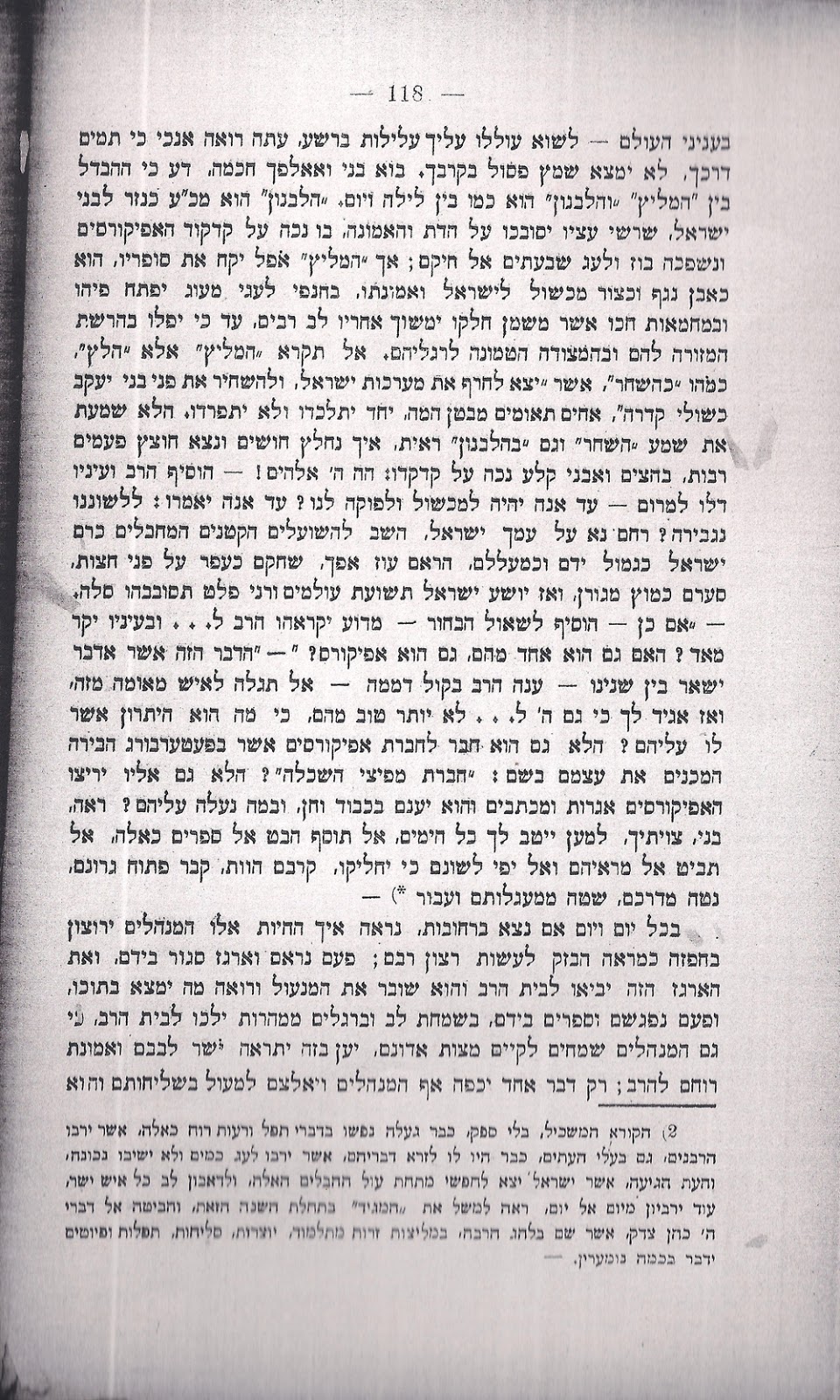
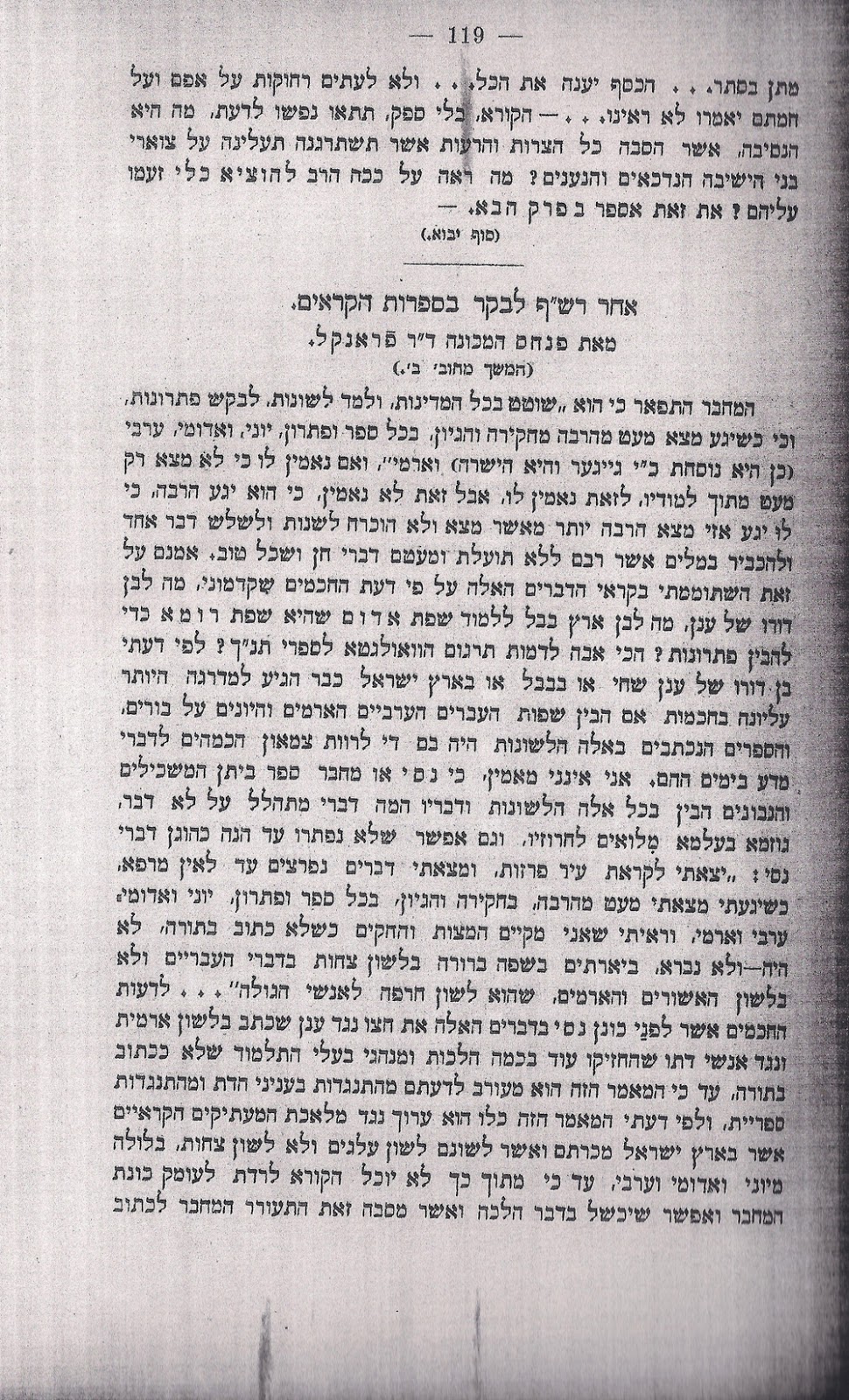
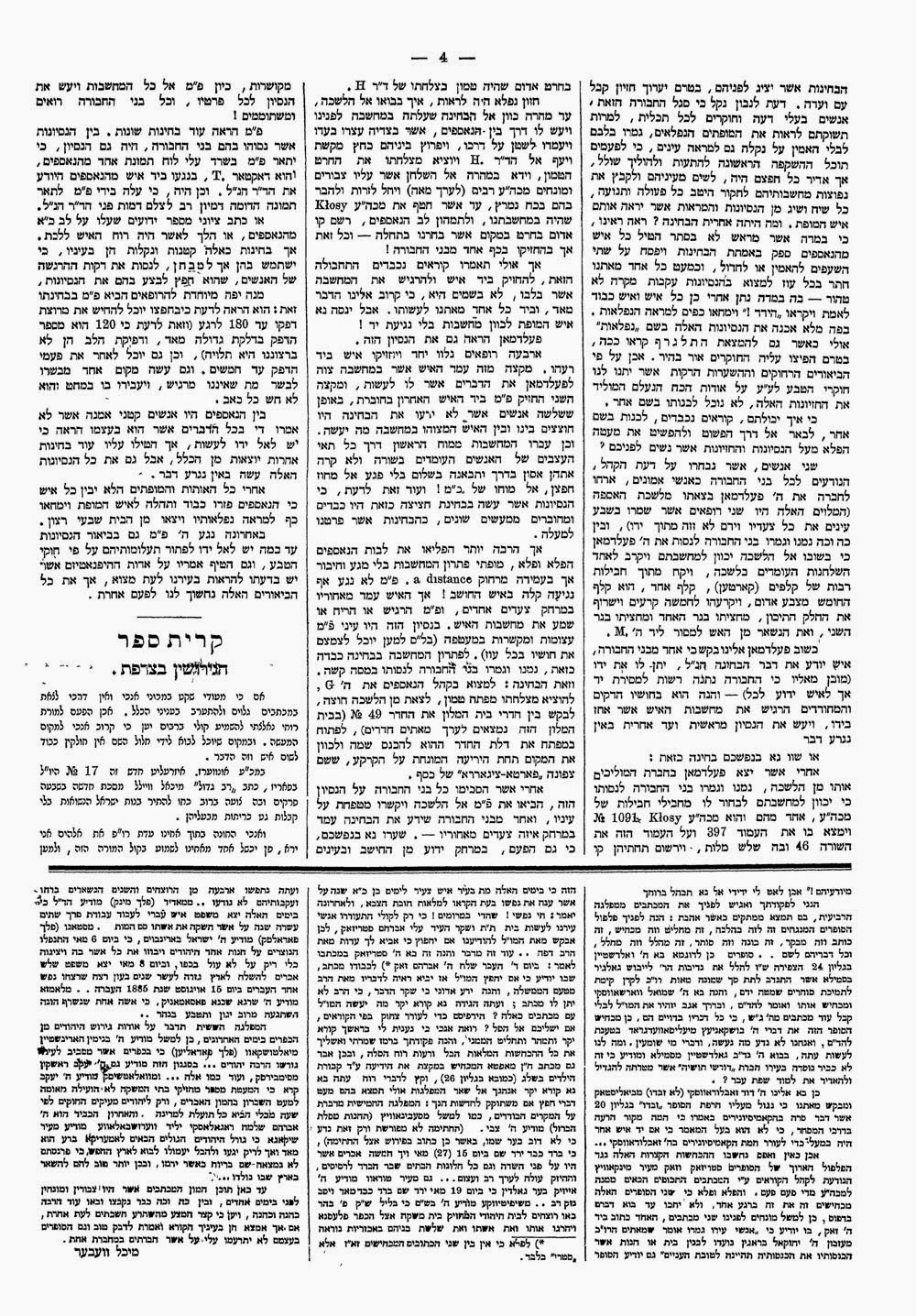
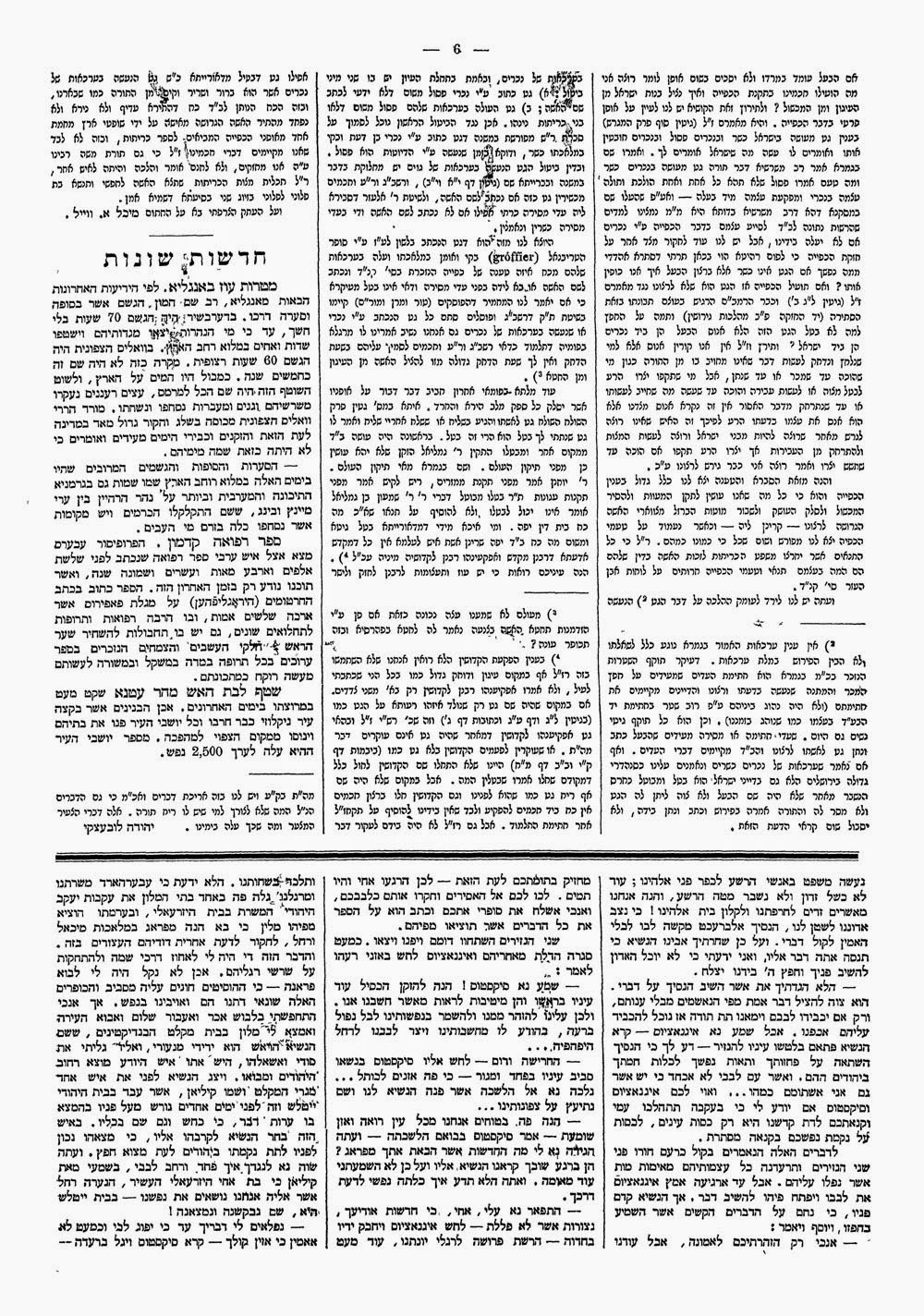
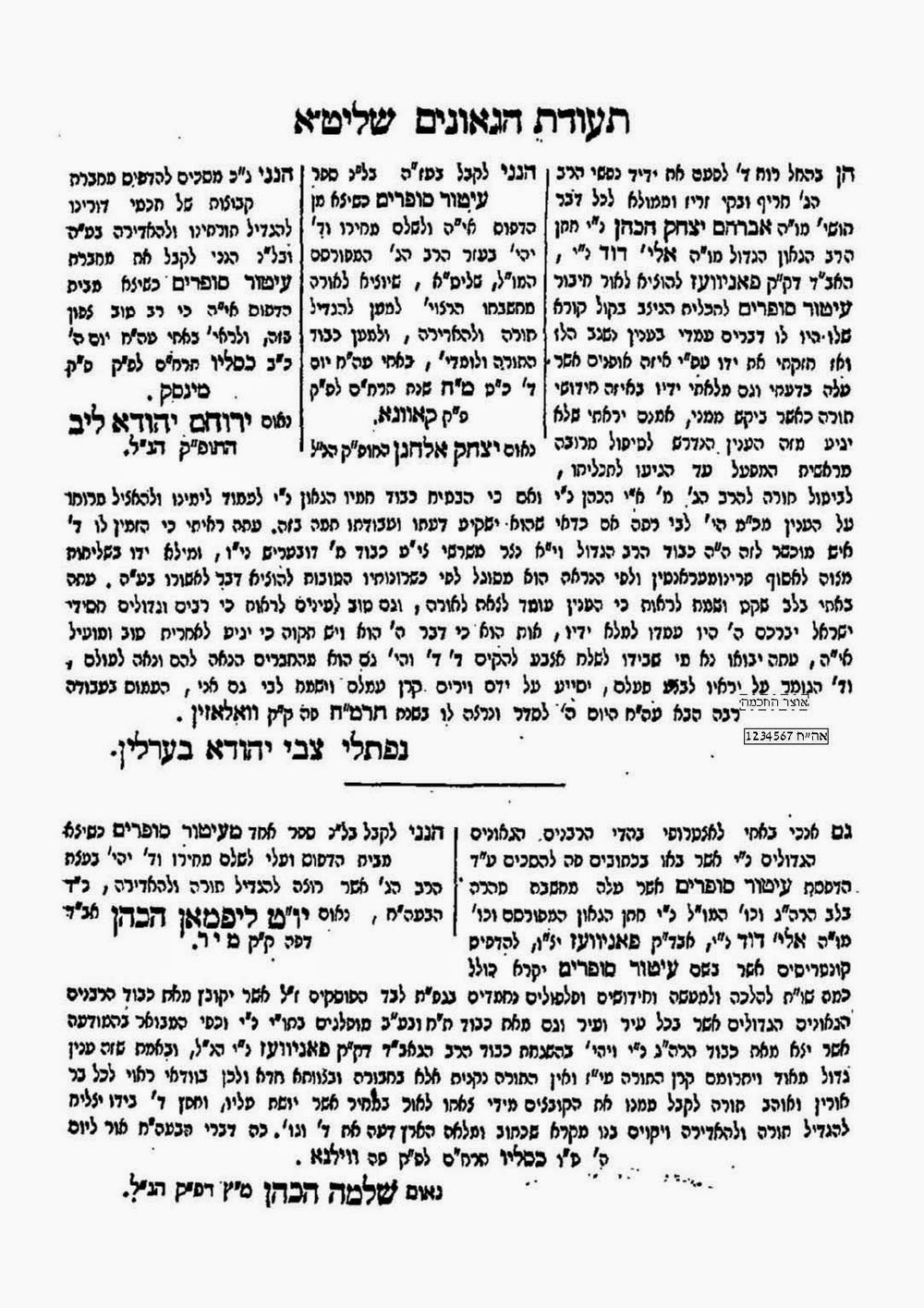
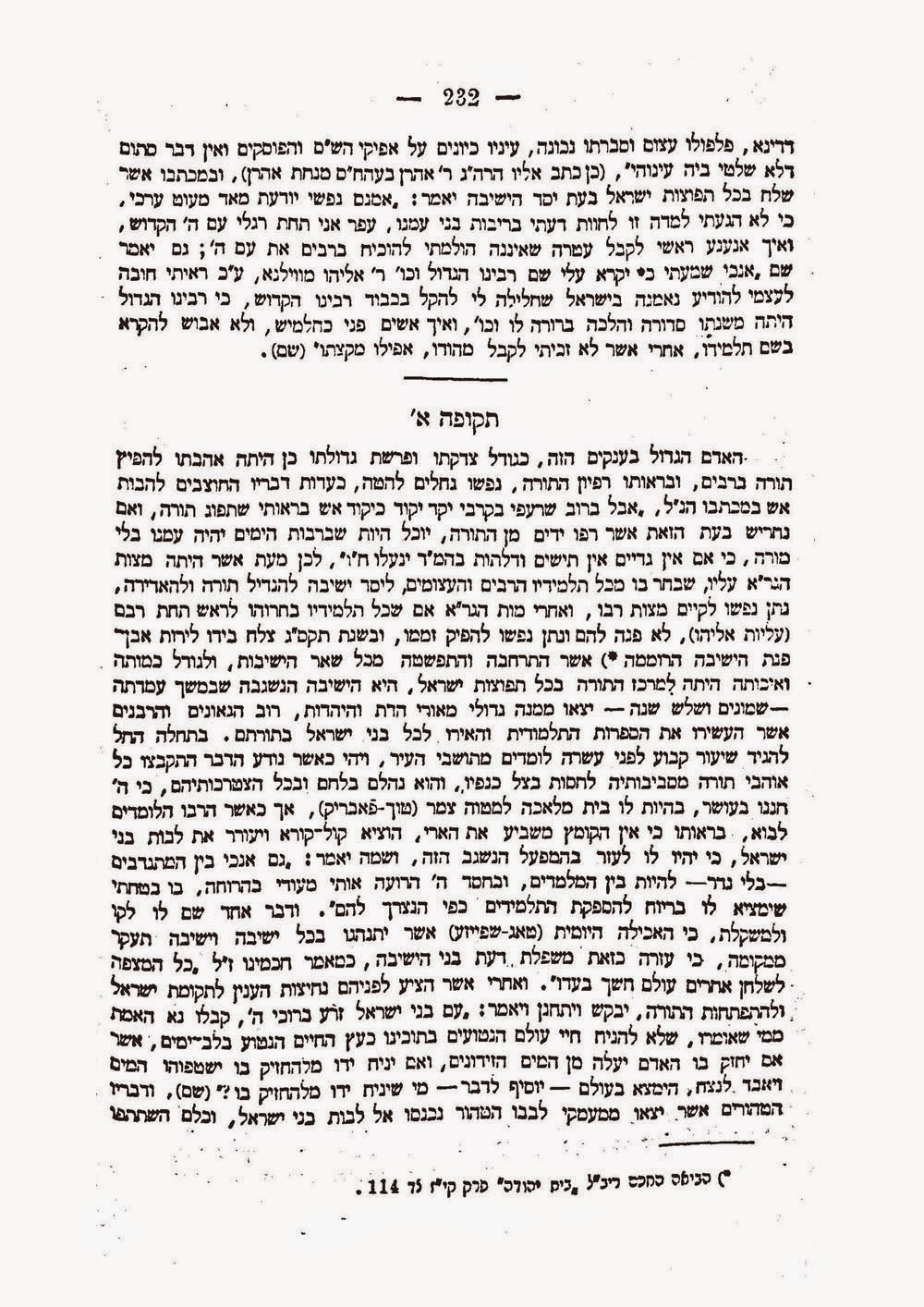
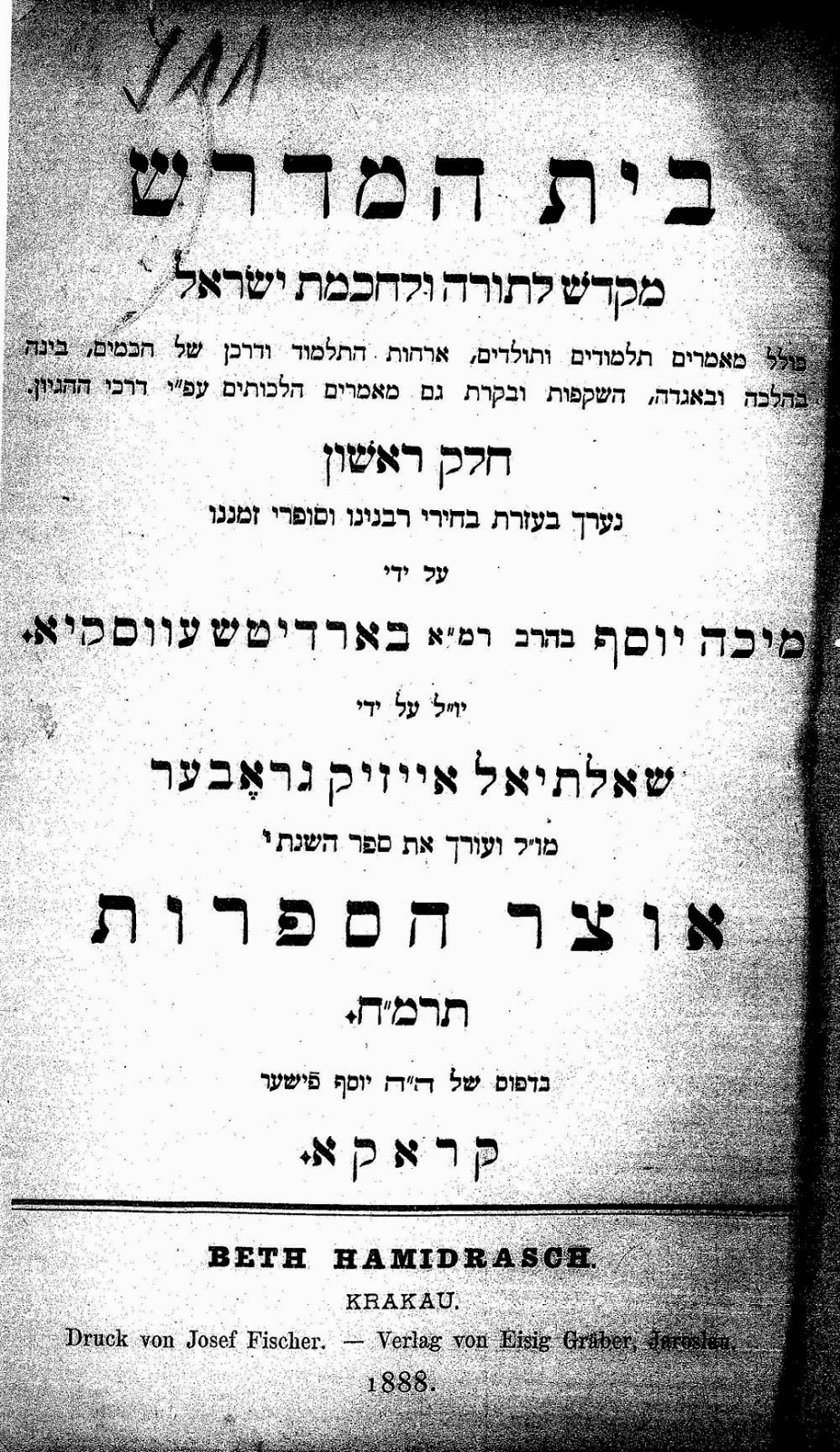
 In 1881 Rabbi Baruch Epstein wrote an article in Hamelitz about Volozhin, defending it from attacks in the newspapers [See Appendix one]. He describes the daily routine in Volozhin:

סדר היום והלמודים בשעה 8 בבוקר אחר תפילת שחרי, יורה הגרנצי”ב נ”י פרשה חומש מפרשת השבוע וכולל בה פשטי המקראות על פי יסודי טובי המבארים משולבים עם דברי חז”ל (וזה לא כביר הוציא לאור ביאורו הנאור עה”ת בשם ‘העמק דבר’ וראוהו חכמי ישראל בארצנו וחו”ל ויפזרו לו מלא חפנים תהלות ותשבחות וזה לא כביר הגיע לו מכתב תודה והלל מהד”ר א. א. הרכבי), עוד יוסיף דברי אהבה וחן, לטעת בלבות התלמידים מוסר ומדות והנהגות ישרות וצניעות בין אדם למקום ובין אדם לחבירו וחובות היהודי לעמו ולארצו ולמלכו, וירחיב דרושו עד ערך שעה ויותר…” [המליץ, יז, ב’ אדר, תרמ”א (1881), גליון 3, עמ’ 54[.
Another student who learned in Volozhin in the years 1873-1876 describes in his Yiddish Memoirs:

דער נציב פלעגט זאגען אלע טאג נאכ’ן דאוונען א פרשה חומש פון דער וואך. דער חומר איז אפגעדרוקט געווארען [תרגום: הנצי”ב היה רגיל לומר בכל יום לאחר התפילה פרשה בחומש מתוך פרשת השבוע. החומר נדפס] [אלכנסדר זיסקינד הורוויץ, זכרונות פון צוויי דורות, עמ’ 226-227].
One more description of the Netziv’s Chumash Shiur worth quoting, although not based on an eye witness account but rather interviews,[14] is from Fischel Schneersohn’s classic work Chaim Gravitzer:
לאחר התפילה עמד ר’ הירש לייב מעוטף בטלית ותפילין, וכמנהגו בכל יום אמר פרשה של חומש מן הסדרה של השבוע. ואותה שעה נדלק בעיניו הניצוץ הקסום, המתחדש בכל רגע ורגע, ובקלסתר פניו מאירה בת צחוק של איש מלהב בעמלו ואינו מתייגע אלא מתבסם וההולך ביגיעתו, יגיעת הקודש וכלל שהוא נלהב ומשוקע, כן יישא ביתר עוז ויתר שלווה ובטחה בעול עמלו המושך כל כך את הלב. הפרשה של החומש נמשכת כמחצית השעה… [חיים גראביצר, עמ’ 377].
Rabbi Chaim Berlin writes in his Hesped on the Netziv:

אבל תלמיד חכם יחיד בדורו… הרי שמו הולך מסוף העולם עד סופו, הוא השליט בכל דבר הוראה, בתשובותיו לכל אפסי ארץ… לכולם היה רב מובהק וכולם היו תלמידיו… ואף מי שלא היה שמה הלא קבל תורה מספריו… וזה מהעמק דבר… [דרשות הנצי”ב, עמ’ קמה].
Addition to the end of note 22: I wrote in part one: “In Pirkei Zichronot [p.84] we find a claim from Shmuel Zitron that R. Yehoshua Levin gave a chumash shiur using Mendelsohn’s Biur. However, S. Stampfer [ibid, p. 68] already notes that Zitron’s memoirs are not always accurate.”
Add to this: Max Lilienthal records in his memoirs about his visit to Yeshivat Volozhin his discussion with Reb Itzeleh Volozhiner where Reb Itzeleh told him the following:
We have prayers in the morning… After the Service I explain to them some chapters of the Sidrah of the week and the Haphtarah with the commentary of Rashi, adding some free explanations of my own, into which I interweave some remarks from the commentary of Moshe Dessau (Mendelssohn) [David Philipson, Max Lilienthal, American Rabbi Life and Writings, New York 1915, p. 348]. [Thanks to Zevi Fried, for sending me this reference].

 However it’s worth stressing that while many of the parts of Lilienthal’s account appear to be true, not all of them are.[15]
Another connection between Mendelssohn and Reb Itzeleh Volozhiner can be found in a Haskamah that Reb Itzeleh Volozhiner gave to a 1852 edition of the Biur. However it’s pretty clear that Reb Itzeleh Volozhiner was required to do so by the government.[16]
There is, however, a connection between Mendelssohn’s Biur and the Netziv. Dr. Nissim Eliakim in his work Haamek Davar la-Netziv, [Moreshet Yaakov 2003, pp. 45-48] notes a few places in the Netziv’s writings where there are similarities.
Gil Perl comments on this (p. 175): “As of a result of a few striking similarities between the work of the Netziv and that of Moses Mendelsohn, Eliakim (45-48) perceptively states that “with great care I would guess that Mendelssohn’s Biur did not escape the sight of the Netziv.” Again, Netziv’s commentary on Sifre furnishes the evidence which Eliakim lacks.” Gil Perl points to two passages in the work on Sifre where the Biur is quoted.[17]

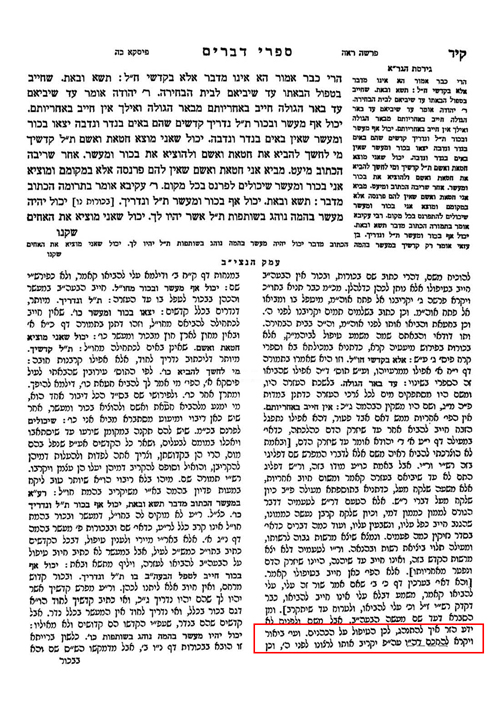
During the Volozhin Yeshiva’s long existence, both the government and the Maskilim tried several times to close it down. One such instance was in 1858, when, amidst the dealings with the government, a document was written describing the curriculum of the Yeshiva. In the document it states that students were learning chumash with Rashi and the Biur.[18]

Addition to note 26: For more on the censorship and the new version of the Ha’amek Davar see hereherehere and here
Addition for note 28: the cite for what the Netziv wrote about the Newspaper Ha’Shachar to Dr. Eliyahu Harkavi should be:
 שנות דור ודור, א, עמ’ קפד (= תולדות בית ה’ בוואלאז’ין, עמ’ 86-88; אגרות הנצי”ב, עמ’ לב).

On the Reading of the Ha’Shachar in Volozhin see Pirkei Zichronot, p. 73; Shaul Stampfer, Lithuanian Yeshivas of the Nineteenth Century, (p. 157); Jacob J. Schacter, Haskalah… p. 86.

Appendix one:
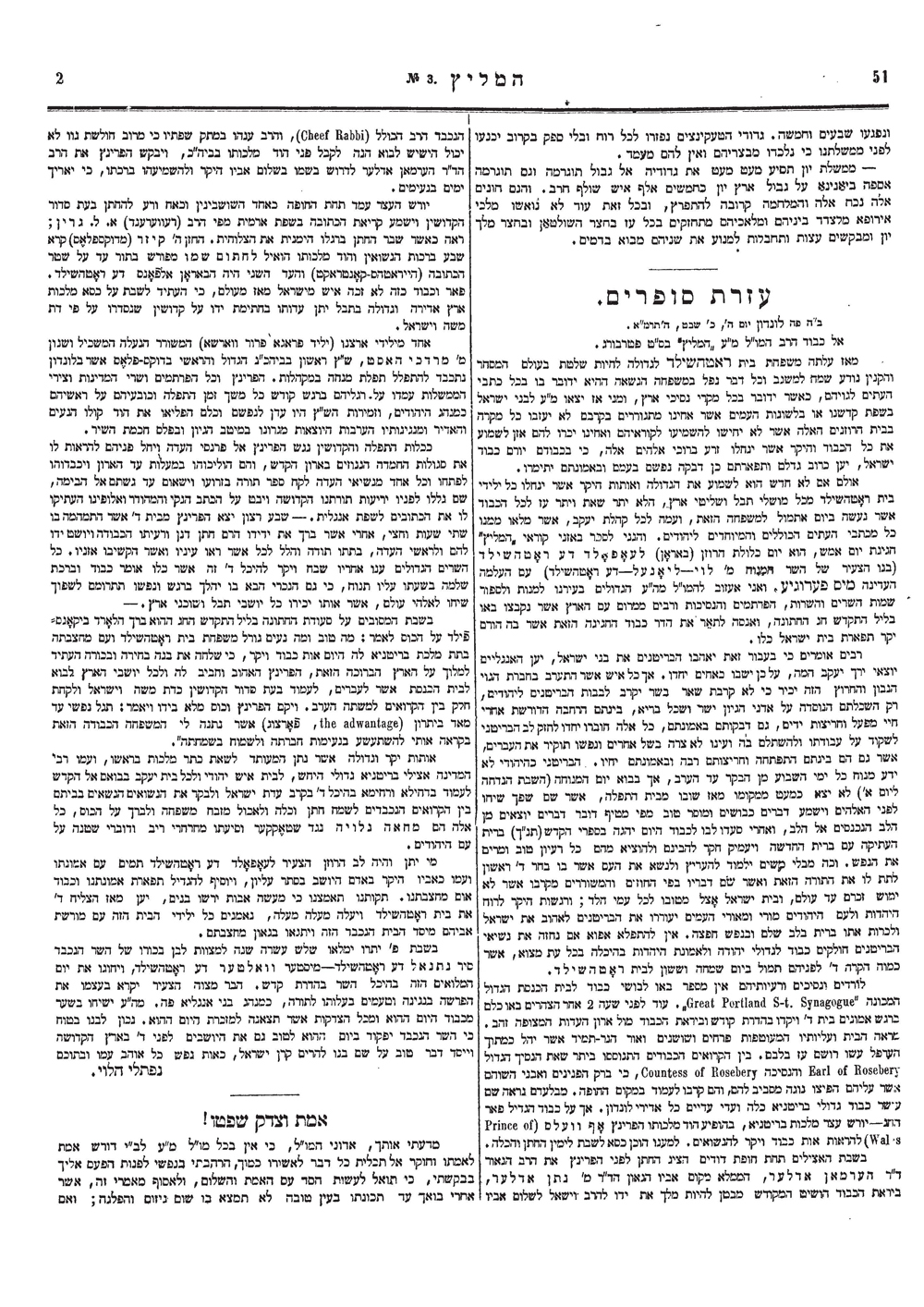
Appendix two:

Appendix three:


[1]  See Pirkei Zichronot, p. 154. For sources on this see my Likutei Eliezer, p. 85 note 228. Add to that: R’ Y. Avidah, Kos Shel Eliyahu, pp. 26-27; M. Breuer, Ohalei Torah, p. 506; R’ Teichtel, Mishnat Zachir Al Hatorah, introduction, p. 11; R Yair Chaim Bachrach, Mekor Chaim, Introduction.
[2]  See also what Y. Rivkind writes:
מאיר ברלין איז ניט דער היסטאריקער פון וואלאזינער ישיבה… נאך מעהר, די תקופה, די לעצטע, וואס מאיר ברלין באשרייבט, פון דער גרויסער שרפה… איז מעהר אדער וועניגער באשריבען געווארען. האט דאף עפעס אין דער תקופה געלערענט אין וואלאזין די גרויסע ווארט-פיהרער און ליטעראטורמיסטער פון אונזער דור, בערדיטשעווסקי, דרויאנאוו, יהואש, ליעסין, ביאליק און פיל פיפ אנדערע. איבערהויפט האט בערדיטשעווסקי אין זיין לערן-צייט פיל געשריבען איבער דער ישיבה און איהרע פראבלעמען און פון איהר אינערליכען לעבען (אין הכרם, המליץ און האסיף)…
 תרגום חפשי: עוד יותר, התקופה האחרונה, שמאיר ברלין כותב [עליה] – מהשריפה הגדולה בשנת 1886 עד לסגירת הישיבה ע”י הצאר הרוסי ב1892 – פחות או יותר נכתב אודותיה. הלא בתקופה זו למדו בוולוז’ין מנהיגי-הכתיבה ואמני-הספרות של דורנו, ברדיטשבסקי, דרוינוב, יהואש, ליעסין, ביאליק, והרבה אחרים. מעבר לכך, ברדיטשבסקי בתקופת כתיבתו כתב הרבה אודות הישיבה ובעיותיה וחייה הפנימיים. [די צוקוונפט, ז (1933), עמ’ 670-671, וראה שם, עמ’ 673].
[3]  Shaul Stampfer, Lithuanian Yeshivas of the Nineteenth Century, p. 159 also makes a similar point. See also the introduction to Pirkei Zichronot, pp. 31-40. For more about Bialik in Volozhin, see Pirkei Zichronot, pp. 78, 157, 180, 182, 195. See also Menachem Zlotkin, ‘HaChevrah HaChashayit Netzach Yisrael’, Molad 5:27 (1950) pp. 181- 185; Rabbi Nosson Kamenetsky, Making of a Godol, vol. 1, pp. 445-446, vol. 2, p. 893, pp. 896-902.
[4]  See the letter of R’ Gifter, Mili Di-Igrot, (2015), pp. 51-52.
[5]  See also the piece I quote in note 9.
[6] See Y. Shavit and Y. Reinharz, The Scientific G-d (heb.), 2011; Roni Beer Marx, Between Seclusion and Adaption; The Newspaper Halevanon and East European Orthodox Society’s Facing Up to Modern Challenges,(Heb.)PhD. Dissertation, Hebrew University, 2011, pp. 116-205.
[7]  Gil Perl, The Pillar of Volozhin, pp 176-178, points to some of these pieces.
[8]  See Rabbi S. Gershuni, Hama’yan, 52:4 [202] (2012), p. 54 note, 21.
[9]  On this see Igrot HaNetziv Me-Volozhin, pp. 162-163 where he wrote  a letter to R’ Yosef Charny, [author of Sefer Ha-Masot]:
לשמחת לבבי שמעה אזני כי רגלי מע”כ שיחי’ מועדות ללכת שנית לקהלות דאגעסטאן… שע”י מעל’ שיחי’ נזכה לדעת משלום אחינו הנדחים שמה ולחקור ולהתחקות על מעשיהם והליכות עולמם… וכאשר ראיתי בעלי המגיד ושאר מכה”ע לב”י, שמו לב אני סגולה לדעת כמה פרטים אשר צמאה גם נפשי לדעתם. ואני הנני להוסיף שאלה איך היה סדר מנהגם בפתחי נדות? וכן.. סכין שחיטה…”.
[10]  This is repeated in the various Hespedim that Reb Chaim gave on his father; see Drashos HaNetziv, p. 147, 148. The reason why Reb Chaim gave several Hespedim on his father can be found in Drashos HaNetziv, p. 153. 
[11]  About this work see Appendix three.
[12] On him, see: Moshe Tzinovitz, Etz Chaim, p. 409.
[13]  In Shimon Meller’s recent book Rabon Shel Kol Bnei Hagoleh, on R’ Chaim Soloveitchik, he quotes various passages from memoirs of Rabbi Menachem Tzvi Eisenstadt, (for example on pp. 286, 288,289, 306-308). This passage appears on p. 308. On page 289 Meller cites the source for this memoir, an article in the Newspaper Dos Vort. On page 288 and 306 he has pictures of Rabbi Menachem Tzvi Eisenstadt. However, I was unable to locate such a piece, nor could I find a Rabbi Menachem Tzvi Eisenstadt who learned in Volozhin. There was a Rabbi Menachem Tzvi Eisenstadt, who was close to R’ Chaim but he was born in 1901, from whom a nice collection of his material was printed in 2003 called Minchat Tzvi. Obviously, he could not be writing memoirs about the Netziv. There was a R’ Michal Eisenstadt, who was a close talmid of the Netziv and his comments on the Haemek Shealah were included inside. The Netziv even thanks him at the end of the introduction to his Haemek Shealah. But as far as I could locate, he never printed memoirs about Volozhin. His Torah novellea were collected and printed as Yad Malachi. [The Netziv also quotes him in his Hamek Davar, Vayirah [25:47], (Harchev Davar). There was a Moshe Elozer Eisenstadt who learned in Volzhin and wrote memoirs about Volozhin. These memoirs were translated from Russian and printed in Pirkei Zichronot (pp. 105-119). The passages which Meller printed did not appear in this chapter. After much searching eventually I found some other articles of Moshe Elozer Eisenstadt; one of them was this article in Ha-Zefirah (some were quoted by Stampfer but not this one). See Appendix two.
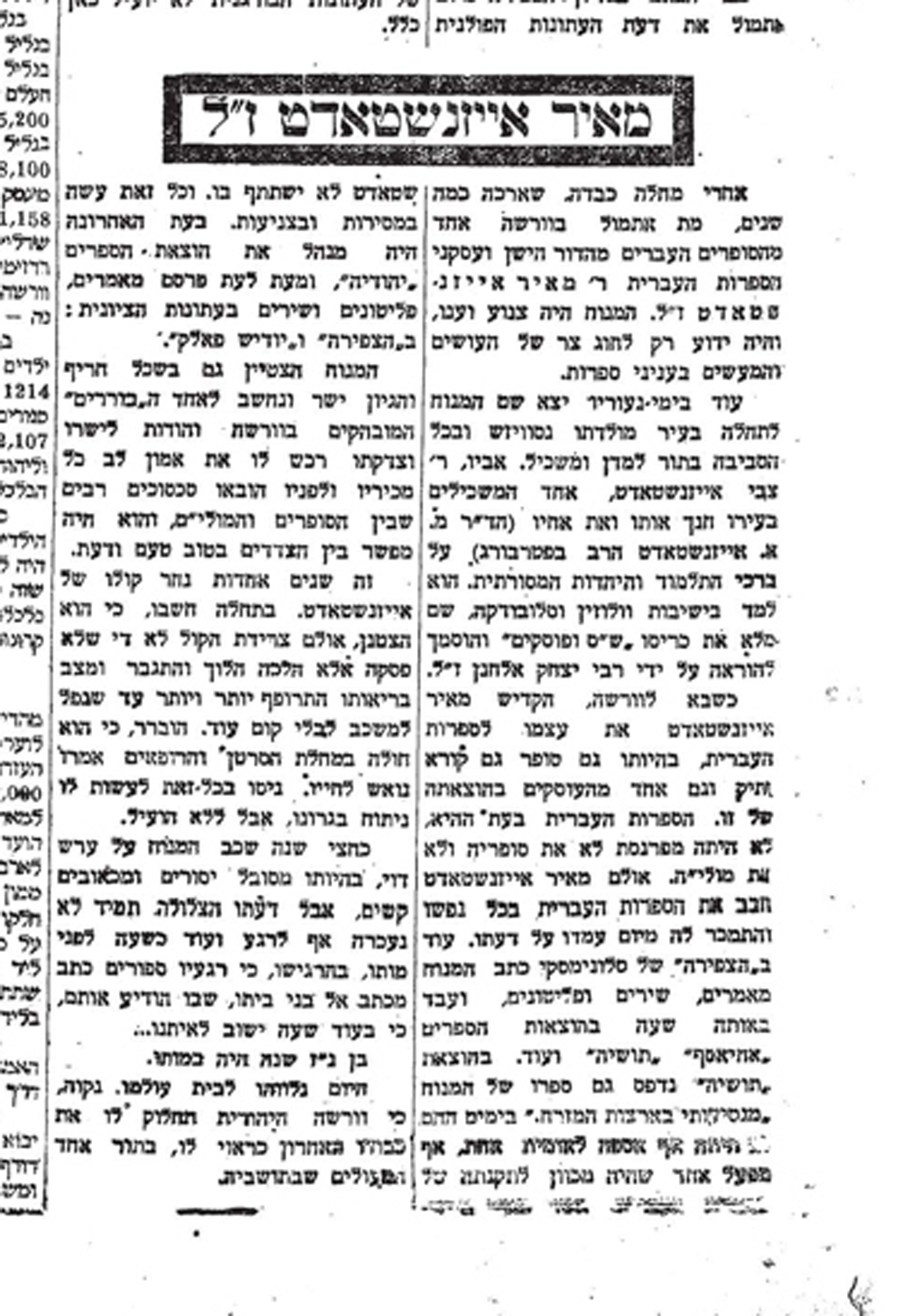
[14]  About this see:
בשמו של אברהם צארט קשור ביקורו של פר’ פישל שניאורסון, שבא לוולוז’ין כדי לאסוף חומר לשם כתיבת הכרך השני של ספרו חיים גראוויצער המוקדש כולו לוולוז’ין [ספר וולוז’ין, עמ’ 497].
Thanks to Shlomo Hoffman for this source. I will return to this book in one of the next parts of this series.
[15]  On this visit see: R’ Dovid Soloveichik, Shiurei Rabbenu Meshulam Dovid HaLevi, (2014), pp. 566-569; R’ Moshe Tzvi Neryeh, Pirkei Volozhin, pp. 28-30;  Jacob J. Schacter, “Haskalah, Secular Studies and the Close of the Yeshiva in Volozhin in 1892“, Torah u-Madda Journal 2 (1990), p. 124-125; Shaul Stampfer, Lithuanian Yeshivas of the Nineteenth Century, pp. 58-59; Moshe Tzinovitz, Etz Chaim, pp. 185-191; Rabbi Nosson Kamenetsky, Making of a Godol, 1, pp. 198-255.
Rabbi Moshe Shmuel Shapiro, R. Moshe Shmuel Vidoro, pp. 46-48 translated part of these memoirs of Lilienthal into Hebrew but not this passage. This was already noted by Jacob J. Schacter, ibid, p. 124 note 85. See Shevil Ha’zahav, pp. 8-9 about Rabbi Mordechai Eliasberg’s meeting with Lilienthal. For a general account of the impact of Lilienthal’s visit see Pauline Wengeroff, Memoirs of a Grandmother, 2010, pp. 174-186.
For more on Reb Itzeleh’s shiurim, see: Rabbi Moshe Shmuel Shapiro, R. Moshe Shmuel Ve-doro, p. 41
On Reb Itzeleh Volozhiner, see: R’ Moshe Tzvi Neryeh, Pirkei Volozhint, pp.26-36.
[16] See Berdyczewski’s article about Volozhin in Volume three of HaAssif (1886), p. 240 where he mentions the haskamah. Interestingly enough, R’ Chaim Berlin in his article in Beis Hamedrash (see part two), containing his corrections to Berdyczewski’s article, does not comment about this.
See also see Pirkei Zichronot, p. 84; P. Sandler, Habiur Letorah, p. 180; see also Jacob J. Schacter, “Haskalah, Secular Studies and the Close of the Yeshiva in Volozhin in 1892“, Torah u-Madda Journal 2 (1990), pp. 123-124; R’ Eliach, HaGoan, 3, p. 1307.
[17]  See also Gil Perl, The Pillar of Volozhin, p. 37, 89.
[18] See S. Stampfer, Lithuanian Yeshivas of the Nineteenth Century, p.195Toldot Beis Hashem B’Volozhin (p. 236) briefly mentions this “closing” but does not mention the curriculum.


Notes on RASHI, ArtScroll Censorship, and Emendation of Rabbinic Texts

Notes on RASHI, ArtScroll Censorship, and Emendation of Rabbinic Texts
By David Shasha
A new post on the Seforim blog by Professor Marc Shapiro discusses the problem of ArtScroll publishers and the way that it routinely censors rabbinical texts:
Shapiro looks at the issue of RASHBAM’s commentary to Genesis 1, a big problem for Orthodox literalists.
Here is a post from Failed Messiah that explains the difficulty:
RASHBAM is the grandson of RASHI and the brother of Rabbenu Tam; a central figure in one of the most illustrious of all the rabbinical dynasties in the Ashkenazi tradition.
RASHBAM’s comment to Genesis 1 asserts that, according to the literal meaning of the text, the day, contrary to Jewish law, begins in the morning and not the evening.
I will leave the legal controversy to Shapiro and others, but would like to discuss his point on textual emendation.
It is interesting to see the plethora of Ashkenazi figures that Shapiro cites, including Rabbenu Tam and Abraham ben David (RABAD) to support the idea that no texts should be emended based on personal opinion.
The problem with this formulation is that the principle of textual emendation was most emphatically adopted by RASHI, the most important figure in the Ashkenazi rabbinical tradition.
Jose Faur in his classic article “The Legal Thinking of the Tosafot” discusses the matter in some detail:
He notes the freedom Ashkenazi rabbis accorded themselves to emend texts:
The Franco-German school had a liberal attitude toward the text of the Talmud, It is well known that this school felt free to amend, interpolate and delete from the text of the Talmud.
Referencing the classical Ashkenazi source Sefer ha-Yashar and academic discussions by Joseph Weiss and Benjamin Lewin, Faur explains that RASHI’s famous “Hachi Garsinan” – the code term for his many emendations of Talmudic texts – was a central part of the Ashkenazi rabbinical heritage:
The liberal attitude toward the text is reflected in the Franco-German position that the Talmudic text was not put into writing until post-talmudic times, late in the Middle Ages. Accordingly, the Talmudic text was never authoritatively fixed. Since there was no authoritative transmission of the text, it was subject to further development and errors.
We have seen this principle dangerously expanded in the current school of academic Talmud studies which holds that the Talmud was not completed until the late Geonic period, when the bulk of what is called the STAM (anonymous) layer of the corpus was written; contrary to the traditional formulation found in the canonical Epistle of Sherira Ga’on.
For more on the current scholarly revolution against the normative Jewish tradition, led by David Weiss-Halivni, see the following books:
Without any actual documentary or historical evidence, the revisionist scholarship – similar to German Higher Criticism of the Hebrew Bible – demands that we see different historical strata in the Babylonian Talmud.  This would undermine its literary unity and its historical presentation of the classical rabbinic tradition as formulated in the academies of Sura and Pumbedita.
The new scholarship claims that the text is a frightful hodge-podge of confused materials that is often sloppily and incoherently edited.  Texts are ignorantly assembled by anonymous rabbis who lack a historical connection to their predecessors.  It is all a fabrication lacking the firm authority of tradition.
The close of the Talmudic canon, as formulated by Sherira Ga’on in his famous Epistle, is in the 6th century:
Jose Faur has written an excellent treatment of the matter in his “Textuality in the Rabbinic Tradition,” chapter 4 of his book Golden Doves with Silver Dots, which is an important corrective to this benighted revisionism:
A good deal of the current scholarship attacking the Geonic tradition and its dating of the Talmudic corpus seeks to aggressively negate Faur’s assertions about the Oral Law and its textual manifestations. The written form of the Talmud and the tradition of emendation by Ashkenazi rabbis, and now academic scholars, has thus become part of a larger problem of the authority of the Oral Law in contemporary Judaism. Shapiro claims that the Ashkenazi rabbis, and their Sephardic followers like Moses Nahmanides, were firmly against this method of emendation, even though the leader of their school, RASHI, was a strong proponent of it:
The following discussion by Jacob Neusner reviews the salient points involved the matter of RASHI and the Tosafist School:
Neusner claims that RASHI emended the Talmudic text over 2,300 times based on his own personal opinion!
It is interesting to note both the parallels and differences between the emendation process in the older Ashkenazi tradition and the way it is now being deployed by Ultra-Orthodox fundamentalists like ArtScroll.  The idea of censorship has become a very modern way of dealing with inconvenient historical details.  So while the substantive elements of RASHI and ArtScroll are indeed quite different it should be noted that the role of PILPUL and “Da’as Torah,” the imposition of personal opinions and values on Jewish texts, remain a central part of Ashkenazi rabbinic authoritarianism and its modern academic offshoots.
The historical dialectic is quite striking.
In addition to the emendation process during the early Middle Ages in Germany and France, the Ashkenazi tradition as embodied in the PILPUL methodology of Rabbenu Tam and the Tosafists developed the “Davqa/Lav Davqa” method of analysis which would interpret texts in a relativistic manner.  Some texts were, Davqa, to be interpreted as written, others, Lav Davqa, were not to be interpreted as written.
Again, it is Jose Faur who has been best able to decode this casuistic methodology, finding a connection with the hermeneutics of Peter Abelard and his Scholastic apologetics:
The Tosafot, occasionally, prefaced their analysis of the Talmud by declaring that the sense of the text is lav davqa (not exact). The lav davqa methodology revolutionized the study of the Talmud and changed the content of Jewish law. This methodology is grounded on the assumption that the rabbinic texts may be interpreted not in accordance to their usual sense. The methodology, as well as the philosophy of language that it projected, was brilliantly formulated by Abelard. Abelard, in his attempt to reconcile the conflicting views found in the writings of the Church Fathers, formulated the semantic principles that the same word may be differently used by different writers.
Here is how Faur sums up the matter:
It is intellectually acceptable to describe things not in accordance to what they really are.
This explication ties together the various anti-rational strains that are inherent to the Ashkenazi rabbinical tradition and its modern exponents.
In the end it affirms the absolute power of the interpreter over the text, the rabbi over the Law. It removes agency from the community and dangerously invests absolute power in the rabbinical class.
It is therefore quite interesting to read Shapiro’s attack on ArtScroll which does not at all reference the history of RASHI’s emendations, the PILPUL method of the Tosafot, or the shocking revisionism of contemporary Judaic scholars which has essentially sought to eviscerate the historical integrity of the Talmudic tradition.


More About Rashbam on Genesis Chapter 1 and Further Comments about ArtScroll

More About Rashbam on Genesis Chapter 1 and Further Comments about ArtScroll
By Marc B. Shapiro
I had thought that I was done with ArtScroll’s censorship of Rashbam to Genesis chapter 1, but a number of people wanted some explanation about the manuscript of Rashbam’s commentary. This will also give me the opportunity to add some more comments about this distressing episode.[1]
In my prior post on the topic, available here, I referred to Rabbenu Tam’s strong words against those who “corrected” the talmudic text based on their understanding. ArtScroll is guilty of violating Rabbenu Tam’s “command”, as he would certainly also apply his words to later generations tampering with the writings of rishonim. I think everyone can understand that if people were simply allowed to emend or delete texts based on their own understanding, not a single talmudic tractate or medieval work would emerge unscathed. As such, the only honest thing for an editor to do is to point out in a note how he feels the text should read, or if he thinks that a passage should be deleted. Unfortunately, ArtScroll did not choose this to follow this honest, and common sense, approach.
It is not just Rabbenu Tam who dealt with this matter. Nahmanides, in commentary to Bava Batra 134a, blasts those “sinners” those who emend texts based on their own understanding.
וזו עבירה גמורה ולייטי עלה רבנן כל מאן דמגיה ספרים מדעתא דנפשיה
R. Abraham ben David (Rabad) also leaves no doubt as to his position, stating that one who deletes a text based on his understanding, “his hand should be cut off, since one who deletes [sections of] books is like those who burn the Torah.”[2]
ויד המוחקת תיקצץ שמוחק הספרים כשורפי התורה
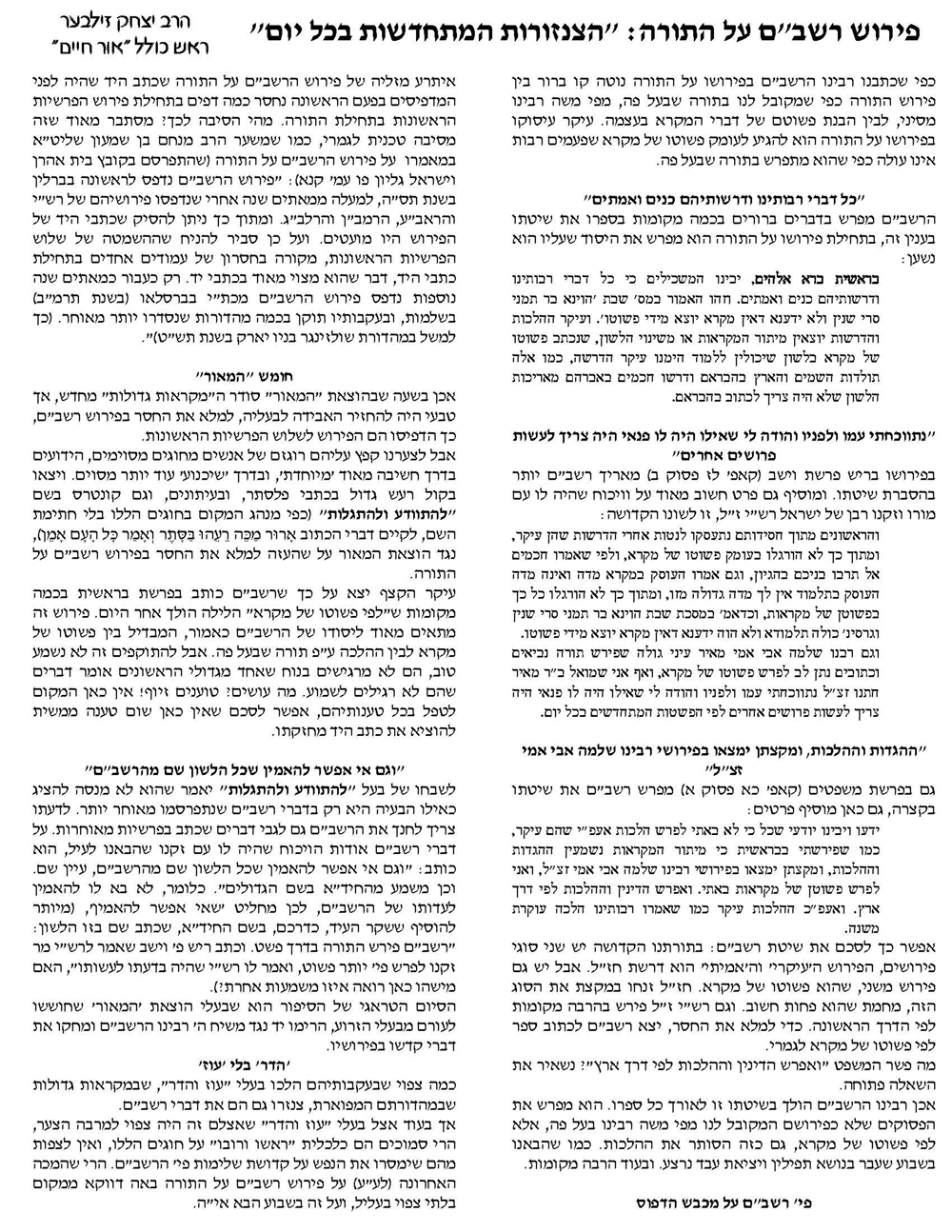
Following my posts R. Yitzchak Zilber published two pieces in Hebrew.

With regard to ArtScroll, the two pieces don’t really contain anything not mentioned already on this blog, but for those who don’t read English they are valuable. It is also good to see a noted talmid hakham express his feelings about what he terms ArtScroll’s “stupid act”. (I understand why documents like the ones published by Zilber, which are directed towards a certain population, cannot cite the Seforim Blog. Yet it is noteworthy that Uriel Simon’s book אזן מלין תבחן is cited, even if the author’s name is not mentioned). One significant point made by Zilber is his claim that ArtScroll knows the truth, namely, that the passages it chose to censor are not heretical insertions, but it chose to censor them anyway.
I have received emails that make the same point, that the censorship is all about “business”. In other words, the haredi world today does not want to see Rashbam’s peshat understanding of when the day begins, so the censorship is necessary in order for ArtScroll’s mikraot gedolot Chumash to sell. Based on what I have been told by people supposedly in the know, I am inclined to believe this. This is also an appealing explanation as it is much easier to accept than that anyone at ArtScroll really believes in the justification for its censorship that was sent out and which I discussed in the earlier post.
In my post I referred to additional authorities, other than Rashbam, who understood that according to the peshat the first chapter of Genesis teaches that the day begins in the morning.[3] I also mentioned those who believe that this was how things were before the giving of the Torah. R. Moshe Maimon called my attention to the fact that R. Saadiah Gaon also apparently held this view.[4] Here is R. Kafih’s edition of R. Saadiah, Perushei Rabbenu Sa’adiah Gaon al ha-Torah, p. 71. Look at chapter 10, note 4.

R. Ovadiah Yosef cites a number of additional sources that mention the notion that before the giving of the Torah night came after day.[5] One of these is R. Moses Sofer,[6] who not surprisingly quotes his teacher, R. Pinhas Horowitz, whose view on this matter I referred to in the prior post.[7] R. Meir Mazuz[8] notes that R. Reuven Margaliyot says the same thing.[9]
A number of people commented on how ironic it is that Ibn Ezra is being used as a source to determine what is heretical, being that his views on Mosaic authorship are themselves regarded by heretical by ArtScroll.[10] Furthermore, Ibn Ezra has no reticence in citing Karaite interpreters, yet as we know, ArtScroll only cites “accepted” authorities, and won’t even mention the Soncino commentary by name. Incidentally, there are some times when ArtScroll errs in this matter. For example, in its commentary to Jonah, p. 111, it cites “Yefes ben Ali” (who is quoted by Ibn Ezra). Presumably, the ArtScroll editor assumed that he was a rishon.[11] In truth, he was a Karaite, and his inclusion in the Jonah commentary is diametrically opposed to the standard set up by ArtScroll with regard to which commentators they will cite, a standard that opposes the Ibn Ezra-Maimonides approach (adopted by Soncino) of “accept the truth from whomever said it”.[12]
When it comes to Karaite influence on Ibn Ezra, R. Joseph Delmedigo goes so far as to say that most[!] of Ibn Ezra’s explanations come from the Karaites. Reflecting the fact that Ibn Ezra does sometimes strongly reject the Karaite interpretations, Delmedigo states that Ibn Ezra is like a baby who nurses from his mother [i.e., the Karaites] but sometimes also bites her breast.[13]
ודע כי בספרי הקראים תמצא באור לדברי הר”א”ב”ע[!] כי רוב באוריו מקדמוניהם כגון הר”ר ישועה והר”ר יפת והר”ר יהודה הפרסי דולה מושך גם כי לפעמים כיונק שדי אמו נושך
Philip Birnbaum writes:
Ibn Ezra cites Yefet more frequently than any other exegete. In his commentary on the Minor Prophets, Ibn Ezra quotes Yefet forty-four times whereas he mentions Sa’adyah Gaon only five times. . . . Ibn Ezra borrows from Yefet much more than he acknowledges.[14]
This connection of Ibn Ezra to Yefet even led to the creation of a false legend that Ibn Ezra was a student of Yefet.[15]
While Ibn Ezra often adopts the interpretations of Karaite commentators, he also blasts them when necessary. One such example is in his commentary to Deuteronomy 12:17 where he writes: “The heretics [Karaites] say that there are two sorts of first-born. One is the first to break out of its mother’s womb. The second is the first-born of the flock. There is no need to respond to their nonsense.”[16] It is noteworthy that the “nonsense” interpretation that Ibn Ezra refers to is indeed found in a few rishonim including Hizkuni and R. Jacob of Vienna.[17]
Let us now turn to the manuscript of Rashbam. The first thing to mention is that there is only one surviving manuscript page for Rashbam’s commentary to the beginning of Genesis. There used to be another manuscript that contained his commentary to the rest of the Torah but was missing the commentary to Genesis chapters 1-17. Unfortunately, this manuscript was lost during World War II. For such a great figure as Rashbam, it is definitely noteworthy that so few physical specimens of his Torah commentary survived until modern times.[18] What this tells us is that not many scribes were interested in copying the commentary, and I do not know why this was the case. In fact, it is not merely his commentary on the Torah that suffered this fate. While we have Rashbam’s commentaries to most of Bava Batra and the tenth chapter of Pesahim, we know that he also wrote commentaries to most of the other tractates, yet these are lost.[19] Is there any way to explain this?
Here is the manuscript of Rashbam to the beginning of Genesis.


It is found in the Bavarian Staatsbibliothek (Munich) and is referred to as Hebrew Manuscript no. 5 (2). Here is the link.
You can examine the entire manuscript here.
This manuscript of Rashbam is bound together with another manuscript from 1233 that contains the earliest example we have of Rashi’s commentary on the Torah. It is also the first illuminated Ashkenazic manuscript (with the illumination by a non-Jewish artist).[20] The copyist of the Rashi manuscript was not some anonymous person, but R. Solomon ben Samuel of Würzberg. R. Solomon was an outstanding student of R. Samuel he-Hasid and a colleague of R. Judah he-Hasid. He was also a student of R. Yehiel of Paris, and R. Solomon’s son was one of the participants in the 1240 Paris Disputation together with R. Yehiel. R. Solomon wrote Torah works of his own and he may be identical with R. Solomon ben Samuel, the author of the piyyut ישמיענו סלחתי that is recited in Yom Kippur Neilah.[21] ArtScroll, in its Yom Kippur Machzor, p. 746, tells us that ישמיענו סלחתי was written by “R’ Shlomo ben Shmuel of the thirteenth-century.”[22]
It is significant that in this early copy of Rashi’s commentary, whose copyist was himself a Torah great, Rashi’s comment to Genesis 18:22 appears in its entirety.[23] In this comment, Rashi refers to one of the tikun soferim and states that the Sages “reversed” the passage. What this means is that Rashi understood tikun soferim literally. Some have claimed that Rashi could never have said this, and it must be a heretical insertion. (There is always someone who says this about texts that depart from the conventional view.) In line with this approach, ArtScroll deleted this comment of Rashi.[24] As we have seen with the passages of Rashbam that were censored, in this case as well ArtScroll would also no doubt claim that it accepts the view of those who do not regard the deleted comment as authentic. Yet how can such a claim be taken seriously when the earliest manuscript of Rashi’s commentary, dating from the early thirteenth century and copied by R. Solomon ben Samuel, contains the passage?
Returning to Rashbam, I have the following question. Just like there is only one manuscript for his commentary to Genesis chapter 1, for the rest of the commentary on the Torah there was also only one manuscript and we don’t know anything about the copyist. Why don’t ArtScroll and the other censors start deleting the many other “problematic” passages in Rashbam, with the excuse that they are heretical insertions? Why only focus on the commentary to Genesis chapter 1?
I must also note that Rashbam himself, in his introductory words to parashat Mishpatim, refers to his commentary at the beginning of Genesis. Rashbam explains that the point of his commentary is not to explain the halakhah but rather the peshat, “as I have explained in Bereishit.” Where does he explain this in his commentary to Genesis? As Rosin points out in his note, Rashbam discusses this matter at the beginning of his commentary to parashat Va-Yeshev, and also at the beginning of his commentary to parashat Bereshit (which is from the supposedly questionable manuscript).
In my opinion, there is no doubt that in parashat Mishpatim Rashbam had the commentary to parashat Bereishit in mind. You can see this by comparing his words. In his commentary to parashat Mishpatim he writes:
ידעו ויבינו יודעי שכל כי לא באתי לפרש הלכות אע”פ שהם עיקר כמו שפירשתי בבראשית כי מיתור המקראות נשמעין ההגדות וההלכות.
At the beginning of parashat Bereishit he writes:
ועיקר ההלכות והדרשות יוצאין מיתור המקראות
Please look at what I have underlined and compare it to the passage I cited from the commentary to parashat Bereshit.
There are a number of other parallels between what Rashbam states in his commentary to Genesis chapter 1 and what appears elsewhere in his Torah commentary, meaning that it is impossible for one to argue that the commentary on the first chapter of Genesis is of uncertain authorship.[25]
I must also mention that Hizkuni, in his commentary to Genesis chapter 1, incorporates a number of Rashbam’s comments (without mentioning him by name). A list of these was compiled by  אריסמנדי on the Otzar ha-Hokhmah forum. [26] He concludes:
יש לנו להצטער ולמחות על כי שלטו ידי זרים בחיבורי הראשונים, ולתבוע מההוצאות השונות שידפיסו את פירוש רשב”ם בשלמות האפשרית, ואל יהינו לשלוח יד בו. וכשם שלא יעלה על דעת מאן דהוא לצנזר מפירוש ראב”ע את הקטעים שיצאו עליהם מתנגדים, וכיו”ב במשנה תורה להרמב”ם ושאר חיבורי רבותינו ז”ל. הכי לצנזורים הערלים והמשומדים יאמרו להידמות?
In all the correspondence I have had about this matter, which includes people in various haredi communities, no one has disagreed with this last paragraph. In other words, no one has expressed any support for ArtScroll’s censorship of Rashbam, and the reason is obvious. This is not a matter of ideological or scholarly disagreement. It has nothing to do with haredi vs. Religious Zionist. It is about basic scholarly integrity as well as respect for Rashbam and his readers. This is something scholars of all persuasions can agree on.
One final point regarding Rashbam: In my post here I referred to Rashbam’s famous words in his commentary to Gen. 37:2 that he heard from his grandfather that if he had time he would write new commentaries focused on the peshat. Later in his commentary to this verse, he cites an explanation which appears in Rashi (without mentioning him by name) and refers to this explanation as הבל הוא. In a recent article,[27] R. Meir Mazuz refers to this comment and notes that it is not merely Rashbam who, when it came to Torah matters, was not afraid to strongly reject his grandfather’s position. Rashbam’s brother, Rabbenu Tam, also had this approach.
הלא זה האיש שפסל כל התפלין של חכמי דורו (ובכללם של מר זקנו זצ”ל רבן של ישראל) ועשה אותם כקרקפתא דלא מנח תפלין ח”ו . . . וכן פסק ר”ת שכל המאכיל אונה סרוכה באומא מאכיל טריפות לישראל (תוס’ חולין דף מ”ז ע”א) בניגוד לדעת רש”י שמתיר (שם דף מ”ו סע”ב). וכן חידש לברך על תש”ר על מצות תפלין, בניגוד לרש”י והרי”ף והרמב”ם.
This will be my last post dealing with ArtScroll and Rashbam unless new information comes to light. I have made my position very clear and there is no need to go over this matter again and again. The important thing is that people not forget that ArtScroll’s new mikraot gedolot Chumash is a censored work.
By now no one is surprised that ArtScroll engages in censorship. This has been their modus operandi from the beginning. But is there more, that is, does ArtScroll also publish things that it knows are incorrect? This is a more difficult question to answer. In Changing the Immutable, p. 41, I cite an example where I am pretty sure that this is the case, since the alternative would be to assume ignorance of a pretty basic fact of which I am certain the learned folks at ArtScroll are well aware. Yet aside from a few such cases, which relate to Jewish-Gentile relations, I don’t know of any evidence that ArtScroll intentionally misinterprets sources. Contrary to what some others think, I assume that if there is a misinterpretation it is simply an error, which all people are liable to make. I admit, however, that I am not sure what to make of the following example (called to my attention by R. Yonason Rosman).
The following is ArtScroll’s commentary to Deut. 29:9, in which it quotes Or ha-Hayyim:
Moses divided the people into categories to suggest that everyone is responsible according to how many others he or she can influence. Leaders may be able to affect masses of people; women, their immediate families and neighbors; children, only a few friends and classmates; common laborers, hardly anyone. God does not demand more than is possible, but He is not satisfied with less (Or HaChaim).
This is a very nice thought, but does Or ha-Hayyim actually say this? Here is Or ha-Hayyim on the verse.
As you can see, Or ha-Hayyim does not say that everyone is responsible according to how many he or she can influence. He specifically states that children are not responsible for others since אינם בני דעה. He then adds that women are like children in this respect (i.e., not responsible for others; he is not including them as אינם בני דעה).[28] Thus, ArtScroll’s presentation of Or ha-Hayyim’s view with regard to children and women is actually the exact opposite of what he really says. Was this an intentional distortion in the name of political correctness or a simple misunderstanding? Does ArtScroll view itself, in darshanut-like fashion, as able to elaborate on and alter the message of the commentaries it quotes, so that when it indicates that an interpretation comes from Or ha-Hayyim (or any other source) it could also mean “based on Or ha-Hayyim”? If the latter is true, one must wonder why there is no indication of this in the preface to the Stone Chumash.
To be continued
* * * *
By now many people have read my new book and I have received lots of comments and additional sources. I will discuss some of them in future posts.Although I read the book over a number of times before publication and sat shiv’ah neki’im over every sentence, I knew that there would be some errors that got through. I have learnt that absolute perfection is simply unattainable. However, we are fortunate today that errors can be quickly corrected and the corrections publicized very widely through this blog. Those who have the book can simply insert the corrections. When the book is reprinted the corrections will be added as well.

P. 17. I refer to R. Eliezer David Gruenwald. This should be R. Judah Gruenwald (1845-1920). Thanks to Yisroel Rottenberg for catching this mistake.
P. 21. I discuss the concept of halakhah ve-ein morin ken. Shortly before the book went to press, I added a comment to note 74 in which I stated that Mishnah Berakhot 1:1 contains an example where the Sages did not reveal the true halakhah in order to keep people from transgression. This is a mistake and I thank R. Yonason Rosman for the correction. The Sages made a decree to keep people from transgression. Once this was done we are dealing with a actual rabbinic law so it has no connection to halakhah ve-ein morin ken. Furthermore, since it was a rabbinic decree binding on all there is no reason to think that the Sages were concerned that the masses not know that the biblical law allowed for more flexibility. (We do find such a concern in more recent rabbinic literature, as I discuss in the book.)
P. 55. I refer to an article by Jacob J. Schacter on the 93 Beth Jacob girls. I know this article well and I can’t explain how it is that I recorded the co-author of the article as Norma Baumel Joseph. The co-author is actually Judith Tydor Baumel.P. 205 n. 71. I refer to Teherani, Amudei Mishpat, vol. 1, pp. 147ff. This is the second pagination in the volume.

P. 225. I wrote that R. Naftali Zvi Judah Berlin stated that R. Shneur Zalman of Lyady’s arguments were only intended to intimidate the scholarly reader. R. Yonason Rosman pointed out that my language here is not precise. What the Netziv says is not that R. Shneur Zalman’s arguments were intended to intimidate the scholarly reader, but rather his statement that he has many arguments was for intimidation.
P. 259 n. 100 refers to volume 14 of R. Wosner’s Shevet ha-Levi. This should be volume 11.And while we are talking about typos, this is a good opportunity to correct an unfortunate error that appeared in the first printing of Studies in Maimonides and His Interpreters, p. 152, right at the end. The first word from the verse from Hosea that I quote is מחמד, not מחמר. If this mistake is found in your copy of the book, please correct it.

_______________

[1] In my post here I mentioned that the Lubavitcher Rebbe referred to Rashbam’s peshat interpretation that the day begins in the morning, the interpretation that was censored by ArtScroll. My reference was to a talk the Rebbe gave, and R. Avrohom Bergstein and others called my attention to the fact that in a letter the Rebbe also referred to this peshat interpretation of Rashbam. See Iggerot Kodesh, vol. 24, no. 934, also found in Likutei Sihot, vol. 15, p. 493.
[2] This passage is quoted from the manuscript by R. Menahem Lonzano. See Jordan S. Penkower, Masorah and Text Criticism in the Early Modern Mediterranean (Jerusalem, 2014), p. 118. Lonzano also refers to Nahmanides’ comment that I quoted.
[3] In this listing I included R. Ezekiel Landau. A Lakewood scholar properly corrected me as R. Landau is only referring to the fact that when it comes to kodashim night goes after day.
[4] R. Moshe Maimon also called my attention to the following: In my post here I discussed R. Dovid Cohen’s book, Ha-Emunah ha-Ne’emanah (Brooklyn, 2012). Among other things, I wrote:
One more point about R. Cohen’s book is that it is obvious that at times he is responding to what I wrote in The Limits of Orthodox Theology (and he also makes use of many of the sources I cite). While I am not mentioned by name (no surprise there) I am apparently included among the משמאילים referred to on p. 5 (see Limits, pp. 7-8).
R. Cohen has recently published the seventh volume of his book of questions, Ve-Im Tomar. Look at page 14, no. 216.


Now look at the source for this question provided by R. Cohen.
The question R. Cohen refers to comes from Limits, p. 7 (although I ask why Maimonides does not mention anything about teaching a prospective convert the Thirteen Principles. I don’t ask this question about talmudic sages.). Although I was not mentioned by name in Ha-Emunah ha-Ne’emanah, I am certainly honored to be cited in Ve-Im Tomar.

Since I mention R. Cohen, here is a page from his Ohel David, vol. 3, p. 36.

In his commentary to 1 Kings 7:23 he quotes the verse as follows:

ויעש את הים מוצק עשר באמה משפתו על שפתו
The words I have underlined caught my eye because the verse actually states משפתו עד שפתו. I assume that what appears in R. Cohen’s book is a typo as I haven’t seen any editions of Tanach that contain this error. However, this verse is also part of the Sephardic Haftarah for parashat Va-Yakhel, and believe it or not there are chumashim that do make this mistake. Here, for example, is a page from a popular tikkun kor’im. Look at the last words on the page and you will see the mistaken text.

[5] See She’elot u-Teshuvot Hazon Ovadiah, vol. 1, p. 5.
[6] See Torat Moshe, vol. 3, p. 18b and Derashot Hatam Sofer, vol. 2, p. 231b.
[7] It has already been pointed out that while the yeshiva pronuncation of R. Horowitz’s book המקנה is Ha-Makneh, from Jeremiah ch. 32 we see that it should really be pronounced Ha-Miknah. R. Horowitz’s most famous work is הפלאה. This is an abbreviation of הקטן פינחס הלוי איש הורויץ. The spelling I have given of R. Horowitz’s last name is how he himself spelled it. Here is the title page of his Sefer Ketubah, the first part of his Hafla’ah, published in 1787.

[8] Or Torah, Sivan 5775, p. 945.
[9] Nitzotzei Or, Berakhot 4a.
[10] It is also ironic that in R. Moshe Feinstein’s condemnation of the publication of the commentary of R. Judah he-Hasid, he cites Ibn Ezra’s attack on Yitzhaki for the latter’s own “biblical criticism.” See Iggerot Moshe, Yoreh Deah, vol. 3, no. 114.
[11] This example was earlier noted by B. Barry Levy, “Our Torah, Your Torah and Their Torah: An Evaluation of the Artscroll Phenomenon,” in Howard Joseph, et al., eds., Truth and Compassion: Essays in Judaism and religion in Memory of Rabbi Dr. Solomon Frank (Waterloo, Canada, 1983),  p. 147.
[12] I was quite surprised to find that R. Moses Teitelbaum, Yismah Moshe: Shemot, p. 177b, comes off sounding just like Soncino rather than ArtScroll, in defending citation of Karaite interpreters.
הנה אנכי שולח מלאך ע’ באברבנאל שכתב בשם חכמי הקראים כי זה נאמר על יהושע, והנה האומר דבר חכמה אף באוה”ע חכם נקרא, ובאמת שהם גרועים כי הם מינים ואפיקרוסים, מ”מ את הטוב נקבל כי כמה מפרשים הלכו בדרך הזה שהנביא נקרא מלאך
Regarding the Karaites, even though they are to be viewed as heretics, and a Sefer Torah written by a min is to be burnt, R. David Ibn Zimra stated that if one of the Karaites writes a Sefer Torah it is not to be burnt.  Rather, it is to be placed in genizah. The reason for this is that the Karaites believe in the written Torah. See She’elot u-Teshuvot ha-Radbaz, vol. 2, no. 774.
R. Ishtori ha-Parchi, Kaftor va-Ferah, ch. 5 (pp. 76-77 in the Beit ha-Midrash le-Halakhah be-Hityashvut edition) thinks that such a Sefer Torah does not need to be put away, even though one cannot publicly read from it since the letters of God’s name were not written with the proper intention and other rabbinic requirements were not fulfilled. But the Sefer Torah is not pasul simply because of who wrote it. He also mentions the beautiful Bibles produced by Karaites in the Land of Israel. (When he says “Sadducee” he means Karaite.)
מזה נראה שהצדוקי אם כתב ספר תורה שלא יהיה פסול ואע”פ שיקרא מין אינו ממין זה המין שעובד ע”ז . . . והנה תמצא עמנו היום בארץ הצבי הרבה צדוקים סופרים והרבה ספרים נאים מכתיבתם בתורה נביאים וכתובים. ועל ספר תורה מסתברא שבמה שאינו ניכר שאין ראוי לסמוך עליהם כבעבוד לשמה וכתיבת אזכרות לשמן ותפירת היריעות בגידי טהורה.
See R. Yitzhak Ratsaby, ed., Shemot Kodesh ve-Hol (Bnei Brak, 1987), pp. 5-6. See also the important comments of R. David Zvi Rotstein, “Sefer Torah Menukad,” in Ohel Sarah-Leah (Jerusalem, 1999), pp. 673ff. (Rotstein thinks that when Masekhet Soferim refers to “Sadducees” it too means Karaites.)
R. Naftali Zvi Judah Berlin, Meshiv Davar, vol. 2, no. 77, states that it is permissible to write a Sefer Torah for Karaites if they will treat it with respect. For more discussion regarding this matter, see R. Hayyim Hezekiah Medini, Sedei Hemed, vol. 9, Divrei Hakhamim no. 135.
[13] See his letter published in Abraham Geiger, Melo Chofnajim (Berlin, 1840), p. 20 (Hebrew section). See also שפ”ר in Ha-Magid, Sep. 7, 1864, p. 279, arguing that this letter was not written by Delmedigo.
[14]  The Arabic Commentary of Yefet Ben ‘Ali the Karaite on the Book of Hosea (Philadelphia, 1942), pp. xliii-xliv. See Michael Wechsler, The Arabic Translation and Commentary of Yefet ben Eli the Karaite on the Book of Esther (Leiden, 2008), p. 72, who characterizes Ibn Ezra as “the greatest single mediator of Yefet’s exegesis (and hence of Karaite exegesis generally) among the Rabbanites.”
[15] See Avraham Lipshitz, Pirkei Iyun be-Mishnat ha-Rav Avraham Ibn Ezra (Jerusalem, 1982), p. 192.
[16] I have used the translation of H. Norman Strickman and Arthur M. Silver.
[17] See R. Kasher, Torah Shelemah, vol. 12, pp. 192-193. R. Kasher writes:
ויש להתפלא איך שיטה זו נכנסה גם לפירושי הראשונים ולא ידעו שיסודה ממקור זר
At first I wondered why R. Kasher thought that the origin of this interpretation is with the Karaites. Why not posit that a Rabbanite peshat interpeter could independently arrive at the same conclusion as that offered by the Karaites? I later found that R. Kasher himself, Torah Shelemah vol. 17, p. 311, offers this exact same approach:
 וצ”ל שכתבו כן בדרך פירוש בפשטא דקרא
Daniel Sperber, Minhagei Yisrael, vol. 1, p. 151 n. 8, assumes that the interpretation indeed originates with the Karaites. Regarding the Karaite understanding, see Torah Shelemah, vol. 27, p. 210. See also my post here where I refer to R. Moshe Feinstein’s attack on a “heretical” interpretation that is also found in a number of rishonim.
[18] Additional pieces from Rashbam were published by Moshe Sokolow, “Ha-Peshatot ha-Mithadshim”: Ketaim Hadashim mi-Perush ha-Torah le-Rashbam – Ketav Yad,” Alei Sefer 11 (1984), pp. 73-80  Jonathan Jacobs argues that these are not part of Rashbam’s Torah commentary but from a polemical letter Rashbam sent to a student. See “Rashbam’s Major Principles of Interpretation as Deduced from a Manuscript Fragment Discovered in 1984” REJ 170 (2011), pp. 443-463. For more comments of Rashbam found in another manuscript, see Elazar Touitou, “Ha-Peshatot ha-Mithadshim be-Khol Yom: Iyunim be-Ferusho shel ha-Rashbam la-Torah (Ramat Gan, 2003), pp. 189ff.
[19] See Israel Moshe Ta-Shma, Ha-Sifrut ha-Parshanit la-Talmud be-Eiropah u-vi-Tzefon Afrikah (Jerusalem, 1999), vol. 1, p. 58.
[20] See Eva Frojimovic, “Jewish Scribes and Christian Illuminators: Interstitial Encounters and Cultural Negotiation,” in Katrin Kogman-Appel and Mati Meyer, eds. Between Judaism and Christianity: Art Historical Essays in Honor of Elisheva (Elisabeth) Revel Neher (Leiden, 2009),  pp. 281-305; Hanna Liss, Creating Fictional Worlds: Peshat Exegesis and Narrativity in Rashbam’s Commentary on the Torah (Leiden, 2011), p. 45 n. 32; Colette Sirat, Hebrew Manuscripts of the Middle Ages, ed. and trans. Nicholas De Lange (Cambridge, 2002), p. 170. Sirat gives the date of the manuscript as 1232. In truth, we can’t be sure if it is 1232 or 1233 as the colophon only gives the Hebrew date 4993, but convention in such cases to give the later date. See the transcription in Frojimovic ,“Jewish Scribes,” p. 301.
[21] See R. Moshe David Chechik, “Inyanei Aseret ha-Dibrot ve-Ta’amei Rut le-Rabbenu Shlomo mi-Würzberg,” Mi-Shulhan ha-Melakhim 4 (2006), p. 5. R. Yaakov Yisrael Stal hopes to soon publish one of R. Solomon’s works. See Sodei Humash u-She’ar mi-Talmidei Rabbenu Yehudah he-Hasid, ed. Stal (Jerusalem, 1999), p. 17 n. 115.
[22] Leopold Zunz, Literaturgeschichte des synagogalen Poesie (Berlin, 1865). p. 287, does not think that the two R. Solomon ben Samuels are identical. He assumes that the author of the piyyut pre-dates the 13th century R. Solomon ben Samuel we are discussing.
[23] See here.
[24] See Changing the Immutable, p. 44.
[25] See the post of מה שנכון נכון here.
[26] See here.
[27] Or Torah, Elul 5774, pp. 1199-1200.
[28] See R. Yaakov Hayyim Sofer, Edut be-Yaakov (Jerusalem, 2011), vol. 2, p. 164.


The Netziv, Reading Newspapers on Shabbos & Censorship (Part Two)

The Netziv, Reading Newspapers on Shabbos & Censorship (Part Two)*.
By Eliezer Brodt
  Updates and clarifications

This post is devoted to discuss some of the various comments I have received from many different people regarding part one (here). I will also add in some of the material which I had forgotten to quote for part one [some of which I was reminded of by readers] along with additional material that I have recently uncovered. I apologize for the delay in posting this.  From the outset, I would like to thank all those people who sent in comments regarding the post. I hope to publish the next two parts to this article in the near future.
My email address is eliezerbrodt@gmail.com; feel free to send comments.
Firstly, on the general topic of censorship and especially related to this post, I forgot to mention Professor S. Stampfer’s remarks to me when I discussed with him the general idea of this post: “Those who impose censorship presumably assume that they are wiser than the author whose text they wish to suppress“. [See also his work Lithuanian Yeshivas of the Nineteenth Century, p. 11].[1]
 In the beginning of the first part of this post [and in note two], I wrote that that this is a work in progress. In the future, I hope to write an in-depth article exploring other Heterim for reading newspapers on Shabbos. I forgot to mention Rabbi Eitam Henkin’s article on the subject available here. Rabbi Henkin deals with the Netziv Heter in note 24. [Thanks to J. for reminding me about this source].
Rabbi Henkin shows 1 the similarity of between the Pesak by R’ Moshe Feinstein to that of the Netziv’s.
ושוב שאלתיו איך לנהוג בטילטול איגרת שלום.
תשובה: כיוון דמותר לקראות איגרת שלום בשבת, מותר לטלטלו. דהטעם שאסרו איגרת שלום בטילטול, הוא משום שמא ימחוק (רמב”ם שבת פכ”ג הי”ט, ועי’ או”ח סי’ ש”ז ט”ז ס”ק י”א), וכיוון דאנו נחשבים לגבי האי דינא כחשובים, אין לחשוש שמא ימחוק, כמו דלא חיישינן בחשובים לשמא יטה (סימן ער”ה סעיף ד’). דבאיסור קריאת איגרת נאמרו שני טעמים, אחד משום שמא ימחוק, והשני משום ודבר דבר. ואיסור ודבר דבר הוא רק באופן שקורא בפה, אבל עיון וקריאה שלא בפה מותר. ואיסור קריאה בדרך עיון בעלמא הוא רק משום שמא ימחוק, ועל טעם זה יש בו היתר דאנו נחשבים כחשובים [שו”ת אגרות משה, או”ח, ה, סי’ כב אות ד].
This Teshuvah was purportedly written to Rabbi Y.P. Bodner. However, a check in Rabbi Bodner’s work, The Halachos of Muktza, pp. 7-8, where he publishes the Teshuvot that he received from R’ Moshe Feinstein, nothing of the sort appears regarding this issue. On the other hand, it bears note that in the introduction to this Teshuvah in Igrot Moshe (#21), the editors write that R’ Moshe Feinstein had later added to them comments and corrections. [Thanks to Moshe Kaufman for this source].
In note five I deal with relying on R’ Baruch Halevei Epstein’s Mekor Baruch. I predicted (to myself) that CFP would comment about this [as he has in the past]. Others, as well, have complained to me about relying on this work. I am not going to get into the whole subject at this time; it has been dealt with in the past by many and will probably be dealt with in the future by many more. I plan to write my own thoughts on the topic in the future, B”N. For now, I will quote something related to this [and to some of the other sources I used in this post] from Professor Stampfer’s introduction to his work Lithuanian Yeshivas of the Nineteenth Century, (p. 11) related to all this:

The sources I have used in this book… and memoirs are worthy of note. The last category is the most important, and like every other source it has both advantages and disadvantages. Memoirs sometimes provide a more detailed picture than official documents, but most were written many years after the events described and more than likely in consequence to suffer from only partial recall; they also reflect their authors attitudes at the time of writing rather than at the time of the events they describe. In most cases I have assumed that, although what was written may only be part of the truth, the authors would not have deliberately lied. Moreover, almost all my conclusions are based on several sources, so that if one source proves unreliable it does not usually affect my general conclusions.

In the case of the Netziv reading newspapers, I have provided enough ancillary evidence. As for his having permitted reading them on Shabbas and himself having done so, I believe I have provided enough sources for that as well.
CFP commented:

“I don’t know why you assume that the MB’s fabrications – to the extent that they were such – were “common knowledge”. How would the Netziv’s activities, in the privacy of his house on Shabbos, be “common knowledge”? As an insider, RBE had free reign to claim whatever he wanted. The same applies also to R’ Kook. He may not have known what his rebbe did Shabbos morning in his house. But even if he did, there’s no reason to assume that R’ Kook read the entire MB before giving a haskama on it. When assessing the validity of historical evidence, it can be useful to imagine that we’re assessing this same evidence today. Do insiders make claims about great rabbis’ practices that are of dubious veracity? Do people give haskamos on things that they’ve not read in full? It was probably no different then.”

The reason why I assume it was common knowledge is this: Volozhin itself was a small town. Almost whatever the Netziv did was noted by the hundreds of Bochurim who learnt there; other than learning there was almost nothing else to talk about. In present-day Yeshivas, one of the hot topics which Yeshivah Bochurim enjoy discussing is what their Rebbe said or did; I believe this was no different in those days. The simplest way for everyone knew that the Netziv received newspapers was that they noticed his incoming mail. As for their knowledge of what went on in his house, many bochurim ate in his house on Shabbas and Yom Tov, as is clear from the various memoir literature. Thus, I do not think that R’ Epstein had free reign to claim whatever he wanted about the goings on inside the Netziv’s home.
I agree that I cannot prove that R Kook read the whole work in its entirety; I assume it is reasonable that he read all the parts about his Rebbe. Anyone familiar with how much the Netziv meant to him should be able to understand why I believe this. Conversely, I fully agree that people give haskomos to works they do not read, however that specific point has no direct bearing on my conclusions.
One of the memoir sources I quoted a few times in part one was from the various articles written by Micha Yosef Berdyczewski. Micha came from a chassidic home, learned in Volozhin for a short time, and ended up becoming a famous non-religious writer and thinker.[2] Thus, it begs the question how one could rely on such a source.
Berdyczewski wrote a lengthy article about Volozhin in Volume three of HaAssif (1886), pp. 231-242. This article was recently reprinted in his collected writings volume one (pp. 65-75) However, they did not reprint the five page appendix to the article. See the end of this post for the complete article.
The article is well written and appears to be a very accurate portrayal of Volozhin.[3] Many who wrote on Volozhin used it.
Reading the appendix we find that the Netziv helped Berdyczewski, providing him with some information for this article. Berdyczewski quotes two pieces from the Netziv (p. 239, 240).
I contacted the world-renowned expert on Berdyczewski, Professor Holtzman, to inquire if this letter is still around. He was kind enough to send me a scan of the letter and another letter of the Netziv to Berdyczewski. To the best of my knowledge, these letters have never been printed.[4] Follows are the aforementioned letters, with Professor Holtzman’s kind permission, followed by my transcription.

Letter 1

Letter 2

מכתב א

ב”ה ה’ לסדר ויברך אתכם. תרמ”ו. וולאזין.
כאור בוקר יזרח כבוד הר”ר האברך המופלג ושנון שלם ומשכיל על דבר יקר רוח כ”ש מ’ מיכה יוסף ני”ו.
מכתבו הגיע וציו[י]תי להעתיק המצבות. והנם רצוף בזה. והנני להודיעו. כי היינו עוסקים בבנין חומת הישיבה ה”ק. וגם מאריכים אותו כמה אמות. ואנו מקוים ב”ה, כי בחורף הבעל”ט נשוב ללמוד בו.
ע”ד השאלה שהכשיר שו”ב אחד שני ורדות.[5] ונפלא ממני הוראה זו בשתים. חלילה לילך נגד פסק הרמ”א, אשר כבר קבלנו כל מנהגיו שהנהיג. ואפי’ אם הי’ מקום להתיר, אין זה אלא בדעת הרב המו”ץ בקהלה, ולא השוחט. אכן אם להעביר את השו”ב מחמת זה או לא, אין לנו להגיד בזה מרחוק. ואין כל המדינות שוות בהתנהגות השו”ב עם הרבנים.
וה’ ישמרנו מלכד. הנני ידידו העמוס בעבודה
נפתלי צבי הודא ברלין.
מכתב ב

ב”ה א’ בין כסא לעשור תרמ”ז
ישא ברכת המועד כבוד ידידי החכם המופלג ושלם משכיל על דבר כ”ש מ’ יוסף בארדיטשווסקיא ני”ו
מכתבו הגלוי הגיעני [ו]הנה ספרי מטיב שיר[6] למכירה אין לי כעת כי נשרפו ביום זעם ר”ל. ואלו הי’ לי הייתי שולחו למעל[ת]ו חנם כי מחירו מצער.
ע”ד מבוקשו לספחו לעשרה הנבררים[7] כבר נבררו. ואין עוד מקום. אך אם ירצה מע”כ נ”י להיות שקד בתורה, יכול לבא ולא יחסר לחמו כדרכה של תורה בעת הזאת.
הנני העמוס בעבודה רבה
ידידו נפתלי צביהודא ברלין
In 1888 Berdyczewski printed a journal called Beis Hamedrash which included an article from Rabbi Chaim Berlin [!] where Reb Chaim corrects and adds some important information to Berdyczewski famous article about the History of Yeshivat Volozhin. In this article, which it is obvious Reb Chaim Berlin read, Berdyczewski mentions the Netziv’s reading newspapers and a listing of the many newspapers the Bochurim of Volozhin read in his time.
Rabbi Chaim Berlin’s article was recently reprinted in the Nishmat Hayyim, Mamorim u’Mechtavim, (pp. 329-331) but the name of the person this letter was addressed to, Micha Yosef Berdyczewski, was edited out. [It appears that the commenters on this forum were not aware of this]. See the end of the post for the original article of Rabbi Chaim Berlin.
Professor Holtzman sent me the original letter of Rabbi Chaim Berlin to Berdyczewski and an additional letter of Rabbi Chaim Berlin to him. These letters were not printed before to the best of my knowledge.

Letter 1

Letter 2


מכתב א

בעזהי”ת. ג’, ך”א אלול, התרמ”ו. ביאלא.
כבוד הרב וכו’ ה’ ה’ רבא דעמי’ מדברנא דאומתי’
מ’ מיכה יוסף בארדיטשעווסקי הי”ו
ביום ה’ שבוע שעבר, פ’ כי תבא, שבתי ממעינות הישועה דרוזגעניק. אשר הלכתי שמה, עפ”י עצת הרופאים, להחליף כח [מ]צאתי מכתב מעלתו ערוך אלי, עוד בחדש תמוז העבר. אשר לדעתי [כ]בר עבר זמן שאלתו, כי בלי ספק כבר נדפס גם מאמרו הראשון [בה]אסיף. וגם המילואים, בעלי הצפירה. – ובר מן דן, אין אוכל [ל]מלאות בקשתו, טרם היות לנגד עיני, מאמרו הראשון. לזאת חדלתי [מ]חפצו זה.
אך. על ד”ת. אשר שאל בטעם פסק הרמ”א בשם מהרי”ו ז”ל. להטריף גם בחסר וורדא, גם בשתי וורדות. והדברים סותרים זא”ז. ומה גם לפי מנהגינו להכשיר יתרת מקמה?. ובלי ספק. כבר שלטו עיניו בכל [ה]אמור בזה, בט”ז ס”ק ד’. ובש”ך ס”ק י”ז. ולא הונח לו. וע’ עוד בפלתי [ס”ק] ב’. אבל האמת הוא, כמו שביאר רבינו הגר”א ז”ל, בביאורו ס”ק ה’ וס”ק ו’. [?] דבס”ק ה’ כתב. דמש”ה נהגו להטריף בחסר וורדא. כיון שדרכו להיות בכל הבהמות. והיינו. דבבאור הסוגיא קיי”ל כרש”י. דעובדא הוי בוורדא אחת. וא”כ מדינא דש”ס חסר וורדא כשר. כדפירש”י ז”ל. אלא דזה הי’ בזמן הש”ס, דלא הי’ שכיח וורדא אפי’ אחת. אבל לדידן דנשתנו הטבעים. ונמצא וורדא בכל הבהמות שלנו, ממילא, אם חסרה הוורדא, הויא שינוי והוי בכלל חסר. וטרפה. וכ”כ הר”ן בשם הרב אלברגלוני, דעכשיו שיש [לכל] הבהמות שלנו, עינוניתא דוורדא, אי משכחת דלית לה טרפה. וע’ בב”ח שביאר דבריו, דאזיל בשיטת רש”י ז”ל. וכמו שכתבתי.-. ואח”כ בס”ק ו’ ביאר רבינו הגר”א ז”ל, דמשום הכי נהגו להטריף בנמצאו שתי וורדות. משום כל יתר כנטול דמי, והו”ל חסרה הוורדא.-. זהו אמתות הדברים. וכן מצא[תי] גם בלבושי שרד ס”ק נ”ד. שבאות ו’. הקשה כקושיית מעלתו. ובאות ז’ יישב כדעת רבינו הגדול הגר”א ז”ל. ע”ש באריכות.-. ויש עוד לדבר בזה אך לעצר אני צריך. וכבר נתיישבה קושיית מעלתו, בדברים האלה. והי’ זה שלום לו, ולשנה טובה ומתוקה, יכתב ויחתם עם כל הכתוב לחי[ים] טובים בספר. כאשר עם לבבו. וכברכת המוקירו, מבלי הכירו, ומכבדו כערכו, ידידו”ש וטובו לעד. חיים ברלין בהג”מ נצי”ב הי”ו מוולאזין אב”ד דמאסקווא וכעת בביאלא.
מכתב ב

בעזהי”ת. ב’ דחנוכה, שנת “דע את אלהי אביך ועבדהו” לפ”ק
פה ביאלא.
כבוד הרב החכם, משכיל ושלם. חוקר קדמוניות. וחובר חברים.
מ’ מיכה יוסף באדיטשעווסקי הי”ו [??]
הגיעני מכתבו. ולמלאות בקשתו והפצרתו ממני, זה פעמים. במכתב גלוי [וב]מכתב חתום, שמתי עיני על מאמרו, “תולדות ישיבת עץ החיים” בהאסיף [שנ]ת תרמ”ז. ומצאתיו מלא טעויות ושגיאות. והנני סופר ומונה אותם, בפרט, [ב]גליון מיוחד, הרצוף הֵנה – כבקשתו.-.
ואשר הקשה לשאול ממני עוד. לשום עין על ספרו, “תורת העולם והאדם, לפי דרכי התלמוד, והבדילם מן היונים, כולל שטה כוללת מהשקפות התלמוד על עולם ההויה, ועל האנושות. על תורת האדם בפרט חובתו לעצמו ולאחר [ע]רוכים עפ”י דרכי ההגיון וחקירה העיונית”, כל זה לשון כבודו במכתבו [ש]דרש ממני לתת לו הסכמה על ספרו זה. בתתו לפני מפרק אחד ממנו. ואנכי מה אשיב לו. – האמת אגיד לכבודו. כי מעולם לא ראיתיו, ולא שמתי שמו וזכרו. ואינני יודעו ומכירו. אך את זה אני רואה שהגיע להוראה [ו]הוא גם מורה ואב”ד בישראל. ואחרי אשר כבר פנוי הוא להתעסק בענינים [א]לה. בלי ספק. כבר כל מקצועות שבתורה, הנחוצים להוראה, והם ש”ס בבלי וירושלמי, ותוספתא, וספרי רבותינו הראשונים, הרי”ף והרמב”ם [וה]רא”ש, וכל נושאי כליהם. וספרי ארבע טורים, וארבע שו”ע עם כל נושאי כליהם האחרונים הגאונים ז”ל. אשר כל אלה, נחוצים המה לרב ומורה, ובפרט בזה”ז. שא”א להורות. מבלי שיהא הרב בקי גם בספר פרי מגדים, בית אפרים, תבואות שור, לבושי שרד, סדרי טהרה, וכדו[מה.] ובלי ספק. כבר כל הספרים האלה, ערוכים ושמורים על דל שפתיו וד[מי] לי’ כמאן דמנחי בקופסי’. ואשר ע”כ הוא פנוי לבלות זמנו על ענינים אלה – [אבל] אנכי העני, אודה ולא אבוש, כי עדין לא הגעתי לידי מדה זו להיות כל התורה כלה, ערוכה על דל שפתי, ועוד זמני יקר לי, למיהדר תלמודא, ולא לעסוק בענינים אלה, ובאתרא דעייל ירקא, ליעול בשרא וכוורי.-. ואשר ע”כ רחוק אני מִתֵת הסכמה, על ענינים אלה. אשר עוד לא ירדתי לכוונתם ולתכליתם. ולא ידעתי מה המה. ובספרי רבותינו הגאונים הראשונים והאחרונים ז”ל. לא מצאתי דוגמתם. והמקום יפתח לבי בתורתו, דבר ה’ זו הלכה. וישים בלבי אהבתו ויראתו, לעשות [רצונו] ולעבדו בלבב שלם. כאשר עם לבבי.-.
מתולדות הגאון ר’ משה חפץ ז”ל. לא ידעתי מאומה. אם כי ספרו מלאכת מחשבת נמצא בידי. אך בלי ספק. נמצא הוא גם ביד כבודו. ויוכל לשאוב ממנו, את הדרוש לתולדות ימיו. ויותר מזה לא ידעתי.-.
יהי ה’ עמו, ויענה את שלומו, ככל חפצו, וחפץ ידידו, המכבדו כערכו, ומוקירו, מבלי הכירו, דו”ש וטובו לעד. חיים ברלין
A short time later Berdyczewski published several more articles related to Volozhin, one of which was a five chapter piece about the Yeshivah, titled Olam Ha-Atzeilus, printed in Hakerem in 1888. While this article does contain valuable information, it’s written in a different style than his earlier article. It was reprinted in the excellent collection Yeshivot Lita (pp. 132-151) and in the small Booklet Pirkei Volozhin (1984).
Another series of articles about Volozhin, written at the same time, was called Tzror Mechtavim Me-Eis Bar Be Rav and caused a great commotion. The series was printed in Ha-Melitz, starting from January 1888 and onwards. The series was written under a pen name, and only in the last issue did Berdyczewski sign his name.
In a memoir from someone who learnt in Volozhin at the time Berdyczewski’s articles were printed we find:
בעת ההיא הופיע בהמליץ פיליטון שנתן לדפוס ע”י בערדיצעוסקי… במאמר ההוא ציר הסופר בציורים נאמנים את חייהם של בני הישיבה את ענים ומרודם ואת לחציהם ובשבט עברתו הכה על ימין ועל שמאל את מנהלי הישיבה את חקיהם ומשפטיהם וכמעביר צאנו תחת שבטו כן העביר תחת שבט הבקורת את כל המנהגים מן ראש הישיבה עד השמש. המאמר ההוא עשה רושם גדול על מנהלי הישיבה וביחוד על ראשי הישיבה. בני הישיבה התיחסו אל המאמר ההוא בכובד ראש והעריצו את הסופר… [יהושע ליב ראדוס, זכרונות, עמ’ 68].
Radus continues in his autobiography that they had suspected someone specific in the Yeshiva for having authored these articles and that although Berdyczewski was involved in their writing, he was not the author. Radus writes that while this person was thrown out of Volozhin, he eventually became a renowned Rav. Unfortunately he does not name the person.
Regarding the Mekor Baruch, I wrote: “His work received a glowing haskamah from Rav Kook”.
In volume four of Mekor Baruch, at the end of the volume (pp. 14-15) R’ Epstein prints a letter from Rav Kook about the sefer but he does not print the whole letter. Rav Kook writes:
אבל יחד עם סדרי הזכרונות… וחותם האמת הטבוע עליהן…
For recent discussion about this letter see Eitam Henkin and Shmaria Gershuni, Alonei Mamreih 122 (2009)  (p.186).
Another comment regarding Mekor Baruch’s report was sent to me from Moshe Maimon:

R. Mazuz in his Mekor Ne’eman references the Mekor Baruch’s report twice. On p. 95 he relies on it to be Matir reading newspapers on shabbos and on p. 254 in a letter to Moshe Chavusha he quotes it to defend himself for citing R. Ovadia’s practice of listening to the radio every day.

More on the Netziv and reading newspapers:

In 1881, Rabbi Baruch Epstein wrote an article in Hamelitz about Volozhin defending it from various attacks in the newspapers. He describes Volozhin and the Netziv in depth:
מה אומר ומה אדבר על תכונת נפש נעלה של האיש הדגול מרבבה הגאון הנאור ר’ נצי”ב הי”ו… רוב מכ”ע לב”י ואחד בשפת רוססיא נמצאים בביתו, והוא אחד מן הזריזים הקודמים לקנות ספר חדש היוצא בעברית, יהיה מאיזה רוח ושיטה שהוא…”. [המליץ, יז, יום ב אדר תרמ”א (1881), גליון 3, עמ’ 54].
I am doubtful he would write something like this in a public forum, during the Netziv’s lifetime, if it was not true.
More on the Netziv and reading newspapers

In Shut Meishiv Davar we find a few more times that the Netziv refers to articles he read in newspapers.
ראיתי בכבוד הלבנון (משיב דבר, ב, סי’ קח)

ע”ד מאמר הגירושין בצרפת, הגיע לפה עלה הצפירה נו’ 44 וראיתי מאמר ותרגז בטני… (משיב דבר,ג, סי’ מט).
This last Teshuvah was actually printed in the Ha-Tzefirah before it was printed in the Meishiv Davar. Here is the original article:

But elsewhere in Meishiv Davar we find the Netziv writes:
 ראיתי שהמופלג ומדקדק הר’ אברהם לאנדמאן שי’ דקדק אחרי מש”כ בהעמק דבר… [משיב דבר, ב, סי’ קט].
In Igrot HaNetziv Me-Volozhin (p. 60) this teshuvah was printed with a few more words:
ראיתי בהמליץ נו’ 120 אשר המפולג ומדקדק הר’ אברהם לאנדמאן שי’ דקדק אחרי מש”כ בהעמק דבר…
Even more interesting is this letter was originally printed in the Hameilits. Here is the original:

Rabbi Chanoch Taubes writes about R’ Epstein’s claims of the Netziv Reading newspapers:
‘המגיד’ בטאונם של חוגי ההשכלה. בהעדר חלופה מתאימה היה נכנס גם לבתים כשרים. אם נכונה היא עדותו של ר’ ברוך עפשטיין בזכרונותיו עמ’ 1974 הרי שהמגיד היה דרכו להתקבל בביתו של הנצי”ב מוולוז’ין זצ”ל בכל ערב שבת לפנות ערב, ובלילה לא קרא אותו [הנצי”ב], מפני שליל שבת היה קדוש לו לחזור בעל פה על המשניות ממסכתות שבת… כותב הטורים כשלעצמו, חושד שמפאת נטיותיו המשכיליות של ר’ ברוך עפשטיין ביקש להכשיר את השרץ בעובדות שאינן מדויקות… חיזק להשערה זו תמצא בעמוד שאחריו ביחסו הלעגניי והעוקצני לשבועון המתחרה הלבנון. גם את חיצי הלעג ירה על בסיס עובדות לא מדויקות, בלשון המעטה. הלבנון עיתון כשר היה אשר ביוזמתו של רבי ישראל סלנטר, מחולל תנועת המוסר, קיבל על עצמו רבי מאיר להמן זצ”ל אב”ד מיינץ את מלאכת עריכתו… [סופה וסערה, א, בני ברק תשע”ה, עמ’ 77-78 [=סופה וסערה, א, בני ברק תשס”ח, עמ’ 63-64].
However, it is apparent that based upon further evidence, Rabbi Taubies claim has no basis.
In part one of this article I cited a remarkable story from R’ Eliyahu Milikovsky about a Response that the Netziv wrote to an article in the HaMaggid. One might say that R’ Milikovsky’s memory failed him and he recalled the wrong newspaper. However here is the newspaper article written by the Netziv in the HaMaggid, referred to in this story. [Quoted in Igrot HaNetziv Me-Volozhin, pp. 54-56]

The Netziv was responding to this article.


That aside, as we have shown in part one of this article, the Netziv quotes HaMaggid in his seforim. These quotes and their subsequent censorings were discussed there as well.
Here are some additional articles by the Netziv published in HaMaggid


This is reprinted in Igrot HaNetziv Me-Volozhin, (pp.198-199)

There are more pieces of the Netziv in HaMaggid which will be discussed in a later post.
It bears mention that many other Gedolim also read and wrote in HaMaggid; see for example this piece of the Dikdukei Sofrim (one of many).

R’ Chaim Berlin (more on this shortly) also read the HaMaggid.
New evidence about the Netziv reading newspapers on Shabbas (and Censorship):

At the end of the January 7, 1869 issue of the Ha-Levonon newspaper there appeared an announcement regarding a new sefer that was to be printed soon for the first time from manuscript, namely The Ritva’s work on Nidah and his Sefer Ha-ZechronSefer Ha-Zechron is a defense of the Rambam from the Ramban’s various critiques in his Pirish Al Hatorah. After the announcement, Zalman Stern wrote a comment dealing with the subject of the Rambam’s reasoning for Korbonos.[8]

Less than a month later, in the February 11th issue of the Ha-Levonon newspaper, the Netziv wrote a lengthy response to Stern’s comment. The article is a beautiful essay by the Netziv, related to the reasoning for Korbonos.[9]

The Netziv begins his article with the following sentences:

הגיעני מווילנא על ש”ק שני עלי לבנון משנת ששית. וקראתי לשבת עונג מפרשת העלים ומדברי מע”כ שי’ המפקידים חן ודעת שכל טוב. ובהגיעי לנו 2 בבשורת סי’ הזכרון להריטב”א ז”ל נרגשתי במה שהעיר חכם א’ מעצמו וגם בשם האברבנאל ז”ל השגה…

Here we have, in black and white, the Netziv writing about himself that he read the newspaper on Shabbas![10]


In 1993, this article was reprinted in the previously mentioned new edition of the Meishiv Davar  (5:90). While they do cite that the source of this article is from the Ha-Levonon (but not an exact location) the first three lines I just quoted are missing and the piece begins with the words נרגשתי במה שהעיר חכם א’

Rabbi Chaim Berlin and Reading Newspapers in general:

In a letter[11] to Avraham Eliyhau Harkavy he writes:

האמנם כי מתענג אנכי לעתים, למצוא את דברי חכמת, המאירים כספירים, על דלתי מכה”ע השונים, וגם בספרים מיוחדים, יקרים מפנינים, אבל משנה שמחה הי’ לי הפעם, בשלח ידידי את הספר, לי לשמי, וארא, כי כמוני כמוהו, עודנו זוכרים איש את רעהו, וכי נאמנו דברי המלך החכם, כי כמים הפנים, כן הלבב, ואהבה טהרה ונאמנה לעולם עומדת [שנות דור ודור, א, עמ’ קצט (=נשמת חיים, מאמרים ומכתבים, עמ’ שלט)].

Elsewhere he writes:

הן ראיתי את הרב מי’ שאול הכהן קאצענעלינזאהן, עומד על המצפה, בצופה נומר 30… [אוצר רבי חיים ברלין, נשמת חיים, א, סי’ רח].

הנני להודיע לכבודו את הרשום אצלי… אשר זה מקרוב גמגמו מהבנת לשונו גדולים חקרי לב העומדים על המצפה בצופה להמגיד שנה זו… [נשמת חיים, סי’ קצט].
Although Rabbi Chaim Berlin read newspapers he writes:

את העלה ממכתב העתי ההולאנדי הגיעני, ואם כי עלי להודות לו כי חובב הוא את דברי לפרסמם ברבים בשמי, בכל זה האמת אגיד לו, כי אין דעתי נוחה כל כך מהדפסת דברי תורה במכתב עתי, מטעם המבואר בפ”ק דרה”ש יח ב’ שבטלו חכמים להזכיר שם שמים בשטרות שלמחר נמצא שטר מוטל באשפה. ומי לא ידע, שמכתבי העתים מסוגלים לזה, שלוקחים אותם בחניות לכרוך בהם כל מיני סחורות וכדומה ולמחר מוטלים באשפה ח”ו על כן לא ירד בני בזה [אור המזרח, לה:א (תשמ”ו), עמ’ 44-45 (=ר’ אליעזר ליפמן פרינץ, פרנס לדורו, ירושלים תשנ”ב, עמ’ 326-327 ; נשמת חיים, מאמרים ומכתבים, עמ’ קסט)][12].

The Netziv writes about printing newspaper articles in Torah:

טרם אענה אני אומר, שאין הדבר נוח לי לפלפל בד”ת בעלי עתים, וכבר אמרו חז”ל חמוקי ירכיך נמשלו ד”ת לירך מה ירך בסתר אף ד”ת בסתר, ורק בראותי דבר מפליא שהיה אפשר להרבות ממזרים בישראל ח”ו, ראיתי חובה להודעי במקום רבים כי אין זה הוראה אלא טעות… (אגרות הנצי”ב ממלאזין, עמ’ נז).

Newspaper articles by Rabbi Chaim Berlin:

Although it appears from the above quoted letter that Rabbi Cham Berlin was against writing newspaper articles, we do find that he did write some. For example:

In the June 24, 1868 issue of Ha-Levonon we find an article of Rabbi Chaim Berlin.[13]


A few months later in the August 26, 1868 issue Ha-Levonon we find another article of Rabbi Chaim Berlin.[14]

It could be that he wrote those two articles as they were important issues but in general he did not write articles of Random Torah.

However, in 1863, the Newspaper Ha-Levonon‘s first year, in the ninth issue we find a nice long article from Rabbi Chaim Berlin related to Sefirat Ha’omer. Rabbi Berlin comes to the conclusion if one forgot to count Sefirah one night so although the next night he cannot count the days with a Beracha he may count number of the weeks with a Beracha!  


In the 1993 edition of the Shut Meishiv Davar, after reprinting this piece by Rabbi Chaim Berlin, they print a letter that the Netziv wrote to him on the subject.

בבואי ראיתי ביד חתן גיסי… שי’ עלה לבנון… מכתבך בראש הלבנון עולה על שלחן מלכי רבנן… הוספתי גיל לראות כי מצא בני מחמדי שליט”א להפיץ תורה בישראל, אף כי להגיד בראש הלבנון הוראה למעשה, יוסיף ה’ לאמץ חילך ולבבך בני להגדיל תורה בלי לב ולב עקוב את המאושרה, ואז תעש חיל וגבורה.
אמנם בני שמתי עין העיון בדבריך האוהבים… אחר כל זה תשכיל כי שגגתם בהוראה… ולא יפול לבבך על זה בני יקירי. וכבר אמרו ז”ל והמכשלה הזאת תחת ידך כו’ כידוע… והנני מוסיף בזה דבר… אם אתה נכשל בהוראה אזי הוא תחת ידיך להתבגר על התשוקה לקיימה ולהחזיקה ולעשות סניגורין, אלא אתה מודה על האמת דברים שאמרתי טעות הן בידי או אז ודאי ראוי להוראה בישראל. [משיב דבר, ה, סי’ טז].
Rabbi Rafael Shapiro, brother in law of R’ Chaim,[15] also argues on this Pesak and begins his Teshuvah as follows:

הן הגיעני זה כשתי שבועות עלי הלבנון נו’ ט’ שם ראיתי את חידושיו… ולדעתי לא כן ידמה…

R’ Chaim’s great-uncle, Rabbi Meir Berlin, also has a Teshuvah on the subject. He takes issue with R’ Chaim’s Pesak, begining his teshuva stating:

הובא לפני עלה א’ מלבנון… [אוצר רבי חיים ברלין, שו”ת נשמת חיים, א, עמ’ שיב-שיד].

In his memoirs about Volozhin, a student writes:
בנו הרב הגא’ ר’ חיים ברלין שנתמנה אחר זמן לרב במסקבה היה כותב במ”ע מאמרים על דרך השכלה והיה סופר מצוין בכתב ולשון ארמית שכתב בה מאמרים על טהרת לשונה… [משה יאפעט, רשומות וזכרונת, קובנה תרפ”ד, עמ’ 10]

Rabbi Chaim Berlin and Reading Newspapers on Shabbas:

Printed in Igrot HaNetziv Me-Volozhin is a letter by Rabbi Chaim Berlin, dated Sunday 1892.[16] In the letter he writes as follows:

בשבת אתמול בסעודת ש”ק [=שבת קודש] בחברת מרעים כבדים, אהובים וידידים, רבנים מצוינים, וגבירים אדירים, עלה לפנינו עלה מכה”ע [=מכתב עת] המליץ, מיום ג’ העבר, נו’ 139, ושם נאמר…

Here is an image of the Newspaper that they were reading:


Additions to note six about the Journal ‘Ittur Sofrim’: I should have mentioned that the Netziv was not happy about it at first, as he thought it would take away too much time from Rav Kook’s learning.[17] 

Worth pointing to is Berdyczewski’s quote from the Netziv when he was asked about starting a Torah Journal for the Bochurim to print some of their ideas

דכירנא כד הוינא בהישיבה, התעוררו הרבה תורנים משכילים ליסד מכתב עתי תורני, אשר בו יבואו חידושים כתובים ברוח הגיון, כללים הנמצאים בש”ס, מאמרים העוסקים בחכמת ישראל וספרותו, וכשאר באו להנצי”ב לבקש כי ישתדל בעדם רשיון הממשלה על זה אז גער בהם פן… התעדו קוראים נכבדים מה הוא הפן הזה? לא דבר אשר יכול להורס חלילה את מוסדי הישיבה מהשקידה הגשמית, על ידי עסקם בכתיבה… [הכרם תרמ”ח (=כתבי מיכה יוסף ברדיצ’בסקי, א, עמ’ 97]

As one can see from the Netziv’s Haskamah to Ittur Sofrim here:


Rabbi Aaron Felder writes that he once asked Rav Moshe Feinstein about Rav Kook, to which Rav Moshe responded:

שבצעירותו היה הרב קוק אורך של ירחון תורני, והיו טוענים מכיריו שאין ראוי לאדם גדול שכמותו להיות אורך ירחון ומבחינת שאינו לפי כבודו [רשומי אהרן, א, עמ’ כח].

 Moshe Reines wrote in an article in the journal Beis Hamedrash printed in 1888:

גם חסרון ספ”ע מקדש לתורה ולהגיון לחקירה ולבקרת הוא חסרון מורגש בספרותנו, אולם החסרון הזה ימנה כנראה בקרוב, כי הנה הרה”ג ר’ אברהם יצחק הכהן קוק רב בעיר זימעל… אומר לה”ל מכ”ע חדשים כזה בשם עיטור סופרים, המקדש לתורה ולתועדה, וכבר נתנה החברת הראשונה בדפוס נחכה נא ונראה היצליח ד’ את דרכו אם לא [בית המדרש 1888, עמ’ 86].

See also R. Shmuel Alexandrov, Michtavei Meckar Ubikurut, 1, Vilna 1907, p. 7; R’ Mordechai Gimpel Yoffe’s letter to Rav Kook in Igrot LiRaayah, p. 17; R’ Kluger’s letter Ibid, pp. 26-27; Y. Mirsky, Rav Kook, Mystic in a time of Revolution, pp. 20-21.

Addition to note seven: The new version of ‘Ittur Sofrim’ does not say where their copy of Rav Zev Turbavitz’s letter about the Heter of the Netziv is from.

Rabbi Baruch Oberlander sent me a reference to Rav Zev Turbavitz’s Shut Tifres Ziv (1896), pp. 51-55 where he has a lengthy Teshuvah about reading newspapers on Shabbas in the beginning he writes:

 אמנם כעת יצא לאור ספר אחד ראיתי בו מכתב מאחד מגדולי הזמן שהביא….

In this Teshuvah he does not write the Netziv’s name nor the journal’s name nor does he write as sharply as he does in the letters I quoted from him to the Aderet and Rav Kook. But he does take strong issue with the Netziv’s Heter, going through the Sugyah at great length.

Addition to note eight: Both editions of Rabbi Chaim Berlin’s Teshuvot fail to mention the source of this Teshuvah; it’s printed in the back of the Shut Bikurei Shlomo (1:321). See also Shut Nishmat Chaim, p. 343, where he mentions he printed the Teshuvot found in Shut Bikurei Shlomo but he does not say where he did so.
Addition to note nine: The reference Shut Bikurei Shlomo siman, 3-4 includes a Letter of Rabbi Yehosef Zechariah Stern on this topic. In the new edition of the Shut Zecher Yehosef printed by Mechon Yerushalyim (2014), they reprinted this Teshuvah with many additions (2, pp. 437-440) from the notes of R’ Stern which he wrote on the side of his copy of Shut Bikurei Shlomo.

Who censored the 1894 edition of the Meishiv Davar?
In the Shar of the Sefer of both editions it says it was printed:
בהוצאת אשת הגאון זצלה”ה ובניה
I am not sure how much the sons Meir and Yakov had to do with the printing. Meir was fourteen years old at the time and Yakov was about seventeen[18].

R’ Chaim Berlin wrote to Rabbi Eliezer Lipman Prins:

מכ”י מר אבא הגאון החסיד זצלה”ה נדפס אחר פטירתו, שו”ת משיב דבר ע”י אלמנתו, הדרה בוורשא, ואך ממנה יכול רום מעלתו להשיגו, על פי האדרססא שארשום בשולי מכתבי, ובידי לא נמצא כי אם ספר אחד למעני [אור המזרח, לה:א (תשמ”ו), עמ’ 44-45 (=ר’ אליעזר ליפמן פרינץ, פרנס לדורו, ירושלים תשנ”ב, עמ’ 324; נשמת חיים, מאמרים, עמ’ עח)].

I would say the Netziv’s wife had much more to do with the printing than her sons, however I do not think that Batyah Mirel Berlin[19] was the type to censor such a thing. According to her granddaughter’s description of her:

בשעות הפנאי המעטות שלה עיינה סבתא בעיתונים ובספרי הקודש בחומש ובנביאים, בהם הייתה בקיאה למדי [טובה ברלין פפיש, ספר וולוז’ין, עמ’ 481 (= צלילים שלא נשכחו, עמ’ 55)].

Furthermore her father the author of the Aruch Hashulchan writes:

נ”ל דכתבי העיתים אינם בכלל זה ומותר בחול לקרותן שהרי הם מודיעים מה שנעשה עתה וזה נצרך להרבה בני אדם לדעת הן במה שנוגע לעסק והן במה שנוגע לשארי עניינים אבל עניינים שכבר עברו מן העולם מה לנו לדעת אותם וכן כל דברי הבלים שיש בהם שחוק וקלות ראש וק”ו דברי עגבים עון גדול הוא ובעוה”ר נתפשטו עתה בדפוסים ואין ביכולת למחות בידם  (ערוך השלחן, סי’ שז ס”ק ט).

Here is an advertisement published shortly after the Netziv died, asking for financial assistance for completing the printing of the Meishiv Davar.


Appendix One:


Appendix Two:

*Special thanks goes to my good friend Yisroel Israel for all his time and help in preparing this article. I would also like to thank my friend Rabbi Yosaif M. Dubovick for editing this article.
[1]  See Hama’yan 202 (2012) pp. 41-46, regarding the question if there exists a Heter to censor another’s works.
[2] On Berdyczewski see: Rabbi Yechiel Yaakov Weinberg, Kisvei Hagaon Rabbi Yechiel Yaakov Weinberg, 2, pp. 270-282; Marc Shapiro, Between the Yeshiva World and Modern Orthodoxy, p.74; Avner Holtzman, Micha Yosef Berdyczewski 2011; Avner Holtzman, El Hakerah Sheblev (1995).
[3]  See S. Stampfer’s Lithuanian Yeshivas of the Nineteenth Century, (p. 159) who cites Bialik that everything Berdyczewski wrote in HaAsif about Haskalah was false. However this is a major issue with relying solely upon autobiographical information; each person is referring to the time he was in the Yeshivah.
[4] A facsimile of one of the Netziv’s letter to him was reprinted in volume one of the collection of Berdyczewski writings, Kesavim 1,(1996) p.64.
[5] כאן משפט מחוק: “דיש כ[ת]ב ניתן להמו”ץ בעיר”
[6] Berdyczewski wrote a very positive review of this work. See his collected writings volume one pp. 196-197.
[7] כנראה לכולל ברודסקי. לתקנות הכולל ראה: ר”מ רבינוביץ, ‘תעודות לתולדות הישיבה בוולוזי’ן’, קבץ על יד (תשי”א), עמ’ רלא; ת’ פראנק, תולדות בית ה’ בוואלאזין, ירושלים תשס”א, עמ’ 118 ואילך. על פי התקנות, בכל תקופה נבחרו עשרה אנשים לכולל. שם, עמ’ 121, פורסמה רשימת הנבררים משנת תרמ”ז ואילך, ושם מבואר שכבר היה עשרה אנשים בהכולל [הערת ידידי ר’ שלמה הופמן].
[8] I hope to return to this topic in the future. For now, see: Rabbi Kalman Kahana, Cheker Viyun, 2, pp. 66-78
[9] See also the Netziv’s work on Shir Hashirim (1:8).
[10] After patting myself on the back for this discovery, I found this source, in the name of Dr. Leiman, buried in a footnote in Jacob J. Schacter’s classic article “Haskalah, Secular Studies and the Close of the Yeshiva in Volozhin in 1892“, Torah u-Madda Journal 2 (1990), on page 126, footnote 105. However they do not note the censorship from the 1993 edition of Meishiv Davar, as this article was printed in 1990. 
[11]  I will return to this letter in part four B”n.
[12]  The Chazon Ish wrote a similar thing to Rav Zevin:
הרב זוין שליט”א… לא אמנע מלהעיר כי הערות של בקרת של הרב הנ”ל שיחי’ מקומן הנכבד בחוברת מיחדה מזמן לזמן אבל אין מקומן יפה להן במקום שהוא נותנן והתורה בבחינת שבויה, מלבר שסופן ליעשות תכריך לחמאה.
This letter was first printed without Rav Zevin’s name in Kovetz Igrot Chazon Ish (1:183) and more recently with his name on it in Hashakdan (1:117), including a facsimile of the original letter.
[13] Shut Nishmat Hayyim (2002), pp. 231-233; Otzar Rabbi Chaim BerlinShut Nishmat Hayyim, 3, pp. 375-377.
[14] Shut Nishmat Hayyim (2002), pp. 149-151; Otzar Rabbi Chaim BerlinShut Nishmat Hayyim, 2, pp. 135-136. See also the 1993 edition of the Meishiv Davar where this Teshuvah is printed. All three of these places include an additional teshuvah on the topic of the Netziv which begins with the words:
הגיעני עלה מהלבנון באו בו דבריך…
[15] Torat Refael, 3:37; Otzar Rabbi Chaim BerlinShut Nishmat Hayyim,1, p. 312. The 2002 edition of Shut Nishmat Hayyim (pp. 99-103) only prints Rabbi Chaim Berlin’s piece on the subject and not the Netziv’s letter to him, despite their norm to print the related letters by the Netziv about the subject being discussed.
See R’ Yosef Zecariah Stern, Shut Zecher Yehosef, (#194):
וכבר שמעתי בשם  הרצה”ל ברלין מוואלאזין שחקר לענין ספירת העומר אם לא ספר יומי דמ”מ כשמגיע כלות  השבוע מברך כיון דהוה תרי מצות למימני יומי ושבועי… ומ”מ לא מסתבר לי…”.
Although RYZ”S possessed a phenomenal memory, apparently he confused the Netziv with his son R’ Chaim.
[16]Igrot HaNetziv Me-Volozhin, pp. 148-150; Sefer Nishmat Hayyim, Mamorim u’Mechtavim, p. 119. See Shaul Stampfer, Lithuanian Yeshivas of the Nineteenth Century, p. 231.
[17] Mirsky [Rav Kook, Mystic in a time of Revolution, p. 20] mistakenly attributes this fear to R’ Yitzchak Elchanan.
[18]  For the dating of Yakov Berlin’s birth, see the Netziv’s letter to R’ Shmuel Salant in Igrot HaNetziv Me-Volozhin,p. 207. For more information about R’ Yakov Berlin, see his daughter Tova Papish’s autobiography Tselilim Shel Nishkehu, pp. 58-62. [Thanks to Mr. Y. Israel for pointing me to this book].
[19]  See also what her son Rabbi Meir Bar Ilan writes in Me-Volozhin LeYerushalim, 1, 118-122. 


Changing the Immutable: How Orthodox Judaism Rewrites Its History

Changing the
Immutable: How Orthodox Judaism Rewrites Its History
Marc B. Shapiro
I am happy to announce that my
new book is now with the printer and should be at the distributor by May 4. Amazon
and book stores will have the book not long after that. Changing the
Immutable
has taken quite a long time and I hope readers find that it was
worth the wait. One of the main reasons it has taken so long is that some of my
time in recent years has been devoted to my posts on the Seforim Blog. When I
first started posting here I saw it merely as a pleasant diversion. However, I
now see my Seforim Blog posts as an important part of my scholarly
writing.  Throughout Changing the
Immutable
I reference not only my posts but many others that appeared on
the Seforim Blog.
I am making this announcement now
rather than after the book appears because Amazon is offering a pre-order
discount (link). For those who want to wait, I know that Biegeleisen will be selling
it at a very good price.


More on R. Kook’s Recently Published Writings

More on R. Kook’s Recently Published Writings
by Marc B. Shapiro

In my post here here I mentioned that R. Kook argued that there is good reason to observe mitzvot even if one does not have a traditional view of the Torah’s authorship. On the one hand, there is nothing surprising in this. After all, would anyone tell a non-Orthodox Jew that it is OK if he eats on Yom Kippur?[1] R. Kook’s originality is therefore not seen in the bottom line, but in the argument he uses.[2] He notes that Maimonides and other medieval greats used arguments that they themselves did not accept in order to make religious points. For example, Maimonides used an argument that assumed the eternity of matter in order to prove the existence of God.[3] This was valuable in that those who accepted the former point would also be forced to acknowledge the latter point, i.e., God’s existence. Only then could he attempt to weaken the belief in eternity. Similarly, R. Kook is prepared to argue for the binding nature of Torah law even on the assumption that it was not given to Moses. This is valuable since, in his day at least, it was the acceptance of biblical criticism that encouraged people to give up the observance of mitzvot. If R. Kook can therefore show that even an acceptance of biblical criticism does not mean that there is no place for mitzvot, it will be a great achievement.[4]
R. Kook notes that traditional Jews observe rabbinic laws and even customs. His point is that these are regarded as valuable and help form the religious personality Yet no one believes that they were given to Moses by God. Why, then, should believers in biblical criticism not feel bound to other laws, which while traditionally seen as from Sinai, can also be regarded as rabbinic or even as customs (“folkways” in Mordecai Kaplan’s language). In other words, the mitzvot should be seen as having value regardless of their origin.
I have to say, however, that the weakness in R. Kook’s argument should be apparent. For those who accept the entire system, it makes sense that on top of the divinely revealed Torah laws, that rabbinic laws and customs are also added. But if one rejects the basis of Torah law, then the other two components simply fall away.
R. Kook picks up with his theme in a later passage.[5] Before dealing with the matter of biblical criticism, he briefly discusses the so-called dispute between science and Torah that caused so much difficulty in his day. In a passage that is very similar to one that appears in his letter to Moshe Seidel,[6] R. Kook explains that the Torah makes use of the “science” of its day, and writes about such matters in a simple and understandable fashion. The Torah makes no attempt at scientific accuracy (which would not have been understandable in earlier days). As R. Uri Sharki, a follower of R. Kook, puts it, the creation story (which contains great secrets) is presented in the language of myth בסגנון המיתי.[7] Most people today who have examined the matter accept this approach, but since the average person does not understand what myth is (seeing it as synonymous with fairy tale or legend), you don’t have a typical Orthodox rabbi using this language in his sermon on parashat Bereshit.
I have discussed this matter in detail in an earlier post here so there is no need to repeat what I have already said. Let me only add that the use of the term “science” in this context is not really accurate. What R. Kook is discussing is the early history of the universe, knowledge of which we have arrived at by means of science. R. Kook is saying that we should not treat the Torah’s descriptions as “history”, as that is not the Torah’s purpose. As I have pointed out in the post mentioned above, I believe that R. Kook’s approach was not only intended to answer problems dealing with the first chapters of Genesis but with any problems that might arise between what historians conclude and what appears to be the peshat in the Torah, e.g., the lifespans recorded in Scripture, the description of the Flood, and the huge number of people who took part in the Exodus, to mention just a few that are often discussed.[8]
Following this matter, R. Kook returns to the issue of Torah mi-Sinai. He states that even if one believes that the Torah was written after Moses or that the text has been corrupted, this does not affect his obligation to observe the mitzvot, since the acceptance of the Torah was dependent on its acceptance by the nation. Therefore, an individual cannot remove himself from this group. This is no different than a host of other matters where we say that an individual cannot choose a separate path from that which was decided by the group.[9]
Regarding the revelation of the Torah, it is important to also cite R. Kook’s words in Shemonah Kevatzim 1:633, about which an entire post could be written. I ask readers to focus carefully on the implications of what he says.
There is denial that is like an affirmation of faith, and an affirmation of faith akin to denial. A person can affirm the doctrine of the Torah coming from “heaven”, but with the meaning of “heaven” so strange that nothing of true faith remains. And a person can deny Torah coming from “heaven” where the denial is based on what the person has absorbed of the meaning of “heaven” from people full of ludicrous thoughts. Such a person believes that the Torah comes from a source higher than that! . . . Although that person may not have reached the point of truth, nonetheless this denial is to be considered akin to an affirmation of faith. . . . “Torah from Heaven” is but an example for all affirmations of faith, regarding the relationship between their expression in language and their inner essence, the latter being the main desideratum of faith.[10]
Since we are speaking about R. Kook, let me also call attention to a few more significant passages in the newly published Li-Nevokhei ha-Dor. I previously referred to this text which a few years ago was somehow illegally placed online. In 2014 R. Shahar Rahmani published the work with notes, and it is to this edition that everyone should now refer. In studying Li-Nevokhei ha-Dor, readers should remember that it was written before R. Kook came to the Land of Israel.
In chapter 13 R. Kook acknowledges that in a future era, when we will have a Sanhedrin, there will be a need for new derashot in halakhah, which will respond to the then current circumstances, something we at present cannot do. In this future era people will no longer be able to complain, as they do now, that the rabbinic obligations are not suitable for the current time. This is an acknowledgment that there are indeed aspects of rabbinic law that should, and will, be changed. But R. Kook falls back on the procedural problem of doing this prematurely, before the mechanism to do so exists (i.e., the Sanhedrin).
I have no reason to assume that R. Kook is speaking about the messianic era, since he does not mention this, instead writing about the “far off future”. Had he intended the messianic era, he would have said so. What this means is that when the Jews are once again dwelling in their land there is a possibility for the revival of a living halakhah, by means of a Sanhedrin which would create derashot. See, e.g., these two sentences, where he responds to suggestions by those living in Europe to alter halakhah. He insists that no changes in halakhah can take place at present, but it is significant that he does not mention the messianic era (and note the positive way he describes the רגש of the advocates of halakhic change). In other words, while haredim push off all such talk to the messianic era, R. Kook is not bound by such conservatism and could imagine halakhic change via a Sanhedrin in the pre-messianic era as well.
אבל הרוצה לדחוק את הקץ, ולהתנהג בדרישות שאנו חייבים ויכולים לקיימן רק בהיותינו בבית חיינו, גם לעת פזורינו ודלדולינו, ופורץ גדר של המרכז הלאומי הנשגב, התלמוד וחתימתו, בשביל קורת רוח של חיי שעה ודרישת אסתתיקא זמנית, הוא מחליף עולם קיים בעולם עובר בכלל האומה ומביא אנדרולומוסיא לעולם
ידעתי אמנם שהדעה הנשאה הזאת תוכל להיות למפגע לקלי דעת החפצים לדחוק את הקץ ורודפים את העתיד הרחוק בלא זמנו, אלה הם השועלים המחבלים, שאף שהרגשתם היא הרגשה רוממה ונעלה, אבל רוחם אינו רוח שוקט הראוי לכל איש ישר היודע את אשר לפניו
The future Sanhedrin will be able not only to overturn talmudic halakhot, but it will also be able uproot Torah laws if it finds it necessary. R. Kook further tells us that if the Sanhedrin is able to change our understanding of a biblical law by means of a derashah, it is not even to be regarded as an “uprooting.” It is by means of derashot that the Sanhedrin would be able to permanently alter the way of Torah observance. Consider for example the matter of women not being accepted as witnesses for certain matters. Rather than using apologetics to explain this to contemporary women, R. Kook’s approach allows people to say that indeed, this can be changed by a future Sanhedrin by means of a new derashah, but that today there can be no change since we do not have the mechanism to do so. The matter is thus turned into a technical problem rather than an ideological one.[11]
R. Kook also elaborates on the idea that the closing of the Talmud was a historical phenomenon brought on by the difficulties of the galut. But the Jewish people only accepted such a closure until the time that they returned to their land and the nation was once again rejuvenated.
Chapter 13 of Li-Nevokhei ha-Dor can stand alone as an essay. It is a very important statement of how R. Kook understood Jewish law, and I hope someone will translate it into English. I think what R. Kook was talking about is the same thing later advocated by R. Eliezer Berkovits, although I am not claiming that R. Kook would have supported Berkovits’ ideas as practical in our time. However, the concept that Berkovits was speaking about, of an Eretz Yisrael halakhah, is exactly what R. Kook had in mind.[12]
If this wasn’t enough, R. Kook has more to say in chapter 13. He discusses how the great stress on Talmud study in recent centuries has brought much that is positive to the Jewish people. However, he also notes the downside of this single-minded focus on Talmud study, a criticism that (for those who accept it) would be even more applicable in our day. He says that this focus on Talmud study has led to a weakness of the body for many students, a point already known from Orot. He also states that the Talmud-only curriculum has led people to be unaware of those secular studies that are indeed essential.[13]
חסרון המדעים הנחוצים לאדם באשר הוא אדם
Most interesting, however, is the additional problem R. Kook sees with the exclusive focus on Talmud study. He says that it has led to ethical problems, problems that arise when people spend their time focused only on halakhic details without seeing the broader picture, that of the heart which cannot be encompassed in halakhic details but only in a broad ethical vision.
וגם חסרונות מוסריים שבאו לרגלי התיחדות העסק השכלי רק בפרטי ודקדוקי הלכות מאין שם לב לרגשי לב והגיוני מוסר כלליים
R. Kook is quick to point out that it is not the study of Talmud per se that is responsible for the problem he mentions, but rather the single-minded focus on Talmud to the exclusion of all else, meaning that there is no room for secular studies, physical exercise, and exposure to the larger ethical teachings of the Torah.
אמנם כל המגרעות האלה לא באו לנו מצד השקידה על למוד התלמוד וקיומו, כי אם מצד ההפרזה הקיצונית על שלא הנחנו מקום לחלקי החינוך האחרים להכשרת החכמות והמדעים, לחוזק הגוף, להרחבת הדעה וההגיון המוסרי שבתורה, שעל זה כבר צוחו גם כן גדולי הדורות, ומקוצר רוח לא היה להם שומע
For good measure R. Kook adds that extremism, be it in actions or beliefs, is always bad for us.
והנטיה הקיצונית היא לעולם מכאבת בנו כל חלקה טובה, הקיצוניות בחינוך ובמעשים וכמו כן הקיצוניות בדעות
I will continue with more from Li-Nevokhei ha-Dor in future posts, but for now I would like to add one more comment about R. Kook. At least one reader is upset that I haven’t focused on R. Kook’s halakhic and talmudic writings, as he thinks that this is the main aspect of R. Kook, while his philosophical writings were only done on the side, as it were. This exact same point has been made with regard to R. Soloveitchik. That is, people have criticized certain academics for portraying the Rav as primarily a philosopher for whom his talmudic studies were a secondary element. In this case the criticism is certainly correct, as when it came to the Rav his talmudic studies were the main focus and it was his philosophical writings that were secondary.
Yet this is not the case when it comes to R. Kook. It is true that he was a great posek, however this was not where his heart was. In his inner essence he was a thinker and kabbalist, not a talmudist or halakhist. This is not just my own speculation. R. Kook himself said as much to both R. Reuven Margaliyot and R. Moshe Zvi Neriyah. Here is what he told R. Neriyah:[14]
שעה שחפץ היה הפילוסוף קנט להנפש מקצת ממחקריו הפילוסיפיים, עסק בגיאוגרפיה. וכך היה אומר: “מחמת שאני איש האבסטרקים, חש אני הרגשת-נופש וחילוף כחות כשאני מעיין בדברים מוצקים כגון: הר, נחל, עיר כפר וכדומה,” אף אני כך – ציין הרב – הרי אני מטבעי איש המחשבה והרגש, אולם בבואי להנפש, אני עוסק בהלכה ואני חש שרגלי עומדות על קרקע מוצק.
R. Kook told R. Margaliyot the same thing:[15]
מטבעי “בעל מחשבות” אנכי ושורש נשמתי היא “המחשבה”, וכשאני זקוק למנוחה והחלפת כוח הנני מתעסק בהלכה.
See also my post here where I discuss R. Kook’s belief that the nitty-gritty of halakhic study can have a negative effect on great people’s spiritual life. 
All that I have just mentioned is far removed from R. Soloveitchik’s understanding of the role of halakhic study and its place in his own spiritual personality.[16]
Based on what I have cited, we can also reject what Hillel Goldberg has written in a generally very positive review of Yehudah Mirsky’s new book on R. Kook.
R. Kook’s status as a major halakhic decisor was not just something added onto an already impressive resume. It was not just one more remarkable thing he did. It was of his essence. And the elevation and illumination it entailed were of a piece with, perhaps even a spur to – certainly not in opposition to – the strivings of his soul.[17]
These are very nice words by Goldberg, but the problem is that they are contradicted by none other than R. Kook himself who denies that halakhic study is “of his essence” and confesses that halakhic study was at times indeed in opposition to “the strivings of his soul.”
In previous posts I have quoted all sorts of amazing passages from R. Kook, and here is another one. It appears in Shemonah Kevatzim 2:34.

At the beginning of the passage R. Kook refers to those special tzaddikim who do not need to learn Torah or pray on a regular basis. (When he speaks of learning Torah he is referring to traditional talmudic learning.) That there are some individuals who are so close to God that they don’t need to learn is not that surprising, as one can find the idea in certain hasidic texts that learning Talmud removes one from devekut with God. Some hasidic texts also state that the tzaddik does not need to heed the proper times of prayer, as he is above time. Yet I don’t know if there are any hasidic texts that go as far as R. Kook in assuming that that since the tzaddik is so closely connected to God that he can go for weeks without praying. I assume all this was only theoretical for R. Kook. I stress this since when one studies the totality of his writings it is obvious that R. Kook includes himself among the special tzaddikim he speaks of.
Now look at how this passage appears in Arpilei Tohar,[18] p. 16. 

The words לפי מדרגתם have been added to the original. This entirely alters the passage’s meaning, turning it on its head. R. Kook is now saying that there are tzaddikim who only rarely need to learn or pray at their special level (meaning that on a daily basis they learn and pray at a lower level, like everyone else). This alteration completely removes the antinomian sense of the passage, since one reading Arpilei Tohar will have no way of knowing that in the original text R. Kook’s point was that the tzaddikim only rarely need to learn or pray at all.
There has been a great deal of discussion about the changes made in Arpilei Tohar, and how they subverted R. Kook’s original intent. In this example, however, it was R. Kook himself who made the change,[19] obviously because he regarded his initial formulation as too provocative to appear in print.
Returning to the matter of Torah mi-Sinai, I was recently asked the following question. In Genesis 46:23 it says ובני דן חושים. “And the sons of Dan: Hushim.”[20] Many commentators discuss why it says “the sons” and not “the son”, since only one son is mentioned.[21] We find the same issue in 1 Chronicles 2:7-8 where it states ובני כרמי and ובני איתן but in each case only one son is listed. The Malbim wrote a commentary on Chronicles entitled Yemei Kedem. In this commentary, ibid., he explains that Carmi and Eitan had more sons, but Ezra, the author of Chronicles, was simply copying this information from an earlier source and only gave the name of the son that was important for his purposes. However, he kept the earlier part of the sentence, which mentions “sons”, and in the original source from which he was quoting other sons’ names also appeared.
Say what you will about this explanation, there is nothing radical in it. However, following this the Malbim says that the phenomenon he just described also explains the verse in Gen. 46:23: ובני דן חושים as well as the verse in Num. 26:8: ובני פלוא אליאב. That is, there were other sons but “he” only included the names that were important for his purpose.[22]

The questioner wondered, who is the “he” that the Malbim is referring to? Is it possible that he has Ezra in mind? I find this most unlikely, as everything that I know about the Malbim argues against the notion that he could have thought that Ezra had a role in the writing of the Torah. This leads me to assume that when the Malbim writes ולא חשיב רק הצריך לו לענינו that he is referring to Moses, and saying that just like Ezra only included the information that he needed, so too Moses chose to leave off the additional names since it wasn’t important for the story he was telling. This preserves complete Mosaic authorship, which I believe the Malbim genuinely affirmed (i.e., I don’t think he is hinting to a more radical view here). 
Some will still see the Malbim’s explanation as problematic in that it assumes that Moses independently made choices about what to include in the Torah. But in truth, even from a traditional perspective this is not problematic, and no different from the many other sources that speak of Moses formulating passages in the Torah on his own. As I pointed out in Limits, p. 113, the traditional view has always been that God’s imprimatur, as it were, was later given to those words originally stated by Moses on his own. So too the Malbim would say that while Moses originally chose what to include here, when the Torah was later given to the Children of Israel this was done at God’s direction, and this is what sanctified the text. So there is really nothing radical about what the Malbim is saying.[23]
Regarding the Malbim, R. Mordechai E. Feuerstein shares the following from R. Soloveitchik.[24]
He told me about the Malbim, the great Torah commentator, who in 1834 paid a visit to the Chasam Sofer in Pressburg. The Malbim was a younger person, about twenty-five years old at that time, while the Chasam Sofer was at the zenith of his career, one of the greatest rabbanim of the 19th century and of the whole period of the Acharonim. The Chasam Sofer accorded much honor to the Malbim, seating him on his right side at the Shabbos table, enabling them to speak together at greater length.
Apparently, after the Shabbos-day meal, the Malbim was so engrossed in what he had heard from the Chasam Sofer that he wandered back to the shul, lost in thought. It was quite dark inside the empty shul, and the Malbim found a place to stand near what seemed to be a wall, and remained there in profound contemplation.
Later when the congregants began returning to shul for Mincha, they were stunned to see the Malbim standing near the aron, still deep in thought, right in the makom kavua of the Chasam Sofer! An angry murmur swept through the crowd; people were about to step forward to rebuke the Malbim when the Chasam Sofer walked in. Quickly sizing up the situation, he stopped them and said: Zol ehr blaiben shtayn (“Let him remain standing there”). The Malbim awoke from his trance and, horror-struck to discover that he had inadvertently been standing in the Chasam Sofer’s place, offered the Chasam Sofer profuse apologies, which were accepted.
For the rest of his life, the Rov told me, the Malbim used to sequester himself in a room for a period of time, right after Shabbos Mincha. Afterwards, he would emerge red-eyed from weeping. With the passage of years, he gradually came to interpret the Chasam Sofer’s words, Zol ehr blaiben shtayn as a punitive decree: Let him remain standing where he is now—his qualitative advance in Torah knowledge is over. Where he is now is where he will stay. The Malbim sensed that the divine gift of creative inspiration which he had experienced before his inadvertent slight to the honor of the Chasam Sofer, had been irrevocably taken away.
R. Hershel Schachter, Nefesh ha-Rav, pp. 251-252, also tells the story, as he heard it from R. Soloveitchik, and in his version there are some differences. To begin with, he records that the Malbim came to Pressburg to request a haskamah on his halakhic work Artzot ha-Hayyim, which the Hatam Sofer provided. According to R. Schachter’s version, the mistake happened not when the Malbim returned to the synagogue before minhah, but when he returned for maariv. Furthermore, the Malbim was not standing in the Hatam Sofer’s place, but actually sat in his seat. As he explains, this was an understandable mistake as it was dark and throughout Shabbat he has been sitting in the seat next to that of the Hatam Sofer. When one of the laypeople tried to point out to the Malbim that he was in the Hatam Sofer’s seat, the latter was so involved in his learning that he did not even realize that someone was speaking to him. It was then that the Hatam Sofer said to leave him be. From that time on the Malbim’s main area of hiddush was in the study of Tanakh but not in halakhah[25]:
וכאילו לשונו של הח”ס שאמר לו “שישאר שמה” היה מוסבת על דרגת הלימוד שלו, שלא יעלה עוד הלאה בהלכה
* * * *
I was hoping to discuss the recent political developments that revolve around R. Meir Mazuz, but I see that the post is already quite long as it is. I will therefore postpone this discussion until a future post.

[1] R. Elhanan Wasserman suggests that it makes no difference if a non-believer fulfills a mitzvah since he does not believe in the concept of mitzvot. See R. Elhanan’s Kovetz Ma’amarim ve-Iggerot (Jerusalem, 2000), vol. 1, p. 96. However, this does not mean that R. Elhanan would actually tell a non-believer that he can violate the Torah, and I am certain that he would encourage him to fulfill mitzvot, as a means of kiruv.
[2] See Kevatzim mi-Ketav Yad Kodsho, pp. 125-12.6
[3] See his addition to the Fourth Principle, found in the Kafih edition of Perush ha-Mishnah, Sanhedrin, introduction to ch. 10 (p. 142), Guide 1:71.
[4] In Yehudah Mirsky’s fantastic new book (which deserves all the accolades it has received), Rav Kook: Mystic in a Time of Revolution (New Haven, 2014), p. 38, he writes: “He [R. Kook] suggests that one may accept the findings of biblical criticism and still keep faith with tradition.” This sentence is poorly formulated as it implies that R. Kook thought that biblical criticism was acceptable. Yet this is not true, as all R. Kook was saying is that even if one unfortunately does accept the falsehoods of biblical criticism, this does not mean that he should then discard Torah observance.
[5] Kevatzim mi-Ketav Yad Kodsho, p. 133.
[6] See Iggerot ha-Re’iyah, vol. 2, no. 478.
[7] See here. R. Chaim Navon apparently approves of Cassutto’s contention that the Torah incorporates pagan mythological conceptions, such as the taninim referred to in Genesis 1:21. See Navon, “The Torah and Ancient Near Eastern Culture,” available here.
[8] Regarding non-historical understandings of the Torah, let me call attention to an unpublished medieval work, falsely attributed to Ramban, entitled Zekhut Adam ha-Rishon. A selection of it is published in Adolf Jellinek’s edition of Ramban’s Torat ha-Shem Temimah (Leipzig, 1853), pp. 39-40. (This text I print below is not included in the second edition of Torat ha-Shem Temimah that Jellinek published in Vienna in 1873.)
I have not seen any discussion of Zekhut Adam ha-Rishon among modern scholars. This work advocates taking the narrative sections of the Torah literally, including the Cain and Abel episode. However, when סברא האנושית הישרה tells us that the text is not to be taken literally, then it is time to offer a non-literal interpretation, for the Torah does not require us to believe things that are impossible or מהתלות which I would translate as  “absurdities”:
חובה עלינו שנבין ונקבל כל תרי”ג מצות על פשוטיהם כמו שעשו אבותינו כאמרו כל אשר דבר ה’ נעשה, לכן כל הנביאים כולם היו שומרים מצות התורה ועושים אותן לפי דרך המצווה, הם עשיית הפסח בימי חזקיהו וככה בימי עזרא, ועל כולם היו מזהירים באמרו זכרו תורת משה עבדי ובזה אין חולק ואין מדחה חלילה, אבל הספורים הרומזים או הנבואיים אשר אין מצוה תלויה בהם דין אחר, וזה כי אם סברא האנושית הישרה לא תבגוד [צ”ל תנגוד] ותקביל לספור ההוא אין ראוי לנו שנתן לו ציון וחקוי דמוי או המשל אבל ראוי שנבינהו על פשוטו כמדרגת ספור עניני האבות, כמו נצחון אברהם את המלכים וספור הריגת משה רבינו ע”ה את המצרי, כי הספורים האלם [צ”ל האלה] יגידו הענינים אשר קרו בימים ההם ומה לנו לתור אחריהם חקוי ודמוי, ומזה המין הוא אצלי הפירקין והכל [צ”ל בפ’ קין והבל], אבל כאשר ימצא ספור מה בתורה אשר הסברא האנושית הישרה תחלוק עליו, ותספק בו בצדדים ודרכים עיוניים אמיתיים, ראוי שנעזב הפשט מהספור ההוא ונתן לו ציור או דוגמה מה, כי לא בא התורה להכריחנו להאמין נמנעות או מהתלות חלילה, כי תורת ה’ תמימה מחכימת פתי
[9] See also R. Kook, Eder ha-Yekar, pp. 38-39. Regarding Torah mi-Sinai, and how some segments of the Modern Orthodox world have begun to accept aspects of Higher Criticism, see my post here.
In that post I wrote: “In the next installment of this series I will present further evidence that in some parts of the Modern Orthodox world the old taboo against Higher Criticism has begun to fade.” I have decided to incorporate this further material into an academic article. Once this appears, I will summarize matters on the Seforim Blog. But in the meantime, let me offer the following interesting example relevant to the wider subject (called to my attention by a reader). 

Ba’al ha-Turim to Lev. 1:1 states that because Moses was so modest, he did not want to write the word ויקרא, but instead ויקר which implies happenstance. God however told him that that he should also include the aleph at the end of the word, so Moses wrote this letter smaller than the other letters. In other words, this was done independently by Moses, without being told to do so by God. (The comment of Ba’al ha-Turim in the standard Mikraot Gedolot humashim is abridged. The entire comment can be seen in R. Yaakov Koppel Reinitz’s edition [Jerusalem, 1996]).
R. Akiva Eger, Teshuvot, Mahadura Kamma, Orah Hayyim no. 75, summarizes the Ba’al ha-Turim as follows:
שמשה רבינו ברוב ענותנותו לא רצה לכתוב אלא ויקר ואמר לו הקב”ה לכתוב בא’ זעירא
R. Akiva Eger summarizes Ba’al ha-Turim as saying that when Moses did not want to write the word ויקרא, God told him to write the word with a small aleph. Yet this is not what Ba’al ha-Turim says. According to Ba’al ha-Turim, Moses made this decision on his own. The abridged version of the commentary available to R. Eger reads:
                       
ואמר לו הקב”ה לכתוב גם באל”ף וכתבה קטנה
The complete version printed by Reinitz reads
ואמר לו הקב”ה לכתוב גם האל”ף ושוב אמר לו משה מחמת רוב ענוה שלא יכתבנה אלא קטנה יותר משאר אלפי”ן שבתורה וכתבה
The person who alerted me to this assumes that this is a form of censorship, i.e., for dogmatic reasons R. Akiva Eger altered what Ba’al ha-Turim wrote. I think it is more likely that when he wrote his responsum he did not bother to check the actual words of Ba’al ha-Turim and simply misremembered, and thus unintentionally altered Ba’al ha-Turim’s explanation so that the provocative element was removed.
In the forthcoming article I will deal not merely with biblical criticism, but also with those who assume that the Torah is not necessarily teaching historical truths. One such example is R. Shlomo Riskin’s Oct. 14, 2014 devar Torah, available here After telling us that the Torah is “not interested in conveying literal and chronological facts in its story of creation,” R. Riskin writes:
Maimonides, in his Guide for the Perplexed, interprets all of the early biblical stories until the advent of Abraham as allegories, whose purpose is to convey moral lessons rather than historical fact.
What R. Riskin says about Maimonides is simply incorrect, as Maimonides does not say what he attributes to him. However, R. Riskin does reflect a common sentiment in the Modern Orthodox world that the first eleven chapters of Genesis (i.e., up until Abraham) are not to be understood as “history” in the way we think of it today. (Yet contrary to his point, other than the Garden of Eden story, I don’t think that there are many who would regard any of the other stories in the early Genesis chapters as allegories.)
It will be the task of Modern Orthodox theologians to explain why it not problematic to regard Gen. 1-11 as (prophetic) myth, and at the same time to insist that the events dealing with the Patriarchs are to be regarded as historical. Why the distinction?
R. Kook already stated that when it comes to determining which portions of the Torah’s narrative section should be taken literally, this is something that is left to the “clear feeling of the nation”. He also acknowledges, as I  have mentioned already, that the Torah’s descriptions could be in line with how matters were understood in ancient times, which need not be historically or scientifically accurate. See Iggerot ha-Re’iyah, vol. 2, p. 119:
ואם אין כל יחיד יכול להציב גבול מדויק בין מה שהוא בדרך משל בתורה ובין מה שהוא ממשי,  —בא החוש הבהיר של האומה בכללה ומוצא לו את נתיבותיו לא בראיות בודדות כי-אם בטביעות-עין כללית. ואם נמצא בתורה כמה דברים, שחושבים אחרים שהם לפי המפורסם מאז, שאינו מתאים עם החקירה של עכשו, הלא אין אנו יודעים כלל אם יש אמת מוחלטת בחקירה הזמנית, ואם יש בה אמת, ודאי יש גם מטרה חשובה וקדושה שלצרכה הוצרכו הדברים לבא בתיאור המפורסם ולא המדויק.
As with the matter of biblical criticism, R. Kook believed that there could be a source of spiritual growth and value even in the mistaken view that none of the stories recorded in the Torah are historical. See Iggerot ha-Re’iyah, vol. 1, pp. 48-49:
                       
שמא כל החלק הספורי שבתורה, אומרים הם, איננו כ”א דברי אגדה ולא דברים שבפועל . . . ונאמר להם: אחים, אם כדבריכם, —דברי אגדה, שכ”כ הם יכולים לפעול לטובה ולברכה, לתקות עולמים ולמוסר השכל, הם כ”כ יקרים ונכבדים עד שהנם ממש דברי אלקים חיים, והם ראויים שכל מה שנעוץ בזכרונם יהי נשמר בכבוד ואהבה רבה. זה לא יספיק להחיות לגמרי בכל המילוי, אבל יספיק לפתח פתח, להסיר את הבוז והשנאה, את המאיסה והבחילה, מכל אשר ליהדות, ג”כ בלבם של הבנים הרחוקים.
Both of these sources from R. Kook have been cited by Tamar Ross in various publications, and I will deal with her position in my forthcoming article.
[10] Translation in Jerome (Yehuda) Gellman, “Judaism and Buddhism”, in Alon Goshen-Gottstein and Eugene Korn, eds. Jewish Theology and World Religions (Oxford, 2012), p. 315.
[11] See here where I discussed R. Kook’s suggestion that the future Sanhedrin could come up with new derashot to put an end to the practice of animal sacrifice.
[12] See my “Rabbi Eliezer Berkovits’s Halakic Vision for the Modern Age,” Shofar 31 (Summer 2013), pp. 16-36.
[13] R. Zvi Yehudah Kook stated that working the Land of Israel was the equivalent kiddush ha-shem as studying in yeshiva. See Hilah Wolberstein, Mashmia Yeshuvah (Merkaz Shapira, 2010), p. 248.
[14] Neriyah, Likutei ha-Re’iyah, vol. 1, p. 427.
[15] Quoted in R. Ze’ev Aryeh Rabiner, Or Mufla  (Tel Aviv, 1972), p. 80.
[16] In my post here I wrote: “There are, of course, many other differences between R. Soloveitchik and R. Kook. From the excerpt printed in The Rav Thinking Aloud, pp. 155-156, we see that the Rav regarded R. Kook as a saintly figure, but not as an intellectual great. Yet this impression was derived from one short conversation. All the gedolim who knew R. Kook had the exact opposite impression. They correctly saw that R. Kook was a master of the entire Torah, in all of its facets. I think you have to go back to Maharal, or perhaps even Nahmanides, to find such a wide-ranging Torah scholar as R. Kook.”
In addition to what I wrote, readers should be aware that R. Kook was quite ill when R. Soloveitchik spoke to him.
Here are the pages from R. David Holzer, The Rav Thinking Aloud.

When The Rav Thinking Aloud was reprinted, what I refer to was deleted. Here is how it looks in the currently available edition.

Regarding how R. Soloveitchik viewed R. Kook, R. Ezra Bick called my attention to his important comments from 1959 available here beginning at minute 10.
While R. Soloveitchik might not have been intellectually impressed by R. Kook after his one meeting with him, R. Kook saw in R. Soloveitchik the continuation of his grandfather, R. Hayyim. Because of this, R. Zvi Yehudah Kook made a point of attending all of the shiurim delivered by R. Soloveitchik when he was in Eretz Yisrael. Here is the recollection of R. Avraham Shapira, from Siah Ish (published with his Hag ha-Sukot [Jerusalem, 2012), p. 123.

In my previously mentioned post I wrote, “I think you have to go back to Maharal, or perhaps even Nahmanides, to find such a wide-ranging Torah scholar as R. Kook.” Subsequent to writing this I saw that R. Simhah Assaf, in his eulogy at R. Kook’s funeral, stated as follows (Zohar Elyon [Jerusalem, 2011], pp. 25-26):

ממהר”ל מפראג לא קם כמוך, איש המוח והלב הגדול והרגיש. איש הרגש והמחשבה, יושב אוהל ושקוע בתורה ויחד עם זה איש המעשה, שידע ללכת לפני העם.

Since I mentioned R. Ezra Bick, let me also note the following. In an earlier post from March 11, 2013, available here, the following appears:
In my post of January 13, 2013, I wrote: “R. Meir Schiff (Maharam Schiff) is unique in believing that one without arms should put the tefillin shel yad on the head, together with the tefillin shel rosh. This is the upshot of his comment to Gittin 58a.” I saw this comment of Maharam Schiff many years ago, and unfortunately did not examine it carefully before adding this note. As R. Ezra Bick has correctly pointed out, Maharam Schiff is not speaking about wearing tefillin shel yad on the head to fulfill the mitzvah, but only stating that this is a respectful way to carry the tefillin shel yad if you have to remove it from your arm. This has no relevance to what I wrote about someone without arms (unless he has to carry the tefillin shel yad).
Yet I have now seen the following responsum of R. Jacob Meskin in his Even Yaakov: Rosh ha-Shanah (New York, 1954), no. 55 (p. 101a), who indeed derives from the Maharam Schiff that one can fulfill the mitzvah of the tefillin shel yad by putting it on one’s head.

[17] “Rav Kook: Mystic in a Time of a Revolution,” Tradition 47:3 (2014), p. 71.
[18] The title of R. Kook’s work is ערפלי טהר. How is one to pronounce the first word? I write Arpilei since in my experience this is how it is pronounced in Religious Zionist circles. It also appears this way in some machzorim (mussaf of Rosh ha-Shanah, at the beginning of Shofarot, in the paragraph (אתה נגלית. Most importantly (to me at least) is that R. Meir Mazuz states that the word is pronounced this way. See Ha-Mahzor Ha-Meduyak: Rosh ha-Shanah, at the end of לאוקמי גירסא which is found at the beginning of the volume. He sees ערפל (segol under the peh) as parallel to כרמל  (segol under the mem). In Isaiah 1:18 the latter word appears as וכרמלו, with a hirik under the mem.
Others write Arpelei, with a sheva under the peh, and intuitively this is what most would assume. This is also how the word is vocalized by R. Seraya Deblitzky, Tikun Tefilah (Bnei Brak, 2010), vol. 2, p. 27, and by the ArtScroll machzor. Wolf Heidenheim, Philip Birnbaum, and Daniel Goldschmidt, in their editions of the machzor, place a patah under the ayin and under the peh. They also do not put a dagesh in the peh, so ערפלי is pronounced Arfalei. Heidenheim explains some of his reasoning in the Rodelheim Machzor (1872), p. 63b, and says that his vocalization is “without any doubt the correct version”.
                       
Regarding the words ערפלי טהר, it is also worth noting that in Bereshit Rabbah 99:3 the following words appear: ערפלא טורא. When I first saw this I thought that there must be some connection to the Rosh ha-Shanah prayer, and this is indeed noted by Matenot Kehunah, ad loc. Yet the truth is that none of the commentaries really know what to make of these words, and it would appear to be a corrupt text. See Albeck’s note in his edition of Bereshit Rabbah, vol. 3, p. 1275.
[19] See Omer Silber, ‘Ha’arafel be-Taharato,” Ma’galim, 5 (2007), p. 311.
[20] חושים is written defective in the Torah.
[21] In Bereshit Rabbah 46:26 it states:
בתורתו של ר’ מאיר מצאו כתוב ובן דן חשים
This apparently means that R. Meir’s Torah scroll differered from the current Masoretic text. However, many traditional commentators assume that it is only referring to a note that R. Meir added to his personal copy of the Torah or to a book of his commentaries on the Torah.
[22] The book of Jubilees must have also been troubled by the plural ובני דן, as it provides us with the names of Dan’s other sons and tells us that they died in the year that they entered Egypt. See Jubilees 44:28-30.
                       
According to Sotah 10a Hushim killed Esau. However, the Jerusalem Talmud, Ketubot 1:5 and other rabbinic sources state that that Judah killed him. See S. Buber’s note to Aggadat Bereshit (Cracow, 1903), p. 160 n. 14. Tosafot, Gittin 55a s.v. bihudah, tries to reconcile the conflicting sources, but there are difficulties with this reconciliation. See Buber’s note referred to above. Regarding this matter, R. Samuel Jaffe, in his classic commentary on the Jerusalem Talmud, Yefeh Mar’eh (Venice, 1590), to Ketubot 1:7 (p. 264a), has quite a strange passage. In commenting on the text in the Jerusalem Talmud that Judah killed Esau, rather than note that this is disputed by the Babylonian Talmud, Jaffe writes:
וליתא דחושים בן דן הרגו ביום קבורת יעקב אבי’ ע”ה כדאי’ בפ”ק דסוטה
Has anyone ever seen this type of language – וליתא – used with reference to a talmudic source? It is one thing to use the term וליתא when rejecting a view put forward by one’s contemporary, but here Jaffe is rejecting a passage in the Jerusalem Talmud.
[23] In my post here I wrote:

In Limits of Orthodox Theology, I did not discuss the commentary of Ibn Ezra (Ex 20:1) referred to by Schonblum. That is because I assumed that he agreed with the standard medieval view that even though Moses may have written things on his own accord, when these texts were later included as part of the Torah given to the Children of Israel, this was done at God’s direction and that is what sanctified the text. I am no longer convinced of this. All Ibn Ezra says in his commentary to Ex. 20:1 is that minor variations in wording are due to Moses changing God’s original words. Nowhere in his commentary does Ibn Ezra state that Moses’ changes were ever given divine sanction. 
[24] “The Rov zt”l: The Nigleh and the Nistar,” in Zev Eleff, ed., Mentor of Generations (Jersey City, N.J., 2008), pp. 262-263.
[25] For other versions of the story, see Nathan Kamenetsky, Making of a Godol (Jerusalem, 2002), vol. 2, pp. 1118ff. See also Otzrot ha-Sofer 14 (5764), for a story (really a fairy tale) about how the Malbim came to the Hatam Sofer to request a haskamah. He falsely told the Hatam Sofer that the haskamah was for a book of his teacher when it was actually for a book the Malbim wrote. When the Hatam Sofer learnt of this deception, he declared that the Malbim’s life would bring him no peace, which is indeed what would later happen.