The Meaning of the Word Eduyos in מסכת עדיות

The Meaning of the Word Eduyos in מסכת עדיות

David S Farkas

Mr. Farkas received his rabbinic ordination from Ner Israel Rabbinical College in 1999. He lives with his family in Cleveland, Ohio, where he serves as Senior Corporate Counsel for one of the largest energy distribution companies in the United States.

Masechet Eduyos is a unique volume of the Talmud. It is the only halachic tractate not confined to a single defined area of law. It is, rather, a collection of Mishnayos on diverse topics, some of which appear elsewhere throughout the six orders of the Mishna and the Gemara. It is also, along with Avos, the only volume in Seder Nezikin with no Gemara, neither Bavli nor Yerushalmi.[1]

What exactly does the word Eduyos mean? Two traditional explanations have been offered, one significantly older than the other. Both explanations are not without difficulties. In this brief note I propose, with all appropriate caution and respect, a new explanation – a חדוש that, to my knowledge, has never before been suggested.

The classical explanation is stated by the Rambam in his Introduction to the Mishna, as follows:[2]

ורוב עניין זאת המסכתא הוא לזכור בה כל ההלכות שהעידו עליהם אנשים ברורים נאמנים, ושעדותם ראוי לסמוך עליהועדויות הם הודעת הדברים שהעידו בם לפני השופטים בעיתים ידועים וקבלו אותם מהם

Thus, Eduyos means “testimonies”. The volume is a record of various halachic statements made by reliable men in front of judges, assembled into a single volume. To be more precise, as the Rambam also writes at the end of the second chapter of his commentary, based on Berachos 27b, these testimonials took place when R. Gamliel was deposed from his position of Nasi, and replaced by R. Elazar ben Azaryah. This would indeed appear to be the simplest explanation, as the phrase העיד – a Tanna “testified” – appears numerous times in Eduyos. And the plural of the word is, in fact, עדיות, as it appears in Makos 6b הרי אלו שתי עדיות.

And yet the matter is not quite that simple. For these numerous examples all appear only in the last three chapters of the 8-chapter volume. (The word is also used, in a passing and different context, in the third Mishna of the first chapter.) In fact, the majority of the rulings found in the volume were not decided on the basis of any testimony at all. Shouldn’t the name of the masechta reflect the character of the entire masechta?

There is a second interpretation of the word, based on an alternate name for Eduyos found several times in the Gemara: בחירתא. The meaning of this word is “the chosen”, or “the best”. The sense of the word is that these Mishnayos are “the best”, because the halacha follows them, since their content comes from great authorities. See, e.g., Rashi to Brachos 27a and Kiddushin 54b. Noting this, the Tiferes Yisrael commentary of R. Yisrael Lifschitz (1782-1860) writes in the name of his father that the name of the volume should really be pronounced עִדיות (Idiyos) with a chirik under the ayin. The word would thus parallel the term בחירתא, and would also be understood as “the choice ones”, in the same way that word is sometimes used in the Talmud, as in לא בא הכתוב אלא לִגְבּוֹת לנזקין מן העדית (Bava Kama 6b). The scholar Y. N. Epstein, in his מבוא לנוסח המשנה, also prefers this alternative “choice” explanation, citing Geonic spellings of the volume as עידיות which, in concert with the alternative name בחירתא, supports this understanding. (Interestingly, while Epstein cites this explanation in the name of the early Reform leader Abraham Geiger, a contemporary of R. Lifschitz, this view is already found in the Maarich of R. Menachem di Lonzano (1550-1626) under the entry for בחר.)[3]

Nevertheless, after R. Lipschitz records this suggestion he discredits it, based on Rashi in Kiddushin 54b. Rashi thereto, in explaining the word בחירתא, writes: מסכת עדיות קרי בחירתא שכל דבריהם העידו מפי הגדולים והלכה כמותן. Since Rashi deliberately employs the word העידו (rather than אמרו), he feels that Rashi did not agree with his father’s proposal, and instead accepted the traditional explanation that it means “testimony.” Yet this too, is not quite clear. While Rashi does clearly make a point of emphasizing the word העידו, he also uses the words מפי הגדולים, which speaks to “the best”. (And in his commentary to Brachos he does not use the word העידו at all.) The following must be noted as well: In the Rambam cited above, en route to explaining the word to mean “testimony”, Rambam writes that the volume contains “testimony from choice and trustworthy men.” (אנשים ברורים נאמנים). This too, speaks to the alternative “choice” explanation. Thus, both Rambam and Rashi appear to deliberately conflate both meanings – “testimony” and “choice” – in explaining the meanings of עדיות and בחירתא.

The ambiguity in Rashi and Rambam seem to suggest they saw merit in both explanations – which is another way of saying, perhaps, that they also sensed the difficulties in both. The most glaring difficulty, it seems to me, is that neither of the two explanations get to the heart of what Eduyos really is: a miscellany of disconnected and unrelated teachings. If the name of the volume is supposed to characterize the content it contains, surely a more apt appellation could have been chosen.

It is precisely because of this question that R. Yitzchak Rabinowitz, in Doros HaRishonim, posits that strictly speaking, only the last three chapters are called עדיות; these three chapters were added to a pre-existing work written in the early days of Yavneh (as the Tosefta to Eduyos indicates) that contained the first five chapters.[4] Together, the entire work is called בחירתא. R. Rabinowitz proceeds at length, with close analysis, to describe how the work ultimately came together, but of interest here, in doing so notes the following:

המסהזאות היוצאת לגמרי מכל כלל מסכתות כולו, אשר הם ידברו מפרט אחד של שבת או יבמות וכווהיא אין לא פרט כלל מסויים. ולא יכול להיות כזה, לפי שכל ענינה היפך מזה, כי מתחילה נבראה בימי הבירורים להביא שם העוללות מענינים השונים אשר עדיין לא נסדרו אצל יסוד המשנה ובמקומם, העוללות השייכים לדברי בש ובה, והעוללות של סוף ימי הבית אשר עדיין לא נסדרו במקומם….יש בהם אשר נשארו כן גם לפנינו רק במסעדיות לפי שהינם [כצל] עומדים לעצמם, ואין להם התלת גמורה אצל יסוד המשנהוהדבר מובן מעצמו כי בעסקם בימי הבירורים כל דברי בש ובה היה עליהם להביא את הדברים האלו אשר עדיין לא קנו מקומם ואשר אך במקום הזה הוא גם עיקר מקומם בהמסהזאת, אשר נוסדה לכל העוללות האלה

R. Rabinowitz’s point is that Eduyos was intended as a sort of clearing house to record all sorts of information that did not have a natural home elsewhere in the Mishna.

With this in mind, I draw the reader’s attention to the following verse, Isaiah 64:5:

וַנְּהִי כַטָּמֵא כֻּלָּנוּ וּכְבֶגֶד עִדִּים כָּל צִדְקֹתֵינוּ וַנָּבֶל כֶּעָלֶה כֻּלָּנוּ וַעֲו‍ֹנֵנוּ כָּרוּחַ יִשָּׂאֻנוּ

We have all become defiled, and all our righteousness is like a worn-out garment; we all wither like a leaf, and like a wind, our sins carry us off. (Artscroll translation)

Note the phrase כבגד עדים. Rashi explains: וכבגד עדים וכלבוש מרחק (תי) כבגד מאוס שהכל אומרים הסר. עדים תרגום של הסרה. The phrase means a piece of clothing to be cast out, something repulsive that everyone removes. Idim is the Targum of the word “removal”.

Rashi writes similarly in Genesis 4:19, in explanation of Lemech’s two wives, one of whom was named עדה. After explaining that the custom then was for men to take two wives, one for propagation and one for carnal pleasure, Rashi writes: עדה היא של פריה ורביה, ועל שם שמגונה עליו ומוסרת מאצלו. עדה תרגום של סורה. Adah was called by this name because she was repulsive to and cast out from her husband. It is the Targum on the word “remove”. Indeed, in Genesis 49:10 the words לא יסור are translated by Targum as לא יעדי.

R. Isaiah D’Trani (ריד c. 1165-1240) relates the phrase to Proverbs (25:50) מעדה בגד ביום קרה, and says it means בגד ישן הרבה והוסר כל צמרו a very old cloth from which all the wool has been removed. The JPS translation (1999) renders it “Disrobing on a chilly day”, which retains the sense of discarding or removing.[5]

Radak, in his commentary to Isaiah, explains similarly: תרגום ספחת עדיא, ויש מפרשים מתרגום הרה מעדיא, כלומר כשתלד בגדיה מלוכלכים בדם, ויש לפרש בגד סמרטוט ובלוי, וכן בדברי רבותינו זל המשמשת בעדים עד שהוא נתון תחת הכר, והענין אחד כי בגד מלוכלך הוא מוסר מהבריות.. The Targum of “discoloration” (Leviticus 13:2) is Adia. Some explain it based on the Targum of “pregnant” (Genesis 16:11) which is Mi-Adya, that is, when one gives birth, her clothes are soiled with blood. It should thus be understood here as a used rag. The sages employed a similar usage concerning a woman who cohabits with the use of cloths, i.e, the sheet under the pillow [to determine her halachic status as a menstruant.] The sense of the phrase is thus a dirty rag removed from people.

The concept of הסרה removed is thus common to all these explanations. Stated otherwise, the word עד or perhaps עדי means something cast aside. As noted by Radak (as well as the Aruch; see also R. Hai Gaon to Nidah 1:1, cited in Kohut’s Aruch Ha-Shalem) the word עד used in the laws of Nidah, commonly thought to mean that the use of a cloth bears “witness” to one’s halachic status as a menstruant, actually refers to the cloth itself. In the context of Isaiah, the phrase takes on a connotation of “filth”. However, as both Rashi and the Rid explain, and in view of the examples they cite, it appears that the word itself has no inherent connotation of uncleanliness. (To the contrary, if the rag were already soiled it would be of no use for determining one’s halachic status for purposes of Nidah.) The key point is that it refers to something cast off or discarded – a negligible item of no value by itself.

If so, we may have here the true meaning of the name of this most unusual Masechta. For, as noted by the Doros HaRishonim, what is the volume of Eduyos, if not an eclectic collection of random Mishnayos without any unifying theme in which they could otherwise find a home?

In Bava Basra 14b, after proposing that the prophet Hosea, of the 12 minor prophets, should be written separately, the Gemara rejects the proposal, commenting איידי דזוטר מירכס. Since it is small, if it would be written separately it would be lost.

Just so. The Mishnayos of Eduyos are teachings without a בית אב. They are small, individual items, with no common theme. If they were not assembled together in a single volume, they would have been lost. They would have been discarded and forever removed from the Talmudic cannon, except insofar as some of them found their way into the Gemara in the same way as other Beraisos did. These Mishnayos are all בגדי עידם – outcasts, left outside the other tractates because of their individualized nature. They are, then, to use the word we would use today: Miscellaneous.

It remains to be asked, if the name of the Masechta is based on the meaning of עד or עדי in the sense of “Outcasts”, (or as I prefer, “Miscellaneous”), rather than “Testimonies”, why then is it called עדיות rather than עדים? For this it is sufficient to note that there are many places in which the Sages employed words in grammatical formats different from the way they are found in Tanach. See Chulin 137b. כי סליק איסי בר היני אשכחיה לריוחנן דקא מתני ליה לבריה רחלים אמר ליה אתנייה רחלות אל כדכתיב רחלים מאתים אמר ליה לשון תורה לעצמה לשון חכמים לעצמן. In this example, R. Yochanan directed Issi to use the term רחלות with a feminine suffix, even though the Torah itself uses the masculine, because rabbinic terminology has its own pattern. As noted in the Soncino commentary, “In the speech of the rabbis there is a marked tendency to adopt the plural ending ‘oth’ in place of the ending ‘im’ with which the same words are found in the Bible. Compare the plural of המון, קרבן, עולם etc.” The word עדיות would thus fit neatly within this pattern.[6]

Alternatively, perhaps the sages thought the word עדים might be confused with the word for “witnesses”, and thus chose to use the word עדיות instead. There is precedent for such a suggestion – מסכת ביצה, it has been suggested, is pronounced differently from how the ordinary word ביצה is pronounced, for fear of confusion with a similar-looking word.[7]

Finally, it is entirely possible that the sages deliberately used the word עדיות to give it a broad meaning, so as to encompass all three meanings of the word עד: testimonies, choice, and miscellaneous. To call it עדים would only have given this third, new meaning suggested here. We have already noted above that both Rashi and the Rambam appear to recognize both of the first two meanings within their commentary. If so, and if I am correct in this suggestion that the word carries the connotation of “miscellaneous”, the sages may still have called the volume עדיות to preserve the other two meanings as well.

I acknowledge the inherent risk one undertakes in proposing a new reading in so basic and fundamental a point. Nevertheless, מקום הניחו לנו להתגדר. I believe this rare but well-established meaning of the word עד is, in whole or in part, the source of the name of Masechet עדיות.

[1] There is, however, a kind of pseudo-gemara to Eduyos, compiled from the rest of the Talmud by R. Shlomo Sirillo (1485 – 1554) with a commentary of his own. The manuscript, which was seen and highly praised by the Chida in Shem HaGedolim, was part of the Gunzburg collection in Moscow for many years. Parts of it were published sporadically by R. Avraham Shoshana of Machon Ofeq, and the complete manuscript was finally published in Jerusalem in 2014.

[2] R. Yehuda Al-Charizi translation, Mossad HaRav Kook edition of the Introduction to the Mishna.

[3] It is unclear, at least to me, if the word עידית is Hebrew or Aramaic. It could be the word is based on the usage of עד in the sense of “ornament”, as in Jeremiah 4:30 (מַה תַּעֲשִׂי כִּי תִלְבְּשִׁי שָׁנִי כִּי תַעְדִּי עֲדִי זָהָב) or Ezekiel 16:7 (וַתִּרְבִּי וַתִּגְדְּלִי וַתָּבֹאִי בַּעֲדִי עֲדָיִים). Yet the word is also often found contrasted with זיבורית, meaning “inferior quality”, a word which does not appear in Tanach and which most scholars seem to think is Aramaic. At any rate, both עידית and זיבורית are found already in the Mishna, so it is not impossible that a volume of Mishnayos would be named עדיות in the sense of “choice.”

[4] Doros HaRishonim, Vol. 3, pp. 216-222.

[5] Rashi in Chulin 133a also connects the two phrases of וכבגד עדים and מעדה בגד.

[6] Soncino translation and commentary of R. Eli Kasdan, both of whom I have previously written in this space.

[7] See Tiferes Yisrael commentary, beginning of Beitzah. Note that Rabbeinu Chananel’s commentary to the volume begins with a rhyme אתחיל מסכת ביצה, בעזרת גדול העצה perhaps an indication that it is to be pronounced in its usual way.
Depression Angles

Depression Angles
By William Gewirtz

Introduction:

Depression angles measure the level of darkness or illumination prior to sunrise and, in a parallel fashion, after sunset.

There are two halakhic disagreements that might appear to relate to the use of depression angles. First, there is a long-standing argument about what defines the transition from one day to the next and what is (merely) an indicator that the transition has occurred. Some consider the appearance of three stars as the basis of a definition, while others assume that darkness is defining, with the appearance of three stars merely being an indicator that a specific level of darkness has already occurred. However, this dispute is not consequential to the use of depression angles. Even though depression angles relate directly to (the level of) darkness, since darkness levels and the appearance of stars occur approximately simultaneous, the argument is primarily of theoretical interest. As a result, the disagreement does not influence the use or the operation of depression angles.[1]

Second, a present disagreement is particularly consequential. Do we adopt fixed zemanim, e.g. 42 or 72 minutes after sunset or one hour before sunrise, or variable zemanim that change based both on location and day of the year? In Talmudic literature, physical events like the first appearance of light across the eastern sky, the ability to differentiate between blue and white, the sky’s apex and the eastern horizon appearing equally dark, the appearance of 3 medium stars, etc. all describe events whose occurrence vary at different locations and during different days of the year; they cannot be specified by a single fixed interval. As a result, I have a strong preference for variable versus fixed zemanim.[2] In spite of this being a still active dispute, I will assume that the argument is settled, and will not address the issue further in this paper. Clearly, depression angles are (largely) irrelevant to those who determine zemanim using fixed intervals. Therefore, this paper provides an explanation focused on depression angles themselves, as a methodology to formalize the use of variable zemanim. In what follows, I will explain the use of depression angles, the scientific method that has emerged over the last 150 years that makes use primarily[3] of both latitude and season / date to calculate various zemanim.

How this disagreement between using fixed versus variable zemanim developed would require its own detailed historical study, which I believe has not yet been attempted. Absent such a study, three factors appear to have had some bearing on the issue.

First, from the 12th through the 18th century, most observant Jews followed what is referred to as the opinion of Rabbeinu Tam, which equated the length of the intervals

  • between sunset and the end of Shabbat and
  • between alot hashaḥar and sunrise.

Because the length of the interval between sunset and the end of Shabbat was never lengthened, logic dictated that the (assumedly) equal interval between alot hashaḥar and sunrise be left invariant as well.[4]

Second, Pesaḥim 94a was (surprisingly)[5] read as implying that the time to walk a four milin interval applied year-round.

Third, in his forceful rejection of the opinion of Rabbeinu Tam, the Vilna Gaon proposed both seasonal and latitude-based variation with respect to both the intervals between sunset and the end of Shabbat and between alot hashaḥar and sunrise. While his view gained broad acceptance with respect to the end of Shabbat, its implications for variation based on both latitude and the time of the year with respect to alot hashaḥar, were (and still are) often ignored.

Without further attention to detailed halakhic issues, we will concentrate on the functional aspects of depression angles, (without requiring familiarity with spherical trigonometry on which they are formally based.) But first, we begin with a brief summary of some fundamental elements in the area of zemanim, which will help anchor the discussion.

Zemanim:

Two areas dominate the study of zemanim:

  • First, how is the length of the 12 halakhic hours of every daytime period, which begins at alot hashaḥar, to be calculated given variation in the length of the daytime period during the different times of the year? Do we calculate from the daytime period’s halakhic beginning at alot hashaḥar or from the point of sunrise?
  • Second, how do we determine the precise delimiters of a day of the week,[6] which almost all agree concludes approximately at the end of the of the bein ha-shemashot period in the evening?[7]

Avoiding the many disagreements in the halakhot of zemanim, we will assume without loss of generality that:

  • The amount of time by which alot hashaḥar precedes sunrise, in the Middle East and around the spring and fall equinox when both the daytime and nighttime periods are equal, is 72 minutes.[8]
  • The transition point between the days of the week and most critically, the end of Shabbat follows the opinion of the geonim (as opposed to Rabbeinu Tam.)[9]

Addressing primarily only alot hashaḥar and the end of Shabbat is sufficient to illustrate how depression angles can be used in halakha. In many communities, the methods used to determine the end of Shabbat versus alot hashaḥar are different and demonstrate concretely the issue that we will address. In those communities, alot hashaḥar is always a fixed 72 minutes before sunrise and the calculation of alot hashaḥar in those communities does not involve use of depression angles. On the other hand, the number of minutes after sunset at which 3 stars appear or a requisite level of darkness has been achieved varies considerably depending on where you are and the time of the year as well. As a result, very often the end of Shabbat is (either explicitly or implicitly) calculated using depression angles or a near equivalent.

Clocks:

Before addressing depression angles some background on the introduction of clocks into the halakhic literature is required. Beginning at the turn of the 16th century, about two centuries after the first introduction of mechanical clocks in Europe, clocks were first mentioned in the halakhic literature; at that time, knowledge of the impacts of latitude and season was still non-existent. Throughout the entire period of the rishonim, time intervals were typically referred to not by the number of minutes on a clock, but primarily as estimated intervals. Clocks added a mechanism that allowed various opinions previously specified in terms like the time required to do X, to be translated into a precise, easily specified interval of time.

Clocks began to proliferate almost 200 years before the first recorded reference to either the impacts of latitude or season appear in the halakhic literature. Those impacts were included by R. Avraham Pimential in his comprehensive sefer on zemanim, Minhat Kohen, written during the 17th century.[10]

The first mention of a clock in the halakhic literature was by R. Yosef ben Moshe, a student of R. Yisroel Isserlein, in Leket Yosher appearing around the turn of the 16th century;[11] it appeared more than a century earlier than Minhat Kohen. During the 14th through 16th century clock making accelerated, well before the nature of variances between zemanim at different locations and during different times of the year were appreciated.

Unfortunately, the precision that clocks provided may have resulted in their increased prominence at the expense of observation. Precision and accuracy are often confused. Clocks provide precision for measurements that may or may not be accurate halakhically. If someone tells you that Shabbat ends at a specific time, that assertion may be very precise but totally inaccurate. Clocks also provided a level of precision that may have been overly seductive. What is yet more disconcerting, clocks allowed pesak to be rendered independent of observation. With an assumed reduced reliance on observation, it is likely that critical halakhic definitions became more subject to disagreement. Examples abound in the halakhic literature:

  1. distinguishing between levels of darkness,
  2. differentiating between medium and small stars, or
  3. establishing the amount of illumination necessary to recognize a friend after dawn

are three clear examples. In each of those three cases, posekim’s opinions often varied significantly and/or recommended caution based on a level of acknowledged doubt.

In the 19th century, as personal timepieces proliferated and greater uniformity between clocks in different locations became necessary with the growth of the railroads, time took on a yet greater role, something we note but do not address further.

Variation by the time of the year and location/latitude:

In the entire period of the rishonim, instead of time-based measures, most mitzvot dependent on zemanim were performed based on the observation of natural events. The effects of latitude and the time of the year were incorporated implicitly by the use of observation. The occurrence of darkness or the appearance of stars varied naturally between locations regulated by a yet unknown science. How zemanim differed at different locations was largely immaterial; as far as I know, prior to the 17th century there is no discussion in the halakhic literature comparing zemanim at different locations.

After a significant interval where clocks proliferated, depression angles first appeared in the halakhic literature at the end of the 19th century. A depression angle[12] measures how far below the horizon the sun appears at a specific moment, providing an accurate measurement of the level of illumination; a larger angle indicates that the sun is further below the horizon with less discernable light coming from the sun. If a depression angle of X degrees occurs at 4:40AM in London and 5:10AM in New York on the same or different days, then one can be certain that the amount of light from the sun is the same at those two times.

If alot ha-shaḥar is defined by the degree of illumination from the sun, to determine alot ha-shaḥar across different latitudes and times of the year, one can[13] utilize depression angles. The first step is to establish the number of degrees below the horizon the sun is located 72 minutes before sunrise in the Middle East around the spring / fall equinox. The second step is to use that same number of degrees to determine alot ha-shaḥar elsewhere and during other times of the year. The 72-minute interval commonly accepted for alot ha-shaḥar corresponds to the sun being approximately 16 degrees below the horizon.

In Israel around the spring / fall equinox, scientists consider the sun to provide no measurable light until approximately 80 minutes before sunrise corresponding to a depression angle of approximately 18 degrees.[14] As the halakhah often disregards miniscule, non-visible quantities, this provides observational support for the standard pesak tacitly assumed that alot ha-shaḥar precedes sunrise by 72 minutes.

From everything I can determine, depression angles capture the halakhic notion of the degree of darkness and light accurately; no alternative for “measuring” ḥashekhah or alot ha-shaḥar has ever been formulated, nor has anyone ever proposed any problem that depression angles might create. Depression angles naturally adjust zemanim based on latitude and the time of the year. Clearly, we may not need such precision; observation was adequate for generations. Nonetheless, a depression angle is to darkness / illumination what a watch is to time.

A small depression angle corresponds to a significant amount of illumination coming from the sun even though the sun is below the horizon. After sunset the level of illumination decreases in a mirror image to the way the level of illumination increases as we approach sunrise. At a depression angle of around 5 – 6 degrees, the halakhic end of a day as specified in the Talmud occurs;[15] at a depression angle of around 11 – 12 degrees we arrive at the point of misheyakir. In between, at a depression angle of 8.5 degrees, Shabbat, as typically practiced currently, concludes. Translating a zeman into a depression angle is neither always straightforward nor undisputed. For certain zemanim, alot hashaḥar for example, the basis is clear: the level of illumination at the beginning of the daytime period, in the Middle East around the spring or fall equinox corresponding to an average time to walk 4 milim. To determine the transition point between days of the week and the end of Shabbat according to the geonim, both biblically and in practice incorporating various ḥumrot, is more complex. Fortunately, following R. Yeḥial Miḥal Tukatzinsky’s calendar for Jerusalem, the practiced end of Shabbat is almost universally accepted by those who rely on depression angles to equate to an angle of 8.5 degrees. Very few posekim following the geonim are more stringent; the practice of the overwhelming majority of 19th century posekim for whom we have calendars (from which depression angle equivalents can be inferred) were more lenient. However, the earlier point of ḥashekha or 3 medium stars, absent any ḥumrot, is still disputed.[16]

Given the earth’s circular shape, tilt, and rotation, computing depression angles involves spherical trigonometry, which is fortunately not needed for purposes of this paper. Similarly, albeit without the precision, Ḥazal used terms like mi-she-yakkir, hikhsif ha-elyon, the appearance of small/medium stars, etc. all of which relate to the degree of darkness or equivalently the amount of residual illumination from the sun. As noted in the introduction, there is a long-standing halakhic dispute pitting the primacy of darkness against the appearance of stars; which is defining, and which is just a useful indicator? I am strongly biased in the direction of darkness as defining; darkness was already recognized as causing the visibility of stars in geonic times. Since the level of darkness and the appearance of stars are strongly correlated, the dispute, as noted in the introduction, is not consequential to this short paper.[17]

Latitude, the time of the year and depression angles:

For any halakhik zeman, besides the level of darkness specified by a depression angle by which it is defined, two additional variables – the location’s latitude and the date of the year – must also be provided to calculate the time at which that halakhik zeman occurs. The intuition is important. To determine the time (after sunset or before sunrise) at which a level of darkness is achieved, we must know

  1. where you are, defined only by your distance from the equator,
  2. where the sun is, which can be calculated knowing the exact time of the year, and
  3. the level of darkness required.

The former two inputs are just unarguable facts; the latter requires a halakhic determination.

Those mathematically inclined, should think of this as a function of three variables: 1) latitude, 2) date, and 3) darkness level, where those inputs generate a number, the value of the function. That number equals the length of time before or after sunrise or sunset, respectively, at that latitude, on that day, when the degree of illumination expressed by that depression angle is achieved.

Both the latitude and the date play a critical role. However, until latitudes exceed 40 degrees, the seasonal variation for alot hashaḥar is less than about 20 minutes. For ease of explanation, the impact of the date, i.e. the seasonal variation, will be covered separately in the next section. To better understand the impact of latitude, the following discussion focuses on an arbitrary but specific day. The critical inputs in addition to that one day selected are 1) the latitude of the location and 3) the desired level of darkness, specified by a depression angle. I can input, for example, 1) latitude: 30 degrees and 3) the degree of darkness associated with a depression angle of 10 degrees.

For that specific day, given the latitude and a specified depression angle, the function calculates how many minutes before sunrise or after sunset the degree of darkness associated with that depression angle is achieved.[18] If you go further away from the equator, getting dark takes longer. What takes 42 minutes in Jerusalem takes approximately 50 minutes in New York. But things are a bit harder. Mathematicians will describe the result as non-linear, something that equates to “it is not simple.” For a depression angle of 8.5 degrees, it takes 8 minutes longer to reach that level of darkness in New York, situated about 9 degrees further from the equator than Jerusalem. If things were simple, i.e. linear, you might guess that it takes about 8 minutes more for every 9 degrees further from the equator that you are located. If you go 18 degrees further north of Jerusalem, you might expect having to wait (only) another 8 minutes, 16 minutes longer after sunset than the time it took to reach that level of darkness in Jerusalem. However, when we go 18 degrees further north of Jerusalem to Prague, an equivalent level of darkness is achieved 26, and not (a linear) 16 minutes, later.

Prague is further south than the locations of most European Jews who lived in Poland and Russia, about 48 to 56 degrees north latitude where change based on latitude accelerated. Additionally, depression angles have a second complicating factor. Instead of varying latitude, let us hold latitude fixed at say 50 degrees, the latitude again of Prague. Compare, for example, the number of minutes after sunset that it takes to reach a depression angle of 8.5 versus 16 degrees, the latter number being less than twice the former. On a day in early May those times for Prague are 58 and 130 minutes respectively, the latter being more than twice the former; a second non-linearity.

As both latitudes and desired level of darkness change, either very careful observation or scientific knowledge is required. It is not all that surprising that such precision was not always exhibited in the halakhic literature. Note that at latitudes further from the equator and at greater levels of darkness, the degree of seasonal variation increases as well, as we will see in the next section.

Dealing with seasonality

Posekim deal appropriately with seasonality in one of two fundamentally different ways:

  1. Some use a simple upper bound for a zeman where use of a such a number does not create significant inconvenience. Some treat R. Moshe Feinstein’s 50-minute zeman for the conclusion of Shabbat in the New York area that way.
  2. Alternatively, a posek can use depression angles; R. Yisroel Belsky adjusted R. Feinstein’s 50-minute zeman using depression angles to vary the conclusion of Shabbat between 40 and 50 minutes after sunset during different times of the year.[19]

To begin with, it is important to recognize that the magnitude of seasonal variation increases (non-linearly) both for:

  1. Locations further from the equator (thus greater variation in Montreal than Miami.)
  2. Greater degrees of darkness (thus greater variation in misheyakir than in the end of Shabbat.) (The average depression angle for misheyakir is approximately 3 degrees greater than the currently prevalent depression angle used to compute the end-time for Shabbat.)

For example, the seasonal variation for the end of Shabbat in Jerusalem is only 6 minutes, from about 36 minutes after sunset near the spring or fall equinox to about 42 minutes after sunset near the summer solstice. On the other hand, the variation in alot hashaḥar in Lithuania is “infinite.” Alot hashaḥar is 102 minutes before sunrise at the spring equinox, 120 minutes before sunrise at the winter solstice, and set to halakhic midnight during periods of the summer. In periods during the summer, the requisite level of darkness equating to a depression angle of 16 degrees does not occur; it never gets that dark during the night, something the Gaon observed.[20] Said differently, illumination from the sun never diminishes to that level either in the evening or equivalently in the morning. The extent to which this was neither recognized by posekim prior to the Gaon nor followed even after the times of the Gaon would require its own (lengthy) essay to illustrate.

The impact on the point of misheyakir provides another interesting topic for study. Pesakim from the Middle East tend to have an earlier point of misheyakir, often equating to a depression angle of between 13 and 11.5 degrees; pesakim from European posekim tend to use 11.5 degrees or less.[21] It suffices to say, posekim from northern Europe need to be read with care in discussions of this issue. Their views on alot hashaḥar and misheyakir are obviously linked; a delayed point of alot hashaḥar would likely delay the point of misheyakir as well.

Those following the 72-minute approach of Rabbeinu Tam should behave equivalently with respect to the end of Shabbat and alot hashaḥar, a practice rarely observed. It is alleged that R. Chaim of Brisk made havdalah Sunday morning, recognizing that Shabbat ends at (halakhic) midnight, coincident with alot hashaḥar and after the time he had already gone to bed. Such practice was rare. Interestingly, in Vilna, using a depression angle of 8.5 degrees to compute the end of Shabbat, a prevalent practice today, even the approach of the Gaon requires waiting 95 minutes after sunset to end Shabbat during the weeks around the summer solstice.

Unfortunately, many incorrect alternatives remain prevalent. Depression angles confirm that the shortest intervals occur in the spring or fall close to either equinox. The longest intervals occur around the summer solstice. Surprisingly to many, the interval around the winter solstice is longer than the interval in the spring or fall, but shorter than the interval in the summer. Because this was not properly understood, an error, going back to R. Pimential[22] persists until today.

While acknowledging that intervals vary by the time of year, in place of depression angles the error links variation in the interval with variation in the length of the period between sunrise and sunset. With this mistaken approach the summer interval is lengthened as it should be, but the variation is calculated imprecisely. In the winter the interval is shortened as opposed to lengthened, a very consequential error.

Interestingly and for reasons I can only suspect, posekim advised against using the implied wintertime reduction in time when it creates a leniency; perhaps the observed result did not conform to expectations or, as some might suggest, their counsel is another example of siyattah di-Shemayah.

A large and well entrenched group chooses not to make any seasonal adjustment. If done to promote simplification, as noted, that is a reasonable approach where implemented with care, (particularly for the end-time for days of the week at latitudes under 45 degrees.)

Often the implementation is entirely indefensible (most often for alot hashaḥar,) very often in combination with an equally poor approach to latitude, and often challenged by careful) observation. The clearest and most prevalent example is given by those who insist that alot hashaḥar is always 72 minutes before sunrise. Using this approach, one can easily end up with misheyakir visibly occurring before alot hashaḥar, a halakhic absurdity of the first order.

Conclusions:

The use of depression angles allows the determination of various zemanim without the need for observation. Given that the observation of various zemanim has become less widely understood and potentionally subject as well to various human frailties, it is likely that depression angles should become (yet more) widely accepted.[23]

[1]
In fact, on some calendars that clearly use depression angles to determine various zemanim, to avoid controversy the time given is stated in terms of the appearance of stars.

[2] A defense of fixed intervals practiced by a considerable number of posekim is provided by Rabbi Yisroel Reisman in his lecture (available on CD) “A Dawn’s Early Light, October 13, 2007.

[3] Other factors like elevation, temperature, humidity level, etc. have relatively minor impact and are not addressed. The halakhic significance of elevation is widely disputed.

[4] To the contrary, in the 17th century, R. Avraham Pimential, in the 19th century both R. Yaacov Loberbaum and R. Moshe Sofer and R. Moshe Feinstein in the 20th century reduced Rabbeinu Tam’s interval between sunset and the end of Shabbat to approximately 50 minutes, a complex topic not pursued further.

[5] This is rather ironic given that many rishonim remarked that the 12-hour day assumed by the gemara occurs only around the spring and fall equinox.

[6] Ironically, in both Hebrew and English, the words yom and day denote both the daytime period and the day of the week.

[7] According to the vast majority of rishonim, the day ends when bein ha-shemashot ends or at most 2 minutes later.

[8] 90 and on rare occasions 120 minutes are two alternatives to 72 minutes.

[9] As is often practiced in the New York area, it is approximately 45 versus 72 minutes after sunset.

[10] R. Pimential was acknowledged as an expert in zemanim by R. Avraham Gombiner, the author of Magen Avraham. Minḥat Kohen was carefully organized and argued; unfortunately, including two significant errors, which haunt us to this very day. Given his halakhic mastery and his unique role in introducing the important notions of latitude and season, his errors are inconsequential compared to his brilliantly organized analysis. In an odd but regrettable way, the persistence of his errors is testament to his monumental impact.

[11] Attempts to understand the use of a clock in those centuries is complex; unlike current clocks, many had astronomical significance linking clock time and real events like sunset, dusk, or midday.

[12] Depression angles were first discussed by R. Dovid Tzvi Hoffman; they were prominently used and advocated by R. Yechial Michel Tukitzinsky. Depression angles were popularized by R. Tukitzinsky in his work Bein HaShemashot and by Prof. Leo Levi in his book Halakhic Times (Jerusalem, 1967). In recent times, most online internet sites that provide zemanim (as well as many printed calendars) use this methodology extensively, albeit disguised on occasion. Among contemporaries, many posekim including R. Belsky and R. Willig and most seforim on zemanim use depression angles extensively.

[13] Even before one reaches the Arctic and Antarctic circles, particularly as one moves more than 60 degrees from the equator, many halakhot must be carefully examined.

[14] There is an interesting comment by R. Hoffman, Melamaid Le-hoil 30, like that of R. Pimential, relating the comment of R. Yehudah that oveyo shel rakiya are 1/10th of the day to 18 degrees being 1/10th of the 180-degree daytime movement of the sun.

[15] That point is relevant according to many posekim to determine the time at which to terminate a rabbinic fast.

[16] Remember that we benefit from a significant amount of artificial illumination at night, something that grew at various rates in many places. In areas where artificial illumination is entirely absent, the above depression angles will appear more reasonable.

[17] In my mind, the following represent the strongest arguments in favor of darkness:

  1. Early tannaic literature speaks almost exclusively of darkness.
  2. Darkness causes the appearance of stars that are present but not visible during the daytime period.
  3. The sugyah about Teveryah and Tzipporri (Shabbat 117a) strongly implies darkness as defining. (I found a visit to Tzipporri extremely helpful in understanding why the sugyah did not choose an elevated location closer than Tzipporri, over thirty miles from Teveryah.)

One side benefit of relying on darkness is that unlike counting the number of stars, measuring the darkness of the eastern horizon versus the top of the sky is less subject to light pollution.

Nonetheless, absent light pollution, by about 30 minutes after sunset in Israel there is little practical difference. Given the larger number of posekim promoting stars as defining, including the Gaon of Vilna, it is hard to be obstinate in maintaining an unrestrained bias for darkness as defining.

[18] With respect to depression angles one will often hear / read the sun appears, as opposed to is, X degrees below the horizon to incorporate accurately the critical importance of the position, i.e. latitude, of the observer. An observer at different latitudes will perceive the sun differently based on both 1) their distance from the equator and 2) whether they and the sun on the same or opposite sides of the equator.

[19] This is strongly implied in his approbation for the website www.myzemanim.com.

[20] See the Gaon’s lengthy comment on O.H. 459.

[21] See the various pesakim quoted in R. Benish, HaZemanim BeHalakha chapter 23.

[22] Without a wintertime observation R. Pimentel (incorrectly) assumed the period was 1/15th of the daytime (sunrise to sunset) period assuming a linear relationship that conformed to his two points of observation at the spring equinox and summer solstice.

[23] This paper is meant to explain the use of depression angles; even for those who completely follow what was presented, halakhic conclusions can be drawn only at the reader’s peril.


Reflecting on When the Arukh haShulhan on Orach Chaim was Actually Written

Reflecting on When the Arukh haShulhan on Orach Chaim was Actually Written: Citations of the Mishnah Berurah in the Arukh haShulhan

Michael J. Broyde & Shlomo C. Pill

Rabbi Michael Broyde is a Professor of Law at Emory University School of Law and the Projects Director at the Emory University Center for the Study of Law and Religion.  Rabbi Dr. Shlomo Pill is a Visiting Assistant Professor of Jewish, Islamic, and American Law and Religion at Emory University’s Candler School of Theology and a Senior Fellow at the Emory University Center for the Study of Law and Religion.  They are writing a work titled “Setting the Table: An Introduction to the Jurisprudence of Rabbi Yechiel Mikhel Epstein’s Arukh Hashulchan” (Academic Studies Press, forthcoming 2020).

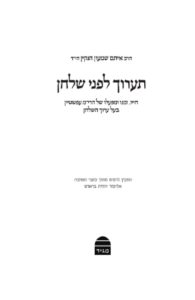
We post this now to note our celebration of the publication of תערוך לפני שלחן: חייו, זמנו ומפעלו של הרי”מ עפשטיין בעל ערוך השלחן (“Set a Table Before Me: The Life, Time, and Work of Rabbi Yehiel Mikhel Epstein, Author of the Arukh HaShulchan” (see here) (Maggid Press, 2019), by Rabbi Eitam Henkin, הי”ד.  Like many others, we were deeply saddened by his and his wife Naamah’s murder on October 1, 2015.  We draw some small comfort in seeing that the fruits of his labors still are appearing.

According to Rabbi Eitam Henkin הי”ד in his recently published book on the life and works of Rabbi Yechiel Mikhel Epstein, the first volume of the Arukh Hashulchan on Orach Chaim covering chapters 1-241 was published in 1903; the second volume addressing chapters 242-428 was published in 1907; and the third volume covering chapters 429-697 was published right after Rabbi Epstein’s death in 1909.[1] Others confirm these publication dates.[2]

The Mishnah Berurah, Rabbi Yisrael Meir Kagan’s commentary on the Orach Chaim section of the Shulchan Arukh was published in six parts, with each appearing at different times over twenty-three-year period.  Volume one was published in 1884, volume three in 1891, volume two appeared in 1895, volume four in 1898, volume five was published in 1902, and volume six in 1907.

We suspect that while the first volume of the Arukh Hashulchan on Orach Chaim did not appear until 1903, Rabbi Epstein wrote this work some time before this, and its publication and was delayed for economic and government censorship reasons. Rabbi Eitam Henkin notes (in the above biography) that Rabbi Epstein made mention of the very difficult time he had finding the funds to publish his work. Rabbi Epstein himself wrote in an 1886 letter, “to my great distress, I am unable to publish [the next installment of the Arukh Hashulchan] due to the lack of funding . . . publishing is exceedingly expensive.”[3] The high cost of publishing and limited funding actually led to Rabbi Epstein’s initially publishing the Arukh Hashulchan in numerous short pamphlets, each covering just a few of the Shulchan Arukh’s topic headings, rather than in larger volumes.  Eventually, as funds became available, these pamphlets were combined into larger volumes, organized around the “four-pillars” framework of halakhah used by other rabbinic jurists since Rabbi Karo.[4] Likewise, Rabbi Henkin uncovered correspondence in which Rabbi Epstein bemoaned that long-before completed manuscripts of the Arukh Hashulchan were languishing in St. Petersburg awaiting review and approval by Russian government censors.[5]

Appreciating the realities of the funding- and censorship-related delays with which Rabbi Epstein had to contend helps rectify what Rabbi Meir Bar-Ilan described as Rabbi Epstein’s furiously productive writing schedule with the nearly four decade span between when he began writing the Arukh Hashulchan in 1870 and the publication of the final volume of Arukh Hashulchan: Orach Chaim in 1909 (and other volumes considerably after his death by his daughter[6]). Rabbi Meir Bar Ilan described his grandfather’s process as follows:

My grandfather sat each day in the room designated as the local rabbinic courtroom together with his two rabbinic judge colleagues from morning until night, save for two hours in the afternoons . . . He sat at his table with a chair next to him upon which he kept four books related to the topic he was currently dealing with: a volume of Maimonides’ Mishnah Torah, a volume of the Arbah Turim, the Shulchan Arukh, and a small edition of the Talmud.  And thus, looking here and there, he wrote his book, Arukh Hashulchan, page after page.  Occasionally, he would get up and take out another book to look at . . . This book, the Arukh Hashulchan, which is foremost in its genre, was printed directly from the first draft manuscripts, exactly as they were initially produced by the author . . . without edits, erasures, or rewrites.[7]

Even if somewhat hyperbolic in its recollection, the pace of work described by Rabbi Meir Bar-Ilan certainly does not suggest that the writing of the Arukh Hashulchan would have taken more than thirty years. It is likely that the text of Rabbi Epstein’s monumental restatement of halakhah was written and prepared long before it finally appeared in print.[8]

So, when was the Arukh Hashulchan on Orach Chaim actually written? We suspect it was written after 1891 and before 1895.

As noted, the first volume of the Mishnah Berurah was published in 1884, and the Arukh Hashulchan cites it thirteen times.  Mishnah Berurah volume three was published seven years’ later in 1891 and is also cited by the Arukh Hashulchan—in this case, twelve times.  The Arukh Hashulchan cites none of the other four volumes of the Mishnah Berurah, however, which indicates that Rabbi Epstein did not have them.  That would indicate that Rabbi Epstein had completed his manuscript of Arukh Hashulchan on Orach Chaim before the 1895 when the next installment of the Mishnah Berurah appeared. We see in Rabbi Eitam Henkin’s work (p. 312) that he proposes a similar observation, and we are gratified that he shares this inference. While over a decade would pass before the Arukh Hashulchan on Orach Chaim was fully published, and while by this time the Mishnah Berurah, too, was in print in its entirety, Rabbi Meir Bar-Ilan’s account of Rabbi Epstein’s writing process suggests that once written, the Arukh Hashulchan manuscripts were not significantly revisited or edited by Rabbi Epstein. It is not surprising, then, that the Arukh Hashulchan on Orach Chaim does not include references to sections of the Mishnah Berurah that appeared only after 1895.

We are aware of 36 (or 37, if one counts the double reference in number 5, below) references to the Mishnah Berurah in the Arukh Hashulchan[9] none of which are particularly important to the work, and only in one of them (319:22) does the Arukh Hashulchan seem to be actually reacting to something that the Mishnah Berurah directly cited in his own name.  The citations to the Mishnah Berurah in the Arukh Hashulchan themselves generally look like (to quote Rabbi Bar-Ilan) “another book to look at.”  Furthermore, it only looks like he did so in certain areas deeply and other areas much less.  There are six quoted in hilkhot tzitizit, one in hilkhot tefillin, two in hilkhot shema, four citations over three simanim in hilkhot tefilla, and then occasional references scattered throughout hilkhot Shabbat.  This sparse citing suggests that the Arukh Hashulchan neither studied the Mishnah Berurah, nor is responding to it systemically.  So to, the only explanation for the lack of citation to volumes two, four, five and six is that Rabbi Epstein did not have them at the time he was producing his manuscript of the Arukh Hashulchan on Orach Chaim. (We see that Rabbi Eitam Henkin, in his work makes a similar observation on pages 311-313.)

Below is a list of all the cases we are aware of in which the Arukh Hashulchan actually has and cites and quotes this Mishnah Berurah.

  1. Arukh HaShulchan 10:4 contains a reference to Biur Halakhah 10 s.v. veyesh lah.
  2. Arukh HaShulchan 10:7 contains a reference to Biur Halakhah 10 s.v. ela im ken.
  3. Arukh HaShulchan 10:8 contains a reference to Biur Halakhah 10 s.v. veain lah kenafot.
  4. Arukh HaShulchan 11:8 contains a reference to Biur Halakhah 11 s.v. vehu.
  5. Arukh HaShulchan 11:22 contains a reference to both Mishnah Berurah 11:27 and 11:29 and the Biur Halakhah, which explains this.
  6. Arukh HaShulchan 12:4 contains a reference to Biur Halakhah 12 s.v. im nepseku.
  7. Arukh HaShulchan 14:5 contains two references to Biur Halakhah 14 s.v. hetil yisrael.
  8. Arukh HaShulchan 25:23 contains a reference to Biur Halakhah 25 s.v. vehakhi nohug.
  9. Arukh HaShulchan 25:26 contains a reference to Mishnah Berurah 44.
  10. Arukh HaShulchan 62:3 contains a reference to Biur Halakhah 62 s.v. yachol lekrotah bekhol lashon.
  11. Arukh HaShulchan 76:21 contains a reference to Biur Halakhah s.v. kara bemakom.
  12. Arukh HaShulchan 76:4 contains a reference to Mishnah Berurah 77:8.
  13. Arukh HaShulchan 79:11 contains a reference to Mishnah Berurah 5.
  14. Arukh HaShulchan 79:17 contains a reference to Mishnah Berurah 79:29 or Biur Halakhah s.v. aval chalul.
  15. Arukh HaShulchan 87:7 contains a reference to Mishnah Berurah 9.
  16. Arukh HaShulchan 89:23 contains a reference to Mishnah Berurah 89:22.
  17. Arukh HaShulchan 89:24 contains a reference to Mishnah Berurah 89:24 and Biur Halakhah s.v. vekhen okhlin umashkin.
  18. Arukh HaShulchan 91:3 contains a reference to Biur Halakhah 91 s.v. hoyil vekhisah.
  19. Arukh HaShulchan 91:4 contains a reference to Biur Halakhah 91 s.v. yatza.
  20. Arukh HaShulchan 245:8 contains a reference to Mishnah Berurah 245:23.
  21. Arukh HaShulchan 247:13 contains a reference to Mishnah Berurah 247:18.
  22. Arukh HaShulchan 262:4 contains a reference to Mishnah Berurah 262:12.
  23. Arukh HaShulchan 263:19 contains a reference to Mishnah Berurah 263:49.
  24. Arukh HaShulchan 268:6 contains a reference to Biur Halakhah 268 s.v. veshelo bekavanah.
  25. Arukh HaShulchan 271:30 contains a reference to Biur Halakhah s.v. vehu rubo.
  26. Arukh HaShulchan 275:2 contains a reference to Biur Halakhah 275 s.v. leor haner.
  27. Arukh HaShulchan 301:122 contains a reference to Mishnah Berurah 301:176–177.
  28. Arukh HaShulchan 302:32 contains a reference to Mishnah Berurah 303:87-88.
  29. Arukh HaShulchan 302:9 contains a reference to Mishnah Berurah 301:2, 10, 11 and Biur Halakhah s.v. shaveh aleha.
  30. Arukh HaShulchan 306:22 contains a reference to Mishnah Berurah 306:16 and Biur Halakhah s.v. beketav shelahem.
  31. Arukh HaShulchan 319:19 contains a reference to Biur Halakhah 319 s.v. le’ekhol meyad.
  32. Arukh HaShulchan 319:22 contains a reference to Mishnah Berurah 319:21 and Biur Halakhah s.v. beshinui.
  33. Arukh HaShulchan 321:10 contains a reference to Mishnah Berurah 321:37–38.
  34. Arukh HaShulchan 328:39 contains a reference to Mishnah Berurah 328:145.
  35. Arukh HaShulchan 330:7 contains a reference to Biur Halakhah s.v. kol sheloshah yamim.
  36. Arukh HaShulchan 336:21 contains a reference to Biur Halakhah 336 s.v. mutar lelakh.

A question that can only be speculated about is whether the Arukh HaShulchan is ever responding without citation to the Mishnah Berurah (for example, in the case of married women and hair covering in the synagogue in Orach Chayim 75).  Rabbi Eitam Henkin (p. 314) quotes the famous observation of this father, Rabbi Yehuda Herzl Henkin in Shut Benai Banim 2:18 that there are countless times where the Aruch HaShulchan is responding, without citing, the Mishnah Berurah.  Rabbi Eitam Henkin then provides a list of such possible cases.

[1] See Rabbi Eitam Henkin, Ta’arokh Lifanai Shulchan: Chayo Zemano U’mepa’alo Shel Harav Yechiel Mikhel Epstein Baal Arukh Hashulchan, pp. 245-246.

[2] See as well the following article by Rabbi Eitam Henkin where he makes this claim as well:

 ‘ספרי ערוך השלחן – סדר כתיבתם והדפסתם’, חצי גבורים – פליטת סופרים, ז (תשע”ד), עמ’ תקטו-תקלו

Copies of the first editions can be found in the Hebrew University Library.

[3] Kitvei Ha-Arukh Hashulchan, no. 104.

[4] See Rabbi Eitam Henkin’s book at pages 234–235.

[5] See Kitvei Ha-Arukh Hashulchan, no. 56.

[6] See Printing of the Arukh HaShulhan: The Missing Line About Rabbi Epstein’s Daughter for more on the posthumous publication of volumes.

[7] Rabbi Meir Bar-Ilan, From Volozhin to Jerusalem 269-271 (1939-1940) [Hebrew].

[8] See Rabbi Eitam Henkin’s work תערוך לפני שלחן at pages 229–257 for a detailed discussion of the publication difficulties and schedule of the Arukh HaShulchan.

[9] Twice Arukh Hashulchan refers to the work by its formal name, Mishnah Berurah, and all the remaining times by an acronym מ”ב or המ”ב.


Book announcement: Ta’aroch Lifonai Shulchan by Rabbi Eitam Henkin, H”YD

Book announcement: Ta’aroch Lifonai Shulchan by Rabbi Eitam Henkin H”YD

By Eliezer Brodt

הרב איתם שמעון הנקין הי”ד, “תערך לפני שלחן: חייו, זמנו, ומפעלו של הרי”ם עפשטיין בעל ערוך השלחן,” הוצאת קורן 413 עמודים

It’s with great pleasure that I announce the second printing of the book Ta’aroch Lifonai Shulchan by R’ Eitam Henkin H”YD, published by Maggid Press. I had the unique privilege to edit this work, together with R’ Eitam’s special,learned parents. The first printing of this book was issued on January 2 earlier this year and sold out shortly after its released.


This book is an intellectual biography of R’ Yechiel Michel Epstein, author of the classic work Aruch HaShulchan. In 2006 R’ Eitam began publishing essays about the Aruch HaShulchan in various journals. Over time they became more and more renowned, for their comprehensiveness, clarity, high quality, and at times for new discoveries. They were read by a wide-ranging audience. In general, R’ Eitam’s numerous writings demonstrate an excellent command in both the halachic aspects and the historical aspects of the topics he set out to write about. Alongside his many historical essays are his many Torah articles and full-fledged halachic works. [Most of which are available here]. He was a unique combination of a first-rate talmid chacham and historian who was also blessed with  gifted writing and research skills. [See earlier on the Seforim Blog for hespedim on him here, here and here].

At one point he was invited to print all his articles related to the Aruch HaShulchan as a book for Touro College Press. R’ Eitam began collecting his unpublished material, updating what he already printed, for this work until the tragic day in 2015, the third day of Chol Hamoed Succos, when R ’Eitam was murdered together with his wife Na’ama.

After his murder his family accessed his computer and found this work on the Aruch HaShulchan amongst many other files of material. Various chapters were in different stages and many were even ready for print. After carefully reading through all the files about the Aruch HaShulchan and figuring out what which version was the most updated. The material which was found to be already printworthy were than then collected and organized into this book. Some other printed articles of his related to the Aruch HaShulchan were added to the book, such as his article about the rebbe of the Aruch HaShulchan.

Among R’ Eitam’s many qualities were his excellent writing skills; he was capable of making bibliographic essays  that of the kind that are generally boring to the regular reader interesting to such audiences. The material in this book was completely written by R’ Eitam, however the order of some sections was shifted around to flow better as a whole. Additionally, as various sections were written for different publications and at different times as were the various citations in the footnotes were adjusted/synchronized with the rest of the work. That said, one chapter was not entirely finished by R’ Eitam (Part 2, Chapter 4); and his parents completed it based on his notes, and another small chapter (Part 1, Chapter 8) was completed by his brother.

We are currently working on printing a several more volumes of his material. The next project which is very near completion is an English translation of twenty-five of his essays [for some articles in English see earlier on the Seforim Blog (here) and in Hakirah (here and here)]. Another project which we are working on is a two-volume Hebrew work consisting of his material related to Eretz Yisrael, shemittah and Rav Kook. Dedication opportunities are still available for these works. Dedications are tax refundable. Email me at eliezerbrodt@gmail.com for more information.

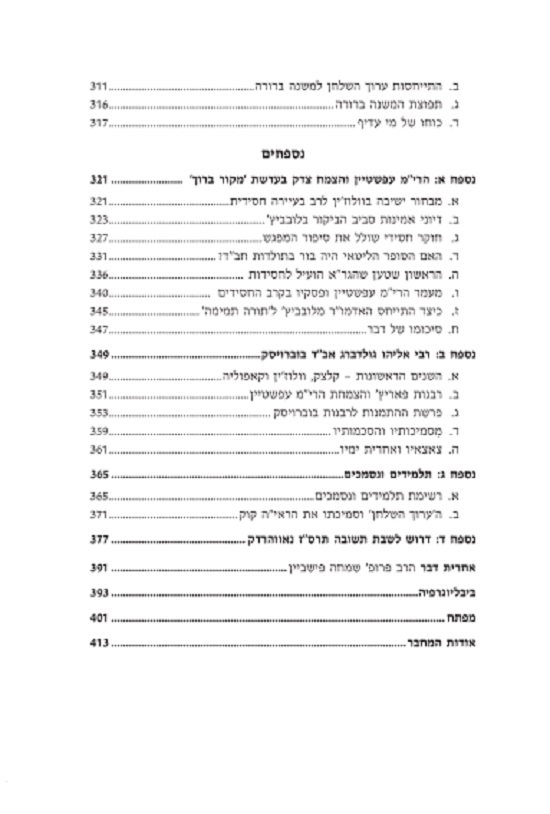
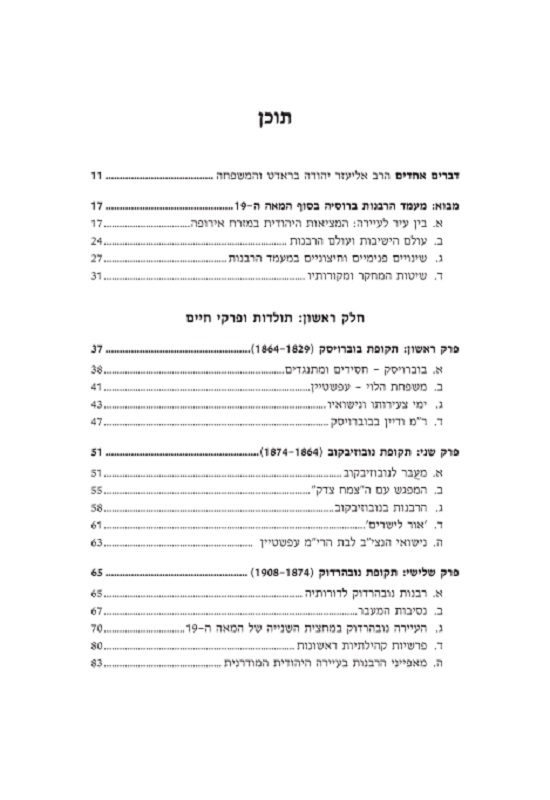
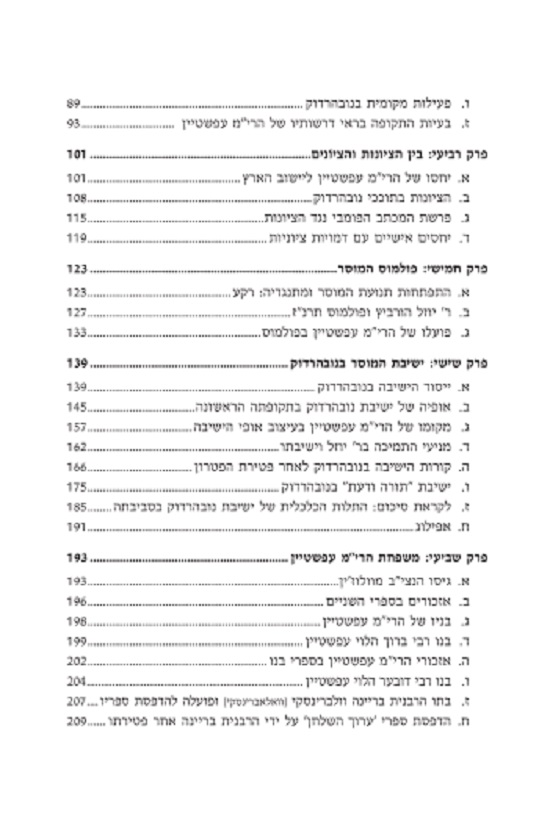
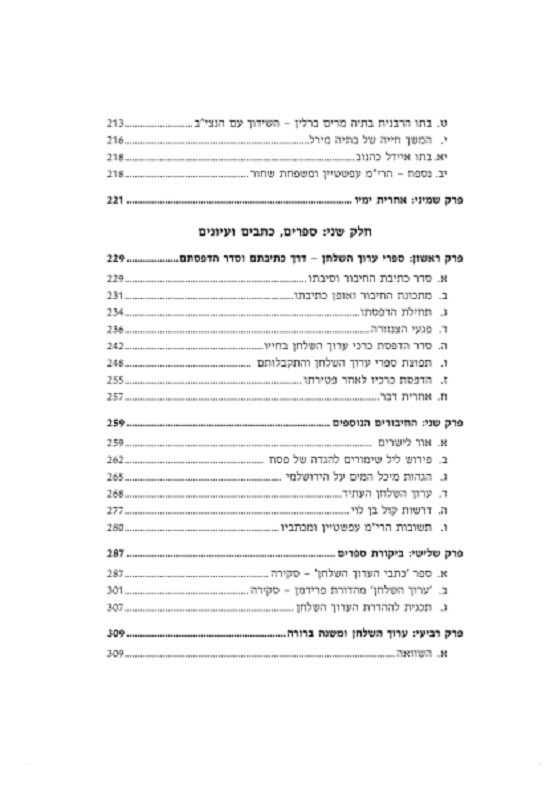
The book should be available for purchase at local seforim stores or via Maggid Press. If one is interested in the introduction of the book and some sample pages, email me at eliezerbrodt@gmail.com.Here are the Table of Contents from Ta’aroch Lefonai Shulchan:


Book Announcement

Book Announcement
By Eliezer Brodt
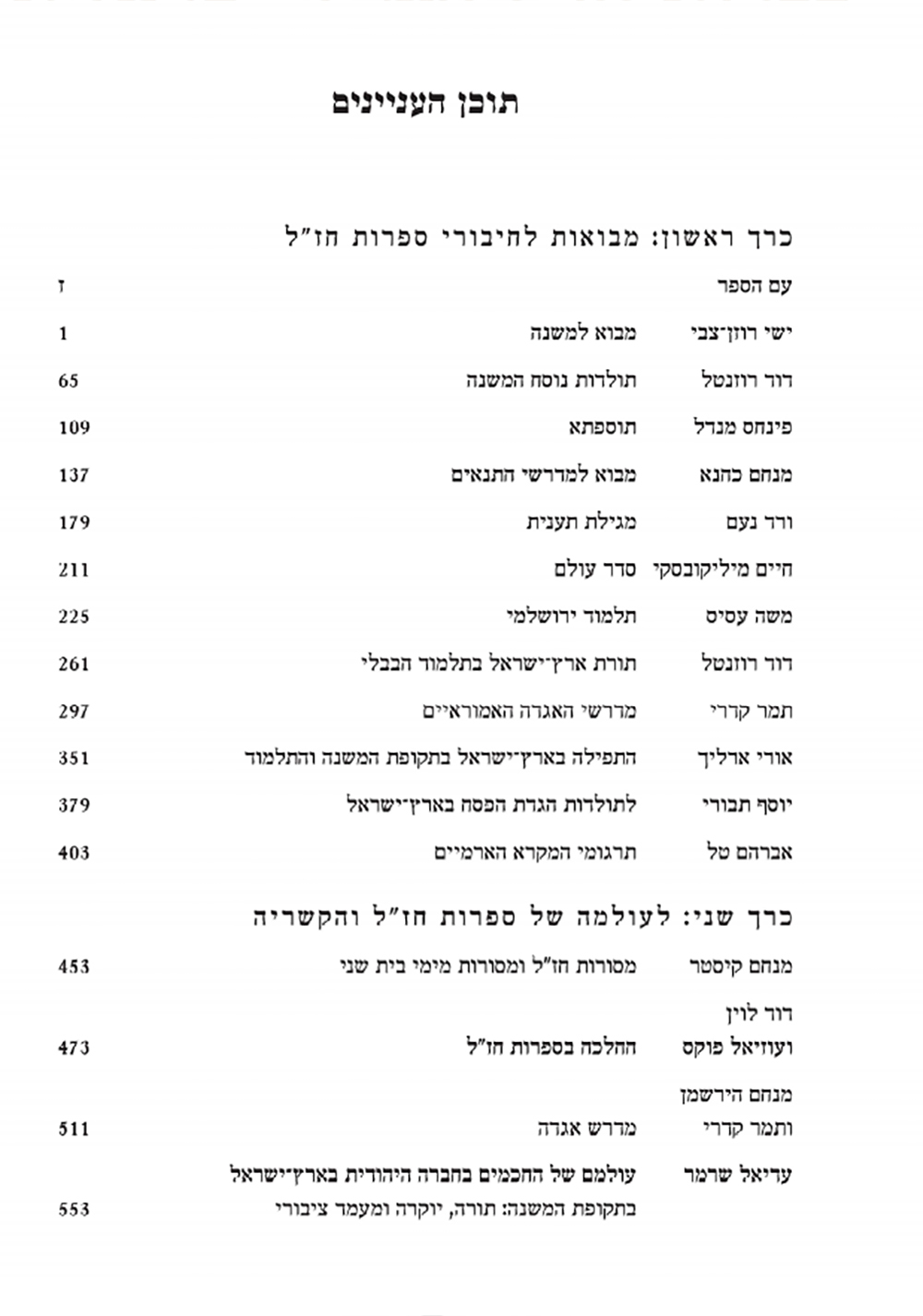
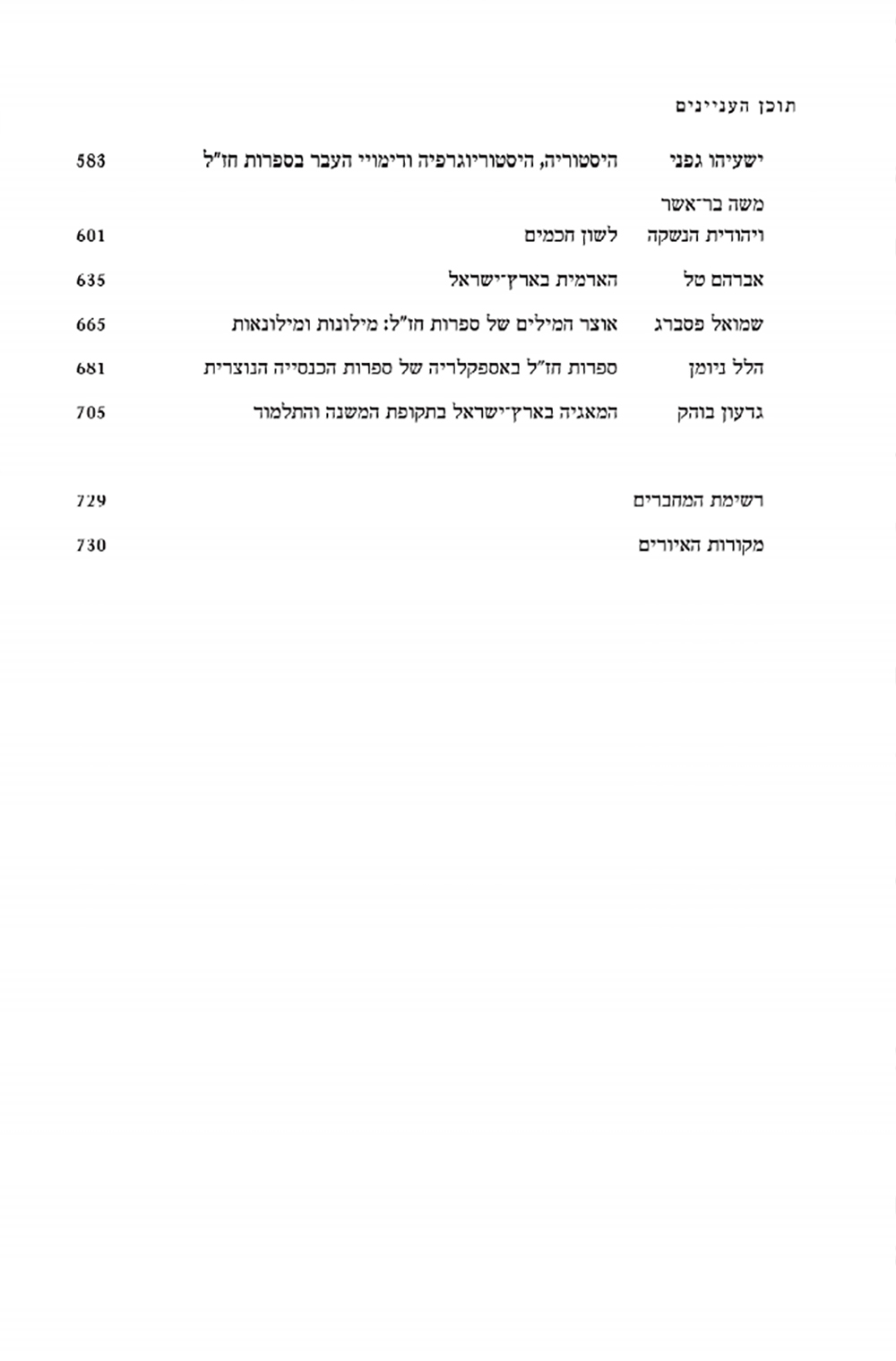
ספרות חזל הארץישראליתמבואות ומחקריםהמערכת מנחם כהנא, ורד נעם, מנחם קיסטר, דוד רוזנטל, ב’ חלקים, 732 עמודים.
I am very happy to announce the publication of an important work which numerous people will find very useful. This is a collection  essays from various experts in the field of Chazal’s Eretz Yisrael Literature. If one wants a proper introduction to various works of Chazal from the Mishna and on, this is the place to look Up until now there were numerous articles and books on all these topics, including the two volumes set Literature of the Sages Many of the topics covered in these two new volumes can be found in; Literature of the Sages, some times even by the same authors e.g. Vered Noam on Megilat Tannit or Chaim Milikowsky on Seder Olam. However, many of the chapters are new or are written by different people. One hopes that they will continue this series with a volume dealing with the Talmud Bavli.
For a short time copies can be purchased through me for a special price. Contact me at Eliezerbrodt@gmail.com


Torah Reading for Zochor and Parah

Torah Reading for Zochor and Parah
By Eliezer Brodt
The following is a chapter of my PHD dissertation related to the upcoming Torah Reading for Zochor and Parah
קריאת פרשת זכור ופרשת פרה דאורייתא*
מאת אליעזר יהודה בראדט

ר’ אברהם גומבינר בעל ‘מגן אברהם’ נפטר בצום גדליה שנת תמ”ג ולא זכה לראות חיבורו ‘נר ישראל’, הפירוש המונומנטלי לשלחן ערוך אורח חיים, יוצא לאור בדפוס. כמה שנים לאחר מכן, בשנת תנ”ב, נדפס החיבור יחד עם ‘טורי זהב’ בדיהרן פארט ע”י המדפיס המפורסם ר’ שבתי בס בעל ‘שפתחי חכמים’. תיכף לאחר הדפסתו זכה שנכתבו ונדפסו כמה קיצורים ממנו, ביניהם גם ר’ נתן איגר בחיבורו ‘גן נטע’, פראג תנ”ה. גם זכה לספרי פרשנות שנכתבו במיוחד על חיבורו. עד כדי כך מצינו שר’ יונה לנדסופר כתב בצוואתו: “הלכה כמותו כל מה שפוסק”. ויש עוד הרבה שכתבו בדומה לו. נשאלת השאלה מה ייחודי בחיבור זה ומה יתרונו על פני שאר המפרשים. התשובה בקצרה היא שבפירוש זה אנו מוצאים: א. לימוד הסוגיה ושאר המקורות באופן עצמאי בלי להסתמך רק על קודמיו. ב. חידושים עצמיים. ג. מקורות חדשים מספרות האחרונים. גם יש בו יותר דיונים על כל סימן וסימן, וזהו גם “פירוש” במובן הפשוט של המילה, שהרי הוא דן בכל דבר ודבר כמו רש”י ותוס’ גם יחד, הוא מרבה לדון מכל כיוון אפשרי, בודק שורש הדבר, וגם מביא מקורות רבים שלא היו לשאר נושאי הכלים, השתמש בבקיאותו בספרי חז”ל וראשונים וארבעה חלקי השו”ע ודן בכל מה ששייך לסימן. לכן אין שאלה מדוע ניצח המג”א את מתחריו. אבל עדיין יש לדעת שקשה להגיד דבר משמעותי בנוגע למג”א מבלי לעיין היטב בדבריו שנכתבו בקיצור נמרץ וגם חייבים לבדוק בכל הסוגיות היכולות להיות נוגעות לאותו עניין, כאשר אצלו רואים כפשוטו איך “דברי תורה עניים במקום אחד ועשירים במקום אחר”, ואיך הוא משתמש בבקיאות נדירה כדי להגיע למסקנות הלכתיות. כדי לרדת לסוף דעתו יש לעקוב אחר ציוניו ולעיין בהם היטב, ואפי’ במקום שלא ציין לדבריו בשאר מקומות. בדוגמה זו לפניניו רואים את עומק כוונתו ומדוע חייבים לבדוק דבריו המקומיים בעיון וגם בשאר המקומות הנוגעים לסוגיא, כדי להגיע להבנת דבריו.
הארכתי בסוגיה זו לפי שאפשר לראות דרכה הרבה פרטים בנו”כ אלו.[1]
בית יוסף
בסי’ קמו מתייחס הבית יוסף לשתי הקריאות שיש בהן חומרה יותר מכל שאר הקריאות:
“וכל מיני היתרות אלו שכתבו המפרשים להקל בשמיעת קריאת התורה, אינם ענין לפרשת זכור שהיא מן התורה בעשרה, כמבואר בדברי הרא”ש פרק שלשה שאכלו ובדברי סמ”ק. והתוספות ריש פרק היה קורא (ברכות יג ע”א ד”ה בלשון) כתבו, דפרשת זכור ופרשת פרה הוו דאורייתא”.
ושוב בבית יוסף אורח חיים ריש סי’ תרפה מביא:
“וכתבו בתוספות בריש פרק היה קורא, דיש פרשיות המחוייבין לקרות דאורייתא, כמו פרשת זכור ופרשת פרה אדומה”.
דרכי משה
בדרכי משה הוסיף עליו: “וכתב בתרומת הדשן סימן ק”ח, דלכן יש ליזהר יותר לשמוע פרשת זכור בעשרה, יותר מקריאת מגילה שנזהרים לקרותה בעשרה, אלא שהעולם לא נהגו כן”.
עוד מביא בדרכי משה: “מצאתי כתוב בשם מהרי”ש, אותם שאינם יכולים לבא למנין לפרשת זכור יש להם ליזהר לומר אותה בניגון ובטעמים”.
ומשם מובא הדבר בשולחן ערוך, שם סע’ ז: “י”א שפרשת זכור ופרשת פרה אדומה חייבים לקראם מדאורייתא, לפיכך בני הישובים שאין להם מנין צריכים לבא למקום שיש מנין בשבתות הללו, כדי לשמוע פרשיות אלו שהם מדאורייתא. הגה: ואם אי אפשר להם לבא, מ”מ יזהרו לקרותם בנגינתם ובטעמם”.
ר”ל שהמחבר סובר שקריאות פרשיות זכור ופרה הן מדאורייתא. הרמ”א שותק ואינו מביע דעתו.
ב”ח
הב”ח שם, מביא דעת התוס’ בברכות שפרשת זכור היא מדאורייתא ומוסיף: “וכיוצא בזה כתבו התוספות בפרק היה קורא, והוסיפו לשם פרשת פרה אדומה דהיא נמי דאורייתא. וצ”ע מנא להו הא. בשלמא פרשת זכור ודאי משמע בפרק שני דמגילה (יח ע”א) דהוי דאורייתא, מדאמר… וכן כתב הסמ”ק שזהו בשבת שלפני פורים שמזכירין פרשת זכור, אבל פרשת פרה שוה לפרשת שקלים ופרשת החדש”.
והב”ח ממשיך וכותב:
“ומה שתופסין התוספות בפשיטות דקריאת התורה אינה מן התורה אלא מדרבנן ועזרא הוא דתיקן, איכא לתמוה נמי, דבפרק מרובה אמרו, משה רבינו עליו השלום תיקן במדבר שיהו קורין בתורה, אלא שבא עזרא ותיקן תלתא. ובירושלמי (מגילה פ”ד ה”א) נמי איתא, משה תיקן להם לישראל שיהיו קורין בתורה בשבתות וימים טובים וראשי חדשים ובחולו של מועד, שנאמר וידבר משה את מועדי יי’ אל בני ישראל, ומביאו הרי”ף בפרק הקורא עומד (מגילה יג ע”א). השתא לפי זה ודאי כל קריאה בשבתות מן התורה כפירוש רש”י, אלא שלא היה סדר מיוחד לכל קריאה מלבד פרשת זכור, ובא עזרא ותיקן הסדר לכל הקריאות. ואפילו לפי זה נראה דצריך ליזהר טפי בפרשת זכור, שהיא מצוה מיוחדת ומפורשת בתורה, מה שאין כן שאר קריאות שאינן אלא בעל פה מפי משה רבינו עליו השלום. ועיין בתרומת הדשן סימן ק”ח”.
הוי אומר, למסקנתו, קריאת התורה של כל שבת ומועד היא מדאורייתא, אבל מן התורה לא נאמר מה היא הקריאה המיוחדת לכל שבת ומועד, וסדר הקריאה הוא מתקנת עזרא. ואילו קריאת פרשת זכור בשבת בכל שנה היא מדאורייתא, אבל לא פרשת פרה.
לאחר מכן מביא הב”ח: “כתב מהרש”ל דממה שכתב מהרא”י בתרומת הדשן סימן ק”ח, דצריך טפי שישמע קריאת פרשת זכור בצבור ממקרא מגילה, יראה להדיא שאין הקטן עולה למפטיר בפרשת זכור. ואף על פי שהשליח צבור קורא בתורה, מה בכך, הא בעינן בר חיובא לעלות והוא גם כן קורא בתורה אלא שהשליח צבור קורא בקול רם שלא לבייש וכו’. ואף בפרשת פרה ראוי להזהר, מאחר שבאותן תוספות יראה שאף פרשת פרה דאורייתא היא, וכמדומה שכך מצאתי בחידושי מרדכי עכ”ל”.
לאחר שמעתיק את דברי מהרש”ל, מוסר הב”ח את דעת עצמו: “ואינו נכון, דבקטן היודע למי מברכין ודאי שרי אף על פי שהקטן קורא בקול רם, דהא קטן עולה למנין שבעה וקריאת ספר תורה בכל שבת היא דאורייתא, מ’וידבר משה את מועדי יי’, כדאמרינן בירושלמי שהבאתי לעיל, ואפילו בקטן שאינו יודע למי מברכין, לא ידעתי למה לא יצאו השומעין בקריאת השליח צבור פרשת זכור מן הספר תורה, דמאי נפקא מינה בעולה לספר תורה אם הוא גדול או קטן, הא עיקר החיוב הוא שישמעו לקריאת התורה מהקורא מתוך ספר התורה”.
ט”ז
חתנו הט”ז[2] מביא דברי התרומת הדשן במילואם [יתר על מה שנמצא בב”ח]: “כתוב בת”ה סי’ ק”ח: צריכין ליזהר בקריאה בצבור טפי ממקרא מגילה…”. ואחר כך מביא דברי מהרש”ל מתוך הב”ח והוא מסיים: “ולעניות דעתי נראה דבקטן שאין יודע למי מברכין אין יוצאין ידי הברכה על ידו, ואין יוצאין ידי קריאה בלא ברכה, ע”כ אין להקרות למפטיר לקטן שאינו יודע למי מברכין, אבל ביודע למי מברכין נראה דשפיר יוצאין. ובסי’ רפ”ב פסק רמ”א דקטן יכול לקרות בפרשת המוספין או בארבע פרשיות שמוסיפין באדר, ונראה דביודע למי מברכין קאמר”.
עד כה מסכימים הפוסקים הנ”ל שפרשיות זכור ופרה שתיהן מדאורייתא וכפי שהובא בב”י בשם תוס’, ובתרומת הדשן. וכן סברת מהרש”ל כפי שהובא בשמו בב”ח. אמנם הב”ח עצמו חולק עליו וסובר שרק פרשת זכור היא מדאורייתא. דיון צדדי קיים בב”ח ובט”ז, אם בקריאה שהיא מוגדרת מדאורייתא ניתן להעלות קטן לתורה שיוציא את הקהל ידי חובתו, ואיזה קטן ניתן להעלות.
כמה עניינים עקרוניים אנו למדים: א. הב”ח משתמש בדברי מהרש”ל ממקור שאינו לפנינו, ואולי מדובר בגליונותיו לטור שהוא מרבה להביא בחיבורו. ב. הב”ח אינו חושש לחלוק על קודמיו – תוספות, תרומת הדשן, שו”ע, רמ”א ומהרש”ל הסבורים שפרשת פרה היא מדאורייתא. ג. גם הט”ז אינו חושש לחלוק על חמיו הב”ח.
עולת תמיד
ב’עולת תמיד'[3] כתב: “כן כתבו התוספות ריש פרק היה קורא והרא”ש פרק שלשה שאכלו דפרשת זכור ופרשת פרה מדאורייתא הוא, ועיין מה שכתבתי בזה בסי’ רפ”ב”.
ושם[4] כתב: “ובכנסת הגדולה מסיק דקטן יקרא בפרשת המוספים, זולת בפרשת זכור שהוא לכולי עלמא מדאורייתא. ועיין בתשובות הרשד”ם חלק או”ח סי’ י”ב. ונראה שיש להחמיר גם האידנא דשליח צבור קורא ומשמיע לציבור”.
יש לציין שבדבריו אלה נטה אחרי הכנסת הגדולה (וראה עוד להלן עד כמה) ואפי’ לא ציין לדברי רבו הב”ח בענין זה.
מגן אברהם
בהקדמה לסי’ תרפה הביא המג”א כמה הוספות בסוגייתנו:
[1] בשל”ה האריך לצדד שפרש’ פרה אינה דאורייתא. וכ”כ הב”ח, וכ”מ בתשובת מהרי”ל סי’ קפ”ב וקס”ז שלא הזכיר אלא פרשת זכור. [2] ובת”ה סי’ ק”ח כתב וז”ל, באשר”י פ”ו דברכות כתב דעשה דאורייתא לקרות פרש’ זכור בעשרה, ובתוספות שנ”ץ כתבו דאין שום קריאה דאורייתא רק פ’ זכור, ובתו’ הקצרות בברכות פ”ב פי’ דפ’ זכור ופ’ פרה חייבים לקרותן מן התורה וכו’. וכן בסמ”ק כתב: מ”ע זכור את אשר עשה, ואם כן צריך ליזהר יותר שישמעו קריאת פרשת זכור בי’ ממקרא מגילה בזמנה, אלא שהעולם לא זהירי בהכי. עכ”ל. [3] ול”נ ליישב מנהג העולם, דאטו מי כתיב בתורה שיקראו דוקא בשבת זה, אלא שחכמים תקנו בשבת זו הואיל ושכיחי רבים בבה”כ וסמוך לפורים כדי לסמוך מעשה עמלק למעשה המן, כמ”ש הלבוש, וא”כ כששומע בפורים פרשת ויבא עמלק נמי זוכר מעשה עמלק ויוצא י”ח. וכ”ה ברא”ם סי’ ב’. [4] ומשום פ’ פרה ס”ל דלא הוי מדאורייתא, דבאמת אין טעם בקריאת’ מדאורייתא וגם לא ידענא היכא רמיזא. [5] ול”נ שהגירס’ הנכונ’ כמ”ש בחי’ הרשב”א וז”ל, והקשו שלא מצינו קריאת ס”ת מן התורה אא”כ יאמר רש”י שתהא קריאת הפרשיות כגון פרשת פרה ופרשת זכור וכיוצא בהן מן התורה, ע”כ מ”מ כל אדם יהא זהיר וזריז במצו’ לבוא למנין. [6] ובמגלה דף י”ח משמע פשטא דתלמודא דפרשת זכור דאורייתא, ומשמע שם דה”ה בפ’ ויבא עמלק, יצא. [7] כתב מהרי”ל: בכל ד’ פרשיות אין מזכירין נשמות ואומרים צו”ץ (ד”מ): יש נוהגין בשנה מעוברת לקבוע תענית בכל יום ה’ מפרשת שובבי”ם ת”ת וי”א גם פרשת ויקהל ופקודי, ואומרים שומר ישראל וכו’].
עיון מדוקדק בדברי המגן אברהם
  1. בראש ובראשונה הוא דן בהרחבה האם קריאת פרשת פרה נחשבת מדאורייתא. הוא מביא שהשל”ה האריך לצדד שפרשת פרה אינה מדאורייתא, והוא גם ציין לב”ח שדן בזה, והוא מדייק בשתי תשובות של המהרי”ל (סי’ קפ”ב וקס”ז) שלא הזכיר אלא פרשת זכור.
שתי תופעות עולות מכאן:
– שימוש בספר של”ה כחיבור הלכתי.[5]
– שימוש בספר מהרי”ל.
  1. אח”כ מביא דברי תרומת הדשן שפרשת זכור בעשרה חמורה יותר מקריאת המגילה, ושתוס’ ס”ל שפרשת פרה היא דאורייתא. גם מכאן ניכר שימושו הישיר בספר תרומת הדשן, שלא הסתמך על הציטוטים בספרי קודמיו, דבר שיודגם בטבלה להלן.
  2. לאחר מכן מחדש המג”א יישוב למנהג העולם שלא מחמירים בפרשת זכור, שאמנם המצווה היא מן התורה, אבל קביעת המועד – שבת זו – לא מן התורה הוא, אלא מדברי חכמים. ולמעשה ניתן לצאת את חובת התורה גם פורים עצמו.
בינתיים אנו יכולים להתרשם משלוש המסקנות הללו:
  • שימושו בספר הלבוש.
  • כח החידוש שלו.
  • שימושו במקור ‘הרא”ם סי’ ב” [לא הצלחתי לאתר מקורו בעניין].
  1. לבסוף הוא חוזר לשאלת פרשת פרה אם היא מדאורייתא, וכותב: “ומשום פ’ פרה ס”ל דלא הוי מדאורייתא, דבאמת אין טעם בקריאת’ מדאורייתא וגם לא ידענא היכא רמיזא, ול”נ שהגירס’ הנכונ’ כמ”ש בחי’ הרשב”א וז”ל והקשו שלא מצינו קריאת ס”ת מן התורה, אא”כ יאמר רש”י שתהא קריאת הפרשיות כגון פרשת פרה ופרשת זכור וכיוצא בהן מן התורה ע”כ”.
  • חידושי הרשב”א למסכת ברכות היה בספרייתו.[6]
  • הוא עשה שימוש עצמאי בחידושי הראשונים להכריע בשאלה ממין זה, כדי לברר את הגירסא הנכונה. אך עדיין נשאל את עצמנו מה כוונתו ומה ביקש להכריע בהבאת גירסת הרשב”א? האם הכוונה להראות שפרשת פרה גם היא מדאורייתא?[7] האחרונים כתבו[8] בביאור דבריו שהמג”א רצה להראות שהגירסא בתוס’ היא כדעת רש”י, דהיינו שגם תוס’ לא סוברים שפרשת פרה היא מדאורייתא.
כיום ידוע שפרשנות זו אינה נכונה, כי תוספות בעצמם ס”ל שפרשת פרה מדאורייתא.[9]
כאן המקום לציין: נראה ש’אליה רבה’ לא הבין כך ברשב”א, היינו שדבריו נאמרו רק בדעת רש”י. הוא כתב[10] שמ”מ פרשת פרה היא דאורייתא וציין לדברי התרומת הדשן ודברי הרשב”א הללו, והוא דייק בסוף דבריו: ‘וכיוצא בהן מן התורה’, שפירושם: “ופירושו נ”ל גם על פרשת שקלים והחודש”. וגם הוכיח מעוד מקורות שאין טעות בתוס’ ברכות.
  1. מיד לאחר מכן כותב המג”א: “מ”מ כל אדם יהא זהיר וזריז במצו’ לבוא למנין”. כוונתו כאן לא מחוורת. האם הוא חוזר לפרשת זכור, או שהוא עדיין עוסק בפרשת פרה? לענ”ד משפט זה אינו חוזר לפרשת זכור, כי אליה הוא התייחס למעלה כשהעתיק לשון תרומת הדשן, אלא כוונתו לפרשת פרה, דהיינו, לאחר שפירש בדברי הרשב”א שרק רש”י ס”ל שהיא מדאורייתא, כתב שמ”מ יש להיזהר לבוא למנין [על עצם העניין שארבע פרשיות חמורות יותר מקריאת פרשיות של כל השנה, ראה של”ה שכתב כן].[11]
  2. אח”כ חזר לפרשת זכור והוא מבסס חידושו על הגמרא במגילה שגם ע”י קריאת פרשת ‘ויבא עמלק’ יוצא ידי חובת פרשת זכור מדאורייתא: “ובמגלה דף י”ח משמע פשטא דתלמודא דפרשת זכור דאורייתא, ומשמע שם דה”ה בפ’ ויבא עמלק, יצא” [החידוש הוא לענין פרשת ‘ויבא עמלק’ וזה מה שבעצם נאמר למעלה מזה]. חידוש זה לא מצאנו בספרי הלכה אחרים. כאן ניכרת סמכותו לחזור ולהסיק הלכה מן התלמוד עצמו.
  3. עוד ניתן להבחין, כי כדרכו במקומות רבים בפירושו, הוא מוסיף דברים שאינם מופיעים בנושאי הכלים הקודמים לו סביב השו”ע, וזו – כפי שכבר הסברתי באריכות כמה פעמים היא אחת ממגמותיו בפירושו. אבל לא אכנס לזה כאן.
סעיף זה הוא דוגמה מצויינת לראות דרכו של המג”א ומגמתו בספרו. מתוספותיו לכל סימן, לא תמיד ברור באלו ספרים עשה שימוש תדיר ועקבי, ובמיוחד לא ברור איזה סוג תוספות חיפש להוסיף. למשל, בהלכות פורים הוא מרבה להביא מהספרים: מעגלי צדק, מטה משה ושל”ה. בכל אחד מהחיבורים הללו נמצאים מקורות חשובים. אך דווקא בסוגיא זו של פרשת זכור ופרה הוא לא מצטט כלום מתוך מעגלי צדק ומטה משה, ורק דבר אחד מתוך השל”ה, אף שיכול היה להוסיף מהם דברים לא מעטים. מכאן ברור דבר אחד בלבד: שאין מטרתו להביא מקורות מעניינים בכדי, וכי לא הביא כל מה שיכול היה להביא.
דעת מהרש”ל
לעיל כתבתי בדעת הב”ח, כי מדבריו עולה שברשותו היה חיבור של מהרש”ל בכ”י, אבל הוא לא חושש לחלוק עליו. חשוב יותר לציין שלפי דברי מהרש”ל שהובאו בב”ח, פרשת פרה היא מדאורייתא. אבל לפי מטה משה והשל”ה, בחיבור ‘חכמת שלמה’ מחק מהרש”ל מילים אלו מתוס’: “ופרשת פרה אדומה נמחק, ונכתב בצידו טעות הוא וכן בתוספות דמגילה”.[12] וב’מקור חיים’ (סי’ קמו) כבר עמד על הסתירה בדברי מהרש”ל.
ייתכן שהמג”א לא הביא דעת מהרש”ל כאן, על אף שבד”כ דעתו חשובה לו ביותר, משום שהוא הכיר בסתירה ולא יכול היה להסתייע בדבריו לשום צד. ואפשר גם לומר שזו הסיבה שהמג”א הדגיש המלים “הגירסא הנכונה”, לרמז כי לדעתו לא היה מקום למחיקת מהרש”ל בחכמת שלמה, כי לפי הרשב”א הכוונה היתה בדעת רש”י לא שתוס’ בעצמם ס”ל כך.
מהדורת התלמוד שהיתה לפני הב”ח והמג”א
לפי התרומת הדשן, ב”י ורמ”א, היתה גירסא בתוס’ בברכות ומגילה, שפרשת פרה היא מדאורייתא. כאמור, מהרש”ל ב’חכמת שלמה’ מחק את המלים “פרשת פרה” בתוס’ ברכות ומגילה. ואכן בתוס’ הנדפסות בש”ס שלנו המלים הללו אינן נמצאות לא במסכת ברכות ולא במסכת מגילה. אבל לפי עדות הב”ח, תוס’ במגילה כתב “פרשת פרה” ואילו בתוס’ ברכות חסרות המלים. כנראה שבמהדורה שהשתמש בה המג”א כבר לא נאמר כך בתוס’, ולכן הוא הביא זאת מהרשב”א.
עיון בדפוס הראשון של התלמוד מעלה שבברכות כתוב בתוס’ ‘פרשת פרה’ אבל במגילה לא כתוב פרשת פרה. לכן צ”ע איזו מהדורה היתה לפני מהרש”ל וב”ח כשהם כתבו חיבוריהם. לאחרונה הגיע יצחק רון למסקנה שבדרך כלל לא היה הדפוס ראשון של בומברג ברשות מהרש”ל.[13] ולגבי הב”ח, דעת פרופ’ י”ש שפיגל היא שהב”ח השתמש בדפוס שני של בומברג למסכת מגילה.[14] אבל לפנינו לא נמצא בין בברכות ובין במגילה, שכבר שמו הערות של המהרש”ל בתוך הדפוס. מעניין למה בכלל מחק המהרש”ל גירסה זו, כיום אנו יודעים שגירסא כזא נמצאת בהרבה ראשונים.
עוד בענין דרכו של המג”א
כדאי להעיר שלא ניתן לעמוד על היקף עבודתו של המג”א, רק מניתוח מקומי. כדי להבין את דרכו צריך להקיף את כל רחבי ספרו, כפי שיודגם כאן.
  1. המג”א לא דן לענין קטן אם מותר לו לעלות לפרשת זכור, בעוד הב”ח והט”ז דנים בעניין. ה’מאמר מרדכי’ תמה על כך והשאיר זאת בצ”ע. אך נעלם ממנו שהמג”א דן בכך בקצרה בסי’ רפב ס”ק יב ושם פסק כמו הב”ח! וכך כתב על דברי הרמ”א: “וכ”פ ב”ח דלא כרש”ל”.
  2. בסי’ קמו כתב המג”א בהגהותיו שנדפסו רק בדפוס ראשון על הגליון: “ראה מה שכתבתי בסי’ תרפ”ה”.
  3. בסי’ קלז ס”ק ו הביא המג”א שו”ת מהר”ם לובלין שכתב בתוך דבריו: “שאני פרשת פרה שהיא דאורייתא”, וע”ז כתב במג”א: “ועיין מה שכתבתי סי’ תרפ”ה”.
  4. הב”ח בסי’ תרפ”ה מחדש כמה דברים בעצם חיוב קריאת התורה בכל ימות השנה. ועל כך לא העיר המג”א כלום. אבל בסי’ קל”ה בהקדמה הוא דן בדבריו וכך הוא כותב:

“אי’ ברי”ף פ”ד דמגיל’: ירושלמי, משה תיקן לישראל שיהיו קורין ג’ בב”ה ובמנחה עכ”ל, וצ”ע דאי’ במרובה שהלכו ישראל ג’ ימים בלא תורה בימי משה, עמדו הנביאי’ שביניהם ותקנו שיהיו קורין בב’ וה’ ובשבת, ועזר’ תיקן במנחה, והתוס’ רפ”ב דברכות כתבו גם כן שעזר’ תיקן קריאת התורה והקשה הב”ח עליהם בסי’ תרפ”ה מההי’ דמרובה וכו’, ואפשר לומר דהתוס’ לא נחתו לדקדק בזה ועיקר קושיתם כיון דתקנת נביאי’ הי’, א”כ ל”ש לומר דקרא ‘והיו’ אתא להורות על כך, והא דכ’ הרי”ף שעזר’ תיקן בב’ וה’ היינו מנין הקרואי’ כדאי’ בגמ’, וא”כ משה תיקן מנין הקרואים בשבת וי”ט ור”ח וח”ה, וכ”מ ברמב”ם פי”ב מתפל’ ובסמ”ק סי’ קמ”ט”.

לדרכו של ‘עולת שבת’ ושימושו בחיבור ‘כנסת הגדולה’
הבאתי שב’עולת שבת'[15] כתב: “ובכנסת הגדולה מסיק דקטן יקרא בפרשת המוספים, זולת בפרשת זכור שהוא לכולי עלמא מדאורייתא. ועיין בתשובות הרשד”ם חלק או”ח סי’ י”ב. ונראה שיש להחמיר גם האידנא דשליח צבור קורא ומשמיע לציבור”.
העו”ת ציין למקורות אלה מבלי לבדוק באמתחתם, משום שהעתיק בסתם את דברי כנסת הגדולה כאן שכתב בסי’ רפב: “ומנעתיו שקטן יקרא בפרשת המוספין ויפטיר, זולת בפרשת זכור דלכו”ע הוא דאורייתא שיקרא בה גדול ויפטיר בה גדול. ועיין ברשד”ם חלק א”ח סי’ יב”. ובאמת, המעיין בתוך הספר יווכח מיד שהדיון של מהרשד”ם אינו נוגע לענין קטן ופרשת זכור כלל, אלא נוגע לעניין אחר לגמרי בענייני מפטיר.
מגן אברהם ושיירי כנסת הגדולה
לעיל, עמ’ 84 העליתי השערה שהמג”א הכיר את הספר ‘שיירי כנסת הגדולה’, עקב אחרי מקורותיו והתרשם שאין לו תועלת גדולה ממנו ותרומתו לא חשובה כמו חיבור ‘כנסת הגדולה’ שהוא מביא מאות פעמים בשמו ושלא בשמו. להשערתי הוא נוכח לראות שרוב הדברים שמביא ‘שיירי כנסת הגדולה’, הם מתוך ספרים הנמצאים ברשותו ושעשה בהם שימוש.
כאן ניתן לראות דוגמה לכך.
‘שיירי כנסת הגדולה’ כתב[16]: “ופרשת פרה אדומה… מורי רש”ל ז”ל בספר חכמת שלמה כתב דטעות, ומחק פרשת פרה. מטה משה סי’ תתר. גם הב”ח הצריך עיון למה שנמצא כתבו ופרשת פרה אדומה, וכן בספר ל”ח שאכלו אות נ”ב כתב לא ידעתי אנה מצאו זה…”.
ואח”כ הוא כתב: “כתב רש”ל ז”ל, שאין הקטן עולה למפטיר זכור… ואינו נכון דבקטן היודע למי מברכין ודאי שרי… ואפ’ בקטן שאינו יודע… ומ”ש רש”ל בפרשת זכור גם בתשובת מהרי”ל סי’ קצז מגמגם על זה הביאה רבינו המחבר בסי’ רפב”.
רואים שהוא מרבה להביא ספרים כמו מטה משה, ב”ח, לחם חמודות, שהיו בשימוש תדיר אצל המג”א, לכן לא היה צריך להביאם מכלי שני.
אגב, רואים שגם הכנסת הגדולה לא ציין מקורו לכל דבר. הוא נטל את כל הידיעה אודות דעת הרש”ל בעניין קטן מתוך הב”ח, אבל הוא לא ציין אליו. בזמנם לא כתבו על כל דבר ודבר מה מקורו, כפי שמקפידים היום בעולם האקדמי.
ועוד בענין זה שהבאת, שהמג”א לא הביא דברים מתוך ‘שיירי כנסת הגדולה’ מלבד לפעמים דרך העולת תמיד ועולת שבת. כאן ניתן היה לסבור שאחד הציונים של המג”א לשו”ת מהרי”ל לענין פרשת זכור שהיא מדאורייתא – הוא משיירי כנסת הגדולה כאן, ואפשר שזה היה מקורו. אבל הואיל ובשיירי כנסת הגדולה ציין להמהרי”ל בסי’ קצז ואילו המג”א ציין לסי’ קסז, שזה אכן הציון הנכון ולא קצז, מכאן שהוא עשה שימוש ישיר בשו”ת מהרי”ל.
הערה על פי דברי המג”א
ר’ אליעזר דינער כתב: “המחבר מביא הכא סתם שפרשת זכור ופרשת פרה מדאורייתא… אך בענין פ’ פרה לא ידוע מה טיבו של החיוב זה… נמצא בתוס’ הקצרות בברכות… דפרשת זכור ופרשת פרה חייבים לקרותם מן התורה… ונראה שבזמניהם היתה גירסא זו ברש”י ובתוספת הנזכרות… שכמדומה לו בראשונה הגירסה לא היתה פ’ זכור ופ’ פרה, אלא פ’ זכור ופ”פ שהם ראשי תיבות של פרשת פורים, והיא פרשת ויבא עמלק וכו’ ופרשה זו באמת דאורייתא היא כמו שפירוש המ”א בסי’ תרפ”ה, ומביא ראיה לדבריו מהגמרא דמגילה דבפרשה זו יצא, ע”כ, ואחרי כן שינה המעתיק ראשי תיבות פ”פ לפרשת פרה, יען אשר הלשון פרשת זכור ופרשת פרה שגורה בפיו יותר מפרשת זכור ופרשת פורים, ובדרך זה בא הטעות פרשת פרה דאורייתא לספרים…”.[17]
הט”ז ומגן אברהם וחיבור תרומת הדשן

תרומת הדשן
יראה דאדרבה צריך טפי שישמע קריאת פרשת זכור בצבור ממקרא מגילה. אף על גב דמקרא מגילה עדיפא וכל מצוה נידחת מפניה, מ”מ לדעת רוב הפוסקים נקראת היא ביחיד, אבל קריאת פרשת זכור כתב האשירי פ’ שלשה שאכלו, דעשה דאורייתא הוא לקרותן בעשרה, ודוחה ל”ת דלעולם בהם תעבודו. להכי שיחרר רבי אליעזר עבדו, כדי להשלימו לעשרה. ע”ש פ’ שלשה שאכלו באשירי,
ובתוס’ שנ”ץ שכתבו דאין שום קריאה מדאורייתא רק פרשת זכור.
ובתוס’ הקצרות מברכות פ’ שני פירש, דפרשת זכור ופרשת פרה אדומה חייבים לקרותן מן התורה.
וכן בסמ”ק חלק למצות עשה זכור אשר עשה, וזה שאנו קורין פרשת זכור קודם פורים.
וא”כ צריך ליזהר יותר שישמע קריאת פרשת זכור בעשרה ממקרא מגילה בזמנה, אלא שהעולם לא זהירי בהכי.

ט”ז

צריכין ליזהר בקריאה בצבור טפי ממקרא מגיל’ אף על גב דמקרא מגילה עדיפ’ וכל מצו’ נדחת מפני’ מ”מ לדעת רוב הפוסקים נקראת אף ביחיד אבל פרשת זכור כתב האשר”י פ’ שלשה שאכלו דעשה דאוריית’ הוא לקרות’ בעשר’ ודוחה ל”ת שבתור’ דלעול’ בהם תעבודו להכי שחרר ר”א עבדו כדי להשלימו לעשרה.

ובתוס’ שנ”ץ כתבו דאין שום קריא’ מדאורייתא רק פרשת זכור.
ובתוס’ קצרות מברכות פ”ב פירשו דפרשת זכור ופרשת פרה חייבים בקריאתם מן התורה עכ”ל.

מגן אברהם
באשר”י פ”ו דברכות כתב דעשה דאורייתא לקרות פרש’ זכור בעשרה,
ובתוספות שנ”ץ כתבו דאין שום קריאה דאורייתא רק פ’ זכור.
ובתו’ הקצרות בברכות פ”ב פי’ דפ’ זכור ופ’ פרה חייבים לקרותן מן התורה וכו’.

וכן בסמ”ק כתב מ”ע זכור את אשר עשה
 

ואם כן צריך ליזהר יותר שישמעו קריאת פרשת זכור בי’ ממקרא מגילה בזמנה אלא שהעולם לא זהירי בהכי עכ”ל.

הטבלה מדגימה מספר הבנות:
א. דרכם של האחרונים הללו בהבאת ציטוטים.
ב. ‘תרומת הדשן’ היה ברשותם של הט”ז והמגן אברהם והם לא הסתמכו על כלי שני, לפחות במקרה זה [אמנם יש צורך לבדוק לגבי כל מקרה, כי ייתכן שלפעמים סמכו על ציטוטים משניים].
לא הבאתי בטבלה זו את הציטוט מתרומת הדשן שהובא בדרכי משה הארוך, כי שם הוא מביא רק שורה אחת. הב”ח רק ציין לעיין בסימן זה אבל לא מביא לשונו.
אע”פ שהמצטטים כתבו ‘עכ”ל’, אין הכוונה ללשון המקור ממש, אלא לתמציתו. הט”ז לא מביא את הסוף מה שכתב הסמ”ק ואת המסקנה שצריכים ליזהר יותר… והמג”א לא הביא את החלק הראשון של התשובה. וכמו שהדרכי משה כתב בהקדמתו, ראה לעיל, עמ’ 88.
סיכום
בפרק זה רואים, כאמור, כמה דברים חשובים, בענין דרכם של הנו”כ.
הב”ח משתמש בדברי מהרש”ל ממקור שאינו לפנינו. ב. הב”ח אינו חושש לחלוק על קודמיו – תוספות, תרומת הדשן, שו”ע, רמ”א ומהרש”ל שס”ל שפרשת פרה היא מדאורייתא. ג. גם הט”ז אינו חושש לחלוק על חמיו הב”ח. ד. העולת תמיד לא מחדש הרבה רק בעיקר על פי הכנסת הגדולה. ה. המג”א מביא כמה מקורות חדשים בסוגיה בכלל. ו. המג”א משתמש בשל”ה לנדון הלכתי. ז. שימוש של המג”א במהרי”ל. ח. טעם שהמג”א לא נצרך להביא מ’שיירי כנסת הגדלה’. ט. כח החידוש של המג”א. י. שימושם של הט”ז והמג”א בתרומת הדשן על פי בדיקה בפנים. יא. דרכם של הט”ז והמג”א כשכותבים ‘עכ”ל’ שאינו ממש.
[1] * פרק חיבורי, ‘פרשנות השלחן ערוך לאורח חיים ע”י חכמי פולין במאה הי”ז’, חיבור לשם קבלת תואר דוקטור, אוניברסיטת בר אילן, רמת גן תשע”ה’. אי”ה בקרוב אחזור להוסיף ולתקן פרק זה.
בענין פרשת זכור מדאורייתא, ראה: ר’ אהרן לעווין, ברכת אהרן על מסכת ברכות, ירושלים תשנ”ח, דף נא ע”ב (מאמר צט); ר’ צבי הירש גראדזינסקי, מקראי קודש, ב, נוי יארק תרצ”ז, עמ’ קו; הנ”ל, מילי דברכות, סט. לואיס תרפ”ג עמ’ פג-פד; ר’ עובדיה יוסף, חזון עובדיה, פורים, ירושלים תשס”ג, עמ’ ג-ה. בענין פרשת פרה מדאורייתא, ראה: ר’ מאיר לייבייש – מלבי”ם, ארצות החיים, ווארשא תר”ך, דף ו ע”א, סי’ א אות ד; האדר”ת, אלה יעמדו, עמ’ נז-נח; הנ”ל, חשבונות של מצוה, ירושלים תשס”ה, עמ’ רפו; ר’ מאיר שמחה הכהן מדווינסק, משך חכמה, פרשת חוקת, פרק יט פסוק כ [בענין המג”א]; ר’ צבי פרבר, הגיוני צבי, בתוך: ספר המועדים, לונדון תשמ”ז, עמ’ נג-נד; ר’ יצחק אריאלי, עינים למשפט, ירושלים תשי”ז, ברכות, (יג ע”א), עמ’ סח; ר’ שלמה פישר, דרשות בית ישי, א, ירושלים תש”ס, סי’ לב, עמ’ רל; חזון עובדיה, פורים, עמ’ טז-יח; ר’ יעקב קמנצקי, אמת ליעקב על התורה, ניו יורק תשנ”א, עמ’ שב, תמד, תפד; דניאל שפרבר, נתיבות פסיקה, ירושלים תשס”ח, עמ’ 45-50.
[2]  שם ס”ק ב.
[3] סי’ קמו ס”ק י.
[4] סי’ רפב ס”ק ד
[5] אי”ה אחזור לדון בזה ביתר הרחבה בקרוב.
[6] וראה נח,ד; שם,ה; סה,ב; סו,ב; קסז,ח; קצג,ו; שם,ז; ריב,ג; רכב,ב ועוד.
[7] יש לציין בדברי הרשב”א במגילה, כלל אינו מביא פרשת פרה כשהוא דן בזה.
[8] ראה: מחצית השקל, לבושי שרד, שמן למאור, בגדי ישע כאן.
[9] ראה למשל, תוספות רבנו יהודה שירליאון, ברכות; תוס’ רא”ש ברכות דף יב ע”ב, וכ”כ בדבריו, וסוטה דף ל”ב ע”ב; וכ”כ תוס’ איוורא סוטה שם. וראה ריטב”א מגילה שם.
[10] סי’ תרפ”ד ס”ק כא.
[11] של”ה, מסכת מגילה, דף פו ע”ב.
[12]  חכמת שלמה, ברכות שם. וכן כתב בביאור הגר”א סי’ תרפ”ה ס”ק כב. וראה ר’ שלמה זלמן הבלין, ‘ביאור הגר”א לשו”ע’, ישורון, ה (תשנ”ט), עמ’ תשי”ח-תש”כ.
[13] יצחק רון, ‘בקורת נוסח התלמוד הבבלי של ר’ שלמה לוריא’, עבודה לשם קבלת תואר דוקטור, האוניברסיטה בר אילן, רמת גן תשמ”ט, עמ’ צ. ולענין מסכת ברכות בכלל, ראה דבריו שם עמ’ 95-106.
[14] שפיגל, עמודים, הגהות, עמ’ 342. וראה ר’ דוד קמינצקי, ישורון, טו (תשס”ה), ‘חידושי הב”ח על ה”ס מכי”ק’, עמ’ פח הערה 18; ר’ יהושע מונדשיין, ‘שיבושים בהעתקת הגהות הב”ח לתלמוד’, מוריה כא, גליון ה-ו (רמה-רמו) (תשנ”ז), עמ’ קא-קג. והוא מציין לכ”י על מגילה, שהגיע לספרייה, מס’ 1744. הלכתי לבדוק בספרייה הלאומית, אך כרגע לא ניתן לראות חיבור זה, לכן ענין זה לא נבדק עד דק, ועוד חזון למועד.
[15]  סי’ רפב ס”ק ד.
[16]  סי’ תרפ”ה.
[17] זכרון יוסף צבי, ברלין סי’ קמו. וראה ר’ ברוך הלוי עפשטיין, מקור ברוך, ב, ווינלא תרפ”ח, עמ’ 1152; מה שכתב יעקב שמואל שפיגל, ‘על היחס לחיבוריו של ר’ אהרן וירמש’, ירושתנו, ג (תשס”ט), עמ’ רפה-רפו; הנ”ל, ישורון, יב (תשס”ג), עמ’ תתה בענין ר”ת אלו.