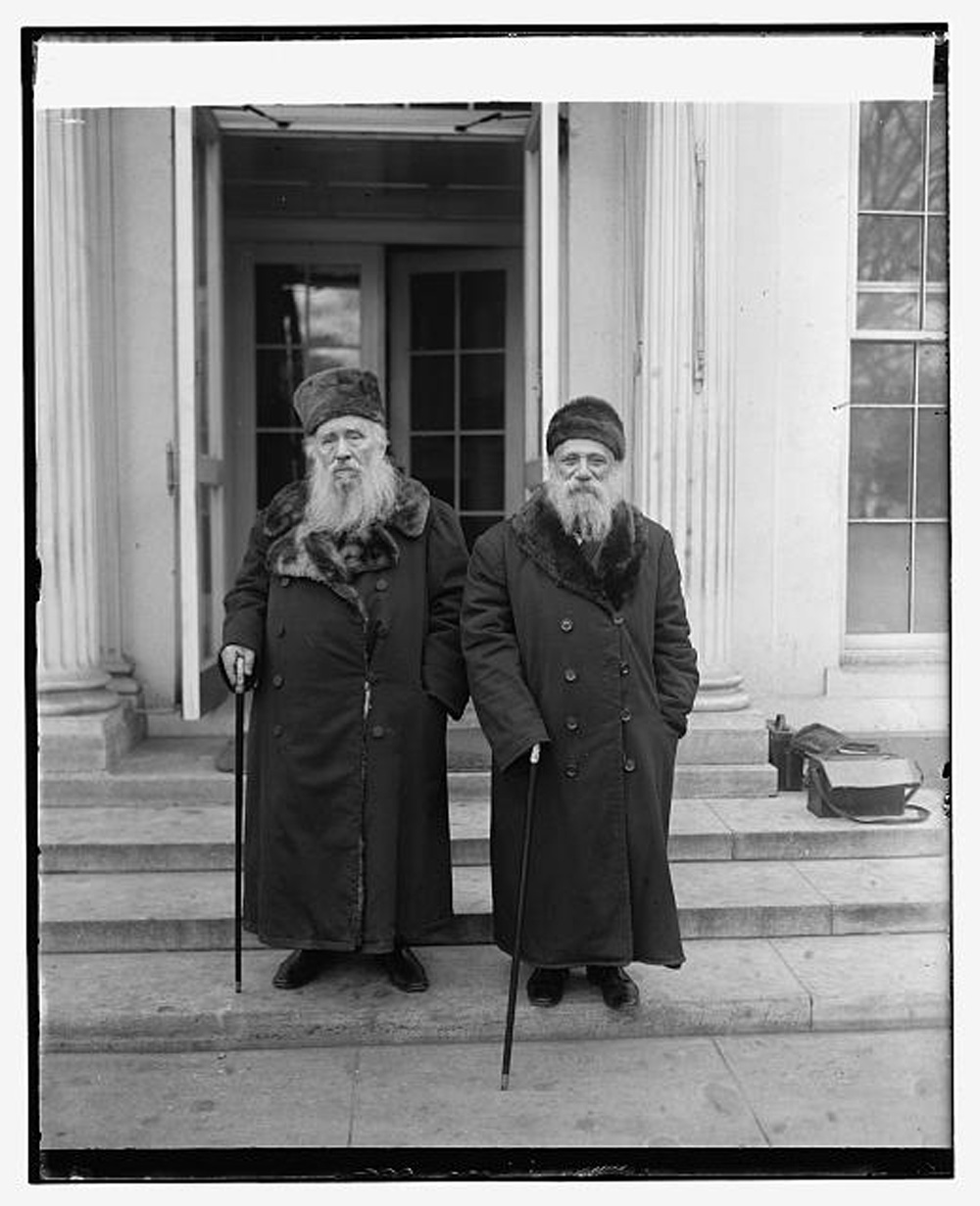
‘Masa’ot Yerushalayim’ and the ‘Sabba Kaddisha’ R. Shlomo Eliezer Alfandari


‘Masa’ot Yerushalayim’ and the ‘Sabba  Kaddisha’ 
R. Shlomo Eliezer Alfandari
By: Moshe Maimon
One of the greatest and most unique Torah scholars, Sephardic or otherwise, of the past 100 years was R. Shlomo Eliezer Alfandari . His life spanned about a century[1] and his prolific rabbinic career included stints in Istanbul, Damascus, Safed and Jerusalem. Besides for being an outstanding scholar with a near-photographic memory he was also extremely diligent and was a prodigious writer of responsa and novellae. Additionally, he was renowned as an independent thinker and outspoken critic of many of the societal norms prevalent around him including Zionism and modernity, and he had little tolerance for those who he felt had strayed from the torah-true path.[2] This quality earned him many admirers and not a few adversaries, but all admitted that R. Shlomo Eliezer’s sole motivation was the truth and he did nothing for personal gain. Indeed, despite his considerable means, he lived a life of asceticism and completely shunned any form of publicity.
Amongst his native Sephardic brethren he was known as ‘Chacham Mercado Alfandari’.[3] This unusual-sounding surname; ‘Mercado’, meaning ‘purchased’ in Ladino, was somewhat common in his native Turkey and was indicative of the fact that it’s bearer had undergone a symbolic ceremony in his youth whereby he was ‘sold’ and redeemed. This practice is mentioned in Sefer Hasidim (#245) and was widespread in Sephardic lands.[4] My Great-uncle, Sam Bension Maimon, himself a Turkish native, in his book The Beauty of Sephardic life (p. 188) has this to say about that interesting custom:
This practice of “purchase,” was followed by a family that was blessed with a newborn baby, but had previously suffered the loss of an infant before the new arrival. In order to ensure the life of the muevo nasido (newborn baby), they would go through a formality in which a relative or a friend would “purchase” this baby from the parents, thus transferring ownership. This was done to outsmart the evil spirits and ward off their fatal hold on this family’s offspring that was marked for a fatal accident. So, if it was a boy, he was called Mercado; or if it was a girl, she was called Mercada.[5]
Today, however, he is more popularly known as ‘the Sabba Kaddisha’ which was the title bequeathed upon him by the Minchas Elazar of Munkacz; R. Chaim Elazar Shapira, who was largely responsible for bringing this sage to the attention of the greater public especially in Europe among the Ashkenazim.  This also was used as the title of his response – שו”ת הסבא קדישא. In a sense, the Munkaczer was also responsible for shaping the perception that many people have of R. Alfandari, as his perspective as detailed in his writings and in Masa’ot Yerushalayim, is the lens through which many see the Sabba Kaddisha.
The Munkaczer, after hearing about this extraordinary personality almost completely coincidentally, gradually became convinced that this sage was the ‘Holy elder’ or Sabba Kaddisha of the generation. According to a personal Hassidic tradition he had, the Holy Elder of every generation was capable of bringing the Messiah. This is what drew this great Hassidic leader, born and bred in Ashkenazic/Hassidic Hungary to R. Alfandari, although from a distance it might have seemed that the two made strange bedfellows. R. Alfandari, for his part, was delighted to make the acquaintance of an important Torah leader who shared his extreme views on Zionism and modernity.
Masa’ot Yerushalayim; Journey To Jerusalem: A review
 
There are various sources which provide biographical information on this unique sage,[6] but predominant among them is the detailed account of the Munkaczer Rebbe’s trip to meet R. Alfandari in the late spring of 1930 shortly before the latter’s passing. This account was written by a follower of the Rebbe, who accompanied him on his trip, by the name of R. Moshe Goldstein. The book, entitled Masa’ot Yerushalayim which also contains a biographical section on R. Alfandari[7] was first published 1931 in Munkacz and has been published many times since. This monumental meeting between east and west is a most interesting narrative and in addition to providing insight into the lives of these great scholars, it also allows for a view of pre-war Israel which is the backdrop for this meeting.
The book was recently translated into English by Artscroll (in 2009) and is called Journey to Jerusalem. It is this last work which I will focus on. Unfortunately, instead of adhering to their usual high standard and putting in the type of quality effort they have come to be known for into producing a professional edition of this classic, I found it to be lacking in many basic areas. First off, it is essentially just a simple translation from the original, complete with the archaic syntax such as ‘the Holy Rebbe’, ‘the Holy shul’, etc. Generally speaking, such prose, although sounding fine in Rabbinic Hebrew, nevertheless grates on the ears when rendered into English.
Additionally, the ’famed’ Artscroll system of transliteration[8] was dropped in the case of this book, instead they adopted in many instances
the Hungarian Hasidic mode of pronunciation. Understandably, this can be accepted when mentioning the Minchas Elazar who was known to his Hasidim as the Minchas Eluzar; but what justification is there, on the other hand, for spelling out Rabbi Eluzar son of Rabbi Shimon (p. 136) and Rabbi Eluzar Azikri (p. 157)?
In one instance (p. 205) they transliterated the Hebrew spelling of the Isle of Rhodes (רודיס) and thereby refer to “…The great Rabbi Rephael Yitzchak Yisrael, rav of Rudis (!)”.
In one case a faulty translation of the original completely corrupts the meaning of the sentence such as when discussing the origin of the famous Abohab Synagogue in Safed the author writes parenthetically:
אינו נודע אם זהו בעהמח”ס מנורת המאור או זקינו.
In English they got it backwards and wrote (p. 148):
It is unclear whether it was he or his grandfather who authored the Menoras Hamaor.
So much for style, but when it comes to content there are also quite a few editorial blunders such as when they refer to the Maharit (= Moreinu Harav Yosef diTrani) as Rabbi Yitzchak (!) of Trani (p. 204). One particularly egregious oversight can be found in the following paragraph (from p. 142 – 143):
The story is told in the holy Rabbi Shlomo ibn Gabirol’s accounts of his travels in Eretz Yisroel that because of Rabbi Alkabetz’s great wisdom, the gentiles envied him, and an Arab killed him and buried him under a tree in his garden. When the tree bore fruit early, people investigated. The crime was discovered, and the murderer was hanged on that very tree. This story is recorded in the holy work Kav Hayashar (chapter 86) about Rabbi Shlomo Alkabetz.
Besides for the obvious problem with this story being that R. Shlomo Ibn Gabirol preceeded R. Alkabetz by 500 years, there are two contradictory sources given for this tale, namely the supposed ‘accounts of R. Ibn Gabirol’s travels’  (a non-existent work) and Kav Hayashar. A quick check with the Hebrew Edition will reveal the source of this error. Here is the original:
ולפלא, כי המעשה שהביאו בספרי תיירי ארץ הקודש מהקדוש מה״ר שלמה בן גבירול שמרוב חכמתו נתקנאו בו אומות העולם, וישמעאל אחד הרגו והטמינו תחת אילן בגן שלו, ועל ידי שהתאנה חנטה פגיה קודם זמנה חקרו, ואכן נודע הדבר ונתלה הרוצח על אותו אילן, מובא בספר הקדוש קב הישר (פרק פ״ו) על מה״ר שלמה אלקבץ ז״ל, יעיין שם.
What he is saying is that he was amazed to find that different accounts of tourists’ travels in Israel record a story supposedly about R. Shlomo Ibn Gabirol, while in Kav Hayashar it is reported to have happened to R. Shlomo Alkabetz. This is indeed an important bibliographical point, but In truth this legend is actually quoted in Shalshelet hakaballah regarding Ibn Gabirol[9] and although the authenticity of this sefer is often questioned, there can be no doubt that the legend predates R. Shlomo Alkabetz and indeed no contemporary sources indicate that R. Alkabetz had anything but a peaceful end. Even though all early prints of Kav Hayashar that I have checked say R. Shlomo Alkabetz, the context leaves no doubt that it is a mistake and should read Ibn Gabirol.[10]
Censorship and political correctness in Masa’ot Yerushalayim
 
It is clear that the English edition is a translation from the latest Hebrew Edition published in 2003[11] by Emes publishing ltd. (the official publishing house of the Munkacz Hasidim in Brooklyn).[12] This addition is somewhat different from the first edition and I am not sure on what basis these changes were made. In addition to the footnotes which were actually parenthetical remarks included in the text in the original they have added numerous footnotes expanding and cross-referencing the material[13] and there is no differentiation made between the original footnotes and the later ones. There are also various differences in the text itself. For instance the original edition when describing the Grave of R. Haim ibn Attar, (the author of Ohr Hachaim) the first edition (p.25b) adds:
‘סמוך למנוחת האוה”ח הקדוש שם ג”כ מנוחת אשתו ושתי יבמות שהיו לו לנשים’
The 2003 edition is less shocking in it’s revelation by stating instead:
‘סמוך למנוחת האור החיים הקדוש שם גם כן מנוחת שתי נשיו
This is also the version found in the English translation and if memory serves correct, contemporary restorations at the actual gravesite reflect the veracity of the later edition. In fact, this may be the reason they took the initiative, justified or not, to change the text.[14]
On another occasion the altering of the text was clearly intended to avoid possible fallout with today’s Yeshiva adherents. I refer you to the passage in the first edition (p.87b-88a) which recounts how certain members of the Hareidi Rabbis of Jerusalem approached the Munkaczer Rebbe in an attempt to find a solution to the problem of the negative effect the recently established Hebroner yeshiva was having on native Jerusalmite youth on account of the former’s modern style of dress.[15] The Rebbe hastened to consult with R. Alfandari who wisely advised him not to make a commotion over it as such a fuss would only have negative ‘political results’. It reads like this:
בהיות רבנו שליט”א בתוככי ירושלים באו אליו גדולים חקרי לב מהרבנים החרדים שם ליהנות ממנו עצה ותושי’ כדת מה לעשות ע”ד ישיבת סלאבאדקע שהיתה מלפנים בחברון ואחר הפרעות והשחיטות ר”ל נעתקו משם וקבעו ישיבתם בירושלים והמה רובם ככולם (אם כי למדנים הם) הולכי קצוצי פאות וזקן ומגדלי בלורית ורגילים לזה ממדינתם ובהיותם בחברון שאין שם ישוב חסידים מהאשכנזים כ”כ לא הזיקו לאחרים משא”כ פה בקרתא דשופריא עיר מלאה חכמים חסידי עליון ירעו וישחיתו לנו ולבנינו ותלמידי ישיבתנו שילמדו מהם ח”ו בדמותם כצלמם.
רבנו בשמעו את כל התלאה הזאת הלך להתייעץ עם הסבא קדישא הרב מהרש”א אם להרעיש עליהם כעת אחרי שנמלטו על נפשם מהפראים וכו’. והוא השיב בחכמת שלמ”ה אשר בקרבו כי יש לחוש בעודם בחמימות מהרוגי חברון שנשחטו גם מתלמידי ישיבתם (ובתוכם יראי ה’ הי”ד) ואם ירעישו עליהם יכנסו תחת כנפי אותו האיש קוק וכל משרד הרבנות הציונית שר”י ועי”ז יתרבה חילם עי ישיבת סלאבאדקי מפורסמת בעולם והראש מתיבתא שלהם מפורסם ללמדן ע”כ שוא”ת עדיף כעת…
וכשאני לעצמי כשבאו תלמידי סלאבאדקא לביתי לדבר דברי תורה, וראיתים בלי זקן ופיאות ומגדלי בלורית, אמרתי להם על הכתוב (שיר השירים ב, יד) הראיני את מראיך (צלם אלקים על פי התורה. ואחר כך) השמיעיני את קולך בדברי תורה. אבל כשהוא ההיפך לא אדבר עמכם, ודחיתים כי הם באמת מחריבי קרתא קדישא. וכן יעשה גם הדר״ת להזהיר לאנשי שלומו ויראי אלקים להתרחק מישיבתם, אבל לא לצאת עתה בקול רעש מטעם הנ”ל עכתד”ה.
The 2003 edition censors this passage and simply writes:
בהיות רבינו שליט״א בתוככי ירושלים באו אליו גדולים חקרי לב מהרבנים החרדים שם ליהנות ממנו עצה ותושיה כדת מה לעשות על דבר פרצה מיוחדת שנפרצה בעיר ה׳. ושאל רבנו להסבא קדישא מה לעשות במחיצת כרם בית ישראל שנפרצה. וענה לו הסבא קדישא כי יש לחוש וכו’ על כן שב ואל תעשה עדיף כעת…
וכן סיפר הסבא קדיש אל רבינו כשבאו תלמידי ישיבה מסוימת לביתי לדבר דברי תורה, וראיתים בלי זקן ופיאות ומגדלי בלורית, אמרתי להם על הכתוב (שיר השירים ב, יד) הראיני את מראיך (צלם אלקים על פי התורה. ואחר כך) השמיעיני את קולך בדברי תורה. אבל כשהוא ההיפך לא אדבר עמכם, ודחיתים כי הם באמת מחריבי קרתא קדישא. וכן יעשה גם הדר״ת להזהיר לאנשי שלומו ויראי אלקים להתרחק מהם, אבל לא לצאת עתה בקול רעש, עד כאן תורף דבריו הקדושים.
There is no reason to suspect that this was done to protect the identity of R. Kook, because this edition shows little sympathy for R. Kook, in fact in the preceding paragraphs dealing with R. Alfandari’s opposition to R. Kook, the Chief Rabbinate[16], and even to Agudath Israel, nothing is omitted and the material is buttressed with lengthy footnotes detailing all the letters written by various Rabbis opposing Zionism in general and the Chief Rabbinate in particular. It is obvious that sensitivities for the Slabodka Yeshiva are at the root of this censorship. This is also why the next passage (from p. 88a), which I am loath to reproduce here, detailing R. Alfandari’s assessment of R. M.M. Epstein and R. Kook is also omitted in the 2003 edition.
Needless to say the English edition not only follows lead of the 2003 edition in censoring the Slabodka passages but also omits all of the anti R. Kook passages such as this one, from p. 229 in the 2003 edition:
כשבאו אליו אח”כ אנשים גם רבנים או אדמורי״ם שבאו לא”י, ושמע שהיו אצל ׳קוק׳ רב חראשי של המשרד חציונית והחפשים, לא אבה לקבלם להכניסם לביתו, ואמר הלא כבר היה אצל קוק[17] ומה יחפצו ממני, ומדוע אתם פוסחים על שתי חסעיפים.
Gone too are the following statements regarding Agudath Israel attributed to R. Alfandari, and with them a possible window into the special relationship he shared with the Munkaczer:
פעם אחד שאלו אותו לחוות דעתו בענין האגודה. והשיב שאין חילוק בין הציונים והמזרחים והאגודים רק בשמא, וחוט המקיף את כולם הוא הכסף והשתררות ולא כבוד שמים. על כן היה אוהב מאוד כששמע מצדיק ואדמו״ר אשר לא כרע לבעל לשום אחת מהמפלגות וכתות הנזכרים לעיל, ואדרבה מוחה בהם ומקנא קנאת ה׳ צבאות. ואמר כי מדה זו אהוב לו מן הכל ועולה על כולנה יותר מבקיאות התורה והפלגה בחסידות וזכות אבות, אם כי רב הוא.
Understandably, the English speaking audience this book is intended for is not as virulently anti-Zionist as the Munkacz/Satmar Hasidic base that the Hebrew edition was intended for and certainly wouldn’t countenance any anti-Agudah sentiments and therefore excised the more extreme passages from its translation. It is therefore all the more surprising that the following passage got by the careful eye of the censor and made it into the English edition on P. 178:
We found out that the main reason they did not keep their word was because they were afraid of their rabbi and leader, Yaakov Maier, a member of the official rabbinate, which the Sabba Kaddisha strenuously opposed. Immediately after the Sabba Kaddisha’s demise the zealous Torah scholars of Jerusalem warned Yaakov Maier not to come eulogize him.
Obviously they did not realize that despite R. Yaakov Meir’s affiliation with the Rabbinate as the Sephardic Rishon L’zion, nevertheless he was widely respected by virtually all segments of orthodox Jewry[18]. Indeed another popular Artscroll biography actually lauds R. Yaakov Meir for forging a close connection with Jerusalem’s Ultra-Orthodox Eidah Hachareidit and working together with them on various occasions.[19] Most likely, the American proofreader did not know who this famous Israeli-Sephardic personality was and thus allowed this disrespectful passage though.
In conclusion
 
The biographical information available on R. Alfandari is sparse, and precious little of it pertains to the bulk of his life before his move to Jerusalem in his final decade. There is certainly much more to the picture we could gain from a fuller biography of his life, also taking into perspective the vastly different milieu that he sprouted from. Yet, the detailed picture we have from the period of the Munkaczer’s visit certainly is an accurate portrayal of at least one dimension of his great personality. As I have demonstrated, the reader is best served consulting the original version where possible to obtain a more complete and accurate snapshot of this historic encounter.
In the case of R. Alfandari, this sort of contest for understanding and presenting his legacy is a testament to his greatness, his broad appeal, and to his own multi-faceted personality. He is certainly worthy of further in-depth study, and a full-length professional biography would certainly give us much to learn from and be inspired. However, this will only be true if the study is free of the constraints of bias and preconceived notions.


[1] It is difficult to pinpoint his exact year of birth and many different dates have been given. Masa’ot Yerushalayim, on the basis of a statement of R. Shlomo Eliezer regarding his involvement in the Damascus Blood Libel of 1840, assumes that he had to have been born at least by 1810 and thereby making him 120 years old at the time of his death in 1930. In Ohalei Shem (pinsk 1912) p. 507 he is mistakenly referred to as ר’ חיים(!) מירקאדו אלפנדרי, and this has caused many to overlook his entry there, but there it states that he was born in 1846. Most sources give 1826 as the year of his birth.
[2] This quality was unique even among Ashkenazic Rabbis of that era but certainly among the Sephardic Rabbis. See what R. Yosef-Zundel of Salant had to say about his Sephardic contemporaries in Ha-tzaddik R. Yosef Zundel M’Salant p. 37 to wit ‘רבני הספרדים שיחיו…אעפ”י שהם ת”ח וצדיקים אכן אין הם יודעים מעניני האשכנזים כלל… ודאי כוונתם לש”ש אמנם יותר טוב היה להם השתיקה ולא להתערב בעניני האשכנזים’ .
[3] His name has understandably been misunderstood and misspelled by Ashkenazic writers. See for example: Mara D’ara Yisrael vol. 2 page 201 where he is addressed as כמהר”ר אלעזר מלכאדו אלפנדרי.
[4] In fact, the Hida writes in glosses to Sefer Hasidim (Brit Olam ad. loc.): ‘בראותי דברי רבנו הנאני דכך נוהגים במדינת תוגרמה ומתקיימים ונמצא שרש הענין בדברי רבנו ז”ל’. See also the other sources referenced in R. Margolies edition. R. Eliezer Brodt pointed out that some Ashkenazic scholars have also followed the advice of Sefer Hasidim, such as the Aderet; see his Seder Eliyahu p. 30.
[5] The practice of calling a child by anything other than his given surname may seem strange today but it had a parallel among Sephardim not too long ago, where many firstborns were called “B’chor” to the point of where his official surname was all but forgotten. See Keter Shem Tov (Keidan 1934) vol. 1 p. 680 where he writes: ‘המנהג בא”י וסת”מ כשנולד בן בכור, מלבד שם העריסה, קוראין אותו בשם “בכור” ולנקבה “בכורה”, ושם העריסה משתקע לגמרי. ואם יש לו משרה דתית קוראים לו רבי בכור, חכם בכור, או האדון בכור’.
[6] Including articles in these two publications here and here. The latter article by R. Aharon Surasky was later expanded and included in his Orot Hamizrach.
[7] This section was printed recently as the introduction to a new work of R. Alfandari’s published from manuscript by Ahavat Shalom (2011), as part of new initiative to publish more of his writings, called Yakhel Shlomo. Surprisingly, they attribute the article to the noted Jerusalem Kabbalist R. Yeshaya Asher Zelig Margolies. I am not sure how they could have made that mistake since it was clearly part of R. Goldstein’s work although he does credit R. Margolies, among others, for providing him with valuable information on R. Alfandari.
[8] See here.
[9] See here. The language used by R. Goldstein is too similar to that of Shalshelet Hakabbalah to be a coincidence and it is therefore surprising that he gave such a vague reference. The story is also recounted in Divrei Yosef (Jerusalem 2011) p. 81 with regards to R. Shlomo Ibn Gabirol.
[10] In the edition published by Machon Haktav (Jerusalem 2001) available here they have corrected it but leave no clue as to on what basis they did so. The legend itself has been shown to be inaccurate. See Yeshurun 25 pp. 769-770 and also R. Eliezer Brodt’s fine article here.
[11] The prologue to the English edition, basing itself on the Hebrew תשסד, mistakenly claims it was published in 2004.
[12] Available here.
[13]Some of which just don’t make any sense, such as this one (from the English edition p. 152): ‘Rabbeinu David ibn Zimra, who taught much Torah and had many great students. He wrote over 2000 halachic rulings, of which only 300 were printed.’ I can’t figure out what is the basis for this statement as there are actually well over 2000 responsa printed from the Radvaz.
[14] R. E. M. Reich pointed out that in Toldot Chachmei Yerushalayim vol. 3 p. 10, the author states that although according to folklore the two women buried adjacent to the Ohr Hachaim were יבמות, in reality they were his two wives. Interestingly enough, the account in Masa’ot Yerushalayim mentions three women altogether. It would seem that Toldot Chachmei Yerushalayim is the source for this change as you can tell by looking at the interesting footnote in the 2003 ed. (ad. loc.) which was lifted straight from Toldot Chachmei Yerushalayim. To wit: מקובל כי הן .היו נשים גדולות ומופלאות במעשיהן, ומנהגיהן היה להתעטף בטלית ולהתלבש בתפלין על דרך שאיתא במיכל בת שאול The only difference is that in Toldot Chachmei Yerushalayim this is only reported with regards to the second of his two wives. See also R. Rueven Margolies’ Toldot R. Chaim ibn Attar pp 45-46. Interestingly, he records an unsubstantiated report that there were four יבמות in addition to the two wives.
[15] It is noteworthy that R. Dov Cohen, a Slobodka student at that time, reported that the transition to Jerusalem was smooth ‘and almost completely devoid of any opposition’. See his memoirs: Vayelchu Shneihem Yachdav (Feldheim 2009) p. 250.
[16] R. Alfandari was so opposed to the Rabbinate that when he heard that R. Tzvi Pesah Frank, who had been close with him, had become involved with the Rabbinate, he remarked that it was ‘חמץ שנמצא בפסח’. I heard this from a descendant of R. Asher Zelig Margolies.
[17] It is instructive that in a written correspondence reproduced on p. 228 of the 2003 ed., R. Alfandari refers to R. Kook respectfully as הר’ מהרא”י קוק ה”י even when disagreeing with him sharply. It may be the zealotry of R. Goldstein who saw fit to leave out the honorifics in this quotation.
[18] To be sure, his appointment to this position after the death R. Elyashar in 1906, was not without controversy, as many favored R. Elyashar’s son to succeed him over the Alliance-trained and Zionist-inclined R. Yaakov Meir. In some cases he proved himself to be too right-wing for some factions, such as when he opposed the Vaad Ha’leumi for giving women the right to vote. See B’toch Hachomot (Jerusalem 1948) pp. 334-335.
[19] See Guardian of Jerusalem (Artscroll 1983) p. 401.


A Letter from R. Nathan Kamenetsky

A Letter from R. Nathan Kamenetsky
In response to my last post on the Seforim Blog, R. Nathan Kamenetsky sent me a long e-mail. Because of its value to those with an interest in the Lithuanian Torah world, I asked Rabbi Kamenetsky for permission to post it here, and he graciously agreed – Marc Shapiro
The central figure, albeit a mostly passive one, in the story I shall tell below is R’ Maisheh Finkel, one of the twin sons who were the youngest children of the Alter of Slabodka, born around 1887. The other twin was R’ Shmuel Finkel, whose son became a caterer in Chicago and is the father of the recently deceased son-in-law of R’ Bainish Finkel (son of the the Alter’s oldest son R’ Laizer-Yudel), R’ Noson-Zvi Finkel, a namesake of his great-grandfather the Alter of Slabodka who served as the Rosh of the mighty Yeshivat Mir of Jerusalem for about thirty years.
R’ Maisheh was far superior in Torah talent to his twin R’ Shmuel. Someone described to me R’ Maisheh’s learning pose; he would pace back and forth the length of the beit midrash, and if someone asked a good question, R’ Maisheh would give him one reply as he passed the questioner on the first time he transversed the beit midrash, then give him a second answer when he passed by him a second time, and a third answer when he passed him by for the third time. Raised by his mother – the Alteh lived in Kelem, not Slabodka, till the latter part of the first decade of the 20th century: see MOAG pp. 594-596 — the Alter had at first sent him to learn under R’ Baruch-Ber Leibowitz in Hlusk, and then brought him to Slabodka. R’ Maisheh married Zlateh, the daughter of the Slabodka Rosh Yeshiva, R’ Moshe-Mordkhai Epstein, in 1913, and was appointed as a maggid shiur in the Slabodka Yeshiva.
When the Slabodka Yeshiva opened a branch in the city of Chevron in the winter of 1925, R’ Maisheh was sent along with the first talmidim to be a maggid shiur there. The Alter himself came to Palestine in the summer of 1925 – not as the mashgiach, but as a retiree – and three months later, R’ Maisheh died. Chiddushei Torah of R’ Maisheh Finkel were published beginning in 1986 by R’ Chaim-Dov Altusky, Rabbi Pinchas Scheinberg’s late son-in-law, under the name “Chiddushei Hagram Mislabodka” (together with “Chiddushei Hamasbir”, with the last word created from the acronym of Harav Morainu Soloveitchik Ber Yosheh, Reb) on various massekhtot. Rabbi Altusky had gotten R’ Maisheh’s manuscripts from a (posthumous) daughter-in-law of R’ Maishe’s.
Before we go on with the story, I will quote Rabbi Altusky from one of the introductions of “Chiddushei Hagram Mislabodka” where he quotes R’ Yeruham Levovitz, celebrated Mashgiach of the Mirrer Yeshiva, as having written about R’ Maisheh: “I always said that in a generation which has a great timber as he (ilan gadol kamohu), Israel is not yet widowed (od lo alman Yisrael), and in his light shall we see radiance (b’oro nir’eh or).” Rabbi Altusky points out that R’ Yerucham wrote this when such greats as R’ Chaim-Ozer, R’ Shimon Shkop, R’ Baruch Ber Leibowitz and the Kovner Rav fully functioned; but Rabbi Altusky does not explain why it was R’ Maishe Finkel’s presence that assured R’ Yeruham that lo alman Yisrael. The Alter and his talmid R’ Yeruham saw the ideal gadol baTorah, the ilan hagadol, as one who is equally great in Torah and in Musar – and this combination was very rare to find. They both saw that R’ Maishe filled that prescription – also cf. MOAG pp. 805-806 on what the Alter thought of his son.
Verily, according to one of Altusky’s introductions, R’ Maisheh was “designated (m’yu’ad)” to succeed both his father as Mashgiach and his father-in-law as Rosh Yeshiva; this is surely something that his daughter-in-law had heard within the family and passed on, together with the manuscripts, to Rav Altusky. Also see MOAG pp. 756 and 765 that R’ Maisheh would be his father’s agent to carry through sensitive matters. [Do you, R’ Mailech, have my Improved Edition or only the original MOAG? The Improved Edition has a asterisked footnote on page 1278 regarding the Alter’s high estimation of his son and also pertains to the subject of your landmark book, viz., to R’ Yehiel-Yankev Weinberg.]
Now to the body of the story. I shall tell it in the way it came to me. My father had said several times, “The (Slabodka) Yeshiva was so dear to the Alter, that he would be willing to sacrifice a child for it.” I never understood what he meant by this Aqaidah metaphor (nor did I question my father about it) until I arrived in Israel and repeated it to R’ Laizer Goldschmidt, a dayyan on the Beit Din Hagadol and husband of Miriam nee Plachinsky, a granddaughter of the Alter of Slabodka, asking him what my father had meant. He explained that Slabodka talmidim attributed R’ Maisheh death at so early an age to his having broken his engagement to another girl in order to marry R’ Moshe-Mordkhai’s daughter. He had been engaged to Chava-Leah Hutner of Warsaw (who later became the wife of R’ Tzvi-Yehudah Kook). (You may look up MOAG pp. 791-798 where I conjecture that this breakup brought about [in a convoluted way] R’ Hatzqel Libshitz’s decision to turn down the rabbanut of Kovno – thus opening the door for R’ Avraham-Dober Kahana-Shapiro’s appointment.) Incidentally, when R’ Yitzchak Hutner, later of Yeshivat Rabbenu Chaim Berlin, came to study in Slabodka after WWI, the Alter was ill at ease with him because he was closely related to the jilted young lady, and had his major talmid R’ Avrohm Grodzinsky, by then part of the Musar-hanhalah – see MOAG p. 806 – deal with the neophyte.
And why did R’ Maisheh break up? Because the wife of the Rosh Yeshiva, R’ Moshe-Mordkhai, insisted on it: she insisted that R’ Maisheh marry her daughter Zlateh. The Alter of Slabodka felt that if he would enter into bad relations with (Menuhah Epstein, and hence with) R’ Moshe-Mordkhai, the yeshiva would suffer. And he was willing to sacrifice his son on the altar of Yeshivas Slabodka. It is said that when the Alter was told of his son’s demise, he repeated Job’s words (3:25) “What I greatly feared is come upon me; what I had apprehended has come on me.” In MOAG, I have an excursus on pp. 1061-1064 about the power certain wives of rashei yeshiva wielded in some old yeshivot – especially the Netziv’s (niece, who became his) second wife, sister of R’ Baruch Epstein. When R’ Maisheh broke his engagement, R’ Hayyim Soloveichik was angry with the Alter, saying, “For politics one does not embarrass a Jewish daughter” – see MOAG pp. 419-420.
But I had a problem: if Menuha Epstein was intent enough on having the ‘iluy Maisheh Finkel marry her daughter that she would have him break his earlier engagement, why did she allow him to get engaged to someone else to begin with? Why didn’t she interfere with Maisheh Finkel’s proposed shiddukhim immediately?. This was bothering me for a long time – until I heard another story about R’ Avrohm Kalmanowitz, of Va’ad Hatzalah fame, from a son of his sister, R’ Osher Katzman, an author of many popular articles in the Aguda monthly “Dos Yiddisheh Vort” (and whose son Eli’ezer is on the editorial board of “Yeshurun”).
R’ Avrohm Kalmanowitz had learned in Slabodka, having come there from the town of Aishishok (the town perpetuated by Yaffa Eliach) where he learned with its rav, Reb Zundel Hutner. In his famous speeches in the United States after WWII, Rav Kalmanowitz would often refer to his study sessions with Reb Zundel and would recall that they studied through the long commentaries of the Shakh in Section 25 of Hoshen Mishpat (about the laws of a judge who erred in his ruling) – and that Reb Zundel lamented that there is no one “nowadays” who learns thoroughly through the subject at which the Shakh had toiled so hard. R’ Avrohm then studied under Reb Laizer Gordon in Telz (see fn. t on p. 964 of MOAG), and, by the time he came under the wing of the Alter of Slabodka, he was already close to 20 years of age. By that time he had already completed the 4 Sections of the Shulkhan ‘Arukh. In fact, when he arrived in Slabodka, he would look down upon a bachur his age who had not completed covered as much Torah as he had. He was considered a ‘iluy in the yeshiva, and there was an ongoing debate among the talmidim of the Yeshiva on who was the greater ‘iluy, Avrohm Kalmonowitz or Aaron Sislovicher (later Kotler). In fact, when R’ Avrohm died, in 1964, two years after R’ Aaron Kotler, my father za”l remarked, “The last member of our chabhurah in Slabodka is gone.”
According to “Kulmos Hallev”, a volume about Rav Kalmanowitz and “his Da’ath Torah and spiritual fervor (sa’arot ruach)” (published by his family in Jerusalem, 1996), p. 4, R’ Zundel had spread his pupil’s fame as a “wondrous ‘iluy” and the Alter sent a wagon to fetch him and bring him to Slabodka; the Alter then arranged that he should learn together with his talented son R’ Maisheh. R’ Avrohm’s father,
who served as rav in Volhyn, in the town of Barashi, near Rogachov, once came to Slabodka to see how his son was faring. When the Alter told him, “He can already lead half the world,” he became upset, and said, “I sent him here to learn, not to lead.”
The story Katzman told was as follows: R’ Avrohm had gone home for Pesach, at a time when two shiddukhim were being proposed to him; one was a daughter of his rosh yeshiva R’ Moshe-Mordkhai Epstein, and the other was an orphaned daughter of the Rav of Rakov, a town between Volozhin and Minsk, and he had already met both young ladies. From home, he wrote out two envelopes addressed to the two female candidates, and then sat down to write out the letters he was planning to send them. First he wrote the letter to the Rakov girl and he put her letter into an envelope and took it to the post office. He then wrote a letter to the Epstein girl, and as he was putting the letter into the remaining envelope — woe is him! – he saw that the remaining envelope was the one addressed to Rakov. This meant that the letter to the Rakov girl would arrive at the home of the Epstein girl. He rushed to the post office and asked the postman to return the letter he had given him, but the postman refused. R’ Avrohm went on to offer the postman up to 10 Rubles to get his letter back, but the postman explained that the law is that once a letter is in his hand he must deliver it only to the addressee. In short, when the Rakov girl’s letter arrived in Slabodka, and the daughter of R’ Moshe-Mordkhai saw that Avrohm had even considered another shiddukh but herself, the proud granddaughter of the famous Kovno philanthropist R’ Shraga-Feivel Frank (cf. MOAG Index), was beside herself, and decided she would hear no more of Avrohm Kalmanowitz.
When I heard this story I pieced two and two together, to wit: in the winter of 1913, Rebbitzen Epstein was not interested in Maisheh Finkel because she had as good a catch, if not a better one, for her Zlateh in Avrohm Kalmanowitz, the latter being not only a great ‘iluy, but a tall, handsome and charismatic leader as well. So why should she care if R’ Baruch-Ber Leibowitz, by-this-time the Rosh Yeshiva of Knesset Beit Yitzchak, the “other”, non-Musar, yeshiva in Slabodka, had cast his eye on Maisheh for his daughter (see MOAG p. 525), and why should she care if Maisheh gets engaged to Chava-Leah Hutner of Warsaw? At the beginning of that winter, R’ Moshe-Mordkhai presented R’ Avrohm with an effusive Certificate of Ordination (Smikhah) testifying that he is “a wondrous baqi in all of Shas with Tospoth, and in the posqim, rishonim v’acharonim, as one of the greats of the generation.” The Certificate manuscript is pictured on the page facing page 1 of “Kulmos Hallev”, and is laid out in print on p. 5, together with ordinations by R’ Elya-Barukh Kamai, Rav of Mir, and R’ Rephael Shapiro of Volozhin, both awarded to R’ Avrohm about a month later than R’ Moshe-Mordkhai’s, the manuscripts of which are pictured on the page following p. 220 of “Kulmos”, the last page of the volume.
It is worth noting that in transcribing the manuscript of R’ Moshe-Mordechai, the family misread one word, for, after praising the ordainee as “yet from his youth he stood out as a wondrous ‘iluy,” the end of the fifth and beginning of the sixth written lines read: “Va’yiph va’yigdal va’yehi l’erez may’arzei Hatorah (he became beautiful and grew to become a cedar among the cedars of Torah),” while the printed transciption misreads the beginning of the quotation, that is, its first word, to: “Aph va’yigdal va’yehi (he also grew and became).” The family obviously did not realize that R’ Moshe-Mordkhai used the language of Ezekiel 31:7 which describes “a cedar of Lebanon, that is Assyria (Verse 3)” which “Va’yiph b’godlo (became beautiful in its greatness)” to describe R’ Avrohm who, after being a wondrous ‘iluy in his youth, grew to become a cedar-like tall and handsome young man and one of the Torah cedars of his generations. (I had seen the manuscript Smikhah before “Kulmos Hallev” was published, and I immediately connected R’ Moshe-Mordechai’s expression to Ezekiel. I’ll just add that R’ Moshe-Mordechai used the expression from his by-heart knowledge of the verse, and did not look up the verse in a Tanakh before penning it, else he would have spelled the word “va’yiph” with two Yoddim – and the family would not have been mislead to read his Vav and single Yod as an Aleph, “aph” instead of “va’yiph.)
I believe that R’ Moshe-Mordkhai wrote the extremely flattering Smikha when R’ Avrohm was a candidate to become his son-in-law, but R’ Avrohm obtained the other two smikhot soon thereafter because he was also interested in the Rakov girl whose hand was offered together with her late father’s rabbanut of the town of Rakov – as you know from the case of R’ Yehiel-Yankev Weinberg of Pilvishok, a town would keep its rabbinical post vacant until their deceased rav’s daughter would find a match suitable to take over the rabbinate. Therefore, R’ Avrohm sought out ordinations from well-known rabbanim who served in towns close to Rakov, not in faraway Slabodka. During the same winter that the Epsteins were sure that R’ Avrohm would close a shidduch with their Zlateh, R’ Maishe became engaged to the well-to-do and pedigreed Chava-Leah, daughter of R’ Yehudah-Laib Hutner, a Motz in Warsaw who also owned a printing company. After Avrohm’s Pesach blunder, Zlateh was left with a second-choice mate, one who was already engaged, Maisheh Finkel: her mother took care of the rest. Under the hand of the daughter-in-law who supplied Rav Altusky with R’ Maishe’s Torah manuscripts, I saw the ketubah of Zlateh and Maisheh: they were married two months after the Pesach debacle, in Sivan 5673 (June 1913), and one of the two witnesses thereon is my grandfather, R’ Bereh-Hirsh Heller, the “younger” mashgiach of the Slabodka Yeshiva. Rav Kalmanowitz went on to wed the Rakov girl and its rabbinate, and became known throughout his lifetime as “the Rakover Rav”. It is said that R’ Laizer Rabinowitz, who succeeded his father-in-law the Minsker Godol, R’ Yeruham-Yehudah-Laib Perlman, as Rav of Minsk, took no major action in that metropolis without first discussing it with Rav Kalmanowitz. The latter verily became a great Torah leader as the Alter had predicted.
I’ll end by doing justice to the historically underrated Rav Kalmanowitz. During the First World War, Rav Kalmanowitz organized aid for the refugees who streamed from Poland into Russia, as recorded at length in “Kulmos Hallev”. He also went on to become close to the Chafetz-Chaim and followed the latter’s guidance in klal Yisrael activism. When the Mirrer Yeshiva underwent a financial crisis, he became the major fundraising representative of the Mirrer Yeshiva in Europe, and then traveled to America on behalf of that yeshiva. Because he was not a simple executive director but a great talmid chakham, he was given the title of “Nasi” of that yeshiva, and was promised that he would eventually deliver shiurim therein. (Nowadays, many religious institutions raise their stature by claiming to be uner the “n’si’ut” of one gadol or another. But the first to hold that title was Rav Kalmanowitz, who not only contributed his good name to the Mirrer Yeshiva, but earned the title by literally saving it from collapse.)
But delivering shiurim in the Mirrer Yeshiva never worked out for R’ Avrohm. I conjecture that it was due to the opposition of Reb Yeruham Levovitz, the Mashgiach who shared at least equally with the Rosh Yeshiva, R’ Laizer-Yudel Finkel, the adulation of the talmidim. As a ba’al Musar who sought to raise the stature of bnai Torah who devoted themselves exclusively to Torah study, R’ Yeruham felt that super-activist Rav Kalmanowitz was an improper role model. (See MOAG pp. 573-576 that R’ Yeruham disagreed strongly with the Chafetz-Chaim’s approach to the training of yeshiva students.) Instead, the Mirrer Yeshiva fulfilled its obligation by providing a group of its outstanding talmidim to set up a kolel in Otwotzk (near Warsaw) for its Nasi to head. The Kalmanowitz family told me that R’ Avrohm always looked back at that time in his life when he sat and learned in the Mir-sponsored kolel as the happiest period of his lifetime.
In spite of this, Rav Kalmanowitz could not bring himself to shun the public arena for long. He returned to his activism and became Rav of Tiktin, an ancient and highly prestigious rabbanut. His many activities on behalf of Jewry and his prolific writings about them are recorded in “Kulmos Hallev”, a book which should be read by all bnai Torah. When the Second World War broke out, he happened to be fundraising in the United States, and there became the linchpin of the Vaad Hatzalah organization. Among other accomplishments, he raised the monetary means to sustain the Mirrer Yeshiva throughout its Shanghai exile. In connection with this supreme achievement, there is a famous vort which R’ Avrohm expounded. He asked: why did the lion claw and injure Noah when he was once late feeding it in the Ark, when, after all, he had fed it in time all the other meals? And he answered: there can be no excuse for treating the very last lion in the world in any manner less than royally. Rav Kalmanowitz used this bon mot when asking people to contribute to saving the last yeshiva remaining when the Jewish world was destroyed with the onset of the war.
I’ll end with an exchange between gedolim that R’ Yankel Leshinsky witnessed and relayed to me. The three Slabodka talmidim, R’ Reuven Grozovsky, R’ Avrohm Kalmanowitz, and R’ Aaron Kotler were meeting in the Vaad Hatzalah office, and a heated argument broke out between Rav Kalmanowitz and Rav Aaron Kotler as to which course of action to take. Rav Kalmanowitz lost his composure and said, “Listen R’ Aaron, if I had sat and learned all the years as you did, I would have been greater than you.” To which R’ Reuven retorted, “Yes, R’ Avrohm, but R’ Aaron did learn!” The point is that Rav Kalmanowitz sacrificed the pinnacle of personal rank in favor of the public needs: and he was never properly appreciated for it.


Megillat Sefer Translation: A Review By Pini Dunner

Megillat Sefer Translation: A Review
By Pini Dunner

Rabbi Pini Dunner is a scion of one of Europe’s preeminent rabbinic families. He studied at various yeshivot and then graduated University College London with a degree in Jewish History. Best known as the founding rabbi of the trailblazing Saatchi Synagogue in London’s West End, he is also a prominent collector of, and expert on, antiquarian Hebrew books and manuscripts, and is frequently consulted by libraries, book dealers, and private collectors. In Summer 2011, Rabbi Dunner was appointed Mashgiach Ruchani of the prestigious YULA High School in Los Angeles, where he now resides with his wife and 6 children.

One of the most prolific rabbinic authors of the eighteenth-century, who saw many of his many written works published during his own lifetime, was Rabbi Jacob Emden (1697-1776). Rabbinic scholar and polemicist are probably the two most common descriptions used with reference to this enigmatic scholar. However neither description does justice to a man who was a unique polymath of distinguished descent, and who for many decades of the eighteenth-century was of considerable influence well beyond his own circle of friends and supporters.

R. Emden wrote and published novellae and responsa, the majority of which were original in their construction and in the topics they addressed. He wrote extensively, almost comprehensively, on the laws and customs relating to Jewish liturgy and the duty of prayer. He engaged in literary criticism and scientific enquiry in his published works in a way that sets him apart from his contemporaries, and this element of his output remains to this day remarkable in both originality and boldness. His polemics with crypto-Sabbateans – most famously with his nemesis Rabbi Jonathan Eybeschuetz – and with the purveyors or promoters of what R. Emden perceived as a threat to the integrity of Jewish tradition were unyielding in their vehemence, his words cutting like a knife through the humbug of his opponents. And yet, in other instances, R. Emden was a compromiser, open to change and ready to innovate, often in ways that left his contemporaries astounded, and leaves us to wonder what he was all about. All in all his publications reveal a man of many facets, whose brilliance and self-assuredness come across in every page, and whose long-term mark on the development of Judaism must have already been evident in his lifetime, but which remains equally evident to this day.

One book that was not published during R. Emden’s lifetime was his autobiography. Discovered in manuscript at the Bodleian Library in Oxford in the late nineteenth century, it appeared in print for the first time more than 120 years after his death, and then again, in a variant edition, some 80 years later. For those who may have been, or may be, intrigued by the unique personality of R. Emden, his autobiography is an absolute revelation. Candid and brutally honest, about himself as well as about his interlocutors, it opens a door into the life of this rabbi that no other rabbinic autobiography ever has for any other rabbi in history.

Until now, this memoir, entitled Megillat Sefer, has remained somewhat inaccessible to those who are unfamiliar with rabbinic Hebrew [or French – ed.] In particular, R. Emden was fond of using verses from the Bible, or quotes from the Talmud, to illustrate a point in his narrative, and those unfamiliar with either of these two sources in their original Hebrew or Aramaic would struggle with these references and not get the point, or might simply lose the thread of the narrative in question. In general the Hebrew used in Megillat Sefer was of an advanced vocabulary and style, written as it was by a master of Hebrew grammar. So when I heard last year that a translation of Megillat Sefer into English had been finally published I rushed out to get it as soon as I could. The translation project was originally undertaken by Rabbi Dr. Sidney Leperer (1923-1996), Professor of History and Talmud at Jews’ College in London, and following his death, carried forward by his devoted student Rabbi Dr. Meir Wise of London. The book itself is a one-off vanity publication and, sadly, it falls very short of being a useful contribution to the range of academic literature relating to R. Jacob Emden. (It may be purchased in soft-cover here, or hard-cover here – ed.).

The style of the translation is somewhat stiff, in places almost unreadable. Leperer and Wise – who it is asserted used the original Oxford manuscript as the basis for the translation – chose, it would seem, to stick as closely as possible to the original Hebrew when rendering the narrative into English. This does not serve the narrative well, although the narrative, it has to be said, is absorbing enough to overcome any such impediment, except perhaps to the most casual of readers. Each biblical or talmudic reference cited by the author is identified by the translators in brackets within the text of the narrative, and the translators also chose to transliterate all the Hebrew quoted by Emden into English characters. There is very little by way of introduction, and only the first 3 chapters (of 12, and it should be noted that the final 9 chapters consist of 85% of the total autobiography) have endnotes, and these are not very detailed or deeply researched. The publisher’s introduction (penned by Rabbi Wise?) notes that ‘due to its inherent incompleteness this translation is not intended to be an exhaustive academic work, and readers are encouraged to consult other sources for further research on Rabbi Emden and his life’ (p5). Later on he adds: ‘In this edition, no indexes of sources, places and people appears. Readers are encouraged to consult the Bick edition for such information. While a glossary is included in [sic.] the end of the work which explains some of the terminology, it is not intended to be an exhaustive reference’ (p7).

There are too many petty errors in the translation narrative and annotations to cite in a short review such as this, many of them resulting from the choice made by the translators of which transcript to use, about which more below. It would be a pity however not to share some of them, just so that readers of this review can get some sense of the sloppiness of this work. Some typical misreadings include the following:

p. 30, 6 lines from bottom: Uban [read: Ofen] [Strangely, the translator got it right on p. 35, l. 4.]

p. 34, last paragraph, l. 5: The Gaon Ba’al Sha’ar Ephraim [Actually, the reference is to R. Heschel]

p. 41, l. 3: Rabbi Yaakov Reischer [Actually, the reference is to R. Wolf, Av Bet Din of Bohemia]

p. 51, 3 lines from bottom: a certain R… who could [This is censorship in 2011. The original reads: R. Ber Cohen.

p. 60: line 5: Rabbi M. Bron [The Hebrew should be deciphered : R. Mendel ben R. Natan]

p. 92, last line: Rabbi Wolfe Merles [read: Mirels].

p. 107, l. 10: who then presided over… [The Hebrew reads: who now presides over]

p. 114 , 9 lines from bottom: Israel Pirshut [read: Israel Furst]

p. 161, 10 line from bottom: Popros [read: Poppers]

p. 165, l. 15: My eldest son, Shai [ Here, according to the translation, R. Yaakov Emden’s eldest son was called Shai. Actually, R. Yaakov Emden’s eldest son was R. Meir, later rabbi of Konstantin. Indeed, R. Yaakov Emden never had a son named Shai. The translator read the abbreviated form of שיחיה as the name Shai !

What a pity that a work of such significance was published before it had been properly completed. What a disservice to Rabbi Leperer’s memory! This distinguished teacher, who spent decades turning British novice rabbis into professional, scholarly rabbinic leaders, has seen his life’s work turned into an incomplete, poorly edited book which, since it was not published by an international academic publisher (understandably!), is destined to complete obscurity and irrelevance.

As if this is not enough of an indignity, the transcript of the original memoir used as the foundation for the translation is so flawed, that no scholar of Emden takes it seriously. In the introduction (p.6) the publisher/translator informs the reader that: ‘….the [Bodleian] manuscript was used as a primary source for the translation, with the Bick edition used as a secondary. The Kahana edition was used for comparison purposes only, due to its inherent unreliability’. In a footnote the publisher/translator adds that in the introduction to the Bick edition ‘multiple examples are cited of how the Kahana edition embellished certain matters, omitted others and made up some as well’.

The claim that the original Bodleian manuscript was used is too ridiculous to refute, as it is patently untrue. Clearly the source for this translation is the Bick edition. This decision to rely on the Bick edition of Megillat Sefer, on the basis of Bick’s introduction to his version, is so puzzling as to put into question the depth, if any, of Rabbi Wise’s (and Rabbi Leperer’s?) knowledge of contemporary academic research and opinion regarding Rabbi Emden, and in particular his autobiography.

The most noted contemporary expert on the life of Rabbi Jacob Emden is undoubtedly Rabbi Jacob J. Schacter, whose Harvard PhD dissertation was entitled ‘Rabbi Jacob Emden: Life and Major Works’, and is about as comprehensive a treatment of Rabbi Emden’s life as has ever been written. Furthermore, he is in the process of preparing a full-blown academic, critical treatment of Megillat Sefer, to be published by Merkaz Zalman Shazar in Jerusalem, based on years of research and a comprehensive knowledge of everything ever written by and about his protagonist.

In the late 1990s, Schacter wrote an article for the jubilee festschrift honouring his teacher Yosef Hayim Yerushalmi (1932-2009), entitled “History and Memory of Self: The Autobiography of Rabbi Jacob Emden.” The article quotes from and refers liberally throughout to Megillat Sefer, as might be expected, and in a footnote comments as follows:

“Throughout this essay, I refer to the Warsaw, 1896, edition of Megillat Sefer edited by David Kahane even though it is not a fully accurate transcription of the [Bodleian] manuscript (which itself is only a copy of the original). Acknowledging and claiming to correct some of the mistakes to the Kahane edition, Abraham Bick-Shauli reprinted Megillat Sefer in Jerusalem, 1979, but his version is much worse than Kahane’s. He recklessly and irresponsibly added to or deleted from the text, switched its order, and was generally inexcusably sloppy. As a result, his edition is absolutely and totally worthless.”

In a much more recent article, “Sefer Megillat Sefer,” penned by Rabbi Menachem Mendel Goldstein of Kiryas Joel for the Etz Hayim journal published by the Bobov Hasidim, the same sentiment of disdain for Bick’s edition is expressed, this time in the main text of the article:

‘In the year 5657 (1896) the book [Megillat Sefer] was published in full for the first time in Warsaw by David Kahane, based on the aforementioned [Bodleian] manuscript. He [Kahane] omitted anything that he believed appeared twice in R. Emden’s text, [in terms of] narrative text and subjects, as he explained in his introduction: “I found it necessary to omit any repetition so that his [R. Emden’s] words should not be burdensome for the reader, and I have indicated any such omission in the body of the narrative text itself.” Notwithstanding this admission, his work is defective through [both] inclusion and omission. The latest version is that of Bick-Shauli, the last person to publish the book [Megillat Sefer] (Jerusalem, 5739), who besides for including all the errors of David Kahane[’s edition], added insult to injury and was fraudulent in his work, brazenly including things which do not appear at all in the [Bodleian] manuscript, and it is therefore not possible to rely on this edition at all.’

Another contemporary scholar who has written extensively on the Emden-Eybeschuetz controversy is the frequent contributor to the Seforim Blog, Professor Shnayer Z. Leiman. When he was shown the introduction to this new translation of Megillat Sefer by the editors of the Seforim Blog he responded by email as follows:

“Alas, the pages you sent suffice to indicate that the editors did not act wisely. Bik’s edition is an unmitigated disaster. He inserted materials that appear nowhere in the one extant manuscript, and skewed the remainder of the text beyond repair. Kahana’s edition is infinitely superior, though not without error. If anything, the editors should have relied only on the manuscript, and when in doubt, consulted Kahana. Relying on Bik is like relying on R. Shlomo Yehuda Friedlander for establishing the correct text of a Yerushalmi passage, or like asking R. Yaakov Emden for a letter of recommendation on behalf of R. Yonasan Eibeshuetz. Why didn’t the editors consult someone who knows something about Megillat Sefer, like Jacob J. Schacter?”

A very good question indeed, and one that is more rhetorical than worthy of further investigation or discussion.

Finally, this month, a new edition of Megillat Sefer has been published in the original Hebrew, with extensive annotations by the noted Emden scholar, R. Avraham Yakov Bombach. He is scathing about the Bick edition, about which he writes (p.3, my translation from the Hebrew):

“In [1979] a new edition of Megillat Sefer was published in Jerusalem by R. Abraham Bick-Shauli….This edition is absolutely terrible. It contains numerous omissions and errors. Not only was he sloppy in transcribing the original manuscript, but he also added pieces from his own imagination as if they were written by [Emden].”

Despite these considerable – and frankly unforgivable! – drawbacks, the new translation is a nonetheless interesting addition to the copious published literature concerning R. Emden. As a result of the publisher’s desire for the book to be taken seriously as a full translation, he has deliberately not edited out any embarrassing passages. Incidents which could be deemed controversial by the familiar array of orthodox propagandists and publicists, and perhaps even rather unseemly to those less inclined to hagiography as a literary desideratum, are candidly recounted through this translation into the English vernacular, and are not airbrushed out of the narrative as they might have been in other hands. Countless references to R. Emden’s personal health and unflattering illnesses appear in the text (e.g. p. 123), as does the episode of his unfulfilled marriage hopes to the daughter of a German lay leader known as R. Leib of Emden, following his father’s unequivocal rejection of the match (pp.125-126).

The notorious episode in the narrative where R. Emden overcame his passion for a female cousin appears in full (pp. 162-163), an excerpt of which reads as follows:

‘In Prague I experienced a challenge similar to that of the (Biblical) saintly Joseph, in fact mine was somewhat more challenging. I was then a passionate young individual who had been separated from his spouse for a considerable period. I therefore longed for female company which I had the opportunity of fulfilling in the person of a lovely young lady viz. my cousin, who kept me company and who was audacious enough to evince a special affection for me, in fact she almost embraced me. Indeed when I was resting in my bed she came to see if I was well covered, in other words, she wanted me to embrace her. Had I yielded to my baser instinct she would not have denied me anything. On several occasions I almost succumbed, just as a flame is attracted to stubble, but the Almighty granted me strong willpower as well as an abundance of dignity and courage (cf.Gen.49:3) to prevail over my burning passion.’

The translation retains in vivid detail every episode recorded in the original Hebrew, with R. Emden’s numerous business tribulations, petty disputes, strong opinions and blunt observations presented to us in his own words, through the English rendition. His own personal account of the initial stages of his dispute with R. Eybeschuetz are here, as well as his critical comments regarding R. Ezekiel Katzenellenbogen, author of Knesset Yehezkel and the rabbi of the Triple Community (Altona-Hamburg-Wandsbeck), along with a critique of his fellow-campaigner against crypto-Sabbatean, R. Moses Hagiz.

Take this example of his strident views with reference to R. Katzenellenbogen (p.241):

‘What can one say about R. Ezekiel’s novellae, his interpretations of texts and his sermons? (Except) that they were objects of derision. Even if one were told about them one would hardly believe the foolish statements, the inane observations and ideas that provoked excessive laughter from all who listened to them.’

And this about his father’s erstwhile friend and primary supporter in the infamous Nehemiah Hayun episode of 1713, R. Moshe Hagiz (p.212):

‘His excessive prattling in synagogue also annoyed me for this amounted to a profanation of God in the presence of the general congregation. Much worse was his neglect of praying with a minyan on six days of the week and, this despite the pressing requests of his Shabbat and Yom Tov minyan to meet (for prayer) during the rest of the week.’

These vignettes make the new translation a refreshing read for those English readers interested in a candid account of eighteenth century Jewish life. Perhaps for this reason, and this reason alone, R. Wise can be commended for bringing this work to press. No doubt he overcame many hurdles to see the publishing project to fruition and despite its uselessness as an academic work, or as a fitting tribute to Rabbi Leperer, this book has at least some limited value as an access point for anyone who is curious to gain insight into the life story of R. Jacob Emden, but for whom the Hebrew original is too difficult a read. Through this translation, with all its flaws, you will learn something about the life of R. Jacob Emden, and how he perceived the world around him and those with whom he came into contact and conflict.

[I offer special thanks to Professor Shnayer Z. Leiman and Mr. Menachem Butler for their assistance in preparation of this review essay. P.D.]


New Seforim, books, random comments and Benny Brown’s Work on the Chazon Ish

New Seforim, books, random comments and Benny Brown’s Work on the Chazon Ish.
By Eliezer Brodt

As a courtesy to our readers, below I provide a list of some new seforim and books that I recently have purchased or become aware of. Some are brand-new, others have been out already for a few months. Some of these books, will be reviewed at great length at a later date, B”n. As I note, I have copies of the TOC of some of the works mentioned here, feel free to e mail me if you want a copy of the TOC.

ספרים
1. המעשים לבני ארץ ישראל, יד בן צבי, מהדיר: הלל ניומן.
2. פסקי הרי”ד, מסכת חולין, מכון תלמוד הישראלי
3. תשובות מהר”ם מרוטנבורג וחבירו, על ידי שמחה עמנואל, שני חלקים, 1251 עמודים, איגוד העולמי למדעי היהדות, כולל מבוא של 180 עמודים. ניתן לקבל תוכן הענינים.

This beautiful new work contains 501 teshuvot of Maharam Mi-rotenburg and his colleagues. Over 300 of these teshuvot were never printed before. Many of the others were only printed once before in a rare, little-known work of Y. Kahana.

4. פתחי שערים, ר’ יצחק אייזק חבר, עם הערות.
5. ר’ צבי פסח פרנק, הר צבי על התורה השלם, שס”ו עמודים.
6. ר’ דוב וואלף ליבשיץ, [אביו היה תלמיד של ר’ חיים מוואלז’ין] פרי חיים- כולל בתוכו באר חיים באור על סידור התפילה, רוח חיים באור על קהלת, מעין חיים חלק א חידוש תורה עם תולדות המחבר ומשפחתו, 260 עמודים בערך.
7. ר’ מנחם די לונזנו, דרך חיים, אהבת שלום, כולל מבוא חשוב, מפתחות והערות, שצ”ב עמודים. I will hopefully be dealing with this work at greater length in a future post shortly.
8. ר’ ישכר טייכטאל הי”ד, משנת שכיר, מועדים, ב’ חלקים.
9. ר’ שמואל אויערבאך, אהל רחל, חנוכה פורים, קצ עמודים.
10. חידוש הגר”מ הלוי סולוביצ’יק, מהדורא תנינא.
11. פתח הדביר, ה’ חלקים על שולח ערוך אורח חיים.
12. ר’ שלמה אלפאנדארי, יקהל שלמה, מערכת וזכרונות בהלכה ואגדה, חלק א, אהבת שלום, רס עמודים.
13. ר’ אברהם בן שמואל הלוי אבן חסדאי, בן המלך והנזיר, סידרה שירת תור הזהב, עם הערות ומבוא מאת אילת עטינגר, 242 עמודים. ראה כאן
14. פירוש ר’ יצחק ב”ר יוסף על התורה, מגדולי הראשונים שבספרד, תלמיד חבר של הרשב”א, בראשית, שנט עמודים, י”ל ע”י ר’ דוד וזכריה הולצר.
15. ר’ איתם הנקין, לכם יהיה לאכלה, בירור להלכה בסוגיית חרקים במזון, 167 עמודים, ראה כאן
16. ר’ חיים הלפרין, חמדה טובה, על י”ג עיקרים, לייקוואוד, שצ”ה עמודים. ראה כאן
17. ראש יוסף על מסכת שבת, פרקים ה-ז, עם הערות מר’ אפרים בנימין שפירא, כולל הפתיחה כוללת להלכות שבת ומפתח ענינים, תקע”ח עמודים.
18. ר’ חיים לפידות, עשות פרי, במעלת חידושי תורה, כתיבתם, והוצאתם לאור עולם, תתקנד עמודים.
19. ר’ אהרן בריסק, אוצר הזמנים, בין השמשות השיטות ובירורים, תקצג עמודים.
20. ר’ עובדיה יוסף, חזון עבודה שבת חלק ד.
21. ר’ משה היילפרין, זכרון משה על פירוש רש”י ורא”ם, עם מבוא והערות על ידי, ר’ פינחס קריגער, 249 עמודים, כולל הרבה חומר שלא נדפס במהדורת פייליפ.
22. ר’ יעקב גרייזמאן, ברוך ומקודש, דיני ברכת כהנים הנוגעים לישראל המתברך, דיני מצות וקדשתו ואיסור השתמשות בכהן, רסה עמודים.
23. רבנו חיים כסאר, דרך החיים, מצות תלמוד תורה ודרכי קניינה, מכון מרא”ה, קפ עמודים.
24. ר’ מרדכי הלפרן, רפואה מציאות והלכה, ולשון חכמים מרפא,546 עמודים, [מלא חומר חשוב], ניתן לקבל תוכן הענינים.
25. מציאות ורפואה בסדר נשים, עורך ר’ מרדכי הלפרין מהדורה שניה מורחבת, 462 עמודים, ניתן לקבל תוכן הענינים.
26. ר’ משה לייטער, צום העשרי על צום עשרת בטבת, רפז עמודים.
27. ר’ יצחק טסלר, פניני מנהג, ימי חנוכה ג’ חלקים. כריכה רכה מהדורת כיס.
28. ר’ מנחם גיאת, תורת חכם, אוצר דיני תלמיד חכם, שני חלקים, 1034 עמודים.

מחקר –היסטוריה

29. בן איש חי’ תולדותיו קורתיו ומורשתו לדורות, ניתן לקבל דוגמא מהספר אצלי.
This is a beautifully album size work on the Ben Ish Hai, including many rare documents and pictures.
30. ר’ יעקב ישראל סטל, סגולה, ספר ראשון, 153 עמודים, עיונים וברורים במנהג והלכה, פיוט מדרש ואגדה, נדפס במהדורה מצומצמת של 350 עותקים בלבד. ניתן לקבל תוכן הענינים וחלק מפרק לדוגמא.
This work is a excellent collection of articles on topics not usually written about, by others, full of interesting observations from an extremely rich and wide range of sources.
31. השלשלת מאיש לספר, אבישי יורב, ב’ חלקים, ראה כאן.
32. צורה ועריכה בספרות חז”ל, אברהם גולדברג ראה כאן.
33. כרמי שלי, מחקרים באגדה ובפרשנותה מושגים לפרופ’ כרמי הורוביץ, מכון לנדר. ניתן לקבל תוכן הענינים.
34. דוד סורוצקין, אורתודוקסיה ומשטר המודרניות, קיבוץ המאוחד 443 עמודים. ראה כאן
Some of the topics, dealt with in the book, are about the Maharal, R’. Yehudah Aryeh Modena, R’. Yaakov Emden and the Satmar Rebbe.
35. חנה כשר, על המינים האפיקורסים והכופרים במשנת הרמב”ם, קיבוץ המאוחד, 212 עמודים. ראה כאן.
36. ראשית חכמה, חיבור פולמוסי כנגד חסידים, 120 עמודים, מהדירים: יונתן מאיר ושמואל ורסס י”ל פעם ראשונה מכ”י. This is a critical edition of another very early work from an anonymous author attacking Chasidim. It is unclear if it’s from a maskil or a traditionalist talmid chacham. Much of it deals with attacking the Shivchei Habesht.
37. דניאל בוארין, מדרש תנאים, אינטרטסטואליות וקריאת מכילתא, הרטמן, 319 עמודים.
38. ר’ דוב בער שווארץ, משיב דברים, רעג עמודים, מאמרים ומכתבים בעניני היסטוריה.
39. ר’ חנניה ברוין, דרכי משה החדש, תולדות המהר”ם שיק, ש”ל עמודים.
40. ר’ דב אליאך, אבי הישיבות, תולדות חייו ומשנתו של ר’ חיים חיים מוולאז’ין וסיפורה של ישיבות וולאזי’ן מהדורה מורחבת, 719 עמודים.
41. עמנואל אטקס, בעל התניא, רבי שניאור זלמן מלאדי וראשיתה של חסידות חב”ד, מרכז זלמן שזר, 495 עמודים.
42. יונתן מאיר, רחובות הנהר, קבלה ואקזוטריות בירושלים (תרנ”ו-תשח) יד בן צבי, ניתן לקבל תוכן הענינים.
43. טוב עלם: זיכרון קהילה ומגדר בחברות יהודיות בימי הביניים ובראשית העת החדשה,ספר היובל לכבוד ראובן בונפיל, ביאליק, ניתן לקבל תוכן ענינים.
44. יוסף דן, תולדות תרות הסוד העברית ימי הביניים, חלק ז, מרכז זלמן שזר,480 עמודים
45. ספר תא שמע שני חלקים, מחקרים במדעי היהדות לזכרו של ישראל תא-שמע, הוצאת תבונות, 910 עמודים, ניתן לקבל תוכן הענינים. This collection is simply incredible, full of great articles on a wide range of topics.
46. שירת רבנו תם, מהדיר יצחק מיזליש, 185 עמודים.
47. חוה קליין, מתיר העגונות, 160 עמודים חיבור על אביה, ר’ שלמה זלמן קליין
48. רוח המשפט, מיכאל אברהם.
49. תלמידי הגר”א בארץ ישראל, היסטוריה, הגות, ריאליה, עורכים: ישראל רוזנסון ויוסף ריבלין, ניתן לקבל תוכן הענינים.
50. אפרים חמיאל,הדרך הממוצעת ראשית צמיחת הדתיות המודרנית, על שד”ל רב שמשון רפאל הירש, מהר”ץ חיות, הוצאת כרמל.
51. קובץ עץ חיים גליון טז, ניתן לקבל תוכן העינים.
52. עלי ספר חלק כב אפשר לראות תוכן ענינים כאן
53. קובץ המעין, גליון 200, ניתן לראות כל קובץ כאן.
54. ספר זכרון דגל מחנה ראובן, לזכרו של רבי ראובן אליצור,תקמג עמודים.
This work is composed of a few parts. One part is a biography of R. Reuven Elitzur. There are many interesting tidbits about life Eretz a seventy years ago. R. Elitzur was the long-serving librarian in Sifrat HaRambam in Tel Aviv, and was very knowledgeable about seforim. When asked about the story of the Maharal and the Golem, he said its baloney and was made up much later (p. 312). The second part of the work is a collection of historical articles that R. Elitzur wrote in various newspapers, especially against works written by maskilim (or people whom he claimed were maskilim). Among the topics he wrote about were R. Moshe Kunitz, the Cheshbon Hanefesh and Benjamin Franklin, R. Wolf Heidenheim, R. Zalman Hanau and much more. As R. Elitzur was R. Nissim Karelitz’s chavrusa for many years, some of his articles have the approval of R. Karelitz, such as his attack on publishers for printing Kunitz’s work Beis Rabbi in the introduction of Mishnayos Zeraim. R. Elitzur also used to provide rare seforim for R Chaim Kanievsky, such as the critical edition of the Sheva Massechtos published by Michael Higger which R. Kanievsky mentions in the introduction of his work on Geirim without mentioning Higger’s name.

One last issue related to the last two items mentioned on this list; a few months back Dr. Benny Brown’s magnum opus on the Chazon Ish was printed by Magnes Press, as mentioned here on the Seforim Blog. The book sold out in two weeks – one thousand copies! It was reprinted shortly afterward and copies are still available. Shortly after the book appeared, with much surprise, various attacks began on different forums on the Web (see, e.g., here, here, here, here, here and here). One attack was written under a pen name in the Yated Neeman. Shortly afterward, a more restrained and respectful attack was published by the same author – under his real name, Yehoshua Levine, in the journal Ha-Maayan available for reading here. In the most recent edition of the Ha-Maayan Benny Brown responded, and it is available here. One issue not really dealt with in Levine’s review is that the bulk of Brown’s huge book (951 pages) is about the Halacha of the Chazon Ish, not his history, and whether Brown get that right or not. Levine claims he has an article on that part too, which has yet to be printed. If one is interested in this unpublished part of Levine’s attack e-mail me. In my opinion this part of the article needs a lot of work. As for the other parts, I will let the readers decide for themselves, but I am not at all convinced that Levine is correct in the overall picture.

One of the issues raised by Levine, and many others, was about Brown’s claim that the Chazon Ish had a religious crisis in his youth. They do not find Brown’s proof for this convincing. However, it seems that Brown is most likely correct, although one can never know to what extent this crisis was. In the above mentioned work, Sefer Zichron Degel Machaneh Reuven, they print a hesped given in Bnei Brak by R. Yakov Edelstein, a close friend of R. Elitzur. R. Edelstein also knew the Chazon Ish, and his brother is one of the Roshei Yehsiva of Ponevezh today. R. Edlestein said at this hesped, after quoting the famous Rav Hutner on stories of gedolim in their youth:

ואנשים שהתפרסמו לא נולדו ככה, הם עברו הרבה נסיונות והרבה קשיים, על החזון איש לא מספרים על הילדות שלו, על המלחמות שהיה לו בילדותו והצליח לנצח בהם. החפץ חיים סיפר על עצמו שכשהיה בחור צעיר אולי בגיל בר מצווה, כמעט שנפל במלכודת של המשכלים, שהיו תופסים ילדים בעלי כשרונות, ומתחברים אליהם ומקלקלים אותם, ואמר על עצמו שהו’ עזר לו ונתן לו שכל להיות גיבור ולעמוד בניסונות ולהינצל (ספר זכרון דגל מחנה ראובן עמ’ כג).

Another issue that Levine and others raise is that Brown did not interview any family members or close talmidim of the Chazon Ish. I wonder why there is no mention of R. Gedalyah Nadel in the book. However, a very strong defense for Brown in my eyes is found in a short article written by Prof. Saul Leiberman in the journal Bitzaron printed in 1981, which I was shocked to not see it mentioned in Brown’s book or bibliography. One of Brown’s sources throughout the book is Chaim Grade masterpiece Tzemach Atlas and Milchemes Hayetzer (printed as The Yeshiva in English, trans. by Curt Leviant). Although this book is a novelization of the people and period, almost all the details are true, including all the parts about the Chazon Ish, whom Grade knew very well as he learned and lived with him for many years. I have heard from various people that Chaim Grade had an amazing knack to really penetratingly see into people (see here for one great example). Others told me Grade was 100% on the mark regarding the Chazon Ish. One great person told me that it’s a shame that Grade was not good in learning, than he would have been able to give us a similar write up in that area too. Thus it should be seen as a fairly reliable source (with appropriate caution). Now, Saul Leiberman was a relative of the Chazon Ish, who was very close to him in both Europe and in Eretz a (see Lieberman’s small article about this in Mechkarim Betorat Eretz Yisrael pp.608-611). So he is a good person to see what he would say about Grade’s portrayal of the Chazon Ish. Lieberman writes that in 1946 his brother Meir Lieberman – as an aside this brother was much more Orthodox than Lieberman – gave him a work that he said he must read- it was from Grade. Leiberman writes:

כיצד אפשר לחסוף טובה מאדם מישראל בפרט מאחי ובשרי התחלתי על כן לקרוא בקונטרסן בחיוך, אולם מיד חשתי כי נעלם החיוך מפני ואני לובש רצינות יותר ויותר עד שהרגשתי בענן הכבד שנחת עלי הוספתי לקראו מהחל עד כלה…

Lieberman goes onto describe how he met Grade in New York and how he loved to read his articles in the paper weekly.

התחלתי לקרוא את הפרוזה בעתון ללא דילוג אף שבוע אחד, רציתי לנחש כיצד יתפתח הסיפור ומה יהיה בסופה של המעשיה. עלי להודות שלא הצלחתי בניחושי דבר שלא הייתי רגיל לו בעבודתי המדעית וחקר טכסטים…

Then Lieberman writes about Grade’s description of the Chazon Ish as follows:

כאשר קראתי את צמח אטלס נתמלאתי השתוממות לדיוק התיאורים מלבד הגיבור הראשי צמח אטלס, שהנהו דמות חזונית מרכבת מאידיאות מאליפות, הכרתתי כמעט כל הנפשות הפועולת ברומן הישיבה של גראדה…בעל המחזה אברהם [א.ב. החזון איש]… אף אחד לא היה יכול לתארם ביתר נאמנות…

For me it puts to rest the issue if Brown’s work is based on sources of people who knew the Chazon Ish. Many thanks, to Chanan Gafni for informing me about this small article of Lieberman’s.

I would like to conclude with three comments regarding Brown’s book.

One, throughout the work Brown refers the reader to the appendix of his doctorate which contains an interview that he conducted with Dr. Tzvi Yehudah. This interview is full of great material, and in my opinion should have printed as an appendix in the back of the Magnes book.

Two, in Brown’s discussion of the famous controversy on how to write the letter Tzadi, an important source not mentioned can be found in Prof. Shlomo Zalman Havlin’s article in Alei Sefer (12:13-20).

Three, Brown claims that the Chazon Ish’s writings and language shows he was familiar with haskalah literature. I have no problem with such a claim I just wanted a few actual samples.

There was another review written about Dr. Brown book by Sholomo Tikochinski printed in the latest issue of Akdamus. See also this post.

Small announcement- sale.

There is a special sale on the 11 volume set of Chaim Chamiel’s work on Targum, 100 Shekel for the complete set. Contact Reuven Mass at rmass@barak.net.il.


The Legend of R. Yehuda Halevi’s Death: Truth or Fiction & the Cairo Genizah

The Legend of R. Yehuda Halevi’s Death: Truth or Fiction & the Cairo Genizahby Eliezer Brodt

A few years ago on the Seforim Blog I dealt with the famous legend of R. Yehuda Halevi’s death (link). More recently in Ami Magazine (# 32) I returned to this legend and related topics. This post contains new information as well as corrections that were not included in those earlier articles.

R. Yehuda Halevi was born in the year 1075 in Toledo, Spain, and died in 1141.[1] He is famous in Jewish history for being a great paytan,[2] authoring hundreds of beautiful piyutim. However, he is even more famous for authoring one of the most important Jewish philosophical works of all time, the Kuzari. This work is written in dialog form between a king and a Jew who is persuaded to convert to Judaism. The Jew defends Yiddishkeit, dealing with many issues of philosophy and various Mitzvos among other topics. This work was written by R. Yehuda in Arabic, but was translated into Hebrew in 1167. It was learned by many throughout the centuries, and numerous works were written to explain it.[3] The Kuzari had a tremendous impact on Jewish thought through the centuries and continues to do so today. In this article, I hope to deal with two legends told about R. Yehuda Halevi: one about how he met an untimely death when he got toEretz Yisroel [4] and the other about him being the father-in-law of Ibn Ezra.

Among the more famous kinos that we recite on Tisha B’Av is Tzion Halo Tishali. This piyut is about the author’s passion to walk on the holy soil of Eretz Yisrael and to pray at the Kevarim. Throughout the Kuzari and in many of his piyutim we find a strong emphasis of his love for Eretz Yisroel[5]. R’ Yosef Dov Soleveitchik, when talking about R’ Yehuda Halevi in his lectures on the Kinos, said “Rabbi Yehuda Halevi adored everything about Eretz Yisroel; he was madly in love with Eretz Yisroel. I have never known anyone so in love with Eretz Yisroel as Rabbi Yehuda Halevi. There were many others who went to Eretz Yisroel, but they did not confess their love for the land in such terms as he did”.[6]

Already in the Machzor from Worms written in 1272 and in the Nuremburg Machzor written in 1331 we find this kinah was said on Tisha Bav. The piyut, however has become famous for a different reason.[7]

In the Artscroll commentary on the Kinos, R. Avraham Chaim Feuer writes:

An ancient manuscript states that R. Yehuda Halevi composed this kina while journeying towards Eretz Yisroel and recited it when he reached Damascus, facing the direction of Zion. Although many historians believe that R. Yehuda Halevi only got as far as Egypt, never even reaching Damascus, tradition has it that he finally reached Jerusalem (circa 1145).[8] There he fell to the ground in a state of ecstasy… As he was embracing the dust near the temple mount, he was trampled and killed by an Arab horseman.[9]

R’ Yosef Dov Soleveitchik, when talking about R’ Yehuda Halevi in his lectures on the kinos, said,

“While we know that he left for Eretz Yisroel, we know nothing about him from the date of his departure from Egypt. A story is told, I do not know if it’s true, that when he arrived in Eretz Yisroel, he fell on the soil… at that very moment a Bedouin on a horse rode over him and killed him. Now they say there is documentary evidence that he died in Egypt on his way to Eretz Yisroel. I do not know about it.”[10]

The story has certainly entered Jewish popular culture. In 1851 Heinrich Heine published his Romanzero, and in the section of ‘Hebrew Melodies’ he writes of “Jehuda ben Halevy’s” death at the hands of an “impious Saracen” horseman:

Calmly flow’d the Rabbi’s life-blood,
Calmly to its termination
Sang he his sweet song.—his dying
Sigh was still—Jerusalem!

In this article I intend to discuss this legend of R. Yehuda Halevi’s death. Did he actually reach Eretz Yisrael? When did he compose the piyut of Zion Haloeh Tishali? Why did he want to go to Eretz Yisroel so badly, considering that it was very dangerous in his time?

By the way of introduction, it is worth noting the words of R’ Elazar Ezkiri in his classic work Sefer Chareidim. He says that everyone is supposed to love Eretz Yisroel and go there… therefore the Amoraim would kiss the ground when they came,[11] and it’s good to recite the piyut Shir Yedidus composed by R’ Yehuda Halevi . . . [12] Apparently Rav Yehuda Halevi is considered a first stop for expressing such affection.

R. Abraham Zacuto (1452-1514) in Sefer Yuchsin (first printed in 1566) writes that “R. Yehuda Halevi was fifty [years old] when he came to Eretz Yisroel and he is buried together with his first cousin, Ibn Ezra.”[13] Later, however, R. Zacuto writes that R. Yehuda Halevi is buried with R. Yehuda bar Ilay in Tzefat.[14] Setting aside the apparent contradiction regarding R. Yehuda Halevi’s burial place, in both of these descriptions R. Yehuda Halevi is depicted as having actually made it to Eretz Yisrael. Notably absent, however, is the legend of an Arab/Bedouin horseman killing him.

The earliest source for the Arab horseman legend only appears in R. Gedaliah Ibn Yachia’sShalsheles Hakabbalah, first published in Venice in 1587, over four hundred years after R. Yehuda Halevi died. He states that he heard this legend from “an old man”.[15] Although theShalsheles Hakabbalah appears to be the source for R. Feuer’s statement above, the Shalsheles Hakabbalah has one addition to the legend — omitted by R. Feuer — that R. Yehuda Halevi recited the kinah of Zion Halo Tishali right before the Arab horseman killed him.[16]
The next time that this legend appeared in print, after its mention in the Shalsheles Hakabbalah, is by R. David Conforte (1618-1678) in his Koreh Hadoros (first printed in Venice, 1746),[17] followed by R. Yechiel Halperin (1660- 1749) in Seder Hadoros (first printed in Karlsruhe, 1769).[18] It was then repeated by R. Wolf Heidenheim in his edition of the Kinos. R. Yehosef Schwartz (1804-1865) in his Tevous Haaretz also brings this legend.[19] By the 19th century, this legend became, perhaps, the most famous story about R. Yehuda Halevi, since not much else was known about him.

Adam Shear called attention to an edition of the Kuzari printed in 1547 which says on the front page:כוזרי חברו בלשון ערבי החכם הגדול אבי כל המשוררים רבי יהודה הלוי הספרדי ז”ל אשר קדש שם שמים בויכוחו הישר הזה… (ראה: ארשת א, עמ’ 67).

This term is usually used for martyrdom. Shear suggests that perhaps it comes from this story, later mentioned by the Shalsheles Hakabbalah,[20] although he concludes that the idea is far-fetched.

In 1840 R. Shmuel David Luzzatto (ShaDaL) in his collection of the Diwan containing the poems of R. Yehuda Halevi, Besulas Bas Yehuda, questions the legend on the grounds that Jerusalem was in the hand of Christians at the time, and Arabs were not allowed in the city. Furthermore, even if there were Arabs around, they would not have done such a brazen act right at the city gate.[21] So Shadal concludes that he died on his way from Egypt, never even reaching Eretz Yisroel.[22] S. Fuenn accepts the conclusion of Shadal.[23] R. Michael Sachs in his work Die religiöse Poesie der Juden in Spanien also accepts Shadal’s conclusion because he notes that while Ibn Ezra refers to him in his work on Chumash he does not mention anything unique about his death,[24] he just says שאלני ר’ יהודה הלוי מנוחתו כבוד.Around the same time R. Matisyahu Strashun reached the same conclusion, perhaps independently. In a letter written in 1841, he questioned the veracity of the legend,[25] alsopointing out that Jerusalem in the times of R. Yehuda Halevi was ruled by Christians and not by Arabs. R. Strashun allows that although it is possible that R. Yehuda Halevi composed Zion Halo Tishali when he got to Jerusalem — not that we know that he did — the part of the story about the Arab killing him is certainly not true. As a general matter, R. Strashun notes that it is well known that the Shalsheles Hakabbalah is an unreliable source.[26]Simon Dubnov suggests that there is a kernel of truth to the story –that some Crusader must have killed a Jew right after he arrived in Eretz Yisroel.[27]Israel Zinberg suggests that, most likely, R. Yehuda Halevi returned home to Spain after visiting Eretz Yisrael, based on the fact that R. Shlomo Parchon, a student of R. Yehuda Halevi who lived in Spain, quotes a statement from R. Yehuda Halevi “after R. Yehuda Halevi was in Egypt”.[28]Specifically, R. Yehuda Halevi had told Parchon that he was doing teshuva and therefore no longer composing.[29] Zinberg therefore argues that this statement to Parchon must have taken place after R. Yehuda Halevi was in Egypt; thus R. Yehuda Halevi must have returned to Spain.[30] David Kaufmann also used R. Shlomo Parchon as a source to deduce how R. Yehuda Halevi died. Kaufmann points out that had R. Yehuda Halevi died in such a spectacular fashion as the legend has it, R. Shlomo Parchon would have been sure to note it. Since R. Parchon makes no note of this extraordinary death, R. Yehuda Halevi must have died a natural death.[31] InAmudei Avodah, Landshuth also questions the legend due to lack of evidence that R. Yehuda Halevi ever made it to Eretz Yisrael.[32]

In regard to the piyut, Zion Haloh Tishali, Leser Landshuth cites different opinions about where it was written: either in Spain, Damascus, or Syria.[33] Yitzhak Baer[34] and David Kaufmann cite a manuscript housed at Oxford which says that R. Yehuda Halevi said this piyut when he got to Yerushalayim.[35]

Earlier I mentioned that the Sefer Yuchasin writes that R. Yehuda Halevi was fifty years old when he came to Eretz Yisrael, and he is buried with his first cousin, Abraham Ibn Ezra. Later he writes that he is buried with R. Yehuda bar Ilay in Tzefas. In the Travels of R. Benyamin of Tudela, written around the year 1170, which is only thirty years after the R. Yehuda Halevi died, R. Benjamin records that he visited the grave of R. Yehuda Halevi in Tiveriah.[36] It’s interesting to note that in the travels of R. Pesachya of Regensburg which were written right after R. Benyamin of Tudela’s (around 1180) there is no mention of the grave of R. Yehuda Halevi.[37]

In the travels of R. Yitzchak ben Alfurah, written around 1441, he also writes that he visited the graves of Ibn Ezra and R. Yehuda Halevi.[38] In a different anonymous list of Kevarim in Eretz Yisroel from the fifteenth century, recently printed from manuscripts from the Ginsburg Collection, it also records that Ibn Ezra and R. Yehuda Halevi are buried next to each other.[39]All of these sources provide strong evidence that R. Yehuda Halevi actually made it to Eretz Yisrael. Nevertheless, an anonymous traveler in 1473[40] and R. Yosef Sofer in 1762 write that they visited the grave of Ibn Ezra but make no mention that R. Yehuda Halevi is buried there as well.[41] In the travels of R. Moshe Yerushalmi from 1769, he writes that he visited the graves of Ibn Ezra and R. Shlomo Ibn Gabirol , but no mention is made of the grave of R. Yehuda Halevi.[42] A manuscript from the author of the Koreh Hadoros, seems to indicate that R. Yehuda Halevi was buried in Jerusalem.[43] It should of course be noted that the location of Ibn Ezra’s death in Eretz Yisroel is itself problematic. Although Sefer Yuchasin brings the opinions that he is buried in Eretz Yisroel, he initially states that he died in Calahorra, Spain. Furthermore, Rabbi Moshe of Taku – an earlier source than Sefer Yuchasinwrites of a legend told to him by Jews of England that Ibn Ezra died there, after encountering a number of sheidimwhich appeared to him as black dogs.

Another piece of evidence can be found inn some early manuscripts, where we find before the kinah the following superscription:

זאת הקינה יסד ר’ יהודה קשטלין לפני הר ציון

But even more than that Rabbi Holzer discovered in a manuscript written before 1300 (which he is preparing for print) , which has the following statement:

יסוד רבינו יהודה הלוי הקשטלין אשר יסדה תחת הר ציון בבואו לירושלים עם המלך מספרד וראה הר ציון שמ(ו)[ם] נשא את קולו ובכה על חורבנו ואמר ציון הלא תשאל

See The Rav Thinking Aloud, p. 222. I would like to thank Zecharia Holzer for bringing this source to my attention. What is important about these sources is that they are before theShalsheles Hakabbalah.

To sum up, there are early sources which imply that R. Yehuda Halevi did indeed arrive in Jerusalem. But with regard to the legend that he was trampled at the gates as soon as he got there, it is much more questionable.
Over one hundred years ago the Cairo Genizah was discovered and collected from an attic of theBen Ezra shul. Due to this incredible find, every area of Jewish literature and history has been greatly enriched.[44] Just to list some of the many areas that were enhanced by this discovery: many works of the Geonim and manuscripts related to the Rambam were found[45] as well aspiyutim of great people. Knowledge of Jewish history, especially from the time period of the Geonim[46] and onwards was greatly improved by this discovery. Additionally, many years after the Cairo Genizah was originally found and its great treasures published, even more discoveries were made based on documents that were supposed to have been discarded since they were thought to have no value. Many of these later discoveries were made by the great Genizah scholar Shlomo D. Goitein. Starting in 1954, Goitein printed his discoveries with his explanations of the material in various journals and then later on, in his classic series A Mediterranean Society which documents in great detail every aspect of Jewish life based on those finds.

One area that benefited greatly from the later discoveries of Goitein was the history of R. Yehuda Halevi. Before this discovery, the biography of R. Yehuda Halevi was written by the early scholars of Jewish history such as Shadal[47], David Kauffman, Chaim Schirmann and many others. Their work was based heavily on the poems of R. Yehuda Halevi, for this was just about the only source. These poems existed in many manuscript collections. For example, R. David Conforte (1618-1678) in his Koreh Hadoros mentions seeing one such collection.[48] Before the aforementioned discoveries, all that was known about R. Yehuda Halevi was that he was a great poet, a medical doctor,[49] and an Askan. He was possibly a talmid of the Rif[50]and was certainly close with the Ri Migash, and may have even been his secretary for a short time.[51]And of course, in addition to his piyutim he was most famous for his important work of Jewish thought, the Kuzari.

However, among the Genizah discards Shlomo D. Goitein found many documents relating to R. Yehuda Halevi, all written around 1130-1141, including many in R. Yehuda Halevi’s own handwriting! Many of these documents can be viewed online today. Starting in 1954, Goitein printed his discoveries with his explanations of the material, in various journals, mostly inTarbitz. Later on, in his classic multi-volume A Mediterranean Society (volume V, pp. 448-468), he included an excellent chapter on R. Yehuda Halevi based on all the material which he had found over the years. Most of his interpretations of the material he discovered have been accepted by Professors C. Schirmann and Ezra Fleischer, renowned experts on Piyut.

In A Mediterranean Society, Goitein writes, “a full publication of all the geniza letters referring to Judah Halevi would fill a book.”[52] Although Goitein never got around to writing that book, in 2001, Professors Moshe Gil and Ezra Fleischer did write such a book. The title of the book isYehuda Halevei U’vnei Chugo, and it is a six hundred and forty page study of all the material from the genizah discovered by Goitein relating to R. Yehuda Halevi. This book includes all the original documents (55!) with notes and an in-depth history of all that can be gleaned from these letters. The discoveries of Goitein, followed by Gil and Fleischer are simply astounding.
For the purposes of this article, we will focus on discoveries related to R. Yehuda Halevi’s journey to Eretz Yisrael[53]. The relevant documents were written by a Cairo business man named Abu Said Halfon who was a very close friend of R. Yehuda Halevi. I should mention at the outset, that we have more in depth information of R. Yehuda Halevi’s last year of his life from these letters than we have of the rest of his life. It is also incredible to see from these letters how popular R. Yehuda Halevi was and how beloved he was by everyone.[54] This was before the Kuzari was widely read and learned, since R. Yehuda Halevi had just completed this work right at that time. A description of him from the letters reads, “God has been beneficent to you and sent you the quintessence and embodiment of our country our refuge and leader the illustrious scholar and unique and perfect devotee rabbi Judah the son of Halevi”.[55]

What follows is a brief time-line of R. Yehuda Halevi’s journey to Eretz Yisrael based on the research of the aforementioned professors.[56] In 1129, when R. Yehuda Halevi was fifty four years old, he decided to make the journey to Eretz Yisrael. In the year 1130, R. Yehuda Halevi began his journey. He intended to travel through Egypt. We don’t know why he didn’t. But we do know that he ended up in North Africa. In North Africa, he became good friends with Ibn Ezra. For some unknown reason, he ended up back in Spain.[57] Not too much information is known about why this journey to Eretz Yisrael did not end up happening. Ten years later, in 1140, R. Yehuda Halevi began the journey again. He ended up in Alexandria on September 8. He had intended to leave from Egypt to Eretz Yisrael immediately, but was delayed. He ended up staying in Cairo until Pesach. After that he returned to Alexandria. A few days before Shavuos of 1141, he boarded the boat, and on Shavuos, he set sail to Eretz Yisrael.[58] A letter written about 6 months later indicates that R. Yehuda Halevi was no longer alive. It seems that he was alive for 2 months in Eretz Yisrael and that he died in either Tammuz or Av.[59] We don’t have any information about his stay in Eretz Yisrael. It would seem that either he got sick or died a natural death. From the documents there is no clear answer as to whether the legend is true or not (except by omission). It’s rather disappointing that with all the manuscripts discovered in the Cairo Geniza that enriched us with an in-depth, heavily detailed history of R. Yehuda Halevi’s last years until he left to Eretz Yisrael, we do not know anything more, but of course the documents could not refer to the unnatural death if that had not happened or been dreamed of yet.

However, there is one letter written three months after the death of R. Yehuda Halevi that does seem to indicate that perhaps the legend is true. The letter reads as follows (the ellipses appear in the original):

ולא נעלם ממנה אודות רבינו יהודה הלוי הצדיק החסיד זק”ל אשר עליו באמת ניבאו נביאי האמת עין לא ראתה, ההיה גבור ביראת אלהים ובתורתו, ומאמרי פעליו מעידים צדקו, באודותיו ירונו כצפורים בעתותן למנוחת עולם הוטע כבוד גן אלהים, וברמה הוא נשא נס גדולותיו והליכות גבורותיו, אשר תרונה ביקרו, והתיקר… וביקרו, ותמונת ה’ הביט… בשדה צען להאירה… זק”ל לא… צור… מחנה שדי… להתנחל לרשת… עזי…וישם… בדמות השכינה ובמראה… בשערי ירושלים

This letter was first printed by Jacob Mann in 1920 but he dismissed the possibility that it was referring to the author of the Kuzari.[60] Goitein highlights the line “ולא נעלם ממנה אודות רבינו יהודה הלוי הצדיק החסיד זק”ל,” which would seem to indicate that his death was not natural (calling him a kadosh is typically reserved for martyrs). Note that the last words, בשערי ירושלים, would seem to support the legend. However, the letter is damaged and hard to read so one cannot say anything conclusively. However Fleischer is willing to use the letter, even with its missing parts, to support the legend. Especially since, he says, the author of the letter used the word קדוש twice in the phrase זק”ל instead of the usual ז”ל. He also has other proofs from a careful reading of the letter. Fleischer concludes from this that the legend about R. Yehuda Halevi’s death is not so far-fetched. In light of this possibility, Fleisher notes, that one should be careful not to make fun of legends.[61] Additionally ,there is also another letter in this collection that refers to R. Yehuda Halevi as a kadosh.[62]

We have shown, in light of the documents discovered in the Cario Genizah that R. Yehuda Halevi did indeed make it to Eretz Yisroel. And it would seem that there is also a good chance that the story that the Shalsheles Hakabbalah brings is true, and that he died a strange death through unnatural causes. The question remains as to why he decided to go to Eretz Yisroel at that time.[63] There were no real communities of any sort there, traveling was dangerous, and he was an older man. It is clear from many of his poems and especially from specific passages that he had a tremendous love for Eretz Yisroel. Professor Elchanan Reiner notes that he was one of the first known people that actually made the dangerous voyage to Eretz Yisroel in the times of the Rishonim. Reiner says that it was due to his strong desire to daven there, especially at various Kevarim.[64] There is strong support for this, especially in his kina Zion Halo Tishali,where he mentions this desire to daven at the kevarim. Ezra Fleischer suggests that R. Yehuda Halevi thought others would follow him to Eretz Yisroel.[65]

Goitein writes: “one might argue that the themes of Israel’s uniqueness, of the holiness of Palestine… are overdone in the Kuzari and in Ha-levi’s poetry. They are but for good reasons. It was a time of extreme urgency. Constant and gruesome warfare was going on in Spain. As Judah Ha-Levi emphasizes in his poems, whenever Christians and Muslims fought each other, the Jews were affected most by the disturbance of peace. The feeling of impotence in the absence of any signs of relief was dangerous forebodings of despair and loss of faith… All in all, the voice of encouragement ringing out from Ha-levi’s poems was stronger than whimpers of despair.”[66]

Rabbi Yehuda Leib Gerst, without seeing what Goitein wrote, suggested that since this was a time that Jews were downhearted, especially about Eretz Yisroel, he wanted to reawaken love for Eretz Yisroel. Even though it was dangerous to go at that time and it seems that many tried to convince him not to go, he still gave up everything: family, friends and a comfortable life style. He writes that even if the story of the Shalsheles Hakabbalah did not happen exactly as he heard it, his trip to Eretz Yisroel still caused a tremendous Kiddush Hashem.[67]

Although R. Yehuda Halevi’s trip did increase the Jewish people’s hope and did increase its emphasis on Eretz Yisrael, it is not clear that this was his own personal intention for going. In one of the letters discovered in the Geniza, it sounds as if he wanted to go quietly. He knew his days were numbered and he wanted to be in Eretz Yisrael alone.[68]

There is one last point worth mentioning: R’ Shlomo Yosef Zevin wrote a beautiful piece that shows that in addition to the Kuzari being a philosophical work, it also has many halachic aspects and was accordingly used by many.[69] One recent example is in the famous controversy between the Chazon Ish and many other gedolim regarding the placement of the International Dateline – specifically regarding which day the bochurim of the Mir yeshiva should celebrate Yom Kippur in Japan. One of the main sources on the topic of the Chazon Ish was the Kuzari.[70]Regarding the halachic aspect of going to Eretz Yisroel, the Kuzari writes that it is a Mitzvah even nowadays, making him one of the earliest sources to say such a thing. Even more importantly, he says one should go even if it’s dangerous.[71] In this light, it is evident why he made this trip: he held that he was halachically obligated to even though it was dangerous![72]

I would like to conclude with one last point that is related to all this. I mentioned earlier that R. Abraham Zacuto in Sefer Yuchasin writes that “R. Yehuda Halevi was fifty [years old] when he came to Eretz Yisroel and he is buried together with his first cousin, Ibn Ezra.[73] Now we know that there was certainly a strong connection between Ibn Ezra and R. Yehuda Halevi. D. Kaufmann gives a listing of the many times which Ibn Ezra quotes R. Yehuda Halevi throughout his works.[74] In addition, there are many other places in his works which clearly indicate that R. Yehuda Halevi had a great influence on his works.

R. Azariah de Rossi, in his Me’or Eynaim, writes that R. Yehuda Halevi was Ibn Ezra’s father-in-law (chapter 42). Koreh hadoros also brings this down. R. Immanuel Aboab in his Bemavak ‘al Erko shel Torah, written in 1615, claims that Ibn Ezra was both R. Yehuda Halevi’s son-in-law as well as a cousin.[75]

The Shalsheles Hakabblah brings a legend which he had heard about how exactly Ibn Ezra became the son-in-law of R Yehuda Halevi.[76] The gist of the story was that R. Yehuda Halevi was working on a poem and he got stuck. He left his notebook open and went away, and when he returned, he found the poem completed. It turned out that Ibn Ezra had completed it, and because of this, R. Yehuda Halevi let him marry his only daughter. There are many versions of this story, but strangely, if this were true, in the many times that Ibn Ezra quotes the Kuzari in his works, he never once refers to him as his father-in-law.[77]

R. Yehuda Al-charizi writes in his Sefer Tachkemoni, (written between 1195-1234) that Ibn Ezra had a son Yitzhak who was also a great poet but he tragically left the proper path, apparently converting to Islam.[78] Some took this as a license and went so far as too say that any of the problematic ideas[79] mentioned in the writings of Ibn Ezra were added in by this son.[80] For many years scholars were searching for more details about this sad saga. Finally they found a collection of Yitzchak’s poems which they hoped would shed some light on the matter, but the owner wanted a ridiculous sum of money for it. It was not purchased, and during the Second World War it was lost. Eventually, the collection was found and printed but it turned out that it did not really shed much light on this story.

However, in the same documents that Goitein found about R. Yehuda Halevi, there were many mentions of Yitzchak Ibn Ezra (some in the documents written by R. Yehuda Halevi himself). Both Goitein and Fleischer concluded that although R. Yehuda Halevi was not the father-in-law of Ibn Ezra, his son Yitzchak did marry R. Yehuda Halevi’s only daughter.[81] They go so far as to show that Yitzchak and his wife, R. Yehuda Halevi’s daughter, were supposed to follow him to Eretz Yisroel eventually. So there was indeed a family connection between Ibn Ezra and R. Yehuda Halevi. There is even a letter with instructions from R. Yehuda Halevi for a Yehuda ibn Ezra which some want to suggest was his grandson, son of Yitzchak![82] In Sefardi communities it is not unique at all to name after a living relative.

In conclusion I have shown based on documents from the Cario Genizah that it is likely that the legend recorded by Shalsheles Hakabbalah regarding R. Yehuda Halevi is true and he did indeed make it to Eretz Yisroel and that he died an unusual death. We also see from these documents that the legend which is brought by many that there was a family connection between R. Yehuda Halevi and Ibn Ezra is also true, as Yitzchak, Ibn Ezra’s wayward son married R. Yehuda Halevi daughter.

I would just like to conclude with a great quote from the Chazon Ish which I think is very appropriate here:

דברי הימים וקורות עולם הם מאלפים הרבה את החכם בדרכו, ועל תולדות העבר ייסד אדני חכמתו. ואמנם בהיות האדם אוהב לחדש ולהרצות לפני הקהל, נצברו הרבה שקרים בספרי התולדות, כי בן אדם אינו שונא את הכזב בטבעו, ורבים האוהבים אותו ומשתעשעים בו שעשועי ידידות, ועל החכם להבר בספורי הסופרים לקבל את האמת ולזרות את הכזבים, וכאן יש כר נרחב אל הדמיון, כי טבע הדמיון למהר ולהתקדם ולהגיד משפט, טרם שהשכל הכין מאזני משפט לשקול בפלס דבר על אפנו, והדמיון חוץ משפטו כרגע, מהו מן האמת ומהו מן הכזב (אמונה ובטחון, פרק א אות ח).

[1] For his basic history see Y. Baer, A History of the Jews in Christian Spain, 1, pp. 66-77;Encyclopedia Judaicia, 11, pp. 492-501; Yehudah Halevi, A. Doron, Ed. 1988 and the sources in note 4. See also S. Werses in B-Orach Maadah, (Aron Mirsky Jubilee volume), pp. 247-86.
[2] See for example what R. Menahem di Lonzano writes:כי היה מנהג ישראל… לשורר לש”י בליל שבת… וחשובי קדמוני המשוררים… ורבי יהודה הלוי… (דרך חיים, דף כג ע”א).
[3] Its influence is the subject of the beautiful book, A. Shear, Kuzari and the Shaping of Jewish Identity, 1167-1900, Cambridge: Cambridge University Press, 2008 (based on his Phd, The Later History of a Medieval Hebrew Book, Studies in the Reception of Judah Halevi’s Sefer Ha Kuzari, University of Pennsylvania, 2003).
[4] For some more information on R’ Yehuda Halevi in relation to this topic: See; D. Kaufmann, Mechkarim Besafrus Haivrit Byemei Habenyim pp. 166-207; C. Schirmann, Toldos Hashirah Haivrit Besefard Hamuslamit, pp. 441-443; M. Ish Sholom, Kivrei Avos, 1948, pp. 190-192;Kovetz R. Yehudah Halevi, 1950, pp. 47-65; Y. Burlu, R’ Yehuda Halevi, 1968; Zev Vilnay,Matzevos Kodesh Beretz Yisroel 2:298-299; E. Reiner revisited this in, Pilgrims and Pilgrimage to Eretz Yisrael (1099-1517),(PhD dissertation, Hebrew University of Jerusalem, 1988), pp. 30-33; T. Ilan, Kivrei Tzadikim, 1997, p. 255; A. Shear, The Later History of a Medieval Hebrew Book, Studies in the Reception of Judah Halevi’s Sefer Ha Kuzari, (PhD dissertation, University of Pennsylvania), 2003, pp. 95, 513-514; Y. Yahalom, Judah Haevi: A life of Poetry, Jerusalem 2008, pp. 7-8; R. Scheindlin, The Song of the Distant Dove: Judah Halevi’s Pilgrimage (Oxford University Press, 2008), pp.150-152, 249-252; Hillel Halkin, Yehuda Halevi (New York: Nextbook/Schocken, 2009), pp. 236-242. See also Lawrence J. Kaplan, The Starling’s Caw’: Judah Halevi as Philosopher, Poet, and Pilgrim, Jewish Quarterly Review 101:1 (Winter 2011): 97-132; David J. Malkiel – Three perspectives on Judah Halevi’s voyage to Palestine, Mediterranean Historical Review, Vol. 25, No. 1, June 2010, 1–15. (Thanks to Menachem Butler for the last two sources).
[5] For more sources on R. Yehuda Halevi and his love of Eretz Yisrael, see: D. Kaufmann, (supranote 4), pp. 193-194; A. Shear, supra, pp. 516-517; C. Schirmann, Letoldos Hashirah Vehadramah Haivrit, vol. one, pp. 319-341; C. Schirmann, Toldos Hashirah Haivrit Besefard Hamuslamit, pp. 466-480. Franz Kobler, A Treasury of Jewish Letters, vol. one, p. 155; Abraham Haberman,Toldos Hashirah Vhapiyut, vol. one, p. 185; R’ Yosef Dov Soleveitchik, Lord is Righteous in All His Ways: Reflections on the Tish’ah Be-Av Kinot,pp. 304-312.
[6] R’ Yosef Dov Soleveitchik, Lord is Righteous in All His Ways: Reflections on the Tish’ah Be-Av Kinot,p. 304.
[7] On this Piyut and how famous it became see A. Doron in B-Orach Maadah, (Aron Mirsky Jubilee volume), 1986, pp. 233-238[=Yehudah Halevi, A. Doron, Ed. 1988, pp. 248-254]; B. Bar Tikvah, Sugot Vesugyot Be-fiyut Hapravencali VeHakatloni, pp. 395-425; I. Davidson, Otzar Ha-shira Ve-hapiyut, 3, pp. 321-322.
[8] Below I demonstrate that this date is incorrect and that the correct death date is 1141.
[9] The Complete tisha B’av Service, 1998, p. 328. See also R. Yakov Weingarten, Kinos Ha-Mifurush, 1988, p. 43, 276; Rabbi Berel Wein, Patterns in Jewish History, 2011, pp. 75-76 (as an aside its worth mentioning that this book is excellent).
[10] The Lord is Righteous in All His Ways: Reflections on the Tish’ah Be-Av Kinot, p. 303. [I would like to thank my friend Rabbi Dov Loketch for bringing this source to my attention]. In the new edition of the Rav’s Kinos this is recorded slightly differently.
[11] See the Gemarah at the end of Kesuvot.
[12] Sefer Chardeim, p. 208. See also his Mili Deshmayhu, pp. 4-5. The truth is the author ofShir Yidddus was not R. Yehuda Halevi, see R. Menachem Krengel in his notes to Shem Hagedolim, p. 35a; I. Davidson, Otzar Ha-shira Ve-hapiyut, 1, p. 348.
[13] p. 217, Filipowski ed.
[14] id., p. 219.
[15] Shalsheles Hakabbalah, p. 92.
[16] Shalsheles Hakabbalah, p. 92.
[17] Koreh Hadoros, p.33. He writes that he heard it from ‘old people’ and then saw it in theShalsheles Hakabbalah.
[18] Seder Hadoros, p. 201
[19] Tevous Haaretz, p.443. Benjamin the Second, in his book, Asia & Africa from 1846-1855, also brings down this story (p.13) but it only appears in the English edition of his work not in the Hebrew.
[20] A. Shear, Kuzari and the Shaping of Jewish Identity, 1167-1900 (Cambridge: Cambridge University Press, 2008, pp.162-163.
[21] Besulas Bas Yehuda, pp. 25-29.
[23] Knesset Yisroel,1, p. 400.

[24] Die religiöse Poesie der Juden in Spanien, Berlin: Veit, 1845, pp. 287-291.

[22] Interestingly enough, David Kaufmann uses other evidence to prove that the poems of R. Yehuda Halevi indicate that Jerusalem was under Christian rule (Mechkarim Besafrus Haivrit Byemei Habenyim p. 194). See also Sefer Yerushalyim 1099-1250; M. Ish Shalom, Betzalon Shel Malchus, p. 234. A.M. Luncz in his edition of Tevous Haaretz, p. 443 also did not believe the story.[25] See my article in Yeshurun 24 (2011), pp. 467-468.[26] Mivchar Kitavim, pp. 215-216. See also Chida, Shem Hagedolim, Vol. 1, p. 2, Vol. 2, p. 24; A. David, Mifal Histographi shel Gedaliah Ibn Yachi, Baal Shalsheles Hakabbalah,(PhD dissertation, Hebrew University Jerusalem, 1976) and E. Yassif in Sippur Ham Haevrei pp. 351-371.[27] Kovetz R. Yehudah Halevi, 1950, p. 29. See also A. Aderet, Itineraries in Yiddish to Eretz Yisroel in the 17th and 18th century, (Heb.), Phd Bar Ilan 2006, p. 236.
[28] Machberes Hauruch p. 5.
[29] Independently, we know that during R. Yehuda Halevi’s stay in Egypt he was a prolifi composer. Perhaps, what is meant by the above story, is that he was going to limit the focus of future compositions, not that he was abandoning composing entirely.
[30] Toldos Safrus Byisroel, vol. 1, p. 115. On this trip to North Africa see Yehudah Halevei U’vnei Chugo, p. 192.
[31] Mechkarim Besafrus Haivrit Byemei Habenyim p. 195.
[32] Amudei Avodah, p.70.
[33] Amudei Avodah, p.76.
[34] Kinos p. 130.
[35] Mechkarim Besafrus Haivrit Byemei Habenyim p. 195. Shadal writes it was written in Spain.
[36] There are actually various readings of these words in the manuscripts, but Adler accepts this as the correct reading See his edition of The Itinerary of Benjamin of Tudela, London 1901, p. 29. R. Scheindlin (note 5), p. 276 disagrees with Adler’s reading.
[37] See Masos Eretz Yisrael, pp. 51-53 and Kovet Al Yad 13:267-269.
[38] Avraham Yari, Masos Eretz Yisrael, p. 110. Also see J. Prawer, Toldos Hayehudim Bemamleches Hazelvonim, p. 150
[39] Kovet Al Yad 14:292.
[40] Masos Eretz Yisroel, p. 113.
[41] Iggrot Eretz Yisroel, p. 301.
[42] Masos Eretz Yisroel, p. 438. I would venture to say the author confused R. Shlomo Ibn Gabriel with R. Yehuda Halevi. Both being famous composers, they are sometimes confused. Furthermore, we have no source that R. Shlomo Ibn Gabriel ever came to Eretz Yisrael (aside from a very late letter written in 1747 printed in Egrot Eretz Yisrael, p. 273). (See also David Kaufmann, p. 205 and Sinai, vol. 28, p. 290). I have written about this elsewhere. See also R. Moshe Riescher, Sharei Yerushlayim. p. 151, 145.
[43] Sinai vol. 28, p. 284.
[44] There are a great many articles on this topic see: R. Brody in B. Richler, Hebrew Manuscripts: A Treasured Legacy, Ofek 1990, pp. 112-133; N. Danzig, A Catalogue of Fragments of Halakha and Midrash from the Cairo Genizah in the Elkan Nathan Adler Collection of the Library of The Jewish Theological Seminary of America (New York, 1997), 3-39 (Hebrew); A. Hoffman and P. Cole, Sacred Trash: The Lost and Found World of the Cairo Geniza (New York: NextBook/Schocken, 2011). See also E. Hurvitz, Catalouge of the Cairo Geniza Fragments in the Westminster College Library, Cambridge, N.Y. 2006
[45] See for example Yehsurun, 23 (2010), pp. 13-34; S. D. Goitein Moses Maimonides, Man of Action – A Revision of the Master’s Biography in Light of the Geniza Documents, Hommage à Georges Vajda: études d’histoire et de pensée juives. Louvain: Peeters 1980, pp. 155-167.
[46] R. Brody, The Geonim of Babylonia and the Shaping of Medieval Jewish Culture (New Haven and London: Yale University Press, 1998)
[47] Shadal first printed a collection of his poems in 1840 but, continued working on it for the many years. Right after he died, in 1864 the Mekizei Nirdamim Publishing House printed as its first work a more complete edition of R. Yehuda Halevi’s poems from Shadal.
[48] p. 32.
[49] D. Kaufmann, (note 5), p. 175; C. Schirmann, Toldos Hashirah Haivrit Besefard Hamuslamit, p. 437; Yehudah Halevei U’vnei Chugo, p. 177.
[50] D. Kaufmann, (note 5), p. 169.
[51] D. Kaufmann, (note 5), p. 170; C. Schirmann, Toldos Hashirah Haivrit Besefard Hamuslamit, p. 435; Yehudah Halevei U’vnei Chugo, p. 59, 122; Y.Ta- Shema, Rebbe Zerachia Halevi, 1992, p. 37.
[52] A Mediterranean Society, p. 462.
[53] There is a lot related to R. Yehuda Halevi in these documents unrelated to this article. Such as an autograph letter where he discusses why he wrote his classic work Kuzari. See Yehudah Halevei U’vnei Chugo, pp.182-184; A Mediterranean Society, p. 456, 465; Mordechai A. Friedman, Judah Ha-Levi on Writing the Kuzari: Responding to a Heretic, in B. Outhwaite and S. Bhayro, eds., ‘From a Sacred Source’: Genizah Studies in Honour of Professor Stefan C. Reif (Leiden 2011), 157-169. (Thanks to Menachem Butler for this last source). Some of the other autograph letters show him dealing with Pidyon Shivuyim. See A Mediterranean Society, p. 462-465; Yehudah Halevei U’vnei Chug, p.178-181. See also Mordechai A. Friedman, “On Judahha-Levi and the Martyrdom of a Head of the Jews: A Letter by Halfon ha-Levi ben Nethanel,” in Y. Tzvi Langermann and Josef Stern, eds., Adaptations and Innovations: Studies on theInteraction between Jewish and Islamic Thought and Literature from the Early Middle Ages to the Late Twentieth Century, Dedicated to Professor Joel L. Kraemer (Leuven: Peeters, 2007), 83-108.
[54] Yehudah Halevei U’vnei Chugo, pp. 202-203. See also R. Yehuda Al-charizi, Sefer Tachomoni, 1952, pp. 46-48
[55] Yehudah Halevei U’vnei Chugo, p. 330. The translation is from S. Goitein, A Mediterranean Society, volume V, p. 289.
[56] See also C. Schirmann, Toldos Hashirah Haivrit Besefard Hamuslamit, pp. 421-480.
[57] This is the trip mentioned above from R. Shlomo Parchon. It is pretty clear that he was good friends with Ibn Ezra even before this.
[58] Yehudah Halevei U’vnei Chugo, p. 483. On the significance of his departure being on Shavuos see Y. Ta-Shema, Halacha, Minhag U-mitzios Be-Ashkenaz 1100-1350, 2000, p. 179; J. Katz, The Shabbes Goy, 1989, pp. 35-48.
[59] Yehudah Halevei U’vnei Chugo, pp. 253-254, 494, 495.
[60] The Jews in Egypt and in Palestine under the Fatmid Caliphs, 1, 1920, pp. 224-225.
[61] Yehudah Halevei U’vnei Chugo, pp. 254-256, 484-490. See also Goitein in Tarbitz, 46:245-250.
[62] Yehudah Halevei U’vnei Chugo, p. 256, 496.The truth is this proof alone is not enough as a friend pointed out to me in Genizah documents we do find זקל and זל for example if one looks in the Shut of R. Avraham ben HaRambam printed by Goitein, in 1937 which is based on documents from the Cario genizah one will see זל, זצל andזקל for זל andזצל see p. 1,4, 7,10,13,26 & many more place. Forזקל see p. 9,104, 161,170. A search on the Princeton Genizah Project shows thatזל and זצל are much more common than זקל but זקל does appear over 36 times.
[63] For other possible explanations why R. Yehuda Halevi wanted to go to Eretz Yisroel see. S. Abramson, Kiryat Sefer, 29 (1953), pp.133-144; David J. Malkiel – Three perspectives on Judah Halevi’s voyage to Palestine, Mediterranean Historical Review, Vol. 25, No. 1, June 2010, 1–15. Also see J. Prawer, Toldos Hayehudim Bemamleches Hazelvonim, pp. 154-156.
[64] Reiner, (note 5).
[65] Pe’amim 68, pp. 4-15.
[66] A Mediterranean Society, volume V, pp. 449-450. On the political situation in the times of the Kuzari, see Y. Baer, Mechkarim, pp. 251-268.
[67] Peletas Beis Yehudah, 1971, pp. 84-88. (I would like to thank my friend Rabbi Eli Meir Cohen for bringing this source to my attention.)
[68] Yehudah Halevei U’vnei Chugo, p. 205.
[69] Le-Or Ha-Halachah, 2004, pp. 358- 377.
[70] Chazon Ish, Kuntres Yud Ches Shoess, p. 186. See also Genazim Ve-shut Chazon Ish, pp. 205-290 just printed this week [make sure to get it while it is still around] See also here for an interesting work on the topic. See B. Brown, Ha-Chazon Ish, 2011, pp. 612-637. See also R Alexander Moshe Lapides, Toras Hagoan Rebbe Alexander Moshe, p. 20, 23; see also R Chaim Zimmerman, Agan Ha-sahar, p. 427. R. Aryeh Rabinowitz, Toras Haolam Ve-Hayehadus, part 4, 29a. [As an aside, on this author see what the Chazon Ish writes:

וראיתי להגאון האדיר ר’ אריה ממינסק בספרו באר היטב… (חזון איש, קדשים ס’ כו אות טז).

The Chazon Ish does not use such language frequently. [Thanks to my Uncle, Rabbi Sholom Spitz for pointing out this source to me].

The truth is this whole issue is not so simple as the Ravad comments on the Baal Ha-Maor:

והריח אשר הריח מן הכוזרי ומחבורי רבי אברהם ב”ר חייא הספרדי כי הם פירשו ההלכות הללו על זה הדרך עצמו והוא מתעטר בעדים שאינם שלו, אין לנו ללמד מדברי מי שאינו מאנשי התלמוד לפי שהם מסבבים פני ההלכה לדבריהם כאשר לא כן. וכבר שמענו כי הנשיא רבי יצחק ב”ר ברוך ז”ל שהיה בקי בזו החכמה והיה בקי בהלכה שבר את הדברים האלה ויישר כחו ששבר… ועם כל זה ואריכות דבריו אין הלכה יוצאה לאור מדבריו, רק ממה שכתב בספר הכוזרי…יוצא לאור לפי הסברא ההיא(כתוב שם, לראב”ד, ראש השנה ה ע”א).

He is complaining that he plagiarized from the Kuzari but we do not pasken like him anyways…and was not a talmudist! The truth is it is possible that the Chazon Ish gave much more weight to Kuzari as he held there is no such thing as being a Baal Aggdah alone. I am referring to the censored passage from the Chazon Ish Emunah U-bitchon where he writes:

אלה שלא זכו לאור הגמ’ בהלכה, המה משוללים גם מאגדה באפיה האמיתי. כי בהיותו חסר לב חכמה, אי אפשר לו לקנות מושגים שמימיים אמיתיים, גם אינו מסוגל ללימודים מישרים. ומה שהזכירו בגמ’ בעלי אגדה – היינו חכמים בהלכה שהוסיפו עיונם גם באגדה, אבל לא יתכן להיות ריק מהלכה ולהיות בעל אגדה. ויתכן אנשים שעסקם בהגיונות בני אדם כעין פילוסופי’ ריקנית, פעם במדות פעם בקורות הדורות ועוד כיוצא בהם, ומשתדלים לקבוע הגות לבם במסגרת התורה, ויתכן שיצליחו למשוך לב השומעים ולהנעים זמירות באזני המקשיבים. ואמנם אלה אין להם חלק בתורה, לא בהלכה ולא באגדה, כי כיסוד ההלכה יסוד האגדה. אין אגדה הגיון לב – האגדה היא חלק התורה שקבלנוה דור אחר דור, אשר מסרה משה ליהושע ויהושע לזקנים וכדתנן באבות. ולהיות בעל אגדה החובה להיות בקי במקרא בתורה בנביאים וכתובים, להיות בקי בכל אגדות שנאמרו בגמ’ בקיאות נאמנה, להיות בקי במדרש בקיאות שנונה ומסודרת, ואחר כך לשאת ולתת בהן בהבנת המסקנות שבהם, וכמו שלא יתכן חכם בהלכה בלא קנין הבקיאות המרובה.

So the Kuzari had to be a star Talmudist too. On this issue see Y.Ta- Shema, Rebbe Zerachia Halevi,1992, p. 4; I. Twersky, Rabbad of Posquieres, p. 266.

On these censored pieces of the Chazon Ish see B. Brown, Ha-Chazon Ish, 2011, pp. 166-167 (and see here). It’s worth mentioning these pieces have been finally printed in an authorized version from the family this week in a work called Genazim Ve-shut Chazon Ish, pp. 106-112.Besides for the Ravad writing against the Kuzari on this topic see also in the sefer Divrei Chachomim on the dateline, p. 27:

וראיתי כי אין ללמוד להלכה מדברי הכוזרי הנ”ל, כי כמו שאין למדין הלכה מן ספרי המקובלים… כן אין למדין הלכה מן ספרי מחקר ודרוש כהכוזרי…
[71] Kuzari, 5:23.
[72] See Y. Zisberg, Medieval Rabbinic Attitudes towards the Land of Israel and the Religious Obligation of its Settelment, (PHd Bar Ilan 2007), pp. 48-57 who has an excellent discussion on this topic.
[73] It is not clear if Ibn Ezra ever even made it to Eretz Yisroel see N. Ben Menachem, Inyani Ibn Ezra, pp. 182-190, 239; Uriel Simon, Transplanting the Wisdom of Spain to Christian Lands: The Failed Efforts of R. Abraham Ibn Ezra, Simon Dubnow Institute Yearbook 8 (2009) 139-189; Zisberg, supra, pp. 58-68. Regarding where he is buried see: M. Ish Sholom, Kivrei Avos, 1948, p.189; Zev Vilnay, Matzevos Kodesh Beretz Yisroel 2:299; T. Ilan, Kivrei Tzadikim, 1997, p. 255.
[74] supra p. 206. See also Yakov Reifman, Iyunim BeMishnat Harav Ibn Ezra, 1962, pp. 95-97, 56; N. Ben Menachem, Inyani Ibn Ezra, pp. 225-233; Y. Ibn Shmuel, Kuzari, pp. 371-372; E. Fleischer, Hashira Haivrit Besefard, 2, pp. 266-267. However see A. Shear, Kuzari and the Shaping of Jewish Identity, 1167-1900 (Cambridge: Cambridge University Press, 2008, p. 23 and his doctorate, The Later History of a Medieval Hebrew Book, Studies in the Reception of Judah Halevi’s Sefer Ha Kuzari, (PhD dissertation, University of Pennsylvania, 2003, pp. 96-97) who concludes that Ibn Ezra did not see the Kuzari’s work.
[75] p. 247.
[76] pp. 92-93.
[77] N. Ben Menachem, Inyanei Ibn Ezra, pp. 233-240, 346-356 collected many version of this Legend. See also: R. Dovid Ganz, Tzemach David, p. 121; R. Yosef Sambori, Divrei Yosef, p. 100;Shut Chavos Yair, siman 248; R’ Yosef Dov Soleveitchik, Lord is Righteous in All His Ways: Reflections on the Tish’ah Be-Av Kinot, p. 304-305; Kovetz R. Yehudah Halevi, 1950, pp. 84-93. See also A. Shear, Kuzari and the Shaping of Jewish Identity, 1167-1900 (Cambridge: Cambridge University Press, 2008. p. 298.

Interestingly enough the Meiri in his Seder Hakablah and the Sha’ari Zion make no mention of this relationship between Ibn Ezra and R. Yehuda Halevi.
[78] Sefer Tachkemoni, 1952, p. 45.
[79] A topic worthy of its own article in the Future B”h.
[80] N. Ben Menachem, Inyani Ibn Ezra, p. 255.
[81] Yehuda Halevei U’vnei Chugo pp. 148-173. Many agree with this suggestion but some still disagree (see ibid, pp. 250-251). See Halkin, (note 5) pp. 330-335. For more on this whole sad affair with the son of Ibn Ezra see E. Fleischer in Toldos Hashirah Haivrit Besefard Hanotzrit, pp. 71-92; E. Fleischer, Hashira Haivrit Besefard, 2, pp.264-270. See also Y. Levine, Avrhom Iban Ezra, 1970, p. 17.
[82] Yehuda Halevei U’vnei Chugo pp. 491-494. See also E. Fleischer, Hashira Haivrit Besefard, 2, pp. 270-273; D. Kaufmann (note two), p. 190, 201.

Interestingly enough the Meiri in his Seder Hakabbalah and the Sha’ari Zion make no mention of this relationship between Ibn Ezra and R. Yehuda Halevi.


Pashkevilin and Benny Brown’s New Book on The Hazon Ish

[cross-posted at the Michtavim blog]
Following the internal self-destructive collapse of the proverbial ghetto walls within Jewish communities around the world, the actual walls of Jerusalem continue to be adorned with elaborate pashkevilin, broadsides, and as The Satmar Rebbe, the late Reb Yoel Teitelbaum, zy”a, once allegedly offered a deep philosophical preach: ‘Meah Shearim is sustained by the pashkevilin on her walls.’ Recent scholarship on these broadsides has been offered by Benjamin Brown, “The Socio-Religious Texture of the Meah Shearim Neighborhood,” Ariel: A Periodical for the Study of Eretz Israel 163-164 (March 2004): 121-135 (Hebrew); and on the origins of these broadsides, see Menachem Friedman, “The Pashqevil (Pasquinade) and Public Wall Poster/Bulletin Board Announcements in Haredi Society,” in Broadsides: Wall Announcements and Polemical Proclamations in the Haredi Street (Jerusalem: Ben Zvi Institute, 2005), 8-37 (Hebrew).
As noted by OnTheMainLine blog, a recent article in Haaretz, offered some background on the recent digitisation of more than 20,000 pashkevilin from a private collection in Jerusalem (under the curatorship of Mr. Yoel Krois of The Edah Charedis). To access the digitised broadsides hosted by the The National Library of Israel (at Givat Ram), see here. The ranking collection of pashkevilin actually housed in an academic setting is at The Widener Library of Harvard University, whose indefatigable Judaica librarian, Dr. Charles Berlin of the Harvard College Library, has spent decades securing copies of pashkevilin from Jerusalem. In addition, The JTS Library has thousands of broadsides within their holdings, described here.
But with the new collection of (what I’ve dubbed) ‘The Edah Charedis Collection,’ see here, Hebrew school teachers and other Jewish educators will be able to assign broadsides to students interested in perfecting their own writing skills, from the lost-art of flowery Hebrew writing. It’ll be like taking a walking trip down the winding roads of Meah Shearim, just without the rugelach, kiggel, or bags of popcorn, among other amenities of traversing the roads of Meah Shearim! The significance of these pashkevilin cannot be overstated. Scholars around the world now have a literal window into the religious imagination of the religious leadership of Meah Shearim of the past century, and from the comfort (not to mention security!) of their own home!
But as significant and exciting that twentieth-century pashkevilin are for future generations of scholars and scholarship, for many in the Jewish book world, the mere appearance of a broadside has often been the cause for consternation and anxiety for any author. Excommunications and other taunts have been immortalized during an individual’s fifteen minutes of fame, though these are often extended due to the shedding pashkevilin on the walls of Meah Shearim. One pashkevil observer once mentioned to me that the most controversial pashkevilin are often posted in the final moments after candle-lighting in Jerusalem, ensuring a 25-hour window before being defaced. Mi Ke-Amcha Yisrael!
In any event, my thoughts and fears about pashkevilin resurfaced following the publication this morning of a volume that offers the first-ever book-length academic look at Rabbi Abraham Isaiah Karelitz zt”l, widely known as The Hazon Ish, at the founding of a modern Haredi community in the State of Israel, and is a significant contribution towards the study of Orthodox Judaism and religious life in the Land of Israel during the twentieth-century. And it is nearly 1,000 pages. Yes, my friends, this is the book that we’ve all been waiting for. I am so happy to announce: Benjamin Brown, The Hazon Ish: Halakhist, Believer and Leader of the Haredi Revolution (Jerusalem: Hebrew University Magnes Press, 2011; Hebrew), co-published by The Center for Jewish Law and Contemporary Civilization at Benjamin N. Cardozo School of Law, Yeshiva University, under the directorship of Prof. Suzanne Stone. (Plans are underway for an English translation of this work; please let me know if you wish to assist in sponsorship.)
Copies of Benjamin Brown, The Hazon Ish: Halakhist, Believer and Leader of the Haredi Revolution (Jerusalem: Hebrew University Magnes Press, 2011; Hebrew), are available for purchase at Shavua Sefer in Jerusalem and at bookstores around Israel. For overseas customers, copies are also available at a special rate, with proceeds to support the efforts of the the Seforim blog. Please contact Eliezer Brodt (EliezerBrodt@gmail.com), co-editor of the Seforim blog; also, follow us on Twitter (@theSeforimblog). While I am still waiting to hear how many copies will be for sale at The Steimatzky in Bnei Brak, if you are interested in purchasing this volume, I strongly urge you to let us know as soon as possible, as Benjamin Brown, The Hazon Ish: Halakhist, Believer and Leader of the Haredi Revolution (Jerusalem: Hebrew University Magnes Press, 2011; Hebrew), is going to be the hottest-selling academic book this year….so purchase soon!
See here for the cover of Benjamin Brown, The Hazon Ish: Halakhist, Believer and Leader of the Haredi Revolution (Jerusalem: Hebrew University Magnes Press, 2011; Hebrew), as well as the volume’s ToC, prologue, and English abstract.
Operators are standing by…


Satmar From As Seen By An Insider: A Review of the New English Biography of Rabbi Yoel Teitelbaum, the Satmar Rebbe

Satmar From As Seen By An Insider: A Review of the New English Biography of Rabbi Yoel Teitelbaum, the Satmar Rebbe
by Ezra Brand

I recently bought the new biography of the Satmar Rebbe, called “The Rebbe. The Extraordinary Life & Worldview of Rabbeinu Yoel Teitelbaum. The Satmar Rebbe זי”ע”, by Rabbi Dovid Meisels (Canada 2011, distributed by Israel Book Shop). Rabbi Meisels is related to Rabbi Teitelbaum, and a staunch Satmar chossid, so you can be sure that the views espoused in the book are Satmar’s true opinions. I also recently bought Solomon Poll’s classic study if chassidim in Williamsburg in the 1950’s, during which Rabbi Meisel’s book is also mostly set. It was interesting comparing the two very different views–that of a Satmar chossid looking back at those times, and that of a contemporary secular scholar like Poll. (See also an interesting review, and comments on it, here.)
The book discusses many opinions of the Rebbe. Besides for his famous anti-Zionist opinion, the book discusses such sundry topics as the required height of the mechitza in shul, metzitza b’peh, television, derech halimud, mikvaos,tznius (married women wearing sheitels, married women shaving their hair, women required to wear thick stockings—at least 90 denier), and the times for beginning and end of shabbos. It is somewhat surprising that the book doesn’t mention the Rebbe’s famous opinion that a boy and a girl shouldn’t meet more than two or three times before getting engaged. On pg. 364 the book does mention the Rebbe’s opposition to “the chosson spend[ing] time with the kallah before and after the engagement,” but no mention is made of how many times the Rebbe held the boy and girl should meet. There is a famous story told, that Reb Moshe Bick, a prominent chassidishe posek in the Bronx, decided that boys and girls should meet at least ten times before getting married. He felt that America was different than Europe, and too many divorces were happening because of improper matches. The Rebbe was strongly opposed to this. Reb Moshe Bick explained that the difference of opinion stemmed from the fact that he was a mesader gittin, while the Rebbe was a mesader kiddushin!
Almost no sources other than Satmar publications are listed as sources. These Satmar sources are listed at the end of the book in the “Bibliography;” there are about thirty or so. The only non-Satmar sources I found were “A Concise History of Agudath Israel” (pg. 97), “Uvdos Vehanhagos Leveis Brisk” (pg. 137) (basically Satmar!), “Hamodia” (pg. 220), and “Rav Shach Speaks” (pg. 528). However, it is a breath of fresh air to see at least some sources listed; most heimishe publication until now have opted to leave them out.
The book is notable in that it is very politically incorrect. It doesn’t beat around the bush when it confronts Reb Yoel’s opinion on Zionism. Reb Yoel was famously extremely anti-Zionist—as are both camps of Satmar today—and Rabbi Meisels emotively explains the basis of his opinion. Of course, there are a lot of polemics, such as the story on page 313, where Rabbi Meisels writes:
Indeed, one measure of the impact of Vayoel Moshe is that whatever books the Zionists have since published purporting to refute it (notably Hatekufah Hagedolah and Nefesh Adah) have not been taken seriously in the general Torah world. To this day, no serious mainstream work has been written to refute Vayoel Moshe. Even those rabbis who continue to advocate voting in the Zionist elections use the terms “eis laasos” and “aveirah lishmah,” indicating that at least in theory they agree with the central concepts of Vayoel Moshe.

Notice that the all-inclusive term “Zionists” is used, without even using the word “rabbis,” even though the authors of the “Zionist books” cited were undoubtedly great Talmidei Chachomim. This pattern of not giving those who hold of Zionism any titles of respect holds true throughout the book. For example, on page 294, Rabbi Yehuda Leib Maimon, the founder of Mossad Harav Kook, is referred to as “Yehuda Leib Maimon.” It is therefore somewhat surprising that on page 317, the Minister of Religious Affairs is referred to as “Rabbi Yaakov Moshe Toledano.” Maybe only Sefardim are allowed to be Zionists!
On pg. 178, the book says about the Satmar newspaper, Der Yid: “The policy of Der Yid was that whenever the State of Israel (Medinas Yisroel) was mentioned, the word “Yisroel” was placed in quotation marks to show that Torah Jewry, the true Israel, did not recognize the Zionists’ right to use their name.” (Notice “Torah Jewry,” not just Satmar.) This is followed by Rabbi Meisels himself, such as on pg. 249 (“…State of “Israel.” “). Usually, just the term “Zionist state” is used (e.g., on pg. 247). It is surprising that on pg. 523 the book mention “[t]he Israeli authorities.” I am sure this oversight will be corrected in future editions.
Throughout the book, the author hints to the Satmar opinion that kiruv rechokim is problematic. On page 13 he writes: “One of the secrets of the Rebbe’s success is that he never tried to perfect all of American Jewry and bring it into his fold. Instead, he worked hard to keep himself and his own community, which was mostly made up of post-War immigrants, unscathed.” Satmar is famous for disagreeing with Lubavitch on this point, however this disagreement is never stated explicitly. Rather, the author says that this is why Rabbonim before the War were not successful in planting Yiddishkeit in America (page 150): “A certain writer wrote that he heard from the Rebbe in 1955, ‘Why was I more successful in planting Torah in America than all the other gedolim who tried? Because they took in too much, they wanted to make the whole America good. In order to reach people, they had to make compromises. But I realized that Yiddishkeit can only grow if you plant perfect seeds. It doesn’t grow from compromises.” This completely ignores the fact that the Satmar Rebbe was working with people who had relatively recently been forcibly plucked from their homes in Hungary, straight into Williamsburg. On the other hand, earlier Rabbonim were dealing with people who had willingly left their very religious hometowns in Eastern Europe to go to America, a much more secular country. In addition, some of the American Jews had been in America for decades, and had gotten used to the freedom of acting how they pleased, without operating within the very strict confines of the Chassidic community. On pg. 515, the book discusses the Rebbe’s opposition to Lubavitcher chassidim putting tefillin on secular Israeli soldiers, based on halachic problems. Impressively, the book quotes the Lubavitchers answer back, albeit with a rejoinder.
For some reason, the Rebbe did not like the chassidim in Borough Park. This is despite the fact that there were also Satmar chassidim in Borough Park. On pg. 400 and pg. 429 derogatory remarks said about Borough Park by the Rebbe are recounted.
Very harsh words are quoted from the Rebbe about the Lithuanian derech halimud. On pg. 457, he is quoted to have said, in response to why bochurim in Litvish yeshivas “undeniably” learn with more enthusiasm and hasmadah than the Satmar bochurim: “…Here too, there is no truth in the ‘belly logic’ (boich svaros) used in these yeshivas. It’s all their own made up ideas, and it’s fun for them to think about ideas that they themselves made up.” And again: “Their style is not more than three generations old. They created it in order to save the younger generation from the Haskalah. It’s a totally new derech. We see that not one halachic authority came out from them. There is one of them who paskens shailos, and he wreaks terrible destruction. It’s a totally new derech, and it’s not Toras Emes.” The Rebbe isn’t exactly the open-minded or “eilu ve’eilu divrei elokim chaim” type. I’m curious to know which specific posek he was referring to that he feels “wreaks terrible destruction.” It shouldn’t be too hard to figure out, because he is the only Lithuanian who paskens! I’m assuming he meant Reb Moshe Feinstein, with whom the Rebbe had many halachic/ ideological disputes.
An interesting story is told on pg. 474. One of the founding parents of “Bais Ruchel”– the Satmar girls’ school—came to the Rebbe with a complaint. “He [had] discovered that the teacher had instructed the girls to write the Hebrew words “Ani ohev es habeged (I love the garment) as writing practice.” Now, you might think the parent had a complaint that the sentence is grammatically incorrect. A girl writing this sentence should write “ani oheves es habeged.” Or, he complained that his daughter shouldn’t be taught to love her clothing, but rather Hashem. But no. His complaint is: “The Rebbe founded a girls’ school to raise a new generation of girls like our mothers and grandmothers in Europe. Now I see that my daughter brought home a notebook in which she wrote ‘Ani ohev es habeged.’ The Rebbetzin argues that the girls can’t be so ignorant; they are allowed to understand what they are saying when they daven. I had a grandmother who passed away at 103, and she knew the entire Tehillim and Maamados by heart. But she didn’t understand what she was saying. That’s how our children should grow up as well.” The Rebbe said to his rebbetzin: “ ‘He’s right!’ “ In other words, this man’s grandmother had lived to such a ripe old age because she didn’t know the words she was saying! Rather, they should be some magical formula not to be understood.
The book discusses at relative length the process of founding “Kiryas Yoel.” On pg. 528, we read that “[a] Yekke from Washington Heights, who agreed with the Rebbe’s views on many issues, wanted to move to the new town. The Rebbe invited him, ‘Bring another nine Ashkenazim with you, and you can start your own minyan in Kiryas Yoel.” I wonder who this “Yekke” was., and how long he would have lasted among the thousands of chassidim in Kiryas Yoel!
On pg. 45, R’ Meisels bring the famous myth that the town “Satmar” in Hungary is named after St. Mary. He writes: “The Rebbe never pronounced the name Satmar, since it is the name of avodah zarah. Instead he would say ‘Sakmar.’ This pronunciation was also customary in Tzanz.” Throughout the book, when the Rebbe himself mentions the name “Satmar,” “Sakmar” is used instead. In truth, “Satmar” is a combination of the Latin word “Sattu,” meaning village, and the Romanian word “Mare,” meaning large. (See the beginning of the Wikipedia article on Satmar here.)
Something that I felt was lacking was any sign of Yiddish whatsoever. The Satmar Rebbe was known as a smart person, and the book brings a nice amount of stories that contain the Rebbe’s witticisms. I enjoy seeing the actual expression used, and since the Rebbe only spoke Yiddish, as the book says on pg. 26, the Rebbe obviously said whatever he said in Yiddish. Most such biographies quote the exact expression, and then translate. Possibly, Rabbi Meisels didn’t use any English lehavdil bein kodesh lechol. I’ll explain. On pg. 13, R’ Meisels writes that he really shouldn’t be writing the book in English, since the Rebbe was against the use of English “as a medium of speaking and reading within the Jewish community.” But since there were many outside of Satmar who were interested in the life of the Rebbe, the decision was reached to write a book in English. On pg. 488, R’ Meisels writes with pride that in the Satmar summer camps, for two months the campers “did not even hear a single English word.” I guess once the decision was reached not to use Yiddish, Yiddish could never be used!
Some surprising stories are told about talmidei chachamim, which seem to be against halacha:
1) On pg. 144, R’ Meisels talks about how after the Rebbe came to America from Israel in 1946, R’ Michoel Ber Weissmandel (Rosh Yeshiva of Nitra Yeshiva in Mount Kisco) wanted to make sure he wouldn’t return to Israel. He therefore took the Rebbe’s passport and ripped it up. What is the heter to destroy someone else’s passport just because you think he shouldn’t continue travelling?
2) The book speaks about how the Rebbe was “very particular not to use tainted or impure money” (pg. 187). It goes on to write that “[m]any times, they also witnessed him taking undesirable money and flushing it down the toilet.” Similarly, on pg. 190-191, it is told that after accepting a ten-dollar bill from “a man who was not properly observant,” the Rebbe “took that ten-dollar bill, rolled it up and began to use it to scratch his ears. Soon he tore off a piece, and continued to scratch his ears with the remainder. He tore off another piece, until the entire bill was gone.” First of all, didn’t all those people who gave the money give it to support charitable causes? Didn’t they want the zchus of their money being put to good use? If the Rebbe was planning on destroying the money, he should not have accepted the money in the first place. In addition, according to American law, it is illegal to destroy money. What happened to dina d’malchusa dina? However, it is possible that the Rebbe wasn’t aware that this was illegal.
3) On pg. 193-194, the book tells how the a man gave money to the Rebbe to pay his debts: “…As soon as the old man heard this, he brought the Rebbe 20,000 crowns. ‘Now you can go and pay your debts.’ “ Soon after, the Rebbe gave the money to a poor girl for her dowry. When the person who gave money to the Rebbe found out, he protested: “ ‘But I gave you the money only on condition that you would use it to pay your debts, not for tzedaka!’ the old chassid protested. The Rebbe replied: ‘The yetzer hara has already been arguing with me for quite some time, trying to convince me to stop giving tzedaka. And now you are arguing with me as well. Don’t worry, I will soon give you back your money.’ “ Here ends the story. The problem is, the halacha clearly states that if a person gives tzedaka with intentions that the money should be used for a specific purpose, the money cannot be used for any other purpose. See Rama; Yoreh De’ah 256:4; Shach ibid. s”k 10; Shulchan Aruch, Choshen Mishpat 125:1; ibid. se’if 5; ibid. se’if 6; ibid. se’if 7; Shach ibid. s”k 25. However, it is possible that the Rebbe thought that the donor wouldn’t mind. But if so, the book should speak that out.
On pg. 268, the book describes the tricks Neturei Karta used to make sure they would win control of the Eidah Hachareidis: “Shortly before the election, the Neturei Karta divided their candidates into two parties, Neturei Karta, under Reb Amram, and Mesores Vene’emanus, under Rabbi Eliyahu Nachum Porush. In the second party they placed candidates who were not so well-known. The goal was that some voters who did not support Neturei Karta would vote for this party and thus take away votes from Agudah.” This kind of book obviously doesn’t bring any stories about its allies which they feel were done wrongly. It is therefore surprising that the book describes these devious schemes were used to rig the election.
All in all, the book tells many interesting stories about the Satmar Rebbe. It also provides a good overview of the growth of Satmar in America from after the War until the 1970’s. However, some of the stories and views are a little extreme for the litvishe palette, and the book is very polemical in nature. However, this biography will be treasured for giving over a truly unique viewpoint of a gadol, a biography so different than other “heimeshe”, biographies.


Ariel Evan Mayse – Kindler of Hearts and Illuminator of Letters

Kindler of Hearts and Illuminator of Letters:
An Essay in Memory of Reb Levi Yitzhak ben Sara Sasha of Berdyczów
by Ariel Evan Mayse
For my wife Adina,
whose illuminating words never fail to inspire.

Relatively few Hasidic masters have enjoyed the enormous and enduring popularity of Reb Levi Yitzhak ben Sara Sasha of Berdyczów (1740-1809), perhaps with the exception of the Ba’al Shem Tov himself. Beginning in the nineteenth century and continuing to the present day, written texts and oral stories have consistently portrayed Reb Levi Yitzhak as a charitable folk hero and beloved communal leader. In these traditions he is an unwavering advocate for the Jewish people who intercedes on their behalf with temporal authorities below, and never fails to plead their case before the Divine tribunal above. In the early twentieth-century, two interesting volumes solely devoted to recalling the inspiring stories of Reb Levi Yitzhak were printed just one year apart, together spanning over one hundred pages of hagiographical tales.[1] Though one of these works was composed in Yiddish and the other in Hebrew, both were obviously intended for a popular readership extending beyond the scholarly elite. Martin Buber also devoted a significant portion of his later collection of Hasidic tales to bringing Reb Levi Yitzhak’s charitable deeds to an even wider audience.[2] Finally, the charismatic image of Reb Levi Yitzhak as a beloved leader, one who was willing to indict the Holy One and put God Himself on trial for His insensitivity to Jewish suffering, has even spilled into the non-Jewish world: a lyrical text traditionally attributed to the Hasidic master inspired American singer and polymath Paul Robeson to write the moving piece “Hassidic Chant” and, on 9 May 1958, even performed “The Hassidic Chant of Levi Isaac” at Carnegie Hall.[3]
The popular memory of Reb Levi Yitzhak of Berdyczów seems only to have increased and expanded from one generation to the next. However, aside from his unforgettable reputation for being an incandescent public leader, it should also be noted that Reb Levi Yitzhak was a brilliant scholar and innovative religious thinker. His homilies, which are framed as a running commentary on the Torah and holidays, were combined with a number of longer, more abstract philosophical excurses to fill the eponymous volume Kedushat Levi. This text is atypical amongst the majority of other early Hasidic works, for a sizable portion of this text was penned by Reb Levi Yitzhak himself and published within the master’s lifetime.[4] The remainder was collated and reprinted alongside it within a few years after his death.[5] It has also been suggested that he had an important role in editing and disseminating the posthumously assembled volume of teachings attributed to his teacher Reb Dov Ber, the Magid of Mezritch (Magid Devarav le-Ya’akov), though this point has not been irrefutably proven.[6] Reb Levi Yitzhak wrote a tremendous number of haskamot, rabbinic approbations that served as temporary copyrights for new printings, for a wide variety of books, and was involved in running a Hebrew-language publishing house.[7] Furthermore, his scholastic efforts were not limited to Hasidic philosophy: in what is perhaps amongst the more humorous machinations of the literary Fates, Reb Levi Yitzhak’s lesser known commentary to the Mishnah was published alongside that of the Gaon of Vilna in some nineteenth century Polish printings.[8] With these accomplishments in mind, it is safe to say that any comprehensive understanding of Reb Levi Yitzhak of Berdyczów must synthesize the scholastic acumen clearly visible in his philosophical teachings with the popular image of an inspiring and emotional communal leader.[9]
Over the past several decades there has been a tremendous outpouring of critical research exploring the theological and mystical facets of Hasidic thought, as well as new studies that reexamine the socio-economic and historical aspects of the Hasidic movement. However, with the exception of the Ba’al Shem Tov,[10] Nahman of Bratslav,[11] and Israel of Ruzhin,[12] nearly all of the Hasidic masters (early or late) still await a critical biography. There are no holistic scholarly accounts of the lives of great Hasidic luminaries such as the Magid of Mezritch (d. 1772), Ya’akov Yosef of Polnoye (d. 1783), Yehudah Aryeh Leib Alter (Gerer Rebbe, and author of Sefat Emet, d. 1905),[13] or, most recently, even Reb Sholom Noah Berezovsky (Slonimer Rebbe and author of Netivot Shalom, d. 2000),[14] to say nothing of the dozens of other important Hasidic rebbes and leaders who contributed to the spread Hasidism and creative energy of Hasidic thought.[15] Writing critical biographies of great men of spirit like these must necessarily include the difficult task wading through hagiographical traditions that are in some cases nearly two centuries thick, as well as examining archive materials in multiple languages aside from the Hebrew and Yiddish in which most chroniclers of Hasidism are used to working. Yet the value of these studies is paramount, and let us hope for the continued expansion of this burgeoning and exciting new field of research, in which individual Hasidic masters are the subject of academic studies that integrate historical fact, intellectual thought, and popular memory.
Given this general desideratum, it should be unsurprising we still lack a comprehensive scholarly analysis of Reb Levi Yitzhak of Berdyczów’s life and philosophy reflecting these historiographical values. This is not to say, however, that he has been marginalized or ignored by the academic community.[16] Samuel Dresner and Michael Luckens have both devoted excellent monographs to examining the figure of Reb Levi Yitzhak, and it is to their works that I defer the reader interested in the specifics of his biography.[17] Yet neither of these works fully satisfies the lacuna noted above. Dresner’s book, although quite detailed and painstakingly researched, was not written solely (or even primarily) with an academic audience in mind, and the majority of his most interesting points are necessarily exiled to the endnotes. Lucken’s dissertation, which remains unpublished, was written nearly four decades ago and must be updated to reflect methodological and technical advances in the study of Hasidism. An illustrative article by Yohanan Petrovsky-Shtern has helped to contextualize our understanding of Reb Levi Yitzhak within the social and cultural background of Eastern Europe, but in a bibliographical footnote reviewing the literature about this Hasidic master, he does not hesitate to remark that Reb Levi Yitzhak’s biography has not been adequately chronicled.[18] Regarding the analysis of his actual teachings, Moshe Idel has convincingly refuted Scholem’s thesis attributing eschatological and even antinomian sentiments to Reb Levi Yitzhak, demonstrating that Reb Levi Yitzhak’s theological philosophy was decidedly traditional (at least, within the context of early Hasidism).[19] To my knowledge, Arthur Green’s entry in the new YIVO Encyclopedia of Jews in Eastern Europe is the most recent detailing of Reb Levi Yitzhak’s biography, and while this lucid and succinct article will provide an excellent starting point for a full-length academic study, the final word on Reb Levi Yitzhak’s life has not been written.[20]
It is true that no critical examination of the life or philosophy of Hasidic rebbe can avoid dealing with the pitfalls of historical memory. At this point we should ask ourselves the following question: is the image of an altruistic Hasidic leader who inspired the common people and broke down barriers between the rabbinic elite and the downtrodden laity is indeed an accurate picture of the “historical” Reb Levi Yitzhak? Though it is nearly impossible to definitively resolve this quandary in one direction or the other, and while we must certainly be wary of basing our opinions solely on late hagiographical collections of tales or posthumous publications,[21] it seems quite unlikely that this portrait is a late attribution fabricated ex nihilo. Just the opposite is the case: the image of Reb Levi Yitzhak as a popular figure and dynamic leader appears to have been forged quite early on in the history of Hasidism. Indeed, he even received positive mention in early anti-Hasidic polemics and was praised as a learned scholar, but was at the same time bitterly criticized for fraternizing overmuch with the common people.[22]
It is my contention that the image of Reb Levi Yitzhak as an inspirational pneumatic leader on one hand, and the evidence that he was accomplished Hasidic exegete and author on the other, should not be framed as inherently contradictory or mutually exclusive. In fact, I suggest that the theoretical groundwork for the popular image attributed to Reb Levi Yitzhak is clearly anticipated by his homiletic teachings. In other words, a model of ideal spiritual leadership nearly identical to the portrait of Reb Levi Yitzhak found in the later hagiographical traditions is already visible in his own theological writings. Examining a few key passages of Kedushat Levi will help us to illustrate this point, and allow us synchronize the images of the Hasidic master as a popular charismatic as well as an gifted intellectual and talented writer.
Reb Levi Yitzhak of Berdyczów devoted a significant portion of his magnum opus to formulating his conception of the exemplary leader. To employ the terminology of the Hasidic masters, much of his work outlines the function of an ideal tzadik (alt. rebbe) – a righteous spiritual guide who is the heart of any given Hasidic society and the focal point around which the entire community rotates.[23] There is scarcely a homily contained in our volume that does not address this theme in some way. Let us begin with a passage in which Reb Levi Yitzhak compares two fundamentally disparate styles of religious service in relation to the archetypical Hasidic leader:
There are two types of tzadikim who serve the Creator: one of them worships God with great fervor, but does so entirely for himself. [This type of tzadik] serves God in isolation, without [seeking] to draw in the wicked and allow them to serve Him as well. Yet there is another kind of tzadik who worships the Creator, [while also] inspiring the wicked to return [from their folly], so that they too may serve Him. Such was the case with the patriarch Abraham, who converted idolaters.[24] It is taught in the writings attributed to Rabbi Isaac Luria that Noah was punished because he did not rebuke the wayward ones of his generation.[25] Therefore, it was necessary for him to be reborn as Moses, who constantly reproved Israel [and returned them to worshipping God].[26]
The binary distinction drawn between the two kinds of tzadikim in this passage is crucial for understanding Reb Levi Yitzhak’s conception of an ideal religious leader. The first of the models is that of a righteous individual who has achieved much in the realm of personal spiritual devotion, but whose accomplishments are solely limited progressing along his own religious path. This model is immediately contrasted with a second type of tzadik, viz. a leader whose fundamental approach to Divine service includes reaching out to people who are on much lower spiritual plane, leading them away from sin and enkindling their sense of piety. An individual of the first, more self-centered model is still considered a saintly person and deserving of the title “tzadik,” but he is clearly of a lower order. Even in this basic comparison it is not difficult to see the author’s thinly veiled displeasure with a religious individual who neglects communal responsibility and focuses solely upon his own journey.
Reb Levi Yitzhak’s critique becomes even more explicit in the final lines of our passage, as the same typological distinctions between tzadikim are hermeneutically mapped onto biblical characters. He compares an individual who follows the self-absorbed model of religious devotion to the decidedly negative image of Noah presented in some rabbinic understandings of the flood story. These accounts suggest that the post-diluvial Noah incurred Divine wrath because he was unable (or perhaps simply unwilling) to adequately reprove the wicked of his generation, or inspire them to repent.[27] The analogy drawn by Reb Levi Yitzhak between this picture of Noah and the first type of tzadik is quite clear, and the author’s underlying position is unmistakable: spiritual fulfillment at the expense of aiding one’s compatriots is both aloof and errant. He then contrasts this mode of piety with the figure of Moses, a leader remembered (even within biblical text itself) for having consistently reproached the infelicitous Israel and returned their allegiance to God. Moses is here presented as the antipathy of Noah and the embodiment of the second, higher model of tzadik, namely a leader who does not shy away from connecting with and ministering to even the wrongdoers of his community.
Elsewhere Reb Levi Yitzhak employs even stronger terms in articulating the preeminence of a tzadik whose religious service includes the people around him. He explains that drawing in prodigal individuals is not only a praiseworthy effort, but an absolute prerequisite for the tzadik’s own experience of Divine favor:
The core of the High Priest’s spiritual level is that he atones for all of Israel, and therefore he must be on a higher rung than them. The Shekhinah rests upon one who is a worldly leader, engaging with every person and returning him to the service of God – each according to his particular level. [This tzadik] merits the Divine Presence because of the merit of his interaction with the masses in helping them to return. The Shekhinah does not dwell with a tzadik who is only for himself and does not bring people near to the worship of God, since he lacks their merit.[28]
This forceful teaching reinforces the preferred model of religious service outlined in the previous passage, but adds that the Divine Presence resides only with those leaders who uplift the fallen and encourage the wicked to repent. According to Reb Levi Yitzhak, bringing the fallen back into the fold should not be considered mere altruistic outreach by the tzadik on their behalf – it strengthens and even adds to the tzadik’s spiritual acumen as well. Indeed, the tzadik’s own experience of the Divine Presence hinges upon his willingness and ability to help others.
The strength of the argument in the text above is by no means sui generis – Kedushat Levi is full of similarly emphatic formulations. To cite but one other example:
This is the meaning of the Tanna’s statement, “do not withdraw from the community”[29] – do not back down from instructing them in the path of divine service, and [showing them] the way of His awe and fear, and cleaving to Him. The explanation of his words: that although it is certainly fitting and proper to do this out of love for the Creator … I will show you that [helping others] is of great importance for yourself as well. The teaching of our Sages, “anyone who confers merit upon the masses, no sin shall come about through him,”[30] is well known. Perhaps you may say that you have no need for this, since you have already reached a very high level of awe. In that case, he [the Sage] has taught that you do not see things as the really are – don’t believe in yourself! That is, when you are just for yourself alone, not assisting the masses and [thus] lacking their merit with you in this world, do not believe in yourself.[31]
Reb Levi Yitzhak recognizes that it may be tempting for some individuals to withdraw away from the world and strive to attain their own spiritual goals wholly undistracted. However, he explains that such an effort will doubtless prove totally futile, for the tzadik’s capacity to reach the heights of religious service is totally dependant upon having the merit of those around him.
Reb Levi Yitzhak is not unaware of the dangers that come along with a model of leadership in which the leader must wholeheartedly engage with persons of much lower spiritual caliber. However, despite the perils inherent in descending to their level, Reb Levi Yitzhak’s admonition is clear: it is the duty of the tzadik to uplift the fallen and wayward, thereby returning them to the service of God. In one passage he writes:
The essence of the tzadik’s service is to uplift the lowest levels to the Creator, as it is written in the Tikkunei Zohar: “[the lower waters say,] we want to stand in front of the Supernal King!”[32] Yet there is great danger for the tzadik to descend in order to raise them up – [while doing this], he must cleave to the Ein Sof.[33]
It is the tzadik’s permanent state of attachment to the Infinite Divine that enables him to descend to the lower levels and uplift them without becoming permanently ensnared below. Note that he uses the superlative term “essence” (ikar) in describing the role of uplifting the fallen in a tzadik’s spiritual regimen. Similarly, Reb Levi Yitzhak writes:
It is known that all of the holy sparks yearn to worship the Creator, just as the angels and holy serafim wish to fulfill the desire of their Creator in fear and awe. However, we must understand why a tzadik may sometimes experience a corporeal desire for something like money, or any other desire of this world. How is it that a tzadik could crave something physical, since a tzadik’s only [true] longing is to worship the Creator? … It is because the tzadik is a servant of the Divine, going after the wicked to reprove them and bring them under the wings of the Shekhinah. Since [such leaders] uplift the wicked ones to serve their Master, a tzadik must wage a sacred battle against the external forces by removing the holy sparks from the husks into which the deeds of the wicked have cast them. The tzadik raises them up to holiness, and it is from this [engagement with the lowest rungs] that he experiences desirous thoughts for things of this world.[34]
Descent to the lower levels has an undeniable effect upon the tzadik, since it allows him to be accosted by the physical desires that would ordinarily have no purchase. However, rectifying the fractures of this world by uplifting fallen sparks and ingathering his wayward coreligionists is an essential component of his raison d’etre.
We have seen that Reb Levi Yitzhak enjoins the tzadik to descending to the lowest levels in order to uplift the wicked, despite the accompanying risks to himself, but we are still left wondering exactly what sort of a process the master has in mind. In his attempts to inspire piety, should the tzadik violently rebuke his fellows with fiery words meant to strike fear into the hearts of the listener and transform them into quaking penitents? Or, perhaps the author imagines another manner of reproach that might prove more effective than accosting them. In this matter the Reb Levi Yitzhak’s answer is unequivocal: the tzadik must use kind words in his effort shepherd the fallen back to a life of religious devotion. Furthermore, it will become clear that both components of this formula are crucial. It is necessary for the tzadik to be warm and compassionate, but it is equally so that words serve as his primary tools for engendering piety:
There are two types [of leaders] who rebuke Israel and exhort them to do the will of the Creator. One reproves [the wicked] with kind words, explaining to each person the greatness of their spiritual rung, and reminding him of the Source from which his soul was hewn, since the souls of the Jewish people are fashioned from the Throne of Glory on high.[35] [He tells him of] the great pleasure, as it were, that the God receives from the mitzvoth he performs, and the great joy in all of the worlds when a Jewish person does one of the Creator’s commandments. In this way he inspires the hearts of all Israel to do His will … the other [kind of leader] reproaches them with harsh words and shameful statements, until they are forced to obey the Creator. The difference between them is that the one who reproves with pleasant words uplifts the Jewish soul higher and higher. He recounts the righteousness and greatness of Israel, and how tremendous is their power above – such [a person as this] is fitting to be a leader, [but] one who rebukes with caustic words is not of this caliber.[36]
Reb Levi Yitzhak has once more outlined a dyadic hierarchy of religious leaders. The lower of these two models is an individual who rebukes the Jewish people by means of invectives and fierce castigation. True, he is able to force them into a state of contrite repentance, but he does totally without enlivening or uplifting them. In contrast, Reb Levi Yitzhak’s then describes a much higher sort of leader who can reproach Israel with supportive encouragement and accolades. Elsewhere he reinforces this by explaining that proper tzadik never uses anger in his reproof.[37] Indeed, since he is by definition already quite spiritually refined, the words of the tzadik are so potent that he must be particularly careful about never speaking unjustly.[38] The ideal spiritual guide has the capacity to utter gentle words with that enkindle the hearts of those who have gone astray, inspiring them to return under the most positive of terms.
As mentioned above, I believe that it is no accident that the tzadik must guide and inspire his community through the sublime medium of language. To be sure, ideal tzadikim also use words in their private devotions to bring themselves to the state of mystical nothingness.[39] However, in the following passage the unique nexus between language and leadership is made most explicit:
The rule is thus: a tzadik should reprove the sinners [and enjoin them] not to act against the Holy Blessed One or against the Torah … [However,] there is another kind of tzadik – when he rebukes the iniquitous, the letters of reproach exiting his mouth illuminate the eyes of the sinner, who is then able to return [to God] and repent. This person has merited the experience of the [tzadik’s] letters shining upon his face and inspiring him, enabling him repent with ease.[40]
It is the role of all tzadikim to reprove and rebuke their wayward comrades, specific method notwithstanding. However, tzadikim of the highest level have the capacity to inspire wicked individuals to change their ways through speech alone. That is, the both the content and the numinous quality of the tzadik’s words incline the heart of the listener towards repentance. In another passage he writes:
There are two types of tzadikim who admonish Israel to follow in the ways of God. One kind of tzadik uses his speech [alone] to influence [others], subduing the heart of the wicked and inspiring him to the way of God. He does not need to give lengthy justification to explain himself, nor must he be a gifted orator – he states the upright path and his [very] words make an impression, entering the heart of the listener.[41]
It is clear that Reb Levi Yitzhak has outlined a strong performative component to the tzadik’s speech acts. That is, the inspirational nature of his words derives not only from their literal message and the information conveyed therein, but perhaps even more importantly from the method of their delivery and the refined spiritual nature of the one who has spoken them. Elsewhere Reb Levi Yitzhak concedes that some tzadikim must provide inspiration through their deeds and physical action, but insists the most exalted spiritual leaders can accomplish this goal with nothing but words alone.[42] When operating within the plane of language, even sharing a mundane conversation with ordinary people is an opportunity for the tzadik to uplift them – his holy thoughts during their interactions raise fallen sparks.[43]
It should be noted that Reb Levi Yitzhak’s attribution of such power to the speech of the tzadik is based on a more fundamental theological perspective in which the animative force of language itself lies at the very core of existence. God created the world through speech, and although He Himself cannot be apprehended or understood through any letter or semantic symbol,[44] His divine words continue to animate all existence.[45] According to the worldview in which perceivable reality is actually an imprint created from the midst of the holiest of all texts, each and every Jewish person represents (or instantiates) a letter of the Torah.[46] Language is the primary method by which humankind (both tzadikim and ordinary people) are able to channel God’s effluence into this world.[47] However, as is evident in the following teaching attributed to Reb Levi Yitzhak, above all the task of the tzadik is intrinsically bound up with harnessing the tremendous potential of language:
There are two categories of tzadikim: one type of tzadik receives illumination from the letters of the Torah and prayer. The other, greater kind of tzadik is one who imbues the letters with brilliance drawn from above. Although the letters are in the supernal world, this greater type of tzadik brings new a luminosity into the world which cannot enter except through being enclothed in the letters – without this garment of the letters, the world would be unable to bear the [raw intensity of the] illumination. Verily, the letters soar upwards once the luminosity has descended, and the illumination remains below. This tzadik achieves such a high spiritual level because he speaks with all his might and with great devotion, entering into the words that he utters with all two hundred and forty-eight limbs and bringing new illumination into them.[48]
The lower type of tzadik is himself inspired by the holy incandescence that exists within the letters used in religious service. Put differently, he appears to be a rather passive recipient of the divine energy concealed within language. However, Reb Levi Yitzhak’s second model of a tzadik is far more dynamic: he is an active leader whose command of the linguistic aspects of prayer and Torah study gives him the power to reinfuse the world with a store of brilliance drawn from on high. When spoken by a tzadik with this type of mastery over them, words are transformed into vessels for focusing new channels of divine energy and effluence into this world.
Reb Levi Yitzhak’s conception of the ideal tzadik, clearly expressed in these passages and in the myriad others throughout Kedushat Levi examining this same theme, is that of a communal leader who does not demur from interacting with people of a lower spiritual grade. Not only is he permitted to engage with the wicked in an effort to draw them back to a life of pious observance, but Reb Levi Yitzhak demands that this be one of his foremost goals, and even describes it as a precondition for experiencing the Divine presence. He accomplishes this task not so much by setting a good example with his actions, though this is undoubtedly crucial as well. The tzadik’s capacity to inspire those around him is rather manifested primarily in his words, since the very letters he articulates have the power to draw down energy from the supernal worlds and illuminate those in need of religious guidance and spiritual reorientation. Though there are undeniable dangers of mutual influence associated with descending to their level, the tzadik’s spiritual abilities grant him the capacity to uplift his wayward coreligionists out of their erroneous ways without becoming mired in their corruption. With all of these points in mind, I hope that the following story, transcribed by one of Reb Levi Yitzhak’s disciples shortly after his master’s death, will serve as a poignant way of summing up our discussion:
Sometimes the tzadik needs to bring in the wicked more than fitting persons, for a iniquitous person allowed to do as he wishes will be consumed by his degeneracy, God forbid, and never repent. However, one who is already walking along the upright path might become conceited, and for this reason it is appropriate [for the tzadik] to send him away at times. Such was manner in which the holy rabbi [Reb Levi Yithak], his soul is at rest in the treasuries on high, rabbi of the holy congregation of Berdyczów, conducted himself: he drew near other people more than his own students.[49]
Zekher tzadik livrakhah,
may the memory of Reb Levi Yitzhak ben Sara Sasha of Berdyczów be a continued blessing.

Ariel Evan Mayse (emayse@fas.harvard.edu) is a third-year doctoral candidate in Jewish Studies at Harvard University, where he is studying with Prof. Bernard Septimus and Prof. Arthur Green (of Hebrew College). His research focuses primarily on the question of language in Hasidut and Kabbalah. Special thanks to the editors (and readers) of the Seforim blog for their gracious consideration of this essay.
[1] Tiferet Beit Levi (Jas: 1910), available here (http://hebrewbooks.org/3935); Nifla’os Beis Levi (Warsaw: 1911), available here (http://hebrewbooks.org/43354).
[2] Martin Buber, Tales of the Hasidim (New York: Schocken, 1991), 203-234.
[3] See Jonathan Karp, “Performing Black-Jewish Symbiosis: The ‘Hasidic Chant’ of Paul Robeson,” American Jewish History 91:3 (March 2003): 53-81. As noted by Karp, The “Hassidic Chant”… is a version of the Kaddish (Memorial Prayer) attributed to the Hasidic rebbe (master), Levi Yitzhak of Berditchev … a piece also known as the “Din Toyre mit Got” (“The Lawsuit with God”). According to tradition, Levi Yizhak had composed the song spontaneously on a Rosh Hashanah as he contemplated the steadfast faith of his people in the face of their ceaseless suffering. He is said to have stood in the synagogue before the open ark where the Torah scrolls reside and issued his complaint directly to God,” and the author used a translation adapted from arranger Joel Engel’s version originally published, in 1923, by the Juwal Publication Society for Jewish Music, under the title “Kaddisch des Rabbi Levi-Jitzchak Barditzewer,” and reprinted as “Rabbi Levi-Yizchok’s Kadish,” in Nathan Ausubel, ed., A Treasury of Jewish Folklore: Stories, Traditions, Legends, Humor, Wisdom and Folk Songs of the Jewish People (New York: Crown Publishers, 1948), 725–727.
[4] Kedushat Levi al Chanukah u-Furim (Sławuta: 1798).
[5] Kedushat Levi al ha-Torah, (Berdyczów: 1811). All citations in this study refer to Kedushat Levi ha-Shalem (Brooklyn: Mekhon Kedushat Levi, 1995).
[6] Rivka Schatz-Uffenheimer, Maggid Devarv le-Ya’akov (Jerusalem: Magnes Press, 1990), xiv-xxiii.
[7] See Samuel Dresner, Levi Yitzhak of Berdichev (New York: Shapolsky Books, 1986), 202-213, n28); Glenn Dynner, Men of Silk: The Hasidic Conquest of Polish Jewish Society (Oxford: Oxford University Press, 2006), 203; Zeev Gries, “The Hasidic Managing Editor as an Agent of Culture,” in Ada Rapoport-Albert, ed., Hasidism Reappraised (London: Littman Library of Jewish Civilization, 1997), 151-152.
[8] (Warsaw: 1860/1861).
[9] I would like to thank Arthur Green our shared conversations in which he helped me to formulate this point.
[10] See Moshe Rosman, Founder of Hasidism: A Quest for the Historical Ba’al Shem Tov (University of California Press, 1996), the early review by Immanuel Etkes, “The Historical Besht: Reconstruction or Deconstruction?” Polin 12 (1999): 297–306, followed by Immanuel Etkes, Ba’al ha-Shem (Merkaz Shazar, 2000), translated as Immanuel Etkes, The Besht: Magician, Mystic, and Leader, trans. Saadya Sternberg (Waltham: Brandeis University Press, 2004). For a recent overview of the state of “Beshtian studies,” see Prof. Yohanan Petrovsky-Shtern, “Hasidei de’Ar’a and Hasidei Dekokhvaya’: Two Trends in Modern Jewish Historiography,” AJS Review 32:1 (April 2008): 141-167.
[11] See the early and important scholarly biography by Arthur Green, Tormented Master: The Life of Rabbi Nahman of Bratslav (Alabama: The University of Alabama Press, 1979), as well as the recent volume by David Assaf, Bratslav: An Annotated Bibliography – Rabbi Nahman of Bratslav, His Life and Teachings, the Literary Legacy of His Disciples, Bratslav Hasidism in Its Context (Jerusalem: Merkaz Zalman Shazar, 2000; Hebrew), third updated edition available here (http://www.tau.ac.il/~dassaf/), and see the important collection of articles on Bratslav in Shaul Magid, ed., God’s Voice from the Void: Old and New Studies in Bratslav Hasidism (New York: State University of New York Press, 2002), as well as the recent article by Batsheva Goldman Ida, The Birthing Chair: The Chair of Rabbi Nahman of Bratslav – A Phenomenological Analysis,” Ars Judaica 6 (2010): 115-132.
[12] David Assaf, The Regal Way: The Life and Times of Rabbi Israel of Ruzhin, trans. David Louvish (Stanford: Stanford University Press, 2002)
[13] Though see the studies by Yoram Jacobson, “Exile and Redemption in Gur Hasidism,” Da’at 2-3 (1978-1979): 175-216 (Hebrew), and Yoram Jacobson, “Truth and Faith in Gur Hasidic Thought,” Jerusalem Studies in Jewish Thought 3 [= Studies in Jewish Mysticism, Philosophy and Ethical Literature Presented to Isaiah Tishby] (1986): 593-616 (Hebrew); Mendel Piekarz, “‘The Inner Point’ of the Admorim of Gur and Alexander as a Reflection of their Ability to Adjust to Changing Times,” Jerusalem Studies in Jewish Thought 3 [= Studies in Jewish Mysticism, Philosophy and Ethical Literature Presented to Isaiah Tishby] (1986): 617-660 (Hebrew); and Michael Fishbane, “Transcendental Consciousness and Stillness in the Mystical Theology of R. Yehudah Arieh Leib of Gur,” in Gerald J. Blidstein, ed., Sabbath: Idea, History, Reality (Beer-Sheva: Ben-Gurion University of the Negev Press, 2004), 119-129.
[14] See Shaul Magid, “The Holocaust as Inverted Miracle: Shalom Noah Barzofsky of Slonim on the Divine Nature of Radical Evil,” in Howard Kreisel, Boaz Huss, & Uri Ehrlich, eds., Spiritual Authority: Struggles over Cultural Power in Jewish Thought (Beer Sheva: Ben-Gurion University of the Negev, 2009), *33-*62; Shaul Magid, “In Search of a Critical Voice in the Jewish Diaspora: Homelessness and Home in Edward Said and Shalom Noah Barzofsky’s Netivot Shalom,” Jewish Social Studies: History, Culture, Society n.s. 12:3 (Spring/Summer 2006): 193-227; Allan Nadler, “The Synthesis of Hasidism and Mitnagdic Talmudism in the Slonimer Yeshivot,” in Immanuel Etkes ed., Yeshivot u-Batei Midrashot (Jerusalem: Merkaz Zalman Shazar, 2006), 395-415 (Hebrew), and Mordechai Meir, “‘On the Miracles and Wonders’: The Slonimer Rebbe After the Release of the Western Wall,” Tzohar 14 (2003): 81-89 (Hebrew).
[15] On the contemporary difficulties of writing Hasidic history, see David Assaf, Untold Tales of the Hasidim: Crisis and Discontent in the History of Hasidism, trans. Dena Ordan (Waltham: Brandeis University Press, 2010), a translation of David Assaf, Ne’ehaz ba-Sevakh: Chapters of Crisis and Discontent in the History of Hasidism (Jerusalem: Merkaz Zalman Shazar, 2006; Hebrew), and see Ada Rapoport-Albert, “Hagiography with Footnotes: Edifying Tales and the Writing of History in Hasidism,” History and Theory 27:4 (Beiheft 27: Essays in Jewish Historiography) (December 1988): 119-159.
[16] For examples of early scholarly work dealing with Reb Levi Yitzhak, see: Shimon Dubnov, Toledot ha-Hasidut (Tel Aviv: 1959), 151-159. See also: Yisra’el Halperin, “Reb Levi Yitsḥak mi-Berdits´ev ve-Gezerot ha-Malkhut be-Yamav,” in Yehudim ve-yahadut be-Mizra Eropah (Jerusalem, 1969), 340–347; Hayim Liberman, Ohel Rahel (New York: 1980), 1:66–68; Mordekhai Nadav, Pinkas Patua: Mekarim be-Toldot Yehude Polin ve-Lita’ (Tel Aviv: 2003), 79–82; Yohanan Twersky, Haye Reb Levi Yitsak mi-Berdits´ev (Jerusalem: 1960). This list has been reproduced for the readers convenience here, but originally appeared as “suggested reading” at the end of Arthur Green, “Levi Yitsḥak of Barditshev,” in Gershon David Hundert, ed., YIVO Encyclopedia of Jews in Eastern Europe (New York: 2010), available here (http://tinyurl.com/27z9j46). The only study of Reb Levi Yitzhak currently underway of which I am aware is Or Rose’s forthcoming dissertation on the concept of leadership in Kedushat Levi.
[17] Samuel Dresner, Levi Yitzhak of Berdichev (New York: Shapolsky Books, 1986), and Michael Luckens, “Rabbi Levi Yitzhak of Berdichev,” (PhD dissertation, Temple University, 1973).
[18] Yohanan Petrovsky-Shtern, “The Drama of Berdichev: Levi Yitshak and His Town,” Polin 17 (2004): 83-95, esp. 83n1.
[19] Moshe Idel, “White Letters: From R. Levi Isaac of Berditchev’s Views to Postmodern Hermeneutics,” Modern Judaism 26:2 (May 2006): 169-192.
[20] Arthur Green, “Levi Yitsḥak of Barditshev,” in Gershon David Hundert, ed., YIVO Encyclopedia of Jews in Eastern Europe (New York: 2010), available here (http://tinyurl.com/27z9j46).
[21] See Joseph Dan, “A Bow to Frumkinian Hasidism,” Modern Judaism 11:2 (May 1991): 175-193
[22] See Samuel Dresner, Levi Yitzhak of Berdichev, 209; Mordechai Wilensky, Hasidim u-Mitnagdim (Jerusalem: Mosad Bialik, 1970), 1:116, 2:358.
[23] See Arthur Green, “The Zaddiq as Axis Mundi in Later Judaism,” Journal of the American Academy of Religion 45:3 (1977): 327-347.
[24] Cf. Bereishit Rabbah 39:14.
[25] Based on Sha’ar ha-Gilgulim, Hakdamah 29.
[26] Kedushat Levi, Noah, 13.
[27] Cf. Zohar, 1:67b, Devarim Rabbah 11:3.
[28] Kedushat Levi, Shemini, 273-274.
[29] Pirkei Avot 2:5.
[30] Pirkei Avot 5:18.
[31] Kedushat Levi, Pirkei Avot, 636-637.
[32] Tikkunei Zohar,19b.
[33] Kedushat Levi, Lekh Lekha, 39.
[34] Kedushat Levi, Noah, 15.
[35] See Zohar, 3:29b.
[36] Kedushat Levi, Hukat, 344-345.
[37] Kedushat Levi, Bereishit, 7; Cf. Likutim, 471-472.
[38] Kedushat Levi, Lekh Lekha, 32.
[39] Kedushat Levi, Likutim, 444.
[40] Kedushat Levi, Va-Yera, 51.
[41] Kedushat Levi, Va-Era, 153.
[42] Kedushat Levi, Korah, 341.
[43] Kedushat Levi, Hayeh Sarah, 62.
[44] Kedushat Levi, Rosh Ha-Shanah, 411.
[45] Kedushat Levi, Bereishit, 6; Shavu’ot, 326.
[46] Kedushat Levi, Likutim, 474.
[47] Kedushat Levi, Shekalim, 255-6; cf. Matot, 364.
[48] Toledot Aharon, Noah (Benei Brak: 1999), 40a. In his article mentioned above, Moshe Idel has presented a brilliant exposition of this passage from a somewhat different angle. Though for reasons of maintaining conceptual and stylistic consistency within this study I have elected to provide my own somewhat freer translation of the passage, this English rendering of the text and my interpretation is based on that of Moshe Idel.
[49] Toledot Aharon, Toledot, 12b. I wish to offer a special thanks to my father-in-law, Prof. Nehemiah Polen, for pointing out the significance of this story.


Dovid Bashevkin – Perpetual Prophecy: An Intellectual Tribute to Reb Zadok ha-Kohen of Lublin on his 110th Yahrzeit

Perpetual Prophecy:
An Intellectual Tribute to Reb Zadok ha-Kohen of Lublin on his 110th Yahrzeit
by Dovid Bashevkin
Reb Zadok ha-Kohen Rabinowitz of Lublin (hereafter: “Reb Zadok”) was born in 1823 into a noted rabbinic family. From a young age, we are told, he displayed signs of astonishing genius.[1] While many of these stories are questionable, it is evident that by the time he celebrated his bar mitzvah he was extremely thoroughly familiar with the standard rabbinic corpus and could navigate it easily.[2] By the time he turned twenty he had already written several works on Talmudic law and showed his interest in matters historical. From studying his earlier works it becomes abundantly clear that even prior to his later Hasidic transformation he was quite an original thinker. Though many of his works are in the form of traditional rabbinic writing, there is much that is truly striking, both in terms of the topics which he broached, which included historiography, chronology,[3] and astronomy, and the manner in which they were discussed. From an early age he was quite fond of amalgamating the normally distinct worlds of legal Talmudic discussion and aggadah.
During the mid-twentieth-century, Reb Zadok’s thought was first taught in America by R. Shraga Feivel Mendowitz, who gave classes on his works during his tenure as administrator and Rosh Yeshiva at Yeshivas Torah V’Daas.[4] The works of Reb Zadok also deeply influenced the works of R. Eliyahu Dessler,[5] R. Gedaliah Shor,[6] and R. Yitzchak Hutner.[7] These roshei yeshiva brought Reb Zadok’s works to American yeshivot. Often unknown to those studying the works of these aforementioned rabbis, some of who rarely, if at all, cite Reb Zadok by name, the thought and influence of Reb Zadok is manifest in their work. It is fair to say that the resurgence of the study of what has become known as “mahshava” in contemporary yeshivot truly owes a great deal of credit to the works of Reb Zadok.
The academic study of Reb Zadok is surely in debt to Prof. Yaakov Elman, who brought the thought of Reb Zadok to the English speaking academic world in a series of articles published over the past twenty-five years.[8] His analysis of many of the central themes simultaneously charted new grounds in Hasidic scholarship and remain the standard from which subsequent scholarship on Reb Zadok is measured.[9]
Recently, Reb Zadok has begun to receive much deserved attention from the academic community. Historians, theologians, and sociologists have begun to explore the works of “The Kohen,” as he is often referred to colloquially, for his timeless and penetrating approach to Jewish thought. On the occasion of Reb Zadok’s 110th yahrzeit, a brief history of Reb Zadok’s thought, as expounded in the last few generations and a never-before-published original essay (“The World as a Book: Religious Polemic, Hasidei Ashkenaz, and the Thought of Reb Zadok”), is presented for the readers of the Seforim blog.
The turning point in Reb Zadok’s life was his divorce from his first wife. At the age of twenty-one, after getting married in his mid-teens, he decided to seek a divorce. The reasons for his insistence on a divorce are not clear, though it seems that Reb Zadok was led to believe that his wife had not maintained the level of piety that was required for him, as a Rav and Kohen. His wife, however, refused to accept a bill of divorce, forcing Reb Zadok to travel as an itinerant scholar throughout Europe in order to obtain a heter meah rabbanan.[10] Of the many rabbinic personalities he met during the trip, it was R. Mordechai Yosef Leiner of Izbica who would completely transform Reb Zadok’s life.[11]
After his encounter with the Rebbe of Izbica, Reb Zadok decided to begin living as a Hasid. Though such a transition, as pointed out by Alan Brill, was certainly not as dramatic as it would have been several generations earlier, when the Hasidic-Mitnaggedic feud was in its fullest thrust, the cultural change was still quite significant. Reb Zadok spent nearly a decade at the court of R. Leiner after which he left to remarry and settle near Lublin. His second marriage, sadly, did not produce any children. For the remainder of his life, Reb Zadok remained immersed in study and contemplation from which he produced volumes of writings, none of which were published in his lifetime. He spent thirty-four years, from 1854 until 1888, in seclusion. It was only during the final thirteen years of his life, following the death of his dear friend R. Leible Eiger (who had succeeded R. Leiner after his death in 1854), that Reb Zadok functioned as a traditional Hasidic Rebbe.[12] On the ninth of Elul (Monday, 3 September 1900), in the seventy-seventh year of his life, Reb Zadok passed away.
Reb Zadok incorporated his own life struggles and frustrations into his own work. Over the course of his life there were two struggles that loomed large: his divorce and subsequent wandering through Europe, and his childlessness. Regarding the former, it is difficult to find even an allusion to the emotional toll which this difficulty took on Reb Zadok’s life. However with regard to the latter, it is quite clear that his childlessness was a major theme in his works. The title of Reb Zadok’s sermon collection, Pri Tzadik, is an allusion to his own perception of his children (referred to Rabbinic literature as pri [“fruits] of an individual) being the Torah teachings imparted to his students.[13] Additionally, Reb Zadok dedicated an entire work, entitled Poked Akarim (“The Visiting of the Barren”), first printed in 1922, for this theme to be made apparent.
The only source of directly autobiographical information from Reb Zadok is his fascinating work, Divrei Halomot (“The Message of Dreams”), first printed in 1903, of his own documentation of his dreams. The dreams, which are dated starting in 1845 and end in 1883, are mostly theological or Talmudic in nature, but many autobiographical insights can be gleaned from them as well.[14] Particularly, as been noted by several scholars, the third dream recorded, dated 1843, has provided particularly rich insight into Reb Zadok’s self-perception:
“I dreamt a dream [when I was present in Izbica] in which certain ideas were reveled to me from the roots of my soul. And among the ideas which were told to me is that the generation of Messiah will consist of those souls of the Generation of the Wilderness… whom are in turn comprised of the souls of the Flood… and they (the Generations of the Flood) corrupted their ways and sinned in what is known in rabbinic works as the sin of youth[15]… and the rectification of this is in the Generation of the Wilderness for which is was called ‘the kindness of youth.’ As it is written “I have remembered for you the kindness of my youth.” (Jeremiah 2:2).”[16]
Undoubtedly, this text, described by Reb Zadok himself as “the roots of my soul,” is the most authoritative presentation of Reb Zadok’s self-image in his extant writings. While its interpretation is ambiguous, the thrust of the dream is the powerful religious energy which is present even in sins and the potential to channel such energy into positive direction, ultimately resulting in the redemption. Why this relates to “the root” Reb Zadok’s soul is less clear. What emerges from this dream is THE central role the Hasidic idea of “descent in order to elevate” played in Reb Zadok’s life, where in his methodology, as articulated by Yaakov Elman, “the great Lurianic drama of cosmic catastrophe and slow rebuilding takes on a decided epistemologic cast.” This “cosmic drama,” which Reb Zadok brilliantly presents through his mastery of halakha, aggada, and the unfolding of Jewish History, was just as evident in the story of his life.
While the following appendix is, of course, not an exhaustive presentation of Reb Zadok’s thought, the following brief essay should serve as a call for scholars from across academic disciplines to carefully re-consider Reb Zadok’s contribution to modern intellectual thought.
Appendix:
The World as a Book:
Religious Polemic, Hasidei Ashkenaz, and the Thought of Reb Zadok
Sweet are the uses of adversity,
Which like the toad, ugly and venomous,
Wears yet a precious jewel in his head;
And this is our life, exempt from public haunt,
Finds tongues in trees, books in the running brooks,
Sermons in stones, and good in everything
-William Shakespeare (As You Like It, Act II, 1.14-17)
Mainstream Orthodox Jewish religious thought views the Bible as the exclusive representation of God’s will. Certainly, experiential reality may serve as testimony to His will or may inspire others to follow His will, however the arbiter of what His will precisely is, is restricted to the domain of the Bible. This view is clearly reflected in the oft-cited formulation of the Zohar that “God looked into the Torah and created the world.”[17] The all encompassing will of God is clearly represented in the statement by the Torah, while “the world” is merely an expression of its truth. The world is not given any independent status as a prophet of sorts for the word of God.
Yet, a second model exists. Reb Zadok cites that he has heard from his master, “That God created a book, and that is the world, and the commentary (on the book), and that is that Torah. For the Torah is akin to a commentary of God’s possessions.”[18] This analogy clearly places a greater focus on the world as a repository for Godly revelation. While the Torah clearly functions as a means of deciphering for the revelatory code of the world, it still remains to be seen within this analogy if the world can relate the will of God without the expository aid of the Torah. Moreover, does this analogy leave room for the possibility that the World may contain truths that do not even exist within the Torah? In order to understand the broader implications of this analogy, this essay will explore its origins and counterparts predating Reb Zadok and its specific influence on his general theology.
The notion that the word of God is revealed in two books, the Bible and the “Book of Nature,” dates back to beginning of the Common Era.[19] Throughout the centuries this idea was developed by many thinkers, each of whom expanded and evolved the scope and nature of the implications of this concept. While discussing its relationship to the Hasidei Ashkenaz, which will be discussed later, Haym Soloveitchik has argued that the analogy of the world as a book played an essential role in medieval thought:
“This implicit doctrine of dual revelation bears a familial resemblance to the common idea of the ‘book of creatures,’ which, in one form or another, shaped the entire medieval perception of the outside world and, as it also underlay most of its art, found expression in every frontal, portal, and stained-glass window of the cathedrals of the time. The doctrine taught that God has declared Himself in two manifestations: in the Holy Scriptures and in the Book of Nature. The world of sense is what it appears to be – a structure of physical objects – but it is at the same time a mirror and mystical typology of the attributes of the Creator Himself.”[20]
Following the humanistic revolution and the Renaissance the notion of the “Book of Nature” lost its prominence in Christian theology. The advances of science and humanistic thinking forced Christians to focus on other ideas to further their own theological agenda.[21]
Overall it seems there are two primary themes that can be culled from the vast array of presentations this analogy has taken in Christian thought relate to its objective and its substance. Firstly, in regards to its objective, the analogy served an important polemical role in the Church’s battles with the Cathar heresy which maintained that a “radical dualism of evil matter and divine spirit” existed in the world. Cathar dogma was founded upon the notion that two Gods existed, one evil who was the creator of matter, and one good, who controlled the world of spirituality.[22]
This approach is innovative for two reasons. By definition, proposing that God has revealed Himself outside the explicit prophetic revelation of Scriptures is novel to a normally prophetically based religion. Yet Christian theologians were uniquely innovative in that they actively pursued God’s implicit revelation in nature in its most basic sense, namely, flora and fauna. While other theologians were content with the first innovation, it was a markedly Christian exercise to search for Gods message in the pedals of roses and the contours of a nut.[23]
Eventually, with the advent of the scientific revolution, the Church and its sacrosanct “Book of Nature” faced tremendous controversy. The Galileo affair managed to shift the astronomical view of our universe and consequently redefine the essence of the Book of nature.
In response to a letter from his student Castelli, who informed him of the concerns of the Grand Duchess Christina regarding the relationship between religious dogma and Copernican theory, Galileo wrote her a short essay entitled “Letter to the Grand Duchess.” It was in these letters, to his student Castelli in 1613 (“Letter to Castelli”) and to the Grand Duchess in 1615, that Galileo began to release the shackles restricting the Book of Nature to the Domain of the Book of Scriptures. Later, in 1623 Galileo finally made it abundantly clear in which domain the Book of Nature resided.[24] He wrote:
“Philosophy is written in this grand book, the universe, which stands continually open to our gaze. But the book cannot be understood unless one first learns to comprehend the language and read the letters in which it is composed. It is written in the language of mathematics, and its characters are triangles, circles, and other geometric figures without which it is humanly impossible to understand a single word of it; without these, one wanders about in a dark labyrinth.”[25]
The sacred Book of Nature, which had for so long served as theological tool of the Church was now beginning to lose its authority. Galileo was careful not to deny the authority of the Book of Scriptures; it was with the interpretive framework of the Book of Nature that he took issue. Criticizing the Church’s claim as the exclusive authority in the Book of Nature’s interpretation, he felt the church had overstepped its boundaries in so narrowly defining the scope of legitimate interpretation. In his opinion the Church believed that, “Theology is the queen of all the sciences and hence must not in any way lower herself to accommodate the principles of other less dignified disciplines subordinated to her; rather, there others must submit to her as to a supreme empress and change and revise their conclusions in accordance with theological rules and decrees.”[26] Galileo did not seek to delegitimize the Church’s claim to truth in the Book of Scriptures; he just wanted that the Book of Nature be approached and understood on its own terms as a concurrent source of truth, rather than a truth subordinate to the truth of the Church.
Scholars have pointed out that it was not Galileo’s intention to engage in religious polemic, and he was, in fact, quite hesitant to respond to the Duchess, due to his concern that his innovative ideas would shake her faith. Most notably, Galileo never published the letter, a testament to his honest intentions to simply allay the Duchess’s theological concerns. However the letter did eventually circulate locally and found its way into the Congregation of the Holy Office in Rome, eventually setting the stage for Galileo’s trial of 1633 and the placement of Copernicus’ De revolutionibus on the banned Index of the Church.[27]
Ultimately Galileo’s presentation of the parallel truths of the Book of Nature and the Book of Scriptures did not help mitigate the attacks of his persecutors. As described by Biagioli, “The book of nature, therefore, was a Trojan horse: it seemed to pay homage to the theologians and their regime of truth, but it would have restricted their authority if they allowed it through their gates.” The Church did not allow itself to be fooled.
Emerging from this entire affair is a new chapter in the evolution of the interpretive framework of the Book or Nature. No longer was nature a hermeneutical resource for theological pontification, now it had a life and a message of its own, independent from theological dogma.
As the “Book of the Nature” received serious attention in the world of Christian theology, it also managed to infiltrate the medieval world Hasidei Ashkenaz. In a pioneering study, Haym Soloveitchik presented the primary text of the Hasidei Ashkenaz as Sefer Hasidim and explained that “underlying much of Sefer Hasidim, is the idea that the will of God, the rezon ha-Bore has not been cabined or confined within the overt dictates of the Torah, written or oral.”[28] The author of Sefer Hasidim seemed convinced that a vast body of unexpressed commandments exists outside of the explicit ruling of the Torah. Soloveitchik suggested that such an assumption is derived from “the vast disparity between Biblical and Rabbinic norms, and the testimony of God’s actions (both His wrath and His favor) in the Bible and in daily experience, [which] stand witness to the operation in history of standards of judgment other than those articulated in the Torah.”[29] Indeed, the introduction to Sefer Hasidim makes this goal quite clear:
“[This book] is written for those who fear God and are mindful of His name. There is a hasid whose heart desires, out of love for his Creator, to do His will, but he is unaware of all these things-which thing to avoid and how to execute profoundly the wish of the Creator. For this reason the Sefer Hasidim was written so that all who fear God and those returning to their Creator with an undivided heart may read it and know and understand what is incumbent upon them to do and what they must avoid.”[30]
Perhaps this statement may not at first glance seem relevant to the previous discussion, but it underlying assumption is extremely important to the general notion of the Book of Nature. Heretofore in Jewish theology it was generally assumed that all of God’s commandments were explicit either in the Written Law or the Oral Law which was simultaneously handed to Moses on Sinai. Generations following the canonization of the Talmud viewed it is the final authority on Jewish law not only in terms of deciding existing law but also in determining which laws even existed. Those within the Hasidei Ashkenaz were revolutionary in the sense that they suggested that the Law as revealed through the existing Torah was incomplete and an independent set of directives could be derived implicitly that had not been previously expounded in the Bible or Talmud.
To be sure, as Soloveitchik is quick to point out, the notion of a separate implicit revelation played significantly different roles in Hasidic thought and Christian theology. The differences, as presented by Soloveitchik, were as follows:
“The Hasidic doctrine dealt with Divine imperatives, the Christian one with Divine attributes; the former asserted deductions of new truths, the latter symbolic reflections of known ones. They share, however, one common assumption: outside the binding, canonized corpus, a ‘larger scripture,’ as it were, exists which can yield up religious truths upon proper inspection.”
Regardless of Soloveitchik’s distinction, the innovation of the Hasidei Ashkenaz serves as a powerful precedent in Jewish theology for extra-Biblical revelation. Reb Zadok employs the analogy of “The Book” in several different places and contexts.
As previously mentioned, in Reb Zadok’s first work after becoming joining the Hasidic ranks of Izbica, he presents the following:
“Every day there are innovations in Torah, for God recreated every day his works of the world, and the works of the world (maaseh bereishit) is through the Torah as cited in the beginning of Bereishit Rabbah,[31] and logically the recreation of the world as well is though the Torah. And it is for this reason that after the blessing [of the Shema] ‘Yotzer ha-Meorot,’ which relates to the recognition of the recreation of the world every day, [the Rabbis] established a second blessing which functions as a blessing on the Torah as explained in [TB] Berahot 11b (i.e. ‘Ahava Rabba’). One requests (to God) to know the innovations of the Torah which are through the recreation of the world. And as I have heard, that God created a book, and that is the world (olam),[32] and the commentary (on the book), and that is that Torah. For the Torah is akin to a commentary of God’s possessions.”[33]
As is typical of much of Reb Zadok’s writings in Tzidkat ha-Tzadik, he is quite brief and does not go onto lengthy expositions as found in his later writings. In this passage it is seems clear that he is following traditional Jewish thought in ascribing precedence to the book of God (i.e. the Torah) over the book of Nature. His citation of the classical passage in Midrash Rabbah, aside from lending traditional pedigree to his thought,[34] clearly articulated the traditional Jewish view that the world is an outgrowth of the Torah and not vice versa. After establishing this traditional premise, Reb Zadok proceeded to present an atypical understanding of the relationship between the Torah and the world, namely, that the World is a book while the Torah is mere commentary. Certainly it seems fair to presume that a commentary is ancillary to the book to which it is attached; therefore this relationship must be more carefully examined and defined in the context of broader Jewish thought and the full scope of Reb Zadok’s writings.
In his work Mahshavot Harutz, Reb Zadok returns to and elaborates upon the usages of the book analogy.[35] In this essay, he proposed that the essence of all existence in this world is comprised of the letters of the Torah. Similar to his previously cited comments, he once again invokes the oft-quoted passage in Bereishit Rabbah that the Torah is the blueprint of the world. However in this passage he elaborates much further upon the concept of the world as a book and its relationship to the Torah.
Reb Zadok began the essay by citing the Talmudic passage that on Rosh Hashanah “three books are opened”: The book of the righteous, the book of the wicked, and the book of the ambivalent. Each of these books, in Reb Zadok’s thematic archetype, corresponds to a different expression of spiritual existence. The book of the righteous corresponds to the objective truth contained in the Written Torah, which in effect corresponds to the world of writing. The book of the ambivalent corresponds to the Oral Law thus representing the world of speech. While the Book of the wicked, corresponding to the implicit essence of spirituality, which is the only vestige of spiritual connectivity which remains for the wicked, this, says Reb Zadok, is the world of thought. Such a presentation is counterintuitive, for it posits that the highest expression of truth is found in the Book of the Wicked. Yet, it is precisely the transcendental nature of this concealed element of Godliness which demands that it be referred to as “The Book of the Wicked;” for the only remaining grasp which the wicked have into the world of spirituality exists within this book.
Though Reb Zadok expands his tripartite correspondence, what is crucial for our discussion is his explanation as to why the Talmud ascribes the description of “writing” to all three books, even the book of thought. He writes:
“And the language of writing is relevant in all (three books). For all of them are called books…and also on the book of thought its writing is the physical world which is a remnant of the letters of thought which are faintly recognizable through their (i.e. the wicked) actions. And so I have received that this entire world is a book which God created. And it appears to me that as a child I saw such a formulation in the work Me’or Einayim[36] which cited the formulation in a gentile work of pedagogy. Seemingly, it was found there a slight parallel of this idea that all of the creations of the world are the forms of the letters which God inscribed in his book, the worlds. The Torah is the commentary on that book and adorns the world with truth for within the Torah the letters of thought are explicitly manifest, as opposed to in the World which only presents vestige and a remnant. And through the Torah we are able to understand the hints of the remnants and recognize that within the worldly actions contain the thoughts of God. Nevertheless, one must bear in mind, that all worldly actions and creations of the world are a Book unto themselves on which the letters of God’s thoughts are inscribed through great concealment. There is no creation which is not marked for a specific purpose in the mind of God.”[37]
In this remarkable passage, Reb Zadok presents more clearly his understanding of the relationship between the Book of Nature and the Book of Scriptures. Reb Zadok believed that the experiential world functioned as a means of revelation, though the cryptic revelatory language of the world is chiefly deciphered though the explanation of the Torah. Yet all of the experiences of the world are infused with spiritual and theological significance through which God’s glory can be revealed. It is clear from the passage that “The Book of Nature” in Reb Zadok’s thought it not restricted to mere flora and fauna, but encompasses more broadly the entire experiential world. Whether such experiential revelation can ever occur without the aegis of the Torah still remains to be seen.
Another point worthy of note in this passage is Reb Zadok’s willingness to cite a Gentile work which obscurely alludes to his idea. In fact, citing the controversial work Me’or Einayim, is in itself quite noteworthy bearing in mind the scathing criticism the work endured in previous generations. Certainly such citations should be seen in light of Reb Zadok’s general open mindedness to scholarly inquiry, particularly historical studies,[38] and his nuanced attitude toward gentile wisdom, all of which have been previously noted by scholars.[39] Ironically, this controversial citation may very well be justified based on the import of the very idea he is citing it for, namely, that all of creation, even gentiles, are passages in the God’s grand book: The World.
Reb Zadok’s view of the “Book of Nature” contrasts strongly to the Christian conception. Whereas Christians took a markedly literal approach to the theological messages of nature, in Reb Zadok’s works such messages are restricted to experiential sentiments and personal directives. Reb Zadok’s avoidance of homiletical deductions from nature’s structure sidesteps the potentially officious theological implications of the Book of Nature which arose for the Church during the time of Galileo.
Reb Zadok’s conception of the revelatory consequences of the “Book of Nature” appears in his novel understanding of the “bat kol” (trans: heavenly voice). Departing from the more traditional description of the bat kol,[40] which understood the phenomena quite literally, Reb Zadok proposed a new approach (which seems to be theologically rooted in his aforementioned conception of “The Book of Nature”):
“And our Rabbis have revealed to us stories which discuss the bat kol, which is defined as listening to the voices of everyday people who are discussing daily matters and do have other intentions. Rather one listener is able to be informed, through their words, what is required of him… Namely, God articulates the will of his voice through regular people. Even though they have their own intentions when they speak and the directives do not seem to emanate from God with intention and clarity, rather His will relates to us implicitly…For example when God wishes good it is manifest personally in each of his creations according to their conception of good. The Jewish people relate according to their conception of good, gentiles relate each according to their own conception…and so it is with all creations according to their own conception. And therefore it is nearly impossible to define what is the implicit will that God intends to impart since it is manifest through different being, each with their own conceptions and notions of that message.”[41]
Undoubtedly, Reb Zadok maintains that there are vital messages contained in the Book of Nature. However, the implicit revelatory message through which the Book of Nature operates often obfuscates our ability to properly decipher its contents. The Torah contains God’s explicit spoken word, while Nature, or more precisely experiential life, only relates implicitly God unarticulated will. Yet all of Nature remains, as Reb Zadok often quotes from his Hasidic predecessor R. Simha Bunim of Przysucha, “a means of acquiring God.”[42]
Indeed, Reb Zadok allowed for the actual interpretation of Natures message, yet only by those properly initiated to the methods of interpreting bat kol, as demonstrated in a widely-told story:
“As is well known in the name of Zusia of blessed memory that he was once walking along the road and it chanced upon him that a Gentile wagon driver, who was transporting hay, fell over. The man requested help, to which he responded, ‘I cannot.’ The Gentile said to him, “You can, but you just do not want to.” Regarding this Rebbe Zusia said to himself that it must be an allusion to the fallen hey (referring to the fifth letter in the Hebrew alphabet) represented in God’s name. It has fallen and it is in my power to pick it up, I just don’t want to. And so it is with all occurrences that chance upon a person, for all worldly events are really spiritual allusions.”[43]
Reb Zadok believed that the everyday experiences of life are in truth lessons which provide spiritual guidance. Often these experiences can compel one to reexamine or develop a novel approach to Torah scholarship. As Reb Zadok relates in several places, the Talmud classic presentation of a legal opinion, “A’leiba d’man d’amar,” derives from the leiv, the experiential heart, of each scholar.[44] Yet unlike to the Christian conception, which allowed viewed the Book of Scriptures and the Book of Nature as competing voices, Reb Zadok only considers the Book of the World on matters which have not yet been clearly articulated in the Torah. Though the prophetic gates of the Book of Scriptures have closed, God continues to speak.

Dovid Bashevkin studied for several years at Yeshivat Shaalavim and at Ner Israel Rabbinical College, and is completing his rabbinic ordination at RIETS (Yeshiva University), and holds an MA in Jewish philosophy the Bernard Revel Graduate School (Yeshiva University), where he focused on Polish Hasidut and the writings of Reb Zadok ha-Kohen of Lublin and studied with Prof. Yaakov Elman. The article was written on the occasion of the sixth yahrzeit, on 2 Ellul, of his grandmother, Zlata Golda bas Gershon Binyamin ha-Levi a”h. The author would like to offer a tremendous thanks to his mentor, Prof. Yaakov Elman, who continuously offers selflessly of his time, energy, and much saged advice to an ever inquiring and searching student, and under whose guidance this essay was privileged to have been written. Special thanks, as well, is extended to a very dear and longtime-friend, the ever patient and indefatigable Menachem Butler, for his assistance in many of the nuances of this essay, and to the editors (and readers) of the Seforim blog for their gracious consideration of this essay. Of course, any errors contained in this essay are the responsibility of the author, and he can be reached here (dovidbash@yahoo.com).
[1] For some astounding tales of genius and piety from Reb Zadok’s youth, of which include recitation of a blessing on his mother’s milk and the ability to count how many leaves were on a tree, see Abraham Isaac Rabinovitch, Malachei Elyon (Jerusalem: Otzar HaSippurim, 1966), 19 (Hebrew). For more general information on Reb Zadok’s life, though mostly hagiographic, see ibid. 18-32; see also Shlomo Zalman Sheragaʼi and Avraham Bick, be-Heikhal Izbica-Lublin (Jerusalem: Mosad ha-Rav Kook, 1977; Hebrew) which includes some fascinating, though almost certainly apocryphal, tales about Reb Zadok’s initial meeting with R. Mordechai Yosef Leiner. Also see the more recent work, Sefer ha-Kohen (Bnei Brak: Mekhon Shem Olam, 2004), 11-24 (Hebrew).
[2] The sermon delivered at his bar mitzvah has been subsequently published in Collected Writings of Reb Zadok of Lublin, vol. 2 (Jerusalem: Mekor ha-Seforim, 2001), Meishev Tzedek, 69-78 (Hebrew), and bears the mark of a mature and erudite scholar. Additionally see Reb Zadok, Or Zaruah, 53, which contains some remarks he wrote at the age of thirteen.
[3] See Reb Zadok, Kuntres Zikeron la-Rishonim printed in Sinai 21 (Nisan, 1947) and Kuntres Shemot ba-Aretz which discuss, respectively, the history and chronology of the prophets and the post-Talmudic sages. Reb Zadok himself dates Zikeron la-Rishonim as being written in 5597 (1837), thus placing this astounding work under the pen of a thirteen year old!
[4] This was reported to me by several students who attended these classes. See, as well, Aharon Suraski, Sheluha de-Rahmana (New York: Feldheim 1992), 126. I am especially grateful to Prof. Shnayer Z. Leiman for his assistance in locating this source.
[5] For example see Mikhtav me-Eliyahu, vol. 3 (Bnei Brak: Committee for the Publication of the Writings of E.L. Dessler, 1964), 277-278 (Hebrew).
[6] For example see Or Gedalyahu: Sihot u’Mamarim ‘al Mo’adim (Brooklyn, 1981), esp. the talks on Hanukkah.
[7] R. Hutner’s relationship with Reb Zadok’s work is particularly mysterious. Nowhere in Pahad Yitzhak does R. Hutner mention Reb Zadok explicitly by name, though those familiar with Reb Zadok’s work can sense his influence throughout. The only explicit reference to Reb Zadok can be found in an introductory letter to the publication of work Alfasi Zuta, later republished in his collected letters #80, where R. Hutner cites a passage from Reb Zadok’s Sefer Zichronot, one of his lesser studied works, explaining the permissibility to learn the works of the students of the R. Yisrael Sarug, despite the ban imposed by R. Hayyim Vital on learning Kabbalah of the Arizal from any sources other than his own. R. Hutner’s citation of this obscure passage in R. Zadok’s works definitely betrays his intimate familiarity with his works. Why Reb Zadok is never cited by name in Pahad Yitzhak is a matter which must be considered and see Steven S. Schwarzschild, “An Introduction to the Thought of R. Isaac Hutner,” Modern Judaism 5:3 (October 1985): 235-277, who discussed some of the influences of Reb Zadok’s Rebbe, R. Mordechai Yosef Leiner of Izbica on the thought of R. Hutner, and noted (in 264n27) that “R. Hutner occasionally cites R. Zadok, in a heavily chassidic, messianic context: cf. e.g. ‘This Week’s Biblical Lesson’ (Yiddish), Algemeiner Journal, Dec. 23, 1977, p. 5, col. 5,” and see also Yaakov Elman, “R. Zadok Hakohen on the History of Halakah,” Tradition 21:4 (Fall 1985): 20-22 (“Addendum”). Surprisingly, the recent exhaustive and important work by Shlomo Kasirer, “Repentance in the Thought of R. Isaac Hutner,” (PhD dissertation, Bar-Ilan University, 2009; Hebrew) does not consider the influence of Reb Zadok on R. Hutner.
[8] Shai Hadari should certainly be given due credit for his Hebrew works on Reb Zadok, the first academic presentation of R. Zadok’s works, in Shai Hadari, “Roshei Hodashim be-Mishnei R. Zadok ha-Kohen,” Sinai 56:1-2 (1965): 84-99 (Hebrew); idem, “Purim be-Mishnato shel R. Zadok ha-Kohen mi-Lublin,” Sinai 46:6 (1960): 333-369 (Hebrew); idem, “Shir Shel Yom,” Sinai 53:1-6 (1963): 75-91 (Hebrew). In addition, an excellent biographical portrait can be found in Alan Brill, Thinking God: The Mysticism of Rabbi Zadok of Lublin (Jersey City, NJ: Ktav Publishing House, 2002), 15-51, though (to date) the most comprehensive analysis of Reb Zadok’s overall works and thought remains Amira Liwer, “Oral Torah in the Writings of Reb Zadok ha-Kohen of Lublin,” (PhD dissertation, Hebrew University, 2006; Hebrew), and see, as well, her earlier work in Amira Liwer, “Paradoxical Themes in the Writings of Reb Zadok ha-Kohen of Lublin,” (MA thesis, Touro College, 1992; Hebrew). Those interested in comparative theology would certainly enjoy Chaim Hirsch, Ahavat Tzedek (Jerusalem, 2002; Hebrew), which compares the thought of Reb Zadok to that of R. Kook. In a similar vein, see Bezalel Naor, “Zedonot Na’aseh ki-Zekhuyot be-Mishnato shel ha-Rav Kook,” Sinai 97 (1983): 78-87 (Hebrew); and see also idem, “Hashpat Nefesh ha-Hayyim al Reb Zadok ha-Kohein mi-Lublin,” Sinai 104 (1989): 186-188 (Hebrew). Much can be learned from the overlap and nuanced differences of these innovative thinkers. For a comprehensive bibliography of Reb Zadok’s works, and secondary works discussing Reb Zadok’s life and scholarship, see Gershon Kitsis, ed., Me’at Latzadik (Jerusalem: Beis Publications, 2000; Hebrew), and Alan Brill, Thinking God, 378-390 (Appendix I).
[9] See Yaakov Elman, “R. Zadok Hakohen on the History of Halakah,” Tradition 21:4 (Fall 1985): 1-26; idem, “Reb Zadok Hakohen of Lublin on Prophecy in the Halakhic Process,” Jewish Law Association Studies 1 (1985): 1-16; idem, “The History of Gentile Wisdom According to R. Zadok ha-Kohen of Lublin,” Journal of Jewish Thought & Philosophy 3:1 (1993): 153-187; idem, “Progressive Derash and Retrospective Peshat: Nonhalakhic Considerations in Talmud Torah,” in Shalom Carmy, ed., Modern Scholarship in the Study of Torah: Contributions and Limitations (Northvale, NJ: Jason Aronson, 1996), 227-87; and idem, “The Rebirth of Omnisignificant Biblical Exegesis in the Nineteenth and Twentieth Centuries,” Jewish Studies Internet Journal 2 (2003): 199-249.
[10] A heter meah rabbanan is a document signed by one hundred rabbis which allows one to take a second wife in the event that the current wife refuses to willingly accept a divorce. The specific Halakhic details of this document, while fascinating, are beyond the scope of this paper. For more on the issues surrounding this document see “Herem de-Rabbeinu Gershom,” Encyclopedia Talmudit, vol. 17, cols. 378-454, esp. 447-452 (Hebrew).
[11] See Alan Brill, Thinking God, 24, for an impressive list of some of the personalities encountered during his travels. Notably, Reb Zadok is mentioned in R. Joseph Shaul Nathenson’s Shoel u-Meshiv 6th ed., no. 54.
R. Mordechai Yosef Leiner, originally a student of R. Simcha Bunim of Prysucha, and afterwards of R. Menachem Mendal of Kotzk, famously departed Koztk in 1840 to establish his own Hasidic court. For more details on the life of R. Leiner and the reasons for his schism with R. Menachem Mendel, see Morris M. Fairstein, All is in the Hands of Heaven: The Teaching of Rabbi Mordechai Joseph Liener of Izbica (New York, 1989), and, more recently, in idem, “Kotsk-Izbica Dispute: Theological or Personal?” Kabbalah 17 (2008): 75-79. A more detailed discussion of Izbica’s radical philosophy of determinism and sin can be found in Aviezer Cohen, “Self-Consciousness in Mei haa-Shiloah As the Nexus Between God and Man” (PhD dissertation, Ben-Gurion University of the Negev, 2006; Hebrew), and Aviezer Cohen, “Capability as a Criterion for Observance and Non-Observance of the Mitzvot: Religious Existentialism in the Thought of Franz Rosenzweig and Rabbi Mordechai Leiner of Izbica,” in Haviva Pedaya and Ephraim Meir, eds., Judaism, Topics, Fragments, Faces, Identities: Jubilee Volume in Honor of Rivka (Beer-Sheva: Ben-Gurion University of the Negev Press, 2007), 525-575 (Hebrew). See also the important work by Shaul Magid, Hasidism on the Margin: Reconciliation, Antinomianism, and Messianism in Izbica/Radzin Hasidism (Madison: University of Wisconsin Press, 2003), and Don Seeman, “Martyrdom, Emotion and the Work of Ritual in R. Mordecai Joseph Leiner’s Mei ha-Shiloah,” AJS Review 27:2 (November 2003): 253-280.
[12] R. Leible Eiger was the grandson of the pre-eminent Rav, R. Akiva Eiger and the son of R. Shlomo Eiger, a major rabbinic figure in his own right. Similar to Reb Zadok, he also left his Lithuanian upbringing for the world of Hasidut. Initially he began as a student of R. Menachem Mendel Morgenstern, the Rebbe of Kotzk, however he left in 1840 with the court of R. Mordechai Yosef Leiner to Izbica. Reb Zadok’s and R. Leible’s similar life trajectories made them natural friends and they remained as such their entire lives. For more on the life of R. Leible, see the three volume work Yehudah leKasho (Tel Aviv, 1999) and for a letter from Reb Zadok to R. Leible, responding to the former’s legal query regarding the laws of circumcision, see Collected Writings of Reb Zadok of Lublin, vol. 5 (Jerusalem: Mekor ha-Seforim, 2001), Levushei Tzedakah, 34-35 (Hebrew). R. Leible’s works, Torat Emet and Imrei Emet, have not received any attention in the academic community and a complete study on the intellectual oeuvre remains a scholarly desideratum.
[13] See Elchanan Dov’s biographical sketch appended to Reb Zadok, Otzar ha-Melekh (Bnei Brak: Yahadut, 1968), 3, who cited Midrash Tanhuma, Noah 3, which reads: “When a person leaves the world without children he is pained and tearful. God says to him: Why are you crying? Because you did not grow any fruits in this world? There is a fruit more beautiful than children…the Torah of which it is written, ‘The fruits of the Righteous is the Tree of Life.’”
[14] See the important study by Martin Ritter, “Scholarship as a Priestly Craft: Harry A. Wolfson on Tradition in a Secular Age,” in Klaus Herrmann, Margarete Schlüter, and Giuseppe Veltri, eds., Jewish Studies Between the Disciplines: Papers in honor of Peter Schäfer on the Occasion of his Sixtieth Birthday (Leiden and Boston: Brill, 2003), 435-455, who has noted that “only by a careful reconstruction of the scholar’s complete writings is [the reader] able to discover the speculative underlying dimension that is often inter-woven with dry and long-winded interpretations. For later generations it thus remains a complex challenge to reconstruct the ideas of those polymaths from their vast publications, correspondence, and papers” (436). The same methodological inquiry, suggested Ritter, could be extended to Henry Corbin, Étienne Gilson, Erwin R. Goodenough, Gershom Scholem, and Leo Strauss, and one would not be incorrect to also include Reb Zadok, and R. Nahman of Bratslav, R. Joseph B. Soloveitchik, among others.
[15] This is a rabbinic euphemism for the sin of wasting seed, about which see Shilo Pachter, “Shmirat ha-Berit: The History of the Prohibition of Wasting Seed,” (PhD dissertation, Bar Ilan University, 2006), esp. 247-255, for a discussion of Reb Zadok. Recently, Reb Zadok’s theology has been used to formulate an appropriate response to the growing issue of sexual impropriety within the Modern Orthodox community, as discussed in Jennie Rosenfeld, “Talmudic Re-Readings: Toward a Modern Orthodox Sexual Ethic,” (PhD dissertation, City University of New York, 2008), esp. 73-123 (“Nineteenth Century Polish Hasidism’s Radical Ethics: R. Mordekhai Yosef Leiner of Izbica and R. Zadok ha-Kohen of Lublin”), and though her interpretations and applications are often questionable, the discussion is nonetheless fascinating. For an additional perspective, listen to the lecture by R. Mayer Twersky and Dr. David Pelcovitz, “Maintaining Kedusha in an Overexposed Society,” YUTorah.org, delivered on 8 February 2009, available here (http://tinyurl.com/274omzd).
[16] See Alan Brill, Thinking God, 27.
[17] Zohar, vol. 2, 161a.
[18] This comment is prefaced with “sha’mati” (trans: I have heard) indicating, as all of his comments which such prefaces, that he heard this from his Rebbe, R. Mordechai Yosef Leiner of Izbica. For more on the phrase “I have heard” in the writings of Reb Zadok and its relationship to the similar “I have received” found in his works, see Amira Liwer, “Oral Torah in the Writings of Reb Zadok ha-Kohen of Lublin,” (PhD dissertation, Hebrew University, 2006), 426-428 (Hebrew). Yaakov Elman, “The Rebirth of Omnisignificant Biblical Exegesis in the Nineteenth and Twentieth Centuries,” Jewish Studies Internet Journal 2 (2003), 224n62, cites the comments of Mei ha-Shiloah on TB Nedarim (22b) as a source for Reb Zadok’s words. However, Liwer points out, 373n26, that the aforementioned source in Mei ha-Shiloah does not present the analogy of the world as a book, but rather relates that the Torah incorporates all of the knowledge of the world. Liwer does, however, cite two sources in Mei ha-Shiloah which refer to the Jewish people as a book, which, as will be discussed later, seems to be the essential point and source of Reb Zadok’s comments.
[19] For a detailed history of this concept see E.R. Curtius, European Literature and the Latin Middle Ages, trans. W.R. Trask (New York: Harper & Row, 1953), 304, who cites an early Babylonian reference to stars as “the writing of the sky.” See also Ilse N. Bulhof, The Language of Science: A Study of the Relationship between Literature and Science in the Perspective of a Hermeneutical Ontology. With a Case Study of Darwin’s The Origin of Species (Leiden: Brill, 1992), passim, and C.J. Glacken, Traces on the Rhodian Shore: Nature and Culture in Western Thought from Ancient Times to the End of the Eighteenth Century (Berkeley: University of California Press, 1967), 204.
[20] Haym Soloveitchik, “Three Themes in the Sefer Hasidim,” AJS Review 1 (1976): 315-16.
[21] For a more detailed discussion of the interaction of science and nature in Christian theology, see David C. Lindberg and Ronald L. Numbers, eds., God & Nature: Historical Essays on the Encounter between Christianity and Science (Berkeley: University of California Press, 1986).
[22] See Per Binde, “Nature in Roman Catholic Tradition,” Anthropological Quarterly 74:1 (January 2001): 15-27. In regards to its substance, the analogy has a markedly literalist tone to its message. Nature was not simply a product of God’s handiwork, but His spiritual message can be deciphered from within Nature to inspire man. Émile Mâle cites a gross example of literalism from Adam of Victor who, while contemplating a nut, remarked, “What is a nut if not the image of Jesus? The green and fleshy sheath is His flesh, His humanity. The wood of the shell is the wood of the Cross on which that flesh suffered. But the kernel of the nut from which men gain nourishment is His hidden divinity.” See Émile Mâle, The Gothic Image: Religious Art in France of the Thirteenth Century (New York, 1953), 30, citing Adam of St. Victor, Sequentia. Patrol, cxcvi, col. 1433. Mâle also noted other literalist interpretations of the spiritual message within nature such as Peter of Mora musing on the roses of a pedal and Hugh of St. Victor thoughts of the dove.
[23] This is not to say that such ruminations do not appear in Jewish theology. Certainly, reflections on the significance of the structure of nature are only to be found scattered in Jewish thought (see for example TB Eiruvin 100b). However the centrality and seriousness of this discipline is entirely absent and on whole the practice altogether disappeared following the redaction of the Talmud.
[24] See Mario Biagioli, “Stress in the Book of Nature: the Supplemental Logic of Galileo’s Realism,” MLN 118:3 (April 2003): 557-585, for a detailed analysis of evolution of the Book of Nature in Galileo’s thought.
[25] Galileo, “The Assayer (1623),” in Stillman Drake, trans., Discoveries and Opinions of Galileo (New York: Doubleday, 1957), 238.
[26] Galileo, “Letter to the Grand Duchess (1615),” in Maurice Finocchiaro, The Galileo Affair: A Documentary History (Berkeley: University of California Press, 1989), 99.
[27] For more details on the affair, see Maurice Finocchiaro, The Galileo Affair: A Documentary History (Berkeley: University of California Press, 1989).
[28] Haym Soloveitchik, “Three Themes in Sefer Hasidim,” 313.
[29] Ibid., 314.
[30] “Introduction,” in Judah Wistinetzki, ed., Sefer Hasidim (Berlin: M’kize Nirdamim, 1891), trans. Soloveitchik, in ibid., 312. For a related article on the background of Sefer Hasidim, see Ivan G. Marcus, “The Recensions and Structure of Sefer Hasidim,” Proceedings of the American Academy for Jewish Research 45 (1978): 131-153; and on the early 152 sections of Sefer Hasidim (dubbed “Sefer Hasidim I”), see Haym Soloveitchik, “Piety, Pietism and German Pietism: ‘Sefer Hasidim I’ and the Influence of Hasidei Ashkenaz,” Jewish Quarterly Review 92:3-4 (January-April 2002): 455-493. See, as well, the recent symposium about Sefer Hasidim that appeared in Jewish Quarterly Review 96:1 (Winter 2006).
[31] Most likely this is referring to the first passage in the introduction to Bereishit Rabbah which, based on Proverbs 8:30, refers to Torah as an instrument of a craftsman used in order to fashion the world.
[32] Our translation of the word “olam” as “the world” is important as it clearly varies from the Christian concept of “The Book of Nature.”
[33] Tzidkat ha-Tzadik 216.
[34] Reb Zadok truly made an art out of finding traditional textual support for otherwise innovative ideas. His expertise in this area was twofold. Firstly the very act of finding sources for ideas which were genuinely innovative and oftentimes radical. Secondly his command of such a wide ranch of sources allowed him to ‘create’ fascinating connections between texts which were seemingly unrelated. Oftentimes he would find support for Kabbalistic idea in Halakhic texts. For a more detailed discussion regarding Reb Zadok’s methods of interpretation, see Amira Liwer, “Oral Torah in the Writings of Reb Zadok ha-Kohen of Lublin,” (PhD dissertation, Hebrew University, 2006), especially 379-382 (Hebrew).
[35] Mahshavot Harutz #11.
[36] Written by Azariah de’ Rossi (1513-1578). For more on the thought of Azariah de Rossi and the work Me’or Einayim, see Lester A. Segal, Historical Consciousness and Religious Tradition in Azariah de’ Rossi’s Me’or ‘Einayim (Philadelphia: Jewish Publication Society, 1988), Giuseppe Veltri, “The Humanist Sense of History and the Jewish Idea of Tradition: Azaria de’ Rossi’s Critique of Philo Alexandrinus,” Jewish Studies Quarterly 2:4 (1995): 372-393, the very important scholarly contribution in Azariah de Rossi, The Light of the Eyes, trans. Joanna Weinberg (New Haven: Yale University Press, 2001), as well as Giuseppe Veltri, “Conceptions of History: Azariah de’ Rossi,” in Renaissance Philosophy in Jewish Garb: Foundations and Challenges in Jewish Thought on the Eve of Modernity (Leiden & Boston: Brill, 2009), 73-96.
[37] Mahshavot Harutz ibid.
[38] See the work of Reb Zadok, “Kuntres Zikeron la-Rishonim,” published many years later in Sinai 21 (Nisan, 1947) and Kutres Shemot ba-Aretz which discuss, respectively, the history and chronology of the prophets and the post-Talmudic sages. For further discussion regarding Reb Zadok’s iconoclastic approach to historical study and scholarly analysis see Gershon Kitsis, ed., Me’at Latzadik (Jerusalem: Beis Publications, 2000), 255-268 (Hebrew).
[39] For a detailed analysis of Reb Zadok’s innovative approach towards Gentile wisdom, see Yaakov Elman, “The History of Gentile Wisdom According to R. Zadok ha-Kohen of Lublin,” Journal of Jewish Thought & Philosophy 3:1 (1993): 153-187.
[40] About “bat kol,” see Encyclopedia Talmudit, vol. 5, cols. 1-4 (Hebrew). See also Aspaklarya, vol. 4 (Jeruslaem: Hotzat Aspaklarya, 1998), 381-385 (Hebrew).
[41] Dover Tzedek #111.
[42] Reb Zadok cites this statement of R. Simcha Bunim, which is a Hasidic reinterpretation of Psalms 104:24, in several places. For some examples see Tzidkat ha-Tzadik #232, Mahshavot Harutz, ibid. Reb Zadok was deeply influenced by the thought of Przysucha and in many ways his thought is built upon the foundation built by Przysucha. Though Reb Zadok personally never studied under R. Simcha Bunim, his Hasidic master, R. Mordechai Yosef Leiner of Izbica, was initially a student of R. Simcha Bunim. Thought much has been written about the influence of Izbica on Reb Zadok’s thought, sadly, the effects of Przysucha have been generally neglected by the scholarly community. For more on the life of R. Simcha Bunim of Przysucha, see the very important work by Michael Rosen, The Quest for Authenticity: The Thought of Reb Simhah Bunim (Jerusalem: Urim Publication, 2008), and see the earlier article by Alan Brill, “Grandeur and Humility in the Writings of R. Simha Bunim of Przysucha,” in Yaakov Elman and Jeffrey S. Gurock, eds., Hazon Nahum: Studies in Jewish Law, Thought, and History Presented to Dr. Norman Lamm on the Occasion of His Seventieth Birthday (New York: Yeshiva University Press, 1997), 419-448.
[43] Pri Tzadik Nassoh #13. See also Pri Zadik Balak #2. This approach, that the experiential life of man serves as a repository for God’s messages, can also be found in other Jewish thinkers, most notably R. Nahman of Bratslav (in, for example, Likkutei Moharan 54:2). For more on the intriguing relationship between Reb Zadok and R. Nachman’s writings, see my unpublished essay “Between Bratslav and Lublin,” written as a graduate seminar paper for Prof. Jonathan Dauber at the Bernard Revel Graduate School (Yeshiva University).
[44] See Likkutei Amarim #7, Divrei Halomot #23, and Pri Tzadik, Naso #5.


Censorship: The Autobiography of R. Eliyahu David Rabinowitz, ADeReT

Censorship: The Autobiography of R. Eliyahu David Rabinowitz, ADeReT

There are a handful of rabbinic autobiographies, R. Yehuda Areyeh of Modena, Hayyei Yehudah, R. Yaakov Emden, Megillat Sefer, and a few others.[1]  One of the more recent rabbinic autobiographies is that of R. Eliyahu David Rabinowitz, otherwise known as Aderet.  This work, was first published in the journal, Ha-Peles edited by Aderet’s nephew, Eliyahu Akiva Rabinowitz.  Only a portion of the autobiography appears in Ha-Peles. However, the editor did give us the title of this work for posterity.  Although Aderet did not title the work, in Ha-Peles it appears under the title, Seder Eliyahu, this title remains today.[1a] In reality, Seder Eliyahu is one part of three part work, the second part, Nefesh David, records various customs (and has been reprinted a few times), and the third part, regarding how to handle Aderet’s body after his death, Achar Eliyahu or Acharei David, apparently was never written. 

Aderet’s autobiography was first published in its entirety in 1983 by Mossad ha-Rav Kook.   The Mossad received the manuscript from Aderet’s grandson.  As will become apparent, much of what was written, prior to 1983, regarding Aderet is lacking because  prior to its publication in 1983,  his autobiography was virtually unknown.  As an aside, the New Encyclopaedia Judaica reuses the article on Aderet from the original Encyclopaedia Judaica and is but one example of the shortcomings of the New Encyclopaedia, for more examples see Dr. Leiman’s critique here, and Dr. Havlin’s critique here, and Dr. Richler’s critique here of the New Encyclopaedia Judaica. 

The 1983 edition, however, has been out-of-print for years, and this year, some of Aderet’s desendents republished Seder Eliyahu (additionally, they also reprint Nefesh David in this volume).  The editors of this new edition thank Mossad ha-Rav Kook for allowing them to reprint this work.  But, in their introduction, they argue that Aderet “never intended to publish this work and allow others to read it, instead, it was meant for his family.” Seder Eliyahu, Jerusalem, 2010, at 7 (“Jer. ed.” or “New Edition”).  Based upon this assertion, the editors of this edition justify “removing various passages that were never intended for outsiders to read.”  Id. at 9.  They explain that whenever they removed text “three lines (- – -) serve to indicate missing text.”  Id.  As we shall see they are inconsistent at best at using the three dash device and many instances of removal are not noted. 

Regarding the claim that Aderet never intended this book to be published. The original publication in 1983 includes the entire text with no omissions.  Recall that this text was obtained by Mossad ha-Rav Kook from Aderet’s grandson, we have no indication that he objected to publishing the entire text.  Moreover, the first time the autobiography (partially) appeared in Ha-Peles much of the “offensive” material was included. Recall that Aderet’s nephew was the editor of Ha-Peles  and he saw no need to censore anything. Finally, although there may be some indications that an autobiography was merely written for family members and not intended for broader publication, this device is common in autobiographies.  R. Emden also implies that he didn’t intend his autobiography to be widely distributed, but as Dr. Schacter demonstrates, Emden wanted others to read it.[2]  Indeed, according to Schacter, R. Emden’s autobiography can be classified as “that of ‘autobiography as polemic.'”  As Emden writes of his purpose, “[i]n order that the sun of my righteousness should shine forth . . . [and because] many of [my enemies] libelous writings will certainly remain extant in the world for some time.  Therefore, necessity has compelled me to clarify my case before God and man. . . . Behold [this autobiography] will serve as a vindication for me, for my children and my descendants.”[3] Thus, “there is equally no question that the overriding primary impetus behind Megillat sefer was a desire on the part of Emden to clear his name and vindicate himself in his controversy with Eybeschutz,” and “[t]here is no doubt that it is the Emden-Eybeschutz controversy that serves as the ‘center of gravity’ for” Megillat Sefer.[4]  Of course, for R. Emden to be publicly vindicated, presumably the public would need to be aware of the work.[5]

With Emden’s motives in mind, it is important to distinguish Aderet’s work.  While Aderet includes descriptions of others in his work, and, at times, some of these descriptions are far from flattering, it does not appear that Aderet was looking for vindication or had a polemic motive in mind.  While Aderet did not get along with his constituents in Ponovitch, that dispute was mainly surrounding Aderet’s salary and how the community treated him.  Aderet wasn’t involved in any global disputes like the Emden-Eybeschutz controversy and thus Aderet wasn’t required to vindicate himself.  Moreover, Aderet ultimately came out on top, becoming Chief Rabbi of the Ashkenazim in Jerusalem.  Thus, he was well-respected and had no reason to resurrect his image – his image was already good.

Perhaps a better understanding of some of the material as it relates to others in Seder Eliyahu may be better understood by looking at Marcus Mosley’s comments[6] and quote from Rousseau: 

Autobiography operates upon an entirely different set of criteria. For the autobiographer, the significance of the other is determined solely by the role that he or she plays in the formation of the self, regardless of social standing. Thus Rousseau, in the “Neuchatel” variant of the preamble to the Confeinddow: “The relationships I have had with several people compel me to speak as freely of them as of myself. I can only succeed in making myself known by making them known also.” Many of the more decisive encounters with the other in the shaping of the autobiographer’s self occur in the years of childhood and adolescence. Parents, teachers, schoolmates, and domestic staff may thus achieve a prominence in the autobiography that would, in the memoir, be reserved for generals and prime ministers, renowned men of letters, and so on. This is not to say that the formative encounters with the other in an autobiography are restricted to the historically obscure. But when the great do drift in and out of the pages of an autobiography, it is often not on account of the qualities that granted them this status that they are recalled.
Thus, Aderet’s comments about others, most notably regarding R. Yitzhak Elchonon Spector, may be understood as merely providing insight into Aderet’s own life rather than commenting on R. Spector, for example.

The new edition of Seder Eliyahu, however, leaves out much of Aderet’s comments about others, depriving the reader of fully understanding the Aderet as well as distorting history.  We will provide all the examples of where the new edition has altered or removed material from the 1983 edition. 

Biography of Aderet

The basic outlines of Aderet’s biography are not in dispute.  Here are the highlights.  Aderet was born, with his twin, on the first day of Shavout in 1843.  His father was a rabbi and Aderet’s family were descendant from famous rabbinic figures from both his father’s and mother’s side.  When he was five, his mother died and his father remarried.  At twelve, Aderet began writing his first sefer, and began wearing tefflin for his entire twelth year.  At thirteen, he had his bar mitzvah and, contrary to the custom, was allowed to read the haftorah for the first day of Shavout. This haftorah is typically reserved for the rabbi or a talmid hakham due to the content of the haftorah.  But, Aderet’s father argued that it was appropriate for his son to read the haftorah.  Soon after his bar mitzvah he completed his first work with his twin brother, Shevet Achim.  At fifteen he became engaged to girl, and soon after was appointed rabbi of Ragali.  The engagement didn’t end well. His fiancee’s mother died and the step-mother was lax in her observance and the marriage was called off.  But, in due course, Aderet was engaged again to the daughter of a prominent family in Ponovitch.  This time, Aderet went through with the wedding.  He remained in Ponovitch, supported by his in-laws, and studied in a small bet midrash.  In 1875, Aderet was selected to be the rabbi of Ponovitch.  In 1893, the town of Mir approached Aderet to become its rabbi.  Aderet accepted.  Ponovitch, however, wanted its rabbi to remain, but, after receiving advice from various rabbis, eventually, Aderet left and went to Mir.  In 1901 he was invited and accepted to become Chief Rabbi of the Ashkenazim in Jerusalem.  On the 3rd of Adar I, 1905, Aderet died in Jerusalem.

Aderet is known as having a phenomenal memory.  He was also a prolific author, but much of his writings remained in manuscript.  In the last decade or so, many of his books have been published, a bibliography of which will appear soon. 

The above provides a basic outline of Aderet’s biography, but a close examination of his autobiography provides additional detail.    

Autobiography of Aderet

There are a few important gaps in Aderet’s biography that can be filled only by utilizing his autobiography.  For example, Aderet’s father’s second wife.  If one reads some of the biographies, she is mentioned only in passing.  But, Aderet explains she was no minor figure.  To the contrary, it appears that Aderet’s step-mother and his father had a horrible marriage.  Indeed, Aderet couldn’t stand her and he was especially bothered the way she treated his father.  After Aderet’s father died, Aderet immediately left town as he couldn’t bear remaining with her.  He turned down his father’s position as rabbi of Vilkomer because that would mean he would have to live in the same city as his step-mother.  Aderet recalls bitterly how he sped home once and therefore missed out on meeting various rabbis only to find out that his step-mother hadn’t told anyone he was coming and no one was there when Aderet returned causing him to miss meeting the rabbis and not seeing family.

Some biographies make it appear that Aderet had a great relationship with the people of Ponovitch.  These biographies point to the fact that when Mir approached him, Ponovitch tried its hardest to keep Aderet. But, in his autobiography Aderet explains how horrible the people of Ponovich were to him.  They paid him almost nothing and even that little amount wasn’t always timely.  He was so poor that he didn’t have his own bed and had to sleep on a few chairs.  Although Aderet had some of his children die and others were sick, for the most part, the people of Ponovitch made his life even more difficult.  The town didn’t help when he had sick children.  One particularly shocking incident was one of the Ponovitch community members became gabbi.  Aderet didn’t like waiting between Kabbalat Shabbat and Ma’ariv because waiting only meant that people ended up talking and not acting as one should in Shul.  The gabbi, however, wanted to talk and wanted a break.  Thus, when Aderet asked the hazzan to immediately begin ma’ariv, the gabbi told the hazzan “it’s not time yet.”  This type of maltreatment by the Ponovitch community members was not uncommon.  Therefore, when Mir came knocking, and, although Mir was a significantly smaller community, Aderet wanted to get out of Ponovitch and accepted Mir’s offer.

As Aderet was almost always looking to leave Ponovitch, he competed for a job in Riga.  And, although he was the most qualified candidate, the position was given to someone else. Aderet lost out on the position because R. Yitzhak Elchonon Spector backed Aderet’s rival.  Aderet was extremely upset at R. Yitzhak Elchonon and even sent a very nasty letter to R. Yitzhak Elchonon.  R. Yitzhak Elchonon’s reaction was that “the letter was so disrespectful that but for Aderet’s reputation as a talmid hakham, he [R. Yitzhak Elchonon] would see to it that Aderet couldn’t even get a job a beadle in a bet midrash.”  Aderet was so embittered by this episode he remarks that he never forgave R. Yitzhak Elchonon. This was not the only time Aderet had a falling out with R. Yitzhak Elchonon.  At a rabbinic conference, led by R. Yitzhak Elchonon, there was a miscommunication which R. Yitzhak Elchonon took personally.  As such, R. Yitzhak Elchonon refused to entertain anything else during the conference and the conference was totally unsuccessful. Aderet was appalled that R. Yitzhak Elchonon’s personal feelings didn’t allow the conference to produce anything of value. 

Aside from making Aderet’s life miserable, the treatment of the town of Ponovitch also forced Aderet to allow his son-in-law, R. Abraham Isaac Kook, to leave and take up his own rabbinic position.  Although Ponovitch had promised Aderet a higher salary, the town never came through and thus Aderet couldn’t support his daughter and son-in-law.  In his autobiography, he describes how heartbroken he was when his son-in-law and daughter left. 

Comparison of the New Edition and 1983 Edition of Aderet’s Autobiography


As noted above, the editors of the New Edition provide that they have removed material from Seder Eliyahu, and that they have noted any time anything is removed.  This is false.  Although it is true that the editors have removed material but they have not always noted when they did so.  At times removed material is noted by “- – – ” in the text, many times there is no indication that anything is missing.  Moreover, the editors are inconsistent when they alter the text.  That is, in correcting typos or when removing abbreviation, sometimes they note they are altering the text and other times they do not.  Of course, this omission is less serious than wholesale removal of text, but consistency is still important.  For example, in the 1983 edition many persons are only referred to in abbreviated form, while in the New Edition their full name is used; thus the original reads “my uncle רפ”ק” while in the New Edition it reads “my uncle Rabbi Pinchus Cantor.”  The editors don’t note that they have inserted his full name; however, whenever the text uses an abbreviation to refer to R. Shmuel Mohilever – “הגרש”מ” in the New Edition they provide his full name but do so in brackets indicating an insertion into the text. Compare 1983 ed. pp. 84 &  92 & Jer. ed. at 71 & 76. It is unclear why they decided to consistently indicate this insertion and not others.

Turning the censored materials. These materials can roughly be divided into three categories.  (1) materials that mention Zionism or are related to Zionism; (2)  in this category we include what is best described as negative comments about women and marriage; and (3) personal attacks or observations about other Rabbis.  We must note that many of these omissions have been cataloged here as well.

First Category – Zionism

Items from this category include material that appears in the footnotes to the 1983 edition as well as items in the text itself.  The New Edition resuses almost all the footnotes that appear in the 1983 edition but leave out information when that information relates to Zionism.  Thus:

1983 ed. (p. 17 n.5) provides a footnote when the text mentions R. Moshe Telsher “for more information see Sefer Zikhron le-[Rabbi Abraham Isaac Kook] 1945″  Jer. Ed. (p. 15) doesn’t include this note at all. 
1983 ed.  (p. 28 n.14) contains a citation to Maimon’s Sa’arei ha-Meah, Jer. ed. (p. 26 n. 17) removes citation no notation anything is missing.
1983 ed. (p. 29 n.16) explains that R. Mordechai Gimpel Yaffo “was one who espoused emigration to Israel and himself emigrated in 1888”, Jer. ed. (p. 23 n.19) removes this text without notation.
1983 ed. (p. 59 n.46) regarding R. Mordechai Elisberg, the note explains “one of the leaders of the Hovvei Tzion movement,” Jer. ed. (p. 57 n.55), removes this text, no notation.
1983 ed. (p. 72 n.57) regarding R. Shmuel Mohliver “was the head and founder of the Hovvei Tzion movement,” Jer. ed. (p. 69 n.68) removes this text, no notation.
1983 ed. (p. 102 n.78) explaining that the author of Chavush Pe’ar “is R. Kook,” Jer. ed. (p. 96) the note is missing.

We should noted that the editors of the Jerusalem edition didn’t excise every Zionistic mention.  Instead, they retain the sentence “the Hovvei Tzion chapter in Bialystok requested that I [Aderet] give a derasha.”  Jer. ed. at 81.  Similarly, Aderet describes how heart broken he was when his son-in-law and daughter had to leave because Aderet couldn’t support them and how happy Aderet was when he met up with his son-in-law later that year and spent time together.  In the text, however, Aderet doesn’t identify by name his son-in-law.  The New Edition retains the footnote from the 1983 edition which identifies the son-in-law as “The Gaon R. Abraham Isaac Kook ZT”L.”  Jer. ed. at 60 n.57.

Second Category – comments about women

The vast majority of these changes relate to women, and specifically, when there was martial discord or divorce.  There are essentially two women whose mention is censored, Adert’s step-mother and Aderet’s nephew’s first wife.  As mentioned above, Aderet had serious issues with his step-mother and he is very vocal about those problems in his autobiography.  Additionally, Aderet’s nephew’s first marriage didn’t work out.  The first wife was the daughter of R Eliezer the chief rabbi of Anchin but she was uninterested in leading a religious life and thus this marraige ended in divorce.  Whenever mention of either of these two women occurs in Seder Eliyahu the Jerusalem edition leaves them out.  Thus, there is no mention in the Jerusalem edition that Aderet didn’t get along with his step-mother and that the nephew’s first wife wasn’t religious. Rather than explain what is missing each time, as the excised portions are generally similar, we have indicated where a passage relating to Aderet’s feelings about his step-mother is missing and where the excised passage relates to the non-religious first wife of Aderet’s nephew.  We will, however, indicate where there is missing text and the editors of the new edition fail to note that they have removed text.

Step-mother
1983 ed. (18-19) lacking in Jer. ed. (16) noted with – – –
1983 ed. (23) lacking in Jer. ed. (21) no notation
1983 ed. (35) lacking in Jer. ed. (33) noted with – – –
1983 ed. (37) lacking in Jer. ed. (35) noted with – – –
1983 ed. (46) lacking in Jer. ed. (44) noted with – – –
Non-religious wife
1983 ed. (64) lacking in Jer. ed. (60) no notation
1983 ed. (71) lacking in Jer. ed. (68) noted with – – –

There is one final example that arguably fits in this category although it relates to neither of the above mentioned women.  Instead, this instance relates to Aderet spening time in Vienna and meet R. Shlomo Netar.  As part of their conversation R. Netar related some of his problems to Aderet.  One related to his wife who is described – in the 1983 ed. (42)- as “the really horrible woman, may God save us, who is the granddaughter of R. Simcha Bunim Peshischa (or so I [Aderet] recall).” This quote is lacking in the Jer. ed. but is noted with – – -.

We should note that much of the material regarding Aderet’s step-mother appears, in toto, in a separate biography of Aderet that is appended to the beginning of Hiddushei ha-Gaon ha-Aderet, Machon Kitvei Yad ha-Aderet be-Artzot ha-Brit, Israel, 2003.  This is somewhat ironic in that this biography is very careful what it mentions, or doesn’t mention.  Specifically, although Aderet’s son-in-law (and, ultimately, after the untimely death of Aderet’s daughter and remarrying Aderet’s niece, became Aderet’s nephew), R. Abraham Isaac Kook, wrote a fine biography of Aderet, Adar ha-Yakar, and Kook’s biography is used in the biography appearing in Hiddushei, R. Kook’s name is never mentioned.  That is, the mention of R. Kook was controversial (this may be related to the fact that the publisher of this volume is a member of the Satamar sect).[7]  But, regarding Aderet’s step-mother, all that material appears in the biography in HiddusheiSee Hiddushei, at pp. 4, 6, 8 and 10 almost all of which are taken, almost verbatim, from the autobiography. Thus, even without access to the autobiography, any reader can find the relevant passages. 

Third Category – personal observations or attacks on other rabbis

Some of these negative assesments relate to R. Yitzhak Elchonon although comments about other rabbis are also censored. 

1983 ed. (60-61) discussing Aderet’s failed bid to become Riga’s chief rabbi, and, specifically, how R. Yitzhak Elchonon sunk Aderet’s bid.  Additionally, Aderet notes that he sent R. Yitzhak Elchonon a very nasty letter explaining how disappointed Aderet was with R. Yitzhak Elchonon’s involvement and decision to pick someone else.  Jer. ed. (68) the entire story is missing and there is no notation anything was removed.  
1983 ed. (62) Aderet expresses his displeasure with some Ponovitch residents regarding salary negotiations and essentially calls them animals.  Jer. ed. (69) lacking the name calling, no notation anything is missing.
1983 ed. (78) Aderet records the comments of a beadle who questioned R. Yitzhak Elchonon’s authority.  Jer. ed. lacking but noted with – – – .
1983 ed. (79) Aderet meets someone who is wearing two pairs of teffilin neither of which are in their proper place.  Aderet goes on to explain while this person passed himself off as a miracle worker, in reality he was a fraud.  Aderet says the person “is the author of the book Kav Chen.”  This must be incorrect.  The author of Kav Chen, R. Noach mi-Koruv, died in 1855, but Aderet says this meeting took place in 1890. What is more likely is that Aderet was referring to the publisher of Kav Chen, R. Noach’s grandson, R. Hayyim Moshe Ze’ev.  In all events, rather than attempting to correct or ascertain who Aderet is referring to, the Jer. ed. (75) “solves” the problem by removing the passage “the author of the book Kav Chen” and replace it with – – -. 
1983 ed. (83) Aderet mentions “Leib Grabman” who involved the secular authorities in a communal dispute.  Jer. ed. removes “Leib Grabman” and replaced with – – -.  
1983 ed. (87-88) Aderet discusses a rabbinic conference he attended.  In attendence was also R. Yitzhak Elchonon who became personally insulted after a miscommunication.  As such, R. Yitzhak Elchonon refused to allow passage of any of the many “good ideas” the conference attendees offered.  To add insult to injury, in the Jewish press, R. Yitzhak Elchonon blamed the poor result on everyone else.  Jer. ed. (84) removes the entire story and replaced it with – – -.  
1983 ed. (91) Aderet describes some rather insulting behavior directed at him by members of the Ponovitch community, including the gabbi ignoring Aderet.  Jer. ed. (85) leaves out these stories and replaces them with – – -.
1983 ed. (93) after the Aderet leaves Ponovitch a very prominent member of the Ponovitch community died suddenly and “some people said his death was because he failed to show Aderet proper respect and to pay Aderet on time.  As such Aderet is said to have cursed the dead man and his family.”  Jer. ed. (86) removed and replaced with – – -.  
1983 ed. (98) discusses a plan, by persons unconnected to Aderet, to trick R. Yitzhak Elchonon that was ultimately unsucessful. Jer. ed. (91) removed and replaced with – – – .
1983 ed. (99) Aderet details how various rabbis/roshei Yeshiva of Mir weren’t completely honest with Aderet.  Aderet refers to these persons by name.  Jer. ed. (92) removed entirely and replaced with – – -.
1983 ed. (103-04) Aderet details attempts at thwarting him from becoming a teacher at Yeshivat Mir.  Jer. ed. (97) removed and replaced with – – -.  Inetrestingly, much of the background and history of this incident is found in Pinchus Lipschutz’s – the editor of Ya’ated Ne’eman – book Peneni Chen, Monsey, 2000, p. 17 (thanks to a Seforim Blog reader for this citation).  

Additional Comments Regarding Aderet’s Autobiography

Aside from the issues raised above, it should be noted that Aderet’s biography is full of facinating information both about him and his contemporaries as well as of general interest to students of Jewish history, custom, and law. While we intend to devote an entire post to the full contents of Seder Eliyahu we wanted to provide a few particularly interesting passages from Seder Eliyahu.  All of the following examples appear in both editions of Seder Eliyahu.  As mentioned above, Aderet, when he was in Vienna, met R. Shlomo Netar, who was also bookseller and who studied in the Yeshiva of Hatam Sofer.  R. Netar related that he was in class with Hatam Sofer’s son, R. Shimon Sofer (eventual author of Michtav Sofer), was in the same class.  R. Shimon Sofer “was often hit with sticks [by the teacher] and this was at the request of R. Shimon’s father,” Hatam Sofer.  1983 ed. at 42; Jer. ed. at 40.

A few halacha/custom related items.  Aderet records that when he travelled by ship, once the gangplank was lifted and the ship was underway he recited tefillat ha-derekh.  Someone on board the ship questioned this practice arguing that since the ship hadn’t left the city limits, one cannot recite teffilat ha-derekh.  Aderet, however, responded by distinguishing between normal overland transport and ships (and presumably airplanes).  Aderet explained that when going overland there is a fear that one may decide to return home thus one needs to wait until leaving the city limits, the point of no return.  But, once one is onboard a ship and the gangplank is removed one can’t leave and therefore one can immediately recite teffilat ha-derekh. 1983 ed. at 42; Jer. ed. at 40.

Another time, Aderet also advocated for a novel halachic position.  In this case, Aderet wanted to personally perform the circumcision of his son. But, the circumcision fell on Saturday, and, as Aderet hadn’t ever performed a circumcision previously, the rule is that one cannot perform their first circumcision on Saturday.  Aderet, however, argued that the prohibition on performing one’s first circumcision on Saturday applies if one is circumcising someone other than their own child. That is, as there is a unique obligation to circumcise one’s child that trumps the prohibition against performing the first circumcision on Saturday.  Aderet marshalled various sources that supported his position and presented his argument to R. Yosef Zechariah Stern (an equally impressive contemporary) who rejected Aderet’s argument.  Aderet concludes that he “decided to refrain from deciding law in way that runs counter to Shulchan Orach and thus would appear strange to the public.”  1983 ed. 52; Jer. ed. at 51.  

On one Saturday, there was a communal rift which resulted in the secular authorities confiscating the shul’s sefer torah.  Thus, the shul didn’t complete the weekly mandatory reading.  Although Aderet ended up hearing the reading in another shul, Aderet argued that the shul whose sefer torah was confiscated was required the next week to make up the reading it missed.  He argued this position to R. Aaron Halberstam, son of R. Hayyim Halberstam, the Sanzer Rav.  R. Aaron disagreed.  He explained that the torah reading obligation is communal in nature and so long as a community shul recited the proper reading, those in the community that missed it need not repeat it.  Aderet, however, argued that while one needs a minyan and thus is communal in nature, there is an individual obligation to read the weekly portion and if one shul didn’t hear the weekly portion then they need to recite it the next week.  [Hida in his diary/travelouge seems to support Aderet’s postion, see Ma’agel Tov ha-Shalem when he too missed the torah reading].  1983 ed. at 80; Jer. ed. at 77.

One final story relating to custom.  Aderet spends some time on why he picked particular names for his children. One name, however, is particularly noteworthy.  Aderet named one of his sons Mordechai Yonah.  Aderet explains that he picked Yonah because “of [his] mother’s name” Tova which is the Yiddish equivalent of Yonah.  This practice indicates that Aderet wasn’t bothered giving a boy a woman’s name or that naming for someone does not necessarly means using the same form as the original name.  1983 ed. at 51; Jer. ed. at 50.

Post Script Regarding Aderet’s Works & Works About Aderet

Besides for not using the Aderet’s autobiography at all or enough. It is worth pointing out that in the past recent years there has been a virtual explosion of the Aderet’s works which, until now, have remained in manuscript.  The Aderet authored over one hundred works although most still remain in manuscript and are scatered all over the world in various collections.

A few notable works of Aderet that have recently been published.  Mechon Ahavat Shalom has printed eight volumes of Aderet’s works, and, in addition, have published many shorter pieces  in their journal Mekabziel. Worth noting is the recent lengthy correspondence which Machon Ahavat Shalom printed between the Aderet and Yakov Reifman. Mechon Yerushalayim has printed three volumes of the Aderet’s comments on Humash aside from the many pieces they have printed in their journal Moriah. Additionally, there are some other volumes that have been printed from manuscripts. One worth mentioning is the Over Orach which was printed by Mechon Me’or the editor of this work proudly told me how he took out many pieces from this manuscript before printing it for the public as he felt it was not “kovod” for the Aderet. Now this censorship isn’t mentioned anywhere in the work.  Besides for the significance of the Torah found in these works which will be the subject of its own post including a in depth bibliography and description of the works. There is also much important material about Aderet’s life that can be gleaned from these recently published works. 

Below is a (non-comprehensive) list of articles discussing Aderet’s biography, although some are better than others:

Ehad be-Doro, vol. 1, 191-202
Seder Parsheyot le-Aderet, vol. 1, Machon Yerushalyim, Jerusalem, 2004, 329-99 (includes bibliography)
Shlomo Albert, Aderet Eliyahu, Jerusalem, 2003
Hiddushei ha-Gaon ha-Aderet, Machon Kitvei Yad ha-Aderet be-Artzot ha-Brit, Israel, 2003, Katzman 1-42.
Moshe Tzinovitz, Ishim u-Kehilot, Tel Aviv, 1990 128-30
Moshe Tzinovitz, Mir, Tolodot Yeshivat Mir, Tel Aviv, 1981, 175-83
Rabbotenu she-beGoleh, Jerusalem, 1996, vol. 1, 121-28
Asher Yetzaveh, Mechon Ahavat Shalom, Jerusalem, 2004, vol. 1, pp. 395-425 (Nefesh David is reprinted in this work, however, the editors fail to mention that they copied it from the 1983 ed.). 

  
Notes:
[1]  See Jacob J. Schacter, “History & Memory of Self:  The Autobiography of Rabbi Jacob Emden,” in Jewish History & Jewish Memory, Essays in Honor of Yosef Hayim Yerushalmi, eds. E. Carlebach, J. Efron, D. Myers, Brandeis University Press, 1998, 429 and nn. 6-8 discussing these autobiographies and providing additional examples. Emden’s autobiography, the Kahana edition is available online at here, and here with Gershom Scholem’s notes. Scholem penned his own autobiography (although it only covers a small portion of his life), Gershom Scholem, From Berlin to Jerusalem, tr. Harry Zohn, New York, 1980. Elliot Horowitz discusses Scholem’s autobiography in Horowitz’s article, “Confessions of a Jewish Autobiography Reader,” in JQR (n.s.), 95 (1), Winter 2005, pp. 74-80 & Saverio Campanini, “A Case for Sainte-Beuve, Some Remarks on Gershom Scholem’s Autobiography,” in Creation & Re-Creation in Jewish Thought, eds. R. Elior & P. Schafer, Paul Mohr Verlag, 2005, pp. 363-400.  More recently, Scholem’s diaries have also been published, Lamentations of Youth:  The Diaries of Gershom Scholem 1913-1919, ed. & tr. A.D. Skinner, Cambridge, Mass, 2007, a review appears here.   
Returning to Emden’s autobiography aside from the Kahana edition linked to above, there is another edition published by Abraham Bick-Shauli in Jerusalem in 1979, however, Schacter has serious reservations about this edition.  Schacter’s assesment of Bick-Shauli’s edition is that it “is absolutely and totally worthless.”  Schacter, id. at 446 n.13.  Of late, someone attempted to question the authenticity of Emden’s autobiography, Schacter’s comments are equally appropriate regarding this work as well.
Regarding Modena’s autobiography, see also Ariel Rathaus, “Leon Modena’s Autobiography & His Realistic Poetics,” in Italia, ed. Robert Bonfil, Conference Supplement Series, 1, Magnes Press, Jerusalem, 2003, 131-42. Of course, regarding Modena one should always consult Howard Ernest Adelman, Success & Failure in the Seventeenth Century Ghetto of Venice:  The Life of Leon Modena, 1571-1643, unpublished doctoral dissertation, Brandeis Univ., 1985, and this post by Yitzhak and this follow-up post on Ishim ve-Shitos. Modena’s autobiography is available in excellent editions in both Hebrew and English (part of which is online at Google books here), The Autobiography of a Seventeenth-Century Venetian Rabbi: Leon Modena’s Life of Judah, ed. Mark R. Cohen, Princeton Univ. Press, 1998 (English) & Sefer Hayyi Yehuda, ed. Daniel Carpi, Tel Aviv Univ., Tel Aviv, 1985. 
Additionally, regarding Jewish autobiography generally this discussion here, and see  M. Stanislawski, Autobiographical Jews, Essays in Jewish Self- Fashioning, Univ. Washington Press, 2004.  Thanks to both Menachem Butler and Eliezer Brodt for providing many of these sources.
[1a] The Ha-Peles piece has a very nice footnote where Aderet’s sister’s erudition is described.  “She knew Hebrew and the Talmudic language. During the winter, on Friday nights, she would sit by the fire and study the responsa literature of the rishonim, such as the responsa of Rashi, Rambam, Rosh and similar titles that don’t contain pilpul. She was fluent in many responsa.  She also studied the Sefer Hassidim daily.”  She was so well-versed in Sefer Hassidim that her father, when he was unsure of a citation in Sefer Hassidim would ask her. Eliyahu Akiva Rabinowitz also records that after Aderet published an article in Yagdil Torah she read it and asked an insightful question, which Aderet subsequently published, in her name, in Yagdil TorahSee ha-Peles, 720 n.2.
[2]  See id. at 438 and nn. 58-59 (Schacter offers citations to other similar works who employ this device).
[3] Id. at 431 quoting Megillat Sefer, Kahana ed. (“with slight corrections from the manuscript”) pp. 54-55. 
[4] Id. at 433.  
[5] Assuming that Schacter is correct regarding Emden’s motives, the lingering question is why wasn’t Megillat Sefer published during Emden’s lifetime or soon after? Emden had his own press and was not shy about publishing his own works that defended his position, no matter how controversial those works were.  Why didn’t Emden do the same with his autobiography?  Unfortunately, Schacter doesn’t address this question, perhaps in his forthcoming translation of Megillat Sefer, he will provide more background regarding the publication of Megillat Sefer.
[6] Marcus Mosley, “Jewish Autobiography:  The Elusive Subject,” in JQR (n.s.), 95, 1 (Winter 2005), 25.   
[7] The author of this biography, however, is not Satmar.  The author of the biography portion is R. Eliezer Katzman who is perhaps the only person who has demonstrated the similarities between various positions of R. Abraham Isaac Kook and the Satmar Rebbi.  See Eliezer Katzman,  in Ketonet Yosef, ed. D. Gotlieb et. al. New York, 2002.   


Further Comments by Marc Shapiro

Further Comments
By Marc B. Shapiro
I had thought that this would be my last post of the current batch, but it turned out to be too long. So I have divided it into two parts. Here is part no. 1.
The volumes Shomrei Mishmeret ha-Kodesh, by R. Natan Raphael Auerbach, have just appeared. Here is the cover.

This book is devoted to the Auerbach family, which was one of the great rabbinic families in Germany. They were the “A” in what was known as the ABC rabbinic families (the others being Bamberger and Carlebach). Over 150 pages are devoted to R. Zvi Benjamin Auerbach, who was the most prominent of the Auerbach rabbis. He was also the publisher of Sefer ha-Eshkol, to which he added his commentary Nahal Eshkol. In a number of posts I dealt with Auerbach’s edition of Sefer Ha-Eshkol, and discussed how both academic scholars and traditional talmidei hakhamim have concluded that the work is a forgery.1 Readers who are interested in the details can examine the earlier posts. In this newly published volume, which was called to my attention by Eliezer Brodt, the author speaks briefly about the Sefer ha-Eshkol controversy and responds to those who, in his words, continue to defame a gadol be-Yisrael (p. 382):
הממשיכים לבזות גדול בישראל ולהכפישו באופן אישי

In the note the author refers to Moshe Samet, who earlier had dealt with Sefer ha-Eshkol, and also to one of my posts on the Seforim Blog. While Seforim Blog posts have been cited in English scholarly writings, as far as I know this is the first time that there has been citation in a Hebrew volume.

I understand why members of the Auerbach family might feel obliged to defend him. (Yet one of my college suitemates was a descendant of Auerbach, and it didn’t seem to trouble him when I told him about the controversy.) Why a respected rabbi would forge a book is not something I want to get into now. In the earlier post I assumed that he was schizophrenic, as when it comes to Sefer ha-Eshkol I can’t think of any ideological reason for his actions. (Samet, He-Hadash Assur min ha-Torah [Jerusalem, 2005], p. 152 n. 235, identifies as one of Auerbach’s motivations: מגמה אורתודוקסית).

As for the argument that since he was a leading rabbi we must therefore assume that he couldn’t have done such a thing, this is disproven by all  the recent examples of well-known rabbis who were involved in a variety of types of improper behavior. Before they were exposed, no one could ever have imagined what we learnt, and everyone would have been 100 percent sure that these rabbis could not possibly have been involved in such activities. This simply shows that that just because someone is a well-known rabbi we don’t have to automatically conclude that he is innocent no matter what the evidence says.

In many of the recent cases, at least the ones dealing with sexual abuse, the rabbis no doubt suffered from some sort of mental illness, as I can’t imagine that men who did so much to influence people positively and help them were complete frauds. I think that Auerbach must also have had some psychological issues, and this is actually the best limud zekhut. For once we assume this, it means that we don’t have to view the rest of his illustrious career and achievements as fraudulent. In short, he had a problem and it manifested itself in his forgeries. Yet I admit that I can’t prove my supposition, and at the end of the day we will probably never be able to explain definitively why Auerbach would forge the text any more than we can explain how another great figure, Erasmus, forged a patristic work and attributed it to Saint Cyprian.2 Anthony Grafton, who has written an entire book on the subject, sums up the matter as follows: “The desire to forge, in other words, can infect almost anyone: the learned as well as the ignorant, the honest person as well as the rogue.”3

Unfortunately, Shomrei Mishmeret ha-Kodesh does not seriously deal with any of the evidence that has led to the conclusion that we are dealing with a forgery. (For reasons I can’t get into now, I find it completely implausible that someone in medieval times forged the work and Auerbach was duped. But let me make one point: Auerbach claimed to be working from a very old manuscript, and yet this “manuscript” contains material from the 17th and 18th centuries.). Since the author mentions Sefer ha-Eshkol vol. 4, which was published in 1986 together with the Nahal Eshkol, I once again renew my call for this manuscript to be made public and for some explanation to be given as to where it comes from, since Auerbach’s many defenders were unaware of it. The fact that a portion of Auerbach’s manuscript (i.e. his copy of the supposed medieval manuscript) mysteriously surfaced so many decades after Auerbach’s death, and that we are told nothing about it or even shown a picture of it, certainly raises red flags. As I noted in one of my previous posts, the Nahal Eshkol published here has a reference to a book that only appeared after Auerbach died. This means that quite apart from Sefer ha-Eshkol, we also have to raise questions about whether the Nahal Eshkol published here is itself authentic. It could be that it is indeed genuine, and the reference to the later book is an interpolation, but that is why we have to see the manuscript. After all, if the manuscript is written in one hand, and it includes the reference to the later book, then there is no doubt that it too is a forgery. So let the evidence about Sefer ha-Eshkol vol. 4, together with the manuscript, be placed on the Seforim Blog for all to see. Perhaps then we can begin to understand the mystery of this volume.

As long as the topic has been brought up, let me call attention to Shulamit Elitzur’s new book, Lamah Tzamnu (Jerusalem, 2007). On p. 115 n. 2, she gives an example where the Sefer ha-Eshkol forgery was perpetrated by using a quotation from the Shibolei ha-Leket, and cites a comment in this regard from the noted scholar Simhah Emanuel. On p. 235 n. 3,8 she mentions another example of forgery in the Auerbach Sefer Ha-Eshkol. For further instance, see Israel Moshe Ta-Shma’s posthumously published Keneset Mehkarim, vol. 4 (Jerusalem, 2010), p. 183 n. 28.4 In an article in Atarah le-Hayyim (Jerusalem, 2000), p. 292, Neil Danzig also points to a non-authentic interpolation in Auerbach’s Sefer ha-Eshkol. Yet I am surprised to see that he follows Ta-Shma in thinking that R. Moses De Leon might have had something to do with this.

In terms of traditional Torah scholars, I came across a comment by R. Avigdor Nebenzahl in R. Yaakov Epstein’s recently published Hevel Nahalato, vol. 7, p. 157. (Epstein is the grandson of Prof. Jacob Nahum Epstein.5) Nebenzahl comes from a German Orthodox background, so one might expect him to come to the defense of Auerbach, as did a number of prominent German Orthodox figures. Yet that is not what we find. Epstein had cited a passage from Auerbach’s Sefer ha- Eshkol to which Nebenzahl added that it is well known that some question the authenticity of this edition and claim that it is a forgery. In case you are looking for any non-scholarly motivations for this comment, I should mention that Nebenzahl’s sister was Plia Albeck (died 2005), the daughter-in-law of Hanokh Albeck and a significant person in her own right. (She paved the way for most of the Jewish settlements in the West Bank.) Hanokh Albeck, together with his father, Shalom Albeck, published the authentic Sefer ha-Eshkol, and were both very involved in exposing Auerbach’s forgery. In other words, Nebenzahl’s comment shows that families stick together. (Just out of curiosity, does anyone know if there have been any marriages between the two important families, the Auerbachs and the Albecks?)

In a previous post, I mentioned R. Yehiel Avraham Zilber’s belief that the Auerbach Sefer ha-Eshkol is forged. To the sources I referred to, we can add Birur Halakhah, Orah Hayyim 75. Also, R. Yisrael Tuporovitz, who has written many volumes of Talmudic commentaries, is not shy about offering his opinion. Here is what he writes in Derekh Yisrael: Hullin (Bnei Brak, 1999), p. 8:

וכבר נודע שספר האשכול הנדפס עם ביאור נחל אשכול הוא מזוייף ואין לסמוך עליו כלל

He repeats this judgment on pages 38, 53 and 345.

In one of the earlier posts I mentioned that R. Yitzhak Ratsaby denies the authenticity of Auerbach’s edition. I also quoted from his letter to me. At the time,  I was unaware that portions of this letter also appear in his haskamah to R. Moshe Parzis’ Taharat Kelim (Bnei Brak, 2002). Another new source in this regard from Ratsaby is his Shulhan Arukh ha-Mekutzar (Bnei Brak, 2000), Yoreh Deah 138:3 (p. 287), where he accuses Auerbach of taking something from the Peri Hadash and placing it in Sefer ha-Eshkol

Ratsaby discussed the Sefer ha-Eshkol in his haskamah to Parzis’ book because the latter had called attention to the defense of Auerbach in Tzidkat ha-Tzaddik. Here is the title page of the latter work.

Among the defenders of Auerbach was R. Jacob Schorr of Kuty, Galicia. Schorr was a genius and is best known for his edition of the Sefer ha-Itim.6 He also wrote the responsa volume Divrei Yaakov (Kolomea, 1881), and a second volume, culled from various sources, both published and manuscript, appeared in 2006.  Here is his picture, taken from Aharon Sorasky’s Marbitzei Torah me-Olam ha-Hasidut, vol. 3, p. 11.

It is an unfortunate oversight that this incredible scholar does not have an entry in the Encyclopaedia Judaica. A list of all of his works can be found in the introduction to his Mavo al ha-Tosefta (Petrokov, 1930). This introduction also contains R. Zvi Ezekiel Michaelson’s biography of Schorr. As with everything written by this amazing bibliophile,7 one learns a great deal, not only about the subject he focuses on, but about all sorts of other things.8 Michaelson was killed in the Holocaust and numerous unpublished manuscripts of his were lost. His grandson was Prof. Moshe Shulvass, and a responsum is addressed to him in Michaelson’s Tirosh ve-Yitzhar, no. 158.

Schorr’s son was Dr. Alexander Schorr, who translated many classic Greek and Latin texts into Hebrew.9 Alexander Schorr’s grandson is the well-known Israeli film director, Renen Schorr.10

Since Prof. Leiman has just written about the Maharal, it is worth noting that Schorr tells an incredibly far-fetched story, which he actually believed, about the Maharal and Emperor Rudolph. According to the tale, Rudolph’s biological father was a Jewish man. What happened was that Rudolph’s mother, the queen, could not have children with the Emperor. She therefore asked a Jewish man to impregnate her or else she would unleash persecution on the Jews in the kingdom. Upon hearing this, the beit din gave the man permission to accede to her wishes. I don’t want to repeat any more of this nonsensical story, but those who are interested can find it in R. Abraham Michaelson’s Shemen ha-Tov (Petrokov, 1905), pp. 60a-b. (R. Abraham was R. Zvi Ezekiel’s son.)

Returning to Schorr, one of the most astounding examples of self-confidence—others will no doubt call it arrogance or foolishness—ever stated by a rabbi (in print, at least) was penned by him. In his Meir Einei Hakhamim, reprinted in Kitvei ve-Hiddushei ha-Gaon Rabbi Yaakov Schorr (Bnei Brak, 1991), p. 177, we find the following:

ואני מעיד עלי שמים וארץ כי לא היה ולא יקום עוד אחרי שום חכם אשר יהי’ בקי בטוב [!] בפלפול תנאים ואמוראים כמותי

This text is often quoted by R. Yaakov Hayyim Sofer in his various works.11 This is not the only time Schorr expressed himself this way. On page 129 he writes
ודע דהופיע רוח הקודש בבית מדרשי

(This expression can also be found in other books, and originates in Rabad’s hassagah to Hilkhot Lulav 8:5. But to see this type of language in a sefer written by a someone very young [see below], even a genius like Schorr, is a bit jarring.) Sofer, Shem Betzalel, p. 28, also points to Meir Einei Hakhamim, p. 209, where Schorr writes about one of his ideas:

וזה נכון יותר מפירוש רש”י

(On this page, Schorr alludes to R Zvi Hirsch Chajes, referring to him as אחד מחכמי הזמן. Sofer claims that Schorr’s general practice is to not mention Chajes by name. Sofer wants the reader to think that he doesn’t know why Schorr acts this way. Yet the reason is obvious, and Sofer himself certainly knows that some talmudists were not fans of Chajes.)

Perhaps we can attribute Schorr’s over-the-top comments to his own immaturity. After all, as Sofer, Shem Betzalel, p. 29, points out, Schorr began writing the book  I am quoting from at age thirteen, and completed it by the time he was sixteen. A genius he certainly was, yet I think we should assume that his excessive comments were the product of youthful exuberance. Sofer sees Schorr’s youthfulness as also responsible for the very harsh way he criticizes the writings of various gedolim, which is something that is more understandable, and forgivable, in a teenager than in a mature scholar. I think all writers are embarrassed of things their penned in their youth, and that is to be expected.12 An example I often mention in this regard (when not referring to myself) is Hirsch’s harsh criticism of Maimonides. This appeared in Hirsch’s first book, the Nineteen Letters, published when he was 28 years old. Never again in Hirsch’s many writings does he ever express himself this way. My assumption is that he regretted what he wrote, and in his mature years he would not have used such strong language. Similarly, I wonder if in his mature years R. Soloveitchik would have commented to R. Weinberg—as he did in his twenties—that his grandfather had a greater understanding than even the Vilna Gaon. (I have printed Weinberg’s letter where this appears in a few different places, most recently on the Seforim Blog and in the Hebrew section to my Studies in Maimonides.)

In terms of young achievers in the Lithuanian Torah world, I wonder how many have ever heard of R. Meir Shafit. He lived in the nineteenth century and wrote a commentary on the Jerusalem Talmud, when not many were studying it. Here is the title page of one of the volumes, where it tells us that he became rav of a community at the age of fifteen. 

The Hazon Ish once remarked that the young Rabbi Shafit would mischievously throw pillows at his gabbaim!13

Returning to Schorr and Sefer ha-Eshkol, Ratsaby is not impressed by Schorr’s defense. He notes that in R. Yaakov Hayyim Sofer’s Torat Yaakov, Sofer states that the ideas of Schorr “צריכים בדיקה.”

I found the comment in Torat Yaakov (2002 edition) p. 880. Here Sofer claims that despite his brilliance, Schorr often puts forth unsustainable suppositions, and he calls attention to R. Reuven Margaliot, Ha-Mikra ve-ha-Mesorah, ch. 12. Here Margaliot cites a suggestion by Schorr that the text of Kiddushin 30a should be emended because the vav of גחון is not the middle letter of the Torah. Schorr further states that the editor of Masekhet Sofrim was misled by the error in the Talmud. The implication of Schorr’s comment is that all of our sifrei Torah are mistaken, for they mark this letter as special. Margaliot responds:
ותמה אני על תלמיד חכם מובהק כמוהו איך הרשה לעצמו לחשוב על מסדר מסכת סופרים שהוא טועה ומטעה וגם בודה מלבו מנהגים בכתיבת ס”ת. ב”הגהות” כאלו יכולים לעשות כל מה שרוצים, וכאשר כתב הגר”א [אליהו] פוסק בפסקי אליהו שם: רעדה אחזתני לעשות טעות כזה בגמרא ולחשוב על כל הס”ת שגיונות בדקדוקים דו’ דגחון ודרש דרש.

With regard to Ratsaby, I should also note that his dispute with R. Ovadiah Yosef continues unabated. In his recent Ner Yom Tov (Bnei Brak, 2008), pp. 20-21, he goes so far as to accuse R. Ovadiah of plagiarism.

He also states, with regard to R. Ovadiah (p. 100):

 שכבוד התורה אצלו, הוא רק למי שמסכים לדבריו

Ratsaby’s book was written to defend the Yemenite practice of not making a blessing on Yom Tov candles against the criticism of R. Ovadiah. He also deals with R. Ovadiah’s larger point that the Yemenites must embrace the Shulhan Arukh’s rulings now that they are in the Land of Israel. The entire Yemenite rabbinate agrees with Ratsaby’s position, but upon seeing how he attacked R. Ovadiah, the condemnation of him from other Yemenite rabbis was swift. All I can say in defense of Ratsaby is that R. Ovadiah has been criticizing him in a less than respectful way for some time now. But in a sense, Ratsaby got what was coming to him, because for many years he has been writing very disrespectfully about R. Kafih.

In this new book, p. 98, Ratsaby goes so far as to repeat the legend that when Kafih was appointed a dayan in Jerusalem he swore to R. Ovadiah that he accepted the Zohar, and Ratsaby claims that Kafih swore falsely. Kafih, however, denied that he ever took such an oath.14 For a long time Ratsaby has been proclaiming that it forbidden to use Kafih’s books, as he is a member of the kat, i.e., the Dardaim who don’t accept the Zohar or Kabbalah in general. Yet R. Ovadiah has declared that the Dardaim are not to be regarded as heretics.15 This is in contrast to R. Chaim Kanievsky who holds that the Dardaim are heretics who cannot be counted in a minyan.16  R. David Teherani states that since the Dardaim reject the Zohar, their wine is yein nesekh.17 According to Aaron Abadi, R. Shlomo Zalman Auerbach also ruled that rejection of the Zohar and Kabbalah is heresy.18

I can understand those who assert that one must believe that the Zohar was written by Rashbi or at the very least that it was written be-ruah ha-kodesh, and if you deny this it is heresy. Yet what is one to make of the following statement, which greatly enlarges the realm of heresy (R. Menasheh Klein, Mishneh Halakhot, vol. 7, no. 160):
ואם הוא אינו מאמין שהמ”ב [משנה ברורה] נכתב ברוה”ק אזי הוא בכלל אפיקורוס וכופר בתורת ה’ . . . יש בזמן הזה שאין מאמינים שגם בדורינו אנו ישנם חכמי הזמן שיש להם רוה”ק . . . ומי שלא מאמין בזה הרי הוא אפיקורוס וכופר בלי ספק.

Based on this definition, I think the entire Lithuanian rabbinate until World War II would be regarded as heretics. Would such a statement even have been imaginable before twenty years ago? It is, of course, no secret that the Lithuanian rabbinate has been transformed along hasidic lines. This change is undeniable and I can point to many examples of this. Here is one (which was sent to me by R. Yitzhak Hershkowitz).

Would any Jew in Lithuania ever fall for such a thing as magic (or holy) wine? Anyone who tried to peddle this stuff would have been thrown out of the beit midrash. I was actually told an anti-hasidic joke with regard to this picture. I ask all Hasidim not to be offended as neither I nor the management endorse the joke. Yet it deserves to be recorded for posterity, for as we all know, jokes are simply jokes, but the history of jokes (even bad ones), well that is scholarship. The joke goes as follows: “It is incredbible. We now see great Lithuanian Torah scholars doing things that until now only hasidic rebbes did. But even more incredible would be to see the reverse, that is, to see hasidic rebbes write seforim on Shas and poskim.”

With regard to the Zohar, I must mention an amazing point called to my attention by David Zilberberg, from which we see that R. Joseph B. Soloveitchik did not believe that R. Simeon bar Yohai wrote the Zohar, or at least that he didn’t write all of it. I always assumed as much, but as far as I know there was never any proof, until now. In The Lord is Righteous in All His Ways, pp. 206-207, the Rav discusses the Western Wall and says that there is no mention of it in Chazal and very little mention in rishonim. The Wall is mentioned in Shir ha-Shirim Rabbah 2:2219, where it states that the Kotel will never be destroyed, but the Rav says about this Midrash:

I will tell you frankly that I am always suspicious about this midrash, because the classical sources, the Bavli and the Yerushalmi, do not mention the Kotel ha-Ma’aravi. The midrash cited earlier is, perhaps, a later insert. Apparently, Rabbi El’azar ha-Kalir knew the midrash. To my mind, this kinah of Rabbi Elazar ha-Kalir is one of the earliest documents to mention the Kotel ha-Ma’aravi.

Earlier in this book the Rav tells us when Kalir lived:

I do not know why historians have to explore when Kalir lived when he himself states that nine hundred years have passed and the Messiah has not yet arrived. It means that Kalir lived in the tenth century.

Yet as Zilberberg correctly points out, the Western Wall is seen as quite significant in the Zohar (II, 5b), and is referred to as Rosh Amanah.20 The Rav knew the Zohar very well, and therefore, when he tells us that Chazal do not mention the Western Wall, and it is only during the time of the rishonim that we begin to see references to it, he is also telling us that the Zohar (or at least this section of the Zohar) was written in the days of the rishonim.

Returning to Auerbach, let me add in conclusion that he is not the only great rabbi and Torah scholar who was involved in forgery. An earlier case is R. Benjamin Ze’ev of Arta (sixteenth century), author of the well known responsa volume Teshuvot Binyamin Zeev. Here is the title page from the first edition (Venice, 1539):

In the midst of a dispute he was involved in, he forged the signature of the Venetian rabbi, R. Baruch Bendit Axelrad, placing it on a document that supported himself. He also forged an entire letter in R. Baruch Bendit’s name. When all this was discovered, it helped lead to R. Benjamin’s downfall.21

Quite apart from the forgery, R. Solomon Luria, Yam Shel Shlomo, Bava Kamma, ch. 8 no. 72, also accuses R. Benjamin Zev of plagiarism. Here are some his words: 
כל דבריו גנובים וארוכים בפלפול שאינו לצורך וכנגד פנים מראה אחור . . . ושרי לי מרי אם הוא צדיק למה הביא הקב”ה תקלה על ידו הלא הוא היה הכותב ונתן לדפוס הספר מידו ומפיו.
One big question that needs to be considered is how far removed is forgery from false attribution? When it comes to false attribution there is a long rabbinic tradition supporting it, and in the book I am currently working on I deal with this in great detail. If you can falsely attribute a position to a sage, perhaps you can forge a document in his name as well (assuming it is not done for personal gain). Could that be what was driving Auerbach?
*        *        *

A few people have sent me a question about my Monday night Torah in Motion classes, so I assume that there are others who have the question as well. Here is the answer: If you cannot be with us at 9PM and you are signed up, the classes are sent to you so that you can watch or listen at your convenience. This is much cheaper than downloading the classes individually.

Notes

1 From my post here you can find all the links.
2 See Anthony Grafton, Forgers and Critics: Creativity and Duplicity in Western Scholarship (Princeton, 1990), pp. 44-45.
3 Ibid., p. 48.
4 As has been noted by many, Auerbach’s edition of Sefer Ha-Eshkol has misled countless talmidei hakhamim. There is another way in which Auerbach misled a scholar, but in this case it was accidental. In the introduction to his edition, p. xv note 9, Auerbach reports in the name of a supposedly reliable person that the Yerushalmi Kodashim was to be found in the Vatican library. This false report led R. Mordechai Farhand to travel there from Hungary in search of this treasure, and he describes his journey. See Farhand, Beer Mordechai (Galanta, 1927), pp. 154ff. Farhand was a gullible fellow. See ibid. p. 152, where even though it had been a number of years since Friedlaender’s Yerushalmi forgery had been established, he didn’t want to take sides. The legend that there was a copy of the Yerushalmi Kodashim in the Vatican had been disproven already in the nineteenth century. See R. Baruch Oberlander in Or Yisrael (Tamuz 5761),  p. 220.
5 In his review of my edition of Kitvei ha-Rav Weinberg, vol. 2, R. Neriah Guttel, Ha-Maayan (Nisan 5764), pp. 82-83, writes that it was improper for me to publish Weinberg’ judgment of Epstein (p. 430). Although they were friends, and Weinberg thought that Epstein was a great scholar, he also pointed out that that Epstein wasn’t a lamdan. What Weinberg meant is that Epstein wasn’t a traditional talmid hakham but an academic Talmudic researcher. As such, while his publications had great value, in Weinberg’s eyes they didn’t get to the heart of what Talmudic scholarship should be about. In Weinberg’s words:
סוכ”ס אפשטיין אינו למדן, ואיננו אלא פילולוג בעל חוש חד. בלא לומדות אי אפשר לחקור לא את המשנה ולא התלמוד.
Statements like these are vital for evaluating Weinberg’s approach to academic scholarship, and I never would dream of censoring such things.
6 In his Shaar Yaakov (Petrokov, 1922), no. 16, there is a responsum to “Abraham Joshua Heschel.” Shmuel Glick, Kuntres ha-Teshuvot he-Hadash, vol. 3, s.v. Shaar Yaakov, assumes that this is the famous A. J. Heschel, but I don’t think we can conclude this based only on the name, which was shared by a number of others.
7 Eleh Ezkerah (New York, 1957), vol. 2, p. 196 (repeated in the Encylopaedia Judaica entry on Michaelson), states that in Michaelson’s Degan Shamayim (Petrokov, 1901), there are responsa written when he was twelve and thirteen years old. This is a mistake. The earliest responsa dates from when he was seventeen years old. See pp. 10a, 11a.
8 On p. 23 he prints a letter that Schorr wrote to Michaelson’s son, who wanted to translate the Sefer ha-Hinukh into Yiddish. Schorr was strongly opposed to this. He explained as follows, using words that won’t make the women very happy:
רבינו הרמב”ם והחינוך אחריו שהודיעו ברבים טעמי מצות וכו’ יכשלו בזה קלי הדעת לבטל המצוה כפי סכלות דעתם אשר לפי הטעם אין לחוש עוד בזמנינו וכיוצא שבטל בהם טעם זה וכו’ איך ניתן לגלות טעמי מצות גם בפני נשים ועמי הארץ אשר יקראו בו, חלילה לרו”מ לעבור על לפני עור.
9 See here
10 See here
11 Sofer often refers to a similar type of comment by R. Shlomo Kluger, Ha-Elef Lekha Shlomo, Orah Hayyim 367:
אם הייתי זוכר כל מה שכתבתי מעולם לא הי’ שום הערה בעולם שלא הרגשתי בזה.
(I cited both Schorr and Kluger in a footnote in my article on the Hatam Sofer in Beerot Yitzhak: Studies in Memory of Isadore Twersky. Although other writers also cite this comment of Kluger, as with much else, I believe that I first saw the reference in one of Sofer’s writings.) Kluger wrote so many thousands of responsa, that it is not uncommon for him to contradict himself and forget what he wrote previously. See R. Yehudah Leib Maimon, ed., Sefer ha-Gra (Jerusalem, 1954), p. 99 in the note. R. Solomon Schreiber, Hut ha-Meshulash (Tel Aviv, 1963), p. 19, claims that R. Nathan Adler’s reason for not recording his Torah teachings was due to a belief that the permission to put the Oral Law into writing only applies if one is not able to remember this information. Since, according to Schreiber, R. Nathan claimed that he never forgot any Torah knowledge, he was not permitted to take advantage of this heter.
12 Regarding Schorr being a childhood genius, this letter from him to R. Shlomo Kluger appeared in Moriah, Av 5767. 

As you can see, the letter was written in 1860 (although I can’t make out what the handwriting says after תר”ך). We are informed, correctly, that Schorr was born in 1853, which would mean that he was seven years old when he wrote the letter. This, I believe, would make him the greatest child genius in Jewish history, as I don’t think the Vilna Gaon could even write like this at age seven. Furthermore, if you read the letter you see that two years prior to this Schorr had also written to Kluger. Are there any other examples of a five-year-old writing Torah letters to one of the gedolei ha-dor? Furthermore, from the letter we see that the seven-year-old Schorr was also the rav of the town of Mariompol! (The Mariompol in Galicia, not Lithuania.) I would have thought that this merited some mention by the person publishing this letter. After all, Schorr would be the only seven-year-old communal rav in history, and this letter would be the only evidence that he ever served as rav in this town. But the man who published this document and the editor of the journal are entirely oblivious to what must be one of the most fascinating letters in all of Jewish history. Yet all this assumes that the letter was actually written by Schorr. Once again we must thank R. Yaakov Hayyim Sofer for setting the record straight. In his recently published Shuvi ha-Shulamit (Jerusalem, 2009), vol. 7, p. 101, he calls attention to the error and points out, citing Wunder, Meorei Galicia, that the rav of Mariampol was another man entirely, who was also named Jacob Schorr.
13 A. Horowitz, Orhot Rabbenu (Bnei Brak, 1991), vol. 1, p. 364.
14 See Avivit Levi, Holekh Tamim (Jerusalem, 2003), p. 133 n. 161.
15 See R. Yosef Pinhasi, Yefeh Toar, p. 116.
16 See his response in Mordechai Alemkayas, Va-Yikhtov Mordechai (Jerusalem, 2009), p. 340.
17 Yayin le-Nesekh (Betar Ilit, 1996), p. 70.
18 See here.  According to Abadi, R. Shlomo Zalman’s decision was made with regard to a well-known scholar who is very involved with Artscroll.
19 The Rav doesn’t note that there is a mention of the Wall in Shemot Rabbah 2:2 as well, but his judgment would no doubt be the same. Contrary to the Rav, since these midrashim are found in so many parallel sources, I don’t think there is any question that they indeed originate with Chazal.
20 See Pinchas Giller, Reading the Zohar (Oxford, 2001), pp. 12-13.
21 The event is described in Meir Benayahu, Mavo le-Sefer Binyamin Zeev (Jerusalem, 1989),  pp. 120ff. Once the dispute got going, all sorts things were said. R. Benjamin was even accused of purchasing his semikhah. See ibid., p.140. The source for this is R. Elijah ha-Levi,  Zekan Aharon (Constantinople, 1534), no. 184.


The Writings of R. Hayyim Gulevsky, Part 2

The Writings of R. Hayyim Gulevsky, part 2
By Marc B. Shapiro

Many of the stories Gulevsky tells cannot be verified, and we have to take his word that he is faithfully recording that which he heard. Thus, he tells us about R. Abraham Eliezer Alperstein, who was an early rosh yeshiva at Yeshivat R Yitzhak Elhanan and the author of the first commentary on the Talmud published in the United States. It appeared in Chicago in 1887. Gulevsky tells the story of Alperstein’s move to Chicago, where, after arriving, he supposedly gave a speech in which he said the following (Du Yovlin, p. 30):
יהודי נוי יארק הם בעלי זדון ומשוגה ואינם שומעים לקול מורים, רק לקול מורדים. אבל את יהודים יקרים בשיקאגא כי לכל העם בשגגה, ואשר את המלה בשגגה חיריק תחת השין גימל הראשון פתח וגימל השני קמוצה, וזה נקרא שיגאגא.
(Alperstein’s pun, שגגה=Chicago, is also found in the introduction to the second edition of his commentary.)
Gulevsky claims that Alperstein left New York for Chicago because the people in charge of bringing a chief rabbi to N.Y. were not interested in a great scholar but in a fine speaker and that is why they chose R. Jacob Joseph, who was the leading preacher in Vilna. Although he was also served as a dayan, he was not esteemed as a halakhic authority. Gulevsky adds that when Yeshivat R. Yitzhak Elhanan was established, they didn’t consider R. Jacob Joseph worthy of being the head rosh yeshiva. According to Gulevsky, even though he was a great talmid hakham, he was not of the level that an important community in Europe would have picked him as its rav.
With regard to R. Jacob Joseph, let me point out an error I made in an earlier post.[1] I referred to the Aderet’s responsum attacking R. Jacob Joseph and I assumed that the publishers didn’t know who R. Jacob Joseph was or they wouldn’t have allowed this to appear. It was pointed out, however, that I was wrong as in the index at the back of the volume the editors indeed identify who R. Jacob Joseph was. This makes it even more unusual that the text wasn’t censored.
While Alperstein at first was very happy in Chicago, this did not last long, As Yosef Goldman points out, “Alperstein had only praise for his congregation in Chicago in the first edition [of his talmudic commentary]; in the second edition he referred to its members as ‘wild boars.’”[2]
Only a few years later R. Jacob David Wilovsky (Ridbaz) also came to Chicago and he too found a great deal of difficulty there. In particular, he was opposed by R. Zvi Simeon Album who saw Ridbaz as a threat to his own kashrut supervision. While today everyone knows the Ridbaz and no one has heard of Album, we shouldn’t let this prejudice us in this particular matter. After all, Album was also a fine talmid hakham, although obviously not at the Ridbaz’ level. He published two volumes detailing his terrible dispute with Ridbaz, in which aside from dealing with kashrut matters, he also accuses Ridbaz of plagiarism and of creating controversy where ever he goes. Here are the title pages.


While the history of kashrut supervision is a great interest of mine, I will leave that for another time. For now, let me just call attention to two interesting points he makes in his polemic against Ridbaz.
The Ridbaz’ attack on the Brisker method is well known. In the introduction to his responsa, Beit Ridbaz (Jerusalem, 1908), Ridbaz writes as follows:

A certain rabbi invented the “chemical” method of study. Those in the know now refer to it as “chemistry,” but many speak of it as “logic.” This proved to be of great harm to us for it is a foreign spirit from without that they have brought in to the Oral Torah. This is not the Torah delivered to us by Moses from the mouth of the Omnipresent. This method of study has spread among the yeshivah students who still hold a gemara in their hands. In no way does this type of Torah study bring men to purity. From the day this method spread abroad this kind of Torah has had no power to protect its students. . . . It is better to have no rosh yeshivah than to have one who studies with the “chemical” method.

In his ethical will, printed at the end of his responsa, Ridbaz returns to this criticism and directs his sons: “Be careful, and keep far away from the new method of study that has in recent years spread through Lithuania and Zamut. Those knowledgeable in Torah refer to it as ‘chemistry.'” [Just before this post appeared, R. Eliezer Katzman sent word that in his opinion, Ridbaz is not referring to R. Hayyim and the Brisker approach, but rather to Telz and its method of talmudic analysis. I don’t believe this is correct, and hope to return to this subject in a future post.]
In the first edition of Shaul Stampfer’s Ha-Yeshivah ha-Lita’it be-Hithavutah, p. 113 n. 29, he quotes Saul Lieberman’s opinion that Ridbaz’ words were directed against R. Isaac Jacob Reines. This is clearly incorrect. Reines’ method had no influence whatsoever, and Ridbaz is speaking about a method of study that was widespread in the yeshivot. It is obvious that he can only be referring to the method of R. Hayyim. Lieberman’s incorrect speculation was removed in the second edition of Stampfer’s book.
This new edition is of great importance for it contains the documents that reveal the true reason why Volozhin was closed. In fact, On the Main Line has recently printed a report from the Jewish Chronicle that shows that even in England they had heard that the reason for closing down the yeshiva had to do with the “nihilists.”[3] Incidentally, the report in the Jewish Chronicle’s second story (also cited by On the Main Line) that the Netziv went to Western Europe is incorrect. In fact, I found it quite strange, as it is well known that the Netziv never left Eastern Europe. I asked R. Nathan Kamenetsky about this, and he responded as follows:

They confused him with his son R’ Hayyim Berlin, who did travel to Western Europe to raise funds. In MOAG (p. 449) I quote part of a letter R’ Hayyim wrote FROM PARIS, four months after the closure of the yeshiva to the Rav of Tripoli, Libya . . . From the text of [R.] Berlin’s signature on that letter, I prove (among other proofs) that the Berlins expected the closure of the yeshiva to be temporary.[4]

He also wrote me that he finds the article on the closure significant as “this proves that even among Jews it was known that the yeshiva was closed for the actual reason that is set down in the government records that Stampfer discovered and publicized in his later edition of ‘Yeshivot Lita be’Hit’havutah’. . . . It is invaluable.”

Returning to the Ridbaz, it is not surprising that Album, Divrei Emet, vol. 2, p. 45, points to Ridbaz’ comments as proof that the latter had contempt for the Torah scholars of Eastern Europe. Ridbaz never responded to this volume, but in the introduction to Nimukei Ridbaz (Chicago, 1904), he had already given his view of Album (without mentioning him by name).[5] There was another attack on Album in the book Akhen Noda ha-Davar (n.p., n.d). This latter work is very rare and I have never seen a copy of it. Although its author is given as P. Gwirtzman, Album claims that it was really written by Ridbaz (Divrei Emet, vol. 2, pp. 3, 9, 31).
Needless to say, because of his attacks on R. Hayyim, Ridbaz did not endear himself to the Soloveitchik family. Once when a student referred to Ridbaz, R. Joseph B. Soloveitchik became very angry and told the student never to mention his name again. He also said that some gedolim are always right, some are sometimes right, and some are never right, and the Ridbaz falls into the latter category![6]
Album also points to something else in order to attack Ridbaz. Here is the title page of Ridbaz’ Nimukei Ridbaz.

Look at how Ridbaz is described with such grandiose titles. Album picks up on this and writes (Divrei Emet, vol. 1, p. 34b):

עשה עטרה לעצמו בראשו וכתב על עצמו על פתח השער, ספר נימוקי הרידב”ז, מאת רבינו מאור הגולה שר התורה צדיק נשגב המפורסם בכל קצות תבל כק”ש מה’ יעקב דוד נ”י המפורסם בחיבורו הגדול על הירושלמי. כן כתב הרידב”ז על עצמו – ועשה נגד הירושלמי מפורש בפ’ ז’ דפסחים וז”ל הירושלמי ושנא את הרבנות מלמד שלא יניח אדם עטרה לעצמו בראשו שנאמר יהללוך זרים ולא פיך
He continues by mocking Ridbaz’ learning. Here is one example, where he picks up on something Ridbaz writes in Nimukei Ridbaz (ibid., p. 35a):
וכמה דברים אשר נמצאים בתוכו הוא אפס ואין – ואין זה כי אם ראות עין. כמו למשל כתב בפ’ וירא דלכך לא הכניס אברהם המלאכים לתוך האוהל משום דהצדיקים אין הקב”ה מביא תקלה על ידם, ואם הכניסם לתוך האוהל היה שרה רואה אותם, וקיי”ל דאשה נדה אסורה להביט על הס”ת ע”כ באם היו באוהל היתה בע”כ שרה רואה אותם ע”כ. והנה כל דבריו בזה דברים בטלים המה, ראשית שאין שום איסור על האשה להביט על הס”ת רק מצד מנהג וכבוד, עיין במג”א וגם אין צדיקים הקב”ה מביא תקלה על ידן לא שייך אלא במידי דאכילת איסור.
He continues the assault on this point in vol. 2, p. 39:
ומלבד שדבריו דברי ליצנות המה, ומה ענין מלאכים לס”ת, והיכן מצינו שיהי’ מלאכים בגדר ס”ת.
It is very sad to read how Ridbaz and Album speak about each other, and as more than a few have quipped, “There is no hatred like the hatred between rabbis.” Another version of the comment is that “There is no hatred like the hatred between rabbis, especially when money is involved.” Yet in this case, at least, I don’t know how significant the financial angle was. Album claimed that he never received remuneration for giving his hashgachah, and this isn’t something he could have put in print if it was not true. However, Harold Gastwirt assumes that Album was upset that Ridbaz had been chosen as chief rabbi of Chicago, instead of him, and this position certainly did come with a salary.[7])
In seeking to explain the phenomenon or rabbinic hatred, R. Jacob Eskolsky gives the following insightful answer (Taryag Mitzvot [New York, 1926], vol. 1, p. 32a.
פעם אחת השבתי לבעל הבית אחד בעיר סקרענטאן, אשר הייתי שם רב איזה שנים, אשר שאלני השאלה הנושנה של העם, מדוע נשתנו הרבנים מכל בני מלאכה אחרת, אשר הם יושבים זה בצד זה ברחוב אחד או בבית חרושת אחד ואינם שונאים זה לזה, והרבנים מכיון שנמצאים שנים בעיר אינם נוחין זה לזה, אדרבה שונאים הם זה את זה ומחרפים אחד את חבירו, היש איזו סיבה לפליאה זו? והשבתי לו בפשיטות, הלא אם יבואו איש לביתו ויבשר בשורה נעימה לאשתו, כי עזרהו ה’ בפרנסתו ויוכל להוסיף לה שפחה על שפחתה שתהיה עזר כנגדה ותוכל לישב בקתדרא, תגיע להגברת שמחה מזה, וגם השפחה היושבת בבית הבישול בשמעה זאת אחורי הדלת נתמלאה רצון משמועה הזאת, כי תהיה לה חברה לעבודתה ולא יפול משא כל הבית עליה. לא כן אם יבוא איש הביתה בבשורה נעימה ומספר לאשתו כי עזרהו ה’ בריווח גדול יוכל לקחת עוד אשה אחת על אשתו, כי יוכל לפרנס שתי נשים, אז תמלא קנאת עזה כמוה ותשפוך כל חמתה עליו ובקול רעש גדול תחיל הזעק עליו, כי איננה שפחה בביתו להיות שמח בחברתה, כי בעלת הבית היא ואינה חפצה בשום אופן להניח שניה לצוות ולהנהיג עניני הבית ורק קולה ישמע בכל ענין הנהגת הבית, ואם לא ישמע לה ויקח אשה אחרת עליה תהיה צרה לה. כמו כן אם הרבנים מקיימים מה שנאמר בהוריות (דף י’) לא שררות אני נותן לכם, עבדות אני נותן לכם, כי אז היו שמחים אם הקהל מקבל עליו עוד רב, ובקבלת עוד עבד לצרכי הקהל הוקל מעליו עבודת העיר, אך אם הרב מחשיב את עצמו לשר ושופט ונוהג נשיאותו ברמה וכל מילי דמתא יהיו נמתחים אך על פיו ובלעדו לא ירים איש את ידו, אז מביט בעין קנאה על רב השני ואינו מניחו להרים ראש. ועל זה אמרו חכמנו (יומא עא) אלו תלמידי חכמים שדומים לנשים ועושים גבורה כאנשים, כי דרך נשים להם להיות מתקנאות בירך חברתה ולהיות צרה להשניה.
Before coming to New York, Eskolsky had served as a rav in Scranton[8] and was no stranger to rabbinic disputes himself.[9]
Exalted egos from both sides also helps to explain rabbinic feuds. As the Maharal commented, this is a particular problem of Torah scholars, because they are aware of their own great scholarship (Netivot Olam: Netivot ha-Anavah, ch. 6):
כי הגאוה הוא על בעל תורה בטבע וכל זה מצד הגדולה והמעלה שיש לתורה . . . ומפני כך בעל התורה יש בו קצת גאוה שרואה עצמו ג”כ גבוה ונבדל משאר הבריות.
Sometimes these rabbinic disputes even reach the level of what R. Jehiel Jacob Weinberg referred to as “murder.” Here is what he wrote in a letter to R. Joseph Apfel (Kitvei ha-Rav Weinberg, vol. 1 no. 3):
לפני שנתיים באו לכאן הרב גרוסנאס ביחד עם הפרופ’ דומב להתיעץ עם הגרי”א הרצוג ז”ל ששהה כאן והם הי’ גם אצלי ואני יעצתי להגריא”ה לבלי להורות הוראה בזה כי אם בהסכמת כל גדולי ירושלים כי . . . יש קנאים גדולים שאינם מודים על האמת אלא מחמירים עפ”י שיקול דעתם ורגשי לבם. ועמם אין להתוכח והם חשודים גם על שפיכת דם של המקילים וד”ל.
I published this volume as a sefer, to be used in the beit midrash, so I took out something which I didn’t think was proper to appear in such a work (as opposed to a scholarly book or blog where these considerations do not apply). In accordance with scholarly convention, I indicated this with an ellipses. Incidentally, when the late R. Joseph Apfel gave me the letters he received from R. Weinberg, there was only one place where he told me to omit a name. Other than that, he gave me permission to publish the letters in their entirety.
The complete sentence reads (and I have emphasized the deleted word):
כי אם בהסכמת כל גדולי ירושלים כי ביניהם יש קנאים גדולים שאינם מודים על האמת
In other words, R. Weinberg includes in his criticism even some people regarded as gedolim. This should not surprise us, and it doesn’t mean that these individuals are not, in fact, gedolim. Even well-meaning people can at times be led to extreme statements and “shefihut damim”. We have seen this in the last few years when rabbis, without any real knowledge of the facts, have declared that certain hashgachot are not reliable. We have seen gedolim declare that certain authors are dangerous without having even read their books (in the original or in translation) or spoken to them. I know from speaking to some of the mashgichim and the authors that they regard this as real “shefihut damim,” for they have been publicly condemned as either not reliable in matters of kashrut[10] or as destroyers of Torah society. If the accusations are true, then the rabbis have no choice but to speak out. But if the allegations are false, or even uncertain, is there any greater “shefihut damim” than this?
With regard to Weinberg’s comment, the late Yonah Emanuel wrote to me:
[תרשה] לי להתייחס לקטע הנ”ל, בו הרב ויינברג כתב שהקנאים חשודים על שפיכות דמים של המקילים. יש להביא אסמכתא מעדות אישה (!). רות בלוי בספרה “שומרי העיר” (י”ם תשל”ט) , פרק יז-יח, מתארת איך הקנאים רצו למנוע נישואי רבי עמרם בלוי איתה, בהיותה גיורת. אבל למה להביא ממרחק לחמנו? פעם הלכתי לשיעור אצל מו”ר הרב ש”ז אויערבך זצ”ל, ופתאום ראיתי במדרגות בית מו”ר זצ”ל קנאים רבים, חלק מהם דחפו עצמם לתוך הדירה, וחלק עמדו בחוץ. הם רצו ללחוץ בענין מסויים על מו”ר זצ”ל, והשיטה הבדוקה לבוא בהמונים, ללחוץ ולהפחיד. על זה התריע הרב ויינברג זצ”ל ממרחקים. על כגון זה נאמר “את בנציבין ומצודתך פרוסה בירושלים” (פסחים ג ע”ב).
Regarding rabbinic disputes, it is also worth recalling these memorable words, quoted by R. David Sperber (grandfather of Prof. Daniel Sperber)[11]:
מוטב להעמיד צלם בהיכל מלהחזיק במחלוקת
Returning to Ridbaz, all of the controversy in Chicago was too much for him and he left Chicago. Legend has it that he was locked in the freezer, in an attempt by his enemies to kill him, and upon being freed he immediately took his family and grabbed a train to New York. It was Friday night but he felt this was a case of was pikuach nefesh. I doubt that the story is true, although in a previous post I did mention a case where the mashgiach was locked in the freezer. We also have another recorded case where this happened. I refer to Rabbi Luntz of Paterson, N. J. who was locked in the icebox by one of the butchers he certified. This would have been bad enough, but Luntz also had to contend with R. Judah Leib Seltzer, who was later one of the leaders of Agudat ha-Rabbonim. He too was in Paterson and had a terrible feud with Luntz, which “climaxed by a public fight between the two rabbis in the synagogue.”[12]
Speaking of rabbis who were chased out of their communities, let me repeat what I heard from the late Rabbi Louis Jacobs.[13] This story is not documented anywhere, but is something that Jacobs no doubt heard growing up in Manchester. R. Abraham Aaron Yudelevitz was a rav in Manchester at the turn of the twentieth century. He would later come to the United States where he served as a rav in Boston and later in New York, and he was also a rosh yeshiva at Yeshivat R. Yitzhak Elhanan. As with a few others, while in N.Y. he even had the title “Rav ha-Kollel.”
Yudelevitz might have been the most brilliant Torah scholar in the United States. He was also prepared to stand up to anyone (including the Rogochover),[14] and is known for one incredible pesak that created enormous controversy: He permitted a woman to appoint another woman as her shaliah to carry out the halitzah ceremony. A short discussion of Yudelevitz’ life and the controversy is found in the second volume of Yeshurun,[15] the series which continues to publish massive volumes full of important and fascinating material. The typical haredi nonsense is, of course, to be found there, but since it is not so common it is no more than an unpleasant distraction.[16]
Here is a picture of Yudelevitz. He is on the right and the other rabbi is Gavriel Zev Margulies, whom I mentioned in my last post (see also note 12).[17]

Jacobs told me that when the machers had tired of Yudelevitz, they let him know it was time to leave in the following way. When his carriage pulled up one day, inside it were a couple of prostitutes waiting for him. This was the message to Yudelevitz to get out of town! Rather than stay and fight, he set his sights on the United States.

Returning to Gulevsky, in his book Du Yovlin (New York, 1988) he focuses on American Orthodoxy and its various rabbinic leaders. Since R. Emanuel Rackman recently passed away, let me quote a little of what he says (p. 45) about R. David Rackman, who was R. Emanuel’s father. He is the author of Kiryat Hanah David (New York, 1967), published by his son, and was a Rosh Yeshiva at RIETS for a couple of years beginning in 1907.

אחד מראשוני התלמידים שבאו ללמוד בישיבה ואחרי כן הרביצו תורה בישיבה, זה היה הרה”ג רבי דוד רקמאן. כפי ששמעתי מזקנים, הרה”ג מוהר”ר דוד רקמאן בא לארצות הברית עם סמיכת חכמים בידו. הרה”ג רבי נחום דן מסלוצק היה משגיח הראשון בישיבה, והוא לא היה קשור עם תנועת המוסר לגמרי. אבל היה אביהם של כל בני הישיבה, ויותר מזה אביהם ואמם. הוא יעץ להרה”ג דוד רקמאן שימשיך ללמוד ולא לרוץ אחרי הבלי עולם הזה . . . בשנת תרס”ז כבר נתן שיעורים בישיבה קרוב לשלש שנים. היה חכם מופלג ותמך בישיבה כל ימיו. כאשר באו לישיבה מאורי ישראל רבותינו העילוי ממיטשט ואחרי כן רבי משה הלוי סאלאווייציג עזב הרה”ג רבי דוד רקמאן כל עסקיו, וממש התאבק בעפר רגליהם. פעם ראיתי אותו בסביבת החכם השלם איש האשכולות מרן חיים העליר, ויבדל לחיים טובים “הרב” שליט”א. מעולם לא ראיתי פה במדינה הזאת רב שיעמוד ביראת הכבוד כלפי גדולי ישראל אמיתיים כרבי דוד רקמאן.
Gulevsky gives descriptions of other early students at RIETS. One of those he mentions is Moses Romm, who was later a rabbi in Minneapolis. I believe he is the grandfather of Rabbi Romm who taught at BMT for many years. He also mentions Henry Guterman, who was the rav of Scranton for half a century, and has recollections of Samuel K. Mirsky, Dov Baer Abramowitz, and many others. There is so much material here, for those interested in American Orthodoxy, that I can’t even begin to summarize it.
Regarding R. Benjamin Fleischer, many of whose books are now on HebrewBooks.org, Gulevsky says the following (p. 46):
טיפוס מיוחד במינו היה הרה”ג העצום רבי בנימין שלייפער [צ”ל פליישער] שהיה רב בבית מדרש הגדול במורד העיר. היה עילוי נפלא ובקיאותו בש”ס ופוסקים היה משהו מיוחד. ובגלל שהיה עילוי בכל המובנים לכן לא נעשה הפוסק במורד העיר. היה מחמיר גדול בשאלת נשים, אפילו בדרבנן. השיטה שלו היתה שבמדינה הזאת אין חשש מאכולת, הנשים נקיות ביותר וצריכים לבטל לגמרי כל הקולות של כתמים. התרעם הרבה על כמה פסקים של הרה”ג א. ה. בניו יראק, והרה”ג ח. מ. בשיקגא, לא רק בשאלת נשים.
The New York rabbi he alludes to is undoubtedly R. Joseph Elijah Henkin but I don’t know who the Chicago rabbi is. Maybe one of the readers can help out here. As mentioned before, Gulevsky uses this type of code throughout his works. With regard to his categorization of Fleischer as an “illui,” it is worth recalling R. Moshe Feinstein’s comment that: אין לנו הרבה נחת מהעילויים.[18
In the previous post I quoted the very harsh things Gulevsky had to say about YU. Yet Du Yovlin was written while he was still employed there, and from this book we get an entirely different picture. YU is referred to as “yeshivatenu ha-kedoshah”, and on p. 1 Dr. Norman Lamm is described as follows:
ידידי ורב חביבי וכו’, החכם השלם איש האשכולות כליל המדעים וכו’ וכו’ וכו’ הרה”ג נחום לאם שליט”א
At the beginning of this post I mentioned that Gulevsky is descended from both R. Hayyim of Volozhin and his brother R. Simcha. While everyone knows that R. Hayyim became the student of the Vilna Gaon, Gulevsky tells us the following about his forefather, R. Simcha, which is amazing in that it testifies to Lithuanian opposition to the Vilna Gaon (Du Yovlin, p. 2):
אאמו”ז רבינו שמחה התנגד לנסוע אל אדונינו הגר”א כפי שרמז מר זקני הגאון החסיד קדוש ישראל זצוק”ל הי”ד. זקנינו רבינו שמחה בתמימותו הכנה חשב שהגר”א הולך לשנות מנהגן של ישראל, והתנגד לזה הרבה. אדונינו בעל השאגת אריה לא שינה שום דבר מלבד שהכשיר מכה בדופן וכו’, אולם אדונינו הגר”א, שמעו עליו שאינו מניח תפילין בחול המועד וכדומה.
With regard to the Vilna Gaon, and why he never made it to the Land of Israel, Gulevsky writes as follows (Shabbat Shabbaton, p. 134):
ושמעתי מאאמו”ז הגאון החסיד קדוש ישראל עמוד ההוראה ואביר הרועים מרנא שמחה זעליג זצוק”ל הי”ד, ששמע ממרא דמתיבתא עלאה הגה”ח המובהק מרן רפאל מוואלאזשין ששמע מאביו רבינו אריה ליב שאפירא מקאוונא, היו הרבה טעמים שהגר”א חזר מדרכו לארץ ישראל. אבל רבינו אריה ליב סבר שאחד מהטעמים בנגלה היה שהגר”א סבר העיקר כהמבי”ט נגד הבית יוסף וכל חכמי הדור ההוא.
According to the Mabit all produce grown in the Land of Israel in the Sabbatical year, even on non-Jewish land, has sanctity and must be given special treatment. I assume that Gulevsky’s report means that the Gaon did not want to come to the land of Israel and create controversy by adopting a practice in opposition to R. Joseph Karo’s view, which was minhag Eretz Yisrael.[19] (In the twentieth century the Chazon Ish had no compunctions in advocating the Mabit’s opinion, especially as there are reports – hotly disputed, to be sure – that before his death R. Joseph Karo abandoned his position.[20])
An interesting comment which is not of a historical nature is found in Shabbat Shabbaton. p. 96. R. Moshe Feinstein states that anytime Rabad doesn’t express his disagreement with the Rambam, this shows that he agrees with him. R. Moshe is hardly the first to argue in this fashion,[21] yet Gulevsky points out that this is a methodological error and that there are numerous times that Rabad disagrees in his other works and doesn’t record this disagreement in his hassagot. R. Yaakov Hayyim Sofer, who has a bekiut unlike that of anyone alive today, has a very long list of such disagreements, and if all we had were the hassagot we would know nothing of this.[22] We can conclude, therefore, that Rabad’s hassagot were never intended to be a comprehensive list of all of his criticisms, but were written in an ad hoc fashion.
Quite apart from what appears in his books, there are some other interesting tidbits he told me which as far as I know do not appear in print.
1. The grandfather of the famous bibliographer, E. R. Malachi, was named Engleman, and he emigrated from Brisk to the Land of Israel in 1837.
2. R. Simcha Zelig Rieger was head of a kollel le-hora’ah in Volozhin. This kollel focused on practical halakhah.
3. R. Hayyim Soloveitchik and R. Velvel never preached to the community, not even on Shabbat ha-Gadol and Shabbat Shuvah.[23]
4. Although R. Velvel was officially rav of Brisk for twenty years, he only resided in the city for six and a half of these years. He was often ill and had to spend much of his time in places more congenial to his health. He was not living there during the 1937 pogrom, but after this event he returned to the city for two weeks.
5. In Kelm “they held of” Wessely’s Yein ha-Levanon.(I include this because I think Gulevsky meant the yeshiva as a whole, not simply R. Simcha Zissel. R. David Zvi Hillman has seen the manuscript essays of R. Simcha Zissel, and they contain references to Wessely. When these were published in Hokhmah u-Mussar [New York, 1957], Wessely’s name was deleted.[24])
6. Rabbi Rakefet has asserted on numerous occasions that as a young man R. Shneur Kotler attended R. Soloveitchik’s shiurim at YU. Gulevsky denies this. According to him, R. Shneur only went to hear the Rav at Moriah.[25]
7. R. Joseph Zekhariah Stern, Zekher Yehosef, Orah Hayyim no. 177, has a responsum addressed to ר’ מנחם שרגא רעוויל. This is Bernard Revel’s father (The first name was actually Nahum, not Menahem.)

I would be remiss in not mentioning that one has to question many of the stories Gulevsky tells, simply because they don’t agree with what we know from other sources. While he tries to be careful in his facts, some of his reports are no different than the typical “frum history” in which all sorts of stories get repeated as if they were facts. There are a number of examples of this but let me note one that doesn’t appear in his books, but which he told me. According to Gulevsky, the reason Yeshiva College did not offer a job to Saul Lieberman is because his father-in-law, Meir Bar-Ilan, almost bankrupted the institution when he served as temporary president during Bernard Revel’s leave of absence. Yet this is completely false. There are also times when Gulevsky writes things that are not merely incorrect, but downright foolish. See e.g., here.

The link just given refers to Gulevsky’s stringent view of eruvin. In this he is following not only the Brisker tradition but also that of his grandfather, who did not believe that an eruv could be established in the typical town. Yet Gulevsky has also noted that despite this opposition, there was an eruv in Brisk and his grandfather checked it every week.[26] (When the young Joseph Baer visited Brisk he checked it together with R. Simcha Zelig.[27] He also used to check the eruv in Chaslovitz, where his father was the rav.) Originally I thought that the presence of an eruv in Brisk was an example of R. Hayyim not wishing to force the community to adopt his stringent position. Yet from R. Moshe Sternbuch’s recently published Teshuvot ve-Hanhagot, vol. 5, no. 101, we see that this was not the case. He heard from R. Velvel that R. Hayyim wanted to forbid the eruv, and even publicized this, but the people refused to listen to him. (You see, it is not only Modern Orthodox Jews who ignore what the rabbis tell them!) The people must have thought that if other cities with great rabbis can have an eruv, then why should they suffer because of R. Hayyim’s humra. Faced with this rejection, R. Hayyim told R. Simcha Zelig that the kashrut of the eruv was to be his responsibility. R. Hayyim wanted nothing to do with it. R. Velvel himself would only check the eruv once a year, before Rosh Hashanah, and it bothered him greatly that his own city was relying on what he regarded to be unacceptable leniencies.[28]
In Boston, as long as R. Joseph B. Soloveitchik was active, there was no eruv. The Rav publicly declared:
I am opposed to the establishment of eruvin. An eruv in American means the abolishment of the prohibition of carrying on Shabbat. Aside from certain [meta-halakhic] reasons, I also have halakhic reasons why I can’t give my approval to the establishment of eruvin. [29]
As soon as the Rav was no longer able to protest, an eruv was established in Brookline. I was in the Bostoner Rebbe’s shul when he spoke about how important the eruv was and that everyone should rely on it. He insisted that there must be no distinction between the “frum,” who don’t carry, and everyone else. It is interesting that the Modern Orthodox world, which places the Rav on such a pedestal, has not accepted one of his few public halakhic pronouncements.

[1] See here
[2] Hebrew Printing in America, p. 501.
[3] See here.
[4] In his e-mail to me Kamenetsky mistakenly wrote R. Meir Berlin. I have corrected it.
[5] The introduction to this book and also his Beit Ridbaz (Jerusalem, 1908), are fascinating, because he describes in detail many of the communal problems he saw. One wonders if he was writing his book today, which problems he would identify. I don’t think English sermons would still be an issue for him, although I think it is fair to say that advertising a “Pretty Woman” sheitl would definitely outrage hiim. After all, the sheitl is supposed to represent modesty, and Julia Roberts’ profession in that particular movie was not exactly tzniusdik. See here (Unfortunately, some of the comments to this post are inappropriate.)
[6] I heard this from an eyewitness. The event took place in the 1950s.
[7] See Fraud, Corruption, and Holiness (Port Washington, 1974), p. 91.
[8] Quiz question: Which contemporary gadol be-Yisrael was born in Scranton?
[9] See Gastwirt, Fraud, p. 145, that Eskolsky was expelled from Agudat ha-Rabbanim for giving a hekhsher on a plant that produced both kosher and non-kosher meat. This was in violation of the Agudat ha-Rabbanim takkanah. Those rabbis who opposed Agudat ha-Rabbanim’s policy formed the competing Kenesset ha-Rabbonim, which was led by R. Gavriel Zev Margulies.
[10] Experience has shown that a rabbi who is financially corrupt can easily win back his reputation (and in some circles financial corruption doesn’t affect his reputation to begin with). Yet if a rabbi is accused of not being reliable in matters of kashrut, even if the accusation is false, it is almost impossible for him to turn this around. Unfortunately, when it comes to kashrut supervision, American Orthodoxy has distorted our tradition. People are constantly told that if they see a hashgachah on a product or restaurant, that they cannot rely on it without investigating who the rav ha-machshir is. This is completely mistaken. According to halakhah every rav is regarded as trustworthy unless you have been reliably informed otherwise. Without receiving negative information, one should always assume that a rav is reliable. This is no different than if you arrive in a new city and go to shul on Shabbat and you are invited to someone’s house for lunch. One should assume, unless he has reason to think otherwise, that the person inviting him keeps kosher, as religious Jews have a hezkat kashrut. Certainly, if the rabbi invites you to his house you must assume this. The notion that is currently rampant, that we don’t trust a rav until we investigate him, is the exact opposite of what the tradition has always held. Rather, we are supposed to trust the rav unless we are given reason to think otherwise. Every rav, even a rav ha-machshir, has a hezkat kashrut and is assumed to be doing his job reliably.
To show how far this idiocy has gone, let me share something that happened a couple of years ago when I was visiting a city that shall remain nameless. Someone was eating with us and mentioned that he was going to be travelling to Elizabeth, New Jersey. He asked me if I knew about kosher food in the area. I told him that Elizabeth has a very nice Jewish community, with plenty of kosher food. He then asked who gave the hashgachah, and I replied that it is Rabbi Teitz. The man wasn’t happy with my answer, which troubled me since I had never heard of anyone question R. Teitz. In fact, in speaking to him it was apparent that he had never even heard of R. Teitz. Yet he announced for everyone that his family would have to avoid visiting any of the kosher eateries when he was in Elizabeth. I was really shocked and I asked him, “Why? What is wrong with R. Teitz?” I further asked him where he thinks the people he will be visiting in Elizabeth get their food. Yet he would only reply: “We only eat at places under the supervision of a Vaad.” I told him that I didn’t think that there was a Vaad in Elizabeth, and why in any case does he need a Vaad? A Vaad might be a good idea from a practical standpoint, in order to create one communal standard, yet there is nothing in the Shulhan Arukh about a Vaad, and R. Teitz is as reliable as anyone. Yet all I got from him was the same nonsense about how without a Vaad a hashgachah cannot be trusted. (I never asked him what he would do in a one-rabbi town.)
[11] Afarkasta de-Anya, vol. 1, no. 165:3. While Sperber later became a mainstream haredi posek, in his youth he was also exposed to Haskalah. See Joseph Ibn Kaspi, Asarah Kelei Kesef ed. Last (Pressburg, 1903), vol. 2, pp. 190ff. (Hebrewbooks.org for some reason splits up Asarah Kelei Kesef into separate volumes. If you search hebrewbooks.org under נקדות כסף you will find the Sperber letters.) Sperber, p. 193, asks Last, when he publishes his letters, to describe him as a hasid. His reason is incredible:
נא לתארינו [צ”ל לתאריני] בשם “חסיד” והיה אם לא ייטבו דברי בעיניהם ידינני לכ”ז, ויאמרו כי חסיד הוא וחכמה מה לו, ואם אולי ימצאו דברי נכונים, אז ירומם שם חסיד תחת לשונם ויאמרו הגם חסיד יודע ומבין דבר.
[12] See Gastwirt, Fraud, p. 93. Cf. Jenna Weissman Joselit, New York’s Jewish Jews (Bloomington, 1990), p. 62, regarding R. Moses Z. Margolies and his kashrut battles: “Determined to teach the Ramaz a lesson, a band of disgruntled butchers alledgedly banded together to poison the meat at his daughter’s wedding supper, sickening some 2000 guests, including the bride.” During his great dispute with R. Shalom Elhanan Jaffe, R. Gavriel Zev Margulies was physically attacked by shohatim who supported Jaffe. See Gastwirt, Fraud, p. 121.
[13] Since I mention Jacobs, I must also note the following. In a recent AJS Review (vol. 32, 2008), pp. 450-452, I reviewed Miri Freud-Kandel’s history of Orthodox Judaism in Britain. I mentioned the “Jacob’s Affair” and there is a note explaining what this was.
“The term ‘Jacobs Affair’ refers to the controversy surrounding the potential appointment of Rabbi Louis Jacobs as chief rabbi of England. In 1961, Rabbi Louis Jacobs, z”l, was nominated as the principal of Jews’ College, a position considered a potential way station for the chief rabbinate of the British Commonwealth. That appointment, however, was blocked by the then-chief rabbi Israel Brodie because of his published views. Brodie then prohibited Louis from returning to his post at the New West End synagogue in London, upon which a new congregation was established for him.”
This was added by the editor. I never would have referred to Jacobs as “Louis.” I have, incidentally, many letters from Jacobs that I hope to publish. Although we only met three times, we corresponded for almost twenty years. Only now do I realize how lucky I was, that this world-renowned scholar took the time from his busy life to correspond with a young student, especially a student who had no compunctions telling Jacobs when he disagreed with him. Occasionally, I would send Jacob’s material that I thought would interest him. One time I sent him R. Joseph Messas’ Mayim Hayim, and was surprised to later see that he cited this work in Beyond Reasonable Doubt (London, 1999), pp. 216-217. He showed great insight in describing Messas as follows: “As is evident from his responsa, Mashash, for a rabbi of the old school, was something of a modernist. But his historical sense was sufficiently acute not to allow him to read modern ideas into the sayings of the ancient rabbis.” I also sent him Haym Soloveitchik’s famous article, “Religious Law and Change,” AJS Review 12 (1987), pp. 203-221, which surprisingly he had never seen. When A Tree of Life was reprinted in 2000, he added a new introduction and cited this article as further support for the thesis of his book.
Regarding editors adding material to an author’s work without asking, see the recent comment by Haym Soloveitchik in “Mishneh Torah: Polemic and Art,” in Jay M. Harris, ed., Maimonides After 800 Years (Cambridge, 2007), p. 333 n. 25. (This is a truly wonderful article.) In referring to an entry he wrote for the Oxford Dictionary of the Jewish Religion, Soloveitchik notes: “The editors, wishing to improve upon my scant bibliography, added Shemuel Argaman, The Captivity of the Maharam: A Narrative of the Events Surrounding the Arrest and Captivity of the Maharam of Rothenburg (New York, 1990)—a children’s storybook published by the Lakewood Heder.”
[14] See here. This source does not give the book and page no. that is excerpted: It is Av be-Hokhmah (New York, 1927), pp. 85-86.
[15] R. Moshe Zvi Berger, “Av le-Hakhamim: Ha-Gaon R. Avraham Aharon Yudelevitz,” Yeshurun 2 (1997)), pp. 686-691.
[16] For an example from the most recent volume, see Yeshurun 21 (Nisan 5769) p. 417, where in discussing “Ha-Gaon R. Moses Aaron Poleyeff” we are told that he שימש אז כראש ישיבה באחד מהישיבות שבאמריקה. If this was someone who taught at RIETS for a short period of time, I might understand it, but Poleyeff spent his entire adult life teaching there. (He began teaching at RIETS in 1920.) He was also widely regarded as Yeshiva’s most beloved teacher. Poleyeff, more than anyone else, would be offended at this attempt to “kasher” him by hiding the fact that he taught at RIETS. (An outstanding talmid hakham recently commented to me that in his opinion Poleyeff was a greater lamdan than R. Moshe Feinstein!)
[17] I found the picture here.
[18] R. Michel Shurkin, Meged Giv’ot Olam ( Jerusalem, 2005), vol. 2, p. 23. He also quotes R. Leib Malin as saying that it is not good to be an illui.
[19] Eliezer Brodt called my attention to the fact that R. David Luria offered this reason as well. See Dov Eliach, Ha-Gaon (Jerusalem, 2002), vol. 3, p. 1286.
[20] See Dayan I. Grunfeld, The Dietary Laws (London, 1972), vol. 2, pp. 180-181
[21] R. Yitzhak Yosef, in his new work, Einei Yitzhak (Jerusalem, 2009), vol. 3, p. 439, also accepts this methodological rule.
[22] Keneset Hayyim (Jerusalem, 1993), pp. 9-12. See also Isadore Twersky, Rabad of Posquieres (Cambridge, 1962), pp. 175-176.
[23] In the recently published Kol Brisk (Jerusalem, 2009), p. 20, it refers to R. Hayyim delivering words of Mussar on Shabat Shuvah. Gulevsky strongly denies this. The most that he would acknowledge is that perhaps in his first year or two he gave derashot, but never after that. (R. Chaim’s and the Brisker Rav’s way of “rabbinating” did not find favor in the eyes of all of Brisk’s citizens, ואכמ”ל.) In general, there are historical points in this book that are doubtful, leading me to question its reliability in such matters. Even if the historical information came from R. Aaron Soloveichik, it was not uncommon for R. Aaron to err in such matters, and again אכמ”ל. (Kol Brisk is authored by one of R. Aaron Soloveichik’s son. He doesn’t give his name on the title page so I will respect this.)
Let me give one example of the questionable material in this book. On p. 33 there is a whole story, seemingly legendary, to explain how R. David Feinsten, R. Moshe’s father, received the name Feinstein, since the family’s original name was not this. Yet in the introduction to vol. 8 of Iggerot Moshe, p. 6, the children of R. Moshe state that Feinstein was indeed the family name.
Perhaps in another post I will return to this book, as it has a number of what are certain to be controversial statements. For example, on p. 656 it blasts the OU for naming its Israel center after someone who, we are told, caused R. Aaron Soloveichik so much trouble:
בפעולה זו הם מבזים גדול בתורה שכל ימיו הרביץ תורה לאלפים.
[24] See Naftali Hertz Wessely, Yein ha-Levanon (Rishon le-Tzion, 2003), p. 28.
[25] Regarding R. Shneur, a recent article in Ha-Ma’ayan reveals that in the mid-1940’s he was involved in founding the first yeshiva in Palestine that taught secular studies. See R. Yoel Amital, “Sabi ha-Rav Zvi Yehudah Meltzer,” Ha-Ma’ayan 49 (Tamuz, 5769), p. 66.
[26] See R. Menasheh Klein, Mishneh Halakhot, vol. 8, no. 128, vol. 15, no. 127 (responsum to Gulevsky; this last source quotes R. Moshe Feinstein as stating that there was also an eruv in Karlin, despite the fact that R. Yaakov of Karlin was the leading opponent of city eruvin). In his responsum to Gulevsky, Klein says some of the strangest things imaginable, which raise questions as to how he can be taken seriously as a posek in matters of eruvin. According to his calculations, and this is directly related to his halakhic understanding, in Second Temple days there were billions (!) of Jews in the Land of Israel, and roughly thirty million of them would descend on Jerusalem for the holidays. He concludes (vol. 15 p. 201):
והבוליווארדיס והמעטראפאליטין של קווינס וגרענד סענטאראל אף לא הגיעו לקרסולי ירושלים עיה”ק וזה לפענ”ד פשוט
In another responsum to Gulevsky dealing with eruvin (Mishneh Halakhot, vol. 8, no. 168), he says something equally strange:
גם מרן הח”ס נחשב מתלמידי בעש”ט שהי’ תלמיד מובהק של מרן בעל הפלאה
[27] Schachter, Nefesh ha-Rav, p. 170.
[28] R. Sternbuch adds:
ומאמר היה בפיו בשם אביו הגר”ח זצ”ל, “קשה למצוא עירוב כשר וקשה למצוא מקוה פסול”, וכוונתו שבעירוב נכנסים לדחוקים ומכשירים, ובמקוה אף שמדינא יש להקל מחמירים.
[29] Ha-Pardes (January, 1979), p. 26.


The Writings of R. Hayyim Dov Ber Gulevsky – Part I

The Writings of R. Hayyim Dov Ber Gulevsky – Part I
By
Marc B. Shapiro
             
In honor of Dan Rabinowitz, in appreciation of his commitment to the free and open exchange of ideas.
In a previous post I mentioned the new writings of R. Kook and also the works of R. Hayyim Dov Ber Gulevsky. I would like to speak about both of them before returning to my discussions of Judaism and Christianity.
 
Let me begin with R. Gulevsky, who obviously is not as well known as R. Kook, although he does have his own important yichus. He was born in Brisk where his grandfather was the famous R. Simcha Zelig Rieger, who served as dayan in the city. (Professor Sara Regeuer of Brooklyn College is also a descendant.) R. Simcha Zelig was descended from R. Hayyim of Volozhin’s brother, R. Simcha, for whom Gulevsky’s grandfather was named. Gulevsky is also descended from R. Hayyim of Volozhin.[1] A picture of the young Gulevsky and R. Simcha Zelig is found in the recently published Iggerot Maran ha-Griz, p. 174.
 
Stories of R. Simcha Zelig’s relationship with R. Hayyim Soloveitchik and R. Velvel are legendary. While R. Hayyim and R. Velvel focused on theoretical Torah study, R. Simcha Zelig was an expert in practical halakhah. It was because of this that R. Hayyim brought him from Volozhin to Brisk. Unfortunately, his many responsa were lost during the Holocaust, in which he was also killed. One interesting point about R. Hayyim and R. Simcha Zelig is that neither of them wore rabbinic garb. Here is a painting of both of them (made from famous pictures) found in Gulevsky’s home.

Gulevsky’s parents were also killed in the Holocaust, as was the rest of the city of Brisk. Fortunately, he was not there when the Nazis arrived, and was able to make it to Japan with R. Aaron Kotler and around fourteen other Kletzk students, where he spent the war years. (Before studying in Kletzk, Gulevsky was in Kaminetz.) On the slow journey by train across the Soviet Union, four people slept in a compartment, and Gulevsky shared one with R. Aaron and his wife and daughter. He is also mentioned in one of the letters R. Aaron sent from America to the Kletzk students in Shanghai.[2] Following the War Gulevsky came to the United States where he studied in Lakewood. One can hear his recollections (in Yiddish) of R. Aaron Kotler here. For his eulogy of R. Aaron, see Ha-Darom (Nisan 5723), pp. 40-42.
Gulevsky taught at Yeshiva University’s Teacher’s Institute for a number of years, as well as at the religious Zionist Bachad (Berit Halutzim Datiyim) school in Jamesburg, N. J. This school existed in the early 1950’s and combined Torah study with preparation for agricultural settlement in the Land of Israel (hachsharah). Incredible as it sounds, Gulevsky might be the only living native of Brisk in the United States who was part of the city’s Torah community. (I am not referring to those who left Brisk as children and have no real memories of it. In Israel some of the children of R. Velvel are still alive, and R. Aharon Leib Steinman was born in Brisk.)
 
Here he is, in a picture that could be used if anyone wants to make a gadol card.

Here he is with the indefatigable Menachem Butler.

Gulevsky’s writings are quite interesting and reveal information not found elsewhere. Before looking at them, however, I should note that some readers might recognize his name, without knowing who he is. He is the rav ha-machshir on two Indian vegetarian restaurants in Manhattan, Madras Mahal and Chennai. I first ate at Madras Mahal not too long ago, at a surprise birthday party for Sharon Flatto. Sharon is a professor at Brooklyn College whose doctoral dissertation on R. Yehezkel Landau, the Noda bi-Yehuda, will soon be published by my favorite press, Littman Library.[3]
 
She is married to my good friend, Rabbi Ysoscher Katz, who teaches at Yeshivat Chovevei Torah. I believe R. Ysoscher has the distinction of being the youngest maggid shiur ever to complete the daf yomi cycle. This happened a number of years ago when he “said the daf” at the Agudas Yisrael shul in Boro Park. This was also the largest daf yomi in the country, with some seventy-five people in attendance. He took over the shiur of R. Simcha Elberg, who taught it for many years. Although R. Ysoscher no longer teaches there, the shiur continues and I am told that it is the longest running daf yomi in the country.
 
Returning to Gulevsky, over the years he has published a good deal, and much of his writings have been collected into two volumes. Here are the title pages of these books.

Although not noted on the title page, included in the Arba’ah Sefarim Niftanim is his Lahat Herev ha-Mithapekhet, first published in 1976. Here is the title page.

This volume is significant as it the first detailed defense of R. Hayyim Soloveitchik against the criticisms of the Chazon Ish. As should be expected from one who grew up in Brisk and whose family is so connected to the Soloveitchiks, Gulevsky views the defense of R. Hayyim as a holy task. However, I wonder if there any truth to the following statement he makes:
והנה בשלהי קיץ שנת תשל”ה, שמוע שמעתי שיצאו אנשים בלתי הגונים, ולא שמעו לקול הורים ומורים, ולמשפחת הגאון החסיד צדיק יסוד עולם בעל החזון איש, והוציאו במרמה נגד רצונם את ההשגות שהחסיד הנ”ל רשם על ספר חדושי רבינו חיים הלוי והדפיסו את זה יחד עם הספר חדושי רבינו חיים הלוי.
Even if it is true that the Chazon Ish never intended to publish his notes, is that any reason for them not to be printed? Didn’t the Netziv tell the Wuerzberger Rav’s son not to pay attention to his father’s wish that his writings not be published, since the Torah thoughts that he developed were not to be regarded as his personal possession to the extent that he could prevent others from studying what he wrote?[4] Furthermore, is there any evidence that the Chazon Ish was opposed to his criticism of R. Hayyim appearing in print? (The selections of the Chazon Ish’s Emunah u-Bitahon that were embargoed for so long are now widely available, and are even included [but not translated] in the new translation of the book that just appeared.)
 
The problem confronting anyone who studies the Chazon Ish’s life is that there are so many contradictory stories about him and what he said that one must be skeptical of much of what is reported. For example, how many different versions are there of the famous meeting between him and Ben Gurion, with some even describing how he never looked directly at Ben Gurion so as not to state at the face of a wicked one? Yet in all the descriptions of the meeting it never mentioned that the only people in attendance were Ben Gurion, Chazon Ish, and Yitzhak Navon. In other words, many of the descriptions of what was said are based on wishful thinking and fantasies, and no doubt there are some intentional falsifications as well. For Navon’s recollection of the meeting, see Binyamin Brown’s doctoral dissertation,[5] appendix, pp. 1-5.
 
In my last post, I mentioned Gulevsky’s negative comments about Samuel Belkin. I have to say that, unfortunately, one also finds passages in his writings that are disrespectful of gedolim. For example, although Gulevsky sometimes refers to R. Kook as a gaon, elsewhere, in his discussion of shemitah, he writes as follows (Shabbat Shabbaton, p. 100):
 
והנה החכם קוק כאשר יצא להוריד קדושת דברי קבלה (כדי שזה יעזור לו להוריד החשיבות של המצוות שקבלו בשטר האמנה, שנאמרו בנחמיה).
R. Goren gets even harsher treatment (Mi-Meged Givot Olam, p. 285):
ההגהה הזאת קץ וסוף לקונטרס מהדורא קמא סתירת ההיתר של הגאון החסיד גדול הקבלה מרן נפתלי הירץ מיפו. תחילה וראש לקונטרס על קדושת הר הבית והמקדש בזמן הזה. ולהבדיל רבבות ומליונים הבדלות בין איש קדוש וטהור מיפו, ובין משוקץ ומתועב נשמה טמאה במ”ט פעם מ”ט שערי טומאה וזוהמא הצנחן והצחנן ר”ל.
R. Moshe Feinstein also does not escape unscathed (Mi-Mekor Yisrael, p. 58):
ומפני שרב ישיש אחד פה במדינה הזאת שגה ברואה ופרץ גדרו של עולם להבדיל בין ישראל לעמים מפני שאינו יודע להבדיל וכו’. ורצה להתיר להזריע זרע נכרים ברחם רחמתים בנותיו של אברהם אבינו ר”ל.
Gulevsky’s writings are full of points of historical interest, especially about the teachings of his grandfather. Just to give some examples, he reports that his grandfather refused to void the herem of R. Gershom even when dealing with a moredet, as long as all that was required to get her to agree to a divorce was a significant monetary payment (Shabbat Shabbaton, p. 294).
 
In Shabbat Shabbaton, p. 307, he tells us that the great rabbis of Brisk, from early days, were supporters of Torah im Derekh Eretz, not of the Hirschian variety, but that people should work for a living. They didn’t like the kollel system in Eretz Yisrael where everyone was supported by charity, as it led to corruption and thievery.
 
In an article on Hasidic shehitah[6] he tells us that that last two shohetim in Brisk (appointed by his grandfather) were hasidim. One was a follower of the Kotzker and the other was a Lubavitcher. Yet they were obligated to follow R. Simcha Zelig’s instructions. He also writes as follows, with reference to an earlier era:
בבריסק דליטא שחטו רק בשני צדדים. וזה היה אחת מהסיבות שחסידי קוצק יצאו במחלוקת נגד בעל בית הלוי. הלכו ועשו סעודה בעיר טערעספוליע מעבר לנהר בוג, ובגאוה וגאון לקחו שוחט מביאלא ששחט עם חלף מצד אחד ועשו סעודה גדולה. וכבר נדפס בהרבה מקומות, ואני בעצמי שמעתי את זה מהגרי”ז רבה האחרון בריסק דליטא, שכאשר התחילו לברך שיר המעלות לפני ברכת המזון, בא רץ מיוחד על סוס שנתחלפו הבשר וזה היתה טריפה.
With regard to hasidim, it is quite unusual that a Litvak like Gulevsky has such knowledge of the hasidic world and its personalities. A number of his articles dealing with the Ruzhin dynasty have appeared in the journal Mesilot. As with most such studies, there is a great deal of oral history (including from R. Abraham Joshua Heschel, the Kapitchenetzer Rebbe,[7] and R. Yohanan Perlow, the Karlin-Stolin Rebbe.[8]).
Gulevsky states that R Simcha Zelig ruled that if a child has a fever of 39 degrees Celsius (which equals 102.2 degrees Fahrenheit) one should immediately violate Shabbat to do whatever needs to be done (Nishmat Hayyim, p. 60). This is very much in line with how R. Hayyim ruled in similar cases. The Rav himself told the following story: As a child he was visiting R. Hayyim and on Friday night there was a problem with his throat. A doctor was summoned and little Joseph Baer opened his mouth. R. Hayyim asked the doctor if he needed more light to see better. The doctor replied “that is not a bad idea.” Immediately R. Hayyim ordered the Rav’s father, R. Moshe, to raise the flame on the light. R. Moshe hesitated. After all, it was Shabbat and the doctor didn’t actually say that he needed more light. R. Hayyim turned to R. Simcha Zelig and said, about R. Moshe, “He is an am ha-aretz.” R. Hayyim asked R. Simcha Zelig to turn up the flame, and he did so without hesitation.[9]
Gulevsky also tells the following story of his grandfather and R. Velvel (Nishmat Hayyim, p. 144):
זכורני שאאזמו”ר הגאון החסיד קדוש ישראל אביר הרועים בכל גלילותינו ועמוד ההראה מרן שמחה זליג זצוק”ל הי”ד היה מספר, שהרופא ומנתח המפורסם דר. אהרן סאלובייציג שאל את רבינו הגדול מרן אור החיים מבריסק דליטא, כיצד מותר לאכול כל הדברים החמוצים כחלב חמוץ וחומץ, הלוא ידוע שתהליך של החמצה, זהו על ידי תולעים שקצים ורמשים שרואים אותם במיקרוסקופ. והשיב לו רבינו הגדול שהתורה אסרה רק שקצים ורמשים שנראים בעינים. ואאזמו”ר זצוק”ל הי”ד הוסיף באותו מעמד, שאסור להתחשב במראות דמים עם המיקרוסקופ, והסכים לזה רבינו הגדול. שוב זכורני שמרן הגרי”ז הלוי הביא מיקרוסקופ עם מודד, שמדדו את הרבוע של תפילין. הגרי”ז שאל את אאזמו”ר זצוק”ל הי”ד מה דעתו על זה. והשיב לו אאזמו”ר זצוק”ל הי”ד שרבוע של תפילין צריך להיות נראה לעינים, ומה שפחות מזה אינו מעלה ואינו מוריד.
Let me quote at length the following, which is also mentioned by the Rav. Interestingly, the Rav is more sympathetic to the gedolim who opposed R. Hayyim. He states that “from a political and practical perspective, and as an emergency measure, no doubt the majority was correct.”[10] Gulevsky completely disagrees with this evaluation. Also, notice how the Habad rabbi responded to R. Hayyim – how times have changed! (Mi-Mekor Yisrael, p. 33):
ושמעתי מאאזמו”ר הגאון החסיד זצוק”ל הי”ד, שבשנת תר”ע באסיפה הגדולה שהיתה בעיר הבירה פטרבורג, שר הפנים הרוסי רצה שהיהודים יתקנו תקנות לעצמם. ועמדה שאלה על הפרק שרצו לתקן מי שלא נמול בין שאביו לא מל אותו ובין שהוא לא מל את עצמו, שאינו שייך לעם ישראל ואסור לקבור אותו בקבר ישראל. והרבה מגדולי ישראל (ואני חושב שהיום פשוט חרפה ובושה להזכיר את שמם, כי זו היתה מזימה מהממשלה הרוסית, ששכבה הקטנה של המתבוללים ביותר, והרבה מהם היו אינטלקטואלים, שפשוט ימירו את דתם כי אין להם בית הקברות בין היהודים. אולם רבינו הגדול שהיה חכם החכמים ונבון הנבונים עמד על זה גם מצד ההלכה וגם מצד פקחות) תמכו בזה. ורבינו הגדול לחם נגדם כארי, ולא נתן בשום אופן לבצע את זה. ואחד מרבני חב”ד טען לרבינו הגדול הלא הערלים רובם דרובם מחללי שבתות בפרהסיא ודינם כנכרים בין כה ובין כה. והשיב לו רבינו הגדול במקרה שמחללי שבתות בפרהסיא רוצים להמיר את דתם או שמסיתים למחללי שבתות להמיר את דתם, אנחנו חייבים למסור את נפשנו כדי למנוע את זה. ודבריו פשוטים שמחלל שבתות בפרהסיא עוד אינו מומר לכל דיני תורה, וכן מין גמור וכופר בעיקר ר”ל.

              והנה לפני מלחמת העולם השניה ראש הבונדיסטים בפולין מר וו. א. שם רשעים ירקב, התחתן עם יהודיה נתינת צרפת ולא רצה למול את בנו והקהילה קדושה בווארשא לחמו בכל כוחותיהם שלא להכיר בבן הערל כחלק מהקהל היהודית, והטעם שפחדו שמאות בונדיסטים חס ושלום יפסיקו למול את בניהו. . . והשיב לו אאזמו”ר זצוק”ל הי”ד, שאנחנו חייבים למסור את נפשנו גם בזה שמינים וכופרים בעיקר לא יפסיקו חס ושלום למול את בניהם.
Here is his description of Shanghai, which I don’t think will appear in any of the popular histories designed to appeal to the haredi world (Perah Shoshanah Adumah, p. 186):
ובשנות ראינו רעה בזמן המלחמה, בני הישיבות נצלו ממות ר”ל, על ידי שהוגלו בדיוטא התחתונה של הטומאה בגלות שאנגחיי ר”ל. עיר הזאת היתה שיא וראש הפסגה של ניאוף וטומאה ר”ל. ובכלל לא היה שם חוקי משפחה, בבחינת איש כל הישר בעיניו יעשה. וזה כפי הנראה היה הגלות מכפרת עלינו ר”ל.
He then describes an unusual case that came up:
פעם אחת מאוחר בליל מוצאי שבת, לפתע פתאום, האמריקאים חדרו יותר מאלף וחמש מאות קילאמטר באויר, וזרקו פצצה חזקה מאד, והפציצו באי מעבר השני של הנהר, ונהרגו הרבה אנשים. אחד מהאברכים, שהיה תלמיד חכם, וזה היה אחרי חצות, היה עם אשתו לקיים מצוה עונה. הפצצה הזאת נפלה לפתע פתאום, והפציצה מחסן נשק עצום באי מעבר הנהר ממולנו. וכבין רגע נשמע התפוצצות איומה. מרוב פחד אשתו נעשית נדה מיד, והבעל התבלבל לגמרי, וכפי הנראה עבר באונס על עשה שבנדה, שפרש באבר מקושה ר”ל. אשתו מרוב פחד ומהרגשת האיסור התעלפה כמה פעמים. מחוגי הליטאים והרב מ”ר[11] שהיה מלפנים אב”ד דסיניי, פסק בפשיטות, שלא עברו על שום נדנוד איסור, כי אונס כזה ברור שרחמנא פטריה. אבל מחוגי הקבלה והחסידים, ראו בזה שירדנו לעומק הקליפה ר”ל בכל המשורים ח”ו.
There are lots of other interesting comments strewn throughout his book. For example, in Shabbat Shabbaton, p. 110, he characterizes R. Ben Zion Sternfeld of Bielsk as הפוסק הזקן בכל מדינת ליטא. I believe that this is an exaggeration, but I call attention to it since I daresay that most people, including those who have learnt for many years in yeshiva, have never even heard of R. Ben Zion. This is a good example of how great figures in one era can become unknowns in a future generation. Rare indeed is the scholar whose books are still studied one hundred years after his death. As to R. Ben Zion, in a German article by R. Jehiel Jacob Weinberg he records a conversation he had with him. This article has not yet appeared in English (or Hebrew) and translating it is one of my future projects. (For another example of how a great scholar can be forgotten, I vividly recall how I once mentioned R. Joseph Zechariah Stern to my havruta, a man who had learnt for many years in Lakewood. He had never heard of Stern, and because he never heard of him, he simply did not believe me when I told him that Stern wasn’t some average rabbi, and not even a “regular” gadol. Rather, he should be regarded as a gadol she-bi-gedolim.)

When reading Gulevsky I often wonder whom he thinks he is writing for when he goes off on his historical tangents. For example, how many people today really care that R. Abraham Bornstein of Sochachev (the Avnei Nezer) שנא בתכלית the rabbi of Radom (Shabbat Shabbaton, p. 136). In Shabbat Shabbaton, pp. 81-82, Gulevsky goes into detail about R. Jonathan Abelman. Abelman was another great scholar yet today who has even heard of him? He was a dayan in Bialystok and author of the responsa work Zikhron Yehonatan (Vilna 1905). Tragically, he died at the age of 49 in 1903. He was also among those who defended the halakhic permissibility of the heter mekhirah. (See his Torat Yehonatan [Vilna, 1889]). Zikhron Yehonatan has a nice introduction where Abelman’s sons describe their father, and from this one would assume that he was a great talmid hakham, like so many similar talmidei hakhamim in Lithuania. (Incidentally, Abelman’s wife was R. Israel Salanter’s niece.) Zikhron Yehonatan was recently reprinted and the publisher informs us that the Chazon Ish “held of it,” as did R. Hayyim Shmulevitz who was an expert in the book.[12] So what could possibly be wrong about this great Torah scholar of a previous generation? Gulevsky tells us.
According to Gulevsky, Abelman served the maskilim and the rich people. Gulevsky even refers to him as השופר הגדול של הסטרא אחרא, and tells us that his house was a center for Haskalah and that daughters studied in Russian schools and even went to Berlin! (As far as I know, Gulevsky is the only source for all this, as well as for many of the other stories he tells, which obviously creates a problem of reliability. [More about this in part 2 of the post.] Yet in terms of Abelman having a “modern” house, this was not unique, even among the great rabbis. To give one example, R. Avraham Shapiro of Kovno also had a “modern” house, and because of this some of the yeshiva world looked upon him as a quasi-Maskil.)
 
Gulevsky then tells us about a Chabad chasid named Shabsai Berman from Bendery, Bessarabia, who was very rich and whose house was “a university in the full sense of the word.” Berman’s daughter married Abelman’s son (this is also mentioned in the introduction to Zikhron Yehonatan.) Another of Berman’s daughters married R. Menahem Mendel Chen, soon to become rav of Nezhin. The future rebbe, R. Joseph Isaac Schneersohn, was the shadchan. Chen is described as being the right-hand man of his rebbe, R. Shalom Dov Baer Schneersohn, and he was also close with R. Chaim Soloveitchik. See Moriah, Sivan-Tamuz 5732, p. 9. Unfortunately, he was killed in 1919 by members of the anti-Soviet White Army. See Bitaon Habad, Tamuz-Elul 5724, pp. 16ff. His grandson is R. David Zvi Hillman, whom we have discussed in the past (and will return to in the future).
 
Although Berman was Chabad, he was also a Zionist, and R. Yehudah Leib Fishman and Eliezer Steinman spent time with him in Bendery. Gulevsky writes:
למרות שרבי שבתי בערמאן היה “חבדנק” ובי”ט כסלו היו משתכרים הרבה, אבל “השלטון של ספרי כפירה היה גובר על התניא וליקוטי תורה”. בנו של רבי שבתי, משה ברמאן, עלה לארץ ישראל. אנשי מזרחי שמו אותו בין הקבלנים לבניני בתים . . . “זכה רבי שבתי ברמאן” שבנו היה ראש וראשון לבניני אוניברסיטה בר אילן. הי’ תומך ביד רחבה כל אנשי התיאטרו, והסופרים והכופרים של הסאראדים, למרות שרבי משה ברמאן היה נוסע לליובאוויץ הרבה פעמים, וגם פה אצל הריי”צ, גם משפחת אשתו מרבנים ואדמורי”ם גדולים. אבל רבי משה ברמאן רצה להיות קבור אצל החכם פ.ח. ושם קברו.
Who is פ.ח.? None other than Pinchas Churgin, first president of Bar-Ilan University. I love this sort of story, which reveals a past that would have remained lost forever, as I don’t think there is anyone else in the world who can tell us the things that Gulevsky’s books are full of. Gulevsky has obviously collected these stories since his youth, and unless I have reason to doubt them, I assume that what he tells us is fairly accurate. But I wonder, isn’t it a lot of “weariness of flesh” (Eccl. 12:12) on Gulevsky’s part to record all this? Other than me and a few others, does anyone really care? Since not many have even heard of Abelman, do even a handful want to hear about his mechutan, or his mechutan’s son and where he was buried. Gulevsky is no doubt reflecting controversies that were still in the air when he was growing up. Yet today when people see Abelman’s seforim they assume that he was just another one of the gedolim (which I am sure he was), without knowing anything about the controversies he was involved in, much like future generations will forget about most of the controversies we know well.
If you read on in Gulevsky you can see what I think is really driving him. When Abelman wrote about the status of shemitah in contemporary times, he disputed with the Beit ha-Levi.  The two of them actually had a back-and-forth on the topic, all of which is reprinted in the new edition of Torat Yehonatan, published in 2007. This, I believe, is Abelman’s great sin, since for Gulevsky Brisk and its rabbis are basically “untouchable.”
 
Despite Gulevsky’s strong criticism, it be must be noted that Abelman’s support for the heter mekhirah was really only theoretical. He made it clear that land in Eretz Yisrael can only be sold to a ger toshav, and Muslims don’t have this status (Torat Yehonatan, ch. 8). It was only after R. Yitzhak Elhanan ruled that the land could be sold to Muslims that Abelman backed off his contrary opinion. (ibid., end of ch. 10).
 
What about the Chazon Ish, who while opposed to the heter mekhirah nevertheless quoted from Abelman’s sefer and held it in high regard? To this, Gulevsky writes (p. 82):
מה עשה בעל חזון איש? הוא בתמימותו ובכנותו שלא ידע מה זה האיש הזה, ואיזה סם המות בסיר שלו ר”ל, שתה בעל חזון איש ממים המרים המאררים מים הרעים האלו. ובענותינו הרבים כמו שנותנים סוכריה או גלידה לתינוק והוא מלקק את זה ונהנה בתכלית ההנאה, כך בעונותינו הרבים נהנה בעל חזון איש “מסברותיו, מידיותיו ומלומדות” שלו, וברך ברכת הנהנין ר”ל. אולם תכלית הספר הזה להתרחק מן האמת . .  ושמעתי שהגאון המובהק רבי חיים הערץ אמר להתרחק ממנו [מאבעלמאן], וכן החסידים שבעירו התרחקו ממנו. ואם בארז הגדול נפלה שלהבת, עד כמה אנחנו צריכים להזהר ולההתרחק מדברי שקר ומאנשי שקר ר”ל.
             
Gulevsky’s allegiance to Brisk is seen in how he relates to the Rav. While Gulevsky can be harsh in his descriptions of Torah scholars with whom he disagrees, he describes the Rav in grandiose terms. See e.g., Du Yovlin, p. 36:
שמעתי מידיד נפשי וידיד אבותי קדישי עליון מרנא ורבנא יוסף דובער הלוי מבאסטאן שליט”א . . . עוד הסביר לי רב הונא ורב יהודה שבדורינו, מרן הגאון האדיר גאון הגאונים מבאסטאן שליט”א . . . רוב רובם של הדברים האלו שמעתי מרב רבנן הגאון המובהק והמופלג בחכמה ותבונה ודעת הגאון שליט”א מבאסטאן.
Let me give another example of the arcane stuff Gulevsky writes about. While reading it, ask yourself who, today, knows enough about the Lithuanian Torah world that he can make sense of the following story that Gulevsky tells in the name of his grandfather? Supposedly, the Netziv said as follows to R. Simcha Zelig (Shabbat Shabbaton, p. 79):
אחד מהתלמידים הקרובים אלי שלחמו במסירת נפש וכו’, היה הרב מהעיר ט. ראיתי עכשיו את הקונטרס שלו בספר עדות ביהוסף בענין תרומות ומעשרות בזמן הזה שהדפיס לפני עשרים שנה, ונעשה לי ממש שחור בעינים, באיזה קלות ראש הוא מביא ראיות שכל הראשונים סוברים כהרמב”ם שתרומות ומעשרות אפילו בזמן עזרא היו מדרבנן. איך שהוא מפרש דברי רבי יוסי וכו’. עיינתי בקונטרסים אחרים, ונעשה לי שחור ר”ל. אחר כן אמר לכן זה לחתן וכו’. השיב לו אאמו”ז החתן שלו בטח יביא כל מיני ראיות על השמיטה בעוד שנה ושליש, שזה היתר גמור.
In this case Gulevsky makes it easier to break his code because he gives us the name of a book. The author is R. Joseph Raisin who was rav of ט, namely, Telz, and the kuntres referred to appears as responsum no. 14. His son-in-law was none other than R. Isaac Jacob Reines. There is something quite strange about speaking in this sort of code about events that happened at least one hundred twenty years ago, and yet throughout Gulevsky’s writings one find similar things, a number of which I haven’t been able to figure out. The only way I could decipher this story was because he gives the name of the book, but he often isn’t so generous in dropping clues.
 
Here is another example from Shabbat Shabbaton, p. 74. In speaking about the first heter mekhirah (and speaking very negatively about it!) Gulevsky describes how the rav of Bialystok (R. Samuel Mohilever) organized it:
ועכשיו נבוא לרב השני שכתבנו לעיל, שנפל בפח בידי הרב מביאליסטאק. הרב ש.ז.ק. היה עילוי עצום, והיה תלמיד מובהק של בעל זית רענן. אחרי זה מטעם הנגידים העשירים נעשה מו”צ בווארשא. ובגלל זה הוא נעשה המנהיג ולא הרבה אחרים שהיו גדולים וטובים ממנו בכל המסורים. . . . הבית של המו”צ ש.ז.ק. היה מודערני מאד, עם העינים אל תרבות פוילן וגם גרמנית, לרבות תרבות הרוסית.
How many people today will know that this refers to R. Samuel Zanvil Klepfish. How many people have even heard of Klepfish? Would it have been so terrible to spell out the name? As for Gulevsky’s criticism of Klepfish for being too “modern,” let me simply remind him to open up the beginning of the Mishneh Berurah, because there one will find a haskamah from Klepfish. If he was good enough for the Chafetz Chaim, I think he should be good enough for all of us.
 
On the same page Gulevsky tells a story he heard from R. Chaim Heller that elaborates on how the heter mekhirah,, later signed by R. Yitzhak Elhanan, came about. One point added by Gulevsky, which I don’t know if it is true, is that R. Yitzchak Elhanan insisted that the heter not be made public until the sages of the Land of Israel were consulted. Yet this condition was not kept, and as soon as the heter was signed by four gedolim, with R. Yitzhak Elhanan the most significant, the heter was publicized. Gulevsky notes that after the heter was made public, R. Yitzhak Elhanan refused to discuss his reasoning with other gedolim or debate his decision. In Gulevsky’s words:
הוא פשוט לא השיב כלום, ולא רצה לדון בזה כלל עם שום אדם בעולם. כמעט אותו הדבר עשה הגאון רשכבה”ג מקוטנא, וזה צועק עד לשמים דורשני.
Gulevsky assumes, and I think he is correct, that two particular points in the reports R. Yitzhak Elhanan got from those who supported the heter moved him. 1) The rabbis in Jerusalem who opposed the heter had little concern with the farmers and the difficulties they faced. 2). These rabbis, who were supported by donations from the Diaspora, felt threatened by the creation of the settlements, and as such were nogea be-davar and could not deal with the halakhic issues of the heter mekhirah in a fair manner.
 
One question that a number of people have asked is why R. Yitzhak Elhanan never published his responsum in support of the heter. (This responsum, referred to as a kuntres by R. Yitzhak Elhanan, is mentioned in his letter to Abelman, Torat Yehonatan, end of ch. 10) The answer is found in a letter from R. Jehiel Jacob Weinberg to R. Yitzhak Unna. This letter deals with R. Hayyim Ozer’s pressure on Weinberg not to publish his lenient opinion regarding stunning animals before shehitah.[13] (The letter appears in my doctoral dissertation, p. 307):
במשך הדברים אמר לי שאין לי להדפיס את קונטרסי הנ”ל כדי שלא ילמדו מתוכו להתיר, וסיפר לי שהגאון ר’ יצחק אלחנן ז”ל כשכתב בשעתו תשובה ארוכה ע”ד ההיתר לחרוש ולזרוע בשביעית בא”י ע”י מכירה לעכו”ם לא הכניס תשובתו זו בספרו שו”ת שפירסם אח”כ בדפוס.
In other words, R. Yitzhak Elhanan’s heter was an emergency measure, designed for that time alone. If he put it in his volume of responsa it would have assumed a more permanent significance, and he wished to avoid this. Along these lines Gulevsky states (p. 75):
חז”ל הקדושים אמרו איזהו חכם הרואה את הנולד. ההיתר הזה, שבפירוש חכמי ירושלים פה אחד התנגדו לזה במסירת נפש, ומהיתר “חד פעמי” משתמשים בהיתר אחרי שממדינת ישראל מוכרים חקלאות תבואות ופירות מאות מיליונים דולרים לשנה. מי יגלה עפר מעיניכם רבינו יצחק אלחנן ורבינו י’ מקוטנא וכו’, מי ראה את הנולד, חכמי ירושלים ובריסק וואלאזשין וכו’ ראו את הנולד.
In discussing the heter mekhirah, Gulevsky apparently believes that he has a form of clairvoyance. Thus, he writes as follows in Shabbat Shabbaton, p. 115:
ואין שום ספק בדבר [!], שבגלל שמיפו פתחה הרעה להתיר חניה לנכרים ר”ל, משם פתחה הרעה עם פוגרומים עצומים ר”ל, “מגרי תושב” של החכם קוק, ומפני שהוציאו קול על בעל שמן המור שהתיר בחברון וכו’, “זכינו בשנת תרפ”ט לשחיטת ‘גרי תושב’ ששחטו יהודים בחברון” ר”ל.
With regard to shemitah and R. Shlomo Zalman Auerbach, there has been a lot written recently, including on this blog, because there is now an attempt to entirely rewrite the history of R. Shlomo Zalman’s relationship to the heter mekhirah. Gulevsky, however, sees matters clearly when he writes, Shabbat Shabbaton, p. 124, that according to R. Shlomo Zalman:
דברי הגאון קוק והגאון פראנק “כמו ששאלו באורים ותומים”.

[1] For more on his genealogy see his “Al Toldot ha-Gaon Ba’al Semikhat Hakhamim,” Beit Aharon ve-Yisrael (Tamuz 5765), p. 168.
[2] A. Bernstein, et al., eds., Yeshivat Mir: ha-Zerihah be-Faʾatei Kedem (Bnei Brak, 1999), vol. 2, p. 609. All information about Gulevsky’s life for which no source is given comes from Gulevsky himself. When he was in Japan, before travelling to Shanghai, Gulevsky followed his grandfather’s pesak and observed Shabbat on Sunday while on Saturday he avoided melakhot de-oraita.
[3] See here.
[4] Meshiv Davar, vol. 1, no. 24.
[5] “Ha-Hazon Ish: Halakhah Emunah ve-Hevrah bi-Pesakav ha-Boltim be-Eretz Yisrael (5693-5714),” (Hebrew University, 2003). The title does not reflect all that is in this work, which will be a real blockbuster when it finally appears in print.
[6] Yagdil Torah (5741), pp. 114-117.
[7] See “Ke-Tzet ha-Shemesh bi-Gevurato,” Mesilot, Nisan 5758, pp. 13ff.
[8] See “Hityahasuto shel ha-Saba Kadisha Me-Ruzhin la-Memshalto shel ha-Czar Nikolai ha-Rishon (2),” Mesilot, Nisan-Iyar 5758), pp. 30ff.
[9] R. Herschel Schachter, Nefesh ha-Rav (Jerusalem, 1994), p. 27.
[10] Halakhic Man, tr. Lawrence Kaplan (Philadelphia, 1983), p. 90.
[11] This is R. Mordechai Rogov, who would later teach in Skokie.
[12] See here
[13] Regarding this issue, R. Herschel Schachter writes as follows (Mi-Peninei ha-Rav [Brooklyn, 2001], p. 151):
בנידון הימים הבהמות קודם השחיטה, אשר האריך בזה טובא בחלק א’ משו”ת שרידי אש, ויש שמה תשובות מכמה מגדולי ישראל, שאלו פעם את רבנו האם דיבר אתו הגרי”י וויינברג, ז”ל, בזה, כי הלא באותה בתקופה היה רבנו בברלין, והשיב רבנו שבודאי דיברו יחד בנושה הזה, ושזאת היתה העצה שלו להגרי”י וויינברג, שהוא צריך לקבל הסכמת גדולי ישראל מכל המקומות בכל מאי דאפשר, כי דבר שכזה אי אפשר להניחו לכל רב עיר ומורה הוראה לפסוק לעצמו לקהילתו, כי השאלה כל כך גדולה היא, היא נוגעת לכלל ישראל כולו בבת אחת (שמעתי)
This type of report (שמעתי) that R. Schachter sometimes depends upon is often very unreliable. In this case, it is absolutely false. The Rav left Berlin before the Nazis came to power and before Weinberg or anyone else could even imagine that shehitah would be banned.


Tevie Kagan: The Enigmatic R. David Lida Part II

The Enigmatic R. David Lida Part II
by Tevie Kagan
R. David of Lida and Sabbateanism
The case for Sabbatean leanings in R. David ben Aryeh Leib of Lida’s works are somewhat cloudy. The first clear accusation in this regard is from R. Yaakov Emden in his Toras Hakanaos. [1]Specifically, R. Emden, dealt with the conclusion of one of Lida’s poem’s entitled Shir Hillulim, which was printed with his Migdol David. Shir Hillulim was written in honor of a torah dedication in Amsterdam in 1680. It was comprised of verses to be recited by the congregation and cantor. The letters at the end that are enlarged spell out “Tishbi,” and says “Tishbi, he will redeem us.” In traditional Jewish literature, Tishbi (Elijah) is referenced as a forerunner for the messiah. Emden saw this as an allusion to Shabbetai Zevi, as the letters in “Tishbi” form “Shabbetai” when transposed. Emden continues and notes that the letters between the last lines (spelling out “David”) demonstrate that Lida was attempting to equate David with Tishbi, and, consequently, with Shabbetai Zevi.
There are those who argue with Emden’s assertion that Shir Hillulim displays Sabbatean tendencies. Specifically, they note that David de Castro Tartas, who routinely printed prayer books and other works of sabbatean nature, [2]printed Shir Hillulim. Eisner, for example, postulates that Tartas added the problematic lines and that Lida knew nothing about it. [3] However, as Heller [4]points out, it would seem unlikely that a printer would modify such a small work, and that of the chief rabbi, meant for immediate distribution. Even more so, if this were the case, why would Lida use the same printer again, as he did with for his Shomer Shabbos in 1687?
Indeed, it is especially difficult to determine whether a work is Sabbatean in nature.  Within Sabbatean writings there are certain recurring themes. There is often a thematic fixation on the Messiah. The writings often focus on King David, and explain how he did not sin with Bat-Sheba (Samuel II, Chapter 11). They also frequently discuss the concept of “mitzvah ha-ba’ah be-averah,” the notion of reinterpreting biblical figures actions as foreshadowing Shabbetai Zevi’s acts (particularly Esther or King David), and the rabbinic dictum that “greater a sin done for heavens sake than a commandment done other than for the sake of heaven.” Writing about any one of these topics alone does not deem one to be a Sabbatean. However, a recurring reference to these beliefs within ones writings, combined with a less then stellar character, may deem one suspect.  Coupled with actual accusations from one of the foremost experts on Sabbateanism (R. Yaakov Emden), one must be wary and investigate further.
Aside from the obvious reasons for not overtly stating the sabbatean nature of a work, inherent in Sabbateanism is the notion of a “dual nature.”  Scholem describes this dualism as having one side bordering on nihilism and another that is outwardly religious. Elsewhere, [5] Scholem states that “[a] double-faced nature came to be seen as a characteristic trait . . . [to] live in a high tension between outward orthodoxy and inward antinomianism.” This corresponds with the paradox that the followers of Shabbetai Zevi were left with after he apostatized in 1666. This also follows Sabbatean teachings that corrupted the Lurianic doctrine of tikun, using sin as the preferred medium for rectification, as opposed to mitzvoth. Shabbetai Zevi sought to abolish many commandments, stating that since it was the messianic age they no longer were applicable. He instead preached a doctrine of “mitzvah ha-ba’ah be-averah,” asserting that the path to a mitzvah is through a sin.[6] This is one of the many ways that Shabbetai Zevi’s followers attempted to rationalize his apostasy.  They argued that he was merely gathering “sparks” from within the broken shards that reside in the Islamic faith. Shabbetai Zevi advocated certain sins outright, such as eating chelev, the forbidden fat of an animal, and abolishing the fast of the 9th of Av (Tisha B’Av”). Thus, it is unsurprising that it is difficult to uncover what truly is a Sabbatean work and what is not.
Migdol David was Lida’s first major work that was disseminated widely. It was written on the book of Ruth and seeks to explain the Davidic lineage. Migdol David does have messianic tones; yet, if the author was truly a Sabbatean, one would expect to find it overflowing with Sabbatean references. Oddly enough, though, through most of the work there are few Sabbatean references.  The ending lines are what lead to its Sabbatean suspicion, as they include the words “שבתי בבית ה'” This verse is in of itself not problematic, but the choice of  “שבתי” would fit with a common trait of Sabbatean writing to identify ones work to those who knew of certain code words. This was a fairly common tactic as can be adduced from Emden’s list in Toras Hakanaos, where many books were banned for similar reasons. [7]
Within Lida’s Sod Hashem, a manual of the rules of milah (circumcision)  with a running commentary called Sharbit Hazahav, there are a couple of problematic themes. While describing the kabalistic reasons behind mila, Lida explains that the foreskin is as an offering to Samael and, because of the phrase “nachash efer lachmo,” the foreskin is placed in dirt. Sabbatean Kabbalah often equates the nachash (snake) with the messiah, as both have the same numerical value. This does not mean that every reference to the nachash is suspect; in this case, though, clearly equating it with Samael and the offering is odd. Slightly more problematic is the quote [8]from R. Yehoshua Heshel from Vilna that discusses the verse: “Abraham was ninety-nine years old and the Lord appeared to him” (Gen. 17:1). He proceeds to give an interpretation explaining its significance within the sefiros of the numbers involved. Now, one would assume this to be the same R. Heshel under which Lida studied. However, it is R. Heshel Zoref[9] (c.1663-1700), the noted Sabbatean Kabbalist, and supposed prophet of the Sabbatean movement in Poland, to whom Lida is referring. Zoref wrote the Sefer Ha-Zoref where, among other things, he proclaimed himself Messiah b. Joseph and Shabbetai Zevi as Messiah b. David. Lida’s quoting of Zoref is not a damning piece of evidence on its own, as it is one isolated quote, and as Naor points out,[10] classic works such as Kav Hayashar contain quotes from Zoref as well.  Still, this does not help Lida,s case.
Quite possibly the most egregious piece of suspect Sabbateanism that Lida published is the homily at the beginning of his Be’er Esek. [11]After discussing the Medrash that the Yalkut Shimoni brings in Samuel (151) that David climbed the olive crop and cried, Lida goes into detail about why David would cry and why these do not suffice as reasons. Lida brings quotes from the Zohar and Peliah that say that David did not sin with Bat-Sheba, but that rather she was prepared for him from the six days of creation and that, indeed, it was a good thing that he had relations with her. David saw himself as Adam, Bat-Sheba as Eve, and Uriah the Hittite as the nachash. By having relations with Bat-Sheba, David rectified the sin of Adam and the act of the Snake having relations with Eve, ultimately bringing death to this world. Next Lida equates David, Adam and Messiah, explaining how David did not sin, but in fact effected a great tikun (rectification). Lida continues in this vein for at least another page and a half, equating his own travails with David being maligned for taking Bat-Sheba and running from Absalom.[12] This work is ostensibly setting out to clear his name of all Sabbatean charges, yet within the work Sabbatean charges are never mentioned, and the work opens with the epitome of a Sabbatean sermon!
Lest one think this is an isolated instance, one has but to look at much of Lida’s Ir David to see this is more the norm than the exception. Ir David was Lida’s magnum opus. He was only able to bring the first third to print, as he states in the introduction. Lida’s son Pesachya ended up printing the entire work in Amsterdam in 1719, through the press run by Solomon Proops.[13] In the introduction Lida discusses the rabbinic claim that when the messiah comes all holidays will be nullified except for Purim. This saying had become a popular adage among the Sabbateans, since Shabbatai Zevi had abolished all holidays (including the 9th of Av), as he believed he was the Messiah. Lida proceeds to expound on a passage (#143) in the Megaleh Amukos (by R. Nathan Nata Shapiro) that the Merkavah Chariot is alluded to in the letters שב”ת implying, therefore, that the redemption is connected to the Jews keeping shabbos. Lida proceeds to equate this using the gematria  שין, בית, תיו and אליהו משיח בן דוד   which equal 496. The equation of these two sets of words is suspect, since a popular “pastime” of Sabbateans was to show that Shabbetai Zevi’s name was numerically similar to the numerical value of the word “messiah.” If we suppose that Lida had a Sabbatean mindset, than one more passage in the introduction is suspect as well. Lida bring uses a statement from R. Isaac Luria, the Ari, that states that all souls stem from the same 248 souls, which are mired in impurities and kelipot, except those of certain individuals, one of them being the messiah. Scholem, in his article on Shabetai Zevi in the Encyclopaedia Judaica, explains how Sabbateans viewed the messiah’s soul within their own kabalistic view:[14]
“He is essentially different from all those souls which play their part in the process of tikkun. In fact, he was never under the authority of the Torah, which is the mystical instrument used by the power of the thoughtful light and the souls connected with it. He represents something utterly new, an authority which is not subject to the laws binding in the state of cosmic and historic exile. He cannot be measured by common concepts of good and evil and must act according to his own law, which may become the utopian law of a world redeemed. Both his history and his special task explain his behavior after he had freed himself from the prison of the kelippah.”
This can be used as a rationale for Shabbetai Zevi’s apostasy, for if his soul was not from among the “regular souls,” it could not be influenced by the impurities inherent in regular souls. Accordingly, he had the ability to save those who needed to be saved. Lida ends with one of his favorite verses, “ושבתי בבית ה'” with, once again, his “favorite letters” standing out. As mentioned previously, all of this is innocuous on its own, but taken within the larger picture, gives one pause.
Within Ir David there are certain recurring pieces. As in his Be’er Esek, the concept that King David didn’t sin with Bat-Sheba is an important and recurrent trope. In part 42,[15] for example, Lida argues that the reason David was perceived to have sinned was to inspire the concept of repentance in individuals. Similarly, the Israelites were perceived to have sinned by the golden calf to inspire repentance among larger groups. In part 54, Lida explains that David came to replace Adam and rectify the snake’s relations with Eve. This discussion continues in part 55 where Lida discusses two interpretations of what happened with the snake and Eve, and how this affects, depending on the interpretation, our interpretation of whether or not David sinned. Lida continues with this theme in part 58, which also combines one of Lida’s favorite aspects of David’s life, that of David being persecuted by Absalom (perhaps a reference to Shabetai Zevi or Sabbateans being persecuted). In part 64 we are reminded that King David knew he was not sinning and that, on the contrary, he was eventually rewarded with a spot in the merkavah with the forefathers. Part 86 continues this theme by asserting that David, Moses, and the Israelites all did not sin because their motivations were right; through this, Lida sets forth the concept of “better a sin done for the sake of heaven than a mitzvah done with the wrong intention.” Finally, part 88 references the Talmud in Shabbos 56 that asserts that anyone who says David sinned is wrong, as well as referencing a passage in the Assarah Maamaros that discusses why David’s name is not invoked in prayer.
 If one views Lida as a Sabbatean, then David is not the one speaking, but rather the Messiah, Shabbetai Zevi.[16] This further complicates much of Lida’s sermons, since this implies that he is no longer merely using Psalms as a springboard for simple rabbinic-homiletic discourse; on the contrary, this gives everything he states a double meaning.
It cannot be disputed that Lida was a great scholar and a prolific author. Whether he plagiarized works or held Sabbatean beliefs remains up for discussion. However, much of his writing lends proof to the fact that he did. Why his works are still in print today, as opposed to the works of other possible Sabbateans, has more to do with the luck that Lida had of being reprinted early on by the Hasidic Rabbi Tzvi Hirsh of Liska (1808-1874) (and why a Hasidic rabbi chose to latch on to such a controversial figure may have to do with the similar ideological mindset of early Hasidism and Sabbateanism).[17]
*The author would like to thank the editors of the seforim blog who make this great forum available. I would like to thank Professor S.Z Leiman for helping me with the idea for this post and guidance throughout, and Efraim Keller at the Habad Library who helped with attaining Eisner’s Toldos of Lida. and Achron Achron Chaviv Eli Meir Cohen who has been a tremendous asset with his wealth of knowledge of everything seforim related especially getting out of print items.
[1] Emden, Toras Hakanaos (Amsterdam, 1752), 71b
[2] See Rosenthaliana Studiahttp://cf.uba.uva.nl/nl/publicaties/treasures/text/t18.html
[3] Eisner, Toldot ha-Goan Rabbi Dovid Lida, pg.12
[4] pg.123
[5] ‘Shabbetai Zevi,” Encyclopaedia Judaica, pg.1251
[6] See Scholem, Mitzvah Habah Beaverah: Mechkarim Umekoros Letoldos Hashabsaut Ugilgoeha (Jerusalem, 1982)
[7] For an examination/explanation of Emden’s list, see S.Z. Leiman, Sefer Hazikaron R. Moshe Lipshitz (New York, 1996)
[8] David Lida, Sod Hashem (Kiryath Joel, 2002), pg. 25
[9] Strashun, Mivhar Kesavim (Jerusalem, 1995), pg.128, n 2
[10] Betzalel Naor, Post-Sabbatian Sabbatianism (Spring Valley, 1999), pg.43
[11] Aaron Freimann, Sefer Hayovel for Nahum Sokolow (Warsaw, 1904), pg. 464
[12] While this is most probably just a standard writer’s convention, it lends credence to Emden’s contention that Lida may have had some messianic aspirations. See Emden’s Toras Hakanaos, discussing Shir Hillulim.
[13] For more about Solomon Proops, see Richard D. Abraham, “Selomoh Proops, Corrector or Copyist?” Hispanic Review, Vol. 43, No. 3. (Summer, 1975), pp. 317-320; Quaerendo, Volume 37:2 (April, 2007), pg. 96-110; Marvin J Heller, Printing the Talmud: A History of the Individual Treatises Printed from 1700
[14] pg. 1242
[15] All numbers refer to the paragraphs assigned in Amsterdam edition.
[16] See Naor, Post-Sabbatian Sabbatianism, pg. 168, n 16
[17] See Scholem, Major Trends in Jewish Mysticism (New York, 1967), “Ninth Lecture- Hasidim: The Latest Phase”


Rabbis &amp: History A Review of the Koreh HaDorot, Ahavat Shalom ed

Rabbis & History: A Review of the Koreh HaDorot, Ahavat Shalom ed. by Eliezer Brodt  This is the first post in what I hope to be a series on various attitudes towards studying history.  The prism through which we will examine this issue is that of the many works written by gedolim discussing history.  The subject of this post is a new edition of the classic work Koreh Hadoros (KH) by R. Dovid Conforte (printed recently by Ahavat Sholom).  After discussing the actual sefer and its author,  I will conclude with a few comments about this recently printed edition.   R. Conforte was born in Salonika around 1617 and died sometime after 1678. Throughout his life he traveled to many places (including Eretz Yisroel), and in KH he describes his meetings with many great personalities, including R. Menachem Lonzano, author of Sheti Yadot, and R. Hayyim Benevisti, author of the Keneset Hagedolah. As he enumerates throughout the book, R. Conforte studied with R. Moredcahi Kalai and many others (see, for example, pg. 163, 175, 176, 179; all page references are to the new edition).  At times he also emphasizes with whom and when he studied Kabalah (pg. 172-73), which he started to learn at the young age of seventeen (p. 150). He seemed to have authored a few other works, most of which are lost. Recently, a responsum of his was printed in the journal Yeshurun (vol. 7, pg. 55ff). [In that article, the authors write of a plan to collect all R. Conforte's torah as well as to reprint the KH]. In Sinai (28:279-295), R. Toledano published a manuscript called Zikhron Yerushalim about gravesites in Eretz Yisroel, which the author proves was written by R. Conforte.   The KH is one of the most famous historical works written by a talmid chacham and continues to be studied to this day. This sefer was printed a few times (once even under a mistaken name –  see R. M. Strashun, Mivchar Kesavim, p. 240), and remains very popular amongst gedolim and scholars alike. Most notably, the Chida quotes this work extensively in all his seforim (as an aside, it's rather strange that his entry on R. Conforte in Shem Hagedolim is very small and uninformative). Indeed, when, many years ago, R. Meshulam Roth created a curriculum for his yeshiva, he included the Koreh Hadoros as an essential sefer for his talmidim to read (among other interesting things in the program; see Mivasar Ezra, pg. 176, and Mivasar Vomer, pg. 119); R. Meir Shapira even asked R. Roth if he could use the latter's curriculum for Yeshivat Chachemei Lublin (see Mivasar Ezra, pg. 172).  Even today scholars use this work extensively; check the index of almost any of the works of Meir Benayhu and one can see how often he quotes the KH.    KH begins with the era of the Rabbonan Savorei ("Saboraim"), continues with the geonic period and the rishonim, and ends with R. Confotre's own generation, in total covering a period of a few hundred years. The idea of this work is to list the different gedolim from each period and include basic information about them, such as when they were born and died, with whom they stiudied, and what they wrote. At times the KH includes a more lengthy entry on a specific person. Much of this information, especially that of R. Conforte's own period, is very important,  as we have no other such sources for it.  Much of the other material is taken from other classic "history" works, as R. Conforte himself notes (e.g. Igerres R. Shreriah Goan, Sefer Hakablah l'Ha'Ra'avad, Sahlsheles Hakablah, and Sefer Yuchsin, all of which will hopefully be subjects of their own posts in the future); yet, though R. Conforte uses these works extensively, he will at times disagree with these works. One work which, for some unknown reason, R. Conforte does not use, and which R. D. Kassel already pointed out, is the Zemach Dovid, obvious from the fact that the section on Askenaz achronim is quite weak. Finally, throughout the sefer he quotes many interesting things he heard from purportedly reliable sources, rare seforim, and manuscripts which he saw. In the recent Ahavat Sholom edition, they discuss about fifty such works which R. Conforte mentions. Indeed, Koreh HaDoros shows an incredible bikiyut in shas, rishonim, and achronim (and all of this in the pre-Bar-Ilan days!).   In 1842, D. Kassel printed an annotated version of KH. Though he included many short notes on various points in the sefer, his additions included nothing extensive. Among the reasons Kassel provides for this is that he was told Leopold Zunz was working on his own edition.  However, Zunz never ended up publishing his own edition and, as such, Kassel's edition, which still left room for much work, became the standard edition. More recently, this sefer was reprinted by Ahavat Sholom. One of the benefits of the Ahavat Shalom edition is that it collects all the Chida's comments on the sefer (scattered throughout his writings) and prints it here in the proper places. The truth is that Kassel already references when and where the Chida discusses particular points in KH; still, the Kassel edition only includes citations to the Chida's works without reproducing what the Chida says.  The Ahavat Shalom edition, on the other hand, includes the full text of the Chida's relevant comments. To be sure, even a cursory Bar-Ilan project search shows that the Ahavat Shalom edition missed a few of the Chida's comments, and I am sure that this is true of the many other seforim of the Chida not included the in the Bar-Ilan database.  Another plus of their edition are the indexes, which are very extensive- over a hundred pages (which include every time any sefer or name is mentioned)! Finally, the edition also has a retyped set,  making the sefer  more readable and clearly marking paragraph and topic breaks. They were also kind enough to reference pages numbers of the first edition, a useflul tool in tracking down quotes from the original edition. Another positive aspect of this edition is a very thoroughly researched introduction about the author and the sefer. The Ahavat Shalom printing includes an entire section devoted to many of the manuscripts and seforim that R. Conforte may have seen (discussing what happened with the seforim if they were printed since then, etc.). Just to point out some additions to their discussion: The KH mentions a sefer from R. Yisroel Nigra which is a collection of his derashos called Mikveh Yisroel. They write (p. 35) that it exists in many manuscripts and that one derasha was printed already in Yeshrun (10:134). The truth is that this manuscript was printed partially in the early 1900s, but, more recently, S. Regev printed all the dershos (Bar Ilan Press, 2004) in a critical edition (675 pgs.), including an excellent introduction to the work Interestingly, R. Y. Goldhaver seems not to have been aware of this edition as he only quotes the manuscript (see his Minhaghei Hakehilos, 1:287). Another sefer that the KH mentions, also authored by R. Yisroel Nigra, is Sheris Yisroel, which is a collection of Nigra's songs. In the Ahavat Sholom introduction they mention that it exists in manuscript. It is interesting to note that the manuscript was in the collection of R. Aryeh Lipshiz, as mentioned in his Avos Atrah Lebanim (p. 109).                                                                                                             The main weakness of this new edition are the notes. Aside for putting in all the comments of the Chida taken from Shem Hagedolim, there is almost nothing as far as notes go. On the one hand, one could argue that Ahavat Shalom did not feel it is necessary to put in more notes than they did. However, in a recent issue of a journal called Mikabsel (# 32) – published by Ahavat Shalom – the editors include the introduction to KH, including the history of the author and a sampling of over fifty notes on various topics in the sefer. Even these notes, too, could have been more comprehensive, they are still very useful. For some odd reason, most of these notes were not included in the published edition of KH. In sum, Ahavat Sholom should be thanked for printing an important sefer which has not been around for some time; nevertheless, a critical edition is definetely still needed and eagerly awaited.  I would just like to give a list of some of the many points and discussions which R. Conforte brings up in the sefer. As previously mentioned, he deals with the Geonic period, mostly basing himself on the earlier works available to him such as Iggerot R. Sherirah Gaon and Sefer Hakablah of the Ra'avad.     He records the famous puzzling statement about the death of R. Sherirah Goan that: ונתלה רב שרירא מידו אחת והוא כבן מאה שנה, ולא הוסרו מגאונות.   For a recent summary of the discussions of this statement and a new suggestion as to its interpretation, see R. Nosson Dovid Rabonvitz, Rishumot Teshuvos R. Sherirah Gaon, pp. 42-45.   Another one of the interesting things R. Conforte brings up, and which is rather famous (and hopefully the subject of its own post shortly), is the dictum:  ומצאתי כתוב שיש אומרים כי הגאונים נקרא כל אחד מהם בלשון גאון על שם שהיה יודע שם ס' מסכתות כמנין תיבת גאון (עמ' יח).   In a footnote of the Ahavat Sholom edition, the editors note that the Meiri makes the same point in his Seder Hakablah. In the introduction, they note (p. 31) that the KH probably saw this in the Meiri's  manuscript. However, from R. Conforte's discussion of the Meiri, it appears to me that he never saw the sefer (see p. 83). Furthermore, if he had seen this particular sefer of the Meiri (which, parenthetically, could have helped him much in this work), he would have quoted it as he quoted from his other sources. A more likely source where R. Conforte could have seen this phrase is from the Sefer HaTishbi (pg. 122), which he did see and from which he often quotes.    He includes a nice amount of information on the Rambam, including the famous legend regarding him being buried in Tevariah (Tiberias) and why the Ra'avad wrote a critical work on the Rambam. One of the things R. Conforte points out (as do many others) is that the Rambam studied under the Ri Migash (though the Chida comments that this is not chronologically possible).  What is less well known is what R Avraham Ben Ha-Rambam wrote about this:  ואבא מארי זצ"ל למרות היותו נמנה עליהם וקורא להם בחיבורו הגדול רבותי משום שאביו שהוא רבו הנו תלמידו של רבינו יוסף ז"ל  (המספיק לעובדי השם מהדורת נ' דנה עמ' 177-178).  KH mentions the famous legend about the death of R. Yehudah Halevi (already discussed previously here ). He also includes many interesting points about Rashi. Amongst them, he deals with a famous question that many ask: if Rashi died in middle of writing his work on Baba Basra, how is it that others say he died while working on Makos? R. Conforte's seemingly obvious answer is that Rashi must have been working on both at the same time (p. 56).  He includes an extensive list (almost fifteen pages) of all the various Rishonim quoted by Tosofos, including places where they quote from the Rambam and Ibn Ezra., further portraying the author 's tremendous bekiyut in Shas. In the new Ahavat Sholom edition, the editors actually provide the exact sources for all these pages.   The KH writes a very interesting possibility about the authorship of the Kol Bo: ושמעתי אומרים שאשה חכמה חברה ספר זה, אבל אין דעתי נוטה לזה, מפני שחכמת הספר ההוא אינו מדעת אשה אלא מדעת איש חכם גדול ורב מובהק, ומחמת ענוה יתירה שהיה בו לא רצה להזכרי ולפרסם שמו בתוך הספר. For more on this point, see Y. Levine in her introduction to Simchat Torah L'yad Rivkah Tiktiner, pg. 17 (as well as my Ben Keseh Lassur, pg. 143). Although the possibility is mentioned (and dismissed) by the KH that a woman wrote this work, A. Grossman's excellent book Chasidos U'morodos (pp. 282-289) does not mention it at all, though he provides a lengthy list of many of the learned woman in times of Rishonim (as an aside, I did not see a discussion of this list in the Sefer Toras Emechah, which deals with at length with the issur to teach Torah to women).   The KH has a lengthy discussion of the authorship of the Sefer Tanya, as it is well known that it appears to be a direct copy of the Shibbolei Ha-leket (pg. 76-77). In the latest volume of Yeshurun (20:696-697), R. Yakov Chaim Sofer goes so far as to discuss whether a similar point made by both the Shibbolei Ha-leket and the Sefer Tanya can "count" as two Rishonim or only as one. He proves at the end that the Eliyahu Rabah (in many places) counts them as two Rishonim. R. Conforte concludes that the author was most likely R. Yecheil, the author of the Malos Hamidos, and perhaps more famous as the sofer who copied the Yerushalmi Leiden. Throughout the past few centuries, the authorship of this sefer has been constantly aruged and discussed. Recently, Profesor Feintuch (Mesoros Venuscos B'talmud, pp. 65-76) proved conclusively that the KH is certainly correct (see also, I. Ta-Shma, Creativity and Tradition, pp. 77-79).   When discussing the place where the Reshis Chochma is buried, he mentions, as an aside, that the Matnes Kehunah is buried next to him (p. 146). Others disagree on this point, showing that the Matnes Kehunah was actually buried in Poland (see Zev Gris, Safrus V'hanhagos, pp. 41-42).   When talking about R. Shlomo Halevi, R. Conforte writes (p. 165):  וצוה בשעת פטירתו… שהספסל שהיה משים עליו הספרים כשהיה לומד, שיעשו ממנו ארון כדי לקוברו בו.     On this topic of burying one using the table on which one studied, see the many sources of R. S. Askenazi in his notes on the Kav Hayashar, and his updates in his Alpha Beta Kadmidta Deshmuel Zeria, pp. 487-93.   When discussing the Lechem Mishna, R. Conforte brings down an incredible story which he heard (pg. 153):  ושמעתי מפי זקנים כי נפטר בערב שבת במגפה ונקבר בין השמשות ובא השמש, והתחילו מצטערים לומר שחללו את השבת. וכשחזרו מבית הקברות לבתיהם זרחה השמש והאיר להם היום ושמחו על שלא חללו את השבת.   As D. Tamar notes (Areshet, Vol. 1, p. 474), the KH is the first historical sefer (p. 127) to attribute the Magid Mesahrim to R. Yosef Karo (contrary to what R. Y. Greenwald writes in his book R. Yosef Karo Ve'doro, pg. 192). Of course today we have much earlier and excellent proof as to the authenticity of this work; see, in partiuclar, the works of R. J.Z. Werblosky and M. Benayhu (in Yosef Becherei).   The KH also brings (p. 128) an incredible tidbit about the Beis Yosef which he heard from the Beis Yosef desendants:  ספר לנו קצת משבחי זקנו ז"ל, ובכלל שבחיו אמר לנו שהרב זקנו אמר בשעת פטירתו שזכה ללמד התלמוד כלו שלשה פעמים.    In the introduction to the Ahavat Sholom edition, the editors note that this sefer was also used to learn halacha, such as in the discussion of teaching torah to Karaties. They reference, for example, how the first source on this topic in the Sdei Chemed is the KH (Sdei Chemed, Klal Beis, Siman 34:13). While it is true that the Sdei Chemed does quote the KH, in reality he is only quoting Shut Mizrachi as brought in the KH. However, a Bar-Ilan search does show a few cases where the Shut Minchat Yitzcahk uses this sefer in his works. As far as Halachos of Klalei Ha'pesak, I am certain that KH could play a role.   In the recent ("controversial") book Reckless Rites Elliot Horowitz has a excellent extremely comprehensive chapter on local Purims throughout history. One of the Purims he discusses is the Purim of Cairo (pp. 286-89) he mentions that we have various sources showing it was observed over several centuries. Another source, not mentioned by Horowitz, is that a reference to this Purim can be found in the KH where he mentions that in his times it was also celebrated (p. 119).   One last point of great interest about R. Conforte is that although he lived in the time of Shabetai Tzvi, no mention of Shabetai Zvi can be found in the entire sefer. This point was made by B. Deblitski in his article in Mekabseil (pg. 606); however, the introduction of the Ahavat Sholom edition omits this very important and interesting point.