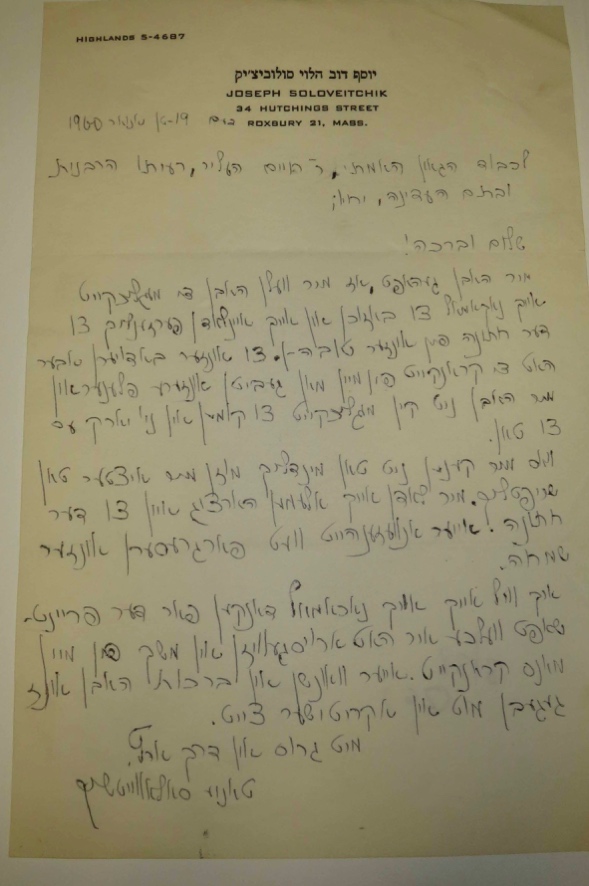
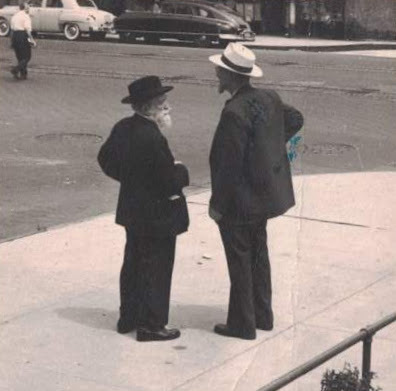
Breaching the Walls of History with Postscript

Breaching the Walls of History

By Dan Rabinowitz

This essay first appeared in the Jewish Review of Books (Spring 2026) and is republished here. Its postscript appeared in the magazine’s Substack newsletter, which you can subscribe to here.

Last December, on the eighth day of Hanukkah, the American haredi newspaper of record Yated Ne’eman published a long, impassioned article titled “Ufortzu Chomos Migdolai Vetimu Kol Hashmanim,” by Rabbi Michoel Sorotzkin. The Hebrew title is from the fifth stanza of the famous Hanukkah standard Maoz tzur, which many of us never get to: “They breached the walls of my towers and defiled all the oils.” That is to say, the Greeks (and their Hellenized Jewish allies) broke through the defenses of the holy Temple in Jerusalem, leaving, seemingly, all its oils polluted and unusable. One might have expected that such a headline would announce a discussion of, say, the closure of haredi yeshiva day schools in New York City, or the Israeli government’s attempts to draft haredim into the military, or, perhaps, the rampant antisemitism threatening European Jewry.

But Sorotzkin’s article addressed none of these very real challenges to haredi life. The breach he identified, the defilement requiring an elaborate polemic couched in apocalyptic language, was a brief mention I had made of the Brisker Rov’s visit to a library in Vilna, in an article I published in these pages last summer (“Golden Ledgers,” Summer 2025, and republished on the Seforim blog).

The Strashun Library of Vilna was the first Jewish public library; it admitted both male and female patrons and included secular as well as religious books (sifrei kodesh). The historical question at issue itself is trivial—in fact it isn’t really a question. Rabbi Yitzhak Ze’ev Soloveitchik, who was commonly known as Reb Velvel or the Brisker Rov, visited the Strashun Library with at least one, but almost certainly two, of his sons on October 1, 1940, and they checked out the books to read in its famous reading room that the library ledger lists them as checking out.
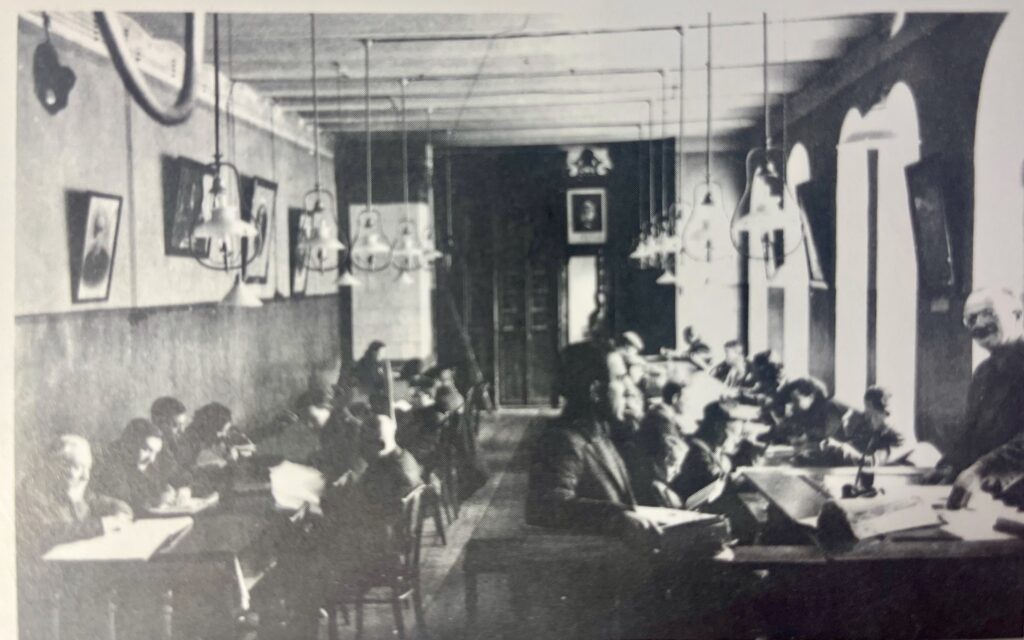
Strashun Library Reading Room. Layzer Ran, Jerusalem of Lithuania, vol. 2, 346.

This is demonstrable beyond any remotely reasonable historical doubt. The interesting question is: Why was it so important to Sorotzkin, a prominent member of the haredi world, to tie himself up in speculative knots denying it not once but twice in one of that world’s leading newspapers? Before answering that question, I should explain how I came to write an article that breached the walls and defiled the oils, when what I was trying to do (if you’ll allow me to mix biblical metaphors) was pluck a brand from the fire.

I go to Vilna at least three times a year. Sometimes I stay at a hotel at the epicenter of the three main streets that formed the Jewish district; other times I stay near German Street where Mattityahu Strashun once lived. My mornings begin with a thirty-minute walk to Lithuania’s National Library. The route passes through streets that once hummed with Yiddish, past buildings that housed yeshivas and Jewish publishers, through spaces that sustained centuries of Jewish intellectual life before the Nazis destroyed it. My afternoons are spent walking those streets comparing what I’ve found in the archives against what I expected to find, evenings reviewing notes and planning the next day’s research. What I’m trying to do is reconstruct the ordinary moments that illuminate the extraordinary history of Jewish Vilna.
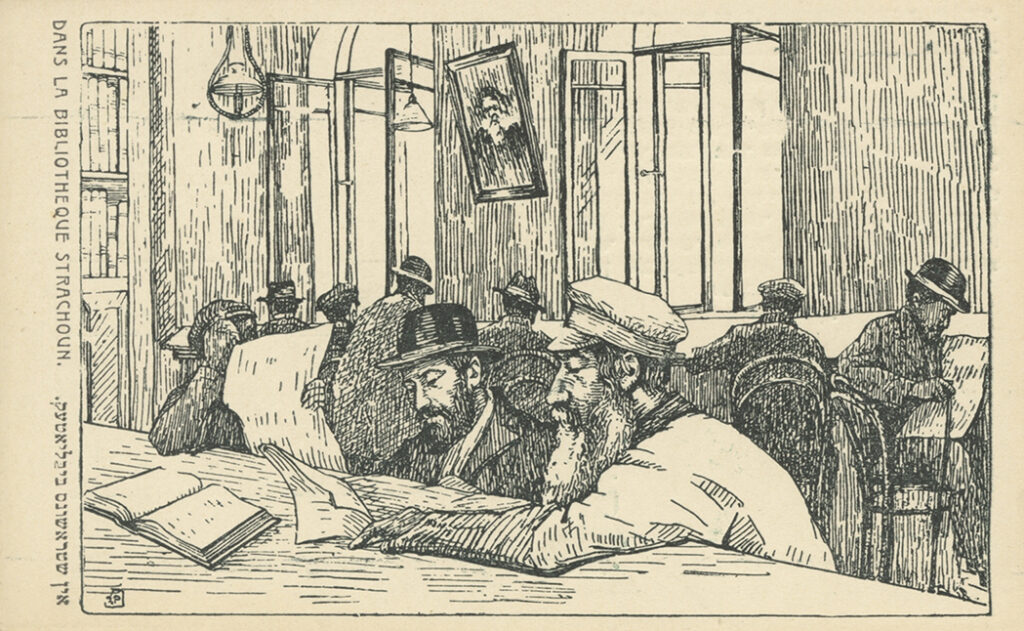
“In the Strashun Library”: a postcard from the “Vilner yidishe geto” (Vilnius Jewish Ghetto) series with illustrations by Ber Zalkind. (Ber Zalkind, Khaykl Lunski/Wikimedia Commons.)

During these walks, I often run into tour groups gathered at one of the few plaques marking the place of Jews in the city’s history. Usually, it’s the plaque noting the line of demarcation where the Nazis established the Vilna Ghetto. This is the tours’ inevitable focus: the annihilation of the Jews. What preceded the destruction—the institutions of learning and publishing, the literary circles and research institutes, the daily life that made Vilna the “Jerusalem of Lithuania”—receives far less attention. There used to be a sign marking where the Great Synagogue complex, the architectural and spiritual center of Jewish Vilna for centuries, stood. That sign is gone now. What remains are markers of death and destruction; all the complexity of Jewish intellectual life before World War II gets compressed into a prelude to catastrophe.

Those of us who study prewar Jewish culture are trying, each in our own way, to reconstruct and understand the life that preceded the catastrophe. That’s how I came to write a book on the Strashun Library several years ago. It’s why I continue to research its workings and the vibrant world of which it and its patrons, including great rabbinic leaders like Yitzhak Ze’ev Soloveitchik and ordinary Jewish readers, were a part.

The Strashun Library opened in 1902 as the first Jewish public library, built from Mattityahu Strashun’s private collection of rare books and manuscripts. From its opening, it became central to Vilna’s intellectual ecosystem. Its reading rooms welcomed everyone: rabbis and historians, secular scholars and traditional students, men and women, those seeking Yiddish literature and those researching Jewish law. By the time it was shuttered in 1940, it held roughly fifty thousand volumes and served a public that spanned the full spectrum of Jewish life.
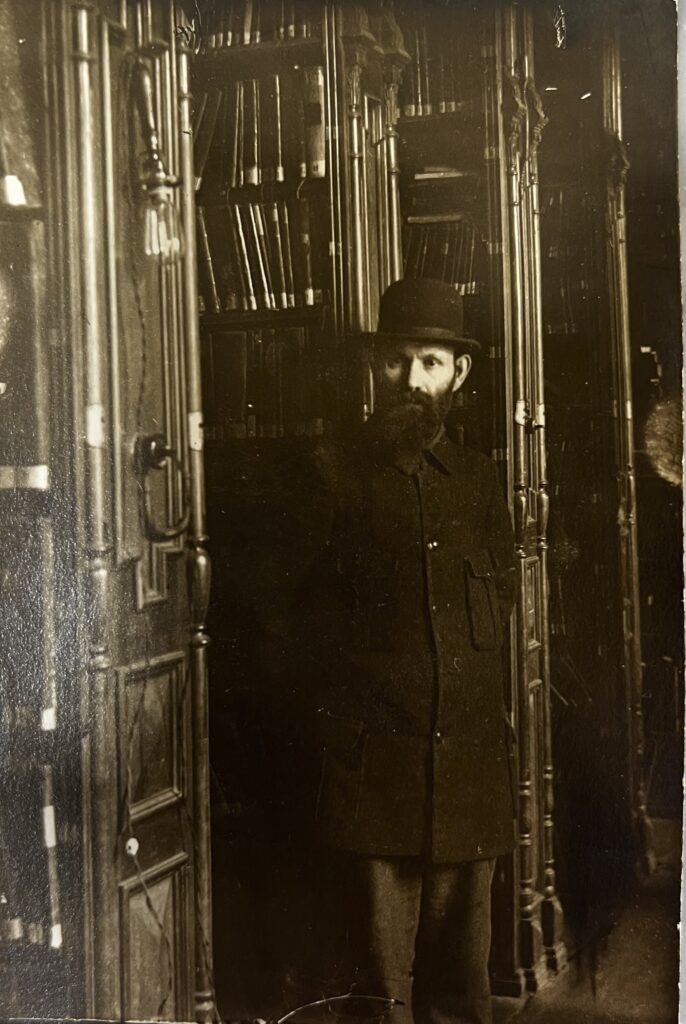
Khaykl Lunski, Librarian of the Strashun Library in the book stacks. Postcard (undated), Private Collection.

When I discovered the library’s checkout ledgers in the National Library of Lithuania archives in 2024, I realized that their spare entries allowed us to reconstruct the day-to-day life of the library: who used it, which books they read, and how it served different strata of Jewish society.

As the first step in a project to digitize and make the ledgers publicly available to other researchers, I spent four very full days scanning thousands of pages, each holding about fifty handwritten entries. As I worked, I browsed the names and tried to quickly register patterns in the data. One of the names that jumped out at me was “Yitzchok Soloveitchik,” who requested a collection of I. L. Peretz’s Hasidic stories, Khasidish. Could this be Rabbi Yitzhak Ze’ev Soloveitchik, the son of Rabbi Chaim Soloveitchik, who founded the famous Brisker approach to talmudic study?

Yitzhak Ze’ev inherited and extended his father’s analytic method and later became one of the most uncompromising voices in Israeli haredi leadership, where he was known as the Brisker Rov. I knew that he and his family had been in Vilna at the time, because I’d found him listed among prominent rabbis in Vaad ha-yeshivos refugee housing records that show, yeshiva by yeshiva, where students, teachers, and refugees were staying. Nonetheless, it could have been another Yitzchok Soloveitchik. Then I looked more carefully at the same ledger page and saw another entry: a Raphael Soloveitchik had requested Maimonides’s Iggeret ha-shemad just a few lines above Yitzchok’s request for Peretz. Now it was clear. The Brisker Rov had a son named Raphael, and although Peretz’s short stories was a surprising choice for his father, the choice of Maimonides’s famous letter on persecution by the scion of a family fleeing persecution and famously devoted to Maimonides made perfect sense.

In short, the ledger documented that the Soloveitchiks had used the library just weeks before the Soviets would permanently close it, which is what I wrote, in passing, in my article. All that I thought I had documented in doing so was that the library served the rabbinic elite alongside ordinary Jews of all kinds, who were reading everything from talmudic commentaries to Yiddish translations of Tolstoy. But merely documenting a prewar Jewish world that was different than is generally imagined in haredi publications like Yated turned out to be an act of desecration.

Rabbi Sorotzkin’s first attack began by quoting the offending lines—or part of them at any rate—from my article: “On the afternoon of October 1, 1940, Reb Velvel came to the Strashun Library with his teenage son . . . His father’s reading for the day was more surprising: I. L. Peretz’s short stories about Hasidim.” (Sorotzkin’s ellipses will turn out to be doing a lot of work here.)

“With this passage,” Sorotzkin wrote, “Mr. Dan Rabinowitz does more than recount an archival curiosity. He stages a tableau.” He went on:

The Brisker Rov, Rav Yitzchok Zev Soloveitchik, appears before us not as generations of talmidim knew him, but as a character in a modern morality play: seated calmly in the Strashun Library of Vilna, immersed in the ironic fiction of I. L. Peretz, surrounded by secular readers, students, men and women alike.

The effect is unmistakable. The reader is invited to marvel at the distance between the “real” man and the image preserved by Torah memory. Hagiography, we are told implicitly, has concealed a richer, more complex inner life—one now revealed by the cold honesty of a library ledger.

It is an elegant narrative. It is also an edifice built on sand. What we encounter here is not historical reconstruction, but a breach—peritzas geder—in the most basic disciplines of historical inference. And once the wall is breached, all the oil may be rendered impure.

Beyond the rhetoric of righteous indignation, Sorotzkin’s argument was simple: The Brisker Rov would never have entered a “mixed, open, modern” library because his “entire being recoiled from even the faintest rei’ach [whiff] of ideological modernity.” Therefore, someone else named Yitzchok Soloveitchik must have. And here Sorotzkin had a candidate:

The Vilna region was saturated with Soloveitchiks. . . . Among them appears a Yitzchok Soloveitchik, a timber merchant, a vald-socher [from Švenčionys]—precisely the kind of educated townsman who would frequent the Strashun Library and read Peretz.

There are just three problems with this line of argument—actually there are more than that, but let’s restrict ourselves to three for the moment:

a. The same ledgers that documented the visit of a “Yitzchok Soloveitchik” also recorded several visits by Rav Pinchas Hirschprung, who would later serve as chief rabbi of Montreal. Rav Chaim Ozer Grodzinski, the preeminent Torah authority in Vilna, held special borrowing privileges at the library, and Rabbi Yisrael Meir Kagan, the renowned Chafetz Chaim, visited and signed the library’s VIP “Golden Book.” If such colleagues could visit the library, can Sorotzkin really be so certain that the Brisker Rov’s “entire being” would have prevented him from doing so?

b. Švenčionys is over eighty kilometers from Vilna, and we have no evidence this timber merchant traveled to Vilna in October 1940. Not to speak of the fact that neither Rabbi Sorotzkin nor I know anything about the reading habits of Jewish timber merchants in the area.

c. The ledger records two Soloveitchiks visiting the library on October 1, 1940. Are we to suppose that this other Yitzchok Soloveitchik also had a son named Raphael, who was also a deep Maimonidean?

This last problem—call it the “Zvei Soloveitchiks problem”—returns us to Rabbi Sorotzkin’s creative use of ellipses. When he quoted my offending lines about Reb Velvel, he elided Raphael—whom I mentioned in those sentences—right out of the picture and never acknowledged that he appeared in the ledger a few lines above his father.

Actually, unlike Sorotzkin’s conjectural Peretz-reading ironist timber merchant, the Brisker Rov had good reason to visit the Strashun Library. He was in the midst of a life-and-death halakhic controversy with his colleague Rav Aharon Kotler about whether refugees should try to flee to Eretz Yisrael or America. To support his position that they should not go to America because of the spiritual danger, the Brisker Rov turned to a passage he remembered from Maimonides’s Iggeret ha-shemad, which he wanted to quote verbatim.

Soloveitchik family memory confirms this. In a footnote to Shiurei Rabbeinu Meir ha-Levi, a collection of the Brisker Rov’s son, he is quoted as saying:

I recall that during the war years, Maran [the Brisker Rov] sought a copy of the letters from the Rambam, because he wanted to study Iggeret he-shemad, in which the Rambam has a lengthy discussion to explain the fundamental idea that a person acclimates to his surroundings and it is prohibited to live in a place which doesn’t allow one to fulfill the mitzvot properly. . . . Initially, however, he was unable to find a copy, and, in the end, he located one in the Strashun Library in Vilna. According to the library’s rules, one was not permitted to remove books from the building. And therefore his son R. Chaim copied it word for word for him.
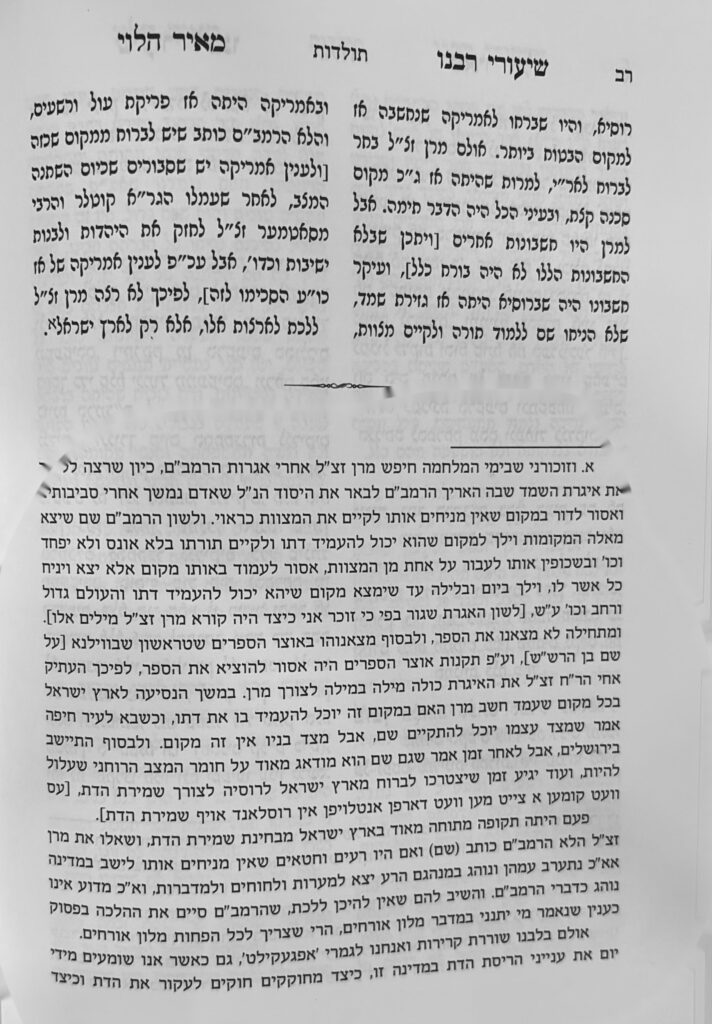
The library ledger records Raphael as the borrower of Iggeret ha-shemad while the family testimony remembers Chaim as the copyist. Perhaps both brothers participated, or Raphael handled the checkout while Chaim copied the passage. Or perhaps the family misremembered which brother accompanied his father to the library. At any rate, there were at least two, and quite possibly three, Soloveitchiks at the Strashun Library on that day. And they were there precisely because the Brisker Rov took his obligations as a halakhic scholar and leader of Torah Jewry so seriously.

When I wrote to Yated Ne’eman to explain all this, the editors—to their credit—published my letter, but they did so alongside a reply from the unflappable Rabbi Sorotzkin. Sorotzkin not only blithely failed to acknowledge his errors of omission and commission but went on to a new and truly gobsmacking theory, titling his response “Veha’emes Vehashalom Ehavu” (Love truth and peace).

The entry for a “Yitzchok Soloveitchik” must, he now admits, refer to one of the famous Soloveitchiks rather than a random timber merchant from Švenčionys. Still, it couldn’t possibly be the Brisker Rov. So, who was it? Here I must quote Rabbi Sorotzkin at length to convey just how far he is willing to go to save Reb Velvel from having gone to a public library:

The presence of a ledger entry bearing the name “Yitzchok Soloveitchik” is taken to indicate the Brisker Rov himself, seated in the reading hall and borrowing secular literature. Yet there exists a far more coherent and internally consistent explanation, one that aligns with the testimony, the ledger itself, the halachic framework governing names and conduct, and the lived reality of the Brisker household.

According to this reading, it was the Brisker Rov’s son, Rav Chaim who entered the Strashun Library as the responsible emissary. Anyone familiar with the family dynamic knows that his keen intelligence, composure, and practical capability marked him as the natural choice for such a mission. His younger brother, Rav Rafael, accompanied him and formally requested the Iggeres HaShemad, which then had to be copied in full—a task of approximately 3,500 words, requiring a prolonged stay. Such an extended presence in a public institution would naturally invite scrutiny. To avoid unnecessary attention, it would have been prudent, even expected, to request an additional book, a routine borrowing that raised no eyebrows and normalized the time spent at the table.

Here the ledger entries themselves become illuminating rather than sensational. Immediately preceding the Soloveitchik entry, two patrons are recorded borrowing works by I. L. Peretz. . . . When Rav Chaim was offered titles by the same author, the specific work recorded — Chassidish — was accepted not as an ideological choice but as a convenient placeholder, a book taken to cover the duration required for copying the Iggeres. . . .

The use of the name “Yitzchok” in the ledger is likewise neither mysterious nor incriminating. Rav Chaim could not identify himself by his own well-known name without drawing attention, particularly given that the sefer of his grandfather, Rabbeinu Chaim Halevi, was already catalogued in that very library. Nor could he identify himself by his father’s full name. Halacha is explicit that one may not refer to one’s father by name, even after death, without alteration. . . . The use of the shortened form “Yitzchok” . . . would have satisfied both the halachic requirement and the practical need for discretion, without uttering an outright falsehood.

It is difficult to imagine anyone believing that a scholarly household in the midst of the “lived reality” of a desperate flight to safety from both the Soviets and the Nazis would strategize over the impossible “mission” of going to a library frequented by other pious Jews to copy a passage from Maimonides. And further, to think that they needed an elaborate cover story involving false names and phony book checkouts so that the Jewish librarians did not penetrate their cover (and what?—inform Rav Kotler about the killer prooftext from Maimonides?). The tradition has a term for such groundless theorizing, pilpul shel hevel, and it is a hallmark of the Brisker tradition to oppose it.

Sorotzkin closes his response on an extraordinary—and, one presumes, unconscious—note of chutzpah. “When suggestive narratives arise from thin evidentiary reeds,” he writes, “methodological restraint becomes not a courtesy but an obligation.” But perhaps I am being unfair, as George Orwell once remarked, “We are all capable of believing things which we know to be untrue, and then, when we are finally proved wrong, impudently twisting the facts so as to show that we were right.”

Sorotzkin’s initial response characterized my work as “peritzas geder,” a breach of protective walls. But what did he think needed to be protected? Not the Brisker Rov’s actual stature or commitment. That he wanted to verify the exact wording of Maimonides’s Iggeret ha-shemad from the richest collection of sifrei kodesh in Eastern Europe to guide his thinking on the refugee crisis illuminates the rigor of his approach to unprecedented questions. What Sorotzkin needed to protect was rather a nostalgic fantasy: one in which the great sages (gedolim) of that generation never entered mixed public spaces, relied on secular institutions, or read fiction. But the infrastructure of Jewish life in places like Vilna was not neatly divided into “Torah” and “secular” categories, and gedolim and their students checked out books from the Strashun Library alongside maskilim, socialists, and ordinary Jews looking for something to read.

I go back to Vilna regularly to identify, amid the destruction and absence, what can be found to resurrect, contextualize, and enrich our understanding of the astounding Jewish culture of prewar Vilna. The Jews of this city—rabbis and students, traditionalists and modernists, Hebraists and Yiddishists—created institutions, filled libraries, published journals, founded schools and research institutes, and argued about everything.

The Brisker Rov spent an afternoon in the Strashun Library in October 1940 with his sons to obtain a text he desperately needed. While his sons diligently copied Maimonides’s text, he requested Peretz’s collection of Hasidic stories. I don’t know why and, of course, it doesn’t matter—only Sorotzkin and his more credulous readers would think that it does. But there is a plausible answer. It turns out that among Peretz’s Hasidic tales is the story “Between Two Mountains,” in which a fiercely strict and intellectual rosh yeshiva called “the Brisker Rov” is taught a lesson in humanism by a former student who has become a Hasidic rebbe. Might not the Brisker Rov have been simply curious to read about his fictional counterpart?

The Holocaust destroyed the Strashun Library and most of the Jewish world of which it was a part. The Soviets shuttered its reading room; the Nazis looted its collections; after the war, the building was destroyed. Yet, the few surviving Strashun Library ledgers reveal precious little moments in the lost history of Jewish intellectual life in Vilna. The final volume documents the last gasp of Eastern European Jewry, not only the local Jewish inhabitants but also the thousands of refugees like the Soloveitchiks who, fleeing Hitler and Stalin, briefly sought safety in Vilna.
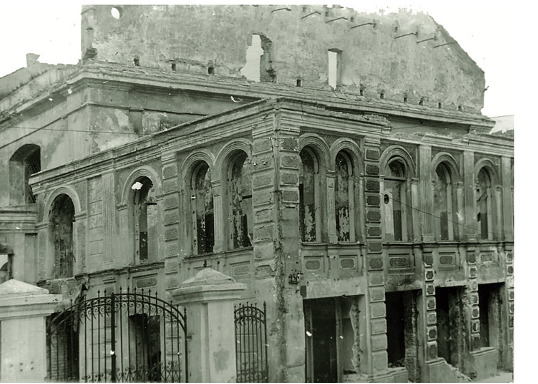
Strashun Library Building in 1945. Vilna Gaon Museum of Jewish History Archive, 1829-1

It seems to me that what we, their descendants, owe them is to see their lives, at least in glimpses, as they were, even if it is through the entries of a humble library ledger. That is a history worth recovering, even when—especially when—it complicates what we thought we knew. Such complication is not desecration; on the contrary, it honors their memories.

Postscript

After writing this response to Rabbi Sorotzkin’s pilpul shel hagiografia, I continued to return to the 1940 ledger, which hasn’t been digitized yet. As I described above, Sorotzkin’s new, and equally implausible, claim was that Chaim Soloveitchik used his father’s name rather than his own, to avoid the commotion of being recognized as the grandson and namesake of the author of one of the library’s own seforim, and to escape the notice of the authorities. In fact, it turns out Chaim checked out books under his own name at least five times in September 1940.

The first entry was on September 6, 1940, weeks before his father and Rafael appear in the ledger together. He checked out the Iggeret ha-shemad twice, on September 12 and September 14. These are, undoubtedly, the visits to transcribe Maimonides’s text, as described in the family testimony recorded in Shiurei Rabbenu Meir HaLevi. Rafael’s borrowing of the same text on October 1, when he visited the library with his father, was probably to check his brother’s transcription against the source.
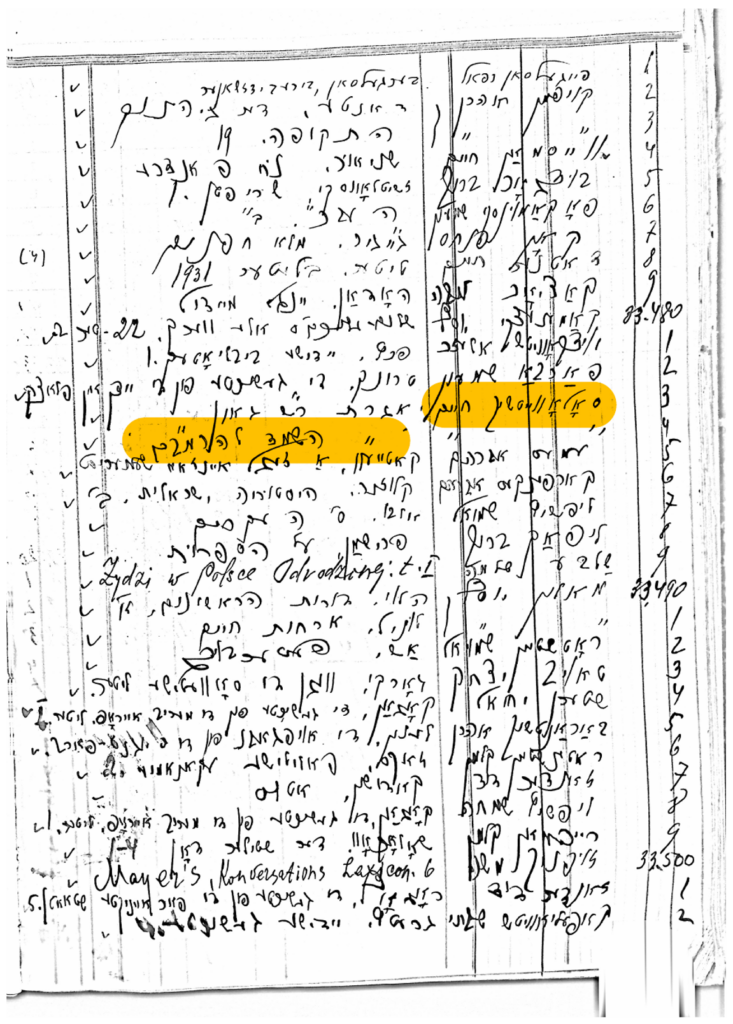
That September, Chaim also read the tenth-century grammarian Dunash ben Labrat, the letters of Sa’adia Gaon and Ramban, the Abudraham’s commentary on the siddur, Samuel David Luzzatto’s essays collected in Bet ha-otzar, and a run of midrashic works, several in modern critical editions such as those of Solomon Buber. This is not the reading of a man sent on an undercover mission to copy one text. It is, rather, the reading of a wide, curious, and learned mind, and the ledger records it without comment or apology.

Of course, this isn’t surprising. As I wrote above, many well-known rabbinic figures used the library without incident. What is surprising is the pseudo-pious lengths to which Sorotzkin went to deny that the Brisker Rov and his sons simply used the Strashun Library, a fact that the family itself had no qualms about memorializing. What the ledgers allow us to do is to see, in a reader’s own name and hand, what he read in one of the great libraries of his world.

The Strashun Library Ledger Project, which is digitizing and making the ledgers publicly available, is a collaboration between the Martynas Mažvydas National Library of Lithuania, the e-Lijah Lab at the University of Haifa, Yale University’s Jewish Studies Department and Library, the Fortunoff Video Archive, and Litvak SIG.
Quiz Answers; Response to Criticism; Rav Schwab Writes to the Rogochover

Quiz Answers; Response to Criticism; Rav Schwab Writes to the Rogochover

Marc B. Shapiro

1. Let me begin with the riddles from my last post here.

A. Where do we find that Shammai not only disagrees with Beit Shammai, but also agrees with Beit Hillel?

B. In the days of the tannaim a certain item was unquestionably muktzeh. However, in the post-talmudic period, some hold that this item is no longer muktzeh. What item am I referring to? Provide the actual source in the Talmud and later authorities to justify your answer.

The answer for number 1 that I intended is found in Orlah 2:4-5. Mike Wiessenberg, David, Shimi, and Sam got this right.

Yet Moshe Schwartz offered a different answer which I think is also correct. He wrote:

From the baraisa brought down in Beitzah 20a, it could be suggested that only Beis Shammai held that one can’t bring an olah on Yom Tov, but from the fact that Bava Ben Buta said the halacha is in accordance with Hillel, it can be inferred that he is testifying to Shammai’s opinion as well. Especially since the Gemara in Shabbos 15a doesn’t ask from the machlokes of olah on Yom Yov when it says that there was only three times that Hillel and Shammai argued.  So, all this suggests to me that here Shammai was in agreement with Beis Hillel and Hillel himself that you can bring an olah on Yom Tov. See also Tosafos in Chagigah 7b.

For number 2, no one gave the answer I intended: In the days of the tannaim a get was muktzeh. That was because you could not do anything with it on Shabbat. You could not even use it to learn the halakhot of writing a get since Torah learning was to be entirely oral. Yet after the Oral Law was written, R Moshe Isserles states, Even ha-Ezer 136:7, that according to some it is now permitted to handle a get on Shabbat as it is not muktzeh. In other words, since you can learn various halakhot by examining the get, one is now permitted to do so on Shabbat. That this is what R. Isserles means is made clear by his comment in Darkhei Moshe, ibid.:

בזמן הזה שנתנה תורה שבע”פ לכתוב לכ”ע מותר לטלטל גט שהרי אדם יכול ללמוד ממנו כמה הלכות גטין

It is interesting to note that while in Darkhei Moshe R. Isserles says that everyone agrees with this opinion, in the Shulhan Arukh he writes “some say”.

The Beit Yosef, Even ha-Ezer 136, also says that everyone agrees that today it is permitted to carry a get, but in the Bedek ha-Bayit he questions this permission.

As mentioned, during the era when the Oral Law was not written all agree that a get was muktzeh (and the same law would apply to a ketubah) since all learning had to be oral. What I don’t understand, and maybe some of our learned readers can enlighten me, is what are we to make of what the Talmud refers to as megilat setarim. These were private notebooks that the Sages had during the period when the Oral Law could not be written down for the public. In order not to forget what they were taught, the Sages wrote things down. Rashi, Shabbat 6b and Bava Metzia 92a, tells us that these notebooks had to be hidden. However, Maimonides, in his introduction to the Mishneh Torah, also notes that the Sages recorded both what they were taught and their own independent Torah insights. Yet, unlike Rashi, he does not mention that they hid their notebooks. Furthermore, unlike Rashi, Maimonides does not view the permission to write down Torah thoughts as intended solely to prevent forgetting. For him, Torah she-be-al Peh signifies that Torah is transmitted orally rather than through written means. Nevertheless, it was never forbidden to write down the Oral Torah for personal use; it was kept hidden only to prevent its use for public teaching.[1]

According to Rashi, in the era of Torah she-be-al Peh one was not allowed to study the Oral Law from a written text. Writing it down was permitted only as an emergency measure, to prevent forgetting, but under normal circumstances it was forbidden. On this view, it makes sense that a get would be considered muktzeh. However, according to Maimonides, it was never forbidden to write down the Oral Law for private use. Since, in his opinion, one could study the Oral Law privately from written texts, why should a get be muktzeh? How is it different from a private notebook used for study? If anyone has an answer to this, I would be interested to hear it.

R. Meir Mazuz offers another interesting example of how halakhah has evolved in response to changing realities. Shulhan Arukh, Orah Hayyim 320:6, states: “One is permitted to squeeze lemons [on Shabbat].” R. Mazuz explains that this ruling is not mentioned by the Geonim or by Maimonides because, in their time, lemons were only primarily for medicinal purposes rather than as a food. Consequently, squeezing them for drinking would have been considered forbidden on Shabbat. This is in line with the halakhah recorded in Shulhan Arukh, Orah Hayyim 328:37: “Anything that is not eaten or drunk by healthy people is forbidden to be eaten or drunk for medicinal purposes [on Shabbat].”

2. In my article “The Brisker Method Reconsidered” and also in my book Studies in Maimonides and His Interpreters, I refer to how R. Hayyim Soloveitchik ignored Maimonides’ own explanation to the sages of Lunel of Mishneh Torah, Hilkhot Nizkei Mamon 4:4.[2] Maimonides informed them that their text of the Mishneh Torah was incorrect and supplied the proper reading. However, R. Hayyim, in his commentary, disregarded Maimonides’ correction, illustrating how the Mishneh Torah had taken on a life of its own such that there was no perceived need to follow even Maimonides’ own assertion that the text was mistaken.[3]

In a recent article, Rabbi Elisha Friedman takes issue with my point:[4]

To correct the record it is worth pointing out one error in Shapiro’s overall excellent discussion of this subject. One of his central proofs for his approach, which he repeats in his Studies in Maimonides and His Interpreters (University of Scranton Press, 2008), 55, refers to R. Hayyim’s explanation in Hilkhot Nizkei Mamon 4:4. The problem is that Rambam, in a letter, revised the text of this halakha, as R. Yosef Karo in his commentary Kesef Mishneh, ad loc., cites. R. Hayyim completely omits any mention of this revision in his discussion, which leads Shapiro into a reflection of how to view halakhic works which are based on faulty texts. This point is made even more emphatically in the book he is reviewing, Norman Solomon, The Analytic Movement: Hayyim Soloveitchik and His Circle (Scholars Press, 1993), 219. While the overall point—that R. Hayyim is impervious to such textual matters—is undoubtedly correct and can be proven from other explanations in his work,[5] Solomon and Shapiro’s example is in fact not one of them. The piece is unrelated to the words Rambam changed in his letter; it works according to all versions. R. Hayyim proves that Rambam must be referring to an animal which pays damages from its own value and then wonders why this halakha appears in the context of the watchman’s larger responsibility for damages. Quoting Rambam’s responsum might have been proper scholarly etiquette for the sake of accuracy, but it would not have changed the overall trajectory.

Let us examine this case. Maimonides writes as follows in Hilkhot Nizkei Mamon 4:4:

When a person entrusts his animal to an unpaid watchman, a paid watchman, a renter or a borrower, these individuals assume the owner’s responsibilities. If the animal causes damages, the watchman is held liable. When does the above apply? When they did not guard the animal at all. If, however, they guarded the animal in an excellent manner, as they should, and it got loose and caused damage, the watchmen are not liable, and the owners are liable.

The problem with this halakhah is that if the watchman guarded the animal properly, and it still got out, why should the owner be liable? Maimonides was asked about this by the Sages of Lunel and he told them that they should correct their texts to read: “If, however, they guarded the animal in an excellent manner, as they should, and it got loose and caused damage, the watchmen are not liable. If the watchmen guarded the animal in an inferior manner, they are not liable if they are unpaid. Instead, the owners are liable, even if the animal kills a person. The watchman is liable if he is paid, a renter, or a borrower.”

What I said—and what Friedman criticizes—is that R. Hayyim offered an analysis of the mistaken text. Looking again at R. Hayyim, I see no reason to retract what I wrote, and I don’t understand how Friedman can criticize me. The issue isn’t whether one of R. Hayyim’s hiddushim works with both the mistaken text and the corrected text. The issue is, as I said, that R. Hayyim analyzes and explains the mistaken text. He does not pay attention to Maimonides’ correction, which he knew as it is mentioned in the Kesef Mishneh. Thus, right at the beginning of R. Hayyim’s commentary to Nizkei Mamon 4:4 he writes:

וא”כ הא קשה רישא שכתב הרמב”ם שבשמירה מעולה הבעלים חייבין, ואמאי חייבין כיון דעיקר הנגיחה הויא נגיחה של פטור

Yet in the corrected text of the Mishneh Torah, it never states that the owners are liable. R. Hayyim continues discussing the uncorrected text, leading the Hazon Ish in his comment on this passage to write: וכבר כתב הכ”מ בשם הר”מ בעצמו שהוא ט”ס

In R. Hayyim’s commentary to Nizkei Mamon 4:11, which I additionally mention in Studies in Maimonides and His Interpreters, his analysis also ignores the corrected text. He cites the uncorrected text and states:

הרי דדעת הרמב”ם דרק בזמן שהשומרין פטורין הוא דהבעלים חייבין

He also writes:

ולפ”ז הרי לכאורה יש למידק מדנקט הכא הרמב”ם הך דינא דהבעלים חייבין

Yet as we have seen, in his responsum to the sages of Lunel, Maimonides says that the underlined words are a mistake, meaning that R. Hayyim’s presentation of Maimonides’ view is not in accord with his corrected text.

In response to what we have just seen from R. Hayyim, the Hazon Ish writes:

צ”ע למה לא נקבל מש”כ הכ”מ בשם רבו בתשובתו לחכמי לוניל

In other words, the Hazon Ish calls attention to the fact that R. Hayyim, in his explanation, operates on the assumption that the printed text is correct, while ignoring Maimonides’ responsum in which he states that the text is mistaken.

In Studies in Maimonides and His Interpreters, p. 55 n. 232, I refer to R. Eliyahu Soloveitchik’s note to an article by Prof. Shlomo Zalman Havlin.[6] Let me cite his words, stated with regard to Nizkei Mamon 4:4, as I think they explain well the phenomenon we are discussing and are in line with my approach.

אמנם עיון בספר חידושי רבנו חיים הלוי מראה (וזוהי גם רוח הדברים בבית מדרשו) שכשהוא נפגש עם שינויי גירסה מסוימים בגמרא או ברמב”ם, אין הוא דן בשאלה “מה יצא מתחת קולמוסו של מר בר רב אשי או של רבנו משה בן מימון”, הוא גם לא דן בשאלה הכללית יותר “מהו הנוסח הנכון”. רבי חיים מתייחס לשינויי גירסה אצל הקדמונים כאל כל מחלוקת אחרת בפשט הסוגיה, שלומדים את שתי הדעות בשווה ואלו ואלו דברי אלקים חיים. מבחינה פרשנית אפשר לומר שרבי חיים קידש את אשר היה לפניו והרחיק את עצמו מכל דיון בשאלות עובדתיות היסטוריות, ובמקומו עסק בחקר התבונה הטהורה של תורתינו הקדושה . . . ומאחר שאין ענייננו “בירור הנוסח” אלא לומדים אנו את הנוסחאות השונות, לכן גם כשהרמב”ם בתשובה מגיה את דברי עצמו, ומנמק את הנוסח הנפוץ בטעות מעתיקים, העובדה שלפני המגיד משנה היה נוסח מסויים ברמב”ם (הנוסח הנפוץ) דיה היא כדי לקבוע שהנוסח הזה תורה הוא, ויש להתייגע על פירושו.

The very point I made, and which Friedman criticizes, is also made by R. Yehoshua Inbal.[7] He writes:

והרי הגר”ח קיצוני בדבר עוד הרבה יותר מהחזו”א, וכנודע גם במקום שהרמב”ם עצמו הסביר את דבריו, והובאו הדברים בנו”כ, וגם במקום שהרמב”ם שלפנינו ט”ס לפי עדות הרמב”ם עצמו המובאת בנו”כ, התעלם מכך הגר”ח.

In his note to this passage, he refers to Nizkei Mamon 4:4 and Maimonides’ correction of the text, and then states:

אבל הגר”ח לא קיבל גילוי זה ומיישב הג’ הישנה ובסו”ד כותב שזה גם ד’ הרמב”ם

I realize that Friedman can criticize Inbal just as he criticized me, but I feel comfortable knowing that I am in such good company.[8]

Turning to a related issue, the Hazon Ish is often cited as one who was opposed to the Brisker approach. However, the most famous opponent was R. Jacob David Wilovsky, the Ridbaz. I have discussed his opposition to what he called “chemistry” (which includes the Brisker method) in earlier posts here, and here. In my earlier writing about the Ridbaz, I was unaware of another example of his criticism of the analytic approach. This appears in his Nimukei Ridbaz, Parashat Terumah, p. 24a:

שבעו”ה נתפרצה במדינות ליטא וביחוד בזאמוט ע”י איזה רבנים לימוד בדרך הכאמי או הגיון והוא לא רוח התורה אך רוח זרה באה מבחוץ והכניסו בעו”ה להתורה שבע”פ ונתפשטה לימוד הזה אצל בחורים בעו”ה עד שהתורה לבשה צורה אחרת בעו”ה והמבינים מועטים והוא רחום יכפר עון

Regarding the Hazon Ish’s critique of R. Hayyim’s hiddushim, R. Elyakim Schlesinger reports that this was not intended for public consumption, meaning that it never should have been published.[9]

R. Hayyim Dov Ber Gulevsky, the grandson of R. Simcha Zelig Reguer, also claimed that the critique of the Hazon Ish was published against the wishes of the Hazon Ish’s family.[10]

והנה בשלהי קיץ שנת תשל”ה, שמוע שמעתי שיצאו אנשים בלתי הגונים, ולא שמעו לקול הורים ומורים, ולמשפחת הגאון החסיד צדיק יסוד עולם בעל החזון איש. והוציאו במרמה נגד רצונם את ההשגות שהחסיד הנ”ל רשם על ספר חדושי רבינו חיים הלוי. והדפיסו את זה יחד עם הספר חדושי רבינו חיים הלוי

R. Hayyim Kanievsky also reported that his father, the Steipler, was unhappy that the Hazon Ish’s critique had been printed, though not because he feared it would be seen as disrespectful. Rather, his concern was that among the Hazon Ish’s comments were some weak proofs. Readers might mistakenly assume that these weak arguments formed the basis of the Hazon Ish’s position, when in fact they were merely supplementary points that did not affect his fundamental argument.[11]

3. In Renewing the Old, Sanctifying the New, I discuss R. Kook’s view about the substitution of vegetarian sacrifices in place of animals. I also refer to what the Nazir—who unlike R. Kook was a vegetarian—says about this. Unfortunately, I overlooked an important passage from the Nazir that appears in Elchanan Shilo, Yahadut Kiyumit (Tel Aviv, 2017), p. 199. This text, written after the Six Day war, was published by Shilo from manuscript:

כל רוחי מתקומם לזביחת זבחים ולהזאת דמם. הן אנו מנוזרים מבשר בהמות ועופות, אני בערך ששים שנה, ובני ביתנו כל ימי חייהם. וכיצד תהי עבודת הקודש והמקדש בזביחת בעלי חיים והזאת דמם
אמנם זה רוח טהור, כמו רוח הקודש, המתקומם נגד זה. אבל זאת היא חוקת התורה, חוקה חקקתי, גזרת התורה, ואין לנו רשות להרהר אחריה
אמנם כבר קדמו חכמינו ז”ל ואמרו בגלוי, עתידים כל הקורבנות שיתבטלו, חוץ מתודה. וכן בשערי אורה. ואולי מתקרב ובא העתיד לבא. ומשום זה מן השמים המניעות והמכשולים, לעכב שלא תתחדש עבודת המקדש בזבחים, כמו קרבן פסח. אמנם יכולה להתחדש העבודה במקדש, בהקרבת המנחות

The Nazir wonders if the future time when there will be no animal sacrifices is almost upon us. This would explain why we are precluded from rebuilding the Temple at present, so as to prevent us from having to offer animal sacrifices. In other words, the Temple will only be rebuilt after we have forsaken animal sacrifices and have moved into the era when only vegetarian sacrifices will be acceptable to God.

4. In a nice post on the Seforim Blog here, R. Shmuel Lesher dealt with aspects of R. Shimon Schwab’s approach to R. Samson Raphael Hirsch. I would like to add a few points.

Lesher deals with the famous letter from R. Schwab to the East European gedolim asking about the validity of the Hirschian approach. Lesher writes: “There seems to be some discrepancies among those who record the story. Marc B. Shapiro dates the letter to 1933, whereas Jacob J. Schacter says it was 1934. Most surprising is R. Dr. Norman Lamm’s assertion that the question was posed from America.”

The letter was sent in 1933. I know this because R. Joseph Rozin’s reply has been published in Leo Levi’s Sha’arei Talmud Torah, p. 348. It is dated 25 Adar, 5693 which corresponds to March 23, 1933. In fact, a copy of R. Schwab’s original letter, which identifies him as assistant rabbi in Darmstadt— the senior rabbi was R. Yonah Merzbach—survives in the R. Joseph Rozin archives at Yeshiva University. It is dated Erev Shabbat, Parashat Ki Tisa, 5693. This corresponds to March 17, 1933. Based on the replies that R. Schwab received, I believe that the identical letter was sent to all the rabbis R. Schwab turned to in 1933.

Leo Levi at one time mistakenly assumed that R. Schwab wrote the letters when he was a yeshiva student in Lithuania.[12] Lesher correctly writes: “Contrary to what Dr. Levi writes that R. Schwab was still a student in a Lithuanian yeshiva when he posed the question, R. Schwab had already left the Mir Yeshiva by 1931.”

But then, Lesher also writes:

Nevertheless, there is reason to believe that Dr. Levi’s record of the story should be the most accurate. In addition to publishing the four responses to R. Schwab, Dr. Levi writes in his Torah Study: A Survey of Classic Sources on Timely Issues (New York: Feldheim, 2002), 363n13, available here, that R. Schwab himself shared R. Yosef Rozen’s response with him personally. It is unlikely that Dr. Levi would not have gotten the context of the letters accurately from R. Schwab. Perhaps one can suggest in Dr. Levi’s defense, that R. Schwab may have posed the question at least twice. Once when he was a yeshiva student in Lithuania and then again in writing later when opening a yeshiva in Bavaria.

Yet this is needless speculation, as there is no question that in the text referred to in note 12 Levi was mistaken about the context of the letters. (As we shall soon see, Levi would get something wrong much more significant than this). In fact, in a later article, Levi correctly writes that R. Schwab sent the letter to the gedolim when he was a young rabbi in Germany, but he was wrong is stating that R. Schwab wrote it when it was rabbi in Ichenhausen.[13] As mentioned, he actually sent it before this, when he was assistant rabbi in Darmstadt.

In Ha-Pardes, December 1939, R. Schwab published what he later said was the letter he sent to the gedolim.[14] Yet this is not correct. The article in Ha-Pardes only includes his halakhic discussion about secular studies, which was the main part of the letter.[15] Missing from Ha-Pardes is the introduction to the letter, which is itself a fascinating historical document that illustrates R. Schwab’s disillusionment with the German Orthodox Torah im Derekh Eretz approach. It is published here for the first time, and in the transcription I have added paragraphs for ease of reading:[16]

מו”צ דק”ק דארמשטאדט והגליל

Rabbin. Ass. S. Schwab

Darmstadt

בעה”י דארמשטאדט עש”ק פ’ כי תשא תרצ”ג לפ”ק
החיים הברכה והשלו’ יחולו על מרום פסגת ראש הר קדש ה”ה עטרת תפארת גאון יעקב מחמד עינינו נשיא ישראל שר התורה קדוש וטהור יאמר להוכקשת”ר רשכבה”ג אדמו”ר מרן הגאון האדיר מו”ר הג”ר יוסף ראזין שליט”א ראב”ד דק”ק דווינסק יע”א

אחרי קידה והשתחוי’ מול הדרת קדשו ופ”ש כנכון!

בזה אגיש נגד פני כקשת”ר שליט”א שאלה חשובה למעשה בבקשה שטוחה שכשת”ר ימחל נא בטובו להשיבני דבר ולהודיעני שמעתתא אליבא דהלכתא בענין דלקמן וכוונתי ללבן ולברר האמת לאמיתו בשאלה זו ואציעה שאלתי ובקשתי בזה רק לידע הלכתא בקושטא ותורה היא וללמוד אני צריך ומעומק מקור חכמת תורתו ידלה נא כשת”ר לי מים חיים ויורני דרך הישר ואורח מישור אלך בה בס”ד

הנה בודאי ידוע להוכקשת”ר שיטת רוב יהודי אשכנז החרידים [!] על דבר ד’ ומקורם הטהור הוא הגרש”ר הירש זצ”ל בענין התחברות חכמת התורה עם חכמות אומות העולם וסברתם היא שכך פירוש המשנה באבות: “יפה תלמוד תורה עם דרך ארץ”, כלומר ללמוד חכמת התורה ביחד עם חכמות חצוניות ויסדו מכאן שיטתם שכל מה שרוח האדם פועל טוב בעולם – ר”ל כל מה שקוראין בלשון אשכנז קולטור ה”ה התרבות האנושית וכל מה שסופריהם וחכמיהם של האומות מפרסמים ומודיעים ומלמדים בעולם – שכל זה נובע ממקור חכמתו של הקבה”ו החונן לאדם דעת ולכן ראוי להגות בכל החכמות ולהתעסק עמן ובכלל להיות “געבילדעט” ככל הגוים אשר סביבותינו ואומרים שגם בדורות הראשונים היתה השיטה הזאת מקובלת בקרב עם ישראל כמו במדינות ספרד שגם שם היו לאנשים היותר חשובים שבכלל ישראל עסק עם כל חלקי החכמה והיתה להם יד בפילוסופיא, ברפואה, בתבונה, ובהנדסה ובשאר המדעות ומציאות זו משמשה לאחבנ”י כאן במדינותינו לראי’ חזקה לתמוך שיטתם. (ובפרט שחושבים הם שע”י התגשמותה של השיטה הזאת תהא להם אפשרות להראות לאפקורסים שיכול אדם להיות בעל תורה ויראה וגם בעל תרבות ומדע. ואין אחת מפרעת חברתה אלא אדרבא יחדיו תהיינה תואמות בשלמות.)

כך שיטתו של הגרש”ר הירש זצ”ל והבאים אחריו המשיכו מזה להתיר לעצמם כל מיני עניני החיצוניות, ועל פי שיטתם הזאת מותר בעיניהם ללמוד כל מיני ספרים חצונים בין ספרי טבע ופילוסופיא בין ספרי אפיקורסים ומינים וכופרים וגם ספרי משוררים שונים ואף ספרי “ראָמאַנעֶן” שבהן נכרכו דברי חכמה ומדע עם דברי חשק וספורי אהבת נשים – ושבר אל שבר יחדיו ידובקו – וגם מותר לגמרי בעיניהם לבקר באוניברסיטאות ששם מתעסקים בקביעות בכל מיני חכמה ומדע ואף הרבה פעמים בתוכן עניני מינות ממש, וגם הבקור בבתי טיאטראות כהיתר גמור נחשב להם שאומרים שבל ישגיחו בדברי עגבים שבהן אך ורק ימצאו ענין בחכמת אומנות – הבימה ובחכמת מעשה הציורים והתוארים שישנם שם – ולא אדבר עוד לא על אדות ענין לימודי החול שילמדו את בניהם עפ”י חוקי הממשלה וגזירת המלכות ואפשר שג”כ יש קצת היתר משום אומנות שכמעט א”א למצא פרוטה מספקה במדינות אלו מבלי איזה ידיעות באותן החכמות וגם בזה לא אדע בעניי עד עתה יסוד חזק של היתר ודאין. אולם לא על זאת עיקר שאלתי שכעת לפ[עמים] אפשר נדונים כמוכרחים עפ”י דינא דמלכותא ללמוד קצת חכמות כלליות בבתי ספר עממיים של כל אתר ואתר אך בראש וראשון אדאג איך למצא היתר לאותם שלומדים בלי הכרח רק מחפץ לבם חכמות אחרות מלבד תלמוד תורה בפרט בבתי הגימנסיות וכדומה

וגם אבקש לידע בבירור פירוש המשנה “יפה ת”ת עם ד”א” אם אפשר בעולם לפרשה על אופן שפרשו תלמידי הג’ רש”ר הירש זצ”ל להתאם תורה וחכמות אחרות יחד, כי כמדומה שהיתה בזמנם אז הוראת שעה אך אין להביא ראי’ מש”ס ופוסקים ליסד הוראת שעה שאין הלכה כמותה בשאר העתים ולפי כל הנ”ל לא היתה מעולם לבי שלמה עם בעלי השטה הנזכרת

R. Schwab lays out the case as follows: Most German Orthodox follow the path of R. Samson Raphael Hirsch regarding joining Torah with worldly wisdom, and they think that this is the meaning of the passage in Avot, “Yafeh Torah im Derekh Eretz”. They believe that culture and literature arise from the wisdom that God grants to humanity, and therefore one should engage in these pursuits in order to become cultured, just like non-Jews. They also maintain that this reflects how Jews lived in medieval Spain, where they were involved in philosophy, medicine, astronomy, and other sciences. Furthermore, they argue that this approach best demonstrates to heretics that one can be a pious and learned Jew while also being cultured and educated. In this way, the different aspects of one’s personality coexist harmoniously rather than creating tension.

R. Schwab states forthrightly that this was the approach of Hirsch, and that those who followed him continued in this path, permitting for themselves all sorts of “external things.” Thus, they studied all kinds of books in science and philosophy, including works written by heretics, as well as poetry and novels in which insights of wisdom and science were interwoven with erotic themes. In their view, it is entirely permissible to attend universities, even though one may encounter heretical ideas. They likewise regard going to the theatre as permissible, advising that any erotic elements simply be ignored.

R. Schwab explains that his question does not concern young people who study secular subjects, since this may be considered obligatory due to government requirements. Moreover, such study may be permitted because it is virtually impossible to earn a livelihood without some secular education. His concern, rather, is with those who engage in secular studies not out of necessity, but out of a desire to immerse themselves in Western culture. He also wants to know if the Mishnah’s expression, “Yafeh Talmud Torah im Derekh Eretz,” can really be understood in accord with the approach of Hirsch’s students, that one should join Torah together with secular studies. He assumes that Hirsch’s approach was a hora’at sha’ah but you cannot apply a hora’at sha’ah to other times. R. Schwab confesses that because of the considerations he lays out, he was never comfortable with the German Orthodox approach to Torah im Derekh Eretz. (In his 1966 work, These and Those, R. Schwab recognized that his earlier understanding, that Torah im Derekh Eretz was intended by Hirsch as a hora’at sha’ah, was a mistake.)

This is the introduction to his letter which is followed by the halakhic section of the letter, and it is this section which was published in Ha-Pardes.

Interestingly, a year after R. Schwab sent his letter to the gedolim of Europe, he sent a shorter but similar letter to R. Kook, together with the halakhic section that had been sent to the other gedolim and would later appear in Ha-Pardes. This letter to R. Kook was first published by Levi.[17] It is striking that R. Schwab, who is identified with the Hirschian separatist ideology, nevertheless included R. Kook among the gedolim he consulted. He also addressed R. Kook with exalted titles:

הגאון הנפלא בצדקתו ובחכמת תורתו מרן הגרא”י הכהן קוק

There is no record of Rav Kook replying to R. Schwab.

One point that Levi does not note is that in the halakhic section sent to R. Kook, R. Schwab added a paragraph that is not found in the original article sent to the gedolim, in which he again expresses his view that Hirsch’s approach was a hora’at sha’ah.

האף למ”ד כי שיטת הגרש”ר הירש זצוק”ל שיש חיוב בלימוד כל חכמות האומות בכדי להתאים התרבות האנושית עם חכמת התורה, בתכלית להיות “געבילדעט” ככל הגוים אשר סביבותנו, כי שיטה זאת שאינה מורה היתר בתנאים המובאים הנ”ל רק מלמד גם חיוב – זו היתה רק ואך הוראת שעה בזמנו ועתו, ויש לחקור אם ההוראה חלה ג”כ בזמננו אנו. עיין געזאמעלטע שריפטען צד 449, 456 חוברת ב’ ועוד מקומות [ועי’ בעל חתם סופר בספרו “תורת משה” פרשת שמות ופרשת בשלח]

Let us now return to Levi, who is cited in Lesher’s post. Although Levi considered himself an advocate of Hirschian Torah im Derekh Eretz, his understanding represents a very restricted version of Hirsch’s ideas. Indeed, his conception of the content of Torah im Derekh Eretz appears to be largely identical to that of R. Schwab. If you examine Levi’s Sha’arei Talmud Torah or his article “Torah im Derekh Erets in Our Time”,[18] the advocacy of secular studies is in order that one is able to make a living—Torah im Parnasah—as through work we join with God in perfecting the world. Levi also regards knowledge of science as an integral part of Derekh Eretz, and he further maintains that art and music, when used in the service of God, are also included within Derekh Eretz.

Yet the humanities, the bedrock of Western Civilization, are completely absent from Levi’s understanding of Torah im Derekh Eretz. Despite the fact that he writes that according to Hirsch, “the Torah affirms all that is true in modern culture,”[19] his presentation of Hirsch’s views completely ignores what modern culture means. He even claims that “it may be argued that it [Hirsch’s Torah im Derekh Eretz educational system] was a hora-at sha’ah, a temporary measure.”[20] Since the notion of Torah im Derekh Eretz as a temporary measure stands in fundamental opposition to Hirsch’s own understanding, Levi’s acknowledgment that this might indeed reflect Hirsch’s view highlights the problematic nature of his approach. I say this even though, after mentioning the point about hora’at sha’ah, Levi adds: “though even if we grant this [that the Torah im Derekh Eretz educational system was a hora’at sha’ah], there may be good reason to maintain that its time has not yet passed.”[21] His footnote to this last sentence is itself enlightening as to how Levi understood Torah im Derekh Eretz.

Today science and technology play an increasingly pervasive role, as we rely more and more on technological devices for our daily needs. Hence all that our sages have said about the importance of scientific knowledge applies today with even greater force.

It would therefore seem that R. Hirsch’s hora-at sha’ah, issued 150 years ago, is no less applicable now. However, any decision on this issue must be made by those rabbinic leaders who are shouldering the responsibility for the community’s spiritual welfare.

Here we see that the Torah im Derekh Eretz educational system is unequivocally regarded as a hora’at sha’ah, unlike in the earlier text, where he presents this as a debatable point.[22] He portrays Torah im Derekh Eretz as focused on science and technology. Finally, Hirsch’s imprimatur is not reason enough for it to be regarded as a valid approach, but contemporary rabbinic leaders must decide on the matter.

In a later article, Levi also notes how Hirsch not only advocated the study of science but also history. He then states:[23]

He encourages the study of nature, of the nature of man (through psychology and anthropology), and of history—but not the study of the humanities, which deal with the meaning of the world, man’s place in the world, aspirations and values, goals and ideas. Even when, on one occasion, dictates of good manners compelled him to eulogize a gentile poet, he praised that poet for having absorbed many lofty Jewish teachings, and for having enriched the gentile world by clothing those teachings in an inspiring form. Nowhere, however, in an address of fourteen pages, did he imply that we, as Jews, should—or need to—absorb ideas from a Gentile.

Levi is referring to Hirsch’s famous speech on Schiller, delivered on the hundredth anniversary of his birth. He is saying that Hirsch felt forced to deliver his speech in order that his school not be seen as departing from what was proper. Elsewhere, he makes the outlandish assertion that Hirsch only “permitted” reading German literature in order to learn the language, but not in order to know the content! [23b]

Contrary to Levi, the issue for Hirsch was not whether Jews need to absorb ideas from non-Jews, but if there is value in non-Jewish wisdom. The notion that Hirsch did not encourage the study of humanities is completely false. He, and his followers, believed strongly that great works of literature can often teach lessons fully compatible with authentic Torah teachings, and these writings are therefore to be included in “Derekh Eretz”. In his Schiller speech he explicitly states that “our forefathers in their wisdom have taught us to look among the ‘wise men of all nations’ for the ‘spirit of wisdom imparted by God to mortals.’”[24] Will anyone be surprised to learn that the study of German literature was included in the curriculum of Hirsch’s school. This was to remain a distinctive feature of Hirschian philosophy. I discuss this at greater length in my article “Rabbi Samson Raphael Hirsch and Friedrich von Schiller,” available here.

Naomi Schwab Schendowich has recently written that Hirsch’s intention in instituting Torah im Derekh Eretz in his school “was that the pupils should have intensive Torah studies as well as a wide secular education in preparation for earning a livelihood.”[25] Yet listen to what Hirsch himself says, completely rejecting the notion that Torah im Derekh Eretz is exclusively about earning a livelihood.

A good secular education can give our young people substantial new insights, added dimensions that will enrich their religious training. . . . Any supporter of education and culture should deplore the fact that when these secular studies are evaluated in terms of their usefulness to the young, too much stress is often placed on so-called practical utility and necessity. Under such circumstances the young are in danger of losing the pure joy of acquiring knowledge for its own sake, so that they will no longer take pleasure in the moral and spiritual benefits to be obtained from study.[26]

* * * * * * * *

[1] See R. Bezalel Zolty, Mishnat Yaavetz, Orah Hayyim, p. 95.

[2] For a recent academic article that deals with R. Hayyim, see Sergey Dolgopolski, “Constructed and Denied: ‘The Talmud’ from the Brisker Rav to the Mishneh Torah” in  James A. Diamond and Aaron W. Hughes, eds., Encountering the Medieval in Modern Jewish Thought (Leiden, 2012), pp. 177-200. Despite the title referring to the Brisker Rav, the article is about R. Hayyim. This reminded me of something interesting. I know someone who delivered a Daf Yomi shiur to a Hasidic audience. Unsure how they would react if he quoted Joseph B. Soloveitchik by name, he instead referred to him as the Brisker Rav.

[3] Here are two other points of note regarding R. Hayyim’s commentary.

1. At the end of the introduction the sons include a four-line remembrance of their mother.

2. It is reported that when R. Hayyim’s commentary was published in 1936, R. Baruch Ber Leibowitz had a ceremony whereby the book was brought into the beit midrash together with music, just as if it were a new Sefer Torah. Students even danced with the book from R. Baruch Ber’s house until the yeshiva. See R. Dov Eliakh, Be-Sod Siah, p. 212.

[4] “Rambam of Brisk: R. Hayyim Soloveitchik’s Relationship with Mishneh Torah,” Tradition 5 (Summer, 2024), p. 2 n. 2.

[5] Friedman, however, points to one example where R. Hayyim suggests that the text of the Mishneh Torah is in error. See Hiddushei R. Hayyim HaleviEdut 21:9. R. Hayyim supports his suggestion by claiming that his preferred reading appears in an old manuscript. However, this raises the question of where he obtained this information, since the Frankel edition of the Mishneh Torah reports that no manuscripts preserve an alternate reading. See Hiddushei R. Hayyim HaleviEdut 21:9 and Friedman, “Kelalei Ha-Gaon Rabbi Hayyim mi-Brisk be-Veur ha-Rambam,” Alumot 1 (2026), pp. 390-391.

[6] “Ha-Yahas li-She’elat Nusah be-Sifrei Hazal,” in Yoel Catane and Eliyahu Soloveitchik, eds., Beit ha-Va’ad (Jerusalem, 2003), pp. 27-28, n. 28.

[7] “Yesodot ve-Ekronot Parshanut ha-Talmud,” Ha-Otzar 6 (Av 5777), p. 266.

[8] See also R. Raphael Amihai Hadad in the recently published Ha-Mashbir, vol. 12 (2026), p. 126:

ושמעתי בשם הגרב”ש דויטש זצ”ל שאף שהגר”ח בחידושו הידוע על “שומר שמסר לשומר” (הלכות נזקי ממון פ”ד ה”ד), בונה מערכת שלמה ליישב ולהסביר דברי הרמב”ם בעוד שהרמב”ם עצמו בתשובתו לחכמי לוניל (הובא במעשה רוקח שם) תולה את זה בטעות סופר, “דומה, כי גם אילו היה הגר”ח יודע את תשובת הרמב”ם, לה היה חוזר בו”

This volume of Ha-Mashbir, edited by the indefatigable Rabbis Yissachar Dov Hoffman and Ovadya Hoffman, is as usual a fascinating publication. It includes a previously unpublished commentary by R. Ovadiah Yosef on Tehillim. It also includes letters I received from R. Meir Mazuz in the years after the publication of Iggerot Malkhei Rabbanan. You can see the letters here.

[9] Ha-Dor ve-ha-Tekufah, p. 48. Truth be told, I am hesitant to quote anything from this book. I say this because the following passage (p. 32), citing R. Isaac Zev Soloveitchik in explaining why R. Kook came to London, is so historically uninformed that it raises questions about the reliability of the entire book. There is no way that R. Isaac Zev could have said what he is quoted as saying.

פעם שאל אותי אם יודע אני איך הגיע רב קוק ללונדון, וסיפר לי כי הוא הורחק מישיבת וואלוז’ין לפי שהי’ קייליקער, ועסק בלימודי השכלה, ואח”כ התחתן וחפש רבנות, כשמוע הגר”ח ז”ל שהוא מחפש רבנות, חרה לו ז”ל מאוד, אמרו לו הלא כבר עשה תשובה, אמר להם וכי ממנים בעל תשובה להיות רב, וכתב הגר”ח לכל העירות שבליטא שלא יקבלוהו לרב, ולכן הוכרח לברוח ללונדון

The statement that we would not appoint a baal teshuvah as rav of a community, which was widely accepted throughout the generations, refers to the classic baal teshuvah, namely, someone who “went off the derekh” and then repented. It does not refer to a “tinok she-nishbah,” i.e., someone born into a non-religious family—either a Converso family or a modern non-Orthodox family—who later in life became religious. The same can be said about a hazzan, concerning which Ta’anit 16b states that he must not have had a bad reputation in his youth. See R. Moshe Sternbuch, Teshuvot ve-Hanhagot, vol. 1, no. 99; R. Netanel Meoded, Mizrah Shemesh, vol. 4, no. 1. See also R. Sternbuch, Teshuvot ve-Hanhagot, vol. 2, no. 462, who sees value in having a baal teshuvah as a darshan. R. Avraham Shapiro has a different perspective; see his Rosh Devarkha (Jerusalem, 2010), p. 565:

כאשר ראה הסבא מסלובודקה זצ”ל שכל הישיבה שלו הלכה לשמוע את הרצאתו של החוזר בתשובה – הרב בירנבוים זצ”ל – הוא אמר: אני הייתי רגיל שבעל תשובה יושב בפינה ובוכה, והיום, יושב על במה ונותן הרצאות

I would only make two points about this passage. The first is that Nathan Birnbaum was a classic baal teshuvah in that he abandoned Orthodoxy before later returning, so his situation is not comparable to current baalei teshuvah who grew up irreligious. Second, Birnbaum was not a rabbi, a mistake that can be attributed to the editor of the book, as R. Shapiro would never have referred to him with the rabbinic title. In R. Shapiro’s Siah Ish, attached to his Hag ha-Sukkot (Jerusalem, 2012), p. 96, R. Shapiro’s comment about Birnbaum also appears. Yet here he refers to “Dr. Nathan Birnbaum,” which is what R. Shapiro would have said.

[10] Gulevsky, Lahat ha-Herev ha-Mithapehet, pp. 5-6.

[11] Kanievsky, Orhot Rabbenu (new ed.), vol. 4, p. 169.

[12] See Levi, “Rabbi Samson Raphael Hirsch – Myth and Fact,” Tradition 31 (Spring 1997), p. 11, called to my attention by Lesher.

[13] Ha-Ma’yan 48 (Nisan 5768), p. 37.

[14] See Jacob J. Schacter, “Torah u-Madda Revisited: The Editor’s Introduction,” Torah u-Madda Journal 1 (1989), p. 15, n. 1.

[15] There are also a few minor differences between the original letter and what appears in Ha-Pardes. The following sentence is only found in Ha-Pardes.

ואם אסור מן הדין בודאי גם כן משום פרנסה אסור ובפרט אם יכול האדם למצא אומנות אחרת נקיה וקלה אף גם שאינו מרויח כך כך

[16] The letter is found in the R. Joseph Rozin Collection, Yeshiva University Archives, MS. no. 1142. I thank Yeshiva University for permission to publish the letter. You can see the original letter here.

[17] Ha-Ma’yan 48 (Nisan 5768), pp. 38-39.

[18] Tradition 28 (Fall 1993), pp. 46-81.

[19] “Torah im Derekh Eretz in Our Time,” p. 68.

[20] Ibid.

[21] Ibid.

[22] When Levi reprinted R. Schwab’s article on Torah im Derekh Eretz in Ha-Ma’yan 48 (Nisan 5768), pp. 38-39, he is clear that Hirsch did not regard Torah im Derekh Eretz as a hora’at sha’ah. See ibid., p. 37.

[23] “Rabbi Samson Raphael Hirsch – Myth and Fact,” pp. 7-8.

[23b] Ha-Ma’yan 48 (Nisan 5768), p. 38 n. 12.

[24] Hirsch, Collected Writings, vol. 9, p. 146.

[25] Schendowich, Hermann Schwab: Historian of German Jewry, His Life and Shorter Works (Jerusalem, 2022), p. 79 n. 24.

[26] Hirsch, Collected Writings, vol. 7, p. 88.


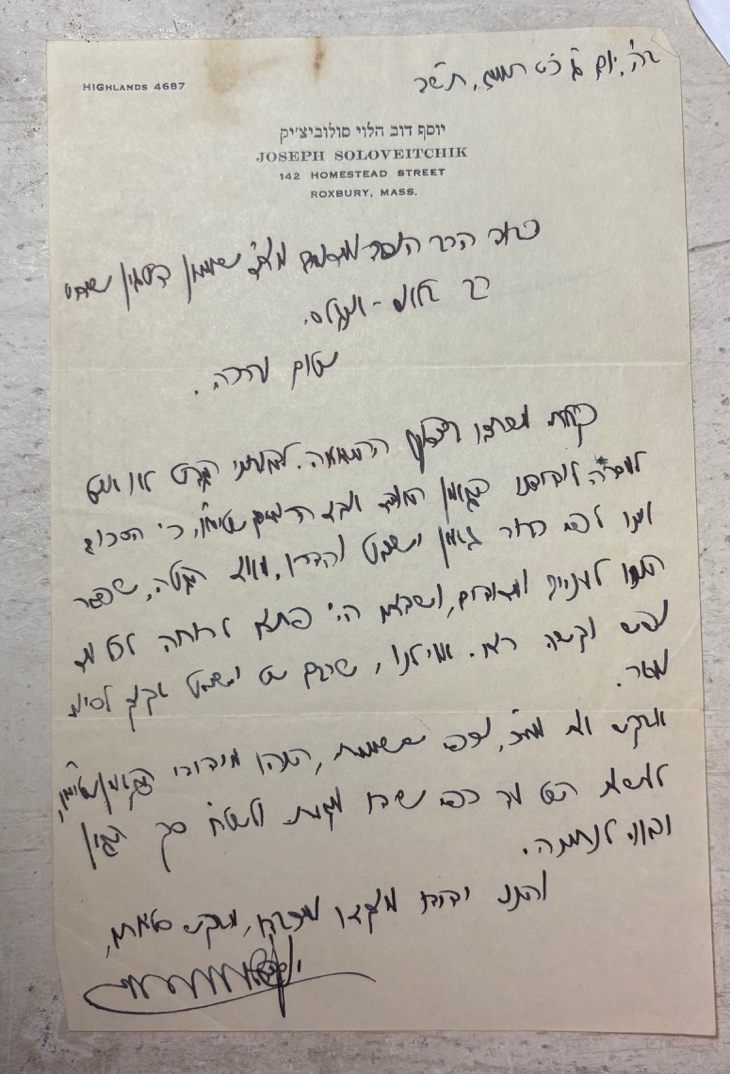
‘And How Can One Behold a Sefer Torah in Distress?’ On the Relationship between Rabbi Chaim Heller and Rabbi Joseph B. Soloveitchik

‘And How Can One Behold a Sefer Torah in Distress?’

On the Relationship between Rabbi Chaim Heller and Rabbi Joseph B. Soloveitchik

by Aviad Hacohen and Menachem Butler


This article, published on the occasion of the anniversaries of the passing of Rabbi Chaim Heller (14 Nisan 5720) and Rabbi Joseph B. Soloveitchik (18 Nisan 5753), may their memories be a blessing, reexamines their relationship through a newly published body of correspondence, situating their bond within the intellectual and material conditions of mid-twentieth-century American Orthodoxy.[1] The letters document both a relationship of unusual personal and scholarly closeness and the economic precarity and institutional instability that affected even leading Torah scholars of the period.

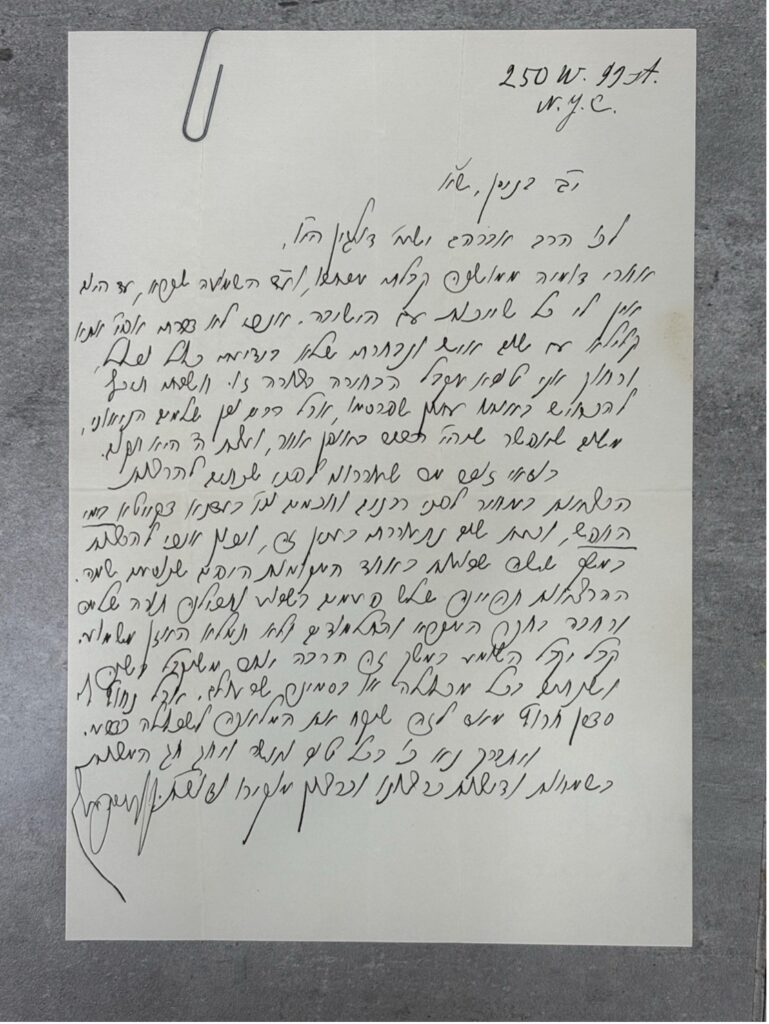
One such document, written by R. Soloveitchik in 1942 at a moment of acute crisis, reads as follows:

“Your esteemed honor has surely heard that our friend, the great and mighty gaon, luminary of the Diaspora and its glory, the crown of Israel’s splendor, our teacher and master Rabbi Chaim Heller, may he live long, has fallen gravely and dangerously ill. To our joy, and to the joy of all who fear God, our prayers have been accepted, and the Healer of all flesh has sent recovery and healing to the great one of our generation. Yet he remains weak and requires exceptional care. I therefore request of your esteemed honor, as a friend of the aforementioned gaon, to exert yourself on his behalf in every possible way. The supervision of the illness has entailed great expense, and even now the outlay is considerable while there is no income – and how can one behold a Sefer Torah in distress? I am confident that your esteemed honor will do all that is necessary, secure a fitting sum, and deliver it to the gaon R. H. Heller, may he live long, or to the fund ‘For R. H.’ I thank him in advance for his efforts. Your admirer and one who honors you.”[2]

In this letter, Soloveitchik addressed his friend Rabbi Simon (Abraham Yeshayahu) Dolgin,[3] then rabbi of Congregation Beth Jacob in the Beverly Hills neighborhood of Los Angeles, where he would serve for more than three decades and build one of the most significant Orthodox communities on the American West Coast. Upon receiving the appeal, Dolgin promptly sent a contribution; it appears, however, that its amount did not meet Soloveitchik’s expectations.

In a subsequent letter of appeal sent to Rabbi Dolgin approximately one month later [=14 July 1942], R. Soloveitchik again wrote:

“I received your letter together with the check. To my great regret I cannot deliver it to our friend, the great gaon, the mighty shepherd, may he live long, for the sum is not commensurate with the honor and majesty of a gaon of Israel, a luminary of the Diaspora, who dispersed his wealth to the poor and destitute, and whose home was open wide to all who were embittered and broken in spirit. Woe unto us, that the rabbi of Israel stands in need of aid and assistance. I request of your esteemed honor – who, as I have heard, is among the friends of the aforementioned gaon – to do all that lies within your power and to send a proper and worthy sum.”

The letters published here for the first time provide a rare window into the distinctive relationship, a bond of unusual personal and intellectual intimacy, and the enduring ties that prevailed for decades between two of the leading Torah scholars in the United States in the twentieth century. At the same time, they illuminate the manifold hardships, including acute financial privation, humiliation, and disappointment, that rabbis of that period were compelled to endure as they sought even minimal means of livelihood with which to sustain their households. This fate did not spare even one of the foremost sages of the generation, R. Chaim Heller, who, in order to support his family, was compelled to piece together sporadic and temporary sources of income until he eventually attained, albeit only in relative terms, a measure of stability and a settled position that afforded him and his family a degree of economic security.[4]

Beyond their intrinsic interest, these letters are of particular importance by virtue of the period in which they were written. They date to the years of the Second World War, from which very little of Rabbi Joseph B. Soloveitchik’s correspondence has survived.

Already in these early letters, the literary Hebrew of R. Joseph B. Soloveitchik and his distinctive stylistic register stand out prominently.[5] They attest both to the profound bond between the two scholars and to R. Soloveitchik’s sustained concern for the welfare of his colleague and intimate friend, R. Chaim Heller. Their connection began years earlier in Berlin.

R. Chaim Heller (1879-1960) was among the leading Torah scholars of the early twentieth century. Alongside his greatness in Torah, he was deeply engaged in the scholarly study of Talmudic literature and biblical translation.[6] His work was characterized by a distinctive methodological orientation that sought to challenge the prevailing assumptions of modern biblical criticism through philological rigor grounded in the resources of the rabbinic tradition. In his introduction to On the Jerusalem Targum to the Torah (New York, 1921), R. Heller sharply criticized what he termed the “mechanical method” of comparing ancient translations in order to posit divergent textual recensions. Against this approach, he argued that the multitude of so-called “variants” in translations such as the Peshitta, the Septuagint, and the Samaritan Pentateuch do not reflect alternative Hebrew originals, but rather systematic exegetical practices. In his view, the translators did not render the biblical text literally, but interpreted and expanded it in light of traditions preserved in Hazal. This thesis enabled him simultaneously to undermine the conclusions of contemporary critics and to reaffirm the centrality and antiquity of the Oral Torah as an interpretive matrix for Scripture.[7]

This distinctive synthesis of traditional learning and critical scholarship was already prefigured in the formative trajectory of his early life. Born in Białystok and raised in Warsaw, he was already in his youth known as “the prodigy of Warsaw.” From the age of ten he ceased studying with melammedim; he never attended a yeshiva and acquired his entire Talmudic learning independently, as an autodidact. He married the daughter of a wealthy member of the Łódź community, and in the home of his uncle in Warsaw encountered the leading sages of the generation, engaging them in rigorous dialectical discussion. Among them were R. Yosef Dov Soloveitchik, author of Beit ha-Levi; R. Isaac Elchanan Spektor of Kovno; and the Netziv of Volozhin. During these years he also formed especially close ties with R. Chaim Soloveitchik, his relative by marriage R. Eliyahu Feinstein of Pruzhany, and R. Eliyahu Chaim Meisel of Łódź. In later years, he received a doctoral degree from the University of Würzburg.

Following the death of Rabbi Malkiel Tzvi Tannenbaum, the community of Łomża was left without a rabbi, and its leaders resolved to appoint Rabbi Heller, already known as a sharp and penetrating scholar and a man of broad learning who held a doctoral degree. By that time he had published studies on the Septuagint and on Maimonides, which drew the respect of both rabbinic and academic circles. Yet after only a few months he resigned his post. Various explanations have been offered for his departure: some point to his reluctance to devote extensive time to communal responsibilities, which he regarded as bittul Torah, while R. Joseph B. Soloveitchik recounted that Rabbi Heller himself expressed concern that members of the congregation might pressure him to act against his convictions.

R. Heller soon left for Berlin, where, in 1922 he established the Beit Midrash ha-Elyon, an advanced institution for rabbinic training that drew a small but serious circle of students. Berlin at the time was a meeting ground of worlds, traditional learning and modern scholarship, and Heller moved between them with unusual authority. In R. Heller’s case, this was not merely a sociological juxtaposition but a fully integrated intellectual stance, in which Wissenschaft methods were appropriated and redirected in defense of the integrity of the Masoretic text and the authority of the Oral Torah.[8] It was there that the young R. Soloveitchik spent several formative years. He was not formally enrolled in the institution, but he attended Heller’s lectures and was deeply influenced by them. What impressed him was not only R. Heller’s mastery of Torah and scholarship, but the range of his mind – the sense that he inhabited both disciplines fully, without strain or concession.

In 1929, R. Chaim Heller was appointed as a Visiting Professor of Bible at RIETS,[9] and “for close to ten years Heller taught in New York while occasionally traveling to Berlin and elsewhere before settling in the United States.” More than a decade later, his name was even floated by Rabbi Dr. Leo Jung as a potential successor as Rosh Yeshiva of RIETS following the death of R. Moshe Soloveichik in 1941.[10] A contemporaneous portrait of Heller’s intellectual profile appears in a 1930 article by R. Yerahmiel Elimelekh (Max J.) Wohlgelernter in the ha-Pardes journal, in which R. Heller is presented not merely as a scholar of unusual range, but as a figure who entered directly into confrontation with modern biblical criticism on its own terms, armed with philological expertise yet grounded in the authority of the rabbinic tradition. Against what R. Wohlgelernter characterizes as the “mechanical” methods of contemporary critics, R. Heller is depicted as demonstrating that the multiplicity of textual variants in ancient translations reflects interpretive practice rather than divergent textual recensions, thereby reasserting the integrity of the Masoretic text and the centrality of the Oral Torah as its interpretive matrix.[11]

In 1937, several years after the rise of the Nazis to power and the intensification of anti-democratic measures directed especially against the Jews, R. Chaim Heller emigrated to the United States and settled in New York. That same year, R. Moshe Feinstein likewise arrived in New York. During this period, R. Heller renewed his connection with R. Joseph B. Soloveitchik, who had come to the United States some five years earlier at the urging of his father, R. Moshe, then Rosh Yeshiva of the Rabbi Isaac Elchanan Theological Seminary. In Boston, R. Joseph B. Soloveitchik led his community with distinction and, alongside his teaching, increasingly assumed a position of broader intellectual and religious leadership, establishing himself as a central figure for a growing circle of students and adherents.[12]

Despite this recognition of his intellectual stature, the conditions that Heller encountered upon his arrival in the United States were markedly different. Like many rabbis who fled Germany on the eve of the Second World War and arrived in the United States as refugees,[13] R. Chaim Heller entered a professional landscape that was structurally inhospitable. The lingering effects of the Great Depression continued to constrain both the rabbinic and academic labor markets.[14] Congregational positions, even in smaller and more remote communities, were typically occupied by long-established incumbents, while the few available posts offered only modest remuneration. Universities, for their part, were in a period of contraction, with limited hiring and little institutional appetite for figures whose scholarly profile did not align neatly with existing departmental frameworks. For a scholar of Heller’s unusually wide and interdisciplinary range, no obvious institutional niche presented itself.

In response, Heller adopted a peripatetic mode of intellectual livelihood. Lacking a stable appointment, he supported himself through public lectures, assembling an income that remained precarious and contingent. This required sustained mobility, persistence, and a readiness to engage even relatively small audiences. At one stage, this itinerant circuit took him as far as Los Angeles, a journey that, under the conditions of the time, entailed considerable logistical and physical demands, where he delivered a series of lectures in his areas of expertise. It was likely in the course of this visit that he first encountered Rabbi Dolgin.

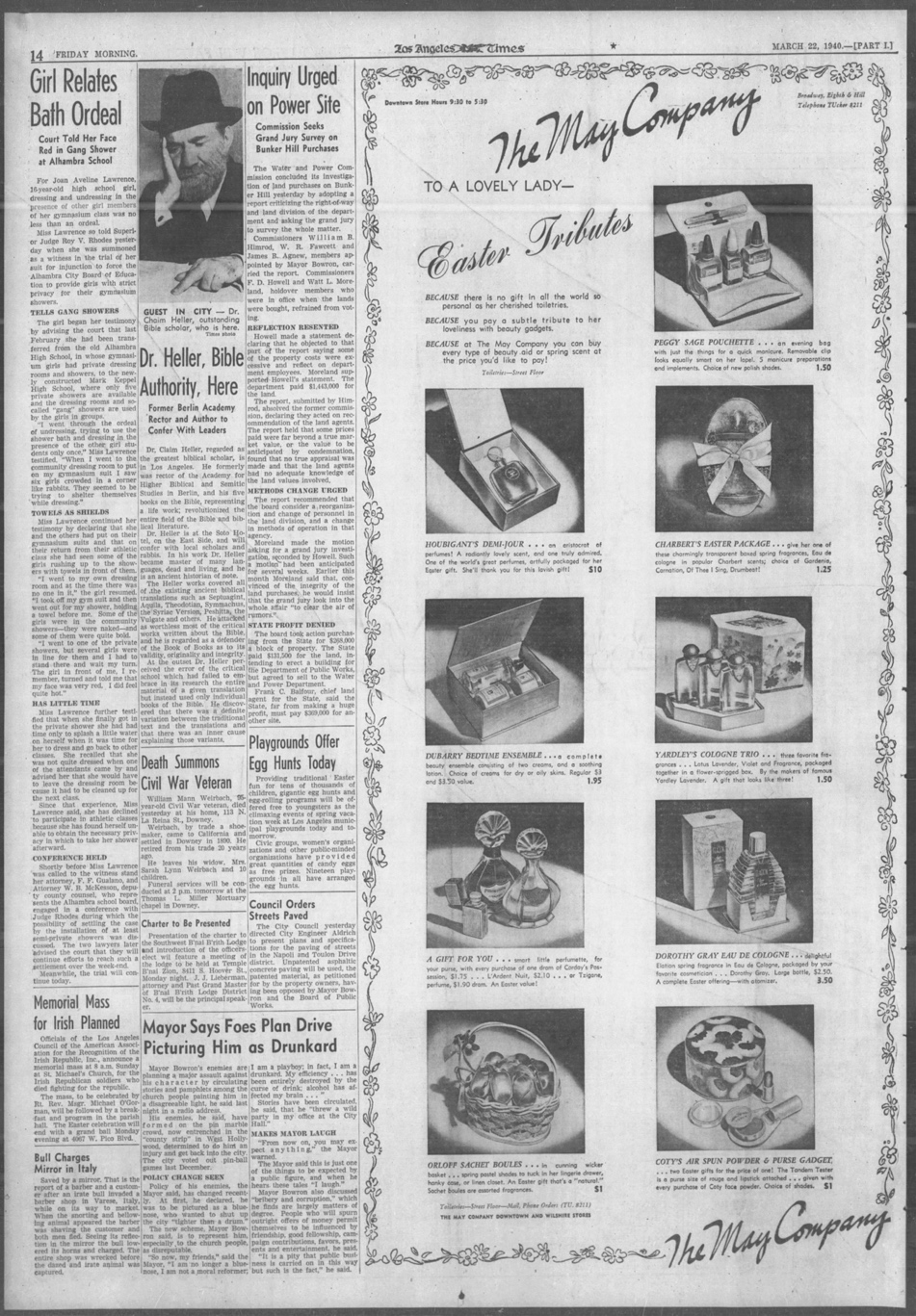
The notice of R. Chaim Heller’s arrival in Los Angeles appeared in the Los Angeles Times, March 22, 1940.

It may be assumed that, in the wake of this visit, the relationship between the two was further strengthened. Expression of this is found in three letters written during those years by R. Chaim Heller to R. Dolgin, which are published here for the first time.


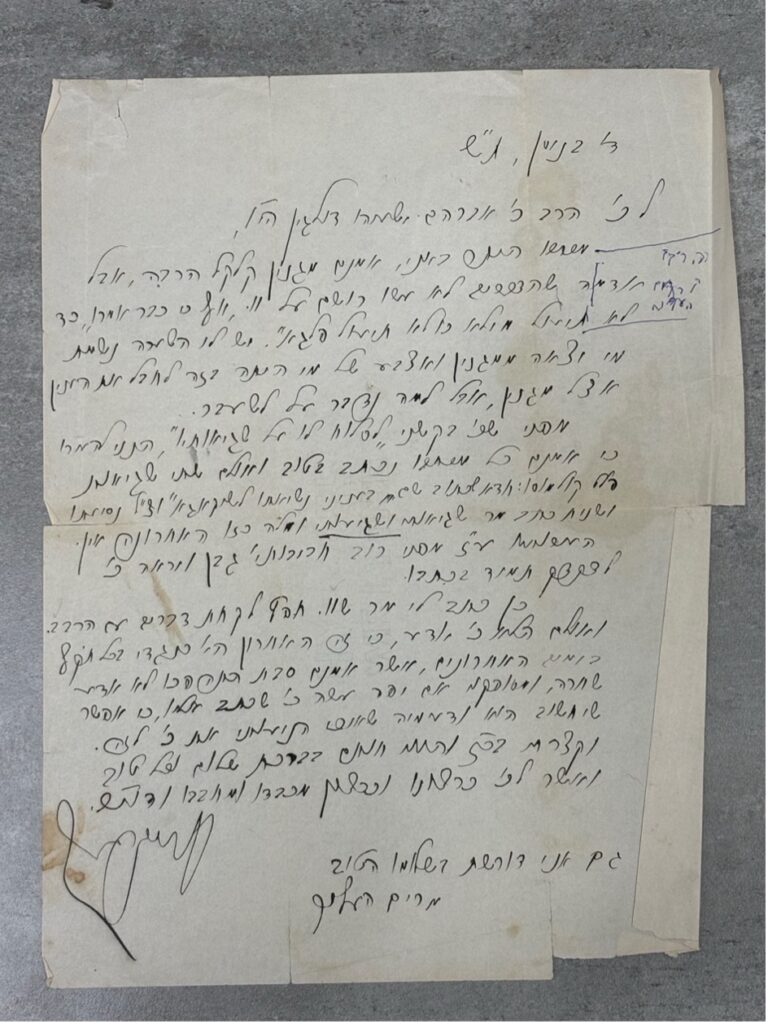
The first letter is dated 4 Nisan 5700 [= 12 April 1940], a short time, approximately three weeks, after R. Chaim Heller’s arrival in Los Angeles. It reads as follows:

“To the honorable Rabbi Abraham Isaiah Dolgin, may he live long: Your esteemed letter has reached me. Although Magnin[15] caused considerable damage, it seems to me that his words made no impression upon ploni, notwithstanding the saying, ‘When a word cannot enter in its entirety, it enters in part.’[16]

I have a conjecture as to whose soul spoke through Magnin, and whose finger was involved in undermining the matter there, but why should we speak of what has passed.

Since Your Honor requested of me “to forgive him for his errors,” I hereby note that, indeed, your entire letter was written well; however, two errors slipped from your pen: first, that you wrote also “concerning the matters of his נשיאתו (nesi’ato, ‘his presidency/bearing’) to Chicago,” whereas it should read נסיעתו (nesi‘ato, ‘his travel’); and second, that you wrote שגיאותי ושגיעותי (shegiyotai, ‘my errors’), and such a latter form does not exist.

I have drawn his attention to this out of my great affection for him,[17] and your honor should take care to be precise in his writing. You also wrote to me that Mr. Sh. desires to discuss matters with Rabbi B. [Bernard Revel[18]]; however, your honor knows that the latter has recently opposed me with full force, though I do not know the cause of his reversal,[19] and I am uncertain whether your honor acted wisely in writing to him, for he and those associated with him may think that I prompted your honor to do so. I have been brief in all this, and I conclude with blessings of peace and all good to your honor, according to your will and the will of one who esteems and cherishes you, and who inquires after your welfare.

Chaim Heller”

In the margin of the letter, his wife added a brief greeting of her own: “I too inquire after his welfare. Miriam Heller.”

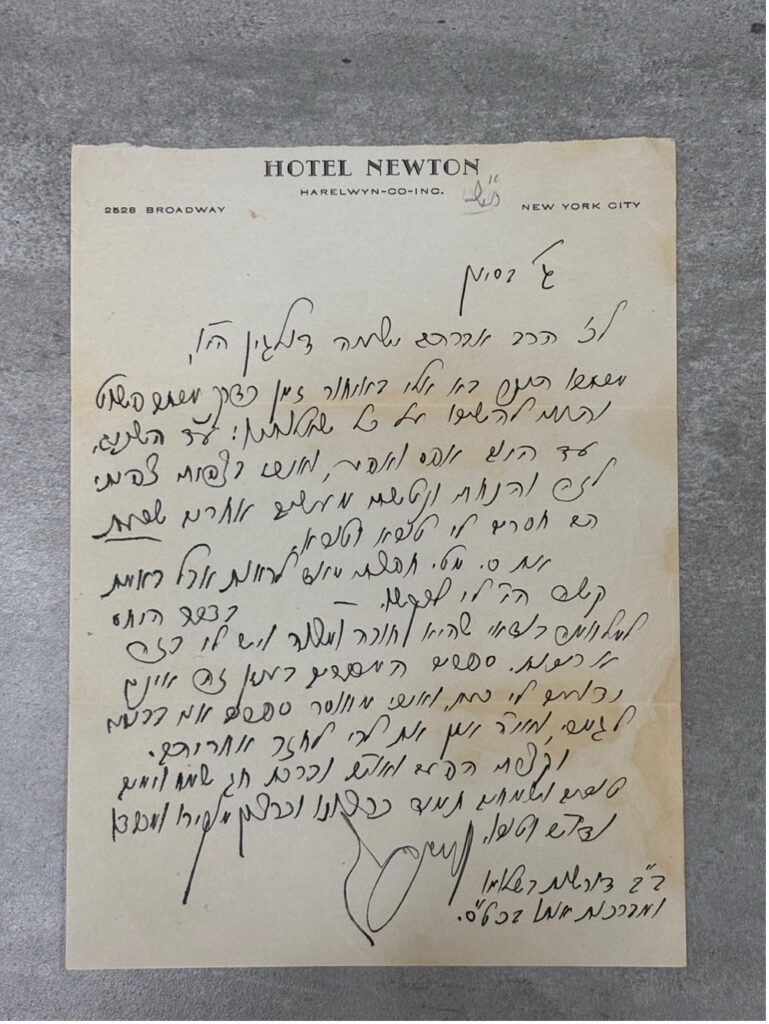
The second letter was written approximately two months later, on the eve of the festival of Shavuot, in which R. Chaim Heller gives expression to his frustration that promises made to him, apparently concerning the provision of a stable source of livelihood, had not been fulfilled. It reads as follows:

3 Sivan [5700] [9 June 1940]

To the honorable Rabbi Abraham Isaiah Dolgin, may God preserve and sustain him,

Your esteemed letter reached me with delay, as is the way of ordinary post, and I shall respond to all your inquiries: regarding the matter of the years [?], up to this day there is nothing whatsoever, and I had indeed waited and hoped for this, and accordingly set aside and abandoned other undertakings which I now lack greatly – very greatly.

I very much wished to meet with […], but in truth it was difficult for me to request this.

Concerning the attitude toward the war,[20] it is certainly an obligation and a commandment, and I have much to elaborate on this matter. Books addressing this subject are not presently known to me, for I am entirely without books in my home; with God’s help, I shall set my mind to seeking them out.

I shall be brief this time. With blessings for long life, a joyous festival, and days of gladness always, in accordance with your will and the will of one who esteems and honors you, who inquires after your welfare and goodness.

Chaim Heller

[p.s.] My wife and daughters inquire after your welfare, and bless you with every good, selah.

The third letter was written approximately a year later, on the eve of Passover 5701. At that time, reports in the press in the Land of Israel[21] indicated that R. Heller was about to receive a teaching appointment at Yeshiva University alongside his colleague R. Joseph B. Soloveitchik. Having grown accustomed to disappointment, R. Heller feared that this announcement amounted to no more than a “trial balloon” lacking any concrete foundation. This apprehension, together with his distress at both the substance and the tone of the report, found expression in a letter he addressed to R. Dolgin:


“12 Nisan 5701 [9 April 1941]

To the honorable Rabbi Abraham Isaiah Dolgin, may God preserve and sustain him,

After a long period of silence while confined to bed, I received your letter. Concerning the report that you read: to this day I have no connection whatsoever with the yeshiva.[22] I have not spoken even a word – however slight[23] – with any person, and I was selected entirely without my knowledge; indeed, I am far removed from accepting an appointment in such a manner. I immediately considered issuing a denial in the very newspaper that published the report, but many worthy individuals dissuaded me, on the grounds that matters might yet develop otherwise, and that the counsel of the Lord shall prevail.”

In this connection, he related to his friend his deliberations regarding an additional source of livelihood – delivering lectures to vacationers in the Catskill Mountains during the summer months:

“You surely recall that two years ago I was approached to deliver lectures, for remuneration, before rabbis and scholars, etc., during the summer season (be-idna de-qayta), in the vacation period; and now this matter has again been raised, and I am prepared to lecture for six weeks in one of the pleasant locales to which people travel.

The lectures would be held three times a week and would encompass a comprehensive and wide-ranging treatment of biblical scholarship and the Talmuds, such that ‘the ear would not be sated with hearing’.[24] Over this period, the listener would gain far more than he would in a year or two at any college or seminary in the world. However, I require a highly energetic organizer who will undertake to arrange this enterprise properly. May your honor be blessed with all good and prosperity, and may you celebrate the Festival of Unleavened Bread with joy and delight.”

After several years in the United States, during which he lacked a stable source of livelihood, R. Chaim Heller secured a position on the teaching staff of Yeshiva University and served alongside his colleague R. Samuel Belkin, R. Joseph B. Soloveitchik, and R. Moshe Shatzkes on the RIETS Ordination Board.[25]

Screenshot

Yet, as emerges from a letter cited below, his salary conditions remained far from favorable. Efforts were made to improve them and, over time, met with a measure of success. The literary oeuvre of R. Chaim Heller is vast in scope. Yet, as R. Joseph B. Soloveitchik would later describe in his eulogy, what was published only represents only a minute fraction, “mere remnants of remnants,” of the breadth of his orally transmitted Torah. It should also be borne in mind that the overwhelming majority of his writings were composed prior to his arrival in the United States.

Among his works in the field of biblical scholarship, particular note should be taken of his studies on the textual tradition of the Bible and its various translations: his work on the Jerusalem Targum to the Torah (New York, 5681 [1921]); on the Samaritan Pentateuch (Berlin, 5684 [1924]); on the Septuagint in the Concordance Heikhal ha-Qodesh, with appended notes, commentaries, and investigations in biblical studies (New York, 5704 [1944]); and on the Peshitta, the Syriac translation of the Bible (transcribed into Hebrew script, with notes, glosses, and commentaries by Chaim Heller: Genesis, Berlin, 5687 [1927]; Exodus, Berlin, 5689 [1929]). He prepared a revised edition of the Peshitta to Exodus for publication but did not succeed in completing its printing prior to his death. Among his halakhic works, his annotated edition of Maimonides’ Sefer ha-Mitzvot (first edition, Piotrków, 5674 [1914]) is well known. A subsequent edition of this work was published by Mossad HaRav Kook in Jerusalem (5706 [1946]) – and has since appeared in numerous further editions – and for this work he was awarded the Rav Kook Prize in 5707 [1947]. His writings also include Hiqrei Halakhot, analytical investigations of legal rulings and issues in the section Hoshen Mishpat (vol. I, Berlin, 5684 [1924]; vol. II, Piotrków, 5692 [1932]); as well as studies on various topics in Maimonides and the halakhic decisors concerning the laws of lending and borrowing and their ancillary matters (Chicago, 5706 [1946]). In addition, he published, in jubilee and memorial volumes, several qontrasim that functioned as a kind of Masoret ha-Shas for the Jerusalem Talmud.[26]

Even after R. Chaim Heller had joined the faculty of Yeshiva University, R. Joseph B. Soloveitchik continued to seek ways to assist him, inter alia by working to secure an increase in his salary. Expression of this may be found in a brief letter that he wrote to R. Chaim Heller on 23 Sivan 5713 (5 June 1953), which is likewise published here for the first time:

Erev Shabbat, 22 Sivan 5713 [5 June 1953]

To my honored friend, the true gaon, luminary of the Diaspora, crown of Israel and its glory, pillar of halakhah and instruction, may he live long,

Greetings and blessings!

I departed New York on Thursday morning and arrived in Boston utterly exhausted. On the preceding Wednesday I met with Rabbi Rosenberg at a certain inn, and we resolved to add two thousand dollars annually[27] to your honor’s salary. It seems to me that next month you will receive a check in accordance with the new scale. We trust in God that the matter will be brought to a good conclusion and that no obstacle will arise in connection with it. Naturally, the matter must remain in absolute confidence, and no one need be informed of it.

I conclude with abundant blessing and faithful affection,

Joseph Dov HaLevi Soloveitchik[28]

This quiet intervention on Heller’s behalf was not an isolated act, but part of a sustained pattern of concern. In this connection, it is instructive to recall R. Aharon Lichtenstein’s characterization of R. Joseph B. Soloveitchik, in his eulogy. Reflecting on his father-in-law’s own self-understanding, he writes:

“The personal self-conception that characterized the Rav, of blessed memory, with respect to his own functioning was bound up with educational–pedagogical activity, and this across multiple spheres. He would often remark that when he arrived in the World of Truth, and were he to be asked to specify by virtue of what he merited a share in the World to Come, he would indicate three points: (a) that he studied Torah with his children; (b) that he founded the Maimonides School in Boston; (c) that he was concerned, over an extended period, for the honor and welfare of a certain talmid hakham.”[29]

This final point refers to R. Soloveitchik’s sustained and well-documented efforts on behalf of R. Chaim Heller. The depth of this personal concern was not confined to the private sphere, but found parallel expression in a sustained intellectual and institutional collaboration between the two. A further expression of their bond and cooperation is found in their joint letter of response to Israeli Prime Minister David Ben-Gurion, who in 1958 approached them, among other “Sages of Israel,” to solicit their opinion on the question “Who is a Jew?” Although the inquiry was addressed to each of them separately, the two resolved to compose a joint reply. Thus they wrote, inter alia:

“We are indeed perplexed that the State of Israel now seeks to hew down our traditional branches and thereby smear the ancient glory of Israel which has long been sanctified through the spilt blood and sufferings of preceding generations. It is only because of these roots that we preserve our uniqueness as a holy people and that we are inextricably bound to the Holy Land. … Will the present State of Israel be built up by (maintaining a threat of) destruction to its very sanctity?”[30]

The same bond found further expression in another brief letter issued by R. Joseph B. Soloveitchik some two years later, likewise published here for the first time. The occasion for its dispatch was the forthcoming wedding of R. Joseph B. Soloveitchik’s daughter, Tova, to Rabbi Dr. Aharon Lichtenstein, his most distinguished student.

In September 1959, a small notice appeared in the “Announcements” column of The Commentator, the student newspaper of Yeshiva University, reporting the engagement of Dr. Aharon Lichtenstein, a member of the class of 1953, to Tova Soloveitchik. It appeared alongside advertisements for driving instruction and for Barton’s confectionery (under OU supervision).[31]

Approximately a month and a half later, in November 1959, the parents of the couple sent a formal invitation to family members and acquaintances. The Hebrew text was ornate, replete with distinctive idioms, and clearly bore the imprint of R. Joseph B. Soloveitchik’s unique stylistic signature:

“To our friends in all their places of residence – may your peace flourish without end! We hereby inform you that Tova shall be betrothed and married to Aharon, with the grace of God, on the evening preceding the fourth day of the week, on the twenty-second day of the month of Kislev, in the year five thousand seven hundred and twenty from Creation, according to the reckoning we follow here in Boston, the city situated at the approaches of the sea. Pray assemble at six o’clock on that evening in the Dorothy Quincy Hall, in the John Hancock Building (355 Stuart Street), for the celebration of bride and groom, for the festive meal, and for the joy of a commandment. Rejoice with us in the joy of our offspring’s wedding day and in the gladness of our hearts. Joseph Dov HaLevi and Tonya Soloveitchik; Yechiel and Bluma Lichtenstein.”

By contrast, the English version was brief, formulated in a more formal and utilitarian manner. The period during which the invitations were sent was one of particular intensity in the Soloveitchik household. At that time, R. Soloveitchik received an informal invitation to put forward his candidacy for the position of Chief Rabbi of Israel[32]; concurrently, he was engaged in intensive preparation for the major eulogy for his uncle, the Griz, R. Yitzhak Ze’ev Soloveitchik, later known as the discourse “Mah Dodekh mi-Dod.”[33]

תמונה שמכילה טקסט, נייר, מכתב, ספר תוכן בינה מלאכותית גנרטיבית עשוי להיות שגוי.

On account of the mention of his name as a candidate for the office of Chief Rabbi, an extensive journalistic interview with R. Soloveitchik was conducted in Yedioth Ahronoth.[34] The interviewer, Elie Wiesel (later a Nobel laureate), reported that, following the Rav’s annual Teshuvah Derashah several months earlier, the Israeli consul general in New York had sent a telegram to Jerusalem declaring: “Here is the best candidate to replace Rabbi Herzog.”[35] Wiesel asked R. Soloveitchik whether he would agree to assume the position if it were offered to him. R. Soloveitchik replied that no such offer had yet been made, but added in principle: “One does not decline an invitation that comes from the Land of Israel… When I receive it, if indeed it is sent, I shall consider it with utmost seriousness. I shall ask myself whether I am worthy of so exalted an office.” When Wiesel further inquired whether it was true that his uncle, R. Yitzhak Ze’ev Soloveitchik, had instructed him not to accept the position, R. Soloveitchik dismissed the report: “It is difficult to believe such rumors. In our family there is a tradition not to compose wills… perhaps because we fear death and its reality.”[36]

In the course of the interview, R. Soloveitchik spoke with evident pride of the religious and spiritual revival among youth and young adults in America, yet added that talk of their immigration to the Land of Israel was, at most, “a beautiful dream.” He attributed the gap between the intensification of Jewish and religious consciousness and the reluctance to immigrate, inter alia, to Prime Minister David Ben-Gurion, who, in his view, failed to appreciate the potential inherent in religion to draw youth to Israel and to demand sacrifice on its behalf. “In my view,” said the Rav, “Ben-Gurion is a religious Jew, though it is possible that he himself does not know this.” These remarks, whose precise formulation was itself questioned in contemporaneous discussion, elicited sharp criticism from several prominent figures within American Jewry. Among them was Moshe Meisels, editor of ha-Doar, who, in a pointed “open letter,” challenged both the claim that Israel had lost its ‘messianic’ hold on the Jewish imagination and the attribution of this development to deficiencies in the religious posture of the Israeli state.[37] Questioning the very premise of R. Soloveitchik’s formulation, Meisels asked rhetorically whether it could truly be maintained that “the concept of Israel has lost its messianic content,” and whether the responsibility for such a development could plausibly be laid at the feet of the state. The Rav sought to respond, but was exceedingly occupied with the final polishing of the eulogy for his uncle, R. Yitzhak Ze’ev Soloveitchik, which he was to deliver within a matter of days.[38]

Indeed, as the Yiddish adage has it, a mentsh trakht un Got lakht – man plans, and God laughs. Only a few days after the wedding invitations for his daughter and R. Aharon Lichtenstein had been dispatched, R. Joseph B. Soloveitchik was diagnosed with colon cancer and was required to travel urgently to Boston to undergo life-saving surgery. R. Soloveitchik informed his family, including the bride and groom, on the night that he delivered the eulogy for his uncle. On the following day, he departed for Boston. The couple, of course, immediately announced the postponement of the wedding, and all prayed for the Rav’s recovery.

R. Soloveitchik himself, only fifty-seven years old at the time, confided to those close to him: “I suddenly ceased to be immortal; I became a mortal being.” In the nights preceding the operation, he undertook a profound reckoning of his life. In later years, he described something of his experience during those turbulent days:

“My existential awareness was an absolute one. Non-being did not enter into it. I would not sustain my gaze upon nihility. Whenever I started to think of death, my thoughts were dashed back and they returned to their ordinary objective, to life. When I looked upon my grandson, I always tried to think of him as if he were my contemporary. I believed that we would always do things and play together. Then sickness initiated me into the secret of non-being. I suddenly ceased to be immortal; I became a mortal being.

The night preceding my operation I prayed to God and beseeched him to spare me. I did not ask for too much. All I wanted was that he should make it possible for me to attend my daughter’s wedding, which was postponed on account of my illness – a very modest wish in comparison with my insane claims to life prior to my sickness. The fantastic flights of human foolishness and egocentrism were distant from me that night.

However, this ‘fall’ from the heights of an illusory immortality into the valley of finitude was the greatest achievement of the long hours of anxiety and uncertainty. Fundamentally, this change was not an act of falling but one of rising toward a new existential awareness which embraces both man’s tragedy and his glory, in all its ambivalence and paradoxality. I stopped perceiving myself in categories of eternity. When I recite my prayers, I ask God to grant me life in very modest terms.”[39]

Further testimony to R. Soloveitchik’s state of mind during this period is found in a letter he sent to R. Reuven Katz, Chief Rabbi of Petah Tikvah. At its outset, the Rav explains that he had fallen gravely ill and been confined to bed, describing the experience in stark terms:

“Dark days, filled with anxiety, suffering, and silent loneliness, passed over me. My world was suddenly overturned. Yet the merit of my forefathers stood by me in the hour of wrath, and the Holy One, blessed be He, in His abundant mercy redeemed my soul in peace and did not allow me to die… Even now, as I begin to recover, I have not yet shaken off the physical weakness and the psychological dread that overcame me during those bitter and difficult hours of illness and suffering.”[40]

He then turns to the question of the Chief Rabbinate, noting both the changed circumstances and his own unsuitability for the role:

“However, the recent developments concerning the Chief Rabbinate… have cast a new light upon the situation, and I doubt whether I would be able to engage in Torah study with peace of mind… There is compelling reason to assume that I would become entangled in all the convolutions of politics, a matter that is neither to my spirit nor to my desire… Therefore I am compelled to acknowledge that, under the present circumstances, I am not fit for this office. I am a teacher, and I have in my world nothing but the four cubits of halakhah. I do not wish to depart from them, even were I to be offered an entire kingdom.”

These remarks make clear that R. Soloveitchik’s refusal to consider candidacy for the position of Chief Rabbi was shaped both by the lingering effects of illness and by a principled resistance to political entanglement, together with a self-conception rooted in the life of Torah within “the four cubits of halakhah.”[41]

As a result of his illness, R. Soloveitchik remained in Boston for approximately three months, during which he gradually recovered. In the course of this period, he merited to bring his daughter Tova and his son-in-law, R. Aharon Lichtenstein, under the wedding canopy. In consultation with the family, it was decided to postpone the wedding by only one month following the operation, and it was ultimately held on 26 Tevet 5720 (26 January 1960).[42]

A week before the rescheduled wedding, still confined to his bed and not yet recovered from surgery, R. Soloveitchik insisted on writing to his close friend R. Chaim Heller. The letter, published here for the first time, was not written in his own hand. The script shows that he dictated it, most likely to his wife, and, in his weakened state, managed only to sign his name.

“To my honored friend, the gaon of Israel and its glory, luminary of the Diaspora and pillar of halakhah and instruction, may he live long; greetings and blessings! Although the physicians have forbidden me to engage in writing on account of my extreme weakness, I cannot refrain from writing this letter in order once again to extend a heartfelt invitation to your esteemed honor, to your esteemed wife, and to your distinguished daughter, may they live, to participate in the wedding of Tova and Aharon. Their presence on the day of our heart’s rejoicing will lend joy and splendor to the celebration. With great affection, Joseph Dov HaLevi Soloveitchik.”

His wife, Dr. Tonya Soloveitchik, appended a moving appeal of her own in Yiddish:[43]

January 19, 1960

To the honorable and true gaon, R. Chaim Heller, to his esteemed wife, the rebbetzin, and to their refined daughter, may they live – greetings and blessings!

We had hoped that we would have the opportunity to visit you once more and to invite you personally to the wedding of our Tova. To our regret, however, my husband’s illness has altered our plans, and we have no possibility of coming to New York to do so.

What we are unable to do orally, we must now do in writing: we warmly invite you all to the wedding! Your presence will greatly enhance our joy.

I also wish once again to thank you for the friendship you have shown during my husband’s illness. Your good wishes and blessings gave us strength at a critical time.

With regards and respect,

Tonya Soloveitchik

In the end, R. Chaim Heller did not attend the wedding, apparently due to his frail health and the difficulty of traveling from New York to Boston. Within a few months, on the Fourteenth of Nisan 5720 (10 April 1960), the Eve of Passover, he returned his soul to his Creator.[44] Although the constraints of time and the approaching festival precluded extended eulogies, R. Joseph B. Soloveitchik flew from Boston to New York to attend the funeral, delivered brief words of farewell, recited kaddish at the funeral,[45] and returned to Boston before the onset of Passover. The rabbinic journal ha-Pardes would later note that “his close friend and trusted associate, Rabbi Joseph Dov Soloveitchik of Boston, eulogized him in moving words.”[46] Although these remarks were long thought to have been lost, a partial and mediated record preserved in the Yiddish press makes it possible to recover something of their content:

“A visit to Rabbi Chaim Heller was in the nature of a pilgrimage… When I would arrive at the elevator of the building at 210 West 99th Street… I would experience a sensation as though a curtain had descended, separating between the sacred and the profane. The Temple comprised three divisions: the Holy of Holies, the Sanctuary, and the Courtyard. Rabbi Chaim embodied all three. He conducted himself within the Holy of Holies… his occupation was solely with Torah… The entirety of the Torah lay before him as an open book… Yet he also partook of the character of the Courtyard, engaged with the community of Israel as a whole… From him radiated both the light of immense knowledge and the simplicity of humanity.”[47]

Even in this compressed form, the structure of the eulogy is already fully present: Heller is cast simultaneously as a figure of absolute immersion in Torah, of intellectual breadth, and of human accessibility, an integration that would find fuller expression in Soloveitchik’s later memorial address. Several weeks later, he returned to the task in a more formal setting, delivering a powerful and deeply moving eulogy at a memorial gathering at Yeshiva University.

As is well known, and in keeping with the characteristic reserve of the Lithuanian Torah greats, R. Joseph B. Soloveitchik was generally sparing in his expressions of affection, esteem, and praise for fellow scholars, and rarely employed language of overt admiration. In the case of R. Chaim Heller, however, he departed from this pattern and bestowed upon him an exceptional and uncommon measure of appreciation, the like of which he appears to have granted to few, if any, other Torah scholars.

This finds expression in the great and moving eulogy that R. Soloveitchik delivered for R. Chaim Heller nine weeks after his passing, at a public gathering at Yeshiva University on June 13, 1960, which also included eulogies by the institution’s president, Dr. Samuel Belkin. R. Soloveitchik’s eulogy was published the following year on the occasion of the first yahrzeit under the title “Rabbi Chaim Heller: The ‘Shmuel ha-Katan’ of Our Generation,” and opened with the following words:

“Who was this man who departed from us in silence and with gracious humility? What was his stature, and what were his deeds? Who was R. Chaim, who held no public office and had no need for conventional titles – whose entire greatness was encapsulated in two simple words: ‘R. Chaim,’ greater than ‘Rabban’ was his name? Some years ago… when the president of this institution, Rabbi Samuel Belkin, introduced R. Chaim… he employed the following formulation: ‘R. Chaim belongs to that small company of men of virtue for whom we pray each day in the Amidah: for the righteous, for the pious, for the elders of Your people the House of Israel, and for the remnant of their scribes. R. Chaim,’ the rabbi continued, ‘is of the remnant of Israel’s scribes.’ In this utterance he encapsulated all that was singular and wondrous in the man. At the time, I was seated on the platform beside R. Chaim, and as I beheld him – entirely withdrawn, enclosed and self-contained, as though scorched by the gaze of the audience fixed upon him – his lips murmuring, ‘What does he want of me?,’ and the pained embarrassment of a solitary individual, thrust against his will into a bustling and clamorous crowd, spread across his face…”[48]

תמונה שמכילה בחוץ, לבוש, אדם, מכונית תוכן בינה מלאכותית גנרטיבית עשוי להיות שגוי.

R. Chaim Heller and R. Joseph B. Soloveitchik in New York, in the vicinity of Yeshiva University.

Notes

    1. A shorter, and non-annotated, version of this article appeared in Hebrew as Aviad Hacohen and Menachem Butler, “‘A Sefer Torah in Distress’,” Makor Rishon, Pesach Supplement, no. 1495 (1 April 2026): 10-11, 16 (Hebrew), available here.We are grateful to our friend Aaron R. Katz and to the Dolgin family for granting us access to letters sent by Rabbi Joseph B. Soloveitchik and Rabbi Chaim Heller to the family patriarch, Rabbi Simon (Abraham Isaiah) Dolgin, of blessed memory. We thank Shulamith Z. Berger of the Yeshiva University Archives for providing photographs of Rabbi Joseph B. Soloveitchik and Rabbi Chaim Heller. We are also grateful to Rabbi Moshe Dembitzer, author of several landmark biographical studies of Rabbi Chaim Heller, for sharing with us a forthcoming, as yet unpublished essay on Rabbi Soloveitchik’s graveside eulogy for Rabbi Heller.
    2. The letter bears no date; however, the postmark on the envelope indicates that it was sent from Boston to Los Angeles on June 9, 1942.
    3. On Rabbi Simon (Abraham Isaiah) Dolgin (1915-2004) and his extensive activities, see Jubilee Volume Minḥah Le-Ish: Presented to HaRav Simon A. Dolgin on the Occasion of His 75th Birthday, ed. Itamar Warhaftig (Jerusalem: Ariel, 1990). Ordained at the Hebrew Theological College in Skokie, Illinois, Dolgin assumed the rabbinate of Congregation Beth Jacob (later in Beverly Hills) in 1938 and served there for approximately thirty-two years, during which he transformed it into a prominent Orthodox community and developed a broad educational infrastructure, including the Harkham Hillel Hebrew Academy. In 1971 he immigrated to Israel, where he served as rabbi of the Ramat Eshkol neighborhood and later as Director-General of the Ministry of Religious Affairs. On his correspondence with David Ben-Gurion, see On the Character of the State of Israel: Correspondence between Prime Minister David Ben-Gurion and Rabbi Simon (Abraham Isaiah) Dolgin, ed. Yitzhak Goldshlag (Jerusalem, 1973; Hebrew).
    4. By way of comparison with the present, this phenomenon still finds occasional resonance in the lives of rabbis today.
    5. On this point, see the remark of Rabbi Aharon Lichtenstein, at the conclusion of his discussion of “The Rav as Eulogist” (forthcoming):“It is difficult for me to conclude without saying a word about the literary dimension of these eulogies. For all my admiration of the Rav’s Torah greatness, and of the content of these eulogies – which is, of course, primary – it is hard not to be left in astonishment at his literary and linguistic ability. We are speaking of a person who was not educated in the Hebrew language, and whose knowledge in this area was drawn from reading Haskalah literature. Let us recall: the Rav did not live in a Hebrew-speaking environment, nor did he speak Hebrew fluently. Yet the richness of his language is truly astounding. Were one to read these texts for this purpose alone, I have no doubt that he would be amply rewarded.”
    6. On the most recent biography and intellectual profile of R. Chaim Heller, see the now substantial body of recent scholarship, which has significantly advanced our understanding of his life and work, see Moshe Dembitzer, “The Letters of Rav Chaim Heller,” Hitzei Giborim, vol. 9 (2016): 923-952 (Hebrew), which assembles and analyzes a wide corpus of correspondence and reconstructs key aspects of his personal and scholarly networks; Uriel Banner, “Towards a Profile of Rabbi Chaim Heller,” Asif, vol. 8 (2023): 720-766 (Hebrew), offering a synthetic biographical portrait grounded in both contemporary testimony and archival material; and Moshe Dembitzer, “‘To Show My People a New Type’: The Academic Chapter in the Life of Rabbi Chaim Heller,” Mekhilta, vol. 5 (February 2024): 365-382 (Hebrew), which reconstructs in detail his academic formation and intellectual program, particularly his engagement with philology and the Wissenschaft des Judentums milieu.
    7. For earlier biographical and bibliographical information on Heller, see Jacob I. Dienstag, “Ein ha-Mitzvot: Bio-Bibliographical Lexicon of the Scholarship on Maimonides’ Sefer ha-Mitzvot,” Talpiyot, vol. 9, no. 3-4 [=Rabbi Chaim Heller Memorial Volume] (September 1970): 663-759, esp. 697-702 [#20] (Hebrew), available here, which underscores both his expertise in biblical translation and linguistics and his programmatic effort to defend the integrity of the Masoretic text. For a critical assessment of R. Heller’s methodology, see Marc B. Shapiro, Between the Yeshiva World and Modern Orthodoxy: The Life and Works of Rabbi Jehiel Jacob Weinberg, 1884-1966 (Oxford: Littman Library, 1999), 169-171, who characterizes R. Heller’s work as driven by a dogmatic commitment to the integrity of the Masoretic text and questions the scholarly validity of his attempts to account for all textual variants within that framework. On the polemical reception of Heller’s work among contemporaries, especially R. Yehiel Jacob Weinberg and Paul Kahle, see ibid. On the reception of Heller’s halakhic method within the American-yeshiva world, see Mordechai Gifter, “Halakhic Studies in [Rav Chaim Heller’s] ‘Le-Hikrei Halakhot’,” Talpiyot, vol. 9, no. 3-4 [=Rabbi Chaim Heller Memorial Volume] (September 1970): 913-921 (Hebrew). Rabbi Mordechai Gifter, at the time Rosh Yeshiva of the Telshe Yeshiva in Cleveland and a former student of R. Chaim Heller at Yeshiva College/RIETS in the early 1930s (prior to his subsequent entry to the world of Telshe in Lithuania), presents the work as a sustained program of conceptual halakhic analysis, marked by rigorous coordination of the Rishonim. In contrast to the reading of both Professor Jacob I. Dienstag and Professor Marc B. Shapiro, it is in Rabbi Mordechai Gifter’s reading of R. Chaim Heller that there is a reflection of the work’s reception within advanced yeshiva circles as an instance of high-level lomdus rather than as an idiosyncratic or marginal enterprise.
    8. See Moshe Dembitzer, “‘To Show My People a New Type’: The Academic Chapter in the Life of Rabbi Chaim Heller,” Mekhilta, vol. 5 (February 2024): 365-382 (Hebrew).
    9. “To Join Yeshiva Faculty: Dr. Chaim Heller of Berlin Will Be Professor of Bible,” The New York Times (18 September 1929): 24.
    10. Jeffrey S. Gurock, The Men and Women of Yeshiva: Higher Education, Orthodoxy, and American Judaism (New York: Columbia University Press, 1988), 130-131, 275n21. See also “Rabbi Chaim Heller, Yeshiva U. Professor, Dead at 81,” Yeshiva University News (5 April 1960), 6-7; and Gilbert Klaperman, The Story of Yeshiva University: The First Jewish University in America (New York and London: Macmillan, 1969), 152
    11. See Yerahmiel Elimelekh (Max J.) Wohlgelernter, “Rabbi Chaim Heller: Prince of the Torah and Ruler over the Treasures of Knowledge,” ha-Pardes, vol. 4, no. 2 (May 1930): 26-30 (Hebrew); and for a later popular portrayal in the American context, see Aaron Rosmarin, “Reb Chaim Heller – One in Generations,” The Jewish Criterion, vol. 20, no. 104 (15 September 1944): 175-178. Special thanks to Shimon Steinmetz for pointing us to this article by Dr. Aaron Rosmarin.
    12. See Seth Farber, “Reproach, Recognition and Respect: Rabbi Joseph B. Soloveitchik and Orthodoxy’s Mid-Century Attitude Toward Non-Orthodox Denominations,” American Jewish History, vol. 89, no. 2 (June 2001): 193-214; Seth Farber, “Immigrant Orthodoxy’s Last Stand: The Rise of Rabbi Soloveitchik to Rosh Yeshiva,” in Immanuel Etkes, ed., Yeshivot u-Batei Midrashot: Mordechai Breuer Jubilee Volume (Jerusalem: Shazar, 2006), 417-430 (Hebrew); Seth Farber, “Immigrant Orthodoxy’s Last Stand: The Appointment of Rabbi Joseph B. Soloveitchik as Rosh Yeshivah at RIETS and the Coming-of-Age of American Orthodoxy,” in Bentsi Cohen, ed., As a Perennial Spring: A Festschrift Honoring Rabbi Dr. Norman Lamm (New York, 2013), 173-187; and earlier in Seth Farber, An American Orthodox Dreamer: Rabbi Joseph B. Soloveitchik and Boston’s Maimonides School (Hanover, NH: Brandeis University Press, 2004).
    13. See, for example, Michael A. Meyer, “The Refugee Scholars Project of the Hebrew Union College,” in Bertram W. Korn, ed., A Bicentennial Festschrift for Jacob Rader Marcus (Waltham, MA: American Jewish Historical Society, 1976), 359-375; Michoel Zylberman, “Yeshiva’s Response to World War II and Revel’s Rescue of European Refugees,” The Commentator, vol. 69, no. 4 (16 November 2004): 22-23; and most recently, Cornelia Wilhelm, The Last Generation of the German Rabbinate: German Refugee Rabbis in the United States, 1933-2010 (Bloomington: Indiana University Press, 2024).
    14. On the difficulties faced by immigrant rabbis in securing stable positions in the United States during the interwar and Depression years, including the need to obtain congregational contracts as a condition of entry and the scarcity of viable pulpits, see Jonathan D. Sarna and Zev Eleff, “The Immigration Clause that Transformed Orthodox Judaism in the United States,” American Jewish History, vol. 99, no. 3 (July 2017): 357-376.
    15. Rabbi Edgar F. Magnin (1890-1984) was a prominent American Reform rabbi who served for decades as the spiritual leader of Wilshire Boulevard Temple in Los Angeles, one of the most influential Reform congregations in the United States.
    16. Bereshit Rabbah 56:4; that is, a statement containing lashon hara – if it does not enter in its entirety [into the heart of its recipient], at least part of it enters.
    17. “Out of the abundance of my affection for him”; a common idiom found in the sources of Mishpat Ivri.
    18. Yeshiva’s founding president Rabbi Bernard Revel passed away a few months later, on December 2, 1940, in the prime of his life, at the age of fifty-five (!). For a biography from more than a half-century ago, see Aaron Rakeffet-Rothkoff, Bernard Revel: Builder of American Jewish Orthodoxy (Philadelphia: The Jewish Publication Society of America, 1972). See also Sidney B. Hoenig, “Rabbinics and Research: The Scholarship of Dr. Bernard Revel,” in Leon D. Stitskin, ed., Studies in Judaica in Honor of Dr. Samuel Belkin as Scholar and Educator (New York: Yeshiva University Press, 1972), 401-467; Harvey Horowitz and William M. Kramer, “Stamp of Approval: Oklahoma Oilman and Rosh Ha-Yeshiva Bernard Revel,” Western States Jewish History, vol. 18, no. 3 (April 1986): 256-261; Jeffrey S. Gurock, “An Orthodox Conspiracy Theory: The Travis Family, Bernard Revel, and the Jewish Theological Seminary,” Modern Judaism, vol. 19, no. 3 (October 1999): 241-253; and Moses Mescheloff, “As I Knew Him: Memories of Rabbi Dr. Bernard Revel,” in Menachem Butler and Zev Nagel, eds., My Yeshiva College: 75 Years of Memories (New York: Yashar Book, 2006), 76-80; and William L. Lee, “President Bernard Revel’s Triple Program: Inventing Jewish and Semitic Studies for the Original 1928-1929 Yeshiva College Curriculum,” in Hayyim Angel and Yitzchak Blau, eds., Rav Shalom Banayikh: Essays Presented to Rabbi Shalom Carmy by Friends and Students in Celebration of Forty Years of Teaching (Jersey City, NJ: Ktav Publishing House, 2012), 201-224.
    19. This remark (dated 12 April 1940) may plausibly be connected to the negotiations then underway between Rabbi Joseph B. Soloveitchik and Dr. Bernard Revel concerning the proposed affiliation of Heikhal Rabbeinu Haym ha-Levi, the Boston graduate-level yeshiva founded by Rabbi Soloveitchik in 1939, with RIETS and Yeshiva College. Following a period of negotiation, a formal memorandum of agreement was drafted in May 1940, envisioning the Heikhal as a New England branch of the New York institution, with coordinated academic governance and shared institutional interests. In this context, R. Chaim Heller’s reference to Dr. Revel’s sudden opposition might reflect tensions surrounding these negotiations and suggests that Heller was attempting to advocate on Rabbi Soloveitchik’s behalf before Dr. Revel. See Rabbi Joseph B. Soloveitchik, Community, Covenant, and Commitment: Selected Letters and Communications, ed. Nathaniel Helfgot (Jersey City: Ktav Publishing House, 2005), 168-169 (no. 7, “Memorandum of Agreement Between RIETS, Yeshiva College and the Graduate-Level Yeshiva in Boston Opened by Rabbi Soloveitchik”); and Samuel Pardes, “Observations on Sukkot in Boston on the Occasion of Ha-Pardes’ Jubilee,” ha-Pardes, vol. 14, no. 8 (November 1940): 27-29 (Hebrew), who describes the rapid consolidation of Orthodox communal life in Boston under Soloveitchik’s leadership, including the central role of the Heikhal, thereby providing contemporaneous evidence for the institutional significance of the Boston enterprise. See also Menachem Genack, “Rabbi Nota Greenblatt, zt”l,” Jewish Action, vol. 83, no. 2 (Winter 2022): 67-68, who notes that during the six months in which Rabbi Greenblatt studied at Heikhal Rabbeinu Haym ha-Levi, Rabbi Soloveitchik “sat opposite the sole portrait in the room – that of ‘the Zeide, Reb Chaim’.” Although the proposed affiliation with RIETS and Yeshiva College ultimately did not materialize, Rabbi Soloveitchik’s Boston enterprise continued to consolidate locally.As Maimonides School historian Seth Farber notes, on December 31, 1940, the Maimonides Educational Institute merged with Yeshivat Torat Israel and Heikhal Rabbeinu Haym ha-Levi, forming a unified institution soon relocated to a centrally situated campus serving the Orthodox communities of Dorchester, Roxbury, and Mattapan. In 1962, reflecting shifting demographic patterns in Greater Boston, the Maimonides School relocated to Brookline under the leadership of Rabbi Soloveitchik and his wife, Dr. Tonya Soloveitchik, chair of the School Committee. See Seth Farber, An American Orthodox Dreamer: Rabbi Joseph B. Soloveitchik and Boston’s Maimonides School (Hanover, NH: Brandeis University Press, 2004), 56. See also Seth Farber, “Reproach, Recognition and Respect: Rabbi Joseph B. Soloveitchik and Orthodoxy’s Mid-Century Attitude Toward Non-Orthodox Denominations,” American Jewish History, vol. 89, no. 2 (June 2001): 193-214; Seth Farber, “Immigrant Orthodoxy’s Last Stand: The Rise of Rabbi Soloveitchik to Rosh Yeshiva,” in Immanuel Etkes, ed., Yeshivot u-Batei Midrashot: Mordechai Breuer Jubilee Volume (Jerusalem: Shazar, 2006), 417-430 (Hebrew); Seth Farber, “Immigrant Orthodoxy’s Last Stand: The Appointment of Rabbi Joseph B. Soloveitchik as Rosh Yeshivah at RIETS and the Coming-of-Age of American Orthodoxy,” in Bentsi Cohen, ed., As a Perennial Spring: A Festschrift Honoring Rabbi Dr. Norman Lamm (New York, 2013), 173-187; and Tovah Lichtenstein, “Mrs. Soloveitchik: A Biographical Sketch,” Tradition: A Journal of Orthodox Jewish Thought, vol. 55, no. 2 (Spring 2023): 95-112.
    20. The letter was written in the midst of the Second World War.
    21. “Leading Torah Sages Appointed Heads of Yeshivat Rabbeinu Yitzchak Elchanan in New York: Rabbis Dr. Chaim Heller, Rabbi Yitzhak Rubinstein of Vilna, and Rabbi Joseph B. Soloveitchik,” ha-Tsofeh (4 April 1941): 1 (Hebrew).
    22. This is a reference to the Rabbi Isaac Elchanan Theological Seminary.
    23. An expression from Kabbalistic and Hasidic literature, in its fuller form: “ata qalila de-leit beih meshasha,” meaning a slight utterance devoid of substance.
    24. See Ecclesiastes 1:8.
    25. This photo appears in Aaron Rakeffet-Rothkoff, The Rav: The World of Rabbi Joseph B. Soloveitchik, vol. 2 (Jersey City, NJ: Ktav Publishing House, 1999), 216. 
    26. At the time, a rumor circulated that these booklets were composed as part of a commentary on the entire Jerusalem Talmud; if such a work existed, it has not come down to us.
    27. $2,000 in June 1953 is equivalent to approximately $24,386.94 in present-day value, adjusted for inflation based on the U.S. Consumer Price Index.
    28. This letter was made available to us, through the courtesy of the family of R. Chaim Heller, in August 2012.
    29. See Aharon Lichtenstein, “Eulogy for Rabbi Joseph B. Soloveitchik,” Mesorah Journal, vol. 9 (1994): 8-33, esp. 24 (Hebrew).
    30. The letter was printed in English translation in Joseph B. Soloveitchik and Chaim Heller, Jewish Identity: Who Is A Jew?, ed. Baruch Litvin and Sidney B. Hoenig (New York: Feldheim, 1965), 116-117, and reprinted in a slightly different translation in Rabbi Joseph B. Soloveitchik, Community, Covenant, and Commitment: Selected Letters and Communications, ed. Nathaniel Helfgot (Jersey City: Ktav Publishing House, 2005), 168-169 (#27. “On the ‘Who is a Jew?’ Question [a]”).
    31. The Commentator, vol. 50, no. 1 (24 September 1959): 4. See also Jesse Sodden, “A Jewish Ideal Realized on the American Scene (Interview with Stephen Klein),” The Jewish Forum, vol. 34, no. 6 (June 1951): 105-108; and Morris Freedman, “Orthodox Sweets for Heterodox New York: The Story of Barton’s,” Commentary Magazine, vol. 13, no. 5 (May 1952): 472-480.
    32. On this episode, see Jeffrey Saks, “Rabbi Joseph B. Soloveitchik and the Israeli Chief Rabbinate: Biographical Notes (1959–1960),” Bekhol Derakheha DeAhu (BaDaD), no. 17 (September 2006): 45-67. For a detailed account of an earlier, unsuccessful candidacy and its broader implications, see Aviad Hacohen, “‘You May View the Land from a Distance, but You Shall Not Enter It’: Rabbi Joseph B. Soloveitchik’s Candidacy for the Tel Aviv Chief Rabbinate and the Riddle of His Subsequent Refraining from Visiting Israel,” in Dov Schwartz, ed., Religious Zionism: History, Thought, Society, vol. 9 (Ramat Gan: Bar-Ilan University Press, 2023), 153-222 (Hebrew).
    33. See Gerald J. Blidstein, “Rabbi Dr. Soloveitchik Eulogizes Famed Uncle, The Brisker Rav,” The Commentator, vol. 50, no. 5 (17 December 1959): 1,3. The eulogy was later published as Joseph B. Soloveitchik, “Mah Dodekh mi-Dod,” ha-Doar, vol. 43, no. 39 (27 September 1963): 752-759 (Hebrew), and reprinted in Joseph B. Soloveitchik, Besod Hayahid Vehayahad, ed. Pinchas Peli (Jerusalem: Orot, 1976), 191-253 (Hebrew).
    34. Elie Wiesel, “‘The Immigration of Jewish Youth from the United States Is in the Nature of a Beautiful Dream’…: said Rabbi Joseph B. Soloveitchik, who has been mentioned as a candidate for the position of Chief Rabbi of Israel, in a conversation,” Yedioth Ahronoth Sabbath Supplement (13 November 1959): 7 (Hebrew).
    35. See Jeffrey Saks, “Rabbi Joseph B. Soloveitchik and the Israeli Chief Rabbinate: Biographical Notes (1959-1960),” Bekhol Derakheha DeAhu (BaDaD), no. 17 (September 2006): 45-67, esp. 50.
    36. Elie Wiesel, “‘The Immigration of Jewish Youth from the United States Is in the Nature of a Beautiful Dream’…: said Rabbi Joseph B. Soloveitchik, who has been mentioned as a candidate for the position of Chief Rabbi of Israel, in a conversation,” Yedioth Ahronoth Sabbath Supplement (13 November 1959): 7 (Hebrew).
    37. See Moshe Meisels, “The State of Israel and the Land of Israel: A Sort of Open Letter to Rabbi Joseph B. Soloveitchik,” ha-Doar, vol. 40, no. 5 (4 December 1959): 71 (Hebrew).
    38. Gerald J. Blidstein, “Rabbi Dr. Soloveitchik Eulogizes Famed Uncle, The Brisker Rav,” The Commentator, vol. 50, no. 5 (17 December 1959): 1,3.
    39. These reflections were published only decades later, in Joseph B. Soloveitchik, Out of the Whirlwind: Essays on Mourning, Suffering and the Human Condition, eds. David Shatz, Joel B. Wolowelsky, and Reuven Ziegler (Hoboken, N.J: Ktav, 2003), 131-132. On this, see Dov Schwartz, “Finitude and Suffering: ‘Out of the Whirlwind’,” in From Phenomenology to Existentialism: The Philosophy of Rabbi Joseph B. Soloveitchik, vol. 2 (Leiden: Brill, 2013), 227-289.
    40. Published in full in Marc B. Shapiro, “Letters from the Rav,” Hakirah: The Flatbush Journal of Jewish Law and Thought, vol. 32 (2022): 135-168, at 165-166 (Hebrew). An abridged version appeared in “Rabbi Dr. Joseph B. Soloveitchik Refuses to Stand for the Office of Chief Rabbi of Israel [Letters to MK Haim-Moshe Shapira and Rabbi Reuven Katz],” ha-Doar, vo. 40, no. 19 (11 March 1960): 330 (Hebrew), and a partial English translation is found in Rabbi Joseph B. Soloveitchik, Community, Covenant, and Commitment: Selected Letters and Communications, ed. Nathaniel Helfgot (Jersey City: Ktav, 2005), 173-176 (no. 29, “Declining the Offer to Submit His Candidacy for the Position of Chief Rabbi of the State of Israel [a]”).
    41. See also Menashe Unger, “What Disappointed Rabbi Soloveitchik in the Chief Rabbinate?” Tog-Morgen Journal (11 March 1960): 5 (Yiddish); Menashe Unger, “Rabbi Soloveitchik Reflects upon the Great Responsibilities of the Rabbinate,” Tog-Morgen Journal (14 March 1960): 5 (Yiddish); and Menashe Unger, “Conversation with Rabbi Joseph B. Soloveitchik, ‘The Rabbinate and that of the State Are Two Separate Domains’,” ha-Tsofeh Literary Supplement (18 March 1960): 3-4 (Hebrew). An edited translation appears in Rabbi Joseph B. Soloveitchik, Community, Covenant, and Commitment: Selected Letters and Communications, ed. Nathaniel Helfgot (Jersey City: Ktav Publishing House, 2005), 179-185 (no. 31, “On the Chief Rabbinate of Israel [c]”);
    42. For the literary gift from Rabbi Jehiel Jacob Weinberg to the newlyweds, see Shaul Seidler-Feller, “‘Amru Lo HaKadosh Barukh Hu … Yodea Ani Kavanato shel Aharon Heikh Hayetah Le-Tovah’: On a Short Wedding Wish to the Lichtensteins from the Pen of Rabbi Jehiel Jacob Weinberg,” The Seforim Blog (18 June 2015), available here.
    43. Our thanks are extended to Dr. Vicki Shifris and Dr. Nathan Shifris for their assistance in translating the letter.
    44. R. Chaim Heller passed away at the Hospital for Joint Diseases in Manhattan (now NYU Langone Orthopedic Hospital). See “Rabbi Chaim Heller, Yeshiva U. Professor, Dead at 81,” Yeshiva University News (5 April 1960): 6-7.
    45. See Aharon Benzion Shurin, “The Gaon Rabbi Chaim Heller Who Passed Away on the Eve of Passover,” Forverts (15 April 1960): 6 (Yiddish); and the testimony regarding the recitation of Kaddish attributed to Aharon Benzion Shurin’s brother, Rabbi Israel Shurin, in Hershel Schachter, Mi-Peninei ha-Rav (Jerusalem: Flatbush Beth Hamedrosh, 2005), 266 (Hebrew).
    46. Samuel Pardes, “The Gaon Rabbi Chaim Heller,” ha-Pardes, vol. 34, no. 8 (May 1960): 40 (Hebrew).
    47. We thank Rabbi Moshe Dembitzer for sharing an unpublished forthcoming essay on Rabbi Soloveitchik’s eulogy at Rabbi Heller’s graveside. The present English translation is based on a Hebrew rendering of the text in a forthcoming study by Moshe Dembitzer, “Words of Farewell at the Bier of Rabbi Chaim Heller,” and has been checked against the Yiddish original published by Hillel Seidman, “Rabbi Chaim Heller: His Genius in Torah and in Hokhmat Yisrael,” Tog-Morgen Journal (20 April 1960): 5 (Yiddish). See also Hillel Seidman, “The Combatant for the True Meaning of the Torah: After the Passing of Rabbi Chaim Heller,” ha-Doar, vol. 40, no. 23 (29 April 1960): 443 (Hebrew); and Hillel Seidman, “The Gaon Rabbi Chaim Heller: In His Halakhic Rulings and His Practices,” ha-Doar, vol. 40, no. 24 (6 May 1960): 460-461 (Hebrew).
    48. Joseph B. Soloveitchik, “Rabbi Chaim Heller: The ‘Shmuel ha-Katan’ of Our Generation,” ha-Doar, vol. 41, no. 23 (21 April 1961): 400-405 (Hebrew), reprinted in Ohr ha-Mizrach, vol. 9. 1-2 (September 1961): 1-11 (Hebrew); and then republished under a new title in Joseph B. Soloveitchik, “Rabbi Chaim Heller,” Panim El Panim, no. 514-515 (2 April 1969): 20-25 (Hebrew); and Joseph B. Soloveitchik, “Profile of Rabbi Chaim Heller (On the Tenth Anniversary of his Passing — Eve of Passover, 5720),” Shana be-Shana (1970): 197-221 (Hebrew). It was later reprinted under the title “Peletat Sofreihem” (lit. “The Surviving Remnant of Their Scribes”) in Joseph B. Soloveitchik, Besod Hayahid Vehayahad, ed. Pinchas Peli (Jerusalem: Orot, 1976), 254-294 (Hebrew); and Joseph B. Soloveitchik, Divrei Hagut ve-Ha’arakha, ed. Moshe Krone (Jerusalem: World Zionist Organization, 1982), 137-162 (Hebrew). A translation of this essay appears in Joseph B. Soloveitchik, “A Eulogy for R. Hayyim Heller” (trans. Shalom Carmy),” in Joseph Epstein, ed., Shiurei ha-Rav: A Conspectus of the Public Lectures of Rabbi Joseph B. Soloveitchik (Hoboken, NJ: Ktav Publishing House, 1974), 46-65.


Book Review: Yosie Levine, Hakham Tsevi Ashkenazi and the Battlegrounds of the Early Modern Rabbinate

BOOK REVIEW

Yosie Levine. Hakham Tsevi Ashkenazi and the Battlegrounds of the Early Modern Rabbinate. London: Littman Library, 2024. xiv, 266.

Reviewed by Bezalel Naor

Yosie Levine has tackled the enigmatic figure of Hakham Tsevi Ashkenazi (1658-1718), a man whose title alone beggars the imagination. At first blush, the terms “Hakham” and “Ashkenazi” present an oxymoron. The term “Hakham” is generally reserved for Sephardic sages. (An outlier would be Hakham Isaac Bernays of Hamburg [1792-1849], but that is a discussion for another paper.) Hakham Tsevi went so far as to add to his signature the letters samekh teth, in typical Sephardic fashion. (Levine grapples with the significance of the suffix on pages 206-207.)[1]

Reared in Budin (today Budapest),[2] then under Ottoman rule, our protagonist lived at various times in the Balkans (Adrianople, Belgrade, Constantinople, Salonika and Sarajevo), Central Europe (Altona, Hamburg, Wandsbek) and Western Europe (Amsterdam and London). This straddling of Ashkenazic and Sephardic communities produced a hybrid: Hakham Tsevi Ashkenazi.

In the final chapter of the book, entitled “Afterlife: The Response of Modern-Day Posekim to Hakham Tsevi’s Early Modern Responsa,” the author demonstrates how certain positions of Hakham Tsevi which seemed outlandish and even revolutionary at the time, have come home to roost in the twenty-first century.

First, there is the Hakham’s responsum discussing whether an artificial man, a golem, can be counted in a minyan or prayer quorum of ten.[3] The Talmud (Sanhedrin 65b) recounted how Rava created a man by employing Sefer Yetsirah. The Hakham’s own ancestor, Elijah Ba‘al Shem of Chelm, created such a humanoid. (The Hakham’s son, Rabbi Jacob Emden, would later address this very issue in his responsa.)[4] In our own age of robotics and Artificial Intelligence, one anticipates a robust halakhic literature on the subject of the golem. (The golem of the Gemara was bereft of the power of speech, so in that respect, present-day robots are certainly superior.) An area of Halakhah that immediately comes to mind is Nezikin, torts or damages.

An outspoken responsum of the Hakham directed Diaspora Jews visiting the Land of Israel to observe but a single day of Yom Tov in conformity with local custom.[5] A the time it was written, Hakham Tsevi’s decision flew in the face of the accepted practice, whereby Diaspora Jews observed two days of the festival during their sojourn in the Land, in conformity to their place of origin. Writing from Safed in the sixteenth century, Rabbi Joseph Karo attested that pilgrims to the Land would assemble their own minyan, in which they recited the prayers for the second day of Yom Tov in exile, a practice sanctioned by the gedolim of old.[6]

Hakham Tsevi’s own son, Rabbi Jacob Emden, respectfully disagreed with his father’s opinion. In a lengthy responsum, he militated for the two-day observance.[7]

According to Levine, the 1903 decision of Rabbi Elijah David Rabinowitz-Te’omim (Aderet) in Jerusalem, invoking and inveighing with Hakham Tsevi’s responsum, was a first.[8] In Levine’s words: “This ruling represented a radical break with established norms and constituted a watershed in the reception history of Hakham Tsevi’s responsum” (page 197).[9]

Earlier, Levine writes that Rabbi Shneur Zalman of Liady (1745-1812) was “sympathetic to Hakham Tsevi’s ruling in principle” (p. 195). The footnote refers us to Rabbi Shneur Zalman’s Shulhan ‘Arukh 496:11. This reference requires some unpacking. While Rabbi Shneur Zalman’s ruling just happened to coincide with that of Hakham Tsevi, it was certainly not the basis of his ruling. Rather, he based his decision on a rishon, the medieval authority Rabbi Eliezer ben Nathan (Ra’avan) of Mayence. Ra’avan, in turn, followed in the footsteps of Rabbenu Hananel ben Hushiel of Kairouan.[10]

(An aside: Rabbi Abraham David Lavut of Nikolayev [1814-1890], a disciple of Rabbi Menahem Mendel Schneersohn of Lubavitch [Tsemah Tsedek], brought to the discussion a mystical element, whereby the “illumination” [he’arah] of the Festival takes a day longer to reach the Diaspora.[11] The late Rabbi Baruch Na’eh, of blessed memory, impressed upon this writer in no uncertain terms that the Alter Rebbe’s pesak was derived from Rabbenu Hananel—which is to say Ra’avan—and not from these mystical considerations.)[12]

Aderet’s contemporary, Rabbi Hayyim Soloveichik of Brisk, also maintained that visitors to Erets Yisrael should observe but a single day of Yom Tov, but unlike Aderet, he did not see the need to invoke the authority of Hakham Tsevi. Neither did he seek support in the work of the rishon, Rabbi Eliezer ben Nathan (as did Rabbi Shneur Zalman). As it is often quipped, “Reb Hayyim was a rishon!”[13]

In more recent times, Rabbi Tsevi Pesah Frank was open to the thinking of the Hakham Tsevi (though he countered that the law might devolve upon the individual, “a-karkafta de-gavra”).[14] On the other hand, Rabbi Shelomo Zalman Auerbach rejected the ruling of the Hakham Tsevi.[15]

This issue remains a heated debate to this day. Some Diaspora Jews keep two days in Erets Yisrael, while others observe but one day.

*

Perhaps the most infamous, and certainly the most traumatic of Hakham Tsevi’s controversies, was his confrontation with crypto-Sabbatian Nehemiah Hiyya Hayyon in Amsterdam in 1713. Hayyon, a man of dubious character, arrived in town from the East (he claimed to be from Safed), intent on publishing his literary oeuvre. Hakham Tsevi served at that time as Rabbi of the Ashkenazic community of Amsterdam. Upon perusal of Hayyon’s book ‘Oz le-Elohim, printed in Berlin earlier that year, Hakham Tsevi discovered that the work contained arch-heresy. (For a long time, it was thought that this was the theology of Shabbetai Tsevi. Today, the scholarly consensus is that ‘Oz le-Elohim is in fact an offshoot of the theology of Abraham Miguel Cardozo [1627-1706].)[16]

Hakham Tsevi proceeded to issue a broadside banning the book. (Levine provides a facsimile on page 168.) One would imagine that the preeminent sage would have easily prevailed over the rascal. Actually, the outcome was the exact opposite. Hayyon remained in Amsterdam and Hakham Tsevi was routed, beating a retreat to London. (Elisheva Carlebach treated this sorry chapter in Jewish history in her biography of Hakham Tsevi’s ally in the affair, Rabbi Moses Hagiz, The Pursuit of Heresy.) It turned out that the Sephardic Hakham of Amsterdam, Solomon Ayllon, was himself a crypto-Sabbatian. Presented with the political clout of the powerful Spanish-Portuguese Mahamad (or Ma‘amad), and ultimately, the Dutch authorities, Hakham Tsevi was forced to flee.

One finds it of interest that Hakham Tsevi’s broadside skirts the issue of the mistaken belief in the pseudo-Messiah Shabbetai Tsevi. (You might call that “the elephant in the room.”) Instead, it focuses on how scandalous is this strange notion that Levine felicitously refers to as Hayyon’s “belief in a First Cause that was decoupled from the revealed God of Israel” (page 167).

Since Levine has discussed the afterlife of Hakham Tsevi’s literary legacy, I should like to take this opportunity to explore the afterlife of Hayyon’s—or more precisely, Cardozo’s theology.

Today one puzzles over vestiges of the opposition of the Sibah Rishonah (First Cause) and Elohei Yisrael (God of Israel) that survive in the reputable works of Rabbi Baruch of Kosov (Yesod ha-Emunah)[17] and Rabbi Israel Hapstein, the Maggid of Kozienice (‘Avodat Yisrael).[18] Should we suspect these authors of being closet Sabbatians?

We need to disentangle theology from sociology. Espousal of this kind of theology does not necessarily connect one to the Sabbatian movement.

It is plausible (though unlikely) that even the way Cardozo himself came to his theology was coincidental to his attraction to the Sabbatian movement. Prima facie, what one observes in Cardozan theology is the convergence of two worlds: that of the philosopher and that of the kabbalist. The Marrano physician, educated at Salamanca in general philosophy, encountered, upon reentry to the Jewish fold, an opposed worldview of a particularistic Judaic nature. The valorization of Elohei Yisrael over the Sibah Rishonah is a celebration of Cardozo’s conversion (or re-conversion) to Judaism. The “decoupling,” or to use the Hebrew term, the pirud that so scandalized Hakham Tsevi, is an outgrowth of the maelstrom, and perhaps unresolved tension, within Cardozo’s soul.

Hakham Tsevi was outraged by the proposition of a First Cause without will (ratson) and intention (kavanah). Similarly irksome was the notion that on the ultimate level of divinity, chosenness disappears. The first proposition is articulated by Rav Kook.[19] The second, by Rabbi Dov Baer Shneuri of Lubavitch (Mitteler Rebbe).[20] Would Hakham Tsevi consider these writings beyond the pale? Perhaps not.

As long as unity (yihud)—for lack of a better term, monotheism—is maintained, one remains within the mainstream of Jewish belief. It was precisely the “decoupling” of these two elements—the universalist and the particularist—that provoked the defender of the faith. The Hakham recognized shtei reshuyot (dualism)[21] when he saw it. No amount of sophistry could camouflage an incipient idolatry.

Again, we need to distinguish between Cardozo’s Messianism and his theology. And even then, there is required a refinement before that theology can mainstream. (Just as Rav Kook entertained the thought that by a process of purification or tseruf, Spinoza’s pantheism might one day be rehabilitated. No longer would Spinoza be referred to as Maledictus but Benedictus.)[22]

Notes

  1. Hakham Tsevi’s son, Jacob Emden, continued the practice, signing responsa “Ya‘abets Samekh Teth.” Ya‘abets is the initials of Ya‘akov ben Tsevi.
  2. Also referred to in German as Ofen.
  3. She’elot u-Teshuvot Hakham Tsevi, no. 93.
  4. She’elat Ya‘abets II, no. 82.
  5. She’elot u-Teshuvot Hakham Tsevi, no. 167. He reasoned that should one observe an additional day in Erets Yisrael, one would thereby be in violation of Bal Tosif (Thou shalt not add). See Rosh Hashanah 28b, regarding one who sleeps in the sukkah on Shemini ‘Atseret.
  6. See Rabbi Joseph Karo, She’elot u-Teshuvot Avkat Rokhel, no. 26
  7. She’elat Ya‘abets, Part One, no. 168.
  8. See Rabbi Elijah David Rabinowitz-Te’omim, Kuntress Shevah ha-Arets, in Be-Shemen Ra‘anan, vol. 2, ed. Ben Zion Shapira (Jerusalem, 1991), p. 209, par. 35. The reference to Hakham Tsevi’s responsum should read no. 167 (not no. 147).
  9. Rabbi Elijah David Rabinowitz-Te’omim (known by the acronym Aderet) served as the assistant to Rabbi Samuel Salant, Rabbi of Jerusalem. Aderet was the father-in-law of Rav Kook, who would go on to become Ashkenazic Chief Rabbi of Erets Israel. Evidently, Rav Kook—unlike Aderet—did not accept the ruling of Hakham Tsevi. See Rabbi Avraham Yitzhak Hakohen Kook, Orah Mishpat, no. 125.
  10. See the commentaries of Ra’avan and Rabbenu Hananel to Pesahim 51b-52a. Rabbenu Hananel’s reading differs from our own. In our version, Rav Safra travels from Erets Yisrael to Bavel. In Rabbenu Hananel’s version, Rav Safra travels from Bavel to Erets Yisrael. The conclusion is that in places of habitation (yishuv), one must conform to local custom (and observe a single day of Yom Tov); in the desert (midbar), one maintains one’s original custom of two-day observance. See the letter of Rabbi Meir Don Plotzki published in Rabbi Shelomo Zalman Ehrenreich’s edition of Ra’avan. Unfortunately, Rabbi Ehrenreich terribly misunderstood the reference to Ra’avan in Rabbi Shneur Zalman of Liady’s Shulhan ‘Arukh. This misreading persisted in Rabbi Yitzhak Flakser’s Sha‘arei Yitzhak.
    See Rabbi Eliezer ben Nathan of Mayence, Even ha-‘Ezer/Sefer Ra’avan, ed. Shelomo Zalman Ehrenreich (Simleul, 1926), Pesahim, 162b (text of Ra’avan), 161d-162c (supercommentary of Even Shelemah); Rabbi Yitzhak Flakser, Sha‘arei Yitzhak, vol. 1 (Jerusalem, 1999), Hilkhot Yom Tov Sheni, chap. 3.
    In a stroke of originality, Rabbi Moshe Sternbuch suggested that this variant of Rabbenu Hananel might have been the source of Maimonides’ startling ruling (Hilkhot Kiddush ha-Hodesh 5:12) that in the desert of Erets Yisrael one observes two days of Yom Tov. See Rabbi Moshe Sternbuch, Mo‘adim u-Zemanim, Part III (Pesahim) (Jerusalem, n.d.), chap. 121 (62a).
    First published in Prague in 1610, Ra’avan was available to Rabbi Shneur Zalman of Liady. Rabbenu Hananel’s commentary to Pesahim, on the other hand, did not become available until 1868, when it was published in Paris (from a Munich manuscript) by Rabbi Yosef Halevi Stern.
  11. Rabbi A.D. Lavut, Sha‘ar ha-Kollel (Brooklyn, 2005), 1:2 (1b-2a).
  12. Rabbi Baruch Na’eh in private conversation with the writer (BN) before Pesah of 1987. He was the son of the famed Habad halakhist Rabbi Abraham Hayyim Na’eh, author of Ketsot ha-Shulhan (on Shulhan ‘Arukh Harav). Rabbi Barukh Na’eh authored two volumes of Gemara Shelemah Pesahim.
    Inter alia, see the reaction of Rabbi Meir Mazuz when presented with the Sha‘ar ha-Kollel. Recorded in She’elot u-Teshuvot Ish Matsli’ah, vol. 1, 2nd edition (B’nei Berak, 1989), Orah Hayyim, no. 40 (116b). Rabbi Matsli’ah Mazuz’s posture as a posek–similar to that of the Hakham Tsevi (Part One, no. 36)—was that the Kabbalistic perspective must never result in a bouleversement of the Halakhah. See Levine, pp. 84-86. Also, Rabbi Jacob Emden’s lengthy responsum in She’elat Ya‘abets, Part One, no. 47.
  13. See Rabbi Tsevi Yosef Reichman, Reshimot Shi‘urim, Sukkah (New York, 1990), p. 227; Rabbi Tsevi Schachter, Nefesh Harav (Jerusalem, 1994), p. 84; Levine, Hakham Tsevi, p. 198.
    Another Lithuanian posek who inclined to the one-day observance was Rabbi David Friedman of Karlin. See She’elat David (Piotrkow, 1913), Kuntress ha-Minhagim, 11b, footnote. One should not be surprised that he did not mention Hakham Tsevi. Reb Dovid Karliner was famous for his eschewal of Aharonim (later-day authorities)!
  14. Har Tsevi, Orah Hayyim, vol. 2 (Jerusalem, 1973), no. 78 (126b).
  15. See the letter of Rabbi S.Z. Auerbach to Rabbi Yitzhak Flakser in Sha‘arei Yitzhak, vol. 1 (Jerusalem, 1999), Hilkhot Yom Tov Sheni, chapter 17.
  16. See Yehudah Liebes, On Sabbateanism and Its Kabbalah (Hebrew) (Jerusalem, 1995), pp. 35-36.
    For a cornucopia of Cardozo’s literary output, see David J. Halperin, Abraham Miguel Cardozo: Selected Writings (Mahwah, New Jersey, 2001).
    Rabbi Yahya Kafah of San‘a, Yemen, mistook ‘Oz le-Elohim for a work of mainstream Kabbalah. Rav Kook set him straight that this is in fact a heretical work. See Rabbi Yahya Kafah, Milhamot Hashem (Jerusalem, 1931); RAYH Kook, Ma’amrei ha-Rayah, vol. 2 (Jerusalem, 1984), p. 520; idem, Haskamot ha-Rayah (Jerusalem, 1988), no. 41, p. 46; idem, letter and pesak din in front matter of anonymous Emunat Hashem (Jerusalem, 1937).
  17. See Rabbi Baruch of Kosov, ‘Ammud ha-‘Avodah (Chernowitz, 1863), Kuntresim le-Hokhmat ha-Emet, 128d. In the newer edition, Yesod ha-Emunah, ed. Ya‘akov Aharon Ilowich (Monsey, NY, 2007), Kuntresim le-Hokhmat ha-Emet, par. 206 (p. 488). And see Esther Liebes, Ahavah vi-yetsirah be-haguto shel R. Baruch mi-Kosov (Ph.D. dissertation, Hebrew University, 1997), pp. 279-280.
  18. In the Pe’er mi-Kedoshim edition of ‘Avodat Yisrael (B’nei Berak, 2013), 290b. The context is a kavanah for Rosh Hashanah.
    See the lengthy discussion in Bezalel Naor, Navigating Worlds: Collected Essays (New York, 2021), pp. 529-530.
  19. Siddur ‘Olat Re’iyah, vol. 1, p. 23, s.v. Le-shem yihud; p. 111, s.v. Atah hu ‘ad she-lo nivra ha-‘olam.
  20. Rabbi Dov Baer of Lubavitch, Imrei Binah (Brooklyn, 2018), Sha‘ar Keri’at Shema‘, par. 94 (120c); quoted in Bezalel Naor, The Project of Hasidism (New York, 2025), p. 108.
  21. Mutatis mutandis, we find in the Mishnaic era the heretic Elisha ben Abuyah (Aher) constructing a duality of the Unmoved One (“no sitting or standing”) and Metatron, the advocate of Israel (“sitting and writing the merits of Israel”). See Hagigah 15a; and the reading of Maimonides, Commentary to the Mishnah, Introduction to Perek Helek (Sanhedrin chap. 10), the third fundamental (Kafah edition, p. 141).
  22. Rav Avraham Yitzhak Hakohen Kook, Pinkas Rishon le-Yaffo, par. 117, in Kevatsim mi-Ketav Yad Kodsho, ed. Boaz Ofen (Jerusalem, 2006), p. 146.
    It seems such a purification of Cardozan theology was uppermost in the mind of Rabbi Pinhas Elijah Hurwitz of Vilna. See his Sefer ha-Berit (Brünn, 1797), Part One, ma’amar 20, chap. 15 (109a-111a). After presenting the opposition of the First Cause and the God of Israel (the hallmark of Cardozo’s theology), Hurwitz quotes the Italian kabbalist Rabbi Joseph Ergas (author of Shomer Emunim) in his polemic work, Tokhahat Megullah & Ha-Tsad Nahash (London, 1715) against Hayyon and Abraham Cardozo. The upshot is the integration of the two aspects of the divinity within an acceptable orthodox framework. Concerning Ergas’ anti-Sabbatian polemic, see Bezalel Naor, Post-Sabbatian Sabbatianism (Spring Valley, NY, 1999), pp. 145-149.Hurwitz has misquoted Tokhahat Megullah f.12. For “Hu mitparesh bi-fe‘ulotav ve-ne‘elam be-‘atsmuto,” read: Hu mitparsem bi-fe‘ulotav ve-ne‘elam be-‘atsmuto.


A Footnote on What the Chasam Sofer Did Not Say

A Footnote on What the Chasam Sofer Did Not Say

By Shnayer Leiman

The Problem. I’m the proud owner of a copy of Rabbi Shimon Finkelman’s Rav Pam: The Life and Ideals of Rabbi Avrohom Yaakov HaKohen Pam (second edition, seventh impression, June 2023, ArtScroll History Series, Mesorah Publications, Rahway, N.J.). It is a magnificently written and produced biography of Rav Pam, a close friend of my father, who like Rav Pam was a disciple of both Rav Shraga Feivel Mendlowitz and Rav Dovid Leibowitz. The biography captures Rav Pam as our family knew him. Indeed, it is the definitive model of how a biography of a גדול בישראל should be written. It informs and inspires as it tells the truth.

As we shall see, a minor error made its way into the volume, and no one can really be faulted for the error. Nonetheless, I am confident that Rav Pam being the איש אמת that he was, will surely not fault me (in עולם האמת) for making the correction.

The reader, at p. 336, is informed that at the 1991 Torah Vodaath dinner at which Rav Pam was the Guest of Honor, he thanked the one thousand guests for coming, and then said:

Often, I think to myself that I go around with a “false pass,” for people think I am that which I am not. But I take comfort in a comment of the Chasam Sofer. Rema is of the opinion that if a stranger enters a shul and claims to be a Kohen, we may rely on his word and call him to the Torah for the Kohen’s aliyah, for even if he is, in fact, not a Kohen, calling him to the Torah would not involve a biblical transgression. Asks the Chasam Sofer: Why would calling up a non-Kohen not be a transgression of “Vekidashto” (And you shall sanctify him),[1] the requirement that we accord honor to those who truly are Kohanim? He answers that this mitzvah is fulfilled when we show honor for the Kehunah (the exalted status of the family of Kohanim). Therefore, even if the person whom we honor is, in fact, not a Kohen, we are fulfilling the mitzvah of “Vekidashto” if we honor someone whom we think is a Kohen.

Therefore, even though, in fact, I am not deserving of honor, if people honor me thinking that I deserve it, then they are considered as having shown k’vod HaTorah (honor for the Torah).

This is truly an inspiring דבר תורה – worthy of the Chasam Sofer and appropriately selected by Rav Pam, a Kohen, for the occasion. Alas, it was not said by the Chasam Sofer.

A Brief Survey of the Chasam Sofer’s Attitude Toward the Publication of His Writings.

Much has been written about the Chasam Sofer (1762-1839), and much more remains to be written. He was a remarkable גדול הדור and פוסק הדור. He lived in a world without radio, TV, telegraph, telephone, or digital communication, yet was recognized during his lifetime as גדול הדור and פוסק הדור. What makes this even more remarkable is the simple fact that he refused to publish any of his Torah insights or halakhic rulings during his lifetime. Of course, the fact that he served as Chief Rabbi of Pressburg (today: Bratislava) and simultaneously as Rosh ha-Yeshiva of the Pressburg Yeshiva – with thousands of disciples during his long reign (1806-1839) – spread his fame throughout the Jewish world. And while he refused to publish his Torah insights, he had a gifted pen and wrote thousands of Jewish legal responsa which he sent to all who asked. All of Torah Jewry knew who the Chasam Sofer was and what he could do.

It is worth examining what the Chasam Sofer had to say about publishing one’s Torah insights. In 1841, his son R. Shimon Sofer, who would later serve as Chief Rabbi of Krakow, published for the first time a personal letter of the Chasam Sofer dated 1829, where he addressed the issue.[2] It reads in part:

Regarding the rumor that you heard that I published a particular volume, and you requested that I send you a copy,[3] I never considered such a matter; it has not even entered my mind, at least until the present time. For the majority of the [Torah] world, that are greater and better than I am – or, at the very least, at the same level that I am – they have no need for me. For the minority of a minority that are less learned than I am, why should I weary myself for a minority? And if, perhaps, it were true that the majority of the [Torah] world needs me – heaven forbid – I am unaware that I would have the obligation to publish my Torah insights and distribute them to the public. So long as G-d grants me life and strength, I am prepared to study [Torah] with all who are interested in learning with me. I will neither pause nor rest – as the L-rd my G-d has commanded me “Just as I teach without charge, so you shall teach without charge”[4] – in responding, as far as my hand and mind reach, to all who ask, at no charge. It is my practice to record in writing whatever Torah insights G-d has graced me with, whether in Halakhah or Aggadah. These writings are freely available. Whoever wishes to copy them is welcome to do so. Such was the practice before the invention of the printing press. More I am not obligated to do. If, heaven forbid, one publishes in order to increase his fame, I worry about the curse of our Sages, of blessed memory: “He who seeks fame will lose his name.”[5] Indeed, such has been the fate of most authors of seforim. How much more so is it prohibited for an author to publish his sefer for financial gain! For these reasons, it never entered my mind to publish a sefer.

Only once did several of the Chasam Sofer’s Responsa and Torah insights appear in print during his lifetime. A disciple of the Chasam Sofer who had access to manuscript copies of his writings, published an edition of חידושים על מסכת שבועות מאת רבינו יוסף הלוי אבן מיגש (Prague, 1826), and appended some 14 large folios of Chasam Sofer’s Responsa and Torah insights to the volumeThe Chasam Sofer was livid when he learned about this unauthorized publication of his writings, but ultimately granted his approval. Towards the end of his life, and at the constant urging of members of his family, he agreed to publish some materials, including a review of R. Zvi Hirsch Chajes’ תורת נביאים . The project fell through, perhaps due to the illness and subsequent death of the Chasam Sofer, but not before he addressed an important note to Rav Zvi Hirsch Chajes, which sheds light on his view of the publication of Torah insights in general, and on his sensitivity to the effect his writings could have on others. The letter was written in 1837, when the Chasam Sofer was 75 years old, and at the height of his fame. Rav Chajes, was 32 years old, still at the start of a brilliant career.[6]

I keep the L-rd before me always. Pressburg, the evening preceding Monday, 27 Marchechvan, 598 according to the short account.

Greetings and blessings for all that is good to my friend and dear Rabbi, the great Rabbi and Gaon, master of Torah, discerning in study and expert in mastery of texts, whose many words are beautifully expressed, the honorable teacher and rabbi Zvi Hirsch, may his light glow, Chief Rabbi and Head of the Yeshiva of Zolkiev, may G-d watch over it.

Dear Friend,

I have a request to make of you. It has never entered my mind to publish a sefer. However, several years ago, some pages of my Responsa and Torah insights were published by a certain rabbi, R. Mordechai Schlank, who set out to publish Ramban’s commentary on Kiddushin and R. Yosef Ibn Migash’s commentary on Shavuot. He had copies of some of my writings with him and published them in the back of the books mentioned. This was done initially against my will, but ultimately with my permission, for he was not with me here [in Pressburg], but was rather in Prague.

Now the following has occurred. A worthy individual from Brody, R. Mordechai Bisliches,[7] a printer who publishes the works of the Rishonim, has managed to get copies of 3 or 4 of my Responsa and copies of some of my Torah insights. He plans to append them to one of the above publications of the Rishonim. Initially, this was done against my will and protest, but my family forced me to acquiesce and remain silent. (For all my Torah insights and writings are freely available for anyone to copy them. I do not discourage anyone from doing so, for nothing I wrote was intended as a secret.) The above mentioned printer is already engaged in the process of publishing my material. These include two responsa that I addressed to you, one on whether a physician who is also a Kohen can administer to a dying or already dead patient,[8] and the other regarding my comments on your sefer, Torat Nevi’im.[9] Now I said: I can do as I please regarding my property; but I cannot do as I please regarding someone else’s property.” Perhaps you don’t want your name, and the name of your community, mentioned regarding that matter. Or, perhaps you will find some passage that, heaven forbid, is a slight to your honor. For those reasons, I implore you to review my comments and let me know what you think. In my humble opinion, there is nothing in my responsa that in any way slights you, heaven forbid. Quite the opposite, they are sources for you of glory and praise. And if, when engaged in halakhic discourse, I criticized something you said, it means nothing. Such are the ways of Torah discourse. Perhaps you will publish yet another sefer and you will be able to defend yourself against any and all criticism. But heaven forbid that I should allow my pen to record anything that would dishonor you! Should you feel that anything I wrote [about you] is improper, I will erase those words, or if necessary, I will neither mention your name or the title of the book. I hope this won’t be the case, and anxiously await your quick reply, before the volume goes to press. I sign with all the usual blessings, the one who loves your soul,

Moshe ha-Katan Sofer of Frankfurt-am-Main

We have included this brief survey of the Chasam Sofer’s attitude toward the publication of his writings, in order to bring home the message that, with one or two exceptions, the Chasam Sofer did not edit, or prepare for publication, any of his writings during his lifetime. He left a vast literature, literally thousands of manuscripts, ranging over a wide variety of topics (such as Responsa, Lectures on the Talmud, Sermons, Commentaries on the Torah, Notes on the Shulchan Arukh, Poetry, personal letters, and more), all still being published – and always in better editions – to this very day.

The Solution. What remains to be addressed is:

1. Why did Rav Pam ascribe the passage (that justifies why a stranger who claims that he is Kohen is allowed to get an aliyah to the Torah as a Kohen, even though we have no evidence other than his say-so) to the Chasam Sofer?

2. How do I know that it wasn’t said by the Chasam Sofer?

3. Who did contribute the insightful justification that ultimately was misattributed to the Chasam Sofer?

Rabbi Finkelman provides a helpful footnote, in an attempt to identify the source of the alleged Chasam Sofer comment.[10] He sends the reader to Toras Moshe on Vayikra 21:8. Alas, in all of the recent editions of Toras Moshe published under the auspices of Makhon Chasam Sofer, the official collection of all of the genuine Chasam Sofer commentaries on the Torah published in the various editions of Toras Moshe (as distinct from his sermons [דרשות] or other collections of Torah commentary that never appeared under the name Toras Moshe ), no such passage appears. See, e.g., the massive six-volume edition of Toras Moshe ha-Shalem veha-Mefoar (Jerusalem, 2021), vol. 3, p. 255, to Vayikra 21:8. There is a comment on Vekiddashto, but not a word about the fact that a stranger who claims that he is a Kohen is allowed to get an aliyah to the Torah as a Kohen, even though we have no evidence other than his say-so.

Almost certainly, neither Rav Pam in 1991, nor Rabbi Finkelman in later years, had access to a Makhon Chasam Sofer edition of Toras Moshe. But they certainly had access to earlier editions of Toras Moshe, which is what led them astray. It’s best to begin our examination with one of the earliest editions of Toras Moshe – and little more needs to be said.

Like almost all the writings of the Chasam Sofer, his Toras Moshe was published posthumously. It first appeared in print in a three-volume set published in Pressburg between 1879 and 1893. The editor of the three-volume set was an אדם גדול, a grandson of the Chasam Sofer, Rav Shimon Sofer (1850-1944). He was the son of Rav Avraham Shmuel Binyamin Sofer (1815-1871), the כתב סופר, who succeeded the Chasam Sofer as Chief Rabbi and Rosh ha-Yeshiva of Pressburg. Rav Shimon Sofer, a distinguished rabbinic scholar in his own right, served as Chief Rabbi of Erlau and was the founder of the Erlauer Chasidic dynasty. In 1893, he published for the first time the third and final volume of Toras Moshe, the volume with the Chasam Sofer’s comments on Vayikra-Devorim. Later editions were usually printed in 2 to 5 volume sets.

Here is what Rav Pam saw and quoted (almost certainly from one of the many later photo-mechanical reprints of the 1893 volume that appeared throughout the 20th century).

He may have owned a copy of a reprinted edition, and if not, he surely would have had access to a copy at the famed Torah Vodaath Library, curated for many years by the late R. Yitzchok Meir Traube and catalogued by the late R. Shlomo Biegeleisen. It is a library I remember well that (in my day) was just-off to the side of the main Bais Medrash at the South Third Street campus in Williamsburg.


No one could really fault Rav Pam for citing a passage – and with great precision – in the name of the Chasam Sofer, when that very passage appears in a sefer entitled Toras Moshe, and whose title page clearly identifies the author of its content as being none other than the Chasam Sofer! Moreover, the sefer was edited by the grandson of the Chasam Sofer, who surely wouldn’t misrepresent what his grandfather wrote!

But it is clearly a case of אליה וקוץ בה. If one examines carefully the text that Rav Pam cited (as seen in the scan above), one notices a coded abbreviation at the end of the paragraph that reads in parentheses: (משמ). (Other passages on the page are coded with an asterisk at the start of each paragraph; they need not concern us.) No dictionary of Hebrew abbreviations will solve the strange abbreviation משמ. But what will solve the problem for us is the editor’s full introduction to his edition of Toras Moshe.

It appears only, as one might expect, at the start of the volume on Bereshis. Here is the key passage, which appears at the very end of the lengthy introduction.

Translated it reads: “I also had in my hands a handwritten book, named Shir Ma’on. The author’s name is not recorded in it. But I felt comfortable taking some of its fruits and inserting them into the present text, for there is a proper time for everything, a fixed time for every desirable matter.”

Incredibly, there are many passages, marked with the code משמ strewn throughout the Toras Moshe volume! What the editor was really telling us is that he had access to a handwritten notebook with no personal name recorded in it. Of course no personal name was recorded in it; it was his private notebook! The Hebrew title Shir Ma’on clearly alludes to the name “R. Shimon.” And משמ is surely an abbreviation for מספר שיר מעון. As a gifted rabbinic scholar, and as the grandson of the author of most of the passages in Toras Moshe, he felt comfortable adding appropriate passages to the volume. But being scrupulously honest, he knew that he could not do so without informing readers of what he was doing, and clearly identifying which passages belonged to his grandfather, and which passages belonged to him.

It is all to the credit of the editors of the latest editions of Toras Moshe that they now publish two separate sections of the book, each with its own title page, and both with notes and commentary. One section is called Toras Moshe and prints only what the Chasam Sofer wrote, and the other section is called Shir Ma’on and prints only what R. Shimon Sofer wrote.


In sum, Rav Pam resonated to a beautiful 
דבר תורה he saw in an early edition (or reprint) of Toras Moshe, and cited it in the name of the Chasam Sofer at a Torah Vodaath dinner held in his honor. Opening to a page in Sefer Vayikra of the multi-volume set of Toras Moshe, there was no obvious reason for him to assume that it was not a Torah insight of the Chasam Sofer. In fact, it was a Torah insight of the Chasam Sofer’s grandson, R. Shimon Sofer, who served with great distinction as Rabbi and Rosh ha-Yeshiva of Erlau in Hungary for over 50 years, and authored the multi-volume שות התעוררות תשובה (printed mostly in Budapest, 1923-1944), and died a martyr’s death in Auschwitz at age 94.


Notes

[1] The reference is to Vayikra 21:8. See b. Gittin 59b, where the verse is understood as a general obligation to honor all Kohanim.
[2] R. Shimon Sofer, “
פתוחי חותם,” introduction to R. Moses Sofer, ספר חתם סופר חלק יורה דעה (Pressburg, 1841). It is reissued in שות חתם סופרחלק יוד, vol. 1 (Jerusalem, 2000), introductory pages, p. 15.
[3] The reference is to the unauthorized publication in 1826 of several of the Chasam Sofer’s responsa and Torah insights, for which see below.
[4] See b. Bechorot 29a.
[5] M. Avot 1:13. Cf. 
שות חתם סופראוחסימן רח.
[6] The letter is included R. Yisrael Stern’s anthology, 
לקוטי תשובות חתם סופר (London, 1965), pp. 92-93.It was first published in 1842 by the recipient of the letter himself, R. Zvi Hirsch Chajes. See presently: כל ספרי מהרץ חיות (Jerusalem, 1958), vol. 1, p. 206. For a comprehensive study of the relationship between the Chasam Sofer and R. Zvi Hirsch Chajes, see Mayer Herskovics, מהרץ חיותתולדות רבי צבי הירש חיות ומשנתו – מהדורה מתוקנת  (Jerusalem, 2007), pp. 143-189.
[7] Mordechai Leib Bisliches (1756-1851) was a bibliophile, dealer in manuscripts, and printer. He printed books that were published in Carlsruhe, Lvov, Prague, and Pressburg. At least two of his printed books carried 
הסכמות from the Chasam Sofer (אוצר נחמדחדושי הרמבן על מסכת שבת , Pressburg, 1837; and מנחת קנאות מהרב הגדול אבא מרי בר משה מחכמי לוניל , Pressburg,1837). In 1846, Bisliches and his partner S.G. Stern sold 111 manuscripts in 102 volumes to the archduchess Marie Louise of Parma, which were added to the de Rossi Collection in the Biblioteca Palatina. See the entry “Bisliches” in Encyclopaedia Judaica and cf. N.M. Gelber’s תולדות יהודי ברודי (Jerusalem, 1955), p. 204.
[8]
 In the standard printed editions, this responsum appears in שות חתם סופריודסימן שלח.
[9]In the standard printed editions, this responsum appears in
שות חתם סופראוחסימן רח .
[10] 
Rav Pam: The Life and Ideals of Rabbi Avrohom Yaakov HaKohen Pam, p.336, note 9.


Lecture at Young Israel Beth El of Borough Park featuring Rabbi Dr. Eliezer Brodt

Lecture at Young Israel Beth El of Borough Park featuring Rabbi Dr. Eliezer Brodt

The event details are:

Topic: “The Vilna Gaon in Fact and Fiction: Kol HaTor and Beyond.”

Date: Wednesday, February 4.

Time: 8:00 PM (doors open at 7:30 PM).

Location: Downstairs in the social hall, 4802 15th Avenue, Brooklyn, NY 11219.

Entry: Men use the front door; women use the rear door.

Program: Lecture followed by Maariv.

Contact: 718-435-9020 | yibethel.org. (sign up for future events)