1

Another Obvious Mistake, More Grammatical Points, Bubbe Mayseh, Apostates and the Zohar

Another Obvious Mistake, More Grammatical Points, Bubbe Mayse, Apostates and the Zohar
 
Marc B. Shapiro
1. In my last post here I gave an example of an obvious error in a recent book focusing on the letters of R. Kook. I found another example of an obvious error in R. Dov Eliach’s new book, Be-Sod Siah.

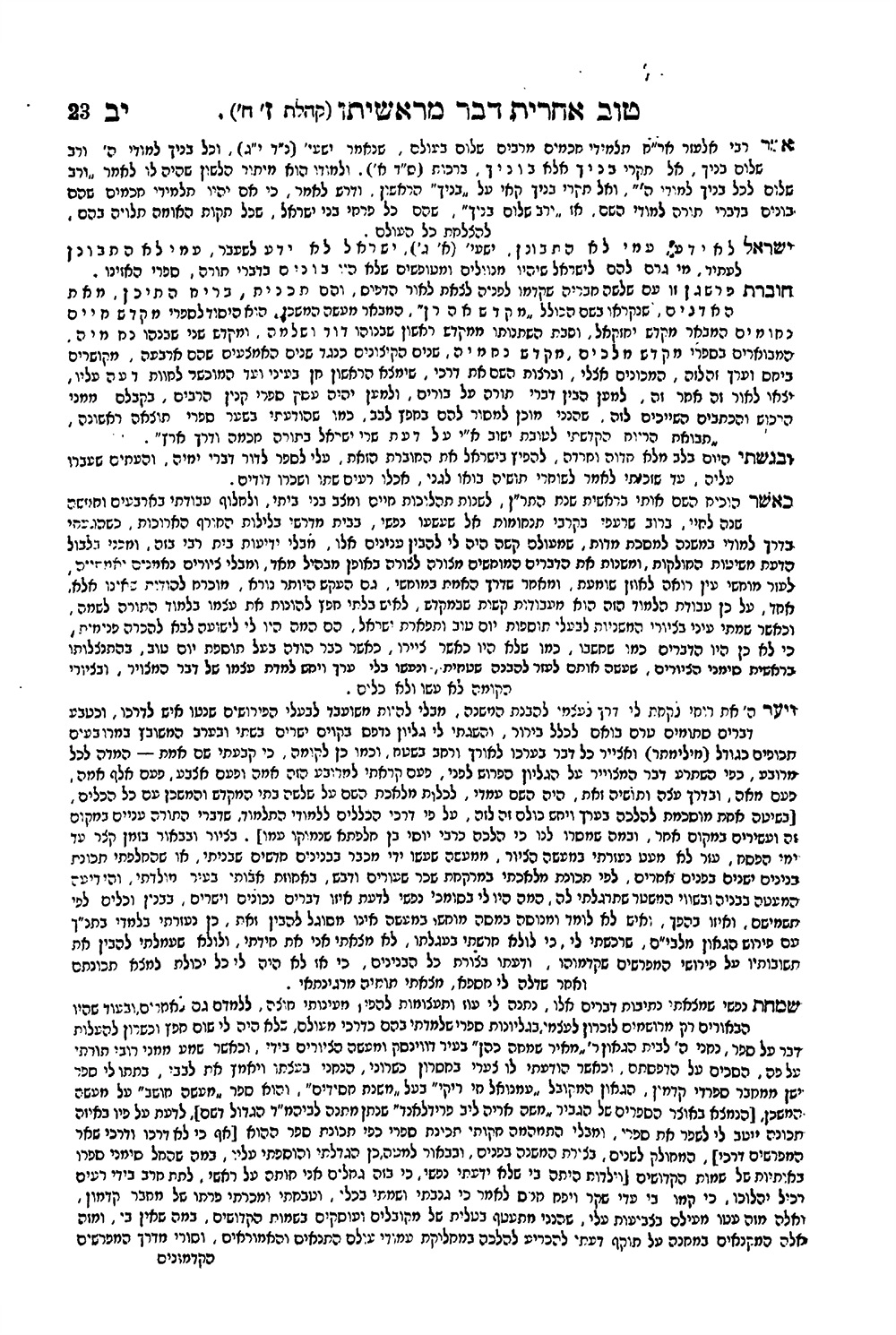
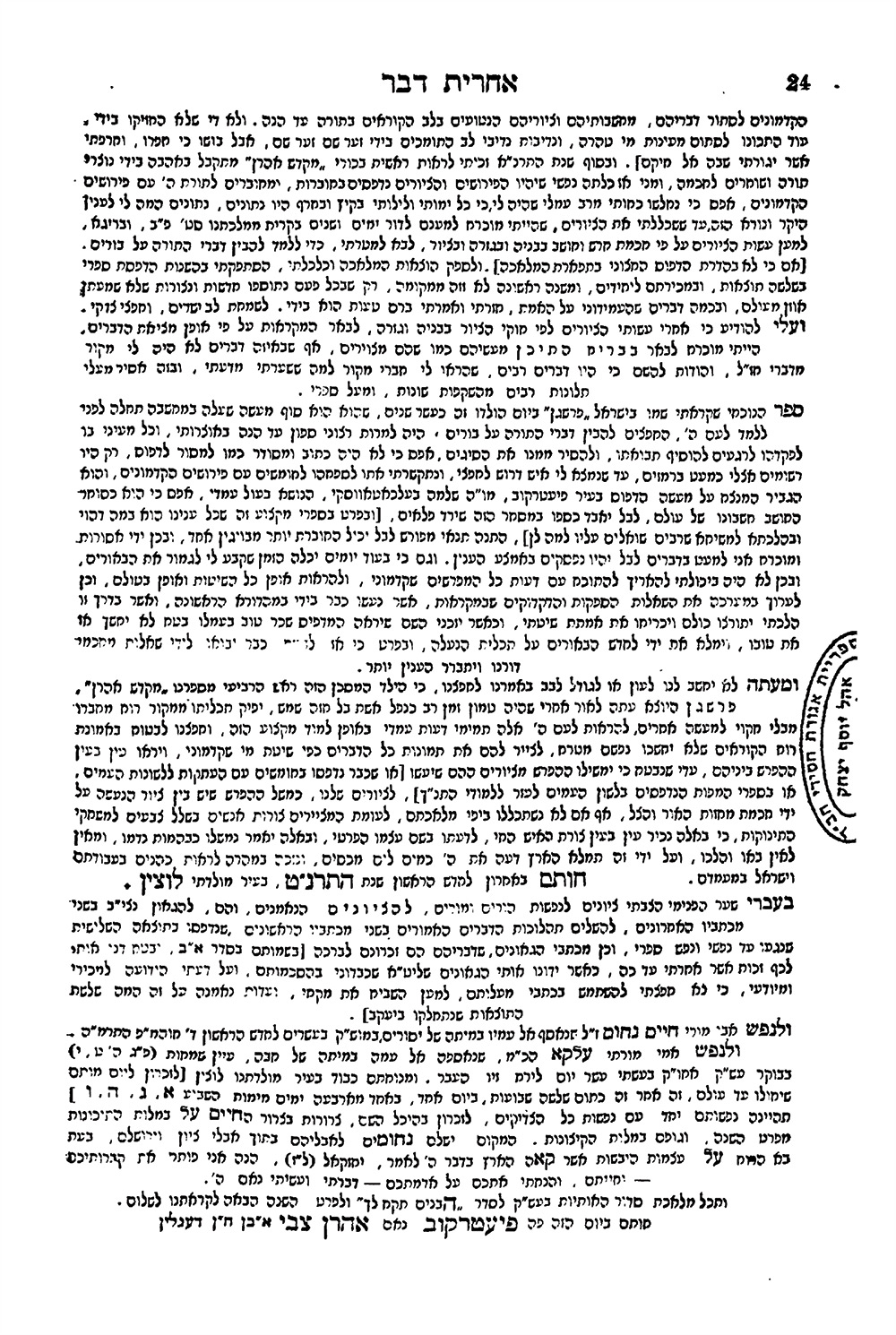
This is quite an interesting volume as it contains interviews with a number of leading haredi rabbis. I could have an entire post on the material in this book, but let me just call attention to a couple of things related to R. Jehiel Jacob Weinberg before dealing with the error. One of the rabbis interviewed is the late R. Moshe Shapiro. In discussing R. Weinberg, he states (pp. 126-127):
דוגמא לתלמיד שהסבא הרבה להשקיע בו לפי טיבו וכישרונותיו – הגר יחיאל יעקב ויינברג בעל השרידי אש“. עלוי וכוח גדולשהיה מה שנקרא אאוטסיידר” – חריג ויוצא דופן באופיושבקלות היה יכול להחליק ולמצוא עצמו בין המשכילים“. ובזכות חכמתו ויגיעתו של הסבא הוא נשאר בבחינת שלומי אמוני ישראל“.
R. Shapiro tells us that R. Weinberg was an “outsider” and that he could have easily gone the way of Haskalah. It is fascinating that a haredi figure says this, because this is precisely the sort of comment that I think might have angered R. Weinberg’s now deceased right-wing students. Yet I have to say that R. Shapiro is exactly correct in his description. I don’t know if his knowledge of R. Weinberg’s life comes from my book or from R. Nathan Kamenetsky’s Making of a Godol – I only spoke to R. Shapiro once, and it was not about R. Weinberg – but he obviously knew something about the ups and downs of R. Weinberg’s life.
Here is p. 273 in the book, which includes a picture of R. Weinberg.
  
Not noted by Eliach is that this picture comes from my post herewhere I published it for the first time (and thanked the person who gave it to me). I realize that once the picture is on the internet it is there for anyone to use it, but it would still be nice if people would acknowledge where it came from.
Eliach also includes a lengthy interview with R. Bezalel Rakow of Gateshead which understandably has a good deal about R. Weinberg. (I have previously discussed R. Rakow here and here.) What I find fascinating is how people like Eliach simply can’t get a handle on R. Weinberg. On the one hand, they know that he was a great scholar and posek. On the other hand, they know that his views were not in line with the haredi world. Eliach asks R. Rakow the following (p. 274):
בשורה התחתונה – שאלתי את הרב ראקוב – האם הרב ויינברג מוגדר על ידכם כמנהיג תורני חרדי?
Eliach wants to know if R. Rakow regards R. Weinberg as a haredi Torah leader. R. Rakow responds very diplomatically:
בודאיהגאון הרב ויינברג היה ירא וחרד לדבר ה‘. איש ההלכה הצרופה שחרד על כל סעיף בשלחן ערוך!
R. Rakow knew perfectly well that he was dodging the question, and if the definition of haredi is one who is completely halakhically observant, then R. Soloveitchik and R. Lichtenstein (and endless others) should also be regarded as haredi leaders. Only in the continuation of the interview does R. Rakow acknowledge that R. Weinberg’s views were not all in line with the haredi approach (p. 276):
ועדיין ניתן לומרשאי אלה ממחשבותיו לא עלו בקנה אחד עם הדרך המקובלת לנו מרבותינו.
Now for the obvious mistake in Eliach’s book. Here is pp. 66-67.


He begins by mentioning that in his book on the Vilna Gaon he told a story that before World War II, R. Aaron Kotler was not sure where he should go, Eretz Yisrael or the United States. He therefore performed the goral ha-Gra and Exodus 4:27 came up: “And the Lord said to Aaron: ‘Go into the wilderness to meet Moses.’” He understood this to refer to R. Moses Feinstein, who at the time was living in the spiritual wilderness of New York.
Eliach states that it has been established that this story is not correct, and he cites the grandsons of R. Kotler who told him that their grandfather was never in doubt about where he was to go. They also pointed out that there is no way that the name “Moses” could have been seen as a reference to R. Moses Feinstein who was not well-known at that time.
So far so good (and these points are so obvious that one wonders how Eliach fell for a typical yeshiva bubbe mayse[1]). However, Eliach continues, and it must be that he is citing something that he was told by one of the current Kotlers, but he has completely mangled it. He writes:
אם היה מקום לסיפורהרי שהפוסק היותר ידוע בימים ההם באמריקההיה הגר יוסף רוזיןנשיא אגודת הרבנים דארצות הברית וקנדה“, ומחבר ספרי “נזר הקודש“.
Eliach tells us that if the story is true, it would have been with reference to R. Joseph Rosen, who was the most well-known posek in America at the time, the honorary president of Agudat ha-Rabbonim, and the author of the books entitled Nezer ha-Kodesh.
The first thing to ask is how could the goral ha-Gra performed by R. Kotler have anything to do with R. Joseph Rosen when the verse that came up mentioned “Moses”? How Eliach did not see this is beyond me. Furthermore, R. Joseph Rosen not only was not a well-known posek, he was not even a little-known posek. He was also not the president of Agudat ha-Rabbonim, and he never wrote a book called Nezer ha-Kodesh. The only thing of interest, and accurate, in Eliach’s discussion is that he somehow got a copy of the document appointing Rosen rabbi of Passaic, New Jersey, and he includes a picture of this in the book.
Here is what happened: Eliach was told that if the story of R. Aaron Kotler performing goral ha-Gra had any truth to it, the “Moses” referred to would have been R. Moses Rosen, who indeed was a great rav, author of Nezer ha-Kodesh, and served for a time as president of Agudat ha-Rabbonim.[2] R. Rosen is most famous for being the rabbi of Chweidan, Lithuania, where the Hazon Ish’s wife was from and where the Hazon Ish lived after getting married. R. Rosen and the Hazon Ish became close, and supposedly it was R. Rosen who first told R. Hayyim Ozer Grodzinski about the unknown genius, R. Abraham Isaiah Karelitz.[3] The Hazon Ish also proofread the volume of Nezer ha-Kodesh on Zevahim. This was published in Vilna in 1929 when R. Rosen was already living in the United States.[4] While R. Rosen is famous for his connection to the Hazon Ish, not so well known is that he was also a Zionist.[5]
3. My last post here gave examples of grammatical mistakes in the ArtScroll and Koren siddurim, which are the most popular in the English-speaking world. I received a lot of feedback about this, and I did not realize that so many people are interested in the often arcane points of grammar. (While I myself am quite interested in this, I am hardly an expert.) Here are a couple of more examples (and interested readers should consult the comments to the last post for additional instances).
In Ashrei we read עיני כל אליך, which comes from Psalms 145:15. The correct way to read עיני is with the accent on the ע, not on the נ. This word is commonly mispronounced, and neither ArtScroll nor Koren place the accent where it should be.[5a]
I found another mistake in the ArtScroll Machzor for Rosh ha-Shanah and Yom Kippur. In the prayer of the chazzan before Musaf, he says הפך [נאלנו ולכל ישראל. Some versions have the first word as הפוך. In both cases, since this is an imperative there needs to be a hataf patah under the ה. Yet in the ArtScroll Machzor there is a patah under the ה and the accent in הפך is mistakenly put on the first syllable, the ה. [After writing this I checked the second edition of the Machzor and was happy to see that it has been corrected. This shows that any errors we point out are valuable, as ArtScroll is prepared to correct them in future editions.]

Btzalel Shandelman wrote to me about ArtScroll’s comment on Genesis 39:8, which explains why there is a pesik following the word וימאן

The adverb adamantly is suggested by the staccato and emphatic Masoretic cantillation of this word: the shalsheles, followed by a psik [disjunction], both of which set off the word and enhance the absoluteness of its implication. It indicates that Joseph’s refusal was constant, categorical, and definite. He repulsed her with absolute firmness. Haamek Davar notes that the Torah gives no reason for his rejection; his sense of right and wrong was so clear that he did not even consider her pleadings. To her, however, he gave an explanation, trying to convince her to stop pestering him.

Shandelman correctly points out that this explanation is based on a mistake, as the vertical line found in the Torah after word וימאן is not a real pesik, as a pesik can never follow a shalshelet in the Torah (or the other sixteen biblical books that use the Torah’s system of cantillation). The reason for this is that a pesik is only found after conjunctive te’amim, and in the Torah shalshelet is always disjunctive. So why is there a vertical line after shalshelet if it is not a pesik? Joshua R. Jacobson explains:

In the te’amim of the three books (ספרי אמת), the shalshelet sign can serve as both a conjunctive and a disjunctive accent. To distinguish one from the other, a vertical line was added after the disjunctive shalshelet. Even though in the twenty-one books the shalshelet sign has only one use – as a disjunctive accent – nevertheless, the Masoretes retained the vertical line. . . . The vertical line after the shalshelet word is not a pasek: it does not indicate an extra pause.[6]

Another way to put this is that in the Torah the vertical line that always follows the shalshelet is not a separate symbol, but rather part of the shalshelet.
Nevertheless, pre-modern Hebrew texts that deal with masoretic matters seem to have no other way to refer to the vertical line, so it is called a pesik even by those who recognize that it does not function as a pesik. Thus, in the Masorah Gedolah to Lev. 8:23 it states:
ז‘ מלין בטעמא מרעימין ומפסיקין
מרעים is another word for shalshelet.
Returning to the example noted by Shandelman, I replied to him that the mistake is not that of ArtScroll. Although it is not clear in the excerpt printed above, the comment about a pesik following the shalshelet has its origin in R. Naphtali Zvi Judah Berlin’s Ha’amek Davar.[7] This is actually a common mistake, as the rules of trop are not well known. Unless someone has studied these rules, he will have no reason to assume that a vertical line is not a real pesik. The next step is to offer explanations of verses based on this assumption that the vertical line represents a real pesik after the shalshelet.
I don’t think that any of the following explanations are based on the mere appearance of the vertical line. Rather, the authors assume that it is a real pesik and one can therefore base interpretations on it.
R. Tuviah ben Eliezer (12th century) writes:[8]
וימאן מיאון אחר מיאון הרבה פעמים דכתיב בפסיק ובשלשלת
Solomon Buber, the editor of the text, explains R. Tuviah’s words:
דורש הטעמיםכי על וימאן הוא שלשלת ואחכ הוא בפסיק
R. Yeruham Levovitz stated as follows:[9]
ועל כן תיכף לוימאן” יש פסיקכי הופסק אצלו כל הענין אף טרם ניתח העולה על הרוחאף טרם נתן כל טעם וביאור על המיאוןכי טרם כל וכל הוא ממאן על הדבר וחסלוהטעמים והביאורים יתן אחרי כןוזהו אמרו אחרי הפסיקואומר אל אשת אדוניו וגו‘.
R. Samuel Borenstein writes:[10]
וימאן מוטעם בשלשלת ופסיקכדי להפרידו בפעוהיינו שהמיאון לא הי‘ מחמת הטעם אלא מצד עצם הנפש למעלה מהטעם.
R. Shlomo Zvi Schueck leaves no question that in his mind the vertical line is a real pesik.[11]
ואמרתי שחכזל דרשו זאת מן הטעם שלשלת העומדת על תיבת וימאן אם רצו להודיע בטעם שלשלת להפסיק שם בדיבור למה בחרו בניגון זה דוקאהא כמה טעמים מפסיקין הםועוד הא אחר תיבת וימאן הוא עומד הקו פסיקולמה לן תרי מפסיקין כאן?
R. Shlomo Amar writes:[12]
תיבת וימאן” הכתובה בפסוק מוטעמת בטעם שלשלתומיד לאחריה מופיע טעם פסקונראה דזה בא ללמדשיוסף הצדיק מיאן במיאון אדיר וחזקוגם מיאונו היה פסוק וחתוך.
I would only add that it is very difficult to say about so many great sages, ועפר אני תחת רגליהם, that they are wrong about the function of the pesik following a shalshelet. What I have written is based on the standard works on the topic. However, if anyone knows of an authentic tradition in which there is a pesik after shalshelet, please let me know. 

Finally, as I am writing this post not long after Hanukkah, here is an example of a translation where ArtScroll gets it right and pretty much everyone else I have checked gets it wrong (though we can understand why they intentionally get it wrong). In Maoz Tzur we read:
לעת תכין מטבח מצר המנבח
אז אגמור בשיר מזמור חנכת המזבח
ArtScroll translates:
When you will have prepared the slaughter for the blaspheming[13] foe,
Then I shall complete with a song of hymn the dedication of the Altar.[14]
Here is Koren’s translation of the first line:

When you silence the loud-mouthed foe.

This a much more comfortable rendering, and if you examine other siddurim you will find similar “softer” translations. Given the choice between “slaughter” and “silence,” most people will pick the latter. Yet unfortunately for them, the text does not say “silence.” It says “slaughter,” and the words תכין מטבח are based on Isaiah 14:21: הכינו לבניו מטבח, “Prepare ye slaughter for his children.” Koren’s translation is thus a politically correct distortion of the text’s meaning.
This is not a matter that started with Koren. For a long time now, translators have been afraid that if people knew what the text actually said that they would not want to sing the song. Yet how can you have Hanukkah without Maoz Tzur? It is even recited publicly at the White House Hanukkah party. (It is amazing to me that no one has yet made an issue of publicly singing these politically incorrect words.) So, a little bit of creative “translating” was thought necessary. Isn’t it interesting that ArtScroll – which has shown us many times that it has no difficulty censoring and distorting texts it finds problematic – has the courage to give us the correct, uncensored translation?
Interestingly, R. Joseph Hertz in his siddur, p. 950 in the note, tells us what the words mean. Yet was uncomfortable with this, and therefore instead of תכין מטבח he changed it to תשבית מטבח. This is not a version attested to in any old text. It was simply made up by Hertz or perhaps suggested by an unnamed collaborator on his siddur commentary. Hertz writes: “By a slight change, this is now ‘when Thou shalt cause all slaughter to cease, and the blaspheming foe, I will complete, etc.’”[15]
4. Since I have been discussing the ArtScroll and Koren siddurim, it is only right for me to mention that there is a new siddur on the market. The new RCA siddur, called Siddur Avodat Halev, has just appeared. For decades, Modern Orthodox synagogues had to make do with the RCA ArtScroll siddur. However, other than including the prayer for the State of Israel, there was nothing in that siddur that made it a good fit with Modern Orthodox synagogues.
The new RCA siddur, which will come to be the standard at hundreds of synagogues for decades to come (especially as the RCA ArtScroll siddur is no longer being sold), is a siddur that the Modern Orthodox community can embrace. The commentary and essays – including essays by R. Jehiel Jacob Weinberg, R. Joseph B. Soloveitchik, R. Aharon Lichtenstein, and R. Yehudah Amital – include both traditional learning and historical scholarship, something that is not found in any siddur on the market. There is also an attention to the role of women that is welcome.[16] Relevant to my last post, this siddur tells women to say מודה אני with a kamatz under the ד. The siddur also offers the option of women forming a mezuman and reciting חברותי נברך. Of particular importance is the inclusion of prayers for Yom Ha-Atzmaut and Yom Yerushalayim. In the instructions before Tahanun, we are informed that Tahanun is omitted on these two days. For Hallel, readers are given the option of reciting with a berakhah or without. I will return to discuss this siddur in a future post, as there is something in it that will be of particular interest to Seforim Blog readers.
Excursus
Earlier in this post I used the expression bubbe mayse. The origin of these words is not “grandmother’s tale,” although that is what is commonly thought. Bubbe mayse is a later corruption of what was originally Bove mayse. I can do no better than quote from the Wikepedia entry here.
The Bovo-Bukh (“Bovo book”; also known as Baba Buch, etc.; Yiddish: בָּבָאבּוּךבּוֹבוֹבּוּך ‬), written in 1507–1508 by Elia Levita, was the most popular chivalric romance in Yiddish. It was first printed in 1541, being the first non-religious book to be printed in Yiddish. For five centuries, it endured at least 40 editions. It is written in ottava rima and, according to Sol Liptzin, is “generally regarded as the most outstanding poetic work in Old Yiddish”. [Liptzin, 1972, 5, 7]
The theme derives from the Anglo-Norman romance of Bevis of Hampton, by way of an Italian poem that had modified the name Bevis of Hampton to Buovo d’Antona and had, itself, been through at least thirty editions at the time of translation and adaptation into Yiddish. The central theme is the love of Bovo and Druziane. [Liptzin, 1972, 6], [Gottheil] The story “had no basis in Jewish reality”, but compared to other chivalric romances it “tone[s] down the Christian symbols of his original” and “substitute[s] Jewish customs, Jewish values and Jewish traits of character here and there…” [Liptzin, 1972, 8]
The character was also popular in Russian folk culture as “Prince Bova”.
The Bovo-Bukh later became known in the late 18th century as Bove-mayse “Bove’s tale”. This name was corrupted into bube mayse “grandmother’s tale”, meaning “old wives’ tale”. [Liptzin, 1972, 7]
Here is the title page of the Bovo Bukh.

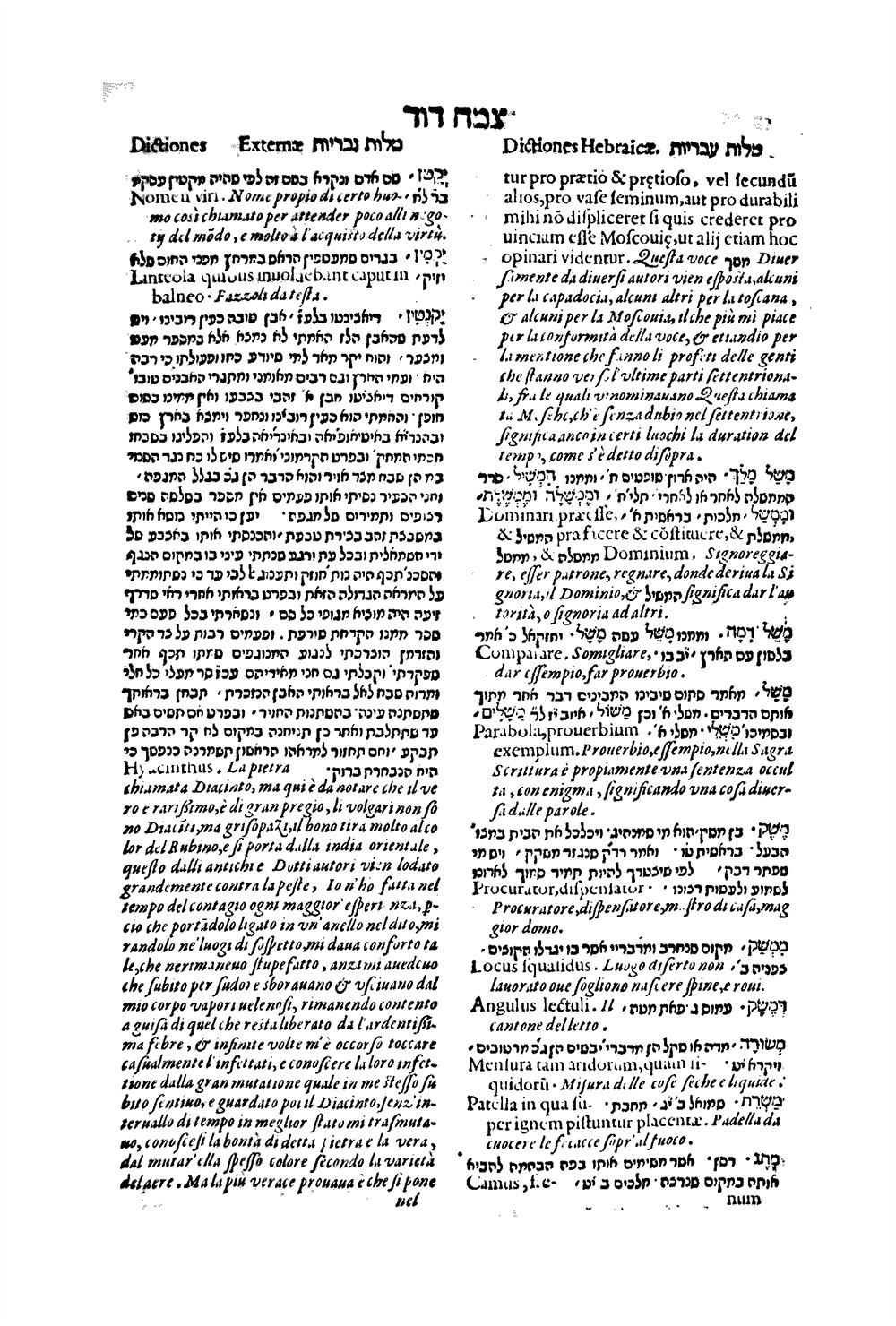
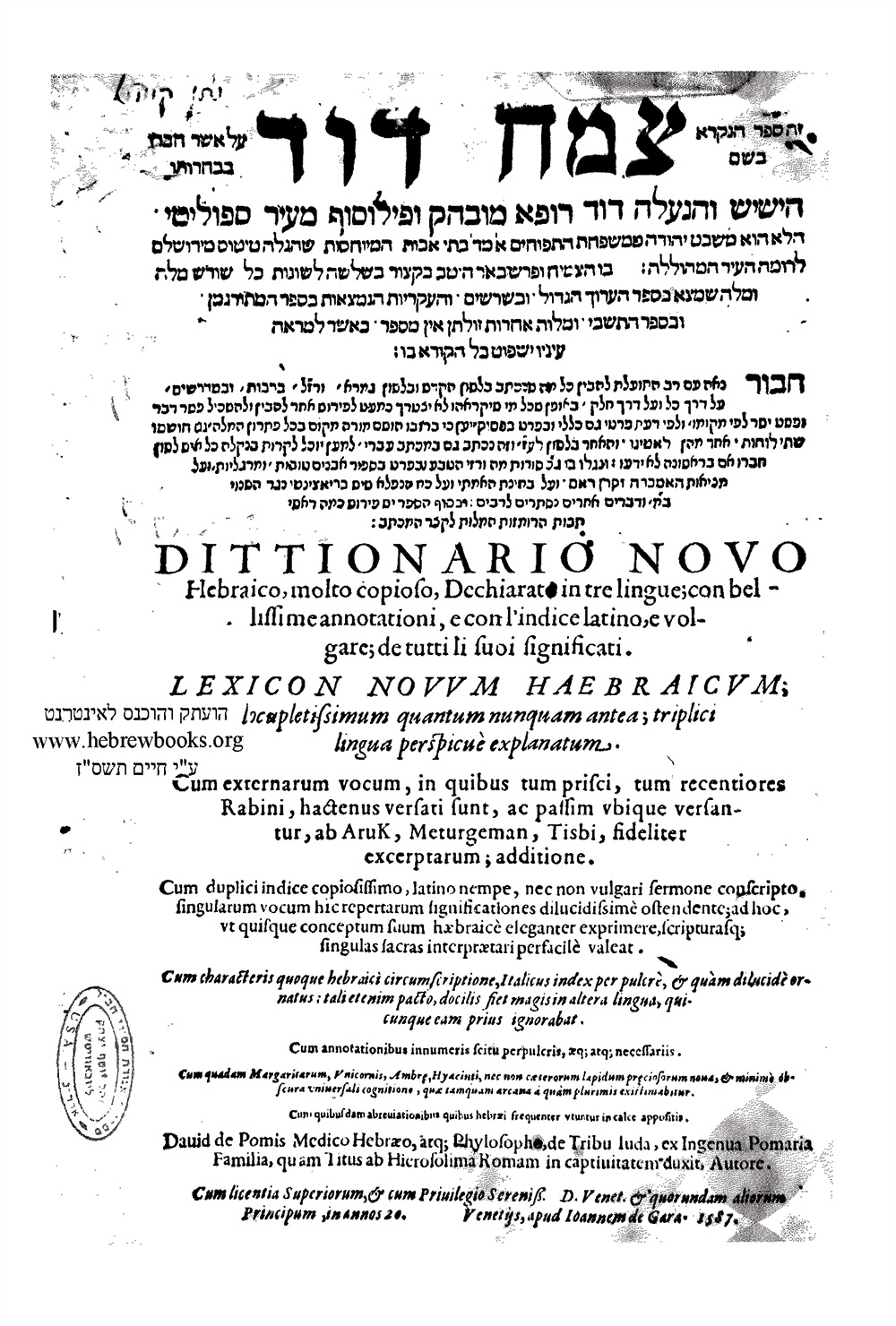
R. Elijah Levita (1469-1549), who thought it worth his time to produce Yiddish romances – in addition to the Bovo Bukh he published Paris and Vienna – is also the well-known author of, among other works, the Tishbi, the Hebrew dictionary that is still used today.[17] It was recently reprinted by Yeshivat Kise Rahamim together with comments by later authors including R. Meir Mazuz. Here is the title page.
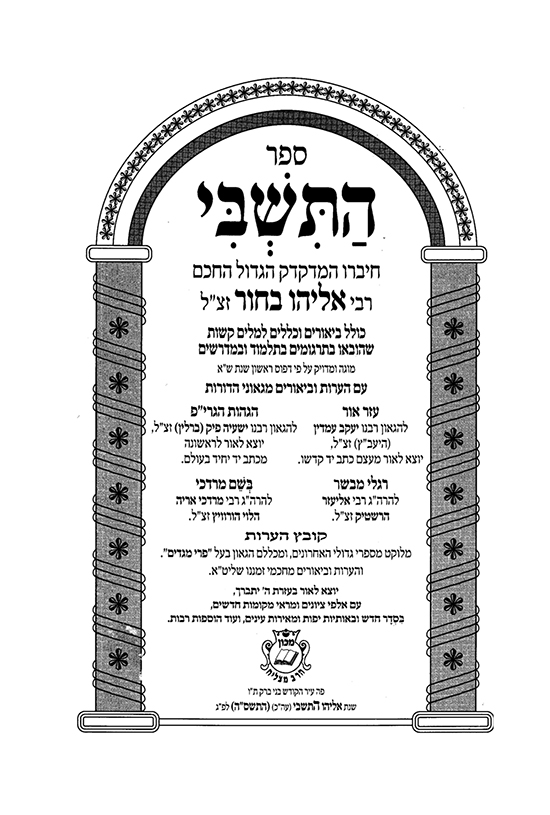
At the end of the volume, there is a collection of critical comments on the Tishbi by R. Solomon Zvi Schueck, and responses to R. Schueck by R. Aryeh Mazuz. Interestingly, there were two printings of the Kise Rahamim edition of the Tishbi. The one intended for sale in certain haredi neighborhoods did not include the comments of R. Schueck, as he is persona non grata among extremist haredim. Regarding the two editions, see Dan Rabinowitz’s earlier Seforim Blog post here.
For more on Levita, who even has a street named after him in Tel Aviv, see the Seforim Blog post by Dan Yardeni here. It is also worth noting that former British Prime Minister David Cameron is descended from Levita. See here.
I would be remiss in not mentioning that two grandsons of Levita also played a role in Jewish history. One was named Vittorio Eliano (which means “from the house of Elijah”), and the other was his brother Giovanni Battista. They were both apostates. Eliano became a priest as did Battista, who was actually a Jesuit.[18] Battista testified before the Inquisition in Venice and stated that “the Talmud teaches them [Jews] that it is legitimate to orally swear false oaths, even if they do not come from the heart, along with hundreds of thousands of other things which are injurious to Christianity.”[19]
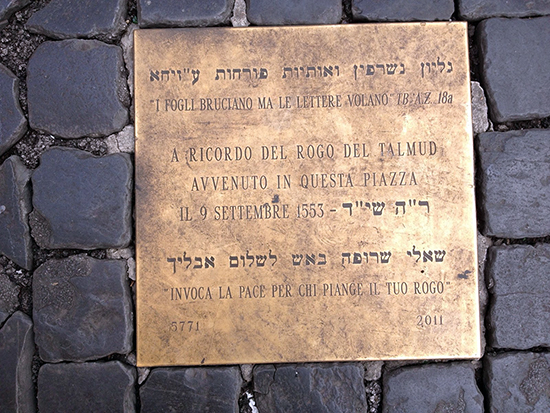
During the great sixteenth-century dispute in Venice between two Christian printers of Hebrew books – a dispute that also involved R. Meir Katzenellenbogen and R. Moses Isserles – both Christian sides denounced the other to Rome “for producing works which contained matter offensive to the Holy Catholic Faith.”[20] Eliano and Battista ended up giving testimony about supposedly blasphemous material in the Talmud, which in turn led to the Talmud being burned in Rome, in the Campo de Fiori, on September 9, 1553. Soon after that the Talmud was burned in Venice and in other places in Italy, and the work itself became an illegal text.[21]
In 2011 the following plaque was placed on the ground in the Campo de Fiori in commemoration of the burning of the Talmud.
Although the Talmud was illegal, the Zohar was not. It was none other than the apostate Eliano who had a central role in the second printing of the Zohar in Cremona in 1559-1560, as he was a proof reader.[22] (The first printing was in Mantua in 1558-1560.) This edition “was the preferred of the two editions by eastern European kabbalists.”[23] Contrary to what appears in many books, the Cremona Zohar was published by Jews (although the actual printing was done by a non-Jew, which was standard practice in Italy).[24]
Here is the title page of the Cremona Zohar. You can see at the bottom the statement that the publication was approved by the Inquisition.

Here is the last page of the Cremona Zohar. You can see that Eliano is mentioned as one of the two people who prepared the text for publication.


הבחור כמר ויטוריי אליאנו נכדו של ראש המדקדקים החר אליהו המדקדק סגל זצל
You can also see the actual Latin approval from the Inquisition.
Seeing how Eliano made sure that he was referred to as הבחור כמר, one who did not know better would assume that he was Jewish. Meir Benayahu chalks this up to one of the paradoxes of Jewish Italy:[25]
משומד שמשתבח במלאכת קודש זו ומזכיר שמו בנוסח רבני ועולה על כך שייקרא בתואר כמר” (בקולופון הזוהר), הוא מן הנפלאות שרק הפאראדוכסים המצויים אצל יהודי איטליה יכולים להסבירם.
Graetz,[26] followed by others, states that Eliano wrote the following Hebrew introduction to the Cremona Zohar.
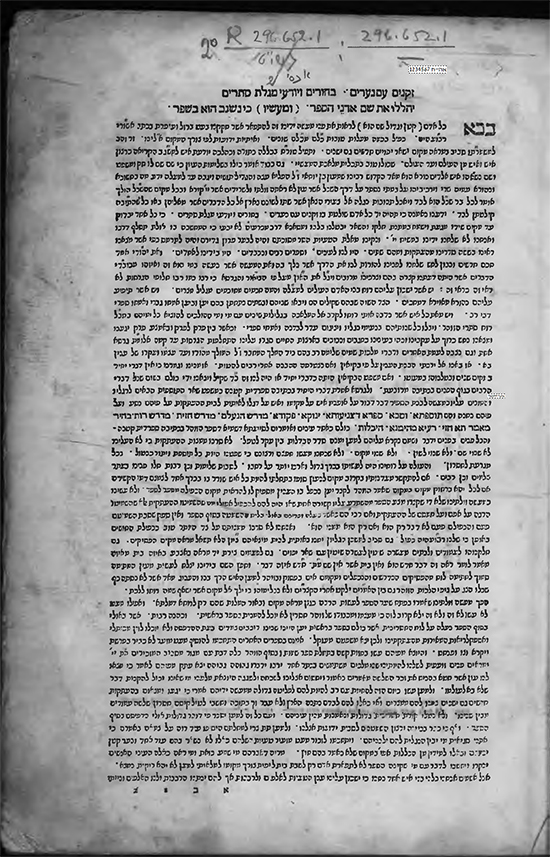
Graetz does not tell us how he knows that Eliano wrote the introduction, and I find it difficult to believe that this is the case. As we can see from the last page of the Cremona edition (printed above), a Jew was also involved with preparing the text for publication. So why not assume, with Isaiah Tishby,[27] that the Jew wrote the introduction, which is a typical pious introduction that one would expect for the Zohar?
In fact, there is evidence that Eliano did not write it. Avraham Yaari called attention to the fact that in the introduction it subtly tells us that there are printing errors because the book was also prepared for publication on Shabbat, a time when Jewish proofreaders would not be able to examine it.[28]
וחסרון חלוף או השמטת אות יוכל להמנות על היות דבר הדפוס נחוץ לכל שומרי שבת כהלכתה ודל.
The word נחוץ here means something along the lines of “harried”. (See I. Sam. 21:9, for the use of the word in the Bible, which has a different meaning than in modern Hebrew.) He is saying that the reason there are mistakes in the text is due to the problems confronted by shomer Shabbat proofreaders (who do not work on Shabbat). In other words, the mistakes in the text are due to the one who did work on Shabbat. Such a line, criticizing the proofreader who worked on Shabbat, could not have been written by the apostate Eliano. On the contrary, it must be seen as directed against Eliano. This is an important point which I have not seen anyone make. There is another point which no one has made, and that is that on the second line of the introduction the author left an allusion to Eliano:
ואותיות ידועות לפי צורך המקום אלינו
Another book Eliano was involved with was Hizkuni,[29] printed in Cremona in 1559.[30] Here is the last page of the book which states:
הוגה ברוב העיון עי הבחור ויטוריו אליאנו נכד ראש המדקדקים החר אליהו בחור אשכנזי סגל זצל

While on the topic of apostates and the Zohar, here is another interesting point. The Soncino Press of London published a translation of the Zohar. For some of this translation they had the assistance of Paul Levertoff. Here is the title page of one of the volumes.

What makes this so significant is that Levertoff, who began life as a Habad Hasid and later studied in Volozhin, was an apostate.[31] If you search on the internet you will find that Levertoff continues to have a real influence among Messianic Jews.
I find it astounding that the Soncino Press, which was identified with British Orthodoxy, chose to collaborate on the Zohar translation with an apostate, especially an apostate who was a “true believer,” not simply an opportunist like Daniel Chwolson. Supposedly, late in life Chwolson was asked what he came to believe that led him to adopt Christianity. He replied: “I believed that it was better to be a professor in St. Petersburg than a melamed in Anatevka [insert whatever shtetl name you wish].” He also famously said about himself, punning on the words from the Yom Kippur liturgy,[32] “Ve-Akhshav she-Notzarti [= converted to Christianity] ke-Ilu lo Notzarti.”[33]

________________
[1] See Excursus.
[2] See Ha-Pardes (January 1953), p. 52.
[3] Shlomo Kohen, Pe’er ha-Dor, vol. 1, p. 191. As far I as I know, the report in Asher Rand, Toldot Anshei Shem (New York, 1950), p. 62, that R. Rosen and the Hazon Ish established a yeshiva together, is without foundation.
[4] Orhot Rabbenu (2014 edition), vol. 5, p. 138. This source does not mention which volume of Nezer ha-Kodesh it was, but the volume on Zevahim was the only one printed in Vilna. Since R. Rosen was living in the United States, this explains why it would have been much more convenient for for the Hazon Ish to do the proofreading. According to Cohen, Pe’er ha-Dor, vol. 1, p. 270, some of the material in the book in brackets is from the Hazon Ish. Cohen also states regarding these comments:

רובן פותחות במיהו” ולפעמים צויין בראשיתיבות שור (שוב ראיתי). כששאלו אותואיך זה תואם את האמתהשיב החזוןאיש באירוניהלא שוב ראיתי“, כי אם שוב וראה“.
For מיהו see pp. 69, 82, 88. For שו”ר see pp. 84, 86.
[5] See Entzyklopedia shel ha-Tziyonut ha-Datit, vol. 5, cols. 597-598.
[5a] It could be that עיני is not to be read with full stress on the ע, but only a partial stress, with the real accent on the connected word כל (in the Aleppo Codex עיני is joined to כל with a makef). Yet there certainly is no accent on the נ of עיני. See R. Yedidyah Solomon Norzi, Ma’amar ha-Ma’arikh in Norzi, Ha-Nosafot le-Minhat Shai, ed. Zvi Betser (Jerusalem, 1997), pp. 97ff.
[6] Chanting the Hebrew Bible: The Art of Cantillation (Philadelphia, 2002), p. 105 n. 14, 107. See also ibid., p. 233 n. 2, and Mordechai Breuer, Ṭaʻamei ha-Miḳra be-Khaf-Alef Sefarim u-ve-Sifrei Alef-Mem-Taṿ (Jerusalem, 1982), p. 19.
[7] See the Jerusalem, 2005 edition, p. 534. 

ומשום הכי איתא פסיקכדי שלא נפרש דמשום הכי מיאן בשביל ויאמר וגו‘”, אבל הפסיק מלמד שהמיאון היה בפני עצמו.

This comment was not part of the original commentary but was added later by the Netziv. In this edition, the editors have inserted the comment in the text of Ha’amek Davar, but inside brackets that look like this {} to show that it is a later addition.

[8] Lekah Tov, ed. Buber, p. 198.

[9] Da’at Torah: Bereshit (Jerusalem, n.d.), p. 230.
[10] Shem mi-Shemuel (Jerusalem, 1992), parashat Va-Yeshev, p. 69.
[11] Torah Shelemah (Satmar, 1909), vol. 1, p. 179a.
[12] Birkat Eliyahu (Jerusalem, 2007), vol. 1, p. 260.
[13] The word נבח, which literally means “bark” (see Isaiah 56:10, Eruvin 86a), had an anti-Christian connotation in medieval Hebrew. See Eli Yassif, ed. Sefer ha-Zikhronot (Tel Aviv, 2001), p. 404 n. 87; Daniel Goldschmidt and Avraham Frankel, eds., Leket Piyutei Selihot me-et Paytanei Ashkenaz ve-Tzarfat (Jerusalem, 1993), vol. 1, p. 398. Thus, in Maoz Tzur the “blaspheming foe” refers to the Christians.
R. Shlomo Fisher, Derashot Beit Yishai (Jerusalem, 2004), p. 234 writes:
ויבואר עפ כל זהדברי הפייטן בזמר לחנוכהתכון בית לתפלתי ושם תודה נזבחלעת תכין מטבח מצר המנבחדהיינו טביחת היצהר
This would make a very nice derashah on Hanukkah, and had Hertz known of it, he could have offered this perspective in his commentary and kept the original version of the song. Yet in its historical context, this is hardly what the author is referring to. Similarly, R. Raymond Apple is not correct when he writes that the words refer to “the defeat of Gog and Magog who will attempt to overcome Israel before the coming of the Messiah.” See here. When Maoz Tzur speaks of the destruction of the “barking [i.e., blaspheming] foe,” it is referring to a real flesh and blood enemy of the Jewish people, which in the medieval Ashkenazic context means the Christian world. The word “barking” is used in this song as throughout pre-modern Jewish literature dogs were portrayed in a negative way. See also here.
[14] I do not know why ArtScroll capitalizes “Altar”.
R. Meir Mazuz recently commented that while Maoz Tzur is a wonderful song, “it contains small [grammatical] errors, as is the practice with the Ashkenazim who do not know Hebrew well.” Bayit Ne’eman, no. 139 (30 Kislev 5779), p. 1 n. 1. One example he gives is לעת תכין מטבח מצר המנבח. It should say לצר המנבח. He adds:
מאיפה אני לומד את זהמפסוק בישעיה הכינו לבניו מטבח בעוון אבותם” (יד כא), לא מבניו אלא לבניו.
Regarding Hanukkah, I recently found that R. Naphtali Zvi Judah Berlin suggests the possibility that when the Maccabees entered the Temple they did not light the menorah, as we are accustomed to think, but rather only lit one candle. See Ha’amek She’alah, Va-Yishlah, no. 24, p. 173:
ולכאורה הי‘ אפשר לומר שלא היו מדליקים אז במנורה כלל . . . ואכ הי‘ מקום לומר שלא השתמשו באותם שמונה ימים במנורה כלל משום שלא הי‘ להםוהדליקו באותו פך הטהוראו בכלי גללים וכלי אבנים וכלי אדמהואכ לא הי‘ אלא נר א‘ כדי לקיים להעלות נר תמיד

Also of interest is R. Joseph Messas, Otzar ha-Mikhtavim, vol. 2, no. 1305, who cites midrashic sources that there will not be a menorah in the future Temple.

 
I have vocalized the title of the Netziv’s book as Ha’amek She’alah, which is how scholars have been accustomed to write it, based on Isaiah 7:11 where these words appear.
However, Gil S. Perl argues that the correct pronunciation is Ha’amek She’elah. As he puts it, if the pronunciation in Isaiah was intended, “the title would mean ‘sink to the depths,’ the ‘depths’ (from the word she’ol) being a reference to the netherworld or Hell—a rather strange title for a work of halakhic commentary.” Perl therefore suggest that the Netziv “intended his title as a play on those words from Isaiah pronounced Ha’amek She’alah, meaning ‘delve into the question’ or perhaps ‘delve into the She’ilta.’” See Perl, The Pillar of Volozhin (Boston, 2012), pp. 17-18, n. 37.
[15] Regarding how Maoz Tzur appears in British siddurim, see John D. Rayner, “Liturgical Emendation: The Case of the Ma’oz Tzur,” available here.
[16] For more on the new RCA siddur and women, see the anonymous post here.
[17] The Tishbi was first printed in Isny, Germany in 1541. It is one of the first Jewish books to cite biblical passages by chapter. As most people know, the chapters are a Christian innovation. According to Abraham Berliner, the first Jewish scholar to publish a book using the chapter divisions was R. Isaac Nathan, who published a biblical concordance between 1437 and 1448. See Berliner, Ketavim Nivharim (Jerusalem, 1969), vol. 2, p. 134. On this page Berliner also writes:

החלוקה לפרקים של כל ספרי המקרא נתקבלה ונתפשטה רק עם הדפסת המהדורה השניה של המקראות הגדולות (ויניציא רפד).
Yet the first edition of the Mikraot Gedolot, published in Venice, 1518, is on Otzar ha-Hokhmah, and you can see that it too has the chapter divisions.
[18] See Heinrich Graetz, Geschichte der Juden (Leipzig, 1907), vol. 9, p. 320; Encyclopaedia Judaica, vol. 6, col. 615; Meir Benayahu, Ha-Defus ha-Ivri bi-Kremona (Jerusalem, 1971), pp. 95ff.. For sections of an autobiography written by Battista, in which he describes his apostasy, see Isaiah Sonne, Mi-Paʾulo ha-Reviʻi ad Piyus ha-Hamishi (Jerusalem, 1954), pp. 150-155.
[19] See Amnon Roz-Krakotzkin, The Censor, the Editor, and the Text: The Catholic Church and the Shaping of the Jewish Canon in the Sixteenth Century, trans. Jackie Feldman (Philadelphia, 1007), pp. 42-43.
[20] Cecil Roth, The History of the Jews of Italy (Philadelphia, 1946), p. 291.
[21] See Roth, The History of the Jews of Italy, p. 292. For detailed discussion of this matter, which shows all the other factors that were present, see Kenneth Stow, “The Burning of the Talmud in 1553, in the Light of Sixteenth Century Catholic Attitudes Toward the Talmud,” Bibliothèque d’Humanisme et Renaissance 34 (1972), pp. 435-459.
[22] Regarding Allessandro Franceschi, another sixteenth-century Italian apostate who supported the printing of the Zohar, see Yaakob Dweck, The Scandal of Kabbalah (Princeton, 2011), pp. 166-167.
[23]  Marvin J. Heller, The Sixteenth Century Hebrew Book (Leiden and Boston, 2004), vol. 1, p. 503.
[24] See Yitzhak Yudelov, “Al Sefarim, Madpisim, u-Mo”lim,” in Yosef Eliyahu Movshovitz, ed., Ha-Sefer (Jerusalem, 2008), vol. 2, p. 557 n. 22.
[25] Ha-Defus bi-Kremona, p. 97.
[26] Geschichte, vol. 9, p. 345.
[27] “Ha-Pulmus al Sefer ha-Zohar,” Perakim 1 (1967-1968), p. 147 n. 54.
[28] Mehkerei Sefer (Jerusalem, 1958), pp. 170-171. Yaari also mentions other Hebrew books that were printed on Shabbat.
[29] Regarding how חזקוני is to be pronounced, see my post here.
[30] For other examples of Hebrew books whose printing Eliano was involved with, see the index of both Roz-Krakotzkin, The Censor, the Editor, and the Text and Benayahu, Ha-Defus ha-Ivri bi-Kremona.
[31] See Elliot R. Wolfson, “Paul Philip Levertoff and the Popularization of Kabbalah as a Missionizing Tactic,” Kabbalah 27 (2012), pp. 269-320. On p. 272, Wolfson states that Levertoff received semikhah from R. Naphtali Zvi Judah Berlin. He provides no evidence for this assertion so I cannot judge its accuracy. As far as I have been able to determine, Levertoff never received semikhah.
[32] The passage originates in the Talmud, Berakhot 17a, where it is attributed to Rava, and Yoma 87b, where it is attributed to R. Hamnuna.
[33] See Zvi Hirsch Masliansky, Memoirs, trans. Isaac Schwartz and Zviah Nardi (Jerusalem, 2009), p. 138.


Seforim Blog 2.0: How You Can Help

The Seforim Blog is now in its bar-mitzvah year and over the past thirteen years has grown exponentially.  There are currently over 2,000 email subscribers and an estimated 16,000+ hits a month from all over the world and nearly 7 million hits over the lifetime of the site.  The site has published nearly 950 articles from over 100 different authors.  Articles from the site have been cited in traditional Torah works, academic journals and books and have even formed the basis of entire works.


This period of growth, however, has come with some costs – both monetary and for the readers.  The site is currently very unwieldy lacking a unified homepage with articles listed chronologically, making it difficult to quickly locate relevant articles.  Additionally, the site hosts numerous related articles, for example, customs relating to Chanukah or haggadot, yet those are not easily located or displayed.  Similarly, articles by author are difficult to find and require going through pages of single articles to locate the specific article of interest. Furthermore, for the past few years, we have hired someone to prepare and post articles. We have eschewed commercializing the site and that cost has been borne by the editors and a handful of generous donors.


To assist us in making significant improvements in the site we are for the first-time asking readers and those who benefit from the site to donate to help defray the costs of the upgrade and ongoing expenses. The site is incorporated as a 501(c)(3) charity and all donations are tax deductible and we will provide documentation of any donations. Please donate generously. Remember, donating=loving.


To donate to the Seforim Blog simply click the paypal link below.


“שואה, מדוע אלו שנהרגו בה נקראו “קדושים

שואה,
מדוע
אלו שנהרגו בה נקראו
קדושים
הרב
משה צוריאל
הרבה
חקרו בשאלה מה הוא המקור לכך שאומתנו
מעניקה תואר-כבוד
“קדושים”
לנהרגים
בשואה במלחמת העולם השניה.
פשוט הדבר
שהנהרג מפני שהוא מקיים אחת ממצוות התורה,
והגוים
הורגים אותו על כך, הוא
נקרא “קדוש”.
אבל ההרוגים
בשואה לא נהרגו מפני שקיימו מצוות.
גם אם נגיד
שנהרגו מפני שהיו יהודים,
רק אם היתה
להם אפשרות להכחיש יהדותם ולהמלט,
ובכל זאת
בחרו להודות ביהדותם, אפשר
לכנותם “קדושים”.
אבל העובדה
היא שלרובם של ההרוגים לא היתה שום אפשרות
להמלט. ומפני
מה נקרא להם קדושים”?
והרי אין
מקור לזה, לא
בגמרא, ולא
בספרי “ראשונים”
ואף לא בספרי
גדולי הדורות האחרונים.[1]1
הרב
אליהו דסלר, בספרו
“מכתב
מאליהו” (ח”ג
עמ’ שמ”ח)
כתב בשנת
תש”ו
(שנה
אחרי המלחמה) “רבים
שאלו ותמהו, מה
בצע במיתות הללו? אילו
מתוך גזירת שמד מתו, ומסרו
נפשם על קדושת שמו, הלא
דבר הוא. אבל
הרוצחים הללו לא לאמונה דרשו,
אלא להשמיד
להרוג ולאבד כמאמין כמומר,
ולהמית את
כולם על שנולדו ויהודים,
וכי מה ענין
יש בזה? הן
גם אפשרות לקדש את שמו ית
לא
ניתנה להרוגים
!
ואם כן,
על מה למה?
תמיהה רבתי”.
[עכ”ל]
הרב
יצחק ויינברג בספר “בכל
נפשך” (ירושלים,
תשס”ד,
עניני קידוש
השם, בסי’
ע”ב)
הביא בשם
רש”ז
אויערבך דהנהרגים בשואה אינם נחשבים שמתו
על קידוש השם. לעומתו
הרב מנחם ש”ך
(“מכתבים
ומאמרים” ח”ג
סי’ כ”ה)
כתב כי הנהרג
ע”י
אומות העולם רק בגלל שהוא יהודי,
הרי זה נחשב
שנהרג על קידוש השם שאמרו חז”ל
“אין
כל בריה יכולה לעמוד במחיצתן”
(בבא בתרא
י’). ושם
בעמ’ פ”ו
כינה להרוגים הללו בשם “קדושים”.
אבל לא הביא
שום מקור לשימוש בכינוי זה.
בספר
“בינה
ודעת” של
הרב מנחם אדלר, דן
בנושא זה (עמ’
תתסב-תתסג)
והביא דברי
הרב יהושע משה אהרונסון בספרו “עלי
מרורות” (עמ’
306) ודברי
אדמו”ר
מסלונים בקונטרסו “ההרוגה
עליך” (עמ’
כה,
לז)
והפריך
דבריהם. ונשאר
ללא מענה על שאלתנו, מה
הוא המקור לכנות כך את ההרוגים?
נראה
לי שבעז”ה
מצאתי מקור נאמן. מובא
בספר דניאל פרק ח פסוקים יט-כד:
(יט)
וַיֹּאמֶר
הִנְנִי מוֹדִיעֲךָ אֵת אֲשֶׁר יִהְיֶה
בְּאַחֲרִית הַזָּעַם כִּי לְמוֹעֵד
קֵץ
:
(כ)
הָאַיִל
אֲשֶׁר רָאִיתָ בַּעַל הַקְּרָנָיִם
מַלְכֵי מָדַי וּפָרָס:
(כא)
וְהַצָּפִיר
הַשָּׂעִיר מֶלֶךְ יָוָן וְהַקֶּרֶן
הַגְּדוֹלָה אֲשֶׁר בֵּין עֵינָיו הוּא
הַמֶּלֶךְ הָרִאשׁוֹן:
(כב)
וְהַנִּשְׁבֶּרֶת
וַתַּעֲמֹדְנָה אַרְבַּע תַּחְתֶּיהָ
אַרְבַּע מַלְכֻיוֹת מִגּוֹי
יַעֲמֹדְנָה וְלֹא בְכֹחוֹ:
(כג)
וּבְאַחֲרִית
מַלְכוּתָם כְּהָתֵם הַפּשְׁעִים יַעֲמֹד
מֶלֶךְ עַז פָּנִים
וּמֵבִין חִידוֹת:
(כד)
וְעָצַם
כֹּחוֹ וְלֹא בְכֹחוֹ וְנִפְלָאוֹת
יַשְׁחִית וְהִצְלִיחַ וְעָשָׂה
וְהִשְׁחִית עֲצוּמִים וְעַם קְדשִׁים
:
מדובר
כאן על ארבע מלכויות שקמו נגד ישראל,
ואחרון שבהם
“עז
פנים”. כתב
על כך מהר”י
אברבנאל בספרו “מעיני
הישועה” (מעין
ט’ תמר
ח, עמ’
שסג)
“וכן רומי
בגימטריא ‘עז
פנים’ חסר
אחד”. וכן
זיהה המלבי”ם
על פסוק זה שמדובר ברומי.
ולכן גם
נאמר כאן “ובאחרית
מלכותם” כי
היא הרביעית מארבע מלכויות,
והוא עולם
המערב (אירופה).
ומה
פירוש “והשחית
עצומים ועם קדושים”?
כתב הרב
סעדיה גאון (במהד’
תרגום הרב
יוסף קאפח, עמ’
קנט)
“וענין
‘ונפלאות
ישחית’ הוא
מה שיתפלאו משחיתותו כאשר יארעו דברים
שלא נראו כמותם. וכו’.
וענין
‘והשחית
עצומים ועם קדושים’ שיהרוג
מנבחרי בני ישראל
,
והמוניהם
עכ”ל.
כלומר
יהרוג מהחשובים והצדיקים,
וגם יהרוג
מההמון, כלומר
אנשים שהם פשוטים. המלה
“המון”
איננה באה
להגדיר כמות גדולה של אנשים,
אלא אנשים
שאינם בדרגא רוחנית גבוהה,
וכשימוש
רמב”ם
ב”מורה
נבוכים” (בתרגום
הגר”י
קאפח), בתחילת
הפתיחה (עמ’
ה)
וכן שוב
(בח”ג
פרק נא, עמ’
תד)
“המוני
אנשי התורה, כלומר
עמי הארץ”. וכאן
בחזונו של דניאל קורא להם
עַם
קדושים
“!
מעין
זה כתב רלב”ג
בפירושו לספר דניאל (מהד’
מוסד הרב
קוק, “פירושי
רלב”ג
לנביאים ראשונים ח”ב
וכתובים”, על
דניאל ח, כד)
“ונפלאות
ישחית, כי
פלא יהיה איך יכול להשחית כל כך?
ולא יבצר
ממנו כל אשר יזם. והצליח
ועשה כל אשר יחפוץ”.
עד
כאן גוף המאמר הנוכחי. מה
שהקודמים אלי ניסו לחפש מקור למנהג קריאה
זו בדברי גדולי הדורות,
או בדברי
התלמוד והמדרשים, דומני
שמצאנו מקור בעזרת השם בדברי התנ”ך
עצמו. הודו
לה’ כי
טוב.
*
“לִבָּן
של ישראל” (מדרש
שיר השירים ה, ב)
להלן
נושא מסתעף, שאין
ענינו נחוץ להבנת הדברים שהיו עד כה.
אלא יש
בדברים דלהלן נסיון להבהיר הא כיצד המקרא
יקרא “קדושים”
לאנשים שלא
היו שומרי מצוות התורה,
ואפילו
מחללי שבת בפרהסיא; וחלק
מהם היו אף כופרים ביסודות האמונה.
לזה
אנו צריכים ללמוד ממהר”ל,
ובדורות
אחרונים מר’ צדוק
הכהן, שהניחו
לנו יסוד נפלא, שכל
יהודי באשר הוא “רצונו
לעשות רצון אבינו שבשמים”
(ברכות יז,
א)
אלא “שאור
שבעיסה” כלומר
יצר הרע מבלבל אותו, ולכן
חיצוניותו מכחישה את פנימיותו.

על
מאמר חז”ל
“רבון
העולמים! גלוי
וידוע לפניך שרצוננו לעשות רצונך.
ומי מעכב?
שאור שבעיסה
[=ביאר
רש”י:
“יצר הרע
שבלבבנו המחמיצנו”]
ושעבוד
מלכיות. יהי
רצון מלפניך שתצילנו מידם ונשוב לעשות
חוקי רצונך בלבב שלם”
(ברכות יז,
א)
כתב ר’
צדוק הכהן
בספרו “ישראל
קדושים” (אות
י, עמ’
121):
“כי
מעמקי לבבו של כל ישראל דבוק בהשם יתברך
כמו שאמרו בברכות (יז,
א)
‘גלוי וידוע
לפניך שרצוננו וכו’ ומי
מעכב’ וכו’.
ולפניך
דייקא הוא גלוי, שאתה
יודע תעלומות לב. רק
שהיצר הרע היושב על שני מפתחי הלב שהם
הפתחים שמשם יוצאים כוחות הלב לפועל ומעכב
בעד התעלומות להתגלות.
ועיקר החיות
הוא בלב”.
ולכן
פסק רמב”ם
שכל יהודי באשר הוא, אפילו
אם הוא רשע מרושע, אם
בית דין מצוה עליו לתת גט לאשתו,
והוא סרבן,
היו נוהגים
להכות אותו מכות קשות עד שיגיד בפיו שהוא
רוצה לתת לה את הגט. וזו
לשון רמב”ם
(הלכות
גירושין סוף פרק ב):
“מי
שהדין נותן שכופין אותו לגרש את אשתו ולא
רצה לגרש בית דין של ישראל בכל מקום ובכל
זמן מכין אותו עד שיאמר ‘רוצה
אני’ ויכתוב
הגט והוא גט כשר וכן אם הכוהו גוים ואמרו
לו ‘עֲשֵׂה
מה שישראל אומרין לך!’
ולחצו אותו
ישראל ביד הגוים עד שיגרש הרי זה כשר.
ואם הגוים
מעצמן אנסוהו עד שכתב הואיל והדין נותן
שיכתוב, הרי
זה גט פסול.
ולמה
לא בטל גט זה? שהרי
הוא אנוס, בין
ביד גוים בין ביד ישראל!
שאין אומרין
‘אנוס’
אלא למי
שנלחץ ונדחק לעשות דבר שאינו מחוייב מן
התורה לעשותו, כגון
מי שהוכה עד שמכר או נתן.
אבל מי שתקפו
יצרו הרע לבטל מצוה או לעשות עבירה,
והוכה עד
שעשה דבר שחייב לעשותו,
או עד שנתרחק
מדבר שאסור לעשותו, אין
זה אנוס ממנו אלא הוא אנס עצמו בדעתו הרעה.
לפיכך זה
שאינו רוצה לגרש, מאחר
שהוא רוצה להיות מישראל רוצה הוא לעשות
כל המצות ולהתרחק מן העבירות
,
ויצרו
הוא שתקפו
. וכיון
שהוכה עד שתשש יצרו ואמר ‘רוצה
אני’, כבר
גרש לרצונו” עכ”ל
רמב”ם.

כתב
מהר”ל
בספר “נצח
ישראל” (פרק
ב עמ’ יד):

“וזהו
ההפרש שיש בין ישראל ובין האומות,
כי ישראל
מצד שהם בשלימות, רק
כי היצר הרע מגרה בהם ומביא אותם אל הרע,
ואין הרע
בהם מגרה בהם. אבל
האומות הם בעצמם בחסרון,
ודבק בעצם
שלהם, ואינו
רק במקרה בשביל היצר שהוא בהם הרע,
ומצד זה
ימשכו עצמם לגמרי אל הרע,
שהם פחותים
ורעים, והרע
להם טבעי. ונמצא
כי לפי מדרגתם הפחותה שלהם ימצא הרע בעצמם
בלא גרוי”:
ועוד
כתב: בספר
“גבורות
השם” (פרק
ט, עמ’
נז)
בהשוואה מה
בין חטאיהם של ישראל לחטאיהם של אומות
העולם:
“ואין
החטאים שוים, כי
החטא אשר הוא במקרה לאדם,
אינו שקול
כמו החטא אשר הוא בעצם לאדם.
ובזה הארכנו
למעלה במה שחטא ישראל ראוי לכפרה ולסליחה,
בעבור שעצמם
ראוים הם לטהרה ולנקיות מן החטא,
ולכך לישראל
החטא מקרי להם, ולאומות
החטא עצמי להם”[2].2.
כלומר,
לפי פנימיות
התורה, מי
שהוא בא מצאצאי האבות,
הטוב שבו
מושרש. על
ישראל נאמר שהם “מאמינים
בני מאמינים” (שבת
צז ע”א)
ואם הם
מדברים דיבורי כפירה, זה
מפני פיתויי יצר הרע, אבל
בתוך לבם עדיין הם מאמנים בהקב”ה
ובתורתו. נביא
מדברי המלבי”ם
על תהילים פרק מד, פסוקים
יח-כב:
(יח)
כָּל זֹאת
בָּאַתְנוּ וְלֹא שְׁכַחֲנוּךָ וְלֹא
שִׁקַּרְנוּ בִּבְרִיתֶךָ:
(יט)
לֹא נָסוֹג
אָחוֹר לִבֵּנוּ וַתֵּט אֲשֻׁרֵינוּ
מִנִּי אָרְחֶךָ:
(כ)
כִּי
דִכִּיתָנוּ בִּמְקוֹם תַּנִּים וַתְּכַס
עָלֵינוּ בְצַלְמָוֶת:
(כא)
אִם שָׁכַחְנוּ
שֵׁם אֱלֹהֵינוּ וַנִּפְרֹשׂ כַּפֵּינוּ
לְאֵל זָר:
(כב)
הֲלֹא
אֱלֹהִים יַחֲקָר זֹאת כִּי הוּא יֹדֵעַ
תַּעֲלֻמוֹת לֵב:
הוא
מפרש:
(יט)
לא נסוג –
והגם שלפעמים
מפני כובד הגלות נטתה אשורנו מני ארחך,
ולא יכלנו
לקיים המצות כראוי, מכל
מקום לא נסוג אחור לבנו –
כי בלבבנו
היינו שלמים עם ה’ גם
בעת אשר תט אשורנו מני ארחך

ולא זאת לבד
[אלא]:

(כ)
כי –
גם בעת אשר
דכיתנו במקום תנים – בעת
שהיינו בין אכזרים כתנים,
ותכס עלינו
בצלמות – שהמיתו
אותנו במיתות משונות ועינו אותנו ביסורים
קשים לצאת מן הדת, גם
בעת ההיא:
(כא)
האם שכחנו
שם אלהינו – הגם
כי ונפרוש כפינו לאל זר –
הגם שהיינו
אנוסים לפרוש כפינו לאל זר;
היה זה רק
במעשה אבל בלב גם בעת שפֵּרַשְׂנוּ
כפים לע
ג
היה לבנו שלם
עם יחוד ה’
ואמונתו:
(כב)
הלא אלהים
יחקר זאת – שהוא
יודע האמת מה שהיה בלבבנו
,
כי
הוא יודע תעלומות לב
– [עכ”ל
המלבי”ם]
אמנם
אמת שהמלבי”ם
(וגם
רש”ר
הירש, בפירושו
לפסוקים אלו) כתבו
כך לענין נסיון האנוסים שבספרד,
ששמרו דברי
תורה בסתר, אבל
הדברים הם אמת גם לענין כפיה אחרת,
של פיתויי
הגוים וצרות גלותינו הנוראה,
וכדברי
רמב”ם
בתחילת “אגרת
תימן” (מהד’
הגר”י
קאפח, עמ’
יט-כא)
על נסיונות
היציאה מהדת שלנו בעת גלותנו.
כלומר הרעיון
אמתי הנ”ל
שבתעלומות לב יודע הקב”ה
מה באמת רצונו של כל בן-ישראל,
אפילו
שהישראלי ההוא אינו מודע לכך.
פסוקים אלו
יהוו מעין רמז לשיטות מהר”ל
ור’ צדוק
שאנו מביאים כאן.
ר’
צדוק,
ספר רסיסי
לילה (אות
י, עמ’
ה’
ע”ב):
“משל
לאסא דקאי ביני חילפי אסא שמיה”
(סנהדרין
מד, א)
שהמשילו
חטאים הסובבים לאדם כקוצים הסובבים
לשושנה, ואינו
מעצם האדם רק שסובבים ומקיפים אותו מצד
ההתפשטות של האדם. אבל
מצד עצם נפש הישראלי אין בו חטא כלל”.
ספר
פוקד עקרים – אות
ה
“להיותו
יתברך שוכן עמם גם בתוך טומאתם ד’צור
לבבי וחלקי אלהים לעולם’.
ד’חלק
ה’ עַמו’.
ולעולם
קרויים עַמו יתברך, דאף
על פי שחטא ישראל הוא (סנהדרין
מד, א)
ובכלל עַם
ה’. ובאומות
בהיפך, אפילו
חסידי אומות העולם אינם בכלל עַם ה’;
אלא אם כן
יתגיירו ובשם ‘ישראל’
יכנו”:
ספר
רסיסי לילה – (אות
כ, עמ’
23)
“אבל
השביעית היא קדושת השבת דקביע וקיימא
דנקרא שבת על שם השביתה מכל השתדלות ופעולת
אדם שאין להם מבוא בזה דהוא שוכן גם בתוך
טומאותם, ואף
על פי שחטא ישראל הוא (סנהדרין
מד.). כי
כנסת ישראל בת זוגו דשבת והם דבוקים במידה
זו שאי אפשר לנתקם כלל. כי
מידה זו נקרא ‘אמונה’
(זוהר ח”ג
רל.) וישראל
נקראים (שבת
צז.) ‘מאמינים
בני מאמינים’. וזרע
אברהם יצחק ויעקב אי אפשר שלא יאמין כלל,
כי זהו מצד
קדושה דקביע וקיימא מהשם יתברך בתוך לבבות
בני ישראל”:
ספר
רסיסי לילה (אות
לז דף לב ע”א):
“וזה
עיקר החילוק בין ישראל לעמים שאמרו ז”ל
(ראש
השנה ד.) ‘האומר
סלע לצדקה בשביל בשביל שיחיה בני וכו’
הרי זה צדיק
גמור’ מה
שאין כן באומות העכו”ם.
כי חטאי
ישראל נקראים אצל חז”ל
(סנהדרין
מד.) אסא
דקאי ביני הוצי, שהם
רק סובבים אותו אבל שורשו אין כך.
והוא כמו
כופין [אותו]
עד שיאמר
רוצה אני, דידוע
טעם הרמב”ם
(סוף
פרק ב מהלכות גירושין). כך
מה שעושה לכוונה אחרת דמתוך שלא לשמה,
(היינו)
[אבל]
התוכיות
ופנימיות הוא לשמה ולכך הרי זה צדיק גמור,
כמו דהגט
כשר ונחשב מרצונו הגמור.
מה שאין כן
אומות העולם (שורשם)
[=שאין שורשם]
כך”:[3]3:
ספר
תקנת השבין (אות
טו, עמ’
156-157)
“ונראה
דפירוש ‘אין
אש [של
גיהנם] שולט
בהם’ (חגיגה
כז, א)
היינו
בעצמיותו ושורש נפשו אין לו שום שליטה
כלל, ואפילו
להכאיב לו. ועיקר
אור של גיהנום הוא לכלות ולבער הרע מן
העולם. ואומות
העולם ‘קוצים
כסוחים’ (ישעיה
לג, יב)
משורשם,
ובאש יצתו
‘וליהט
אותם היום הבא שלא ישאר מהם שורש וענף’
(מלאכי ג,
יט)
שיכלו
ויבוערו לגמרי. אבל
בפושעי ישראל ‘יתמו
חטאים’ כתיב
ולא חוטאים כמו שאמרו בברכות (י’
ע”א).
כי שורש כל
הנפשות דישראל דבוקים באלהים חיים,
ש’חלק
ה’ עמו’
(דברים לב,
ט),
וכמו שאמרו
(קידושין
ל”ו.)
דאפילו לית
בהו הימנותא ופלחי לעבודה זרה דיאמר להם
לא עמי ולמראית העין כאילו אינם עמו
[=עדיין
נאמר בהם “בנים
אתם לה’ אלהיכם”],
שהם חלק ה’,
מאמינים
בני מאמינים, כמו
שאמרו בשבת (צ”ז.).
וזרע יעקב
מטתו שלימה שאין בלבם אלא אחד כמו שאמרו
בפסחים (נ”ו.).
דהושע קראם
‘לא
עַמי’ בשביל
שאמרו לו ‘החליפם
באומה אחרת’ כמו
שאמרו שם (פ”ז
ע”א)
שהיה סבור
שאפשר לנתק שם ישראל ושורש היהדות על ידי
ריבוי החטאים חס ושלום.
עד שאמר לו
הקב”ה
‘בני
הם, בני
בחוני הם’. וכו’
וכו’.
אבל בהתעוררות
מדת הרחמים השיג ד’במקום
אשר יאמר לא עַמי אתם יאמר להם בני אל חי’.
דכאשר ‘יתמו
חטאים ורשעים עוד אינם’
ונשאר השורש
הטוב. כי
כל חטאיהם הם רק מצד ההוצי וחוחים הסובבים
לאסא ושושנה, ויצר
הרע יושב על שני מפתחי הלב בפתיחה ובהתחילה
וכמו שנאמר (בראשית
ד, ז)
‘לפתח חטאת
רובץ’. והצדיקים
שלבן ברשותן אין מניחין אותו ליכנס,
והרשעים הן
ברשות לבן שכיון שנכנס אף שתחילתו הלך
ואורח בסוף נעשה בעל הבית שממלא כל חדרי
הלב עד ששורש הטוב נעלם לגמרי ונעשה הוא
בעל הבית וכאילו שורשו רע”
[עכ”ל
ר’ צדוק]
סיכום
על
הפסוק “אני
ישנה ולבי ער, קול
דודי דופק” (שיר
השירים ה, ב),
מה שאמרה
הרעיה, כנסת
ישראל, אל
הדוד, הקב”ה,
מובא במדרש
(שיר
השירים רבה פרשה ה פסקה ב):

“אני
ישנה. אמרה
כנסת ישראל לפני הקב”ה:
‘רבש”ע!
אני ישנה
מן המצות, ולבי
ער
לגמילות חסדים.
וכו’
וכו’.
אני ישנה
מן הקץ, ולבי
ער לגאולה. אני
ישנה מן הגאולה, ולבו
של הקב”ה
ער לגאלני. אמר
ר’ חייא
בר אבא, איכן
מצינו שנקרא הקב”ה
לבן של ישראל? מן
הָדֵין קרא, דכתיב
(תהלים
עג, כו)
‘צור לבבי
וחלקי אלהים לעולם”.[4]4.
כלומר
אפשר בהחלט שהמעשים החיצוניים אינם לפי
הראוי. אבל
בתוכיות לב של כל אחד מישראל שהוא מצאצאי
האבות, יש
בו ניצוץ אלוה חיים, ולכן
ראוי לו להקרא “קדוש”.
וכל שכן אלו
שנהרגו ע”י
האומות, דוקא
מפני שהם יהודים.
[1]
היו
מי שהביאו סמך מהגמרא “מת
מתוך רשעו כיון דכי אורחיה קמיית לא הויא
ליה כפרה נהרג מתוך רשעו כיון דלאו כי
אורחיה מיית הויא ליה כפרה.
תדע
דכתיב ‘מזמור
לאסף אלהים באו גוים בנחלתך טמאו את היכל
קדשך [וגו’]
נתנו
את נבלת עבדיך מאכל לעוף השמים בשר חסידיך
לחיתו ארץ’
(תהלים
עט, ב)
מאי
‘עבדיך’
ומאי
‘חסידיך’?
לאו
‘חסידיך’,
חסידיך
ממש.
‘עבדיך’
הנך
דמחייבי דינא דמעיקרא וכיון דאיקטול קרי
להו עבדיך”
(סנהדרין
מז, א)
וכפי
דברי אביי מדובר בהרוגי מלכות,
ושלא
כדין נהרגו.
אבל
אין משם שום ראיה. [א]
אפילו אינם
נכללים לפי גמרא זו בשם “חסידיך”
קל וחומר
לא בכלל “קדושיך”
שלא הוזכר.
ועוד,
[ב]
אם נסמוך
על מאמר זה, גם
הנהרג בתאונת דרכים נייחס לו שם “קדוש”
כיון שמת
לא כי אורחיה?
והיה
מי שהקיש הדבר להרוגי מלכות שאין כל בבריה
יכולה לעמוד במחיצתן (בבא
בתרא י ע”ב).
אבל שוב,
מה שאמרו
אמרו, ולא
אמרו שנקראו “קדושים”.
[2]
לא
נכביר כאן בהבאת כל דברי מהר”ל,
אבל
המעוניין לראות כמה מהר”ל
חזר על יסוד חשוב זה,
שחטאיהם
של ישראל הם רק מקרה,
ולא
עצם מהות שלהם,
יראה
ב”נצח
ישראל”
עמ’
יד
, סו,
עב-עג,
קצא,
“גבורות
השם”,
עמ’
מה,
“נתיבות
עולם”
ח”ב
עמ’ קפ.
[3]
עיין
“תקנת
השבין”,
עמ’
142
[4]
והדברים
משתלבים עם דברי רמב”ן
(בראשית
ב, ז)
“ויפח
באפיו נשמת חיים”,
מאן
דנפח מדיליה נפח.
וכתב
רמב”ן
(על
דברים לב,
סוף
פסוק כו)
שמדובר
בפסוק זה בהעברת נשמת-שדי
לבני ישראל דוקא,
ולא
לאומות.


Jews, Baseball, and The Yiddish Press

Jews, Baseball, and The Yiddish Press
By Eddy Portnoy
Dr. Eddy Portnoy is Senior Researcher and Director of Exhibitions at the YIVO Institute for Jewish Research. He is the author of the recently-published (and much acclaimed, and fun) book, Bad Rabbi: And Other Strange but True Stories from the Yiddish Press (Stanford, 2017), available here.
This is his second contribution to the Seforim Blog. His previous essay, “The Yiddish Press as a Historical Source for the Overlooked and Forgotten in the Jewish Community,” was published here.
Jews love baseball! Well, maybe not all Jews. On the one hand, the editors of the Forverts, the largest and most successful Yiddish newspaper in history, enthusiastically commissioned an article at the end of August, 1909 explaining the fundamentals of the game to their audience of Yiddish-speaking immigrants. While they may not have expected their readers to run out and play ball, they did understand that it was of value culturally to understand how the game was played. In short, it was seen as part and parcel of the Americanization process.
And yet, on the other hand, a cartoon that appeared a few years later reveals somewhat of an antipathy to baseball from a different Yiddish precinct. Baseball appears to have been one of those rare matters upon which both Orthodox rabbis and secular Yiddish cartoonists could agree. It is thus with great sympathy that one of the cartoonists working for Der groyser kundes views the difficulty Orthodox rabbis in America had in trying to convince American Jewish boys to attend heder. Der kundes, a very popular and very secular satire publication oriented to Left Labor Zionism, lamented the disinterest the lunkheaded, foul-mouthed, baseball-obsessed Jewish youth. Not that they necessarily supported the acquisition of a traditional Jewish education (even though all their writers had one), but they didn’t like baseball either.
Not unlike Nusakh sfard, baseball won the battle and is now a pastime enjoyed by large numbers of American Jews. Many of them even went back to heder. Left Labor Zionists satire magazines, however, aren’t doing so well anymore.


Der groyser kundes, New York, May 29, 1914
The Forverts, New York, August 27, 1909

“The
Fundamentals of the Base-Ball ‘Game’ Described for Non-Sports
Fans,” The Forverts (27 August 1909): 4, 5, translated by Eddy
Portnoy.

  
Uptown, on 9th Avenue and 155th Street is the famous field known as the “Polo Grounds.” Every afternoon, 20 to 35 thousand people get together there. Entrance costs from 50 cents to a dollar and a half. Thousands of poor boys and older people go without some of their usual needs in order to pay for tickets. Professional teams play baseball there and the tens of thousands of fans who sit in row after row of seats all around the stadium, go nuts with enthusiasm. They jump, they scream, they simply go wild with enthusiasm when one of “their” players does well, or, they are pained or upset when they don’t succeed.
A similar scene takes place every day in another place – in the Washington Heights. And the exact same thing goes on in Brooklyn, in Philadelphia, in Pittsburgh, in Boston, in Baltimore, in St. Louis, in Chicago – in every city in the United States. And the newspapers print the results of these games and describe what happened and tens of millions of people run to read it with gusto. They talk about it and they debate the issues.
And here we’re only talking about the “professional games:” practically every boy, nearly every youth, and not a few middle-aged men play baseball themselves, belong to baseball clubs, and are huge fans. Every college, every school, every town, nearly every “society” and every factory has it’s own baseball “team.”
Millions are made from the professional games. Related to this, there is a special kind of “political” battle between different cities. A good professional player gets eight to ten thousand dollars for one season. Some of them are educated, college-educated people.
To us immigrants, this all seems crazy, however, it’s worthwhile to understand what kind of craziness it is. If an entire people is crazy over something, it’s not too much to ask to try and understand what it means.
We will therefore explain here what baseball is. But, we won’t do it using the professional terminology used by American newspapers use to talk about the sport; we must apologize, because we’re not even able to use this kind of language. We will explain it in plain, “unprofessional” and “unscientific” Yiddish.
So what are the fundamentals of the game?
Two parties participate in the game. Each party is comprised of nine people (such a party is called a “team”). One party takes the field, and the other plays the role of an enemy; the enemy tries to block the first one and the first one tries to defend itself against them; from now on we will call them, “the defense party” and the “enemy party.”
The “defense party” also takes the field and plays. Two of the team players play constantly while the other seven stand on guard at seven different spots. What this guarding entails will be described later. Let us first consider the two active players.
One of them throws the ball to the other, who has to grab it. The first one is called the “pitcher” (thrower) and the second is called the “catcher” (grabber).
Each time, the “catcher” throws the ball back to the “pitcher.” The reader may therefore ask, if so, doesn’t it happen backwards each time – the catcher becomes a pitcher and the pitcher becomes a catcher? Why should each one be called with a specific name – one pitcher and one catcher?
We will soon see that the way in which the catcher throws the ball back is of no import. The main thing during a game is how the pitcher tries to throw the ball to the catcher.
The enemy party, however, seeks to thwart the pitcher.
This occurs in the following way:
One of the team’s nine members stands between the pitcher and the catcher (quite close to the catcher) with a thick stick (“bat”) and, as the ball flies from the pitcher’s hand, tries to hit it back with the stick before the catcher catches it.
This enemy player is called “batter.” The place where he stands is designated by a number of little stars (****).
(The other eight players on the enemy team, in the meantime, do not participate. They each wait to be “next.”)
Imagine now, that the “batter,” meaning the enemy player, finds the flying ball with his stick and flings it. If certain rules, which we will discuss later, aren’t broken, this is what can happen with the ball: if one of the “guards” catches the hit ball while it is still in the air, then the opposition  of the “batter” is completely destroyed and the batter must leave his place; he is excluded (he is “out”). He puts down the “bat” and another member of his party takes his place.
The roles of the seven guards of the defense party are also specific: they must try and catch the hit ball in order to destroy the enemy’s attempt to hinder them and to get rid of the player doing the obstructing. They stand at various positions because one can never know in which direction the ball will fly. They watch the different trajectories in which the ball might fly, so a guard can be there, ready to catch it.
The readers can see the way the seven guards are distributed in our picture.
The entire official field on which the game is played is a four-sided, four-cornered one. This is in the center of our picture (The two round lines which go around it represent the tens of thousands of seats for the audience. That is how it usually is for the big professional games. It actually looks like a giant circus with a roof only for the audience. The field, with all the players, is under the open sky.).
As the readers see in the image, one corner is taken by the “catcher.” The other three corners of the four-cornered figure are stations. Each one is called a “base.” With the catcher facing the pitcher, the first “base” is outward from the direction of his right hand, just opposite him is the second base; and from his left hand is the third base.
A little bag of sand lay on every base. The guards, however, must not stand on the base, but next to it.
We previously mentioned three guards. They are called the first baseman, the second baseman and third baseman. A third guard stands between second and third base. He is called the “short stop;” when a ball is hit, it often goes in that direction and the “short stop” gets a chance to catch it in the air.
But if the ball flies way over the heads of these four “guards,” there are three other guards who stand on the outside field, or the “out field.” One of these is called the “right fielder,” the second, the “center fielder,” and the third, the “left fielder.”
Two of the four sides of the four-sided figure in our picture are marked with dots. When a hit ball flies over one of these two lines, it is called a false ball (foul ball). For it to be a proper ball (a fare ball), it must fly forward, or over the other two lines of the four-cornered figure.
When the batter doesn’t manage to hit the ball with his stick, it is called a “strike.” If he gets three “strikes,” he is “out,” or eliminated. Certain kinds of “foul balls” are considered “strikes,” however, we will not go into these details.
When the batter hits the ball and it is “proper,” and the guard doesn’t catch it, this means that the opposition, in this case, is successful. However, this success can either be greater or smaller. Depending on the level of this success, the following is done: as soon as the batter hits the ball, he throws his “bat” away and starts running; if nothing disturbs him, he runs to first base, from first to second, from second to third, and from third to the place where the catcher stands. This place is called “the home.” If he gets to the “home” spot, it means that the success of the opposition is complete.
This means that he made a whole “run:” and, based on these “runs,” the results of the game are figured out. The party which makes more runs is the winner.
But to make a full run at one time doesn’t happen all the time. In order to do so, the zetz that the batter gives the ball must be especially successful. It happens more often that he makes a quarter run, or a two quarter, or three quarter.
The rule is this: the running batter has no right to go to first base if the guard (the first baseman) holds, at that very moment, the ball in his hand. If the hit ball falls on the ground and one of the guards picks it up, the running batter is not yet eliminated.  He runs. But imagine that some guard throws the ball to the first baseman and that this first baseman catches the ball before the running batter physically arrives at first base: then this runner is eliminated. But if he catches the ball when the runner is already on the base, the runner is “saved” (safe).
If the runner keeps running to second base, the rule is a bit different: the second baseman can eliminate him only if he touches him with the ball; and the same rule works for the third baseman, he has to touch him with the ball in order to get him out. The catcher or pitcher can also get a runner out with a “touch” if he finds himself near the base or the “home” to which he ran.
Each player is the embodiment of agility, with strong, swift muscles and sharp, fast eyes. And the whole game is full of “excitement” for those who are interested in it.


Legacy Judaica Auction March 6th: A Sampling of Forgeries and other Eclectic Lots

Legacy Judaica‘s next auction will occur on March 6, 2018.  The 220 lots include very rare books such as the first edition of the Yerushalmi and a letter from R. Tzvi Ashkenazi (Hakham Tzvi) (the entire catalog can be accessed here), there are many other interesting books and letters.
Conditional marriage has been applied since at least the talmudic period if not early.  The exact circumstances and necessary predicates have evolved over time and especially in the modern period when marriage and divorce were slowly wrested from the exclusive control of the clergy and the state began to involve itself permitting some to circumvent the religious process entirely, the issue of annulments became acuter.  Annulments were among the only methods that would free a woman whose husband proceed to receive a secular divorce but not a religious one.  In France, in the early 20th century a scheme to make conditional marriage the norm and avoid later issues was proposed.  But this met with fierce opposition from many rabbis, and to counter that proposal in 1930 in Vilna a book, Ein Tenie be-Nissuin, that contained signatures of 400 rabbis was published in protest.  The book also contains an introduction by the leading Posek, R. Chaim Ozer.  (Lot 21).  
Another contemporary controversy related to something much older, the Talmud Yerushalmi. In the first decade of the 20th century, Shlomo Friedlander published a few volumes from the Kodshim order that hereto had never been published (lot 47).  Allegedly these were from a manuscript, but many doubted their authenticity. R. Meir Don Plotski, the author of the biblical commentary, Kli Hemdah, devoted an entire book, Sha’lu Shelom Yerushalim, (lot 43) to disproving that Friedlander’s edition was legitimate. (Dr. Shlomo Sprecher Zt”L reprinted the book in 1991 with a new introduction and a biography of R Poltski).  Friedlander also published less controversial books including his commentary on the Tosefta (lot 48). 
Although not controversial, another attempt to link the present with the past is a curious book, Sefer ha-Brit ha-Hadash, written by Uziel Haga of Boston (lot 130).  He petitioned and received permission from President McKinley to accompany the U.S. military on a tour of China.  Haga’s purpose was to see first hand and document the lifestyles and customs of Chinese Jews.  Among other items, he asserted that the Jews Kaifeng in the Hunan Province are descendants of the Ten Tribes. If his identification is correct, that may explain Jews’ affinity for Chinese cuisine.  Haga never made it back from China, he was imprisoned and killed by the Boxers.   Although Haga’s book was printed in Pietrekov, one book, Mishberi Yam, (lot 131) was published in China.  
Returning to forgeries, the compendium of R. Zechariah Yeshayahu Yolles, Ha-Torah veha-Hayyim, (lot 24), includes his Dover Mesharim that disproves the attribution of a certain work to R. Mordechai Yaffa (Levush).  Yolles’ position was vehemently disputed by R. Moshe Sofer (although Yolles defended him in a different controversy) and Sofer’s letter appears in this volume.  The book is also noteworthy because it includes a portrait of Yolles in the frontispiece.  
Among the books with distinguished owners include a copy of Mishnei Torah that belonged to R. Yosef Dov Soloveitchik, (Beis HaLevi) (lot 151) and R. Hayim Volozhiner’s copy of Mesorot Seyag le-Torah. Most of R. Hayim’s library was destroyed in a fire, but this book had been on loan to R. Yaakov of Ivenitz, and thus was spared the fate of the rest of books.  (Regarding the two bibliographical topics of fire and lending, see Abraham Ya’ari, Mehkerei Sefer, 47-54 (discussing books printed after the author was saved from fire) and 179-97 (discussing book lending)). As an aside, the Mesorot Seyag le-Torah also likely contains material that is misattributed to its author.  See Wolf Heidenheim, Me’or Eynayim, comments to Exodus 27:17.


Towards a Bibliography About Realia and Chumash, specifically relating to the Mishkan and Bigdei Kehunah

 Towards a Bibliography About Realia and Chumash, specifically relating to the Mishkan and Bigdei Kehunah 
By Eliezer Brodt
Learning Chumash and Nach is extremely important for many reasons. Over time it became a neglected subject (why is the subject of a different post IY”H) and in many circles is still true today. Sadly, many people remain with the images of the various stories from Tanach the way they heard it in their youth without a genuine understanding of the events. I strongly believe that learning Tanach properly (by both students in school and adults) could help with some of the issues we face today. In recent years there have been attempts to fix this problem but there is still much work to be done.[1] There are many works out there to help one deepen their understanding of Tanach, each focusing on different aspects.
In this post I will limit myself to mentioning some of the recent, general works on the topic that I feel can help. However, the main focus of the post will be a listing and description of works to help one learn Parshiyos Terumah through Pekudei, with emphasis on works that focus on the Realia. I will also quote some general sources of the significance of understanding the Realia. Eventually I will return to add more works and Parshiyos to this list. I will also deal with other aspects of learning Tanach. Just to mention one area to help one understand Chumash which I dealt with a bit in the past – that is Via learning Targum Onkelos properly, see here and here.
General works
 
אמנון בזה, עד היום הזה, שאלות יסוד בלימוד תנ”ך, ידיעות ספרים, 470 עמודים.
היא שיחתי, על דרך לימוד התנ”ך, בעריכת ר’ יהושע רייס, מכללת הרצוג תשע”ג, 264 עמודים
בעיני אלוהים ואדם, האדם המאמין ומחקר המקרא, בעריכת יהודה ברנדס, טובה גנזל חיותה דויטש, בית מורשה ירושלים תשע”ה, 487 עמודים
Moshe Sokolow, Tanakh, An Owner’s Manual, Authorship, Canonization, Masoretic Text, Exegesis, Modern Scholarship and Pedagogy, Urim 2015, 219 pp.
David Stern, The Jewish Bible, A Material History, Washington Press 2017, 303 pp. [Beautifully produced]
Yitzchak Etshalom, Between the lines of the Bible, Genesis, Recapturing the Full meaning of the Biblical Text (revised and Expanded), Urim/OU Press, NY 2015, 271 pp.
Yitzchak Etshalom, Between the lines of the Bible: Exodus: A study from the new school of Orthodox Torah Commentary, Urim/OU Press, NY 2012, 220 pp. [On this work see here]
See also the incredible site ALHatorah.org which is extremely useful.
Also, worth mentioning is the new series which I am enjoying so far:
יואל בן נון, שאול ברוכי, מקראות עיון, רב תחומי בתורה, יתרו,  278 עמודים
יואל בן נון, שאול ברוכי, מקראות עיון, רב תחומי בתורה, 608 עמודים
See their Website for more information here.
Many years ago, when I was in fourth Grade, my Rebbe, Rabbi Zacks (who loved seforim) taught us the Parshiyos of Terumah etc. While learning it he would take out this fancy and expensive book with color pictures of the various Kelim in the Mishkan and of the Bigdei Kehunah to help us better understand what we were learning. He was using visual aids of pictures to help the students understand Chumash. I recall that when it was Friday of Parshas Terumah there was non-stop knocking on the classroom door, because Rabbeyim from different classes sent students to borrow the sefer so that they too could show their classes the pictures while learning Parshas Hashavuah. A few years later I recall someone bringing and setting up a real model of the Mishkan and Kelim to our school. All this helped us understand the Chumash a bit better.
A few years ago I heard a shiur in Jerusalem from the prolific Rabbi Yechiel Stern on Visual aids for learning, as he had written many such seforim to help students. He described that at first there was much opposition to what he was doing but eventually it became more and more accepted.
At the time I realized that this was something that the academic world was busy with for well over hundred years and wrote on this numerous works. However, that obviously would not help the case to get mainstream Yeshivos to use these works even when the authors were frum and the like. (See further on).
However, the truth is that there were many Gedolim who had realized the significance of using Visual aids while teaching and of understanding the Realia while learning Chumash.
Just to list some sources.
R’ Sofer writes about the Chasam Sofer:
לתכלית גדול הזה לברר הלכה לאמיתו ולהעמיד כל ענין על בוריו הי’ לו לכל שיעורי תורה כלים מיוחדים מדודים מאתו בדקדוק הדק היטב להראות לתלמידיו וכן הי’ לו בארגז מיוחד שני צורות תבנית זכר ונקבה מעשה אומן מופלא והיו נעשים פרקים פרקים וכל חלקי הפנימים מעשה חדש נפלא ללמוד וללמד חכמת הניתוח ולא הראה זה רק לתלמידים מובהקים אשר יראת ה’ אוצרם בעת למדו אתם הלכות נדה וכדומה.[2]
Regarding the Minsker Godol after he got his first position, he sat with the head Dayan to see exactly how to Pasken. His reason for this was:
 “מעולם לא ראיתי הדברים האלה במציאות, וכל ידיעותי אינן רק מהעיון והלימוד בספרים…”.[3]
In a Haskamah of the Aderet he writes as follows:
בואו ונחזיק טובה להרב המובהק הנ’… אשר המציא להשכיל להטיב לצעירי התלמידים להקל מעליהם למוד ההוראות במקצוע הל’ שחיטה וטריפות בהמציאו ציורים ותמונת מכל אבר ואבר לכל פרטי מוצאיו ומובאיו על פי מקורים נאמנים… התענגתי מאד לראות חיבורו סי’ אהל יוסף נחמד למראה וטוב למעשה לא לבד לצעירי התלמידים אשר לא ראו ניתוח בעלי חיים מעודם, כי אם גם למוריהם, כי יקל הלימוד לתלמידיהם להורותם הלכה למעשה על כל פרט ופרט לאמר בזה ראה וקדש”.[4]
In the extremely interesting autobiography of Eliezer Friedman he writes:
מצאתי אצל אחד… ספר רבני ובו לוח הריאה וציורים. אנכי הייתי אז בקיא מאוד ביורה דעה. ראיתי כי באמת נחוץ לחניכי הרבנים לומדי היו”ד, לוח הריאה אבל לא כזה שמצאתי שאינו אומר כלום… צירתי עלי גליון גדול, צורת הריאה, אונותיה ואומותיה וכל סוגי השאלות אשר אפשר להוליד בהלכות ריאה. הכל מצויר בצבעים שונים, צבעים טבעיים כפי הלקוי והמחלה אשר ידובר עליהן בש”ס ופוסקים. על כל לקוי, הצגתי אות מספרי ובצד הציור כתבתי בקצור נמרץ שם הלקוי, תמצית דעות הפוסקים והחלט הדין להטריף או להכשיר, את הציור אזה הראיתי לגאונים ר’ נפתלי צבי יהודה מוולואזין ור’ שלמה הכהן מווילנא. הם סמכו ידעם על הציור להשתמש בו הלכה למעשה, ואמכור אותו למדפיסים ראם בווילנה. גם סמיכה להורות ולדון נתנו לי (ספר הזכרונות, עמ’ 136).
See also the important introduction related to this in Rabbi Moshe Leib Shachor, Bigdei Kehuna (pp.10-11).
Turning to these Parshos in Chumash in Particular.
In 1612, R’ Abraham Portaleone (1542-1612), a Talmid Chochom and medical doctor, printed in Mantua his encyclopedic masterpiece Shiltay HaGiborim. This work deals in great depth with every aspect of the Mishkan and Mikdash, with a tremendous focus on Realia. For example, when dealing with the Kitores, he methodologically investigates every aspect of it (pages upon pages) drawing upon his expert knowledge in sciences and command of ten languages. Similarly, when discussing the stones of the Choshen, he tries to identify the stones, using these same tools, while covering other aspects related to them. When dealing with the music and the instruments used in the Beis Hamikdosh, he again devotes many pages to the subject, explaining it via knowledge of the Realia. This last section on Music was the Subject of a PhD dissertation in 1980 written in Tel Aviv by Daniel Sandler.
In a lecture about this work, Prof. Zohar Amar said as follows (one can see it here or read it here):
רבנו אברהם הצליח להקיף ולהתמודד בחיבורו עם נושאים שונים ומגוונים הקשורים למקדש, כמו תוכנית מבנה המקדש וכליו, הקרבנות הראויים לעלות למזבח, בגדי כהונה, אבני החושן, סממני הקטורת, עצי המערכה, תפקידי הלויים, ובהם שירה וזימרה, שמירה, וכן סדר התפילות והקריאה בתורה ועוד נושאים רבים. בכל אחד מהנושאים שעסק, הוא הפגין ידע ובקיאות מעוררת השתאות, בתחומי הזואולוגיה, הבוטניקה, מנרולוגיה, מוסיקה, רפואה, טכנולוגיה ועוד ועוד. בעצם לפנינו חיבור אנציקלופדי רחב היקף,  האנציקלופדיה הראשונה שנכתבה על המקדש.
 
אז מה הופך את רבנו לחוקר ? ראשית, רבנו אברהם היה בעל ידע נרחב בכל הספרות היהודית לדורותיה, ובהקדמתו הוא מנה כמאה מקורות בהם השתמש, החל מספרות חז”ל, הגאונים, הראשונים וחכמים בני תקופתו. אולם מקורות הידע שלו לא הצטמצמו לארון הספרים היהודי, אלא הוא היה בקיא גם בכל מכמניה של הספרות הקלאסית, היוונית, הרומית והערבית, וספרות המדע שהתפתחה בתקופתו. רבנו אברהם ניחן באחד מכלי המחקר החשובים ביותר והיא ידיעת שפות. על פי עדותו בהקדמה הוא השתמש בחיבורו בעשר שפות: איטלקית, ארמית, גרמנית, צ’יכית, יוונית, לטינית, ספרדית, ערבית, פרסית וצרפתית.
In 2010 Mechon Yerushalyim and Mechon Shlomo Uman put out a beautiful, annotated edition of this special work (47+709 pp). At the end of the thorough introduction they are very open and quote  Prof. Amar as follows:
אולם פרופ’ זהר עמר העיר בצדק שלצורך הוצאת מהדורה מדעית מלאה של הספר נדרשת עוד עבודה רבה מאוד. מדובר בספר מסובך עם מאות רבות של מונחים בשפות לועזיות שונות, והוא דורש התמודדת עם הספרות הקלאסית היוונית והלטינית (כמו אריסטו, תיאופרסטוס, פליניוס, דיוסקורידס וסטארבו) מחד, וספרות ימיו של רבנו המחבר (כמו חיבוריהם של פרוספר אלפין ואחרים) מאידך, ויש צורך להשוות את כל הציטוטים עם המקורות עצמם על רקע העובדה שהמחבר הוא הראשון שמביא את תרגומם בעברית. מעבר לכך חייבים לזהות באופן שיטתי את כל הצמחים, בעלי החיים והמינרלים שבספר, ולהתחקות אחרי תהליכי ייצור וטכנולוגיה המוזכרים בו (למשל ייצור סבון). כל זה דורש מחקרים נוספים בעזרת מומחים לתחומים השונים, והרבה הרבה זמן (יתכן שכדאי יהיה להוציא בעתיד נספח מדעי למהדורה זו.
Although what Amar writes is very true, what they did do is extremely useful.
Just to add one more source about R’ Abraham Portaleone: See the two excellent chapters devoted to him by Andrew D. Berns, in his recent book The Bible and Natural Philosophy in Renaissance Italy, Cambridge 2015, pp. 153-230. One chapter focuses on his correspondence with his Gentile colleagues found in an unpublished manuscript of his. The other chapter deals with R’ Abraham Portaleone’s sections devoted to the Kitores.
Over the centuries other works were written devoted to explaining the Realia of the Mishkan and Mikdash (hopefully one day I will compile a detailed list). In 1891 a work called Mikdash Aron was printed’ a bit later the same author printed another work also devoted to this subject called Parshegen.
Rav Kasher writes about this work as follows:
וראיתי להעיר כאן על ספר זה, שמוקדש לביאור מעשה המשכן וכל כליו, הלוחות וספר תורה ולחם הפנים. המחבר עשה מלאכה גדולה, שערך הכל בקצור נמרץ והכניס הרבה, חומר על כל אלה ,ענינים בעשרים דפים (40 עמוד) ונראה, מתוך ספרו שהשקיע בו הרבה זמן ויגיעה גדולה. אמנם הסדר שלו הוא מוזר. מחבר זה סדר לו פנים וביאור. הפנים נכתב באופן סתמי ומוחלט שהקורא חושב שהוא מועתק מאיזה, מקור והביאור נותן המקורות, וכל מעיין משתומם לראות אין שבכל ענין וענין כותב לו בפנים דברים שהם השערות גרידא מהרהורי לבו שאין להם שום מקור ויסוד ,והרבה פעמים מציין מקורות אבל לא הבין הדברים כראוי, וכותב להיפך מהמבואר בראשונים כי דרכו הוא בלשון מדברת גדולות ולכן אין לסמוך על דבריו רק צריכים לבדוק המקורוות ותמה אני על א׳ מהגדולים המסכים על ספרו בהערות להוצאה שניה, מהספר מביא שכמה מהגדולים בזמנו פלפלו עמו וכנראה, שלא נפנו לקרוא בעיון בהספר, לכן לא העירו להמחבר על עיקר גישתו שאינה נכונה [תורה שלמה, כב, מילואים, עמ’ 23].
 Rav Kasher writes he does not understand how one of the Gedolim who gave a Haskamah did not comment. This appears to be a strange story and requires further investigation of the various editions of the work. The author has various letters from Gedolim and brings various comments he received from them about the work. One of the Gedolim who he was in correspondence about his works was the Netziv. Interestingly, the Netziv writes in one of these letters:
תבנית הארון והלוחות כבר שלחתי להגרש”מ כמבוקשו…
[Some of the letters were reprinted in Igrot Netziv, pp. 39-41 but not all of them. I have no explanation for this].
Of interest is what the author writes describing how he came to writing this work and his meeting with R’ Meir Simcha
Besides for publishing works on the Mishkan others built models. R’ Tuviah Preshel collected a bunch of accounts of people who actually built such models of the Mishkan to help people understand it  (See Ma’amarei Tuvia, 1, pp. 412-419 available here).
One work in particular which still has not been outdated is the Living Torah from Rabbi Aryeh Kaplan. Although his translation on the whole torah is very important, the sections on these Parshiyos are extremely special and useful.
Turning to specific “ingredients” we find mentioned in these parshiyos time and time again. There are a few works of Zohar Amar relevant, all of which investigate the particular topic from the early sources until recent developments. See for example:
זהר עמר, בעקבות תולעת השני הארץ ישראלית, תשס”ז, 106 עמודים
זהר עמר, ספר הקטורת, תל אביב תשס”ב, 197 עמודים
זהר עמר, הארגמן, פורפורה וארג’ואן במקורות ישראלועוד בירורים בענייני התכלת, תשע”ד, 281 עמודים
In it he writes:
במסגרת המחקר פיצחתי כ-11000 קונכיות של ארגמונים לצורך מיצוי צבע מהם (עמ’ 13).
See also
ר’ ישראל ראזענבערג, קונטרס מרכבו ארגמן, והוא בירור מהות צבע ארגמן מדברי חז”ל עד האחרונים וביאור המסורה בזה [וגם יתבאר בו מהות תולעת שני], נד עמודים.
I am specifically avoiding listing material on תכלת as there has been a recent explosion on the topic (especially of note are the booklets coming out of Lakewood). Someone needs to put out a proper bibliography of all the works on this hot topic. Just to mention three recent discussions related to the topic.
I, See Dovid Henshke’s recent article in Assif 5 (2018)
פתיל תכלת וגידלי ציצית בירורים בקיום מצות תכלת בציצית
Available here
II,
ר’ יהושע ענבל, קוציו של ארגמון, האוצר יא (תשע”ח), עמ’ רעא-שיב.
A PDF is Available upon request.
Three Listen to this Shiur – specifically the Part from Rabbi J. D. Bleich.
The Aron
 
A special article devoted to literary all aspects of the Aron is from R’ Menachem Silber, published in Sefer HaZicron LeRebbe Moshe Lipshitz (1996), pp. 229- 272. The Article is titled ארון העדות ולוחות הברית: צורתם ותבניתם. The article is written very concise, in an encyclopedic style, includes hundreds of footnotes and  is well worth ones time to go through.
An interesting point related to this article is in a publication of Encyclopedia Talmudit where they discuss various issues related to their publication:
ערך לוחות הברית, לאורך זמן רב פקפקנו אם יש לו מקום באנצ”ת. הנושא אינו הלכתי ממש, ניתן לראותו יותר כרקע להלכה, שיש להניחם בארון שבקדש הקדשים, ולדעת הרמב”ן יש מצוה מיוחדת לעשות ארון לצורך הלוחות, כגון אם נמצא אותם בלי ארון. אכן ענין זה כבר נידון כללית בערך ארון. והנה סמוך לסוף הכרך קבלנו מאחד מלומדי האנצ”ת עבודה יפה שהוא ערך בנושא, ובקשנו לראות אם היא מתאימה לנו. במבט ראשון אכן נראתה דומה לערך באנציקלופדיה, וכאן המקום להודות לו מקרב לב. זה עורר אותנו לשיקול מחדש, ובסופו של דבר הערך נכתב, ולמעשה השתנה מהמסד עד הטפחות, והלומד ימצא בו ריכוז של סוגיות שונות בתלמוד בבלי וירושלמי, סביב צורתם של הלוחות.
I assume they got a copy of Rabbi Silber’s article and this helped them change their minds. See the entry in Encyclopedia Talmudit, 37, pp. 143-150. In Footnote # 21 they quote the article (I think they should write out the authors name).
See also
ר’ עזריאל לעמל כ”ץ, קונטרס מנוחת השכינה, מראי מקומות וביאורים בענין הארון, ביאור מקיף בענין מנוחת השכינה על הארון, נצחון ישראל, נגד האויבים ע”י נשיאת הארון למלחמה, ושמות של הקב”ה שהיו מונחים בארון, ועוד, תשע”ו, צח עמודים
Lechem Hapanim
 
For information about all aspects of the of Lechem Hapanim: See the excellent entry in one of the most recent volumes of Encyclopedia Talmudit, 37, pp. 483-591
About making of Lechem Hapanim see:
זהר עמר, חמשת מיני דגן, תשע”א, עמ’ 129-172
 
On the Menorah throughout the ages: 
 
See Daniel Sperber, “The History of the Menorah”, Journal of Jewish Studies 16:3-4 (1965) pp. 135-59, and in his Minhaghei Yisroel, 5, pp. 171-204. Daniel Sperber in Daniel Sperber Articles, Reviews and Stories 1960-2010, Jerusalem 2010, p. 11.
See also the very interesting new work on the subject from Steven Fine, The Menorah, From the Bible to Modern Israel, Harvard University Press 2016, 279 pp.  [For a review on this work see here]. Related to this and a recent display he arranged see here.
Baraita De-Melekhet Ha-Mishkan
 
A much earlier “neglected” work important to use when learning these parshiyos is Baraita De-Melekhet Ha-Mishkan.
For Meir Ish Shalom’s edition see here. R’ Chaim Kanievsky commentary on this work is available here. A recent critical edition of this work was done by Robert Kirschner, Baraita De-Melekhet Ha-Mishkan: A Critical Edition with Introduction and Translation, 1992, 320 pp. For a review of this edition see Chaim Milikowsky, “On Editing Rabbinic Texts: A Review-Essay of Baraita de-Melekhet ha-Mishkan: A Critical Edition with Introduction and Translation by R. Kirschner”, JQR 86 (1996), pp. 409-417 (here). For a recent commentary on this work see:
ר’ חיים דיס, דברים אחדים, אנטווערפען תשע”א, על ברייתא דמלאכת המשכן, בגדי כהונה ועוד, תקנו עמודים
This work is available free in PDF here.
Two other random works I will mention here are:
רבינו שמעיה השושני, סוד מעשה המשכן, כ”י, [מדורו של רש”י], מהדיר: ר’ גור אריה הרציג, 2013, 20 עמודים.
יעקב שפיגל, לשון הזהב (חישוב הזהב הנדרש לכלי המשכן והמקדש) לר’ יצחק בן שלמה אלאחדב, בד”ד 12 (תשס”א), 5-34
Bigdei Kehunah
 
An important work that had tremendous impact on many of those related to Wissenschaft as well as those who identified with the Haskalah movement was R’ Azariah de Rossi’s Meor Einayim. This work, first printed in Mantua in 1573, was really a few hundred years ahead of its time. However, for a long period of time it remained underaappreciated and, in some circles, even banned. De Rossi’s book was an attempt to deal with the chronological and intellectual history of Judaism during the Second Temple and early Rabbinic periods. The author devoted a considerable amount of space towards understanding Chazal and Aggadah. De Rossi employed critical methods, including philology, going back to translating early original documents from their source languages. Many of these methods eventually became the trademark of Wissenschaft.[5] Zunz wrote the first definitive study on the history and usage of this work, emphasizing its importance.[6] The work also influenced people affiliated with the “GRA school”, such as RaShaSh and Netziv (who quotes it in relation to the Bigdei Kehuna).[7] One lengthy section of this work is devoted to the Bigdei Kehuna (See his Imrei Bina, Ch. 46-50) where he has a lengthy discussion based on Rishonim and other sources such, as Yosifon and Philo. While I am not sure if R’ Abraham Portaleone in his Shiltei HaGiborim, also printed in Mantua a bit later, made use of the Meor Einayim‘s discussion, it’s worth mentioning that he also deals extensively with the Bigdei Kehuna.
One outstanding work on the topic of the Bigdei Kehuna is Rabbi Moshe Leib Shachor, Bigdei Kehunah (1971) 447 pp.
For a review on this book see Daniel Sperber, Daniel Sperber Articles, Reviews and Stories 1960-2010, Jerusalem 2010, p.51 who writes about it:

It is the work of a true Talmid Chacham with a tremendous Bekiyut… applying the traditional methods… to a relatively unexplored field… The depth and detail of treatment is sometimes most astounding… His sharpness and his critical abilities glimmer through the printed words… This book has a wealth of information on a little-known subject. It is clearly written, well organized….

An older work on Bigdei Kehunah is available here.  For a recent book on this subject see:
ר’ זאב לופיאן, לשרת בקודש, ירושלים תשע”ו, בעניני בגדי כהונה, תפו עמודים
See also
ר’ ישראל גארדאן, קונטרס לב ישראל, בעניני האפוד והחושן, ללוס אנג’לס תשע”ג, 123 עמודים
See also
זאב ספראי, משנת ארץ ישראל, יומא, עמ’ 249-269
The stones of the Choshen
 
Recently much has been written on the Stones of the Choshen.
See
     .זהר עמר, החן שבאבן, אבני החושן ואבנים טובות בעולם הקדום, תשע”ז, 350 עמודים
See also the important article on the topic from Rabbi Yankelowitz:
זיהוי אבן החושן על פי תרגום השבעים והתרגומים הארמיים, חצי גיבורים י (תשע”ז), עמ’ תעח-תקמא.
A pdf is available upon request.
See also the chapter of Andrew D. Berns, in his recent book The Bible and Natural Philosophy in Renaissance Italy, Cambridge 2015, pp. 109-152, “The Grandeur of the Science of God” David De Pomi and the stones of the High Priests Breastplate. The Chapter is specifically devoted to understanding David De Pomi of the Tarshish stone in his Tzemach Dovid[8] where he identifies it as the diacinto and mentions the Segulos of this stone.
Appendix:
It appears that even though some will use visual aids and Realia for teaching Chumash,  many are nervous about introducing Realia when learning Talmud. See here, here and here for some recent discussions on the subject. [For Earlier posts related to this see here and here] Although I personally am not sure how one can say its not important or relevant (but I am biased and tainted from Academia already). I suspect that part of the issue is that the fear is at times the outcomes might clash with Halacha. This itself has many ramifications and is an explosive topic which I hope to return to someday.
To cite just one example, over ten years ago I wrote:

One of the greatest poskim of the past century, R. Shlomo Zalman Auerbach, was famous for how he consulted experts and tried to understand the exact facts before issuing a pesak. This is evident in all his writings on all of the modern-day issues. One example: In recent years there has been much written on the bottle cap opening of shabbat — it even has its own huge sefer (as virtually everything else does these days) on the topic! One of the rabbanim who has been involved with this topic for years is R. Moshe Yadler, author of Meor Hashabbat, where he has written on this topic and spent many hours speaking to many gedolim about it. When he was researching the topic he made sure to track down every type of bottle, he visited factories to see how bottles are made so that he would be able to understand exactly how it is made so he would be able to pasken properly. When he gives a shiur about this topic he comes with a bag full of all types of caps to demonstrate to the crowd the exact way it is made, etc. He told me once that he spoke to R. Shlomo Zalman Auerbach about this many times. At one point he requested R. Shlomo Zalman Auerbach to put in writing all his pesakim on the subject to which the latter did. R. Shlomo Zalman Auerbach’s son told R. Yadler that his father sat for three days with a soda bottle in front of him the whole time he was writing the teshuvah and he kept on taking it on and off.

Yet elsewhere we find R’ Shlomo Zalman writes in regards to some of the discoveries of Yehudah Felix:
קיבלתי יקרת מכתבו מעולם לא אמרתי לשנות מהמסורת והשו”ע וכמו שאין שומעין לפרופ’ פליקס (שהוא שומר מצוות) ששבולת שועל הוא לא מה שקוראים העולם, ואין שומעין לו ומברכין מזונות, וכן הוכיח באותות שתמכי הנקרא חריין לא היה כלל בזמן חז”ל ואין יוצאין בזה מרור, ואעפ”כ אין שומעין לו נגד המסורות. וכ”ש בענין זה שמפורש בשו”ע וכידוע (ר’ צבי גולדברג, מסורתנו, ירושלים תשס”ג, עמ’ 6).
For another article against Felix see R’ Yonah Merzbach, Aleh LeYonah (2102), pp. 535-539. About Y. Felix see Zohar Amar article in Jerusalem and Eretz Yisroel 4-5(2007), pp. 7-10. Available here.

[1]  In the next version of this article I will cite sources about this, IYH.

[2]  חוט המשולש, כט ע”א.

[3] הגדול ממינסק, ירושלים תשנ”ד, עמ’ 51.

[4] שו”ת אהל יוסף, ניו יורק תרס”ג, בהקדמה.

[5] On this work there is extensive literature. See for example Bezalel Safran: Azariah de Rossi’s Meor Eynaim, PhD, Harvard 1979 (Thanks to Menachem Butler for this source); Robert Bonfil: Azariah De’ Rossi Selected chapters from Sefer Meor Einayim, Jerusalem 1991; Lester Segal: Historical Consciousness and Religious Tradition in Azariah de’ Rossi’s Meor Einayim, New York 1989.

[6] Toledot Rabi Azariah min ha-Adumim, Kerem Hemed 5 (1841) pp. 131-58; Tosefot le-Toledot R’ Azariah min ha-Adumim, Kerem Hemed 7 (1843) pp. 119-24.

[7] Gil Perl, The Pillar of Volozhin:  Rabbi Naftali Zvi Yehuda Berlin and the World of Nineteenth-Century Lithuanian Scholarship, Boston: Academic studies Press 2013, pp.105-126. This is the subject of a future article.

[8] On the Tzemach Dovid see Shimon Brisman, History and Guide to Judaic Dictionaries and Concordances, Ktav 2000, p. 61, 290.