Review of Kedushat Aviv: Rav Aharon Lichtenstein zt”l on the Sanctity of Time and Place

Kedushat Aviv:
Rav Aharon Lichtenstein ztl on the Sanctity of Time and Place
Rav Elyakim Krumbein
(Translated
by David Strauss)
Rav Elyakim Krumbein studied with Rav Soloveitchik at YU and made aliya in 1973. He has been a ram at Yeshivat Har Etzion since 1981 and heads its Tochnit Bekiut. He also served as a Pedagogic Advisor at Herzog College. Rav Krumbein’s guides for self-study on the Bavot, Ketubot and other tractates are widely used by Yeshiva students, and he has also written two volumes of study guides on Gittin and Kiddushin entitled Sho’el K’inyan. He is the author of Musar for Moderns and several courses on the Yeshivat Har Etzion’s Virtual Beit Midrash, as well as many articles on Talmud, Halakha, and Jewish thought, including seminal studies on the methodology of Brisk.
Review of Rav Aharon Lichtenstein, Kedushat Aviv: Iyyunim BeKedushat HaZeman VehaMakom, edited and adapted by R. Shai Lichtenstein, asst. ed. R. Chaim Navon (Maggid and Yeshivat Har Etzion, 2017; Hebrew); 512 pp., available here.
Kedushat Aviv: Iyyunim BeKedushat HaZeman VehaMakom consists of previously unpublished writings and lectures of Rav Aharon Lichtenstein ztl. Rav Aharon would periodically carve out time from his enormous duties as a teacher of Torah in order to cultivate this scholarly endeavor, the study of the concept of “sanctity.” He had hoped and planned that the work would develop into a book of three parts, discussing the sanctity of time, place, and personalities. Unfortunately, this dream was not fulfilled during his lifetime. Now, however, Rav Aharon’s son, R. Shai Lichtenstein, has edited and published the present volume, with the help of family members, disciples, and generous donors. (The book’s introduction details which chapters were written by Rav Aharon himself and which are based on recordings and notes.) The volume covers two topics – the sanctity of time and the sanctity of place.
A Book of Thematic Studies
This volume belongs to the genre of thematic studies. It is not a collection of novella on the Talmud or the Rambam or the like, but rather an examination of the various aspects of a particular topic. Such works take upon themselves a formidable task – collecting passages from all across the Talmud in which a particular issue is discussed by Chazal, arranging the principles arising from the sources, and clarifying the inner relationships between the various parts.
These works can be classified according to their various approaches. Some authors attempt to turn an obscure topic into a “Shulchan Arukh” (e.g., the Minchat Kohen on the laws of forbidden food mixtures). Others strive primarily to deal
with the difficulties of the topic and to rule about matters that are subject to doubt (e.g. Shev Shemateta), and, in recent generations, the goal may be to define the concepts in depth (e.g. Shaarei Yosher). Rav Aharon, as a prominent scholar of the Brisker approach, belongs to the latter group. The author immerses himself in the depths of Halakha and takes advantage of his mastery of the Talmudic passages, the Rishonim, and the Acharonim (attested to by indices at the end of the volume).

We were already able to benefit from the essays published in Rav Aharon’s previous book, Minchat Aviv (here), which was previously reviewed at the Seforim blog by Professor Aviad Hacohen (here) some of which constitute comprehensive thematic studies in themselves (see, for example, his examination of the issue of “lishmah”).

The current volume, however, is an entirely new development. The scope is astounding, and the imagination and ambition are inspiring. Leafing through the main headings, most of which are dealt with at length, reveals that the book covers the major issues relating to the sanctity of time and place.

The first part deals with the sanctity of Shabbat and Yom Tov, Kiddush, the sanctity of Yom Kippur, the Sabbatical and Jubilee years, the sanctification of the months, and the intercalations of the calendar. The second part opens with the sanctity of Eretz Yisrael, and then moves on to the sanctity of walled cities, Jerusalem, the Temple Mount, and the Temple and its various parts.

In Kedushat Aviv, Rav Aharon applies the unique scholarly approach that characterizes all of his teachings in order to elucidate the topic of sanctity. We will note below several points relating to the author’s methodological approach.

The grand plan of the work allowed Rav Aharon to give free rein to the fullness of his originality. This originality stems not necessarily from flashes of brilliance, but rather from the author’s fundamental and thorough examination of the material under study.

To illustrate this, let us examine one small element of a discussion concerning the sanctity of Eretz Yisrael, a classic subject in Talmudic scholarship. The chapter opens with a review of some of the well-known doctrines, as taught by the sages of Brisk – first and foremost the distinction between the “sanctity” of Eretz Yisrael and the “name” of Eretz Yisrael. This duality regarding the unique status of the land has a number of practical ramifications, which are quite familiar to anyone at home in the beit midrash.

Thus, for example, the geographical scope of the “name” of Eretz Yisrael extends to the broad boundaries of the land conquered by those who came out of Egypt (as opposed to the narrower borders achieved by the returnees under Ezra). Also, it is never cancelled, even according to those who say that the initial sanctification of Eretz Yisrael did not hold for the future. Thirdly, it obligates only some of the commandments connected to Eretz Yisrael (for example, egla arufa, but not terumot and ma’asrot). Rav Aharon considers these classical matters and declares that “Heaven has left me room to illuminate another facet of the issue.” From here he continues with novel clarifications and further developments that greatly broaden the halakhic concept of Eretz Yisrael, as the traditional dichotomy is restrictive and there is no reason to assume that it is necessarily true.

Rav Aharon argues that in addition to the sanctity of the land of Eretz Yisrael (which obligates the setting aside of terumot and ma’asrot), we can speak of three different concepts that underlie the “name” of Eretz Yisrael:

  1. the chosen land in which the Shekhina rests;
  2. the place where the sanctity of the Temple spreads out gradually (as explained in the first chapter of Keilim), this being reflected in the laws governing the removal of the ritually impure from the camp;
  3. the land where the people of Israel become a united community and in which they fulfill their public duties (e.g., egla arufa).

It is, of course, possible to attribute all of these things to the “name” of Eretz Yisrael and assume that they all apply within the borders of the land conquered by those who left Egypt. But Rav Aharon writes, in his characteristic language, that “one can distinguish between the different aspects.” It is possible, for example, that the indwelling of the Shekhina sanctifies the land independently of any connection to the Temple. It is also possible that neither of these is necessary for regarding the people of Israel as a community dwelling in their own land.

This approach allows for a certain flexibility when we attempt to define the geographical entity of Eretz Yisrael. It may be argued that the covenantal boundaries of Abraham are the determining factor regarding a particular matter, but regarding a different matter, it is the boundaries mentioned in Parashat Mas’ei or the boundaries of the conquests of Yehoshua. This discussion is entirely independent of the idea of the “sanctity” of Eretz Yisrael regarding terumot and ma’asrot, which relates to the land settled by those who ascended from Bavel.

Thus, we are liberated from the fixed idea that anything unrelated to terumot and ma’asrot depends on the boundaries of the land conquered by those who left Egypt. The dichotomous approach is indeed convenient, and it may, in fact, be implicit in the words of the Rambam. However, dissociating from it is important, for example, when we discuss Transjordan. This area was certainly subject to the laws of terumot and ma’asrot during the First Temple period by Torah law, but it is referred to as an “impure land” in Scripture. From this, the Radbaz learns that in Transjordan there is “sanctity of mitzvot,” but no “sanctity of the Shekhina.” We see, then, that the sanctity of the Shekhina is not found in all places conquered by those who left Egypt, despite their possessing the sanctity of the land with respect to mitzvot. According to the conventional terminology, this situation is difficult to explain, to say the least. In this context, Rav Aharon cites the Sifre Zuta: “Transjordan is not fit for the house of the Shekhina.”

Another example relates to the sanctification of the month. It is generally assumed that the sanctity of time depends on human action, as expressed in the blessing, “Mekaddesh Yisrael veha-zemanim, He sanctifies Israel, who sanctify the appointed times.” In Rav Aharon’s chapter on the topic, this statement is treated thoroughly, systematically and in detail.

First of all, we may ask: Who is “Israel” in this context? Does it refer to a court of three, the Great Sanhedrin, the leaders of the people (“Moshe and Aharon,” according to Scripture), the nation of Israel as a collective, or the people of Israel as individuals? The fact that there are so many possibilities necessitates precision in definition, and, as mentioned above, a readiness for liberation from convenient dichotomous thinking.

The added value in this discussion is significant. Some of the options mentioned appear in the existing literature, usually in a narrower and more localized version. For example, the controversy about whether the sanctification of the month requires a Sanhedrin is well-known and has been amply discussed. But here it plays a role not in a “closed” two-sided investigation, but in an open inquiry: Who is “Israel” with regard to the sanctification of the moadim? The horizons of consideration and understanding have thus been greatly broadened.

As for the fundamental question, a distinction must be made between the law in practice and the law in principle; it is possible that in practice the mo’adim are determined by a court, but as representatives of the people. It must also be kept in mind that the process of establishing the mo’adim is complex and has stages that can be distinguished from one another – the deliberations, the final decision, and the actual sanctification. We may propose, for example, that in principle the decision is in the hands of the community, but the court acts on their behalf; regarding the actual sanctification, however, the court acts independently. The practical ramification is that the decision itself must be made in Eretz Yisrael (the place of the people of Israel as a national entity), whereas the actual sanctification can take place anywhere. The identity of the body that performs the actual sanctification is also a central question when it comes to exceptional situations in which human involvement is in doubt – for example, when the month is not sanctified at its appointed time, but is rather “sanctified by Heaven.” Is there still a role for the court in such a case? Rav Aharon demonstrates that this issue is subject to a dispute.

The proceeding discussion turns to the manner in which the calendar is determined in our times, in the absence of a Sanhedrin and authorized judges. Does this prove that in the end the human factor is dispensable? Once again, the answer depends upon differing opinions – whether the calendar in our day is determined in practice by the inhabitants of Eretz Yisrael (Rambam), by an earlier decision made by R. Hillel II and his court (Ramban), or “in Heaven” (Ri Migash). The Ramban’s view is ostensibly the “conservative” one, as according to him, the mechanism for sanctifying the month remains in principle as it was throughout history, with one “slight” deviation – the matter was settled long in advance. Rav Aharon, however, with his penetrating observation, discerns a great difference between projective astronomical calculations and what took place during the time of the Temple. The latter was a direct sanctification of the current month in present time, whereas the court of Hillel established a calendar as a long-term directive, which dictates the mo’adim in advance based on how they fit the pre-determined framework. Thus, it turns out that, contrary to what we might have thought, the Ramban actually agrees with the Ri Migash, and not with the Rambam, that in our time the mo’adim become sanctified on their own, without any direct sanctification on the part of the court.

The volume under discussion is unique in its creative use of biblical verses. The window to this methodology was opened wide by the founder of the Brisker approach of Talmud study, who relied heavily on the idea of “gezeirat ha-katuv,” “Scriptural decree,” beyond what is generally found in the literature of the Acharonim. As a rule, this Brisker approach demonstrates sensitivity and precision with regard to the meaning arising both from the wording and from the context of the biblical text.

For example, we mentioned earlier that Rav Aharon distinguishes between two levels of human involvement in determining the calendar: establishing a system of dates, which can be done in advance, as opposed to immediate and direct sanctification. According to the Ramban, the calendar of R. Hillel II fulfills the first component, but it lacks the direct sanctification. R. Aharon identifies these two aspects in two different passages of the Torah. In Parashat Emor, we read: “These are the appointed seasons of the Lord… which you shall proclaim in their appointed season.” This describes a “proclamation” of a calendar as a framework, which can be done on a comprehensive scale and even long in advance. In contrast, in Parashat Bo we read: “This month shall be to you the beginning of months” – the source for the sanctification of each month in its time based on a sighting of the new moon. Thus it may be suggested that in our time, according to the Ramban (as well as the Ri Migash), we fulfill the command in Emor, but we are unable to carry out what is stated in Bo. From this it may be concluded that this element is not indispensable. On the other hand, according to the Rambam, who maintains that even in our time, the sanctification of the appointed times is executed in a direct manner, we fulfill both elements – the proclamation and the sanctification.

Rav Aharon uses the same method in his comprehensive discussion of the sanctity of Shabbat and Yom Tov, with which the book opens. Here the recourse to biblical texts is more extensive and is consistently present in the discussion. This is already apparent at the beginning of the essay, which is devoted to an examination of the Torah passages dealing with Shabbat, to the distinctions between them, and to their halakhic ramifications.

Rav Aharon’s main argument is that the verses in the passage of “Ve-shamru Bnei Yisrael et ha-Shabbat” in Parashat Ki-Tisa constitute a change with respect to the discussions of Shabbat in Yitro and in Mishpatim. Parashat Ki-Tisa introduces the concept of desecrating the Shabbat, as well as the death penalty for that offense. Prior to these verses, the foundation of Shabbat lay in its being a reminder of the act of Creation, and this foundation gave rise to the melakhot as prohibited actions.

But in Parashat Ki-Tisa, the Torah presents Shabbat as a sign of the covenant and as a focus of the resting of the Shekhina, which is why these verses are found in the context of the commandment regarding the building of the Tabernacle. Only now does performing a forbidden action on Shabbat become its desecration – after it has been established that it has sanctity that is subject to desecration (just as the sanctity of the Temple is desecrated by the entry of something that is ritually impure). The liability for the death penalty is not for the performance of the prohibited labor itself, but for its consequence – the desecration of the sanctity.

Thus, there are “two dinim” regarding the sanctity of Shabbat, and the attribution of various details of the laws of Shabbat to one or the other aspect of the sanctity of the day has halakhic ramifications.

Rav Aharon further explains why the prohibited labor of kindling is mentioned separately in Parashat Vayakhel (on the assumption that there is no halakhic difference between it and any other prohibited labor, on the Tannaitic view that its specification is a mere illustration of separate culpability for each transgression of Shabbat law). Kindling is fundamentally a labor connected to food preparation, and such a labor is prohibited only because of the “covenant” aspect of Shabbat. Therefore, it could not have been prohibited before Parashat Ki-Tisa. Hence the difference in the definition of the sanctity of the day between Shabbat and Yom Tov.

We have presented here only a few fundamental ideas on which the author proceeds to expand and build entire edifices.

Much of the richness of Rav Aharon’s writings derives from his commitment to the truth. By virtue of this commitment, he avoids adherence to conventional ideas and often raises doubts about commonly accepted matters, and thus he entertains many varied possibilities. Some readers will be frustrated by the fact that so much is left in question. In their view, Torah novellae are measured according to their success in clarifying and proving from the sources the opposing sides of the various investigations – “there is no greater joy than the clarification of doubt.” However, from Rav Aharon’s point of view, the ability to maintain a conceptual space in which different possibilities are open is a source of satisfaction. According to the atmosphere of the book, successfully removing a threat to one of the options, thus “proving” that everything is still possible, is a source of relief. This tendency is expressed in phrases such as “it may be argued” or “it may be suggested.” The fact that these possibilities are not directly supported by the views of any of the Rishonim is not a reason to ignore them.

For example, according to the well-known position of the Rambam, the opinion that maintains that a gentile’s purchase of land in Eretz Yisrael cancels the sanctity of the land for the purpose of terumot and ma’asrot further argues that the exemption continues even if the land is bought back by a Jew. This is because the Jew’s purchase falls into the category of “the conquest of an individual,” as opposed to a national acquisition. Rav Aharon explains at length why this is not necessarily so, despite the ruling of the Rambam. It is possible that even according to the view that the gentile’s ownership cancels the sanctity, that sanctity returns when Jewish ownership of the land is restored.

First of all, the Rambam assumes that “the conquest of an individual” is a problem even in Eretz Yisrael itself, and not only in Syria, a matter that is subject to dispute. Second, it may be suggested that when all of Eretz Yisrael is in Jewish hands, the private purchase of a particular field joins the collective ownership and becomes part of the conquest of the community, despite the fact that the purchaser himself is interested only in his private ownership. It is further possible that even if the purchase is the conquest of an individual and it cannot sanctify the land directly, it is able to join the field to the part of Eretz Yisrael that is already holy, and thus is endowed with automatic sanctity. It is also possible that even if the gentile’s purchase of the land cancels its sanctity, it is not fully cancelled (as would be in a situation of destruction or of general foreign occupation), but is rather temporarily frozen, and it is therefore liable to reveal itself once again without another act of sanctification.

In a related matter, the author discusses the view of R. Chayim Brisker regarding the status of the laws relating to the sanctity of the land when the majority of the nation is not found in Eretz Yisrael. According to the Rambam, during the time of the Second Temple, there was no obligation to set aside terumot and ma’asrot, since there was no return of all (or most) of the people of Israel in the days of Ezra, “bi’at kulkhem.” R. Chayim explains that this deficiency is not an independent condition for obligation, but rather a deficiency in the sanctity of the land. In accordance with this understanding, he assumes that the criterion of “bi’at kulkhem” refers to the moment of the sanctification of the land (the time of Ezra’s arrival). If it fails at that point, the situation is irrevocable despite subsequent immigration.

Rav Aharon raises doubts about this in light of the Rambam’s statement, “The Scriptural commandment to separate teruma applies only in Eretz Yisrael and only when the entire Jewish People is located there,” which does not mention this limitation. Even according to R. Chayim’s fundamental assumption, Rav Aharon asks, why not consider the later joining of most of Israel to be a continuation of the conquest, despite the fact that they did not arrive in the days of Ezra? Rav Aharon then proposes a different understanding that undermines the position of R. Chayim.

It is possible that what was suggested above regarding gentile ownership is also true of gentile conquest. In other words, even at a time of destruction, the sanctity of the land is not totally cancelled, but only frozen. This is because the sanctity of the land stems from its designation as the inheritance of the people of Israel. When the people of Israel are not there, the sanctity exists in potential. The people of Israel’s realized possession of and control over the land actualizes this sanctity. It is therefore possible that what is referred to as an “act of sanctification” of Eretz Yisrael is in fact merely the fulfillment of a condition for revealing this sanctity in actuality.

Even if we do not accept this understanding concerning the sanctification of Ezra, it is possible to accept it with regard to the condition of “bi’at kulkhem.” And even if Ezra had to perform some formal act of sanctification, after him – and even in our time, when the second sanctification is still in force – we certainly do not need “bi’at kulkhem” as part of the act of sanctification, but, as stated, as a reality that actualizes the destiny of the land and reveals its full sanctity.

These musings and their like open many theoretical avenues regarding concepts of sanctification and the sanctity of Eretz Yisrael, as well as their application in practice.

What Is Sanctity

Thus far we have noted some of the scholarly qualities of the book, but attention must also be paid to its contents. Given that the book encompasses so many facets of the laws of sanctity, does it also have something important to say about the nature of sanctity in the eyes of Halakha?

The editors of the book have done us a service by appending an essay that addresses this question, and we will make use of it here to deal with the issue, however briefly. The chapters of this volume reveal a conception of sanctity that is not only multi-faceted in itself, but is the object and background for human activity that reciprocally alters its nature. The Torah does not view sanctity as a guest from another world that lands in the human-natural world and transforms its order. On the contrary, it is integrated into the life of the individual, who responds to it with reciprocity and creativity.

Sometimes a person will find himself reacting to the appearance of sanctity with a declaration and with recognition, this in order to receive and integrate it into his earthly life, but without creating a new dimension. On the other hand, a person often does add a new dimension to existing holiness, what Rav Aharon calls its human “stratum.” Another possibility is not to add a new dimension to sanctity, but to “deepen” the existing dimension. These two latter options are certainly distinct, and illustrate once again the author’s close attention to precise definition and classification.

Finally, of course, there are cases in which man’s activity is the primary source of sanctity – whether deliberately initiated or spontaneously generated. At the same time, on the negative side, we must examine the situations in which a person can cancel holiness, or desecrate and impair it without abolishing it altogether, and when existing sanctity is completely indifferent to human actions. The editors illustrate these various avenues using detailed examples from the book.
The pages of Kedushat Aviv faithfully reflect the image of the author, who invested his heart and soul in this work. The volume exemplifies his love of Torah and his passion for truth, and provides an inspiring model of personal creativity. These are the foundations of Rav Aharon’s heritage, now bequeathed to his disciples.


Traditional Jewish source for the “Seven Deadly Sins”

Traditional
Jewish source for the “Seven Deadly Sins”
 By Chaim Sunitsky
In Christianity as well
as in western culture there is a well-known concept of “Seven Deadly Sins”
usually enumerated as: pride, covetousness, lust (understood as illicit sexual desire),
envy, gluttony, anger and sloth. In particular this theme is well known through
the art of Hieronymus Bosch.
Even though there is no
clear biblical source for this particular list of sins, in general the number
seven plays a major role in the Bible and in particular the concept of some
“seven sins” is thought to come from Mishle (6:16): שֶׁשׁ
הֵנָּה שָׂנֵא ה וְשֶׁבַע תּוֹעֲבַות נַפְשׁוֹ (there are six things
Hashem hates and [altogether] seven that are abomination to Him).
In traditional Jewish
literature the number seven[1] certainly
plays a very important role. The Talmud (Sukkah 52a) mentions seven “names” (or
types) of Yetzer Hara and in a different place (Eruvin 19a) seven names of
Gehinom. The Zohar (Hechalot in Parshat Pekude) associates the two with each
level in Hell ruled by a different aspect of the Satan. One would therefore expect
some list of “seven deadly sins” in our literature as well. However it would come
as a surprise to find the list that is almost identical.
Still such a source
does exist. The GR”A[2]
comments on the Agada in Berachot (4b) that the Angel of Death flies in eight
steps (מלאך המות בשמונה):
ששמונה
סבות המיתה על האדם הם , אחת מחמת חטא אדה״ר וז׳ מחמת ז׳ ראשי עבירות שהם גרם כל העבירות
והם התאוה והקנאה והגאוה שהוא הככוד והכילוה שהוא עין הרע והזנות שהוא היצה״ר ושנאת
הבריות והבטלה והיא שביעית נוק׳ לשבת בית ובה כלולין ד׳ כידוע והוא מ”ש שיחת הילדים
כו׳ וישיבת כו׳. וז׳ שמות יש ליצה”ר הידועים וז׳ מדורות ז׳ ראשי תנינים וז׳ גשרים
לס”א וז׳ של להט החרב המחהפכת צבוע כו׳ וז׳ עונשים של התורה ד׳ מיתות ב״ד ומיתה
ביד״ש וכרת ומלקות
Because there are eight
causes of death, one due to the sin of Adam and seven due to the seven main
transgressions that cause all other sins and they are the תאוה (desire for gratification which can in our case mean gluttony[3]) קנאה (envy), גאוה
(pride) that is also ככוד (honor), כילות (stinginess) that is bad eye, זנות (illicit sexual desire) that is Yetzer
Hara, שנאת הבריות  (hatred of others) and בטלה (sloth). And this [sloth] is the seventh – feminine[4] “to
sit at home[5]”
and it includes 4 as it is known, like it says “childish conversation etc and
sitting [with ignoramuses[6]].” And
there are seven known names of Yetzer Hara, and seven “heads” of the snake and
seven bridges of the “Sitra Achra” and seven of the rotating sward that turns
from hyena etc and seven types of punishments: four types of execution by Bet
Din, death at the hands of Heaven, Karet and flogging.
Regarding his words “seven
of the rotating sward that turns from hyena” he is referring to an Agada in
Baba Kama (16a) about six species turning into one another every seven years
and the person not bowing down at Modim turning into a snake:
צבוע
זכר לאחר שבע שנים נעשה עטלף עטלף לאחר שבע שנים נעשה ערפד ערפד לאחר ז’ שנים נעשה
קימוש קימוש לאחר שבע שנים נעשה חוח חוח לאחר שבע שנים נעשה שד שדרו של אדם לאחר שבע
שנים נעשה נחש והני מילי דלא כרע במודים
The male hyena after
seven years turns into a bat, the bat after seven years turns into an arpad (possibly
a species of bat), the arpad after seven years turns into kimmosh[7], the
kimmosh after seven years turns into a choach, the choach after seven years
turns into a demon. The spine of a man after seven years turns into a snake if
he doesn’t bow when reciting Modim[8].
The GR”A’s comments on
this Agada in Baba Kama are similar to his comments in Berachot: the six
animals are hinting to 6 active (masculine) sins and the seventh – to the
passive (feminine) sin of laziness:
תניא
צבוע זכר כו׳. הן ז׳ קשרים דתנינא דלהט כו׳ לכן הן מתהפכין והשביעית דנוק׳ שלכן נעשה
נחש והראשונה בדכורא לכן נעשה שד
“They are seven knots
of the snake of the “rotating [sward]” etc and therefore they turn into each
other and the seventh one is the feminine and therefore he [who doesn’t bow at
Modim] becomes a snake (fem) while the first [six] are masculine and therefore
he turns to a demon (masc)”.
R. Avraham, the Vilna
Gaon’s son explains the words of his father as follows:
הן
ז׳ קשרים דתנינא דלהט פי׳ דלהט חרב המתהפכת שמתהפכת לשבעה גוונים הם ז׳ ראשי עבירות
שהם גרם כל העבירות , והם התאוה והקנאה והגאוה שהוא הככוד, והכילות שהוא עין הרע ,
והזנות שהוא יצה”ר, ושנאת הבריות, והבטלה והיא שביעית נוק׳ לשבת בית
The seven knots of the
snake of the “rotating sward” meaning the “rotating sward” turns into seven
types of seven major sins that are a cause of all other sins and they are the תאוה, קנאה,
גאוה that is ככוד,
כילות that is bad eye, זנות that is Yetzer Hara, שנאה and בטלה. בטלה is the seventh [passive] feminine
“to sit at home”.
The correspondence of the
GR”A’s list of seven deadly sins and the non-Jewish list is almost exact with the
exception of שנאה (hatred) being used instead
of anger (כעס), and even these two are closely related.
The main question becomes: what is the GR”A’s source for this specific
collection of transgressions?
It seems that the
GR”A’s source is Mishnayot in Avot. The first three sins are mentioned in 4:21הקנאה והתאוה והכבוד  that
cause מוציאין את האדם מן העולם to take the person
out of this world. The next three sins are in 2:11:   עין הרע, ויצר הרע, ושנאת הבריות and they also “take the person out of this world[9]”. The
last of the seven sins includes the four types of time wasting mentioned in
Avot 3:10. These four also said to “take the person out of this world[10]”.
In conclusion I propose
that the collection of the “Seven Deadly Sins” that are a source[11] of all
other transgressions[12] is
found in Judaism.[13]


[1] Of course in
Kabala this number is very important as it relates to seven lower Sefirot.
[2] The GR”A didn’t
write a commentary to all agadot like Maharsha or Maharal, we only have his
words on Berachot and some of Shabbat, Megillah, Baba Kama, Baba Batra and
Bechorot; much of his commentary is hard to understand but his son R. Avraham
helps us in his super-commentary.
[3] As the other
main “desire” for sexual gratification is mentioned separately later.
[4] In Kabala
action is associated with male and passivity with female. The first six sins
are related to six “masculine” Sefirot of Sitra Achra and the Seventh – to
Malchut or Nukva – the passive “feminine” Sefira.  
[5] See Yeshayahu
44:12. Kabalistic literature uses this verse to refer to the feminine aspect –
Nukva.
[6] See Avot 3:10 שנה של שחרית, ויין של צהרים, ושיחת הילדים, וישיבת בתי כנסיות של
עמי הארץ, מוציאין את האדם מן העולם.
The GR”A is hinting that sloth includes 4 different types of empty wasting time
just as Malchut is known to include 4 separate aspects.
[7] According to
the English Artscroll and Soncino, kimosh and choach are types of thorns, but
it seems that this agada is talking about various animals. Indeed Rashi (Hoshea
9:6) brings that according to Targum Yonatan on this verse kimosh and choach
are some kinds of animals. (Hebrew Artscroll also brings the possibility that choach
and kimosh are animals.)
[8] Regarding how
Modim is related to this the GR”A gives a mystical explanation that is beyond
the scope of the present article.
[9] See also GR”A
on Mishle 21:4 that there is a correspondence between the sins mentioned in these
two mishnayot. I presume it is similar to the correspondence between the
Sefirot Hesed-Gevurah-Tiferet and the lower level Netzach-Hod-Yesod. The GR”A
also writes there that these sins correspond to the qualities of students of
Balaam (see Avot 5:19).
[10] Indeed these
are the only 3 Mishnayot in Pirke Avot that use the expression: מוציאין את האדם מן העולם
[11] Note how the
qualities of a person are in a sense more fundamental than the actions, see the
beginning of R. Hayim Vital’s “Shaare Kedusha” and “Even Shlema” written by the
students of the GR”A according to the teachings of their Rebbe. 
[12] Interestingly
even the Hebrew article in Wikipedia on the “Seven Deadly Sins” assumes it’s a
Christian concept and does not mention that this concept has a source in
Judaism as well.
[13] It might even
be that this idea came from Judaism into early Christianity.


Assorted Matters

Assorted Matters
Marc B. Shapiro
My next post will take some time to prepare, but there are some other matters that I want to bring to readers’ attention, in particular a few books that I recently received. Due to space considerations, I couldn’t include these in my last post.
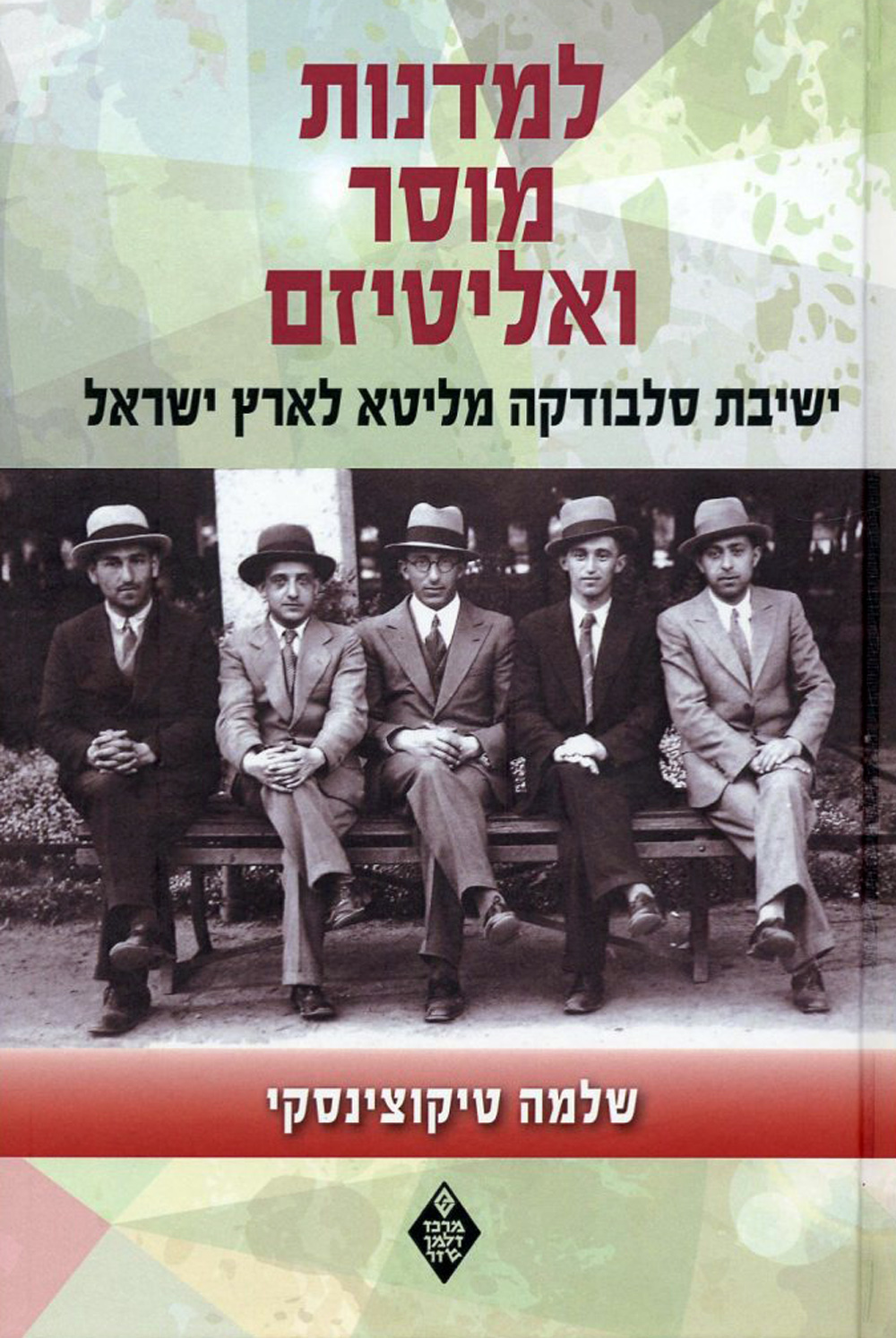
1. For those interested in the history of Lithuanian yeshivot, the last few years have been very fruitful. In 2014 Ben-Tsiyon Klibansky’s Ke-Tzur Halamish appeared. This book is a study of the yeshivot from World War I until the destruction of European Jewry. 2015 saw the appearance of Geoffrey D. Claussen’s Sharing the Burden: Rabbi Simhah Zissel Ziv and the Path of Mussar.[1]In January 2016 Shlomo Tikoshinski’s long-awaited book appeared. Its title is Lamdanut, Musar ve-Elitizm: Yeshivat Slobodka me-Lita le-Eretz Yisrael. The book can be purchased hereEliezer Brodt is also selling the book and a portion of each sale will go to support the efforts of the Seforim Blog, so I also encourage purchasing from him.

This outstanding book is full of new information, and Tikoshinski had access to a variety of private archives and letters that help bring to life a world now lost. Lamdanut, Musar ve-Elitizm is also a crucial source in understanding the development of religious life in Eretz Yisrael in the two decades before the creation of the State.

When you read about the Slobodka students, and later the students of Chevron, it is impossible not to see how very different the student culture was then from what is found today in haredi yeshivot, including the contemporary Yeshivat Chevron. Some of this differences can be explained by the subtitle of the book where the word “elitism” is mentioned. Unlike the situation today, Tikoshinski discusses an era when very few people studied in yeshivot. Those who chose to devote themselves to Torah study were regarded by the traditional community, and more importantly they regarded themselves, as the elite of Jewish society. One should not underestimate how such a self-image impacted the lives of the students.
R. Moshe Finkel was a part of the story Tikoshinski tells. He was the son of R. Nosson Zvi Finkel and son-in-law of R. Moshe Mordechai Epstein, and taught at the yeshiva both in Slobodka and in Chevron. Unfortunately, he unexpectedly died in 1925 at the young age of 43. Here is a photo of R. Moshe Finkel with his wife Sarah. (This picture does not appear in Tikoshinski’s book.)
Among the pictures included in Tikoshinksi’s book is the following. Can anyone guess who the one on the right is?
2. In the last post I included a picture of R. Moshe Feinstein and R. Soloveitchik. Here is another picture of R. Moshe, the Rav, and R. Shneur Kotler.

Here is a picture of R. Soloveitchik walking down the aisle at a wedding. Next to him is R. Samuel Walkin, and in front of R. Walkin is R. Moshe Feinstein.. I thank Dr. Dov Zakheim for sending me this picture.

In older pictures you find rabbis walking down the aisle at weddings. Has anyone been to a wedding where this is still done?
3. Yeshiva University recently acquired the archive of the late Rabbi Louis Bernstein (1928-1995), an important Modern Orthodox pulpit rabbi in the second half of the twentieth century. The collection contains an interesting letter from R. Jehiel Jacob Weinberg, in which R. Weinberg mentions that R. Soloveitchik used to sometimes come to his shiurim at the Berlin Rabbinical Seminary. R. Weinberg also speaks about how outstanding R. Soloveitchik was, and how even in his younger years his greatness was recognized by all the Torah sages of the generation.[2]

Also of interest in the collection is material relating to a controversial incident, or actually two incidents, that R. Bernstein was involved with. In 1985 R. Bernstein, who at the time was president of the Rabbinical Council of America, agreed to deliver a speech at the Conservative Rabbinical Assembly convention. That would have been controversial enough. However, things got even more heated when it was announced that the RCA would be reciprocating by having the head of the Rabbinical Assembly, Rabbi Alexander M. Shapiro, speak at the RCA convention.
This became a major dispute not just between the RCA and the more right wing elements in Orthodoxy, but within the RCA itself. The New York Times even covered the matter. See here. Unfortunately for R. Bernstein, the weight of all the opposition came down on him even though the decision for him to speak at the RA convention, and to have Rabbi Shapiro speak before the RCA, was not an individual decision but was voted on by members of the RCA’s Executive Committee.
In a future post I will discuss this matter in greater detail, and also deal with the role of R. Soloveitchik. For now, let me share this strong letter from R. Nissan Alpert to R. Bernstein, in which in addition to protesting Rabbi’s Shapiro upcoming speech, R. Alpert states that if the event goes forward he sees no way that he can remain a member of the RCA.[3]

4. Recently, Ha-Mashbir, vol. 2, appeared, edited by R. Yissachar Dov Hoffman and R. Ovadiah Hoffman. This volume, which can be purchased at Biegeleisen, is dedicated to R. Ovadiah Yosef and is full of worthwhile articles. Particularly noteworthy are the contributions by R. Meir Mazuz, R. Baruch Simon (focusing on R. Ovadiah’s shiurim at Yeshiva University), R. Pinhas Zebihi on the practice in Gibraltar that men in mourning do not wear a tallit on Shabbat (actually, this is only the case for the first month of mourning), and an important and lengthy article by R. Eliyahu Kohen on R. Ovadiah’s attitude towards Zionism, the State of Israel, and the army. The various articles in the book are supplemented by notes from the two editors, each of whom is a scholar in his own right.
I would also like to call attention to the wonderful introduction to the book by R. Ovadiah Hoffman. He speaks about the need to reject religious extremism that leads to the delegitimization of Torah scholars just because they belong to a different camp. As I mentioned in my last post, this is a great problem in Israeli haredi society, and R. Ovadiah Yosef in particular was subjected to all sorts of attacks from small-minded people who could not recognize the simple truth R. Ovadiah Hoffman speaks about.
דא עקא, קול חרדה שמענו, פחד ואין שלום. בפרי מעללינו הובלנו לעידן של מצוקת הדעת, בו דעות מיעוט ודוקטורינות דתיות של רב אחד ותלמידיו שאינן עולות בקנה אחד עם ההשקפה המסורתית המקובלת של רב אחר וקהלתו, מבוססות ככל שיהיו, לא די שאינן מופרכות לפי כללי התורה ובאופן רציונלי אלא נדחות בשאט נפש ומבוטלות כלאחר יד, ופעמים בדעת קדומה של ביטול הדברים למפרע. . . . כל יום שני שומעים על עוד אדם ש”נפסל” או “נמחק” ונרדף עד לחייו בנסיבות עלובות. מלבד שהיום אין דנין דיני נפשות, גם אין אחידות או סמכות מקובלת או מועצה מוכרת בין כל קהילות ישראל, אפילו את”ל הוא חטא בניו ובנתיו מה חטאו? כמה משפחות נהרסות על חשבון הרודנות הזאת. ברור כי עוד לא זכינו להמשך הנבואה: ושקט ושאנן ואין מחריד (ירמיה ל, י).
I thought of R. Hoffman’s point this week when I received a copy of a new book that needs to be seen to be believed. (Thanks to Meir Yosef Frankel for sending it.) The title that appears on the top of each page is שרידי-אש זרה, and the book is designed to show that R. Jehiel Jacob Weinberg was a complete heretic. Interestingly, the author doesn’t know how old I am as he refers to me as a student of R. Weinberg: פרופסור אחד מתלמידיו הותיקים. I will discuss this book in more detail in a future post.Returning to Ha-Mashbir, the second page, where it gives information on how to submit material, states as follows:

בעז”ה ית”ש בכרכים הבאים יודפסו גם מאמרים שאינם מרוכזים על משנת רבינו, הלכה מנהג ומחקר, ויפתח”ו שערי”ה תמיד לציבור הרחב. . . . גם לתגובות ולביקר”ת מבוא פתחים, כולם יתקבלו בברכה.
I have underlined certain words that have double apostrophes. This is a sign that there is a melitzah play on words, something that the editor R. Ovadiah Hoffman is quite good with. The first example, ויפתח”ו שערי”ה תמיד, is a play on Isaiah 60:11: ופתחו שעריך תמיד. The second example, ולביקור”ת מבוא פתחים, is quite clever. It is a play on Proverbs 8:3: .לפי-קרת מבוא פתחים
5. The ever-productive Menachem Kellner has just published a new book, Gam Hem Nikraim Adam: Ha-Nokhri be-Einei ha-Rambam, available here. This is not just a work of academic scholarship, but is what we can call “engaged scholarship,” in other words, scholarship that is also intent on making a difference in the real world. One of the things that troubles Kellner about contemporary Orthodox Judaism (and he specifically deals with such figures as R. Shlomo Aviner, R. Hershel Schachter, and the authors of Torat ha-Melekh) is the recent turn (or perhaps better, return) to negative portrayals of non-Jews and their spiritual worth. Kellner discusses this in the first section of the book which is titled גילוי דעת, and you can read it here. See also his interview with Alan Brill here.
In the book, Kellner argues that Maimonides sees no essential difference between Jews and non-Jews, and it is this view that Kellner wishes his readers to adopt. He refers to it as “Maimonides’ universalism.” Responses to Kellner’s book will be of two types: Those that deal with his interpretation of Maimonides and those that focus on what Kellner has to say about the contemporary scene and how Maimonides relates to it. This is a very exciting book which further establishes Kellner as an important public intellectual, and shows us once again why Kellner’s work has had a significant impact on the study of medieval Jewish philosophy. I hope to take up some of Kellner’s points in a future post.
7. R. Simcha Feuerman has recently published Et Lifrosh ve-Et le-Ehov. This small book, available at Biegeleisen, focuses on issues of shelom bayit. What makes this book significant is that R. Feuerman is also a licensed social worker with great experience in the field. This makes his book different than many previous books on the topic authored by well-intentioned people who never actually had any practical experience. As is fitting for a book like this, sexual matters are also discussed, and R. Feuerman mentions (p. 13) that the book was shown to rabbis and dayanim. Yet other than R. Gavriel Zinner, who penned a haskamah, none of the other rabbis chose to be public in their support because of their fear of being attacked by extremists who don’t think that these matters should be publicly discussed.
R. Feuerman also deals with the matter of psychological counseling and possible conflicts between the role of the psychologist, who is not supposed to be judgmental, and the traditional obligation to rebuke those who are sinning. As part of this essay (pp. 88ff.), R. Feuerman discusses the value of Freud’s insights (and notes the advances that have been made since his time). I find this significant since for many in the haredi world, and they are the ones who will be reading this book, Freud is almost up there with Darwin when it comes to objects of derision. It is also worth noting that the author uses “lomdus” to make psychological arguments.
8. For anyone who hasn’t yet picked up my new book, Changing the Immutable, the YU Seforim Sale is selling it at a great price. See here. Regarding Changing the Immutable, let me also add that because of the book’s last chapter, a number of people have been upset and have even characterized me as a haredi apologist. That is not the case at all, and Adam Ferziger, in his just-published review here, gets it right.


[1] Also worthy of note is Ernest Gugenheim, Letters from Mir: A Torah World in the Shadow of the Shoah (New York, 2014). One piece of interesting information appears on p. 106, where in a 1938 letter Gugenheim writes: “Tomorrow [the day before Purim] will be a day of fasting. Here, they are rather meikil with respect to this viewpoint, and many bachurim, too weak, do not fast completely. It is true that every day for them is a day of half-fasting, such that they are quite weakened.” Thanks to Jonathan Hirsch for calling this passage to my attention.
[2] R. Weinberg’s letter is found in the Rabbi Louis Bernstein archives, box 3. I thank the Yeshiva University Archives for granting me permission to publish it.
[3] R. Alpert’s letter is found in the Rabbi Louis Bernstein archives, box 6, Folder no.: RCA etc. 1985. I thank the Yeshiva University Archives for granting me permission to publish it.


Review of Dovid Bashevkin’s Sefer Berogez Racheim Tizkor

By Rabbi Yitzchok Oratz
Rabbi Yitzchok Oratz, a musmach of Beth Medrash Govoha, is the Rabbi and Director of the
Monmouth Torah Links community in Marlboro, NJ.
אהרן יצחק הלוי ארץ
כי הוא ידע יצרנו:
הערות והארות, ציונים ומראה מקומות, על עניניבחירה, חטא, ותשובה.
מיוסד על ספר “ברגז רחם תזכור” להרב דוד אליקים בשבקין.
Introduction
In wrath, remember mercy. For He knows our nature . . .
God knows the nature of every generation, Rabbi Dovid Bashevkin has written a Sefer uniquely appropriate for the nature of ours[1].
Take a trip to your local Jewish bookseller during this time period, and you will find numerous seforim, old[2] and new[3], on the themes of sin and repentance. Although they certainly vary in style and quality, a common denominator among many is the heavy reliance on Rambam’s Hilchos Teshuva and Sha’arey Teshuva of Rabbeinu Yonah of  Gerondi[4].  And this is to be expected. Timeless classics, these works of the great Rishonim are unmatched in their systematic and detailed discussion of sin and punishment, free will[5] and repentance, and are a prerequisite study for any serious discussion of Teshuva.
But therein lays the dilemma.
For although Rabbeinu Yonah maps out the exalted levels of Teshuva that one should certainly strive for, they seem not to be for the faint of heart.  Is our generation really up to the task of embracing the sorrow, suffering, and worry, the humbling and lowering oneself[6], without allowing for the concomitant sense of despair[7] and despondence[8]?
And how many of us can honestly stand before the Creator, and proclaim that we will “never return” to our negative actions, to the extent that God Himself will testify that this is the case[9]? If confession without sincere commitment to change is worthless[10], does repeating last year’s failed commitments not require choosing between giving up and fooling ourselves?
This is where B’Rogez  Rachem  Tizkor comes in Based heavily on the thought of Izbica in general, and Reb Tzadok ha-Kohen of Lublin in particular, it discusses the value of spiritual struggle, the interplay between determinism and free will, the redemptive potential of sin, and the status of those who have not yet arisen from their fall.
In a refreshingly humble[11], almost apologetic, essay at the Seforim blog, R’ Bashevkin expresses hope that his work brings “the much needed attention these thinkers deserve in contemporary times,” while delivering a message of “comfort and optimism[12],” without being disloyal “to the type of avodas Hashem . . . they hoped to engender[13].” I think he was successful on all accounts.
Overall, the sefer is a good introduction to R’ Tzadok for those who are not familiar with his thought, and offers many insightful and fascinating comments even for those who are. Some that I found particularly interesting includethe insight into why R’ Mesharshiya cursed Ravina that he should come to permit forbidden fats (Yevamos 37a, B’Rogez Rachem Tizkor p. 16), what important lesson can be learned from the Talmudic teaching that one who responds Amein Yehay Shemy Rabbah with all his might is forgiven even if he has a trace of idolatry (Shabbos 119b, p. 18), what benefit is there in requiring that anyone appointed to the Sanhedrin know how to purify a sheretz (Sanhedrin 17a, p. 19), why does the Talmud expound so harshly on the sins of Achan (Sanhedrin 44a, p. 36), a new understanding of why one may lie for the sake of peace (Yevamos 65b, p. 84), and what possibly could be negative about being attached to Torah (p. 23).
In the aforementioned essay, the author hopes that, in keeping with its theme, the work is read with a “measure of mercy.” He has nothing to worry about. My main critiques are that some of the discussion of the more controversial statements of Izbica required more elaboration[14], the lack thereof leads to a seeming conflating of two similar, yet far from identical, concepts, and more contrasting and supporting texts (both from within Izbica and R’ Tzadok’s thought and without) would have made for a stronger case and deeper understanding.
My hope is to fill in these gaps in some small measure. Hopefully it will further enlighten those whose appetite was whet by this fine work.
ועתה באתי להעיר כדרכו של תורה, ואת והב בסופה.
הכל בידי שמים אפילו יראת שמים!”
א) בסי’ ג’ שו”ט בטוטו”ד בענין מה שנראה שהוא חידוש נועז[15] מבית מדרשו של האיזביצ’א, דהכל בידי  שמים אפילו יראת שמים[16]ודיש מושג של עבירות שהם למעלה מבחירת האדם[17].
וקודם כל אעיר, דכנראה עירבב שני דברים דומים אבל לא שוים. דהיסוד הראשון הוא דהכל בידי  שמים אפילו יראת שמים, דהיינו דכל מה שהי’ הוה ויהי’ הוא בדיוק רצונו יתב”ש, כל מעשי המצוות וכל העבירות, דוכי יעשה בעולם דבר שלא ברשות קונו ובלא חפצו? כל אשר חפץ ה’ עשה בשמים ובארץ! וכשמדברים על דרך זה, אין שום חילוק בין עבירות שהן למעלה מבחירתנו ואלו שתוך שדה בחירתנו. “כל מה שחטא הי’ גם כן ברצון השם יתברך” (צדקת הצדיק אות מ’). “ולעתיד יתברר כן על כל חטאי בני ישראל וכו’ שיתברר שהיה מסודר מאמיתות רצון ה’ יתברך שיהיה כן ואם כן גם בזה עשו רצון ה’ יתברך” (מחשבות חרוץ אות ד’). הכל הוא מאתו יתברך.
והענין השני הוא כשמדברים מתוך עולם הבחירה[18], דע”פ פשטות בחירה הוא ד”נדע בלא ספק שמעשה האדם ביד האדם” ו”עושה כל מה שהוא חפץ ואין מי שיעכב בידו מלעשות הטוב או הרע,” ומשו”ה “דנין אותו לפי מעשיו” (רמב”ם פרק ה’ מהלכות תשובה), ואעפ”כ חידש האיזביצ’א  ד”לפעמים אשר יצר האדם מתגבר עליו עד שלא יכול לזוז בשום אופן ואז ברור הדבר כי מה’ הוא” (מי השילוח פרשת כי תצא כ”א:י”א), ו”פעמים יש אדם עומד בנסיון גדול עד שאי אפשר לו שלא יחטא” (צדקת הצדיק אות מ”ג)[19].
הרי דיש שני ענינים נפרדים, שניהם חידושים נפלאים, ושניהם מבית מדרשו של האיזביצ’א.
ב) אבל באמת, כד נעיין היטב בזה,  נמצא  הרבה  סייעתא לשני החידושים בדברי חז”ל ובתורתן של גדולי ישראל אף מאלו הרחוקים מתורת איזביץ, דבעיקרי התורה ויסודותיה תורה אחת היא לכם[20].
“שאין מציאות כלל ללא השם יתברך וכו’ ולא שיך כלל לעבור על רצונו, כי אין שום מושג ללא רצונו יתברך. ואף כאשר האדם חוטא, אינו עובר על רצון השם יתברך, אלא זה גופא רצונו יתברך, ורק האדםטועה וסוברשעושה נגד רצון השם, ועל זה יענש על שסובר שעושה נגד רצון השם יתברך. ואיתא בחז”לשבפרשת האזינו מורמז כל הבריאה כולה, וכל מעשי האדם לעולם וכל זה כבר יצר הקדוש ברוך הוא בעת בריאת העולם, והאיך יתכן שיעבר על רצון השם, והרי הכל כבר נברא ונוצר על ידו.”
הרואה דברים אלו בודאי יחשוב דתורת איזביץ  יש כאן.
ואינו כן. אלא מבית מדרשו של בעלי המוסר, מפי המשגיח המפורסם הרה”ג ר’ יחזקאל לוינשטיין ז”ל  יצא הדברים (אור יחזקאל, שיחות אלול עמוד ס”ז – ס”ח). ולהפתעתי מצאתי  שדבריו הובאו  גם בספר ממחבר מפורסם של חסידי ברסלב[21]. הרי דתורת ברסלב, איזביץ, ובעלי המוסר, כולם מסכימים לעצם היסוד דהכל בידי שמים, ללא יוצא מן הכלל.
ומקור הדברים לכאורה הוי במדרש (במדבר רבה, פרשת נשא, פרשה “יג סי’ י”ח):
אע”פ שאירע לשבטים שבא לידיהם מכירת יוסף את סבור שלא היה בא לידם אותו המעשה             אלא א”כ היו רשעים במעשה אחרים לאו אלא צדיקים גמורים היו ולא בא לידם חטא מעולם וכו’ אלא זה בלבד ומתוך גנותם סיפר הכתוב שבחם שלא היה בידם עון אלא זה בלבד ולפי שמכירת יוסף זכות היה לושהיא גרמה לו למלוך וזכות היתה לאחיו ולכל בית אביו שכלכלם בלחם בשני רעבון לכך נמכר על ידם                        שמגלגלין זכות על ידי זכאי.”
ולכאורה תמוה, דאף דלבסוף היה לטוב עדיין צ”ע מה דה”זכות” מתייחס להם דהא מפורש במדרש דמכירת יוסף היה “עון.”
אלא לכאורה הכוונה הוא דכל ענין מכירת יוסף הי’ עצה עמוקה של אותו צדיק הקבור בחברון[22] ובהכרח ירדו בנ”י למצרים דעצת ה’ היא תקום. הרי דבמכירת יוסף, אף דנחשב להם לעון, אפ”ה היו השבטים שלוחא דרחמנא לקיים גזירותיו. ומעשה אבות סימן לבנים[23], דכן הוא בכל מה שאירע בהעולם, הכל הוא לקיים רצונו יתברך[24], וזהו אף בהעבירות שאדם עושה[25], אבל בעבירות אין התועלת והטוב שיצא ממעשי אדם מתיחחסים לו[26], ואדרבה נענש עליהם אף שמעשיו היו “גופא רצונו יתברך[27].” אבל כל זה כשלא עשה תשובה, אבל אצל שבטים שאמרו “אבל אשמים אנחנו על אחינו” (בראשית פרק מ”ב פסוק כ”א) שהוא תשובה על מעשיהם (עיין בשערי אהרן בשם הזוהר ועוד) נעשה להם זדונות כזכיות ממש וכמו שלא הי’ עון כלל, דיבוקש עון ישראל ואיננו, וכל הטוב הנמשך ממעשיהם מתייחס להם כזכות ממש[28] (עיין בזה בס’ תקנת השבין סי’ י’ אות ט).  הרי דאף מעשי העבירות הוי קיום רצונו יתברך.
ג) וכל זה הוא בנוגע להענין הראשון (ד”כל מה שחטא הי’ גם כן ברצון השם יתברך” ו”אף כאשר האדם חוטא וכו’ זה גופא רצונו יתברך”). ובנוגע הענין השנית, דהוא דאף כשמדברים על עולם הבחירה אפ”ה לפעמים יש מציאות דיש עבירות שא”א שלא יכשל בהן, בזה היטיבו אשר דברו בזה ב”ברגז רחם תזבר” דשפיר משמע מפשטות שיטת ר’ אלעאי (קידושין מ.) דיש ענין בזה.
  ובאמת, יש עוד כמה מקומות בש”ס דמשמע כן. עיין צדקת הצדיק (אות מ”ג) דהביא מגמ’ ברכות ל”ב. “משל לאדם אחד שהיה לו בן הרחיצו וסכו והאכילו והשקהו ותלה לו כיס על צוארו והושיבו על פתח של זונות מה יעשה אותו הבן שלא יחטא,” וכן מגמ’ כתובות נ”א: “כל שתחלתה באונס וסוף ברצון אפי’ היא אומרת הניחו לו שאלמלא לא נזקק לה היא שוכרתו מותרת מ”ט יצר אלבשה” “הרי דזה מחשב אונס גמור אף על פי שהוא ברצונה מכל מקום יצר גדול כזה אי אפשר באדם לכופו.[29]”
ועייו בס’ יד קטנה (ריש הל’ תשובה) דהאריך לחדש דיש ענין “רב וגדול למאוד” בוידוי פה אף בלי חרטה[30] ובלי עזיבת החטא[31], ובכל דבריו מיירי במי ש”אין לו שלטון וממשלה על חוזק כבד לבבו להטותה באמת” ו”הרי הוא כמו אנוס מן חוזק כבד לבבו,” הרי דנקט לדבר פשוט שיש מצבים ויש אנשים שבשום אופן א”א להם לשוב מדרכם הרעה.
ועיין בס’ מכתב מאליהו ב”קונטרס הבחירה” (ח”א עמוד קי”ג) שביאר הגרא”א דסלר זצ”ל לא רק דיש עבירות שהן למעלה מבחירתנו, אלא רוב מעשינו הוא למעלה או למטה מנקודת הבחירה שיש לכל או”א. ועיין שם בהערה מהרב ארי’ כרמל דהמקור לדבריו הוא מדברי ר’ אלעאי בקידושין שם. הרי לא רק דכן ס”ל לר’ אלעאי אלא נקטינן כדבריו[32].
ויש לציין שבדברי הנחל נובע מקור חכמה כנראה מבואר דלא כזה. עיין ליקוטי מוהר”ן (תנינא, תורה ק”י) “שמעתי, שאיש אחד שאל אותו: כיצד הוא הבחירה? השיב לו בפשיטות, שהבחירה היא ביד האדם בפשיטות. אם רצה עושה, ואם אינו רוצה אינו עושה. ורשמתי זאת, בי הוא נצרך מאד, כי כמה בני אדם נבוכים בזה מאד, מחמת שהם מרגלים במעשיהם ובדרכיהם מנעוריהם מאד, על כן נדמה להם שאין להם בחירה, חס ושלום, ואינם יכולים לשנות מעשיהם. אבל באמת אינו כן, כי בודאי יש לכל אדם בחירה תמיד על כל דבר, וכמו שהוא רוצה עושה. והבן הדברים מאד[33].”
ד) אבל עיין שם בצדקת הצדיק שסיים ביסוד גדול “אבל האדם עצמו אינו יכול להעיד על עצמו בזה כי אולי עדיין היה לו כח לכוף היצר.”  ובס’ ברגז רחם תזכר שם הביא מעוד כמה מקומות בתורתו של הכהן הגדול שכן הוא, והביא ביאור נפלא בזה מבעל פחד יצחק, ויסוד זה שייך בשני הענינים, בין מה דהכל הוא מהשי”ת ובין מה דיש עבירות למעלה מהבחירה, בכולם אסור לנו בפועל להכחיש הבחירה בשום פנים ואופן וחייבים אנו להלחם ביצרינו בכל נימי נפשינו[34].
ואם כנים אנחנו בזה[35], דמצד אחד תורת איזביץ  יש לו יסודות נאמנים וקיימים בדברי חז”ל והרבה ס”ל כמותו, ומצד שני דבפועל אסור לנו להכחיש הבחירה כלל וכלל, יש כאן תמיה גדולה — א”כ מה כל הרעש הזה על תורתו, מה חרי האף הגדול הזה דלא רצו להדפיס ספריו ואף שרפו ספריו באש ר”ל[36]?
וכד נעיין היטב בזה, נראה דעיקר הרעש על חידושו הי’ על מה דגלא רזין מעלמא דאתכסיא, רזין עילאין וטמירין שכיסה עתיק יומין ולא איתגלאו מכמה דרין. ובזה הניח מקום לטעות בדבריו (כאשר כבר הי’ ר”ל) להחליש חומר החטא. והיטיב דבר בזה הגאון המקובל ר’ יצחק מאיר מרגנשטרן שליט”א מירושלים ד”מדרגה זו וכו’ אין מגלין אותה אלא לצנועים, ומכל שכן שאין לדרוש בה בקול רעש גדול, כי אם בדוקא בסוד ובהעלם גדול, דחלילה לאדם שיחשוב קודם החטא דהכל מרצונו יתברך וכיוצא באלו מחשבות פגול, דבזה עלול הוא להתיר מה שאסרה תורה וכו’ והרי הוא בכלל אחטא ואשוב אין מספיקין בידו לעשות תשובה, ודייקא אחר שכבר נכשל רח”ל בחטא, אז ישיב אל לבו לשוב אל ה’ בכל לבו ובכל נפשו, ולא יעלה על דעתו דאחר שנתרחק הנה מכאן ואילך הרי הוא מרוחק ושוב לא יזכה לראות אור השמש, דאינו כן, דודאי בפנימיות בדרך העלמה הכל היה כרצון השי”ת לצורך תיקון העולם, אלא דכבוד אלקים הסתר דבר.”
ובימינו כבר דורשין סתרי תורה, שפוני טמוני חול דתורת איזביץ, ברבים, בקולי קולות וברעש גדול. ואפשר דכן צריך להיות. דבדור חלש, ודור שרבים משתוקקים להרגיש בחוש ד”קרבת אלקים לי טוב,” יש צורך גדול לדמות לשכינה ולהחיות רוח שפלים ולב נדכאים[37], ללמוד זכות על החוטא (אבל לא על החטא), ואפילו אם הוא בעצמו הוא  החוטא[38], ולהבין דלפעמים באמת יש נסיונות שהם למעלה מנקודת בחירתנו, ושהכל הוא עצת ה’, ואל לנו ליפול בעומק היאוש ודכאון[39]. ועכ”ז צורך להדגיש דבעצם תוקף הנסיון יש לנו ללחום ביצר בכל כחנו, ואין לנו להתיאש מלהתגבר עליו בטענת שאין ביכולתנו.
במקום שבעלי תשובה עומדים
ה) וכשם שחייב ללחום ביצה”ר וחלילה לחשוב קודם החטא דהחטא הוא רצונו, כך אסור לעמוד במקום נסיון. ומפני זה יפה הביא (בעמוד מ”ט) לתמוה על דברי הכלי יקר (חקת י”ט:כ”א) דבעל תשובה מותר וצריך לעמוד במקום הנסיון שנפל מתחלה, ואף להתיחד עם אותו אשה אשר חטא, ואם יתגבר על יצרו בזה נחשב בעל תשובה גמורה. ויפה כתב לתמוה על דבריו.
ויש להוסיף בזה דברי המי השלוח (ח”ב פרשת יתרו עה”פ לא תשתחווה להם ולא תעבדם) “ולא תעבדם שלא תעשה מהם עבודה להש”י בהכניסך לנסיון בדי שתתגבר על יצרך וכו’ ואפילו אם מכוין שעי”ז יתגבר כבוד שמים בהתגברו על היצר.” ועיין רמב”ם פ”ב מהל’ תשובה ה”ד “ומתרחק הרבה מן הדבר שחטא בו.” ועיין צדקת הצדיק אות ע”ג, ובס’ מגדים חדשים (ברכות ל””ד ע”ב ובמילואים שבסוף הספר) הביא מכמה ספרים דכתבו כעין דברי הכלי יקר, וגם אלו החולקין על דבריו, ועיין שם בשם לקט יושר (ע’ קל:ו) “שאחד רצה לעשות כדלעיל ועשה העבירה שנית,” ועיין בס’ שערים מצויינים בהלכה (ברכות שם) שהביא מכמה מקומות דמבואר דלא כהכלי יקר, וכתב דדבריו בזה תמוהין[40] )אבל לכאורה מדברי הירושלמי הובא בערל”נ סנהדרין כ”ב. יש ראי’ לשיטת הכלי יקר, וצ”ע(.
חדש ימינו כקדם
ו) בעמוד ס”ט הביא פירוש נפלא (מר’ שמחה ווליג נר”ו) דהכוונה במדרש איכה (ה’:כ”א) “חדש ימינו כקדם כאדם הראשון כמד”א (בראשית ג’) ויגרש את האדם וישכן מקדם לגן עדן” דהכוונה הוא דוקא לאחר החטא, דבזה מיירי הפסוק. וכבר מזמן אמרתי כן לעצמי ולאחרים, והדבר מפורש בחדושי רד”ל שם “שאחר שנתגרש לקדם עשה תשובה ונתקבל ברצון.”
ובזה אמרתי דאפשר להגן על הרמב”ם מקושייתו של הריטב”א. דעיין כתובות (ח.’) דאחד מברכת חתנים הוא “שמח תשמח ריעים האהובים כשמחך יצירך בגן עדן מקדם ברוך אתה ה’ משמח חתן וכלה.”  ועיין רש”י שם “בגן עדן מקדם דכתיב ויטע גן בעדן מקדם וישם שם וגו.'”
ועיין בריטב”א שם דכתב וז”ל “גירסת רש”י ז”ל כשמחך יצירך בגן עדן מקדם וכן הגירסא בכל הספרים וכן הכתוב אומר ויטע ה’ אלהים גן בעדן מקדם וישם שם את האדם והרמב”ם ז”ל גורס מקדם בגן עדן ואין הלשון הזה מתוקן כראוי, כי הלשון הזה נאמר על האדם כשנתגרש מג”ע וישכןמקדם לגן עדן ואע”פ ששם אמר לגן וכאן אמר בגן שמא יבא לטעות אדם בענין וגם בלשון[41].
ולפי דברי המדרש דברי הרמב”ם א”ש. דזהו גופא מה מברכין להחתן וכלה, שהקב”ה ינהג עמהם ברחמים כאשר עשה לאדם וחוה אף לאחר הנפילה, לאחר שנפל מאגרא רמא שהי’ יושב בג”ע והיו מלאכי השרת צולין לו בשר ומסננין לו יין (סנהדרין נ”ט:) לבירא עמקתא של בזעת אפך תאכל לחם (בראשית ג’:י”ט), אבל לא גירש אותם מיד אלא נתן להם את השבת “אדם שמר את השבת בתחתונים והיה יום השבת משמרו מכל רע ומנחמו מכל שרעפי לבו” (פרקי דר”א פרק כ’)[42], ויעש להם כתנות עור, וכמש”כ רבינו בחיי שם “ע”ד הפשט רצה ליחס פעולת ההלבשה אליו יתברך להורות על אהבתו וחמלתו על יצוריו, שאע”פ שחטאו לא זז מחבבן, והוא בעצמו השתדל בתקונם ובגמילות חסדים. והנה כל זה חסדי הש”י, ועל זה אמר הכתוב: (דניאל ט, ז) “לך ה’ הצדקה ולנו בושת הפנים”. ולפי”ז א”ש הגמ’ בסוטה (י”ד.) “דרש ר’ שמלאי תורה תחלתה גמילות חסדים וסופה גמילות חסדים תחילתה גמילות חסדים דכתיב ויעש ה’ אלקים לאדם ולאשתו כתנות עור וילבישם” ולא מנה החסד שעשה עמהם לפני החטא בהכנת כל צרכי החתונה (עיין ברכות ס”א., ב”ר פרשה ח’ אות י”ג) דעיקר החבה והחסד הוא לאחר החטא, דאפ”ה לא זז מחבבן, ועיקר הברכה הוי דוקא  “מקדם לגן עדן” ולא “גן בעדן מקדם[43].”
לכוף את יצרו עדיף
ז) בעמוד ע”ד הביא (מהגר”ר גרוזובסקי זצ”ל בשם הגר”ח חלוי) דהמחלוקת עם רשעים “צריכה להיות כשנאת הבעלים לעכברים שמצטער על שישנם וצריך לבערם ולא כחתול הנהנה ממה שיש לו לבער ולאכול.” וכתב דזה א”ש לשיטת הרמב”ן עה”ת לבאר למה נענשו המצריים אע”פ שהיתה גזירה על כלל ישראל, וק”ו לגבי ישראל “אם דחה אותו האיש יותר מן הראוי וכו’ הרי זה בכלל שנאה גמורה וגדול עונו.”
ויפה כתב. אבל יש להעיר ולהוסיף, דלפי דברי הרמב”ן בפרשת לך לך (ט”ו:י”ד), אף אם לא דחה אותו יותר מן הראוי כלל, אלא בדיוק במדה המחייבת, כל שנהנה מעצם השנאה כחתול לעכבר, הרי בכלל שנאה האסורה וגדול עונו. דהא ברמב”ן שם איתא כמה טעמים למה נענשו המצריים, דטעם אחד הוא שהוסיפו על הגזירה, ושוב כתב ד”אם שמע אותה ורצה לעשות רצון בוראו כנגזר אין עליו חטא אבל יש לו זכות בו וכו’ אבל אם שמע המצוה והרג אותו לשנאה או לשלול אותו, יש עליו העונש כי הוא לחטא נתכוון, ועבירה הוא לו.” וזהו טעם שנית דשייך אף כשלא הוסיפו כלום. ודון מינה ואוקי באתרה.
ושמעתי לפרש (כמדומני בשם אחד מאדמור”י גר) “וירא פינחס וכו’ ויקם וכו’ ויקח רמח בידו” — אבל הקנאים תמיד יש רמח מזומן בידיהם . . .
 “אין צדיק בארץ אשר יעשה טוב ולא יחטא”
ח) בעמוד ט”ו הביא קושיית התוס’ (שבת נ”ה: בד”ה ארבעה) על הגמ’ דארבעה מתו בעטיו של נחש, דצ”ע מהפסוק בקהלת (ז’:כ’) “כי אדם אין צדיק בארץ אשר יעשה טוב ולא יחטא.”  וכתב לפרש ע”פ דברי השלה”ק (מס’ תענית, פרק תורה טור, סי’ קמ”ד – קמ”ה) “שטמונים בתוך הנפילות והמכשולות של צדיקים הכח והדחיפה לעשות טוב.” וענין זה הוא באמת בריח התיכון של כל הספר, דכל הנפילות הם בעצם לטובותינו, וכל הירידות בעצמותן הם לצורך עלי'[44], ושהכל הוא עצת ה’ לטוב לנו לחיתנו.
אבל עדיין פירוש השל”ה בלשון הפסוק דחוק. ושמעתי ממו”ר המשגיח הרה”ג ר’ מתתיהו סלומון שליט”א (בשם רבו הרה”ג ר’ אלי’ לפיאן זצ”ל) לפרש על פי דברי ר’ יונה (בשע”ת שער הראשון אות ו’) “אמת כי יש מן הצדיקים שנכשלים בחטא לפעמים, כענין שנאמר כי אדם אין צדיק בארץ אשר יעשה טוב ולא יחטא,” דלכאורה תמוה דמתחלה אמר דיש מן הצדיקים, דהיינו מקצתם, דנכשלים בחטא, והביא ע”ז פסוק דאין צדיק בארץ אשר לא יחטא, דמשמע דכולם חוטאים. ותירץ הרה”ג ר’ אלי’ ז”ל דבאמת מצינו צדיקים אשר אין חוטאים, אבל צדיקים אשר עושים טוב בהם אין מי שלא יחטא.  דהיינו, שפיר אפשר להיות צדיק לעצמו ולישב בזוית ולעבוד את ה’, אבל מי שמלמד לאחרים ועוסק בצרכי צבור “לעשות טוב[45]” א”א לו שלא יחטא[46].
ועצם יסוד הדברים כבר נמצא במשך חכמה פרשת נח (ט’:כ’), בפתוחי חותם להחת”ס (נדפס כהקדמה לשו”ת יו”ד),  ובספורנו סוף פרשת בראשית (ו’:ח’)[47].
ולפי”ז מיושב קושיית התוס’, דהארבעה מתו בעטיו של נחש, עם כל צדקתם שאין לתאר ואין לשער, לא מצינו שלימדו והשפיעו על אחרים ועסקו בטובת העולם[48] באותו מדה[49] שעשו אאע”ה, משה רבינו, ודוד המלך, דהם (אע”פ שחטאו) קיימו רצון ה’ למען אשר יצוה את בניו ואת ביתו אחריו, צדיקים כאלו זכו לעצמם וזכה לדורי דורות, ומצדיקי הרבים ככוכבים יזהירו, וצדקתם עומדת לעד[50].
ונמצא, שלא רק “שטמונים בתוך הנפילות והמכשולות של צדיקים הכח והדחיפה לעשות טוב,” אלא הדחיפה לעשות טוב הוא גרמא לנפילות, ואעפ”כ זהו רצונו יתב”ש.
“בנים אתם לה’ אלקיכם”
ט) בעמוד ל”ד הביא מר’ צדוק הכהן (תקנת השבין סי’ ט”ו, אות פ”ד) שהמקור להענין ש”אע”פ שחטא ישראל הוא” הוא משיטת ר”מ בקידושין ל”ו. דבין כך ובין כך נקראו בנים, והלכה כמותו דדייק קרא[51].
ויש לציין למש”כ בהגדה של פסח “מגיד משנה” (לבעמח”ס שו”ת משנה הלכות ז”ל) דגם בעל ההגדה סתם כר”מ. ד”כנגד ארבעה בנים דברה תורה,” דאף הרשעים דהוציאו עצמן מן הכלל וכפרו בעיקר עדיין נקראו בנים למקום. וזה תואם שיטתו (בשו”ת משנ”ה ח”ו סי’ כ”ז, כ”ח, ל[52]’) המובא ב”ברגז רחם תזכר” (עמוד ע”ז, ובצדק כתב המחבר ד”ניכרין דברי אמת”) לחלוק על דברי האדמו”ר ממונקאטש זצ”ל[53], וס”ל דחייב להתפלל על נדחי ישראל שישובו בתשובה שלמה.
וכדברי המשנ”ה הוא מנהג כלל ישראל, וכמו שהוא בנוסח תפלת זכה שאומרים בכניסת יום הקדוש[54] “ובתוכם תרחם על פושעי עמך בית ישראל ותן בלבם פחד הדר גאונך והכנע לבם האבן וישובו לפניך בלב שלם וכו’ גם כי הרבו אשמה לפניך עד שננעלו בפניהם דרכי תשובה אתה ברחמיך הרבים תחתור להם חתירה מתחת כסא כבודך וקבלם בתשובה וכו'[55].”
“אע”פ שחטא ישראל הוא”
י) בסי’ ב’ הביא שיטת האג”מ (אבה”ע ח”ד סי’ פ”ג) דכל סוגיית הגמ’ (סנהדרין מ”ד.) בענין “ישראלאע”פ שחטא ישראל הוא” הוי רק דברי אגדה[56] להשמיענו חביבות ישראל להקב”ה שאפילו בשעה שהן חוטאים קורא אותן ישראל. ומבואר בדברי האג”מ דכוונת רבי אבא בר זבדא  בגמ’ שם “אע”פ שחטא ישראל הוא” הוי על שאר כלל ישראל (ולא על עכן) דאע”פ שגם הם נחשבו כחוטאים מחמת ערבות[57], אפ”ה עדיין שם ישראל עליהם, וכתב האג”מ דכן משמע מדברי רש”י שכתב “מדלא אמר חטא העם עדיין שם קדושתן עליהן.
ויש לציין שכעין הבנת האג”מ בהגמ’ וברש”י כתבו עוד מהאחרונים. עיין שו”ת אפרקסתא דעניא (ח”ב או”ח סי’ י”ט) וז”ל “ותו דעל גוף הדבר אני תמה, שהביאו מאמרם ז”ל, אע”פ שחטא ישראל הוא לענין המומר עצמו, הרי בסנהדרין שם הכא קאמר “חטא ישראל” אר”א ב”ז אע”פ שחטא ישראל הוא, אמר ר”א היינו דאמרי אינשי, “אסא דקאי ביני חילפי אסא שמה ואסא קרו לה”. ופרש”י מדלא אמר חטא העם, עדיין קדושתן עליהם עכ”ל. והרי הכונה הפשוטה לפענ”ד, דאע”פ שנתחייבו כל ישראל בחטאו של עכן מטעם ערבות, מ”מ קרי להעם בשם ישראל, דעדיין קדושתם עליהם, וזה מבואר במשל שהביא אסא כו’ דהיינו הצדיקים וכו’ אבל חילפא גופא לא קרו לי’ אסא” עכ”ל האפרקסתא דעניא.   וכן הוא בשו”ת דברי יציב (אבה”ע סי’ ס”ב, אות ז:כ”ג) “חטא ישראל אמר ר’ אבא בר זבדא אע”פ שחטא ישראל הוא, אמר ר’ אבא היינו דאמרי אינשי אסא דקאי ביני חילפי אסא שמיה ואסא קרו ליה עיי”ש. וכו’ והנלע”ד בביאור הענין, דהנה רש”י בסנהדרין שם ביאר חטא ישראל מדלא אמר חטא העם עדיין שם קדושתם עליהם עכ”ל, וכו’ והיינו דקאי על כלל ישראל שקדושתם עליהם אע”פ שחטא עכןוכו’ ולמד הש”ס מכאן דישראל הוא היינו שכלל ישראל נשאר בקדושתו אף שהחוטא ביניהם, וזה כוונת רש”י עדיין שם קדושתם עליהם. ועל זה הביא המשל וכו’, וה”נ כלל ישראל אף שעומדים ביניהם רשעים מ”מ לא נפגמה קדושתם וישראל הם, אמנם המומר עצמו לא נקרא ישראל. “
אבל אף דבהבנת הגמ’ ורש”י שוה דבריהם, בעצם הענין חילוק גדול יש. דלהדברי יציב משום דהגמ’ מיירי בהציבור א”כ א”ש הני שיטות דס”ל דמומר לגמרי דינו כעכו”ם, דהא לגבי היחיד אין כאן ענין “ישראלאע”פ שחטא ישראל הוא[58]” (וכעין זה הוא באפרקסתא דעניא שם), משא”כ להאג”מ אין צורך כלל להענין דאע”פ שחטא ישראל הוא, דבודאי מומר דינו כישראל, משום דלא שייך המציאות לישראל שיעשה בדין נכרי.
ואף דבעצם סברת האג”מ נראין דבריו[59], אבל מה שהוסיף דהפוסקים שנראו מדבריהם ד”אע”פ שחטא ישראל הוא” הוי מקור להלכה צ”ל דרק מליצת הלשון בעלמא הוא, בצדק העיר בזה בספר “ברגז רחם תזכר” (עמוד ל”ה) דמדברי המרדכי (יבמות סי’ כ”ט) לא משמע כן. ובאמת כן הוא בהרבה מקורות, בראשונים ואחרונים, דשפיר משמע מלשונם דהשתמשו ב”אע”פ שחטא ישראל הוא” כמקור גמור להלכה ולא רק כמליצת הלשון[60] — לדוגמא עיין חידושי רמב”ן (ב”מ ע”א:), ב”י או”ח סי’ נ”ה, גר”א יו”ד סי’ קנ”ט ס”ק ד’, טושו”ע ונו”כ אבהע”ז  סי’ קנ”ז (עיין שם בגר”א ס”ק ז’), וכהנה רבות.
גדולה עבירה לשמה
  י”א) בעמוד פ”א – פ”ב הביא להקשות על שיטת הנפש החיים (פרק ז’ בפרקים שלאחר שער ג’) דענין העבודה על דרך “עבירה לשמה” לא היתה נוהגת אלא קודם מתן תורה לבד, וצ”ע דהא עצם הלימוד (בנזיר כ”ג:) הוא מיעל דהיתה זמן רב אחר מ”ת. וכתב לתרץ דבאמת קושיא מעיקרא ליתא, דבית הקיני לא מבני ישראל המה, ודברי הנפש החיים אמורים רק לגבי העבודה דכלל ישראל.
אבל באמת אינו ברור כלל דיעל לא היתה מבנ”י.  דעיין ילקוט שמעוני (יהושע רמז ט’) “יש נשים חסידות גיורות הגר, אסנת, צפרה, שפרה, פועה, בת פרעה, רחב, רות, ויעל אשת חבר הקיני.” אבל עיין בזית רענן שם די”ל שנתגיירה לאחר המעשה. ועיין בזה בדורש לציון להגאון הנו”ב (סוף דרוש ב’ ד”ה בו ביום) ובשו”ת בית שערים חלק אורח חיים סימן לד.
אבל באמת מצינו בחז”ל ובראשונים דכבר נתגיירה בשעת מעשה. דהא מצינו שהרגה לסיסרא ביתד ולא בכלי זין כדי שלא לעבור על איסור כלי גבר, ואיסור זה שייך אצלה רק אם כבר נתגיירה. עיין בזה  ברש”י[61] נזיר נ”ט., בגליון הש”ס שם (דהביא דכן הוא בתרגום ובילקוט), בשו”ת אגר”מ (או”ח ח”ד סי’ ע”ה),  ובשו”ת (בצל החכמה ח”ה סי’ קכ”ו).
ולתרץ הקושיא על הנפש החיים — עיין מש”כ הנצי”ב (העמק דבר סוף שלח), ובפירוש “הקדמות ושערים” על הנפש החיים שם (אות ב’), ובהערות לנפש החיים (בני ברק, תשמ”ט, אות 7)[62].
הערות שונות
י”ב) בעמוד פ”ד הביא לדון בענין לעבור על איסור קל להציל מהחמור, והביא מס’ עקידת יצחק לחלק דזהו רק היתר ליחיד אבל לא לרבים. עיין בס’ “לבושה של תורה” להרב פסח אליהו פאלק שליט”א (סי’ מ”ד אות ג’ – ה’) מש”כ בענין זה בכלל, ובענין שיטת העקידת יצחק בפרט.
ובענין זה שמעתי בשם גדולי ישראל דאף דיש מתירין להזמין אנשים שאינם שומרי תו”מ לסעודת שבת במטרת לקרבם ליהדות, אף אם יודעים שיחללו בשבת כשבאים ברכב, אבל הוראה זו אין מגלין אלא לצנועין, אבל א”א להיות הוראה כללית לכל או”א[63].
ואפילו בנוגע הוראה ליחיד, לפני כמה שנים שאלתי את הגרי”ש אלישיב זצ”ל בנוגע לאחד מבני קהילתי, איש יקר שרצה לקרב לתו”מ אבל לצערו במציאות א”א לשמר שבת לגמרי כהלכתה עדיין מפני לחץ משפחתו, אם מותר לי ללמדו האיך לחלל שבת באופן שיעבור רק מדרבנן וכו’. והשיב דמותר ללמד הסוגיות עמו והוא ערום יעשה בדעת, אבל אסור לפסוק וללמדו מה שיש בפועל לעשות כדי לחלל השבת.
י”ג) בעמוד צ”ד העיר (בדרך אגב) בענין אם שייך לומר דאפשר לחלוק על הגמ’ דהא ב”ד יכול לבטל דברי ב”ד חבירו ע”פ י”ג מדות. ולכאורה יש להעיר דמבואר בכמה מקומות דלעתיד יהי’ ההלכה כב”ש (עיין הרב שמואל אשכנזי, אלפא ביתא תניתא דשמואל זעירא, ח”א עמוד 241 – 244), וא”כ מבואר דלעת”ל ישתנה הדברים מדינא דגמ’. אבל לכאורה זה גופא דינא דגמראשב”ד יכול לסתור חבירו. ודכמו דמה דהתשבי יתרץ כל ה”תיקו” שבש”ס לא הוי סתירה להגמ’ כמו כן הך כללא דב”ד יכול לבטל דברי חבירו. ואדרבה — אם א”א להם לבטל בית דינו של ב”ה א”כ זה גופא יהי’ ביטול דינא דגמ’ דנפסק שיש בידם לבטל דברי ב”ד אחר.
ועיין בזה בגמ’ יומא פ’ ע”א וברש”י  שם, בדברות משה (יבמות פרק ד’ הערה נ”ט), ובס’ “באמונה שלמה” (להרב יוסף זלמן בלאך שליט”א, עמוד בעמוד שי”א – שי”ב הערה ד’).
י”ד) בעמוד צ”ה העיר בענין לפרש בדברי הראשונים מה שלא כיונו במובן ההיסטורי. יש לציין למה שהביא  הרה”ג ר’ מיכל שורקין שליט”א (ס’ מגד גבעות עולם ח”ב עמוד ז’) מסורה שקיבל הגרי”ד הלוי סאלאווייציק ז”ל מאביו הגר”מ ומדודו (בעל  עבודת המלך) “שהרמב”ם  כתב את ספרו ברוח הקודש, ולאחר שנכתבו הדברים, אין הרמב”ם בעל הבית” על היד החזקה ושפיר אפשר לתרץ את דברי הרמב”ם אף כשתירץ הרמב”ם באופן אחר בתשובותיו (והביא שם דכעין זה כתב האו”ת אף בנוגע להשו”ע). וכנראה דכן קיבל הגר”מ ז”ל מפי קדשו של אביו הגאון החסיד הגר”ח מבריסק, וכמו דמצינו שביאר הגר”ח דברי הרמב”ם במ”ת אף שכבר כתב הרמב”ם בתשובה לחכמי לוניל דיש ט”ס במשנה תורה  (עיין הל’ נזקי ממון פ”ד ה”ד ובכס”מ ובחידושי רבינו חיים הלוי שם), וכן מפורסמת שמועה כזו בעולם הישיבות בשם הגר”ח, ומסורה זו היא אף למעלה בקודש, דכן ס”ל זקני הגר”ח הנצי”ב והגר”ח מוואלאזהין ז”ל, עיין בשו”ת נשמת חיים (ב”ב תשס”ב, סי’ ס”ז) דכתב הרה”ג ר’ שלמה הכהן מווילנא להגר”ח ברלין (בנו של הנצי”ב)  וז”ל “וכן שמעתי מפי אביו הצדיק זצ”ל שאמר בשם חמיו זקנו הצדיק מו”ה חיים מוואלזין שיש לומר פירוש בלשון הרמב”ם והשו”ע אם הוא עולה ע”פ ההלכה אף שבודאי לא כוונו לזהמשוםשרוח הקודש נזרקה על לשונם“. וכנראה כן ס”ל גם מרן החת”ס זי”ע — עיין בליקוטי שו”ת (סי’ ק”א סוף בד”ה אמנם) דהביא ביאור בדברי הרמב”ם אף דכתב שם ד”הרמב”ם בעצמו לא תי’ כן לחכמי לוניל” (וע”ע בשו”ת חת”ס חלק ז’ סי’ כ”א). וכעי”ז כתב הפנ”י (כתובות ל”ה ע”ב בד”ה ואי)[64].
ופה תהא שביתת קולמסי. ואסיים מעין הפתיחה, דברי ר’ צדוק הם כמים קרים על נפש עיפה, ופתח תקוה אף ל”מי שיקלקל הרבה כיון שבא מזרע יעקב יעשה תשובה ויוכל לזכות וכו’ כמו שזכה שלמה המלך ע”ה על ידי אשה רעה. שבסיבתה נתעורר לתקן הכל על ידי תשובה. וזה שנאמר וה’ ברך את אברהם בכל. בכל המדריגות כאמור” (פרי צדיק בראשית פרשת חיי שרה), אכי”ר. 


[1] Aside for the content, a feature that is certainly unique to our generation is that the sefer was made immediately available at Hebrew Books. In an essay at the Seforim Blog (discussed below), the author describes his admirable goals in publishing the sefer. Undoubtedly these goals are enhanced by making it available to as wide an audience as possible. On the other hand, my experience is that people respect seforim given away less than those they paid for (see also Bava Kamma 85a).
[2]Popular examples of the genre I discuss below are Rav Yosef Cohen’s thorough “Sefer Ha-Teshuva” (M’Chon Harav Frank, Yerushalayim, 5766) and “Yad Kohen” by R’ Dovid Yehudah Hakohen Duetsch (Yerushalayim, 5771), both based on Rambam’s Hilchos Teshuva. Popular seforim on Rabbeinu Yonah include Rabbi Aharon David Goldberg’s Meshivas Nefesh, and Matnas Chelko based on the discourses of the Lakewood Mashgiach, Rav Matisyahu Salomon, Shlit”a.
[3] This includes the just published “Sefer Hagus Teshuva,” (Lakewood 5775) by Rav Aryeh Malkiel Kotler, Shlit”a, Rosh Yeshiva of Beth Medrash Govoha in Lakewood (dedicated in memory of his mother Rebbetzin Rishel Kotler Z”L).
[4] Of course, these works quote extensively from other classic works on Teshuva (such as “Bais Elokim” by R’ Moshe ben Yosef di Trani) and a wide range of sources from the books of Mussar. My point is that they frequently are written as commentaries to the works of Rambam and Rabbeinu Yonah (as the examples I cite above in note 2 and 3), and/or rely heavily on their words.
[5]Free will is a major theme in Rambam’s writings, not so in that of Rabbeinu Yonah (who nevertheless views it as a fundamentally important concept, see Sha’arey Teshuva 3:17 along with the comments in Sefer Matnas Chelko).
[6] Levels 3, 4, 5, and 7 of the 20 levels listed by Rabbeinu Yonah.
[7] See below note 39.
[8] I once asked R’ Matisyahu Salomon how one is too avoid this pitfall when learning books of Mussar. Without directly answering the question, he pointed out that a Jew is frequently required to experience competing emotions, without one overtaking the other. He referenced Yirmiyahu’s writing of the book of Eicha, which, like all prophecy, required a joyful spirit, as well as the fact that despite Rabbeinu Yonah’s seemingly harsh demands, he still refers to the “sweetness of Mussar” (Sha’arey Teshuva 2:13).
This idea that times of Teshuva demand joy and fear at the same time is discussed extensively in the context of the nature of the day of Rosh Hashana. See Rav Eliezer Menachem Man Shach, Michtavim Uma’amarim (volume 2, page 147), Rav Moshe Shapiro, Sefer Afikey Mayim on Yomim Noraim (chapter 30, page 182),the just published “Sefer Hagus Teshuva,” (see note 3) chapter 37, page 258, and the comments of Rabi Eliezer Eisenberg (pointed out to me by his son Rabbi Mordechai Eisenberg) here.
[9] Rambam, Hilchos Teshuva 1:1 and 2:2.
[10] Ibid 2:3.
[11] His self-deprecating also manifest itself in a Tweet where he called his work his “mediocre-opus.”
[12] Another important source that allows for “comfort” is R’ Yisroel Salanter – see his important (re)definition of “complete Teshuva” in Ohr Yisroel (# 6 – 8). I hope to further discuss his thought on a different occasion.
[13] He further discusses these themes in an important essay at the Hirhurim Blog.
[14] In chapter three it almost seems that R’ Bashevkin is afraid to elaborate on the full import of the seemingly radical Izbica statements, immediately muting their controversial nature by offering “solutions,” lest his book be used as a source for those “disloyal “to the type of avodas Hashem . . . they hoped to engender.” One also gets this sense from the amount of warnings and caveat’s given throughout the sefer (see page 11, 17, 19). I almost got the feeling that it had the flaw that he “doth protest too much.”
[15] עיין בשו”ת מנחת יצחק (ח”ח סי’ ב’) דלכתוב הביטוי “חידוש נועז” על גברא רבא היא ביטוי  שלא בכבוד מאד. אבל הכא כנראה לכו”ע חידושי האיזביצ’א  הם בגדר “חידוש נועז” דהא ע”פ מושכל ראשון נראה דסותר הבחירה ד”עיקר גדול הוא והוא עמוד התורה והמצוה” שבלעדו “מה מקום לכל התורה” (רמב”ם הל’ תשובה פרק ה’). וגם תלמידי האיזביצ’א יודעים היטב “כי בכמה מקומות יקשו הדברים לאזנים וכו'” (הקדמת נכד הרב הקדוש מאיזביצע לס’ מי השילוח).
[16] עיין מי השילוח פרשת וירא עה”פ ותכחש שרה (י”ח:ט”ו), צדקת הצדיק אות רנ”ז.
[17] עיין מי השילוח סוף פרשת בלק (נדפס בפרשת פנחס) עה”פ וירא פנחס(כ”ה:ז), ובפרשת כי תצא עה”פ וראית בשביה (כ”א:י”א),
[18] “דהידיעה במקום אחר והבחירה במקום אחר” —  עיין ליקוטי  מאמרים  לר’ צדוק הכהן (עמוד קע”א) בשם האר”י, הובא בס’ ברגז דחם תזכר (עמוד מ’).
[19] ובישראל קדושים אות י’ — “שפעמים דאי אפשר לנצחו וכו’.”
[20] עיין בס’ ויואל משה, מאמר שלש שבועות, אות קפ”ב (הובא בס’ “הגאון” עמוד1232), ובס’ בגן החכמה (עמוד148).
[21] ספר “בגן החכמה” להרב שלום ארוש שליט”א (עמוד 146 – 147. הראוני לזה אחי הר’ מאיר שלמה עמוש”ט.).
[22] עיין רש”י בראשית פרק ל”ז פסוק י”ד, גמ’ סוטה י”א ע”א, בב”ר (פרשה פ”ד אות י”ג(.
[23] ענין “מעשה אבות סימן לבנים” נמצא הרבה ברמב”ן עה”ת, אף שלא מצאתי בדבריו לשון זה ממש.  עיין בפירושו לבראשית י”ב:ו’, י”ב:י’, כ”ו:כ’, וריש פרשת וישלח. ועיין פרי צדיק ריש פרשת ויגש “כי כל מעשה אבות סימן לבנים כמו שכתב הרמב”ן (בראשית י”ב: ו’). וגם בפרשה זו מרמז המדרש תנחומא שכל ענין התגלות יוסף לאחיו הוא מעין התגלות הישועה לעתיד.”
[24] עיין דברי הרמב”ם במו”נ (חלק שני פרק מ”ח) “מבואר הוא מאד שכל דבר מחודש א”א לו מבלתי סבה קרובה חדשה אותו, ולסבה ההיא סבה, וכן עד שיגיע זה לסבה הראשונה לכל דבר, ר”ל רצון ה’ ובחירתו וכו’.” עוד שם “דע כי הסבות הקרובות כלם אשר מהם יתחדש מה שיתחדש אין הפרש בין היות הסבות ההם עצמיות טבעיות, או בבחירה, או במקרה, וכו’ והמקרה וכו’ הוא ממותר הענין הטבעי וכו’ ורובו משותף בין הטבע והרצון ובחירה וכו'” עיין שם כל דבריו הנעימים (ועיין חוה”ל שער הבטחון הפרק השלישי).
[25] ומעשי החטא מביא לבסוף להיפך ממטרת החוטא, דיושב בשמים ישחק ה’ ילעג למו ובת קול אומר “ונראה מה יהיו חלמתיו” (עיין בראשית פרק ל”ז פסוק כ’ וברש”י שם), ועצת ה’ היא  תקום (עיין רמב”ן בראשית ל”ז:ט”ו-י”ז).
[26] אבל באמת, אף לרשע מגיע קצת שכר כשמעשיו מביא טובה לעולם (אף שזה הי’ היפך כוונתו). ומפני זה מבני בניו של המן למדו ולימדו תורה בבני ברק  ומנו רב שמואל בר שילת (עיין גיטין נ”ז:, סנהדרין צ”ו:, ובעין יעקב בסנהדרין שם), וחייב איניש לבסומי עד וכו’ — עיין או”ח סי’ תרצ”ה ובישועות יעקב שם, חכמה ומוסר להסבא מקלם (ח”ב עמוד שמ”ה), קדושת לוי ב”כללות הניסים”  ובקדושות לפורים קדושה רביעית, ובקונטרס  מים חיים על אגדת החורבן (לייקוואוד, תש”ע).
[27] כלשון האור יחזקאל. ועיין ברמב”ן (בראשית ט”ו:י”ד), ובראב”ד הלכות תשובה (פ”ו ה”ה).
[28] וזהו עומק כוונת הפסוק’ “אלקים חשבה לטובה” (בראשית פרק נ’ פסוק כ’).ועיין בכ”ז באריכות בס’ ים החכמה תשס”ח, עמוד תקצ”ו – תר”ז.
[29] ועיין עוד בגמ’ יומא י”ט: – כ’. וברש”י שם יומא כ. “לפתח חטאת רובץ – יצר הרע  מחטיאו בעל כרחו” (ועיין מהרש”א שם), וקידושין ל: ו ופ”א. – :.
[30] כלשונו “ואי אפשר לו בשום ענין לשבור את לבבו הרע להתחרט בלב שלם על פשעיו” וכשמתודה “איו לבבו שלם עמו” “ותוקף לבבו הרע בל עמו כלל לשום חרטה.” ועיין בספר יד כהן על הל’ תשובה (פ”א ה”א אות ד’) דהביא דברי היד קטנה וכתב דמיירי “שמתחרט הוא על  מה שעבר עד עתה.” וזה אינו, כדמפורש להדיא בדבריו (וכנראה טעה בזה גם ב”ספר המפתח” שבסןף רמב”ם הוצאת שבתי פרנקל).
[31] וכלשונו “כי כבר לבב אבן לו ואין דרך להטותה בשום פנים.”
[32] ועיין בשו”ת משיב דבר ח”ב סי’ מ”ד, הובא לקמן בס” ברגז רחם תזכר עמוד פ”ג – פ”ד, דמבואר בדבריו דיש מציאות שללא מצי לכייף ליצרו .
[33] וזהו אף דבהענין הראשון נראה דס”ל כעין תורת  האיזביצ’א, “שהכל נעשה ע”י השי”ת” (עיין ליקוטי הלכות דברים היוצאים מן החי ד’ אות מ”א – מ”ב), וזהו כמש”כ דשני ענינים נפרדים יש.
[34] ובברגז רחם תזכר הדגיש וחזר והדגיש נקודה זו — “אין זה לימוד זכות על עבירות עצמן” (עמוד י”א), “חובה גמורה היא לנהוג ביראת חטא” (עמוד י”ז), “שחלילה וחלילה להורות היתר אפילו על דבר שיש בו קצת נדנוד איסור” (עמוד י”ט).
[35] See Alan Nadler, Hasidim on the Margin: Reconciliation, Antinomianism, and Messianism in Izbica/Radzin Hasidim (review)” Jewish Quarterly Review Volume 96, Number 2, Spring 2006, pp 276 – 282. See there on page 281 “Magid is still unable to point to single example of actual antinomian behavior by a single Hasid since the inception of the Izbica dynasty in 1839.” See also, here  and Marc B. Shapiro, Changing The Immutable: How Orthodox Judaism Rewrites Its History (Portland, Oregon, 2015), 90.
 [37] עיין רמב”ם פ”ב מהל’ מגילה הל’ י”ז.
[38] עיין ליקוטי מוהר”ן תורה רפ”ב.
[39] ד”אין שום יאוש בעולם כלל” (ליקוטי מוהר”ן תנינא תורה ע”ח), “ואין לך מחלה כמו היאוש” (רבינו מאורנו ר’ ישראל מסאלאנט זצללה”ה באור ישראל סי’ ז’.).
[40] See also here at notes 4 – 11.
[41] הגירסא שהביא הריטב”א הוא ברמב”ם הלכות אישות פרק י’ הלכה ג’. אבל בהלכות ברכות פרק ב’ הל’ י”א כתב כגירסא שלנו. אבל בקצת דפוסים ליתא הברכות שם כלל, עיין רמב”ם מהדורת שבתי פרנקל ובשינוי נוסחאות שם.
[42] ובזה א”ש הקשר בין שבת לתשובה (עיין בזה בברגז רחם תזכר סי’ י”א), וכל המשמר שבת כהלכתו וכו’ מוחלים לו, עיין גמ’ שבת קי”ח: ובס’ מאור ישראל (להגרע”י זצ”ל) שם.
[43] והברכה להם הוי דכל ימיהם, אף בזמן שלא יהיו נקיים וטהורים כיום החופה, אפ”ה יתנהג עמהם במדת הרחמים. וזה גם לימוד להחתן וכלה שאף לאחר ה”גן עדן” של יום החופה, השבע ברכות ושנה ראשונה, כל ימי חייהם יתנהג זה לזה כרעים אהובים, וכמו שמיד לאחר החטא (להרבה ראשונים, ודלא כרש”י, עיין בשערי אהרן) קרא האדם שם אשתו חוה כי הוא היתה אם כל חי, לחיים ניתנה ולא לצער (עיין כתובות דף ס”א.).
See  here.
[44] ויפה הביא בזה (בעמוד מ”ח) מש”כ הפחד יצחק באגרותיו (סי’ קכ”ח) עה”פ “שבע יפול צדיק” (משלי כ”ד:ט”ז)  “ד”החכמים יודעים היטב שהכונה היא שמהות הקימה של הצדיק הוא דרך ‘שבע נפילות’ שלו.” ובאמת הדברים מפורשים בחז”ל (ילקוט שמעוני, תהלים רמז תרכ”ח) “אמר דוד כל מה שנתת לנו טובים ונעימים וכו’ וכה”א אל תשמחי אויבתי לי כי נפלתי קמתי אלולא שנפלתי לא קמתי כי אשב בחשך ה’ אור לי אלולא שישבתי בחשך לא היה אור לי.”
[45] ובזה מיושב קושיית השל”ה שם דלימא רק ‘אין צדיק בארץ אשר לא יחטא’. [אבל באמת, יש מקום להעיר על כל היסוד (דיש בני אדם שבאמת אין חוטאים כלל ) מלשון שלמה המלך (מלכים א’ פרק ח’ פסוק מ”ו, דברי הימים ב’ פרק ו’ פסוק ל”ו) “כי אין אדם אשר לא יחטא.” אבל עיין מצודת דוד שם שכתוב “ר”ל אם אין בהם אדם אשר לא יחטא בכדי להגן הוא על כולם ואז בודאי תאנף בם.” ולדבריו לכאורה אתי שפיר[.
[46] ובספרו מתנת חלקו על שע”ת איתא יסוד זה אבל קצת באופן אחר וז”ל שם “הלשון ‘בארץ’ בפסוק שהוא לכאורה מיותר — אלא ר”ל שהוא ‘בארץ’ היינו שיש צדיקים שהם פורשים לגמרי וכו’ אבל אם צדיק רוצה להיות אם אנשים ולהתנהג טוב אתם, א”א שלא יחטא” עכ”ל.
[47] ועיין בדרש משה פרשת נח (ו’:ט’) שלדבריו גם נח נחשב לצדיק “שעשה טוב” (ודלא כהמשך חכמה), אבל בעצם היסוד כתב כדברי המשך חכמה, החת”ס, והספורנו. אבל יש לציין שבספר “הגאון” (עמוד 234) הביא המעשה המפורסם עם הגר”א והמגיד מדובנא, ומשמע דהגר”א חולק על כל היסוד. אבל אני שמעתי המעשה שבכה הגר”א והסכים לדברי המגיד.
[48] ומפני זה אין רישומן ניכר בהמשך הדורות, ולא מצינו שמתפללין בזכותו בעת צרה, ואינם מאלו שלמדין מהם הנהגת חיים לדורות וכו’. ועיין בתוס’ בכורות (נ”ח. בד”ה  חוץ) דכנראה לשיטת ר”ת היה חכם א’ ששמו קרח שהי’ גדול אף מר”ע וחביריו ואפ”ה לא שמענו ממנו מאומה!
[49] דלכאורה פשוט דגם אלו שמתו בעטיו של נחש למדו ועסקו בטובת הכלל, דהא  מצינו דעמרם גדול הדור היה ומעשיו השפיעו על הכלל (עיין סוטה י”ב ע”א, וע”ע במדרש שיר השירים פרק ה’ בד”ה באתי לגני), ובברכות נח. “זה ישי אבי דוד שיצא באוכלוסא ונכנס באוכלוסא ודרש באוכלוסא,” ועיין סוכה דף נב ע”ב. אבל אעפ”כ לא מצינו באלו שמתו בעטיו של נחש שהפקירו נפשם (כלשון המשך חכמה) במידה שעשו אלו שזכו להשפעתם לדורי דורות. (ובנוגע מה שישי נחשב כבלי חטא, עיין בזה בויק”ר פרשת תזריע י”ד:ה, הרמ”ע מפאנו מטמר חקור דין 0ח”ג פרק י’), ובס’ מאור ישראל (להגרע”י זצ”ל) לפסחים (קי”ט.)
[50] וכשהצעתי הדברים לפני אאמו”ר הרב זעליג פסח הלוי ארץ זצ”ל הראה לי את דברי הרד”ק בירמיהו (ריש פרק ה’) “שוטטו בחוצות ירושלים וראו נא ודעו ובקשו ברחובותיה אם תמצאו איש אם יש עושה משפט מבקש אמונה ואסלח לה” והעיר הרד”ק דהרי היה בירושלים חסידים ועבדי ה’ וכמו שאמר דוד (תהילים ע”ט)  “נתנו נבלת עבדיך מאכל לעוף השמים בשר חסדיך לחיתו ארץ,” ותירץ הרד”ק בשם אביו דבוודאי הי’  צדיקים בירושלים אבל היו נחבאים בביתם מפני הרשעים ולא היו יכולים להראות ברחובות ובחוצות לעשות משפט ולבקש אמונה. ונמצא מדבריו דאף דהיו שם צדיקים כ”ז שלא היו יכולים להתראות ברחובות ולהשפיע על אחרים, נחשב כאילו אין צדיקים שבזכותם יסלח ה’ (ועיין באבן עזרא בראשית י”ח:כ”ו).
[51] וכמו שהביא ר’ צדוק מתשובות הרשב”א בשני מקומות (וב”ברגז רחם תזכר” יש ט”ס, דהתשובה השני’ הוא בסי’ רמ“ב, לא בסי’ רצ“ב). והמהרשד”ם (אבה”ע סי’ י’)  ודעימיה דס”ל דמשומד דינו כעכו”ם סוברים דהלכה כר”י  שס”ל דרק בזמן שנוהגין מנהג בנים קרוין בנים (גם בזה יש ט”ס שם, דכתב שם דהם סוברים דר’ מאיר ור’ יהודה הלכה כר”מ, וצ”ל כר”י).
[52] אבל סי’ כ”ט הוא בענין אחר, והמ”מ בברגז רחם תזכר עמוד ע”ז הוא לא בדיוק. ועיין גם בדברי המשנ”ה בחלק ג ‘סי’ כ”ט ובחלק ז’ סי’ כ’.
[53] ועיין מש”כ להשיב על דבריו בשו”ת מנחת אשר ח”א סי’ ס”ד.
[54] עיין בני יששכר (חדש תשרי, מאמר ח’ “קדושת היום סוף אות ב’), ובמחזור “מסורת הרב” עמוד 600 .
[55] עיין חיי אדם (הלכות שבת ומועדים כלל קמ”ד).
[56] ובעמוד ל”ב הביא דיש מקשים על שיטת רש”י דלמד דין דאע”פ שחטא ישראל הוא מהגמ’ בסנהדרין לגבי עכן, שהסוגיא נראית כדברי אגדה, ולשיטת האג”מ א”ש. ובענין הקשר בין אגדה להלכה הביא בעמוד מ”ה מהמהרש”א והרגאי”ה זצ”ל דצריכים להאחד זו עם זו. ועיין מש”כ הגרש”י זוין זצ”ל באישים ושיטות בענין גישה המיוחדת שהי’ להרב קוק בענין זה, לעומת שיטת רוב גדולי ישראל דס”ל דשתי עולמות יש כאן ולא קרב זה אל זה.  ויש לציין שבספרי ר’ צדוק כן מצינו הלכה ואגדה משולבים יחד.
[57] אבל לכאורה יש להעיר מלשון הגמ’ “אע”פ שחטא” ולא “אע”פ שחטאו” וכן “ישראל הוא” ולא “ישראל הם.”
[58] ושיטת המהרשד”ם (אבה”ע סי’ י'(, שנו”נ האחרונים בדבריו ,ושהערה”ש (עיין הערה הבא) כתב עליו ד”אין יסוד לדבריו” והאג”מ כתב שהוא “דבר זר ומשונה” ו”טעות שפלטה קולמוסו,” הוי דאה”נ המקור שאנו לומדים שישראל כשר אע”פי שחטא  הוא  מעכן, אבל עכן עצמו לא מצאנו לו עון אחר רק שמעל בחרם אמנם בשאר המצות כשר היה, ומש”כ בגמ” שר’ אלעא ס”ל שעבר עכן על ה’ חומשי תורה סברת יחיד היא, א”כ אין למדין מזה למי שמחלל שבת בפרהסיא ועובד ע”ז שכל העובר על אחד מהם כעובר על כל התורה כלה והוה ליה גוי גמור אין שם ישראל עליו. והנה, מלבד מה שהשיבו האחרונים על דבריו (ועיין בתקנת השבין לר’ צדוק הכהן, סי’ ט”ו אות פ”ג דהעיר על דבריו וכתב “ומה שכתב וכו’ הוא זר בעיני”), לא זכיתי להבין דבריו הק’ כלל, דהא אף אם ר’ אבא בר זבדא (שהוא בעל המימרא דישראל הוא) לא ס”ל כר’ אילעא, עדיין מפורש בגמ’ שם שר’ אבא בר זבדא ס”ל דעכן בעל נערה המאורסה, וא”כ צ”ע מש”כ המהרשד”ם דלא מצינו לו עון אחר.
[59] עיין בערה”ש (אבה”ע סי’ מד סעיף י”א) “יש מי שאומר דזה שאמרנו דאפילו זרעו שהוליד משנשתמד כשנולדו מישראלית או מכיוצא בו דדינם כישראל ואם קידש קדושיו קדושין זהו רק בלאונסו וכו’ אבל בלרצונו אין על זרעו שם ישראל [באה”ט סק”ח בשם בן חביב ורשד”ם] ואין עיקר לדברים הללו דבמה בטל מהם שם ישראל וכו’ ויש מי שאומר עוד דבמשומד עצמו כשקידש אשה אין קדושיו תופסין רק מדרבנן [שם סקי”ז בשם הרי”ם] ואין לזה שום טעם אם קידש בפני עדים כשירים למה לא יתפסו קדושיו מן התורה כשידעה שהוא משומד וכו’ [וראיתי ברשד”ם ס”י ואין יסוד לדבריו וכו’.” ועיין בדברי יציב שם (אות ב’:ט’) דתמה עליו, “איך אפשר לומר על כל גדולי הפוסקים האלו שדבריהם בלא טעם ח”ו.” אבל למעשה האג”מ והערה”ש ס”ל דלא שייך המציאות לישראל שיעשה בדין נכרי.
[60] ובהרבה מקומות אמרו כן בשם רש”י (עיין שו”ת רש”י סי’ קע”ה). ובזה שפיר העיר האג”מ בתשובה הנ”ל דלפי”ז כנראה יש סתירה בין מש”כ בפירושו לסנהדרין (דמשמע דמש”כ הגמ’ “דישראל הוא” מיירי בכלל ישראל ולא בנוגע להיחיד) למש”כ בתשובה ואומרים הראשונים בשמו, וצ”ע.
[61] אבל יש לציין לדברי מהר”ץ חיות ריש נזיר “וכבר ידענו דפירוש על נזיר אינו מרש”י רק איזה תלמוד יחסו לשמו ואינו ממנו.”
[62] ובעמוד פ”ג הביא שיטת הס”ח (הובא בב”ש וח”מ ריש אה”ע סעיף כ”ג) שאם מתיירא אדם שיצרו מתגבר עליו ליכשל באיסור חמור של א”א או נדה מוטב לו שיוציא ז”ל, והרי ראינו שיש מצבים ששייך עבירה לשמה. ובעצם הדין דס”ח אם זה הוי ראי’ דמש”כ בזהר דעון הוז”ל חמור מכל העבירות שבתורה (וכמו שהביא המחבר בסעיף א’) הוא לאו דוקא (וכמש”כ הב”ש ס”ק א’), לכאורה מסברא  הפשט הפשוט בס”ח הוא כמ”ש בשו”ת בית שערים (מכתבי יד סי’ נ’) “דאם בועל אשה אסורה לו עובר ג”כ משום השחתת זרע.” וצל”ע מה שכנראה לא נקטו כן הרבה מהאחרונים. עוד יש להעיר דלכאורה יש ראי’ מפורשת לדברי הס”ח מגמ’ סוטה ל”ו:, ומעולם היתה תמוה לי למה לא הביא האחרונים מגמ’ זו, עד שמצאתי את אשר אהבה נפשי בדברי הכהן הגדול מאחיו ב”ישראל קדושים” (אות י’ בד”ה וכל פגמי), וברוך שכוונתי לדעתו הגדולה.
[דברי ר’ צדוק בזה הובא לתשומת לבי ע”י
Marc B. Shapiro, Changing The Immutable: How Orthodox Judaism Rewrites Its History (Portland, Oregon, 2015), 198 note 35.]
[63] ואף דבזה אני הולך רכיל מגלה סוד, אבל זה הוי הוראה ושוברו בצידו, דבאמת שלא במקומו הראוי אינו מותר, וישרים דרכי ה’ וכו’. ועיין בשו”ת חת”ס ח”א או”ח סי’ קנ”ד.
[64] עיין בזה בקובץ באור ישראל גליון מ”ט עמוד רמ”ו אות ט’, ובמש”כ באור ישראל (גליון נ”ה עמוד רמ”ט – רנ”א) ובמה שהשיב הרב חיים רפופורט על דברי (עמוד רנ”א – רנ”ג).
See also, Marc B. Shapiro, Studies in Maimonides and His Interpreters (Scranton and London, 2008), 73 – 74.


Easing the Donkey’s Burden: Nitkatnu Hadorot or Nitgadlu?

 Easing the Donkey’s Burden: Nitkatnu Hadorot or Nitgadlu?
By Rabbi Simcha Feuerman
“If the earlier generations were like angels, we are like humans. But if they were like humans, then we are like donkeys.”
(Talmud Shabbat 112b)
One of the basic and fundamental tenets of our tradition is respect and deference for the previous generations.  Although there are notable exceptions, generally, rabbinic authorities do not override or disagree with the rulings of authorities from a previous class, such as Amoraim disagreeing with Tanaim, Gaonim with Amoraim, Rishonim with Acharonim and so on.  While this may be due largely to conceding that their knowledge of, and access to Torah Sheb’al Peh is more accurate[1], there is also an aspect of deference and respect for those who are considered to be of higher moral and spiritual character. [2]
This principle has a subtle but pervasive impact on the chinuch we give our children; it is not uncommon for rebbes and rabbanim to speak of “Nitkatnu Hadoros – The generations have become diminished” as a reason to explain how we are unable to fulfill a particular spiritual, moral or halachic ideal.  For example, while it is virtually unheard of to fast for more than 25 hours today, there were minhagim to fast for two days consecutively – on the 9th of Av and the 10th of Av[3], as well as those who were able to make vows of abstention for penitence.[4]  Apparently, we consider ourselves too morally and physically weak to live up to this standard.  Likewise, based on the accounts of many individuals from the previous generations, it was not uncommon for persons to spend the entire Yom Kippur night standing and reciting Psalms, and THEN praying the full day.  This seems beyond reach for most of us today.  When contemplating this, most people wearily sigh, “Oy, the doiros get more shvach (weak).”  These are but two examples of many instances where the deterioration of subsequent generations is an accepted fact of life in our tradition and our culture.
Is this principle absolutely true in all areas?  Is each successive generation truly less spiritual and less moral than the previous ones?  Are we riding a one-way train down to the depths of oblivion waiting to be rescued by the arrival of Messiah?  This resonates with the midrashic tradition about our ancestors in Egypt, who would have descended past all forty-nine levels of impurity had they not been rescued.[5] While such a belief seems to be well-supported by everything we have studied so far, there is a basic illogic to this position.  What is the spiritual purpose in the divine plan for sustaining us, if indeed each generation is less worthy?  Why not just throw in the metaphysical towel and bring Mashiach now, while we are still partially ahead of the game?
The answer must be, as was undoubtedly true in regard to our ancestors who were slaves in Egypt, that despite our continuous moral deterioration, our experiences must be preparing us and priming us for an ultimate experience of higher spirituality and achievement.  Presumably, the experience as slaves in Egypt somehow was a necessary preparation for acceptance and fulfillment of the Torah.  Indeed, many commandments in the Torah, ranging from Shabbat to the laws of usury, are supplemented with a reminder that we are obligated to follow them “Because I am your G-d who took you out of Egypt.”[6]  Furthermore, in regard to the capacity of empathy and caring for the plight of the downtrodden, the Torah reminds us “And you know the soul of the stranger because you were strangers in the land of Egypt.”[7]  If the experience of slavery in Egypt helped elevate and prime our ancestors for the accepting of the Torah, it may likewise be a fair assumption that while each generation may be undergoing spiritual and moral deterioration, there also is some new quality that is being
developed.  Perhaps this quality is not fully expressed and lays dormant until the time of redemption, or perhaps its quality is available and accessible to all of us right now.
In this essay, I will suggest one specific area where each generation improves its ability and depth to comprehend and fulfill the Torah, as well as the practical implications for the chinuch of our children.  According to fascinating research and statistics regarding I.Q. scores, the ability to perform abstract reasoning increases significantly with every generation.  This has a distinct impact on the ability to understand the more esoteric parts of the Torah, such as the reasons for the mitzvot, ways of understanding reward and punishment, as well as the mystical aspects of religious activities.  The Talmud tells us that “Three things expand a person’s consciousness: A pleasant home, a pleasant wife and beautiful utensils”[8], and it is quite possible that the relative wealth and security of modern life allows for each generation to improve its capacity to understand abstractions, because our surroundings are more pleasant and engender sensitivity and perception. As we shall see, the Sages of the Talmud did not believe the average not-so-learned Jew to be capable of grasping and comprehending many of the deeper aspects of the Torah.  There are numerous examples of this, and we shall study a few of them found in the Talmud and Medieval authorities.
The Truth about the Scrolls
The Talmud tells us that one of the early rabbinic decrees was a form of impurity applying to holy scrolls.  While it seems rather strange to declare holy scrolls to be impure, the rabbis had good reason to do so.  According to the Talmud, the common folk developed an ill-advised habit of storing food consecrated as Terumah in the same areas where they stored the holy scrolls.  The people reasoned, “The Terumah is holy and the scrolls are holy so why not store them together?”  The problem with this practice is that the rodents would come to eat the Terumah and inevitably also chew on the scrolls.  Therefore, the rabbis brilliantly declared that the scrolls are always impure, greatly discouraging people from storing them near the Terumah, which was required to be ritually pure.[9]
This clever bit of social engineering begs one basic question:  If the people were compliant and agreeable to following rabbinic rules and injunctions, why did the rabbis have to complicate matters by decreeing that the scrolls were impure, and of all things, have the audacity to suggest that holy scrolls are impure?  Would it not have been simpler to merely forbid storing holy scrolls alongside Terumah?  This suggests that actually the rabbis could not easily or completely secure compliance via this route and therefore could not directly forbid the co-placement of Terumah and scrolls.  Instead, they needed to tap into an apparent cultural taboo and respect for the laws of Terumah purity as a way to mobilize the people to comply and refrain from storing scrolls next to the Terumah.  In other words, to simply tell people that rodents will chew on the scrolls and therefore it is forbidden to store Terumah next to them would not have been as effective as creating a new form of impurity.  By creating a rabbinic decree of impurity, the rabbis were able to tap into a deeply ingrained respect for the laws of purity and fear of violating them.  This was apparently the most effective deterrent.
Another possible instance where the Sages used the taboo of impurity to shape behavior is in regard to the rabbinic mitzvah of washing hands before eating bread.  The stated reason for this law seems highly convoluted and begs for a deeper explanation.  The reason supplied is that since, when the Temple is rebuilt and the Cohanim will eat Terumah they will need to wash their hands before eating, the rabbis wanted to accustom everyone to wash.[10]  This reason is a quite a stretch, because the original ruling itself that required the Cohanim to wash was only based on another rabbinic declaration that hands are automatically considered ritually unclean.  So, in effect you have a rabbinic injunction to safeguard a rabbinic injunction, in effect a double safeguard, which is usually not the modus operandi of the sages.[11]  Furthermore, let us study the original reason for declaring unwashed hands as impure in regard to Terumah bread.  The Talmud tells us it is because one’s hands absentmindedly touch many objects.[12]  The rabbis therefore enacted a strange form of impurity declaring only the hands and no other part of the body impure, and then allowing a special ritual of water poured from a vessel to act as a mikvah for the purpose of removing the impurity.  This is in itself quite remarkable, because indeed had a person’s hand absentmindedly touched an impure
object such as dead rodent as the stated reason fears, the entire person’s body would be rendered impure and he would need to immerse himself in the mikvah.  Washing his hands from a vessel would accomplish nothing.  So, what problem if anything, did the rabbis
solve?
In fact, Rashi (Ad loc.) finds this explanation so implausible that he suggests another explanation, admittedly overriding what his rabbis taught. Rashi proposes that the requirement to wash before eating Terumah was enacted in order to ensure that the person eats clean hands out of respect for the holy food.  If so, it is not implausible that the rabbis ultimately extended this requirement to all bread in order to encourage sanitary eating habits.[13]   In any case, it is clear that according to Rashi, the rabbis once again used the taboo of impurity to shape social behavior, at least to show deference for Terumah by eating with clean hands, and possibly to eat with general cleanliness.
This deeply ingrained fear and respect for the laws of ritual impurity and regard for the sanctity of Terumah bread cannot be underestimated.  So much so, that according to some interpretations of the Mishna Nedarim, even a thug and a murderer will still be “pious” and careful to make sure he does not defile Terumah.  The Mishna states that if one is accosted by bandits, he may make a false oath declaring his produce as Terumah, so bandits and/or self-appointed tax collectors will leave him alone.  Incredibly, this implies that a bandit, who has no qualms robbing and murdering, will not want to transgress the boundary of defiling Terumah. This brings new meaning to the concept of honor among thieves![14]
These were not the only instances where the rabbis tapped into the taboo against impurity as a way to shape society. The Sages were quite concerned about Jewish children being exposed to inappropriate sexual contact during playtime with their gentile neighbors. They therefore decreed that gentile children be considered to have the impurity of a zav (a certain disease that was considered to cause a high degree of impurity, see Leviticus ch. 15) so that the Jewish children would not play with the gentile children. This decree was enacted to protect them from being subjected to improper contact.[15] One would think it would have been more effective to just educate and warn parents about the dangers of inappropriate sexual contact and/or abuse, as we attempt to do nowadays. Apparently, the rabbis who enacted this decree felt the standards of tznius would be violated if they stated their concerns directly, and/or their warnings would go unheeded because the average parent considered such acts unthinkable. They therefore resorted to the fear of impurity as a way to influence parental behavior and protect the children, taking care of safety concerns without violating tznius or overwhelming people with information beyond their ability to emotionally process.”
We see from the above examples that the rabbis had no qualms about withholding information and influencing people via their taboos, so long as it was for a worthy cause.  Apparently, at least in regard to the examples of the scrolls and molestation prevention, the rabbis did not have enough faith in the average person’s ability to grasp or handle the entire truth.  One wonders if this is an approach that would work well nowadays.  It does not seem likely.  As members of a democratic and open society, people expect and demand transparency from their leaders.  While these may or may not be Torah values, they are expectations that are accepted as our rights.  Furthermore, as we shall see later in this essay, the research shows that in modern times the average person is indeed more capable of understanding and grasping nuances than in previous generations.  [16]
As If They Are Children
In his introduction to Perek Chelek, Maimonides tells us that the pleasures of the soul are as inconceivable to us as color is to person who
is blind from birth.  The ultimate reason for doing mitzvot should not be about reward or punishment, rather one’s focus should be on wanting to become attached to G-d by performing his will.  In the World to Come, the soul will experience great ecstasy to whatever degree it can attain attachment to G-d, and the greatest possible punishment is that of karet, which is the soul’s disconnection from G-d.[17]  Maimonides tells us, despite the value and importance of this lofty concept, the Torah exhorts people in terms of reward and punishment as a concession to the limits of human understanding and motivation.  Few people would be motivated by the abstract notion of connection or disconnection to G-d.  Instead, for most people, the expectation of concrete reward and punishment is necessary to propel people in the direction of spiritual growth.  In time, as the person ascends to greater heights, he may be become capable of fulfilling the commandments completely lishmah, as is prescribed by Antignos Ish Socho in Pirke Avot.[18]   Maimonides explains that this is no different than a parent or teacher who motivates a young child to study by offering him sweets, and then as he gets older, offers even more significant prizes.  Only when the child is a full adult will he realize the value of what he is studying, and will he no longer require material rewards and prizes.
But, again one must wonder, is it true that people today would be insufficiently motivated by a vision of spiritual ecstasy and attachment to G-d?  The thousands of Jews and non-Jews who flock to gurus, ashrams, so-called “Kabbalah” Centers and other similar places seem to indicate this is not quite true.  In fact, perhaps to the modern man, the idea of heavenly reward and punishment may seem juvenile and much less of a motivator than the notion of performing good and moral deeds for their own sake.  Furthermore, although in the intimacy of my counseling practice as a psychotherapist, I indeed have encountered a fair share of clients who express nihilistic sentiments and profess atheism or agnosticism, I also have been deeply moved by persons of high moral character who profess a firm conviction that there is no G-d, nor any afterlife whatsoever.  I have seen such persons withstand remarkable moral tests.  Are they deluding themselves and actually, deep down, fear a final accounting in the Afterlife, or are they truly capable of being moral for its own sake?[19]   Has modern Man expanded his capacity for spirituality, and if so, in what way?
Midrash and Aggadot
Midrash have been explained and interpreted throughout the ages in accordance with various Jewish exegetical and philosophical approaches.  Medieval commentaries throughout the ages have instructed us to understand midrashic stories as allegorical in nature, hinting at lofty concepts such as mystical and kabbalistic teachings which the rabbis were reluctant to state explicitly.[20]   
In his introduction to his commentary on the Mishna, Maimonides states that the aggadot were taught to a general audience, which included children and those who were not scholars.  He therefore explains:
“One cannot teach the general public except by means of parable and riddle so as to include…the youth, in order that when their intellect reach a more complete level, they will understand the meaning of the parables.”
The proper and meaningful study of midrash is in general a vastly unexplored area of learning for most Jews, even those who spend many hours a day studying Torah in depth.  Unfortunately, aggadot are often relegated to the status of Jewish tales told to entertain children without enough thought being given to their deep meanings.
Are children today truly incapable of understanding the deeper meanings of these midrashim?  Personally, I recall studying a midrash with a nine year-old boy which stated that the Torah was primordially written with “Black fire on top of white fire.”[21]  When I asked him what he thought it meant, he told me “The black is the Yetzer Hara, and the white is the Yetzer Hatov.  The Torah needs both in order to be complete.”
Admittedly, this was a particularly precocious young man who had a track record of ingenious insights.  Nevertheless, it is worth considering that children today are quite capable of seeing deeper meanings in aggadot when challenged to do so.  All we need to do is keep an open mind and ask them what they think.  Here is one example of how this can be done with a famous midrash taught to all children.
The Sun and the Moon
“In the beginning of the creation of the world, G-d made the Sun and the Moon to be the same size and equally bright.  After they were created, the Moon approached G-d and said to him, “It does not make sense that two rulers should wear the same crown.”  G-d answered, “Okay, then you be the one who is shrunken to a smaller size and the Sun shall rule!”   The Moon then replied, “Because I said one smart thing you punish me so severely?”  G-d answered the Moon, “I’ll tell you what.  Go, and you shall rule over day and night.”  The Moon then replied, “What purpose is there in my ruling over the day, when there is plenty of light and no one needs my light?”  G-d replied, “Go, and through you the Jewish people will measure the days and the years, and thereby establish the dates of the holy days.  After some additional give and take, G-d saw that the Moon still was not satisfied, and in response he made following
request of the Jewish people: “On every Rosh Chodesh bring a sacrifice on my behalf in order that I obtain forgiveness for having reduced the light of the Moon.””[22]
If encouraged to do so, even young students will have no problem finding the obvious lessons in the story, such as how the Moon’s greed and grandiosity did not pay in the end.  But what about the other ideas in the story?  What can the students make of this give and take between the Moon and G-d?  Not only does the Moon gain concessions, in the end, G-d even asks the Jewish people to seek forgiveness on his behalf!
The Maharsha (Ad loc.) interprets this dialogue to be about the Jewish people.  In order for them to achieve their spiritual goals they must undergo great suffering in this world.  Ultimately, they will reap the reward in the world to come.  Nevertheless, the fact that the Jewish people must suffer so much in exile is, so to speak, painful to G-d, and he therefore tries to console the Jewish people.  First, by giving them the Jewish Festivals, but ultimately by reminding them that just as the Moon waxes and wanes through its cycles, so too the Jewish people will have moments in history when they are powerful and others when they are weak.
Given some chance to discuss this, children can easily be led to see these deeper meanings.  It also gives the teacher an opportunity to discuss the ways in which the Torah presents G-d with human emotions.  Though G-d is not subject to emotional whims, he chooses to reveal himself in such a manner so humans can relate to him.[23]  Within that light, from this story we see a willingness by G-d to enter into a dialogue with the sinner, to make accommodations, adjustments, and surprisingly, even to regret the harshness of the punishment he enacted.  From this story, any chutzpadik and misbehaving child could surely draw comfort.
Surely, with the right kind of instruction, this kind of analysis and understanding is well within the range of even many first graders.  We have a great opportunity to combine intellectual analysis with an emotional component to inspire internalization and practice of Torah values.  Yet previous generations seem to have preferred keeping this treasure trove of information in the form of a child’s tale.  It seems to me that our generation of children have an increased capacity for deeper reasoning and understanding and should be encouraged to look at these stories in a more symbolic light.   My experience talking to children today shows me that they are capable of great depth, analysis and interpretation.  Let us see why this might be true, and what has changed in recent history.
The I.Q.’s Keep Rising
One striking area where each successive generation is superior to the next is in regard to I.Q. Test scores.
“In 1981, New Zealand-based psychologist James Flynn…Comparing raw I.Q. scores over nearly a century… saw that they kept going up: every few years, the new batch of I.Q. test takers seemed to be smarter than the old batch. Twelve-year-olds in the 1980s performed better than twelve-year-olds in the 1970s, who performed better than twelve-year-olds in the 1960s, and so on. This trend wasn’t limited to a certain region or culture, and the differences were not trivial. On average, I.Q. test takers improved over their predecessors by three points every ten years – a staggering difference of eighteen points over two generations.
The differences were so extreme, they were hard to wrap one’s head around. Using a late-twentieth-century average score of 100, the comparative score for the year 1900 was calculated to be about 60 – leading to the truly absurd conclusion, acknowledged Flynn, ‘that a majority of our ancestors were mentally retarded.’ The so-called Flynn effect raised eyebrows throughout the world of cognitive research. Obviously, the human race had not evolved into a markedly smarter species in less than one hundred years. Something else was going on.
For Flynn, the pivotal clue came in his discovery that the increases were not uniform across all areas but were concentrated in certain subtests. Contemporary kids did not do any better than their ancestors when it came to general knowledge or mathematics. But in the area of abstract reasoning, reported Flynn, there were ‘huge and embarrassing’ improvements. The further back in time he looked, the less test takers seemed comfortable with hypotheticals and intuitive problem solving. Why? Because a century ago, in a less complicated world, there was very little familiarity with what we now consider basic abstract concepts. ‘[The intelligence of] our ancestors in 1900 was anchored in everyday reality,’ explains Flynn. ‘We differ from them in that we can use abstractions and logic and the hypothetical … Since 1950, we have become more ingenious in going beyond previously learned rules to solve problems on the spot.’
Examples of abstract notions that simply didn’t exist in the minds of our nineteenth-century ancestors include…the concepts of control groups (1875) and random samples (1877). A century ago, the scientific method itself was foreign to most Americans. The general public had simply not yet been conditioned to think abstractly.
The catalyst for the dramatic I.Q. improvements, in other words, was not some mysterious genetic mutation or magical nutritional supplement but what Flynn described as ‘the [cultural] transition from pre-scientific to post- scientific operational thinking.’ Over the course of the twentieth century, basic principles of science slowly filtered into public consciousness, transforming the world we live in. That transition, says Flynn, ‘represents nothing less than a liberation of the human mind.’
The scientific world-view, with its vocabulary, taxonomies, and detachment of logic and the hypothetical from concrete referents, has begun to permeate the minds of post-industrial people. This has paved the way for mass education on the university level and the emergence of an intellectual cadre without whom our present civilization would be inconceivable.
Perhaps the most striking of Flynn’s observations is this: 98 percent of IQ test takers today score better than the average test taker in 1900. The implications of this realization are extraordinary. It means that in just one century, improvements in our social discourse and our schools have dramatically raised the measurable intelligence of almost everyone.”[24] 
Chinuch Implications
According to these findings, our generation has the highest capacity for abstract reasoning and analysis than ever before.  Young children today who spend a great deal of time on computers, are even more used to hypothetical thought, layers of representation of symbolism, nuances and multiple perspectives than almost every computer game employs.  In fact, the actual use of a computer itself engenders recognition of symbolic content because the entire graphical interface is representation of acts rather than actual physical acts.  Opening “windows”, switching from one program to another, multi-tasking, becoming exposed to world events as they unfold in real time via newsfeeds, and playing role playing games can all lead to expanded consciousness and awareness. True, these same technologies can also lead children to be highly distractibility and crave constant stimulation, but let us focus on this generation’s gifts and strengths instead of bemoaning their shortcomings.
This is not the first time in Jewish history where a successor generation was superior in one aspect over a previous generation.  The Talmud records a remark of Rav Papa to Abaye, who ponders why miracles happened to the earlier generations and not nowadays.  Rav Papa states that it cannot be due to lack of Torah knowledge, as he declares their knowledge to be superior.[25]
I am not an educator by profession, so the definitive implications of these findings for the chinuch of our children require more extensive thought and discussion.  However, some areas that we might consider are :
  1. Increased focus on symbolic meaning, philosophy and the deeper aspects of the Torah.  Our children are indeed capable of understanding the Torah on a very deep level and we should not make the mistake of selling them short.  It is possible to engage them in actively interpreting and delving into a study of reasons for the mitzvot.  Maimonides encourages people to do, regardless of whether the mitzvah is a chok (law without an obvious reason) or a mishpat (law based on apparent logic.)  Maimonides states, “Though all the laws of the Torah are decrees [and not subject to debate]…it is fitting to contemplate them and, to whatever extent possible, try to find reasons for them.”[26]  One should pause to ask why Maimonides considers it important to find reasons for the laws of the Torah if they must be followed regardless of whether they seem logical or not?  Presumably the answer is that when one makes an effort to understand the laws, it helps guide a person to think in consonance with the morals and ethics of the Torah, thereby increasing the development of character.  With proper guidance and encouragement, our children can excel in this area.
  1. Likewise, in regard to the study of aggadot, we could help the children reach for the deep lessons and interpretations of these allegories, to strengthen their belief and respect for the insights found in our tradition.
  1. Every now and then, someone bemoans the fact that in prior generations, the yeshivot covered far more ground and mastered hundreds of blatt, instead of merely focusing on a few blatt per year, studied in great depth.  While this criticism is valid and important, perhaps we also should embrace this situation in recognition that the yeshivot might be indulging in a great deal of analysis for one simple reason – the students are good at it.  As a generation, more individuals are capable of this deeper learning than ever before.  Thus, the desire to do so is understandable, and may need to be given more recognition.  True, the knowledge of basics needs to be encouraged as well, but this can be tempered with a special appreciation that more and more young people have a thirst to study and analyze in greater depth and the drive should not be excessively stunted.  As the Talmud says, “A person should always study in the direction that his heart desires.”[27]
  1. It is well and good to teach our children humility and historical perspective but care might be taken not to overdo and engender an attitude of pessimism and defeatism.  They certainly should understand the brilliance, dedication and awesome spiritual and moral character possessed by sages of previous generations.  Nevertheless, no one wants to be on a losing team, so if we want children to stay loyal to Jewish tradition and practices, they ought to feel like winners.  We can also convey a message of confidence and belief in their ability as Jews and spiritual beings to make new and important contributions, as opposed to being mere paving bricks, biding time on the road to the Messiah.  Showing them their unique strengths and intellectual abilities is one way to do that.
Concluding Thoughts
As they mature in life, our children will be exposed to science and philosophy in various degrees.  Some may learn complex ideas as a result of the professions they choose such as medicine, psychology, sociology or other science-based courses of study, or may just read about these ideas on their own due to the readily available and popular works.  Today, your average person can go to a book store and purchase titles such as Stephen Hawking’s Brief History of Time, which makes physics and astronomy understandable to the common man.  Do we want to run the risk of our children having a grade-school understanding of the Torah, and then as they grow up and learn about the world, find secular ideas to be more sophisticated and exciting?  While indeed, in some respects, our generation is at a spiritual and moral low point, embarrassingly insignificant compared to the giants of years past, we do not have to wallow in self-pity.  Rather, we have an opportunity to modify our curriculum and include deeper and more profound aspects of the Torah, allowing our children to become stimulated as they capitalize on their ever increasing capacity to comprehend what previous generation considered secret, esoteric and beyond the reach of but a few.
Rabbi Simcha Feuerman, LCSW-R is psychotherapist in private practice specializing in high conflict couples and families.  He serves as Director of Operations for OHEL Children’s Home and Family Services, and as President of Nefesh International.  Simchafeuerman@gmail.com


[1] Menachem Kellner in Maimonides on the Decline of
the Generations
(Albany: SUNY Press, 1996) suggests that according to
Maimonides the previous generations of rabbis have superiority on the basis of
their access to a less distorted masorah,
but not due to an inherent supernatural superiority.
[2] See Eruvin 53a which suggests that the deterioration
in Torah knowledge of successive generations as due to many factors including
lack of spiritual breadth and lack of studiousness.
[3] Ba’er Heytev, Shulchan Aruch, O.H. 558:3
[4] Shulchan Aruch, O.H. 563:4
[5] Zohar Chadash, on Parashas Yitro, by the first verse of the Aseret
Hadibrot, 20:1.
[6] Leviticus 25:35-38
[7] See Exodus 23:9 and Leviticus 19:33
[8] Berachot 57b, see also Maimonides, Shemoneh Perakim,
ch. 5, where he elaborates on this concept.
[9] Shabbat 14a
[10] Chulin 106a
[11] Beitzah 3a, see Mesoras Hashas ad loc. for further
references
[12] Shabbat 14a
[13] See Mishna Berurah 158:1 which offers both reasons,
that of habituation in ritual purity for Terumah,
and also physical cleanliness as an aspect or representation of spiritual
purity.
[14] Nedarim 3:4, see Bartenura ad loc.
[15] Shabbat 17b
[16] See R. Eliezer Lippmann’ Neusatz’ Mei Menuhot,
published in 1884.  Here is a quote from
Dr. Marc Shapiro’s discussion on the Seforim Blog (here)
“On p. 16a, after citing Maimonides’ words that the majority err in
understanding aggadot literally, Neusatz comments that this was the situation
in earlier times, which were less religiously sophisticated than later
generations. The proof that the earlier generations were religiously naïve is
that belief in divine corporeality was widespread then. According to Neusatz,
people who were so mistaken about God that they imagined him as a corporeal
being would obviously not be able to understand Aggadah in a non-literal
fashion. He contrasts that with the generation he lived in, which was able to
properly understand Aggadah.
אמנם בדורנו זה נזדככו יותר הרעיונות ונלטשו הלבבות והמושגים האלהיים
הנשגבים האלה מצטיירים בלבות המאמינים בטוהר יותר ורוב זוהר, ונתמעטו אנשי הכת
הזאת, ותה”ל רובם יודעים שחז”ל כתבו אגדותיהם ע”ד משל ומליצה וחדות
וכפי הצורך אשר היה להם לפי ענין הדורות אשר היה לפניהם, פנימיותם הם ענינים
אמתיים נשגבים עומדים ברומו של עולם.”
[17] Also see Maimonides, Mishne Torah, Hilchot Teshuvha
chapters. 8 and 10 where he elaborates on this theme
[18]  Avot 1:3
[19] It is important to point out that though this is
superficially similar to Maimonides’ position, and certainly relatively
admirable, being moral for its own sake with no belief in the ultimate goal of
connection to G-d is problematic.
According to Maimonides, doing a mitzvah
lishmah – for its own sake, does not
mean without connection to G-d.  It just
means without a need or desire for reward as a motivator.  In fact, in Hilchot Melachim (8:11),
Maimonides definitively states that a Gentile who fulfills the seven Noachide
Laws out of logic and morality alone without doing them with the intent to
fulfill the Creator’s mitzvot, will
not merit reward in the World to Come among the righteous gentiles.  This is even more striking because there is
no apparent source for this ruling, which suggests that Maimonides considered
this principle obvious and self-evident, perhaps stemming from his
philosophical beliefs about the nature of the soul and how immortality is
attained through a process of elevating the intellect and character, which
would be impossible without correct beliefs.
It would seem, according to Maimonides, that morality without acceptance
of the yoke of Heaven is simply not considered moral.
[20] See for example Rabbi Moses Chaim Luzzato’s
introduction to Aggadah, found in the beginning of most editions of the Ein
Yaakov, and Maimonides’ commentary on Mishna Sanhedrin, introduction to chapter
10, “the third group”, p. 137, Kapach Edition, and Ibn Ezra’s
introduction to his commentary on Chumash.
[21] Midrash Tanchuma Bereishis 1
[22] Chulin 60b
[23] See Maimonides, Mishne Torah, Yesodei Hatorah
1:9.
[24]
Shenk, David,
The Genius in All of Us, Doubleday Copyright 2010, pp. 35-37.
[25] Berachot 20a
[26] Mishne Torah, Hilchot Temurah 4:13
[27] Avoda Zara 19a


New book announcement

New book announcement
By Eliezer Brodt
תשובות רבינו אלעזר מורמייזא ה’רוקח’, שיר מחורז בהנהגת התשובה ודרכיה, מנוקד מפורש ומבאור בתוספות מביא עיונים ובירורים ומפתחות, ע”פ כתב יד, מהדיר: ר’ יעקב ישראל סטל, רח עמודים דרשות לימי התשובה, מבית מדרשם של חסידי אשכנז, ע”פ כתב יד, עד עמודים
I am happy to announce two new works by Rishonim from the Beis Medrash of Chasidei Ashkenaz, related to Teshuvah, a subject closely related to the months of Elul and Tishrei. Here is a short description of the work:
 תשובות רבינו אלעזר מוורמייזא, ה’רוקח’.
שיר מקיף וארוך, בעל למעלה משלוש-מאות וחמישים טורים כפולים, המוקדש כולו לביאור דרכי התשובה לחמשה-עשר חטאים שונים, וכשבתוך הדברים משולבים עניינים שונים – הדרכה ומוסר כללית, תיאורי העונשים שבגיהנם, שכרם של הצדיקים בגן העדן וכיוצא בכך.
שיר זה זכה לההדרה מאת הרב יעקב ישראל סטל, הנודע כבר ממהדורותיו לחיבורי רבינו יהודה החסיד ובית מדרשו (כמו: ‘ספר גימטריאות’ לר’ יהודה החסיד, ‘אמרות טהורות חיצוניות ופנימיות’ לר’ יהודה החסיד, ‘סודי חומש ושא”ר’ לתלמידי ר’ יהודה החסיד).
במהדורה זו, נתבאר השיר בפירוש צמוד, ולאחר השיר וביאורו מופיעים ‘עיונים ובירורים’ הנוגעים לשיר, שלא היה ביכולתם להכנס לפירוש הצמוד. את החיבור פותח  מבוא מקיף, המסכם את תפיסת התשובה החסידית-אשכזית, את החיבורים המיוחדים שהקדישו חסידי אשכנז לעניינה של התשובה.
חלקו האחרון של הספר הוקדש לעניינים השייכים לנושאים שנידונו במבוא אך מפאת אורכם לא מצאו בו את מקומם, כמו: פרטים שה’רוקח’ נחלק בהם על רבו המובהק ר’ יהודה החסיד; זיהוי קטע חדש מכת”י מפירוש הרוקח לתפילה, ובמיוחד: מחקר מקיף ורחב המברר כיצד הוטעו חכמים רבים, מהתקופה הקדומה ועד ימינו, לסבור שאחד מחיבורי התשובה של ה’רוקח’ יצא מר’ יהודה החסיד.
דרשות לימי התשובה: מבית מדרשם של חסידי אשכנז
 
חיבור נוסף מאותו בית המדרש – חסידי אשכנז הקדמונים, המחזיק שלוש דרשות שנשא אחד מחסידי אשכנז בימי התשובה.
בכל דרשה נוטל החכם הלא-ידוע פסוק אחד המדבר מעניינה של התשובה, ודורשה בכמה וכמה פנים ואופנים, על-פי השיטות הרווחות בבית המדרש החסידי אשכנזי. ומתוך דבריו והערות המהדיר מתבררים יפה יפה ענייני התשובה ודרכיה, הנהגותיה, סגולות ומעלות התשובה, גנות החטאים ושכר המצוות ועוד נושאים כיוצא בכך.
גם כרך זה פותח במבוא המעמיד את מקומם של הדרשות בעולמה של חסידות אשכנז, מנסה לאתר את מקומו המדוייק בין החוגים השונים שהרכיבו את חסידות אשכנז, ואף מוסיף כמה הערות ביביליוגרפיות מעניינות.
Here is a Table of Contents:


Purchasing information:
For a sample of these works or more information about purchasing this work, feel free to contact me at Eliezerbrodt@gmail.com. The price is $38 (for both volumes) including air mail shipping [to the US, Canada & England]. Copies of these works are available at Biegeleisen.