The Haftarot of the Sabbaths of Hanukkah and the Haftarah of the Sabbath of Rosh Ḥodesh Tevet

The Haftarot of the Sabbaths of Hanukkah and the Haftarah of the Sabbath of Rosh Ḥodesh Tevet[1]

by: Eli Duker

In the Babylonian Talmud (Megillah 31a) it is stated that the haftarah for the Sabbath of Hanukkah is from “the lamps of Zechariah,” and if Hanukkah coincides with two Sabbaths, the haftarah for the first Shabbat is from “the lamps of Zechariah” and the haftarah for the second Shabbat is from “the lamps of Solomon.”

Rashi there explains that “the lamps of Zechariah” refers to the haftarah beginning: “Sing and rejoice” (Zechariah 2:14), and that “the lamps of Solomon” refers to the haftarah beginning: “Hiram made” (I Kings 7:40). This explanation is also found in Seder Rav Amram Gaon, and this is the practice in most communities to this day.[2]

We find another custom in Tractate Soferim (20:8) with regard to the Torah reading and haftarah for the Sabbath of Hanukkah:

ובשבת שבתוכו קורא ויהי ביום כלות משה, עד כן עשה את המנורה, וכן ביום השמיני, עד וזה מעשה המנורה, ומפטיר ותשלם כל המלאכה.

Thus, according to Tractate Soferim, the haftarah for the Sabbath of Hanukkah begins: “When all the work was completed” (I Kings 7:51), which addresses the dedication of the First Temple. It is somewhat puzzling that the haftarah begins precisely there and not a few verses earlier, which would have included the “lamps of Solomon,” a fitting verse for Hanukkah. It is possible that since Tractate Soferim generally reflects the practices of Eretz Yisrael, and the miracle of the cruse of oil is a Babylonian tradition, they saw no need to refer to the making of the menorah. Yet, we see that according to this ruling they nevertheless read in the Torah up to the account of the making of the menorah, even though according to the Mishnah only the passages of the nesi’im are read — indicating that there is a desire to allude to the miracle of the cruse of oil.[3] One can suggest that since the menorah was already mentioned there, they did not see a need to allude to it again in the haftarah.

Tractate Soferim does not mention a Torah reading or haftarah for the second Sabbath of Hanukkah. Concerning Rosh Ḥodesh Tevet that falls on a Sabbath, it is stated there (20:12):

דר’ יצחק סחורה שאל את ר’ יצחק נפחא, ראש חדש טבת שחל להיות בשבת במה קורין, בעניין כלות, ומפטיר בשל שבת וראש חדש.

The “haftarah for Sabbath and Rosh Ḥodesh” refers to what is stated elsewhere in Tractate Soferim (17:9):

ובזמן שחל ר”ח להיות בשבת השמיני שצריך לקרות וביום השבת ובראשי חדשיכם הוא מפטיר (יחזקאל מ״ו:א׳) בכה אמר [ה”א] שער החצר הפנימית הפונה קדים.

In Pesikta Rabbati[4] there are homilies on no fewer than three haftarot for the Sabbaths of Hanukkah: “Elijah took twelve stones” (I Kings 18:31), “When all the work was completed” (I Kings 7:51, similar to the haftarah in Tractate Soferim), and: “It will be at that time that I will search Jerusalem with lamps” (Zephaniah 1:12). Each of these sections in the Pesikta begins with a halakhic question relating to Hanukkah.

In Piska “Elijah took” (4) we find:

ילמדנו רבינו: ראש חודש שחל להיות בחנוכה, הואיל שאין תפילות המוספין בחנוכה, מי שהוא מתפלל תפילת המוספין מהו שיהא צריך להזכיר של חנוכה? למדונו רבותינו אמר רבי סימון בשם רבי יהושע: ראש חודש שחל להיות בחנוכה אף ע”פ שאין מוסף בחנוכה אלא בר”ח, צריך להזכיר של חנוכה בתפילת המוספים. שבת שחלה להיות בחנוכה אע”פ שאין מוסף בחנוכה אלא שבת, צריך להזכיר של חנוכה בתפילת המוספין. והיכן הוא מזכיר? בהודאה.

It is noteworthy that the question is formulated primarily with regard to the Musaf of Rosh Ḥodesh during Hanukkah, even though it obviously applies equally to the Musaf of the Sabbath of Hanukkah, as reflected in the answer. Rabbi Meir Ish Shalom already noted in his commentary in his edition of Pesikta Rabbati[5] that it is reasonable to assume this is the haftarah for the Sabbath of Rosh Ḥodesh Tevet. The connection between this haftarah and Rosh Ḥodesh likely lies in what appears later in the same passage in the Pesikta:

אתה מוצא שנים עשר חודש בשנה, שנים עשר מזלות ברקיע, שתים עשרה שעות ליום ,ושתים עשרה שעות לילה. אמר הקדוש ברוך הוא: אפילו העליונים והתחתונים לא בראתי אלא בזכות השבטים שכך כתב “את כל אלה ידי עשתה” (ישעיה סו:ב), בזכות כל אלה שבטי ישראל שנים עשר (בראשית מט:כח) (לכך שנים עשר מזלות, שתים עשרה שעות). לכך כיון שבא אליהו לקרב את ישראל תחת כנפי השכינה נטל שתים עשרה אבנים למספר השבטים ובנה אותן מזבח. מניין? ממה שהשלים בנביא “ויקח אליהו שתים עשרה אבנים למספר שבטי בני יעקב”.

In Piska “It will be at that time” (8) we find:

ילמדנו רבינו: מהו שידליק אדם נר שישתמש בו מן הנר של חנוכה? תלמוד, למדונו רבותינו א”ר אחא בשם רב (אמר) אסור להדליק נר שישתמש בו מנר של חנוכה, אבל נר של חנוכה מותר להדליק מנר של חנוכה.

In Piska “When all the work was completed” (6) we find:

ילמדנו רבינו: נר של חנוכה שהותיר שמן מהו צריך לעשות לו…

It is therefore possible to suggest that in Pesikta Rabbati there is Zephaniah 1:12 for the first Sabbath of Hanukkah that is not Rosh Ḥodesh, and I Kings 7:40 for the second Sabbath of Hanukkah. In addition, there is I Kings 18:31 as a haftarah for a Hanukkah Sabbath that is also Rosh Ḥodesh. This is an appropriate haftarah for this time due to description of the victory over the prophets of Baal—which parallels the Hasmonean victory over the Greek kingdom—and the recurring motif of twelve, which is appropriate for Rosh Ḥodesh.

By contrast, all other sources from Eretz Yisrael (Tractate Soferim and the piyyutim mentioned below) point to I Kings 7:51 as the sole haftarah for the Sabbath of Hanukkah, read not only when there are two Sabbaths of Hanukkah. Moreover, in the Pesikta, the Piska of “When all the work was completed” immediately follows “It was on the day that Moses finished,” which is the Torah reading for a regular Sabbath of Hanukkah (or at least when Shabbat falls on the first day of Hanukkah).[6] For this reason, B. Elitzur claims[7] that “When all the work was completed” was read specifically on the first Sabbath of Hanukkah, and “It was on the day” was read on the second Sabbath. It should be noted that the Piska “It was on the day” is adjacent to the Piska “The one who brought his offering on the first day,” not to the Piska “On the eighth day” (to which the section “And Elijah took” is adjacent).[8]

In the Kedushta piyyut of Yannai[9] for the Sabbath of Hanukkah, the verse “When all the work was completed” appears as the first verse in the chain of verses in the meshalesh, indicating that this was the haftarah. Likewise, this verse also appears in the Meḥayyeh of the Kedushta piyyut of Rabbi Yeshuah son of Rabbi Joseph.[10] There is nothing in these piyyutim to indicate they were composed specifically for the second Sabbath of Hanukkah.[11] In light of all these sources—which mention only a single haftarah for the Sabbaths of Hanukkah (despite the approximately five-hundred-year gap between Yannai and Rabbi Yeshuah)[12]—the customs reflected in Pesikta Rabbati were likely very rare in both time and place.

In a comprehensive study of Rabbi Eleazar ha-Kalir’s Kedushta piyyutim for Hanukkah, A. Mintz-Manor identifies no fewer than five potential haftarot for the first Sabbath of Hanukkah. In the piyyut Adir Kenitzav,” the Kalir cites the verses “When all the work was completed,” as well as “Solomon built the House and finished it” (I Kings 6:14), and “Thus said Hashem: Behold, I will restore the fortune of the Jacob’s tents” (Jeremiah 30:18).

In the piyyut Meluḥatzim Me’od Bera,” “Behold, I will restore” also appears, as well as “I will search Jerusalem” (which appears as a haftarah in Pesikta Rabbati), and another potential haftarah: “Solomon brought the peace offering” (I Kings 8:63).

In the piyyut Otot Shelosha” for a Sabbath that is both Hanukkah and Rosh Ḥodesh, both the verses “The gate of the inner court” and “When all the work was completed” appear, indicating that in his time there was no uniform custom in Eretz Yisrael for this Sabbath, with some reading the Rosh Ḥodesh haftarah and others reading the Hanukkah haftarah. Yet, the fact that the verse from the haftarah of Rosh Ḥodesh appears first may indicate that that was the preferred haftarah.

In the piyyut Menashe Ve’et Efraim,” written for the second Sabbath of Hanukkah, the haftarah is “On the eighth day he sent the people off” (I Kings 8:66). It is possible that this is the same haftarah that appears in “Meluḥatzim Me’od Bera,” with a few earlier verses added.

Summary of Haftarot

Haftarah Source(s)
I Kings 7:51 Tractate Soferim; piyyutim of Yannai, Kalir, Rabbi Yeshuah; Pesikta Rabbati
Zephaniah 1:12 Piyyutim of Kalir; Pesikta Rabbati
Jeremiah 30:18 Piyyutim of Kalir
I Kings 8:63 Piyyutim of Kalir
I Kings 6:14 Piyyut of Kalir

A Geniza fragment[13] records both customs with regard to Rosh Ḥodesh Tevet (and Adar and Nisan) that fall on a Sabbath. According to the custom in Eretz Yisrael, two Torah scrolls are taken out. The passage for Hanukkah is read first, and then that of Rosh Ḥodesh. According to the Babylonian custom, where the weekly portion is read as well, that is read first, followed by Rosh Ḥodesh and Hanukkah. According to both customs, the haftarah there is for Hanukkah.[14]

From all the above, we see multiple differing customs regarding the Sabbath of Rosh Ḥodesh Tevet:

  1. Haftarah of Rosh Ḥodesh – Tractate Soferim; one mention in Kalir.
  2. Haftarah of Hanukkah – one mention in Kalir; a Geniza fragment.
  3. A special haftarah – Pesikta Rabbati.

We find in the Geonic literature that the haftarah of Hanukkah is read, as stated in a responsum of Yehudai Gaon:

תוב שאילו מן קמיה: הקורא בתורה בראש חדש חנוכה ושבת בשל ראש חדש מפטיר או בשל חנוכה? ואמר בשל חנוכה.

There is a similar statement in Halakhot Pesukot[15] and the Siddur of Rav Amram Gaon.[16]

In Early Ashkenaz, where the Hanukkah haftarot followed those in the Talmud Bavli, there existed differing customs concerning the haftarah for a Sabbath of Hanukkah that coincided with Rosh Ḥodesh. In the Siddur of Rashi (321) we find:


ואם חל ראש חודש טבת להיות בשבת, התדיר קודם. מוציאין שלש תורות, וקורין ששה בעניינו של יום, והשביעי ובראשי חדשיכם, ומפטיר קורא בחנוכה ובנבואת זכריה [רני ושמחי], והשמים כסאי בטלה, דהא לא קרי מפטיר בראש חדש דלימא הפטרה דיליה. ובמס’ סופרים גרסינן שמפטירין בשל ראש חדש, אבל לא נהגו העם כן: ושמעתי שנחלקו במגנצא שני גדולי הדור ר’ יצחק בר’ יהודה ור’ שמואל בר’ דוד הלוי, ר’ יצחק ציווה להפטיר ברני ושמחי, ור’ שמואל העיד מפי אביו שאמר לו שמפטירין בשל ראש חדש וקיימו את עדותו, וכמדומה שחולקין כן בראש חדש אדר שחל להיות בשבת, ואנן נוהגין [להפטיר] ביהוידע.

From this passage it emerges that although Tractate Soferim states that the haftarah should be that of Rosh Ḥodesh, this was not the common practice. Rashi records that in Mainz two leading sages of the generation disagreed: Rabbi Yitzḥak bar Yehudah ruled to read beginning from Zechariah 2:14, whereas Rabbi Samuel bar David ha-Levi testified in the name of his father that the haftarah should be that of a standard Rosh Ḥodesh on the Sabbath, and his testimony was accepted. Rashi adds that a similar disagreement seems to have existed regarding Rosh Ḥodesh Adar that falls on a Sabbath, concerning which he records that the practice was to read “Yehoyada.”

This material appears as well, with slight variations, in Sefer ha-Pardes.[17]

It is recorded in Ma‘asei ha-Geonim:

ואילו תשובות שהשיב רבי’ ר’ משלם בר’ משה ממגנצא לאחי לר’ נחומי’. וששאלת ר”ח טבת שחל להיות בשבת במה מפטירין? יש מבני קהלינו שאומרים שמפטירים ברני ושמחי ויש מהם שאומרים שמפטירין בהשמים כסאי ואבאר טעמם של אלו וטעמם של אלו מיושר על המחיקה אותן שאומרין להפטיר בנירות של יהוידע[18] אומרים כן היא המדה לעולם שבאותו עיניין שהמפטיר קורא באותו עיניין (ש)צריך להפטיר הוי קורא בשל חנוכה. ואם נפשך לומר יקרא בשל ר”ח ויפטיר בשל ר”ח, אינה היא המידה שהרי תדיר ושאינו תדיר תדיר קוד’. וטעמם שאומרי’ להפטיר בשל ר”ח או’ ר”ח דאורייתא וחנוכה דרבנן ולא אתי דרבנן ודחי דאורייתא. ומצינו בהלכות גדולות שצריך להפטיר ברני ושמחי אבל במקומינו נהגו להפטיר בשל ר”ח מפני כבודו של רבי’ יהודה הכהן הזקן שהורה [כן] וקיי”ל מקום שיפול העץ שם יהו פירותיו.

It is clear from these sources that Rabbi Yehudah ha-Kohen ha-Zaken and Rav David (cited by his son Rav Shmuel), both students of Rabbeinu Gershom—and Rabbi Samuel bar David, ruled to read the Rosh Ḥodesh haftarah. Beyond the claim that Rosh Ḥodesh is by Torah law, they were evidently also aware that this was the ruling in Tractate Soferim.

By contrast, Rabbi Yitzḥak bar Yehudah—who studied under Rabbeinu Gershom but was primarily a disciple of Rabbi Eliezer ha-Gadol[19]—ruled in Mainz to read the Hanukkah haftarah despite the rulings of Rabbi David and Rabbeinu Yehudah ha-Zaken. Out of respect for the latter authorities, this ruling was not adopted, even though it was known that Halakhot Gedolot ruled in that direction (apparently referring to Halakhot Pesukot, as cited in Or Zarua).

In the Ra’avan we find a continuation of this position, including a statement that Rabbi Yehudah ha-Kohen’s sons also ruled to read the haftarah of Rosh Ḥodesh:

וראש חודש טבת שחל בשבת בחנוכה נחלקו בהפטרה. הגאונים רבינו רבי יהודה הכהן ובניו היו מורין להפטיר בהשמים כסאי מטעם תדיר ושאינו תדיר תדיר קודם. ועוד, מדאמרינן [כ”ט ב] דאין משגיחין בדחנוכה תחילה וראש חודש עיקר, למה לי למימר ראש חודש עיקר, אלא אפילו להפטרה. ועוד, מדמפורש בהפטרה “מידי חודש בחדשו ומידי שבת בשבתו” ואין דוחין שתים, שבת ור”ח, מפני אחת, חנוכה. והחלוקין עליהם אומרים כיון שהמפטיר קורא בדחנוכה צריך להפטיר בדחנוכה. וחקרתי אני אליעזר בסדר רב עמרם גאון, ולא הזכיר בו כלל השמים כסאי, אלא כך כתב בו, שבת של חנוכה קורין בנירות דזכריה רני ושמחי ואם יש ב’ שבתות בשבת ראשונה קורין רני ושמחי.

Here we see the same tendency noted earlier with Rabbi Samuel bar David: the sons of Rabbi Yehudah ha-Kohen followed their father’s ruling to read the Rosh Ḥodesh haftarah. Ra’avan notes that others disagreed, though he does not name them—presumably he refers to Rabbi Yitzḥak bar Yehudah and perhaps his son Rabbi Yehudah, who sought guidance regarding his father’s rulings.[20] It appears from Ra’avan’s language—though not definitively—that he personally examined the Siddur of Rav Amram Gaon and followed it in determining who to follow concerning this dispute among the scholars of Mainz.

It is noteworthy that in Sefer ha-Minhagim of Rabbi Abraham Klausner[21] and also in the Maharil[22] it is stated that the opinion of “Eliezer”[23] was to read the haftarah of Rosh Ḥodesh.

We find Maḥzor Vitry (239):


ואם חל ראש חדש בשבת התדיר תדיר קודם. ומוציאין ג’ תורות. וקורין ששה בעיניינו של יום. והשביעי ובראשי חדשיכם. ומפטיר קורא בחנוכת המזבח. לפי עניין היום. ומפטיר בנבואת זכריה. רני ושמחי: על שם ראיתי והנה מנורת זהב: והשמים כסאי בטילה. דהא לא קרי מפטיר בשל ראש חדש דלימא הפטרה דידיה: ובמס’ סופרי’ גר’ שמפטירין בשל ראש חדש. אבל לא נהגו העם כן. ושמעתי שנחלקו שני גדולי הדור במייאנצא. ר’ יצחק בר’ יהודה צוה להפטיר ברני ושמחי. ור’ שמואל בר’ דוד הלוי העיד משום (אבא) [אביו] שמפטירין בשל ראש חדש. וקבלו את עדותו: וכמדומה לי שחלוקין בין ראש חדש אדר שחל להיות בשבת. (דאין) [דאנן] נוהגין להפטיר ביהוידע.

It is evident from this statement that there existed a clear custom—apparently in France—to read the haftarah of Hanukkah despite their awareness of the dispute in Mainz.

Subsequently Rabbi Shimon of Sens (Tosafot, Shabbat 23b) stated unequivocally that Hanukkah haftarah should be read.

הדר פשטה נר חנוכה עדיף משום פרסומי ניסא – ונראה לרשב”א כשחל ר”ח טבת להיות בשבת שיש להפטיר בנרות דזכריה משום פרסומי ניסא ולא בהשמים כסאי שהיא הפטרת ר”ח. ועוד כיון שהמפטיר קורא בשל חנוכה יש לו להפטיר מענין שקרא. ומה שמקדימים לקרות בשל ר”ח משום דבקריאת התורה כיון דמצי למיעבד תרוייהו, תדיר ופרסומי ניסא, עבדינן תרוייהו, ותדיר קודם. אבל היכא דלא אפשר למעבד תרוייהו פרסומי ניסא עדיף. ועוד דבקריאת התורה אין כל כך פרסומי ניסא שאינו מזכיר בה נרות כמו בהפטרה. ועוד נראה לרשב”א דעל כן הקדימו של ר”ח כדי שהמפטיר יקרא בשל חנוכה ויפטיר בנרות דזכריה.

Tosafot hold that the reason why the Torah reading of Rosh Ḥodesh precedes that of Hanukkah is precisely so that the haftarah should be that of Hanukkah.

The Rash cited in Tosafot there adds another claim: Publicizing the miracle is far more prominent in the haftarah of Zechariah than in the Torah reading, which does not explicitly mention lamps.

Over the generations in Ashkenaz, both customs are recorded in the Rishonim such as Ravyah, Or Zarua, and Mordechai. Yet, in Ravyah—similarly to Ra’avan—there is a clear inclination toward reading the Hanukkah haftarah:

ואי איקלע פרשת שקלים בראש חדש אדר מפטיר בבן שבע שנים, דמיירי בשקלים מעין שקלים דכי תשא שקרא המפטיר, וזה הכלל שהמפטיר הולך אחר הפרשה שקרא הוא עצמו. ויש חולקים ואומרים להפטיר בראש חדש לעולם, מפני שהוא תדיר. וכן שבת וראש חדש וחנוכה מפטיר ברני ושמחי מעין הפרשה שקרא בה המפטיר. וכן כשחל פרשת שקלים בכ”ט בשבט מפטיר בבן שבע.

By contrast, Shibbolei Haleket[24] cites Rabbi Yehudah HaḤasid as ruling that one should read the Rosh Ḥodesh haftarah.

In Sefer ha-Minhagim of Mahara of Tirna, it is stated that the opinion of the Mordechai is to read the Hanukkah haftarah, and this is how it appears in the Vilna edition of the Talmud. Yet, the Machon Yerushalayim edition has an addition that appears in manuscript:

וכן נמצא בתשובת רב יהודאי גאון[25] אך רבי יהודה כהן הביא ממסכת סופרים ובהלכות פסוקות של ספר והזהיר[26] וברכות ירושלמי[27] שמפטירין בדר”ח, ונלאיתי לכתוב ראיות.

Despite this, according to the other French sources the practice was to read the Hanukkah haftarah. In the Sefer ha-Minhagim (76) attributed to Rabbeinu Abraham Klausner—though the core of the work is actually by Rabbi Paltiel (of French origin)[28] —it is stated:

ומפטיר רני ושמחי, וכן מנהג הרבב במיידבורק. לעולם נגד מה שקורין המפטיר מפטירין. וה”ר אליעזר אומר דמפטירין השמים כסאי ואין משגיחין בדחנוכה, אע”פ כשחל ר”ח אדר בשבת מפטירין בן שבע שנים, היינו משום דמיניה קא סליק משקלים, לכך משקלים מפטירין דדמי’ ליה ושבקיה דר”ח, אבל הכא לא דמי רני ושמחי לפרשת נשיאים כלל, הילכך מפטירין בדר”ח דדמי’ לפרשת שבת ולפרשת ר”ח שנא’ “מדי חדש בחדשו ומדי שבת בשבתו”, והכי אמרינן במסכת סופרים, שאל ר’ יצחקה לר’ יצחק נפחא ר”ח טבת שחל להיות בשבת במה קורין א”ל בענין ויהי ביום כלות משה, ומפטיר בר”ח ושבת והיינו מדי חדש בחדשו וגו’.

This passage introduces a new claim: The haftarah of Hanukkah does not correspond to the Torah reading of the Nesi’im at all, and therefore should not override the Rosh Ḥodesh haftarah. This represents at least one French source inclined toward the Rosh Ḥodesh haftarah. These views are cited in the glosses of the Maharil, though the Maharil himself ruled to read the Hanukkah haftarah.

Ultimately, the Rosh, the Tur,[29] and the Abudirham[30]—and following them the Shulḥan Arukh and the Levush (with the Rema not offering a dissent)—all ruled that the haftarah of Hanukkah is read. This is the practice observed in all communities today.

  1. I would like to thank my brother R’ Yehoshua Duker for his help in editing this, and Dr. Gabriel Wasserman for discussing the piyyutim with me. This article is written לזכר נשמת ייטא בת הרב שמואל יוסף who just passed away. Her emunah and mesirat nefesh in Auschwitz and in her long life afterward is a source of inspiration for her extended family and beyond.
  2. See my site on Alhatorah, with regard to the Algerian practice not to read a special haftarah for the second Sabbath of Hanukkah
  3. See E. Fleischer, The Formation and Fixation of Prayer in Eretz Yisrael, pp. 449–450 (Heb.). He understands that the reading for the last day of Hanukkah when it fell on the Sabbath was not the entirety of Numbers 7 but only similar to today’s practice. The issue of the tradition of the miracle of the oil is beyond the scope of this article.
  4. Concerning the haftarot for Hanukkah in Pesikta Rabati, see Elitzur, B. “Pesikta Rabati: Pirkei Mevo” pp.77-79.
  5. Piska 8 fn. 1.
  6. See Fleisher.
  7. Elitzur p. 77.
  8. Elitzur.
  9. Mahzor Piyuttei Rabbi Yannai LeTorah Velamoadim, Vol, 2. p. 237.
  10. https://maagarim.hebrew-academy.org.il/Pages/PMain.aspx?mishibbur=954001&page=1 and Elitzur S. “Piyyutei Rabbi Yeshuah Birbi Yoesf Hashofet” p.11 fn. 46 and pp 28-20 in Kovetz Al Yad 5774.
  11. Fleisher pp. 451-452, and fn. 32.
  12. Rabbi Yeshuah was a dayan in 11th century Alexandria. See Fleisher, ibid.
  13. Oxford Bodl. Heb. e. 93/3.
  14. Fragment is in Judeo-Arabic, translated by Fleisher pp. 449-250 and fn. 22.
  15. P. 185.
  16. P. 36.
  17. Budapest Edition, p. 144
  18. Ms, 6691=31. It is not clear why Yehoyada is mentioned here. Perhaps it is due to confusion with the son of the First Temple era Zechariah, or perhaps it is due to the same issue existing with regard to Rosh Ḥodesh Adar of Sabbath when the haftarah is about Yehoyada; see Mahzor Vitry, cited below.
  19. Grossman, Ḥakhmei Ashkenaz Harishonim pp. 302-303.
  20. Ibid. p 301.
  21. Machon Yerushalayim edition, p. 65, Halacha 76.
  22. Machon Yerushalayim edition, p. 410.
  23. I.e., Raavan; see notes in books above.
  24. Inyan Hanukkah, Siman 190.
  25. It seems he is referring to the Halakhot Pesukot.
  26. We do not have this source. See Shibbolei Haleket, Zichron Aaron edition, siman 190 fn. 32.
  27. This source does not appear in today’s editions of the Yerushalmi. Many thought that Rishonim had a “Sefer Yerushalmi” that was an addition to the standard Talmud Yerushalmi. Several decades ago, texts were found in the bindings of books in various European libraries that may be this work. See Zusman Y. “Seridei Yerushalmi Ktav Yad Ashkenzi (Kovetz Al Yad 1994, especially pp.15-17). Later he writes how the Mordechai (Beitzah 2:682) cites a Yerushalmi not known to us, and it was found there.
    As I am unaware of anything from Tractate Berakhot from this Geniza, it is uncertain what the Mordechai is referring to, but he is likely referring to this work here as well. See Zussman’s “Yerushalimi Ktav-Yad VeSefer Hayerushalmi” in Tarbitz (1996) pp. 37-63, as well as Mack. H. “Al Hahaftara Beḥag Simchat Torah” in Meḥkerei Talmud 3 vo. 2 pp. 497-8 fn. 44.
  28. See the introduction to the Machon Yerushalayim edition.
  29. Oraḥ Ḥayyim 684. It is the same in other sources using this numbering.
  30. Hanukkah.


Chanukah Controversies, Customs and Scholarship: A Roundup & Update

Chanukah Controversies, Customs and Scholarship: A Roundup & Update

We are working on creating a better system to navigate past posts [please contact us at Seforimblog-at-gmail if you are interested in volunteering]. In the interim, here is a collection of Chanukah-related posts along with some new material:

(As an aside, the Seforimblog’s internal style guide uses the Ashkenazic transliteration of the holiday name. Nonetheless, each author has the freedom to use whichever they prefer.)

Controversies and Contested History

Nearly every aspect of Chanukah has sparked debate. The holiday’s most famous miracle, the oil burning for eight days, became the center of a 19th-century controversy involving the polyglot Chaim Zelig Slonimsky. Both Zerachya Licht (“חז״ל ופולמס חנוכה“) and Marc Shapiro (“The Hanukkah Miracle“) examine this dispute and whether the eight-day miracle was authentic or constructed. Licht explores Slonimsky’s fascinating life in greater detail in his two-part series on “Chaim Zelig Slonimsky and the Diskin Family” (part 1 and part 2). Slonimsky’s other Chanukah legacy, coining the Hebrew term sivivovon for dreidel, is discussed in this post (it pre-dated Ben Yehuda). Other linguistic terms are discussed with characteristic thoroughness by Mitchell First, tracing both “The Identity and Meaning of the Chashmonai” and “The Meaning of the Name Maccabee.” For an earlier treatment of the latter term, see Dan Rabinowitz’s post here. Meanwhile, the divergence between Ashkenazic and Sephardic practices extends even to the menorah lighting ritual itself. Zachary Rothblatt traces “The History behind the Askenazi/Sephardi Divide Concerning Lighting Chanukah Candles.” Reuven Kimmelman’s “The Books of Maccabees and the Al HaNissim Prayer for Hanukah” reveals how the liturgy itself represents a melding of different historical traditions.  While Marc covers another liturgical item,  a potential Maccabean Psalm (here), which opens another window into the holiday’s ancient textual layers.

Games, Mathematics, and Mythmaking

The dreidel’s supposedly ancient Jewish pedigree is thoroughly debunked in “April Fools! Tracing the History of Dreidel Among Neo-Traditionalists and Neo-Hebraists.” Despite persistent legends that brave Jews used dreidels to disguise Torah study during Greek persecution, the game has no such heroic origins. That hasn’t stopped it from generating interesting mathematical questions: which player has the best advantage? How long does a typical game last? Thomas Robinson and Sujith Vijay tackle the latter in “Dreidel Lasts O() Spins.”

Dreidel wasn’t the only Chanukah game. Card-playing customs are explored in “The Custom of Playing Cards on Chanukah,” which highlights an often-overlooked source for Jewish practice: Pauline Wengeroff’s Rememberings: The World of a Russian-Jewish Women in the Nineteenth Century.

Customs, Food, and Forgotten Practices

Many Chanukah customs center on food and celebration. Eliezer Brodt surveys these in “The Customs Associated with Joy and their More Obscure Sources,” and discusses the distribution of real and chocolate coins at the end of this post. But not all customs have survived or been remembered. Eliezer’s very first post for Seforimblog back in 2006, “A Forgotten Work on Chanukah, חנוכת הבית,” examined an obscure Chanukah text, Chanukas ha-Bayis, cited by Magen Avraham. (That initial post launched a prolific collaboration—Eliezer has since contributed dozens of articles, completed his Ph.D. dissertation on the Magen Avraham, and published many books.) His “The Chanukah Omission” identifies a missing tractate, with an update available in his recent talk here, along with a discussion of another lesser-known tractate that touches on Chanukah and involves censorship.

The Menorah in Text and Image

The menorah has been reproduced in countless forms, from the famous depiction on the Arch of Titus to manuscripts, printed books, and ephemera. Steven Fine’s The Menorah: From the Bible to Modern Israel (Harvard, 2016) offers the most comprehensive treatment of how this symbol shaped Jewish identity, and Fine continues to publish on the topic, recent articles are available on his Academia page. The exhibition catalog In the Light of the Menorah: Story of a Symbol (Israel Museum, 1998) contains excellent essays in both Hebrew and English, though oddly, the English version omits nearly all the notes. Another strange omission mars L. Yardeni’s earlier The Tree of Light: A Study of the Menorah (1971): Daniel Sperber notes in his Minhagei Yisrael (vol. 5, 171*) that Yardeni drew extensively on his Journal of Jewish Studies article but credited him only sporadically.

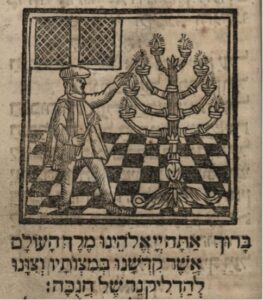
None of these works, however, addresses the menorah in early Hebrew printed books. For that, see our article “The Image of the Menorah in the Early Printed Hebrew,” along with the comments adding further examples.

New and Notable

Daniel Sperber has just published Mei Chanukah, a new work on the berita associated with Chanukah. Due to timing, it will likely only be available in Israel this year. If anyone knows of US distributors, please note them in the comments.

Not all recent scholarship meets the same standard. Akiva Shamesh’s review highlights serious deficiencies in Mitzva Ner Ish u-Beyoto. In another review, “Yemi Shemonah,” Shamesh addresses the “famous” Bet Yosef question: why eight nights of Chanukah rather than seven?

Sefer Minhagim, 1724, Gross Family Collection

Chanukah Samach!


April Fools! Tracing the History of Dreidel Among Neo-Traditionalists and Neo-Hebraists

April Fools! Tracing the History of Dreidel Among Neo-Traditionalists and Neo-Hebraists

These explanations [for playing with the sevivon] are far from reality. Why do no sources dating from the Maccabean period, and only in the last few hundred years, mention playing sevivon? If “Hakhamim” decreed it, or it was the custom in ancient times, of if “Beis Din shel Hashmonaim” established it, why is it not mentioned for all these generations?

Yitzhak Tesler, “Ha-Dreidel (Sevivon) be-Chanukah: Mekoroseha, Ta’amyah, u-Minhagyah,” Or Yisrael, 14 (1999), 50.

I have seen a toy in London called a Teetotum. It is exactly like a Hanucah Trendel with English letters instead of Hebrew on it. But why it is called by its peculiar name, no one can tell me. Of course, the name comes from the letter T, which is inscribed on one of the four sides of the toy; thus T Totum or T takes all. This reminds me of the noted Latin epigram addressed by the boy to the twirling Teetotum Te, totum, amo, amo, te, Teetotum.

Leopold Dukes to Leopold Löw, September 1864.

Only two mitzvot of Chanukah are mentioned in Rabbinic sources: lighting candles and reciting the full Hallel. Over the centuries, many other practices came to be associated with Chanukah. Some are unique to specific geographic regions, while others saw universal adoption. One that is lesser-known today is the custom of Venetian Jews to travel on gondolas, rowing through the city, and greeting each house with a blessing and “a merry Hebrew” carol. Or the custom in Avignon, France, recorded in 1779, that women were permitted in the men’s section of the synagogue during the eight days of Chanukah.[1] Many Jews accept these as the evolution of Jewish practice without requiring any sacred reasons; others are unwilling to do so. These neo-traditionalists locate the practices within the rubric of Jewish ritual and even claim historical legitimacy when there is none. The dreidel is an example of this phenomenon.

The dreidel toy is not Jewish in origin. Instead, dreidel is the ancient game of teetotum that remained popular until at least the twentieth century. Teetotum, at its most basic, is a four-sided dice with a stick in the middle. While some versions use dots or numbers to denote players’ actions, letters are the most commonplace. The letters vary based upon the vernacular, with the name teetotum from the Latin version of T (totum-all), and the remaining letter instructions, A (aufer-take), N (nihil-nothing), D (depone-put down). Even the Hebrew letters are merely a transliteration of the German version: G (ganz-all), H (halb-half), N (nischt-nothing), and S (schict-put).

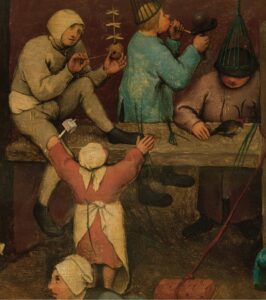
Figure 1 Detail: Pieter Bruegel, Children’s Games, Kunsthistorisches Museum, Vienna

Teetotum is documented in Vienna’s Kunsthistorisches Museum displays Pieter Bruegel the Elder’s (1525/30-1569) masterpiece, “Children’s Games” (1560). Another of his works in the museum is the “Tower of Babel,” which is the subject of a forthcoming post. Children’s Games depicts over two hundred children playing eighty different games. Bruegel’s encyclopedic pictorial catalog of games is unique in the annals of art. A small child is at the bottom left corner, her arms raised, holding a teetotum. (See here for a detailed view and here for Amy Orrock’s excellent article, “Homo ludens: Pieter Bruegel’s Children’s Games and the Humanist Educators,” discussing the purpose and interpretation of the painting within Erasmus’s views on the benefits of play.) Teetotum also appears in the list of games of Bruegel’s near contemporary French author François Rabelais’s (d. 1553) satirical work, Gargantua. The Oxford English Dictionary identifies it as “a favorite Victorian toy.” It appears in well-known English literature such as Lewis Carol’s Through the Looking Glass, where the White Queen (then a white sheep) asks Alice, “Are you a child, or a teetotum.” Other examples are Charles Dickens’ Our Mutual Friend, Edgar Allen Poe’s The System of Doctor Tarr and Professor Fether, and James Joyce’s Finnegans Wake as “finfoefom” (based on Joyce’s unique lettering system).[2]

Despite the widespread awareness of teetotum in Europe from at least the 1500s, the earliest Jewish sources connecting it with Chanukah date to the nineteenth century. Other Chanukah games boast much earlier recognition. For example, R Yosef Yuspa Nördlinger Hahn (1570-1637) mentions chess, tic-tac-toe, cards, and possibly backgammon.[3] Likewise, a 1638 herem banned cards and dice on Chanukah, although chess was excepted.[4] In subsequent Jewish literature, card playing has the most mentions, but that is due to their moral and ethical concerns rather than approval. None of these mention dreidel or any similar game.

The lack of historicity and mesorah was no barrier for 19th-century rabbis, nearly all Hassdic, from asserting Jewish relevance and stating that it is among the customs that qualify as minhag Yisrael Torah. R. Tzvi Elimelech Spira of Dinov is perhaps the most well-known example. In his Bnei Yissaschar, he contrasts the operation of the dreidel with the other Jewish play toy, the Purim gragger. The dreidel is activated from the top, symbolic of the heavenly source of the Chanukah miracle. The gragger is turned from the bottom because the catalysts of the miracle were Mordechai and Ester.

Others explain the symbolism of the dreidel’s letters, נ, ג, ה, ש. According to one explanation, these allude to the two rabbinically sanctioned mitzvot that we have on Chanukah, נרות שמונה (candles all eight nights) and הלל גמר (the complete Hallel). Others note the gematria (numerical value) of the letters, which correspond to the same gematria as משיח (the Messiah). Others still link the letters with גשנה the city Yosef secured for his family in Egypt that appears in the weekly Torah reading that coincides with Chanukah.[5]

None of these, however, locate the dreidel within the Chanukah story, and for that, we need to wait until the early twentieth century. According to this modern origin story, after the Greeks prohibited Torah study, Jewish teachers and students continued to do so surreptitiously in caves. When the authorities discovered these groups, they quickly switched from studying to playing dreidel.

The first appearance of this account appears in a collection of customs published in 1917 in Saint Louis. R. Avraham Eliezer Hirshovitz (1859-1924), originally from Kovno (today Kaunas), Lithuania, and in 1908 emigrated to the United States and was the preacher of Shaary Torah and taught children in Pittsburg, PA.[6] In 1892, he published the first edition of his book on Jewish customs, Minhagei Yeshurun, in Vilna. It includes three haskamos (approbations). The only discussion regarding Chanukah is the source of the name. Seven years later, he published an expanded second edition in Vilna, with 280 customs and now eight additional approbations (he omitted one from the first edition), most notably one from R Yitzchak Elchanan Spektor. R Spektor caveats that he only had time to read a few lines but that “it is a nice work.” Another approbation is from the maskil, Kalman Schulman.[7] We are unaware of any other religious book that bears his approbation. Hirshovitz provides that he obtained “many other approbations and letters of support” that he did not include. Neither of these editions discusses dreidel.

In 1899, Hirshovitz published a further expanded version in Yiddish in Vilna. By then, he had emigrated to the United States. He discusses game playing on Chanukah for the first time, although only cards. He explains that some play cards as it is like war, evoking the military victory over the Greeks. Nonetheless, he disapproves of playing cards, noting that cards are non-Jewish (he does not mention any halakhic reasons or the numerous Jewish sources that explicitly prohibit cards and other forms of gambling on Chanukah).

Finally, in the first American edition, published in Saint Louis in 1918, now with approximately 500 customs, Hirshovitz addresses the custom of playing dreidel. He does not mention any of the Hassidic explanations. Instead, he tells the story of the dreidel and how it was used to hoodwink the Greeks.[8] Despite the complete lack of evidence and the absurdity of the Greeks falling for such a simplistic and completely unrealistic ruse, Hirshovitz’s narrative quickly entered the Jewish collective consciousness. For example, in the collection of customs, Pardes Eliezer devotes an entire chapter to dreidel and explains “that despite the fact dreidel doesn’t appear in the sifrei ha-achronim it does not prove it is a recent custom.” Rather, “kama hokerim” (many scholars) describe it as “an ancient custom, dating to the Hasmonic period,” and then uses Hirshovitz’s story. Or, in the book Minhag Yisrael Torah, Hirshovitz’s narrative is “the simple” explanation.[9] Today, if one does a cursory search on the internet, there are articles from the Aish.com website regarding dreidel entitled “A Serious Game,” or on Chabad.org that describes Hirshovitz’s rationale as “the Classic” and “common” reason, and many others.

Not all were so taken with Hirshovitz’s work. R Shmuel Kraus published a highly critical article in Kiryat Sefer in 1933 that highlights numerous methodological issues with Hirshovitz’s work.[10] While Kraus notes the book was sloppily published with omissions and other defects, he reserves the bulk of his article is devoted to Hirshovitz’s hallucinatory customs and corresponding sources. While the article does not discuss the dreidel, it criticizes Hirshovitz for identifying sources for the “custom” to trick people on April 1, the word “daven” that is identified as either Aramaic or from the English word Dawn and provides a reason why in Europe a Bar Mitzvah boys give a “derasha,” but in the United States a “speech.” Hirshovitz sometimes tries to adopt a more substantive and historically defensible explanation, even citing an article from JQR regarding the Magen David.[11]

While Hirshovitz’s explanation is unsupportable, one hypothesis is worth mentioning. Israel Abrams, in an article that initially appeared in The American Hebrew and republished in his collection Festival Studies, posits that Teetotum:

It is a very ancient game, known to the Greeks and Romans. But why was it specially favoured on Hanucah? No answer has ever been given to this natural question. It may be that the Teetotum was regarded as a very innocent form of gambling, if that be not altogether too harsh a word to use. Many pious people never played cards or any other game of chance, but they may have felt that so simple a game as this was lawful enough. But I can now supplement this with a new suggestion. Teetotum is still in parts of Ireland the indoor recreation of the peasantry at Christmas tide. Now it is well known that such games seldom change their seasons. I should wonder if the Teetotum was a favourite toy elsewhere at Christmas. If so, the Jews may have transferred it to Hanucah. For they never invented their own games, except those of intellectual species such as Hanucah Ketowes [riddles]. The Ketowes even gave rise to a folk proverb: “Zechus Owes, Kein Ketowes,” i.e., I suppose merit of the fathers is not the solution of life’s riddle. Indeed, the moral of Hanucah, is after all, that Judaism must rely on present effort of the children as well as on the past merits of their sires, if it is to remain in any true sense a “Feast of Light.”[12]


The Case of the Origin Story of the Creation of the Word Sevivon

Another mythical story associated with dreidel occurs with the origin of the modern Hebrew word for the toy, sevivon. The most well-known history is found in the autobiography of Eliezer Ben Yehuda’s son, Itamar ben Avi (1882-1943), Im Shahar Atzmotenu, published in 1961. Rochel Berlov, in her article “Me Hidush ha-milah ‘Sevivon’?”, however, demonstrated that the term long predated Itamar. (See also Ester Goldenberg’s article).  David Yeshayahu Silberbusch coined it and first appeared in Hayyim Zelig Slonimski’s journal Ha-Tzefirah on December 24, 1897 (See Zerachyah Lict’s comprehensive article regarding Slonimski’s challenge to the miracle of the oil and Marc Shapiro’s subsequent discussion). A week and a half later, Silberbusch used the word as the title of a satirical article, and it subsequently regularly appeared in the newspaper. In 1923, Levin Kipnis published his now famous song, sevivon, sov, sov, sov. Itamar wrote his autobiography when he was fifty, and it was published posthumously. He tells the story of how

one day, when he and his family were preparing to go on a trip outside the city, outside the wall, I suddenly jumped towards my parents: Mother! Mother! I found a sevivon for Chanukah. My mother hugged and kissed me with admiration. “How beautiful is the word you created, my son!” This is how the word sevivon was created and became standard for decades among all Jewish children. I, the writer of these memories and the one who created it when I was a child, among countless other words that are now incorporated into our language, but [not everyone] recognizes who created them.

Despite this story, the word does not appear in any newspapers his father, Eliezer Ben Yehudah, edited. Moreover, Ben Yehudah did not include it in his monumental dictionary of modern Hebrew. Nonetheless, Itamar’s story was retold countless times in children’s books and treatments of Itamar (and some still think the issue remains unsettled). Zohar Shavit’s assessment of Itamar’s book, which can be equally applied to Hirshovitz’s dreidel origin story, aptly sums up the willingness to accept such tall tales:

Above all, he understood the importance of creating an interesting and fascinating story, apparently even at the expense of historical credibility… It is quite clear that in some of his personal stories, Ben-Avi prefers the interesting story over fidelity to the facts.

Notes:

[1] Recorded in Israel Abrahams, “Hanucah in Olden Times,” in Festival Studies Being Thoughts on the Jewish Year (Philadelphia, 1906), 146, 152.

[2] Joseph Shipley, The Origins of English Words: A Discursive Dictionary of Indo-European Roots (Johns Hopkins University Press, 2001), 411; John P. Anderson, Joyce’s Finnegans Wake: The Curse of Kabbalah (Universal Publishers, 2008), 211-12.

[3] Yosef Kosman, Noheg ka-Tzon Yosef, (Tel Aviv, 1979), 188 n.12; Herman Pollack, Jewish Folkways in Germanic Lands (1648-1806): Studies in Aspects of Daily Life (MIT Press, 1971) 181, 330n184.

[4] Minhagei DK”K Vermisia, Yitzhak Zimmer, ed., vol. 1 (Mefal Toras Hakhmei Ashkenaz, 1988), 238-39.

[5] See R. Yitzhak Tesler, “Ha-Dreidel (Sevivon) be-Chanukah: Mekoroseha, Ta’amyah, u-Minhagyah,” Or Yisrael, 14 (1999), 50-60 (collecting these and other sources).

[6] For biographical and complete bibliographical information, including a discussion of variant versions, see Yosef Goldman, Hebrew Printing in America 1735-1926: A History and Annotated Bibliography (Brooklyn, 2006) n583&622 (see here and here for our review of this work).

[7] For biographical information, see Hillel Noah Steinschneider, Ir Vilna, vol. 2, Mordechai Zalkin, ed. (Hebrew University Magnes Press, Jerusalem, 2002), 182-83.

[8] Avraham Hirshovitz, Otzar Kol Minhagei Yeshurun (St. Louis, 1918), 57. Hirshovitz cites “HaRav Ziv” as his source. But otherwise, it provides no information regarding this person. Two authors from that period use “Ziv,” Yehoshua ben Aba Ziv, who wrote a book of songs and a fictional work in Yiddish on the life of a Yeshiva student. The book of songs, Asifas Shirim: Al Mo’adei ha-Shana (Vilna, 1875), 13-15, includes a song for Chanukah but does not mention dreidel. The other possibility is Nehemiah Shmuel Libowitz, who used the pseudonym “Ziv.” Libowitz was a contemporary of Hirshovitz in America, and although we have not discovered any evidence, it’s possible they met in the United States. That may account for Hirshovitz’s inclusion of the dreidel story in his U.S. edition. Nonetheless, none of Libovitz’s published works include Hirshovitz’s Dreidel story, which includes the book Herod and Agrippa, which touches upon the Hashmonim.

[9] Kollel Damesek Eliezer, Pardes Eliezer, Hanukah, vol. 2 (Machon Damesek Eliezer, Brooklyn, 2004), 650-51; Yosef Lewy, Minhag Yisrael Torah, vol. 3 (Brooklyn, 1997), 216. Gavriel Zinner  however, in his extensive discussion of Chanukah customs and dreidel in his Neta Gavriel, does not mention Hirshovitz’s reason.

[10] Shmuel Kraus, “A.Y. Hirshovitz, Otzar kol Minhagei Yeshurun,” in Kiryat Sefer 11,3 (1934), 311-12.

[11] See Hirshovitz, Otzar Kol Minhagei Yeshurun, 4 (April fools), 28 (speech versus derasha), 88 (JQR).

[12] Abrahams, “Hanucah,” 154-55.


The Books of Maccabees and the Al HaNisssim prayer for Hanukah

The Books of Maccabees and the Al HaNisssim prayer for Hanukah.

Reuven Kimelman


The Al HaNissim prayer inserted in the Amidah for Hanukah is a purposeful combination of 1 Maccabees with Rabbinic literature and liturgy. This becomes obvious upon comparing it with the less-developed version of Massekhet Sofrim20.6:[1]

בהודייה והודאת פלאות ותשועת כהנים
אשר עשית בימי מתתיהו בן יוחנן כהן גדול וחשמונאי ובניו
וכן עשה עמנו ה’ אלהינו ואלהי אבותינו נסים ונפלאות
ונודה לשמך לנצח
בא”י הטוב

In the Modim blessing of the Amidah, we acknowledge the wonders and the salvation of priests
that You wrought in the days of Mattathias son of Yohanan Kohen Gadol, the Hasmonean and his sons.
So perform for us Adonai our God and God of our ancestors miracles and wonders
and we will thank Your name forever.
Blessed are You Adonai, The Good One.[2]

In contrast is the Al HaNissim version of the early Medieval period that incorporates also material from 1 Maccabees. The following shows the links with Biblical and Rabbinic material, then that of Maccabees.

After the opener’s mention of God’s wondrous interventions, Al HaNissim focuses on the three agents of the Hanukah story: Greeks, God, and Israel. It goes as follows:

Al HaNissim

Opener: For the miracles, for the deliverance, for the acts of might, for the acts of salvation, and for the wondrous acts that you wrought for our ancestors in those days at this time.

Greeks

1. In the days ofMattathias, son of Yoḥanan, the distinguished priest, the Hasmonean and his sons,
2. when the evil Greek kingdom rose up against Your people Israel
3. to make them forget Your Torah and to get them to transgress Your laws

You (God)

4.You, in Your overwhelming mercy, stood by them in their time of distress,
5.You defended their cause, You sided with their grievances, You avenged them.
6.You delivered the mighty into the hands of the weak, the many into the hands of the few,
the defiled into the hands of the undefiled, the wicked into the hands of the righteous,
7.and the perpetrators into the hands of the those committed to Your Torah.
8.And You had Your name magnified and sanctified in Your world.
9.Regarding Your people Israel:
You performed a great deliverance and redemption unto this very day.

Israel

10. Afterwards, Your children entered the Holy of Holies of Your Abode,
11.
cleaned out Your Temple,
12. purified Your sanctuary,
13. and kindled lights in the courtyards of Your sanctuary,
14. and designated these eight days of Hanukah
15. for reciting “Hodu” and “Hallel” to Your great Name.

Selective line commentary based on biblical and rabbinic sources:

The Opener of Al HaNissim follows the preceding Modim blessing of the Amidah in its repetitive use of עַל and its reference to miracles and wonders —

Modim:

עַל־חַיֵּֽינוּ הַמְּ֒סוּרִים בְּיָדֶֽךָ
וְעַל נִשְׁמוֹתֵֽינוּ הַפְּ֒קוּדוֹת לָךְ
וְעַל נִסֶּֽיךָ שֶׁבְּכָל יוֹם עִמָּֽנוּ
וְעַל נִפְלְ֒אוֹתֶֽיךָ וְטוֹבוֹתֶֽיךָ שֶׁבְּ֒כָל עֵת

for our lives that are in Your hand,
and for our souls that are in Your charge ,
and for Your miracles that are daily with us,
and for Your wonders and kindnesses at all times

Al HaNissim:

עַל הַנִּסִּים
וְעַל הַפֻּרְקָן
וְעַל הַגְּ֒בוּרוֹת
וְעַל הַתְּ֒שׁוּעוֹת
וְעַל הַנִּפְלָאוֹת

For the miracles,
and for the deliverance,
and for the acts of might,
and for the acts of salvation,
and for the wondrous acts

Line 1. A Genizah version mentions only Mattathias.4 Since there is no known Yoḥanan or Mattathias as high priest, כֹּהֵן גָּדוֹל may indicate a distinguished priest, as 1 Mac. 2:1 designates him only as a priest of the sons of Joarib. Moreover, the term for high priest at the end of the biblical period was הַכֹּהֵן הָרֹאשׁ as in Ezra 7:5

פִּינְחָס בֶּן־אֶלְעָזָר בֶּן־אַהֲרֹן הַכֹּהֵן הָרֹאשׁ

and 2 Chronicles 31:10

וַיֹּאמֶר אֵלָיו עֲזַרְיָהוּ הַכֹּהֵן הָרֹאשׁ לְבֵית צָדוֹק

The reference to Hasmonean is also unclear.[5]

Line 2. The same expression of Greece rising up against Israel was applied in the Midrash (Exodus Rabbah 18:2) to Rome:

מִשֶּׁעָמְדָה אֱדוֹם אָמַר הַקָּדוֹשׁ בָּרוּךְ הוּא הַסִּימָן הַזֶּה יִהְיֶה בְּיֶדְכֶם בַּיּוֹם שֶׁעָשִׂיתִי לָכֶם תְּשׁוּעָה וּבְאוֹתוֹ הֱיוּ יוֹדְעִים שֶׁאֲנִי גוֹאַלְכֶם

Lines 6-7. The initial references to the “mighty” and the “many” refer to the Greeks while the concluding references to the “wicked” (וּרְשָׁעִים) and the “evil perpetrators” (וְזֵדִים) refer to the Hellenizing wicked of Israel, as in Daniel 11:32:

וּמַרְשִׁיעֵי בְרִית יַחֲנִיף בַּחֲלַקּוֹת וְעַם יֹדְעֵי אֱלֹהָיו יַחֲזִקוּ וְעָשׂוּ (דניאל יא:לב)

and in Nehemiah 9:16, 29:

(נחמיה ט:טז, כט) וְהֵם וַאֲבֹתֵינוּ הֵזִידוּ וַיַּקְשׁוּ אֶת־עָרְפָּם וְלֹא שָׁמְעוּ אֶל־מִצְוֺתֶיךָ

Thus, the contrast with the positive-oriented, Israel-oriented phrase

“those committed to Your Torah” of line 7.

The middle transitional one, “the defiled into the hands of the undefiled,” may be Janus-faced, encompassing both Greeks and Hellenizers.

Line 8. is based on the opening of the geonic Kaddish[6]

יִתְגַּדַּל וְיִתְקַדַּשׁ שְׁמֵהּ רַבָּא בְּעָלְמָא

May His name become magnified and sanctified in the world”
and alludes to the terminology of the miniature Shema at the beginning of Shaḥarit,7 which also mentions God’s salvation.

קַדֵּשׁ אֶת־שִׁמְךָ עַל מַקְדִּישֵׁי שְׁמֶֽךָ
וְקַדֵּשׁ אֶת־שִׁמְךָ בְּעֹלָמֶֽךָ
וּבִישׁוּעָתְ֒ךָ תָּרוּם וְתַגְבִּֽיהַּ קַרְנֵֽנו
בָּרוּךְ אַתָּה יְי מְקַדֵּשׁ אֶת־שִׁמְךָ בָּרַבִּים

1. Sanctify Your Name through those who sanctify Your Name
2. and sanctify Your Name in Your world.
3. And by Your salvation may our status be raised and exalted.
4. Blessed (are) You A-donai who sanctifies Your Name in public.

Line 9. The use of the Aramaic term for salvation פּוּרְקָן is common in geonic liturgy as in Yekum Purkan

יְקוּם פּוּרְקָן מִן שְׁמַיָּא
וְתִּתְפָּרְקוּן וְתִשְׁתֵּזְבוּן מִן כָּל עָקָא

and in some versions of Kaddish

וְיַצְמַח פּוּרְקָנֵהּ וִיקָרֵב (קֵץ) מְשִׁיחֵהּ

Line 15. The terms hallel and hodu appear together in Ezra 3:11; 2 Chronicles 5:13 and possibly 1 Mac. 4:24. Hodu may designate a specific liturgical response as in Psalms 106:1, 107:1, 118:1; 1 Chronicles 16:34, 41; 2 Chronicles 5:13; 7:3, 6; 16:41; 20:21, whereas Hallel may designate the liturgical use of Psalms 113-118, as is the practice on Hanukah.

Al HaNissim also integrates Hanukah-specific material from the Books of Maccabees.
The following lines of Al HaNissim have their parallels in 1 Maccabees.

Line 3: to make them forget Your Torah and to get them to transgress Your laws
Mac.1:49 : so as to forget the Torah and violate all the commandments

Line 6: You delivered the mighty into the hands of the weak, the many into the hands of the few,the defiled into the hands of the undefiled, the wicked into the hands of the righteous,
1Mac. 3:18: “Judah said: It is easy for many to be delivered into the hands of the few. Heaven sees no difference in gaining victory through the many or through the few.

Lines 7. and the perpetrators into the hands of the those committed to Your Torah.
10. Afterwards, Your children entered the Holy of Holies of Your Abode,
11. cleaned out Your Temple,
12. purified Your sanctuary,
1 Mac. 4:42-48:

“He (Judah)…, appointed unblemished priests committed to the Torah
who purified the sanctuary
and removed the defiled stones into an unclean place .
They deliberated what to do with the profaned altar…
they tore it down and stored it in the Temple….
Taking uncut stones as prescribed by the Torah,
they built a new altar after the pattern of the old.
They repaired the sanctuary and hallowed the interior of the house and the courts …

Line 13. and kindled lights in the courtyards of Your sanctuary

1 Mac. 4:49-50:

They made also new holy vessels, and into the temple they brought lampstand,
….
and lit the lamps on the lampstand that they might give light in the Temple.

Opener: in those days at this time.

Lines 14. and designated these eight days of Hanukah
15. for reciting “Hodu” and “Hallel” to Your great Name.

1 Mac. 4:54-56:

On the very time of year and on the very day on which the gentiles had profaned the altar, it was dedicated to the sound of singing…
The entire people prostrated themselves and bowed and gave thanks to God
Who had brought them victory.
For eight days they celebrated the dedication of the altar joyfully

1 Mac. 4:59

Judas and his brothers and the entire assembly of Israel decreed that the days of the dedication of the altar should be observed at their time of year annually for eight days, beginning with the twenty-fifth of the month of Kislev, with joy and gladness.

2 Mac. 10:6, 8

They celebrated it for eight days with rejoicing,
in the manner of the Festival of Sukkot…
They decreed by public edict, ratified by vote, that the whole nation of the Jews should observe these days every year.

The report of the Talmud underscores the miracle of the lights:

Shabbat 21b

.מַאי חֲנוּכָּה? דְּתָנוּ רַבָּנַן: בְּכ״ה בְּכִסְלֵיו יוֹמֵי דַחֲנוּכָּה תְּמָנְיָא אִינּוּן דְּלָא לְמִסְפַּד בְּהוֹן וּדְלָא לְהִתְעַנּוֹת בְּהוֹן
.שֶׁכְּשֶׁנִּכְנְסוּ יְווֹנִים לַהֵיכָל טִמְּאוּ כׇּל הַשְּׁמָנִים שֶׁבַּהֵיכָל
,וּכְשֶׁגָּבְרָה מַלְכוּת בֵּית חַשְׁמוֹנַאי וְנִצְּחוּם
,בָּדְקוּ וְלֹא מָצְאוּ אֶלָּא פַּךְ אֶחָד שֶׁל שֶׁמֶן שֶׁהָיָה מוּנָּח בְּחוֹתָמוֹ שֶׁל כֹּהֵן גָּדוֹל
.וְלֹא הָיָה בּוֹ אֶלָּא לְהַדְלִיק יוֹם אֶחָד
.נַעֲשָׂה בּוֹ נֵס וְהִדְלִיקוּ מִמֶּנּוּ שְׁמוֹנָה יָמִים
לְשָׁנָה אַחֶרֶת קְבָעוּם וַעֲשָׂאוּם יָמִים טוֹבִים בְּהַלֵּל וְהוֹדָאָה

What is Hanukkah? The Sages taught: On the twenty-fifth of Kislev, the days of Hanukkah are eight. One may neither eulogize or fast on them.
When the Greeks entered the Sanctuary they defiled all the oils that were in the Sanctuary.
And when the Hasmonean monarchy vanquished them,
they searched and came up with only one cruse of oil with the seal of the High Priest, only enough for one day of lighting.
A miracle occurred and they lit from it for eight days.
The next year, they fixed these days as holidays by reciting Hallel and the Prayer of Thanksgiving.[8]

.תָּנוּ רַבָּנַן: מִצְוַת חֲנוּכָּה, נֵר אִישׁ וּבֵיתוֹ
.וְהַמְהַדְּרִין, נֵר לְכׇל אֶחָד וְאֶחָד
וְהַמְהַדְּרִין מִן הַמְהַדְּרִין
בֵּית שַׁמַּאי אוֹמְרִים: יוֹם רִאשׁוֹן מַדְלִיק שְׁמֹנָה, מִכָּאן וְאֵילָךְ פּוֹחֵת וְהוֹלֵךְ
וּבֵית הִלֵּל אוֹמְרִים: יוֹם רִאשׁוֹן מַדְלִיק אַחַת, מִכָּאן וְאֵילָךְ מוֹסִיף וְהוֹלֵךְ וּבֵית הִלֵּל
,טַעְמָא דְּבֵית שַׁמַּאי כְּנֶגֶד פָּרֵי הַחַג
וְטַעְמָא דְּבֵית הִלֵּל דְּמַעֲלִין בַּקֹּדֶשׁ וְאֵין מוֹרִידִין

The Sages taught: The mitzvah of Hanukah is to have a light kindled by the head of the household (for his household each day).
The meticulous kindle a light for each and every one in the household.
The extra meticulous adjust the number of lights daily:
According to Beit Shammai: On the first day one kindles eight and decreases by one for the next seven days.
According to Beit Hillel: On the first day one kindles one and increases by one for the next seven days.
Beit Shammai’s reasons that the number of lights corresponds to the bulls of the festival of Sukkot: which declined by one each day.
Beit Hillel’s reasons that the number of lights increases, regarding matters of holiness one upgrades not downgrades.

Beit Shammai’s reference to Sukkot matches that of 2 Mac. 10:6. It aims to recapture the past event. Beit Hillel aims to recapture the wonder of the growing miracle.

Lines 13-14 of Al HaNissim are purposely ambiguous.

On the one hand, they allow for the two going interpretations.

That of the Maccabees that the eight-day festival was based on the biblical precedent of the dedication of the first Temple under Solomon in 1 Kings 8:66, 2 Chronicles 7:9, and 2 Mac. 2:12 along with making up for the eight-day holiday of Sukkot (2 Mac. 10:6) for which there had been no access to the Temple two months earlier that year.

On the other hand, the association of the kindling of lights with eight days allowed it to be also grasped talmudically as referring to the miracle of the burning of the oil for eight days as is still understood.

Compare this with the less-developed version of Massekhet Sofrim that makes no mention of the oil miracle as opposed to the explicit reference to the miracle of the oil in Megillat Antiochus 76-80:[9]

After these things, the sons of the Ḥashmonai came into the Sanctuary, restored the gates, repaired the breaches, and cleansed the hall of the dead and of all its impurity. And they sought pure olive oil with which to light the Menorah, but they found only one little vessel sealed with the seal of the High-Priest and they knew it to be pure. And it contained but sufficient oil for one day. But the God of Heaven Who caused His presence to dwell in the Sanctuary, gave His blessing and it sufficed to light the Menorah eight days.

Therefore did the sons of the Ḥashmonai together with the Israelites ordain that these eight days be ever celebrated as days of joy and feasting along with the festivals ordained in the Torah; that candles be lit to commemorate the victory they achieved through the God of Heaven.

Megillat Antiochus’s explicit mention of the miracle of the oil stands in contrast to Massekhet Sofrim’s lack of mention.10 Nonetheless, it concludes that the candles are to “be lit to commemorate the victory they achieved through the God of Heaven.” Al HaNissim, further navigates between the two with its ambiguous ending, saying:

וְהִדְלִֽיקוּ נֵרוֹת בְּחַצְרוֹת קָדְשֶֽׁךָ .13

וְקָבְ֒עוּ שְׁמוֹנַת יְמֵי חֲנֻכָּה אֵֽלּוּ .14

לְהוֹדוֹת וּלְהַלֵּל לְשִׁמְךָ הַגָּדולְ 15

which so sounds like the last two lines of the Rabbinic formulation of the miracle of the oil–

נַעֲשָׂה בּוֹ נֵס וְהִדְלִיקוּ מִמֶּנּוּ שְׁמוֹנָה יָמִים.
לְשָׁנָה אַחֶרֶת קְבָעוּם וַעֲשָׂאוּם יָמִים טוֹבִים בְּהַלֵּל וְהוֹדָאָה

— that it was taken as its equivalent.

The validation of both the Maccabean and the Talmudic account enabled all to join in celebrating Hanukah holiday for eight days by lighting lights.11

The ambiguity of Al HaNissim casts its shadow over its epitome, HaNeirot Hallalu, recited after the kindling of the lights . Besides alluding to 1 Mac. 4:42 in referring to the unblemished priests as “Your holy priests,” it also links the miracles, reusing at the beginning and the end three of the terms from the opener of Al HaNissim, with the eight days without spelling out the specific miracle in contrast to the Talmudic assertion to which it alludes (as color-coordinated below)

albeit assumed by all.

It states:

HaNeirot Hallalu

These lights that we kindle are
For the miracles, for the wondrous acts, and for the acts of salvation –
which You wrought then at this time for our ancestors through Your holy priests.
For all eight days of Hanukah these lights are special, used only for gazing.–
In order to give thanks and say Hallel to Your great name
for Your miracles, for Your wondrous acts, and for Your acts of salvation.

By finessing the basis of Hanukah – be it the miraculous victory, the rededication of the Temple, or the miracle of the oil – all can find their way to welcome in the celebration of the festival of lights.

Reuven Kimelman

[1] For the lateness of chapters 10-21 of Sofrim, see Debra Blank, “It’s Time to Take Another Look at ‘Our Little Sister’ Soferim: A Bibliographical Essay,” JQR 90 (1999): 1-26, p. 4, n. 10. In any case, the version matches a Palestinian Genizah text which, however, adds a reference to “the evil Greek kingdom that rose against them” (Ezra Fleischer, Statutory Jewish Prayers: Their Emergence and Development [Hebrew], 2 vols., ed. S. Elizur and T. Beeri (Jerusalem: The Magnes Press, 2012):1:182.
[2] For הטוב (“The Good”) as an epithet for God, see my forthcoming book The Rhetoric of the Jewish Liturgy: A Historical and Literary Commentary on the Daily Prayer Book, London: The Littman Library of Jewish Civilization, Chapter 8, n.326. Here it corresponds to the Divine epithet at the conclusion of the Modim blessing, הַטּוֹב שִׁמְךָ (“Your name is The Good”), or הַטּוֹב לְךָ לְהוֹדוֹת.
[3] The versions in the geonic Seder Rav Amram Gaon (Amram b. Sheishna), ed. E. D. Goldschmidt (Jerusalem: Mossad Harav Kook, 1971), p. 97; and Siddur Rav Sa‘adya Gaon. ed. I. Davidson, S. Asaf, and B. Joel (Jerusalem: Mekize Nirdamim, 1970), p. 255, lacks this, but add המלחמות והפדות (“the wars and the redemption”), making for six terms. There are other variants in other siddurim; see Maḥ̣zor Vitry. R. Simḥah Me-Vitry, ed. A. Goldschmidt, 6 vols. Jerusalem: Oṣar Ha-Posqim, 5764-5769 (2004-2023), 1:116; Ismar Elbogen, Jewish Liturgy: A Comprehensive History, Philadelphia: Jewish Publication Society, 1993, p. 52 (a translation by R. Schendlin of HaTefillah BeYisrael BeHitpatḥutah HaHistorit, Dvir: Tel Aviv,1972), p. 45; and Ephraim Zlotnik, Meqorei Ha-Tefillah: Ta’ameha, Nosḥoteha, U-Minhageha, 3 Vols., (Jerusalem, 2011-2021): 1:209-212. For mentions of Al HaNissim in general in geonic literature, see Neil Danzig, Introduction to Halakhot Pesuqot with a Supplement to Halakhot Pesuqot [Hebrew] (New York: The Jewish Theological Seminary, 1993), pp. 240-241.
[4] See Stefan Reif, Jewish Prayer Texts from the Cairo Genizah: A Selection of Manuscripts at Cambridge University Library (Leiden: Brill, 2016), p. 274, with n. 16.
[5] See Mitchell First, “The Identity and Meaning of Chashmonai,” The Seforim Blog (here).
[6] For Kaddish as a geonic liturgy, see reference in n. 2, chapter 9.
[7] For the context there, see reference in n. 2, chapter 3, section 6.
[8] This may refer to Al HaNissim which is incorporated in the Modim (= Thanksgiving); see the beginning of the citation from Massekhet Sofrim, above, at n. 1; and Jonathan Goldstein, I Maccabees (AB 42) (Garden City: Doubleday, 1976), pp. 286-87. Regarding the alleged parallel in Megillat Ta‘anit, see Vered Noam, “The Miracle of the Cruse of Oil: The Metamorphosis of a Legend,” HUCA 73 (2002), pp. 191-226.
[9] The numbering follows the version in Adolph Jellinek, ed. Bet HaMidrasch, 2 vols., 6 books (Jerusalem: Wahrmann Books, 1967), 6:7-8. See the Aramaic with Arabic translation in S. A. Wertheimer, ed., Batei Midrashot, 2 vols. (Jerusalem: Ktav Ve-Sefer, 1968): 1:329-330, lines 79-86.A later rabbinized version understandably only mentions the miracle of the oil; see Jellinek, ibid., 1:141.
[10] Since their dating, as Al HaNissim, is unclear no statement is made on historical development, only content difference.Nonetheless, mention of the miracle of the cruse of oil seems to be absent from Palestinian sources.
[11] See Goldstein (above, n. 8) pp. 283-284.


Chanukah books and Etymology, Miracles (?), Dreidel, Cards and Christmas: A Roundup of Previous Posts

Zerachya Licht, “חז״ל ופולמס חנוכה,” and Marc Shapiro, “The Hanukkah Miracle,” discuss the 19th-century controversy regarding the polyglot, Chaim Zelig Slonimsky, and the connection, or lack thereof, the miracle of the candles burning for eight days. Licht discusses Slonimsky in more depth in a two-part post, “Chaim Zelig Slonimsky and the Diskin Family,” part 1 and part 2.   Marc also discusses a potential Maccabean Psalm in his article here.

Mitchell First traces the history and spelling of two terms associated with Chanukah,  “The Identity and Meaning of the Chashmonai,” “The Meaning of the Name Maccabee,” for an earlier post by Dan Rabinowitz, on the latter term, see here.  First recently published his latest book, Words for the Wise: Sixty-Two Insights on Hebrew, Holidays, History and Liturgy.

A recurring theme of articles in the secular and Jewish presses is whether playing dreidel has any sources and if it is even fun. For example, Howard Jacobson, who won the 2010 Man Booker prize in a New York Times editorial, isn’t a fan. “How many years did I feign excitement when this nothing of a toy was produced? The dreidel would appear, and the whole family would fall into some horrible imitation of shtetl simplicity, spinning the dreidel and pretending to care which character was uppermost when it landed. Who did we think we were – the Polish equivalent of the Flintstones?” Marc Tracy, in Tablet Magazine, expressed his sentiment in his post, “The Unbearable Dumbness of Dreidel.” Although this year, two articles in Tablet, “Adapt, Adopt, Subvert, Survive” and “The Miracle of the Dreidel,” argue for the contemporary relevance of the custom.  For our discussion, see “Chanukah Customs and Sources.” For another discussion regarding dreidel and other Chanukah customs, see “The Customs Associated with Joy and their More Obscure Sources.” Another form of Chanukah gameplay, cards, is dealt with in “The Custom of Playing Cards on Chanukah.” The post highlights an important, often overlooked, source for Jewish customs, the memoir of Pauline Wengeroff, Rememberings: The World of a Russian-Jewish Women in the Nineteenth-Century.

Eliezer Brodt tackles the missing tractate for Chanukah in “The Chanukah Omission,” and with an update in his recent talk, available here.  (And a discussion of the other lesser known tractate that implicates Chanukah and an example of censorship.)The Seforimblog, in 2006, published his first post, “A Forgotten Work on Chanukah, חנוכת הבית,” discusses an obscure Chanukah-related work, Chanukas ha-Bayis, cited by Magen Avraham. Subsequently, Eliezer wrote dozens of articles for the Seforimblog and his Ph.D. dissertation on the Magen Avraham. The serious deficiencies of another work on Chanukah, Mitzva Ner Ish u-Beyoto, are highlighted in a review by Akiva Shamesh.  Shamesh deals with the “famous” question of Bet Yosef, why there are eight and not seven nights of Chanukah, in another book review, “Yemi Shemonah.

Finally, the subject of Greek Wisdom is apprised in Eliyahu Krakowski’s article, “How much Greek in ‘Greek Wisdom.'”

This year, as many, Chanukah coincides with Christmas. For our original bibliography on the topic of the Jewish response to Christmas, otherwise referred to as Nitel, see here. That post should be updated to include Rebecca Scharbach, “The Ghost in the Privy: On the Origins of Nittel Nacht and Modes of Cultural Exchange,” Jewish Studies Quarterly 20 (2013), pp. 340-373. Marc Shapiro’s lecture on the topic is available on YouTube. And for an interesting Christmas card by Edmund Wilson, see Elliot Horowitz’s post, “Edmund Wilson, Hebrew, Christma, and the Talmud.” Horowitz’s other posts include one on Bugs Bunny, Isaiah Berlin on Meir Berlin (Bar-Ilan) and Saul Lieberman, non-Jewish reactions to the synagogue, a discussion of the historical application of Amalek, and regarding reading Biblical books to children.


The History behind the Ashkenazi/Sephardi divide concerning lighting Chanukah candles

The History behind the Ashkenazi/Sephardi divide concerning lighting Chanukah candles

By Zachary Rothblatt

Zachary Rothblatt learned in Kerem B’Yavneh, Ner Yisroel, and will be receiving Semicha soon from RIETS. He is finishing a graduate degree in Bible and Talmud at the Bernard Revel Graduate School for Jewish Studies. He is a Judaic studies teacher at the Idea School in Tenafly, New Jersey.

One of the most famous halachic debates of Chanukah is the debate concerning how many sets of candles a family should light. Ashkenazim believe, with some variances, that each family member should light a menorah, while Sephardim believe that only one menorah should be lit per family. In this essay I would like to map out the history of how lighting Chanukah candles has been practiced and attempt to explain why in fact Ashkenazim and Sephardim do as they do.

The Shulchan Aruch (Orach Chaim 671:2) records the Sephardic practice of lighting only one set of candles per family. Rema (ad loc) records that the widespread minhag in Ashkenazi communities is for each member of the household to light his or her own set of Chanukah candles. The Taz (‘ס״ק א) notes that this is a unique situation in that Sephardim follow the opinion of Tosafot and that Ashkenazim follow the opinion of the Rambam. Some have taken this as proof of cross-cultural interaction between Sephardim and Ashkenazim. Beit Yosef does indeed say that Sephardic custom is based conceptually on Tosafot and Darkei Moshe Ha’Aruch says that Ashkenazi practice is based on the Rambam. That may be true from a conceptual standpoint. From a historical perspective, I believe the bases of these minhagim are to be found elsewhere.

The details of the Rabbinic commandment to light Chanukah candles are found in the Babylonian Talmud (Shabbat 21b) as well as in the Scholion of Megillat Ta’anit. For our purposes, the textual differences between the two corpora and internally within the manuscripts of the Bavli are negligible. The Talmud quotes a Baraita[1]:

ת”ר מצות חנוכה נר איש וביתו והמהדרין נר לכל אחד ואחד והמהדרין מן המהדרין ב”ש אומרים יום ראשון מדליק שמנה מכאן ואילך פוחת והולך וב”ה אומרים יום ראשון מדליק אחת מכאן ואילך מוסיף והולך

The Sages taught: The mitzvah of Chanukah is each day to have a light kindled by a person, the head of the household, for himself and his household. And the mehadrin, i.e., those who are meticulous in the performance of mitzvot, kindle a light for each and every one in the household. And the mehadrin min hamehadrin, who are even more meticulous, adjust the number of lights daily. Beit Shammai and Beit Hillel disagree as to the nature of that adjustment. Beit Shammai say:On the first day one kindles eight lights and, from there on, gradually decreases the number of lights until, on the last day of Hanukkah, he kindles one light. And Beit Hillel say: On the first day one kindles one light, and from there on, gradually increases the number of lights until, on the last day, he kindles eight lights.

The first level of the mitzvah is defined as one candle per family. The second level, mehadrin, mandates a candle for each member of the family (See later for a discussion concerning who is to light these candles). The level of Mehadrin min HaMehadrin is debated by Beit Shammai and Beit Hillel. As per the general rule we follow Beit Hillel. The fundamental question is whether the third level of Mehardin min Hamehadrin is in addition to the second level, i.e. each household member should have a menorah and light from one to eight candles, or that only one menorah should be lit in such a manner. This point is debated between Rambam and Tosafot, as referenced earlier.

Tosafot writes as follows (ad loc s.v. V’hamehadrin)[2]

והמהדרין מן המהדרין. נראה לר”י דב”ש וב”ה לא קיימי אלא אנר איש וביתו שכן יש יותר הידור דאיכא היכרא כשמוסיף והולך או מחסר שהוא כנגד ימים הנכנסים או היוצאים אבל אם עושה נר לכל אחד אפי’ יוסיף מכאן ואילך ליכא היכרא שיסברו שכך יש בני אדם בבית:

It seems to Ri (Isaac of Dampierre, 12th century) that Beit Shammai and Beit Hilel are referring only to “Man and his household” because in this way there is more beautification of the Mitzvah because there is something recognizable when he keeps adding or leaving out (candles) which corresponds to days that are entering or exiting. However, if he makes a candle for each one (i.e. each member of his household gets his own candle), even if he adds (candles) from this moment and onwards, there is nothing recognizable, because (the people) would think that so is the number of people in the household. (i.e. in this case, instead of attributing the increase or decrease in candles to the intention of the owner to match the corresponding day of Chanukah, people would attribute it to the intention to match the number of people in the household.)

Ri feels that for the Mehadrin min HaMehadrin only one set of Chanukah candles should be lit in order to preserve the distinctiveness of each day. We will return to the Tosafot later.

Rambam writes as follows (Mishneh Torah 4:1-3)[3]

רמב”ם הלכות מגילה וחנוכה פרק ד:א-ג

א. כמה נרות הוא מדליק בחנוכה, מצותה שיהיה כל בית ובית מדליק נר אחד א בין שהיו אנשי הבית מרובין בין שלא היה בו אלא אדם אחד, והמהדר את המצוה מדליק נרות כמנין אנשי הבית נר לכל אחד ואחד בין אנשים בין נשים, והמהדר יתר על זה ועושה מצוה מן המובחר מדליק נר לכל אחד ואחד בלילה הראשון ומוסיף והולך בכל לילה ולילה נר אחד.

ב. כיצד הרי שהיו אנשי הבית עשרה, בלילה הראשון מדליק עשרה נרות ובליל שני עשרים ובליל שלישי שלשים עד שנמצא מדליק בליל שמיני שמונים נרות.

ג. מנהג פשוט בכל ערינו בספרד שיהיו כל אנשי הבית מדליקין נר אחד בלילה הראשון ומוסיפין והולכין נר בכל לילה ולילה עד שנמצא מדליק בליל שמיני שמונה נרות בין שהיו אנשי הבית מרובים בין שהיה אדם אחד.

1. How many lamps should one light on Chanukah? It is a commandment that one light be kindled in each and every house whether it be a household with many people or a house with a single person. One who enhances the commandment should light lamps according to the number of people of the house – a lamp for each and every person, whether they are men or women. One who enhances [it] further than this and performs the commandment in the choicest manner lights a lamp for each person on the first night and continues to add one lamp on each and every night.

2. How is this? See that [if] the people of the household were ten: On the first night, one lights ten lamps; on the second night, twenty; on the third night, thirty; until it comes out that he lights eighty lamps on the eighth night.

3. The widespread custom in all of our cities in Spain is that all of the people of the household light one lamp on the first night. And they continue to add one lamp on each night, until it comes out that one lights eight lamps on the eighth night – whether the people of the household were many or whether it was [only] one man.

Maimonides writes his personal opinion that Mehadrin min HaMehadrin is defined as each individual having a set of candles and adding to it successively over the days of Chanukah. He notes though that the common Minhag in Spain was for a family to only light one set of candles.

As we have seen the Rema codifies the minhag of each individual family member lighting his or her own Chanukah candles. In Darkei Moshe Ha’Aruch he explicitly quotes this idea in the name of Rambam. Similarly, Maharshal in his responsa (no. 85), says the Ashkenazi minhag is based on Rambam. Rav Dovid Novhardoker (19th century) in his Shut Galya Masechet (Responsa no. 6) believes this is an incorrect reading of the Rambam. He believes that a precise reading of the Rambam leads to the conclusion that only one individual should light all the candles corresponding to the number of individuals in a house, based on Rambam’s use of the singular form of the verb (מדליק עשרה). He argues forcefully that there is no source for the concept of each individual lighting his or her own menorah in any Rishon and worries that there may be a concern of bracha l’vetala to follow the standard Ashkenazi minhag.

It is entirely possible that Rema and Maharshal disagreed with the validity of the inference of the Galya Masechet. It’s also possible that they were merely trying to find an early source that is conceptually similar to Minhag Ashkenaz and weren’t concerned for the particular details.

The objections of the Galya Masechet notwithstanding, Rav Ariav Ozer Shlit”a of Yeshivat Itri has pointed[4] to early Geonic evidence that there is a concept of an individual lighting of the Menorah. The relevant responsum is found in a number of places, and in some sources is attributed to the mid-9th century Suran Gaon Sar Shalom b. Boaz. The Genizah version (published in Geonica, no. 343) reads as follows:

גאוניקה 343 (וכן בשי׳ בעשרת הדברות ובשע״ת וה״פ ומובא בטור סי׳ תרע״ז)

ואנשים הרבה בחצר אחת שורת הדין אם משתתפין כולן בשמן יוצאין כולם בנר אחת מדנר שיש לה שתי פיות עולה לשני בני אדם ומדר׳ חונא מילא קערה שמן וכו׳ ומדר׳ זורא מראש הוה משתתפנא בפריטי אלמא בשותפות סגיא אבל הרוצה לחבב ולהדר מצות כל אחד ואחד מדליק נר לעצמו דתנו רבנן מצות נר חנוכה נר איש וביתו והמהדרין נר לכל אחד וא׳ וכו׳

The basic issue in the responsum concerns the possibility of multiple individuals living in one courtyard using one menorah. The Gaon says they technically can chip in together to use one set of candles. Ideally though, they should each light his own menorah as we find concerning the Mehadrin of the Talmud. This reading of the Talmud assumes that the 2nd level of Mehadrin is in fact an individual obligation for each member to light, unlike the Galya Maseches.

It terms of other Geonic material there is an important Genizah find (T-S G2.132 1v) that as of now has only been published in a footnote.[5] The fragment reads as follows:

כחשבון הנפשות, שאם יש חמשה מדליק חמשה או עשרה מדליק עשרה. והמהדרין מן המהדרין הוא טעם שלישי מופרש מן הטעמים הראשונים ובו נחלקו בית שמאי ובית הלל ולא בר…ם ומצוה מן המובחר לעשות כדברי בית הלל כטעם השלישי להדליק לילה הראשונה נר אחד ומיכאן ואילך מוסיף והולך נרות וכך אנו נוהגין מדליקין אנו לילה הראשונה נר אחד בשניֿ שני נרות וב…מוסיפין נר.. ש

It appears the source is saying that the 3rd level is to only light one set of Chanukah candles. If this is the correct inference this would indicate that what eventually became the ‘Sephardic’ custom was already being practiced at a very early period, possibly even in one of the Geonic yeshivot.

As well, In the Siddur of R’ Saadya Gaon[6] we find the following interesting comment (quote is from Assaf’s Hebrew translation)


ומצוותיו הן להדליק נר על פתח כל דירה שלנו, מן ליל כ״ה כסליו עד סוף שמונה ימים, ומהדר ישים נר לכל נפש מאנשי הבית.


Rav Saadya curiously only mentions the 2nd level of Mehardrin. This may be an innocuous omission or it may be an indication that it was not common to light according to the level of Mehadrin min haMehadrin. R. Elazar Hurvitz notes a parallel between Rasag’s words and a Gaonic responsum he published.[7] The responsum contains surprising details both concerning the practice mentioned by the questioner and the Gaon’s response. It reads:

ואשר כתבתם, מנהגנו בחנוכה להדליק בהיכל שמנה נרות, בלילה ראשונה עושין אחת משמאל ושבע לימין ובכל לילה מעתיק אחת מימין לשמאל ע(ל)(ד) לילה שמיני יעשו כולן לשמאל. יודיענו אדונינו גאון היאך עושה. שיש מי שאמר ששה עשרה, שמנה מימין ושמנה משמאל. ילמדינו אדונינו היאך מנהגכם וכיצד נעשה. אנו מנהגינו בבית להדליק כמנין אנשים שיש בבית, כדתנן המהדרין נר לכל אחד ואחד. ובבתי כנסיות עושין כבית הלל, לילה הראשון מדליק אחד, מכאן ואילך מוסיף והולך, ואין עושין כלום מהן מימין, וכך יפה לעשות.

The questioner mentions his own minhag to light eight candles every night! What distinguished one night from the next is that every night one candle was moved from the left to the right. The questioner inquires as to what the Gaon’s practice is, as he has heard some recommend lighting 16 candles (!), eight to the right and eight to the left. The Gaon answers that in fact his minhag is to only fulfill the level of Mehardin min HaMehadrin in the synagogue, while at home the minhag was to perform the 2nd level of mehadrin. So we have explicit proof that there were Gaonim who only lit the level of mehadrin, and Rav Saadya is likely precise in his formulation.

As quoted above, Maimonides noted that the widespread Spanish minhag was for each family to light only one set of Chanukah candles. This minhag is attested in several sources, including the Gaonic responsum above. Another early source for the minhag is the 12th century siddur of Rabbi Shelomo b. Natan.[8] While scholars had originally thought R. Shlomo was from Sijilmassa, Morocco, there has been a growing lack of consensus on the issue. Uri Erlich[9] has suggested the possibility that R. Shlomo was from an area near Aleppo, Syria.

Other later evidence for Spanish practice comes from, among other sources, Ritva,[10] Rabbi Hayim of Toledo,[11] and the Nimukei Yosef.[12] From all these sources it is apparent that the Sephardic custom has unquestionably been to light one set of Chanukah candles per family, in variance with Rambam’s own opinion.

The same minhag is attested in Provence by, among others, both Meiri[13] and Rabbi Meiri HaMeili.[14] Against this, R. Yehonatan of Lunel in his novellae on the Rif[15] says that for Mehadrin min HaMehadrin each individual should have their own set of candles. It is very possible that R. Yehonatan, an avid follower of Rambam, followed Rambam’s personal opinion on the matter. It is unclear if such was ever practiced by a Provencal community.

Returning to Ashkenazic practice, the first explicit source for the minhag to have every individual light appears in the writings of Maharil (c. 1365-1427). Both in his responsa[16] and in the Sefer Maharil,[17] Maharil says the current minhag is for each individual to light, explicitly saying they do not follow the opinion of the Ri. Additionally, Maharil and his students[18] devote significant discussion concerning the possibility for a husband to light separate Chanukah candles when not home (The sources take for granted that even within Minhag Ashkenaz a couple would light only one set of candles, hence the question). These issues were debated extensively by scholars, but no prior discussion of this topic appears. While it is an argument from silence, this alone makes one wonder how popular was the current Minhag Ashkenaz before Maharil (one could also suggest that the minhag used to be that spouses lit their own candles, but this contradicts the simple reading of Shabbat 23a).

Looking through the Ashkenazic Halachic material that precedes Maharil one finds repeated mention of the opinion of Ri that there should be only one set per family. The Mordechai explicitly endorses Ri[19] and quotes that it is the minhag (both in our printed version as well as in Vatican ms. 141, which is the manuscript most authentic to the original Mordechai). As well, the opinion of the Ri is codified in the Agudah[20] (early 14th century), by R. Mendel Klausner[21] (early 14th century) in his Pesakim, and by R. Hizkiya of Magdeburg (late 13th century) in his Pesakim.[22] Not a single source belies any suggestion of the later Ashkenazi minhag.

This leads us back to Tosafot. From the presentation of Tosafot as it appears in our printed Gemaras there is no way of telling how the approach of the Ri related to the contemporaneous practice of lighting in 12th century France and Germany. I had even seen a number of years ago someone cautiously propose that the reason that Mehadrin min HaMehadrin was up for debate in Tosafot was because Jews did not actually light Mehadrin min HaMehadrin and there was no set minhag. A review of the manuscript evidence of Tosafot solves this issue. Guenzburg ms. 636 contains a unique Tosafot on Shabbat authored by a student of Ri.[23] The version of Ri in that manuscript reads as follows:

והמהדר’ין מן המהדרין בית שמי וכו’.נר’אה לר’ דלא קאי אנר לכל אחד ואחד כדי לקיים המנהג שלנו. וטעם נותן ר’בי לדבר דהא לא הוי פרסומי ניסא דהא לא ידיע כמה ימים עברו וכמה יש לבא. וא”ת בפחות או ביתר ידיע שיש בלילה אחת יותר או פחות מחבירתה. בהא לא מינכר משום דאמרי אינשי נתרבו או נתמעטו בני הבית. מ”ר.

In this version, the Tosafot writes that Ri offered this explanation of the sugya specifically in order to substantiate the minhag! This is also found explicitly in the version of Tosafot that appears on the side of the Rif in many manuscripts, and is known as Tosafot Alfas. These Tosafot were gathered by Rabbi Yisrael b. Yoel, also known as R. Zuslein, in the 14th century. He seems to also be the collator of the Rashi on the Rif.[24] His version of Tosafot appears as follows[25]

המהדרין נר לכל אחד נר׳ לר”י שיש הידור כב”ה ליל ראשון אחת ומוסיף כל לילה אחת כמו שאנו נוהגי דאז איכא הכר כל הימים כנגד ימים הנכנסים אבל אם עושה נר לכל אחד ואחד ואפי’ יוסיף מכאן ואילך ליכא הכר שהנכנסים יסברו שכך דרך יש בני אדם בבית…

While not as direct as the previous Tosafot, it is clear that the Ri is explaining the Gemara to be in consonance with the minhag. In fact, upon reexamination, it appears that the Mordechai is in fact just quoting this exact version of the Tosafot when he writes

ולמהדרין נר לכל א’ נראה לר”י שיש יותר הידור לב”ה לילה הראשון א’ ומוסיף בכל לילה א’ כמו שאנו נוהגין…

It turns out then that originally the minhag for Ashkenazim and Sepharadim was the same. Only in the late 14th century is there any explicit evidence of a counter minhag. It is plausible that the rupture of the Black Plague and the related pogroms could have been a factor. Why specifically the minhag would have switched to requiring more people to light candles, and hence cost more money, would be unclear.

But that is not the end of the discussion on Minhag Ashkenaz. Some scholars disagreed with the Ri’s reading of the gemara. They presumably thought it was too farfetched to think that Mehadrin min haMehadrin does not directly build on Mehadrin. Two sources provide a very different way to defend the minhag of lighting only one set of candles. The first is found in the margins of Frankfurt Ms. Oct 81, which is a copy of the Piskei Mahariach on Shabbat.[26] The anonymous author, quoting his father R. Shlomo’s Tosafot, writes as follows:

מתוספות מורי אבי ה”ר שלמה נר”ו, וא”ת למה אין אנו עושין כמו מהדרין, שפירושו נר אחד לכל אחד מבני הבית. טעמא שלא יאמרו הגוים שעושין כשפים בשביל שאין רואין בכל בית בשוה:

While he mentions Mehadrin, I believe he is really inquiring as to why we don’t similarly mandate that each individual light his or her own menorah for Mehadrin min haMehadrin. He says that there is a concern that the non-Jews will think that the Jews are engaged in witchcraft if they see different numbers of candles in different houses. R. Avraham Shoshana in his notes on the Mahariach notes that Ritva quotes the same idea.[27] He writes

ופי’ הר’ יוסף דלהכי אין אנו כמהדרים ולא כמהדרים מן המהדרים פן יחשדו בכשפים (כי) אם היה לכל אחד נר.

This opinion of R. Yosef is immediately contrasted in the Ritva with the Ri. R. Shoshana suggests that this R. Yosef is in fact none other than Ri Porat, a 12th century Tosafist who disputes the Ri concerning a number of Chanukah topics. If this is true then even as early as the 12th century the Ri and Ri Porat were debating if it is possible to read the gemara in accordance with the minhag. Ri Porat is suggesting that there is an external factor that is causing the minhag to differ from dina d’gemara. According to this logic, if circumstances would change it would be appropriate for each individual to light his or her own menorah. This approach may have been a factor behind the switch within minhag Ashkenaz.

There may be some evidence from medieval Italy that would suggest they lit multiple sets of Chanukah candles. The Riaz (13th century) explicitly endorses the opinion that each individual should have their own set of candles.[28] Like Ri MiLunel, it is entirely unclear from the source whether such was practiced in any institution. Unlike Provence though, we do not have the same unequivocal evidence about what the Italian minhag was. In Sefer Tanya, a 13th century work modeled to a large degree on Shibbolei HaLeket, the author writes the following[29]

מצות נר חנוכה מדליק נרות כנגד כל בני הבית ולפחות נר אחד לכולן. ויום ראשון מדליק בה פתילה אחת. וביום שני שתים. וכן מוסיף והולך עד יום השמיני

The Tanya begins by saying that “the candles are lit ‘kneged’ all the members of the house, and at minimum one candle for everyone.” He then begins to describe the level of mehadrin min hamehadrin. From the flow of his comments it seems that kneged means that candles are lit according to the number of household members, and it is possible to add to each set as per mehadrin min hamehadrin, like the Riaz.

Many of the manuscripts of Mahzor Bnei Roma carry a common set of Halachot. Six manuscripts[30] I surveyed all state that on the 25 of Kislev we begin lighting candles

כל אחד ואחד בביתו

Which could be understood that every individual member of the household lights his or her own set of candles. The parallel text is found in Sefer HaTadir[31] (Italy 14th century) that states.

וכן בכל בתי בני ישראל שמנה לילות זו אחר זו כל בעל הבית לעצמו ובכל לילה מוסיפין פתילה אח׳ עד שיעלו בליל האחרון לסכום שמנה.

Which is clear that only the head of the household lights candles. So it is possible there were two competing minhagim in Italy and one may have even influenced minhag Ashkenaz but the data currently is too meager to fully resolve the issue.

[1] Translation and elucidation from The William Davidson digital edition of the Koren Noé Talmud, available on Sefaria.org. Transliteration slightly changed.
[2] Translation from Sefaria.org with some changes
[3] Translation from R. Francis Nataf (2019) available on Sefaria.org
[4] In one of his weekly shiurim that are then typed, I can’t currently find the original write-up.
[5] Transcription is my own from the original fragment  (4 תשובות הגאונים עם תשובות ופסקים מחכמי פרובינציה (ישיבה אוניברסיטה תשנ״ה עמוד 233 הערה
[6] סידור רס״ג עמודים רנד-רנה מהד׳ ש. אסף ירושלים תש״ה
[7] תשובות הגאונים הנ״ל (n. 5) שם חלק ב׳ תשובה צא עמודים 232-233 והערה 2
[8] סידור רבי שלמה בן נתן ירושלים תשנ״ה (עמוד עג) בתרגום
[9] In כנישתא, vol. 4 (pages 23-26)
[10] Commentary on BT Shabbat ad loc, s.v. והמדהרים
[11] Student of Rashba (late 13th- early 14th cen.), in his צרור החיים.
 הדורת ש’ חגי ירושלמי, ירושלים תשכ”ו page 110, משפט חנוכה וראש חדש סימן ב׳
[12] Commentary on BT Shabbat ad loc, s.v. והמהדרין מן המהדרין, Blau ed. page 34 link
[13] In his commentary Beit HaBechirah on BT Shabbat ad loc, s.v. מצות חנוכה
[14] In his commentary ספר המאורות on Shabbat ad loc, sv מצות נר חנוכה, Blau ed. Page 69
[15] 9b in the pagination of the Rif, s.v. נר איש וביתו
[16] No. 145
[17] In the chapter on Chanukah section 8
[18] ׳עיין חידושי דינין והלכות למהר”י ווייל סימן לא, תרומת הדשן סימן קא, לקט יושר הל׳ חנוכה, ושו”ת מהר”י מברונא סימן נ
[19] רמז רע בדפוס
[20]שבת פרק ב׳ סימן לב׳
[21] שבת פרק ב׳ דף כ: מהד׳ בלוי עמוד של״ב link
[22] Piskei Mahariach Shabbat 21b, page 162 in the Blau ed. link
[23] It has been published by Machon Ofeq under the title תוספות ר״י הזקן ותלמידו
[24] For more information concerning the Tosafot written on the Rif see the article from R’ Avraham Chavatzelet of Machon Yerushalayim in Moriah (Yr. 18, Gilyon 11-12, Shevat 5753, Pp 95-102)
[25] Text is transcribed from British Library Add. Ms. 17049
[26] These notes were published as the Gilyon in both Rabbi Blau’s ed. (see note 22) and in R. Shoshana’s edition of the Piskei Mahariach on Shabbat (which is included at the end of vol. 3 of תוספות ר״י הזקן ותלמידו)
[27] Commentary on BT Shabbat ad loc, s.v. והמדהרים
[28] In his Pesakim on Shabbat 21b
[29] Warsaw 1879 ed. page 77 link, I’ve also compared it with ms. versions.
[30] Paris ms. hebr. 599, Parma nos. 2221, 2228, 2405, 3132, and Saraval no. 60
[31] Published by Blau from Parma 2999, Sefer HaTadir also appears in the margins of Mahzor Bnei Roma in Lon BL ms. Harley 5686, text is found in Blau on pgs 204-205 link