R. Hershel Schachter, Gedolim, Rachel Morpurgo, and More
R. Hershel Schachter, Gedolim, Rachel Morpurgo, and More
By Marc B. Shapiro
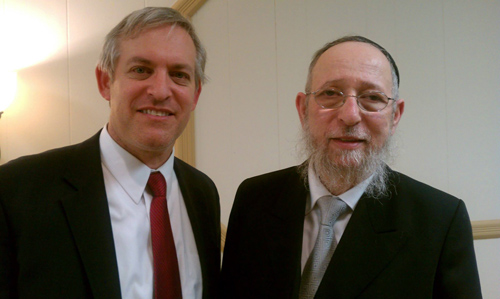
1. In listening to a recent shiur[1] on Daas Torah by R. Hershel Schachter, I found a number of noteworthy comments. In this shiur, which has been heard thousands of times, R. Schachter states, “If you have an outlook, if you have what I would consider a crooked, a krum outlook on Yom ha-Atzmaut, then your outlook on eruvin is also crooked. I can’t rely on anything that you say.” I find this difficult to accept, since can’t someone be regarded as a great posek, one that can be relied on, even if one disagrees with important ideological positions he holds? In Eastern Europe, the people all relied on their local rav to decide halakhic questions for them. It didn’t matter to them whether the rav supported Agudah or Mizrachi. He was the halakhic authority of the town.I agree, however, that there are limits. What sense does it make to rely on a Satmar posek for a ruling if one wouldn’t accept anything he said in non-halakhic matters? (It is known that when men want a ruling that they don’t have to give their wives a get, they go to a posek in Monsey whom they wouldn’t ask any other questions of.) I think it is important for R. Schachter to explain what his definition of a “crooked” outlook on Yom ha-Atzmaut is? Does he mean someone who says tahanun on that day, or only someone who thinks it is a day akin to avodah zarah?[2]
Among other interesting comments in R. Schachter’s shiur is that he states that a posek can give you a binding pesak concerning whom you must marry.[3] This too I find difficult, since where does a posek get the authority to tell someone whom he must marry? An individual can certainly consult with a posek for his advice in this matter, but since this consultation is done voluntarily by the potential groom, how do we go from there to a situation of pesak which binds the person asking the question?
[Subsequent to writing these words I saw R. Schachter and asked him about this matter. He reaffirmed his position, stating that whom one marries is a halakhic matter and therefore a posek can indeed tell you whom you must marry. He added that this is almost always theoretical since in order to make such a ruling the posek would need to know both the bride and groom for many years so as to be sure that what he is saying is correct. But he also insisted that if the posek does have the requisite knowledge he can indeed give a binding pesak about whom one must marry.]
In discussing the matter of Israel giving back land for peace, as far as I understand (and this is also the understanding of everyone I have seen who has written on the topic), R. Joseph B. Soloveitchik held that this is not a halakhic matter and therefore there is no place for rabbinic involvement. The political and military leaders should make a decision based on their knowledge of what is in the best interest of the country. However, R. Schachter has a different perspective. He states that according to R. Soloveitchik, first the politicians and military leaders should be consulted, and following this the rabbis need to make a halakhic judgment about what is permissible.[4] Yet the following are R. Soloveitchik’s words from 1967, as transcribed by Arnold Lustiger here:
I give praise and thanks to the RBSO for liberating the Kotel Hamaarovi and for liberating and for removing all Eretz Yisrael from the Arabs, so that it now belongs to us. But I don’t need to rule whether we should give the West Bank back to the Arabs or not to give the West Bank to the Arabs: we rabbis should not be involved in decisions regarding the safety and security of the population. . . . We have to negotiate with common sense as the security of the yishuv requires. What specifically these security requirements are, I don’t know, I don’t understand these things. These decisions require a military perspective which one must research assiduously. The borders that must be established should be based upon which will provide more security. It is not a topic appropriate for which rabbis should release statements or for rabbinical conferences.
Also of interest in this shiur is that R. Schachter rejects the legitimacy of Daas Torah proclamations by roshei yeshiva who do not deal with practical halakhic questions.[5] In his halakhic-centric approach, there is no room for such proclamations by figures who are talmudically learned but are not poskim. This means that R. Aharon Leib Steinman, for instance, who is not a posek, is not to be regarded as one who transmits Daas Torah. As R. Schachter says, one who does not decide practical halakhic questions dealing with Shabbat, kashrut, and taharat ha-mishpahah is not able to rule on matters that are not explicit in earlier texts, and are often categorized as being in the realm of Daas Torah. He specifically states that the Steipler and R. Shakh, who were not known as poskim, were not the ones people should have been turning to for Daas Torah.[6]
It is hard to imagine a stronger repudiation of the haredi notion of Daas Torah, for while R. Elyashiv was of course a great posek, there has never been an expectation among haredim that the transmitters of Daas Torah must be involved in pesak. Daas Torah depends on the Torah scholar being immersed in Torah and righteousness, but this does not mean that he has to be involved with halakhah le-ma’aseh questions. R. Schachter’s point is obviously in contradiction to the hasidic approach in which the rebbe is the leader, and the job qualifications of a rebbe have nothing to do with deciding halakhic questions.[7]
It is true, however, that R. Schachter’s description of who should be the religious leaders of the Torah community is what historically was the case before the rise of hasidut in the 18th century, the creation of the great yeshivot in the 19th century, and the rise of haredism in the 20th century. But even in previous centuries matters were not absolute. For example, what about R. Moses Hayyim Luzzatto? He was not a posek, yet would anyone today deny that he could speak with Torah authority on matters that fall into the category of Daas Torah? What about R. Nosson Zvi Finkel and many of the other mussar greats, or R. Zvi Yehudah Kook? Using R. Schachter’s halakhic-centric yardstick, they too would have to be excluded from what is today referred to as Daas Torah.
All this of course relates to the subject of gedolim, a topic that has recently seen a lot of discussion at the new website Lehrhaus. Professor Chaim Saiman’s essay, “The Market for Gedolim: A Tale of Supply and Demand,” was followed up by a number of insightful responses from people who represent the Centrist and Liberal Orthodox community, and by Rabbi Ethan Tucker who can be termed a leader of the halakhically committed egalitarian community.[8]
I have made the point a number of times that the twentieth century saw the creation of a new model in the haredi world. It is not just gedolim who are important, but the gadol ha-dor (technically: gedol ha-dor), that is, the gadol who stands above other gedolim. Although you had such figures in earlier times, such as the Hatam Sofer and R. Yitzhak Elhanan Spektor, in the twentieth century the notion of “the gadol ha-dor” has become institutionalized and is a basic feature of haredi society. Gedolim are not enough, but there also needs to be a supreme gadol. Thus, on the passing of the gadol ha-dor, the new gadol ha-dor emerges, (or he can actually be proclaimed, such as what happened when, after R. Elyashiv’s passing, R. Chaim Kanievsky declared that R. Steinman was the new leader). This is now an expectation of laypeople in the haredi world,[9] and obviously satisfies a psychological need, so inexorably one gadol ha-dor will be followed by another.[10]
This can lead to disputes as we see now in the haredi world between the majority who follow R. Steinman and the more extreme elements who have lined up behind R. Shmuel Auerbach. A noteworthy point, which is hardly mentioned in the “mainstream” haredi press, is that the opponents of R. Steinman have been very harsh in their evaluation of him, and a steady stream of publications has appeared designed to show that his views are not in line with the haredi Daas Torah going back to the Chazon Ish and continuing through R. Elyashiv’s leadership. These publications have also attempted to show that he does not have the level of Torah scholarship required to lead the haredi world. Yet R. Chaim Kanievsky, who throughout the controversy has been the most vocal in attacking R. Auerbach and his followers, has, as far as I know, never been subject to written criticism. All of the many attacks on R. Steinman simply omit mention of R. Kanievsky even though R. Kanievsky stands together with R. Steinman. One who claims that R. Steinman’s views are not in line with “correct” haredi thinking must assume that R. Kanievsky has also departed from the “proper” haredi path, which is a difficult position for most haredim to adopt. At the end of the day, R. Kanievsky is the most highly regarded Torah scholar in the haredi world, and if he has subordinated himself to R. Steinman, that will be enough for almost all haredim even if they do have questions about some of R. Steinman’s liberal positions.[11]
There is a lot more to say about this, but I would like to make just one more point about the term gadol ha-dor which is now so important and means the most prominent Torah leader of the generation. I think it is the equivalent of the term manhig ha-dor and is parallel to the other term that has popped up in recent decades, posek ha-dor. Regarding posek ha-dor, since the passing of R. Elyashiv, and then R. Wosner, I haven’t seen the term used for anyone in the Ashkenazic haredi world, and there is no one towering halakhic figure (although one is bound to emerge). In the Sephardic world, after the passing of R. Ovadiah Yosef, both R. Yitzhak Yosef and R. Meir Mazuz have emerged as posek ha-dor as well as gadol ha-dor. When it comes to gadol ha-dor in the Ashkenazic haredi world, both R. Steinman and R. Auerbach are regarded as such, and my sense is that many also regard R. Kanievsky as the gadol ha-dor even though he himself claims that R. Steinman holds this position.
Contrary to what some think, the term gadol ha-dor is not a recent term. Tosafot,[12] and many other rishonim, use it in the sense of a great Torah scholar, but as far as I know, there is no implication in the rishonim that the term means the preeminent Torah leader, as it is used today when people say that X is thegadol ha-dor. (I perhaps should write “scholar-leader”, since one cannot be the gadol ha-dor without being both a scholar and a leader.) When the rishonim use the term it means that X is a gadol ha-dor, i.e., a great sage. Even today, when “the gadol ha-dor” means the preeminent Torah leader, it need not mean that this individual is also the greatest Torah scholar, although sometimes times it does (e.g., when R. Elyashiv or R. Ovadiah Yosef were described as such, I think people assumed that they were the greatest Torah scholars.)
At another time I can discuss different uses of the term gadol ha-dor among rishonim. For now, I want to call attention to a passage in Pesahim 49b: “Let a man always sell all he has and marry the daughter of a scholar. If he does not find the daughter of a scholar, let him marry the daughter of [one of] the gedolei ha-dor.” It is obvious that in this passage the term gedolei ha-dor does not mean great Torah scholars. Rashi explains it to mean: אנשי מעשה וצדיקים. Even in the 16th century R. Moses Isserles uses the term gadol ha-dor to mean communal leader, and puts gadol ha-dor together with am ha’aretz.[13]
ואין איסור לקרות ע”ה נכבד עשיר וגדול הדור לפני ת”ח כי אין זה בזיון לת”ח רק כבוד לתורה שמתכבדת באנשים גדולים.
Yet elsewhere, Shulhan Arukh, Yoreh Deah 244:10 (based on Terumat ha-Deshen: Teshuvot, no. 138), R. Isserles does use gadol ha-dor to mean an outstanding Torah sage.Returning to the articles at Lehrhaus, I would like to call attention to a couple of passages that relate to gedolim in rabbinic literature (there are obviously many more). R. Hayyim Palache states that there is a tradition that every gadol be-Torah has opponents who persecute him.[14] Historically, I think this is the case, as I cannot recall a gadol who did not have enemies who tried to tear him down.
Most people assume that dayanim will know halakhah well, and that the elite and small group of dayanim on Israel’s Beit Din ha-Gadol will certainly be experts in all areas of halakhah. I recently picked up R. Yitzhak Yosef’s new volume of responsa, She’elot u-Teshuvot ha-Rishon le-Tziyon, and he wants to disabuse readers of the understandable notion that dayanim are experts in the breadth of halakhah.[15] He goes so far as to say that there are dayanim on the Beit Din ha-Gadol, men he knows personally, who while knowledgeable in Even ha-Ezer and Hoshen Mishpat, when it comes to Orah Hayyim and Yoreh Deah:
אינם בקיאים כלל וכלל, יודעים קצת מספרי קיצורים, כמו בן איש חי וכף החיים וכדומה. אך אינם בקיאים בב”י ומפרשי השלחן ערוך והשותי”ם.
Being that the Beit Din ha-Gadol is a very small group of dayanim, I am sure people have been trying to figure out who R. Yosef is including in this negative judgment.
Finally, in terms of a definition of a gadol, R. Hayyim Eleazar Shapira actually offers us one:[16]
מפורסם בהרבה מדינות ובחיבוריו יורו המורים ולקולו יחתו וכיוצא.
By saying that a gadol is known in many lands, and his works are widely used, it is clear that we are dealing with a definition for the modern era where there is easy international communication. In pre-modern times there was no expectation that a gadol in say Morocco would be known outside this land. But I think that for the modern era R. Shapira’s definition is an excellent one as it captures the fact that the term “gadol” represents a sociological category. I would also add that the status of “gadol” is significant in that it is a lifetime appointment, as it were. It is almost impossible for one to be removed from “gadol” status once he has been elevated to this level. I think we can be very proud that in the long history of gedolim there are no examples – at least I am not aware of any – where gedolim lost their status because of immoral behavior. (We can be less proud of the language some gedolim have used in denigrating their opponents.[17])
2. In recent posts I discussed the idea of love before marriage in traditional Jewish communities. It is worth noting in this regard Rachel Morpurgo’s book of poetry, Ugav Rahel (Cracow, 1890). Here is the title page.
Rachel Morpurgo was a cousin of Samuel David Luzzatto, and a fascinating and learned figure in her own right. In the introduction to the book, p. 6, R. Isaac Castiglione tells us that Rachel’s parents wanted her to marry a certain man, but she refused as she was in love with Jacob Morpurgo. If she could not marry him, she preferred to remain single. (In the end, they did marry.)
Her cousin Luzzatto sent her a poem, trying to change her mind, and she replied also in a poem, expertly using many of the same words that Luzzatto had used. In her poem she says that if she can’t marry the man she wants, she will never marry, not even if given the possibility to marry the Messiah. Here are both of their poems, from Ugav Rahel, pp. 50-51, and Rachel’s poem in honor of her marriage, p. 52.
Here is another interesting poem from p. 71. We see that Morpurgo wanted to join Moses Montefiore on his journey to the Land of Israel.
On p. 73 she has a poem of joy after an evil Catholic priest died and was buried on Purim.
She was also able to write riddle poems, which was a popular genre among the Hebraists. Here is one from pp. 76-77
3. In the archive of R. Isaac Herzog there are a number of letters from R. Herzog relevant to the issue of science and Torah.[18] He was writing to scientists and historians asking them how certain it is that the world is billions of years old and that humanity has been in existence for more than 6000 years. One of the people he wrote to was Professor George F. Carter. Carter was a believing Catholic, and in his letters to R. Herzog you see that he could not understand why there should be any conflict between Torah and science. It astounded him that R. Herzog seemed to feel that the scientific and historical information in the Torah must be accepted as factual, when from his Catholic perspective the point of the Bible is not to provide facts of this nature. In his letter of November 23, 1953, R. Herzog wrote to Carter.
[L]et me recapitulate my problem. Not that we have as a dogma a certain chronology but the chronology automatically results from the plain text of the Book of Genesis, as you undoubtedly know yourself, that troubled the minds of some great rabbis nearly a century ago with the rise of the science of Geology. Most ignore the data of science altogether. Some, however, replied that the world was created enormous [missing word] of time ago, but that at certain points mankind was recurrently blotted out and the present world is a certain phase in that recurrent process of creation and destruction. Hence they explained the fossils which bear evidence of such high antiquity etc. They based their explanation upon an old saying in a pre-mediaeval Rabbinic collection: “The Holy One Best be His Name kept on building up worlds and destroying them.” Note that the meaning of “destroying” in that connection is not total annihilation as you will easily understand. Now the problem as it presents itself to me is whether the short period of less than six thousand years or (counting from the deluge when according to Genesis only a few persons survived) some 5000 years is sufficient to account for the numbers of mankind, for its distribution all over the globe, for the advance and progress of mankind, which in the natural course require considerable time, say the art of recording or writing etc., etc. If you assume divine interposition, the progress could be achieved in much less time. Think of the time according to science it took wood to be turned into coal, and of the time it takes for that process at the kitchen fire-side! Yet the question remains: Is it possible to speak of such constant divine interposition within say the first 2000 years of the past 6 or 5 thousand years since the beginning of the Biblical chronology to promote civilisation, the distribution of mankind and to multiply mankind to such an extent? I may add that our great teacher Maimonides from whom your Catholic great thinker Thomas Aquinas drew so much, was in his time confronted with Aristotle’s eternity of the universe which contradicted Jewish belief. He started out with the premise that if Aristotle’s point was absolutely proved, he would explain bara in Genesis not in the sense of created but in another sense, and would thus reconcile the divine Towah [!] with scientific truth, but he found that Aristotle had not proved his point and he therefore left bara in its plain sense.[19] I say something similar. If men of science prompted by absolute truth definitely and unanimously decide that the above chronology is not only unlikely but is actually impossible and therefore absurd, I would reinterpret the Biblical text in a different sense, but before doing that, I must be perfectly certain. Remember that the divine truth of every word in the Pentateuch is a dogma of orthodox Judaism, is believed to be the word of G-d through Moses. Yet orthodox Judaism is not a slave to the literal sense. It teaches that G-d is beyond all human thought and imagination and therefore it regards the anthropomorphisms as mere figures of speech: it also lays down that the Torah speaks in the language of humans. But there is of course a difference between understanding the Eyes of G-d as meaning divine Providence and interpreting the chronology of six thousand years as standing for aeons!
In this letter, and in other letters in his archive, the issue R. Herzog is most troubled with is not the creation of the world and the evidence that this took place billions of years ago. Rather, his concern is with the length of time of humanity on earth, for if there is indisputable evidence of humanity for tens of thousands or hundreds of thousands of years, then what is one to do with the chronology that “results from the plain text of the book of Genesis,” by which he means the record of generations beginning with Adam? As far as R. Herzog is concerned, this matter is not so much a religious question but a historical question, and that explains why he inquired from experts in this matter.[20] For if we are dealing with a fact, undisputed and recognized by all experts, that humanity has existed for longer than the biblical account would have it, then following Maimonides R. Herzog believes that is no choice but to read the Torah’s account in a non-literal fashion.
Readers can correct me if I am wrong, but I think that in the Modern Orthodox world the matter that R. Herzog was so exercised about has been settled. In other words, I don’t see any evidence that people in these communities are concerned that in Modern Orthodox schools, in classes on ancient history, students are taught things such as that around 10,000 BCE farming communities existed in the Middle East and North Africa. I know from personal experience that textbooks used in Modern Orthodox schools offer precisely this sort of information that assumes that human civilization predates the traditional Jewish reckoning. From what I have seen, this is presented to the students without, however, taking the step that R. Herzog mentioned, namely, explaining what then becomes of the biblical chronology when it is no longer viewed as historical.[21]
4. Following up on this post, here is a picture of a group of Slobodka students.[22]
R. Hutner is sitting in the middle.
Here is another picture of R. Hutner.
Standing next to him is R. Harold Leiman who was principal of general studies at Yeshivat Chaim Berlin’s high school from 1936-1948. Prof. Shnayer Leiman informs me that this picture of his father has to be from 1940 or earlier..
5. In my post here, in discussing the newly published Ha-Mashbir, volume 2, I wrote that one of the articles is by R. Pinhas Zebihi who discusses the practice in Gibraltar that men in mourning do not wear a tallit on Shabbat. I added that this is only the case for the first month of mourning. Mr. Mesod Belilo of Gibraltar has informed me to me that the Gibraltar minhag is that those in mourning do not wear a tallit at all during sheloshim, whether it be Shabbat or during the week. (They do put one on if given an aliyah.) It is Shabbat that makes this minhag halakhically problematic as not wearing a tallit would appear to be an example of “public mourning,” and that is what R. Zebihi deals with. In fact, his conclusion is that the practice should be abolished, but I can’t imagine that the Jews of Gibraltar, even if they knew of R. Zebihi’s position, would give up a minhag that is hundreds of years old and was not abolished by any of the community rabbis. (R. Zebihi’s article is actually a responsum addressed to the rabbi of the small Gibraltar minyan in London.)
One of the editors of Ha-Mashbir isR. Yissachar Dov Hoffman who recently published another book, Avodat Ovadiah, volume 1. It focuses on practices of R. Ovadiah Yosef and deals with the first part of Shulhan Arukh, Orah Hayyim (tzitzit, prayer, blessings, etc.). R. Hoffman’s learned notes include citations from a wide range of contemporary rabbinic works.
6. Here is a quote from the late Robert Liberles that I find quite interesting, and I think readers will as well.
Historians, imbued with curiosity and a fascination with the dark side, can easily be drawn toward the negative, the hostile, the antinomian side of human behavior. In addition, deviant behavior has much to teach about a society under study. There is also the endless fallacy of being drawn by sources deep into the abyss of misrepresentation. Records in the public archives relate strife and despair more often than happiness and love. Rabbinic responsa pertaining to family life also tend to deal with discord. Abuses in Jewish family life can be abundantly documented, and they should be. These sources have been ignored too often, partly because they were not known, partly because they were at times consciously overlooked. Research based on prescriptive sources has depicted a portrait that is quite distant from the harsher reality that emerges from primary descriptive sources.[23]
7. In my post here I mention that in medieval rabbinic literature the words צעירים and דורשים mean Franciscans and Dominicans. David S. Zinberg called my attention to R. Joseph Ibn Caspi, Mishneh Kesef, vol. 2, p. 257. In commenting on how Moses was not celibate and even took a second wife, he writes:
כי אינו צעיר ודורש, או אגוסטי וכרמלי
“For he was not a Franciscan or a Dominican or an Augustinian or a Carmelite.”
Zinberg also called my attention to Mishneh Kesef, vol. 1, p. 106, where he writes about כת הצעירים מארצנו זאת
I also found that R. Israel Moses Hazan, Nahalah le-Yisrael, p. 84, refers to the Dominicans as כת הדרשנים
8. I know readers will be happy to learn of a significant event in the world of Torah and academic Jewish scholarship: A previously unknown responsum by Maimonides has just been published in Divre Hefetz 7 (Tishrei 5777). You can see it here.
9. The newest book in my series, Studies in Orthodox Judaism, has appeared. It is Darren Kleinberg, Hybrid Judaism: Irving Greenberg, Encounter, and the Changing Nature of American Jewish Identity. Anyone interested in a discount copy of the book should be in touch with me.A few other books recently appeared that I would like to bring to readers’ attention. R. Moshe Zuriel published the following works by Naftali Hertz Wessely: Gan Naul, Sefer ha-Midot, Migdal ha-Levanon, and Hikur Din. The first two books have been published before, but Zuriel has included unpublished material. Migdal ha-Levanon appears in print for the first time. All scholars who deal with Wessely will have to examine these works.
Another recent publication is R. David ben Judah he-Hasid, Sefer ha-Gevul, edited by Bentsion Cohen. This is a kabbalistic work published from manuscript. The author, R. David, is none other than the grandson of Nahmanides. Here is how the book is described on the cover: “This book is one of the first attempts by a contemporary of the Zohar discovery to give a lucid and graphical interpretation to the mysterious complex issues of divinity as discussed in the Idra Rabbah of the Zohar. His approach is one of the earliest to present an interpretation of the Sephirot in the image of a person.” The book also includes the numerous illustrations that appear in the manuscript.
10. Readers sometimes ask me about upcoming lectures, so I would like to inform people that on the Shabbat of Dec. 16-17, 2016 (including Saturday night) I will be speaking at Ner Yisrael in London. On Sunday night, Dec. 18, I will be speaking at the Hampstead Synagogue at 8:15pm. The topic is “Some Strange Jewish Christmas Eve Practices.” On Wednesday, Dec. 21, I will be speaking at the London School of Jewish Studies at 8pm on the topic of “Touching God: What Are the Limits of Orthodox Theology?” On Thursday, Dec. 22, I will be speaking at Shomrei Hadath at 8pm on the topic of “Sense and Censorship: Is Historical Truth an Orthodox Value?” On the Shabbat of Dec. 24-25 (including Saturday night) I will be speaking at Kehillat Ohev Shalom.
On the Shabbat of Jan. 6-7, 2017, I will be in Flatbush. During services on Friday night at Bnei Yitzhak, I will give a short talk on R. Elijah Benamozegh. After an early tefillah at the Sephardic Institute, I will be speaking at 8:45am on “The Philosophy of Rav Kook: Is It Still Relevant?” On Shabbat afternoon at 3pm I will be speaking at Beth Torah on “Judaism and Islam: Some Historical and Halakhic Perspectives.” On Saturday night at 8pm I will be speaking at the Sephardic Institute on “Did the Sages Always Tell the Truth (and Should We)?”
[1] “Da’as Torah – What are Its Parameters in non-Halachic Issues”, available here at 26:40.
[2] Usually it is Hungarian extremist rabbis who use terms like avodah zarah with reference to Yom ha-Atzmaut, but I found that R. Yehezkel Levenstein also uses this language. See Or Yehezkel, vol. 3, p. 118:
וברצוני לעורר כי הנה היום היה [!] יום העצמאות, ומה הוא מהותו של יום העצמאות. יום של עבודה זרה, יום שבו מראים הכל כוחי עוצם ידי.
I agree with a friend who wrote to me regarding this passage:
יש הבדל בין השימוש בשם ‘עבודה זרה’ בהקשר של “כוחי ועוצם ידי”, זה שווה למי שאומר שהרדיפה אחר הכסף הוא עבודה זרה “אלהי כסף ואלהי זהב לא תעשה לכם”, ובין השימוש שסטמר משתמש בו שעובדים “העגל הציוני”.
[3] At 1:14:30. The Lubavitcher Rebbe had a different perspective. See Joseph Telushkin, Rebbe: The Life and Teachings of Menachem M. Schneerson, the Most Influential Rabbi in Modern History (New York, 2014), p. 189, who quotes what the Rebbe told R. Leibel Groner: “When it comes to a marriage, not I can help you, not your father can help you, not your mother can help you, not your seichel [your intellectual faculties] can help you. The only thing that can help you is your heart. If you feel for her, go ahead. If you don’t do not.”
[4] At 1:11:00. Because R. Schachter is citing from memory, his misremembered one point. At minute 59 he describes a case dealt with by R. Chaim Berlin that took place under communist rule. Yet R. Berlin died in 1912, before the Soviet Revolution. The responsum referred to by R. Schachter can be found in Nishmat Hayyim, Even ha-Ezer, no. 3, and is from 1911. As R. Schachter notes, it contains the following fascinating words, addressed to someone who was considering whether a certain woman was an appropriate marriage partner:
ויוכל לקיים בה מצות פו”ר להוליד לו בן ובת ויצא ידי חובתו. ובזה”ז דלא אכשור דרי אין להדר להיות לו בנים מרובים, שמי יודע אם ילכו בדרך התורה והמצוה, אך לקיים מצות פו”ר חובה עלינו למלאות חובתינו.
I don’t know of any other rabbinic figure who urged people not to have many children because of a fear that they would not remain religious. The standard rabbinic approach in such matters was to declare בהדי כבשי דרחמנא למה לך. This expression comes from Berakhot 10a where it deals with the exact matter discussed by R. Berlin.
In those days was Hezekiah sick unto death. And Isaiah the prophet, son of Amoz, came to him and said unto him, Thus saith the Lord, Set thy house in order, for thou shalt die and not live etc. (Is. 38:1) What is the meaning of ‘thou shalt die and not live’? Thou shalt die in this world and not live in the world to come. He said to him: Why so bad? He replied: Because you did not try to have children. He said: The reason was because I saw by the holy spirit that the children issuing from me would not be virtuous. He said to him: What have you to do with the secrets of the All-Merciful? You should have done what you were commanded, and let the Holy One, blessed be He, do that which pleases Him
According to R. Berlin, Hezekiah was mistaken in that he chose not have any children. R. Berlin states that one must indeed fulfill the minimal obligation of peru u-revu, but there is no need to have more children than this when there is a strong possibility that the children will not remain on the religious path.
[5] Ibid at 1:01:00.
[6] Hearing this reminded me of R. Avraham Shapiro’s point that certain “Daas Torah” personalities have published Torah works, and in these works they state that what they write is not halakhah le-ma’aseh. “It is as if they are saying that they don’t have the ‘Din Torah,” but they do have the Daas Torah.” See Aharon Eizental, “Ha-Kohen ha-Gadol me-Ehav,” Tzohar 32 (2008), p. 16. A number of times R. Shapiro commented that there is no precedent for the current phenomenon in which Torah scholars who won’t give halakhic rulings on commonplace Shabbat questions feel that they can issue rulings on life and death matters affecting the entire nation. As with R. Schachter, he saw this as a distortion of true Daas Torah.
[7] See R. Israel Berger, Eser Orot (Petrokov, 1907), pp. 13-14, who explains the hasidic perspective that one can be the gadol ha-dor without being an expert in Talmud and halakhah.
[8] None of the responses referred to the following important passage in Aviad Hakohen, “Zot Torat ha-Adam,” in Reuven Ziegler and Reuven Gafni, eds. Le-Ovdekha be-Emet (Jerusalem, 2011), p. 367. It shows that R. Yehuda Amital thought that there is a more important thing to hope for than that one’s sons or students become gedolim, namely, that they should be good Jews.
כמה פעמים סיפר לנו על בר המצווה של בנו היחיד, ר’ יואל, שאליה הגיעו הרבה אורחים שנמנו עם משפחת האצולה הלמדנית של הרבנית מרים, משפחתו של הסבא ר’ איסר זלמן מלצר. בזה אחר זה קמו האורחים, וכמנהג גוברין יהודאין בירכו את חתן בר המצווה שיהיה גדול בתורה, חריף ובקי, סיני ועוקר הרים, רב לאלפים, יודע ש”ס ופוסקים, עמוד החזק ופטיש הימיני. לאחר שסיימו, ניעור רבנו ממקומו ואמר בצורה אופיינית: “אני מודה לכם על דבריכם הטובים, אבל איני מסכים עמם. אבא שלי לא היה גדול בתורה. גם סבא שלי לא היה גדול בתורה. לא אכפת לי שבני יהיה חייט או סנדלר. העיקר שיהיה יהודי טוב.”
[9] Brisk is an exception. A friend writes:
בבית בריסק אומרים מפורש, מאן לימא שיש גדול הדור?
[10] I am referring to the non-hasidic segment of the haredi world. In the hasidic world the followers of a rebbe generally viewed him as the gadol ha-dor, and he was thought to be chosen for this role from Heaven. See Mendel Piekarz, Ha-Hanhagah ha-Hasidit (Jerusalem, 1999), pp. 22ff.; David Assaf, Ne’ehaz ba-Sevakh (Jerusalem, 2006), p. 240. The Steipler actually said that R. Shakh was chosen by Heaven to be the manhig ha-dor. See Avraham Yeshayahu Kanievsky, Toldot Yaakov (Bnei Brak, 1995), p. 263. The Hatam Sofer said that in every generation God establishes one person as the premier posek. Because of his central halakhic position, the Hatam Sofer understandably understood that he was this person. See Maoz Kahana, “Ha-Hatam Sofer: Ha-Posek be-Einei Atzmo,” Zion 76 (2007), pp. 545-546.
[11] In a future post I will discuss R. Steinman in more detail. After examining his writings and public statements, I have to say that I understand well why there is opposition to R. Steinman, and I think that without the support of R. Kanievsky he never would have been regarded as the gadol ha-dor. It appears to me that R. Steinman has indeed attempted to move haredi society in a different direction, and as such has diverged from some of the previous haredi Daas Torah. Furthermore, there is evidence of his “out of the box” thinking for many decades. As far as I know, there is not even one scholarly article about R. Steinman, which is surprising, to say the least, since he is the single most important haredi rabbinic leader.
[12] Berakhot 31b s.v. מורה. Cf. Rashbam, Pesahim 100a, s.v. ברבי which I also don’t think means the preeminent Torah leader or scholar. See also Or Zarua, Hilkhot Rosh ha-Shanah, no. 276, for the story of R. Amnon of Mainz who is referred to as gadol ha-dor. But again, I don’t think the meaning is that he was the greatest scholar of the generation. He certainly was not the greatest leader of his generation (and indeed, he was not even a real person).
[13] Shulhan Arukh, Orah Hayyim 282:3.
[14] Nefesh Kol Hai, ma’arekhet ת, no. 80. R. Palache also cites R. Nahman of Bratzlav, Sefer ha-Midot, s.v. צדיק no. 136:
אין לך צדיק שאין עליו מחלוקת ומחקרים.
[15] Vol. 2, p. 159. See also ibid., p. 249.
[16] Minhat Eleazar, vol. 3, no. 64 (p. 54a).
[17] There is a long list of negative things rabbis have said about their opponents, and I have cited some in prior posts. Perhaps the worst I have found was stated by R. Sason Elijah Halevi Samoha, the former hakham bashi of Baghdad. He accused R. Elisha Dangoor, his successor as hakham bashi, of murdering his own brother. See Yaron Harel, Intrigue and Revolution: Chief Rabbis in Aleppo, Baghdad, and Damascus 1744-1914, trans. Y. Chipman (Oxford, 2015), p. 98.
[18] The letters I refer to come from the Israel State Archives, R. Isaac Herzog file 4243/6-פ.
[19] For my understanding of Maimonides, which diverges from that of R. Herzog, see here.
[20] In the file that contains the letter to Carter is also found a November 2, 1954 letter to Arnold Toynbee in which R. Herzog writes:
I have been struck by the point that you narrate the history of 5000 years of civilisation. Does that mean that in your view recorded history is not older?
I have been trying recently to explain the Hebrew Bible chronology according to which the creation of man took place only about 5700 years ago. This of course is rejected by anthropologists but may it not mean that man, truly civilised man, man properly called, is only of that age? Or do you begin the history of civilisation with the rise of agriculture?
Another letter in the file is from R. Herzog to Abraham Cressy Morrison, author of the book Man Does Not Stand Alone. R. Herzog’s letter is from December 19, 1951, and here is the section relevant to our discussion:
While not necessarily subscribing to all of its statements, I wish to compliment you on your very interesting and inspiring little book, “Man Does Not Stand Alone.” It is calculated to help many spiritually.
However, permit me the following observations. Whilst you accept the belief in G-D and in providence in as far as the generalities of nature are concerned, you recognise the dates fixed by science as axiomatic. Let me call your attention to the consideration that the ages of the rocks and the like, are computed in the absence of the premise of the Rock of the Ages. Once you grant the agency of a super nature power and intelligence, it does not follow at all that because with the laws and forces working now in nature after the creational work has ended, this or that kind of operation must take so much time, it has been so during the creational process and hence it is not at all certain that G-D tool [!] milliards of years to perform his work as Creator.
The difficulty is great, I admit, when it comes to historic Biblical chronology. Literally taken, the Biblical chronology allows only 5712 years for the period since the creation of Man and the present day. Yet I have the impression that even Wells allotted only a space of about 12,000 years for civilisation. This of course is a different matter. If we take agriculture as marking the emergence from the savage state, some 6000 years would, I feel, be sufficient. We may have to reinterpret the narrative portions of the Pentateuch, but not necessarily to allegorise them.
The same file also contains most of the Herzog-Immanuel Velikovsky correspondence published and analyzed by Raphael Shuchat in The Torah u-Madda Journal 15 (2008-2009), pp. 143-171.
[21] In the Israel State Archives, R. Isaac Herzog file 4253/6-פ there are other letters from R. Herzog focusing on the matter we have been discussing, namely, the short time given to humanity on earth if one reads the Torah literally. On 10 Av 5712, he wrote as follows to Dr. Yitzhak Etzion:
אפשר לפרש את תוה”ק בצורה אליגורית ושהשמות שבפרשיות הראשונות שבספר בראשית, הן של גזעים ואומות רבים, לא של יחידים, ושהשנים הן לא שנים רגילות אלא תקופות, אבל זהו כבר ענין אחר, ודורש קביעת כללים עד היכן ומהיכן
On 22 Adar 5712 he wrote to Dr. Samuel Belkin.
זה מזמן שאני הוגה רעיון גדול בלבי והוא להוציא ספר גדול בכמות ובאיכות, מעין מורה נבוכים חדש שיכיל תשובותיה של היהדות הנאמנה לכל מתקיפיה, מצד המדע המודרני, האנטרופולוגיה, הגיאולוגיה, הזואולוגיה וכו’, הפילוסופיה, בקורת המקרא, והדתות האחרות, וכן מצד בעלי הכתות שבקרבנו של העבר ושל היום, הצדוקים הקראים והריפורמים
אני קבעתי לי ליסוד את דברי רבינו הגדול הרמב”ם ז”ל, שאם אריסטו היה מוכיח בהחלט את קדמות החומר היה הוא מפרש את פרשיות בראשית בהתאם לה, וד”ל, אך צריך שהחולקים על קבלתנו יוכיחו תחלה את השערותיהם, וכן צריך לקבוע כללים פרשנייים, עד היכן ואימתי מותר להוציא הדברים מפשוטם. זהו מקצוע בתורה שעובד אך מעט מאד
On 11 Shevat 5713, R. Herzog wrote to Professor Ben Zion Dinur, who was then serving as Minster of Education.
ימצא נא בזה סיכום של פעולות שבתכניתי לשם יצירת תנועה רוחנית להגנה על מורשת סיני
בדעתי להתחיל מיד בעריכת ספר גדול על יסוד היסודות של היהדות הנאמנה המאמינה, “תורה מן השמים”. בספר ההוא תופענה הגנות כתובות מאנשי מדע ואנשי אמונה כאחד, מיד כל אחד מנקודת השקפת מקצועו: אנתרופוליגיה, גיאולוגיה, תכונה, זואולוגיה וכו’ וכו’ . . . כללים הם בידינו מאז מעולם: “דברה תורה בלשון בני אדם”, “שבעים פנים לתורה”, “התורה נדרשת בפרדס” וכו’ וכו’, ומאידך גיסא יש לנו כלל גדול “אין מקרא יוצא מידי פשוטו”. הספר הזה יקבע גבולות על הפרשיות שבתורה שאינן ענין של הלכה למעשה, עד כמה ובאילו תנאים יש להוציא הדברים מפשטותם. לפנינו יהיו למורה דרך דברי המורה הידועים, שאם אריסטו היה מוכיח בהחלט את קדמות החומרeternity of matter היה הוא ז”ל מוצא דרך לפרש את פרשיות בראשית בהתאם לה.
בהכרח שהיהדות הנאמנה המאמינה תמצא לה פרקליט בתקופה המודרנית הזאת, אך מפני התקדמות המדע בצעדי ענק אי אפשר לעבודה כזאת להעשות באיש אחד. אפילו הרמב”ם, אילו היה חי בדורנו, לא היה יכול להאבק יחידי בכל הזרמים המרובים ההם
In his 29 Shevat 5714 letter to Dr. Aharon Barth, R. Herzog speculates about a possible solution to the problem we have been discussing, and also a solution for other matters in which the Torah’s description does not correspond to what is accepted by modern scientists and historians. He suggests that the Torah’s description need not be factually correct, as it was in line with the conceptions of the generation of the giving of the Torah.
תאמר, שהיא דברה לא רק בלשון בני אדם, כי גם בלשון המסורת של העברים שבאותו הדור שקיבל את התורה, אעפ”י שבעצם הדברים לא מדויקים. נוסיף ללכת ונאמר כדברי רבינו הקדוש הרמב”ן ז”ל שהתורה כולה שמותיו של הקדוש ברוך הוא, ויש בה בכל אות ובכל תג סודות וסודי סודות, למעלה למעלה מהשכל הרגיל, רזי רזין שרק יחידי סגולה זוכים בהם, ואין חיצוניותה בפנימיותה כלל, והצורה החיצונה נתחברה בהתאמה לדרגת המסורת העברית של הימים ההים – הרבה צריך עוד לדון עד שנקבל תיאוריה כזאת
As can be seen from the last sentence, he was not ready to adopt this approach.
See also the letter from R. Herzog that I published in my “Ha-Im Yesh Hiyuv le-Ha’amin she-ha-Zohar Nikhtav al Yedei Rabbi Shimon Ben Yohai,” Milin Havivin 5 (2010-2011), p. 19.
In his reply to R. Herzog, Dr. Etzion makes the following interesting point which stands in opposition to the approach of some in the Kiruv world (and, truth be told, it is also in opposition to Maimonides’ approach)..
כבודם של כל חכמי ישראל שהשתדלו להוכיח את האמונה ע”י השכל במקומם מונח, אבל האמונה בה’ ובתורה היא אחת ממצוות התורה ולו היה אפשרות להוכיח את האמונה הזאת, היינו לו אפשר היה להכריח את שכל האדם להאמין, הרי אין מקום למצוה, כמו שאין מקום למצוה ולשכר ועונש אם אין בחירה חפשית בחופש הרצון
[22] The picture can be found here where four of the five young men are identified. It was brought to my attention by Elchanan Burton.
[23] Robert Liberles, “On the Threshold of Modernity: 1618-1780,” in Marion Kaplan, ed., Jewish Daily Life in Germany, 1618-1945 (Oxford, 2005), p. 24.
Torah Under Wraps
Torah Under Wraps
by Yoav Sorek
translated by Daniel Tabak
Their publications are not allowed to get out. Their roiling Internet forums are blocked by filters. The articles they publish omit the names of professors considered verboten. A cohort of Haredi scholars [1] challenge the academy and their natural surroundings, unafraid to deal with subjects deemed taboo in the yeshiva world. Few Religious Zionists have penetrated this alternative ivory tower, but one of them—Eitam Henkin, may his blood be avenged—succeeded in breaking down barriers.
*
“One needs to strengthen oneself with faith; one should not entertain philosophical questions nor even glance at the books of philosophers,” said Rabbi Nahman of Bratslav already at the end of the eighteenth century. This motto is particularly popular today, in the post-modern era of “religious strengthening,” in which religiosity is perceived as synonymous with simplicity and unsophistication. Yet that very approach also runs counter to the Jewish mind, which is by its nature anything but naive. The legacy of Jewish erudition constitutes part of the DNA not only of the academy, but of even the most Haredi sectors of the yeshiva world, and it finds expressioninthe spirited Jewish Studies scholarship flourishing under the radar in circles that are presumed to recoil from it.
Israelis distant from the world of Jewish Studies were offered a glimpse of it in the amusing film “Footnote,” but it portrayed only the nerve center of the field’s academic milieu, when in reality a great deal more is out there. In the reading rooms of the National Library, and in many houses in Bnei Brak and Jerusalem, many scholars sit and study the same topics as academicsbutwithout academic degree, without traveling to conferences, without aspirations toward an academic appointment.The history of medieval and modern rabbinic authorities, the stories of their compositions, the manuscripts and their provenances, variantcustoms, disputes both ancient and alive—all of these preoccupy a non-negligible group of yeshiva graduates,Haredi in dress and behavior, who publish articles in “non-academic” journals of Torah scholarship and produce corrected editions of sacred texts, some of which can even be considered quasi-critical editions.
They number Hasidim and Mitnaggedim, the truly God-fearing and those trapped in the Haredi lifestyle who cut corners, those lacking any academic title and others who have earned one—sharp and knowledgeable one and all, still faithful to, and actively participating in, the intra-Haredi discourse. Some of them evidence a dual non-conformism in their lives: on the one hand, they have opted to put distance between themselves and the safe space of the yeshiva, pasturing in the treacherous fields of scholarship; on the other hand, they are Haredim who hail from circles thoroughly suspicious of academia and would not dream of lending credence to its guiding assumptions. Nearly every remarkable personality in the field originates in the circles of Ashkenazi religious zealots, yet the scholarly discussion—which takes place not only on journal pages but in the lively Internet forums of Be-Hadrei Haredim and Otzar HaHochma—is not private, and sometimes a handful of others participate. Rabbi Yoel Catane of Yeshivat Sha‘alvim, editor of the journal HaMa’yan, is one of those others, as his home is in the Religious Zionist world, and his publication represents the enlightened German Zionist Orthodoxy of bygone years. The late Eitam Henkin also was one of them—a Torah scholar and brilliantly wide-ranging scholar who took prominent part in the back and forth of these torani scholars.
In National-Religious society, there are, to be sure, many others involved in Jewish Studies scholarship, but one would be hard-pressed to find the same kind of polemical verve that exists amongst Haredi scholars. According to K., a young Haredi scholar, the passion attests to the fact that the scholarly endeavor is for them an existential need:
“The Haredi does his research in order to mask his own crisis of faith in a world that forbids thinking. Those who try to identify the composer of a liturgical poem or the copyist of an unknown manuscript, and those who uncover a forgotten rabbinical position held by R. Joel Sirkes, and those who wade through tomes to reconstruct a partially extant word in an Akkadian inscription, are all really fleeing forbidden thoughts. They release the tension between the silent extinguishment of faith in the Haredi world and the soul aflame with newly forged ideas by running for the hills of manuscripts and book archives.”
K.’s criticism begins with the Procrustean bed of Haredi yeshiva education:
“The Haredi kollel fellow is force-fed a diet of Torah study characteristic of the Lithuanian yeshivas of the previous century. Should he not be of a mind to rebel completely, the only somewhat legitimate pursuit open to him is Jewish Studies. In that way he can edit the novellae of the Rosh to tractate Nazir without raising too many eyebrows. For that reason Haredi scholars, at least initially, are more involved in editing and less with research or writing articles. And if they are open to producing scholarship, the closer the subject matter is to our time, the better: better on the modern rabbinic authorities than the medieval ones, better on the medievals than the Ge’onim, and God forbid not on the Talmud—don’t even mention the Bible. Preference is given to writing biographicalpieces and endless discussions of historical chronology, such as clarifying the years of rabbi X’s rabbinic post in town Y, rather than anything deep about his method of study.”
Not everyone agrees with K.’s psychological diagnosis. “Some have ventured into the academic world not out of frustration with the kollel world, but because they were introduced toscholarship in minute doses and became enchanted by it,” says R. Yosef Mordechai Dubovick,a Boyaner Hasid who recently completed his doctorate on Rabbenu Hananel. He says that this field presents something the young prodigy would find difficult to resist.
“We have been taught and trained to question, explore, plumb the depths and not be satisfied with a superficial reading or understanding. When the intellectual yeshiva student is exposed to new tools and unfamiliar hermeneutical lenses and modes of understanding, his natural curiosity—nurtured so well—gobbles them up.”
“It’s ‘spontaneous academia,’” says Rabbi J., who would prefer to avoid equating it with academia. “It develops independently, without institutional bodies to dictate rules and regulations. It is anarchic, autodidactic, and exhilarating. It is a breathtaking demonstration of unfettered intellectual ability.”
A Scholar is Born
Rabbi Dr. Zvi Leshem, Director of the Gershom Scholem Library at the National Library of Israel, has occasionally bumped into scholars from the very heart of the Haredi world. “They are not the typical kollel fellow because the scholarly approach is not that of yeshiva students,” he says. He continues:
“Look, when I began working here I met a senior rosh yeshiva from a respected hesder yeshiva, and I told him about those who come from the yeshiva world to do research here. He was at a loss. “What sort of thing do they research?” he asked me, and I responded in turn with the example of Hemdat Yamim.[2] “Why would they research Hemdat Yamim,” the Torah scholar asked me, “when they can buy it in any seforim store?” That is the mainstream approach. Those who embark on scholarship are atypical.”
They may be exceptional and individualist, but one unmistakable quality binds them all together: they are autodidacts.This is evident in how they handle material in a foreign language. Some of these scholars have never studied English or German systematically yet refer to non-Hebrew sources in their articles. Each apparently bridged the gap in his own way.
Anyone interested in this phenomenon is invited to open, for example, a volume of Yerushaseinu, an annual tome published by theInstitute for German Jewish Heritage (Machon Moreshet Ashkenaz). Some of the articles published therein would be perfectly suitable for any standard academic journal; among the numerous footnotes adorning the pages one finds references to scholarly literature in Hebrew and other languages. Other publications include Yeshurun, Moriah (published by Machon Yerushalayim, which for decades already has been involved in the professional editing of medieval and modern rabbinic literature), the Chabad journal Heikhal Ha-Besht, and others. Torani scholarsfondly remember the journal Tzfunot, which met its demise over a decade ago, and in the meantime they publish in Torah supplements to Haredi newspapers, primarily in Kulmos of the newspaper Mishpacha. Likewise, the new scholarly journal Chitzei Gibborim – Pleitas Soferim, published in Lakewood, NJ, is at the moment taking its first steps.
Prominent names in the field include Mordechai Honig, a Hasid from Monsey who is extremely knowledgeablein medieval rabbinic literature; Yaakov Yisrael Stahl, a scholar of Franco-German Jewry forced to lower his profile in connection with academia; Moshe Dovid Chechik, a historian who until recently co-edited Yerushaseinu and currently co-edits Chitzei Gibborim; Yehudah Zeivald, a Boyaner Hasid who is quite busy with philosophy and Hasidism; Yitzchak Rosenblum, who had to move from Kiryat Sefer to Bet Shemesh on account of the library he opened, and currently teaches at the Haredi yeshiva high school Nehora; Yaakov Laufer,a scholar who focuses on linguistics and on the conceptual mode of Torah study;Betzalel Deblitsky, a prodigious zealot from Bnei Brak who runs the forum associated with Otzar HaHochma (the monumental digitization project of the Jewish library); Nachum Grunwald of Lakewood, NJ, a Chabadnik who grew up a Satmar-Pupa Hasid and serves as editor of Heikhal Ha-Besht; Aharon Gabbai, a rising star from Bnei Brak who graduated from a Lithuanian yeshiva, of course; Yechiel Goldhaber, slightly older than the rest, a historian and bibliographer whose scholarship is famous, and for whom the National Library is a second home; and Avraham Shmuel Taflinsky, who has toiled for the past few years in uncovering the sources of the aforementioned Hemdat Yamim.
Once we are mentioning the denizens of the National Library, mention must be made of the all-important tool in their scholarly work—the Internet. The global web of knowledge enables Haredi men from conservative yeshivas, whose library holdings are what you would expect, to come in contact with Jewish Studies scholarship and its historical-critical mindset. Most Haredi scholars have a home Internet connection, but not all. Zvi Leshem relates that some come to the library not to peruse ancient manuscripts or converse with the university’s scholars who use it as their place of study, but simply to work at a place that provides Internet access.
“In the digital age, Jewish Studies scholarship has successfully managed to wiggle itsway, however constrainedly, into Haredi and yeshiva circles via databases such as Otzar HaHochma,” Mordechai Honig relates. “Until recently, it was thebooks. The birth of a Haredi scholar was generally triggered by incidental exposure to academic scholarship that invitingly charmed him. For me, it was Ephraim Urbach’s The Tosaphists, which I purchased at age fifteen.”
No one can deny the love story between digital media and the world of Haredi scholarship, with the latter exercising its acumen also in its use of technology. Along those lines, a weekly Internet journal popped up several years ago which, in the course of a couple years, became an especially favored forum for the group of torani scholars. It bore the name Datshe (ДАЧА), a Russian word that made its way into yeshivish slang, which evokes a leisurely space in which people enjoy life, a kind of rare legitimation of self-indulgence and letting loose a bit. The journal, founded and edited by Yitzchak Baruch Rosenblum, was, according to its subtitle, “where sages of Israel come to relax.”The publication insisted upon respectable discussion and high-caliber argumentation, but one also could find among the directives to its readers and writers the following note of caution, which furnishes an additional explanation to the choice of digital format: “Please preserve the low profile of this publication. One can print it for ease of reading but should not show it to just anyone. Wisdom belongs to the discreet.”[3]
Instead of Polemic, Shock
Along with Internet databases and online journals, forums also have an important place in the discourse of these scholars. After many long years in which the forum Soferim u-Sefarim on the site Be-Hadrei Haredimserved as the water cooler for torani scholars, the baton was passed to the forums of Otzar HaHochma. A lengthy, fascinating thread recently began there, for example, whose purpose is to generate a list of “dissenting opinions [made by lone rabbinic scholars],” that is, halakhic positions taken by well-known decisors over the generations when their colleagues were of a different mind. The thread reveals the foundational analytic-halakhic erudition of the discussants, expert not only in bibliography and history but also in a wide range of positions expressed by medieval and modern rabbinic authorities on scores of issues.
The administrator of the Otzar HaHochma forums is, as was said above, Betzalel Deblitsky (under the username “Ish Sefer”). What had been permissible on Be-Hadrei Haredim the fearless zealotDeblitsky bans, censoring discussions and silencing voices he deems unworthy of being heard. But even those who miss the great openness that marked the forum of yore understand that the change is permanent—discussions of relevance within the scholarly community take place principally on the new forum.
Zeal, parenthetically, is a relative matter: the strict filter Netiv, which runs according to the guidance of a confidential rabbinic board, blocks the Otzar HaHochma forum on account of its content being deemed subversive and problematic. To take but one example, the forum has an intense, politically-charged discussion surrounding one of the veteran decisors of the Edah Haredit in Jerusalem—R. Yitzhak Isaac Kahana. A broadside that circulated in Jerusalem against R. Kahana’s book Orhot Tohorah and his lenient rulings on questions regarding menstruation inflamed not only the physical Haredi street but the virtual one as well, engendering scathing posts on the forum in support of each side. A symptom of one of the forum’s pathologies is partially manifest in this case: the deletion of threads by the moderator, who perceived them as deviating from the Haredi party line. Over three pages of posts inexplicably disappeared from the site, only to return the next day, redacted.
Rabbi Eitam Henkin was among those disappointed by the limits set on the forum’s discourse as compared with past fora, but he nevertheless realized that this was the place to be. Under the username “Tokh Kedei Dibbur,” Henkin took part in discussions on the forum, and at the same time carried on extensive personal e-mail correspondence with scholars who were active on it. This became the gateway through which Israeli reality penetrated the Haredi ivory tower—users discovered that the man murdered together with his wife, in front of his children, in the middle of Sukkot, was none other than “their very own” Rabbi Eitam. The forum was filled with emotional threads of eulogy and anguish,memorial initiatives and activities to be done in his merit, and the revelation of the many connections that Henkin had weaved amongst his Internet friends.
It is difficult not to resort to superlatives when speaking about Eitam Henkin. Anyone who had followed his abundant Torah publications — which were marked by eloquent prose, intellectual honesty, and the self-confidence of someone on home turf — had trouble believing the subject of conversation was so young. Even the conversation about him on the forumssketches a fascinating profile. The user known as “Meholat Ha-Mahanayim”wrote:
“The distinguished victim, may God avenge his blood, was wondrously knowledgeable about the entire history of our people, and specifically the history of Lithuanian Torah scholars and their writings. I merited corresponding with him a bit here, and as much as he was honest, fair, and truth-seeking, he was also intensely and diligently exacting […] None of his responses contained any triviality;his prose was shot through with words of Torah and wisdom, brimming with old wine […] One could discern his constant drive for the truth from his responses. He was never too flustered for a retort, and he always based what he said on the most solid of foundations. Even when he argued for an alternative position, he was a fair and honest opponent, unafraid to admit he was wrong when necessary.”
None other than Deblitsky (“Ish Sofer”), who is so distant from Henkin’s worldviewand rarely treats anything with a velvet glove, eulogized Henkin at length. The forum’s moderator wrote:
“His statements stood out in their richness, sharpness, and precision—they have no equal. The wide range of people who corresponded with him is astounding. Despite their working in various fields, his correspondents unanimously attested to the immense benefit they gained from him and to the rich sources with which he magnanimously and pleasantly inundated them. Many a time in answering some inconsequential question, he would—as soon as you could say Jack Robinson[4]— whip out one of his many lists, chock-full and cornucopian, while noting that he was collecting additional material on the matter and it would have to wait until a future opportunity […]
Many have mentioned honesty and artlessness amonghis noble qualities. I would like to emphasize one thing that no one like me realized until they fell prey to it: his sharp and resolute style tended to invite polemic, but anyone who responded harshly as a tit-for-tat comeback found himself embarrassed and pathetic upon discovering the affable and unpretentious man behind those words.”
Further on, Deblitsky touched on Henkin’s transcendence of the entire sectoral framework. According to him, Henkin noted in a personal communication “that his unique pedigree as a son and grandson of American rabbis who did not fit in with any of the specific groupsof Torah-observant Jews enables him to view himself as free of the shackles of sometimes artificial classification and group affiliation. One could say that this feeling largely allowed him to cast a critical eye upon and evaluate phenomena from all sectors without bias.” Deblitsky claimed this to be evident in the independent stance Henkin took in a slew of polemics, in which his misgivings and speculations were spelled out numerous times in private messages, as he took pains to publish in the forum only those things that he could wholeheartedly stand behind.
“I, for one, find exaggeration on both sides,” wrote Henkin to Deblitsky regarding the polemic within the forum surrounding the figure of the late Rabbi Aharon Lichtenstein. “Be it the disparaging vitriol about him […] or, on the other side, those feigning innocence, as if he was just another link in the chain of Torah sages throughout the ages, some of whom have always engaged to some degree in general culture.” Henkin conceded to Deblitsky that even within the National-Religious community opposition to Rabbi Lichtenstein had existed: “It was undoubtedly quite grating for a regular yeshiva student (excluding those from Har Etzion and to “the left”) to see citations from non-Jewish culture and the like in a Torah article. In this case (of criticism within the National-Religious community—Yoav Sorek), however, opposition to that approach was disjoined from ad hominem attacks.”
“We should be very sad that ‘sectoral’boundaries make no exceptions for Torah giants,” wrote Henkin in another e-mail to Deblitsky.
“The definitive assignment of each person into specifically this community or that one is often artificial. It isabsurd that the public considers many comedians, musicians, and low-brow entertainers(for purposes of this example) as “Haredi” because they attended heder and wear a hat in the synagogue, while thousands of families who give their all for Torah and are punctilious about every jot and tittle(not to mention that for them television, secular newspapers, and the like are not even up for discussion) are “not Haredi” because they wear a colored shirt and also rejoice on Yom Ha-‘Atzma’ut. Although people can only see externals, they can ascertain what they will have to account for in the Heavenly court, whether they will be asked about Torah study, honesty in business, and hoping for the redemption,[5] or whom they cast their vote for in national elections.”
Henkin wrote the following when describing Rabbi Dov Lior’s Torah greatness. “I can say unhesitatingly that we are talking about a serious heavyweight in Torah erudition and jurisprudence who has the entire Talmud and Shulhan Arukh in his head—incredible!” Still, he noted that the Haredim do not respect him simply because his stance on Zionist matters “meant he was to be associated with only one camp and perforce rendered off-limits for the other camp, even if for him the only thing in his world is Torah, pure and simple. (Elements of Western culture or academia, which are accepted in large segments of his camp, he derides at every turn.)”
In these citations of Henkin one can hear the Haredi lilt. As Deblitsky and others in the forum pointed out multiple times, Henkin had the ability to converse with various people in language they were comfortable with. In private communication with another userin the forum, Henkin disclosed that when he would write on Otzar HaHochma, he would adopt the appropriate styleand cautiously promote topics close to his heart.
What motive could there be for entering this lion’s den? Henkin had faith that every place has its bright spots, and he was happy to become acquainted with people he would not have otherwise met. He described himself as “attempting to pursue peace, even in a place where they pursue the likes of me.” As he wrote another time under the username “Tekhelet Domah”in the somewhat-calmer forum of Be-Hadrei Haredim: “I try my utmost not to hate anyone and not to write off any community that believes itself to be doing God’s will, even those which, in accord with their own aforementioned belief, would write me off and disparage my Rebbe in an unacceptable way.”
Professor in All But Name
After Henkin’s murder, a debate arose between his acquaintances and family over the the respective value he assigned to the two antipodes of academic study and religious study. Not surprisingly, the tension between the two constantly taxes many torani scholars. In the Otzar HaHochma forum and others, it is not uncommon to find a venomous and disparaging treatment of classic academics, who are caricatured as wasting their time on the trivial or unnecessarybecause they do not know how to study Torah, plain and simple. In the acerbic language of one forum contributor: “they are incapable of studying a page of Talmud without Schottenstein and a dictionary.”
In this way, the methodology of the elderly professor David Halivni, for example, has been pilloried and subject to sharp ridicule, perhaps also on account of his past affiliation with the Conservative movement. Along the lines of the approach with which he is associated (which presumes that most Talmudic passages were edited by a generation of anonymous sages, termed stamma’im,during the Savoraic period), the user “Afarqasta De-‘Anya” writes that he read Halivni’s introductions to two tractates and concluded: “Halivni did not write them himself; rather, he composed specific passages in which even he did not fully understand what he was writing or what he intended. His editor and publisher added stammaitic passages, thereby integrating the scattered pieces into what appears to be a single, unified text.”
This derision may, of course, result from an inferiority complex afflicting those with no proper academic training, or from the ignorance of those whose intellectual horizons do not extend beyond the narrative in which they were raised. In any case, it is far from being the consensus of the community of torani scholars: some have integrated into academia in recent years, others recognize that the yeshiva world’s disdain toward Jewish Studies is outdated. As Dubovick notes, Jewish Studies of this past generation is not what it had been previously, when scholars had no connection to the traditional study hall, and their scholarship at times revealed their ignorance and at other timescould not sort the wheat from the chaff. In this generation, the preeminent scholars in the field are also serious Torah scholars.
Yet, anyone who publishes in Haredi journals or seeks legitimacy from the Haredi street cannot write without inhibition. “They must be careful about how they write, whom they cite, and even what titles they bestow,” explains Zvi Leshem. “I recall someone here who wanted to cite Rabbi Saul Lieberman’s Tosefta Ki-Feshutah, but he could not figure out which was the worse option—writing Rabbi Lieberman or Professor Lieberman. In the end he simply omitted his name.”
Though many of them already bear the title Dr., generally the torani scholars are not in the academic race for positions and recognition, and that fact profoundly impacts their lives. “The disconnect from the academic world and all its rivalry makes it easy for a scholar to share his wisdom with his colleagues, without having to worry about material or future scholarship being stolen, as well as to partake of his colleagues’ wisdom,” says R. Yoel Catane. “At the same time, the pressure to publish quality articles in the academic world, and the need to subject one’s research to peer review, occasionally yields excellent results that cannot be achieved in torani scholarship.”
“The fact that we are not part of that competition,” explains G. to me, “grants us peace of mind, intellectual freedom, the freedom to choose our areas of research without the need for prerequisite courses that are not entirely necessary, and the freedom to develop our ideas as we see fit. I see Haredi scholars benefitting from the sort of freedom enjoyed by the first generation of scholars in the Wissenschaft des Judentums movement.”
Between Seclusion and Entrenchment
The heightened awareness of Jewish sages to the developmentof their tradition preceded by centuries the Wissenschaft des Judentums movement, which set the critical modern gaze upon the Jewish library. Across the generations there were Ge’onim, medievals, and moderns engaging in textual criticism, historicizing customs, unearthing deep-rooted errors, and looking askance at what the ignorant perceived as a “Judaism” that could not be questioned.
Even from the narrower, more modern perspective of relations between the academy and Haredim, the group that forms the subject of this article certainly cannot claim originality. The “Bibliography of the Hebrew Book,” a superb academic project that catalogs all titles printed in Hebrew and other Jewish languages through the ages, is currently led by Yitzchok Yudlov, an erudite Haredi with no academic schooling. Among the founders of the project Rabbi Shmuel Ashkenazy (Deutsch),raised in Batei Ungarin, stands out. Ashkenazi, one of the most famous Haredi scholars of the book, serves today as an honorary member of the Mekize NirdamimSociety,a venerable publisher identified with the Wissenschaft movement. Two Haredi scholars also stand out among the employees of the National Library: Yehoshua Mondshine, an independently-minded Habadnik known for his scholarship on Hasidism, who passed away this past Hanukkah[6] after a terrible illness; and Meir Wunder, may he live a long life, a bibliophile and historian who wrote, among other things, his monumental project Meorei Galitziya (Luminaries of Galicia). A similar undertaking for Hungarian sages was brought into being by the late Haredi scholar Yitzchak Yosef Cohen, who worked within the framework of Machon Yerushalayim, the most famous of the Haredi publishers with a scholarly inclination. Also worthy of note are Yitzchak Yeshaya Weiss and Moshe Alexander ZushaKinstlicher,bothprolific scholars in the field of rabbinic history, who edited the now-defunct Tzfunot.
What, then, distinguishes the members of this young group from all their predecessors? Perhaps it is the fact that the integration that had once seemed so organic has become more complicated as a result of two parallel processes: the seclusion of Haredi society, and the entrenchmentof the academy’s formality. The world of the learned, from all walks of life, for whom knowledge and curiosity are essential, has been replaced by the reality of evaluative categorieswithinthe halls of the academy, and an inflexible, censorial “hashkafah”within the Haredi camp. Few are those who seek to restore the former glory of scholarship, back when its throne did not have to be an academic chair nor its crown a black hat.
—————————
A DUAL DESTINY
The doctoral advisor of Eitam Henkin, may God avenge his blood, was convinced that his student had chosen academia over the halakhic discourse of the yeshiva. Others attest that Henkin viewed halakhic discourse, in fact, as paramount.
*
Although his world was built upon foundations quite different from those of his Haredi interlocutors, Eitam Henkin had no difficulty finding a shared language with torani scholars. An autodidact to the core, he also held fast to the truth, was intellectually curious, loved profound discussion, and was prepared to swim against the tide. And as can be expected from anyone who has an independent love for knowledge, it turns out that he also wrote for—or at least corrected and made changes to—the Hebrew Wikipedia. On his user page, under the username “Shim‘on Ha-Eitan” (which he used in other contexts, such as on the site Mida), he opted for a pithy self-description that speaks volumes: “a Jerusalemite with diasporic roots, whose world is Torah and whose occupationis writing and research.”
Henkin began his doctoral research under Prof. David Assaf of Tel-Aviv University. He dedicated it to the biography of R. Israel Meir Ha-Kohen of Radun, the Hafetz Hayyim (1839-1933), one of the mythic personalities who have exercised incredible influence on contemporary Orthodoxy. Assaf, who deeply admiredHenkin, published a eulogy on his blog Oneg Shabbat that aroused immediate contention. He wrote:
“Eitam was a wunderkind.I first met him in 2007. At the time he was an avrekh meshi (by his own definition), a fine young yeshiva fellow, all of twenty-three years old. He was a student at Yeshivat Nir in Kiryat Arba, with a long list of publications in Torah journals already trailing him. He contacted me via e-mail, and after a few exchanges I invited him to meet. […]We spoke at length, and I have cared about him ever since. From his articles and our many conversations I discerned right away that he had that certain je ne sais quoi. He had those qualities, the personality, and the capability—elusive, unquantifiable, and indefinable—of someone meant to be a historian, and a good historian at that.
I did not have to press especially hard to convince him that his place—his destiny—did not lie between the walls of the yeshiva, and that he should not squander his talents on the niceties of halakha. He needed to enroll in university and train himself professionally for what truly interested him, for what he truly loved: critical historical scholarship. […]
Eitam, hailing from a world of traditional yeshiva study that is poles apart from the academic world, slid into his university studies effortlessly. He rapidly internalized academic discourse, with its patterns of thinking and writing, and began to taste the distinct savors of that world.”
In the continuation, Assaf heaps praise upon his young student. The sharp opposition that he posed between “the niceties of halakha” and critical scholarship, however, engendered grievances on the part of several Oneg Shabbat readers, particularly those familiar with Henkin’s other side. His brother Dr. Yagil Henkin criticized Assaf’s piece relatively delicately. “He believes Eitam saw himself primarily as a scholar, not a rabbi with plans to fill a rabbinic post,” he told YosefEhrenfeld in the newspaper Shevi‘i. “I have a different take on the matter […] His first and foremost desire was to be a Torah scholar, but he also wanted to be an academic scholar. In everything that interested him and everything he engaged in, he strove to do his best, to go the extra mile.”
Rabbi Dr. MichaelAvraham protested Assaf’s denigration of Torah discourse, leading with the following cynical preface:
“I am unable to restrain myself from making the objective academic comparison (apparently the product of systematic methodology and critical-historical scholarship) between “squandering one’s time on the niceties of halakha” and“entering theprecincts (heikhalot) of the academy.” I won’t lie: a quiver of holiness washed over me upon reading those words, but I nevertheless summon my courage and dare to murmur something in the heart of the sanctuary (heikhal). May its priests, Levites, and prophetsforgive me after kissing their sacred, perfumed feet.”
Offended, Assaf responded with a stinging riposte of his own, explaining that he was not deriding the yeshiva’s methods of study; rather, he was convinced that Eitam, as a young man who had needed to choose his intellectual path, was inclined more towards academic methods of study and writing. This assertion would seem to fit the activity of Eitam’s final years, but it somewhat contradicts the testimony of Deblitsky, according to which Henkin viewed his thoroughly halakhic composition about Sabbath law—a book that has yet to be published[7]—as his most important work.
Translator’s Notes:
This article was first published in Hebrew in Mekor Rishon (30 October 2015), and is translated here with permission of Mekor Rishon and the author. The translator would like to thank Shaul Seidler-Feller for his invaluable assistance. A groysn shkoyekh!
[1] A preliminary terminological distinction in order to forestall confusion:
A hoker is someone with the skills to conduct sustained research on a topic of interest and produce noteworthy scholarship. Such a person may have academic training and credentials, but the subjects of this article, for the most part, do not. I translate ‘hoker’ as ‘scholar.’
A hoker torani is such a scholar who happens to be firmly ensconced in the world of Torah, and whose research interests center around topics related to that world. Owing to the lack of suitable English adjective, I will leave the adjective in the Hebrew, yielding “torani scholar.”
A talmid hakham is someone with measurably significant Torah erudition, but that knowledge does not necessarily have any bearing on his ability to produce scholarship. I will retain the standard translation of ‘Torah scholar.’
[2] A compilation of customs, prayers, and kabbalistic practices printed about 300 years ago that has had tremendous influence ever since. It nevertheless generated controversy regarding its author’s identity and its content due to suspicions of Sabbateanism.
[3] Cf. Prov 11:2.
[4] The closest idiomatic equivalent of tokh kedei dibbur, Henkin’s username.
[5] cf. Shabbat 31a.
[6] Hanukkah 5775 (24 December 2014). A tribute has been published on these pages by Eli Rubin, “Toil of the Mind and Heart: A Meditation in Memory of Rabbi Yehoshua Mondshine,” the Seforim blog (13 December 2015), available here (http://seforim.blogspot.com/2015/12/toil-of-mind-and-heart-meditation-in.html).
[7] The book, Zeh Sefer Esh Tamid, has since been published by Mossad HaRav Kook in April 2016.
Some Unusually “Liberal” Statements by Mainstream Rabbinic Figures
Some Unusually “Liberal” Statements by Mainstream Rabbinic Figures
Marc B. Shapiro
I have found a number of statements by mainstream rabbinic figures that, if one didn’t know better, one would think that they were said by liberal Orthodox figures. For example:
ומה אעשה ולבי מרחם על אלמנה [ובפרט בימינו] רחמים גדולים, ואולי אפשר לערער אם אני כשר לדון דין אלמנה, אבל מצד הדין אינני רואה פסול לעצמי.
If a liberal Orthodox rabbi made this statement, I think many would say that he was not “objective” and thus not suitable to serve as a dayan. Yet the statement I just quoted was made by R. Isaac Herzog.[1]
I was surprised to see that R. Ovadiah Yosef stated that had the Hazon Ish been a dayan and seen the pain of agunot first-hand then he would have been more lenient.[2]
רבנו דיבר על החזון איש שהחמיר בענין תרי רובי בעגונות, והחמיר עוד בעניינים אחרים, ואמר רבנו אודות החזון איש, שאם החזון איש היה אב בית דין היה מוכרח להקל, כי כך אמרו הרבה שכאשר הרב מוכרח לומר דברים למעשה הוא מוכרח יותר להקל, ואמר רבנו חבל שלא עשו את החזון איש אב בית דין, כי אם היו ממנים אותו אב בית דין היה מוכרח להקל, כי הוא יושב בביתו וכותב, אם היה יושב בבית דין, והיה רואה את הנשים שבוכות כשבאות לבקש להתיר אותן וכו’ היה מוכרח למצוא צדדים להקל. ובספר אבי הישיבות אמרו על רבי חיים מוולוזין שהיה אומר בתחלה שכל עוד שלא נתמנה לאב”ד היה מחמיר בתרי רובי, ועכשיו שמינו אותו לדיין הוא מיקל בתרי רובי בעגונה.
Regarding R. Hayyim of Volozhin, who is mentioned by R. Ovadiah, see what he writes in Hut ha-Meshulash, no. 8.
שכת”ר נוטה אל החומרא מחמת שאין הדבר מוטל עליו ואף אני כמוהו לא פניתי אל צדדי היתרים העולים מתוך העיון טרם הוחלה עלי עול ההוראה והן עתה שבעוה”ר בסביבותינו נתייתם הדור מחכמים והעלו על צוארי עול הוראה מכל הסביבה שאינם מתירים בשום אופן בלתי הסכמת דעתי הקלה וחשבתי עם קוני וראיתי חובה לעצמי להתחזק בכל כחי לשקוד על תקנת עגונות.
Some people will think that the following statement, which appeals to a dayan’s emotion, is problematic:
והוא הדבר גם כאן על הדיין לראות מעצמו אם היה ענין כזה באחת מבנותיו ח”ו, ובא הבעל נגדה בטענה כזו, האם ירצה שביה”ד יפסקו עליה להוציאה בע”כ מבלי כתובה.
Yet this was said by R. Ovadiah Hadaya.[3]
In fact, words very similar to those of R. Hadaya were earlier stated by R. Hayyim Palache.[4] He explains that the Sages referred to Jewish women as בנות ישראל and not נשי ישראל in order to teach us that when a dayan and beit din deal with women in difficult halakhic circumstances, they should treat them just like their own daughters. Just like they would move heaven and earth to try to find a heter for their own daughters, so too they should do this with every woman who comes appears before them. Here are some of his words, and I wouldn’t be surprised if they are soon emblazoned on the website of ORA.
שירחם הדיין והב”ד וכל מי שהוא חכם בעל הוראה להשתדל על נשי ישראל כאלו הם בנותיו שיצאו מיריכו ובכן בבא עליהן צרה וצוקה שנעלמו בעליהן באיזה אופן שיהיה ותהיינה צרורות שישים כל מגמתו לחפש בספרי הפוסקים חיפוש מחיפוש עד מקום שידו מגעת וידיעתו מכרעת בינו לשמים אם המצא ימצא להפוך בזכותן כאלו היתה בתו ממש כדי שלא תשאר עגונא כמו שמשתדל האב על בתו?:
.The following sentence sounds very 20th century
כנראה שהר’ ז”ל [רש”י] כאב הבנות הפך בזכותן בכל ואולי מזה הצד הוסיף כפייה לחליצה שלא כדברי שאר הפוסקים.
It states that because Rashi had daughters he was led to decide the halakhah in a certain way. Although it sounds modern, it was actually stated by R. Levi Ibn Habib.[5]
Look at the following sentences that explain a dispute among rishonim about the messianic era based on the environments they were living in.
וכפי הנראה החלוקה באה מסיבת חלוקת הזמנים והמקומות שהיה לכל אחד ואחד, שהרמב”ן ז”ל היה בעת המצור והמצוק שהציקו את ישראל ואכלום בכל פה בימי הבינים בין הקתולים, לכן לא מצא מקום למלאות תקות הגאולה אם לא ביד חזקה וכפיות הרצון הנעשה ע”י נפלאות כבימי פרעה מלך מצרים. אבל הרד”ק ז”ל היה בשעתו ומקומו בין מלכי חסד ועמים רודפי צדק אשר לא שנאו את ישראל והיתה תקוה קרובה, כי ישוב לבם לטוב על ישראל.
This definitely sounds like a liberal Orthodox approach, since traditionalists do not usually say that rishonim are influenced by their environment when it comes to such an important thing as their vision of the End of Days. Yet the passage I quoted actually comes from R. Jonathan Eliasberg, Shevil ha-Zahav (Warsaw, 1897), pp. 64-65.
What about someone who writes words of praise for the woman who does not ask the rabbis if she can wear tallit and tefillin, but simply does it on her own? Believe it or not, such a sentiment is found in the writings of R. Yom Tov Algazi, who served as Rishon le-Tziyon in the 18th century.[6]
והנה בפ”ק דברכות אמרו אין עוז אלא תפילין שנא’ נשבע ה’ בימינו ובזרוע עוזו ועוד אמרי’ התם האי מאן דבעי למהוי חסידא לקיים מילי דברכות מפני שהברכות הן להמשכת החסדים כנודע והוא הנרצה באומרו עוז והדר לבושה שהית’ לובשת תפילין וטלית שנקרא עז והדר ומעיד עליה הכתוב לאמר ותשחק ליום אחרון דשכרה איתה ליום אחרון בעה”ב דאע”ג דאינה מצוו’ ועושה מ”מ יש לה שכר, דגדול המצווה אמרו מכלל דמי שאינו מצוו’ ועוש’ נמי נוטל שכר אבל אף חכמת’ עמדה לה שלא באת’ לשאול לחכמי’ אם תהי’ מנחת או”ל אלא היא מעצמה פיה פתחה בחכמ’ ותור’ חסד על לשונה שהית’ עוש’ מ”ע שה”ג שלא נצטו’ בהם מעצמ’.
If someone says that the Talmud was written by men for men and reflects a male approach in the way it is written, I would normally assume that this person is a feminist who sees patriarchy at every corner and interprets everything through the prism of gender. Yet in fact this was actually said by R. Avrohom Chaim Levin of Chicago.[7]
Even when it comes to women rabbis, I have been surprised by some of what I have found. Take a look at this rabbi’s response to a question:
אישה תוכל לכהן כרבנית קהילה?
אני לא יודע. ברור שיש ראשונים שחשבו שזה בסדר ויש כאלו שסלדו מהרעיון. רש”י על התורה מביא את דברי ‘הספרי’ על הציווי למנות שופטים: התורה אומרת ‘הבו לכם אנשים’, והספרי תמה ‘וכי יעלה על דעתך נשים?’. אנחנו אומרים: רש”י, מורנו ורבנו, על דעתך זה לא עולה? על דעתנו זה עולה. אחרי שזה עולה יכול להיות שאנחנו נוריד את זה, אבל אנחנו לא חושבים שמדובר בשיגעון או טירוף. הציווי לבנות עולם ניתן גם לנשים וגם לגברים, ‘לעבדה ולשמרה’.
This was not said by a liberal rabbi but by R. Aharon Lichtenstein.[8] R. Lichtenstein also deals with this matter in his conversations with R. Haim Sabato.[9] Here he tells us that he simply doesn’t know what will be in thirty years when it comes to women’s ordination.
איני יודע מה יפסקו פוסקי הדור בעוד שלושים שנה בשאלות סמכות נשים וכדומה. אין לי מושג . . . ידועים דברי הרמב”ם, על סמך הספרי, בעניין המינויים הפורמליים, אך יש פוסקים שלא נרתעו מכך. מה יהיה בעתיד איני יודע. אבל מה שאני יודע זה שהיום חשוב שבנות ישראל תדענה תורה, שתהיינה דבקות בתורה. לגבי כל השאר איני אומר בדיוק. בהדי כבשי דרחמנא למה לך
His position, which recognizes the possibility of change in this matter guided by Modern Orthodox/Religious Zionist halakhic authorities, is much more nuanced than what we have been hearing recently. R. Lichtenstein recognized that changes occur and he was honest enough to admit that he didn’t know what the future will bring.
R. Norman Lamm has also stated that he doesn’t know if women will be ordained, and that his opposition to women’s ordination is “social, not religious.”[10] In another interview he took the middle ground, saying that he doesn’t know if it is halakhically permissible for women to become rabbis, but he also doesn’t know if this is forbidden.[11]
Regarding the general matter of women’s ordination, I have already commented on it here.[12] Let me just add that I think I have read everything coming out of the RCA and its people in the last few months, and I confess that I still don’t see the objection to female clergy. I am not talking about women pulpit rabbis, but what is the problem with a woman chaplain at a hospital or a woman teacher of advanced Torah studies or even a woman posek (poseket)? I realize that there are objections to using the title of “rabbi” for women, and Saul Liebeman focused on this in his letter of opposition. So why not just come up with a different title?
The RCA is apparently opposed to giving learned women any title. However, titles are important, as they are community recognition that someone has reached a certain level. There are women who are learned and it is only fitting that they too have a title. In fact, some women who went into academic Jewish studies would have been just as happy to remain in traditional Jewish studies if there was some way of recognizing their achievements. And before you start putting down the importance of titles, I can tell you that there are learned (and not so learned) men who use the title “rabbi”, even though they have never received semikhah. They do so because they feel the title is important for their community work. By the same token, a title can also be important for women who are involved in teaching Torah and community leadership.
As for the title of “rebbetzin”, or “rabbanit” in modern Hebrew,[13] this has no appeal for many of the Modern Orthodox, as I have mentioned here. This point is also seen in a recent comment by Yakir Englander and Avi Sagi, that the title “rabbanit” is used to create a halo of authority where none exists.[14] Yet as I note in the just mentioned post, there is biblical precedent for calling women by their husband’s title. I subsequently saw that in Shabbat 95a, Rashi, s.v. אשה חכמה claims that אשה חכמה here does not mean a learned woman but the wife or daughter of a scholar who would have picked up some knowledge by virtue of her family situation.[15] Isn’t this the same thing with rebbetzins in the haredi world? Simply by being married to a rabbi they end up more Jewishly learned, especially in practical halakhah, than the typical haredi woman.
For a long time the ones pushing women’s ordination have pointed to a responsum by R. Eliyahu Bakshi-Doron, Binyan Av, vol. 1, no. 65, in which he affirmed that women could be poskot. Here is his conclusion.
I have already noted here that very few rabbis are poskim, but every posek is by definition a rabbi. And since R. Bakshi-Doron is telling us that a women can be a posek, it is easy to see why this responsum has been cited again and again in support of women rabbis. This led the RCA to turn to R. Bakshi-Doron for clarification as to whether he indeed supports women’s ordination. Here is the RCA letter[16] and R. Bakshi-Doron’s response
As you can see, he strongly rejects the notion of women rabbis, seeing this as a Reform innovation. He also says that while women can function as poskot, they cannot be appointed to any such position in an official way, and thus a rabbinic position is also out of the question. (So again I ask, what would be the problem with a woman being given a title if she served as a chaplain or teacher? This does not contradict what R. Bakshi-Doron says.[17]) R. Bakshi-Doron concludes his letter as follows:
ויש להבהיר להם שלא יהא יהירות לנשים כדברי הגמ’ במגילה, וחשך דרא דמברא איתתא. ויש בדבר חוסר צניעות בפרט בדורנו שפרוץ מרובה על העומד ותורה על מכתבכם שיש בו כדי להסיר מכשול.
Rabbi Gordimer did a post on R. Bakshi-Doron’s reply. In it, he translated the last sentence of the final paragraph of R. Bakshi-Doron’s letter.
There inheres in the matter (of women serving as rabbis and licensed halachic authorities) a lack of modesty, especially in our generation, in which immodesty is more prevalent than modesty. I thank you for your letter, which has enabled me to remove a source of misinformation.
Rabbi Gordimer did not translate the final paragraph in its entirety. The first part of it states: “It should be explained to them that haughtiness is not fitting for women, as stated by the Gemara in Megillah.” The exact reference is Megillah 14b.
If this wasn’t enough for the Orthodox feminists to stop citing R. Bakshi-Doron, then his next words will be. He wrote וחשך דרא דמברא איתתא. The first thing to note is that there is a typo here and דמברא should read דמדברא. The source of this passage is Midrash Tehillim 22:20 where it states: חשיך דרא דאתתא דברייתא. This means, “Woe unto the generation whose leader is a woman.” This is definitely not the sort of thing that a typical RCA rabbi would feel comfortable putting in print, or announcing from the pulpit. For those arguing against women rabbis this kind of sentiment would hurt, not help, the cause. I think this is the reason why the RCA has not released a translation of R. Bakshi-Doron’s letter, and as noted, Rabbi Gordimer didn’t provide a complete translation either.
To give an example of how this passage from Midrash Tehillin has been used in the past, R. Yisrael Zev Mintzberg published his Zot Hukat ha-Torah in Jerusalem in 1920. This work is devoted to showing that women are not permitted to vote. Look how he cites the passage in his conclusion on p. 33.
R. Hayyim Hirschensohn referred to this passage as well, in his strong attack on R. Mintzberg in which he goes so far as to say that the latter does not even permit women to be women.[18]
ואחד מרבני ירושלים הרה”ג מוהר”ר ישראל זאב מינצבערג נ”י יצא בקונטרס “זאת חוקת התורה” אשר חוקה הוא חוקק גזרה הוא גוזר בכח הפלפול ובכח הקבלה ובכח האגדה לשלול כל זכיה מנשים אפי’ מלהיות נשים, כל ההולך בעצת אשתו נופל בגהינם, אינון מסיטרא דדינא קשיא, חשיך דרא דאיתתא דבריתא, דא היא גזירת אורייתא, ואי אתה רשאי להרהר אחריה.
R. Shlomo Zalman Ehrenreich also cites the phrase חשיך דרא דאיתתא דברייתא in order to make the following point:[19] Women were not created to bring others to Torah. Rather, their role is to enable their husbands to reach perfection.
האשה לא נבראת לטהר אחרים לאביהם שבשמים כדאיתא במגילה י”ד לא יאי יוהרא לנשי ובמדרש שוח”ט חשיך דרא דאיתתא דברייתא הובא בילקוט שמעוני שופטים ב’ ע”ש. ולפמש”כ דכל עיקר האשה הוא רק לתכלית שהבעל יתקדש על ידה.
Finally, when it comes to the matter of women rabbis, I think people will find the following amusing, or disturbing. There are liberal Muslims in Israel, and these are the people that Israel should be supporting. Recently, a Muslim member of Kenesset, Issawi Frej, journeyed to Bnei Brak to try to convince some leading rabbis to support the appointment of women qadis. The problem is that Minister Yaakov Litzman of the Yahadut ha-Torah bloc is strongly opposed to appointing women as qadis, because he fears that this will then lead to pressure for recognition of women rabbis. Knowing that Litzman and the other haredi Kenesset members take their orders from the rabbis, Frej understood that he had to convince the rabbis of his position. Yet unfortunately for Frej and liberal Muslims as whole, and I think for the rest of us as well, the Bnei Brak rabbis he met with refused to budge. See the story here.
Regarding the issue of yoatzot, I don’t want to get into that in any detail, but I do want to call readers’ attention to the following which surprisingly has not been referred to by any of the supporters of yoatzot. In the Leket Yosher (pp. 35-37 in the Machon Yerushalayim edition) we can see a yoetzet in action. A woman wrote to the wife of R. Israel Isserlein with a halakhic question. The wife inquired from her husband, R. Isserlein, and then replied to the woman. Had she already known the answer she would not have had to ask her husband. This is exactly what yoatzot do in the 21st century. Here is the text.
There is also a text in Niddah 13b that refers to what we can term a yoetzet, yet I have also not seen it cited.
אמר רבי חרשת היתה בשכונתינו לא דיה שבודקת לעצמה אלא שחברותיה רואות ומראות לה.
Rashi explains:
ומראות לה: שהיתה בקיאה במראה דם טמא ודם טהור.
Let me now return to the matter of halakhic decisions and ideology. As mentioned, Rabbi Gordimer is mistaken in stating that Modern Orthodox poskim evaluate matters the same way as haredi poskim. They don’t, and this isn’t even something that they should aspire to. Does this mean that a posek’s general ideology should disqualify him in some people’s eyes? For example, if someone is a recognized posek, does the fact that his ideology on Zionism is diametrically opposed to yours (e.g., R. Moshe Sternbuch) mean that you shouldn’t ask him questions?
Historically, ideological matters were kept separate from halakhah. The various rabbinic organizations in Europe and the United States were comprised of rabbis who held different views about Zionism and other matters. If you were a Mizrachi supporter but the rav of your town was an Agudist, you still asked him all of your halakhic questions, because he was your rav. By the same token, if you were an Agudist and the rav of the town was Mizrachi, he was still the one to answer your halakhic questions. This is how matters worked in Lithuania and Poland and then in the United States. One of the unfortunate results of modern haredi Judaism (and it has precedents in Germany and Hungary) is that this model was destroyed.
A basic feature of “official” haredism, especially in Israel, is the attitude that even if someone is a great posek, he is still disqualified if he doesn’t follow the correct Da’as Torah. It is hard to imagine a greater degrading of respect for Torah scholars than this (which thankfully is not shared by all who identify as haredim, even though it is reflected in all the Israeli haredi newspapers and “official” publications). It is precisely this approach, that of degrading one’s ideological opponents despite their great Torah knowledge, that stands at the root of all the terrible disputes in the haredi world. It also explains why, in recent years, haredi figures and newspapers felt that it was OK to speak so inappropriately about outstanding sages such as R. Ovadiah Yosef, R. Meir Mazuz, R. Shlomo Amar, R. Aharon Leib Steinman, and R. Shmuel Auerbach.
Unfortunately, this approach has now entered the Sephardic world as well, where in the last Israeli elections we saw the worst aspects of Ashkenazic haredi society, i.e., personal denigration for ideological reasons, arise for the first time in the Sephardic world. I will discuss this in detail in a future post when I speak about R. Mazuz’s religious and political outlook, his role in the last Israeli elections, and the vicious things said about him and his yeshiva.
While it is true that it was Ashkenazim who began the personal denigrations, it is a Sephardi, R. Shalom Cohen, who brought it to a new low. I will discuss this in the upcoming post, but for now, suffice it to say that for all the Ashkenazic haredi disrespect for opponents, I don’t know of anyone who has referred to an opponent’s yeshiva in the way R. Cohen referred to R Mazuz’s Yeshivat Kise Rahamim, a yeshiva that has educated thousands of students and today is of much greater significance than R. Cohen’s Porat Yosef. For those who haven’t heard, and it is difficult for me to even repeat this, R. Cohen publicly referred to the great Kise Rahamim yeshiva as a בית הכסא. Can anyone imagine a more disgraceful statement about a place of Torah? This is what happens when people think that they can degrade those who don’t adopt a certain Da’as Torah perspective.
Here is a letter I recently received from R. Mazuz, which I publicize with his permission.
In it he states:
גדולה שנאה ששונאים חרדים את החרדים משנאה ששונאים חילונים את החרדים.
It is unfortunate that the disqualification of great Torah scholars due to ideological reasons has also been seen in the Religious Zionist world, though not to the extent that it is found in the haredi world. For some Religious Zionist figures, haredi poskim are disqualified in the exact same way that haredim disqualify Religious Zionist poskim. R. Dov Lior quotes R. Kook as stating that the rabbis we today refer to as haredim cannot arrive at the truth of Torah in any matter.[20]
שמי שחי בדור שלנו ואינו מביט אל האור הזרוע של תהליך גאולת עם ישראל, לא יוכל לכוון בשום דבר לאמתה של תורה. גם אם הם יכולים להתפלפל בעניייני שור שנגח את הפרה, בענייני ההנהגה של כלל ישראל הם לא מכוונים לאמיתתה של תורה.
R. Lior’s statement was made in response to haredi indifference to the Gush Katif expulsion, and he claims to be simply citing R. Kook. Yet if we look at R. Kook, Iggerot ha-Re’iyah, vol. 2, no. 378 (p. 37), we find that R. Kook’s statement is much narrower, and I have underlined the point that R. Kook focuses on.
ואם יבא אדם לחדש דברים עליונים בעסקי התשובה בזמן הזה, ואל דברת קץ המגולה ואור הישועה הזרוחה לא יביט, לא יוכל לכוין שום דבר לאמתתה של תורת אמת.
Even R. Lior’s statement is not entirely clear, since he begins by saying that the haredi rabbis can never arrive at Torah truth, but in the end he only seems to be referring to Torah truth when dealing with communal and national matters. R. Kook would agree with this latter point, but I know of no evidence that he would say that in general the haredi rabbis can never arrive at Torah truth.
R. Zvi Yehudah Kook, basing himself on the same letter of R. Kook cited by R. Lior, stated that one should not ask a haredi posek any halakhic questions.[21]
רבנו לימד את אגרת שע”ח: “ואשר יבוא לחדש דברים עליונים בעסקי התשובה ואל דברת הקץ המגולה ואור הישועה הזרוחה לא יביט, לא יוכל לכוון שום דבר לאמתתה של תורת אמת”. הוא הסביר: “עסקי תשובה – הכוונה לדברים כלליים”. תלמיד שאל: “האם בהלכות שאינן נוגעות לענייני תשובה ואמונה ושאר דברים כלליים – אפשר לשאול רב חרדי”? רבנו הגיב חדות: “הדברים ברורים! מה כוונתך?” התלמיד חזר ושאל: “למשל, האם אפשר לשאול רב חרדי בהלכות בשר וחלב”? רבנו דפק על השולחן והגיב בתקיפות: “חרדיות זה מיעוט אמונה, ומיעוט אמונה זה עקמומיות בשכל, ועקמומיות בשכל צריכה בדיקה.”
This is just the flip-side of the common haredi position that one should not ask a Religious Zionist posek any halakhic questions. As mentioned already, the haredim were the first to push this approach, and I find it unfortunate that some Religious Zionist leaders have responded in kind.
Coming soon: R. Hershel Schachter on poskim as communal leaders, a newly discovered letter from R. Jehiel Jacob Weinberg in which he praises R. Joseph B. Soloveitchik, and a previously unknown picture of R. Moshe Feinstein and R. Soloveitchik.
[1] Pesakim u-Khetavim, Even ha-Ezer, no. 229 (p. 1291).
[2] Rabbenu, p. 191.
[3] See R. Ovadiah Yosef, Yabia Omer, vol. 3, p. 300. R. Ovadiah Yosef does not agree with R. Hadaya’s sentiments.
[6] Kedushat Yom Tov (Jerusalem, 1843), p. 87b (emphasis added). This passage was noted by Zvi Zohar in Akdamot 17 (2006), pp. 81-82. He mistakenly identifies the author as R. Israel Jacob Algazi, the father of R. Yom Tov.
[7] This is recorded in R. Yona Reiss’s shiur, “Women’s Issues in Halacha: Female Rabbis, Torah for Women, Saying Kaddish & Bat Mitzvas,” available here, beginning at 18:30.
[8] See here (called to my attention by Marc Glickman).
[9] Mevakshei Panekha (Tel Aviv, 2011), p. 177. The passage below from R. Lichtenstein comes from this page.
[12] Regarding the matter of women dayanim that I discussed here, see also R. Jonathan Eliasberg, Darkhei Hora’ah (Vilna, 1884), part 2, ch. 8. R. Eliasberg thinks that a woman can be a dayan, but she cannot be a dayan together with men.
דלעולם אשה כשירה לדון אלא דכמו דאשה חייבת בזימון (להאי שיטה) ומ”מ אינה מצטרפת עם אנשים ועקרו חכמים בשוא”ת משום פריצותא מכש”כ דאשה אינה מצטרפת עם עוד שני דיינים משום פריצותא. אבל לעולם אשה שהיא מומחית כיחיד מומחה דנה וכן ג’ נשים דנות וא”כ א”ש הכל דדבורה ע”כ דדנה ביחידי.
[13] See my discussion of “rabbanit” here, where I note that R. Hayyim Joseph David Azulai uses the term “rabbanit” in his Shem ha-Gedolim, but for him it means a female rabbi. R. Hershel Schachter responded to my comment about the Hida and female rabbis. See here.
[14] Guf u-Miniyut be-Siah ha-Tziyoni-Dati he-Hadash (Jerusalem, 2013), p. 123.
[15] R. Meir Mazuz, Asaf ha-Mazkir, p. 115, calls attention to JShabbat 13:7:
דאמר ר”ש בי רבי ינאי אני לא שמעתי מאבא אחותי אמרה לי משמו ביצה שנולדה ביום טוב סומכין לה כלי בשביל שלא תתגלגל אבל אין כופין עליה כלי.
[16] It is strange that the RCA stationery used in June 2015 still listed Barry Freundel as a member of the Executive Committee, even though at that time he was in prison.
[17] R. Bakshi-Doron might see women rabbis as forbidden due to the prohibition of serarah for women. I haven’t seen this point mentioned by RCA figures, and it is difficult to see the modern position of rabbi as having anything to do with serarah. Regarding this matter, see R. Aryeh Frimer, “Nashim be-Tafkidim Tziburiyim bi-Tekufah ha-Modernit,” in Itamar Warfhaftig, ed., Afikei Yehudah (Jerusalem, 2005), pp. 330-354. On p. 345, R. Frimer cites R. Eliezer Silver’s hiddush that there is no issue of serarah in the Diaspora. On p. 346, he cites R. Isaac Herzog’s view that there might not even be an issue of serarah today in the Land of Israel. See also p. 353 where he prints a 1986 letter he received from R. Shaul Yisraeli that is almost prophetic, since in those days no one in Orthodoxy other than Blu Greenberg was even considering the matter of women rabbis. While R. Frimer had argued in favor of including women on religious councils in Israel, R. Yisraeli responded as follows:
כבודו מדבר על השאלה הספציפית של חברות במועצה הדתית. האם כבודו חושב, שבזה יגמר הדבר? הן כבר עיננו רואות את המפלגות החילוניות שעטו על המציאה, וכולם נעשו לפתע מעונינות למנות את נציגיהם, יותר נכון – נציגותיהן, לגוף הבוחר של רב הראשי לתל-אביב. הן לא נטעה, שמחר-מחרתיים, תופיע דרישה למנות “רבנית” במקום “רב”. והרי גם לזה לא קשה למצוא סימוכין – דבורה הנביאה וחולדה הנביאה.
[18] Malki ba-Kodesh, vol. 2, p. 172.
[19] R. Hayyim ben Betzalel, Iggeret ha-Tiyul, ed. Ehrenreich (Jerusalem, 1957), p. 90.
Please note: The conversation in the comments, while of importance, does not fit the focus of the Seforim Blog. Anyone who wishes to continue can email Dr. Shapiro or the conversation can be continued on a different website.
1. Those who follow Jewish debates on the internet have probably heard of Rabbi Avrohom Gordimer, who has assumed the mantle of defender of the faith. He sees his goal as exposing the non-Orthodox nature of Open Orthodoxy, and has spent many hundreds of hours reading everything written by Open Orthodox figures (and their spouses), looking for a problematic sentence in order to pounce on them. He not only attacks the Open Orthodox rabbis but also shows his contempt for them by generally refusing to even mention their names. Instead, he refers to an unnamed Open Orthodox rosh yeshiva or rabbi and you don’t know who he is speaking about until you click on the link. I realize he doesn’t respect these figures, but to even deny them the simple courtesy of mentioning their names, as if to do so is muktzeh mehamat mius, is in my opinion simply disgraceful (albeit a common writing style in the haredi world).
This obsession with the Open Orthodox reminds me of how in earlier centuries Christian zealots “could declare themselves ‘crusaders’, join a company of St. Peter Martyr, and assume a special responsibility for denouncing suspicious behaviour to the Holy Office.”[1] It also reminds me of how in previous years the right wing would constantly attack YU and Modern Orthodoxy. Now that the Open Orthodox are under attack, YU and Modern Orthodoxy re getting a pass. But make no mistake about it, if there wasn’t an Open Orthodoxy to kick around, YU and Modern Orthodoxy would once again be the focus. It appears to me, and many others, that all of Rabbi Gordimer’s attacks are pretty meaningless by now, as we get it, he doesn’t like Open Orthodoxy and he thinks that they are not “Orthodox” (a Christian term which perhaps it is time to jettison). Simply drumming this point continuously is not going to make it any clearer.[2]
R. Kook famously said that the righteous do not complain about heresy but add faith.[3] In other words, they always focus on the positive. Now the truth is that this quote, taken by itself, is problematic, as we have examples where R. Kook himself complained about heresy. I think that the passage therefore must be speaking in generalities. In other words, he doesn’t mean that the righteous never complain, but that their essential nature does not focus on the negative and finding the flaws in others. Rather, they are focused on adding faith in order to show the truth of their own position.
Rabbi Gordimer gives us a continuing list of controversial statements from people identified with Open Orthodoxy. As mentioned, he will spend hours and hours reading their material until he finally hits pay dirt. We are never told about any of the good things he sees in the writers he so often attacks, and how 99% of what he reads in their writings is not objectionable. I also find it most curious (but not unexpected) that it is only the left who are subjected to this type of detailed examination, all in order to find material with which to attack them. What about people on the right who also say objectionable things? Why are they not subjected to the same criticisms? How come he criticizes Open Orthodox figures for their liberal Zionism, but never says a word of criticism about the anti-Zionism found in Satmar and other haredi groups? The question is rhetorical.
Another problem is that while Rabbi Gordimer himself tries to stick to the issues, the comments to his posts, which have to be approved before being posted, sometimes do contain derogatory and insulting remarks about individuals. How can anyone view this as appropriate?
I have no difficulty if someone wants to criticize, even sharply, Open Orthodox writers, as long as there are no personal attacks. In fact, if the criticisms of Rabbi Gordimer and others were offered on a basis of friendship and common purpose, I can tell you without hesitation that the Open Orthodox writers would be grateful for the criticism and dialogue, as they want nothing more than to engage with all segments of the Jewish world, including the more right wing elements.
As mentioned above, I find it most objectionable that all of Rabbi Gordimer’s (and others’) criticism is of the left, never the right. I have made this point in a number of lectures. Occasionally, individuals have replied to me that it is unfair to compare Open Orthodox ideas with actions of people identified with the haredi world, as these actions are simply the result of people making mistakes and say nothing about haredi Judaism itself. Thus, they claim, if a criminal is haredi, this has nothing to do with the ideals or teachings of haredi society.
While there is some truth to this argument, it is not entirely true. For example, the widespread cover-ups of sexual abuse in haredi society, and the reluctance to go to the authorities, are directly related to haredi ideology. Yet Rabbi Gordimer has never commented on this. I also have no doubt that some financial crimes in the haredi world, including by institutions such as yeshivot, are often related to both the structure of haredi society, which leads many into poverty, and also haredi teachings that may downplay or even deny the halakhic prohibition of certain white collar criminal activity. And you don’t need me to say this. Haredim say the same thing all the time. I mention this only to stress that just as I would be the first to say that there is plenty to criticize in Open Orthodox thought, there is also plenty to criticize in haredi thought (and also in Centrist thought). In fact, as we shall soon see, one can find things written by those on the right that I think many readers, including haredim, would find even more objectionable than what Rabbi Gordimer has written about.
Before going further, let me note that there is much that Rabbi Gordimer criticizes that I don’t find at all objectionable, and I will give an example of this below. By the same token, there are aspects of the Open Orthodox critique of haredism and Centrism that I do not share, and I don’t expect either the haredim or the Open Orthodox to agree with everything I write either. But that is OK, as no one can expect everyone to agree on everything. Well-founded criticism is a vital part of any society and must be appreciated. Just as there is what to criticize in all camps, there is also a great deal to praise in all camps (and in some areas, in particular Torah study and respect for Torah scholarship, the haredi world is far superior to what is found among non-haredim in the United States).
As noted already, Rabbi Gordimer is an avid reader of Open Orthodox writings. In fact, I think he has read more such writings than anyone else (even more than the Open Orthodox!), and yet he is not able to come up with anything positive that they say or do. This shows me that he is not being fair, as I can give a long list of great things that Open Orthodox rabbis have done across the country, things that even the most right wing would applaud. I can do the same with haredi rabbis and I guarantee you that Open Orthodox rabbis would applaud. Contrary to the mean caricatures one finds online, the Open Orthodox are some of the most genuine and giving people I have ever met, and I say this as one who has never been an adherent of Open Orthodoxy. The Open Orthodox leadership and its rabbis show respect not only for those on their left (which leads Rabbi Gordimer and others to criticize them) but also for those on their right, as I can attest from many years of personal interaction. (When I speak of respect for those on their right, I am not referring to people like myself, but of Torah scholars firmly ensconced in the haredi world who do not reciprocate this respect.) In short, we must recognize there is a lot of good in all camps and we should support positive developments no matter where they originate.
Furthermore, it is important for the halakhic community to understand that there needs to be different paths for different people as not everyone has the same spiritual make-up. It is therefore important to have responsible halakhic authorities who can speak to the different communities. Rather than engaging in constant criticism, Rabbi Gordimer should be happy that the communities on the left are able to turn to an outstanding talmid chacham such as R. Dov Linzer, as he understands their situation and can provide proper guidance. I encourage people to examine some of R. Linzer’s recent halakhic writings here.
Returning to an earlier comment I made, if the point of all the criticism of Open Orthodoxy is the protection of authentic Judaism by countering the distortions on the left, then shouldn’t the distortions on the right also be countered? Aren’t these also dangerous, even more dangerous as they reach a wider range of people and are regarded as authentic Torah teachings by many? Since Rabbi Gordimer and others only look to criticize those to their left, never those to their right, they must ask themselves if the protection of Judaism is really their only goal, or if, unconsciously perhaps, their crusade against Open Orthodoxy also has other motivations.
When I have mentioned these points to various people, they always ask me to provide examples of what I am talking about, i.e., of writings from the haredi world that should be criticized by Rabbi Gordimer in the same way he criticizes what Open Orthodox writers are saying. There are lots of examples I could give (and readers can find some of them in previous posts), but let me choose a book that was actually removed from a synagogue library because of the views expressed in it.[4]
In 2007 Rabbi Dovid Kaplan published Major Impact.[5]
It has a chapter entitled “Jews and Goyim”. The chapter begins as follows:
Every Shabbos in Kiddush we declare that HaKadosh Baruch Hu chose us from all the nations. At every Havdalah we declare that we’re as different from them as day is from night. It’s always interesting to see examples of just how different we are. So read this chapter and then enjoy your next Kiddush and Havdalah.
Here are some examples from the chapter:
We once took our kids on a trip to the United States. A goy on the plane asked me how many children we have. I told him five. “How old are they,” he asked. “The oldest is eight, and the youngest is three months.” “Wow,” he said with a look of disbelief, “you have twins?”
COMMENT: The idea of bringing children into the world on a regular basis was utterly foreign to his way of thinking.
The Polish maid brought her fiancé to meet her employer, Rebbetzin Ruchama Shain. “You have to treat your wife with respect,” she said. “Oh, don’t worry. I’ll only beat her if she disobeys me,” responded the big shaigetz.
COMMENT: And he’ll only steal if he doesn’t have enough money. And he’ll only kill if he’s upset. And he’ll only . . .
Shechitah houses often employ goyim, big strong ones, to help with the animals. A friend related the following incident to me. A cow had just been shechted. One of the goyim walked over with an empty cup, filled it with blood that was oozing from the neck, and then drank it down.
COMMENT: For him there’s no issue. For us it’s unimaginable.
I once saw a young boy sitting on a fence at the zoo. A little old goyish lady wearing a zoo maintenance outfit approached him. “Come on down off that fence honey,” she said, “cuz I don’t want you to fall.” Wow, I thought to myself. It’s nice of her to be so concerned. I was really impressed, but only briefly. “cuz if you fall there’ll be brains all over the place, and I don’t wanna hafta clean up no brains.”
COMMENT: Can you imagine a Jewish bubby ever talking like that?
Dr. Jacobs was making his rounds through the ward accompanied by Dr. Obama [!], an African-American. “What’s happening with Mr. O’Neill?” he asked Dr. Obama.
“Her blood pressure is up and she has a little edema. Other than that she’s fairly stable.”
“I asked about Mr. O’Neill.”
“And I answered. ”
“But why did you refer to him as ‘she’?”
“Oh, I guess you wouldn’t know. Mr. O’Neill is eighty-eight years old. Back in Africa our native tribe has a custom. Once a man passes eighty-five and can’t do much, he’s referred to as ‘she.’”
COMMENT: We place older people on a pedestal and make every effort to make them feel important. Anything that may even remotely reduce their dignity is by definition pasul. And them? Yuch![6]
I realize that most of these stories are made up in order to make non-Jews look bad, but this last one is really stupid, even as a racist story, since when was the last time you heard an African-American referring to the customs of his native tribe? Also, in case anyone missed it, the name “Obama” is probably not an accident.
I don’t think there is any need for me to elaborate on how offensive this material is. Everyone understands how we would react if the focus was Jews and if one were to extrapolate from a (phony) story with one Jew to the entire Jewish people. The ideology expressed in this book (and others like it) is in direct opposition to everything I was taught about how Torah is supposed to make one a more refined individual. I also wonder, how many potential baalei teshuvah who picked up this book were turned off to Judaism after reading what I have quoted?[7]
I have no doubt that Rabbi Gordimer agrees with me that the views expressed in this book are not in line with what we should stand for as a people. So will we see a condemnation of this book and of ones that express similar views, or do they get a pass because they emanate from the haredi world?
Despite my great opposition to this book, I am willing to acknowledge that other things the author has written can be valuable. Why can’t Rabbi Gordimer, despite his criticism of Open Orthodox writers, admit that even if he disagrees with them about certain things, they can still make valuable contributions in areas where he would agree with them? In sum, when Rabbi Gordimer begins criticizing the problems in the haredi and centrist worlds with the same enthusiasm (or even half the enthusiasm) as he takes on writers in the Open Orthodox world, then I and many others might begin to take him seriously as someone who can offer a valuable perspective.
I should note that R. Yitzchok Adlerstein has made some comments relevant to the matter I have just discussed:
Mean-spirited and racist remarks made on comboxes on websites catering to the Chassidic community turn up quoted on anti-Semitic and anti-Israel websites. . . . Enough material exists to make it easy for intelligent outsiders to get beyond the posturing of spokespeople and learn about attitudes often expressed by the masses. For decades, observant Jews of all persuasions could go about their business flying under the radar of their neighbors. If they stayed out of trouble with the law (or did a good enough job at keeping malefactors out of the headlines), they were more than tolerated by other Americans. There are no longer any secrets. Every small group is the subject of inquiry, and the free sharing of information means that outside investigators quickly learn what people speak about behind closed doors.
Agudath Israel undertook an impressive program of community education to parts of its membership regarding dina demalchuta[8] and chillul Hashem[9] in the aftermath of too many high-profile scandals. It will not be enough. The next exposés (they have already begun) will not deal so much with criminal behavior as with rejection and contempt. Many Americans who are not anti-Semitic will still not take kindly to the thought that large numbers of people, albeit minorities even within their own communities, have little or no regard for them as human beings, and no concern for their welfare. Those who take the policy of hen am levadad yishkon to the limit will soon learn that there are minimum expectations placed upon citizens not by law but by popular sentiment. If they wish to live as equals in the United States, they will have to come to some sort of modus vivendi with other Jewish values like darkhei shalom and genuine regard for the tzelem Elokim in all people.[10]
Let me now turn to the reason I have been discussing Rabbi Gordimer in the first place, and that is his attack on R. Ysoscher Katz found here. Rabbi Gordimer claims that there is no such thing as Modern Orthodox pesak, and that decisions by Modern Orthodox poskim “should look no different than if [they] were adjudicated by a chareidi posek; process (research) and product (conclusion) should be indistinguishable.” This is simply false, as anyone who knows the writings of Modern Orthodox poskim can attest. A posek is not a computer. All sorts of meta-halakhic considerations go into his rulings and this explains why a Modern Orthodox posek will come to different conclusions than haredi poskim on many issues. I am not referring to whether a tea bag can be used on Shabbat, as in this sort of case there shouldn’t be any differences between haredi and Modern Orthodox poskim, but in matters concerning which the two camps differ (e.g., the role of women) there will obviously be differences among the poskim.
For Rabbi Gordimer, all poskim share the same “process”. Not only is this historically incorrect, it isn’t even “doctrine”. Does he really think that there are any haredim who believe that Modern Orthodox poskim operate the same way as haredi poskim? Of course they don’t, which is precisely the reason why they reject Modern Orthodox halakhists, because they know that their meta-halakhic values influence their halakhic decisions. The haredim don’t oppose meta-halakhic values per se. Meta-halakhah has a very prominent place in haredi halakhah. It is the particular Modern Orthodox meta-halakhic values that they see as problematic.
I realize that for people reading this post what I have just said is neither new or even controversial. Many of you are probably wondering why I am even wasting my time in making an obvious point. So let me mention some important sources that you might have been unaware of that illustrate what I have been saying.
In 1951 R. Joseph B. Soloveitchik was asked if it was permitted to volunteer to serve as a chaplain in the U.S. armed forces, as this might lead to various halakhic problems, in particular with regard to Shabbat. Before analyzing the halakhic sources, R. Soloveitchik gives us an insight into the meta-halakhic factors that are operating within him. He confesses his lack of objectivity in a way that directly contradicts his portrayal of how Halakhic Man operates. A haredi posek who did not see any value in participating in larger American society could never have penned the following words, which stand as a complete rejection of Rabbi Gordimer’s point:
I have undertaken the research into the halakhic phase of this problem, which is fraught with grave political and social implications on the highest level of public relations, with utmost care and seriousness. Yet, I cannot lay claim to objectivity if the latter should signify the absence of axiological premises and a completely emotionally detached attitude. The halakhic inquiry, like any other cognitive theoretical performance, does not start out from the point of absolute zero as to sentimental attitudes and value judgments. There always exists in the mind of the researcher an ethico-axiological background against which the contours of the subject matter in question stand out more clearly. In all fields of human intellectual endeavor there is always an intuitive approach which determines the course and method of the analysis. Not even in exact sciences (particularly in their interpretive phase) is it possible to divorce the human element from the formal aspect. Hence this investigation was also undertaken in a similar subjective mood. From the very outset I was prejudiced in favor of the project of the Rabbinical Council of America and I could not imagine any halakhic authority rendering a decision against it. My inquiry consisted only in translating a vague intuitive feeling into fixed terms of halakhic discursive thinking.[11]
R. Soloveitchik’s description does not only apply to himself, but is how all poskim operate, although, with the possible exception of R. Jehiel Jacob Weinberg, none of them have been as self-reflective as R. Soloveitchik. It would actually be a good project to interview different poskim and see how each of them formulate the role of intuition and their own “ethico-axiological background” in the formation of halakhic decisions. In R. Nachum Rabinovitch’s recently published Mesilot bi-Levavam,[12] he states that a posek who is not guided by broad ethical considerations, a pesak of his “is not worth the paper it is written on.” These ethical considerations will of course vary, depending on whether the posek is haredi or Modern Orthodox/Religious Zionist.
Here are two examples of what I am talking about from R. Jehiel Jacob Weinberg, and which shows how wrong Rabbi Gordimer is in his assumption that one’s ideology doesn’t affect one’s halakhic decisions. R. Weinberg was asked about the halakhic permissibility of autopsies in the State of Israel. He wrote as follows (Kitvei ha-Gaon Rabbi Jehiel Jacob Weinberg, vol. 1, p. 42):
והנה זה דבר ברור, שלעולם לא יגיעו בארץ ישראל לדעה אחת . . . ופתרון השאלה תלוי הרבה בהערכת המצב בעולם הרפואה, וביחס אל המדינה ומוסדותיה; וגם בהבנת המצב במחקר מדע הרפואי, וביחס אל החכמים העוסקים במדע זה, הן במחקר והן בשמוש למעשה.
R. Weinberg explicitly tells us that how one decides the halakhah depends on how one evaluates a series of non-halakhic matters. One of these is how one relates to the State of Israel. Obviously, a haredi posek who sees no real significance to the State of Israel will be inclined to rule one way, while a posek who regards Jewish self-rule as being of momentous significance will be inclined to rule differently. None of what I am saying is at all radical or controversial. It is simply obvious to anyone who studies halakhic literature.
Elsewhere, as we have seen in previous posts, R. Weinberg states that if there is a dispute among halakhic authorities we must reject the view that will bring the Torah into disrepute in people’s eyes (Kitvei ha-Gaon Rabbi Jehiel Jacob Weinberg, vol. 1, p. 60):
ואגלה להדר”ג [הגרא”י אונטרמן] מה שבלבי: שמקום שיש מחלוקת הראשונים צריכים הרבנים להכריע נגד אותה הדעה, שהיא רחוקה מדעת הבריות וגורמת לזלזול וללעג נגד תוה”ק.
Obviously, a posek from a closed haredi society is going to have a different view regarding whether a halakhic decision will bring the Torah into disrepute in people’s eyes. In fact, I would assume that such a posek would reject R. Weinberg’s statement completely, seeing it as giving in to modern values even when in opposition to Torah sources.
Although I can cite numerous other texts to support what I am saying, let me just add one more. The late R. Aharon Felder, She’elat Aharon, vol. 1, no. 12, responded to someone who claimed that R. Moshe Feinstein’s halakhic decisions were not at all influenced by his nature or surroundings. R. Felder completely rejects this claim and adds[13]:
לא נתנה תורה למלאכי השרת וזהו כלל גדול אף בקשר למנהיגי ופוסקי הדור.
I mention R. Felder since I have very fond memories of a Shabbat I spent as scholar-in-residence in his shul not long before his untimely passing. I was fortunate to be able to spend hours talking with him over that Shabbat, and by telephone afterwards. While people generally knew him as a posek, he was also full of information about great rabbis, many of whom he knew personally, and he was happy to share this information. Here is a picture of us together.
One of the interesting things I learnt from speaking to him was that he had semichah from R. Shlomo Yosef Zevin. I think this is very unusual as I have never met anyone else who received semichah from R. Zevin. This connection to R. Zevin probably explained something else that happened over the Shabbat which was also very unusual. On Shabbat morning R. Felder spoke. Usually, when there is a scholar-in-residence the rabbi does not speak, but R. Felder had something he wanted to say. He devoted most of the derashah, which dealt with the importance of truth, to my post here on ArtScroll’s censorship of R. Zevin’s Ha-Moadim ba-Halakhah. Having a derashah focus on a Seforim Blog post was certainly a new one for me. In the derashah, R. Felder mentioned that when he first learnt of the censorship years ago, he told Rabbi Meir Zlotowitz that what ArtScroll did was completely wrong, and that while they are entitled to disagree with what R. Zevin wrote, they had no right alter his words.
To Be Continued
2. This past year we were told that it was Agudath Israel of America’s 93rd convention. This convention was significant as the Agudah finally threw in the towel and accepted the internet, setting up a website for the convention and broadcasting live. See here. The Agudah now has its own website here.
This new policy came in through the back door, with no explanation as to why something that until now has been forbidden is now permitted. This was typical for the Agudah, and years from now we will probably be able to read in the official history of Agudath Israel of America how the Agudah was among the first to recognize the great value of the internet for spreading Torah, and how the Agudah immediately seized this opportunity. Also of interest is that although the website just mentioned is the official Agudah website, and reports on all that is going on with Agudath Israel of America, it is called the Lefkowitz Leadership Initiative. Yet as anyone who examines the website can see, the Lefkowitz Leadership Initiative is only a small part of the website. Apparently, there is still a problem with calling the Agudah website by its proper name so they had to use a bit of false advertising by referring to it as the Lefkowitz Leadership Initiative.
What about the “93rd convention”? This would mean that the first Agudath Israel of America convention was in 1923 (as we are speaking about annual conventions). How is this possible if Agudath Israel in America was not formed until 1939 and its first convention was held on July 9-11, 1939?[14] See here for a 1950 news report which speaks of the 28th annual convention. This would mean that the first convention was indeed in 1923. Yet see here for a 1947 news report that speaks of Agudah’s 9th annual convention. This would mean that the first convention was in 1939, which is indeed correct. In years prior to 1947 the reports of the Agudah conventions also give 1939 as the year of the first convention.
So what happened between 1947 and 1950 and how did the Agudah start portraying itself as having conventions before Agudath Israel of America even existed? Rabbi Moshe Kolodny, the Agudah archivist, informed me that the 93rd year is a commemoration of the founding of the American branch of the World Agudat Israel on July 20, 1921. (As already mentioned, Agudah Israel of America was itself not founded until 1939). The problem with this explanation is that the 2015 convention should then be the 95th convention, not the 93rd. This is quite apart from the fact that I don’t understand how the Agudah can speak of 93 conventions when until 1939 there weren’t any annual conventions for Agudath Israel of America.
1923 as a year is significant in Agudah history, as it is the year when the first World Agudath Israel convention took place in Vienna. This is the convention from which we have the recently discovered video of the Chafetz Chaim. What I think happened is that between 1947 and 1950 some Agudah functionary decided that the annual Agudath Israel of America convention should be tied to 1923, and that is why this year’s convention was called the 93rd convention. The problem with this is, as mentioned, not only that Agudah Israel of America has not had 93 conventions, but that even if you date the conventions to 1923, you still don’t get 93 conventions. I say this because while the first world Agudah convention was held in 1923, this was not a yearly event. The next world convention was not held until 1929.
I have told this to a number of people and they are all surprised. Yet I find it hard to believe that I am the first person to point out that there have not been 93 annual conventions. Maybe some of the readers who attended the convention can weigh in. Can it really be that no one in attendance realized the problem involved in advertising it as the 93rd convention?
I realize that next year when the Agudah announces its 94th convention, opponents of the Agudah will, based on this post, write about how 94 is an incorrect number. But the more important point is that the Agudah actually has an annual convention. Mizrachi used to have an annual convention, but it is no more. Isn’t it significant that the Modern Orthodox have nothing to equal the annual Agudah convention?
3. A couple of months ago I was speaking to two people and one of them asked me why, if the right wing is so opposed to Open Orthodoxy, that they don’t just put its leaders in herem. I replied that in today’s day and age we don’t find anyone being put in herem. They will put books in herem but not individuals, as we saw with R. Nathan Kamenetsky and R. Natan Slifkin. Why don’t they put people in herem anymore? The answer usually given is that no one will pay attention to the herem.[15] Yet people don’t pay attention to the herems on books either, and that hasn’t stopped them from banning books.
In the discussion one of the people said that if they would put a herem on the leaders of Open Orthodoxy, they would have to also to put a herem on some women, and this would never work. As he put it, the negative publicity would be too much, as the rabbis would be portrayed as big bullies coming after defenseless women. I have no idea if this is the reason why they haven’t put a herem on the Open Orthodox leadership, but I have to confess that I had never thought of the female angle. It probably is the case that putting women in herem would create a public relations nightmare that would equal what we have seen with the sexual abuse cover-ups and the declarations that basic historical and scientific knowledge is to be regarded as heresy. (In fact, I think that even putting men in herem in this day and age would lead to a big backlash.) That then got me thinking, how often in Jewish history have women been put in herem? I am only aware of the following cases: one in the Talmud,[16] two others discussed by R. David Ibn Zimra[17] and R. Meir Katzenellenbogen[18] respectively, and another two separate cases that involved many Italian rabbis.[19] Yet there must be others.
4. As I write this post, Yosef Mizrachi is in the news. It began with his unbelievably ignorant comments about the Holocaust and soon moved into other outrageous things he said, both about the Holocaust and in general.[20] Years ago I found another really offensive comment about the Holocaust, yet in this case the author was actually a well-known posek. In seeking to explain why the Holocaust occurred, R. Ovadiah Hadaya writes as follows, in words that sound like they could have been said by Mizrachi:[21]
לפעמים יש הרבה ממזרים בישראל שלא ידועים ואז הקב”ה מוכרח למחותם וכדי שלא יתביישו משפחתם אז הקב”ה נותן רשות למשחית להרוג גם טובים עמהם בכדי שלא יורגשו מי הם הממזרים.
Just think about the implications of this statement. 6 million pure Jewish souls, including 1 million children, are destroyed, and R. Hadaya suggests this was done to get rid of the mamzerim. Furthermore, in order not to embarrass the families of the mamzerim all the rest had to be killed as well, as if the omnipotent God couldn’t come up with some other way to take care of this. I don’t think that this passage can even be called “theodicy”, as theodicy is the defense of God’s goodness and omnipotence in the face of evil. The theology of this passage, if accepted as true, would actually lead people to doubt God’s goodness and omnipotence.
One day, not long after I found this passage, I was in the National Library of Israel reading room, and there, as usual, was Prof. David Weiss Halivni. I was very comfortable talking with him, but I wasn’t sure if I should tell him about what R. Hadaya said. I thought it might really unsettle him, seeing how a rabbi could give this explanation as to why all his loved ones were slaughtered in the most cruel way. In the end, I decided to share it with him. All Prof. Halivni said, and this is applicable to Mizrachi as well, is that when it comes to the Holocaust Sephardim simply don’t get it. What he meant was that not having the personal connection to the Holocaust, their discussions of it are without the emotional intensity one finds in the Ashkenazic world. In the Ashkenazic world, detached explanations of the sort offered by R. Hadaya and Mizrachi would be too offensive to even consider.
[1] Brian Pullan, The Jews of Europe and the Inquisition of Venice, 1550-1670 (London, 1997), p. 100.
[2] If one looks at the attacks that have been made on Open Orthodoxy by Rabbi Gordimer and others, you will find the Open Orthodox placed together with Early Christians, Sadducees, Reform, and Conservative Jews. A friend commented that it is a wonder that they aren’t also compared to Sabbateans. I replied that this is probably only because the attackers are unaware of the fact that Shabbetai Zvi gave women aliyot, a step that Gershom Scholem describes as the “substitution of a messianic Judaism for the traditional and imperfect one.” See Sabbatai Zvi, p. 403.
[3] Shemonah Kevatzim 2:99.
[4] It would be interesting to create a list of books removed from synagogue libraries for heresy or other reasons. When I was in yeshiva in Israel (and some of my classmates will probably remember this episode), Rabbi Alfred Kolatch’s Second Jewish Book of Why popped up in the beit midrash. This volume, and the others in Kolatch’s series, were extremely popular and sold more than 1.5 million copies. See here. Kolatch was a Yeshiva College graduate but he was ordained at the Jewish Theological Seminary. One of the teachers at the yeshiva insisted on having the book removed because the author was a Conservative rabbi. This teacher also wanted to show that Kolatch was an ignoramus. He pointed to a passage, p. 294, where Kolatch discusses why women are not obligated in tzitzit. Kolatch mentions that most assume that it is a mitzvat aseh she-ha-zeman gerama. He also offers another option, that in ancient times the four-cornered type of garment to which tzitzit were attached was a male garment, so women never adopted the practice of tzitzit. The teacher mocked the notion that tzitzit had anything to do with a male garment, and was adamant that the only reason women do not wear tzitzit is because it is a time-bound positive commandment. Unbeknownst to the teacher, and I didn’t feel comfortable mentioning it to him at the time as I thought he might not take it well after making such a public case against Kolatch, Targum Pseudo-Jonathan includes tzitzit (and tefillin) as male garments which women are forbidden to wear. See Targum Ps. Jonathan, Deut. 22:5.
[5] This book was called to my attention by Michael Steel.
[6] It is true that observant Jews place older people on a pedestal. Sometimes they may even go too far. R. Solomon Kluger, one of the most outstanding nineteenth-century poskim, has a passage that is very difficult to understand. It appears in his commentary on the Shulhan Arukh, Hokhmat Shlomo, Hoshen Mishpat 426.
According to R. Kluger, if one has to put oneself in a degrading situation or if it requires too much effort to save the life of another, then one doesn’t have to do it. In giving an example of טרחה יתרה he mentions an old person, who according to R. Kluger would not be obligated to trouble himself excessively to save the life of another. Many have discussed this strange passage (and surprisingly, a number of the discussions do not note that at the end R. Kluger appears to backtrack from his hiddush). R. Moshe Feinstein, Iggerot Moshe, Yoreh Deah 2, p. 290, uses the following very strong language regarding R. Kluger’s suggestion:
הוא טעות גמור ושרי להו מרייהו, דדברי חכמת שלמה הא ודאי ח”ו לאומרם.
As we have come to expect, at least one scholar questioned the authenticity of R. Kluger’s words, a phenomenon we find whenever a radical position is expressed. But in this case the scholar I am referring to is the great R. Reuven Margaliyot who should have known better. He writes (Nefesh Hayah, 13:3):
והנה על כגון דא בוודאי אמרו דחדש אסור מן התורה ותמה אני אם יצאו דברים הללו מפיו הקדוש.
When I first saw R. Kluger’s words, I thought of R. Moses Isserles, Shulhan Arukh Yoreh Deah 251:9:
ואפילו חכם לכסות ועם הארץ להחיות [החכם קודם] ואשת חבירו כחבר.
Many understand להחיות to mean literally to save from death. I think most will offer a sigh of relief that the Shakh writes:
בזמן הזה שאין תלמיד חכם . . . כל שכן דאין לדחות פקוח נפש מפניו.
[7] Contrast what appears in Kaplan’s book with what R. Ahron Soloveichik wrote:
Every human being, regardless of religion, race, origin, or creed, is endowed with divine dignity. Consequently all people are to be treated with equal respect and dignity.
Anyone who fails to apply a uniform standard of mishpat, justice, tzedek, righteousness, to all human beings regardless of origin, color or creed is deemed barbaric.
People who refuse to grant any human being the same respect that they offer to their own race or nationality are adopting a barbaric attitude.
The quotations all come from R. Soloveichik’s Logic of the Heart, Logic of the Mind (Jerusalem, 1991), and are discussed in Meir Soloveichik’s recent essay, “Founding Brothers”: The Rav, Rav Ahron, and the American Idea,” in Soloveichik, et al., eds., Torah and Western Thought: Intellectual Portraits of Orthodoxy and Modernity (New Milford, CT, 2015), pp. 96ff.
Torah and Western Thought is quite an interesting book and I highly recommend it. It also contains essays on R. Kook, R. Isaac Herzog, Nehama Leibowitz, R. Immanuel Jakobovits, R. Yehuda Amital, R. Aharon Lichtenstein, R. Norman Lamm, and Prof. Isadore Twersky. For obvious reasons the essay on Twersky, written by Carmi Horowitz, was of particular interest to me, and I was very happy to read, p. 258 n. 26, that Rabbi David Shapiro “is now editing and preparing for publication more than twenty years of Rabbi Twersky’s divrei Torah delivered at the Talner Beit Midrash.”
[8] As long ago as 1819, Leopold Zunz wrote about “the persistent delusion, contrary to law, that it is permissible to cheat non-Jews.” See Amos Elon, The Pity of It All: A Portrait of the Germany-Jewish Epoch, 1743-1933 (New York, 2002), p. 113. In an earlier post here I wrote:
Isn’t all the stress on following dina de-malchuta revealing? Why can’t people simply be told to do the right thing because it is the right thing? Why does it have to be anchored in halakhah, and especially in dina de-malchuta? Once this sort of thing becomes a requirement because of halakhah, instead of arising from basic ethics, then there are 101 loopholes that people can find, and all sorts of heterim.
After writing this I heard R. Jeremy Wieder’s shiur on the topic of dina de-malchuta dina (available here) and he makes some very similar points.
[9] This is a mistake. It is not Hashem (with a capital “H”, implying “God”) but hashem (or ha-shem). I.e., it is not a desecration of God but of His name. Thus, one should writeחילול השם not חילול ה’. See Lev. 22:32: ולא תחללו את שם קדשי. Nissim Dana titled his 1989 translation of one of R. Abraham Maimonides’ works ספר המספיק לעובדי השם. Yet the last two words should be ‘לעובדי ה.
Regarding the use the “Hashem”, I found something very confusing in the ArtScroll Stone Chumash. In place of the Tetragrammaton, ArtScroll does not use the word “Lord” but “HASHEM”, as this is how people pronounce the Tetragrammaton. While ArtScroll is the first translation to adopt this approach, it does have a certain logic. However, this logic breaks down a few times on p. 319 when the ArtScroll commentary attempts to explain what occurs at the beginning of parashat Va-Era. For example, “Or HaChaim comments that God’s essence is represented by the name HASHEM.” This makes no sense, as there is no name HASHEM. The commentary should have written that “God’s essence is represented by the four letter name of God.”
[10] “Digital Orthodoxy: The Making and Unmaking of a Lifestyle,” in Yehuda Sarna, ed., Developing a Jewish Perspective on Culture (New York, 2014), pp. 280-281.
[11] Community, Covenant and Commitment, ed. N. Helfgot (Jersey City, 2005), pp. 24-25. See also The Rav Speaks (Brooklyn, 2002), pp. 49-50: “I once said that there exists problems for which one cannot find a clear-cut decision in the Shulchan Aruch (code of Jewish law); one has to decide intuitively.” For another example where we see that R. Soloveitchik did not operate as Halakhic Man, see R. Menachem Genack, “My First Year in the Rav’s Shiur,” in Zev Eleff, ed., Mentor of Generations (Jersey City, 2008), p. 171:
I went to be menachem avel [console the mourner] at his home on Hancock Road in Brookline on Shushan Purim. His aveilus on Shushan Purim itself was something of a chiddush: although the Mechaber writes that one should sit shivah on Shushan Purim, the Remah rules that one should not. And Rav Soloveitchik said that, should he be asked to pasken the question, he would follow the opinion of the Remah. But he himself could not do otherwise than sit shivah on that day. Sitting shivah was the only way he could express himself that day – psychologically he could not do otherwise.
It is impossible to imagine that the Rav’s uncle, R. Isaac Zev Soloveitchik, would have ever consciously allowed his emotions to influence how he decided halakhah. See e.g., here where I write: “Another such example of this is the report that when one of R. Velvel’s sons died shortly after birth, and the family was crying, he was insistent that they stop their tears, since there is no avelut before thirty days.”
[12] (Ma’aleh Adumim, 2015), p. 512.
[13] R. Menahem Azariah of Fano even states that one can ignore a conclusion of R. Samuel Di Medina as he was angry when he wrote a particular responsum. See She’elot u-Teshuvot ha-Rama mi-Fano, no. 109.
ואין לחוש לדברי הר”ש די מדינה שכתב ההפך מזה, כי נראין הדברים מתוך התשובה שבא לכלל כעס עם אחד העם שהיה מנהיג כך והוא מוחזק בעיניו שהיה עושה כן להתיהר ושלא לש”ש.
On the other hand, see here for the following story told by R. Eliezer Melamed in which R. Zvi Yehudah Kook turns his father into a religious robot, completely lacking any natural emotion.
פעם ליווה אבי מורי את הרצי”ה בלכתו מהישיבה לביתו, ואז סיפר לו הרצי”ה שלאחר פטירת הרב חיים עוזר גרודז’ינסקי מוילנא, קיימו לזכרו אזכרה בירושלים. אחד הספדנים אמר בתוך דבריו, שאצל רבי חיים עוזר האהבה לישראל לא קלקלה את השורה, והוא אהב את מי שצריך לאהוב. ומתוך דבריו נרמזה ביקורת על מרן הרב קוק, שנפטר שנים ספורות לפני כן, שכביכול אצלו האהבה קלקלה את השורה. דברים אלו ציערו וקוממו את הרצי”ה. זמן לא רב אח”כ התקיימה האזכרה השנתית של מרן הרב קוק, ואז הזכיר הרצי”ה את המשנה בברכות (לג, ב): “האומר על קן ציפור יגיעו רחמיך . . . משתקין אותו”. וזאת משום שהוא תופס את מידותיו של הקב”ה כאילו יש בהן חולשה אנושית של רחמנות שחורגת ממידת הדין והצדק, ואילו האמת היא שגם רחמיו של הקב”ה הם גזרות מדויקות. וכך הוסיף הרצי”ה: הצדיקים הגדולים ההולכים בדרכי ה’, הרחמים שלהם ואהבת ישראל שלהם אינם רגש אנושי שסובל מחולשה וטעות, אלא הם גזרות הנובעות מעומקה של תורה. וכל מי שאומר על הצדיקים שמידותיהם רחמים – “משתקין אותו”! וכך חזר כמה פעמים ואמר כלפי אותו ספדן “משתקין אותו”!
[14] For the founding of Agudath Israel of America and its first convention, see Aharon Rakeffet-Rothkoff, The Silver Era in American Jewish Orthodoxy (Jerusalem/New York, 2000), pp. 162-163.
[15] If they started putting individuals in herem, one of the questions that would be raised is does the banned person’s spouse and children also have to abide by the herem. It is hard to see how a couple could remain married if that was the case. This matter is actually discussed by R. Solomon ben Adret, She’elot u-Teshuvot ha-Rashba ha-Meyuhasot le-Ramban, no. 266. He informs us that R. Abraham ben David (Rabad) did not think that a wife has to observe the herem (we don’t know what he thought about the children). However, the Rashba disagrees and states the wife is indeed obligated to observe the herem.
[16] Nedarim 50b.
[17] She’elot u-Teshuvot ha-Radbaz, vol. 7, no. 50.
[18] See She’elot u-Teshuvot Maharam mi-Padua, no. 73.
[19] See Yakob Boksenboim, ed., Parashiyot me-Havai Yehudei Italyah ba-Meah ha-16 (Tel Aviv, 1986), pp. 29ff.; Nahum Rakover, “Shikulim be-Anishah: Hatalat Ones ke-she-ha-Avaryan Alul la-Tzet le-Tarbut Ra’ah o le-Hishtamed,” in Yitzhak Alfasi, ed., Ha-Ma’a lot li-Shelomo (n.p., 1995), pp. 367ff.
[20] R. Amnon Yitzhak actually spoke about Mizrachi’s statement before anyone else (someone obviously fed it to him). This youtube video was put up on October 25, 2015, two months before Mizrachi’s statement became an international scandal.
After the controversy broke, I looked around a bit and found that from a religious standpoint, Mizrachi has said something regarding the Holocaust that is much worse than what he was called to task over, as his comment defames many great rabbis. In the video below he has the chutzpah to think that he knows why so many tzadikim were killed in the Holocaust. He explains – I hope you are sitting down – that they were not really complete tzadikim, and he identifies their supposed flaw. On the other hand, he states that the complete tzadikim were saved (and he makes the ridiculous statement that R. Aaron Kotler was a kiruv activist in Europe). Has anyone before Mizrachi ever made the appalling statement that survival of the Holocaust is proof that Rabbi X was more righteous than Rabbi Y who was murdered?
Contrast what Mizrachi said with what R. Jehiel Jacob Weinberg, a survivor of the Holocaust, said (Seridei Esh, vol. 1, p. 1):
רעדה תאחזני ובושה תכסה את פני לבוא ולספר על הנסים והנפלאות שנעשו עם אזוב קטן כמוני, אשר לא אדע במה לתלות נס-הצלתי, בוודאי לא מזכות יתירה, אלא ממיעוט זכות להמנות בין מקדשי השם הגדול והנורא
The only explanation R. Weinberg could give as to why he was miraculously saved was that he was not worthy enough to die al kiddush ha-shem.
In my Torah in Motion classes on R. Elchanan Wasserman I discuss the false claim that R. Elchanan returned to Europe “to die with his students.” I don’t know how this yeshiva myth arose. R. Elchanan left the United States in March 1939, more than five months before the German invasion of Poland. He didn’t know what was coming and would never have returned to Poland if he did. (R. Elchanan’s son, R. Simcha Wasserman, is reported to have made this exact point. See R. Ari Kahn’s post here.)
[21] Yaskil Avdi, vol. 8, p. 200. R. Hadaya was also a kabbalist but surprisingly he makes an obvious mistake, ibid., p. 97, as pointed out by R. Meir Mazuz in his just published Darkhei ha-Limud, p. 7. R. Chaim Vital, Sha’ar ha-Gilgulim, hakdamah 34, states:
והנה משה תחילה היה הבל בן אדם הראשון ואח”כ נתגלגל בשת ואח”כ בנח ואח”כ בשם בן נח
R. Hadaya writes:
הרי לך דעם שמשה היה אחרי כמה מאות שנים, מזמן הבל ושת ונח ובנו שם, עכ”ז נתגלגל בהם
According to R. Hadaya, what R. Vital is saying is that Moses was reincarnated into Abel, and then into Seth, Noah, and Shem, even though Moses lived many years after them. This would be a great mystery if R. Vital had said it, since how could a person be reincarnated into someone who lived before him? Yet this is not what R. Vital said. If you look at the quotation from Sha’ar ha-Gilgulim you can see that its point is that Abel was reincarnated as Seth, and then Noah, and then Shem, and in the end came Moses.
Screen for the Spirit, Garment for the Soul
Screen for the Spirit, Garment for the Soul
by Josh Rosenfeld
Josh Rosenfeld is the Assistant Rabbi at
Lincoln Square Synagogue and on the Judaic Studies Faculty at SAR High School.
This is his third contribution to the Seforim blog. His first essay, on “The
Nazir in New York,” is available here, and his second essay, “The Princess and I: Academic Kabbalists/Kabbalist
Academics,“ is available here.
ב״ה
אור לנר
ג׳, חנוכה ה׳תשע״ו
Recent years have
witnessed a remarkable trend in the widespread study of Hasidic texts within
Orthodox communities that themselves do not self-identify as traditionally
Hasidic. Whether in much-discussed Modern Orthodox neo-Hasidic circles or
amongst the National-Religious in Israel, Hasidic texts canonical and obscure
merit serious teaching, engagement, and even reverence in these communities.
One of the earliest expressions of this trend was the introduction of such
texts into the curricula of Hesder Yeshivot, and arguably the man most
responsible for this was R. Shimon Gershon Rosenberg (Shagar; 1949-2007).
R. Shagar began his career in the Hesder Yeshivot first as a student
at Yeshivat Kerem b’Yavneh, eventually returning from the Yom Kippur war to
become a popular RaM at Yeshivat
Hakotel, even filling in as interim Rosh ha-Yeshiva when R. Yeshayahu Hadari
took a sabbatical. R. Shagar, known as a Talmudic prodigy, branched out to both
found and direct other institutions on the cutting edge of the National
Religious educational framework, such as Beit Midrash Ma’aleh and Beit Morasha,
and finally, Yeshivat Siach Yitzchak in Efrat, with his longtime friend and
study partner, R. Yair Dreyfuss (1949- ). After a difficult period of
suffering, R. Shagar passed away from Pancreatic cancer on June 11, 2007, a
month after the announcement of a committee to begin preparing his voluminous
writings for publication.
R. Shagar wrote and taught on a level characterized as “extremely
deep”, and despite the resurgence of interest and posthumous publications of
his writings, a close student of his once told me “it was not always such a
great honor to be counted amongst his students.” There was some opposition to
some of his ideas, especially those relating to education and Talmud
pedagogy.[1] R. Shagar’s writings exhibit a sustained engagement with, in my
opinion, three central themes: postmodernism and its challenge to traditional
religion, spirituality and faith in the Modern Orthodox and National Religious,
and the development of a viable language, a discourse
– based upon traditional texts – to think and talk about the aforementioned
themes. R. Shagar’s writings are as quick to quote R. Schnuer Zalman of Liadi
as Slavoj Zizek, the Slovenian cultural critic and philosopher.
For English speakers, much of R. Shagar’s oeuvre remains a closed
book,[2] despite the rapid pace with which new material of his – developed from
the reportedly hundreds of files he left behind – is being published, and the
resurgence in his popularity in Israel. Despite that, a few articles and
introductions to his thought have appeared in English.[3]
What follows is an attempt at translation of an excerpt from one of
the most recent of R. Shagar’s works, To
Illuminate the Openings (להאיר את הפתחים).[4]
The book is primarily a collection of R. Shagar’s discourses on the holiday of
Hanukkah, part of the “For This Time” (לזמן הזה)
series of R. Shagars derashot on the
cycle of Jewish holidays and festivals.[5]
This particular essay, “Screen for the Spirit, Garment for the Soul”
is an expansion and presentation of R. Schneur Zalman of Liadi’s[6]
phenomenological discourse on the candles of Hanukkah. R. Shagar uses the
language of philosophy, Maimonides, and Lacanian psychoanalysis to explain the
two religious paths that R. Schneur Zalman sees as represented in the candles,
wicks, and flames of Hanukkah. In doing so, a rich tapestry of religious
thought is woven, with R. Shagar characteristically bringing such diverse
thinkers as the founder of Chabad Hasidism and Professor Yeshayahu Leibowitz in
conversation with each other.[7]
“Screen for the Spirit, Garment for the Soul”
{A Translation and Annotation of R. Shimon Gershon Rosenberg, “To
Illuminate the Openings” (Machon Kitve ha-Rav Shagar: Efrat, 2014),
53-61}[8][9]
There is a well-known custom of many Hasidic
rabbis on Hanukah to sit by the candles after lighting and to meditate upon
them, sometimes for hours. This meditation washes over the spirit and allows
the psyche to open up to a whole host of imaginings, gleanings, thoughts, and
emotions – that afterward blossom into the ‘words of the living God’, to use
the Habad formulation. Therefore, it is instructive for us to look at the
physical entity, the elements of the candle and its light as crucial elements
in the development of these words of exegesis – the meditation upon the
candlelight. For example, in one stage of the discourse of R. Schneur Zalman of
Liadi[10] (1745-1812; henceforth, Admor ha-Zaken) that we shall discuss, Admor
ha-Zaken distinguishes between two different types of light emanating from the
candle: and the fact of the matter is
that the candle consists of both the oil and the wick – two types of light: a
darkened light directly on the wick, and the clarified white light.[11]
This differentiation acts as a springboard for a discourse upon two pathways in
religious life. To a certain extent, it is possible to posit that the discourse
is the product of the Admor ha-Zaken’s meditation upon the different colors of
light in the candle’s flame, and without that, there would be no discourse to
speak of.
The motif of the candle and the imaginings it
conjures are a frequent theme in scripture and in rabbinic writing – The Mitzvah Candle; Candle of the Soul; The
Candle of God – in its wake arise many Hasidic discourses seeking to
explain the relationship between ‘The Soul’ [נר נשמה]
and ‘The Commandment’ [נר מצוה], and between ‘The
Commandment’ and God [נר ה׳]. In our study of
the discourse of the Admor ha-Zaken, we will most importantly encounter the
tension between the godly and the commanded – the infinitude of the divine as
opposed to the borders, limits, and finitude of the system of commandments [תרי״ג מצוות]. However, prior to doing so, we will
focus our attention for a moment on the tension between the soul and the
commandment – the internal spiritual life of the believer relative to the
externalized performance of the commandment.
The emergence of Hasidism brought to the fore
the following challenge – does the fact of an increased individual emphasis
upon internal spiritual life mean that they will of necessity distance
themselves from the practical framework of Halakha? In a different formulation,
does the focus of Hasidism upon the ‘soul-candle’ mean that the light of the
‘commandment-candle’ will be dimmed? The tension between the two is clear: one’s
obligation to do specific things affixed to specific times stands in opposition
to one’s attunement with and attention to their own inner voice. Our own eyes
see, and not just in connection with Jewish religious life, but that when one
prefers their own personal truth, they do not behave according to the dictates
and accepted norms of society at large. For example, one who desires to be
‘more authentic’ may be less polite, as the rules of etiquette are seen as
external social constructions that dull one’s inner life. Similarly, for this
type of individual, when it comes to Halakha, it will be approached and
understood as a system that holds him back from his own truth, and not only
that, but it sometimes will be perceived as a lie: from a Halakhic point of view,
he must pray at specifically ordained times, but in his heart of hearts he
knows that right now his prayers will not be fully sincere – but rather just
‘going through the motions’. Must this individual now answer the external call
to prayer, or should they rather hold fast to their inner calling, thereby
relaxing the connection to the outer Halakhic reality?[12]
In truth, this question has yet another
dimension, within which we may be able to sharpen our understanding – the chasm
between objective and subjective experience. Should an individual seek out ‘The
Truth’ through their own subjective experience, or should they rather find it
in the absolutist objective realm of reality? Once a person apprehends ‘The
Truth’ as a construction of their own subjective internal experience, the
concept of truth loses its totality and becomes relativized. Truth instead
becomes dependent upon one’s specific perspective, their emotions, feelings,
and personal experiences. In this sense, Halakha is identified with the absolute
and fixed sphere of reality – within which God commanded us, and this type of
relativism is untenable in relation to it. (א)
It is possible to argue that the ideal state
is when the internal, personal truth is identified with the objective, external
truth.[13] The meaning of this situation is that on one hand, the individual’s
internal life is strong, on fire, and yet his sense of obligation to this
internality is unassailable. This leads to a perspective where the inner life
is understood as objective reality, absolute. A person in this type of
situation loses their sense of relativity and their inner directives obtain the
strength of an outside command, possessing no less force of obligation or
truth.
The problem with the situation within which we live is that our inner lives lack
strength and force; Our inner lives are prone to ups and downs, steps forward
and back. Because of the dullness of our internal lives, they are susceptible
to all kinds of outside influences, and thus there is a subsequent lack of
authenticity. This is the reason the Shulhan
Arukh – not internal spirituality – is the basis for our religious
obligations, it is the absolute cornerstone of our lives.
To be sure, divine truth is revealed on a
number of different levels and planes in our lives, and it is forbidden for an
individual to think that this truth is obtainable only in one dimension – not
in the internal or external life alone. An encompassing, total reality takes
both lives into account and unifies them – both the internal and external;
however, in an incomplete, non-ideal reality, to every dimension and
perspective there are benefits and detriments, and we ignore either at our own
peril. To this end, our rabbis taught us that we must serve God through both
‘fear’ [יראה] and ‘love’ [אהבה]: and so Hazal said, serve out of fear,
serve out of love.'[14]
Admor ha-Zaken
Until now, we have seen the apposition between
the mitzvah candle and the neshama candle, to wit – the conflict
between the formal Halakhic system and the unmediated spirituality sought by
Hasidism. This is a spirituality that has as a central prerequisite the
authenticity of action, an authenticity that stands in opposition to the fact
that the believer stands commanded to perform certain actions at appointed,
limited times. In his discourse for Hanukkah, Admor ha-Zaken deals with yet
another tension addressed by Hasidism, especially in the system of Habad
Hasidism: What is the connection of physical actions – the performance of the
commandments – with the metaphysical, spiritual ‘payoff’ they are supposed to
engender, such as an attainment of closeness with God?
Furthermore, the commandments, as they are
sensed and experienced through action, are part of the world of tangibility [יש] – the finite and created human reality.
Therefore, what connection can these have with faith in the divine infinity? As
it appears, the progression of the Admor ha-Zaken is a dialectical approach:
one on hand, he presents the commandments in a strictly utilitarian manner without
any truly inherent value, but on the other, it is this very groundedness of the
commandments in our reality that accords to them their roots in the pure divine
will:
It is written: ‘A Mitzvah is a candle and
the Torah is Light,’ that the Mitzvot are called ‘candle.’ And it is also
written: ‘the candle of God is the soul of Man’, that the soul is called
‘candle’. And in the Zohar it is explained that the Mitzvot are called
‘garments’… and in order to be fully clothed, the soul must fulfill all 613 Mitzvot…
and to explain the matter of the soul’s garments… [that]
there are boundless illuminations… for there are countless understandings of
the light and the glow, which is an emanation of the infinite light of [God] Blessed
be He…
The delights that derive from the
infinite light, which is the source of all delights, are without end. Just as
we perceive with our senses even… physical delights are also without measure,
for there are infinite ways to experience pleasure… Because of this, the soul –
which is in the aspect of the finite – is unable to fully apprehend the
revelation of this glow, which is the very being of the divine, except through
a garment – a filter – and through that garment and filter [the soul] is able to receive the light and the glow.[15]
The soul requires ‘garments’, for without
these garments and filters, there is no comprehension. I will try to explain
what I mean here: for example, when we speak of ‘eternal memory’ [זכרון נצח], are we talking about remembering the
content of that person’s life, as if we are recording into a computer a
reporter’s notes that are now being entered into the system? Of course that is
not what we are referring to. All these moments of a person’s life are
‘garments’, a medium for the real
that occurred in them. This real is
not something specific, not a definable factor, but rather is the thing that
grants meaning to the content of those experiences, even though it itself is
undefinable.[16] Thus, ‘eternal life’ is life that retains with it the meaning
of these experiences – something which can never be quantified or simply
entered into a computer.[17]
This undefinable thing that grants meaning,
the ‘lifeforce’ to everything else, is what Admor ha-Zaken calls the ‘glow of
the infinite light’ [זיו מאור אינסוף].
It is not simply ‘meaning’, but rather the ‘meaning of all meaning’. In the
discourse before us, as well as in other discourses of his, Admor ha-Zaken
draws a line, a parallel, between this glow and the actual substance of delight
and pleasure that in our world always appears via a medium, some physical
object. Pleasure will never materialize in this world in its pure state – like delight in the earthly realm that
always devolves from something outside it, like when we take pleasure in some
delicious food or in the study of some wisdom.[18] If so, the commandments
are garments through which our world obtains its substance and standing – its
meaning. In the language of Admor ha-Zaken, the commandments act as a conduit
for the infinite light to penetrate into our world. That is to say, the
commandments as an entire system of life form a space within which a person may
experience the eros of true meaning. (ב)
Through them, an individual may feel alive, that is sensations of satisfaction,
excitement, longing, the joy of commandment, and intimacy – all these we may
incorporate metonymically into the word ‘light’ or ‘holiness’, that which Admor
ha-Zaken would call ‘delight’ or ‘pleasure’.
In order for this light to be apprehended, it
must be garbed in the outer trappings of the commandments. This is to say, that
the commandments themselves are not the essence of the light and de-light, that
they are not the meaningful point of existence, but rather only a garment, that
receives its light only by dint of the fact that the subjective experience of
holiness and pleasure are felt through it. As Admor ha-Zaken explains in the
discourse we are studying: behold, the
Mitzvah act… is not the way of the divine infinite light to be infused in them [Mitzvot] unless it is through… the Godly soul itself that performs the Mitzvah,
and draws forth through them a revelation of the divine infinite light. As it
is written [about Mitzvot]: ‘that the individual shall perform them’ –
that it is the individual that makes them into Mitzvot, in drawing forth
through them the infinite light.[19]
The Source of The Commandments
To be sure, it is possible to say that any way
of life or cultural system is but a garment for the infinite light, for it is
this system which bears the weight of the meaning of life and the essence of
reality [for its adherents]. An individual experiences life through cultural
constructs and the social systems – especially the most critical ones such as
love, longing, lower/higher fears, loyalty, etc. – all these things grant to
life meaning and purpose, something we wouldn’t trade for anything. Therefore,
in Hasidism, recognition of this truth is related to the fact that the world
was created through ‘ten utterances’[עשרה מאמרות] – that is to say, even without a specifically religious language, such as the ‘ten
statements’[עשרת הדיברות] through which the divine light is
revealed. For Admor ha-Zaken’s part, there remains a difference between these
systems and the system of the commandments: while it is true that the
commandments are a ‘human system’, ideally/from their very inception they are
rooted in the infinite reality from which they devolved. At this point, Admor
ha-Zaken ceases to see the commandments as merely a garment or tool alone, but
rather that they themselves represent constitute a direct encounter with the
presence of the divine in our reality. This is to say that the commandments are
a system meant to signify and symbolize the infinite itself.[20] They don’t
simply give expression to it, but direct us to it as well. How do the
commandments symbolize? As a system, they point to the divine will itself, for
as a closed system, they lack resolution, purpose. One might even say that it
is not that we have here a symbol signifying something that we are meant to
understand, but rather that the signified is incomprehensibility itself, the ‘void within the void’ [חור שבחור]. In order to understand these things, we
must pay attention to the differentiation Admor ha-Zaken makes between ‘the
infinite light’ [אור אינסוף] and the ‘essential
will of the infinite light’ [עצם רצון אא״ס]
:
It is impossible for the essential will
of the infinite light to be revealed to any created being, unless that divine
will is embodied in some physical act, the performance of the Mitzvah… and the
root of the Mitzvot is very lofty, rooted in the uppermost realms of the
supernal crown, ‘Keter’… until it devolves into our realm through physical
actions and things, Tzitzit and Sukkah, and it is specifically in these things
that the divine will is revealed, ‘the final in deed is first in thought’ [סוף מעשה במחשבה תחילה]… In action heaven was [created] first… but
in thought physicality came first… for the light is revealed from the aspect
of divinity that encompasses all realms… Thus the performance of Mitzvot,
whose root lies in this encompassing aspect of divinity – the supernal ‘Keter’
– cannot be expressed below in the aspect of ‘inner light’ [אור פנימי],
[in finite and internal experience], but rather must find their expression in
exterior, physical actions, as it is well known that that which in its essence
is more lofty and elevated falls to the deeper depths.
Therefore, through the performance of
Mitzvot, there is created a covering, an encompassing screen, so that through
the Mitzvot the [soul] may be able to delight in the delight of the infinite
light…[21]
Admor ha-Zaken locates in the commandments a
type of dual identity based on the system he constructs: as a garment [לבוש], they are only a vessel through which the
infinite divine light finds expression – the delight of the soul, holiness, all
that is perceived as the essence of this world. The commandments themselves are
not the inner aspect of life but rather a medium for this interiority. On the
other hand, Admor ha-Zaken identifies them with the ‘encompassing’ lights [מקיפים]; a reality that cannot be truly
apprehended or experienced within ours. This is to say that the root of the
commandments are as vessels, conduits of a reality beyond ours – ‘the essential
will of the infinite light’. Manifest in this is a classic HaBaD teaching,
which Admor ha-Zaken formulates thusly: that
which in its essence is more lofty and elevated falls to the deeper depths.
We locate the root of the commandments, which in reality are purely utilitarian
and without their own essential, inherent meaning, in the very essence and core
of the divine.
The claim of Admor ha-Zaken is that the source
of the commandments is to be found in the the divine will itself. The meaning
of the commandments is not resolved through adhering to some system of rules,
some ethical or moral ideal, or some historical-progressive idea through which
they were conceived.[22] In the most simple sense, God ‘wanted’
commandments, and through this there developed a system with meaning and sense,
which we might call ‘wisdom’ [חכמה],
but that system does not fully define the will of the creator, nor is it necessary in the absolute sense. In the
aforementioned discourse, Admor ha-Zaken holds that the actual ‘end’ action
precedes the thought that somehow explains and gives it meaning, because in
truth it is the action, the physical performance of the commandment is affixed
to the divine will that warrants it to be done this particular way and no
differently – for no humanly discernable reason. This is the way of the divine
will, to ‘desire’ without dependence upon any externally motivating factor. One
might say that as they [the commandments] are affixed in the divine will, the
commandments as such signify a degree
of arbitrariness and happenstance.[23] The commandments serve as a reminder of
the ultimate unknowability of the divine will that tautologically ‘desires
because it desires’. This is also the reason why the commandments primarily
take the form of actions and not intentions. As actions, the commandments
manifest themselves as closed, sealed objects, their meanings not easily teased
out nor defined by the meanings attached to them – ultimately, there is just
the [darkness and] light and the delight that we are able to attain through it.
______
Notes:
[1] For example, see “Shnayim
Ohazin: A Conversation Between R. Aharon Lichtenstein and R. Shagar”, Shma’atin Journal vol. 136 (Nissan
1998); also appearing in Meimad, Vol.
17, August 1999; see further the synopsis and translation by Rachel Schloss for
the Lookstein teacher’s resource archive here; See also questions posed to R. Uri Sherki,
a popular National Religious lecturer and teacher on the topic of R. Shagar and
postmodernism, here.
[2] Two of R. Shagar’s monographs have been released in English: Chance and Providence (פור היא הגורל), trans. Naftali Moses (Efrat: Yeshivat
Siach Yitzchak, 2005), 108 pp. and The
Human and the Infinite: Discourses on the Meaning of Penitence (על כפות המנעול), trans. Naftali Moses (Jerusalem: Toby
Press, 2010), 88 pp.
[3] To my knowledge, the most extensive study of R. Shagar in English
to date has been conducted by Miriam Feldmann Kaye of the Van Leer Institute
and Hebrew University in Jerusalem. Dr. Kaye holds a PhD from the University of
Haifa, and her doctoral dissertation deals extensively with the encounter of
Judaism and postmodernism in the thought of R. Shagar and Tamar Ross. It is
forthcoming as Jewish Theology in a
Postmodern Age published by The Littman Library of Jewish Civilization
[2017]. Kaye’s draft study, “Hasidic Philosophy in the Age of Postmodernism and
Relativism: The Case of Rav Shagar” was discussed at the March 2015 Orthodox
Forum, “The Contemporary Uses and Forms of Hasidut” chaired by R. Shmuel Hain
and R. Shlomo Zuckier. Hopefully Kaye’s fascinating paper will see light in the
upcoming volume of in the Orthodox Forum series.
Ilan Fuchs deals, inter alia,
with R. Shagar’s perspective on Torah learning for women and Orthodox feminism
in Women’s Torah Study: Orthodox
Education and Modernity (Routledge press: New York, 2014), 209-220
See Alan Jotkowitz, “And Now the Child Will Ask: The Post-Modern
Theology of Rav Shagar,” Tradition 45:2
(2012); R. Yair Dreyfuss, “Torah Study in Contemporary Times: Conservatism or
Revolution?”, Tradition 45:2 (2012);
Admiel Kosman, “A Letter in Search of a Destination” [review of The Remainder of Faith] in Ha’aretz, 2/27/15, available here;
R. Zvi Leshem, “Book Review: B’Torato
Yehageh: Limud Gemara Kibakashat Elokim,” available here;
Alan Brill has dedicated several fascinating posts to R. Shagar, his thought,
and its larger ramifications for Israeli society on his blog, ‘The Book of Doctrines
and Opinions’. A good starting point is his discussion of a curious film about
R. Shagar produced by the Ma’aleh film school, available here.
[4] l’Ha’ir et ha-Petahim
(Efrat: Makhon Kitve ha-Rav Shagar, 2014) 242 pp.
[5] Other volumes that have already been released include In the Shadow of Faith (בצל האמונה) on Sukkot, A Time for Freedom (זמן של חירות)
on Passover, and On That Day (ביום ההוא) on Israeli national holidays.
[6] In general, see Roman A. Foxbrunner, Habad:
The Hasidism of R. Shneur Zalman of Lyady (Jason Aronson, 1993); Immanuel Etkes, Rabbi Shneur Zalman of Liady: The Origins of
Chabad Hasidism (Brandeis University Press, 2015); Naftali Loewenthal, Communicating the Infinite: The Emergence of the Habad
School, (Chicago: Chicago University Press, 1990).
[7] R. Shagar is accused of a certain naivete with regard to the
possibility and rigor of this type of thinking, see Kosman, idem. and see also
the editor’s introduction to R. Shagar, Luhot
ve-Shivrei Luhot (Yediot Ahronot, 2013); 407 pp. for a discussion of the
autodidactic nature of R. Shagar’s engagement with general philosophy,
specifically postmodern thought.
[8] לכב׳ ראש השנה לחסידות יום שיחרור אדמוה״ז
זיע״א י״ט כסלו ה׳תשע״ו.
[9] Thanks is due to R. Eli Rubin for his insight and comments.
[10] R. Hershel Schachter once quipped that perhaps the name “Schneur”
was a portmanteau of שני אור (= two lights), in
the naming after two different people with the name “Meir” – quite appropriate
for one who was able to draw such deep meaning from even the two lights within
the candle’s flame.
[11] Torah Ohr, Miketz 33a.
[12] A prime example of this would be the controversy surrounding the
practice of postponing prayer times. During the formative years of Hasidism,
many Hasidic leaders (such as the the Seer of Lublin, The Holy Jew, and The
Kotzker Rebbe) held that in order to focus the heart properly for prayer it is
permissible to delay the time for prayer, despite violating the clear Halakhic
guidelines governing it in the Shulhan
Arukh.
[13] Thus we reduce conflict between the soul-life and the
practical-life. See further torah no.
33 in Lectures on Likkutei Moharan
vol. 1, 295-310; torah no. 6, ad
loc., 68.
[14] Commentary of R. Ovadia Bartenura on the Mishnah, Avot 1:3. I
will point out, however, that it is basically impossible to impose upon someone
a completely external commandment, and so in this way even the ability to
follow an external command is a matter of personal prerogative, and therefore
related to the realm of personal freedom. This is to say that the internality
of a person itself transitions between many different phases – sometimes
appearing as the freedom to be unfree/limited and inauthentic.
[15] Torah Ohr, ad loc. 32d.
[16] We must differentiate between ‘sense’ and ‘meaning’ [english in
the original; JR]. As we shall soon see, ‘the glow of the infinite’ [that is to
say, the ‘spiritual background radiation’, the reflection of the infinite
source of light illuminating our moon-world; JR] is what gives ‘sense’ to
‘meaning’ [without it, the slip into nihilism begins; JR]. As long as ‘sense’
is completely attached to the level of content – words, actions, situations –
‘meaning’ becomes the internal, animating force behind these, granting these
things spiritual ‘weight’.
[17] There is a touch of autobiography here. R. Shagar worked
extensively on notes and files from his oeuvre, hundreds of which were saved on
his computer, from which the Institute for the Publication of the Works of R.
Shagar compiles, edits, and publishes his voluminous writings posthumously.
[18] R. Schneur Zalman of Liady, Likkutei
Torah, addenda to Parshat Vayikra,
52a.
[19] Torah Ohr, ad loc. 33c.
[20] This may be likened to the Lacanian idea of the real. [see Jacques Lacan, Symbol and Language: The Language of the
Self (Baltimore: The Johns Hopkins University Press, 1956); Dylan Evans, An Introductory Dictionary of Lacanian Psychoanalysis (London: Routledge,
1996), entry: “real”. JR]
[21] Torah Ohr, ad loc. pp.
32d-33a.
[22] The position of the Admor ha-Zaken here parallels in a certain
sense the positions of Yeshayahu Leibowitz with regards to the commandments.
See further R. Shagar, “Faith and Language According to the Admor ha-Zaken of
Habad,” Nehalekh b’Regesh, pp.
175-178.
[23] See R. Shagar, Pur hu ha-Goral;
32-37 (בענ׳ את יעקב אהבתי ואת עשו שנאתי).
Announcement – Lecture by Rabbi Yechiel Goldhaber at the Sprecher home
The readership of the Seforim Blog is invited to a shiur that will be taking place Sunday November 29 at 8:00 PM. The shiur will be given by the noted scholar and author Rav Yechiel Goldhaber of Eretz Yisroel (link). He has authored many wonderful articles and works on a wide range of topics most notably Minhagei Kehilos about customs, and Kunditon (link) about the Titanic, and the Cherem on Spain.
The subject of the Shiur is על חרדים ויום השואה, and it will include fascinating information from newly unearthed documents.
It will take place in Brooklyn at the home of Dr. and Mrs. Shlomo Sprecher, at 1274 East 23rd Street.
וְהָאֱמֶת וְהַשָּׁלוֹם אֱהָבוּ; On Changing the Immutable by Marc B. Shapiro
וְהָאֱמֶת וְהַשָּׁלוֹם אֱהָבוּ; On Changing the Immutable by Marc B. Shapiro
By Yitzchok Stroh
Professor Marc Shapiro’s latest work, Changing the Immutable, contains considerable interesting and pertinent information for the student of Jewish history. As stated on the cover, the author attempts to reveal how the (Jewish) orthodox ‘establishment’ silences both past and present dissenting voices through “Orthodox Judaism Rewriting Its History.” I don’t intend this to be a review of the entire work (that would take a lot more time and space), however I did want to share some of my frustration here, because I sense that the author’s bias affected his objectivity, and I am afraid that many a reader will be left with an impression that in many ways does not reflect the reality of this complex topic. In this article, I would like to examine one passage of Shapiro’s work to illustrate this point. In chapter eight, entitled, “Is the truth really that important?” Shapiro writes:
Because my purpose in this chapter is to chart the outer limits of what has been viewed as acceptable when it comes to falsehood and deception. I will be focusing on the more ‘liberal’ positions. My aim is to show just how far some rabbinic decisors were willing to go in sanctioning deviations from the truth. One must bear in mind, however, that there are often views in opposition to the ones I shall be examining. Perhaps this knowledge can serve as a counterweight to the shock that many readers will experience upon learning of some of the positions I will mention.
One ‘liberal’ position was expressed by R. Moses Isserles, who went so far as to say that one can even slander someone for the sake of preserving the community. The particular case he was discussing concerned a terrible community dispute that had created the possibility that the Jewish population would be expelled from the city. In what many will find a problematic decision, Isserles offered the opinion, which was then put into action, that it was acceptable to provide false information about an individual whom the government suspected of wrongdoing, if this would alleviate the situation. Although the Talmud states, with regard to giving a man up for execution in response to a demand made by non-Jews, that this is not the way of the pious, Isserles defended his approach: “Even if we did not act in accord with the way of the pious, nevertheless, we acted in accord with the law. I have proven that it is permitted to speak leshon hara [slander] in order to preserve peace.”[1]
Here, Shapiro portrays the רמ”א, the primary codifier of halacha for Ashkenazic Jewry, to have ruled that for the sake of preserving the peace, it is acceptable to provide false information to non-Jewish authorities about a presumably innocent individual whom the government suspected of wrongdoing.
Shocking indeed.
Unfortunately, Shapiro fails to present the תשובה of the רמ”א thoroughly and accurately, and as a result, the reader is left with an erroneous understanding of the opinion of the רמ”א. Furthermore, Shapiro fails to present the relevant section of Talmud precisely, which may lead to further misunderstanding. I am not accusing Professor Shapiro of intentional distortion, but חז”ל do teach us הוי זהיר בתלמוד ששגגת תלמוד עולה זדון — so, with this in mind, I would like to offer a more careful presentation of the Rema’s position as a counterweight for those who’ve read this (inaccurately presented) ‘shocking’ position of the רמ”א.
סימן י”א in שו”ת הרמ”א is written in complicated rabbinic style, and does not provide a full account of what transpired — but, as the רמ”א writes in the introduction to the תשובה, we should be able to extract sufficient background information as necessary for our purposes[2]:
The תשובה is a כתב התנצלות[3] (a “writ of justification”) defending actions taken by the בית דין of the רמ”א in response to a local crisis, and as the רמ”א makes it quite clear in his description of the events, the ensuing bitter results were unexpected and troubling:
… הנה בכל אלה לשלום נתכוונו בעצם וראשונה, אף כי במקרה מרה היתה באחרונה, ואף מקצת עזי פנים היו בקרבנו ועכשיו מהפכים דברינו לתוהו ובהו. מיהו אנו לשם שמים נתכוונו, והכל נמשך אחר המחשבה והכוונה. אף כי אחריתו ראש ולענה. “Behold in this entire incident our intention was peace, first and foremost, even though by happenstance the end was bitter. There were also a few brazen individuals amongst us, who are now turning things into utter chaos. However, our intent was for the sake of Heaven, and ‘everything follows one’s thoughts and intentions’, even though the end was gall and wormwood.”
While it is probably impossible to reconstruct a precise account of the incident, the following is obvious from the details presented in the תשובה: (1) The government did not suspect anyone of any type of wrongdoing[4]. (2) It was not an individual that was slandered; it was a group of about one hundred respectable community leaders or activists that were slandered. (3) False information was never provided to non-Jewish authorities, and those slandered were not slandered publicly — they were slandered in a private ruling by the decision of a בית דין which was then recorded in a written document. (4) Furthermore, the document was fashioned in a manner which made it evident that the ruling was an exaggeration and not an actual account, and (5) it was drafted only to be used as a means of forcing two opposing sides to reconcile a community quarrel. Unfortunately, (6) the document did become public knowledge and its intention was misconstrued by unscrupulous individuals.[5] And (7) there were dire consequences, probably due to involvement of the non-Jewish authorities, but we do not know what those consequences were.
The actual events that led up to this action are described at length and can be summed up as follows:
A group of pretentious rabbinic and lay leaders[6] convened to place a ban on a certain individual, causing him great harm[7]. (The reason for the ban is not clear.) This individual then sought to take revenge upon those who had placed the ban upon him[8] and was joined by others who sympathized with his cause,[9] ultimately splitting the entire community between his supporters and his enemies[10]. This caused a tremendous desecration of G-d’s name as the strife continued to escalate[11], which led to placing the entire community in danger of being expelled by the authorities[12].
The רמ”א and his colleagues attempted to intercede with the individual’s opponents, but were completely ignored[13], and the matter escalated to the point of death threats against the man upon whom the ban had been placed[14]. In an attempt to resolve matters, the רמ”א and his partners decided to write a fictitious halachic ruling[15], containing exaggerated and slanderous accusations against the individual’s opponents, with the goal being that the individual in question would then use this document to extort the ruling written against him from his enemies, whereby both the documents would be exchanged and destroyed.
Now, before you extrapolate from here that the רמ”א had a flippant attitude towards honesty, please consider:
(1) The רמ”א and his colleagues were quite concerned about the possibility that this individual might use the document inappropriately (i.e. reveal its contents to the authorities), and to prevent this, they had him swear a strict oath that he would not show the document to anyone else, and that he would only use it to get his opponents to hand over their original חרם document to him[16]. Anyone familiar with the severity of an oath in Jewish law, and the general fear of swearing falsely at that time, will understand why the outcome was quite a surprise to the rabbis who signed this slanderous document. Furthermore, רמ”א had taken additional steps to insure that the document would be null and void if misused, and as the רמ”א concludes in his justification, “אבל לא נחתם להרע בו לשום אדם חלילה לנו מרשע” (…it was not signed to inflict harm upon any person; G-d forbid that we should do evil).
(2) Regardless of the fact that the slanderous ruling and the resulting document were extremely limited in nature and not meant to be seen by the public (and certainly not the government), the רמ”א was clearly still troubled by the elements of dishonesty. He makes it quite obvious that he felt that he had no choice, and that it was entirely out of concern for the safety of the community that made speaking and writing falsely and negatively about fellow Jews necessary in this case. It is this decision that the רמ”א is attempting to justify in his כתב התנצלות – and as we will see, this was hardly taken lightly.
The רמ”א goes on to quote various sources to support his decision, and proceeds, in rabbinic style, to argue the point by analyzing a Talmudic ruling. Shapiro, when he discusses the Talmudic ruling tells only half the story. Shapiro writes, “The Talmud states, with regard to giving a man up for execution in response to a demand made by non-Jews, that this is not the way of the pious.”However, as we shall see, giving a man up for execution in response to a demand made by non-Jews has nothing to do with the pious — indeed, it is strictly forbidden according to the Talmud. The Mishnah in תרומות rules that if non-Jews were to approach a group of Jewish women and demand that they hand over one of them be defiled or else they would defile all of them, that it is forbidden to hand over one of the women. The Talmud Yerushalmi adds that the same rule would apply in a situation where a non-Jew demands of a group of Jews that they hand over one Jew to be executed or else they would all be killed, that it is likewise forbidden to hand over one of them[17].
In this תשובה the רמ”א applies an analogy: Just as it is forbidden to save the lives or the innocence of all through giving over one individual to be defiled or killed, so too it would be forbidden to slander, ridicule, and deride one individual, or a group of individuals (even if no one ever became aware of the slander) in order to remove slander and ridicule from the entire community.
However, the רמ”א sees two distinctions between the cases: Firstly, the halachah that forbids giving someone over applies to a situation where it is done with an action, whereas if it is a matter of speech it would be permitted. Meaning that if the powers that be needed information with which they could kill one of the group, and they threatened that unless that information is provided they would kill them all, it would be permissible to give this information — since by merely providing information they are not directly participating in the action of murder, and therefore they would not be considered accomplices to the execution. So too in our situation, since slander is a matter of speech, the Talmud’s aforementioned rule would not apply. And secondly, the prohibition not to give someone over to the gentiles, is only in a case where they do not request a specific individual. However, were the non-Jews to demand a specific individual to defile or kill, and threaten that if he isn’t turned over they would defile or kill the entire group, then it would be permitted to turn him over. The רמ”א compared the situation in his city to a situation where specific individuals are being targeted; therefore he permitted falsehood and לשון הרע to be spoken.
Regarding this second limitation, the רמ”א questions his ruling based on the following anecdote related in the Talmud Yerushalmi: An individual was sought by the royal government, and he escaped to לוד. When the government surrounded the מדינה, ר’ יהושע בן לוי handed him over to them. Until this point in time it had been common for Eliyahu HaNavi to visit R. Yehoshua, but after this incident, אליהו הנביא ceased his visits. Subsequently, R. Yehoshua fasted many fasts, and Eliyahu appeared to him, and said, “Shall I reveal myself to a slanderer?” To which R’ Yehoshua responded, “But have I not acted according to the משנה?” To this Eliyahu replied, “Can this be considered משנת חסידים?”
It is in response to this that the רמ”א states, “even if we did not act in accordance with ‘the way of the pious’, nevertheless, we acted in accordance with the law.” It seems reasonable to assume that since the slander recorded in the document written by the רמ”א and his colleagues was never meant to be seen by anyone and would have alleviated the threat of expulsion, the רמ”א felt that it was not necessary to follow “the ways of the pious” and was satisfied with following the letter of the law[18]. Hence, Shapiro’s claim in the name of the רמ”א “that it was acceptable to provide false information about an individual whom the government suspected of wrongdoing if this would alleviate the situation”is neither fair nor accurate.
In conclusion, I think it is fair to say that the position of the רמ”א in שו”ת הרמ”א סימן י”א does not represent a radical position which may shock many readers as being “on the outer limits of what has been viewed as acceptable when it comes to falsehood and deception”. Rather, there is no reason not to view this as the position of a responsible community leader of a high moral caliber, and it is unfortunate that he has been portrayed differently.
Postscript:
Although the following does not affect the above, I include it for whatever historical interest it may have: From the language of תשובה י”א in שו”ת הרמ”א (קהלתנו, עירנו, רחובותינו, = our community, our city, our streets) it seems almost certain that the case under discussion took place in the author’s city. If the author was the רמ”א, that city would be Cracow, Poland where the רמ”א served as Rav from an extremely young age until his passing. However R. Asher Ziv, the Rema’s biographer and editor of his תשובות, suggests that the incident took place in the city of Prague in Bohemia[19]; a city plagued by strife and under the constant threat of expulsion. Since the five תשובות following סימן י”א in שו”ת הרמ”א were written by various rabbanim regarding problems in the city of Prague, it is not unlikely that תשובה י”א also concerns a dispute in Prague.
Based on the above, it would seem plausible to conclude that תשובה י”א was not even authored by the [20]רמ”א; rather it was sent to him by a colleague from Prague[21]. It is additionally possible that the תשובה was in no way connected to the רמ”א, however, since the תשובה was found among the other תשובות relating to Prague it was included accidently. This would not be all that surprising, since we do know that there are תשובות in שו”ת הרמ”א which were erroneously included in the collection[22].
Response by Marc B. Shapiro
Let me begin by thanking Rabbi Yitzchok Stroh and the many others who have read my book carefully, especially those who have sent comments. Some readers have pointed out errors or alternative ways to read passages and others have called attention to important new sources. I have already mentioned some of these in past posts and will continue to do so in future posts.
Stroh believes that my presentation of a responsum of R. Moses Isserles is inaccurate and suggests that it was my bias that led to my objectivity being affected. I am not sure what my bias would be in this case, presumably a desire to make use of an important source in support of my argument.
Stroh’s summary of the responsum is helpful, especially since as Stroh notes it is difficult to reconstruct exactly what happened. The beginning of the case was, as Stroh states:
A group of pretentious rabbinic and lay leaders convened to place a ban on a certain individual, causing him great harm. (The reason for the ban is not clear.)
In reading over the responsum, I think that the reason for the ban is explained on p. 56 in Siev’s edition. It states:
עליו נגזרה גזירה ונחתך עליו דין מסור הגמורה
I assume this means that they regarded him as a moser, and that is why he was placed under the ban. Earlier it states regarding this man ודמו להיות מותר which apparently alludes to the fact that a moser should be killed.
Stroh notes that I am mistaken in assuming that the government suspected one of the Jews of wrongdoing and that R. Isserles ruled that false information could be provided if this was the only way to save the community. He also states that contrary to my presentation, it was not one person who was to be slandered but numerous community leaders.
I have read over the responsum and I have to agree that the slander was not directed against one person but against a group, so I thank Stroh for this correction. In fact, I am not the only one to make this mistake, and am indeed in good company (not that this is in any way an excuse). Nachum Rakover also describes the case as being one of slander against an individual.[23]
מוציאי הדיבה קיוו, שאם “ישנו את טעמם”, כלומר ישקרו אודות מישהו מהקהילה, יעלה בידם להחזיר את השלום על כנו.
Based on this, Rakover then has an entire section dealing with if it is OK to sacrifice an individual to save the many.
R. Aryeh Pomeranchik writes:[24]
בתשו’ הרמ”א סי’ י”א למד מזה, דמותר להוציא שם רע על אחד מן הצבור כדי להשקיט בזה המריבה שנפלה בין הצבור ולעשות שלום
R. Aharon David Goldberg writes:[25]
אמנם בתשובות הרמ”א סי’ י”א מפורש דלא כדבריו, שדן בשאלה אם מותר להוציא שם רע על אחד מן הצבור כדי להשקיט מריבה
R. Yitzchak Zilberstein might also make this error (although it could be that he was simply not being exact in his description of the case, as his focus is on the underlying halakhah):[26]
ובתשובות הרמ”א (סימן יא) למד מזה, שמותר להוציא שם רע על אחד, כדי להשקיט בזה מריבה שנפלה בין הציבור ולעשות שלום.
It is certain, however, that R. Zilberstein is mistaken when he states[27] שלמעשה הרמ”א לא התיר, as the entire responsum is indeed a justification of the action which occurred, and R. Isserles states: “Even if we did not in accordance with ‘the way of the pious’, nevertheless, we acted in accordance with the law.”
What about the non-Jewish government? Again, I have to agree with Stroh that there is no evidence that the slander was ever directly reported to the government, although I still assume that R. Isserles would agree that to save the community, one would even be permitted to slander someone to the non-Jewish authorities, not merely to the Jewish community. As I see it, and please correct me if I am wrong, the entire logic of R. Isserles’ responsum leads to this result even if, in the case under discussion, the slander was intended to remain in the Jewish community. How else is one to understand his words (p. 53):
דמותר להוציא שם רע אם כוונתו לשמים ולתכלית טוב כדי לעשות שלום
I thank Rabbi Stroh for setting the record straight.
Regarding giving up a man for execution in response to a demand made by non-Jews, I thought I was clear that we were dealing with a demand for a specific person, the details of which Stroh properly explains. Yet I should have also mentioned that the case must be one where the entire community will itself be killed if they do not give up the man.[28]
In his conclusion, Stroh states that the position of R. Isserles should not be seen as radical. “Rather, there is no reason not to view this as the position of a responsible community leader.” Yet I still think that in the eyes of most people what R. Isserles agreed to will be seen as “on the outer limits of what has been viewed as acceptable.” In fact, R. Daniel Eidensohn, who translates some of R. Isserles’ responsum here, writes as follows: “As far as I know the ruling of the Rema was not accepted and is not cited with approval by anyone else. It is the thinking, however, of one our major poskim and illustrates how important community peace is.”
R. Israel Zev Minzberg finds the permission to slander another for the sake of peace incomprehensible, and states that one cannot rely on this ruling.[29]
דברי התשו’ הנז’ נפלאו ממני ולדעתי אין לסמוך ע”ז למעשה כלל וכלל.
R. Yitzhak Hutner also found the responsum unacceptable and stated that it was not written by R. Isserles.[30] In other words, contrary to Stroh, Rabbis Eidensohn, Minzberg and Hutner do find the conclusion of the responsum surprising, and indeed “on the outer limits”.
Finally, I must note that R. Zilberstein refers to the responsum of R. Isserles in another place where he discusses the following problem:[31] Reuven is a very good and God-fearing student. His brother Shimon is not, and causes Reuven all sorts of serious problems. The teacher of Reuven wants to stop Shimon from doing this, and the only way to do so is to tell Shimon’s father, Yaakov, that Shimon said that he was going to steal from Yaakov in order to hire some thugs who would attack Reuven. When Yaakov hears this, he will take steps against Shimon and this will stop Shimon’s harassment of Reuven. Is it permitted for the teacher to lie about Shimon in order to protect Reuven?[32]
R. Zilberstein concludes that it is permitted to tell Yaakov the falsehood about Shimon, since Shimon is a “ba’al mahaloket”. In addition to citing R. Isserles’ responsum, he also cites an opinion of the Hafetz Hayyim.[33] The Hafetz Hayyim states that if one sees that a certain individual will be a bad influence on his son or student, he should warn him to keep away from this individual. If, however, by telling the truth about this individual, it will not be enough to keep one’s son or student away, the Hafetz Hayyim states that “it is possible” that it is permitted to exaggerate the individual’s wrongdoing, on the condition that one does this le-shem shamayim and not because of any personal grudge.
ולענין הפרט שלא יגדל העולה יותר ממה שהיא אם יספר להם כאשר היא לא יתרחקו מאתו ויכול לבוא מזה ריעותא אפשר דמותר לגדל
Although the Hafetz Hayyim shows some hesitation as to whether this is permissible, R. Zilberstein has no such qualms and concludes that it is permitted to lie for the good purpose of helping Reuven.
This decision provides further proof for my point that there are many voices in the tradition that sanction departing from the truth when they deem it necessary.
[1] Shapiro, Changing the Immutable, p. 255.
[2] All excerpts from שו”ת הרמ”א are from R’ Asher Ziv’s 1970 edition. “יבינו הקורא מעצמו מתוך דברי ענין ההתנצלות בעצמו”. (שו”ת הרמ”א נ”ב ע”ב.)
[3] “כתב התנצלות בענין מעשה שנעשה בשנות טעמים מפני רדיפת שלום” (שם).
[4] כנראה שטעותו של שפירא נובע מב’ קטעים בתשובת הרמ”א, הא’ – ממה שכותב הרמ”א שם עמ’ נ”ד “ובנדון דידן ייחד לנו אחם מהם, שאומר האויב כי נפשותיהם של אלו היה מבקש כמו שנתבאר”, וכנראה ששפירא הבין שהמדובר הוא באויב אינו יהודי מאישי הממשלה, אבל ברור שה”אויב” הוא אותו היהודי שהיה מוחרם מתחלה כפי שמבואר בפירוש בהמשך התשובה שהוא היה האויב של קבוצת הקצינים שהחרימו אותו. עי’ בהמשך דברינו בפנים.
הב’ – ממה שכותב הרמ”א “ולא היה לנו למסור נפש אחת מישראל …” ושפירא הבין שהכוונה למסור נפש אחת מישראל לעכו”ם, אבל ברור הדבר כפי שכותב הרמ”א בהמשך דבריו שמדובר אודות מסירה ללעג ולקלס ולהוצאת שם רע כמו שכותב הרמ”א “ולא היה לנו למסור נפש אחת מישראל ללעג ולקלס ולהוציא עליו דברים אשר לא כן. כ”ש על חשובים כמאה מנהיגי המדיניה, כמו שעשו במעשה אשר אבאר למטה” וכפי מה שמבאר הרמ”א למטה לא היה מעולם מסירה לאינו יהודים.
וגם בהקטע שם נ”ה ע”א “דמצינו שפת יתר על קציני ארץ ליתן אותם לפני בני בליעל” כוונתו על המסירה לפני אויביהם היהודי הנ”ל וחביריו.
[5] שם עמ’ “… ומפרש בו (בהפסק דין) דברים זרים אשר לא עלו על לבנו מעולם, והתחברו אליו אנשים רקים … מוציאי דבה…”
[6] שמכנף הארץ שמענו שנתחברו יחד כתרנגולים של בית בוקיא, ועי’ ברש”י יבמות פ”ד ע”א שפי’ בקיאים וחריפים ואין מניחים תרנגול נכרי ביניהם.
[7] שם נ”ה ע”א “וזה המעשה אשר אירע לא ראינו מעשה מעולם כזה לרוע, שמכנף הארץ שמענו שנתחברו יחד כתרנגולים של בית בוקיא כל רועי ישראל האזינו גדולי ארץ גודרי פרץ פרשו מצודתם בנציבותינו על אחד ונלכד בחרמם ובמצודתם וכדגי הים יאסוף במצותם, ודמו להיות מותר וכסהו בעפר.”
[8] שם “הנ”ל רצה על אויביו שהמציאו עליו הדברים לנקום ובהם התעבר הצריח ואף התגבר.”
[9] שם “ונתחברו אליו אנשים לעזרתו, אשר היה להם צר בצרתו.”
[10] שם “ובסבת זה נחלקה הקהלה לשנים …”
[11] Apparently the strife came to be judged before the authorities as the רמ”א writes: “כמו שהיה ידוע מקדמות דנא לכל באי שער עירנו, המעשים הרעים שהיו נגד פנינו, ואויבינו היו פלילים. וכאן כנראה כוונתו לאויבים אינו יהודים כמאמר רז”ל המובא ברש”י ריש פרשת משפטים.
[12] שם. “ובזה נתמוטטו עמודי ארץ ויסודיה. והיה לחוש בן יפוק ח”ו חורבא מיניה מאת פני המלך והשרים לגרש כל העם הזה כולו כהניה ושריה.”
[13] שם. “פתחנו לשלום ודברנו עם הצד שהיה מנגד להשלים אתו והיינו בעיניהם כמתעתע”
[14] שם. “[ואמרו] כי לא ישקטו עד אשר רצו להרוג אותו” (בדפוסים אחרים כתוב עד שרצו להרוג אותנו).
[15] שם עמ’ נ”ז: “גם מתוך השטר ניכר כי לא דינא עבדנו רק ע”ד גיזום … כי השטר מזויף מתוכו … השטר בטל ומבוטל … כי לא נתקן אלא מפני השלום …”
[16] שם נ”ו: “כי נשבע לנו שבועה חמורה שלא רצה לגלות השטר החתום לעולם ובשמנו לא יהא נקרא. רק שיוכל להתפאר בו שגם לו חתומים כאלה, באולי יכול להוציא ע”י זה השטר החתום עליו (כלומר שטר החרם) ויבואו על ידי זה להשלים אתו, ויבערו שני הצדדים השטרות מן העולם. ואם ככה היה עשה לנו לא היה בדבר אלא קדוש השם יתברך … אבל מעולם לא עשינו בכוונה אחרת כי אם להוציא את שלום. ואם לא קיבל עליו להחזיר לנו את חתימתנו.”
[17] כמובן שכל זה מיירי אף כשברור הדבר שביכולתם להרוג את כולם, ולדוגמא אם נמצאו כמה יהודים בבנין ויש ביכולת הנכרים להרוג כולם ע”י שיפוצצו כל הבנין, והנכרים מבקשים למסור להם אחד מהיהודים אסור מן הדין למוסרו להם. וביאור הדבר הוא כי אף באם לא ימסרו אחד מהיהודים להנכרים יהיה אותו יהודי נהרג עם האחרים אך אין לנו רשות לברר מי הוא זה שיצא להריגה. אך כאשר הנכרים מבקשים איש פרטי אזי מעיקרא דדינא מותר למסור אותו אמנם עפ”י דברי הירושלמי אינה ממידת חסידות כי למעשה אנו מוסרים אותו להריגה וטוב לנו להניח הדבר בידי שמים אף שעל פי דרך הטבע מן הסתם יהיו כולם נהרגים.
[18] If one were to be מדייק in the language used by the רמ”א in formulating his ruling, he will notice that the רמ”א permits one to be משנה (alter) for the sake of peace, but he never allows one to be משקר (lie) for the sake of peace. This רמ”א would be proof to the opinion of the Lubavitcher Rebbe Ztz”l (שיחות קודש שבת פ’ עקב תשמ”א אות כ”ז עי”ש) who explains that one may be משנה (alter) for the sake of peace, but not be משקר (lie) for the sake of peace.
[19] הר’ זיו שם הערה 64, “אבל קרוב הדבר לומר שהכוונה פה לקהילת פראג העתיקה …”
[20] ואולי זהו הכוונה במש”כ בתוכן הענינים שנדפס בדפוס ראשון של שו”ת הרמ”א, כתב התנצלות בענין רדיפות שלום לגדול אחד, היינו שהתשובה הוא לגדול אחד ולא יצא מידי הרמ”א.
הר’ אשר זיו מילת אלו מתוכן הסימנים והעיר בשולי הגליון, בכל ההוצאות נוסף פה ‘לגדול אחד’. ואולי הבין שהכוונה הוא שהתשוב נכתב אל גדול אחד.
[21] אולם הר’ זיו לא הזכיר שתשובה זו אינו להרמ”א
[22] זיו בהמבוא לשו”ת הרמ”א עמ’ 30
[23] Matarah ha-Mekadeshet et ha-Emtza’im (Jerusalem, 2000), p. 176 (emphasis added here and in subsequent quotations).
[24] Emek Berakhah, p. 41.
[25] Shirat David, Bereshit-Shemot, p. 132.
[26] Hashukei Hemed, Sukkah, pp. 443-444.
[27] Ibid., p. 444.
[28] JT Terumot 8:4.
[29] She’erit Yisrael, Orah Hayyim no. 13.
[30] Sefer ha-Zikaron le-Maran Ba’al “Pahad Yitzhak”, p. 334.
[31] Hashukei Hemed, Makot 11a.
[32] One should not assume that this question, or any of the other strange questions in R. Zilberstein’s works, are actual cases. I think it is obvious that he makes them up in order to have a springboard to discuss various halakhic issues.
Truth be Told[1] Comments on Changing the Immutable: How Orthodox Judaism Rewrites its History by Marc B. Shapiro
Truth be Told[1]
by Aryeh A. Frimer*
Comments on Changing the Immutable: How Orthodox Judaism Rewrites its History by Marc B. Shapiro (Oxford – Portland, OR: The Littman Library of Jewish Civilization, 2015).
*Rabbi Prof. Aryeh A. Frimer holds the Ethel and David Resnick Chair of Active Oxygen Chemistry at Bar Ilan University, Ramat Gan 5290002, Israel; email: Aryeh.Frimer@biu.ac.il. He has lectured and published widely on various aspects of “Women and Halakha;” see here. His most recent paper is: “Women, Kri’at haTorah and Aliyyot (with an Addendum on Partnership Minyanim),” Aryeh A. Frimer and Dov I. Frimer, Tradition, 46:4 (Winter, 2013), 67-238, available online here.
I found R. Prof. Marc Shapiro’s new book Changing the Immutable a fascinating read and very hard to put down. The first seven chapters deal with censorship of halakhic and philosophical works, while the eighth focuses on lying and misrepresentation in pesak. As we know from his previous works, Shapiro has a very fluid writing style and the subject matter is always well researched. He does his best to be honest, unbiased and complete in his presentation. He is, moreover, intrigued with exploring the limits of the traditional consensus, which makes for some captivating reading. Yet, despite all these wonderful qualities – or perhaps, because of them, I found the present volume particularly unsettling and disconcerting.
R. Jacob J Schacter’s classic article “Facing the Truths of History” had already sensitized me to the fact that publishers censor and even rewrite portions of the books they bring to press.[2] They do so because they find some of their author’s positions “unacceptable” – views which don’t fit the publishers’ or the intended reader’s “party line.” That such censorship continues unabashedly in the 21st century is disappointing, but then “there is no shame anymore.” But these are, by and large, sins of omission; somehow, with that I could live.
But what I found particularly troubling with Changing the Immutable was the last chapter, which deals with lying in pesak. After going through the many examples Shapiro cites, the reader is left with one clear impression. One sometimes needs to be careful about trusting a Posek, since he may well be misrepresenting something in his ruling. It could be the source and authority of the prohibition. For example, is the prohibition based on a biblical commandment (positive or negative), rabbinic edict, custom or mere public policy (slippery slope) considerations? Alternatively, the expressed reason may not be the real grounds for the prohibition. In addition, the application may be much broader than halakhically permitted. To my mind these are shocking revelations: these are not sins of omission but commission; the perpetrators are scholars and religious leaders; and these deviations constitute intellectual dishonesty at its worst.
Our author is not insensitive to this dissonance. In an attempt to explain how these scholars justify not being fully honest in pesak, Shapiro writes in the last two pages of the book (pp. 284-285) about “redefining truth.” He indicates that these decisors see nothing wrong in what they are doing, since their ultimate goal is the “higher good”. As they see it, they have ultimately prevented their respective communities and congregants from sinning and deviating from the proper path of shemirat mitsvot. The fact that these scholars have bent the truth, and distorted Jewish law in the process, is of lesser importance. The ends in these cases, justify the means.
It is with these jarring observations that the book comes to an abrupt end, without any further comment or soul-searching. This is despite the fact that on page 239ff, Shapiro brings one citation from Hazal after another about the centrality of truth, and the seriousness of the sin of lying. After all, the Torah itself commands us: “mi-Devar sheker tirhak” – “From untruthfulness, distance thyself” (Exodus 23:7). If what the author writes in the last chapter is true, then Hazal’s eloquent statements about the importance of honesty have become nothing but a mockery. It raises serious moral questions with insufficient and unsatisfying answers. How are we now supposed to educate our children and talmidim as to the cardinal nature of truth and truthfulness?! How are we to live with such a clash between theory and practice?
In the course of our own study of Women’s Tefilla Groups, my brother R. Prof. Dov Frimer and I researched misrepresentation in pesak in the context of women’s issues.[3] Many leading Rabbis were deeply and justifiably concerned that some of the feminist practices introduced were ultimately “bad for the Jews” on public policy grounds.[4] But instead of saying so clearly, some rabbis adduced reasons that were not halakhically sound. Our own research has led us to the clear conclusion that the vast majority of the gedolim do not condone this type of misrepresentation or that discussed in the last chapter of Changing the Immutable. Giving an erroneous ruling – despite one’s good intentions, or even misstating the reason or source for a prohibition, violates the prohibition “mi-Devar sheker tirhak“, if not a variety of other issurim.
We begin our discussion of this issue with the famous Pesak Din (halakhic ruling) promulgated by a conference of rabbis who met in Michalowce Hungary in 1865. This edict initially signed by twenty-five leading rabbinic figures and subsequently by many more, ruled that nine practices (including, interalia, synagogue choirs, sermons in the vernacular, synagogues weddings, absence of a central bima, canonical robes for the Hazan) were halakhically forbidden. Leading rabbis Moses Schick and Esriel Hildesheimer and many of their colleagues refused to sign. The fundamental claim of Rabbis Schick and Hildesheimer was that, contrary to the impression given by the Pesak Din, the only grounds for some of the edicts were public policy (mi-gdar milta) – not halakhic – considerations.[5] The term “Pesak Din” (legal ruling) was in fact a conscious misnomer, an attempt to hide the truth, and, hence, a flagrant deviation from Jewish law with which they could take no part. R. Schick also argued that, since the Pesak Din was promulgated by a Jewish court, it violated bal tosif, adding a mitsva to the Torah.[6]
Similarly, R. Zvi Hirsch Chajes[7] argues that it is forbidden to call a rabbinic edict a biblical prohibition because it violates not only bal tosif but also mi-devar sheker tirhak. Similarly, R. Chayim Hirschensohn[8] charges those rabbis who forbid women to become involved in politics with violating both bal tosif and lying.R. Chaim Soloveitchik of Brisk[9], maintains that both Ra’avad and Rambam agree that “mi-devar sheker tirhak” forbids a posek from claiming that a rabbinic injunction is biblical. R. Jacob Israel Kanievsky,[10] refuting the suggestion that it is forbidden to take part in elections in the secular State of Israel, writes: “…And your Honor should know that even to be zealous, it is forbidden to teach Torah not according to the halakha (Avot V:8), and that which is not true will not succeed at all.” R. Haim David Halevi[11] prohibits a posek from misrepresenting halakha and/or giving an erroneous reason for a prohibition for two basic reasons: (1) the biblical prohibition of “mi-devar sheker tirhak” and (2) a total loss of trust in rabbinic authority would result should the truth become known (see more below). [See also the related opinions of Rabbis Ehrenberg, Rogeler and Sobel cited below.]
As Prof. Shapiro documents in Changing the Immutable, some posekim dissent. They argued, on various grounds, that “mi-devar sheker tirhak” is not applicable to cases where halakha is misrepresented so as to prevent future violations of Jewish law. Other scholars argue that the dispensation to modify the truth in order to maintain peace (me-shanim mi-penei ha-shalom, Yevamot 65b) also applies to misrepresenting halakha in order to maintain peace between kelal Yisrael and the Almighty. Yet others maintain that if a posek believes an action should be prohibited because of mi-gdar milta, he may misrepresent the reason for or source of a prohibition; since there will be no change in the legal outcome, mi-devar sheker tirhak does not apply.[12] Finally, some have argued that mi-devar sheker tirhak only refers to lying in court.[13]
But these arguments have been seriously and vigorously challenged. Thus, R. Joshua Menahem Mendel Ehrenberg[14] demonstrates that the consensus of posekim– rishonim and aharonim – is that mi-devar sheker tirhak applies in all cases, inside court and out. R. Ehrenberg further argues that this is true even if it is intended to promote a religious purpose (ve-afilu li-devar mitsva). Similarly, R. Elijah [ben Samuel] of Lublin[15] chastises a colleague for lying in a decision, even though his intentions were noble. R. Ovadiah Yosef[16] discusses at length whether a judge, maintaining a minority position on a three judge panel, can lie and say “I do not know what to rule,” – so that two more judges will be added to the panel and his minority opinion will have a chance to become the majority view; he concludes that it is forbidden. R. Solomon Sobel[17] explicitly states that me-shanim mi-penei ha-shalom only allows one to change the facts, not the halakha. Both R. Jacob Ettlinger and R. Reuben Margaliot[18] maintain that me-shanim mi-penei ha-shalom allows one only to obfuscate by using language which can be understood in different ways, but not to lie; hence, misrepresenting halakhic reasons or sources would also be forbidden.
Also unmentioned is the long list of posekim (including the Radba”z)[19] who maintain that even if one is theoretically permitted to misrepresent Halakha, under certain unique circumstances – one is nevertheless forbidden to do so in practice. This is because “the truth will out.” Not only will this revelation ultimately lead to a terrible hillul Hashem, but it will undermine peoples’ trust in the rabbinic establishment. In this regard R. Benjamin Lau has observed:[20]
The rabbi is expected to know and present the various aspects of each issue and not to conceal those aspects that are inconsistent with his own point of view. If a rabbi is untrue to the sources and reaches his decision without taking account of conflicting views, he will be seen to be untrustworthy. And a lack of trust between a rabbi and his community of questioners will drive a wedge between that community and the Torah overall. Stating the truth, of course, does not require the decisor to remain neutral; his role requires him to reach a decision one way or the other. But the decision must be reached through disclosure, not concealment, of the alternatives….. Now, when everyone has access to the [Bar Ilan] Responsa Project data base and Google provides answers to all imaginable questions, everyone can check every responsum and examine its trustworthiness. A rabbi who rules in an oversimplified way, whether strictly or leniently, in a area of halakhic complexity will be caught as untrustworthy.
Having lived through the crises and confrontations of women’s prayer groups, women on religious councils, women in communal leadership roles and women’s aliyyot – I can testify that there is great need for both in-depth knowledge and truthfulness. The “hillul Hashem and loss of trust” argument is not just hype – but painfully all too accurate! Many of the rabbis in the 1970s lost control of the religious leadership of their communities because they were unprepared or unwilling to deal with the challenges honestly and head on. Many rabbis simply tried to stonewall the situation, while others were not forthright about the real reason for forbidding such practices. As previously noted, the Rabbis may well have been correct that many of the feminist practices introduced were halakhically unsound or “bad for the Jews” on a variety of public policy grounds.[21] But instead of saying so clearly (as Rav Joseph B. Soloveitchik zt”l had urged and himself practiced), some rabbis waffled, while others prevaricated. But the halakhic truth quickly became known – a consequence of the “information age.” And as a result, many balebatim lost trust in the religious leadership as a whole. For them the conclusion was simply: “Everything boils down to politics.”
It is, therefore, critically important to reiterate that the cases cited by our author, exemplify neither pesak in general, nor the consensus view of the posekim. It is forbidden to misrepresent in halakhic rulingsas a matter of lawand policy. In essence, then, Prof Shapiro’s scholarly and well-documented book presents the reader with a most fascinating review of an approach within halakhic decision making, which has been rejected by mainstream pesak. Indeed, such cases need to be actively addressed if they are to be uprooted.
Response by Marc B. Shapiro
I understand why Professor Frimer is troubled by what I wrote, and to a large extent my conclusions diverge from his own. All I would say is that the matter is complex, and rather than attempt to simplify matters, as I feel Frimer has done, we must attempt to understand how the same Sages who spoke about the importance of truth could at times countenance departure from it. This is a challenge that requires sensitivity and nuance, and appreciation of changing times and values. When Frimer sees a text that permits false attribution, he sees prevarication and hypocrisy. But a historically attuned outlook would seek to understand rather than condemn. Ironically, it is Frimer who is judging the Sages and decisors, because if their ideas do not conform to his understanding then these ideas are regarded by him as problematic.
Thus, Frimer cites the famous 1865 pesak din of Michalowce and tells us that R. Moses Schick and R. Esriel Hildesheimer opposed it since they saw it as departing from the truth. While their position is certainly significant, what about the fact that among Hungarian rabbis they were a minority, and most of the leading Hungarian rabbis supported the pesak? How is my argument refuted by citing Rabbis Schick and Hildesheimer if they were opposed by most of their colleagues? Doesn’t the fact that most of the Hungarian rabbis opposed Rabbis Schick and Hildesheimer support my position?
As for the various rabbinic opinions cited by Frimer, I don’t deny that these opinions exist, and in my book I refer to Frimer’s famous article on women’s prayer groups in which he cites these opinions. But I also make the point that there is an alternative tradition which allows much more leeway for authorities to at times diverge from the truth. I also believe, contrary to Frimer, that this is a mainstream position. Since this position is held by R. Ovadiah Yosef and R. Hayyim Kanievsky, I don’t see how it is possible for one to state that it is not a mainstream position.
The point of the chapter, however, was not to advocate for one position or the other, but to focus on the alternative tradition, the existence of which is more or less suppressed today. I was explicit that my aim was to show how far some were willing to go in sanctioning deviations from the truth, and I indicate that there are views in opposition to these. However, my intent was to study the views of those with a “liberal” perspective on the importance of truth. It is this tradition that I wished to explore, and to rescue it, as it were, from the well-intentioned apologetics. I never state that this is the only authentic position. On the contrary, one can find the opposite perspective presented in numerous articles. This is why I thought it was important to present alternative views, from the Talmud until the present, views which I think show that there is a rabbinic conception of the Noble Lie.
I also must dispute the following statement by Frimer: “R. Joshua Menahem Mendel Ehrenberg demonstrates that the consensus of posekim – rishonim and aharonim – is that mi-devar sheker tirhak applies in all cases, inside court and out. R. Ehrenberg further argues that this is true even if it is intended to promote a religious purpose.” How can Frimer state that R. Ehrenberg “demonstrates” such a thing? What R. Ehrenberg does is present an argument, and everyone can evaluate its cogency. The fact is that numerous authorities do not accept R. Ehrenberg’s position, which means that they would not agree that he has proven his case.
To Frimer, and others like him who have the same reaction after reading chapter 7, I can only say that modern views of how to understand texts, and what we today regard as truth, cannot be used as a measure with which to judge people who lived in a very different time and had a very different understanding of these sorts of matters. It is their understanding that I seek to explore, rather than foisting my own value judgments upon them. Unlike Frimer, who is involved in halakhic writing and attempting to influence the community in religious matters, I write from a more “objective” perspective, without such concerns. As such, while Frimer wishes to “uproot” what he regards as unacceptable views of certain poskim. I seek to understand the phenomenon and to describe it.
When, on p. 284, I speak about redefining truth, I am not speaking about poskim per se but about how to understand the entire phenomenon that I have documented in the book. The question is how does the importance of truth coexist with what we have seen, and it is in this context that I discuss how truth need not be seen as equivalent to factual or historical truth.
I agree with Frimer that none of the great poskim supported lying in pesak as a normative option on a regular basis. Yet as I have already indicated, I believe that there is a tradition that allows for not being frank at certain times, when it is thought that other values are at stake. In the book I state that we should understand this position in a sympathetic fashion even if it is at odds with how today we generally approach matters.
Frimer asks how are we supposed to educate our children and students as to the importance of truth and truthfulness if what I say is correct. This is a good question with which educators need to struggle, but it is not a refutation of what I have written. If my position is correct, the world will not collapse. It will just be one more Torah matter, alongside Amalek, yefat toar, slavery, homosexuality, etc., that at certain times is not in line with contemporary values.
Here are some more comments relevant to the issue of truth.
1. Amichai Markowitz called my attention to a talmudic text that I overlooked. Nedarim 23b states: “The Tanna has intentionally obscured the law, in order that vows should not be lightly treated.” This relates to the issue of the truth not being made available to all. See also KovetzIggerot Hazon Ish, vol. 2, no. 78, that one should not reveal to the masses that the Sages forbade things that the Torah permitted.[22]
2. R. Joseph Ibn Caspi writes that at times it is appropriate for members of the intellectual elite to lie.[23] This explains how Joseph lied to his brothers when he accused them of being spies (Gen. 42:9). In support of this view Ibn Caspi cites both Maimonides and Aristotle.[24] The mention of Maimonides no doubt refers to the latter’s notion of “necessary beliefs”, but it is not clear where Ibn Caspi got his quote from Aristotle, since as far as I can determine Aristotle says no such thing.[25]
3. R. Abraham Arbel writes as follows[26]:
ואם מצא לנכון המגדל עז לשבח חכם כהרמב”ם שלא שקר והיה אמיתי, משמע דפשיטא ליה שגם אצל חכם בדרגתו אפשר למצוא שישקר משום כבודו.
R. Arbel also adds the following passage which I am sure will be very troubling to Frimer (as Frimer rejects the notion that “one sometimes needs to be careful about trusting a Posek”). R. Arbel’s words should be understood in line with the many sources I cite in the last chapter of my book.
וע”ע טהרת ישראל (סי’ קפה אות סו) בדין אשה שאמרה שהחכם טהר לה הכתם ועתה מכחיש אותה החכם לומר שלא שאלה אותו, דחישינן שהחכם רואה עתה שטעה שטהר, ובוש לומר שטעה, ולכן משקר עתה לומר שלא שאלה אותו. וכ”כ בהפלאה (קונ’ אחרון סי קטו סק”א( שהחכם לא נאמן להכחיש אשה, שאומרת שהחכם טהר, כשהכתם לפנינו והוא טמא, שהרי הוא נוגע בדבר שהרי טעה.
4. R. Ovadiah Yosef stated that if X tells you something he wrote, you can tell others that you read it in X’s book, and this is not considered a lie.[27]
5. In Changing the Immutable, p. 253, I cite a passage from Devarim Rabbah which states that for the sake of peace, even “Scripture itself” recorded something false. I should have also cited Midrash Tanhuma 96:7, which is even more striking, attributing the falsehood directly to God (as opposed to merely speaking of “Scripture”):
ארשב”ג גדול הוא השלום שהכתיב [שכתב] הקב”ה דברים בתורה שלא היו אלא בשביל השלום.
6. Let me offer another example of censorship in halakhic matters, the sort of thing that Frimer claims must be battled against and “uprooted” for the sake of Torah truth.[28] Here is page 141 from R. Yitzhak Zilberstein’s and R. Moshe Rothschild’s Torat ha-Yoledet.
The matter dealt with is whether a husband can be in the delivery room. The authors quote the opinion that if there is a need the husband can be in the room. In note 2, R. Moshe Feinstein, Iggerot Moshe, Yoreh Deah II, no. 75, is quoted as follows:
הנה אם יש צורך, איני רואה איסור. אבל אסור לו להסתכל ביציאת הולד ממש . . .
However, if you look at the actual text of Iggerot Moshe, what he says is something different.
הנה אם יש צורך איני רואה איסור ואף בלא צורך איני רואה איסור, אבל אסור לו להסתכל ביציאת הולד ממש . . .
I have underlined the words that are deleted by Torat ha-Yoledet. This deletion allows them to present R. Moshe Feinstein as saying that only if there is a need for the husband to be in the room can be there. Yet R. Moshe explicitly states that even if there is no “need”, he can still remain with his wife.
I know that there are some who are thinking that I am making a big deal out of nothing, and that it must have been an accident that the words were deleted as that no one would dare to purposely alter what R. Moshe wrote. I am sorry to say that this is not the case. Here are two pages from R. Pesach Eliyahu Falk’s Levushah shel Torah.[29]
From it we see that someone asked R. Zilberstein about the words that were deleted, and R. Zilberstein did not say that they were deleted in error. On the contrary, he tells the questioner that the words were deleted on purpose, after consultation with “gedolei ha-poskim”. In other words, these poskim disagreed with R. Moshe and therefore instructed R. Zilberstein that when he quoted Iggerot Moshe he should censor R. Moshe’s words so that people should not learn the extent of R. Moshe’s lenient view. After all that I have written in my book, I don’t think people will be surprised by this. Frimer, however, who has assured us that this sort of thing is not “mainstream”, and indeed is “forbidden”, will have to explain how it is that a respected posek like R. Zilberstein, acting on the instruction of other great poskim, could adopt such an approach, an approach which stands as a refutation of Frimer’s point.
As I have said already, I am not claiming that this sort of distortion is an everyday phenomenon. But I do claim that many poskim believe that they have the authority to alter the truth when they think that this is necessary. We can’t pretend that the texts I have cited don’t exist.
7. In his post Frimer writes: “R. Elijah [ben Samuel] of Lublin chastises a colleague for lying in a decision, even though his intentions were noble.” I don’t think the word “chastises” is appropriate in this case. R. Elijah disagrees with the other rabbi, but the disagreement is not strident. For example, R. Elijah writes as follows in Yad Eliyahu, no. 62:
ע”ד אשר האריך רום מעלתו בלשונו בשפת אמת להעמיד שפת שקר במקומי אני עומד שאינו כדאי להיות רגיל בכך ואף שמותר בו מאיזה טעם שיהיה.
8. In the next issue of Masorah le-Yosef my article on “necessary beliefs” will appear. In this article I discuss how Maimonides and other figures say things that do not reflect their true opinion, but are merely “necessary beliefs”, i.e., “beliefs” that the masses should accept but which are not really true at all. If these authorities think that the masses can be fed false ideas when it comes to theology, why should halakhah be any different?
9. See R. Mordechai Eliasburg, Shevil ha-Zahav (Warsaw, 1897), p. 27-28, who claims that both Nahmanides and R. Jacob Emden recorded things in their writings that they did not really believe.
10. R. Chaim Sunitzky called my attention to R. Israel Weltz, Divrei Yisrael, vol. 3, no. 170, who doesn’t see such a problem with false stories if they lead people in a good direction.
.אין זה נורא כ”כ בספורי מעשיות כאלה כשהכוונה היא לטובה ללמוד ממנה מוסר ודרכי הי”ת
And now for some comic relief. A few weeks ago Ezra Glinter reviewed my book for the Forward. See here.
He used this opportunity to take some hits at the haredi world, focusing on matters that are not mentioned in the book. Rabbi Avi Shafran, who is paid to respond to this sort of thing, penned his own piece for the Forward available here.
The comedy starts in the first two paragraphs which read:
Psst! I’ve got a secret to share. It’s from deep inside the Orthodox Jewish world. Come closer… Okay, here it is: Orthodoxy changes!
It’s not much of a secret, actually. At least in these here parts. But it seems to be an unfamiliar concept for Marc Shapiro, a University of Scranton professor and author of the recent book, “Changing the Immutable: How Orthodox Judaism Rewrites Its History.”
It is obvious that Shafran has never even looked at my book and is only basing his comments on what appears in Glinter’s review. Those who have read the book know that a major theme of it is precisely how Orthodoxy changes. In fact, there is no one in the world today whose scholarship is more associated with the thesis that Orthodoxy changes than me. Much of the criticism of me is on precisely this point, that I have exaggerated the amount of change. Yet here Shafran comes and says that I am ignorant about how Orthodoxy changes. This is what I mean by comic relief.
Shafran then writes:
If a biography of Bertrand Russell can choose to elide the great philosopher’s serial marital infidelities and not be accused of rewriting the past, a hagiography of a great rabbi should certainly be permitted to overlook judgments he made with the best of intentions that in retrospect might seem misguided to some today. Such acts of civility are at times portrayed as scandalous by Shapiro and his reviewer.
A biography of Russel that chooses to omit his marital infidelities would indeed be rightly accused of rewriting the past. As for the second part of the sentence, I agree that a hagiography can leave out material of the sort Shafran mentions, but that is because it is a hagiography! If it intended to be a biography, then no, it cannot overlook mistaken judgments made by the subject, or else it ceases to be biography. I also do not think that it is an act of civility to refrain from writing about such mistaken judgments (as for example, R. Jehiel Jacob Weinberg’s early misjudgment of the Nazi regime).
Shafran provides a few examples of how practice in Orthodoxy has changed, none of which I disagree with. But then again, my book has nothing to do with this. He writes:
One opinion in the Talmud, for example, permits fowl and milk to be cooked together and eaten. Just try ordering milk-braised chicken in your local kosher eatery these days; they’ll sic the mashgiach on you in a Borough Park moment. Men using mirrors was once forbidden as a “womanly” act, a once-true assessment that, for most Orthodox men today, is no longer considered applicable.
Let us say that a new edition of the Talmud was published that deleted the lines that tell us that one opinion permitted fowl and milk to be cooked and eaten together? Would Shafran be OK with this? I assume not, and it is thus unfortunate that he doesn’t know that it is precisely this sort of censorship that my book is focused on. What we have here is not only criticism without having read the book, but criticism without having any clue as to what the book is about.
And then, to top off the comic relief, Shafran ends his piece as follows:
“Why is that so hard for Orthodoxy’s critics to understand?”
I have been called some different things in my life, but this is the first time I have been referred to as one of “Orthodoxy’s critics”.
Let me also add that Changing the Immutable has sold very well in the haredi world, and this is not surprising since it is not an anti-haredi book at all.
[1] AAF would like to thank Dov I. Frimer, Shael I. Frimer, David A. Kessler and Joel B. Wolowelsky for their insightful comments and suggestions on previous drafts.
[2] R. Jacob J. Schacter, “Facing the Truths of History,” Torah u-Madda Journal, 8 [1998-1999]: pp. 200-273.
[3] Aryeh A. Frimer and Dov I. Frimer, “Women’s Prayer Services: Theory and Practice. Part 1 – Theory,” Tradition, 32:2(Winter 1998), pp. 5-118. PDF available online
[4] See our discussion in Frimer and Frimer, supra note 3, Section E therein.
[5] R. Moses Schick in Likutei Teshuvot Hatam Sofer, R. Israel Stern, ed. (London, 1965), sec. 82, pp. 73-75; Meir Hildesheimer, “She’eilot u-Teshuvot Maharam Schick,” Tsefunot, 2:2(6) (Tevet 5750), pp. 87-95, at p. 93; Yona Emanuel, “Me’a Shana lePetirat haRav Azriel Hildesheimer Zatsal,” haMa’ayn, XXXIX, 4 (Tammuz 5759), pp. 1-7, “Al Kinus haRabbanim be-Mikhalovitch” pp. 2-4; Michael K. Silber, “The Emergence of Ultra-Orthodoxy: The Invention of a Tradition,” In The Uses of Tradition, Jack Wertheimer, ed. (New York, Jewish Theological Seminary, 1992), p. 23-84; Mordechai Eliav, “Mekomo shel Rav Azriel Hildesheimer be-Ma’avak al Demutah shel Yahadutr Hungariah,” Zion 27 (1962), 59-86; Nethanel Katzburg, “Pesak Din shel Michalovitch 5726,” in Perakim be-Toldot ha-Hevrah ha-Yehudit be-Yemei ha-Beinayim u-be-Et ha-Hadashah, Emanuel Etkes and Yosef Salmon, eds. (Jerusalem: Magnes, 1980), 273-286; Jacob Katz, The Unhealed Breach: The Secession of Orthodox Jewry from the General Community in Hungary and Germany (Hebrew), Jerusalem, 1994 – see especially Chapter 8.
[6] See Frimer and Frimer, supra note 3, Addendum, part 5.
[7] R. Zvi Hirsch Chajes, Darkei Hora’a, siman 6, first footnote,
[8] R. Chayim Hirschensohn Resp. Malki baKodesh, II, sec. 4, p. 13.
[9] Cited in R. Zvi [Hershel] Schachter, Nefesh haRav (Jerusalem: Reishit Yerushalayyim, 1994), p.178.
[10] R. Jacob Israel Kanievsky, Keraina deIggarta, letter 203, pp. 219-220.
[11] Responsum to Aryeh A. Frimer, dated 7 Shevat 5756 and published in Resp. Mayyim Hayyim, III, sec. 55.
[12] R. Chaim Kanievsky, Masekhet Kutim, 1:14, Me-taher, note 30, and conversation with Aryeh A. Frimer (February 20, 1995),
[13] R. Zelig Epstein, in a conversation with Aryeh A. Frimer and Noach Dear (March 8, 1996). R. Jerucham Fishel Perlau, Commentary to Rav Sa’adia Gaon’s Sefer HaMitzvot, I, p. 156b.
[14] R. Joshua Menahem Mendel Ehrenberg, Resp. Devar Yehoshua, I, addendum to sec. 19, no. 6 (see also V, Y.D. sec 12). See also R. Nahum Yavruv, Niv Sefatayyim (Jerusalem, 1989) Niv Sefatayyim, kelal 1; R. Eliezer Judah Waldenberg, Resp. Tsits Eliezer 15:12:2.
[15] R. Elijah Rogeler, Resp. Yad Eliyahu, sec. 61 and 62
[16] R. Ovadiah Yosef, Resp. Yabia Omer, II, H.M., sec. 3
[17] R. Solomon Sobel, Salma Hadasha, Mahadura Tinyana, Haftarat Toledot; cited in R. Jacob Yehizkiyah Fisch, Titen Emet leYa’akov (Jerusalem, 1982),sec. 5, no. 36.
[18] R. Jacob Ettlinger, Arukh leNer, Yevamot 65b, s.v. “she-Ne’emar avikha tsiva” and “Ko tomeru leYosef,” and R. Reuben Margaliot, Kunteres Hasdei Olam, sec. 1061, at the end of his edition of Sefer Hasidim (Mossad haRav Kook: Jerusalem, 5724). See also R. Moses David Maccabbi Leventhal, “Shinui beDevar haShalom,” Zohar, 3 (Spring 5760), pp. 49-64.
[19] R. Yehuda Herzl Henkin, Resp. Benei Vanim, I, sec. 37, no. 12, argues that such misrepresentation most often results in gossip, hate, unlawful leniencies in other areas, hillul Hashem,and a total loss of trust in rabbinic authority should the truth become known. (This despite the fact that R. Y.H. Henkin maintains that when a posek upgrades a prohibition for a just cause, there is no prohibition of either bal Tosif or lying). Similar views are expressed by Resp. Torah liShma, sec. 371; R. Moses Jehiel Weiss, Beit Yehezkel, p. 77; R. Abraham Isaac haKohen Kook, Orah Mishpat, no. 111 (pp. 117-120) and 112 (pp. 120-129); R. Joseph Elijah Henkin, Teshuvot Ivra, sec. 52, no. 3(in Kitvei haGri Henkin, II); R. Haim David Halevi, responsum to Aryeh A. Frimer, dated 7 Shevat 5756 – published in Resp. Mayyim Hayyim, III, sec.55; and R. David Feinstein, conversation with Aryeh A. Frimer and Dov I. Frimer, March 19, 1995. See also the commentary of Radbaz to M.T., Melakhim 6:3, where even normally permitted lying is forbidden lest it result in hillul Hashem should the truth be discovered. Similarly, in discussing Sanhedrin 29a and the cause of Adam and Eve’s sin, R. Hanokh Zundel, Eits Yosef, ad loc., s.v. “Ma,” comments that one must be particularly careful how a stringency and its rationale are formulated, for if no distinction is drawn between a stringency and the original ordinance, any error found in the stringency may lead the masses to believe that there is an error in the original ordinance itself.
[20] R. Benjamin Lau, “The Challenge of Halakhic Innovation,” Meorot 8 Tishrei 5771, pp 43-57 at pp. 45-46, available online here.
[21] See our discussion in Section E of Frimer and Frimer, supra note 3.
[22] It could be that the Hazon Ish would not be opposed if this information was revealed in a responsible way. I say this since his language is
והבא להכריז בין המון העם כי חכמים גזרו עלינו דברים שהתורה לא אסרתן כונתו ידועה . . . והתוצאות ידועות
(Emphasis added) This might mean that it is only objectionable if someone makes a big deal out of the fact that a certain prohibition is only rabbinic
[23] Mishneh Kesef (Cracow, 1906), vol. 2, to Gen 42:12 (pp. 93-94).
[24] His quote of Aristotle is: נכון לגדול הנפש שיכזכ בהיות זה הכרחי
[25] See Jane S. Zembaty, “Aristotle on Lying,” Journal of the History of Philosophy 31 (1993), pp. 7-29.
[26] Ahoti Kalah (Jerusalem, 2007), p. 149.
[27] Eliyahu Sheetrit, Rabbenu (Jerusalem, 2014), p. 266.
[28] This example, and also R. Falk’s Levushah shel Torah, were called to my attention by R. Yonason Rosman.
[29] (Jerusalem, 2007), vol. 2, pp. 783-784.
Changing the Immutable: How Orthodox Judaism Rewrites Its History
Changing the
Immutable: How Orthodox Judaism Rewrites Its History
Marc B. Shapiro
I am happy to announce that my
new book is now with the printer and should be at the distributor by May 4. Amazon
and book stores will have the book not long after that. Changing the
Immutable has taken quite a long time and I hope readers find that it was
worth the wait. One of the main reasons it has taken so long is that some of my
time in recent years has been devoted to my posts on the Seforim Blog. When I
first started posting here I saw it merely as a pleasant diversion. However, I
now see my Seforim Blog posts as an important part of my scholarly
writing. Throughout Changing the
Immutable I reference not only my posts but many others that appeared on
the Seforim Blog.
I am making this announcement now
rather than after the book appears because Amazon is offering a pre-order
discount (link). For those who want to wait, I know that Biegeleisen will be selling
it at a very good price.
New Book: The Living Tree: Studies in Modern Orthodoxy by Rabbi Shlomo Riskin
Halakhic Pluralism in the Eyes of Rishonim and
Aharonim
In many of the off-hand remarks of the early
commentators, their advocacy of the principle of halakhic pluralism is plain to
see, regardless of whether these great authorities stemmed from Ashkenaz,
Sepharad, or Provence. They repeatedly express the pluralistic principle of
“these and those are the words of the Living God.”
Rashi, in his commentary
to Ketubot 57a, writes:
W hen two [sages] argue
over the statement of one [who was their master], and one sage says that this
is what the master said and the other says that this is what the master said,
one of them is lying. But when two Amora’im argue regarding a civil or ritual
halakhic issue, and each one maintains the logic of his position, there is no
falsehood. Each one is expressing his logic, the one master giving a reason for
permitting and the other master giving a reason for prohibiting, one master
compares issue to issue in such a fashion, and the other master compares it in
another fashion. It is necessary to say, “these and those are the words of the
Living God”; sometimes this logic pertains and sometimes that logic pertains,
because the logic changes even on the basis of a small change in the issues at
hand.
The Ritba (Rabbi Yom Tov ben Avraham Asevilli,
1250–1330) on Eruvin 13b comments as follows:
“These and those are the
words of the Living God.” The rabbis of France asked, How is it possible for
both views to be those of the Living God when one prohibits and the other
permits? And they answered: W hen Moses went on high to receive the Torah he was
shown forty-nineways to permit and forty-nine ways to prohibit every object. He
asked the Almighty concerning this, and He said, “Let these [matters about
which there are so many possibilities] be handed over to the sages of Israel in
every generation, and let the resolution be in accordance with their will.”
Rabbi
Menaĥem Meiri (1248–1316), in his work Beit HaBehira, commented on Yevamot
14a:
That which the Torah
commanded lo titgodedu (“Do not slice yourselves up” – Deut.14:1), even
though its principal meaning is not to wound oneself as an expression of
mourning for one who has died, there is a nuance [within the word titgodedu
which may be interpreted to mean] not to turn the commandments into separate
divisions [agudot], and this is to prohibit several individuals from
performing ritual in one way while others per- form the ritual in a different
way, until it appears as though we are being led by two Torahs. But this
prohibition applies only when a city has only one court, and when even this
court is itself divided, with one component group deciding in accordance with
one view and another component group in accordance with another view. But
whenever there are two judicial courts, albeit in one city, and one court is
accustomed to deciding in accordance with this view and the other court is
accustomed to deciding in accordance with that view, this does not represent
separate divisions because it is impossible for everyone to always agree on one
opinion. This is certainly true regarding actions based upon custom, where
there is no objection if these act in such a way and those in another way.[1]
Even during the period of the later
commentators, the idea of halakhic pluralism finds expression. Admittedly,
works such as the Kitzur Shulhan Arukh of Rabbi Shlomo Ganzfried, which
records only one authoritative opinion – unlike the original Shulhan Arukh,
which includes the opposing views of Rabbi Karo and the Rema – seem to imply a
more monistic halakhic approach. A ringing defense of pluralism is to be found
in the words of Rabbi Chaim ben Rabbi Bezalel, brother of the Maharal, who
studied together with Rabbi Moshe Isserles (the Rema) in the mid- sixteenth
century in the yeshiva of Rabbi Shalom Shachna. He wrote Viku’ah Mayim Hayim
(usually included at the end of the Rema’s Torat Hatat), in which he
vigorously argues against any written halakhic codification reflecting only one
halakhic opinion:
Only after [the decisor]
has studied all of the legal disputes which have arisen regarding a specific
law can his word run quickly into the sea of wisdom…Moreover, the mind of an
individual is not always consistent and perhaps his mind is not disposed to
give the same halakhic ruling which he gave yesterday; there is not in this any
change or deficiency [which would lead us] to say that through him the Torah is
becoming like two Torahs, God forbid. The opposite is the case; this [manner of
halakhic investigation, exploring multiple opinions] is the path of Torah, and
“these and those are the words of the Living God.” (Elon, Mishpat HaIvri,
37)
A fascinating contrast is to be found in the
writings of two cotemporary religious leaders, Rabbi Moshe Feinstein and Rabbi
Yitzhak Hutner. The former, world-renowned halakhic decisor of our generation,
utilizes the expression “these and those are the words of the Living God,” but
nevertheless posits that one argument may ultimately be more correct than the
others:
And this is the matter
concerning all of the disputes of our earlier and later sages, when one forbade
and the other permitted: whenever the [law] was not resolved in accordance with
one [of them], any [rabbi] could rule in his locality in accordance with his
logic, even though the true law is only in accordance with one of them…Both are
the words of the Living God, but the real truth, revealed before heaven, is
only like one of them.
Nevertheless, Rabbi Moshe Feinstein insists that
with regard to reciting the blessings on learning Torah and fulfilling the
commandment to study Torah, no differentiation should be made between texts
containing majority opinions and texts containing minority opinions. All Torah
texts are worthy since “these and those are the words of the Living God” (Iggrot
Moshe, Orah Haim 4:9, 24).
Rabbi Yitzhak Hutner, on the other hand, accepts
the talmudic view that disputes arose as a result of insufficient study or
forgetfulness, a view which we initially equated with the monistic approach to
halakha. Nevertheless, he resoundingly affirms the positive role of disputes in
enlarging the scope of Torah and initiating novel ideas therein. He even reads
into this view of the origin of halakha a bold concept of halakhic pluralism:
Sometimes, the
nullification of Torah is its very confirmation, as it is written, “the tablets
which you have broken.” [God said to Moses], “May your strength increase
because you have bro- ken them; the act of breaking the tablets is an act of
confirming the Torah through its nullification.” Our sages have said, “Were the
tablets not broken, Torah would not have been forgotten in Israel” (Eruvin
54a); we find therefore that the breaking of the tablets contains an aspect of
forgetting of the Torah. We learn from this an awesome and novel idea: it is
possible for Torah to be increased through its having been forgotten, and it is
possible to be blessed with increased strength because of the Torah having been
forgotten!
Go out and see what our
sages have taught: three hundred laws were forgotten during the mourning period
for Moses, and Otniel ben Kenaz restored them with his logic and casuistry (Temura
16a). And even more than that: every dispute in halakha stems from the fact
that Torah was forgotten, and nevertheless our sages declared, “Even though
these purify and those defile, these invalidate and those permit, these exempt
and those obligate, these and those are the words of the Living God.” Hence,
all different opinions and differing views contribute to the growth of Torah
and its majesty, which…is emphasized to a greater extent by the Oral Law which
is revealed in disputes rather than by agreement, because “these and those are
the words of the Living God” includes the principle that even the rejected view
in halakha remains Torah knowledge as long as it was expressed as part of the
give-and-take of the Oral Law…and if there will be a vote afterwards and the
decision is in accordance with the rejected view, from then on halakha will be
different in truth.
The “battles” within
Torah are not simply one of many possible ways of (acquiring) Torah, but rather
the positive creation of new Torah values which cannot be found in the words of
Torah… And the two sides which clash in halakha become partners in the creation
of a new Torah value whose name is “the battle of Torah.” (Pahad Yitzhak,
Hanukka pp. 36–37)
Despite all this, pluralism is obviously not
open-ended. Starting with the biblical story of the Tree of the Knowledge of
Good and Evil which opens the Book of Genesis and serves as an introduction to
the entire Torah, it is clear that God demands that the definition of what is
good and what is evil must emanate from an objective source beyond the
subjective individual. Indeed, even though the fruit was “good to eat, a
temptation to the eyes, and a desirable way to gain wisdom,” the Almighty
nevertheless decided that it was evil to partake of it. And from the talmudic
period until the Emancipation, the partners to the “these and those are the
words of the Living God” disputes each accepted upon themselves an external and
objective halakha. Submission to a higher autonomous system was the axiom of
halakhic dispute. Hence, a non- Orthodox system cannot claim halakhic
legitimacy under the rubric of “these and those are the words of the Living
God.” While we may certainly learn from serious Jews of any or no religious
persuasion, both tradition and logic dictate that halakhic legitimacy can only
be accorded to those who accept upon themselves the axioms upon which the
halakhic system is based.
Although a non-halakhic theological system
cannot claim for itself a voting voice in a forum of halakhic discourse, I
believe it is crucial that the tent of Orthodoxy be as broad, open, and
inviting as possible. Even a halakhic position which the Orthodox majority
rejects, but which, nevertheless, has a legitimate halakhic basis to rely upon,
should be given due consideration.
Within the world of halakhic Judaism, the most
striking affirma-tion of the benefits of a pluralistic approach is to be found
in the words of Rabbi Avraham Yitzhak HaKohen Kook, in Olat Re’iya,
volume 1, p. 336:
The multiplicity of
views which arise as a result of the differences of personalities and
educational backgrounds is specifically the fact which most enriches and
broadens wisdom. Ultimately, all issues will be properly understood, and it
will be recognized that it would have been impossible for the Building of Peace
[the Third Temple] to have been erected had it not been for all those
influences which appeared to have been in conflict.
According to Rabbi Kook, it is the sum total of
many different ideas and ideologies which will ultimately lead to a shared
vision that expresses true peace; the authentic symphony is the product of many
different musical instruments melding together in majestic harmony.
[1] It is interesting to
note that according to Rabbi Ben-Zion Uziel, the first Sephardic chief rabbi of
the State of Israel, in his Piskey Uziel (page 26, siman 10), Rashi
would permit two different courts – for example, Sephardic and Ashkenazic – in
one city, since he explains the prohibition of making divisions “lest it appear
that we are acting in accordance with two Torahs” (Rashi on Yevamot 13b)
and different communal customs do not suggest two Torahs. Maimonides, on the
other hand, would prohibit this since he maintains that the prohibition of
making divisions, “that there not be two courts in one city, this one in accord
with this custom and that one in accord with that custom, for this matter
causes great dissension” (Mishneh Torah, Hilkhot Avoda Zara, chapter 12,
law 14). Rabbi Avraham Yitzĥak HaKohen Kook, in Ezrat Kohen, siman 103,
par. 17, rules that the Sephardic and Ashkenazic communities in one city are
separate, and the prohibition of making halakhic divisions does not apply to
them. Rabbi Kook cites the Shakh to Yoreh De’ah 242, who limits the
prohibition, “Do not slice yourselves up” to dissension within the same court
in one city.
The Rav as a Mechadesh Halacha: One Small Example From Shabbat Rosh Chodesh
The Rav as a Mechadesh Halacha: One Small Example From Shabbat Rosh Chodesh
Michael J. Broyde
In the Koren Rav siddur, in the minhagim of the Rav, in the section dealing with the halachic rules of Rabbi Joseph B. Soloveitchik, זצ”ל it is written:
The Rav posited that if one forgot to recite Ya’aleh VeYavo on Rosh Hodesh during Shaharit, one should not repeat the Amida, but should rather rely upon the reference to the holiday that will be made in the Musaf prayer. The Gemara in Shabbat (24a) states that one who forgot to recite Ya’aleh VeYavo must indeed repeat the Amida and include Ya’aleh VeYavo in that second recital; but the Gemara in Berakhot (30b) qualifies this ruling, teaching that it is not necessary if one intends to recite Musaf subsequently, since the required reference to the special status of the day will take place during Musaf. Even though Rashi there (s.v. betzibbur) cites those who maintain that this dispensation applies only to the Leader in order to avoid any unnecessary delay to the start of the Repetition of the Amida, the Rav felt that we should follow the opinion of the Magan Avraham (Orah Hayyim 126:3) that even an individual should not repeat the Amida of Shaharit and should rely on his subsequent recitation of Musaf.
The rationale behind this view is as follows: When one forgets to recite Ya’aleh VeYavo, the need to repeat the Amida is only in order to be able to make reference to the special day within the context of the prayer. The obligation to recite the Amida per se, however, has in fact already been fulfilled. This second Amida therefore has the status of a tefillat nedava – a voluntary prayer, as it is recited not to fulfill any obligation to pray, but rather only to provide the needed context for the reference to the special day made through Ya’aleh VeYavo. Since it has become the practice to refrain from offering this form of voluntary prayer nowadays, Rav Hayyim Soloveitchik ruled that it is preferable not to repeat the Amida, but to rely upon the recitation of Musaf, if it will be done at the proper time. In light of this understanding, the Rav suggested that when Rosh Hodesh falls out on Shabbat, it would actually be prohibited to repeat the Amida if one forgot to recite Ya’aleh VeYavo, since it is prohibited to offer a tefillat nedava on Shabbat. [Eretz HaTzvi, pp. 43-44.] (Emphasis added)
And one is not surprised to find that this exact recitation is found in R. Tzvi (Hershel) Schachter, Eretz HaTzvi (Yeshiva University Press: New York, 1991).
While at first glance this note is not surprising – it appears that the Rav and his grandfather are adopting the ruling of the Magen Avraham over his peers — upon further examination it is clear that this is an exceptionally innovative ruling, in fact. Furthermore, the expansion of this ruling by the Rav himself (“the Rav suggested that when Rosh Hodesh falls out on Shabbat, it would actually be prohibited to repeat the Amida if one forgot to recite Ya’aleh VeYavo”) is unprecedented, but logically compelling. A review of the sources is needed.
The Talmudic Sources, the Rishonim and the Codes.
The Gemera in Shabbat 24a recounts rather directly:
דתני רבי אושעיא: ימים שיש בהן קרבן מוסף, כגון ראש חודש וחולו של מועד – ערבית ושחרית ומנחה מתפלל שמונה עשרה, ואומר מעין המאורע בעבודה, ואם לא אמר – מחזירין אותו
R. Oshaia taught: On those days when there is a mussaf, such as Rosh Chodesh and Chol Hamoed at the Evening, Morning and Afternoon services, the shemona esrai is recited, and the nature of the day is inserted in the avoda blessing [ya’aleh veyavo] and if one does not insert it, one repeats the Shemona Esrai.
And the gemera in Brachot 30b recounts rather directly what appears to be a slightly different rule.
והתניא: טעה ולא הזכיר של ראש חודש בשחרית[1] – אין מחזירין אותו מפני שיכול לאומרה במוספין, במוספין – אין מחזירין אותו מפני שיכול לאומרה במנחה! – אמר ליה: לאו איתמר עלה, אמר רבי יוחנן, – בצבור שנו.
If one forgot and did not recite yaaleh veyavo in the morning [tefillah], he is not made to repeat [the prayer], because he can say it in mussaf if he forgot it in musaf, he is not made to repeat, because he can say it in mincha? — He said to him: Did you not leave out the rule of Rabbi Yochanan: This applies only to prayer said in a congregation?
Rashi (aware of the possible contradiction between these two sources) seeks a simple resolution with his two sided comments. Rashi in Brachot 30 b states:
בצבור שנו – דאין מחזירין, משום דשמע ליה משליח ציבור, ואיכא מקצת הזכרה, אבל ביחיד צריך לחזור, ובהלכות גדולות מפרש לה בשליח ציבור משום טירחא דצבורא, אבל יחיד הדר.
In a Congregation: One does not repeat davening, since one can hear it from the chazzan, and that is some partial recitation, but an individual must repeat; The Bahag explains that the chazzan is different since otherwise the community will be delayed, but other than the chazzan, one must repeat.
And one of these two resolutions of the contradiction (or both) is – as far as I can see – accepted by every single rishon who comments on
the gemera. Rambam (Tefillah 10:10-12) states directly:
טעה ולא הזכיר יעלה ויבא אם נזכר קודם שישלים תפלתו חוזר לעבודה ומזכיר, ואם נזכר אחר שהשלים תפלתו חוזר לראש,* * * *. במה דברים אמורים בחולו של מועד או בשחרית ובמנחה של ראשי חדשים, אבל ערבית של ראש חדש אם לא הזכיר אינו חוזר.כל מקום שהיחיד חוזר ומתפלל ש”ץ חוזר ומתפלל אם טעה כמותו בעת שמתפלל בקול רם, חוץ משחרית של ראש חדש שאם שכח ש”ץ ולא הזכיר יעלה ויבא עד שהשלים תפלתו אין מחזירין אותו מפני טורח ציבור, שהרי תפלת המוספין לפניו שהוא מזכיר בה ראש חדש.
Rambam Tefillah 10:10-12
If one errs and forgets to mention Ya’aleh veyavo — if one remembers before one has finished one’s amidah, one should return to retzey, and recite it. If one remembers after one has concluded one’s amidah, one must repeat the amidah from the beginning. * * *When does this rule apply? On Chol Hamo’ed or in the morning or Mincha amidah of Rosh Chodesh. However, in the evening service of Rosh Chodesh, if one failed to mention it one need not repeat one’s prayers. In every case in which an individual is required to repeat his prayers, the chazzan is also required to repeat his prayers if he made that mistake while praying out loud, with the exception of the morning service of Rosh Chodesh, where if the chazzan failed to mention Ya’aleh v’yavo before completing the amidah, he is not required to repeat the amidah because of the delay this would cause the congregation, since the Musaf service is still to be recited and Rosh Chodesh will be mentioned there.
And the same rule is codified in the Shulchan Aruch, with the addition that one can also adopt the approach of the Bahag as quoted by Rashi and instead of praying again, one can hear the prayers from the chazzan. Shulchan Aruch OC 124:10 codifies the rule in Shabbat 24a and Shulchan Aruch OC 126:3 codifies the exception in Brachot 30b.
שולחן ערוך אורח חיים הלכות תפלה סימן קכד סעיף י מי ששכח ולא אמר יעלה ויבא בר”ח או בחולו של מועד או בכל דבר שצריך לחזור בשבילו, יכוין דעתו וישמע מש”צ כל י”ח ברכות מראש ועד סוף כאדם שמתפלל לעצמו; ולא יפסיק ולא ישיח
Shulchan Aruch OC 124:10
One for forgets and does not recite yaaleh veyavo on Rosh Chodesh or chol Hamoed or any other cases where one must repeat the amidah due to the omission, he can focus himself during the repetition and hear the words from the chazzan of all Eighteen blessings, from beginning to end, like a person who is himself praying without interruption or digression.
שולחן ערוך אורח חיים הלכות תפלה סימן קכו סעיף ג כל מקום שהיחיד חוזר ומתפלל, ש”צ חוזר ומתפלל, אם טעה כמותו כשמתפלל בקול רם, חוץ משחרית של ר”ח, שאם שכח ש”צ ולא הזכיר יעלה ויבא עד שהשלים תפלתו, אין מחזירין אותו, מפני טורח הצבור, שהרי תפלת המוספין לפניו שהוא מזכיר בה ר”ח.
Shulchan Aruch OC 126:3
In every case in which an individual is required to repeat his prayers, the chazzan is required to repeat his prayers if he made that same mistake while praying out loud, with the exception of the morning service of Rosh Chodesh, where if the chazzan failed to mention Ya’aleh v’yavo before completing the amidah, he is not required to repeat the amidah because of the delay this would cause the congregation, since the Musaf service is still to be recited and Rosh Chodesh will be mentioned there.
So far, the halacha is clear and simple. One must repeat the amidah if one forgets yaaleh veyavo (either by actually repeating it or through listening to it recited by another) except for the rare situation of the Shacharit chazzan who forgets during his repetition.
The Alternative of the Rama MePano: A Different Rule
Rama MePano 25:5 understands the basic flow of the sources in a different way and adds something quite new to the codification of the halacha. He states:
יחיד ששכח ולא הזכיר קדושת היום בתפלת שחרית ואחר שהתפלל מוסף חזר והתפלל שחרית, ודאי אינו צריך לחזור ולהתפלל מוסף, שאפי’ בקרבנות גופייהו אם הקדים את שאינו תדיר מה שעשה עשוי. ואי לאו דמסתפינא אמינא דלא אמרו בגמרא להחזיר את היחיד שטעה אף על פי שיש לפניו תפלת המוספין אלא קודם שהתפלל מוסף כיון שבידו לתקן יתקן לגמרי, הא אם התפלל מוסף הרי הזכיר קדושת היום ואין צורך לחזור ולהתפלל שחרית, דלא גרע דיעבד ליחיד ממאי דשרינן לכתחלה לרבים, ודברים של טעם הם להלכה מהתם, הגע עצמך שש”צ יהא נזקק להוציא עשרה שאינן בקיאין ידי חובתן ושכח ולא הזכיר שחרית מעין ר”ח ועם תפלת מוסף פוטר עצמו וחבריו לכתחלה ולא אחד בהם חוזר ומתפלל שחרית, לא יהא יחיד הבקי בדיעבד אלא כעשרה שאינן בקיאין ולכתחלה.
An individual, who forgets and does not recite the mention of the day in the Shacharit amidah and then he recites musaf, returns to recite Shacharit. Certain he does not have to return to recite musaf again, since even with the Bet Hamikdash sacrifices themselves, if one did them out of order, and sacrificed the infrequent first, that which was done, was done. If I were not uncertain, I would say that that the gemera does not direct an individual who errors to repeat the amidah, only before he has recited musaf, since he can fix this matter, he should do so completely. But, if he already recited musaf, he has already recited the proper sanctification of the day and he does not have to recite Shacharit again, since the after the fact rule for a single prayer is no worse than that which we permit ideally for the many. This seems logical and normative as a matter of halacha: Consider for yourself that the chazzan who is connected to the obligation to fulfill the obligation for ten who cannot pray when they are not experts, and yet when he forgets to recite yaalah veyavo in Shacharit, he can fulfill his and others obligations in musaf perfectly. And not of them have to go back and recite Shacharit again. A single person who can pray for himself after the fact, is no worse than ten who are not experts ideally.
The Rama mePano understand the sources in a new and novel way: really according to the formulation in Brachot 30b (which the halacha follows) one can rule that if one already prayed the proper mussaf before one realized that one forgot to recite ya’aleh vehavo in Shacharit, one need not pray again, since one can be no worse that the chazzan mentioned in the gemera above. And this view is adopted by the Magen Avraham (OC 126:3) as well, who states:
כל מקום – כ’ מ”ע סי’ כ”ה אי לאו דמסתפינא הייתי אומר יחיד שלא הזכיר ר”ח בשחרית והתפלל מוסף אין צריך שוב להתפלל שחרית דלא גרע דיעבד ליחיד מלכתחלה לרבים ודברים של טעם הם להלכה ע”כ, ול”נ דנכון למעשה שלא יתפלל דלא יהא אלא ספק [כ”ה סימן תכ”ב]:
3 Any place. It is written in the Rama Mepano 25 that if he were not so uncertain he would say that a person who forgets to recite yaaleh veyavo in Shacharit and then recites musaf he does not have to again go back and recite shacharit another time, since the after the fact rule for a single person is not worse that the ideal rule for the many. This approach has much merit as normative halacha. In my view, it is proper lemaseh that one should not recite shacharit again, since the matter is in doubt.
Magen Avraham seems to agree with the tentative rule of the Rama mePano and thus decides that if one already recited musaf, then one does
not have to say shacharit again. Magen Avraham, however, does not claim that one can decide not to recite Shacharit again and intend it rely on this subsequent recitation of musaf.
An Explanation of the Rav’s View
As quoted above, this was not the Rav’s view. Rather (as the Koren siddur notes) “the Rav posited that if one forgot to recite Ya’aleh VeYavo on Rosh Hodesh during Shaharit, one should not repeat the Amida, but should rather rely upon the reference to the holiday that will be made in the Musaf prayer.” Notice the incredible chiddish the Rav puts forward. He expands the Rama mePano and Magen Avraham to include the case where one is eventually going to recite musaf, but has not yet done so, and he adds to this that on Shabbat one must adopt this rule, since a teffilat nedava is prohibited. This chiddish – which to the best of my knowledge is completely unfound in any Rishon at all — is I think built on a totally different approach to the two Talmudic sources from any Rishon and even quite distinct from the Magen Avraham and Rama mePano, although related and derived from it.
Consider how to explain the three basic views adopted:
All Rishonim: Either Brachot 30b is addressing the unique situation of the chazzan or is because one can hear it correctly from the chazzan, but it never applies in the case of a person who is davening alone without a minyan present. Shabbat 24a is the rule – one who leaves out Ya’aleh VeYavo has to repeat the amida. No distinction is made between weekday and Shabbat.
Rama MePano and Magen Avraham: Shabbat 24a is the rule, but Brachot 30b is the exceptional rule for the chazzan in order to not delay the community. One who is not the chazzan cannot rely on Brachot 30b. If one has already prayed mussaf, then one has no choice but to follow the Brachot 30b rules, since he has already after the fact fulfilled his obligation. Again, no distinction is made between the weekday and Shabbat.
Rabbi Yosef Dov Halevi Soloveitchik: Brachot 30b and Shabbat 24a are in tension since one directs one to repeat amida and one directs one not to. The halacha follows the rule of Brachot 30b in that one who skips Ya’aleh VeYavo in Shacharit never really has to repeat the amida, except as a voluntary prayer, and when voluntary prayer is prohibited (such as on Shabbat), such a repetition is prohibited too. This is based on the insight of the Rama MePenao, but is quite an expansion of it.
Allow me to suggest, as a proof to Rabbi Soloveitchik’s understands of the basic Talmudic sources, that one can focus on three basic aspects of the two sugyot to support this chiddish. First is the fact that that the gemera in Shabbat can reasonably be limited to weekdays (chol) cases where 18 blessings is said, which is why it used the language of shemonah esrai – and on such days, a tefillat nedavah is possible.[2] Second, the Brachot sugya can reasonably be limited to Shabbat, since it discusses forgetting that it is Rosh Chodesh but yet reciting musaf: when can one forget that it is Rosh Chodesh and yet still recite musaf? Almost never during the weekdays (since if one did not remember it was Rosh Chodesh, one would not say musaf as a factual matter) but only on Shabbat, when no tefillat nedavah is possible, and yet musaf is recited, even if it is not Rosh Chodesh![3] Parsing the two sources in their context allows one to see that Shabbat 24a directive is the suggestion for a tefillat nedava and the Brachot 30b rule is actually the rule – no repetition is permitted when no tefillat nedavah is possible.[4]
Finally, it is not difficult to divide the Brachot sugya into two thoughts along a line similar to the Rama MePano (but not identical). The first is the general rule that no repetition for ya’aleh veyavo is needed when one says a subsequent amidah (musaf), and the second view is that of Rav Yochanan that in a tzibbur is different, since one does not actually have to wait until the next amidah to fulfill one’s obligation, but one can fulfill it by listening to the chazzan repeat this davening (as per the main view of Rashi). Of course, this view concedes, according to Rabbi Soloveitchik, that when one cannot hear it from the chazzan, one still does not repeat the amidah, except when a teffilat nedavah is acceptable (which nowadays is never). In fact, the Rav must have ruled that whether or not the halacha adopts Rav Yochanan’s view, the rest of the Brachot sugya is correct. This also makes the Brachot sugya (the “on topic” gemera) normative (lehacha), and the Shabbat sugya (the “off topic” gemera) not normative (shelo lehalacha) – a more compelling read of the sugyot.
It is worth noting that if this explanation of the Rav’s view is correct, another chiddish seems also to be correct. On Shabbat Rosh Chodesh, when one is davening by oneself without a minyan, and one forgets that it is Rosh Chodesh for both Shacharit and Musaf, and remembers after mincha, one does not repeat musaf again, since one can follow the formulation of Brachot 30b thatבמוספין – אין מחזירין אותו מפני שיכול לאומרה במנחה! and a tefillat nedava is not possible. The same is true if one forgets it is Rosh Chodesh on Shabbat mincha, but had previously remembered at shacharit and mussaf.
[1] I have deleted the words “בערבית – אין מחזירין אותו מפני שיכול לאומרה בשחרית” since nearly all the rishonim do not have them in their gemera and this makes more sense given the flow of the sugya.
[2] The Gemera in Shabbat 24a states מתפלל שמונה עשרה, ואומר מעין המאורע בעבודה.
[3] Of course, one could also read the Gemera in Brachot as speaking about a case during the weekday when one forgot ya’aleh veyavo in shacharit but recited musaf – but then the sugyot are in flat out conflict. The approach, which also notes that the term shemona esrai (the weekday amidah) is in Shabbat 24a and not is Brachot 30b, eliminates the ccore onflict between the two sugyot.
[4] This approach has the additional advantage of making the Brachot Talmudic source superior to the Shabbat one, which is more reasonable and in line with the general rule, in that the Brachot source is directly on the topic of ya’aleh veyavo and the Shabbat source is off topic and incidental, following the general Talmudic rule that when Talmudic sources conflict, we prefer to follow the one that is central and not the one that is incidental.
R. Hayyim Hirschensohn, Can One Kill an Am Ha’aretz on Shabbat? Physical Punishments and Lots More
R. Hayyim Hirschensohn, Can One Kill an Am Ha’aretz on Shabbat? Physical Punishments and Lots More
by Marc B. Shapiro
1. In many earlier posts I have discussed R. Hayyim Hirschensohn, so let me pick up with him again.[1] In the Encyclopaedia Judaica’s article on R. Hirschensohn it tells us that he wrote a book Ateret Hakhamim published in 1874. Many people have been interested to see this book which was published when he was only seventeen years old. If you look at library catalogs you will not find anything. Yet if you look in Beit Eked Sefarim, the book is listed as published in Jerusalem, 1874, and this is where the EJ got its information. Beit Eked Sefarim gives the book the following subtitle:
קורות חכמת הטבע והפילוסופיה לפי השקפת אגדות חז”ל
As far as I can tell no such book was ever published in 1874 and I have no idea where the subtitle to the book came from. However, JNUL does have an unpublished manuscript from Hirschensohn with the title Ateret Hakhamim, and presumably that is where the confusion arose.
The first book by Hirschensohn is actually quite unknown, and is not mentioned by David Zohar in his list of Hirschensohn’s writings.[2] It is Ateret Zekenim, his commentary to R. Elijah Guttmacher’s Sukkat Shalom, published in 1883. While this book is not on Otzar ha-Hokhmah we are fortunate that it is on hebrewbooks.org, and here is the title page.
R. Hirschensohn published R. Guttmacher’s Sukkat Shalom from manuscript. The connection between the two was that R. Hirschensohn’s father, R. Jacob Mordechai, was close to Guttmacher and head of a yeshiva in Safed and later in Jerusalem that operated under R. Guttmacher’s auspices.[3] Sukkat Shalom was reprinted in 2000. Here is the title page.
Since this book is not on hebrewbooks.org or Otzar ha-Hokhmah, I think one can say that it qualifies as a “rare book.” In the introduction to this new printing, the editor tells us that the book was first published in 1883, but in the all too common haredi method, he does not tell the reader who first published it. He does tell us that his edition is based on the manuscript found in the New York Public Library, which must have come from R. Hirschensohn’s library.
When writing about a figure such as R. Hirschensohn, one of the central themes is developments in his thinking which is why the early writings are always so important. Therefore, this work must be studied by all who are interested in R. Hirschensohn. Ateret Zekenim shows R. Hirschensohn before he was exposed to secular studies and broadened himself. In this work, he is still a Jerusalem ben Torah with a limited curriculum, albeit more open-minded than many others in the Land of Israel during this period.[4]
Later in life he would even study Spinoza and write notes on the latter’s work. Yet he admitted that the feelings his writing on Spinoza raised in him were entirely the opposite of the spirit of religious feeling during Torah study, and he thus advised people to keep away from what he wrote, unless someone was particularly troubled by Spinoza’s ideas and needed to see a Jewish response.[5]
It is significant that even though R. Hirschensohn criticizes Spinoza, he does not relate to him as a heretic. He even attaches ז”ל after his name, as you can see from the title page of the second part of his Musagei Shav ve-ha-Emet.
I don’t know of any other rabbinic author who gives this type of honor to Spinoza, the heretic par excellence. In the preface to his discussion of Spinoza, R. Hirschensohn recounts what led him in 1903 to begin his study of the philosopher. On pp. 113ff. (second pagination, as are the other page numbers I refer to) R. Hirschensohn discusses Spinoza’s pantheism and states that he was not guilty of two of the big heresies: (1) regarding God as a corporeal being, or (2) avodah zarah. He was simply in error, and that was because he didn’t properly investigate matters. R. Hirschensohn even admires the way Spinoza stuck to his beliefs despite the persecution he suffered. He refused to give in to his opponents as from his perspective to do so would be a form of falsehood and idolatry. In other words, Spinoza and his opponents were equally well intentioned. In fact, all of them, including Spinoza, were tzaddikim! They simply had different perspectives on reality.
Here is what R. Hirschensohn writes on p. 115, words which are incredible coming from a rabbi and posek. As far as I know this is the only Orthodox defense of Spinoza.[6] (The word וברוך in the first sentence alludes to Spinoza’s name, and note also the words I have underlined.)
צדיק הוא שפינוזי לפי שטתו וברוך טעמו ונמוקו, ובצדקתו ותום לבבו סבל חרפת שונאיו ומנדיו וימסור נפשו וכבודו על קדוש השם, ולו הודה למתנגדיו אזי הי’ עובד אלהות הרבה, כאשר אנחנו היינו נחשבים לכופרים באלקים או עובדי ע”ז בשתוף לו הודינו אנחנו לשכלת שפינוזי באלוה, שני המתנגדים צדקו בדרכם ע”פ שיטתם המדעי ואת אלקים בקשו הרודף והנרדף, ושניהם צדיקים גמורים עובדי אלקים באמת ובלב שלם, כי כל המחלוקת אשר בינינו לשפינוזי היא רק מחלוקת מדעית, אשר אם כה ואם כה אין זה כפירה ונגיעה בדת ובאמונה, כאשר לא יהי’ נוגע לאמונה אם שני אנשים יחלקו שאחד יאמר שהארץ גדולה מהשמש והשני יאמר שהשמש גדולה
According to R. Hirschensohn, Spinoza made mistakes in his understanding of God, but this does not mean he was a heretic, since there is no obligation on Jews to investigate the nature of God. In other words, since there are no principles of faith regarding the nature of God, one such as Spinoza who errs in this matter cannot be regarded as a heretic as he has not uprooted any basic Jewish principles.[7] On p. 117 he writes:
לא נקרא בזה כופר באלוק ואפיקורס כי הוא לא אמר לאלוק נברא אתה הוא אומר שהוא מחויב המציאות וסבת עצמו, רק ייחס לו דבר שאין בו, נקרא בזה טועה לא כופר כי אין אנו מצווים בשום מקום לחקור ולידע מהות אלקים עלינו בדעת אלקים החוב רק לידע שיש שם מצוי ראשון ממציא כל נמצא כו’ החוב עלינו לידע ולהאמין מציאותו ולא לחקור ולידע את מהותו אפי’ מה לשלול ממנו . . . לא נצטונו בשום מקום לא בהתורה ולא בהנביאים גם לא בדחז”ל לידע ולחקור במהותו אדרבא נצטוינו שלא ללמד דברים אלו אלא לחכם ומבין מדעתו, כי לא נחוץ כלל לאמונה ודת החקירות בזה.
Following this, R. Hirschensohn states that since neither the Torah nor the Sages require that the masses educate themselves in philosophical matters, one cannot regard them as heretics for not being sophisticated in this area. The upshot of this, according to R. Hirschensohn, is that Rabad is correct in his criticism of Maimonides in Hilkhot Teshuvah 3:7. That is, an honest mistake even in basic theological matters does not render one a heretic.[8] What this means is that Spinoza also cannot be regarded as a heretic (and his mistake was not even in an ikar emunah). R. Hirschensohn concludes by saying that in Heaven both Spinoza and his opponents have made peace with one another (p. 118).
מודה הראב”ד ז”ל שההגשמה היא שבוש הדעות אבל לא נקרא על ידי זה מין רק טועה ומכש”כ מין הגשמה הזאת של שפינוזי אשר נוכל לקרא אותה בשם הגשמה רוחנית, הוא רק טועה לא מין וכופר ח”ו ומכש”כ שלא נקרא עובד ע”ז, והותר הנדר. ובעלמא דקשוט עושה שלום במרומיו יעשה שלום בין נשמתו של שפינוזי ונשמת מתנגדיו. כי לכל העם בשגגה.
This reminds me of the famous picture of Mendelssohn and his antagonist R. Ezekiel Landau embracing in the afterlife. It appeared in the book Alon Bakhut, published by Joseph Ha-Ephrati in 1793. (Mendelssohn was short and R. Landau was quite tall.)
S. also refers to the image here and notes another example of antagonists making up in the World to Come, in this case R. Jacob Emden and R. Jonathan Eybschuetz.[9]
Since I will touch on the dogma of Torah mi-Sinai in the next post, let me also note the suggestive comment of R. Hirschensohn that until parashat Va-Yigash we find stories in the Torah that took place in dreams, but after this there are no such stories in dreams. Rather, everything took place in reality.[10] Unfortunately, he does not explain which stories prior to Va-Yigash he regards as having taken place in dreams. If all he meant were the stories of Abraham and the three angels, and Jacob wrestling with the angel, which were already mentioned by Maimonides,[11] then there is not much of significance in his comment. I therefore assume he has much more in mind, but as mentioned, he doesn’t reveal the particulars.
2. In my post here I wrote “R. Asher Ben Jehiel, She’elot u-Teshuvot ha-Rosh 18:13, deals with a case of a woman who was intimate with a non-Jew and became pregnant from him. R. Asher affirms the local rabbi’s decision to cut off her nose.” This passage is referred to by Louis Epstein, Sex Laws and Customs in Judaism )New York, 1967), p. 173. In his note to this passage, Epstein writes, “Adret opposed this practice. See Besamim Rosh, 192.” This is a very surprising note. Epstein was a great talmid hakham and also a learned academic scholar. I therefore can’t understand how he assumed that the Rashba’s responsum in Besamim Rosh was authentic.
I have many notes to Besamim Rosh which I will one day turn into an article. The entire volume is one big game, meant to undermine traditional Judaism from the inside. People often assume that there are only a few “problematic” responsa, but this is incorrect, as there are loads of them, all with the same purpose in mind. Faced with the responsum of R. Asher which permitted mutilation, Saul Berlin could not put forth an alternative view in the name of R. Asher, so he attributed the forged responsum to the Rashba. In this responsum, “Rashba” responds to the very same inquiry that R. Asher was presented with, namely, was the questioner correct in ordering the removal of the nose of a woman who became pregnant from a non-Jewish man. In the question as it appears in Besamim Rosh, the pregnant woman is actually referred to as a ילדה, which is Berlin’s way of making R. Asher’s decision look even worse.
In his response, “Rashba” completely rejects R. Asher’s decision, stating that today there is no dinei nefashot, no kenasot, and certainly no mutilation. In this case, he tells us, the woman only violated a rabbinic prohibition, since there is no Torah prohibition on sex with a non-Jew. And even if it was a Torah prohibition there is no permission to mutilate her. “It is not proper to mutilate the daughters of Israel who are praised for their beauty.” It should be obvious to anyone who reads this responsum that we are seeing Saul Berlin’s attempt to put a kinder face on a troublesome aspect of medieval halakhah. The responsum anachronistically argues for a more humane approach to sinners than that presented by R. Asher, and is thus in line with Berlin’s wider struggle to reform traditional Judaism.[12]
It wasn’t just Saul Berlin who had a problem with this responsum (18:13) of R. Asher. As Zachary Grodzinski pointed out to me, and I later saw that Simhah Assaf makes the same point,[13] in the Vilna 1881 edition of R. Asher’s responsa (also reprinted in Vilna, 1885) the part about cutting of the woman’s nose has been removed. Here is how the responsum looks uncensored, where R. Asher’s questioner writes:
ומה שעלה בדעתי מפני שהענין כל כך מפורסם לחתוך חוטמה כדי לשחת תאר פניה שקשטה בפני הבועל
Here is how the passage looks in the censored edition, which takes out the point about cutting off her nose:
ומה שעלה בדעתי מפני שהענין כל כך מפורסם ליסרה כדת כדי לשחת תאר פניה שקשטה בפני הבועל
The uncensored text above comes from the Machon Yerushalayim edition. What I can’t understand, however, and I think is probably an error (because there is no note), is that the Machon Yerushalayim edition for some reason prints R. Asher’s answer in a censored form.
יפה דנת ליסרה כדת כדי שתתגנה על מנאפיה
Yet the earlier editions have a more complete answer. Here, for example, is the Venice 1552 edition, which includes the point about cutting off the nose in R. Asher’s answer.
יפה דנת יחתכו חוטמה להשחי’ תאר פניה כדי שתתגנה על מנאפיה
In responsum 17:8 R. Asher recommends cutting out the tongue of a blasphemer. This section of the responsum is also missing from the Vilna edition.[14]
On the matter of physical punishments in Spain,[15] also worthy of note is the responsum in Zikhron Yehudah, no. 75, signed by among others R. Jacob ben Asher, which reports that in Lucena, on the authority of R. Joseph Ibn Migash, an informer was executed (by stoning) on Yom Kippur that fell out on Shabbat during the time of ne’ilah. Since even official executions carried out on authority of the Sanhedrin were not permitted to take place on Shabbat,[16] presumably Ibn Migash decided that in this case there was impending danger from the individual and the execution could not be postponed.[17]
Regarding a different scoundrel, R. Asher stated (17:6):
מותר לנוחרו אפי’ ביוה”כ שחל להיות בשבת
This means that he can be killed on Yom Kippur that falls out on Shabbat.[18] In the Vilna edition the word לענשו is substituted for לנוחרו. The implication of לענשו is that the sinner be punished, but not that he be killed. As we saw with the other example where the Vilna edition made a change, there was obviously a concern by the printer in the Czarist kingdom not to publicize the physical punishments that Jews enforced in medieval Spain.[19]
The language מותר לנוחרו אפילו ביום הכפורים שחל להיות בשבת is taken from Pesahim 49b where it states that an am-ha’aretz may be killed on Yom Kippur that falls out on Shabbat. This is quite a shocking statement, one of a number of strong statements directed against the am ha-aretz,[20] and it certainly is not meant to be taken literally or as referring to what today we call an am ha’aretz.[21] A number of different interpretations have been offered, many of which have their own difficulties. For example, R. Isaac Alfasi, ad loc., explains the passage to mean that he can be killed if he is chasing after a man or an engaged woman to rape them on Yom Kippur.
The first problem with this interpretation is that if this is what the passage meant the Talmud could have easily said so, as was pointed out by R. Asher ben Jehiel, ad loc.[22] Furthermore, the presence of an am ha’aretz in this scenario does not add anything, as even if it was a talmid hakham intent on the crime he would be killed. R. Jacob Emden, in his comment, ad loc., as usual has an original perspective in answering this problem. He notes that with regard to a typical rodef, if you can save the endangered person by only injuring the rodef then this is what you must do. However, Emden claims that when dealing with a rodef who is an am ha’aretz, one doesn’t need to be concerned with only injuring him, as you can simply kill the am ha’aretz.
דבסתם רודף אם יכולין להציל לנרדף באחד מאבריו של רודף אין רשאין להרגו, משא”כ בעם הארץ אין חוששין לו כך כך, מאחר שעל חייו אינו חס. אבל באופן אחר חלילה להרגו, דלא גרע מגויים עובדי אלילים דקיי”ל לא מעלים, גרמא בעלמא במניעת הצלה דוקא הוא דשריא, אבל אין מורידין, הריגה בידים אסירא, על אחת כמה וכמה ישראל עם הארץ.
I have no clue what led Emden to this point, which I see as quite shocking, as it legitimates what according to mainstream halakhah would be regarded as an act of murder. (The words of Emden I have just quoted are taken from the Nehardea edition of the Talmud, which uses Emden’s manuscript. The version of Emden’s comment found in the standard Vilna Shas and even in the new Oz ve-Hadar Talmud is a censored text.)
There is another surprising text in Rabad’s Temim Deim,[23] written by the Tosafist R. Isaac bar Samuel. He mentions that informers would be killed even if they only caused monetary damage to the Jewish community. In discussing how this is permitted, he refers to the talmudic passage that states that one can kill an am ha’aretz. R. Isaac explains the matter as follows: There are times when it is pikuah nefesh to kill an am ha’aretz, such as when he is unconcerned with other lives and is suspected of thievery and murder. What is really shocking is that R. Isaac continues by saying that even if you don’t know with certainty that this particular am ha’aretz has committed these crimes, since most of those he associates with are indeed suspected of this, it is permitted to kill the am ha’aretz even when he is not chasing after someone to cause harm!
How can this act be justified? R. Isaac says that perhaps the permission can be derived from a biblical verse, but even if not, he tells us that the Sages have the power to uproot commandments in the Torah, so if we kill the am ha’aretz, it is on their authority and we don’t need to be concerned with the prohibition of murder.
שאמרו רבותינו שיש עם הארץ שמותר לקורעו כדג ומותר לנוחרו ביום הכפורים שחל בשבת. אבל אין תמה דטעמא רבא איכא שפעמים שהוא פקוח לנפש כמה נפשות כגון אותו שידוע שאינו חס על חיי חבירו וחשוד ללסטם ולהרוג כשהוא יכול ואפי’ כשאינו ידוע בו בבירור כיון שרוב העושים כמעשיו הם חשודים בכך מותר ואפי’ שלא בשעת רדיפתו ואפשר שיש שום פסו’ ע”ז ואפי’ אין שם שום פ’ יש כח ביד חכמים לעקור דבר מן התורה ואפי’ בקום עשה דברי הכל כשיש טעם קצת למתיר שאז אינו דומה לעקירה
“The great novelty here is the sweeping heter to kill potential murderers, even if there is no specific knowledge that this particular am ha’aretz is a rodef.”[24] Such a view is not found among any of the other rishonim, and, it need hardly be said, if adopted would have dangerous implications. Had the authors of the controversial Torat ha-Melekh known of this text, they would certainly have cited it. (I will deal with Torat ha-Melekh in a future post.)
A different perspective is offered by the Maharal. He explains that while it is indeed forbidden to kill an am ha’aretz, he actually deserves to be killed. The only reason he is not killed is because of his potential to become something better than he is. The Maharal, in saying this, is not referring to an ignorant person, what today we call an am ha’aretz. For the Maharal, ignorance is not enough to put one in the same category of those whose existence is not “for the glory of God” and who are “lower than an animal.”[25] The Maharal also cites talmudic opinions that if one merely says the Shema or puts on tefillin or wears tzitzit, he is not to be regarded as an am ha’aretz. According to these views, an am ha’aretz is completely material. Yet one who performs the mitzvot just mentioned shows that he has a spiritual connection, and is thus removed from the category of am ha’aretz.[26]
The idea that an am ha’aretz is killed on Yom Kippur that falls on Shabbat leads to another matter. In the letter against the study of philosophy signed by R. Solomon ben Adret and many others,[27] the following sentence appears.
והספרים ההם אשר עשו ישרפו בשבת לעיניהם
At first glance, what this appears to be saying is that the books of philosophy should be burnt on Shabbat, and some scholars did understand the words in this fashion.[28] This would, however, be problematic, since there is no apparent halakhic justification for burning heretical works on Shabbat. In fact, it has been pointed out that the letter is not speaking about Shabbat at all.[29] It is simply using a melitzah based on the verse in II Sam. 23:7 which reads:
ובאש שרוף ישרפו בשבת
The final word has a kametz under the shin, and a segol under the bet, ba-shavet. The words mean “they shall be utterly burned with fire in their place.” In other words, there is nothing about Shabbat in his verse, or in the letter signed by the Rashba.
Finally, I want to discuss a recent article by Rabbi Shalom C. Spira and Dr. Mark A. Wainberg that appeared in Hakirah entitled “Criminalization of HIV Transmission.”[30] They begin by quoting R. Zvi Spitz who argues that one who knowingly allows his illness to be passed to someone else, under Torah law he is responsible for damages.[31] Therefore, one who knowingly injects another with HIV would be regarded as responsible for the result.
Following this, the authors cite R. J. David Bleich who thinks that according to Torah law one who intentionally injects another with HIV (today we could add Ebola) would not be responsible for damages since in order for actual infection to take place, a series of chemical steps must occur placing the initial injection in the category of gerama. This is a strange position, to say the least, and R. Bleich himself quotes R. Eliezer Waldenberg’s objection to this way of thinking, as it would mean that one who puts poison in another’s drink is not biblically culpable for murder.[32] Since there is a dispute about this matter, Spitz and Wainberg conclude that “Evidently, the principle of “kim li” would serve to exculpate the murderer before a human court.” (pp. 137-138). They further say that one who intentionally injects another with HIV cannot be sued for monetary damages in a Beth Din, “but will instead be responsible before the Heavenly court, as would be the consequence for any gerama.” The one who injected an innocent person with HIV will “bear a supererogatory obligation to voluntarily offer restitution to his victim.”
Although the authors have previously cited R. Spitz as disagreeing with R. Bleich, they nevertheless state that “R. Spitz would probably concede to R. Bleich, simply because it is difficult to envisage a compelling refutation of all the countervailing authorities cited by R. Bleich.” This is a ridiculous statement as R. Spitz’s entire argument is in direct opposition to what R. Bleich states, and he cites the Steipler in support of his position. Where do the authors get the idea that because they are convinced by R. Bleich’s argument that R. Spitz would have to concede?[33] (In general, it is very rare for a halakhic authority debating an issue to concede that he was mistaken in his understanding.)
Finally, the authors note the possibility of the secular government punishing someone who injects another, but their assumption is that from a Jewish standpoint a person can go around injecting others with HIV and not pay any price, neither criminal nor civil, for his actions. If this was indeed the case, then the non-Orthodox community would be absolutely correct in their assumption that Jewish law is completely unsuited for running a modern legal system. However, that is not the case, and the problem is not with Jewish law, but with presentations of the sort just described.
Reading Spira’s and Wainberg’s article, which deals with a real life, contemporary problem, is like reading an article dealing with Jewish criminal law in which it is stressed that there is a need for someone to warn the criminal before he commits his crime as well as an absolute requirement for two male witnesses. Such a hypothetical article would conclude that if someone pulled out a machine gun at a Hadassah convention and killed 30 women, that Jewish law offers no way to punish him, as he was not warned and the action was only observed by women. At best, the author might suggest, as did Spira and Wainberg, that the murderer would be encouraged to “voluntarily offer restitution.”
The fact is that if we had a Jewish state in which Jewish law was the law of the land, the murderer described in the previous paragraph would not get away with it, and neither would the guy who injects another with HIV. As I have already discussed in prior posts, Jewish law allows the authorities vast discretion in order to do what is needed to ensure order and punish wrongdoers.[34] See here where I quote the Rashba who said that to insist on Torah law in these sorts of matters would “destroy the world.”
So in the real world, in a state run according to Jewish law, if someone purposely injected another with HIV he would not get off scot-free and encouraged to “voluntarily offer restitution,” as stated by Spira and Wainberg. What would happen is that the beit din would sentence the man to jail for attempted murder. In addition, assuming the man had any money, the beit din would confiscate a significant amount of it in order to cover the cost of medication for the man he infected. This is how Jewish law operates, and has always operated, in the real world when Jewish courts have had real authority. Any other portrayal is not only historically incorrect, but does a terrible disservice as it announces to both Jews and non-Jews that Jewish law is not equipped to handle the problems of the real world.
3. A number of people have suggested that I turn my posts into a book. Such a book would have to include many pictures and would be a large size book complete with an index. Since we are dealing with around a thousand pages so far, It would have to be at least two volumes. I think it would take quite a bit of effort to produce the book, which I am willing to do if there is an interest. I wonder how many people would buy such a book when the posts are available for free online. What do you think?
4. I will once again be leading tours this summer to Central Europe, Spain, and Italy. For more information, please go here http://torahinmotion.org/.
5. The newest work in the series I edit has just appeared: Ephraim Chamiel, The Middle Way: The Emergence of Modern-Religious Trends in Nineteenth-Century Judaism, Responses to Modernity in the Philosophy of Z. H. Chajes, S. R. Hirsch and S. D. Luzzatto. You can order it by going here here or calling 617-782-6290. By using the promotion code Chamiel30 Seforim Blog readers can get the volumes at 30% off.
[1] In my post here I refer to R. Hirschensohn’s comment that a lamdan is one for whom a difficult Rashi or Rambam keeps him up at night. I noted that this is something R. Soloveitchik would certainly agree with. I now see that R. Soloveitchik actually said that he would wake up in the middle of the night and start answering talmudic difficulties that had troubled him all day. See R. Baruch Simon, Imrei Barukh (New York, 2005), vol. 1, pp. 124-125.
[2] Mehuyavut Yehudit be-Olam Moderni (Jerusalem and Ramat-Gan, 2003), pp. 299-300.
[3] See Aryeh Morgenstern’s informative article “Mishpahat Hirschensohn u-Vesorat ha-Haskalah ve-ha-Modernah bi-Yerushalayim,” Katedra 108 (2003), pp. 105-130.
[4] For examples of his early thought, see Sukkat Shalom, pp. 149ff (Hebrew numerals), where he defends the antiquity of the Zohar; p. 153a for his belief in the existence of demons.
[5] See Hirschensohn, Musagei Shav ve-ha-Emet (Jerusalem, 1932), p. 120 (second numbering).
[6] In my forthcoming book I deal with what R. Kook says about Spinoza. While significant in their own right, R. Kook’s words cannot be regarded as a defense of Spinoza. See also R. Jacob Moses Harlap’s recently published comments on Spinoza, Mei Marom (Jerusalem, 2012), vol. 18, p. 68.
[7] See here where Steven Nadler discusses a recent unsuccessful attempt to have the ban on Spinoza lifted. This would only be symbolic since there is really no such thing as a herem on a dead person. See the earlier discussion of R. Isaac Herzog, Pesakim u-Khetavim, vol. 5, no. 111. He concludes that even if there was a ban against the books (meaning that one who read them would be placed in herem), it no longer is applicable. R. Herzog does note, of course, that the prohibition on reading heretical literature still applies.
[8] Rabbi Jeremy Wieder has stated regarding ikarei emunah: “I know that there are many who would say it’s whatever that, we poskin like the Rambam. I’m not sure who poskins like the Rambam. I don’t know that the Shulhan Arukh ever issued such a pesak.” He then states that it is not certain that we accept the Rambam’s view that one who thinks God has physical characteristics is a heretic, as it could be that Rabad is correct.
In Limits and in previous posts I have cited authorities who, while they accept Maimonides’ ikarim, reject his view that someone who doesn’t believe in one of his principles, because he doesn’t know any better, is a heretic. They assume that there is a concept of kefirah be-shogeg, and believe that this is what Rabad’s point is in his hassagah to Hilkhot Teshuvah 3:7. R. Chaim Rapoport has called my attention to the fact that the Lubavitcher Rebbe also accepted this position. See Iggerot Kodesh, vol. 22, pp. 33-34.
[9] The example comes from R. Abraham Hayyim Michelson, Ohel Avraham, p. 28b. See also R. Aryeh Zev Ginzberg, Divrei Hakhamim, pp. 286-287.
[10] Apiryon 2 (1925), p. 100 (no. 67).
[11] Guide 2:42.
[12] See Simhah Assaf, Ha-Onshin Aharei Hatimat ha-Talmud (Jerusalem, 1922), p. 69, who points out that the event described by R. Asher took place ten years after the Rashba died, thus proving that the responsum is a forgery. See also José Faur, In the Shadow of History (New York, 1992), p. 227 n. 82, who surprisingly assumes that Besamim Rosh, no. 301, is authentic. This responsum is actually one of the most notorious of Berlin’s forgeries.
[13] Ha-Onshin, p. 69.
[14] For a discussion of this responsum, see Jonathan Ray, The Sephardic Frontier (Ithaca, 2006), pp. 119ff. On p. 173 Ray writes: “Frustrated with their relative powerlessness against Jews who pursued relations with Gentile women, rabbinic authorities called for others to attack transgressors who they caught in such activity.” His sources for this statement are Zikhron Yehudah, no. 63 and R. Jonah Gerondi, Sha’arei Teshuvah, Gate 3, no. 131. Yet Zikhron Yehudah is explicit that the punishment has to be carried out by the beit din. On the other hand, R. Jonah quotes the law of kana’in pog’in bo and does not say that it is no longer applicable. This could indeed be seen as a call to kill transgressors.Israel Zinberg, A History of Jewish Literature, vol. 7, p. 164, quotes R. Isaac ben Elyakim’s (17th century) Yiddish book Lev Tov, which indeed does give license to kill transgressors:
For the sin of lying with a gentile woman is more grievous than adultery with a Jewess, and anyone who finds a man lying with a gentile woman may freely kill him. Indeed, it is a great mitzvah to slay him immediately, and it is like bringing him as a sacrifice, as Pinehas did. There is no need to give him any warning. Also, there is no need to obtain permission from any rabbi or from any judge or from any leader of the community, but whoever finds him . . . should kill him at once. One who slays him without judgment and without legal proceedings does a great mitzvah.
[15] Although in the current post and in the earlier post I deal with physical punishments (other than execution and lashes) in Spain, this was not the only place where this was done. The Bible, Judges 1:6, already mentions cutting off the thumbs and large toes of the defeated Canaanite king. R. Moses Isserles, Shulhan Arukh, Hoshen Mishpat 388:10, refers to blinding a moser or cutting out his tongue. R. Shalom Shachna, R. Isserles’ father-in-law, had an actual case in which he permitted blinding and cutting out the tongue of an evildoer. See She’elot u-Teshuvot Maharam Lublin, no. 138. This responsum is deleted from the Warsaw, 1881 edition of the responsa, but is found in the earlier editions which have the title Manhir Einei Hakhamim. R. Meir of Lublin tells us that R. Shalom Shachna’s ruling had a negative result in the end, as the man ended up apostatizing and marrying a Christian, and he and his children caused problems for the Jewish community. R. Solomon Luria was also a student of R. Shalom Shachna and he too reports this case and how after the punishment the man caused problems. See Yam Shel Shlomo, Yevamot 10:20:
ראיתי בימי שתקלה גדול’ בא לישראל ממעשה כזה שנקרו עניו [!] וחתכו לשונו שיצא אחר כך מן הכלל, מבוכה גדולה בישראל לולי רוב רחמיו וחסדיו שנתן לנו יתברך חנינה.
In order to prevent such occurrences, both R. Meir of Lublin and R. Luria reject the punishments of blinding and cutting out tongues, believing that when necessary the wicked one should simply be killed. R. Luria writes:
ונראה לי הלכה למעשה לדון כל מוסר רבים ומגזם לרבים ומוחזק לכך לאבדו אפי’ בידים ולא לחוס עליו בנפש אבל לא לחתוך לשונו ולנקר עיניו אלא לאבד הרע מקרבנו ואדרבא בזה איכא למיחש וקרוב לודאי שיתפקר ביותר ויפרוק עול ויצא חוץ לדת כדי לנקום נקם ויעליל ח”ו על ישראל ליבדה מלבו דברים שלא היו
R. Meir of Rothenburg stated that it is permitted to amputate the arm of one who continuously beats his wife. See She’elot u-Teshuvot Maharam Rothenburg, ed. Bloch (Budapest, 1895), no. 81. The same ruling is quoted in the name of R. Simhah of Speyer in Beit Yosef, Even ha-Ezer 154 (end). Already R. Huna recommended cutting off the hand of one who continuously struck others. See Sanhedrin 58b.
R. Jacob Weil (fifteenth century) of Germany ruled that it was permitted to gouge out someone’s eyes who violated Shabbat and Yom Kippur. See She’elot u-Teshuvot Mahari Veil (Jerusalem, 1959), section Dinin ve-Halakhot (at the end of the volume), no. 58.
R. Tzemah Gaon tells us that with a kohen who married a divorcee and there was a fear that he would perform the priestly blessing (which he was now forbidden to do), they would cut off the top of his fingers. See Halakhot Pesukot (Cracow, 1893), no. 84.
ואי הוו חיישין דאזיל לדוכתא אחריתא ופריס ידיה הוו קצין ליה לראש אצבעותיה וקבעין ביה מומא דלא ליפריס ידיה
See also Sha’arei Teshuvah (Leipzig, 1858), no. 177. This ruling is recorded in Beit Yosef, Even ha-Ezer 6 (citing Orhot Hayyim).The penalty of blinding a murderer is mentioned in Sanhedrin 27a (see Rashi who assumes that this is the meaning of the passage). Blinding oneself was also occasionally used as a preventative measure to keep one from sin. A geonic source tells us that R. Joseph and R. Sheshet blinded themselves for this reason. See Sha’arei Teshuvah, no. 178. According to Yalkut Shimoni, Bereshit, parashah 49, remez 161 (p. 848 in the Mossad ha-Rav Kook edition), R. Matya ben Heresh blinded himself for the same reason.
Regarding cutting a tongue out, see also R. Moses Hagiz, Mishnat Hakhamim (Czernowitz, 1864), no. 405, who tells the story of a rabbi and martyr who was tortured before being killed. When it was decreed that his tongue would be cut out, he stated that this was a punishment for him having learnt Latin and other non-Jewish languages.
While we are on the subject of harsh physical punishments, let me call attention to R. Yitzhak Nahman Eshkoli, Tza’ar Ba’alei Hayyim be-Halakhah u-ve-Aggadah (Ofakim, 2002), p. 261, who cites a contemporary opinion that when dealing with an eved kena’ani who has not yet had milah and tevilah, if necessary one can remove one of his limbs! (Obviously, this is no more than a theoretical point resulting from a “hiddush”.)
שישראל שקנה נכרי כדי שיהא עבדו, אך עדיין לא מל ולא טבל לשם עבדות, יהא מותר הישראל לחתוך את יד הנכרי כדי לכתוב עליה גט
We all know that you need to do everything you can to save another’s life. Let’s say an evil ruler tells you that he is going to kill another Jew, and if you agree to let him chop off your arm he will spare the person’s life. Are you obligated to give up your arm to save another? R. David Ibn Zimra, She’elot u-Teshuvot ha-Radbaz, no. 1052, discusses this question and concludes that you are not obligated, although to do so would be an act of hasidut. (This responsum is often cited in halakhic discussions of living organ donations.) I am sure readers are not surprised with this answer, yet R. Menahem Recanati records that some did think that he would be obligated to sacrifice a limb. See Sefer Recanati (Petrokov, 1894), no. 470. Radbaz’s responsum is actually in response to what Recanati writes, and Radbaz states the following important point, which is simply a matter of “sevara”.
דכתיב דרכיה דרכי נועם וצריך שמשפטי תורתינו יהיו מסכימים אל השכל והסברא ואיך יעלה על דעתנו שיניח אדם לסמא את עינו או לחתוך את ידו או רגלו כדי שלא ימיתו את חבירו
However, I wonder, is it really true what Radbaz says, that the laws of the Torah have to be in accord with sekhel and sevara?
[16] See Sanhedrin 35b.
[17] See R. Jacob Meshulam Ginzberg, Mishpatim le-Yisrael (Jerusalem, 1956), p. 23 n. 158. See, however, this page from R. Reuven Margaliyot, Margaliyot ha-Yam, vol. 1, p. 91b (to Sanhedrin 46a), which reports the killing of a moser in the nineteenth century, and this indeed took place on Yom Kippur. The rabbi mentioned in this report, R. Joshua Kluger, served as rav in Greiding, Poland, from 1850-1885. See Zvi Horowitz, Le-Toldot ha-Kehilot be-Polin (Jerusalem, 1978), p. 194.
Now that you have had a chance to read the passage from R. Margaliyot, please look at the following pages from R. Moshe Blau’s Mishnat Moshe on Sanhedrin (Bnei Brak, 1989), pp. 152-153. It is completely lifted from Margaliyot ha-Yam, including the story that R. Margaliyot heard from his father!
Here is a page from Mishnat Moshe on Rosh ha-Shanah, p. 89. Blau writes
והנה מ”ש בדברנו בס’ משנת משה על מסכת סנהדרין
and then once again prints the same text from Margaliyot ha-Yam, without any indication of where it comes from.
I understand plagiarism, but I don’t understand how Blau can refer to אבי מורי ז”ל when the person who told the story is not his father?
[18] R. Asher also states that the person in question, who caused Jewish monetary losses, could be killed without witnesses or warning or any ruling by a beit din.
אין צריך עדים והתראה למסור אלא רק השומע מפיו שהוא מגזם להפסיד ממון של ישראל ולמסור בידי ע”א
[19] The entire section of the responsum I discuss here was not included in the first edition, Constantinople 1517, or in the second edition, Venice 1552. It is included in the Venice 1607 edition.
[20] For detailed discussion of the halakhic status of the am ha’aretz, see R. Nahman Shlomo Greenspan, Mishpat ha-Am ha-Aretz be-Sifrut ha-Halakhah be-Khol Tekufoteha (Jerusalem, 1946). See also Eliezer Zweigel, Sanegor (Warsawk 1885), pp. 164ff., and Adolph Buechler, Am ha-Aretz ha-Gelili (Jerusalem, 1964). For my earlier comments about the am ha’aretz, see my post here.
R. Solomon ben Adret, She’elot u-Teshuvot ha-Rashba, vol. 3, no. 314, goes so far as to say
וכולי עלמא השתא כעמי הארץ שהרוב אינן בני תורה
See also Beit Kelm (Bnei Brak, 2014), vol. 3, pp. 174-175.
[21] As part of his effort to delegitimize rabbinic Judaism, the notorious missionary Alexander McCaul referred to this text in his Netivot Olam (London, 1870), ch. 1. R. Isaac Margulies, Maoz ha-Talmud (Vilna, 1869), responded that it doesn’t mean that one can kill an am ha’aretz.
“ע”ה מותר לנוחרו” משמעו כך, שהע”ה מצד עצמו הנהו מותר, כלומר מתחייב בנפשו, אבל אין אדם בארץ שיהיה מותר להרגהו
[27] She’elot u-Teshuvot ha-Rashba, vol. 1, no. 416. This doesn’t mean that the Rashba never cited philosophers. One of the places he cites Aristotle is in his Mishmeret ha-Bayit, printed in Torat ha-Bayit, ed. Brun (Jerusalem, 2010), vol. 1, cols. 360-361. Readers might recall that in my last post I spoke about people who not only don’t know, but don’t know that they don’t know, and referred to Plotinus in this regard. I neglected to mention that the Rashba refers to Aristotle as mentioning this phenomenon.
אמר הכותב המחבר בקי ברפואות יותר ממנו שיודע שאינו יודע אבל הוא אינו יודע ואינו יודע שאינו יודע וכבר אמר החכם ארסטו כי מי שאינו יודע שאינו יודע, אינו יודע
Samuel David Luzzatto also refers to the concept. See his letter quoted in Ephraim Chamiel, Ha-Derekh ha-Memutza’at: Reshit Tzemihat ha-Datiyut ha-Modernit (Jerusalem, 2011), p. 318:
הנה זה יתרון גדול שמצאתי לאיש ההמוני על האיש אשר התפלסף, כי הוא מכיר בעצמו שלא ידע, והאחר חושב שידע מה שלא ידע
See also R. Simhah Zissel of Kelm quoted in Beit Kelm, vol. 3, pp. 12, 214.
[28] See R. Avraham Hayyim Dov Levin, Otzar Iggerot Kodesh (Jerusalem, 1952), no. 84 (who compares this to killing an am ha’aretz); R. Yeshayah Asher Zelig Miller in Or Yisrael 44 (Tamuz 5766), pp. 241-242; R. A. Biener in Or Yisrael 45 (Tishrei 5767), p. 247. R. Abraham Bornstein of Sochatchov wrote that the forged Besamim Rosh should be burnt on Yom Kippur that falls on Shabbat, but this was censored from his published responsa. See Z. Y. Abramowitz, “’Besamim Rosh’ be-Aspaklaryah Hasidit,” Tagim 3-4 (5732), p. 56, and Dan’s post here regarding a later censorship of this comment.
[29] See R. Yeshayah Asher Zelig Margolies, Amudei Arazim (Jerusalem, 1932), p. 10a in the note
[30] Hakirah (Winter 2013), pp. 133-143.
[31] There has recently been a lot of discussion about R. Shmuel Kamenetsky’s statements against vaccination, even against the polio vaccine(which he sees as a money-making scam). Understandably, there have been many negative comments about R. Kamenetsky, including assertions that he will be responsible for any children who get sick or even, God forbid, die. I think this is going too far. People have to take responsibility for their own actions. If people are foolish enough to ignore their pediatricians and instead listen to R. Kamenetsky’s dangerous advice in this matter, and something bad happens as a result, only they can be blamed. (Just like if they allow metzitzah ba-peh and something goes wrong.) So yes, R. Kamenetsky’s view about vaccination must be publicly rejected, in order that unsophisticated people not be led astray, but parents, and only parents, are responsible for the health of their children. If a child is not vaccinated and then contracts polio it is the parents who must be blamed.
[32] Contemporary Halakhic Problems, vol. 6, p. 163 n. 76. R. Waldenberg’s comment is found in Tzitz Eliezer, vol. 4, no. 13:2 (Bleich mistakenly has 13:3).
[33] While I have enormous admiration for R. Bleich’s erudition, not all of his conclusions are widely shared. For example, in a 9/11-type scenario R. Bleich argues that it is forbidden to shoot down an airplane which is going to crash into a building and the innocent passengers will die anyway. See “Sacrificing the Few to Save the Many,” Tradition 43:1 (2010), pp. 78-86. Without getting into the possible halakhic refutations of R. Bleich’s position, and why this case is not parallel to talmudic examples which speak of killing one innocent person to save many others, my approach in such matters is first to see if a conclusion leads to absurd results, and if it does, that would generally be a proof that it is not a tenable ruling. (This was exactly the approach followed by the Maccabees when they concluded, after many were killed, that not fighting on Shabbat, even in self-defense, cannot be what God wants. See 1 Maccabees 2: 29-41)If terrorists hijack an airplane, place a nuclear bomb on it, and fly to New York City or Tel Aviv, can it possibly be the halakhah that the plane cannot be shot down, and instead we will have to watch the city with all of its millions be killed? If I put an innocent person in my car trunk, load the car with explosives, and start driving the car to the middle of the city to explode it and kill hundreds, can it be that according to halakhah the military can’t blow up the car since an innocent person will be killed? If so, then in a state run according to halakhah terrorists will have a major new weapon: simply bring an innocent person along with them and this will prevent lethal attacks against the terrorists. In fact, they already do this in places like Gaza, and would anyone suggest that the State of Israel can’t defend itself even if it knows that an innocent person will be killed? It is thus not surprising to me that R. David Lau, when asked about shooting down a hijacked airplane to prevent it being crashed into a building, replied that it would be permissible. See here. When dealing with a 9/11-type scenario, Dov Halbertal refers to the innocent passengers as רודפים מאונס, thus meaning that it is permitted to shoot down the place. See Erekh ha-Hayyim ba-Halakhah, vol. 2, p. 382. R. Yitzhak Zilberstein states that during war the various rules about killing innocents to save others don’t apply. See Tefilah u-Refuah (Bnei Brak, 2011), pp. 58ff. He also suggests that one who is being held by terrorists intent on killing him (which is obviously the case with a hijacked plane) has the status of a גברא קטילא. This leads to the following conclusion (pp. 59-60):
ולכן יתכן שאין בהריגתו חידוש מצב של מיתה
This is in line with R. Elyashiv’s opinion that if terrorists are holding an innocent hostage, and are intent on killing him, it is permitted to drop a bomb on the terrorists even if you know that the innocent person will be killed at the same time. R. Elyashiv sees the action of killing the terrorists as a מעשה הצלה for future innocents. This pesak was given to R. Yaakov Wiener, and as R. Wiener notes, and contrary to R. Bleich’s opinion, this means that one can also shoot down a hijacked airplane in a 9-11-type scenario, since by doing so you save those currently on the ground from the intended assault. See R. Wiener, “She’elot u-Teshuvot be-Hilkhot Pikuah Nefesh,” Yeshurun 13 (2003), p. 552.
[34] See also R. Bleich, Bi-Netivot Ha-Halakhah, vol. 2, p. 158 n. 10. One source I haven’t yet quoted is R. Joel Ibn Shuaib, Olat Shabbat (Venice, 1577), parashat Shoftim (no page numbers; cited in Zweifel, Sanegor, p. 210).
שאין ראוי לשפוט הדברים בכל זמן באופן שוה כי כבר יקרה בזמן מה ובעת מה שראוי להקל בדבר מה ולהחמיר בזמן אחר כפי מה שיגזור הוראת העת ולזה ב”ד מכין ועונשין כדין ושלא כדין לצורך השעה וכב’ באו בגמרא בזה דברי’ רבי’ הלכה למעשה וזאת המדה היא נק’ אצל החכמים חסד והיא תקון הצדק הדתי כי צריך באופן מה לצדק אותו ולתקן בו דבר מה ואין זה הפך המניח הדת אבל המשכות אל רצונו וכונתו ואם לא אל דבורו
The Pew Report and the Orthodox Community (and Other Assorted Comments), part 2
The Pew Report and the Orthodox Community (and Other Assorted Comments), part 2
Returning to the matter of Jewish men and non-Jewish women, it is noteworthy that the Spanish scholar R. Solomon Alami (14th-15th centuries), in his ethical will to his son, specifically warns him to abstain from sexual relations with non-Jewish women.[1] Note how in the following passage he also assumes that Reuben actually had sexual relations with his father’s concubine (an opinion also shared by talmudic sages, though in my experience the alternative view, that he didn’t actually do this, appears to be the standard approach among contemporary darshanim).
בבת אל נכר אל תחלל בריתך. היה גבור כארי למשול בתאוותך, תהי צדיק מושל יראת א-להים להטיבך באחריתך. השמר ממר ממות ופרוש מן הזימה. טמאת השם רבת המהומה. וזכור דבר זמרי ורעתו. וחרפת שבטו ברדוף נשיאם תאוותו. הלא אל אלה חטא שלמה מלך ישראל ונחלקה מלכותו. וזכור צדקת יוסף אשר גבר על יצרו ולא נתן מאוויי גבירתו. ותשב באיתן קשתו. עם גודל יופיו ועדונו והוא בבחרותו. והיה זה סיבה לשום במרום מדרגתו. וכל בית אביו חיו בזכותו. ונתנה לו הבכורה ונדחה ראובן בחללו יצועי אביו מבכורתו. כי לא יאות הכבוד לנקשר בזימה בכחשו.
An Italian list of takkanot from 1418 also speaks about this problem, that Jewish men thought that there was nothing wrong with having sex with non-Jewish women[2]: הנשים הנכריות מותרות בעיניהם. The fact that the various moralists speak about this issue shows that it was a real problem. While suggestions were offered to help men overcome sexual temptations, there was a recognition that, as the Talmud, Hullin 11b, states, “There is no guardian against unchastity,” אין אפוטרופוס לעריות. This principle is quoted by R. Joseph Karo in Shulhan Arukh, Even ha-Ezer 22:15.[3] Yet interestingly enough, in R. Karo’s Magid Meisharim[4] he is told that since he is entirely involved with service of God he cannot be seduced even by a naked woman.
מאחר שלבך תמיד אינו מהרהר אלא בעבודתי אפילו תפגע באשה ערומה לא תבוא לידי חטא
We know that there were some who argued that it was better for men to use Jewish (single) prostitutes so that they not come to having sex with married women or engage in homosexual acts.[5] (I am referring to places where Jews could not avail themselves of non-Jewish prostitutes, as the punishment for this was often execution.) R. Moses Hagiz[6] argues against this position, stating that we do not permit a lesser offense to prevent one from violating a more severe offense. He even calls this approach hukot ha-goyim.
והלכו בחוקת הגיום שזו היא טענת פטור אצלם אכן אנו בני ישראל הקדושים כשהשני איסורים הם מדאורייתא או תרי דרבנן אין לנו להתיר הא’ מחשש שלא יבא לעשות האחר
This passage is quoted by R. Isaac Lampronte, Pahad Yitzhak, s.v. boel aramit. He then adds that he heard from a hakham that sex with a Jewish prostitute is worse than sex with a non-Jew because of the possibility that that one will violate the niddah prohibition.
דיכול לבוא לאיסור נדה שהיא בכרת
Notice how he doesn’t say that one will certainly violate the niddah prohibition, only that it is a possibility. What this means is that even the Jewish prostitutes were expected to go to the mikveh, but that one can’t assume that they would indeed do so, and this explains why sex with a non-Jewish woman is preferable.[7]
But he adds that this should not be said publicly or to an ignorant person as this knowledge could lead men to have sex with non-Jews since they will mistakenly conclude that the prohibition is not so serious.
אין אומרים דבר זה בפרהסיא או בפני עם הארץ, כדי שלא ינהגו פריצות בביאות גויות.
What we are discussing was not simply theoretical since R. Isaac Arama, writing in fifteenth-century Spain, tells us that not only did the Jewish community leaders (שופטי ישראל) not take prostitution seriously, but in a few (קצת)[8] communities Jewish prostitutes were welcomed and even supported with Jewish communal funds (!).[9] This was done as the prostitutes were thought to be performing a public service, since without them it was thought that men would be led to have sex with married women or non-Jewish women (which as mentioned already could lead to execution). From a responsum of R. Judah ben Asher,[10] we see that even in an earlier era this point had been made with regard to “loose women” (and was rejected by R. Judah who thought it was better to have sex with a non-Jewish woman for whom the niddah prohibition did not apply):
ומוטב שיסתכנו הגופים מן הנפשות
Arama tells us that on different occasions he argued with the communal leaders, and also before גדוליהם which I assume means their rabbis, that it is one thing if someone commits a sin in private. In such a case, Arama would probably agree that it would be better for a man to have sex with a Jewish prostitute than with a with a non-Jew. (It must be that these prostitutes went to the mikveh, as Arama doesn’t mention anything about the niddah prohibition.) But Arama is firm that it is absolutely forbidden for the community – and he includes in this בתי דיניהם showing that the rabbis were complicit – to countenance any sin whatsoever, in this case welcoming in Jewish prostitutes, even if this strict stance leads to people committing greater sins or being executed by the non-Jews.[11]
R. Isaac Bar Sheshet (Rivash) had earlier also testified to the fact that the “gedolei ha-dor” had acquiesced to the existence of Jewish prostitutes in order to prevent men from visiting non-Jewish women, with all the dangers this entailed.[12] Contrary to Avraham Grossman,[13] the Rivash is not saying that this is what the “gedolei ha-dor” should do when faced with such a circumstance. Rather, he is decrying what they did. I am curious to hear if readers agree with me. Here are the words of the Rivash:
והרמב”ן ז”ל כתב בפ’ התורה שהיא אזהרה לב”ד שלא יניחו בנות ישראל להפקיר עצמן לישב בעינים על הדרך או בקובה של זונות לזנות לכל יבא. בואו ונצווח על דורנו שאין דומה יפה, וגדולי הדור העלם יעלימו את עינים פן יכשלו בני פריצי עמנו בנכריות ותצא אש ומצאה קוצים ונאכל גדיש
Returning to intermarriage, we see something very interesting in Pirkei de-Rabbi Eliezer, ch. 39. According to this text (which is paralleled by other midrashim[14]), Jacob’s sons married their sisters. The explanation given is that they did so in order not to marry the local inhabitants:
כדי שלא יתחתנו בעמי הארצות
This is quite an incredible assertion, since incest is forbidden under the Noahide code. If there were no eligible marriage partners, one would have expected Jacob’s sons not to marry at all rather than marrying their sisters. R. David Luria, in his commentary on the passage, does not even deal with this problem, instead noting that elsewhere in rabbinic literature one finds that Jacob’s sons did marry the local women. (For some reason, R. Luria’s edition does not include the words כדי שלא יתחנתו בעמי הארצות, which comes right after the text stating that Jacob’s sons married their sisters. This does not appear to be an act of censorship, since the real issue is not the explanation for their marriages, but the incestuous marriages themselves, and this is still found in R. Luria’s edition.)
The Tosafists have a simple response to this problem: Since the Torah had not yet been given Jacob’s sons only observed what they wanted.[15]
מאחר שלא נצטוו על התורה אע”פ שידעוה ברוה”ק מה שהיו רוצין היו מקיימין ומה שלא היו רוצין היו מניחין.
Nahmanides, Commentary to Gen. 38:2, assumes that each of the brothers married one of the twins of the other brothers, but not their own twins. Furthermore, no one actually married a complete sister, i.e., sons of Leah did not marry daughters of Leah. Thus, they did not violate Noahide Law. (I think this is probably also what the Tosafists assumed in the passage mentioned above.) While Nahmanides’ understanding works with some of the midrashim, it cannot be fit into the language of Pirkei de-Rabbi Eliezer, ch. 36, which states explicitly that each son was borntogether with his future wife:
וכולן נולדו זווגן עמם חוץ מיוסף שלא נולדה זווגה עמו
Furthermore, Bereshit Rabbah 80 states that Simeon married Dinah, and she was his sister from the same mother. It is precisely in order to answer this problem that a Tosafist cites the Aggadah[16] that Dinah was actually first impregnated in Rachel, and God later transferred her to Leah, meaning that Simeon and Dinah were really not from the same mother.[17] (Many have pointed out that this has implications to the debate about the status of children born from surrogate mothers.[18])
The Maharal explains that the situation of the brothers marrying their sisters was an exceptional case, since if they did not marry them the only available marriage partners would have been pagan women.[19] As the Maharal notes, the parallel is to the sons of Adam who were permitted to marry their sisters since there was no one else for them to marry. This permission to marry their sisters was known to Jacob through ruah ha-kodesh, and the Maharal adds that one should not think that this contradicts the Torah, “for the one who gave the Torah forbade [it] and the one who gave the Torah [also] permitted [it].” In other words, God is the source of the law so he can choose to alter it if he chooses.
This approach can also explain the story of the akedah which troubles so many. If the reason not to murder is because God says so, then God can, if He wishes, permit murder in certain cases. I don’t want to get into the issue of Natural Law and the Euthyphro problem. Suffice it to say that most people would assume that the prohibition against incest is indeed part of Natural Law and not simply because God forbids it. Yet it must be noted that Sanhedrin 58b records a view that the Noahide code does not forbid marriage between brothers and sisters. According to Sanhedrin 58b, and this is followed by pretty much all commentators and halakhists, a non-Jew is permitted to marry his daughter. See also Mishneh Torah, Hilkhot Melakhim 9:5.[20] That at least some of the prohibitions on incest are not part of Natural Law would also seem to be a necessary conclusion of the Sifrei,[21] which states that the Children of Israel were driven to tears when Moses told them that they could no longer marry their sisters (from their fathers).[22]
וישמע משה את העם בוכה למשפחותיו . . . שהיו ישראל מצטערים בשעה שאמר להם משה לפרוש מן העריות מלמד שהיה אדם נושא את אחותו ואחות אביו ואחות אמו ובשעה שאמר להם משה לפרוש מן העריות היו מצטערים.
R. Ari Chwat has made the following interesting point.[23] The fact that the Sages state that the sons of Jacob married their sisters, something forbidden under Noahide law, illustrates how important it was for them to show that the brothers did not marry Canaanite women. In order to free them from the stain of intermarriage, the Sages were even prepared to claim that they had incestuous marriages. This shows how bad intermarriage was regarded by them.
נראה שכך יש להבין גם את המדרש (פרקי דר’ אליעזר פל”ה [צ”ל ל”ו] וב”ר פ, יא) שבני יעקב נשאו את אחיותיהם, למרות שיש בכך משום האשמתם בגילוי עריות, דבר שאסור אפילו לבני נח מלפני מתן תורה. אלא שרצו חז”ל ללמד זכות על אבותינו עצמם, ולנקותם מעבירת נשואי תערובת, עבירה בעייתית בדורם של חז”ל. כלומר: היות ועבירת נשואי אחיות לא עמדה על סדר יומם של חז”ל, ממילא האשמה זו תפגע בכבודן של אבותינו פחות מאשר להאשימם בנשואי תערובת, מעשה המתאים רק לשפלים ביותר בעם.
Regarding intermarriage, take a look at the following fascinating responsum from R. Meir of Rothenburg that appears in Teshuvot Ba’alei ha-Tosafot, ed. Agus, no. 72 (pp. 152-153).
It begins by referring to the widow of a man “who was not pure”. What does this mean? From the responsum it would appear that this woman was “married” to a non-Jew. Based on the answer, it seems that she was claiming that she had done nothing wrong with this “marriage”, as she had received rabbinic permission, and therefore she should not suffer any stigma.[24] R. Meir tells us that he knew a woman of whom it was said that the rabbis permitted her to have sexual relations with a non-Jew. He also states that he heard that in France the rabbis permitted this for several women. What this appears to mean is that the rabbis permitted the Jewish women to live with non-Jewish men (since the rabbis were certainly not permitting promiscuous sexual relations). Irving Agus reasonably suggests that the reason these “intermarriages” were permitted is that refusal to allow them would have endangered Jewish lives.[25]
R. Meir does not accept this permission at all, and points out that the talmudic examples of Jewish women having sexual relations with non-Jews were when they were forced. Yael’s sexual encounter with Sisera was intended to weaken him out so she could then kill him. Following R. Meir’s responsum, there is an additional note, apparently from R. Mordechai ben Hillel, stating that it is not certain that had Esther and Yael consulted with halakhic authorities that they would have been given permission for their actions. The copyist rejects this point, noting that since the actions of Esther and Yael were done in order to save the Jewish people, what they did was certainly permitted. Howewver, one cannot use these cases to also permit other women to have sexual relations with non-Jews.
On the general matter of sex, I would like to call readers’ attention to a book that recently appeared. It is called Devar Seter and no author is given. You can see the book here.
This book is, as far I know, the most liberal work on the halakhot of sex ever to appear. I am worried that if I get too explicit and explain what I mean by “liberal” that some readers’ internet protection will prevent them from accessing this post. Therefore, I won’t say any more about the book except than I find it interesting that a number of rabbis who praise it only feel comfortable doing so anonymously.
Another book on sex recently appeared, this time in English, which also has a very liberal perspective, although it is not focused on halakhah but is a self-help book. It is authored by Rabbi David Ribner and Jennie Rosenfeld and is titled The Newlywed’s Guide to Physical Intimacy.[26]
A reader alerted me to an article on the book available here, and asked if I could comment on the following excerpt.
It is widely believed that ultra-Orthodox Jews are so concerned about modesty that they have sex through a hole in a sheet.
But this is a total myth, says Ribner: “There has never been a group of Jews anywhere in the world that has advocated having sex through a hole in a sheet. That has never happened. It doesn’t happen today, it never happened in history. It’s not advocated in any text within the Jewish community.”
I have no idea if there is anyone today who uses a sheet for sexual intercourse. There is certainly no community that insists on this (not even the Gur Hasidim, whose sexual behavior is extremely ascetic). However, it is simply incorrect to say that this action is not advocated in any text. Usually, when you have a widespread rumor like this, there is some basis for it, even if the original source has been distorted.
What is the origin of the idea of sex through a sheet? The Jerusalem Talmud, Yevamot 1:1, states that R. Yose ben Halafta, who performed the levirate marriage with his sister-in-law, had sex in this fashion: דרך סדין בעל. In case the words דרך סדין were not clear to readers, R. Baruch ben Isaac explains in Sefer ha-Terumah, Hilkhot Halitzah (Jerusalem, 1983), p. 46a, that it means that R. Yose ben Halafta made a hole in the sheet[27]:
נקב עשה בסדין דרך מקום ביאה
This was done so that his personal pleasure be reduced and the focus be on the mitzvah.[28] The Talmud records that he had five children with this woman, and it is not clear if he used the sheet throughout their marriage or only in conceiving the first child (see Korban ha-Edah, ad loc., and also R. Hayyim Kanievsky’s commentary).[29]
If this was all we had, it would not be of great significance. All it would show was that one talmudic sage used the “hole in the sheet” method. There is no implication from the passage that anyone else adopted this approach. Yet based on this text, R. Meir of Rothenburg indeed assumed that when it came to levirate marriage this was the general practice among the pious during tannaitic times.[30]
ואפי’ חסידים הראשונים דור התנאים כשהיו מיבמין היו בועלין דרך סדין כדמשמע בירושלמי (פ”ק דיבמות ה”א) ר’ יוסי בר’ חלפתא הי’ בועל יבמתו דרך סדין
R. Jacob Emden, whose writings include a good deal about sexual matters, assumes that this type of hasidut is only applicable with levirate marriage, but not with one’s wife.[31]
דווקא ביבמה יש מקום לחסידות כזה לא זולת
There is also another significant passage, and it comes from the Vilna Gaon. He comments on the following text from the Shulhan Arukh, Orah Hayyim 240:8:
וי”מ מגלה טפח ומכסה טפח שלא היה ממרק האבר בשעת תשמיש כדי למעט הנאתו
The point of this text is that even during sex one should attempt to lessen the pleasure. In his note on this passage, the Gaon ties R. Joseph Karo’s words to what we have just seen in the Jerusalem Talmud. He then states that although one can say that R. Jose ben Halafta acted this way only because he was performing a religious ritual (levirate marriage), nevertheless, “it is also proper to act this way with one’s wife.” In other words, in contrast to what R. Jacob Emden wrote, the Gaon tells us that the practice of sex through a sheet is according to one opinion a valid and even recommended method of lessening sexual pleasure. A well-known talmid hakham who examined this text at my request wrote to me that since the Gaon does not object it implies acceptance, meaning that the Gaon would have approved of the proverbial hole in the sheet.
Use of a sheet would appear to be contradicted by the following passage in Ketubot 48a:
R. Joseph learnt: Her flesh [שארה] implies close bodily contact, viz., that he must not treat her in the manner of the Persians who perform their conjugal duties in their clothes. This provides support for [a ruling of] R. Huna who laid down that a husband who said, ‘I will not [perform conjugal duties] unless she wears her clothes and I mine’, must divorce her and give her also her ketubah.
Yet this text, which rejects the approach of the Persians, is itself opposed by R. Gamaliel who stated: “For three things do I like the Persians: They are temperate in their eating, modest in the privy, and chaste in another matter [i.e., sexual behavior]” (Berakhot 8b).[32]
Another interesting point related to sex and seforim is the following. Megillah 13b states: “R. Johanan said: Bigthan and Teresh were two Tarseans and conversed in the Tarsean language. They said: From the day this woman came we have been able to get no sleep. Come, let us put poison in the dish so that he [Ahasuerus] will die.”
Bigthan and Teresh couldn’t get any sleep since they could not go to sleep as long as the king was awake. But why was the king not going to sleep? Rashi explains that he found Esther so attractive that he had lots of sex with her, and this was keeping him up at night.
מתוך שהיתה חביבה עליו היה מרבה בתשמיש
R. Baruch Epstein, Torah Temimah, Esther 2:23, offers a different explanation of the Talmud. He claims that Ahasuerus was up at night because he so enjoyed taking walks with and talking to Esther.
כי היה מטייל ומשוחח עמה הרבה
What I can’t figure out is why R. Epstein expects us to prefer his understanding, which turns Ahasuerus into a perfect gentlemen, over that of Rashi.[33]
Finally, let me offer an example of distortion when it comes to sex. R. Israel Yanovski, Taharat Yisrael, vol. 2, p. 100b, no. 33, states:
מי ששם אצבעו בתורף אשה פריצות גדולה היא ויש בו איסור
The source offered for this surprising invasion of the marital bedroom is R. Yerucham, Toledot Adam ve-Havah, vol. 1, netiv 23 (p. 192d in the standard edition). Yet R. Yerucham says something very different.[34]
מי ששם אצבעו בתורף אשת איש פריצות גדולה היא ויש בו איסור ואפילו המסתכל אבל אינו חייב מלקות
The only question is if R. Yanovski’s quotation was a careless error (copied perhaps from R. Dovber Karasik, Pithei Olam, Orah Hayyim 240:16, who uses the same mistaken wording) or an intentional distortion due to puritanical feelings.[35] R. Moshe Stern, Be’er Moshe, vol. 3 p. 204, assumes the former while I think the latter is also possible. I say this because Taharat Yisrael is quite an extreme work when it comes to sexual matters, which R. Yanovski wants to limit as much as possible. Thus, he praises those tzadikim whose children, we are told, equal exactly the number of times these tzadikim had sexual relations. In other words, if a certain tzaddik only had three children, then in his entire life he only had sex three times.[36]
As for other pious people, R. Yanovski,based on kabbalistic sources, tells them to avoid sexual relations on Rosh Ha-Shanah (and tavo alav berakhah if one can abstain for the entire Ten Days of Penitence), Hoshana Rabbah, the three days preceding Shavuot and also on Shavuot, from Rosh Hodesh Av until the 11th of Av, the first and second night of Passover, the nights of Shemini Atzeret and Simhat Torah, and hol ha-moed Pesah (unless it falls on Shabbat). If this wasn’t enough, he also assumes that sex is forbidden on Hanukkah and Purim and any day that you don’t recite tahanun (!).[37]
בחנוכה ופורים נראה דאסור וכ”ש שאר ימים שאין נופלין על פניהם בהם דאסור בלי ספק
Finally, let me call attention to Berakhot 57b which states that three things resemble the World to Come, “the Sabbath, sunshine, and tashmish.” What does tashmish mean? Normally you would assume it to mean tashmish ha-mitah, i.e., sexual relations. However, the Talmud explains that it doesn’t mean this but refers to “tashmish of the orifices.”R. Samuel Alexandrov claims that the original rabbinic saying indeed meant what it said, i.e., that sex resembles the pleasure of the World to Come. However, the later sages didn’t want people to focus on sexual matters so they explained the passage in a different way.[38]
Regarding the connection between sex and the World to Come, R. Solomon Alkabetz quotes “the kedoshim” that sexual pleasure is one sixtieth of “the true pleasure”, i.e., the World to Come.[39] To be continued
* * * * * *
Most of R. Yanovski’s Taharat Yisrael (mentioned in this post) focuses on the laws of niddah and mikveh. It was printed twice in Europe and then was reprinted in the United States in 1952. This latter publication was dedicated to the memory of R. Judah Leib Forer, the rabbi of Holyoke, Massachusetts. This page appears at the beginning of the book.
Here is the page of American haskamot added for this edition. This is one of a handful of haskamot from R. Soloveitchik, and I think is the first to appear in print.
Regarding R. Forer, who was an outstanding student of R. Hayyim Soloveitchik, there is a good deal of information from family members available on a website here. Among the points noted was that R. Shach was a student of his.
Here is the title page of Milei de-Igrot, consisting of Torah letters between R. Forer and R. Mordechai Gifter. There is also one letter from R. Shach to R. Forer. On p. 181 we also see that R. Forer delivered a shiur at RIETS. (There is another volume of Milei de-Igrot and this contains letters between R. Gifter and his teacher R. Moses Aaron Poleyeff. There is a good deal of biographical information about R. Gifter in this latter volume, including his difficult relationship with R. Bernard Revel.)
The one point I would like to add to all the recollections that appear on the website I have referred to is that R. Forer was unique in that he was the spiritual leader of both the Orthodox and Conservative communities. That is, the membership of the Conservative synagogue liked R. Forer so much that while they wanted a mixed pew congregation, they also wanted him as their rabbi. This information was confirmed to me by elderly members of the Orthodox and Conservative synagogues. What is not known is if R. Forer ever actually attended the Conservative synagogue or if he was ever officially recognized as their rabbi. He was, however, the only spiritual leader in the town, recognized by all, and I don’t know of another example in history where there was one rabbi for both the Orthodox and Conservative congregations.
[1] Iggeret Musar, ed. Haberman (Jerusalem, 1946), p. 33. It is interesting that later in this work, in giving an example of an anti-Semitic decree in Spain, Alami mentions that Jews were forced to grow their beards. See p. 40. This shows that going clean-shaven was common in medieval Spain. Alami sees this as an example of midah ke-neged midah, i.e., since the Jews were improperly cutting off their beards, it was the non-Jewish authorities who forced them to grow the beards.
[2] Jubelschrift zum siebzigen Geburtstag des Prof. Dr. H. Graetz (Breslau, 1887), p. 60 (Hebrew section). Both this source and Alami are cited in Israel Abrahams, Jewish Life in the Middle Ages (New York, 1975), p. 94 (he mistakenly dates the Italian document as 1413). Louis Finkelstein, Jewish Self-Government in the Middle Ages (New York, 1964), ch. 10, reprints the Italian document (mistakenly dating it as 1416). The passage I have referred to appears in Hebrew on p. 286, but is missing, together with much else, in what is supposed to be the translation on p. 294. Among the other Italian takkanot is one stating that a man can only wear one gold ring. See Jubelschrift, p. 59. I mention this only because some have the mistaken perception that Jewish men never wore rings. See also S’s post here which has a painting of R. Bernard Illowy wearing a ring.
[3] In the days of the Talmud we find that plenty of betrothed, but not yet married, couples were having sex, or at least suspected of it. See Ketubot 9b, 12a.
[4] Parashat Miketz, mahadura kama.
[5] R. Moses Sofer, She’elot u-Teshuvot Hatam Sofer, Even ha-Ezer no. 133, writes:
ועוד דזנות דפנויה קיל לאינשי ולא משמע להו איסורא כל כך אע”ג שהם נדות, ועינינו רואות דרובן פרוצות בפנוייתן ונעשות צנועות אחר נישואי[הן]י
Understood as written, the second part of this sentence is quite incredible, as the Hatam Sofer is stating that most unmarried Jewish women are sexually active. Yet there is no question in my mind that what he is really means is that most of those who are sexually active before marriage, behave properly after marriage. See here.
[6] Leket ha-Kemah (Amsterdam, 1707), p. 29a.
[7] R. Jacob Kamenetsky was adamant that it is worse for a man to marry a non-Jew than to marry a Jew who won’t observe taharat ha-mishpahah. See Emet le-Yaakov, parashat Ve-Yehi, p. 237, translated here.
[8] Perhaps this should be better translated as “some communities”, but I am dan le-kaf zekhut. See also Abraham Neuman, The Jews in Spain (Philadelphia, 1944), vol. 2, p. 279 n. 42.
[9] Jewish prostitutes definitely felt that they were part of the community. See R. Raphael Ankawa, Karnei Re’em (Jerusalem, 1910), no. 225, for a responsum sent to Brazil, regarding whether it was permissible for the synagogue to accept charity from the prostitutes, as well as a parochet they made for the synagogue. See also R. Moses Isserles, Shulhan Arukh, Orah Hayyim 153:21. R. Raphael Aaron ben Shimon, Nehar Mitzrayim (Alexandria, 1908), vol. 1, p. 12a, discusses a case where not only did the prostitute donate a parochet, but she also inscribed her name into it in golden letters. As R. Raphael notes, this is especially problematic since if allowed then people praying in synagogue would see her name staring down upon them and this would invariably lead to improper thoughts. (He adds that this particular prostitute had been with a lot of the young Jewish men.) Therefore, he ruled that the parochet could not be used and any gifts from prostitutes to the synagogue could not have their names on it. He also mentions a prostitute who donated a sefer Torah to the synagogue (!), and this was accepted on the condition that her name not appear on it..
Regarding Jewish prostitutes, see also the documents from the Russian archives recently published in ChaeRan Y. Freeze and Jay M. Harris, Everyday Jewish Life in Imperial Russia (Waltham, 2013), pp. 337ff., and see also Dan’s earlier post here. In 1611 the Prague Jewish community ordered the Jewish prostitutes to leave. See Simhah Assaf, Ha-Onshin Aharei Hatimat ha-Talmud (Jerusalem, 1922) p. 114. Any prostitute found plying her trade after this time would have a mark of shame branded onto her skin!
וזו שתזנה ח”ו מהיום והלאה יתוו עליה תו-קלון על ידי ברזל לוהט
See also Takanot Kandia, eds. Cassuto and Artom (Jerusalem, 1942), no. 31.
Pimps also felt that they were part of the community. See R. Joseph Hayyim, Rav Pealim, vol. 2, Orah Hayyim, no. 18, who rules that it is forbidden to give a pimp an aliyah, even if he only deals with non-Jewish prostitutes and non-Jewish clients. R. Hayyim Palache ruled that pimps must be expelled from the Jewish community. See Masa Hayyim, p. 14a. R. Solomon Kluger discusses Jewish pimps in Ha-Elef Lekha Shlomo, Yoreh Deah, no. 192, and see also R. Hayyim Palache, Hayyim be-Yad, no. 19, and R. Hayyim Hezekiah Medini, Sedei Hemed, Pe’at ha-Sadeh, ma’arekhet alef, no. 152 (s.v. apotropos le-arayot) .
[10] Zikhron Yehudah, no. 17.
[11] Akedat Yitzhak, Bereshit, sha’ar 20.
[12] She’elot u-Teshuvot ha-Rivash, no. 425.
[13] Hasidot u-Mordot, p. 240 n. 96:
הוא סבר שעל “גדולי הדור” להעלים עיניהם מקיומן של זונות יהודיות מחשש לתגובה קשה של הסביבה הנוכרית, אם יהודים יקיימו יחסי מין עם נשים נוכריות
[14] See Torah Shelemah, Gen. 37, note 200, and see also Rashi, Gen. 37:35.
[15] See Da’at Zekenim mi-Ba’alei ha-Tosafot, Gen. 37:35
[16] See Berakhot 60a.
[17] Tosafot ha-Shalom, ed. Gellis, to Gen. 46:8.
[18] See R. Avraham S. Avraham, Nishmat Avraham (Jerusalem, 2007), vol. 3, p. 32.
[19] See Gur Aryeh, Gen. 46:10.
[20] The one exception I know of is Meiri, Sanhedrin 58b, who states that a non-Jew cannot marry his daughter. Even though the Talmud rejects this opinion, Meiri does not see this rejection as the Talmud’s final word on the subject. אפשר שדרך דחיה הוא וסוגיא בעלמא. However, just a few lines below this Meiri writes that if a Jew’s daughter (through a non-Jewish woman) converts to Judaism, he can marry her! While R. Abraham Sofer doesn’t comment on this seeming inconsistency, in R. Yitzhak Ralbag’s edition of Meiri on Sanhedrin, published in Sanhedrei Gedolah, vol. 4, he writes:
ק”ק לשיטת רבינו שב”נ אסור בבתו איך מותרת לו אחר הגירות.
Before you reply that the convert is like a “new person” and thus has no connection to her father, recall that in Yevamot 22a it explains that the incest prohibitions that are applicable for a non-Jew remain forbidden (rabbinically) even after conversion. So how then, according to Meiri, can a father marry his converted daughter?
[21] Ba-Midbar 90. See also Shabbat 130a.
[22] See also Maimonides. Hilkhot Melakhim 9:5, that this is permitted for non-Jews. I will return to the matter of incest in a future post.
[23] See his article “Ha-Zakaim be-Mikra ve-Hayavim be-Hazal,” available here.
[24] See Irving Agus, Rabbi Meir of Rothenburg (New York, 1970), vol., 1, p. 279.
[25] Teshuvot Ba’alei ha-Tosafot, p. 33. See also Agus in Jewish Quarterly Review 49 (1959), pp. 217-218.
[26] A number of years ago two of my friends got married. One of them met with his rabbi for “the talk”, and was told that when it comes to sex, pretty much everything is permitted. The other friend attended a “hatan class” in New York City. He called me one night, surprised at being told that in sexual relations only one position is permitted. This was stated as a matter of halakhah and the directly opposing statement of R. Moses Isserles, Shulhan Arukh, Even ha-Ezer 25:2, was never even mentioned. R. Isserles writes:
ויכול לעשות עם אשתו מה שירצה . . . ובא עליה בין כדרכה בין שלא כדרכה או דרך איברים ובלבד שלא יוציא זרע לבטלה. ויש מקילין ואומרים שמותר שלא כדרכה אפילו אם מוציא זרע אם עושה באקראי ואינו רגיל בכך. ואף על פי שמותר בכל אלה כל המקדש עצמו במותר לו קדוש יאמרו לו
Note R. Isserles’ last sentence. In other words, my friend’s hatan teacher decided (without asking his students) that all the future grooms sitting before him were going to be called קדוש.
[27] See also R. Moses of Coucy, Sefer Mitzvot Gadol, pos. no. 52. R. Hayyim Ozer Grodzinski, She’elot u-Teshuvot Ahiezer, vol 3, no. 24:4-5, has a different understanding.
[28] R. Nahman of Bratslav stated that not only does the tzaddik not experience any sexual pleasure, but he suffers during sex, even more than a boy suffers during circumcision. See Arthur Green, Tormented Master (Woodstock, VT, 1992), p. 39. Regarding sexual pleasure, there is an old question as to why one does not recite a blessing over it. R. Zvi Elimelech Shapira of Dinov stated that before sex one should make a shehakol on food or drink and include in thisalso the anticipated sexual pleasure. See his Magid Ta’alumah (Bnei Brak, 2006), to Berakhot 40a, 43a. Recognizing that people will find this suggestion quite strange, especially as no one before him ever had this idea, R. Zvi Elimelech adds:
כתבתי זה מסברתי והמשכיל לא ישליך דברי אחרי גיוו כי דברי טעם הם
Elsewhere, R. Zvi Elimelech writes that optimally one should not have any pleasure from sex. See Igra de-Firka (Jerusalem, 1973), p. 28b (no. 197):
ובאמת עפ”י התורה יותר טוב שלא ליהנות
[29] See also Tosafot, Shabbat 118b, s.v. eima, that R. Yose ben Halafta performed yibbum with five different women.
[32] It is also worth noting that R. Isaac Luria held that one’s tallit katan should remain on during marital relations. See R. Hayyim Joseph David Azulai, Birkei Yosef, Orah Hayyim 8:7. See also Magen Avraham, Orah Hayyim 240:22, and R. Avner Afgin, Divrei Shalom, vol. 5, pp. 417ff. R. Mordechai Eliyahu, Darkhei Taharah ha-Shalem, p. 278, writes:
והמקפידים ללבש טלית טקן כל הזמן חוץ משעת רחצה, יניחו בשעת התשמיש את הטלית על צוארם שלא יחצץ ביניהם
[33] A friend pointed out to me that R. Ovadiah Yosef adopted R. Epstein’s explanation. See Hazon Ovadiah: Purim, p. 279.
[34] R. Yerucham’s formulation is also quoted by R. Moses Isserles, Darkhei Moshe, Even ha-Ezer 21:2.
[35] R. Yanovski’s “revision” of R. Yerucham relates to the matter of female sexual pleasure. There is a good deal to say about this, especially with regard to the approach of the Gur hasidim which forbids any foreplay from the husband. However, for now, let me just note that R. Joseph Hayyim says the exact same thing, and unlike the Gur hasidim who see this as an added stringency, he sees it as an actual prohibition (which for many women would mean that in their entire lives they would never experience any sexual pleasure ומפני הצניעות אקצר.) See Ben Yehoyada, Niddah 13a:
גם הנשים אסורות להשחית הזרע שלהן, כמ”ש רבינו האר”י ז”ל. מיהו נראה גם באשה אם בעלה עושה משמוש ידים באותו מקום דרך שחוק והתעוררות תאוה ודאי גורם לה בזה הזרעה לבטלה, ואיכא איסור של השחתת זרע
(See, however, Torah li-Shmah, no. 504, where he does not regard this as an actual prohibition.)The Lehem Mishneh, Hilkhot Ishut 15:18, says the exact same thing as appears in Ben Yehoyada without using any kabbalistic sources:
כשהבעל ממשמש באותו מקום דודאי מן הדין אסור לעשות כך דאסור למשמש שם
Lehem Mishneh’s view is accepted by R. Isaac Palache. Yafeh la-Lev, Even ha-Ezer 25:8.
R. Yitzhak Abadi, Or Yitzhak, vol. 2, p. 65, is very disturbed by the Lehem Mishneh and states:
הוא תמוה לחדש כן בדברי הרמב”ם מכח קושיא בדבריו . . . ובכלל עצם הענין הזה לחדש דברים כאלה בלי שום ראיה הוא דבר תמוה, ובפרט שרש”י אומר בפירוש שמותר, ועוד שמצוותו בכך
Regarding the talmudic statement, Niddah 13a, נשים לאו בנות הרגשה נינהו, R. Moshe Malka, Mikveh ha-Mayim, vol. 6, p. 57, writes as follows, in surprisingly strong language:
כמה קשה עלי שמועה זו שהיא נגד הטבע, וכי נשים לאו בני הרגשה נינהו? וכי אינן נהנות גם הן מתשמיש כמו הגברים?
I was surprised to see that R. Shlomo Aviner does not regard female sexual pleasure as having any real significance. Here are passages from two separate letters (quoted in Yakir Englander and Avi Sagi, Guf u-Miniyut be-Siah ha-Tziyoni-Dati he-Hadash [Jerusalem, 2013], p. 108).
מה שאין אשתך נהנית בשעת החיבור אין זה אסון, זה קורה לנשים רבות, והעיקר שהיא אינה סובלת מזה. היא נהנית הנאה רגשית פנימית מעצם הקרבה, מעצם האהבה האחווה השלום והרעות, ואינה זקוקה להנאה גופנית
בעניין ההנאה – מה שאינך נהנית, אינו קריטי, ישנן נשים שלא נהנו כל ימי חייהן אפילו פעם אחת ולא הפריע להן, אלא הכול היה באהבה גדול
I hope to return to this very interesting book. But for now I can’t resist citing a passage from R. Eliezer Melamed (quoted ibid., p. 128). Not only could an American Modern Orthodox rabbi never express such sentiments (if he wants to keep his job), but I am convinced that even if such a passage appeared in an American haredi publication, the women would be quite offended.
איזו אישה כשירה? העושה רצון בעלה, זה הסדר. כאשר יש החלטה כזו או אחרת, בנהוג שבעולם שהאיש הוא הקובע, כך מקובל. כאשר זה לך כך, בדרך כלל שני בני הזוג לא מרוצים. אפילו אם האישה שמחה שהיא מחליטה בלבד ומשפיעה על מהלך העניינים, בסוף היא מתמרמרת שהיא לא נשואה לבעל, לא לגבר, אלא לסמרטוט. כמובן שיכולים להיות דברים מסוימים שבהם האישה קובעת, “נו, תחליטי את איזה צבע נבחר לספה”. הבעל ג’נטלמן, בבקשה, תחליטי את. אבל הוא נותן לה את המנדט להחליט, כך מקובל
R. Aryeh Leib Steinman, Ayelet ha-Shahar, Kiddushin 30b, also states that a wife is obligated to obey her husband. It is easy to find plenty of earlier sources that say this, but I wonder how many haredi women today have such an understanding of their position in a marriage.
Regarding R. Melamed’s point that a man has to be a “man”, it reminded me of an interesting Meiri to Kiddushin 82b. The Talmud, ibid., states: “Happy is he whose children are males, and woe to him whose children are females.” Meiri suggests the following explanation: “Woe to him whose sons are like females,” with all the negative implications this implies:
שבניו נקבות שהזכרים פחותים וחסירים, ואשרי מי שבניו זכרים שנמצא בהם השלמות המכוון בהם
R. Yoel Schwartz, Ben Torah vi-Yeshivah (Jerusalem, 1978), p. 143, mentions this Meiri in the course of his discussion of male and female roles in Judaism. Schwartz makes the following very enlightened comment about how men should relate to “women’s work”, i.e., housework.
טיפוח הבית, הוא חלק האשה כמו שביארנו לעיל, מאחר שכאמור שטח זה הוא בתחום האשה, מי שמתעסק בטיפוח הבית מפסיד את כל ערך התועלת של קנין תורה
I shouldn’t mock it, however. If these guys can get their women to go along, who am I to protest? It wasn’t that long ago that pretty much all men had this Archie Bunker-like attitude.
[36] Taharat Yisrael, vol. 2, p. 97b.
[37] Taharat Yisrael, vol. 2, p. 97a.
[38] Mikhtevei Mehkar u-Vikoret (Vilna, 1907), vol. 1, p. 51. See also David Biale, Eros and the Jews (Berkeley, 1997), pp. 42-43, who sees here a conflict between the Sages and popular belief, with the latter assuming that there is a place for sexuality in messianic days. (When the Talmud refers to the World to Come it means the messianic era.)
[39] Shoresh Yishai (Sziget, 1891), to Ruth 3:7 (p. 56a).
The Pew Report and the Orthodox Community (and Other Assorted Comments), part 1
The Pew Report and the Orthodox Community (and Other Assorted Comments), part 1
Marc B. Shapiro
1. Here is a short piece I wrote a right after the appearance of the Pew Report. (The endnote is not part of the original article.)
There has been a great deal of discussion in the wake of the recent release of the Pew Research Center’s “Portrait of Jewish Americans.” Some have focused on the report’s evidence of increasing intermarriage and lack of any Jewish connection of many in the younger generation. Others have zeroed in on some of the survey’s anomalies and results that are simply not correct. For example, the survey informs us that 1% of Ultra-Orthodox Jews had a Christmas tree last year. I would be willing to bet that in the entire world there isn’t even one Ultra-Orthodox Jew with a Christmas tree, and 1% means at least a few thousand Ultra Orthodox households have Christmas trees. After adding in the Modern Orthodox, we are told that 4% of Orthodox Jews have Christmas trees. Being that the survey places the Orthodox at 10% of the Jewish population, and also tells us that there are 5.3 million adult Jews (another one the survey’s surprises), this leads to the result that more than 21,000 adult Orthodox Jews have Christmas trees in their homes.Since these results are not just improbable, but impossible, it raises the general question of how reliable the survey is when it comes to the Orthodox. Can anyone believe the survey when it tells us that in the 18-29 age bracket the Modern Orthodox only account for 1% of the country’s Jews while the Ultra-Orthodox account for 9%, or that in the 30-49 age bracket, the Modern Orthodox are 3% and the Ultra Orthodox 10%. We are also are told that 24% of Ultra-Orthodox Jews handle money on Shabbat but only 19 percent of Modern Orthodox Jews do so. (Who was it that said the Ultra-Orthodox are frummer than the Modern Orthodox?!)
When you read results like these you can only wonder what went wrong, and I hope we get some explanation as to how such results were generated. (Professor Jonathan Sarna has written to me that all surveys have absurd results for various reasons, and “one is to look at broad trends and ignore absurdities.”) Perhaps there was confusion about the way the questions were asked. Such confusion is the only way I can explain that only 64% of the Ultra-Orthodox agree that a person can be Jewish if he works on the Sabbath. The truth is that every Ultra-Orthodox Jew knows that a person who works on the Sabbath is still Jewish (albeit a sinning Jew). I presume that those who answered “no” to the question understood it to be asking if one can be a “good Jew” and work on the Sabbath. (In case anyone has been wondering, I use the term “Ultra-Orthodox” since that is what the survey uses. I don’t know why no one told the survey directors that this term is no longer regarded as appropriate.)
The sort of anomalies I have mentioned appear to be confined to matters of religious life, and other areas seem more believable. For example, we are told that 37% of Modern Orthodox households have incomes in excess of $150,000, which places them in the top ten percent of Americans. This strikes me as on the mark and illustrates one of the great problems with Modern Orthodoxy in the United States. Anyone who has been to Israel knows that there are non-haredi Orthodox Jews in all areas of life. You see men with kippot who are bus drivers, security guards, and doing every other job imaginable. Yet in the United States, Modern Orthodoxy has become largely an upper middle class phenomenon. The cost of a Modern Orthodox lifestyle, which includes expensive schools and camps, is simply beyond most people’s reach. I believe that this cost is a major reason why the Modern Orthodox camp has not picked up much in the way of ba’alei teshuvah.[1]
I have no doubt that many of the non-Orthodox admire the Modern Orthodox lifestyle, and would be willing to try it out, before learning the cost. Many non-Orthodox would also be happy to send their kids to Modern Orthodox schools, but they are not going to sacrifice a middle class lifestyle for this. Those who grow up Modern Orthodox and remain in the community are prepared to make the financial sacrifices (as well as limiting how many children they have). But for those who are not part of the community, the entry fee is simply too high. Needless to say, there are also those among the Modern Orthodox who drift away because of the financial cost, and this drifting often begin when the first child is enrolled in public school. As I see it, the financial burden is the great Achilles’ heel of Modern Orthodoxy, and what prevents it from any real growth. By the same token, those of us in the Modern Orthodox world must recognize that one of the great strengths of the haredi community is that there is room in it for everyone, from the wealthy real estate developer to the blue-collar worker. If, as so many predict, the future of American Orthodoxy is with the haredim, money (or lack of it) will play an important role in this story.
* * * * * *
The Pew Report reported very high levels of intermarriage in the Jewish community.[2] Yet even among those who would never dream of intermarrying, we know that some engage in sexual relations with non-Jews. There is an interesting responsum in this regard by the late R. Moshe Stern, the Debrecener Rav, Be’er Moshe, vol. 4 no. 141.
R. Stern testifies to receiving numerous questions regarding this matter by the very people engaged in such behavior. For those who don’t know anything about R. Stern and who asked him questions, I can tell you that these were definitely not Modern Orthodox people or members of the Lithuanian yeshiva world.[3]
This volume of Be’er Moshe was reprinted in 1984 without any changes. However, sometime after that the volume was reprinted again. There is no indication of when this took place, as the title page is the same as the 1984 edition. (Presumably, the reprint was after R. Stern’s passing in the summer of 1997.)
Someone called my attention to how the responsum appears in this most recent reprint.
The censorship of this responsum can only have one purpose, namely, so that people don’t learn about how some members of R. Stern’s community were having sexual relations with non-Jewish women.
What is the remedy for these men who are intimate with non-Jewish women? Repentance, of course. Yet there is a very strange opinion as to how to go about this repentance. R. Solomon Ephraim Luntshitz, in his Keli Yekar[4] to Numbers 19:21, says something which is so “out of the box” that I am shocked that it has not yet been censored from the Mikraot Gedolot. (Yes, I realize that it is just a matter of time.)
R. Luntshitz is discussing the statement in Yoma 86b: “How is one proved a repentant sinner? Rav Judah said: If the object which caused his original transgression comes before him on two occasions, and he keeps away from it. Rav Judah indicated: With the same woman, at the same time, in the same place.” In context, this means only what it says, but not that someone should actually put himself in this situation. Yet this is exactly the lesson R. Luntshitz derives.
He refers to Berakhot 34b, “In the place where penitents stand even the wholly righteous cannot stand.” R. Luntschitz cites an opinion that the ba’al teshuvah (penitent) of a sexual sin has to put himself in the exact same situation as he was before, that is, to be alone with the very same woman and overcome his inclination. This is not permitted to one who is “wholly righteous” since he is forbidden to put himself in this situation. But the penitent needs to do this in order for his repentance to be complete, and this explains how a wholly righteous one cannot stand where the penitent stands, since the penitent has to put himself in a situation that would be forbidden for the righteous one. R. Luntshitz explains that the very act of repentance, i.e., being alone with the woman, “makes the pure [the tzaddik] impure and the impure [the sinner] pure.”
This is a strange passage for any number of reasons, not least of which that the action of being alone with the woman is itself sinful, even if it never leads to any sexual activity. Yet R. Luntshitz tells us that in this case we have an exception, and true repentance requires intentionally putting oneself in the exact same situation one was beforehand and this time overcoming one’s inclination. Of course, there is no guarantee that the person will emerge successfully from this self-imposed test. R. Israel Isserlein reports such an occurrence, where an individual put himself in this situation in order to achieve proper repentance, but ended up sinning again![5] Sefer Hasidim earlier warned against falling into precisely this trap.[6]
R. Luntschitz’s point is also found in his Olelot Ephraim, vol. 2, no. 228, showing that he was entirely convinced of his position.
R. Luntschitz was the rabbi of Prague, yet a later incumbent of this position, R. Ezekiel Landau, strongly rejects R. Luntschitz’s point. He acknowledges that many shared R. Luntschitz’s error, which I think is interesting since I can’t imagine anyone having such an opinion today.[7] R. Landau doesn’t tell us who else advocated R. Luntschitz’s view, but R. Mordechai Harris,[8] R. Dovid Yoel Weiss,[9] R. Yaakov Levi,[10] and Nahum Rakover[11] provide sources. Among these sources are R. Joseph ben Judah Loeb Jacob, Rav Yevi (Netanya, 2012), to Psalms 36:3, who quotes the Baal Shem Tov as offering the same approach as R. Luntschitz.
Jewish men getting together with non-Jewish women is, of course, not a new thing. The Talmud, Sanhedrin 82a, already refers to this possibility with regard to Torah scholars (!), concluding: “If he is a scholar, he shall have no awakening [i.e., teaching] among the sages and none responding among the disciples.”[12] Avodah Zarah 69b-70a deals with the status of kosher wine on the table when Jewish men are sitting together with a non-Jewish prostitute. Yom Tov Assis, in his article “Sexual Behaviour in Mediaeval Hispano-Jewish Society,”[13] discusses the situation in Spain where it was not uncommon for Jews to have non-Jewish mistresses.[14] Avraham Grossman also deals with this matter and his discussion includes other parts of medieval Europe as well.[15]
In R. Judah ben Asher’s responsa (Zikhron Yehudah, no. 91), we are told about the problem of Jews having sex with their non-Jewish slave girls (and also having impregnating them). A few centuries later, R. David Ibn Zimra testifies that there were men, learned in Torah, who even thought it was permissible for them to have sex with their slaves.[16]
The fact that the prohibition on occasional sexual relations (דרך זנות) with non-Jewish women is only rabbinic[17] no doubt contributed to many not taking it very seriously.[18] Maimonides, Hilkhot Issurei Biah 12:2, writes:
אבל הבא על הגויה דרך זנותמכין אותו מכת מרדות מדברי סופרים גזירה שמא יבוא להתחתן. ואם ייחדה לו בזנותחייב עליה משום נידה, ומשום שפחה, ומשום גויה, ומשום זונה. ואם לא ייחדה לו אלא נקרית מקרה אינו חייב אלא משום גויה. וכל חיובין אלו מדבריהן.
R. Moses Isserles [19] even mentions the view of the Tur that intermarriage itself (דרך אישות) is only a rabbinic prohibition.[20] The Bah explains the Tur’s view, Even ha-Ezer 16, as follows, leaving no doubt as to the matter:
אבל בשאר אומות . . . אין בהן איסור כלל מן התורה ואפילו בא עליהן דרך אישות אלא גזירה דרבנן.
This approach, incidentally, could explain how Esther married Ahasuerus, as the prohibition on intermarriage was not yet established.
Maimonides disagrees with the Tur and assumes that there is a biblical prohibition to marry any non-Jew (דרך חתנות), not simply the seven Canaanite nations. Therefore, he claims that Solomon converted all the women he married.[21] However, R. Raphael Berdugo disagrees, and states that there was no halakhic problem with Solomon marrying these women without converting them.[22] This leads him to discuss the story of Pinhas killing Zimri and the whole concept of kana’in pog’in bo. R. Berdugo explains that kana’in pog’in bo only applies when dealing with sexual relations that are public, promiscuous, and the woman is an idolator.[23]
ולא אמרו קנאין פוגעין בו אלא דרך הפקר ועובדת ע”ז ובפרהסיא.
According to R. Berdugo, following the Tur, Jews who are married to non-Jews are only violating a rabbinic prohibition. I mention this since I recently met someone who thought that in messianic days intermarried Jews will be subject to kana’in pog’in bo. I originally thought that this was a clear error. If you look at Maimonides’ formulation, Hilkhot Issurei Biah 12:4, you find that contrary to R. Berdugo he indeed includes all non-Jews, not just idolators, as subject to kana’in pog’in bo. (And see his very strong words against Jewish-Gentile sexual relations in Hilkhot Issure Biah 12:6-7.) Yet he is just as explicit that the sexual intercourse has to be public, just like with Zimri.
כל הבועל גויה בין דרך חתנות בין דרך זנות אם בעלה בפרהסיא, והוא שיבעול לעיני עשרה מישראל.
Based on this, it was clear to me that according that according to Maimonides (following Avodah Zarah 36b) an intermarried Jew is not subject to kana’in pog’in bo, asliving together is not the same thing as שיבעול לעיני עשרה. Even if one were to reject this point, in the very next halakhah Maimonides states:
ואין הקנאי רשאי לפגוע בהם אלא בשעת מעשה כזמרי . . . אבל אם פירש אין הורגין אותו.
This means that the act of zealotry must take place during the actual sexual act, or at least this is what I thought. But when I investigated a bit I learnt that while my understanding is shared by many, there are also many who assume otherwise. For example, the always interesting R. Shemariah Menasheh Adler states that an intermarried man is indeed subject to kana’in pog’in bo.[24] He claims that Maimonides’ statement just quoted only refers to one who is engaged in an act of promiscuous sex in public. With such a man he can only be killed in the act, but Maimonides is not referring here to a man who is publicly living with a non-Jew. In such a case, R. Adler claims, there is no need for the zealotry to be בשעת מעשה. As for Maimonides’ explicit words כל הבועל גויה בין דרך חתנות, R. Adler claims that this only refers to the first act of marital sexual intercourse, and that it needs to be in public for kana’in pog’in bo to be applicable, but not once they have already established a home and are living together.R. Adler also quotes R. Solomon Kluger[25] as agreeing with his basic point, and I have found others as well.[26]
We have seen lots of strange stuff in recent years. Is it only a matter of time before someone disgusted with the high rate of intermarriage decides to act the part of kana’in pog’in bo?
It is also worth noting that most commentators and halakhists assume that kana’in pog’in bo only applies when there is a Jewish man and a non-Jewish woman, not the reverse. Despite this, we indeed have some examples in Jewish history of “honor killings”. For example, in 1311 a Jewish woman who married a Christian and became pregnant was killed by her brothers.[27]
In 1557 an Italian Jew killed his sister because her alleged sexual activity embarrassed the family. Elliot Horowitz, who mentions this case, adds: “Azariah Finzi, the girl’s father, saw fit to defend this action by his only son, asserting that it was ‘inappropriate for one calling himself a Jew, especially a member of one of the best families, to suffer a veil of shame upon his face, being mocked by all who see him for the blemish attached to his family’s reputation.’”[28]
In Teshuvot Hagahot Maimoniyot to Sefer Nashim, no. 25 (found in the standard printings of the Mishneh Torah), there is a responsum which describes how a woman cheated on her husband, apparently with a local non-Jew, and became pregnant. According to her father, she also killed her baby (“the mamzer”[29]) after it was born. Her father, worried that she would apostatize, asked, indeed pleaded with, the local rabbis to permit him to kill his daughter by drowning her in the river. The rabbis turned the request down.
בא אביה של שרה לפני שנים ממנו החתומים למטה ובא לימלך בנו להורות לו אם מותר להרוג בתו לטובעה בנהר ולאבדה מן העולם . . . [אמר אביה] אני מבקשכם בכל מיני תחינה שתתירו לי להורגה.
The case is actually quite sad since she was probably a teenager in over her head. The responsum describes how she would run away from home but her mother would convince her to come back. When her father rebuked her for her behavior, her reply was, “I am not the first woman who did something bad.”R. Asher Ben Jehiel, She’elot u-Teshuvot ha-Rosh 18:13, deals with a case of a woman who was intimate with a non-Jew and became pregnant from him. R. Asher affirms the local rabbi’s decision to cut off her nose. (See also R. Matityahu Strashun, Mivhar Ketavim [Jerusalem, 1969], p. 158 n. 3.)
Also relevant is a very strange story recorded in Ta’anit 24a. It begins by telling us that R. Yose ben Abin left his teacher, R. Yose of Yokeret. His reason was, “How could the man who showed no mercy to his son and daughter show mercy to me?” Let’s leave aside the story of R. Yose of Yokeret and his son. Here is what the Talmud records about him and his daughter.
He had a beautiful daughter. One day he saw a man boring a hole in the fence so that he might catch a glimpse of her. He said to the man, “What is [the meaning of] this?” The man answered: “Master, if I am not worthy enough to marry her, may I not at least be worthy to catch a glimpse of her?” Thereupon he exclaimed: “My daughter, you are a source of trouble to mankind, return to the dust so that men may not sin because of you.”
Although he did not physically kill his daughter, he did express the wish that she die (according to some it was an actual curse), and in the opinion of many commentators this is exactly what happened (see Hagahot ha-Bah, ad loc.). What makes this text so shocking is that the daughter was entirely innocent of any improper behavior. In other words, it was her very existence as a beautiful woman that created the problem, and as such it was better that she simply exit this world before any more men were led into sinful thoughts. I see no way that this story can be brought into line with mainstream rabbinic thought, despite many attempts to do so.[30] (At a future time I can present some lessons that contemporary moralists have derived from this story, which also are quite shocking.)
Returning to the matter of Jewish-Gentile sexual relations, while the Shulhan Arukh, Even ha-Ezer 16:1, following Maimonides, Hilkhot Issurei Biah 12:2, tells us that occasional sexual relations (i.e., no marital relationship) with a non-Jewish woman is only rabbinically prohibited,[31] R. Nissim of Gerona disagrees. Yet if we are indeed dealing with a Torah prohibition then what does the Talmud[32] mean when it states that the Hasmonean Beit Din decreed against sex with a non-Jewish woman? If it was already forbidden according to the Torah, there would be no need for such a decree.
R. Nissim suggests that the Hasmonean Beit Din’s decree was designed to add an additional penalty onto an already existing prohibition. It is not that occasional sex with a non-Jewish woman was banned by the Hasmonean Beit Din, but they merely added the penalty of lashes. The reason for this, R. Nissim points out, is that sometimes people are not concerned about heavenly punishments like karet, but they are concerned with an earthly punishment.[33]
Yet this is a minority view, and the standard approach is that there is no biblical prohibition on occasional private sex with a non-Jewish woman. Here is how the Encylopedia Talmudit sums up the matter[34]:
הבא על הגויה דרך זנות, איסורו מדברי סופרים, גזרה שמא יבוא להתחתן.
(In case people are wondering, I don’t think that this is the sort of information that should be spread among the masses, precisely because that some people might decide that violating a rabbinic prohibition is not such a big deal.)
I keep stressing Jewish men and non-Jewish women, since the situation of Jewish women and non-Jewish men has its own issues that should be postponed to another post. But with regard to Jewish women who are intermarried, let me note that according to R. Ovadiah Yosef, such a woman should be told to go to the mikveh. He also adds that she should not tell the mikveh lady about her situation (I assume because she might then be refused entry).[35]
To be continued.
* * * * * *
In an earlier post here I mentioned some of the shocking things said by R. Chaim Kanievsky about R. Shmuel Auerbach. Someone asked me if I could put together a list of the harshest things said by Torah scholars about their contemporaries. This would be an interesting project, and we can also find some very harsh things in this regard in talmudic and midrashic literature. I must stress, however, that often these shocking (to our ears) statements are not as harsh as they sound, since they were not meant to be taken literally. Some rabbis use figures of speech that everyone understands are simply part of a literary genre.
Here is one such example. R. Abba Mari of Lunel, in his attack against the Jewish rationalists, tells us that if he had the power he would do as follows to his opponent[36]:
אקרע סגור לבו להיות בדמו ממרס.
This means “I will cut open his heart so as to stir his blood.” I am sure people in medieval times would also be offended by such a statement. Yet its meaning then was far removed from what it would mean today, and if any of our contemporaries spoke like this we would assume he needed to be institutionalized.
After reading the post, some also wrote to me to express dissatisfaction with the rabbinic leadership in the haredi world. Contrary to what some think, this sort of feeling is not new, and in every generation people have been disappointed with the rabbinic greats. Here, for example, is what appears in the anonymous letter printed at the beginning of R. Mordechai Benet’s Parashat Mordechai.
ואף הגדולים וחכימי דרא לא משגיחים רק לעצמם בלחודוהי לזכות עצמם בלחוד אבל לא לזכות דרא לעורר תשובה בעלמא.
Finally, a couple of people corresponded with me regarding the stories of great rabbis who had totally sublimated their emotions. There are other stories that could be told of rabbis who were not even (at least outwardly) emotionally affected by the death of a child. This is sometimes held up as an example of piety and acceptance of God’s decree. Yet R. David Ibn Zimra (Radbaz) had an entirely different perspective.[37] Regarding one of the “gedolei ha-dor” who when his son died did not shed a tear, Radbaz was asked if this is a good characteristic or not. In his reply, Radbaz does not mince words about how wrong this is, seeing such “piety” as cruel, un-Jewish, and evidence of a psychological problem (to use a modern formulation):
זו מדה רעה מורה על קושי הלב ועל רוע תכונת הנפש והיא מדת אכזריות והוא דרך הפילוסופים האומרים כי זה העולם הכל הוא מעשה תעתועים
[1] Alan Brill has recently written as follows:
Centrism requires its members to live in the top six percent of U.S. income. The community is known for kitsch engagements and weddings, and other signs of conspicuous consumption in the name of religion. In the face of the recent economic downturn many will remain in the community and follow whatever guarantees survival in suburbia.
“The Emerging Popular Culture and the Centrist Community,” in Yehuda Sarna, ed., Developing a Jewish Perspective on Culture (New York, 2014), p. 30. As with everything else Brill writes, this essay is well worth reading. On this same page he refers to the fact, noted by others, that for most Centrist Orthodox Jews, their Orthodoxy has nothing to do with doctrine but is about lifestyle and family values.
Being Orthodox is about family on Shabbat, shiva calls, hospital visits, sharing simchas, and helping others. They consider the warmth of the community as their Orthodox Judaism, yet are oblivious to doctrine and practice demarcations. . . . Many define faith as “everyday morality” rather than institutional commitment or theological Orthodoxy.
I would add that not only is this not new, I believe it is how traditional Judaism has always functioned and is applicable to much of the haredi world as well. In other words, many in the Orthodox world would agree with the Reconstructionist saying, “Belonging is more important than believing.” See Mel Scult, The Radical American Judaism of Mordecai M. Kaplan (Bloomington, 2014), p. xiii.
From Brill’s article I learnt that Aish Hatorah put on a recent Purim megilah reading “that featured as emcee and guests of honor the non-Jewish Chris Noth, who played Mr. Big on Sex and the City, and Snooki, of the MTV show Jersey Shore.” See also here. Brill uses this example, and others, to show the influence of contemporary culture.
I am fascinated by how the haredi world tolerates this sort of thing in the name of kiruv. I personally am very turned off by this, but am apparently in the minority. When I told a couple of twenty-somethings that I think that the following Aish video, with almost three millions hits, makes a mockery of what Yom ha-Din is all about, they thought I was simply out of touch. Yet as I noted to them, contrary to the implication of the video, Rosh ha-Shanah is indeed about spending the day in synagogue in prayer, not about having fun and breakdancing to non-Jewish music.
[2] See my earlier discussions of intermarriage here and here.
Regarding another type of “intermarriage”, see Francesca Trivellato, The Familiarity of Strangers (New Haven, 2009), p. 94, that Sephardim in seventeenth-century Amsterdam were forbidden by their community to marry Ashkenazim. (Poor Sephardim were also given a higher charity subsidy than Ashkenazim.)
[3] See Be’er Moshe, vol. 4, no. 146:26-27, where R. Stern speaks very strongly against the practice in Boro Park and Willamsburg of men and women going for walks on Shabbat on Yom Tov, as this leads to a mingling of the sexes.
[4] For some reason the title of this commentary is almost always written as Keli Yakar, yet the second word should be Yekar, as appears in Prov. 20:15.
[6] Sefer Hasidim, ed. Margaliyot, no. 167. While preparing my Torah in Motion classes on R. Joseph Hayyim I found a strange passage in his Ben Yehoyada, Sotah 36b. Although the Talmud, ibid., records the view that Joseph intended to sin with Potiphar’s wife, R. Joseph Hayyim says that this is not to be taken literally. Rather, Joseph’s intention was to inflame his lust for her so that would then be able to overcome it which would be a great spiritual victory. He says the same thing about King David and Abigail. Although the simple meaning of the Talmud, Megillah 14b, is that David wished to have sex with her, R. Joseph Hayyim states that here, too, all David wished was to arouse his lust in order to then overcome it.
וכן היה הענין אצל דוד הע”ה, בענין אביגיל כשתבע אותה דודאי חלילה לנו לחשוב על אותו צדיק אשר לבו חלל בקרבו, שביקש לחטוא בא”א, אלא כוונתו היתה לעורר התאוה בקרבו, ולהעביר אש החשק בלבבו, כדי שבעת שיגיע לנקודת המעשה ינתק עבותות התאוה, ויכבה אש החשק כרגע, ויחדל ויפרוש מעשות רע
(R. Luntshitz, in the passage from Keli Yekar I cited, specifically states that only one who has already sinned in such a fashion and is engaged in repentance can put himself in this situation, but a tzaddik is absolutely forbidden to do so).
R. Joseph Hayyim’s comment reminds me of the notion that one who has not sinned, and thus has nothing to repent for, should purposely commit a sin. This will then allow him to fulfill the mitzvah of teshuvah, which he would otherwise not be able to do. In a future post I will discuss this.
Regarding King David, I found something quite strange in Etan Levine, Marital Relations in Ancient Judaism (Wiesbaden, 2009), p. 129. Levine writes: “And though the sages hardly regarded extramarital affairs as meritorious, their antipathy to divorce led some of them to opine that extra-marital relations with an unattached, sexually-permitted female was preferable to terminating a marriage.” This might be true, but no valid source is cited to support this idea.. In his note to the quoted passage, Levine writes: “King David’s case was interpreted as proof: it was to prevent his divorcing any of the 18 wives permitted to a king that he was allowed to sexually tryst (יחוד) with Abishag without marrying her (I Ki. 1:1f.). See the Babylonian-born Simeon bar Abba (d. ca. 310CE), a disciple of Rabbi Johanan whose homily he cites in Tb Sanhedrin 22a.” To begin with, R. Shaman (שמן) bar Abba is not quoting R. Johanan in Sanhedrin 22a. What he says is that the fact that David was permitted yihud with Abishag shows how much divorce was disapproved of, for otherwise he would have divorced one of his wives and married Abishag. But where does Levine get the notion that yihud means “sexually tryst.” The Bible itself (!) is explicit that David “knew her not.”
[9] Megadim Hadashim: Berakhot (Jerusalem, 2008), pp. 360-361.
[10] Gan Naul (n.p., 2009), pp. 108ff.
[11] Takanat ha-Shavim (Jerusalem, 2007), pp. 588ff., 595ff.
[12] The Talmud’s teaching (quoted by Shulhan Arukh, Even ha-Ezer 16:2) is very clear, and events of recent years have shown us that even Torah scholars are not immune to such behavior. Yet I can’t say I was surprised to find that even these clear words are distorted. R. Gedalyah Axelrod, Migdal Tzofim, p. 148 (parashat Pinhas), states that the Talmud and Shulhan Arukh couldn’t really mean that a Torah scholar might have sexual relations with a non-Jew. Therefore, he explains that they really mean that the Torah scholar causes others to do so, by performing fraudulent conversions, and these “converted” women (who are still halakhically non-Jewish) then marry Jews. This is very nice darshanut, but how can anyone take this seriously as an actual explanation of the Talmud and Shulhan Arukh? The Maharal knew better, and in Derekh Hayyim 4:4 he gives the following example:
עשרה תלמידי חכמים יושבים ואחד נכנס לבית זונות ולא נודע איזה שזה מחלל שם שמים בסתר.
See also R. Hayyim Vital, Sefer ha-Hezyonot, ed. Eshkoli (Jerusalem, 1954), p. 33:
ליל שבת שעברה שכב תלמיד חכם הנקרא בעדת הספרדים “חכם” עם גויה אחת
[13] In Ada Rapoport-Albert and Steven J. Zipperstein, ed., Jewish History: Essays in Honour of Chimen Abramsky (London, 1988), pp. 25-59.
[14] See Sefer Hasidim, ed. Margaliyot, no. 701, that the level of Jewish sexual morality will mirror what appears in society at large.
כמו שמנהג הנכרים כן מנהגי היהודים ברוב מקומות כגון אם הנכרים גדורים בעריות כך יהיו בני היהודים הנולדים באותה עיר.
See also R. Solomon Ben Adret, She’elot u-Teshuvot ha-Rashba, vol. 1, no. 1209:
ובנות ישראל צנועות הן אלא שהדור מנוולתן.
I was surprised to see Michael Satlow write: “There is no rabbinic law against intercourse with a prostitute.” Tasting the Dish: Rabbinic Rhetorics of Sexuality (Atlanta 1995), p. 166. This is incorrect, as Sanhedrin 82a explicitly states:
בית דינו של חשמונאי גזרו הבא על הכותית [ס”א הגויה] חייב עליה משום נדה שפחה וכו’
See also Geoffrey Alderman’s article, “It is Not a Sin to Visit a Prostitute,” in his The Communal Gadfly (Brighton, 2009), pp. 267-268. I don’t know how he can write such nonsense as the following:
As far as I am aware, there is no general halachic prohibition on Jewish men sleeping with prostitutes, unless the whore is herself Jewish. If not, then, according to the Talmud, a Jewish man who feels the need to visit a prostitute must simply take care to do so in a town in which he is not known – which strikes me as very sound advice.
If the whore is Jewish, however, we are faced with the certainty of multiple acts of adultery [!], all of which are prohibited. This is because intercourse is itself a form of marriage. So the first Jewish man a prostitute consorts with becomes her husband [!]; if she wishes to consort with anyone else, this first Jewish customer will have to give her a get [!]. So will the second, and so on. [!] (I am ignoring for my present purposes, considerations of mikveh, since I have yet to learn of any brothel that has one.)
It is actually a common kabbalistic view that one who has sex with a non-Jewish woman will be reincarnated as a Jewish prostitute. See e.g., R. David Ibn Zimra, Metzudat David, no. 612.
[15] Hasidot u-Mordot (Jerusalem, 2001), pp. 229ff.
[17] See Sanhedrin, 82a, Avodah Zarah 36b, Mishneh Torah, Hilkhot Issurei Biah 12:1-2; Shulhan Arukh, Even ha-Ezer 16:1, and the commentaries ad loc. R. Moses Isserles, Darkhei Moshe, Hoshen Mishpat 34:4, writes:
בא על הגויה לא מיפסל רק מדרבנן דהא אינו אלא מגזירת בית דין של חשמונאי.
R. Shlomo Goren, Mishnat ha-Medinah (Jerusalem, 1999), p. 142, points out that sex with a non-Jewish woman does not fall under the category of arayot, even rabbinically.
ועל אף חומר האיסור אין זה מגדרי איסור עריות אפי’ מדרבנן.
R. Joseph Kafih, commentary to Mishneh Torah, Issurei Biah 12:2, raises a problem with the standard understanding of Maimonides that occasional sex with a non-Jewish woman is only a rabbinic prohibition. Even though Maimonides, Issurei Biah 12:2, writes ולא אסרה תורה אלא דרך חתנות, what is one to do with halakhah 9 [no. 8 in R. Kafih’s edition] which implies the opposite? R. Kafih writes
ומה יעשה בדברי רבנו לקמן הל’ ח שגויה הנבעלת לישראל תיהרג מפני שבאה תקלה לישראל על ידה, ולדבריו [דברי המעשה רקח] שאין אסור דאוריתא איזה תקלה באה על ידה?
Presumably, Maimonides in halakhah 9 is only referring to a public sexual act, which would be regarded as a biblical violation.
[18] After writing this sentence I found that R. Solomon Ibn Verga said the same thing. See Shevet Yehudah (Jerusalem, 1955), p. 134:
כבר התחילו בספרד לתת עיניהם בבנות הארץ מרוב ההרגל וקצתם לקחו היתר לאמר כי אין בו אלא מלקות
I don’t mean to imply that there wasn’t sexual immorality involving Jewish men and Jewish women, as there was plenty of this as well. R. Asher ben Jehiel, Teshuvot ha-Rosh, nol. 37:1, even speaks about the practice of engaged couples living together (לדור ביחד) before marriage. He tells us that the women did not go to the mikveh since they were embarrassed to do so before marriage. But they weren’t embarrassed to live together before marriage.
[19] Even ha-Ezer 16:1.
[20] Since the consequences of intermarriage are so devastating, one must wonder why there is no explicit biblical prohibition. Be that as it may, in coming years watch for the Conservative movement to halakhically legitimize intermarriage by relying on the view that it is only rabbinically prohibited. As with other rabbinic prohibitions previously abolished by the Conservatives, they will argue that this too can be set aside for important societal concerns.
Maggid Mishneh, Hilkhot Ishut 1:4, recognizes that one cannot logically explain why certain sexual acts are biblically prohibited and others had to wait for the Sages to prohibit them.
ואל תתמה היאך תהיה הישראלית ביאתה בזנות בלאו והגויה מדברי סופרים לפי שאיסור העריות הוא בגזירה ודבר שאין לו טעם בכל פרטיו. והנה תראה שאם חמותו היא בסקילה [צ”ל בשריפה] ואם אמו מדברי סופרים בלבד ונדות בישראלית הוא מן התורה בכרת ובגויה אין נדות כלל אלא מדברי סופרים.
Regarding the Tur’s assertion that there is no biblical prohibition to marry women who are not of the Canaanite nations, this has been hard for many to accept. The Arukh ha-Shulhan, Even ha-Ezer 16:2, states that “it appears to me” that even according to this opinion, if the Jewish man and non-Jewish woman actually live together there is a Torah prohibition. How could the Arukh ha-Shulhan say this when the Tur, Even ha-Ezer 16, states explicitly that contrary to Maimonides, sexual relations דרך אישות with contemporary non-Jewish women does not incur a biblical penalty? Is there a real distinction between sexual relations דרך אישות and living together as husband and wife?. Here are the Arukh ha-Shulhan’s words (following which he cites a talmudic proof for his understanding):
ומ”מ יראה לי דאפילו להחולקים על הרמב”ם מ”מ אם היא בביתו ובועל אותה תמיד כדרך איש ואשתו חייב עלה מדאורייתא
For others who argue that despite the simple sense of his words, the Tur must hold that there is still a biblical prohibition for a Jew to marry a non-Jew, see Otzar ha-Poskim, Even ha-Ezer 16:1. See also R. J. David Bleich, Contemporary Halakhic Problems, vol. 2, p. 273.
Nevertheless, the severity of the stricture against intermarriage tends to indicate that, even according to the Tur, some form of biblical prohibition against intermarriage with non-Jews who are not members of the Seven Nations must exist. The question to be resolved is the nature of the biblical prohibition.
With reference to those who have argued that intermarriage (and even non-marital Jewish-Gentile sexual relations) violates Torah law, Shaye J. D. Cohen writes: “This may be good halakhah and good preventative medicine, but it is bad history and bad exegesis.” “From the Bible to the Talmud: The Prohibition of Intermarriage,” Hebrew Annual Review 7 (1983), p. 30.
[21] Hilkhot Issurei Biah 12:2, 13:14.
[22] Mesamhei Lev (Jerusalem, 1990), commentary to ch. 1 (p. 229).
[23] See Hilkhot Issurei Biah 12:5 that there is no kana’in pog’in bo when it comes to a ger toshav.
[24] See Geulat Yisrael (London, 1950), pp. 95ff.
[25] Commentary to Even ha-Ezer 16:2, in the standard eds.
[26] See also R. J. David Bleich, Contemporary Halakhic Problems, vol. 2, pp. 275ff., who argues that intermarriage is the equivalent of a public act of sexual intercourse, and thus biblically forbidden according to all.
[27] See Renée Levine Melammed, “The Jewish Woman in Medieval Iberia,” in Jonathan Ray, ed., The Jew in Medieval Iberia 1100-1500 (Boston, 2012), p. 272.
[28] “Jewish Confraternal Piety in Sixteenth-Century Ferrara: Continuity and Change,” in Nicholas Terpstra, ed., The Politics of Ritual Kinship (Cambridge, 2000), p. 159.
[29] Although her father called the baby ממזר מן הגוי, the term was only being used colloquially, since a child of a non-Jew is not halakhically a mamzer.
[30] R. Samuel Edels, Maharsha, ad loc., states explicitly that R. Yose of Yokeret was wrong in cursing her so that she die. )How many other examples do we have of commentators criticizing talmudic sages?) However, I don’t think Maharsha’s approach will make matters much easier for many readers, because he suggests that instead R. Yose should have cursed her that she become ugly!
ולא יפה עשה לקללה שתשוב לעפרה בשביל כך אלא כי אם לקללה שתשוב לשחרוריתה.
R. Mordechai Karvalho of Tunis, Meira Dakhya (Livorno, 1792), ad loc., also wonders why the daughter had to die. After all, “are we commanded to kill everyone who is beautiful?” He suggests that R. Yose should have kept her inside the house so no man would ever see her.
ובתו ג”כ היא לא עשתה שום עבירה וא”כ היל”ל להחביאה בחדרי חדרים שלא יראה אותה שום אדם ולא ימיתינה וכי מי שהוא יפה תאר מצווין אנו להמיתו
This idea, of keeping unmarried women off the street, is found in various Jewish sources. In his recently published Asaf ha-Mazkir, p. 61, R. Meir Mazuz refers to R. David Kimhi’s commentary to 2 Sam. 13:2:
ודרך הבתולות בישראל להיות צנועות בבית ולא תצאנה החוצה
R. Mazuz also refers to R. Asher ben Jehiel, Piskei ha-Rosh, Ketubot 7:15, who says that in Spain the בנות, which I assume also means unmarried women, would only go to the bathhouse in the middle of the night, since they were accustomed not be seen outside. In order to show that this was the practice of the pious women of medieval Spain, R. Mazuz cites another source, Tikunei Zohar, no. 58:
צריכא ברתא דאיהי בתולה למהוי סגורה ומסוגרת בבית אביה
With reference to my question at the beginning of this note, R. Mazuz, Asaf ha-Mazkir, p. 128, cites the great R. Raphael Joseph Hazan, Hikrei Lev, vol. 1, Yoreh Deah, no. 26 (p. 29b), that R. Simeon ben Yohai was mistaken in thinking that animals are subject to individual providence:
דרשב”י לא ידע . . . אבל האמת אינו כן
R Mazuz cannot accept this sort of language when dealing with R. Simeon ben Yohai:
דמה כוחנו לחלוק על רשב”י בסברא בעלמא, ומה ידענו ולא ידע
Not noted by R. Mazuz is that R. Hayyim Palache cites R. Hazan without objection. See Amudei Hayyim (Izmir, 1875), p. 101a.
[31] In Hilkhot Issurei Biah, 12:6 (followed by Shulhan Arukh 16:2), Maimonides writes that if one who had sex with a non-Jewish woman is not killed by kana’im or given lashes by beit din עונשו מפורש בדברי קבלה שהוא בכרת. The context of this halakhah, and the previous ones, is an act of public sexual relations, the sort that is a Torah violation and subject to kana’in pog’imbo. Yet some understand Maimonides to be also referring to private sexual relations דרך זנות. See Beit Shmuel, Even ha-Ezer 16:4. This position is hard to understand, since as has been pointed out by others, how can there be karet on a rabbinic prohibition? A punishment of karet would seem to imply that we are dealing with a Torah violation, yet Maimonides is explicit that this is not the case with non-public and non-marital sexual relations with a non-Jewish woman. This problem leads R Yosef Rein, Penei Yosef: Sanhedrin (Bnei Brak, 2009), p. 648, to offer the original suggestion that Maimonides is talking about כרת מדרבנן. To complicate the matter even more, in Sefer ha-Mitzvot, neg. com. no. 52, Maimonides indeed states that there is karet for non-public sexual relations with a non-Jewish woman, which contradicts his position in the Mishneh Torah. R. Kafih, in his commentary on Sefer ha-Mitzvot, explains:
כלומר שעונשו חמור כחייבי כרתות
Needless to say, this is a very unlikely explanation, and if Maimonides wanted to say what R. Kafih writes, he could have easily done so instead of speaking of actual karet.
[32] Sanhedrin 82a, Avodah Zarah 36b.
[33] See Hiddushei ha-Ran, Sanhedrin 82a, and also R. Aryeh Leib Heller, Avnei Miluim, Even ha-Ezer 16:1:3. R. Simhah Lieberman, Bi-Shevilei ha-Amim, no. 14, has a very good discussion of the matter. See also the sources showing the seriousness of the offense in R. Michael Bacharach, Arugat ha-Bosem, Even ha-Ezer 16:2. R. Aviad Sar Shalom Basilea also argues against those who claim that occasional sexual relations with a non-Jewish woman is only rabbinically prohibited. See Emunat Hakhamim (Mantua, 1730), ch. 29. Among the points he makes is if occasional sex with a non-Jewish woman is only rabbinically forbidden, then what is the point of the yefat toar law? This is a special law that permitted what otherwise was already forbidden. He also quotes R. Judah Briel that sex with a non-Jewish woman is included as part the prohibition of wasting one’s seed. (It is not clear if R. Briel is speaking homiletically or halakhically. See also Torah Shelemah, Ex. 20, no. 334, for the midrashic statement that one who has sex with a non-Jewish woman violates fourteen [!] separate Torah prohibitions. Regarding this statement, see also Louis Epstein, Sex Laws and Customs in Judaism [New York, 1967], p. 176.)
R. Basilea’s point about yefat toar can easily be refuted. See e.g., Mizrachi to Deut. 21:11 who suggests that the entire point of the law is to permit sex with a married non-Jewish woman, something that otherwise would be forbidden. It implies nothing about occasional private sex with an unmarried non-Jewish woman, which was permitted in the days of the Torah.
כיון שבבית שהוא בצינעה בא עליה הביאה ראשונה למה לי קרא להתירה הא לא אסרה תורה אלא דרך חתנות אבל דרך זנות בביאה ראשונה שאינה אלא מפני יצרו הרע אין איסורה אלא מדברי סופרים ולמה לי קרא למשרייה ושמא יש לומר דמשום אשת איש איצטריך קרא להתירה וצ”ע . . . כל הפרשה הזאת לא נכתבה אלא באשת איש . . . מדאצטריך קרא להתירה בשעת שביה מכלל שבאשת איש דאסירא בעלמא קמיירי, דאי בפנויה [שריא] אפילו בעלמא, כ”ש בשעת שביה, וזהו הנכון אצלי
According to some, another novelty of the yefat toar law is that it also permits rape, which otherwise is forbidden.See also James Diamond, “The Deuteronomic ‘Pretty Woman’ Law: Prefiguring Feminism and Freud in Nahmanides,” Jewish Social Studies 14 (Winter 2008), pp. 61-85.
To the sources I cited, add R. Eliezer of Metz, Sefer Yereim, ed. Schiff, no. 20, who specifically states that a yefat toar cannot be raped ([called to my attention by R. Chaim Rapoport], and see Toafot Re’em, ad. loc., note 13, that this is already a talmudic dispute).
On the other hand, Maggid Mishneh, Hilkhot Ishut 14:17, states:
וענין יפת תואר חדוש הוא ולא התירה אותה תורה אלא כנגד יצר הרע . . . ובעלה בעל כרחה
R. Pinhas Horowitz, Ha-Makneh, Kiddushin 22a, understands Rashi to permit rape of a yefat toar (I haven’t seen others who agree with this).
מה שפירש”י ז”ל דקידושין תופסין בה אין לפרש שיכול לקדש אותה בע”כ דלא מצינו קידושין בע”כ כי אם ביבמה אלא דע”כ הכי קאמר קרא דלאח’ הגירות בת ליקוחין היא אם מתרצית להתקדש לו ואם לא מתרצת יבא עלי’ בע”כ דהיינו שהתירה התורה נגד היצה”ר
It is precisely with these sorts of passages in mind that, as I have quoted on a number of occasions, R. Jehiel Jacob Weinberg states that when there is a dispute among the early authorities, we should decide the halakhah in accord with contemporary sensibilities.
ואגלה להדר”ג [הגרא”י אונטרמן] מה שבלבי: שמקום שיש מחלוקת הראשונים צריכים הרבנים להכריע נגד אותה הדעה, שהיא רחוקה מדעת הבריות וגורמת לזלזול וללעג נגד תוה”ק (כתבי הגאון רבי יחיאל יעקב וויינברג, חלק א סי’ לב).
See also my post here.There are a number of laws in the Torah that are not in line with modern conceptions of morality (the one most in the news these days deals with homosexuality). But I think yefat toar is unique in that I have never seen an English language discussion of the law in an Orthodox publication that actually deals with its parameters in any detail, and cites what the rishonim say about the law. (Searching on the internet I found Jacob Bernstein, “Eshet Yefat To’ar: A New Look” here, but this too does not elaborate in sufficient detail on the morally difficult aspects of the matter.) Could it be that this law is more morally problematic for moderns than the laws dealing with homosexuality and slavery of which we have seen endless discussions? And if so, why?
Here is one final source regarding yefat toar. R. Reuven Katz, Duda’ei Reuven, vol. 2, p. 217, states explicitly that the heter of yefat toar is not proper or ethical, but nevertheless in necessary. While this is a quite provocative formulation, it really reflects the outlook of the Sages. Nevertheless, I don’t know if any contemporary halakhic authorities would write this way (emphasis added).
אמנם קיים בנסיבות מיוחדות היתר לדבר שאינו הגון ומוסרי, כיון שהתנאים אינם יכולים להתעלם מתופעה זה
Regarding rape, there is one other strange thing I would like to share. Maimonides, Hilkhot Ishut 15:17, forbids marital rape. In a case where a woman is in a situation of yibum, and she does not want the Levirate marriage, she is not forced and instead the man must take part in the halitzah ceremony (although according to Maimonides she is regarded as a moredet). See Hilkhot Yibum ve-Halitzah 1:2, 2:10. However, there is a special halakhah when it comes to yibum that even if the man forces her to have sex, it is still a valid yibum and she becomes his wife. (Hilkhot Ishut 2:3).
R. Isaiah of Trani (the Elder), Teshuvot ha-Rid, ed. Wertheimer (Jerusalem, 1987), no. 59, responds to an unnamed questioner who thought that it was permissible for a levir to force his sister-in-law to have sex with him (i.e., to rape her). R. Isaiah expresses his surprise that anyone could make such a mistake (although he acknowledges having heard of others who also erred in this way):
מה שכתבתה [!] למה אין כופין את היבמה להתייבם לא נכונו הדברים האלה לומר לאיש חכם, שלא עלתה על לב אדם שנכפה את היבמה להתייבם . . . אם היבמה אינה רוצה להתייבם והיבם רוצה שנכוף אותה לפניו לא היה ולא נברא
R. Isaiah then states that if the levir was chasing after the woman to rape her (in order to fulfill the mitzvah of yibum), we are commanded to save her from him, even if we have to kill him. (See R. Avraham Shapiro, Shiurei Maran Ha-Gaon Rabbi Avraham Shapiro: Yevamot, Gittin [Jerusalem, 1995] p. 170.)
So far we haven’t seen anything surprising. But in his note to R. Isaiah’s responsum, the editor, R. Avraham Yosef Wertheimer, writes as follows:
ומש”כ רבינו דמצוה להצילה מידו זה חידוש גדול דהא עכ”פ הוא מקיים מצות יבום ולמה עלינו למנוע ממנו אותה מצוה
Wertheimer doesn’t understand why R. Isaiah thinks it is necessary to stop the levir from raping the woman, since after all, he is intending to perform a mitzvah. How Wertheimer could write this after seeing what R. Isaiah explains in his responsum is beyond me.
In a future post I will discuss how the commentators deal with Maimonides, Hilkhot Melakhim 4:4, which appears to be saying that the king may take women as his wives and concubines even against their will.
[34] Vol. 5, s.v. goy, col. 297. See also vol. 3, s.v. boel aramit.
[35] Ma’yan Omer, vol. 7, p. 26. See, however, ibid., p. 294, that on another occasion R. Ovadiah saw no need to instruct intermarried women to go to the mivkeh (and see ibid. for the editor’s explanation of the different answers). See also R. Rafael Evers, Va-Shav va-Rafa, vol. 3, no. 147, for R. Yitzhak Shmuel Schechter’s responsum stating that an intermarried woman should go to the mikveh. This is a very practical question today. Pretty much every outreach minyan has attendees who are intermarried or living with non-Jews. I have also come across people in such circumstances in regular Modern Orthodox synagogues.
When it comes to sexually active single women, both R. Ovadiah and R. Moshe Sternbuch believe that they should be allowed to use the mikveh if they so desire. See Ma’yan Omer, vol. 7, pp. 234, Teshuvot ve-Hanhagot, vol. 1, no. 484. See also Ma’yan Omer, vol. 7, p. 261, that we should not advise women to do this (i.e., it is only if they come on their own that they should be allowed to use the mikveh).
[36] Teshuvot ha-Rashba, ed. Dimitrovsky, vol. 1, p. 639. See Neuman, The Jews in Spain (Philadelphia, 1944), vol. 2, p. 125.
[37] She’elot u-Teshuvot Ha-Radbaz, no. 985. See also R. Solomon Schueck, Torah Shelemah (Satmar, 1909), vol. 2, p. 114b-115a.
Christian M. Rutishauser on Being Drawn to the Rav
Christian M. Rutishauser on Being Drawn to the Rav
Christian M. Rutishauser’s The Human Condition in the Thought of Rabbi Joseph B. Soloveitchik has just been published by Ktav (having earlier appeared in German). Quite apart from Rutishauser’s scholarship, the book is noteworthy in that Rutishauser is a prominent Jesuit priest (see here; for those who don’t know, the University of Scranton is also Jesuit). The Seforim Blog is happy to present the introduction to the book where Rutishauser explains what led him to the Rav.
A Catholic Glimpse of Rav Soloveitchik
I never met Rav Soloveitchik personally. The reason is not only that I was born in the second half of the twentieth century and live in Europe. Actually, apart from a few scholars, Soloveitchik was hardly known in the German speaking world of the 1980s and 1990s. As a student of Catholic theology with a deep interest in philosophy, I neither met him nor came across his work, even though I moved around the academic world of Germany and France with an open and interested mind. As a Jesuit and a chaplain at Bern University, I organized study tours to Israel almost every year, but even there I never heard of him. Neither my involvement in Jewish-Christian dialogue in Switzerland nor my deep interest in Judaism altered any of this, at least for some time.
Then a lucky coincidence changed everything. In July 1997, I was attending an Ulpan at the Hebrew University in Jerusalem. During a break one day, I walked over to the Hecht Synagogue on the Mount Scopus campus. I decided look around, more to kill time than out of any particular interest. I wandered about the room, enjoying its coolness on this hot summer day, browsing aimlessly among the books displayed on the shelves along the wall. By chance I picked up a copy of Halakhic Man by the Rav—naturally in the English translation, as my Ivrit would not have allowed me to read the original. The name Soloveitchik did not ring a bell. Opening the book at random, I read a few chapters and became so fascinated by its outline of the Orthodox life ideal that I “kidnapped” the book from the synagogue. Naturally the books were not supposed to be removed, but as everyone knows, students find ways to get around rules of this kind. Actually, I returned the book four days later, after I finished reading it. I would have liked to know more about Soloveitchik, but I didn’t follow up on my interest at that time. Nevertheless, I was deeply impressed by the original way he presented, and above all differentiated, the homo religiosus; the modern scientist and the halakhic man stayed with me.
One and a half years later, when I began to look for a suitable subject for my doctoral dissertation, my discovery on that hot summer day in Jerusalem came to mind. I felt a desire to delve more deeply into Soloveitchik’s life and works. Moreover, I was not much inspired by the topic suggested by Prof. Clemens Thoma, my thesis adviser. An analysis of the Servant Songs from the Book of Isaiah really did not turn me on. Too much has already been written on this subject. Furthermore, I truly wanted to become more familiar with the theological and philosophical domain of Jewish thought, this being much more up to date. Meanwhile, I had been dealing with mattan Torah, the rabbinic concept of revelation, and had been intending to consecrate my energy to the interrelated theology of canons. However, I had to give up this topic too, because it went too far and had become too complex to be treated in a dissertation. Thus, the materials I had prepared for a discussion of revelation also had to be laid aside, and it was only several years later that I was able to use them in my first lecture at the Jesuit Philosophical School in Munich. In other words, the extended endeavor had not been in vain.
In the winter of 1999 I seriously began my research on Soloveitchik. My first discovery was his collected oral discourses in On Repentance. Once again, I was fascinated by his presentation of a traditional core concept of Judaism organized in modern philosophical categories with an eminently practical sense. My reading of this text was a spiritual and intellectual experience that filled me with the talmudic spirit. As a Christian who had long been interested in Judaism and had studied in depth the works of such German-Jewish philosophers as Moses Mendelssohn, Franz Rosenzweig, Martin Buber, and Walter Benjamin, I was somewhat disappointed, for I did not find Soloveitchik to be as philosophically innovative as I had hoped. Nevertheless, I was convinced that I had discovered the authentic bedrock of Orthodoxy and Halakhah, presented in a reliable and responsible form that corresponded to an important strand of modern thought. I was particularly thrilled by the way he conveyed talmudic-rabbinical tradition in a modern idiom as a line of thought and way of life for the world of today. This version of Judaism, living and reflective, was exactly what I, as a Jesuit, was anxious to know. We Jesuits are charged with the vital mission of transposing the Catholic faith and the wider Christian tradition, in an intellectually responsible way, into a form appropriate to modern and postmodern society. It was essential for me to understand how somebody whose background was so different from mine had dealt with the same challenge in respect to his own tradition; this became my very personal motivation for devoting my dissertation to the Rav.
Unfortunately, my adviser’s reaction to my desire to concentrate on Rav Soloveitchik was far from encouraging. “How can you possibly write about a person who opposes Jewish-Christian dialogue?” was his reaction, more or less. I had discussed my project with very few people, and the even fewer among them who had heard of Soloveitchik knew little more about him than his refusal to engage in dialogue, because the Rabbinical Council of America had publicized his essay “Confrontation.” The image of the Rav held by non-Jews did not bother me, because my interest in him had nothing to do with his views on Christianity or his attitude toward dialogue. Nevertheless, I was very pleased when, during the months of my stay in Jerusalem, I heard a shiur by David Hartman, a student of Soloveitchik, in which he refuted the too simplistic interpretation of “Confrontation.” Hartman showed that the Rav was not fundamentally opposed to dialogue, but insisted on certain conditions. Actually, for me the Rav represented exactly the type of qualified Orthodox figure who would be necessary for a serious interreligious dialogue. Later, subsequent to my own analysis of Soloveitchik’s writings, I could only agree with Hartman, especially after I realized that the Rav must have seriously studied Christian theology in connection with his encouraging selected educated people to take an interest in this field. However, Jewish-Christian dialogue was neither his main concern nor the reason for my interest in him. On the contrary, what I so eagerly wanted to know in greater depth was his exposition of the self-understanding and thought of Orthodox Judaism.
My dissertation presented the philosophy of the Rav to a German-speaking and predominantly non-Jewish public. The Jewish community, I realized, might also find some value in my research, because while both On Repentance and Halakhic Man were fairly well known, only a handful had studied Soloveitchik in depth. In my dissertation, it was essential for me to fully grasp Soloveitchik’s intellectual and philosophical context, which were hardly presented in the writings about him I found. This is most unfortunate, because he was actually a product of German and European culture and philosophy. His time in the Berlin of the Weimar Republic, where he studied from 1926 to 1932, had a profound impact upon him. In the German metropolis, he majored in philosophy, with a focus on the work of the recently deceased Jewish philosopher Hermann Cohen (d. 1918). The young and very talented Soloveitchik, already trained in talmudic studies, was receptive to the search for the scientifically based truth of the neo-Kantianism that prevailed in Berlin. In the pure thought of Hermann Cohen, he discovered a system of categories that helped him to protect the revelation of Torah against the challenge of historical relativism. Nineteenth century historico-critical research had reduced the Holy Scriptures to no more than literary products of their time. However, it was not only research on the very existence of the Bible and the Talmud that threatened to dissolve the revelation. For a person so intensely devout, the identification of religiousness with inward feelings and subjective perceptions was the greater temptation and challenge. Psychology of religion and philosophy of religion at that time, as represented by William James and Rudolf Otto among others, reduced the origin of religion to the personal experience of the inner self. The reduction of religion to a historical and psychological phenomenon, so mightily in effect even today, was the adversary Soloveitchik fought against. He considered the Halakhah to be the specific core of the revelation, understanding it as a process of pure thought that he described by means of the reconstruction method of Paul Natorp, who held that psychic processes can only be perceived with the help of the categories of reason, because pure experience does not exist. Although the philosophical movement known as idealism had broken away, Soloveitchik succeeded in separating the Halakhah from subjective religiosity and placed it as an opposition. As a result, he was able to engage in a productive dialectic. It is obvious from some of his writings that the dialectical theology of Karl Barth was a great help in his endeavors.
Thus, the Rav searched for an authentically Jewish way of acknowledging reality, tackling it face to face, and shaping its form. He did not turn only to halakhic concepts or religious topics. The way he understood Halakhah was more as an instrument of world encounter. This enabled him to integrate into his Orthodox way of life the most diverse aspects of society, environment, and the preconceptions of modernity. Through this method, he attached less of his Orthodox identity to external facts and contents, becoming more and more rigid during the course of history, with a tendency to incline toward a fundamentalist stance. Identity, with Halakhah in hand, can be newly reestablished under any conditions and everywhere, as our whole life is constantly being reshaped through it. Soloveitchik introduced a uniquely Jewish approach to reality in the modern world, which is of interest to me as a Christian even though I am not supposed to, and do not want to, follow the Halakhah. Catholicism too does not wish to turn religion into a subjective, individualized exercise of piety, but, as postulated by Soloveitchik, wants it to be seen as an objective “truth” that man has to adhere to and make the main guideline of his life. Although there are great differences as regards content, there are nevertheless many similarities on the structural level.
There is a second element that Soloveitchik took along to the New World; something that added depth and seriousness to his American-rabbinical pragmatism. This was his existentialist view of man, most certainly shaped by Sören Kierkegaard. He personally makes only a few tangible statements in this vein when discussing certain philosophers, theologians, and writers. He does not convey much about the sources of his ideas, in order not to cast a shadow on his crucial source, the Halakhah, and its regulatory status. The silence that from time to time shrouds his life in Berlin and his personal intellectual history in the “Old World” envelops him in an aura of mystery within which he led his existence as the lonely man of faith he really was. In any case, his encounter with Kierkegaard may have taken place early in his life. The works of the Danish philosopher had already been translated into Yiddish in Lithuania during the Haskalah of the nineteenth century. Moreover, since Soloveitchik wrote his most important works in the period from the 1940s to the 1970s, we must not underestimate the influence of the existentialist spirit of the postwar years. Experiencing the breakdown of tradition, not only in the premodern era but also in the middle-class European world to which most Jews belonged at the time, seems to have driven him into the isolation of a displaced person who had lost his home. Looking at his biography, it is evident that his migration from an East European Orthodox Jewish environment, to the sophisticated Berlin metropolis, and finally to the Jewish no-man’s land of Boston, mirrors the external symptoms of his uprooting and loneliness. The experience of loneliness, however, turned the Rav’s line of thought into an explosive, existentially fundamental experience, out of which human existence grows in a qualified sense. This throwing into loneliness signifies for him the conditio humana that can bring man into authentic life. He correlates it with Halakhah, because for Orthodox Jews the Halakhah is the instrument that shapes their existence. Halakhic existence takes place between these two poles of the ellipsis; it is the duty of the Orthodox Jew to accept both deliberately and to lead his life with their guidance.
In a similar area of tension, a spiritual life is drawn for every human being who, in the modern, open world of today, feels committed to the revelation of God. That is why for me as a Jesuit priest, as well as for my Catholic brothers and sisters, Rav Joseph Dov Soloveitchik is of interest and his work is a source of inspiration.


 Here is another interesting poem from p. 71. We see that Morpurgo wanted to join Moses Montefiore on his journey to the Land of Israel.