The Physicians of the Rome Plague of 1656, Yaakov Zahalon and Hananiah Modigliano

The Physicians of the Rome Plague of 1656, Yaakov Zahalon and Hananiah Modigliano
Reclaiming a Long-Lost Role and the
Only Known Example of Father and Son Diplomas

By Edward Reichman

Ellen Wells of the Smithsonian Libraries wrote,[1] “The plague of Rome of 1656 was one of the best recorded medical events of the 17th century. It was referred to in most major political and ecclesiastical histories, in diplomatic correspondence and in personal memoirs. Books and pamphlets were issued in profusion. Commemorative prints were published …” The Jewish physician Yaakov Zahalon[2] contributed to this documentary phenomenon from the Jewish perspective.[3] Zahalon is one of the most famous physicians in Jewish history, and his book Otzar HaHayyim, published in Venice 1683, is one of only few original Hebrew medical treatises written in the premodern era. Therein, Zahalon added to the personal memoir genre of the plague.[4]

In the context of his discussion of pestilential fevers and plague, Zahalon records his recollections, both medical and non-medical, of the Bubonic Plague in Rome of 1656.[5] This passage is well-known and has been partially translated by Friedenwald.[6] It is in this passage that we read of Zahalon preaching from the balconies of the Rome Ghetto due to the closure of synagogues during the plague, an account recalled frequently over this past year.[7]

Zahalon was clearly present and practicing medicine in Rome during the epidemic, as he mentions a first-hand encounter with a patient, Shabtai Kohen, who died with fever and groin swelling, typical of bubonic plague. Zahalon diagnosed an intestinal hernia, despite the insistence of the non-Jewish physician that the patient had succumbed to plague. A diagnosis of plague would have necessitated quarantine of Kohen’s entire household. A postmortem exam confirmed Zahalon’s diagnosis. Yet, Zahalon’s exact role during the plague has remained elusive.

Regarding the administration of medical care in the Ghetto during the plague, Zahalon identifies a number of medical roles. An isolation house, called a Lazaretto, was set up in the Ghetto to accommodate those afflicted with plague.[8] The medical care in the Lazaretto was provided by Samuel Gabai, and his father, Ciroccio (Mordechai), who succumbed to the plague.[9]

Zahalon discusses the division of the ghetto into three sections, each with its appointed physician.[10]

The three physicians who equally divided the medical care of the city were Hananiah Modigliano, Gavriel Lariccia, and Yitzhak Zahalon. Who were these three physicians?

On Lariccia, I have found no additional information, and it is possible that this mention by Zahalon may be the only historical record of his existence. As recorded by Zahalon, Lariccia died during the plague.

On Modigliano, we are fortunate to have archival material. Hananiah Modigliano was a graduate of the University of Siena in 1628 and was one of a mere eleven Jewish graduates from this university from the years 1543 to 1695.[11] His medical diploma is extant and housed in the Jewish Theological Seminary Library.[12]
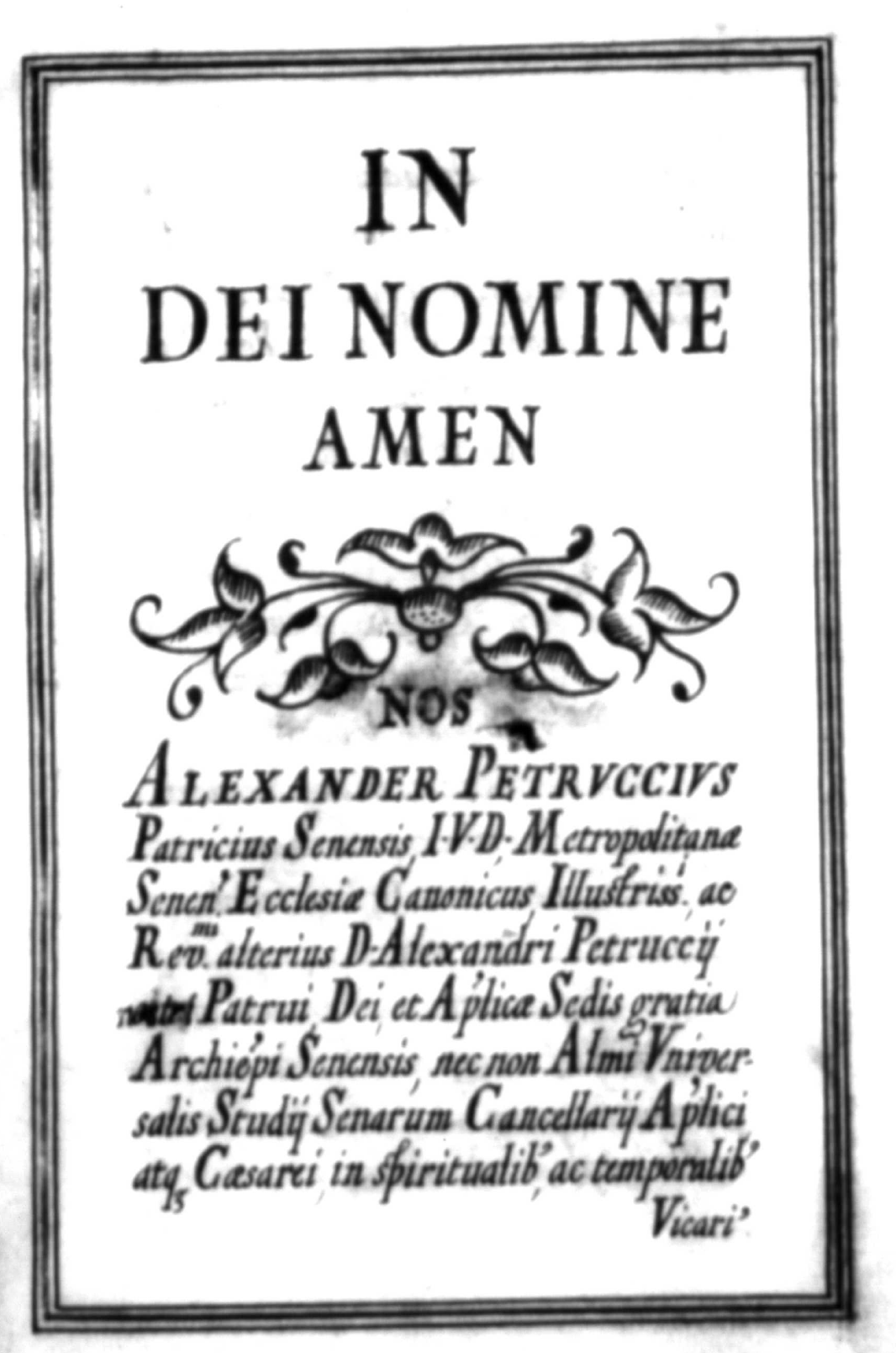
The invocation reads “In Dei Nomine Amen” (in the Name of God, Amen). While I have not seen any other diplomas of this period from the University of Siena,[13] there are a number of extant medical diplomas from this period issued by the University of Padua. The typical Padua diploma invocation reads “In Christi Nomine, Amen” (in the Name of Christ, Amen). The only diplomas that deviated from this norm were those of non-Christian students, in particular diplomas of Jewish graduates. Virtually every Jewish graduate’s diploma begins with the invocation, “In Dei Aeterni Nomine.” It is possible that the University of Siena made the same accommodations for its Jewish graduates as did Padua, few as they may have been.[14] Modigliano was also identified as a Jew in his diploma, with the word “Hebreo” appearing after his name:
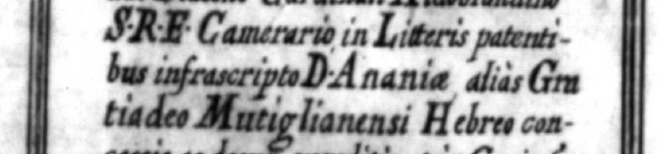
This was also commonly found in the diplomas of the Jewish graduates of Padua, where the word “Hebreus” or “Iudeus” would typically, though not always, follow the name of the Jewish graduates.

We next hear of Modigliano on August 14, 1650, when upon the departure of Rafael Corcos,[15] the Roman Jewish community appointed three new worthy teachers, one of whom was the doctor Hananiah b. Rafael Modigliano.[16] As reported by Zahalon, Hananiah tragically died while serving as a physician for the Jewish community in Rome during the Bubonic Plague of 1656.

Modigliano’s son Raphael was also a physician, as well as a rabbi.[17] Extant medical diplomas of Jewish students are exceedingly rare, yet in this case, we are fortunate not only to possess a copy of Hananiah’s diploma, but we also possess the diploma of his son Raphael as well.[18] This is the only known case of extant father and son diplomas. A copy of his medical diploma from the University of Ferrara in 1662 is below:[19]

The invocation, similar to his father’s diploma, reads, “In Dei Nomine, Amen,” and he is likewise identified as “Hebreus.”

Of note, the document explicitly restricts his medical practice to Jewish patients.

We also have record of Raphael delivering weekly Shabbat sermons in the synagogue in Siena. Moses ben Samuel ben Bassa of Blanes records in his manual for preachers, Tena’ei ha-Darshan,[20] that both he and Raphael Modigliano would deliver weekly sermons, after which they would each provide constructive criticism of the other’s sermon.

What of our third and final physician, Yitzhak Zahalon? Regarding the third of the Jewish plague physicians for Rome in 1656, the author does not reveal additional details about him, despite their sharing the same last name. A few sentences later, however, Yaakov Zahalon enumerates the fatalities of the plague at around eight hundred deaths and mentions his cousin, the young skilled surgeon, Yitzhak Zahalon, amongst the casualties.

This has led at least one scholar to identify the physician in charge of one third of the city as the same Yitzhak Zahalon, the surgeon and cousin of Yaakov, the author. Sosland writes, “Three Jewish doctors are mentioned by Zahalon as having charge over the patients. One of them was a first cousin of our author, a certain Isaac Zahalon, a “skilled surgeon” who died toward the end of the epidemic.”[21]

With the physicians in charge of the medical care of the Lazaretto, as well as the different sections of the Ghetto, accounted for by name, we are left to wonder about the role, if any, the author, Yaakov Zahalon, played during the plague. As Sosland notes, “as to the exact role Jacob filled, we have no direct knowledge.”[22]

Zahalon’s medical work was published in Venice in 1683, and unlike the work of his rough contemporary, Tuviya Cohen, whose Ma’aseh Tuviya has been reprinted numerous times, has not yet merited even a second printing.[23] There is however one extant manuscript of Zahalon’s Otzar HaHayyim housed in the Vatican,[24] dated from no later than 1675, and it is in this manuscript that we find the solution to the riddle of Zahalon’s role in the administration of medical care to the Jews in the Rome Ghetto during the plague.

The manuscript appears to reflect that Otzar HaHayyim was initially part of a larger multi-section work entitled Ohalei Yaakov Otzar HaHokhmot. Zahalon’s medical work is labelled as section two, Hokhmat HaRefuah, the only section in the Vatican manuscript.

Below is the section describing the division of the city into three sections, each with its respective physician.
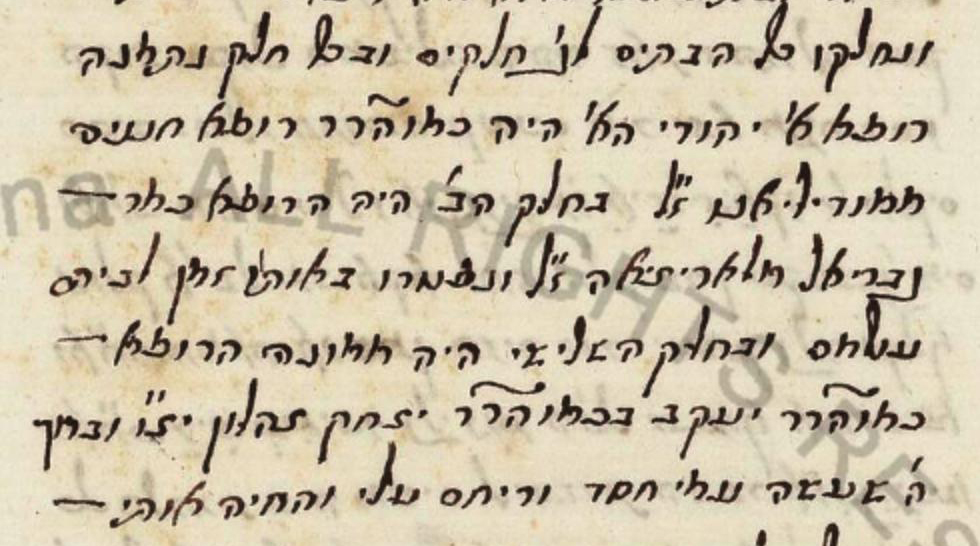
There is one key difference in this passage between the printed edition and the manuscript version. The physician in charge of the third section of the city is not Yitzhak Zahalon, whose identity is ambiguous, but rather, Yaakov ben Yitzhak Zahalon, none other than the author himself! A part of the name was accidentally omitted in the printed work. Zahalon refers to himself here in third person. This correction now facilitates a better understanding of the next sentence in the text, in which Zahalon continues to refer to himself, expressing gratitude to God for having rescued him from the ravages of the plague.

In this vein, I conclude with a comment on Zahalon’s conclusion to his plague passage. Despite the unspeakable tragedies experienced by the Jewish community, Zahalon ends his plague discussion by sharing a positive, though bittersweet, thought reflecting the continuity of the Jewish community:
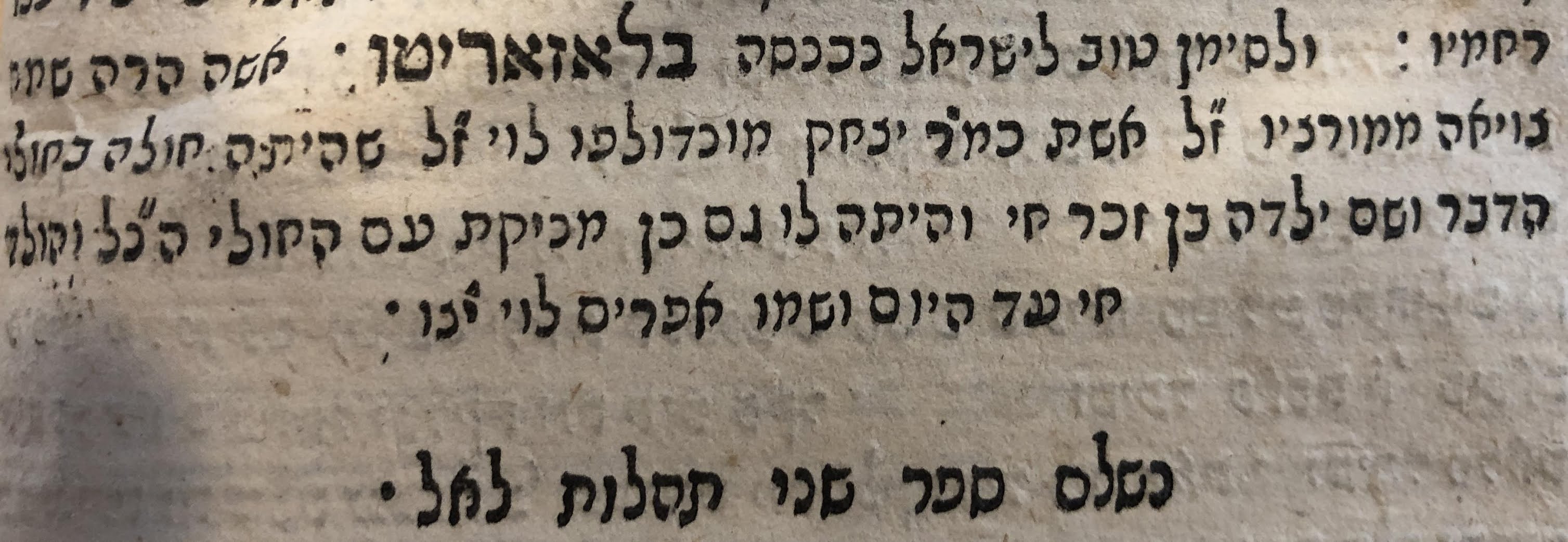
As a good sign for the people of Israel, a pregnant woman named Zivia, the wife Yitzhak Mondolfo, contracted the plague, and though confined to the Lazaretto, was able to deliver a healthy child, whom she was able to nurse for a period before her demise. In the final line of this section in the printed work, we read that the child was still alive “until today,” and that his name was Efraim Levi. Though Zahalon’s book was published in 1683, this line appears in the manuscript, thus “until today” would be some twenty years after the plague.

While this indeed is some form of consolation, the manuscript adds an additional sentence which yields a far more powerful conclusion.

“And the circumcision was performed there (in the Lazaretto), and I say to you by your blood you shall live, and I say to you by your blood you shall live.” Zahalon concludes with the phrase from Yechezkel 16:6 which is traditionally recited as part of the circumcision ceremony. The allusion here to the plague is obvious.

Omitting this last sentence denies us not only the additional factual information about the performance of the circumcision in the Lazaretto, itself a remarkable event, but also Zahalon’s homiletic flourish which marked the community’s (re)birth after the tragedies of the plague. As I write these words, we are still in this midst of the Covid 19 pandemic, though the dissemination of the vaccines portends, God willing, for its cessation in the near future. These final intended words of Zahalon resonate deeply with us today, perhaps even more so than they would have when Otzar HaHayyim was published, some three decades after the plague.

[1] Ellen B. Wells, “Prints Commemorating the Rome 1656 Plague Epidemic,” Annali dell’Istituto e Museo di Storia della Scienza di Firenze 10 (1985), 15-21.
[2] On Zahalon, see Harry A. Savitz, “Jacob Zahalon, and His Book, ‘The Treasure of Life,’” New England Journal of Medicine 213:4 (July, 1935), 167-176; Harry Friedenwald, “Jacob Zahalon of Rome: Rabbi, Physician, Author and Moralist,” in his The Jews and Medicine 1 (Ktav Publishing House: New York, 1967), 268-279; J. Ph. Hes, “Jacob Zahalon on Hypochondriasis,” (Hebrew) Koroth 4:5-7 (December, 1967), 444-447; A. Danon, A. Kadar and D. V. Zaitchek, “Physiology and Pathology of Lactation in Zahalon’s Work,” (Hebrew) Koroth 4:11-12 (December, 1968), 667-678; D. Margalit, “Shmirath Habriuth by Maimonides and Comment by R. Jacob Zahalon,” (Hebrew) Koroth 5:1-2 (September, 1969), 96-98; Yehoshua Leibowitz, “R’ Yaakov Zahalon Ish Roma uPizmono liShabbat Hannukah 1687,” Sefer Zikaron liHayyim Enzo Sereni: Ketavim al Yehudei Roma (Shlomo Mayer Institute: Jerusalem, 5731), 166-181; Jonathan Jarashow, “Yakov Zahalon and the Jewish Attitude Towards Medicine,” Koroth 9:9-10 (1989), 725-736; Zohar Amar, Maimonides’ Regimen Sanitatis: Commentary of R. Jacob Zahalon on “Hilchot Deot” – Chapter Four, With an Added Brief Preface to the Treatise Ozar ha-Hayyim (Hebrew) (Neve-Tzuf, 2002); Samuel Kottek, “Pediatrics in the work Otzar HaHayyim of Jacob Zahalon,” (French), in Gad Freudenthal and Samuel Kottek, eds., Melanges d’Histoire de la Medicine Hebraique: Etudes Choisies de la Revue d’Histoir de la Medicine Hebraique (1948-1985) (Brill: Leiden, 2003), 183-207; Eliezer Brodt, Bein Keseh Le’Asor (Jerusalem, 5768), 184-185; Eliezer Brodt, “Segulot leZikaron uPetihat haLev,” Yerushateinu 5 (5771), 337-360, esp. 352; Michal Altbauer-Rudnik, “Love For All: The Medical Discussion of Lovesickness in Jacob Zahalon’s The Treasure of Life (Otzar Ha-Hayyim),” in Asaph Ben-Tov, Yaakov Deutsch and Tamar Herzig (eds.) Knowledge and Religion in Early Modern Europe: Studies in Honor of Michael Heyd (Brill: Leiden, 2013), 87-106. For discussion of the sources of Zahalon’s medical work, see Iris Idelson-Shein, “Rabbis of the (Scientific) Revolution: Revealing the Hidden Corpus of Early Modern Translations Produced by Jewish Religious Thinkers.” American Historical Review 126, no. 1. Forthcoming, March 2021.
[3] For the response of the Italian Jewish community to plagues in this period, including the plague in Rome of 1656, see Yaffa Kohen, The Development of Organizational Structures by the Italian Jewish Communities to Cope with the Plagues of the Sixteenth and Seventeenth Centuries (Hebrew) (Doctoral Dissertation: Bar Ilan University, submitted Tishrei, 5740). I thank Naomi Abraham, librarian at Bar Ilan University, for her truly exceptional efforts in making this dissertation available to me in the midst of the Covid pandemic.
[4] For more on this passage and on the plague in the Jewish Ghetto of Rome, see Yehoshua Leibowitz, “Bubonic Plague in the Ghetto of Rome (1656): Descriptions by Zahalon and by Gastaldi,” (Hebrew) Koroth 4: 3-4 (June, 1967), 155-169; Kohen, op. cit., 72-95.
[5] Y. Zahalon, Otzar HaHayyim (Venice, 1683), 21a-21b. Elsewhere we have discussed the Jewish physicians of the 1631 plague in Padua. See E. Reichman, “From Graduation to Contagion: Jewish Physicians Facing Plague in Padua, 1631” Lehrhaus (thelehrhaus.com), September 8, 2020.
[6] See H. Friedenwald, “Jacob Zahalon of Rome,” in his The Jews and Medicine (Johns Hopkins Press: Baltimore, 1944), 268-279.
[7] On Zahalon’s abilities and reputation as an orator, see Henry A. Sosland, A Guide for Preachers: The Or HaDarshan of Jacob Zahalon—A Seventeenth Century Italian Preacher’s Manual (Jewish Theological Seminary: New York, 1987). On the plague sermons, see pgs. 23-28.
[8]  See, for example, Guenter Risse, “Seventeenth-century Pest Houses or Lazarettos: Rome 1656,” in his Mending Bodies, Saving Souls: A History of Hospitals (Oxford University Press, 1999), 190-214.
[9] On the medical members of the Gabai (and Zahalon) families, see S. Plashkes, “Two Jewish Medical Families in 17th Century Italy: Gabai and Zahalon,” (Hebrew) Koroth 3:1-2 (October, 1962), 97-99.
[10] Otzar HaHayyim 21b.
[11] Israele Zoller, “I Medici Ebrei Laureati a Siena negli Anni 1543-1695,” Revista Israelitica 10 (1913), 60-70 and 100-110. In contrast, the University of Padua counts 127 Jewish medical graduates from 1617 to 1695. See A. Modena and E. Morpurgo, Medici E Chirurghi Ebrei Dottorati E Licenziati Nell’Universita di Padova dal 1617 al 1816 (Italian) (Forni Editore, 1967). For Jewish graduates of Padua earlier than this period, see D. Carpi, “Jews who received medical degrees from the University of Padua in the 16th and early 17th centuries,” (Hebrew) in Scritti in Memoria di Nathan Cassuto (Ben Tzvi Publishers: Jerusalem, 1986), 62-91.
[12] JTS, MS 8519. I thank Sharon Liberman Mintz for bringing this diploma to my attention. As part of my research interest in Jewish medical history, I have sought out copies of medical diplomas of Jewish students from previous centuries. Sharon, aware of this interest, notified me of a medical diploma in the JTS collection. The record does not identify the graduate but lists the University of Siena as the granting institution. I had never seen a diploma of a Jewish medical student from this institution; the majority of extant medical diplomas of Jewish students are from the University of Padua. However, due to the Covid 19 pandemic, access to the original diploma, stored in the remote site of the library, has been impossible. Fortunately, the National Library of Israel had taken black and white photographs of this document some years ago, and I was able to acquire copies. Since the onset of the pandemic, I have been focusing of the history of pandemics in Jewish medical history. When I received the copies of the diploma, and read the name, Hananiah Modigliano, it sounded familiar to me. It was a short while until I realized that I had seen the name mentioned in Zahalon’s passage on the plague.
[13] As per the librarian for the University of Siena Archives, the university does not possess any diplomas of this period.
[14] On the differences in the diplomas of Jewish medical graduates of the University of Padua, see E. Reichman, “Confessions of a Would-be Forger: The Medical Diploma of Tobias Cohn (Tuviya Ha-Rofeh) and Other Jewish Medical Graduates of the University of Padua,” in Kenneth Collins and Samuel Kottek, eds., Ma’ase Tuviya (Venice, 1708): Tuviya Cohen on Medicine and Science (Muriel and Philip Berman Medical Library of the Hebrew University of Jerusalem: Jerusalem, 2019), in press; E. Reichman, “The ‘Doctored’ Medical Diploma of Samuel, the Son of Menasseh ben Israel: Forgery or ‘For Jewry’?” Seforim Blog (https://seforimblog.com) (forthcoming).
[15] The Corcos family was a prominent Jewish Italian family. Another Jewish graduate of the University of Siena was Isaac Corcos, who graduated in 1654. See Zoller, op. cit. He may have been a relative and possibly a brother of Raphael Corcos.
[16] See H. Volgstein and P. Reiger, Geschichte der Juden in Rom, 2 vol (Berlin, 1895-1896), 267.
[17] On Raphael Modigliano, see Asher Salah, La Republique des Lettres: Rabbins, ecrivains et medecins juifs en Italie au XVIIIe Siecle (Brill: Leiden, 2007), 428-429.
[18] What makes this even more exceptional is that Hananiah’s diploma is the only known Jewish diploma from the University of Siena, and Raphael’s diploma is one of only two known Jewish diplomas from the University of Ferrara, the other being from 1802 (Samuel Vita Della Volta).
[19] The diploma was originally part of the Valmadonna Trust Library, Ms. 292, and is now incorporated into the National Library of Israel, system n. 990000822160205171. See Benjamin Richler, The Hebrew Manuscripts in the Valmadonna Trust Library (Valmadonna Trust: London, 1998), n. 269.
[20] Columbia University Library, Ms. X 893 T 15, p. 15a. See Sosland, op. cit., 82-83.
[21] Sosland, op. cit., 25. Others just listed the name as Isaac Zahalon without comment. See H. Volgstein and P. Reiger, Geschichte der Juden in Rom, 2 vol (Berlin, 1895-1896), 212-213.
[22] Sosland, op. cit., 25.
[23] Some years ago, Chaim Reich, ah, of Renaissance Hebraica, produced a high-quality reproduction of Otzar HaHayyim. I thank Rabbi Eliezer Brodt, who owns one of these copies, for this information.
[24] The manuscript is available online at https://digi.vatlib.it/mss/detail/Vat.ebr.466. On this manuscript see, Malachi Beit-Arié and Nurit Pasternak, Hebrew Manuscripts in the Vatican Library (Vatican City, 2008), 405. I have only compared the manuscript to the printed edition for this brief passage. A comprehensive comparison remains to be done.
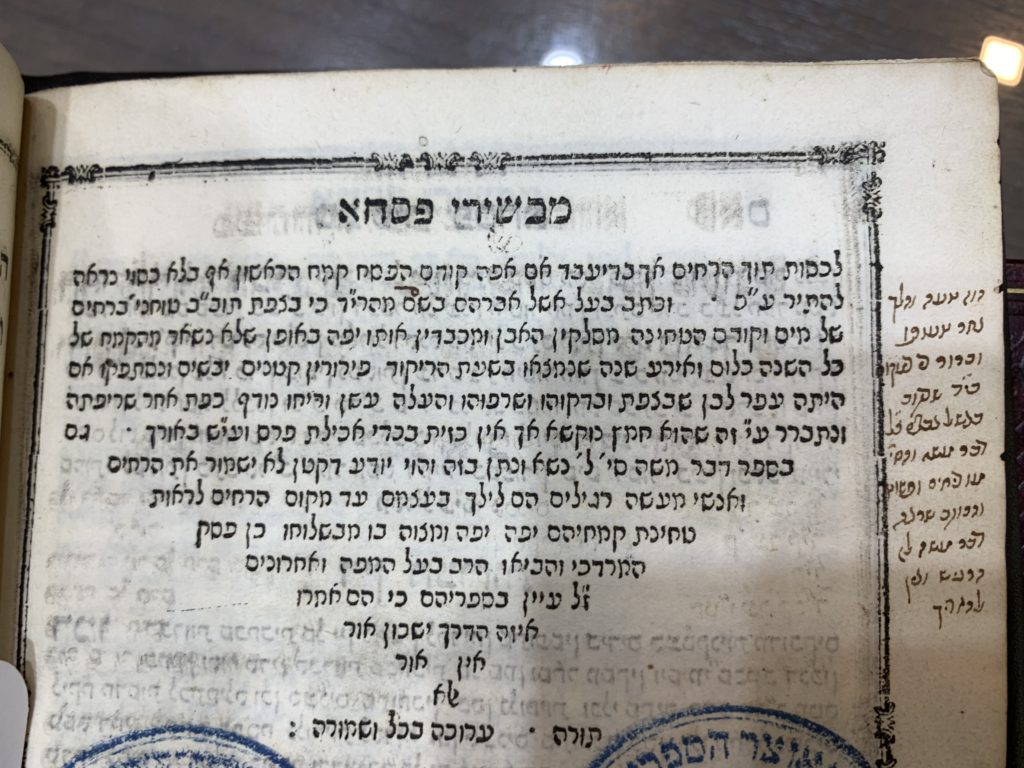


A Gift for Rabbi Chaim Yosef David Azulay: On R. Yaakov Shimshon Senigallia, author of the Machshirei Pischa haggada, and his relationship with Rabbi Chaim Yosef David Azulay,‘the Chida’.

A Gift for Rabbi Chaim Yosef David Azulay: On R. Yaakov Shimshon Senigallia, author of the Machshirei Pischa haggada, and his relationship with Rabbi Chaim Yosef David Azulay,‘the Chida’.

Moshe Maimon, Jackson NJ

Every antique sefer collector has his specialty. Some collect first prints, some collect classic editions and some collect the prints from a specific European press. The genres vary as well, with some focusing more on Kabbalah while others focus more on polemical literature. Yet, every collector will tell you, that each sefer has a story, and when you examine the individual characteristics of the sefer, the personalities involved with the sefer – whether it be the author or previous owner or the like – verily come alive and step off the pages to tell you their story.

One such cherished possession in the collection of a friend of mine, is the 1788 edition of the classic haggada, Pesach Me’uvin, by R. Chaim Benveniste, chief rabbi of Izmir in the tumultuous era of Sabbatean messianism and its after wake, and author of the important and voluminous halachic compendium, Kneset HaGedolah which collects and analyzes the considerable halachic literary output of the preceding centuries.

Benveniste’s haggada Pesach Me’uvin, first published in Venice 1692, is likewise an important compendium of halachic rulings pertaining to Passover and the seder night, and is widely quoted in the standard halachic sources. It has since been printed many times, up to the most recent edition (Lakewood 1997) in which the manuscript glosses of R. Yaakov Emden were included. A unique feature of the first publication is that it was printed simultaneously in two editions – one containing the Sephardic rite and one containing the Ashkenazic rite.

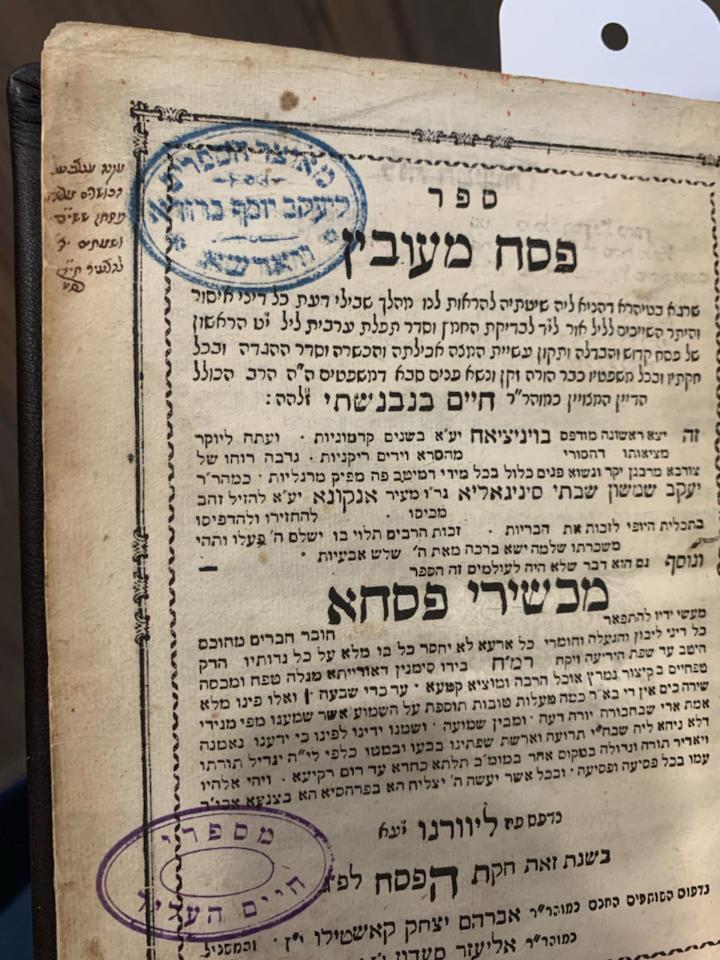
The 1788 edition is the second edition of this haggada and it was published in Livorno (Leghorn) by a young and promising scholar from an aristocratic Italian family, R. Yaakov Shimson Shabetai Senigallia of Ancona. Along with the Pesach Me’uvin, this edition included the original work of the publisher, R. Senigallia, called Machshirei Pischa, which continued the work of R. Benveniste concerning the laws of kashering kitchen utensils for Passover. 

This would prove to be the first of many scholarly contributions by R. Senigallia, and by the time of his death in 1840 he had built up a reputation as a great scholar, as well as a pious and saintly individual, with many important publications to his credit.[1] This work too would stand the test of time, and a hundred years later, in 1889, when the Netziv of Volozhin had his own commentary on the haggada, Imrei Shefer, published in Warsaw, he had it printed together with the Pesach Me’uvin and Machshirei Pischa.

At some point during the Chida’s tenure in Livorno, R. Senigallia became personally acquainted with him,[2] and the two would maintain a friendly correspondence throughout the years. R. Senigallia would refer frequently in his writings to the Chida’s own works, always with great honorifics, and after the passing of the latter, R. Senigallia was wont to chastise a fellow rabbinic scholar when he felt not enough deference had been shown in arguing with Chida’s halachic rulings.[3]

Before presenting the Chida’s copy of R. Senigallia’s haggada, a brief summary of the surviving record of their correspondence, preserved in the Chida’s letters published by Dr. C. Rosenberg,[4] is in order. Only one actual letter to R. Senigallia from the Chida has survived (#7 p. 11), a critical edition of which is appended at the end of this article, but in his other letters the Chida often makes mention of R. Senigallia, from which we can reconstruct a partial record of their correspondence and from which we can gage the nature of the close relationship they shared. 

The earliest mention of R. Senigallia is in a letter (#3 p. 7) the Chida wrote in the summer of 1787 to his erstwhile pupil and confidante, R. Yoel Camis of the Ancona Beth Din, in which he shares that he had received requests from R. Senigallia and R. Elia Nahamo, they too of Ancona, to give his haskama on the forthcoming publication of R. Senigallia’s aforementioned haggada. The Chida writes that he is unable to comply as he has already made a firm decision not to grant any haskama, and he has already had occasion to turn down many persistent entreaties from close acquaintances on account of this decision.[5 ] Concurrently, the Chida requests of R. Camis to make peaceful overtures towards the aforementioned rabbis and beg them to excuse him.

The mention of R. Senigallia in this letter is not accompanied by the terms of endearment we find in later references to him in the Chida’s letters, and perhaps we may surmise from this that they had not yet developed the close relationship they would later share. This assumption is bolstered by the fact that R. Senigallia apparently did not feel he could rely on the merit of his own relationship in approaching the Chida, and therefore turned to R. Nahamo, whose own haskama graces the sefer, for help in requesting the Chida’s haskama.[6]

Aside for the one letter in the collection addressed to R. Senigallia, the remaining references to R. Senigallia are found in the Chida’s letters to his son, R. Raphael Yeshaya Azulay, who had assumed the position of Chief Rabbi of Ancona in the summer of 1788. The Chida played an integral role in the negotiations with communal leaders to have his son elected to this position,[7] and he remained very appreciative of the efforts of the Anconians who had helped with this appointment.[8] It is difficult to ascertain if R. Senigallia had himself assisted in this matter, but the fact remains that from this point forward, he is mentioned frequently in the letters from the Chida to his son,[9] and we may rightly surmise that he had quickly become a close member of the inner circle of the new rabbi of Ancona.

Almost all of the references to R. Senigallia are in the context of the Chida’s request that his son extend warm greetings to R. Senigallia in his name, and the Chida often adds that he prays for R. Senigallia constantly. The Chida also says as much himself in his letter to R. Senigallia, where he also makes mention of his learning and praying for a few other philanthropists in Ancona as well. Likely this is indicative of the gratitude the Chida felt towards these individuals for the financial support they may have extended to the Chida,[10] and this is why the Chida wanted them to know that he was repaying his debt of gratitude.

Besides for learning and praying for the merit of his benefactors, the Chida would also honor them with his letters, and his holiday greetings to R. Senigallia in the letter to him preserved in this collection (a critically edited version of which is appended below) would seem to fit that bill perfectly.[11] Yet, the terms of endearment with which the Chida consistently refers to R. Senigallia, such as ידידינו אהובינו (our very dear beloved) and מאור עינינו (the light of our eyes), indicate clearly the genuine affection he felt for the latter. In one letter (#22 p. 35) he calls him ידידינו חמודינו נשמת רוח חיים (our very dear cherished breath of life), in which חיים meaning life, is a double entendre, also being the Chida’s first name – indicative of how important R. Senigallia was to him.

The letters also discuss other interactions the Chida had with R. Senigallia, such as the gifting to him of the Chida’s works Sha’ar Yosef (#24 p. 39) and Shem HaGedolim (#32 p. 49), or the distribution through him of other sefarim (#26 p. 43; #51 p. 67). We learn from these letters of instances (#10 p. 18; #11 p. 21) where R. Senigallia had turned to the Chida for his assistance in communal affairs, and in one case (#36 p. 53), the Chida asks his son to reply in his name regarding a request made of him by R. Senigallia for a segula needed for an acquaintance who had taken ill.[12]

All in all, this sampling serves well in painting a picture of a cordial relationship that blossomed with time and eventually became a deep and abiding friendship. At one point, their correspondence had reached a point where the Chida would become greatly distressed when too much time had elapsed without a letter from R. Senigallia (#25 p. 42), and by 1793, five years after R. Senigallia had published his Machshirei Pischa, a scant two weeks without hearing from him would give the Chida pause (#34 p. 52).

We are now in position to better appreciate the Chida’s inscription in the copy of this haggada gifted to him by R. Senigallia. We don’t know for certain when the haggada was given, but knowing of R. Senigallia’s interest in having the Chida’s recommendation on his work, it is likely that it was gifted shortly after it was published. The Chida’s apparent delight in the gift is evident in his inscription:

 מתנה מנצב על הכושרים מכשירי פסחא ששי”ם ושמחים יצ”ו להצעיר חיד”א ס”ט

Loosely rendered, it reads thus (and we emphasize “loosely”, as the Chida’s melitza is not given to literal translation): “A present from the one who stands over and guides those who are kashering and readying the preparations for Pesach joyously and happily to the humble Chida”. This clever inscription incorporates the title of the sefer Machshirei Pischa (“preparations for Pesach”), the nature of the sefer (“stands over and guides those kashering”) and even the name of the author whose initials make up the word ששים (“joyously”).[13]

Evidence of the Chida’s having studied the sefer comes from his gloss on the last page of the Machshirei Pischa section where R. Senigallia references the discussion of the Safed practice for kashering baking utensils. R. Senigallia quotes the sefer Eshel Avraham (Orach Chaim 453)14 who in turn quotes the respona of R. Yosef David of Salonika, Shu”t Bet David (Salonika 1740), who discusses this practice. R. Senigallia further cites the responsa of R. Moshe Amarilio, Shu”t Dvar Moshe (#30) who he says also discusses this particular practice. 

The Chida’s sharp eye, tremendous bekiut and keen bibliographical sense were on full display in his comment on this:

הוא טעה והלך אחר טעותו וברור כי במקום בי”ד שכתוב באשל אברהם צ”ל דבר משה והסי’ מוכיחים ופשוט והכותב שראה דבר משה לא הרגיש ואין להאריך

The Chida was quick to realize that by citing Shu”t Dvar Moshe as an additional source to the Bet David cited in Eshel Avraham, R. Senigallia was unwittingly duped by a typographical error in the Eshel Avraham. When the Eshel Avraham originally cited the Bet David, it was a mistake (as evidenced by the inaccurate citation), and in fact should read Dvar Moshe, which, it turns out, is the only source to discuss this practice.

I imagine that over the course of their long and fruitful correspondence, the Chida must have had occasion to bring this correction to the attention of R. Senigallia, and I imagine R. Senigallia must have been just as overjoyed – ששי”ם – with the knowledge of the Chida’s delight in his gift and his interest in the sefer, as we have been to learn all about the lives and emotions of these two great individuals as they come to life and step right off the pages of this cherished haggada.

*****

[1] See the entry for R. Senigallia in R. Mordechai Shmuel Girondi’s Toldot Gedolei Yisrael (Trieste 1853, p. 158). It should be noted that the list of publications there is scant compared with the fuller listing in Dr. C. Rosenberg’s Igrot M’Harav Chida (Budapest 1927, pp. 11-12). It should be further noted that some of the titles listed in R. Girondi’s work as manuscripts, such as Yaakov L’chok and Shomer Shabbat, had actually been published earlier together with other works of R. Senigallia. For a complete bibliography of his works, in print and in manuscript, see the entry for R. Senigallia in Asher Salah’s Le Republique Des Lettres, Brill 2001, p. 617.
[2] One meeting is recorded by R. Senigallia in his responsa, Meged Shamayim, Livorno 1844, p. 22a, in which R. Senigallia remembers debating the Chida with regards to a problematic text in Shu”t Rashbash. This meeting is said to have take place twenty years before the writing of this responsum, though the responsum is undated and all we know is that it was written after the Chida’s passing in 1806. Presumably, R. Senigallia was in Livorno for the 1788 printing of Machshirei Pischa, and perhaps that is when he met with the Chida, though there is no way to know for certain. R. Avraham Tikotzky writes in his preface to the Jerusalem 1986 edition of R. Senigallia’s Matan B’seter – Niddah (p. 10) that the Chida never met with R. Senigallia in person save for the one time when the Chida saw R. Senegallia as a youth (כשהחיד”א ראה את רבינו בעודו בחור). No source is given for this contention, and this is hardly evident from the aforementioned source in Meged Shamayim.

Despite the more than 200 miles separating Ancona on Italy’s east coast and Livorno on her west coast, it is likely that over the course of the Chida’s twenty six or so years in Livorno the two had more than one occasion to meet up, either in Livorno or Ancona. This is all the more likely when we consider that the Chida’s eldest son served as Chief Rabbi in Ancona from 1788 and on, and on at least one occasion, in the summer of 1791, the Chida did make the journey to Ancona to visit with him (See letter 22 on p. 34 and Dr. Rosenberg’s note there, see also p. 12 fn. 3 where he surmises the Chida’s wife, whose warm regards for R. Senigallia’s wife are expressed in the Chida’s letter to him, owed her acquaintance with Mrs. Senigallia to this visit).
[3] See Meir Benayahu’s biography: Rabbi Chaim Yosef David Azulay (Jerusalem, 1959 pp. 122-123, the reference in Asher Salah’s aforementioned bibliography to pp. 112-113 in this book should be corrected).
[4] Hatzofeh L’Chochmat Yisrael, Vol. 11 (Budapest 1927, pp. 241-309). This collection has likewise been printed in a separate pamphlet, also in Budapest 1927 (available here), and the references to this work in the present article follow the pagination in this pamphlet.
[5] The Chida emphasizes this point with the following melitzah (wordplay): ואין לדרוש בקל וחומר כי אם בגזרה שוה. This phrase which is a spinoff of the Talmudic phrase found in Pesachim (66a) and elsewhere (דאין אדם דן גזירה שוה מעצמו אלא קל וחומר) has been explained by Dr. Rosenberg in a footnote to mean that Chida’s refusal to grant haskamot was on account of his humility; he did not want to appear important (חמור) at the expense of others (קל), but rather wished to be viewed as an equal (שוה).

Whether this is indeed the Chida’s rationale for withholding his haskamot is debatable (and Benayahu in his biography (pp. 96-97) has made the convincing case that there must have been other factors as well), but it is clear that Dr. Rosenberg, who in any event had little appreciation for the melitzah of the Chida (as per his own comments in the introduction to his edition of Igrot), missed the innuendo in this melitzah as well. In this context, it is clear that what the Chida meant to say was that he does not want to be strict (חמור) with some requests for haskamot and lenient with others (קל), but rather must apply his decision (גזרה) to everyone equally (שוה).
[6] Benayahu writes in his biography (p. 97) that R. Senigallia had turned to R. Camis for help in obtaining the haskama, but this is a mistake and should say R. Nahamo in place of R. Camis, as is evident from the above quoted letter. R. Tikotzky, who seems unaware of Dr. Rosenberg’s edition of Igrot, shows his hand when he writes in his preface to the Jerusalem 1986 edition of R. Senigallia’s Matan B’seter – Niddah (p. 10): כשעמד רבינו להדפיס בשנת תקמ”ז את הספר “פסח מעובין” עם הוספותיו בשם “מכשירי פסחא” הכולל דיני ליבון והגעלה, ביקש מחברו ר’ יואל חמיץ מאנקוה (צ”ל אנקונה) כי ישפיע על החיד”א שיתן הסכמה לספר.
[7] See the documents detailed by Benayahu in his biography from p. 504 and on. Some important documents from this episode are reproduced, transcribed and translated in R. Dessler’s Shnot Dor V’dor vol. 2 (Jerusalem 2004, pp. 71-98).
[8] Cf. Dr. Rosenberg’s comments on p. 18 fn. 5.
[9] He is mentioned in 15 out of the 47 letters the Chida wrote to his son in this collection (they are: #10,11,22,24,25,26,32,33,34,36,37,40,45,46,51).

According to Dr. Rosenberg, the additional mention of סי’ ר’ יעקב, among the addressees to whom the Chida mailed letters from Firenze (listed in a 1791 letter to his son, #23 p. 37), is none other than our R. Senigallia, however I am inclined to doubt that on account of the fact that the Chida always refers to him by the name or initials of יעקב שבתי, and also always preceded with the honorific כמה”ח, which stands for כבוד מורנו החכם (contra Dr. Rosenberg p. 67 fn. 5). More likely, this סי’ ר’ יעקב is to be identified with סי’ יעקב who was one of the wealthy patrons of the community mentioned in letter #24 (p. 39), as the title סי’ (Signor), a respectful title for a layperson, would suggest.
[10] Among the Chida’s personal effects, we find a paper published in Benayahu’s biography (pp. 466-467) containing the Chida’s accounting of income for the year 1781, among which are listed several entries of subsidies he had received from various philanthropists. From what we can glean from the Chida’s correspondence, these subsidies most likely took the form of sponsorships for the Chida’s prolific sefarim output (cf. p. 38 fn. 2; p. 48 fn. 1 – the reference there to letter #23 should be corrected to #24; see also #34 pp. 51-52).
[11] Cf. #46 p. 63 where the Chida writes to his son informing him of the letter he had penned to R. Senigallia, along with that of another patron, and also asks him to deliver the letters and to elaborate on them on his own in order to compensate for the brevity of these letters.
[12] Interestingly, none of our letters are indicative in any way of a scholarly correspondence between the two, and I know of no basis for the claim put forth by R. Tikotzky in his preface to the Jerusalem 1986 edition of R. Senigallia’s Matan B’seter – Niddah (p. 10): בין החיד”א לרבינו נסבו בדרך כלל המכתבים מענייני הלכה ופלפול, אך אף בענייני קבלה החליפו מכתבים ביניהם, והחיד”א אף כותב לבנו, כי שלח קמיעות רבות לאנקונה מקום מושבו של רבינו (Our rabbi and the Chida generally corresponded in pipulistic and Halachic matters, however they also corresponded in kabbalistic matters, and in fact, the Chida even writes to his son of the many kemayas he had sent to Ancona where our rabbi resided). As far as I can tell, the only kernel of truth in this flight of fancy is the (one and only) kemaya the Chida sent to R. Senigallia, mentioned in his letter to him, and referenced in various letters to the son; however this kemaya was not intended for R. Senigallia at all, but to be used as an amulet for an ailing patron, and in any event says nothing about any supposed kabbalistic dealings between the two rabbis.
[13] This is so because the Chida uses מ for the last name, for מסיניגאליא. Although on the title page the last name is spelled סיניגאליא without the prefix מ (from), the name indicates that the family hailed from the city of Senigallia, and our rabbi sometimes spells it himself with the מ, such as on the title page of his Abir Yaakov (Pisa 1811).
[14] This is the work of R. Avraham Oppenheim first published in Amsterdam 1769 and printed in the margin of most editions of the Shulchan Aruch, and should not be confused with the similarly named work by R. Avraham David Wahrman of Butchatch, whose own Eshel Avraham, found in the back of contemporary editions of the Shulchan Aruch, was first printed in 1889, a hundred years after the Machshirei Pischa. I note this because there appears to be some confusion about this, and even the tremendously helpful Sefaria website has the former sefer listed under the authorship of the latter.


ADDENDUM:

העתק מכתבו של הרחיד”א לר’ יעקב שמשון סיניגאליא ע”פ צילום כת”י[15]5

ב”ה  ער”ח ניסן תקנ”ה[16]6

ידידנו ואהובינו חכם לב איש חסיד[17] כמהח“ר יעקב שמשון סיניגאליאה[18] יצ”ו נר”ו

ונתתי ש'[19] בארש[20]. מקוצר רוח ממה שעברתי אברים קודמין[21] יעברו חלושים[22] ודחקתי לכתוב 

שתי אותיות בפרו”ס הפסח[23] כפור”ס מן החיים[24] סוכת ש’ ולברך שמו הטוב ולכל אשר באהלי יעקב 

יחוגו הג הפסח לחיי“טם ט ולש’ ובעושר וכבוד ושמחה רבה כי”ר 

מעיד אני עלי שמים וארץ כי ברוב הימים אני מברך שמו ושם אהוב ונחמד סי’ ש”םמיצ”ו 

וסי’ יש”ע יצ”ו ואני לומד איזה ד”ת לשם יש”ע וכה יאמר להם ושלחתי הקמיעאה ליד יש”ע

על יד יאו”ר לי[25] הבן יקיר נר”ו. מצד נ”ב להגברת נ”ב מ’ ש”ר ולהבנים היקרים אצוה את ברכתי 

ברכת הדיוט. לגיסיו האהובים יצ”ו ש”ר. לכל שואל בש’ ש”ר. ואני תפלה הצעיר וזעיר 

מתפלל בעדו תמיד 

חיד”א ס”ט

אהובינו סי’ יש”ע יצ”ו יעלה עלי

‘הכתוב כאן כאלו לו לבת נתנת הארש וש


  1. בספריית בית המדרש לרבנים מספר 5397 (ניתן להוריד צילומו כאן, והמכתב מופיע בעמ’ 18 בתדפיף). המכתב נדפס ע”פ כתה”י ע”י ח’ רוזנברג בספרו ‘אגרות מהרב חיד”א’ (בתדפיס מיוחד מתוך ‘הצופה לחכמת ישראל’ שנה יא, בודפסט תרפ”ז, עמ’ 11-12, ניתן לצפות בו כאן). העתקתו של רוזנברג לקויה בחסרות ויתרות (לרוב בלתי משמעויות) שתוקנו כאן בגוון אדום. תודתי נתונה בזה למכובדי הרב שלמה דיין נר”ו שעזר על ידי בפיענוח כתה”י.
  2. באותו יום ערך מכתב לבנו (אגרות מהד’ רוזנברג עמ’ 62-63), ובין הדברים כתב לו אודות מכתבו הנוכחי להריש”ש סיניגאליא: “בדוחק אני כותב שתי שורות לסי’ ש”ם וכמהחרי”ש הי”ו נא לתתם בידם וישלח דברו להשלים ולגמור חסרי”.
  3. אני משער שתואר זה, הבנוי כנראה על לשון הכתוב במשלי (יא:יז) ‘גומל נפשו איש חסד’ (וממנו בפיוט יגדל ‘גומל לאיש חסד כמפעלו’) מרמז על חסדו של הריש”ש סיניגליה שתיווך בין הרחיד”א להגבירים הנרמזים במכתב זה ושכנראה התפרנס הרחיד”א מהם באיזה שהוא אופן (מן הסתם ע”י התרמתם להדפסת ספריו), ולכן חש הרחיד”א כלפיהם יחס של גומלים, והוא מברך את שמם ולומד ומתפלל בעדם. להגביר האחד ‘ש”ם’ ערך הרחיד”א מכתב נוסף באותו יום כנזכר באגרתו בהערה הקודמת, ולהגביר השני ‘יש”ע’ שלא ערך לו מכתב בפני עצמו (אולי מפני חולשת בריאותו) הוסיף שתי שורות הנכתבות להלן בסוף המכתב (המועתקות כאן לראשונה) להודיע לו שיקרא אגרת זו הנוכחית כאילו שהיא נכתבה אליו בעצמו.
  4. לא הרגיש המעתיק שנשמר הרחיד”א מלכתוב האותיות יו”ד וה”א ברצף ממדת חסידות, ולכן יש שאף שינה וכתב אל”ף במקום ה”א כמו ‘יאודה’ במקום ‘יהודה’, וכן אצל שם בנו הר”ר רפאל ישעיה נהג לפעמים לכתוב ‘ישעיא’ כנראה מצילומי הכתיב שע”ג המטעפות בתוך קובץ כתה”י, ואולם המעתיק העתיק תמיד ‘ישעיה’ באין מבין.
  5. קיצור ל’שלום’ (וכזה תמצא עוד שבע פעמים להלן), וכבר בספרו ברכי יוסף (או”ח פה:ח) צידד הרחיד”א כשיטת האומרים ששלום הוא מן השמות שאינן נמחקין ואשר אין לכותבן באגרות שלומים.
  6. מליצה ע”פ לשון הכתוב (ויקרא כו:ו) ‘ונתתי שלום בארץ’, ונשתמש בה הרחיד”א בעוד כמה אגרות, ור”ל הנני מקדם פניך בדיבור (ארש) של שלום.
  7. מליצה ע”פ לשון חז”ל שאנו אומרים בתפלה כל יום בסדר המערכה, ובפירושו כתב ר’ חנניה חביב אזולאי בהערה לאגרות הרחיד”א מהד’ רוזנברג (עמ’ 44) ש’קודמין’ ר”ל החליים הישנים שבאיברי גופו, ואולם לדידי חזי לי שהכוונה לאברים שבחלק הקדימה שבגוף כמו האיצטומכא, שכן סבל הרחיד”א בימים אלו הרבה מחולי המעים כנזכר באגרתו מט”ו אדר בשנה זו (עמ’ 61) ע”ש. 
  8. מליצה ע”פ לשון הכתוב בבמדבר (לב:ל) ‘יעברו חלוצים’. על חולשת אבריו והתרופפות מצב בריאותו בימים אלו, ראה אשר כתב הרחיד”א באגרת לבנו באותו יום  (עמ’ 63): “שם כתבתי כי הא גופא קשיא וכאבי נעכר ועתה רווח פורתא שאין הענין בחוזק כאשר היה ה’ ירפאני רפואה שלמה”. ואולם למרבה הצער תקוותיו של הרחיד”א להחלמה גמורה לא התגשמו, ראה אשר כתב אח”כ באגרת לבנו (אגרות מהד’ רוזנברג עמ’ 13): “נהייתי ונחליתי יותר מחודש וכל הפסח לא יכולתי לילך אפילו לישיבה ועד האידנא חייך הידיד לא איפרק מחולשא”.
  9. חמשה עשר יום לפני הפסח נקרא פרוס הפסח בלשון המשנה (שקלים ג:א), ומליצת הרחיד”א רומזת שהוא פורס בשלומו בפרוס הפסח (שכן נכתב המכתב ער”ח ניסן כנזכר בתאריך).
  10. מליצה ע”פ לשון הגמ’ בקידושין (סו:): “אמר ליה ר’ טרפון: עקיבא כל הפורש ממך כפורש מן החיים”, והכוונה כאן ש’חיים’ (שמו הפרטי של הרחיד”א) מבקש שיפרוס סוכת שלומו של הנמען.
  11. מליצה שגורה בפי הרחיד”א לבנו בכורו ר’ רפאל ישעיה אב”ד אנקונה, המכילה ר”ת של שמו (י-שעיה א-זולאי ר-פאל), וכאן היא בנויה על לשון הכתוב בשמות (ב:ה): ‘על יד היאור’, וביחזקאל (כט:ג): ‘לי יאורי


Towards Decoding Ha-Yeriah Ha-Gedolah (The Great Parchment), A Cryptic 14th Century Italian Kabbalistic Text

Towards Decoding Ha-Yeriah Ha-Gedolah (The Great Parchment), A Cryptic 14th Century Italian Kabbalistic Text

By Ezra Brand

Ezra Brand is an independent researcher based in NYC. He has an MA from Revel Graduate School at Yeshiva University in Medieval Jewish History. His main research focus is currently 13th and 14th century sefirotic Kabbalah, and he is interested in using digital and computational tools in historical research. His previous contributions to the Seforim Blog can be found here, and a selection of his academic research can be found here. He can be reached at ezrabrand-at-gmail.com; any and all feedback is greatly appreciated.[1]

Sefirotic Kabbalah has its origins in thirteenth century Provence and Spain. It reached its apotheosis in the Zohar, which began to appear in Castile in the late thirteenth century. Kabbalistic literature started appearing in Italy soon after. Moshe Idel, in his masterly survey of kabbalah in medieval Italy, shows how “Rome was a place where Catalan Jewish culture, philosophical and kabbalistic, were already well established in the 1280s.”[2] And further: “Thus, in one decade, approximately 1280-1290, the Jewish culture in Rome was enriched by the arrival of a variety of Jewish esoteric material: theosophical and ecstatic Kabbalah, as well as Ashkenazi esoteric material.”[3] Idel raises the possibility that “a massive importation of kabbalistic literature took place in Italy at the very end of the thirteenth century.”[4] Idel make programmatic statement that “a pluralistic vision of the history of Kabbalah, which entails deemphasizing the centrality of Spain in the history of Kabbalah, will help to distinguish more precisely the specific contributions of Kabbalah in Italy.”[5]

Ha-Yeriah Ha-Gedolah (from here on: YG) is a fascinating, enigmatic work, which provides a window into this first flourishing of Italian Kabbalah. According to Giulio Busi, the academic scholar who first published YG from manuscript in 2004, “Ha-Yeri‘ah ha-Gedolah was probably written at the beginning of the 14th century by an author whose name remains unknown to us. Most likely, he was an Italian kabbalist, since all the preserved manuscripts have been copied by scribes working on the Italian peninsula.”[6]

The first modern academic scholar to mention YG was Gershom Scholem in his 1937 list of commentaries on the Ten Sefirot. Scholem also mentioned the line-by-line commentary on YG written by the fourteenth-century Italian kabbalist Reuven Tzarfati.[7] Scholem’s student Efraim Gottlieb, in a pioneering study on Tzarfati, discusses YG briefly.[8]

In 2004, Giulio Busi, with Simonetta M. Bondoni and Saverio Campanini, published YG for the first time, based on the extant manuscripts.[9] It comes out to 71 pages, with at most around 13 lines on a page.[10] Busi gives an introduction summarizing previous research and presenting his own research on this work, and an overview of the extant manuscripts of YG and Tzarfati’s commentary. (Busi’s introduction is available online.)

Like the thirteenth-century Zoharic literature[11] and related kabbalistic works, YG interprets biblical stories and topics in terms of the interplay between the sefirot. Busi describes it as a “forgotten masterpiece of kabbalistic literature,[12] and as “one of the most obscure texts of the whole kabbalah”.[13]

Even after its appearance in print, YG does not appear to have evinced very much interest, either among academic scholars or among enthusiasts of Kabbalistic literature. I am not aware of any further scholarship on this work. In a previous paper of mine, I gave an overview of some aspects of YG. Here, I’d like to revisit this enigmatic work, provide some suggestions for a way forward in decoding it, and hopefully spur further interest and research.[14]

YG is set up as work made up of sixteen “Sections” (sippurim).[15] Busi describes YG as “a booklet of a few extremely dense and symbolic pages.”[16] He further writes: “There is no doubt, however, that the Great Parchment is one of the most obscure texts of the whole kabbalah.”[17] Busi in his introduction gives an overview of each story based on Tzarfati’s commentary, prefacing: “Obviously, there is no guarantee that Sarfatti’s exegesis always reflects the thought of the unknown author of the work. Nevertheless, the detailed analysis of this early commentator represents the only starting point we possess with which to explore this still unknown chapter of late medieval kabbalah.”

I would claim that Busi overstates the obscurity of this work. I would like to point out a few aspects of YG that would aid in making progress in decoding this fascinating work.

Indexing Sefirotic Correspondences

Busi writes: “Apparently rebelling against the laws of meaning, [YG] is striking for its capacity to evoke waves of esoteric implications without ever mentioning directly the kabbalistic secrets.”[18] And further: “The key is offered by a scheme of correspondences that the author never enunciates openly but the reader must be aware of”.[19]

Again, I believe that this is somewhat overstated. Admittedly, the overarching narrative of the sections is often unclear.  The work is dense with biblical and Talmudic quotations and allusions, and written in a kind of associative, stream-of-consciousness style, making the overall narrative difficult to untangle. There are often what appear to be throwaway lines that don’t seem to be relevant in context. As I mention below, it may be that the author was simply writing with stream-of-consciousness, and never intended every line to have a deeper meaning. In any case, YG is by no means the only esoteric work to have been composed in a purposefully enigmatic style.

With all this in mind, the fact is that throughout the work, YG explicitly mentions sefirotic correspondences. Unlike the Zoharic literature, YG is replete with explicit usage of the standard terms for the ten sefirot. The Temple is a clear theme throughout (see below), and YG explicitly indexes the one-to-one correspondences between ten items in the Temple and the ten sefirot, using the sefirot’s standard names.[20] Another explication of symbols can be found in YG’s discussion of Ezekiel’s Vision of the Chariot, where the correspondence of the Four Faces with specific angels, cardinal directions, and sefirot are given, again using the sefirot’s standard names.[21]

Certain terms are used consistently for Evil (or closeness to Evil) throughout, such as Sha’atnez, Woman, Snake, Calf, Donkey, Limping Thigh, Mixture.[22] Specific terms recur with presumably consistent sefirotic equivalences, such as Ruth and Upper Pool.[23]

Even if YG never explicitly defines the meaning of a symbol, comparison with other thirteenth- and fourteenth-century works should allow for fairly certain elucidation.[24]

Close Commentary of Biblical Texts or Specific Topics

In many sections, YG very closely hews to biblical texts, quoting the biblical words and performing an extremely close interpretation, sometimes phrase-by-phrase, or even word-by-word. Busi’s edition does a tremendous service by italicizing the biblical quotes, but many quotes fall through the cracks and are not italicized. YG is often written in a way that only a single word is added to biblical text, or a biblical word is paraphrased, the order of words is switched, words are skipped words, or a pastiche between two biblical verses is made. These techniques presumably impart meaning. Closely separating the biblical quotes from YG’s additions or paraphrase helps clarify what exactly YG is attempting to convey.

Even when YG is not closely interpreting a biblical text line-by-line, the topic is often still clearly defined.

By comparing how other thirteenth- and fourteenth-century kabbalistic works interpret these biblical stories and topics, it is likely that much light would be shed on the discourses of YG.

Please see the appendix of this article for a chart comparing YG’s Sections with corresponding biblical stories or topics.

Word Associations

A striking aspect of YG is the continuous flow of writing, using word associations and wordplay. This is true both in terms of how it interprets biblical verses, as well as how it segues into new topics seemingly based on linguistic similarities alone. This interest in wordplay likely ties in to the ideas of “Linguistic Kabbalah,” which were influenced by Abraham Abulafia.[25] As mentioned earlier, YG was most likely written by an Italian kabbalist at the beginning of the fourteenth century, a time when Abulafia’s influence was strongly felt.

Some particularly notable examples of this can be found in Section 7, which is devoted to Jacob/Tiferet. I’ll adduce one example from there, a riff on the word “Tiferet” (my underlines, italics of biblical verses and biblical citations in Busi’s original, with small changes in punctuation where it seems appropriate):[26]

ועל כן לא יאכלו בני ישראל את גיד הנשה [בראשית לב לג]. לא יכרתו החוט הבא עליהם בשפע אמיתי, הנשה שלא ישכחו התורה, הה״ד ישראל לא תנשני [ישעיה מד כא]. והחוט הוא הוא״ו הנאצלת על תפארת הה״ד <ישראל> אשר בך אתפאר [ישעיה מט ג] ולקדוש ישראל כי פארך [ישעיה ס ט] זה ואלהי יעקב.[27] אפריון עשה לו המלך שלמה מעצי הלבנון [שיר השירים ג ט]. ובית תפארתי אפאר [ישעיה ס ז]. ועם כל זה לא תפאר אחריך [דברים כד כ] בעשרה היניקות היונקות ונאצלות מן הקו האמצעי קדוש ונורא [תהלים קיא ט]. כי תחלת העשרה הוא השם הגדול א׳[28]. על כן <לא> תסיר האצילות מהם. אם הם שפלים (אם) בעיניך, פאר הראש הם וגדולים, כי בן בג בג עומד על גבה. 

The overall message of this passage is fairly clear: First, the author closely interprets the verse in Genesis as saying that Jews should not block the flow (YG interprets “gid” to mean “chut”), and should not forget the Torah (interpreting the next word “hanashe” to mean “forgetting”, using the verse in Isaiah to show that “hanashe” can mean forgetting[29]).

The passage then clearly begins to riff on the root “Pe’er,” which is the root of the word Tiferet, the sefirah under discussion in this Section. YG brings quotes which use “Pe’er” in five different ways (התפאר, פאר, אפריון, תפארת, פיאר). The passage is saying not to “remove” the ten sefirot which emanate from Tiferet,[30] since the beginning of the ten sefirot are Keter. It may very well be that the individual verses do not add an additional mystical meaning, and the author is simply reveling in adducing additional verses with the same root.

Post-Biblical Sources

As mentioned, YG is dense not just with biblical quotes and allusions, but also with quotes of and allusions to Talmud, Midrash, and other medieval sources.[31]

YG mentions the messianic figures of Menachem ben Amiel and Nehemiah ben Hushiel,[32] who appear in early medieval works, such as the apocalyptic Sefer Zerubavel and Pirkei D’Rabbi Eliezer.

YG supports an idea with a quote that seems to be an adage that was popular among medieval Jewish authors:[33]

״הה״ד אשרי המדבר באוזן שומעת״

The first source that I could find for this adage is Ramban in his early work Milhamot Hashem, at the end of a long piece, where he lyrically writes that a certain opinion is correct:[34]

״והדברים מודיעים שכולם נכוחים למבין וישרים למוצאי דעת ואשרי המדבר לאוזן השומעת״

It therefore seems clear that YG’s ״באוזן״ should correctly be ״לאוזן״ as the Munich manuscript has it.[35] Soon after Ramban, this saying is used by Meiri and Sefer HaHinuch in a similar way: As an exhortation at the end of passage, and certainly not as a quote.[36]

Some Greek philosophical concepts are mentioned in YG, such as the Five Senses and the tripartite soul.[37]

A sampling of interesting scientific statements made by YG: “Water is good at all times and for all living creatures, which is not the case for other liquids”. [38] “The dove has no gallbladder.”[39]

While discussing YG’s sources and quotations, I can’t help but discuss a fascinating passage found in the discussion on the Sotah:[40]

״מה שאמרו ז״ל סוטה לא הייתה ולא נבראת, ר״ל במעשה מפורסם, ואם תאמר המעשה שמביאין שאשה אחת שתתה מי סוטה בחילוף אחותה ולא הזיקו לה ואחרי כן <באה> אצל אחותה ונקשה ומן הריח מיד <וצבתה> בטנה ונפלה ירכה [במדבר ה כז] כי היא הייתה טמאה, זה סיוע לדברינו, ורצו באומרם [זה המעשה][41] כי כל הדיעות[42] חוצבו ממקום אחד ואדם אחד ישיג השגת <העדן ואדם אחד ישיג השגת> גיהנם.״

YG starts off with a(n allegedly) rabbinic quote which makes the shocking statement that the Sotah ritual never actually happened. The quote is cryptically explained by YG to mean “במעשה המפורסם”, presumably meaning that in fact the Sotah ritual occurred, but that there was never a “famous” (or “publicly-known” or “well-known”) case.[43] YG then continues that if you may question this explanation on the basis of “a story which is brought” (״ואם תאמר המעשה שמביאין״). The story appears as described in more than one Midrashic source.[44] For convenience, I’ll quote the Midrash Tanhuma’s rendition with the online Sefaria translation:

“[There is] a story about two sisters who resembled each other. Now one was married in one city and the other was married in another city. The husband of one of them wanted to accuse her of infidelity and have her drink the bitter water in Jerusalem. She went to that city where her married sister was. Her sister said to her, “What was your reason for coming here?” She said to her, “My husband wants to have me drink [the bitter water].” Her sister said to her, “I will go in your place and drink it.” She said to her, “Go.” She put on her sister’s clothes, went in her place, drank the bitter water, and was found clean. When she returned to her sister’s house, she joyfully went out to meet her, then embraced and kissed her on the mouth. As soon as the one kissed the other, she smelled the bitter water and immediately died, in order to fulfill what is stated (in Eccl. 8:8), “No human has control over the wind to contain the wind, nor is there control on the day of death […].”

YG goes on to say that on the contrary, this story actually supports his explanation (״זה סיוע לדברינו״). It is likely that what YG means is that since in the story of the two sisters the actual death of the sister occurred in private, it was not a publicly-known case.[45]

YG next says the story of the two sisters can be understood allegorically to mean that all “knowledge” (or “evil”) comes from one place. In other words, the story of the Sotah water being passed from the innocent sister to the guilty sister should be understood allegorically. The Sotah water has inherent power, but the power that it has really depends on the person imbibing it. The innocent sister was unharmed by the Sotah water, but when it reached her unfaithful sister, it had an effect. In the same way, all knowledge starts off the same, but whether this knowledge is reified as good or evil depends on the person comprehending the knowledge.

I could not find any source for YG’s quote that “סוטה לא הייתה ולא נבראת”. YG prefaces the quote with ״ומה שאמרו ז״ל״, which generally means that it’s a quote from the Talmud or Midrash.  The Talmud Bavli in Sanhedrin 71a uses the formulation “לא היה ולא נברא” regarding the Wayward Son and City of Idol Worshippers (בן סורר ומורה ועיר הנידחת), but not about Sotah.

Ishay Rosen-Zvi made this very same claim from a critical historical perspective in his 2008 book (based on his doctoral dissertation), that the Sotah ritual never actually happened and was essentially a purely theoretical law.[46] Meir Bar-Ilan harshly criticized Rozen-Zvi’s thesis, in a review article called “Between False Reality and Fictional History”, available on his homepage here.[47] Bar-Ilan admits that there are instances where even the Talmudic rabbis said that a biblical story or a biblical ritual never actually occurred, but he believes that Sotah is not one of these cases. It would be interesting to discover additional traditional sources that state that the Sotah ritual (or “Sotah ordeal”, as Bar-Ilan believes is the more accurate appellation) never actually took place.

Let me point to another case of YG claiming that a story recounted in an authoritative text was not an actual historical event. This time, shockingly, it is regarding the Sacrifice of Isaac, where YG claims that this was a dream:[48]

“שעשה חסד לעקוד את יצחק בנו להיות זריז על מצות המלך שעקדת יצחק חלום היה ולא דבר אחר”.

 Marc Shapiro in his book Changing the Immutable cites other medieval sources (including possibly Maimonides) which also say that the Sacrifice of Isaac never happened, and shows how this idea was considered so problematic by a later printer of Moreh Nevuchim that it was censored out of the Ephodi commentary.[49]

In any case, the two parts of the statement would seem to contradict each other : If YG assumes that the Akedah was only a dream, then what was the great “kindness” (״חסד״) to offer up Isaac? It is very likely that this line in YG needs to be read sefirotically: Isaac is a common reference to Gevurah while Abraham is a reference to Hesed. The Akeda is being read as an amelioration of Gevurah by Hesed. If this is true, the meaning of this line in YG is as follows: Since the Akedah was a dream, and not a historical event, we cannot explain the story in a straightforward way, for example as illustrating Abraham’s submission to God’s will. Rather, it must be understood sefirotically, as illustrating the interplay of Gevuah and Hesed.[50]

Temple Vessels and Rituals

Many of the of biblical sections interpreted by YG, as well as topics discussed, relate to the Temple. As I mentioned earlier, YG clearly indexes the correspondences between items in the Temple and the sefirot.[51] A majority of the Sections begin with an item from the Temple. The Scapegoat, sent into the desert by the High Priest on Yom Kippur as part of the Yom Kippur Temple service, is a recurring symbol of evil in YG.[52] Most of Section 11 is an extended discussion of the Candelabrum, in turn interpreting the verses relating to the Candelabrum in Zachariah, Ezekiel, and the Pentateuch. The entireties of Sections 14 and 15 are devoted to verse-by-verse interpretations of the Bible verses on the Sotah and the Red Heifer, respectively. Both of these rituals were performed at, or at least near, the Temple.

Conclusion

YG is an early, fascinating, and cryptic work. I have attempted in this article to give an overview of some themes of the work, as well as some fascinating statements that I could not find elsewhere. I am hoping that someone will take upon themselves to publish Reuven Tzarfati’s commentary in some form, which should greatly further progress in understanding YG.[53]

Appendix

Breakdown by Section of Interpretation of Biblical Texts or Topics

Story # biblical verses topic page(s)
1 layout of Eden; creation of Adam and Eve; eating from Tree of Knowledge; curse on the Snake (Genesis 2: 9-14, 25; 3: 6)   119-121
  Golden Calf (Exodus 32:1)   121-122
  Staff of Moses   122
  Bala’am   122
  Phineas / Eliyahu   123-124
  Snake   124
2 Flood   125-128
  Moses in Egypt   128-129
  Flood (continued)   129-130
  Sacrifice of Isaac   130-131
3      
  Yom Kippur service   131
  Circumcision / Orla (Foreskin and Tree)   132-135
4 Hagar and Ishmael   135-138
5      
6   Foreplate 140
    Phylacteries 140-141
    Dove 141
    Foreplate (continuation) 141
7 Death of Jacob   142
    World-to-Come 142-143
  Jacob’s fight with angel   144
    Tiferet 144-145
    Even Shetiyya 145-146
  Korah   146
  Moses hitting the rock   146-148
8 Abraham and Covenant of the Pieces   148-151
    Ruth; Keter; Messiah 151-152
  Abraham and Covenant of the Pieces (continuation)   153-154
9   Netzach  
10   Gilgul and Levirate marriage 158-160
  Levirate marriage (Deuteronomy 25: 6-10)   158-159
  Song of Songs 4:3,8,11,15   158-161
  Ruth lies with Boaz (Ruth 3:8-14)   160-163
11 Zachariah lights menorah (Zachariah 3:4-5; 4:2-3, 14)   164-165
  Ezekiel and menorah (Ezekiel 40:5, 6, 9; 41:2)   166-167
  Menorah in tabernacle (Exodus 25:31-32)   167-168
  Ezekiel’s chariot (Ezekiel 1:10)   168-169
    Scapegoat 169-170
12   Manna 170-173
13   Prayer 173-174
    Sha’atnez prohibition 174-177
14 Sotah (Numbers 5)   177-181
15 Red Heifer (Numbers 19)   182-188

[1] I would like to thank Binyamin Goldstein and my father  for looking over a draft of this article and making very helpful comments and corrections.

[2] Moshe Idel, Kabbalah in Italy, 1280-1510: A Survey, pg. 99.

[3] Idel, pg. 102.

[4] Idel, pg. 111.

[5] Pg. 113.

[6] Pg. 23.

[7] For more on Tzarfati, see Idel, Kabbalah in Italy, pp. 148-150, and index.

[8] In Efraim Gottlieb, Studies in the Kabbala Literature (Hebrew), ed. J. Hacker (Tel Aviv: Tel Aviv University, 1976).

[9] Busi’s book includes Flavius Mithridates’s Latin translation of YG, which Mithridates had prepared for the well-known fifteenth-century Italian Renaissance nobleman and philosopher Giovanni Pico della Mirandola. Busi also includes an English translation of the Latin.

[10] The actual text of YG is pp. 119-191.

[11] I use “Zoharic literature” to mean “The Zohar”, as is now common in academic scholarship.

[12] The Great Parchment. Flavius Mithridates’ Latin Translation, the Hebrew Text, and an English Version, Edited by Giulio Busi with Simonetta M. Bondoni and Saverio Campanini, Turin, Nino Aragno Editore, 2004, pp. 21, 28.

[13] Pg. 29.

[14] I still have not had a chance to study Tzarfati’s full commentary to YG. Busi says he has a transcription of it (pg. 29, footnote 19). Unfortunately I could not get access to this transcription. A few manuscripts of Tzarfati’s commentary are available through National Library of Israel’s Ketiv website. I read through a few pages of the commentary in Moscow RSL 134, which had the advantage of being available for download (the manuscript pages on Ketiv’s online reader load very slowly, and often buffer endlessly and don’t load at all).

I was excited to discover a new automated tool being developed for transcribing Hebrew manuscripts, which launched a few months ago, called Tikkoun Sofrim:  https://tikkoun-sofrim.firebaseapp.com/en. I read their documentation and contributed a few lines to each of the two manuscripts they have up, and I was quite impressed. I look forward to being able to use the tool to assist in transcribing additional manuscripts.

[15] Although YG is called in some manuscripts “Iggeret Sippurim”, “sippurim” in this context likely means “sections”, as pointed out by Gottlieb. This is because there are no “stories” per se being told. For this reason I use the term “Sections” for YG’s “sippurim”, contra Busi who uses the term “Tales” to describe the Sections. That YG doesn’t contain any literal tales is in contrast to the Zoharic literature, where kabbalistic and midrashic interpretations are generally framed within tales of R’ Shimon bar Yochai and his circle. For a recent comprehensive study of this important aspect of the Zohar, see Eitan Fishbane’s, The Art of Mystical Narrative: A Poetics of the Zohar, Oxford University Press, 2018.

[16] Pg. 21.

[17] Pg. 29.

[18] Pg. 28

[19] Pg. 29.

[20] Pg. 163, beginning of Section 11.

[21] Pg. 169. The correspondences there are not completely clear to me, as mixed in with the standard names for sefirot are other superlatives, and it’s not completely clear to me how to punctuate the text. The sefirot seem to be grouped there into four parts as follows: 1) Keter; 2) Tiferet, Chochma, Bina; 3) Shechina (=Malchut); Gedulah (=Chessed), Gevurah; Netzach; 4) Hod, Yesod.

As an aside, I want to point out another confusing detail in this passage :

״וצורת אדם גבריאל ד׳ אלפין מרוח ימה.״

It would appear that רוח ימה in this context actually means East, and not West as it typically does. This is for two reasons: First of all, on pg. 183 YG states explicitly that צורת אדם corresponds with East. In addition, it is clear that it is actually צורת שור that corresponds to West, as it says in the continuation of pg. 169, as well as on pg. 183.

[22] שעטנז, אשה (חוה), נחש, עגל (הזהב), חמור, ירך צולע, ערב.

[23] רות, בריכה עליונה.

[24] Eliyahu Peretz’s index of sefirot of selected thirteenth- and fourteenth-century kabbalistic works is especially useful in this respect: E. Peretz, Ma’alot ha-Zohar, Jerusalem 1987. I would like to thank Dr. Daniel Matt for bringing this work to my attention.

[25] For more on this, see my previous article on YG, as well as my article “Joseph Gikatilla’s “Hasagot on the Moreh”: A Linguistic Kabbalist Reads Moreh Nevuchim”, which can be found here.

[26] Pg. 144. Another very interesting illustrative example can be found earlier in that page, where one of the words in the association is not explicit:

״ואשרי המחכה ויגיע [דניאל יב יב] לקץ הימין, בזמן שהם עושים רצון השלשלת העליונה, ולא לקץ השמאל, הצולעה שנשמט מירך יעקב, ולא מישראל כי שרה עם אלהים, שאמר <גרש> האמה <הזאת> ואת בנה [בראשית כא י]״.

It seems clear that the connection being made is due to the wordplay of the homonyms spelled שרה, in the two verses, which is explicitly quoted in the first verse (where it means “struggled”), and implicit in the second verse (where “Sarah” is the speaker). Incidentally, this is an example of the word “Limping” being used a symbol for Evil, “Limping” being a common symbol in YG for Evil.

[27] “Velohei Yaakov” seems to be a reference to a biblical phrase, which appears three times in the Bible. See Mithradates’ translation (pg. 216). It is unclear to me if Mithradates’ interpretation is correct.

[28] This letter most likely is a shortening of “Akatriel,” which is used throughout the work to mean Keter.

[29]  This may also be a play on “Yisrael” used in the verse in Isaiah, which can also mean Jacob.

[30] The idea of each sefirah having its own secondary emanation of ten sefirot emanating from it, is a theme of YG, as Busi mentions in his introduction.

[31] Busi’s edition does give those sources a handful of times, but mostly does not, even when a source is explicitly being quoted.

[32] Pg. 165.

[33] Pg. 133.

[34] Milhamot Hashem on Rif Shabbat 12a, last line.

[35] Apparatus fn. 184.

[36] Meiri in his commentary to Bavli Berahot 3b s.v. “לעולם” (last line); Sefer HaHinuch, Parshat Va’ethanan, Mitzvah  419, s.v. “ומה שאמרו”. In subsequent generations, the adage is almost exclusively formulated in a more biblical style, as ״אשרי המדבר על אוזן שומעת״, on the pattern of Proverbs 25:12. It is formulated this way already by Meiri in his Magen Avot, Topic 1, s.v. ״ואף בשאלתות״ (last line).

[37] Pg. 187. The manuscript on which the text is based only has two parts of the soul, but the apparatus in fn. 1025 says that the JTS manuscript has all three parts written.

[38] Pg. 187: ״המים טובים בכל זמן ולכל בעלי חיים, מה שאין כן בשאר משקים״.

[39] Pg. 141: ״ועל כן היונה אין לה מרה״. I also found this, using a search, in the Rashba (in his commentary on Bavli Hulin 42a s.v. “kol”) and in other medieval works.

[40] Pg. 180.

[41] This word is added in a MS, according to the apparatus.

[42] According to the apparatus, one MS has “הרעות” in place of “הדיעות”, which may be the more correct version, based on the context.

[43] See my footnote below for a discussion of this explanation and how to parse the whole passage of YG.

[44] This story appears in Midrash Tanhuma parshat Naso (on one of the Sotah verses – Numbers 5:12),  §10 in the Buber edition, and §6 in the regular version, and in Bamidbar Rabbah (on that same verse) 9:9. As an aside, the story is also referenced by Rashi in his commentary on Numbers 5:13.

[45] I would like to thank Binyamin Goldstein for clarifying this for me. Admittedly, the flow of the passage is confusing, with first stating the story as a question, and then suddenly saying that it’s in fact support.

[46] Rosen-Zvi, The Rite that Was Not: Temple, Midrash and Gender in Tractate Sotah, Jerusalem: Magnes, 2008 (Hebrew).

[47] Pp. 12-19. (See there pp.19-22 for an interesting discussion about the authenticity of Mishnaic descriptions of the Yom Kippur service in the Temple and the Red Heifer.) Bar-Ilan there in a footnote (fn. 42) points out that another scholar previously posited in her 1984 book that the Sotah ritual never happened and is totally theoretical.

I’d like to point out what appears to be a clear error made by Rozen-Zvi, not pointed out by Bar-Ilan (even though Bar-Ilan, pg. 13, quotes this passage in Rozen-Zvi verbatim). Rozen-Tzvi remarks, pg. 156, in reference to a story about a Sotah in the Mishnah in Eduyot 5:6 (parentheses and exclamation mark in the original):

״זוהי העדות היחידה (בכלל, לא רק בספרות חז״ל!) שנותרה על מאורע מסוים של השקיית סוטה בתקופת הבית.״

The Midrashic story quoted by YG is at least one instance of exactly such a textual witness. (As to whether the Midrash Bamidbar Rabbah and the Tanhuma are within the bounds of “Hazalic literature” is a separate discussion, but Rozen-Zvi explicitly adds there’s no such witness even outside of Hazalic/Talmudic literature.)

[48] Pg. 138.

[49] Shapiro, Changing the Immutable, pp. 67-73. I’d like to thank Marc Shapiro for telling me about this by email a few years ago, before Changing the Immutable was published.

[50] I would like to thank Marc Shapiro and Jonathan Dauber for their insightful comments on this passage, when I was writing my first paper on this topic.

[51] Pg. 163, beginning of Section # 11.

[52] See especially the lines at the end of Section #11 (pp. 169-170):

״ושעיר המשתלח הפך המנורה. שמים חשך לאור ואור לחשך [ישעיהו ה כ], הה״ד בפיו ובשפתיו כבדוני ולבו רחוק ממני ותהי יראתם אותי מצות אנשים מלומדה [ישעיהו כט יג]. ושעיר המשתלח היה מעור סמאל. והמשלח את השעיר [לעזאזל] יכבס בגדיו [ויקרא טז כו].״

It is possible that עור סמאל is a play on אור, mentioned earlier in the section quoted,  as עור being the opposite of אור is a common idea in Kabbalah. In general, I would be remiss if I didn’t mention the relevant well-known comment of the Ramban in his commentary on the biblical verse of the Scapegoat, where he makes the surprising comment that sending the Scapegoat to the desert is intended as a way to appease the forces of evil.

[53] Reuven Tzarfati is an important Kabbalist in his own right, whose works deserve further study, according to Moshe Idel, one of the pre-eminent scholars of kabbalah. See Idel, Kabbalah in Italy, 1280-1510: A Survey, pp. 148.


‘אֲשֶׁר שַׂמְתִּי עֲרָבָה בֵיתוֹ’ ו’לֶחֶם לַנְּעָרִים’ – השימוש המִשני בערבות הלולב וההושענות למנהג איטליה הקדום

יעקב ישראל סטל
ירושלים
‘אֲשֶׁר שַׂמְתִּי עֲרָבָה
בֵיתוֹ’ ו’לֶחֶם לַנְּעָרִים’
השימוש המִשני בערבות הלולב
וההושענות למנהג איטליה הקדום*


“…The aravot, with which they observed the commandment of lulav, or the ‘ritual of the aravah’ (on Hoshana Rabah), would be discarded after their use. However, the German sages, as a token of their love for mitzvot, were wont to keep them in order to perform future mitzvot, such as for burning chametz or baking matzot on erev Pesach. 

The German custom has a Talmudic basis, that if an object is used to perform a mitzvah, then another mitzvah may be performed with the same object. However, the Italians of former generations did not make use of this rule, and their custom was to do something different with the aravot. The older ones among them placed them atop their beds, and the younger ones would ‘joust’ with them with their friends in play, to arouse joy…”

הכלל התלמודי “הואיל
ואיתעביד בה חדא מצווה, ליתעביד בה מצווה אחרינא”[1], שימש
מרכיב חשוב בהתפתחותם של מנהגים שונים בעדות ישראל לתפוצותיהן במשך הדורות[2]. ואם
כן הדבר ב’סתם’ מצוה, על אחת כמה וכמה במצוה חביבה כנטילת לולב[3], שהקפידו
לנצל את שייריה לענייני מצוה אחרים.

(א) מנהג אשכנז בערבות
הלולב וב’הושענות’

גדולי אשכנז נהגו להניח את הערבות
שנאגדו עם הלולב לערב פסח ולשרוף בהן את החמץ, ומהם שנהגו כן גם בערבות של יום
הושענא רבה – ה’הושענות’. כן כותב ר’ אלעזר מוורמייזא (ה’רוקח’) על מנהג זקנו, ר’
אלעזר ב”ר קלונימוס הזקן (אחיו של ר’ שמואל החסיד):
מנהג זקיני ר’
אלעזר בן רבינו קלונימוס הזקן, שהיה שורף חמיצו בעצי לולבים ובענפי הושענות,
אבל בעץ הושענות, אנו מתקנים לקולמוסים. וכן מנהג חמי, ר’ אלעזר בר יעקב הכהן[4].
‘עצי לולבים’
אינם הלולבים עצמם אלא ה’עצים’ שסביבות הלולבים, היינו, ענפי הערבה
שנאגדו עם הלולב, שאילולא כן לא היה הכותב מעקם לשונו לכתוב ‘עצי לולבים’ ולא
‘לולבים’ סתם. בנוסף לכך, משום נדירותו של הלולב באשכנז וצרפת – שאקלימן הקר אינו
מתאים לגידולו – עד שלפעמים נאלצו להשתמש בלולב של השנה הקודמת[5], לא מסתבר שזקנו של ה’רוקח’ ישתמש בלולבו
כחומר בעירה לשריפת חמצו ויסתכן להִוותר בלא לולב בחג הסוכות הבא. אך הערבות היו
מצויות באשכנז בשפע רב[6], ומעולם
לא היה מחסור בהן, ולא היה אפוא כל חשש לקיים בהן את ה’ליתעביד בה מצווה אחרינא’ –
העומד ביסוד מנהגו של סב ה’רוקח’, אע”פ שאין הדבר נאמר מפורשות – ולשרוף בהן
את החמץ.
נמצא, כי המשפט “שהיה שורף
חמיצו בעצי לולבים ובענפי הושענות” מדבר על ערבות בלבד[7]: ‘עצי
לולבים’
הם הערבות שהיו באגודת הלולב כחלק ממצות ארבעת המינים, ו‘ענפי
הושענות’
הם, כמסתבר, הערבות שנטלו ל’מצות ערבה’ ביום הושענא רבה, שה’רוקח’
ובני דורו רגילים לכנותם ‘הושענא’ או ‘הושענות'[8].
כמנהגו של סב ה’רוקח’ שהשתמש לשריפת
החמץ בערבות בלבד, ומשני מקורות: ערבות הלולב וערבות ‘מצות ערבה’, כן גם
נהג ר’ יהודה ב”ר קלונימוס, אביו או רבו של ה’רוקח’:
ור’ יהודה בר’
קלונימוס היה נוהג בערבה, וכן בערבה של לולב, לתקן מן העצים
קולמוסים ולבער בהן חמץ בפסח. כדאמר גבי עירוב: ‘הואיל ואיתעביד בה חדא מצוה’ וכו’[9].
שני ‘סוגי’ ערבות נמנו כאן: ‘בערבה’
סתם, הן, כמסתבר, הערבות מ’מצות ערבה’ של הושענא רבה, ו‘בערבה של לולב’, הן
הערבות ששימשו למצות לולב, בדיוק כמנהגו של ר’ אלעזר ב”ר קלונימוס הזקן
לביאורי ש’עצי לולבים’ הם הערבות ששימשו למצות לולב. ותן דעתך, שר’ יהודה ב”ר
קלונימוס זה נהג כדוגמת קרוב משפחתו, ר’ אלעזר ב”ר קלונימוס הזקן[10],
להשתמש עבור ‘ליתעביד בה מצווה אחרינא’ בערבות בלבד.
הנה לנו שניים מגדולי אשכנז שנהגו
להשתמש בערבות הלולב וה’ערבה’ של הושענא רבה כדי ‘לבער בהן חמץ בפסח’ או כדי ‘לתקן
מן העצים קולמוסים’. המנהג אומץ גם בידי אחרים, שכן המליצו עליו לא מעט חיבורי
הלכה ומנהג אשכנזיים[11]. אך יש
מבני אשכנז שהעדיפו להשתמש בערבות לצורך אפיית שלוש המצות החיוביות של ליל הסדר[12]:
“ואותה הערבה, וגם הערבה של לולב, יש להצניע ולעשות מהן
קולמוסים, או לשרוף בהן, או לאפות בהן השלוש מצות של מצווה. דהואיל ואיתעביד
בהו מצווה חדא וכו'”[13]. כיוצא
בכך ב’ספר המנהגים’ לר’ יעקב מולין (מהרי”ל; קכ-קפז, 1427-1360), מאבות המנהג
האשכנזי: “אמר מהרי”ל: יש בני אדם ששורפין החמץ עם עצי לולב
וההושענות
, הואיל ואיתעביד ביה מצוה אחת וכו’. ויש אופין בו השלוש המצות.
וקורא אני עליהם: ‘ועמך כולם צדיקים’ (ישעיה ס כא)”[14].

(ב) המנהג
האיטלקי – ‘אֲשֶׁר שַׂמְתִּי עֲרָבָה בֵיתוֹ’

השימוש בעצי ערבות הלולב ו’מצות
ערבה’ לשריפת החמץ או לאפיית המצות הוא מנהג אשכנזי מובהק, ואינו ידוע – בתקופת
הראשונים – ממרכזים אחרים, לא מצרפת או איטליה, ולא מפרובאנס או ספרד. לא ידוע מה
עשו בני המרכזים האחרים בערבות לאחר קיום מצוותן, ואפשר שהם השליכום לאשפה, אך בני
איטליה נהגו בערבה של ‘מצות ערבה’ שני שימושים מקוריים.
בני איטליה הקפידו להותיר את
ארבעת המינים בשלמותם עד שעת מנחה של יום הושענא רבה, אע”פ ששימושם הרגיל הסתיים
כבר בבוקרו של יום (אחר תפילת השחר ואמירת ההלל וההושענות), וזאת משום “שאם
יבוא מן הדרך איש שלא בירך בלולב – שיברך[15]. לא ידוע מה הם עשו בארבעת המינים
לאחר מכן, אולם בנוגע לערבות של הושענא רבה היה בידם מנהג קדום:
ומנהג פשוט
בידינו, שקבלנו מאבותינו: לאחר שגמרו מצוות הערבה ביום הושענא, כשיוצאין
מבית הכנסת, כל אחד ואחד מוליך הערבה לביתו ומשימין אותה סמוך לראש מטתו,
לחבוב מצוה. ומנהג כשר הוא[16].
הדברים מופיעים ב’ספר תניא’ לר’
יחיאל ב”ר יקותיאל מן הענווים, בן למשפחה איטלקית שורשית ועתיקה שפעל באיטליה
במאה השלוש־עשרה. ‘ספר תניא’ הוא עריכה מקוצרת של ספר ‘שבלי הלקט’ שחיבר בן דורו, ר’
צדקיה ב”ר אברהם הרופא מן הענווים, הגם שלא נודע אם ר’ יחיאל עיבד את החיבור
המקורי (שנדפס בשם ‘שבלי הלקט השלם’) או שעיבד את ‘שבלי הלקט’ הקצר (שנדפס לראשונה
בויניציאה בשנת שו), שהוא עצמו עיבוד של החיבור המקורי[17]. ולפי
שהמובאה הנוכחית אינה מצויה באף אחת משתי העריכות האחרות, לא ב’שבלי הלקט’ המקורי
ולא ב’קצר’, בהכרח שהיא נוספה בידי ר’ יחיאל מן הענווים עצמו, ומכך ש’מנהג פשוט’ קדום
זה (‘קבלנו מאבותינו’) הוא איטלקי מקורי, ולא אשכנזי או צרפתי[18], כפי
שניתן היה לחשוד אילו, למשל, היה המנהג מובא ב’שבלי הלקט’ המקורי שמחברו הושפע
רבות מבית המדרש האשכנזי והצרפתי[19].
מנהג איטלקי מקורי זה היה מוכר גם
לעמנואל הרומי והוא רמזו ב’מחברות’יו המפורסמות. עמנואל הרומי (ה’כ-צ, 1330-1260),
בן דורו של ר’ יחיאל מן הענווים, היה פרשן מקרא, פילוסוף, משורר וסטיריקן ממשפחה
איטלקית מקורית, מבני ה’לועזים’. אין פלא אפוא, שהוא הכיר את אותו ‘מנהג פשוט’
איטלקי, אלא שהוא רמזו בדרכו המליצית המיוחדת עד שאילולא ידיעת המנהג מ’ספר תניא’ לא
היה ניתן לעמוד על כוונתו הנכונה.
את המחברת העשרים ושתים (‘עֲנֵה
כְסִיל כְּאִוַּלְתּוֹ’) הקדיש עמנואל לשאלות כסילים ופתיים ש’לא ידעו בין ימינם
לשמאלם’, אשר פנו אליו ב’שאלות’ ו’קושיות’ הבנויות, בדרך־כלל, על שיבושי פסוקים או
טעויות הבנה גסות, והוא קיים בהם ‘עֲנֵה כְסִיל כְּאִוַּלְתּוֹ’ והשיב להם
בסגנונם. ששים אנשים וששים ‘קושיות’ רושם עמנואל, וענייננו ב’שאלת’ האדם הארבעים
ושנים:
וַיִּגַּשׁ
הַשְּׁנַיִם וְאַרְבָּעִים וַיֹּאמַר: חִלִּיתִי פָנֶיךָ לְהוֹדִיעֵנִי עַל
אֲמִתָּתוֹ / פֵּרוּשׁ ‘אֲשֶׁר שַׂמְתִּי עֲרָבָה בֵיתוֹ’. כִּי אֲנִי לֹא
רָאִיתִי אִישׁ שֶׁיִּהְיֶה בֵיתוֹ מֵעֲרָבָה / מִמִּזְרַח שֶׁמֶשׁ
וּמִמַּעֲרָבָהּ!
וָאַעַן
וָאוֹמַר: זֶה הַפָּסוּק פֵּרְשׁוֹ רַבָּה / שֶׁהוּא אָמוּר עַל יוֹם הוֹשַׁעְנָא
רַבָּה[20].
הפסוק “אֲשֶׁר שַׂמְתִּי
עֲרָבָה בֵיתוֹ וּמִשְׁכְּנוֹתָיו מְלֵחָה” (איוב לט ה) מדבר בבהמות ‘פרא’
ו’ערוד’, שלא בוייתו בידי האדם כבני מינם הקרובים (שור וחמור)[21], והם
משוטטים חופשיים ב’עֲרָבָה’ – חבל ארץ מישורי בעל אקלים יבש. ואולם השואל סבר שה’ערבה’
שבפסוק הוא עץ ערבה, ולכך תמה: מעולם לא ראיתי איש שביתו יהיה עשוי מעצי
ערבות. על ‘שאלה’ זו עונה עמנואל בשם ‘מדרש רבה’ דמיוני או בשם פרשן גדול[22]: “זֶה
הַפָּסוּק אָמוּר עַל יוֹם הוֹשַׁעְנָא רַבָּה”. כלומר: ביום הושענא רבה
מתקיים ‘אֲשֶׁר שַׂמְתִּי עֲרָבָה בֵיתוֹ’, שביתו של אדם מתמלא בעצי הערבה ממצות
היום. עד כאן הסברו ההלצי של עמנואל. ואולם, את ‘מצות ערבה’ קיימו בבית הכנסת
ומה אפוא עשו הערבות בבית? אין זאת אלא, שעמנואל נתכוון למנהג המובא ב’ספר
תניא’, ש”כל אחד ואחד מוליך הערבה לביתו ומשימין אותה סמוך לראש מטתו“,
ואילולא ש’ספר תניא’ שימר לנו את המנהג לא היינו יודעים את הכוונה האמתית של מליצת
עמנואל[23].
מרהיטת לשון עמנואל הרומי נראה, לכאורה,
שביום הושענא רבה בלבד נתקיים ‘אֲשֶׁר שַׂמְתִּי עֲרָבָה בֵיתוֹ’. כלומר: רק
בהושענא רבה הונחה ערבת ההושענא ‘סמוך לראש מטתו’, ולאחר שעבר היום – הוסרה משם הערבה.
אמנם בגלגול מאוחר של מנהגנו, שכבר הושפע מתפיסות אחרות, נהגו להותיר את הערבות של
הלולב
יחד עם שני המינים האחרים (לולב והדסים) “על גבי פתח הבית שהוא ישן
בו” עד ערב חג הפסח. כן כותב ר’ רחמים נסים יצחק פאלאג’י (אזמיר; תקעד-תרסז,
1907-1814):
ולכן טוב
להצניעם [את ההושענות] עד ערב פסח, כדי ליקח קצת מהם ולהשליך אל תוך שריפת החמץ
ששורף בו ביום בבוקר, וקצת לתנור, באפיית המצות אחר חצות… ומנהגינו, ביום
הושענא רבה, לאחר התפילה, ליקח הלולב כשהוא קשור עם הדס וערבה, ולהניחו על גבי פתח
הבית שהוא ישן בו לשמירה, עד הפסח
. ובערב פסח לוקחין אותו להשליכו, מחציתו
בבוקר אל תוך שריפת החמץ, ומחציתו לתוך התנור שאופין בו המצות של מצווה[24].
לפנינו התכה ועיבוד של כמה מנהגים:
המנהג האיטלקי להניח את הערבה של הושענא רבה ‘סמוך לראש מטתו
התגלגל לטורקיה והורחב להנחת כל אגד הלולב על פתח חדר השינה
(‘על גבי פתח הבית שהוא ישן בו’), ונוצקה בו משמעות של ‘שמירה’ (בעוד שהמנהג האיטלקי
היה משום ‘חבוב מצוה’), ואף שולבו בו מנהגו של ר’ אלעזר ב”ר קלונימוס הזקן (לשרוף
את החמץ בעצי הערבות) והמנהג המקביל לו (לאפות את המצות באש הערבות), ושוב בהרחבה
המעבירה את ההוראה המקורית המדברת בערבות אל כל אגד הלולב. וכך נוצר המנהג ליטול
את אגד הלולב “ולהניחו על גבי פתח הבית שהוא ישן בו לשמירה” עד ערב פסח,
ואז להשתמש בו לשריפת החמץ ולאפיית המצות.
הרעיון שאגד הלולב מסוגל
לשמירה מבוסס, כמסתבר, על התפיסה החז”לית: “שיירי מצוה מעכבין את
הפורענות”[25],
תפיסה שהצמיחה מנהגים רבים. אמנם מקורות קדומים יותר קבעו דווקא את הערבה של
הושענא רבה
כמסוגלת להציל מן הפורענות, ולא ייחסו סגולה זו לאף פריט מאגד
הלולב (ואף לא לערבות שבו!). כן כותב ר’ יצחק אבוהב (ספרד, אמצע המאה הארבע־עשרה):
“וביום האחרון של חול המועד מחג הסוכות, נקרא יום הושענא רבה… ונוטלים בו
ערבה חדשה, זכר למקדש… ושמעתי, שיש בה סגולת שמירה למתכוין בה בסכנת דרכים.
והכל כפי כושר מעשיו וטוב כוונתו, והבוטח בה’ בצל שדי יתלונן”[26]. וכך
במקורות נוספים ומאוחרים יותר[27]. ואם
כי שמקצת אותם מקורות מאוחרים הדגישו את חובת נשיאת ערבת ההושענא כדי לזכות
בשמירה סגולית זו, בשמועת ר’ יצחק אבוהב מפורש: “שיש סגולת שמירה למתכוין
בה
בסכנת דרכים”, היינו, למי שמתכוון בלבו למקומה של הערבה, ומספיק אפוא
לקבוע לה מקום בביתו ובשעת הסכנה להיזכר היכן הניחה, בלא לשאתה עמו בדרכים. וכך אכן
הובא בהלכות ומנהגי תפילה מבית מדרשם של הראשונים באשכנז, כת”י אוקספורד,
ספריית הבודליאנה Opp. 675 (מתכ”י: F16670), דף 12א-ב:
מה שזורקי’ם
הושענ’א ביום הושענ’א רב’ה, שמע’תי בש’ם רי”ח ז”ל: מי שקובע מקו’ם
להושענ’א, אם טעה ביער ונזכר על ההושענ’א שלו, ויודע אנה הניחה, מיד
ימצא הדרך[28].
כתב־היד הוא בכתיבה אשכנזית מהמאה
השש־עשרה, ואם נכון ייחוס הסגולה לר’ יהודה החסיד – ואין כל סיבה לפקפק בכך[29] –
הרי שהוא המקור הקדום ביותר לסגולה זו, וממנו אנו גם למדים, שרבים מבני אשכנז נהגו
להשליך את ההושענא לאחר קיום מצוותה – “מה שזורקים הושענא ביום הושענא
רבה”, דבר הידוע לנו ממקורות התקופה[30], ובהֶקשר לנוהג זה יצא ר’ יהודה החסיד
להמליץ שלא להשליכה אלא לקבוע לה מקום, הנהגה יפה הנושאת בכנפיה רווח עתידי – לשמש
כהצלה לטועה בדרכו.
ומעתה אפשר, שהמלצת ר’ יהודה
החסיד לקבוע מקום לערבת ההושענות נעוצה במנהג האיטלקי, להניח ערבה זו ‘סמוך לראש
מטתו’, היינו, לקבוע לה מקום מיוחד. כי אע”פ שמנהג זה מופיע לראשונה רק
באיטליה של המאה השלוש־עשרה (‘ספר תניא’ ו’מחברות עמנואל’), אפשר בהחלט שהוא קדום
יותר, וכבר הכירו ר’ יהודה החסיד, אם דרך קשרי אשכנז־איטליה של ימיו ואם מפני
מוצאם האיטלקי של אבות אבותיו[31]. ואמנם,
אם אכן הוראת ר’ יהודה החסיד מבוססת על המנהג האיטלקי, נמצא שהם נהגו להשאיר את
הערבות סמוך לראש מיטתם במשך כל ימות השנה, ולא כפי שהנחתי למעלה[32], שהם
סילקו את הערבות מיד לאחר הושענא רבה.

(ג) מלחמת ערבות

אך לא כל בני איטליה נהגו להוליך
את הערבות לביתם ולהניחם סמוך לראש מיטתם, שיש מהם ש’נהגו’ להותירם בידי הנערים
כדי שישתעשעו ו’ילחמו’ בהן זה כנגד חבירו. גם ‘מנהג’ זה מוסר עמנואל הרומי,
ב’מחברת’ אחרת שבה כתב צרור שאלות שנשאל והוצרך לענות עליהן. באחת השאלות הוא
נשאל: מה מיוחד ‘בַיּוֹם הָאֶחָד וְעֶשְׂרִים’ של חודש תשרי, יום הושענא רבה. ועל
כך הוא עונה: ‘עֲרָבָה לוֹ לֶחֶם לַנְּעָרִים’. כלומר: הנערים משחקים דרך מלחמה
בערבות החבוטות (ו’לחם’ הוא מלשון ‘מלחמה’)[33].
אולם נראה, ש’מנהגם’ של אותם
נערים אינו אלא פיתוח מנהג ארצישראלי עתיק יומין, המוכר כבר מימי התנאים. במשנה
מתואר, שאחרי קיום ‘מצות ערבה’ בהושענא רבה, היו “התינוקות שומטין את לולביהן
ואוכלין אתרוגיהן” (משנת סוכה, ד ז), כלומר: “התינוקות משחקין
באתרוגיהן ולולביהן”[34], או
ש”הגדולים שומטין את לולבי הקטנים מידם ואוכלין אתרוגיהן של תינוקות… שכך
נהגו מחמת שמחה
“[35],
היינו, שהגדולים הפקיעו בכוח מידי הקטנים את לולביהם ואתרוגיהם. ושמא פירוש
‘שומטין’ הוא ‘חוטפין’, ‘גוזלין’, והתינוקות הם שחטפו ונטלו את לולבי ואתרוגי
הגדולים[36]. בין כך ובין כך נקל לתאר את אשר
התנהל בבית הכנסת בסיומה של תפילת הבוקר של הושענא רבה: כל אחד חטף את לולבו
ואתרוגו של חבירו, שכמובן היו מהם שניסו להתנגד, במעט או ברב, והתחוללה אפוא באותה
שעה ‘מלחמה’ זוטא, והכל, כמסתבר, מתוך אווירה חיובית וחגיגית (‘מחמת שמחה’).
‘מלחמת אתרוגים ולולבים’ זו ביומו
האחרון של חג הסוכות, נתקיימה ככל הנראה גם באיטליה של המאה העשירית, כפי שמוכיח עיבודו
של בעל ‘ספר יוסיפון’ לסיפור רגימת המלך אלכסנדר־יניי באתרוגים. את דבר המעשה כתב יוסף
בן מתתיהו (‘יוספוס פלביוס’; 100-38 לספירה) בספרו ‘קדמוניות היהודים’ (שנכתב
סביבות שנת 94):
ובני עמו של
אלכסנדרוס עוררו מהומה נגדו, שכן התקוממה האומה עליו בשעה שנעשה חג, וכשעמד על־יד
המזבח להקריב, וזרקו בו אתרוגים, שכן חוק הוא אצל היהודים, שיהיו לכל
אחד בחג הסוכות לולבים של תמרים ואתרוגים
… ונוסף על כך עלבו אותו (ואמרו),
שנולד כביכול משבויה ואינו ראוי למשרת הכבוד שלו ולהקריב. על כך נתכעס והרג מהם
כששת אלפים איש…[37].
את ספרו ‘קדמוניות היהודים’,
המסכם את תולדות עם ישראל מימי המקרא ועד חורבן בית שני, כתב יוסף בן מתתיהו לבני
יוון ורומא, במטרה להציג להם את היהדות כ’ידידותית’, ומשום כך הוסיף במובאה האחרונה
את המשפט: “שכן חוק הוא אצל היהודים, שיהיו לכל אחד בחג הסוכות לולבים של
תמרים ואתרוגים”, בשביל להסביר לקוראי ספרו הנוכרים כיצד בכלל הגיעו האתרוגים
לידי רוגמי המלך. אבל המחבר האנונימי שכתב את ‘ספר יוסיפון’ על יסוד הספר
‘קדמוניות היהודים’ וחיבורים נוספים[38], הסב
את ה’חוק הוא אצל היהודים’ המדבר במצות נטילת לולב, אל ה’מנהג’ לשחוק ולהלחם זה עם
זה באתרוגים ולולבים, והוא מתאר את האירוע באופן כזה:
ויהי בהיות חג
הסוכות, ויעל המלך על המזבח כחֹק הכהנים, אז החלו הפרושים, המה החכמים, לשחוק
באתרוגים ובמקלות־תמרים ולהכות איש את אחיו באתרוגים ובמקלות־תמרים בשמחה ובטוב
לבב, כי חוק הוא ליהודים לשחוק בפרי עץ הדר ובתמר
. אז אחד מן הפרושים מלאו לבו
להשליך אתרוג ולהכות את המלך. ויקצפו גדודי המלך ויאמרו אל הפרושים: למה זה תחללו
את המלך להשליך עליו את האתרוגים ואת המקל אשר לתמר? ויאמרו: אין זה חילול, כי חוק
הוא לנו לעשות כן
. ומרוב דברים באו לחרפות, ויחרפו את המלך ויאמרו: בן
המחוללת, לא נאה לך כהונה, כי חללה היתה אמך. ויקצוף המלך מאד ותבער בו חמתו, ויט
ימינו מעל המזבח, ויאמר: חרב. וישלפו חרבותם גדודי המלך וישליכו ארצה הרוגים ששת
אלפים מן הפרושים בתוך חצר ההיכל[39].
כל הסיפור מיוסד על המתואר בספר
‘קדמוניות היהודים’ בצירוף מקור נוסף, פרט לעניין ‘שחוק’ האתרוגים והלולבים וההכאה
בהם איש לרעהו, שלא נודע מקורו ועל סמך מה שילבו המחבר בסיפור, כפי שכבר העיר
מהדיר ‘ספר יוסיפון’: “תמוהה בכל זאת העובדה, שהמחבר מספר כי חוק הוא לפרושים
להשליך בסוכות את האתרוגים ואת המקל אשר לתמר איש על אחיו, ואולי היה מנהג כזה
קיים בסביבת המחבר
“[40], ושילב
המחבר את מנהגו בסיפור ההיסטורי. וכאן מציין המהדיר למקורות התנאיים, הנזכרים
למעלה, המדברים ב’משחקן’ של התינוקות באתרוגים ולולבים.
ואכן, אחרי ששמענו על מנהג ‘מלחמת
הערבות’ שהתנהלה בימיו של עמנואל הרומי – בן איטליה! – ביומו השביעי של חג הסוכות,
לא רחוק מלאשש את השערת מהדיר ‘ספר יוסיפון’, שמנהג ‘מלחמת’ האתרוגים ולולבים
עדיין נתקיים בזמנו ובמקומו של מחבר ‘ספר יוסיפון’, שפעל בדרום איטליה במאה
העשירית[41], והוא
שילבו בעריכתו למעשה רגימת אלכסנדר־יניי, בהניחו שהדבר ארע ביומו השביעי של החג
(דבר שאינו מפורש ב’קדמוניות היהודים’, מקורו של ‘ספר יוסיפון’, הכותב רק שהמעשה
היה בחג הסוכות), שכן מסתבר שכל זמן שלא נסתיימה מצוותן לא היו שוחקים באתרוגים
ובלולבים. אך שנים רבות לאחר מכן הוחלט להותיר את ארבעת המינים בכשרותם עד שעת מנחה
של הושענא רבה[42], ולא
נותר בידי הנערים ה’נלחמים’ אלא רק להשתעשע בערבות החבוטות של ‘מצות ערבה’, הוא־הוא
המנהג שתיאר עמנואל הרומי!
ואולם מעשה רגימת המלך אלכסנדר־יניי
באתרוגים עבר גלגול נוסף ועריכה חדשה, אשר לה זיקה הדוקה וישירה למנהג ‘מלחמת’
הערבות כתיאורו של עמנואל הרומי. כוונתי לנוסח המעשה כפי שהביאו ר’ אברהם אבן־דאוד
(הראב”ד הראשון; ספרד, ד’תתע-תתקמ, 1180-1110) ב’ספר הקבלה’:
ומת המלך יוחנן
ומלך תחתיו אלסכנדר בנו, והוא הנקרא ינאי מלכא. והיה שונא את החכמים. והיה מנהג
ישראל באותו זמן לשמוח ביום ערבה, והיו מכין זה את זה במורביות של ערבה
. ויום
ערבה אחד עשו כן, והמלך אלסכנדר עמד על המזבח להקטיר, ורגמו אחד מן התלמידים
באתרוג על מצחו. וירם ימינו מעל המזבח ויאמר ‘חרב’. והרג בחכמים גם הוא מכה
גדולה…”[43].
ככל הנראה, ‘ספר הקבלה’ שאב את
התיאור מ’ספר יוסיפון’, שכן רק הוא מזכיר את שׂחוק ה’מלחמה’ בשביעי של חג. אולם
בעוד של’ספר יוסיפון’, ‘כלֵי המלחמה’ היו האתרוגים והלולבים, היינו פריטים
מאגד הלולב, הרי שלמתואר ב’ספר הקבלה’, הערבות בלבד שימשו לצורך זה,
ובהן בלבד היכו זה את זה, והם כנראה ערבות ההושענות ולא ערבות הלולב[44], ונמצא
אפוא שתיאור מעשה רגימת אלכסנדר־יניי ב’ספר הקבלה’ תואם במדויק למנהג ה’מלחמה’ שרשם
עמנואל הרומי!
אמנם איני יודע כיצד ארע שר’
אברהם אבן־דאוד, בן ספרד, ירמוז למנהג הידוע לנו מאיטליה בלבד,
ושערי השערות לא ננעלו. ניתן לומר, שגם בספרד אחזו במנהג ‘מלחמת הערבות’ בשביעי של
סוכות, ור’ אברהם אבן־דאוד עיבד את המעשה מ’ספר יוסיפון’ על־פי מנהג מקומו[45].
אפשר גם לשער, שר’ אברהם אבן־דאוד לא נטל את המעשה ישירות מ’ספר יוסיפון’ אלא
ממתווך איטלקי לא נודע, שהוא, המקור המתווך, עיבד את המעשה לפי המנהג האיטלקי
המאוחר יותר. וכך ניתן להפליג בהשערות נוספות, שאין בהן כל חפץ כל זמן שאין כל אסמכתא
לאחת מהן.
• • •
בהקשר למנהגם של נערי איטליה, ‘להלחם’
זה בזה עם ההושענות, ראוי להציף מעשה שובבות אחר שנעשה באותן ערבות, שהיה מקובל בכמה
קהילות אשכנזיות בתקופה מאוחרת יותר. כן כותב ר’ יעקב מולין, מהרי”ל
(ה’קכ-קפז, 1427-1360): “ומנהג הוא שהנערים מכבין את הנרות עם הערבה שנטלו
להושענות, למען הרבות שמחה”[46]. בני אשכנז נהגו ביום הושענא רבה,
להדליק נרות רבים בבית הכנסת – מנהג עתיק ששורשיו נטועים בארץ ישראל הקדומה[47] – והם דלקו במשך כל תפילת הבוקר וכובו
בסיומה. באו הנערים ו’התנדבו’ לכבות את אותם נרות, אך לא בדרך הכיבוי הרגילה, אלא
באמצעות ערבות ההושענות, שנפנוף חזק עמהן בסמיכות לנרות, ואפשר גם כמה חבטות, עשו
את המלאכה.
מנהג משובה זה, לכבות את הנרות על־ידי
ההושענות, נזכר גם בספר המנהגים לר’ שמואל מאולמא, שנכתב בשנת ה’רט (1449) בצפון
איטליה (שבאותו זמן כבר נתיישבה באשכנזים ומזוהה עם מנהג אשכנז): “ונוהגים
הנערים לכבות הנרות בהושענות שעשו בו ביום, והוא דרך שמחה”[48]. ובכתב־יד
אחר של הספר נתנסח המנהג: “ונוהגים בקצת מקומו’ת שהנערים מכבין את
הנירות בהושענו’ת ומשברין אותם, על דרך שמחה”[49]. אך כתבי־יד
אחרים הסבו את המנהג ללולבים: “ונוהגי’ם הנערי’ם לכבות הנירות בלולביהם
משום שמחה”[50]. והתיאור
האחרון מופיע גם בסידור כת”י כמנהג אשכנז, שהועתק בשנים ה’רי-ריג
(1453-1450), בהוראות הסופר לסיום סדר הושענא רבה: “קדיש שלם, ‘אין כאלהינו’,
קדיש יתום, ‘עלינו לשבח’. ומנהג אשכנז, שהנערי’ם מכבין הנירות בלולביהן“[51].
וכנראה היו בכך הבדלי מנהגים – עד כמה שניתן לכנות מעשה שובבות זה בשם ‘מנהג’ –
והכל בשביל להרבות שמחה[52].


*
בדרך־כלל רשמתי את ההפניה הביבליוגרפית המלאה בהיקרותה הראשונה בלבד.
[1] ראה: שבת קיז ע”ב, ועוד.
[2] ראה: ד’ שפרבר, מנהגי ישראל: מקורות ותולדות, ב, ירושלים תשנב,
עמ’ קצג-רכ; ד, ירושלים תשנד, עמ’ נ-נו; הרב ב”ש המבורגר, שרשי מנהג אשכנז,
ב, בני־ברק תשס, עמ’ 355-353; הרב א’ דבורקס, בשבילי ההלכה, ב, ירושלים תשנו, עמ’
קלט-קנא. ומחברים אלו לא הקיפו אלא חלק קטן מהמנהגים שנוסדו על־פי כלל זה.
[3] ר’ אליעזר ב”ר יואל הלוי (ראבי”ה; ד’תתק-תתקפ,
1220-1140) כותב בשם אביו, שאין חובה לאחוז את ארבעת המינים בהקפת התיבה בכל ימות
החג, “ומה שנהגו שהחזן נוטלו כל שבעה, היינו משום חביבות מצות לולב
(ספר ראבי”ה, ב, סוכה, סי’ תרצט, מהדורת הרב ד’ דבליצקי, בני־ברק תשסה, עמ’
רעא). כיוצא בכך כותב ר’ אלעזר ב”ר יהודה מוורמייזא (ה’רוקח’; ד’תתקכ-תתקצח,
1238-1160): “כדרך שעושין חסידים הראשונים, שהיו מתענין על מצוה
החביבה
, כגון לולב ושאר דברים” (ספר רוקח, סי’ שנג, ירושלים תשכז,
עמ’ רלט-רמ). ושמא ‘חסידים ראשונים’ אלו הם חכמי אשכנז הקדומה (שקודם גזירות
תתנ”ו) שזיקתם של חסידי אשכנז אליהם היתה גדולה משאר בני דורם. ראה: א’
גרוסמן, ‘זיקתה של יהדות אשכנז הקדומה אל ארץ ישראל’, שלם, ג (תשמא), עמ’ 72 הערה
53, ובכל הנסמן שם. גם השווה הגהות מיימוניות, הלכות לולב, ח יא, הערה ת:
“כתב רשב”ם (בבא בתרא קלז ע”א): מה שנהגו כל הקהל לברך על אתרוג
אחד, דעתנו מסכמת, שיהא נתון לכל אחד עד שיברך ואחר כך יחזיר, אע”פ שלא פירש,
כמי שפירש דמי [עכ”ל רשב”ם]… אמנם הירא את דבר ה’ ומחבב את מצותיו
לעשותן מן המובחר
, ראוי להיות לו לולב ואתרוג בפני עצמו”.
[4] רבי אלעזר מוורמייזא: דרשה לפסח, מהדורת ש’ עמנואל, ירושלים תשסו,
עמ’ 79. לא ברור כיצד בדיוק היה ה’רוקח’ נכדו של ר’ אלעזר ב”ר קלונימוס הזקן
(ראה שם, מבוא, עמ’ 48 הערה 189), ובכלל לא נודע מאומה על ר’ אלעזר ב”ר
קלונימוס הזקן. ראה: מ”י בן־גדליה, חכמי שפייר בימי גזרות תתנ”ו ולאחריהן:
קורותיהם, דרכם בהנהגת הציבור ויצירתם הרוחנית, ע”ד, רמת־גן תשסז, עמ’ 201.
במקבילות
העניין קיימים שינויים בשמות האישים (‘אליעזר’ או ‘אלעזר’ כלפנינו, וראה: דרשה
לפסח, מבוא, עמ’ 59-57) ובעניין אם מנהג התקנת קולמוסים מ’עץ הושענות’ היה מקובל
גם בימי ר’ אלעזר ב”ר קלונימוס הזקן, אך הבדלים אלו אינם נוגעים לענייננו.
ראה: ר’ אלעזר ב”ר יהודה מוורמייזא, מעשה רוקח, הלכות בדיקת חמץ וביעורו, סי’
יט, מהדורת ח’ הירשפרונג, סאניק תרעב, עמ’ ח; הנ”ל, מעשה רוקח: על פי
כ”י ‘ספר סיני’, ברלין, המוזאון היהודי 5.262.VII דפים 85ד-123ג, א, הלכות פסח, סוף סימן תפח, מהדורת א’ קוזמה,
ירושלים תשע, עמ’ 22; פסקי הלכה של ר’ חיים אור זרוע (דרשות מהר”ח), הלכות
פסח, הגהה ג, מהדורת י”ש לנגה, ירושלים תשלג, עמ’ 84 [והשווה: ר’ יעקב מולין,
ספר מהרי”ל: מנהגים, הלכות אפיית המצות, סי’ כב, מהדורת הרב ש”י שפיצר,
ירושלים תשמט, עמ’ עד והערה 2]; מ’ היגער, ‘ספר אמרכל על הלכות פסח’, ספר היובל
לכבוד אלכסנדר מארכס, חלק עברי, ניו־יורק תשי, עמ’ קסא, סי’ יט; ליקוטים מהלכות
מועדים מספר אמרכל (בתוך: נ”נ קורוניל, חמשה קונטרסים: נמצאו בין קובצי כתבי
יד על קלף יקרים וישנים […], וינא תרכד), הלכות לולב וסוכה, דף כד סע”א.
[5] ראה: ז’ עמר, ארבעת המינים: עיונים הלכתיים במבט היסטורי, בוטני
וארץ ישראלי, נווה־צוף תשע, עמ’ 80 ואילך.
[6] עמר, ארבעת המינים, עמ’ 87-86.
[7] תן לבך, שאחת המקבילות לדברי ה’רוקח’ מוציאה את שני
‘מיני’ הערבות בלשון זהה: “רבינו אליעזר בן רבינו קלונמס הזקן היה שורף חמצו
בעצי לולבין ובעצי הושענות” (מעשה רוקח; עי’ לעיל, הערה 4). אמנם לשון שאר המקבילות זהה,
בפרט הזה, ללשון המובא בגוף המאמר.
[8] בתלמוד הבבלי משמש המונח ‘הושענא’ ככינוי לכל ארבעת המינים,
ובעקבותיו נהגו חכמי אשכנז וצרפת לכנות את כל ארבעת המינים בשם ‘הושענא’ או
‘הושענות’, אך פעמים רבות נתכנו הערבות בלבד – גם אלו שבתוך ארבעת המינים וגם אלו
הניטלות בנפרד ביום הושענא רבה – בשֵׁם ‘הושענא’ או ‘הושענות’. ראה, לדוגמא, ספר
רוקח, סי’ רכג, עמ’ קכו: “ביום שביעי [=הושענא רבה] מוציאין שבעה ספרי תורות,
ומקיפין כל ישראל, והושענא ביד כל אחד ואחד, ושליח צבור – ביד ימינו לולב והושענא,
וביד שמאל האתרוג. ומקיפין שבעה…”; שם, סוף סימן רכ, עמ’ קכב: “ואין
לחתוך לולב וערבה או הושענא מן הקרקע…”. וראה גם המובא להלן, הערה 30, מ’אור זרוע’. ומתקופה מאוחרת
יותר, ראה ספר מהרי”ל: מנהגים, הלכות לולב, סי’ יב, עמ’ שצז:
“מהר”ש התיר הושענות שהיו בהם ענפים, ופסל הערבה שקורין
‘וועלוויר’, אף להושענות”.
ובנוגע
לכינוי ‘הושענא’ לכל ארבעת המינים, לתלמוד הבבלי, ראה: סוכה ל ע”ב, לג
ע”א-ע”ב, לד ע”א, לז ע”א-ע”ב, מו ע”ב. וראה גם: מ’
קיסטר, ‘בעיות לקסיקוגראפיות: מוקדם ומאוחר’, תרביץ, סא (תשנב), עמ’ 59-51,
ובמיוחד עמ’ 58-55. ובשם מהרי”ל נמסר:
אמר
מהר”י סג”ל, בעוסקנו לפניו במסכת סוכה: נקיטו האי כללא בידכם: כל היכא
דקאמר בגמרא ‘לולב’, רצונו לומר כפות תמרים, שקורין ‘פולמא’, לבד היכא דקאמר ‘הושענות’,
רצונו לומר כל הארבע מינין דלולב. והספר [=התלמוד] קראם ‘הושענות’, משום
שמנענעין אותם בשעה שאומר ‘הושענות’ (ספר מהרי”ל: מנהגים, הלכות לולב, סי’ א,
עמ’ שצא; ובנוגע לכינוי התלמוד הבבלי בשם ‘הספר’, ראה: ספר קושיות, סי’ ח,
מהדורתי, ירושלים תשסז, עמ’ ו הערה 32).
ובנוסח
אחר (ראה שם, שינויי נוסחאות, הערה ד): “היכא דקאמר ‘הושענות’, רצונו לומר
אגודת שלושה המינין, ערבה הדס ולולב יחד, נקראים – בלשון חכמים – ‘הושענות'”.
והם־הם הדברים. אמנם דברי מהרי”ל בנוגע ל’לולב’ תמוהים, שכן מדרך חז”ל
לכנות את כל ארבעת המינים גם בשם ‘לולב’, כמו: “נטילת לולב” (משנת
מגילה, ב ה), וכמו: “אין אוגדין את הלולב אלא במינו” (בבלי, סוכה
לא ע”א; ופירש רש”י: “האי ‘לולב’ היינו הושענא, כולהו שלשה
המינים
יחד”).
[9] הגהות מיימוניות, הלכות לולב, ז כו, הערה א [=הגהות אשרי, סוכה,
פרק ד, סי’ א; ספר המנהגים לרבינו אברהם קלויזנר (מנהגי מהרא”ק), סי’ נח, הגה
יג, מהדורת הרב ש”י שפיצר, מהדורה שנייה מורחבת, ירושלים תשסו, עמ’ נב; ספר
המנהגים לרבינו אייזיק טירנא, עניין חג הסוכות, הגהות המנהגים, סי’ ריז, מהדורת הרב
ש”י שפיצר, מהדורה שנייה מתוקנת, ירושלים תשס, עמ’ קכו. ועי’ שם, עניין ערב
הפסח, הגהות המנהגים, סי’ עא, עמ’ לד].
בכל
המקורות נמסר מנהג זה בשם ‘ר’ יהודה ב”ר קלונימוס’ (ריב”ק), אך אין לדעת
אם מדובר בריב”ק ממגנצא (אביו של ה’רוקח’) או בזה משפיירא (רבו של ה’רוקח’).
ראה: דרשה לפסח, עמ’ 79 הערה 68. וקביעתו של שפרבר (מנהגי ישראל, ב, עמ’ קצד),
ובעקבותיו מ’ רפלד (מנהגי ישראל, ח, עמ’ קצא), כי מדובר בריב”ק ממגנצא, אין
לה כל הכרח. וכנראה נגרר שפרבר אחרי קביעתו השרירותית של י”ש אלפנביין
בהערותיו למנהגים לר’ יצחק מדורא (‘מנהגים של כל השנה מאשכנז לרבינו יצחק מדורא’,
חורב, י, ניו־יורק תשח), עמ’ 174 הערה שיח.
[10] שני האישים בעלי השם הזהה – ר’ יהודה ב”ר קלונימוס, ממגנצא
ומשפיירא – היו קרובי משפחה לר’ אלעזר ב”ר קלונימוס הזקן. ה’רוקח’, בנו של
ריב”ק ממגנצא, כותב, כאמור, שר’ אלעזר זה הוא ‘זקיני’; ואילו ריב”ק
משפיירא כותב: “כל זה העתקתי מכתיבת גלילי ידי רבנא שמואל בן רבנא קלונימוס
הזקן, זקני, אבי אב אמי” (ערכי תנאים ואמוראים, ערך ‘רבי יצחק דבי רבי אמי’,
מהדורת הרב מ”י בלוי, ניו־יורק תשנד, עמ’ תרטז; תודתי לפרופ’ שמחה עמנואל על
הפניה זו), ו’זקני, אבי אב אמי’ מתייחס לר’ קלונימוס הזקן.
[11] מקורות אלו הובאו ונידונו בספרי ‘מנהג עבות: תולדות מנהג ריבוי
הדסים במצוַת לולב: מקורותיו, התפתחותו וגלגוליו’ (בעריכה סופית).
[12] המנהג הפשוט באשכנז היה לאפות את שלוש המצות של ליל הסדר בערב פסח
אחרי חצות היום, ראה: י”מ תא־שמע, מנהג אשכנז הקדמון: חקר ועיון, מהדורה
שלישית מתוקנת, ירושלים תשנט, עמ’ 248-237; י’ גרטנר, גלגולי מנהג בעולם ההלכה,
ירושלים תשנה, עמ’ 219-213.
[13] ספר מנהגים דבי מהר”ם ב”ר ברוך מרוטנבורג, סדר ד’
מינים, מהדורת י”ש אלפנביין, ניו־יורק תרצח, עמ’ 68. הקיצור ‘וכו” במקור. על
זהות מחבר הספר וזמנו, ראה ש’
עמנואל, שברי לוחות: ספרים אבודים של בעלי התוספות, ירושלים תשסו, עמ’ 229-228
הערה 41: “ספר מנהגים אחר שיוחס בטעות לבית מדרשו של מהר”ם מרוטנבורג
הוא ‘ספר מנהגים דבי מהר”ם’. ספר מנהגים זה מאוחר לזמנו של מהר”ם בכמה
דורות, והוא ציטט מתורתו של מהר”ם רק מתוך כתבי תלמידיו”. וראה גם: י”א זימר, ‘מנהג מתנת יד ברגלים’, ירושתנו,
ספר שלישי (תשסט), עמ’ קמז.
[14] ספר מהרי”ל: מנהגים, הלכות ערב פסח, סי’ ג, עמ’ מח-מט.
[15] ר’ משה ב”ר יקותיאל מן האדומים, ספר התדיר, סדר התפילות
והקריאות של ימי חג הסוכות, מהדורת הרב מ”י הכהן בלוי (בתוך: שיטת הקדמונים),
ניו־יורק תשנב, עמ’ רסט: “ואחר שברכו על הלולב ביום הושענא רבא, אין צריכין
לברך עליו עוד באותה שנה; ואפילו לטלטל למחר, ביום שמיני עצרת, אסור. אך מנהג,
להצניעו עד שעת מנחה, שאם יבוא מן הדרך איש שלא בירך בלולב – שיברך”.
‘ספר
התדיר’ נכתב בסביבות השנים ה’קלג-קנ (1390-1373). ראה: הרב י’ יודלוב, ‘המחזור
כמנהג בני רומא, שונצינו־קזאלמיורי רמ”ו (1486-1485)’, ישורון, כד (תשעא),
עמ’ תתקיד-תתקטו. וטעה י”מ תא־שמע (במאמרו ‘ספר שבלי הלקט וכפיליו’, כנסת
מחקרים, ג [איטליה וביזנטיון], ירושלים תשסו, עמ’ 73) המקדים את ‘ספר התדיר’ ביותר
ממאה שנה וטוען שהוא נתחבר לפני ‘ספר תניא’. וכבר העיר על כך יודלוב, שם, עמ’
תתקטו הערה 67.
[16] ר’ יחיאל ב”ר יקותיאל מן הענווים, ספר תניא, סי’ פו, ווארשא
תרלט, דף צה ע”ב.
[17] לכל העניין ראה: י”צ פיינטוך, ‘תניא רבתי’, מסורות ונוסחאות
בתלמוד: מחקרים, בעריכת ד’ שפרבר, רמת־גן תשמה, עמ’ 76-65; י”מ תא־שמע, ‘ספר
שבלי הלקט וכפיליו’, כנסת מחקרים, ג (איטליה וביזנטיון), ירושלים תשסו, עמ’ 73-70.
[18] המנהג המדובר הובא בספרו של ר’ יודא ליווא קירכום על מנהגי
וורמייזא, שנערך סופית בשנים שפה-שצב: “מצאתי שהחסידים הראשונים, כל אחד ואחד
מוליך הערבה לביתו, ומשימין אותה סומך[!] לראש מיטתו, לחיבוב מצוה. ומנהג כשר הוא,
שלא לנהוג בהם בזיון, שאין לפסוע עליה” (מנהגות וורמייזא, עניין הושענא רבה,
הגהה י, מהדורת הרב י”מ פלס, ירושלים תשמז, עמ’ קפח; גם ההגהות שבספר יצאו
מידי המחבר, ראה שם, מבוא, עמ’ 32). ולפי שידענו כי המחבר עשה שימוש ב’ספר תניא’ ושילב
ממנו קטעים בספרו (ראה שם, מבוא, עמ’ 30 והערה 17), אין ספק שמשם הוא העתיק את כל
העניין ואין כאן אפוא עדות על המנהג באשכנז של זמנו, דבר שגם נשלל מהודעתו
שמדובר במנהגם של ‘החסידים הראשונים’! ר’ יודא ליווא קירכום החל באיסוף החומרים לספרו
כבר בשנת שמ (1580), ואת עריכתו הסופית התחיל בשנת שפה (1625) ועסק בו עד סמוך
לפטירתו בשנת שצב (1632), ראה: מנהגות וורמייזא, מבוא, עמ’ 28, 32.
את המנהג
האיטלקי הביא גם – וכאן במפורש בשם ‘ספר תניא’ – ר’ אליהו שפירא (תכ-תעב,
1712-1660), אליה רבה, סי’ תרסד, ס”ק יג (לפי דפוס ראשון: זולצבך תקיז):
“ובספר תניא כתב: מנהג פשוט בידינו שקבל[נו] מאבותינו, לאחר שנגמרו מצות
הערבה, כשיוצאים מבית הכנסת, כל אחד מוליך הערבה לביתו ומשימין אותו סמוך לראש
מיטתו, לחיבוב מצוה. עד כאן”.
[19] ראה: ר’ צדקיה ב”ר אברהם הרופא, שבלי הלקט: החלק השני,
מהדורת הרב ש’ חסידה, ירושלים תשמח, מבוא, עמ’ 20 ואילך.
[20] מחברות עמנואל, המחברת העשרים ושתים, מהדורת ד’ ירדן, ירושלים
תשיז, עמ’ 408, שו’ 267-265.
ואל
יחסדני שומע על שימושי ב’מחברות עמנואל’, שנאסר לקריאה לפסיקת ר’ יוסף קארו ב’שלחן
ערוך’ (או”ח, סי’ שז, סעיף טז: “מליצות
ומשלים של שיחת חולין ודברי חשק, כגון ‘ספר עמנואל’, וכן ספרי מלחמות, אסור לקרות
בהם בשבת; ואף בחול אסור, משום מושב לצים”) ולדעת חכמים נוספים (ראה: מ’
כרמלי־וינברגר, ספר וסייף: חופש הבטוי והמחשבה אצל עם ישראל, ירושלים וניו־יורק
תשכז, עמ’ 43-40), כי כבר התירו פרושים את הדבר, שכמה מגדולי ישראל הביאו את
ה’מחברות’ וחלקם אף עודדו לקרוא בהן. ואציין, בסדר כרונולגי, את המפורסמים שבהם:
ר’ אליהו ב”ר אשר הלוי אשכנזי (נתכנה ‘ר’ אליהו בחור’; רכט-שט, 1549-1468);
ר’ יוסף שלמה דלמדיגו (יש”ר מקנדיאה; שנא-תטז, 1655-1591); ר’ יאיר חיים בכרך
(בעל שו”ת ‘חוות יאיר’; שצח-תסב, 1702-1638); ר’ משה חיים לוצאטו
(רמח”ל; תסז-תקז, 1747-1707). ונתברר העניין היטב במאמר מיוחד (בכתובים), ושם
הבאתי מראי מקומות מדוייקים ומובאות נבחרות מאותם חכמים ומחכמים נוספים.
[21] עי’ איוב שם, פסוק ה ובמפרשים, ובמיוחד בפירוש מלבי”ם.
[22] איני יודע אם ב’פֵּרְשׁוֹ רַבָּה’ נתכוון עמנואל ל’מדרש רבה’,
דמיוני כמובן, או שכוונתו ל’פרשן גדול’, דמיוני אף הוא או שזה הוא עצמו! וייתכן
ששימושו ב’פרשו רבה’ ולא ב’דרשו רבה’ מטה אל אפשרות הביאור השנייה.
בין כך ובין כך ברור, שהוא נקט מילת ‘רבה’ משום החריזה.
[23] פירושו של ד’ ירדן, מהדיר ה’מחברות’, ל”זֶה הַפָּסוּק אָמוּר
עַל יוֹם הוֹשַׁעְנָא רַבָּה” רחוק מן האמת. הוא מבאר: “שאז חובטים את
הערבות וממלאים בהן את הבית” (ירדן, שם, ביאור לשו’ 267). ביאור זה מבוסס על
ההנחה המוטעית, שכבר בזמנו של עמנואל נהגו גם הנשים והטף לקיים ‘מצות ערבה’
בביתם (שכן הם לא השתתפו בתפילת הצבור בבית הכנסת) וממילא חביטת ערבותיהן
‘ממלאים את הבית’. אך באמת, המנהג שכל אחד ואחד מבני הבית – כולל נשים וטף – קיימו
את ‘מצות ערבה’, הוא מאוחר ביותר, והוא נזכר לראשונה כשלוש מאות שנה אחרי עמנואל
הרומי, אצל ר’ יוזפא שמש שתיעד בין השנים ה’תח-תלג (1673-1648) את מנהגי העיר
וורמייזא וכתב: ש”עושה ‘הושענה’ מערבה לכל בני ביתו, לגדול וקטן, לזכר
ולנקבה, לכל אחד ואחד בפני עצמן” (מנהגים דק”ק וורמיישא לר’
יוזפא שמש, א, סי’ קפא, מהדורת הרב ב”ש המבורגר ואחרים, ירושלים תשמח, עמ’
ריג. לזמן כתיבת החיבור, ראה שם, מבוא, עמ’ 29-27).
[24] יפה ללב, ב, או”ח, סי’ תרסד, סעיף טו, אזמיר תרלו, דף עו
ע”א-ע”ב.
[25] סוכה לח רע”א, לפי הבנת רב נטרונאי גאון, ראה: תשובות רב
נטרונאי בר הילאי גאון, סי’ צ, מהדורת י’ ברודי, ירושלים תשעא, עמ’ 206. דברי רב
נטרונאי גאון הובאו בהרבה ראשונים וגם בטור, או”ח, סי’ רצט, ולענייננו חשובים
במיוחד דברי הב”ח, שם, סוף אות א.
[26] מנורת המאור, נר שלישי, כלל ד, חלק ו, פרק שביעי [קנב], מהדורת י’
פריס־חורב, ירושלים תשכא, עמ’ 328-327.
[27] ראה: מנהגי מהרי”צ הלוי: מנהגיו והליכותיו בקודש של […]
רבי יוסף צבי הלוי דינר […] על סדר המועדים, נסדר ע”י זאב דינר, בני־ברק
תשעו, עמ’ שנט הערה יט, ובכל המובא שם.
[28] לקטע זה הפנני פרופ’ שמחה עמנואל ותודתי נתונה לו.
בקטלוג
מתכ”י נרשם, שבדפים 1א-77ב מצוי פירוש לתפילות ויוצרות של ראש השנה. אבל באמת
עד דף 12ב מחזיק כתב־היד הלכות ומנהגי תפילה שמבדיקה חלקית נראה שמוצאן מהראשונים
באשכנז ובמיוחד מבית מדרשם של חסידי אשכנז, שכן הובאו שם (בסתם) לא מעט קטעים
מ’ספר רוקח’, ואף נזכר שם ר’ משה תקו (דף 12א).
[29] למרות העובדה, שבכל הנוגע לסגולות וכיוצא בהן שכיח מאוד בכתבי־יד
ובדפוסים ייחוסים פורחים באויר, ובמיוחד זכה ר’ יהודה החסיד – ואישים נוספים
(רמב”ם, רמב”ן, ר’ אברהם אבן־עזרא ועוד) – למקום של כבוד ונתלו בו דברים
שמעולם לא אמר, יש להתייחס בחשדנות רבה לאותם ייחוסים רק כשהם מופיעים בחיבורים
שנתייחדו לענייני סגולות, מאגיה וכיוצא באלו, שכותבי ומאספי אותם חיבורים חשודים
להשביח את מקחם ולהתלות באילן גדול (עי’ פסחים קיב סע”א). אך אין כל סיבה
לפקפק בייחוס שנרשם על מימרה סגולתית המופיעה בחיבור הלכתי, כמו במקרה
שלפנינו.
[30] כן כותב ר’ יצחק ב”ר משה אור זרוע מווינא: “ואנו נוהגין
בהושענא רבה, שאנו זורקין הושענות בבית הכנסת, ואין בכך כלום, דלא עדיף
משופר ולולב שהן נזרקין… ובספר ‘בשר על גבי גחלים’ כתוב: אין מעבירין על המצות,
כיון דמחית קמיה ספר תורה או מזוזה או הושענא, אסור למפסע עליהן, דלא לקיל במצות.
[עד כאן מספר ‘בשר על גבי גחלים’]. וכמדומה אני, דהיינו הושענא שבלולב,
דאע”ג שהיא נזרקת, אפילו הכי אין לפסוע עליה” (אור זרוע, ב,
הלכות בית הכנסת ודברי קדושה, ריש סי’ שפו, מהדורת הרב י’ פרבשטיין ואחרים [מהדורת
מכון ירושלים] ירושלים תשע, עמ’ תמו. הנוסף במוסגר ממני). היינו, לאחר שסיימו
לקיים בהן את מצוותן, הם השליכו בבית הכנסת גם את ה’הושענות’ של הושענא רבה וגם את
הערבות של הלולב (‘הושענא שבלולב’), ומשם כמסתבר הן הגיעו לאשפה.
[31] קשרי אשכנז־איטליה בתקופת הראשונים, כולל בדורו של ר’ יהודה החסיד,
נידונו הרבה בספרות המחקר. ראה, למשל: י”מ תא־שמע, ‘רבי ישעיה די טראני
וקשריו עם ביזנטיון וארץ ישראל’, כנסת מחקרים, ג, עמ’ 11-10; הנ”ל, ‘ספר שבלי
הלקט וכפיליו’, שם, עמ’ 75-63; הנ”ל, ‘ספר הלכות איטלקי קדמון לרב יחיאל
ב”ר יקותיאל’, שם, עמ’ 78-77; הנ”ל, ‘הקשרים התרבותיים בין יהודי
ביזנטיון לאשכנז’, שם, עמ’ 187-177; עמנואל, שברי לוחות, עמ’ 70 ואילך; ר’ צדקיה
ב”ר אברהם הרופא, שבלי הלקט: החלק השני, מבוא, עמ’ 12 ואילך. על מוצאה
האיטלקי של משפחת קלונימוס, עמה נמנה ר’ יהודה החסיד, ראה: א’ גרוסמן, ‘הגירתה של
משפחת קלונימוס מאיטליה לגרמניה: בירורים לראשיתו של הישוב היהודי בגרמניה בימי
הבינים’, ציון, מ (תשלה), עמ’ 185-154; הנ”ל, חכמי אשכנז הראשונים: קורותיהם,
דרכם בהנהגת הציבור, יצירתם הרוחנית, מהדורה שלישית ומתוקנת, ירושלים תשסא, עמ’
44-29. וכבר בשלשלת היחס המפורסמת, שהובאה בשו”ת מהרש”ל, סי’ כט, נמנה
ר’ יהודה החסיד על משפחת קלונימוס זו. תודתי לפרופ’ שמחה עמנואל על ההפניה
האחרונה.
[32] לעיל, ליד הערה 23.
[33] מחברות עמנואל, המחברת הששית, עמ’ 108, שו’ 64 ובביאור שם. לשון
עמנואל הוא מאיוב כד ה.
[34] ספר והזהיר, ב, פרשת בחוקתי, מהדורת י”מ פריימן, ווארשא תרמ,
דף קל ע”א. ושמא הבין ש’שומטין’ מובנו: חוטפים; עי’ להלן, הערה 36. והשווה תוספות, סוכה מה
ע”א, ד”ה ‘מיד תינוקות’: “לאלתר התינוקות שומטין לולבי עצמן מתוך
הערבה, לפי שהלולב ארוך, ושוחקין בו, ואתרוגיהן היו אוכלין”. כיוצא
בכך כותב ר’ ישעיה ב”ר מאלי די־טראני (רי”ד; ד’תתקכה/תתקל-ה’י,
1250-1170/1165): “היו התינוקות שומטין לולביהן מ’הושענא’ שלהן, ומשליכין
ההדס והערבה, ועושין צרכיהן מן הלולבין ואוכלין האתרוגין, שכבר עברה מצוותו”
(פסקי הרי”ד לרבנו ישעיה דטראני הזקן ז”ל, ב [עירובין־סוכה], סוכה מה
ע”ב, מהדורת הרב א”י וורטהיימר ואחרים, ירושלים תשכו, עמ’ תקנ-תקנא).
‘ספר
והזהיר’ זהה עם ‘מדרש השכם’ והוא, ככל הנראה, נכתב בארץ ישראל במאה השביעית. ראה:
י”ל צונץ, המזכיר, VIII (1865), עמ’ 26-20; ח’ טשרנוביץ, תולדות הפוסקים, א, ניו־יורק
תשו, עמ’ 130-127; ש’ אסף, תקופת הגאונים וספרותה: הרצאות ושיעורים, בעריכת מ’
מרגליות, ירושלים תשטו, עמ’ קסא-קסג; אנ”צ רות, ‘קטע ממדרש והזהיר’, תלפיות,
ז (תשיח), עמ’ 98-89. אך לדעת נ’ דנציג (מבוא לספר הלכות פסוקות עם תשלום הלכות
פסוקות, מהדורה שנייה עם תיקונים והוספות, ניו־יורק וירושלים תשנט, עמ’ 65-64 הערה
128) יש לשקול שהספר חובר באיטליה או בביזנטיון.
[35] רש”י, סוכה מה ע”א.
[36] ראה: ויק”ר, לז ב, מהדורת מ’ מרגליות, עמ’ תתנח, הערה לשו’ 1.
[37] קדמוניות היהודים, ג, ספר יג, פיסקאות 374-373, תרגום ומהדורת א’
שליט, ירושלים תשכג, עמ’ 106.
[38] ראה: ספר יוסיפון, ב (מבוא), מהדורת ד’ פלוסר, ירושלים תשמא, עמ’
140-120.
[39] ספר יוסיפון, א (גוף הספר), פרק לג, מהדורת ד’ פלוסר, ירושלים
תשמא, עמ’ 133.
מעשה זה הביא
ר’ נתן ב”ר אברהם אב הישיבה (המחצית הראשונה של המאה האחת־עשרה), בפירושו
למשנת סוכה: “כתב יוסף בן גוריון, בסיפורי בית שני, שהיה בזמן אלכסנדר, ממלכי
בני חשמונאי, כהן גדול, עלה כחוק הכהנים לנסך על גבי המזבח, ורגמו אחד הפרושים
באתרוגו, נענה אחד הצדוקים ואמר למלך: האם לא אמרתי לך שהפרושים מזלזלים בכבודך.
ונתפתחו ביניהם דברים ומלחמה, עד שנהרגו באותו יום עם רב מישראל, וזהו ענין הסכנה.
והטעם, שהיו הפרושים מכים זה את זה בלולביהם, הוא לשמחה ולששון בלבד” (פירוש
ששה סדרי משנה שפירש רבינו נתן אב הישיבה בארץ ישראל, סוכה פרק ד, תרגום ומהדורת
הרב י’ קאפח והרב מי”ל זק”ש, ירושלים תשסב [מהדורת צילום בכרך אחד
מהוצאת ירושלים תשטו], עמ’ 93). ונוסחתו המשונה בענייננו אפשר שנובעת מהתרגום
הערבי ל’ספר יוסיפון’, ראה: ספר יוסף בן גוריון הערבי, א (מבוא ותרגום עברי),
מהדורת ותרגום ש’ סלע, ירושלים תשסט, מבוא, 30-29.
[40] יוסיפון שם, ביאור לשו’ 3, ד”ה ‘לשחוק באתרוגים’.
[41] לזמנו ומקומו של בעל ‘ספר יוסיפון’, ראה: ספר יוסיפון, ב (מבוא),
עמ’ 98-74.
[42] עי’ לעיל, ליד הערה 15 ובה. ונראה שעדותו של בעל ‘ספר
התדיר’ על המנהג תקפה גם לזמנו של עמנואל הרומי, אע”פ שעמנואל קדם לו בכחמשים
שנה.
[43] ספר הקבלה לר’ אברהם אבן־דאוד הלוי, מהדורת ג”ד כהן,
פילדלפיה תשכז, עמ’ 14.
[44] כן נראה משימושו בביטוי ‘מורביות של ערבה’, הנאמר במקורו על ‘מצות
ערבה’ של היום השביעי של סוכות. ראה: משנת סוכה, ד ה.
[45] עיבוד המעשה שב’ספר יוסיפון’ והסבתו ממלחמת אתרוגים ולולבים
למלחמת ערבות ההושענות, אפשרי במיוחד אם נניח שלפני המעבד עמד ‘ספר יוסיפון’
בנוסחו הערבי, שאינו מזכיר במפורש את ההכאה בלולבים ובאתרוגים, אלא רק (בתרגום
לעברית): “ואנשים החלו להשתעשע, ומנהגם נמשך לפי מנהגם ומסורתם. ואחד מהם זרק
את אתרוגו ופגע במלך…” (ספר יוסף בן גוריון הערבי, א, עמ’ 179; וראה שם,
מבוא, 30-29). ולר’ אברהם אבן־דאוד, ששלט בשפת ערב, היתה האפשרות להכיר את התרגום
הערבי ל’ספר יוסיפון’, הגם שאין כל תימוכין לכך.
[46] ספר מהרי”ל: מנהגים, סדר תפלות חג הסוכות, סי’ ו, עמ’ שפג,
שינויי נוסחאות, הערה יא. תוספת זו מופיעה רק בכתב־יד אחד.
על הקשר
בין הנרות שהדליקו בהושענא רבה לערבות ההושענות, השווה גם את המנהג האשכנזי לאגוד
את ההושענות בליל הושענא רבה לאור אותם נרות שלמחרת – ביום הושענא רבה –
יחזרו וידליקו את הנותר מהם בבית הכנסת. ראה על כך: הרב י’ גולדהבר, מנהגי
הקהילות: מנהגי שבע הקהילות בחבל בורגנלנד־אוסטריה ובראשם מנהגי ק”ק
מטרסדורף, ב, ירושלים תשסה, עמ’ קלד, סעיף ז הערה 2.
[47] ראה על כך מאמרי ‘על קדמות מנהג ריבוי הנרות בהושענא רבה’ (בכתובים).
ולעת עתה ראה: הרב גולדהבר, מנהגי הקהילות, ב, עמ’ קלה.
[48] ספר מנהגים לר’ שמואל מאולמא, כת”י פריס, ספריית כי”ח H
140 A
(מתכ”י: F3209); הובא אצל: י’ זימר, ‘ספר מנהגים דבי המהרי”ל: סקירה
ראשונית’, עלי ספר, יד (תשמז), עמ’ 83. על מחבר הספר, ר’ שמואל מאולמא, זמנו ומקומו,
ראה שם, עמ’ 76-73.
[49] ספר המנהגים הנזכר, כת”י ניו־יורק, מכון ליאו בק 7
(מתכ”י: F40450).
[50] כך בכתי”י רבים של ספר המנהגים הנזכר: לונדון, ספריית בית
הדין ובית המדרש Ms.
28; לונדון, אוסף
מונטיפיורי Ms.
149
(מתכ”י: F5150); ניו־יורק, בית המדרש לרבנים Ms. 4460 (מתכ”י: F25362); ניו־יורק, בית המדרש לרבנים Rab.
1084
(מתכ”י: F43200). כל שינויי הנוסחאות שהבאתי כאן מסרם לי הרב זאב יצחק הלוי דינר,
העוסק בההדרת הספר. טוב עין הוא יבורך, ויזכה להשלים במהרה את מלאכתו.
[51] כת”י פרמה, ספריית הפלטינה Parm.
2895 (מתכ”י:
F13788), דף 231א. המובאה שבפנים נחתמת במילים: ‘מזל טוב’, וכנראה
שהביטוי משמש כאן בהוראה של ‘סליק’, שכאן מסתיים עניין ההושענות.
[52] ריבוי ה’שמחה’ ביום הושענא רבה עולה, בתקופת האחרונים, אצל ר’
מרדכי יפה (רצ-שעב, 1612-1530), בעל ה’לבושים’ (המוסגר ממני): “ואחר שהקיפו
עמה [=עם הערבה] וגמרו ההושענות, נוהגין לחבוט אותה על הקרקע או על הכלי פעמים או
שלש. וכל המנהגים הללו שעושין בחג הם משום שמחה, דכתיב (דברים טז יד):
‘ושמחת בחגיך’, כמו שעשו בו שמחת בית השואבה, כמוזכר בגמרא. לומר, שלא נהיה כפויי
טובה, ונשבח ונשמח לפניו יתברך על ריבוי שפעת הטובה שהשפיע לנו, שבירך את השנה
שעברה בתבואת הארץ ובפירות הארץ ובפירות האילן, וכן נתפלל לפניו, שיהיה כן לשנה
הבאה או יותר טוב ממנו” (לבוש החור, או”ח, סי’ תרסד, סעיף ג; על־פי דפוס
ראשון: לובלין שנ).
והשווה
דברי ר’ אליהו ב”ר אלקנה קפשאלי (ה’רנ-שטו, 1555-1490), מגדולי רבני קנדיאה,
ש’מנהג’ ה’מלחמה’ באתרוגים המתואר ב’ספר יוסיפון’ שורשו בחובת שמחת החג בבית
המקדש! וזה לשונו: “ובזמן [ההוא], אנשי ירושלם היו מביאים אתרוגיהם ביום טוב
אחרון של חג, והיו שמחים לרוב. והיו מתקנים קתדראות לנשים בפני עצמן ולאנשים בפני
עצמן, ודרך עונג ושמחה היו משליכים אתרוגיהם זה על זה, וכמו שכתוב (ויקרא
כג מ): ‘ושמחתם לפני יי אלהיכם שבעת ימים’…” (מאה שערים לרבינו
אליהו ב”ר אלקנה קפשאלי, שער עז, מהדורת הרב א’ שושנה, ירושלים תשסא, עמ’
שנו-שנז). ואין ספק שעמד לפניו המסופר ב’ספר יוסיפון’, שכן בהגהה על אתר, בנוגע
לדבריו “היו משליכים אתרוגיהם”, הוא מוסיף לציין: “כההיא עובדא
דמייתי בספר בן גוריון, שהשליכו אתרוג הפרושים על ינאי המלך…” (שם, עמ’
שנז, הגהות המחבר).


Churches, Ronald McDonald, and More

Churches, Ronald McDonald, and More

Marc B. Shapiro
1. In a recent post I mentioned R. Leon Modena, so let me note the following. In my article on entering churches,[1] available here, I mention that R. Modena entered churches to hear the sermons. I also quote R. Eliezer Waldenberg’s description of R. Modena as an איש הפכפך. Only after my article appeared did I find that R. Solomon Scheinfeld uses similar language in describing R. Modena[2]:

הוא היה גדול בתורה וחכמת העולם, היה גאון בטבעו, אבל כדרך הרבה גאונים שהם קרובים לפעמים אל השגעון, היה הפכפך, איש זר בכל דרכי חייו, איש שאין בו נכונה, אמונה וכפירה התרוצצו בו.

R. Scheinfeld’s point about some great Torah scholars (he actually says “many geonim”), that often they have, let’s call it “unusual” characteristics (R. Scheinfeld actually uses a different term), is certainly worthy of note. I first heard this almost thirty years ago from the late R. Herschel Cohen of West Orange, N.J., who in his youth had studied under R. Judah Leib Chasman. As a young man I used to visit him, and one day he showed me a certain sefer. He very much enjoyed the book, but also commented that the author was a “meshugena.” I replied: “But he is a gaon,” and R. Cohen shot back: “There is often a very fine line between a gaon and a meshugena.”[3] In this regard, I would add that R. Moshe Feinstein was wary of geniuses, commenting that אין לנו הרבה נחת מהעילוים.[4]
Regarding R. Modena, it is also worth noting that R. Mordechai Spielman, who knew exactly who R. Modena was, refers to him as הגאון ר’ יהודה ארי’ ממודינא ז”ל. This reference comes from R. Spielman’s Tiferet Tzvi, vol. 6, p. 99. I don’t know how many readers are aware of this significant work on the Zohar, and it is unfortunate that it is not found on either hebrewbooks.org or Otzar ha-Hokhmah. In fact, Tiferet Tzvi is one of the most important works of Torah scholarship not to be found on either of these two sites.
Regarding going into churches to hear sermons, it appears that this is mentioned by R. Isaac Arama. At the beginning of his introduction to Akedat Yitzhak, in speaking of Christian preachers speaking to the population, he writes:

ובני ישראל באו בתוך הבאים ושמעו אמריהם כי נעמו נתאוו להם להרים דגל כמותם. אומרים אמור היו יהיה חכמיהם ומביניהם שואלים ודורשים במדרשיהם ובבתי תפלתם ונתנם טעם לשבח על התורה ועל הנביאיםם  ככל חכמי הגוים לאומותם. 

In Hazut Kashah, beginning of sha’ar 4, he writes:

חכם אחד מחכמי הגוים בתוך דבריו אשר דבר במקהלות עם רב ובאזני קצת גוברין יהודאין אשר קרא לנו לשמוע מפיו דבר כמנהגם.

In the introduction to his edition of Akedat Yitzhak, note 6, R. Hayyim Joseph Pollak, suggests that R. Arama is referring to sermons that Jews were forced to attend, but in the first source this doesn’t seem to be what he is referring to.
Returning to my article on entering churches, I am honored that Rabbi J. David Bleich used some of the sources I collected and mentioned a couple of my comments in his own article on the topic that appeared in Tradition 44:2 (2011), pp. 73-101 (available here, and it has also just appeared in Contemporary Halakhic Problems, vol. 7).[5] I now have some additional sources to add. With regard to R. Modena, in my article I neglected to refer to his autobiography where he also describes being present for a sermon in the San Geremia church in Venice, which is very close to the Jewish ghetto.[6]
In my listing of those rabbis known to have entered churches,[7] I referred to R. Jacob Meir, who served as Rishon le-Tziyon. Unfortunately, one word (בכנסיה) was mistakenly omitted from the quotation, and readers might therefore have wondered why I assumed that R. Meir entered the church. Here is the full quotation, with the crucial word underlined. It comes from Gad Frumkin, Derekh Shofet bi-Yerushalayim (Tel Aviv, 1954), p. 294:

באותו זמן, נתתי דעתי בתחום אחר לגמרי, והוא למצוא ביטוי חגיגי ברוח לאומית לרגש אשר עטף אותנו לרגל שחרור ירושלים מעול העותומני, כצעד ראשון לגאולה השלימה. סיר רונלד סטורס, כמושל ירושלים, הנהיג לחוג ברוב פאר שנה שנה את יום כניסת צבאות אלנבי לירושלים, בתשיעי לדצמבר. בבוקר היו מתפללים לכבוד היום הזה בכנסית סט. ג’ורג’, ולאחר הצהריים היה מקבל אורחים בביתו. גם היהודים השתתפו בטכס בכנסיה ובין הבאים היה הרב יעקב מאיר בתלבושתו הרשמית ענוד אותות הכבוד שנתכבדד בהם על ידי  השולטן ומלכי יוון ואנגליה.

In fact, the mistaken omission of the word בכנסיה created another problem. When I read over the article just before publication, I didn’t realize that the word בכנסיה had been mistakenly deleted. I therefore added a note that maybe the meaning of the passage is that R. Meir only went to the home of Ronald Storrs, who was the Jerusalem Military Governor. (R. Bleich quotes my mistaken assumption.[8]) I also changed my formulation prior to the quotation to say that R. Meir “appears” to have entered a church. However, as we can see from the passage, Frumkin is clear that R. Meir indeed entered the church for the event.
R. Immanuel Jakobovits was asked if he would go into a church. He replied: “Perhaps for a visit, but not during prayers or a religious ceremony.” He also recounted a time when while visiting Russia it seems that he got stuck in a church during a prayer service:

On Sunday I visited Zagorsk, the repository of the treasures of the Russian Orthodox Church, where there are wonderful cathedrals in which many choirs chant. They seated me at a pulpit, where it was difficult to leave in the middle of the service, apparently so I would cancel my visits to the refuseniks in Moscow later that afternoon.[9]

As mentioned in note 7, the British chief rabbis will enter churches for various official events. As R. Jakobovits wrote on another occasion, this policy has the approval of the London Beth Din.

Another relevant text is from R. Shlomo Riskin who wrote as follows[10]:

Question:
Am I allowed to attend my friend’s wedding in a church? Are Jews allowed to enter churches at all?

Answer:
Evangelical churches do not have icons or statues and it is certainly permissible to enter Evangelical churches.[11] Catholic and most Protestant churches do have icons as well as paintings and sculptures. If you enter the church in order to appreciate the art with an eye towards understanding Christianity and the differences between Judaism and Christianity so that you can hold your own in discussions with Christians, then it is permissible.[12] Participating[13] in a church religious service is forbidden unless it is for learning purposes or unless it would be a desecration of God’s name if you don’t attend, as in the case of Chief Rabbi Sacks’ attendance at Prince William’s wedding.

R. Asher Weiss here provides support, bediavad, for R. Haskel Lookstein’s attendance at a prayer service in a church which was part of the celebrations following President Obama’s inauguration.
In my article on entering churches I refer to R. Joseph Messas’ responsum in which he mentions going into a church. I subsequently found that in his Otzar ha-Mikhtavim, vol. 1, no. 280 (p. 133), he tells of a visit to Malaga, Spain, where he also entered a church. Earlier, while still in Spanish Morocco, he explained to some non-Jews that Jews do not hold a grudge against Spain and do not hate contemporary Spaniards because of what their forefathers did. He then said something very strange (p. 131), namely, that contemporary Jews have to be thankful to the earlier Spaniards for how they persecuted the Jews of their time, since this enables everyone to see how connected Jews are to God, that despite the persecution they did not give up their faith! Is there any other rabbinic text that lets murderers “off the hook” so easily?

לדעתי, ראוי להחזיק טובה לאבותיכם על כל הרדיפות וכו’, כי על ידם נודע, שאנחנו עבדים נאמנים לא-להינו, ואף כל מיני ענויים ומיתות משונות לא הפרידו בינינו ובין א-להינו.

R. Messas finds other ways to be “melamed zekhut” on those who persecuted and even killed Jews in Spain, and if I didn’t know that he was a truly great rabbinic authority,[14] I might think that what he writes comes from the pen of a Catholic apologist for the Spanish Inquisition.[15]

שכל הרדיפות היו מפני שנאת הדת, שהנוצרים היו אוהבים מאד את דתם, ולכן היו שונאים כל בעל דת אחרת, והיהודים מאהבתם ג”כ לדתם, לא ידעו [ל]כלכל את מעשיהם, והיו ההדיוטים שבהם אומרים בפה מלא, שדת יהודית היא האמת, וזולתה שוא ודבר כזב, וזה הוסיף אש ועצם על המדורה, ובפרט המומרים מאהבת הכבוד, או מאהבת נשים, אשר אחיהם היהודים הקילו בכבודם על תמורתם, הלשינו אותם ואת דתם בדברים שלא היו ולא נבראו, כדי לנקום מהם חלול כבודם, וא”כ הא למה זה דומה, למי שיש לו בן, הוא חביב עליו מאד, ודאי ישנא כל אשר ישנאהו וכל המדבר עליו תועה, ואם תמצא לאל ידו, יהרגהו, והנוצרים היתה לאל ידם, והרגו כל השונא את דתם שהיא חביבה עליהם כבן יחיד, ואף שאין זה שכל ישר, מ”מ דעת אנשי אותו הזמן היתה כך, ואין להאשימם.

Regarding entering churches, also of interest is the report of the sixteenth-century painter and writer, Giorgio Vasari, that Roman Jews would come on the Sabbath to the Church of San Pietro in Rome to stand before Michelangelo’s statue of Moses.[16]
A number of years ago, R. Dov Linzer gave a shiur on this very topic of entering churches. At the time, I called his attention to some responsa that do not deal with this matter, but which permitted Jews to donate money to assist in building a church. These responsa are R. Mordechai Horowitz, Mateh Levi, vol. 2, Yoreh Deah, no. 28, R. Isaac Unna, Shoalin ve-Dorshin, no. 35, R. Shalom Messas, Shemesh u-Magen, vol. 3, Orah Hayyim, nos. 30-31. When there is fear of enmity (and only in this circumstance), R. Yehudah Herzl Henkin, Benei Vanim, vol. 3, no. 36, also permits donating money for the building of a church, as long as the building can be built without the Jew’s donation or his donation is merely symbolic. R. Henkin also suggests that the person donating the money make it a condition that the money go to building the parking lot or something not connected to worship. (He concludes that these suggestions will also allow one to donate to a Reform or Conservative synagogue if not doing so could arouse enmity.) In the interest of full disclosure I should mention that the first responsum of R. Messas as well as R. Henkin’s responsum were sent to me.
Some time after I showed R. Linzer these responsa, there was an attack on a church in Charleston where nine people were killed. The very next day there was an arson attack by a radical Jew (or perhaps more than one individual) against a church in the Galilee. This followed other acts of vandalism directed against churches in Israel in recent years. R. Linzer sent out the following email.
Rabbosai,
Given the recent horrific attack in Charleston and the terrible burnings of churches that has occurred in the last few days, I encourage all of you to show your support for those who have been attacked, and to act in a way of kiddush shem Shamayim to counteract these terrible hate crimes.
One way you can do this is by donating money to help in the rebuilding of these churches. While there are poskim who rule otherwise (see Melamed li’hoyil 188:2), a number of recent poskim have dealt with this issue on a halakhic basis and ruled that it is totally permissible and at times even obligatory.[17] This is based on the widely accepted ruling that Christianity is not avoda zara for non-Jews. Thus, helping non-Jews in their permissible worship of God can in no way be considered מסייע לדבר עבירה, a form of aiding transgressive behavior. Some of these teshuvot have pointed out that church buildings are often repurposed as synagogues, and this again points to the non-halakhically problematic status of these buildings. Relatedly, Rav Moshe (YD 1:68) ruled that an architect can draw up the plans for the construction of a church, and that mi’ikar ha’din it is permitted to actually participate in the building of a church (and this is even without the argument that it is not avoda zara for them!).
There are some halakhic issues when giving to avoda zara directly implicates the giver in the avoda itself (see YD 149:4 and 143), but that is not relevant to this case.
I am attaching 3 contemporary teshuvot, all thanks to Marc Shapiro, who is the shoel of the teshuva of Rav Meshash [!], and who make the argument as outlined above.
I would like to quote in particular from the teshuva of the Mateh Levi, both the question and a section from the beginning and end of the answer:

ביום א’ של שבוע זה נאספו פה אנשים אשר לא בני בריתנו המה (קאטהאליקים) ובאסיפה זאת נגמר בדעתם לבנות להם בית תפילה בעירנו. ובאשר הם מתי מספר מעט מזעיר זאת העצה היעוצה להם לשאול מאת היהודים אשר פה נדבות אחדות לבנינם ובטח גם אלי יפנו בימים הבאים. לכן הנני בבקשתי שייטיב ידידי להודיעני אם מותר לתת נדבה לדבר זה כי קדוש ה’ הוא אחרי אשר הכהן הקאטהאלי מלא פיו שבח והודיה לנדבת לב בני ישראל לסמוך ידי אחיהם בדברים של קדושה. אמנם ללמוד אני צריך וכדבריו כן אעשה… דן בנרש 

תשובה: ידעת גם ידעת ידידי נ”י כי רבים וכן שלמים מגדולי הקדמונים התירו והקילו בענינים האלה משום דרכי שלום ומשום איבה וע”י כך נעשו בין האחרונים שתי דרכים נפרדות שאף אותם הגדולים שכתבו להחמיר לא כתבו רק להלכה ולא למעשה… ואני כל ימי ראיתי שאין אמת אלא אחת ומה שאינו עולה יפה למעשה גם להלכה אינו. על כן אני אומר אין אני זז מן האמת לא משום דרכי שלום ולא משום איבה. אבל לאחר העיון נראה שהדין דין אמת וכל דרכי התורה לאמתה דרכי נועם וכל נתיבות הדין שלום… 

ועל כל הדרכים האלה נגיע לתכלית הדבר ופשוט אצלנו שאין כאן שום איסור כלל וכיון שאיסורא ליכא ממילא הדין עם ידידי נ”י שמצוה נמי איכא היינו מצות קדוש שמו הגדול [וידוע כי שר הגדול בישראל אשר לא ישכח שמו במחנה העברים כש”ת מוה’ משה מנטפיורע ז”ל קדש ש”ש ע”י זה שבנה להם בית תפלה ברמסגט] על ידי עמו ישראל ויראו כל עמי הארץ שאנחנו יהודים נאמנים עתידים בכל שעה למסור את נפשנו באהבה בעד קידוש השם שהוא ד’ אחד ושמו אחד ולהשליך את כל יהבנו ואת כל כבודנו בעולם הזה בעבור אמונתנו הקדושה…וכלנו מודים שכל מי שאינו ישראל יכול להיות אחד מחסידי וגדולי עולם ובני עולם הבא…

R. Linzer was attacked after this email was sent out, and some people made it seem as if he had come up with a crazy idea. Yet the truth is that what he suggested – donating to a church – had already been approved by a couple of recognized gedolei Yisrael. Even his point about making a kiddush ha-shem has a precedent in R. Mordechai Horowitz, the Matteh Levi, who said exactly this in discussing Moses Montefiore’s donation to a church, and this is quoted in R. Linzer’s email.
Regarding kiddush ha-shem, even if we don’t go as far as R. Linzer, I think that one can make a good case that donating to a church can be a sanctification of God’s name if, as happened in Israel, the church was set on fire by a radical Jew (or Jews). We cannot have the spectacle of Jews burning down churches in Israel, and the damage this can do to Jews worldwide is immense. Would it be out of line to argue that if Jews burn down a church, that at least to prevent enmity Jews should also help rebuild it? It is easy to see how such an action can be regarded as a kiddush ha-shem, even if most poskim would see it as technically forbidden. (I wonder, can something be both a kiddush ha-shem and a violation of halakhah?) In fact, after the church was burnt in Israel, a number of rabbis, including the great R. Nachum Rabinovitch, helped raise money to repair it.[18] What this shows is that the matter is not as clear-cut as might appear at first glance.
Speaking of Jewish donations to churches, it is of interest that Mordechai Maisel (1528-1601), the leader of the Prague Jewish community, donated to the St. Salvator Church, which is very close to the Jewish Quarter. Rachel L. Greenblatt writes that this was “an alliance-seeking neighborly act not as unusual as it might sound.”[19] Yet I do not know of any other case like this in the sixteenth century or prior, so it certainly sounds unusual to me. Unfortunately, it is not known if any of the Prague rabbis approved of Maisel’s donation, which Maisel must have assumed would create a lot of good will with the non-Jewish population, good will that might later save the community from an expulsion or even a pogrom. Two hundred years later, Meyer Amschel Rothschild (1744-1812) donated money to build a church in Kassel. The local ruler required this in order for Rothschild to be regarded as a “protected Jew” in Kassel, where he often stayed while conducting business.[20]
I have a lot I would like to say about Christianity and its impact on Judaism, in particular when it comes to seforim. For  now, here is something that I very recently found and I am not sure if it is a conscious distortion. In R. Moses Hayyim Luzzatto’s Tikunim Hadashim (Jerusalem, 1958), p. 10, as part of his messianic vision he states as follows:

כלא יתקשר ברישא דברך יחידאה מלכא משיחא לשלטאה ביה על כל עלמא ולאתגלאה נהורך עד סופא  דכלא. וכל רע יתעבר מעלמא ויתהדר כלא לאשתעבדא קמך.

R. Mordechai Chriqui has edited numerous works of Ramhal. In 1986 he published Yesod Olam, which a short book on Ramhal’s life and thought. On p. 43 he provides the following Hebrew translation of part of the Aramaic text just cited:

והכל יתקשר בראש דבריך. המיוחד מלך המשיח שלוט על כל העולם.

Yet this translation is completely mistaken. I wonder if this is an innocent mistake or was intentional so that the reader not see a text that sounds Christian (although Ramhal was not referring to Jesus). What the Aramaic text really means, and I have underlined the crucial part, is that all will align themselves with your only son, the Messiah. I am curious to hear what readers think about this (and maybe someone will even want to defend Chriqui’s rendering).[21]
Further on the subject of Christianity, R. Chaim Rapoport published an interesting responsum by R. Hayyim Galipapa (fourteenth century) of Spain.[22] In this responsum, R. Galipapa states that the Trinity is not to be regarded as avodah zarah. (R. Rapoport claims that he only means that it is not avodah zarah for non-Jews, who are not obligated to have an absolutely pure conception of God, but is indeed to be regarded as avodah zarah as far as Jews are concerned.) Here are R. Galipapa’s words:

וענין השלוש לאו ע”ז היא, אלא שהא-להות אינו מקובל עליהם כראוי, ולדעת חז”ל נקראים הם וכיוצא בהם “קוצצים בנטיעות”, וזה ברור. וכן פי’ קצת המפרשים ע”ז [= על זה], ר”ל על השלוש, הכתוב בדניאל (י”א ל”ו): “ועל א-ל אלים ידבר נפלאות”, כלו'[מר] שמדברים ומאמינים הם בא-ל אלים, רק שמדברים בו נפלאות ונמנעות והוא השלוש.

Finally, in my article on entering churches I noted that R. Jacob Meir, the Rishon le-Tziyon, wore a ceremonial medallion in the shape of a cross (I am not sure which government awarded this to him). 
You can see it here.
Here is an Israeli stamp with R. Meir on it, and you can see the medallion.
Yehudah Mirsky called my attention to this picture of R. Kook that is found in Mar’eh Kohen (Jerusalem, 2002), p. 52. The British medallion, awarded by King George V, is not completely showing.[23] I would assume, and Mirsky agrees,[24] that this was intentional.

2. In his post here, Eliezer Brodt mentioned the new book Ha-Gedolim (available here). My article in the volume is on the Steipler. As you can see from the table of contents posted by Brodt, they wanted to give each article a catchy title. One of the editors suggested Ha-Tamim for the title of my article, and I thought that this was a good suggestion. In traditional rabbinic literature תמים has the connotation of pure and unblemished, and this is how one can describe someone who has a simple, unquestioning faith. This, I thought, was a great description of the Steipler who was opposed to philosophical investigation of Judaism and even opposed polemicizing with the non-Orthodox for fear that this might expose readers to non-Orthodox ideas. (Chabad yeshiva students are also referred to as tamim.)
However, the word tamim can also have the connotation of “unsophisticated”. Even though this is clearly not what I had in mind, since at least a few people wondered about the word, I clarified it in a comment to Brodt’s post. I also asked if anywhere in rabbinic literature does the word tamim mean anything other than what I have written. From the responses I received, I have to say that the answer is no. While the word tam is used to mean “unsophisticated,” the word tamim only has a positive connotation. At least that is the opinion of everyone I have discussed the matter with. I also searched Otzar ha-Hokhmah where I found references to rabbis referred to as הגאון התמים. Otzar ha-Hokhmah also reminded me of how R. Jehiel Jacob Weinberg described his deceased student, R. Saul Weingort[25]:

בהנהגתו, באופני מחשבתו ובהילוכו עם הבריות הי’ טיפוס נעלה של יהודי תמים ונאמן לאלוקיו ולתורתו.

The Maharal writes[26]:

והתמים הוא שהולך בדרך הישר מעצמו בלי שום התבוננות, רק הולך בדרכו בתמימות.

One of the Seforim Blog readers was helpful in sending a number of relevant texts, illustrating the original meaning of tamim. Among these texts is one from the 1980s by R. Shlomo Tzadok who actually laments how the word tamim, which is supposed to have a positive connotation, has been turned into a negative term.[27]

ומדהים לראות שאף המלה תמים שנקטה תורה כאן סולפה משמעותה האמיתית בפי ההמון, וכשרוצים לקרוא למי שהוא לאיזה אמונה בלי דעת וחכמה ובלי הבנה, אומרים לו תמים תהיה! (אולי בעקבות השמוש השלילי בלשון חז”ל באגדה, תם, היפך חכם).

2. Seth Rogovoy published an article in the Forward titled “The Secret Jewish History of McDonald’s.” What precipitated the article was the recent appearance of the movie “The Founder” about Ray Croc of McDonald’s fame. Rogovoy focuses on Harry Sonneborn, the first President of McDonald’s, who came up with the idea of turning McDonald’s into a real estate empire, by owning the land under the restaurants and leasing it to the franchisees.
There is another “secret” Jewish history of McDonald’s, one which I think is of much greater interest. Ronald McDonald is the world’s most widely recognized commercial mascot, and he has “a recognition factor among children equaled only by Santa Claus.”[28] How many people know that it was a Jewish man, Oscar Goldstein, who was responsible for Ronald McDonald? The story is told in a number of places, most comprehensively in John F. Love’s McDonald’s: Behind the Arches from which I am taking the following description.
The most successful McDonald’s operation in the company’s history is that of Goldstein and his partner John Gibson. In 1956 they made a deal with Kroc for an exclusive franchise for the Washington, D.C. area. Gibson was behind the scenes focusing on financial and real estate matters, while Goldstein was running the actual restaurants which eventually reached 53. (Love says that there were 43 restaurants, but I was given other information.) As part of Goldstein’s advertising campaign, he sponsored a television show in the Washington market called Bozo’s Circus. The person who played Bozo was none other than Willard Scott, who would later find fame on the Today show.
When Bozo’s Circus went off the air, Goldstein decided that he needed another clown to appeal to the children. His ad agency came up with a clown which it proposed to call Archie McDonald. Willard Scott suggested the name Ronald McDonald, which was chosen, and Scott played the first Ronald McDonald. (Scott has often claimed that he invented Ronald McDonald, while in truth all he did – significant in and of itself – is to come up with the name.)
By the mid-1960s, the McDonald’s franchise in Washington was spending $500,000 a year on advertising – most of it on Ronald McDonald. It was more than any other local or national fast-food chain was spending on advertising, more than even McDonald’s Corporation itself. Goldstein also used Ronald McDonald to open each new store it built, and his personal appearances never failed to create traffic jams.

By 1965, Goldstein was convinced that he had discovered in Ronald McDonald the perfect national spokesman for the chain, and he offered the clown free of charge to Max Cooper, the publicist who by then had been hired as McDonald’s first director of marketing. Surprisingly, Cooper turned him down. “I told him the outfit was too corny and not up to our standards,” Cooper recalls. “Goldstein reminded me that his was the most successful market in the system.” After reflecting on that, Cooper decided not to argue, and he proposed a national Ronald McDonald to Harry Sonneborn.[29]

Here is a picture from Love’s book. Goldstein is second from the right. Harry Sonneborn is on the far right. Ray Kroc is standing in the middle.

I am certain that other than members of my family and old friends, all other readers are wondering why I have such an interest in McDonald’s. The answer is that Oscar Goldstein was my grandfather, my mother’s father. Jews are well known for being responsible for so much in American culture, but for some reason, Ronald McDonald as a Jewish creation has slipped through the cracks. Hopefully that will now change.
One final point: Why do I say that my grandfather owned 53 stores when Love puts the number at 43? Because that is what I heard from my grandmother, Gwendolyn Goldstein Freishtat, who passed away in January 2015 at the age of 99. When I questioned if she was sure it was 53, she insisted that there was no doubt. “I knew every one of those stores,” she said.
3. In my recent interview in the fascinating Der Veker, available here, I mention that I have a forthcoming article dealing with Modern Orthodoxy and modern biblical scholarship. Once the article appears I will have more to say about it on the blog. For now, let me just note that in the article I try to show how in some segments of liberal Modern Orthodoxy there has been a reinterpretation of the core theological principle of Torah mi-Sinai so as to align it with modern scholarship. I see this as a major theological development. There is no need to speak more about this now, as once the article appears readers can evaluate the evidence and see whether they think I am on to something.
One significant publication that appeared too late to be mentioned in the article is a new book by Jerome Yehuda Gellman, This Was From God: A Contemporary Theology of Torah and History. This book is precisely the sort of evidence I cite in the article to illustrate the changes that have taken place in recent years. Rather than summarize the book, let me just quote the first two paragraphs.
Increasingly, well-informed traditional Jews may find themselves distrustful of the reliability of Torah as history because of the conclusions of scholarly research from natural science, history, linguistics, Bible criticism and archaeology. And, they may not be swayed by attempts to restore their trust. If they do not have a fitting theology for their new predicament, they may well give up on Judaism altogether or else give up on their traditional Judaism. Or, they may simply repress their difficulty because they see no way of dealing with it that will allow them to retain their traditional religious loyalty. They will carry on as if they believed in the historical veracity of the Torah, when in fact they do not.
As one who has lived with this problem, I want to now propose that a person with prior emunah, belief and faith/loyalty in God and in the holiness of the Torah remain faithful to keeping God and the holiness of the Torah at the center of his or her life. What is needed is a theology that appreciates the force of the challenge to Torah as history and preserves one’s traditional religious loyalty. That is the task of the present book.
Gellman’s arguments are original and he even makes use of hasidic texts. Particularly interesting is his critique of the so-called Kuzari Argument that is sometimes used in support of the revelation at Sinai.
I mentioned Gellman’s book to someone and expressed the opinion that even if another ten theologians were to write similar books, I don’t see this as having any real impact on the ground – although it will be appealing for certain intellectuals – because at the end of the day traditional Judaism is a religion of halakhah and its leaders are talmudists and halakhic authorities. If a new theological approach does not have the imprimatur of even one outstanding religious authority – gadol for lack of a better term – I don’t see how it can gain traction in the community at large. In previous years I have made the same point about changes in women’s roles and so-called partnership minyanim. These phenomena are also having trouble making headway because they too are lacking the necessary imprimatur. Interestingly, years ago someone responded to me that my point was not valid because I was operating under an outdated “paradigm” in assuming that changes in religious life, and now we can say in theology as well, needed the imprimatur of a gadol. Yet I would like to see one example of a significant change in theology or religious life that reached wide acceptance without such an imprimatur.
4. Among other new books worth mentioning is R. Yonason Rosman’s Petihat ha-Iggerot available here. This book goes through R. Moshe Feinstein’s Iggerot Moshe and records discussions and criticisms of R. Feinstein’s points. It is like the Likutei Hearot on the Hatam Sofer’s responsa with one crucial difference: R. Rosman does not limit himself to citing traditional rabbinic works, but he also refers to English language halakhic writings and even academic works. The Seforim Blog is also mentioned a number of times.

[1] Milin Havivin 4 (2008-2011), pp. 43-50.
[2] Olam ha-Sheker (Milwaukee, 1936), p. 44. R. Solomon Judah Rapoport thought very highly of R. Modena. See Iggerot Shir (Przemysl, 1885), p. 71. As a result of this, he was worried that if R. Modena’s autobiography was published, which showed that he was addicted to gambling, it would destroy his reputation. See ibid., p. 120, where he writes to Samuel David Luzzatto:
עוד הכני לבי פן תגלה ח”ו חרפת הבונה בקהל רב, על דבר תאותו אל השחוק, ותתן מקום לשחוק וללעוג באדם יקר אחד מאלף, ולבזות את הנכבד כפי נטות לבך. ואולי תשלחהו ח”ו לבעלי ציון לבנות ציון תמרור על חרבות גבר מצויין, ותתן קברו את רשעים השמחים אלי גיל ישישו כי ימצאו קבר לגבר אשר דרכו נסתרה עד כה בענין אחד, ויסך אלוקי בעדו, ותשפוך דם נקי בקרב ישראל.
Every summer for the last five years I have led groups to Venice where I tell the story of R. Modena. I tell part of the story when standing in front of his tombstone (his actual burial place is unknown). Rather than losing respect for R. Modena because of his gambling addiction, I think people learn to appreciate that even very learned rabbis can have weaknesses.
[3] When he used the term “meshugena,” he did not mean “insane” in a clinical sense. I mention this because there is some recent research supporting the notion that there is indeed a thin line between genius and mental illness. See here.
[4] R. Michel Shurkin, Meged Giv’ot Olam ( Jerusalem, 2005), vol. 2, p. 23. R. Shurkin also quotes R. Leib Malin as saying that it is not good to be an illui. See Mesorat Moshe, vol. 2, p. 404, where R. Moshe notes another problem with iluyim.
[5] In his article, p. 74, in speaking of shituf and the famous Tosafot concerning it, R. Bleich states that “in historical context, it is obvious that the doctrine which the Tosafot seek to legitimize for non-Jews is Trinitarianism.” I don’t know how R. Bleich can say “it is obvious” when not only do many halakhic authorities not interpret Tosafot in this fashion, but great scholars such as Jacob Katz, Louis Jacobs, and David Berger have also stated that they do not think that Tosafot is in any way legitimizing Trinitarianism for non-Jews, but only permitting a non-Jew to take an oath in which he associates another being, such as Jesus, with God. On p. 74 R. Bleich himself notes that R. Ezekiel Landau, Noda bi-Yehudah, Mahadurah Tinyana, Yoreh Deah, no. 148, has the same view as Katz, Jacobs, and Berger. I would only add that the responsum in Noda bi-Yehudah that R. Bleich refers to was not written by R. Ezekiel Landau but by his son, R. Samuel Landau. For Katz, see his Exclusiveness and Tolerance (Oxford, 1961), p. 163. For Jacobs, see his A Tree of Life (London, 2000), p. 82 n. 12. Berger has expressed his opinion orally on a number of occasions, and see also his “How, When, and To What Degree was the Jewish-Christian Debate Transformed in the Twelfth and Thirteenth Centuries?” in Elisheva Baumgarten and Judah D. Galinsky, eds., Jews and Christians in Thirteenth-Century France (New York, 2015), p. 135 n. 31.
On pp. 80-81, R. Bleich states that R. Isaac Herzog’s acceptance of the Meiri’s view of the halakhic status of non-Jews was only a “hypothetical acceptance,” and he criticizes Itamar Warhaftig for assuming otherwise. In this matter, I see no way to read R. Herzog as R. Bleich has interpreted him, and thus agree with the understanding of Warhaftig that R. Herzog indeed accepted the Meiri’s view. On p. 81, R. Bleich interprets the words of R. Eliezer Waldenberg so that he also is not really accepting the Meiri. Here too, I see no way of reading R. Waldenberg as R. Bleich advocates, and I agree with David Berger’s understanding (Berger is mentioned by R. Bleich.) See Berger, “Jews, Gentiles, and the Modern Egalitarian Ethos: Some Tentative Thoughts,” in Marc D. Stern, ed., Formulating Responses in an Egalitarian Age (Lanham, MD, 2005), p. 100.
[6] Hayyei Yehudah, ed. Carpi (Tel Aviv, 1985), p. 63.
[7] R. Bleich, p. 98, writes: “Omitted from Shapiro’s list of rabbinic figures who have entered Christian houses of worship are the British Chief Rabbis who have done so on state occasions.” I did not mention the British Chief Rabbis as this is well known, and as I wrote I wanted to call attention to lesser known examples.
[8] Bleich mistakenly refers to Storrs as the High Commissioner of Palestine.
[9] Michael Shashar, Lord Jakobovits in Conversation (London, 2000) pp. 83, 103.
[11] If we assume that an Evangelical church is a place of avodah zarah, I do not see why the absence of icons or statues has any significance.
[12] Lots of people want to enter churches in order to appreciate the art or to understand Christianity. I have never heard of anyone doing so in order to be able to “hold his own” in discussions with Christians. If R. Riskin’s heter depends on this element being present, then according to him pretty much no one would be permitted to enter a church with icons or statues.
[13] I have no doubt that what R. Riskin meant to say is “Attendance at a church religious service,” since there is no possible way that a Jew is ever permitted to “participate” in a church religious service.
[14] R. Hayyim Amsalem’s just published book is titled Tokpo shel Yosef Messas. R. Amsalem sees R. Messas’ importance as providing a stellar example of the old Sephardic tradition, one that stands in opposition to the haredi ethos which has recently also taken root in some parts of the Sephardic world. For an example of what R. Amsalem is fighting against, here is a proclamation that appeared before Purim, signed by a number of Sephardic rabbis including a member of the Shas Council of Torah Sages. In addition to declaring that children cannot dress up as soldiers or policemen, it also states that “all the gedolei Yisrael” have forbid yeshiva students from enlisting in the army or in any program of national service.

This prohibition is not directed towards women but men. Can anyone imagine a Sephardic sage from earlier years declaring that it is forbidden for yeshiva students to enlist in the army or to do national service? It is this type of extremism, so far from the traditional Sephardic mentality, that has enabled R. Meir Mazuz to develop the largest following among the Sephardic masses. When R. Mazuz explains how important it is to bless the soldiers, as he did again the same week that the anti-army declaration came out, it is this sort of attitude that resonates with Israel’s Sephardic community, all of whom have family members who have served in the army. For the video of R. Mazuz’s most recent statement, see here.
[15] When reading what R. Messas wrote, I was reminded of R. Abraham Reggio’s strange claim that Christians should love Jews because according to them, the Jews’ killing of Jesus is what allowed Original Sin to be forgiven. See his letter to R. Mordechai Samuel Ghirondi published in Asupot 14 (2002), p. 306:
שיחוייבו לאהוב אותנו, יען כי בגללינו, לפי דעתם, נסלח עון אדה”ר [אדם הראשון] אחר פטרת משיחם, שאם לא היה נמצא אז בעולם מי שימיתהו, עדיין עונם על ראשם.
Just as strange are the reasons he gives why Jews must love non-Jews:
וגם אנחנו צריכים לאהוב אותם, שאילולי הם היינו חולים ומתים בשבתות ימי הקור, וגם ע”י שאוכלים כמה בעלי חיים האסורים ואילולי הם לא היתה הארץ יכולה להכיל כמה בהמות טמאות שרבו מארבה.
[16] Hermann Vogelstein, Rome, trans. Moses Hadas (Philadelphia, 1940), p. 263; Cecil Roth, The History of the Jews of Italy (Philadelphia, 1946), p. 195. R. Shlomo Goren recalled that on Tisha be-Av he used to pray on the roof of a church on Mt. Zion so that he could see the Temple Mount. He then began to have doubts about the appropriateness of using a church in this fashion so he moved to another place. See his autobiography, Be-Oz u-ve-Ta’atzumot, ed. Avi Rath (Tel Aviv, 2013), p. 217. (This book has recently appeared in English.) Regarding whether a synagogue can share the same building with a church, see R. Abraham Moses Fingerhut, She’elot u-Teshuvot (Jerusalem, 1964), no. 2.
[17] I don’t see where any of the teshuvot that permit donating to churches regard this as obligatory at times, unless we assume that when R. Horovitz writes that it is a mitzvah because of kiddush ha-shem that he means that it is obligatory. The only circumstance I can imagine where such a donation could be obligatory  would be if Jews themselves had damaged a church and posekim thought that to prevent enmity it was vital that Jews therefore help repair it.
[18] See here
[19] To Tell Their Children: Jewish Communal Memory in Early Modern Prague (Stanford, 2014), p.  25.
[20] See Amos Elon, Founder: A Portrait of the First Rothschild and His Time (New York, 1996), pp. 119-120.
[21] While on the topic of R. Moses Hayyim Luzzatto, R. Jeremy Rosten recently showed me page 14 n. 14 from the 1992 Bnei Brak edition of Kalah Pithei Hokhmah.

As you can see, material has been removed from the work on the advice of certain unnamed gedolim.
R. Rosten also showed me that a famous comment of Sforno to Lev. 13:47 has been censored.

In this passage Sforno states that most Jews, and all (!) non-Jews, are not subject to individual divine providence, but are only under general providence, just like the animal kingdom. These words were removed from the older Mikraot Gedolot.

At first glance, I thought that this censorship was because of the description of non-Jews. Rosten, however, believes that this is a theologically based censorship. In other words, Sforno’s view that most people are not subject to individual providence was viewed as religious objectionable and was thus deleted. My only problem with this suggestion is that even the censored version refers to the נרדמים, i.e., people who are not subject to individual providence, so the theological problem is not “solved” by what was removed.
[22] Se Or Yisrael 56 (Tamuz 5769), pp. 6ff.
[23] For details on R. Kook being awarded the medallion, see Natan Ophir’s note here (called to my attention by Mirsky).
[24] Rav Kook (New Haven, 2014), p. 172.
[25] Yad Shaul (Tel Aviv, 1953), p. 18.
[26] Netivot Olam, ed. Pardes (Jerusalem, 1988), p. 508.
[27] Shulhan Shlomo (Jerusalem, n.d.), p. 249.
[28] John F. Love, McDonald’s: Behind the Arches (Toronto, 1986),  p. 224.
[29] Love, McDonald’s, p. 223.


Jews in Wonderland

Jews in Wonderland
John M. Efron
John M. Efron is the Koret Professor of Jewish History at the University of California-Berkeley and author of German Jewry and the Allure of the Sephardic (Princeton University Press, 2016). This is his first contribution to the Seforim Blog.
Although an important sesquicentennial anniversary took place on September 5, 2016, few people outside of Berlin, and not even that many there will have paid much attention to it.  As generally happens with selective historical amnesia that which was once world famous is now known by very few.  On that very date one hundred and fifty years ago in 1866, Berlin’s Neue Synagogue on the Oranienburger Strasse, which was the largest and most ornate synagogue in the world was inaugurated in the presence of thousands, including scores of dignitaries, royals, as well as political and military figures, including the future Chancellor of Germany, Otto von Bismarck, General Field Marshal of the Prussian Army, Friedrich von Wrangel, Mayor of Berlin, Karl Theodor Seydel, Chief of the Berlin Police, Otto von Bernuth, and the Prussian Finance Minister, August von der Heydt.
The spectacular ceremony began at noon on that early autumn day with a procession down the massive central aisle of the synagogue.  Under the musical directorship of the great, liturgical composer Louis Lewandowski, the choir of men and boys sang Psalm 118 to the accompaniment of an organ and a chorus of trombonists: “In the Lord do I glory. Let the lowly hear and rejoice.”  According to one attendee, the rabbi, Dr. Joseph Aub, delivered a soaring sermon in which he expressed his wish that “the humanistic and tolerant spirit of the age” would carry on far into the future.  The inauguration concluded with the afternoon Mincha service and befitting a synagogue that would become renowned for its musical traditions, Psalm 150 rang out: “Hallelujah. Praise God in His holy place, praise Him in the vault of His power.  Praise Him for His mighty acts, praise Him as befits His abounding greatness.  Praise Him with the ram-horn’s blast, praise Him with the lute and the lyre.”  It was an unforgettable day for all in attendance.
Nowadays, and it is understandable, if anything is known and remembered about synagogues in Germany, it pertains to their destruction on the Kristallnacht of November 9, 1938.  Where Kristallnacht signaled and symbolized the end of Jewish life in Germany, the inauguration of the many new synagogues that were built across the country in the nineteenth century symbolized the optimistic future that Rabbi Aub and the rest of German Jewry saw ahead.  Of course, synagogues symbolize more than a future full of possibilities.  They also tell stories about the way a particular congregation sees itself, the way it wants to be seen, and what its relationship is to Jewish history.  While the neo-Moorish, Neue Synagoge stood out for its size and splendor, it was not the only one of its kind nor is its story simply a part of the history of synagogue architecture.  Rather, it is but one part of a still larger and peculiar story of German-Jewish culture and its profound attraction to all things Sephardic.
The modern history of German Jewry begins in the eighteenth century, for it is then that we first see signs of a new and distinctive sense of self, one predicated on that community’s definitive, sometimes aggressive, separation from Polish Jewry, with whom it had previously formed a pan-Ashkenazic civilization.  The process began with the abandoning of Yiddish and the adoption of German language and culture.  This was followed in the nineteenth century by the advent of new forms of Judaism, such as Reform, Positive-Historical (later called Conservative in the United States), and modern Orthodoxy, the turn to Jewish scholarship, the acquisition of university education, and the emergence of Jews into the middle classes.  All of these innovations intended to or served to change the image and appearance of Jews and Judaism.
One aspect of the great cultural transformation of German Jewry was the special place of honor it accorded medieval Spanish Jewry during its so-called Golden Age.  For the entire German-Jewish elite, the Sephardim were a cultural nobility and over the span of about 120 years, from approximately 1780 to 1900, what first began among community leaders as an appreciation of Sephardic Jewry blossomed into a rhapsodic and full-blown infatuation with the Jews of Sepharad.  In fact, the adulation shown towards Sephardic culture had a deep impact on German-Jewish self-perception, for the celebration of Sephardic Jewry led simultaneously to a self-critique, often a very harsh one, of Ashkenazic culture.  German-Jewish elites portrayed the Jews of Germany and Poland as insular, unattractive and primitive and in response, they felt that the time had come to rectify this and become like they imagined the Jews of Spain to have once been—worldly, alluring, and cosmopolitan.
Beginning in the eighteenth century, with increasing fraternization between upper-class Jews and Christians and exposure to bourgeois tastes and sensibilities, Jews, long considered to be in religious error came to believe that they were also in aesthetic error.  In almost all corporeal and cultural categories, Jews found themselves to be deficient, occasioning among them a crisis of aesthetic confidence.  It was at this point that appearances first began to matter to German Jews, a situation that made them hyper self-conscious and hyper-vigilant, acutely aware of how they sounded, how they looked, and how they carried themselves.  These were among the most important categories that drew them to the Sephardim, who they imagined as dignified, elegant, eloquent, and beautiful.  To be sure, German Jews did not want to mimic Sephardic culture; they only wanted to be German Jews but they did wish to emulate the Jews of Spain and be thought of
in similar terms.  In 1820, a young Prussian-Jewish lawyer named Eduard Gans applied to the government for permission to establish an association dedicated to the study of Jewish history and culture.  In his application Gans invoked the Jews of Spain:
“These [Spanish] Jews, resembling all others both physically and mentally but granted by the Arabs equality with Muslims, proceeded to plumb in concert all the known sciences of the day….And they employed [in their writings] not Hebrew but Arabic.  Indeed those Jews expelled from [Spain] to France, Holland, Italy, and England, to the detriment of Spanish economic life…have never formed the contrast to Christian society which was so striking in the other family of Jews, [the Ashkenazim, who were] kept intentionally apart.  They are marked by less discrepancy in morality, purer speech, greater order in the synagogue, and in fact better taste.” [1]
By using this example, Gans was suggesting that if Jews in his day were granted equality with Germans then Jewish morality, speech, decorum and taste would likewise improve.
The positive impression of Sephardic Jewry was cultivated in a variety of ways, all part of a new and developing German-Jewish culture.  Maskilim or proponents of the Jewish Enlightenment claimed that Sephardic Hebrew was preferable to Ashkenazic pronunciation.  Anthropologists asserted that the Sephardim were superior to Ashkenazim in terms of physical beauty and comportment while authors and poets wrote scores of wildly popular Sephardic-themed works, and historians penned highly romanticized depictions of Sephardic history.  All of this created an image of the medieval Jews of the Iberian Peninsula as an ideal Jewish community, steeped both in Jewish tradition but also fully at home in secular culture.  Jewish historians also believed that what made for Sephardic superiority was their living under tolerant Muslim rule and as such, nineteenth century German-Jewish historians were tireless promoters of the idea that there had been a Muslim-Jewish symbiosis.  As the founding father of Reform Judaism, Abraham Geiger declared, “Judaism had developed its own fullest potential in
closest union with Arab civilization.”
There was, however, one aspect of Sephardicism that stands out from all the rest because it was neither textual nor was it an exhortation to modify behavior; it was architecture.  Between the 1830s and 1860s, the advent of neo-Moorish synagogues, with their towering minarets, giant domes, polychrome exteriors, windows with Islamic-style arches, and stunningly ornate interiors were the most visible, indeed, the most spectacular manifestation of an imagined Sephardic aesthetic and the only one that was created in partnership with non-Jews, in other words, the architects, builders, city planners and councils who approved such structures.
While there are neo-Moorish synagogues all over the world, what makes Germany the most important site for this architectural style is that it was the first place such synagogues were built and secondly, they were the only Orientalized buildings in Germany, a style almost all architects dismissed as suitable only for entertainment and recreational purposes.  Indeed, where Orientalist buildings did exist—Holland, England, and France—most of these were found in parks, gardens, and holiday resorts.  In Germany, however, the only Orientalized buildings were neo-Moorish synagogues and as such, it was accorded the status of a Jewish national style of architecture.
The neo-Moorish style did not simply appear but rather it evolved.  The earliest such synagogues were erected in the provinces, with the first one opening in 1832 in the small town of Ingenheim.  Designed by Friedrich von Gärtner, the Bavarian court architect, the small synagogue had no neo-Islamic decorations on the interior although it did employ an Egyptian theme for the Torah ark and had an aedicule bedecked with a frieze of palm trees, a botanical feature strikingly out of place in this rural Bavarian landscape.  However, from the outside,
the oriental character of the building was unmistakable given the large horseshoe-arched entrance and Islamic style-windows that ran along either side of the synagogue and were modeled on those found on thirteenth and fourteenth century North African and Spanish mosques.
By the middle of the nineteenth century, however, these synagogues were no longer being built, out of consideration for both the high costs and shrinking regional communities, whose inhabitants were leaving rural areas and moving to big cities.  This did not mean the end of neo-Moorish synagogues, however, for they now began to appear in large cities and in ever increasingly spectacular forms.  In Dresden, the exterior of the Neue Synagoge built in 1840 was composed of an eclectic mix of Christian, Byzantine, and Romanesque elements with no neo-Moorish exterior elements.  However, it was the first synagogue to have a neo-Moorish interior, borrowing decorative motifs from the Alhambra palace in Granada.  The ceiling of the central dome was painted a brilliant blue with the sun’s while the walls were sumptuously painted in a dazzling array of colors, depicting floral and geometric designs.  The Eternal Lamp, or ner tamid, that hung in front of the ark was of Moorish design and it is one of history’s puzzling ironies that upon learning of its beauty those two radical antisemites Richard and Cosima Wagner ordered a replica of the beautiful lamp for their house on Lake Lucerne.  They used it for the first time when their son Siegfried was baptized at home in 1870.
 The synagogue in Dresden was designed by one of Germany’s foremost architects, Gottfried Semper, the man who designed the city’s world famous opera house.  His student, Otto Simonson, was one of the very few Jewish architects in Germany in the nineteenth century and his great contribution was to design what was Germany’s first fully neo-Moorish synagogue, both inside and out.  Built in Leipzig in 1855, and also named the Neue Synagoge, its unusual triangular shape (akin to the Flatiron Building in New York) made it immediately recognizable.  At the very point of this gigantic, 2,000 seat synagogue, where the two angles met, there was a massive, semicircular silo on top of which was a highly polished, fluted copper cupola, framed by a horseshoe arch, crowned with a Star of David.
On the synagogue’s interior, it was this silo that was home to the ark that held the Torah scrolls.  The synagogue’s two massive facades were punctuated by four gigantic relief moldings of Islamic arches.  Running along the top of the outer walls were crenellated parapets.  With battlements, towers, and a rampart-like facade, the building took on the appearance of a fortress mosque.  The interior was a blaze of color, with yellow skirting boards forming the base for green walls, which rose to meet a stunning blue ceiling bedecked with stars and a giant sun.  All of this was further illuminated by the bright light that streamed in through the colored rose window.  A monumentally large and highly decorated horseshoe arch framed the whole eastern end of the synagogue, further enhancing the neo-Moorish appearance of the whole structure.  Simonson was one of the few architects to explain why he chose the neo-Moorish style for his synagogue:
“The Temple is built in the Moorish style, which appears to me to be the most
characteristic. Judaism adheres with unshakable reverence to its history; its
laws, its customs and practices, the organization of its ritual; in short, its
entire essence lives in its reminiscences of its motherland, the Orient. It is
those reminiscences that the architect must accommodate should he wish to
impress upon the building a typical [Jewish] stamp.”[2]
From humble rural beginnings, Germany’s neo-Moorish synagogues got increasingly bigger and ever more ornate and none was grander than the Neue Synagoge in Berlin, built between 1859 and 1866.  When it finally received permission to build a new synagogue, the congregation announced an international competition to choose an architect for what it envisioned would be a brightly lit synagogue with seating for 3,200 congregants, upstairs galleries for the women, entrances separated according to sex, sufficient space for a 60-person choir, an apartment for the rabbi, as well as administrative offices and classrooms.  There was also to be a library with space enough for 67,000 volumes.  The renowned Eduard Knoblauch was the architect who won the tender and he had the difficult job of making sure that “the total cost was not to exceed 125,000 taler.”
Sadly, Knoblauch did not live to see his great creation, passing away in 1865.  When the synagogue on the Oranienburger Strasse—the very street on which Knoblauch lived—was inaugurated on September 5, 1866, the guests were seated in the grandest neo-Moorish synagogue ever built.  They were also in the most expensive, costs having ballooned to a staggering 750,000 taler.  The synagogue’s external centerpiece was an onion dome that soared majestically some one hundred and sixty feet into the air.  Wrapped in a blanket of zinc and swaddled in gold ribbing, crowned with a Star of David, the great dome was the brightest and most joyful architectural feature to be found anywhere in Berlin.  It was also the tallest structure in the city. The central portal was flanked by towering minarets that borrowed heavily from North African mosques and from the Giralda, a late twelfth century minaret in Seville while the crenellations were typical of those found on Cairene mosques.
 
The synagogue was as massive as it was ornate, its triple-nave 188 feet long and 126 feet wide while the ceiling soared to a height of 87 feet.  The interior was a dazzling kaleidoscope of color, light, and texture.  With Moorish decorative patterns from the thirteenth and fourteenth centuries, the floors were inlaid with intricate mosaics; the walls were covered in richly colored stucco and then painted with stars and flora, while stalactite features hung from the ceiling where geometric and honeycomb patterns were also widely deployed, including on the elaborate friezes that accented the temple’s interior. A technical breakthrough helped bathe the entire synagogue in a palette of many colors.  The windows were double paned, with the outer layer made of clear glass and the inner windows of stained glass.  An innovative system of gas lamps was installed in between the two panes throughout the synagogue.  While the myriad windows allowed for abundant light to pour into the synagogue, the placement of the gas lamps and the way they illuminated the stained glass helped create what one attendee at the synagogue’s dedication ceremony called a “magical effect.”
Indeed, the synagogue had the air and appearance of an Oriental pleasure palace.  A contemporary newspaper account vividly described the synagogue as “a fairy-tale structure.…In the middle of a plain part of the city we are led into the fantastic wonder of the Alhambra, with graceful columns, sweeping arches, richly colored arabesques, abundant wood carvings, all with the thousandfold magic of the Moorish style.”  The Neue Synagogue’s fame quickly spread and it attracted visitors from near and far.  Among the curious was none other than the English author, Lewis Carroll, a man who knew a thing or two about wonderlands and fairy-tale structures.  Just two years after publishing Alice in Wonderland, on Friday July 19, 1867, he stopped in Berlin on his way to Russia and while there, Carroll, a deeply devout Christian, made two visits to the synagogue.  He noted in his diary that after a full day of sightseeing, “later in the evening we strolled out and looked at the Jewish Synagogue, said to be well worth the inspection.”  His first cursory visit was followed by a much longer second stop the very next day and occasioned this beautiful diary entry:
“We began the day by visiting the Jewish Synagogue, where we found the service going on, and
remained until it was over. The scene was perfectly novel to me, & most
interesting. The building itself is most gorgeous, almost the whole interior
surface being gilt or otherwise decorated—the arches were nearly all
semi-circular, tho’ there were a few instances of the shape sketched here—the
east end was roofed with a circular dome, & contained a small dome on
pillars, under which was a cupboard (concealed by a curtain) which contained
the roll of the Law: in front of that again a small desk facing west—the latter
was only once used. The rest of the building was fitted up with open seats. We
followed the example of the congregation in keeping our hats on. Many men, on
reaching their places, produced white silk shawls out of embroidered bags,
& these they put on square fashion: the effect was most singular—the upper
edge of the shawl had what looked like gold embroidery, but was probably a
phylactery [sic].
These men went up from time to time & read portions of the lessons. What
was read was all in German, but there was a great deal chanted in Hebrew, to
beautiful music: some of the chants have come down from very early times,
perhaps as far back as David. The chief Rabbi chanted a great deal by himself,
without music. The congregation alternately stood & sat down: I did not
notice anyone kneeling.”[3]
For just over six decades the synagogue was home to a proud and confident congregation, one where the world’s first woman rabbi Regina Jonas preached and where in 1930 Albert Einstein conducted the orchestra for a concert performance.  Alone among the synagogues mentioned above, the Neue Synagoge survived the Kristallnacht despite being damaged in that night of violence and desecration.  In November 1943, however, it eventually succumbed, almost completely destroyed when struck by Allied bombers during the Battle of Berlin.  After the war, the synagogue was, by dint of the Cold War, located in what became communist East Germany.  In 1958 the main part of the building was demolished, with only those sections adjacent to the street remaining intact.  After the fall of the wall in 1989, those parts of the building that had survived, which included the severely damaged dome and the beautiful facade, were renovated and the synagogue was reopened in 1995.  However, what once was is no longer.  The main sanctuary does not exist. Today, on the premises there is a museum, an archive, classrooms, the administrative offices of the Jewish community and a small synagogue that is used for regular services.
Why did Jews build in the neo-Moorish style, especially in an era when German Jewry fought tirelessly against an antisemitic image that considered them a foreign, Oriental people?  Indeed, critics of the synagogue claimed that its design only confirmed this.  I think that from the Jewish perspective, the neo-Moorish design linked these congregations to their image of the Sephardim, allowing the congregations to appear dignified and sensitive to the importance of aesthetics and good taste.  However, above all, these mostly Reform temples looked nothing like any synagogues ever built before.  And like Reform Judaism itself, they were utterly new, with no historical precedent and that was their appeal and their purpose.
Though none of the synagogues built in the neo-Moorish style bore any resemblance to synagogues that had existed in medieval Spain they were nonetheless just one element of a much larger cultural project undertaken by German Jews, wherein they sought to honor and emulate Sephardic Jewry as part of a transformative process that would see them form a new kind of Ashkenazic Jewish culture.  Doing so led to a highly romanticized depiction of Sephardic Jewry, one where they were seen as superior to Ashkenazim in nearly every way—a curious, if not troubling, Ashkenazic assertion if there ever was one.  Long after the tragic demise of Spanish Jewry, the rays of its so-called Golden Age continued to shine across the Jewish world but without doubt it was in modern Germany that those rays enjoyed their greatest luminosity.
Notes:
[1] Quoted in Ismar Schorsch, From
Text to Context: The Turn to History in Modern Judaism
(Hanover, NH:
University Press of New England, 1994), 75.
[2] Otto Simonson, Der neue
Tempel in Leipzig
(Berlin: F. Riegel, 1858), 3
[3] Lewis Carroll, The Works of
Lewis Carroll
(London: Hamlyn, 1965), 972-973.