Happy July 4th
From a Hebrew Bible printed by the Vaad Hatzalah, Munich, 1947, for the use of Displaced Persons (DPs), the”Sherith Hepleita,” with a dedication to President Harry S. Truman
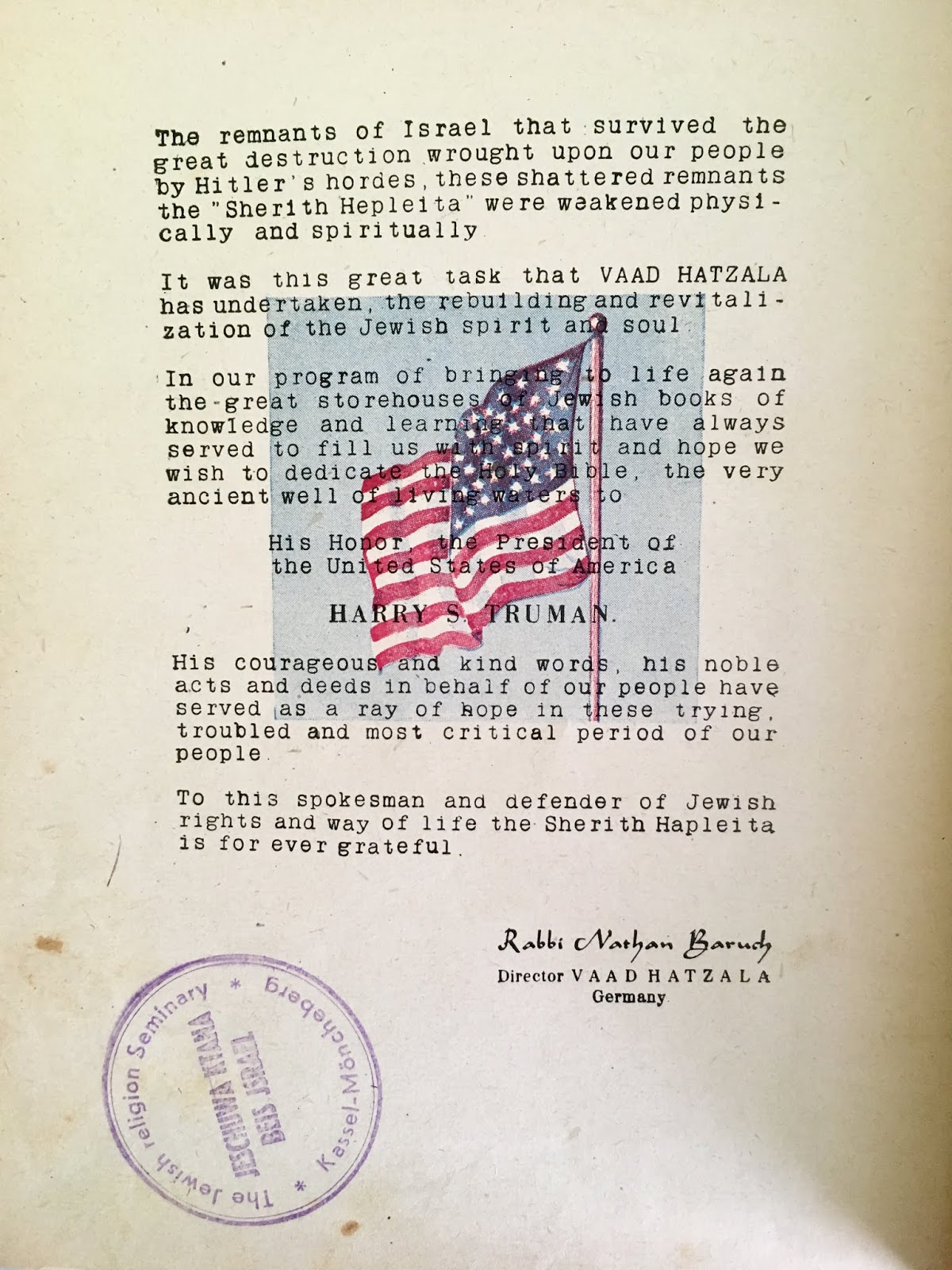

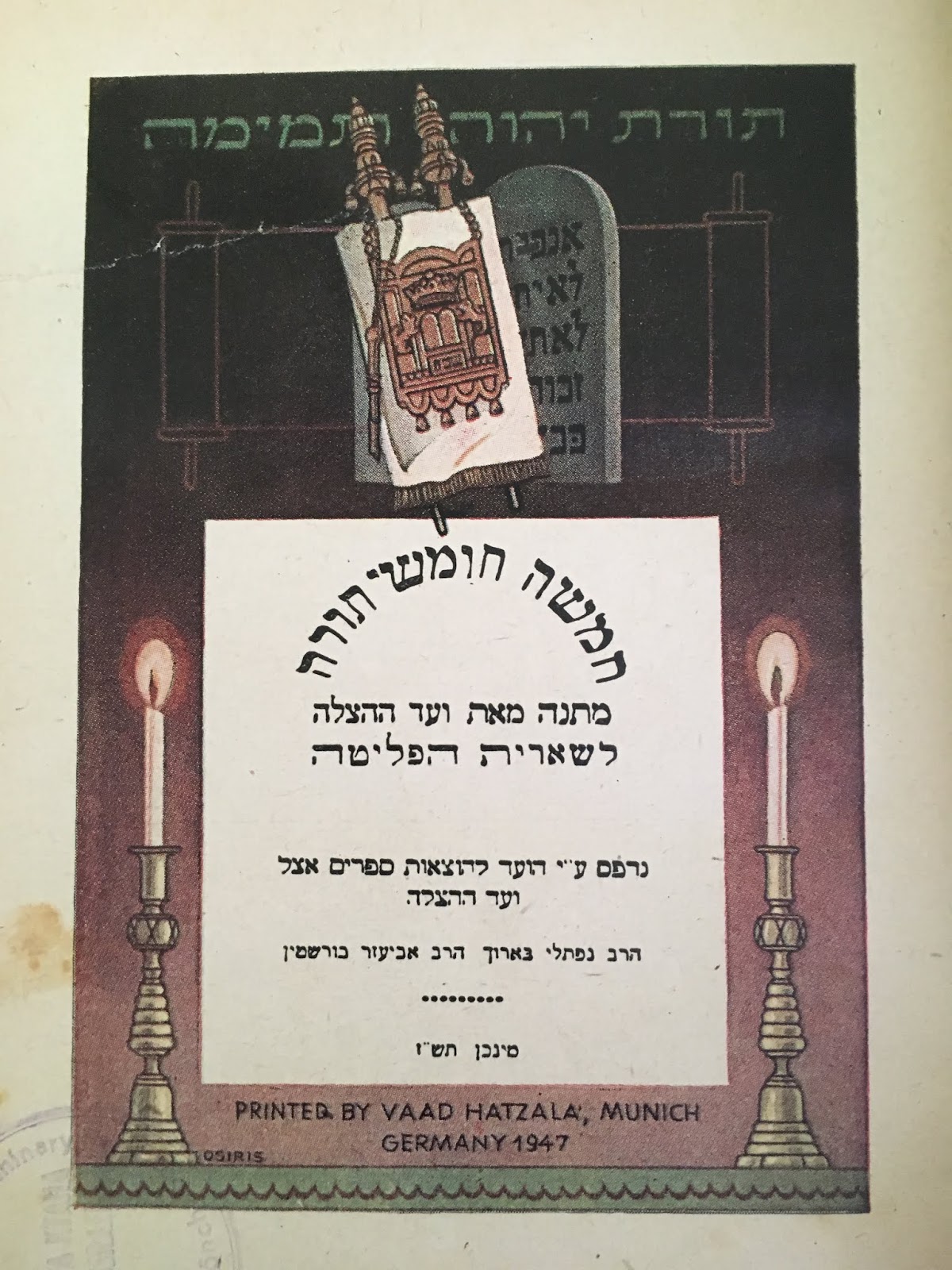
by Yitzhak, בין דין לדין.
I thank Dan Rabinowitz for graciously allowing me to post this essay.
Hunted Bears
This is the cover image of the Gary Larson collection Beyond The Far Side:
I have long found this cartoon profoundly depressing, in its humorous but acute portrayal of the moral degradation of which we are capable. עור בעד עור, וכל אשר לאיש יתן בעד נפשו 1; the desperate bear grins inanely as he attempts to persuade the hunter to shoot his companion instead of himself.
Several months ago, though, I had an epiphany; it is all very well to consider the matter from a literary-psychological perspective, but what is the view of the Halachah 2?
Cantonists and ‘Chappers’
The thought lay dormant in my mind, until I read the following paragraph in Dr. Marc Shapiro’s typically erudite and fascinating article Rabbis and Communism at The Seforim Blog:
When dealing with anti-clericalism in Russia, we must also not forget the masses’ long memory of how some (many?, most?) rabbis were silent during the era of the chappers. This was when children were grabbed for 25 years of military service in the Cantonists, often never again to see their parents and usually succumbing to incessant pressure (including torture) to be baptized. Yet it wasn’t the children of the rich or the rabbis who were taken, but the poor children. Jacob Lifshitz’ defense of the way the Jewish community dealt with the Cantonist tragedy – which he regards as worse than even the destruction of the Temple! – and his insistence that no one can judge the community leaders unless they themselves had been in such a difficult circumstance, is something we must bear in mind. Yet all such ex post facto justifications would have no impact on the outlook of those that actually suffered during the Cantonist era, and it is no wonder that many of the common people would not regard the rabbis in a sympathetic light. The rabbis were certainly able to come up with a justification why their sons, the future Torah scholars, should not be taken to the army, just as they continue to make this argument. Yet this would only serve to show the masses that some children’s blood was indeed redder than others.
This post shall attempt to clarify the relevant controlling Halachos for both scenarios: may a bear attempt to save his life at the expense of his comrade’s, and may a potential or actual draftee, or a friend of his, attempt to evade the draft if the consequence will be the drafting of another instead.3
The Yerushalmi
The locus classicus for this discussion is a passage in the Yerushalmi Bava Kama:
שור שעלה בחבירו ובא בעל השור ושמטו מתחתיו אם עד שלא עלה שמטו ונפל ומת פטור ואם דחהו ונפל ומת חייב
אמר רבי יוסי ותישמע מינה ראה אמת המים שוטפת ובאה לתוך שדהו רשאי לפנותן למקום אחר משנכנסו אין רשאי לפנותן למקום אחר
אהן כריסו ארגירא עד דלא ייתי אהן כריסו ארגירא שרי מימר פלן עביד עבדיתי פלן עביד עבדיתי. מן דייתי אהן כריסו ארגירא אסיר.הדין אכסניי פרכא עד דלא ייתון רומאי שרי מיחשדוניה ומן דייתון רומאי אסיר.4
The Nimukei Yosef cites the second paragraph of the Yerushalmi, about the Amas Hamayim 5.
Rema rules:
היה רואה נזק בא עליו מותר להציל עצמו אף על פי שעל ידי זה בא הנזק לאחר6
Rema only cites the permissive component of the Yerushalmi; he omits the Yerushalmi’s stringency, prohibiting the shifting onto another of a misfortune that is considered to have already befallen. Sema does indeed cite the latter part of the Yerushalmi:
שם בנימוקי יוסף סיים וכתב דאם כבר בא עליו אסור לסלקו ממנו כשגורם בזה היזק לחבירו:7
but why does Rema omit it? This question is raised by Rav Haim Yehudah Leib Epstein, who infers that Rema does not actually accept the stringency of the Yerushalmi L’Halachah, a position for which he offers various justifications, which are beyond the scope of this post 8. Although we shall see that The consensus of the Poskim, however, seems to accept the Yerushalmi in its entirety as Halachah 9.
The Hafetz Haim discusses this Yerushalmi; he is curiously tentative about its application to the question of Lashon Ha’Ra that he is considering, the deflection of blame from oneself in a situation in which so doing will consequently cause another to be accused:
אבל אם על ידי זה [שמשיב מי שנחשד מחבירו בעשיית דבר שלא כהוגן נגדו שאכן הוא לא עשאו] ממילא יוודע לו העושה, כגון שלא היה לו הספק כי אם על שניהם, תלוי בזה: אם הוא באמת דבר שאינו הגון, נראה דמותר לדחות זה מעל עצמו, אף שממילא יתגלגל הדבר על חבירו. אבל אם באמת דבר זה איננו עוולה, רק להשואל נראה שהדבר הזה הוא עוולה, צריך עיון אם מותר להשיב לו אפילו בלשון: אני לא עשיתי את הדבר, כיון שעל ידי זה ממילא יתגנדר הדבר על חבירו.10
ונראה שדבר זה תלוי במה שמבואר בחושן משפט, בסימן שפ”ח (סוף סעיף ב) בהגהה … ועיין בסמ”ע שם … ומשמע מביאור הגר”א שם (אות כ”ט) שהוא מסכים להסמ”ע. והכא נמי אם הוא רואה שנחלט לעת עתה חשדא אצל השואל עליו, אסור לו לגלות כדי להסירה מעליו ולתיתה על חבירו, ועיין בביאור הגר”א שם, ואם אינו בגדר זה, מותר. ואף על פי כן, דבר זה אינו מבורר אצלי היטב למעשה.
Draft Evasion
Rav Yosef Ibn Lev discusses a case apparently very similar to one of the scenarios in the Yerushalmi:
שאלה ראובן היה לו אהבה עם השרים ויועצי המלכות ולפעמים היו תופסין מחמת המלכות לקצת יהודים עשירים והיו כותבין לשראפי”ש או לשאר אומניות כמנהג המלכות הלז וזה היהודי שיש לו אהבה עם השרים יש לאל ידו להציל איזה יהודי מאותה הצרה אבל ירא לנפשו שאם יציל לשמעון יקחו ללוי תחתיו ומאן לימא ליה דדמא דשמעון סומק טפי דילמא דמה דלוי סומק טפי ועל זה שאל אם הרשות בידו להציל לשמעון מצרתו:
תשובה עיקרא דהאי מילתא איתא ביבמות פרק הערל אמרינן התם מאי שנא הני אמר רב הונא העבירום לפני הארון כל שהארון קולטו למיתה כל שאין הארון קולטו לחיים מתיב רב חנה בר ביזנא ויחמול המלך על מפיבושת בן יהונתן בן שאול שלא העבירו וכי משוא פנים יש בדבר אלא שהעבירו וקלטו ובקש רחמים ופלטו ואכתי משוא פנים יש בדבר אלא שבקש רחמים שלא יקלטנו הארון מהך שמעינן בנדון דידן שאם כבר כתבו ליהודי אחד לשארא”ף ותפשו אותו והדבר ידוע שאם ימלט זה שיקחו אחר תחתיו אין להשתדל להצילו אבל אם יצתה גזרה לקחת קצת יהודים לאומנות המלך לשרא”ף וכיוצא בו הרשות נתונה להשתדל להציל לכל מי שירצה
והאי דכתבינא דאם כבר נכתב למלכות דאסור להשתדל להצילו כיון דמנהג הוא לקחת אחר תחתיו היינו דוקא היכא דהוי ודאי דלית ספיקא אבל היכא דאיכא ספיקא די עידנא ישתנה ויעבור זעם ולא יקחו אחר תחתיו אין ספק מוציא מידי ודאי …11
Shach endorses Ibn Lev’s ruling distinguishing between where the royal decree specifies particular individuals and where it merely demands a quota, and he says that the inference from the Mefiboshes passage is compelling12. It is curious, though, that neither Ibn Lev nor Shach mention in this context the Yerushalmi that we have been discussing until now; Rav Akiva Eiger 13, Rav Baruch Frankel14, Rav Meir Ya’akov Ginzberg15, and Pis’hei Teshuvah16 all refer the reader to the Yerushalmi. We shall presently see a suggestion for why Ibn Lev and Shach do not cite the Yerushalmi.
Rav Shmuel Landau discusses whether it is permitted to take action to save particular individuals from a governmental draft, even though the result will inevitably be the seizure of others:
… ועל דבר שאלתו שאלת חכם חצי תשובה קשה להורות בדבר הנוגע לנפשות תחלה ומי ירים ראש בדברים כאלה. …
אבל לבי מהסס בדבר אם מותר לישראל להשתדל עבור איזה אנשים שלא יקחו אותם. ודבר זה מבואר בתשובות מהר”י בן לב .. הובא בש”ך … ואם כן גם בנדון דידן אם עדיין לא לקח השר ולא פרט מי שיהיה יכולים להשתדל דרך שלילה על אנשים ידועים שלא יקחו אותם:
ובאמת תמיה לי טובא על הש”ך בסימן [ק]ס”ג שהביא ממרחק לחמו מתשובת מהר”י בן לב הנ”ל הלא דבר זה מפורש בש”ע ברמ”א סימן שפ”ח סוף סעיף ב’ … הרי ממש כפסק של מהר”י בן לב וגם הסמ”ע שם כתב … הרי ממש כפסק של מהר”י בן לב:ואפשר ליישב דמהרמ”א לקמן נשמע דאותו אדם עצמו כשרואה דהנזק בא עליו דמותר להציל עצמו אבל שיהיה לאחרים רשות להשתדל עבורו לא שמענו ולכך הביא הש”ך דברי מהר”י בן לב ופסק דגם אחרים יכולים להשתדל עבורו אם עדיין לא בא הנזק וראייתו מדוד שהתפלל על מפיבושת שלא יקלטנו הארון: [ועיין שם שהאריך לפלפל בסוגיא דיחדו לאחד מהם.]17
Rav Avraham Maskil Le’Eisan cites this responsum and suggests that one may permitted to save himself at another’s expense even if he has already been selected for misfortune:
ועיין בנודע ביהודה .. שכתב דאם כבר לקחו אנשים ידועים אסור להשתדל להצילם רק קודם שנלקח אף א’ מותר להשתדל להציל א’. וכמו שכתב הש”ך .. ובהג”ה שם (ש”פ) [לכאורה צ”ל שפ”ח].
ונראה שהוא עצמו יכול להשתדל אף שנלקח דחייך קודמין:18
This is incomprehensible; as we have seen, the entire point of Rav Landau is that the reason that Ibn Lev and Shach do not derive their permission to save someone at another’s expense from the Yerushalmi is because they are allowing a third party to save a victim, whereas the Yerushalmi is discussing efforts by the victim himself, and yet the Yerushalmi explicitly forbids even such efforts when the misfortune is specific to the victim! Perhaps Rav Maskil Le’Eisan holds like Rav Epstein, that the Rema’s omission of the Yerushalmi’s prohibition indicates that it is not normative, but given that the Sema does cite the prohibition, and none of the major commentaries reject it, if Rav Maskil Le’Eisan really held like Rav Epstein, he should have said so explicitly 19.
“At Risk” Youths
In his article, Shapiro comments that:
Michael Stanislawski notes that in one community the communal leaders wanted to grab a poor tailor since he wasn’t observant, but the local rabbi forbid it. …
In a strong defense of the rabbis against the charge that they collaborated with the rich people in order to ensure that the poor were taken, R. Moses Solomon Kazarnov calls attention to all that the rabbis did to defend the children of the lower class. But he acknowledges that the rabbis would hand over the non-religious kids, including their own!
In the continuation of his responsum, Rav Landau, no mere local Rabbi, issues an uncompromising rejection of religious laxity as a justification for handing someone over to the government. He unequivocally, passionately and eloquently rejects a suggestion of his questioner that the community satisfy the government’s demands with some “נערים קלים ופרוצים ביותר”; indeed, he seems horrified by the idea:
ומה שכתב מעלתו דיש שם איזה נערים קלים ופרוצים ביותר. אהובי ידידי אין אנו יכולים לדון דיני נפשות דעל כל פנים הנערים אינן בכלל מורידין אף שהם נוהגין בקלות קצת והרבה הילדות עושה וניתן להענישם בתפיסה ומכת מרדות וכדומה אבל חלילה למסור אותם בידים ואל ידח ממנו נידח להדיחם לגמרי מקהל עדת ישראל ואף שיש ביד טובי העיר והבית דין לדון בכל עונשים חמורים למגדר מלתא היינו אם העם פרוץ בו וגם לזה צריך שיהיה דוקא גדולי הדור או טובי העיר שהמחום רבים עליהם … אבל היכא דליכא משום מגדר מלתא שאין העם פרוצים רק איזה נערים הקלים מי ירים ראש לדון בזה. …
[ועיין שם שפלפל עוד בזה, והעלה:] ויהיה איך שיהיה … בנדון דידן אף שיש נערים קלים ועוברים על איזה מצות אין אנו רשאין בשביל כן להעניש אותם כפלי כפלים ככל חטאותם ולסכן אותם בידים ובפרט שלא נתברר בעדות ברורה אם עברו על עבירה חמורה בשאט נפש לכן שארית ישראל לא יעשו עולה כזו.20
We must note that Rav Landau’s unwillingness to countenance the seizure of the religiously dubious youths is apparently predicated on his assertion that they are not in the category of Moridin; if it were reliably established that they were thoroughly irreligious21, he may indeed not object to their seizure.
Rav Landau concludes with an apparent reiteration of his earlier ruling permitting action which is merely evasive:
אך את זה יכולים לעשות להשתדל דרך שלילה על אדם חשוב וכשר שלא יקחו את זה כל זמן שלא קראו לו בפירוש שאותו הם מבקשים אבל אם כבר בא הפקודה לאחד קשה להורות להתיר להשתדל עבורו אם על ידי שזה יוצא לחירות ילכד אחר במצודה זו ומאי חזית דדמי דהאי סומק טפי מדמי דאיש אחר אשר יבא אחריו.
וידעתי שבנדון זה קשה להורות ועל זה אמרו חז”ל כשם שמצוה לומר דבר הנשמע כן מצוה שלא לומר דבר שאינו נשמע והמשכיל בעת ההיא ידום אבל על כל פנים זה מחויב למחות ביד מי שרוצה למסור בידים.
The Hasam Sofer has a similarily strong denunciation of the unfair selection by the community of particular individuals, even alleged “פוחזים וריקים”, to be drafted:
ועל דבר עם בני ישראל הנלקחים לצבא המלחמה למלכיות השתיקה יפה מדיבורינו בזה וגדולי ישראל ע”כ יעלימו עין והניחו להם להממונים מקהל לעשות כראות עיניהם לפי הזמן ועת לחשות
ומכל מקום אומר כי גוף ענין דינא דמלכותא להטיל מס על כל עמו להעמיד מהם אנשים לצבא מלחמתו וזה הוא מחק מלכותו ודינו דין וממילא מוטל אקרקפתא דכל מי שראוי לצאת ושאין לו אשה ובנים כפי נימוס וחק מלכותו אך לא אבחורים לומדי תורה שאפילו לא פטרום המלכות בפירוש מכל מקום מדין תורה פטורים דאמרינן בפרק קמא דבבא בתרא ח’ ע”א הכל לכרי’ פתייא אפילו רבנן והני מילי דלא נפקי באוכלזא אבל נפקי באוכלזא רבנן לאו בני מיפק באוכלזא נינהו ומכל שכן שהמלכות יר”ה פטרם וכבר כמה פעמים כשנתתי אטעסט לבני מדינו’ פיהם ומעהר”ין שהם לומדים ויצליחו לנהוג ציבור נפטרו מלהעמיד עצמם לצבא ואם כן כל הנוגע בהם נוגע בבבת עין:
ואידך מהראוי שיעמדו עצמם כולם בשוה לפני העדה ויטילו גורל ועל מי שיפול עליו הגורל הוא ישתדל לעצמו במה שיכול לפטור בממון או להעמיד אחר במקומו או ילך בעצמו וכל ישראל מחויבים לסייעו ויקר פדיון נפשו אבל לאנוס אנשים בלי גורל ולומר שהם פוחזים ורקים אפילו מגלי עריות ומחללי שבת בעיני הוא כגונב נפש ומכרו כי מי נותן זה חליפי זה כיון שחיוב המלכות ופקודתו על כולם בשוה והמוסרו כמוסר לתוא מכמר אפילו מחוי אתיבנא חייב מכל שכן מוסר נפשו ורע ומר יותר כי הטובים הנאנסים עוברים על המצות באונס ולעתים רחוקים ואלו יעשו ברצון ואנו מדחים אחר הנופל עיין פרק קמא דקידושין לענין מכר עצמו לנכרים:
אך מה שנמצאים עתה למאות המוכרים עצמם מרצונם וברצי כסף ולכן אף על גב דהמה גריעי מכולהו שהרי בשאט נפשם מתנים לחלל שבתות ולאכול איסורים מכל מקום כיון דשכיחי טובא ולא הוה כתרי עיברא נהרי ואם אין קהלה זו קונהו ימכור עצמו במקום אחר אם כן קלקלתם בעו”ה תקנה קצת וכן עשו בכל גלילותינו והוא כעין בחירת הרע במיעוטו
והנה קצרתי מאוד כי אין ראוי להאריך בענין זה כמובן …22
Hasam Sofer prohibits seizing even youths who are מגלי עריות ומחללי שבת, but perhaps he is referring only to those who yield to temptation, and are therefore not considered Apikorsim, Minim or Meshumadim, and are not in the category of Moridin 23.
Although both Rav Landau and the Hasam Sofer are unequivocal in their condemnation of the unfair seizure by the community of particular individuals in order to save others, I do not know if their opposition would extend to a mere request to the government that it draft them, or to the attempt by the targeted bear in the Far Side cartoon to convince the hunter to shoot his companion instead of himself. Normally these actions might constitute Mesirah, but in these situations, where the government will inevitably seize some individuals, and the hunter will certainly shoot a bear, and the request is merely determining who the victim(s) will be, perhaps the permissive rulings of the Yerushalmi and Ibn Lev still apply, since in any event the Yerushalmi seems to be a dispensation of the law of Grama B’Nizakin, which would presumably normally forbid the causing of harm to another even in the indirect forms under discussion.
Kapos, Quotas and Cards
Rav Zvi Hirsch Meisels relates the following heartbreaking story:
מסחר נפשות עם הקאפו”ס
והנה ליום המחרת, שהיא יום א’ דראש השנה, אשר כל באי עולם יעברון לפניו כבני מרון, היה יום מהומה ומבוכה, ומפה לאוזן נתפשטה השמועה בכל המחנה, שלעת ערב יקחו את הנערים לבית המוקד, … ולהרבה אנשים שבמחנה הי’ להם בנם יחידם, אשר נשארו להם לפליטה, בתוך אלו הנערים או שאר בשרם הקרובים אליהם, או סתם ידידים אהובים אנשי עירם, והמה רצו כל היום בראש מבולבל מסביב הבלאק המוסגר, אולי יופתח איזה קרן אור להציל משם את הנער היקר להם עד שלא תחשך השמש.
אך השומרים הקאפו”ס לא שעו אל כל תחנוניהם ובכיותיהם להוציא איזה נער וילד, מבין המסוגרים אשר נדונים לשריפה, … במקרה הלזה הי’ גם טענתם בטענה צודקת בפיהם, היות שהם אחראים על סכום הילדים שהופקדו לשומרים אליהם, אשר היה במספר מדויק, ולעת ערב עליהם למסור אותם לידי אנשי הס’ ס’ ימ”ש במספר ובמנין כאשר מסרו להם, ואם יחסר אחד מהם אז דמם בראשם ויקחו אותם לשריפה, נפש תחת נפש.
אכן סוף סוף אחרי הרבה השתדלות ומו”מ של הקרובים עמהם גברה בהם תאות הממון, והסכימו בעד תשלום סכומים גדולים, לשחרר איזה נער וילד, ותיכף חטפו במקומו איזה נער אחר, מן הבא בידם בתוך המחנה, (מאלו שהצליחו להתחמק מהאוסף של אתמול או שנשתחררו בעת הבירור על ידי נגיעת ראשם בדף) וסגרוהו בהבלאק הנ”ל במקום הנער הפדוי כדי שיהיה המספר שלם.
והנה להרבה אנשים הי’ עוד סכומי כספים, או חתיכת זהב או מרגליות, טמון במטמונים ובמנעלים לעת הצורך, וכמובן שהי’ כמה אנשים פשוטים ובעלי קוצר השגה שלא עשו שום חשבונות מה נעשה במקום נער הנפדה, וקיבצו במסירת נפש כל הונם הנשאר להם או שהשתדלו לאסוף סכום הנצרך, מאחרים ידידים ומכירים, ופדו את בנם המסוגר מכליון בטוח, וככה נמשך סחר-מכר הלזה משך רוב יום הדין לעיני כל האנשים שבמחנה, …
אמנם כמובן שהי’ הרבה אנשים בעלי השגה, שלא רצו לפדות את בנם, על חשבון חייו של ילד אחר, כמאמר חכמז”ל מאי חזית, ולעולם לא אשכח עובדא נוראה אחת, אשר עיני ראו ואזני שמעו, אז בשעת ענין הנ”ל, אשר מעשה הלזה מסמל את קדושת בני ישראל, והתמסרותם לדרכי התורה הקדושה בתמימות אף בעת צרתם וסבלותם הנוראה.
מסירות נפש של אב מלהציל בנו יחידו
הנה ניגש אלי איש יהודי, שהיה נראה ליהודי פשוט מאויבערלנד, מתמימות הדברים שלו שאמר לי כדברים האלה.
רבי, הבן יחיד שלי, היקר לי מבבת עיני, נמצא שמה בתוך הנערים הנידונים לשריפה, ויש בידי היכולת לפדותו, והיות שידוע לנו, בלי שום ספק, שהקאפו”ס יתפסו אחר במקומו, על כן אני שואל מהרבי שאלה להלכה ולמעשה, לפסוק לי הדין על פי התורה אם אני רשאי לפדותו, וכאשר יפסוק כן אעשה.
[ועיין שם שלא רצה לפסוק הלכה בדבר זה, בלי ספרים, בלי רבנים אחרים ובלי ישוב הדעת, והתחנן אל השואל שאל יטיל עליו את האחריות הנוראה הזו. אולם האב השואל החליט, מתוך סרבנותו של הרב מייזליש להשיב תשובה ברורה, שהדבר אסור, ואמר שאם כן הוא מוכן להקריב את בנו יחידו על פי התורה וההלכה, ושהוא מקבל את זה באהבה ובשמחה, וכך עשה:] וגם ככה קיים דבריו ולא פדה את בנו, והיה כל היום, יומא דראש השנה, הולך ומדבר לעצמו בשמחה שזוכה להקריב את בנו יחידו לה’ כי אף שיש ביכולת בידו לפדותו עם כל זה אינו פודהו מחמת שרואה שהתורה לא התירה לו לעשות כזאת ויהיה חשוב לפני השי”ת כעקידת יצחק אבינו שהי’ גם כן ביום ראש השנה. …24
In a footnote, Rav Meisels analyzes the question Halachically. He begins by citing the Rema, Sema (citing the Nimukei Yosef citing the continuation of the Yerushalmi, as above), Shach (citing Ibn Lev), and Rav Landau, and he then proceeds as follows:
ונסתפקתי בנידן דידן אם האב לגבי בנו רשאי להשתדל לפדותו אף שיודע שעל ידי זה יותפס אחר. לפי מה שכתב בהגהות יד אברהם .. דנראה שהוא בעצמו יכול להשתדל בהצלתו אף אחר שנתפס, אף על גב שיודע שעל ידי זה יקחו אחר במקומו, מכל מקום אמרינן חייך קודמין, ודוקא לפדות לאחרים אסור להשתדל להציל, אם על ידי זה יקחו אחר במקומו ע”ש. ואם כן יש להסתפק אם אב לפדות את בנו בכי האי גוונא שיקחו אחר במקומו, אם האב נידון כאחר ואסור להציל בנו בכי האי גוונא או דגם האב לגבי בנו אמרינן חיי בנך קודמין לחיי אחרים. ועיין בבא בתרא (קל”ו ע”ב) פלוגתא אי בנו עדיף ליה מנפשיה ע”ש וצ”ע.
As I have argued earlier, the Yad Avraham’s assertion is quite puzzling, since it seems to contradict the Yerushalmi. Rav Meisel’s acceptance of it is even more baffling, since he has just cited both the Sema and Rav Landau’s responsum, which eliminates my earlier suggestion that the Yad Avraham disagrees with the Sema and does not accept the stringency of the Yerushalmi as normative.
Irving J. Rosenbaum cites the following discussion of Rav Efraim Oshry:
On the twenty-third of Elul, 5701 (September 15, 1941), the German supervisor of the Kovno ghetto (Jordan) provided the Aeltestenrat (Judenrat) five thousand “white cards” to be distributed to workers and craftsmen in the ghetto and their families. Only those having “white cards” would be allowed to remain. At that time there were about thirty thousand souls in the ghetto, of whom about ten thousand were such workers and their families. In consternation, those workers who were the strongest forcibly seized “white cards” for themselver from the Aeltestenrat. Rabbi Oshry perceived two halakhic questions involved in the matter. … The second: Was it permissible for a worker to snatch a card for himself, even though by so doing he would certainly be causing the death of another – since there were only five thousand cards for ten thousand workers? …
The second question – the permissibility of seizing a card and saving one’s own life at the expense of another – also has precedent in Jewish law. The first is found in the Shakh … However, Rabbi Oshry rejects this as a precedent for our case, since the Shakh’s decision applies only when the men have not yet been seized. Then it is permissible to try to prevent them from being taken, even though others would suffer as a result. However, the Shakh would most probably rule that if two men were already in custody, it would not be permitted to attempt to free them; for it would then be inevitable that two others would be taken in their stead. In the Kovno ghetto situation, one could say that the entire community was already “taken prisoner”. If so, the decision of the Shakh would not apply, and it would be forbidden for the workers to seize the “white cards.”
Yet it might be held, Rabbi Oshry continues, that in our case it would still be permissible. For as the Yad Avraham .. points out, it is only forbidden for others to try to rescue the imprisoned men when this will simply lead to different victimes being seized. However, it is certainly not forbidden for the prisoner himself to attempt to escape even though someone else will suffer. So too, here, the worker who seizes the card is saving himself, not another. But upon close examination this analogy proves imperfect. For the Yad Avraham is referring to a case where his action does not directly cause another to die. It is simply that if he escapes another is imprisoned in his place. Though the second man may ultimately die because of this, his death is not directly resultant from the act of the first. But in the Kovno ghetto, the seizure of the card by one workman would directly result in the death of one who was denied a card by his action.
It is possible to support this distinction between direct and indirect action from the classic case in the Talmud, Baba Metzia 62a.If two men are traveling on a journey [far from civilization] and one has a pitcher of water, if both drink they will both die, but if one only drinks, he can reach civilization. Ben Patura taught: “It is better that both should drink and die, rather than that one should behold his companion’s death.” Until Rabbi Akiba came and taught: “‘that thy brother may live with thee’ (Lev. 25:36), thy life takes precedence over his life.”
As Rabbi Oshry explains Ben Patura’s point of view, it is the drinking by the one man that causes the death of the other. The saving of his own life is, thus, the direct cause of his fellow’s death. Ben Patura does not believe that the injunction of “and live by them” (Lev. 18:5) – not die by them – applies if one gains his own life by not attempting to save his comrade’s. And though Rabbi Akiba disagrees with Ben Patura, it is only in this case of the two travelers, where the one takes no direct physical action to injure his fellow, but simply refrains from giving him water, that Rabbi Akiba would sanction his behavior. However, in our case, where as a result of the direct action of seizing the card, a fellow workman will be delivered over to the murderers, it is quite possible that Rabbi Akiba would agree with ben Patura and forbid the action. … 25
Summary
To summarize, we have the following principles:
Postscript
The idea that Halachah allows the privileged, the rich and the well connected to utilize their wealth and influence to shift, even indirectly, the burden of military service onto their less fortunate brethren26 will very likely trouble those (such as me) with modern, Western value systems. This is apparently a classic example of the celebrated maxim of Rav Ya’akov Weil:
[פסקי] בעלי בתים ופסקי לומדים שני הפכים הם27
1 Job 2:4
2 One can, of course, consider the matter from an ethical perspective without invoking Halachah, and there may even be an ethic independent of Halachah, but our discussion will be limited to the Halachah.
3 Dr. Shapiro read a draft of this essay, and commented helpfully thereon.
4 בבא קמא פרק ג’ הלכה א
5 Bava Basra, p. 10 in the Rif pagination. He also cites the fourth paragraph, but he apparently understands it to be stating a different rule.
6 הגהת שו”ע חו”מ סימן שפ”ח סוף סעיף ב
7 שם ס”ק י
8 שו”ת פרי חיים חו”מ סימן ד
9 עיין בדברי החפץ חיים שנביא להלן, ובפתחי תשובה סימן קס”ג ס”ק כ”ז, ובתשובת רב שמואל לנדא שנביא להלן. ועיין להלן מה שנביא מהיד אברהם
10 ספר חפץ חיים הלכות לשון הרע כלל י’ באר מים חיים אות מ”ג
11 שו”ת מהר”י ן’ לב חלק ב’ סימן מ
12 חו”מ סימן קפ”ג ס”ק י”ח
13 גליון שו”ע שם
14 חדושי אמרי ברוך שם
15 חדושי מוהרי”ג שם
16 שם ס”ק כ”ז
17 שו”ת נודע ביהודה תנינא יו”ד סימן ע”ד, ציינו הפתחי תשובה חו”מ שם וגם הביא קצת מדבריו ביו”ד סימן קנ”ז ס”ק י”ג
18 יד אברהם, שו”ע יו”ד סימן קנ”ז סעיף א
19 But note that the introduction to the Shulhan Aruch states that the Yad Avraham was published posthumously from manuscript, so perhaps something was lost in transcription.
20 The objection of Rav Landau and of Hasam Sofer (see below) to the seizure of religiously lax youths is noted by Dr. Shapiro in footnote 16 of his article.
21 The question of Tinok She’Nishbeh is beyond the scope of this post.
22 שו”ת חת”ם סופר חלק ששי סימן כ”ט ד”ה ועל דבר, ציינו הפתחי תשובה חו”מ שם
23 עיין רמב”ם הלכות תשובה פרק ג’ הלכה ט’, הלכות רוצח פרק ד’ הלכה י’, שולחן ערוך יו”ד סימן קנ”ח סעיף ב’, אנצקלופדיה תלמודית ערך אפיקורוס
24 שאלות ותשובות מקדשי השם, שער מחמדים, עמודים ד – ו. Rav Meisel’s narrative is cited (in English translation) by Irving J. Rosenbaum, The Holocaust and Halakhah, pp. 3 – 5, and see his discussion of it in the endnote on p. 158. I thank Dr. Shapiro for bringing this story to my attention.
25 The Holocaust and Halakhah, pp. 24 – 30. He is citing Rabb Oshry’s Divre Efrayim, p. 95, a work to which I do not currently have access.
26 I have seen no discussion of whether there’s any ethical imperative, such as Lifnim Mi’Shuras Ha’Din or Middas Hassidus, to refrain from so doing.
27 שו”ת מהר”י ווייל סוף סימן קמ”ו, הובא בסמ”ע סימן ג’ ס”ק י”ג