1

Prague 1526 Haggadah

The first fully illustrated haggadah was the Prague 1526 haggadah. This haggadah was reprinted in 1977 by Mekor and is now available for everyone at the Jewish National University Library site here. (They have other important haggadas available for viewing including some of the earliest haggadas).

The Prague haggadah is filled with fascinating and important illustrations. As we have seen previously, the Prague haggadah contained nudes, which when appropriated later were removed. This included in the haggadah context as well as in other works.

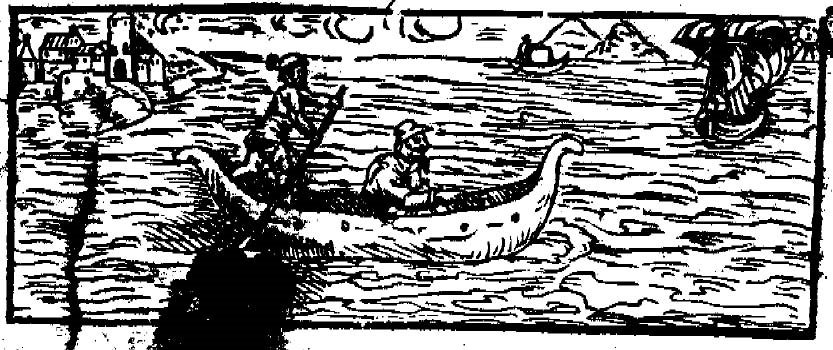
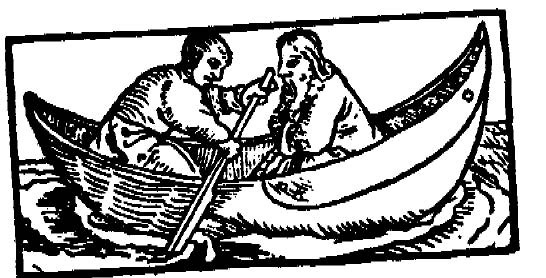
Aside from these illustrations, there is an illustration of Abraham when God takes him “from the other side of the river.” In the Prague haggadah we have Abraham in a row boat. However, when this was appropriated in the Mantau, 1560 haggadah, the row boat was changed into a gondola.

Also, this haggadah contains brief comments or instructions as well as the text of the haggadah. There are two which bear mention. The first is the passage underneath the Tam – simple – son. Typically, the simple son is understood to be less than stellar. However, in this haggadah, the verse תמים תהיה עם ה’ אלקך (One should be simple with God) (Devarim 18:13). As this verse is claiming this simplemindedness is a good attribute, this seems to indicate that the simplemindedness of the son is something positive.

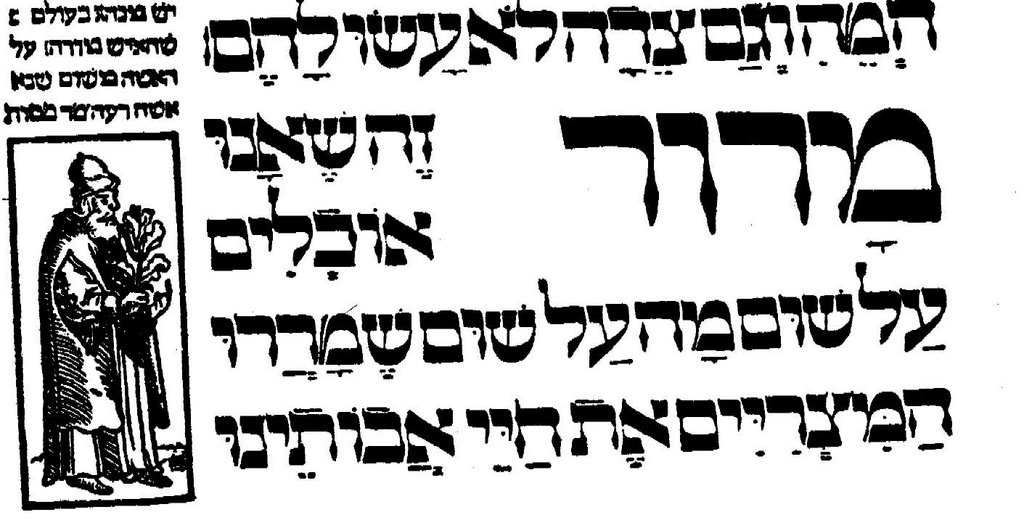
The second passage comes in the form of an instruction. In the margin at the mention of marror the bitter herb, is the following “It is a universal custom to point at one’s wife [at the mention of marror] as the verse says ‘I have found the woman worse [more bitter] than death. (Kohelet 7:26)'”


Eliyahu Drinking from the Cup

I hope to have a few posts in the coming days discussing some of the artwork found in various haggdah. While for hundreds of years artwork played an integral part of the haggadah recently this has fell into disuse. While there are few notable exceptions to this, Raskin, Moss Haggadahs, this practice of richly illustrating the haggdah has been replaced with a focus on commentaries.

One of the reasons, however, the practice of illustrating the haggadah, can be found in the discussion which sheds light on the custom of pretending or assuming that Eliyahu, who according to legend, visits each home on Pesach night.

The last cup of wine poured is for Eliyahu. While originally this cup was not necessarily connected to Eliyahu, today it has become associated with him. The cup of Eliyahu is not mentioned until the 15th century. Various reasons are given. The Gra explains as there is a controversy whether one must drink 4 or 5 cups, a controversy which will be resolved only when Eliyahu comes. (Divrei Eliyahu, Parshat Va’arah p. 35). The earliest source to discuss the cup, R. Zeligman Benga (student of Mahril), says that the custom to pour a cup for Eliyahu is as the night of Passover is an auspicious night for redemption, we await Eliyahu’s coming and therefore we need a cup for him.

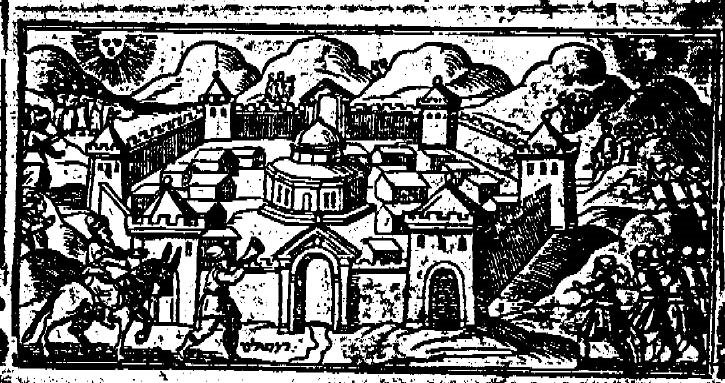
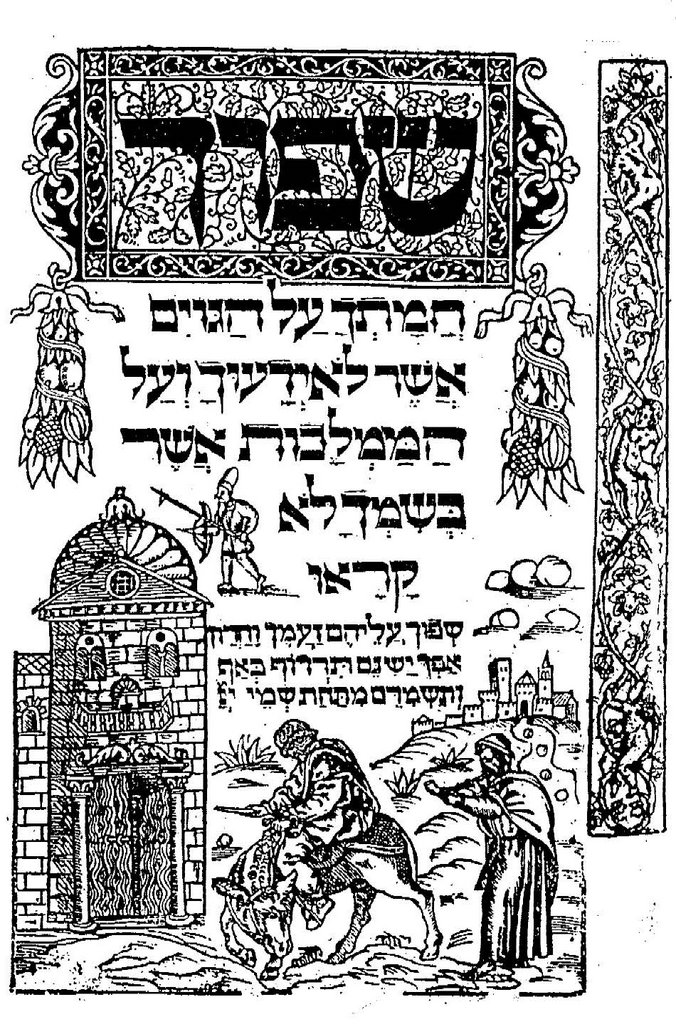
A rather interesting custom sprang up in connection with Eliyahu’s visit on Pesach night. R. Jousep Schammes (1604-1678), records that the custom in Worms was to draw depictions of Eliyahu and the Messiah in order to bring to life the belief in these figures. As you can see from the pictures on the side, this was common in the Haggadah. The first picture is a depiction of Messiah on his donkey. This was originally depicted in smaller format in the Prague 1526 haggadah, but in this edition, Mantua, 1560 is greatly enlarged. The second picture comes from the Venice 1629 hagaddah. As you can see it is again the Messiah coming in to Jerusalem, but note the prominence of the Dome of the Rock in the center.

In Frankfort they went one step further than just drawing Eliyahu and the Messiah. R. Yosef Jousep Hahn (1570-1637) says they used to hang a dummy who looked like Eliyahu or the Messiah behind the door. When they would open the door for Eliyahu the dummy would drop down and seem as if he had appeared. (He then goes on to record a long story of a dybuk who invaded the body of a women who questioned whether the Exodus happened.) It is worthwhile noting that not everyone was thrilled with these depictions. R. Yair Hayyim Bacharach (1639-1702) who became the Rabbi in Worms at the very end of his life, says these types of things only make a mockery of the seder.

However, we see from the above, that there was, at least among some, an effort to create a feeling that Eliyahu actually would visit the seder. Some did it through pictures, others through reenactments. Although today those have fallen to the wayside, it would seem the idea that Eliyahu actually drinks from the cup is a form of those methods.

Sources: Yerusalmi, Haggadah and History; Shmuel and Zev Safrai, Haggadah of the Sages, p 177-78. Minhagei Vermisai, p. פז; R. Y. Bacharach, Mekor Hayyim.


The Ban on the book HaGaon

Now, as the Yiddish newspaper Der Yid has gotten around to commenting on the book HaGaon, I thought it would be worthwhile flesh out the entire controversy surrounding this book. Interestingly, R. Kamentsky in Making of a Godol actually discusses this very topic, although not in the context of HaGaon.

HaGaon written by R. Dov Eliakh in three volumes discusses everything and anything having to do with the Vilna Gaon. Most of the book is not controversial at all, instead, in painstaking detail R. Eliakh chronicles what we know about the Gra and the times he lived in. However, the third volume was the one that many took issue with. That volume, which discusses the controversy between the hassidim and the non-hassdim, also includes most of the primary literature on the topic. That means, R. Eliakh quotes extensively from many of the early anti-hassidic tracts which were published. Some of these contain scathing critiques of the hassidim and accuse them of rather disturbing acts.

However, as many are aware this was not the first time these were published. All of these, and more, have been published by Mordecai Wilensky, in his Hasidim u-Mitnagdim (which is now available again). In fact, much of this has even been translated into English in Elijah Schochet’s The Hasidic Movement and the Vilna Gaon. But, for some who are unaware of these, Eliakh’s book was highly disturbing.

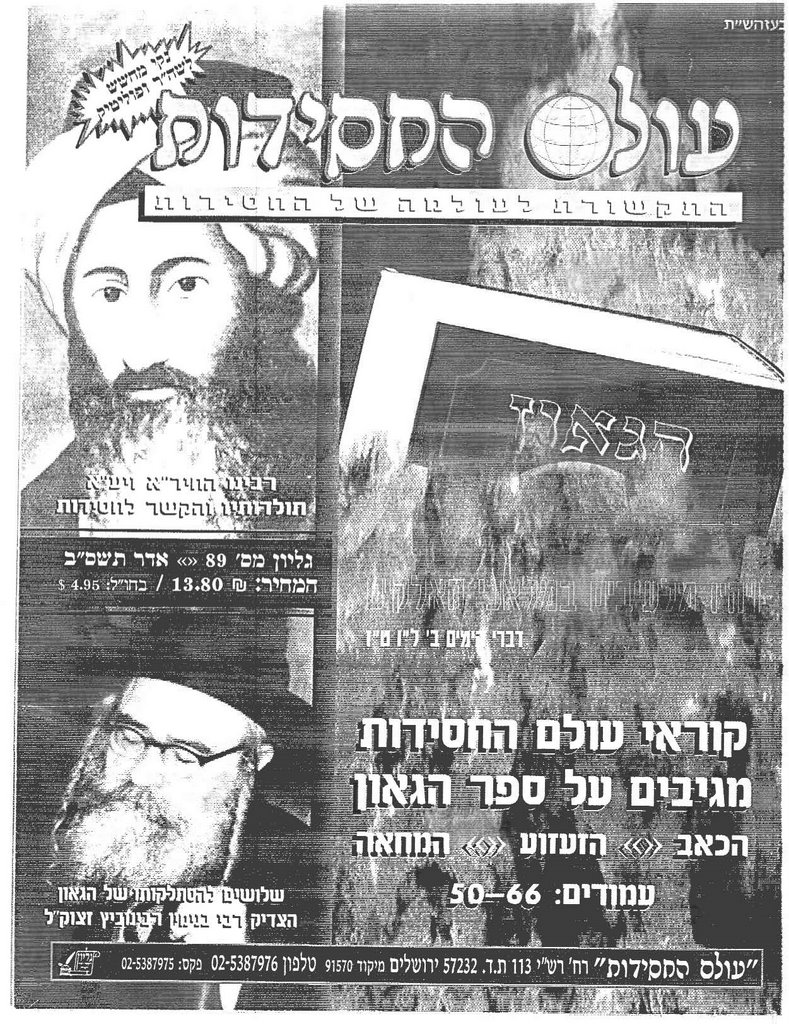
The main complaints came, as is not a surprise, from hasidic circles. For instance, in the magazine Olam haHasidut, has three issues devoted to the book. On the cover of two of those issues, the book HaGoan appears in flames. Needless to say they were not fans of the book. The title reads אוי לדור שכך עלתה בימיו (how unfortunate we are to have this happen in our time). Among the major complaints about the book is that it is “written in the style of the maskilim (enlightenment).” I assume that means that as Eliakh documented everything he wrote that is in the style of the maskilim.

Additionally, they complain that as this controversy is no longer applicable (as the hasidim of today don’t do what they did back then), it serves no purpose in relating this again.

Now, here is where Making of a Godol comes in. R. Nathan Kamenetsky records what his father, R. Yaakov’s opinion on whether to discuss the history of the controversy between the hasidim and the non-hasidim. “My father [R. Yaakov] approved of snubbing of ‘a book on the Goan of Vilna by an outstanding author’ because ‘the author had purposely omitted chapters dealing with the Gaon’s opposition to Hasiduth and that he [R. Yaakov] said, ‘It is prohibited to conceal substantive and important issues such as these. Such distortion is tantamount to falsehood.'” R. Nathan Kamentsky goes on to relate that the book in question was R. Landau’s biography of the Gra and that his father [Rav Yaakov Kamenetsky] actually confronted R. Landau and accused him of “falsifying the image of the Gaon.” See Making of a Godol vol. 1 pp. xxvii (available here).

Consequently, R. Yaakov felt that leaving out such a seminal fact in a biography was equivalent to lying. However, as we see, the publishers of Olam haHassidut appear to disagree. They are not the only ones. R. Yaakov Perlow, the Novominsker Rebbi, wrote a long article where he also takes issue with Eliakh’s book. He also claims that R. Eliakh should have left out the details of the controversy.

It would appear that there is a fundamental controversy as to whether or not one should lie regarding history. In fact, in the journal Ohr Yisrael, there was an article addressing this very point – whether one should lie to tell stories that create yirat shamyim. The author concludes “if the teacher is telling stories which are not true, but is doing so leshem shamyim, so long as he doesn’t make a habit out of it, there is a place to be lenient in this matter, however, one should try to minimize this.”

Interestingly, in the next volume the Admor from Slonim has a stinging rebuttal of the article. He starts by saying, “Our tradition is based upon truth . . . how terrible it is to inject lies into our tradition.” He then explains such a view undermines our entire religion “whomever permits [one to lie] it is as if he is creating uncertainty in the truth of our entire tradition, which is based upon the passing from generation to generation. My teachers have taught that one should only accept truthful stories.”

So it would appear that there is an ongoing controversy, one which implicated the book HaGaon, with some arguing lying or covering up fundamental historical facts, is ok. While others claim this is totally unconscionable.

Sources: Olam haHassidut no. 88, Shevat 2002; 89, Adar 2002; 90, Nissan, 2002. Rabbi H. Oberlander, “HaIm Mutar l’Saper Ma’siyot shaninom amitim kedi l’orrer al yedi zeh l’Torah v’lyerat shaymim, Ohr Yisrael, 29 p. 121-123; R. Avrohom Weinberg (Admor M’Slonim Beni Brak), Letter, Ohr Yisrael, 30, 244. See also, Ari Zivotofsky, Perspectives on Truthfulness in the Jewish Tradition, Judaism 42:3 (Summer, 1993): 267-288. R. Yaakov Perlow, Yeshurun vol. 10 starting on page 831. Der Yid, Talumat Seftei Sheker haDovrot al Tzadik Atik, March 17, 2006. See also here for a discussion of the book. There are others that discuss this as well, and in R. Nathan Kamenetsky’s introduction he quotes them. Further, as a helpful reader/movie buff has noted, I should have included R. Dr. Jacob J. Schacter’s article on this topic available here.



Widow Rom and Shafan haSofer

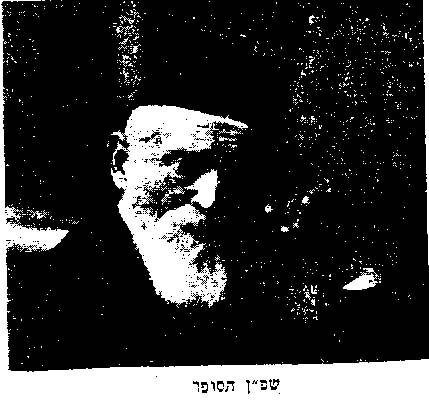
As per Menachem’s suggestion I have posted the pictures of the Widow Rom (Devorah) and Shafan HaSofer. These appear in Yahadut Lita, 1960, p. 296.


Dei’ah veDibur Fabrication – Dr. Leiman

As I noted previously, the Haredi mouthpiece Dei’ah veDibur had a rather insightful piece on the falicy of the Golem of Prauge. However, although the article ended with the hope that after bringing this fabrication to the readers attention people will only tell true stories. Shnayer Leiman, however, notes that the story itself in Dei’ah veDibur contains a rather glaring inaccuracy.

The March 1, 2006 issue of _Dei’ah Ve-Dibur_ — a haredi journal — includes an essay entitled: “The Golem of Prague — Fact or Fiction?.” Adducing evidence from a variety of sources, the essay concludes that “it is unclear whether or not the Maharal ever made a golem.”

Much of the blame for leading people to think that the Maharal had made a golem, the essay suggests, rests with Y.Y. Rosenberg [sic: while all the other rabbis mentioned in the essay are entitled “Rav” or “Rabbi,” only Y.Y. Rosenberg, who was a distinguished rabbi with ordination from the greatest rabbis in Poland, is defrocked], whose 1909 volume on the Golem of the Maharal (Sefer Nifla’ot Maharal) is identified as a forgery. The essay concludes with appropriate warnings that one should rely only on literature that is “historically reliable.”

Such a critical reading of Jewish literature — and concern with Historical truth — is certainly a welcome breath of fresh air from a circle that has not always covered itself with glory regarding such matters. Alas, the essay fell into the very trap about which it was warning others: beware! One paragraph reads:

“At one point the author [Y.Y. Rosenberg] of the book actually admitted that he had invented the story. In _Halelu Avdei Hashem_, which contains stories in Yiddish about HaRavMoshe Aryeh Freund zt”l, av beis din of the Eida HaChareidis, Rav Yechezkel Halberstam zt”l of Shineveh, author of _Divrei Yechezkel_, is quoted as having made the following comment. “A shochet ubodek from Antwerp heard from the Rov z”l, who heard from his father the Rov of Honiad (an important Jewish community in Hungary), who heard from the Rov of Shineveh (eldest son of the Divrei Chaim zt”l of Sanz). The Shinever Rov said that whenever he sees the book _Niflo’os Maharal_ it pierces him because the author of the stories personally admitted to him that he fabricated the whole thing.”

Leaving aside significant errors of translation, the Shinever Rov — Rav Yechezkel Halberstam, author of _Divrei Yechezkel_ and eldest son of the Divrei Chaim — died on 6 Teveth, 1898. Rabbi Yehudah Yudl Rosenberg published his _Nifla’ot Maharal_ for the first time in Warsaw, 1909. It can easily be proven that the book did not exist until shortly before it was published in 1909. The Shinever Rov never heard of the book, never saw it, and was not “pierced” by its content.

Indeed, one should rely only on literature that is “historically reliable.”


More on story fabrication – The Golem

As some have mention in the comments to my previous post, the story of the Mahral and the Golem although many take it as true, it is not. Popularized by Rabbi Yudel Rosenberg, the work is a work of fiction, something even noted in a bibliography published of Rabbi Rosenberg’s works. Some of the people who discuss this are Ira Robinson, “Literary Forgery and Hasidic Judaism: the Case of Rabbi Yudel Rosenberg,” Judaism 40 (1991), pp. 61-78), Shnayer Z. Leiman, “The Adventure of the Maharal of Prague in London; R. Yudl Rosenberg and the Golem of Prague,” Tradition 36:1 (2002): 26-58 and Eliezer Segal.

However, surprisingly, in the online publication Dei’ah veDibur, there is also an article on this topic (hat tip A Simple Jew). The article “borrows” heavily from the above mentioned articles (without citation). It also references some early sources which cast doubt on the veracity of the story, the article does so without identifying the source. One of the unnamed sources I think is a reference to R. Shlomo Yehuda Rappoport’s introduction to Kalmen Leiben’s Gal Ed however, the dates don’t work out exactly (Gal Ed 1856). It would make sense to leave this unidentified, as though R. Rapoport was the son-in-law of the famed author of the Ketzot HaHoshen and even added the index and some notes to his Aveni Milumim, R. Rapoport is not considered the most traditional Jew (See Barzaily typically terrible biography on Rapoport). Additionally, although the article in Dei’ah veDibur is rather detailed it also leaves out R. Shlomo Schick’s criticism (based upon Rapoport) of the story as well. Again this may be due in part to some people’s views regarding Schick (see this post where some of Schick’s work was censored). [Additionally, the article mentions a small book by R. Eckstein titled Sefer Yetzirah which appears to be available on the Rare Hebrew Books from Harvard’s Collection Microfilm].

But perhaps the most surprising thing in the entire article is its conclusion

Rabbi Eshkoli emphasizes that we should be raising our children with literature that is historically reliable, for which our extensive traditions about the greatness and holiness and the powerful prayer of the tzakkikimand Torah giants of earlier times amply suffice. Niflo’os Maharal therefore ought no longer to be circulated unless each copy carries a clear disclaimer stating that the story is fiction. Neither, he also points out, should the book be quoted from as though it was reliable information.

Dei’ah veDibur bills itself as “A Window Into The Charedi World,” so perhaps this emphasis on truth will signal a new trend in haradei biographies only time will tell.

[One interesting side note a Polish TV crew went into the attic of the Altena Shul in Prague and filmed the contents. The pictures they found were published in a Polish book. These pictures show a big mound of dirt but no Golem as far as I can tell.]