1

Daniel J. Lasker – Birkat Ha-Hammah 5769

Get Ready – It’s Almost Time to Bless the Sun
by Daniel J. Lasker

Daniel J. Lasker is Norbert Blechner Professor of Jewish Values at Ben-Gurion University of the Negev, Beer Sheva, and is chair of the Goldstein-Goren Department of Jewish Thought. His landmark work Jewish Philosophical Polemics against Christianity in the Middle Ages, originally published in 1977, was recently republished with a new introduction in 2007.   

This is Professor Lasker’s second post at the Seforim blog. His previous post about ve-ten tal u-matar li-verakha was entitled “December 6 Is Coming: Get Out the Umbrellas,” and is available here.

לזכר אבי מורי ז”ל
In less than two months, on April 8, 2009 (Erev Pesah, 14th Nisan, 5769), the once- in-28-years Blessing of the Sun (Birkat ha-Hammah) will be recited, celebrating the occasion when the sun returns to the position where it was when it was first created, on the same day of the week and the same hour of the day as it was then. For those with short and medium range memories, and for those who were toddlers or perhaps not even born in 1981, it is useful to review the reason for this ceremony, one of the very few Jewish events which follow a solar calendar rather than our standard Jewish luni-solar calendar. This year’s Blessing is the first one in the internet age, so it is appropriate to publicize it on a blog; one can only imagine what technological breakthroughs will be around at the time of the next Blessing in 2037.
The Talmud Berakhot 59b states: “He who sees the sun at its tekufah, the moon in its power, the stars [or planets] in their orbits, and the signs of the zodiac in their orderly progress, should say, ‘Blessed be the Maker of Creation’ (ברוך עושה בראשית).” The Talmud continues: “And when is that? Abbaye said: ‘Every twenty-eight years when the cycle is repeated and Tekufat Nisan falls in Saturn on the evening of Tuesday, going into Wednesday.” It should be noted right away that Abbaye is commenting only on the first event described in the baraita, namely, “seeing the sun at its tekufah,” and that parallel passages (Tosefta Berakhot 6:10, Jer. Berakhot 9:2 [13d], and Leviticus Rabbah 23:8) do not include Abbaye’s explanation. It is that explanation, however, which is the basis of the ceremony of Birkat Ha-Hammah.
What does Abbaye’s comment mean? First of all, Tekufat Nisan refers to the vernal equinox, the exact time when spring begins, when the sun rises exactly in the east and sets exactly in the west. Since night and day are then equal, sunrise and sunset on those days are at 6:00 AM and 6:00 PM respectively (in local time; not necessarily in standard time). Second, the ancients believed that there are seven planets (Sun, Moon, Mars, Mercury, Jupiter, Venus and Saturn); and each hour of the day is controlled by a different planet on a weekly rotation (each planet controls 24 different hours during the week, repeating the cycle every seven days). For instance, the planet which controls the 6:00 AM hour names that particular day: Sunday (Sun); Monday (Moon); Tuesday (Mars – think the French mardi); Wednesday (Mercury – mercredi); Thursday (Jupiter –jeudi); Friday (Venus – vendredi); and Shabbat/Saturday (Saturn). The 6:00 PM Tuesday hour, namely the onset of Wednesday according to the Jewish practice of beginning the day at night, is Saturn; thus, “Saturn on the evening of Tuesday, going into Wednesday.” According to Abbaye, when the vernal equinox falls every 28 years on Tuesday at 6:00 PM, the blessing of the sun is to be said. Since at the time of equinox the sun sets on Tuesday at 6:00 PM, the halakah maintains that the Blessing of the Sun is to be recited on Wednesday morning after sunrise. April 8, 2009, is the Wednesday after the Tuesday on which Tekufat Nisan occurs at the 6:00 PM for the first time in 28 years.
But why does the vernal equinox fall at 6:00 PM on Tuesday night once every 28 years? This assertion is based on a number of assumptions: 1) The world was created in Nisan (actually at the end of Adar) and not in Tishrei (actually the end of Elul), following R. Yehoshua’s view in Rosh Hashanah 10b-11a. 2) When God created the sun on the fourth day, He wasted no time and did so at the very first minute of the fourth day, namely, what we call Tuesday evening at 6:00 PM. 3) The sun was created at the moment of the vernal equinox (Tekufat Nisan). 4) The solar year is exactly 365 ¼ days long. On the basis of this calculation, the tekufot (the equinoxes and the solstices) progress each year by one day and six hours (365 ¼ days is 52 weeks, one day and 6 hours). If the first Tekufat Nisan was on Tuesday night at 6:00 PM, the next one is Wednesday night at midnight; the next one was Friday morning at 6:00 AM; then Saturday at noon; Sunday night at 6 PM, and so forth. The first time after creation that Tekufat Nisan fell again on Tuesday night at 6:00 PM was in the year 29 AM, 28 years after creation. On 14th Nisan, 5769, the vernal equinox will be at 6:00 PM on Tuesday for the 207th time (5769/28 = 206 with a remainder of 1). To celebrate this event, the blessing “Blessed be the Maker of Creation” will once again be recited.
The perceptive reader may have noticed that the assumptions upon which the obligation to recite the Blessing of the Sun are based are highly problematic. There are more than seven planets and they do not revolve around the earth (which itself is a planet); and most people do not believe that each hour of the day is ruled by a different planet. Our celebration of Rosh Hashanah on the first of Tishrei seems to indicate that the world was not created in Nisan (e.g., we say: היום הרת עולם). The Bible gives no indication that the sun was created on the equinox (either vernal or autumnal), or that it was created at 6:00 PM on Tuesday night (after all, before the creation of the sun, there was no 6:00 PM). But most significantly of all, the year is not exactly 365 ¼ days long.
There are a number of consequences of the discrepancy between the actual length of the year and the approximate length of 365 ¼ days (called Tekufat Shmuel [cf. Eruvin 56a], which is the same calculation which is at the base of the Julian calendar; see my contribution to the Seforim blog on November 30, 2007, in the context of a discussion of the prayer for rain in the diaspora, also calculated according to Shmuel’s imprecise length of the year). One consequence is that the Blessing of the Sun is moving progressively forward vis-à-vis the Gregorian calendar. In 2121 the blessing will be said on April 9, not April 8. In 2205 it will be said on April 10, and so on (the Hebrew date changes every time since the Blessing is based on the solar calendar). More importantly, however, the Jewish world is blessing the sun as it returns to its original time at the vernal equinox on a date which has nothing to do with the true vernal equinox (which is this year on March 20, 11:44 UTC).
Why, then, do observant Jews observe a commandment which is so questionable (especially this year when it falls on the eve of Pesah, not the most convenient time to have a ceremony which is intended to be performed in as large a group as possible – ברוב עם הדרת מלך)? Is it just another example of Jewish stubbornness and inertia – holding onto an ancient ceremony even when it is based on questionable assumptions (perhaps like the second day of holidays in the diaspora because of calendrical doubts which were laid to rest over a thousand years ago)? Or is it a sign that in matters of religion, especially when it comes to halakhah, logic is not the only important factor or perhaps not a factor at all. The Hatam Sofer ruled (Responsa, Orah Hayyim 56) that once the great Rabbis of Israel (Maimonides [H. Berakhot 10:18], Yosef Karo [Orah Hayyim 229:2], et al.) had codified the practice of blessing the sun, the matter was closed. It would seem that, indeed, tradition, even illogical tradition, has had a strong hold on Jews; it is this Jewish loyalty to tradition which has maintained us during our long history.
And so, let us hope that on this 14th of Nisan/April 8, the skies will be clear, the sun will be bright, and we can once again thank God for making the works of creation!


Milah Books & Manuals

Milah Books & Manuals
by Eliezer Brodt & Ish Sefer
Much has been written on milah. Hebrew Books has over forty seforim on this topic. There are those books that discuss the various controversies, including abolishing milah in toto[1]or specific parts of milah such as metzizah be-peh.[2] Others focus on the philosophic and theological implications of milah.[3] This post, however, will focus on two types of milah books, one what we will refer to as milah manuals and the second, books about milah. The former is comprised of books that explain, in detail, the process of milah – these can include the physical process, i.e. how the surgery is to take place, as well as the more esoteric processes such as thoughts or prayers that are to accompany the milah. The second type of book doesn’t focus on the technical aspects of milah but instead focuses on the customs, the laws, etc. that are connected with the surgery. One final point, this is not intended to be a complete bibliography of either type of work, instead, we have picked out a few titles that hopefully will be of interest to the readers.
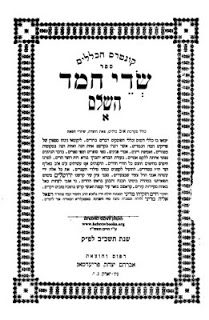
Milah ManualsThe first manual up for discussion is R. Tzvi Benyamin Auerbach’s, Brit Avraham, Frankfort, 1860. This book includes a nice introduction dealing with a history of the Ravan as well as other Rishonim. Additionally, all the liturgy associated with brit and explanations of the liturgy is included. There is a section on the laws relating to milah. At the beginning of this section, Auerbach notes that although he takes a different view of some of rules governing milah, he provides explainations for his divergent opinions in another section. Indeed, Auerbach does provide a detailed discussion of the law of milah including a discussion of most, if not all, relevant opinions. Interestingly, although the laws and liturgy are in Hebrew, this section, the section discussing the bases for Auerbach’s opinions, is in German. Not only is it in German, but in Latin characters indicating that Auerbach was trying to demonstrate the correctness of his opinion to only those who could read German. Let us explain. Auerbach’s work includes one other section in the vernacular. That section discusses various cures associated with milah. This section is written in Yiddish in Hebrew characters. Auerbach explains that he did so “so that even those who do not understand Hebrew will understand this section.” Thus, there are three potential audiences for this book. Those who only understand Yiddish, those who understand Hebrew, and finally, those who understand German as well. R. Auerbach is most well-known for another work, Sefer ha-Eshkol he edited and published from a manuscript and added his own commentary, Nahal Eshkol. As Dr. Shapiro has discussed, this work was accused of being a forgery, that although it was attributed to Rabbi Abraham ben Isaac, a Rishon, it was in fact a later invention. Ironically, in the introduction to Brit Avraham (pp. 24-25), Auerbach discusses the importance of authenticating manuscripts and ensuring proper attribution. Specifically, Auerbach provides Brother, the following story illustrates how must care and time one must take in authenticating old manuscripts that are found in various libraries. In fact, Gedolei Yisrael have erred because they failed to take proper care [in authenticating manuscripts] when it came to the prohibition of terafot. Auerbach offers the story that when he was studying under R. Leib Karlburg, R. Karlburg ruled that an animal was not a terifah which appeared to be in contravention with the understood law. Auerbach questioned him on this ruling and R. Karlburg explained that all the Rabbis in Cologne and Bonn permit this because of a responsum authored in 1626 and signed by numerous rabbis that remained in manuscript but was included in the communal pinkas from R. Yehuda Miller’s library. Auerbach went and looked this up, and indeed there was such a responsum attributed to various Rabbis. Auerbach, however, wrote to his father-in-law, an expert in yoreh deah, regarding this leniency, and his father-in-law told him to ignore it and follow the accepted stricter position. Auerbach continues, that after he got to Frankfort, he told R. Aaron Fuld this story and R. Fuld immediately showed Auerbach a responsum from R. Mordechai Halberstatt, Ma’amar Mordechai. R. Halberstatt published the responsum (as well as other manuscripts from R. Miller’s library) and after doing so states “all of the preceding manuscripts are forgeries and the product of the the doer of a terrible deed, may his name be blotted out, Lieb the non Jew who is the well-known informer Kreski (this wicked one is referred to in the book Ametz Yosef as the informer Krauss . . .) . . . he is the the one who forged and spoke falsehoods in the names of various luminaries.” Auerbach then finishes “that I have spoken at length [regarding the need for caution authenticating manuscripts] because there is still a community who follows the [erroneous] practice regarding the above issue of terifah.” Ironically, one of the justifications for Auerbach publishing a forgery was that Auerbach was duped regarding the manuscript and failed to do correctly authenticate the manuscript he attributed to the Sefer ha-Eshkol.[4] The next two manuals are interesting in both their content as well as their titles. These two manuals are more focused on the kabbalstic intent that one is to have during the ceremony. Sod ha-Shem has already been discussed here and here due to the fact the author, R. David Lida, has been accused of being a Sabbatian. But, it should also be noted that both Sod ha-Shem and Hotem ha-Shem use God’s name in the titles. Indeed, in the later case, God’s full name is spelled out – Yud, Hey, Vav, Hey (additionally, must of what is in Hotem ha-Shem comes from Sod ha-Shem). Such use of God’s name is not unique to these books. The first to discuss the issue of using God’s name in the title actually arose not because the book in question had God’s name but rather because the title could be (incorrectly) read to be referring to God. Of couse, we speak of Hezkiyah Medini’s Sedi Hemed. The Sedi Hemed was not published in a single set as it is available today. Instead, R. Medini sent kuntresim in paperback as the parts became available to various rabbis to get their opinions on the work. Although much of the feedback R. Medini got was positive, R. Medini recieved two letters from a rabbi R. Medini does not identify that questioned R. Medini’s work and more particularly, the title of his work. These letters complained that since the Sedi Hemed had a paper cover with the title on it, when one went to bind all the kuntresim together, the binder would inevitably remove one cover. According to the anonymous rabbi this was problematic because Sedi also spells out a name of god and thus opens the potential for discarding of a page with god’s name on it.
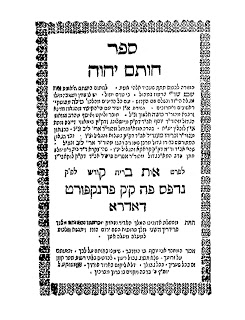
R. Medini responded by noting that since the word in question “sedi” is not intended to be holy, although the same word may also have a holy connotation, whether it is in fact holy is dependent upon the intent of the author (i.e. elohim referring to idols). Here, the intent was not god’s name so there is no problem. R. Medini also noted that of the many, many rabbis who wrote to him regarding his book, none had refrained from mentioning the title and none brought this “issue” to his attention. R. Medini then cataloged a few books that, like the Sod ha-Shem and Hotem ha-Shem, have god’s actual name in the title and none of these authors were at all bothered by that. Indeed, it seems rather odd to worry about a book title, when the entire book is to be respected. R. Medini then wrote to numerous rabbis to check and make certain that his logic was sound (they all responded that R. Medini was correct). The first he wrote to was the extremely erudite scholar, R. Yosef Zekhariah Stern. R. Stern agreed with R. Medini and offered additional titles that contain god’s name. Additionally, R. Stern also highlighted names that include god’s name in them such as eliyahu, eliezer, daniel and the like. R. Stern proclaims that although these names contain god’s name in them no one has ever had a problem with them nor did he ever see anyone hyphenate or otherwise alter the name to ensure that god’s name doesn’t appear. Today, however, the very practice that R. Stern notes was never done, has become commonplace in some quarters. In the end, R. Medini’s work retained the title Sedi Hemed; however, the title now carries nekkudot to ensure that no one makes a mistake regarding the pronunciation.
In 1892, Zichron Brit li-Rishonim was printed. Although published in the end of the nineteenth century, this manual is based on the pesakim of the rishonim R. Yakov ha-Gozer and his sons. Israel Ta-Shma points out that this is the first specialist sefer written in times of Rishonim where we do not know anything about them in others areas of torah (as there were other specialist seforim written before but by well-known gedolim). Additionally, Ta-Shma demonstrates that this work was meant for the Moheleim of the time to improve the field. See I. Ta-Shma, Keneset Mechkarim, Iyunei be-Safrut ha-Rabbanim be-yemi ha-Benyaim, (Bialik Institute, Jerusalem: 2004), vol. I, pp. 320-22; idem, Halakha, Minhag, u-Metziut be-Ashkenaz 1100-1350, (Magnes Press, Jerusalem: 1996), pp. 96-99 The question is why the name “ha-Gozer.” R. Yissacar Tamar in Alei Tamar [Moed 1:149];has a lengthy piece on the topic where he points out there are almost no sources in chazal that “gozer” refers to a mohel. He suggests that maybe the editor stuck it in. R. Tamar then suggests that perhaps the name “gozer” has nothing to do with Milah. Instead, it was a nickname of respect that he was a Tzadik and what he was gozer hashem did. [See also R. Elijah Levita, Tishbi, s.v. gezeriah.] However it appears that Alei Tamar missed a known Midrash which provides: שבעה הרי שמונה, אמר משה בזכות המילה שניתנה לשמונה נקרע הים, ונקלס באז. אמר ר’ לוי לגוזר ים סוף לגזרים (תהלים קלו יג), שכן בלשון ארמי קורין למהולין גזורים, בזכות המילה נקרע הים (מדרש תנחומא (בובר) פרשת בשלח סימן יב) .
Other Works on Milah An excellent sefer on milah, Koret ha-Brit, was written by R. E. Posek and first printed in Lvov in 1893 and recently reprinted (300 pgs). This sefer covers all topics relating to milah and provides incredible sources and many of his own fascinating insights on the topics. It also includes an abridged selection of all the kabbalah aspects mentioned in R. Lidas Sod ha-Shem. He received many nice haskomos to the sefer among them the Marsham, Adres and Sdei Chemed. Besides for receiving these haskomot he also received many notes on his work from the Adres and Marsham indicating that both read the book closely. The Adres, in his haskamah, discusses limiting oneself to a single topic. ומצאנו לרבותינו ז”ל שהיו מצוינם במקצוע אחת יותר מחבריהם [עי’ ברכות כ’ א’ , מו”ק כח ב, ע”ז ד’ א’ , ב”ק לט נג א, ב”מ ס”ו פו א’, חולין נב ב, גיטין ה’ ב] ומה”ט קבעו הלכה כמותם בזה [עי’ רש”י כתובת מג ב, רא”ש ב”ק פרק ד] כן נוכל לומר על ידידינו המחבר… Another important work was the Zecher Dovid written by R. Dovid Zechus Modena first printed in 1816 . This work is extremely special. This was very rare ever since it was printed and therefore it was rarely quoted even Sefer ha-Brit, discussed below, which quotes many seforim on the topic does not quote this work. The sefer Otzar ha-Brit from the famous yerushalmi mohel does quote this work often as he received special permission from Hebrew University to borrow it when he was working on his seforim. In 2001, Ahavat Sholom reprinted this work in a beautiful set of six volumes including a volume of indexes and a volume of dershos of his on chumahs that was never printed before. This work is an encyclopedia on Milah and many other topics. It is divided into three sections the first two relate to milah in all aspects of kabalah and halacha. The importance of this work is besides for quoting an excellent selection of sources on his topics he adds in many of his own nice points brings many sources from unprinted manuscripts and organizes it all very well making it a pleasure to read. The third section of this sefer is all about the cycle of the year from Shabbat and all the Yamim Tovim here too he deals a little bit about milah but mostly focuses on the Yamim Tovim and includes excellent discussions and sources on the topics. This is one of the best seforim which Ahavat Sholom has printed.

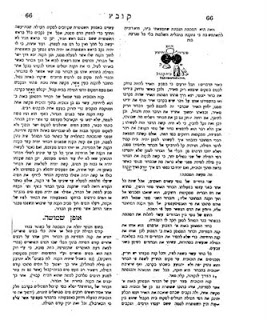
Another work on the topic is Machsehrei Milah written by R. Eliyhu Halevi, Livorno, 1793 and recently reprinted by Ahavat Sholom. This new edition includes a selection of the Kuntres on metzizah from R. Hezkiah Medini the author of the Sedi Hemed as well as a selection of halachos from R. Yakov Hillel. Another work is Sefer ha-Bris written by famous mohel R. Pirutinsky comprised of 415 pages and is an extremely thorough work on the topic. One section of great interest is on metzizah (pp. 216-26) where he brings many sources on the topic including R. Chaim Solovetick’s and R. Aron Kotler’s opinions (p. 224). Another sefer of interest is called Meshiv Nefesh first printed in 1906 and recently reprinted by Tuvias. The author was Dr. Sherhai a doctor who also appeared to be a big talmid chacham. This work consists of three parts. The first part titled Meshiv Nefesh is about Halacha Limoshe Misinai all over chazal He also deals with the Rambam Shitas on this topic at great length. The second part of the sefer deals with many aspects of Milah showing, at great length, that the metzizah is an very important part of the Mitzvah and is not just based upon danger to the baby. He has a interesting discussion about the famous concept nishtanh ha-teveh (pp. 21b- 22b, 34a-34b). He also claims, like many others, that the Chasam Sofer teshuvah on the topic of metzizah is not a forgery but, instead, was a horas sh’eah (p.64). The third part of the sefer is titled Bris Shalom in which the author argues, using medical sources, that metzizah is not dangerous at all. As an aside besides for all his discussions in regard to Milah he also has a few other interesting discussions where he deals with going to doctors (p12b), the knowledge of Noach, Moshe Rabenu (p.12b) Tanim vamorim in medical areas (p.18a) including a list of those that actually practiced medicine (pp.14b,17a). He also includes a list of Geonim Rishonim and achronim (pp.19a- 22b) who practiced medicine including Rashi (p.19b). He concludes this section with a very interesting piece (p.23a): מדוע נשתנה הדור הזה מדורות הראשונים שהיו גם כן חכמים גדולים בחכמת הרפואה וגאונים גדולים בחכמת התורה, אף שברוך ה’ לא אלמן ישראל כי נמצאים גם בזמננו בפרט בארץ אשכנז… ורופאים הושמרים תורתנו הקדושה כדיו וכדת בכל פרטיה ודקדוקיה מהם וגם כן גדולי תורה על כל זה אינם במדה מרובה כמו בדורות הראשונים… התשובה לשאלה הזאת נמצא גם כן בתורתינו הקדושה על פי מליצת חז”ל באמרם לעולם יכנוס אדם בכי טוב ויצא בכי טוב, פירוש כל מה שיתחל האדם ליכנס באיזה דבר או באיזה חכמה ללמוד יכנס בכי טוב ואין טוב אלא תורה פירוש אל יכונס אלא כשישים תורת ה’ לעיקר, וכן בדורות הראשונים שבתחלה מלאו כריסם בש”ס פוסקים כמו כל הגאונים שהבאתי ורצו ללמוד החכמה הזאת באשר היא שייכה לחכמת התורה, והרבה ענינים בחז”ל מה שלא יכלו לבארם בביאור נכון רק על ידי חכמת רפואה כמו כל הגאונים שהבאתי ורצו ללמוד החכמה הזאת באשר היא שיכה לחכמת התורה, והרבה ענינים בחז”ל מה שלא יכלו לבארם בביאור נכון רק על ידי חכמת הרפואה… וכוונתם היתה רצויה להיות להם מזה מטרה בח בחיים ושיהא להם לחם חוקם מזה בכדי שיוכלו ללמוד וללמד את שתי חכמות שתהינה מתאימות ועולות בד בבד ותהיינה לאחדים בידם וגם לקיים מצות מעשה היא פיקוח נפשות חיי דברייתא, ומאחר שנכנסו בכי טוב שלמים בחכמת הרפואה ומלאים במדות טובות וביראת שמים וכל שיראתו חטאו קודמת לחכמתו חכמתו מתקיימת, אבל לא כן עתה בדור הזה רובא דרובא נכנסו ללמוד הכמות ולשונות בעודנו כשהוא נער הוא כתינוק שנשבה לבין הנכרים דלא עסקו בלימוד התורה כפי הנצרך… Over the years many sefarim and articles have been written about metzizah pro and against doing it with a klei. One such work was called Sefer Dam Brit, printed in 1901 in London by Alexander Tertis. This work contained a method of doing metzizah be-klei called the Tertis-apparatus (see below) and including many important haskomot of gedolim. One haskamah was from the Orach Hashulchan (p.34) but R. Pirutinsky already points out that in his work Orach Hashulchan (Y.D. 264:19) that R. Epstein takes a different view than the one he expresses in his haskamah. דע שיש בזמנינו שאומרים שיותר טוב לעשות המציצה לא בפה אלא באיזה ספוג שמספג את הדם ולא נאבה לאם ולא נשמע להם ורבותינו חכמי הש”ס היו בקיאים ומחוכמים יותר מהם אך זהו בוודאי שהמוצץ יהיה לו פה נקי בלא שום מחלה ושניים נקיים… ואין לנו לחדש חדשות כאלה ונהיה כאבותינו ובמדינתינו לא שמענו זה: Many of the haskomot are worth studying and quoting but one of the important ones was from R. Yakov Yosef where he writes (p. 6): וכבר למדנו חז”ל ללמוד בדברים הנוגעים לחכמת הרפואה והטבע מחכמי הרופאים… ולמה לא נסמוך על הרופאים שאומרים כי מציצה של שמירת הבריאות תוכל להיות על ידי כלי מתוקן על זה וגם לא מצינו במסכת שבת באיזה אופן לעשות… This haskamah in particular incurred the wrath of the Adres in a rather harsh letter recently printed in his Shut Mayneh Eliyhu (p. 352). Shockingly this letter was not edited out .The letter is really worth quoting in its entirety as it is very important for the whole topic but here is part: לבי ידאב על מעשה הקובץ של לעטריס שהדפיס בעתונו היהודי המקבץ שו”ת ממי שהוא מונה וספור שלשים וא גם יותר רבנים המתירים, ובראשם ימנה הגאון חת”ס והגאון חריף שקוראים אותו בארץ ליטא חריף. צחוק מכאביב לב עשה לנו בהזוג הזה, ומאן מעייל בר נפח בארעא דעיילי זקוקין דנורא, מה ענין ר’ יעקב מנויארק אשר היה רב בזאגר ומ”מ בווילנא, ועל ידי מכונות ותחבולות כדרכו יצא לנויארק, וידענו היטב היטב את האיש ואת שיחו תהלוכותיו ותחבולותיו מתחילה עד סוף, מה ענינו לרבינו החתם סופר, אשר עוד כשמונים שנה בדור דעה שהיו אז כל הגאונים האידרים בחיים הי’ הוא הראש וראשון להוראה וממנו יצאה תורה לכל ישראל, ואותו הרב ר’ יעקב שלא שמש תלמידי חכמים ומלך מעצמו, על פי תבונותו, כי פקח גדול הוא, אינו מגיע לקרסולי תלמידי תלמידו של הגאון חתם סופר, לא בתורה ולא במעשים טובים, והרי לפנינו שעזב עיר וולינא תפארת ליטא, והלך לנוע על ארצות אמעריקא להיות שם רב ראשון בנויארק כחלומו אשר חלום… והרואה דברי הר”מ פ”ו ה”א מדיעות, יעי’ שם היטב בלשונו, יראה עד כמה מלאה לבו יראת שמים לעשות כן. ואיש כזה אשר בהיותו מולדותו לא הי’ מגדולי הרבנים רק מגדולי הדרשנים כיד הדיבור הטובה עליו, אשר בעבור זה נתקבל למ”מ בווילנא (אחרי תחבולות רבות מצידו), הוא נעשה חריף בעברו על הים ובא לארץ החדשה, כשושנה בין החוחים, ונעשה שר לסרוחים. והנה הוא גם בעל הוראה ויתיר כמו שלבו טוב עליו, ובדור החושך הזה מקלו יגיד לו, כל המיקל הרי זה משובח, וכל המחמיר הוא ללעג ולמטרה לפני בני עולה, כמעשה אתרוגי קורפו, שביעית, ועוד ועוד אשר הדבר נמסר לעורכי העתונים לעפר בעפר על כל מי שלא יאמר כדבריהם. Interestingly enough elsewhere the Adres writes much less harsh about the topic in his notes to R. Posek Kores Habris the Adres writes (pp.143a-143b) בזמנינו המציאו חכמי הרופאים פני המציצה כמין שפופרת חלקה למצוץ על ידה בפה ולא להכניס האבר בפה ולמוץ וכל זה מחשש חולי המתדבק להמוצץ או מהמוצץ להתינוק והתירו פרושים את הדבר ובכיוצא בזה י”ל שמאל דוחה וימין מקרבת As an aside we see from this letter the tremendous respect and kovod he had for the Chasam Sofer. Other places in his writings show this for example is in Shivis Zion (p.233) after quoting the famous Chasam Sofer in succcah … (36b) that some edited out that says: … לע”ד רבי ישמעאל נמי לא אמר מקרא ואספת דגנך אלא בא”י ורוב ישראל שרויין שהעבודה בקרקע גופה מצוה משום יישוב א”י ולהוציא פירותי’ הקדושי’ ועל זה ציותה התורה ואספת דגנך ובועז זורה גורן השעורי’ הלילה משום מצוה וכאלו תאמר לא אניח תפילין מפני שאני עוסק בתורה ה”נ לא יאמר לא אאסוף דגני מפני עסק התורה ואפשר אפילו שארי אומניו’ שיש בהם ישוב העולם הכל בכלל מצוה אבל כשאנו מפוזרי’ בעו”ה בין או”ה וכל שמרבה העולם יישוב מוסיף עבודת ה’ חורבן מודה ר”י לרשב”י וע”ז אנו סומכי’ על ר’ נהוראי במתני’ סוף קידושין מניח אני כל אומניות שבעולם ואיני מלמד בני אלא תורה היינו בח”ל … The Adres adds: … הרי לנו דבר נפלא מגאון עולם אביר הרועים רבינו שבגולה אשר הוא עומד ההוראה שכל בית ישראל נשען עליו ומי יבא אחריו … . [See also the list in Seder Eliyhu pp.122-123] For more on this see here . As an aside it seems that R. Yakov Yosef never knew about the Adres opinion of him as in a Haskamah to the sefer Neveh Sholom written five years later in 1900 he writes : ומחמת כי חולה אנכי ל”ע ע”כ לא יכילתי לעיין בו כראוי אבל המיעוט אשר ראיתי יעיד על ספרו כולו כי ראוי להוציא לאור עולם ובפרט כי כבר הוסכם ספר של מחבר הנ”ל מידידי הרב הגאון כו’ מו”ח אליהו דוד ראבניבוץ אב”ד פאנויעז ואין בודקין מן המזבח ולמעלה[Thanks to Eli Markin for this source.] Another excellent collection on Milah is called sefer Otzar Habris (four volumes) written by the famous Yerusalmi Mohel R. Yosele Weissberg. As an note of interest in his section on the metzizah controversy in volume four on page seven in the beginning of this section he gives credit to Jacob Katz for Katz’s essay on the topic
[1] See J. Katz, Divine Law in Human Hands, Magnes Press (Jerusalem: 1998), pp. 320-56. [2] J. Katz, Divine Law in Human Hands, Magnes Press (Jerusalem: 1998), pp. 357-402. [3] See, e.g., Shaye J.D. Cohen, Why Aren’t Jewish Women Circumcised?, University of California Press, (Berkely & Los Angeles, Ca.: 2005).[4] For more on this responsum, see Kuntress ha-Teshuvot, vol II, no. 2031.


Review of Quntres

Review of Quntresby B. Jackson First, a quick note regarding Prof. Haym Soloveitchik's apparent position that anonymous critiques are inappropriate.  It appears that his position overlooks at least one example of just that.  As Dan Rabinowitz has pointed out in a prior post, R. Shmuel Aboab authored an ethical work which critiqued some of the perceived laxity of the day but did so anonymously.    Turning to the new online journal Quntres: An Online Journal for the History, Culture, and Art of the Jewish Book. This online only journal, which focuses on the history of the Jewish book has just published its inaugural issue. The editors explain that they view this journal as a "to continue the tradition of scholarship dedicated to the history of the Jewish book once represented in Europe in Hebräische Bibliographie and the Zeitschrift für hebräische Bibliographie, then transplanted to Israel in Kiryat Sefer, and now taking on a virtual form at the libraries of the Jewish Theological Seminary."  Although not noted, arguably there have been such journals in America already such as the Jewish Book Annual.  Additionally, in Israel, Ali Sefer, although on extended hiatus, has recently been restarted (soon to be reviewed). Be that as it may, any addition to the study of the Hebrew book is most welcome.    This issue contains four articles, three in English and one in Hebrew.  The first two articles are articles truly devoted to Hebrew bibliography.   Marvin J. Heller, a prolific writer in this field, already having authored his excellent studies on the printing of the Talmud as well as his Abridged Thesauruses of the Hebrew book, turns his keen eye to unraveling the bibliographical history of the Sefer ha-Kavanot.  Indeed, this issue is also dealt with by Yosef Avivi, in his recent bibliography of writings of the Arizal.  The second article, by Jordan S. Penkower is also of interest to Hebrew bibliographies as well as students of the Bible.  In particular, Penkower traces the history of Norzi's Introduction to his Minhat Shai.  As most are aware, Minhat Shai, is a fundamental work on textual variants of the Bible, and the introduction, not included in the first edition of Norzi's work – nor many other editions – is important as well.  Penkower has published other similar bibliographical and Bible related studies such as his articles on the verse divisions of the Bible, the chapter divisions of the Bible and his seminal article which is steeped in bibliographical finds on the pronunciation of the word "zekher."[1] The final English article, while not directly devoted to Hebrew bibliography is still of interest to the history of Hebrew bibliography as it is an appreciation of Moritz Steinschneider, one of the most important Hebrew bibliographers of all time. The final article, in Hebrew, is by Shmuel Glick and discusses some examples of censorship in the responsa literature.  Glick, of course, is the editor of the Kuntress ha-Teshuvot he-Hadash project (two volumes have already been completed [see reviews here and here], with the third and final volume set to appear this summer) and thus is perfectly placed to write such an article.  Indeed, Glick mentions the project in many footnotes for additional details. The start of the article is not all that promising as Glick trots out the well worn example of the responsa of the Rema regarding yayin nesach.  This is one of the most well known examples of censorship in responsa literature.  Many have discussed this example, but curiously Glick doesn't reference most of the scholarly literature on the topic.  For example, Asher Siev, in his edition of the She'elot u-Teshuvot ha-Rema discusses this as does Daniel Sperber in Minhagei Yisrael. [2]  Neither source is mentioned. Another omission is Glick's discussion of the responsa of R. David Tzvi Hoffmann.  Glick notes that in the Kest-Leibowitz edition a responsum regarding headcovering is removed.  It appears that Glick was unaware of Dan Rabinowitz's article (see here) where he notes this as well as other examples of censorship specific to headcovering.  One other example that Glick discusses should also be augmented. Glick mentions the responsum of R. Ezekiel Landau regarding a suspected case of adultery.  The responsum contains graphic details discussing the alleged act.  David Katz, "A Case Study in the Formation of a Super-Rabbi: The Early Years of Rabbi Ezekiel Landau, 1713-1754," (PhD dissertation, University of Maryland, 2004), 228-248, provides much in the way of background with regard to this case.  While it is possible that Glick didn't see this dissertation, the sources Katz provides should be added to the single source Glick provides.  One other addition regards the Hatam Sofer's responsum discussing metiziah be-peh. Glick correctly notes that this responsum was subject to much controversy whether it was authored by Hatam Sofer.  While Glick provides a few sources, he fails to mention that Jacob Katz has written an excellent article on the topic  –  see  Jacob Katz, "The Controversy Over the Mezizah," Halakhah in Straits: Obstacles to Orthodoxy at its Inception (Jerusalem: Magnes Press, 1992), 150–183 (Hebrew), translated in idem, "The Controversy Over the Mezizah: The Unrestricted Execution of the Rite of Circumcision," in Divine Law in Human Hands: Case Studies in Halakhic Flexibility (Jerusalem: Hebrew University Magnes Press, 1998), 357-402 as well as the more recent article by Shlomo Sprecher, "Mezizah be-Peh: Therapeutic Touch or Hippocratic Vestige," Hakirah 3 (September 2006): 15-66.  Another example of responsa censorship that Glick provides bears mentioning because Glick's discussion supplements the discussion in Kuntress ha-Teshuvot.  Glick, in this article, mentions the removal of the responsum from R. Y. Greenwald to R. Sonnefeld regarding joining the Agudah from Greenwald's Zikrhon Yehuda.  In Kuntress ha-Teshuvot, Glick questions Miamon's story regarding how and why this responsum was removed.  Maimon claimed that as Greenwald argued against joining the Agudah, the Agudah purchased all the copies of Greenwald's responsa and removed and substituted a different responsum.  Unfortunately, the censors failed to change the index to reflect the alteration and in all copies, the index records a responsum discussing joining the Agudah and in some editions the responsum in question (no. 210) deals with that while in others it deals with the issue of eating on the eve of Yom Kippur.  Glick, however, questions this in Kuntress noting various problems with Maimon's story.  (See Kuntress ha-Teshuvot, vol. 1, no. 1310).  Now, Glick provides additional material that appears to indicate that Maimon was wrong.  In particular, Glick cites Schisa's article where Schisa provides a very different version of what happened. Namely, that the printers, in order to be able to sell this work at a convention that was an Agudah convention, on their own switched the responsum in question.  According to this version, the alteration was for profit not ideology.  Curiously, Glick makes no mention that the article considerably augments what appears in Kuntress ha-Teshuvot.        Of course, the balance of Glick's article is very interesting and provides some lesser known examples of censorship in responsa literature.  Two technical notes.  First, in Glick's article he refers to non-existent page numbers.  That is, he references pages in his article (see, e.g.,  pp. 43, 65 n.56, 69 n.66) that are internally incorrect.  Second, although this journal is published digitally, the format is somewhat poor.  In particular, the lines are justified but, rather than get all the words on a single line, a considerable amount of words are broken up and hyphenated.  This makes for difficult to reading both digitally and in hard copy.      

[1] See Jordan S. Penkower, "The Chapter Divisions of the 1525 Rabbinic Bible," Vetus Testamentum 48:3 (July 1998): 350-74; idem, "Verse Divisions in the Hebrew Bible," Vetus Testamentum 50:3 (July 2000): 379-93; idem, "Minhag and Mesorah: On the Recent Ashkenazi Custom of Double Vocalization of זכר עמלק (Deut. 25:19)," in R. Kasher, M. Sipor, Y. Sarfati, eds., Iyenei Mikrah u-Parshanut 4 (Ramat Gan: Bar-Ilan University Press, 1997), 71-128. [2] Teshuvot ha-Rama, Ziv. ed. no. 124, and pp. 66-67; D. Sperber, Minhagei Yisrael, (Jerusalem: Mossad ha-Rav Kook, 1991), vol. 2, p. 56 n.26; D. Sperber, Netivot Pesikah (Jerusalem: Reuven Mass, 2008), pp. 104-14; Y.S. Spiegel, Amudim be-Tolodot ha-Sefer ha-Ivri Ketivah ve-Hataka (Ramat Gan: Bar Ilan University Press, 2007), p. 273 and the notes therein.


David Berger A Brief Response To Marc B. Shapiro

A Brief Response To Marc B. Shapiro by David Berger In response to Prof. Marc B. Shapiro's recent comments in, "Thoughts on Confrontation & Sundry Matters Part II," Prof. David Berger, submitted the following response to readers of the Tradition-Seforim blog. For the recently-published paperback edition of his book on Lubavitch messianism, which follows the Hebrew translation of his book — see David Berger,HaRebbe Melekh HaMashiach, Sah'aruriyyat ha-Adishut, ve-ha-Iyyum al Emunat Yisrael (Jerusalem: Urim Publications, 2005) — and which includes a new introduction where he responds to earlier criticisms of the book, see David Berger, The Rebbe, the Messiah, and the Scandal of Orthodox Indifference, With a new Introduction  (Oxford: The Littman Library of Jewish Civilization, 2008).

This is his first contribution to the Tradition Seforim blog.

Since I've written an entire book about Chabad messianism, there is little point in my rehearsing the arguments here in truncated form.  I will make just two brief observations.

First, Prof. Shapiro writes, "Unlike Professor David Berger, it doesn't overly concern me that the belief in a Second Coming didn't exist twenty years ago. After all, Judaism is a developing religion."  My point, of course, is not that the belief did not exist twenty years ago. It is that Jews through the ages repeatedly–through both word and deed–rejected the possibility that God would send the Messiah to announce that redemption was imminent, preside over a movement identifying him as the Messiah, and then die in an unredeemed world.  In short, Chabad messianism destroys the gedarim, or defining parameters, of one of the ikkarei he-emunah.  Since this point was a key argument used against Christianity for untold generations, rendering it false is a betrayal not only of the Jewish faith but of generations of Jewish martyrs.

Second, there is the reality of toleration by rabbinic leaders (my "scandal of indifference"), which for Prof. Shapiro determines not only what Judaism has become but what we ought to accept as legitimate.  Now, in discussing Christianity, he goes on to say that the incarnation, or belief that a human being is God, is way over the line.  He does not, however, return to Chabad in that part of his discussion, because he would be required to confront his earlier criterion with all its terrible consequences.  I have shown that a significant segment of Chabad hasidim (not just a few lunatics) maintain a fully incarnationist doctrine, and yet the rabbis who believe this (including some of Prof Shapiro's "great Torah scholars" who allegedly deserve respect despite their adherence to the "messianic foolishness") are also generally treated as Orthodox rabbis in every respect.  The reasons for this indifference are discussed in chapter 13 of my book, and they have little to do with theology.  It may indeed be that even this belief will become so legitimated that Judaism will be fundamentally transformed; it is, however, much too early to make such a judgment even about "mere" messianism, and it is beyond irresponsible to look at this development with the cool eye of an analyst without attempting to stem the tide.  Historic Judaism is in mortal danger.  Let outsiders watch this process in detached fascination.  Those of us who care about preserving the faith of our ancestors must take a stand.  If we fail, the proper reaction will not be to accept this with equanimity as analogous to the distribution of shirayim; it will be to tear keriah as we mourn the destruction of core elements of our faith.


Message From Professor Haym Soloveitchik

Message From Professor Haym Soloveitchik

It has come to my attention that a critique of my article “Halakhah, Hermeneutics and Martyrdom” published by the Jewish Quarterly Review has appeared in the Tradition Seforim blog in Fall of 2008. In principle, I do not respond to blogs, as this would place my time at the mercy of anyone who can type. However, I am preparing my articles for re-publication in 3 volumes by the Littman Library. The articles will be reproduced as originally published. However, I hope to relate to new developments in the prefaces to the individual essays. I welcome any criticism or relevant notes that individuals would send me. If I find merit in their remarks, I will note it; if their criticism seems substantive, I will try to address it.

I should add, I will not respond to anonymous communications. As I view such traffic as inappropriate. Intellectual engagement entails reciprocity of exposure. To criticize others behind a shield of anonymity is to my thinking craven and unworthy of a scholar or talmid hakham.


Haym Soloveitchik (solo@yu.edu)
Merkin Family Research Professor at Yeshiva University


Marc B. Shapiro: Thoughts on Confrontation & Sundry Matters Part I

Thoughts on “Confrontation” and Sundry Matters Part II By: Marc B. Shapiro

What follows is a continuation of this post.Some people are so set on showing the differences between Christianity and Judaism that in the process they end up distorting Judaism. Let me start with an example that for the last fifteen years must be considered a Jewish teaching. By Jewish teaching I mean a view that is taught in the observant community. This doesn’t mean that all or even most people will agree with it, anymore than they agree with the ideas of Daas Torah, religious Zionism, religious anti-Zionism, or that the shirayim of the Rebbe has mystical significance. But agree or not, these are clearly Jewish teachings. Today it must be admitted that Judaism and Christianity share a belief in the Second Coming of the Messiah. While this is an obligatory belief for Christians, for Jews it is, like so many other notions, simply an option. The truth of my statement is seen in the fact that messianist Habad is part and parcel of traditional Judaism, and, scandal or not, most of the leading Torah authorities have been indifferent to this. That is, they see it as a mistaken belief, but not one that pushes its adherent out of the fold. In other words, it is like so many other false ideas in Judaism, all of which fall under the rubric “Jewish beliefs.” As long as these beliefs don’t cross any red lines, the adherents are regarded as part of the traditional Jewish community. To give a parallel example, many people reading this post are good rationalists, and therefore regard astrology as quite foolish. But we are all well aware of the many Jewish teachers who taught the efficacy of this system. Therefore, astrology must be regarded as an acceptable belief for adherents of traditional Judaism. Whether it is correct or not is a completely different matter, and if the latter criteria determines whether something is included under the rubric of traditional Judaism, then it will be a small tent indeed. Unlike Professor David Berger, it doesn’t overly concern me that the belief in a Second Coming didn’t exist twenty years ago. After all, Judaism is a developing religion. Two hundred years ago leading Torah scholars criticized Hasidism for advocating all sorts of new ideas, and yet these too became part of Judaism. In another fifty years the notion of a Jewish Second Coming will probably be seen by most as just another Hasidic eccentricity (albeit the province of only one sect), up there with prayers after the proper time and shirayim. The important point for me is what makes a belief an acceptable one in Judaism is not whether it is new, and certainly not whether it is correct, but whether the rabbinic leaders tolerate it. Over time they have shown that they can tolerate all sorts of foolish doctrines, Habad messianism being merely the latest. Professor Berger argued his case valiantly, but it has largely fallen on deaf ears, and this includes the ears of great Torah scholars. So, like it or not, traditional Judaism now encompasses hasidim and mitnagdim, rationalists and kabbalists, Zionists and anti-Zionists, and those who think the Messiah will be coming for the first time together with those who think it will be a return trip. What has occurred with Habad messianism and its painless integration into wider Orthodoxy can also teach us something with regard to the history of Judaism and Christianity. Had Paul not insisted on his antinomian path, that is, had the Law remained central to early Christianity, there is no reason to assume that there would have been a break with Pharisaic Judaism. When thinking about Habad, there is one other point we have to bear in mind. There are great Torah scholars who unfortunately believe the messianic foolishness, and they should be treated with respect. After all, R. Hayyim Joseph David Azulai, the Hida, quoted from the works of scholars who continued to believe in Shabbetai Zvi even after his apostasy.[33] He certainly opposed their Sabbatianism, and we must oppose the Habad messianism, but one’s religious legitimacy in contemporary Orthodoxy is not destroyed because of the belief in a false Messiah. Let me now return to an issue mentioned already, namely, the naivete in dealing with the differences between Judaism and Christianity that is common in Orthodox circles, especially among those who engage in apologetics and kiruv type activities. To give an example that I have both seen in print and heard in lectures, there are those who talk about how compared to Catholicism Judaism is a much more realistic religion when it comes to divorce, in that it permits it if people don’t get along. That is fine, as far as it goes, but some people then go overboard and denigrate any outlook that opposes “Judaism’s position.” In doing so, these well-meaning people end up of denigrating Beit Shammai’s view. Some will recall that Beit Shammai said that “a man may not divorce his wife unless he has found in her some unseemly conduct” (Gittin 9:10), which means unchastity. Now the halakhah is not in accord with Beit Shammai, but his is certainly a Jewish position. Any presentation of Judaism that presents the standard view of divorce as “the” Jewish position, and denigrates any other approach, has the unintended consequence of denigrating Beit Shammai as not having had a “Jewish” position. In other words, it is disparaging to Beit Shammai for any contemporary to speak about how Beit Hillel’s view is “better” than that of Beit Shammai. In fact, there are traditional sources that speak about how in Messianic days the halakhah will follow Beit Shammai, in this and in all other disputes. I think the traditional position would be to assert that Beit Hillel’s position is not objectively any “better”, and certainly not more ethical, than that of Beit Shammai. Furthermore, a number of poskim actually hold that Beit Hillel and Beit Shammai only dispute about a second (or subsequent) marriage, but that with regard to the first marriage, Beit Hillel agrees with Beit Shammai that a man can divorce his wife only if he finds a matter of unchastity. R. Solomon ben Simeon Duran goes even further and asserts that in this dispute the halakhah is actually in accord with Beit Shammai! [34] ואע”ג דב”ש וב”ה הלכה כב”ה משמע הכא דהלכה כב”ש This is not the accepted halakhah, but it illustrates how unseemly it is to portray a position held by important poskim as out of touch or foolish. As mentioned above, I have seen many times when apologists try to show the beauty of Judaism by contrasting it positively with some “non-Jewish” position (on the unsophisticated assumption that the best way to better their position is by denigrating another). As noted, I have also observed that sometimes the position they are denigrating happens to also be a Jewish position (just not the accepted position). Of course, when you point this out to them, and show them that the way they were arguing had the unintended consequence of ridiculing a position held by traditional Jewish figures, they immediately apologize and give assurances that they won’t do so again. My question always is, why not? Five minutes ago they were happy to declare how unfair or foolish a certain position is, and once being informed that the position is also held by Jewish thinkers they drop their argument like a hot potato. Are we to conclude that it is not the inherent logic of an argument that gives it validity, but only who its adherents are? Does an approach only stop being ridiculous when the polemicist learns that it was held by a traditional thinker? Obviously yes, which leads to the conclusion that there is no purpose in the polemicist arguing the merits of his case at all, since everything he states is only conditional. In other words, the polemicist is telling us: “I can attack a position as being foolish and illogical, but this is only when I think the position is held by non-Jewish or non-traditional thinkers. Once I learn that the position is also held by traditional thinkers, all of my previous words of criticism should be regarded as null and void.” This is another example of what elsewhere I have termed the “elastic” nature of Jewish apologetics and polemics. With this in mind, let me now say something that I know will make many people uncomfortable, but which I have felt for a long time. Throughout Jewish literature one can find any number of explanations as to how the notion of the Trinity is in direct opposition to Jewish teachings, since Judaism demands a simple, unified God. There is no doubt that for much of our history this was the standard view. However, once the doctrine of the sefirot arises on the scene, matters change. Many of the arguments put forth by kabbalists to explain why the belief in the sefirot does not detract from God’s essential unity could also be used to justify the Trinity, a fact recognized by the opponents of the sefirotic doctrine. Since the doctrine of the sefirot has become part and parcel of Judaism, we must now acknowledge that Judaism does not require a simple Maimonidean-like, divine unity. In fact, without any reference to the sefirot, R. Judah Aryeh Modena was able to conclude that one could indeed justify the notion of the Trinity so that it did not stand in opposition to basic Jewish beliefs about God’s unity. As Modena points out in his anti-Christian polemic, Magen va-Herev, the real Jewish objection to the Christian godhead is not found in any notion of a Triune God, but in the Christian doctrine of the Incarnation.[35] The idea that God assumed human form, i.e., that a human is also God, is regarded by us as way over the line. This is not only because it deifies a human, but also because there is a great difference between a spiritual God divided into different “parts,” and an actual physical division in God. The latter is certainly in violation of God’s unity even according to the most extreme sefirotic formulations. (It would not, however, appear to be in violation of R. Moses Taku’s understanding of God, since he posits that God can assume form in this world at the same time that He is in the heavens. For Taku, Christianity’s heresy would thus be seen only in their worship of a human, which is avodah zarah.) From the Trinity, let’s turn to Virgin Birth, another phenomenon which everyone knows is not a Jewish concept, or is it? If by Virgin Birth one means conception through the agency of God, then there is no such concept in Judaism. Yet if by Virgin Birth we also include conception without the presence of human sperm, then as we shall soon see, this indeed accepted by some scholars. (I stress human sperm, so that we can exclude the legend of Ben Sira’s conception, which occurred by means of a bathtub, not to mention all of the responsa dealing with artificial insemination.) Pre-modern man believed in all sorts of strange things, one of which was the concept of the incubus and the succubus, which was found in many cultures. The idea was that male and female demons would have sex with humans while they slept. Among the outstanding Christian figures who believed the notion possible include Augustine and Aquinas.[36] This was an especially good way to explain an unwanted pregnancy: just blame it on the demon. While the classic example of the incubus is when a male demon comes upon a sleeping woman, there were times when this happened while both parties were awake, and we will soon see such a case in Jewish history. Lest one think that this is only a pre-modern superstition, what about all those people who claim to have had sexual relations with aliens who abducted them?[37] As the superstitions in Jewish society have often mirrored those of the dominant culture, we shouldn’t be surprised that sex with demons comes up in our literature. Already the Talmud (Eruvin 18b) speaks of Adam begetting various types of demons. This source doesn’t say who the mother was, but since it wasn’t Eve it must be a female demon. Yet the Talmud is quick to note that Adam never actually had sex with this female demon. Rather, she impregnated herself with his sperm that was emitted accidentally. Throughout Jewish history there were women who were believed to have had sex with demons, and this raised halakhic issues that had to be dealt with. There is no need for me to give various sources on this as they have been nicely collected by Hannah G. Sprecher in a fascinating article.[38] I will just mention one point which I find interesting, and which I mentioned in one of my lectures on R. Ben Zion Uziel.[39] While R. Uziel is in many respects a model for a Modern Orthodox posek, it is quite jarring to find that he too takes seriously the claim that a woman was intimate with a demon. Instead of sending her to a psychologist, he devotes great efforts to showing that she can remain with her kohen husband.[40] That poskim would discuss this sort of thing is not surprising, and in an earlier post I mentioned a current talmid chacham who discusses if one can eat the flesh of a demon. Similarly, Sprecher cites a twentieth-century work that deals with circumcising a child whose father was a demon.[41] Yet to find R. Uziel, a supposedly modern posek, also taking this very seriously was quite a surprise to me. I guess the greater surprise was that of the various women involved with the demons. While some were no doubt off their rocker, others presumably just invented the story to save themselves from the shame of an improper relationship and its consequences. Imagine their surprise when instead of being condemned for their illicit affair, the rabbis actually believed the story that they made up, namely, that the man they had sex with was really a demon![42] Once a woman is believed to have had sex with a demon, and certainly if she had a child in this fashion, people are generally not going to want to have anything to do with her and her family. Being descended from the Devil is hardly the best yichus. Yet much of the world began like this, at least according to one early interpretation. Targum Ps.-Jonathan to Gen. 4:1 explains that Cain’s father is not Adam, but Sammael, who also is known as Satan and the Angel of Death. As James Kugel has shown, this tradition is found in other early sources, such as 1 John 3:12 which describes Cain as being “of the Evil One.” Pirkei de-Rabbi Eliezer 21 describes how the serpent impregnated Eve, and we know from other sources that the serpent is none other than Sammael. While we might be inclined to smile and regard this all as pleasant folklore, there is actually much more here than meets the eye. As Kugel brilliantly notes, this portrayal of Cain serves to explain why God did not accept his sacrifice, a point that is never explained in the text. In addition, it helps solve the puzzling comment of Eve (Gen. 4:1): “I have gotten a man with the Lord,” understanding “man” to mean angel, as is elsewhere found in Scripture.[43] Lest one think that in modern times tales of the Devil’s children are only to be found in novels and on the big screen – one immediately thinks of Rosemary’s Baby and The Omen – let me tell you a fascinating story. In the beginning of the nineteenth century a married woman named Yittel Levkovich gave birth to a child which, we are told, was obviously not her husband’s. Yittel claimed that she had been raped by a male demon. This claim was accepted and the woman was not regarded as an adulteress nor was the child regarded as a mamzer. Yet other Jews refused to marry with the descendants of this woman, and these descendants were known as “Chitshers.” Matters got to be so bad that in 1926 a broadside was published signed by many Hungarian rabbis declaring that there was no problem marrying into the Chitshers. Among the signatories was the young R. Joel Teitelbaum, the rav of Satmar. Despite this plea, there were those who continued to shun the Chitchers, and even to this day there are families in the Hungarian hasidic world who will refuse to intermarry with other Hungarian hasidim since the latter are descended from Yittel and the demon. Tying in with the Christian theme with which I began this post, there was even a belief that a Chitcher has the image of a cross under his skin opposite the heart![44] Take a look at the end of this responsum. This is a fascinating topic, and those who want more details should consult the previously mentioned article by Sprecher, from which I took the information mentioned until now. One aspect of the story that appeared too late to be included by Sprecher is mentioned by Jerome Mintz, and shows how despite R. Yoel Teitelbaum’s words of support for the Chitshers, this did not carry on to one of the inheritors of his throne. Jerome Mintz records the following from a Satmar informant: The Satmar Rebbe’s son, the oldest son, Aaron, he has sometimes a big mouth. Aaron, the Rebbe’s son, gave a speech and he called Ableson’s[45] mother a hatzufah [impudent woman]. “This Ableson’s mother–that impudent woman with her tsiganer [gypsy] family–came to the shul and starts yelling.” You know, with that phrase he was trying to bring up an old pain.

There is an old story about the Ableson family, given only from mouth to ear, about the quality of their family. There were some rumors about a hundred years ago about the Ableson family, that it’s not so spotless. A woman in the family had a relationship with some demon or something and that’s how the branch of the family got started. . . . Nobody knows how she became pregnant. She went away to a different town and came back pregnant and she didn’t have any love affair. She was a virgin. She was still a virgin. . . . It’s written in a lot of books at that time. The Kotsker, on of the big rabbis, said that one of their ancestors was made pregnant by a demon.

This goes back six generations. The family is spread out and the descendants feel a little guilty. They try to behave, you know, so that nobody should throw it back at them. The family is so widespread because they’re so rich. They’ve gotten into every family. They’re very aggressive people, probably because they come from the devil. . . . Even today when somebody is making a marriage arrangement he wants to find out if the family is not from the witches. I know that my mother and my father when they made a marriage arrangement, it was a day before they left the country, they found out if there’s a witch or not.[46]
The R. Aaron mentioned in this story is one of the current Satmar Rebbes. We find another example where a large family was ostracized in this fashion. The problem here was especially acute as many great Torah scholars had married into this family, and now aspersions were being cast on it. Those casting the aspersions referred to the family members as Nadler, which has the connotation of mamzer. (As with the term mamzer, it was also used as a general term of abuse and is the subject of a responsum of R. Solomon Luria.[47]) Because of the growing calumnies against innocent families, the Maharal and numerous other great rabbis were forced to publicly support them and condemn all who would question their yichus.[48] What I don’t understand is how, considering the base origin of the term “Nadler” and how it was used in such an abusive fashion, that the word actually became an acceptable last name. Indeed, it is now more than acceptable and people are proud to have this name, which they share with two outstanding scholars, not to mention my former congressman. * * * Returning to the issue of Christianity, many have discussed whether or not it is considered avodah zarah. I will deal with this at a future time, but now I want to raise another issue which I mentioned briefly in Limits of Orthodox Theology: What is worse, atheism or avodah zarah? Subsequent to the book’s appearance I found more sources related to this, which I hope to come back to in a future post. For now, let me just call attention to found a very interesting comment of R. David Zvi Hoffmann with regard to avodah zarah. It is found in R. Hayyim Hirschenson’s journal, Ha-Misderonah 1 (1885), p. 137. In speaking about the practice of the Talmud to sometime use euphemistic language, he claims that the expression “Grave is avodah zarah, for whoever denies it is as if he accepts the whole Torah” (Hullin 5a and parallels) is an example of this. In other words, the Talmud really means: “Grave is avodah zarah, for whoever accepts it denies the entire Torah.” I had never thought of this and it is certainly interesting. Hoffmann is himself led to this interpretation, which he sees as obvious, because if it was really the case that one who rejected avodah zarah would be regarded as one who accepts the Torah, how come a public Sabbath violator who rejects avodah zarah is still regarded as having rejected the Torah? Nevertheless, despite its immediate appeal, I don’t think Hoffmann’s interpretation can be accepted, and the passage is not to be regarded as euphemistic. Rather, it is an example of the Sages’ exaggerations, which we find in other places as well, such as where they state that a certain commandment is equal to all six hundred thirteen. In fact, I have what I think is conclusive proof that Hoffmann is mistaken in regarding this passage as expressing a euphemism. In Megillah 13a the passage appears in an altered form: “Anyone who repudiates avodah zarah is called ‘a Jew.'” The Talmud then cites a biblical proof text to support this statement which shows that it was not meant to be understood as a euphemism. While on the subject of Christianity, I would like to respond to the reaction of some who read my opinion piece on John Hagee. There I showed that what got so many upset, namely, Hagee’s theological understanding of the Holocaust, was actually shared by R. Zvi Yehudah Kook.[49] Of course, I understand why people feel that attempting to explain the Holocaust is improper. I happen to share this sentiment. Yet if people are upset by what Hagee said, just wait until they see the following, which out of all the supposed justifications for the Holocaust, which have ranged the gamut, this is surely the most bizarre. What can I say, other than that it never ceases to amaze me how some of the greatest scholars we have say some of the craziest stuff imaginable. I am referring to one of the reasons R. Ovadiah Hadaya gives to explain the Holocaust. He saw it as God’s way of cleansing the world of all the mamzerim![50] How a sensitive scholar, which Hadaya certainly was,[51] could offer such an explanation really boggles the mind. To think that the cruel murder of six million, including over a million children, not to mention all of the other terrible results of the Holocaust, was in order to complete some yichus program is beyond strange. I can’t recall who it was who said that any attempts at explaining suffering are invalid if you are not prepared to tell it to a parent whose child is dying of cancer. I certainly can’t imagine anyone telling a parent that his family was wiped out in the Holocaust in order to get rid of the mamzerim! (A well-known American haredi rosh yeshiva responded very strongly when told about what Hadaya wrote, but I don’t have permission to quote his words.) Prof. David Halivni commented, when I told him about Hadaya’s view, that Sephardim often don’t get it when it comes to the Holocaust. I remember thinking about Halivni’s comment when R. Ovadiah Yosef gave his own explanation for the Holocaust, some years ago, one which created such a storm that Holocaust survivors protested outside his home. He claimed that the dead were really reincarnated souls suffering for their sins in previous lifetimes. Although he doesn’t mention it, Hadaya’s view is obviously based on the Jerusalem Talmud, Yevamot 8:3, which speaks of a catastrophe coming on the world every few generations which destroys both mamzerim and non-mamzerim (the latter are destroyed as well, so that it not be known who committed the sin.) Sefer Hasidim, ed. Margaliot, no. 213, repeats this teaching. יש הריגת דבר או חרב שלא נגזר אלא לכלות הממזרים וכדי שלא לביישם שאם לא ימותו רק הממזרים היה נודע והיתה המשפחה מתביישת מפני חברתה [ולכן נוטל הכשרים עמהם] It is with regard to the issue of the mamzer that one can see manifested a point I have often thought about. The great classical historian Moses Finley spoke of what he termed the “teleological fallacy” in the interpretation of historical change. “It consists in assuming the existence from the beginning of time, so to speak, of the writer’s values . . . and in then examining all earlier thought and practice as if they were, or ought to have been, on the road to this realization, as if men in other periods were asking the same questions and facing the same problems as those of the historian and his world.”[52] The fact is that earlier generations often thought very differently about things. For example, we are much more sensitive to matters such as human rights than they were. They took slavery for granted, while the very concept of owning another person is the most detestable thing imaginable to us. Followers of R. Kook will put all of this in a religious framework, and see it as humanity’s development as it gets closer to the Messianic era. We see this very clearly when it comes to the issue of the mamzer who through no fault of his own suffers terribly. The Orthodox community is very sympathetic to his fate, and it is unimaginable that people today will, as in the past express satisfaction at the death of a mamzer.[53] A difficulty with the sympathetic approach is the Shulhan Arukh‘s ruling (Yoreh Deah 265:4) that when the mamzer is born אין מבקשים עליו רחמים. The Shakh writes: כלומר אין אומרים קיים את הילד כו’, מטעם דלא ניחא להו לישראל הקדושים לקיים הממזרים שביניהם. In fact, according to R. Bahya ibn Paquda (Hovot ha-Levavot, Sha’ar ha-Teshuvah, ch. 10), if one is responsible for bringing a mamzer into the world, and then does a proper teshuvah, “God will destroy the offspring.” Needless to say, if a modern person believed this to be true, it hardly would encourage him or her to do teshuvah.[54] (Philippe Ariès could perhaps have cited this text in order to bolster his controversial thesis that medieval parents were indifferent to their children, as it is unimaginable that a contemporary preacher would tell parents that the result of their teshuvah would mean the death of their child.) What, from today’s standards, would be the most cruel thing imaginable, is described by R. Ishmael ha-Kohen of Modena, the last great Italian posek (Zera Emet 3:111).[55] R. Ishmael rules that the word “mamzer” should be tattooed (by a non-Jew) on a mamzer baby’s forehead![56] This will prevent him from being able to marry. I know that no contemporary rabbi would recommend such a step (although the Zera Emet‘s advice is quoted in R. Zvi Hirsch Shapira’s Darkhei Teshuvah, Yoreh Deah 190:11). Nor would anyone want the mamzer’s house or grave to be plastered, as was apparently the opinion of some in talmudic days, in order that people would be able to shun him.[57] This leads to an issue that would require an entire volume to adequately deal with it. This volume would trace the Orthodox confrontation with changing values and show how Orthodox practices and ideas have responded. It is obvious that there is much more in the way of reevaluation of prior ideas in the Modern Orthodox world, but there is also a great deal in the haredi world as well. As noted already, I have observed this personally when haredi figures, and not only of the kiruv variety, have asserted that certain ideas and concepts are in opposition to Jewish values, and have then been flustered when I showed them that great figures of the past have actually put forth what today is regarded, even in the haredi world, as immoral statements. Examples of this are easy to find. R. Jehiel Jacob Weinberg pointed to one: the Rambam’s ruling in Issurei Biah 12:10. I am reluctant to spell this out here, because I know how it could be used by anti-Semites, so let me just quote it in Hebrew. ישראל שבא על הגויה–בין קטנה בת שלוש שנים ויום אחד [!] בין גדולה, בין פנויה בין אשת איש, ואפילו היה קטן בן תשע שנים ויום אחד–כיון שבא על הגויה בזדון, הרי זו נהרגת מפני שבאת לישראל תקלה על ידיה, כבהמה. I don’t think that there is any sane person in the world, no matter what community he is in, who would advocate this in modern times.[58] Furthermore, if you defend, even in the most right wing community, what Maimonides says here with regard to an innocent child, you will be regarded as evil. The traditional commentators are at a loss to explain where Maimonides got this. This example was pointed to by Weinberg as one of the traditional passages which most distressed him. Let me give another example which again illustrates how often contemporary moral judgments are far removed from those of previous generations, even when dealing with great Jewish leaders. R. Zvi Hirsch Chajes claims that a king has the right to kill the innocent children of someone who rebels, because of tikun olam,[59] and the Hatam Sofer, in a letter to Chajes, find this a reasonable position.[60] The purpose of the killing would be to put fear into others, who while may be willing to risk their own lives in rebellion, would be deterred if their families were wiped out. This is certainly not what anyone today would regard as “Jewish values.”[61] In fact, Seforno, Netziv, and Meshekh Hokhmah, in their commentaries to Deut. 24:16 (“Children shall not be put to death for the fathers”), specifically reject this possibility, with Seforno noting how this was a typical Gentile practice that the Torah is legislating against.[62] In such a case, we have to follow the guidance of R. Jehiel Jacob Weinberg, who believed that if there is a dispute among halakhic authorities, the poskim must reject the view that will bring Torah into disrepute in people’s eyes (Kitvei ha-Gaon Rabbi Jehiel Jacob Weinberg, vol. 1, p. 60): ואגלה להדר”ג [הגרא”י אונטרמן] מה שבלבי: שמקום שיש מחלוקת הראשונים צריכים הרבנים להכריע נגד אותה הדעה, שהיא רחוקה מדעת הבריות וגורמת לזלזול וללעג נגד תוה”ק R. Shlomo Aviner has the same approach (Am ve-Artzo, vol. 2, pp. 436-437) . He refuses to say that any rishon was less moral than another, but he notes that conceptions of morality change over time and not every decision of a posek is an eternal decision. Today, when we have different standards of morality than in previous days. If there is a dispute among the authorities, we should adopt the position which we regard as more moral. וברור שבהלכה פנים לכאן ולכאן. לכן כיוון שנתיבים אלה הם נתיבים מוסריים יותר, עלינו להכריע על פיהם. לפעמים ההלכה מוכרעת, בגלל שעת הדחק, ולפעמים ההלכה מוכרעת כי כך המנהג. אם כן, בימינו ‘המנהג’ הוא להיות מוסרי . . . יש גם מושגים מוסריים המשתנים על פי המציאות. אב הסוטר לבנו הקטן, אינו דומה לאב הסוטר לבנו בן השמונה עשרה. האם סטירת לחי לבנו היא מעשה מוסרי או לא מוסרי? תלוי בנסיבות. לא כל הכרעות הפוסקים הן הכרעות נצחיות . . . במצבנו כיום ישנם שיקולים מוסריים שמצטרפים להכרעותינו ההלכתיות In a recent by book by R. Yuval Sherlo, Reshut ha-Rabim, p. 102, he acknowledges moral advancement and concludes: “Despite all the hypocricy and cynicism there is moral progress in the area of human rights. True religious people believe that this is the will of God.” All this stands in opposition to R. J. David Bleich’s incredible statement: “The halakhic enterprise, of necessity, proceeds without reference or openness to, much less acceptance or rejection of, modernity. Modernity is irrelevant to the formulation of halakhic determinationsContemporary Halakhic Problems (New York, 1995), vol. 4, p. xvii (emphasis added). This statement is wrong on so many levels that I am inclined to think that Bleich simply didn’t express himself properly and meant to say something other than what appears from his words. In any event, in a future post I will return to Bleich’s controversial understanding of the halakhic process. As to the general problem of laws that trouble the ethical sense of people, we find that it is R. Kook who takes the bull by the horns and suggests a radical approach. The issue was much more vexing for R. Kook than for other sages, as in these types of matters he could not simply tell people that their consciences were leading them astray and that they should submerge their inherent feelings of right and wrong. It is R. Kook, after all, who famously says that fear of heaven cannot push aside one’s natural morality (Shemonah Kevatzim 1:75): אסור ליראת שמים שתדחק את המוסר הטבעי של האדם, כי אז אינה עוד יראת שמים טהורה. סימן ליראת שמים טהורה הוא, כשהמוסר הטבעי, הנטוע בטבע הישר של האדם, הולך ועולה על פיה במעלות יותר גבוהות ממה שהוא עומד מבלעדיה. אבל אם תצוייר יראת שמים בתכונה כזאת, שבלא השפעתה על החיים היו החיים יותר נוטים לפעול טוב, ולהוציא אל הפועל דברים מועילים לפרט ולכלל, ועל פי השפעתה מתמעט כח הפועל ההוא, יראת שמים כזאת היא יראה פסולה. These are incredible words. R. Kook was also “confident that if a particular moral intuition reflecting the divine will achieves widespread popularity, it will no doubt enable the halakhic authorities to find genuine textual basis for their new understanding.”[63] R. Kook formulates his idea as follows (Iggerot ha-Reiyah, vol. 1, p. 103): ואם תפול שאלה על איזה משפט שבתורה, שלפי מושגי המוסר יהיה נראה שצריך להיות מובן באופן אחר, אז אם באמת ע”פ ב”ד הגדול יוחלט שזה המשפט לא נאמר כ”א באותם התנאים שכבר אינם, ודאי ימצא ע”ז מקור בתורה. R. Kook is not speaking about apologetics here, but a revealing of Torah truth that was previously hidden. The truth is latent, and with the development of moral ideas, which is driven by God, the new insight in the Torah becomes apparent.[64] In a volume of R. Kook’s writings that appeared in 2008, he elaborates on the role of natural morality) Kevatzim mi-Ketav Yad Kodsho, vol. 2, p. 121 [4:16]): כשהמוסר הטבעי מתגבר בעולם, באיזה צורה שתהיה, חייב כל אדם לקבל לתוכו אותו מממקורו, דהיינו מהתגלותו בעולם, ואת פרטיו יפלס על פי ארחות התורה. אז יעלה בידו המוסר הטהור אמיץ ומזוקק. Another interesting statement from R. Kook on developing morality is found in Pinkesei ha-Reiyah, also published in 2008. (In a future post I will have more to say about these two new volumes.) In discussing how terrible war is, and the concept of a “permissible war,” which is recognized as a halakhic category, he notes that the latter is only suitable for a world which hasn’t developed properly, one which still sees war as a means to achieve things, This proper development can only come when all peoples have reached an elevated stage, since, pace Gandhi, you can’t have one nation practice the higher morality of no war while other nations are still using force. R. Kook describes “permissible war” as follows (p. 29): כל התורה הזאת של מלחמת רשות לא נאמרה כ”א לאנושיות שלא נגמרה בחינוך. The way the Torah shows this is by the law of yefat toar, concerning which R. Kook writes: כל לב יבין על נקלה כי רק לאומה שלא באה לתכלית חינוך האנושי, או יחידים מהם, יהיה הכרח לדבר כנגד יצר הרע ע”י לקיחת יפת תואר בשביה באופן המדובר. ומזה נלמד שכשם שעלינו להתרומם מדין יפת תואר, כן נזכה להתרומם מעיקר החינוך של מלחמת רשות, ונכיר שכל כלי זיין אינו אלא לגנאי. Wouldn’t it be great to hear rabbis talk about stuff like this on Shabbat?! On the very next page of Pinkesei ha-Reiyah, R. Kook applies the same insight to the issue of slavery, seeing it as only a temporary phenomenon, one that the Torah wishes to see done away with. In addition to what I have quoted from him in note 64, R. Norman Lamm has also recently written something else relevant to the issue being discussed: If anyone harbors serious doubts about inevitable changes in the moral climate in favor of heightened sensitivity, consider how we would react if in our own times someone would stipulate as the nadan for his daughter the equivalent of the one hundred Philistine foreskins which Saul demanded of David (1 Samuel 18:25) and which dowry David later offered to him for his daughter Michal’s hand in marriage (II Samuel 3:14) . . . The difference in perspective is not only a matter of esthetics and taste but also of morals.[65] He then develops the notion of a developing halakhic morality in which our evolving understanding of morality lead us back to the Torah “to rediscover what was always there in the inner folds of the Biblical texts and halakhic traditions” (pp. 226-227). To be continued * * * Many of you reading this post have purchased my book Studies in Maimonides and His Interpreters. In the first printing there is an unfortunate typo in the very last word (there are also some typos in the Hebrew section). Although I read through the book a few times before printing, as did a copy-editor, we didn’t notice it. Neither did numerous others who read the book, and I thank R. Yoel Catane, the editor of Ha-Ma’ayan, who was the first to catch the mistake (which has been fixed in the new printing). While the last word reads ,מחמר this should actually be מחמד, and was understood to refer to Muhammad. I was very upset upon learning of the careless typo. Seeing how I was beating myself up, my friend Shlomo Tikoshinski wrote to me as follows: לאו דמחמר – אין לוקין עליו (see Shabbat 154a, Mishneh Torah, Hilkhhot Shabbat 20:1)

[33] See Isaiah Tishby, Netivei Emunah u-Minut (Jerusalem, 1982), pp. 228ff.[34] She’elot u-Teshuvot ha-Rashbash, no. 411.
[35] See Daniel J. Lasker, Jewish Philosophical Polemics Against Christianity in the Middle Ages (Oxford, 2007), pp. 81-82.
[36] See Walter Stephens, Demon Lovers: Witchcraft, Sex, and the Crisis of Belief (Chicago, 2002), ch. 3.[37] See Thomas E. Bullard, UFO Abductions (Mount Ranier, MD, 1987). See also Jonathan Z. Smith’s article “Close Encounters of Diverse Kinds,” reprinted in his Relating Religion (Chicago, 2004), ch. 13.

[38] “Diabolus Ex-Machina: An Unusual Case of Yuhasin,” Jewish Law Association Studies 8 (1994), pp. 183-204.[39] Available at torahinmotion.org[40] Mishpetei Uziel,Mahadurah Tinyana, Even ha-Ezer no. 11.[41] Yalkut Avraham (Munkacs, 1931), p. 10.[42] While it is clear that demons come in both male and female, what about angels? According to the Magen Avraham, Orah Hayyim 610:5, the reason only men wear white on Yom Kippur is because men want to appear like the angels, and angels are male! Magen Avraham didn’t make this up, but is quoting a Midrash which teaches this idea. See Yalkut Shimoni, Proverbs 959, and Louis Jacobs, Judaism and Theology (London, 2005), ch. 19.[43] See The Bible as it Was (Cambridge, 1997), p. 86; How to Read the Bible (New York, 2007), pp. 60-61[44] R. Asher Anshel Miller, Hayyei Asher (Bnei Brak, 1991), no. 123.
[45] Mintz tells us that this is a pseudonym. For details of the conflict between “Yosel Ableson” and R. Aaron, see Mintz, Hasidic People (Cambridge, MA., 1992), pp. 302ff.
[46] Ibid., p. 307.[47] See the testimony recorded She’elot u-Teshuvot Maharshal, no. 101:דוא בישט איין נאדלר. דוא נאדלר ווארום נימשטו מיר מיין געלט . . . [48] See R. Judah Loew ben Bezalel, Netivot Olam (Bnei Brak, 1980), Netiv ha-Lashon, ch. 9.[49] See here[50] Yaskil Avdi, vol. 8, p. 200.[51] See e.g., his responsum in R. Ovadiah Yosef, Yabia Omer, vol. 3 p. 300. Here he reminds dayanim not to lose site of the humanity of the people standing before them (which current dayanim voiding conversions seem to forget–I will return to this in an upcoming post):
על הדיין לראות מעצמו אם היה ענין כזה באחת מבנותיו ח”ו, ובא הבעל נגדה בטענה כזו, האם ירצה שביה”ד יפסקו עליה להוציאה בע”כ מבלי כתובה. [52] Ancient Slavery and Modern Ideology (London, 1980), p. 17.[53] See e.g., Maharil, Hilkhot Milah no. 20:וצוה הרב לשמש העיר להכריז אחר המילה לציבור קול רם תדעו הכל שהילד הנימול הוא ממזר . . . ואמר אלינו מהר”י סג”ל שנתגדל הנער ההוא לבן עשר שנים ומת. וכתבו למהרי”ל לבשורה טובה שנסתלק ונאסף מתוכנו

R. Israel Moses Hazan, Kerakh shel Romi, p. 61b:ועברו איזה ימים ומת הממזר (ברוך שעקרו ולא נתערב זרע ממזרים בתוך קהלתנו)

R. Elijah Aberzel rules that it is permitted to abort a mamzer fetus. See Dibrot Eliyahu, vol. 6, no. 107.
[54] For an example of a preacher’s words that even the most idiotic person today would never use in trying to comfort a bereaved parent, see R. Joseph Stadthagen Divrei Zikaron (Amsterdam, 1705), p. 38a:ואם ח”ו מזבח כפרה מיתת בנים יארע, גם בזה אין ראוי להצטער [!] כי מי יודע מה היה מגדל ממנו יצור או כיעור, חכם או סכל, להרע או להטיב. [55] For those who have never heard of R. Ishmael, consider this: He is quoted by R. Ovadiah Yosef in Yabia Omer and Yehaveh Da’at many more times than R. Moses Feinstein.[56] In those days mamzerim were also named kidor, based on Deut. 32:20: כי דור תהפוכות המה[57] See Meir Bar–Ilan, “Saul Lieberman: The Greatest Sage in Israel,” in Meir Lubetski, ed., Saul Lieberman (1898-1983), Talmudic Scholar (Lewiston, 2002), pp. 86-87 (referring to Tosefta Yevamot, ch. 3).
[58] In his Avi Ezri R. Shakh discusses a certain halakhah dealing with the death penalty for violating the Noahide commandments. In 1987 some (presumably Chabad) troublemakers, obviously not concerned about hillul ha-Shem, “leaked” this to Israeli newspapers with the result that the latter had headlines: הרב שך מתיר להרוג גויים ללא דין. R. Shakh’s people were quick to point out that the discussion in Avi Ezri is completely theoretical, something which the “leakers” were well of. See Moshe Horovitz, She-ha-Mafteah be-Yado (Jerusalem, 1989), 96ff. For a similar incident five years ago involving Yeshiva University, see “Critics Slam Rabbi, Y.U. Over Article on Gentiles,” available here
[59] Torat ha-Nevi’im, ch. 7.[60] She’elot u-Teshuvot Hatam Sofer, Orah Hayyim no. 108 (end).[61] Cf. however Nathan Lewin’s argument, “Deterring Suicide Kllers,” available here Lewin, however, is dealing with adults, not potentially minor children. For Arthur Green’s response, ” A Stronger Moral Force,” see here
[62] See R. Shimon Krasner, “Ishiyuto u-Feulotav shel Shaul ha-Melekh,” Yeshurun 11 (2002), pp. 779-780.
[63] Tamar Ross, Expanding the Palace of Torah (Waltham, 2004), p. 292 n. 38.
[64] Cf. this to what R. Norman Lamm wrote in his response to Noah Feldman’s infamous article, referring in particular to Feldman’s discussion of the saving of non-Jewish life on Shabbat.Surely you, as a distinguished academic lawyer, must have come across instances in which a precedent that was once valid has, in the course of time, proved morally objectionable, as a result of which it was amended, so that the law remains “on the books” as a juridical foundation, while it becomes effectively inoperative through legal analysis and moral argument. Why, then, can you not be as generous to Jewish law, and appreciate that certain biblical laws are unenforceable in practical terms, because all legal systems — including Jewish law — do not simply dump their axiomatic bases but develop them. Why not admire scholars of Jewish law who use various legal technicalities to preserve the text of the original law in its essence, and yet make sure that appropriate changes would be made in accordance with new moral sensitivities? [65] “Amalek and the Seven Nations: A Case of Law vs. Morality,” in Lawrence Schiffman and Joel B. Wolowelsky, eds., War and Peace in the Jewish Tradition (New York, 2007), p. 208.