R. David Nieto’s Matteh Dan, Life on Other Planets and Jewish Reactions to Copernicus
by Eliezer Brodt
R. David Neito and the Mateh Dan
R. David Nieto was born in 1654 in Venice and died in England in 1728. Aside for being a tremendous talmid hakham, Nieto also had degrees in science, philosophy, and was a medical doctor. He was a Rav, Dayan and Darshan in Leghorn for a while. He then was hired to be Rav of the Sefardi Kehila in England in 1701. Besides for being a multi-talented Rav, he was a prolific writer authoring numerous works. Including on dealing with the calendar Pascologia, another work, De la divina Providencia was authored in his own defense after he gave a sermon claiming that G-d and nature are one, some people in the community called him a heretic for this. A copy of this sermon was sent to the Chacham Zvi who defended R. Nieto. This defense was printed in his Shu”t Chacham Zvi (#18). This incident is also mentioned in R. Jacob Emden’s autobiography Megilat Sefer (Bick Ed.),(p.55). See also Chida in Shem Hagedolim (Erech Mateh Dan) who quotes this; C. Dembeister, Klelas Yofee 1:95b; Cecil Roth, Essays and Portraits in Anglo Jewish History (Philadelphia: Jewish Publication Society, 1962), 118; Jacob J. Schacter, “Rabbi Jacob Emden: Life and Major Works,” (PhD dissertation, Harvard University, 1988), pp. 272 & 331; David B. Ruderman, Jewish Thought and Scientific Discovery in Early Modern Europe (New Haven: Yale University Press, 1995), 317-318]. See also here and here.
Another of R. Nieto’s works is Esh Dat which was written against Nechemiah Chiyyon. As far as halakhic literature we do not have any printed works but R. Nieto did produce works in this field yet they remain in manuscript until today (see Cecil Roth ibid.), one was recently auctioned off at a Asufa auction. Most of his works have never been translated into Hebrew.
Much has been written on R. Nieto in general, just to cite a few sources: see Moritz Steinschneider, Jewish Literature, (1967) p. 263; Israel Zinberg, Toledot Safrut Yisrael, vol. 3, pp. 243-44; especially Cecil Roth, Essays and Portraits in Anglo Jewish History, 113-29, later translated into Hebrew in the Mossad Rav Kook 1968 edition Mateh Dan; Raphael Loewe, “The Spanish Supplement to Nieto’s Esh Dath,” Proceedings of the American Academy for Jewish Research 48 (1981): 267-296; and David B. Ruderman, “Jewish Thought in Newtonian England: The Career and Writings of David Nieto (In Memory of Jacob J. Petuchowski),” Proceedings of the American Academy for Jewish Research 58 (1992): 193-219, later expanded in his work, Jewish Thought and Scientific Discovery in Early Modern Europe, 310-31; and the recently published article by Matt Goldish, “The Spirit of the Eighteenth Century in the Anti-Sabbatean Polemics of Hakham David Nieto,” in Jeremy D. Popkin, ed., The Legacies of Richard Popkin (=International Archives of the History of Ideas – Archives internationales d’ histoire des idées, no. 198 [2008]), 229-243. See, as well, Menachem Butler, “Hakham David Nieto and Hakham Zebi,” the Michtavim blog (14 November 2008), available here, which includes, as well, a picture of R. Nieto. Additionally, R. Nieto is mentioned in the excellent work of historical fiction by David Liss, A Conspiracy of Paper, pp. 109-10. David B. Ruderman shows in his Jewish Enlightenment in an English Key (Princeton Press, 2000), pp.185-86, that R. Nieto was the first Jewish thinker to grapple with Newton in his works although not by name.
R. Nieto is most well known for his Matteh Dan or the Kuzari Hashenei. First printed in 1714, this edition was issued in three versions at the same time, one in Hebrew one in Spanish and one in both Hebrew and Spanish. The Spanish only edition is exceedingly rare. According to one source there are but three complete copies of this edition extant. See Israel Solomons, “David Nieto and Some of his Contemporaries,” in Jewish Historical Society of England Transactions, vol. XII (1931) pp. 26-27. All of the various versions of the first edition include a drawing of Rabenu Hakodesh on the title page which some speculate was done by Nieto as he was an artist (see Roth, ibid, p. 128, but he is mistaken in claiming the drawing was of Moshe when the legend underneath the portrait states that is Rabbenu Hakodesh and the figure is pointing at a book that has the word “Mishna” in large letters). In 1779 the Matteh Dan was reprinted with a beautiful Haskama from the Shages Aryeh (also mentioned by the Chida in his Shem Hagedolim entry on R. Nieto). The title page of the 1884 edition of the Mateh Dan mentions these two Gedolim (Shages Aryeh and Chida) and the Chacham Zvi all endorsing this work. The Steipler (Chayhe Olam) includes the Mateh Dan in a small list of recommended reading material on emunah and refers to the Mateh Dan as “הספר הנפלא”. This work is quoted in many seforim just to cite a few: R. Y. Heller. Maoz Hadas, p. 35a, Meshiv Nefesh (p.18a), R. Kemlar in Talmud u-Maddah numerous times (pp. 16, 31, 58, 69) Shut Beis Mordecahei (#63) and even in some of the recent works on Bircas ha-Chammah, see, e.g., R. J. D. Bleich, Bircas Hachammah, p. 58; R. M.M. Gerlitz, Bircas Hachamah KeHilchosah,p.148; R. A. Brisk, Otzar Hazemanim, pp. 209, 225, 238. R. Meshulam Roth created a curriculum for his yeshiva, he included the Kuzari Hashnei as an essential sefer for his talmidim to read (among other interesting things in the program; see Mivasar Ezra, p.177, and Mivasar Vomer, p. 119); R. Meir Shapira even asked R. Roth if he could use the latter’s curriculum for Yeshivat Chachemei Lublin (see Mivasar Ezra, p. 172).
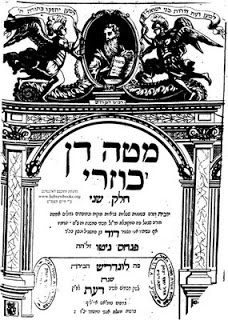
In 1968, Mossad ha-Rav Kook published an edition of the Mateh Dan based on the first printing. This edition is visually very nice, they did a nice job of laying out the sefer including a table of contents before each section of the sefer. But the notes although are helpful are very minimal [all quotes in this post are from this edition].
A few months ago a new English critical-edition of R. David Nieto’s Matteh Dan was translated from the Hebrew by Louis Loewe and completed by Raphael Loewe, published by the Spanish and Portuguese Jews’ Congregation of London, and Mechon Haktav of Jerusalem. This work was edited and prepared for publication by Yehuda Hershkowitz. This new edition is two volumes including a beautiful facsimile edition of the first printing on high quality paper leather bound. The facsimile volume reproduces the original edition of Hebrew with a Spanish translation on the side. The English translation had been done in 1845 by Louis Loewe. [I am aware that there is another English translation of this work published by Yashar Books, although it is only a partial translation and I never had a chance to see it.] This translation of L. Loewe was reprinted in this new set with some of the translation adjusted to our current English but as a whole remains the same. Many small useful notes were added in by the editors Raphael Loewe and Yehuda Hershkowitz. Besides for the nice interesting introduction by R. Loewe this new edition has an excellent overview by Yehuda Hershkowitz entitled “A Brief Survey of Calendar Making” (pp. 318-48). The purpose of Hershkowitz’s overview is to aid the reader in understanding the fifth section of Mateh Dan which deals with the calendar. Some other additions found in this edition were the many comments of R. Moshe Rimoni written in 1794 which were already included in the Mossad Rav Kook edition. In addition to this Yehuda Hershkowitz printed for the first time a manuscript from 1819 written by R. A. Lampronti about life on other planets.This manuscript comes from the now well known Valamadonna collection of Jack Lunzer.
I would like to highlight some of the very many points of interest in the Matteh Dan. The work pretty much starts where the Kuzari ends (hence the alternative title – Kuzari ha-Sheni), and the main focus of the Mateh Dan is to defend the legitimacy of Torah Shel bal Peh. It is written in debate format similar to the Kuzari. In the introduction of his work he writes:
ולפי שיש מחלוקות על מלך כוזר הראשון ועל מלכותו… יש אומרים שהרב המחבר המציא בדעתו מלך ומלכותו אשר לא היה ולא נברא. ויש אומרים שמעשה שהיה כך היה ככתוב בספר כדי שלא לאפושי במחלוקות על הכוזרי שלי אני מודיע נאמנה לכל קורא בספרי שלא נהיה כדברים האלה כי מלבני אני בודאם
The sefer is divided into five sections. In the first section he sets out to prove that the Jews always had Torah Shel Bal Peh from the times of Moshe and onwards. He shows how various Mitzvas its impossible to understand if we do not have Torah Shel Ba’al Peh. One of the many nice pieces in this section that he writes when dealing with the prohibition of carrying on Shabbas (p.12):
איסור משא קל כמעט שמפורש בתורה שהרי דוד המלך ע”ה אמר בדבר ה’ שמים נעשו ובכן היתה הבריאה ביום הראשון אמר השם יתברך יהי אור ויהי אור… ויכלו השמים והארץ וכל צבאם וכתבי וישבות ביום השביעי. נמצא שכששבת לא שבת אלא ממאמר בעלמא שהוא דבר שאינו יכול לגרום לו ליאות ויגעה משני טעמים חדא מפני שבו יתברך שהוא בלתי תכלית וכחו בלתי בעל תכלית לא יתכן ליאות ויגעה ב’ שאפילו תימה ח”ו שהיה ראוי לכך אי אפשר שייעף ויגע על הוצאת שתי מלות בכל יום בלבד נמצינו למדים שהקב”ה שבת ממה שלא היה יכול לייגעו בב’ טעמים, ולכן האיש הישראלי אשר ישבות ממשא כבד בלבד לא ישבות כמו ששבת הקב”ה אבל כשישבות אף ממשא קל אזי באמת שומר שבת מחללו ומחזיק בבריתו יתברך.
In section two he continues proving the truth of Torah Shel Bal Peh. A nice piece in this section is while proving that the esrog is the fruit the Torah requires one to take on Succos he writes (p.25):
בחג הסוכות אמר הכתוב ולקחתם… פרי עץ הדר… ואפשר שהכוונה היא על רמון נאה… אבל הם ז”ל פירשו שהוא אתרוג דווקא ופסלו כל מה שאינו אתרוג ממש כפי הסימנים אשר מסרונו אף על פי שיהיה מאותו המין, וזה גורם הוצאה רבה ועגמת נפש גדולה ליושבי ארצות ואקלים הקרים לפי שצריך שיביאו להם אתרוג מארץ הרחוקים לחוג בו את חג הסכות בהוצאה רבה. ולא עלתה תלונותי כי אין ציבור עני, אלא שלפעמים יש להם ההוצאה אבל לא השבח של המצוה כגון כשלא הגיע לידם אלא בתוך ימי החג או אחריו התאימין אדוני המלך שאנשים חכמים ונובנים בדו כל זה מלבם טעם ויסוד אחר אלא להתשרר על הצבור.
When dealing with the writing of the Mishnayos he writes (p.43):
אלא אפילו לאותן שנזכרו בהם תנאים באין חולק עליהם שכולם קבלה, לפי שרבינו הקודש לא היה אלא מלקט ומסדר ופוסק מה ששמע ואסף מימי התנאים אשר היו לפניו עד האחרונים אשר הוא אחד מהם.
When talking about asmactos he says (p.52):
אסמכתא… כח משפט חז”ל לסמוך העיקר המקובל על איזה פסוק אף על פי שהוא רחוק במטחוי קשתת מפשוטו, כי זה אינו אלא לעורר הזכירה. ובכן ברמז בעלמא סגי, כמו שעושין בני אדם, שקושרין קשר בסודר לזכור איזה דבר.
This understanding of asmactos follows the Rambam and other Rishonim yet there are other Rishonim disagree, at times rather sharply. For example, the Ritva who writes:
ומשום הכי קתני ר”ע שאמר הקב”ה אמרו לפני מלכיות זכרונות וכו’ שכל מה שיש לו אסמכתא מן הפסוק העיר הקב”ה שראוי לעשות כן אלא שלא קבעו חובה ומסרו לחכמים, וזה דבר ברור ואמת, ולא כדברי המפרשים האסמכתות שהוא כדרך סימן שנתנו חכמים ולא שכונת התורה לכך, ח“ו ישתקע הדבר ולא יאמר שזו דעת מינות הוא, אבל התורה (העידה) [העירה] בכך ומסרה חיוב הדבר לקבעו [ל]חכמים אם ירצו כמו שנאמר ועשית על פי הדבר אשר יגידו לך, ולפיכך תמצא החכמים נותנין בכל מקום ראיה או זכר או אסמכתא לדבריהם מן התורה כלומר שאינם מחדשים דבר מלבם וכל תורה שבע”פ רמוזה בתורה שבכתב שהיא תמימה וח”ו שהיא חסירה כלום (ריטב“א, ראש השנה דף טז ע”א).
This topic is dealt by many just to list some sources see: R. Yosef Engel, Beit Haotzar,1:190; R. Meshullam Roth, Shu”t Kol Mivasar, 2:21-22; Mivasar Ezra, 20-22; R. Yaakov Hayyim Sofer, Yeshurun 20:678; R. Yonah Martsbach, Aleh Yonah, 101-105; R. Gedaliah Nadel, Betorato Shel Rav Gedaliah, pp. 28-30; R. Gedaliah Nadel, Mila Dehespeda, pp. 130-31. In section three he discusses many specific points in regard to Torah Shel Bal Peh just to list some of the many interesting ones: When dealing with how exactly did arguments begin in Klal Yisrael in the times of the talmedei of Hillel and Shamaei he goes has a lengthy historical discussion of that period to explain what happened listing all the terrible decrees and persecutions that the Jews went through at that time. At the end the Kuzari asks him (p.65):
אבל מה תשיב על שכחת דברים הנוהגים בכל יום כגון קידוש והבדלה שמצינו בית שמאי ובית הלל חולקים בקידוש אם מברכין על היום תחילה או על היין וכן בהבדלה… וכי לא ראו ולא שמעו איך היו מקדשים אבותם ורבותם בשבתות וימים טובים, היאמן כי יספור ששכחו דברים כאלו שהם תמידים? אמר החבר: אין מקום לקושייתך משום דקי”ל סדר ברכות אין מעכבות… ולכן בראשונה כל אחד ואחד היה מקדים או מאחר שהיה רוצה, עד שבאו בית שמאי ובית הלל ועמדו למנין על סדר הברכות ונפסקו ההלכה. ואף על פי כן אם הקדים המאוחרת או איחר המוקדמת יצא. וכן יש לומר בכל המחלוקות שתמצא מזה המין…
[This answer applies to all such questions which others have dealt with at length like how did a argument between Rashi and Rabenu Tam evolve over the order of the Parshiyos in Tefilin why didn’t they check what previous generations did. The answer in short which is given is both were done by some.]
When dealing with the famous question dealt with by many of why can’t Amoraoim disagree with Tannoim he writes (p.68):
שלא חילקו האמוראים על התנאים מפני שהכירו שהיו גדולים מהם בכל הבחינות ודלא כמו שכתב הכסף משנה שקבלו על עצמם שלא לחלוק…
Then he writes that there is a constant yeridot ha-dorot when it comes to people’s knowledge (a point which not all agree with) so he wonders why do we say הלכה כבתראי. So he answers:
על דרך המשל הידוע שננס רוכב על גבי ענק רואה יותר ממה שרואה הענק אף על פי שהננס הוא כנמלה לגבי הענק.
Much has been written on this משל see the Alpha Beta Kadmita Deshmuel Zeriah from R. Shmuel Ashkenazi pp. 322-27; see also S. Leiman, “Dwarfs on the Shoulders of Giants,” Tradition 27:3, pp. 90-94 in both of these articles, the Kuzari Hashenei is not included. Just to add three more sources on the topic, not on either of the previously mentioned extensive lists see Simchat Hanefesh, p. 112; R. Y. Heller, Maoz Hadas, p.34b; A. Lipshitz, Avos Atorah Levonim. p. 175 n.6. On this topic in general see; I. Ta-Shmah, Halacha, Minhag Umitzyius Baskenaz, pp. 58-79; Daniel Sperber, Netivot Pesikah, p. 31 n.51, Joseph Davis, Yom-Tov Lipmann Heller Portrait of a Seventeenth- Century Rabbi, pp. 46-47, and A. Melamad, Al Kesefei Anakim. When listing the מצות דרבנן he writes that (p.72) they are:
מגלה, חנוכה, נר שבת ויום טוב, הלל , עירובין, נטילת ידים, יום טוב שני של גליות, שבעת ימי המשתה, שבעת ימי אבלות וארבע תעניות.
Not all agree with this listing as this topic has been discussed at great length in his usual incredible style by R. Shmuel Ashkanazi in Kovetz Beis Aron ve-Yisrael (issue # 35, pp. 97-114 and issue #38, pp.139-154). While discussing the reason why we do not blow Shofar when Rosh Hashonah falls out on shabas he writes about the masses of the Jews at the time (p.80):
שרוב עם בני ישראל היו עמי הארץ ומיעוטא דמיעוטא היו חכמים, וכיון שרובא היו עמי הארץ ממילא לא היו בקיאין בדוקדוקי מצות ולכן כשחל ראש השנה וסוכת בשבת ילך אצל בקי עם השופר או עם הלולב כדי שיתקע או יברך לו או כדי ללמוד נטילתו או ברכותו ויוליכנו ארבע אמות ברשות הרבים ויבוא לידי איסור סקילה ואף את יתרו בו לא ישמע לקול מוריו כי יאמר שאינו רוצה לבטל המצוה.
When discussing the topic of why we have two days of Yom Tov even thought we understand the calendar today he writes (p.83):
שאם מלך המושל בארץ ישראל קודם ביאת משיחנו ועודנו בגלות יתן רשות לישראל לשבת על אדמתם ולמנות עליהם סנהדרין יחזור העיבור ליושנו והיו מקדשין על פי הראיה כימי קדם קדמתה ואז לא היינו חוגגין לעולם יחד ביום אחד אלא לפעמים ג’ משום שכל דבר שבמנין צריך מנין אחר להתירו, וכיון שכל ישראל הרחוקים מארץ ישראל קבלו עליהם לעשות שני ימים להסתלק מן הספק, צריך שיסכימו כולם גם כן לבטל תקנה זו וזה איפשר דרך טבע מפני שאנו מפוזרים ומפורדים בין כל האומות העולם אחת הנה ואחת הנה ויש כמה וכמה מבני ישראל במדינות רחוקות, אשר אין אנו יודעים זה מזה ולא יש דרך הכרה ביניהם ובינינו בשום פנים, כגון במלכיות פרס והודו וכוש, ובמלכות גינה וטארטאריאה, כפי מה שמצאתי ראיתי בספרי המלחים והההלכים.
R. Menachem Kasher (Torah Shelemah, vol. 13, p. 129) already points out that the Meshech Chochma (Bo, 12:1) and others say the same thing. In section four he deals with many topics related to Chazal and their knowledge in science. He begins this section dealing with what exactly are the seforim chizonim that chazal prohibit one from learning and why are they prohibited (pp. 97-100). He is of the opinion as are many others that there is a connection between kabalah and philosophy (p. 98). He shows that chazal had great knowledge in philosophy (pp. 129-57), geometry, and mathematics including a whole lengthy discussion of the mathematical Gemaras in Succah (pp. 113-25). He also deals at great length showing there tremendous knowledge in understanding the calendar etc. (pp. 182-90). Many others have also shown Chazal knowledge in all areas of science just to mention one interesting work on the topic is R. Y. Kemhlar’s Hatalmud Vmadei Hatevel. In addition R. Nieto also has a lengthy discussion showing there expertise in the and anatomy of humans and animals (pp. 104-06). Others have also shown this for example see Meshiv Nefesh (p. 14b, 22a) R. Aron Marcus, Keses Hasofer (p. 78) and Hatalmud Vmadei Hatevel (p. 24). One additional source related to this is found in Chut Hamishulash (p.29a) where he writes about the Chasam Sofer:
לתכלית גדול הזה לברר הלכה לאמיתו ולהעמיד כל ענין על בוריו הי’ לו לכל שיעורי תורה כלים מיוחדים מדודים מאתו בדקדוק הדק היטב להראות לתלמידיו וכן הי’ לו בארגז מיוחד שני צורות תבנית זכר ונקבה מעשה אומן מופלא והיו נעשים פרקים פרקים וכל חלקי הפנימים מעשה חדש נפלא ללמוד וללמד חכמת הניתוח ולא הראה זה רק לתלמידים מובהקים אשר יראת ה’ אוצרם בעת למדו אתם הלכות נדה וכדומה.
After this R. Nieto brings that “the Kuzari asked him “(pp. 106-07) “I have no doubt that they knew science etc. but how did they have time to learn and time for the sciences”. To which R Nieto replied that they although some were real experts in science like Shmuel but most just knew what was necessary for them to understand those areas of Torah that required such knowledge.
R. David Nieto and life on other planets
He writes about life on other planets a very interesting thing (p. 128):
ר’ מאיר אגוז מצא תוכו אכל קליפתו זרק. וכן ראוי לנו לעשות בסברות חכמי האומות, שכל מה שהוא מנגד לתורתנו הקדושה והתמימה בין שבכתב בין שבעל פה שקץ תשקצנו ותעב תתעבנו כי חרם הוא, אבל מה שאינו נגד דבריה ולא נגד פירושה הרשות ביד כל איש ישראל להאמין או למאן בו לפי שכלו. ובכן כיון שאין שטן ואין פגע רע להאמין שכל הכוכבים בין המהלכים בין הקובעים בגלגל השמיני הם עולמות אשר בהם מכל בעלי חיים, בצדקתה החזקת ולא ארפה. ואפשר שלזה כיוונו רז”ל כשכתבו בסוף מסכת עוקצין עתיד הקב“ה הוא להנחיל לכל צדיק וצדיק שלש מאות ועשרה עולמו.
R. Pinchas Hurwitz in his Sefer Habris (pp.33-34) also says there could be life on other planets bringing proof from various Chazal and Zohar including the some of the same Chazal that R. Nieto uses.
However not everyone understands this Chazal literally just to list one other explanation R. A. Shor writes:
טעם מספר ש”י עולמות נראה לפי שעשרת הדברות יש בהן תר”ך אותיות נגד תרי”ג מצות ושבע מצות בני נח במספר כת”ר עליון ונראה שכנגדן יש לו לאדם תר”ך עולמות אלא לפי שהאדם נברא דו פרצופין זכר ונקבה ויקרא את שמם אדם וכן כל הנשמות זכר ונקבה נבראו ובין שניהם נשלם ונעשה האדם במלואו וטובו לשמור ולעשות את כל מצות ה’ לכך גם אותן תר”ך עולמות יחדיו יחלוקו מחציתן לזכר ומחציתן לנקבה והיינו ש”י עולמות לכל צדיק וצדיק (תורת חיים, סנהדרין, דף ק ע”א).
[On this Toras Chaim see R. S. Askanazi in Kovetz Beis Aron Vyisroel (issue #38, p.142)]. R. Yosef Zechariah Stern (Ma’amar Betalocas Aggaddos, p. 45) suggests even more that there is a printing mistake and it should say two (שני) not three hundred and ten (ש”י) worlds. [As an interesting bibliographical note R. Yakov Shor [Mishnat R. Yakov, p. 41] this chazal is not really the end of Ukztin rather it was stuck in from elsewhere because we like to end with something good]. This topic has been dealt with by many see for example the Ri Barcellona in his work on Sefer Yetzirah (pp.171-173) where he writes:
יח אלף עלמות שברא… שאפשר שזה העולם חביב לפניו יותר מכל שאר העלמות כי אולי באותן השאר עולמות לא נתן להם תורה… ואולי אפשר נמי לומר כי באותן היח עולמות אין בהם בריות בחטא ועון כמו באלה ואולי אותן הבריות מלאכים רוחות הן שברא המקום לכבודו או אולי קרובים להן והן בלא חטא שאין יצר הרע שולט בהן…
As mentioned earlier, Y. Hershkowitz printed for the first time a manuscript from R. Lampronti about life on other planets where the author deals with this topic at length. See also R. Chasdaei Crescas in Or Hashem (4:2), his rebbe, R. Albo in Ikryim (4:2); Ma’aseh Tuviyyah, 3:1; Sefer Elim, (p. 141a), Kol Yehudah (commentary on Kuzari 2:20 p. 68); Aryeh Kaplan, The Aryeh Kaplan Reader, pp. 170-75; A. Korman, Hemunah Hayisreleis, pp. 275-77; Evulutzyah ve-Yehadus pp.139-40; Y. Shabtei, Sha’ar Yosef vol. 1, p. 152; R. Kemeil, Shar Reveun, p. 269; N. Lamm in Challenge, pp. 354-98. When R. Nieto deals with the hard to understand famous Gemaras of Raba Bar Bar Chanah he writes (p.171):
שמא שנראה דבר תמוה ובלתי ראוי להאמין, כגון מה שסיפר רבה בר בר חנא מההוא טייעא, הוא דבר מורגל במקומות רחוקים מגלילותינו ואם נראה זר בעינינו הוא מפני חסרון ידיעתנו, לא מפני שהדבר בעצמו בלתי אפשר.
In section five he deals with explanation of how our calendar works very extensively and in depth. This section is not easy to understand if one does not have proper background.Just to mention one point from this section as its Inyana Deyomah and many are bothered with this issue – if the calendar according to Shmuel is off so why do we Pasken like him:
.(שמואל היה יודע שיעור שנת רב אדא ומכיר בו שהוא אמיתי ונכון, אך ביקש דרך קצרה וקלה להמון העם ואותה נתן להם למען ידעו בחשבון הגס שיעור השנה בקירוב בלי דקים וחלקים (ויכוח חמישי, אות קמו
[On this topic see: R. Alexander Moshe Lapides, Toras Hagoan R. Alexander Moshe pp.6-8; R. J. D. Bleich, Bircas Hachammah, pp.58-64; R. A. Brisk, Otzar Hazemanim, pp.223-226; R. M.M. Gerlitz, Bircas Hachamah KeHilchosah, pp. 145-59; R. Yehuda Hershkowitz, The Sun Cycle, pp. 137-38] Some other topics he deals with: are stars alive (pp. 125-26), how many Jews were there in the time of the second Beis ha-Mikdsash (pp. 79-80), the invention of the barometer and thermometer (p. 148) and a whole section on explaining the Thirteen Midos that we use to darshan (pp. 89-95). R. Nieto writes that R. Srug was a Talmid of Arizal (p. 99). This point has been dealt with by many, see the fabulous discussion by Y. Avivi in his recent classic work Kabballas ha-Ari (1:224-44); see also R. S. Deblitski, Benu Shenosu Dor Vedor, pp. 50-52; E. Katzman, Toldos Hamegalah Amukos, pp. 36-39; R. A. Marcus, Keses Hasofer, p.6. R. Nieto seems to hold that the Asra Harugei Malchus died during the same time frame (p. 64). This difficult historical riddle has been dealt with by many just to list some sources see Erchei Tanaim Vamorim, (Blau Ed.) vol. 2, pp. 708-15; S. Kraus in his series of articles in Hasholach 1925 (recently reprinted in Mered Bar Kochchba, pp. 239-76) and the recent book on the topic by E. Vilnar, Asreh Harugei Malchus printed by Mossad Rav Kook. R. Zev Rabanowitz writes when talking about this:
ובכלל רואים אנו, שמחברי אגדות כאלה לא היו בקיאים בדברי הימים ובסדרי הדורו, ורבותינו ז”ל הקדמונים בתמימותם האמינו לאגדות הכתובות וייסדו את פיוטיהם על פיהם למען עורר מספד והרבות בכי, ובזמננו מצוה להסירם מן המחזורים והקינות, כי דובר שקרים לא יכון נגד ה’ ותמה אני על הקדמונים שכבר ידעו ולא מחו מלומר פיוטים כאלה. ואולי מחו ולא נשמעו (שערי תורת בבל, עמ’ 410).
R. Nieto and Copernicus
One of the more famous things which R. Nieto is famous for is not accepting Nicolaus Copernicus‘s theories that the earth revolves around the sun and is not stationary.
He writes:
מיום ברוא אלהים אדם ועד קרוב לזמנו כל יושבי תבל ושוכני ארץ האמינו שהששה כוכבי לכת הם גופים חשוכים שמקבלים האור מהשמש, שהוא אחד מהם והגדול שבהם. ועתה האחרונים המציאו שהם ארצות ושהארץ אשר אנו יושבים היא אחת מהן, מפני שסוברים שהשמש באמצע בלי תנועה כמלך במסבו והששה מקיפים… ואם אדם ימאן בסברא הקודמת ויאמין בזאת תחזיקהו למין או אפיקורוס?… ודאי שמתקבלות על הסברא, אבל אין אנו יכולים להחזיק במונח הזה במה שהוא מבטל תנועת השמשף דביהושע כתיב שמש בגבעון דום … הרי שסובב והולך כשאר כוכבי לכת. ואף על פי שבעלי הסברא הזאת נתחבטו לתרץ הקושיא לריק יגיעו, כי אין תשובתם מספקת ולכן נטשתיה וגרשתיה מהסתפח בנחלת ה’… אמרו שהנביא אמר שמש בגבעון דום מפני המון העם דסבירא להו שהשמש מהלך ואינו יודע תנועת הארץ (כוזרי השני, ויכוח רביעי אות קי-קלב. וראה שם אות רנח, וויכוח חמישי אות ד).
The first reference to Copernicus, but not by name in Jewish literature, is by the Maharal who writes:
וכמו שבא אחד שהיה נקרא בעל תכונה חדשה, אשר נתן ציור אחר וכל אשר הבינו הראשונים אשר לפניהם ונתנו הראשונים ציור ומהלך לכוכבים ומזלות ולגרמים השמים סתר את כלם ונתן ציור חכמה חדשה רק שהוא עצמו כתב כי עדיין לא יוכל ליישב את הכל (נתיבות עולם, נתיב התורה, פרק יד).
[See Andre Neher in Jewish Thought and the Scientific Revolution of the Sixteenth Century (Littman Library, 1986), pp. 208-10]. The first reference to Copernicus by name in Jewish literature is by David Ganz in his small work Magen Dovid (of which only one known copy survives in Bodleian Library) first printed in Prague in 1612 (a year before he died). Quoted by Neher, idem p.1; see also, Y. Elbaum, Pseichot ve-Hestagrot, p. 250. What is even more interesting is this small work received Haskomos from R. Yom Tov Heller (author of the Tosfos Yom Tov), R. Ephraim Lenshitz (Klei Yakar) and R. Y. Cohen (son in law of Maharal) all these people were talmidim of the Maharal.[For a copy of this interesting and rare Haskamah of the Tosfos Yom Tov see; M. Hershkowitz, Shnei Kruvim, pp. 105-111; see also J. Davis, Yom-Tov Lipmann Heller Portrait of a Seventeenth- Century Rabbi, pp. 90-91. In Ganz’s other work, Nechmad Ve-Naim (which is really part of Magan Dovid), there is also reference to Copernicus but this work was first printed in 1743. Quoted by Neher, idem, p. 197. In both these works Ganz refers to Copernicus in a very positive light. Although, M.Steinschneider in Jewish Literature writes (p.262) that although Ganz was acquainted with the system of Copernicus Ganz follows the Ptolemaic system. But see the in depth discussion of Neher, idem, pp. 200-04, 224-28; see also A. Ziv, Ha-Ramah, p. 83. Another early reference to Copernicus is by R. Y. Delmedigo in Sefer Elim printed in 1629. In this work as well Copernicus is mentioned in a very positive light. What is even more significant about Ganz and Delmedigo endorsing of Copernicus is because besides for both of them being great Talmedei Chachamim they were both expert astronomers having trained by the worlds greatest experts of their times (Ganz by Tycho Brahe and Delmedigo by Galileo). [For more on Ganz in general see R. M. Strashun, Mivchar Kesavim pp. 234-42; A. Ziv, HaRamah, pp. 82-85;Y. Elbaum, Pseichos Vehestagros, pp. 250-52 and index]. However Nieto was not the only one to oppose Copernicus R. Tuviyyah Cohen did so earlier and much sharper as he writes in Masseh Tuviyyah first printed in 1707:
ראוי לכל פילסוף אלקי שיבטל דעת קופירניקוש ונלוים עליו כי כל אותן ראוי’ שהביא הוא וחבריו הם נגד כתבי הקדוש ודברי נבאי אמת הנאמנים בדבריהם מפני שכתוב בקהלת והארץ לעולם עומדת אבל כפי דעת קופירניקוש איננה עומדת כלל והשמש לא יזרח ולא ישקע… ואם כדבריו כן הוא למה כתוב וזרח השמש ובא השמש… הנך רואה שבכמה מקומות הפסוקים יתנו עידיהן ויצדקו שתשמש והלבנה יותר הכוכבים מסבבים סביב הארץ ולא שהארץ מסבבת סביב השמש ואם יבוא קופירניקוש בטענותיו וראיותיו ומופתיו כזביות אף אתה הקהה את שניו… ודע מה שתשיב לו כי בכור שטן הוא (מעשה טוביה, חלק ב, סוף פרק ג-ד).
[On R. Tuviyyah Cohen and Copernicus see David B. Ruderman, Jewish Thought and Scientific Discovery in Early Modern Europe, pp. 231 & 239-40.] Besides for these two Gedolim opposing Copernicus, R. Yonsan Eybshutz who was also knowledgeable in Astronomy was also opposed as he writes in 1779:
ועבור זה נתטפשו הרבה מתוכנ’ קופרניקוס וסעייתו באמרם שהארץ מסבב אבל שקר נחלו והאמת עד לעצמו כי הארץ לעולם עומדת… (יערות דבש, חלק א, דרוש ד, דף לו ע”א).
(Neher, idem, p. 253, is incorrect when he writes that Eybshutz was positive towards Copernicus’ theory). Here, again, we have Eybshutz’s antagonist, R. Yakov Emden, arguing and defending Copernicus as Emden writes:
ויקרא אלקים ליבשה ארץ… יש מפרשים מלשון רץ וכן פירשו רבותינו ז”ל שרצתה לעשות רצון קונה. ויהיה מזה גם כן סעד לדעת בעלי תכונה החדשה (קאפירניקוס) שהארץ סובבת, ולא תקשי מוהארץ לעולם עומדת [קהלת א’, ד’] כאשר מבואר במקום אחר בס”ד (סידור יעב“ץ, אשכול, ח”ב, מעמדות ליום שלישי, עמ’ תקפח).
As a bibliographical point the way R. Emeden concludes this piece is by saying כאשר מבואר במ“א בס”ד (and that is how it is in the first edition). For some reason some, (R. M.M. Gerlitz, Bircas Hachamah KeHilchosah, p. 31, Y. Bloch, Kuntres Hashemesh Begevorso, p.40 and some earlier prints of the siddur) understood this to be an abbreviation that R. Yakov Emden was referring to a work of his called מכתב אלקים which was never printed. While it true that he authored such a work it and it appears to have been lost but it does not talk about such topics based on the extant quotes [See Y. Rafel, Arshet, 3:276 & J. J. Schacter, “Rabbi Jacob Emden: Life and Major Works,” (PhD dissertation, Harvard University, 1988), p.143-144] we have from it from although one can never be sure for certain and the abbreviation could just mean simple כאשר מבואר במקום אחר בס”ד.
[On R. Emden comment see The Sun Cycle by R. Yehuda Hershkowitz p. 18 n.78; J. Elias edition of The Nineteen Letters, p.43]
Although R. Emden writes positively about Copernicus here elsewhere R. Emden writes very negatively about the science of astronomy on the whole including Copernicus:
חכמת התכונה של אומת העולם, רחוקה מכליותי לייחס דעת זו המגונה לרז”ל חלילה וחס להו לרבנן קדישי שיתפארו בחכמת הגויים. רעיוני אנשי העולם הבודים מלבם חכמה שאין לה עיקר ויסוד רק כפי העולה על רוחם נשענים על יסודות הנולדות במוחם לקרב כל דבר אל השכל להוליכו במנהגי הטבע המוחש. ועם כל זה הם עצמן נבוכים מאד. ומודים שאין מציאות אמתי לגלגל יוצא מרכז וגלגל נושא והדומה להם… והרבה כאלה קשות נמצאו באותה חכמה ונתחלקו לכתות כתות בהנחותיה ולא נחו ושקטו גלגלי רעיוניהם. עד שהמציאו תכונה חדשה לגמרי מקרוב באה לא שערוה ראשוניהם (וי”א שנמצא גם בקדמונים מאד מי שחשב עליה כזאת של קופירניקוס) יהי מה אינה ראויה להקרא חכמה כלל. אחר שאינה אל דמיונות ורעיונות ודתיה שונות כפי מחלוקת לבב בני אדם אשר חכמה מה להם… (עץ אבות, אבות פרק ג משנה יח).
[About R. Emden, Copernicus and astronomy in gerneral see: J. J. Schacter, “Rabbi Jacob Emden: Life and Major Works,” (PhD dissertation, Harvard University, 1988), p.620-621,685 nt.55].
André Neher, “Copernicus in the Hebraic Literature from the Sixteenth to the Eighteenth Century,” in Journal of the History of Ideas, Vol. 38, No. 2 (Apr. – Jun., 1977), pp. 211-26 and in his Jewish Thought and the Scientific Revolution of the Sixteenth Century (pp. 251-60) concludes (p. 253): “With the exception of the two earliest works, which we shall speak about in a moment, [Nieto and Cohen, E.B.] all the works on this list remained in the tradition of the pioneers of the sixteenth and seventeenth centuries: that is to say they were theologically positive towards Copernicus, even if they had practical reservations.” To demonstrate his point he lists many sources of mainstream Gedolim in favor of Copernicus.
Natan Slifkin writes in The Challenge of Creation (p.127): “It was not only the Church that strongly opposed the insights of Copernicus. With few exceptions, the rabbis of the seventeenth and eighteenth centuries condemned Copernican astronomy as being opposed to Scripture and as being scientifically flawed. It contradicted the simple meaning of the Scriptural statement that “the world stands forever”, as well as the account in Joshua of time halting by the sun miraculously standing still (as opposed to the earth standing still). “In a footnote listing sources for this statement, Slifkin also refers the reader to Neher; However, in reality, Neher concludes just the opposite. Another positive quote about Copernicus is found in the Yad HaKetnah first printed in 1800 anonymously:
לכת פילוסופים הקדמונים לפני שנים אלפים דעתם שכדור הארץ סובב תמיד. והשמים וכל צבאם עומדים. והפילוסופים שאחריהם קיימו וקבלו, שכל הגללים סובבים והארץ לעולם עומדת. ואחר כך בימים האחרונים זה קרוב לשלשה מאות שנים קם פילוסוף חכם מופלג והחזיק בדעת הקדמונים שהארץ סובבת והשמים עומדים. וחיבר על זה חיבר נפלא עמוק עמוק עד שמתקן כל דרכי התכונה לדעתו וכמובא בהקדמת הספר נחמד ונעים שחיבר בעל המחבר צמח דוד (יד הקטנה, שער י, שער דרכי הניסים, פרק ד).
There are those who show Copernicus theory is found in the Zohar:
ובספרא דרב המנונא סבא, פריש יתיר דהא כל ישובא מתגלגלא בעיגולא ככדור אלין לתתא ואלין לעילא וכל אינון בריין משניין בחזווייהו משינויא דאוירא כפום כל אתר ואתר וקיימין בקיומייהו כשאר בני נשא, ועל דא אית אתר בישובא כד נהיר לאלין חשיך לאלין לאלין יממא ולאלין ליליא, ואית אתר דכוליה יממא ולא אשתכח ביה ליליא בר בשעתא חדא זעירא )זוהר, ויקרא, דף י ע”א).
R. Herzog writes about this (translated from English):
תיאוריה הקשורה לשמו של קופרניקוס… הענין מוזכר באופן לא מפורש במקורות התנאיים. ניסוח מלא ישנו בזוהר בפסקה המצוטטת משמו של רב במנונא סבא. שאלת ייחוסו של ספר הזוהר אינה נוגעת לעניין כי רבי משה די לאון שאליו מייחסים המבקרים את החיבור הנפלא נפטר זמן רב לפני קופרניקוס… (יהדות חוק ומוסר, עמ’ 102)
R. Aron Marcus, writes about this:
יש לציין כי הזוהר מבטל את השיטה הפטולמאית, כבלתי מדעית ונוטה לצד השיטה הקופרניקאית, שהקדים אותה במאות שנים. נוסף על כך לפי דעתו של ר’ שמעון בר יוחאי, הרי השקפות של בני דורו בשטח התכונה, אינן אלא סברות של הדיוטות… (החסידות, תל אביב תשיד, עמ’ 78.).
Interestingly enough A. Neher claims in his Jewish Thought and the Scientific Revolution of the Sixteenth Century (pp. 104-05) that one could imagine that this was written by a pupil of Copernicus! The truth is that R. Yakov Emden on this Zohar writes
:כל ענין זה הולך על דרך חכמי מחקר לא על דרך רז”ל בתלמוד (מטפחת ספרים, עמ’ לז).
However R. Moshe Kuntz (Ben Yochai, p. 81) does not have a problem with Chazal saying this including the Zohar as he has other indications from Chazal like this. But others show that there might be a contradiction in the Zohar about this [see: R. Shpitzer, Nevrashet, Vol.2, p.18a; R. M.M. Gerlitz, Bircas Hachamah KeHilchosah, pp.29-30 and Y. Bloch, Kuntres Hashemesh Begevorso, pp.21-22]. C. Solonski in his introduction to his Kochva Deshvet, (p.14) also brings this Zohar to show that Chazal held like Copenicus. R. P. Hurwitz in his Sefer Habris (p.99) brings the Zohar when dealing with Copernicus but after a lengthy discussion he concludes by disagreeing with Copernicus (pp.98-102). [About this Zohar, See also R. Schick, Seder Haminhaghim, 2:24b; Y. Levi, The Science in Torah, pp.115]. The Chasam Sofer who was known for his knowledge in astronomy [see: Chut Hamishlush p. 29a & Zichronis Vmesoros Al Hachasam Sofer, pp. 58, 102, 305] writes about Copernicus in a work he started writing on astronomy (see ibid p.305) after quoting the Yavetz:
מעניני גלגלים וככבי לכת… . דמזה סיוע לכת קאפירניקוס שהארץ סובבת, ולא תקשי מוהארץ לעולם עומדת כאשר מבואר במקום אחר, עכ”ד. הנה במ”ש שאין קושיא מוהארץ לעולם עומדת, הדין עמו לפע”ד, לא דבר שם מסיבובי ארץ בגלגל, כי גם לדעת הזאת אין הכוונה שהארץ תסוב על צירה, אלא כל הכדור היסודות כמות שהוא, הוא מתגלגל, אשר הארץ באמצעי לו… מכל מקום אין בידי לדחות קופארניקוס ולא צד שכנגדו כי ראיותיהם עצומות משני הצדדים. ולדעת אותה הכת יש לנו תנועה חדשה, מלבד ג’ תנועות שהזכרתי בפרק דלעיל שסימנם אמ”י, ועתה יתחדש התנועה הסבובי’, אמנם אין לנו עסק בדעת זאת הכת, ונייח (ונייחס) תנועה הסבובי’ לגלגלים שאין להם תנועה אחרת זולתי הסבובים הלז (שו“ת חת“ס, קובץ תשובות, סי’ כו, לאחרונה נדפס גם במאורות הסופר, עניני קידוש החמה, עמ’ צח).
[As an aside the Chasam Sofer was a very big fan of the Yavetz besides for what he writes about Mitpachat Seforim:
הנה נמצא בשכונתך ס’ מטפחת ספרים למהריעב”ץ תמצא שם כי דבר גדול דבר הנביא ז”ל בענין זה הלא ישתוממו רואיו וד”ל (שו“ת חת“ס, חו”מ ליקוטים, סי’ נט)
See also B. Hamberger, Moriah, 17:1 pp.237-238 who cites many sources about the Chasam Sofer and Yavetz]. Elsewhere the Chasam Sofer writes about Copernicus:
אשר חלק ה’ אותם לכל העמים יש לפרש על פי דאיתא דקופערניקוס אחד מחכמי העמים אמר דהארץ סובבת לקבל אור השמש דאיך עצם השמים הטהורה יסבב וישמש את הארץ והאחרים הביאו ראייה כנכדו דאם הארץ מסבב איך אפשר שיזרוק חץ בעוף וישיגהו ויפול שם כיון שהארץ כבר השתנה מקומה ועל זה השיב די”ל דהארץ וכל אשר עליה וגם האויר מסבב האמנם ראייותיו מכח השכל שאינו רואי שישמש העליון לתחתון הוא רק לפי דיעות האומת העולם אבל לנו בני ישראל אדרבא הארץ אשר בה בני אדם וישראל עם קדושו הם תכלית הבריאה ובעבורם נברא העולם תבל וכל אשר בה וגלגלי השמים ושמי השמים לצורך האדם ואם כן ראוי שישמשו שאר חלקי העולם לעולם התחתון שבו ישראל וגם עי”ז כל העולמות הם אחד ולתכלית אחד נברא דלא כדעת האוה”ע שכל אחד הוא עולם בפני עצמו ולתכליתו נברא וזה שאמר אשר חלק ה’ אותם לכל העמים דאצלם הוא חלק משא”כ אצלנו הכל חד (תורת משה, פ’ ואתחנן, דף טו ע”א).
R. Y. Margolis a Talmid of the Chasam Sofer who also was an expert on astronomy (Zichronis Vmesoros Al Hachasam Sofer, p.305) writes:
אמנם מי שיאמן בה’ ובתורתו ויאמן כי הקב”ה בא במתן תורה ונגלה על סיני הר קטן לא יוקשה אם השמש שהיא א’ ממשרתיו תשמש את הארץ אשר עליה האדם הלומד התורה הזאת, וראי’ מבוררת ממה שאמר הכתוב ויתן אותם אלקים ברקיע השמים להאיר על הארץ הרי’ מבואר כי המאורות הגדולים נבראו להשתמש את הארץ (חזון למועד, סי’ א אות א, וראה גם סוף סי’ח וסי’ ט אות ד).
In 1889 R. Y Ginsburg, printed a sefer on astronomy called Ittim Levinah he endorses Copernicus theories in a few places in the sefer (pp. 7,9 & 409-10). The significance of this sefer is that it received many nice Haskomos from great Gedolim in Europe of the time (over twenty are printed and he received even more) amongst them the Adres, R. Eliezer Moshe Horowitz, R. Eliezer Gordon and R. Eliyhua Chaim Miesles.[See also Archos Rabenu, 1:282-283]. However a few years later a work was printed in Jerusalem called Nevrashet through out the work the author R. Shpitzer attempts to “prove” that Copernicus is wrong scientificaly and is against the Torah (see for example vol. 1, pp. 30b-36b, Vol.2, pp. 5a-12a,14b-17a). He goes so far as to write (1:31a) that none of the Rabonim who gave haskomos to the sefer Ittim Levinah noticed that he goes with Copernicus theories. He brings someone (2:17b) who says that R. Y. Leib Diskin was asked how does Copernicus work out with the Torah:
וזרח השמש ובא השמש וגו’ וענה לו שהכתוב אמר לפי ראות עיני האדם.
But he denies that R. Y. Leib Diskin ever said such a thing [see also Y. Bloch, Kuntres Hashemesh Begevorso p.40]. Even recently there are those who still say that Copernicus is Kefirah see here. Other recent source that do not appear to acknowledge Copernicus is Bircas Hachammah called Otzar Hazemanim by R. A. Brisk where he writes (p.3):
מעגל היומי של השמש: השמש סובבת את הארץ בכל יום… ובהערה 5: יש לציין כי לאסטרונמיה המודרנית ישנה הבנה אחרת בכל מהלכי גרמי השמים היא טעונת שהארץ סובבת סביב השמש ולא השמש סביב הארץ…
Even more recently Y. Bloch put out a booklet called Kuntres Hashemesh Begevorso, 56 pages long demonstrating that Copernicus besides for being against the Torah is false scientifically. In Bircat Hachamah Betekufoseah, R. Genot brings (p.131) from R. Chaim Kanievseky who says:
כי הנוקט כך הריהו כמכחיש מסורת וכופר באמונתנו.
On Copernicus see: Arshet, 2:190 it appears that there was an argument about this between R. A. Worms author of Meorei Or and E. Carmoly [thanks to Dan Rabinowitz for this source]; M. Steinschneider, Jewish Literature, p. 190; C. Solonski, Kochva Deshvet, pp.7-9; R. Zvi Cohen, Bircat Hachamah, pp. 65-68; A. Korman, Evulutzyah Vyehadus pp. 52; R. M.M. Gerlitz, Bircas Hachamah KeHilchosah, pp.26-34; see also N. Gutel in Hishtanyois Nateviyum Be-halacha pp. 172, 183 where he deals with R. Lampronti’s opinion in Pachad Yitzchack on this and p. 190 where he deals with R. Kook’s approach to this. See, David B. Ruderman, Jewish Thought and Scientific Discovery in Early Modern Europe, pp. 266-67 regarding R. Lampronti’s opinion; see also idem, p. 351; David B. Ruderman, Kabbalah, Magic and Science, pp. 99-100; J. Davis, Yom-Tov Lipmann Heller Portrait of a Seventeenth- Century Rabbi, p.167; see also the very recent excellent doctorate of Shua Englman, Harav Samuel Strashun (HaRaShaSh) VHaggahot Al Talmud Bavli, Bar Ilan 2009, p.223. [See also some comments in this thread.]
After completing this post R. Chaim Rapoport sent me an article of his on Jewish attitudes on Copernicus which will be published shortly, in the next Or Yisroel (I did not incorporate any of his sources into this post). See also his Bircat Hachamah Al Pei Minhag Chabad, pp.48-50. [My understanding of this topic in general was enhanced greatly from the work of André Neher, ‘Copernicus in the Hebraic Literature from the Sixteenth to the Eighteenth Century’ in Journal of the History of Ideas, Vol. 38, No. 2 (Apr. – Jun., 1977), pp. 211-226 and in his Jewish Thought and the Scientific Revolution of the Sixteenth Century especially pp. 169-228 & 251-60, but see Y. Tzvi Langerman’s reservations about Nehr’s work in Langerman’s review of Nehr’s work in Isis, vol. 81, no. 1, (Mar. 1990), pp. 105-07, (thanks to Dr. J. Brown for this source)]. In conclusion this sefer is full of important information it’s a shame that none of the editions I have seen have a proper index to the sefer. However as one can see from just from the few samples I brought this sefer has a wealth of material and should be studied. One only hopes that someone will collect all of R. Nieto’s writings translate them (both in other languages and from manuscript) into Hebrew and print a critical edition of these works including a real critical edition of this sefer Mateh Don. Until than one will have to do with this useful new edition. This edition is available for purchase by Biegeleisen, and for more information contact Yehuda Herskowitz at seforimlover-at-yahoo.com.
Kuntres Hashemesh Begevorso
I mentioned the recent booklet printed by R. Y. Bloch called Kuntres Hashemesh Begevorso, 56 pages long demonstrating that Copernicus besides for being against the Torah is false scientifically. I am not in any way qualified to deal with the scientific aspects of this booklet but I would like to point out some inaccuracies in the booklet not dealing with science. In the beginning he writes how the Rambam already writes not like Copernicus (pp. 9-11), that the earth is stationary and its Kefirah to go against this (I am just writing the gist as he builds it up much better but my point is still true) even though some say that the Rambam in the first four chapters of Hiclos Maadah is not Torah so one can argue on but he claims that this is a false Shita about the Rambam and it is against our Emunah to say such a thing he writes:
והגיד לי מרן הגאון רבי יהודה זאב סגל זצוקל המ”מ ממאנטשעסטר דאפילו הי’ אומר כן בעל החת”ם סופר או הנודע ביהודה לא היינו מקבלים דברים כאלה ממנו…
Now the first problem with this is that we have a very well known Godol who does say exactly what R. Bloch says is kefirah to say and that is R. Yakov Kamentsky who writes:
ודברי הרמב”ן אלה הם שעמדו לי בשעה שראינו איך שבני אדם יורדים מעל המטוס על ידי סולם על גלגל הלבנה וחשבתי בלבי מה יענה כעת הרמב”ם ז”ל שכתב שהלבנה היא בעלה צורה רוחנית… אבל כפי שאנחנו מתייחסים לדברי הראשונים שסוברים אנו בגדר של אלו ואלו דברי אלקים חיים אם כן אע”פ שבמקום זה אין הלכה כמותו אבל שיהיו דבריו דברי טעות לא יכלתי להשלים, ואם טעה הרמב”ם בהלכות יסודי התורה מדוע לא יטעה בהלכות שבת וכדומה? והנראה בזה דהנה לכאורה יש לתמוה על כל העינינם שכתב הרמב”ם בארבע הפרקים הראשונים של הלכות יסודי התורה…ובעל כרחנו אנו צריכין לומר שמה שמסר לנו הרמב”ם בפרקים אלו אין זה לא מעשה מרכבה ולא מעשה בראשית אלא כתב כל הד’ פרקים אלה מדעתו הרחבה מתוך ידיעות בחכמת חציונות כלומר שלא מחכמת התורה… ואין לדמות טעויות בהלכות אלו לטעויות בהלכות שבת וכדומה (אמת ליעקב על התורה, עמ’ טו-טז).
[He is not the only one to say such a thing see: Sefer Habris, pp.27-28 & my Bein Kesah L’Asur, p.182].
However, even if one does not want to side with R. Yakov Kamentsky, one can turn to the Rambam himself and what he writes about Chazal’s knowledge of astronomy:
לא תבקש ממני שיסכים כל מה שזכרוהו מענין התכונה למה שהענין נמצא, כי החכמות הלמודיות היו בזמנים ההם חסרות, ולא דברו בהם על דרך קבלה מן הנביאים, אבל מאשר הם חכמי הדורות בענינים ההם, או מאשר שמעום מחכמי הדורות ההם, ולא מפני זה אומר בדברים שאמצא להם שהם מסכימים לאמת שהם בלתי אמתיות או נפלו במקרה, אבל כל מה שאפשר לפרש דברי האדם עד שיסכים למציאות אשר התבאר מציאותו במופת, הוא יותר ראוי באדם המעולה המודה על האמת לעשותו (מורה נבוכים, חלק ג סוף פרק יד).
So if the Rambam could write such a thing on chazal so why can’t somone say the same about the Rambam’s knowledge of astronomy [See also R. Gedaliah Nadel, Betoroso Shel R’ Gedaliah, pp. 79-80].Another mistake in this work is on p. 42 R. Y. Bloch writes that Tycho Brahe was a friend of R. Yonsan Eybshutz. That is simply impossible as Tycho Brahe was born in 1546 and died in 1601 and R. Yonsan Eybshutz was born in 1690! Another inaccuracy in this work is that he claims that the Chasam Sofer was against Copernicus (pp. 32-34) but he fails to quote the statement of the Chasam Sofer in its entirety which is quoted above where the Chasam Sofer specifically writes about Copernicus:
דמזה סיוע לכת קאפירניקוס שהארץ סובבת, ולא תקשי מוהארץ לעולם עומדת כאשר מבואר במקום אחר, עכ”ד. הנה במ”ש שאין קושיא מוהארץ לעולם עומדת, הדין עמו לפע”ד, לא דבר שם מסיבובי ארץ בגלגל, כי גם לדעת הזאת אין הכוונה שהארץ תסוב על צירה, אלא כל הכדור היסודות כמות שהוא, הוא מתגלגל, אשר הארץ באמצעי לו… מכל מקום אין בידי לדחות קופארניקוס ולא צד שכנגדו כי ראיותיהם עצומות משני הצדדים. ..
He only quotes the last line which I put in bold but not the whole piece which shows the Chasam Sofer did not hold its in issue when it contradicts the possuk. Furthermore he gives much more weight to what I brought earlier from Chasam Sofer in Toras Moshe than this piece which is a work on the topic of astronomy. One last point about this work is that he says it is also very problematic to claim דברה תורה כלשון בני אדם to answer all the Pesokim against Copernicus (pp. 23-25). On this a great godol R. Yonah Martzbach who besides for being a Rosh Yeshiva of Kol Torah with R. Shlomo Zalman Aurbach, Martzbach was also a mathametician [On R. Yonah Martzbach see the excellent work from R. B. Hamberger, R. Yonah Martzbach Pirkei Chayov Darco Upolov], writes at length specifically when dealing with Copernicus and says it is not Kefirah and he specifically says that
דברה תורה כלשון בני אדם: לבעלי רוח הקדוש ולהם בלבד מתגלים דברי הטבע וחוקיו מתוך פסוקי המקרא בדברי חז”ל. אנשים אחרים עלולים לטעות בהם. לא נכתבה תורה להיות ספר מדעי הטבע ולא לשם כך אמרו חז”ל מה שאמרו. מי שרצה והיו אי פעם כאלה להוכיח שיש קצת לשמים ממזרח וממעריב, ושהאדמה שטח היא ולא כדורית, הסתמכו על מאמרי חז”ל וטעו, כי לא הבינו ש’דיברה תורה כלשון בני אדם’… וכן דיברו חז”ל, וכן מצוי במליצות תפלותינו ותשבחותינו, ואין המלים אלא לבוש חציוני לדברים עמוקים מאוד מאוד, וחידות להביע בהם סודות… ויש שדיברו בלשון ידיעות תקופתם אל בני דורם. וככל שאדם ירחיב ידיעותיו ישנה דיבורו, אלא שדבר ה’ יעמוד לנצח ודברו ניצב בהלכותיו וברעיונתיהם הנשגבים ומחשבותיהם הטמונות בלבוש דבריהם (עלה יונה, עמ’ עג-עד).
This Kuntres Hashemesh Begevorso is available for purchase at Biegeleisen and Girsa.
