1

The Writings of R. Hayyim Dov Ber Gulevsky – Part I

The Writings of R. Hayyim Dov Ber Gulevsky – Part I
By
Marc B. Shapiro
             
In honor of Dan Rabinowitz, in appreciation of his commitment to the free and open exchange of ideas.
In a previous post I mentioned the new writings of R. Kook and also the works of R. Hayyim Dov Ber Gulevsky. I would like to speak about both of them before returning to my discussions of Judaism and Christianity.
 
Let me begin with R. Gulevsky, who obviously is not as well known as R. Kook, although he does have his own important yichus. He was born in Brisk where his grandfather was the famous R. Simcha Zelig Rieger, who served as dayan in the city. (Professor Sara Regeuer of Brooklyn College is also a descendant.) R. Simcha Zelig was descended from R. Hayyim of Volozhin’s brother, R. Simcha, for whom Gulevsky’s grandfather was named. Gulevsky is also descended from R. Hayyim of Volozhin.[1] A picture of the young Gulevsky and R. Simcha Zelig is found in the recently published Iggerot Maran ha-Griz, p. 174.
 
Stories of R. Simcha Zelig’s relationship with R. Hayyim Soloveitchik and R. Velvel are legendary. While R. Hayyim and R. Velvel focused on theoretical Torah study, R. Simcha Zelig was an expert in practical halakhah. It was because of this that R. Hayyim brought him from Volozhin to Brisk. Unfortunately, his many responsa were lost during the Holocaust, in which he was also killed. One interesting point about R. Hayyim and R. Simcha Zelig is that neither of them wore rabbinic garb. Here is a painting of both of them (made from famous pictures) found in Gulevsky’s home.
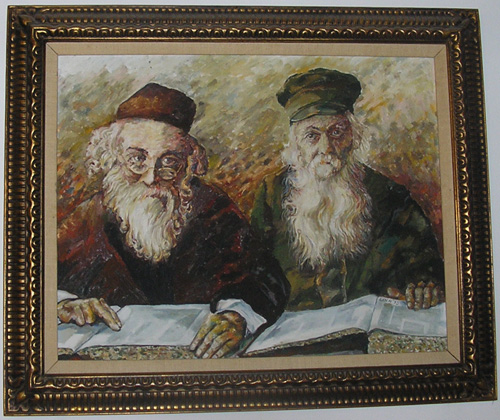
Gulevsky’s parents were also killed in the Holocaust, as was the rest of the city of Brisk. Fortunately, he was not there when the Nazis arrived, and was able to make it to Japan with R. Aaron Kotler and around fourteen other Kletzk students, where he spent the war years. (Before studying in Kletzk, Gulevsky was in Kaminetz.) On the slow journey by train across the Soviet Union, four people slept in a compartment, and Gulevsky shared one with R. Aaron and his wife and daughter. He is also mentioned in one of the letters R. Aaron sent from America to the Kletzk students in Shanghai.[2] Following the War Gulevsky came to the United States where he studied in Lakewood. One can hear his recollections (in Yiddish) of R. Aaron Kotler here. For his eulogy of R. Aaron, see Ha-Darom (Nisan 5723), pp. 40-42.
Gulevsky taught at Yeshiva University’s Teacher’s Institute for a number of years, as well as at the religious Zionist Bachad (Berit Halutzim Datiyim) school in Jamesburg, N. J. This school existed in the early 1950’s and combined Torah study with preparation for agricultural settlement in the Land of Israel (hachsharah). Incredible as it sounds, Gulevsky might be the only living native of Brisk in the United States who was part of the city’s Torah community. (I am not referring to those who left Brisk as children and have no real memories of it. In Israel some of the children of R. Velvel are still alive, and R. Aharon Leib Steinman was born in Brisk.)
 
Here he is, in a picture that could be used if anyone wants to make a gadol card.

Here he is with the indefatigable Menachem Butler.

Gulevsky’s writings are quite interesting and reveal information not found elsewhere. Before looking at them, however, I should note that some readers might recognize his name, without knowing who he is. He is the rav ha-machshir on two Indian vegetarian restaurants in Manhattan, Madras Mahal and Chennai. I first ate at Madras Mahal not too long ago, at a surprise birthday party for Sharon Flatto. Sharon is a professor at Brooklyn College whose doctoral dissertation on R. Yehezkel Landau, the Noda bi-Yehuda, will soon be published by my favorite press, Littman Library.[3]
 
She is married to my good friend, Rabbi Ysoscher Katz, who teaches at Yeshivat Chovevei Torah. I believe R. Ysoscher has the distinction of being the youngest maggid shiur ever to complete the daf yomi cycle. This happened a number of years ago when he “said the daf” at the Agudas Yisrael shul in Boro Park. This was also the largest daf yomi in the country, with some seventy-five people in attendance. He took over the shiur of R. Simcha Elberg, who taught it for many years. Although R. Ysoscher no longer teaches there, the shiur continues and I am told that it is the longest running daf yomi in the country.
 
Returning to Gulevsky, over the years he has published a good deal, and much of his writings have been collected into two volumes. Here are the title pages of these books.
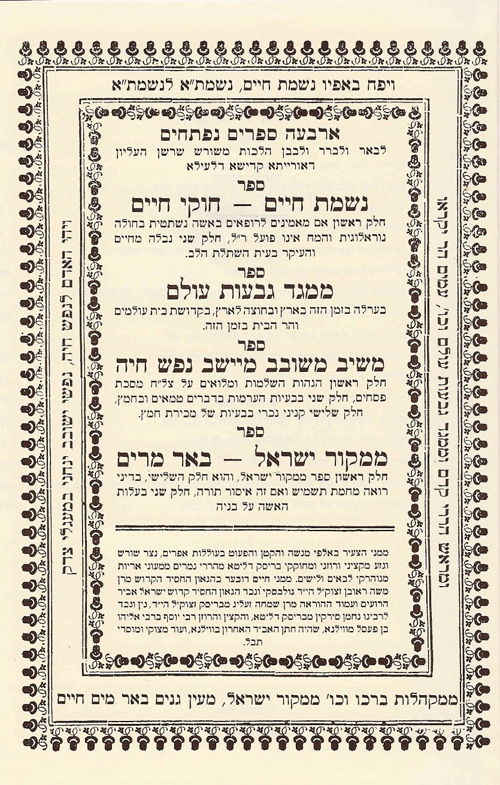
Although not noted on the title page, included in the Arba’ah Sefarim Niftanim is his Lahat Herev ha-Mithapekhet, first published in 1976. Here is the title page.
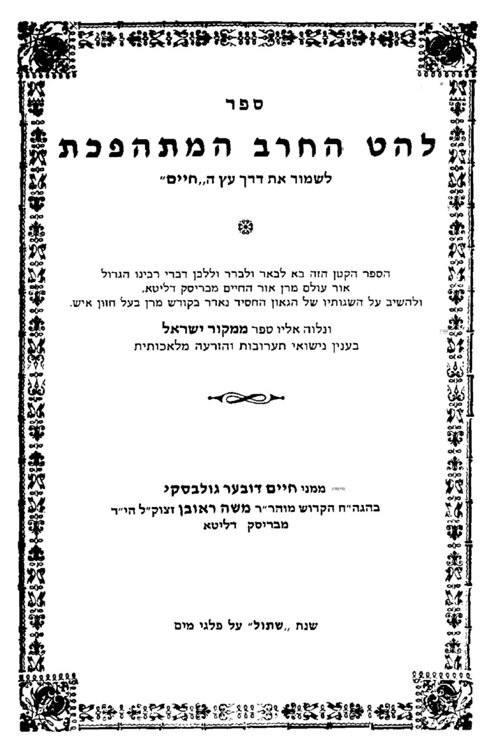
This volume is significant as it the first detailed defense of R. Hayyim Soloveitchik against the criticisms of the Chazon Ish. As should be expected from one who grew up in Brisk and whose family is so connected to the Soloveitchiks, Gulevsky views the defense of R. Hayyim as a holy task. However, I wonder if there any truth to the following statement he makes:
והנה בשלהי קיץ שנת תשל”ה, שמוע שמעתי שיצאו אנשים בלתי הגונים, ולא שמעו לקול הורים ומורים, ולמשפחת הגאון החסיד צדיק יסוד עולם בעל החזון איש, והוציאו במרמה נגד רצונם את ההשגות שהחסיד הנ”ל רשם על ספר חדושי רבינו חיים הלוי והדפיסו את זה יחד עם הספר חדושי רבינו חיים הלוי.
Even if it is true that the Chazon Ish never intended to publish his notes, is that any reason for them not to be printed? Didn’t the Netziv tell the Wuerzberger Rav’s son not to pay attention to his father’s wish that his writings not be published, since the Torah thoughts that he developed were not to be regarded as his personal possession to the extent that he could prevent others from studying what he wrote?[4] Furthermore, is there any evidence that the Chazon Ish was opposed to his criticism of R. Hayyim appearing in print? (The selections of the Chazon Ish’s Emunah u-Bitahon that were embargoed for so long are now widely available, and are even included [but not translated] in the new translation of the book that just appeared.)
 
The problem confronting anyone who studies the Chazon Ish’s life is that there are so many contradictory stories about him and what he said that one must be skeptical of much of what is reported. For example, how many different versions are there of the famous meeting between him and Ben Gurion, with some even describing how he never looked directly at Ben Gurion so as not to state at the face of a wicked one? Yet in all the descriptions of the meeting it never mentioned that the only people in attendance were Ben Gurion, Chazon Ish, and Yitzhak Navon. In other words, many of the descriptions of what was said are based on wishful thinking and fantasies, and no doubt there are some intentional falsifications as well. For Navon’s recollection of the meeting, see Binyamin Brown’s doctoral dissertation,[5] appendix, pp. 1-5.
 
In my last post, I mentioned Gulevsky’s negative comments about Samuel Belkin. I have to say that, unfortunately, one also finds passages in his writings that are disrespectful of gedolim. For example, although Gulevsky sometimes refers to R. Kook as a gaon, elsewhere, in his discussion of shemitah, he writes as follows (Shabbat Shabbaton, p. 100):
 
והנה החכם קוק כאשר יצא להוריד קדושת דברי קבלה (כדי שזה יעזור לו להוריד החשיבות של המצוות שקבלו בשטר האמנה, שנאמרו בנחמיה).
R. Goren gets even harsher treatment (Mi-Meged Givot Olam, p. 285):
ההגהה הזאת קץ וסוף לקונטרס מהדורא קמא סתירת ההיתר של הגאון החסיד גדול הקבלה מרן נפתלי הירץ מיפו. תחילה וראש לקונטרס על קדושת הר הבית והמקדש בזמן הזה. ולהבדיל רבבות ומליונים הבדלות בין איש קדוש וטהור מיפו, ובין משוקץ ומתועב נשמה טמאה במ”ט פעם מ”ט שערי טומאה וזוהמא הצנחן והצחנן ר”ל.
R. Moshe Feinstein also does not escape unscathed (Mi-Mekor Yisrael, p. 58):
ומפני שרב ישיש אחד פה במדינה הזאת שגה ברואה ופרץ גדרו של עולם להבדיל בין ישראל לעמים מפני שאינו יודע להבדיל וכו’. ורצה להתיר להזריע זרע נכרים ברחם רחמתים בנותיו של אברהם אבינו ר”ל.
Gulevsky’s writings are full of points of historical interest, especially about the teachings of his grandfather. Just to give some examples, he reports that his grandfather refused to void the herem of R. Gershom even when dealing with a moredet, as long as all that was required to get her to agree to a divorce was a significant monetary payment (Shabbat Shabbaton, p. 294).
 
In Shabbat Shabbaton, p. 307, he tells us that the great rabbis of Brisk, from early days, were supporters of Torah im Derekh Eretz, not of the Hirschian variety, but that people should work for a living. They didn’t like the kollel system in Eretz Yisrael where everyone was supported by charity, as it led to corruption and thievery.
 
In an article on Hasidic shehitah[6] he tells us that that last two shohetim in Brisk (appointed by his grandfather) were hasidim. One was a follower of the Kotzker and the other was a Lubavitcher. Yet they were obligated to follow R. Simcha Zelig’s instructions. He also writes as follows, with reference to an earlier era:
בבריסק דליטא שחטו רק בשני צדדים. וזה היה אחת מהסיבות שחסידי קוצק יצאו במחלוקת נגד בעל בית הלוי. הלכו ועשו סעודה בעיר טערעספוליע מעבר לנהר בוג, ובגאוה וגאון לקחו שוחט מביאלא ששחט עם חלף מצד אחד ועשו סעודה גדולה. וכבר נדפס בהרבה מקומות, ואני בעצמי שמעתי את זה מהגרי”ז רבה האחרון בריסק דליטא, שכאשר התחילו לברך שיר המעלות לפני ברכת המזון, בא רץ מיוחד על סוס שנתחלפו הבשר וזה היתה טריפה.
With regard to hasidim, it is quite unusual that a Litvak like Gulevsky has such knowledge of the hasidic world and its personalities. A number of his articles dealing with the Ruzhin dynasty have appeared in the journal Mesilot. As with most such studies, there is a great deal of oral history (including from R. Abraham Joshua Heschel, the Kapitchenetzer Rebbe,[7] and R. Yohanan Perlow, the Karlin-Stolin Rebbe.[8]).
Gulevsky states that R Simcha Zelig ruled that if a child has a fever of 39 degrees Celsius (which equals 102.2 degrees Fahrenheit) one should immediately violate Shabbat to do whatever needs to be done (Nishmat Hayyim, p. 60). This is very much in line with how R. Hayyim ruled in similar cases. The Rav himself told the following story: As a child he was visiting R. Hayyim and on Friday night there was a problem with his throat. A doctor was summoned and little Joseph Baer opened his mouth. R. Hayyim asked the doctor if he needed more light to see better. The doctor replied “that is not a bad idea.” Immediately R. Hayyim ordered the Rav’s father, R. Moshe, to raise the flame on the light. R. Moshe hesitated. After all, it was Shabbat and the doctor didn’t actually say that he needed more light. R. Hayyim turned to R. Simcha Zelig and said, about R. Moshe, “He is an am ha-aretz.” R. Hayyim asked R. Simcha Zelig to turn up the flame, and he did so without hesitation.[9]
Gulevsky also tells the following story of his grandfather and R. Velvel (Nishmat Hayyim, p. 144):
זכורני שאאזמו”ר הגאון החסיד קדוש ישראל אביר הרועים בכל גלילותינו ועמוד ההראה מרן שמחה זליג זצוק”ל הי”ד היה מספר, שהרופא ומנתח המפורסם דר. אהרן סאלובייציג שאל את רבינו הגדול מרן אור החיים מבריסק דליטא, כיצד מותר לאכול כל הדברים החמוצים כחלב חמוץ וחומץ, הלוא ידוע שתהליך של החמצה, זהו על ידי תולעים שקצים ורמשים שרואים אותם במיקרוסקופ. והשיב לו רבינו הגדול שהתורה אסרה רק שקצים ורמשים שנראים בעינים. ואאזמו”ר זצוק”ל הי”ד הוסיף באותו מעמד, שאסור להתחשב במראות דמים עם המיקרוסקופ, והסכים לזה רבינו הגדול. שוב זכורני שמרן הגרי”ז הלוי הביא מיקרוסקופ עם מודד, שמדדו את הרבוע של תפילין. הגרי”ז שאל את אאזמו”ר זצוק”ל הי”ד מה דעתו על זה. והשיב לו אאזמו”ר זצוק”ל הי”ד שרבוע של תפילין צריך להיות נראה לעינים, ומה שפחות מזה אינו מעלה ואינו מוריד.
Let me quote at length the following, which is also mentioned by the Rav. Interestingly, the Rav is more sympathetic to the gedolim who opposed R. Hayyim. He states that “from a political and practical perspective, and as an emergency measure, no doubt the majority was correct.”[10] Gulevsky completely disagrees with this evaluation. Also, notice how the Habad rabbi responded to R. Hayyim – how times have changed! (Mi-Mekor Yisrael, p. 33):
ושמעתי מאאזמו”ר הגאון החסיד זצוק”ל הי”ד, שבשנת תר”ע באסיפה הגדולה שהיתה בעיר הבירה פטרבורג, שר הפנים הרוסי רצה שהיהודים יתקנו תקנות לעצמם. ועמדה שאלה על הפרק שרצו לתקן מי שלא נמול בין שאביו לא מל אותו ובין שהוא לא מל את עצמו, שאינו שייך לעם ישראל ואסור לקבור אותו בקבר ישראל. והרבה מגדולי ישראל (ואני חושב שהיום פשוט חרפה ובושה להזכיר את שמם, כי זו היתה מזימה מהממשלה הרוסית, ששכבה הקטנה של המתבוללים ביותר, והרבה מהם היו אינטלקטואלים, שפשוט ימירו את דתם כי אין להם בית הקברות בין היהודים. אולם רבינו הגדול שהיה חכם החכמים ונבון הנבונים עמד על זה גם מצד ההלכה וגם מצד פקחות) תמכו בזה. ורבינו הגדול לחם נגדם כארי, ולא נתן בשום אופן לבצע את זה. ואחד מרבני חב”ד טען לרבינו הגדול הלא הערלים רובם דרובם מחללי שבתות בפרהסיא ודינם כנכרים בין כה ובין כה. והשיב לו רבינו הגדול במקרה שמחללי שבתות בפרהסיא רוצים להמיר את דתם או שמסיתים למחללי שבתות להמיר את דתם, אנחנו חייבים למסור את נפשנו כדי למנוע את זה. ודבריו פשוטים שמחלל שבתות בפרהסיא עוד אינו מומר לכל דיני תורה, וכן מין גמור וכופר בעיקר ר”ל.

              והנה לפני מלחמת העולם השניה ראש הבונדיסטים בפולין מר וו. א. שם רשעים ירקב, התחתן עם יהודיה נתינת צרפת ולא רצה למול את בנו והקהילה קדושה בווארשא לחמו בכל כוחותיהם שלא להכיר בבן הערל כחלק מהקהל היהודית, והטעם שפחדו שמאות בונדיסטים חס ושלום יפסיקו למול את בניהו. . . והשיב לו אאזמו”ר זצוק”ל הי”ד, שאנחנו חייבים למסור את נפשנו גם בזה שמינים וכופרים בעיקר לא יפסיקו חס ושלום למול את בניהם.
Here is his description of Shanghai, which I don’t think will appear in any of the popular histories designed to appeal to the haredi world (Perah Shoshanah Adumah, p. 186):
ובשנות ראינו רעה בזמן המלחמה, בני הישיבות נצלו ממות ר”ל, על ידי שהוגלו בדיוטא התחתונה של הטומאה בגלות שאנגחיי ר”ל. עיר הזאת היתה שיא וראש הפסגה של ניאוף וטומאה ר”ל. ובכלל לא היה שם חוקי משפחה, בבחינת איש כל הישר בעיניו יעשה. וזה כפי הנראה היה הגלות מכפרת עלינו ר”ל.
He then describes an unusual case that came up:
פעם אחת מאוחר בליל מוצאי שבת, לפתע פתאום, האמריקאים חדרו יותר מאלף וחמש מאות קילאמטר באויר, וזרקו פצצה חזקה מאד, והפציצו באי מעבר השני של הנהר, ונהרגו הרבה אנשים. אחד מהאברכים, שהיה תלמיד חכם, וזה היה אחרי חצות, היה עם אשתו לקיים מצוה עונה. הפצצה הזאת נפלה לפתע פתאום, והפציצה מחסן נשק עצום באי מעבר הנהר ממולנו. וכבין רגע נשמע התפוצצות איומה. מרוב פחד אשתו נעשית נדה מיד, והבעל התבלבל לגמרי, וכפי הנראה עבר באונס על עשה שבנדה, שפרש באבר מקושה ר”ל. אשתו מרוב פחד ומהרגשת האיסור התעלפה כמה פעמים. מחוגי הליטאים והרב מ”ר[11] שהיה מלפנים אב”ד דסיניי, פסק בפשיטות, שלא עברו על שום נדנוד איסור, כי אונס כזה ברור שרחמנא פטריה. אבל מחוגי הקבלה והחסידים, ראו בזה שירדנו לעומק הקליפה ר”ל בכל המשורים ח”ו.
There are lots of other interesting comments strewn throughout his book. For example, in Shabbat Shabbaton, p. 110, he characterizes R. Ben Zion Sternfeld of Bielsk as הפוסק הזקן בכל מדינת ליטא. I believe that this is an exaggeration, but I call attention to it since I daresay that most people, including those who have learnt for many years in yeshiva, have never even heard of R. Ben Zion. This is a good example of how great figures in one era can become unknowns in a future generation. Rare indeed is the scholar whose books are still studied one hundred years after his death. As to R. Ben Zion, in a German article by R. Jehiel Jacob Weinberg he records a conversation he had with him. This article has not yet appeared in English (or Hebrew) and translating it is one of my future projects. (For another example of how a great scholar can be forgotten, I vividly recall how I once mentioned R. Joseph Zechariah Stern to my havruta, a man who had learnt for many years in Lakewood. He had never heard of Stern, and because he never heard of him, he simply did not believe me when I told him that Stern wasn’t some average rabbi, and not even a “regular” gadol. Rather, he should be regarded as a gadol she-bi-gedolim.)

When reading Gulevsky I often wonder whom he thinks he is writing for when he goes off on his historical tangents. For example, how many people today really care that R. Abraham Bornstein of Sochachev (the Avnei Nezer) שנא בתכלית the rabbi of Radom (Shabbat Shabbaton, p. 136). In Shabbat Shabbaton, pp. 81-82, Gulevsky goes into detail about R. Jonathan Abelman. Abelman was another great scholar yet today who has even heard of him? He was a dayan in Bialystok and author of the responsa work Zikhron Yehonatan (Vilna 1905). Tragically, he died at the age of 49 in 1903. He was also among those who defended the halakhic permissibility of the heter mekhirah. (See his Torat Yehonatan [Vilna, 1889]). Zikhron Yehonatan has a nice introduction where Abelman’s sons describe their father, and from this one would assume that he was a great talmid hakham, like so many similar talmidei hakhamim in Lithuania. (Incidentally, Abelman’s wife was R. Israel Salanter’s niece.) Zikhron Yehonatan was recently reprinted and the publisher informs us that the Chazon Ish “held of it,” as did R. Hayyim Shmulevitz who was an expert in the book.[12] So what could possibly be wrong about this great Torah scholar of a previous generation? Gulevsky tells us.
According to Gulevsky, Abelman served the maskilim and the rich people. Gulevsky even refers to him as השופר הגדול של הסטרא אחרא, and tells us that his house was a center for Haskalah and that daughters studied in Russian schools and even went to Berlin! (As far as I know, Gulevsky is the only source for all this, as well as for many of the other stories he tells, which obviously creates a problem of reliability. [More about this in part 2 of the post.] Yet in terms of Abelman having a “modern” house, this was not unique, even among the great rabbis. To give one example, R. Avraham Shapiro of Kovno also had a “modern” house, and because of this some of the yeshiva world looked upon him as a quasi-Maskil.)
 
Gulevsky then tells us about a Chabad chasid named Shabsai Berman from Bendery, Bessarabia, who was very rich and whose house was “a university in the full sense of the word.” Berman’s daughter married Abelman’s son (this is also mentioned in the introduction to Zikhron Yehonatan.) Another of Berman’s daughters married R. Menahem Mendel Chen, soon to become rav of Nezhin. The future rebbe, R. Joseph Isaac Schneersohn, was the shadchan. Chen is described as being the right-hand man of his rebbe, R. Shalom Dov Baer Schneersohn, and he was also close with R. Chaim Soloveitchik. See Moriah, Sivan-Tamuz 5732, p. 9. Unfortunately, he was killed in 1919 by members of the anti-Soviet White Army. See Bitaon Habad, Tamuz-Elul 5724, pp. 16ff. His grandson is R. David Zvi Hillman, whom we have discussed in the past (and will return to in the future).
 
Although Berman was Chabad, he was also a Zionist, and R. Yehudah Leib Fishman and Eliezer Steinman spent time with him in Bendery. Gulevsky writes:
למרות שרבי שבתי בערמאן היה “חבדנק” ובי”ט כסלו היו משתכרים הרבה, אבל “השלטון של ספרי כפירה היה גובר על התניא וליקוטי תורה”. בנו של רבי שבתי, משה ברמאן, עלה לארץ ישראל. אנשי מזרחי שמו אותו בין הקבלנים לבניני בתים . . . “זכה רבי שבתי ברמאן” שבנו היה ראש וראשון לבניני אוניברסיטה בר אילן. הי’ תומך ביד רחבה כל אנשי התיאטרו, והסופרים והכופרים של הסאראדים, למרות שרבי משה ברמאן היה נוסע לליובאוויץ הרבה פעמים, וגם פה אצל הריי”צ, גם משפחת אשתו מרבנים ואדמורי”ם גדולים. אבל רבי משה ברמאן רצה להיות קבור אצל החכם פ.ח. ושם קברו.
Who is פ.ח.? None other than Pinchas Churgin, first president of Bar-Ilan University. I love this sort of story, which reveals a past that would have remained lost forever, as I don’t think there is anyone else in the world who can tell us the things that Gulevsky’s books are full of. Gulevsky has obviously collected these stories since his youth, and unless I have reason to doubt them, I assume that what he tells us is fairly accurate. But I wonder, isn’t it a lot of “weariness of flesh” (Eccl. 12:12) on Gulevsky’s part to record all this? Other than me and a few others, does anyone really care? Since not many have even heard of Abelman, do even a handful want to hear about his mechutan, or his mechutan’s son and where he was buried. Gulevsky is no doubt reflecting controversies that were still in the air when he was growing up. Yet today when people see Abelman’s seforim they assume that he was just another one of the gedolim (which I am sure he was), without knowing anything about the controversies he was involved in, much like future generations will forget about most of the controversies we know well.
If you read on in Gulevsky you can see what I think is really driving him. When Abelman wrote about the status of shemitah in contemporary times, he disputed with the Beit ha-Levi.  The two of them actually had a back-and-forth on the topic, all of which is reprinted in the new edition of Torat Yehonatan, published in 2007. This, I believe, is Abelman’s great sin, since for Gulevsky Brisk and its rabbis are basically “untouchable.”
 
Despite Gulevsky’s strong criticism, it be must be noted that Abelman’s support for the heter mekhirah was really only theoretical. He made it clear that land in Eretz Yisrael can only be sold to a ger toshav, and Muslims don’t have this status (Torat Yehonatan, ch. 8). It was only after R. Yitzhak Elhanan ruled that the land could be sold to Muslims that Abelman backed off his contrary opinion. (ibid., end of ch. 10).
 
What about the Chazon Ish, who while opposed to the heter mekhirah nevertheless quoted from Abelman’s sefer and held it in high regard? To this, Gulevsky writes (p. 82):
מה עשה בעל חזון איש? הוא בתמימותו ובכנותו שלא ידע מה זה האיש הזה, ואיזה סם המות בסיר שלו ר”ל, שתה בעל חזון איש ממים המרים המאררים מים הרעים האלו. ובענותינו הרבים כמו שנותנים סוכריה או גלידה לתינוק והוא מלקק את זה ונהנה בתכלית ההנאה, כך בעונותינו הרבים נהנה בעל חזון איש “מסברותיו, מידיותיו ומלומדות” שלו, וברך ברכת הנהנין ר”ל. אולם תכלית הספר הזה להתרחק מן האמת . .  ושמעתי שהגאון המובהק רבי חיים הערץ אמר להתרחק ממנו [מאבעלמאן], וכן החסידים שבעירו התרחקו ממנו. ואם בארז הגדול נפלה שלהבת, עד כמה אנחנו צריכים להזהר ולההתרחק מדברי שקר ומאנשי שקר ר”ל.
             
Gulevsky’s allegiance to Brisk is seen in how he relates to the Rav. While Gulevsky can be harsh in his descriptions of Torah scholars with whom he disagrees, he describes the Rav in grandiose terms. See e.g., Du Yovlin, p. 36:
שמעתי מידיד נפשי וידיד אבותי קדישי עליון מרנא ורבנא יוסף דובער הלוי מבאסטאן שליט”א . . . עוד הסביר לי רב הונא ורב יהודה שבדורינו, מרן הגאון האדיר גאון הגאונים מבאסטאן שליט”א . . . רוב רובם של הדברים האלו שמעתי מרב רבנן הגאון המובהק והמופלג בחכמה ותבונה ודעת הגאון שליט”א מבאסטאן.
Let me give another example of the arcane stuff Gulevsky writes about. While reading it, ask yourself who, today, knows enough about the Lithuanian Torah world that he can make sense of the following story that Gulevsky tells in the name of his grandfather? Supposedly, the Netziv said as follows to R. Simcha Zelig (Shabbat Shabbaton, p. 79):
אחד מהתלמידים הקרובים אלי שלחמו במסירת נפש וכו’, היה הרב מהעיר ט. ראיתי עכשיו את הקונטרס שלו בספר עדות ביהוסף בענין תרומות ומעשרות בזמן הזה שהדפיס לפני עשרים שנה, ונעשה לי ממש שחור בעינים, באיזה קלות ראש הוא מביא ראיות שכל הראשונים סוברים כהרמב”ם שתרומות ומעשרות אפילו בזמן עזרא היו מדרבנן. איך שהוא מפרש דברי רבי יוסי וכו’. עיינתי בקונטרסים אחרים, ונעשה לי שחור ר”ל. אחר כן אמר לכן זה לחתן וכו’. השיב לו אאמו”ז החתן שלו בטח יביא כל מיני ראיות על השמיטה בעוד שנה ושליש, שזה היתר גמור.
In this case Gulevsky makes it easier to break his code because he gives us the name of a book. The author is R. Joseph Raisin who was rav of ט, namely, Telz, and the kuntres referred to appears as responsum no. 14. His son-in-law was none other than R. Isaac Jacob Reines. There is something quite strange about speaking in this sort of code about events that happened at least one hundred twenty years ago, and yet throughout Gulevsky’s writings one find similar things, a number of which I haven’t been able to figure out. The only way I could decipher this story was because he gives the name of the book, but he often isn’t so generous in dropping clues.
 
Here is another example from Shabbat Shabbaton, p. 74. In speaking about the first heter mekhirah (and speaking very negatively about it!) Gulevsky describes how the rav of Bialystok (R. Samuel Mohilever) organized it:
ועכשיו נבוא לרב השני שכתבנו לעיל, שנפל בפח בידי הרב מביאליסטאק. הרב ש.ז.ק. היה עילוי עצום, והיה תלמיד מובהק של בעל זית רענן. אחרי זה מטעם הנגידים העשירים נעשה מו”צ בווארשא. ובגלל זה הוא נעשה המנהיג ולא הרבה אחרים שהיו גדולים וטובים ממנו בכל המסורים. . . . הבית של המו”צ ש.ז.ק. היה מודערני מאד, עם העינים אל תרבות פוילן וגם גרמנית, לרבות תרבות הרוסית.
How many people today will know that this refers to R. Samuel Zanvil Klepfish. How many people have even heard of Klepfish? Would it have been so terrible to spell out the name? As for Gulevsky’s criticism of Klepfish for being too “modern,” let me simply remind him to open up the beginning of the Mishneh Berurah, because there one will find a haskamah from Klepfish. If he was good enough for the Chafetz Chaim, I think he should be good enough for all of us.
 
On the same page Gulevsky tells a story he heard from R. Chaim Heller that elaborates on how the heter mekhirah,, later signed by R. Yitzhak Elhanan, came about. One point added by Gulevsky, which I don’t know if it is true, is that R. Yitzchak Elhanan insisted that the heter not be made public until the sages of the Land of Israel were consulted. Yet this condition was not kept, and as soon as the heter was signed by four gedolim, with R. Yitzhak Elhanan the most significant, the heter was publicized. Gulevsky notes that after the heter was made public, R. Yitzhak Elhanan refused to discuss his reasoning with other gedolim or debate his decision. In Gulevsky’s words:
הוא פשוט לא השיב כלום, ולא רצה לדון בזה כלל עם שום אדם בעולם. כמעט אותו הדבר עשה הגאון רשכבה”ג מקוטנא, וזה צועק עד לשמים דורשני.
Gulevsky assumes, and I think he is correct, that two particular points in the reports R. Yitzhak Elhanan got from those who supported the heter moved him. 1) The rabbis in Jerusalem who opposed the heter had little concern with the farmers and the difficulties they faced. 2). These rabbis, who were supported by donations from the Diaspora, felt threatened by the creation of the settlements, and as such were nogea be-davar and could not deal with the halakhic issues of the heter mekhirah in a fair manner.
 
One question that a number of people have asked is why R. Yitzhak Elhanan never published his responsum in support of the heter. (This responsum, referred to as a kuntres by R. Yitzhak Elhanan, is mentioned in his letter to Abelman, Torat Yehonatan, end of ch. 10) The answer is found in a letter from R. Jehiel Jacob Weinberg to R. Yitzhak Unna. This letter deals with R. Hayyim Ozer’s pressure on Weinberg not to publish his lenient opinion regarding stunning animals before shehitah.[13] (The letter appears in my doctoral dissertation, p. 307):
במשך הדברים אמר לי שאין לי להדפיס את קונטרסי הנ”ל כדי שלא ילמדו מתוכו להתיר, וסיפר לי שהגאון ר’ יצחק אלחנן ז”ל כשכתב בשעתו תשובה ארוכה ע”ד ההיתר לחרוש ולזרוע בשביעית בא”י ע”י מכירה לעכו”ם לא הכניס תשובתו זו בספרו שו”ת שפירסם אח”כ בדפוס.
In other words, R. Yitzhak Elhanan’s heter was an emergency measure, designed for that time alone. If he put it in his volume of responsa it would have assumed a more permanent significance, and he wished to avoid this. Along these lines Gulevsky states (p. 75):
חז”ל הקדושים אמרו איזהו חכם הרואה את הנולד. ההיתר הזה, שבפירוש חכמי ירושלים פה אחד התנגדו לזה במסירת נפש, ומהיתר “חד פעמי” משתמשים בהיתר אחרי שממדינת ישראל מוכרים חקלאות תבואות ופירות מאות מיליונים דולרים לשנה. מי יגלה עפר מעיניכם רבינו יצחק אלחנן ורבינו י’ מקוטנא וכו’, מי ראה את הנולד, חכמי ירושלים ובריסק וואלאזשין וכו’ ראו את הנולד.
In discussing the heter mekhirah, Gulevsky apparently believes that he has a form of clairvoyance. Thus, he writes as follows in Shabbat Shabbaton, p. 115:
ואין שום ספק בדבר [!], שבגלל שמיפו פתחה הרעה להתיר חניה לנכרים ר”ל, משם פתחה הרעה עם פוגרומים עצומים ר”ל, “מגרי תושב” של החכם קוק, ומפני שהוציאו קול על בעל שמן המור שהתיר בחברון וכו’, “זכינו בשנת תרפ”ט לשחיטת ‘גרי תושב’ ששחטו יהודים בחברון” ר”ל.
With regard to shemitah and R. Shlomo Zalman Auerbach, there has been a lot written recently, including on this blog, because there is now an attempt to entirely rewrite the history of R. Shlomo Zalman’s relationship to the heter mekhirah. Gulevsky, however, sees matters clearly when he writes, Shabbat Shabbaton, p. 124, that according to R. Shlomo Zalman:
דברי הגאון קוק והגאון פראנק “כמו ששאלו באורים ותומים”.

[1] For more on his genealogy see his “Al Toldot ha-Gaon Ba’al Semikhat Hakhamim,” Beit Aharon ve-Yisrael (Tamuz 5765), p. 168.
[2] A. Bernstein, et al., eds., Yeshivat Mir: ha-Zerihah be-Faʾatei Kedem (Bnei Brak, 1999), vol. 2, p. 609. All information about Gulevsky’s life for which no source is given comes from Gulevsky himself. When he was in Japan, before travelling to Shanghai, Gulevsky followed his grandfather’s pesak and observed Shabbat on Sunday while on Saturday he avoided melakhot de-oraita.
[3] See here.
[4] Meshiv Davar, vol. 1, no. 24.
[5] “Ha-Hazon Ish: Halakhah Emunah ve-Hevrah bi-Pesakav ha-Boltim be-Eretz Yisrael (5693-5714),” (Hebrew University, 2003). The title does not reflect all that is in this work, which will be a real blockbuster when it finally appears in print.
[6] Yagdil Torah (5741), pp. 114-117.
[7] See “Ke-Tzet ha-Shemesh bi-Gevurato,” Mesilot, Nisan 5758, pp. 13ff.
[8] See “Hityahasuto shel ha-Saba Kadisha Me-Ruzhin la-Memshalto shel ha-Czar Nikolai ha-Rishon (2),” Mesilot, Nisan-Iyar 5758), pp. 30ff.
[9] R. Herschel Schachter, Nefesh ha-Rav (Jerusalem, 1994), p. 27.
[10] Halakhic Man, tr. Lawrence Kaplan (Philadelphia, 1983), p. 90.
[11] This is R. Mordechai Rogov, who would later teach in Skokie.
[12] See here
[13] Regarding this issue, R. Herschel Schachter writes as follows (Mi-Peninei ha-Rav [Brooklyn, 2001], p. 151):
בנידון הימים הבהמות קודם השחיטה, אשר האריך בזה טובא בחלק א’ משו”ת שרידי אש, ויש שמה תשובות מכמה מגדולי ישראל, שאלו פעם את רבנו האם דיבר אתו הגרי”י וויינברג, ז”ל, בזה, כי הלא באותה בתקופה היה רבנו בברלין, והשיב רבנו שבודאי דיברו יחד בנושה הזה, ושזאת היתה העצה שלו להגרי”י וויינברג, שהוא צריך לקבל הסכמת גדולי ישראל מכל המקומות בכל מאי דאפשר, כי דבר שכזה אי אפשר להניחו לכל רב עיר ומורה הוראה לפסוק לעצמו לקהילתו, כי השאלה כל כך גדולה היא, היא נוגעת לכלל ישראל כולו בבת אחת (שמעתי)
This type of report (שמעתי) that R. Schachter sometimes depends upon is often very unreliable. In this case, it is absolutely false. The Rav left Berlin before the Nazis came to power and before Weinberg or anyone else could even imagine that shehitah would be banned.


Rabbinic Insults and Bibliographical Errors

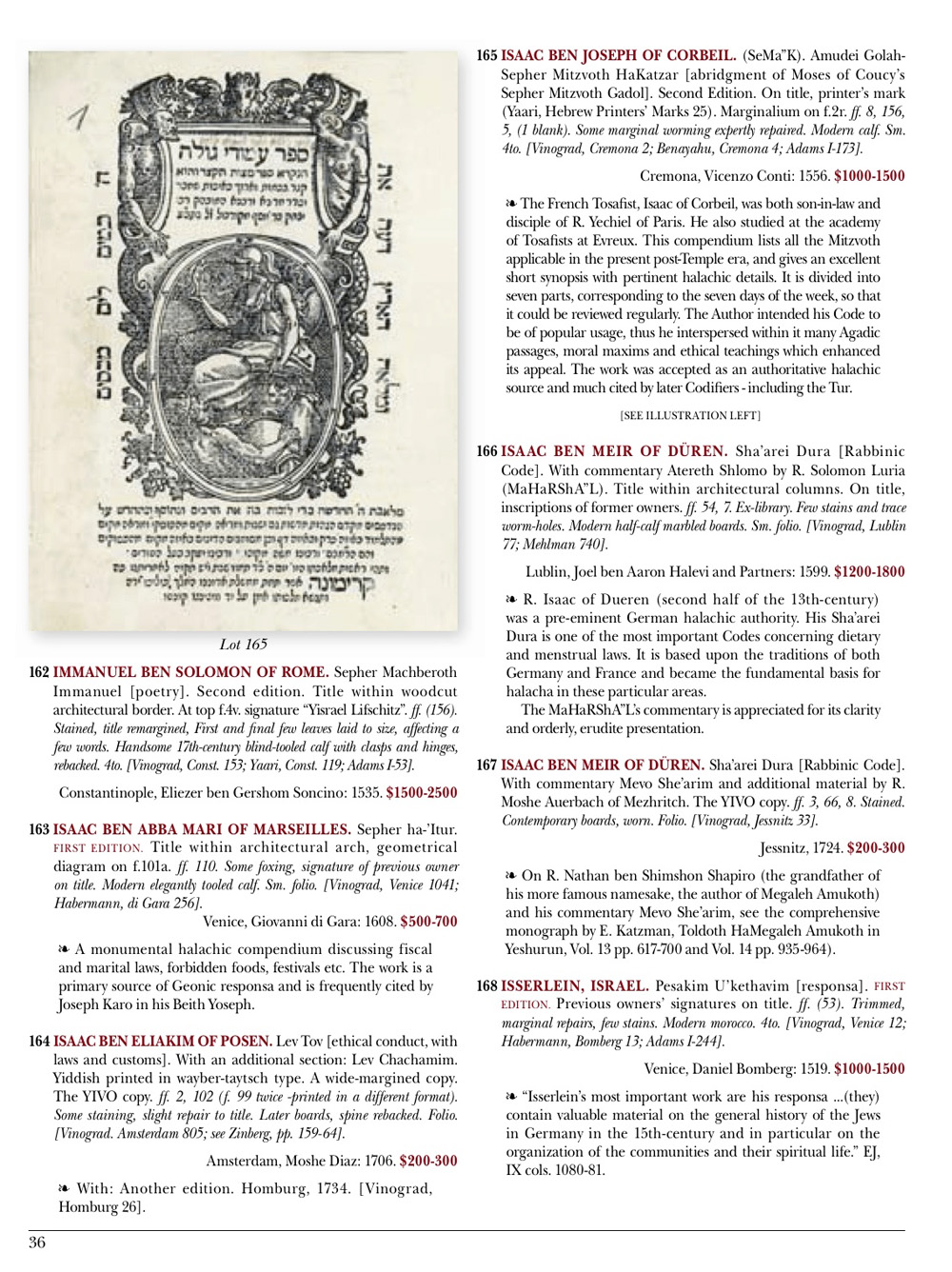
One of the more interesting pioneers of the haskalah movement was R. Shelomo Zalman Hanau (Katz).  Hanau’s works mainly concern grammar and, in that vein, corrections to the siddur.  Hanau’s first book, Binyan Shelomo, Frankfort A.M., 1708 was published when he was 21.  This book focuses on grammar, but, as we have already discussed, was important in the development of the Siddur. (Additionally, see S.’s recent post on Hanau here.)  This book is now up for auction, however, I must note that there seems to be an exaggeration regarding the scarcity of a particular page. 

The catalog describes the book as follows:

The author was born in 1687 and was noted for his many books regarding the foundation of the Hebrew language . . . The author corresponded with many Torah luminaries regarding his subject of expertise.  His first book, Binyan Shlomo  . . . [a]s a young scholar he spoke sharply against many sages who preceded him by hundreds of years.  As the years passed, the author regretted his sharp language and printed a unique apology in which he notes the names of the sages whom he did not properly honor.  This list features at least five leading Torah scholars from previous generations.  To the best of our knowledge, this leaf is not extant today and is not listed in the C.D. of the Bibliographic Project.  The book itself was never reprinted and is very rare today.  To the best of our knowledge, this is the only known copy with the apology leaf.

Judaica Jerusalem, Elul 2009, lot # 144, (emphasis in original).  There are a number of corrections in order.  First, the description states that there was only one edition of Binyan Shelomo “and it was never reprinted.”  That is incorrect.  Aside from two photo-reproductions done by Copy Corner and Guttman, Binyan Shelomo was reprinted in  1723.  Vinograd, in his bibliography, Otzar Sefer ha-Ivri, lists this book as extant the Annenberg Library, which, according to their online catalog, the book can still be found.[1]  Turning now to the “apology leaf.” It is correct that the leaf is rare, however, it is an overstatement to say this is the only known copy with the leaf.  Indeed, the existence of the leaf is not mentioned in Vingrad’s Otzar ha-Sefer ha-Ivri, Jersusalem: 1994, vol. II, Frankfort A.M. # 218. But, the leaf was mentioned already in 1865 and the fact that Hanau issued an apology was mentioned as early as 1715.  The first mention that Hanau issued an apology (although there is no mention of a special leaf) was in Johann Christoph Wolf’s Bibliotheca Hebraea, Hamburg: 1715.  (S. has kindly translated the relevant passage here.) Shadal in Prolegomenon, Grimmae: 1838, 61-2 n.1, also records Wolf’s comments. (See S.’s comments regarding the use of Prolegomenon here.)  The first to republish the apology leaf was Meir Wiener in Ha-Maggid, May 17, 1865, Ha-Tozfeh le-Maggid.  Wiener decided to republish the text of the entire leaf “due to its rarity.”  Wiener obtained a copy from the Rosenthal library and in the catalog for the library by Roest, Yodeah Sefer, he says “that in my copy I have an extra page at the end.”  Yodeah Sefer, letter Bet, # 304.  This notation was then recorded in Wiener’s bibliography of St. Petersberg library, Kohelet Moshe.  Wiener says “that the extra page at the end, which Roest records and where the author asks for forgiveness for insulting various authors, is not in this copy.” While it wasn’t in these copies, nor is it in the copy on Hebrewbooks.org, it is in the JNUL’s copy which is online here.  Additionally, we have a copy which has this leaf, making it at least two others in existence. 

We now turn to what precipitated the inclusion of this leaf.  According to the auction description, R. Hanau did this on his when “the years passed” and he “regretted his sharp language.”  According to Roest, however, “it is without a doubt that Hanau was forced by the Rabbis to print this apology, just like R. Moshe Hayyim Luzzato.”  Roest, op cit.  Thus, according to Roest, the apology was not brought about from Hanau’s own introspection but because of the Rabbis.  Indeed, Friedberg in Bet Eked, says “that the author [Hanau] was forced by the Rabbi of Frankfort A.M. and his bet din to print a special page, in a smaller format, which was appended to the work, in which the author asks for forgiveness from the authors which [Hanau] insulted in his book.”  Bet Eked, letter Bet, # 1238. Similarly, Wolf states “Rabbis of Frankfurt were going to destroy it by flames” had Hanau not agreed to print the apology.  So according to these sources, Hanau was forced to print this apology.  According to a contemporary source, we can place the retraction before 1713.  This is so, because in Siddur of R. Azriel and R. Eliah of Vilna, published in 1713, they note that Hanau printed a page “asking for forgiveness.”  Additionally, according to this source, the request for forgiveness was at the behest of the Frankfort bet din.  R. Azriel and R. Eliah say that the page was printed “due to the decree of the head and leaders of the holy city Frankfort A.M.”  R. Azriel and R. Eliahu then continue, and mention the possibility that R. Hanau deserved to be placed under the ban due to his disrespectful words.  David Yitzhaki appears to have misunderstood R. Azriel and R. Eliah’s words as Yitzhaki says “that Hanau was almost placed under a ban.” D. Yitzhaki, “The Editors of the Ashkenzi Siddur & R. Shelomo Zalman Hanau and his Forgeries,” in Luach Eres, Toronto, 2001, 32.  If, as it appears, Yitzhaki’s source is the quote from R. Azriel and R. Eliah, that quote merely says that it was R. Azriel and R. Eliah’s opinions that Hanau “should” have been placed under the ban, they never say that there was a serious consideration of actually placing Hanau under a ban.[2] Of course, according to Wolf’s version, Binyan Shelomo was to be consigned to the flames, also implying a ban.  Wolf, however, provides no source for this assertion, and it seems unlikely that R. Azriel and R. Eliah would fail to mention the fact that Binyan Shelomo was almost destroyed.      

There is one more version of the story behind the retraction that is worth noting because it contains a major error.  This is a real honker.*  Moshe Carmilly-Weinberger, in Sefer ve-Seif, apparently confused R. Hanau’s Binyan Shelomo with another book that has the same title. Carmilly-Weinberger writes (172-73):

R. Yehezkel Landau the Noda be-Yehuda, stood with R. Yisrael Lifschitz [regarding the controversy surrounding the infamous Get of Cleves], who was in conflict with the head of the Frankfort bet din, R. Nathan Maz and R. Shelomoh Hena [sic] the author of the Binyan Shelomo.  Since R. Landau agreed with R. Yisrael Lifschitz, the enemy of R. Shelomoh Hena, [Hena] banned the work of the Noda be-Yehuda.

Carmilly then quotes a passage from the Hida’s work Shem ha-Gedolim in support of the above statement:

And because of this [fight about the Get of Cleves], when the book Noda be-Yehuda was published the Goan, author of Binyan Shelomo and his bet din prohibited anyone from reading [the Noda be-Yehuda].  The Noda be-Yehuda, however, took the opposite view and he said I tell anyone who is reasonable to go ahead the Binyan Shelomo, to look and see ערות האר”ש השמנה הוא אם רזה (a word play implying that there isn’t much in the Binyan Shelomo). 

Carmilly then continues, and he links the extra leaf in the Binyan Shelomo, to these statements explaining that Hana asked forgiveness for all those people he insulted.  Carmilly implies that the forgiveness related to the controversy about the Get of Cleves!  This is wrong. First, and foremost, the controversy regarding the Get of Cleves occurred in 1766, Hanau died in 1746.  Moreover, Hanau could not have counseled people not to read the Noda be-Yehuda as that was published in 1776 some thirty years after Hanau died.  Additionally, it is clear that Carmilly never saw this leaf as we will soon see, this leaf requests forgiveness from rishonim and doesn’t mention anyone involved in the Get of Cleves controversy.

Carmilly confused two books with the same title, Binyan Shelomo.  The first, by Hanau on grammar which is the subject of our discussion, and the second one, is written by R. Nathan Maz, and was published in 1784.  R. Nathan Maz [3] who was involved in the Get of Cleve controversy and who was on the Frankfort bet din (something that Hanau was not), was the subject of the above discussion. What makes this error even more ironic is that Nepi-Ghirondi, in his Tolodot Gedolei Yisrael, correctly notes that R. Maz authored a work titled Binyan Shelomo.  Carmilly, however, faults Nepi-Ghirondi “incorrectly associating Binyan Shelomo with R. Maz and, instead, the correct author is R. Hanau!”   Id. 172 n.297.  Of course, if one looks at the Hida in the original, it is also apparent that he is not referring to Hanau but to a different book with the same title.

Turning to the text of the “request for forgiveness.”  This text reminds me of a story I heard regarding a relative.  According to the story, A. calls C. “stupid.”  A’s mother then tells A. to apologies, to which A. turns to C. and says, “I am sorry you are stupid.”  Hanau’s request for forgiveness is similar as after offering a general request for forgiveness, Hanau then goes ahead and records every objectionable thing he said. For example, Hanau says

I erred in my ways when I disagreed with the authors.  I was too verbose and, at times, I insulted the authors . . . therefore I come to ask forgiveness: from the prince Don Isaac Abarbanel  when I wrote that “he speaks without logic and his words make no sense,” and in another place I wrote about him that “this statement [of the Abarbanel] is because of his lack of knowledge and that he didn’t understand what was being said” . . . Regarding the Ibn Ezra I wrote “he didn’t subject this statement to logic”

While this apology my be tongue in cheek, it seems to have appeased many or, at the very least, many thought Hanau’s next book didn’t suffer from the same lack of respect.  In R. Yehezkel Katzenellenbogen’s approbation to Sha’arei Torah, Hamburg 1717, he notes that while Hanau had in his prior work been too harsh with his language in “Sha’arei Torah, [Hanau] speaks with the appropriate measure of respect as I [R. Katzenellenbogen] have carefully checked.”[4] 

Notes:
[1] Wiener, in his article in Ha-Maggid (17 May 1865), questions the existence of this edition.  He claims that there is no such edition and that the abbreviation used for the date was misinterpreted. 
[2] It should be noted that R. Azriel and R. Eliah were not dispassionate observers.  Part of the reason that Hanau wrote Binyan Shelomo was to disagree with R. Azriel and R. Eliah’s opinions regarding proper punctuation of the Siddur. See Jacob J. Schacter, “Introduction,” in Luach Eres, op cit., 11-12.  R. Azriel and R. Eliah derogatorily refer to Binyan Shelomo as “Hurban Shelomo.”  
[3] For more information on R. Maz see M. Horovitz, Rabbanei Frankfort, Jerusalem:1972, 134-43.
[4] This did not appease everyone.  R. J. Emden really disliked R. Hanau’s positions. See Jacob J. Schacter, Luach Eres, op cit., 14-25.  
* I would like to thank A. Rottenberg for calling this error, as well as numerous other errors in Carmilly-Weinberg’s book, to my attention. 


Twenty-Five Years at the Valmadonna Trust Library

Twenty-Five Years at the Valmadonna Trust Library


by Pauline Malkiel


Librarian – Valmadonna Trust Library (London, England)


When I first walked into the library in May 1982 I was struck initially by the smell of leather, then by the rows upon rows of fine bindings in burgundies, browns, beiges and creams packed neatly and tastefully on elegant open wooden shelves.  Looking more closely I began to identify groupings: 16th century Italian locations with exciting names like Riva di Trento, Sabbionetta and Ferrara; whole areas of early Venetian printers – Bomberg, di Gara, Zanetti, each in its own space; a whole wall devoted to early Mediterranean printing in Salonika, Constantinople, and Prague, Lublin and Cracow.  Then there were vast ranges of small liturgies of many different rites – Italian, Spanish, Roman, Ashkenazic, Aleppo, Karaite – sitting chronologically on shelves in beautiful bindings.  Another area was devoted to Bibles printed in Venice starting in the year 1517.  Placed in their own taller alcoves were stately volumes of Rabbinic Bibles and Maimonides Commentaries, Mishneh Torahs, Alfassi Commentaries in different editions, and, on closer inspection of the spines, many recurring titles such as ‘Semag,’ ‘Mizrachi,’’Rabenu Bechai,’’Perush HaTorah’ and endless Responsa.  It was a thrill to see the word ‘unicum’ or ‘unique copy’ on a spine, and there were numerous slipcases containing ‘Variant 1’ and ‘Variant 2’ copies, promising intriguing revelations.  Examining the spines one could decipher an exotic array of practically unheard-of place names: Kuru Tschesme, Prostitz, Isny, Constanz, Trino, Dordrecht, Pforzheim, Alcala de Henares and then, tucked away in a corner, all the very early 16th century Latin works printed by the Soncinos in Fano, Ortona, Pesaro, Cesena and so on.  In various parts of the Library was the vast, ever-growing collection of Amsterdam printing, with a core collection of Menasseh ben Israel and Spanish printing.  In a centre cupboard was the luxurious six-volume set of the Complutensian Polyglot, and in a place of honour of its own, stood the precious 9-volume set of the Westminster Abbey Talmud, acquired 2 years before I came.  Behind the study door was a collection of books on blue paper.  In another area was the Indian collection, consisting mainly of dozens of small and even smaller delicate, fragile books.


My duties in the first few years consisted in the main of checking auction catalogues, dealing with binders and restorers and keeping very careful track of the books going in and out of the library for binding, titling and refurbishing, as well as cataloguing, ordering photocopies of missing pages and correspondence – much of it in Hebrew.  When a delivery came from our binders Bernard Middleton or Aquarius it was an occasion to rejoice.  A book might have disappeared for months or even years – the record being the Yosippon, Mantova which celebrated its 12th anniversary at the binder’s – and been meanwhile forgotten, then it would reappear spruced up and in a magnificent new binding, hailed as a long-lost friend and be given pride of place on the shelves.


There was always great excitement when a special or rare book purchased at auction or from a dealer arrived on the table. It had to be assessed physically to decide who would restore it and which binder would rebind or refurbish it before it would take its place with its companions.  Or the new arrival might complete a set, or help complete our holdings of specific printers (Bomberg, di Gara, dei Farri), places (such as Bombay or Calcutta, or Riva di Trento where we have all the books printed except one), or fall within certain dates (such as our collection of Jerusalem printing between the years 1840 and 1890, as recorded by the bibliographer Shoshana Halevi).


Hebrew books were beloved objects which were passed down from generation to generation, and heavily used by their owners.  In addition, due to the vicissitudes of Jewish life over the centuries, they were frequently subjected to censorship and destruction, and the surviving copies are therefore damaged or incomplete.  Our aim was always to complete these books and make them whole again.  If a book lacked pages, it would be a challenge to see if it could be located in other libraries. Sometimes there would be no other copy so the book must remain incomplete, giving it an unfinished air, a question mark for the future, an aura of speciality like the Venice Siddur with the large type and without a title page which has been around as long as I can remember and remains an unsolved mystery.  Such books may even turn out to be unique copies (of which we have several).  In the case of odd fragments, such as pages of rare tractates and liturgies, I have always been amazed by the ability of certain dealers (Mr. Weiser and Mr. Fekete, for example) to take one look at a page and recognise exactly where it comes from.  In this way Mr. Weiser managed to identify and piece together 2 fragmentary pages of an Incunable with Rashi’s commentary printed in Rome, which had been used to patch up torn pages of the Constantinople Pentateuch of 1522.


A rare but ravaged book may come back from restoration almost unrecognisably restored, and this is a delight.  An incomplete book may be reunited years later with its second half, or we may be able to add another 100 pages from a different source.  Examples that come to mind are the Mahzor Aleppo Rite, Bomberg, Venice 1527, the Karaite Mahzor, Bomberg, Venice 1529, the Constantinople Pentateuch of 1522 with the 2 variant rites of the Haftarot (Spanish rite and Karaite rite), the Cracow Talmud of 1602-5 and the Salonika 1520 Pentateuch.  I remember the restorer Stephanie being brought down from Scotland to discuss restoration of the Constantinople Pentateuch and then taking it back by train in a suitcase.


It is most exciting to identify a book that has mystified us for years by locating another copy.  For many years I tried to find the first 10 pages of a Shulchan Aruch, Orach Chayim, di Gara, Venice 1574 for our set but the nearest I could get were the imperfect facsimiles taken from the JNUL copy, which also lacked the title page.  Then suddenly one day there appeared on the table a perfect, complete copy of the Shulchan Aruch which had come from somewhere in the Crimea and had been brought to us by a dealer.  The Avudraham, Fez 1521, which we bought at the Schocken sale (December 1993), was beautiful but lacking the first leaf and a few pages at the end.  Again I went on the hunt and wrote to the Rosenthaliana where, to their great dismay, they found that their copy, which was supposed to be complete, was lacking at the beginning.  Eventually I tracked down the only surviving first page at JTS.  Another little book, Yichus Kol  ha-Zaddikim, printed by Soncino in Salonika in 1527, is almost unique.  Our copy was perfect except it lacked the first page – the HUC copy, described as the ‘only known copy’ was missing the last page!  Our Incunable Perush al Neviim Acharonim, Guadalajara 1482 lacked one page in the middle but had 2 duplicated pages. The Merton College, Oxford copy had the page we needed but lacked 3 others.  How hard we tried to do an exchange, but we didn’t succeed!


For years we tried to acquire a copy of the Cremona Pentateuch in Yiddish – then, suddenly, two copies turned up in the same year.  Dealers would occasionally surprise us with great discoveries.  In the eighties Chaim Schneebalg would make a grand entrance on a Sunday morning in full Vizhnitzer regalia holding a scrappy plastic supermarket bag containing some new treasure.  He was also known to have pursued the custodian in similar fashion to a health farm in Sussex, and a holiday resort in St Moritz, with an important item that just couldn’t wait.  An Italian dealer once turned up with a bundle of wall calendars which were starting to decay, but these turned out to be a unique collection of Venice and Mantova wall calendars of almost consecutive years from the mid-16th century, practically unknown.  They were sent instantly to the paper restorer in Scotland and treated with the utmost respect and care, each one encapsulated on its return and recorded for posterity.


Another major acquisition was the Prague Mahzor on vellum, 1605-6, which belonged to the Taz Synagogue, Lemberg, destroyed in W.W.2.  Although there was a problem with the dealer on account of precious manuscript notes it was acquired without hesitation, as was the Prague Haggadah of 1590 with its beautiful print and layout.  The Indian collection was and is a source of great pride.  We bought some Bombay and Calcutta rarities from a private collector in Belgium in 1991.  Then our already outstanding collection was greatly enriched by the acquisition in 1999 of the Sassoon Indian and Baghdad collections, whereby we improved on existing copies, adding many variants as well as the unique collection of Indian journals and single leaves.


The most important sales in which Valmadonna was involved took place before my appointment, but it is necessary to highlight that some of the greatest treasures of the library emanated from the Sassoon and other sales that took place at Sotheby’s, London in 1970-71, in Zurich in 1975 and 1978 and in 1981 in New York.  Subsequently the Custodian and I attended various auctions, in London, Israel and New York.  I remember well the unusual atmosphere at the Judaica Collectors auction in late autumn of 1989.  It was like a club, exclusive to book enthusiasts some of whom had travelled from London, Manchester, New York and Holland, many of them ‘characters.’  They all knew each other, coffee and refreshments were on the hob, and various family members and curious onlookers were wandering in and out.  Occasionally a shouting match broke out during the bidding when somebody was overlooked, or somebody else failed to keep his promise to stand down on a coveted item.  A noisy controversy arose over a place of printing which was said to be on the Russian border, disputed by a professor at another table.  Another argument took place over the pronunciation of the Jerusalem printer ‘Bak’ or ‘Be’k.’  Throughout the auction there was pervading noise, cigarette smoke, eating, drinking, discussions, interruptions, a black mass of eager Chassidim in the corner, the auctioneer joking, Jack Lunzer wise-cracking and merrymaking.  When Jack Lunzerfailed to get an item he really wanted, after putting up a good fight and our next bid was soon to come up, he got up, walked up to Toperovich who, it was said, was bidding for Friedberg in Canada (who had given him a free hand to bid up to $30,000 for an Incunable estimated at $9-12,000) and told him to go for a walk – he needs some fresh air!  All these comments were going on in faltering Hebrew, or Yiddish, or English, or French (to Sara Frankel).  At one point Jack Lunzer sang a Sephardi melody across the room to Meir Benayahu and later pretended to indulge in a fist-fight with him.  The informality was overwhelming.


Sometimes we couldn’t make it to an auction and had to bid over the phone from London.  I remember one occasion when the phone lines were open for three hours and Mr. Dzialowski senior and 2 other dealers came along to join in the excitement, cheering us on or commiserating as the case may be.  There were one or two major auctions which were anticipated for months in advance and much work went into their preparation.  Perhaps the most memorable of these was the Schocken sale at Sotheby’s, London in 1993, where we acquired some very important items.  Others were the Mehlmann Auction in Tel Aviv (which included a delightful side-trip to Bill Gross to see some of his treasures), the Shane sale at Christie’s, New York in June ’98 and the Christie’s Bet Din Sale, again in the sweltering heat of New York in June ‘99.  On these occasions intense concentration was maintained, and our catalogues are full of exclamation marks and heavily underlined notes like ‘Want,’ ‘Need,’ and ‘Must Have!’  On rare occasions Jack Lunzer has been known to greatly exceed his mandate.  This happened at an auction in Geneva in the late eighties where we bought a unique little Bomberg liturgy at twice the estimate and three times the price the Trustees had authorised.  But he didn’t regret it and fortunately managed to persuade the Trustees to back his decision.


A Sotheby auction in New York in the summer of 1984 produced 8 exciting Incunables for the library.  I remember taking them all one day to the British Library for checking.  On another occasion I had to make a special trip to Oxford to have a newly-acquired Franco-German manuscript carbon dated.  The verdict was 10th-11th century.  In the eighties I had the responsibility of bidding at London Auctions, such as Mr. Schwarz’s Anglo-Judaica Book Exchange at Hatton Garden and at Bloomsbury Book Auctions, occasionally for the odd item at Christie’s, and at Judaica and Asufa Auctions in Jerusalem, the latter continuing right through the nineties.


I would make regular journeys to the British Library first in Store Street, then at the India Office near Blackfriars from 1991 until they moved to St. Pancras in 1997, and occasionally to the Bodleian for checking.  During these years we also made a number of trips to other libraries.  We looked at rare items at Merton College, Oxford in 1994 and had a delightful visit to Eton College Library.  We went to Westminster Abbey Library in October 1996 to see their copy of ‘Akedat Yizhak’ whose wrongly titled spine ‘Talmud Babylonicum Bomberg’ had set Jack Lunzer on the original trail to the discovery of the Talmud.  After Brad Sabin Hill discovered another Talmud set at Sion College in the early nineties I went there to make a detailed analysis of their edition.  I did the same in Vienna in the winter of 1996 when the temperature inside and out was close to zero.  I was shown some treasures in Prague by the head of restoration when I brought the precious Constantinople 1522 Pentateuch and 2 other items to be expertly restored there.  Finally we had two very special trips – first to Parma in January 2000, where under the guidance of Chimen Abramsky and with special permission of Nice Ugolotti we examined the treasures of the Biblioteca Palatina, and then in February 2001 to the Royal Library, Copenhagen in the company of Christopher de Hamel – a rare privilege indeed.


During the mid-nineties we went on a rather exotic mission to the south-eastern corner of Europe to rescue a few thousand Hebrew books.  Our task was to select the most important of the remnants that had survived and to create a new library in Sofia,  arranged and stored for future generations.   They had survived untouched in a village outside Sofia for 30 years and were in danger of being destroyed by the damp conditions of winter.  In the course of several visits to Bulgaria, with the help of the State Archives and with the constant assistance of Becca Lazarova, Jack Lunzer organized truckloads of these books to be brought from the village to the Municipal Archives in Sofia where we sat and spent hours and hours sorting them by condition, by type and by place of printing.  They were mostly printed in Salonika, Constantinople and Izmir, with a fair number from Venice, Amsterdam and Vienna and parts of Bulgaria.  Most were incomplete, some were in tatters, but the excitement consisted in seeing what each new dusty black box would reveal.  Amongst the battered Mishnayot, endless Zohars and Chok l’Yisraels and fragments of Tractates and Responsa missing at both ends we might discover a rare liturgy with the first page torn out and replaced with something else.  Or the dried-out splitting old bindings could be stuffed with pages of an incunable or early fragments of Rashi’s Commentary on the Pentateuch.  It became a fascinating task to try to recognize a book that had lost its title page by its type, or by emblems and small illustrations.  We had to determine whether the printing was late or early, whether a tall section belonged to an Alfassi printed in Sabbionetta or by Bragadin in Venice, whether it was part of a tractate or the Mishneh Torah.  Our work was very intensive and if we got tired of sorting and needed a break, Jack Lunzer would stop and pick up a liturgy and try to decide if it was Sephardic or Ashkenazic.  Or he would start reading a familiar opening passage from a tractate.  Sighs of approval would accompany the discovery of something interesting or special, such as a uniformly bound set of a periodical in Ladino dating from about 70 years back, which was then put in one of the special purpose-built cupboards of Ladino and Bulgarian imprints.  Sometimes there were owner’s signatures and inscriptions, well-known family names, even photos pasted inside the covers, testifying to centuries of history of the Jewish communities of the Balkans, particularly that of Salonika which, so tragically, was almost entirely annihilated in the Holocaust.  As we sorted through hundreds of books a day thoughts would go through my mind that we were paying tribute to those who had prayed and studied from them so that their memory should live on through the books they had possessed, inscribed and used.


Another part of my work has been the careful preparation of books for exhibitions.  The first of these consisted of the highlights of Valmadonna exhibited at the Pierpont Morgan Library in New York in February 1989, with its special catalogue prepared by Brad Sabin Hill.  This involved much work and thought and it was quite painful having to eliminate some of the most beautiful imprints from the final choice of 50 exhibits.  We were flown out, together with Margaret and Myra (two of Jack Lunzer’s daughters), Bernard Middleton, Brad, George from IDC and myself, and met by a limousine that sped through the night to the Pierre Hotel, Manhattan, for a short but glittering trip to the opening.  This was followed, in the early nineties (June ’92) by a smaller exhibition at University College London organized by Myra.  Every so often we loaned out books for other exhibitions – a Soncino printing exhibition in Soncino in 1995, an exhibition of Yiddish printing in Italy in Milan in 1996, a Baghdad exhibition at the Jewish Museum, London, and exhibitions at the Israel Museum.  Finally there were two major exhibitions in London for which 100 books and manuscripts were specially selected by Christopher de Hamel, first for the International Society of Bibliophiles at the Guildhall in September 2003, and then again at Sotheby’s for Jack Lunzer’s 80th birthday in September 2004.


There were a number of changes in the library during the eighties and nineties.  First, having obtained permission to build a brick surround for the three oil tanks in the garden during an oil crisis, permission was subsequently granted to convert this out-building into a book store known as Chatterley.  All the books stored in vaults in the City, including the many duplicates, were gradually brought to Fairport, the Incunables, manuscripts and books printed on vellum put in a vault, and the Livorno, Jerusalem, latter Constantinople and Salonika and Indian and Baghdad collections housed in Chatterley.  With the reinforcement of our Byzantine holdings and the acquisition of the Sassoon India and Baghdad collections, the latter became greatly augmented and the Indian journals had to be kept on new bookshelves, as were latter Salonika and Constantinople.  There was now a large collection of books printed in Marathi only – for the use of the Bene Israel community in India – and these had to be identified with the help of staff at the Oriental section of the British Library.  There were large numbers of newly acquired books to be indexed, and a hundred and twenty new slipcases were made for the variant copies by a retired old gentleman who lived nearby.  New cupboards were built on a separate floor for the coloured paper collection and for the less valuable manuscripts.  We also decided to give special attention to the broadsheets, comprising 650 or more, and each was carefully restored, encapsulated, put in folders and subsequently indexed at the JNUL.


Around this time we decided on cut-off dates for Jerusalem (1920) and to dispose of London, Paris, Metz, latter German and eastern European and Yiddish printing.  A great deal of time was therefore spent with dealers and sending boxes of books to various auction houses.  Concurrently parts of the collection were growing through the acquisition of significant items either privately (the Mehlmann and Sassoon collections in Jerusalem, the Perlberger collection in London, a Gibralterian lady in Maida Vale, Toperovich in Bnei Berak, Chaim Dzialowski and Mr Schwarz in Jerusalem) – all of which entailed visits to their homes (where in Mr Schwarz’s case, I would leaf through books with delicious Hungarian cooking smells wafting in the background), or through dealers who came to Fairport, or by auction.  During the eighties we made acquisitions at Bloomsbury Book Auctions, Swann Galleries, Christie’s (Amsterdam), Sotheby’s (London, New York & Tel Aviv) and Judaica, Jerusalem.  Gradually others came on the scene – Kestenbaum (New York), Baronovich (New York) and Asufa, Jerusalem.  The Jerusalem catalogues would appear three times a year sometimes comprised over 600 Lots, but each item had to be carefully checked.  I would be kept busy by an array of binders, some of them short-lived, others like Bernard Middleton and Kerry Bate who have been with us for over 30 years, and meticulous records had to be kept of all items which left Fairport.


Occasionally there was a great panic when we couldn’t find a book.  There might be a breathless telephone call in very serious tones late at night about a rare book that had disappeared, which would cause us both very disturbed nights until it turned up – usually having slipped behind or been mis-shelved during the annual Passover dusting.  Many years ago Jack Lunzer was in a frantic state for days about a tortoiseshell binding that had gone missing.  He phoned every binder and paper restorer we knew, including those we had stopped using, to search their workshops, turned the library upside down and made everybody feel worried and guilty.  He finally gave up the search and claimed insurance.  About 3 years later, while checking something in his late wife’s safe, he found the precious tortoiseshell binding!  Of course, the insurance money was returned.  Another time we were searching high and low for a rare miniature Venice Psalter and eventually discovered it sitting in the middle of a quarto-size box specially made to protect it from getting lost.


Another ongoing part of my work has been to deal with specialist enquiries, often as part of scholarly research leading to publications, such as those of Prof. Benayahu at Yad Harav Nissim or Marvin Heller, who is presently working on a volume dealing with 17th century Hebrew printing.  Scholars would come to Fairport to see our copies of Meshal ha-Kadmoni, Me’or Einayim, Nishmat Chayim, or to study the typography and ornamentation in early Mediterranean printing, or the writings of Solomon Twena, Samuel de Medina, the Bene-Israel, and the Samaritan sect, to see our special bindings, and so on.  Way back in the eighties, Jack Lunzer had a very special request from Princess Margaret to see a ‘Hebrew Incunable’.   A meeting was set up at Kenwood House where an Incunable was inspected, and both parties returned from the meeting duly charmed.


Other meetings were arranged, to comply with specialist requests.  A calligraphy group had a very enjoyable meeting at Fairport where they viewed a selection of manuscripts, their favourite being the early 15th century illuminated Yemenite Pentateuch. In June 2006 a group of 20 scholars who were in London for a Judeo-Spanish Conference spent a morning at Fairport with twenty books they had specially selected.  There were 2 Conferences of UCL in which we participated by hosting receptions at Fairport.  The first was in June 1995, entitled ‘Jews of Italy – Memory and Identity,’ and the second in June 1997, on ‘Jews of the Low Countries,’ during which Prof. Chimen Abramsky gave a lecture one evening at Fairport about Menasseh b. Israel and his printing, illustrated by examples from our collection, to a room packed with people.  More recently we have been involved in an annual one-day seminar co-sponsored with the Institute of Jewish Studies, UCL.  The first of these was in September 2004, coinciding with Jack Lunzer’s 80th birthday and an exhibition arranged by Camilla Previté at Sotheby’s, entitled ‘The Valmadonna Trust Library and early Hebrew printing.’  In December 2005 the theme was the 350th anniversary of the re-admission of the Jews into England (entitled ‘Jews at the end of the Earth’), and in December 2006 ‘Hebrew bibliography – Steinschneider and after.’


Two students from the London College of Printing came one summer to clean and polish all the bindings.  In the winter of 1993 an Israel producer came to Fairport to interview Jack Lunzer for a programme to be televised in Israel on the theme of an unusual library, and in the autumn of 2006 a French film-maker came over for the day to make a programme for French TV about the Talmud for which a considerable amount of preparation was required.  In the summer of 2004 Esra Kahn spent 3 months making a card index of the ‘bibliography room’ on the second floor, which had never before been catalogued.   This collection of bibliographical works, ranging from the standard to the very rare, is in itself an important part of the Valmadonna Library and one for which Jack Lunzer holds great affection.  On many a sleepless night he has burnt the midnight oil in the company of Moses Marx or Moritz Steinschneider, or more recently, Marvin Heller.  As for the computerization of the Library itself, the bulk of the work was done by the Librarian’s son Solomon, who between the years 1989 and 1998 entered 9,200 records into the system.  I took over in the early 2000’s, in the meantime constantly correcting and updating the computer records and printouts with a view to eventually producing a Valmadonna catalogue which would be a vital Hebrew and English bibliographical tool for worldwide reference.


In 2004, IDC Publishers in Holland microfilmed our Baghdad collection at Fairport and made available on microfiche almost 350 titles, including the earliest lithographs, unrecorded Judeo-Arabic books and rare treasures from the Sassoon collection, with an introduction by Brad Sabin Hill.  In the summer of 2006 they filmed our unique Indian collection, so that a cultural legacy of over 730 items from Bombay, Calcutta, Poona and Cochin, including texts in Judeo-Arabic, Marathi and Malayalam, a Hindustani drama in Judeo-Urdu, works by Yemenite authors, unique Indian lithographs, rare liturgies, and many unrecorded items has now also become available to worldwide bibliography.


We hope that in future this work will continue, starting with the microfilming of our entire collection of Byzantine printing including Constantinople, Salonika and Izmir.  Meanwhile, we are working on a publication based on our extensive holdings of 16th-19th century wall calendars and similar ephemera such as edicts, decrees, odes and poems.  These have been described with the help of Isaac Yudelov and Ariel Viterbo at the JNUL, and will be published in book form and profusely illustrated.  The next project will be the publication of our holdings of incunabula, numbering approximately 70, edited by Dr A. Offenberg of the Amsterdam University Library, together with an important collection of books printed on vellum.


It has sometimes been hard to catch Jack Lunzer with library work amidst his dizzying travels around the globe, mostly on business and diplomatic matters during the eighties and nineties, as well as a range of other activities and family engagements.  We would sometimes work in the evenings, but always on Sunday mornings when he was in town, and I was often frustrated by the incessant telephone calls.  I was, however, frequently amused by the strange assortment of people at Fairport, especially on Sundays.  There might be two Chassidic book dealers in one room, an African lady visitor in another, a third book dealer in a different room, a Rabbi on a charitable mission in another, the gardener waiting for instructions outside, two waitresses coming to discuss breakfast arrangements for the overnight Shavuot study, the pedicurist and the electrician, while family members would be dropping in to see their father, grandfather or uncle.  All the while Dillon, the handsome golden labrador known as ‘the boy’ and a very prominent member of the household during the eighties, would be having a field day dancing around each visitor with his brown towel flapping in his paw.  Jack Lunzer was unperturbed by the transitions between all these people, with his astonishing ability to switch from business to family to book matters, while constantly being interrupted by telephone calls.  Sometimes he would carry on two conversations on two phones, and once I actually heard him speak in 7 languages in the course of one evening.  However there would always be time and enthusiasm for the books, which were treated with love and respect and often referred to as ‘old friends’ or ‘children.’  The library is a quiet, beautiful refuge from the fatigue of aeroplanes, travel and business, and each item holds its own story which is waiting to be read and put in its perspective of our history, liturgy, bibliography and typography.


I myself feel immensely privileged to have been part of the preservation for posterity of this extraordinarily rich and tangible part of the history of our people, extending as it does to towns all over the globe – from Cochin to Curacao, from Irkutsk to Guadalajara – and in time from manuscripts 1,000 years old, to printed books over 500 years old and unique journals of the 20th century.  After 25 years I continue to find my work exciting, in its scope and variety, and highly rewarding, and it is my wish, together with that of the Custodian, Jack Lunzer, to be able to see the transition of the Valmadonna Library as an intact and permanent collection to its next home, so that it should always remain a testimony to the history and culture of the Jewish people.


The Ancillary Benefits of Non-Jews on the Hebrew Book

The Ancillary Benefits of Non-Jews on the Hebrew Book


In the history of the Hebrew book, the books, like the Jews themselves, have been subject to external persecution.  Thus, some books and manuscripts have been totally lost.  On the other hand there are a few examples of books or, as we shall soon demonstrate, technices that are are a product of external influences. 

Abraham Ibn Ezra had a very hard life.  In his well-known formulation that appears at the beginning of his commentary to the Humash, he complains that his luck is so bad that if he were a candle maker the sun would always shine.  As Naftali ben Menachem has shown, (Inyanei Ibn Ezra, Jerusalem, 1978, 1-9 and see 132-37 for his discussion regarding the Ibn Ezra’s bad luck) the Ibn Ezra’s books “suffered” as well.  In particular, many of his books were unavailable for hundreds of years (as an aside, Ibn Ezra’s Yesod Moreh ve-Sod Torah has recently been reprinted in an expanded format by Bar Ilan Press).  Relevant to our theme, however, are Ibn Ezra’s books on astronomy.  Anyone familiar with Ibn Ezra’s commentary knows that Ibn Ezra uses astronomy in his commentary with some frequency and, to properly understand his various statements regarding astronomy it is helpful to have Ibn Ezra’s own statements regarding various astronomical ideas.  But, for hundreds of years, the only available editions were not in the original Hebrew but were instead “saved” in other languages (see one example here).

Another example, although this case is not one of saving but instead appropriating from non-Jewish sources, is the portrait traditionally associated with R. Saul Morteira (1596-1660). 


As Dr. S. Z. Leiman has noted (see Ali Sefer 10 [June 1982]: 153-55; reprinted in Givat Shaul, ed. Hayyim Eliezer Reich [Brooklyn, NY: [n.p.], 1991]) there is some doubt as to the veracity of this portrait. In a later article, (published in Daniel Sperber, Minhagei Yisrael, vol. 6, [Jerusalem: Mosad ha-Rav Kook, 1998], 17-19), Leiman shows that this portrait is not of R. Morteria.  Indeed, its first appearance was in Wagneseil’s Latin translation of tractate Sota, published in 1674.  The engraver, whose initals appear in the corner is Cornelius Nicholas Schurtz (whose initials are found in the bottom right corner) and who lived and worked in Nuremberg between 1670-90 and probably never saw R. Morteira who died in 1660 in Amsterdam. Indeed, this engraving is merely used to illustrate what tallis and teffilin look like and there is no mention of R. Morteria. [There are other illustrations by Shurtz in this volume that are also of interest including the halitzha shoe as well as others, in Sperber’s article on halitzha (Minhagei Yisrael, vol. 6, op. cit., pp. 62-73, 326-33 he doesn’t mention this illustration.] As Leiman notes, Schurtz’s engraving was very popular and subsequently appeared in various books.


J. Wagenseil, Sota, Altdorf, 1674
Courtesy of the B. Jackson Library


Reich, in his reprint of Givat Shaul provides a different portrait of R. Morteira, also from a non-Jewish source, Rembrandt.  Although Reich doesn’t provide how he knows this information, Leiman cites a Dutch book, Herman Prins Salomon, Saul Levi Mortera en zijn “Traktaat betreffende de waarheid van de wet van Mozes”, eigenhandig geschreven in de portugese taal te Amsterdam 1659-1660 (Braga, 1988), which offers the suggestion that a Rembrandt portrait is that of R. Morteira.  Although, some scholars now doubt that the Rembrandt portrait is that of Morteira and instead claim it is of the Czech Protostant Jan Amos Comenius who lived next door to Rembrandt for a period of time. See here (a review of Stevan Nadler’s book, Rembrandt’s Jews) and here.

Two other examples, both relating to the Talmud and both concern the Vatican library.  In R. N. N. Rabinowich’s Dikdukei Soferim, the introduction to Baba Batra, Rabinowich thanks God for answering his prayers and allowing Rabinowich entry to the Vatican library in preparation for this book.  Specifically, Rabinowich explains that he was allowed access to the Vatican libraries when no other outsider was allowed to use the library.  The second example concerns the Romm edition of the Talmud.  One of the most important early commentaries to the Talmud is that of the Rabbenu Hananel.  This commentary was included for the first time with the Romm edition.  The editors explain in their Afterword that the manuscript they used was the from the Vatican.

The next example, is again one in a similar vein to that of the Morteira portrait.  As S. has noted, the Brooklyn-based Jewish publishing house ArtScroll has (or purchased) a patent regarding the use of arrows to allow for an interlinear translation.  While the focus of the patent is on the arrows, the patent claims the need for the arrows is the difficulty in providing an interlinear translation from that of a right to left language (Hebrew) to one that reads from left to right (English).  It seems that this wasn’t that much of an issue for at least 400 years ago (and there may be earlier examples) an interlinear bible, printed in 1609, which translated the Hebrew into Latin (a left to right language like English) was published. It seems that it worked just fine.


Biblia Hebraica, Eorundem Latina Interpretatio, 1609
Courtesy of the B. Jackson Library


Eli Meir Cohen: A Question of Mesorah?

“בין דַּם לדָּם”

by Eli Meir Cohen

.
In the upcoming Krias Hatorah in Parshat Shoftim and Parshat Ki Savo there are a number of instances where the meaning of a phrase changes completely based on the pronunciation of a single word – דם – with either a Komatz or Patah. Until recently, most Chumashim and Tikunim which generally followed the famous Yaakov Ben Hayyim 1525 edition of Mikraot Gedolot published in Venice that printed a seemingly inconsistent pattern in the pronunciation of the different occurrences of this word.

In the following post we have attempted to trace some of the available manuscript and mesoratic evidence on this issue as well as the early printed editions. We have also presented opinions of some of the authorities on dikduk that have dealt with this issue directly.

.
בפרשיות הבאות בספר דברים ישנן כמה פסוקים אשר הניקוד במילת “דם” משנה את הפשט ואעפ”כ מופיעות נוסחאות שונות מחומש לחומש ואף במהדורות שונות מדפוס לדפוס.

הנידון הוא כאשר כתוב בתורה מילת דם לפני מילת נקי. כגון בפרשת שופטים יט,י “ולא ישפך דם נקי בקרב ארצך אשר ד’ אלקיך נתן לך נחלה והיה עליך דמים”, האם קוראים דַּם בפתח ופירושו לשפוך דַּם של איש נקי או קוראים דָּם בקמץ ופירושו לשפוך דָּם שהוא נקי, ונקי הוא תיאור להדם. מילת דם הסמוך למילת נקי מופיעה עוד ארבע פעמים בספר דברים.

השאלה נידונת באופן מפורש בחומש מאור עינים מהמדקדק הידוע הרב וולף היידנהיים בדברים יט,י ושם הוא מביא מקור לדבר מהרד”ק, וזה לשונו שם, “כן הוא (בקמץ) בספרים מדויקים וכתבי יד וכן כתב רד”ק במכלול בשקל פל, בדרך כלל כל דָּם נקי קמוץ וכל דַּם הנקי פתח, וכן עיקר כי כל דם נקי פירושו דם שהוא נקי ואיננו סמוך, אבל דַּם הנקי פירושו דם של האיש הנקי לכן סמוך ופתוח אבל הדָּם הנקי קמוץ שאיננו סמוך בעדות הה”א שבראשו”.

הכתבי יד המנוקדים הישנים והמדויקים של התורה מלפני תקופת הדפוס שנמצאים כיום תואמים בנידון זה להרוו”ה. וכן בבדיקת הערות ‘המסורה הקטנה’ ‘והמסורה הגדולה’ שבידינו מצאנו רק הערת ‘מסורה גדולה’ יחידית על “דם הנקי” שהוא בפתח והוא גם תואם למה שמובא ברד”ק והרוו”ה.

ברם חומש מקראות גדולות דפוס ויניציה הנודע (שנת רפ”ד-רפ”ו), שעליו התבססו הרבה חומשים ותיקונים במשך הדורות, מנוקד בשלוש מקומות דַּם בפתח ובשתי מקומות מנוקד דָּם בקמץ. הגם שרק מופיעה הערת ‘המסורה’, (המוזכרת למעלה) במקום אחד בלבד, והוא על “דם הנקי” שהוא בפתח.

מאידך, בתנ”ך כתר ירושלים, ע”פ הנוסח והמסורה של כתר ארם צובה וכתבי יד הקרובים לו בשיטת הרב מרדכי ברויאר (נוסח השער) ניקדו בדיוק כהרוו”ה וכן ניקדו בתנ”ך הוצאת קורן. וכנראה מכח זה שינו הרבה חומשים ותיקונים הנדפסים היום מהניקוד הישן שנסמך על דפוס ויניציה וניקדו באותו צורה כהרוו”ה וכהמופיע בכת”י.

הצעה אחת יש, והיא לחזור פעמיים על המקומות המסופקים וכעין מה שנהגו כמה בפרשת זכור במילת זכר עמלק – זֵכר או זֶכר (הגם ששם ודאי חומרא בעלמא הוא יען שאין פירושה מתחלפת). ואכן כן מצינו מובא בקובץ זכור לאברהם תש”נ במאמר “עין רואה ואזן שומעת בעניני קריאת התורה” דף ש”ה בשם הרה”ג ר’ אביגדור נבנצאל שליט”א שמכח ספק זה החמיר לקרוא “דם נקי” המופיע בפרשת כי תבוא בשתי האופנים. ולכן שאלתנו פרוסה לדעת האם אפשר להכריע בדבר ולקבוע תורה אחת לעם ישראל ושלא תהא קריאתנו אגודות אגודות, זה בכה וזה בכה, בבהכנ”ס אחת תתפרש הקריאה דם של נקי ובבהכנ”ס אחר דם שהוא נקי.

אליהו מאיר קאהן.
seforimlib@gmail.com

הספק והמקורות

חמישה פעמים מופיע בתורה המילה “דם” או “הדם” בצירוף עם מילת “נקי” או “הנקי”,
  1. (דברים יט, י) ולא ישפך דם נקי בקרב ארצך אשר ד’ אלקיך נתן לך נחלה והיה עליך דמים.
  2. (דברים יט, יג) לא תחוס עינך עליו ובערת דם הנקי מישראל וטוב לך.
  3. (דברים כא. ח) כפר לעמך ישראל אשר פדית ד’ ואל תתן דם נקי בקרב עמך ישראל ונכפר להם הדם.
  4. (דברים כא. ט) ואתה תבער הדם הנקי מקרבך כי תעשה הישר בעיני ד’.
  5. (דברים כז. כה) ארור לקח שחד להכות נפש דם נקי ואמר כל העם אמן.

הצירוף דם נקי מופיע תשעה פעמים בנ”ך (שתים מהם בתוספת “ו”)1, דם הנקי מופיע ב’ פעמים בנ”ך2. באחד מהם, מלכים ב’ כד,ד מופיע גם דם נקי וגם דם הנקי באותו פסוק. כמו כן מופיע דם נקיא פעמים בנ”ך3

ישנם שתי דרכים לנקד את מילת “דם” בקמץ או בפתח, והניקוד גורם לנפקא מינה גדולה במשמעות המילים משום הסמיכות למילת “נקי”.

  1. אם הניקוד הוא בקמץ, א”כ מילת “דם” אינה סמוכה למילת “נקי” וכוונת הפסוק הוא דם שהוא נקי (ר”ל הדם הוא נקי).
  2. אם הניקוד הוא בפתח, א”כ מילת “דם” סמוכה למילת “נקי” והכוונה הוא דם של איש הנקי.
המקורות הקדומים4

הרד”ק בספר המכלול, (שער דקדוק השמות דף קפ”ג), דן מפורשות בשאלת הניקוד, וז”ל שם, דָּם קמץ ובהסמכו פתח, דַּם הפר (ויקרא ד’). דָּם נקי (שופטי’ י”ט) קמץ, דַּם הנקי (שם) פתח, דַּם נקיים (ירמיה י”ט) פתח.

בדיקת כמה כת”י המוקדמים, והמנוקדים של התורה, מעלה את החלוקה הבאה.

  1. כידוע כתר ארם צובא, (משנת 930 לספה”נ) שהוא הכת”י הכי מדויק שיש ע”פ המסורה, חסר עד לסוף פרשת כי תבוא.

    אבל הרב יעקב ספיר שהיה מן החכמים האשכנזים בירושלים שלח בשנת 1855 לספה”נ 550 שאלות לרב משה סתהון שישב בחאלב כדי שיבדוק בכתר בשבילו.אחד מהשאלות היה ניקוד דם נקי הראשון, והתשובה הייתה שהיא בקמץ.

    בדיקת החלקים שנשתיירו מהכתר בנ”ך מעלה את החלוקה הבאה.

    דָּם נקי, ודָּם הנקיא תמיד בקמץ.

    דַּם הנקי בפתח, במלכים ב’ כ”ד ד יש הערת מסורה קטנה ג’, [דהיינו ששלושה פעמים מופיע דם הנקי בתנ”ך]. ובאותו פסוק שם מופיע דָּם נקי לאחריו מנוקד בקמץ!

  2. בכת”י לנינגרד5 (משנת 1008 לספה”נ) הניקוד הוא כדלקמן.

    • דברים יט,י דָּם נקי בקמץ.

    • דברים יט, יג, דַּם הנקי בפתח.

    • דברים כא,ח דָּם נקי בקמץ.

    • דברים כא, ט הדָּם הנקי בקמץ.

    • דברים כז, כה דָּם נקי בקמץ.

    בנ”ך כל דָּם נקי (ודָּם הנקיא) בקמץ ו דַּם הנקי בפתח.

  3. כתר דמשק6 (בערך משנת 1000 לספה”נ) גם כן

    • דברים יט,י דָּם נקי בקמץ.

    • דברים יט, יג, דַּם הנקי בפתח, הפתח ברור. (אמנם ישנו נקודה מרוחקת מהפתח אבל ברור שהיא אינה כחלק מקמץ).

    • דברים כא,ח דָּם נקי בקמץ.

    • דברים כא, ט הדָּם הנקי בקמץ.

    • דברים כז, כה דָּם נקי בקמץ. (הקמץ ברור כשבודקים במהדורה המסורקת).

  4. בספר הללי (משנת 1241 לספה”נ) הוא ככת”י לנינגרד,

    • דברים יט,י דָּם נקי בקמץ.

    • דברים יט, יג, דַּם הנקי בפתח.

    (ישנו גם שם הערת המסורה הגדולה, “דם הנקי ג’ וסי’ לא תחוס עינך עליו, וגם דם הנקי שפך, ועל דם הנקי אשר שפך”.)

    • דברים כא,ח דָּם נקי בקמץ.

    • דברים כא, ט הדָּם הנקי בקמץ.

    • דברים כז, כה דָּם נקי בקמץ.

הרב ברואיר בספרו “נוסח המקרא בכתר ירושלים” שהוא היצירה המדוקדקת שישנה כיום על המסורה, ובו מביא כל המקומות שישנם חילוקים בכתבי יד בתנ”ך, אינו מציין שום כת”י שחולק על החלוקה בכת”י לנינגרד. [הוא רק מציין לדפוס וניציה, ראה לקמן].

בשנת 1920 לספה”נ הדפיס המשומד קריסטיאן גינזבורג, שנחשב לאחד מגדולי חוקרי המסורה בעולם המחקר, חומש שמבוסס על 71 כתבי יד ו24 דפוסים ראשונים של התורה. בהערותיו על הניקוד בדברים יט,י הוא כותב שרובם של כת”י הניקוד הוא דָּם בקמץ ומיעוטם הם דַּם בפתח. החלוקה היא כדלקמן.

• כ”ד כת”י הניקוד הוא בקמץ.

• ז” כת”י הניקוד הוא בפתח.

אמנם מכיון שאינו מציין כלום בפסוקים האחרים כלל (אפילו לא בפסוק הבא דברים יט,יג דם הנקי!) א”א לדעת איך מתחלקים הכת”י בפסוקים השונים ואין רשימתו מועילה כלל מבלי בדיקת הכת”י עצמם.

דפוסים קדמוניםבדפוס הראשון של התורה בתנ”ך דפוס בולוניה שנת רמ”ב (1482) החלוקה היא כדלקמן

• דברים יט,י דָּם נקי בקמץ.

• דברים יט, יג, דַּם הנקי בפתח.

• דברים כא,ח דָּם נקי בקמץ.

• דברים כא, ט הדָּם הנקי בקמץ.

• דברים כז, כה דָּם נקי בקמץ.

אותו חלוקה ממש מופיעה בתנ”ך דפוס סונצינו שנת רמ”ח (1488), תנ”ך דפוס ליסבון שנת רנ”א (1491), תנ”ך דפוס נפולי שנת רנ”א (1491)7, תנ”ך דפוס ברישא [שונצינו] רנ”ד (1492), תנ”ך דפוס פזרו רע”א (1511),

בתנ”ך דפוס שלוניקי שנת רפ”א (1521) החלוקה היא

• דברים יט,י דָּם נקי בקמץ.

• דברים יט, יג, דַּם הנקי בפתח.

• דברים כא,ח דָּם נקי בקמץ.

• דברים כא, ט הדָּם הנקי בקמץ.

• דברים כז, כה דַּם נקי בפתח.

בתנ”ך דפוס קושטא שנת ש”ו (1546) החלוקה היא

• דברים יט,י דָּם נקי בקמץ.

• דברים יט, יג, דַּם הנקי בפתח.

• דברים כא,ח דָּם נקי בקמץ.

• דברים כא, ט הדַּם הנקי בפתח.

• דברים כז, כה דָּם נקי בקמץ.

בחומש דפוס וינציה שנת רע”ח (1518), מופיע החלוקה הבאה.

• דברים יט,י דַּם נקי בפתח.

• דברים יט, יג, דַּם הנקי בפתח.

• דברים כא,ח דָּם נקי בקמץ.

• דברים כא, ט הדָּם הנקי בקמץ.

• דברים כז, כה דָּם נקי בקמץ.

בחומש דפוס וינציה שנת רפ”ד (1524) מופיע החלוקה הבאה.

• דברים יט,י דַּם נקי בפתח.

• דברים יט, יג, דַּם הנקי בפתח.

• דברים כא,ח דָּם נקי בקמץ.

• דברים כא, ט הדָּם הנקי בקמץ.

• דברים כז, כה דַּם נקי בפתח.

בחומש דפוס וינציה שנת רע”ח (1525) מופיע אותו חלוקה.

• דברים יט,י דַּם נקי בפתח.

• דברים יט, יג, דַּם הנקי בפתח.

(כאן ישנו הערת המסורה הגדולה, “דם הנקי ג’ וסי’ לא תחוס עינך עליו, וגם דם הנקי שפך, ועל דם הנקי אשר שפך”.)

• דברים כא,ח דָּם נקי בקמץ.

• דברים כא, ט הדָּם הנקי בקמץ.

• דברים כז, כה דַּם נקי בפתח.

האור תורה וגם המנחת שי לא העירו דבר באף אחד מהמקומות.

הרב ברויאר בספרו “כתר ארם צובה והנוסח המקובל של המקרא” , דף 39, מציין רשימה ארוכה של מקומות שבהם חומש דפוס ויניציה שינה הניקוד מקמץ לפתח (בניקוד של אות “ד”) בניגוד למופיע בכתבי יד ואעפ”כ לא העיר בהם המנחת שי דבר. שתיים ממקומות אלו הם דברים יט,י ודברים כז,כה.

דפוסים מאוחריםהדפוסים הידועים של המקראות גדולות במשך כל השנים שנסמכו על דפוס ויניציה גם ניקדו כדפוס כויניציה, דהיינו

• דברים יט,י דַּם נקי בפתח.

• דברים יט, יג, דַּם הנקי בפתח.

• דברים כא,ח דָּם נקי בקמץ.

• דברים כא, ט הדָּם הנקי בקמץ.

• דברים כז, כה דַּם נקי בפתח.

וכמו כן התיקונים שנסמכו על דפוס ויניציה ניקדו ג”כ כך.

חומש היכל ברכה קמרנא (שאינו נחשב חומש מדויק ביותר) הניקוד הוא כמו דפוס ויניציה והמקראות גדולות. בהערותיו בהיכל ברכה על פסוק יט, י הוא מציין שדם בפתח, וכן ביט, יג. בדברים כא, ח אינו מעיר כלל אבל הניקוד בקמץ. וכן אינו מעיר על כא, ט שגם בקמץ ובכז, כה שנמקד בפתח.

ב’המסורה’ בחומש נטר (שבאופן כללי הולך אחר הרוו”ה) הניקוד הוא ג”כ כמו בויניציה וכמו כן רק מעיר על השתי מקומות הראשונים, יט, י שהוא בפתח וכן ביט, יג.

המקור להערות אלו המופיעים בחומש היכל ברכה וחומש נטר נראה שהיא ציון להנוסח הנדפס בדפוס ויניציה, משום שלא מצינו אף הערת מסורה בספרי המסורה, המעירים במקומות אלו, ואף בדפוס ויניציה עצמה ישנו רק הערת מסורה אחת על “דם הנקי” בלבד.

דפוסים מאוחרים מדוקדקים

בחומש מאור עינים מהמדקדק הידוע הרב וולף היידנהיים, ישנה הערה בדברים יט, י,

“דם נקי, או”ה כן הוא בספרים מדויקים וכתבי יד וכן כתב רד”ק במכלול בשקל פל, בדרך כלל כל דָּם נקי קמוץ וכל דַּם הנקי פתח, וכן עיקר כי כל דם נקי פירושו דם שהוא נקי ואיננו סמוך, אבל דַּם הנקי פירושו דם של האיש הנקי לכן סמוך ופתוח אבל הדָּם הנקי קמוץ שאיננו סמוך בעדות הה”א שבראשו”.

וכן ניקד בחומש עצמו.

• דברים יט,י דָּם נקי בקמץ.

• דברים יט, יג, דַּם הנקי בפתח.

• דברים כא,ח דָּם נקי בקמץ.

• דברים כא, ט הדָּם הנקי בקמץ.

• דברים כז, כה דָּם נקי בקמץ.

תנ”ך הוצאת קורן ג”כ הניקוד כן.

ובחומש שהדפיס הרב ברויאר לפי המסורה שהוא המדוקדק ביותר שישנו כיום, הניקוד הוא גם כך. וכן בתנ”ך כתר ירושלים.

דפוסים חדשים

הרבה מהחומשים החדשים נראה סומכים עצמם על דפוס קורן. ומשום כך הם מנקדים מחדש כמו שמופיע בדפוס קורן וכדמוכח מהכת”י.

כך הניקוד בחומש המאור

• דברים יט,י דָּם נקי בקמץ.

• דברים יט, יג, דַּם הנקי בפתח.

• דברים כא,ח דָּם נקי בקמץ.

• דברים כא, ט הדָּם הנקי בקמץ.

• דברים כז, כה דָּם נקי בקמץ.

וכמו כן חמשה חומשי תורה לבית המדרש הוצאת וגשל. וכן החומש הנפוץ חמשה חומשי תורה הוצאת ב”ב. וחומש שנדפס לאחרונה על ידי מכון ירושלים (חומש ע”פ רבינו יונתן) גם כהרוו”ה.

תיקון קוראים המפואר הוצאת יושר גם כן הניקוד כך. וכן תיקון סימנים החדש, שהוא תיקון מדוקדק (שסומך בעיקר גם על הרוו”ה ודפוס קורן) גם כהרוו”ה8.

——————————————————————————-

[1]

(מלכים ב’ כא, טז) וגם דם נקי שפך מנשה הרבה מאד עד אשר מלא את ירושלם

(מלכים ב’ כד, ד) וגם דם הנקי אשר שפך וימלא את ירושלים דם נקי ולא אבה ד’, לסלוח.

(ישעיה נט, ז) רגליהם, לרע ירוצו וימהרו, לשפוך דם נקי מחשבותיהם מחשבות אוון שוד ושבר במסילותם

(ירמיהו ז,ו) גר יתום ואלמנה, לא תעשקו ודם נקי, אל תשפכו במקום הזה ואחרי אלהים אחרים לא תלכו לרע לכם.

(ירמיהו כב, ג) כה אמר ד’ עשו משפט וצדקה והצילו גזול מיד עשוק וגר יתום ואלמנה אל תונו אל תחמוסו ודם נקי אל תשפכו במקום הזה.

(ירמיה כו, טו) אך ידע תדעו כי אם ממתים אתם אתי כי דם נקי אתם נתנים עליכם

(משלי ו, יז) עיניים רמות, לשון שקר וידיים שופכות דם נקי.

(תהילים צד, כא) יגודו על נפש צדיק ודם נקי ירשיעו.

(תהלים קו, לח) וישפכו דם נקי דם בניהם ובנותיהם
[2] (מלכים ב’ כד,ד) וגם דם הנקי אשר שפך וימלא את ירושלים דם נקי ולא אבה ד’, לסלוח. (ירמיהו כב, יז) כי אין עיניך וליבך כי אם על בצעך ועל דם הנקי לשפוך ועל העושק ועל המרוצה לעשות.
[3] (יונה א, יד) ויקראו אל ד’ ויאמרו אנה ד’ אל נא נאבדה בנפש האיש הזה ואל תתן עלינו דם נקיא כי אתה ד’ כאשר חפצת עשית.

(יואל ד, יט) מצרים לשממה תהיה ואדום למדבר שממה תהיה מחמס בני יהודה אשר שפכו דם נקיא בארצם.

[4] רב תודות לר’ יהודה חיים זאבאלאוו עמו”ש על עזרתו האדיבה בפתיחת ספרייתו הגדולה לרשותנו בעין יפה.
[5] אחרי כתר ארם צובא, נחשב כת”י לנינגרד לכת”י המדויק ביותר ע”פ המסורה.
[6] MS. Heb 5702. הוא כת”י מדויק ע”פ המסורה
[7] קצת קשה לקרוא הניקוד של דם הראשון אך נראה די ברור שהוא נקוד בקמץ

[8] על אף שבסופו יש ליקוט שכותב לנקד כויניציה, אבל כפי שכתוב בהקדמה, הליקוט אינו מהמוציא לאור של התיקון.


אימתי פסקה טהרת אפר פרה אדומה

אימתי פסקה טהרת אפר פרה אדומה מאת: אליעזר יהודה בראדט[1] א. כבר הבאנו לעיל[2] את דברי התלמוד ירושלמי המוסר את אזהרת רב חייא לתלמידו רב: “רבי חייא רובא מפקד לרב: אין את יכיל מיכול כל שתא חולין בטהרה – אכול, ואם לאו – תהא אכיל שבעה יומין מן שתא”[3]. ושם גם נתבאר, שרובם של הראשונים הבינו, כי רב חייא הזהיר את תלמידו על אכילת חולין בטהרה, וכפשטות לשון הירושלמי. אולם עדיין לא נתברר כיצד סבר הרב שתלמידו יכול לעמוד במטלה זו? הרי בתקופתם כבר נחרב המקדש ולכאורה נחסר מהם גם אפרה של פרה אדומה שהזאת מימיה מטהרת מטומאת מת, וכיצד יאכל התלמיד חולין בטהרה? ואכן מצאנו לר’ יהודה החסיד (אשכנז, ד’תתקי-תתקעז) שהתייחס לבעייה זו בהקשר לאזהרת רב חייא האמורה. הוא כותב בספר חסידים: רבי חייא צוה לרב לאכול חולין בטהרה, ואם אינו יכול כל השנה לאכול בטהרה, שיזהר שבעה ימים בשנה לאכול חולין בטהרה… כי חייב אדם לטהר עצמו ברגל, ‘ואת נבלתם תשקצו’ (ויקרא יא ח), שלא יגעו בהם, כדי שיוכלו לעשות קרבנות ולאכול; זהו בזמן שבית המקדש קיים. וצוה רב חייא לרב שיאכל בזמן הזה; אף-על-פי שטמאי מתים היו ואין אפר פרה, צוה לו להיות שבעה ימים בשנה אוכל חולין בטהרה[4]. היינו, ברור לו שבתקופת רב חייא כבר לא היה ניתן להטהר מטומאת מת, שלא היה ברשותם אפר פרה אדומה, ולמרות זאת הזהיר רב חייא את תלמידו שיאכל חולין בטהרה.   ב. אולם רבים מרבותינו הראשונים חלקו על דעתו של ר’ יהודה החסיד. הם סוברים שאפילו בתקופת האמוראים, מאות בשנים לאחר חורבן בית המקדש השני, היה מצוי עדיין אפר פרה אדומה בה נטהרו טמאי מתים. בעלי דעה זו נסמכו על כמה הוכחות[5]: 1. ירושלמי, שבת, פ”א ה”ג: “רבי חייא רובא מפקד לרב: אין את יכיל מיכול כל שתא חולין בטהרה – אכול, ואם לאו – תהא אכיל שבעה יומין מן שתא”. אכילת חולין בטהרה לא תתכן ללא טהרה מטומאת מת שבאמצעות אפר פרה אדומה, ולמרות זאת הוזהר רב – אמורא ארצישראלי בן הדור הראשון – לאכול חולין בטהרה, משמע, איפוא, שבימיו עדיין היה מצוי אפר פרה. 2. חולין קז ע”א-ע”ב: “איבעיא להו: מהו לאכול במפה? [כלומר, מהו לפרוש מפה על ידיו ולא יגע באוכלין ויאכל בלא נטילת-ידים?], מי חיישינן דלמא נגע, או לא? …כי סליק ר’ זירא, אשכחינהו לר’ אמי ור’ אסי דקאכלי בבלאי חמתות [הם חמתות בלויים, וכורכו ידיהם בהם ואכלו בלא נטילת ידים]… דאמר רב תחליפא בר אבימי אמר שמואל: התירו מפה לאוכלי תרומה [כי הכהנים זריזין הן ולא נגעי], ולא התירו מפה לאוכלי טהרות [הם אוכלי חוליהם בטהרה, לפי שאינם למודין להשמר כמו כהנים], ורבי אמי ורבי אסי כהנים הוו“. נמצאנו למדים, שבימי רב אמי ורב אסי, אמוראים מבני הדור השלישי, היה ניתן לאכול תרומה האסורה לטמאי מתים; הוה אומר, שבזמנם היה ניתן להטהר מטומאת מת! 3. נדה ו רע”ב[6]: “אי אמרת בשלמא לתרומה – היינו דהואי תרומה בימי רבי [הרי כמה שנים היה אחר החורבן, בסוף התנאים], אלא אי אמרת לקדש [=מֵי פרה אדומה] – קדש בימי רבי מי הואי?! כדעולא, דאמר עולא: חבריא מדכן בגלילא [פירוש: חבירים שבגליל מטהרים יינם לנסכים ושמנן למנחות, שמא יבנה בית המקדש בימיהם][7]; הכא נמי בימי רבי”. היינו, מדברי עולא על זמנו – הדור השלישי לאמוראים – שה’חברים’ היו מפיקים את יינם ושמנם בטהרה, משמע שבדורו היתה עדיין שכיחא הטהרה באפר פרה.   מרבית הראשונים שהסכימו על הִמצאות אפר פרה בזמן האמוראים סמכו שיטתם על אחד המקורות דלעיל, ואחדים מהם נסמכו על שני מקורות ויותר. כבר רבן של ישראל, רש”י, בפירושו לאחד המקורות דלעיל (מס’ 3) כותב: “‘חבריא מדכן בגלילא’, [פירוש:] חבירים שבגליל מטהרים יינם לנסכים ושמנן למנחות, שמא יבנה בית המקדש בימיהם. ולעולא, קדש הוו[8]. כך שמעתי בחומר בקדש [חגיגה כה ע”א], וכך היא שנויה”. היינו, בימיו של עולא האמורא היה קיים עדיין ‘קודש’, הוא מֵי חטאת[9]. כיוצא בזה כותב תלמיד נכדו ר’ יצחק הזקן מגדולי בעלי התוספות, הוא ר’ ברוך ב”ר יצחק מגרמייזא (אשכנז, נפטר ד’תתקעא), בעל ‘ספר התרומה’: “אפילו האמוראים, שהיו הרבה דורות אחר חורבן, היה להן אפר פרה. כדאמר פרק כל הבשר, גבי ר’ אמי ור’ אסי… ואי לא היה להם הזאה, מה מועיל כרכי ידייהו?”[10]. ואלו דברי בן דורו הצרפתי, ר’ שמשון משאנץ, מגדולי בעלי התוספות בדורו (צרפת, ד’תתקי-תתקעה): “ובימי חכמים היו מזין בארץ-ישראל, כדאמרינן: חבריא מדכן בגלילא. אבל עכשיו בטלה אפר פרה”[11]. ודור לאחר מכן כותב ר’ ישעיה טראני, הרי”ד (איטליה, ד’תתקל-ה’ה), שבזמן האמוראים “היה להם אפר פרה מקודם לכן בגליל, ואחר-כך נתיישבו הכותים באותה הרצועה, והיו נטהרים מטומאת מת בגליל”[12]. אלא שמעיון בתשובותיו נראה, שהוא הסכים לכך רק מחמת דוחק שדחקו: עוד הבאתם לי ראיה דאפילו בבבל היו אוכלין חוליהן בטהרה, כדאמרינן התם: רב הונא בר חייא איצטריכא ליה שעתא וכו’. וגם מן הירושלמי, דהוה אכיל רב חולין בטהרה וכו’. אודיע לכם רבותיי, כי אמת, שלאחר חרבן עדיין היו נזהרין מן הטומאה… וקשיא לי, היכי מצי רב למיכל חולין בטהרה? והלא אחר החרבן היה! וכיון דבטל אפר פרה מי יטהר טמאי מתים שבישראל? ונראה לי לתרץ לפי הדחק, דאף-על-גב דחרב בית המקדש, היה להם עדיין אפר פרה, שהיה מתחלק לכל המשמרות, ועד שהספיק להם אותו האפר היו נטהרין בו טמאי מתים שבארץ ישראל. ותדע שהיו נזהרין בארץ-ישראל לאחר החורבן מטומאת מת… אלמא, דאפילו בימי רבי, שהיה לאחר החורבן, היו מדקדקים להיזהר מטומאת המת וטיהרו את קיני בימיו כשאר ארץ-ישראל, שלא תהא כארץ העמים… ורב דאשכחן בירושלמי, דהוה אכיל חולין בטהרה, נראה לי, דווקא כשהיה דר בארץ-ישראל קודם שירד לבבל, אבל לאחר שירד בבבל – לא היה יכול להזהר[13]. והרבה אתה למד מעקימת שפתיו “נראה לי לתרץ לפי הדחק“. שמכך יש להסיק כי לולא שהכריחו הנאמר בירושלמי הוא אפילו לא היה מסכים לקביעה שבדור הראשון של האמוראים היה קיים אפר פרה אדומה! אולם שאר הראשונים לא ראו כל דוחק בקביעה זו, הן הראשונים שקדמו לר’ ישעיה טראני וכפי שהובא לעיל בסמוך, והן הראשונים שלאחריו כמו ר’ משה מקוצי (צרפת וספרד, נולד בשנת ד’תתקס) הכותב: “שבימי האמוראים היו מפרישים שתי חלות בארץ-ישראל… כדאמרינן בנדה: חבריא מדכן בגלילא. שהיה להם עדיין אפר הפרה[14] והסכים לדברים בן הדור שלאחריו, ר’ אשר ב”ר יחיאל, הרא”ש (אשכנז וספרד, ה’י-פח): “דבימי האמוראים היו אוכלין תרומה טהורה בארץ-ישראל, כי היה להם אפר פרה. כדאמרינן: חבריא מדכן בגלילא. ולכך הצריכו גם בחוץ-לארץ להפריש חלת כהן, שלא תשתכח תורת חלה”[15]. ובעקבותיו צעד ר’ אשתורי הפרחי (פרובנס וארץ ישראל, ה’מ-קטו) בעל ‘כפתור ופרח’: “ואמת, כי כשגלו לבבל הביאו עמהם אפר פרה… [ולאחר] חרבן, היה להם אפר פרה שנעשית בבית שני… [כדאמרינן:] חבריא מדכן בגלילא. וכן פרק כל הבשר: שמואל אשכחיה לרב דקא אכיל במפה… אשכחינהו לרבי אמי ולר’ אסי דקא אכלי בבלאי חמתות… [ד]התירו במפה לאוכלי תרומה ולא התירו במפה לאוכלי טהרות…”[16]. כל הנזכרים עד עתה הינם מבני אשכנז-צרפת פרט לר’ אשתורי הפרחי שמבני ספרד[17]. אמנם מצאנו לאחד משלהי ראשוני ספרד שאף הוא הסכים לכך. כוונתי לר’ שמעון דוראן, הרשב”ץ (ספרד ואלג’יר, ה’קכא-ה’רד), הטוען, כי למרות שברשות אמוראי בבל היה אפר פרה, היא לא הועילה לטהרם משום שהיו קיימים בארץ העמים הטמאה, אך מתוך דבריו אתה למד שהוא מסכים שבארץ-ישראל באותה תקופה אכן נטהרו מטומאת מת באמצעות אפר פרה: “…מכל מקום, אף-על-פי שהיה לבני ארץ-ישראל הזאה, אפילו תאמר שעדיין היה להם אפר פרה בימי רב יוסף ורבא ורבינא ורב טובי, דבבבל היו, וארץ העמים גזרו עליה טומאה, לא הועילה להם הזאה…[18]. מכל מקורות אלו עולה, במפורש או במרומז, שבימי האמוראים נהגה הטהרה באפר פרה בארץ-ישראל בלבד ולא גם בבבל[19], וזאת מהטעם הפשוט, שבאותו זמן כבר נגזרה טומאה על ארץ העמים[20] ולפיכך אפילו אם היה ברשות אמוראי בבל אפר פרה – לא היה באפשרותם להטהר באמצעותו, כי הוא נטמא. ואם ראשונים הסכימו שבימי האמוראים היה קיים אפר פרה ונטהרו בו, אחרונים, שסמכו על דבריהם ועל ראיותיהם – על אחת כמה וכמה. ר’ אלעזר אזכרי (צפת, רצג-שס) בעל ‘ספר חרדים’, כותב: “שאפילו בזמן האמוראים היה להם אפר פרה מזמן בית שני”[21]. וכך בפירוש המשנה לר’ שלמה עדני (תימן וארץ-ישראל, שכז-שצב), בעל ‘מלאכת שלמה’: “דהא אפילו בימי האמוראים היה להם עדיין אפר פרה מזמן הבית, כדאיתא בפרק קמא דנדה: חבריא מדכן בגלילא, וכל-שכן בימי התנאים”[22]. ולאחריו דן בנושא ר’ יהודה רוזאניס (קושטא, תיז-תפז): “יש לומר דסבירא להו, דבזמן האמוראים גם כן היה להם אפר הפרה, וכדאמרינן בפרק קמא דנדה, דמתמה תלמודא: ‘קדש בימי רבי מי הואי?!’, ומשני: ‘כדעולא, דאמר עולא: חברייא מדכן בגלילא’… ועל כן היו טהורים ממת, דאי לא איך היו מטהרים יין ושמן?! אלא ודאי, דהיה להם אפר הפרה. וזכורני שראיתי במקום אחד, דכשגלו לבבל הוליכו עמהם אפר הפרה”[23]. דברי בעל ‘משנה למלך’ נתפרסמו מאוד והביאו להרבה מרבותינו האחרונים לדון בנושא, וגם הם ברובם הסכימו על הִמצאות אפר פרה בזמן האמוראים, כמו: ר’ ישראל יעקב אלגזי (אזמיר וירושלים, תמ-תקטו)[24]; ר’ יעקב עמדין, היעב”ץ (אשכנז, תנח-תקלו)[25]; ר’ חזקיה די סילוה, בעל ‘פרי חדש’[26]; ר’ יעקב מנשה (שאלוניקי, תקה-תקצב)[27]; ר’ יוסף שאול נתנזון (גאליציה, תקסח-תרלה)[28]; ר’ אברהם הכהן (שאלוניקי, נפטר תרמו), בעל ‘שיורי טהרה’[29]; ר’ עזרא אלטשולר (ליטא, נולד תרא)[30], ר’ חיים סתהון (צפת, תרלא-תרעו), בעל ‘ארץ חיים’[31]; הרב יששכר תמר, מחבר ‘עלי תמר’[32]; הרב מרדכי פוגלמן (גאליציה וארץ-ישראל, תרנט-תשמד)[33], ועוד[34].   כל האחרונים שהסכימו על הִמצאות אפר פרה אדומה בזמן האמוראים, צעדו בעקבות הראשונים ואף הם סמכו שיטתם על אחד (או יותר) ממקורות חז”ל הרומזים זאת[35]. שונה מהם ר’ שמואל ויטאל אשר הלך בדרך חדשה ולא נודעה. לשיטתו, בהכרח שאפילו בדורות האמוראים האחרונים היה מצוי אפר פרה, שהרי על שני אמוראי התקופה, רב חנינא ורבא, מסופר, שבראו ‘גברא’ או ‘עגלא’ באמצעות צרופי האותיות שבספר יצירה, דבר שלדעתו לא יתכן לולא שנטהרו קודם לכן באפר פרה אדומה: “דבגמרא סנהדרין, פרק ז[36], וזה לשונו: ‘רבא ברא גברא… רב חנינא… מברי עגלא’… והיו בוראים אותו ב’ספר יצירה’… ולא היו יכולים לעשות המעשים האלו בטומאה אם לא בטהרת אפר פרה, כאשר הוא פשוט אצלנו”[37]. וכנראה, שזהו העומד ביסוד דברי אביו, ר’ חיים ויטאל (ארץ-ישראל, שג-שפ), המסביר מדוע רק בתקופת התנאים והאמוראים הותר השימוש ב’קבלה מעשית’: “וזהו סוד שמוש פרקי היכלות שנשתמשו בו רבי נחוניא ורבי עקיבא ורבי ישמעאל ואנשי-כנסת-הגדולה, ואחר-כך נשתכחו גם דרכי השמושים ההם. ועוד אחרת, כי נאבד טהרת אפר פרה בזמן האמוראים עד זמן אביי ורבא, כנזכר בתלמוד, ולכן לא נשתמשו מאז ואילך בעלית הפרדס…”[38]. היינו, גם הוא מסכים שעד לאחר זמנם של אביי ורבא היה עדיין מצוי אפר פרה, שכנראה הוא הבין כי רבא לא היה יכול לברוא עגל באמצעות ספר יצירה ללא שנטהר קודם לכן מטומאת מת[39]. ודבריו שבהמשך, שמי שלא נטהר מטומאת מת אינו יכול להשתמש בקבלה מעשית[40], תומכים בסברא שהוא ובנו אמרו דבר אחד, כי אין לך קבלה מעשית יותר גדולה מבריאת ‘גברא’ או ‘עגל’ באמצעות צרופי השמות שבספר יצירה.   ג. בנוסף על מקורות חז”ל המכריחים שבזמן האמוראים היה עדיין מצוי אפר פרה אדומה, שהובאו לעיל, קיים גם נוסח מדוייק בירושלמי ממנו מוכח שבזמנם של רב חגי ורב ירמיה, אמוראים ארצישראלים מן הדור השני, הִטהרו באמצעות אפר פרה. בתלמוד הירושלמי מסופר: “רבי חגיי ורבי ירמיה סלקון לבי חנוותא. קפץ רבי חגיי ובירך עליהן. אמר ליה רבי ירמיה: יאות עבדת! שכל המצות טעונות ברכה”[41]. מספר דברים טעונים ביאור במעשה זה: מהו ‘בי חנוותא’? מה שני אמוראים אלו עשו שם? על איזו מצווה בירך רבי חגי? ר’ אלעזר אזכרי (צפת, רצג-שס) בעל ‘ספר חרדים’, כותב לפרש: “[משום ש]חייבין בית דין להעמיד שוטרים בכל מדינה ומדינה ובכל פלך ופלך שיהיו מחזירין על החנויות ומצדיקין את המאזנים ואת המדות ופוסקין השערים, וכל מי שנמצא עמו משקל חסר או מידה חסרה או מאזנים מקולקלין יש להם רשות להכותו כפי כוחו ולקנסו כפי ראות בית דין, לחזק הדבר… ור’ חגי ור’ ירמיה היו מקיימין מצווה זו, ואפשר שהם היו הממונים המחזירין על החנויות על פי בית דין… ובירך ‘אשר קדשנו לקדש המדות והמאזנים ולתקן השערים’, שכל המצוות טעונות ברכה”[42]. לעומתו, הסיע ר’ משה מרגליות את הענין לברכת הנהנין (ולא ברכת המצוות) שרב חגי בירך על הפירות שנמכרו באותם חנויות. הוא כותב בפירושו פני משה: “סלקון לבי חנותא, שמוכרין שם מיני פירות ומיני מגדים. קפץ רבי חגיי ובריך עליהן, ולא המתין עד שיביאם לביתו”[43]. לשני פרשנים אלו נוסח הירושלמי שעמד לפניהם היה: “לבי חנוותא“, והוא הכריחם לפרש כפי שפירשו. אולם למרות שנוסח זה מקויים בכתב-יד ליידן של הירושלמי[44], כתב-יד מפורסם שנכתב בידי ר’ יחיאל ב”ר יקותיאל מן הענווים (רומא, ה’א-מט) מחבר ספר מעלות המדות וספר התניא, קיים לפנינו עֵד נוסח אחר בירושלמי כתב-יד וטיקן: “סלקון למי חטאתה[45]. ולנוסח זה, שכנראה ראהו בכתב-יד[46], הסכים ר’ שלמה סיריליו (ספרד וארץ-ישראל, נפטר שטו), ומבאר על-פיו את גוף המעשה: ‘סלקון למֵי חטאתא‘, כן מצאתי בספר מדוייק, והן מֵי חטאת, והיו עדיין נמצאין מי חטאת בזמן האמוראים, כדאמרינן בנדה פרק קמא: ‘מדכן בגלילא’, שהיו מתנהגים בטהרת הקדש כבימי הבית, להיות בקיאים בקידוש מי חטאת, כדי שיהיו מפרישין תרומה וחלה בטהרה, מטעם שהיה להן עדיין מֵי חטאת להזות עליהן[47]. נוסח זה מקויים גם מן הראשונים. אישר אותו ר’ אלעזר מוורמייזא, ה’רוקח’ (אשכנז, ד’תתקכה-ה’ב), הכותב: “כל המצות שהן חוקות וגזירה צריך לברך, שילוח הקן וראשית הגז ושאר מתנות כהונה, ירושלמי בפרק כיצד מברכין, גבי קידוש ואפר חטאת ולהזות: כל המצות טעונין ברכה”[48]. ואין לטעון ש”ערבך – ערבא צריך” ושיבוש נפל בספר הרוקח[49], כי רבו של האחרון – ר’ יהודה ב”ר קלונימוס משפיירא (אשכנז, נפטר ד’תתקנז) – גם סמך ידיו על נוסח זה כמפורש בחיבורו יחוסי תנאים ואמוראים: “ר’ חגאי ור’ ירמיה סלקין למֵי חטאתא, קפץ ר’ חגי ובירך עליהון”[50]. נמצא, שמסורת קדומה מאשרת את הנוסח “למֵי חטאתה”, והוא ככל הנראה האמיתי[51] (אלא שנשתבש באחת ההעתקות ל’בי חנוותא’[52]), וטעו כל אלו שלא הבינוהו ושללוהו[53]; וממנו עולה, שבימיו של ר’ חגי, אמורא ארצישראלי מן הדור השני, עדיין היו מִטהרים על-ידי אפר פרה אדומה.   ד. אולם לא כל המקורות מסכימים שההִטהרות באפר פרה היתה קיימת אף בזמן האמוראים; שמדברי כמה מהם עולה שבזמנם כבר בטלה טהרה מישראל. בברייתא דמסכת נדה הובאו דברי ר’ חייא (אמורא ארצישראלי בן הדור הראשון) המעיד על זמנו: “אמר ר’ חייא רבה: והלא מצינו שאין לזבה טהרה והיא מטמא[ה] בכל שהן, ולאחר שפסק הדם על מִי תטהר? והרי חרב בית המקדש ובטל קרבנן של זבין ויולדות, ואין כאן פרה אדומה לכפר ולא כהן להזות, ומה נעשה שגרמו עונות, חרב בית מעווננו ונעשו בנות ישראל הפקר”[54]. מאמר זה של ר’ חייא אינו מצוי לפנינו כי אם בברייתא זו שרבים פקפקו בסמכותה, ויש אפילו שטענו שכותביה לא נמנו על שלומי אמוני ישראל[55]. ולפיכך מעניין להצביע על מאמר חז”ל נוסף המצוי במקור יחידאי שאינו נמנה על המקורות הקאנוניים, אשר גם הוא שולל את טהרת אפר פרה מתקופת האמוראים. כוונתי למדרש לקח טוב לר’ טוביה ב”ר אליעזר (ביזנטיון, נפטר בערך ד’תתס) המביא את מאמרו של ר’ יוחנן הזהה למֶסֶר העולה מדברי רבו, ר’ חייא(!): והיינו דאמר רבי יוחנן: מיום שחרב בית המקדש, אין טהרה ממת, ואין טומאה ממצורע. פירוש. אין טהרה ממת, אבל טומאה איכא; לפי שאין לנו אפר הפרה להזות. אבל טומאה ממצורע – ליכא כלל, שאין בהם מורה[56]. וכפי שפקפקו באמיתות הברייתא שהביאה את דברי ר’ חייא, כך היו שהסתפקו אם הדברים שיוחסו לר’ יוחנן אכן מוסמכים[57]. אך למרות זאת אנו יודעים שבדעת ר’ יהודה החסיד אכן הוסכם, שכבר בתחילת תקופת האמוראים, בדורו של רב חייא, לא נטהרו באפר פרה[58]. ושמא זוהי גם דעת ר’ מנחם המאירי המפרש (בניגוד לדעת שאר הראשונים[59]), כי דברי עולא ‘חברייא מדכן בגלילא’[60] כוונו על הזמן שבית המקדש היה קיים[61], ולכאורה הוכרח לכך משום שלא הסכים שבזמן האמוראים נהגה עדיין טהרת פרה אדומה[62]. גם יש מן האחרונים שצעדו בדרך זו. לר’ דוד אבן-זמרא, הרדב”ז (ספרד מצרים וארץ-ישראל, רלט-שלג), היה ברור ש”כמה זמן” לאחר חורבן בית המקדש, ועל-כל-פנים בתקופת האמוראים, כבר לא נטהרו באמצעות אפר פרה: “…והלא בימיו של רבי אמי לא היה להם אפר פרה, שהרי אחר חורבן הבית כמה זמן היה, ומה היה צריך לעשותה בטומאה?! אלא ודאי, אף-על-פי שהיו שם טמאי מתים, היו נזהרין משאר טומאות”[63]. והסכימו לדעה זו מעט אחרונים נוספים, כמו: ר’ מרדכי בענט (הונגריה, תקיג-תקפט)[64]; ר’ מאיר שמחה הכהן מדווינסק (ליטא, תרג-תרפו), בעל ‘משך חכמה’[65]; ר’ משה אריה ליב ליטש-רוזנבוים (פרעשבורג, תקס-תרלג)[66]. וגם אחד מחכמי הדור האחרון, הרב יקותיאל יהודה גרינוואלד (הונגריה וארה”ב, תרמט-תשטו) האריך להוכיח נכונות דעה זו. יעויין בדבריו[67].   ה. נדלג עתה על יותר מאלף שנה קדימה, לזמנו של האריז”ל. אין לנו עדות מפורשת בת זמנו שהאריז”ל נטהר בהזהת אפר פרה, אלא שכך משער ר’ חיים יוסף דוד אזולאי, החיד”א (ארץ-ישראל ואיטליה, תפד-תקסו), בהדגישו ש”לא ראיתי כתוב רמז מזה, ולא שמעתי”[68]. אמנם אנו יודעים שהאריז”ל ידע היכן נטמן אפר פרה[69] ואנו גם יודעים שהוא שקל להטהר בו כחלק מן התהליך להבאת הגאולה[70], דבר שלא ארע בסוף. הדברים נמסרו בחיבור המפורסם תולדות האר”י שהועלה על הכתב כששים שנה לאחר פטירת האריז”ל (ה אב שלב): “גם היה יוצא בכל ערב שבת עם החברים לקבל שבת… ויום אחד, בערב שבת, יצא עם החברים לקבל שבת כמנהגו. אמר לחברים: נלכה נא עתה לירושלים, ושם אני יודע היכן אפר פרה גנוז, ונזה עלינו ונטהר עצמינו מטומאת מת, ונבנה בית המקדש ונקריב קרבן שבת…”[71]. גם עדויות מאוחרות תומכות בעובדה שאפר פרה נטמן בירושלים, ומסורת שעברה מפה אל פה הצביעה על מיקומו המדוייק. על ר’ מנחם מנדל משקלוב היו “זקיני ירושלים מספרים שאמר: אם יצטרכו לאפר פרה של משה, יראה איפה הם”[72]. והיו גם שמצאו בירושלים את הכלים בהם אוכסן אפר הפרה בזמן הבית: “בחדשים העברו חפרו בחצר הבית-הכנסת… ומצאו בבור עמוק כדים קטנים בערך אצבע קטן אחד, וחקרו עליהם מה היה תכליתם. ומבינים אמרו, כי ודאי נעשה בהם אפר פרה האדומה; כי ידוע שיסוד בית-הכנסת הנ”ל הוא מזמן הבית השני. ואין להאריך”. כך סיפר ר’ יהוסף שווארץ (גרמניה וארץ ישראל, תקסה- תרכה) ששהה בירושלים משנת תקצג[73].

[1] מאמר זה  [מתוך ספרי בין כסה לעשור שי”ל לפני כמה חדשים] הוא מבוסס על חומר שאספתי בס”ד במשך השנים דרך לימודי, ובנוסף לכך השתמשתי בכמה סיכומים שונים שנערכו על נושא זה, הם: ר’ זאב וואלף לייטער, שו”ת בית דוד, ירושלים תשס, סי’ סד, ובמילואים לשם; ר’ ראובן מרגליות, נפש חיה, סי’ קנט, ס”ק יג; ר’ אהרן מגיד, בית אהרן, י, ערך ‘אפר פרה’, ניו-יורק תשלה, עמ’ תרפו-תרצ; הרב דוד אברהם מנדלבוים, פרדס יוסף החדש, פרשת חוקת, בני-ברק תשנו, עמ’ תשצו-תשצח; הרב דוד יואל ווייס, מגדים חדשים למסכת חגיגה, כה ע”א, ירושלים תשסו, עמ’ תקסג-תקסז. וראה עוד: ד’ רעוול, ‘החלופים בין בני בבל ובין בני ארץ ישראל: מקורות ההלכה של הקראים’, חורב, חוברת א, ניו-יורק תרצד, עמ’ 10, הערה 18; י’ זוסמן, סוגיות בבליות לסדרים זרעים וטהרות, האוניברסיטה העברית, תשכט, עמ’ 313-312; ז’ עמר, ‘מתי פרצה טהרה יתירה בישראל ומתי פסקה?’, בד”ד, 17 (אלול תשסו), עמ’ 27-7, ובמיוחד בעמ’ 14-13. יישר כוח לידידי הרב מרדכי מנחם הוניג על שהפנני לשני המקורות האחרונים.[2] בספרי בין כסה לעשור.[3] ירושלמי, שבת, פ”א ה”ג.[4] ספר חסידים שעל-פי כת”י פארמה, הוצאת מקיצי נרדמים, סי’ תתרסט.[5] לא הבאתי את כל הוכחותיהם, אלא רק את המרכזיות שבהם ואלו שהובאו בידי רבים [להוכחות נוספות שכלל לא נידונו אצל הראשונים, ראה: י’ זוסמן, סוגיות בבליות לסדרים זרעים וטהרות, האוניברסיטה העברית, תשכט, עמ’ 312. בנוסף לכך ישנן כמה הוכחות שהשתמשו באפר פרה בתקופת התנאים שפעלו לאחר חורבן הבית. ר’ אשתורי הפרחי (כפתור ופרח, פרק יג, ירושלים תשנז, עמ’ קלח) מציין שתי הוכחות לכך, ואחת מהן היא תוספתא, שביעית, מהדורת ר”ש ליברמן, ה ב: “אמר רבן שמעון בן גמליאל: אני ראיתי את שמעון בר כהנא שהיה שותה יין של תרומה בעכו”. ומדברי מדרש אחר משמע, שטהרת פרה אדומה נהגה אף לאחר חורבן בית המקדש: “…פרה אדומה שיהו טהורין, שאף-על-פי שבית המקדש חרב וקרבנות בטלו, פרת חטאת אינה בטילה“. כך הובא בספר פתרון תורה [ליקוט מדרשים פרסי משלהי תקופת הגאונים], מהדורת א”א אורבך, פרשת חקת, ירושלים תשלח, עמ’ 175. אך אין להכריח ממדרש זה על תקופת האמוראים, שיתכן שכל דבריו נאמרו רק על תקופת התנאים בלבד. וראה גם פרושי רבינו אליהו מלונדריש ופסקיו, מהדורת מרדכי ליב זק”ש, פסקים מסדר זרעים, מסכת חלה סוף אות טו, ירושלים תשטז, עמ’ כו, “והיינו דווקא בימי התנאים שהיו מזין לטומאת מת”.  [6] המוסגר על-פי רש”י והענין שם.[7] המאמר של עולא הובא גם בחגיגה כה ע”א. עיי”ש.  [8] והשווה לדבריו בתשובות רש”י, מהדורת אלפנביין, סי’ קפז.[9] וגם לראשונים אחרים (פירוש רבינו חננאל, חגיגה כה ע”א; ספר הערוך, ערך ‘חבר’; חידושי הרשב”א, נדה ו ע”א) שביארו ש’חבריא מדכן בגלילא’ הוא, ש”היו עדיין מרגילין עצמן לטהר חוליהן בטהרת הקדש” (חידושי הרשב”א, שם), ולא כפירוש רש”י, עדיין יש להכריח שהם הסכימו שבזמנו של עולא היה עדיין מצוי אפר פרה, כי לולא ההִטהרות בו לא תתכן אכילת חולין בטהרה. והדברים פשוטים [לעצם פירוש שונה זה, ראה: ל’ גינצבורג, פירושים וחידושים בירושלמי, ב, ניו-יורק תשלא, עמ’ 83; הרב דוד יואל ווייס, מגדים חדשים לחגיגה כה ע”א, ירושלים תשסו, עמ’ תקסג].  [10] ספר התרומה, הלכות ארץ ישראל, מהדורת י’ פרידמן, אשקלון תשסח, עמ’ 28.  [11] פירוש הר”ש משאנץ, חלה פ”ד מ”ח.[12] תוספות הרי”ד, חגיגה כה ע”א.[13] שו”ת הרי”ד, ירושלים תשכז, סי’ כה. שו”ת זה נדפס לראשונה מכת”י בשנת תשכז, אולם החיד”א ראהו בעודו בכתב-יד והעתיק ממנו את הנושא המדובר לספרו ברכי יוסף, או”ח, סי’ רמב, ס”ק ב. וראה גם דבריו בחיבורו מדבר קדמות, מערכת א, סעיף כו.[14] סמ”ג, ישראל תשנא, עשין קמא, עמ’ שסח.  [15] רא”ש, חולין, פרק ח, סי’ ד. הביאו ר’ יוסף קארו, בית יוסף, או”ח, סי’ שכב. וראה עוד: הלכות קטנות לרא”ש, הלכות חלה, סימן יד.[16] כפתור ופרח, ב, פרק יג, ירושלים תשנז, עמ’ קלח.[17] אך ראה לעיל, הערה 10.[18] שו”ת תשב”ץ, ג, סי’ ר.[19] וכך גם מפורש בתוספות, בכורות כז ע”ב, ד”ה ‘וכי הזאה’. ראה שם.[20] עי’ שבת טו ע”א ואילך, שגזרת הטומאה על ארץ העמים קדמה לחורבן בית המקדש השני.  [21] ספר חרדים, מצות התלויות בארץ, פרק מב, אות יד, ירושלים תשנ, עמ’ קפז.[22] פירוש מלאכת שלמה, חלה, ד ח.[23] משנה למלך, הלכות אבל, פרק ג הלכה א. בעל ‘משנה למלך’ זכר מקור המציין ש”שגלו לבבל הוליכו עמהם אפר הפרה” ולא זכר היכן, ובאו האחרונים (ראה במצויין לעיל, הערה 1) והחזירו לנו אבדתו, שהיא תוספתא, פרה, מהדורת צוקרמאנדל, ג ה: “ר’ שמעון אומר: עפרן [=אפר פרה] ירד עמהן לבבל ועלה. אמרו לו: והלא נטמא בארץ העמים? אמר להם: לא גזרו טומאה בארץ העמים אלא לאחר שעלו מן הגולה”. אולם עדיין לא הבנתי מה שייכותה של תוספתא זו לנושא שלפנינו, הרי שם מדובר על גלות בבל שלאחר חורבן בית ראשון, ומה ראייה היא לטהרת אפר פרה בתקופת האמוראים שהייתה למעלה מ-500 שנה לאחר מכן? וגם לא יתכן לומר שאפר הפרה נשאר עד לזמנם וממנה הם נטהרו, כי בתקופת האמוראים כבר נגזרה על בבל טומאת ארץ העמים (עי’ לעיל, הערה 21) וממילא נטמא האפר. סוף דבר, ראיית ה’משנה למלך’ מן התוספתא לא ברירא לי, וצע”ע. וכבר העירו על כך כמה מהמחברים המאוחרים, ראה: ל’ גינצבורג, פירושים וחידושים בירושלמי, ב, ניו-יורק תשלא, עמ’ 83; הרב י”י גרינוואלד, כל בו על אבלות, חלק שלישי (‘כתר כהונה’), סי’ ג, ניו-יורק תשיז, עמ’ 21-20 [אגב, הרב י”י גרינוואלד טוען נגד ה’משנה למלך’ גם מ’ירד עמהן לבבל ועלה‘ שבתוספתא, דמשמע, שכשחזרו גולי בבל ארצה העלו עמם את כל אפר פרה ולא נשאר ממנו בבבל כלום. אך אין זו טענה, כי יתכן שנוסחת ה’משנה למלך’ בתוספתא היתה כזו שבפירוש המשניות לר’ עובדיה מברטנורא (איטליה וארץ ישראל, ר-רע): “דסבר ר’ יוסי, כשעלו בני הגולה היו בהם טהורים, שטהרו באפר הפרה שהורידו עמהם לבבל והעלו ממנו עמם” (פירוש רע”ב, פרה, ג ג). היינו, הם העלו רק חלק מן האפר, וחלקה נשאר שם].  [24] קהלת יעקב, מענה לשון, ח”ב (לשון חכמים), מערכת א, סי’ קיא, ירושלים תשס, דף ח ע”ב.  [25] שו”ת שאילת יעבץ, א, סי’ פט: “ואמנם חכמי התלמוד עדיין היה להם מֵי חטאת, כדאמרינן: חברייא מדכן בגלילא”.[26] פרי חדש, או”ח, סי’ תרו.[27] אהל יעקב, שאלוניקי תקצב, דף ח ע”ב.  [28] שו”ת שואל ומשיב, תליתאה, סי’ קכג.  [29] שיורי טהרה, מערכת א, סי’ נח.  [30] תקנת הארצות, בתוך: כתבי הגאון רבי עזרא אלטשולר, בני-ברק תשנז, עמ’ יב.  [31] ארץ חיים, ירושלים תשנ, סי’ תרו.[32] עלי תמר, מועד א, אלון-שבות תשנב, עמ’ שצד, ד”ה ‘בע”ק טובלים’.  [33] שו”ת בית מרדכי, ב, ירושלים תשלא, סי’ טו עי”ש אריכות על הנושא.  [34] ראה: ל’ גינצבורג, פירושים וחידושים בירושלמי, ב, ניו-יורק תשלא, עמ’ 84-83. ועי’ במקורות שצויינו לעיל, הערה 1, שם נסמנו ספרי אחרונים נוספים.[35] ראה לעיל, ראש פרק ב.[36] סנהדרין סה ע”ב.[37] שו”ת באר מים חיים, סי’ פב, ירושלים תשכו, עמ’ רמד-רמה. אמנם דבריו תמוהים, הרי לכמה מסורות היו ראשונים ואחרונים שבראו אדם (‘גולם’), כמו: ר’ שלמה אבן-גבירול (ספרד, ד’תשפב-תתטו), ר’ יצחק ב”ר אברהם מדמפייר (צרפת, ד’תתל-תתצ לערך), רבינו תם (צרפת, ד’תתס-תתקלא), ר’ שמואל החסיד (אשכנז, ד’תתס-תתקל בערך), ר’ אביגדור קרא (בוהמיה, המאה השניה לאלף הששי), ר’ אליהו ‘בעל שם’ מחלם (פולין, נפטר בשנת שמג). וכי גם בתקופתם היו נטהרים באפר פרה?! [אכן ראוי לציין, שהפאלשים (יהודי חבש) היו מטהרים באפר פרה עוד באמצעה של תקופת הגאונים, מאות בשנים לאחר האמוראים. כך לפי סיפורו של אלדד הדני, בן הדור, ראה: ספר אלדד הדני, בתוך: א”מ הברמן (עורך), כתבי ר’ אברהם אפשטיין, א, ירושלים תשי, עמ’ קעג. אלדד הדני התגורר בדרום-ערב. סמוך לשנת ד’תרמ יצא לבבל, מצרים וקירואן (צפון אפריקה), ובשנת ד’תרמג יצא לספרד וחזר לבבל. על הספר ‘אלדד הדני’ וסמכותו, ראה: ר’ דוד לוריא (הרד”ל), קדמות ספר הזוהר (נדפס ביחד עם ספרו של ר’ יצחק אייזיק חבר, מגן וצינה), ענף רביעי, ירושלים תשסה, עמ’ רסו; א’ אפשטיין, שם, מבוא]. מרבית המקורות המוסרים שהראשונים והאחרונים הנ”ל בראו אדם נאספו בידי ידידי הרב יעקב ישראל סטל במילואים לספר גימטריאות לרבינו יהודה החסיד שהוציא לאור, ראה: שם, ב, מילואים, מאמר צ, ירושלים תשסה, עמ’ תתקעט ואילך. וראה גם: מ’ אידל, גולם, ירושלים ותל-אביב תשנו. אלא שמעיני שני כותבים אלו נעלם שכך גם סופר על ר’ אביגדור קרא, ראה ר’ ידידיה טיאה ווייל, לבושי בדים, דרשה ט, ירושלים תשמח, עמ’ לז: “שמצינו רבא היה עושה גולם על-ידי ספר יצירה, וכן רב הושעיא ורב חנינא הוי עבדי עגלא תלתא בכל מעליתא שבתא, וגם קרוב לזמנינו, כמו ר’ אביגדור קרא ור’ אליה בעל שם… שעשו גולם לשמשם…”.  [38] שערי קדושה, חלק ג, שער ו, ירושלים תשמה, עמ’ צו.[39] אלא שיש להבין מדוע הוא צרף את אביי לרבא, הרי אביי לא ברא באמצעות ספר יצירה. וכנראה שמשום רצונו לתחם תקופה הוא נקט ‘זמנם של אביי ורבא’ בחדא מחתא, ששניהם בני אותו הדור היו.  [40] בשערי קדושה, שם, הוא ממשיך וכותב: “וזהו סוד ענין קבלה מעשית. ולכן אסור להשתמש בה, כי בהכרח יתדבק גם ברע המתדבק בטוב, וחושב לטהר נפשו – ומטנפה, בסבת הרע ההוא; וגם אפילו שישיג, הוא אמת בתערובת שקר, ובפרט כי אין אפר פרה מצויה וטומאת הקליפות מתדבקות באדם המתקרב להשיג על ידי קבלה מעשית, ולכן שומר נפשו ירחק מהם“. כיוצא בכך הוא כותב בספרו שער רוח הקודש, שער ז, תיקון ג, ירושלים תרלד, דף יג: “כי בזמנם היה אפר פרה מצוי והיו נטהרים מכל הטומאות לגמרי, אבל אנחנו כולנו טמאי מת ואין לנו אפר פרה ליטהר מטומאת מת, ומה תועלת כשנטהר משאר הטומאות ודין טומאת מת במקומה עומדת?! ולכן אין לנו רשות בזמנים אלו להשתמש בשמות הקודש, והמשתמש בהם ענשו גדול” [הדברים האחרונים הועתקו בידי הבאים אחריו, ראה: ר’ אברהם ראובן כ”ץ (פראג, שסה-תלג), ילקוט ראובני, ב, פרשת חקת, ווארשא תרמד, עמ’ 66; ר’ יצחק ב”ר חיים כץ, שלחן ערוך של רבינו יצחק לוריא, ניו-יורק תשיג, עמ’ 54; ר’ פנחס אליהו הורוויץ (פולין, תקכה-תקפא), ספר הברית, מאמר יא, פרק ג, ירושלים תשמא, דף קנה ע”א; ר’ יעקב מנשה (שאלוניקי, תקה-תקצב), אהל יעקב, שאלוניקי תקצב, דף ח ע”ב; ר’ ראובן מרגליות (מהדיר), שו”ת מן השמים, ירושלים תשיז, עמ’ נד בהערות. וראה עוד: מ’ בניהו, תולדות האר”י, ירושלים תשכו, עמ’ 291].  [41] ירושלמי, ברכות, פ”ו ה”א.[42] פירוש מבעל ספר חרדים, ירושלמי שם. בהמשך דבריו הוא דן בגוף הענין, כיצד ר’ חגי בירך על מצוות הצדקת המאזנים והמדות, דבר שלא שמענו עליו, ומסתייע ממנהגו של ר’ אליהו מלונדריש, מבעלי התוספות שבאנגליה (ד’תתקפ-ה’מד): “…כן מצאתי לרבינו אליהו, שהיה מברך כשהיה נותן צדקה או מלוה לעני, וכן בכל המצות”. אלא שבעל ‘ספר חרדים’ חותם את הענין: “ולא נהגו כן העולם, אלא במקצת מצות מברכין, ובמקצת – אין מברכין. וכבר נשאל הרשב”א על הדבר, ונדחק לתת טעם מה נשתנה אלו מאלו”. פסקיו של ר’ אליהו מלונדריש נדפסו בימינו מכתב-יד, וענין זה מצוי שם בשינויים. ראה: פרושי רבינו אליהו מלונדריש ופסקיו, מהדורת מרדכי ליב זק”ש, פסקים לסדר זרעים, ברכות, ירושלים תשטז, עמ’ לב, וראה שם, עמ’ לג הערה 32. אולם רוב הראשונים לא הסכימו לשיטה זו, ולדוגמא בתשובתו הידועה של ר’ יוסף אבן פלאט (בן דורו של ר’ אברהם ב”ר יצחק אב”ד, הראב”ד השני בעל ‘ספר האשכול’; פרובנס, ד’תתע-תתקלט) הדנה על איזו מצוות מברכים, נמנו המצוות שעליהן אין לברך ואחת מהן היא “עשיית דין”: “[ש]אף-על-גב דמצות עשה היא, דכתיב (דברים א טז): ‘ושפטתם צדק’, לא מברכינן עלה, דילמא לא מקבלי בעלי דינין ההוא דינא עלייהו; אי נמי, מחלי להדדי מאי דתבעי, ומיעקר ליה עשה וליתיה כלל” (אבודרהם עם פירוש תהלה לדוד, א, ירושלים תשסא, עמ’ מג. תשובה זו שנדפסה, בשלמותה או בקיצורים שונים, במספר מקומות, נודעה בעיקר מתוך שנקבעה בספר אבודרהם [נשלם בספרד, בשנת ה’ק]. לפרסומים אחרים של תשובה זו, ראה: אבודרהם עם פירוש תהלה לדוד, הנ”ל, עמ’ לט, הערה קיא. והשווה: אבודרהם עם הערות ר’ חיים יהודה עהרענרייך, תל-אביב תשל [ד”צ], עמ’ עג). אלא שהאחרונים העירו על דברי האחרון מהנאמר בירושלמי דידן לפירושו של בעל ‘ספר חרדים’, ראה: ר’ ישראל משקלאוו, פאת השלחן, סי’ ג, ס”ק לח, ירושלים תשכח, דף יט ע”ב; ר’ נפתלי צבי יהודה ברלין, הנצי”ב (רוסיה ופולין, תקעז-תרנג), העמק שאלה על השאילתות, שאילתא טז, סוף הערה א, ירושלים תשכז, דף צח ע”ב; ר’ מאיר דן פלאצקי (פולין, תרכו-תרפח), כלי חמדה, ה, פרשת שופטים, פיעטרקוב תרצה, דף צז סע”א; ר’ ראובן מרגליות (גאליציה וארץ ישראל, תרנ-תשלא), מקור הברכה, חמוש”ד, עמ’ ו ועמ’ יח. וראה גם בהערותיו של ר’ חיים יהודה עהרענרייך על אבודרהם, תל-אביב תשל (ד”צ), עמ’ פא-פב, ובהערות תהלה לדוד לידידי החפץ בעילום שמו, על אבודרהם, ירושלים תשסא, עמ’ מג, הערה קכז.  [43] פירוש פני משה, ירושלמי שם.[44] ראה: ר’ שאול ליברמן (מהדיר), תלמוד ירושלמי כתב יד ליידן, מהדורה פקסמילית של כתב-היד, ירושלים תשלא, עמ’ 43; תלמוד ירושלמי ע”פ כתב יד סקליגגר (ליידן), הוצאת האקדמיה ללשון העברית, ירושלים תשסא, עמ’ 49.[45] תלמוד ירושלמי כתב-יד וטיקן, ירושלים תשלא, עמ’ 77.  [46] הסגנון ‘כן מצאתי בספר מדוייק‘ נוטה לומר שכוונתו לכתב-יד של תלמוד ירושלמי ולא עותק של הירושלמי, דפוס ויניציאה שפג (שעמד לפני ר”ש סיריליו), שנרשמו עליו הגהות ותיקונים. ואכן כך הבין ר’ שאול ליברמן, ‘משהו על מפרשים קדמונים לירושלמי’, ספר היובל לכבוד אלכסנדר מארכס, ניו-יורק תשי, עמ’ שא. וראה גם: ע’ סמואל, מפעלו הפרשני והטקסטואלי של ר’ שלמה סיריליו לירושלמי זרעים, האוניברסיטה העברית, תשנח, עמ’ 122-121. יישר כוח לידידי הרב מרדכי מנחם הוניג על שהפנני למקור האחרון.[47] תלמוד ירושלמי סדר זרעים עם פירוש נוסחא לר’ שלמה סיריליאו, מסכת ברכות, פרק ששי, ירושלים תשכז, דף קמב ע”א. וראה שם בפירוש אמונות יוסף, לר’ חיים דינקלס.[48] ספר רוקח, הלכות ברכות, סי’ שסו, ירושלים תשכז, עמ’ רנה. וכך בספר רוקח, כת”י פריז 363, ראה: ע’ סמואל (לעיל, הערה 47), עמ’ 121, הערה 72.  [49] כטענתו של ר’ ישראל משקלאוו (פאת השלחן, סי’ ג, ס”ק לח, ירושלים תשכח, דף יט ע”ב), שלא הכיר את הנוסח ‘למי חטאתה’ משום מקור וראה את דברי ה’רוקח’ בלבד, ולפיכך סבר ששיבוש נפל שם ויש להקדים את המילים “קידוש ואפר חטאת ולהזות” לפני המילים “ירושלמי בפרק כיצד מברכין”. ראה שם.  [50] יחוסי תנאים ואמוראים, ערך ‘חייא’, ירושלים תשכג, עמ’ רפט.  [51] הסכימו לכך מרבית חוקרי הירושלמי בני דורינו, ראה: ל’ גינצבורג, פירושים וחידושים בירושלמי, ב, ניו-יורק תשלא, ס”ע 228; ג’ אלון, ‘תחומן של הלכות טהרה’, תרביץ, ט (תרצח), עמ’ 193; ר’ שאול ליברמן, על הירושלמי, ירושלים תרפט, עמ’ 46; הנ”ל, ‘משהו על מפרשים קדמונים לירושלמי’, ספר היובל לכבוד אלכסנדר מארכס, ניו-ירק תשי, עמ’ שא; ש’ ספראי, ספר ארץ ישראל, ה (תשיט), עמ’ 20 [=הנ”ל, בימי הבית ובימי המשנה, א, ירושלים תשנד, עמ’ 185-182]; הרב יששכר תמר, עלי תמר, זרעים א, תל-אביב תשלט, עמ’ רח-רט; י’ זוסמן, סוגיות בבליות לסדרים זרעים וטהרות, האוניברסיטה העברית, תשכט, עמ’ 314-310; ד’ שפרבר, מנהגי ישראל, ב, ירושלים תשנג, עמ’ קלז-קלח בהערות; ע’ סמואל (לעיל, הערה 47), עמ’ 122-121.  [52] ע’ סמואל (לעיל, הערה 47), עמ’ 121, מסביר כיצד נתגלגל ‘למי חטאתא’ ל’לבי חנוותא’: “…נראה, כי הנוסח ‘למי חטאתא’ הוא הנוסח המקורי. ככל הנראה, נתפצלה הטי”ת במילה ‘חטאתא’ לשניים וכך הפכה מילה זו מ’חטאתא’ ל’חנואתא’, ובעקבות זאת הוגהה המילה ‘מי’ ל’בי’, וכך נולד הצירוף ‘בי חנוואתא’ שאינו מקובל כלל בירושלמי”. אמנם בעיקרי הדברים קדמו ר’ יששכר תמר, עלי תמר, זרעים א, ברכות שם, תל-אביב תשלט, עמ’ רט, ד”ה ‘ר”ח ור”י סלקין'”.[53] כמו ב’ רטנר (אהבת ציון וירושלים, ברכות, ווילנא תרסא, עמ’ 136) המסכים לנוסח הדפוס למרות שהכיר את הנוסח שהביא ר”ש סיריליו: “ופשוט הוא גריסתנו לחנותא“. וראה כיוצא בזה במאמרו של הרב י”י גרינוואלד, ‘מספר הפרות, ומי שחטן ואם השתמשו ישראל באפר פרה לאחר החורבן’, אוצר החיים, ט (תרצג), עמ’ 160. והשווה: לעיל, הערה 50.  [54] ברייתא דמסכתא נדה, בתוך: תוספתא עתיקתא, מחלקה חמישית, מהדורת ח”מ הורוויץ, פפד”מ תרנ, עמ’ 15-14. ליקוטים מברייתא זו נדפסו לאחרונה בידי ע’ הלוי (מהדיר), ילקוט מדרשים, ג, צפת תשסה, עמ’ רג-רכו, והמאמר שלפנינו לא נכלל בליקוטים אלו [למקור האחרון העירני ידידי הרב יוסף מרדכי דובאוויק, ויישר כוחו]. ולגופו של הפיסקא הנוכחית, ראה הערותיו של ר’ שאול ליברמן לספר מתיבות, מהדורת ב”מ לוין, ירושלים תרצד, עמ’ 116-115; הנ”ל, ספרי זוטא, ניו-יורק תשכח, עמ’ 64, הערה 238.  [55] אכן, כבר רב נסים גאון נזקק לברייתא זו בחיבורו ספר המעשיות (ראה: ש’ אברמסון, עניינות בספרות הגאונים, ירושלים תשלד, עמ’ 397. יישר כח לידידי הרב יעקב ישראל סטל שהפנני למקור חשוב זה), וגם מספר ציטוטים הובאו מברייתא זו בספרי הראשונים, כמו הרמב”ן שהביא ממנה פיסקא אחת בפירושו לתורה (בראשית לא לה), וממנו העתיקוה ראשונים אחרים [מפירושו של הרמב”ן, כנראה, ולא ישירות מן הברייתא, כמו: פירוש על התורה לרבנו יוסף מסרגוסה, פרשת ויצא, מהדורת א”ל פלדמן, ירושלים תשלג, עמ’ לז (וייש”כ לידידי הרב יעקב ישראל סטל שהפנני למקור זה), שיחוסו לר’ יוסף מסרגוסה מוטעה והוא באמת לר’ יוסף חביבא בעל ‘נימוקי יוסף’, ראה: י”מ תא-שמע, הספרות הפרשנות לתלמוד, ירושלים תשסד, עמ’ 91; י”ש שפיגל, ‘ספר נמוקי יוסף לר’ יוסף חביבא’, סידרא, ד (תשמח), עמ’ 162-161]. והשווה: ר’ אברהם בן הגר”א (מהדיר), מדרש אגדת בראשית, מבוא, קראקא תרסג, עמ’ XLIV; הנ”ל, רב פעלים, הקדמה, ווארשא 1894, עמ’ 18; ר’ דוד לוריא (הרד”ל), קדמות ספר הזוהר (נדפס ביחד עם ספרו של ר’ יצחק אייזיק חבר, מגן וצינה), ענף חמישי, ירושלים תשסה, עמ’ רפד; ר’ זאב וואלף לייטער, שו”ת בית דוד, ירושלים תשס, סי’ קכט; ר’ מנחם כשר, תורה שלמה, ירושלים תשנב, ויצא, עמ’ תתתלח, אות פב. עם כל זאת, כל המעיין בברייתא זו יראה שרוח של מוזרות מרחפת עליה, וכבר דקדקו הנמושות והראו שהרבה ענינים מוזרים ומשונים מצויים בה עד שקשה להאמין שהיא יצאה בטהרתה מבית מדרשם של חז”ל. כך כותב, לדוגמא, א’ אפטוביצר (מחקרים בספרות הגאונים, ירושלים תשא, עמ’ 166): “יש בברייתא זו דברי הבל והבאי ובורות, עד שאי אפשר להאמין שהספר הוא מעשה ידי אחד מחכמי ישראל השלמים בתורתן ובדעתן” [והעתיק דבריו רח”ד שעוועל בהערותיו לפירוש התורה לרמב”ן, בראשית שם, מהדורתו, ירושלים תשיט, עמ’ קעז]. ושתי שנים קודם לכן קבע ר’ שאול ליברמן (שקיעין, ירושלים תרצט, עמ’ 22): “ברייתא זו נכתבה כנראה על ידי בן ארץ-ישראל שהיה שייך לכת שלא התנהגה כתורה וכהלכה… בברייתא זו מרובות דעות הקראים”. וראה הערותיו לספר מתיבות, מהדורת ב”מ לוין, ירושלים תרצד, עמ’ 116-115; הנ”ל, ספרי זוטא, ניו-יורק תשכח, עמ’ 64, הערה 238; הנ”ל, על הירושלמי, ירושלים תרפט, עמ’ 60. והדברים מוסכמים בספרות המחקר לענפיה, ראה: י’ זוסמן (לעיל, הערה 1), עמ’ 311; הרב מנחם מנדל כשר (עורך), שרי האלף, א, ירושלים תשמד, עמ’ מט, מס’ 10; י”מ תא-שמע, מנהג אשכנז הקדמון, ירושלים תשנט, עמ’ 55; הנ”ל, התפילה האשכנזית הקדומה, ירושלים תשסג, עמ’ 209-208; י’ זימר, עולם כמנהגו נוהג, ירושלים תשנו, עמ’ 222 ואילך; ד’ שפרבר, מנהגי ישראל, א, ירושלים תשנג, עמ’ רל; הנ”ל (מהדיר), מסכת דרך ארץ זוטא, ירושלים תשנד, עמ’ 136; הנ”ל, דרכה של הלכה, ירושלים תשסז, עמ’ 192-185; י”ג וואלף, ‘בית הכנסת באשכנז: בין דימוי להלכה’, כנשיתא, ב, רמת-גן תשסג, עמ’ יט ואילך; פ’ רוט, ספר הפרדס: לדרכי היווצרותו של ילקוט הלכתי בימי הביניים (עבודת גמר), ניו-יורק תשסח, עמ’ 51-50; E. Kanarfogel, Peering through the Lattices, (Wayne State University Press, 2000), pgs 127-130; ב’ הר-שפי, נשים בקיום מצוות בשנים 1050-1350: בין הלכה למנהג, עבודת דוקטור, האוניברסיטה העברית, תשסב, פרק ג, עמ’ 92 ואילך; מ”ע פרידמן, ‘הרחקת הנידה והמינות אצל הגאונים, הרמב”ם ובנו ר’ אברהם על-פי כתבי גניזת קהיר’, Maimonidean Studies 1 (1990) 1-21; Evyatar Marienberg, Nidda: Lorsque les juifs conceptualisent la menstruation, Paris 2003; Evyatar Marienberg, Niddah:Etudes sur la Baraita de Niddah et sur la conceptualization de la menstruation, Lille 2006; Samuel Israel Secunda, “Dashtana – ‘ki derekh nashim li’“: A study of the Babylonian rabbinic laws of menstruation in relation to corresponding Zoroastrian texts, Ph.D., Yeshiva University 2008 [לחמשת המקורות האחרונים הפנני ידידי הרב מרדכי מנחם הוניג, ותודתי נתונה לו בזה]. אלא שחכמים מבני דורינו שלא חבשו את ספסלי האקדמיה (אך משתמשים בפרסומי חניכיה, וד”ל) לא הסכימו לדברים. כך כותב הרב ע’ הלוי שההדיר מחדש קטעים מברייתא זו: “שבאמת מדברי חז”ל היא ולא מכיתות אחרות, דלא כמו שכתבו כמה חוקרים, ואכ”מ לדון בזה” (ע’ הלוי [מהדיר], שם [לעיל, הערה 55], עמ’ רג). והרב מנחם אדלר (קונטרס בינה ודעת, בתוך: הנ”ל [מהדיר], דת הנשים, ירושלים תשנח, עמ’ נח) תוקף בחריפות וכדרכו דעה זו [למקור האחרון הפנני הרב יוסף מרדכי דובאוויק, ויישר כוחו]. יעויין בדבריהם. ובמחילה מכבודם, שני כותבים אלו לא הועילו בדבריהם ולא כלום.  [56] מדרש לקח טוב, ב, פרשת תזריע, ווילנא תרמ, דף לה ע”ב.[57] כבר העיר ר’ ירוחם פישל פערלא על המאמר שיוחס לר’ יוחנן: “שמקור מימרא זה לא מצאתי. ועיין ‘תשובת הגאונים שערי תשובה’, סי’ קעו” (‘הערות הגרי”פ פערלא על פסיקתא זוטרתא’, הדרום, יד [תשכא], עמ’ 202). והשווה: ר’ זאב וואלף לייטער (מהדיר), שו”ת שערי תשובה, מבוא, פיטסבורג תשו, עמ’ ג. דברים מוחלטים כותב י’ זוסמן (לעיל, הערה 1), עמ’ 312: “ובודאי שאין למצוא שום רמז במקורות חז”ל למאמר המפוקפק שב’לקח טוב’, תזריע…”. והשווה לתמיהותיו של יעקב רייפמאנן (פולין, תקעח-תרנה): “אנה אמר ר’ יוחנן זה? ואיכה היה יכול לאומרו? הלא לאמוראים היה אפר פרה, ככתב בסוף ‘הלכות חלה’ אשר להרא”ש…. ור’ יוחנן היה עוד ראש האמוראים ודר בארץ-ישראל? ויותר קשה אומרו: ‘מיום שחרב בית המקדש’, הלא הרבה תנאים היו אחרי חורבן בית המקדש? ואם עוד לאמוראים היה אפר פרה – אף כי לתנאים!”. כן הוא תמה במכתבו לר’ עזריאל הילדסהיימר שהשיב לו, ראה בדבריו שפורסמו בהדרום, כא (תשכא), עמ’ 157-155. יתכן גם, שכל מאמר זה נכתב בתקופה מאוחרת כדי לנגח את דעת הקראים הסוברים, שטהרת פרה אדומה מועילה רק בזמן הבית, ולאחר חורבנו אין בכוחה לטהר הנטמא במת, והוא נטהר רק במי-מקווה! והדברים מסתברים לאור הידוע לנו כי ר’ טוביה ב”ר אליעזר בספרו לקח טוב מתפלמס רבות, בגלוי או בסתר, נגד שיטות הקראים, ראה: י”מ תא-שמע, מדרש לקח טוב – רקעו ואופיו, בתוך: הנ”ל, כנסת מחקרים: עיונים בספרות הרבנית בימי הביניים, ג, ירושלים תשסו, עמ’ 277-265. והשווה במיוחד ל’פירוש’ שהוקדש בלקח טוב למאמרו של ר’ יוחנן: “אין טהרה ממת, אבל טומאה איכא; לפי שאין לנו אפר הפרה להזות…”. היינו, הטמא נשאר בטומאתו מחמת חסרון אפר פרה, שהטבילה במי-מקווה אינה מועלת לו. [יישר כח לידידי הרב יעקב ישראל סטל על הערה זו]. על דעת הקראים בענין הטהרה מטומאת מת בזמן הבית ולאחר חורבנו, ראה לדוגמא, דברי אחד ממנהיגיהם, יהודה הדסי, אשכל הכפר, סי’ רפח, גוזלוו תקצו, דף קח ע”ד: “כי בימות המקדש, אזי מֵי נדה לעשותן, כי זריקתו למען נגיעת מקדש וקרבנותיו בקדושתו… ובגלות זו, לא הוכיחם האלהים במצוותו… והיום כן אפסו מקדש וקרבנותיו – אפס גם טהרת מֵי נדה בזריקתו, ורב לנו המים ברחיצתו… כי אפסו מֵי נדה, ובמים נטהר מטומאתינו בגלותנו“.[58] עי’ לעיל, פרק א. ויתכן, שדעת ר’ יהודה החסיד הכותב “…וצוה רב חייא לרב שיאכל בזמן הזה; אף-על-פי שטמאי מתים היו ואין אפר פרה…” (עי’ לעיל, ליד הערה 4), נובעת מכך שברייתא דמסכת נדה היתה מוכרת לו והוא ידע שרב חייא העיד על זמנו ש”אין כאן פרה אדומה לכפר”. על שימושו של ר’ יהודה החסיד בברייתא זו, ראה: E. Kanarfogel, Peering through the Lattices, (Wayne State University Press, 2000), pgs 255. ולכך שברייתא זו היתה מוכרת אף לתלמידי ר’ יהודה החסיד, ראה: קרנפוגל, שם, עמ’ 130-127; י”מ תא-שמע, התפילה האשכנזית הקדומה, ירושלים תשסג, עמ’ 209; י’ זימר, עולם כמנהגו נוהג, ירושלים תשנו, עמ’ 234-233.  [59] ראה לעיל, פרק ב.[60] ראה לעיל, פרק ב, מס’ 3.[61] ראה: בית הבחירה לחגיגה כה ע”א, ולנדה ו רע”ב.  [62] [יישר כח לידידי הרב יעקב ישראל סטל על הערה זו לפרש דברי הלקח טוב ור’ יהודה החסיד]. ראוי גם לציין, שלדעתו של ר’ יעקב נתנאל ווייל (אשכנז, תמז-תקכט), בעל ‘קרבן נתנאל’, אף ר’ נסים ב”ר ראובן גירונדי (הר”ן; ברצלונה, ה’פ-קנ) סובר שבזמנם של האמוראים לא היה אפר פרה (אלא שהוא הסביר שכך היא דעתו של ה’מרדכי’, כי בטעות נדפסו על-שמו דברי הר”ן). דבריו מצויים בכמה מחיבוריו ובשנים מספרי צאצאיו, ראה: הגהות קרבן נתנאל על הרא”ש, ראש השנה, פרק ד, הערה ס; שם, יומא, פרק ח, סי’ כד, הערה צ; הגהות נתיב חיים על שלחן ערוך, או”ח, סי’ רמב; ספר זכרון דרור יקרא, בני-ברק תשסז, עמ’ קיט (בתוך חידושי בנו ר’ ידידיה טיאה ווייל [בוהמיה ואשכנז, תפב-תקסו]); ר’ יעקב ווייל (אשכנז, נפטר תריב), תורת שבת, סי’ רמב, ס”ק י [והבאים אחריו העירו על כמה פרטים מוקשים העולים מדבריו, ראה: ר’ מאיר סאלאווייציק, המאיר לארץ, סלוצק תרעא, סי’ רמב; ר’ יהושע בוימל, שו”ת עמק הלכה, ח”ב, סי’ כד].  [63] פירוש רדב”ז על הרמב”ם, הלכות ביכורים, פרק ח, הלכה יא.  [64] שו”ת פרשת מרדכי, סי’ ה, ד”ה ‘ובסי’ שכה’. הביא דבריו ר’ חיים חזקיהו מדיני (ירושלים וחברון, תקצג-תרסה), שדי חמד, א, מערכת אלף, כללים, סי’ קלח.  [65] ראה: אור שמח, הלכות קרבן פסח, פ”ז ה”ח.  [66] מתא דירושלים על ירושלמי, הקדמה, ד”ה ‘אלא א”כ’: “שנראה שלא סבירא ליה כן [להרמב”ם], שכתב תוך דבריו על סדר המשניות: הואיל ורבינו הקדוש סידר המשניות לאחר החורבן, וכבר בטלו טומאות וטהרות דאין לנו אפר פרה, והוי דינים אלו רק הלכתא למשיחא, לכך סידרם בסוף”. וראה: שדי חמד, שם.  [67] ראה: כל בו על אבילות, חלק שלישי (‘כתר כהונה’), סי’ ג, ניו-יורק תשיז, עמ’ 22-14. את תמצית דבריו כתב בשנים מפירסומיו הקודמים: ספרו המצב הכלכלי של חז”ל, ניו-יורק תרצו, עמ’ 162; מאמרו ‘מספר הפרות ומי שחטן, ואם השתמשו ישראל באפר פרה לאחר החורבן’, אוצר החיים, ט (תרצג), עמ’ 160.[68] אלו דבריו בספרו מדבר קדמות, מערכת א, סי’ כו: “ואני בעניותי פשיטא לי, דרבינו האר”י זצ”ל היה נטהר באפר פרה על ידי אליהו זכור לטוב ואז נחה עליו רוח הקודש להפליא. והגם כי לא ראיתי כתוב רמז מזה ולא שמעתי, אומר לי לבי, שהרב ז”ל היה מעלים הדבר העלם נמרץ, לרוב עונתנותו” [וראה גם דברי ר’ בצלאל הכהן (ווילנא, תקפ-תרלח): “ועיין ברא”ש… שהיה להם אז אפר פרה, וב’קרבן נתנאל’ בשם אריז”ל… ומכל מקום נראה, שלא נתגלה לכולם, כי אם לקצת מגדולי הדורות אז” (שו”ת ראשית ביכורים, ב, סי’ ב, ירושלים תשכט, עמ’ קיז. הדברים נדפסו קודם לכן בהערותיו לספר נתיבות עולם עם חידושים וביאורים מר’ צבי הירש קאצינעלינבוגין, ווילנא תריט, עמ’ 248)]. אמנם למרות שהחיד”א לא ראה כתוב כל רמז לדבריו, יש להסמיך להשערתו את דברי תלמידו הגדול של האריז”ל – ר’ חיים ויטאל, שה’עליה לפרדס’ ו’שימוש ההיכלות’ יתכנו רק לאחר הטהרות מאפר פרה (ראה לעיל, ליד הערות 39 ו-41 ובהן), אך ראה להלן, הערה 71. ולענין שטהרה על-ידי אפר פרה אדומה מביא ל”רוח הקודש להפליא”, הדברים מפורשים בברייתא המפורסמת שאמר ר’ פינחס בן יאיר: “זריזות מביאה לידי נקיות, ונקיות מביאה לידי טהרה, וטהרה מביאה לידי פרישות… וחסידות מביאה לידי רוח הקדש…” (משנה, סוטה, ט טו. המקבילות על נוסחותיהם הרבות נסמנו אצל: י”י סטל [מהדיר], ספר גימטריאות לר’ יהודה החסיד, א, אות א, ירושלים תשסה, עמ’ ב, בהערות. ראה שם). השווה גם לדברי ר’ אלעזר מוורמייזא, ה’רוקח’, שהטהרה באמצעות אפר פרה מביאה להשגה גדולה בסודות התורה: “בבית ראשון, שהלוחות ושכינה וכרובים ואש דת, אש שדבר הדברות מתוכה היתה רבוצה על המזבח, ועדיין המלאכים שליוו את השכינה והתורה עדיין בארץ ומרחיבין הלבבות, וטהרות שנוהגות בארץ, ומצות שנוהגות בארץ – היתה תורה תמימה בארץ, והיו חורזין תורה ונביאים וכתובים עד שהאש מסבבן… כך ליושבי הארץ, דווקא בארץ-ישראל, וכשהיו דורשין – אורה עליהם, וכל עוף שפורח באויר עליהם היה נשרף. תורה שבארץ מכוונים, כמו שניתנה בהר סיני” (ספר השם, בתוך: א’ אייזנבך (מהדיר), ספרי הר”א מגרמייזא בעל הרוקח, א, ירושלים תשסד, עמ’ צט-ק. למקור חשוב זה הפנני הרב יעקב ישראל סטל, ותודתי נתונה לו בזאת). אגב, דברי ה’רוקח’ נסובים על שלהי בית שני ולכל המאוחר על תקופת התנאים הסמוכה לאחר חורבן הבית (עי’ ירושלמי, חגיגה, ב א; ויק”ר, טז ד; סוכה כח ע”א, ודוק; והנאמר בתחילת הציטטה ‘בבית ראשון’ הוא ט”ס, וצ”ל: ‘בבית שני’), ולפיכך אין להוכיח מדברים אלו על המצאות אפר פרה אדומה בתקופת האמוראים.  [69] לכך שאף אפר פרה נטמן (אימתי?), ראה גם לר’ דוד פארדו (ויניציאה וירושלים, תעח-תקנ), חסדי דוד לתוספתא, פרה, ג ד (מהדורת ירושלים תשלא, כרך תשיעי, עמ’ קיג טו”ב): “…ולעת קץ, שיבוא משיחנו בס”ד, ואילהו ז”ל יגלה לנו סתרי מטמונים, דאין ספק כי גם האפר נגנז תחת הקרקע, ככל שאר בי גזא דרחמנא, עד עת רצון שיהיה במהרה בימינו אמן”.[70] ולפיכך מקור מפורש זה סותר את השערת החיד”א (עי’ לעיל, הערה 69) שהאריז”ל היה רגיל להטהר באפר פרה אדומה. וצ”ע.[71] מ’ בניהו, תולדות האר”י, ירושלים תשכז, עמ’ 169-168, וראה בהערות שם. מעשה זה הובא גם בספר חמדת ימים (חובר סמוך לפני שנת תצ), שבת, דף מ, ושם ליתא ענין האפר פרה, יעויין שם, וראה גם: ר’ דוד יואל ווייס, מגדים חדשים לחגיגה כה ע”א, ירושלים תשסו, עמ’ תקסו.  [72] ר’ אריה ליב פרומקין, תולדות חכמי ירושלים, ג, ירושלים תרפט, עמ’ 161. המקום שנטמן אפר פרה היה גם ידוע לאחרים, ראה: הרב יחזקאל פרנקל, רבינו הקדוש משינאווא, א, רמת-גן תשנג, עמ’ קמד.  [73] דברים אלו הוא כותב באחד מאגרותיו, ונדפס בידי א’ מורגנשטרן, גאולה בדרך הטבע, ירושלים תשנז, עמ’ 191 [אגב, שם, עמ’ 197, נדפס מכתב אחר בן התקופה שלא נודע כותבו, בו נאמר: “גם בהכרח יהיה לנו אז אפר פרה, ומסתמא יתגלה [אפר פרה] על-ידי אליהו הנביא זכור לטוב, וחז”ל אמרו, שאליהו יתגלה יום שלפני ביאת המשיח”. למקום האחרון הפנני ידידי הרב שלום דזשייקאב, ויישר כוחו].