1

A Woman's Place Is In The Home

A Woman's Place Is In The Home

by: Yitzhak, of בין דין לדין

The Sons of Korah declare:כָּל-כְּבוּדָּה בַת-מֶלֶךְ פְּנִימָה; מִמִּשְׁבְּצוֹת זָהָב לְבוּשָׁהּ.[1][And see here for various nineteenth and twentieth century references to our titular aphorism, and see this essay.] But is the verse indeed a normative injunction toward modesty, for women in general, or at least Jewish women in particular, as it is commonly understood? And if so, exactly what standard of behavior is being enjoined?

Cultural Norms – Twelfth Century Egypt, Twentieth Century Jerusalem and Twenty First Century Kabul

Rambam's rather extreme (by contemporary Western standards) formulation, directing a husband to "prevent his wife" from being a gadabout, and instructing him to "only allow her out around once or twice a month, as necessary", is well known: מקום שדרכן שלא תצא אשה לשוק בכפה שעל ראשה בלבד עד שיהיה עליה רדיד החופה את כל גופה כמו טלית נותן לה בכלל הכסות רדיד הפחות מכל הרדידין. ואם היה עשיר נותן לה לפי עשרו כדי שתצא בו לבית אביה או לבית האבל או לבית המשתה. לפי שכל אשה יש לה לצאת ולילך לבית אביה לבקרו ולבית האבל ולבית המשתה לגמול חסד לרעותיה או לקרובותיה כדי שיבואו הם לה. שאינה בבית הסוהר עד שלא תצא ולא תבוא. אבל גנאי הוא לאשה שתהיה יוצאה תמיד פעם בחוץ פעם ברחובות. ויש לבעל למנוע אשתו מזה ולא יניחנה לצאת אלא כמו פעם אחת בחודש או כמו פעמים בחודש לפי הצורך. שאין יופי לאשה אלא לישב בזוית ביתה שכך כתוב כל כבודה בת מלך פנימה:[2]Of course, this passage must be placed within the context of its author's milieu, a rigidly traditional Islamic society. Indeed, this attitude is still present in some modern day Muslim societies: KABUL — On a recent day when the sun was finally strong enough to dry the Afghan capital's muddy streets, Habiba Sarwe sought her husband's permission to visit a spot that her daughter and all the neighborhood wives were talking about: a park, with swings, benches, flowers and a gazebo. A park for women only. "Please, let me go," begged Sarwe, who is 44 but whose tired eyes make her look far older. "It's a good place." Her husband decided it would be okay. So that afternoon, Sarwe put on her favorite fitted gray wool suit under her shapeless, head-to-toe burqa and set out with three of her children for the dusty park on the edge of Kabul. "This is the one place that's ours," said an out-of-breath Fardia Azizmay, 19, Sarwe's older daughter, as she jumped off a swing and looked over a pile of a dozen blue burqas, tossed off by women as they entered. "For us, home is so boring. Our streets and shops are not for women. But this place is our own." The small park, protected by a half-dozen gun-toting guards, has become a favorite destination for Kabul women wanting a safe, quiet place to meet with friends, complain about their husbands, discuss their kids, line one another's eyes with black kohl or just shed their burqas and play, female activists here say. … Although women make up more than half of Afghanistan's population, fear of fundamentalist militant groups has caused them to nearly disappear from public life, especially in the rural south, where U.S.-led forces are trying to root out Taliban fighters. Some of those insurgents still pressure women to cover up and to avoid schools and workplaces, defying the Afghan constitution's guarantee of equal rights for both sexes. "I get threatening calls almost every day asking why I think I am important enough to work in an office," said Fouzia Ahmed, 25, a government secretary in Kabul. "The truth is, no women feel safe here. We are always threatened. That's why we need the eyes of the world." And the great Rav Ya'akov Yeshayah Blau gives us the not entirely dissimilar Yerushalmi perspective on women working outside the home. He takes a rather dim view of this modern trend, and maintains that the husband may not compel his wife to do so: [רוב] נשים העושות מלאכה הוא בפקידות או בהוראה, … דלא מסתבר שיוכל הבעל לכוף לאשתו לצאת לשוק בזמן שכל ההיתר לנשים לצאת לשוק אינו לפי רוח חכמים (עיין פרק ט הערה קכז מדברי הרמב"ם), ובפרט כשהרבה מלאכות כגון לעמוד בחנות או לעבוד בפקידות רחוק ממדת הצניעות, וידוע שבעוה"ר הרבה מכשולים יוצאים מזה, ובודאי שמצוה גדולה לאדם שלא יתן לאשתו להמצא בשוק כל כך, ודי לנו במה שהן מוכרחות (וזכורני שלפני עשרות שנים הרבה מנקיי הדעת בירושלים היו יוצאים בעצמם למכולת ולשאר דברים שהם צרכי הבית, וויתרו על כבודם וטרחתם משום צניעות), ועיין שו"ת רדב"ז ח"ג סימן תפ"א, ועל כן נלענ"ד שאין שום דין כפיה לאשה לצאת ולהרויח, ואדרבא, חייב למונעה מכך, ובעוה"ר נחשב הדבר כמעלה בשידוך שיש לאשה מקצוע, וכל שכן משרה שתוכל לצאת ולהרויח,[3]There are at least three Talmudic invocations of our verse as a basis for modesty, but their exact import, and even their very normativeness, are not entirely clear, as we shall see.

Talmudic Sources

Gittin

שאם ירצה שלא לזון כו': שמעת מינה יכול הרב לומר לעבד עשה עמי ואיני זנך הכא במאי עסקינן דא"ל צא מעשה ידיך למזונותיך דכוותה גבי אשה דאמר לה צאי מעשה ידיך במזונותיך אשה אמאי לא אשה בדלא ספקה עבד נמי בדלא ספיק עבדא דנהום כרסיה לא שויא למריה ולמרתיה למאי מיתבעיתא שמע עבד שגלה לערי מקלט אין רבו חייב לזונו ולא עוד אלא שמעשה ידיו לרבו ש"מ יכול הרב לומר לעבד עשה עמי ואיני זנך הכא במאי עסקינן דאמר לו צא מעשה ידיך למזונותיך אי הכי מעשה ידיו אמאי לרבו להעדפה העדפה פשיטא מהו דתימא כיון דכי לית ליה לא יהיב ליה כי אית ליה נמי לא לישקול מיניה קמ"ל ומ"ש לערי מקלט סד"א (דברים ד) וחי עביד ליה חיותא טפי קמ"ל והא מדקתני סיפא אבל אשה שגלתה לערי מקלט בעלה חייב במזונותיה מכלל דלא אמר לה דאי אמר לה בעלה אמאי חייב ומדסיפא דלא אמר לה רישא נמי דלא אמר ליה לעולם דאמר ליה ואשה בדלא ספקה והא מדקתני סיפא ואם אמר לה צאי מעשה ידיך במזונותיך רשאי מכלל דרישא דלא אמר לה ה"ק ואם מספקת ואמר לה צאי מעשה ידיך במזונותיך רשאי מספקת מאי למימרא מהו דתימא (תהילים מה) כל כבודה בת מלך פנימה קמ"ל[4]The Gemara states that we might have thought that the principle of כל כבודה prevents a husband from declaring צאי מעשי ידיך במזונותיך and thereby requiring his wife to work, but then concludes "קא משמע לן" that this is not the case. Why, indeed, is this not the case? There are various theories offered, as we shall see.

Yevamos

א"ל דואג האדומי עד שאתה משאיל עליו אם הגון הוא למלכות אם לאו שאל עליו אם ראוי לבא בקהל אם לאו מ"ט דקאתי מרות המואביה א"ל אבנר תנינא עמוני ולא עמונית מואבי ולא מואבית אלא מעתה ממזר ולא ממזרת ממזר כתיב מום זר מצרי ולא מצרית שאני הכא דמפרש טעמא דקרא (דברים כג) על אשר לא קדמו אתכם בלחם ובמים דרכו של איש לקדם ולא דרכה של אשה לקדם היה להם לקדם אנשים לקראת אנשים ונשים לקראת נשים אישתיק מיד ויאמר המלך שאל אתה בן מי זה העלם התם קרי ליה נער הכא קרי ליה עלם הכי קא אמר ליה הלכה נתעלמה ממך צא ושאל בבית המדרש שאל אמרו ליה עמוני ולא עמונית מואבי ולא מואבית אקשי להו דואג כל הני קושייתא אישתיקו בעי לאכרוזי עליה מיד (שמואל ב יז) ועמשא בן איש ושמו יתרא הישראלי אשר בא אל אביגיל בת נחש וכתיב (דברי הימים א ב) יתר הישמעאלי אמר רבא מלמד שחגר חרבו כישמעאל ואמר כל מי שאינו שומע הלכה זו ידקר בחרב כך מקובלני מבית דינו של שמואל הרמתי עמוני ולא עמונית מואבי ולא מואבית ומי מהימן והאמר רבי אבא אמר רב כל תלמיד חכם שמורה הלכה ובא אם קודם מעשה אמרה שומעין לו ואם לאו אין שומעין לו שאני הכא דהא שמואל ובית דינו קיים מכל מקום קשיא הכא תרגמו (תהילים מה) כל כבודה בת מלך פנימה במערבא אמרי ואיתימא ר' יצחק אמר קרא (בראשית יח) ויאמרו אליו איה שרה אשתך וגו'[5]

Shevuos

תניא אידך ועמדו שני האנשים בעדים הכתוב מדבר אתה אומר בעדים או אינו אלא בבעלי דינין אמרת וכי אנשים באין לדין נשים אין באות לדין ואם נפשך לומר נאמר כאן שני ונאמר להלן שני מה להלן בעדים אף כאן בעדים מאי אם נפשך לומר וכי תימא אשה לאו אורחה משום (תהילים מה) כל כבודה בת מלך פנימה נאמר כאן שני ונאמר להלן שני מה להלן בעדים אף כאן בעדים[6]

Blaming the Victim

Hasam Sofer has a remarkable responsum in which he classifies a wife who hypothetically lets herself get kidnapped as an עוברת על דת or a מורדת, since the abduction would not have occurred had she behaved properly and not wandered off alone into dangerous regions: שאלתו אודות איש א' אחר ב' שנים לנישואי אשתו ברחה מעמו ונעלמה מעין כל חי ולא מחמת קטטה כלל … רק בפתע פתאום נעלמה וזה חמש שנים לא נודע מה היה לה אחר כמה חקירות ודרישות בכל אופן האפשרי … על כן רוצה שנעיין בדינו למצוא היתר לישא אשה …תשובה. הנה אשה זו הנעלמה מעינינו יש להסתפק כמה ספיקות מה היה לה. א' אולי מתה כבר מדלא באה לביתה מקום חיותה ואם מתה הבעל מותר לישא אחרת בלי ספק:ב' אולי המירה דתה …ג' אולי נשטית מחמת שטות ברחה ולא חזרה …ד' אולי מחמת מרד ומעל ברחה ולא חזרה …ומעתה נבוא אל העיון הנה יש כאן כמה ספיקות וספק ספיקא להתיר ורק ספק א' לאסור דלמא אשתבאית … אלא שיש לומר נוקמא אחזקת חי ובחזקת צדקת שלא המירה ושלא תמרוד על בעלה בלי שום קטטה ובחזקת הגוף שלא נולד בה מום ובטלו כל הספיקות ונאמר אשתבאית בודאי ואף על גב דלכאורה שבויה על ידי אונס הוה מיעוטא דידיע הוא במדינתנו לא שכיחא שביה כלל ואפילו בשיש מלחמה בעולם ויש אלהים שופטים בארץ ואפילו באו קדרים מרחוק ונטלוה מכל מקום בעברה דרך עיירות ומקומות מדינתינו אם תזעק בחבליה יעשו לה דין ואם לא צוחה ושתקה היינו מומרת ברצון וכדאמרינן בגיטין כח: אין אנפרות בבבל ולא משכחת ליה אלא בדרך רחוקה ונפלאה וליכא אלא מיעוטא ומכל מקום נימא סמוך מיעוטא לחזקה ואיתרע ליה רובא והוה ליה פלגא ופלגא ומספיקא לא נתיר חרם רבינו גרשום:לזה נאמר שהאי ספיקא דשביה אפילו מיעוטא דמיעוטא לא הוה דודאי אם יצאה מדעת למקום יערות ושכיחא שיירות ושוללים שלא מדעת הבעל ויצאה מחזקת בנות ישראל הכשרים אשר כר' בני כל כבודה בת מלך פנימה דאף על גב דאמרינן בגיטין (יב:) [צ"ל יב.] מהו דתימא כל כבודה בת מלך פנימה קמ"ל משמע דלא אמרינן הכי ויש לומר לזה כתב רש"י כל ישראל בני מלכים הם ור"ל דהא תליא בשיטה דכל ישראל בני מלכים בשבת קכח. ולא קיימא לן כשיטה אבל כד מעיינת שפיר הא ליתא דסתמא דתלמודא דיבמות עז. קיימא לן הלכתא הך חזקה אפילו בנשי א"י הדיוטות שאינם בני מלכים כל שכן בנות ישראל הצנועות ודאמרינן בגיטין קמ"ל ר"ל דאפילו הכי מצי למימר צאי מעשי ידיך אבל האמת דכל כבודה בת מלך פנימה ודברי רש"י דתליא בשיטה צ"עולפי זה אם יצאה מדעת ונשתבאית אף על פי שעתה חזרה בה ורוצית לשוב לבעלה אלא שעומדת במאסרתה מכל מקום הוה ליה תחלתה בפשיעה ועדיין בתמרורתה עומדת ודינה כמורדת או כעוברת על דתולומר שבאו שבאים לביתה ושבוה היינו אונסא דלא שכיחא כלל שלא ידע אדם מזה דבר ולא צעקה בעיר ולא נודע מעולם שבאו שוללים לעיר ולוקחי נפשות במדינתנו ליכא ולומר שנשתטית ויצאה מדעתה והוציאה רוח רעה אל מקום לסטים ושבוה ועתה נתרפאית ועומדת בשביה אם כן היינו מיעוטא דמיעוטא דלא שכיחא כלל …[7]So Hasam Sofer, although initially suggesting that the Maskana in Gittin is that כל כבודה is not normative, ultimately concludes that it is, based on Yevamos, and explains the the former passage to mean merely that the כל כבודה imperative is not strong enough to deny the husband his right to say צאי מעשי ידיך במזונותיך. Rav Avraham Ya'akov Ha'Levi Horowitz rejects this position of Hasam Sofer, that a woman who leaves the safety of her house has necessarily acted improperly, and he argues that this is exactly the point of the Maskana in Gittin, that a woman who has a reason to leave her home, such as the need to support herself, is not violating כל כבודה:האמנם בשו"ת חת"ם סופר .. כתב דיצאה מחזקת כשרות במה שהרחיקה נדוד שאינה כבנות ישראל הכשרות דכל כבודה בת מלך פנימה לא כתב זה רק לסניף והערה בעלמא דאיך נוכל להוציאה מחזקת כשרות אולי יצאה לאיזה סבה ואפילו ביצאה לסבה לא טובה אולי אחר כך נולד לה אונס ודעתה לחזור.ובש"ס גיטין … הרי דמשום דצריכה לצאת למזונותיה לא שייך כל כבודה רק דסלקא דעתא דמשום דכל ישראל בני מלכים אפילו בכה"ג שייך כל כבודה כמו שכתב רש"י שם ולמסקנה קמ"ל דלא קיימא לן דכל ישראל בני מלכים דקיימא בשיטה בש"ס שבת (קכ"ח) ובש"ס יבמות (ע"ז) דאמרינן אפילו בעכו"ם כל כבודה כו' משום דשלא לצרכה אין דרכה לצאת ובחנם נתקשה בשו"ת חת"ם סופר שם בזה ולע"ד פשוט כמו שכתבתי: [ועיין שם עוד במה שהוכיח מעוד פוסקים שאין לדונה כמורדת בכה"ג.][8]

The Tosaphists as Pashtanim

Another application of כל כבודה appears in a number of commentaries of the Tosaphists, as well as that of the Tur, to Parshas Mishpatim, which explain the verse לא תצא כצאת העבדים, in the context of the אמה עבריה, to mean that it is inappropriate for her to work outside of her master's home, and that he may not demand that she do so: לא תצא. פירש רבי אברהם אבן עזרא ז"ל שאין האדון יכול לכופה לעשות מלאכה הצריכה לצאת חוץ, אלא בתוך הבית:[9]לא תצא כצאת העבדים. לפי פשוטו למדה תורה דרך ארץ שלא תהא יצאנית כמו העבד שרבו משגרו בשליחותו ביום ובלילה בעיר ובחוץ לעיר, וכל זה גנאי לאשה, רק שעבוד בית משום כל כבודה בת מלך פנימה, ועוד שהיא קטנה.[10]לא תצא [כצאת] העבדים. הפשט שאינו יכול להכריחה לעשות מלאכתו בחוץ כמו שהעבדים יוצאים בחוץ לשאוב מים או לטחון. או שאר מלאכות בחוץ כי אם בבית כי כל כבודה בת מלך פנימה.[11]לא תצא כצאת העבדים. … אי נמי כפשטיה, לא תצא כצאת העבדים שלא ישלחנה בחוץ לעשות לו מלאכתו אלא תשמשנו בביתו:[12]A correspondent of Rav David Menahem Manis Babad of Tarnipol was apparently bemused by this Tosaphist exegesis, presumably because the Talmud understands the verse differently, and does not mention such a restriction on the master of the אמה העבריה.  Rav Babad points out that this sort of thing is common enough for "the early commentators", and adds that this rule does actually have some basis in the standard Halachah:ומה שפלא בעיניו דברי הרבי אברהם שהביא בדעת זקנים … והוא פלא בעיניו. פליאות כאלה ימצא הרבה במפרשי התורה הקדמונים. אך באמת זה אינו פלא כל כך. כיון דהוזהרנו שלא לעבוד בעבד עברי עבודת פרך ועבודת עבד. וכיון דאשה כל כבודה בת מלך פנימה. אינו יכול לעבוד בה מלאכת חוץ שלא לרצונה:[13][On the issue of medieval atalmudic exegesis, I have elsewhere noted Rav Menahem Kasher's claim that it is actually Ibn Ezra, "the chief of the Pashtanim", who frequently insists that we explain Halachic Scriptural passages only in a manner consistent with the Talmud, while "the pillars of the Halachah", i.e., the Tosaphists, are often quite flexible in their exegesis – as we see here.]Rav Yisrael of Bruna considers this Tosaphist idea to be normative Halachah, but he distinguishes between married and single women (similarly to Hizkuni above, who suggests that we may be particularly concerned about the אמה עבריה, since she is a minor):נשאלתי השוכר משרתת אשה או נערה בתולה וראובן שולח אותה על השוק ובבתי הגויים יחידית והמשרתת אומרת השכרתני לשרת כדרך המשרתות בבית ולא כדרך האנשים היוצאים בחוץ:והשבתי כן הנשים דוברות. אין ראובן יכול לכופן ליכנס יחידית בבתי הגויים ואף יש איסור בדבר משום יחוד, ואף במקום שרבים רגילים ליכנס שם נהי דאיסור ליכא מכל מקום אינו יכול לכופן, דיש נשים צנועות נוהגות בצניעות או יראות מרוב שנאה שלא יטילו עליה שם רע או כהאי גוונא.אמנם על השוק בגילוי, רגילות הנשים לילך אבל הבתולות אין דרכן לצאת לשוק ואינו יכול לכוף, ונראה לי דאף איסור יש בדבר שנאמר לא תצא כצאת העבדים. וכתב בפירוש התורה לר' יעקב בן אשר ז"ל שנקרא נזיר[14] … והתורה בבתולה קאי ובבתולה מיירי אבל נשים לא כדפרישית,אף על גב דכתיב כל כבודה בת מלך פנימה מכל מקום אשכחן בפרק קמא דגיטין דשכיח כדאמרינן מהו דתימא כל כבודה בת מלך פנימה קמ"ל, ובפרק המוצא תפלין (ערובין ק:) אמר גבי יו"ד קללות שנתקללה חוה וחבושה בבית האסורים ואידך הנך שבח הוא לה דכתיב כל כבודה בת מלך פנימה, והטעם כל ישראל בני מלכים הם. ולית הלכתא הכי. דאמרינן בפרק המקבל (בבא מציעא קיג.) אמר אביי כולהו סבירא להו כל ישראל בני מלכים הם, וכל היכא דאמר אביי הכי כולהו בחד שיטה לית הלכתא כחד מינייהו, כדפסק האשירי בכמה דוכתין, ואף על גב דבפרק ח' שרצים (שבת קכו:) פסק רב הלכתא כרשב"ג דאמר הכי מפרש התם הלכתא כוותיה ולא מטעמיה ע"ש, וכן פסק האשירי בהדיא בפרק מפנין, נאם ישראל מברונא:[15]So while the Ashkenazic Rishonim that we have seen might be construed as supporting Rav Blau's position that a husband may not compel his wife to work outside the home, Rav Yisrael of Bruna limits their rule to unmarried women.Note that many of these sources are taken from a discussion of our topic by the erudite Rav Ze'ev Wolf Leiter in his מתורתן של ראשונים.‎[16]Although apparently unknown to all the aforementioned Rishonim and Aharonim, there is actually Medrashic support this interpretation of the verse לא תצא כצאת העבדים – the מכילתא דרבי שמעון בן יוחאי attributes such an explanation to R. Elazar (or Eliezer):לא תצא כצאת העבדים שלא תהא נוטלת אחריו דלאים ובלוריות למרחץ דברי רבי אל<י>עזראמר לו רבי עקיבא מה אני צריך והלא כבר כבר נאסר לא תעבוד בו עבודת עבד מה תלמוד לומר לא תצא כצאת העבדים שלא שלא תהא יוצאת על השן ועל העין כעבדים …[17]Below we shall see another possible Medrashic basis for this interpretation.

Ibn Ezra

A perplexing point is the attribution of this idea to Ibn Ezra (in the first of the Tosaphist paragraphs above).  As has already been noted by R. Ya'akov Gellis,[18] no such exegesis is found in our editions of Ibn Ezra.  We do, however, have this not atypically cryptic passage:וכי ימכור איש. זה האיש הישראלי. ואין משפט יציאתה לחופש כזכרים. ואין צורך לפירוש הגאון לא תצא לא תשב.[19]The reference to the “explanation of the Gaon” is apparently to the first one in this passage of the commentary of רב סעדיה גאון:ואחר זה נאמר שדיבורו לא תצא כצאת העבדים סובל שני פירושים: האחד לא תדור בהיותה אצל אדוניה במצב של עבדים. כי המלה יציאה פעמים משמשת בהוראת מגורים, כמו שאמר דויד למלך מואב יצא נא אבי ואמי אתכם (שמואל-א כב:ג), וכמו שיש לפרש ויצא בן אשה ישראלית (ויקרא כד:י).הפירוש השני – שלא תצא כצאת העבדים העברים, שנאמר עליהם ובשביעית יצא (כא:ב). אבל היא דרה אצל אדוניה עד שתגדל, בין בזמן קרוב ובין בזמן רחוק.[20]This is still not very clear.  R. Yehudah Leib Krinsky understands the Gaon thus:פירוש אם רעה היא בעיניו ואינו רוצה ליעדה אין ראוי שתשב בביתו להשתמשות לבד, כי אסור לו להניחה עוד ביד האדון מעת שיאמר לא חפצתי לקחתה:[21]R. Yehudah Leib Fleischer finds this explanation baseless, and offers an alternative:כתב בעל "מחוקקי יהודה" … ואין אני יודע מאין לקח את הפירוש הזה.והנה בתרגומו הערבי של רבנו סעדיה גאון ז"ל (הוצאת דירינבורג, פאריס תרנ"ג) מצאתי: “פלא תכרג כאלעביד". ותרגומו: “לא תצא כעבדים". אבל הח' המו"ל מביא שם גרסא אחרת, מדפוס קונסטיטינא (שנת ה' אלפים ש"ו ליצירה) ושם הנוסחא: “לא תקים מקאם אלעביד". ותרגומו: “לא תשב במקום העבדים". ולזה שבים דברי ראב"ע ז"ל. ומזה ראיה כי הנוסחא של דפוס קונסטיטינא הנכונה.[22]Still not very clear, but Rav Kasher understands this to mean that רב סעדיה is explaining the verse in the manner of the Tosaphists.[23]  He also suggests another Medrash in support of this exegesis:[24]לא תצא כצאת העבדים, בת אחת היתה לי ומכרתיה להם [לאמה] שאין אתם מוציאין אותה אלא חבושה בארון [שנאמר] לא תצא כצאת העבדים, נהגו בה כבוד, ששביתם אותה מאצלי שנאמר עלית למרום שבית שבי וכו' (שמות רבה פ"ל ד.)מובא בילהמ"כ ישעיה דף סג. ותהלים דף קסח. ובשינויים בכד הקמח אות האמונה: וכן אמרו במדרש וכי ימכור איש את בתו לאמה לא תצא כצאת העבדים, וכי ימכור איש זה הקב"ה שנאמר ד' איש מלחמה, את בתו לאמה זו התורה שמכרה לישראל, מוציאין אותה חבושה בארון, לא תצא כצאת העבדים הזהרו בה שלא תנהגו בה מנהג בזיון והפקר, …ויש להעיר שבדברי חז"ל כאן: נהגו בה כבוד. וגירסת כד הקמח: שלא תנהגו בה מנהג בזיון והפקר, יש מקור למה שכתבו הרס"ג ושאר הראשונים בפשטא דקרא: לא תצא כצאת העבדים, כלומר שלא יכריחה לעשות מלאכתו בחוץ כמו עבדים ולא תשב במקום העבדים. ע"כ.[25]Rav Kasher also notes that Rav Avraham Menahem b. Ya'akov Rapa of Porto (who later changed his name to 'Rapaport') also offers a similar interpretation of our verse, apparently independently:לא תצא כצאת העבדים. לא תהא יצאנית לרוץ בשוק הנה והנה כדרך צאת העבדים והא צחות. וכל מקום שנאמר עבדים סתם בכנענים הכתוב מדבר שאין עבד עברי נקרא עבד סתם:[26]

Feminist and Feminine Perspectives

Rav Yehudah Herzl Henkin, always interesting on femininity and feminism, has a careful analysis of the contours of כל כבודה, of which we shall merely cite one brief excerpt, in which he argues that the loss of honor consequent to a woman's leaving her home is due to the fact that she may err and sin, and this is therefore only true in the general case, but a particular woman who can remain an אשת חיל and God-fearing is permitted to leave her home:מכאן למה שהספדתי בענין מקומה של אשה שסיימתי בו הגם שהכתוב תאר וחכמים הזהירו על סתם נשים שתשארנה בבתיהן, כל זה אמור לגבי רוב נשים, אבל יחידה שיכולה להיות גם אשת חיל ואשה יראת ד' יכולה לצאת.וכתבתי שהדבר נובע מן המציאות ומן הרגילות ומוסב על אזהרת חכמים שהאשה היוצאת מתקלקלת, וגם דברי הכתוב יש לפרש כן, שכיון שהמציאות כן ממילא כבודה של אשה היא פנימה כדי שלא תתבזה ביציאתה שהלא אם תכשל אין לה גנאי יותר מזה. …[27]We began this essay with Psalms; we give the last word to she who has been called "a psalmist for the 21st century", the incomparable אתי אנקרי, who used to insist, in the powerful, haunting, beautiful titular song of her breakout album, רואה לך בעינים, that confinement within walls and self-abnegation are just too high a price to pay, even for love: אני רואה לך בעיניים
אני רואה את הכל
היית עוטף אותי בבית וחוםרואה לך בעיניים,
רואה את הכל
היית סוגר אותי, אם היית יכול רואה לך בעיניים
שכלום לא חשוב
רק אתה, אני ואתה שוב ושוב רואה לך בעיניים
שיותר מהכל –
היית סוגר אותי, אם היית יכולהיית בונה לי קירות
היית מתקין לי מנורות
שיהיה לי אוררואה לך בעיניים,
זה כתוב בגדול
היית מרשה לי, מוחל על הכלאני רואה לך בעיניים,
רואה את הכל
היית אוהב אותי כמו שאיש לא יכולהייתי משוטטת בין הקירות
הייתי עושה בם צורות –
שיהיו לי שמייםאני רואה לך בעיניים
אני רואה את הכל
היית עוטף אותי בבית וחוםאני רואה לך בעיניים
אני רואה את הכל –
רק אותי לא רואה בתוך הכחולהלכתי לפני שעות
וטוב לי מחוץ לקירות
להתגעגע לבית[Explanation and (feminist) analysis.]I say “used to”, of course, since this is early Ankri, in her edgy, התרסה periodCurrent, tichel-wearing Ankri, who understands the great, paradoxical religious truth that real freedom requires discipline and subservience to a Higher law, has, indeed, explained that “it is sometimes difficult for me to to connect” to her great, early classics רואה לך בעינים and לך תתרגל איתה (although she insists that this is due to her personal maturation, rather than her religion).  And musical genius that she is, she apparently occasionally manages to nevertheless perform רואה לך בעינים, while investing it with an entirely new atmosphere:"רואה לך בעיניים" כמו שלא נשמע מעולםואז אנקרי מפתיעה. היא אומרת: "לא תאמינו, אבל תאמינו", ומתחילה לנגן בגיטרה את "רואה לך בעיניים", שיר שטבוע עמוק עמוק בדי.אן.איי המוזיקלי הישראלי. גם הפעם הוא מרגש, אבל דרך הביצוע העכשווי שלו ניתן להבין את עוצמת השינוי שחל באנקרי. משיר שתמיד היה נשמע כעוס וכואב יוצאת פתאום אתי אנקרי אחרת – מפויסת, שלמה, שלווה, במשמעות הפוכה לביצוע המקורי.[Note: this essay has its roots in a discussion that occurred on the Areivim and Avodah mailing lists; see this אישים ושיטות post, and my comment thereto.][1]              תהילים מה:יד – קשר[2]              משנה תורה – יד החזקה אישות יג:יא – קשר[3]              פתחי חושן ירושה ואישות פרק י' הערה ט' ד"ה ומהו שיעור המלאכות, ועיין לעיל שם הערה ג'[4]              גיטין יב. – קשר[5]              יבמות עו: – עז. – קשר[6]              שבועות ל. – קשר[7]              שו"ת חת"ם סופר אה"ע חלק ב' סימן צ"ט – קשר[8]              שו"ת צור יעקב סימן ע"ה – קשר[9]              דעת זקנים מבעלי התוספות שמות כא:ז, ועיין תוספות השלם (גליס) אותיות ט וי"ט[10]              פירוש החזקוני שם[11]              פירוש התוספות, נדפס בספר הדר זקנים (ליוורנו ת"ר), והובא בחומש אוצר הראשונים, שם – קשר[12]              פירוש על התורה מרבינו יעקב בן כבוד מרנא ורבנא רבינו הרא"ש זלה"ה (הנובר תקצ"ט), שם – קשר [עמוד  19]‏[13]              שו"ת חבצלת השרון, תנינא סימן י' – קשר[14]              איני יודע פירוש מילים אלו[15]              שו"ת מהר"י ברונא, סימן רמ"ב – קשר[16]              גיטין שם – קשר[17]              מכילתא דרבי שמעון בן יוחאי (מהדורת אפשטיין), שם, עמוד 165 – קשר, הובא בתורה שלמה אות קס"ג[18]              תוספות השלם, שם, עמוד קע"ג. I am indebted to Andy for bringing this to my attention.[19]              אבן עזרא (מהדורת וייזר), פירוש הקצר שם, עמוד רצא[20]              פירושי רב סעדיה גאון לספר שמות (מהדורת רצהבי), שם, עמוד ק"י[21]              מחוקקי יהודה, שם, יהל אור אות רי"ח – קשר[22]              משנה לעזרא, שם, עמוד 161 – קשר[23]              תורה שלמה, שם, אות קס"ג[24]              I do not understand why Rav Kasher adduces this Medrash, since he himself has earlier cited the מכילתא דרשב"י which would seem to be much more directly supportive of the Tosaphist position.[25]              שם, אות קס"ו[26]              מנחה בלולה (ווירונה תשנ"ד), שם – קשר[27]              שו"ת בני בנים, חלק א' סימן מ' ד"ה מכאן למה שהספדתי – קשר


A Woman's Place Is In The Home

A Woman's Place Is In The Home

by: Yitzhak, of בין דין לדין

The Sons of Korah declare:כָּל-כְּבוּדָּה בַת-מֶלֶךְ פְּנִימָה; מִמִּשְׁבְּצוֹת זָהָב לְבוּשָׁהּ.[1][And see here for various nineteenth and twentieth century references to our titular aphorism, and see this essay.] But is the verse indeed a normative injunction toward modesty, for women in general, or at least Jewish women in particular, as it is commonly understood? And if so, exactly what standard of behavior is being enjoined?

Cultural Norms – Twelfth Century Egypt, Twentieth Century Jerusalem and Twenty First Century Kabul

Rambam's rather extreme (by contemporary Western standards) formulation, directing a husband to "prevent his wife" from being a gadabout, and instructing him to "only allow her out around once or twice a month, as necessary", is well known: מקום שדרכן שלא תצא אשה לשוק בכפה שעל ראשה בלבד עד שיהיה עליה רדיד החופה את כל גופה כמו טלית נותן לה בכלל הכסות רדיד הפחות מכל הרדידין. ואם היה עשיר נותן לה לפי עשרו כדי שתצא בו לבית אביה או לבית האבל או לבית המשתה. לפי שכל אשה יש לה לצאת ולילך לבית אביה לבקרו ולבית האבל ולבית המשתה לגמול חסד לרעותיה או לקרובותיה כדי שיבואו הם לה. שאינה בבית הסוהר עד שלא תצא ולא תבוא. אבל גנאי הוא לאשה שתהיה יוצאה תמיד פעם בחוץ פעם ברחובות. ויש לבעל למנוע אשתו מזה ולא יניחנה לצאת אלא כמו פעם אחת בחודש או כמו פעמים בחודש לפי הצורך. שאין יופי לאשה אלא לישב בזוית ביתה שכך כתוב כל כבודה בת מלך פנימה:[2]Of course, this passage must be placed within the context of its author's milieu, a rigidly traditional Islamic society. Indeed, this attitude is still present in some modern day Muslim societies: KABUL — On a recent day when the sun was finally strong enough to dry the Afghan capital's muddy streets, Habiba Sarwe sought her husband's permission to visit a spot that her daughter and all the neighborhood wives were talking about: a park, with swings, benches, flowers and a gazebo. A park for women only. "Please, let me go," begged Sarwe, who is 44 but whose tired eyes make her look far older. "It's a good place." Her husband decided it would be okay. So that afternoon, Sarwe put on her favorite fitted gray wool suit under her shapeless, head-to-toe burqa and set out with three of her children for the dusty park on the edge of Kabul. "This is the one place that's ours," said an out-of-breath Fardia Azizmay, 19, Sarwe's older daughter, as she jumped off a swing and looked over a pile of a dozen blue burqas, tossed off by women as they entered. "For us, home is so boring. Our streets and shops are not for women. But this place is our own." The small park, protected by a half-dozen gun-toting guards, has become a favorite destination for Kabul women wanting a safe, quiet place to meet with friends, complain about their husbands, discuss their kids, line one another's eyes with black kohl or just shed their burqas and play, female activists here say. … Although women make up more than half of Afghanistan's population, fear of fundamentalist militant groups has caused them to nearly disappear from public life, especially in the rural south, where U.S.-led forces are trying to root out Taliban fighters. Some of those insurgents still pressure women to cover up and to avoid schools and workplaces, defying the Afghan constitution's guarantee of equal rights for both sexes. "I get threatening calls almost every day asking why I think I am important enough to work in an office," said Fouzia Ahmed, 25, a government secretary in Kabul. "The truth is, no women feel safe here. We are always threatened. That's why we need the eyes of the world." And the great Rav Ya'akov Yeshayah Blau gives us the not entirely dissimilar Yerushalmi perspective on women working outside the home. He takes a rather dim view of this modern trend, and maintains that the husband may not compel his wife to do so: [רוב] נשים העושות מלאכה הוא בפקידות או בהוראה, … דלא מסתבר שיוכל הבעל לכוף לאשתו לצאת לשוק בזמן שכל ההיתר לנשים לצאת לשוק אינו לפי רוח חכמים (עיין פרק ט הערה קכז מדברי הרמב"ם), ובפרט כשהרבה מלאכות כגון לעמוד בחנות או לעבוד בפקידות רחוק ממדת הצניעות, וידוע שבעוה"ר הרבה מכשולים יוצאים מזה, ובודאי שמצוה גדולה לאדם שלא יתן לאשתו להמצא בשוק כל כך, ודי לנו במה שהן מוכרחות (וזכורני שלפני עשרות שנים הרבה מנקיי הדעת בירושלים היו יוצאים בעצמם למכולת ולשאר דברים שהם צרכי הבית, וויתרו על כבודם וטרחתם משום צניעות), ועיין שו"ת רדב"ז ח"ג סימן תפ"א, ועל כן נלענ"ד שאין שום דין כפיה לאשה לצאת ולהרויח, ואדרבא, חייב למונעה מכך, ובעוה"ר נחשב הדבר כמעלה בשידוך שיש לאשה מקצוע, וכל שכן משרה שתוכל לצאת ולהרויח,[3]There are at least three Talmudic invocations of our verse as a basis for modesty, but their exact import, and even their very normativeness, are not entirely clear, as we shall see.

Talmudic Sources

Gittin

שאם ירצה שלא לזון כו': שמעת מינה יכול הרב לומר לעבד עשה עמי ואיני זנך הכא במאי עסקינן דא"ל צא מעשה ידיך למזונותיך דכוותה גבי אשה דאמר לה צאי מעשה ידיך במזונותיך אשה אמאי לא אשה בדלא ספקה עבד נמי בדלא ספיק עבדא דנהום כרסיה לא שויא למריה ולמרתיה למאי מיתבעיתא שמע עבד שגלה לערי מקלט אין רבו חייב לזונו ולא עוד אלא שמעשה ידיו לרבו ש"מ יכול הרב לומר לעבד עשה עמי ואיני זנך הכא במאי עסקינן דאמר לו צא מעשה ידיך למזונותיך אי הכי מעשה ידיו אמאי לרבו להעדפה העדפה פשיטא מהו דתימא כיון דכי לית ליה לא יהיב ליה כי אית ליה נמי לא לישקול מיניה קמ"ל ומ"ש לערי מקלט סד"א (דברים ד) וחי עביד ליה חיותא טפי קמ"ל והא מדקתני סיפא אבל אשה שגלתה לערי מקלט בעלה חייב במזונותיה מכלל דלא אמר לה דאי אמר לה בעלה אמאי חייב ומדסיפא דלא אמר לה רישא נמי דלא אמר ליה לעולם דאמר ליה ואשה בדלא ספקה והא מדקתני סיפא ואם אמר לה צאי מעשה ידיך במזונותיך רשאי מכלל דרישא דלא אמר לה ה"ק ואם מספקת ואמר לה צאי מעשה ידיך במזונותיך רשאי מספקת מאי למימרא מהו דתימא (תהילים מה) כל כבודה בת מלך פנימה קמ"ל[4]The Gemara states that we might have thought that the principle of כל כבודה prevents a husband from declaring צאי מעשי ידיך במזונותיך and thereby requiring his wife to work, but then concludes "קא משמע לן" that this is not the case. Why, indeed, is this not the case? There are various theories offered, as we shall see.

Yevamos

א"ל דואג האדומי עד שאתה משאיל עליו אם הגון הוא למלכות אם לאו שאל עליו אם ראוי לבא בקהל אם לאו מ"ט דקאתי מרות המואביה א"ל אבנר תנינא עמוני ולא עמונית מואבי ולא מואבית אלא מעתה ממזר ולא ממזרת ממזר כתיב מום זר מצרי ולא מצרית שאני הכא דמפרש טעמא דקרא (דברים כג) על אשר לא קדמו אתכם בלחם ובמים דרכו של איש לקדם ולא דרכה של אשה לקדם היה להם לקדם אנשים לקראת אנשים ונשים לקראת נשים אישתיק מיד ויאמר המלך שאל אתה בן מי זה העלם התם קרי ליה נער הכא קרי ליה עלם הכי קא אמר ליה הלכה נתעלמה ממך צא ושאל בבית המדרש שאל אמרו ליה עמוני ולא עמונית מואבי ולא מואבית אקשי להו דואג כל הני קושייתא אישתיקו בעי לאכרוזי עליה מיד (שמואל ב יז) ועמשא בן איש ושמו יתרא הישראלי אשר בא אל אביגיל בת נחש וכתיב (דברי הימים א ב) יתר הישמעאלי אמר רבא מלמד שחגר חרבו כישמעאל ואמר כל מי שאינו שומע הלכה זו ידקר בחרב כך מקובלני מבית דינו של שמואל הרמתי עמוני ולא עמונית מואבי ולא מואבית ומי מהימן והאמר רבי אבא אמר רב כל תלמיד חכם שמורה הלכה ובא אם קודם מעשה אמרה שומעין לו ואם לאו אין שומעין לו שאני הכא דהא שמואל ובית דינו קיים מכל מקום קשיא הכא תרגמו (תהילים מה) כל כבודה בת מלך פנימה במערבא אמרי ואיתימא ר' יצחק אמר קרא (בראשית יח) ויאמרו אליו איה שרה אשתך וגו'[5]

Shevuos

תניא אידך ועמדו שני האנשים בעדים הכתוב מדבר אתה אומר בעדים או אינו אלא בבעלי דינין אמרת וכי אנשים באין לדין נשים אין באות לדין ואם נפשך לומר נאמר כאן שני ונאמר להלן שני מה להלן בעדים אף כאן בעדים מאי אם נפשך לומר וכי תימא אשה לאו אורחה משום (תהילים מה) כל כבודה בת מלך פנימה נאמר כאן שני ונאמר להלן שני מה להלן בעדים אף כאן בעדים[6]

Blaming the Victim

Hasam Sofer has a remarkable responsum in which he classifies a wife who hypothetically lets herself get kidnapped as an עוברת על דת or a מורדת, since the abduction would not have occurred had she behaved properly and not wandered off alone into dangerous regions: שאלתו אודות איש א' אחר ב' שנים לנישואי אשתו ברחה מעמו ונעלמה מעין כל חי ולא מחמת קטטה כלל … רק בפתע פתאום נעלמה וזה חמש שנים לא נודע מה היה לה אחר כמה חקירות ודרישות בכל אופן האפשרי … על כן רוצה שנעיין בדינו למצוא היתר לישא אשה …תשובה. הנה אשה זו הנעלמה מעינינו יש להסתפק כמה ספיקות מה היה לה. א' אולי מתה כבר מדלא באה לביתה מקום חיותה ואם מתה הבעל מותר לישא אחרת בלי ספק:ב' אולי המירה דתה …ג' אולי נשטית מחמת שטות ברחה ולא חזרה …ד' אולי מחמת מרד ומעל ברחה ולא חזרה …ומעתה נבוא אל העיון הנה יש כאן כמה ספיקות וספק ספיקא להתיר ורק ספק א' לאסור דלמא אשתבאית … אלא שיש לומר נוקמא אחזקת חי ובחזקת צדקת שלא המירה ושלא תמרוד על בעלה בלי שום קטטה ובחזקת הגוף שלא נולד בה מום ובטלו כל הספיקות ונאמר אשתבאית בודאי ואף על גב דלכאורה שבויה על ידי אונס הוה מיעוטא דידיע הוא במדינתנו לא שכיחא שביה כלל ואפילו בשיש מלחמה בעולם ויש אלהים שופטים בארץ ואפילו באו קדרים מרחוק ונטלוה מכל מקום בעברה דרך עיירות ומקומות מדינתינו אם תזעק בחבליה יעשו לה דין ואם לא צוחה ושתקה היינו מומרת ברצון וכדאמרינן בגיטין כח: אין אנפרות בבבל ולא משכחת ליה אלא בדרך רחוקה ונפלאה וליכא אלא מיעוטא ומכל מקום נימא סמוך מיעוטא לחזקה ואיתרע ליה רובא והוה ליה פלגא ופלגא ומספיקא לא נתיר חרם רבינו גרשום:לזה נאמר שהאי ספיקא דשביה אפילו מיעוטא דמיעוטא לא הוה דודאי אם יצאה מדעת למקום יערות ושכיחא שיירות ושוללים שלא מדעת הבעל ויצאה מחזקת בנות ישראל הכשרים אשר כר' בני כל כבודה בת מלך פנימה דאף על גב דאמרינן בגיטין (יב:) [צ"ל יב.] מהו דתימא כל כבודה בת מלך פנימה קמ"ל משמע דלא אמרינן הכי ויש לומר לזה כתב רש"י כל ישראל בני מלכים הם ור"ל דהא תליא בשיטה דכל ישראל בני מלכים בשבת קכח. ולא קיימא לן כשיטה אבל כד מעיינת שפיר הא ליתא דסתמא דתלמודא דיבמות עז. קיימא לן הלכתא הך חזקה אפילו בנשי א"י הדיוטות שאינם בני מלכים כל שכן בנות ישראל הצנועות ודאמרינן בגיטין קמ"ל ר"ל דאפילו הכי מצי למימר צאי מעשי ידיך אבל האמת דכל כבודה בת מלך פנימה ודברי רש"י דתליא בשיטה צ"עולפי זה אם יצאה מדעת ונשתבאית אף על פי שעתה חזרה בה ורוצית לשוב לבעלה אלא שעומדת במאסרתה מכל מקום הוה ליה תחלתה בפשיעה ועדיין בתמרורתה עומדת ודינה כמורדת או כעוברת על דתולומר שבאו שבאים לביתה ושבוה היינו אונסא דלא שכיחא כלל שלא ידע אדם מזה דבר ולא צעקה בעיר ולא נודע מעולם שבאו שוללים לעיר ולוקחי נפשות במדינתנו ליכא ולומר שנשתטית ויצאה מדעתה והוציאה רוח רעה אל מקום לסטים ושבוה ועתה נתרפאית ועומדת בשביה אם כן היינו מיעוטא דמיעוטא דלא שכיחא כלל …[7]So Hasam Sofer, although initially suggesting that the Maskana in Gittin is that כל כבודה is not normative, ultimately concludes that it is, based on Yevamos, and explains the the former passage to mean merely that the כל כבודה imperative is not strong enough to deny the husband his right to say צאי מעשי ידיך במזונותיך. Rav Avraham Ya'akov Ha'Levi Horowitz rejects this position of Hasam Sofer, that a woman who leaves the safety of her house has necessarily acted improperly, and he argues that this is exactly the point of the Maskana in Gittin, that a woman who has a reason to leave her home, such as the need to support herself, is not violating כל כבודה:האמנם בשו"ת חת"ם סופר .. כתב דיצאה מחזקת כשרות במה שהרחיקה נדוד שאינה כבנות ישראל הכשרות דכל כבודה בת מלך פנימה לא כתב זה רק לסניף והערה בעלמא דאיך נוכל להוציאה מחזקת כשרות אולי יצאה לאיזה סבה ואפילו ביצאה לסבה לא טובה אולי אחר כך נולד לה אונס ודעתה לחזור.ובש"ס גיטין … הרי דמשום דצריכה לצאת למזונותיה לא שייך כל כבודה רק דסלקא דעתא דמשום דכל ישראל בני מלכים אפילו בכה"ג שייך כל כבודה כמו שכתב רש"י שם ולמסקנה קמ"ל דלא קיימא לן דכל ישראל בני מלכים דקיימא בשיטה בש"ס שבת (קכ"ח) ובש"ס יבמות (ע"ז) דאמרינן אפילו בעכו"ם כל כבודה כו' משום דשלא לצרכה אין דרכה לצאת ובחנם נתקשה בשו"ת חת"ם סופר שם בזה ולע"ד פשוט כמו שכתבתי: [ועיין שם עוד במה שהוכיח מעוד פוסקים שאין לדונה כמורדת בכה"ג.][8]

The Tosaphists as Pashtanim

Another application of כל כבודה appears in a number of commentaries of the Tosaphists, as well as that of the Tur, to Parshas Mishpatim, which explain the verse לא תצא כצאת העבדים, in the context of the אמה עבריה, to mean that it is inappropriate for her to work outside of her master's home, and that he may not demand that she do so: לא תצא. פירש רבי אברהם אבן עזרא ז"ל שאין האדון יכול לכופה לעשות מלאכה הצריכה לצאת חוץ, אלא בתוך הבית:[9]לא תצא כצאת העבדים. לפי פשוטו למדה תורה דרך ארץ שלא תהא יצאנית כמו העבד שרבו משגרו בשליחותו ביום ובלילה בעיר ובחוץ לעיר, וכל זה גנאי לאשה, רק שעבוד בית משום כל כבודה בת מלך פנימה, ועוד שהיא קטנה.[10]לא תצא [כצאת] העבדים. הפשט שאינו יכול להכריחה לעשות מלאכתו בחוץ כמו שהעבדים יוצאים בחוץ לשאוב מים או לטחון. או שאר מלאכות בחוץ כי אם בבית כי כל כבודה בת מלך פנימה.[11]לא תצא כצאת העבדים. … אי נמי כפשטיה, לא תצא כצאת העבדים שלא ישלחנה בחוץ לעשות לו מלאכתו אלא תשמשנו בביתו:[12]A correspondent of Rav David Menahem Manis Babad of Tarnipol was apparently bemused by this Tosaphist exegesis, presumably because the Talmud understands the verse differently, and does not mention such a restriction on the master of the אמה העבריה.  Rav Babad points out that this sort of thing is common enough for "the early commentators", and adds that this rule does actually have some basis in the standard Halachah:ומה שפלא בעיניו דברי הרבי אברהם שהביא בדעת זקנים … והוא פלא בעיניו. פליאות כאלה ימצא הרבה במפרשי התורה הקדמונים. אך באמת זה אינו פלא כל כך. כיון דהוזהרנו שלא לעבוד בעבד עברי עבודת פרך ועבודת עבד. וכיון דאשה כל כבודה בת מלך פנימה. אינו יכול לעבוד בה מלאכת חוץ שלא לרצונה:[13][On the issue of medieval atalmudic exegesis, I have elsewhere noted Rav Menahem Kasher's claim that it is actually Ibn Ezra, "the chief of the Pashtanim", who frequently insists that we explain Halachic Scriptural passages only in a manner consistent with the Talmud, while "the pillars of the Halachah", i.e., the Tosaphists, are often quite flexible in their exegesis – as we see here.]Rav Yisrael of Bruna considers this Tosaphist idea to be normative Halachah, but he distinguishes between married and single women (similarly to Hizkuni above, who suggests that we may be particularly concerned about the אמה עבריה, since she is a minor):נשאלתי השוכר משרתת אשה או נערה בתולה וראובן שולח אותה על השוק ובבתי הגויים יחידית והמשרתת אומרת השכרתני לשרת כדרך המשרתות בבית ולא כדרך האנשים היוצאים בחוץ:והשבתי כן הנשים דוברות. אין ראובן יכול לכופן ליכנס יחידית בבתי הגויים ואף יש איסור בדבר משום יחוד, ואף במקום שרבים רגילים ליכנס שם נהי דאיסור ליכא מכל מקום אינו יכול לכופן, דיש נשים צנועות נוהגות בצניעות או יראות מרוב שנאה שלא יטילו עליה שם רע או כהאי גוונא.אמנם על השוק בגילוי, רגילות הנשים לילך אבל הבתולות אין דרכן לצאת לשוק ואינו יכול לכוף, ונראה לי דאף איסור יש בדבר שנאמר לא תצא כצאת העבדים. וכתב בפירוש התורה לר' יעקב בן אשר ז"ל שנקרא נזיר[14] … והתורה בבתולה קאי ובבתולה מיירי אבל נשים לא כדפרישית,אף על גב דכתיב כל כבודה בת מלך פנימה מכל מקום אשכחן בפרק קמא דגיטין דשכיח כדאמרינן מהו דתימא כל כבודה בת מלך פנימה קמ"ל, ובפרק המוצא תפלין (ערובין ק:) אמר גבי יו"ד קללות שנתקללה חוה וחבושה בבית האסורים ואידך הנך שבח הוא לה דכתיב כל כבודה בת מלך פנימה, והטעם כל ישראל בני מלכים הם. ולית הלכתא הכי. דאמרינן בפרק המקבל (בבא מציעא קיג.) אמר אביי כולהו סבירא להו כל ישראל בני מלכים הם, וכל היכא דאמר אביי הכי כולהו בחד שיטה לית הלכתא כחד מינייהו, כדפסק האשירי בכמה דוכתין, ואף על גב דבפרק ח' שרצים (שבת קכו:) פסק רב הלכתא כרשב"ג דאמר הכי מפרש התם הלכתא כוותיה ולא מטעמיה ע"ש, וכן פסק האשירי בהדיא בפרק מפנין, נאם ישראל מברונא:[15]So while the Ashkenazic Rishonim that we have seen might be construed as supporting Rav Blau's position that a husband may not compel his wife to work outside the home, Rav Yisrael of Bruna limits their rule to unmarried women.Note that many of these sources are taken from a discussion of our topic by the erudite Rav Ze'ev Wolf Leiter in his מתורתן של ראשונים.‎[16]Although apparently unknown to all the aforementioned Rishonim and Aharonim, there is actually Medrashic support this interpretation of the verse לא תצא כצאת העבדים – the מכילתא דרבי שמעון בן יוחאי attributes such an explanation to R. Elazar (or Eliezer):לא תצא כצאת העבדים שלא תהא נוטלת אחריו דלאים ובלוריות למרחץ דברי רבי אל<י>עזראמר לו רבי עקיבא מה אני צריך והלא כבר כבר נאסר לא תעבוד בו עבודת עבד מה תלמוד לומר לא תצא כצאת העבדים שלא שלא תהא יוצאת על השן ועל העין כעבדים …[17]Below we shall see another possible Medrashic basis for this interpretation.

Ibn Ezra

A perplexing point is the attribution of this idea to Ibn Ezra (in the first of the Tosaphist paragraphs above).  As has already been noted by R. Ya'akov Gellis,[18] no such exegesis is found in our editions of Ibn Ezra.  We do, however, have this not atypically cryptic passage:וכי ימכור איש. זה האיש הישראלי. ואין משפט יציאתה לחופש כזכרים. ואין צורך לפירוש הגאון לא תצא לא תשב.[19]The reference to the “explanation of the Gaon” is apparently to the first one in this passage of the commentary of רב סעדיה גאון:ואחר זה נאמר שדיבורו לא תצא כצאת העבדים סובל שני פירושים: האחד לא תדור בהיותה אצל אדוניה במצב של עבדים. כי המלה יציאה פעמים משמשת בהוראת מגורים, כמו שאמר דויד למלך מואב יצא נא אבי ואמי אתכם (שמואל-א כב:ג), וכמו שיש לפרש ויצא בן אשה ישראלית (ויקרא כד:י).הפירוש השני – שלא תצא כצאת העבדים העברים, שנאמר עליהם ובשביעית יצא (כא:ב). אבל היא דרה אצל אדוניה עד שתגדל, בין בזמן קרוב ובין בזמן רחוק.[20]This is still not very clear.  R. Yehudah Leib Krinsky understands the Gaon thus:פירוש אם רעה היא בעיניו ואינו רוצה ליעדה אין ראוי שתשב בביתו להשתמשות לבד, כי אסור לו להניחה עוד ביד האדון מעת שיאמר לא חפצתי לקחתה:[21]R. Yehudah Leib Fleischer finds this explanation baseless, and offers an alternative:כתב בעל "מחוקקי יהודה" … ואין אני יודע מאין לקח את הפירוש הזה.והנה בתרגומו הערבי של רבנו סעדיה גאון ז"ל (הוצאת דירינבורג, פאריס תרנ"ג) מצאתי: “פלא תכרג כאלעביד". ותרגומו: “לא תצא כעבדים". אבל הח' המו"ל מביא שם גרסא אחרת, מדפוס קונסטיטינא (שנת ה' אלפים ש"ו ליצירה) ושם הנוסחא: “לא תקים מקאם אלעביד". ותרגומו: “לא תשב במקום העבדים". ולזה שבים דברי ראב"ע ז"ל. ומזה ראיה כי הנוסחא של דפוס קונסטיטינא הנכונה.[22]Still not very clear, but Rav Kasher understands this to mean that רב סעדיה is explaining the verse in the manner of the Tosaphists.[23]  He also suggests another Medrash in support of this exegesis:[24]לא תצא כצאת העבדים, בת אחת היתה לי ומכרתיה להם [לאמה] שאין אתם מוציאין אותה אלא חבושה בארון [שנאמר] לא תצא כצאת העבדים, נהגו בה כבוד, ששביתם אותה מאצלי שנאמר עלית למרום שבית שבי וכו' (שמות רבה פ"ל ד.)מובא בילהמ"כ ישעיה דף סג. ותהלים דף קסח. ובשינויים בכד הקמח אות האמונה: וכן אמרו במדרש וכי ימכור איש את בתו לאמה לא תצא כצאת העבדים, וכי ימכור איש זה הקב"ה שנאמר ד' איש מלחמה, את בתו לאמה זו התורה שמכרה לישראל, מוציאין אותה חבושה בארון, לא תצא כצאת העבדים הזהרו בה שלא תנהגו בה מנהג בזיון והפקר, …ויש להעיר שבדברי חז"ל כאן: נהגו בה כבוד. וגירסת כד הקמח: שלא תנהגו בה מנהג בזיון והפקר, יש מקור למה שכתבו הרס"ג ושאר הראשונים בפשטא דקרא: לא תצא כצאת העבדים, כלומר שלא יכריחה לעשות מלאכתו בחוץ כמו עבדים ולא תשב במקום העבדים. ע"כ.[25]Rav Kasher also notes that Rav Avraham Menahem b. Ya'akov Rapa of Porto (who later changed his name to 'Rapaport') also offers a similar interpretation of our verse, apparently independently:לא תצא כצאת העבדים. לא תהא יצאנית לרוץ בשוק הנה והנה כדרך צאת העבדים והא צחות. וכל מקום שנאמר עבדים סתם בכנענים הכתוב מדבר שאין עבד עברי נקרא עבד סתם:[26]

Feminist and Feminine Perspectives

Rav Yehudah Herzl Henkin, always interesting on femininity and feminism, has a careful analysis of the contours of כל כבודה, of which we shall merely cite one brief excerpt, in which he argues that the loss of honor consequent to a woman's leaving her home is due to the fact that she may err and sin, and this is therefore only true in the general case, but a particular woman who can remain an אשת חיל and God-fearing is permitted to leave her home:מכאן למה שהספדתי בענין מקומה של אשה שסיימתי בו הגם שהכתוב תאר וחכמים הזהירו על סתם נשים שתשארנה בבתיהן, כל זה אמור לגבי רוב נשים, אבל יחידה שיכולה להיות גם אשת חיל ואשה יראת ד' יכולה לצאת.וכתבתי שהדבר נובע מן המציאות ומן הרגילות ומוסב על אזהרת חכמים שהאשה היוצאת מתקלקלת, וגם דברי הכתוב יש לפרש כן, שכיון שהמציאות כן ממילא כבודה של אשה היא פנימה כדי שלא תתבזה ביציאתה שהלא אם תכשל אין לה גנאי יותר מזה. …[27]We began this essay with Psalms; we give the last word to she who has been called "a psalmist for the 21st century", the incomparable אתי אנקרי, who used to insist, in the powerful, haunting, beautiful titular song of her breakout album, רואה לך בעינים, that confinement within walls and self-abnegation are just too high a price to pay, even for love: אני רואה לך בעיניים
אני רואה את הכל
היית עוטף אותי בבית וחוםרואה לך בעיניים,
רואה את הכל
היית סוגר אותי, אם היית יכול רואה לך בעיניים
שכלום לא חשוב
רק אתה, אני ואתה שוב ושוב רואה לך בעיניים
שיותר מהכל –
היית סוגר אותי, אם היית יכולהיית בונה לי קירות
היית מתקין לי מנורות
שיהיה לי אוררואה לך בעיניים,
זה כתוב בגדול
היית מרשה לי, מוחל על הכלאני רואה לך בעיניים,
רואה את הכל
היית אוהב אותי כמו שאיש לא יכולהייתי משוטטת בין הקירות
הייתי עושה בם צורות –
שיהיו לי שמייםאני רואה לך בעיניים
אני רואה את הכל
היית עוטף אותי בבית וחוםאני רואה לך בעיניים
אני רואה את הכל –
רק אותי לא רואה בתוך הכחולהלכתי לפני שעות
וטוב לי מחוץ לקירות
להתגעגע לבית[Explanation and (feminist) analysis.]I say “used to”, of course, since this is early Ankri, in her edgy, התרסה periodCurrent, tichel-wearing Ankri, who understands the great, paradoxical religious truth that real freedom requires discipline and subservience to a Higher law, has, indeed, explained that “it is sometimes difficult for me to to connect” to her great, early classics רואה לך בעינים and לך תתרגל איתה (although she insists that this is due to her personal maturation, rather than her religion).  And musical genius that she is, she apparently occasionally manages to nevertheless perform רואה לך בעינים, while investing it with an entirely new atmosphere:"רואה לך בעיניים" כמו שלא נשמע מעולםואז אנקרי מפתיעה. היא אומרת: "לא תאמינו, אבל תאמינו", ומתחילה לנגן בגיטרה את "רואה לך בעיניים", שיר שטבוע עמוק עמוק בדי.אן.איי המוזיקלי הישראלי. גם הפעם הוא מרגש, אבל דרך הביצוע העכשווי שלו ניתן להבין את עוצמת השינוי שחל באנקרי. משיר שתמיד היה נשמע כעוס וכואב יוצאת פתאום אתי אנקרי אחרת – מפויסת, שלמה, שלווה, במשמעות הפוכה לביצוע המקורי.[Note: this essay has its roots in a discussion that occurred on the Areivim and Avodah mailing lists; see this אישים ושיטות post, and my comment thereto.][1]              תהילים מה:יד – קשר[2]              משנה תורה – יד החזקה אישות יג:יא – קשר[3]              פתחי חושן ירושה ואישות פרק י' הערה ט' ד"ה ומהו שיעור המלאכות, ועיין לעיל שם הערה ג'[4]              גיטין יב. – קשר[5]              יבמות עו: – עז. – קשר[6]              שבועות ל. – קשר[7]              שו"ת חת"ם סופר אה"ע חלק ב' סימן צ"ט – קשר[8]              שו"ת צור יעקב סימן ע"ה – קשר[9]              דעת זקנים מבעלי התוספות שמות כא:ז, ועיין תוספות השלם (גליס) אותיות ט וי"ט[10]              פירוש החזקוני שם[11]              פירוש התוספות, נדפס בספר הדר זקנים (ליוורנו ת"ר), והובא בחומש אוצר הראשונים, שם – קשר[12]              פירוש על התורה מרבינו יעקב בן כבוד מרנא ורבנא רבינו הרא"ש זלה"ה (הנובר תקצ"ט), שם – קשר [עמוד  19]‏[13]              שו"ת חבצלת השרון, תנינא סימן י' – קשר[14]              איני יודע פירוש מילים אלו[15]              שו"ת מהר"י ברונא, סימן רמ"ב – קשר[16]              גיטין שם – קשר[17]              מכילתא דרבי שמעון בן יוחאי (מהדורת אפשטיין), שם, עמוד 165 – קשר, הובא בתורה שלמה אות קס"ג[18]              תוספות השלם, שם, עמוד קע"ג. I am indebted to Andy for bringing this to my attention.[19]              אבן עזרא (מהדורת וייזר), פירוש הקצר שם, עמוד רצא[20]              פירושי רב סעדיה גאון לספר שמות (מהדורת רצהבי), שם, עמוד ק"י[21]              מחוקקי יהודה, שם, יהל אור אות רי"ח – קשר[22]              משנה לעזרא, שם, עמוד 161 – קשר[23]              תורה שלמה, שם, אות קס"ג[24]              I do not understand why Rav Kasher adduces this Medrash, since he himself has earlier cited the מכילתא דרשב"י which would seem to be much more directly supportive of the Tosaphist position.[25]              שם, אות קס"ו[26]              מנחה בלולה (ווירונה תשנ"ד), שם – קשר[27]              שו"ת בני בנים, חלק א' סימן מ' ד"ה מכאן למה שהספדתי – קשר


Seforim for Sale, List III

Seforim for Sale, List III
by: Eliezer Brodt

This is the third and (for now) the final list of out-of-print seforim (the two prior lists can be seen here and here).  We have provided links for most of the books where a bit of information about the book can be gleaned. These books will only be available for a short bit longer.

Most of the titles mentioned here are out-of-print and, for some of the listed titles, there are only a few copies available. For example, for-some of the titles there are only two copies available for sale while others there are many more available. Thus, these books are on a first come first serve basis. These books will not be available much longer. All these books are brand new and are in mint condition.Special: If one buys five books he will receive a ten percent discount off the total price (not including the shipping). If one buys ten or more books he will receive twenty percent off the total price (not including the shipping).
How to Order:  E-mail your order to EliezerSeforim-at-gmail.com. You will then be sent a bill based upon what is available as the sale is first-come first-serve. Payment is done Via Pay Pal. Shipping is available, it’s about $5 a sefer (on average size seforim, some of the books are over sized so they cost a little more to mail). If one buys 5 seforim the price on shipping, goes down a bit. All books will be air mailed out shortly after I receive the money. All questions about information of the seforim should be sent to the above e-mail address. Enjoy!

Some of the titles from list one and two are still available.

חסידות
ספרים של גדליה נגאל על חסידות: (כל אחד יש הערות ומבוא ממנו)

א. צפנת פענח $15

ב. יעקב דרידרמן- תמימי דרך 140 עמ', $12

ג. מנחם ציטרין – שבחי צדיקים 142 עמ', $12

ד. יעקב קידנר- סיפורים נוראים סיפוריו של איש חב"ד- 167 עמ' $13

ה. ישעיה וולף ציקרניק סיפורי חסידות צירנוביל -202 עמ' $14

ו. יעקב סופר- סיפורי יעקב 216 עמ' $14

ז. מחקרים בחסידות ג' נגאל ב'חלקים 460 עמ' $33

ח. ממלכת החכמה על חסידי ראפשיץ, יצחק אלפסי, שעו עמודים $15

ט. בנתיבי חסידות איזביצא ראדזין, ש' שרגאי, תשל"ג 193 עמ' כריכה רכה $10

י. הסיפור החסידי, יוסף דן, 275 עמ', $16

תימן:
יא.משא תימן, חיים צדוק 304 עמ' $11

יב. פקודי תימן, 355 עמ' $15

יג. ארחות תימן תשמ"ד 456 עמ' $15

יד. היהודים והמלך בתימן, שלו' ב"ר גמליאל, ב' חלקים [חלק א 463 עמ' חלק ב 186 עמ'] $25

מגנס:
מקרא:
טו.שקיעי חכמה בספר תהלים $11

טז.המקרא בין טעמים לפרשנות $16

יז.מחקרים בלשון המקרא $17

יח.ספר בראשית ומבנהו $19

יט.מאמר על תיקון השכל $11

כ.תוכן וצורה בפיוטי ש.אבן גבירל  $17

קבלה:
כא.חקרי קבלה י' תשבי חלק ב-ג $30 (עדיין יכול להשיג חלק א אצל מגנס לבד)

כב.מיתוס ומטאפורה $17

כג.בין השיטין $15 עורך משה אידל על קבלה קבלה נוצרית שבתאות

 שונות מגנס
כד.כתבי משה זילברג $19

כה.יצחק קצנלסון-כתבים שניצלו מגיטו וארשה וממחנה ויטל $18

כו.תולדות האוניברסיטה העברית בירושלים כרך א, $16

כז. אדולף רודניצקי סופר בין שני עולמות  $12

כח.רב, משורר ומחזאי $15

כט. מקדש הדממה $15

ל.דרכי הסגנון הכוהני בתורה$17

לא.רוח חדשה בקרב אחינו באשכנז $15

לב. די יידישע ליטעראטור אין ניינצעטן יארהונדערט $23

לג. קובץ על עגנון  $14

ספרים של מנחם זהרי:
 לד.מקורות רש"י תהלים $13

לה. הבנינים הסבילים שימושיהם ושגירותם בלשון המקרא תשנב 159 עמ' $10

לו. נתיבות בשירה המקראית 135 עמ' $10

לז.מדקדקים וחיבוריהםה בפירושי רש"י 240 עמ', [על רש"י ומנחם בן סרוק ורש"י אם דונש בן לברט] $15

לח.דברי משה הדרשן ופיוטי אליעזר הקלירי בפירושי רש"י, 67 עמ' $8

מרכז זלמן שזר
לט.מצפונות צפת: מחקרים ומקורות לתולדות צפת וחכמיה במאה הט'ז $8 ספר זה כולל דרשה של ר' שלמה אלקבץ, מדרש שמואל על מות האריז"ל, חזות קשה להאלשיך, יומנו של החרדים,199 עמ'

מ.הגליל $9

מא.ציונת ודת $12

מב.דת וכלכלה $14

מג.קיום ושבר $15

מד.יהודי ארצות הברית $15

מה.אשנב לחייהן של נשים $17 394 עמ'.

This book is all about Lives of Women in Jewish societies
.

מו.היהודים בעולם האסלם $15

מז. יהודה החשמונאית בעולם ההלניסטי: פרקים בהיסטוריה מדינית $10

מח.כמראה כסופה חיי היהודים באיטליה בימי הרינסאנס ראובן בונפיל $13

מט.רעיון הבחירה $15

נ.התרבות העממית $13

נא.תולדות היהודים בארצות האיסלאם – חלק ראשון – העת החדשה – עד אמצע המאה הי'ט ג' חלקים $35

נב.כמנהג אשכנז ופולין: ספר יובל לחנא שמרוק – קובץ מחקרים בתרבות היהודית $10  

נג.קיבוץ גלויות: עלייה לארץ ישראל – מיתוס ומציאות $10

נד.בין חזון לרוויזיה: מאה שנות היסטוריוגרפיה ציונית – קובץ מאמרים $13

נה.ירושלים בתעודה ובעשיה $15

נו.בשם החרות והשוויון: עיונים במהפכה הצרפתית – קובץ מאמרים $15

נז.דה ודיוקנה: אורתודוקסיה יהודית ברייך הגרמני 1871-1918 – היסטוריה חברתית של מיעוט דתי $12

נח.היהודים בעולם ההלניסטי והרומי מחקרים לזכרו של מנחם שטרן (לא מופיע אצל שזר) 488 עמ'+158 עמ' $17

נט.סופרים מוסלמים על יהודים ויהדות: היהודים בקרב שכניהם המוסלמים $17

ס.בין שבט לחסד: השלטונות האיטלקיים ויהודי צרפת ותוניסיה בימי מלחמת העולם השניהה $10

סא.בין מסורת לקדמה: תולדות תנועת הרפורמה ביהדות $15

פיוט
סב.פרקי שירה מגנזי השירה והפיוט של קהילות ישראל חלק א $15

סג.פיוטי ר' יהודה בירבי מקיצי נרדמים $15

סד.מגנזי שירת הקדם מהדיר: י' רצהבי תשנ"א 404 עמ', $15

ראשונים
סה.מחקרים של י' אפשטין חלק ג  $14   -הקובץ כולל מאמרים הדנים בפירושיו של ר' יהודה בן נתן, חתנו של רש"י ומגדולי תלמידיו, למסכתות רבות בתלמוד ובזיהוים של פירושיו. כמו כן מובאים בו הטקסט של פירוש ריב"ן למסכת כתובות, מלוקט מתוך 'שיטה מקובצת', מתוקן לפי המקורות השונים ובתוספת הערות וציון המקורות, וליקוטים מפירושי ריב"ן למסכתות אחרות.

סו. פירוש מסכת פסחים וסוכה מבית מדרשו של רש"י מהדיר א' קופפר- מקיצי נרדמים תשמ"ד 210 עמודים $15

סז.פירוש רש"י למסכת מועד קטן א' קופפר מקיצי נרדמים תשכ"א, 96 עמ', $11

שונות:
סח.קובץ על יד סדרה ראשונה חלקים א-ד, ו, ח-י כל חלק $11

סט.השליח הנודד, ר' יוסף חיים שרים מהדיר אברהם בן יעקב שני חלקים $18

ע.זאב בן חיים, במלחמה של לשון אקדמיה ללשון העברית $15

עא.ילקוט מורשת, חלק 57 על יהודי הונגריה 410 עמ', כריכה רכה $14

עב.משה דייויס, "ארה"ב והערגה לציון", המכון ליהדות זמננו, ירושלים תש"ס, 164 עמ', $12

עג.עכשיו או לעולם לא: דיוני מפא"י בשנה האחרונה למנדט הבריטי, תשמ"ט ב' חלקים $20

עד.אדם לאדם גשר: פתגמים של יהודי גורגיה בישראל $12

עה.לא בשמים היא סוגיות בפילוסופיה של הלכה אבי שגיא, כריכה רכה, (מרכז יעקב הרצוג) 190 עמ' $12

עו.ציפורי בימי בית שני המשנה והתלמוד- יהודה נאמן, 377 עמ' $17

עז.אסופות, חלק יד, מכון הרב ניסים $15

עח.ספר היובל לאהרן מירסקי באורח מדע, 1986, 610 עמ' [35 מאמרים על נושאים שונים] $18

עט. פשט ודרש בפרשנותו של רש"י, בנימין גלס, 184 עמ', $16

פ.פאר תחת אפר העישון בימי החול ובימים טובים לאור הלכה דב אטינגר, תשמט, רכב עמודים $15

פא.רואה האורות : שירת אדם, שירת התשובה במשנת מרן הרב אברהם יצחק הכהן קוק, פרופ' חיים ליפשיץ, ירושלים תשל"ה, שסא עמ' $15

פב.גיוס כהלכה  298 עמ' כריכה רכה $14

פג. ישראל, עם, ארץ, מדינה, עורך אביגדור שנאן, אהרן אופנהיימר, אברהם גרוסמן, יהושע קניאל, 356 עמ' $22

פד. מדינת היהודים, תיאודר הרצל- מבוא הערות ונספחים חיה הראל תשנו, 100 עמ' $9

פה. ספר התקנות יהודי ספרד ופורטוגל במרוקו 1492-1753 בעריכת שלום בר אשר-386 עמודים $15

פו.עלייה ללא ירדיה, יונה כהן, יהודי תוניסייה, ג' רבה, אלג'ירייה, 144 עמ', $10

פז.יהודי לוב גולה וגאולה, יונה כהן, 170 עמ', $11

מוסד רב קוק
פח.מדרש החפץ בראשית שמות $15

פט.רש"י פירוש התורה – ר' שעוועל תרסט עמודים $12

צ. בעקבות היראה $9

צא. רלב"ג בראשית $8

צב.אדר היקר (ר' קוק על האדר"ת) $8

צג.שרגאי חלק ג  $10

צד.פתוחים פתוחים ואטורים $12

צה.התקנות בישראל חלק ד $15

צו. תרביץ שנה נט חוברת א- ב בתוך קובץ זה יש המאמר החשוב של יעקב זוסמן חקר תולדות הלכה ומגיללות מדבר יהודה הרהורים תלמודיים ראשונים לאור מגילת מקצת מעשי תורה – $7

צז. תרביץ עשרים כרכים -בודדים משנה תש"ן עד תשס"ז הסט של עשרים כרכים הוא $70 שוה בערך $360 אם אתה רוצה חמש עותקים זה $20 (אני לא מוכר פחות מ5 עותקים).

Special – I am selling back issues of the excellent journal,  Tarbitz. If you buy 20 issues it is $80. The regular price is more than $360! If You want to buy only five issues the price is $25. I am not selling less than five issues at a time.
1.Hasidism as Mysticism $17

2.A Land in the Balance: The Struggle for Palestine 1919-1948  $35

3.The Yellow Star: The Persecution of the Jews in Europe, 1933-1945 [Hardcover] $15

4.Henrietta Szold: A Documentation in Photos and Text [Hardcover] $10

5. JEWISH ART, VOLUME 18 – $20. 211 pages devoted to art related to Sefard.

6. JEWISH ART VOLUME 19-20 $23. 270 pages


Further Comments by Marc Shapiro

Further Comments
By Marc B. Shapiro
I had thought that this would be my last post of the current batch, but it turned out to be too long. So I have divided it into two parts. Here is part no. 1.
The volumes Shomrei Mishmeret ha-Kodesh, by R. Natan Raphael Auerbach, have just appeared. Here is the cover.

This book is devoted to the Auerbach family, which was one of the great rabbinic families in Germany. They were the “A” in what was known as the ABC rabbinic families (the others being Bamberger and Carlebach). Over 150 pages are devoted to R. Zvi Benjamin Auerbach, who was the most prominent of the Auerbach rabbis. He was also the publisher of Sefer ha-Eshkol, to which he added his commentary Nahal Eshkol. In a number of posts I dealt with Auerbach’s edition of Sefer Ha-Eshkol, and discussed how both academic scholars and traditional talmidei hakhamim have concluded that the work is a forgery.1 Readers who are interested in the details can examine the earlier posts. In this newly published volume, which was called to my attention by Eliezer Brodt, the author speaks briefly about the Sefer ha-Eshkol controversy and responds to those who, in his words, continue to defame a gadol be-Yisrael (p. 382):
הממשיכים לבזות גדול בישראל ולהכפישו באופן אישי

In the note the author refers to Moshe Samet, who earlier had dealt with Sefer ha-Eshkol, and also to one of my posts on the Seforim Blog. While Seforim Blog posts have been cited in English scholarly writings, as far as I know this is the first time that there has been citation in a Hebrew volume.

I understand why members of the Auerbach family might feel obliged to defend him. (Yet one of my college suitemates was a descendant of Auerbach, and it didn’t seem to trouble him when I told him about the controversy.) Why a respected rabbi would forge a book is not something I want to get into now. In the earlier post I assumed that he was schizophrenic, as when it comes to Sefer ha-Eshkol I can’t think of any ideological reason for his actions. (Samet, He-Hadash Assur min ha-Torah [Jerusalem, 2005], p. 152 n. 235, identifies as one of Auerbach’s motivations: מגמה אורתודוקסית).

As for the argument that since he was a leading rabbi we must therefore assume that he couldn’t have done such a thing, this is disproven by all  the recent examples of well-known rabbis who were involved in a variety of types of improper behavior. Before they were exposed, no one could ever have imagined what we learnt, and everyone would have been 100 percent sure that these rabbis could not possibly have been involved in such activities. This simply shows that that just because someone is a well-known rabbi we don’t have to automatically conclude that he is innocent no matter what the evidence says.

In many of the recent cases, at least the ones dealing with sexual abuse, the rabbis no doubt suffered from some sort of mental illness, as I can’t imagine that men who did so much to influence people positively and help them were complete frauds. I think that Auerbach must also have had some psychological issues, and this is actually the best limud zekhut. For once we assume this, it means that we don’t have to view the rest of his illustrious career and achievements as fraudulent. In short, he had a problem and it manifested itself in his forgeries. Yet I admit that I can’t prove my supposition, and at the end of the day we will probably never be able to explain definitively why Auerbach would forge the text any more than we can explain how another great figure, Erasmus, forged a patristic work and attributed it to Saint Cyprian.2 Anthony Grafton, who has written an entire book on the subject, sums up the matter as follows: “The desire to forge, in other words, can infect almost anyone: the learned as well as the ignorant, the honest person as well as the rogue.”3

Unfortunately, Shomrei Mishmeret ha-Kodesh does not seriously deal with any of the evidence that has led to the conclusion that we are dealing with a forgery. (For reasons I can’t get into now, I find it completely implausible that someone in medieval times forged the work and Auerbach was duped. But let me make one point: Auerbach claimed to be working from a very old manuscript, and yet this “manuscript” contains material from the 17th and 18th centuries.). Since the author mentions Sefer ha-Eshkol vol. 4, which was published in 1986 together with the Nahal Eshkol, I once again renew my call for this manuscript to be made public and for some explanation to be given as to where it comes from, since Auerbach’s many defenders were unaware of it. The fact that a portion of Auerbach’s manuscript (i.e. his copy of the supposed medieval manuscript) mysteriously surfaced so many decades after Auerbach’s death, and that we are told nothing about it or even shown a picture of it, certainly raises red flags. As I noted in one of my previous posts, the Nahal Eshkol published here has a reference to a book that only appeared after Auerbach died. This means that quite apart from Sefer ha-Eshkol, we also have to raise questions about whether the Nahal Eshkol published here is itself authentic. It could be that it is indeed genuine, and the reference to the later book is an interpolation, but that is why we have to see the manuscript. After all, if the manuscript is written in one hand, and it includes the reference to the later book, then there is no doubt that it too is a forgery. So let the evidence about Sefer ha-Eshkol vol. 4, together with the manuscript, be placed on the Seforim Blog for all to see. Perhaps then we can begin to understand the mystery of this volume.

As long as the topic has been brought up, let me call attention to Shulamit Elitzur’s new book, Lamah Tzamnu (Jerusalem, 2007). On p. 115 n. 2, she gives an example where the Sefer ha-Eshkol forgery was perpetrated by using a quotation from the Shibolei ha-Leket, and cites a comment in this regard from the noted scholar Simhah Emanuel. On p. 235 n. 3,8 she mentions another example of forgery in the Auerbach Sefer Ha-Eshkol. For further instance, see Israel Moshe Ta-Shma’s posthumously published Keneset Mehkarim, vol. 4 (Jerusalem, 2010), p. 183 n. 28.4 In an article in Atarah le-Hayyim (Jerusalem, 2000), p. 292, Neil Danzig also points to a non-authentic interpolation in Auerbach’s Sefer ha-Eshkol. Yet I am surprised to see that he follows Ta-Shma in thinking that R. Moses De Leon might have had something to do with this.

In terms of traditional Torah scholars, I came across a comment by R. Avigdor Nebenzahl in R. Yaakov Epstein’s recently published Hevel Nahalato, vol. 7, p. 157. (Epstein is the grandson of Prof. Jacob Nahum Epstein.5) Nebenzahl comes from a German Orthodox background, so one might expect him to come to the defense of Auerbach, as did a number of prominent German Orthodox figures. Yet that is not what we find. Epstein had cited a passage from Auerbach’s Sefer ha- Eshkol to which Nebenzahl added that it is well known that some question the authenticity of this edition and claim that it is a forgery. In case you are looking for any non-scholarly motivations for this comment, I should mention that Nebenzahl’s sister was Plia Albeck (died 2005), the daughter-in-law of Hanokh Albeck and a significant person in her own right. (She paved the way for most of the Jewish settlements in the West Bank.) Hanokh Albeck, together with his father, Shalom Albeck, published the authentic Sefer ha-Eshkol, and were both very involved in exposing Auerbach’s forgery. In other words, Nebenzahl’s comment shows that families stick together. (Just out of curiosity, does anyone know if there have been any marriages between the two important families, the Auerbachs and the Albecks?)

In a previous post, I mentioned R. Yehiel Avraham Zilber’s belief that the Auerbach Sefer ha-Eshkol is forged. To the sources I referred to, we can add Birur Halakhah, Orah Hayyim 75. Also, R. Yisrael Tuporovitz, who has written many volumes of Talmudic commentaries, is not shy about offering his opinion. Here is what he writes in Derekh Yisrael: Hullin (Bnei Brak, 1999), p. 8:

וכבר נודע שספר האשכול הנדפס עם ביאור נחל אשכול הוא מזוייף ואין לסמוך עליו כלל

He repeats this judgment on pages 38, 53 and 345.

In one of the earlier posts I mentioned that R. Yitzhak Ratsaby denies the authenticity of Auerbach’s edition. I also quoted from his letter to me. At the time,  I was unaware that portions of this letter also appear in his haskamah to R. Moshe Parzis’ Taharat Kelim (Bnei Brak, 2002). Another new source in this regard from Ratsaby is his Shulhan Arukh ha-Mekutzar (Bnei Brak, 2000), Yoreh Deah 138:3 (p. 287), where he accuses Auerbach of taking something from the Peri Hadash and placing it in Sefer ha-Eshkol

Ratsaby discussed the Sefer ha-Eshkol in his haskamah to Parzis’ book because the latter had called attention to the defense of Auerbach in Tzidkat ha-Tzaddik. Here is the title page of the latter work.

Among the defenders of Auerbach was R. Jacob Schorr of Kuty, Galicia. Schorr was a genius and is best known for his edition of the Sefer ha-Itim.6 He also wrote the responsa volume Divrei Yaakov (Kolomea, 1881), and a second volume, culled from various sources, both published and manuscript, appeared in 2006.  Here is his picture, taken from Aharon Sorasky’s Marbitzei Torah me-Olam ha-Hasidut, vol. 3, p. 11.

It is an unfortunate oversight that this incredible scholar does not have an entry in the Encyclopaedia Judaica. A list of all of his works can be found in the introduction to his Mavo al ha-Tosefta (Petrokov, 1930). This introduction also contains R. Zvi Ezekiel Michaelson’s biography of Schorr. As with everything written by this amazing bibliophile,7 one learns a great deal, not only about the subject he focuses on, but about all sorts of other things.8 Michaelson was killed in the Holocaust and numerous unpublished manuscripts of his were lost. His grandson was Prof. Moshe Shulvass, and a responsum is addressed to him in Michaelson’s Tirosh ve-Yitzhar, no. 158.

Schorr’s son was Dr. Alexander Schorr, who translated many classic Greek and Latin texts into Hebrew.9 Alexander Schorr’s grandson is the well-known Israeli film director, Renen Schorr.10

Since Prof. Leiman has just written about the Maharal, it is worth noting that Schorr tells an incredibly far-fetched story, which he actually believed, about the Maharal and Emperor Rudolph. According to the tale, Rudolph’s biological father was a Jewish man. What happened was that Rudolph’s mother, the queen, could not have children with the Emperor. She therefore asked a Jewish man to impregnate her or else she would unleash persecution on the Jews in the kingdom. Upon hearing this, the beit din gave the man permission to accede to her wishes. I don’t want to repeat any more of this nonsensical story, but those who are interested can find it in R. Abraham Michaelson’s Shemen ha-Tov (Petrokov, 1905), pp. 60a-b. (R. Abraham was R. Zvi Ezekiel’s son.)

Returning to Schorr, one of the most astounding examples of self-confidence—others will no doubt call it arrogance or foolishness—ever stated by a rabbi (in print, at least) was penned by him. In his Meir Einei Hakhamim, reprinted in Kitvei ve-Hiddushei ha-Gaon Rabbi Yaakov Schorr (Bnei Brak, 1991), p. 177, we find the following:

ואני מעיד עלי שמים וארץ כי לא היה ולא יקום עוד אחרי שום חכם אשר יהי’ בקי בטוב [!] בפלפול תנאים ואמוראים כמותי

This text is often quoted by R. Yaakov Hayyim Sofer in his various works.11 This is not the only time Schorr expressed himself this way. On page 129 he writes
ודע דהופיע רוח הקודש בבית מדרשי

(This expression can also be found in other books, and originates in Rabad’s hassagah to Hilkhot Lulav 8:5. But to see this type of language in a sefer written by a someone very young [see below], even a genius like Schorr, is a bit jarring.) Sofer, Shem Betzalel, p. 28, also points to Meir Einei Hakhamim, p. 209, where Schorr writes about one of his ideas:

וזה נכון יותר מפירוש רש”י

(On this page, Schorr alludes to R Zvi Hirsch Chajes, referring to him as אחד מחכמי הזמן. Sofer claims that Schorr’s general practice is to not mention Chajes by name. Sofer wants the reader to think that he doesn’t know why Schorr acts this way. Yet the reason is obvious, and Sofer himself certainly knows that some talmudists were not fans of Chajes.)

Perhaps we can attribute Schorr’s over-the-top comments to his own immaturity. After all, as Sofer, Shem Betzalel, p. 29, points out, Schorr began writing the book  I am quoting from at age thirteen, and completed it by the time he was sixteen. A genius he certainly was, yet I think we should assume that his excessive comments were the product of youthful exuberance. Sofer sees Schorr’s youthfulness as also responsible for the very harsh way he criticizes the writings of various gedolim, which is something that is more understandable, and forgivable, in a teenager than in a mature scholar. I think all writers are embarrassed of things their penned in their youth, and that is to be expected.12 An example I often mention in this regard (when not referring to myself) is Hirsch’s harsh criticism of Maimonides. This appeared in Hirsch’s first book, the Nineteen Letters, published when he was 28 years old. Never again in Hirsch’s many writings does he ever express himself this way. My assumption is that he regretted what he wrote, and in his mature years he would not have used such strong language. Similarly, I wonder if in his mature years R. Soloveitchik would have commented to R. Weinberg—as he did in his twenties—that his grandfather had a greater understanding than even the Vilna Gaon. (I have printed Weinberg’s letter where this appears in a few different places, most recently on the Seforim Blog and in the Hebrew section to my Studies in Maimonides.)

In terms of young achievers in the Lithuanian Torah world, I wonder how many have ever heard of R. Meir Shafit. He lived in the nineteenth century and wrote a commentary on the Jerusalem Talmud, when not many were studying it. Here is the title page of one of the volumes, where it tells us that he became rav of a community at the age of fifteen. 

The Hazon Ish once remarked that the young Rabbi Shafit would mischievously throw pillows at his gabbaim!13

Returning to Schorr and Sefer ha-Eshkol, Ratsaby is not impressed by Schorr’s defense. He notes that in R. Yaakov Hayyim Sofer’s Torat Yaakov, Sofer states that the ideas of Schorr “צריכים בדיקה.”

I found the comment in Torat Yaakov (2002 edition) p. 880. Here Sofer claims that despite his brilliance, Schorr often puts forth unsustainable suppositions, and he calls attention to R. Reuven Margaliot, Ha-Mikra ve-ha-Mesorah, ch. 12. Here Margaliot cites a suggestion by Schorr that the text of Kiddushin 30a should be emended because the vav of גחון is not the middle letter of the Torah. Schorr further states that the editor of Masekhet Sofrim was misled by the error in the Talmud. The implication of Schorr’s comment is that all of our sifrei Torah are mistaken, for they mark this letter as special. Margaliot responds:
ותמה אני על תלמיד חכם מובהק כמוהו איך הרשה לעצמו לחשוב על מסדר מסכת סופרים שהוא טועה ומטעה וגם בודה מלבו מנהגים בכתיבת ס”ת. ב”הגהות” כאלו יכולים לעשות כל מה שרוצים, וכאשר כתב הגר”א [אליהו] פוסק בפסקי אליהו שם: רעדה אחזתני לעשות טעות כזה בגמרא ולחשוב על כל הס”ת שגיונות בדקדוקים דו’ דגחון ודרש דרש.

With regard to Ratsaby, I should also note that his dispute with R. Ovadiah Yosef continues unabated. In his recent Ner Yom Tov (Bnei Brak, 2008), pp. 20-21, he goes so far as to accuse R. Ovadiah of plagiarism.

He also states, with regard to R. Ovadiah (p. 100):

 שכבוד התורה אצלו, הוא רק למי שמסכים לדבריו

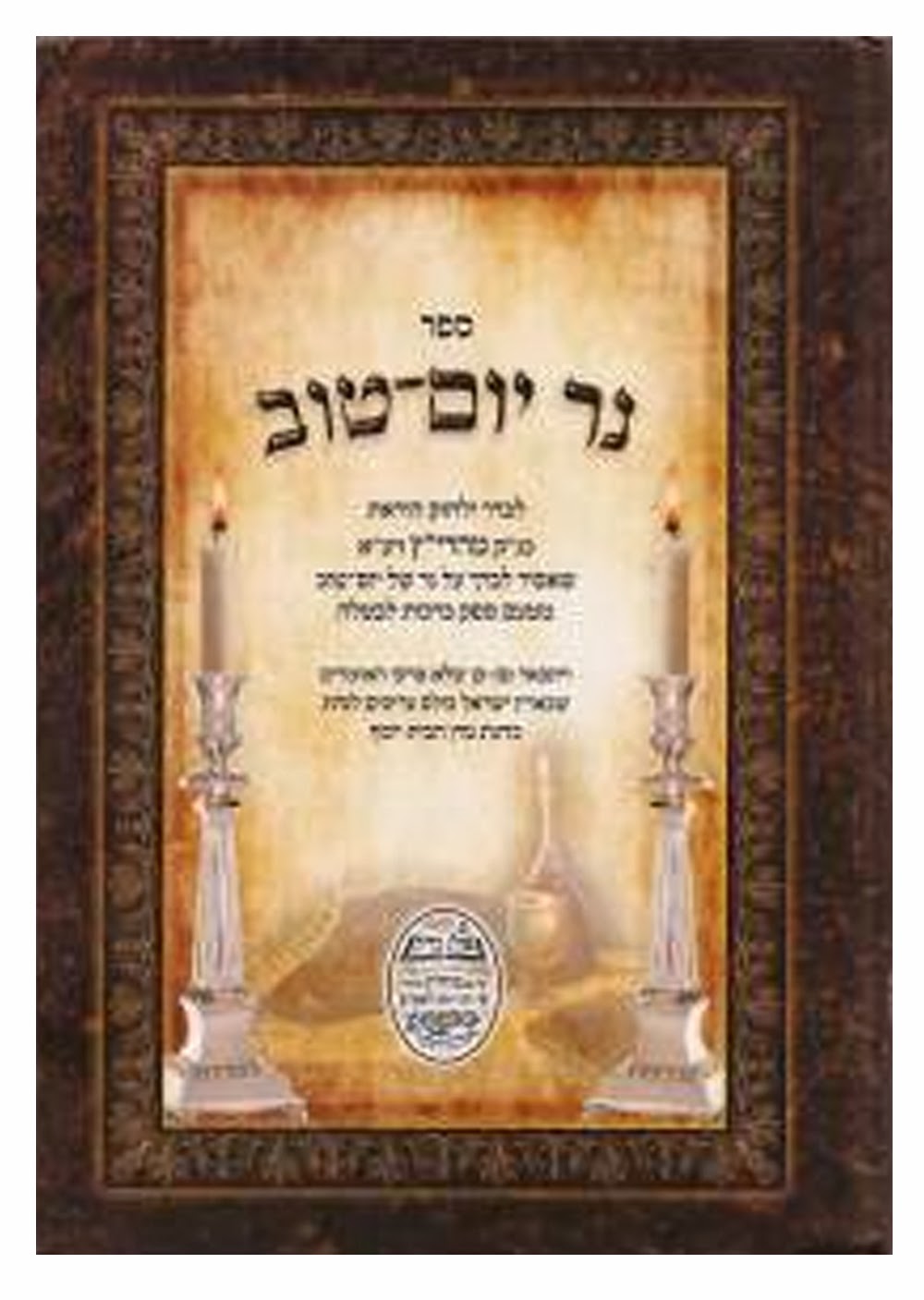
Ratsaby’s book was written to defend the Yemenite practice of not making a blessing on Yom Tov candles against the criticism of R. Ovadiah. He also deals with R. Ovadiah’s larger point that the Yemenites must embrace the Shulhan Arukh’s rulings now that they are in the Land of Israel. The entire Yemenite rabbinate agrees with Ratsaby’s position, but upon seeing how he attacked R. Ovadiah, the condemnation of him from other Yemenite rabbis was swift. All I can say in defense of Ratsaby is that R. Ovadiah has been criticizing him in a less than respectful way for some time now. But in a sense, Ratsaby got what was coming to him, because for many years he has been writing very disrespectfully about R. Kafih.

In this new book, p. 98, Ratsaby goes so far as to repeat the legend that when Kafih was appointed a dayan in Jerusalem he swore to R. Ovadiah that he accepted the Zohar, and Ratsaby claims that Kafih swore falsely. Kafih, however, denied that he ever took such an oath.14 For a long time Ratsaby has been proclaiming that it forbidden to use Kafih’s books, as he is a member of the kat, i.e., the Dardaim who don’t accept the Zohar or Kabbalah in general. Yet R. Ovadiah has declared that the Dardaim are not to be regarded as heretics.15 This is in contrast to R. Chaim Kanievsky who holds that the Dardaim are heretics who cannot be counted in a minyan.16  R. David Teherani states that since the Dardaim reject the Zohar, their wine is yein nesekh.17 According to Aaron Abadi, R. Shlomo Zalman Auerbach also ruled that rejection of the Zohar and Kabbalah is heresy.18

I can understand those who assert that one must believe that the Zohar was written by Rashbi or at the very least that it was written be-ruah ha-kodesh, and if you deny this it is heresy. Yet what is one to make of the following statement, which greatly enlarges the realm of heresy (R. Menasheh Klein, Mishneh Halakhot, vol. 7, no. 160):
ואם הוא אינו מאמין שהמ”ב [משנה ברורה] נכתב ברוה”ק אזי הוא בכלל אפיקורוס וכופר בתורת ה’ . . . יש בזמן הזה שאין מאמינים שגם בדורינו אנו ישנם חכמי הזמן שיש להם רוה”ק . . . ומי שלא מאמין בזה הרי הוא אפיקורוס וכופר בלי ספק.

Based on this definition, I think the entire Lithuanian rabbinate until World War II would be regarded as heretics. Would such a statement even have been imaginable before twenty years ago? It is, of course, no secret that the Lithuanian rabbinate has been transformed along hasidic lines. This change is undeniable and I can point to many examples of this. Here is one (which was sent to me by R. Yitzhak Hershkowitz).

Would any Jew in Lithuania ever fall for such a thing as magic (or holy) wine? Anyone who tried to peddle this stuff would have been thrown out of the beit midrash. I was actually told an anti-hasidic joke with regard to this picture. I ask all Hasidim not to be offended as neither I nor the management endorse the joke. Yet it deserves to be recorded for posterity, for as we all know, jokes are simply jokes, but the history of jokes (even bad ones), well that is scholarship. The joke goes as follows: “It is incredbible. We now see great Lithuanian Torah scholars doing things that until now only hasidic rebbes did. But even more incredible would be to see the reverse, that is, to see hasidic rebbes write seforim on Shas and poskim.”

With regard to the Zohar, I must mention an amazing point called to my attention by David Zilberberg, from which we see that R. Joseph B. Soloveitchik did not believe that R. Simeon bar Yohai wrote the Zohar, or at least that he didn’t write all of it. I always assumed as much, but as far as I know there was never any proof, until now. In The Lord is Righteous in All His Ways, pp. 206-207, the Rav discusses the Western Wall and says that there is no mention of it in Chazal and very little mention in rishonim. The Wall is mentioned in Shir ha-Shirim Rabbah 2:2219, where it states that the Kotel will never be destroyed, but the Rav says about this Midrash:

I will tell you frankly that I am always suspicious about this midrash, because the classical sources, the Bavli and the Yerushalmi, do not mention the Kotel ha-Ma’aravi. The midrash cited earlier is, perhaps, a later insert. Apparently, Rabbi El’azar ha-Kalir knew the midrash. To my mind, this kinah of Rabbi Elazar ha-Kalir is one of the earliest documents to mention the Kotel ha-Ma’aravi.

Earlier in this book the Rav tells us when Kalir lived:

I do not know why historians have to explore when Kalir lived when he himself states that nine hundred years have passed and the Messiah has not yet arrived. It means that Kalir lived in the tenth century.

Yet as Zilberberg correctly points out, the Western Wall is seen as quite significant in the Zohar (II, 5b), and is referred to as Rosh Amanah.20 The Rav knew the Zohar very well, and therefore, when he tells us that Chazal do not mention the Western Wall, and it is only during the time of the rishonim that we begin to see references to it, he is also telling us that the Zohar (or at least this section of the Zohar) was written in the days of the rishonim.

Returning to Auerbach, let me add in conclusion that he is not the only great rabbi and Torah scholar who was involved in forgery. An earlier case is R. Benjamin Ze’ev of Arta (sixteenth century), author of the well known responsa volume Teshuvot Binyamin Zeev. Here is the title page from the first edition (Venice, 1539):

In the midst of a dispute he was involved in, he forged the signature of the Venetian rabbi, R. Baruch Bendit Axelrad, placing it on a document that supported himself. He also forged an entire letter in R. Baruch Bendit’s name. When all this was discovered, it helped lead to R. Benjamin’s downfall.21

Quite apart from the forgery, R. Solomon Luria, Yam Shel Shlomo, Bava Kamma, ch. 8 no. 72, also accuses R. Benjamin Zev of plagiarism. Here are some his words: 
כל דבריו גנובים וארוכים בפלפול שאינו לצורך וכנגד פנים מראה אחור . . . ושרי לי מרי אם הוא צדיק למה הביא הקב”ה תקלה על ידו הלא הוא היה הכותב ונתן לדפוס הספר מידו ומפיו.
One big question that needs to be considered is how far removed is forgery from false attribution? When it comes to false attribution there is a long rabbinic tradition supporting it, and in the book I am currently working on I deal with this in great detail. If you can falsely attribute a position to a sage, perhaps you can forge a document in his name as well (assuming it is not done for personal gain). Could that be what was driving Auerbach?
*        *        *

A few people have sent me a question about my Monday night Torah in Motion classes, so I assume that there are others who have the question as well. Here is the answer: If you cannot be with us at 9PM and you are signed up, the classes are sent to you so that you can watch or listen at your convenience. This is much cheaper than downloading the classes individually.

Notes

1 From my post here you can find all the links.
2 See Anthony Grafton, Forgers and Critics: Creativity and Duplicity in Western Scholarship (Princeton, 1990), pp. 44-45.
3 Ibid., p. 48.
4 As has been noted by many, Auerbach’s edition of Sefer Ha-Eshkol has misled countless talmidei hakhamim. There is another way in which Auerbach misled a scholar, but in this case it was accidental. In the introduction to his edition, p. xv note 9, Auerbach reports in the name of a supposedly reliable person that the Yerushalmi Kodashim was to be found in the Vatican library. This false report led R. Mordechai Farhand to travel there from Hungary in search of this treasure, and he describes his journey. See Farhand, Beer Mordechai (Galanta, 1927), pp. 154ff. Farhand was a gullible fellow. See ibid. p. 152, where even though it had been a number of years since Friedlaender’s Yerushalmi forgery had been established, he didn’t want to take sides. The legend that there was a copy of the Yerushalmi Kodashim in the Vatican had been disproven already in the nineteenth century. See R. Baruch Oberlander in Or Yisrael (Tamuz 5761),  p. 220.
5 In his review of my edition of Kitvei ha-Rav Weinberg, vol. 2, R. Neriah Guttel, Ha-Maayan (Nisan 5764), pp. 82-83, writes that it was improper for me to publish Weinberg’ judgment of Epstein (p. 430). Although they were friends, and Weinberg thought that Epstein was a great scholar, he also pointed out that that Epstein wasn’t a lamdan. What Weinberg meant is that Epstein wasn’t a traditional talmid hakham but an academic Talmudic researcher. As such, while his publications had great value, in Weinberg’s eyes they didn’t get to the heart of what Talmudic scholarship should be about. In Weinberg’s words:
סוכ”ס אפשטיין אינו למדן, ואיננו אלא פילולוג בעל חוש חד. בלא לומדות אי אפשר לחקור לא את המשנה ולא התלמוד.
Statements like these are vital for evaluating Weinberg’s approach to academic scholarship, and I never would dream of censoring such things.
6 In his Shaar Yaakov (Petrokov, 1922), no. 16, there is a responsum to “Abraham Joshua Heschel.” Shmuel Glick, Kuntres ha-Teshuvot he-Hadash, vol. 3, s.v. Shaar Yaakov, assumes that this is the famous A. J. Heschel, but I don’t think we can conclude this based only on the name, which was shared by a number of others.
7 Eleh Ezkerah (New York, 1957), vol. 2, p. 196 (repeated in the Encylopaedia Judaica entry on Michaelson), states that in Michaelson’s Degan Shamayim (Petrokov, 1901), there are responsa written when he was twelve and thirteen years old. This is a mistake. The earliest responsa dates from when he was seventeen years old. See pp. 10a, 11a.
8 On p. 23 he prints a letter that Schorr wrote to Michaelson’s son, who wanted to translate the Sefer ha-Hinukh into Yiddish. Schorr was strongly opposed to this. He explained as follows, using words that won’t make the women very happy:
רבינו הרמב”ם והחינוך אחריו שהודיעו ברבים טעמי מצות וכו’ יכשלו בזה קלי הדעת לבטל המצוה כפי סכלות דעתם אשר לפי הטעם אין לחוש עוד בזמנינו וכיוצא שבטל בהם טעם זה וכו’ איך ניתן לגלות טעמי מצות גם בפני נשים ועמי הארץ אשר יקראו בו, חלילה לרו”מ לעבור על לפני עור.
9 See here
10 See here
11 Sofer often refers to a similar type of comment by R. Shlomo Kluger, Ha-Elef Lekha Shlomo, Orah Hayyim 367:
אם הייתי זוכר כל מה שכתבתי מעולם לא הי’ שום הערה בעולם שלא הרגשתי בזה.
(I cited both Schorr and Kluger in a footnote in my article on the Hatam Sofer in Beerot Yitzhak: Studies in Memory of Isadore Twersky. Although other writers also cite this comment of Kluger, as with much else, I believe that I first saw the reference in one of Sofer’s writings.) Kluger wrote so many thousands of responsa, that it is not uncommon for him to contradict himself and forget what he wrote previously. See R. Yehudah Leib Maimon, ed., Sefer ha-Gra (Jerusalem, 1954), p. 99 in the note. R. Solomon Schreiber, Hut ha-Meshulash (Tel Aviv, 1963), p. 19, claims that R. Nathan Adler’s reason for not recording his Torah teachings was due to a belief that the permission to put the Oral Law into writing only applies if one is not able to remember this information. Since, according to Schreiber, R. Nathan claimed that he never forgot any Torah knowledge, he was not permitted to take advantage of this heter.
12 Regarding Schorr being a childhood genius, this letter from him to R. Shlomo Kluger appeared in Moriah, Av 5767. 

As you can see, the letter was written in 1860 (although I can’t make out what the handwriting says after תר”ך). We are informed, correctly, that Schorr was born in 1853, which would mean that he was seven years old when he wrote the letter. This, I believe, would make him the greatest child genius in Jewish history, as I don’t think the Vilna Gaon could even write like this at age seven. Furthermore, if you read the letter you see that two years prior to this Schorr had also written to Kluger. Are there any other examples of a five-year-old writing Torah letters to one of the gedolei ha-dor? Furthermore, from the letter we see that the seven-year-old Schorr was also the rav of the town of Mariompol! (The Mariompol in Galicia, not Lithuania.) I would have thought that this merited some mention by the person publishing this letter. After all, Schorr would be the only seven-year-old communal rav in history, and this letter would be the only evidence that he ever served as rav in this town. But the man who published this document and the editor of the journal are entirely oblivious to what must be one of the most fascinating letters in all of Jewish history. Yet all this assumes that the letter was actually written by Schorr. Once again we must thank R. Yaakov Hayyim Sofer for setting the record straight. In his recently published Shuvi ha-Shulamit (Jerusalem, 2009), vol. 7, p. 101, he calls attention to the error and points out, citing Wunder, Meorei Galicia, that the rav of Mariampol was another man entirely, who was also named Jacob Schorr.
13 A. Horowitz, Orhot Rabbenu (Bnei Brak, 1991), vol. 1, p. 364.
14 See Avivit Levi, Holekh Tamim (Jerusalem, 2003), p. 133 n. 161.
15 See R. Yosef Pinhasi, Yefeh Toar, p. 116.
16 See his response in Mordechai Alemkayas, Va-Yikhtov Mordechai (Jerusalem, 2009), p. 340.
17 Yayin le-Nesekh (Betar Ilit, 1996), p. 70.
18 See here.  According to Abadi, R. Shlomo Zalman’s decision was made with regard to a well-known scholar who is very involved with Artscroll.
19 The Rav doesn’t note that there is a mention of the Wall in Shemot Rabbah 2:2 as well, but his judgment would no doubt be the same. Contrary to the Rav, since these midrashim are found in so many parallel sources, I don’t think there is any question that they indeed originate with Chazal.
20 See Pinchas Giller, Reading the Zohar (Oxford, 2001), pp. 12-13.
21 The event is described in Meir Benayahu, Mavo le-Sefer Binyamin Zeev (Jerusalem, 1989),  pp. 120ff. Once the dispute got going, all sorts things were said. R. Benjamin was even accused of purchasing his semikhah. See ibid., p.140. The source for this is R. Elijah ha-Levi,  Zekan Aharon (Constantinople, 1534), no. 184.


The Golem of Prague in Recent Rabbinic Literature

The Golem of Prague in Recent Rabbinic Literature
by: Shnayer Leiman
In a recent issue of המאור – a rabbinic journal of repute – an anonymous notice appeared on the Golem of Prague.1 Apparently, a rabbi in Brooklyn had publicly denied the authenticity of the Maharal’s Golem, claiming that R. Yudel Rosenberg (d. 1935) – in his נפלאות מהר”ל (Piotrkow, 1909) – was the first to suggest  that the Maharal had created a Golem. According to the account in המאור, the rabbi based his claim, in part, on the fact that no early Jewish book records that the Maharal had created a Golem. In response to the denial, the anonymous notice lists 6 “proofs” that the Maharal of Prague, in fact, created a Golem. Here, we list the 6 “proofs” in translation (in bold font) and briefly discuss  the weight they should be accorded in the ongoing discussion of whether or not the Maharal created a Golem.
   1. How could anyone imagine that a [Jewish] book written then [i.e., in the 16th century] could include a description of how Jews brought about the deaths of numerous Christians? At that time, the notorious censors censored even more fundamental Jewish teachings. Fear of the Christian authorities characterized every move the Jews made, from the youngest to the oldest.
The argument is presented as a justification for the lack of an early account of the Maharal and the Golem. Only in the 20th century could the full story appear in print, as it appears in נפלאות מהר”ל.  Apparently, the author of the anonymous notice has never read נפלאות מהר”ל. The volume does not depict how “Jews brought about the deaths of numerous Christians.” If the reference here is to the punishment meted out by the Golem to the Christian perpetrators of the blood libel,  נפלאות מהר”ל never depicts the Golem as bringing about the death of anyone, whether Christian or Jew. If the reference here is to the blood libel itself, נפלאות מהר”ל describes only how Christian criminals plotted against Jews (by means of the blood libel) and subsequently needed to be brought to justice by the Christians themselves. Nowhere are Jews described as bringing about the deaths of numerous Christians.
This argument, of course, does not prove that the Maharal created a Golem in the 16th century.
    2. The Maharal’s creation of the Golem is alluded to on his epitaph, in the line that reads: “It is not possible to relate.” More proof than this in not necessary.
The full line on the epitaph reads as follows: “For him, praise best remains silent, for in any event it is not possible to relate the full impact of his many good deeds.”2 See Psalm 65:2 and cf. Rashi to b. Megillah 18a, ד”ה סמא דכולא משתוקא. Nothing is said – or hinted – here about a Golem. Alas, more proof than this is necessary indeed.
    3. If this was an invention of the author of נפלאות מהר”ל, how come a storm was not raised up against him when he published his book a century ago? Although one solitary voice was raised up against him, the majority of Gedolei Yisrael greeted his book with esteem, especially since its author was the noted and respected Gaon, author of numerous works, Rabbi Yehudah Yudel Rosenberg.
First, it should be noted that R. Yudel Rosenberg did not invent the notion that the Maharal of Prague had created a Golem. Evidence for the Maharal’s Golem dates back to 1836 (before R. Yudel Rosenberg was born).3 If the rabbi in Brooklyn claimed otherwise, he was mistaken. Thus, the claim in 1909 that the Maharal of Prague had created a Golem occasioned little or no surprise.
Second, R. Yudel Rosenberg ascribed the book to R. Yitzchok b. R. Shimshon Katz, the son-in-law and contemporary of the Maharal. R. Yudel described in great detail how he had managed to come into possession of this rare manuscript.4 There was no immediate reason to suspect that this was a literary hoax, especially coming from the hand of R. Yudel Rosenberg.
Third, had the book contained pejorative material about the Maharal, a storm would surely have been raised against it. Instead, the book presented the Maharal as a master kabbalist, who created the Golem in order to stave off the notorious blood libel accusations against the Jews. Why should anyone have protested against this heroic image of the Maharal?
In any event, even if one concedes that “the majority of Gedolei Yisrael greeted his book with esteem” (a dubious claim that cannot be proven), it surely does not “prove” that the Maharal created a Golem. A book published in 1909 is hardly proof that the Maharal created a Golem in the 16th century.
    4. Chabad Hasidim relate in detail how R. Yosef Yitzchok Schneersohn visited the attic of the Altneu shul in Prague and saw what he saw. He wasn’t the first to do so – as reported by various elders – in the last 400 years.
Indeed, a long list of the names of the famous and not-so-famous who visited the attic of the Altneu shul can easily be drawn up. That the sainted Rebbe, R. Yosef Yitzchok Schneersohn, visited the attic of the Altneu shul is established fact. It is recorded in contemporary documents, i.e, in the Sichos and Letters of his successor, the Rebbe, R. Menachem Mendel Schneerson.5 Exactly what the Rebbe saw in the attic is less certain. According to one account, when asked, R. Yosef Yitzchok chose not to respond.6 According to another account, he reported that he saw ”what remained of him,” i.e., of the Golem.7 For Lubavitchers, this may be unassailable proof that the Maharal created a Golem, and perhaps that is as it should be. But for historians, dust – or even a bodily form – seen in an attic early in the 20th century hardly constitutes proof that the Maharal created a Golem in the 16th century. As a matter of fact, it should be noted that extensive renovation took place in the attic of the Altneu shul in 1883. No evidence of the Golem was discovered then.8 A film crew visited and filmed the attic in 1984. No evidence of the Golem was discovered then.9
    5. No one disputes the fact that the Maharal put an end to the blood libel accusations that the Jews had suffered for generations. And even this was not fully spelled out in the book [i.e., נפלאות מהר”ל]. Can someone explain how the Maharal accomplished this?
The rhetorical question at the end of the fifth “proof” presupposes the existence of the Golem. Only by means of the Golem was the Maharal able to counter the blood libel accusations. No one disputes that the Maharal put an end to the blood libel accusations? Quite the contrary, no one has ever discovered a shred of evidence that links the Maharal to staving off a blood libel accusation! Nowhere in his writings, nowhere in the writings of his contemporaries (Jewish and non-Jewish) and disciples, is there a word about the Maharal’s involvement in staving off a blood libel accusation. That he put an end to the blood libel accusation is historically untrue. While the blood libel charge became less frequent in the Hapsburg lands after the 16th century, it hardly disappeared.10 From the 16th through the 18th centuries, the blood libel accusation largely shifted to Eastern Europe. In Poland alone, between 1547 and 1787, there were 81 recorded cases of blood libel accusation against the Jews.11 The Beilis case is a sad reminder that the blood libel accusation continued into the 20th century as well.12
Needless to say, this argument hardly proves that the Maharal created a Golem in the 16th century.
    6. I saw in מליצי אש  to 18 Elul,13 a citation from a manuscript copy of a letter by the Maharal from the year 5343 [=1583] addressed to R. Yaakov Ginzburg, describing how he [the Maharal] was directed by Heaven to create a Golem in order to save the Jewish people. See there for details.
The manuscript referred to here is a notorious 20th century forgery of a letter ascribed to the Maharal, itself based upon R. Yudel Rosenberg’s נפלאות מהר”ל. The Munkatcher Rebbe, R. Hayyim  Eleazar Shapira (d. 1937), apparently was the first of many to expose this forgery.14
II
 In a subsequent issue of המאור, R. Hayyim Levi added 4 new “proofs” that the Maharal created a Golem.15  A brief summary of each of the new “proofs” is followed by an even briefer discussion of the weight they should be accorded in the ongoing discussion of whether or not the Maharal created a Golem.
    1. The חיד”א in his שם הגדולים16 cites a responsum from the חכם צבי,17 who in turn cites a letter by R. Naftoli Ha-Kohen of Frankfurt,18 who mentions his ancestor the Maharal “who made use of the Holy Spirit.” The חיד”א adds that he heard an awesome story about the Maharal and a revelation he had which led to a private conversation between the Maharal and the King of Bohemia.
Not a word about the Golem of Prague appears in any of these sources. Indeed, where we can examine the available evidence (in the case of the awesome story heard by the חיד”א), it apparently had nothing to do with a Golem.19
    2. R. Shimon of Zelikhov, משגיח of Yeshivat Hakhmei Lublin, said: “Everyone knows that the Maharal made use of the Sefer Yetzirah and created a Golem. I don’t claim that one needs to believe the tales in the storybooks about the Maharal. But it is clear that the Maharal used the book of Yetzirah and created a Golem.”20
R. Shimon of Zelikhov, a great gaon and zaddik, died as a martyr in 1943.21 His claim in the 20th century, however weighty, does not prove that the Maharal created a Golem in the 16th century.
    3. In the book אלף כתב,22 the author writes that he heard from the Spinka Rebbe23 in 1922 that he saw an original letter of the Maharal that described how and why he created the Golem.
This is the same notorious 20th century forgery listed as a “proof” above, section I, §6. For the refutation of this proof, see the reference cited in note 14.
    4. See סיפורים נחמדים,24 which records a story in the name of R. Yitzchok of Skvere25 about the Maharal, the Golem, and the double recitation of מזמור שיר ליום השבת at the קבלת שבת service.
This story, first published in 1837,26 is one of the oldest of the Maharal and the Golem stories. It was retold by R. Yitzchok of Skvere, and published in Yiddish (in 1890) and Hebrew (in 1903). Wonderful as the story may be, it cannot be adduced as “proof” for an alleged event that occurred some 300 years earlier.
—————————
Even aside from the dictates of rationalism, what militates against the notion that the Maharal created a Golem is the fact that nowhere in his voluminous writings is there any indication that he created one. More importantly, no contemporary of the Maharal – neither Jew nor Gentile in Prague – seems to have been aware that the Maharal created a Golem. Even when eulogized, whether in David Gans’ צמח דוד 27 or on his epitaph (see above), not a word is said about the creation of a Golem. No Hebrew work published in the 16th, 17th, and 18th centuries (even in Prague) is aware that the Maharal created a Golem.28
In this context, it is worth noting that R. Yedidiah Tiah Weil (1721-1805),29 a distinguished Talmudist who was born in Prague and resided there for many years – and who was a disciple of his father R. Nathaniel Weil (author of the קרבן נתנאל) and of R. Jonathan Eibeschuetz, both of them long time residents of Prague – makes no mention of the Maharal’s Golem.
R. Yedidiah Tiah Weil
R. Nathaniel Weil
This, despite the fact that he discusses golems in general, and offers proof that even “close to his time” golems existed. The proof is a listing of famous golems, such as the golems created by R. Avigdor Kara (d. 1439) of Prague30 and R. Eliyahu Ba’al Shem (d. 1583) of Chelm.31 Noticeably absent is any mention of the Golem of the Maharal of Prague.32
Note too that the first sustained biographical account of the Maharal – by a distinguished rabbinic scholar from Prague – was published in 1745.33 It knows nothing about a Golem of Prague. The deafening silence of the evidence from the 16th, 17th, and 18th centuries needs to be addressed by those who are persuaded that the Maharal created a Golem.
The cumulative yield of the “proofs” put forward in המאור in support of the claim that the Maharal created a Golem is perhaps best described as an embarrassment of poverty. In the light of what passes for historical “proof” in המאור, it would seem that המאור – a reputable rabbinic journal – would probably do well to focus more on halakhah and less on Jewish history.
III
Whereas המאור commemorated the 400th anniversary of the Maharal’s death by focusing on the imaginary accounts of the Maharal and the Golem, scholars in the Czech Republic are to be congratulated for commemorating the 400th anniversary by designing a magnificent exhibition of the Maharal’s life and works and displaying it at the Prague Castle. The exhibition was accompanied by an even more magnificent printed volume edited by Alexandr Putik and entitled Path of life (and referred to several times in the notes to this posting). Despite the many excellent studies in the book devoted to the Maharal’s life and thought, much space – some will argue too much space – is devoted to the history of the Golem in art, sculpture, film, and theater. In contrast to המאור, the essays in Path of Life assume that the Golem of Prague was legendary, not a fact. Here, we reproduce one of the many imaginary paintings of the Maharal and the Golem displayed at the exhibition and included in the volume. It was done by Karel Dvorak in 1951.33


Not to be outdone, the Czech post office issued a commemorative  stamp to mark the 400th anniversary of the death of the Maharal. It features an imaginary portrait of the Maharal wearing a European casquette, reminiscent of the one the חפץ חיים used to wear in Radun. The first day cover includes an imaginary portrait of the Golem as well.
One wonders if the Maharal, prescient as he was, ever imagined that this is how he would be remembered on the 400th anniversary of his death!
Notes
1.  Anonymous, “הילולא קדישא הארבע מאה של המהר”ל מפראג זי”ע: יצירת הגולם” Ha-Ma’or  62:4 (2009), p. 95.
2.  The Hebrew original reads:
לו דומיה תהלה כי אין מספרים לרוב כח מעשי[ו] הישרים . See O. Muneles, כתובות מבית-העלמין היהודי העתיק בפראג, Jerusalem, 1988, p. 273. Cf. K. Lieben, גל עד, Prague, 1856, Hebrew section, p. 3.
3.   See S. [the author asked that I not reveal his name], “An Earlier Written Source for the Golem of the Maharal from 1836,” at On the Main Line, November 4, 2009. Cf. S. Leiman, “The Adventure of the Maharal of Prague in London,” Judaic Studies 3(2004), p. 20, n. 34; and see below, n. 32, for evidence from 1835 that may link the Maharal and the Golem.
4.  נפלאות מהר”ל , Piotrkow, 1909, pp. 3-4.
5.  See, e.g., R. Menachem Mendel Schneerson, תורת מנחם: התוועדויות, Brooklyn, 1992, vol. 1, p. 6.
6.  See previous note.
7.  Copy of a hand-written note by R. Menachem Mendel Schneerson published in the periodical כפר חב”ד, issue 798, 1998. The Hebrew reads in part:
בנוגע לעיקר הענין (שהמהר”ל עשה את הגולם), בעצמי שמעתי מכ”ק מו”ח אדמו”ר שראה הנשאר ממנו בעליית בית הכנסת דמהר”ל פראג.
 The full text of the letter is also available online at http://theantitzemach.blogspot.com, entry “למה נקרא שמו ברוך דוב“, Tuesday, April 27, 2010, in a comment by Anonymous posted on Wednesday, April 28, 2010 at 12:28 A.M. I am indebted to Zalman Alpert, reference librarian at the Mendel Gottesman Library of Yeshiva University, for calling my attention to the online version (and to many other important references over the many years we have known each other).
Yet a third account, drawn from a conversation with Rebbetzin Chana Gurary, a daughter of R. Yosef Yitzchok Schneersohn, provides even more detail. Rebbetzin Gurary reported:

I then asked him [her father, the Rebbe] to tell me what he had seen there. My father paused for a moment and said: “When I came up there, the room was filled with dust and shemus. In the center of the room I could see the form of a man wrapped up and covered. The body was lying on its side. I was very frightened by this sight. I looked around at some of the shemus that were there and left frightened by what I had seen.

Special thanks to Rabbi Shimon Deutsch for providing me with a copy of Rebbetzin Gurary’s testimony, as reported to Rabbi Berel Junik.

8.  See N. Gruen, Der hohe Rabbi Loew, Prague, 1885, p. 39.
9.  See I. Mackerle, Tajemstvi prazskeho Golema, Prague, 1992. Cf. his “The Mystery of Prague’s Golem,” December 12, 2009, at http://en.mackerle.cz.
10.  See, e.g., R. Po-chia Hsia, The Myth of Ritual Murder, New Haven, 1988, pp. 203-209.
11.  See Z. Guldon and J. Wijaczka, “The Accusation of Ritual Murder in Poland 1500-1800,” Polin 10(1997), pp. 99-140.
12.  For basic bibliography on the Beilis case, See S. Leiman, “Benzion Katz: Mrs. Baba Bathra,” Tradition 42:4 (2009), pp. 51-52, n. 1.
13.  Rabbi A. Stern, מליצי אש, Vranov, 1932. In the three volume Jerusalem, 1975 photomechanical reproduction of מליצי אש, the passage appears in vol. 2, p. 87.
14.  For discussion and references, see S. Leiman, “The Letter of the Maharal on the Creation of the Golem: A Modern Forgery,” Seforim Blog,  January 3, 2010.
15.  R. Hayyim Levi, “המהר”ל זי”ע” Ha-Ma’or 63:1 (2009), p. 84.
16.  R. Hayyim Yosef David Azulai (d. 1806), שם הגדולים השלם , Jerusalem, 1979, vol. 1, p. 124.
17.  R. Zvi Ashkenazi (d. 1718), שו”ת חכם צבי, סימן ע”ו, ed. Jerusalem, 1998, pp. 183-4.
18.  Loc. cit. R. Naftoli Ha-Kohen Katz of Frankfurt died in 1719. Cf. below, n. 32.
19.  See Rabbi A.S. Michelson, שמן הטוב, Piotrkow, 1905, pp. 118-120.
20.  R. Avraham Shimon of Zelikhov, נהרי א”ש, Jerusalem, 1993, p. 173.
21.  See M. Wunder, מאורי גליציה, Jerusalem, 1978, vol. 1, cols. 238-243; Jerusalem, 2005, vol. 6, cols. 105-106.
22.  Rabbi Y. Weiss (d. 1942), אלף כתב, Bnei Brak, 1997, vol. 2, pp. 47-48.
23.  R. Yitzchok Eizik Weiss (d. 1944). On him, see T.Z. Rabinowicz, The Encyclopedia of Hasidism, London, 1996, pp. 534-5.
24.  Y. W. Tzikernik, ספורים נחמדים, Zhitomir, 1903, pp. 13-14. Tzikernik’s hasidic tales were reissued by G. Nigal in סיפורי חסידות צירנוביל, Jerusalem, 1994.  In Nigal’s edition, the story about the Maharal and the Golem appears on pp. 128-130.  Tzikernik, who died circa 1908, was a follower of R. Yitzchok Twersky of Skvere (see next note) and recorded his stories for posterity.
25.  On R. Yitzchok Twersky of Skvere (d. 1885), see Y. Alfasi, אנציקלופדיה לחסידות: אישים, Jerusalem, 2000, vol. 2, cols. 339-40.
26.  The 1837 version appears in B. Auerbach, Spinoza, Stuttgart, 1837, vol. 2, pp. 2-3. See above, note 3, for a similar version of the story published in 1836. But the 1836 version makes no mention of the double recitation of מזמור שיר ליום השבת at the קבלת שבת  service.
27.  See David Gans, צמח דוד, Prague, 1592, entry for the year 5352 (= 1592). In M. Breuer’s edition (Jerusalem, 1983), the passage appears on pp. 145-6.
28.  It is noteworthy that in 1615, Zalman Zvi Aufhausen, a Jew residing in Germany, published a defense of Judaism against a vicious attack by the apostate Samuel Brenz. In the introduction to his defense, Aufhausen writes that he was encouraged by the great Jewish scholars in Prague and Germany to undertake his defense of Judaism. In the list of accusations, Brenz accused the Jews of engaging in magical rites and creating golems out of clay. Aufhausen admitted that Jews created golems out of clay in the talmudic period (see b. Sanhedrin 65b), but only by means of Sefer Yetzirah and the Divine Name, and not by engaging in magical rites. After the talmudic period, according to Aufhausen, Jews no longer had the ability to create golems out of clay, especially in the German lands. Aufhausen concludes:
 אביר אונזרי גולמיים אין דיזן לאנדן מכין מיר ניט אויש ליימן זונדר
אויש מוטר לייב ווערין זיא גיבורן.
    In these lands, however, our Golems are not made from clay, but
rather they are born from the bodies of their mothers.
See Zalman Zvi Aufhausen, יודישר טירייאק [second edition], Altdorf, 1680, pp. 7a-b. Given the apologetic nature of Aufhausen’s defense, it is difficult to assess how much stock should be put in his claim. But, surely, if the Maharal’s Golem had been strolling the streets of Prague a decade or two earlier than the appearance of the first edition of Aufhausen’s work, he could hardly claim openly that Jews no longer had the ability the create Golems out of clay after the Talmudic period.
29.  See L. Loewenstein, Nathaniel Weil Oberlandrabbiner in Karlsruhe und seine Familie, Frankfurt, 1898, pp. 23-85.
30.  See the entry on him in Encyclopaedia Judaica, Jerusalem, 1971, vol. 10, cols. 758-759. In the 17th and 18th centuries, it was widely believed that he was the author of ספר הפליאה, a kabbalistic work that describes the creation of a Golem. Prof. Moshe Idel (in a private communication) suggests that this may have led to the belief that R. Avigdor Kara of Prague created a Golem. In any event, the fact that a distinguished Talmudist in 18th century Prague was persuaded that R. Avigdor Kara had created a Golem, suggests the possibility of a transfer in Prague of the Golem legend from R. Avigdor Kara (who by the end of the 18th century was relatively unknown) to the Maharal (who by the end of the 18th century resurfaced as a major Jewish figure whose works were being reprinted for the first time in almost 250 years).  For other suggestions regarding the linkage between the Maharal and the Golem, see V. Sadek, “Stories of the Golem and their Relation to the Work of Rabbi Loew of Prague,” Judaica Bohemiae 23(1987), pp. 85-91; H. J. Kieval, “Pursuing the Golem of Prague: Jewish Culture and the Invention of a Tradition,” Modern Judaism 17(1997), pp. 1-23; Kieval’s updated version in his Languages of Community: The Jewish Experience in the Czech Lands, Berkeley, 2000, pp. 95-113;  B. L. Sherwin, “The Golem of Prague and his Ancestors,” in A. Putik, ed., Path of Life: Rabbi Judah Loew ben Bezalel, Prague, 2009, pp. 273-291; and J. Davis, “The Legend of  Maharal before the Golem,” Judaica Bohemiae 45(2009), pp. 41-59.
31.  On R. Eliyahu Ba’al Shem of Chelm, see J. Guenzig, Die Wundermaenner in juedischen Volke, Antwerpen, 1921, pp. 24-26; G. Scholem, “The Idea of the Golem,” in his On the Kabbalah and its Symbolism, New York, 1969, pp. 199-204; M. Idel, “R. Eliyahu, the Master of the Name, in Helm,” in his Golem, Albany, 1990, pp. 207-212; and idem, גולם, Tel Aviv, 1996, pp. 181-184.
32.  R. Yedidiah Tiah Weil, לבושי בדים, Jerusalem, 1988, p. 37. The passage comes from a sermon delivered in 1780.
Yet another 18th century witness, R. Saul Berlin (d. 1794), was apparently ignorant of the Maharal’s Golem. In his כתב יושר (written in 1784 but published posthumously in Berlin, 1794), p. 3b, Berlin writes:
ואולי דבר סרה על הנסים הידועים לכל בני הגולה, כאותם שעשה מוהר”ר לוי [קרי: ליוא] בהזמינו את הקיסר רודאלפוס למשתה, וע”י שם הוריד בירה מן השמים, או בגולם שעשה מוהר”ר נפתלי זצ”ל אשר עפרו עודנו טמון וגנוז.
              Did [Wessely] speak disparagingly about the miracles known throughout the Jewish Diaspora? [Did he speak disparagingly] about those miracles performed by Rabbi Liva when he invited Emperor Rudolph to his party, and when by means of a Divine name he caused the Prague Castle to descend from heaven? Or regarding the Golem created by Rabbi Naftoli of blessed memory, whose dust still remains stored away?
Clearly, R. Saul Berlin knew legends about the Maharal. But when he needed to adduce a sample of the Golem legend, he had to turn elsewhere! Interestingly, the legend about the Prague Castle descending from heaven onto the Jewish quarter of Prague was first told about R. Adam Baal Shem, and not about the Maharal.  It first appeared in print in Prague in the 17th century. By the 19th century, the very same story was told in Prague circles with the Maharal as its hero. Once again (see above, note 30) it would appear that we have a sample of the transfer in Prague of a legend from one hero to another, with the Maharal as the recipient. In general, see C. Shmeruk, ספרות יידש בפולין, Jerusalem, 1981, pp. 119-139.
Even more interesting is the reference to the Golem of R. Naftoli, otherwise unrecorded in Jewish literature. The reference is almost certainly to R. Naftoli Ha-Kohen Katz (1645-1719), distinguished halakhist and master of the practical kabbalah, whose amulets – apparently — didn’t always work. From 1690 to 1704 he served as Chief Rabbi of Posen. (Note too that the Maharal served as a Chief Rabbi of Posen!) Recorded in Jewish literature (though I have never seen it cited in any discussion of the Golem of Prague) is an oral tradition from 1835 that the Maharal’s Golem was created in Posen and that the remains of the Golem could still be seen in the 19th century in the old synagogue of Posen “under the eaves, lifeless, and inactive like a piece of clay.” See S. M. Gollancz, Biographical Sketches and Selected Verses, London, 1930, pp. v and 50-55, and especially p. 54. It is at least possible that R. Saul Berlin heard about the legend of the Golem of Posen and assumed (wrongly) that the Golem was created by the famed practical kabbalist and rabbi of Posen, R. Naftoli.
I am indebted to S. of the On the Main Line Blogspot (see above, note 3) for calling my attention to the כתב יושר passage.
Apparently, reports about the remains of Golems in attics were a rather widespread phenomenon in the early modern period. Aside from the reports about Prague and Posen, see the report about the Great Synagogue in Vilna  (where the Vilna Gaon’s Golem rested in peace) in H.L. Gordon, The Maggid of Caro, New York, 1949, p. 176. A similar report about a Golem in Beshtian circles is recorded in R. Yosef of Tcherin, דרכי החיים, Piotrkow, 1884, Introduction, pp. 14-15.
33.  R. Meir Perels (d. 1739), מגילת יוחסין , appended to R. Moshe Katz, מטה משה, Zolkiev, 1745. It was reissued separately in Warsaw, 1864, and is available in L. Honig, ed., חדושי אגדות מהר”ל מפראג, London, 1962, vol. 1, pp. 17-32. Perels’ מגילת יוחסין is riddled with inaccuracies and needs to be used with caution. See A. Putik and D. Polakovic, “Judah Loew ben Bezalel, called Maharal: A Study of His Genealogy and Biography,” in A. Putik, ed., Path of Life: Rabbi Judah ben Bezalel, Prague, 2009, pp. 29-83. Putik and Polakovic cite significant earlier studies by Y. Yudlov, D.N. Rotner, S. Sprecher, and others. See also N.A. Vekstein ‘s important analysis of Perels’ מגילת יוחסין, entitled “המהר”ל מפראג,” in המודיע, September 4, 2009.

In the light of the discussion in notes 30-33 — and until new evidence is forthcoming — it seems evident that the linkage between the Maharal and the Golem originated after 1780 and before 1835, almost certainly in Prague but perhaps in Posen.

34.  See A. Putik, ed., Path of Life, pp. 398-399.


Sefer HaNer on Mesechet Bava Kamma

Sefer HaNer on Mesechet Bava Kamma: A Review
by:Rabbi Yosaif Mordechai Dubovick

Not every important work written by a Rishon is blessed with popularity.[1] While many texts were available throughout the generations and utilized to their utmost; others were relegated to obscurity, being published as recently as this century, or even this year. Nearly a month doesn’t pass without a “new” Rishon being made available to the public, and often enough in a critical edition. While each work must be evaluated on its own merit, as a whole, every commentary, every volume of Halachic rulings adds to our knowledge and Torah study.[2]          From the Geonic era through the Rishonim, North Africa was blessed with flourishing Torah centers, Kairouan in Tunisia (800-1057),[3] Fostat (Old Cairo) in Egypt, and many smaller cities as well. Perhaps the crown jewel of “pre-Rambam” Torah study was the sefer Hilchot Alfasi by R’ Yitchock Alfasi (the Rif).[4] Many Rishonim focused their novella around the study of Rif,[5] the Rambam taught Rif in lieu of Talmud,[6] and a pseudo-Rashi and Tosefot were developed to encompass the texts used and accompany its study.[7]

In Aghmat, a little known city in Morocco, circa the Rambam’s lifetime, rose up a little known Chacham whose work is invaluable in studying Rif, and by correlation, the Talmud Bavli as a whole. Yet, this Chacham was unheard of, for the most part, until the past half century. R’ Zechariya b. Yehuda of Aghmat, authored a compendium of Geonim, Rishonim, and personal exegesis on Rif. Spanning a period of 200 years of Talmud commentary of the first order, this work was also unique in its approach. Various editors have justly compared it to a work of similar nature and provenance, Shittah Mikubetzet by R. Betzalel Ashkenazi.

However, this source of Talmudic material from an almost blank period remained unknown until HaRav Prof. Simha Assaf published several leaves on Mesechet Berachot.[8] This followed by a semi-critical edition of a complete manuscript, by Meir David Ben-Shem bearing its rightful title, Sefer HaNer.[9] Later, J. Leveen published a facsimile version of a manuscript in the British Museum[10] on the three “Bavot” along with an English preface, indexes and a brief critique of Ben-Shem’s edition of Berachot. Since, many articles have been written about the work[11] and the Torah world has been blessed to see several volumes in print.

To date we are in possession of Sefer HaNer on Berachot,[12] Shabbat,[13] Eruvin, Moed Katan[14] and Mesechet Nezikin; namely the three Bavot.[15] In general, R’ Zechariah complied his work from the following sources, most of which were unknown as a work, and sometimes even the author was unknown. These Pirushim include Geonim; Rav Hai in particular, Rabbeinu Chananel,[16] R’ Yosef ibn Migash, R’ Baruch Sefardi (RB”S),[17] R’ Yitzchok Ghiyyat, Rav Natan author of Sefer ha Aruch, Rashi,[18] Rambam,[19] as well as material of unknown authorship.[20] Further, a notable portion of the material is in Judeo-Arabic of that period, including Geonic response and commentary, citations from R”Y ibn Migash, the Rambam’s commentary on Mishnah, and even short remarks within other commentaries as well. Accurately translating the material is a handicap, limiting the sefer’s use, and perhaps played a part in its falling into disuse at the decline of a Judeo-Arabic speaking Talmudist audience. [Much like the loss of many (non-translated) Judeo-Arabic Geonic works over time].          Recently, a new edition of HaNer on Mesechet Bava Kamma has been published; this article will attempt a comparison between the two printed editions, focus remaining upon the newer edition. While parts of the material of the manuscript (British Museum OR 10013) have been utilized in the past,[21] never has the manuscript been published as a whole, with critical notes. In 5761, as a part of Ohel Yeshayahu, a compilation of works on B”K, R. Hillel Mann published the relevant portion of Sefer HaNer from this manuscript. While this edition was surprisingly accurate to the mss. (the facsimile published by Leveen is available on Otzar HaChochmah), his notes are exceptionally lacking, with only the barest citation to what could be best described as “yeshivishe reid“; the common knowledge on the topic as discussed in the Yeshivot of today. Certainly not the optimal choice when editing and annotating a work based on Geonic and early Rishonic material, with many variant readings in the Talmud, as well novel commentaries hitherto unutilized.

Upon perusal of this edition, one cannot help but notice that in sharp contrast to the remaining nine chapters, the first chapter seems well edited, and the material in the footnotes is richer. The answer to this oddity is found in Mann’s preface; in 5752, an article containing a critical edition of the first perek was published by R’ Yehoshua Hutner of Machon Talmud Yisraeli[22]. This material had been meticulously edited by R’ Dov Havlin shlit”a and R’ Yosef haKohen Klien ob”m. Mann made use of the extensive notes, gleaned what he felt valuable, and ignored what he deemed he could.[23] According to Mann, R’ Tzvi Rotstein[24] copied the mss., and R’ Yosef Kafich translated the Arabic text.

Several months ago, a new edition of this work graced our tables. R’ Dov Havlin, the editor of the Talmud Yisraeli article, and his family[25] received permission to publish the work in its entirety.[26] Using the material previously assembled, and R’ Kafich’s translations, a preface was added, and the book printed. A mere glance at the first footnote to the preface shows the thoroughness and care taken when approaching a Rishon. As opposed to an “on-the-job training” attitude displayed by some authors, here the appropriate material was gathered and made use of in order to assess the task at hand.

The preface offers the uninitiated a précis of the academic papers written on R’ Zechariah, and deals with the author, his era and his works. Alongside, a chapter is devoted to R’ Baruch Sefardi, if only for the sake of providing the public exposure to Abramson’s pamphlet.[27] In one paragraph, the editor explains his decision to title the work “Shitta MiKubetzet Kadmon” although the author R’ Zechariah named it “HaNer”. I must confess I was not persuaded to concede to the change, and regret the license taken.[28]

Another liberty taken is the exclusion of the abbreviation “Pir'”, short for “Pirush”. This nomenclature has been edited out and replaced with a dash, although no mention was made of this in the preface.[29] This is not the case in the original article, and it would appear that this was done solely by the new editor(s). In addition, Arabic pieces, be they ever so brief, are replaced with the translation, and while the replacement is noted the original text is lacking. Mann’s edition reproduces the original, and relegates the translation to a footnote as the original article. By way of comparison, the original sports 261 footnotes on the first perek, the newer model, 98, and Mann’s version contains 102. Clearly, editing has been done, and while citations previously footnoted are now in the body of the text (parenthesized and font size lowered), one wonders what else has been omitted, and at what cost.[30]Diacritics found in the mss. are sorely lacking in all three editions, and HaShem’s name, typically written as three letters “yud”, is modernized to two.[31] Further, abbreviations have been expanded; Mann remained true to the text. Many of Mann’s mistaken readings are especially accurate in the new edition, yet typographical errors (as is wont) remain.As the work is based upon Rif, and collates many authorities, attempts to correlate the work to the Talmud’s present pagination is daunting. Many times R’ Zechariah will continue to copy a commentator, covering material spanning several folios, only to backtrack in order to begin a parallel commentary. Special attention need be given to this, and often Mann has rearranged material to fit within the parameters of one page; Havlin et al reproduce the original order.[32] The mss, while largely legible, has many additions, in different hands. Some addenda are written perpendicular to the text as marginal glossa, in a smaller hand. Mann has lost text in this fashion, as opposed to the Havlin edition wherein they are preserved. Publishing any edition of a manuscript reverts at some point to become eclectic. The editor is forced to decide on punctuation placement, and sentence/paragraph breaks, causing differing interpretations. While I cannot agree to the many changes made in the new edition,[33] this treasure trove of valuable material has now been made available to the public, and our thanks due. The text is highly accurate to the manuscript, the notes offer useful information, cross references and variant readings. This new addition to the Talmudic bookcase is most welcome, and while the implication given by the publisher that the next two meschtot are not on the agenda, may any continuation of so worthy a project be expediently brought to light.


[1] See Zohar, Bamidbar (3:134a) “everything is dependant upon fate, even the Sefer Torah in the Heichal”.

[2] See E. Soloveitchik, ‘Al Pirush Kadmon lMesechet Sukkah’, Tzfunot 18 (5752), pp 9-13. See also Prof. R’ S. Z. Havlin, Sefer Vaad lChachomim, Yerushalayim 5763, p 13-35/

[3] Home of the Yeshiva of R’ Chananel and R’ Nissim Gaon, among others. See M. Ben-Sasson, Tzemichat haKehillah haYihudit bArtzot haIslam, Yerushalayim 5757.

[4] See Ta-Shma, Sifrut Ha-parshanit le-Talmud vol. 1, Yerushalayim 5760, pg 156-159.

[5] See E. Chwat, Doctoral Dissertation, Bar-Ilan University, Ramat Gan 5750. See also S. Gottesman, Yeshurun 9 (5761) and Nitzutzei Aish, Memorial Volume, (Newhouse) Israel 2004.

[6] See E. Chwat, Yeshrun 20 (5768); M.A. Friedman, Tarbiz 62 (4) (5752).

[7] Chwat ibid. see also TaShma, ‘Klitatam shel Sifrei haRif, Rach, vHalachot Gedolot bTzarfat ubAshkenaz bMaot 11 v12’ (Knesset Mechkarim 1, Yerushalayim 5764, previously, Kiryat Sefer 54 (a)). See also Prof. Shamma Yehuda Freidman, ‘MiTosefot Rashbam lRif’, Kovetz al Yad 8 (5736).

[8] S. Assaf, ‘Chelek miPirush Kadmon liMesechet Brachot liEchad miBnei Zemani shel haRambam’, in ‘L’Zichron R’ Z’ P’ Chayyes, Yerushalayim 5693.

[9] Yerushalayim, 5718 [available here at hebrewbooks]

[10] A digest of commentaries on the tractates Babah kamma, Babha mesi’a and Babha bhathera of the Babylonian Talmud, compiled by Zachariah Ben Judah Aghmati; reproduced in facsimile from the unique manuscript in the British Museum OR. 10013; edited, with an introduction by Jacob Leveen, London 1961.

[11] C. Z. Hirschburg, Tarbiz 42 (5733); Ta Shma ‘Sifrut Haparshanit’ pg 156-159.

[12] Ben-Shem ibid.

[13] S. Eidison, Yerushalayim 5770.

[14] N. Sachs, Harry Fischel Institute, Yerushalayim 5726.

[15] B”M in Kovetz Sakosah lRoshi, Bnei Brak 5763. B”B (ch. 1-3), R’ Yekutiel Cohen, Yerushalayim 5748

[16] One of the more problematic references in HaNer is to “Miktzat”, see Abramson, ‘Pirush Rav Baruch b”r Shmuel haSefardi lTalmud’, who offers a possible theory that Miktzat means R’ Chananel’s pirush “brought in part”, as opposed to “some [commentators]”, at least in some instances.

[17] See S Abramson ‘Pirush Rav Baruch b”r Shmuel haSefardi lTalmud’, Bar Ilan Annual 26-27 (YD Gilat Jubilee volume) 5754.

[18] See Y. Malchi, ‘R, Zechariah Aghmati, haIsh, Yitzirato, haParshanit, vYachasah lPirushei Rashi’, Shanan 14 (5769) pg 65-73.

[19] See Abramson, Mechkarei Talmud 3.

[20] See Abramson ‘Pirush Rav Baruch b”r Shmuel haSefardi lTalmud’.

[21] R. M.Y. Blau, Shittas HaKadmonim B”M, B”B (2 volumes) and Three Bavot. See also TaShma, Kovetz al Yad, 10.

[22] Sefer Zikaron le R’ Yitzchok Yedidyah Frankel, Tel Aviv 5752.

[23] This explains the unintelligible note no. 81, citing Rav Nissim Gaon on B”K. After searching through Prof. Abramson’s work on RN”G, the passage (then) existed only in a re-creation of RN”G based upon Prof. Abramson’s hypothesis. Comparison to the article in the Frankel volume revels not only the true source material (Abramson), but also an additional citation to Abramson’s work Inyanut (Yerushalayim 5734, p 300), wherein a fragment of RN”G is published, verifying Abramson’s earlier thesis. All this is lacking in Mann’s note, leaving the reader at a loss.

[24] Of Rif reknown. It was Rotstein who brought the fragment mentioned in the above note to Abramson, under the impression the material was Rif. Additionally, R’ Rotstein is listed translator of the Arabic material in HaNer Bava Metziea (Sakosa lRoshi). R’ Eliezer Brodt once mentioned to me in the name of R’ Shmuel Ashkenazi that R’ Rotstein was not fluent in the language and had others translate the Rif material for him. Assumedly, one can rely on the accuracy.

[25] I am not clear as to the involvement and responsibility of each party. The preface is unsigned, R’ Havlin’s daughters are credited with copying the mss. and notes, and at the close of the preface, one R’ Bunim Shwartz’s passing is lamented, being cited as with the acronymic usage of “father”. One tends to understand that R’ Havlin’s son in law was instrumental in the ultimate publishing. This is corroborated by the disclaimer on the inside of the title page.

[26] The publication was done privately, and mention of the Machon is due to having used material penned under their auspices and ownership. However, the volume does not bear the logo nor name of the Machon and carries a private publisher (HaMesorah) on the title page’s reverse.

[27] While the original publication was in the Gilat volume [see above note no.[17], Abramson re-published the article (privately?) as a pamphlet, with corrections and additional material. I have only a photocopy of it, and welcome any information towards procuring an original.

[28] Similarly is “Chochmat Betzalel“, R’ Betzalel of Rensburg, Mossad HaRav Kook. The author had titled the book “Pitchay Niddah” and the manuscript owner and publisher, R’ Maimon took the liberty of changing the name.

[29] The dash has been implemented as a punctuation tool as well; I am unclear why this was done at all.

[30] From the outset, it seems notes detailing textual emendations based on the text of the Talmud have been omitted, and the reader is required to infer from the standard “[…]” that the text has been altered with some “self-evident” basis. It is noteworthy that the editors chose to revise the text of R’ Chananel in this fashion, by use of parentheses. Even in the case where the mss. (Add. 27194) used by the Vilna Shas is identical with the print, variant readings of Rach are common between mss, and may be based upon provenance. See J. Rovner ‘An Introduction to the Commentary of Rav Hananel ben Hushiel of Kairawan of Tractate Bava Metzia, Accompanied by a Reconstruction of the Lost Commentary to the Second Part of the Tractate based upon Cairo Genizah Fragments and Citations in the Rishonim’ (1993) Ph.D.

[31] See Y. S. Spiegel, Amudim bToldot Hasefer HaIvri, vol. 2 pg 565-632.

[32] C.f. 42b. However, on 94b, Havlin transfers text as well.

[33] It escapes me the need for semi-colon usage in Talmudic text, especially enmass.