1

Using a Colophon to Find a Shidduch: on Ella the Zetser.

Using a Colophon to Find a Shidduch

by Eli Genauer

There has been much talk lately about the so called Shidduch crisis. Various initiatives have been proposed to address this problem, all of which are well meaning and well thought out. Many might be surprised to learn that an interesting approach was suggested by a 12 year old girl in the town of Frankfurt on Oder way back in 1699. This approach was based on a Pasuk in Yirmiyahu which deals with Messianic times.

We are all familiar with the 31st chapter of Yirmayahu. The first 19 pesukim of this Perek comprise the Haftorah of the second day of Rosh Hashana. The Navi begins, “Koh Amar Hashem, Matzah Chain BaMidbar”. The Haftorah proceeds to lay out a vision of Hashem’s love for the Jewish people and its eventual return to Tziyon, a fitting theme for a day in which we ask Hashem to grant us a good year. The stirring Pasuk of “HaVain Yakir Li Ephraim” concludes the Haftorah, but the Perek continues with Yirmiyahu’s vision of Yemos HaMoshiach.Yirmiyahu speaks of the Jewish people in Galus and after having been there for so long, they return to Hashem. Pasuk 21 states the following:

כא עַד-מָתַי תִּתְחַמָּקִין, הַבַּת הַשּׁוֹבֵבָה: כִּי-בָרָא יְהוָה חֲדָשָׁה בָּאָרֶץ, נְקֵבָה תְּסוֹבֵב גָּבֶר

How long will you hide, O backsliding daughter? For the Lord has created something new on the earth, a woman shall go after a man.

According to the Radak, the Navi is imploring the people to travel on a straight path and to return to Hashem. This will be a time when, as it were, the Bas HaShoveiva, the backsliding daughter, will be the one who seeks out a husband, in this case Hashem. The Navi says that this is something that is radical, but certainly required at that time.

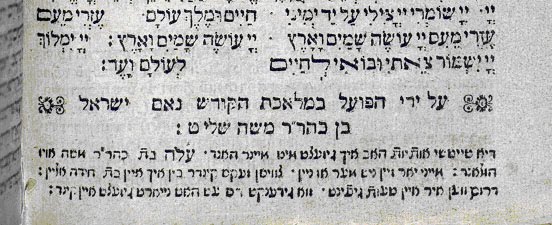
We fast forward a bit to 1696 and we meet an amazing nine year old girl, born in Amsterdam, but now living in Dessau, Germany. Her name is Elle and she is the daughter of a man named Moshe ben Avraham Avinu. Moshe worked for years setting type and printing important Jewish books in various places in northern Europe, the last of which he did under very trying circumstances in Halle.(1) Moshe employed his children to help him in the arduous task of typesetting. We know a bit about his daughter Elle from some crumbs that she left us as she signed her name to the books she helped bring to print. She and her brother worked on setting type of the Siddur Drash Moshe printed in Dessau in 1696. After recording that the book was set to type by Yisroel ben Moshe, someone wrote a poem which tells us that a nine year old girl named Elle (עלה) helped Yisroel in this project:(This scan and those following are all courtesy of the JTS Library)

The Yiddish letters I set with my own hand
I am Elle, the daughter of Moses from Holland
a mere nine years old
the sole girl among six children
So when an error you should find
Remember, this was set by one who is but a child (2)

Did she compose the poem herself, or was it composed by her father or brother? Remarkably, we find another case not soon thereafter, of a nine year old setting type, and there we do know whether he could read or not. Nicholas Basbanes, in his book “A Gentle Madness”, records the following:

“Born in poverty, Isaiah Thomas came to know the touch and smell of ink on paper when he was only a child. Only nine years old in 1758….young Thomas was already completing his apprenticeship in the dingy Boston shop of Zechariah Fowle…When he later became the most successful printer and publisher in the United States-Benjamin Franklin dubbed him the Baskerville of America- Isaiah Thomas enjoyed telling friends that he knew how to set type before he was able to read.”(3)

Whether or not she could read at age nine, we do know that this little girl was able to recognize the Judeo Yiddish letters of a manuscript and set to type similar letters from which to print a book. Perhaps she had the potential to become as successful as Isaiah Thomas but for her gender and religion.

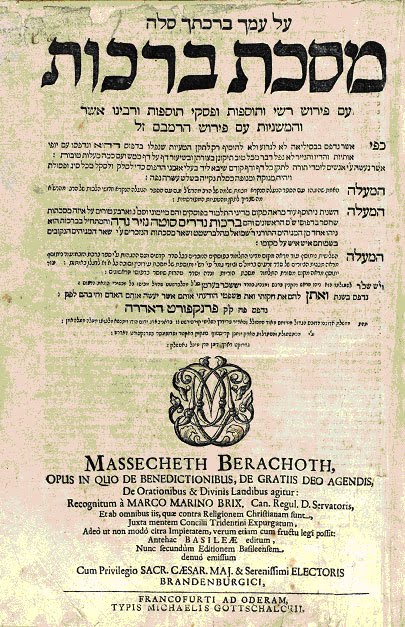
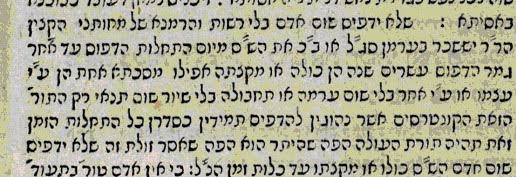
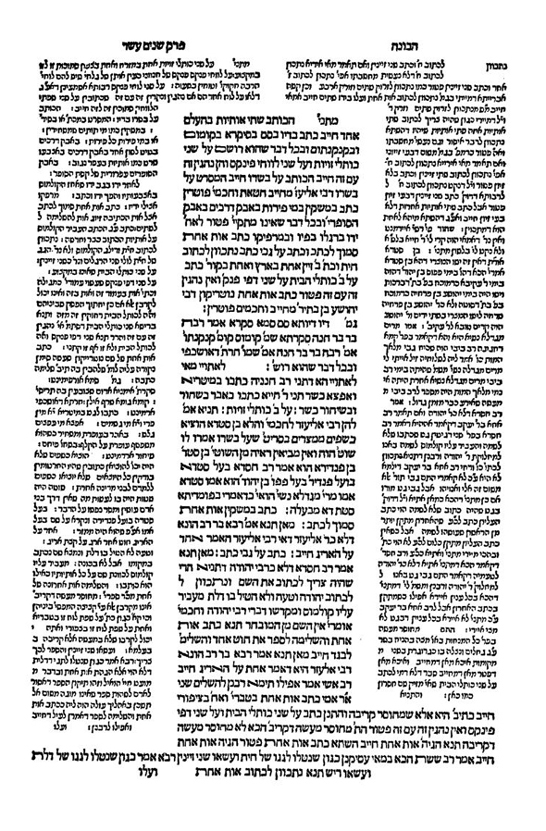
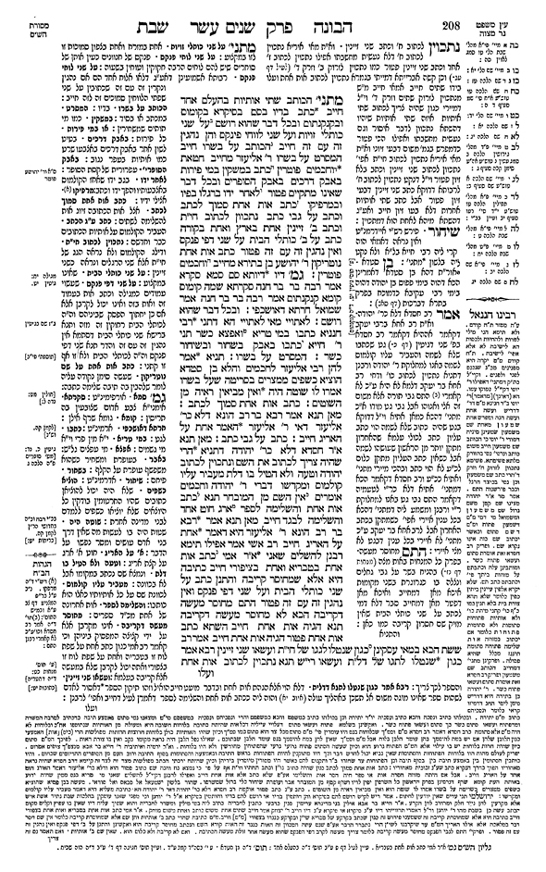
We meet Elle again in 1699, this time as a typesetter working on the famous Berman Shas of Frankfurt on Oder. This printed edition of the Talmud ( 1697-1699) was financed by the wealthy court Jew, Yissachar Berman Segal of Halberstadt who gave away half the 5,000 copies printed to needy scholars throughout Europe.(4)The Berman Shas is one of the most respected early printed editions of the Talmud because it contained many additional commentaries which became standard in following editions. It was the first edition since that of Gershom Soncino in the early 16th century to contain most of the diagrams we are familiar in Seder Zeraim, and Masechtos Eiruvin and Sukah. (5) It was also the first to contain Charamos from various Rabbanim prohibiting others in that general area from printing the Talmud for an extended period of time.(6) The following Cherem, recorded in Maseches Brachos, was written by Rav Dovid Oppenheim who lived at that time in Nikolsburg and later became chief Rabbi of Prague:At the end of Maseches Nidah printed in 1699, Elle signs her work a bit more boldly, and leaves us wondering what was going through her mind when she set the letters for the colophon.

“ By the hand of the faithful typesetter in this holy work, Yisroel the son of Reb Moshe. And by the hand of his maiden sister Elle, daughter of Rav Moshe, in the year “N’Kaivah T’Soivev Gaver” ( “a woman shall go after a man”.)

When you add up the letters which are set in large type, you come up with the year 459 according to the Peret Koton ( the abbreviated era ). This is the year 5459 (1699). What intrigues even the casual observer is why she, or her older brother Yisroel chose to record the year 5459 using that unusual Pasuk? One could argue that the Pasuk is tangentially related to some of the topics covered in Maseches Niddah, but there are many other Pesukim which deal more directly with the subject matter that could have been formatted to equal 459.(7) I think it is more logical to relate the Pasuk to the girl typesetter, who we are informed, is still unmarried. In Messianic times, it will be the Kallah, Am Yisroel, who seeks out its Chasan, Hashem. Perhaps Elle thought her circumstances and position necessitated a similar approach to finding a suitable Chasan. We hear the last from her in the next year having worked on a Machzor with her brother Yisroel.(8) We hope that after that, this extraordinary girl found an appropriate Shidduch. We wish the same for all those seeking the wonderful rewards that marriage has to offer.

(1) Marvin J Heller, “Studies in the Making of the Early Hebrew Book”, Boston 2008 pps. 218-228. The entire chapter on Moses ben Avraham Avinu makes for some fascinating reading. I am indebted, as are we all, to Marvin Heller for his research into this field of study.
(2) Ibid: p.222
(3) Nicholas Basbanes, ‘A Gentle Madness” New York, 1995 pps144-145
(4) R.N.N. Rabinowitz “Ma’amar Al Hadfasas HaTalmud”, A.M. Haberman edition, Mosad HaRav Kook 2006, page 96 footnote 1.
(5) Ibid. p. 98
(6) Ibid p.100
(7) Two examples of a more fitting Pasuk to denote the year of publication for Tractate Niddah are:

“B’Mai Nidah Yischatah” which was used in Frankfurt A/M edition of 1720, and

“V’Safrah Lah Shiva Yomim, V’Achar Ti’Taher” which was used in the Dyhernfurth edition of 1816-21 ( although the highlighted letters actually add up to (5)773)

(8) Heller, page 223


The Origin of Ta‘anit Esther

The Origin of Ta‘anit Esther

By Mitchell First

Introduction

The origin of this fast has always been a mystery. A fast on the 13th of Adar is not mentioned in the Megillah. Nor is such a fast mentioned in Tannaitic or Amoraic literature. Megillat Ta‘anit, compiled in the first century C.E., includes the 13th of Adar as a day upon which Jews were prohibited from fasting. A widespread view today is that the fast arose as a post-Talmudic custom intended to commemorate the three days of fasting initiated by Esther in Nissan. There are Rishonim who take this approach.[1] But Geonic Babylonia is where the fast first arose and this approach is not expressed in any of the sources from Geonic Babylonia. Moreover, the statements in these sources are inconsistent with this approach. I am going to suggest an approach to the origin of the fast that is consistent with the material in the Babylonian Geonic sources.

I. The Earliest Sources That Refer To A Practice Of Fasting On The 13th

The earliest sources that refer to a practice of fasting on the 13th are the following: – One of the four she’iltot for Purim included in the She’iltot of R. Ahai Gaon, a work composed in 8th century Babylonia. – An anonymous Babylonian Geonic responsum that made its way into Midrash Tanhuma (Bereshit, sec. 3). (The discussion in this responsum and in the She’iltot is very similar.) – A responsum of R. Natronai, head of the academy at Sura from 857-865 C.E. This responsum refers to the fast as פורים תענית. [2] – The Siddur of R. Se‘adyah (882-942).[3] Here, the fast is referred to as אלמגלה צום (=the fast of the Megillah).[4] The Siddur of R. Se‘adyah was composed in Babylonia.[5] – An index to a collection of Babylonian Geonic responsa.[6] The compiler of the index recorded the first few words of each responsum. In our case, the compiler recorded: לנפול אנו רגילין באדר יוש יג[7] ובתענית. The responsum itself is no longer extant. The responsum itself is no longer extant. – A responsum addressed to R. Hai (d. 1038).[8] This responsum inquires whether, in the case of a hakhnasat kallah that occurs on a fast day such as the 13th of Adar, the one who makes the blessing on the kos of berakhah is permitted to drink. – An anonymous Babylonian Geonic responsum that includes the following statement: השני אדר של כי”ג מתענין נמי הראשון אדר של וי”ג.[9] II. Analysis According to Robert Brody, the four she’iltot for Purim were probably not in the original She’iltot when it left the hands of R. Ahai in the 8th century. They were authored in a later stage.[10] She’ilta #79, the one which refers to fasting on the 13th of Adar, is even more problematic than the other three. After the first few lines in Aramaic, the balance of this she’ilta is almost entirely in Hebrew, unlike the rest of the She’iltot. Careful comparison of she’ilta #79 with the Geonic responsum that made its way into Midrash Tanhuma suggests that the Geonic responsum is the earlier source.[11] It is reasonable to work with the assumption that this responsum dates from the eighth or ninth centuries. This responsum adopts a very unusual interpretation of the sections of the Mishnah at the beginning of Tractate Megillah. These sections permit villagers to fulfill their Megillah obligation on the 11th, 12th, or 13th of Adar, on yom ha-kenisah, under certain conditions. In the plain sense of these sections, yom ha-kenisah refers to Mondays and Thursdays, and the teaching is that the reading for the villagers is allowed to be advanced to these days when the villagers enter, or gather in, the cities. But in the interpretation adopted by the Geonic responsum, yom ha-kenisah means the fast of the 13th of Adar (= the day on which the Jews gather to fast). The reading for the villagers is allowed to be advanced because the date of the observance of the fast day is being advanced due to a prohibition to fast on shabbat and ‘erev shabbat that is being read into the Mishnah. In this interpretation, the advanced fast day is a day upon which the reading for the villagers is allowed. The Geonic responsum included in Midrash Tanhuma reads as follows: They asked: It was taught that the Megillah may be read on the 11th, 12th, 13th, 14th and 15th, but not earlier or later. R. Judah said that this rule is only in effect when the calendar is established by the testimony of witnesses and Israel dwells on its own land, but in our times…the Megillah can only be read on the proper date (=the 14th or 15th). Does the halakha follow the first opinion or does it follow R. Judah? They responded: According to both R. Judah and the first opinion, the Megillah can only be read on the proper date. The following is what the first opinion meant. Towns that were surrounded by walls at the time of Joshua son of Nun read on the 15th. Villages and cities read on the 14th, but villages may advance their reading to yom ha-kenisah. When the Mishnah taught that the Megillah may be read on the 11th, 12th, 13th, etc., that applied to one who is engaged in fasting, as it was taught at the end of the Mishnah: “but villages may advance their reading to yom ha-kenisah.” What is yom ha-kenisah? The day of gathering, as it is stated (Meg. 2a): The thirteenth was a day of gathering for all (Heb: yom[12] kehillah la-kol hiy), as it is written (Est. 9:1-2): “in the 12th month, the month of Adar, on its thirteenth day… the Jews gathered themselves (Heb: nikhalu) in their cities.” They gathered themselves and decreed a fast on the 13th of Adar. But the 14th was a holiday, as it is written (Est. 9:17) “and they rested on its 14th and made it a day of feasting and gladness.” In Shushan ha-birah, they only rested on the 15th. Therefore, Shushan and all walled towns read on the 15th and make that a festive day. When the Mishnah taught that “the Megillah may be read (on the 11th, 12th, 13th …)” that concerned one who is engaged in fasting, because it is forbidden to engage in fasting on shabbat. If the 14th falls on the first day of the week, it is forbidden to fast on shabbat. It is also forbidden to fast on ‘erev shabbat, because of the necessity of preparing for shabbat. Rather, the fast is advanced to Thursday, which is the 11th of Adar. If the 14th falls on shabbat, it is forbidden to fast on ‘erev shabbat because of the necessity of preparing for shabbat. The primary reason for a fast day is the recital of selihot and rahamim, and reciting these (instead of preparing for shabbat) will detract from honoring the shabbat. Honoring the shabbat is more important than a thousand fasts, for honoring the shabbat is a commandment from the Torah, while the fast is a rabbinic decree (Heb: ta‘anit de-rabbanan). The Torah commandment of honoring the shabbat takes precedence over the fast, a rabbinic decree. Hence the fast is advanced to Thursday, the 12th. If the 14th falls on ‘erev shabbat, the fast is observed on Thursday, which is the 13th. This is set forth in the Mishnah. How does this occur? If it falls on a Monday, villages and cities read that day and walled towns read the next day. If it falls on shabbat or the first day of the week, villages advance the reading to yom ha-kenisah, etc. But when the 9th of Av falls on shabbat, the fast is postponed until after shabbat, since this fast was instituted as a punishment. Therefore, the fast is postponed and not advanced. One of the cases discussed in the above responsum is the case of the 14th falling on shabbat. Almost certainly, this was not something still occuring at the time this responsum was composed.[13] This suggests, as does a close reading of the responsum, that the responsum is not describing a practice of fasting on the 13th that was occurring in its time. It is only interpreting M. Megillah 1:1-2, the ninth chapter of the book of Esther, and a statement in the Talmud (Meg. 2a: yod-gimmel zeman kehillah la-kol hiy), and describing a practice of fasting on the 13th that theoretically occurred in ancient times, according to the interpretations it was offering. The interpretation of yom ha-kenisah expressed in the Geonic responsum is far from its plain sense. If M. Megillah 1:1-2 was referring to the advancement of the reading to a fast day, the term we would expect it to use would be yom ha-ta‘anit. Moreover, M. Megillah 1:3 includes the following statement by R. Judah: “When [may the reading be advanced]? In a place where they enter (makom she-nikhnasin) on Monday and Thursday.” This strongly suggests that the term yom ha-kenisah at M. Megillah 1:1-2 refers to Mondays and Thursdays. Finally, an anonymous Talmudic discussion at Megillah 4a-b understands yom ha-kenisah as a reference to Mondays and Thursdays.[14] The interpretations expressed of Est. 9:1-2 and of the Talmudic statement yod-gimmel zeman kehillah la-kol hiy are far from plain sense interpretations as well. The critical question in determining the origin of the fast of the 13th of Adar is what motivated these unusual interpretations. Obviously, one possible motivation was an attempt to justify an existing practice to fast on the 13th. But I am going to suggest something entirely different that motivated these interpretations. Then we can understand the practice of fasting on the 13th as having originated as a consequence of the interpretations. As I mentioned, the responsum included in Midrash Tanhuma was from Babylonian Geonim, and it is reasonable to work with the assumption that it dates from the eighth or ninth centuries. As documented in my article, a major issue of halakha in this period was the permissibility of fasting on shabbat.[15] The unusual interpretations can be explained under the assumption that the authors were responding to and opposing contemporary practices of fasting on shabbat and ‘erev shabbat. Interpreting yom ha-kenisah the way they did enabled them to cite M. Megillah 1:1-2 as a source which prohibited fasting on shabbat and ‘erev shabbat. In their interpretation, the reading for the villagers is allowed to be advanced because the date of the observance of the fast day is being advanced, due to a prohibition to fast on shabbat and ‘erev shabbat that they were reading into the Mishnah. The practices that the authors of the unusual interpretations could have been responding to could have been: 1) the practice in Babylonia of fasting on the shabbat before Yom Kippur, 2) practices in Babylonia of fasting on shabbat as a form of repentance or piety, or by those whose ideal shabbat consisted of studying or praying all day, or by those who enjoyed fasting, or 3) practices of fasting on shabbat in Palestine in the above contexts. It is also possible that the main motivation of the authors of the unusual interpretations was opposition to a practice of fasting on ‘erev shabbat. I suggest that the unusual interpretations expressed in the Geonic responsum arose as a result of one or more of these polemical motivations. This led M. Megillah 1:1-2 to be interpreted to imply a prohibition to fast on shabbat and ‘erev shabbat. A new “tradition” about an ancient fast on the 13th of Adar was the result. One clue that the authors were responding to contemporary practices of fasting on shabbat and ‘erev shabbat is that the responsum includes a polemical line stressing the importance of honoring the shabbat: “honoring the shabbat is more important than a thousand fasts…”[16] The early 9th century polemical letter of Pirkoy ben Baboy uses almost the same language: “One who delights in one shabbat is greater than one who sacrifices a thousand sacrifices and (fasts) a thousand fasts.”[17] The main weakness with my approach to the origin of the fast is the argument that it is not likely that a Mishnah would be polemically interpreted to such an extent that the interpretation would result in the observance of a new (assumed to be ancient) fast day. My response is that those who authored the interpretation did not foresee that a new fast day would come be observed as a result of their interpretation. That the fast of the 13th of Adar did not arise as commemoration of the three days of fasting initiated by Esther is seen from the name for the fast day in the earliest sources. The responsum of R. Natronai is the earliest source that refers to the fast by a name, and it refers to the fast as Ta‘anit Purim. Of the four sources in the Geonic period from Babylonia and its environs that refer to the fast by a name, most likely none of them calls it Ta‘anit Esther.[18] When the Babylonian Geonic sources express or imply something about the origin of the fast, what is consistently expressed or implied is that the fast is a rabbinic obligation, and not merely a post-Talmudic custom. For example, the Geonic responsum included in Midrash Tanhuma refers to the fast as a de-rabbanan. Moreover, an anonymous Geonic responsum takes the position that, in a leap year, one fasts even on the 13th of the first Adar. Most likely, it takes this position because it views fasting on the 13th of Adar as an obligation, based on the interpretation of Est. chap. 9 expressed in the Geonic responsum included in Midrash Tanhuma. If it viewed the fast as a post-Talmudic custom meant to commemorate fasting that took place in Nissan, a fast on the 13th of the second Adar would almost certainly have been viewed as sufficient. In my article, I documented four sources that refer to a Palestinian practice of fasting three days (on a Monday-Thursday-Monday cycle) in Adar. These sources are: Massekhet Soferim (chaps. 17 and 21), and three other sources that have come to light from the Genizah. The Palestinian practice almost certainly was a commemoration of the three days of fasting initiated by Esther in Nissan.[19] That the Palestinian practice was understood as a commemoration of the three days of fasting initiated by Esther probably contributed to the name for the Babylonian fast of the 13th evolving into Ta‘anit Esther.[20]


This essay is a brief summary of my recent article that appeared in Mitchell First, “The Origin of Ta’anit Esther,” AJS Review 34:2 (November 2010): 309-351, and is adapted with the permission of Cambridge University Press.
[1] An early example is probably Maimonides. An erroneous period and vav (the vav of ובי”ג) made their way into the standard printed text of his Hilkhot Ta‘aniyyot 5:5, after the sixth word. (The necessary corrections have already been made in the Frankel edition.) The corrected text reads: המן בימי שהתענו לתענית זכר באדר בי”ג להתענות אלו בזמנים ישראל כל ונהגו (Est. 9:31) שנאמר דברי הצומות וזעקתם… Maimonides clearly states that the custom of fasting on the 13th is only of recent origin, and that it is a commemoration of a fast that took place in the time of Haman, i.e., in Nissan. Maimonides is forced to cite to Est. 9:31 because chapter 4 does not expressly state that the Jews of Shushan fasted in response to Esther’s request.
[2] Robert Brody, Teshuvot Rav Natronai Bar Hilai Ga’on, 303-04, responsum # 177.
[3] Siddur Rav Se‘adyah Ga’on, eds. Israel Davidson, Simhah Assaf, and Yissakhar Joel, 258 and 319-338.
[4] Ibid., 319.
[5] It was not composed in Palestine, where R. Se‘adyah lived earlier. Ibid., intro., 22-23.
[6] Louis Ginzberg, Geonica, vol. 2, 67-68.
[7] Ginzberg suggests that the correct reading is shel or yom.
[8] Shelomoh Wertheimer, Sefer Kohelet Shelomoh, 14.
[9] Louis Ginzberg, Ginzey Schechter, vol. 2, 136.
[10] Brody, Le-Toledot Nusah Ha-She’iltot, 186 n. 5, and The Geonim of Babylonia and the Shaping of Medieval Jewish Culture, 209 n. 29. Structurally, they are deficient as she’iltot. Also, there is some variation in the manuscripts with regard to their location in the work. This suggests that they were later additions, attemped to be integrated into an already fixed work.
[11] It is organized and concise, and seems to reflect an attempt to record an official interpretation of M. Megillah 1:1-2. She’ilta #79, on the other hand, seems to be taking for granted an already established explanation of M. Megillah 1:1-2 that it is reiterating and commenting upon.
[12] Megillah 2a and she’ilta #79 have zeman instead of yom.
[13] When the 14th of Adar falls on shabbat, the upcoming Yom Kippur would fall on Friday. Already in the time of R. Yose b. Bun (c. 300), the 14th of Adar was not being allowed to fall on shabbat or Monday, so that Yom Kippur would not fall on Friday or Sunday. See Y. Megillah 1:2 (70b), EJ 5:49, and Yosef Tabory, Mo‘adey Yisra’eil Bi-Tekufat Ha-Mishnah Ve-Ha-Talmud, 28. See also Rosh Ha-Shanah 20a. She’ilta #79 stated explicitly that the 14th of Adar no longer fell on shabbat in its time.
[14] The severe difficulties with interpreting yom ha-kenisah as the 13th of Adar are noted by many authorities. Interestingly, there exists a manuscript of Megillah 2a (NY-Columbia X 893 T141) in which this interpretation (taken from the She’iltot) is included on the Talmudic page. The statement included is: למכתב צריך ולא בעריהם נקהלו היהודים שנ׳ היא לכל קהילה זמן עשר שלשה אחא רב פיר׳ …לתענית ישראל בו שמתכנסין תענית יום דהוא It is therefore incorrect to state that the fast of the 13th of Adar is nowhere mentioned in the Talmud!
[15] See my article, 335-339. Much of the relevant material is found at Ozar Ha-Ge’onim, Yom Tov, secs. 41-49.
[16] The material in the Geonic responsum and in she’ilta #79 is very similar. But the passage “honoring the shabbat is more important than a thousand fasts” is found only in the Geonic responsum. The fact that the responsum does not illustrate seven scenarios, but only illustrates the scenarios of the 14th falling on Friday, Saturday, Sunday, and Monday, also suggests that the main motivation for its interpretations was related to shabbat and ‘erev shabbat.
[17] Ozar Ha-Ge’onim, Yom Tov, 20, sec. 41. This was a polemical letter written to the Jews of North Africa and Spain, instructing them that Palestinian customs should not be followed. Pirkoy, a Babylonian Jew, tells us that he was a disciple of someone named Rava who was a disciple of R. Yehudai. (R. Yehudai was head of the academy at Sura from approximately 757-761 C.E.) Pirkoy writes that many of the Palestinian customs originated as emergency measures during times of persecution, or were customs resulting from ignorance. It was only in Babylonia that accurate traditions were preserved. Among the Palestinian practices that Pirkoy criticizes was their practice of fasting on shabbat.
[18] The four are: R. Natronai, R. Se‘adyah, Al-Biruni, and the expanded version of Seder Parshiyyot Shel Yamim Tovim Ve-Haftarot Shelahen. R. Natronai refers to the fast as Ta‘anit Purim. R. Se‘adyah refers to the fast as אלמגלה צום. Al-Biruni, a Moslem scholar of Persian origin (writing in 1000 CE), calls the day “the fasting of Alburi” (Purim). Seder Parshiyyot probably dates from the late ninth or early tenth century. It includes a shortened version of the responsum of R. Natronai that had referred to the fast. There are only three manuscripts of the expanded version of Seder Parshiyyot, none of which was actually copied in Geonic Babylonia. Two of the manuscripts read Ta‘anit Esther, while one reads Ta‘anit Purim. Since R. Natronai’s original responsum read Ta‘anit Purim, it seems likely that the manuscript of Seder Parshiyyot that reflects this reading has preserved the original reading and that the other reading originated with a copyist altering the name to fit the name for the fast prevailing in his locale. Massekhet Soferim refers to sheloshet yemey zom Mordekhai ve-Esther. But the reference is to the Palestinian practice of fasting three days on a Monday-Thursday-Monday cycle. Massekhet Soferim was most likely composed in the 9th or 10th century, in a community under Palestinian influence, such as Italy or Byzantium. See Debra Reed Blank, “It’s Time to Take Another Look at at “Our Little Sister” Soferim: A Bibliographical Essay, JQR 90 (1999): 4 n. 10, and M. B. Lerner, “The External Tractates,” in The Literature of the Sages, ed. Shmuel Safrai, 399-400.
[19] This Palestinian practice may even have preceded the Babylonian practice of fasting on the 13th, although this cannot be proven.
[20] See my article, 333, n. 98. The fast of the 13th was already known in some areas as Ta‘anit Esther by the 11th century. Ibid., 332-333.


New Writings from R. Kook and Assorted Comments, part 3

New Writings from R. Kook and Assorted Comments, part 3

Marc B. Shapiro

Continued from here.
As I have dealt in this post with Maimonides and the Genesis story, it is as good a time as any to mention what I believe it to be an error that is repeated very often. I saw it most recently in Nathan Aviezer’s article “When Torah and Science Collide” (Tradition, Fall 2009). He writes as follows:

Did God create the universe? Seemingly a simple question, with the answer given in the very first verse of the Torah. Not so, writes Rambam (Guide 2:25), asserting that Torah hashkafa does not require one to believe that God created the universe. But what about the first chapter of Bereshit, which clearly states that God did create the universe? Rambam writes that one may interpret this chapter metaphorically, as an allegory that never happened, because “the paths of interpretation are not closed to us.”

What Maimonides actually says in Guide 2:25 is that it is a religious requirement to believe that God created the universe. He goes so far as to say that if it could somehow be proven that God did not create the universe, this would give the lie to miracles and Torah itself. In Maimonides’ words: “If the philosophers would succeed in demonstrating eternity as Aristotle understands it, the Law as a whole would become void.” In other words, Torah Judaism stands or falls on this issue, for acceptance of Aristotle’s view means the end of miracles, prophecy, and Torah. Fortunately for Rambam, he believes that eternity of the universe cannot be proven, because if it could be proven, that would be the end of Torah Judaism.[1]

What else does Maimonides say in this chapter? He says two things. 1. If Plato’s view, that the world was created from eternal matter,[2] were to be proven, then this would not destroy the Torah, and in fact the Torah could be interpreted in accordance with this.[3] 2. Even Aristotelian eternity of the world could be reinterpreted in accordance with the biblical verses, just as the verses that speak of God’s corporeality are reinterpreted. This is the context in which Maimonides says that “the paths of interpretation are not closed to us.” Maimonides then explains that because of this, we do not reject eternity of the world because of the simple meaning of the biblical verses (which could be reinterpreted). Rather, we reject it because 1. It has not been proven (and indeed Maimonides does not think that it can be proven). 2. Eternity of the world destroys the foundation of the Torah.

In truth, Aviezer’s understanding is not unique to him but is shared by many. They all assume that if Aristotelian eternity was proven, Maimonides would then reinterpret the Torah in accordance with this, for he says that he is indeed able to do so. This viewpoint is held by some of the top Maimonides scholars alive today. From greats of previous years who hold this position, I can add R. Elijah Benamozegh:[4]

ומה מאד הפריז על המדה הרמב”ם שכתב במורה (ח”ב פרק כה) שאלו נתבאר הקדמות במופת הגיוני היינו מחויבים לפרש הכתובים באופן שלא יכחישו המופת
Centuries earlier, Ralbag advanced the same (what I believe to be incorrect) viewpoint.[5] See Milhamot ha-Shem 6:2:1:
גם כן אמר שאם היה מתבאר חיוב קדמות העולם מדרך העיון שכבר יוכרח לפרש מה שבא בתורה שיראה חולק עם זה הדעת באופן שיאות אל העיון.
As I mentioned, all Maimonides says is that if eternity is proven, the words of the Torah could be reinterpreted to accord with eternity. But according to Maimonides, there would be no reason for doing so. This is so for if eternity could somehow be proven, that would be the end of Judaism, as it would be the end of both miracles and divine providence and thus no possibility of a revelation of the Torah. Thankfully, Maimonides believes that eternity cannot be proven.

I don’t understand why so many scholars—whose knowledge of Maimonides is much greater than mine— interpret this chapter to mean that Maimonides would accept Aristotelian eternity when he says specifically that he wouldn’t. (Again, I am speaking of the exoteric meaning of Maimonides’ words, not about any esoteric interpretation of Maimonides.) When I challenged a number of these scholars on this point, they all acknowledged that Maimonides doesn’t actually say that he would accept eternity. However, in defense of what they wrote they stated that if eternity really was proven, what choice then would Maimonides have? He would have to reinterpret the Torah to agree with eternity since we can never imagine him rejecting the Torah. In this, I agree with them. Faced with the reality that eternity has been proven, and despite what he says in Guide 2:25, he would be forced to reinterpret the Torah. Of this, I have no doubt, simply because Maimonides was a very religious man and I can’t imagine him living without the Torah. Yet my point is that he does not say this in the Guide. In fact, he says the exact opposite, that the Torah cannot co-exist with eternity.[6]
Since I have mentioned Aviezer’s article, let me discuss some other things he says. Aviezer writes:

[Stephen J.] Gould was preceded in this approach by Galileo, who is credited with the famous aphorism: “The Bible teaches us how to go to heaven, whereas science teaches us how the heavens go.” (I can’t believe that Galileo really said these words because, while snappy in English, they make no sense in Latin or Italian.)
I don’t know on what basis Aviezer insists that these words don’t make sense in Latin or Italian. If someone said them in Latin or Italian, why shouldn’t they make sense? In fact, the original text is Italian, and is found in Galileo’s “Letter to Grand Duchess Christina.” In it, Galileo writes:

I would say here something that was heard from an ecclesiastic of the most eminent degree [Cardinal Baronius]: ‘That the intention of the Holy Ghost is to teach us how one goes to heaven, not how heaven goes.’”[7]

Here is the original Italian, and one can indeed see that the words are snappy:

“Io qui direi che quello che intesi da persona ecclesiastica, costituita in eminentissimo grado, ciò è l’intenzione delle Spirito Santo essere d’insegnarci come si vadia al cielo, e non come vadia il cielo.”

Even Pope John Paul II adapted this saying, in a passage that looks like it could have been written by R. Hirsch,[8] R. Kook, or R Natan Slifkin:

The Bible itself speaks to us of the origin of the universe and its make-up, not in order to provide us with a scientific treatise, but in order to state the correct relationships of man with God and with the universe. Sacred scripture wishes simply to declare that the world was created by God, and in order to teach this truth it expresses itself in the terms of the cosmology in use at the time of the writer. The Sacred Book likewise wishes to tell men that the world was not created as the seat of the gods, as was taught by other cosmogonies and cosmologies, but was rather created for the service of man and the glory of God. Any other teaching about the origin and make-up of the universe is alien to the intentions of the Bible, which does not wish to teach how heaven was made but how one goes to heaven.[9]

Chief Rabbi Jonathan Sacks, whose prolific writing continues to astound, has recently said the same thing: “There is a difference between science and religion. Science is about explanation. Religion is about interpretation. The Bible simply isn’t interested in how the universe came into being.”[10] R. Chaim Navon put the matter as follow[11]:

התורה אינה מתעניינת במידע מדעי, אלא בערכים רוחניים. לא כך כך אכפת לתורה מנוסחאות מדעיות; אכפת לה הרבה יותר מדרכי התנהגותו של האדם, מאורחות חייו ובעיקר מעבודתו של האדם את בוראו. משום כך, לא כל כך חשוב לדעת האם האדם היה שייך פעם לעולם החיות; מה שחשוב באמת הוא האם האדם הצליח להיחלץ משם.

In other words, the Torah has nothing to tell us when it comes to science. Therefore, there can be no such thing as a conflict between Torah and science.[12] With such an approach, all of the reconciliations between science and the Book of Genesis (e.g., a “day” is really an eon, the dinosaurs are from prior worlds, etc.), which for awhile were popular in Orthodoxy, are really missing the point. The old apologetics assumed that the Torah was in accord with science, and was even teaching scientific truths. It was just that we had to read the text differently than it had been read until now. Yet as with R. Kook, from Sacks’ and Navon’s perspective the creation story is a myth, namely, a tale designed to impart cosmic truths.[13] Although this position has been argued most forcefully by Slifkin, and has found a very receptive audience at synagogues (as I can attest, having tag-teamed with Slifkin as scholars-in-residence), are there any high schools that teach the Creation story in this fashion?

Returning to Aviezer, he writes:

But what about the geocentric theory of the solar system? Wasn’t that scientific theory universally believed for nearly 1500 years, until finally shown by Copernicus and Galileo to be wrong and then replaced by the very different heliocentric theory? The answer is “no!” The geocentric theory was not a scientific theory at all; it was pure theology, unsupported by any scientific evidence. The theory was universally accepted for over a millennium on religious grounds alone. The beliefs of the Church demanded that man’s place must be at the center of the universe.

This is completely incorrect. First of all, the Ptolemaic system of geocentrism was as much science as the Copernican system, and had nothing to do with theology.[14] Secondly, geocentrism long predates the second-century Ptolemy. Aristotle himself was a geocentrist, and in Aristotle’s view, the most important part of the world is not the center! “For the medieval mind, under the influence of Aristotle, the earth as the center of the world was not a position of honor. On the contrary, as Prof. Lovejoy put it, it was ‘the place farthest removed from the Empyrean, the bottom of creation, to which its dregs and baser elements sank. The actual center, indeed, was Hell; in the spatial sense, the medieval world was literally diabolocentric.’”[15]

Aviezer “blames” geocentrism on the Church, and yet Maimonides (and every other Jewish and Islamic thinker of his day) was a geocentrist. Maimonides also had a strong anti-anthropocentric view, as he did not regard man as the central purpose of the universe. This view of Maimonides was an important source for Norman Lamm in his famous article “The Religious Implications of Extraterrestrial Life.” [16] Only those who are convinced that they are the center of the universe would be troubled by the discovery of other inhabited worlds, and that is why Maimonides’ outlook came in so handy for Lamm.

Returning to Maimonides and creation, I want to call attention to a very interesting article by R Meir Triebitz. It appears in Reshimu, vol. 1 no. 2 (2008), the journal of the so-called Hashkafa Circle. See here.

As explained in the preface to the first volume, this “Circle” aims to fill a gap in haredi yeshiva education by focusing on the classics of medieval Jewish philosophy which are pretty much ignored in contemporary haredi society. We thus have a situation where great talmudists and halakhists ignore major themes of Jewish philosophy, which were dealt with at length by the medieval sages. When there are theological discussions in haredi literature, they invariably reflect a very conservative position, often at variance with the major rishonim. I already touched on this issue in my conclusion to The Limits of Orthodox Theology, and if Triebitz and his group are successful this situation could be reversed.

However, they won’t be successful for the simple reason that the outlook of the medieval Jewish philosophers is opposed in so many ways to haredi ideology that it will never become part of the haredi curriculum. In fact, I don’t think it is possible to be a serious student of medieval Jewish philosophy and at the same time identify with any of the regnant haredi worldviews. (You might dress the part and send your children to haredi schools, but that is not the same thing as identifying with a worldview.) This is so for many reasons, primary of which is that medieval Jewish philosophy is about the search for truth. The papal model of haredi society, where the quest for truth is subordinated to the dictates of the religious authority figure, is diametrically opposed to what our great medieval philosophers taught.

Furthermore, the haredi notion that contemporary gedolim can sit in judgment of the views of the Rambam and other greats, and determine that their views are no longer “acceptable”, will be rejected out of hand by all followers of the philosophic tradition. It is therefore not surprising that when Artscroll was presented with a plan to publish Maimonides’ Guide in English, the response was a resounding no, with the explanation given that the Guide should not be found in a haredi home.[17]

Until now, three issues of Reshimu have been published, all available on its website, and it is refreshing to see haredi writers grappling with important philosophical problems. While in many cases the writers are unaware of basic academic studies in these areas, and the journals could be edited in a better fashion (eliminating typos and stylistic problems), there is a great deal to learn from some of the essays. This is especially the case for Rabbi Triebitz, who because of his wide-ranging knowledge and keen insight deserves to be better known. I encourage all to read his articles and those who have time can also watch numerous videos of his shiurim here.

In his article referred to above, Triebitz offers a commentary on Guide 2:13, where Maimonides discusses the various views of creation. It is a very challenging essay which, unless I have overlooked an academic article, presents a new perspective, not an easy task in Maimonidean scholarship. In this essay Triebitz takes his place with the esoteric readers of Maimonides. He concludes that Maimonides does not really believe in creation ex nihilo, since for Maimonides this is a mental concept, not a scientific fact. From a scientific perspective, Maimonides adopts Aristotle’s view of the eternity of the world, but this is not something that could be communicated to the non-sophisticated reader. However, those who grasp what Maimonides is saying will realize that “Creation ex nihilo is not a contending theory of creation . . . but rather a product of man’s thought which introduces a dimension other than the objective physical world pictured by Aristotelian physics.” (p. 145)

Needless to say, this approach of Triebitz also turns Maimonides’ fourth principle, which insists on creation ex nihilo (including the creation of time), into a “necessary belief.” Here is another selection from the essay:

Rambam is therefore intimating that in order to posit God’s complete incorporeality it is necessary to extend the physical world ad infinitum. Since physical infinity is impossible, it is time which must be infinite. Monotheism demands eternity. Law and ethics, however, are based upon Divine free will and Divine free will in turn demands creation ex nihilo. Since creation ex nihilo, as Rambam has already pointed out, cannot have taken place at any time, it cannot be a theory of creation. The antinomy between eternity theories, particularly Aristotle’s, and the irreducible creation ex nihilo is in fact no other than the dichotomy between ontology and ethics (p. 161).

Triebitz returns to Maimonides and creation in Reshimu vol. 1 no. 3 (2009) and once again explains that in his opinion Maimonides doesn’t really believe in creation ex nihilo.

As a consequence, while Rambam’s discussion of creation begins by asserting that the opinion of Torat Moshe is that the world was created by God ex nihilo, by the time that discussion concludes eighteen chapters later (II. 30), he makes the subtle point, casually dropped as if merely incidental, that one of the terms referring to creation in the Torah (qinyan, qeil qoneh) itself “tends toward the road of the belief in . . . eternity” (71b/358). To the astute ear honed to his method of paradoxical exposition, the underlying thrust is clear: He begins with the assertion he believes to be obvious and most fundamental—namely, creatio ex nihilo—after which, following long diversions, he introduces the contrary premise—creatio continua aeterna—by which time the less aware, less initiated reader will likely not notice the subtle discrepancy and the controversial nuance therein entailed: that creation ex nihilo is not creation in time, chiddush nifla. (p. 82)[18]

I now want to return to the Creation story, and how some have argued that it should not be taken literally. I dealt with this in my previous posts and received some e-mails by people referring to other sources that say so, including R. Gedaliah Nadel. I am grateful for all the e-mails, but the reason I didn’t mention these sources, including R. Nadel, is because all of these sources are well known. Since I was not trying to write a comprehensive study of approaches to creation, I didn’t see any need to cite them. In general, my posts here are not like my articles or books, in that I am trying to call attention to interesting ideas and texts, rather than producing complete studies of any topic.

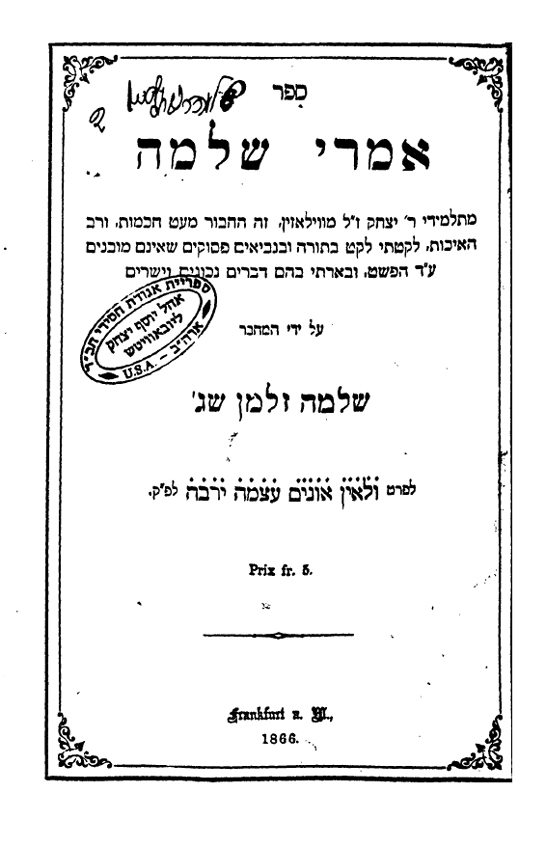
Yet since people are obviously interested in this topic, and took the time to send me the sources, let me thank you by citing a source that has never been referred to in all of the discussions of creation and biblical literalism. It is R. Shlomo Zalman Shag’s Imrei Shlomo, published in Frankfurt in 1866. (I have transliterated his last name as “Shag”, since that is how the Harvard catalog has it.) Here is the title page, where you can see that he identifies himself as a student of R. Isaac of Volozhin.

Worthy of note is that among the subscribers one finds, right next to each other on the list, R. Marcus Lehmann, Abraham Geiger, and Ludwig Philipson.

On p. 5 Shag refers to the trees in the Garden of Eden and the snake and says that it is obvious that none of this can be taken literally:

ואם נקח הפרשה הזאת במאזני השכל, ונפלס את הדברים נראה בעליל שהוא רק דברי רמז וחידה, וכפשוטו לא יכנסו כלל בגדר השכל.

On page 10 he explains how the snake represents the evil inclination, an identification pretty standard among the medievals, and he beautifully explains the connection between the two:

והנחש הוא היצר הרע והתאוה . . . היצה”ר נמשל לנחש מה הנחש כשהולך להזיק אינו ברעש ובהלה רק זוחל על הארץ בלחש ומזיק כן הוא היצר הוא בא לאדם בעצה ותחבולה ומראה עצמו כאוהב עד שיפתה, ואח”כ רובץ על צווארי בני אדם כנחש הסובב על הדבר מכל צדדיו.

On p. 21 he even understands the Tower of Babel in non-literal fashion:

ונאמר לראות את העיר ואת המגדל. את העיר זו יושבי העיר כמו העיר ננוה, העיר שושן, הכונה הוא על יושביה, והמגדל הוא המעשים שעשו, נגד רצון השי”ת, כי הם היו מתגאים לעשות להם שם בארץ. והשי”ת שונא גאים ומשפיל אותם, לכן ויפץ ה’ אותם משם על פני כל הארץ.

There have been many understandings of the Tower of Babel, and I don’t want to go into that now, but let me at least mention one of the strangest interpretations out there. R. Menachem Tziyoni (fifteenth century), in his commentary on the episode, claims that the Tower was actually a flying object[19]:

והמגדל הוא הפורח באויר אשר ראו בשמים

At least this is how Tziyoni is usually understood. Yet it is possible that it is not to be taken literally, and I found a post that says precisely this. See here.

Pre-modern man had many stories of those who were able to rise above the ground, either by flying or being transported by God. We find this in Jewish literature as well. See, for example, Bereishit Rabbah 44:8 which focuses on the words in Gen. 15:5 ויוצא אותו החוצה. What does it mean that God brought Abraham outside? The Midrash first quotes R. Joshua in the name of R. Levi:”Did he then lead him forth outside of the world . . . It means, however, that He showed him the streets of heaven.” In response to this R. Judah b. R. Simeon said in the name of R. Johanan: “He lifted him up above the vault of heaven.” Seen in context, as a response to R. Joshua’s explanation, it seems to me that R. Judah b. R. Simeon’s statement must be understood literally. In other words, Abraham was literally transported into the Heavens. See Etz Yosef ad loc: ס”ל דהחוצה כמשמעו שהוא ממש חוץ לעולם

The most famous example of human flight in Jewish literature is that of Jesus. As described in Toledot Yeshu, Jesus was able to use God’s holy name in order to fly, and was brought down by Judas Iscariot who could also fly and defiled Jesus (which caused Jesus to lose his special powers). According to one tradition, he defiled Jesus by urinating on him, but another version has him engaging in homosexual sex while in the air, which in context certainly means rape.

וטנפו במשכב זכור . . . שטנפו במשכב זכור וכיון שטנפו ונפל הזרע על יש”ו הרשע נטמאו שניהם ונפלו לארץ שניהם כאחד

Incidentally, according to Toldot Yeshu this explains why Judas Iscariot is so hated in Christianity:

וכל חכמי הגוים יודעים סוד זה וכופרין אותו ומקללים ומחרימים יהודה אסקריוטו

See Samuel Krauss, Das Leben Jesu nach Juedischen Quellen (Berlin, 1902), pp. 48, 74.

As Morris Goldstein has noted, the second century Acts of Peter describes how Simon Magus flew over Rome, astounding all the onlookers. But Peter, through his prayer to God, was able to force Simon down, a crash landing that caused him to break his leg.[20]

Samael (Satan) can also fly, at least so we are told in the Targum to Job 28:7: סמאל דפרח היך עופא

This should not surprising as according to Isaiah 6:2 the Seraphim fly (with wings), and Hagigah 16a tells us that both angels and demons fly (also with wings).
Midrashic texts speak of two Egyptian magicians who created wings for themselves that enabled them to fly.[21] Rabbinic sources also tell us that Balaam knew how to fly.[22]

With reference to Jesus, it is interesting to note that many Jews actually believed that he performed wonders. However, they attributed it to his knowledge of God’s holy name. Why didn’t they simply assume that all the stories about him were fiction, as modern Jews do? I think the answer is that since all of their neighbors believed the stories, and the miracles Jesus performed are said to have been done before crowds of people, many Jews therefore assumed that these tales must be historically accurate.

In general, it is a common pre-modern assumption that if a group of people, even a group from generations ago, claimed to have witnessed something, that this is a sign that it indeed took place. Today, however, we know how false this argument is. We can cite many examples of mass delusion, not to mention the fact that stories of what people in previous generations witnessed are not actually examples of many people testifying to something, but of one person, the writer, claiming as much.

The stories of Jesus that are found in Toldot Yeshu do not appear in the Talmud, but there are other stories of him found there. However, these stories place Jesus a good 150 years before he actually lived. I say this because the Talmud identifies Jesus as a student of R. Joshua ben Perahyah, who lived circa 120 BCE. In Nahmanides’ disputation, paragraphs 22, 57, he points out that the Christians are wrong on their dates. (R. Judah Halevi, Kuzari 3:65 mentions that Jesus was the student of R. Joshua ben Perahyah and says nothing about the chronological problem. The standard Hebrew edition of the Kuzari is censored [self-censored?], but the reference to Jesus can be seen in the original Arabic published in Kafih’s edition, and also in Hirschfeld’s English translation.)

Others, such as R. Jehiel of Paris in his debate, used the chronological discrepancy to argue not that the Christians are wrong on their dates, but that the Jesus of the Talmud is not Jesus of Nazareth. I used to think that no one actually believed this, but resorted to this argument because it was a good way to deflect the Christian attacks that the Talmud defamed Jesus. However, I recently saw that Tosafot ha-Rosh, Sotah 47a, in a completely non-apologetic comment, assumes that the Talmud refers to two different men named Jesus. See also Meiri, Seder ha-Kabbalah, ed. Havlin (Jerusalem-Cleveland, 1992), pp. 69-70, and especially Havlin’s lengthy note. This was also Rabbenu Tam’s opinion, although it has been censored out of our Talmud. Take a look at Shabbat 104b, Tosafot s.v. Ben Stada in the Bomberg Venice 1520 edition, and compare to the standard Vilna edition.


Why does the Babylonian Talmud identify Jesus as a student of R. Joshua ben Perahyah if Jesus lived more than a century later? I think the answer is obvious, namely, that the Talmud had very little knowledge of who Jesus was, and thus did not know when to date him.[23] In fact, the famous story of R. Joshua ben Perahyah pushing Jesus away (Sanhedrin 107b, found in the Soncino translation) is actually a later development of an earlier story that is found in the Jerusalem Talmud. The Jerusalem Talmud’s version does not mention Jesus.[24]

This raises the question of the Talmud as a source of history, which is too large to go into here. But I do want to call attention to what R. Hershel Schachter states in a recent shiur, which I am sure will be surprising to many. The shiur (“Jewish Heritage Tour of Italy, part 2) can be found here.

Beginning at minute 66 R. Schachter acknowledges that the Talmud can err in matters of history. In support of this viewpoint, he cites R. Zerahyah ha-Levi (the Baal ha-Maor) at the beginning of Rosh ha-Shanah and R. Solomon Luria to Sanhedrin 52b. Here is an excerpt:

Today you have people [who] are considered Orthodox and they say [that] the Gemara made a mistake in history. There are a lot of people like that. . . . This is an ongoing debate. Just seventy years ago, before the Second World War, some of the rabbanim in Europe wrote in their seforim [that] it’s a well known fact that the bayit sheni was much more than 420 years. There is 150 years missing there. . . . We are used to this already. When Rabbenu Azariah min ha-Edomim (De Rossi) came out with his sefer Meor Einayim . . . and he said that maybe the chachmei ha-Gemara were wrong in history . . . many rabbanim were so upset they wanted to make a herem against him. I think they did make a herem; I am not sure. . . . Today, everybody is used to this. We assume that the Gemara is not necessarily expert on history, The Gemara can make mistakes in history. Today it’s not assumed to be apikorsus to say [this]. . . . If Azariah De Rossi would have printed his sefer today, no one would have been so excited about it.

For a hasidic perspective on this matter, which is very much in line with modern approaches to Aggadah, see R. Shlomo of Radomsk, Niflaot ha-Tiferet Shlomo (Petrokov, 1923), nos. 73-74. R. Shlomo stresses that when the Talmud tells a story, it does not matter if the facts are contradicted by other talmudic stories, because what is important is not the story itself, which need not be historically accurate, but rather the lesson to be instilled.

ובזה יש ליישב פליאה גדולה אשר יש לשאול, מה זה שמצאנו בכל הש”ס ומדרשים מסופרים מעשיות ומופתים מתנאים ואמוראים בשינוי נוסחאות מאד, זה יאמר כן היה המעשה, וזה יאמר כן . . . דאין אנו דנין על החומר, רק על הצורה, ולפי הצורה המוכנת בענין הזה, באופן זה מספרים חז”ל את המעשה והסיפור, וממ”נ אם להלל ולשבח ולפאר את התנא, או בהיפוך לגנות הרשע, הלא הצורה מוכנת לכ”א . . . ואם להשיג מטרת ותכלית ענין הנרצה בהסיפור הזה לעורר רושם ורעיון להשומע להבין דברי תורה ולעורר אמונת השגחה וכחן וגבורתן של הצדיקים, ג”כ האיכא, ומאי איכפת לן אם החומר מונע, החומר בטל לגבי הצורה, לכן אין נ”מ בין אופן זה לנוסחא אחרת כי הכל תורת אמת.

Returning to the subject of Jesus and R. Joshua ben Perahyah, I think readers might find another text interesting. It is by the kabbalist R. Moses Valle, who was an older colleague of R. Moses Hayyim Luzzatto in Padua. (Although Luzzatto was the leader of their circle, and Valle was thus subservient to him, I don’t know if it correct for the title page to describe Valle as a “student” of Ramhal. I grant that even Italian texts describe Valle as such. See R. Mordechai Samuel Ghirondi, Toledot Gedolei Yisrael [Trieste, 1853], p. 230.)

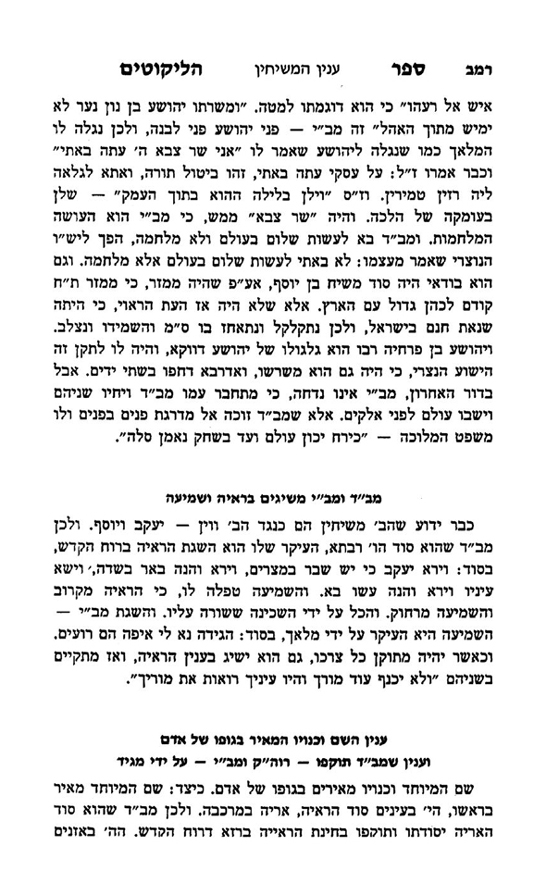
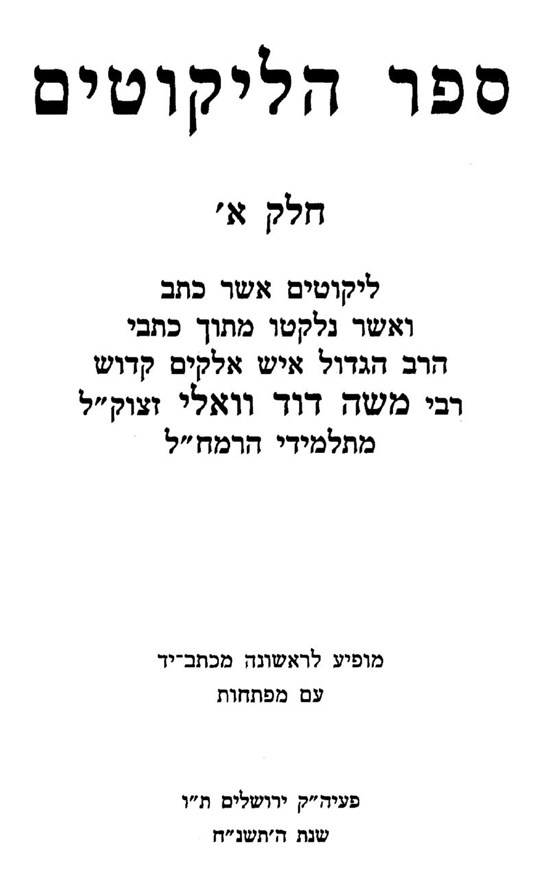
Without seeing the actual text, I don’t think people will believe me if I tell them what he writes, so here is the relevant page from Sefer ha-Likutim p. 242.

According to Valle, Jesus was meant to be Mashiach ben Joseph, but the needless hatred of the Jewish people prevented him from assuming this role. This is such a strange passage that I am impressed that the editor did not censor it prior to publication. For discussion of it, see here.

Interestingly, R. Abraham Abulafia appears to also have identified Jesus as Messiah ben Joseph. See Moshe Idel, Studies in Ecstatic Kabbalah (Albany, 1988), p. 53.

To be continued.


[1] I have explained Rambam according to the exoteric meaning, which is the level that Aviezer is arguing on. Aviezer makes no reference to a possible esoteric teaching.
[2] In the recently published The Rav Thinking Aloud on the Parsha: Sefer Bereishis, p. 8, the Rav misspoke and referred to this conception as the Aristotelian theory.
[3] Thus, I believe that both Rabad in his hassagah to Hilkhot Teshuvah 3:7 and also Kafih in his commentary ad loc., are mistaken in thinking that Maimonides, in listing different types of heretics, is referring here to one who believes in creation from eternal matter. When Maimonides writes about one who does not believe that God is ראשון וצור לכל he is not referring to time but causation. In fact, this formulation of Maimonides is also in accord with Aristotle’s view (that is, how Aristotle was understood by the medievals) that the world is both eternal and ontologically dependant on God. Nowhere in the Mishneh Torah does Maimonides affirm creation, ex nihilo or otherwise. This was recognized by R. Jacob Emden who sees the Mishneh Torah as more radical in this regard than the Guide. See Mitpahat Sefarim (Lvov, 1870) pp. 64-65 (where he also accuses Ibn Ezra of believing in eternity). See also Emden, Otzar ha-Tov (in Birat Migdal Oz [Zhitomir, 1874], p. 22a, who writes, regarding Maimonides’ use in the Mishneh Torah of a proof that assumes the world’s eternity:

לו ידעו הרבנים התלמודיים בפלוסופיא לא היה [!] שותקים לו בכאן

The Maharal, Netivot Olam,p. 224, writes:

והנה בנה עיקר ראייתו על התנועה הנצחית וזהו הפך האמונה שאין אנו מודים בזאת ההנחה. וא”כ כבר נפל הבנין בכללו

That the Guide is actually a theologically more conservative work than the Mishneh Torah has recently been argued by Charles Manekin, “Possible Sources of Maimonides’ Theological Conservatism in His Later Writings,” in Jay M. Harris, Maimonides After 800 Years (Cambridge, 2007), pp. 207-230. One should not forget that the Maimonidean controversy was precipitated by the Mishneh Torah, in particular Sefer ha-Mada, not the Guide.

[4] See the passage quoted from him in Yitzhak Shouraqui, Masoret be-Idan ha-Moderni (Tel Aviv, 2009), p. 34. On p. 44, Benamozegh writes that Ralbag, R. Hasdai Crescas, and R. Nissim did not believe in creation. What he means is that Ralbag did not believe in creation ex nihilo. Crescas did not really believe in creation at all, seeing the universe as eternal, that is, eternally created by God. This means eternal ontological dependence of all existence on the Creator. However, Crescas does believe that our world, as opposed to the universe as a whole, was created at a certain instant. See Warren Zev Harvey, Physics and Metaphysics in Hasdai Crescas (Amsterdam, 1998), pp. 18-19. As I pointed out in Limits, both Ralbag and Crescas stand in opposition to Maimonides’ Fourth Principle. Yet I am unaware of R. Nissim expressing a radical view regarding creation. Does anyone know what he is referring to?
[5] R. Judah Alfakhar also seems to make this error. See Kovetz Teshuvot ha-Rambam ve-Iggerotav (Leipzig, 1859), vol. 3, p. 1b.
[6] I thank Lawrence Kaplan for discussing this matter with me, although this should not imply that he agrees with what I have written.
[7] See here.
[8] Here is what Hirsch writes in Collected Writings, vol. 7, p. 57 (cited by Slifkin, here):

Jewish scholarship has never regarded the Bible as a textbook for physical or even abstract doctrines. In its view the main emphasis of the Bible is always on the ethical and social structure and development of life on earth; that is, on the observance of laws through which the momentous events of our nation’s history are converted from abstract truths into concrete convictions. That is why Jewish scholarship regards the Bible as speaking consistently in “human language;” the Bible does not describe things in terms of objective truths known only to God, but in terms of human understanding, which is, after all, the basis for human language and expression
[9] See here.
[10] See here.
[11] See here.
[12] On this issue, I find mid-twentieth-century Orthodox reconciliations of Torah and science very interesting in that the authors do not seem to be looking over their shoulders, worried about the reaction of the more literalist segment of Orthodoxy. R. Joseph Hertz’s essays following the book of Genesis in his edition of the Pentateuch are a good example of this. Another is R. Samuel Rosenblatt, Our Heritage (New York, 1940), pp. 174-181, in essays entitled “How the World Came Into Being” and “The Garden of Eden, Fact or Fiction.” You can see the essays here, or below.


While reading Rosenblatt’s essays, ask yourself if they could be published in an Orthodox newspaper or shul bulletin today. Note in particular Rosenblatt’s assumption that the Torah makes use of “theories about the nature of the physical world and the details of its generation that were current at the time the Bible was written.” Also relevant to the general issue are his essays on Noah and the Flood, and the Tower of Babel.
[13] For more on “myth”, see my earlier post.

There I wrote:

While in the popular mind myth often is identical with fairy tale, this is not how scholars understand myths. For them, myths communicate cosmic truths in non-historical story form, and they are not synonymous with legends. My dictionary explains myth as “a usually traditional story of ostensibly historical events that serves to unfold part of the world view of a people or explain a practice, belief, or natural phenomenon.”

S. of On the Main Line called my attention to Shadal’s letter in Iggerot Shadal, p. 661, where he speaks about the religious value of “illusions,” that is, matters that are not factual, but nevertheless have great religious value. In this letter we see Shadal, the great opponent of Maimonides, nevertheless adopting his own version of “necessary truths.”

שאין הריליגיאון חביבה לא-ל בשביל אמתתה, רק בשביל תועלתה בתקון המדות, ועל כן אין צורך שיהיו כל דבריה אמתיים, ושאין לנו עכ”ז להרחיק א-להיותה, ושאין להרחיק מהא-ל הגדת דברים בלתי אמתיים כי להגיד כח מעשה בראשית לבשר ודם א”א, ולא יתכן קיום החברה והצלחת האדם בידיעת האמת, אלא באיללוזיון, כי כן הטבע (אשר הוא בלא ספק רצון הא-ל) מרמה אותנו בענינים הרבה.

[14] Rather than refer to any number of books on the history of astronomy, here is what the Wikipedia entry on “Geocentric Model” has to say:

Adherence to the geocentric model stemmed largely from several important observations. First of all, if the Earth did move, then one ought to be able to observe the shifting of the fixed stars due to stellar parallax. In short, if the earth was moving the shapes of the constellations should change considerably over the course of a year. If they did not appear to move, the stars are either much further away than the Sun and the planets than previously conceived, making their motion undetectable, or in reality they are not moving at all. Because the stars were actually much further away than Greek astronomers postulated (making movement extremely subtle), stellar parallax was not detected until the 19th century. Therefore, the Greeks chose the simpler of the two explanations. The lack of any observable parallax was considered a fatal flaw of any non-geocentric theory. Another observation used in favor of the geocentric model at the time was the apparent consistency of Venus’ luminosity, thus implying that it is usually about the same distance from Earth, which is more consistent with geocentrism than heliocentrism. In reality, that is because the loss of light caused by its phases compensates for the increase in apparent size caused by its varying distance from Earth. Once again, Aristotle’s objections of heliocentrism utilized his ideas concerning the natural tendency of earth-like objects. The natural state of heavy earth-like objects is to tend towards the center of the earth and to not move unless forced by an outside object. It was also believed by some that if the Earth rotated on its axis, the air and objects in it (such as birds or clouds) would be left behind.

[15] Norman Lamm, “The Religious Implications of Extraterrestrial Life,” Tradition 7 (Winter 1965) pp. 27-28.
[16] A more academic version of this article appeared in JQR 55 (Jan. 1965), and some points in it were subjected to strong criticism by Harry Wolfson, ibid., 56 (Jan. 1966). Lamm told me that he felt it was a great honor for a young scholar like himself to be criticized by Wolfson. Similar sentiments have been expressed by students who were criticized in class by the Rav and Saul Lieberman.
[17] See here and here (note how the mention of R. [David] Feinstein has been removed from the first source).
[18] One reader asked me if there are traditional sources that speak of God creating things in the world after the initial creation. As a matter of fact, Isaiah 65:17 reads: “For, behold, I create new heavens and a new earth; and the former things shall not be remembered, nor come into mind.” A midrash quoted in R. Kasher’s Torah Shelemah, vol. 1, p. 123, reads as follows:

באותה שעה [כשעברו את הים] ברא להם הקב”ה ארץ חדשה כמו בבריאת העולם בששת ימי בראשית.

These two sources are cited by R. Judah Leib Zlotnick, “Bereishit” bi-Melitzah ha-Ivrit (Jerusalem, 1938), p. 27.

[19] Interestingly, R. Jonathan Eybschuetz, Tiferet Yehonatan, parashat Noah (p. 11a in the standard edition), claims that the builders of the tower were trying to make it so high that they could then launch a spaceship from it that would reach the moon (or perhaps I should say “the sphere of the moon”). This would then become their new home!

וזה היה כונת דור הפלגה ג”כ שבקשו לקבוע מושבם בכדור ירחי ששם יהיו נצולים ממבול וחשבו לעשות ע”י ספינה הנ”ל אפס כיצד יגביהו אותו הספינה למעלה מאויר העכור ולזה חשבו לבנות מגדל גבוה כל כך עד למעלה האויר ההוא ומשם יוכלו להשתמש בספינה הנ”ל לשוט באויר עד כדור הירחי.
[20] See Goldstein, Jesus in the Jewish Tradition (New York, 1950), p. 302 n. 34.

[21] See Louis Ginzberg, Legends of the Jews, vol. 3, p. 28.
[22] See Targum Ps.-Jonathan, Numbers 31:8, Zohar, vol. 3, pp. 194a-194b, Ginzberg, Legends, vol. 6, p. 144.
[23] For more on R. Joshua and Jesus, see Markham Judah Geller, “Joshua B. Perahyah and Jesus of Nazareth: Two Rabbinic Magicians” (unpublished doctoral dissertation, Brandeis University, 1974).
[24] See Peter Schäfer, Jesus in the Talmud (Princeton, 2007), ch. 3. Some readers might also enjoy Herb Basser’s lecture, “How Reliable are the Talmudic Teachings on Jesus,” available here.

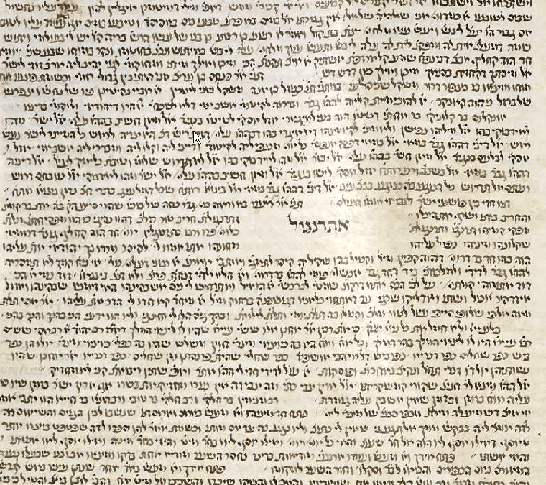
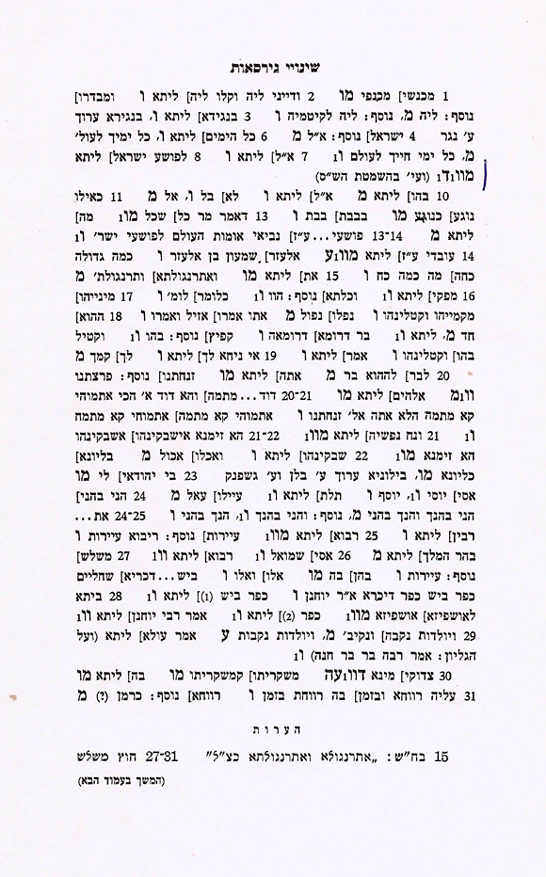
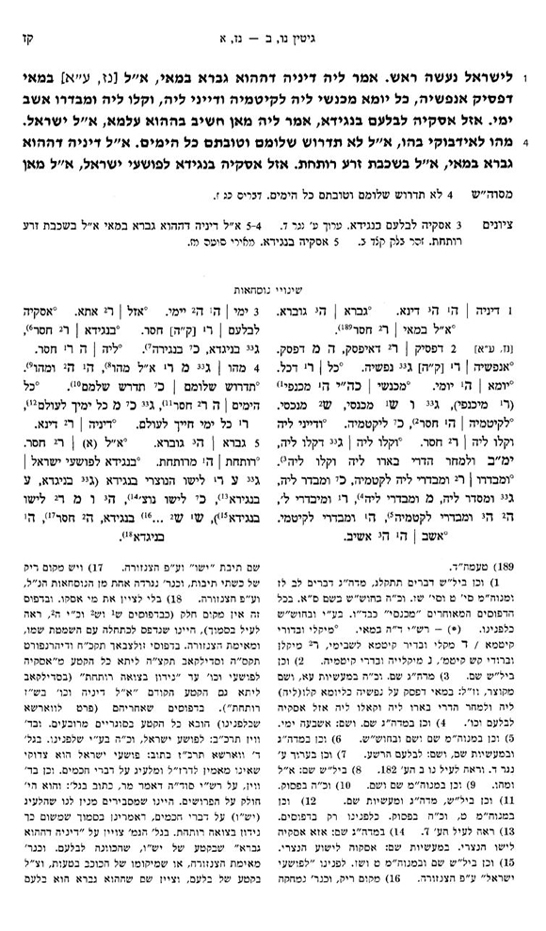
The original version of Sanhedrin, which mentions Jesus, is not found in the Artscroll edition. In other words, the Artscroll Talmud, including the Hebrew version, is still a censored, and thus defective, edition. I find this quite amazing. Is there a valid reason why Artscroll has not returned the Talmud to its pristine text? Speaking of internal censorship, here is another amazing example. Gittin 57a has a reference to Jesus, and this is preserved in the Munich manuscript and other uncensored mss. (and recorded in the Soncino translation). Here is a copy of the Munich manuscript. Look three lines above the large word אתרנגול

It states that Jesus was raised from the dead through incantations: אסקי’ לישו בנגיד’. In the standard text this has been altered to read, instead of Jesus, לפושעי ישראל. Now here is a copy of Meir S. Feldblum’s Dikdukei Soferim on Gittin. See how he wouldn’t even record what the Munich edition stated, and instead advises the reader to examine Hashmatot ha-Shas!


This book was published in 1966 and he was afraid to give us the reading in the Munich ms., yet Rabbinovicz in nineteenth-century Germany has no problem giving us the correct reading in the earlier mentioned story from Sanhedrin (as well as in the other talmudic passages where Jesus is mentioned). Does Feldblum’s action make any sense? I wonder if some future historian will be led to mistakenly conclude that anti-Semitism was more of a problem in 1966 America than nineteenth-century Germany. Fortunately, last year a new edition of Dikdukei Soferim on Gittin was published. Here is the relevant page where we are told what the Munich ms. really says.


International Book Week 2011

International Book Week 2011
by Eliezer Brodt
This week is the International book week in Jerusalem at Binyanei Ha‘uma. Here is a list for some of the new titles for sale. Besides for these new titles there many other great discounts, for example Bialik is having some nice sales on some classic books much cheaper than their normal sale prices. הספרייה הלאומית בעקבות הבעל שם טוב: מאתיים וחמישים שנה למותו של הבעש”ט, מאתיים שנה למות ר’ נחמן מברסלב, תערוכה מאוצרות הספרייה הלאומית קטלוג אוצרות- אסתר ליבס תש”ע. מוסד ביאליק קובץ על יד – כרך עשרים אסטרולוגיה ומדעים אחרים בין יהודי ארץ-ישראל: בתקופות ההלניסטית-רומית והביזאנטית, מאיר בר-אילן מרכז זלמן שזר והוא ימשל בך? – אברהם גרוסמן תלמוד מאיר- קובץ מאמרים מאברהם הברמן תולדות הסוד העברית- ימי הביניים- יוסף דן חלקים ה-ו בית מדרש לרבנים קונטרס התשובות החדש ש’ גליק, כרך ד – מפתח העניינים וביבליוגרפיה סוגיות בחקר התלמוד הבבלי- אסופת מחקרים בעניני מבנה, הרכב ונוסח : שמא יהודה פרידמן הפרושים ואנשי כנסת הגדולה: אליעזר פינקלשיטין (כריכה רכה) תפארת לישראל: ספר היובל לכבוד ישראל פרנצוס אוצר לשונות ירושלמיים- מונחים, ביטויים ולשונות בפיהם של האמוראים בתלמוד הירושלמי, ג’ חלקים: משה עסיס קיבוץ המאוחד- ספריית הילל בן חיים יודופוביה גישות כלפי היהודים בעולם העתיק: פטר שפר היסטוריה יהודית? כתיבת היסטוריוגרפיה יהודית בעידן פוסט מודרני : משה רוסמן מסורת ושינוי- מסירת ידע בקרב יהודי מערב אירופה בימי הביניים: מיכה פרי מתווי דרכים – עיתונות אגודת ישראל- יוסף פונד בן צבי הכתר – סיפרו של כתר ארם צובה: אמנון שמוש (כריכה רכה) קיצור סדר האצילות- לר’ חיים ויטאל עורך בידי יוסף אביב”י ספר הודו חלק ב: מרדכי עקיבא פרידמן ושלמה גויטיין מקומראן למהפכה התנאית היבטים בתיפסת הטומאה: ורד נעם השירה העברית בספרד ובשלוחותיה ג’ חלקים- עזרא פליישר בר אילן חכמי המשנה והתלמוד – הגותם פועלם ומנהיגותם: משה בר Urim Press On Changes in Jewish Liturgy Options and Limitations – Daniel Sperber Innovation in Jewish Law A case study of Chiddush in Havineinu- Michael J. Broyde Why We Pray What We pray – The remarkable History of Jewish Prayer Rabbi Dr. Barry Freundel


תורת הצורה והחומר וההעדר: ספרים המדברים בהשמטות הרמב”ם ובכללים להסבירם

מאת עזרא בראנד
ידוע הוא לכל יודע ספר המשנה תורה שאחת מהמידות שהמשנה תורה נדרש בה היא ההשמטה ממנו. כמעט כל מפרשי הרמב”ם הניחו כיסוד שהרמב”ם כוון לכלול בספרו כל התורה שבעל פה (כמו שהזכיר הרמב”ם בהקדמתו למשנה תורה), ואם יש דין חסר ממנו יש דברים בגו[1]. אמנם גם לאחר שהוכרה ההשמטה בהרבה מקרים קשה לדעת מה ללמוד מזה; אם להחמיר או להקל, לטמא או לטהר, לפסול או להכשיר (ולעתים קרובות נחלקו בזה המפרשים), אבל הכל מודים שניתן ללמוד מכל השמטה.
א. ספרים העוסקים בהשמטות הרמב”ם
ישנם כמה וכמה ספרים שמרבים לדון בהשמטות מהמשנה תורה לרמב”ם, ומעירים על הרבה מהם, כגון מגיד משנה, כסף משנה, לחם משנה, מעשה רקח (כל אלו פירושים על הרמב”ם), בית יוסף על הטור, ביאור הגר”א על השלחן ערוך, ספר צל”ח על הש”ס ושו”ת נודע ביהודה להר’ יחזקאל לנדאו, וספר ראשון לציון על הש”ס (מבעל ‘אור החיים’ על התורה).
וכן יש ספרים שתכליתם המוצהרת להעיר וללקט השמטות הרמב”ם. הרב ישעיה פיק בספרו ‘אומר השכחה’[2] ליקט הרבה מההשמטות של הרי”ף, הרמב”ם, הסמ”ג, הרא”ש, הטור, והשו”ע. כנראה, ספר זה לא הוכן לדפוס ע”י המחבר[3]. הוא מעיר על מאה וששים השמטות, מהן מאה עשרים ותשע הן השמטות הרמב”ם[4]. וברור שרשימה זו היא אך מעט מן המעט מן המנין השלם[5]. פעמים שהמחבר מאריך לתרץ את ההשמטה[6], או מציין לספר אחר בו יישבה[7], אבל ע”פ רוב הוא מסתפק להעיר עליה, ולהניחה בקושייה. הר’ פיק כותב כמה פעמים שהקשה השמטות אלו לגדולים שונים, ושהתשובות מובאות בספרי שאלות ותשובות שלהם[8]. וגם הביא השמטות שהקשו לו אחרים (אולי היה מפורסם בהתעניינותו בענין זה!)[9].
כידוע, הרב ישעיה פיק כתב השלמות לציוני ‘מסורת הש”ס’ הנדפסים בגליון הגמרא (מאת הרב יהושע בועז). הוא גם כתב השלמות לציוני ‘עין משפט’ שבצד הגמרא המציינים למקום המובא אותו דין במשנה תורה לרמב”ם, בשלחן ערוך, ובסמ”ג (גם ציונים אלה חיברם הרב יהושע בועז), והשלמותיו נדפסים ב’עין משפט’ בסוגריים[10]. בהשלמות אלו העיר לפעמים על השמטות הרמב”ם[11].
וכן הרב יצחק אריאלי בספרו עינים למשפט העיר על הרבה השמטות מספר משנה תורה, גם במהדורה הקצרה וגם בארוכה של הספר[12]. בהקדמה למהדורה הקצרה כתב ש”ממטרות ספר זה להבליט ולהטעים את ההשמטות”, אבל כנראה גם הוא לא השלים את העבודה כראוי, והשמיט לציין כמה מההשמטות. אולם, במהדורתו הארוכה נראה שהשלים את המלאכה ובאמת העיר על כל השמטה של הרמב”ם (אבל לא בדקתי באופן יסודי), אבל לא כתבו אלא על שש מסכתות.
הרב יעקב ליב מוינעשטער העיר על הרבה השמטות הרמב”ם במסכת ביצה בסוף מהדורתו של מסכת ביצה (נדפס בשנת תרצ”ד בניו יורק). הוא מרבה להביא קושיות בענין השמטות מה’ראשון לציון’ (מבעל ‘אור החיים’) ואחרים, ומביא את תירוציהם, וגם משתדל להסבירם בעמצמו. וגם הוא, כמו הרב ישעיה פיק, הקשה לאחרים על אודות השמטות שמצא, ומביא תשובותיהם. ותשובותיהם ג”כ נדפסו בשאלות ותשובות שלהם.
הרב רחמים יוסף אג’ייני, רבה של עיר צפרו במרוקו, ונפטר בשנת תרנ”ג, ג”כ ליקט השמטות הרמב”ם. צאצאיו הדפיסו את רשימה זאת על סדר הרמב”ם בירושלים תשל”ד. היא מובאת במאסף תורני ‘הר המלך’, (נחלת הר חב”ד תשמ”ז), עמ’ לז-צב, על שם ‘קונטרס השמטות’.
הרב יהודה צארום ליקט הרבה השמטות הרמב”ם ממסכת שבת בספרו ‘משנת יהודה’ על מסכת שבת. הוא מביא הסברים שונים—בין של עצמו בין של אחרים–להסביר כל השמטה. הוא בכונה אינו משתמש בכללים שהביא במבואו כתירוץ לקושיא מדוע השמיט דין פלוני, כמו שכותב בסוף המבוא (עמ’ כ).
גם ב’ספר המפתח’ על הרמב”ם מהדורת פרנקל ליקטו הרבה השמטות על סדר המשנה תורה. כנראה הם ליקטו הכמות היותר גדולה של השמטות מכל המלקטים דלעיל. אבל דא עקא שסדר ה”מפתח” הוא על סדר הרמב”ם, ובהרבה מקרים קשה לדעת איפה הסעיף בספר המפתח המעיר על איזושהיא השמטת הרמב”ם, כיון שנשמט הדין מהרמב”ם! ובשלמא בדין שהיה שייך להרמב”ם להביאו רק במקום אחד לבד, ניחא לציין על סדר הרמב”ם, אבל כשהדין מענינם של כמה הלכות או פרקים, או שיכול לבוא באחד מכמה מקומות שונים, קשה לדעת איפה למצוא את הציון בספר המפתח. ויש להמליץ שיעשו מפתח השמטות על סדר הש”ס.
ויש להעיר שבהרבה מקומות העירו המפרשים על דינים שהושמטו מהרמב”ם, ובאמת הם נמצאים ברמב”ם[13]. וכתבו המפרשים סיבות שונות לתופעה זאת. המגיד משנה בסוף הקדמתו לפירושו לספר זמנים כתב שאירע הדבר כשהרמב”ם הביא סוגיא אחת בשני מקומות שונים משום שכך התאים יותר ע”פ סדר הדינים:
“מהפלגת רבינו (=הרמב”ם) בשמירת הסדר היה לשנות בקצת מקומות קצת דינים להיות לכל אחד מהן מבוא בענינים חלוקים כפי החלוקה הישרה שנחלקו מאמריו ונסדרו, ולפיכך ראוי למעיין להתבונן בזה. וכבר ראיתי למי שהיה בקי בספריו (=בספרי הרמב”ם) שלא הרגיש בנמשך אחרי זה, רצוני לומר שבהיות לדין אחד מבוא בשני ענינים יבאר רבינו חלק אחד במקומו הראוי לו והחלק השני במקומו האחר ויעיין המעיין בדין ההוא וימצאהו במקום אחד מבלתי שלמות חלקיו ויתמה על זה”[14].
המאירי בהקדמתו ל’בית הבחירה’[15] כתב טעם אחר, משום שלפעמים הרמב”ם כתב דין במקום שבאמת אינו ראוי לו ע”פ סדר הדברים, אלא שבא שם אגב דין אחר: “והוא שיקרה זה לפעמים תפול המחשבה על דבר אחד היותו במקום אחד, ואחר החפוש תמצא במקום אחר לא עלה על לב המעיין היותה שם, אלא שבאה שם על ידי גלגול איזה ענין…”[16].
וכתב העינים למשפט בהקדמתו לקידושין דמסתבר להניח לגבי טעיות האחרונים אחר הופעת ציוני ה’עין משפט’ שפעמים מכיון שלא היה מצויין בספר עין משפט בגליון הגמרא סברו האחרונים שאינו ברמב”ם, ובאמת הוא ברמב”ם אלא שנשמט מהעין משפט[17].
ב. כללי השמטות הרמב”ם
מפרשי הרמב”ם למשך כל הדורות חידשו כללים המתארים אילו דינים המופיעים בגמרא השמיט הרמב”ם ממשנה תורה. נראה לחלקם לשני סוגים: יש מהכללים שהם אינטרינסיים (INTRINSIC), זאת אומרת שהם אומרים שאין הרמב”ם מביא דינים שהם מסוג מסויים. לדוגמא, הרבה כותבים שהרמב”ם אינו מביא הדינים שהם נובעים מחשש רוח רעה. ויש כללים שהם אקסטרינסיים (EXTRINSIC), דהיינו שהרמב”ם אינו מביא דינים מטעם חיצוני כלשהו. דוגמא לזה הוא מה שכתבו אילו מפרשים שאין הרמב”ם מביא דין שיש בו מחלוקת בגמרא ואינו יודע כיצד להכריע.
הרב יצחק אריאלי, בהקדמתו למסכת קידושין–המסכתה הראשונה שנדפסה בסדרת ספריו ‘עינים למשפט’ (במהדורה הארוכה[18]), כתב שבעה כללים להסביר אילו דינים הושמטו. בהצגת כל כלל וכלל בפני הקורא, מביא הר’ אריאלי כמה דוגמאות לדינים שעל פי הכלל ההוא הושמטו מהמשנה תורה, וכן לכל אורך ספרו מרבה להשתמש באותם הכללים להסביר השמטות רבות[19].
הרב יהודה צארום בסוף ספרו ‘משנת יהודה’ על מסכת שבת כולל מאמר שקרא בשם ‘מבוא להשמטות הרמב”ם’, והאריך בו הרבה באיסוף כללים רבים שחודשו על ידי המפרשים לבאר וליישב השמטות הרמב”ם. אולם, אין הכללים מסודרים כ”כ, והם מעורבים בתוך פלפולים ארוכים. הר’ צארום עוסק שם בענין זה לאורך כעשרים עמודים, וכמעט שלא הניח מקום לאחרים להתגדר בנושא זה.
מחבר נוסף שדן בענין כללי השמטות הוא הרב יעקב חיים סופר, שליקט כמה כללים בתוך ספר ‘מעט מים’ (עמ’ יח), ומציין שם מקומות שונים בספריו שליקט מראה מקומות על כללים אלו. וישנם עוד ספרים ומאמרים שליקטו כללים מלבד אלו.
נחוץ להעיר שישנם הרבה דינים שעל פי כללי המחברים לא היה לרמב”ם להביאם במשנה תורה ואף על פי כן מופיעים שם. אכן, מטרת המחברים היתה רק לתאר ולקטלג את הדינים שלא הביאם הרמב”ם. לפיכך, אין לנו לומר שהרמב”ם לא הביא כלל דינים מסוג זה או אחר, אלא רק שהרמב”ם לא הרגיש צורך מוחלט להביא כל דין ודין מאותו הסוג.


[1] אולם, עי’ חזון איש, ‘קובץ איגרות’ חלק ב (בני ברק תש”נ), איגרת כא שכתב שאין לדייק מהשמטה אלא אם כן משמיט פרט אחד מדין שלם. ולפי”ז לכאורה יוצא שאין לדייק מרוב השמטות הרמב”ם. ושמעתי שנחלקו תלמידי החזון איש בטעמו. יש אומרים שכוונת החזון איש היתה ששייך שהרמב”ם למד את הסוגיא באופן שמעולם לא עלה על דעתינו, ולו היינו לומדים כמותו, היינו נוכחים לדעת שהדין העולה מן הסוגיא באמת כלול במה שפסק או שאי אפשר לו לפסוק כן משום שישנה סוגיא אחרת הסותרת את הדין הזה . ויש אומרים שסבר שאין לדייק משום ששייך שהרמב”ם שכח להביא את הדין. וכהבנה זאת מבואר מדברי הרב יהודה לפקוביץ, ‘דרכי חיים’ חלק ב (בני ברק תשס”ז), עמ’ קעט-קפ, שהאריך בענין “לכל נברא יש גבול עד היכן יכול להשיג בתורה” (כן היא כותרת הקטע), ובסוף כתב: “ויסוד הדברים שמעתי ממרן ‘החזון איש’ זצ”ל שדיבר בארוכה כדברים אלו לענין השמטות הרמב”ם”. ועל כל פנים שיטה זאת מחודשת היא מאוד, ולא מצאתי לה חבר. ולכאורה כל המפרשים שהקשו על הרמב”ם למה השמיט דין מסויים סוברים שלא כחזון איש בזה.
[2] נדפס לראשונה בשנת תר”כ בקניגסבורג.
[3] עי’ ‘אומר השכחה’ דף ג ע”א לפסחים מ ע”א: “ועמ”ש קונ’ שה”ם (=שטרי המאוחרין) עירובין יז: ישוב הגון וראוי להעתיקו לכאן בעת הפנאי“. וכן משמע מהא שמצינו שעד דף ה ע”ב מדפי הספר הההשמטות נסדרות על סדר הש”ס, ומשם והלאה אין להן סדר.
[4] ויש שליקטו עוד השמטות והוסיפו על אלו של הרב ישעיה פיק, הרי הם הרב גרשון ליינער ובנו הרב ירוחם ליינער (אדמו”רים מראדזין), נדפסים בסוף ‘אומר השכחה’ הוצאת מנורה (ניו יורק תשי”ט).
[5] כמו שיראה לכל המעיין בספר המפתח על הרמב”ם מהדורת שבתי פרנקל. להשערתי, יש בממוצע יותר מהשמטה אחת—דהיינו השמטה שמעירים עליה המפרשים או שהיה ראוי למפרשים להעיר עליה–בכל דף גמרא שעוסק בהלכה (בניגוד לדפים העוסקים באגדתא, שאין להוציא מהם כ”כ הרבה הלכות, וגם אינו ברור שהרמב”ם קיבל על עצמו לפסוק את כל הדינים המשתמעים מסוגיות אגדתא כמו בסוגיות העוסקות בהלכה). ועי’ הרב משה צוריאל, ‘אוצרות המוסר’ (ירושלים תשס”ג) חלק א, עמ’ 208, שהביא מנין השמטות הרמב”ם שבספר אומר השכחה (הוא כתב שהמנין שמונים ושבע, והוא טעות), וכתב שהוא פלא שהשמיט כ”כ מעט. ובאמת השמיט הרבה יותר מזה, כנ”ל. והאומר השכחה העיר רק על השמטות אחדות בהרבה מסכתות, ובודאי שיש להקשות על הרבה יותר מזה. ושאלתי את הרב משה צוריאל את זה והודה לי, ואמר שכתב כן לפני שהכיר שיש כ”כ הרבה השמטות.
[6] עי’ דף ב ע”ב לפסחים לד ע”א; דף ז ע”ב לסנהדרין קיב ע”א.
[7] כגון דף א ע”ב לשבת קט ע”א: “ובהפלאה שבערכין ערך שרק הארכתי בס”ד”; דף ג ע”ב לביצה כ ע”א: “עיין אריכות בזה בקונטרס קשות מיושב”; דף ד ע”א ליומא פג ע”א: “ועמ”ש בס”ד בחיבורי יש סדר למשנה”; דף ד ע”ב לבבא קמא נט ע”א: “ועמ”ש קונ’ שה”ם סוטה י”א”; דף ו ע”א לערכין יא ע”א: “והארכתי בתקוני כ”ש (=כלי שרת)…”; דף ו ע”ב לתוספתא פרק ראשית הגז: “ועמ”ש בראש כרך הרמב”ם חלק ד’ “; דף יא ע”א לקידושין נח ע”א: “וכמו שהארכתי במקצת בשאילת שלום אות קל”ב קחנו משם”.
[8] כגון בדף א ע”ב לעירובין דף צב ע”ב שהביא תשובה מבעל ‘שו”ת זכרון יוסף’ (חיברו הרב יוסף משטיינהרט, שנשא בזווג שני את אחותו של הרב ישעיה פיק. כן כתוב בהקדמת המו”ל ב’שו”ת זכרון יוסף’ מהדורת ירושלים תשס”ה) לקושייתו אליו. ובדף יב ע”ב לשבת עה ע”ב: “והארכתי בס”ד בענין זה בתשובתי להרב מו”ה איצק פאלצבורג חתן גיסי הגאון בעל זכרון יוסף”. ויותר מפורסם הוא התכתבותו עם הרב יחזקאל לנדאו, וכמה תשובות בספרו של הרב יחזקאל, ‘שו”ת נודע ביהודה’, נכתבו להשיב לקושיותיו של הרב ישעיה פיק אליו. והרבה מקושיות אלו היו בענין השמטות הרמב”ם והפוסקים. עי’ נודע ביהודה מהדורא תנינא או”ח סי’ סט שנשאל אודות השמטה הנזכרת באומר השכחה דף ב ע”ב לפסחים כח ע”ב (נדפס משום מה לפני הקטע השייך לפסחים ו ע”א); נודע ביודה מהדורא תנינא יו”ד סי’ קמד שנשאל אודות השמטת דין בפסחים ב ע”א (ומעניין שבצל”ח בפסחים שם ג”כ דיבר בעל הנודע ביהודה בזה); נודע ביהודה מהדורא תנינא או”ח סי’ צד אודות השמטה הנזכרת בדף ב ע”ב לפסחים ח ע”ב; נודע ביהודה שם אודות השמטה הנזכרת בדף ג ע”ב לראש השנה טז ע”ב; נודע ביהודה מהדורא תנינא יו”ד סי’ קסג אודות השמטה הנזכרת ב’קשות מיושב’ (חיברו הרב ישעיה פיק, קניגסברג תרכ”ה) דף א ע”ב. וכמה פעמים הזכיר הרב ישעיה פיק שהאריך בענין השמטה זאת או שהביא תשובה מגדול אחד “בחיבור כנסת חכמי ישראל” (כגון דף ב ע”ב לפסחים כח ע”ב (נדפס משום מה לפני הפסקה לפסחים ו ע”א), דף ג ע”ב לראש השנה טז ע”ב, דף ד ע”ב לבבא קמא קי ע”א, דף ה ע”א לעבודה זרה לב ע”א, דף ה ע”א לתמורה לג ע”ב), ולא ידעתי מה הוא.
[9] כגון דף ד ע”ב לנזיר לב ע”ב: “הרב הגאב”ד דכאן נר”ו הקשה חידוש דנשמט דבר זה ברמב”ם שלא הזכירו”; דף ה ע”א לזבחים פז ע”א: “נשאלתי מהגאון המפורסם אב”ד דכאן נר”ו למה השמיט הרמב”ם הך מילתא דבשמיני…”; דף ז ע”ב לסנהדרין קיב ע”א: “…ונשאלתי בזה מהרב הגאון מו”ה עקיבא אייגר מליסא נר”ו”; דף יב ע”ב לחולין ד ע”א: “שאלני ידידי האברך הרבני השלם מו”ה בירך…”; שם לפסחים קכא ע”א: “נשאלתי מחכם אחד…”; דף יד ע”ב ליומא מא ע”א: “וכן הערני בעל המחבר בנן יהושיע נר”ו”.
[10] וע’ הרב יהודה ליב מימון, ‘תולדות הגר”א’ (ירושלים תשט”ו), עמ’ קיג בהערה, שהקשה על הרב ישעיה פיק ב’אומר השכחה’ ליומא כב ע”ב דכתב “לא מצאתי בפוסקים, רק המגן אברהם ריש סי’ קנו הביאו”, והפליא עליו הרב מימון “ושכח כי הרמב”ם הביא הלכה זו בפ”ד מהל’ תמידין ה”ד, וכמו שמצויין גם בעין משפט בגמרא שם”, ע”ש שהאריך להפליא איך שייך שהרב ישעיה פיק ישכח שהלכה זו מובאת ברמב”ם. וכן העיר הרב ירוחם ליינער בהערותיו על ‘אומר השכחה’ (הוצאת מנורה). ונראה לי שקושיא זו בטעות יסודה, דהנה באומר השכחה שם כתב “לא מצאתי בפוסקים, רק המגן אברהם ריש סי’ קנו הביאו, אבל בסמ”ג וברי”ף והרא”ש וטור ושו”ע לא מצאתי ראיתי”, ולא הזכיר שהרמב”ם השמיטו. ועל כרחך כשכתב “לא מצאתי בפוסקים” כוונתו לשאר פוסקים מלבד הרמב”ם.
ומעניין שב’שו”ת פני מבין’ יו”ד סי’ שכט באמת טעה והקשה אודות השמטה זאת, וכתב ליישבו ע”פ כלל ?. וכן תמה עליו הרב עובדיה יוסף ב’שו”ת יביע אומר’ חלק ב חלק יו”ד סי’ טז אות ט. ואולי הטעתו מה שהקשו המפרשים למה לא מנו מוני המצוות איסור זה למנות יהודים, עי’ בספר המפתח להל’ תמידין פ”ד ה”ד. ועוד נראה לי אפשרות גדולה שרהיטת הלשון של ספר ‘אומר השכחה’ הנ”ל הטעה את מחבר ה’פני מבין’, שכן ‘פני מבין’ נדפס בשנת תרע”ג, מ”ח שנים אחר ש’אומר השכחה’ יצא לאור בשנת תרכ”ה, ומסתבר שהספר היה לפניו. וכן קצת משמע ממה שציין ב’פני מבין’ שם: “ועי’ מג”א סי’ רלא” (הוא טעות וצ”ל “מגן אברהם סי’ קנו“), וכן ציין ב’אומר השכחה’ שם שהוא הפוסק היחידי שהביא את הדין. וכן קצת משמע מהראיה האחרת שהביא ה’פני מבין’ שם להוכיח את הכלל הנ”ל, והיא הגמרא בברכות יג ע”א “כל הקורא לאברהם אברם עובר בעשה…”, שהשמיטו הפוסקים. וזוהי ההשמטה הראשונה שהקשה עליה ב’אומר השכחה’.
[11] כגון סוטה מח ע”א אות ב; שבת קמט ע”א אות ח.
[12] הרב יצחק אריאלי חיבר שתי מהדורות של סדרת ‘עינים למשפט’, כל אחת של שלשה כרכים. במהדורה שאני קורא “הארוכה” (נדפס בירושלים משנות תרצ”ו-תשל”א) הוא משלים ומתקן את ציוני ‘עין משפט’ והעיר על השמטות הרמב”ם, וגם מאריך בליקוט הראשונים והפוסקים. בדרך זאת פירש רק שש מסכתות בלבד (ברכות, נדרים, קידושין, בבא בתרא, סנהדרין, ומכות). ובמהדורה שאני קורא “הקצרה” (ירושלים תשכ”ג-תשכ”ו) הוא משלים ומתקן את ציוני ‘עין משפט’ והעיר על קצת השמטות הרמב”ם, וסדרה זו כוללת כל מסכתות הש”ס וגם ירושלמי ומסכתות קטנות. הרב יצחק אריאלי התמנה ע”י הרב קוק להיות הראש הישיבה הראשון בישיבת מרכז הרב בירושלים. הרב למד בצוותא עם רב קוק כל יום, ובלימודם התרכזו לעסוקי שמעתתא אליבא דהילכתא. הרב קוק עצמו הקדיש הרבה זמן לכתוב “הלכה ברורה”, שהוא מהדורה של הגמרא עם ליקוט כל פיסקי הרמב”ם המשתייכים לאותו עמוד בתחתית העמוד. בישיבת מרכז הרב ממשיכים את הפרויקט.
[13] עי’ לקמן הערה 15, והערה 18. ועי’ ‘עינים למשפט’ בהקדמה למהדורתו הקצרה עמ’ 6-7 עוד דוגמאות לזה (וכתב שהן “דוגמאות אחדות ממאות רבות”). ועי’ רב צארום עמ’ יט עוד שתי דוגמאות. וע’ אמרי בינה דיני יו”ט סי’ יח שהשמיט הרמב”ם הא דאיתא בביצה לד ע”א “אבל מפצעין את האגוז במטלית ואין חוששין שמא תקרע”. ובאמת הביאו הרמב”ם בהל’ שבת פכ”ב הכ”ד. וע’ ערוך השלחן סי’ מט אות ג שהשמיט הרמב”ם הא דאיתא בגיטין ס ע”ב “דברים שבכתב אי אתה רשאי לאומרן על פה”. ובאמת הביאו הרמב”ם בהל’ תפלה פי”ב ה”ח. וע’ ‘אבן שלמה’ על הראב”ן (ירושלים תשל”ה) סי’ מב עמוד לא ע”ב ד”ה “נלע”ד” שהשמיט הרמב”ם הא דאיתא בגיטין שם “דברים שבעל פה אי אתה רשאי לאומרן בכתב”. ובאמת הביאו הרמב”ם בהל’ תפלה פי”ב ה”י.
[14] ע”ש שהביא מקרה שהרשב”א טעה בזה. ועי’ כסף משנה בהל’ שבת פ”ו ה”ד שהעיר על הרמ”ך שטעה בזה.
[15] נדפס בראש ‘בית הבחירה’ למסכת ברכות (ירושלים תשכ”ה), עמ’ כז.
[16] עי’ שם שהביא המאירי דוגמאות של דינים שלא ברור מאיליו היכן למצואן ברמב”ם, משום שהדין בא ב”גלגול” במקום אחר. ועי’ עוד דוגמאות בIsadore Twersky, Introduction to the Code of Maimonides, New Haven 1980, pg. 293-294 . אגב, יש להעיר על פרט אחד במאירי שם בדוגמתו הראשונה: “כמו שתאמר על דרך משל מה שאמרו בחכם שכור שלא יורה אפילו אכל תמרים או חלב ונתבלבלה דעתו. והנה יחשוב המעיין למצאה בהלכות דעות לפי הענינים הנכללים שם, והנה ימצאוה בספר עבודה…”. ולכאורה מה שכתב “בהלכות דעות” אינו מובן כ”כ, דפשטות כוונתו ל לפרק ה שם שמדבר בו הרמב”ם איך ינהוג תלמיד חכם. אבל שם מדבר במידות טובות שינהוג בהם תלמיד חכם, ולהורות כשהוא שיכור הוא איסור. ולולי דמסתפינא הייתי אומר שהמקום הראוי להלכה זאת הוא בהלכות סנהדרין, ואולי יש ט”ס במאירי.
עוד הערה דרך אגב: עי’ שם במאירי בהקדמה שהאריך (החל מעמוד כו ד”ה “כאשר”) לומר שמי שירצה ללמוד גמרא עם פסקי הרמב”ם יצטרך לחפש הרבה במשנה תורה כשבא לסוגיא שאינו מעין שאר המסכתא. ושלכן כתב את ספרו ‘בית הבחירה’ שהוא פסקים על סדר הגמרא. ולכאורה, עכשיו שיש לנו ציוני ‘עין משפט’ בצד הגמרא, באמת יכולים ללמוד גמרא על פי המהלך המעודף על המאירי. והרב קוק כיוון למהלך זה בתוכנתו של ‘הלכה ברורה’.
[17] עי’ שם בהערה ה שהביא שש עשרה מקומות בקידושין בלבד ששייך שטעו האחרונים בזה.
[18] ראה מה שכתבתי על אודות מהדורות ‘עינים למשפט’ לעיל הערה 12.
[19] ועי’ בהקדמה לעינים למשפט על מסכת קידושין (בסדרו הארוך) עמ’ ח שכתב בסוגריים “יחדתי לזה מקום במבוא ל”ספר המקורים להרמב”ם” אשר אקוה לסדרו בקרוב אי”ה”, וכנראה שלא הספיק להדפיסו.


Upcoming Auction

Kestenbaum & Co. will be holding an auction next Thursday, Feb. 24th. On its site, it provides some highlights, and I wanted to point out a few others. Additionally, one can download the entire catalog by visiting the site. The first edition of R. Yosef Albo’s Sefer ha-Ikarim, Soncino 1485, being an incunabula is of course of note (lot 7). But, the colophon of this work is especially noteworthy. The colophon ends with “Ki mi-Tzion teitze Torah u-devar Hashem mi-Soncino.” Of course, this is a a play on the verse in Isaiah. While today we know that the printing press indeed usher in a new era of Torah and the dissemination of knowledge, this colophon at the end of a work published at the advent of the printing press is especially prescient.Another early and important work, is what is known as the “second Rabbinic bible,” today we know it as Mikra’ot Gedolot (lot 53). This edition as well as the “first” is discussed by Prof. Penkower in this post. Then we have a perennial favorite, R. Shmuel Arcivolti’s Ma’ayan Ganim (lot 41). This book is perhaps most well-known for its misuse. Prof. Shapiro’s post discusses some of the issues with the use of this work. But, it is worth noting that the book is divided into five sections, each beginning with the same illustration – a fountain. First, most early Hebrew books don’t contain illustration in the body (title pages are a different story). Second, the fountain shows a group of (very nude) cherubs with the fountain waters exiting from a less than flattering orifice. The book is currently available online, although who is to know when someone will discover the images and remove it. R. Yom Tov Lipmann Heller’s classic work on the Rosh – today known as Ma’adnei Asher and Divrei Chamudoth – is offered with its original title (lot 136). This is the first edition and the only to bear the original title – Maadeni Melech ve-Lechem Chammudoth. According to some, the change in title was precipitated by a false rumour that the original title indicated an insult to the ruling monarch. It is worth noting, that in the latest edition of R. Heller’s quasi-autobiography, Megilat Evah, the editor raises some questions as to whether this truly is the reason for changing the title. Another important title, in this case the title page is the Sha’ar bat Rabim (lot 169). This work has a beautifully illustrated title page as well as other pages. Please see this post On The Main Line where he discusses it. There are a few titles relating to haskalah. First, is one volume of the seminal Journal, Ha-Me’asef (lot 137). This volume contains the first appearance R. Yitzhak Satanow’s Mishlei Asaf, a work written in the style of Mishlei with extensive notes. As well as David Freidlander’s attack on R. Fleckles after Fleckles had denounced Mendelshon’s Biur. Finally, it contains an important article regarding the controversy of whether or not one can delay burial to ensure the person is in fact dead. One addition to the note on this lot, Moshe Samat has an important article on this last topic which was recently republished in the collection of his articles, Hadash Assur min ha-Torah. Another two haskalah works are Nachman Krochmal’s Moreh Nevuchei ha-Zeman (lot 164) and R. Moshe Kunitz’s defense of the Zohar, Ben Yochi (lot 165). Finally, R. Naftali Hertz Wessely’s Divrei Shalom ve-Emet (lot 209) rounds out the haskalah. This book which advanced novel, for that time, educational theories was a subject of a large controversy. Interestingly enough, today, most of his reforms have been incorporated into Jewish schools. The auction contains the Cassuto Collection (which you can read more about in the catalog) which focuses on Spainish and Portugese Jews. Now, for must of the past 500 years, that meant not Jews actually in those countries but who originated from those countries. The most popular of which is Holland – specifically Amsterdam. So we have a beautiful copy of R. Isaac Aboab work on Tanach with a portrait (lot 264) as well another (lot 263) from a Dutch Jews, where, inter alia, he criticizes the American revolution. On the topic of Dutch Jews, an excellent recent work is Nadler’s, Rembrandt’s Jews. See also this post discussing some internal conflicts within the Dutch community, as well as the first Jewish settlement in the Americas. A few letters of interest. First, a letter from the Chofetz Hayyim thanking a donor for their donation to the ladies auxilary of Radin (lot 232). There are three letters from each of the past three Luavitcher’s rebbitzins, all fairly personal, discussing their move from the “Motherland” (Russia) to Latvia (lots 246-48).