1

@TheSeforimBlog is finally on Twitter!

@TheSeforimBlog is finally on Twitter!
Follow us if you’re interested in the world of Jewish books, bibliography, scholarship, and more!


Yom Tov Sheni and the Customs With Regard to Travelers

Yom Tov Sheni and the Customs With Regard to Travelers
By J. Jean Ajdler
J. Jean Ajdler of Brussels, Belgium, is a civil and structural engineer. He has published articles about medieval Jewish astronomy, the history of the Jewish calendar, and Talmudic metrology, and is the author of Hilkhot Kiddush ha-Hodesh al-pi ha-Rambam (Jerusalem: Sifriati, 1996).
This is his first contribution to the Seforim blog.
Abstract: In ancient times the customs of the communities were extremely variable the one from the other. Each community had its own customs and it was very jealous of them. Therefore very precise rules ensured the equilibrium between them at the level of the travelers between these communities. The introduction of the printing with the publication of the Shulhan Arukh in the sixteenth century constituted the globalization of the Jewish society and contributed to the standardization of the Jewish rules and customs and the progressive disappearing of the local minhagim. However one great difference between Israel and the Diaspora survived; Israel keeps only one festival day while the Diaspora keeps two festival days. It is today the greatest difference of custom still extant and the dramatic increase of travel has given more acuteness to the problem. The aim of this article is the examination of the rules of priority of the customs in general, and that of the second festival day in particular, at the level of the travelers. We first examine the general problem of the minhagim: we examine the Talmudic sources and their understanding and the consecutive rulings. We acknowledge a great confusion in the understanding of the reference texts and a great diversity in the rulings.
Afterwards we examine the problem of the second festival days with regard to the travelers. In the case of the travelers from Israel to the Diaspora the divergences remain restricted. The Israelis traveling abroad do not keep two festival days but they may not distinguish themselves from the local Jews. The problems still today under discussion are whether the Israelis traveling abroad are allowed to perform work secretly, how they should behave outside a Jewish settlement, how long and under which conditions they can take advantage of their quality of Israelis. As for the travelers from the Diaspora to Israel, It seems even likely that the problem was not grappled with in the Talmud. There is a great confusion among the rulers: the overwhelming majority ruled that the travelers behave completely like in the Diaspora, some ruled that the travelers behave completely like Israelis and some ruled that they should adopt the severity of the two first opinions. We show that the first opinion has also weak points and is not better justified than the two others so that the problem remains theoretically open.
I. Introduction.
Yom Tov sheni shel Galluyyot was definitively instituted in about 325 when the Palestinian rabbis, probably under the leadership of Rabbi Yosi, began to send to Egypt and Babylonia, in advance, the data of the coming year. But at the same time, they invited them to go on keeping two festival days, in order to be able to react in the case of a disruption of the communication of the calendar data. There is much discussion in the rabbinic literature about the status of the second festival day. According to one opinion, the second festival day has the status of a minhag i.e. a custom. It is even an important minhag;[1] the violator of the second festival day is punished by beating or excommunication by contrast with the violator of a plain minhag.
The institution of the second festival day is characterized by the recitation of the Hallel and of all the benedictions, including the Sheheheyanu, exactly as on the first festival day, although one does generally not recite a benediction on a minhag.[2]
According to a second opinion the observance of the second festival day is the result of a takana obliging us to go on keeping the second festival day as if we were still doubting, as it was the case when the Babylonians did not yet know the fixing of the month.
However the application and extension clauses of the second festival day seem to work like a minhag.
If we paraphrase R’ Solomon Meiri, we can say that yom tov sheni shel galluyyot is a
מנהג דרך תקנה, it is a minhag which was introduced through a formal takana, in other words it is a minhag which was upgraded to the status of a takana. The takana is thus to go on keeping the former minhag.
The difficulty of giving a precise juridical status to the second festival day is probably the origin of the great confusion existing in the application of the rules of the second festival day by the travelers between Israel and the Diaspora and vice versa.
This confusion is still increased by the divergences between the rulers about the laws of the observance of the minhag by the travelers. If it were a pure takana to keep a second festival day outside of Israel, then the observance of this second day would depend only on the geographical localization of the person. As mentioned above the rules of yom tov sheni work also like a minhag and its obligations, as for a minhag, seem more to be “personal obligations” or חובת גברא which follow the travelers in their travels through the customs.
A third element could interfere with the issue. The takana instituting the second festival day was sent to Babylonia and was accompanied by a justificatory message. Indeed we find in the next quotation from B. Beitsah 4b:
והשתא דידעינן בקביע דירחא מאי טעמא עבדינן תרי יומי, דשלחו מתם, הזהרו במנהג אבותיכם בידכם, זמנין דגזרו המלכות גזירה ואתי לאקלקולי.
And now, when we know the fixing of the moon, why are we observing two festival days? Because they sent from Palestine the following order: be careful to maintain the practice of your late parents. It could once happen that the authority enacts [unfair] laws [again the Jews] and you could be wrong [if you observe only one day].
It is thus possible that this message was intended for people living abroad exclusively while people traveling from Babylonia to Israel were perhaps excluded from the beginning on. Indeed there was no danger of disruption of the communications and the information about the calendar for people traveling in Israel. It is thus not certain at all that the takana instituting the second festival day was intended for those people traveling to Israel and staying temporarily during the festival.[3]
Finally it must be noted that the rabbinic thought was much influences by the position of Maimonides’ ruling that the obligation of keeping two festival days does not depend on the distance from Jerusalem nor from the position of the place in Israel or abroad but it depends only on the exact situation which prevailed at the examined place at the time of the messengers, whether the messengers came along at this place or not. According to Maimonides and some other authorities, in most modern settlements in Israel one should keep two festival days. Therefore, according to these authorities, the obligation of keeping two festival days is not restricted to the Diaspora.
We know also from R’ Estori ha-Farhi (Kaftor va-Ferah chap. 51) that during the fourteenth century the rule was according to Maimonides and therefore they kept two festival days in Ramla but in the neighboring Lod they kept only one festival day.
In B. Pesahim 51b the travel of Rav Safra from Israel to Babylonia was detailed directly after the study of the problem of the traveler between two places having different minhagim. Visibly the Talmud considers that there is a profound analogy between keeping the second festival when traveling from Israel to Babylonia and traveling from a town where they do work on the morning of the 14th of Nissan to a place where they don’t. By contrast we don’t find in the Talmud any evidence about the converse situation of a traveler coming from abroad to Israel. However the overwhelming majority of the rulers considered that the problem of the keeping of the second festival day by the travelers between Israel and the Diaspora and vice versa must be deduced from the rules applicable to the travelers between two towns with different positions about the minhag of working on the morning of the 14th of Nissan. Therefore, in a first stage we will examine thoroughly how the traveler must behave with regard of the minhag during his travels.
II. The Minhag and the Travelers.
A. Talmudic references.
The problem of the minhag and the travelers is raised in many quotations in the Talmud.
1. Mishna Pesahim IV: 1.
Where it is the custom to do work on the eve of Passover until midday [like in the Province of Judah], one may do [work]; where it is the custom not to do [work, like in the Province of Galil], one may not do [work]. He who goes from a place where they work to a place where they do not work, or from a place where they do not work to a place where they do work, we lay upon him the restrictions of the place from where he departed and the restrictions of the place where he has gone; and a man must not act differently [from local custom] on account of the quarrels [which would ensue]
2. B. Pesahim 51a.
When Rabbah bar Bar Hannah came [from Palestine to Babylonia] he ate of the stomach fat. Now Rav Awira the Elder and Rabbah son of Rav Huna visited him; as soon as he saw them he covered it [the fat] from them. When they narrated it to Abaye he said to them “he has treated you as Cutheans.” But does not Rabbah bar Bar Hannah agree with what we learned: “we lay upon him the restrictions of the place from where he departed and the restrictions of the place where he has gone”?
Said Abaye: That is only [when he goes] from [one town] in Babylonia to [another] in Babylonia, or from [a town] in Palestine to [another in] Palestine, or from [a town in Babylonia to [another in] Palestine; but not [when he goes] from a place in Palestine to [another] in Babylonia, [for] since we submit to them [and accept their jurisdiction] we do as they. Rav Ashi said: you may even say [that this holds good when a man goes] from Palestine to Babylonia; this is however where it is not his intention to return, but Rabbah bar Bar Hannah had the intention of returning.
3. B. Pesahim 51b.
Rav Safra said to Rabbi Abba: for instance I, who know the fixing of the month, in inhabitated places I do not work [when I happen to be in Babylonia] because it is a change [which would lead to] strife. How is it in the wilderness? – Said he to him: thus did Rabbi Ammi say: in inhabited regions [of Babylonia] it is forbidden; in the desert it is permitted.[4]
4. B. Hulin 18b.
When Rabbi Zeira went up [to Palestine] he ate there an animal [which was slaughtered in that part of the throat] which was regarded as a deflection by Rav and Samuel.
But does not Rabbi Zeira accept the rule: [when a person arrives in a town] he must adopt the restrictions of the place which he has left and also the restrictions of the place he has entered? – This rule applies only when one travels from town to town in Babylonia or from town to town in the land of Israel, or from the land of Israel to Babylonia; but when one travels from Babylonia to the land of Israel, inasmuch as we are subject to their authority, we must adopt their customs. Rav Ashi said: you may even hold that the rule applies when one travels from Babylonia to the land of Israel, but only when this person intends to return. Rabbi Zera, however, had no intention to return to Babylonia.
5. B. Hulin 110a.
Rami bar Tamri, also known as Rami bar Dikuli, of Pumbeditha, once happened to be in Sura on the eve of the Day of Atonement. When the townspeople took all the udders [of the animals] and threw them away, he immediately went and collected them and ate them. He was then brought before Rav Hisda who said to him: why did you do it? He replied, “I come from the place of Rav Judah who permits it to be eaten.” Said Rav Hisda to him,” But do you not accept the rule: [when a person arrives in a town] he must adopt the restrictions of the town he has left and also the restrictions of the town he has entered.” He replied, “I ate them outside the [city’s] boundary.”
B. The Exegesis of the Mishna.
At the first glance the meaning of the Mishna is evident. There is however a great confusion in the understanding of this Mishna. The great difficulty results from the existence in the Mishna of divergent impositions: laying upon the traveler the restrictions of the place from where he departed and the restrictions of the place where he has gone.
The problem is to decide whether these two impositions must be considered separately, in different situations, whether the one or the other, but not both together or if they must be considered together because they play simultaneously. In this last contingency, we must find genuine situations where both impositions can work together.
1. The understanding of Maimonides (Rambam Hilkhot Yom Tov VIII: 20),[5] R’ Nissim Gerondi (Ran) (Rif Pesahim 17a: .רבה בר בר חנה), R’ Ovadiah of Bertinoro (commentary on Mishna Pesahim IV: 1) and R’ Isaac bar Sheshet Perfet (Ribash no. 44).
The Mishna speaks about a traveler who does not intend to settle and who will go back to his place of origin. We lay upon the traveler the restrictions of his place of origin when he goes from a place where they do not work to a place where they work. Conversely we lay upon the traveler the restrictions of the place where he has gone when he goes from a place where they do work to a place where they don’t. By contrast if the traveler intends to settle at the new place he adopts the customs of the new place whether these customs are more restrictive or less restrictive. As for the consideration about the necessity that a man must not act differently than the local customs, Abaye considers that this consideration is related to the first case, when the traveler goes from a place where they do work to a place where they do not in order to avoid disputes. By contrast when the traveler goes from a place where they do not work to a place where they do, he really singularizes himself by not working. Rava said that this consideration can also apply to the second case, when the traveler walks from a place where they do not work to a place where they work. Indeed when a tourist walks and does not work and even if the countrymen walk and do not work it is not a singularity.[6] According to this explanation the two contradictory impositions do not work together, they work separately in different situations.
2. The understanding of Tossafot (B. Pesahim 51a רבה בר בר חנה and B. Hulin 18b הני מילי.), Tur (Orah Hayim 468:4) and R’ Jonathan ha-Kohen of Lunel (Rashba I:337).
The Mishna must be considered as taught in different cases:[7]
n When the traveler does not intend to settle and will go back home, we lay upon him the restrictions of the place from where he departed.
n When the traveler intends to settle at the new place, we lay upon him the restrictions of the place where he has gone.
3. The Provencal understanding (Meiri [Beit ha-Bekhira on B. Hulin 18b and on B. Pesahim 51a and b], Kolbo [end of the laws of Hamets and Matsah] and Orhot Hayim) or the introduction of an intermediate case.
n When the traveler intends to settle at the new place, we lay upon him the restrictions of the place where he has gone.
n When the traveler intends to go back home immediately,[8] he behaves according to the customs of the place from where he departed. But he is not allowed to behave according to the less restrictive customs of the place from where he departed before people who are not scholars.
n When the traveler intends to go back home later,[9] then he must behave according to the restrictions of both places; the place from where he departed and the place where he is now staying temporarily.
Meiri writes that this is his opinion and this was also the ruling of his teachers. He found afterwards that Rabad referred to this explanation. He writes also that there are other explanations and even reasoning that the right mind cannot endure.
Thus the Mishna, which speaks of both the restrictions of the place from where the traveler departed and the place where the travelers stays provisory, corresponds to the case of a traveler who intends to go back home after a certain delay (according to Meiri: thirty days). This explanation allows solving the apparent contradiction between Rav Ashi in the quotations 2 and 4. In quotation 2, Rav Ashi understands that the Mishna refers to a case when the traveler does not intend to return home. In quotation 4, Rav Ashi understands that the Mishna refers to a case when the traveler does intend to return home. In fact in both cases the traveler intends to go back home later, after a delay (of more than thirty days). In quotation 2 this situation is considered as if he does not intend to go back home with regard of going back home immediately. In quotation 4, the same situation, going back home after thirty days, is considered as intending to go back home with regard of settling in the new place.
4. There are other explanations of the Mishna but these explanations consider particular situations like going from a place in Babylonia to a place in Palestine or vice versa. These solutions seem farfetched because the Mishna seems to be general and not restricted to very special cases.[10]
C. The ruling of Maimonides (Hilkhot Yom Tov VIII: 20).
The ruling of Maimonides has been at the origin of many discussions about its true meaning.
He who goes from a place where they work to a place where they do not work should not work in a Jewish settlement because of the fear of quarrels but he is allowed to work in the desert. He who goes from a place where they do not work to a place where they do work should not work. We lay upon him the restrictions of the place from where he departed and the restrictions of the place where he has gone. However he should not appear in front of them as if he is idle because of the interdiction to work. A man must never act differently [from local custom] on account of the quarrels [which would ensue].
And similarly he who intends to come back to his place of departure, behaves according to the customs of his place, whether they are more or less severe than the local customs, yet at the condition that he does not do it in front of the local people on account of the quarrels.
This passage is constituted by two different parts. The first part is the transcription of the Mishna Pesahim IV:1[11] slightly adapted by the introduction of the concepts of settlement and desert which correspond to the influence of the passage about the query of Rav Safra in B. Pesahim. The second part seems similar but it presents differences. The two parts are connected by a coordination conjunction וכן מי that we translated by “and similarly.” The challenge is to explain these two passages and their coordination in the respect of all the Talmudic quotations.
This coordination conjunction means at the first glance “and similarly he who…” But its meaning was fiercely disputed. The use of a computer program shows that Maimonides used this conjunctionוכן מי 62 times in the Hibbur. It is used to connect two passages when the second corresponds to a case leading to a similar, but not necessarily identical, conclusion as in the first passage. He used also וכן כל מי three times but the first passage begins one time also by כל. Anyhow the two expressions seem to have the same signification. When there is no similitude but a real opposition between the two cases Maimonides uses the conjunction אבל מי (36 times in the Hibbur). Therefore the plain explanation of this quotation is to consider that both passages are parallel and deal with the case of the traveler who intends coming back home and not settling in the new place.
1. The Plain Understanding:
In the first passage we deal with working on the morning of the 14th of Nissan. Apparently working is a special activity that cannot be performed discretely and therefore it is absolutely forbidden. The second passage deals with other customs in general which can be hidden and performed discretely. The difficulty is that Maimonides must choose between the two contradictory statements of Rav Ashi; he accepts the statement of Rav Ashi in B. Hulin 18b that the Mishna refers to a traveler who wants to go back to the place from where he came and, although he rules like Rabba bar Bar Hanna he must reject the statement of Rav Ashi in B. Pesahim 51a; this remains also a difficulty. (Maimonides rules like Rabba bar Bar Hanna but rejecting the answer of Rav Ashi, he has no answer to the objection of the Talmud.) The great commentator R’ Nissim on Rif (Rif 17b entry רבה), and R’ Isaac bar Sheshet (Teshuvot, no. 44) understood the Talmudic passages according to this understanding, giving precedence to the statement of Rav Ashi in Hulin 18b. Among later authorities Magen Avraham, Ba’er Heitev, Be’er ha-Gola and Mishna Berura adopted the same understanding of this quotation of Maimonides, recopied in Shulhan Arukh, Orah Hayim 468:4.
2. The Second Understanding:
A second understanding, at the first glance surprising, is to consider that the first passage and, necessarily, the Mishna deals with someone who will settle in the new place and not come back. By contrast the second passage deals with a traveler who will come back to the place from where he came. The consequences of this understanding are surprising and moreover not accepted by the halakha. Indeed, according to the first passage people settling in a new place must behold the customs of their place of origin all their life.[12] A consequence of this ruling would be that people coming from the Diaspora and settling in Israel would be obliged to go on keeping two festival days all their life. Conversely people coming from Israel with the intention to settle abroad would be allowed to perform work on the second festival day before reaching a Jewish settlement.[13]
This understanding was first championed by the Maggid Mishneh who considered that the first passage correspond to the case when the traveler wants to settle without the intention to come back. He must give the precedence to the statement of Rav Ashi in Pesahim 51a and reject the statement of Rav Ashi in Hulin 18b. This position was followed by Gra, Hok Yakov, Shakh (on Yoreh Deah 214) and Peri Hadash in their commentaries of Maimonides’ quotation in Shulhan Arukh Orah Hayim 468:4.
D. The ruling of Meiri, Orhot Hayim and Kolbo.
Their ruling is consistent with the Provencal understanding explained above, introducing a third intermediate case. It is important because it was influential. R’ David ibn Abi Zimra ruled according to this opinion in a responsum (Radvaz IV: 73 also called no. 1145) about the travelers from Palestine to Egypt.[14] It was for him the only manner to solve the contradiction between the two statements of Rav Ashi in B. Hulin 18b and B. Pesahim 51a.
In this responsum Radvaz distinguished three cases:
n Going back immediately.
n Going back later.
n Settling definitively.
R’ Joseh Karo copied this ruling of Orhot Hayim in Beit Yoseph (Tur Orah Hayim 496) and abridged it Shulhan Arukh, Orah Hayim 496:3.
E. The Ruling of Tur.
His ruling is consistent with the ruling of Maimonides according to its plain understanding (opinion 1).
F. The Ruling of R’ Yoseph Karo in Shulhan Arukh.
Shulhan Arukh raised the issue at four different places.[15] Of special interest is the ruling of Orah Hayim 468:4, where he recopied the text of Maimonides (Hilkhot Yom Tov VIII:20, mentioned above), which seems to contradict the other rulings and more specifically Orah Hayim 496:3. It is accepted that the ruling of O.H. 468:4 is an abridged version of the original text of Orhot Hayim. We are dealing in this chapter with working on the morning of the 14th of Nisan and therefore the abridgment of the text of Orhot Hayim makes sense because it is forbidden to perform work whether the travelers comes back immediately or later. Therefore the text mentions only two cases, settling in the new place or going back to the first place without making the difference between going back immediately or later. But finally he never mentioned clearly in Shulhan Arukh the existence of three cases so that the doubt subsists about his definitive ruling; does he rule like Orhot Hayim, which he copied in Beit Yoseph O.H. 496 or does he rule like Tur and Maimonides (opinion 1)? Similarly the commentators differed about the meaning of the ruling of Orah Hayim 468:4 where he copied Maimonides.[16]
Anyhow the position of R’ Karo in Shulhan Arukh is problematic because he quoted two contradictory passages of two different authors.[17]
III. The Second Festival Day and the Traveler Going from Palestine to the Babylonia:
The quotation in B. Pesahim 51a about Rav Safra is generally considered as referring to his travel from Palestine to Babylonia. This is indeed the only plausible manner to understand how Rav Safra knew the fixing of the month before undertaking his travel.[18] Furthermore he asked his query to Rabbi Abba, a Palestinian Amora; this could only be before his undertaking of a travel to Babylonia.
There is a great unanimity between the rulers that in the direction Palestine-Diaspora, the obligation of keeping the second festival day is a personal obligation. Therefore Palestinians traveling to the Diaspora are not subjected to the obligation of the second festival day. However they are forbidden to perform work[19] on the second festival day when they are in a Jewish settlement. Outside of the techum around the town of this Jewish settlement they are allowed to perform work.[20]
Nowadays the dramatic increase of the travels is the cause of new responsa about the behavior of Israelis abroad. Because of the modern social conditions, with Israelis on mission abroad for one or even many years can prevail themselves of their status of Israelis, the tendency is to lengthen the delay allowing to prevail of the status of Israelis and even to be lenient about the interdiction of performing work discretely. However the rulers do not put at all the emphasis on the absolute necessity for Israelis abroad to behave officially as if they kept two festival days, as it is strictly required by the halakha. In weak communities, where a part of the attendance of the festival office is composed by Israelis (teachers and member of the Israeli mission), their absence at the offices on the second festival day is a very detrimental singularity. The danger is not anymore a possibility of dispute; it is the whole institution of Yom Tov Sheni which they endanger.
IV. The Second Day Festival and the Traveler Going from Babylonia to Palestine:
It is generally considered that this case was not considered in the Talmud and therefore we have not a model case which could allow solving the problem from the first source. However two important Rishonim have understood that the passage about the travel of Rav Safra in B. Pesahim 51a refers to a travel from Babylonia to Palestine.[21]
A. Foreigners Traveling to Israel Behave as in the Diaspora and keep two festival days.
The overwhelming majority of the rabbis compared the problem of the second festival day by the visitors of the Diaspora traveling in Israel to that of the observance of divergent minhagim between two different places. In responsa Yabi’a Omer VI: 40, we find an exhaustive enumeration of the main rulers championing this opinion. This approach considers that the foreigners keep two festival days abroad while Israelis keep one festival day in Israel. The case of the foreigners on a visit to Israel is solved according to the rules of the precedence of the minhagim. In other words, it seems that this particular problem had not been solved by the order sent from Israel to the Diaspora to go on keeping two festival days. In fact this comparison is strange because the status of the second festival day is certainly higher than a minhag like working on the morning of the 14th of Nissan, it seems more comparable to working on the same day after noon. Furthermore, if the behavior of the foreigners on a visit in Israel is regulated by the rule of the precedence of the minhagim, of rabbinic order, we can object that the positive obligation of tefilin of Torah order should have the precedence on this rule of rabbinic order.[22]
Therefore the responsum written on this issue by R’ Moses Feinstein shows originality and distinguishes itself from the others. He accepts the principle that during the period of the observation calendar, a foreigner visiting in Palestine had no doubt any more in the whole Diaspora about the true festival day and kept only one festival day. Now he says, after the institution of the second festival day, we have no more any doubt about the true festival day and we must however keep the second festival day although we know that it is a weekday. This obligation is personal and not territorial, there is no difference whether the foreigner is abroad or on a visit in Israel. As today we know all the fixing of the month, there is no more difference between Israel and abroad as it was the case before the institution of the second festival day.
In other words, according to this responsum, the obligation for the foreigner visiting in Israel, to keep two festival days derives directly from the order sent to the Diaspora, to go on keeping the customs of their elders and observing two festival days. Therefore the obligation is of the same nature than that of the foreigners living abroad and this explains why there are exempted from tefilin on this second festival day. The consequence of this special situation, as noted by R’ Moses Feinstein in his responsum, is that the condition of the foreigner visiting in Israel appears to be more sever today than at the epoch of the observation calendar.
However:
n Where does he know from that the obligation of keeping two festival days is personal and has not a territorial aspect?
n It seems that this responsum is based on the generally accepted explanation that the fear of forgetting the Thora and the rules of the calendar, which was the justification of the institution of the second festival day, exists not only abroad but also in Israel and therefore the order sent to the Diaspora is still valid in Israel. The only difference is that this order was not addressed to the Israelis. Now, as soon as we explain that in reality the fear was about the disruption between Israel and the Diaspora, it no more evident that the order was applicable upon the foreigners visiting in Israel.
n The fact that the conditions of the foreigner on visit in Israel would be more severe today than at the time of the messengers is problematic. Indeed Maimonides had met a similar situation about the late Eruv and he was objected by all the commentators, beginning with R’ Abraham ben David.[23] The argument was that the situation could never be more severe after the Takana than before. This principle was accepted by all the rulers and the Shulkhan Arukh did not follow Maimonides. Therefore the argumentation of R’ Moses Feinstein remains problematic.[24]
B. Foreigners traveling to Israel behave as Israelis and keep one festival day.
It is important to examine the commentaries of R’ Hananel and Ravan. Indeed these two authorities are generally considered as belonging to the supporters of the first opinion. Or analysis will show that they are supporters of the second opinion.
1. R’ Hananel.
R’ Hananel explains the passage as follows:
“In my situation, when I know the fixing of the month and the people of my place keep two festival days, when I want to come up from Babylonia, where we observe two festival days, to Palestine, where they observe only one festival day, in a settlement [in Palestine] I don’t observe the second festival day,[25] but in the desert [of Palestine where I am alone without other Jews, and I know for sure that the second festival day is a weekday] how should I behave?[26] Am I submitted to the strictness of the place from where I came? Rabbi Abba answered him: this was the ruling of Rabbi Ami. Among a Jewish settlement [in Palestine] it is forbidden [to observe the second festival day] but in the desert of Palestine it is allowed.[27]
Critical examination of this interpretation.
n Just before the passage about the query of Rav Safra occurs in the Mishna the passage: “the one who goes from a place where they do (“osin”) to a place where they do not perform (“ein osin”) work. The verb “osin” means to perform work and does not mean to observe the second festival day.
However the following references support the interpretation of R’ Hananel:
Kiddushin 31a: “avidna yoma tava le-rabanan.”
Kiddushin 39b: “de-avdin lei yom tov.”[28]
n Second, Rav Safra, in a settlement in Palestine does not observe the second festival day, why? Even if one is not allowed to distinguish oneself because of the fear of dispute, why should one not be allowed to respect discretely the second festival day according to the opinion of Rava? Rava has indeed said that the fact of walking idly (as opposed to walking with a purpose) is not to be considered as a singularity because there are always people in the streets and the market walking idly.
However R’ Hananel does not seem to have the reading “because of the fear of dispute” as in our Talmudic text. It is also likely that the reason why Rav Safra keeps only one festival day in a settlement in Palestine is because the messengers come along at this place and the people know the fixing of the month. He keeps only one festival day because otherwise it would appear as “mossif.” In the desert of Palestine, where the messengers don’t come along, keeping two festival days does not seem as “mossif.”
n Third the interpretation given for “be-yishuv assur, be-midbar mutar” is difficult.
In the desert, one is not allowed to observe the second festival day. One is either obliged or forbidden to observe a second day, but certainly one is not merely allowed.
However “mutar” could be the formal opposite of “assur”; but it would not mean
that he is allowed but he is obliged to keep two festival days in the desert.
Another possible explanation of the passage of Rav Safra could be the following:
Rav Safra says that he is not performing any work on the second festival day in a [Jewish] settlement [in Babylonia,[29] although he knows the fixing of the month]. He doubted however, when he is in the desert [of Palestine, i.e. when he has already reached Palestine but did not yet reach a settlement] whether he is forbidden to perform any work because of the severity of the place from where he came, or if he is allowed to perform work in the desert [of Palestine because he knows the fixing of the month]. Rabbi Abba answered: this was the ruling of Rabbi Ami, in a settlement in Babylonia it is forbidden to perform work; in the desert of Israel it is allowed.
We could then conclude that in a settlement in Palestine, where the messengers came along and all the population knew the fixing of the month, Rav Safra was, a fortiori, allowed to perform work on the second festival day and was not submitted to the severity of the place whence he came from.
This second interpretation is also acceptable; it solves the difficulties of the first interpretation but it introduces new difficulties:
n Why must Rav Safra mention that in a settlement in Babylonia he is not allowed to perform work on the second festival day?
In fact Rav Safra knows the fixing of the month and he could have imagined performing work discretely.
n Why is Rav Safra allowed to perform work in the desert of Israel and is he not submitted to the severity of the place from where he came as he is a traveler and intends to go back home?
Apparently in the desert of Israel, by contrast with Babylonia, the fact that he knows the fixing of the month is sufficient to allow him working on the second festival day.
The difference between these two interpretations is the status of Rav Safra in the desert of Israel: according to the first interpretation he keeps two festival days in the desert, according to the second interpretation he keeps only one festival day in the desert.
We will however see that the text of Ravan, although very similar to that of R’ Hananel, must necessarily be understood according to this second interpretation of the commentary of R’ Hananel.
2. R’ Abraham bar Nathan (Ravan).
Ravan often follows the commentary of R’ Hananel; this is also the case here. However, we note some minor, at the first glance, differences. They have a decisive influence of the interpretation.
Ravan writes: “I, who know the fixing of the moon and the people of my place hold two festival days, when I travel to Palestine, where they hold only one day, in a [Jewish] settlement in [Babylonia][30] I do not perform work [on the second festival day] because of the strictness of the place where I am.[31] In the desert of Palestine, am I allowed to perform any work during the second festival day, which I know is a weekday because of the severity of the place from where I came or not? Rabbi Abba answered: this was the ruling of Rabbi Ami. In a [Jewish] settlement [in Babylonia] it is forbidden to perform any work, in the desert [of Palestine] it is allowed. As Rav Safra[32] asked him about the desert in Palestine, we can conclude that in all the places of his land [Babylonia] it is forbidden [to perform work on the second festival day].”[33]
Thus in the desert of Israel and a fortiori in any settlement in Israel, Rav Safra was allowed to perform work on the second day of the festival.
In the case of a normal person who did not know the fixing of the month it is likely that in the desert of Israel he would not be allowed to work on the second festival day but in a settlement in Israel he was certainly allowed.
3. Conclusion.
The conclusion is clear: R’ Hananel and Ravan agree that Rav Safra was allowed to perform work on the second festival day when he was staying in a settlement in Palestine[34] during one of his travels from Babylonia to Palestine.[35] However in the desert of Israel the situation is less clear: according to Ravan he was allowed[36] but as for R’ Hananel the answer depends on the interpretation adopted.[37]
However all the other authorities[38] wanted to conclude that R’ Hananel and Ravan impose the keeping of two festival days by the travelers in Israel.
4. The responsum of Hakham Tsevi.[39]
You asked me about people of the Diaspora traveling to Israel; how should they behave during the festivals, like Israelis or like foreigners?
According to my humble view they must observe the festivals like Israeli people and this [matter] must not be considered as a severity of the place from where they came.
Not only this is the case for prayers, benedictions and Torah reading which are in fact no severities of the place from where he came; indeed if someone wants to adopt a more severe conduct and pray the prayer of the festival when it is not the time of this festival, he commits a transgression. But even on the level of the performance of work on the second festival day during their stay in Israel they are allowed. Indeed if all the inhabitants of the traveler’s place would settle in Israel they would certainly be forbidden to keep two festival days in the same way as someone who sleeps eight day in the sukkah is beaten. The same rule is valid for Pesah and Shavuot: if someone keeps an additional day he transgresses the interdiction of “bal tossif”. The rule that they gave “we lay upon him the severity of the place from where he came” is only valid in the case when the people living in the place of the severity are allowed to observe their more severe behavior even if they settle in the place of the leniency. But if they are forbidden to observe their more severe behavior in the place of the leniency, we do not impose this rule. Even the original statement [which represents the basis of the modern institution of Yom Tov Sheni] that they sent from Israel: be careful to maintain the practice of your late parents. It could happen that the authorities enact [unfair] laws [against the Jews] and you could be wrong [if you observe only one day] is only valid abroad. The possibility to be wrong because of the disruption of the communication of the calendar] exists only in their country outside of Israel but when the traveler is in Israel he cannot be wrong!
Now in Israel it is forbidden to add a festival day and Israeli people cannot add one day with regard of what is written in the Torah, they are forbidden to adopt a more severe attitude [than prescribed]. Therefore people traveling to Israel are forbidden to keep two festival days during their stay, even a provisory stay because the obligation to keep one festival day is dictated by the place where they are [Israel] and the rule about the severity of the place from where they came does not play in this case. And I wrote what seemed to me [correct]. Tsevi Askenazi s”t.[40]
5. Critical Analysis of this Responsum.
The responsum is based on the following arguments:
n Generally we compare this problem with the rule of the minhagim. But praying the prayer of the festival cannot be considered as a severity with regard of the prayer of a weekday.
n Forbidding the performance of work during the second festival day is certainly a severity but the rule of the severity of the minhagim does not play in our case. Indeed if a foreigner settles in Israel he will be forbidden to observe to festival days because of the order of “bal tossif”. In such a situation we cannot oblige a traveler to keep two festival days.[41] Thus in such a situation when the settler is forbidden to keep the second festival day, we cannot oblige the traveler to keep the second festival day and forbid him performing any work.
n The takana instituting the second festival day was introduced out of fear that the Jews of the foreign counties would lose the contact with Israel and would not keep the right festival day. Such a fear does not exist when these foreigners are on visit in Israel. The takana was not intended for them.
The responsum would perhaps have been more persuasive if it had been articulated as follows:
n From the motivation of the takana instituting the second festival day it appears that it was not addressed to the foreigners during their provisory stay in Israel because at this particular moment they could have no doubt about the Jewish calendar.[42]
n We must still examine the problem at the light of the rules of the priority of the minhagim. But the rule of the priority of the minhagim does not play in our case. Indeed if a foreigner settles in Israel he will be forbidden to observe to festival days because of the order of “bal tossif”. In such a situation we cannot oblige the traveler to keep two festival days.
n Even if one does not accept this reasoning we must still observe that as for the positive obligations of the second festival day (prayer, benedictions and Thorah reading) we cannot consider them as more severe customs.
n I would even add the following point. Yom Tov Sheni includes three points: first the positive obligations of the festival second the interdiction of performing work and third the suppression of the obligation of wearing tefilin.[43] But as soon as we are outside of the takana there is an obligation of tefilin and the rule of the priority of the minhagim must at least abide by this obligation.
6. The refutation of this Responsum by R’ Jacob Emden.
It is generally accepted that R’ Jacob Emden, the son of Hakham Tsevi refuted his father’s argumentation in responsa She’elat Yabets I, no. 168. The supporters of the first opinion have generally used the argument of the refutation of Hakham Tsevi by his son in order to eliminate the second opinion.[44] Let us examine this refutation and its main arguments.
n R’ Jacob Emden follows the theory of Rambam Hilkhot Kiddush ha-Hodesh III according which we keep today one festival day only in the places where we know that the messengers arrived and the people kept one festival day at the time of the calendar of observation. Therefore one must keep two festival days in all the new places. Therefore he argues, there is no interdiction, in principle, to keep two festival days in Israel.
n R’ Jacob Emden seems to understand Rambam, Hilkhot Yom Tov VIII: 20 according to the understanding of Maggid Mishneh that the traveler, even when he settles in a new place, must go on keeping the customs of his former place. Therefore he thinks that the Jews settling in Israel must go on keeping discreetly two festival days.
n R’ Jacob Emden ascertains that when there are two communities in a town with different customs or ruling there is no danger of dispute and of separation.[45] Therefore, he says, as soon as the number of foreigners, settling in Israel, is sufficient to have an independent quorum, they are allowed to celebrate publicly the second festival day. They should go on and keep the two festival days publicly.
n The message and order instituting the second festival day because of the fear of unfair laws against the Jews and the fear that they forget the Torah was not sent only to the Diaspora but it concerned also the inhabitants of Israel. Today there is no difference between Israel and the Diaspora; they know all the fixing of the month. The reason of the institution of the second festival day applies to all the Jews without distinction. If he did not fear [to introduce new habits] he would say that all the inhabitants of Israel must keep two festival days.
It appears that the responsum is based on very problematic early beginnings; first that one keeps two festival days in Israel in places which did not exist during the time of the Mishna and the Talmud (third century) and had not a Jewish population, second that one beholds always, after settling in a new place, the customs of the former place. These two principles are not accepted by the halakha. Further he ascertains that communities can go on and keep two festival days and former customs officially after settling in Israel.
This responsum accounts for the exalted and exaggerated positions adopted sometimes by R’ Jacob Emden. In any case it cannot be considered as a serious refutation of his father responsum. On the contrary this responsum is a model of logic, rigor, concision and originality.
7. Other authorities supporting the second opinion.
Only a little number of authorities supported the opinion of Hakham Tsevi. However, as we established above, Hakham Tsevi was probably preceded by R’ Hananel and Ravan who championed the opinion that foreigners visiting in Israel, keep only one day. Among these other authorities we can distinguish R’ Saul Nathansohn who adopted a similar position, at least in theory (Sho’el u Meshiv, 3rd edition no. 28). R’ Shneur Zalman of Liady in Shulhan Arukh ha-Rav ruled also that foreigners, on a visit to Israel, keep only one festival day.[46] He notes however that there are opponents.[47]
We must further notice that the problem of the foreigners visiting Israel was apparently not raised nor in the Talmud nor in the Rishonim. This could be considered as an indication that their status does not pose a problem and is identical with that of the Israelis. A similar consideration could be expressed about R’ Joseph Karo who did not raise the issue in Shulkhan Arukh. However he had raised the issue and followed the opinion 1 in his responsa Avkat Rokhel 26 and one should admit that he changed his mind.[48] When going from the Diaspora to Israel, the obligation of Yom Tov Sheni would be a territorial obligation and not a personal obligation.[49]
C. Foreigners traveling in Israel do not keep two festival days, they wear tefilin on the second day but they do not perform work on this day.[50]
This position was adopted by R’ Shmuel Salant, longtime chief rabbi of Jerusalem during the second part of the nineteenth-century. R’ Yehiel Mihel Tikochinsky, his pupil wrote in his book Ir ha-Kodesh ve ha Miqdash that R’ Salant was inclined to rule according to the ruling of Hakham Tsevi. R’ Salant considered as certain that during the period of the empirical calendar by vision and messengers, when they kept the second festival day out of doubt, foreigners on visit in Palestine had no doubt and kept only one festival day. Therefore, he argued, today the rule cannot be more severe than at that epoch. As he dared not ruling as Hakham Tsevi because his teacher R’ Israel of Shklov had ruled according to the opinion 1 (Pe’at ha-Shulkhan, Hilkhot Erets Israel, chap 2, $ 15), he adopted an intermediate position considering the most severe aspects of both opinions. Therefore he advised not to keep the second festival day and to wear tefilin but to refrain on the second festival day from any work, normally forbidden on the second festival day.
The contemporary posek R’ Nahum Eliezer Rabinovitch of Maale Adumim has a similar position and he considers that one must behave according to the ruling of R’ Shmuel Salant. R. Rabinovitch finds in the text of Maimonides an allusion to the status of the foreigner visiting in Israel and the Israeli visiting abroad. The Israelis keep two festival days even when they travel abroad and the foreigners keep only one festival day when they are in Israel (Yad Peshutah, Hilkhot Talmud Torah VI: 14, 11, p. 477-478).
In Yabia Omer VI: 40, R. Ovadiah Yosef mentions that R’ Abraham Isaac Kook ruled that one should adopt the severe points of the responsum of Hakham Tsevi, thus to behave like the severe aspects of both opinions.
It is interesting to note that the problem is still with us and new responsa are still written on this issue. Even the champions of the majority opinion are sensitive to the new situations. In many instances, a specific element like the ownership of a house in Israel or the regular celebration of the three festivals in Israel or even the rental of an apartment in Israel on annual basis are generally considered by the champions of the opinion 1, as a sufficient element allowing keeping the festivals as the Israelis.
V. General conclusion.
The aim of the present article was analyzing the complex problem of the priority of the minhagim and explaining the evolution from the Talmudic references until the halakha in Shulkhan Arukh. Today the general problem has lost its acuteness and has more a historical interest. The difficulty of the problem results from the difficulty to understand clearly the Talmudic sources and their apparent contradictions. We have seen that these difficulties were at the origin of a great number of interpretations.
We examined also the problem of Yom Tov Sheni shel Galuyyot with respect to the travelers between Israel and the Diaspora and vice-versa. It appears that the case of the travelers from Israel to the Diaspora is examined in the Talmud; the traveler in his quality of Israeli is dispensed from keeping the second festival day and therefore his conduct during this day is determined by the rules of the priority of the minhagim, in the respect of the susceptibility of the local population. The converse situation, the case of the traveler from the Diaspora to Israel was not considered in the Talmud (this is at least the general understanding, but there are opposed opinions) and Shulhan Arukh did not raise the issue. Therefore there is much uncertainty in the treatment of the problem. The general opinion was to treat the problem on the same way as the symmetrical problem and to assimilate it to a problem of priority of minhagim. Others considered that we are out of the scope of application of this rule and there was never a problem at all so that the issue depends only on the localization of the traveler. A foreigner keeps two festival days abroad but only one day in Israel. The absence of true evidence leads to the rare situation that the three possible attitudes have their champions. We show that the majority opinion has also its weak points and the minority opinion is theoretically much stronger that one could imagine.

[1] This expression is from R’ Zerahia ha-Levi on the Rif on B. Pesahim, p. 17a.
[2] See “Yom Tov Sheni Shel Galuyyot: The True Signification of the Second Day Festival,” the Seforim blog (forthcoming).
[3] Even today the overwhelming majority of the Rabbis believe that the reason invoked for the institution of the second festival day was the fear of unfair laws against the Jews causing to forget the Torah and the Jewish calendar. Such a fear exists everywhere, Israel included. Therefore the foreigners visiting in Israel are still subject to this danger and therefore they are submitted to the obligation of the second festival day. The Israelis should also fear the same danger but the takana instituting Yom Tov Sheni was not addressed to them.
[4] The translation is here according to the generally accepted understanding that Rav Safra was traveling from Palestine to Babylonia. Although he knew the fixing of the month, he did not perform work on the second festival day when he was in a Jewish settlement in Babylonia because of the fear of dispute. This reason did not exist in the wilderness and therefore Rabbi Ammi allowed him working on the second festival day because he knew the fixing of the month.
[5] In fact there are two different understandings of the meaning of Maimonides. We have adopted here what seems the genuine understanding. This problem will be examined later.
[6] See Novellae of R’ Samuel Strashun (Rashash) ad locum.
[7] .לצדדין
[8] Meiri writes: before thirty days.
[9] Meiri writes: after a delay of more than thirty days.
[10] Such special situations to which the Mishna must be reduced in order to satisfy both impositions, can be found in responsum I: 337 of Rabbi Solomon ben Adret (Rashbah) and in the novellae of R’ Hezekiah da Silva on Shulhan Arukh, Orah Hayim 468:4.
[11] See quotation 1 above.
[12] We will see later that R’ Jacob Emden in responsa Yabets, no. 168, championed such an opinion and understood Maimonides according to this second opinion.
[13] This is the opinion of R’ Zerahia ha-Levi, see ha-Maor ha-Katan on the Rif on Pesahim. Rabad ad locum opposed vehemently this opinion.
[14] As for the definition of going back immediately he gives the examples of people coming to Egypt to buy merchandise or people going to Israel to visit tombs. As for going back later he proposes the examples of people coming to Egypt for an enterprise or trade or people going to Israel for learning.
[15] Shulhan Arukh: Orah Hayim 468:4 (about working on the morning of Nisan 14th), 496:3 (about Yom Tov Sheni and the travelers from Israel to the Diaspora), 574:1-2 (about fasting for travelers between two places having different fast days) and Yoreh Deah 214:2 (about the rules of the communities and the travelers).
[16] See above the two interpretations of the ruling of Maimonides Hilkhot Yom Tov VIII: 20.
[17] Even if we consider that R’ Yoseph Karo changed his mind and considered only two cases in O.H. 468:4 and if we consider that O.H. 496:3 must be understood according to the first and plain understanding, there remains even though a contradiction. Indeed in 496:3 (according to the text of Orhot Hayim) he writes that the traveler is allowed to work on the second festival day as long as he is outside a Jewish settlement, even if he intends to settle there. In O.H. 468:4 (according to the text of Maimonides) he writes that the traveler is allowed to perform work in the desert (outside the settlement) if he intends to come back and apparently not if he intends to settle.
[18] For a plausible explanation of his knowledge of the fixing of the month, see J. Jean Ajdler, “Rav Safra and the Second Festival Day: Lessons About the Evolution of the Jewish Calendar,” Tradition 38:4 (Winter 2004): 3-28.
[19] Even discretely. According to Tosafot it is impossible to perform work discretely.
[20] According to R’ Zerahia ha-Levi, even someone who wants to settle outside of Israel is allowed to perform work outside the tchum of the Jewish settlement as long as he did not reach the Jewish settlement. Ritva agrees with this ruling. R’ Nissim rules that the one who wants to settle is already forbidden to perform work in the desert of Israel. Rabad seems to rule that as soon as the Palestinian leaves the boundaries and enters the Diaspora, he is forbidden of performing any work on the second festival day.
[21] R’ Abraham Bornstein of Sochaczew asked himself (responsa Avnei Nezer Vol 1, no. 354; 43) why the great rulers did not rule the story of Rav Safra. In fact Maimonides certainly refers to this story in Hilkhot Yom Tov VIII: 20 when he writes .לא יעשה בישוב אבל עושה הוא במדבר From the same responsum n° 354; 50, it appears that he understood the ruling of Maimonides like Maggid Mishneh, i.e. the first part referring to the case that the traveler does not intend to come back.
[22] One could make the same objection for Yom Tov Sheni in the Diaspora. But here the answer is that the Rabbis have the power, when they make enactments, to suppress an order of the Torah, see response of R’ Solomon ben Aderet I:61. By contrast, for the foreigners visiting in Israel, if their obligation of keeping Yom Tov Sheni does not derive from the original takana but from a general rabbinic rule of priority of minhagim, then the positive order of the torah should have the precedence.
[23] Hilkhot Yom Tov VI: 14.
[24] I have already heard the following argumentation. Even at the time of the observation calendar, the foreigners on pilgrimage in Israel were keeping the second festival day according to the rule of the priority of the minhagim. Therefore, today, we must still behave according to their custom. In fact this argumentation seems rather a Yeshiva argumentation but it is not likely that this was really the conduct of the pilgrims. Now even if this were the case, it is certain that the pilgrims wore the tefilin on the second festival day during their stay in Palestine because it is a positive law of the Torah with precedence on a minhag. Therefore it is likely that either the pilgrims wore the tefilin and did not keep the second festival day because of its contradictory character or they abstained from performing work on this day. Anyhow this argumentation could sustain the opinions 2 or 3 but certainly not the opinion 1, according which the foreigners traveling in Israel keep two festival days.
[25] R’ Hananel does not mention in his text “because of the fear of dispute” as in our Talmudic text. It is not certain whether he had the same reading as us. Nevertheless from Nahmanides’ Milhamot Hashem on the Rif on B. Pesahim 17a, we see that this was indeed the Spanish reading.
[26] Whether I should not keep two festival days because I know the fixing of the month or I should because I am still submitted to the place whence I came from.
[27] This exegesis is in accordance with the ruling of R’ Tsevi Ashkenazi in response Hakham Tsevi no. 167. R’ Meir Don Plotski from Ostrow understood R’ Hananel on the same way. See Even Shelema on Ravan, who does not accept this interpretation.
[28] Furthermore R’ Hananel writes in the beginning of his commentary “and people of my place hold (“osin”) two festival days.”
[29] We cannot explain that he means a settlement in Palestine. Indeed, in a Jewish settlement in Palestine the messengers come along and the population knows the fixing of the month. If, despite these circumstances, Rav Safra does not perform work in this settlement, why would he be allowed to perform work in the desert of Palestine where there are not messengers coming along. Or conversely if Rav Safra is allowed to perform work in the desert of Israel, a fortiori he must be allowed to perform work in a settlement of Israel.
[30] R’ Moses Sofer in his Novellae on Pesahim and R’ Ehrenreich in Even Shelemah on Ravan understood that it speaks about a settlement in Israel. R’ Ovadia Yoseph in Yehaveh Da’at VI: 40 recopied their arguments. According to their explanations, Rav Safra was forbidden to perform work in a settlement in Israel, likely because of the strictness of the place from where he came. But why was he allowed to perform work in the desert of Israel? Rabbi Moses Sofer writes that in the settlement working is forbidden on the second festival day because of מנהג אבותינו בידינו . But in the desert there is no status, there is no tradition of the elders and the obligation of Yom Tov Sheni depends on the geographical localization but it is not a personal obligation. I could not, unfortunately, understand him. If Rav Safra is allowed to work in the desert where there is no tradition and no status, no messengers coming along, a fortiori that he is allowed to work in a settlement in Israel where there is a tradition, were the messengers come along, were the population knows the fixing of the month and where there is thus a status of holding only one day. Conversely, if Rav Safra, in a settlement in Israel, is still submitted to the strictness of the place from where he came, a fortiori in the desert, where the messengers do not come along, he should be forbidden to work on the second festival day.
[31] Those Rabbis who understand that we speak here about a settlement in Israel must correct the text and instead of שם they must correct into משם. By contrast the text of Ravan fits perfectly our interpretation.
[32] The reading of Ravan is Rav Hisda but we maintained Rav Safra in order not to complicate things.
[33] The reasoning of Ravan works only with our interpretation. Rav Safra does not perform work in a settlement in Babylonia but he asked whether he was allowed to perform work in the desert of Israel. Ravan concludes that it was clear for him that it was forbidden to perform work in the desert of Babylonia. But if we consider that Rav Safra began with the statement that he does not perform work in a settlement in Israel and he asked afterwards whether he was allowed to perform work in the desert of Israel, how can Ravan conclude that it was clear for him that he was forbidden to perform work in the desert of Babylonia?
This reasoning has no basis. Why was it more evident that it is forbidden in the desert of Babylonia than in the desert of Israel?
[34] R’ Shneur Zalman of Liady in his Shulhan Arukh, Orah Hayim 496:11 ruled that a foreigner traveling in Israel observes one festival days but he added that there are authorities which oppose this ruling. Apparently he refers his ruling to Ravan; this is also the opinion of R’ Tsevi Pesah Frank in Mikra’e Kodesh, Pesah 2, p. 195 note 1. However all the other authorities wanted to conclude that R’ Hananel and Ravan impose the keeping of two festival days by the travelers in Israel.
[35] It is interesting to note that all the later commentaries did not follow this approach of a travel from Babylonia to Palestine but they considered a travel from Palestine to Babylonia. I had attributed this change to the difficulties of the exegesis of the commentaries following the first approach. But finally at the end of the study of the commentaries of R’ Hananel and Ravan, it seems that these commentaries are genuine and well argumentative. The change of approach could be justified by the fact that Rav Safra consulted Rabbi Abba, an eminent Palestinian Amora (born and educated in Babylonia). This could be only before a travel from Palestine to Babylonia.
[36] But it is likely that it was the case because he knew the fixing of the month.
[37] According to the first interpretation he was forbidden and according to the second interpretation he was allowed.
[38] R’ Moses Sofer in his Novellae on Pesahim, Commentary Even Shelemah on Sefer Ravan ad locum, R’ Ovadia Yoseph in Yabi’a Omer VI: 40.
[39] Responsum no. 167.
[40] Hakham Tsevi and later his son R’ Jacob Emden signed by Tsevi Ashkenazi s”t and Yabets S’t.Hakham Tsevi had learned under R’ Elijah Covo in Salonika, he assumed the Sephardi tittle hakham and adopted even Sephardi customs and the name Ashkenazi. S”t may be the common abbreviation of ספרדי טהור used by his teacher orסופו טוב or still סימן טוב.
[41] Imagine that in the middle of the second festival day he decides to settle in Israel. He would suddenly in the middle of Yom Tov Sheni, pass from the regime of “obliged to keep two festival days” to the regime of “forbidden to keep two festival days.”
[42] Hakham Tsevi understood thus correctly that the fear of the Palestinians leaders was that the disruption of the communication between Palestine and the Diaspora would endanger the calendar of the Diaspora. It is the first time that we meet an explanation of the reason of the institution of the second festival day different than that of Rashi in B. Beitsa 4b.This approach is very original. The incorrect understanding of the exact fear of the Palestinian Rabbis who sent the order of the second festival day to the Diaspora is at the origin of a great confusion, at such a point that R’ Jacob Emden thought that people settling in Israel should go on and keep two festival days in Israel.
[43] Those who consider that Yom Tov Sheni is a minhag and not a takana, cannot explain why we are exempted from the Tefilin. Only a takana, and certainly not a minhag, and the power of the sages to give to their enactments the same power as a Torah order, can explain that the order of keeping the two festival days includes the exemption and even the interdiction of wearing the tefilin. See response of R’ Solomon ben Aderet I: 61.
[44] This is indeed what we read in responsa Yabi’a Omer VI: 40.
[45] According to the principle: לא תתגודדו. This principle is generally accepted.
[46] In note 18 of the Shulkhan Arukh ha-Rav it refers to Ravan. However according to the commentary Even Shelema on Ravan (B. Pesahim 51b) the author, R’ Schneur Zalman refers to Hakham Tsevi. But in Miqra’e Kodesh, Pesah vol.2 p. 195 note 1, R’ Tsevi Pesah Frank refers to Ravan. In the new edition (New York 2007) of the Shulhan Arukh ha-Rav with new references, R’ Levine refers to R’ Hananel, Ravan and Hakham Tsevi. I thank R’ Samuel Pinson of Brussels who showed me this last edition.
[47] In note 19 of the Shulkhan Arukh ha-Rav it refers to Ravan. Of course it is impossible to have the same reference in both note 18 and note 19.
[48] A similar argumentation was proposed to explain the apparent contradiction about the time of the beginning of Bein ha-Shemashot between O.H. 261 and Yoreh Deah 266.
[49] In contradiction with the situation of the traveler going from Israel to the Diaspora where the obligation is a personal obligation and not a territorial obligation.
[50] We speak of those specific works that are normally forbidden on the second day.


A Printing Mistake and the Mysterious Origins of Rashbi’s Yahrzeit*

A Printing Mistake and the Mysterious Origins of Rashbi’s Yahrzeit*
by Eliezer Brodt
In this post I would like to deal with tracing the early sources for the great celebrations that take place worldwide on Lag Ba-Omer, specifically at the Kever of Rashbi (R. Shimon b. Yochai) in Meron.[1] A few years back on the Seforim Blog I dealt with some of these issues (link). More recently in Ami Magazine (# 22) I returned to some of the topics. This post contains new information and corrections that I have found which were not included in those earlier articles.
The period of Sefirat ha-Omer is traditionally considered a time of great mourning. The most well-known reason given for the mourning – offered by the Geonim and Rishonim – is due to the death of twenty-four thousand students of R. Akiva who, according to the Gemara in Yevamot 62b, died during this time of the year for not having accorded respect to each other. Because this is deemed a mourning period, we refrain from shaving, taking haircuts, dancing, listening to music, and making weddings.[2] Sefer Ha- Tadir[3] writes:
ומנהג בין פסח לעצרת לומר מסכת אבות בכל שבת ושבת קודם המנחה משום מעשה תלמידי ר”ע… י”ב אלפים זוגות תלמידים היו לו לר”ע… שלא נהגו כבוד זה לזה… (ספר התדיר, עמ’ רכב).
However, the prohibitions associated with sefirah are suspended on Lag Ba-Omer, and many early sources offer reasons for additional levels of simcha on Lag Ba-Omer, which includes omitting tachnun on that day. Additionally, there is a custom to celebrate Lag Ba-Omer at the kever of Rashbi in Meron, amidst great celebration, complete with music, dancing, and bonfires. The remainder of this post at the Seforim Blog will offer some reasons for this practice.
R. Yehoshuah Ibn Shu’eib, a student of the Rashba and a great Mekubal, was unsure of the reason for the custom in his day of taking a break from mourning on Lag Ba-Omer, until he heard some say that it is because the students of R. Akiva stopped dying on that day.[4] He writes:
ולכן נהגו לגדל שפם עד עצרת, ואין כונסין נשים בזה הפרק, ואף על פי שיש טעם אחר במדרש על אותן שנים עשר אלף זוגות תלמידי דר’ עקיבא שמתו מן הפסח עד העצרת. ומה שנהגו רוב העם להגדיל שפם עד ל”ג לעומר לא מצינו בו ענין, ובתוספות פי’ כי מה שאמר ל”ג אינו כמו שנוהגין, אלא ל”ג יום כשתסיר שבעת ימי הפסח ושבעה שבתות ושני ימי ראש חדש שהן ששה עשר יום שאין אבלות נוהג בהם, נשארו מן הארבעים ותשעה ימים ל”ג, וזהו מאמרם ל”ג יום לעומר. שמעתי שיש במדרש עד פרס העצרת והוא חמשה עשר יום העצרת באמרם פרס הפסח פרס החג שהם חמשה עשר יום בניסן ובתשרי, וכשתסיר חמשה עשר יום מארבעים ותשעה יום נשארו שלשים וארבעה, והנה הם שלשים ושלשה שלימים ומגלחין ביום שלשים וארבעה בבקר כי מקצת היום ככולו. (דרשה לפסח יום ראשון)
Some other Rishonim, including the Manhig and Meiri, also give this reason, while others say that the students only stopped dying on the thirty-fourth day of the Omer, the day after Lag Ba-Omer. Thus, according to them, there would be no reason for festive celebrations on Lag Ba-Omer.[5] See, for example, the Tashbetz who writes:
וכן אירע לר’ עקיבא שהעמיד ארבעה ועשרים אלף תלמידים וכולם מתו מן הפסח ועד פרס העצרת אחר עבור ל”ג לעומר, כי פרס הוא חצי חדש שהם חמשה עשר ימים, כמו שנזכר בפרק מעשר בהמה בבכורות [נח א]. וכן בתוספתא [שקלים פ”ב מ”א] אמרו, איזהו פרס, אין פחות מט”ו. וט”ו ימים קודם עצרת, הוא יום ל”ד לעומר. ולזה נהגו להתאבל באותם ימים שהם מהפסח עד ל”ג לעומר ולא נהגו איסור ביום ל”ד לפי שמקצת היום ככולו. וכולם מתו מפני שהיתה עינם צרה זה לזה (מגן אבות, אבות, א:א).
If one looks in the Tur, the Shulhan Arukh as well as the various early commentaries, one will not find any other reason as to why there should be simcha on Lag Ba-Omer, other than that the students of R. Akiva stopped dying on Lag Ba-Omer. Be that as it may, this particular reason offers no insight into the connection between Meron, and more specifically Rashbi, and Lag Ba-Omer.
The most well known explanation to the connection between Rashbi and Lag Ba-Omer is that Rashbi died on that day, and he was one of the students of R. Akiva. Assuming for a moment that this is factually correct, it is quite strange that we celebrate Rashbi’s death. We don’t celebrate the yarzheit of Avraham Avinu, Moshe Rabbeinu, David HaMelech, or any other great people with bonfires. Rather, halakha states the opposite – to fast on a yahrzeit, especially on those days that great people died. This problem is addressed by the Sho’el u-Meshiv (5:39) and because of this question and others, he was very skeptical of the celebration that takes place at Meron. R. Aryeh Balhuver, in his Shem Aryeh (no. 13), points out that because of the celebration that takes place at Meron for Rashbi, people began to be lenient about fasting on the yarzheit of their parents.
Another problem is that neither Chazal nor any of the Rishonim mention Rashbi dying on Lag Ba-Omer; and as a general rule we do not make any form of a Yom Tov on a day that is not mentioned in Chazal. This issue was addressed by the Chatam Sofer in his teshuvot (Y.D. 233) and because of this, he too was very skeptical of the way Lag Ba-Omer is celebrated.
So what is the source that Rashbi died on Lag Ba-Omer? R. Yehosef Schwartz writes in his Tevuot Ha-Aretz (p.224) that he searched all over for the reason for the great simcha at Meron on Lag Ba-Omer, and concluded that it must be because Rashbi died on Lag Ba-Omer. R. Jonathan Eybeschutz, the Ba’al ha-Tanyah, Reb Zadok ha-Kohen, and the Arukha ha-Shulhan also say that Rashbi died on Lag Ba-Omer.
The Shem Aryeh (no. 14) writes that when we celebrate the yahrzeit of Rashbi, we are celebrating that he died a natural death, at the proper time and place, and not at the hands of the Romans, who did not bury the people they killed. The Gemara in Shabbat 33b–34a relates that the Romans wanted to kill Rashbi, and he ran away and hid in a cave for many years until the Romans stopped hunting him.
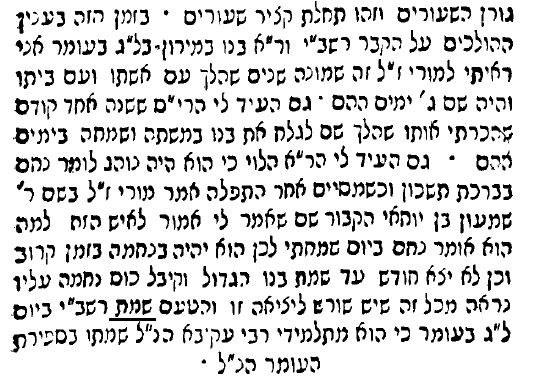
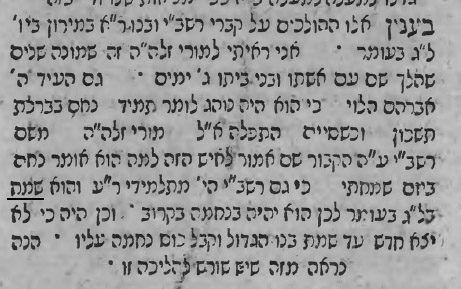
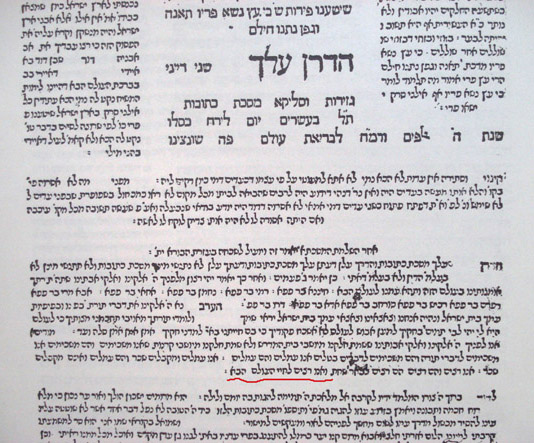
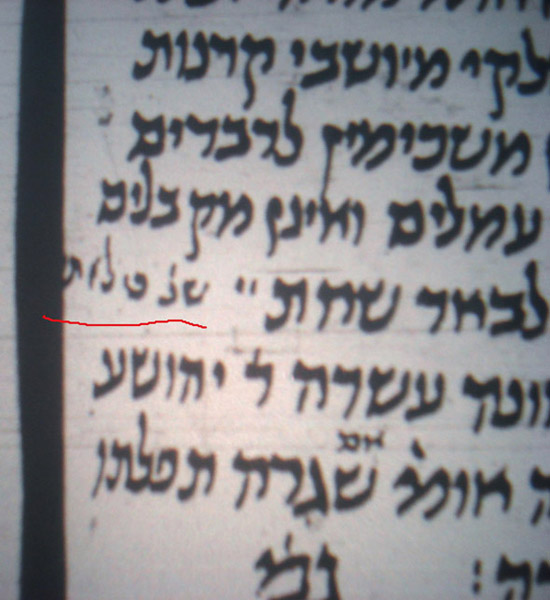
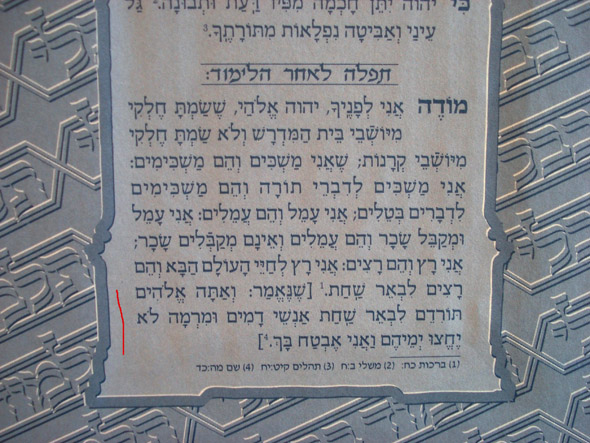
What appears to be an earlier source for some who say that Rashbi died on Lag Ba-Omer is R. Hayyim Vital, quoting in the name of the Arizal, found in the Peri Etz Chaim. Indeed, R. Hayyim Vital states that Rashbi died on Lag Ba-Omer, and he was one of the students of R. Akiva who died during Sefirah. In truth, it is a mistake to give R. Vital credit for this. The source of this mistake was based on a simple printing mistake in two edition of the Peri Etz Chaim. One was printed in Koretz 1785 (p. 108a).
The other was printed in Dubrowno 1802 (p. 124b).

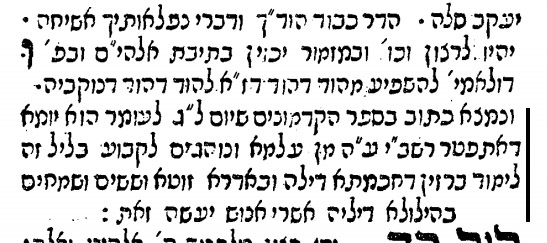
In the first printed edition of the Peri Etz Chaim, which was printed in 1782 (p. 101a), it does not say that at all. Instead of saying “she-meit” (that he died) it has a very similar, but entirely different word, samach (was joyous). The letter chet was apparently confused for a tav in the later version, causing the whole mistake![6] (Interestingly, the Aderes in his work Zecher Davar has a whole collection of cases where a problem arose due only to a קוצו שלו יוד.)
In the Shaar ha-Kavanot from R. Vital first printed in 1752, where the same piece appears, it also reads samach (p. 127) like the first edition of Peri Etz Chaim. In a later edition of of Peri Etz Chaim printed in 1819 it also reads samach. These would seem to confirm that the error is indeed she-met rather than samach.
The late Meir Benayahu z”l and, more recently, R. Yaakov Hillel, confirmed, based on many early manuscripts that this reading that does not have Rashbi dying on Lag be-Omer, is the correct reading from the writings of R. Chaim Vital. Recently, R. Yaakov Hillel printed the Sefer Shaar Ha-Tefilah from a manuscript of R. Hayyim Vital’s actual handwriting, and in that location (p. 312), as well, the passage states that it was the day of Simchat Rashbi, not the day he died.[7]
Interestingly, the Chida in his work Birkhei Yosef, printed in 1774, writes that Rashbi died on Lag Ba-Omer. But in a later work of his, Ma’aret Ayin, printed in 1805, he writes that the Prei Etz Chaim is full of mistakes and this statement regarding Lag Ba-Omer and Rashbi’s death day is one of them. So the Chida’s conclusion is that it is not a reference to Rashbi’s day of death at all. This conclusion is accepted by later authorities, including Takfo Shel Nes (p. 59a), Shu”t Rav u-Po’alim (1:11), and Tziyun LeNefesh Chayah (no. 65).[8]
The Lubavitcher Rebbe[9] wrote in a letter to R. Zevin that there is a printing mistake in the Peri Etz Chaim.

הרה”ג הוו”ח אי”א נו”מ וכו’ מהורשי”ז שי’
שלום וברכה!
במקרה ראיתי, בספרית כ”ק מו”ח אדמו”ר שליט”א, את ספרו “המועדים בהלכה” מהד”ת, ומצאתי שם בפרק ל”ג בעומר העתקת לשון הפרע”ח (דפוס דובראוונע ודפוס לאשצוב) שער ספה”ע פ”ז בהערה, וז”ל: והטעם שמת רשב”י ביום ל”ג בעומר כי הוא מתלמידי רע”ק שמתו בספה”ע.
והנה ידוע, אשר קטע זה מוקשה הוא הן בנגלה, כי רשב”י הוא מהחמשה תלמידים שסמך רע”ק אח”כ, הן מצד הנסתר ע”פ המבואר, בפע”ח שם ובסידור האריז”ל, מדריגת הכ”ד אלף תלמידים שמתו ומדריגת ה’ תלמידים הנ”ל. וכבר עמד ע”ז בשו”ת דברי נחמי’ חאו”ח סל”ד סק”ז. וסיים: ואולי יש ט”ס בפע”ח שם במ”ש כי הוא כו’ כנ”ל וצ”ע בדפוס קארעץ ששמעתי ששם נשמט זה.
ואמת כן הוא, אשר בפע”ח דפוס קארעץ לא נמצא קטע הנ”ל. וכן בסידורי האריז”ל ובשני פע”ח כת”י, שישנם באוסף הכת”י אשר לכ”ק מו”ח אדמו”ר שליט”א, חסר כל ענין זה. כן לא מצאתי לביאור הנ”ל בכל דרושי דא”ח שראיתי לע”ע.
וז”ל ספר הכוונות (ענין ספה”ע דרוש יב) בטעמי מנהגי ל”ג בעומר: כי הרשב”י ע”ה הוא מחמשה תלמידיו הגדולים של רע”ק ולכן זמן שמחתו ביום ל”ג בעומר. ועד”ז הוא במשנת חסידים.

– ובעהמ”ס ד”נ כנראה לא ראה את סה”כ, מדאינו מביאו – ומכמה טעמים מהנכון, לפענ”ד, לתקן את הנ”ל בספרו, או עכ”פ להעיר על הספקות שבדבר, בהזדמנות הראשונה. ..

The question then is, what is the earliest printed source that Rashbi died on Lag Ba-Omer. Avraham Yaari and Meir Benayahu demonstrate that the earliest source to mention Lag Ba-Omer as the yarzheit of Rashbi is none other than the Chemdat Yamim. R. Yaakov Hillel also confirms this in his Aid ha-Gal ha-Zeh (p. 13).
The Chemdat Yamim was first printed in the 1730s and has been the source of controversy and debate until today. Some go out of their way to attack it, claiming it has strong ties to Shabbetai Tzvi. Others strongly defend it, saying it is a very special work. Whatever the case is, Chemdat Yamim has been established by many as the source of many different customs that we observe today. It is not necessarily the earliest source, but in the first few years after it first appeared, Chemdat Yamim was printed many times, becoming a bestseller as it were. Because of this, many customs contained therein became widespread. One notable example is the celebration of Tu Be-shevat. After the Chemdat Yamim was printed, many works about the customs of Tu Be-shevat were printed based on it. What is very interesting is that Chasidim, who are principally against the Chemdat Yamim, are very into this concept that Lag Ba-Omer is the yarzheit of Rashbi.[10]

If one looks at all early mentions of Lag Ba-Omer and the Arizal one will not see any mention of it being the yarzheit of Rashbi. Here are some examples:
The Magen Avraham, first printed in 1692, writes when talking about days when we do not say Tachanun writes:
מעשה באחד שנהג כל ימיו לומר נחם בבונה ירושלים ואמרו בל”ג בעומר ונענש על זה מפני שהוא י”ט [כונת האר”י] (מגן אברהם סי’ קלא ס”ק יז)
When talking about Lag Ba-Ome , the Magen Avraham writes:
ומרבים בו קצת שמחה – וכתו’ בכוונות שגדול אחד היה רגיל לומר נחם בכל יום ואמרו גם בל”ג ונענש (מגן אברהם סי’ תצג ג)
We see that he makes no mention of it being the yarzheit of Rashbi when he referencing to the Arizal and Lag Ba-Omer. It is generally accepted that the Magen Avraham is responsible for bringing the writings of the Arizal into the world of halakhic discourse. The question, however, is regarding the Magen Avraham’s source for this specific Arizal. In general R. Yosef Avivi shows that the Magen Avraham when quoting from the Arizal was using the work Shulhan Arukh Shel Arizal.[11] There are many works similar to this work, one was called Nagid U-metzaveh; another was called Lechem Min Hashamayim. In both of these works, the whole story with the Arizal and Nachem appears with the version that this was the day of Simchat Rashbi, and not the day he died.
Now in this work, the story as quoted above appears and no mention of it being the yahrzeit of Rashbi, but rather that it was the day of Simchat Rashbi. However we cannot say, for certain, that his source was the Shulhan Arukh Shel Arizal because he specifically quotes the Sefer Hakavanot as his source. Now the problem with this is, which Sefer Hakavanot was the Magen Avraham referring to? The only edition printed before the Magen Avraham was from R. Moshe Terniki printed in Venice in 1620. In that edition of Sefer Hakavanot, there is nothing about Lag Ba-Omer. In a personal communication, R. Yosef Avivi suggested to me that it was the Sefer Hakavanot that was written in Cracow in 1650 and the Magen Avraham had it in manuscript. This edition of Sefer Hakavanot was later printed under the name Peri Etz Chaim in 1785.[12]
Another example of an early source who quotes the Arizal about Lag Ba-Omer but makes no mention of it being his yahrzeit can be found in the Ateret Zekenim from R. Menachem Auerbach, first printed on the side of the Shulhan Arukh in 1702 (it was written much earlier). He also cites the story of the Arizal:
מנהג ארץ ישראל שנוהגין לילך על קברי רשב”י ז”ל ור”א בנו ביום ל”ג בעומר והעיד ר”א הלוי שהוא היה נוהג תמיד לומר נחם בברכת תשכון וכשסיים התפלה א”ל ר”י לוריא ז”ל משם רשב”י הקבור שם שאמר לו אמור לאיש הזה למה הוא אומר נחם ביום שמחתי ולכן הוא יהיה נחם בקרוב וכן היה שמת לו בנו הגדול (סי’ תצג).
Here too we see a version of the story that has nothing about it being the yahrzeit of Rashbi.
Another example of an early source that quotes the Arizal about Lag Ba-Omer, but makes no mention of it being his yahrzeit can be found in the Sefer Shirei ha-Levim. This work was first printed in 1677; it includes anything having to do with the topic of Shir Shel Yom including the Arizal’s custom that he found in different sources.[13] When talking about Lag Ba-Omer he writes:
ל”ג בעמור שייך מזמור לז על שם שנאמר בו צופה רשע לצדיק וגו’ וזה שייך על רשב”י וחבריו שנשארו מתלמידי ר”ע כמבואר בגמרא ולא שלט בהם המלאך המות ביום ההוא וכן מיום ההוא והלאה כי קצת דיעות. וכתב בספר כוונת האר”י הנדפס שהלך האריז”ל עם אשתו ובניו לגלח על קבר רשב”י ועשה משתה ושמחה ג’ ימים לג לד לה ולמדו ספר הזוהר על קברו לכבודו של רשב”י וחביריו שנשתיירו והעמידו תורה באותו שעה, וע”ש מעשה נפלא על אחד שנענש על שאמר נחם בתפילת יח בעת שמחתו אבל ספר כוונת של הקדוש ר’ חיים וויטל…
I am not sure which printed edition of Sefer Hakavanot he was referring to that contains this passage. However we see here also no mention of it being yahrzeit of Rashbi.
The Mishnat Chassidim, first printed in 1727, collected lots of material from the Arizal. When talking about Lag Ba-Omer, also makes no mention of it being the yarzheit of Rashbi.[14] He just writes:
ועל ידי ר’ שמעון בן יוחאי שהיה אף הוא תלמידו נתקיים העולם לפיכך אין להתאבל ביום זה כלל על החרבן שלא יענש אל מצוה לשמח שמחת ר’ שמעון בן יוחאי ואם דר בארץ ישראל ילך לשמוח על קברו.
Next is the historical work Divrei Yosef from R. Yosef Sambary, completed in 1672 but only printed a few years ago, (although parts were printed by Adolf Neubauer in 1887). When he records the story with the Arizal about someone saying Nachem at the kever of Rashbi, he does not even mention it was on Lag Ba-Omer; he, too, records the story stressing that it was a day of Simcha not the yahrzeit of Rashbi (p. 188).
It is also worth pointing out that the Shelah ha-Kadosh, an earlier work that was influenced by the Arizal, when talking about Lag Ba-Omer, also makes no mention of it being the yahrzeit of Rashbi.
The Divrei Nechemiah, written by the grandson of the Ba’al ha-Tanyah, writes (no. 34) that there is a printing mistake in the Peri Etz Chaim when he says that it was the yahrzeit of Rashbi. However he concludes:
אך המפורסמות אין צריך ראיה שכבר נתפרסם בכל העולם מכמה דורות ע’ הלולא דרשב”י בל”ג בעומר ומסתמא יש מקור לזה בזוהר או בכתבי האר”י ז”ל.
In short it is quite amazing that the whole source for Lag ba-Omer being the day of Rashbi’s death is based on a printing mistake found in only one version of the story with the Arizal, while all other versions I have found of the story does not say anything about it being the yahrzeit of Rashbi!
Returning to the origins of going to Meron on Lag Ba-Omer, Avraham Yaari, has a very detailed article where he collects many early sources[15] for going to Meron in general[16] from famous travelers such as R. Binyomin Me-Tudela in the 1170s, R. Pesachyah Me-Regensburg, but these early sources make no mention of going to Rashbi’s Kever, only to the kevarim of Hillel and Shammai[17] who are also buried in Meron.[18] The first source that Avraham Yaari found that mentions going to Rashbi’s kever is from the twelfth-century in the travels of R. Yaakov HaKohen. After that, he found it in other sources.[19] None of these sources mention to these kevarim at a specific time. In the beginning of the fourteenth century, however, a student of the Ramban mentions going to the kevarim of Hillel and Shammai in Meron on a specific date in the month of Iyar, on Pesach Shnei. We have other early sources that mention going to those kevarim on Pesach Sheini. In the famous letter of R. Ovadiah me-Bertinoro (1488) and the travels of R. Moshe Basola (1521-1523), we also find mention of going to Meron to visit the kevarim of Hillel and Shammai on Pesach Sheini. From many of these sources, we see that the reason they went was to daven for water, and that at times, water would miraculously appear from the caves. However, it is important to stress that while we have many accounts of going to Meron even during the month of Iyar none mention going to the kever of Rashbi during that time of year.
Avraham Yaari and Meir Benayahu cite many sources that clearly demonstrate that the Mekubelei Tzefat would go to Meron to the kever of Rashbi a few times during the year to learn Zohar. However, the first source we have for someone going to Rashbi’s kever specifically on Lag Ba-Omer, is the Talmdim of the Arizal, who say that the Arizal once went to the kever of Rashbi on Lag Ba-Omer while still living in Egypt. When recording this testimony, R. Hayyim Vital writers that he is not sure if this occurred before the Arizal was well versed in Kabbalah. But he stresses that he was doing something done by others before him. We do not know to whom R. Hayyim Vital referred. Meir Benayahu concluded that the custom of going to Meron on Lag Ba-Omer was begun by the Mekubelei Tzefat.
Although Yaari concedes that Mekubelei Tzefat were very into going to the kever of Rashbi, that is not how the minhag to go specifically on Lag Ba-Omer developed. Yaari shows that the custom of going to Meron was taken from an earlier custom of going to Shmuel Hanavi’s Kever on his yahrzeit, which was on the twenty-eighth day of Iyar.[20] The Tur brings down from the Behag that one should fast on this day. We have many early sources of prayers that were recited on this day at Shmuel Hanavi’s Kever.[21] In the travels of Meshulem Me-Volterrah from 1481, the travels of R. Ovadiah me-Bertinoro (1488) and the travels of R. Moshe Basola (1521-1523) we also find mention of going to Shmuel Hanavi’s Kever on his yarzheit. In these sources, we also see that they used to light many big flames. Avraham Yaari believes this to be the source of the minhag to go to Kever of Rashbi.
In sum, the above indicates that there are early sources for people going to Meron during the month of Iyar, on Pesach Sheni, to the kevarim of Hillel and Shammai. The Mekubelei Tzefat went to Rashbi’s kever throughout the year and Meir Benayahu feels that the minhag of going Lag Ba-Omer originated from them too. While Yaari feels that the custom of going to Meron on Lag Ba-Omer was taken from an earlier custom to go to Shmuel Hanavi’s Kever on his yahrzeit, it is also clear that the Arizal did, in fact, go to the kever of Rashbi on Lag Ba-Omer at least once.
However it appears to this writer that it is more likely that the custom of going to Meron to the Kever of R. Shimon Bar Yochai on Lag Ba-Omer grew out of the earlier minhag of going to Meron in the month of Iyar, to the kevarim of Hillel and Shammai on Pesach Sheini which is only a few days before Lag Ba-Omer, and not from the Minhag of going to Shmuel Hanavi’s Kever on his yahrzeit, which was on the twenty eighth day of Iyar, which is not even in Meron. Possibly support to this can be found in the travels of R. Moshe of Basola who writes that after going to kevarim of Hillel and Shammai on Pesach Sheini, the crowd would go to the cave where Rashbi and his son hid for thirteen years and they would spend a few days and nights celebrating in Meron.[22]
In the work Arugat Ha-Bosem, written in 1234, I found a very interesting version to the earlier quoted, famous Gemara of why the sefirah period is considered a time of mourning. He writes:
מה טעם מנהג בישראל אין עושין מלאכה בין פסח לעצרת, משתקשע החמה עד למחרת שחרית, ואמרו לנו שני טעמים אחד על פטירת תלמיד הילל ושמאי, דאמ’ שמוני’ אלף תלמיד’ היו להילל הזקן ושמאי מגבת ועד אנטיפרס, וכולן מתו מפסח עד עצרת על שאלה ונוהגים כבוד זה לזה… [ערוגת הבשם, א, עמ’ 75].
This version would be possible additionally support, that originally in Iyar Jews went to the kevarim of Hillel and Shammai on Pesach Sheini. However I was unable to find any other manuscript that records such a reading of this Gemara.[23]
R. Shemaryhu Adler has a very interesting insight into the deaths of the talmdim of R. Akiva during sefira and when they start dyeing. In this piece he also says as a fact that Rashbi died on Lag B’Omer.
נראה טעם הגון ונכון לעצומו של יום לג בעומר דהוא בכלל יום טוב. ובהקדם להבין עוד מה דלכאורה תמוה דלמה לכולהו הני שיטות ליכא התחלה לאבילות כי אם מזמן התחלת ספירת העומר והיינו מיום ב’ דפסח דאיזה שייכות יש לאבילות ךדלמידי ר”ע לזמן התחלת ספירת העומר כיון דיבמות ס”ב ע”ב אמר כולם מתו מפסח ועד עצרת וסתמא תנא מפסח מנ”ל דזהו מיום ב’ דפסח ולא מיום א’.
נראה ע”פ דאמר במנחות סח ע”ב יתיב ר”ט וקא קשיא ליה מה בין קודם לעומר לקודם שתי הלחם אמר לפניו יהודה בר נחמיה לא אם אמרת קודם לעומר כשן לא הותר מכללו אצל הדיוט כו’ שתק ר”ט צהבו פניו של רבי יהודה בר נחמיה אמר לו ר”ע יהודה הבצו פניך שהשבת את זקן תמהני אם תאריך ימים אר”י ב”ר אלעי אותו הפרק פרס הפסח היה עשעליתי לעצרת שאלתי אחריו יהודה בן נחמיה היכן הוא ואמרו לי נפטר והלך לו עכ”ל הגמרא יעו”ש
ומזה נראה דהי’ קודם פסח ט”ו יום ונשאו ונתנו בענינא דעומר וע”י דצהבו פניו של יהודה בן נחמיה במה דהשיב את ר”ט ועי”ז קפד ר”ע מסברא לומר דבעת שהגיע זמן הקרבת העומר דהוא זמן התחלת ספירת העומר ביום ב’ של פסח מצאה הקפידה מקום דתיחול כיון דעיקר דהשיב לר”ט היה בענינא דעומר וכיון דקפידת ר”ע היה על מה דתלמידו יהודה בן נחמיה התכבד בתשובתו לר”ט ולא נהג בו כבוד כראוי ומצאה הקפידה מקום לנוח בזמן הקרבת העומר דזהו היתה סיבה להא דהשיב הזקן ר”ט שפיר התפשטה קפידת ר”ע ג”כ על כל תלמידיו שלא נהגו כבוד זה לזה והלכך שפיר התחילה פטירתן מאותו זמן דעיקר הקפידה חלה והיינו מיום ב’ דפסח שהוא זמן הקרבת העומר והלכך שפיר שייכא אבילות דתלמידי ר”ע לזמן התחלת ספירת העומר וכנ”ל
ועיין כי רשב”י היה מתלמידי ר”ע והיה קפדן גדול וכדאמר במעילה יז ע”ב… וא”כ הו”א כיון דר”ש ג”ג נפטר ביום ל”ג בעומר נהי דכבר היה זה זמן טובא אחר שמתו תלמידי ר”ע כיון דאמר ביבמות ס”ב והיה… מ”מ כיון דקפידת ר”ע על מניעת נהיגת כבוד חלה בזמן בעומר שוב פטירת ר”ש דהיתה בזמן ימי העומר והיינו ל”ג בעומר ג”כ מקפידת ר”ע רבו על דהיה קפדן ובודאי לא נהג כבוד, והלכך לשלילת מחשבה כזו עושים קצת שמחה להראות דפטירת רשב”י אינו בגדר קפדנותו של ר”ע רבו ומטעמא דנהי דרשב”י היה קפדן מ”מ לא היתה לבד התכבדות בקלונו של חברו ח”ו דז”א דרשב”י הי צדיק גמור ועיקר קפדנותו לא היתה כ”א לכבוד השי”ת וקנאותו וזהו עיקר הלולא דרשב”י (שו”ת מראה כהן, סי’ כט אות ג).
R. Eliezer Dunner, in his work Zichron Yosef Tzvi, offers a very novel reason for the celebration on Lag Ba-Omer. He says that we know that R. Akiva was a strong supporter of Bar Kochba. He suggests that R. Akiva students were soldiers in his army to fight the Romans and they died in this time period of Sefirah. During this time, on Lag Ba-Omer, the Jews were winning, that is why they turned this day into a great day of celebration.
ידענו כי ר’ עקיבא היה הולך ונוסע ומלמד בכל תפוצת הארץ ובכל מקום היה לו תלמידים הרבה מאוד ועין שחושב לבר כוזבא כמשיח קרא כל תלמידיו להלחם בצד בר כוזבא ותחת רגליו נגד חיל האויבים… ואף על פי שבתחילה חלשו היהודים את אויביהם לפי חרב אחר כך גברו הרומיים ולכדו מישראל עיר ועיר ובאותה זמן היתה מלחמה בכל יום יום ובכל מלחמה נפלו ומתו הרבה אנשים מחיל בר כוזבא ובהן כמה תלמידי ר’ עקיבא וכששקעה החמה בכל יום ויום פסקה המלחמה ואז נקברו כל המתים. ואפשר שבתוך כל המלחמות הללו שהיו יום יום ושבהם גברו האויביהם על ישראל היה יום אחד והוא ל”ג בעומר שגבר בו ישראל אותו יום שבו היה להם ישעות ה’ בעת צרתם יום גבורה ותשועה אותו יום קבעו ליום שמחה לדור דורים וכמו כן שמעתי גם מפי הרב דק”ק פוזנא מוהר”ר זאב פיילכענפעלד ז”ל (זכרון יוסף צבי, סי’ תצ”ג).
However, this original explanation, while giving us new insight into the mourning period during sefirah does not help us understand the connection to Rashbi. Avraham Korman in his Pinu’ach Aggadot (pp. 190-210) cites others (not R. Dunner) that tie the death of the talmidim of R. Akiva to the rebellion of Bar Kochba and he goes further to explain the connection between this and Rashbi and other minhagim of Sefirah.
There is a custom in many chasidic courts to use bow and arrows on Lag Ba-Omer. Many explanations are offered, but Korman says that perhaps the bows and arrows serve as a reminder of the war that the students of Rebbe Akiva fought against the Romans. As an aside, although most sources for bow and arrows on Lag Ba-Omer are found in chasidic seforim, I have found a possible source that in Vilna in the early 1800’s they also used bow and arrows on Lag Ba-Omer.[24]
R. Mordechai Ha-Kohen suggests based on this connection between the students of R. Akiva and the battle of Bar Kochba, that we can understand another issue. The Tur brings an old minhag that woman would refrain from doing work at night from after sunset the whole sefirah. He says the reason was the woman too participated in the battles against Bar Kochba they acted as nurses and helped the fallen soldiers and buried the dead every day after sunset when the fighting stopped. Therefore he says a custom developed that woman today do not do work after sunset.[25]
The earliest source who ties the mourning period during sefirah period for the deaths of the students of R’ Akiva and the battle of Bar Kochba that I found was in the magnum opus of the famous Galician maskil, Nachman Krochmal, who write in his Moreh Nevuchei Ha-zman:
אכן נראה כי גברה עתה המחשבה והעצה למרוד גם בין קצת החכמים וביחוד בין התלמידים והבחורים, ויש זכר לדבר גם בתלמוד ובמדרשות, ד”מ השנים עשר אלף תלמידים שהיו לר’ עקיבא מגבת ועד אטניפרוס וכולם מתו מפסח ועד עצרת (כלומר שעזבוהו כולם בזמן קצר לעת המרידה ולבסוף ספו תמו במלחמה) [מורה נבוכי הזמן, שער י, עמ’ קט].
Support to this theory can possibly be found in the Iggeret R. Sherirah Gaon according to Gedaliahu Alon. R. Sherirah Gaon writes:
והעמיד ר’ עקיבא תלמידים הרבה והוה שמדא על התלמידים של ר’ עקיבא והות סמכא דישראל על התלמידים שנייים של ר’ עקיבא דאמור רבנן שנים עשר אלף תלמידים היו לו לר’ עקיבא מגבת ועד אנטיפטרס וכלם מתו מפסח ועד עצרת (אגרת ר’ שרירא גאון, ב”מ לוין, עמ’ 13).
Alon suggests that the words and “there was a Shemad” implies they were killed by the government.[26] However, it is not so simple that this is all historically true as there are many different discussions to what extent was R. Akiva was actively involved in the rebellion. It is well known that the Rambam writes:
וביתר שמה והיו בה אלפים ורבבות מישראל והיה להם מלך גדול ודימו כל ישראל וגדולי החכמים שהוא המלך המשיח, ונפל ביד גוים ונהרגו כולם והיתה צרה גדולה כמו חורבן המקדש (הל’ תעניות ה:ג).
Elsewhere he writes even more clearly:
אל יעלה על דעתך שהמלך המשיח צריך לעשות אותות ומופתים ומחדש דברים בעולם או מחיה מתים וכיוצא בדברים אלו, אין הדבר כך, שהרי רבי עקיבא חכם גדול מחכמי משנה היה, והוא היה נושא כליו של בן כוזיבא המלך, והוא היה אומר עליו שהוא המלך המשיח, ודימה הוא וכל חכמי דורו שהוא המלך המשיח, עד שנהרג בעונות, כיון שנהרג נודע להם שאינו… (הל’ מלכים יא:ג).
The Meiri writes:
וכן בדבור הזה עמד בן עוזיבא ועשה עצמו משיח, וטעו רבים אחריו, ואף ר’ עקיבא היה נושא כליו (סדר קבלה, מה’ אופק, עמ’ 77).
R. Hamberger in his Meshichei Sheker u-Mitnageidheim (pp. 676-681) has a long list of people who agree with the Rambam.
Zecharia Frankel in Darkei HaMishna (p. 128) concludes that he did not really have much to do with the rebellion[27]. Y. Derenberg concludes that R. Akiva and his students were very involved with Bar Kochba.[28] R. Issac Halevi in his Dorot Ha-Rishonim (5, pp. 602- 628) downplays R. Akiva’s role completely saying he did not really endorse Bar Kokhba for that long. From the Rambam and Meiri quoted above it seems they disagree. Aharon Heyman concludes that R. Akiva and his students were actively involved with Bar Kochba (Toledot Tanaaim ve-Amoraim 3, pp. 1002-1004).
To conclude with a well-known cute story related to R. Akiva and Bar Kochba: R. Zevin brings from R. Chaim Soloveitchik:
פעם אחת נסע רבי חיים ברכבת… היה שם איש אחד מן המסיתים, שהירבה דברים להוכיח שאותו האיש הוא המשיח… בתוך הויכוח נענה אחד ואמר להמסית וכי מי יודע יותר בטיבו של אותו האיש התנאים, שהיו בדורו והכירו אותו ואת מעשיו או אתה שאתה רחוק ממנו כאלפיים שנה? והרי התנאים של אותו דור דנוהו ותלוהו. השיב המסית אותם התנאים הרי אנו רואים, שטועים היו שכן טעה רבי עקיבא וחשב את בר כוכבא למשיח. נסתתמו טענותיו של היהודי ורבי חיים כשראה שיד המסית על העליונה, נענה ואמר וכי זו מנין לך שרבי עקיבא טעה בבר כוכבא? נתלהב המסית הרי הרגו את בר כוכבא! אם כן משיב רבי חיים בנחת הרי אתה מודה שמשיח שנהרג אינו משיח. (אישים ושיטות, עמ’ ס).
* Thanks to R. Yosef Avivi for his help with some of the issues related to the writings of the Arizal.
[1] Much has been written about all the customs of Lag Ba-Omer. The best collections of material on the topic appear in Avraham Yaari, Tarbiz 22 (1951); Meir Benayhu, Sefunot 6 pp. 11-40, summarized in Sefer Vilnai 2:326-330] and R. Betzalel Landau, Maseh Meron (1966). See also David Tamar, Eshkolet Tamar, pp. 116-120]. See also R. Shelomo Joseph Zevin, Moadim Bahalcha pp. 359-64; Shmuel Ashkenazi, Avnei Chain pp. 103-11. For more recent collections of sources see: R. Yaakov Hillel, Aid ha-Gal ha-Zeh, pp. 3-29; Moshe Blau, Yeshurun 15 (2008), pp. 854-872; Tuviah Freund, Moadim le-Simcha; Pardes Eliezer s.v Lag ba-Omer;Yitzhak Tessler, Pinnenei ha-Chag.
As I have noted in my previous post at the Seforim blog on the topic of Lag ba-Omer, Freund and Blau have each plagiarized greatly from the works of Landau, Yaari, and Benayahu.
[2] For a detailed discussion, see R. Gedaliah Oberlander, Minhag Avoteinu be-Yadeinu (Merkaz Halakhah, 2005), pp. 528-547.
[3] On this work see R. R.N. Rabinowitz, Ohel Avraham (1898) pp. 14-15; Y.Yudolov, Yeshurun 24 (2011), pp. 893-919.
[4] Dershos Ri Ibn Shu’eib, 1, p. 222.
[5];Peri Chadash, 493:2. See also Beis Yosef and Aruch Ha-shulchan.
[6] For more on this edition, see R. Yosef Avivi, Binyan Ariel, pp. 68-71 and his Kabbalat Ha-Ari, 2, pp. 705-06.
[7] One can see pictures of the manuscripts in the article from Moshe Blau cited in footnote one.
[8] It would appear to me that Reb Yosef Engel also did not think that Rashbi died on Lag B’omer as in his work Otzros Yosef he has many pages on Lag b’omer and talmidei R. akiva etc and he makes no mention that it was the day he died.
[9] Thanks to an anonymous commenter for pointing to this letter.
[10] For a partial list of sources regarding the Chemdat Yamim controversy, see my Likutei Eliezer, p. 2. It’s worth mentioning that a new three volume edition of the Chemdat Yamim has just been printed in Benei Brak. The edition is very nice and was based upon the first edition. However, the 250 page introduction is extremely amusing.
[11] See R. Yosef Avivi, Kabbalat Ha-Ari, 2, pp. 752-753.
[12] See R. Yosef Avivi, Kabbalat Ha-Ari, 2, pp. 593-598, 670-672, 705-06. See also Zeev Gries, Safrot Ha-hanhaghot, pp. 81-84, 87-90; Yaakov S. Speigel, Pitchei Tefilah u-Moed, pp. 308-309.
Edit 6.22.11: However after reading this post R. Bentzion Meisles (In a personal communication) showed me that this whole piece with the Arizal going to Meron does indeed appear in the Sefer Hakavonos of R. Terniki, (In the 2006 edition it appears on pp. 5-6) and it too says שמחתי.
[13] On this work see here and here.
[14] See R. Yosef Avivi, Kabbalat Ha-Ari, 2, pp. 757-759.
[15] The actual sources can be seen in his works Masaot Eretz Yisrael and Iggerot Eretz Yisrael.
[16] Much has been written about davening at kevarim in general see Yehezkal Lichtenstein, Me-Tumah Le-Kedusha, pp. 218-242, 293-386.
[17] M. Zulay published very early Piyutim that seem to show that Hillel and Shammai were brothers! See his Eretz Yisrael u-Piyuteh, pp. 539-545.
[18] On going to the kevarim of Hillel and Shammai see M. Weiss, Kivrei Avos, 129-132; Elchanan Reiner “Pilgrims and Pilgrimage to Eretz Yisrael (1099-1517),” (PhD dissertation, Hebrew University of Jerusalem, 1988), 295-320.
[19] General sources for going to the Kever of Rashbi can be found in M.Weiss, Kivrei Avos pp. 179-81; Z. Vilnai, Mazavos be-Eretz ha-Kodesh pp. 117-150.
[20] On this being his date of death see the Tur (O.C. 580); S. Elitzur, Lamu Tzamnu, pp. 177-180.
[21] M. Zulay, Eretz Yisrael U-piyuteh, pp. 401-412. For more regarding Shmuel ha-Navi and visiting his grave, see M. Weiss, Kivrei Avot, pp. 113-16; Lamu Tzamnu pp. 177-80; Reiner op. cit. pp. 306-20; Y. Lichtenstein, Me-Tumah Le-Kedusha, pp. 298-230.
[22] The Itinerary of R. Moses Basola (David ed.) p.91.
[23] See Makhon Talmud Yisraeli, Yevamot 62b.
[24] Kundes p. 49. For more on this 1824 parody see here. For more sources on using bow and arrows on Lag Ba-Omer: see the sources listed by Landau, ibid pp. 124-26; Moadim le-Simcha pp. 155-59; Pardes Eliezer pp. 229-49; ha-Koton ve-Halachosov chapter 24 p. 59 n. 22; Zikhronot Av u-Beno p. 231; A.S. Sachs, Worlds that Passed (Philadelphia, 1928), p. 112.
[25] Ishim Utekufot, pp. 102-105.
[26] Toldos Hayehudim Beretz Yisroel, 2, pp. 43-44.
[27] See also J. Brull in his Mavo Le-Mishna, 2. pp. 121-122. For more sources on all this see: G. Alon, Toldos Hayehudim Beretz Yisroel, 2, pp. 16-47; S. Safrai, R. Akiva Ben Yosef, pp. 26-33; M. Cohen, Ishim Utekufot, pp. 92-112; R. Y. Tamar, Alei Tamar, Tannis, pp. 390-392;C. Kulitz, Rosh Lechachochim; Ibid, Ben Ha-aliyah; collection of articles in Mared Bar Kochba, Ed. A. Oppenheimer; R. Hamberger, Meshichei Sheker U-misnagdim, pp. 138-155, 665-681.
[28] Maseh Eretz Yisroel, pp. 220-228.


Satmar From As Seen By An Insider: A Review of the New English Biography of Rabbi Yoel Teitelbaum, the Satmar Rebbe

Satmar From As Seen By An Insider: A Review of the New English Biography of Rabbi Yoel Teitelbaum, the Satmar Rebbe
by Ezra Brand

I recently bought the new biography of the Satmar Rebbe, called “The Rebbe. The Extraordinary Life & Worldview of Rabbeinu Yoel Teitelbaum. The Satmar Rebbe זי”ע”, by Rabbi Dovid Meisels (Canada 2011, distributed by Israel Book Shop). Rabbi Meisels is related to Rabbi Teitelbaum, and a staunch Satmar chossid, so you can be sure that the views espoused in the book are Satmar’s true opinions. I also recently bought Solomon Poll’s classic study if chassidim in Williamsburg in the 1950’s, during which Rabbi Meisel’s book is also mostly set. It was interesting comparing the two very different views–that of a Satmar chossid looking back at those times, and that of a contemporary secular scholar like Poll. (See also an interesting review, and comments on it, here.)
The book discusses many opinions of the Rebbe. Besides for his famous anti-Zionist opinion, the book discusses such sundry topics as the required height of the mechitza in shul, metzitza b’peh, television, derech halimud, mikvaos,tznius (married women wearing sheitels, married women shaving their hair, women required to wear thick stockings—at least 90 denier), and the times for beginning and end of shabbos. It is somewhat surprising that the book doesn’t mention the Rebbe’s famous opinion that a boy and a girl shouldn’t meet more than two or three times before getting engaged. On pg. 364 the book does mention the Rebbe’s opposition to “the chosson spend[ing] time with the kallah before and after the engagement,” but no mention is made of how many times the Rebbe held the boy and girl should meet. There is a famous story told, that Reb Moshe Bick, a prominent chassidishe posek in the Bronx, decided that boys and girls should meet at least ten times before getting married. He felt that America was different than Europe, and too many divorces were happening because of improper matches. The Rebbe was strongly opposed to this. Reb Moshe Bick explained that the difference of opinion stemmed from the fact that he was a mesader gittin, while the Rebbe was a mesader kiddushin!
Almost no sources other than Satmar publications are listed as sources. These Satmar sources are listed at the end of the book in the “Bibliography;” there are about thirty or so. The only non-Satmar sources I found were “A Concise History of Agudath Israel” (pg. 97), “Uvdos Vehanhagos Leveis Brisk” (pg. 137) (basically Satmar!), “Hamodia” (pg. 220), and “Rav Shach Speaks” (pg. 528). However, it is a breath of fresh air to see at least some sources listed; most heimishe publication until now have opted to leave them out.
The book is notable in that it is very politically incorrect. It doesn’t beat around the bush when it confronts Reb Yoel’s opinion on Zionism. Reb Yoel was famously extremely anti-Zionist—as are both camps of Satmar today—and Rabbi Meisels emotively explains the basis of his opinion. Of course, there are a lot of polemics, such as the story on page 313, where Rabbi Meisels writes:
Indeed, one measure of the impact of Vayoel Moshe is that whatever books the Zionists have since published purporting to refute it (notably Hatekufah Hagedolah and Nefesh Adah) have not been taken seriously in the general Torah world. To this day, no serious mainstream work has been written to refute Vayoel Moshe. Even those rabbis who continue to advocate voting in the Zionist elections use the terms “eis laasos” and “aveirah lishmah,” indicating that at least in theory they agree with the central concepts of Vayoel Moshe.

Notice that the all-inclusive term “Zionists” is used, without even using the word “rabbis,” even though the authors of the “Zionist books” cited were undoubtedly great Talmidei Chachomim. This pattern of not giving those who hold of Zionism any titles of respect holds true throughout the book. For example, on page 294, Rabbi Yehuda Leib Maimon, the founder of Mossad Harav Kook, is referred to as “Yehuda Leib Maimon.” It is therefore somewhat surprising that on page 317, the Minister of Religious Affairs is referred to as “Rabbi Yaakov Moshe Toledano.” Maybe only Sefardim are allowed to be Zionists!
On pg. 178, the book says about the Satmar newspaper, Der Yid: “The policy of Der Yid was that whenever the State of Israel (Medinas Yisroel) was mentioned, the word “Yisroel” was placed in quotation marks to show that Torah Jewry, the true Israel, did not recognize the Zionists’ right to use their name.” (Notice “Torah Jewry,” not just Satmar.) This is followed by Rabbi Meisels himself, such as on pg. 249 (“…State of “Israel.” “). Usually, just the term “Zionist state” is used (e.g., on pg. 247). It is surprising that on pg. 523 the book mention “[t]he Israeli authorities.” I am sure this oversight will be corrected in future editions.
Throughout the book, the author hints to the Satmar opinion that kiruv rechokim is problematic. On page 13 he writes: “One of the secrets of the Rebbe’s success is that he never tried to perfect all of American Jewry and bring it into his fold. Instead, he worked hard to keep himself and his own community, which was mostly made up of post-War immigrants, unscathed.” Satmar is famous for disagreeing with Lubavitch on this point, however this disagreement is never stated explicitly. Rather, the author says that this is why Rabbonim before the War were not successful in planting Yiddishkeit in America (page 150): “A certain writer wrote that he heard from the Rebbe in 1955, ‘Why was I more successful in planting Torah in America than all the other gedolim who tried? Because they took in too much, they wanted to make the whole America good. In order to reach people, they had to make compromises. But I realized that Yiddishkeit can only grow if you plant perfect seeds. It doesn’t grow from compromises.” This completely ignores the fact that the Satmar Rebbe was working with people who had relatively recently been forcibly plucked from their homes in Hungary, straight into Williamsburg. On the other hand, earlier Rabbonim were dealing with people who had willingly left their very religious hometowns in Eastern Europe to go to America, a much more secular country. In addition, some of the American Jews had been in America for decades, and had gotten used to the freedom of acting how they pleased, without operating within the very strict confines of the Chassidic community. On pg. 515, the book discusses the Rebbe’s opposition to Lubavitcher chassidim putting tefillin on secular Israeli soldiers, based on halachic problems. Impressively, the book quotes the Lubavitchers answer back, albeit with a rejoinder.
For some reason, the Rebbe did not like the chassidim in Borough Park. This is despite the fact that there were also Satmar chassidim in Borough Park. On pg. 400 and pg. 429 derogatory remarks said about Borough Park by the Rebbe are recounted.
Very harsh words are quoted from the Rebbe about the Lithuanian derech halimud. On pg. 457, he is quoted to have said, in response to why bochurim in Litvish yeshivas “undeniably” learn with more enthusiasm and hasmadah than the Satmar bochurim: “…Here too, there is no truth in the ‘belly logic’ (boich svaros) used in these yeshivas. It’s all their own made up ideas, and it’s fun for them to think about ideas that they themselves made up.” And again: “Their style is not more than three generations old. They created it in order to save the younger generation from the Haskalah. It’s a totally new derech. We see that not one halachic authority came out from them. There is one of them who paskens shailos, and he wreaks terrible destruction. It’s a totally new derech, and it’s not Toras Emes.” The Rebbe isn’t exactly the open-minded or “eilu ve’eilu divrei elokim chaim” type. I’m curious to know which specific posek he was referring to that he feels “wreaks terrible destruction.” It shouldn’t be too hard to figure out, because he is the only Lithuanian who paskens! I’m assuming he meant Reb Moshe Feinstein, with whom the Rebbe had many halachic/ ideological disputes.
An interesting story is told on pg. 474. One of the founding parents of “Bais Ruchel”– the Satmar girls’ school—came to the Rebbe with a complaint. “He [had] discovered that the teacher had instructed the girls to write the Hebrew words “Ani ohev es habeged (I love the garment) as writing practice.” Now, you might think the parent had a complaint that the sentence is grammatically incorrect. A girl writing this sentence should write “ani oheves es habeged.” Or, he complained that his daughter shouldn’t be taught to love her clothing, but rather Hashem. But no. His complaint is: “The Rebbe founded a girls’ school to raise a new generation of girls like our mothers and grandmothers in Europe. Now I see that my daughter brought home a notebook in which she wrote ‘Ani ohev es habeged.’ The Rebbetzin argues that the girls can’t be so ignorant; they are allowed to understand what they are saying when they daven. I had a grandmother who passed away at 103, and she knew the entire Tehillim and Maamados by heart. But she didn’t understand what she was saying. That’s how our children should grow up as well.” The Rebbe said to his rebbetzin: “ ‘He’s right!’ “ In other words, this man’s grandmother had lived to such a ripe old age because she didn’t know the words she was saying! Rather, they should be some magical formula not to be understood.
The book discusses at relative length the process of founding “Kiryas Yoel.” On pg. 528, we read that “[a] Yekke from Washington Heights, who agreed with the Rebbe’s views on many issues, wanted to move to the new town. The Rebbe invited him, ‘Bring another nine Ashkenazim with you, and you can start your own minyan in Kiryas Yoel.” I wonder who this “Yekke” was., and how long he would have lasted among the thousands of chassidim in Kiryas Yoel!
On pg. 45, R’ Meisels bring the famous myth that the town “Satmar” in Hungary is named after St. Mary. He writes: “The Rebbe never pronounced the name Satmar, since it is the name of avodah zarah. Instead he would say ‘Sakmar.’ This pronunciation was also customary in Tzanz.” Throughout the book, when the Rebbe himself mentions the name “Satmar,” “Sakmar” is used instead. In truth, “Satmar” is a combination of the Latin word “Sattu,” meaning village, and the Romanian word “Mare,” meaning large. (See the beginning of the Wikipedia article on Satmar here.)
Something that I felt was lacking was any sign of Yiddish whatsoever. The Satmar Rebbe was known as a smart person, and the book brings a nice amount of stories that contain the Rebbe’s witticisms. I enjoy seeing the actual expression used, and since the Rebbe only spoke Yiddish, as the book says on pg. 26, the Rebbe obviously said whatever he said in Yiddish. Most such biographies quote the exact expression, and then translate. Possibly, Rabbi Meisels didn’t use any English lehavdil bein kodesh lechol. I’ll explain. On pg. 13, R’ Meisels writes that he really shouldn’t be writing the book in English, since the Rebbe was against the use of English “as a medium of speaking and reading within the Jewish community.” But since there were many outside of Satmar who were interested in the life of the Rebbe, the decision was reached to write a book in English. On pg. 488, R’ Meisels writes with pride that in the Satmar summer camps, for two months the campers “did not even hear a single English word.” I guess once the decision was reached not to use Yiddish, Yiddish could never be used!
Some surprising stories are told about talmidei chachamim, which seem to be against halacha:
1) On pg. 144, R’ Meisels talks about how after the Rebbe came to America from Israel in 1946, R’ Michoel Ber Weissmandel (Rosh Yeshiva of Nitra Yeshiva in Mount Kisco) wanted to make sure he wouldn’t return to Israel. He therefore took the Rebbe’s passport and ripped it up. What is the heter to destroy someone else’s passport just because you think he shouldn’t continue travelling?
2) The book speaks about how the Rebbe was “very particular not to use tainted or impure money” (pg. 187). It goes on to write that “[m]any times, they also witnessed him taking undesirable money and flushing it down the toilet.” Similarly, on pg. 190-191, it is told that after accepting a ten-dollar bill from “a man who was not properly observant,” the Rebbe “took that ten-dollar bill, rolled it up and began to use it to scratch his ears. Soon he tore off a piece, and continued to scratch his ears with the remainder. He tore off another piece, until the entire bill was gone.” First of all, didn’t all those people who gave the money give it to support charitable causes? Didn’t they want the zchus of their money being put to good use? If the Rebbe was planning on destroying the money, he should not have accepted the money in the first place. In addition, according to American law, it is illegal to destroy money. What happened to dina d’malchusa dina? However, it is possible that the Rebbe wasn’t aware that this was illegal.
3) On pg. 193-194, the book tells how the a man gave money to the Rebbe to pay his debts: “…As soon as the old man heard this, he brought the Rebbe 20,000 crowns. ‘Now you can go and pay your debts.’ “ Soon after, the Rebbe gave the money to a poor girl for her dowry. When the person who gave money to the Rebbe found out, he protested: “ ‘But I gave you the money only on condition that you would use it to pay your debts, not for tzedaka!’ the old chassid protested. The Rebbe replied: ‘The yetzer hara has already been arguing with me for quite some time, trying to convince me to stop giving tzedaka. And now you are arguing with me as well. Don’t worry, I will soon give you back your money.’ “ Here ends the story. The problem is, the halacha clearly states that if a person gives tzedaka with intentions that the money should be used for a specific purpose, the money cannot be used for any other purpose. See Rama; Yoreh De’ah 256:4; Shach ibid. s”k 10; Shulchan Aruch, Choshen Mishpat 125:1; ibid. se’if 5; ibid. se’if 6; ibid. se’if 7; Shach ibid. s”k 25. However, it is possible that the Rebbe thought that the donor wouldn’t mind. But if so, the book should speak that out.
On pg. 268, the book describes the tricks Neturei Karta used to make sure they would win control of the Eidah Hachareidis: “Shortly before the election, the Neturei Karta divided their candidates into two parties, Neturei Karta, under Reb Amram, and Mesores Vene’emanus, under Rabbi Eliyahu Nachum Porush. In the second party they placed candidates who were not so well-known. The goal was that some voters who did not support Neturei Karta would vote for this party and thus take away votes from Agudah.” This kind of book obviously doesn’t bring any stories about its allies which they feel were done wrongly. It is therefore surprising that the book describes these devious schemes were used to rig the election.
All in all, the book tells many interesting stories about the Satmar Rebbe. It also provides a good overview of the growth of Satmar in America from after the War until the 1970’s. However, some of the stories and views are a little extreme for the litvishe palette, and the book is very polemical in nature. However, this biography will be treasured for giving over a truly unique viewpoint of a gadol, a biography so different than other “heimeshe”, biographies.


Hadaran: Who is going down to the pit of destruction?

Hadaran: Who is going down to the pit of destruction?
by Leor Jacobi
A siyum of a masechet of gemorah is truly a joyous occasion, usually the culmination of many weeks of rigorous group study; challenging, edifying, and uplifting. The centerpiece of the siyum is undoubtedly the customary recitation of the unique kaddish and special additional prayers framing the accomplishment as an integral link in the chain of dissemination of Torah – from the tannaim and amoraim whose divine words we ponder, to the great rishonim and ahronim who guide us in revealing their talmudic treasures and infusing them into the modern world.
Fortunate is our lot! Our gratitude is expressed in the prayer of Rabbi Nehunia Ben HaKana[1]:
מודים אנחנו לפניך ה’ אלהי ששמת חלקינו מיושבי בית המדרש ולא שמת חלקינו מיושבי קרנות שאנו משכימים והם משכימים אנו משכימים לדברי תורה והם משכימים לדברים בטלים אנו עמלים והם עמלים אנו עמלים ומקבלים שכר והם עמלים ואינם מקבלים שכר אנו רצים והם רצים אנו רצים לחיי העולם הבא והם רצים לבאר שחת שנאמר וְאַתָּה אֱלֹהִים תּוֹרִדֵם לִבְאֵר שַׁחַת אַנְשֵׁי דָמִים וּמִרְמָה לֹא יֶחֱצוּ יְמֵיהֶם וַאֲנִי אֶבְטַח בָּךְ
Our exalted state can only be fully appreciated when contrasted with that of those not fortunate enough to join us in the beis hamidrash. The Yoshvei Kranos, identified by Rashi as idle shopkeepers who waste their time in frivolous conversation, are deprived of the rich rewards of Torah study, both in this world and in the next. They are to be pitied and even disdained for their boorish lack of concern for lofty matters.
The prayer proceeds a step further, however, in the concluding verse from Tehillim 55:24, cursing the ignorant with early death, destruction, and perhaps even damnation! And you, HaShem, lower them into the pit of destruction, murderous swindlers, may they not live out even half their expected lifespan. Are they really so wicked? At our joyous simcha, shouldn’t we rather be resolving to help inspire and mekarev these poor folk?
Did the creator of this prayer, Rabbi Nehunia Ben HaKana, or anyone from Hazal recite this verse? (If so, there would certainly be a a good reason for it.) A survey of the sources reveals a resounding: no. Not only does it not appear in Gemara Brachos 28b, but it does not appear in any of the known manuscripts, Rambam[2], or any of the many poskim rishonim that quote the prayer. Early versions of the Hadaran prayer do not include the verse either! See the attached photo of the early Venice and Soncino editions of the Talmud.[3] Nowhere. Gornisht.


In his Sefer Divrei Torah (Mahadura 5)the Munkasczer rebbe, an avid bibliophile, indicates that the verse should be omitted.

The verse only appears in one known halachic source: Halachot of Rif (Rabbi Yitzhak Alfasi). See below (1st edition, Constantinople 1509):

Why would Rif add this verse? He is usually involved with editing away verses from the Gemorrah, not adding them! Does it reflect an ancient custom of his? Why didn’t any of the great Rishonim who studied Rif cite this verse?[4] Ra’ah in his commentary on Rif quotes the entire prayer without mentioning the verse! None of the many known manuscript versions of Rif mention the verse![5] Its earliest known appearance in this prayer is in the first printed edition of Rif (published almost exactly 500 years ago, רס”ט, in Constantinople). Why did the publishers include the verse?
The answer may lie in a marginal gloss of one lone manuscript version of Rif[6].


In the left hand side of the manuscript, one can see that a later scribe added a citation to a verse. Only a few letters are visible in the microfilm: שנ’ כי לא ת
This is clearly referring to a different verse! Without a doubt, it is the same verse cited at the end of the version of the prayer found in the Talmud Yerushalmi:
כִּי לֹא תַעֲזֹב נַפְשִׁי לִשְׁאוֹל לֹא תִתֵּן חֲסִידְךָ לִרְאוֹת שָׁחַת[7]
“For you will not abandon my soul to the grave, you will not allow your pious one to see (his) destruction.”
This verse is most fitting and proper here as a conclusion of the prayer. It lacks all of the problematic vitriol of the commonly found verse. This scribal addition undoubtedly represents an ancient custom[8], which the printers of Constantinople may have been unfamiliar with.[9] The verse they substituted, however, was certainly most familiar to them in a different context:
משנה מסכת אבות פרק ה
אבל תלמידיו של בלעם הרשע יורשין גיהנם ויורדין לבאר שחת שנאמר (תהלים נ”ה) ואתה אלהים תורידם לבאר שחת אנשי דמים ומרמה לא יחצו ימיהם ואני אבטח בך:
The students of Bilaam are certainly deserving of such a curse, for they are involved in sorcery, treachery, and other wickedness – if only they would be idle as the shopkeepers, that would be a tremendous improvement!
The custom of reciting Pirkei Avos on Shabbos afternoon dates back to time immemorial, and as a result of the regular study, many have mastered its teachings literally by heart. It doesn’t seem at all far-fetched to assume that the printing of this verse in Rif was a simple oversight. Eventually the verse entered into the hadaran prayer as we know it.
The prayer of Nehunia Ben HaKana is also found in many printed prayer-books in its original form, to be recited upon leaving the Beis HaMidrash. It is usually located just after shaharith.[10] Many of these contain the verse, such as the prayerbook printed by Rav Ya’akov Emden on his private press[11]. But many do not contain the verse.[12]
Rambam ruled that upon entering and exiting it is obligatory to recite the prayer of Nehunia Ben HaKana[13]. The Shulhan Aruch also follows his psak. In order to further facilitate the fulfilment of this duty, printers have recently begun printing the prayer in the inside front covers of their gemorrahs and mishnayos, including the verse. The editors of Artscroll are the most democratically accommodating – they include the verse in parenthesis. You can decide whether to say say it or not.

It’s well worth noting that a precedent to this custom of the printers is found in the Pesicha to the famous Tosafos Yom Tov commentary on the mishna by Rav Yom Tov Lipman Heller. He writes that since the recitation of these prayers is obligatory, and since many are unfamiliar with them, as they do not appear in the siddur (of his time), that he is printing them, according to the nusach of the RIF. And his nusach follows the printed version of RIF. He does not explain why he chose the RIF’s version over that of the Talmud, but it seems clear that he did not have access to manuscripts of RIF, and, unfortunately, relied on corrupted printed versions. It’s also unclear as to whether his concerns for proper nusach were with the concluding prayer at all, or with the prayer recited upon entering the House of Study, whose wording is much more varied between different manuscripts and printed versions. It could be that this “endorsement” of the Tosafos Yom Tov to the printed version of RIF contributed to the eventual inclusion of the verse in later printings of the Hadaran prayer at the end of tractates and later, in prayer-books.
Hopefully, our good friends, the “yoshvei kranos” will be taking part in a daf yomi shiur and joining us at the next siyum, reciting the Hadaran along with us, and meriting Olam HaBa!
Appendix
Theaters and circuses, the Talmud Yerushalmi (and Rav Kook)
(By a happy coincidence, David Segal recently posted at the Seforim Blog on this very topic!)

We are not the first ones to find the prayer in the hadaran to be overly contentious. No less an illuminary than Rav Avraham Yitzchak Kook, OBM, the first chief Rabbi of Israel, was deeply disturbed by this prayer’s tone. Yoshvei Kranos are today’s ba’alei batim. They keep mitzvos and give tsdakah. The takanah to read the torah on Monday and Thursday is for them, so they should not go too long without hearing words of torah. It goes completely against the grain of Hazal to curse them! In fact, even without the verse, why should they be punished at all?
Rav Kook proposed a truly fantastic solution. A corruption occurred in the text: the yoshvei קרנות of the Talnud Bavli are really yoshvei קרו”ת, roshei teivos for קרקסיות andתרטיות , those who patron theaters and circuses, which in fact, is the exact nusach of the version of the prayer found in the baraisa of the Talmud Yerushalmi!
What exactly goes on in these theaters and circuses? The gemarah in Avodah Zara 18b states that they are essentially a moshav leitzim, foolish and irreverent. Another opinion cited there is that these were much more nefarious centers of Avodah Zara and Shfichus Damim, gladiator sports, public executions and like. Historically, both of these opinions seem correct – theaters and circuses where occasionally more pernicious activities took place. All in all, they don’t seem to be much too different than the modern versions of popular “entertainment”[14].
The curse of Rav Nehunia’s prayer is directed against these insidious people who waste away their free time in such sordid foreign entertainments, as opposed to the Torah-true who spend their free time immersed in learning in the beis hamidrash or in prayer in the beis kneses, even if during the work-day they are but simple “idle” shopkeepers. In this context, even the dubious additional verse is somewhat appropriate[15].
Rav Kook went so far as to call for “correcting” the nusach of the prayer and adopting the version of the Talmud Yerushalmi! That proposition certainly has merit, but is it really the true intention of the Talmud Bavli itself?[16] Perhaps this is not the only suggestion of his that, in retrospect, seems a bit far-fetched.[17] However, it seems that his insight into the tradition of the Talmud Yerushalmi and its stark opposition to “theaters and circuses” teaches a lesson which is especially pertinent today, and can deepen our appreciation of the importance of this truly enigmatic prayer.

Here are Rav Kook’s words (you may click this image to read a larger copy):

The original version of the prayer appears to be found in the Talmud Yerushalmi, produced under the glare of Greco-Roman culture with its ubiquitous theaters and circuses. In Sasanian Babylon, these cultural expressions were unheard of, hence they were restated as the more familiar yoshvei kranos. In contrast, our modern secular culture of entertainment is, for the most part, a western one, and hence the version of the Talmud Yerushalmi takes on crucial added significance today.

Many thanks to Moshe Bloi, Ezra Chwat and Shamma Friedman. All errors are, of course, mine.

Note: This article is based on one which originally ran in Kolmos of Mishpacha magazine and they take no responsibility for the content here. You can read the original article here.

UPDATE 8/18/2011: A song has recently been composed as a result of this article and discussions surrounding it’s Hebrew and English versions. The song lyrics consist of only the two verses and highlights the contrast between them musically.

Here the composer explains the composition in Hebrew and provides a link to the previous Hebrew discussion which inspired it:

[1] Brachos 28b. The Hadaran prayer has been adapted to the inclusive plural form, מודים אנו, rather than the original singular מודה אני
[2] See attached photo of the Tefillah in Commentary on the Mishna, that Rambam himself copied by his own hand!


[3] Note that the order in the prayer is switched around, probably in order to end on an upbeat, good note.
[4] In the back of the new Oz V’Hadar gemarras, the Magid Ta’alumos is cited, who explains that the verse is included in order to end the prayer on a positive note (!), v’ani evtah boch, insead of be’er shachas. The same explanation is offered by the Dinover rebbe, the the author of the classic Bnei Yesoschar, in his Maggid Ta’alumah (פרעמישלא תרל”ו) in his commentary v’Heye Bracha, referring to the inclusion of the verse by the Tosafot Yom Tov in the introduction to his monumental commentary on the Mishna. He makes no reference to the Rif. Perhaps he thought that the verse was added to the Rif according to the Tosafos Yom Tov? It’s worth noting that both the Maggid Ta’alumos and the Maggid Ta’alumah have the same observation on the inclusion of this verse, independently!
[5] Thanks to Dr. Ezra Chwat, of the Israel National Library Manuscript Department, who is preparing a new critical edition of Rif (scheduled to be used in the upcoming edition of Shas Lublin), for allowing me to utilize his forthcoming work. Further, he guided me to four additional “less reliable” manuscripts which are not utilized centrally in preparing his new edition. None of them contain the verse either.
[6] Oxford Huntington 135:
[7] תהלים פרק טז, י
[8] A fascinating new Teshuva by Rav Yitzhak Ratsaby of Benei Brak has been published (Ma’ayan Nissan 5770) on the exact question addressed in this article, the inclusion of the concluding verse in the prayer of Rav Nehunia ben Hakana (link). There, Rav Ratsaby cites Yemenite prayer-books and Teshuvot which demonstrate that the custom of reciting the verse from the Talmud Yerushalmi (like the scribe of the RIF manuscript) continued among certain Yemenite kehillot until almost the present day. Unfortunately, Rav Ratsaby did not check manuscript versions of RIF, and thus understands that the talmud of the RIF himself contained the problematic verse, leading him to propose far-fetched justifications for the custom. Here is my response (Ma’ayan Tammuz 5770).
[9] Although it seems quite doubtful that the printers had this exact manuscript in front of them, it seems likely that they had a similar manuscript. Dr. Ezra Chwat doubts that the Oxford Huntington manuscript was used by the printers as there are many discrepancies between it and the printed version of Rif. It serves as the primary manuscript for Dr. Chwat’s new edition of RIF. According to Dr. Chwat, the manuscripts can be used to resolve many seeming contradictions between RIF and RAMBAM!
[10] So that one may go מחיל אל חיל, from the beis hakneses to the beis hamidrash.
[11] Rav Yitzhak Ratsaby, in his recent tshuva (see note above) argues that the custom in Rav Emden’s siddur was only to recite part of the verse, but it seems more likely that this was simply a printer’s abbreviation. The reliability of the wordings found in this siddur are quite questionable, based on Rav Ya’akov Emden’s own testimony in the introduction that many texts were simply copied from other prayer-books.
[12] Among current prayer-books: the accurate Tefillas Yosef and Ezor Eliahu do not include the verse. Siddur Vilna, on the other hand, does contain the verse.
[13] Commentary on the Mishna. See Levush and Aroch HaShulhan (Orach Haim 110) for explanations as to why many do not recite the prayers.
[14] Internet anyone?
[15] This fact was noted independently in the recent Responsa of Rav Yitzhak Ratsaby, Ma’ayan Nisan 5770
[16] The Aderes in Tefilas Dovid, p.12, states that yoshvei kranos are also engaged in nefarious activities, as seen in the Talmud Yerushalmi. He claims that yoshvei kranos here doesn’t follow its normal meaning, going against Rashi. Rav Kook was the Aderes’ son-in-law so its not surprising that they both have the same approach in understanding the Bavli according the the Yerushalmi. Rav Kook probably favored Rashi’s interpretation of yoshvei kranos, and hence, was forced to actually alter the text of the Bavli.
[17] Rav Kasher, in Torah Shleima, Vol 15 page 140, dismisses Rav Kook’s theory entirely, claiming that the version of the Talmud Bavli is the original one! His proof is the fact that a parallel to the bavli appears in Pirkei Avot d’Rebi Nathan A. However, that collection is widely recognized to post-date the Bavli itself, which it widely quotes from.


Seforim Sale

by Eliezer Brodt While hunting for seforim and books I recently came across the following excellent titles for sale, from an old library. Most of these titles are very hard to find. Some of the prices are better than others, but all in all I think they are fair. Almost all the books are in great shape. The sale prices are only for the next three days. After that they might not be available. There is only one copy of most of these titles so it’s being sold on a first come first serve basis. Shipping is not included in the price; that depends on the order and size, ranging between 5-9 dollars a book. Feel free to ask for details about any specific book on the list. All questions should be sent to me at eliezerbrodt@gmail.com thank you and enjoy. ספרים 1. שושנים לדוד על משניות ב’ חלקים 2. ר’ דוד צבי הופמן על ויקרא ב’ חלקים מוסד רב קוק 40$ 3. שלחן עצי שיטים על ל”ט מלאכות לבעל מרכבת המשנה 26$ 4. מאמר יום טוב פ’ על אבן עזרא לבעל תוספות יום טוב 22$ 5. נפש הגר, ב’ חלקים על תרגום אונקלוס 40$ 6. שבעה תמרים ביאור על צוואת רבינו יהודה החסיד 17$ 7. השגות הרמ”ך על הרמב”ם –עם הערות ש’ אטלס 16$ 8. שם אפרים על התורה לר’ אפרים זלמן מרגליות 16$ 9. שו”ת מלמד להועיל (השלם) 32$ 10. קומץ המנחה לר’ חנוך ארונטרוי 13$ 11. ספר הכריתות – מהודורת ר’ סופר 23$ 12. שו”ת ביכורי שלמה ב’ חלקים 40$ 13. מושב זקנים על התורה (דפוס ראשון) 33$ 14. קסת הסופר על התורה ר’ אהרן מרכוס (בעל הספר ה’חסידות’) 20$ 15. מלאכת חרש 15$ 16. ספר המקנה ר’ יוסף רוסהיים (מקיצי נרדמים תשל) 19$ 17. מסכת כלה עם פי’ הראב”ן הירחי 17$ 18. עטרת רבקה ארבע ספרי תחינות נשים וספר המוסר מינקת רבקה – מ’ וונדר ירושלים תשנ”ב 14$ 19. שו”ת ר’ יהודה אריה מודניה זקני יהודה מוסד רב קוק 36$ 20. מלות ההגיון ספרית מקורות מוסד רב קוק 17$ 21. בעלי התוסופת על התורה (פרשת שופטים וכי תצא) ש’ אברמסון, ירושלים תשל”ה, 94 עמודים 16$ 22. משיבת נפש ר’ יעקב פעלדמאן על ספר תורה תמימה 550 עמודים 35$ 23. שו”ת ציון לנפש חיה 24$ לר’ לייטר 24. תהלוכות היבשה 14$ 25. זמירות של שבת נפתלי בן מנחם ירושלים תשט 30$ 26. תפילה לדוד על דיני מאה ברכות בכל יום 16$ 27. מלמד התלמידים דפוס צילום של מקור 40$ 28. שו”ת פתחי שערים 20$ 29. ישראל והאנושות ר’ אליהו בן אמוזג 30. בשבילי מוסר ר’ אליהו בן אמוזג 31. תכלת מרדכי ר’ מרדכי גימפל יפה –פי’ על רמב”ן על התורה 17$ 32. תל תלפיות י’ בלויא (הלכות ומנהגים הנוגעים לעיר יהודה וירושלים מקום המקדש והוכתל מערבי) רלד עמודים ירושלים תשנט- 12$ 33. דרכי חיים – לר’ חיים נפתלי ומווארשא (חיבור חשוב ומאוד מעניין) 108 עמודים 13$ 34. רבינו אברהם פריצול על מסכת אבות 18$ 35. ר’ יצחק מטולידו על אבות 18$ 36. רבינו יוסף בן ששון על אבות 18$ 37. סידור עבודת הלבבות ספר מקור הברכות- ז’ יעבץ 21$ 38. י”ש חסידה רב האי גאון רשיות לפרשות התורה 16$ מחקר 1. תולדות תנאים ואמוראים אהרן הימן ג’ חלקים 55$ 2. דברי תלמוד ב’ חלקים ר’ אברהם אליהו קפלן מוסד רב קוק 35$ 3. באהלי יעקב ש’ אסף מוסד רב קוק 22$ 4. שערי ספר, מוסד רב קוק, נפתלי בן מנחם 15$ 5. ספר היובל לכבוד חנוך אלבק 25$ 6. חקר ועיון חלק ג לר’ קלמן כהנא 13$ 7. טמרין חלק א מוסד רב קוק 18$ 8. ספר הזכרון לר’ ראובן מרגליות 19$ 9. קובץ ר’ יוסף קארו מוסד רב קוק 28$ 10. ר’ יוסף קארו – ר’ יקותיאל גרינוואלד 24$ 11. לתולדות הסנהדרין בישראל ר’ יקותיאל גרינוואלד 13$ (כריכה רכה) 12. המר”ם שיק וזמנו ר’ יקותיאל גרינוואלד 15$ כריכה רכה 13. שלשלת הקבלה 22$ 14. תולדות האגודה נס ציונה בוולוזין י’ קלוזינר מוסד רב קוק תשי”ד (ספריית מקורות) 17$ 15. הכהנים ועבודתם א’ ביכלר 16$ מוסד רב קוק 16. שיר היחוד והכבוד – הרבמן21$ מוסד רב קוק 17. עניינות בספרות הגאונים שרגא אברמסון 35$ מוסד רב קוק 480 עמודים 18. סדר קידושין ונישואין א’ פריימן מוסד רב קוק ‎33‏$ 19. אבות עטרה לבנים אריה לישפיץ 17$ 20. מבחר כתבים ר’ מתתיהו שטראשון 22$ 21. מגילת אחימעץ בנימן קלאר (ירושלים תשלד) 40$ 22. במעגלי הנגלה והנסתר ישראל וינשטוק מוסד רב קוק 28$ 23. תרגום אונקלוס דב רפל (כריכה רכה) 219 עמודים 21$ 24. תקופת הסבוראים וספרותה יעקב אפרתי 19$ 25. תולדות שלשת הרועים – ג’ ספרים א-עטרת הלוים על השל”ה פ’ מדובנא 80 עמודים ב) כתר כהונה על הש”ך- ח’ פרידבערג 37 עמודים ג’ שלשלת זהב על ר’ נפתלי כץ 92 עמודים – 21$ 26. הסכמה ורשות בדפוסי ויניציאה מאיר בניהו 30$ 27. הדפוס העברי בקרימונה מאיר בניהו 26$ 28. השליחות והרשאה במשפט העברי נחום רקובר מוסד רב קוק 34$ 29. המקרא ברמב”ם יוסף קאפח 14$ 30. עניני אבן עזרא – נפתלי בן מנחם 32$ 31. הסימנים השלם ר’ כהן 17$ 32. אוצר הביאורים והפירושים ר’ כהן 21$ 33. ר’ יצחק בר ששת – הריב”ש מוסד רב קוק תשטז- 20$ 34. ארשת חלק ב מוסד רב קוק 9$ 35. אבולוציה ויהדות אברהם קורמן 15$ 36. ר’ עקיבא שליזנגר מוסד רב קוק (שרגאי) 14$ 37. על היצירה הספרותית של האמוראים, א’ וויס – 18$ 38. הראשונים לציון :תולדותיהם ופעולתם, א’ אלמאליח 24$ 39. עיונים בביאור על התורה לרבינו בחיי בן אשר – א’ ליפשיץ- 9$