1

Special Summer sale of books
By: Eliezer Brodt

This list consists of a few parts. Part two is a special clearance sale from the Mekizei Nirdamim Publishing house. This list includes some very good titles which will not be available much longer. There are a few copies of each title. Part three and four is composed of seforim and books which I came across while hunting for seforim at different places. Most of these titles are very hard to find. Some of the prices are better than others, but all in all I think they are fair. Almost all the books are in great shape. There is only one copy of most of these titles so they are being sold on a first come, first serve basis. E mail your order to eliezerbrodt@gmail.com. I will then send you a bill based on what is available. Payment will be done Via Pay Pal. Shipping is not included in the price; that depends on the order and size, ranging between 6-9 dollars (with a few exceptions) a book. All books will be air mailed out after I receive the money.
Feel free to ask for details about any specific book on the list. All questions should be sent to me at eliezerbrodt@gmail.com thank you and enjoy.
Part of the proceeds of this sale will be going to help support the efforts of the Seforim blog.
חלק א
אלפא ביתא קדמיתא דשמואל זעירא, ר’ שמואל אשכנזי, 842 עמודים, $52
This is the first volume of Rabbi Shmuel Askenazi’s work printed 12 years ago. This volume is out of print for some time and very hard to find. Recently I came across a few copies, available on a first come first serve basis. If you enjoyed the recently printed two volumes [which are still available] you will certainly enjoy this volume.   
חלק ב                                                                                                      
All books, #1-16, in this section are $10 each. Table of contents of the Kovetz Al Yad volumes are available.
1. אלף המגן: פירוש על אגדות מסכת מגילה לר’ שמריה בן אליהו האקריטי, מהדורת אהרן ארנד, ירושלים תשס”ג
2. לדויד מזמור: פיוטי דויד הנשיא בן יחזקיהו ראש הגולה, מהדורת טובה בארי, ירושלים תשס”ט
3. מעשה נסים: פירוש לתורה לר’ נסים בן ר’ משה ממרסיי, מהדורת חיים קרייסל, ירושלים תש”ס
4. פיוטי ר’ יחיאל בר אברהם מרומא, אבי ר’ נתן בעל הערוך, מהדורת אברהם פרנקל, ירושלים תשס”ז
5. פירוש רש”י למסכת מגילה: מהדורה ביקורתית, מהדורת אהרן ארנד, ירושלים תשס”ח
6. פנקס קהילת שנייטאך, מהדורת מאיר הילדסהיימר, ירושלים תשנ”ב
7. קיצור ספר מצוות גדול לר’ אברהם ב”ר אפרים,, מהדורת יהושע הורוביץ, ירושלים תשס”ה
8. שירי ר’ אהרן אלעמאני, מהדורת שרה כהן, ירושלים תשס”ח
9. קבץ על יד, כרך יג (תשנ”ו)
10.  קבץ על יד, כרך יד (תשנ”ח)
11.  קבץ על יד, כרך טו (תשס”א)
12.  קבץ על יד, כרך טז (תשס”ב)
13.  קבץ על יד, כרך יז (תשס”ג)
14.  קבץ על יד, כרך יח (תשס”ה)
15.  קבץ על יד, כרך יט (תשס”ו)
16.  קבץ על יד, כרך כ (תשע”א)
חלק ג- part one
א.      דברי התלמוד ר’ אברהם קפלן 22$
ב.       שו”ת מלמד להועיל 27$
ג.        שו”ת יד הלוי חלק א 20$
ד.       שו”ת יד הלוי חלק ב 20$
ה.      ר’ עקביא יהוסף שלעזינגר, שלשה ספרים נפתחים: ברית עולם חברה מחזירי עטרה ליושנה עם כולל העברים קו’ שמרו משפט, 18$
ו.        שנת השבע, ר’ קלמן כהנא 18$
ז.        שו”ת הדר כרמל, או”ח, 24$
ח.      אגרת ר’ שרירא גאון, מהדורת נתן דוד רבינוביץ 19$
ט.      חוג הארץ, על גבולות ארץ ישראל, ר’ שלמה חעלמא, בעל המרכבת המשנה 19$
י.        ספר זכרון להריטב”א, מהדורת ר’ קלמן כהנא 18$
יא.    הגהות חת”ס על ש”ס י”ל ע”י אברהם סופר 22$ [עם חתימת המחבר]
יב.     ביאור מהר”י [תרומת הדשן] על רש”י ירעות שלמה [מהרש”ל] על רש”י, 18$
יג.      בית מדרש, ילניק, [כל החלקים בתוך שני חלקים] 50$
יד.     ארח מישרים, שו”ע למידות, 17$
טו.    ר’ יהוסף שווארץ, תבואות הארץ 27$
טז.    חקר ועיון ר’ קלמן כהנא חלק ד 16$
יז.      חקר ועיון ר’ קלמן כהנא חלק ה 16$
יח.    הלכות הנגיד ר’ שמואל הנגיד 23$
יט.    דרשה לפסח לרוקח [מהדיר ש’ עמנואל] עותק אחרון 19$
כ.       שירי מנחה לר’ חנוך ארנטרוי 20$
כא.   קומץ המנחה לר’ חנוך ארנטרוי 20$
כב.   מנחת פיתם ב’ חלקים לר’ חנוך ארנטרוי 28$
כג.    שובע שמחות לר’ שריה דבליצקי, הל’ שבע ברכות, 16$
כד.   מדרש תנאים על ספר דברים [ר’ דוד הופמן] 23$
כה.   עקב ענוה [חיבור חשוב על גאוה וענוה] ווילנא תרס”ב, 16$
כו.    רביד הזהב שני חלקים, בראשית שמות עם פי’ יוסף אברהם  36$
כז.    עלה ליונה ר’ יונה מרצבך, [מהדורה ראשונה] 15$
כח.   פרנס לדורו, ר’ אליעזר ליפמן פרינץ, התכתבות עם חכמי דורו, 23$
כט.   פרנס לדורות ר’ אליעזר ליפמן פרינץ, הגהות ומאמרים, 23$
ל.       אוצר המצות הטעמים והמנהגים: כולל פועל צדק להש”ך מאמרי המנהגים לר’ משה חגיז ספר מטעמים ספר מטעמים החדשמקורי מנהגים שו”ת כרם שלמה דברי חכמים וחידותם ספר זכירה 15$
לא.   רבי רפאל ביטראן, מדות טובות פירוש המכילתא, מכון הרב יד נסים, תס”ח עמודים, 24$
לב.   אגרות ר’ יהודה בן קוריש תל אביב תשי”ב 17$
לג.    אגרות ר’ שמואל בן עלי 18$
לד.   ר’ יוסף אבן כספי שולחן כסף [כת”י נדפס לראשונה תשנ”ו] עותקים אחרונים 21$
לה.   ספר הפרדס לר’ אשר בן רבי חיים על הלכות ברכות 13$
לו.    א’ קופפר, מהדיר, פירושי מסכת פסחים וסוכה מבית מדרשו של רש”י, מקיצי נרדמים, ירושלים תשמ”ד 15$
לז. קרבן שבת צלותא דמעלי שבתא תיקוני שבת 12$
לח.   בארות נתן, ר’ נתן רבינוביץ ביאורים על הש”ס, 12$.
לט.   עקב ענוה [חיבור חשוב על גאונה וענוה] ווילנא תרס”ב, 16$
מ.   מנוחה וקדושה 22$ [תלמוד של ר’ חיים מוולאזין מהודרה שלמה]
מא.  ילקוט מכירי, ישיעה משלי 16$
מב.   צאינה וראינה, בראשית, כולל מבוא והערות 17$
מג. מסכת אבות על פי כתבי יד, ב’ חלקים, כארולוס טילור 32$
מד.   ספר ויקרא ב’ חלקים עם פירוש של ר’ דוד הופמן 50$
מה.  אור פני יצחק,  על ר’ יצחק פייגענבוים 13$
מו. עזר הדת, ר’ יצחק פולקר, 16$
מז. ילקוט חדש, 9$
מח.  יין הטוב, על התרגומים – חלק על חמש מגילות 11$
מט.  יין הטוב, על התרגומים – חלק על תהלים 11$
נ.        שו”ת מן השמים עם פירוש קסת הסופר לר’ אהרן מרקוס 8$
נא. ר’ יהודה חלאוה, אמרי שפר על התורה 13$
נב. מנחת יהודה על שו”ס 14$ [תלמיד של נחלת דוד]
נג. ר’ ישכר טייכטאל, דרשות משנה שכיר, מועדים ב’ חלקים, מכת”י, 38$
נד. תורי זהב על שיר השירים שקל הקודש על מגילת אסתר ברית קודש על עניני מילה, לר’ שמואל באנדי 22$
נה. בתורתו של ר’ גדליה (נדל) [מהדורה שניה] 24$
נו. תכלת מרדכי, ר’ מרדכי גימפל יפה, פירוש על רמב”ן על התורה, קפו עמודים, 17$
נז. כור זהב ר’ אריה ליב שטיינהארט פ’ על רמב”ן על התורה, ירושלים תרצ”ו, קע”ב עמודים, 20$
נח. דרשות נפוצות יהודה, ר’ יהודה מוסקאטו [פורמוט גדול] 18$
נט. גבעת פנחס, ר’ פנחס מפאלאצק, תלמיד הגר”א 12$.
ס.   אהבת ציון וירושלים ר’ דוב רטנר, ביצה תענית 8$
סא.  מדרש אגדה בראשית עם פ’ ענף יוסף, עץ יוסף, ויד יוסף, 8$
סב.    ר’ יצחק וויס, שיח יצחק על התורה מכון ירושלים 9$
סג. מאורות נתןברך משה ר’ נתן אלעווסקיא, מכון ירושלים 9$
סד.   מגן אבות- חיבור על מנהגים להמאירי, עם מבוא והערות על פי כת”י, י”ל ע”י ר”י כהן, 19$
סה.    משברי ים ר’ משה לייטר, ביאורים וחידושים לתלמוד בבלי, רעט עמודים, מוסד רב קוק תשל”ט, 15$
סו. קובץ ספרי הגאונים: כולל ה’ חיבורים של ר’ בנימין משה לוין: אוצר חילוף מנהגים בין בני ארץ ישראל ובני בבל ספר מתיבות ספר חפץ לתלמוד רב שרירא גאון, תולדות חיים אגרות רב שרירא גאון [שני הנוסחות וכו’]: 19$
סז.    משיבת נפש ר’ יעקב פעלדמאן על ספר תורה תמימה 550 עמודים 35$
סח.  קובץ מפרשי המהרש”א: חמשה ספרים בכרך אחד: הוראה שעה בית אברהם אמרי בינה מחנה אפרים ישוב הדעת. 16$
סט.  תהלוכות היבשה [הלכות הולכי דרכים] [נדפס ב1869] 14$
ע.       ספר היסודות לר’ יצחק הישראלי 20$
עא.   ירחון תבונה לר’ ישראל סלנטר 10$
עב.   ספר ישעיה מתורגם איטלקית ומפורש עברית ע”י שד”ל, 32$
עג.    מסכת מכות על פי כתב יד עם הערות מאיר איש שלום 15$
עד.   מסכת מגילה ומועד קטן על פי כתב יד ע”י י’ פרייס, 14$
עה.   חקר ועיון חלק ג ר’ קלמן כהנא 8$
עו.    אמת קנה ספר חסידים [אחיין של הרא”ש] דרך טוביםדרך סלולה דרך חיים מגילת סדרים [ר’ יהודה הורובייץ ויכוח ומחקר בין מקובלים ותלמידים] צל המעלות 9$
עז.    תלמוד בבלי: עם תרגום עברי ופרוש חדש, חלופי גרסאות ומראי-מקומות ירושלים, תשי”ב-תש”ך.
הוצאת דביר-מסדה ג’ חלקים
1.  בבא קמא / תרגם ופרש עזרא ציון מלמד 1952  210 עמ’. 10$
2.  בבא בתרא / תרגם ופירש שרגא אברמסון 1958 210 עמ’. 10$
3. בבא מציעא / תרגמו ופרשו משה צובל, וחיים זלמן דימיטרובסקי (1960), 232 עמ’. 10$
חלק ג  part two
א.      שני כרובים, רבותינו התוספות יום טוב וקצות החושן, מאיר הרשקוביץ, 24$
ב.       רבני פרנקפורט, ר’ מרדכי הלוי הורוויץ, מוסד רב קוק, 33$
ג.        אסיף- מפרי העט והעת, מרדכי ברואיר [אוסף מאמרים חשובים], 24$
ד.       אגרות סופרים 17$
ה.      להודות ולהלל, פיוטים מפורשים ומבוארים ומקורתיהם בהלכה ובאגדה לארבע פרשיות להפסקות ולשבת הגדול, ע”י ר’ משה רוזנווסר, תשי”א עמודים, 22$
ו.        ‫ אשא דעי למרחוק: פרקי זכרונות / בנימין זאב יעקבזון, 18$
ז.        שמחה אסף, תקופת הגאונים וספרותה 20$
ח.      ירים משה [אגרות רמח”ל] 18$
ט.      הרב הירש משנתו ושיטתו 22$
י.        אהבת ציון ואנשי הו”ד : יהודי גרמניה וישוב ארץ-ישראל במאה הי”ט, מרדכי אליאב, 16$
יא.    ר’ חיים קרויס, מכלל חיים בחסד,  שני חלקים בכרך אחד [בענין הזכרת הגשם והטל בתפלות יהיה רצון שבין התקיעות] 24$
יב.     תולדות תנאים ואמוראים, ר’ היניימן ג’ חלקים 50$
יג.      תורה לשמה [חיבור חשוב על נפש החיים ועוד] נחום לאם 22$
יד.     גחלתן של חכמים יצחק זימר, [עותק אחרון] 34$
טו.    כתבים נבחרים, ב’ חלקים, [כולל חיבור על תפילה ועוד דברים חשובים] אברהם ברלניר, מוסד רב קוק 30$
טז.    שרי האלף, ר’ מנחם כשר, ב’ חלקים 24$ [רשימת הספרים עד תקופת הבית יוסף].
יז.      תולדות השואה בתמונות 50$
יח.    יספור לדור, יונה עמנואל 17$  על השואה [יש לציין שר’ שלמה זלמן אורבעך היה קורא בחיבור זה בתשעה באב]
יט.    ר’ שמואל ן’ ששון, אבני השהם, י”ל ע”י ח’ חמיאל [משנת 1328 בערך] 16$
כ.       דיואן שמואל הנגיד, בן תהלים מהדיר דב ירדן, ירושלים תשמ”ה, 376 עמודים, 34$
כא.   ד’ תמר מחקרים בתולודת היהודים בארץ ישראל בארצות המזרח מוסד רב קוק 21$
כב.   לקורות התהוות הבבלי, אברהם ווייס [נדיר] 30$
כג.    יוסף כהן, מקורות וקורות [כולל הרבה מחקרים חשובים כמו: מסכת אבות פירושיה ותרגומיה, סדר קבלת שבת ופזמון לכד דודי מגילת אסתר בצפת במאה הט”ז ועוד ועוד] 28$
כד.   אבות עטרה לבנים, אריה ליפשיץ [חומר חשוב ומעניין] 19$
כה.   מחקרים באגדה, תרגומים ותפילות ישראל לזכר יוסף היינימן, 24$
כו.    אוצר ההגדות– יצחק יודלב, ביבליוגראפיה של הגדות של פסח מראשית הדפוס העברי עד שנת תש”ך, 70$ (עותקים אחרונים)
כז.    רבי חיים ב”ר בצלאל מרידרג, אחי מהר”ל מפראג, מוסד רב קוק 10$
כח.   זכרונות ר’ דוד מבוליחוב 16$
כט.   ע’ שוחט, עם חילופי תקופות, [ראשית ההשכלה ביהדות גרמניה] [חיבור חשוב] 16$
ל.       השחיטה וצער בעלי חיים ר’ ישראל לוינגר 11$
לא.   זכריה פרנקל, מבוא הירושלמי 23$
לב.   חברה ודעת, מנחם פרידמן 24$ [עותקים אחרונים[ – האורטודוקסיה הלא ציונית בארץ ישראל 1918-1936
לג.    אברהם פוקס האדמ”ר מסאטמר, 30$
לד.   מרדכי סבתו, כתב יד תימני למסכת סנהדרין (בבלי) ומקומו במסורת הנוסח 22$ [עותקים אחרונים]
לה.   מבוא המשנה, יעקב ברילל, שני חלקים 36$
לו.    שמואל קליין, תולדות הישוב היהודי בארץ ישראל, מחתימת התלמוד עד תנועת ישוב א”י,(תרצ”ה), 311 עמודים, 27$
לז.    בעקבות תולעת השני הארץ ישראלית, זהר עמר 16$
לח.   ר’ יהודה גרשוני, משפט המלוכה, על הלכות מלכים להרמב”ם 11$
לט.   לתולדות התנועה הפראנקית, מאיר בלבן, שני חלקים מצב מצוין 45$
מ.   ספר המצרף, ביאורים והגהות לאגדות חז”ל, אברהם דובזויץ, (דפוס צילום, אודעסא תרל”ו) 14$
מא.  מקדמוניות היהודים [על מדרשים ועוד חומר חשוב] אברהם עפשטיין 25$
מב.   שערי זמרה הארוך לר’ זלמן הענא 11$
מג. יוסף דרנבורג, משא ארץ ישראל 17$
מד.   גרשום שלום, מחקרים שבתאות 775 עמודים, עותק אחרון $35
מה.  יוונית ולטינית בספרות התנאים והאמוראים, ד’ שפרבר ירושלים תשמ”ב [נדיר] 40$
מו. מעלות היוחסין מאת ר’ אפרים זלמן מרגליות, עם הערות 10$
מז. ר’ יוחנן לדברמן, מגילת רזין על הרוגצי’ובי 7$
מח.  עם הארץ הגלילי אברהם ביכלר, 12$
מט.  דניאל שפרבר, תרבות חומרית בארץ ישראל בימי התלמוד חלק ב  16$
נ.         ספר חסידים, חיבור גנוז בגונתה של החסידות, 14$
נא. פנקס התקנות והרישומים של החברה קדישה דג”ח וורמיישא, תע”ו-תקצ”ז, א’ אונא, מוסד רב קוק תש”ם, 204 עמודים 12$.
נב. בן ציון אלפס, מעשה אלפס, ישראל תשל”ח, רכ עמודים, 8$
נג. פתיחות והסתגרות, י’ אלבוים, 18$
נד. ש’ קוק עיונים ומחקרים חלק א 20$
נה. יצחק אלפסי החכם המופלא, הרב שלמה הארנסון, הרב הראשי הראשון לתל אביב 11$
נו. כלי זכוכית בספרות התלמוד, ד”ר יהושע בראנד מוסד רב קוק 20$
נז. ספר המלבי”ם (נצח) [כולל כמה ספרים תולדות ע”י א’ סורסקי, שנת היובל נכתב ע”י המלבי”ם, עלה לתרופה –על הל’ דעות להרמב”ם, משל ומליצה – נכתב ע”י המלבי”ם], רסג עמודים, 15$
נח. הלכה הליכה ומשיחיות בכת מדבר יהודה 18$
נט. ר’ דוד צבי הופמן המשנה הראשונה ופלוגתא דתנאי 9$
ס.   ש”י עולומת, דן סדן 9$
סא..ישעיה תשבי, נתיבי אמונה ומינות (כריכה רכה), $24
סב.  שמואל ורסס, השכלה ושבתאות תולדותיו של מאבק, $26
סג  מאה שערים, עיונים בעולמם הרוחני של ישראל בימי הביניים לזכר יצחק טברסקי, [נדיר, וחשוב] $65.
סד. אברהם אמיר, מוסדות ותארים בספרות התלמוד, מוסד רב קוק, $17
סה. ר’ מתתיהו שטראשון, מבחר כתבים, מוסד רב קוק, $20
סו. עמודי שש דעת קדושים אלפי מנשה חלק ב, $19
סז.י’ וינשטוק במעגלי הנגלה והנסתר, מחקרים בתולדות הפילוסופיה והמסתורין בישראל, מוסד רב קוק, $28
סח. יצחק פנקובר, נוסח התורה בכתר ארם צובה, בר אילן, [נדיר] $28
סט.  The Brooklyn Musem Aramaic papyri – $30
ע.   Yonah Emanuel, Dignity to survive– $18
עא. Magicians Theologians and doctors, H. J. Zimmels, $25
עב.   The Influence of Samson Raphael Hirsch on Jewish Life and thought, Dayan Grunfeld Three generations – $24
עג.  Julius Kaplan – $40, Redaction of the Babylonian Talmud
עד. Napoleon The Jews and the Sanhedrin, Simon Schwarzfuchs- $24


A Preliminary Review of The New Koren Talmud Bavli: A Goldilocks edition

A Preliminary Review of  The New Koren Talmud Bavli:  A Goldilocks edition
by Jeremy Brown

Jeremy Brown lives outside of Washington DC. He is the author of New Heavens and a New Earth: The Jewish Reception of Copernican Thought, to be published later this year by Oxford University Press.

We are only weeks away from finishing the seven-year cycle of Daf Yomi.  Right on cue, publishers are ready to meet the demand of those ready to study Daf Yomi the first time as the cycle begins anew, or perhaps students who wish to learn Talmud at a slower pace.  We are promised Daf Yomi apps (“apps” did not exist seven years ago) and the publication in English of a new translation and commentary on the Talmud: the Koren Talmud Bavli, with a commentary by Rabbi Adin Even-Israel, better known as Adin Steinsaltz.  The team is led by Rabbis Tzvi Hersh Weinreb (formally executive Vice President of the OU) and Joshua Schreier (formally at Midreshet Lindenbaum) both of whom have stellar reputations, and the project will eventually comprise the entire Talmud Bavli in 41 volumes.  The regular price of each volume will be $49.95, but Amazon is advertising Berakhot at a significantly discounted rate of $29.54.  If these prices are maintained, the entire English Steinsaltz could be purchased for about $1,200; by comparison the entire (full size) ArtScroll English Talmud in 73 volumes, costs about $2,450  – twice as much.   Inevitably, comparisons will be drawn to both the older translation by Isidore Epstein and much more recent ArtScroll English translations, and even a cursory glance reveals striking differences between the productions. (To keep things simple, we will refer to the Koren edition as the “Steinsaltz” Talmud; the ArtScroll Schottenstein edition will be called the “ArtScroll” edition; and the translation by Isidore Epstein will be called the “Soncino” edition.)  
First, there are significant production differences. While the ArtScroll production team included several women proofreaders, the Steinsaltz team includes women as translators as well as language consultants.  This change does not guarantee a better product of course, and the outcome must be judged on the basis of its merits alone. However this approach demonstrates a commitment to a refreshing worldview in Jewish publications in which outstanding scholars are no longer barred from contributing simply because they do not carry a Y chromosome. With the repugnant attempts to marginalize women occurring in some fundamentalist sectors of Jewish society today, the Steinsaltz Talmud reminds us that Talmudic scholarship and teaching are no longer male dominated spheres. It is a message needs to be heard in Jerusalem and in Brooklyn.
Another difference also points to a subtle but palpable embracing of the modern: the approach to transliteration. The Steinsaltz team has adopted a transliteration schema that generally reflects the Academy. Thus the letter ח is transliterated as H with a dot under the letter, a כ is  kh, and ת is t. ArtScroll published Berachos, Steinsaltz published Berakhot. Again, such differences do not guarantee a better product, but imply that the Steinsaltz Talmud has an approach that might include lessons from the academy and modern scholarship. Finally, the designers have added a magnificent full color cover to the book, which is both eye-catching but utterly impractical if the volume is to be carried every day since the translucent paper easily scars.  Still, there is a simple solution to this. Just remove the cover while learning from the Talmud. If you do this you will notice the warm red tone of the volume, which is remarkably similar to many editions of the standard Hebrew only ש”ס today. Was this a clever way to disguise the book for those who feel the need to do so? 
Haskamot
Interestingly the Steinsaltz Talmud includes five haskamot from rabbis who died recently or long ago. Two are from R. Moshe Feinstein dated from 1970 and 1983.   An even earlier haskamah from R. Menachem Schneerson, the late Lubavitcher Rebbe, dates from 1969, or some 43 years before the publication of the English edition. There is an undated haskamah from R. Moshe Zevi Neriah who died in 1995, and the final haskamah is from R. Mordechai Eliyahu, who served as the Sephardi Chief Rabbi of Israel and died in 2010.  Quite what these haskamot are doing here is not clear; do such things persuade the reader to that the work is indeed appropriate, or do they serve instead as a kind of spiritual shield, meant to deflect any criticism of the project? The five haskamot printed in the Steinsaltz Talmud are all translated, so perhaps the target audience is indeed the reader who is not fluent in Hebrew, although I doubt there is much persuasive power in the haskamah as a book blurb. In comparison, ArtScroll printed twelve signed haskamot, but translated none of them. (Essay question: Compare and contrast the haskamot of the Steinsaltz and ArtScroll editions of the Talmud.)
Introduction
The Steinsaltz Talmud contains an introduction to Masekhet Berakhot which is more or less a translation of the original Hebrew, but generally improves on it.  Here perhaps the editors faced an important question: should this opening volume of 
ש”ס contain introductory essays about the place of the Talmud in Jewish thought and history, its development and why it must remain a meaningful foundation of Jewish identity? Or should the reader instead be thrown headfirst into the project, learning what Talmud is by, well, learning Talmud. In fact such a guide already exists, written by Steinsaltz and published by Random House in the 1989 English language Reference Guide. This work will soon be reprinted in a re-edited book as part of the larger Steinsaltz English Talmud set.  Such a guide will help many of those taking their first steps along the path of Talmud study. 
The introduction that is provided is both inspiring and welcoming, as the following will demonstrate.  Consider for example, the ArtScroll Talmud, which (after some 37 pages listing the sponsors) opens its introduction to Berachos in this way: 

Berachos [“Blessings”] as its name implies, deals primarily with the assorted blessings that are recited at various times and occasions. In essence a ברכה, blessing…is an acknowledgment of God as the Creator of the phenomenon beheld, the Commander of the mitzvah performed or the Provider of the benefit enjoyed.

Here in comparison is the Steinsaltz introduction: “Tractate Berakhot is the first tractate in the order of “Faith.” The primary focus of the tractate is the myriad ways in which a Jewish person expresses faith throughout his life.” There is a certain grandeur here that is captured, a certain look at the big picture that lies behind the detailed halakhic discourse.  This theme is echoed later in the introduction when the reader wonders just how the detailed halakhic path can lead to greater appreciation of the divine.  

Furthermore, faith, despite its broad scope, is not a palpable presence, in one’s daily life. True, faith as Weltenschauung and as a general approach exists, in one form or another in the hearts of all people, at different levels of consciousness and acceptance.  However, the difference between that faith and real life is too significant. There is no comparison between accepting the fundamental tenets of faith in one’s heart and fulfilling them in practice, especially at all of those minor, uninspiring opportunities that constitute a majority of one’s life.  If the abstract concepts of faith are not manifest in a practical manner in all of the details of a person’s life, faith will loose its substance; consequently all of life’s details will be rendered worthless and pointless.  Indeed the fundamental demand of religion is well characterized in the phrase “if you devote your heart and your eyes to Me, I know that you are mine.”

This introduction addresses one of our great challenges, and yet it is rarely acknowledged. Every day life is often, well, just ordinary everyday life.  Although we may, at times, be keenly aware that life is a gift that cannot be taken for granted, in truth, there are many “minor and uninspiring” moments, and these do indeed constitute the majority of life. Yes, there is indeed chasm that separates faith and real life, and the introductory essay addresses this existential reality head on. 
Content
The layout of the Talmud is a radical departure from that of the Vilna 
ש”ס  and follows the earlier decision of Steinsaltz when his Hebrew translation and commentary no longer stuck to the Vilna format.  In that version each single amud was split into two pages, whereas in this English edition there is no allotted page format, and hence no automatic rubric that ties the page of the English translation with that of the Vilna 
ש”ס . For the ArtScroll translation the need to retain the look and feel of the Vilna 
ש”ס  was a guiding editorial principle that resulted in the same Hebrew page being reproduced several times in order to accommodate the English translation alongside.  The editors of the Steinsaltz Talmud made the wise decision that assumed their reader would be comfortable reading a page of Talmud in a form that no-longer resembled the standard page of Talmud, and the decision works.  Should the reader wish to refer to the page of the Vilna 
ש”ס , the entire masekhet is reproduced at the back (or front depending on your orientation) of the volume but with the addition of vowels. The result is that Masekhet Berakhot is in one volume, unlike the ArtScroll edition in which the Berachos is spread over two.  
Despite this break with traditional formatting, the Steinsaltz page maintains a Talmudic feel with its central text in Hebrew to the left of the English translation, surrounded by notes, just as in the Vilna 
ש”ס  there is a central Talmudic text surrounded on three sides by later commentaries.  In the original Hebrew Steinsaltz edition the various comments were largely to be found at the bottom of the page, whereas in the English edition they are where Rashi and Tosafot are usually to be found.  The result is a central ancient text surrounded by later comments – which is very Talmudic indeed.
The actual text is a pleasure to read, using Koren’s by now very familiar fonts.  Phrases in Hebrew are widely separated from each other, and the English translations are also printed in a paragraph style, rather than as a running text, which was generally how it appears in the ArtScroll.  The Steinsaltz presentation is, as a result, a greater pleasure to read and the Talmudic arguments are easier to follow than the page presented in either the traditional Vilna format or as translated in the ArtScroll or Soncino editions.  Small notes direct the reader of the English text to notes found at the borders of the page.  Like the original Hebrew Steinsaltz, these comprise of Notes on the Talmudic discussion, Background on material, Halakha (which references the Shulhan Arukh and Rambam), Language and Personalities.  These notes are supplemented with high quality color illustrations (although only in black and white in the Steinsaltz Daf Yomi edition). The illustrations are generally a superb addition and aid.  In a discussion of ritual impurity (36b), the illustration of the crown of the pomegranate is critical to understanding the text. Similarly the illustration of the issar (28b), a small coin, helps the reader understand the discussion. However the text states an opinion that one must bend down during the Amidah “until he can see an issar [on the ground]” so here the discussion might have been better illustrated with a reproduction of the actual size of the coin since this is most germane to the issue.  Some illustrations are vital – like that of a katedra or chair from the Talmudic era (43a) which was significantly different from the modern chair, and Talmudic era burial cave (14b). Others seem rather unnecessary; does the modern reader really need a color picture of a lion (56b) or elephant (57a)? And there are some errors too: Ursa Major is not “the largest a star in Taurus” (59a). Indeed it is not a star at all, but rather a constellation. Nor is it “the eye of the ox;” that would be Aldebaran. Elsewhere we correctly learn that polycythemia vera is one of the only conditions for which bloodletting remains an effective therapy. This is true, but the description of the disease causing excessive bleeding from the gums and from ordinary cuts is not; that would be hemophilia. (There is a subgroup of patients with PV who have thrombocytosis and dysfunctional platelets in whom bleeding can occur, but this is an obscure detail).   Perhaps, to complement the impressive group of translators and language consultants, the publisher should add a scientific consultant. These (relatively) minor quibbles aside, the notes provide important clarifications and points of interest which change the often dry Talmudic texts into accessible and even enjoyable reading material.
The censored text
The publisher’s preface to the Steinsaltz Talmud notes that the standard “Vilna edition was read against other manuscripts and older print editions, so that texts which have been removed by non-Jewish censors have been restored to their rightful place.” This is evident with the inclusion of a censored text on 17b in which the censored Vilna (and ArtScroll) text reads  שלא יהא לנו בן או תלמיד שמקדיח תבשילו ברבים  .  The original uncensored text identified the student who caused others to sin by name:שלא יהא לנו בן או תלמיד שמקדיח תבשילו ברבים כגון ישו הנצרי.  No mention of the censored text is mentioned in the ArtScroll Talmud, which instead directs the reader to the Ritva “for a specific reference.” The Ritva indeed mentions the reference to Jesus, but why did ArtScroll decline to amend the censored text? Of what precisely, were they afraid?  
This is not an isolated example. The text of the Talmud is also censored on 3a.  The original uncensored text reads  אוי לי שהחרבתי את ביתי ושרפתי את היכלי והגליתים לבין אומות העולם
However the Hebrew text of the English ArtScroll (and the Soncino) reads as follows:
אוי לבנים שבעונותיהם החרבתי את ביתי ושרפתי את היכלי והגליתים לבין אומות העולם
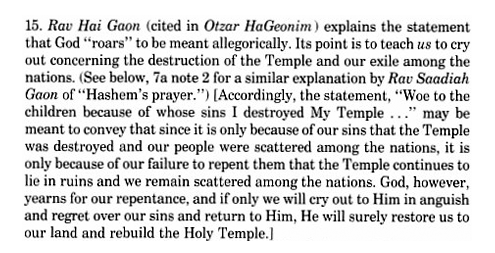
The additional words  לבנים שבעונותיהם  were added by Christian censors and the corrupted text was noted in Dikdukei Soferim. None of was evident to the editors of the English ArtScroll, who compounded the error by adding the following homiletic note to the corrupted text.
In its effort to comment on (nearly) everything, the ArtScroll edition has added a homiletic explanation of a text written (almost certainly) by a Jewish apostate serving as Christian censor. Fortunately, the Hebrew and English editions of the Steinsaltz, together with the Hebrew Schottenstein (ArtScroll) have returned the text to its original and uncensored form.  
While the number of such censored Talmudic texts is not especially large, the modern reader should expect no less than the most accurate text of the Talmud, and the editors of the Steinsaltz Talmud seem to have been sensitive to this need.
Side by side comparisons
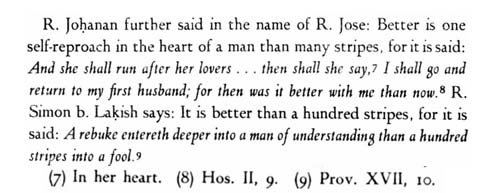
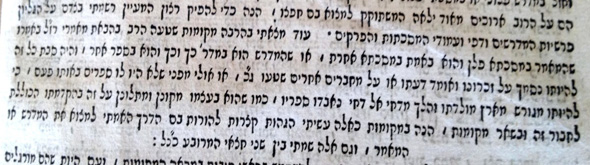
The real test of the new Steinsaltz Talmud is how it feels to use it, and how that experience compares to the older ArtScroll and much older Soncino translations.  What follows is a comparison of a section of text chosen at random. The comments are preliminary; an in-depth comparison of the three editions would require far more space than this review allows. First the Talmud itself, from ברכות ז:
Here is the Soncino translation togther with the foonotes, (which are not found on the same page in the orginal):
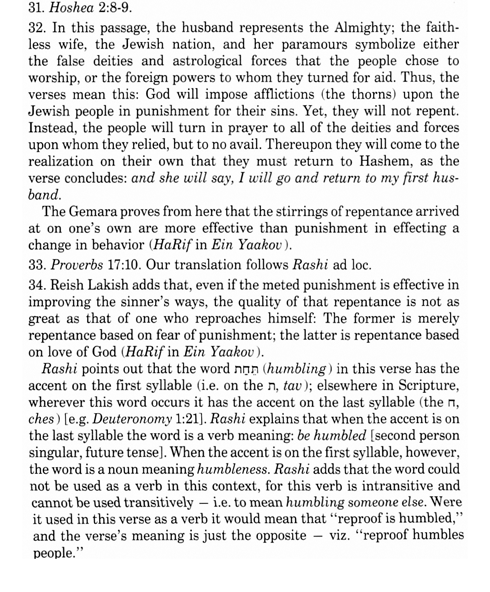
Next, the ArtScroll:
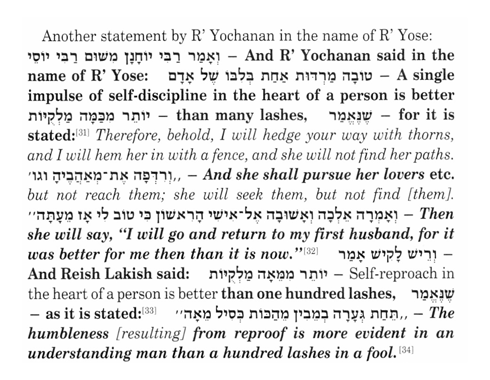
And finally the Steinsaltz with the Notes as they appear on the printed page:
In elucidating the meanings of this passage, the Soncino provides the minimalist approach, which consists of a translation of the biblical verse as it is cited in the Talmud, together with a translation of the comments of R. Yohanan and Resh Lakish.  The English text is understandable, but only with some effort. (What exactly are “stripes”?) In order to appreciate the biblical proof text cited the reader would have to look up the verse in its entirety. The notes provided in the Soncino edition are at the foot of the next page, so that in order to know where the verses are from, the reader must divert her attention from the text to the notes.   Finally, having studied this passage, the reader is left wondering just why regret is preferable to punishment.  Should her skills allow she could read Rashi’s explanation (who emphasizes that regret is reached through a personal reckoning), or provide an explanation of her own.  
The ArtScroll translation does more work for the reader, filling in the missing biblical text so that the verse is understood in its entirety without the need to actually reach for a Bible to look it up.  But the explanation, like the reference explaining where the verse comes from, is to be found in a footnote under the text, which is distracting.  Even more disruptive is the explanation of the verse provided in note thirty-two.  It explains how the verse may be understood metaphorically in the context of Hosea’s rebuke of Israel’s infidelity, but this is of no relevance in understanding the Talmud here.  Finally, following Rashi’s explanation, the ArtScroll translation of the verse from Proverbs used as the proof text for Resh Lakish is unnecessarily verbose: “The humbleness following from reproof…”
The Steinsaltz Talmud adopts a different approach than the ArtScroll, placing the references into the flow of the text so that the reader never has to search for the biblical citation.  Like the ArtScroll translation, it fills in the words missing from the biblical quotes, but it also provides a psychological explanation in the body of its translation, noting that “remorse is more effective than any externally imposed punishment.” The reader’s attention is directed to a note that appears immediately next to, (rather than below and distant from) the text that is being studied, and it here that the text is explained; it reveals an educational methodology in which a student learns best when “approached in a sensitive manner.”  This insight is acknowledged to come from Ein Ayeh, although the opportunity to tell the reader that this is a work of Rabbi A. I. Kook was sadly missed.  Finally, in its translation of the verse from Proverbs, the less verbose Steinsaltz translation is more germane and better understood: “A rebuke enters deeper into a man of understanding…”
The Soncino translation, once of great service as the only English translation, uses language that is anachronistic. It is difficult to use, and lacks the kinds of explanations that the modern reader is looking for. The ArtScroll translation is busy both esthetically and in its content, with so many references that the reader is often not able to distill what is of true value – namely, understanding the meaning of the Talmud and using it whenever possible to guide contemporary Jewish living. The Steinsaltz approach provides a Goldilocks translation, one that is just right, providing the reader with enough detail and explanation to discern the meaning of the Talmud, and to leave its study with a profound lesson that is applicable to contemporary society. For the student who wishes to study the Talmud in depth but who lacks the Hebrew skills to do so, the ArtScroll translation provides plenty of references and additional material.  For the more casual student, and for the reader engaged in the challenge of following the Daf Yomi cycle, the Steinsaltz translation is more readable and the page less overwhelming, without sacrificing any of the ability to understand the text itself. Less is certainly more.  Much more.  
Conclusion – the Talmud evolves
Writing some one hundred and forty years ago, Raphael Nathan Rabbinovicz described the 1554 edition of the Sabbioneta Masekhet Kiddushin as “the most becoming and beautiful. If the entire Talmud had been printed, it would have been the glory and most beautiful jewel of Israel.  All the editions before and after would not have compared to it…” The new English Steinsaltz Masekhet Berakhot deserves no less an accolade.  Aesthetically attractive, and containing new and important elucidations of the text, it is not simply a “me-too” translation, but a statement of the relevance and evolution of the central text of rabbinic Judaism.  It deserves a place on the shelf of every English speaking modern-Orthodox house and Bet Midrash, or better yet, every English speaking Jewish home.  The Koren Steinsaltz Talmud invites us to savor the Talmud. It shows us that far from being a work that is difficult and at times frustratingly opaque, the Talmud can be a colorful work that is not only easy to understand, but a pleasure to read. Ravina and Rav Ashi would have been proud.


The Proselyte Doth Protest Too Much

THE PROSELYTE DOTH PROTEST TOO MUCH
By Eli Genauer
I recently acquired an early edition of Abarvanel’s Peirush Al Neviim Rishonim. It was printed in Leipzig in 1686. It was only the second edition of this commentary, following the first edition printed in Pesaro in 1511 by Gershom Soncino.
The publisher of this edition was Mauritium Georgium Weidmannum. The editors were Friedrich Albrecht Christiani, an apostate, and August Pfeiffer, a German Lutheran theologian. It was printed primarily for a Christian reading audience for reasons we shall discuss.
F. A. Christiani, who was the main editor, is described in a publication called “World – Today’s News Christian Views” (March 2, 2002):

“Friedrich Albrecht Christiani is stunned to find himself believing in Christ. The Hamburg resident, educated in the Talmud, says, ‘I was so zealous for my Jewishness that had someone told me then of my prospective conversion, it would have appeared as strange to me as it seems incredible to others.’ But finding himself unable to refute Esdras Edzard’s arguments, he decides to go with what his mind, rather than tradition, tells him, and takes the last name “Christiani.””

It seems that later on he returned to Judaism as noted by this entry in the Encyclopedia Judaica:

“He was baptized in 1674 at Strasburg, having formerly borne the name of Baruch as Hazzan at Bruchsal. After having occupied for twenty years the chair of Semitic studies at the University of Leipsic, he retired to Prossnitz, where he returned to Judaism.”

For the purpose of this study, we will assume that he was a practicing Christian when he edited this book by the Abarvanel, as this was before he had returned to Prossnitz. 
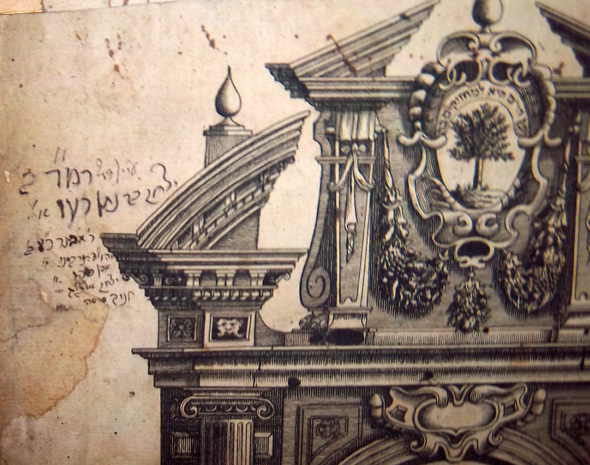
In studying the cover page of my Leipzig edition, I noticed the following handwritten notation:
The top notation reads עיין דף רמ”ד 2 (“see page 244b”). I do not know who made this notation in the last 300+ years, but I was curious to see what it was all about.
Shlomo Hamelech had died and his son Rechavam took over as king. The people had asked him to relieve some of the burdens placed on them by Shlomo, but instead he told the people that he would deal much more harshly with them than had his father. The people replied that they wanted nothing to do with him as king.
Their reply is reflected in the following pasuk in Melachim Alef 12:16.

טז וַיַּרְא כָּל-יִשְׂרָאֵל, כִּי לֹא-שָׁמַע הַמֶּלֶךְ אֲלֵהֶם, וַיָּשִׁבוּ הָעָם אֶת-הַמֶּלֶךְ דָּבָר לֵאמֹר מַה-לָּנוּ חֵלֶק בְּדָוִד וְלֹא-נַחֲלָה בְּבֶן-יִשַׁי לְאֹהָלֶיךָ יִשְׂרָאֵל, עַתָּה רְאֵה בֵיתְךָ דָּוִד; וַיֵּלֶךְ יִשְׂרָאֵל, לְאֹהָלָיו 

16 And when all of Israel saw that the king had not listened to them, the people answered the king, saying: ‘What portion have we in David? Neither have we inheritance in the son of Yishai; to your tents, O Israel; now see to your own house, David.’ So Israel departed unto their tents.

Abarvanel cites a Maamar Chazal which explains that the Jews meant as follows:
אין לנו חלק בדוד, זו מלכות שמים. ולא נחלה בבן ישי זו מלכות דוד.לאוהליך ישראל זה בית המקדש אל תקרי לאהליך אלא לאלוקיך
The people stated that they had no portion in the Kingship of Heaven, the Kingship of the House of David, nor of the Beis HaMikdash, which is interpreted to mean that they wanted no part of Hashem.
First let us look at how this section looks in the first edition printed in Pesaro in 1511. Starting on the 3rd line it reads ….. ובפרק כהן גדול אמרו אין לנו חלק בדוד . Clearly there is no editorial note in this edition after the words ובפרק כהן גדול אמרו אין..


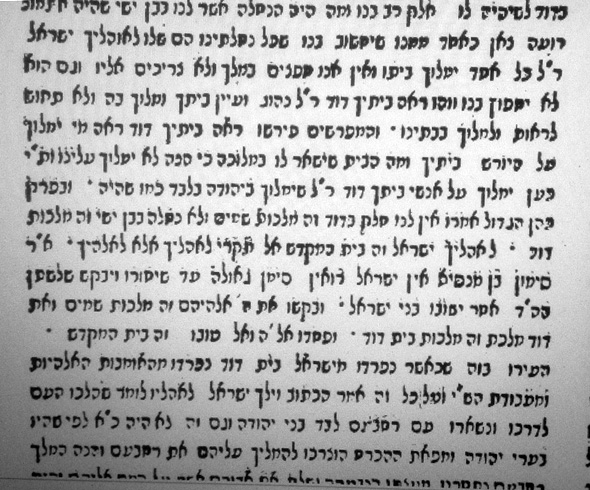
Now let us see how this is recorded in our Leipzig edition, whose editor was F.A. Christiani.

It turns out that the quotation is actually from Yalkut Shimoni, Shmuel Aleph 8:26 (and quite similarly in the Midrash Shmuel Chapter 13) but the Abarvanel mistakenly cites “Perek Kohen Gadol” in Maseches Sanhedrin as the source.
This error precipitated Christiani to launch into what can only be termed a “rant”.
You can follow his harangue starting on the first line, inside the parentheses, starting with the abbreviation א”ה

Let me paraphrase what Christiani writes: “So says the editor…It is truly unbelievable what he (Abarvanel) says…..the Rav has made so many mistakes in citing specific sources from the Rabbis….he should be totally embarrassed to cite a source that is not found anywhere close to where he said it was…It is only because he relied on his memory and his mind, which is a conceited and harmful trait….because, setting his honor aside, it is a bold and shamefaced lie to say that this saying is contained in this Perek or in any Perek in Sanhedrin…I have looked high and low for this Maamar Chazal and have found it nowhere …if anyone can find it and bring to a close this terrible error, he will truly be blessed.”
Christiani opens himself up for some criticism by stating that he has searched, “Chipus achar chipus be-gemaros u-midrashim” and was not able to find this Maamar Chazal. And yet we know that it is found both in the Yalkut Shimoni and the Midrash Shmuel, both of which pre-dated Christiani by many centuries. The Jewish Encyclopedia lists Abravanel as the first to quote from Yalkut Shimoni saying, “after the beginning of the 15th century, on the other hand, the work must have been disseminated in foreign countries, for it was used by Spanish scholars of the latter half of that century, Isaac Abravanel being the first to mention it.”
One might imagine that launching a diatribe against a respected Jewish scholar was to be expected of a Meshumad. However, Christiani’s hakdamah to this edition shows a complete other side of him. He writes as follows (starting from the second line with the word od):
Again, let me paraphrase: 

“I found in many places where the Rav erred in citing sayings of Chazal by saying that it was in this Masechta and it turned out to be in another one…..The reason for this might be that he relied on his memory or relied on other authors who misquoted the source. It is also possible that he did not have with him his books, as he was exiled from the land of his birth and wandered from place to place with his books being lost…as he himself laments in the foreward to this and in other works.”

Christiani is referring to Don Isaac’s life on the run. He lived in Portugal until 1483 and was forced to flee to Spain at that time leaving behind his books and his wealth. He fled Spain in 1492, again leaving everything behind. He settled in Naples and was forced to flee from there in 1495. He wrote his commentary on Yehoshua, Shoftim and Shmuel in 1483 after he had fled to Spain. He wrote his commentary on Melachim in 1493 after he had fled to Naples. Most ordinary humans would have been satisfied to just survive, but the Abarvanel did much more than that. He continued to write with or without a library, relying on an almost superhuman memory, and was truly one of the creative geniuses of commentary in Jewish history. Christiani seems to acknowledge that in his foreward, but he cannot contain himself later on from lashing out at the Abaravanel. What gives?
I mentioned before that this Leipzig edition was produced by Christians for a Christian audience. It would be helpful to find out what attracted them to Abarvanel. B.Z Netanyahu in his book “Abaravanel, Statesman and Philosopher” (fifth edition, Cornell 1998, pp.252-253) gives several reasons on what made Abarvanel popular with Christian audiences. Among them are:
1. “His lucid and colorful style was preferred to the schematic, sometime illusive language which characterized the works of other Jewish commentators.”
2. “His manysided method of discussion….was preferred….to the terseness of his predecessors..”
3. The audacity he displayed in refuting certain Jewish authorities and the objecitivity with which he treated certain Christian biblical interpretations. ( my paraphrase)
However he concludes with the following statement:

“These, however, were merely contributory causes to Abarvanel’s influence in the Christian world. The main cause from a Christian standpoint, lay not in the positive aspects of Abarvanel’s writings, but rather in their negative ones. More plainly, his influence in Christendom was due to his attack upon Christianity as a whole and its messianic doctrine in particular, and that is why it was in the religious world, even more than in the world of learning, that Abarvanel’s figure loomed large.”

It seems that what Netanyahu is describing is that the Christians had somewhat of a love/hate relationship with Abarvanel. The love portion is displayed in Christiani’s hakdamah where he makes excuses for the Abarvanel, but the hate portion comes to the fore when he digs into the Abarvanel for misquoting a source. It is almost as if he tried to control himself, but in the end, was not able to.
There was another edition of the Abarvanel printed in Hamburg in 1687. It was meant for a Jewish audience and quite clearly did not contain Christiani’s editorial note.
At the end of the seventh line starting with “u-be-pherek”, you can see that the diatribe by the Lepizig editor is missing because the Hamburg edition was copied from the first edition printed in Pesaro in 1511.
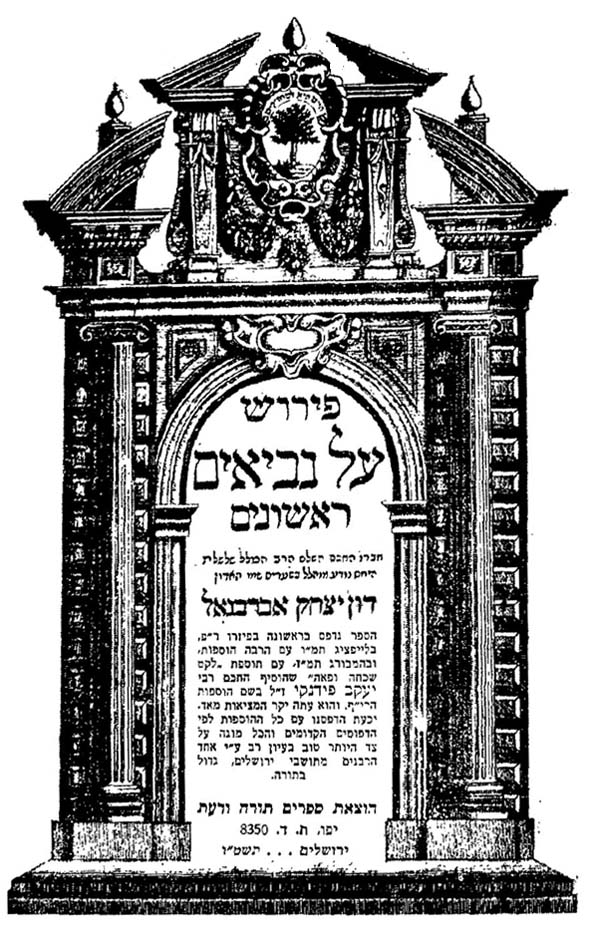
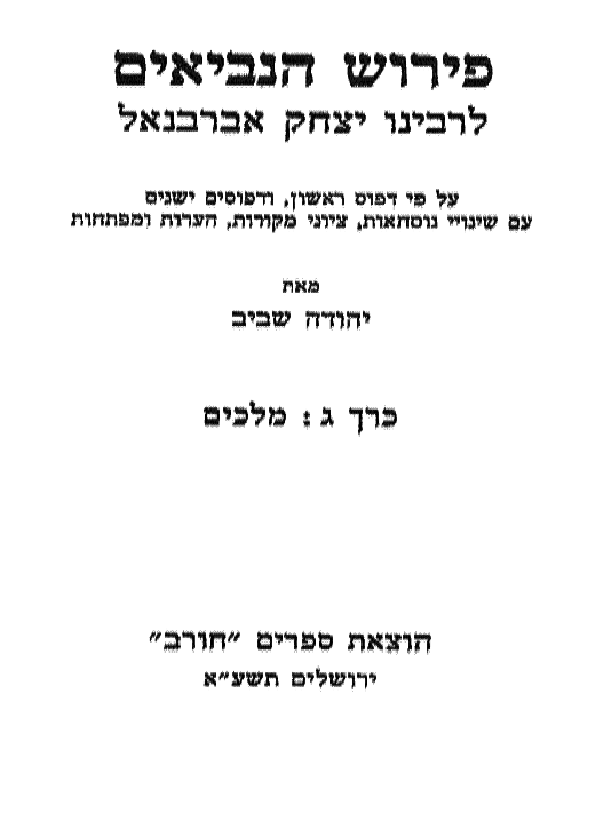
The next printed edition of the Abarvanel did not appear until 1956. The title page looks like this:
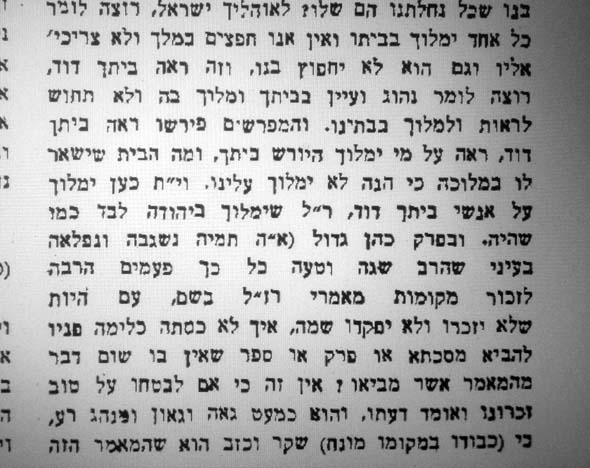
It states quite empahitically that this edition was researched and edited very carefully according to all the previous editions “by the hands of one of the resident Rabbis of Jerusalem who is great in Torah,” והכל מוגה על צד היותר טוב בעיון רב על ידי אחד הרבנים מתושבי ירושלים גדול בתורה.
This great Torah scholar was not aware that Christiani’s diatribe was written by a Meshumad, or I doubt whether he would have included it in the edition he so carefully researched!
You can see it above starting from the 8th line from the bottom.
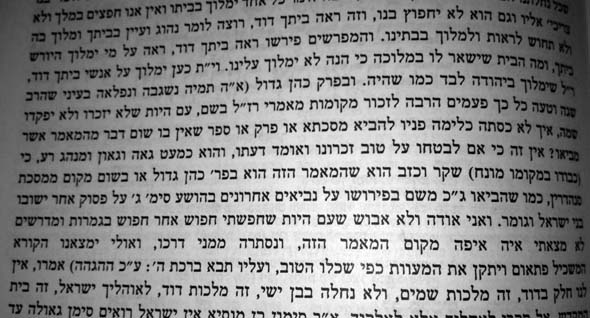
The next edition of the Abarvanel was printed between 1989 and 1999 as one of the commnetaries in a Mikraot Gedolot. The title page looks like this:
Here too we find the offensive hagaha ( starting on the 4th line):
We finally find it missing from the latest edition which was printed in 2011. The editor of this latest edition notes that he based his edition “Al pi defus rishon, u-defusim yeshanim”, but not on any kisvei yad of the Abarvanel. Here, the editor cites Midrash Shmuel as the source. While most editions of the Midrash Shmuel do not read exactly the way it is quoted in the Abarvanel, Shlomo Buber in his Cracow 1893 edition notes that in a manuscript of the Medrash Shmuel, the last portion is found אל תקרי לאהליך אלא לאלוקיך.
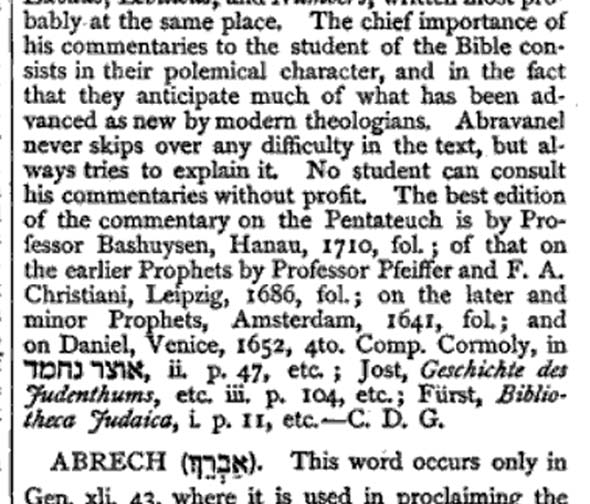
Finally, I want to mention that Christiani’s edition did receive praise from a noted scholar of the 19th century. This scholar composed an entry on Abarvanel in A Cyclopedia of Biblical Literature, John Kitto ed., 3rd ed., J. B. Lippincott and Co, Philadelphia, 1866.
The end of the entry speaks about which editions of Abarvanel’s various works are recommended by this scholar.
This scholar writes clearly that the best edition of the commentary on the earlier Prophets is the one printed in Leipzig in 1686 and edited by Professor Pfeiffer and F. A. Christiani. This scholar bypasses the first edition printed in Pesaro in 1511, and the Hamburg edition printed in 1687 which included the important commentary of Rabbi Yaakov Fidanque. He signed his name to this entry as C.D.G. He is better known by his full name Christian David Ginsburg, the noted 19th century scholar of the Masoretic corpus of the Tanach. He is described in the Jewish Encyclopedia in part as: “English Masoretic scholar and Christian missionary; born at Warsaw Dec. 25, 1831. He was converted in 1846, and was for a time connected with the Liverpool branch of the London Society’s Mission to the Jews, but retired in 1863, devoting himself entirely to literary work.” It seems that in many ways, he followed in the footsteps of F. A. Christiani and perhaps that is why he favored Christiani’s edition of the Abarvanel.


Some recent seforim

Some recent seforim
By Eliezer Brodt
This is a list of some of the recent seforim I have seen around during my seforim shopping. This is not an attempt to include everything or even close to that. I just like to list a wide variety of works. I note that for some of these works that I can provide a table of contents if you request it, email me at Eliezerbrodt@gmail.com.
א. מסכת קידושין חלק א, מכון תלמוד הישראלי
ב. שו”ת הרשב”א, חלק ג, תשובות השייכים למסכת ברכות וסדר זרעים, מאת חיים דימיטרובסקי, מוסד רב קוק.
This is the much awaited continuation of Dimitrovsky edition of the Rashba. Mossad Rav Kook also reprinted the very sought after first two volumes of this set. On the first two volumes professor Yisroel Ta- Shema writes:
מגוון ההערות משוכלל מאוד, ומאיר עיניים ותורם תרומה יוצאת דופן להבנת סוגיות קשות אלו (הספרות הפרשנית לתלמוד, חלק שני, עמ’ 62).
ג. מגלת קהלת איכה, מהדורת תורת חיים, מוסד רב קוק.
ד. שבלי הלקט, מכון זכרון אהרן, שני חלקים.

This edition contains new notes, the Shibalei Ha-leket Hakotzer and two article of Professor Yakov Spiegel on this work. Unfortunately the parts of this work on Chosen Mishpat and Even Ha-ezer have still not been printed in book form.
ה. שערי דורא עם הרבה הוספות על פי כת”י וכו’ מכון המאור.

An excellent review appears in the most recent issue of Ha’mayan trashing this work, available here.

ו. פירוש ר”י אלמדנדרי על מסכת ר”ה, מכתבי ידות, על ידי ר’ יוסף ברנשטיין, עט עמודים.
ז. פירוש ר”י אלמדנדרי על מסכת מגילה, יומא, מכתבי ידות, על ידי ר’ יוסף ברנשטיין, צד+מג עמודים.
ח. ר’ יעקב צמח, נגיד ומצוה, על פי כתבי יד עם הערות והוספות, מכון שובי נפשי, שמח עמודים.
This book is based on manuscripts but none of the important discussions of Yosef Avivi or Zev Gris were mentioned in the introduction.
ט. זכרון אבות, ר’ אליעזר פואה, תלמיד של הרמ”ע מפאנו, על פי הרבה כ”י, שיח עמודים, עם מבוא, הערות ומפתחות.
 Simply put, this work was beautifully done, by the editor Yehudah Hershkowitz.
י. ר’ שלמה תווינא, פ’ שמע שלמה על קהלת, כולל מבוא גדול הערות ומפתחות מ שאול רגב ויעקב זמיר, רעה עמודים.
יא. מאיר השחר, ר’ מאיר סג”ל מליסא, על עניני ברכת התורה וברכה אהבה רבה שפוטרתה, והמסתעף בדיני ק”ש וברכת התורה ובכללי מנין המצות, [נדפס פעם ראשונה בתק”ט] כולל מבוא והערות מאת ידידי, ר’ שלום דזשייקאב, קסב עמודים.
יב. שו”ת צפנת פענח החדשות, כולל שו”ת מכתבים ואגרות, גליונות על שלחן ערוך יורה דעה והשאלתות, תקנה עמודים.
יג. חידושי בעל שרידי אש על הש”ס, חלק ג, פסחים, חולין, עם כמה מכתבים בסוף, תקסב עמודים.
יד. נטעי אד”ם, ר’ דוד מאיר אייזנשטיין, מכון הרב פרנק, כולל ב’ חלקים בכרך אחד, תכד עמודים. חלק א, חידושי תורה ובירורי הלכה, חלק ב, חיבור שלם על יש אם למקרא יש אם למסורות (170 עמודים).
טו. שלחן ערוך אורח חיים חלק ה- מכון ירושלים, הלכות עירובין.
טז. אוצר מפרשי התלמוד, קידושין, חלק ב.
יז. נחל יצחק ר’ יצחק אלחן ספקטור, ד’ חלקים, מכון ירושלים.
יח. יד דוד, ר’ דוד זינצהיים, קדשים, מכון ירושלים.
יט. חידוש רבי ישעיה רייניגר, דרשות’ מכון ירושלים.
כ. מנחת חינוך, בשולי המנחה כרך שני.
כא. יד אלימלך, ר’ דוד אלימלך שטורמלויפר, חידושי ושו”ת עם גדלי גליציה, מכון ירושלים.
כב. תולדות יעקב, ר’ יעקב מאהלער, חידושים על ש”ס, מכון ירושלים.
כג. ר’ אביגדר נבנצל, תשובות אביגדר הלוי, אורח חיים, תקטז עמודים
כד. ר’ אביגדר נבנצל, ירושלים במועדיה, שבת קודש, חלק ג, על ל”ט מלאכות, שמו עמודים
כה. ר’ יעקב הלל, שו”ת וישב הים, חלק ג.
כו. ר’ יצחק דרזי, שבות יצחק, מלאכת בורר, ש+סח עמודים.
כז. ר’ יצחק דרזי, שבות יצחק, דיני יום טוב, קעד עמודים.
כח. כל חפציך לא ישוו בה, שיחות מר’ שמואל אויערבאך, מב עמודים.
כט. ר’ יוסף אפרתי, ישא יוסף חלק ג, או”ח, יו”ד
ל. מחשבת סופר, ר’ ישראל ברוורמן, הלכות בורר, רסה עמודים.
לא. מראות האדם, הל’ עגונות, ר’ אריה דודלסון.
לב. ר’ דוד פלק, בתורתו יהגה, עיוני הלכות בעניני הפטורים והאסורים בתלמוד תורה, [נשים, נכרים, אבלים ותשעה באב, חכמת הקבלה, תלמד שאינו הגון, מקרא בלילה, דבר בשם אמרו ועוד], תקלח עמודים.
לג. ר’ חיים בניש, שערים על הפנימיות, מושגי יסוד בקבלה ובחסידות, על פי ספרי רבותנו גדולי ההגות והמחשבה, ובפרט הספר הק’ שפת אמת, תרסט עמודים.
לד. הרבצת תורה, עצות מר’ שטינמן והגר”ח קניבסקי שליט”א, וק’ מרבה חיים מפסקיו של ר’ חיים פנחס שיינברג, 71 עמודים.
לה. דעת יהודה, תשובות בהלכה ובהנהגה של ר’ יהודה שפירא, מתלמידי החזון איש, רמט עמודים.
This work is full of interesting tidbits. To list one, in regard to the now famous statement of the Chofetz Chaim’s son that he wrote parts of the Mishana Berurah for his father, he writes:
המשנה ברורה כותב בתחילת ספרו כל זה חברתי בעזה”י ופשיטא דזהו אמת ואם נסתייע פעמים בקרוב ודאי עבר על זה בעצמו, וחלילה להכנס בלב מחשבות כאלו. ובהערה שם מביא בשם ר’ חיים קניבסקי שליט”א, שמעתי ממרן החזון איש שאין זה נכון אמנם עזר לאביו אבל החפץ חיים עבר על הכל, ומש”כ שיש סתירות אינו נכון ואין שום סתירה והוא טעה עכ”ד.
לו. שיבת ציון, ר’ אברהם סלוצקי, קובץ מאמרי גאוני הדור בשבח ישוב ארץ ישראל, כולל מבוא והערות, 438 עמודים.
לז. המעין גליון 202, אפשר לראות הכל כאן.
לח. בר מצוה, אוצר הלכות ודרשות והדרכה לבר מצוה, ר’ משה קרויזר, שפד עמודים
לט. אנציקלופדיה תלמודית, אוצר התפילה, ר’ דוד כהן, 280 עמודים.

It is well known that Rav Dovid Cohen wrote the entry of tefilah for the Encyclopedia Talmudit many years ago. Perhaps he wanted to see it out in some form already, so they printed it as he wrote it then. That is, this work was completed and submitted in 1964. It was edited but no additions were made since its composition in 1964. What is impressive about the work is the amount of sources that he had and used while writing it. Unfortunately the very important topic of tefilah did not have a proper work on it – until now. This recent volume definitely helps one with this huge and extremely important topic, but the information in this work is only based on what had been printed until 1964. However since then there have been many great discoveries related to this siddur and tefilah in general which were not used in this work.
מ. רבבות קודש, ר’ אלישע אלטרמן, מבוא לכל לשונות חז”ל, תרגום אונקלוס, תרגום הכתובים ועוד, סד עמודים.
מא. ר’ אלחן שאף, ברכתא ושירתא, על מסכת ברכות כולל חומר מעניין על עניני הלכה ואגדה מתוך אלפי ספרים, 587 עמודים. בסוף הספר יש ק’ של כמה הערות מהגאון ר’ משה פינשטיין שלא נדפס.
מב. ר’ דוד בן שמעון, שערי צדק,- שער החצר, עניני ארץ ישראל, ב’ חלקים עם הערות.
מג. ר’ יצחק שילת, זכרון תרועה, [ספר מצוין] בסוגיות תקיעות שופר, 706 עמודים. נדפס מחדש.

This special work has been out of print for many years.

מד. ר’ יונה מרצבך, עלה ליונה, תקפב עמודים.

This special work has been out of print for many years as well. The new edition claims to fix typos from the first edition and add in a few pieces. It is annoying that they do not tell the reader which are the new pieces. It is also annoying that they changed around the order of the sefer making it confusing for one when citing a piece. But on balance it’s good that they reprinted this important work.
מה. חכמה פנימית וכמה חיצונית, – חכמת ישראל וחכמת יוון, ר’ צבי אינפלד, מוסד הרב קוק, 247 עמודים
מו. רבי עקיבא ודורו של שמד, מנהגי ימי העומר, ר’ צבי אינפלד, מוסד הרב קוק, 325 עמודים
מז. מילי דחסידותא, חוברת בענין החומרא, קמב עמודים.
מח. ירושתנו חלק ו, מכון מורשת אשכנז, תלה +77 עמודים, [ניתן לקבל תוכן הענינים

I have heard from many people that they were not excited about this issue compared to the previous volumes. I disagree; I think this volume has some very good articles. The first (seventy pages) article on Tosefos Shantz on Mesechtas Kidushin is a veritable work of art. This author wrote an incredible article on Rashi Nedarim in an earlier volume (4) of this journal. Another article of interest based on some new discoveries is related to the controversy of Pozna about learning philosophy, especially the Moreh Nevuchim. This article continues after the recent article of Professor Elchanan Reiner in the Ta-Shema Memorial Volume. Another article of interest is from Dr. Rami Reiner about various gravestones discovered in Wuerzburg based on his recent work on the topic. Another article I enjoyed was from Profesor Yakov Speigel related to abbreviations and gematriyos. A very special article in this volume was written by Rabbi Hamberger. This article deals with the siddur printed recently called Tefilos Yishurin. In this article Rabbi Hamberger deals with many issues related to siddur and Nussach that have been posed to him due to this edition of the siddur. Another great piece in this journal is Rabbi Dovid Kamenetsky’s response to the attack mentioned a while back against him in regard to Panim Yafos being a chassidic work [pdf available upon request]. Another article of great interest written in English is from Rabbi Yakov Lorch about Rabbi Breuer. This article (77 pages) is well researched, gathering much new material focusing especially about this great Gadol’s personality. Just to list some other articles of interest related to the world of Minhag:
– נוסח ספירת העומר הקודם
-מהג ק”ק מגנצא בסדר התפילה ונוסחאותיה
-רווח בין פסוק לפסוק בכתיבת סת”ם
-מנהגי קריאת התורה ביום שמיני עצרת
-ביאור חי העולמים וניקודו
-נוסח חתימת ברכת השכיבנו בלילה שבת
מט. אוריתא, חלק כא [תשע”א], השואה, תרח עמודים, כולל אוסף חשוב על השואה בהרבה תחומים.
נ. בתורתו של ר’ גדליה, מדברי תורתו של הגאון ר’ גליהו נדל, ר’ יצחק שילת, הדפסה שניה עם הוספות, קצט עמודים.
This book sold out as soon as it came out, it has been sought after by many. It was available on the web in different places and then removed from some of them. This work was supposedly never going to be reprinted again as this book was the source of great controversy. However Rav Shilat decided to reprint the book including twenty pages of new material and two more pages of an introduction. In this new introduction he writes that there are many more tapes of Rav Nadel on interesting potentially explosive topics waiting to be printed. One can only hope that they are printed in the near future. Copies of this work are available at Biegeleisen in New York or through me [eliezerbrodt@gmail.com].
מחקר ושאר עינינים
א. שירת הי”ם, שירת חייו של איש ירושלים הרב יעקב משה חרל”פ, 584 עמודים.
ב. חכמי ישראל כרופאים, דוד מרגליות, 222 עמודים
ג. המאסר הראשון, יהושע מונדשיין, מאסרו הראשון של בעל התניא, מאבקי המתנגדים והחסידים בוולינא המלשינויות ומאסריו של הגר”א מווילנא לאור תעודות ומסמכים חדשים גם ישנים, 681 עמודים. This work continues in his famous path, of course he cannot resist attacking R. Eliach and R. Kamentsky on various issues.
ד. משנתו של רבי עמרם, שיחה עם רב עמרם בלויא, מנהיג נטורי קרתא, 176 עמודים.
ה. כלי מחזיק ברכה, עיצוב המשנה כפרשנות, מרדכי מאיר, 120 עמודים.
This work contains some of the articles of Meir related to the mishna topic include:
-הממד הפרשני בניקודן של מילים במשנה
– פיסוק המשנה כפעולת הכרעה פרשנית
– עריכת המשנה כפועלת הכרעת פרשנית
– המשמעות הפרשנית של החלוקה למשניות
-משניות הפותחות פרק בשעה שאמורות היו לחתום את הפרק שלפניהם
ו. גרשום שלום ויוסף וייס חליפת מכתבים 1948-1964 עורך נועם זדוף, הוצאת כרמל, 413 עמודים
ז. על אמונה, על אהבה, וגם על אמנות מחקרים בחכמת ישראל, לאה נעמי פוגלמן, הוצאת כרמל, 220 עמודים, [אוסף מאמרים וכת”י על דברים שונים ומעניינים].
ח. שמות מקומות קדומים בארץ ישראל השתמרותם וגלגוליהם, יואל אליצור, מהדורה שנייה משופרת, 511 עמודים, יד יצחק בן צבי.
ט. וזאת ליהודה, ספר היובל לכבוד יהודה ליבס, מוסד ביאליק, [ניתן לקבל תוכן הענינים.
י. ר’ מנחם פלאטו, רבי יצחק אלחן ספקטור, ספר תולדות חייו, 256 עמודים.
This work does not appear to be impressive comparing it to the other recent Toldot on him printed in the introduction of the volume called Teshuvot Rabbenu Yitzchack Elchanan Spector from Mechon Yerushlayim.
יא. תעלומת הכתר, המצור אחר כתב היד החשבו ביותר של התנ”ך, מתי פרידמן, 288 עמודים
This work came out in English at the same time, the title is The Aleppo Codex. As far as I have seen the two works are identical. Some recent weekly magazines, amongst them Mishpacha (both in Hebrew and in English), printed a nice interview with the author about his new work. The main point of this work is to trace the story of the Aleppo Codex from the riots in Aleppo until today. The book reads like a modern day action thriller and has nice conspiracy theories which might very well be true. I do not want to mention the accusations that he makes at various people, some more of a stretch than others, as I do not want to ruin the book for someone who did not read it yet. All in all it makes for a very exciting and entertaining read.

English titles


1. The Gaon of Vilna and his Messianic Vision, Aryeh Morgenstern, Gefen Press, 446 pp.
2. Collected writings of Rabbi Samson Raphael Hirsch, volume 9, 362 pp. This work includes an index of all the previous volumes [Many thanks to Naftoli Lorch for tipping me off about this work and providing me with a copy].
3. Rabbi J. David Bleich, Contemporary Halakhic Problems, Volume 6, Ktav press, 455 pp.
4. Defining the moment of death, understanding Brain Death in Halakhah, Rabbi David Shabtai, 417 pp.
5. In his ways, Reb Dov (Schwartzman), R. Shmuel Wittow, 189 pp.


The Future of Israeli Haredi Society: Can The Written Word Offer Some Insight? (And Assorted Other Comments)

The Future of Israeli Haredi Society: Can The Written Word Offer Some Insight? (And Assorted Other Comments)
by Marc B. Shapiro

 1. Months ago I was asked to write about the situation in Beit Shemesh that everyone was then focused on (and which will probably heat up again in the future). At the present, I don’t have anything to add to the discussion, and if I did it would be with reference to Jewish books, as this is, after all, a site devoted to seforim. While I have in the past given my views on various issues, it was in the context of Jewish books, and this case would be no different. This point was actually sorely missing in discussions of the Beit Shemesh situation and the haredi world in general. While what happens in real life does not always correspond to what appears in the books, knowledge of the latter is a great help in understanding what is going on in the community, at least with regard to the rabbinic elite. For example, if I were going to write something about the Neturei Karta faction that cozies up to Iran and Hamas, I would deal with how these people have tried to justify their actions from talmudic sources. They have even attempted to justify the sending of congratulations to Hamas after the latter succeeded in blowing up Jews in a terrorist attack.

I have also been asked a number of times to write about the more basic issue of haredi ideology and democracy, which is on many people’s minds. They are wondering if the Israeli haredi community really believes in democracy and allowing everyone the freedom to live as they see fit. More than one has asked me straight out if a haredi majority would mean the end of a democratic Israel.[1] I can’t speak about the haredi man on the street, but examination of the writings of the haredi leadership – and in the haredi world that is what really matters – shows that time and again they have expressed opposition to democratic values as well as democracy as a governmental system.

From the haredi leadership’s perspective, while at the present time the haredi world is forced to take part in the democratic process, they assume that if haredim ever became a majority they would dismantle Israel’s democracy and institute a Torah state (i.e., a theocracy led by the haredi gedolim).[2] Since that is their goal, stated explicitly, we have to wonder what such a society would look like. To begin with, if haredim were ever the majority, funding for non-Orthodox (and perhaps even Religious Zionist/Modern Orthodox) schools would be halted. There would be massive decreases of funding for universities, with the humanities taking the biggest cuts, and money for the arts, culture, and institutions connected to Zionism would dry up. Freedom of the press would be abolished, artistic freedoms would be curbed, and organ transplants would almost entirely vanish. Public Shabbat observance and separate-sex public transportation would likely be required. There would also be restrictions on what forms of public entertainment and media are permissible and on public roles for women. Of course, women’s sporting events would no longer be televised and men would not be permitted to attend them. From the haredi perspective, these steps are all halakhic requirements, and no one who reads haredi literature can have any doubt that these sorts of things are intended when haredi writers refer to the time when it will be possible להעמיד הדת על תלה. How many non-haredim will be affected by this is questionable, because as soon as the haredi numbers come close to a majority, the non-religious and non-haredi Orthodox emigration will begin (followed no doubt by the yeridah of some haredim as well). No one who has lived in a Western style democracy will want to live in a society where cherished freedoms are taken away.

Everything I am saying now could change. It is indeed possible that the haredi leadership could do a complete turn-around and decide that it is not helpful to take the country in a direction which while more “pious” would end up destroying it at the same time. But this would take some incredible acts of courage by the haredi leadership. They would have to break with a message that has been advocated for the last thirty years or so.

Here is what R. Shakh wrote about democracy (Mikhtavim u-Ma’amarim, vol. 5, p. 124):

בל נחשוב, שהשיטה הנקראת “דמוקרטיה” היא דבר חיובי . . . האמת היא שהיא אסון לעולם. היא נותנת הרגשה מדומה של “חופש” בו בזמן שלאמיתו של דבר היא רק הפקר, ותו לא . . . הדמוקרטיה היא דבר טרף, וכל כוונתם לעקור דרכה של עם ישראל ולהרסו

On p. 127 he writes:

ואנו תפילה להרבונו של עולם, אנא פטור אותנו מקללת הדמוקרטיה החדשה שנשלחה לעולם, שהיא ממש כמו מחלת הסרטן שנשלחה לעולם. כי רק התורה הקדושה היא הדמוקרטיה האמיתית.

If the “curse” and “cancer” of democracy is so bad, what would take its place in a haredi dominated society? The answer is obvious, namely, a theocratic state with a religously sanctioned parliament along the models of Iran. Reading the history of Iran in the years prior to and immediately following the revolution provides great insight into how religious figures learned to make use of the mechanisms of power which they had never before had access to. Just like in Iran the theocracy is for the people’s “own good”, so too will be the case in a haredi theocracy. Here is R. Shakh again, offering the paternalistic explanation as to why people should be denied democratic freedoms, freedoms that are the only guarantee that different types of Orthodoxy can flourish (forgetting for a moment about the non-Orthodox[3]; p. 126):

 האדם חייב לחיות בתוך מגבלות, לצורך אושרו וטובתו. ודוקא הדמוקרטיה ההורסת את המגבלות היא המחריבה את האנושות

Do any American haredi leaders agree with these sentiments, that it is democracy that is destroying humanity? I highly doubt it. But by the same token, I don’t think there can be any doubt that the Israeli haredi political parties, if they ever achieved electoral success, would put R. Shakh’s vision into practice by dismantling Israeli society’s democratic protections. So yes, the non-haredi segment of Israel has plenty of reason to be worried about the growth of the haredi electorate, especially when they hear the haredi triumphalist assertions that the future will be theirs. If the comments one sees on Voz is Neias and elsewhere are any indication, there are also many in the haredi world who recognize that the haredi ideology is really only suited for a minority community, and that troubles begin when people attempt to impose this ideology on others, or insist that no matter how large the haredi community is, its young men should never have to go to the army or receive any vocational training.[4] It didn’t have to be this way, as there are plenty of precedents even in haredi writers for a different perspective. But those alternative views are entirely forgotten today.

If anyone still has doubts that the future growth of the haredi parties will present a serious threat to Israeli democracy, here is a passage, from R. Yissachar Meir, that appeared in an official Degel ha-Torah publication, Ve-Zarah ha-Shemesh (Bnei Brak, 1990), p. 630 (emphasis added; many other similar passages could be cited). What will take the place of democracy in the haredi state is spelled out right here:

טעות אחת טעו מנהיגיה הראשונים של המדינה, הם חוקקו חוק הנקרא “דמוקרטיה”. כל אחד יודע דמוקרטיה זו מהי, על פי השיכורים הנמצאים במדינה – שלוש מאות אלף מסוממים חיים במדינה – ועל פי זקנים מסוידים וכו’ נקבע השלטון. כמו כן בכל מיני שוחד, ודרכי כפיה, נקבע ע”י מה שנקרא “בחירות”, איך תנהג המדינה בכל הנושאים העולים על הפרק. על פי דרך התורה, גדולי התורה הם הקובעים את המנהיגות.

Meir could have used a little lesson in history, because just like the Islamic world never had a theocracy until the Iranian revolution, Jewish history also does not know of theocracies (and the closest example we had, with High Priests involved in rulership, did not bring good results).[5]

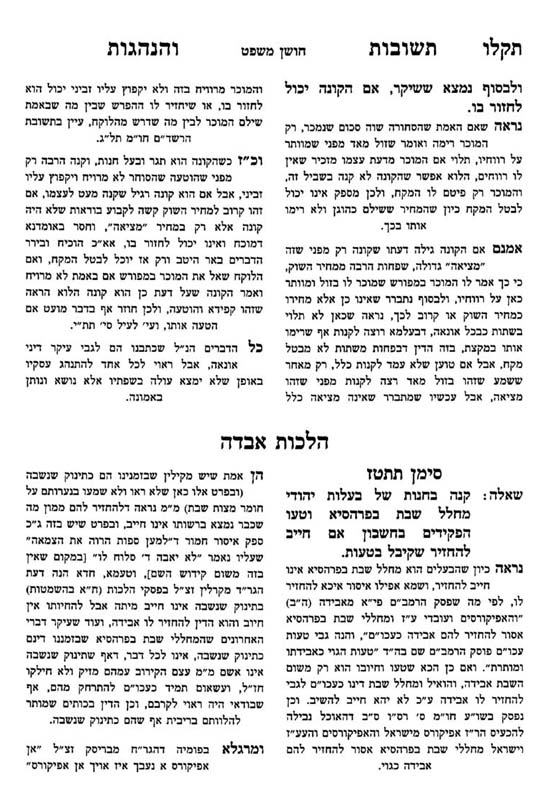
The truth of the matter is that we get no honesty from haredi spokesmen in these matters. They go on about how the non-religious have such a negative view of them. Well, what about the reverse, namely, what the haredim think of the non-religious? One of the leaders of the extremist haredim is R. Moshe Sternbuch. Here is the first page of a responsum he wrote (Teshuvot ve-Hanhagot, vol. 1, no. 816) in which he states that if a non-religious store owner makes a monetary mistake (e.g., gives you too much money) there is no obligation to point out the error.

He even quotes a 19th-20th century authority (and one who has a fairly moderate reputation) that there is no obligation to save his life! If this is what a well known haredi posek is teaching his followers, by what right can one criticize the non-religious for what they think of the extremist haredim? Let me pose this question to Avi Shafran and the rest of the apologists: How exactly should the non-religious feel about the extremist haredim when the latter are being taught that they don’t have to deal with the non-religious in an honest fashion, and that their lives are not important?

(Quite apart from his religious views, Sternbuch’s political views are perhaps even more distasteful. At the recent protest against haredim serving in the army, he said that “the Zionists expelled the Arabs from the Land of Israel.” See here).

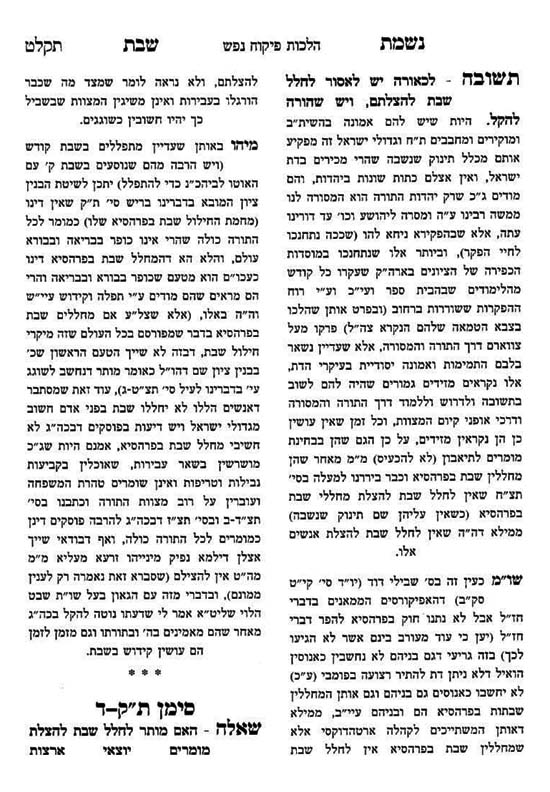
Here is another responsum, by R. Israel David Harfenes, Nishmat Shabbat, vol. 5 no. 500:4.

I know that people wouldn’t believe me without seeing with their own eyes. The author is asked if you can violate Shabbat to save the lives of irreligious Jews who came from the former Communist countries, that is, Jews who never had the benefit of a Jewish education. His answer is absolutely not, and he questions whether it is even permitted to save their lives during the week! Incredibly, he puts the Reform and Conservative in a better position than the secular Russian Jews, seeing the former as brainwashed by a false ideology. There is thus a possible limud zekhut regarding them.

None of this makes any sense, as people can be under the influence of a secular or anti-religious ideology much like they are under the influence of a Reform or Conservative ideology. If you can apply the logic of tinok she-nishbah to one, there is no coherent reason not to apply it to the other. For good measure, Harfenes also throws in that one who doesn’t believe in the Rambam’s Thirteen Principles is among those who should be killed. Taking a line from the Inquisition, he adds that killing these people is actually good for their souls, not to mention a benefit to the community at large.

In a previous responsum, 400:1, he discusses the same question with regard to the typical secular Jew and concludes likewise that one cannot save them on Shabbat. The only heter he can find is that if the haredi doctors don’t save them, then the secular doctors will refuse to save haredi patients. But unbelievably, rather than seeing this as a natural reaction of the secular Jews upon learning how people like Harfenes don’t value their lives, and are even are prepared to let them die, Harfenes sees this as an example of anti-Orthodox hatred! You can’t make this stuff up.

שאם יתפרסם שרופאים חרדיים אינן מטפלין בשבת עם החולים החילוניים אז הרופאים החילוניים ינקמו נקם ולא ירצו גם הם לטפל להציל חולים מסוכנים מן יהודים חרדיים  (כידוע תוקף שנאת הדת הארצינו הקדושה ירחם ה’).

Some might assume that this extremist Satmar outlook [6] is not to be found in the non-hasidic yeshiva world. However, this is not the case. I can cite parallels to what we have just seen in non-hasidic authors as well. I will mention just one such text, as it happens to be among the most depressing, and extreme, of the books to appear in recent years.[7] I refer to R. Menahem Adler’s Binah ve-Daat. Here is the title page.

This book engages in the most crude incitement of hatred for the non-religious that I have ever seen in a sefer, all packaged as a typical halakhic text. Are the views expressed in this book taught in any heders or yeshivot or held by any but the most extreme in Israel? Perhaps the fact that the standard haskamot from figures such as R. Elyashiv, R. Wosner, R. Scheinberg and others are missing is a sign that they didn’t agree with the author. It would take a complete post to cover this book properly (some aspects of the book were already discussed on Hyde Park here).

I will call attention to only some of the points Adler puts forth as halakhah. When I read things like this I wonder, how big can the Orthodox tent really be? When are the various communities in Orthodoxy so much at odds with each other that we must speak of two entirely different communities, much like the Protestants are divided into various sects?

One of the main points of the book is to argue that contemporary non-Orthodox Jews are not to be regarded as tinok she-nishbah, and thus they are subject to all the disabilities of brazen Sabbath violators. This means that they do not need to be treated with any respect or dignity. Those who know the relevant halakhot know what I am referring to, but let me cite some examples that you might not have thought of and which are results of his position. These come from chapter 31 and are stated with reference to most contemporary non-religious Jews (since only very few of them qualify as a tinok she-nishbah). How should the non-religious respond when they hear that this is what a rabbi is saying about them:

אין להקדים שלום לאדם רשע . . . אסור לראות פני הרשע . . . ונראה דהוא הדין תנוק שנשבה
In other words, although he denies that contemporary non-religious are tinok she-nishbah, even if you want to argue that they are, you still can’t look at them.

אין נוהג בו איסור אונאת דברים . . . נראה דאין כלפיו איסור “לא תחמוד”
And talking about humrot, how about this one?
יש מחמירים ליטול ידים אחר שנגעו בהם

When I saw this I thought of the following wonderful story recorded in R. Asher Anshel Yehudah Miller, Olamo Shel Abba, p. 415:

פעם ביקר אצל הרבי יהודי חילוני מגולח ובכ”ז הושיט לו הצדיק [ר’ ישראל האגער] את ידו וקבל אותו בסבר פנים יפות, כדרכו בקודש. ישב שם אחד מחסידי צאנז, שהיה מוכר כמתנגד לבית-וויז’ניץ. לחש החסיד באזני הרבי ושאל “מדוע פושט הרבי ידו לפושעי-ישראל זה?” אמר לו הצדיק: “עד שאתה מתפלא עלי, תתפלא על הקב”ה, שגם הוא דרכו בכך, כמו שנאמר ‘אתה נותן יד לפושעים וימינך פשוטה לקבל שבים


On p. 408 Adler writes:
המחלל שבת בפרהסיא (גם אם מחלל לתיאבון) יוצא לענין דינים שונים מכלל “אחיך” עמיתך” “רעך” ומכיון שיצא מכלל עמיתך, אין כלפיו את המצוות הנוהגות “בין אדם לחבירו” וכן אין נוהגים כלפיו את האיסורים, כגון הכלמה ולשון הרע.

Is there anyone in the kiruv world who believes this? Would anyone ever become religious if he even had an inkling that there are rabbis who advocate this position about the future baal teshuvah’s parents?[8] Aren’t the many haredi hesed organizations that don’t distinguish between Jews’ levels of religiosity a good sign that the mainstream haredi world rejects the viewpoints of Adler and Sternbuch?

On p. 470 he says that it is forbidden to belong to an organization that has non-Orthodox members, and this even includes charitable organization. The reason given for this position is as follows:

כיון שהישיבה עמהם גורמת קירור בעבודת השי”ת, ומלבד זאת, אופן החשיבה וקבלת ההחלטות אינם לפי דעת תורה.

So we see that it is problematic for an Orthodox Jew to have any dealings with the non-Orthodox. Although the author cites R. Samson Raphael Hirsch to justify this extreme position, this is a complete distortion. Hirsch opposed membership in organizations that were led by the non-Orthodox or even had organizational ties with non-Orthodox groups. He never said that individual non-Orthodox Jews would not be welcome to join with the Orthodox for the betterment of the Jewish community.

On p. 406 Adler tells us that one cannot sell or rent an apartment in a religious neighborhood to a non-religious person. Will the author then complain when the non-religious don’t want to sell or rent to haredim (especially if they think that these haredim might hold the same views as Adler)? If it is OK for haredim not to want to live together with secular Jews because of  the “atmosphere” the latter bring, why have the haredi Knesset members cried racism when secular residents don’t want an influx of haredim for exactly the same reason? In a democracy one can’t have it both ways.[9]

Adler is part of a growing trend in haredi writings not to see the secularists as tinok she-nishbah, with all the halakhic implications this entails. While Adler acknowledges the existence of tinok she-nishbah as a category, note what he puts in brackets which pretty much empties the category of any meaning (p. 31):

ולענין הלכה, מכיון שאין בנו כח להכריע, במחלוקות אלו, וגם אין כל הענינים שוים, מתי נקרא בשם “תנוק שנשבה” ומתי לא, ובפרט קשה ההכרעה המציאותית של “שיעור ידיעת כל אחד ואחד” בזמנינו, לכן, בכל הנוגע לדיני תורה, יש להחמיר ולנהוג כלפי מחלל שבת בפרהסיא [שלא ידוע ככופר] ככל דיני “אחיך”, כגון לענין דיני גמילות חסד, לבקרו בחוליו, לתת לו צדקה, להלוות לו, להשיא לו עצה טובה. וכן יש להצילו ולהחיותו.

But when it comes to Shabbat, Adler states that it is absolutely forbidden to violate the Sabbath to save a non-religious person, even if he is a tinok she-nishbah! (p. 556).

I realize that, with only some exceptions, Adler hasn’t made up any of the material in his book, and even the most extreme rulings can be found in earlier traditional sources. So what does it say about so much of contemporary Orthodoxy, be it haredi, Habad, or Modern Orthodox, that its adherents would never dream of relating to the non-Orthodox the way Adler prescribes?[10] The reason they wouldn’t dream of relating to the non-Orthodox this way is not because they can point to other halakhic sources that disagree with the ones Adler cites (although the scholars among them can indeed point to these sources). There is something much more basic at work, namely, the moral intuition of people which even when it comes into conflict with what appears in halakhic texts does not agree to simply be pushed aside. Most Orthodox Jews of all stripes refuse to believe that what Adler is advocating is what God wants. It is impossible for them to accept that the Judaism they know and cherish, which has been taught to them by great figures, would have such a negative outlook, and all the halakhic texts in the world won’t be able to change their minds.

Since we are dealing with Adler, let me also note that he gives us advice on how to create anti-Semitism in the world and reinforce the stereotype of the “cheap Jew” (p. 415):

אין לתת לגוי מתנת חינם [כגון “טיפ” (-תוספת) הנהוג לשלם למלצר או נהג מונית]

On p. 417 he writes (emphasis added):

אין איסור לייעץ לגוי עצה שאינה הוגנת ולא זו בלבד אלא שאסור להשיא לו עצה הוגנת

As the source for the underlined halakhah he cites Sefer ha-Hinukh no. 232. To begin with, there is the methodological problem of recording something as halakhah because it is found in the Sefer ha-Hinukh when it is not found in the Shulhan Arukh or any of the classic responsa volumes. This is what I call cherry picking halakhot, and is quite common today. People write books on the most arcane topics and in order to fill the pages they cite opinions from any book ever written, and record all the opinions they find as if they are halakhah. In this case, however, the halakhah cited here does not explicitly appear in the Sefer ha-Hinukh. All the Sefer ha-Hinukh states is that there is a biblical prohibition to give bad advice to a fellow Jew. But who says that this means that it is permitted when dealing with a non-Jew? It could still be forbidden for a variety of other reasons (perhaps even rabbinic), just not from this particular verse. Even if the Sefer ha-Hinukh does mean what Adler says (and the Minhat Hinukh also assumes that this is the meaning), only in the note does Adler reveal that the Minhat Hinukh explicitly holds an opposing position. This is the general trend in the book. He puts extreme positions in the text itself, which are on some occasions based on his own understanding, while only in the notes does he reveal the authorities who disagree.

(R. Chaim Pinchas Scheinberg defends the Minhat Hinnukh‘s position in his Mishmeret Hayyim, vol. 1, pp. 125-126. But it still makes for uncomfortable reading as he writes:

כיון דבעלות דגוי אינו חשוב כל-כך אין לאו דגזל שייך גבי גוי, וכן באיסור רציחה דהאיסור הוא דנוטל נשמתו וגבי גוי דלא חשוב נשמתו כל-כך לא שייך לאו זה

It would be pretty hard to be an Or la-Goyim while at the same time following Adler’s prescriptions. In a previous post I already mentioned that there is no Modern Orthodox synagogue in the country that would hire someone who had his perspective, and this shows a real cultural divide between at least some haredim and the Modern Orthodox. (I say “some haredim” because I believe that in this matter many, and perhaps most, haredim share the Modern Orthodox perspective.)[11]

At the end of the section in which Adler records what I quoted from him about tipping waiters or cab drivers, he adds:

מפני דרכי שלום מותר

I would like someone to explain to me how it could ever not be darkhei shalom?[12] Adler is speaking to people who wear black suits and hats, the sort that everyone recognizes as Jewish. So by definition if you stiff the cab driver or the waiter it is an immediate hillul ha-shem? Therefore, what sense does it make to even quote the halakhah mentioned above? Isn’t it irresponsible to allow yeshiva students on their own to determine when their actions will cause a hillul ha-shem and when not?

Since this post has dealt with how to relate to the non-religious and non-Jews, let me now turn once again to something relevant in Artscroll. Originally I thought that the example I will now point to was an intentional falsehood, because the Hebrew Artscroll gets it right. However, based upon the note to the passage that we will see, I am now no longer sure. It is one thing to translate a censored passage in the name of good relations, but it is hard to imagine that people who know the truth would go so far as to insert a false note. As thousands of people doing daf yomi have been misled as to the meaning of the talmudic passage we will see, if the distortion is intentional this would seem to be a classic case of ziyuf ha-Torah. When authors added a note at the beginning of their books stating that all references to non-Jews referred to those pagans in China and India, everyone knew it wasn’t to be taken seriously, so there was no ziyuf ha-Torah. Yet people who reads the Artscroll translation and note assume that they are getting the Torah truth. As such, I am more inclined to think that what we will now see is a simple error, rather than a “tactical” mistake.

Avodah Zarah 26a-b reads:

העובדי כוכבים ורועי בהמה דקה לא מעלין ולא מורידין אבל המינין והמסורות והמומרים היו מורידין ולא מעלין

Artscroll translates: “Idol worshipers and shepherds of small animals, the law is that we neither raise them up from a pit nor lower them into a pit. But as for the minin, the informers and the renegades, they would lower them into pits and not raise them up.”

This is, indeed, a proper translation of what appears in the Talmud. Yet in every edition of the Talmud before the Vilna Shas of 1883 the text states אבל המינין והמסורות והמומרים מורידין ולא מעלין  . That is, the word היו, which makes the passage past tense (and thus no longer relevant), is not authentic but was added to avoid problems with the censor. The Oz ve-Hadar edition of the Talmud points out that the word היו was only recently added. Soncino and Steinsaltz also recognize this. What is particularly noteworthy is that the Hebrew Artscroll also knows this, and tells the reader that the word היו is not authentic.

In its note on the passage in both the Hebrew and English editions, Artscroll quotes the Hazon Ish, Yoreh Deah 2:16, that the type of actions referred to in the Talmud are no longer applicable. Why then didn’t Artscroll mention in the English edition that the word היו is not authentic? Furthermore, Artscroll’s citation of the Hazon Ish is mistaken, although as mentioned, I am not sure whether it is an intentional falsification. Contrary to what Artscroll states, the Hazon Ish’s comment was only made with reference to heretics. His “liberal” judgment was never stated with regard to informers.

In its note, Artscroll states: “It goes without saying that the law never applied in places where government regulations would prohibit such an act.” Once again, I am not sure whether Artscroll really believes that this is true. As a historical statement it is false. Here is a page from R. Reuven Margaliyot’s Margaliyot ha-Yam, vol 1, p. 91b (to Sanhedrin 46a), that shows how even in the not-so-distant past an informer could be killed.

2. In this post I mentioned the outrageous accusation, based on nothing at all, that the telegram from Kobe was actually sent by the Chief Rabbinate in order to be able to pressure other rabbis to accept the Chief Rabbinate’s position on the dateline issue. Dr. Dov Zakheim sent me the following valuable email:

I noted in your recent blog you point out that some chareidim are asserting there was never a telegram from Kobe. There was. My father zt”l sent it. He had been the legal counsel of the Jewish community of Vilna (as well as a musmach of Ramailes) and also Reb Chaim Ozer ztl’s personal assistant and legal advisor (see his introduction to his sefer Zvi ha-Sanhedrin). He escaped from Vilna in 1941 and managed the Mirer Yeshiva’s legal affairs (where my uncle zt”l was a talmid) when they left Vilna, on the trans-Siberian, in Kobe and then in Shanghai.

Also in the post I referred to the letter published by R. Kasher in which lots of great rabbis refer to the State of Israel as the beginning of the redemption. I noted how Zvi Weinman has shown that this is a religious Zionist forgery, as at least some of the rabbis never signed such a letter. I mentioned that we don’t know if Kasher was responsible for the forgery (as Weinman appears to think) or someone else. Sholom Licht was kind enough to call my attention to this source from where we see that the letter Kasher published already appeared in Ha-Tzofeh many years prior, so Kasher clearly had nothing to do with the forgery.

3. In the last few posts I have dealt with Artscroll a good deal, as is only proper since Artscroll is the most significant Jewish publishing phenomenon of our time. I still have a lot more to say, but let me now turn to R. Jonathan Sacks’ siddur, and give an example where Sacks gets it wrong while Artscroll gets it right.

The blessing to be recited upon lightning and Birkat ha-Hamah is עושה מעשה בראשית This goes back to Mishnah Berakhot 9:2. Although the standard version of the Mishnah omits the word מעשה, it is recorded in various medieval texts and this is how the blessing has come down to us.

What does עושה מעשה בראשית mean? The first thing we must do is figure out if there is a segol or a tzeirei under the shin in עושה. Looking at the siddurim in my house that have English translations, I found that Sacks, Birnbaum, Sim Shalom, and Artscroll, have a segol.[13] This is also what appears in the Kaufmann Mishnah. See here. However, the Metsudah siddur and the Blackman Mishnayot have a tzeirei.

What is the difference between the vocalizations? If there is a segol than the words עושה מעשה בראשית should be translated in the English present, as עושה is a verb. If there is a tzeirei then עושה  is a noun, as in the words of Hallel (from Ps.115:15): עושה שמים וארץ, which means “Maker of heaven and earth.” Let us see if the translations follow this rule. Artscroll, which has a segol, translates: “Who makes the work of Creation.” This translation is correct, although I don’t know why the C in creation is capitalized. This translation implies the continuing work of creation, as reflected in the words of the prayer: המחדש בטובו בכל יום תמיד מעשה בראשית

Birnbaum translates עושה מעשה בראשית as: “Who didst create the universe.” This is incorrect, as the passage is not in the past tense. Sacks, who also has a segol, translates: “Author of creation.” This too is incorrect, as עושה with a segol is a verb, not a noun. Sim Shalom, also with a segol, translates: “Source of Creation.” This too is incorrect.

Now for the texts that have a tzeirei: Blackman translates: “the author of the work of the creation”, which is a correct rendering. Metsudah, on the other hand, translates: “Who makes the work of Creation.” Leaving aside the capital “C”, this is a mistaken translation. While Metsudah has עושה with a tzeirei under the shin, it translates as if there was a segol.[14]

Artscroll, while being correct when it comes to this blessing, does not get a pass when it comes to the word עושה. In the Artscroll siddur, pesukei de-zimra, p. 70, we find the words עושה שמים וארץ. This comes from Psalm 146:6. There is a segol under the shin which means that it is a participle and should be translated here with the English present tense, as are all the other verbs in this Psalm. Yet Artscroll translates עושה שמים וארץ as “Maker of heaven and earth”, which is incorrect. Sacks follows many other translations by rendering the words: “who made heaven and earth”. Yet this too is not correct and doesn’t follow the model of the Psalm, which has a series of participles that are to be translated as the present tense:
עושה שמים וארץ
השומר אמת לעולם
עושה משפט לעשוקים
נותן לחם לרעבים
מתיר אסורים
פוקח עורים
זוקף כפופים
אוהב צדיקים
שומר את הגרים

What about the word בונה in the blessing בונה ירושלים? There is a tzeirei under the nun in בונה which means that it is not a verb. Artscroll correctly translates the phrase as “Builder of Jerusalem”. Birnbaum and Metsudah also get it right. However Sacks (and also De Sola Pool and Sim Shalom) are mistaken in their translation. Sacks renders בונה ירושלים as if the nun had a segol: “Who builds Jerusalem.”

Since בונה ישראל must be translated as “Builder of Jerusalem”, and all translations are in agreement that גואל ישראל means “Redeemer of Israel”, does this mean that the conclusion of all the blessings of the Amidah should follow this model? What about חונן הדעת? Artscroll translates : “Giver of wisdom”, seeing חונן as a noun. Birnbaum and Metsudah do likewise. However, Sacks assumes חונן is a verb and translates: “who graciously grants knowledge.” This rendering (which I thinnk is in error) is also found in De Sola Pool and Sim Shalom.

How about מחיה המתים? Is the word מחיה a verb? Artscroll assumes yes and translates: “Who resuscitates the dead.” Sacks agrees with this, but Metsudah, striving for consistency, translates: “Resurrector of the dead.” Metsudah is, in fact, the only siddur that as a rule translates the concluding blessings of the Amidah along this model, while the other translations alternate between verb and noun. Here are some of Metsudah’s translations:

רופא חולי עמו ישראל – Healer of the sick of His people Israel
מברך השנים – Blesser of the years
מקבץ נדחי עמו ישראל – Gatherer of the dispersed of His people Israel
שובר אויבים ומכניע זדים – Crusher of enemies and subduer of the insolent

Although Metsudah follows this rule, for every rule there are exceptions, and even Metsudah translates שומע תפלה as “Who hears prayers”. Yet perhaps this is not an exception, and even here Metsudah intended “The hearer of prayers”, but since this doesn’t sound so good in English they came up with a more felicitous wording. It is true that the underlined words of the blessings המחזיר שכינתו לציון and המברך את עמו ישראל בשלום  have to be seen as verbs, and Metsudah translates them as such. But I think that these are a different type of blessings than the ones in the middle of the Amidah.

The question to be asked is must we assume that there is a consistency of form in a prayer like the Amidah? If the answer is yes, then Metsudah is the only translation to get it right, and they must be recognized as having picked up on something that eluded all their predecessors and successors.

Finally, let me return to the blessing מחיה המתים. I asked if the word מחיה is a verb, and noted that Artscroll and Sacks indeed translated it this way. However, they are both incorrect for the simple reason that in their siddurim there is a tzeirei under the yud of מחיה. There are siddurim, such as Tehilat ha-Shem, that have a segol under the yud. In such a case,  the word should be translated as a verb. However, when there is a tzeirei it must be translated as a noun. Metsudah once again gets it right, translating “Resurrector of the dead.” [15] Right before this, we find the words מלך ממית ומחיה. Here there is a segol under the yud, meaning that it is a verb and is to be translated as “Who causes death and restores life”.

Artscroll and Sacks also err in their translation of מחיה מתים במאמרו in Magen Avot in the Friday night service. There is a tzeirei under the yud meaning that it must be translated as “Resurrector of the dead with His utterance.” Artscroll mistakenly renders: “Who resuscitates the dead with His utterance,” using the same translation from the Amidah for the words  מחיה המתים.

I can’t figure out Sacks’ method here. In the Amidah he translates מחיה מתים as: “who revives the dead”, but in Magen Avot he translates: “By his promise, He will revive the dead.” This is incorrect, as it turns the sentence into the future tense, which it is not. Furthermore, if it was to be translated as such, why not do so in the Amidah as well, as the words are identical? Indeed, Magen Avot is nothing but an abridged version of the Amidah, so by definition the translation must be the same.[16] Translating במאמרו as “By His promise”, which I assume means “in accordance with His promise,”[17] is also incorrect, as the passage refers to God’s word, or better yet, the power of God’s word, not any promise.[18]
3. I want to briefly call attention to three books that have recently appeared and which I hope to discuss in future posts. The first is Gil Perl’s The Pillar of Volozhin: Rabbi Naftali Zvi Judah Berlin and the World of 19th Century Lithuanian Torah Scholarship. The second is Eugene Korn and Alon Goshen-Gottstein, ed., Jewish Theology and World Religions. The third is Ben Zion Katz, A Journey Through Torah: A Critique of the Documentary Hypothesis. I know that there are many Seforim Blog readers who will find these books worth reading.

4. Those who want to post (or read) comments, please access the Seforim Blog site by going to http://seforim.blogspot.com/ncr  Only by doing this will you be taken to the main site (and not have a country code in the URL). We have recently learnt that readers outside the United States do not have access to the comments posted and in the U.S. We don’t know why this is, or how to fix it, but the above instruction fixes the matter.

[1] As a result of these discussions, which led to investigations of haredi literature and discussions with haredi friends, another point became ever more obvious to me. It appears – and I welcome being corrected – that once someone has been crowned a gadol in the haredi world, it is almost impossible for him to lose this status, no matter what he says (and we have seen examples of this time after time). If, for instance, a recognized gadol expresses racist or misanthropic sentiments, or declares that a known and continuing sexual abuser or wife abuser must not be turned over to the authorities, even that would not be sufficient to “defrock” him. In other words, the “immunity” given to haredi (and hardal) gedolim is much more far-reaching than anything that could be imagined in the Modern Orthodox world.
[2] A January 2012 Avi Chai poll found that 7 percent of the Israeli population defines itself as haredi, 15 percent as dati, and 32 percent as traditional. Only 3 percent defines themselves as secular anti-religious. However, approximately 20 percent of primary school students are haredi, which shows the direction the future is going.
[3] It was actually the Religious Zionists who were responsible for creating the undemocratic situation in which Israel is perhaps the only country in the world in which Jews are not free to be married by the rabbi of their choice. I would like someone to show me where, in the entire history of halakhic literature, it is stated that people who are not observant must be forced, or even encouraged, to have a halakhic marriage. The current situation means that when secular Israelis leave Israel and then get divorced, being that they are secular most will simply get a secular divorce. Thus, any future marriage will be halakhically adulterous and the children will be mamzerim. Outside of Israel this is almost never an issue since non-Orthodox people generally don’t get married by Orthodox rabbis, which means that in the event of a divorce we can assume that the first marriage was not halakhically binding. But in Israel, where everyone gets married halakhically, it opens the doors to mamzerut on a massive scale. This was actually recognized by R. Eliyahu Bakshi Doron when he was chief rabbi. He created a big controversy when he revealed that it is a practice among some rabbis that when they perform weddings for the non-religious, they make sure that the marriage is not halakhically binding, precisely in order to prevent future mamzerut. Just this week R. Yaakov Yosef publicly advocated this position. See here.

[4] R. Eliyahu Pinchasi writes as follows in his Dibrot Eliyahu, vol. 1, p. 19:
החכמה נמצאת בגוי אבל היא רחוקה מאוד מלהיות דוגמת התורה. שהרי הוגי דעות נודעים בנו לעצמם פילוסופיה מתוחכמת הממלאים ספרים עבי כרס להצדיק את ההפקרות שנקראת בלשונם דמוקרטיה חופש הבטוי, רעיונות זדוניות מחרבי העולם.
The sheer ignorance of what democracy means is beyond comprehension. Do people like Pinchasi have so little knowledge of basic history that they do not know that it is only democracy that ensures protections for Jews around the world? Does he want the world to go back to the era of dictators when Jews suffered so terribly? Presumably yes, as he feels democracy is destroying the world.. I can easily provide parallels to the language used by Pinchasi in the writings of communists and fascists, especially from Weimar Germany. I was also shocked to read what R. Elhanan Wasserman writes in his Ikveta di-Meshiha, par. 2, published on the eve of the Holocaust.
“ראו כי אני אני הוא”. הגיע כבר העת שתבינו, כי בלעדי אין מושיע. אבל העם מסרבים להבין. עוד נאחזים בשולי הדמוקרטיה הגוססת. אף היא לא תועיל, בדומה לעבודות הזרות הקודמות.
I can’t for the life of me understand how he could regard democracy as avodah zarah, and why he sees democracy as being in opposition to proper faith in God, as if we are dealing with a zero-sum game. Instead of democracy, what political system did R. Elhanan want the Jews to support?
[5] I have many other sources regarding democracy, including traditional sources very much in favor of it (especially in pre-messianic times). I hope to provide them on a future occasion. Reading the haredi attacks on democracy, I can’t help but be reminded of Pius IX’s 1864 Syllabus of Errors and the later silencing of John Courtney Murray. The Church identified certain doctrines as false, yet now recognizes that its position in these matters was mistaken. I mention these examples because I am convinced that the American haredi world also rejects the anti-democratic sentiments that I have quoted, seeing them as out of step with where their world is. 
It is worth contrasting the anti-democratic sentiments of haredi leaders with the response of the Church, which fortunately was able to examine its own long history of anti-democratic abuses and come to the conclusion (much later than it should have) that in modern times democracy is the only viable system. As Pope Benedict put it (see here), democracy “alone can guarantee equality and rights to everyone.” He continues with the following valuable words:

Indeed, there is a sort of reciprocal dependence between democracy and justice that impels everyone to work responsibly to safeguard each person’s rights, especially those of the weak and marginalized. This being said, it should not be forgotten that the search for truth is at the same time the condition for the possibility of a real and not only apparent democracy:  “As history demonstrates, a democracy without values easily turns into open or thinly disguised totalitarianism”  (Centesimus Annusn. 46).

[6] R. Asher Anshel Yehudah Miller, Olamo shel Abba (Jerusalem, 1984), p. 308, reports that the Satmar Rav, R Yoel Teitelbaum, once declared that there were 50,000 Jews in the world. When asked how he could give such a figure when there were many millions of Jews, he replied:
בעיני, יהודים הם רק יהודים שששומרים תורה ומצוות כמוני . . . [שאר היהודים] או שיחזרו בתשובה, או שצריך להוציא אותם מכלל ישראל

[7] I will deal with Torat ha-Melekh in a future post.
[8] Alan Brill, Judaism and Other Religions: Models of Understanding (New York, 2010), p. 255 n. 43, has recently noted that since many laws stated with reference to non-Jews apply equally to heretical Jews: “the main problem is the fundamental use of a double ethic as described by Max Weber in his description of an ethnic economy.”
[9] Interestingly, R. Avraham Yosef has recently spoken of the spiritual advantages of living together with the non-religious. See here.

For Israeli haredim, there is now a mindset that they can only live among other haredim, and this is why they create exclusively haredi neighborhoods and towns. Such a concept is entirely new, and not only did it not exist in Europe but didn’t even exist in Israel in the first decades of the State. Many readers probably recall the time when hasidic rebbes lived in Tel Aviv.

[10] I have to admit, however, that one sometimes does find even moderate haredim who seem to have sympathy with Adler’s approach. R. Moshe Eisemann, who used to have a great deal of influence in the moderate haredi camp, wrote as follows with reference to the Jerusalem fanatics who throw stones at passing cars (not knowing, of course, if the drivers are Jewish or Arab): “If it is true that he who hurls a stone were well-advised to be pretty sure that he is doing the right thing, I believe that the one who feels no urge to do so, must engage in even deeper soul-searching.” Tradition 26 (Winter 1992), p. 34. Maybe I was absent that day in yeshiva, but I was never taught that it is normal to have an urge to throw a stone at a fellow Jew (which of course could kill him, as we have seen with the Palestinian stone-throwers). On the contrary, I was taught that I should have an urge to show the non-religious Jew about the beauty of Shabbat, which an invitation to a Shabbat table will accomplish much better than a rock in his windshield. 
[11] What is one to make of R. Shmuel Baruch Genot, Va-Yomer Shmuel (Elad, 2008), no. 84, that it is forbidden for Jews to oppose the death penalty in places where Jews are not affected (unless done for reasons of darkhei shalom): דאסור להציל גוף נכרי. This is the sort of pesak (and I can cite many similar examples) that in the Modern Orthodox world is regarded not simply as wrong, but as deeply immoral (especially since during the Holocaust so many non-Jews adopted Genot’s position vis-à-vis the Jews!).
While at least since Jacob Katz’s Exclusiveness and Tolerance scholars are now no longer deterred from studying the medieval Jewish view of “the other”, there is still great reluctance to examine contemporary views, for fear of how this might play into the hands of anti-Semites. I am curious to hear what readers think about this. How long can we keep all of this “under the carpet,” and should we even be attempting to do that?
Ruth Langer has discussed the medieval tradition in her new book Cursing the Christians? A History of the Birkat HaMinim (Oxford, 2012), p. 12:
For Jews engaged in dialogue, it has been much easier to identify the problems within Christianity than to turn that scrutiny back on our own heritage. Jews, after all, were very much the victims, not just of the Holocaust, but also of centuries of Christian anti-Jewish venom and oppression. Consequently, traditions developed among those studying Judaism in the wissenschaftflich mode to obscure embarrassing elements of the tradition rather than to confront them. . .  Christian anti-Judaism in its many expressions led to Jewish responses and attitudes that were equally vicious; the power relationships between the two communities prevented Jews from expressing this with physical violence, but Jews still lacked respect for their neighbors. . . . In our time, Jewish publishers are restoring uncensored versions of many texts, reclaiming a difficult heritage. While from an academic perspective, this has merit, there has been all too little discussion about its impact on the Jewish community.
I would, however, dispute the use of the expression “equally vicious.” Once Langer assumes that it was Christian anti-Judaism (and I would add “anti-Semitism”) that led to the Jewish responses and attitudes, then I don’t think it is correct to portray them as “equally vicious.” The one who is responding to widespread murder of his coreligionists, and responding only through the pen, cannot be regarded as “equally vicious.” Furthermore, considering the oppression that Jews suffered in medieval times, all the anti-Gentile sentiments found in texts from this period are completely understandable.
[12] I have often heard people pronounce דרכי as darkei. This is incorrect. There is no dagesh in the kaf.
[13] The Artscroll Talmud also has a segol but the Artscroll Mishnah has a tzeirei.
[14] There are times in the Bible where the word עושה with a tzeirei is to be translated as if it has a segol, but these are exceptions. When it comes to vocalizing a text, one should certainly not insert a tzeirei if one is going to translate the word as a verb. The exceptions, where we find a tzeirei under the shin, are Ex. 15:11: עושה פלא, which appears to mean “doing wonders”, although,  as R. Mazuz pointed out to me, it could also be translated as “doer of wonders”= עושה-הפלאים. Amos 5:8: עושה כימה וכסיל, and Ps. 14:1, 3, 53:2, 4: עושה טוב, could perhaps also be read in this way. However, in Jer. 51:15: עושה ארץ בכחו, the word appears to be a verb.
[15] See R. Mazuz’s comment in R. Yosef Hayyim Mizrahi, Yosef Hayyim (Jerusalem, 1993), p. 123, Or Torah, Adar 5772, p. 568.
[16] See Abudarham ha-Shalem (Jerusalem, 1963), p. 148:
וכיצד היא ברכה זו מעין שבע, מגן אבות בדברו כנגד מגן אברהם. מחיה מתים במאמרו כנגד מחיה מתים. הא-ל הקדוש שאין כמוהו כנגד הא-ל הקדוש . . .
[17] See Daniel 12:2.
[18] See Abudarham ha-Shalem, p. 148: מחיה מתים במאמרו על שם (יחזקאל לז) כה אמר ה’ הנני פותח את קברותיכם


Taliban Women and More

Taliban Women and More

Marc B. Shapiro

1. In this post I am going to respond to a number of emails and requests to deal with certain topics. I can’t get to everything I was asked about, and will only touch on some topics, but here is a start.
Let’s begin with the common practice in the Israeli haredi world of ignoring what the Sages tell us in Kiddushin 29a and not teaching young men a trade so that instead they can devote themselves to Torah study.[1] People assume that this is a late twentieth-century phenomenon. While it is true that the numbers of people who currently follow this approach is much larger than ever before in history, it must be noted that even in previous years there were those who acted in the same fashion. We see this from R. Pinhas Horowitz’ strong words against this approach in his Sefer ha-Berit, vol. 2, ma’amar 12, ch. 10.
R. Meir Mazuz has recently suggested that this negative attitude towards work explains a passage in one of the most popular Shabbat zemirot.[2] The following lines appear in Mah Yedidot.

חפציך בו אסורים וגם לחשוב חשבונות, הרהורים מותרים ולשדך הבנות, ותינוק ללמדו ספר למנצח בנגינות
Artscroll, Family Zemiros, translates as follows:

Your mundane affairs are forbidden on it [Shabbat] and also to calculate accounts; Reflections are permitted and to arrange matches for maidens; To arrange for a child to be taught Scripture, to sing a song of praise.

(R. Jonathan Sacks, in his siddur, p. 388, translates the last words similarly: “singing songs of praise.”)
The first thing to note is that the translation is incorrect. The words למנצח בנגינות do not mean “to sing a song of praise”. The word למנצח is not an infinitive (that would be לנצח, patah under the nun). It is a noun with a prefix, and means “to the choirmaster” or something like that. Artscroll, in its Tanach (Ps. 6:1), translates למנצח בנגינות: “For the conductor, with the neginos.” The note tells us that neginos are a type of musical instrument.
I sympathize with Artscroll when confronted with the need to translate the words למנצח בנגינות in the song. It is obvious that the words make no sense. Until then the passage was speaking about what was permitted on the Sabbath and then you have למנצח בנגינות .
This is an old problem and while a couple of forced answers have been suggested, others have argued that what we have here a mistaken reading, and instead of למנצח בנגינות it should read וללמדו אומנות (perhaps even reading אומנות with a final holam in order to make it rhyme). The entire paragraph in Mah Yedidot is derived from Shabbat 150a, and there it states: משדכין על התינוקות ליארס בשבת ועל התינוק ללמדו ספר וללמדו אומנות. After seeing this, can anyone still have a doubt that the standard version is incorrect?

R. Mazuz is apparently unaware that others before him had already suggested that וללמדו אומנות was the original version,[3] but he is the only one to suggest why the text was changed. Although it strikes me as a bit far-fetched, he assumes that when people stopped teaching their sons a trade this verse became problematic, and therefore someone took it upon himself to alter the text.
After criticizing Artscroll’s translation (and in future posts I will have more such examples), let me now mention an instance where of all the translations I have consulted, only Artscroll gets it right.

Every Friday night we say the following (which is based on Isaiah 52:1):
התנערי מעפר קומי לבשי בגדי תפארתך עמי
Sacks translates: “Shake yourself off, arise from the dust! Put on your clothes of glory, My people.” All the translations I have consulted render along these lines. The problem, however, is obvious. If “My people” is being addressed, then why are the verbs and the suffix of תפארתך  feminine?
Artscroll recognized the problem and translates: “Shake off the dust – arise! Don your splendid clothes, My people.” The translation is explained in the note: “Jerusalem – your most splendid garment is Israel. Let the redemption come so that they may inhabit you in holiness once more.” In other words, Jerusalem is being addressed, not the people of Israel. “My people” is therefore identified metaphorically with “your splendid clothes.” The stanza thus needs to be read as a continuation of the prior stanza – מקדש מלך עיר מלוכה – which is also addressed to Jerusalem.
Furthermore, if you look at Isaiah 52:1, upon which the text is based, it reads: לבשי בגדי תפארתך ירושלים עיר הקודש  “Put on your beautiful garments, O Jerusalem, the holy city.” So we see that also in the original verse it is Jerusalem that is being addressed. Artscroll cites this interpretation in the name of Iyun Tefillah (found in Otzar ha-Tefilot) and refers to it as “novel”. This understanding (which is actually the peshat of the words) was also suggested by R. Kook[4] R. Baruch Epstein,[5] and R. David Hadad.[6] 
2. A long time ago I was asked to deal with the so-called Jewish Taliban women, who completely cover their faces when they go out. I know that everyone has downplayed their significance and referred to them as crazy. I think that this is too optimistic an assumption. Although I am not predicting it, I would not be surprised if this turned into a real phenomenon. All these women need is one somewhat respected Torah scholar to support them and they will then become just another faction in extremist Orthodoxy. You will then have groups that don’t allow women to drive (or smoke, or use a cellular phone, etc.), and another group that also requires that they cover their faces when they leave home. The real difference today is that while with the other groups we have men telling women how to behave for reasons of tzeniut, the Taliban group is completely female driven and led.

The truth of the matter is that the Taliban women make a certain amount of sense. They are part of a community that forbids women’s (and even little girl’s) pictures to appear in printed matter because seeing this might arouse sexual thoughts in men.[7] Even though these women never studied Talmud, we know that one doesn’t need to be talmid hakham to derive a basic kal va-homer. Even these uneducated women can conclude that if men’s souls can be destroyed by seeing a picture of a woman or a little girl, how much more so can they be driven to sexual frenzy by seeing a live woman or girl? As such, it makes perfect sense that when they go out on the street they are completely covered and only their husband and children are permitted see their faces.[8] It is their opponents in the haredi word who have to explain why it is permitted to see the faces of real live women but forbidden to see their pictures. It doesn’t make a lot of sense, as the Taliban women have rightly concluded.
I am sure that any rabbinic authorities that come to support the Taliban women will be able to find relevant sources to defend this lifestyle. I know this will surprise readers, especially as many rabbis have declared that the Taliban women are completely distorting Jewish rules of modesty. These rabbis have claimed that unlike Arabs, Jewish women have never dressed this way (unless they were forced to) as the face is not ervah. Therefore, these rabbis have asserted, Jewish tzeniut has never, has ve-shalom, seen it as a value for women to completely cover their faces.

Lines like this are good for applause in a Modern Orthodox (and even a haredi) shul, among people anxious to be reassured that these Taliban women couldn’t possibly have any sources in our tradition for their actions. The truth of the matter is that, whether we like it or not, there are sources that are strong supports for the Taliban women, and there is no reason to deny that they exist.[9] Sotah 10b is clearly praising Tamar when it mentions that she was so modest that she covered her face in her father-in-law’s house. R. Joseph Messas (Mayim Hayyim, vol. 2, Orah Hayyim no. 140) points out that Shabbat 6:6 refers to Arabian Jewish women going out veiled, which means that their entire face was covered except for their eyes. He also points to Shabbat 8:3: כחול כדי לכחול עין אחת, which as explained in the Talmud refers to those women who were so modest that they were completely veiled, with only one eye showing in order for them to see (see Rashi, ad loc. See also Rashi to Isaiah 3:19.) Messas tells us that in his youth he personally saw Jewish women who dressed like this: וכן ראינו בימי נעורנו. R. Meir Mazuz’s mother testified that brides in Djerba would only show one eye, also for reasons of modesty.[10]

Here we have evidence that the Taliban dress was actually a traditional Jewish dress, just the sort of material that can be used to support the new dress code. In fact, one doesn’t even need to look to Morocco or Djerba, or even to talmudic literature, to find sources that women dressed this way. It is found right in the Song of Songs 4:9. This verse states: “Thou has ravished my heart with one of thine eyes.” The Soncino translation explains: “It is customary for an Eastern woman to unveil one of her eyes when addressing someone.” In other words, normally, for reasons of modesty, the woman is entirely covered (although this covering would be see-through so she could walk properly), and only at certain times would she remove it to reveal one eye. I know some people are thinking that this is exactly the sort of explanation you can expect from Soncino, which loves to quote non-Orthodox and even non-Jewish commentators, and if you look at the various traditional commentaries they do indeed provide all sorts of allegorical meanings for this verse. Yet the Jerusalem Talmud, Shabbat 8:3, also understands the verse as giving an example of modest behavior on the part of the woman, that she only uncovers one eye. As explained by Korban ha-Edah:
מביא פסוק זה לראיה שדרך הצנועות לצאת באחת מעיניה מכוסה ואחת מגולה
(Korban ha-Edah and all the other traditional commentaries I have seen assume that the woman always goes with one eye uncovered, while Soncino explains that she only uncovers this one eye on special occasions.)
R. Baruch Epstein takes note of this passage in the Jerusalem Talmud in his commentary to Song of Songs, and adds.
לפנים בעת שהיו נוהגות הנשים ללכת עטופות היו מגלות רק עין אחת כדי לראות מהלכן, ומכאן רמז שמנהג כזה הוא מנהג כשר וצנוע, שהרי כן משבחה הכתוב שלבבתו בעין אחת.
If this practice is, as Epstein says, a מנהג כשר וצנוע, then I don’t think we should be surprised if some circles attempt to bring it back into style.
A few paragraphs above I quoted a responsum of R. Joseph Messas.[11] In this teshuvah he also explains why women can’t be given aliyotAs is well known, in earlier days this was permitted but the Sages later forbid it on account of kevod ha-tzibbur (Megillah 23a). There have been lots of interpretations of what kevod ha-tzibbur means, but Messas has a very original perspective. He claims that the reason women were banned from receiving aliyot is because this would lead to sexual arousal among the male congregants. Messas believes that this came from the actual experience of the Sages, who saw what happened when women received aliyot. He also assumes that these women would have been dressed in a Taliban-like fashion[12]: בהסתר פנים כמנהג נשים קדמוניות. But even such a woman, covered head to toe, still created problems with the sexually fixated men.[13]
ובדורות שאחריהם ראו שיש בזה מחשבת עריות, שהצבור היו שואלים זה לזה, מי זאת עולה . . . ואם היה קולה ערב מוסיף להבעיר אש היצר, ולכן עמדו ובטלו את הדבר.
Knowing how concerned the Sages were about avoiding situations that could lead to sexual thoughts, it makes sense that they would ban the practice if they thought that women’s aliyot would lead in this direction.[14] But Messas now has a problem, because the Talmud doesn’t give this as a reason for abolishing women’s aliyot. Instead, it states that they were abolished because of kevod ha-tzibbur. This leads Messas to offer one of the wonderfully original interpretations that can be found so often in his writings. He claims that because the Sages didn’t want to insult the (male) community by telling them the real reason why they abolished the aliyot, namely, that even during Torah reading men can’t control themselves from sexual thoughts, therefore they invented the concept of kevod ha-tzibbur! However, this is not the real reason, and therefore all attempts to explain the meaning of the term are irrelevant. The real reason is the male sexual desire which as Messas states, is always in need to being fenced in:[15]
וכדי שלא להראות את הצבור שחשדו אותם, תלו הטעם מפני כבוד הציבור, שלא תהא האשה הפטורה מן הדבר מתערבת עם האנשים המחוייבים בו וכן בכל דור היו גודרים גדרים בעריות
Based on this male weakness, Messas claims that the mehitzah has to be built in such a fashion that the men cannot see the women. He even has a most original way to explain to the women why they are placed in what amounts to a completely other room. Rather than being a sign of their insignificance, it is a sign of how important they are. The proof of this importance is that men are constantly drawn to look at them. Therefore, by building a high mehitzah we are able to save the men from themselves.
I haven’t yet mentioned the shawls that some women have started wearing (and which was the practice in the days of the Rambam; see Hilkhot Ishut 13:11) Most shawl-wearers are not so extreme as to completely cover their faces, and because of this the practice has been defended by some fairly mainstream people. According to R. Ovadiah Yosef’s son-in-law, R. Aharon Abutbol, and R. David Benizri, R. Ovadiah sees the practice in a positive light for those women who are able to take it on.[16] Among others who have spoken out in favor of the shawls are R. Yitzhak Ratsaby,[17] R. Avraham Baruch,[18] and R. Mendel Fuchs, a dayan for the Edah Haredit (who refers to the “heilige shawl”).[19] There is even a fairly recent book that discusses the matter in detail. It is Ahoti Kalah, by R. Avraham Arbel. Here is the title page.
Arbel is a great talmid hakham.[20] His book carries haskamot from mainstream figures, including R. Ovadiah, R. Neuwirth, and R. Nebenzahl. In the book, he explains the importance of the shawl, how women are not supposed to leave their home and if they must go out they should appear unattractive so that men are not drawn to them, and how it is absolutely forbidden for women to wear jewelry outside their home. (Recently, Arbel expanded the section of the book dealing with women’s tzeniut into a full-fledged book of its own.)

3. In the last post I quoted R. Kook’s comments about the holiness of the am ha’aretz. This is not a sentiment that has been widely shared among the rabbinic elite, and negative comments about the am ha’aretz abound in rabbinic literature from all eras. Most of these comments appear in non-halakhic contexts, but there are plenty that are found in classic halakhic works. See for example Shulhan Arukh, Yoreh Deah 198:48, where R. Moses Isserles states that if a woman coming home from the mikveh enounters a דבר טמא או גוי , if she is pious she will immerse again. This is obviously not so applicable today, as in any big city in the Diaspora, where people walk to the mikveh, it is impossible not to come across a non-Jew on the way home. The formulation of Rama was made in an era when Jews lived in their own quarters, and at night it wouldn’t be common to come into contact with non-Jews. On this halakhah, the Shakh quotes the Sha’arei Dura who expands the lists of things a woman hopes to avoid on the way home to include an am ha’aretz. (This formulation obviously troubled some, and Pithei Teshuvah quotes the opinion that only an am ha’aretz gamur is meant, i.e., one who doesn’t even recite keriat shema [due to his ignorance]. This definition of an am ha’aretz is found in Berakhot 47b and Sotah 22a. Examination of rabbinic literature shows that the term “am ha’aretz” has a variety of meaning, ranging from a simple ignoramus to one who is actually quite wicked and hates the Sages.)
Speaking of the am ha’aretz, here is something interesting, as it includes both a difficult comment of Rashi (actually, the commentary falsely attributed to Rashi) and what might be is an example of Artscroll purposely omitting mention of it because of how problematic it would be to explain. Nedarim 49a states: “Rav Judah said: The soft part of a pumpkin [should be eaten] with beet; the soft part of linseed is good with kutah. But this may not be told to the am ha’aretz.”
Why don’t we tell this to the am ha’aretz? Artscroll quotes the explanation of the Ran that if the boors knew about this, they would uproot the plants before they could be harvested. Tosafot claims that the ignoramuses won’t believe what we tell them and they will mock the teaching of the Sages. “Rashi” has a completely different explanation. He writes:
משום דדבר מעולה הוא לרפואה ואסור לומר להם שום דבר שיהנו ממנו
What this means is that we don’t let the am ha’aretz know about the medicinal property of this plant. In other words, we don’t want the am ha’aretz, even though he is another Jew, to benefit, and he is thus treated no differently than an idolater. (Tosafot cites this explanation and rejects it.) Even though “Rashi” is referring to a real am ha’aretz, as per the Talmud’s description in Berakhot 47b, it is still quite a shocking explanation. It is true that there is a passage in Pesahim 49b which states: “R. Eleazar said: An am ha’aretz, it is permitted to stab him [even] on the Day of Atonement which falls on the Sabbath . . . R. Samuel b. Nahmani said in R. Johanan’s name: One may tear an am ha’aretz like a fish.” Still, these passages are according to almost everyone not meant to be taken literally,[21] while “Rashi,” on the other hand, means exactly what he says.
[1] Many have discussed why Maimonides doesn’t explicitly record this halakhah in the Mishneh Torah. See the interesting approach of R. Hayyim Eleazar Shapira, Divrei Torah, Eighth Series, no. 18 (p. 974), which can be used to justify the Israeli haredi perspective.
[2] See Or Torah, Heshvan 5772, pp. 169-170. R. Mazuz’s own attitude towards yeshiva students preparing themselves to earn a living is seen in his haskamah to R. Hayyim Amsalem’s Gadol ha-Neheneh mi-Yegio. The book is available here.
Here is R. Mazuz’s haskamah.

Here is the letter of R. Mazuz that appears at the end of the volume.

There are numerous texts I could bring in opposition to the approach of Amsalem and Mazuz (which I believe is also the approach of the Sages). One noteworthy one is found in Ateret Menahem, p. 23a, where R. Menahem Mendel of Rimanov is quoted as follows:

אם א’ אומר לחתנו היושב ולומד תורה בהתמדה שיתחיל לעסוק במו”מ עבור כי איתא [אבות פ”ב מ”ב] יפה ת”ת עם דרך ארץ וכו’, זה הוא מערב רב חו”ש
[3] See e.g., Naftali ben Menahem, Zemirot shel Shabbat (Jerusalem, 1949), p. 134.
[4] See Zev Rabiner, Or Mufla, p. 92.
[5] Barukh She-Amar, p. 238.
[6] See R. Meir Mazuz, Darkhei ha-Iyun, pp. 127ff.
[7] Regarding not seeing women’s pictures, this position can also find sources to support it. R. Joseph Hayyim, Rav Berakhot, ma’arekhet tzadi (p. 137), writes quite strongly against women’s pictures, because men will come to look at them. Here is the page.

[8] For some, it is better if the women basically do not go out of the house at all at all. Such a position is held by R. Hayyim Rabbi, a mainstream Sephardic rabbi (who like all significant Sephardic rabbis, also has a website. See here).
Here is his haskamah to R. Hanan Aflalo’s, Asher Hanan, vol. 3, and see Aflalo’s response that a rabbi has to actually be part of a community and know its situation in order to properly decide matters for it.

While Aflalo’s reply is phrased very respectfully, his feeling that Rabbi is way off base comes through very clearly.

Rabbi’s position about a woman not leaving the house can find support in a variety of traditional texts (not least, the Rambam, Hilkhot Ishut 13:11). What makes it significant is that he offers this advice even today. While it is true that in the Islamic world Jewish women were more accustomed to stay inside than their co-religionists in Europe, we also find European rishonim who see this as something to strive for. See e.g.,, Radak to 2 Samuel 13:2: ודרך הבתולות בישראל להיות צנועות בבית ולא תצאנה החוצה. See also Rashi, Deut. 22:23: פרצה קוראה לגנב הא אלו ישבה בביתה לא אירע לה. For other relevant sources, see R. Mazuz’s comment in R. Raphael Kadir Tzaban, Nefesh Hayah, vol. 2, p. 267.
I was surprised to find that the Moroccan R. Raphael Ankawa, in the twentieth century, ruled that a husband could forbid his wife from leaving the house without his permission. If she didn’t listen, she would lose her ketubah. See Toafot Re’em, no. 3. In a letter of support for Ankawa by R. Shlomo Ibn Danan and R. Mattityahu Serero they go so far as to state that if the woman doesn’t go along with the husband’s command and take an oath binding herself in this matter, the husband can, if he wishes, refuse to divorce her and she will remain an “agunah” her entire life without any financial support from him! He, of course, will be given permission to remarry.
ואם לא ירצה לגרשה תשב עד שתלבין ראשה ונותנין לו רשות לישא אשה אחרת אחר ההתראות הראויות והיא אבדה כתוב’ ואין לה לא מזונות ולא פרנסה ולא שום תנאי מתנאי הכתובה.
(As late as 1965, another Moroccan posek, R. Yedidyah Monsenego, ruled that where the husband had reason to suspect his wife of being unfaithful, he could require her to never leave home without him, even to visit relatives, except when she had to go to work. See Peat ha-Yam, no. 24)
All I can say is that contemporary women should be thankful that the RCA beit din and many of the rabbinic courts in the State of Israel have realized that in modern times men and women must be treated equally in the divorce proceedings, and women can no longer be held prisoner in a dead marriage as was often the case in earlier times. With this in mind, let me remind people that in an earlier post, available here, I wrote as follows:
R. Hayyim Benveniste, Keneset ha-Gedolah, Even ha-Ezer 154, Hagahot Beit Yosef no. 59, in discussing when we can force a husband to give a divorce, writes:
ובעל משפט צדק ח”א סי’ נ”ט כתב דאפי’ רודף אחריה בסכין להכותה אין כופין אותו לגרש ואפי’ לו’ לו שחייב להוציא.
Can anyone imagine a posek, from even the most right-wing community, advocating such a viewpoint? I assume the logic behind this position is that even if the man is running after her with the knife, we don’t assume that he will actually kill her. He must just be doing it to scare her, and that is not enough of a reason to force him to divorce her. And if we are wrong, and he really does kill her? I guess the reply would be that this isn’t anything we could have anticipated even if we saw the knife in his hand, sort of like all those who have let pedophiles run loose in the yeshivot, presumably on the assumption that just because a man abused children in the past, that doesn’t mean that he will continue to do so.
(I will return to the issue of sexual abuse in a future post, because readers might recall that I expressed doubt that any rabbis would ever join the Agudah’s proposed rabbinic panel to determine if an accusation warranted going to the police. See here. The Agudah has just acknowledged that it was impossible to form such a panel precisely because of the legal jeopardy it would place the rabbis in. See here. Since it looks like all the public pressure will lead to clergy being made mandated reporters, it will be interesting to see what the Agudah response will then be. Will they instruct their followers to follow the law or expect them to go to jail in order to avoid mesirah?)
Regarding Aflalo’s point mentioned earlier in this note that a rabbi has to know the situation of a community, I recently found a very interesting comment by R. Levi Yitzhak of Berdichev, Kedushat Levi ha-Shalem (Jerusalem, 1958), Likutim, pp. 316-317. He asks why we say תשבי יתרץ קושיות ואבעיות, that in Messianic days Elijah will answer all problems. Since Moses will be resurrected, and he is the giver of the Torah, why don’t we say that he will provide the answers? R. Levi Yitzhak explains that only one who is living in this world knows what the situation is and how the halakhah should be decided. This is not the case with one who is dead and has lost his worldly connection. This explains why Elijah will provide all the answers, as he never died and was always part of the world. Therefore, unlike Moses, Elijah is the one qualified to decide matters affecting us. The lesson here is obvious, especially for those who think that every issue must be decided in Israel by authorities who really have really no conception of how American Jews live.

[9] I can’t tell you how often I have been with people (usually at Shabbat meals) who go on about how backwards the Muslims are, the proof being how they treat their women. This is usually contrasted to Judaism, which puts women on a pedestal. As an example of this “backwardness” people have pointed out that in Saudi Arabia (which is only one Muslim country, mind you), women are not even permitted to drive. I never have the heart to point out that there are hasidic sects, less than an hour away from where we are, that also don’t allow women to drive.
[10] See Ma’amar Esther, printed together with Va-Ya’an Shmuel (n.p., 2001), vol. 4, p. 19 (third numbering).
[11] Messas’ responsum is analyzed by Avinoam Rosenack, “Dignity of the Congregation” as a Defense Mechanism: A Halakhic Ruling by Rabbi Joseph Messas,” Nashim 13 (2007), pp. 183-206. On p. 201 n. 41, he provides references to scholarly literature that discusses medieval Jewish women’s adoption of Muslim modes of dress.
[12] Contrary to what Messas assumes, as far as I know there is absolutely no evidence that Jewish women generally dressed like this in the Rabbinic period. The fact that the Mishnah specifies the Arabian Jewish women shows that only one specific group dressed this way.
[13] Since he mentions women’s voices, let me return briefly to my second to last post which dealt with kol isha. I neglected to note the pesak of R. Abraham Yaffe-Schlesinger, Be’er Sarim, vol. 2, no. 54, who sees it as obvious that a woman is permitted to sing in front of non-Jews.
In the post, I mentioned three Modern Orthodox high schools that allow young women to sing solos. I was informed that the North Shore Hebrew Academy also has to be added to this list. See here.
My correspondent further wrote: “I wanted to let you know that the son of Rabbi _____ (former president of the RCA [name deleted by MS]) told me that his father used to go to see Broadway shows based on the Psak of the Rav, who felt that if you couldn’t totally make out the face of the female singer it would be permitted.”
One of the commenters on the post called attention to R. Yehudah Herzl Henkin, Bnei Vanim, vol. 4, no. 7. In this responsum, he says a couple of things very relevant to the post. To begin with, he writes that it is permitted to listen to the singing of a single woman if this is something that you are used it, and it will not be sexually arousing.
לע”ד מדינא מותר לשמוע קול שיר של בתולות אם רגיל בקולן שאז שמיעתן זהה לראיית שערן
This is the same viewpoint I quoted from R. Jacob Pardo, who distinguishes between married women, whose singing is always forbidden, and single women whose singing is only forbidden if it is sensual song. Also noteworthy is that R. Henkin rejects the viewpoint found in various aharonim that a post-pubescent female (i.e., niddah) has the same status as a married woman, and her singing is therefore forbidden:
וכיון שנהגו להקל בשערן של בתולות ולא חלקו בין נדות לטהורות הוא הדין בקולן, כל שהוא רגיל בו ואינו מהרהר.
He concludes his responsum by stating that if the song is not sensual, and the woman’s voice is heard on the radio or out of a loudspeaker, since this is not really “her” voice it is permissible to listen. What this apparently means is that any time a woman sings into a microphone, it is permissible to listen to her (assuming her very appearance is not arousing). This basically gets rid of the entire kol isha prohibition in our time (when the songs aren’t sensual), since today every event with a woman singer uses a microphone. Based on R. Henkin’s responsum, all Modern Orthodox high schools could once more return to having young women sing solos (even though I am certain that this is not his intention).. Here is his conclusion (emphasis added):
ולא מפני שאנו מדמים נעשה מעשה להתיר לכתחילה לשמוע קול אשה המזמרת לפננו לבדה, אבל בשירה ברדיו או דרך רמקול וכו’ שעל פי דין אינה קולה ממש ובצירוף עוד טעמים [ראה להלן מאמר כ’] ובתנאי שהשירה אינה של עגבים נראה פשוט להקל.
In Bnei Vanim, vol. 2, p. 211, he quotes his grandfather as even permitting watching a woman sing on the television, because again, the voice is not her actual voice. He also notes that his grandfather later expressed doubt on this point.
שמעתי מפיו הקדוש שקול אשה על הרדיו אינו נקרא קול אשה ומותר לשמעו [בפעם הראשונה ששאלתי אותו על זה אמר בפירוש שגם בטלביזיה אינו נקרא קול אשה ומותר לשמעו, אבל כשחזרתי ושאלתי אותו על זה אחרי זמן לא היה ברור אצלו – ואולי מפני חולשתו]

In vol. 4, p. 30, he refers to a woman singing the national anthem, which based on his argumentation would, I think, be quite easy to permit, even watching on television. As he notes, this is not the sort of song that arouses sexual thoughts:
ורבים מקילים לשמוע קול שיר של אשה ברדיו כשהיא אינה לפניהם, ואינה שרה שירי עגבים אלא שירי מולדת וכיוצא באלה ורחוק שיהרהרו בה ואינו תלוי באם מכירה או לא.
I would also like to share an email I received from Benny Hutman which relates to R. Moshe Feinstein’s opinion. In my post I called attention to a responsum of R. Moshe Feinstein which I claimed cast doubt on R. Mordechai Tendler’s assertion that according to R. Moshe kol isha is entirely situational and depends on whether or not someone is aroused.
Benny writes:

It seems to me that R’ Moshe must hold that the prohibition on Kol Isha depends on whether a person is used to hearing women sing. R’ Moshe holds like the Aruch Hashulchan that nowadays one can say Shema in front of a woman with uncovered hair because the reality is that we are constantly confronted with such hair and therefore it is no longer arousing. For this to make sense we need to understand the Gemara in Berachos when it says “sear b’isha erva” to mean that hair could be ervah, meaning I would have thought that ervah by definition could only refer to parts of her body, ka mashma lan that hair despite not being skin can be ervah. However it won’t actually be ervah unless it is normally covered. Since the language of the Gemara is exactly the same (as is the source) it follows that the gemara means that Kol Isha could be ervah despite not physically being attached to the body at all. However, just as R’Moshe says that our constant exposure to uncovered hair makes sear no longer be ervah, the same logic dictates that if someone has been listening to women sing all his life kol isha will not be ervah. Arguably it can also be situational so that if someone has been going to the opera all his life such singing will not be kol isha, but pop music will be. It seems to me that this heter should apply to almost all Modern Orthodox men. This would explain how Rabbi Tendler could say that R’ Moshe held that the prohibition is situational despite R’ Moshe’s tshuva apparently holding it is forbidden. It depends on who is asking the question and the time, place and manner of the singing.

Finally, R. Hayyim Amsalem, in his recently published Derekh Hayyim, p. 45, states that it is a well known fact that great Torah scholars and chief rabbis have in the past been present at various official events that included women singing, and they did not walk out. As he explains:
הם ידעו לחשב שכר “מצוה” כנגד הפסדה, ושגדול כבוד הבריות שדוחה לא תעשה שבתורה (ברכות דף יט ע”ב), שלא לדבר על העלבת פנים העלולה להגרם, והרי המלבין פני חברו ברבים אין לו חלק לעוה”ב (בבא מציעא דף נט ע”א), יתכן וכשהיו יכולים להשתמט מלהופיע בטקס כזה שידעו מראש שיכלול גם שירת נשים היו נמנעים מלהופיע, אבל היכן שההכרח אלצם להשתתף הרי שמעולם לא נשמע רינון אחריהם על השתתפותם, או על העלבת המעמד ביציאה פומבית.
[14] Rosenack writes (“Dignity”, p. 190): “Messas’s remarks allow the inference that he knew of an ancient tradition—either from the days of his own ancestors, or from the time of the talmudic sages—of women going up to the Torah, before the institution of the [talmudic] prohibition discussed here.” This is incorrect. What Messas is doing in this responsum is describing what he imagines the situation was like in the era that women received aliyot, and why this was later prohibited. There is not even the hint that he knew of any ancient tradition in this regard, and he certainly did not.
In terms of women’s aliyot, in my post here I called attention to R. Samuel Portaleone’s opinion that in theory it is permitted to give a woman an aliyah in a private synagogue. Without knowing of Portaleone’s view, R. Yehuda Herzl Henkin concluded that ”if done without fanfare, an occasional aliyyah by a woman in a private minyan of men held on Shabbat in a home and not in a synagogue sanctuary or hall can perhaps be countenanced or at least overlooked.” “Qeriat Ha-Torah by Women: Where We Stand Today,” Edah Journal 1:2 (5761), p. 6. (Henkin also assumes that women’s aliyot on Simhat Torah are permissible.) There is another source in this regard that has been overlooked by those arguing for women’s aliyot in so-called partnership minyanim (I hate this term!). R. Moses Salmon, Netiv Moshe (Vienna, 1899), p. 24 n. 112, sees no problem with women getting aliyot today. As mentioned already, women are denied aliyot because of kevod ha-tzibur. Yet according to Salmon, since today men who get aliyot no longer read from the Torah, kevod ha-tzibur is no longer a concern. This was all theoretical for Salmon, as no one in his Hungarian town was dreaming of calling women up to the Torah, but from the standpoint of pure halakhah, he saw no objection. He also claims that according to Maimonides, women can be counted in a minyan. See ibid., n. 111. Here is the page from Salmon.
[15] The same approach is adopted by R. Matzliah Mazuz, Ish Matzliah, vol. 1 no. 10. He writes:
לע”ד כבוד ציבור דהתם, אינו כפשוטו, אלא לישנא מעליא, ועיקר הכוונה כאותה ששנינו בסוכה דנ”א תיקון גדול

[16] See here and here.
[17] See here and here. See also his Shulhan Arukh ha-Mekutzar, vol. 6, pp. 246ff., and here for a placard signed by some leading Sephardic rabbis.
[18] See here. He thinks that a woman who refuses to say good morning to her male neighbor is demonstrating proper tzeniut.
[19] See here.
[20] Incidentally, in no. 328:2, he states that there is no longer a problem taking medicine on Shabbat, since people today do not grind their own medicine.

  • [21] See the numerous explanations of these passages in R. Moshe Zuriel, Leket Perushei Aggadah, ad loc. Tosafot, ad loc., quotes one opinion that does take the passage literally, but this opinion assumes that the am ha’aretz spoken of is a violent person suspected of murder