Names of Seforim I
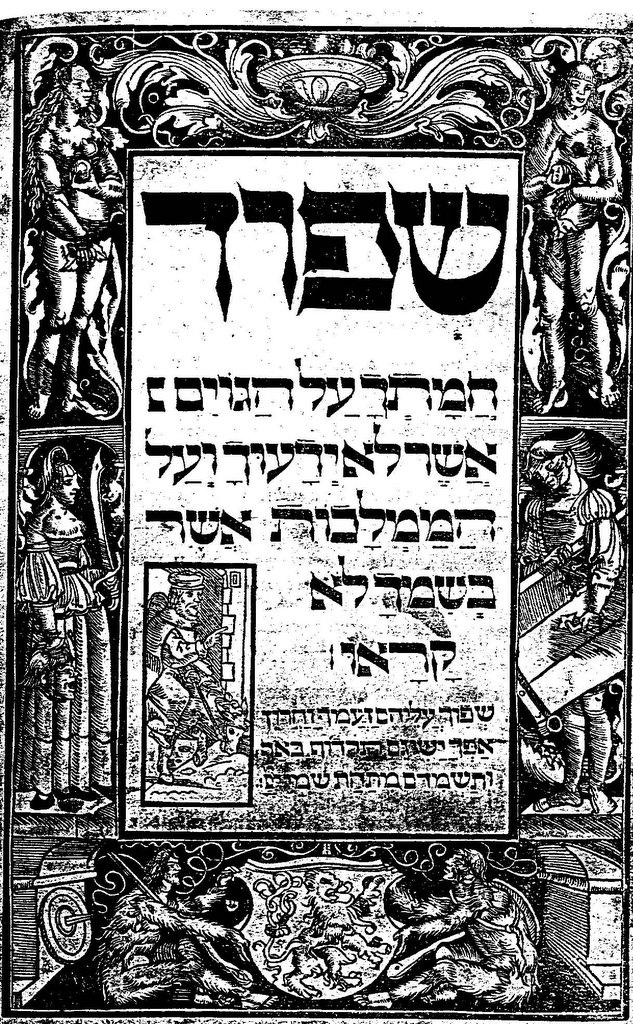
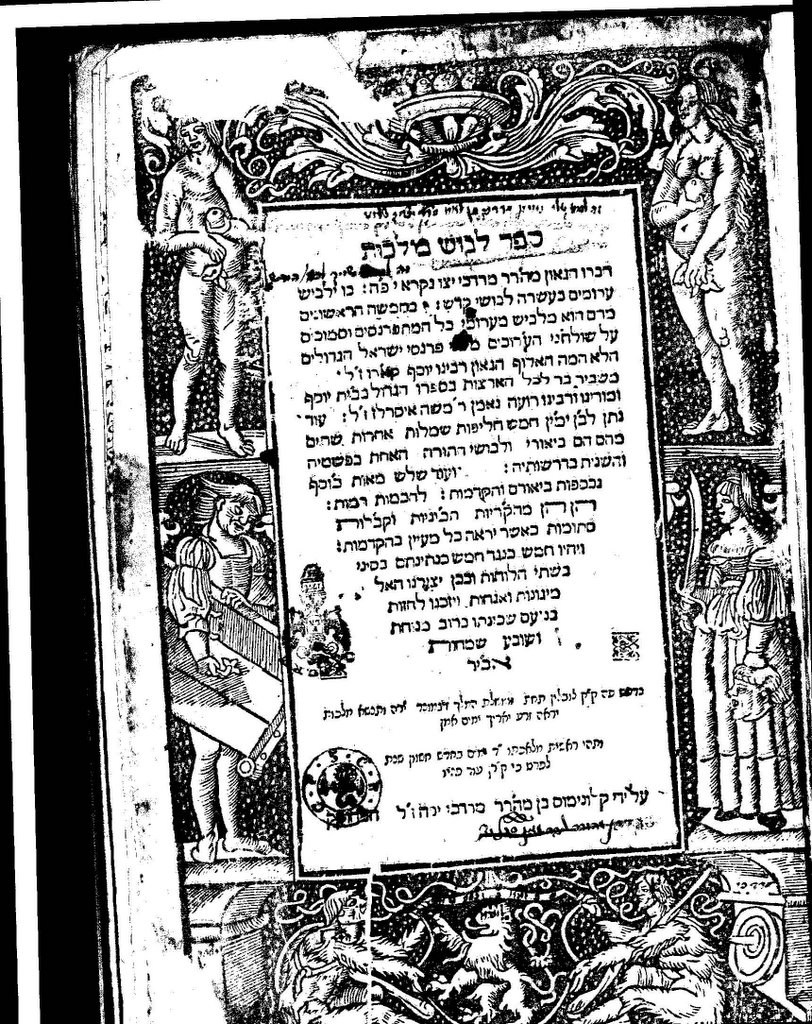
Some have been critical of the use of such obscure titles for Jewish books. Isaac D’Israeli the father of Statesman Benjamin (Isaac was the one to remove himself and his family Benjamin included and convert them to Christianity after Isaac was angered over his synagogues dues) was highly critical of such titles, in his Curiosities of Literature he writes:
The Jewish and many oriental authors were fond of allegorical titles, which always indicate the most puerile age of taste. The titles were usually adapted to their obscure works. It might exercise an able enigmatist to explain their allusions; for we must understand by The Heart of Aaron, that it is a commentary on several of the prophets. The Bones of Joseph is an introduction to the Talmud. The Garden of Nuts, and The Golden Apples, are theological questions, and The Pomegranate with its Flower, is a treatise of ceremonies, not any more practised. Jortin gives a title, which he says of all the fantastical titles he can recollect, is one of the prettiest. A rabbin published a catalogue of rabbinical writers, and called it Labia Dormientium, from Cantic. vii. 9. Like the best wine of my beloved that goeth down sweetly, causing the lips of those that are asleep to speak. It hath a double meaning, of which he was not aware, for most of his rabbinical brethren talk very much like men in their sleep. Almost all their works bear such titles as bread, gold, silver, roses, eyes, &c., in a word, anything that signifies nothing.
Isaac Reggio (perhaps it is the Isaacs) was equally critical, in his introduction to Delmigido’s Behinat HaDa’at. “Amongst the incorrect customs which has been exacerbated over time . . . when authors title their books with titles that do not speak to content, or at best they use titles which only hint to the books content which can only be decoded after reading the introduction . . . there are those who use titles which contain the authors name.” Reggio then proceeds to list some of thcategories those catagories. “There are those who use titles from the vessels in the Temple ארון עדות,מזבח הזהב, מנורת המאור, שלחן ארבע, זר זהב, קערת כסף or some use the clothing of the priest for titles שרשות גבלות, המצנפת, מעשה אפוד, משן אהרן, כליל תכלת,” and the list goes on.
Reggio mentions two catagories of interest, one the author placing his name (or hinting to it) and the other hinting to the content via an obscure title. As to the second there was such a book reviewed by the Jewish Chronicle (London)
Very wittily is the pun-title, City of Sihon (Heb: Ir Sichon), for a mathematical book by R. Joseph Zorphathi, alluding to Numb. xxi 27, “For Hesbon (reckonin [caculating]) is the City of Sihon.”
Jewish Chronicle (London), June 21, 1889, page 15
There are also similarly titled or pun titled books which are hinting at the name of the author. For instance authors whose name was Avrhom utilize puns on various verses relating to Avrohom. So we have the books Pesach haOhel (1691) which is referencing that Gen. 18:1; Yukach Na (1881); Sa’du Lebchem (1881) both referencing Gen. 18:4-5.
Then we have books which are not as creative and just use the persons name in the title. Perhaps the person to go wild with this theme was R. Hayyim Palaggi. Who wrote over 25 seforim and almost all carry the name Hayyim in the title. So we have Otzrot haHayyim, Genzi Hayyim, Darki Hayyim, U’Baharta B’Hayyim, Zechirah L’Hayyim, Huke’ Hayyim, Hayyim b’Yad, Hayyim V’Shalom etc. (you get the picture).
Asided from these we have other books which make reference to something that happened in the authors life, generally unrelated to content of the book. So we have Homat Aish (1799) a commentary on the Ibn Ezra’s song Tzama Nafshe which was written soon after the author lost his house and all to a fire. He decided to write this in the hope it would prevent a future fire. Or we have the various books written by blind people, Eynai Avrohom and the like which generally reference eyes or sight.
Aside from these curiosities, there is still the final one of substituting the authors name for that of his book. Menachem has a rather interesting story related to this practice here.
Perhaps the reason for this practice can be gleaned from the following story was told. There was a city which was filled with less than learned or interested people who were in need of a rabbi. However, when each candidate would come through they would be turned off by the populace. The town decided to do something about this and had commisioned tombstones with famous personages such as the Shach, Taz, Rama etc. and placed them in the graveyard. With the next candidate they made sure to tour the cemetary. Needless to say, although the rabbi had some misgivings he decided to take the job figuring if the Shach etc. were here it couldn’t be all that bad. After he accepted one of the townspeople took him aside and told him the truth immediately the Rabbi complained saying he was tricked. However, the town board explained he was not. As in the various cities where the Shach, Taz etc are actually buried they study their works and the Talmud says that when one studies the works their lips move – they are still alive. In this town, however, no one studies any of their wotrulyd they are truely dead here. Perhaps the idea that the Torah of the person is the most important thing and the authors derive life from that caused some to substitute their works.
Sources: Zlotkin, Shemot haSeforim and entire work devoted to the names of books; Y. S. Spiegel, Amudim b’Toldot HaSefer Haiviri, Ketiva v’Hataka, 384-428 discussing the use of the authors name in the title (Spiegel’s two volumes of Amudim are excellent and are a must read for anyone interested in the history of Seforim); for a list of books about various events, famine, jailing, blind people etc. see A. Yaari, Mekeri Sefer. [Thanks Menachem for the Jewish Chronicle (London) citation.]