Legacy Auction, agunot, censorship, and other notable items

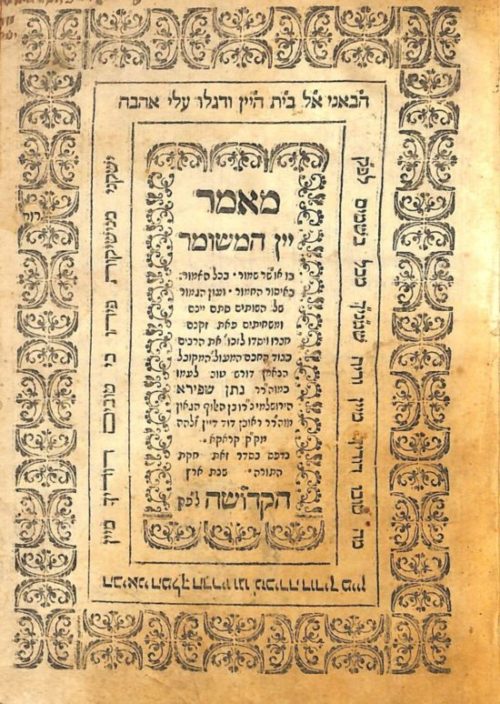
Legacy Judaica will be holding its latest auction on April 4th. The auction includes a few lots regarding agunot and comprehensive attempts to annul marriages.  In the early 20th century, especially in the aftermath of WWI, some tried to find global solutions to the massive agunah problem.  To those books offering solutions were those which disputed the validity of those solutions.  There is a lot of ten historic books on the controversies and a lot of letters from American rabbis.  One of the most substantial responses is, Ein Tenai be-nesunin , whose title leaves no doubt as to its position.  The book includes an important letter from R. Chaim Ozer and other rabbis.  According to some, the book was a response to one of the more eclectic figures invovled in the controversy, R. Yosef Shapotsnik.  His book, Lekor le-Asirim Dror, also leaves no doubt as to his position.  Although that book does not appear at this auction, Shapotshnik was involved in many other controversies and one of his books on the issue with an eruv in London.  (lot 48).   One of R. Nathan Shapira’s polemics, one against drinking yayin neskeh, and the other on Lurianic observances of certain mitzvos constitutes (lot 76).
A  lesser-known example of censorship are the two “first” editions of R. Yehuda Greenwald’s Shut Zikhron Yehuda, both published in 1923.  The first contains a lengthy letter questioning how R. Yosef Hayyim Sonenfeld could associate himself with the Agudah.  In the second edition that is replaced with a letter regarding eating on the eve of Yom Kippur.  Unfortunately in the second version although they changed the letter they weren’t as thorough as they should have been left the original title in the index. (lot 50).

The version of the Shulkhan Arukh with the commentary Gur Areyeh that contains the portraits of rabbis is lot 47.  Regarding the use of the portraits and whether they were offensive see our recent post.

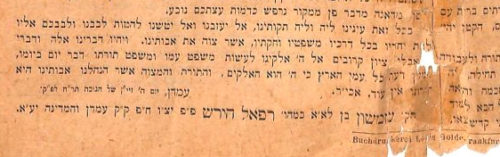
Lot 49 is a large double-sided broadside polemic against the Reform rabbinical conferences signed by R. Samson Raphael Hirsch when he was still the rav and av beis din of Emden. Here is an excerpt:
 

Lot 13 is Sefer Zichronos of R’ Abohav although quoted by many it was very rare and almost no one saw it inside but rather came to it through secondary sources including the Magan Avhrhom who quotes it often,and was printed by Ahahvat Sholom twice.

Another point of interest related to this work is this work was printed anonymously The Chida deals with this at length in his Shem hagedolim if this is a proper practice. See also most recently Yakav Speigel in Amudim Betoldost Sefer haivri ( BEsharei Hadefus) Chapter Two and see our post here. We also dealt with R Abuhav here.

Lot 12 is the first edition of of ha-Kesav Ve-ha-Kaballah by R. Jacob Zvi Mecklenburg (Leipzig, 1839).

Earlier on the blog (here) we have pointed to pieces only found in the first edition of this work and this particular volume is from the main synagogue in Koningsberg where R. Mecklensberg was the rabbi.

Lot 24 is the Nesivot Mishpat. an interesting tidbit about of this work has been noted in this post

Lot 28 is the Shut Meshiv Davar of the Netziv.  The entry notes that there are two editions of the first edition. The one for sale is more complete.  Some of the differences have been noted in The series on the seforim blog “The Netziv, Reading Newspapers on Shabbos in General & Censorship” (here, here and here). Part four in the series will hopefully be published shortly dealing with some more differences between the various editions.

Lot 94 is R’ Moshe Koerner and his Toras Moshe. There are two editions of this work, each with a different introduction. This was pointed out by Dr. Sprecher in his introduction to R’ Koerner’s Birchas Moshe which he reprinted. He also printed copies of both introductions. This is not noted in the Mifal bibliography entry on this work. Also, worth pointing to about R’ Koerner is recent excellent article from, Uriel Gellman, “Between Worlds: The Miserable Life of an Itinerant Preacher on the Eve of Modernity”, Jewish Quarterly Review, vol. 109 no. 1, 2019, pp. 54-83.

Lot 82 Sefer Safra Detzniusah DeYakov  about this rare book R’ Ephrayim Zalman Margolis who had a excellent collection writes picturesquely about this work:

.והספר היה אצלי ונשרף בעוה”ר בשריפה שהיה פ”ק שנת תק”ן לפ”ק ומאז לא בא לידי

See ( מעלות היוחסין עמ’ סד) for this reference.

Lots 111-112 manuscripts of the Maaseh Rav sound very interesting one hopes that who ever prints them makes them available to the public to study. For now see R Dovid Kamenetsky article here

Lot 102 Zemirot mateh Yehudah. See what the Pre Megadim writes about this work:

בספר נטריקן, יורשלים תשכד, דף טז ע”ב: “ועיין בספר מטה יהודה על זמירות ואדם גדול היה“. וראה שם הקדמה דף ו ע”א.

Lot 103

The Dibuk highlighted in auction entry is dealt with at great length in   Sara Zfatman’s  excellent book Jewish Exorcism in Early Modern Ashkenaz (heb.).

Lot 162 provides evidence of which edition of the haggadah the Netziv might have used at the seder, R’ Eliezer Ashkenazi ‘s Maasei Hashem.  The Netziv quotes this work in his commentary on the Sifri (1:243) and in his work on Chumash Bershis (44:34). This was his personal copy:

Lot 204 is a copy of Teudas Chaver (Prague 1813) signed by the Prague beis din, including R. Elazar Fleckeles, and R. Shmuel Landau, the Noda be-Yehuda’s son.
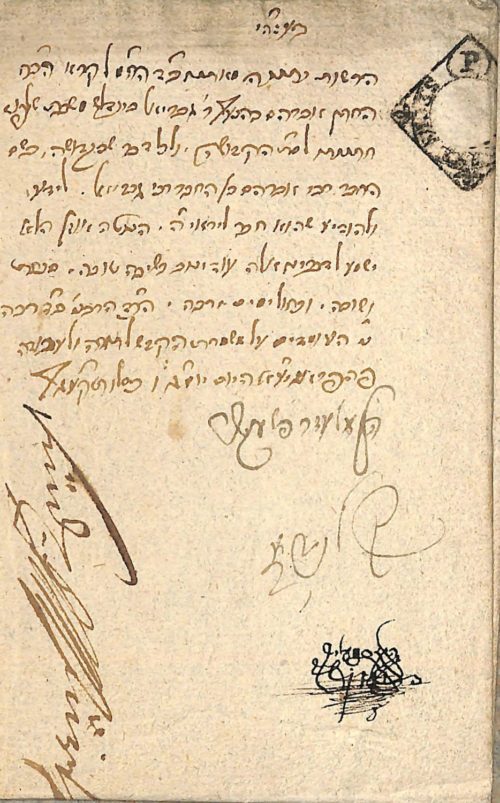
Lot 205 R Chaim Ozer and R Kook, relating to their relationship. See R. Dovid Kamenetsky’s article here
Invitation to Two Lectures by Dan Rabinowitz this Week & Discount Code

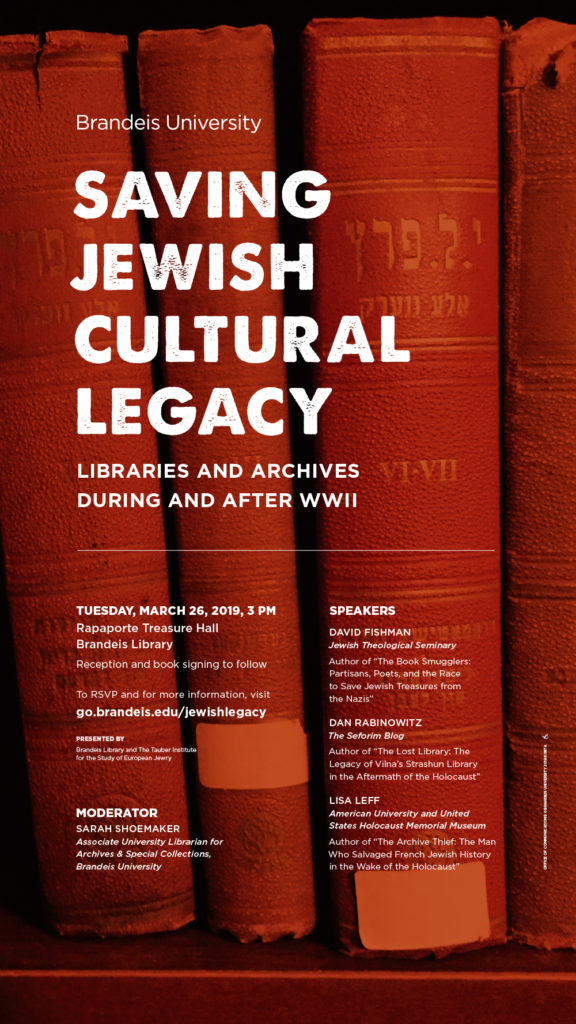
This Tuesday Dan Rabinowitz will appear on a panel, “Saving Jewish Cultural Legacy:  Libraries and Archives During and After WII,” at Brandeis University.
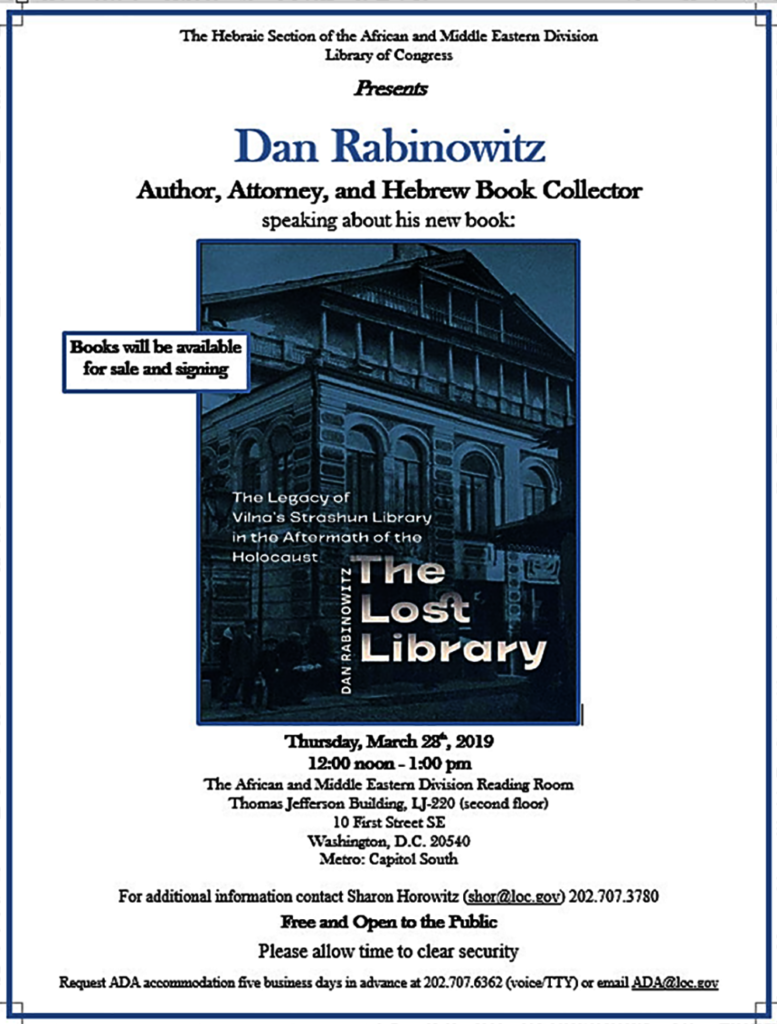
This Thursday he will be discussing his book at the Library of Congress, at the African and Middle East Reading Room at noon.
Seforim Blog readers are invited to attend.
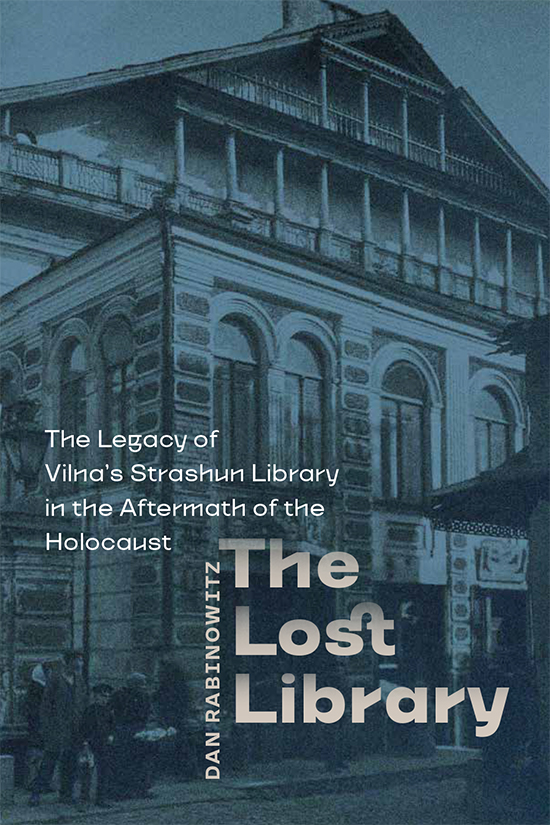
Additionally, readers of the blog can receive a 20% discount on Dan’s book, The Lost Library:  The Legacy of Vilna’s Strashun Library  in the Aftermath of the Holocaust, for purchases directly from University of Chicago Press (here) using the code BUPRABIN for 20% off.


Book Announcement: The Lost Library by Dan Rabinowitz

Book Announcement: The Lost Library by Dan Rabinowitz

By Eliezer Brodt

Its with great pleasure that I announce the recent publication of an important work, that I am certain will be of great interest to readers of the Seforim Blog – The Lost Library by Dan Rabinowitz, founder and editor-in-chief of the Seforim Blog. This book is devoted to the legacy of the personal and expanded public library of Rabbi Mattityahu Strashun.

From the back cover:

The Strashun Library was among the most important Jewish public institutions in Vilna, and indeed in Eastern Europe, prior to its destruction during World War II. Mattityahu Strashun, descended from a long and distinguished line of rabbis, bequeathed his extensive personal library of 5,753 volumes to the Vilna Jewish community on his death in 1885, with instructions that it remain open to all.

In the summer of 1941, the Nazis came to Vilna, plundered the library, and shipped many of its books to Germany for deposition at a future Institute for Research Into the Jewish Question. When the war ended, the recovery effort began. Against all odds, a number of the greatest treasures of the library could be traced. However, owing to its diverse holdings and its many prewar patrons, a custody battle erupted over the remaining holdings. Who should be heir to the Strashun Library?

This book tells the story of the Strashun Library from its creation through the contentious battle for ownership following the war until present day. Pursuant to a settlement in 1958, the remnants of the greatest prewar library in Europe were split between two major institutions: the secular YIVO in the United States and the rabbinic library of Hechal Shlomo in Israel, a compromise that struck at the heart of the library’s original unifying mission.

In 2005 Dan Rabinowitz founded the Seforim Blog and I started corresponding with him almost immediately. One of the people we discussed often was R’ Strashun as both Dan and I were fascinated by him. Dan’s interest extended to the library and what happened to it after R’ Strashun’s death and especially what happened to it after World War Two. Eventually, in November 2015 Dan authored a lengthy post on the Seforim Blog dealing with different aspects of R’ Strashun and his library. This post eventually turned into this full-length book on the subject.

The Lost Library is written in Dan’s extremely clear, lucid and captivating manner as familiar to readers of the Seforim Blog (having read hundreds of his articles and at times not realizing he is the author of them because most do not include his name – in essence, stamm seforim blog post dan rabinowitz, at least the scholarly ones). The book begins with an exciting personal introduction (A PDF is available upon request) giving background to the development of one of Dan’s favorite pastimes collecting books. However, similar to the subject of this book R’ Strashun, Dan’s interest extends to not just owning the book but to developing a personal relationship with the book contents. This becomes evident as one reads The Lost Library, especially the vast number of sources in multiple languages housed in numerous collections and libraries all over the world including his personal library. The Lost Library meticulously documents each of his claims from these extensive sources collected over intense research conducted over a few years.

The book begins with an overview of that ‘ir ve’em be-yisrael, the famous city of Vilna, giving the reader excellent background to the environment and city (including current descriptions as the author visited Vilna while working on this volume). The author discusses what made Vilna famous, sidetracking into very relevant topics such as R’ Mattityahu father, the Rashash and others affiliated with the Vilna Gaon, Vilna’s most famous resident. Dan then turns to deal with the hero of the book, R’ Mattityahu and provides the reader with a comprehensive biography that discusses his unique style of learning and how that influenced his book collecting habits. The next chapter is the opening of the public library after Mattityahu’s death and the impact it had on the community and eastern European Jewry at large. The book then goes onto detailing the library’s life during the Holocaust and especially afterword as different parties claimed ownership when most of it was discovered to have survived.

Marc Shapiro wrote:

Taking us on a journey from nineteenth-century Vilna until almost the present day, Rabinowitz not only documents the vicissitudes of this important institution, but helps us understand the intellectual culture of one of the centers of Judaism in modern times.”—Marc B. Shapiro, Weinberg Chair in Judaic Studies, University of Scranton

And others praised the work as well.

“Rabinowitz has done a brilliant job in his moving and important book…. Through the story of the Strashun Library, he gives us insight into the richness and vibrancy of Jewish life in Vilna. He vividly portrays the restoration of the books of the Strashun Library, a testimony to the indomitable Jewish spirit.”
—Ambassador Stuart E. Eizenstat, chief White House domestic policy adviser to President Carter

“Rabinowitz’s meticulously researched study is an outstanding expression of the wealth of knowledge provided by a thorough exploration of Jewish material culture…In his detailed reconstruction of the Strashun library’s fate after the German invasion, he detects a breathtaking history of loss and mourning, of illegal claims and desires, of appropriation and incorporation that expresses the rupture of the Holocaust and the contested visions of Jewish life after catastrophe.”—Elisabeth Gallas, Leibniz Institute for Jewish History and Culture –Simon Dubnow

This book is of particular personal great interest. The first time I recall hearing something from R’ M. Strashun was when I was in tenth grade. R’ Hershel Schachter had just begun giving a shiur once a week in Flatbush for Balei Battim on Mesechtas Kidushin. I attended a few of them, during one of the shiurim he mentioned R’ M. Strashun’s comments in Bava Basra praising him (I do not recall his exact discussion, but it was about the word Achron). I had been familiar with the Strashun name for a while through R’ Mattityahu father, the Rashash via my father. The Rashash symbolized an emphasis on peshat, from then on I was very curious about R’ Mattityahu. Fast forward a few years when I began learning in the Mir in EY I was talking to a friend somehow it came up about R’ M. and the friend mentioned he loves him and that the great Gaon R’ Yakov Chaim Sofer always quotes him with great respect. He then showed me a sefer of Mattiyahu printed by Mossad Harav Kook (Mivchar Kesavim). The sefer was out of print and hard to find, but the Sitrah Achrah helped me find it a little while later. I immediately began learning through the work. Since then I have found the work many times in used shops and have found these copies, proper owners, to appreciate them. One time while learning the sefer an Israeli chavrusha saw what I was learning and said how you could learn a sefer of a maskil! I argued it was good enough for me that R’ Yitchack Elchanan Spektor who, in his old age, came to Vilna to eulogize R’ Mattityahu. My chavrusha dismissed this anecdote and replied that means nothing! Of course, I could not convince him that there was nothing wrong with him. However, his complaint sparked the exact opposite – and spurred me to research and read more of R’ Mattityahu’s writings which only enhanced my reverence for him. My chavrusha’s position notwithstanding, other very frum Israelis friends expressed their appreciation and fascination with R’ Mattityahu. Most of his writings appeared in newspapers and journals and are not readily available or even known. However, in a few months, I will god willingly print some of them. Eventually, I wrote my first academic article in English about him (available in PDF upon request or from here).

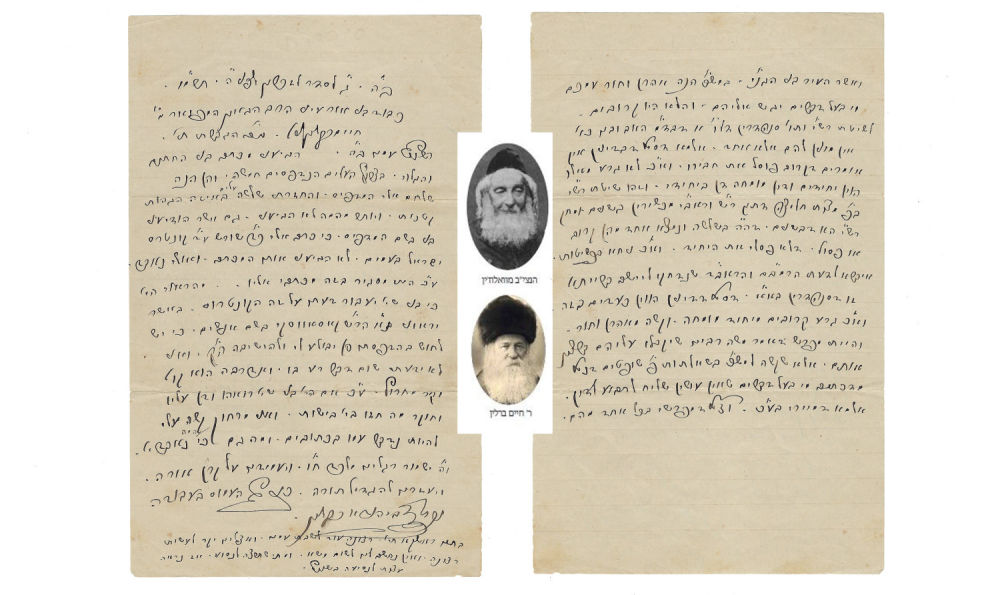
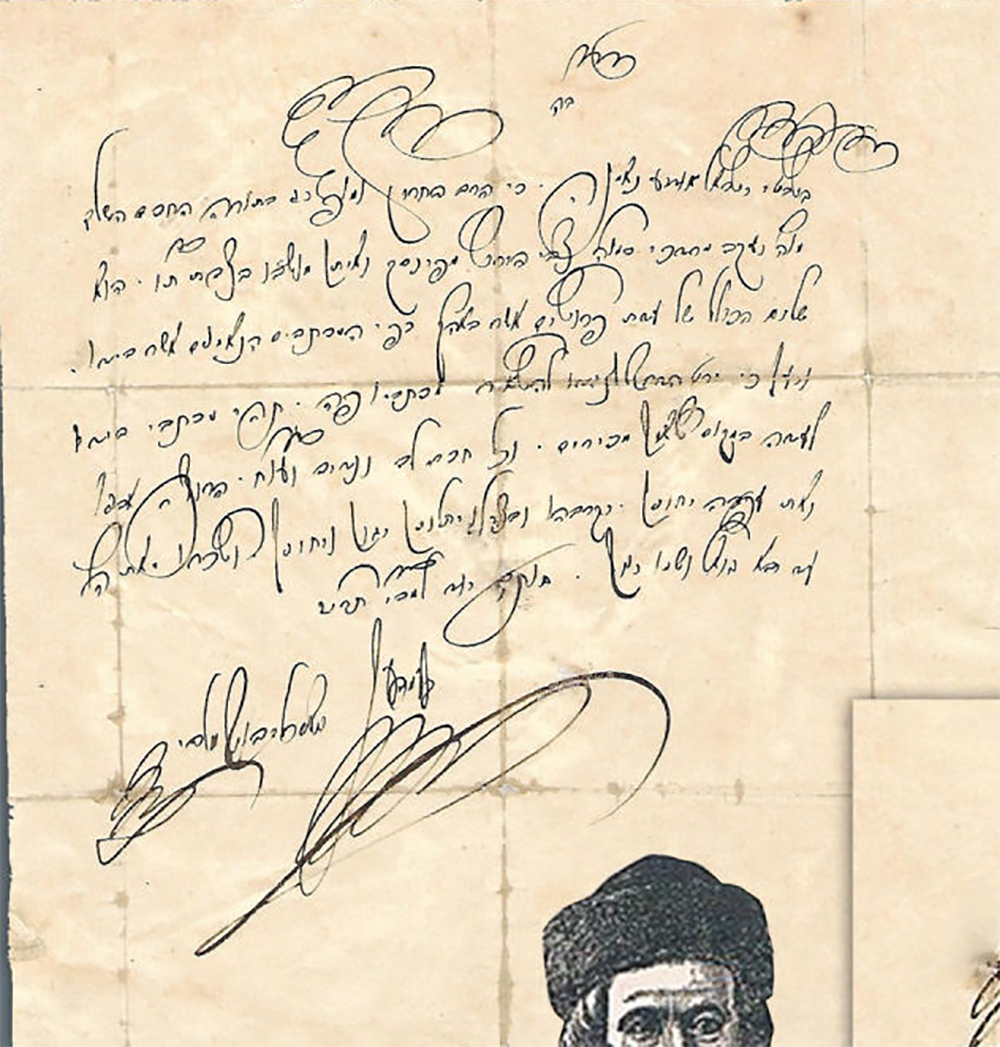
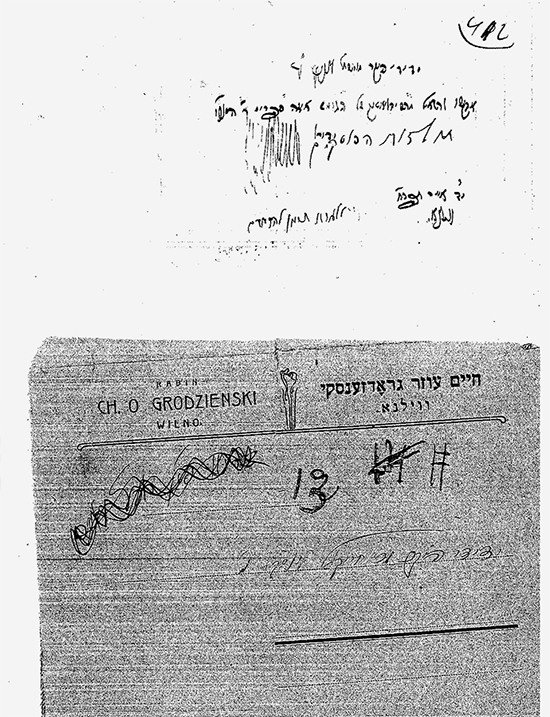
One final point about R’M that particularly resonated with me. R’M did not merely collect seforim he used them, and this is apparent from hundreds of citations throughout his works. A later resident of Vilna, and one too who was indeed very well-read was R’ Chaim Ozer. He did not need an extensive personal library as he had unfettered access to the Strashun Library – indeed was unique in that he was one of the few given borrowing privileges. Here is a book request from R’ Chaim Ozer, addressed to the Strashun Library’s head librarian Chaim Chaikel Lunski. Thanks to R’ Dovid Kamenetsky for making it available:

One of my favorite stories about the library as told by R’ Moshe Shmukler in his fascinating book, Moshe Shmuel ve-Doro, combines the idea of the voracious reader and a comprehensive library:

ר’ חיים עוזר… מלבד בקיאותו הגדולה בתלמוד ובראשונים, הצטיין בבקיאות עצומה בשאלות ותשובות האחרנים… פעם החלטתי לנסותו עד כמה כוחו גדול באחרונים, סרתי לספריה של שטראשון ועברתי על פני הקאטאלוג במקרה נתקבל מבטי על הספר מאמר מרדכי להגאון ר’ מרדכי זאב אוטינגר מלמברג ספר שלא נודע לי עד אז וחשבתיו ליקר המציאות. דפדפתי בספר ומצאתי איזה הערה נפלא על דברי בעל הלכות גדולות המובא ברא”ש סוף פ”ב דיבמות. חשבתי האח, מצאתי את מה שאוותה נפשי. במוצאי שבת באתי לר’ חיים עוזר, כי הערב ההוא היה מוקש ללות אתו בחידוש תורה. בשעת השיחה העילתי כלאחר יד את הקושיא על הבה”ג. ומה השתוממתי לשמוע מפי תיכף, כי זוהי קושיתו של בעל מאמר מרדכי… [ר’ משה שמואל ודורו, עמ’ 176].

The book can be purchased from the publisher here, Amazon or Book Depository.

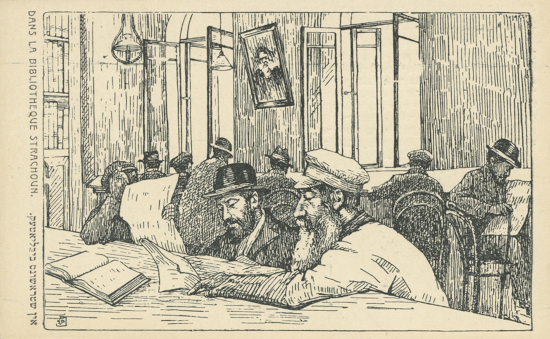
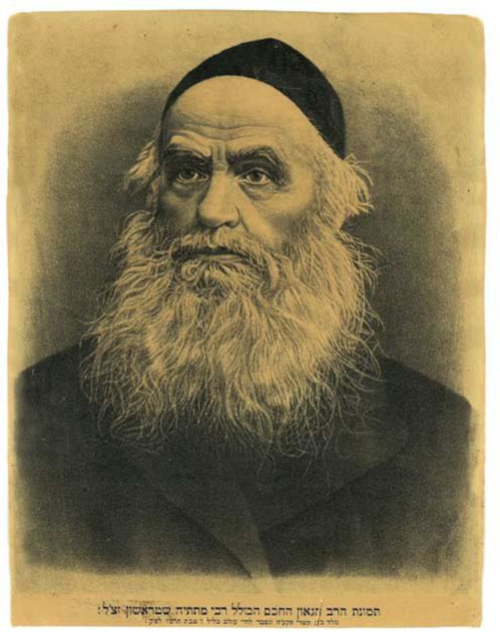
Here is a portrait of R’ Mattityahu followed by a scene depicting the Strashun Library in Vilna in its heyday:


Genazym Auctions: Illustrations & the Friendship Between the Hazon Ish and R. Zevin

Genazym Auction:  Illustrations and the Friendship between the Hazon Ish and R. Zevin

The auction house, Genazym, is holding its third auction (the catalog is available here) this week Thursday, August 30th. This auction includes many Hassidic works, letters, autographs, early editions, and some impressive bindings.  Additionally, as at other auction houses, items are already appearing from the Lunzer/Valmadonna collection whose books were sold and auctioned in the past year. 

There are a few items that have aspects that go beyond their texts.  The book, Hok le-Yisrael, Prague, 1798, (lot 27) is notable for its unusual title page.  It contains Dovid and Shlomo (for a discussion of the inclusion of biblical figures on the title-page see here), with the head of Goliath at David’s feet.  David is shown lifting his shirt to expose his belly which is depicted as one of substantial girth.  It is unclear why the illustrator used that particular pose. The remainder of the illustration is unremarkable.  But the text of the title has its own quirk, where it is printed in a handwritten font, both the Hebrew and the German.   

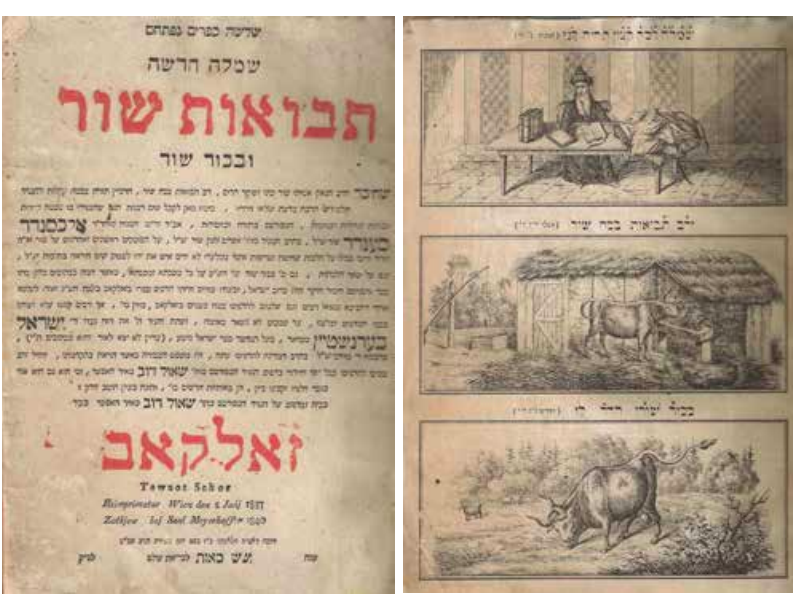
Just to mention one other unique illustrated item I recently came across about to be auctioned off in the forthcoming Genazym auction (lot 26). In a few copies of the 1840 printing of the classic work on Shecitah, Tevous Shor there is a very nice illustration connected to the title and name of the author. 
Some books are especially valued because of their legendary segulah powers.  Recently this has become even more commonplace with this genre expanding exponentially.[1]  At times the source for how these books fall into that genre are murky, but one that has a long history is Hayim ben Attar’s Or ha-Hayim.  The first edition, Venice 1742, (lot 49), in a very nice binding,  is highlighted for its segulah powers that include protection, healing, and children, and the study of it has the power to purify one’s soul. 

Returning to illustrations, a portrait of R. Dov Ber Meisles, the rabbi of Warsaw (and other cities), from 1891, is among the items.  This is not the only illustration that R Meisels appears.  During the late 1860s, there was substantial unrest in Poland when many sought to force the Tsar to bestow greater civil rights to the populace.  The clergy played a large role in this endeavor and R Meisels was among them.  This was viewed as an opportunity for Jews to be accepted by the population.  In this, Meisels had a profound impact and was among the main influencers of Marcus Jastrow to take part in the movement.  Meisels and Jastrow became very close.  When both were imprisoned for their activities, initially Jastrow was kept in isolation but when he was transferred to Meisels’ cell, Jastrow’s spirits were lifted and was able to deal with the remainder of his imprisonment.  In the end, both were expelled from Poland, although eventually permitted to return.  One of the most notable events during this period was the funeral of five protesters who were killed by government forces.  The funeral took place on Shabbos and both Jastrow and Meisles were in attendance.  Their participation is recorded in Aleksander Lesser’s painting, “Funeral of five victims of the demonstration in Warsaw in 1861.”In the center left, Meisels appears with a fur hat next to Jastrow in his canonicals.[2]   
 Another item of ephemera is a letter from the Hazon Ish to R. Yosef Zevin (lot 68)(the envelope confirms that the addressee was R Zevin).  Although there is no doubt about R Zevin’s Zionist leanings, the Hazon Ish carried on a correspondence with him.[3] This is yet another letter showing the connection between R Zevin and the Hazon Ish. (For others, see Yehoshuah Levin, HaShakdan (Monsey: Tuvia’s, 2010), 117). R Zevin included a profile of Hazon Ish and his style of study in the book Ishim ve-Shitot. 

As we have shown in the past, one can learn all kinds of things from the information found in the writeups in the various auction catalogs including seeing actual clear copies of the manuscripts (lot 55). there is a letter of his from 1886 about his essay on Antisemitism called Shar Yisroel which he was about to print. He writes to his son to check it over as someone told him that perhaps some might get angry about and it would cause problems for him and the Yeshiva. This is not the only time that we find the Netziv nervous about his actions and that it would cause possible problems for the Yeshiva.

Two of R Yaakov Emden’s important works, Mitpahat Seforim and his Siddur, both of which are rare are up for sale (lots 75 & 76).  The first of edition of his siddur is critical to actually determining R. Emden’s opinions regarding the liturgy and its attendant customs.  This is so because although there are many alleged reprints of the Siddur, they, in fact, do not include the text that R Emden so carefully edited.  Only recently has the complete siddur been reprinted.  The Mitpahahat is R Emden’s well-known challenge to the Zohar, or parts of it.  Emden points to many passages that appear to be later than when R Shimon bar Yochi lived, the traditional author of the Zohar. R. Emden’s work was subject to some rebuttals, one is Moshe Kunitz Ben Yochi.  But some allege that Kunits freely borrowed from others and that his rebuttals fall short of the mark. 
One final item, also a siddur, is a first edition of Siddur R’ Shabsai MeiRushkov (lot 95) which is considered very rare starting bid is $50,000 and with a sale’s estimate of  $100,000.

[1] See Avraham Ya’ari, Mehkeri Sefer (Jerusalem:  Yehuda, 1958) who discussed a number of books that were written after the author experienced cataclysimic events. See also Eliezer Brodt’s article in the forthcoming Ami Magazine discussing the ubiquity of this phenomenon. 
[2] See Jastrow, “Baer Meisels, Chief Rabbi,” The Maccabean XI, 5 (Nov. 1906), 208-09; idem. XI, 6 (Dec. 1906), 246-48. For Jastrow’s activities during that time see Michael Galas, Rabbi Marcus Jastrow and His Vision for the Reform of Judaism:  A Study in the History of Judaism in the Nineteenth Century, trans. Anna Tilles (Boston:  Academic Studies Press, 2013), 70-88. Even at the end of his life, Jastrow was in America he still counted Meisel among those who influenced him.  See idem. 170.
[3] That is not to say that some didn’t try to write out R Zevin’s connection to Zionism.  See Jacob J. Schacter, “Facing the Truths of History,” Torah u-Madda Journal 8 (1998-1999): 223-24. 


Rare Letters, Controversial & Valuable Hasidic Books – Genazym Auction

Genazym Auction is holding an auction on March 21st that includes many important letters and manuscripts and a small number of books (download a pdf of the catalog here).  Many of the books are Hasidic or owned by well-known Hasidic figures.  For example, the rare first edition of the No’am Elimelekh, 1788, by R. Elimelekh of Lyzhensk (lot 13).  That book, like other early Hasidic books are both fundamental to the Hasidic philosophy and theology and were controversial among those opposed to the new movement.  Indeed, according to Rabbi David of Makov, the book should be “eradicated from our homes.” (R. David of Makov, Shever Poshim, in Morecai Wilensky, Hasidim U-Mitnaggedim, vol. II (Jerusalem:  Mossad Bialik, 1970).  Similarly, the  Tolodot Ya’akov Yosef, was published in Lvov, 1788, is among the most prized Hasidic books.  The book was controversial when it was printed (likely without official approval of the censor) and some copies were destroyed in Brody. According to the legend recorded in Shivhei Ha-Besht the matter of the books was so important it was discussed in the heavenly court at the highest levels. Joseph Perl, in his satire, Megaleh Temirin, locates that bibliocide at “the home of R. Mikhel of Zlotchuv, in compliance with the order of the [Brody] court and the community there.” (See Jonathan’ Meir’s recent critical edition of the Megalah Temirim that provides additional evidence of the book burning.  Sefer Megale Temirin, ed. Jonathan Meir (Jerusalem: Bialik Institute, 2013) 29n10). Ownership of the No’am Elimelekh is also valued as a segulah.  There are other books that are prized not only for their content but also for such secondary reasons, for example, the Homat Eish, (R. Eliezer from Kalktshuv, Bresslau 1799), as the title implies is designed to protect from fire. (See also Avraham Ya’ari, Mehkerei Sefer (Jerusalem:  Yehuda, 1958) 47-54)
Another important Hasidic work is R. Hayyim of Chernowitz’s, Siduro shel Shabbat (lot 14), which is well-known as the source for the Leshem Yihud.  That prayer is among the more controversial prayers, which we have discussed previously here and towards the end of this post. (See also Moshe Halamish, Kabalah: Be-Tefilah be-Halakha ube-Minhag (Ramat Gan:  Bar Ilan University Press, 2000) 45-70 and Daniel Sperber, Minhagei Yisrael (Jerusalem:  Mossad HaRav Kook, 2007) index “leshem yihud”).

Similarly, the Sh”ut Mayyim Hayyim (lot 18) by R. Hayyim Rapoport we have discussed at length here.  The work establishes the existence Ba’al Shem Tov and is an indication of his scholarship. Our post discusses other bibliographical and historic items related to the work. 

   
There are numerous historical and intellectually valuable letters among them the telegram sent from Kobe, Japan, just before Yom Kippur 1941 to the rabbis in Israel requesting clarification, because of the ambiguity of the location of the dateline, as to which day to fast on Yom Kippur. (Lot 48).  A number of opinions are collected in Shitat Kav ha-Tarikh be-Kador ha-Arets, ed. Yehudah Areyeh Blum, (Jerusalem:  [], 1990).  Another book is (admittedly tangentially) related to the geography of the earth, and specifically Jewish astronomical calculations.  An illustration at the top of the title page of Sefer Ebronot (Offenbach, 1772) provides a heliocentric view of the earth.  The same illustrations appear in R. Yehuda Leib Oppenheim’s, Matteh Yehuda (Offenbach, 1722) and with the date displayed Ha-Moshiah ben David.  
R. Eliayhu Guttmacher was a reknown “Ba’al Mofes.”  But he was eventually overwhelmed with petitions for his assistance that he was forced to publish an advertisement in the Ha-Maggid newspaper begging people to stop sending him letters. R. Eliyahu Guttmacher, Mehtav me-Eliayhu (Jerusalem:  Yisrael Bak, 1974) 89-91;  see also Bromberg, Me-Gedolei ha-Torah veha-Hasidut, vol. 24 (Jerusalem:  HaMakhon LeHssidut) 143-52, which prints some of R. Guttmacher’s letters regarding the same; and Glenn Dyner, “Brief Kvetches: Notes to a 19th century Miracle Worker, Jewish Review of Books (Summer, 2014), 33-35. 
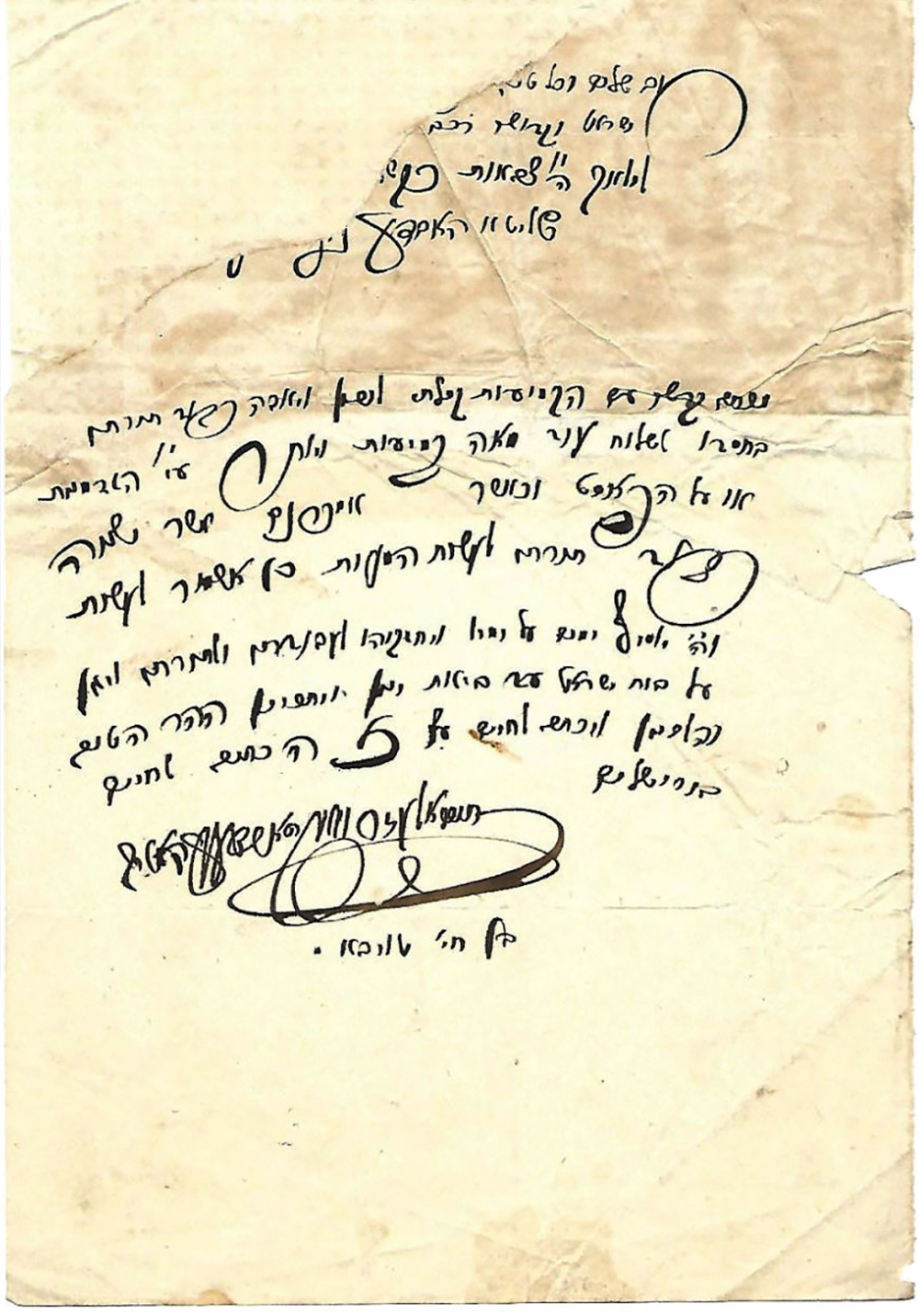
An important letter to R. Guttmacher is included in the auction(lot 43):
ויש הכרח ממני לכתוב כאן בקיצור, שבל יאמר מי: הלא נשמע כמה מעשיות אשר נעשים על ידך בעזה”י להציל מצרות רבות, אין זאת רק על ידי קבלת מעשית. וכאשר הגעתי אגרת ממרחק מחכם גדול… בהיותי שאני בקי בקבלה מעשיות ארחם לעשות בבזה שנתייאש מכל הרופאים. בקראי זאת נפלה עלי להיות חשוד בכך… קודם כל אודיע כי בכל התאמצות דחיתי מעלי כל הבא, אבל ראיתי סיבות נפלאות שכן היה רצון ה’. באשר שגדולי ישראל הסיעו הנדכאים עלי. ומה היה לי לעשות אם באו אב ואם ואחד מקרוביהם והביאו לי בנם, בוכים וצועקים לרחם. ישבתי ללמוד עם בחורים בבית המדרש והובא נער מן י”א שנה בכתף אביו וצעק לרחם עליו… והנער לא היה יכול לדבר מאומה… וקולו פעמים בנביחה ככלב ופמעים כעגל…וגם כל העוברים דרך העיר בשמעם עניניו לביתו לראות הנפלאות. ואני ידעתי שאין לי מאומה במה לרפאותו. בכל זאת חשבתי הלא ד’ ברוך הוא שולחו… ולקחתי ספר תהילים ובמקום שנפל אמרתי, והבאתי לכל תיבה כוונה לענין שלפני. וכוונתי היטב בשורש האותיות, ובמיוחד בהזכרת השם הקודש… פתאום הוציא הנער קול אשר נבהלו כולם, והראה באצבע למקום אחד. ואמרתי מהר לפתוח החלון, וכן היה ודיבר הנער ואמר יצאה אחת מן המכשפות ממנו ופתחתי לראות בבטנו כי אמר עוד שלש מכשפות בו… ואמרתי כיון שיש עת רצון אתפלל עוד. וכאשר אמרתי שוב בערך ד’ מינוטין שוב צעק בקול אשר בכל השכונה ברחוב ההוא נבהלו והחלון היה פתוח ושוב אמר הנה כולם יצאו… והיה כזה עוד בכמה אשר יש לכתוב כמעט ספר מכל הענינים, והכל היה בעל כרחי שהפיל עלי בכח. ורק על ידי תפלות ובקשות ולפעמים גם סגולות השכיחות… (עי”ש עוד דברים חשובים בזה, צפנת פענח, מאמר ט).

There are many other interesting items as well, such as R. Shlomo Kluger’s passport (lot 39):

A letter from the Malbim (lot 40) and much more:


Legacy Judaica Auction March 6th: A Sampling of Forgeries and other Eclectic Lots

Legacy Judaica‘s next auction will occur on March 6, 2018.  The 220 lots include very rare books such as the first edition of the Yerushalmi and a letter from R. Tzvi Ashkenazi (Hakham Tzvi) (the entire catalog can be accessed here), there are many other interesting books and letters.
Conditional marriage has been applied since at least the talmudic period if not early.  The exact circumstances and necessary predicates have evolved over time and especially in the modern period when marriage and divorce were slowly wrested from the exclusive control of the clergy and the state began to involve itself permitting some to circumvent the religious process entirely, the issue of annulments became acuter.  Annulments were among the only methods that would free a woman whose husband proceed to receive a secular divorce but not a religious one.  In France, in the early 20th century a scheme to make conditional marriage the norm and avoid later issues was proposed.  But this met with fierce opposition from many rabbis, and to counter that proposal in 1930 in Vilna a book, Ein Tenie be-Nissuin, that contained signatures of 400 rabbis was published in protest.  The book also contains an introduction by the leading Posek, R. Chaim Ozer.  (Lot 21).  
Another contemporary controversy related to something much older, the Talmud Yerushalmi. In the first decade of the 20th century, Shlomo Friedlander published a few volumes from the Kodshim order that hereto had never been published (lot 47).  Allegedly these were from a manuscript, but many doubted their authenticity. R. Meir Don Plotski, the author of the biblical commentary, Kli Hemdah, devoted an entire book, Sha’lu Shelom Yerushalim, (lot 43) to disproving that Friedlander’s edition was legitimate. (Dr. Shlomo Sprecher Zt”L reprinted the book in 1991 with a new introduction and a biography of R Poltski).  Friedlander also published less controversial books including his commentary on the Tosefta (lot 48). 
Although not controversial, another attempt to link the present with the past is a curious book, Sefer ha-Brit ha-Hadash, written by Uziel Haga of Boston (lot 130).  He petitioned and received permission from President McKinley to accompany the U.S. military on a tour of China.  Haga’s purpose was to see first hand and document the lifestyles and customs of Chinese Jews.  Among other items, he asserted that the Jews Kaifeng in the Hunan Province are descendants of the Ten Tribes. If his identification is correct, that may explain Jews’ affinity for Chinese cuisine.  Haga never made it back from China, he was imprisoned and killed by the Boxers.   Although Haga’s book was printed in Pietrekov, one book, Mishberi Yam, (lot 131) was published in China.  
Returning to forgeries, the compendium of R. Zechariah Yeshayahu Yolles, Ha-Torah veha-Hayyim, (lot 24), includes his Dover Mesharim that disproves the attribution of a certain work to R. Mordechai Yaffa (Levush).  Yolles’ position was vehemently disputed by R. Moshe Sofer (although Yolles defended him in a different controversy) and Sofer’s letter appears in this volume.  The book is also noteworthy because it includes a portrait of Yolles in the frontispiece.  
Among the books with distinguished owners include a copy of Mishnei Torah that belonged to R. Yosef Dov Soloveitchik, (Beis HaLevi) (lot 151) and R. Hayim Volozhiner’s copy of Mesorot Seyag le-Torah. Most of R. Hayim’s library was destroyed in a fire, but this book had been on loan to R. Yaakov of Ivenitz, and thus was spared the fate of the rest of books.  (Regarding the two bibliographical topics of fire and lending, see Abraham Ya’ari, Mehkerei Sefer, 47-54 (discussing books printed after the author was saved from fire) and 179-97 (discussing book lending)). As an aside, the Mesorot Seyag le-Torah also likely contains material that is misattributed to its author.  See Wolf Heidenheim, Me’or Eynayim, comments to Exodus 27:17.