As The Kohen Exits The Sancta: A New Edition of Reb Zadok ha-Kohen of Lublin’s Tzidkat ha-Tzadik

:As The Kohen Exits The Sancta
A New Edition of Reb Zadok ha-Kohen of Lublin’s Tzidkat ha-Tzadik
By Josh Rosenfeld

Josh Rosenfeld is the Assistant Rabbi at Lincoln Square Synagogue and on the Judaic Studies Faculty at SAR High School.

This is his fourth contribution to the Seforim Blog.

Tzidkat ha-Tzaddik
Commentary, Notes, & Excurses Ne’imot Netzah by R. Aharon Moseson
2 Vols. 532 + 564 pp.
Arad: Makhon Ne’imot ha-Tzedek, 2015
“The Books of the ‘Kohen’, written by the very own hand of our Master, the Holy man of God, the Kohen Gadol, without peer, Reb Zadok ha-Kohen of Lublin, may his merit protect us… have taken an important place amongst the works of Jewish thought and Hasidut amongst the legions of those who seek God in every place. They serve as a magnet for all those who desire [to know] God, who find in it a veritable treasury of general instruction and guidance in the service of God – especially in the area of refining one’s character traits, and [his words] contain entire frameworks for understanding verses in Tanakh and sections of Rabbinic stories in the Talmud and Midrashic literature.”
With these words, R. Aharon Moseson introduces his impressive new edition of what is arguably the central work of the “Kohen,” Reb Zadok ha-Kohen of Lublin (1823-1900), Tzidkat ha-Tzadik.[1][1] There is much already written on Reb Zadok and various different aspects of his thought, such that it would be redundant for me to recapitulate here,[2][2] although before we discuss this particular work and it’s advantages over previous editions, it behooves us to spend a moment on the book Tzidkat ha-Tzadik itself.
If the rest of Reb Zadok’s writings can be described as a sort of “Beit Yosef for Hasidut” (language of R. Moseson in the preface, on page 11), Tzidkat ha-Tzadik can be said to be a Shulhan Arukh, a type of concentrated version of Reb Zadok’s general ideas. R. Moseson categorizes Reb Zadok’s chief concerns into the following eight general categories, into which almost every single section of Tzidkat ha-Tzadik fall: (1) Divine Foreknowledge and Free Will (2) Repentance (3) Prayer (4) ‘Guarding the Covenant’ and Rectifying the Failure to do so (5) Human Inability to Fully Overcome Desire (=Yetzer) (6) The Interplay Between Physical Desire and Anger (7) The Trials of Desire (8) Positive Hutzpah. The reader is directed to the end of the second volume, where a number of short essays deal with some of these topics more fully.
Tzidkat ha-Tzadik was first published by the son-in-law of Reb Zadok, R. Barukh Dovid ha-Kohen in Lublin, 1902. Since then, a number of different editions of the Sefer have appeared, some of them notably censored in a number of piska’ot, or sections.[3][3] Beginning with the Lublin, 1913 edition,[4][4] a Hasid by the name of R. Yisrael b. R. Yosef Yozel of Lublin added in source references that Reb Zadok omitted from the manuscript. Later, R. Abba Zvi Naiman of Ner Israel Rabbinical College in Baltimore published an index of the works of Reb Zadok, Mafte’ah Kitve Rebbe Zadok ha-Kohen mi-Lublin (2nd ed. Jerusalem, 2006), which aided locating particular topics and sources cited in Tzidkat ha-Tzadik along with many of Reb Zadok’s numerous other works. The most widely-used and available edition I know of today is the red-covered, anonymously printed Jerusalem, 1998 edition. This printing has a square (as opposed to “Rashi” script) typesetting and also contains a well done topical and source index in the back put together by one R. Chaim Hirsch.
About thirty years ago, Yeshivat Beit El began to publish editions of the Reb Zadok’s major works, with major additions of full quotations of the sources cited in the works, and limited indices and additional works cited for comparison and further study under the imprint of Yeshivat Har Bracha. According to the title page, their edition of Tzidkat ha-Tzadik was based off of the 1968 Jerusalem printing of R. Oded Kitov, which itself was based off of manuscript. The reason the printings are important to us, as we shall see, is because of the following statement in the Har Bracha Edition: “printed… with the addition of deleted sections copied from the very handwriting [of Reb Zadok] that have previously not been published” (Emphasis mine). All previous printings have omitted several passages from the text of Tzidkat ha-Tzadik save for the Har Bracha, 1987 Yad Eliyahu KiTov, and now, the Ne’imot Netzah editions. In the chart below, I have outlined the various censored passages, and their omissions across four printings.[5][5]
One of the central reasons R. Moseson cites in the preface for the decision to include the various passages that were censored in many previous editions is borne of necessity due to the misinterpretation and danger inherent in an untrained and loopy presentation of these potentially explosive passages by neophytes or worse, deliberate misrepresentation of the Kohen’s words.[7][7] It is for this reason that R. Moseson prints these passages in an edition that enjoys the approbations of venerable Haredi authorities, although only the first two previously censored sections (nos. 54, 69) enjoy the introductions and cautionary words discussed in the preface in this new volume.

All told, this new edition of Tzidkat ha-Tzadik truly pulls back the parokhet from what for many was previously a “closed book.” The explanations section, entitled Ne’imos Tzedek presents each section in a lucid, ArtScroll-esque manner, with the words of Reb Zadok bolded, and regular text filling in the various lacunae that typify this work, especially in the earlier sections. Footnotes and cross-references lead the reader to the parallel discussions in Reb Zadok’s other works. The often obscure references to Rabbinic, Zoharic, Halakhic, and Hasidic literature that underlie Reb Zadok’s writing are often presented in full, allowing the learner to fully grasp the paroxysm of religious revelation, the concentrated bursts of wisdom, founded upon a lifetime of deep Torah engagement that I believe is represented in each of Reb Zadok’s short passages in Tzidkat ha-Tzadik, as opposed to the protracted thematic presentations that are to be seen in some of Reb Zadok’s other works. Particularly helpful, especially for the latter sections of Tzidkat ha-Tzadik in which the passages become much longer, are paragraph headers containing short precis of the topic under discussion, and side notes that helpfully summarize key turns and points in the text of the elucidation. For whatever a neophyte dabbler in Reb Zadok’s works’ recommendation is worth, I enthusiastically encourage all those who desire to embrace and engage with the wisdom of the Kohen to explore this new, valuable edition of Tzidkat ha-Tzadik, and remain in tremendous appreciation of R. Moseson and Makhon Ne’imot Netzah’s scholarly efforts.

Notes:

I am deeply indebted and grateful to yedid nafshi Reb Menachem Butler and the editors of the Seforim Blog for the fantastic platform the blog serves as a virtual beis va’ad l’hakhamim and for their willingness to consider this and my previous short pieces for publication on it.
[1]

[1] While Reb Zadok’s written corpus is quite large, consisting of several original works written in his own hand, some point to the Torah she-Ba’al Peh (oral Tradition) of Peri Tzadik, a monumental 5 volume collection of Reb Zadok’s discourses on the Torah and Jewish calendar written by his students as the most comprehensive presentation of Reb Zadok’s thought. The Peri Tzadik is known as a “closed” book, due to the length and obscurity of the presentation of Reb Zadok’s discourses. Last February, a Talmid Hakham from Ashdod by the name of Y. Yakob began to release high-quality PDFs on the Otzar ha-Hokhmah forums with experimental, but extremely detailed and meticulously footnoted sections of Peri Tzadik, online here. To date, only a few sections of the discourses have received this treatment, and there is no indication from the representative of the author that there is a larger work in progress.

[2]

[2]  I am in full agreement with what yedidi Dovid Bashevkin, “Perpetual Prophecy: An Intellectual Tribute to Reb Zadok ha-Kohen of Lublin on his 110th Yahrzeit,” the Seforim blog (18 August 2010), available here, writes that “[t]he academic study of Reb Zadok is surely in debt to Prof. Yaakov Elman, who brought the thought of Reb Zadok to the English speaking academic world in a series of articles published over the past twenty-five years. His analysis of many of the central themes simultaneously charted new grounds in Hasidic scholarship and remain the standard from which subsequent scholarship on Reb Zadok is measured.” See Yaakov Elman, “R. Zadok Hakohen on the History of Halakah,” Tradition 21:4 (Fall 1985): 1-26; Yaakov Elman, “Reb Zadok Hakohen of Lublin on Prophecy in the Halakhic Process,” Jewish Law Association Studies 1 (1985): 1-16; Yaakov Elman, “The History of Gentile Wisdom According to R. Zadok ha-Kohen of Lublin,” Journal of Jewish Thought & Philosophy 3:1 (1993): 153-187; Yaakov Elman, “Progressive Derash and Retrospective Peshat: Nonhalakhic Considerations in Talmud Torah,” in Shalom Carmy, ed., Modern Scholarship in the Study of Torah: Contributions and Limitations (Northvale, NJ: Jason Aronson, 1996), 227-87; and Yaakov Elman, “The Rebirth of Omnisignificant Biblical Exegesis in the Nineteenth and Twentieth Centuries,” Jewish Studies Internet Journal 2 (2003): 199-249; and also Alan Brill, Thinking God: The Mysticism of Rabbi Zadok of Lublin (Jersey City, NJ: Ktav Publishing House, 2002). More recently, see Dovid Bashevkin, “Perpetual Prophecy: An Intellectual Tribute to Reb Zadok ha-Kohen of Lublin on his 110th Yahrzeit,” the Seforim blog (18
August 2010), available here; and Dovid Bashevkin, “A Radical Theology and a Traditional Community: On the Contemporary Application of Izbica-Lublin Hasidut in the Jewish Community,” Torah Musings (20 August 2015), available online here here. See, as well, the important work in Amira Liwer, “Oral Torah in the Writings of Reb Zadok ha-Kohen of Lublin,” (PhD dissertation, Hebrew University, 2006; Hebrew), and see, as well, her earlier work in Amira Liwer, “Paradoxical Themes in the Writings of Reb Zadok ha-Kohen of Lublin,” (MA thesis, Touro College, 1992; Hebrew), as well as in Me’At Latzadik: Anthology of Reb Zadok ha-Kohen, ed. Gershon Kitzis (Bayit Publishing, 2005), which contains essays from various Torah and Academic personalities in Israel on aspects of Reb Zadok Torah, including from R. R. Shimon Gershon Rosenberg (ShaGaR) and R. Yeshayahu Hadari.

Finally, for an attempt at a systematic presentation of Reb Zadok’s thinking on particular topics across his written corpus, see R. Hanokh Ben-Arza, Tevel be-Tzedek (2 vols.; Jerusalem: Yad Eliyahu Kitov, 1999). This attractive work culls from all of Reb Zadok’s works and weaves disparate statements into short, heavily footnoted essays in a clear presentation. There is also a beautiful approbation from R. Mordechai Eliyahu in the first volume.
[3]

[3] Contrary to the longer, essay-like format of some of Reb Zadok’s other works (exceptions include shorter expositions like Divre Halomot, which are usually printed along with one of the more expansive works), Tzidkat ha-Tzadik is written in an almost aphoristic form, consisting of paragraph-length Torah ideas, usually prefaced with an opening line that encapsulates the Teaching. There are 264 such sections in the Sefer.

[4]

[4] Photomechanical offset reproduction, B’nei Brak, 1973.

[5]

[5] In an expanded version of this short review I propose to compare and theorize the various reasons for the specific omissions. Most, but not all of the censored piska’ot and passages deal with the doctrine of determinism and sin, or matters related to p’gam ve-tikkun ha-berit. On the latter, see for example Brill, Thinking God, 181-184.

[6]

[6] R. Moseson cites, as he does in other instances “וכמה מדפיסים החזירוה ע״פ משהעתיק אחד ממקורבי רבינו מכב יד קדשו של רבינו זי״ע” and then refers the reader to Tzidkat ha-Tzadik ha-Malei (Yad Eliyahu Kitov, 1987) published by R. Avraham Eliyahu Mokotovsky (R. Eliyahu Kitov, 1912-1976, whose father was a close Hasid of Reb Zadok and), which I have been unable to locate a copy of, although it is cited by R. Moshe Wolfson in his Emunat Itekha vol. 1, p. 24 (Parshat Vayishlah) as his source for Tzidkat ha-Tzadik no. 54.
[7]

[7] Ne’imot Netzah ed., pp. 11-12. It seems that in note ב, R. Moseson perhaps casts shade on the Har Bracha edition in writing: אכן חדשים מקרוב באו והחזירו את השמטות אלו במהדורות שלהם ואכן בלי לבאר את יש מקום לסילוף גדול כאמור.


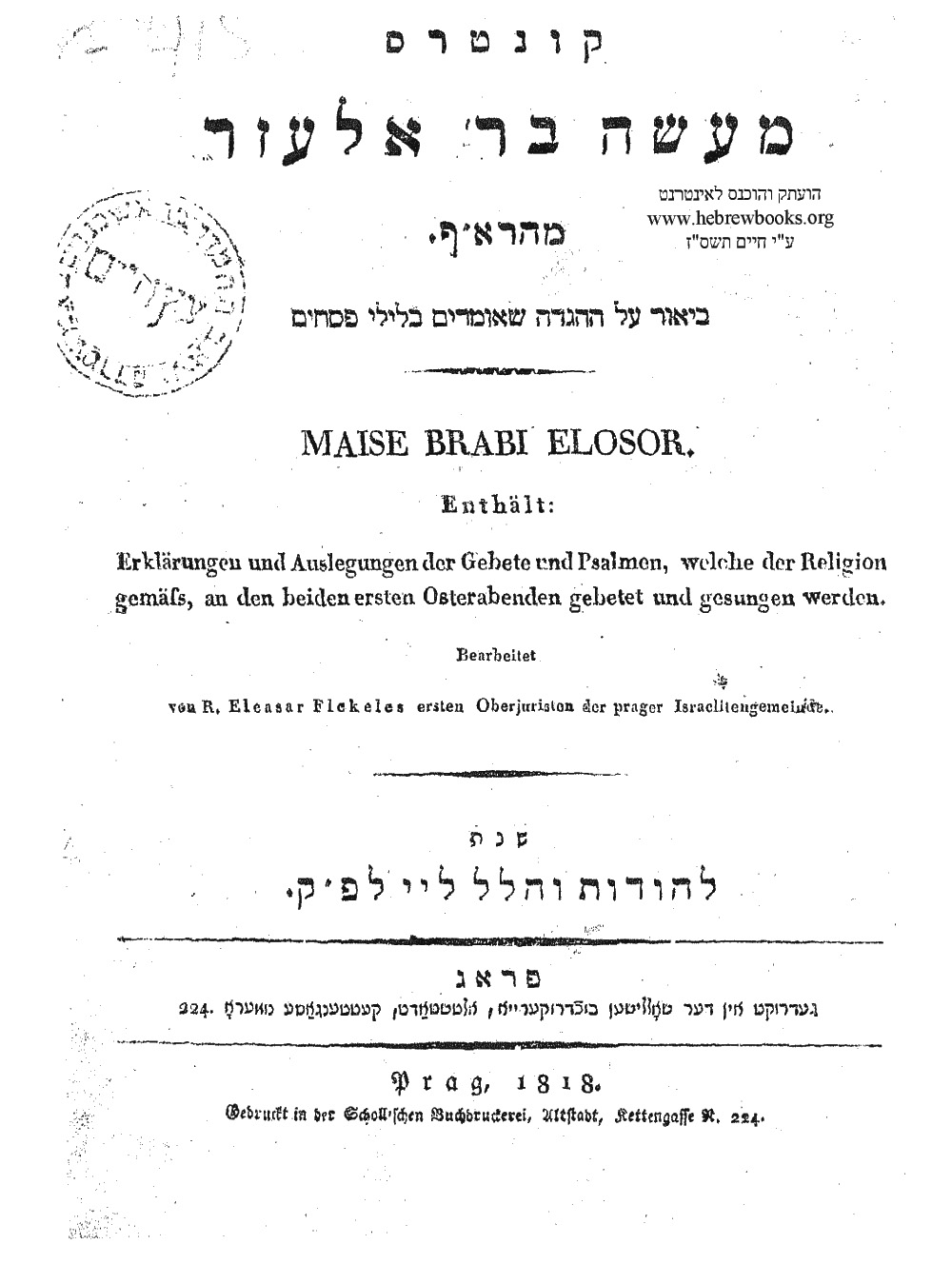
R. Elazar Fleckeles’s Haggadah Maaseh BR’ Elazar

R.  Elazar Fleckeles’s Haggadah Maaseh BR’ Elazar
By Eliezer Brodt
In the past I wrote:
Perhaps the topic which has engendered the most commentary in Jewish literature is the Haggadah shel Pesach. There are all kinds, in all languages, and with all types of commentary, pictures, etc. Whatever style one can think of, not one, but many Haggadahs have been written. So, whether it’s derush, kabbalah, halakha, mussar or chassidus there are plenty of Haggadahs out there. Then, there are people who specialize in collecting haggadahs although they do not regularly collect seforim. In almost every Jewish house today one can find many kinds of Haggadahs. Every year people print new ones; even people who had never written on the Haggadah have had a Haggadah published under their name, based on culling their other writings and collecting material on the Haggadah. When one goes to the seforim store before Pesach it has become the custom to buy at least one new Haggadah; of course one finds themselves overwhelmed not knowing which to pick! Every year, besides for the new Haggadahs being printed, old ones are reprinted, some in photo off-set editions, others with completely retype set.
Some years there are many choices of what to buy; in recent years, while the quantity of Haggadahs being printed has not ebbed, the quality most arguably has. This year, one important and high quality Haggadah that has been retype-set and republished is Maaseh BR’ Elazar by R’ Elazar Fleckeles.
R’ Elazar Fleckeles was born in 1754 in Prague and died there in 1826. He was a direct descendant of R’ Ephraim Luntschitz, author of the Keli Yakar, whom R’ Fleckeles quotes many times throughout his writings. When R’ Fleckeles was 14, he went to study with R’ Ezekiel Landau and spent ten years studying there. R’ Landau, as is evident from his haskamot to R’ Fleckeles works, held R’ Fleckeles in high regard. Additionally, many teshuvot in R’ Landau’s Noda b’Yehuda are addressed to R’ Fleckeles. In R’ Fleckeles’s writings, he quotes many interesting statements from R’ Landau. When R’ Fleckeles was twenty-four, he became the Rabbi of Kojetin, a town in Moravia. However, just four years later R’ Fleckeles returned to Prague to sit on R’ Landau’s Bet Din and serve as a head of a yeshiva. [See also here and here].R’ Fleckeles authored many works on halakha and derush, as well as a commentary on the Haggadah called Maaseh BR’ Elazar. R’ Fleckeles was a skilled halakhist, as is evident from his volumes of responsa, Teshuva m’Ahavah, but his fame also rests on his skills as a darshan. His derashot were published in a four volumes, Olat Chodesh. The fourth volume contains, R’ Fleckeles series of derashot he gave against Shabbatai Tzvi and Jacob Frank (this section has a separate title, Ahavat David) [recently auctioned off as noted here].

Almost all of his works besides his Teshuva m’Ahavah, are very hard to find.
A few years ago a new Boro Park-based Machon called Netzach Yaakov started reprinting his seforim. In 2014 they printed a volume of his Drashot related to Elul and Tishrei along with two works, Chazon LaMoed and Olat Chodesh (437+20 pp.). This beautifully produced work, including an introduction about R’ Fleckeles and a detailed index, matches the content of the actual Drashot.
 A few weeks ago this company released a new edition of his commentary on the Haggadah: Maaseh BR’ Elazar (224 +23 pp).
The Maharil noted in a drasha that he gave before Rosh Hashonah:
כל אדם יחזור וילמוד התפלה והקרובץ מקודם להיות שגורים בפיו בר”ה בשעת התפלה. וכן ילמוד בניו ובני ביתו סדר התפלה, ויריצם סדר הברכות ומלכיות זכרונות ושופרות, כדי שלא יצטרך בר”ה להפסיק בין גאולה לתפלה להראות להם אז הסדר, כי צריכנא לסמוך גם ביום טוב גאולה לתפלה. [וכשחל ר”ה בשבת כל שכן – דצריך אדם לסדר להרגיל התפילה להראות לבני ביתו בתחילה – דאז משנין בכמה מקומות התפילה – והקרובץ [מהרי”ל, עמ’ רעב]
 But specifically more instructive is the Sefer Hamaskil‘s comment:
מה טוב ומה נעים לעיין תמיד דבר בעתו בכל שבוע ושבוע בפירוש חומש ומחזיר וסליחות… ואגדת פסח [ספר המשכיל עמ’ 70].
His basic point being that one should try to prepare before each occasion the tefilos we specific to that occasion – and for Pesach that is the Haggadah.
Many people look all over each year to have nice new pieces of Torah to say over at the seder. This work is full of nice (many) shorter pieces focusing on Peshat and Derush (not Kabbalah) which can be enjoyed by different audiences.
Some General comments on this work;
This Haggadah was first printed by the author in Prague in 1818.
Abraham Yaari, in his work A Bibliography of the Passover Haggadah, writes about this work:
הפרט העברי ככתבו עולה תקע”ב אולם יש לקרוא את שני היודין של השם כשם הויה, ואז יעלה תקע”ח, בהתאם לשנה הלועזית 1818, ולהסכמת הצנזור שניתנה באוקטובר 1817 [מספר 418]
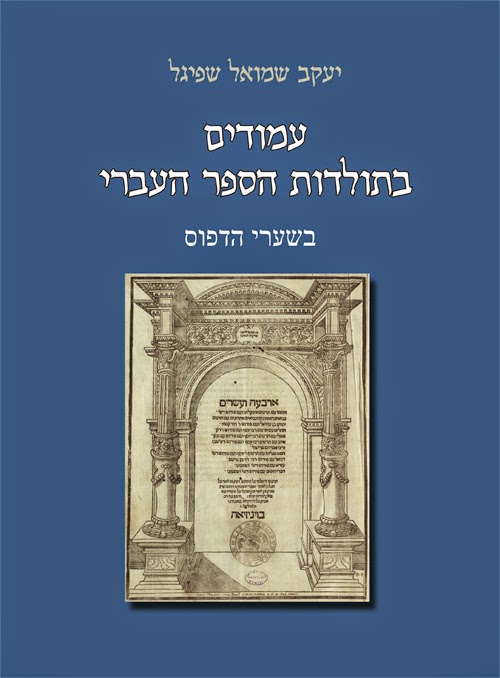
For recent Discussion of other works with similar wording see Yakov Speigel Amudim be-Toldot ha-Sefer ha-Ivri; BeSharei HaDefus, pp. 273-296.
In 1944 in Oradea, Romania this work was printed again. It appears that this was the last Haggadah printed in Europe during World War Two. To me it is fascinating that in this turmoil time they bothered to print this work.
Yaari records this edition [number 2308] as does Yitzchak Yudolov in The Haggadah Thesaurus [number 3918]
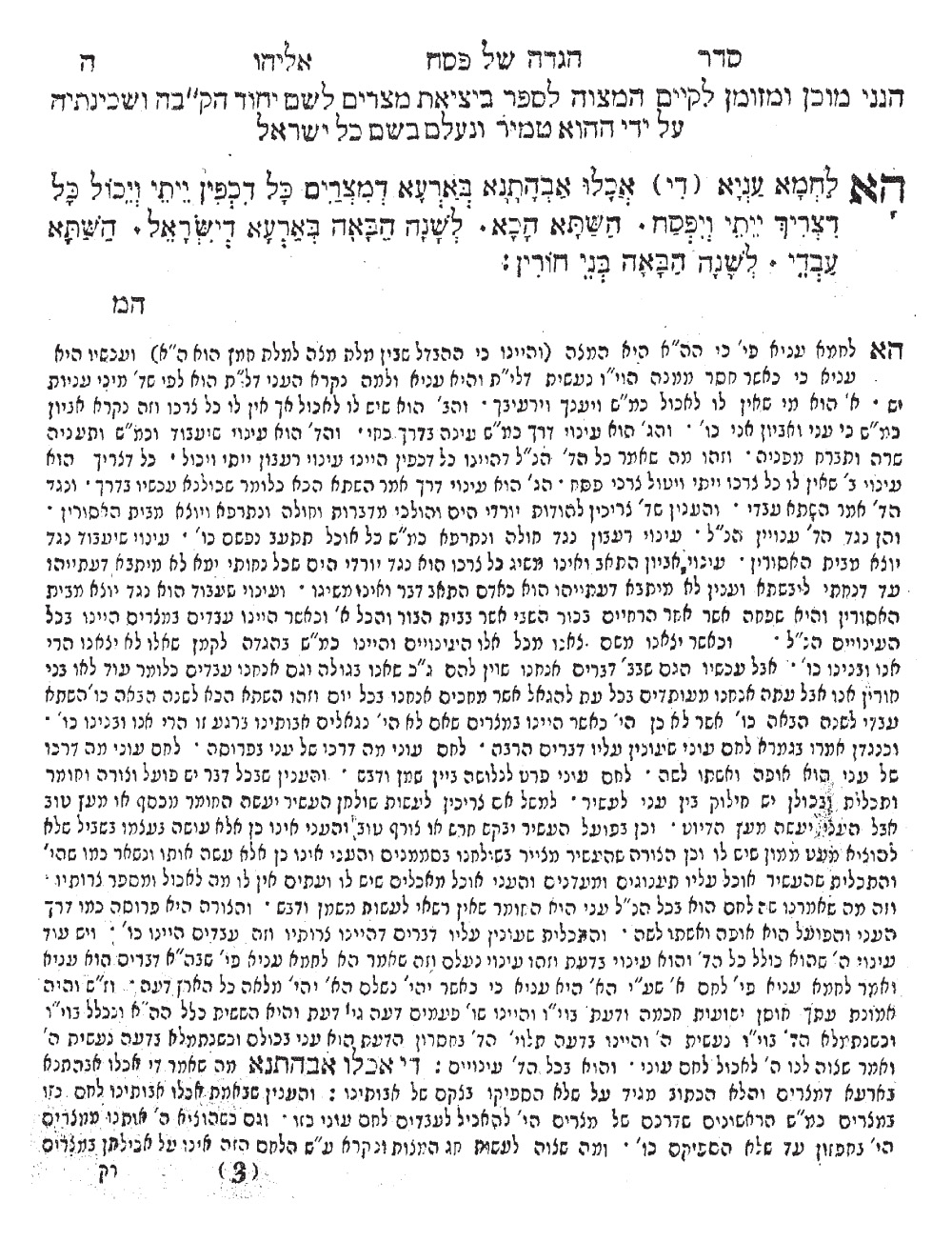
This 1944 edition has an interesting addition, as noted by the publisher. Into the text of the Haggadah the prelude Li Shem Yichud was added:
 ולא הוספתי עליו רק מה שנוהגים לומר לפני כל מצוה לשיחקב”ה וכו’ [=לשם יחוד קודשא…] הצגתי כהסכמת הגאון משאמלויא שליט”א…
In R’ Ehreneich’s second letter to the publisher he writes:

 אבל בזמנינו נתפשט המנהג
של צדיקי הדורות זי”ע לאמרו והגאון המחבר זצ”ל שהוא בעולם האמת
בודאי לא יקפיד ע”ז ויאחז כאו”א ויעשה כמנהגו…


Although it’s very nice that they decided to add this into R’ Fleckeles work and not hide this addition but I do not think they had any right to do such a thing. R’ Fleckeles was very outspoken about saying Li Shem Yichud, to say the least.
דרך כלל יאות לבטל כל התחנו’ ובקשות אלו וכיוצא בהן שנתחדשו מלקוטי האחרונים ומעיד אני עלי שמים וארץ שראיתי אחד הי’ רצה לברך על אתרוג המהודר של רבינו הגאון האמתי נ”ע (כי הי’ תמיד מהדר מן המהדרין אחר אתרוג המהודר בכל מיני הידור וכסף וזהב לא הי’ נחשב בעיניו מאומ’ אף שהאתרוג הי’ בתכלית היוקר) וכאשר ראה שאותו פלוני אמר יה”ר קודם נטילת לולב (הנדפס במחזורים ובלקוטי צבי) כעס ורגז ואמר בקצף גדול האומר יה”ר אינו מניחו לברך על אתרוג שלו ולא הניחו לברך ועיין מ”ש רבינו בספרו נ”ב חלק א”ח סי’ ל”ה דף כ’ ע”ג ובחלק י”ד סי’ צ”ג והרבה יש לי לדבר בענינים האלה וכאלה ומרוב טרדותי לא אוכל להאריך [שו”ת תשובה מאהבה, א, סוף סי’ א][1]
He was following in the path of his Rebbe, the Nodeh BeYehudah, who as is well known was adamantly against the saying of Li Shem Yichud:
ועל הרביעית אשר שאל בנוסח לשם יחוד אשר חדשים מקרוב נתפשט ונדפס בסידור הנה בזה אני משיב עד שאתה שואלני נוסח אמירתו יותר ראוי לשאול אם נאמר כי טוב באמירתו. ולדעתי זה רעה חולה בדורנו ועל הדורות שלפני זמננו שלא ידעו מנוסח זה ולא אמרוהו והיו עמלים כל ימיהם בתורה ובמצות הכל ע”פ התורה וע”פ הפוסקים אשר דבריהם נובעים ממקור מים חיים ים התלמוד עליהם נאמר תומת ישרים תנחם והם הם אשר עשו פרי למעלה וגדול מעל שמים חסדם. אבל בדורנו הזה כי עזבו את תורת ה’ ומקור מים חיים שני התלמודים בבלי וירושלמי לחצוב להם בורות נשברים ומתנשאים ברום לבבם כל אחד אומר אנכי הרואה ולי נפתחו שערי שמים ובעבורי העולם מתקיים אלו הם מחריבי הדור. ועל הדור היתום הזה אני אומר ישרים דרכי ה’ וצדיקים ילכו בהם וחסידים יכשלו בם. והרבה היה לי לדבר מזה אבל כשם שמצוה לומר דבר הנשמע כך מצוה שלא לומר דבר שאינו נשמע וה’ ירחם עלינו. עי”ש באריכות. [נודע ביהודה (קמא) יו”ד, סי’ צג].
A few months ago I mentioned the censorship of this Teshuvah.
This topic of saying Li Shem Yichud will hopefully be discussed at a different time.[2] But just to add some sources.
In 1805, R’ Menachem Mendel of Shklov, one of the main talmidim of the Vilna Gaon, printed the Gra’s work on the Haggadah for the first time.

Before Maggid it says:
הנני מוכן ומזומן לקיים המצוה לספר ביציאת מצרים לשם יחוד הקב”ה…
In a recent edition of the Gaon’s Haggadah the editor writes:
והנה אין גילוי מפורש בדעת רבינו הגר”א ז”ל באמירת לשם יחוד אך אילו ידע רמ”מ ז”ל שרבינו ז”ל מתנגד לאמירתה בוודאי לא היה מדפיסה… [ר’ חנן נובל, הגדה של פסח עם פירוש הגר”א, ירושלים תשע”ג, עמ’ כט, עי”ש].[3]
This same passage appears in later prints of the Gra Haggadah including one printed in Prague in 1813 at the time R’ Fleckeles was very active there. [Worth noting is the censor was R’ Fleckeles friend, Karl Fisher].

Even though it is unclear what the Gra held about saying Li Shem Yichud, another talmid of his appears to write against it. Here is what R’ Menashe M’IIlyah writes about it in Alfei Menashe:

In the beginning of the Haggadah, R’ Fleckeles deals with the famous question as to why there is no Beracha on Sipur Yetzias Mitzrayim, quoting a Shut Besamim Rosh on the topic [see here]. A few lines later he quotes the real Shut HaRosh, with this preface:
ובתשובות הרא”ש המקובלת לנו ראיתי…
Returning to this newest edition of the Maaseh BR’ Elazar.
One nice piece in this Haggadah is his discussion against his Rebbe, the Nodeh Beyhudah, about the Issur of Chametz in Mitzrayim.
He writes:
הנה חדשים מקרוב נדפס ספר מערבי וראיתי…
The current editors do not write to which sefer he is referring. This is the work he is referring to, first printed in 1793:

In 1959, Yitzchak Refael printed numerous additions to this Haggadah in the journal Sinai (45: 22-36). The source of these addenda is R’ Fleckeles personal copy, which he had specially bound with added on margins and blank pages inserted between each page, affording the author ample room for marginalia. After passing through several hands, finally arriving in R’ Maimon’s library. This new version of the work includes all of these addenda, in their proper places. Interestingly enough, neither Yaari nor Yudolov mention these additions in their entries on this Haggadah.Returning to Li Shem Yichud Sharon Flatto writes in her ‘The Kabbalistic Culture of Eighteenth Century Prague’:

Notably a Haggadah was recently discovered that was owned during the late 1780s by Fleckeles…. The margins of this Haggadah contain leshem Yihud formulas to be recited before the blessing on the the four cups of wine penned in Fleckeles’ hand.

In the footnote she writes they seem to have been written between 1784-1790.'(pp. 225-226). While I wish I had more clearer sources about this discovery. She does not note that the Haggadah that R’ Fleckeles himself printed in Prague in 1818 nor in the manuscript updates of R’ Fleckeles to his own Haggadah does he write to say Li Shem Yichud or any such Tefilah in the Haggadah. This newest edition of the Maaseh BR’ Elazar prints the Haggadah like R’ Fleckeles did in 1818 without Li Shem Yichud.

Besides for all these new pieces added into this new edition, the volume also includes a well-written introduction about R’ Fleckeles, including an interesting eye witness account from manuscript of the day he died in Prague. Another plus to the new edition are the numerous sources they added, at times quoting R’ Fleckeles references from his other works.  Finally, there is a very useful index of topics and seforim quoted by R’ Fleckeles at the end of the volume. I really hope they continue to print the rest of R’ Fleckeles works.
To purchase this Haggadah try Girsa in Jerusalem, Biegeleisen in NY or your local seforim store.
Appendix:

One of the seforim noticeably omitted, for the most part, from R’ Fleckeles works, including this Haggadah, is the Zohar.
Much of the sources in R’ Fleckeles writings regarding the Zohar and Kabalah in general has been gathered in Boaz Huss’ recent work, KeZohar Harokeyah (pp. 322-323). Most notable is this piece which I quote here in its entirety:
ועתה אין מן הצורך להשיב את האיש אשר רצה להמצי’ דבר חדש להשביע את האיש הישראלי בספר הזוהר… את זה כתבתי לדעת האיש ההוא שהספר הזוהר כלו קדוש אבל אני אומר הריני נשבע בתורת ה’ שבספר הזוהר נמצאו כמה זיופים וקלקולים אשר הוסיפו ועלה אחת מתלמוד בבלי הויות דאביי ורבא קדוש יותר מכל ספר הזוהר הנה אם אמרו חכמי התלמוד על ברייתא דלא מתנייא בי ר’ חייא ור’ אושיעא מאן ימר דמתרצתא היא דלמא משבשתא היא וספר הזה ודאי לאו בר”ח ורב אושיעא אתמר כי כל הדורות מראש לא זכרו מספר הזוהר מאומה לא בהקיץ ולא בחלום כי הנה אם אמת הדבר שהחבור הזה הוא מהתנא ר’ שמעון בר יוחאי אשר ר’ יהודה הנשיא קבל גם ממנו כמבואר בהקדמ’ הרמב”ם לספרו יד החזק’ איך לא זכר את הספר הזה בחבורו ש”ס משניות או בשום מקום ואף ר’ יוחנן שחיבר תלמוד ירושלמית אינו מזכירו בשום מקום ורבינא ורב אשי שחברו תלמוד בבלי מאה שנים אחר חבור תלמוד ירושלמי והיו סוף אמוראים ולא שמו רמז בכל התלמוד מספר הזוהר ורבה בר נחמני שחובר רבות ושוחר טוב וכיוצא בהם הרבה לא זכרו מחבור רשב”י גם רבנן סבוראי והגאונים והרי”ף והרמב”ם ורש”י ותוס’ והרמב”ן והרשב”א והרא”ש והטור והילקוט שמעוני אשר אסף ולקט כל המדרשות והמכילתות והברייתות כלם לא ידעו ולא ראו ממנו דבר עד שזה קרו’ לשלש מאות שנים ענו ואמרו שמצאוהו ואיזהי כנסיה אשר קבלוהו בכנופיה, כמו תלמוד בבלי וירושל’ וז”ל הרמב”ם בהקדמתו לספר יד החזקה אבל כל הדברים שבגמרא הבבלי חייבין כל ישראל ללכת בהם וכופין כל עיר ועיר וכל מדינה ומדינה לנהוג בכל המנהגות שנהגו חכמי הגמרא ולגזור גזירותם וללכת בתקנותם הואיל וכל אותם דברים שבגמרא הסכימו עליהם כל ישראל עכ”ל ויעיין עוד שם ואין אני חלילה מטיל דופי ופגם בכבוד התנא אלדי ר’ שמעון בר יוחאי כי הוא היה מחסידי עליון אלא אני אומר לאו גושפנקא דרשב”י ועזקתיה חתום עליה ומי שיש לו חצי דעת יגיד כן שהרי נזכרו בספר הזוהר כמה תנאים ואמוראי’ שהיו אחר רשב”י שנים רבות במספר והארכתי בזה במקום אחר מפי סופרים ומפי ספרים כמבואר בס’ מטפחת להגאון מו”ה יעב”ץ זצלל”ה שגזר אומר שחלו בו ידים מזייפים וחשד את החכם ר’ משה דיליון יעיי”ש.
והינה מיום שנתחדש ספר הזוהר הרבה נכשלו ע”י כי כמה דברים סתומים וחתומים אשר המציאו האחרוני’ להתעות בני אדם יושבי חשך השכל, צאו וראו כמה קלקולים רבים קלקלו מאמיני הכלב רע שבתי צבי שבור ואחוזת מרעהו ברכי מסאלנוקא ויעקב פראנק שם רשעים ירקב, ותלו דבריהם בספר הזוהר אשר בודאי לא יאונה לצדיק ר’ שמעון בר יוחאי כל און.
מה טוב ומה נעים, אשר כתבתי בחבורי קטן אשר קראתיו בשם קונטרס אהבת דוד שנדפס בק”ק פראג תק”ס וזה לשוני שם באו ונחזיק טובה וחינות לשני מלכים גדולי אדירי’ אדוננו המשובח המנוח הקיסר יאזעף השני ואדוננו המהולל הקיסר פראנץ השני אשר צפו והביטו בחכמתם הנפלאה, רבות רעות ושבושי דעות תסתעפנה מחלומות והבלים המקובלים, והמה לנזקי בני האדם נזקי הגופות ונזקי הנפשות, ופקדו באזהרה גדולה שלא להביא ספרי קבלה בכל מדינות מלכותם הפקודה הראשונה העכסט האף דעקרעט פאם ב’ נאוועמבר למספרם והשני פאם ז’ יוני למספרם והארכתי שמה בדברים נכונים… (תשובה מאהבה חלק א סי’ כו).
According to Shmuel Werses, Haskalah and Sabbatianism, (Heb.), pp. 68 and Boaz Huss, KeZohar Harokeyah (p.323) this teshuvah has been censored out of the 1912 edition of TM. I have been unable to independently confirm this, as the 1912 editions I have seen (both in NLI and in BIU) have it in full – as do most reprints available today, including the edition found on the HebrewBooks.org website
In another teshuvah on this topic R’ Fleckeles writes:
ובלא”ה כבר כתבתי פעמי’ רבות שאין ראי’ מזוהר שלא נודע ברור מי הוא המאסף והמלקט ספר הזוהר והרבה הוסיפו  (תשובה מאהבה א:סב).
It is worth pointing out that R’ Fleckeles does not dismiss the Zohar completely taking it into account elsewhere in TM; for example in this teshuvah he writes:
מה ששאלני מדוע רובא דעלמא מקילים והולכים בבקר ד’ אמות בלי נטילת ידים שחרית הא כבר כתב המ”א בשם הב”ח בשם תולעת יעקב כל ההולך ד’ אמות בלי נטילת ידים שחרית חייב מית’ עיי”ש וכמה בני תורה אשר אינם שוגגים מקילים ואין להם על מה שיסמכו. ידע ידידי שדבר זה כתב בעל תועלת יעקב בשם הזוהר וכן העתיקו הב”ח, והמג”א השמיט בשם הזהר או מן השמים השמיטוהו כי חפשתי בספר הזוהר יגעתי ולא מצאתי ובעל א”ר האמין לשמועותיו בשם הזוהר והאר”י וצדר להקל עיין סי”א סק”ד ולבסוף מסיק בשם ספר דמשק אליעזר שדבר זה  דוקא בזמנם כמו גילוי וזוגות עיין שם ולענ”ד ליתא בזוהר כלל והרב בית יוסף אשר העתיק בכל פעם דברי הזוהר לא שם רמז מזה ושארי לי’ מארי’ שעשה רוב ישראל לחייבי מיתות שוגגן ישרים יחזו במסכת ברכות דף  סמ”ך ע”ב ישר יחזו פנימו ולענ”ד היא משנת חסידים והזריז הרי זה משובח ואפשר דזוהר מיירי אם מים מצוים לפניו והולך ד’ אמות בלי נטילת ידים ואח”ז ה’ אנה לידי ספר ברכי יוסף וראיתי שמביא דברי הזוהר כת”י וסיים וזה לשונו אלא דשמיע לי מרבני קדישו דזמנין דמיא הרחק מאד מאדם ובלכתם ילכו פחות מד’ אמות כאותה שאמרו גבי שבת עיין שם סימן א’ אות א’ ולשון הזוהר אינו לפני לעיין והנרא’ לענ”ד כתבתי. (תשובה מאהבה חלק א סי’ יד וראה חלק ב סי’ א אות ד)
As an aside, the shitos of R. Fleckeles on the Zohar are bland compared to those of his Rebbe, the Noda Beyehudah, as found in the recently printed drasha of his from manuscript by Dr. Maoz Kahana and M. Silber. I note in passing that this drasha has sparked a debate between them and Dr. Flatto, to which she responded in a later version of the journal Kabbalah.


[1]  See also his Melechas Hakodesh, p. 132
[reviewed here].
[2]  See Moshe Hallamish, Kabbalah (Heb.),
pp. 45-70; Maoz Kahane, MiHaNoda BiYehuda LaHatam Sofer, pp. 89-91 and
pp. 235-236; most recently Shimon Szimonowitz, Haggadah
Aleh Zeis
(2016), pp. 35-78.
[3]  Thanks to R’ Dovid Vieder for this source.


Announcement of new works of Rishonim

Announcement of new works of Rishonim
By Eliezer Brodt
מגנזי אירופה,
כרך ראשון, ההדיר והוסיף מבואות: שמחה עמנואל, הוצאת מקיצי נרדמים, 512 עמודים.
I am very happy to announce the publication of an important work which I have been eagerly waiting for, Professor Simcha Emanuel of the Hebrew University’s Talmud department’s volume of texts from the “European Genizah” (volume one). This volume was just printed by Mekitzei Nirdamim and is being sold by Magnes Press.

New texts from Rishonim are high up on my list of favorite publications, all the more so when they are edited by Professor Simcha Emanuel. Professor Emanuel is considered one of the today’s greatest experts in Rishonic literature. He has produced numerous special works [such as this recent work, this, this and my favorite] and articles of both texts and material about them for quite some time. [Many of which are available here] All of which are of very high quality, showing an incredible breadth and depth in the material at hand. One area of specialty of his is finding long lost works; this new volume continues this trend. Starting with an important introduction to the background and importance of the Genizah, it includes numerous newly discovered texts of Rishonim, with introductions and background of their importance and proof of identification.
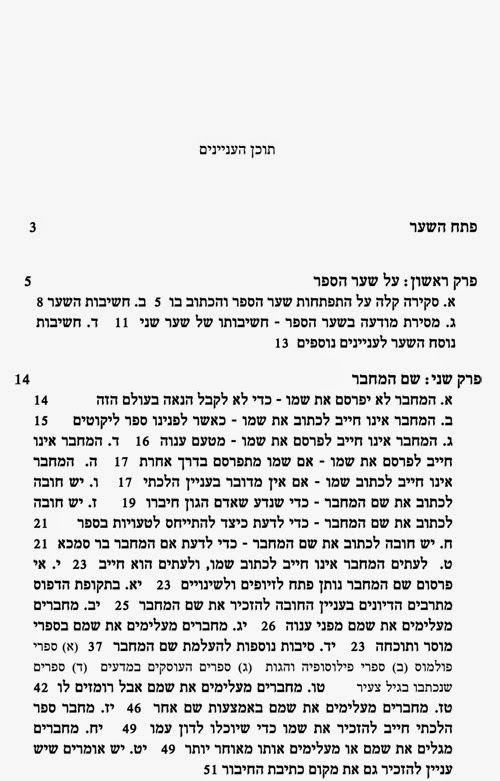
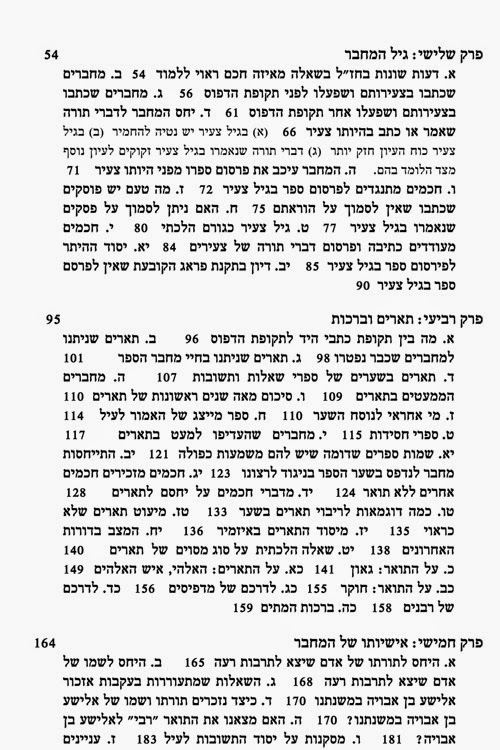
Here are the Table of Contents of this special work:

For a sample e mail me at
Eliezerbrodtatgmail.com.
The book can be purchased via Magnes
Press
or through me at: Eliezerbrodtatgmail.com.
Also take note of a special sale of numerous
titles at Magnes Press.
Copies of this work will be arriving
at Biegeleisen shortly.


ArtScroll and More

ArtScroll and More
by Marc B. Shapiro
Continued from here.
1. As mentioned, I believe that on occasion ArtScroll is unaware that the text it is explaining is a censored text. Sometimes it might even be an internally censored text (i.e., censored by Jews so as to avoid difficulties with the non-Jewish authorities). This same problem is often found with aharonim. How about with rishonim? For example, was Rashi ever misled by an internally censored text? I would hesitate to say so but this is exactly what is suggested by R. Elijah David Rabinowitz-Teomim (the Aderet), though he piously prefaces his remarks with the words לולי דברי רש”י.
Sanhedrin 58b states:
Resh Lakish said: A heathen who keeps a day of rest, deserves death, for it is written, “And a day and a night they shall not rest” (Gen. 8:22), and a master has said: Their prohibition is their death sentence. Ravina said: Even if he rested on a Monday.
The Aderet sees it as obvious (פשוט) that the original version of Ravina’s statement was “Even if he rested on Sunday,” and this was changed to “Monday” due to fear of the Christians.[1] Rashi, however, offers an explanation as to why “Monday” is mentioned, meaning that if the Aderet is correct then even Rashi was misled by the altered text.[2]
As part of his explanation on this passage, Rashi also writes: אחד בשבת ששובתין בו הנוצרים. This is the authentic version of Rashi which appears in the early Talmud printings. It is also found in Steinsaltz and Oz ve-Hadar. The censored Vilna Talmud, followed by ArtScroll, omit the word הנוצרים.
Even in the censored Vilna Talmud the word הנוצרים appears in Ta’anit 27b where we find the following:

Our Rabbis have taught: The men of the Mishmar prayed over the sacrifice of their brethren that it may be favorably accepted, whilst the men of the Ma’amad assembled in their synagogues and observed four fasts, on Monday, Tuesday, Wednesday and Thursday of that week. On Monday [they fasted] for those that go down to the sea; on Tuesday for those who travel in the deserts; on Wednesday that croup may not attack children; on Thursday for pregnant women and nursing mothers, that pregnant women should not suffer a miscarriage, and that nursing mothers may be able to nurse their infants; on Friday they did not fast out of respect for the Sabbath; and certainly not on the Sabbath. Why did they not fast on Sunday? — R. Johanan said: Because of the Christians (הנוצרים). R. Samuel b. Nahmani said: Because it is the third day after the creation of Man. Resh Lakish said: Because of the additional soul. For Resh Lakish said: Man is given an additional soul on Friday, but at the termination of the Sabbath it is taken away from him, as it is said, “He ceased from work and rested” [shavat va-yinafash], that is to say, once the rest had ceased, woe! that soul is gone.

There is something very strange about this passage, and yet it is not noted in Soncino, ArtScroll, Koren, or by R. Zvi Hirsch Chajes whom I could have expected to pick up on it. I assume that most people read this passage without even realizing the problem, which for the rishonim was not a problem as I will explain. The Sages, in describing what went on in Second Temple days, make clear that the men of the Ma’amad did not fast on Sunday. R. Johanan, who lived in third-century Eretz Yisrael, says that this was because of the Christians. Rashi explains that the Christians “make this day [Sunday] their holiday.”[3] R. Gershom, in his commentary on the passage, writes that the Christians’ “holiday is on Sunday and if the Jews would fast they [the Christians] would be angered.”[4]
The problem with all this is that in the days of the Second Temple there was no significant Christian community for Jews to be concerned with. Furthermore, these early followers of Jesus would not have observed the Sabbath on Sunday.[5] I think the answer to this problem is that the talmudic sages regarded Jesus as a student of R. Joshua ben Perahyah who flourished in the latter part of the second century BCE (i.e., ca. 130-100 BCE). In other words, in the talmudic conception Jesus lived at least a century earlier than the historical record tells us, and the amoraim assumed that the Christianity as they knew it was also practiced centuries before. Robert Travers Herford writes: “R. Johanan transferred to the time of the Temple a feature of the religious life of his own totally different time.”[6] The predating of Jesus’ life was also shared by the rishonim, which explains why the chronological problem did not trouble them.
Ketubot 102b states:

If a man died and left a young son with his mother, [and while] the father’s heirs demand, ‘Let him be brought up with us’, his mother claims, ‘My son should be brought up by me’, [the son] must be left with his mother and may not be left with anyone who is entitled to be his heir. Such a case once occurred and [the heirs] killed him ער”ה.

What does ער”ה mean? The first thing to note is that these letters are not part of the original talmudic text. In talmudic manuscripts, the writings of the rishonim, and also the early printed editions in Pesaro and Venice, the uncensored text reads “killed him on the eve of Passover.”[7] Because this is the authentic reading, this is how it appears in Steinsaltz, Koren, and Soncino. ArtScroll, however, translates the last words of the passage as “They butchered him on the first evening of his stay,” reading ער”ה as ערב הראשון.
ArtScroll’s action is quite strange, as there is absolutely no question what the authentic reading of the text is. Not only does ArtScroll translate the false acronym, but it even offers an explanation of it. “They were so eager for his blood that he did not even last a single night with him. They killed him on the evening of his arrival.” This is wildly incorrect as the acronym ער”ה is simply a printer’s invention.
ArtScroll continues its explanation as follows:

The words ערב הראשון, the first evening, are not actually found in the Baraisa. Rather, the Baraisa contains an acronym – ער”ה – which is read as ערב הראשון (see Rosh; Mesoras HaShas). Another interpretation of this acronym reads it as ערב הפסח, on Pesach eve (Meiri; Hagahos Yavetz)

This note also needs to be corrected as there is no dispute among rishonim about how to how to read the acronym, as the acronym did not exist in the days of the rishonim. It is an invention of one of the printed editions. Thus, contrary to what the note states, Meiri never gave an interpretation of the acronym to mean ערב הפסח. Rather, these words were in his text of the Talmud, and they were also in the Rosh’s text of the Talmud and appear in the manuscripts of the Rosh. The printed version of the Rosh has been “corrected”, just like the text of the Talmud and Rif was “corrected”.[8]
Why did printed editions of the Talmud begin to use the acronym? This talmudic passage was cited by anti-Semites to support the blood libel, namely, that Jews would kill Christian children before Passover to use their blood.[9] Thus, this “correction”, like so many others, was designed to undermine anti-Semitic attacks against the Talmud.[10]       
Seth Leibowitz called my attention to the Stone Chumash, p. 407, where in the introduction to the Ten Commandments it states:

Rambam (Moreh Nevuchim II:32) comments that they only heard the first two [commandments] from God, but they could hear only the sound of the Divine voice, as it were, and could not understand the words He was saying. . . . Thus, the people experienced prophecy, for they heard God’s voice, but their faith in Moses was reinforced, because only he understood what God was saying.

The first thing to note is that the reference should be II:33 not II:32. The passage just quoted states that the people experienced prophecy. Does Maimonides say this? Guide 2:33 is a very difficult chapter and any interpretation given can be challenged with alternative perspectives. (See Yaakov Levinger, Ha-Rambam ke-Filosof u-khe-Fosek, ch. 3.) Yet I think I am on safe ground in saying that Maimonides does not believe that what the people as a whole experienced is to be regarded as prophecy. While Guide 2:33 might be ambiguous in this matter, the previous chapter, 2:32, states explicitly: “As for the Gathering at Mount Sinai, though through a miracle all the people saw the great fire and heard the frightening and terrifying voices, only those who were fit for it achieved the rank of prophecy, and even those in various degrees.”
Shem Tov explains:
ואחר שסלק הרב אלו הטעיות אשר יראה מהם שהשם ינבא כל איש מבני אדם, סלק מעלינו ספק גדול והוא מעמד הר סיני אשר אנשים ונשים סכלים ובלתי ראויים כל היו נביאים וזה יביא לחשוב שהשם ית’ ינבא כל מי שירצה מבלתי שיהיה מוכן, ואמר שאף שכלם היו רואים האש הגדולה ושומעים הקולות הנוראות המפחידות וזה היה על צד הפלא, לא הגיע למדרגת הנבואה אלא הראוי לה והראויים יתחלפו מדרגותיהם ג”כ
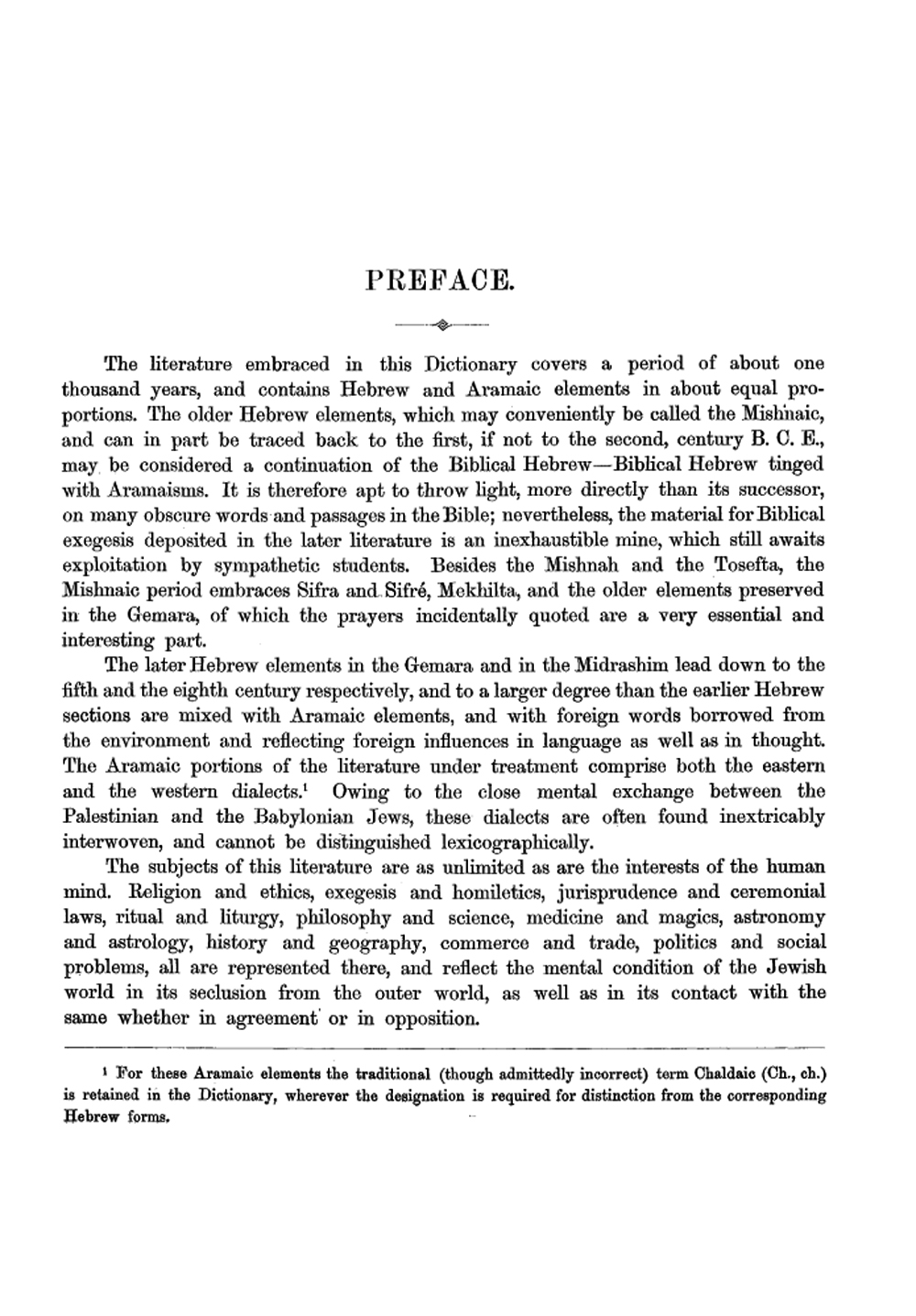
Finally, so that all the attention is not on ArtScroll, the following point was called to my attention by Benjamin Apfel. Here is the first page of Jastrow’s introduction to his dictionary. Read the last paragraph.

Here is the first page of Philip Birnbaum’s introduction to his translation of sections of the Mishneh Torah.[11]
The first paragraph is lifted from Jastrow. Would it have been so difficult for Birnbaum to simply add a note indicating that he was adapting Jastrow’s words?
2. In my post here I referred to selections from Rashbam’s commentary on Psalms that were recently printed from manuscript. This should be distinguished from Rashbam’s commentary on Psalms published in Vienna in 1816 by Isaac Satanow. Here is the title page which tells us that the manuscript comes from the royal library in Berlin.
This commentary on Psalms is a forgery. While the volume is attributed to Rashbam it was actually written by Satanow. Regarding this forgery, David Rosin writes as follows:[12]
הכי קרא שמו יצחק ויהי כצחוק בעיניו להתחפש במעטה רבנו שמואל ולעשות מעשהו ולעבוד עבודתו. זר מעשהו ונכריה עבודתו, כל השומע יצחק לו
3. In my post here I quoted R. Moses Isaac Ashkenazi in his Ho’il Moshe that King David is not to be regarded as a prophet as he only had ruah ha-kodesh. One of the commenters wrote:

Rashi Megilla 14a quotes a Halachot Gedolot which names David as [a] prophet. Rashi speaks specifically about prophets as opposed to Ruach Hakodesh, and excludes Daniel based on Megilla 3a.

 Another commenter was more strident:

Wonderful example how modern scholars have no place in the Torah world! As first commenter pointed out, Dovid Hamelech is prominent in the list of 48 neviim, and there are scores of sugyos based on the nevuah of DH. The makom mizbeach, etc. Pure AmHaaRatzus!

I am not sure if I am the am ha-aretz he is referring to, which in any case would be uncalled for since I never said that David only had ruah ha-kodesh and was therefore not a prophet. All I did was point out that R. Moses Isaac Ashkenazi said this. When I called the commenter’s attention to the fact that his strong words were directed against R. Ashkenazi, he wrote:

I wouldn’t start up with Hoil Moshe, but was pointing out the danger of someone reading this post, and then taking it at face value. For anyone fluent in Shas they will find numerous references to DH’s nevua. Ruach HaKodesh wouldn’t work for all the halachos we learn out from DH. . . . I do thoroughly enjoy your posts, but find them quite dangerous. I would prefer my children at least stick to Artscroll and have their basics –DH’s nevua – straight!

Now let me say something that I did not put in the comments because I want the entire audience to see it, not just the tiny group that reads the comments. The commenter just quoted is a perfect example of one who is certain of something, and certain that the opposing position is incorrect, and this leads to very harsh language. Let’s leave aside R. Moses Isaac Ashkenazi who is not an important scholar. All would agree that R. Moses Sofer, the Hatam Sofer, is important and certainly not an am ha’aretz (which is the term the commenter used). Yet the Hatam Sofer is explicit that David was not a prophet and only had ruah ha-kodesh, which is exactly what R. Ashkenazi states and what the commenter so harshly attacks. Here are the Hatam Sofer’s words in Torat Moshe ha-ShalemBa-Midbar, p. 74.

הנה לא מצינו לישראל מלך שיהי’ גם נביא משולח לעם כי אם משה רבינו ע”ה, דכתיב גבי’ (דברים ל”ג ה’) ויהי בישורון מלך, אבל שארי נביאים לא היו מלכים והמלכים לא התנבאו, ודוד המלך ע”ה רה”ק הו”ל ולא נבואה, ולכן אחז”ל (גיטין נ”ט ע”א) מימות משה עד רבי לא מצינו תורה וגדולה במקום אחד, דאלו כל הנביאים היו עליהם בגדולה השופט והמלך שבימיו, וכל המלכים אפי’ דוד ושלמה היו הנביאים שבדורם גדולים מהם בתורה . . . שהרי אין מלך נביא.

This notion, that the kings were not prophets (other than Moses), is also stated in Zohar, Terumah, p. 154a, and this is presumably the Hatam Sofer’s source. I don’t deny that there are other authoritative sources that contradict this, including passages in the Talmud. Some of them are cited by R. Reuven Margaliyot in his note to the Zohar, ad loc., and we can speculate as to why the Hatam Sofer preferred the Zohar over these other sources. I cite this only to show that commenters should be very careful before labeling something as am ha’aratzus, as you never know whom you might be insulting with this comment.

4. The latest book in my series with Academic Studies Press has recently appeared. It is Sara Reguer, My Father’s Journey: A Memoir of Lost Worlds of Jewish Lithuania. (Reguer is the granddaughter of R. Simcha Zelig Reguer, the dayan of Brisk.) Here is the book’s description.

Born into a leading Lithuanian-Jewish rabbinic family, Moshe Aron Reguer initially followed the path of traditional yeshiva education. His adolescence coincided with World War I and its upheavals, pandemics, and pogroms, as well as with new ideas of Haskalah, Zionism, and socialism. His memoir, recently discovered and here translated and published for the first time, discusses his internal struggles and describes the world around him and the people who influenced him. Moshe Aron Reguer wrote his memoir at the age of 23, on the eve of his departure for Eretz Israel in 1926. However, his story did not end there, but continued in British Mandated Palestine and the United States. He kept in touch with the family in Brest-Litovsk until the Nazis destroyed Jewish Lithuania, and some of their correspondence is included within this volume.

Anyone who is interested in Jewish Lithuania and the great yeshivot will find this book of value.

I also want to call attention to the recent publication of Menachem Kellner, Jewish Universalism, edited by Hava Tirosh-Samuelson and Aaron W. Hughes. Kellner’s work has made a great impact, not only in Jewish scholarship but among thinking Jews in general. This small volume is a wonderful read and contains an intellectual portrait of Kellner written by James A. Diamond as well as a lengthy interview with Kellner.

This book is number 12 in Brill’s Library of Contemporary Jewish Philosophers. Here is what has appeared so far and what if forthcoming (taken from the Brill website).

Published Volumes

Vol. 1: Eliezer Schweid: The Responsibility of Jewish Philosophy
Vol. 2: Jonathan Sacks: Universalizing Particularity
Vol. 3: David Novak: Natural Law and Revealed Torah
Vol. 4: Eugene B. Borowitz: Rethinking God and Ethics
Vol. 5: Elliot N. Dorff: In Search of the Good Life
Vol. 6: Judith Plaskow: Feminism, Theology, and Justice
Vol. 7: David R. Blumenthal: Living with God and Humanity
Vol. 8: Moshe Idel: Representing God
Vol. 9: Lenn E. Goodman: Judaism, Humanity, and Nature
Vol. 10: Avi Sagi: Existentialism, Pluralism, and Identity
Vol. 11: Elliot R. Wolfson: Poetic Thinking
Vol. 12: Menachem Kellner: Jewish Universalism

Forthcoming Volumes

Vol. 13: J. David Bleich: Where Halakhah and Philosophy Meet (est. October 2015)
Vol. 14: Michael Fishbane: Jewish Hermeneutical Theology (est. October 2015)
Vol. 15: Norbert M. Samuelson: Reasoned Faith (est. November 2015)
Vol. 16: Arthur Green: Hasidism for Tomorrow (est. January 2016)

5. The issue of truth-telling in halakhic matters, discussed in the last chapter of my new book, has been of interest to many people. I did not want to be too lengthy in my response to Aryeh Frimer here, because it was not my own independent post. So let me now add some more details. DG reminded me of the following source. According to R. Jacob Moellin, when the Talmud states that a law is rabbinic but a verse is brought as an asmachta, this was done so as to mislead the people into thinking that it is a Torah law so that they would observe it more carefully.[13] In other words, the Sages were engaging in falsehood for a higher purpose.

This is exactly the sort of thing that Frimer claimed is not part of mainstream halakhic thought, a point which I disputed. It also is very relevant to my discussion of the dispute between the Hatam Sofer and R. Zvi Hirsch Chajes regarding “raising the prohibition”. Here are the Maharil’s words, as quoted by his student.

כל היכא דאיתמר מדרבנן הוא וקרא אסמכתא בעלמא, הכי פירושו ודאי תקנתא דרבנן הוא והם יצאו ובדקו ומצאו להם סמך מקרא, וסמכו דבריהם עליו כדי להחזיקם שיהיו סבורים דהוא מדאורייתא ויחמירו בו, ולא אתו לזלזל ולהקל בדברי חכמים

In the notes to this text, the editor informs us that one of the manuscripts has a different version. Instead of כדי להחזיקם שיהיו סבורים it reads להטעות הבריות שהם סבורים. This text is even more explicit that the Sages were not being honest with the masses. This manuscript has a handwritten note explaining that instead of reading להטעות הבריות it should say להטעים לבריות because the word להטעות is a דבר מגונה . In other words, the person who made this “correction” was troubled by the explicit statement that the Sages would deceive people, even if it was for a higher cause.

If there is one thing people have learnt from my posts over the years, it is that whenever you find a passage that diverges radically from what others think is appropriate, you will find those who deny the passage’s authenticity. In this case, the most prominent of the deniers is R. Joseph Engel[14]:

לענ”ד לא מיסתברי כלל ולא אאמין כלל שיצאו מפה קדוש המהרי”ל ז”ל

R. Simhah Klein writes[15]:
וכי ישקרו חז”ל לחזק דבריהם שיהיו סבורין דהוא דאורייתא

However, R. Eliyahu Bohbut is not at all bothered by the claim of the Maharil that the Sages engaged in a form of deception vis-à-vis the masses. After quoting the passage he explains matter-of-factly[16]:

כלומר דאסמכתא באה כביכול “להטעות” את העם שיסברו דאיכא איסור דאורייתא “ויחמירו בו”

Regarding one of the other matters I discussed in the book, namely, so-called “Orthodox history”, the folllowing appears in Divrei David (p. 30a), a collection of teachings of R. David Moses Friedman, the first Chortkover Rebbe.

פ”א סיפרו לפניו על איזה מעשה שאדמ”ור מרוזין זי”ע סיפר אותו פעם בסינגון זה ופעם בסיגנון אחר אמר על זה מרן אדמ”ור זי”ע שהסיפורי מעשיות שמספרים הצדיקים הוא לפי מה שצריך באותו שעה

This is an acknowledgment that the stories told by the rebbes are not really history, as they are designed to serve the needs of the present. As I think most people today realize, haredi “historical” writing in general is as much about the present as the past, and it is precisely because of this that authors feel it is legitimate to cover up or even alter the historical record in order to best serve the religious needs of the present.

Finally, a few people have asked about what I wrote on p. 244, that the strand of Jewish tradition that countenances falsehood “deserves to be understood in a sympathetic manner as well”. This does not mean that people need to agree with those who countenance falsehood, and I certainly do not. However, in writing an academic study as opposed to a polemic, it is important to recognize that approaches that today we might regard as unacceptable, were viewed very differently in other times and cultures (and for some, these “other times and cultures” continue into our own day). I am interested in understanding what leads people to diverge so dramatically from a value that I regard as important. In my book I did not set out to judge them, but in a sympathetic manner, i.e, with a sensitivity to their worldview, attempt to understand them. (When I used the word “sympathetic”, I did not mean that I approved of what I was describing, only that I was sensitive to the motivations behind the approach.) By the same token, when I see that great figures from earlier years have written troubling things about non-Jews or women, I also approach this in a sympathetic manner, understanding that for these people, living in a vastly different time and often suffering under terrible anti-Semitism, it made sense that they would express certain thoughts that today pretty much everyone regards as unacceptable. One need not be a complete historicist to acknowledge that all people are influenced by their era, for good and for bad. This is what I mean by understanding in a sympathetic manner.

Coming Soon: R. Ysoscher Katz and Modern Orthodox Halakhah; The Nineteenth- and Early Twentieth-Century Dispute Regarding the Historicity of the Hanukkah Miracle; R. Steinman and the Messianic Belief; R. Mazuz’s Short-Lived Entry into Politics; and a response to R. Aharon Lopiansky’s article in Dialogue.


[1] See his note in Mekabtzi’el 36 (2009), p. 64.
[2] Was Maimonides ever misled by a censored text? According to R. Eliyahu Zini, Eretz Hemdatenu, p. 75, this was indeed the case. Mishneh Torah, Hilkhot Avodah Zarah 9:13 states:
 המוכר ביתו לעבודה זרה דמיו אסורין בהנייה ויוליך אותם לים המלח
As Kesef Mishneh and others point out, the origin of this halakhah is Gittin 44a. Yet the authentic reading there is המוכר ביתו לגוי (the Vilna Talmud has לעובד כוכבים). As Dikdukei Soferim ha-Shalem (Jerusalem, 2001), ad loc., informs us, לגוי is the reading in all surviving manuscripts and early printings. Meiri, ad loc., explains the halakhah as follows:
שהמוכר בית לגוי בארץ ישראל ר”ל לאחד מעובדי האלילים דמיו אסורים מתורת קנס על שנתן לעובדי האלילים חנייה בקרקע
Since Maimonides had the reading לעבודה זרה, R. Zini concludes that the talmudic manuscript he used had been altered. This is much more compelling than the explanation offered by Kesef Mishneh and Lehem Mishneh that Maimonides interpreted לגוי to mean לעבודה זרה.
Yet there is no doubt that R. Zini is incorrect. As has been pointed out by many, one who examines Tosefta, Avodah Zarah 7:2, will see that this, and not Gittin 44a, is the source for Maimonides, and Kesef Mishneh and Lehem Mishneh were simply unaware of this source. It is significant that לעבודה זרה appears even in manuscripts of the Tosefta. 

Regarding Tosefta, Avodah Zarah 7:2 and Gittin 44a, I assume that only one of the versions preserves the authentic text, but I don’t think we can determine which one it is. The only thing that remains to be explained is why Maimonides did not codify the halakhah in Gittin 44a. (It could be that his version of Gittin 44a was indeed the same as that which appears in the Tosefta, but this has nothing to do with censorship.)

[3] Kesef Mishneh, Hilkhot Melakhim 10:9, cites Rashi. You can see the uncensored text of Kesef Mishneh in the Frankel edition. The version of Kesef Mishneh that appears in older editions of the Mishneh Torah is a censored text, and instead of recording Rashi’s statement about Sunday, the following appears: או בע”ש ששובתים בו הישמעלים. For printers in the Christian world there was no problem speaking about Muslim beliefs and practices, so in this case the original statement, made with reference to Christians, was substituted with one referring to Muslims. The printers who made this “correction” had the same misconception as many today, namely, that Friday is a day of rest for Muslims. It is not. Friday is a day of gathering for prayer, but Muslims do not have a sabbath, i.e., a day of rest.
[4] Interestingly, I found an anonymous medieval Italian text that records a “minhag tov” not to eat meat on Sunday. One reason offered is kevod Shabbat, namely, by having meat so soon after Shabbat one lessens the special nature of this day in which meat is the main dish. (Obviously, meat was not regarded as an everyday meal in this author’s time and place.) The second reason is מפני קלון הנוצרים. What this means is that since Sunday is the Christians’ holy day, Jews should avoid eating a special food like meat on that day. See Minhag Tov, ed. Weiss (Budapest, 1929), p. 230, no. 47.
[5] See Reuven Kimelman, “Birkat ha-Minim and the Lack of Evidence for an Anti-Christian Jewish Prayer in Late Antiquity,” in E. P. Sanders, et al., eds., Jewish and Christian Self-Definition (Philadelphia, 1981), vol. 2, p. 242.
[6] Christianity in Talmud and Midrash (London, 1903), p. 172. His first name “Robert” never appears in his works, as he went by “R. Travers Herford”. I supplied the first name in full as I did not want people to assume that we are dealing with “Rabbi Travers Herford”. Herford wrote a number of works about the Pharisees. His positive portrayal of them was in opposition to the standard Christian view. This highly impressed R. Zvi Yehudah Kook, who suggested translating Herford’s works into Hebrew. See his letter here where he writes:
חשבתי אז להעירו ע”ד ספריו החשובים של החכם האנגלי הרפורד, – היודע ואוהב את היהדות באופן נפלא, –  ע”ד תורת היהדות הפרושית וערכה העולמי, כהמשכה האמיתי של הנבואה בחיוניותה הנמשכת עד היום. כדאי וחשוב מאד היה לתרגמם לעברית, בשביל הנוער שלנו המתחשב מאד עם דבריו של גוי, וביחוד לעומת הרבוי של תרגומי דברי תפלות, שזכו ומזכים בהם את ספרותנו החדשה. אולי יואיל כ’ לזכות במצוה זו בהתמחות זריזותו ושקידתו
Herford’s commentary on Pirkei Avot is full of interesting points. To give one example, he argues that the proper vocalization of אמרו  in Avot 1:5: באשתו אמרו קל וחומר באשת חבירו, is amaro, not amru. (R. Mazuz told me that this is definitely incorrect.)
[7] See Dikdukei Soferim ha-Shalem, ad loc., Saul Lieberman, Tosefta ki-Feshutah, Ketubot, p. 365.
[8] See R. Yonatan Binyamin Buchinger in Or Yisrael 46 (Tevet 5767), pp. 237ff., ibid. 48 (Tamuz 5767), pp. 240-241, ibid. 51 (Adar Sheni 5768), p. 246. The authentic text of the Rif, which reads ערב הפסח, is found in the Constantinople 1509 edition. See Hilkhot Rav Alfas, ed. Zaks (Jerusalem, 1969), vol. 2, p. 128.
[9] See Ariel Toaff, Blood Passover (available online) ch. 8 n. 8. (Unfortunately, this book continues to give ammunition to anti-Semites.)
[10] See F. H. Wettstein, Halifat Mikhtavim (Cracow, 1900), p. 97; R. Dovid Cohen, He-Akov le-Mishor (Brooklyn, 1993), to Ketubot 102b (p. 106); Soncino’s note, Ketubot 102b.
[11] Maimonides’ Mishneh Torah (New York, 1967).
[12] Introduction to his edition of Rashbam on the Pentateuch, p. xix. See also Reuven Elitzur, Degel Mahaneh Reuven (n.p., n.d.), pp. 365ff. Not knowing who Satanow was, R. Yisrael Yaakov Fisher of the Edah Haredit refers to him as ר’ יצחק מסטנוב ז”ל. See Even Yisrael, vol. 8, no. 9. I found the same lack of awareness in R. Aryeh Leib Neimark, Even Yaakov (Slutzk, 1910), p. 57b: יפה פירש החכם מהר”י סאטנאב
[13] Sefer Maharil, ed. Spitzer (Jerusalem, 1989), Likutim, no. 70 (p. 629).
[14] Beit ha-Otzar, vol. 1, kelal 190 (p. 118b).
[15] Peleitat Soferim 1 (2012), p. 87 n. 7.
[16] Shoshanat ha-Amakim (Jerusalem, 2008), p. 257.


ArtScroll and More

ArtScroll and More
Marc B. Shapiro
In an earlier post here I discussed ArtScroll’s use of a censored talmudic text.[1] This happens quite a bit and it is not always clear if the translators were aware that they were working with an inauthentic text. However, for many passages there is no question that they realize that what they are translating is not authentic but was added because of fear of non-Jewish reaction. Here is a chart someone drew up showing how the various new Talmud editions deal with the matter of censorship.

It is significant that even in the Hebrew ArtScroll the text that is used is censored. ArtScroll has never publicly explained why they have adopted this approach, but I think it is obvious that unlike other publishers, ArtScroll is still worried about creating anti-Semitism and thus continues to print a censored Talmud. While I think everyone agrees that the ArtScroll Talmud translation is a masterpiece, opinions will obviously differ as to whether ArtScroll made a mistake in not restoring the Talmud to its pre-censorship state.[2]
ArtScroll’s approach is different than that of other publishers who are very happy that they can now include the complete uncensored words of the Talmud. Ezra Chwat’s words express the feeling of every publisher other than ArtScroll.[3]
אין צורך להדגיש את החשיבות של הנגשת הסוגיה המקורית לעשרות אלפי הלומדים את הגמרא כפי שיצא מפיהם הקדושים של האמוראים, ושלא יסתפקו ב”גירסא” שאושרה על ידי הכנסייה.
Yet R. Leopold Greenwald had the exact opposite approach, and he was upset when he heard that a new Talmud was being printed that reinserted the censored texts. His words reflect the approach later adopted by ArtScroll [4]:
ומה מאד דאבה נפשנו בראותנו, כי מכריזים גם עכשיו על “המציאה הגדולה”, כי בירושלים מדפיסים כעת תלמוד עם כל ההשמטות שהשמיטו הצנזורים במשך מאות שנים. ועל זה אנו קוראים: שקול טובתך! בני ישראל לא ישבעו עונג מהטובה הזאת, לא ספרותנו ולא חכמתנו יתעשרו מהשמטות הללו, לא בזמננו ולא בהדורות שאחרינו. כבר שבענו צרות ומכאובות. ולהיות בפי כל מחבל בודאי אסון הוא. איפוא הם חכמי ירושלים? האם אינם רואים כי מזה לא תושע יהודה וכי צוררי ישראל ישיגו חומר מסוכן חדש?
For those who are unaware of the details, let me just mention that I am not referring to a word here or there that was censored and has not been restored by ArtScroll. Sanhedrin 43a has a number of lines dealing with the execution of Jesus and his disciples. While the entire section is found in Soncino (in translation), Steinsaltz, Wagshal and Oz ve-Hadar, it is not to be found in ArtScroll. Both the English and Hebrew editions of ArtScroll tell the reader that a section has been deleted from the Vilna Shas. However, in Sanhedrin 67a, where another section has been deleted and is found in the other editions just mentioned, ArtScroll does not inform the reader of the deletion.
An allusion to the Sanhedrin 67a text is found in Va-Avo ha-Yom el ha-Ayin, attributed to R. Jonathan Eybeschuetz. This explosive text, which remained in manuscript for almost three hundred years, has just appeared in print, edited by Pawel Maciejko.[5] Va-Avo ha-Yom el ha-Ayin is very important to understanding the controversy over R. Eybeschuetz. (I hope that the manuscript Gahalei Esh, a treasure trove of documents dealing with eighteenth-century Sabbatianism, will also soon appear in a scholarly edition.) Quite apart from the radical theological notions found in Va-Avo ha-Yom el ha-Ayin, Maciejko describes the work as follows: “[I]t is blatantly pornographic (in fact, it is possibly the only truly pornographic text ever written in the rabbinic idiom.)”[6]
Speaking of pornography let me add the following. Not long ago I was visiting a certain synagogue for Shabbat. When it came time for Torah reading I took out the chumash that was near me. It happened to be the one published by R. Aryeh Kaplan. I actually am not a fan of this chumash for use in synagogue as its focus is entirely philological, and doesn’t deal with any of the issues that a typical person would want explained in reviewing the Torah portion. But this was what I had so I used it. In Exodus 35:22 an unusual word appears: כומז. It means some sort of golden bodily ornament. The word also appears in Numbers 31:50. According to the Exodus passage, this was one of the items the Israelites in the desert donated at the time of the building of the Tabernacle. The passage is Numbers refers to booty taken from the Midianites. Among the different interpretations Kaplan offers for כומז is “a pornographic sculpture.” This is quoted in the name of R. Aaron Alrabi (fifteenth century). I was quite shocked when I saw this and later saw that this interpretation is also quoted by R. Kasher in Torah Shelemah, which must have been where Kaplan saw it.
Alrabi wrote a commentary on Rashi which was published in Constantinople in 1525. In this work, on Exodus 35:22, Alrabi writes:
יראה לי שהוא תכשיט מצוייר צורת רחם האשה כדי שישתוקק רואהו לפועל המשגל והצנועות היו מביאות אותו עליהן בחדריהם לתת תשוקה לבעליהן העין רואה והלב חומד בו, והיה זה לכונה טובה לכן הותרו לשרת בקדש
What this means is that the item in question had a picture of a woman’s private parts. The Israelite women would have their husbands look at it in order to sexually excite them before they had marital relations. Since this pornographic viewing was for a good purpose, it was permitted for these items to be donated for use in building the Tabernacle. Here is the original text.
Those who want to see the book in its entirety can view it here.
I find this explanation quite strange. I don’t know what led Alrabi to his original understanding and why he did not find any of the prior explanations compelling.
Incidentally, one of the other explanations cited by Kaplan is that כומז means a chastity belt. R. Ephraim ben Shimshon (12th-13th centuries) writes[7]:
הכומז היה כלי כמנעול שקושרת האשה פתחה שלא יודעו להם שם אדם, כי אם בעלה לבד, והוא גודר הערוה.
This is how he understands Shabbat 64a which states that כומז means דפוס של בית הרחם. Soncino translates this as “cast of the womb” and ArtScroll translates it the exact same way. Koren translates “a mold [in the shape] of the womb.” In general I would say that disagreeing with these three translations is not a smart thing to do, yet in this case I must do just that. The translations I have cited are incorrect as they do not reflect what the Talmud is saying. בית הרחם in Shabbat 64a does not mean “womb” but rather something else. In order not to cause problems for those with internet filters I won’t spell it out completely, but I think the reader already understands.[8]
Rashi, Exodus 35:22, in summarizing the Talmud leaves no doubt in this matter:
כלי זהב הוא נתון כנגד אותו מקום לאשה
The very text in Shabbat 64a also lets us know that this matter has nothing to do with a “womb”, as immediately following the explanation of דפוס של בית הרחם the Talmud explains that the wordכומז  is an acronym of כאן מקום זימה “here is the place of lewdness”, and there is no issue of lewdness with the womb. ArtScroll itself, in its note on this latter passage, explains the matter well: “The place encased by this ornament is the part of the body which is the focus of lewdness.” In other words, in its commentary ArtScroll tells us that we are not dealing with the womb at all, but with another part of a woman’s anatomy. As such, it was a mistake for ArtScroll in its translation to adopt Soncino’s rendering of כומז as “cast of the womb”.
In his commentary to Berakhot 24a s.v. תכשיטין שבפנים, Rashi explains that a כומז is a chastity belt. From the context of this talmudic passage we see that it also had ornamental significance:
כומז דפוס של בית הרחם שהיו עושין לבנותיהן ונוקבין כותלי בית הרחם כדרך שנוקבין את האזנים ותוחבין אותו כדי שלא יזדקקו להן זכרים
In its commentary, ibid., ArtScroll summarizes Rashi as follows: “The kumaz was an ornament that covered a woman’s private parts.”
Let me return to Shabbat 64a where כומז is explained as being an acronym for כאן מקום זימה. The Maharal, Gur Aryeh, Ex. 35:11, writes:
מפני שהוקשה להם לרז”ל שאין דרך לשון הקודש לקרא שם מיוחד לדברים שהם ערוה . . . כל דבר ערוה אין הכתוב נותן לו שם מיוחד . . . וכאן למה קרא כומז שם מיוחד אל הכלי הזה שהוא דפוס בית רחם, ולכך דרשו רז”ל שהוא כאן מקום זימה והשתא אין שם מיוחד לכלי זה רק כאילו נקרא כאן זימה.
I don’t understand the Maharal’s point. Just because there are no words in leshon ha-kodesh for sexual organs, why should we assume that there is no name for an item designed to cover a sexual organ?
Returning to the matter of “pornographic viewing” as described by Alrabi, I wonder if this could also have halakhic significance. I mention this only because of the controversy some years ago by an answer given by R. Shlomo Aviner that in a she’at ha-dehak (i.e., there are serious marital sexual issues) it would be permitted for a husband and wife to together view explicit pictures in a book. See here.
The entire conversation with R. Aviner was a set-up, and the anti-Aviner website used it to attack R. Aviner, and portray him as permitting viewing of pornography. Yet it is obvious that he was referring to sexual self-help books (which would have explicit pictures) since he refers to books found in Steimatzky. R. Moses Feinstein had earlier permitted a soon-to-be-married man to read sexual self-help books.[9] There is no indication in R. Feinstein’s responsum that he is also including the viewing of pictures in such books, but I do not know if he would regard this as a problem if the pictures are not of real people but are drawings.
Let us return to the subject of chastity belts. In the Wikipedia entry for “Chastity Belt” one finds the following:
Gregory the Great, Alcuin of York, Bernard of Clairvaux and Nicholas Gorranus all made passing references to ‘chastity belts’ within their exhortatory and public discourses, but meant this in a figurative or metaphorical sense within their historical context.
The first detailed actual mention of what could be interpreted as “chastity belts” in the West is in Konrad Kyeser von Eichstätt’s Bellifortis (1405), which describes the military technology of the era.
As we have seen, Rashi and R. Ephraim are not referring to chastity belts in a metaphorical sense. Thus, their mention of the item is of general historical significance, and Rashi (1040-1105) might be the earliest recorded example of someone referring to a chastity belt. Eric John Dingwall wrote an entire book on the subject of chastity belts entitled The Girdle of Chastity (Scranton, 1959). On p. 14 he writes: “There can be little doubt that the idea of such a device, at least in a somewhat modified form, was current at least as early as the second half of the twelfth century.” He then cites the late twelfth-century Guigemar Epic, written by Marie de France, as a source of this. Yet Rashi’s mention of the chastity belt predates this source by around a century.
See also here where as part of a museum exhibition on chastity belts it states:
Until the 12th century, there are no textual memories related to chastity belts at all (not even any allusions without actually using the term) where the reference is not in a theological or mythological context.
This sentence is incorrect, for as we have seen Rashi referred to chastity belts many decades before Marie de France, who is also cited in the museum exhibition as the first one to refer to the item. What we have here is a good example where scholars make judgments based exclusively on their knowledge of medieval Latin, Romance and Germanic literature. Exposure to what appears in medieval Hebrew texts would have caused them to alter these judgments.
Returning to ArtScroll, here is an example where I believe that ArtScroll has printed something that they know is incorrect, but did so in the interest of good Jewish-Gentile relations. I think it is a noteworthy example as it has nothing to do with a censored text, but focuses on the explanation of the Talmud. Avodah Zarah 6a states that according to R. Yishmael it is forbidden to do business with idolaters because of Sunday. Rashi explains that this means that one can never do business with idolaters since one cannot do business with them three days before and three days after their holiday, and this includes the entire seven-day week.
It doesn’t take much imagination to realize what the Talmud is referring to by “Sunday”, and in the uncensored text it actually has  נוצרי, נוצרים or  יום הנוצרי instead of “Sunday”. Yet ArtScroll in its translation states that the Talmud is referring to “Babylonian pagans who observe a sun-worshiping festival every Sunday.” It is true that Meiri states as much.[10] Meiri also claims that when the Talmud uses the word נוצרים it does not mean followers of ישו הנוצרי, but refers to the use of the term in Jeremiah 4:16, which Meiri claims is derived from the word נבוכדנצר.[11] While it is true that R. David Kimhi also sees the word in Jeremiah 4:16 as related to נבוכדנצר, it is Meiri alone who claims that this is also intended when the Talmud refers to נוצרים.
It is certainly appropriate that ArtScroll cited Meiri’s explanation in a note, but how is it that this is the only explanation cited, when other than Meiri everyone else has assumed, with good reason, that נוצרים refers to Christians? This can only be an example of ArtScroll shading the truth for apologetic reasons. People can debate the appropriateness of this, but there can be no doubt that ArtScroll is not being frank in its presentation here.
In the ArtScroll Hebrew edition it also quotes Meiri and states the that Talmud is not referring to Christians. Yet unlike in the English edition, in the Hebrew ArtScroll there is a note which states: “See Rambam, Hilkhot Avodat Kokhavim 9:4”. If you open up the Mishneh Torah what you find is that the Rambam states:
הנוצרים עובדי עבודה זרה הן ויום ראשון יום אידם הוא
In other words, by referring to the Mishneh Torah after mentioning Meiri, ArtScroll is alerting readers to the fact that the Rambam does not agree with Meiri and believes that the passage in Avodah Zarah 6a indeed refers to Christians. Yet this is never spelled out in ArtScroll, and you need to take their suggestion to consult the Mishneh Torah in order to learn that not everyone agrees that when the Talmud mentions those who make Sunday their holiday that it is referring to Babylonian pagans. (In fact, as already mentioned, only Meiri advocates this position.) Does the average person who learns daf yomi realize this?
In case anyone has any doubts as to what I am saying, please note the following. After referring to Maimonides, the note in the Hebrew ArtScroll calls attention to the Venice edition of the Talmud with Rashi, and to Dikdukei Soferim. Again, only one who examines these sources will learn that they offer an interpretation at odds with Meiri. If you look at the Venice Talmud or Dikdukei Soferim (or even Steinsaltz) you will find that in Avodah Zarah 6a Rashi explains:
נוצרי, ההולך בטעותו של אותו איש שצוה להם לעשות להם יום איד בא’ בשבת
In other words, Rashi tells us, just like Maimonides, that when the Talmud refers to those who celebrate נוצרי יום it means the Christians who follow Jesus.I find it significant that even in the Hebrew edition ArtScroll feels the need to only allude to the explanation of Rashi and Maimonides, while presenting Meiri’s explanation as the standard understanding of the text. ArtScroll certainly knows that this is not the standard understanding, and ArtScroll itself cannot believe that Meiri’s understanding is what the Talmud really means. After all, every other medieval commentator agrees with Rashi and Maimonides. In this case, the only explanation is that ArtScroll is following a long apologetic tradition, which was based on fear of what the non-Jews would say if they knew the true meaning of certain talmudic passages.

Another example of this tendency was called to my attention by R. Moshe Maimon. Ketubot 15a discusses the case of A killing B, when A actually intended to kill another person. In its discussion the Talmud refers to “Canaanites”, which in the current context simply means non-Jews. In fact, in all manuscripts and early printings what appears is not “Canaanites” but “goyim”.[12] “Canaanites” is simply a “correction” of the censor. Yet ArtScroll has a note explaining that “The Canaanites were the pagan people who lived in Eretz Yisrael before the Israelites entered the land.” The implication of this comment is that the halakhah stated in the Talmud was only applicable with the ancient Canaanites but not with regard to other non-Jews. This is false and ArtScroll knows it is false, but it is no different than the “note to reader” found in many seforim that all the halakhot about non-Jews only refer to the pagans in faraway places. In the latter case everyone knew (and knows) that these words are not to be taken seriously, but I would assume that the typical user of the ArtScroll English Talmud does not realize this. It is noteworthy that the ArtScroll Hebrew Talmud does not include the note about the Canaanites.[13]
In 1728, an era in which Jewish-Gentile relations were not the best, R. Jonathan Eybeschuetz printed Tractate Berakhot with many deletions, as this was the only way he was given permission to publish the volume. Here is the title page.
The volume can be found at hebrewbooks.org here. True to form, R. Jacob Emden accused R. Eybeschuetz of being in league with the bishop of Prague and intent only on making money from his new printing.[14] There was also a lot of controversy about this edition, not only because of the many deletions but even more so because of the instances where the talmudic text was rewritten. While non-Jewish censorship has a long history, this latter practice, of Jews agreeing to rewrite sections of the talmudic text, was a new and more dangerous phenomenon. Other tractates were later printed, but R. Eybeschuetz had nothing to do with them, and in any event the controversy focused on Berakhot as the other tractates simply printed the censored text from the earlier Basel edition, but did not add anything new.[15]
In his recent outstanding study of this episode, which makes use of manuscript sources, Pawel Maciejko writes:
In both academic scholarship and Jewish collective memory, the best-known controversies concerning Rabbi Jonathan Eibeschütz (1690-1764) are those about his kabbalistic tract Va-avo ha-yom el ha-‘ayin . . . and about the allegedly Sabbatean amulets that he distributed to the members of the communities of Metz and Altona, Hamburg, and Wandsbeck in the 1750s. However, during his early years, the most important controversy concerning Eibeschütz was not the dispute surrounding his suspected Sabbateanism and the heterodox writings attributed to him but rather the outrage engendered by his friendly relations with the local Catholic clergy and his alleged involvement in the publication of heavily censored editions of the Pentateuch, the Talmud, and the prayer book. In the eyes of many contemporaries, the damage caused by the appearance of these latter publications vastly overshadowed any harm stemming from the heretical views expressed in Eibeschütz’s kabbalistic works and amulets.[16]
Maciejko notes that R. Moses Hagiz was so outraged by R. Eybeschuetz’s Talmud that he asked other rabbis to issue a ruling that it be burnt!
Shortly after the publication of R. Eybeschuetz’s Talmud someone wrote a defense of it, explaining why it was necessary to print a censored Talmud.[17] Raphael Kirchheim, who published this document, cites another who states that its author was none other than R. Eybeschuetz, since the author refers to R. Abraham Broda as his teacher.[18] R. Broda had served as rosh yeshiva in Prague, and later rav of Metz and Frankfurt.
While Maciejko also accepts this view,[19] the reference to R. Broda as the author’s teacher, מורי ורבי, would appear to show that R. Eybeschuetz could not have written the letter, since he was not a student of R. Broda.
We have good information about R. Eybeschuetz’s life, but there still is a lot we don’t know. Even though R. Eybeschuetz is not recorded as R. Broda’s student in the standard biographies, one could claim that it is possible that he studied for a short time under him, and for some reason this fact was not known to the biographers.[20] Yet in this case we can indeed make the definitive statement that R. Eybeschuetz did not study with R. Broda since R. Eybeschuetz tells us this himself. Some thirty years after R. Broda’s death in 1717 his Eshel Avraham was published (Frankfurt, 1747). Here is the title page.
Among those who provided an approbation was R. Eybeschuetz, who at that time was in Metz. His respect for R. Broda is great, but he leaves no doubt that he never studied with him:
ממש רובי חכמי ישראל בדור הזה השלימי’ המה שותי מימיו ואף אני אם לא זכיתי לאורו לחזות לרבי מקמא כי בבואי לפראג שנת תע”ל כבר חמק דודי ופנה הודו לכאן ק”ק מיץ היא העיר אשר כעת אני יושב בה בתוך עמי, מ”מ נפתולי נפתלתי עם גדולי תלמידיו הרבני’ וחכמי’ מובהקים ושלימים במדע אשר נשארו שם ושמעתי’ תמיד בבי מדרשי’ בדיבוק חברי’
Returning to the document published by Kirchheim, it describes the history of the banning of the Talmud in the years before R. Eybeschuetz printed his volume. Interestingly, it tells about the confiscation of Jewish books from the Jews of Prague, which were then handed over to the Jesuits to be examined for anything against Christianity. From other sources we know that the Jesuits burnt the copies of the Talmud they confiscated, and “[i]n the 10 years from 1715 to 1725, very few copies (according to some sources, none) of the Talmud existed in Bohemia.”[21]
This need for copies of the Talmud explains why R. Eybeschuetz had to take the step he did. The document also tells of the punishment of a man from Nikolsburg who was caught smuggling Talmuds into the Prague ghetto. He was forced, in chains, to clean the streets for a year. The smuggled Talmuds were supposed to be burnt, but this was somehow prevented (probably with a good bribe).
The only way to print a Talmud in Prague was to remove everything the Jesuits viewed as offensive to Christianity. They also viewed certain aggadot as objectionable, such as the description of God wearing tefillin in Berakhot 6a, and these too had to be removed.[22] The document tells us that having the Church agree to publication of the Talmud, even with these restrictions, was regarded as a great achievement. It also tells us that all the important rabbis in Prague permitted the publication of the bowdlerized Talmud.[23]
וכאשר הגיעו לידינו רשימה אספנו להגאון מורנו ורבנו האב”ד ור”י נר”ו בצירוף כל חכמי רבינו [!] עירנו אשר ת”ל המה גדולים בחכמה ובמנין וטבעם יצא בכל ארץ לעיון במילין אם כשר ונאות לעשות כן אם לא ואחר הלנת דין פעמים ושלש ומשא ומתן עלתה הסכמה להדפיס מס’ ברכות הנודע הגהתן וסדר זרעים אשר לא יחסר בו דבר, אך ממסכת שבת והלאה לא עבר הסכמתן כי לא נודע עדיין טיב הגהות נוצרים בו אם מעט אם רב
The document then quotes a statement issued by the scholars of Prague defending their decision, a statement that was only intended to be viewed by other learned Jews. In justifying their decision to publish a censored Talmud – since this was all they were permitted and it was a censored Talmud or nothing – we find the following very interesting passage:[24]
ודאי שנכון הדבר לעשות לבלי כושל ועיכוב כלל כי ודאי שניתן הש”ס להצילו באחד מאיבריו ולא יהיה הש”ס חמור מג”ע וש”ד אשר ק”ל יהרג ואל יעבר קימו לן אם מיחדים על אחד ימסר להם ואל יהרגו וכ”ש הדבר בש”ס שבזמן שמיחדים לומר השמיטו דא מאתכם שיהא הנשאר לפליטה שישמיטו זאת ולא יצאו כולם לבית השריפה מבלי שריד באהלינו אהל תורה ובפרט כי חז”ל שיסדו התלמוד לא על זה יסדו להיותו בדפוס גלוי לכל עמים כי אם כתבוהו בכתיבה תמה ומסרו זאת לזרע אמונים להנחיל לבניהם אחריהם לחלקם ביעקב ולהפיץ בישראל.
The last sentence is making the point that there are certain things in the Talmud that should not be published for all to see, as these are the sorts of things that could create great problems with non-Jews. The Prague scholars then state that it is actually a good thing to cut out certain passages from the Talmud. In other words, they are acknowledging that even without Christian demands, it would be best in internally censor certain passages so as to prevent problems from arising. This is exactly what ArtScroll is doing today. No one is forcing them to self-censor, but they see matters as the sages of Prague who wrote (emphasis added)[25]:
וזה לערך ר’ שנה שהחל להתפשט ספרינו בדפוס לתקנות אחינו למען יהיו להם הספרים בנקל ומצוי, אמנם בדברים כאלו תקנתם קלקלתם שגורמים סכנה לכל ספריהם ומטילים איבת הנוצרים עלינו ודאי ראוים שדברים אלו יהיו חוזרים לאיתנם הראשון מבלי לחוקקם בעט ברזל ועופרת.
They are not saying that the censored matters should be forgotten about. Rather, they should be only be passed on in a non-published form (“Torah she-Ba’al Peh”) to advanced students who study the Talmud; they should not be put down in print for all to see and thus create a Christian backlash. The sages of Prague make the same point about strange Aggadot that are not to be taken literally and can only be understood by a few, and which have become subject to Christian mockery. These too should be omitted[26] להציל דברי חז”ל. When possible, the Prague sages state, one should not delete an entire passage but simply change certain words. In this way the sense of the passage is not changed for any learned person, but problematic words are removed thus helping to blunt anti-Semitic attacks:[27]
ומכ”ש לשנות הלשון במילות ושמות נרדפים באופן שלא ישתנה הענין פשיטא שמותר
The Prague sages then state that if necessary it is even permitted to alter (i.e., falsify) halakhic rulings that appear in the Talmud in order to prevent anti-Semitism (which obviously could lead to real danger). They note that R. Solomon Luria disagrees but that the accepted practice is not in accord with what he wrote, a point that was later made by R. Moses Feinstein:[28]
דעת מהרש”ל להחמיר אף במקום סכנה. אמנם מעשים בכל יום שמהפכין הדין ומשנין מדרכי השלום בהפקעת הלואה וכדומה ולא שמענו פוצה פה לעולם וכן נראה היפוכו בדברי מהר”ם רבק”ש בש”ע ח”מ סי תכ”ה ודברים המה מועתקים בספרים רבים.
It is interesting that the Prague sages quoted the famous words of R. Moses Rivkes in his commentary to Shulhan Arukh, Hoshen Mishpat 425:5, who responds to a particular anti-Gentile law as follows:
The Rabbis said this in relation to the pagans of their own times only, who worshipped stars and the constellations and did not believe in the Exodus or in creatio ex nihilo. But the people in whose shade we, the people of Israel, are exiled and amongst whom we are dispersed do in fact believe in creatio ex nihilo and in the Exodus and in the main principles of religion, and their whole aim and intent is to the Maker of heaven and earth, as the codifiers have written. .  . . So far, then from our not being forbidden to save them, we are on the contrary obliged to pray for their welfare.[29]
Some, such as Jacob Katz,[30] have seen R. Rivkes’ words as reflecting a new tolerant approach. However, the sages of Prague, who were closer to the time R. Rivkes lived, saw his words as merely designed for non-Jewish eyes and not to be taken seriously by Jews. R. Rivkes’ comment would therefore be no different than the declarations found at the beginning of many seforim that all negative statements about non-Jews are only directed towards pagans but have nothing to do with the Christians of Europe who worship God and allow the Jews to dwell among them.
Unlike what has been described by the Prague sages, Maciejko does not view the “corrections” in R. Eybeschuetz’s Talmud as simply defensive. He writes:
Eibeschütz believed that there was no final, fixed, and canonized text of the Talmud. . . . Eibeschütz put himself in the shoes of the ancient sages and saw himself not as expurgating but rather as creating the text of the Talmud.[31]
Maciejko further writes:
Eibeschütz seems to have been the only early modern Jewish author who believed that the talmudic sages needed to be edited for style. For themselves, such changes were only possible thanks to the editorial freedom Eibeschütz granted himself in his “Apology and Answer of the Rabbis Prague”: Eibeschütz considered the talmudic text open and unfinished and therefore felt free to “correct” it even in instances in which he experienced no external pressure from the church or from any other powerbrokers. As for the character of these changes, one thing can be said with certainty: most of them aimed to create a neater and simpler text of the Talmud, one that avoids intricate grammatical constructions or potentially misleading expressions.[32]
It is hard for me to accept that R. Eybeschuetz could have viewed himself as “updating” the Talmud. Yet Maciejko is correct that we are confronted with the fact that R. Eybeschuetz’s Talmud contains linguistic and stylistic changes that were not required by the censor. Unlike Maciejko, I would explain matters in the following way: Since the Talmud was already being published in a censored fashion, with numerous passages deleted or rewritten, R. Eybeschuetz saw no reason not to make other changes that would create a more user-friendly text. However, this has nothing to do with the talmudic text being “open and unfinished” as Maciejko puts it. It wasn’t that he was improving on the original Talmud or seeking to replace it, but since the Talmud he was publishing was already “damaged”, as it were, he did not see a problem making other changes if these changes could be of assistance to the reader. Furthermore, everyone who bought this Talmud knew that it was a she’at ha-dehak publication and that it was only to be used if one had no access to an uncensored text. I have no doubt that R. Eybeschuetz felt the exact same way, and thus I would need more evidence before accepting Maciejko’s theory.
Maciejko makes a further claim that R. Eybeschuetz’s “editing” of the Talmud hints to his secret universalist religious views that are also found in Va-Avo ha-Yom el ha-Ayin. This is a much more provocative claim than what I discussed in the previous paragraph, and I am curious as to what other scholars will have to say about it.
In addition to being given permission to print an expurgated Talmud, the non-Jewish authorities also permitted “strange” aggadic passages to remain if a good explanation could be provided for them. In R. Eybeschuetz’s edition of Berakhot such explanations are found at the back of the volume, and the reader is alerted to them by a note on the talmudic page.[33]
Until Hebrewbooks.org put the Prague edition of Berakhot online, it was a very rare book, and Maciejko knows of only three copies in existence.[34] In 1981 Professor Shnayer Leiman republished R. Eybeschuetz’s explanations to Berakhot.[35]
To be continued


[1] See also Jeremy Brown’s post here and regarding Brown’s post see David Zilberberg’s earlier post here.
[2] Only in the last year or so have I started to examine the ArtScroll Talmud on a regular basis and I am continuously impressed. This has to be one of the most significant Torah publications of the twentieth century. Since that is the case, I don’t see why such effort is being put into producing the new Koren Talmud. While it sometimes has points that do not appear in ArtScroll, I don’t know why anyone would prefer it over ArtScroll. I have had a chance to use both ArtScroll and Koren in reviewing some sugyot in Berakhot with my son, and in my mind ArtScroll always comes out on top. I even found one place where Soncino is to be preferred to Koren (although generally this is not the case). In Berakhot 29a it states: “Corresponding to what were these twenty-four blessings of the Amida prayer of the fast days instituted?” Unlike Soncino, Koren provides no note to this sentence and most people who read it will have no clue what it is talking about since when they look in the siddur they will not find twenty-four blessings in the Amidah on fast days (as they will assume that the fast days referred to are Yom Kippur, Tisha be-Av, etc.). ArtScroll helpfully explains as follows: “On certain public fast days decreed in times of drought, an additional six blessings, enumerated in the Mishnah in Taanis 15a, are added to the eighteen regular blessings of the Shemoneh Esrei, for a total of twenty-four blessings.” I would only add that the proper transliteration of עשרה is esreh, not esrei.
[3] See here where Chwat also posts a page of R. Hananel from the censored Sanhedrin 43a.
[4] See his letter in Moshe Chaim Ephraim Bloch, Heikhal le-Divrei Hazal u-Fitgameihem (New York, 1948), p. 8. For more opposition to publishing the censored talmudic texts, see Eliezer Zvi Zweifel, Saneigor (Warsaw, 1885), pp. 265-266
[5] (Los Angeles, 2014). Regarding the Sanhedrin 67a text, see Maciejko’s English introduction, pp. xlviii-xlix.
[6] P. xix.
[7] Perush ha-Torah (Johannesburg, 1950), p. 69.
[8] David Brodsky also discusses בית הרחם as a synonym for “va–na”. See A Bride Without a Blessing (Tübingen, 2006), pp. 55, 65, 84. In Alcalay’s English-Hebrew dictionary, s.v. va–na, it gives three Hebrew definitions, one of which is .בית הרחם
[9] Iggerot Moshe, Even ha-Ezer 1, no. 102. This appears in the second to last paragraph of the responsum. The last paragraph is where R. Moshe presents his famous view that living in the Land of Israel is not an obligatory mitzvah, a mitzvah hiyuvit, but rather a mitzvah kiyumit.Here is a good time to cite an email I received from a Lakewood scholar which I think is quite insightful, and relates to the “immodest” title pages I discuss in my recent book. This scholar writes:

There is one comment that I want to make right now regarding the pictures of the topless women that appeared and then disappeared in seforim. In addition to a point that I already once made that perhaps in earlier times the breasts were associated more with breastfeeding than with romance (it certainly was associated with that as well as can be seen from the Song of Songs, but not exclusively as today; perhaps it was more like a woman’s hair which can be seen in pictures), I would like to add a stronger point regarding these pictures.

It would seem to me that before photography when it wasn’t possible to produce real live looking pictures, people would be inclined to consider drawing an ערוה. But after the advent of real photographs, one gets the feeling that he is looking at a real image of a woman. It is for this reason, perhaps, that pictures of topless women became taboo. Once photographs began to be associated with ערוה, paintings and drawings followed since they are so similar to photographs. In other words, they became guilty by association.

If there is any merit to this argument (or speculation) then one can go a step further and say that the advent of color motion pictures which is more alive caused further stringency in this area. A picture of a woman is not that “problematic”, but to watch her video is already more like “mingling without a mechitza”. Once the women are struck from the videos, it is natural that they should be expunged from the magazines as well. It is worth noting that both the laws outlawing pornography and the invention of photography coincided with one another. It would seem that it wasn’t outlawed as long as it was only in the form of a drawing, painting, or sculpture.

While it is true that earlier sources do speak of the sexual nature of breasts (see my post here note 19), I think that my correspondent has put his finger on a very important point. It would appear that breasts were more commonly associated with breastfeeding which meant that it was not problematic to show them in pictures. We even find such a portrayal on two tombstones in the old Sephardic cemetery in Altona. Here are the pictures as they appear in Michael Studemund-Halevy and Gaby Zuern, Zerstoert die Erinnerung Nicht. Der Juedische Friedhof Koenigstrasse in Hamburg (Munich, 2002), p. 109.

There are also a whole series of paintings and sculptures showing the Virgin Mary breastfeeding, obviously showing that this was not regarded as immodest in Christian circles.

The non-sexual nature of breasts also explains Shabbat 13a:

 עולא כי הוי אתי מבי רב הוה מנשק להו לאחוותיה אבי חדייהו
(Perhaps because he found this text so strange, the Hatam Sofer interpreted it allegorically: היה מנשק החכמה. See Hiddushei Hatam Sofer, ad loc.)In response to the email from the Lakewood scholar, S. commented as follows

Another point which I think needs to be brought up about nude art is just how ubiquitous it was in Europe, statues, frescoes, and title pages in books, etc., very much influenced by Classical culture, which was of utmost importance in European learning and culture. If you’re in Venice or Prague or any major city in Europe you can’t avoid seeing it. The style of title pages may have changed, as styles do, so it is not surprising that Jewish printing culture changed as well. And eventually these seforim became one, two, and three centuries old and were only seen by individuals. Nudity in art was not ubiquitous in Eretz Yisrael and America, and it is not surprising that we woke up in the 20th century in American and EY and found these things surprising. My point is that it doesn’t necessarily have to do with them seeing breasts as sexual or not (what about thighs and bare midriffs? And seforim even depicted nude women bathing in the mikveh.) It is also important to note that in the writing of many great people they refer to specific editions they used, and it is clear that they saw it and neither defaced or said anything about it. So attitudes might be a European city vs. non-European city thing as well.

In an earlier post here I dealt with this picture which appears in the Venice 1574 edition of the Mishneh Torah.

Jacob D. called my attention to Shlomo Zalman Havlin’s comment in Yeshurun 29 (2013), p. 791 n. 7. Here Havlin states that when he attended the Chevron yeshiva its library had the Venice 1574 Mishneh Torah, but the yeshiva attempted to keep this edition from students due to the “immodest” picture reproduced above. Havlin also notes that some great rabbis were involved in the publication of this edition of the Mishneh Torah, including R. Menahem Azariah of Fano and R. Moses Provencal.

[10] Meiri to Avodah Zarah p. 4.

[11] Meiri to Avodah Zarah p. 4, Ta’anit 27b (p. 97). Regarding Meiri’s claim, see Lawrence Zalcman, “Christians, Noserim, and Nebuchadnezzar’s Daughter,” JQR 81 (1991), pp. 411-426. Zalcman argues that Meiri did not just make up his interpretation for apologetic reasons, but was aware of Mandaeans who were known as natzurai and were linked to Nebuchadnezzar.
[12] See Dikdukei Soferim ha-Shalem, ad loc.
[13] The Talmud pages used by ArtScroll in its most recent printings are taken from Oz ve-Hadar’s edition (minus certain notes that appear only in the Oz ve-Hadar Talmuds). This means that ArtScroll omits the Shitah Mekubetzet, citing Meiri’s and R. Jonathan of Lunel’s tolerant comments, which appears in the standard Vilna edition, Bava Kamma 38a and 113a.
[14] Hit’avkut, p. 2a.
[15] See R. Raphael Rabbinovics, Ma’amar al Hadpasat ha-Talmud, ed. Haberman (Jerusalem, 1952), pp.112ff.; David Leib Zuenz, Gedulat Yehonatan (Petrokov, 1930), vol. 1, pp. 12ff.
[16] “The Rabbi and the Jesuit” On Rabbi Jonathan Eibeschütz and Father Franciscus Haselbauer Editing the Talmud,” Jewish Social Studies 10 (Winter 2014), pp. 147-148.
[17] The defense was published in installments in Ha-Magid, May 9, 16, 23, 30, 1877. Sections of the document appear in  Zweifel, Saneigor, pp. 264-265, and in Saul Pinchas Rabinowitz’s edition of H. Graetz, Divrei Yemei Yisrael, vol. 8, p. 464 in the note. The complete document was published in Zuenz, Gedulat Yehonatan, pp. 135ff., but he does not identify its source, leading the reader to assume that he is quoting from a manuscript.
[18] See Ha-Magid, May 9, 1877, pp. 170-171. (The reference to R. Broda as his teacher appears on p. 171.) As we shall see, R. Eybeschuetz had a great deal of respect for R. Broda. Yet R. Jacob Emden’s father, the Hakham Zvi, had a different perspective. See Yehezkel Duckesz, Ivah le-Moshav (Cracow, 1903), p. 14.
[19] “The Rabbi and the Jesuit,” p. 166.
[20] S. points out an interesting source which gives an unknown, but presumably true, biographical detail of R. Eybeschuetz’s life in the spiritual autobiography of an apostate Jew named Salomon Duitsch, A Short Account of the Wonderful Conversion to Christianity of Solomon Duitsch … Extracted from the Original Published in the Dutch Language (London 1771).S. wrote to me as follows:

Prone to mystical visions and ascetic practices like fasting, he was regarded locally as a tzadik, but he eventually became convinced of Christianity. When this became known was forced to divorce his wife. After a period of wandering he ended up in Altona. He still looked Jewish and his issues were unknown there. He writes of meeting and staying the night at R. Eybeschuetz, who was very delighted to host him on account that R. Eybeschuetz was educated and taken care of as an orphan in the house of his great-grandfather in Nikolsburg. This information about a Nikolsburg period in R. Eybeschuetz’s life, and who this great-grandfather might be, is not mentioned in the biographies, and is a reminder that much information about people’s lives is not necessarily in books.

[21] Maciejko, p. 150.
[22] For details see ibid., pp. 169ff.
[23] Ha-Magid, May 16, 1874, p. 180.
[24] Ibid., May 23, p. 188.
[25] Ibid.
[26] Ibid., May 30, 1877, p. 199.
[27] Ibid. In my post here I discussed how R. Jehiel Michel Epstein engaged in self-censorship in the Arukh ha-Shulhan in order not to have problems with the non-Jewish authorities. Rabbi Shalom Baum called my attention to Arukh ha Shulhan, Orah Hayyim 480:1, for another example of this. I have underlined the words which any educated reader would understand were not to be taken seriously (since how could contemporary Jews ask God to pour out his wrath on the Babylonians who departed the historical stage over two thousand years ago?):
ואחר ששתו הכוס השלישי נוהגין לומר שפוך חמתך וגו’ ולפתוח הדלת כדי לזכור שהוא ליל שמורים ובזכות אמונה זו יבא משיח וישפוך חמתו על הבבליים שחרבו בהמק
[28] Ha-Magid, May 30, 1877, p. 199. Regarding the views of R. Luria and R. Feinstein, see my Changing the Immutable, p. 42.
[29] I have used the translation in Jacob Katz, Exclusiveness and Tolerance (Oxford, 1961), p. 165.
[30] Ibid., pp. 164ff.
[31] “The Rabbi and the Jesuit,” p. 167.
[32] Ibid., pp. 173-174.
[33] I don’t know why this procedure was not required for the other tractates published in Prague.
[34] “The Rabbi and the Jesuit,” p. 179
[35] Or ha-Mizrah 29 (1981), pp. 418-428. Leiman’s publication remains valuable because of his introduction and notes.


An Honest Account of a Contemporary Jewish Publishing Odyssey

In Your Anger, Please Mercifully Publish My Work:
An Honest Account of a Contemporary Jewish Publishing
Odyssey
by Dovid Bashevkin[1]
My recently published
sefer, “Berogez Racheim Tizkor” (trans: “In your anger, you shall remember to
have mercy”), whose title is based on the verse in Habbakuk 3:2 and
traditionally recited each morning during Tahanun, really began as a tweet. In
March 2014, I tweeted, “Considering writing a sefer entitled “Aveiros
K’Hilchisa.”

The tweet was originally
intended as a satire of the many seforim that have been published as halakhic
digests of obscure practical issues in Judaism.  If there could be an Ittush be-Halakhah (trans: “Sneezing in
Jewish Law,” – an actual pamphlet shown to me by my dear friend and devoted
consigliere Reb Menachem Butler), why not an “Aveiros K’Hilchisa”?[2]

However, as often
happens, what began as satire became a very real project.  Following the
passing of my Zaide, Mr. William Bashevkin, and last living grandparent, I
thought it would be a fitting tribute to their memory to publish a work of
Torah.  Additionally, coupling sorrow with joy, my marriage this past
year to Tova (née Flancbaum) gave me the inspiration to begin
my relationship with a project of Torah scholarship.  The sefer,
which is a small collection of essays discussing halakhic issues related to sin
and the path towards teshuva, is based upon shiurim I have had the opportunity
to deliver periodically at the Young Israel of Lawrence
Cedarhurst.  With special appreciation to Mr. Joel Mael, who originally invited
me and has been a continual source of guidance and counsel, the
chevra who have participated in the shiurim are really my partners in this
effort – without them, none of this would have been possible.
Nonetheless, publishing a sefer has historically, and
remains, an exercise marked with rabbinic ambivalence. As I note in the pesicha many great rabbinic figures
looked suspiciously at the growing trend of publication. The Chatam Sofer in
his Responsa Orach Chaim #208 famously considered those who publish works for
their own self-promotion to be in violation of the prohibition of writing down
Torah sh’Baal Peh, which, in his view, was only permissible if the work was
truly written with pure intention.[3]
Indeed, in a different response (vol. 6, #61), The Chatam Sofer laments the
overwhelming increase in seforim being published.
Why, then, publish a sefer?
This question, I believe, has added import in contemporary
society when the inclination for self-promotion and aggrandizement has
seemingly never been stronger. So, then, is the publication of a sefer just an
exercise in intellectual, albeit spiritual, vanity? This question has been
addressed by many, including on the pages on the Seforim blog, most notably by
Yaakov Rosenes in his post “Publish and Perish or Digital Death” (link).
What follows are my experiences and brief thoughts on the issue of seforim
publication.
Firstly, as Rabbi Yaakov Levitz, a noted seforim distributor
in Brooklyn, mentioned to me, the only thing that sells is “Soloveitchik,
stories and pictures.”[4]
No one should publish a sefer as a venture to make money. Aside from the
questionable motive, it just won’t work. The only works that have a faint
chance are those that will be purchased for Bar Mitzvah gifts. Other works that
deal with more scholarly or intricate Talmudic issues will have a hard time
even recouping the cost of publication.[5]
Financial investments aside, I published this work for three
reasons:
Firstly, as I mentioned earlier, the sefer is dedicated to
the memory of my grandparents and in honor of my marriage. Admittedly, these
reasons are rather self-centered. I do, however, think they are relatively
justifiable. While I grant that there are certainly less narcissistic ways of
memorializing or honoring loved ones, I do think that sharing Torah, when
possible, is appropriate. As Rabbi Hershel Schachter notes in the generous michtav bracha that he wrote to my
sefer, the greatest honor one can accord their ancestors is sharing Torah.
While the quality of the Torah may be questionable, I hope the honor it brings
to their memory is just the same.
Secondly, throughout the sefer, the works of Reb Zadok of
Lublin, who I had the opportunity to study under Professor Yaakov Elman at
Yeshiva University’s Bernard Revel Graduate School of Jewish Studies, and those
of Rav Yitzchok Hutner both feature prominently.[6]  I was
first introduced to the works of Reb Zadok of Lublin by Rabbi Dr. Ari Bergmann
of Lawrence, NY, and the door to Rav Yitzchok Hutner was kindly opened to me by
Rabbi Ari Waxman of Yeshivat Shaalvim. Those familiar with these thinkers
understand their relevance to the modern reader. Unfortunately, particularly
Reb Zadok and the larger school of his rebbe, Rabbi Mordechai Leiner of Izbica,
are often misunderstood and frequently misinterpreted.[7] My hope was
to develop my own creative ideas within their school of thought, while still
remaining loyal to the type of avodas
hashem
I think they hoped to engender. I don’t know if I was successful,
but I hope the sefer continues to bring the much needed attention these
thinkers deserve in contemporary times.
Lastly, the Kotzker Rebbe famously remarked, “All that is
thought should not be said, all that is said should not be written, all that is
written should not be published, and all that is published should not be read.”[8]
Undoubtedly, not everything in this work, or nearly any work, should have been
published. In some ways I am comforted by the saying of Reb Chaim Brisker that
even one valuable chiddush within an otherwise subpar work, can redeem an
entire sefer, as Rav Hershel Schachter observes in Nefesh Harav (1994), page 334. Parenthetically, in Rabbi
Schachter’s introduction to his later work, Ginat
Egoz
(2006), he shared a wonderful anecdote that after mentioning the
aforementioned saying of Reb Chaim during a shiur at Yeshivat Shaalvim, the
Rosh Yeshiva approached him and (jokingly?) said that his entire shiur was
worth hearing just because of that one story from Reb Chaim.
No one will like, enjoy, or appreciate everything in a
sefer, but I think the one insight that illuminates, explains or inspires
another makes the entire work worth it. And, as often happens in the course of
writing, the one who is inspired is the author himself. Rav Yaakov Yisrael
Kanievsky, The Steipler Gaon, often advised writing personal Torah ideas as a
means of cultivating a stronger relationship with Torah (for example, see his
collected letters, Karyana de-Igarta #41).
In fact, Yeshivat Chachmei Lublin had a special seder at the end of the day (at
10PM following a half-hour seder set to review the Rif) for students to write
and develop their own chiddushei Torah.[9] We are
willing to take risks in the pursuit of so many other goals, why not jeopardize
our precision and flawlessness by sharing more published Torah? While I admire
the Brisker allegiance to publishing perfection, I think many students have
missed the opportunity to kindle an excitement for Torah in others and
themselves by dwelling too much on their unworthiness in the endeavor. It only
takes one chiddush or one idea to make it worthwhile.
I knowingly may sound a bit too optimistic and/or forgiving
when it comes to seforim publication and am glad to be guilty of such. In fact,
it is the theme of my sefer. As I mentioned the title, Berogez Racheim Tizkor
is said during Tachanun. In Tachanun this line is followed by the verse in
Tehillim 123:3 which begins “Ki Hu Yada Yitzreinu.” Together these verses form
a meaningful plea – that though we invoke God’s anger, we request his mercy for
God knows our inner nature. Much of the work elaborates on that request.
Namely, how the limitations of our free-will relate to our shortfalls and
failures. The work discusses the halakhic and theological implications of sin
and the often inevitability of failure. The underlying message, I hope, is one
of comfort and optimism.
Here are some of the topics discussed in the sefer:
● The status of apostates
in Jewish law and thought;
● Do we always have the
free will to avoid sin? And, assuming they do exist, is repentance required for
such sins?;
● What should you wear to
a sin?;[10]
● If spiritual struggle is
redemptive, is it permissible to seek out situations of spiritual challenge?;
● The desultory
appearances of the mysterious personality “Geniva” in Tractate Gittin;
● A contextual analysis of
the Talmudic statement “A man doesn’t stand on words of Torah unless he fails
in them,” (Gittin 43a);
● The halakhic import of
granting someone forgiveness verbally, while internally still harboring
internal resentment;
● An analysis of issues
surrounding the concept of Averah Lishmah in contemporary times;
Additionally, the sefer is book-ended by two essays related
to Torah study in general, respectively considering the relationship between
Blessings on the Study of Torah HaTorah and the Blessing of the Kohanim, and
the role of Converts and Kohanim in the development of the Oral Law. Copies of
Berogez Racheim Tizkor are available for purchase at Biegeleisen in Boro Park,
and is currently available online here.
I hope Berogez Racheim Tizkor is read with the same measure
of mercy which, especially nowadays, is required of any sefer to be written.

[1] David Bashevkin is the
Director of Education at NCSY. He studied at Yeshivat Shaalvim, the Ner Israel
Rabbinical College and at Yeshiva University, where he completed a Master’s
degree in Polish Hassidut, focusing on the thought of Reb Zadok ha-Kohen of
Lublin, under the guidance of Professor Yaakov Elman. He is currently pursuing
a doctorate in Public Policy at the Milano School of International Affairs.
[2] Ittush be-Halakhah has previously been reviewed by David Assaf, “On
Sneezing in Jewish Law,” Oneg Shabbes (1
July 2012), available here;
and a mention in the infamous thirteenth footnote to Marc B. Shapiro,
“Concerning the Zohar and Other Matters,” the
Seforim blog
(29 August 2012), available here.
[3] As I also note, this is
in accordance with the more restrictive view of his Rebbe, R. Nathan Adler who
understood that the prohibition of writing down the Oral Law was not completely
abrogated and, in certain instances, remains in place even in contemporary
time; see Sdei Chemed, ma’arechet 4,
no. 22, for a longer halakhic discussion of his views. For an interesting
parallel, see Ignaz Goldziher, “The Writing Down of the Hadith,” in Muslim Studies, vol. 2 (London: George
Allen, 1971), 181-187.
[4] Rabbi Levitz’ most
(in)famous sefer that he distributed was, of course, Rabbi Nathan Kamenetsky’s
quite-celebrated and much-talked-about Making
of a Godol
in 2002. Though an improved edition of this work was published
in 2004 — with its “List of Improvements” detailed in volume two, pages
1427-1429 — Rabbi Levitz was not the distributor for the second volume.
[5] In terms of the cost of
publication there are two major expenditures: editing and printing. Editing
costs vary. For some is just gentle linguistic touch-ups and proofing, for
others the editor functions more as a ghost writer. I had the opportunity to
work with a brilliant editor, Rabbi Avshalom Gershi, who has worked on some of
the recent seforim of Rav Soloveitchik, most recently the first volume of his chiddushim on Gittin. Aside from his fair price, actually writing the sefer
yourself is a major cost-cutting initiative I would urge thrifty authors to
take. In terms of printing the price varies in terms of the amount of copies
published, the length of the work, and the quality of the page and cover. Since
my sefer is quite small and short and I eschewed editing that even bordered on
ghostwriting my costs were well under five thousand dollars. For others who
have larger works and print more than the industry minimum of five hundred
copies, the costs can rise into the tens of thousands. Hence, the rapid rise in
dedication pages.
[6] For Professor Elman’s
articles on Reb Zadok ha-Kohen of Lublin written over the past three decades,
see Yaakov Elman, “R. Zadok Hakohen on the History of Halakah,” Tradition 21:4 (Fall 1985): 1-26; Yaakov
Elman, “Reb Zadok Hakohen of Lublin on Prophecy in the Halakhic Process,” Jewish Law Association Studies 1 (1985):
1-16; Yaakov Elman, “The History of Gentile Wisdom According to R. Zadok
ha-Kohen of Lublin,” Journal of Jewish
Thought & Philosophy
3:1 (1993): 153-187; Yaakov Elman, “Progressive
Derash and Retrospective Peshat: Nonhalakhic Considerations in Talmud Torah,”
in Shalom Carmy, ed., Modern Scholarship
in the Study of Torah: Contributions and Limitations
(Northvale, NJ: Jason
Aronson, 1996), 227-87; and Yaakov Elman, “The Rebirth of Omnisignificant
Biblical Exegesis in the Nineteenth and Twentieth Centuries,” Jewish Studies Internet Journal 2
(2003): 199-249; and Yaakov Elman, “Autonomy and its Discontents: A Meditation
on Pahad Yitshak,” Tradition 47:2
(Summer 2014): 7-40. For recent latest scholarship Rav Yitzchok Hutner, see
Shlomo Kasirer, “Repentance in the Thought of R. Isaac Hutner,” (PhD
dissertation, Bar-Ilan University, 2009; Hebrew).
On the occasion of the 110th yahrzeit of Reb Zadok ha-Kohen
of Lublin zy”a five years ago, I published a 5,000 word essay in Dovid
Bashevkin, “Perpetual Prophecy: An Intellectual Tribute to Reb Zadok ha-Kohen
of Lublin on his 110th Yahrzeit,” (with an appendix entitled: “The World as a
Book: Religious Polemic, Hasidei Ashkenaz, and the Thought of Reb Zadok,”), the Seforim blog (18 August 2010),
available here.
[7] I will be elaborating
on this theme in a forthcoming essay.
[8] On The Kotzker Rebbe’s
proverbs, see Yaakov Levinger, “The Authentic Sayings of Rabbi Menahem Mendel
of Kotzk,” Tarbiz 56:1 (1986):
109-135 (Hebrew); and Yaakov Levinger, “The Teachings of the Kotzker Rebbe
According to his Grandson R. Samuel Bernstein of Sochotchow,” Tarbiz 55:4 (1986): 413-431 (Hebrew).
[9] See Dovid Abraham
Mandelbaum, ed., Iggerot ve-Toledot
Rabbeinu Maharam Shapira mi-Lublin
(Bnei Brak, 2010), 125 (Hebrew), which
reproduces in full the daily schedule from Yeshivas Chachmei Lublin. For an
earlier scholarly essay, see Hillel Seidman, “Yeshiva Chachmei Lublin,” in
Samuel K. Mirsky, ed., Mosedot Torah
be-Europa: Jewish Institutions of Higher Learning in Europe
(New York,
1956), 393-413 (Hebrew).
[10] This chapter is an
expanded Hebrew version of Dovid Bashevkin, “What to Wear to a Sin,” Torah Musings (21 July 2013), available
here.


New Seforim and Books 2015

 New Seforim and Books 2015
by Eliezer Brodt
What follows is a list of new seforim and books I have seen around in the past few months. Some of the titles are brand new others are a bit older. I am well aware that there are new works worth mentioning that are not included.  Due to lack of time I cannot keep track of every book of importance nor comment properly on each and every work. I just try to keep the list interesting. For some of the works listed I am able to provide a Table of Contents or a sample feel free to email me at eliezerbrodt@gmail.com. I hope you enjoy!
א. חומש ויקרא עם ביאור מעט צרי על תרגום אונקלוס, רמו עמודים
ב.  מדרש אסתר רבה, מהדיר
יוסף תבורי וארנון עצמון, קלג + 284 עמודים ,מכון שכטר, [ראה כאן
וכאן]
ג. מדרש חדש על התורה [מהדיר: גילה וכמן], עא +297 עמודים,
מכון שכטר
ד. משלי עם רש”י [על פי כ”י] עם ד’ פירושים קדמונים,
מראה רחל, מאת ר’ ישראל הרצג, ור’ יוסף קמנצקי, ריד עמודים
 ה. ספר חסידים, כתבי
יד פארמא ורומא, מכון אוצר הפוסקים,  תקנא
עמודים +234 עמודים מפתחות
ו. ספר המכתם, ברכות פסחים, ראש השנה [כולל מבוא חשוב מידידי
דר’ פנחס רוט], הוצאת אהבת שלום
ז. צרור החיים לר’ אברהם סבע [בעל ה’צרור המור’] על מסכת אבות
[מכ”י, על פרקים ד-ו], מכון בן צבי, 211 עמודים
ח. ספר הגור, פירוש קדמון על פירוש רש”י לתורה, שמות, רכד
עמודים
ט. ר’ משה ן’ מכיר, סדר היום, עם גלי’ עץ ארז, מאת ר’ אברהם
דויטש, תתה עמודים
י. ר’ חיים ויטל, דרך חיים, אהבת שלום, כולל ק’ שנות חיים על
ר’ חיים ויטל, נד+פד עמודים
יא. שפתי דעת, דרשות על התורה, לבעל הכלי יקר, מכון עצי
אלמוגים, ב’ חלקים [כולל מבוא חשוב עליו]
יב. ר’ יחיאל מיכל, נזר הקודש, על מדרש בראשית רבה, ג’ חלקים,
מכון זכרון אהרן
יג. רבי כליפא בן מלכה, כף נקי השלם, 444 עמודים [כולל חומר
חשוב]
יד. שמחת בית השואבה להגר”א, ר’ נחמיה פעפער,  מכון הגר”א, רסג עמ’ +  ספר ההספדים על הגר”א, קסג עמודים
טו. תהלים עם פי’ מדרש חכמים לרבנו פנחס מפאלאצק, [על פי
כ”י ודפוס ראשון],  תפח עמודים
טז. ר’ חיים רפאפורט, זכר החיים, וזכר שמחה, לר’ שמחה רפאפורט,
שם עולם,  73+ 387+ 114 עמודים
יז. ר’ יוסף עהרענבערג, דברי אמת דרושים, ילקוט דברי אמת, תקפג
עמודים
יח. ר’ מרדכי סופר, סופר המלך, [בית אפרים, פליטת
סופריהם:מאמרים, פאר הסופר: תולדותיו], רצא עמודים
יט. ר’ צדוק הכהן, צדקת הצדיק עם מקורות וציונים, תלב עמודים
כ. ר’ שמעון הארקי, שבעים תמרים, על צוואת רבינו יהודה החסיד
ז”ל, כולל הערות ע”י ר’ פינחס וואלהענדלער, רמז עמודים
כא. ר’ יוסף זונדל הוטנר, בכורי יוסף, כולל פרקי חיים,
שו”ת וחידושים, תשובות חדשות מכ”י וחידושי יו”ד, רלז עמודים
כב. אור שמח, מדע אהבה זמנים, עם ביאורים והערות ‘אורה ושמחה’,
תתקלז עמודים
כג. טוטפות, אוסף כתבי ידות, י”ל לקראת שמחת הבר מצוה של
יאיר מנצור, עה עמודים
כד. ר’ מאיר אריק, טל תורה, הגהות הערות וביאורים על ש”ס
בבלי וירושלמי, כולל הערות מראה מקומות השוואות, מפתחות והוספות מכ”י,  תרפו עמודים
כה. גנזים ושו”ת חזון איש חלק ד, תסג עמודים
כו. ר’ צבי פסח פרנק, מקראי קודש שבת, ב, שי עמודים
כז. ר’ אברהם פעסין, תמורת איל, מסכת מגילה, תשיז עמודים
כח. לצדדין קתני, ר’ שאול אלתר, קובץ הערות והארות שנכתבו על
צדדי הספרים תפ עמודים
כט. ר’ שלום לוין, שיעורי הלכה למעשה, בשלחן ערוך הרב,
או”ח, תקלז עמודים
ל. ר’ אריה וסרמן, אוצר הכיפה, ב’ חלקים, הלכה, מנהג חקר
ועיון, תרכו+תשפב עמודים [ניתן לקבל תוכן הענינים]
לא. שיעורי רבנו משולם דוד הלוי, דרוש ואגדה, ביאורי תפילה
עובדות, עניני השעה, תשיד עמודים
לב. אעלה בתמר, מתורת בריסק, משולחנו של מרן רבינו בעל אילת
השחר, רפא עמודים
לג.קונטרס ט”ו בשבט, בהלכה ואגדה, קטז עמודים
 לד. ר’ יעקב בלוי, ברכת
יעקב, הלכות ברכות ותפילה, שיט עמודים
לה. איש על העדה, ב הליכות והנהגות של רבינו הגרי”ש
אלישיב זצוק”ל, רצז עמודים
לו. ר’ חיים פאללאק, מבאר השבת, סעודת ליל שבת קודש, תשלט
עמודים
לז. אנציקלופיה תלמודית, כרך לד, לא ילבש- לא תעשה [ניתן לקבל
תוכן הענינים]
לח. ר’ מרדכי גרוס, אדמת קודש, הלכות והליכות התפלה וההשתטחות
על ציוני קדמונינו גדולי ישראל, תתסח עמודים
לט. ר’ משה גלביין, פני החמה, ביאורים וחידושים לסימני מנין
הפסוקים, רלא עמודים
מ. ר’ יעקב סקוצילס, קונטרס אהל יעקב על הלכות שנים מקרא ואחד
תרגום, קט עמודים
מא. המעין גליון 212
מב. היכל הבעש”ט, גליון לו
מג. מן הגנזים, ספר שלישי, אהבת שלום, תכב עמודים
מד. אסיף ב, [ב’ חלקים]
מה. המשביר א , [מוקדש לתורת ר’ עובדיה יוסף] [ניתן לקבל תוכן
הענינים]
מחקר ועוד
א. ר’ משה שבת, השתלשלות התורה [ספרד-מזרח], כולל חומר חשוב על
זמן הגאונים בדגש על ישיבות ספרד, תנ עמודים
ב. ר’ חנוך טוביאס, סופה וסערה, הפרשיות הגדולות שהסיערו את
עולם ההלכה, ראשון בסדרה [מהדורה שניה], 126 עמודים [ר’ סעדיה גאון ור’ אהרן בן
מאיר הירושלמי המזויף ‘הלעיטהו לרשע וימות’]
ג. ר’ חנוך טוביאס, סופה וסערה, הפרשיות הגדולות שהסיערו את
עולם ההלכה, רביעי בסדרה, 160 עמודים [מל ולא טבל גוי של שבבת או יהודי של שבת
מצה מריבה- מצות מכונה חמץ גמור או הידור מצוה מאבק ופולמוס סביב היתר המכירה]
ד. יעקב דינקל, מערכות השמיטה, השתלשלות שמירת השביעית בארץ
הקודש וסקירת שנות השמיטה משנת תק”ב, 388 עמודים
ה. אהרן סורקסקי, החוט המשולש, שלושת הגאונים אדירי התורה, ר’
דוד פרידמן, ר’ יצחק אלחנן ספקטר, רבי יצחק יעקב רבינוביץ מפניבז’, רנא עמודים
ו. חרבא דמשה, מהדיר יובל הררי, 213 עמודים [הדפסה שנייה]
ז. המקרא בפרשנות חז”ל, יואל ועמוס, יצחק פנקובר ומנחם בן
ישר, בר אילן, 928 עמודים
ח. קובץ על יד, כרך כג, [ניתן לקבל תוכן הענינים]
ט. שמא פרידמן, מחקרי לשון ומינוח בספרות התלמודית, האקדמיה
ללשון העברית, 565 עמודים [ניתן לקבל תוכן הענינים]
י. מנחם קרן-קרץ, מרמורש סיגט, אורתודוקסיה קיצונית ותרות
יהודית חילונית למרגלות הרי הקרפטים, מפעל דב סדן, 316 עמודים
יא. יונתן גרוסמן, אברהם סיפורו של מסע, ידיעות ספרים, 566
עמודים
יב. יעקב ברנאי, המראה של אירופה, פרקים בתולדות הקהילה
היהודית באזמיר במאות השבע עשרה והשמונה עשרה, [כולל בין השאר הרבה חומר על ה’כנסת
הגדולה’], כרמל 433 עמודים
יג. הספרייה של תנועת ההשכלה, יצירתה של רפובליקת הספרים בחברה
היהודית במרחב הדובר גרמנית, עם עובד, עורכים: שמואל פיינר, זהר שביט ועוד, 503
עמודים
יד. עזגר גולד, על הנסים ועל הטבע, עיון פילוסופי בספרות
ההלכה, בר אילן 334 עמודים
טו. בנימין בראון, תנועת המוסר הליטאית, אישים ורעיונות,
אוניברסיטה משודרת 178 עמודים
טז. יצחק מייטליס, פרשת דרכים, מבט ארכאולוגי וגאוגרפי בפרשיות
השבוע, מגיד, 430 עמודים
יז. אריה מורגנשטרן, דוחקי הקץ משיחיות לאחר המשבר השבתאי,
מחקרים ומקורות, 559 עמודים
יח. אבינועם רוזנק, הגיונות במחשבת ישראל, בעקבות שיעוריו של
אביעזר רביצקי, מרכז זלמן שזר, 386 עמודים
יט. אקס ליבריס, גיש עמית, קיבוץ המאוחד, 220
עמודים
כ. היסטוריה מתנגשת וקיום משותף, פרספקטיבות חדשות על המפגש
היהודי  פולני, עורך דניאל בלטמן, מגנס,
396 עמודים
כא. יואל בן נון, המקור הכפול, השראה וסמכות במשנת הרב קוק
לאחד את הבלתי מתאחד, ספריית  הילל בן
חיים, 438 עמודים
כב. רות קרא-איוונוב קניאל, קדשות וקדושות, אמהות המשיח במיתוס
היהודי, ספריית  הילל בן חיים 356 עמודים
כג. מ.מ. סילבר, בשליחות המערב, מבט אחר על ההיסטוריה היהודית
המודרנית, ספריית  הילל בן חיים, 334
עמודים
כד. מהר”ל אקדמות, פרקי חיים, משנה, השפעה, עורך אלחנן
ריינר, מרכז זלמן שזר, 602 עמודים [ניתן לקבל תוכן הענינים] [מצוין]
כה. עדה רפפורט-אלברט, חסידים ושבתאים אנשים ונשים, מרכז זלמן
שזר, 522 עמודים
כו. אלי מוסקוביץ היהודים של הטיטאניק, כרמל, 222 עמודים
כז. חנה ארנדט גרשום שלום, חליפת מכתבים הוצאת בבל, 512 עמודים
כח. מיכל שאול, פאר תחת אפר, החברה החרדית בישראל בצל השואה
1945-1961, בן צבי, 492 עמודים
כט. סידרא כט, 194 עמודים
ל. דעת 78, 182 עמודים
לא. בד”ד 29
לב. נטועים 19 ניתן לקבל תוכן הענינים
לג. עת לחננה, הרב צבי הירש קלישר וההתעררות לציון, עורך אסף
ידידיה, בן צבי, 275 עמודים
לד. נועם זדוף, מברלין לירושלים ובחזרה, גרשם שלום בין ישראל
וגרמניה, כרמל, 484 עמודים
English     
1. Jordan S. Penkower, Masorah and text Criticism in the early Modern Mediterranean, Moses Ibn Zabara and Menahem De Lonzano, Magnes Press, 343 pp. [Beautiful!]
2. Haym Soloveitchik, Collected Essays 2, Littman Library, 425 pp. [A Masterpiece]
3. R. Jonathan Eibeschütz, And I Came this Day unto the Fountain, ואבוא היום אל העין, Critically Edited and Introduced by Paweł Maciejko, With Additional Studies by Noam Lefler, Jonatan Benarroch and Shai Alleson Gerberg, 2014, 360 pp.
4. Sabbatean Millenarianism in the Seventeenth Century: A Study of Moshe Abudiente’s Fin de los Dias, Avraham Elqayam המסע לקץ הימין: בשורת הגאולה השבתאית למשורר משה
בן גדעון אבּודיֶנטֵי, 504 pp.
5. Rabbi Klein, Lashon Hakodesh History, Holiness and Hebrew, Mosaica Press, 289 pp.
6. Rabbi Hool, The Challenge of Jewish History, the Bible, The Greeks and the Missing 168 Years, Mosaica Press, 256 pp.
7. Dovid Lichtenstein, Headlines: Halachic Debates of Current Events, OU Press, 462 pp.
8. Elisheva Baumgarten, Practicing Piety in Medieval Ashkenaz, Penn Press, 334 pp.
9. Marc Saperstein, Leadership and conflict: Tensions in Medieval and Early Modern Jewish History and Culture, Littman Library, 379 pp.
10. David B. Ruderman, A Best Selling Hebrew Book of the Modern era: The Book of the Covenant of Pinhas Hurwitz and its remarkable Legacy, University of Washington, 172 pp.
11. Michael J. Broyde and Ira Bedzow, The Codification of Jewish Law and an Introduction to the Jurisprudence of the Mishna Berura, Academic Studies Press, 387 pp.
12. Dialogue 5
13. Hakirah 18


ArtScroll’s Response and My Comments

 ArtScroll’s Response and My Comments
by Marc B. Shapiro 
My recent post here was more popular than my typical post. I base this statement on the fact that I received more emails from readers than usual and the post was picked up by a variety of different websites. The part dealing with the censorship of Rashbam was translated into Hebrew here (with one of the commenters calling for a herem to be placed on ArtScroll)[ and see also here.
ArtScroll has now issued its response. The following has been sent out to those who wrote to ArtScroll about the censorship.
Let us make clear at the outset, ArtScroll has total and uncompromising respect for Chazal and the classic commentators. We do not censor them. Every one of their words is holy, and we have never deigned to tamper with their sacred texts.
For an understanding of the matter under discussion, it is important to present the background of the published versions of Rashbam’s commentary on the Torah.

·      Rashbam’s commentary was first printed in 1705, based on the only existing manuscript of his virtually complete commentary on the Chumash. That manuscript began with Parashas Vayeira.

·      Subsequent editions were based on that 1705 printing.

·      In 1882, David Rosin published a new annotated edition of Rashbam’s commentary.

·   The new edition also included a commentary on the Parshiyos Bereishis, Noach, and Lech-Lecha based on comments culled by Rosin from Rashbam’s other writings as well as selections from other works that cite Rashbam. Additionally, this 1882 edition included material taken from a newly-discovered manuscript containing one page of commentary ascribed to Rashbam, on only the first chapter of Bereishis ending in the middle of verse 1:31.

·      This manuscript fragment includes an exegesis that appears several times – an exegesis that Ibn Ezra, in his famous Iggeres HaShabbos, vehemently condemns, stating, that it had been put forth by “minim” (heretics). Furthermore, a later exegesis in the same manuscript page (on verse 14) directly contradicts that earlier exegesis.
In our Czuker edition of Mikraos Gedolos, we wished to provide the Torah public with the fullest version of the Rashbam’s commentary, so rather than beginning with Parashas Vayeira, we incorporated additional material from the 1882 Rosin edition, from the beginning of Bereishis. However, given Ibn Ezra’s attribution of this exegesis to “minim,” coupled with a completely contradictory exegesis in verse 14, it is questionable whether Rashbam actually proposed the exegesis attributed to him.  Because of these factors we added only those writings attributed to Rashbam whose authenticity have not been questioned. Far from “censorship,” we have added to the older, standard Mikraos Gedolos editions.
Nevertheless, for the sake of clarity, we should have indicated that the basis for our text of Rashbam was the standard Vilna edition of 1898, with emendations from the Rosin edition of 1882. Indeed, this is what we have indicated in our just-published Sefer Shemos volume, and which will be reflected in future reprints of Sefer Bereishis.
* * * *
In my response I will only deal with the matter at hand, that is, the censorship of Rashbam’s commentary, not with the larger matter of whether ArtScroll really has “total and uncompromising respect for . . . the classic commentators.” I have dealt with this latter point in previous posts and offered evidence that contradicts ArtScroll’s assertion.
Let me begin by saying that the one word that best describes ArtScroll’s statement is “chutzpah”. Here we have an explanation from Rashbam that has been discussed and dealt with by some of the greatest Torah scholars for well over a century, yet ArtScroll feels that it knows better than all of them and thus has the authority to simply delete passages from the commentary. If that isn’t chutzpah, I don’t know what is.

Rashbam’s brother, Rabbenu Tam, famously attacked those who deleted or emended passages in the Talmud based on their own understanding.[1] Rabbenu Tam realized that if everyone had the freedom to do with the text as he wished, it wouldn’t be long before the Talmud was irrevocably damaged. As such, anyone who has a suggestion about a mistake in the text is free to add it in the form of a note or in a commentary, but he is not permitted to alter the text itself. The only honest thing would have been for ArtScroll to have included the “objectionable” passages and then explain why they feel that these texts are not authentic.
The fact that ArtScroll sees the passages that it deleted as heretical is irrelevant. Great people have regarded texts of the Rambam, of R. Kook, and of many others as heretical. Does that mean that we can start deleting these texts? There are aharonim and at least one rishon who believe that there are passages in the Talmud that were inserted by people intent on mocking the Sages (details will be in a future post). Does that mean that if ArtScroll shares this opinion it is entitled to delete these passages as well?
As I mentioned, the chutzpah is seen in the fact that ArtScroll feels that it knows better than such great figures as R. David Zvi Hoffmann[2] and R. Yaakov Kamenetsky.[3] Both of these men were not simply great talmudists but were also great biblical scholars, and they expound Rashbam’s view. It never occurred to them to delete the passages or to claim that they aren’t authentic. Cassuto was another great biblical scholar and he believed that Rashbam’s understanding of the verse is correct.[4]
Every student of Torah is taught the virtue of humility. What this means is that if you don’t understand something you seek out people greater than yourself to hear their perspective. How come ArtScroll didn’t follow this route before taking the drastic step of deleting the comments of Rashbam?
Unfortunately, if ArtScroll’s mikraot gedolot becomes the standard, anyone who uses the commentaries of R. Hoffmann, R. Kamenetsky, Cassuto and so many others will be very confused. These commentaries will cite Rashbam and explain his words, but the reader who opens up his ArtScroll mikraot gedolot to see what Rashbam says “inside” won’t be able to find it. If he doesn’t read the Seforim Blog, he won’t know what is going on.
For over a hundred years people studied Rashbam’s commentary without any problem. Different interpretations were offered, all in order to make sense of Rashbam’s words. Around fifteen years ago a few people, none of whom have any scholarly or religious standing, started making noise that there is heresy in Rashbam’s commentary on Genesis chapter 1.[5] This led a couple of haredi publishers to delete some or all of the “problematic” comments (different editions have different deletions).[6]
ArtScroll has chosen to follow this regrettable path. When this nonsense first began with the haredim in Israel, the great R. Yehoshua Mondshine, whose recent passing is an enormous loss for all, published the following letter in Kovetz Beit Aharon ve-Yisrael.[7]

The disdain he shows in this letter would be magnified if he were writing about ArtScroll, as one would expect ArtScroll to know better. It is unfortunate that ArtScroll did not heed his final words directed towards publishers inclined to censorship.
יש להתרות במו”לים שלא יהיו נחפזים “לצנזר” את פירוש הרשב”ם מכח סברות תמוהות וקלושות, ויחרדו לנפשם מאזהרות הקדמונים דלייטי ליד המגיה בספרים.
Following R. Mondshine’s letter, there appears a very lengthy letter by R. Menahem ben Shimon[8] explaining that Rashbam’s comments at the beginning of Genesis should not be controversial at all. He concludes by comparing censorship of Rashbam to the burning of Maimonides’ Guide of the Perplexed, and adds
יש בזה עזות מצח, וביזוי דברי הקדמונים, והתייחסות לדבריהם כאילו חלילה מדובר בתקליטור עם משחקים חינוכיים “בהכשר הרבנים”, וכיו”ב, וכבר הזהירונו חז”ל להיזהר בכבוד תלמידי חכמים שכל דבריהם כגחלי אש.
I have to acknowledge that some people are having a good chuckle right now at my expense. Call it naiveté, but I was convinced that the response of ArtScroll would be to admit the mistake, blame it on an error in “editing” or something like that, and correct matters in the next printing. That would have been a great outcome. I, more than many others, was shocked by ArtScroll’s response. 
In its response ArtScroll states: “[G]iven Ibn Ezra’s attribution of this exegesis to “minim,” coupled with a completely contradictory exegesis in verse 14, it is questionable whether Rashbam actually proposed the exegesis attributed to him.”
The first thing to note is that in the preface to the Iggeret ha-Shabbat, where Ibn Ezra explains what led him to write the work, he does not attribute this exegesis to “minim”. ArtScroll would have you believe that Ibn Ezra stated that the passages they have deleted are heretical interpolations. Even if this was the case, it would only be Ibn Ezra’s opinion. This would not entitle ArtScroll to delete the passages, just like they don’t have the right to delete other passages that some commentator thought were not authentic. But in this case ArtScroll is simply wrong, and I hope that they are not intentionally misleading people. (I also hope that they informed the sponsor of the new mikraot gedolot that they intended to delete passages from Rashbam.[9])

Here is the text from Ibn Ezra.[10]

As you can see, Ibn Ezra responds very sharply to the interpretation mentioned by Rashbam. Although Rashbam is not mentioned by name, the standard view in traditional and scholarly circles is that Ibn Ezra was indeed directing his words at Rashbam and not at others who shared this perspective. This would explain his use of the words ולא תשא פני איש which would only be used with reference to an outstanding scholar.[11] David Kahana suggests that, as a sign of respect, Ibn Ezra does not mention Rashbam by name and he also does not curse the author of the explanation he is attacking.[12] He only curses the one who reads it aloud and the scribe who writes it. If Ibn Ezra was directing his comment against some heretic, we would expect him to curse this person, so the fact that he does not do so is quite significant and indeed points to Rashbam as the “addressee” of Ibn Ezra’s Iggeret ha-Shabbat.
Ibn Ezra never denies the authenticity of the interpretation he is responding to; he just attacks it. His attack on Rashbam’s view is just like Nahmanides’ attack on Maimonides’ view that the angels who came to Abraham were really just part of a prophetic vision. Nahmanides does not deny that Maimonides said this, but he does say that it is forbidden to accept what Maimonides says. It is the exact same thing here. Ibn Ezra is not denying that Rashbam offered the interpretation. He is simply saying that it is forbidden to accept this approach. (I should also add, since we are discussing a dispute between Ibn Ezra and Rashbam, that by any traditional measure Rashbam must be regarded as a more significant and authoritative figure than Ibn Ezra.)

ArtScroll also states that since Rashbam’s commentary to Genesis 1:14 contradicts what he says in the passages deleted by ArtScroll, this gives weight to their assumption that the other passages were not written by Rashbam but were instead inserted by some heretic. To begin with, since there are five[13] “problematic” comments and one “non-problematic” comment, perhaps it is the “non-problematic” comment to Genesis 1:14 that is to be regarded as inauthentic and should be removed. I say this only tongue and cheek, since ArtScroll should have realized two pretty basic things.
1. Rashbam often offers explanations, even in matters of halakhah, that are in line with the peshat of the text but diverge from the talmudic understanding. I understand that in some contemporary circles this would be regarded as heretical, since they assume that the meaning of the verse, especially in halakhic matters, can only be what the sages of the Talmud declare. Yet Rashbam had a different perspective, and he allowed for a peshat that diverges from what the Talmud states.
2. If you have contradictory explanations in the same chapter, the proper thing to do is to see if they can be reconciled before deciding that some of the comments are not authentic and can therefore be deleted. This was the approach of the great scholars of the last century who discussed Rashbam’s commentary. If ArtScroll had “uncompromising respect” for these figures, who devoted great time to understanding what Rashbam was saying, they would not have dared delete Rashbam’s comments, since by doing so they are in effect claiming that they know better than R. Hoffmann, R. Kamenetsky, and so many others.
Let me cite some other writers, including outstanding Torah scholars, who discussed Rashbam’s comments on when the day begins. In ArtScroll’s eyes this was all a big waste of time, since Rashbam never could have said what appears in his commentary. I guess we should all feel sorry for these Torah scholars that when they wrote they didn’t have ArtScroll around to set them straight. The more important question is why didn’t ArtScroll think that any of the explanations offered by these scholars were enough to save Rashbam’s comments from being deleted? (My own sense is that the individual who made the choice to censor Rashbam did not begin to understand the issue and was unaware of the sources referred to in this post.)
1. R. Menahem M. Kasher discusses Ibn Ezra’s attack on Rashbam and offers an explanation for Rashbam’s position, distinguishing between how the days were structured in the first six days of creation and what occurred afterwards.[14] R. Kasher also cites R. Pinhas Horowitz, Ha-Makneh to Kiddushin 37b, that before the giving of the Torah night came after day, and this can also be an explanation for Rashbam’s approach. In support of his assumption, R. Horowitz cites a verse not mentioned by Rashbam, Genesis 8:22:  ויום ולילה לא ישבתו. As you can see, in this verse night comes after day. (R. Horowitz repeats this explanation in his Panim Yafot to Genesis 8:22.) R. Moses Sofer cites this point from R. Horowitz and notes that even today it is only with regard to Jews that night precedes day, but for non-Jews the halakhah remains that day precedes night.[15]
R. Ezekiel Landau agrees with R. Horowitz that before the giving of the Torah the day did not start at night.[16] In support of this approach, R. Samuel Mirsky refers to Ugaritic literature which he regards as real evidence for Rashbam’s position.[17]
R. Moshe Malka also takes note of R. Horowitz’s position.[18]  Based on it he claims that
נחה שקטה תמיהתו של הראב”ע על הרשב”ם, כי הוא דבר על מעשה בראשית לפני מת”ת
R. Catriel David Kaplin also refers to R. Horowitz’ perspective and explains that Rashbam agrees with it.[19]
R. Kasher further cites R. Isaac Israeli (14th century) as agreeing with R. Horowitz. In his Yesod Olam[20] R. Israeli writes
וכן נהגו כל ישראל ממתן תורה ועד עתה להתחיל קדושת השבת ושאר ימי מקראי קודש מתחילת הלילה . . . ועל העיקר הנכון הזה יסדו לנו קדמונינו וקבעו בחשבון מולדות הלבנה ותקופת החמה.
R. Kasher calls attention to the words ממתן תורה ועד עתה and concludes that R Israeli is telling us that before the giving of the Torah the day began in the morning.
Finally, R. Kasher points to two separate rabbinic texts, one talmudic and one midrashic, that he feels can support Rashbam’s approach.
2. Da’at Mikra to Genesis 1:5 (p. 10 n. 168) explains that Rashbam’s understanding of when the day begins only refers to the six days of creation.
3. A different approach in explaining Rashbam is taken by R. Moshe Schwerd in a recent article in Or Yisrael.[21]
4. The Lubavitcher Rebbe refers to Rashbam’s explanation of when the day begins in order to illustrate how explanations in accord with peshat can contradict the accepted halakhah.[22]
5. R. Chaim Leib Zaks calls attention to the fact that two medieval authorities explain Genesis 1:5: ויהי ערב ויהי בקר, just as Rashbam did, that is, that day comes before night.[23] The first is the commentary attributed to Rashi, Ta’anit 11b, s.v. למחר.[24] The second is the commentary attributed to Rashi, Nazir 7a s.v. התם.[25]
6. R. Eliyahu Katz, who served as rav of Bratislava under the Communists and later as chief rabbi of Be’er Sheva, published a number of interesting books which appear to be completely unknown. In his Emor ve-Amarta[26] he states that R. Judah ha-Nasi might also have held that according to the peshat night comes after day, and that Rashbam might have based his explanation on R. Judah’s opinion. He also points out that Rashi, Genesis 1:14 writes
שמוש החמה חצי יום ושמוש הלבנה חציו הרי יום שלם
This is a strange formulation since Rashi appears to be agreeing with Rashbam that the day – שמוש החמה – comes before the night – שמוש הלבנה.
7. R. Jacob of Vienna, in his commentary to Genesis 1:5, writes[27]:
וא”ת אימא הלילה הולך אחר היום והכי קאמר ויהי ערב של יום הראשון ויהי בקר של יום שני אז נשלם יום שלם
In his note to this passage R. Zvi Rotberg understandably refers to Rashbam, as R. Jacob might indeed be alluding to him here.[28] The editor of R. Jacob’s volume, R. Menasheh Grossberg, refers to R. Pinhas Horowitz’s view mentioned above.
8. R. Shlomo Fisher, without question one of the top Torah scholars in the world, elaborates on the implication of Rashbam’s view that it is only through Torah she-Ba’al Peh, not the peshat of the verses, that we know that day comes after night.[29] A student of R. Fisher asked him about the censorship of Rashbam, and not surprisingly he expressed strong opposition to any such tampering with the writings of rishonim. He also told this student about a contemporary “scholar” who claims that Rashbam was influenced by evil people who caused him to go astray! Talk about chutzpah![30]
10. Michael Landy called my attention to the fact that Abarbanel cites the interpretation mentioned by Rashbam in the name of יש מהמפרשים.[31]
All of these sources that I have quoted, and believe me when I tell you that there are many more, are simply designed to show that the view of Rashbam expressed in his commentary to the first chapter of Genesis is part and parcel of Torah history and literature. Many of our great minds have discussed Rashbam’s view in a variety of contexts. Yet ArtScroll, on its own, has decided that it knows best and chose to remove the words of Rashbam from the public eye. They have no right or authority to do this. Their action is a betrayal of Rashbam and of those who want to study the writings of Rashbam. It is also an incredible display of disrespect to those great Torah scholars who have devoted time to the matter and explained the comments of Rashbam that ArtScroll prefers to view as heretical.
After all we have seen, let us return to the issue of Ibn Ezra’s attack on Rashbam and ask why it was so harsh. After all, what is so terrible about explaining the peshat of the Torah even if it diverges from the accepted halakhah, an approach that is found in numerous commentators?
The significance of the example we have been discussing is that there were indeed sectarians who observed Shabbat from Saturday morning until Sunday morning. Rashbam’s interpretation was thus dangerous as it could have had real world implications by giving support to the anti-halakhic behavior just mentioned.
In his commentary to Exodus 16:25 Ibn Ezra refers to “many people, lacking in faith” who erred in this matter and did not start Shabbat on Friday night. He tells us that they based their mistaken approach on Genesis 1:5: ויהי ערב ויהי בקר. In other words, they interpreted the verse in the same way that Rashbam did. Towards the end of Iggeret Shabbat, p. 171, he also mentions these “minim” who do not observe Shabbat beginning Friday night. It is thus easy to see why Ibn Ezra reacted so strongly and set out to uproot Rashbam’s interpretation.
Who were these sectarians Ibn Ezra refers to? Presumably the Mishawites, a group that we know started Shabbat on Saturday morning.[32] Benjamin of Tudela records meeting sectarians in Cyprus, again presumably Mishawites, who indeed observed the Shabbat in this fashion.[33]
In the last paragraph of the ArtScroll letter it states that from now on they will note that their text of Rashbam is the standard Vilna edition of 1898 with “emendations from the Rosin edition of 1882”. This is clearly obfuscation as we are not dealing here with any “emendations” suggested by Rosin. To repeat what the issue is: Rosin printed from manuscript Rashbam’s commentary to Genesis chapter 1. This section of the commentary does not appear in the standard Vilna edition. ArtScroll chose to include Rashbam’s commentary to Genesis chapter 1 in its recently published mikraot gedolot. However, ArtScroll also chose to delete those sections of the commentary it didn’t like, assuming (without any evidence) that these sections were written by heretics. This is censorship of  Rashbam. That is all people need to know.[34]
ArtScroll has done some great things. They have also done some pretty disappointing things. But as I said in the prior post, nothing comes close to this. Deleting comments of one of the greatest rishonim is simply outrageous. Some have said that what ArtScroll did is unforgivable. I think this is going too far. If ArtScroll acknowledges its error and reinserts that which has been removed, I think that we all would be very happy to put this behind us. One of the most important aspects of a Torah personality is the ability to recognize when one has made a mistake and rectify it. If ArtScroll is able to do this, it would lead to great admiration.

On the other hand, if ArtScroll refuses to acknowledge that it has made a terrible error, even after seeing the evidence presented in this post, then one must conclude that ArtScroll is knowingly suppressing the words of a great rishon. One can only hope that ArtScroll does not wish to have this blemish permanently attached to its name.

[1] ArtScroll and other publishers should pay close attention to the words of Rabbenu Tam, which I would have thought would be enough to scare off the censors. Sefer ha-Yashar, ed. Rosenthal (Berlin, 1898), p. 75:
ומגיהי חנם, בעיני דינם, למדורי גהינם
P. 105:
כי כאשר לא יודעים, העולם מטעים, וכאשר תוהים, הספרים מגיהים. ואתם הרעות מהם, כי הם כותבים ה”ג בהגהותיהם, ולכן ניכר מעבדיהם. ואתה לא כן, אך סותם הגהותיך וסומכים עליך וטועים . . . אין עצה ואין תבונה, רק להעמיד על האמת ולזרוק מרה במגיהי הספרים
Even if they are not scared of מדורי גהינם, one would have thought that they would have seen the wisdom of what Rabbenu Tam writes in the introduction to Sefer ha-Yashar, ed. Schlesinger (Jerusalem, 1985), p. 9:
והדין נותן אם לא ידע אדם הלכה יכתוב פתרונו לפי ראות עיניו אם ירצה אך בספרים אל ימחק שדברי תורה עניים במקומן ועשירים במקום אחר ואם דבר רק הוא ממנו הוא [רק]
                       
[2] Sefer Bereshit, trans. Asher Wasserteil (Bnei Brak, 1969), pp. 26-27. Hoffmann writes as follows:
כמו גם פרשנים חדשים רבים הוא [רשב”ם] סבר, שבימי מעשה בראשית נמנו הימים באופן שונה מדרך מנייתם לאחר מכן, בימי מתן תורה, כשם שגם תחילת השנה לפני מתן תורה שונה – לדעת ר’ אליעזר – מזו שלאחריו.
[3] Emet le-Yaakov (Cleveland Heights, 2007), p. 17.
[4] Umberto Cassuto, A Commentary on the Book of Genesis, trans. Israel Abrahams (Jerusalem, 1998), p. 28.
[5] As far as I know, the first one to assert that Rashbam’s comments are heretical interpolations was R. Yehudah Nachshoni, Hagut be-Farashiyot ha-Torah (Bnei Brak, 1981), vol. 1, p. 262, but this had no impact on the haredi world. Here is the page from Nachshoni.

He writes:
לדעתו יש לחשוש שמא חלו ידי קראים בדברי הרשב”ם
What this means is that Ibn Ezra thought that perhaps Rashbam’s metaphorical interpretation of the commandment of tefillin in Ex. 13:9 is a Karaite interpolation. This is complete nonsense as Ibn Ezra says nothing of the sort. I think, therefore, that there is a typo and the first word should read לדעתי. It is still nonsense but at least now the sentence is understandable. Following this, Nachshoni adds another absurdity, stating that Rashbam’s interpretation of when the day starts is also a Karaite interpolation. (Prof. Daniel Lasker has confirmed to me that all Karaites began the Sabbath on Friday night.)
Now comes the real irony. ArtScroll published a posthumous translation of Nachshoni’s book in 1988. Apparently ArtScroll was embarrassed by what Nachshoni wrote so ArtScroll censored it! Here is the English version, Studies in the Weekly Parashah, vol. 2, pp. 414-415.
In 1988 ArtScroll censored the writings of Nachshoni because he said that Rashbam’s comments were heretical interpolations, but in 2014 ArtScroll accepted this very position and instead censored Rashbam! Can it get any crazier than this?
As an aside, let me also note that I find it strange that ArtScroll does not give Nachshoni the title “Rabbi” on the title page of its translation of his book, even though he is referred to as such in the preface.
[6] It is possible that the haredi publishers who censored Rashbam did so purely for financial reasons. After putting a lot of money into their editions, a pashkevil directed against them, incited by some extremist, could be financially devastating. In the haredi world it is often enough to say that there is a “problem” with a book for people not to buy it. The masses won’t have a clue about the issue, but if there is a choice between two competing mikraot gedolots, they will feel safer buying the one which has not had any questions raised about it.
[7] (Kislev-Tevet 5760), p. 150.
[8] Ibid., pp. 151-155.
[9] I don’t have the newly published ArtScroll mikraot gedolot on Exodus (and will refuse to buy it until Rashbam’s commentary is fixed). I was curious if Rashbam on Ex. 13:9 appears in full or if it too was censored. Here Rashbam states that the commandment of tefillin in this verse: והיה לך לאות על ידך ולזכרון בין עיניך, is to be understood metaphorically. Ibn Ezra, in his commentary on Ex.13:9, harshly criticizes the metaphorical interpretation. A friend sent me a copy of this page of Rashbam and the commentary appears in full. I did notice, however, that in the following verse in Rashbam, Ex. 13:10, it reads חוקת הפסח with a dagesh in the kuf. This is a mistake, and in the next printing the dagesh should be removed.
If ArtScroll is looking for something to censor in the newly released volume, Or ha-Hayyim to Ex. 31:16 probably fits the bill. In this controversial passage Or ha-Hayyim states that we don’t violate Shabbat to save the life of someone who will not live until the next Shabbat. This contradicts an explict talmudic passage, Yoma 85a, that one violates Shabbat even for hayyei sha’ah. See R. Ovadiah Yosef, Hazon Ovadiah: Shabbat, vol. 3, pp. 296ff. R. Judah Aryeh Leib Alter, Sefat Emet: Likutim (New York, 1957), p. 77a (Ki Tisa), already suggested that an “erring student” wrote these words in Or ha-Hayyim.
[10] It appears in Kerem Hemed 4 (1839), pp. 160-161.       
[11] See Aharon Mondshine, “Li-She’elat ha-Yahas she-Bein Perusheihem shel R. Avraham Ibn Ezra ve-Rashbam la-Torah: Behinah Mehudeshet,” Teudah 16-17 (2010), p. 17.
[12]  Rabbi Avraham Ibn Ezra (Warsaw, 1894), vol. 1, part 2, p. 45 n. 4.
[13] In the previous post I noted four examples of ArtScroll’s censorship with regard to Rashbam’s peshat  understanding of when the day begins: Gen. 1:4, 5, 8, 31. I neglected to mention Rashbam’s commentary to Gen. 1:6 which is also censored by Artscroll. Regarding why Rashbam’s commentary to the first three parashiyot of Genesis were missing from the manuscript, see Itamar Kislev in Tarbiz 73 (2004), p. 229 n. 12.
[14] Torah Shelemah, vol. 10-11, pp. 276-279.
[15] Hiddushei Hatam Sofer to Shabbat 87a. R. Akiva Eger points out that R. Horowitz’s position leads to a very interesting conclusion. Here is the summary in R. Yaakov Moshe Shurkin’s commentary to Teshuvot Rabbi Akiva Eger (Lakewood, 2003), vol. 2, p. 769 (Pesakim, no. 121):
וכתב רבינו דלפי חידושו של הפנים יפות הנ”ל, דדין עכו”ם ששבת חייב מיתה הוא ביום ולילה שלאחריו, יש להמליץ זכות על אלו שבאו להתגייר ומרגילים את עצמם לשמור את השבת גם קודם שנתגיירו כנ”ל, די”ל שאינם עוברים בזה באיסור דעכו”ם ששבת, דסגי להו אם יעשו מלאכה במוצאי שבת, וכדברי הפנים יפות הנ”ל. ואין צריך למחות בשפחות הנ”ל מלשבות בשבת.
[16] Tziyun le-Nefesh Hayah to Pesahim 116b.
[17]  “Midot ha-Parshanut ha-Mikrait,” Sura 1 (1954), p. 396.
[18] Be’er Moshe (Lod, 1994), p. 14. He also questions R. Horowitz’s position by citing Mishnah, Hullin 5:5:
                  
מה יום אחד האמור במעשה בראשית היום הולך אחר הלילה
Rashbam could easily reply that the Mishnah is not speaking in terms of peshat. However, I am surprised that neither R. Horowitz nor R. Landau discuss this text which would appear to contradict their approach, as they assume that the Talmud agrees that before the giving of the Torah night came after day.
[19] Keter Nehora (Jerusalem, 2004), p. 114.
[20] (Berlin, 1848), vol. 1, p. 35 (2:17).
[21] “Hagdarat Zemanei ha-Yom ve-ha-Laylah al pi Halakhah u-Mahashavah” Or Yisrael (Nisan 5770), pp. 226ff.
[22] Sihot Kodesh (1967), part 2, sihah from 12 Tamuz 5727, p. 284.
[23] “Be-Inyan ha-me-Et le-Et shel Ma’aseh Bereshit,” Ha-Maor (Oct. 1957), pp. 4ff.
[24] This source was also noted by R. Abraham Elijah Kaplan. See Divrei Talmud (Jerusalem, 1958), vol. 1, p. 42 n. 97:
וזה מזכיר דברי רשב”ם שנלחם בם ראב”ע במחברתו אגרת השבת
[25] Kaplin, Keter Nehora, p. 115, also refers to this commentary to Nazir.
[26] (Be’er Sheva, 1994), vol. 1, pp. 26-27.
[27] Peshatim u-Ferushim (Mainz, 1888),  pp. 9-10
[28] Le-Misbar Kera’e (Bnei Brak, 2005),  p. 49.
[29] Derashot Beit Yishai (n.p., 2004), p. 48 n. 11.
[30] E-mail of this student to me.
[31] Commentary to Genesis, p. 33 in the standard edition.
[32] Regarding the Mishawites, see Zvi Ankori, Karaites in Byzantium (Jerusalem, 1968), pp. 372-416. Regarding whether the Dead Sea Sect started the Sabbath on Saturday morning, see Lawrence Schiffman, The Halakhah at Qumran (Leiden, 1975), pp. 84-85. See also Jacob Z. Lauterbach, Rabbinic Essays (Cincinnati, 1951), pp. 446ff.
[33] See The Itinerary of Benjamin of Tudela, ed. Adler (London, 1907), pp. 17-18 (Hebrew), p. 15 (English).
[34] Here is the page listing the texts used in preparation of the ArtScroll mikraot gedolot for the Book of Genesis.

There is no mention of the Mossad ha-Rav Kook editions, perhaps because of copyright concerns. But there is no doubt that in preparing its text of the mikraot gedolot, an important source for ArtScroll for the commentaries of Ibn Ezra, Ramban, Hizkuni, R. Bahya ben Asher, and Sforno were the Mossad ha-Rav Kook editions (and perhaps also Bar Ilan’s Mikraot Gedolot ha-Keter).
For instance, look at the description of Hizkuni. The page from ArtScroll states that its text is based on the first printing and the manuscript thought to be from the author. This is exactly what one finds in Chavel’s edition of Hizkuni published by Mossad ha-Rav Kook. Does anyone really think that ArtScroll compared, line by line, the first printed edition to the manuscript? This work was already done by Chavel. All ArtScroll had to do was use the text provided by Mossad ha-Rav Kook. So how come ArtScroll can’t tell us this, and instead puts on this charade?

ArtScroll does not mention consulting manuscripts with any of the other texts included in its mikraot gedolot, only with the ones already published by Mossad ha-Rav Kook. ArtScroll also says that its edition of Hizkuni is based on the first printing, Cremona 1559. Yet the first printing was in Venice 1524. ArtScroll simply repeated Chavel’s mistake. See Chavel’s introduction to his edition, p. 11.
The title Hizkuni (which I don’t italicize since it is now used as a personal name) comes from the author’s introductory poem to the work. Here is the relevant page from the Chavel edition and on line 7 you can see the word vocalized.

Louis Jacobs, Jewish Biblical Exegesis (New York, 1973), p. 69, claims that the word should be vocalized as Hazekuni, which is the piel plural imperative (“strengthen me”; dagesh in zayinsheva under zayin). R. Chaim Mordechai Brecher made the same point. See G. Kressel, ed., Ha-Ahim Shulsinger (Jerusalem, 1986), p. 119. I don’t see why this is preferable as Hizkuni is also correct, as the kal plural imperative, and the kal imperative is actually much more common in the Bible than the piel imperative. Furthermore, Hizkuni rhymes better with yizkeruni, the parallel word in the poem. Finally, look at the sentence in its entirety
ויקרא שמו בישראל חזקוני, למען קוראיו בשמו יזכרוני
This means that one who pronounces the title of the book, Hizkuni, will be reminded of the name of the author, Hizkiyah. This mnemonic only works if the title of the book has a hirik under the het, like in the author’s name. See A. Ben Ezra in Kressel, ed. Ha-Ahim Shulsinger, p. 119.
Here is the introductory poem from ArtScroll’s edition. The word חזקוני is missing a dagesh in the zayin which means that ArtScroll understood it as an imperative. (Chavel places a dagesh in the zayin, meaning that he understood it as  piel plural perfect.)

Look at the third line from the bottom on p. 8 where ArtScroll has
ומבואר [נ”א: ומכוער]
Anyone who understands Hebrew can see that ומבואר is incorrect (and this error also appears in the Venice 1524 edition). When ArtScroll prepared its mikraot gedolot it had Chavel’s edition in front of it. Chavel’s edition is based on what appears to be the manuscript of the author. In this manuscript (which ArtScroll claims to have consulted) one finds the reading ומכוער. So how come this is not the word that appears in the text published by ArtScroll? This is the original reading, not a נוסח אחר. (At best, ArtScroll could have put ומבואר in brackets, but why would this even be necessary in a non-critical edition?) If ArtScroll thinks that it is important to cite the Cremona reading, then how come immediately following this it doesn’t have כי מי ימצא בו דבר חכמה מפואר. As you can see, this is what appears in the Cremona text, and again, one who knows Hebrew will realize that it doesn’t make much sense.

In the manuscript, which is the basis of Chavel’s version, the text reads אשר ימצא בו דבר חכמה מפואר. This is what appears in ArtScroll, with no indication that there is an alternative text. So why did ArtScroll feel the need to add [נ”א: ומכוער] in the previous part of the sentence? Is this just a way of showing the reader that ArtScroll is “scientific” and has examined the different versions?
If you compare ArtScroll’s version of the introductory poem to that which appears in Chavel’s edition, which is based on the manuscript, you will find that other than the example just mentioned, ArtScroll relies entirely on the mistaken text from the Cremona edition instead of using the correct version from the manuscript. Just skimming through the commentary I found other examples where ArtScroll ignores the manuscript reading in favor of the Cremona edition. I don’t know why ArtScroll did this, but it again shows that ArtScroll’s new edition of mikraot gedolot was not properly edited. 

I also found what I think is a punctuation mistake in ArtScroll’s edition of the poem. See the page from Chavel printed above, the second column, second to last line: ובעיני א-להים יישר. Chavel punctuates יישר as a pual imperfect. ArtScroll punctuates it as a kal imperfect. Because of the rhyming, I think Chavel is correct.

The issue of how ArtScroll uses works of prior scholarship requires a more detailed study than I can provide here. I would, however, like to point to one problematic aspect. Let us look briefly at ArtScroll’s Five Megillos, the earliest ArtScroll publication. ArtScroll is very proud of the fact that it only uses traditional rabbinic sources. On the first page of the commentary to each of the five megillot, we are informed that all material in square brackets is a comment from the author, which we are to assume is an original insight.
Here is ArtScroll’s commentary to Ruth 4:10.

Now read what appears in the Soncino commentary to Ruth 4:10.

ArtScroll’s entire comment is lifted from Soncino. Quite apart from the plagiarism, I find it troubling that ArtScroll feels that Soncino is good enough to be used, just not good enough to be mentioned by name. (When ArtScroll changed some of Soncino’s wording, a mistake crept in. Soncino has “sacred duty of building a home.” ArtScroll intended to change this to “sacred task of building a home,” but instead of “task” it reads “text”.)
After David Farkas called this example to my attention, it did not take me long to find other examples, of which I offer two. Here is Soncino’s commentary to Ruth 4:1.

Now look at ArtScroll on this same verse.

It is obvious that Soncino is the basis for what is found in ArtScroll. (Note the words “fairly large edifice” in both Soncino and ArtScroll.) 
Here is Soncino’s commentary to Esther 2:20.

Now look at ArtScroll on this same verse

Again, it is obvious that Soncino is the basis for what is found in ArtScroll. (Note the words “filial piety” in both Soncino and ArtScroll.)


New Seforim and Books 2014 (Part Two)

New Seforim
and Books 2014 (part two)
By: Eliezer
Brodt
Although
the world has been shifting more and more to e-books, seforim and Jewish books are
still being printed in full force in the Jewish world. What follows is a list
of new seforim and books I have seen around in the past few months. Some of the
titles are brand new others are a bit older. I am well aware that there are new
works worth mentioning that are not included. 
Due to lack of time I cannot keep track of every book of importance nor
comment properly on each and every work. I just try to keep the list
interesting. For some of the works listed I am able to provide a Table of
Contents or a sample feel free to email me at eliezerbrodt@gmail.com. I hope
you enjoy!
1.     
הלכות
פסוקות מן הגניזה [מהדיר: יהונתן עץ חיים], מוסד רב קוק, רמח עמודים
2.     
סדר
רב עמרם גאון, תפילת שבת, מכון ירושלים
3.     
הרוקח
הגדול על פי דפו”ר וכ”י, הערות ברכת שמעון וציונים וביאורים, תרצב
עמודים; מעשה רוקח, שערי טריפות, יורה חטאים, דרשה לפסח, הגהות שמן רוקח, מכון
זכרון אהרן
4.     
תשובות
רבינו אלעזר מוורמייזא ה’רוקח’ מכ”י [מהדיר: ר’ יעקב ישראל סטל],  רח עמודים [ראה כאן]
5.     
דרשות
לימי התשובה, מבית מדרשם של חסידי אשכנז [מהדיר: ר’ יעקב ישראל סטל], סה עמודים
6.     
רבינו
ירוחם השלם, כרך א, חלק אדם, נתיבים א-יב, על פי כ”י
7.     
לוית
חן לר’ לוי בן אברהם, סתרי האמונה, שער ההגדה [מהדיר: חיים קרייסל], 465 עמודים,
אוניברסיטת בן גוריון הנגב [ניתן לקבל תוכן]
8.     
צדה
לדרך עם צידה ברך, מאמר ראשון [על פי כ”י], תקמח עמודים
9.     
ספר
הפרנס השלם [על פי כ”י], עם ביאור של ר’ משה בצלאל לוריא [נדפס לראשונה
מכ”י], שצ עמודים, מכון ירושלים
10. 
ר’
אביגדור הצרפתי על התורה [מבעלי התוס’], מהדיר: ר’ יצחק הערשקאוויטש, [ב’ חלקים]
[מהדורה שניה]
11. 
שו”ת
מהר”ם מרוטנבורג, ב’ חלקים [כולל דפוס פראג, קרימונה, לבוב, ברלין] מכון
ירושלים
12. 
ששה
ספרים נפתחים: א. פירוש עשר ספירות לרבינו עזריאל. ב. ספר דרך אמונה לרבינו מאיר
בן גבאי. ג. ספר שומר אמונים לרבינו יוסף אירגאס. ד. ספר מלחמת משה להרמח”ל.
ה. ספר שם עולם לר’ יהונתן אייבשיץ. ו. ספר מאמר יהונתן לרבינו יהונתן אייבשיץ [ניתן
לקבל מחאה שהתפרסמה כנגד מהדורה זו]
13. 
מגילת
רות עם פי’ רבי יצחק בן ערמאה, ר’ יוסף בן יחיא, רבי יוסף יעב”ץ ורבי יוסף
טיטצאק [על פי דפוסים ראשונים וכ”י, מהדיר: ר’ שמחה חסידה], פז עמודים
14. 
גאוני
פדוואה: ב’ חלקים כולל : שו”ת מהר”י מינץ, סדר הגט למהר”י מינץ
שו”ת מהר”ם פדוואה שו”ת מהרשי”ק קצנאילנבוגן שו”ת
נחלת יעקב [ר’ יעקב היילפרין] אוסף ספרי פולמוס המקוה בריווג’ו: פסקים שפסקו
משיבת מלחמות מקוה ישראל פלגי מים בשם ה’, מכון זכרון אהרן
15.  סידור קמחא
דאבישונא, פירוש מה”ר יוחנן טרויש, מתוך מחזור בני רומא בולוניא שנת ש
והוספות מכון אוצרנו בעריכת ר’ יצחק סץ דוד יצחקי ועוד 854 עמודים [יש להעיר
שמדובר בליקוט מתוך הספר, ולא הספר כולו]
16.  שולחן ערוך אורח
חיים חלק ז, סי’ תצה-תקפ [כרך אחרון מאו”ח], מכון ירושלים
17. 
ספר
ההקדמה, הקדמת רבינו המבי”ט לספרו קרית ספר עם ביאור דרך הקדים, צו עמודים
18. 
מנוחה
שלמה, ליקט הלכות והליכות מהרש”ל על סדר ערב שבת קודש והדלקת נרות [מהדיר: ר’
יוסף מרדכי דובאוויק], כז עמודים
19. 
ר’
שמואל אבן סיד, נר השם, מתוך כ”י, פעל בשנת ש”ע במצרים, האוצר, תרלו
עמודים
20. 
ר’
אליקום געץ, שו”ת אבן השוהם רדפוני בתפוחים ביאור מאמרי רבב”ח, מכון
זכרון אהרן
21. 
שו”ת
חינוך בית יהודא ראשית ביכורים ויכוח יוסף והשבטים ביאור מזמור פ”ג,
מכון זכרון אהרן
22. 
סדר
אמירת קרבן פסח ע”פ הגר”א, סדר המסעות ע”פ הגר”א, מכון
הגר”א, ע+ס עמודים
23. 
ר’
פרץ מגיד מישרים ד”ק בראד, בית פרץ עם הוספות מכתב יד, כולל ק’ שבח ותהלה
לארץ ישראל [מצוין], תמ עומדים + קמט עמודים מפתחות
24. 
ספרי
ר’ יעקב חגיז, קרבן מנחה זכרון לבני ישראל אורח מישור פתיל תכלת [פי’
לאזהרות ר”ש אבן גבירול], מכון זכרון אהרן
25. 
ר’
אלעזר פלעקלס, חזון למועד עולת חודש ראשון על חדשי אלול ותשרי, מכון נצח יעקב,
תלז עמודים
26. 
ר’
יעקב מקידאן, ויכוחא רבה, בין החסיד להמתנגד, פולמוס על דרכה של החסידות, חסידים
אנו במה, 310 עמודים
27.                         
מנחת
חינוך, בשולי המנחה, מכון ירושלים, ג’ מ’ קטו-ריא, תקיב עמודים
28.                         
ר’
ידידיה גאטליב פישער [מתלמידי החת”ס], ידיד השם, חידושי סוגיות תשובות
ומאמרים מכתבים ופרקי חייו, וחיבור ‘זכרו תורת משה’ כנגד דרכי המשנה לר’ זכריה
פרנקל, תעה עמודים
29.                         
שו”ת
זכר יהוסף, ר’ יוסף זכריה שטרן – אורח חיים, ב’ חלקים עם הוספות, מכון
ירושלים
30. 
ר’
יחיאל אייזענשטאט, שו”ת כנפי שחר [נדפס לראשונה תרצ”ה] [תשע”ג],
תיג עמודים
31. 
ר’
מאיר אריק, מנחת פתים, אבה”ע-חו”מ, תא עמודים
32. 
ר’
יוסף ענגיל, אתון דאורייתא, עם פי’ עסק אתוותא, יוסף אומץ, תלז+רלו עמודים +מפתחות
33. 
נאום
טהרת המשפחה, מאת ר’ אברהם דובער כהנא שפירא, בעל ה’דבר אברהם’, 130 עמודים
34. 
ר’
אברהם חיים נאה, קצות השלחן, הערות למעשה, הערות לפי סדר כל ימות השנה, תפט עמודים
35. 
ר’
אברהם שטערן הי”ד, שלחן אש, על שו”ע או”ח, סי’ א-שכד, תקד עמודים
36. 
שולחן
שלמה, הלכות שביעית, אסופת פסיק דינים מרבינו שלמה זמן אויערבאך, תיז עמודים
37. 
ר’
חיים גולדשטיין, שפע קודש, אוצר של פסקים של בעל ה’דברי יציב’, על עניני קריאת השם
ודיני ומנהגי מעוברת ויולדת [תשע”ג], תכב עמודים
38. 
ר’
עקיבא שטיינמן, מגן המלך, על ביאורו של בעל החות יאיר על הרמב”ם, בענין הלכה
למשה מסיני, קסו עמודים
39. 
ספר
מורה נבוכים עם פירוש חשב האפד, ר’ אליעזר פאל, תשל עמודים
40. 
ר’
יואל קלופט, דעת יואל חלק המאמרים, קמו עמודים
41. 
ר’
מאיר מאזוז, ספר אסף המזכיר, קונטרס המערכות, תקנב עמודים
42. 
ר’
יששכר הופמן, ספר הקשת בהלכה, קלב עמודים
43. 
ר’
צוריאל אוחיון, עובדין דחול, הלכות עובדין דחול בשבת וביום טוב, תרכח עמודים
44. 
ר’  יהודה טשזנר, שערי נחמה, קיצור הלכות תעניות
בין המצרים ט’ באב, ואבילות החורבן, תע עמודים
45. 
ר’
יעקב ווינקלער, פנינת המקדש בדיני עשיית זכר לחורבן וקריעה בראיית עיר הקדוש
והמקדש, תד עמודים
46. 
ר’
אל’ יוחנן גורארי’, חקרי מנהגים, ד’ חלקים [או”ח-יו”ד-אבה”ע] [כולל
ב’ חלקים שלא נדפסו מקודם] [ניתן לקבל תוכן]
47. 
ר’
אהרן שליו, עמודיה אש, עניני התנא רבי עקיבא, רנד עמודים
48. 
ספר
זכרון איש תבונה לזכרו של הר’ יואל קלוגמאנן, תרפג עמודים [ניתן לקבל תוכן
הענינים]
49. 
ר’
יעקב קנמצקי, אמת ליעקב, על מסכת אבות, קפח עמודים
50. 
באר
מחוקק, ספר הזכרון לר’ חיים מרדכי קטץ, ראש ישיבת טלז, ב’ חלקים [א. ספר הזכרון,
תתסב עמודים, ב. שיעורי דעת שנאמרו על ידו], תכז עמודים
51. 
אגרות
שלום, מכתבים ותשובות של ר’ שלום מאסקאוויטש, תד עמודים
52. 
ר’
חיים מיכאל דוב ווייסמאנדל, מן המצר המבואר, עם ק’ עזרת מצר, תרצו עמודים
53. 
שח”ל
חולם ולוחם, עורכת חיה פרומר, 477 עמודים
54. 
ר’
יעקב לוי, באר החיים תולדות הגה”ק בעל האור החיים הקדוש, אגרות ומסכמים, 435
עמודים
55. 
שפירי
ירושלים, על ר’ הירש מיכל שפירא ובנו ר’ בן ציון שפירא, 375 עמודים [ניתן לקבל
תוכן של הספר]
56. 
ר’
שמעון מלר, רבן של כל בני הגולה, תולדות רבינו חיים הלוי סאלאווייציק מבריסק, א,
616 עמודים
57. 
ר’
אליהו שטרית, רבנו, הליכות והנהגויו בקודש של רבינו עובדיה יוסף, תקיא עמודים
58. 
ר’
יעקב ששון, אביר הרועים חלק ב, על רבינו עובדיה יוסף, 419 עמודים
59. 
קובץ
סופרי המלך,  עוללות מרן החתם ספר, מאוצרו
של ר’ אברהם שישא, נז+ מב עמודים
60. 
קובץ
סופרי המלך, עוללות רבינו עקיבא איגר, ליקט דברים דברי תורה עובדות צילומי כתבי יד
מאמרים מראה מקומות לתולדות רבינו ותלמידו, נאסף ונלקט מאוצרו של ר’ אברהם שישא,
רמו+מד עמודים
61. 
ר’
שמואל אורבך [לא ראש ישיבת מעלות התורה], קול קורא במדבר, השקפת עולם ישיבתית
עכשוית, 340 עמודים [על ספר זה ראה כאן]
62. 
קונטרס
מנהגי חסידים בעיה”ק צפת, השתלשלותם מקורותיהם וטעמיהם, צח עמודים
63. 
ראש
בני ישראל, תולדות וקורות ימי חייו של הבעל שם טוב הקדוש, תל עמודים
64. 
ר’
אברהם געשטעטנער, מגילת פלסתר, בירור זיוף ספר מגילת ספר המיוחס להיעב”ץ, תטז
עמודים [ראה כאן]
65. 
ר’
מאיר הלמן לבוש הארון, בירור בענין כשרות חלזן המורקס לקיום מצות תכלת, 98 עמודים
66. 
קונטרס
שאל אביך, ובו ג’ קונטרסים נפתחים נקרא ולא מתרגם נקרא ומתרגם המבואר דבר ה’
במחזה שה עמודים [פולמוס כנגד הוצאת עוז והדר] ניתן להורדה כאן
קבצים
1.     
מן
הגנזים, ספר שלישי, אהבת שלום, תטז עמודים
2.     
קובץ
עץ חיים גליון 22 [ניתן לקבל תוכן]
3.     
למען
דעת – קידושין ונישואין, א, [כולל בין השאר מאמר מר’ יחיאל גולדהבר, ‘הצעת לתקנת
נישואין אזרחיים באיטליה בתחילת המאה התשעה עשרה’] [ניתן לקבל]
4.     
המעין
גליון 210
5.     
המעין
גליון 211
6.     
ישורון
כרך לא: ספר עמק הלכה [ניתן לקבל תוכן] [כולל בין השאר מאמר מר’ יהושע ענביל,
‘לדרכי פסיקת המשנה ברורה והחזו”א, 120 עמודים]
7.     
קובץ
חצי גבורים-פליטת סופרים, ז, תשטז עמודים [ניתן לקבל תוכן]
8.     
מוריה,
שנה לג, גליון ז-ט
9.     
אור
ישראל גליון סט
10.  מגדים גליון נה
[כולל בין השאר מאמר מאת מרים וויטמן, ‘הדי פרשנותו של רבי יהודה החסיד בכתבי
תלמידיו, המשך מול צמצום’]
מחקר ועוד
1.     
רבי
אלעזר בירבי קליר, פיוטים לראש השנה, ביארה והוסיפה מבוא שולמית אליצור, התקין
מכתבי היד מיכאל רנד, האיגוד העולמי, 718 עמודים [ראה כאן]
2.     
יעקב
שמואל שפיגל, עמודים בתולדות ספר העברי, בשערי הדפוס, 502 עמודים [ראה כאן וכאן]
3.     
ריכב
רובין, צורת הארץ, ארץ ישראל במפה העברית מרש”י ועד ראשית המאה העשרים, 292
עמודים, [מצוין], מכון יד בן צבי
4.     
עמיחי
רדזינר, דיני קנסות, מחקר במשפט התלמוד, 666 עמודים [ניתן לקבל תוכן הענינים]
5.     
אברהם
מלמד, דת: מחוק לאמונה, קורותיו של מינוח מכונן, 327 עמודים, ספריית הילל בן חיים
6.     
אברהם
מלמד, על אי בודד, תולדותיו של מוטיב במחשבה היהודית, רסלינג [תשע”ב], 201
עמודים
7.     
חיים
וייס, ומה שפתר לי זה לא פתר לי זה, קריאה ב’מסכת החלומות שבתלמוד בבלי’, דביר
[תשע”א], 319 עמודים
8.     
יהונתן
גארב, מקובל בלב הסערה, ר’ משה חיים לוצאטו, אוניברסיטת תל אביב, 403 עמודים
9.     
זהר
עמר, הארגמן, פורפורה וארג’ואן במקורות ישראל ועוד בירורים בענייני התכלת, מכון הר
הברכה, 283 עמודים
10. 
אהרן
קירנבאום, בין ישן וחדש, חיים, אמונה ומחקר באמריקה ובישראל [יומן מצוין] [עליו
ראה כאן]
11. 
דעת
77
12. 
גנזי
קדם, חלק י
13. 
תרביץ
פב חוברת ב
14. 
תרביץ
פב חוברת ג
15. 
כל
סיפורי רבי נחמן מברסלב, המעשיות, הסיפורים הסודים החלומות והחזיונות, מהדורה
מבוררת על פי כתבי יד, מאת צבי מרק, ידיעות ספרים-ביאליק, 472 עמודים
16. 
אביגדור
שנאן, אלפי שנאן, מבחר מאמרים ותגובות תלמידים, ידיעות ספרים, 392 עמודים
17. 
יעקב
ראבקין, ההתנגדות היהודית לציונות, תולדות המאבק הנמשך, פרדס, 307 עמודים
English
1.      Yehudah Mirsky, Rav
Kook
. Yale Press 273 pp. [Excellent]
2.      Robert Brody, Mishna
and Tosefta Studies
, Magnes Press 177 pp. [see here].
3.      Jewish Culture in Early
Modern Europe
,
Essays in honor of David B. Ruderman, HUC Press, 378 pp.
4.      Sasha Abramsky, The
House of Twenty thousand Books
, 321 pp. [see here]
5.      Hakirah Volume 17


על הספר מגילת פלסתר

 על הספר מגילת פלסתר[1]
מאת
עקביא שמש
א. סקירה קצרה על
הספר
עיקרו של ספר זה הוא
דיון בספר מגילת ספר לר’ יעקב ב”ר צבי עמדין (ריעב”ץ). כידוע ספר מגילת
ספר הוא מעין יומן אישי שנכתב ביד ריעב”ץ, ויש בו תיאורים אישיים, דעותיו של
ריעב”ץ על חכמי דורו, ועוד שפע של פרטים מסוגים שונים. הרב גשטטנר (מכאן
ואילך: הר”ג) מאריך בפרטי פרטים על כל השתלשלות ההדפסה של החיבור החל משנת
תק”ע שבה הודפסו לראשונה רק מספר דפים מהספר בכתב העת המאסף. הוא מציין מספר
ספרים רבניים שהדפיסו את הדפים הללו בספריהם, והלכו שולל אחרי הלשון העמומה של
המאסף, וחשבו כי מדובר בכתב יד קדשו של היעב”ץ. הספר כולו יצא לאור לראשונה בידי
ד’ כהנא, ורשא, תרנ”ז, ואחריו במהדורות נוספות. הר”ג מלמדנו כי בידי
כהנא לא היה כתב היד אלא רק העתקה ממנו, וכי הוא זייף את ההעתקה שנמסרה לו, והכניס
בה משלו. את זיופי כהנא מוכיח הר”ג בהראותו (עמ’ קכב) צילום של כתב היד של
מגילת ספר הנמצא באוקספורד, מול צילום (עמ’ קב) מהוצאת כהנא. הר”ג דן גם בכתב
היד הנמצא באוקספורד ומראה שאין הוא כתב היד המקורי, אלא העתקה. הוא מוכיח שהמעתיק
הוא אליעזר ריסער. הר”ג דן רבות באישיותו של ריסער, כפי שהוא דן רבות גם
באישיותו של כהנא, וקובע ששניהם משכילים, כופרים, מלעיגים על דברי חז”ל, וגם
זייפנים, ועוד כהנה וכהנה. מכאן שגם ריסער חשוד שלא העתיק את כתב היד המקורי
בנאמנות, אלא שתל בו זיופים. לכן עניינים מסויימים במגילת ספר שלדעת הר”ג לא
יתכן להעלות על הדעת שהיעב”ץ יכתבם, כגון עניינים שיש בהם לשון הרע על גדולי
ישראל ועוד, ברור לו להר”ג שריסער זייפם, כדי לנגח את גדולי ישראל.
בשנת תשל”ט נדפס
שוב מגילת ספר ע”י א’ ביק (שאולי), ירושלים, תשל”ט. ביק כתב  במבואו שהוא הדפיס את כל ההשמטות שהשמיט כהנא.[2]
הר”ג יוצא כנגד מהדורה זו משתי סיבות: האחת, ביק הדפיס במבוא גלוי דעת מאת
ר”י מליסא על חשיבות מגילת ספר, והר”ג מראה שיש כאן זיוף, ושמעולם
ר”י מליסא לא כתב כן על מגילת ספר. השנייה, ביק גילה שמעתיק כתב היד הוא
אליעזר קצנלבוגן, שהיה חתנו של ר’ רפאל מהמבורג בעל ושב הכהן. הר”ג טוען שביק
העלים במכוון שאותו אליעזר יצא לתרבות רעה ונהיה לאליעזר ריסער, פוקר ועוכר ישראל.
לדברי הר”ג ביק העלים מידע  זה, כדי
שהקורא התמים יחשוב שמעתיק כתב היד היה משלומי אמוני ישראל, שהרי הוא היה חתנו של בעל
ושב הכהן, ולא היא.
רא”י בומבך
הדפיס שוב את מגילת ספר, ירושלים, תשע”ב. הר”ג מתקיף קשות גם מהדורה זו.
לדבריו, הסיבה לביקורת שיש לו היא משום שרא”י בומבך ידע מערעור הר”ג על
מגילת ספר, ואף ציין אליה במבואו, ובכל זאת בומבך לא התחשב באמור בה.[3] בנוסף לכך יש להר”ג טענות נוספות
כנגד בומבך על זיוף הסכמה למהדורתו, ועוד ועוד.
על יסוד כל מה שכתב
הר”ג על ההדפסות של מגילת ספר, הוא ייחד את פרק י שבספר ל”אזהרת רבותינו
נגד ספרים מגדולים כשה’מוציא לאור’ אינו ירא שמים”. על האמור בפרק זה אפשר לדון
עמו. אבל אמרתי לעצמי זה נושא רחב, וכבר נשאו ונתנו בו כמה מבני דורנו, ובמיוחד נשאו
ונתנו בדברי ר”מ פיינשטיין בתשובתו על פירוש ר’ יהודה חסיד על התורה
שהר”ג נתלה בהם, ולכן איני רואה שיש כאן מקום לעסוק בזה.
עם זאת אעיר באופן
כללי על לשון הר”ג. מצער לראות שהר”ג לא הקפיד על כתיבה נכונה בעברית.[4]
יותר מצער לראות שהר”ג לא הקפיד על שפה נקיה, והוא כותב בשפה בוטה, וגם כנגד
חכמים שאינם קשורים כלל ועיקר לנושא.[5]
ב. על הנספח
הר”ג כתב נספח מיוחד
בסוף הספר (עמ’ שסג-תו), שבו הוא דן בדברים שעברו בין ר’ יוסף קולון (מהרי”ק)
לר’ משה קפסאלי (מכאן ואילך: רמ”ק), על פי הכתוב בשו”ת מהרי”ק (סי’
פג-פז). כשקראתי את הנספח אמרתי שיש להתייחס לדבריו.[6]
הרי בנספח זה קיים הר”ג ביודעין את ‘רבן דקרו רבן דחפו’, ואין מדובר ברבנים
בדורנו או בדורות שקדמו להם, אלא מדובר באחרוני הראשונים. על כן ידע הקורא שמעתה
ואילך דבריי אמורים רק לגבי הנספח.
הר”ג הדפיס את שם
ספרו בצורה הבאה: מגילת פלסתר. הוא מסביר (עמ’ לג) כי רמז בכך שאם נבטל את האותיות
שנדפסו בגופן שונה (אותיות ל, ת), נקבל: מגילת ספר, ורצונו לומר שמגילת ספר הפכה
בידי המוציאים לאור למגילת פלסתר, ועוד הרחיב שם במשמעות שם הספר.
אני הייתי מוסיף ואומר
שאף שהר”ג כיוון בשם הספר רק ביחס לאמור בדבריו על מגילת ספר, עלה בידו לכוון
בשם זה גם לנספח. זאת משום שבנספח של הספר מגלה הר”ג ומוציא לאור פלסתר על
גדולי ישראל, ובכך הפך את הנספח לספחת, וכמו שאבאר.
ג. מטרות הנספח לפי
הר”ג
טרם שנדון בנספח, יש
מקום לשאול מה ראה הר”ג להוסיף חלק זה ובכך הגדיל את הספר בעוד 40 עמודים.
הרי לכאורה אין לנספח שום קשר עם הספר עצמו. הר”ג עצמו כתב בעמ’ תז-תטז:
“סוף דבר, סיכום היוצא מתוכן ספר זה”, והקורא רואה שיש שם סיכום לספר
ללא הנספח. משמע שגם לשיטתו של הר”ג “ספר זה”, אינו כולל את הנספח.
א”כ השאלה היא מה ראה הר”ג לכתוב את הנספח. התשובה היא שלהר”ג יש בכך
שתי מטרות.
מטרה ראשונה.
הר”ג להוט להוכיח את מה שהוכיח עד עכשיו: אין לסמוך על ספרים שפורסמו על ידי
משכילים, שהרי הם זייפנים. לדבריו אף בדברים שעברו בין מהרי”ק לרמ”ק הם
זייפו פרטים מסויימים, מטעם של ‘רדיפת שלום’ או ‘הצלת התורה’ וכדומה (עמ’
שסג-שסד), שלדעת הר”ג טעמים אלו הם רק אחיזת עינים.
מטרה שנייה, הוא רוצה
להראות ש”הפוסק כדעת המיקל (היינו כדעת רמ”ק), בניגוד ל’כללי ההוראה
והכרעה’ הוא ‘עוקר דת'” (עמ’ שסו). יתר על כן, גם אם לפוסק יש “כוונה
טובה כדי להציל היהדות הוא מוחלט[7]
כ’רשע’ ו’עוקר הדת'” (עמ’ שצב).
ובכן כדי לאשר את
טענתו הראשונה הר”ג מנסה להוכיח שהמשכילים סילפו במתכוון את דמותו של רמ”ק
ועשאוהו כגדול הדור כדי להעמידו שוה כשוה מול מהרי”ק. כדי להראות שאכן יש
בדבריהם משום סילוף האמת, לא נמנע הר”ג מלכתוב על רמ”ק כדברים הבאים:
“והנה דרגת גדולתו של הר”ם קפסולי בתורה, עמומה וסתומה, דאין בידינו שום
תשובה או ‘בירור הלכה’ ממנו, מה שיוכיח על ‘גדלות’ מופלגת בתורה, או שהיה בכוחו
למישקל ולמטרי בבירור הלכה כאחד הגדולים”.
ד. דיון בנספח
1. לא ראינו אינה
ראיה
ואתה עומד ומשתומם
למקרא דברים אלו, וכי לא לימדונו רבותינו (ב”מ נט ע”ב) אם תלמידי חכמים
מנצחים זה את זה בהלכה אתם מה טיבכם? אבל הר”ג לשיטתו יאמר  כיון שלא שמענו מרמ”ק דברי הלכה, א”כ
אין דברי חז”ל עומדים כנגדו. אבל נוסיף ונשאל הרי לימדונו רבותינו (זבחים קג
ע”ב) “אין לא ראינו ראיה”. וכי חסרים אנו גדולים שפעלו לפני חמש
מאות ולא נשארה מהם שום תשובה או בירור הלכה? אתמהה.
די לעבור על שם
הגדולים להחיד”א או על קורא הדורות לר”ד קונפורטי ולמצוא רשימה של רבנים
חשובים, בין ראשונים ובין אחרונים, שלא כתבו כלל ועיקר, או שכתבו וכתביהם לא הגיעו
אלינו. אמנם חסד עשה הקב”ה עם דורנו שלא רק ספריות העולם פתוחות לפני כל
דורש, אלא חלק ניכר מאוצרותיהם נמצא באתרי האינטרנט, והרי הכל גלוי.
אגב אורחא נשאל את הר”ג
מאין יש לו העוז לקבוע גדלות של חכמים בתורה על יסוד לא ראינו, ואין הוא חושש
ללשון הרע. הרי הוא עצמו בעמ’ שצ, יצא בטענה זו כנגד אלו הסוברים שמהרי”ק
הוטעה, ויחסו השלילי כלפי רמ”ק נובע מעלילת שקר כפי שייאמר לקמן, למרות שטענת
הסוברים כך היא על יסוד ראינו וראינו. אלא שזו מדה מהלכת בספר, שהר”ג מדבר
גדולות על כל איש מישראל שאינו מתאים לשיטתו.
2. דברי הנודע ביהודה
ומנחת יצחק
אבל טרם שנמשיך, יש
לתמוה על הר”ג שלא הביא לדבריו תנא גדול דמסייעו. הרי הנודע ביהודה
מה”ת, אהע”ז, סי’ קלא, כתב על רמ”ק כדברים האלה: “ולא כמעשה
דמהרי”ק בשורש פ”ד ששם התיר מהר”א קפצולי שהוא היה הדיוט גדול רק
עשה עצמו מורה הוראה בזה”.
ואם תאמר מה נענה אנן
אבתריה, הרי לכאורה הצדק עם הר”ג. התשובה ברורה, והיא מלמדת על הענין
שלפנינו. הנודע ביהודה שידע רק מה שכתוב בשו”ת מהרי”ק, ולא היו לפניו מקורות
אחרים, אנוס היה לכתוב מה שכתב על פי הדבור של מהרי”ק. אבל צא וראה בדברי
שו”ת מנחת יצחק ח”א סי’ צא אות א שכתב: “ומה שהתיר אותה רב ריפורמי
אף אם מתנהג כשורה גרע הרבה מן הר’ משה קפסלי, אף לדעת מהרי”ק בת’ (סי’
קס”ח[8]),
אשר לפי דעתו, החטיא את הרבים וחילל ש”ש, בהתרת יבמה לשוק ואיסור א”א
עיין שם, ועי’ ת’ נו”ב תניינא (סי’ ק”ל[9]),
ועי’ שם הגדולים דהמחבר זקן אהרן יצא לישע רבו הר’ משה קאפסאלי הנ”ל במחלוקת
המהרי”ק עמו, כמבואר שם (מע’ א’ אות קס”ט), וכפי הנראה הנוב”י לא
ראה זאת, מדכ’ שהיה הדיוט גדול”.
רי”י ווייס מלמד
זכות על הנודע ביהודה שכתב את מה שכתב משום שלא ראה את שם הגדולים. וכבר המהרש”ם
בתשובותיו ח”ב סי’ קי”א הזכיר לימוד זכות על יסוד האמור בשם הגדולים, והביאו
הר”ג עצמו בעמ’ שצב.
3. דברי ר’ בנימין
מוטאל בהקדמתו לשו”ת זקן אהרן
בעקבות דברי
רי”י וויס נעתיק אפוא את דברי החיד”א בשם הגדולים, בערך ר’ אליה הלוי
בעל שו”ת זקן אהרן: “והיה תלמיד הרב משה קאפסאלי והוא יצא לישע רבו נגד
מהר”י קולון במחלוקת העצום ורב שהי’ ביניהם כמבואר בשו”ת מהר”י
קולון… כמ”ש הרב בנימן מוטאל בהקדמתו לספר זקן אהרן ושם האריך בשבח הרב”.
דברי החיד”א
מסתמכים על ההקדמה שכתב ר”ב מוטאל לשו”ת זקן אהרן. הבה נעיין בכתוב
באותה הקדמה: “בית ישראל ברכו את ה’ כי נתן לכם את המורה לצדקה רב להושיע הוא
הרב הגדול[10] חותם תבנית…
אשר יצק מים על ידי הרב הנערב השר הגדול כמהרר”מ קפסיאל זלה”ה כאשר העיד
עליו באגרתו והליץ בעדו[11]
בכל מה שהשיג והשיב עליו מהרר”י קולון זלה”ה, והביא תשובות ההשגות שהשיב
מהר”ר משה קפסיאל למהרר”י קולון בביטול כל דבריו בגאוה ובגודל לבב, ורבינו
הרב[12]
משתבח במלוליו ונותן טעם לדבריו ומתגדל ומתנשא לאמר שהוא מקטני תלמידיו”.
ובכן, מדברי ר”ב
מוטאל בקטע זה יש  בידינו שלוש ידיעות:
(א) ר’ אליה הלוי השיב והשיג על דברי מהרי”ק. (ב) רמ”ק עצמו כתב תשובות
והשגות כנגד דברי מהרי”ק. (ג) ר’ אליה הלוי הוא תלמידו של רמ”ק, והוא
משתבח בעובדה זו ובכך שהוא מקטני תלמידיו.
וכי מה יש לומר לאחר
דברים ברורים כאלה? לא רק שרמ”ק היה גדול בתורה, אלא שגם השיב והשיג על דברי
מהרי”ק, ואף העמיד תלמידי חכמים גדולים כמו ר’ אליה הלוי בעל שו”ת זקן
אהרן.
4. דעת הר”ג על
ר’ בנימין מוטאל
אבל הר”ג סבור שדברי
ר”ב מוטאל אין בהם כדי להראות על גדולתו של רמ”ק, וכה כתב (עמ’ שעה):
“דברי חלומות ועזות מן מו”ל זקן אהרן נגד מהרי”ק והפרכת
דבריו”. לאמור, סמי מכאן ר’ בנימין מוטאל, אלא מעתה ואילך הוא נקרא בפי הר”ג
רק בשם “מוציא לאור”. לא רק את תואר הרבנות הסיר הר”ג מעליו, אלא
גם את שמו אין הוא מזכיר יותר. הר”ג נאמן לכלל שקבע, שאם אין לנו תשובות ממנו
ולא בירורים הלכתיים, מן הסתם אין הוא ראוי לבוא בקהל. ואף אם החיד”א כתב על
ר”ב מוטאל:[13] “ושמעתי
שהי’ מדקדק עצום וחיבר כמה ספרים בחכמת הדקדוק”, מן הסתם ספרי דקדוק לאו
ספרים נינהו.
5. דעת הר”ג על
הכתוב בשם הגדולים ותשובתנו על כך
הר”ג הוסיף ונימק
מדוע אין לסמוך על עדותו של ר”ב מוטאל, וכתב שני טעמים לכך שנעמוד עליהם מיד.
אלא שלכאורה כיצד אפשר לומר שאי אפשר לסמוך על עדותו, והרי החיד”א סמך עליו.
גם לכך יש להר”ג תשובה והיא, שלאמתו של דבר החיד”א לא סמך עליו, ואף שלא
כתב כן במפורש הרי שרמז לכך. וכן כתב הר”ג על האמור בשם הגדולים: “הרי
לנו שדלג[14] על דבריו[15]
מש”כ שהר”ם קפסולי עצמו דחה דברי מהרי”ק, ולא הזכיר רק מה שכתב:
שתלמידו [הרב בעל זקן אהרן] השיב עליהם, עיי”ש, ומשמע שלא האמין לו
ע”ז” (עמ’ שעז הערה א). כלומר, לדברי הר”ג החיד”א כתב שבדברי
ר”ב מוטאל נמצאות רק שתי ידיעות, שהן: (א) ר”א הלוי השיב על דברי
מהרי”ק. (ב) ר”א הלוי היה תלמידו של רמ”ק. אבל החיד”א שמיט את
הידיעה השלישית, שהיא: רמ”ק כתב תשובות והשגות כנגד דברי מהרי”ק, כפי
שהראנו לעיל במס’ 3.
אבל נראה שהר”ג לא
צדק בזה, שהרי החיד”א כתב את דבריו בערך ר”א הלוי, ולכן הוא מציין את
שאנו יודעים על ר”א הלוי. ברור שאין כאן המקום לכתוב דברים על רמ”ק,
ולכן השמיט החיד”א את הידיעה השלישית.
והנה עד שהר”ג
נדחק למצוא רמז בשם הגדולים כדי לדעת מה התכוון החיד”א, הרי ראינו לעיל במס’
2, שמהרש”ם, וכן רי”י ווייס בעל מנחת יצחק, סמכו ללא כל פקפוק על שם
הגדולים והבינו דברים כפשוטם, וא”כ אף אנו נלך בעקבותם ונקבל את הבנתם.
6. עוד דיוק בשם
הגדולים
איברא, אם רוצים אנו
לדייק מהכתוב בשם הגדולים, הרי שיש ליתן את הדעת על העובדה שהחיד”א אינו
מזכיר את רמ”ק בספר זה. האם יש בכך ללמדנו על יחסו של החיד”א אל
הרמ”ק? קשה לענות על כך. אמנם יש החושבים שחכם, או ספר, שחיד”א לא
הזכירו הרי שהדבר מלמד על יחסו אליו, אבל נראה לי שהדבר אינו מוכרע. הנה לדוגמה
הבקי הנפלא רי”ח סופר העיר על יחסו של החיד”א לשו”ת באר עשק וכי
דחה את דבריו, ואגב זאת העיר רי”ח סופר שיש לשים לב שספר באר עשק לא נזכר בשם
הגדולים.[16] וסתם רי”ח
סופר ולא פירש מה רצונו לומר בזה, אבל כוונתו ברורה ורצה לרמז שהואיל והחיד”א
לא הזכירו, הדבר מלמד על יחסו השלילי של החיד”א אל הספר. אבל לאידך גיסא, רי”ח
סופר עצמו נשאר בתימה באחד מספריו[17]
הכיצד החיד”א לא הזכיר את ר’ ישמעאל הכהן בעל זרע אמת, שהרי הוא עשה קיצור
מספרו זרע אמת ח”א והזכירו תדיר בספרו מחזיק ברכה. על כן נראה שעדיין לא ירדנו
לסוף דרכו של החיד”א בספרו שם הגדולים, ולעת עתה אין להביא ראיה מחכם שאינו
נזכר בו, בבחינת לא ראינו אינה ראיה.
7. האם לשונו של
ר”ב מוטאל פוגעת בת”ח
עתה נדון בשני הטעמים
שכתב הר”ג המוכיחים שאין לסמוך על עדותו של ר”ב מוטאל. נתחיל מהטעם
השני: “המו”ל זקן אהרן מתחצף נגד גדולי ישראל וצריך בדיקה אחריו”
(עמ’ שעז). לפי הר”ג חוצפתו מתבטאת בכך שהוא “מתאר את רבן של ישראל
המהרי”ק ז”ל, בזלזול ובלעגי שפה, כאילו שדבריו נכתבו ‘בגאוה ובגודל לבב’
[ח”ו]”.
הר”ג הבין
שהביטוי ‘בגאוה ובגודל לבב’ הנמצא בדברי ר”ב מוטאל מתייחס לדברים שכתב
מהרי”ק, ולפיכך הר”ג הוסיף מעצמו בסוגריים מרובעים את הביטוי “[ח”ו]”, כדי לשמור על כבודו של מהרי”ק. אבל הקורא את דברי
ר”ב מוטאל שהבאנו במלואם לעיל במס’ 3, יווכח לראות כי לא כך יש להבין את דבריו.
כוונתו היא כי רמ”ק השיב על דברי מהרי”ק, ודברי רמ”ק הם אלו שנכתבו
‘בגאוה ובגודל לבב’, ונמצא שאין כאן שום זלזול של ר”ב מוטאל בכבודו של
מהרי”ק.
הר”ג ממשיך
וכותב: “ומהלכו המוזר הזה[18]
מבצבץ ויותר וחוזר גם במפתחות (שם, לסי’ קיט) שנערך על ידו, איך שהוא כותב בזלזול
נורא וגס גם על הבנימין זאב…[19]
הדבר מובן לכל בר בי רב, דאין זה משנת חכמים, ולאו אורח ארעא הוא, לצאת בכותבת
הגסה בצורה שפילה כזו, נגד גדולי פוסקים מובהקים כמהרי”ק והבנימין זאב, אשר
חלק גדול מיסוד השו”ע נבנה על הוראתם”.[20]
הר”ג הוסיף לחזק את דבריו באומרו שהבית יוסף הזכיר את מהרי”ק כחמש מאות
פעם, הרמ”א הזכירו יותר ממאתים וחמשים פעם ואת בנימין זאב הזכיר
הרמ”א  כעשרים פעמים.
אבל לא דק פורתא. הרי
ר”ב מוטאל לא כתב כנגד בנימין זאב, אלא הוא רק כתב בקצרה את העולה מדברי ר’
אליה הלוי בשתי תשובותיו שנכתבו כנגד בנימין זאב. אדרבה, לשונו של ר”א הלוי בתשובות
חריפה פי כמה וכמה מונים ממה שכתב ר”ב מוטאל במפתחות.
8. סמכותו של ספר
בנימין זאב
יתר על כן. צא וראה
כי כדי לקטרג על ר”ב מוטאל, קבע הר”ג שבעל ספר בנימין זאב הוא ‘גדולי
פוסקים מובהקים’. ואין אני מעמיד עצמי ח”ו כמעריך את המחבר ר’ בנימין, אלא רק
תוהה על קביעתו הנחרצת של הר”ג ממה שהוא כתב בעצמו, והבאנוהו לעיל במס’ 7. הרי
הוא עצמו דייק שם וכתב שמהרי”ק נזכר הן על ידי הב”י והן על ידי
הרמ”א, ואילו בנימין זאב נזכר רק ברמ”א, הלא דבר הוא? וזאת ללא קשר עם
מספר הפעמים המועט שהוא נזכר על ידי הרמ”א. הדבר מתברר היטב מדברי
החיד”א בתשובותיו יוסף אומץ סי’ יד:[21]
“וספר בנימין זאב כבר נודע שבבית יוסף אינו מזכירו וטעמו ונימוקו עמו”.
ואם לא די בזה הרי ידועים דברי האחרונים שכתבו בחריפות כנגד פסקיו של בנימין זאב,[22]
ולא אביאם כאן. ואף הסוברים שניתן לסמוך עליו, דומה שאין הם מעמידים אותו בדרגה
שהעמידו הר”ג.[23]
9. בספר בנימין זאב
משבח את רמ”ק
עוד אני תוהה על
הר”ג, אם כדבריו שבעל בנימין זאב הוא מ’גדולי פוסקים מובהקים’ מדוע לא העתיק הר”ג
את שכתב בעל בנימין זאב עצמו בתשובותיו ריש סי’ עו על רמ”ק: “הצודק
בתורה ומפואר, הוא השר והטפסר, בכל מדע ובינה יתנשא עץ עושה פרי האשל הגדול הגאון
מהר”ר משה קפשלו יצ”ו אני הצעיר הרשו’ בשולי נשתוונא דא תוהא ומשתומם על
פסק דין האנוסים מענין החליצה שפסק הגאון בתשובה כדלעיל ואני צעיר שבצעירים מבקש
מחילה ממעלת כ”ת”, וכו’. והוא חותם את תשובתו: “זהו מה שראיתי
להשיב על הדין שכתב הגאון מהר”ר משה קפשלי ז”ל לפי מה שנר’ לע”ד
אני הוא העני בנימין בכה”ר מתתיה זלה”ה”. הרי לנו שאחד מ’גדולי
פוסקים מובהקים’ מחשיב את עצמו כ’עני’ לנוכח הגאון רמ”ק.
אמנם הר”ג הכיר
את דברי הבנימין זאב הללו, אלא שהוא התייחס אליהם משום מה מאוחר יותר ורק בהערה בעמ’
תג הערה ט, ולדבריו שם “ומה שהבנימין זאב השיב לו בהכנעה גמורה ולא יצא נגדו
בחרב ובחנית… כנראה דהבנימין זאב אכן היה דר תחת ממשלת אותה המלכות[24]
וע”כ נבצר ממנו לעשות כן”.
10. דברי ר”ג
כנגד דברי ר”ב מוטאל
ועתה לראיה הראשונה
של הר”ג כנגד דברי ר”ב מוטאל. הרי לנו דברי הר”ג (עמ’ שעז):
“איה הפלפולים הגדולים של הר”ם קפסולי מה שמספר עליהם”. כוונתו, הואיל
ואין בידינו תשובותיו של ר”מ קפשאלי כנגד השגותיו של מהרי”ק, הרי מוכח
מכאן לדברי הר”ג שלא היו ולא נבראו. היינו, שוב הולך הר”ג בשיטה לא ראינו
זו ראיה טובה, בניגוד לדברי חז”ל (זבחים קג ע”ב) שקבעו: “אין לא
ראינו ראיה”. לכל היותר יש כאן שאלה שדרוש לענות עליה, אבל עדיין אין כאן
ראיה.
ולא זו בלבד, אלא שלפי
הר”ג (עמ’ שעח): “דברי מו”ל זקן אהרן נפרכים מדברי מהרי”ק
עצמו”. שהרי מהרי”ק עצמו בסי’ פג כתב: “איך שמעיד עליו[25]
שלא ידע לאהדורי כלום לא רק ב’סברא’… אלא דגם ב’בקיאות’ לא היה לו יד ושם”.
ברור להר”ג שיש לסמוך על עדותו של מהרי”ק כיון שהוא לפי הר”ג: “רבן
של ישראל ומי שכל בית ישראל נשען על הוראותיו”. ומנגד אי אפשר לסמוך על עדותו
של ר”ב מוטאל בכל דבריו שכתב להצדיק רמ”ק, וכלשון הר”ג (עמ’
שעט-שפ): “אף לא במש”כ שהזקן אהרן דחה את כל דברי מהרי”ק,
וכש”כ דלא במש”כ שהר”ם קפסולי עצמו השיב על כל טענותיו של
מהרי”ק עליו ודחה אותם. וכנראה דכן מסתבר דמאיזה טעם שאינו ידוע לנו רדף אותו
המו”ל להליץ בעד מהר”ם קפסולי, וע”כ שפך את חמתו בכותבת הגסה על מהרי”ק
והבנימין זאב מפני שחלקו עליו”.
11. דברי חכמים
כדרבונות
והנה יש להבין, האם
באמת יש לתפוש את דברי מהרי”ק כפשוטם? הרי ידוע הוא שכאשר יש דברי ריבות בין
חכמים, הם מבטלים זה את זה, וכדברי חז”ל (קידושין ל ע”ב) “נעשים
כאויבים זה את זה”. פשוט הדבר כביעתא בכותחא שמהרי”ק נקט בדבריו כנגד
רמ”ק לשון גוזמא[26]
ואין ללמוד מכאן דבר. אדרבה, יש לתמוה על הר”ג שסבור שיש להחשיב את דברי
מהרי”ק כעדות ממש. הנה לדוגמא דברי ר”מ שטראשון על דברי ריבות שעברו בין
גדולי ישראל:[27] “וכן היה
דרכם של תקיפי קמאי ללחום מלחמת האמת בכל נפשם, ויהי הנקל בעיניהם לזרוק מרה אף
בגדולי הדור עבור דבר קטן שיצאו מן הנהוג”, והוא מציין שם לכמה ספרים שבהם
הוזכרו דברי ריבות בין גדולי הדור, מבלי להביא את דברי הריב ממש. ובדוגמא הראשונה
ציין למחלוקת שהיתה בין רמ”ק למהרי”ק על פי המוזכר בשו”ת
מהרי”ק. נמצא שפשוט היה לר”מ שטראשון שאין להבין את דברי מהרי”ק
כפשוטם.
12. דיון בדברי
ר”ב מוטאל
ולא זו בלבד אלא שעשה
הר”ג את ר”ב מוטאל כמעיד נגד מהרי”ק. והלא ר”ב מוטאל כתב
שרמ”ק ענה למהרי”ק, ויש לשאול וכי מהרי”ק כתב שרמ”ק לא ענה
לו? הרי אין דבריו של מהרי”ק אלא לשון גוזמא כמו שכתבנו. ואף אם נתפוש את
הלשון כפשוטה, הרי אין לנו בשלימות את כל הדברים שעברו ביניהם, אלא רק מה שכתב
מהרי”ק באותה העת, ומי יתקע לידינו שרמ”ק לא השיב לו מאוחר יותר, ואין
לפנינו אלא רק את דברי מהרי”ק הראשונים. פלא הוא שעל יסוד דיוקי דיוקים שאין
להם הכרח, עושה הר”ג את ר”ב מוטאל כרודף את מהרי”ק. ומה גם שהר”ג
לא מצא סיבה הגיונית לרדיפה זו, והוא עצמו הודה שהטעם לרדיפה זו “אינו ידוע
לנו” (לעיל סוף מס’ 10).
צא וראה באלו דוחקים
נכנס הר”ג כדי לעשות אדם מישראל רודף ומעיד שקר, ללא כל הוכחה הכרחית וללא כל
סיבה הנראית לעין. אתמהה.
13. דיון בעדות
שהובאה בדברי ר”ד קונפורטי
הר”ג התייחס
לעדות נוספת שרמ”ק השיב למהרי”ק ודחה אותה, והבה נבדוק זאת. הר”ג
הביא בעמ’ שעה את דברי ר”ד קונפורטי בקורא הדורות:[28]
“ואמר לי חכם אחד מתושבי קושטנדינא כי הוא ראה בקושטנדינא כתבים אחרים שכתוב
בהם מרורות קשות יותר מן הראשונות שנדפסו שכתבו ב’ הרבנים הנזכרים זה לזה והוא
קראם כלם, ולא נדפסו מפני הכבוד”. לכאורה יש כאן עדות נוספת על עדותו של
ר”א הלוי שהבאנו לעיל, שרמ”ק אכן ענה למהרי”ק. אבל להר”ג יש
תשובה גם על כך, וכתבה כבר בכותרת: “המלצתו המעורפל[29] של ‘קורא הדורות’ על הר”ם
קפסולי”. ואם תשאל מדוע ‘מעורפלת’, יענה לך הר”ג: “דהרי אף אם
נסמוך על מה ששמע מאדם אחד, מ”מ הרי לא נזכר שם רק שתוכן המכתבים היו ‘דברי
מרורות’ [שהתווכחו זע”ז מדוע שביזהו],[30]
אבל אין כאן משמעות שהיה ביניהם ‘פלפולים בד”ת'”.
צא וראה כיצד
הר”ג כאגב אורחא ובמשיכת קולמוס הוריד ממעלתו “חכם אחד” הנזכר אצל
ר”ד קונפורטי, וקראו בשם “אדם אחד”,[31] וברור שעל יסוד זאת קל יותר
להר”ג לומר שספק אם יש לקבל את עדותו. מפליא שר”ד קונפורטי ששמע ממנו,
לא חשדו בעדות שקר, אבל הר”ג שלא דבר עמו ולא ראהו, הפכו ל”ההוא
גברא” וחושדו בעדות שקר. אתמהה.
אבל בכל זאת נראה
שקשה להר”ג לבטל לגמרי את העדות ששמע ר”ד קונפורטי, ולכן כפי שהבאנו את דברי
הר”ג לעיל הוא סבור שאין בעדות זו הוכחה שהיו בין רמ”ק ומהרי”ק
חילופי דברים של דברי תורה, אלא היו ביניהם רק דברים בעלמא. ויש לשאול מנין
להר”ג שלא היו ביניהם דברי תורה על העניין הנדון, שהיו מלווים גם בדברי
מרורות כפי שכתב מהרי”ק בראשונה. ברור שהר”ג לא יקבל זאת, כי אם נאמר
כן, אין זה מתאים לשיטתו, ולכן הוא “יודע בודאות” שלא היו ביניהם דברי
תורה, אלא רק דברי ריבות גרידא. כלומר לדברי הר”ג, באגרות השניות לא רק שרמ”ק
שאינו יודע “לאהדורי סברא” כתב כמובן רק דברי מרורות, אלא גם
מהרי”ק כתב בהן רק דברי מרורות, או דברי הצטדקות על שביזה את רמ”ק, ללא שכתב
דברי תורה כלל ועיקר. האם זה מתיישב על הדעת? נניח שהמהרי”ק צריך להצטדק, האם
לא יעשה זאת על סמך דברי תורה?
14. סיכום ביניים של
האמור עד הנה
אם נסכם את הדברים עד
כאן, עולה כי יש בידינו שלושה[32]
חכמים המעידים על גדלותו של רמ”ק, והרי הם לפי סדר הדורות: בעל בנימין זאב,
ר”ב מוטאל, ר”ד קונפורטי על פי עדות חכם אחד מקושטא.[33]
ראינו שהר”ג יודע להסביר כיצד ניתן להפריך כל אחת מהעדויות הללו. אולם כפי
שהראנו עומד כנגדו הסבר אחד לכל העדויות, דהיינו שהן נכונות כפי שהן וללא פלפולים.
הדבר מזכיר את הדברים המפורסמים בשם ר”ח סולוביצ’יק, שאם יש הסבר משותף ויחיד
לכמה עניינים, ברור שהוא עדיף על הסברים פרטיים לכל עניין ועניין.[34]
גם הר”ג עצמו משתמש בכלל זה (סוף עמ’ תיא, וגם קודם לכן), ואם כן עליו להסכים
עמו גם ביחס לנדון שלפנינו.
15. עדות של ספר
‘ליקוטים שונים’ שרמ”ק השיב לטענות מהרי”ק נדחית על ידי הר”ג
הר”ג יודע גם
יודע שבשנת תרכ”ט נדפס בפדובה ספר בשם ‘ליקוטים שונים מס’ דבי אליהו לא נדפס
עד הנה מלאכת יד הגאון מוהר”ר אליהו קפשאלי’ וכו’, על ידי משה לאטיש איש
ויניציאה. והנה בליקוטים הללו שהדפיס לאטיש מסופר כי המחלוקת בין מהרי”ק לרמ”ק
נגרמה עקב שקרים וסילופים שהפיצו על פסקיו של רמ”ק, וכשהביאום לפני
מהרי”ק ברור שכתב נגדו מרורות. מאוחר יותר כשנודע למהרי”ק על מעשה נבלה
זה, הוא ניחם על דבריו, ולפני פטירתו בקש מבנו ר’ פרץ שיפייס את רמ”ק. גם
גדולי הדור כמהר”י מינץ ור”י מרגלית עמדו לימין רמ”ק, וכתבו כנגד
מהרי”ק.
דברים אלה כתב
הר”ג בספרו בעמ’ שעו, שפ-שפא ועמ’ שפו-שפז. אולם, הואיל והדברים הללו אינם
מתאימים לשיטתו של הר”ג, הרי שהוא שופך מרורות על “המשכיל ליקוטים
שונים” ולדבריו הכל “עדות שקר”,[35]
והוא מאריך בזה (עמ’ שפ-שפט). לאחר מכן דן הר”ג (עמ’ שפט-שצא) את ‘מכון
ירושלים’ ברותחין, הואיל ובמבוא לתשובות מהרי”ק שיצא על ידם, הם קיבלו את
העובדה שמהרי”ק חזר בו, ולדברי הר”ג לא ראו שאלו הם  דברי שקר שכתב משכיל.
16. הר”ג לא
בירר מאומה על המביאים עובדה זו מכתב יד בניגוד לדרכו בספר
כדי להראות כי מדובר
במשכיל שקרן העתיק הר”ג מדברים שכתב משה לאטיש עצמו כהקדמה וגם כפרשנות לקטעים
שהעתיק, ועל פיהם מראה הר”ג כי (עמ’ שפד) “ריח ‘השכלה’ מבצבץ ויוצא מבין
השיטין בדבריו”.[36]
והנה על יסוד הקביעה הזו שלאטיש הוא משכיל, מסיק הר”ג כדבר ברור שאין להאמין
לו גם במה שהעתיק מכתב ידו של ר’ אליהו קפשאלי (עמ’ שפ, שפו), שהרי משכיל חשוד
לזייף. והנה יש לתמוה על הר”ג שבעוד שבספר הקדיש בירורים נרחבים מאוד על
אישיותו של אליעזר ריסער שהעתיק את מגילת ספר, והביא עליו ספרות רחבה ביותר כולל
כתבי המשכילים, ואילו כאן בנספח קבע שמשה לאטיש הוא משכיל בלי לחקור אחריו. האמת
היא שלו היה חוקר יותר היה הר”ג מגלה שמשה לאטיש היה תלמידו של שד”ל,[37]
ומן הסתם לבטח היה מציין זאת כהוכחה ניצחת לדבריו. נראה שבכתיבת הנספח לא הלך
הר”ג בדרך שהלך ביחס למגילת ספר.
אבל גם אם לאטיש הוא
משכיל, מכאן ועד להאשמתו של לאטיש בזיוף הדרך רחוקה. כדי לוודא חשד מסוג זה עלינו
לבדוק את המקורות שעמדו לפני לאטיש. הרי כך נהג הר”ג עצמו ביחס למגילת ספר. הרי
שם חקר הר”ג בכל פינה ופינה, וכאן עמד מלחקור ולפשפש. אילו עשה כן היה רואה
שלאטיש עצמו ציין בהערותיו שכאן[38]
העתיק מספרו של גרץ[39]
ולא מכתב יד. ברי שהר”ג היה שמח מאוד אילו ידע שהמקור לדברי לאטיש הוא גרץ,
שהרי אם לאטיש נחשב כמשכיל בלבד, הרי לפי המקובל בידיו גרץ עולה עליו בהרבה. ברור
שהר”ג היה אומר בודאות גמורה שגרץ זייף גם זייף. יתר על כן, גם גרץ עצמו כתב
במפורש שלא ראה את כתב היד, אלא היתה לפניו העתקה שהעתיק למענו “אוהבי שהלך
לעולמו הר”ר נסים נ”ע מכ”י שהיה אצלו”. לו חקר הר”ג
כדרכו והיה עומד על השושלת הארוכה של המוסרים, היה מחזק את דבריו ואומר שהדבר ברור
ששושלת של שלושה אנשים ששנים מהם משכילים,[40] מעידה על עצמה ומתוכה שהכל זיופים
ושקרים. אבל כפי שנראה בהמשך ההעתקות הן נכונות ואינן זיוף.
17. בניגוד לדרכו
בספר, הר”ג לא טרח לבדוק את כתב היד שבו נאמר שרמ”ק השיב למהרי”ק
עוד יש לתמוה על
הר”ג. הרי ביחס למגילת ספר כתב בעמ’ כג: “אמנם כהיום שהגישה לאותה[41] ה’כתב יד’ היחיד שיש מספר זה[42]
[המונח באקספארד][43] נוחה וקלה
מאוד לכל מאן דבעי [על ידי אמצעים אלקטרוניים]”. היינו, הר”ג טרח ובדק
את כתב היד של מגילת ספר, ולא זו בלבד אלא נתן גם צילומים לפני הקורא (עמ’ קכב,
קלב), כדי שיווכח במו עיניו שנעשו זיופים בהדפסת מגילת ספר. אם כן יש לתמוה מדוע
שינה מדרכו זו ביחס ל’ליקוטים שונים’. הרי גם כתב היד שההעתקה ממנו הביא לאטיש
מדברי גרץ, שהעתיק עבורו ר’ נסים, מונח כיום באוקספורד כפי שנכתוב לקמן, ומדוע הר”ג
לא בדק מה כתוב בו, כפי שבדק את כתב היד של מגילת ספר. האם הוא לא בדקו משום
שלאטיש לא ציין את מקורו המדוייק של כתב היד? זו אינה תשובה, שהרי היה על
הר”ג לטרוח ולבדוק ולהגיע למקומו הנוכחי של כתב היד, ממש כפי שעשה במגילת
ספר. אמנם כאן מלאכת המעקב אחרי גלגוליו של כתב היד עד שהגיע לאוקספורד קשה יותר.
אבל כאמור ביחס למגילת ספר הוא יודע לפשפש בחורים ובסדקים, וכאן משום מה שינה
מדרכו.
אם כן התמיהה גדולה
על הר”ג, נעלם ממנו מי המעתיק מכתב היד, נעלם ממנו היכן כתב היד, וכמובן שאין
צילום ממנו, אבל גלוי לפניו שודאי שיש כאן זיוף. אתמהה.
18. הר”ג לא ידע
כי כתב היד האמור נדפס בדורנו
זאת ועוד. בדורנו
נדפסה מכתב יד תשובתו הארוכה של ר’ אליהו קפשאלי הנקראת ‘נועם חובלים’ כחלק מהספר
‘זאבים טורפים את בנימין’, על ידי החוקר מ’ בניהו, תל אביב, תש”נ. בעמ’
65-63, יש תיאור מפורט של כתב היד,[44] ובניהו גם הוכיח שכתב היד נכתב בידי
תלמידו של ר”א קפשאלי. ואם לא די בזה הרי שר”א קפשאלי עצמו הגיה את כתב
היד. כדי להוכיח זאת נתן בניהו בעמ’ 62 צילום מכתב היד שבו נמצא אישורו של
ר”א קפשאלי וחתימתו שכתב היד הוגה על ידו.
והנה שם בעמ’ 80-71,
נמצא במדוייק ובשלימותו כל הנדפס בספר ליקוטים שונים, ואתה נוכח לראות שכל מה
שהעתיק לאטיש, דהיינו שהעתיק גרץ שקיבל את ההעתקה מר’ נסים, שריר וקיים בכתב היד.
כלומר, מסופר שם להדיא שאכן מהרי”ק חזר בו מטענותיו כלפי רמ”ק ולפני
פטירתו הוא שלח את בנו ר’ פרץ לפייס את רמ”ק. גם שאר הפרטים שכתב לאטיש
בליקוטים שונים כגון הסכמות מהר”י מינץ ור”י מרגלית לפסקי רמ”ק
נמצאים שם.
אבל לשיטתו של
הר”ג מן הסתם הוא יאמר שאין בכך כל פירכא. אמנם אין לומר ח”ו שר”א
קפשאלי הוא משכיל, אבל הר”ג ימצא פתח אחר לבטל עדות זו ויאמר, שברור הוא שר’
אליהו קפשאלי “המציא” את כל הסיפור כדי להצדיק את רמ”ק, שהרי הוא
קרובו.[45]
אלא שפירכא זו אינה
אפשרית במקרה שלפנינו, משום שבעמ’ שפ הודה הר”ג בעצמו שר”א קפשאלי
“היה גדול בתורה, ויש לו פתחון פה בהלכה עם גדולי הפוסקים”. האם ניתן
לומר על גדול בתורה כדברים האלה? אולי הר”ג יאמר שבכל זאת אפשר לא להסתמך על
דברי ר”א קפשאלי במקרה זה, שהרי השו”ע לא נוסד על פי פסקיו.
19. פרטים נוספים על
גדולת רמ”ק על פי הנדפס בדורנו
לא זו בלבד. בדורנו
נדפסו כמה תקנות של רמ”ק, כן נדפסו אגרות שנשלחו אליו, המלמדות על גדלותו
בעיני בני דורו, הקטנים עם הגדולים.[46]
זאת ועוד. ר’ יעקב נפתלי הכהן בספרו הגדול אוצר הגדולים אלופי יעקב, חיפה,
תשכ”ז, חלק ז, עמ’ קלה-קמא, כתב על רמ”ק באורך והביא מקורות נוספים שלא
ציינתי כאן. עולה על כולם החוקר מ’ בניהו שבספרו רבי אליהו קפשאלי איש קנדיאה, תל
אביב, תשמ”ג, עמ’ כו-מא, הביא את כל הידוע על ויכוח זה, וכדרכו ציין לכל
הידוע על רמ”ק ועל גדולתו בעיני חכמי דורו, והאריכות בזה למותר. אבל
הר”ג כנראה שלא הכיר ספרים אלו, וגם לא חקר ובדק יתר על המידה למצוא ספרים
העוסקים בעניינים אלו, או שמא התעלם במכוון מספרים אלו. הרי כפי שכבר נוכחנו לראות
הוא לא ראה לדקדק כל כך בנספח כמו שראה לדקדק במגילת ספר.
20. תשובות והשגות
רמ”ק כנגד מהרי”ק לא נדפסו מפני הכבוד
אמנם לא אעלים עיני, שאכן
יש במעשה רמ”ק ומהרי”ק דברים שצריכים בירור, ועל חלק העיר הר”ג
ובצדק, ועמד עליהם כבר לפניו החוקר בניהו. ניתן לתמצת את השאלות הללו ששאלו שניהם,
בשאלה מרכזית אחת: מדוע לא נדפסו תשובותיו של רמ”ק כנגד מהרי”ק ואלו של
מהרי”ק שוב כנגדו, אם בספר שו”ת מהרי”ק עצמו, ואם בספר בפני עצמו כמו
למשל יחד עם תשובות ר’ אליה הלוי תלמידו של רמ”ק. זו שאלה הדורשת הסבר.
בנוגע לשאלה זו בניהו
סבור שהתשובה הנזכרת בדברי ר”ד קונפורטי, שהבאנו דבריו לעיל (מס’ 13), היא
המתקבלת ביותר על הדעת, ואלו דברי בניהו:[47]
“דומה שמה שנראה לפי שעה קרוב אל האמת הוא, שחכמי קושטא סברו מאי דהוה הוה,
מה שנדפס אין להשיב ואין להוסיף עליו, על אחת כמה וכמה שתשובות אחרונות היו קשות
מן הראשונות, וכי יפים לכך דברי קהלת ‘גם שנאתם גם קנאתם כבר אבדה’ (קהלת ט, ו)”,
ונראים דבריו.
21. סוף דבר
גם אם יש מי שעדיין
יפקפק בתשובת בניהו, ולא נחה דעתו בה, לבטח לא ימצא מנוח בתשובתו של הר”ג
לקושי האמור, שמנוי וגמור עמו שלפנינו אגודה של שקרנים ומסלפים. על אחת כמה וכמה שקשה
לקבל תשובה מסוג זה כאשר יסודותיה רעועים והיא נאמרת ללא בדיקה של המקורות. והקשה
מכל הוא להשלים עם הקלות שבה עושים את חכמי ישראל לעמי הארץ.
יש להדגיש שהדברים
שכתבנו עד הנה התייחסו כאמור לעיל רק לנספח של הספר, וכבר כתבנו לעיל שאין אנו
מחווים דעתנו על שאר חלקי הספר, שבהם ניכר לכל שהמחבר יגע הרבה כדי לברר מקחו של
צדיק הוא היעב”ץ, וממש כמעט שלא הניח זוית ופינה שלא נכנס בה.[48]
[1]     ספר מגילת פלסתר, מאת ר’ אברהם שמואל
יהודה גשטטנר, תשע”ד. בשער כתב המחבר: “אשר בו יבורר בעזהשי”ת שידי
זרים ומשכילים שלטו בספר ‘מגילת ספר’ המיוחס לרבינו הגה”ק יעב”ץ מעמדין
זצ”ל, ועשאוה פלסתר, ואין לה שום סמכות כלל”, ועוד האריך בשער במהות
ספרו. ספר זה הוא מהדורה מורחבת של מהדורה קמא שיצאה לאור בשנת תשס”ט.
[2]     בומבך, בהקדמה למהדורתו הנזכרת
לקמן, טוען שביק עשה במגילת ספר ככל העולה על רוחו, שינה והוסיף מדיליה. הר”ג
אינו מתייחס לנוסח של ביק פרט לנקודה אחת. הוא מאשר שביק הכניס לספר את כל לשונות
הגידופים הנמצאים במגילת ספר ושכהנא השמיטם במהדורתו. אבל הר”ג לא התרעם עליו
בזה, אדרבה לדבריו (עמ’ רסד, הערה ב) בזה עזר ביק להבין שכתב היד של מגילת ספר הוא
מזוייף, שהרי לא יתכן שריעב”ץ יכתוב גידופים כאלה על גדולי ישראל.
[3]     בומבך ציין שם למאמרו של
רמ”מ גולדשטיין בקובץ עץ חיים (באבוב), ח (תשס”ט), עמ’ רלט-רסג. הכלל
העולה ממאמר זה הוא “בוודאי שאין רוח חכמים נוחה מאלו שהדפיסו את הספר… אך
מכל מקום הטוב ממנו נקבל” (עמ’ רמ). ואכן מטרת מאמרו של רמ”מ גולדשטיין,
להראות שיש במגילת ספר הרבה פרטים נכונים, וגם פרטים חדשים חשובים.
[4]     ראה לדוגמה הערות 29, 41. שיבושים דומים לאלו נמצאים בכמות רבה בספר.
[5]     לדוגמה בעלמא. בעמ’ רנד כתב:
“הפוקר אברהם ביק/שאולי, מי ששימש כ’מזכירו’ של ‘קוק'”. והנה לא די
שהסיר את כתר הרבנות מעל הראי”ה קוק, שהוא חזון נפרץ בימינו כידוע, אלא
דקי”ל שבמשנה תורה דרשינן סמוכין (יבמות ד ע”א), ולפי הר”ג ניתן
לומר שב’דברים’, כלומר, בלשון הרע דרשינן סמוכין. ודי בזה.
[6]     מה עוד שלדבריו ביחס למגילת ספר
כבר התייחסו אחרים, ראה לעיל הערה 2.
[7]     כלומר, יש להחליט לגביו, יש
להחשיבו.
[8]     נראה שצ”ל: פג.
[9]     לפנינו הוא בסי’ קלא.
[10]   כוונתו לר’ אליה הלוי.
[11]   כצ”ל.
[12]   כוונתו לר’ אליה הלוי.
[13]   שם הגדולים בערך ר’ אברהם מוטאל,
מערכת א, סי’ עה.
[14]   כלומר, החיד”א בערך ר’ אליה
הלוי שהובא לעיל.
[15]   כלומר, על דבריו של ר”ב
מוטאל.
[16]   ראה רי”ח סופר, כנסת יעקב,
ירושלים, תשמ”ט, עמ’ קמח, אות טו.
[17]   ראה רי”ח סופר, מנוחת שלום,
ירושלים, ח”ו, תשס”ב, עמ’ סב.
[18]   כוונתו, לר”ב מוטאל.
[19]   כאן הוסיף וציין גם לדברי
ר”ב מוטאל במפתחות סי’ קצ”ז, ששם כתב בלשון קשה על הבנימין זאב.
[20]   דוק בדבריו, כי רצה בזה להציל את
עצמו ממה שהוא עצמו כתב לשונות מבזים על רבנים וחכמים. אלא מאי? הרי השו”ע לא
נוסד על פי רבנים אלו, ולכן מותר לכתוב כנגדם. או שרבנים אלו הם ‘מהרסי הדת’ ולכן
מותר לכתוב כנגדם.
[21]   וכן כתב בספרו שם הגדולים בערכו,
מערכת ב, סי’ כג, ושם ציין לספרי הפוסקים שכתבו כנגדו, אלא שהחיד”א לא כתב
במפורש שהם כתבו כנגדו, כנראה מפני כבוד אלקים הסתר דבר, וכפי שמצינו בעוד מקומות
בשם הגדולים.
[22]   די לציין לספר יד מלאכי לר”מ
הכהן, כללי הפוסקים סי’ מג, שציטט מדברי מהרש”ל ועוד, שאין ללכת אחר ספר
בנימין זאב. וראה בהערה לעיל בדברי החיד”א.
[23]   עי’ בספרו של מ’ בניהו, מבוא לספר
בנימין זאב, ירושלים, תשמ”ט, ברוב פרקי הספר, ובמיוחד פרק עשירי.
[24]   כלומר, שהיתה תחת מרותו של של רמ”ק
מטעם המלכות.
[25]   כלומר, על רמ”ק.
[26]   הר”ג עצמו מודה במקצת בעמ’ שצב:
“מיהא ברור שהר”ם קפסולי היה ‘רב’ ו’מורה’ בעיר, ודבריו מובאים בבנימין
זאב וכנ”ל, ובכנה”ג (או”ח סי’ שיא [צ”ל: ש”א. עקביא] הגה”ט),
ומדברי מהרש”ם (ח”ב סי’ קי”א) משמע, שהיה עכ”פ בגדר ‘תלמיד חכם’,
עי”ש”. משמע שגם לשיטתו דהר”ג אפשר שרמ”ק ידע גם לאהדורי
סברא.
[27]   מבחר כתבים, ירושלים, תשכ”ט,
עמ’ קפב.
[28]   מהד’ אהבת שלום, ירושלים,
תשס”ח, עמ’ קה.
[29]   צ”ל: המעורפלת. טעויות בלשון
מסוג זה יש בכמות רבה בספר, ולכן אין כאן טעות דפוס.
[30]   כך במקור.
[31]   יש לציין שלדעת מ’ בניהו בספרו,
רבי אליהו קפשאלי איש קנדיאה, תל אביב, תשמ”ג, עמ’ כז-כח, המעיד בפני
ר”ד קונפורטי, הוא ר”ב מוטאל עצמו שהיה בן זמנו. ברם, אין לו ראיה של
ממש לכך, אלא זו השערתו בלבד. אמנם אילו הכיר הר”ג את דברי בניהו מן הסתם
מאמץ אותם, שהרי לדבריו ר”ב מוטאל הוא רק “מוציא לאור”, וברור
שאינו “חכם אחד”.
[32]   היינו אין אני מקבל את דעתו של
בניהו (לעיל הערה 31) שר”ב מוטאל הוא החכם הנזכר בדברי ר”ד
קונפורטי, ולכן כתבתי שיש לפנינו שלוש עדויות.
[33]   אפשר היה לצרף לכאן את
החיד”א בשם הגדולים, אלא שהוא מסתמך על דברי ר”ב מוטאל ואין כאן עדות
ממש.
[34]   ראה לדוגמה לאחרונה ספר דף על
הדף, לרא”נ קליין, רד”א מנדלבוים, ר”י לפקוביץ, ירושלים,
תשס”ז, על מסכת חגיגה ג ע”ב, דף תסט ע”ב.
[35]   בסוכה כט ע”א איתא:
“ובשביל ארבעה דברים מאורות לוקין על כותבי פלסתר ועל מעידי עדות שקר”
וכו’. ומראה מקום אני לך, והדורש סמוכין ידרוש.
[36]   גם בעמ’ שעה התקיף הר”ג את
דברי הפרשנות של לאטיש: “שצחוק עשה לנו בזה אותו ‘משכיל’ ו’מתחכם’, דמי
ישתכנע מן אמתלא העלוב הזה”.
[37]   כפי שכתב הוא עצמו בסוף ליקוטים
שונים בעמ’ 115.
[38]   אני מדגיש זאת, כיון שלאטיש השתמש
גם בכתב יד של הספר דבי אליהו של ר’ אליהו קפשאלי, אבל עשה כן ביחס לקטעים אחרים
שהדפיס בספרו. אבל את האמור על רמ”ק העתיק מגרץ.
[39]   צ’ גרץ, דברי ימי ישראל, מתורגם
בתוספת הערות ועוד ש”פ רבינוביץ, ח”ו, וורשא, תרנ”ח, עמ’ 435-433.
גרץ האריך שם בבירור האישים הנזכרים ובעוד פרטים. לאטיש לא ראה מהדורה זו, אלא את
המהדורה בגרמנית, אבל אין נפקא מינה לענייננו.
[40]   על ר’ נסים ראה לקמן הערה 44. יתכן שהר”ג היה מחשיבו כמשכיל, אבל נמנעתי מלעשות
כן.
[41]   כבר כתבתי לעיל (הערה 29), על שיבושים בעברית המצויים למכביר בספר.
[42]   הכוונה היא לכתב יד של מגילת ספר.
[43]   הסוגריים מקור, וכן גם בהמשך.
[44]   בעמ’ 63 כתב בניהו כי המעתיק ר’
נסים (לעיל הערה 40), הוא ר’ שלמה נסים שהיה רב באיטליה בערים: סיינא,
גוואסטאלה ומנטובה.
[45]   לענייננו יש לדעת שסבו של ר’
אליהו קפשאלי הוא ר’ דוד קפשאלי, שהיה אחיו של רמ”ק.
[46]   לדוגמה: סיני, א (תרצ”ז),
עמ’ לב-מ, עמ’ קפב-קפג [=ר”ש אסף, מקורות ומחקרים בתולדות ישראל, ירושלים,
תש”ו, עמ’ 212-209]; ה (תרצ”ט-ת”ש), עמ’ קמט-קנח, תפה-תפו. ויש
מקורות נוספים.
[47]   בספרו רבי אליהו וכו’ (לעיל הערה 31), עמ’ מא.
[48]   ועל דבריו ביחס למגילת ספר, כבר
כתבנו לעיל בהערה 3, שכתבו בעניין זה חכמים אחרים.


Chapter from Y. S. Spiegel’s Amudim be-Toldot ha-Sefer ha-Ivri (Volume Three)

Yaakov Shmuel Spiegel’s
new book has just appeared, as announced here. It is titled Amudim be-Toldot ha-Sefer
ha-Ivri: Be-Sha’arei ha-Defus. The Seforim Blog is happy to present this selection from pages 84-90.
Those interested in purchasing a copy of the book should contact Eliezer Brodt
at eliezerbrodt@gmail.com
י. חכמים מעודדים כתיבה ופרסום דברי
תורה של צעירים
מן
הראוי לדעת כי היו חכמים שעודדו כתיבה תורנית של תלמידי חכמים צעירים, וראו בכך מנוף
להכשרתם לעתיד. ר’ יונה נבון רבו של החיד”א נהג כן ביחס לתלמידו, ומן הסתם כך
נהגו חכמי ירושלים באותה העת, אף שאין לנו ידיעה מפורטת על כך.[1]
מאוחר
יותר שמענו על נוהג מעין זה גם בג’רבה. ר’ כלפון משה הכהן כתב באחת מתשובותיו את
סדר הלימוד הרצוי כדי לגדל דור של תלמידי חכמים. הוא עמד גם על הדרך שבה ילמד
המורה את תלמידו לכתוב תשובות להלכה, וכך כתב:[2]
ויזרזם
לעיין בדבר ולערוך עלי גליון בכתב ידם נוסח תשובה על זה כפי מה שתקיף ידיעתם מאותם
המקורות, ולהביא איש איש מה שכתב בזה לפניו, ויקח בידו את כל הכתוב מהם, וישאל לכל
אחד מסקנתו בזה טעמו ונימוקו. וכל אחד ישיב לפניו הנראה לו בעל פה. ואח”כ
יראה אם מה שכתוב ממנו מתאים אל מה שאמר בעל פה…
גם
ממקורות נוספים אנו למדים כי בתוניס[3]
ובין חכמי הספרדים בירושלים, היה נהוג שיש ללמד את התלמידים כיצד יש לכתוב תשובות
הלכתיות. אמנם כתיבות אלו היו כתיבות פנימיות, שעברו את הביקורת של הרב. אם הרב
עבר עליהן ומצאן שהן כהלכה, יש להניח שיש אפשרות לפרסמן ברבים.[4]
דברים
בזכות הדפסת חדושי תורה של חכם צעיר שמענו מפי ר’ חיים אלעזר שפירא:[5]
שמעתי בשם גאון מובהק
וצדיק אחד ז”ל, שהיה כמה פעמים נותן הסכמות לתלמיד חכם חריף ובקי צעירי ימים
על חיבוריהם ואמר, אם כי אין החיבור נחוץ להעולם להדפיסו, אך עכ”פ ע”י
זה מלהיב ומרהיב לבבם לשבת ולעסוק בתורה בעיון לחבר החיבורים, כי בדבר שרוצים
לפרסם ולהדפיס לעיני העולם מדקדקים הרבה למצוא דרך סלולה, שלא ישיגו עליו על
חידושיו, וע”י זה מיגעים ומתמידים בתורה ביותר.
נמצא
שההסכמה אינה מאשרת בהכרח שהחידושים ראויים להדפסה. מטרתה העיקרית היא לעודד את התלמידים
שיעסקו בתורה, והמסכים סומך על התלמיד שדבריו ראויים.
על
ר’ אליהו בומבך מסופר כי דרשת הבר מצוה שלו הפליאה מאוד את השומעים, ולכן:[6]
הבחור
אליהו העלה את דרשתו על ספר, ולבקשת רבים חפץ להדפיסו ולהפיצו בישראל להנות בהם בני
אדם, ואסכים מריה על ידיה הוא אביו הגדול שהתייעץ בדבר עם אביו הה”ג[7]
מיאברוב, ונמנו וגמרו להדפיסו כליל בהדרו, למען הלהיב לבבו להוסיף אומץ בשקידה על
דלתי התורה, וגם משום קנאת סופרים תרבה חכמה, להרבות התמדה אצל בני גילו.
יא. יסוד ההיתר לפירסום ספר בגיל צעיר
ראינו אפוא שהיו חכמים שהתנגדו לפרסום ספר בגיל צעיר.
אבל יש הסבורים אחרת, והתירו לעשות זאת כפי שיבואר עתה.
במסכת עבודה זרה דף יט ע”ב נאמר:
אמר
רבי אבא אמר רב הונא אמר רב, מאי דכתיב כי רבים חללים הפילה (משלי ז, כו), זה
תלמיד שלא הגיע להוראה ומורה. ועצומים כל הרוגיה (שם), זה תלמיד שהגיע להוראה
ואינו מורה. ועד כמה, עד מ’ שנין. והא רבא אורי, התם בשוין.
האמור
בסוגיה זו שימש יסוד לקביעת גיל התמנות תלמידים לדיינים, נושא שהיה בו ויכוח גדול
בין מרן ר’ יוסף קארו לבין ר’ משה מטראני (מבי”ט), ונזקקו לו גם חכמי הדור
בתשובותיהם.[8] עמדתו של
ר”י קארו היא:[9]
וכתב
הר”ש בר צמח בסי’ קנ”ח[10]
וכן מנהג פשוט בכל קהלות תוגרמא להעמיד ת”ח בחורים שהגיעו להוראה לדין
ולהורות במקום שיש גדולים מהם בחכמה והם זקנים יותר מארבעים שנה ולא נשמע מעולם
פוצה פה ומצפצף, וכן ראיתי מורי הר”י בירב היה ממנה במקומו פה צפת תוב”ב
דיינים שלא הגיעו למ’ שנה… למדנו כי כל מי שהגיע להוראה בחכמתו אעפ”י שאינו
אלא בן י”ח שנים יורה יורה ידין ידין, וכל המעכב על ידו מעכב אותו מלעשות
מצות עשה מן התורה לדון את חבירו דכתיב בצדק תשפוט עמיתך (ויקרא יט, טו).
לאמור,
ניתן למנות דיינים גם לפני שהגיעו לגיל ארבעים.
הרדב”ז
היה בין אלה שנזקקו לויכוח, ובין שאר דבריו כתב:[11]
אבל
האידנא שכבר יש כמה הלכות פסוקות וכמה ספרים וכמה שאלות לגאונים ז”ל אם הגיע
להוראה יכול שפיר להורות מתוך הספרים אפילו בפחות ממ’, שהרי יכול לעמוד על מה
שכתוב בספרים. וגדולה [מזו] כתוב בהגהה [הגהות מיימוניות הל’ תלמוד תורה פ”ה ה”ב]
שכל פסק שאדם רואה בפירוש בספר מספרי הגאונים יכול להורות אפילו בימי רבו ואפילו
תלמיד גמור, רק לא יורה דבר מלבו ולא יסמוך על ראיותיו ולא ידמה מילתא למילתא
מדברי עצמו ע”כ… ומעשים בכל יום שהבחורים מורים הוראות ואין פוצה פה ומצפצף.
ומיום בואי פה באו אלי כמה קונדרסים מצפת תוב”ב מורים והם בחורים, ומהטעם
שכתבתי.
לאמור,
יש הבדל בין זמן התלמוד שבו הלימוד היה בעל פה, לבין זמן הגאונים ואילך שבו הדברים
נכתבים בספר. כדבריו כתב גם הרשד”ם, שאף הוא נזקק לויכוח. אלו דבריו:[12]
אמנם נראה בעיני דבר ברור, דבזמננו הרשות נתונה על כל פנים
לכל תלמיד חכם שהגיע להוראה אפילו שלא הגיע לשנים, כל עוד שלא יהיה בפני רבו מובהק,
דבזה איני רוצה לסמוך על הטעם הנזכר, כיון דחמיר כל כך דיש בו מיתה, אבל אשארא
סמכינן להורות, כיון שהחבורים הם המורים. וכל זה בתנאי שזה התלמיד בדוק ומנוסה
למעיין ומבין בתלמוד ובספרי הפוסקים והמחברים ז”ל. זה אני אומר כפי האמת ממה
שהורוני מן השמים כפי הדין החתוך, אבל אין ספק שראוי לגדור גדר בזמננו זה כי רבו
בקיעי הזמן, השועלים קטנים מחבלים כרם ה’ צבאות, היו עבדים ליצרם כל ימיהם, ובלא
דעת ותבונה ביד רמה יושבים על כסא ההוראה, ושרים לפי ערכם בחכמת התורה, ושלא היה
להם עסק אחר כל ימיהם הולכים לרגליהם כעבדים. על זאת ישתומם כל חסיד, כי אין ספק
כי בזה יצא משפט מעוקל, ושופט כל הארץ מלכנו יושיענו ויקיים מקרא שכתוב ואשיבה
שופטיך כבראשונה (ישעיהו א, כו) גו’.
לאמור,
רדב”ז ורשד”ם הסכימו אף הם שמותר להורות גם לפני גיל ארבעים אבל נימוקם
שונה מנימוקו של ר’ יוסף קארו, ויש בו חידוש. לאמור, כיום אין האדם מורה הוראה,
אלא הספרים הנמצאים בינינו הם הם המורים. לאמור, המורה מגלה לציבור את הכתוב בספר,
ותו לא. זאת כמובן בתנאי שהוא מבין את הכתוב בספר, וכמו שהדגיש זאת רשד”ם.
ר’
עובדיה הדאיה דן בנושא זה באורך רב, וכדי שלא להאריך אביא מדבריו רק מה שנוגע
לענייני ספרים:[13]
ודע
דמכל האמור תשובה מוצאת למה ששמעתי… ומעיד בגודלו שראה לכמה גאונים שקדמוהו,
שהיו מדקדקים שלא ליתן הסכמתם על ספר שו”ת אם מחברו פחות מארבעים שנה.
באופן
דהנך רואה דאין מקום לכל דברי המפקפקים הנ”ל, והוא הדבר גם על המפקפקים בענין
ההסכמות[14]
ומכל שכן לדברי מהרשד”ם והרדב”ז ודעמייהו דבזה הזמן דרבו ספרי הפוסקים והתשובות
אין התלמיד חכם המורה אלא הספר, דודאי דאין מקום חשש פקפוק בזה. דהרי כל מה שהעלה
על ספר הוא ממה ששאב מדברי הפוסקים ראשונים ואחרונים. וא”כ לא הוא המורה, אלא
הספרים שמהם שאב. וא”כ כל שניכר מספרו שהוא מעיין ומבין בתלמוד ובספרי הפוסקים
והמחברים ובעל סברה, ודאי דיכולים להסכים על ספרו בלי שום פקפוק.
מדבריו
עולה כי מותר להסכים על ספר שו”ת, שמחברו לא הגיע לגיל ארבעים. ההסבר לכך הוא
כפי שכבר ראינו לעיל. לאמור, לא החכם הוא המורה, אלא הספרים הם המורים. כמובן כל
זאת בתנאי שאנו רואים כי המחבר אכן מבין את אשר לפניו.
אלא
שבהמשך התשובה (אות כד) הרב הדאיה מסתייג קצת:
הן
אמת דכבר ראיתי להרב פנים במשפט (למר בריה דהרב פתח הדביר) בסי’ יו”ד שכתב
פקפוק זה בענין ההסכמות מגאוני אשכנז שהביא דברי הגאון מרדכי בכהמר”ר צבי
הירש ז”ל שכתב בהקדמתו לספר עמודי עולם…[15]
האמנם נראה ברור כי כל הגאונים הנ”ל תפסו במושלם להלכה כדעת מור”ם
ז”ל ביו”ד סי’ רמ”ב סל”א שפסק להדיא דאין לאדם להורות עד מ’
שנה אם יש גדול ממנו בעיר אף על פי שאינו רבו, יעו”ש. אמנם אנן בדידן שקבלנו
הוראות מרן ז”ל, ועינינו הרואות דהשמיט דין זה בשלחנו הטהור כאשר עשה
הרמז”ל בחיבורו. וגם ראינו לכל גדולי הפוסקים הנ”ל, ששתו בחלקות בין זמן
התלמוד לזמן הזה, ודאי דאין לנו לחוש לזה. ומכל שכן דיש לומר בשופי, דגם
מור”ם לא דיבר אלא בהוראה שבע”פ ומשום כבוד רב העיר דקשיש מיניה. אך אם
ההוראה היתה בכתב בדרך שו”ת ועינינו הרואות דהיא הוראה נכונה, מה מקום לחשוש
שלא להסכים עליה, ובפרט דספר שו”ת נמסר לרבנים והם כבר יכולים להכריע בדעתם
הרחבה ובבינתם אם לקרב אם לרחק, ואין שום חשש תקלה ח”ו. וכן אתה תחזה להרב
פנים במשפט שם שסיים וז”ל, מיהו חזינן לגאוני רבני ספרד דלא חשו לכך ולא
נמנעו לתת הסכמה לספר פסקים שחיבר אחד שהוא פחות ממ’ שנה. ונראה טעמם שהמרביץ תורה
לא יסמוך לגמרי על ספר אותו הפוסק, אם לא ישא ויתן בענין בכל ספרי הפוסקים והמוסכם
לדעתו מפי סופרים ומפי ספרים יורה ידין עכ”ל. ומכל שכן לפי מה שבא בנותן טעם
הרב ריח שדה ז”ל, שיש מקום לחוש לזה לרפיון התורה, בראותם כי אינם מתחשבים
הרבנים הגדולים לדבריהם, דבודאי דאדרבא דחיובא רמיא על רב העיר לחזק את ידיהם ביתר
שאת, להוסיף אומץ וחוזק בלימודם להגדיל תורה ולהאדירה, ואיתיה בזכייה, שעל ידו
מלאה הארץ דיעה, והתורה רבה בישראל, ומה’ יפיק רצון, ועליו תבא ברכת טוב, אמן.
שומע
אתה מדבריו, כי נכון הוא שהיו רבנים אשכנזיים שמיאנו לתת הסכמה על ספר שמחברו לא
הגיע לגיל ארבעים, וזאת בהסתמך על דברי הרמ”א. אבל חכמי הספרדים אינם פוסקים
כמותו, אלא כמרן בשולחן ערוך שלא הזכיר את המגבלה של גיל ארבעים, ולכן חכמי
הספרדים הסכימו על ספרים שמחברם צעיר.
ברם,
הרב הדאיה מחדש שאפשר שגם הרמ”א יסכים לכך, כיון שהאיסור של גיל ארבעים חל רק על הוראה בעל פה. מה עוד שיש חשיבות לעודד
מחברים צעירים, כדי להגדיל תורה.
בדומה
לכך כתב גם ר’ עובדיה יוסף:[16]
ולפ”ז
כיון שאין לנו הגבלה של ארבעים שנה לענין הוראה, כל שהגיע להוראה, וכדתנן אל תסתכל
בקנקן אלא במה שיש בו [אבות ד, כ]. מעתה גם בחיבורים ופסקים אין לנו להגביל הזמן
שלא להדפיס עד מ’ שנה. ואף על פי שיש לחלק בין הוראה לשעתה ובמקומה, לחיבורים
המתפרסמים בכל תפוצות ישראל להבין ולהורות לשעה ולדורות, מ”מ אין לנו שום
יסוד מוסד לאסור בזה, מאחר שהמחבר הגיע להוראה ע”פ עדות גדולי הדור אשר יתנו
עדיהם ויצדקו. ואף על פי שהרמ”א ביו”ד (סי’ רמב סל”א) כ’ שאין לאדם
להורות עד ארבעים שנה. ע”ש. [וע”ע בתשובת המבי”ט סי’ רפ[17]].
אנן בדידן בתר הוראות מרן אזלינן. ובפרט שהעיד בגדלו שכן המנהג פשוט וברור, ומעשה
רב של רבו הגאון מהר”י בי רב. וכנ”ל. ואף להרמ”א י”ל דשאני
דין מחבר ספר בהלכה להפיצו ברבים, דיהיב דעתיה טפי לעיין היטב בספרי הפוסקים לבל
ימצא שם בדק, ואינו דומה למורה הוראה ומשיב לשואלו דבר בדרך הוראת שעה, שיש מקום
לחוש פן לא יעיין היטב בהלכה וידמה מילתא למילתא, בעוד שרב המרחק ביניהם, ויהי בכזיב
בלדתה אותו.[18]
לאמור,
לדעת חכמי הספרדים, אם ניתן למנות דיין שלא הגיע לגיל ארבעים ודאי שניתן גם לחבר
ספר לפני גיל ארבעים.[19]
אמנם לדעת חכמי האשכנזים, שיש הגבלה של גיל ארבעים למינוי דיינים, יש מקום לטעון
שאולי אין לחבר ספר לפי גיל ארבעים. ברם לדעת ר”ע יוסף, אדם המחבר ספר הרי
חזקה עליו שהוא בודק בעומק את דבריו טרם שיפרסמם. בזה הוא עדיף ממורה הוראה, שצריך
להשיב כמעט באופן מיידי. עדיפות זו של מחבר ספר היא הנותנת לו היתר לפרסם ספר גם
לפני גיל ארבעים.
אלא
שבהמשך הדברים סייג ר”ע יוסף מעט את דבריו:
וא”כ
גם לענין חיבורים ופסקים יש להקל להדפיסם ולהגדיל תורה ולהאדירה, ועל צד היותר טוב
יודיע המחבר בהקדמתו שלא יסמכו על חיבורו לפסוק ממנו למעשה כי אם אחר העיון היטב.
אבל להמנע מלהדפיס מכל וכל, היא חומרא המביאה לידי קולא, שכמה הפליגו חז”ל
בעונש מי שמונע בר (סנהדרין צא סע”ב).
ר”ע
יוסף לא הדגיש בדבריו עד עתה באיזה ספר מדובר, והדעת נותנת שכוונתו היתה לכל ספר
תורני. אכן ביחס לספר הלכתי נוספה עתה הסתייגות מסויימת. לעומתו, ר”ע הדאיה
ציין בדבריו במפורש שהוא מדבר על ספר שו”ת, ואפשר שרק לגביו התיר פרסום בגיל
צעיר. מכל מקום הצעתו של ר”ע יוסף שיש להודיע כי אין לסמוך על החיבור לפסק
הלכה, דומה שהשפיעה על מחברים רבים כפי שנראה בהמשך.
גם
ביחס לאשכנזים הביע ר”ע יוסף בהמשך תשובתו הסתייגות מסויימת:
ומעתה
נראה דעכ”פ לחבר ולהדפיס חיבורים בהלכה בדיני ממונות אף להרמ”א ודעימיה
יש להקל גם בפחות מארבעים שנה. ואף על פי שעדיין יד הדוחה נטויה לומר שבהדפס
חיבורים בהלכה גרע טפי, כי הדבר נשאר לדורות עולם, ויורו המורים שאינם בקיאים
לעמוד על שרש הדברים ועיקרם, ועי”ז רבה המכשלה, מכל מקום כיון שלא כל חכם
מצוי לפסוק דיני ממונות רק הבקיאים בש”ס ופוסקים, וברוח מבינתם יעמדו על דברי
המחבר היכונו דבריו אם לא, ומה גם שכל זה לאחר קבלת ההסכמות מגדולי הדור שיודעים
ומכירים המחבר בחכמתו ויראתו, לכן אין לחוש לזה כלל. ומצוה קעביד להגדיל תורה
ולהאדירה.
בין
חכמי האשכנזים[20] מצאתי
התייחסות לנושא בדברי ר’ יוסף ליברמן, ואביא את מסקנתו:[21]
להדפיס
דברים הנוגעים להלכה יש להמנע עד היותו בגיל מ’ שנה, ואם כתב לפני כן ורוצה
להדפיסם אחרי כן בהיותו כבר בן מ’, צריך לעבור עליהם עוד פעם, דאם לא כן מאי אהני
שמדפיס אח”כ, אדרבא עוד גרע דמטעה הבריות שאינם יודעים שמשנות ילדותו הם. וצעיר
הרוצה להדפיס צריך ת”ח מבוגר בן מ’ לעבור עליהם בעיון. אבל כל זה רק במי
שמעצמו מברר ופוסק הלכה מראיות וסברות שלו, ואין בכלל זה מחברי ליקוטי הלכות מדברי
פוסקים קודמים, כגון ספרי “כהלכתו” של דורינו שאינם אלא מאספים דברי
קודמיהם, באלה אם רבני גאוני הזמן יסכימו שהמחבר הולך ישר וראוי לכך הרי הם מזכי
הרבים.
ר’
נתן גשטטנר סבור אחרת. אלו דבריו:[22]
הרי
חזינן עד כמה חרדו גדולי עולם אלו זכר צדיקים לברכה שלא לפרסם פירות בוסר הנוגעים
להלכה, ומכל שכן ספרי לקוטים של הלכות פסוקות אשר יד הכל ממשמשים בהם ואינם
מיועדים דוקא לתלמידי תכמים היודעים להבחין בין תכלת לקלא אילן, הרי ודאי שאינו
ראוי לעסוק בכאלה אלא לתלמיד חכם מופלג שהורגל לעיון והתעמקות שנים רבות, ואף
שתקנת גאוני פראג[23] נראה שלא
נתפשטה, דהא עינינו הרואות שהרבה גדולים הבאים אחריהם הדפיסו ספריהם בהלכה טרם
שמלאו להם ארבעים לבינה, ואף הגאונים הללו לא תקנו זאת אלא בקהלתם וכמבואר בלשון
הכרוז “ראינו לתקן תיקון בקהלתינו”. אבל עכ”פ ניתן ללמוד מדבריהם
הקדושים כי לאו כל הרוצה ליטול את השם יבוא ויטול, ואין ראוי לעסוק בפרסום הלכות
הנוגעות למעשה אלא לתלמידי חכמים בעלי עיון שדעתם נתיישבה עליהם.
גם
נראה דעיקר הקפידא היתה שלא להדפיס קודם שנת הארבעים בירורים הלכה למעשה, אבל
לענין הדפסת ספר של ביאורי סוגיות ופלפולא דאורייתא, שאינו בא להסיק ולפסוק הלכה,
הנה בזמן הזה של עוקבתא דמשיחא שנתקיים בנו אמרם (סוטה מט:) חכמת סופרים תסרח
ויראי חטא ימאסו והאמת תהא נעדרת… ודאי שחיוב גמור על השרידים אשר ה’ קורא,
תלמידי חכמים צעירים העוסקים בתורת ה’, להפיץ מעייני חכמתם חוצה, ויש בכל ספר
שמחברו הוא ירא שמים ישר הולך משום קידוש שם שמים ברבים, להראות לעיני עם הארץ כי
לא פסקה אהבת התורה מישראל… ואדרבה חשיבות גדולה היא לעורר ולעודד את צעירי הצאן
לחדש חידושין דאורייתא ולכתבם עלי גליון וגם לפרסמם בדפוס, אבל בתנאי שהדברים הם
פרי עיון והעמקה ויגיעה בגופי תורה.
העתקתי
חלק ניכר מדבריו, כדי שהמעיין יראה מה בינו לבין ר”י ליברמן.

[1]       ראה על
כך מ’ בניהו, רבי חיים (לעיל הערה 35), עמ’ יא-יב.
[2]       שו”ת
שואל ונשאל, ח”ה, יו”ד סי’ קיט. הוא חזר על כך במקומות נוספים. ראה
בספרו ברית כהונה, ג’רבה, תש”א, או”ח מערכת ל, אותיות טו (שם גם ציין
למקומות נוספים שבהם חזר על דבריו), טז.
[3]       ראה ר’
מאיר מאזוז (נאמ”ן), דרכי העיון, בני ברק, תשע”ב2, דפים
קנח-קס, ואף שמדובר שם בג’רבא, שלא היה לה כל כך קשר לתוניס, בכל זאת המחבר כתב
בראשית דבריו כי הוא מדגים את דרך “העיון התוניסאי”, וראה גם דבריו בדף
קנח ע”ב ד”ה נעבור.
[4]       הנה
החיד”א בשו”ת חיים שאל ח”א סי’ סג הדפיס תשובה של רבו, ואחריה סי’
סד הדפיס את תשובתו שבה דן בדברי רבו, ולפי מ’ בניהו, רבי חיים (לעיל הערה 35),
עמ’ יא, הערה 24, החיד”א היה אז בן חמש עשרה-עשרים שנה.
[5]       דברי
תורה, ירושלים, תש”מ, ח”ו, אות מה.
[6]       ראה
לעיל הערה 118, בתולדות המחבר (אין ציוני דפים).
[7]       הרב
הגאון, הרב הגדול.
[8]       על
הויכוח ראה מ’ בניהו, ‘האסכולות של המבי”ט ושל מרן רבי יוסף קארו וההתכתשות
ביניהן’, אסופות, ג (תשמ”ט), עמ’ טז-כד, ובספרות שם, וחזר על כך בספרו יוסף
בחירי, ירושלים, תשנ”א, עמ’ מח-נג. באור ישראל סד (תשע”ב), עמ’ לד-לו,
נדפסה תשובתו של ר’ מרדכי הענא מכתב יד בעניין זה.
[9]       שו”ת
אבקת רוכל סי’ רא. תשובה זו אנונימית, אבל כבר קבעו כי היא של ר”י קארו, שהרי
הוא מזכיר בה את ספרו בית יוסף.
[10]     לפנינו
נמצא כן בתשב”ץ, ח”א, סי’ קנט.
[11]     שו”ת
רדב”ז, ח”ו, סי’ ב אלפים קמז.
[12]     שו”ת
רשד”ם, חו”מ, סי’ א, מהד’ ר”ד אביטן, ירושלים, תשס”ח, דף ח
ע”א.
[13]     שו”ת
ישכיל עבדי, ח”ב, חו”מ, סי’ א, אותיות כב, כג.
[14]     כדאי
לציין: הרב הדאיה סבור שההסכמות בדורנו אין להן כל תוקף, כיון שברור שהמסכים לא
עבר על כל הספר אלא המסכימים “סומכים על חזקה על חבר שלא יוציא מתחת ידו דבר
שאינו מתוקן, וגם סומכים על המעיין שבדעתו הרחבה יכול להכריע אם לצדק אם לשבט ולכן
אין שום צורך בהסכמות, ולא נצרכה אלא לברכה”. כך כתב בהסכמתו לספרו של
ר”מ מימון, הלכה למשה, ירושלים, תשי”ח.
[15]     הבאנו את
הדברים לעיל, ראש סעיף ו.
[16]     שו”ת
יביע אומר, ח”ד, חו”מ, סי’ א.
[17]     שורה זו
במקור.
[18]     מליצה על
פי בראשית לח, ה: והיה בכזיב בלדתה אותו. כלומר, המורה הוראה יכול לטעות.
[19]     ר’ אברהם
יקותיאל אוהב ציון, שו”ת יעלת חן, ח”א, ירושלים, תשס”ט, בהקדמה
שערי ח”ן, דף א ע”ב, כתב שאם חיבר את התשובות בהתיעצות עם חבריו, ניתן
לפרסם אותן לפני שהמחבר הגיע לגיל ארבעים.
[20]     על פי מה
שכתב ר’ צבי יברוב, מעשה איש, בני ברק, תשנ”ט, ח”ב, עמ’ ע-עא, עולה כי
החזון איש תמך בהדפסת ספר בגיל צעיר ואילו רז”ר בענגיס התנגד לכך.
[21]     משנת
יוסף, שבעים דרשות ומאמרים, ח”א, ירושלים, תשנ”ח, מאמר ז, עמ’ פז.
[22]     שו”ת
להורות נתן, חי”א, סי’ צג, אותיות ז-ח.
[23]     על תקנה
זו נעמוד לקמן בסעיף יב.


New Book Announcement: Amudim be-Toldot ha-Sefer ha-Ivri (Volume Three)

New Book
Announcement: Amudim be-Toldot ha-Sefer ha-Ivri (Volume Three)
By Eliezer
Brodt
I am very
happy to announce the recent publication of an important work, which will be of
great interest to readers of the Seforim blog. The third volume of, Amudim
be-Toldot ha-Sefer ha-Ivri
by Professor Yaakov Shmuel Spiegel, of Bar-Ilan
University’s Talmud department.
As I have
written in the past, Professor Spiegel is one of the most prolific writers in
the Jewish academic scene, authoring of over 160 articles and 18 books (16 of
those are publications for the first time of works which remained in
manuscript).  Many suspect he possesses Hashbot
Hakulmos
(automatic writing).
His
articles cover an incredibly wide range of subjects related to many areas of
Jewish Studies, including history of Rishonim, piyutim authored by
Rishonim, bibliography and minhaghim, to name but a few. His uniqueness
lies not only in the topics but also that his work has appeared in all types of
publications running the gamut from academic journals such as Kiryat Sefer,
Tarbiz, Sidra, Alei Sefer, Assufot, Teudah, Kovetz
Al Yad
and also in many prominent Charedi rabbinic journals such a Yeshurun,
Yerushasenu, Moriah, Sinai and Or Yisroel. It is
hard to define his area of expertise, as in every area he writes about he
appears to be an expert!
He has
edited and printed from manuscript many works of Rishonim and Achronim on Massekhes
Avos and the Haggadah Shel Pesach. He is of the opinion, contrary
to that of some other academics, that there is nothing non-academic about
printing critical editions of important manuscript texts. Although there is a
known “belief” in the academic world, “publish or perish,” which some claim is
the cause of weak articles and books, at times, Spiegel’s prolific output does
nothing to damper the quality of his works. Another point unique to Speigel’s
writings, besides his familiarity with all the academic sources, he shows great
familiarity with all the classic sources from Chazal, Geonim, Rishonim and
Achronim, to even the most recent discussions in Charedi literature – this bekius
(breadth) was apparent well before the advent of search engines of Hebrew books
and Otzar Ha-hochmah. Alongside all this is his penetrating analysis and
ability to raise interesting points.
Some of
these articles were collected into a volume called Pischei Tefilah u-Mo’ad,
which was reviewed a few years back here
on the seforim blog. This volume is currently out of print.
One of
Professor Spiegel’s main areas of interest has been the History of the Jewish
Book. He has written numerous articles on the subject and even published
two books on this topic in a series called Amudim be-Toldot ha-Sefer ha-Ivri.  Volume one was first printed in 1996 and is
called Amudim be-Toldot ha-Sefer ha-Ivri: Haghot u-Maghim. It was
reprinted with numerous additions in 2005 (copies are still available). It was
reviewed by Dan Rabinowitz and me, a few years back here
on the Seforim Blog.
The second
volume is called Amudim be-Toldot ha-Sefer ha-Ivri; Kesivah Vehatakah.
This volume is currently out of print and will hopeful be the subject of a book
review by Dan Rabinowitz and myself in the next few months.
I think
that anyone who has an interest in the Jewish Book will enjoy this work
immensely.
In the near
future I hope to review this work in depth. Next week the blog will feature
some sample pages of this new work.
For a short
time I will be selling copies of this work for $32. The price includes airmail
shipping (to the US UK or Canada). Copies are also available at Biegeleisen.
For more information about purchasing this work, feel free to contact me at
Eliezerbrodtatgmail.com
To get a
sense of what exactly this new book is about, I am posting the Table of Contents
here:


A Response to Yaakov Rosenes

A Response
to Yaakov Rosenes
by  Menachem Lazar
Menachem Lazar is a postdoctoral researcher at the
University of Pennsylvania, studying applied mathematics and materials science.
 He has previously served as editor of Beit Yitzchak, an annual Talmud
publication of the Rabbi Isaac Elchanan Theological Seminary.
In a recent essay at the Seforim blog,
Yaakov Rosenes provides a fascinating window into some unfortunate trends in
the world of Jewish publishing.  In particular, Rosenes highlights how
technology has impacted not only how seforim are printed today, but also what seforim
are printed — today, every Tom, Dick, and Harry can print a sefer, and
increasingly many of them choose to do so.  While much of what he writes
comes as no surprise to those who have even casually followed the printed
literature in recent years, the concrete numbers and anecdotes he provides are
certainly illuminating.  
On one of his points I
would like to suggest a “correction”.  In comparing the secular
and Torani worlds, Yaakov Rosenes focuses more on popular printing than on a
more relevant one: academic.  Like talmidei chachamim, scholars of various
fields attempt to promote their work, and to convince others of its importance;
to appropriate his words, “to open up a dialogue with a readership”.
 Likewise, “we have to concentrate more to understand what we
read” appears similarly true of much academic scholarship as it is of
Torah, much moreso than, say, of the Wall Street Journal or Time magazine.
 It might pay then to contrast that world of publication with that in the
Torah world.
I believe that two major
factors — both largely lacking in the world of Torah publishing — enable the
academic world to succeed in promoting quality of publication far beyond what
we can say for Torah printing.  First, there is a wide-spread appreciation
for the distinction between “old” and “new” material.
 Responsible journals typically aim to print new results and ideas.
 Old material is by no means unimportant, but no research journal will
print a routine review of Lagrange multipliers or differential curves, in the
way that many Torah journals might print your chavrusa’s summary of hilchose
chol hamo’ed or of the sugya of kinyan meshicha.  Of course there is a
wide range in quality in what is printed in both worlds, but the goal, at
least, of high-quality journals in the academic world is to mostly print new
ideas.  This can hardly be said for Torah journals, and by extension Torah
books.  Open a typical Torah journal and merely peruse the table of
contents: b’inyan ptur tamun b’esh, b’din get meuseh, etc.  Very general titles,
which often indicate articles that can be summarized: “Moshe learned this
sugya and here are some of his ha’arose”.  There is a reason why we
can find 90% of the same material in 90% of the printed literature.  Of
course, most readers do not have time or interest to read through hundreds of
pages to find the genuinely original pieces, and so the diamonds get lost in
the rough.  And there’s lots of rough.
This, of course, is
related to a second difference between the academic and Torah world — quality
control through peer review.  Aside from weak journals, that oftentimes
solicit and even guarantee publication (sometimes for a fee!), academic
journals typically enlist the aid of a network of people in the field to
referee submissions before they are accepted for publication.  Other
researchers, from graduate students and postdocs to Fields medalists and Nobel
laureates, will read a submission and advise the editors of the journals
regarding its suitability for publication: Is it well written?  Does it
appear to be well-researched?  Does it make a valuable contribution to the
field?  Is it readable to a non-specialist?  At the same time, the
referees also provide important feedback to the authors: “The paper’s
central point might be stated more clearly”, “The paper does not
explain the meaning of term x”, “The paper would benefit from
additional discussion of an additional related point”.  The effect of
this review process is thus two-fold.  First, low-quality articles —
those that are poorly written or otherwise bring little to the table — are
filtered out before the printing stage.  Indeed, the acceptance rate at
PRL, a representative first-tier journal from the physics community, is under
35% [1]; in contrast, during my years of editing and printing the Beit
Yitzchok, the rate was closer to 98%.  Second, the articles that are
printed are often made substantially stronger.  The net result is that
readers are not burdened with the significant challenge of extensive searches
through piles of low-quality work, and instead are treated to work befitting of
their time.  It is unfortunate that at this point, no similar
infrastructure exists in the world of Torah publishing.  True, there are
good Torah journals with talented editors, but as far as I can tell, the
editors of a given journal are typically a tiny group of people doing the job
of what can only effectively be done by one much larger.  
Some people will respond
that indeed our most serious talmidei chachamim are too busy with other
responsibilities to contribute to such a task.  To those people I will ask
the following.  Consider a typical academic employed by a typical research
institution.  Aside from their own research, teaching, administrative and
myriads of other responsibilities, he or she also makes time to referee several
articles a year.  Why do they do that?  I don’t believe that the
answer is prestige or academic promotion, as refereeing occurs by and large
anonymously, and is generally of little value to academic advancement.  Instead,
I believe that academics feel a responsibility to their field to ensure that it
is being done “right”, and that random idiots aren’t getting up there
and passing off their bunk as quality scholarship.  In a word, they feel a
responsibility to preserve the “integrity of the mesorah”.  It
seems to me that talmidei chachamim do not, generally speaking, practice this
same level of shmira when it comes to Torah.  Instead, there is a polite
gentility that goes around, under the guise of which any person’s Torah is ok
— anyone can give a shiur, any person can write a Torah article, any person
can write a sefer.  It is the same politeness that leads to haskamose that
read: “I haven’t read this sefer, but I see that this person is a very
qualified talmid chacham, and chazaka ein chaver motzi mtachas yado davar
sh’eino metukan, and yehi ratzon that he should continue to be marbitz
Torah.”  This passive approval is a polite way of avoiding serious
engagement with the Torah of others.  It is certainly not an effective
shmira even if it temporarily avoids some hurt feelings.  
Publishing a quality
journal — the kind that people are genuinely excited to receive and read — is
an admirable and feasible task, and one that would be a very worthwhile
contribution to the world of lomdei and ohavei Torah.  But I believe that
this cannot happen in the current intellectual climate, one that does not seem
to appreciate the distinction between old and new, and in which tacit wholesale
approval of scholarship is interpreted as genuine respect.  When the
climate changes, the publication of high-quality journals — and books — can
become a warmly welcomed reality.


Publish and Perish or Digital death

Publish and Perish or Digital death

By: Yaakov Rosenes
About the author: Yaakov Rosenes made Aliya from Canada after graduating from Trent Univ. and U of I Chicago Circle. In the 70’s he held various research and administrative positions at Yad HaRav Herzog, Feldheim publishers, and Machon Yerushalayim. In the 1980’s he founded the Judaica Archival Project, a Preservation and Access program for Rabbinics at JNUL. Since the 1990’s the Project has offered bibliographic and book-finding services at www.virtualgeula.com.
Introduction:
Since the advent of the Internet, the nature of reading and publishing has changed radically in the secular world. Also today Jewish publishing is something entirely new. Now that it is acceptable to bring a lap-top computer into Kollelim we find literally thousands of Avrechim working on original (and frequently worthwhile) Seforim. Today over 75% of the 4000 new Torani titles appearing annually are privately printed by the author. At least half of these books are sold from homes. Many authors are experimenting with print-on-demand technologies and printing smaller editions to lower their costs. Other authors are posting their Seforim online as PDF files or as e-books. In short Jewish publishing which used to be dominated by 10 major publishers and distributors has become a market with thousands of players. Store owners have no shelf-space for new titles. Readers are jaded from too much material. Authors are frustrated because they can’t sell or even give-away their Sefer. Fortunately and unfortunately every Rabbi, Scholar, Admor, Mashpia, Maran and Baba has created his own literature and is trying to attract own readership. In short today’s Torani publishing has become a free-for-all.
How many Sifrei Kodesh are printed every year?
In Israel alone 50 every week are recorded by the book depository department at JNUL. I terms of cost at an average of $2000 per book means that Klal Yisrael invests over $5,000,000 per year in printing new Seforim! This number has doubled every 5 years for the last 30 years but the readership is growing at a much slower rate than the “printer ship”.
How much does it cost to print a Sefer today?
From 1K to 10K. It depends on the size of the book, the size of the edition and how it is bound. A Soft cover edition of 500 copies can cost as little as $1000. A hardcover edition of 500 pages of 1000 copies can cost over $10,000 to print in Israel.
What do you mean by Publish and Perish?
Self-explanatory, when your brother-in-law gets a copy of your new Sefer and puts it straight on the top back shelf of his bookcase it means even your closest audience has no time for your creation. The point of printing a Sefer is to open up a dialogue with a readership. Unfortunately today most new Seforim are what is called “vanity publishing” which sadly turns into a monologue between the author and himself.
Who is printing Seforim today and who should not print a Sefer?
Everybody who is sitting in a Bet Midrash with a lap-top or tablet computer is probably working on a Sefer. On any typical morning in my Kolel there are at least 10 Avrechim with computers on the desk. Some of them even wear their Tefillen while they edit their Sefer. Any first time author should think many times before he starts to work on a Sefer. Is it original? Who will read it? Don’t I need an editor? Why is my Rav encouraging me ?  Maybe he thinks it will be therapeutic? What does my wife or my father-in-law or my brother-in-law really think? If the answer is not clear to any of the above questions please do not print more than 50 copies, soft cover.
How did you print Seforim 40 years ago and how is it done today?
When I came to Israel in the 1970’s we still used a monotype press attached to a mechanical keyboard which set letters in molten lead. Today offset printing presses are prevalent where pages are prepared in a phototypesetting machine copied by a huge negative camera and then taped into paper frames to expose on to printing plates. This method works for a press-run of thousands. Since the invention of the laser printer in the 1980’s virtually anyone can print his own primitive book. So today when a new author can expect to sell or give away only 200
copies at the most it pays to skip the typesetting and the plates and to print the pages via a quality commercial digital printer or online printing service.
What is happening in the secular world and how is the Torani world different?
At least one major chain of brick and mortar bookstores has gone bankrupt and several others are faltering. Amazon.com is selling more e-books than printed books ! Many magazine, newspaper and paperback publishers are putting their major resources into digital editions. However only a few have actually shut down their print editions. In the Torani world we have Shabbos and we have to concentrate more to understand what we read. Therefore the market for the new editions of: Humashim, Mishnayot, Shasim, Turim and Shulkan Aruch etc. is healthy and growing. However the self publishing authors (many of whom are not only very sincere but also very talented) is the where the market is crashing. One bookstore owner told me when he sees an author coming in his front door with a pile of Seforim he runs out the backdoor in order not to embarrass him since he doesn’t have any shelf space for yet another Avrech with yet another new Sefer.
How has the Web changed people’s reading habits?
The web is not a place to read anything serious. Most people read the opening line of the opening page and then surf ahead. The media is simply too full of distractions to make a pleasant reading experience. Most people if they want to concentrate on a text will print it and take it with them to really absorb what it says. Only a small percentage of today’s readers really read books – most of us skim the first few pages and head for the newspaper.
Would you recommend putting your book on the Web?
Light reading perhaps. Giving away a chapter is a good way to promote a Sefer. For serious reading or learning – It’s suicide. Many people will download the file but very few will print it and even fewer will actually read it. As Yannai HaMelech noted after he wiped out Hachmei Yisrael.”The Sefer Torah is there in the corner – If anybody wants to learn it he can come and use it. RH”L
Is the Feldheim bankruptcy a sign of the future?
Yes and No, if the publishers will make some adjustments they have a good chance to survive. First of all the role of the publishers is to select the best talents and to prints the best Seforim. Most of our Jewish publishers became vanity publishers in the 70’s and 80’s. A particular publisher I once worked for used to dig up unpublished manuscripts of questionable value and then look for rich and naive descendants who would pay a pretty penny to see their grandfather’s Sefer in print and then try to convince the Velt that this was a major work from a Gadol
of the last generation. Other publishers specialized in finding new and wealthy authors who would subvent (plus some healthy profit) an entire edition of their new work and then market it as a major masterpiece and 2 years later quietly dump the entire stock for a song on a naive distributor. The publishers who we see today are still in business and going strong are the ones who didn’t use these tricks but simply read carefully what they publish.
The Future – Is it entirely gloomy?
In my opinion the future of Jewish publishing eerily echoes the past. Before the printing press every reader hired a Sofer to copy his Rav’s Sefer, specifically for his own personal study. Copying books wasn’t a business, only the Sofer was paid for his time. Recently I have met several Talmidei Hachamim who are making use of scanned books to print out exactly what they want to learn and then they bind their print-outs into folders. Others bring them to a professional book-binder.
Are we returning to the époque where books are copied one at a time for personal study only? I believe so. Maybe this is a good thing? Shouldn’t Jewish study be freed from the false paradigm of “the best seller” which is a very non-Jewish commercial concept? Shouldn’t we free ourselves from our own enslavement of having to see every book on the market and consciously tune ourselves into what we really can focus on. Living in an age of so much noise shouldn’t one train himself to concentrate on the music?


Additional related links about this topic: See here, here, here & here.


New book Announcement- Megale Temirin: Special sale

New book Announcement- Megale Temirin: Special sale
by Eliezer Brodt
יוסף פרל, מגלה טמירין, ההדיר על פי דפוס ראשון וכתבי-יד והוסיף מבוא וביאורים יונתן מאיר, מוסד ביאליק.  ג’ חלקים. כרכים ‘מגלת טמירין’ כולל 345  עמודים +מח עמודים; כרך ‘נספחים’ עמ’ 349-620;  כרך ‘חסידות מדומה’ עיונים בכתביו הסאטיריים של יוסף פרל, 316 עמודים.
Megale Temirin (Revealer of Secrets) ed. Jonatan Meir. Three volumes, Mosad Bialik, Jerusalem
This is a short description of the work:
Megale Temirin, was first published in Vienna in 1819, and is considered one of the sharpest and wittiest pieces of Jewish literature written in the first half of the nineteenth century. It is perhaps the most important piece of Hebrew prose composed before the stories of Mendele Mocher Seforim. A sly and complex story deriding Hasidism and Hasidim, it is told through the correspondence between the beadles of Hasidic courts and contemporary rabbis. It presents a dark picture of avaricious frauds and swindlers whose main concern was control over territory and the souls of believers, a goal achieved by beguiling the authorities and attacking all opponents. Perl lends his book a ‘Hasidic’ feel both in its physical design and in its language, presenting a Maskilic version of the classic work Shivchei Habesht– that lays Hasidism bare so that no reader will ever be able to look at that, or any other Hasidic book, in the same way again.
In addition to the book’s satiric sting, which would have been enough to bring its readers a dual pleasure, Perl’s hints at contemporary people and places, hidden within anagrams and numerological tricks. With the unraveling of these clues, which also include the use of actual Hasidic sources, the book is a valuable, contemporary view of historical reality. A meticulous reading of the book may therefore open a window on the hidden worlds of Hasidism and the Haskalah at the start of the nineteenth century.
The first volume (Imagined Hasidism) of this collection serves as an introduction to the complex satirical writings of Josef Perl of Tarnopol (1773-1839). At the center of the book stands an analysis of the satires, Megale Temirin (1819) and Bochen Tzadik (1838), including a systematic treatment of the ‘characters’ in the central works and a discussion of the dozens of manuscripts to be found in the Perl Archive in Jerusalem. Perl’s writings are analyzed here in the fuller context of Hebrew and Yiddish literature in general and Maskilic and Hasidic literature in particular, as well as other polemical writings and governmental records critical of Hasidism. The study thus presents a complex and nuanced picture of the relationship between literature and history, between the anti-Hasidic reports and the more complicated historical reality, and lays the groundwork for further research into the genre of nineteenth-century Maskilic satire.
The second and third volumes (Megale Temirin) present for the first time an annotated edition of Megale Temirin. It is based on the first
edition and the scattered manuscripts and it includes a comparison to its Yiddish translation. The book is accompanied by appendices on its origins and contents, including fundamental treatments of several passages: an explication of the encoded names, the Hasidic sources used by the author, and the variants found in the manuscripts and in the only edition of the book in Yiddish.
The editor of the book, Professor Jonatan Meir, teaches in the Goldstein-Goren Department of Jewish Thought at Ben-Gurion University. He has published numerous articles and books on the Haskalah of Eastern Europe, Hasidism, and a number of varied topics in twentieth-century Kabbalah.
For a Table of Contents or more information about purchasing this work, feel free to contact me at Eliezerbrodt@gmail.com
 The set of three books is on sale for $62 before shipping. Shipping is available worldwide.