April Fools! Tracing the History of Dreidel Among Neo-Traditionalists and Neo-Hebraists

April Fools! Tracing the History of Dreidel Among Neo-Traditionalists and Neo-Hebraists

These explanations [for playing with the sevivon] are far from reality. Why do no sources dating from the Maccabean period, and only in the last few hundred years, mention playing sevivon? If “Hakhamim” decreed it, or it was the custom in ancient times, of if “Beis Din shel Hashmonaim” established it, why is it not mentioned for all these generations?

Yitzhak Tesler, “Ha-Dreidel (Sevivon) be-Chanukah: Mekoroseha, Ta’amyah, u-Minhagyah,” Or Yisrael, 14 (1999), 50.

I have seen a toy in London called a Teetotum. It is exactly like a Hanucah Trendel with English letters instead of Hebrew on it. But why it is called by its peculiar name, no one can tell me. Of course, the name comes from the letter T, which is inscribed on one of the four sides of the toy; thus T Totum or T takes all. This reminds me of the noted Latin epigram addressed by the boy to the twirling Teetotum Te, totum, amo, amo, te, Teetotum.

Leopold Dukes to Leopold Löw, September 1864.

Only two mitzvot of Chanukah are mentioned in Rabbinic sources: lighting candles and reciting the full Hallel. Over the centuries, many other practices came to be associated with Chanukah. Some are unique to specific geographic regions, while others saw universal adoption. One that is lesser-known today is the custom of Venetian Jews to travel on gondolas, rowing through the city, and greeting each house with a blessing and “a merry Hebrew” carol. Or the custom in Avignon, France, recorded in 1779, that women were permitted in the men’s section of the synagogue during the eight days of Chanukah.[1] Many Jews accept these as the evolution of Jewish practice without requiring any sacred reasons; others are unwilling to do so. These neo-traditionalists locate the practices within the rubric of Jewish ritual and even claim historical legitimacy when there is none. The dreidel is an example of this phenomenon.

The dreidel toy is not Jewish in origin. Instead, dreidel is the ancient game of teetotum that remained popular until at least the twentieth century. Teetotum, at its most basic, is a four-sided dice with a stick in the middle. While some versions use dots or numbers to denote players’ actions, letters are the most commonplace. The letters vary based upon the vernacular, with the name teetotum from the Latin version of T (totum-all), and the remaining letter instructions, A (aufer-take), N (nihil-nothing), D (depone-put down). Even the Hebrew letters are merely a transliteration of the German version: G (ganz-all), H (halb-half), N (nischt-nothing), and S (schict-put).

Figure 1 Detail: Pieter Bruegel, Children’s Games, Kunsthistorisches Museum, Vienna

Teetotum is documented in Vienna’s Kunsthistorisches Museum displays Pieter Bruegel the Elder’s (1525/30-1569) masterpiece, “Children’s Games” (1560). Another of his works in the museum is the “Tower of Babel,” which is the subject of a forthcoming post. Children’s Games depicts over two hundred children playing eighty different games. Bruegel’s encyclopedic pictorial catalog of games is unique in the annals of art. A small child is at the bottom left corner, her arms raised, holding a teetotum. (See here for a detailed view and here for Amy Orrock’s excellent article, “Homo ludens: Pieter Bruegel’s Children’s Games and the Humanist Educators,” discussing the purpose and interpretation of the painting within Erasmus’s views on the benefits of play.) Teetotum also appears in the list of games of Bruegel’s near contemporary French author François Rabelais’s (d. 1553) satirical work, Gargantua. The Oxford English Dictionary identifies it as “a favorite Victorian toy.” It appears in well-known English literature such as Lewis Carol’s Through the Looking Glass, where the White Queen (then a white sheep) asks Alice, “Are you a child, or a teetotum.” Other examples are Charles Dickens’ Our Mutual Friend, Edgar Allen Poe’s The System of Doctor Tarr and Professor Fether, and James Joyce’s Finnegans Wake as “finfoefom” (based on Joyce’s unique lettering system).[2]

Despite the widespread awareness of teetotum in Europe from at least the 1500s, the earliest Jewish sources connecting it with Chanukah date to the nineteenth century. Other Chanukah games boast much earlier recognition. For example, R Yosef Yuspa Nördlinger Hahn (1570-1637) mentions chess, tic-tac-toe, cards, and possibly backgammon.[3] Likewise, a 1638 herem banned cards and dice on Chanukah, although chess was excepted.[4] In subsequent Jewish literature, card playing has the most mentions, but that is due to their moral and ethical concerns rather than approval. None of these mention dreidel or any similar game.

The lack of historicity and mesorah was no barrier for 19th-century rabbis, nearly all Hassdic, from asserting Jewish relevance and stating that it is among the customs that qualify as minhag Yisrael Torah. R. Tzvi Elimelech Spira of Dinov is perhaps the most well-known example. In his Bnei Yissaschar, he contrasts the operation of the dreidel with the other Jewish play toy, the Purim gragger. The dreidel is activated from the top, symbolic of the heavenly source of the Chanukah miracle. The gragger is turned from the bottom because the catalysts of the miracle were Mordechai and Ester.

Others explain the symbolism of the dreidel’s letters, נ, ג, ה, ש. According to one explanation, these allude to the two rabbinically sanctioned mitzvot that we have on Chanukah, נרות שמונה (candles all eight nights) and הלל גמר (the complete Hallel). Others note the gematria (numerical value) of the letters, which correspond to the same gematria as משיח (the Messiah). Others still link the letters with גשנה the city Yosef secured for his family in Egypt that appears in the weekly Torah reading that coincides with Chanukah.[5]

None of these, however, locate the dreidel within the Chanukah story, and for that, we need to wait until the early twentieth century. According to this modern origin story, after the Greeks prohibited Torah study, Jewish teachers and students continued to do so surreptitiously in caves. When the authorities discovered these groups, they quickly switched from studying to playing dreidel.

The first appearance of this account appears in a collection of customs published in 1917 in Saint Louis. R. Avraham Eliezer Hirshovitz (1859-1924), originally from Kovno (today Kaunas), Lithuania, and in 1908 emigrated to the United States and was the preacher of Shaary Torah and taught children in Pittsburg, PA.[6] In 1892, he published the first edition of his book on Jewish customs, Minhagei Yeshurun, in Vilna. It includes three haskamos (approbations). The only discussion regarding Chanukah is the source of the name. Seven years later, he published an expanded second edition in Vilna, with 280 customs and now eight additional approbations (he omitted one from the first edition), most notably one from R Yitzchak Elchanan Spektor. R Spektor caveats that he only had time to read a few lines but that “it is a nice work.” Another approbation is from the maskil, Kalman Schulman.[7] We are unaware of any other religious book that bears his approbation. Hirshovitz provides that he obtained “many other approbations and letters of support” that he did not include. Neither of these editions discusses dreidel.

In 1899, Hirshovitz published a further expanded version in Yiddish in Vilna. By then, he had emigrated to the United States. He discusses game playing on Chanukah for the first time, although only cards. He explains that some play cards as it is like war, evoking the military victory over the Greeks. Nonetheless, he disapproves of playing cards, noting that cards are non-Jewish (he does not mention any halakhic reasons or the numerous Jewish sources that explicitly prohibit cards and other forms of gambling on Chanukah).

Finally, in the first American edition, published in Saint Louis in 1918, now with approximately 500 customs, Hirshovitz addresses the custom of playing dreidel. He does not mention any of the Hassidic explanations. Instead, he tells the story of the dreidel and how it was used to hoodwink the Greeks.[8] Despite the complete lack of evidence and the absurdity of the Greeks falling for such a simplistic and completely unrealistic ruse, Hirshovitz’s narrative quickly entered the Jewish collective consciousness. For example, in the collection of customs, Pardes Eliezer devotes an entire chapter to dreidel and explains “that despite the fact dreidel doesn’t appear in the sifrei ha-achronim it does not prove it is a recent custom.” Rather, “kama hokerim” (many scholars) describe it as “an ancient custom, dating to the Hasmonic period,” and then uses Hirshovitz’s story. Or, in the book Minhag Yisrael Torah, Hirshovitz’s narrative is “the simple” explanation.[9] Today, if one does a cursory search on the internet, there are articles from the Aish.com website regarding dreidel entitled “A Serious Game,” or on Chabad.org that describes Hirshovitz’s rationale as “the Classic” and “common” reason, and many others.

Not all were so taken with Hirshovitz’s work. R Shmuel Kraus published a highly critical article in Kiryat Sefer in 1933 that highlights numerous methodological issues with Hirshovitz’s work.[10] While Kraus notes the book was sloppily published with omissions and other defects, he reserves the bulk of his article is devoted to Hirshovitz’s hallucinatory customs and corresponding sources. While the article does not discuss the dreidel, it criticizes Hirshovitz for identifying sources for the “custom” to trick people on April 1, the word “daven” that is identified as either Aramaic or from the English word Dawn and provides a reason why in Europe a Bar Mitzvah boys give a “derasha,” but in the United States a “speech.” Hirshovitz sometimes tries to adopt a more substantive and historically defensible explanation, even citing an article from JQR regarding the Magen David.[11]

While Hirshovitz’s explanation is unsupportable, one hypothesis is worth mentioning. Israel Abrams, in an article that initially appeared in The American Hebrew and republished in his collection Festival Studies, posits that Teetotum:

It is a very ancient game, known to the Greeks and Romans. But why was it specially favoured on Hanucah? No answer has ever been given to this natural question. It may be that the Teetotum was regarded as a very innocent form of gambling, if that be not altogether too harsh a word to use. Many pious people never played cards or any other game of chance, but they may have felt that so simple a game as this was lawful enough. But I can now supplement this with a new suggestion. Teetotum is still in parts of Ireland the indoor recreation of the peasantry at Christmas tide. Now it is well known that such games seldom change their seasons. I should wonder if the Teetotum was a favourite toy elsewhere at Christmas. If so, the Jews may have transferred it to Hanucah. For they never invented their own games, except those of intellectual species such as Hanucah Ketowes [riddles]. The Ketowes even gave rise to a folk proverb: “Zechus Owes, Kein Ketowes,” i.e., I suppose merit of the fathers is not the solution of life’s riddle. Indeed, the moral of Hanucah, is after all, that Judaism must rely on present effort of the children as well as on the past merits of their sires, if it is to remain in any true sense a “Feast of Light.”[12]


The Case of the Origin Story of the Creation of the Word Sevivon

Another mythical story associated with dreidel occurs with the origin of the modern Hebrew word for the toy, sevivon. The most well-known history is found in the autobiography of Eliezer Ben Yehuda’s son, Itamar ben Avi (1882-1943), Im Shahar Atzmotenu, published in 1961. Rochel Berlov, in her article “Me Hidush ha-milah ‘Sevivon’?”, however, demonstrated that the term long predated Itamar. (See also Ester Goldenberg’s article).  David Yeshayahu Silberbusch coined it and first appeared in Hayyim Zelig Slonimski’s journal Ha-Tzefirah on December 24, 1897 (See Zerachyah Lict’s comprehensive article regarding Slonimski’s challenge to the miracle of the oil and Marc Shapiro’s subsequent discussion). A week and a half later, Silberbusch used the word as the title of a satirical article, and it subsequently regularly appeared in the newspaper. In 1923, Levin Kipnis published his now famous song, sevivon, sov, sov, sov. Itamar wrote his autobiography when he was fifty, and it was published posthumously. He tells the story of how

one day, when he and his family were preparing to go on a trip outside the city, outside the wall, I suddenly jumped towards my parents: Mother! Mother! I found a sevivon for Chanukah. My mother hugged and kissed me with admiration. “How beautiful is the word you created, my son!” This is how the word sevivon was created and became standard for decades among all Jewish children. I, the writer of these memories and the one who created it when I was a child, among countless other words that are now incorporated into our language, but [not everyone] recognizes who created them.

Despite this story, the word does not appear in any newspapers his father, Eliezer Ben Yehudah, edited. Moreover, Ben Yehudah did not include it in his monumental dictionary of modern Hebrew. Nonetheless, Itamar’s story was retold countless times in children’s books and treatments of Itamar (and some still think the issue remains unsettled). Zohar Shavit’s assessment of Itamar’s book, which can be equally applied to Hirshovitz’s dreidel origin story, aptly sums up the willingness to accept such tall tales:

Above all, he understood the importance of creating an interesting and fascinating story, apparently even at the expense of historical credibility… It is quite clear that in some of his personal stories, Ben-Avi prefers the interesting story over fidelity to the facts.

Notes:

[1] Recorded in Israel Abrahams, “Hanucah in Olden Times,” in Festival Studies Being Thoughts on the Jewish Year (Philadelphia, 1906), 146, 152.

[2] Joseph Shipley, The Origins of English Words: A Discursive Dictionary of Indo-European Roots (Johns Hopkins University Press, 2001), 411; John P. Anderson, Joyce’s Finnegans Wake: The Curse of Kabbalah (Universal Publishers, 2008), 211-12.

[3] Yosef Kosman, Noheg ka-Tzon Yosef, (Tel Aviv, 1979), 188 n.12; Herman Pollack, Jewish Folkways in Germanic Lands (1648-1806): Studies in Aspects of Daily Life (MIT Press, 1971) 181, 330n184.

[4] Minhagei DK”K Vermisia, Yitzhak Zimmer, ed., vol. 1 (Mefal Toras Hakhmei Ashkenaz, 1988), 238-39.

[5] See R. Yitzhak Tesler, “Ha-Dreidel (Sevivon) be-Chanukah: Mekoroseha, Ta’amyah, u-Minhagyah,” Or Yisrael, 14 (1999), 50-60 (collecting these and other sources).

[6] For biographical and complete bibliographical information, including a discussion of variant versions, see Yosef Goldman, Hebrew Printing in America 1735-1926: A History and Annotated Bibliography (Brooklyn, 2006) n583&622 (see here and here for our review of this work).

[7] For biographical information, see Hillel Noah Steinschneider, Ir Vilna, vol. 2, Mordechai Zalkin, ed. (Hebrew University Magnes Press, Jerusalem, 2002), 182-83.

[8] Avraham Hirshovitz, Otzar Kol Minhagei Yeshurun (St. Louis, 1918), 57. Hirshovitz cites “HaRav Ziv” as his source. But otherwise, it provides no information regarding this person. Two authors from that period use “Ziv,” Yehoshua ben Aba Ziv, who wrote a book of songs and a fictional work in Yiddish on the life of a Yeshiva student. The book of songs, Asifas Shirim: Al Mo’adei ha-Shana (Vilna, 1875), 13-15, includes a song for Chanukah but does not mention dreidel. The other possibility is Nehemiah Shmuel Libowitz, who used the pseudonym “Ziv.” Libowitz was a contemporary of Hirshovitz in America, and although we have not discovered any evidence, it’s possible they met in the United States. That may account for Hirshovitz’s inclusion of the dreidel story in his U.S. edition. Nonetheless, none of Libovitz’s published works include Hirshovitz’s Dreidel story, which includes the book Herod and Agrippa, which touches upon the Hashmonim.

[9] Kollel Damesek Eliezer, Pardes Eliezer, Hanukah, vol. 2 (Machon Damesek Eliezer, Brooklyn, 2004), 650-51; Yosef Lewy, Minhag Yisrael Torah, vol. 3 (Brooklyn, 1997), 216. Gavriel Zinner  however, in his extensive discussion of Chanukah customs and dreidel in his Neta Gavriel, does not mention Hirshovitz’s reason.

[10] Shmuel Kraus, “A.Y. Hirshovitz, Otzar kol Minhagei Yeshurun,” in Kiryat Sefer 11,3 (1934), 311-12.

[11] See Hirshovitz, Otzar Kol Minhagei Yeshurun, 4 (April fools), 28 (speech versus derasha), 88 (JQR).

[12] Abrahams, “Hanucah,” 154-55.


Surrounding Independence Day

Surrounding Independence Day
by Aaron Ahrend

Dr. Aaron Ahrend, a senior lecturer in the Department of Talmud at Bar-Ilan University, has published many studies on Talmudic commentary and Jewish liturgy.

The ancients established a sign by which one could determine on which days certain holidays occur. The sign is based on the pairing of the letters Aleph and Tav (א”ת) and the days of the Passover holiday.[1] Thus is the sign: Aleph-Tav (א”ת) = the day of the week on which the first day of Passover falls is the same day that Tisha B’Av falls in that year. Bet-Shin (ב”ש) = on the day of the week on which the second day of Passover falls, Shavuot falls. Gimel-Resh (ג”ר) = on the day of the week on which the third day of Passover falls, Rosh Hashanah falls. Dalet-Kuf (ד”ק) = on the day of the week on which the fourth day of Passover falls, the reading of the Torah occurs, i.e., Simchat Torah outside of Israel on the second day of Shemini Atzeret. Hei-Tzadi (ה”צ) = on the day of the week on which the fifth day of Passover falls, the fast, Yom Kippur, falls. Vav-Peh (ו”פ) = on the day of the week on which the sixth day of Passover falls, Purim falls before it. The final sign, Zayin-Ayin (ז”ע), remains unresolved: there was no holiday whose name begins with the letter Ayin that fell on the day that the seventh day of Passover falls.

And behold, when the State of Israel was established, the sign was completed: Zayin-Ayin (ז”ע) = the day of the week on which the seventh day of Passover falls is the day on which Independence Day falls, namely the 5th of Iyar (when it is not postponed or deferred). The inclusion of Independence Day within the framework of the אתב”ש signs of the holidays serves as a kind of proof or hint of its status as one of Israel’s holidays. At the entrance of the Tunisian synagogue Or Torah in Acre, a beautiful artistic creation dedicated to Independence Day was established. It was painted blue, the prominent color in the flag of the State of Israel, and it features symbols of the country, the IDF emblem, the flag of Israel, the walls of Jerusalem, the Hatikvah anthem, the blessing Shehecheyanu, excerpts of prayers, and above all these – the seven signs of אתב”ש representing the integration of Independence Day within the framework of Israel’s holidays.

There exists a great similarity between the essence of the seventh day of Passover, when the Egyptians drowned in the Red Sea while pursuing the Israelites upon their exodus from Egypt, and the essence of Independence Day: in both, there was a confrontation between the people of Israel and Egypt, and in it Israel prevailed despite having no chance of victory on its own against Egypt, with its organized army and sophisticated weapons.[2] Therefore, it was determined that the Haftarah of “Od Hayom” read abroad on the second day of the seventh day of Passover would be the Haftarah for Independence Day in the Land of Israel, as it is appropriate in content for this day.

Regarding the aforementioned sign, Rabbi Yoel Bin-Nun added:[3]

Isn’t Zayin-Ayin (ז”ע) a heavenly hint? Didn’t the British Mandate truly end on Saturday, the 6th of Iyar, at midnight, and only because David Ben-Gurion and his colleagues decided to honor the Sabbath, they advanced the declaration of independence of the State of Israel to Friday, the 5th of Iyar, which corresponds to the seventh day of Passover. This alone provides a sufficient reason for all God-fearing individuals to truly celebrate Independence Day.

In other words, the declaration of independence of the state on Friday, the 5th of Iyar, which allows for the sign Zayin-Ayin (ז”ע), occurred solely due to the consent of the heads of state, who were not religious, to consider the Sabbath. This surprising and joyful consideration alone is sufficient reason to celebrate Independence Day.

* * *

Many devout Jews do not celebrate Independence Day at all and do not acknowledge to the Holy One, blessed be He, for the establishment of the State of Israel. In contrast, Zionist rabbis believe that thanks should be given to the Holy One, blessed be He, for the wonder and great miracle of the State’s existence, even though it is not particularly a religious state.[4]

For those who do not celebrate the establishment of the state and Independence Day, we bring here the words of Rabbi Shimon Deutsch (1814? – 1878), one of the important disciples of the Hatam Sofer. This sage had a strong connection and love for the land of Israel, and even ascended and resided in Jerusalem. In his book Imrei Shefer on Tractate Berakhot, he discusses the Mishnah (54a): “One who sees a place where miracles were performed for Israel says: Blessed is He who performed miracles for our ancestors in this place.” Rabbi Deutsch asks why the Mishnah uses the plural form: “where miracles were performed,” when even a person who sees a place where only one miracle was performed for our ancestors should bless with this blessing? He answers: Sometimes the Holy One, blessed be He, performs a miracle for a person, but the one experiencing the miracle does not recognize his miracle. Therefore, it is said: “You give to those who fear You a banner to rally to” (Psalms 60:6), meaning, giving a person a miracle that he recognizes as a miracle. In other words: He will have the miracle that he recognizes and acknowledges to the Holy One, blessed be He. Therefore, when a person blesses for any miracle, there are here two miracles, since recognizing the miracle is considered an additional miracle. In light of this, it is understood why even for one miracle, the Mishnah uses the word ‘miracles’ in the plural form.

On Independence Day every year, we are obligated to thank the Holy One, blessed be He, for many miracles: the establishment of the State of Israel, the victory in the War of Independence of the few against the many, the ingathering of exiles, the development of the Torah world, and the country’s progress in many areas. Many have described the numerous achievements of the State of Israel over the years. Here is an excerpt from the words of Rabbi Jonathan Sacks in his unique formulation:

Israel has done extraordinary things. It has absorbed immigrants from 103 countries, speaking 82 languages. It has turned a desolate landscape into a place of forests and fields. It has developed cutting-edge agricultural and medical techniques and created one of the world’s most advanced high-tech economies. It has produced great poets and novelists, artists and sculptors, symphony orchestras, universities and research institutes. It has presided over the rebirth of the great Talmudic academies destroyed in Eastern Europe during the Holocaust. Wherever there is a humanitarian disaster in the world, Israel is often the first to offer aid and the most efficient in doing so — if only allowed to. It has shared its technologies with other developing countries.[5]

* * *

Following the war that broke out during Simchat Torah this year, synagogues began to increase prayers for the well-being of IDF soldiers, the wounded, and the captives, more than usual.[6] Even artists expressed their opinions on these prayers and designed them in unique forms, two examples of which are presented here.

The company A La Mode from Modi’in designed the Mi Sheberach prayer for IDF soldiers and the prayer for the peace of the State of Israel written on glass perspex within a frame creating the shape of the map of Israel.[7]

The artist Kalman Gavriel from the Jewish Quarter of Jerusalem focused on the soldier. He painted a soldier seen from his back, praying and wrapped in a blue tallit, resembling the flag of the country. The figure of the soldier is composed of words: in the center of the tallit is the Mi Sheberach prayer for the soldiers, at the hem are fitting verses from Psalms: “The Lord shall guard your going out and your coming in, from now and to eternity” (Psalms 121:8), “I will lie down and sleep in peace, for You alone, Lord, make me dwell securely” (Psalms 4:9), and the phrase “He who believes does not fear”; the soldier’s pants and boots are formed from the verse speaking of walking: “Even though I walk through the valley of the shadow of death, I will fear no evil, for You are with me” (Psalms 23:4); on the sides of the soldier there is a sort of “border” composed of symbols of the combat units of the IDF; at the bottom, planes are drawn, a soldier hangs a flag symbolizing the victory in the War of Independence, and three soldiers gaze upward symbolizing the victory in the Six-Day War.

Notes:

[This article is a translation of Aaron Ahrend, “Surrounding Independence Day,” Daf Shvui (Bar-Ilan University), no. 1568: Parashat Kedoshim (11 May 2024): 3-4 (Hebrew).]

[1] Rashi to Arakhin 9b s.v. Sheneihem; Rabbi Simcha Vitry, Machzor Vitry II, 581 (Hebrew).
[2] Yaakov Shmuel Spiegel, “Allusions and Derashot on Yom Haatzmaut,” in Aaron Ahrend, Israel’s Independence Day: Research Studies (Jerusalem: Office of the Campus Rabbi of Bar-Ilan University, 1998), 244-252 (Hebrew).
[3] Yoel Bin-Nun, Nes Kibbutz Galuyot (Jerusalem, 2011), 86 (Hebrew).
[4] Aaron Ahrend, Israel’s Independence Day: Research Studies (Jerusalem: Office of the Campus Rabbi of Bar-Ilan University, 1998), 13-19, 38-41 (Hebrew).
[5] Jonathan Sacks, Future Tense (Jerusalem: Maggid, 2021), 141 (Hebrew). In another context, he raises an interesting point: “I seriously suspect that if Herzl were to rise today for the resurrection, he would recite the Shehecheyanu blessing and also say Al HaNissim. For even he did not envision anything as impressive as the State of Israel today.” See Jonathan Sacks, “Interview with Rabbi Nahum Rabinovitch,” in Nahum Rabinovitch, Mesilot Bilvavam (Maaleh Adumim, Israel: Hotsaʼat Maʻaliyot, 2015), 505 (Hebrew).
[6] Even in the Hasidic world, which does not typically pray for the well-being of soldiers, additional prayers were added as a result of the war. See Levi Cooper, “Hasidim Praying for Soldiers,” in Aviad Hacohen and Menachem Butler, eds., Praying for the Defenders of Our Destiny: The Mi Sheberach for IDF Soldiers (Cambridge, MA: The Institute for Jewish Research and Publications, 2023), 173-197.
[7] In Kehillat Ahavat Tzion in Ramat Beit Shemesh Aleph, members acquired the artwork of the Mi Sheberach prayer for soldiers and placed it on a wall in the synagogue, thereby expressing solidarity with praying families whose children were drafted into the war.


There is No Bracha on an Eclipse

There is No Bracha on an Eclipse
By Rabbi Michael J. Broyde

Rabbi Michael Broyde is a law professor at Emory University School of Law and the Projects Director in its Center for the Study of Law and Religion.  His most recent Torah sefer is entitled “A Concise Code of Jewish Law For Converts”.  This letter was written to someone after a shiur in 2017 on why there is no bracha on seeing a solar eclipse.

1.     You are correct that I said that I thought there was no bracha on an eclipse.  I had not seen Rabbi Linzer’s teshuva at the time that told that to you this, as it was not circulating on the internet at the time that I prepared for my shiur and I did not see it until Sunday, the day after the shiur.  I try to cite as much as relevant in these classes and his thoughts are clearly relevant.  He is a stellar writer on interesting topics of halacha and I read his material consistently.  I had seen that Rabbi Eliezer Melamed in Peninei Halacha Laws of Brachot 15:6 and note 5 which does permit a bracha on an eclipse.
2. Having said that, I would not change my mind at all in light of Rabbi Linzer’s teshuva and remain opposed to reciting a bracha over an eclipse for many reasons explained below.
3.  First, as many have noted, the giants of halacha are quite divided over the question of whether the listing in the Shulchan Aruch is paradigmatic or particular.  Some make no blessings other that for matters listed in the codes and other treat them as examples.  That dispute alone inspires me to be cautious, although I could be persuaded that the paradigmatic approach is correct and one could then make a bracha on a waterfall.  I have yet to see a clear proof that such a view is correct, but it does seem more intuitive.[1]  Yet, safek brachot lehakel is present.
4.  Second, and more importantly, if you look closely in the classical achronim, you see not a single achron who actually endorses saying a bracha on an eclipse.  Not a single one.  It is true that there is a dispute about whether the list in the Mishna is all inclusive or not (as many note, see Shar HaAyin 7:6), but even those who are of the view that the Mishnah’s list is merely examples, not a single achron actually endorses making a bracha on an eclipse as opposed to a volcano or some other natural wonder, which some clearly do permit a bracha on.  The group that favors expansive brachot on natural wonders endorse stalagmite caves, waterfalls, water geysers, volcanoes and many more: but not eclipses.  If you look, for example in Shar HaAyin 7:6 (the classical work on this topic) one sees this most clearly: even those who endorse making brachot on waterfalls, or other amazing facets of creation are uncertain נסתפק)) if one make a bracha on an eclipse, and we all know that when a posek is נסתפק, that posek does not make a bracha.[2]
a.      This contrast is made clear in the context of Rabbi Shmuel Halevi Wosner — who is the most clear and direct articulator of the view that list of wondrous sightings in the Shulchan Aruch are just examples, and one makes the bracha of oseh maaseh bereshit even on other wonders.  In Shar HaAyin page 431 he states directly that one makes a blessing on many wondrous things unlisted in the codes and he explains that “Volcanos are not present in our lands and thus are unmentioned in the Shulchan Aruch” and that it is “obvious” that one makes a blessing on them.  However, on eclipses he states “solar eclipses are mentioned a few times in the Gemera, and thus on the question of whether one needs to make a bracha when one sees them, needs more thought.[3]”  He does NOT endorse making a bracha on an eclipse. In fact, I am unaware of anyone other than Rabbis Melamed and Linzer who actually endorse the view in favor of making a bracha on an eclipse, (rather than merely ponders the possibility of such a bracha).  Rabbi Wozner’s point is important: this is not a modern issue – eclipses were well known for a few millennium, and silence in the Jewish Law codes is telling.  To the best of my knowledge the dispute about the eclipses is between two views: (1) Absolutely Not and (2) Maybe.  There is no (3) Yes view in the classical rabbinic literature for eclipses.  (That is why the listing of reasons why an eclipse might be different from other wonders below is important.)

5.     Why is an eclipse different from a stalagmite cave or a volcano?  I could think of a few reasons from a halachic perspective, even to those who believe that the Mishna’s list is not inclusive.
a.   Many perceive them to be a siman raah – a bad sign, either because of superstitious reasons or because darkness in the middle of the day is practically bad – and there is no blessing on bad omens (as Rabbi Moshe Feinstein is quoted in Mesorat Moshe 2:51).
b.     Because one sees nothing in an eclipse (as it is an absence of light, rather than a presence) and we do not make brachot on absences.
c.      Because the bracha of oseh maaseh breseshit does not apply to things whose existence can be mathematically predicted, but are merely rare: eclipses are not anomalies, but a product of the universes’ cycle of life, and more under the berkat hachama rule.
d.     Because full eclipses are exceedingly rare and partial eclipses are almost impossible to “see” without modern eclipse glasses (a 75% eclipse hardly is noticed on a functional level) and are naturally invisible.
e.      For other reasons that are less obvious related to the fact that these have to be wonders from “creation” and these are not from creation.
f.     Because some thought that eclipses were punishments and thus no blessing was ordained.[4]
6.     Based on all this, one can say that eclipses could be different from all other created natural anomalies as a matter of Jewish law and are not covered by the general idea of a wonder such that a blessing should be made. To my surprise, even as the primary source of the view that one can make a bracha on wonders beyond the Mishna’s list is Rabbi Wozner and he explicitly notes that eclipses are different from volcanoes, waterfalls, geysers and many other rare natural phenomena, the secondary codifiers of the last generation have completely missed this distinction.  Instead both Shar HaAyin 7:6 and Penenia Halacha Laws of Bracha 15:5 link the dispute about volcanoes and waterfalls with eclipses and state that one who permits a bracha for volcanoes and waterfalls would do so for eclipses as well, when in fact that is incorrect.  Eclipses were known in Talmudic times and yet no bracha was noted: that bothers Rabbi Shmuel Wozner, who permit a bracha on an erupting volcano, not to permit a bracha to be recited on an eclipse, by noting that he is uncertain if a bracha is proper.[5]
7.     Additionally, let me add a thought of my own about modern times and bracha’s over wonders.  The Shulchan Aruch OC 228:3 limits even the mountains that one can make a bracha on to such mountains in which the hand of our Creator is clear and apparent. (ולא על כל הרים וגבעות מברך, אלא דווקא על הרים וגבעות המשונים וניכרת גבורת הבורא בהם.)  I think in our modern times, with modern science explaining all of these events, no mountains or valleys ever meet the criterial of make it clear (to normal people) that God is in charge of the universe.  Based on this, I would not make any extensions of this halacha beyond its minimums recorded in the Shuchan Aruch because I think that the test for determining whether we can add to this list is and make a bracha is וניכרת גבורת הבורא בהם.  Given the secular environment we live in, I think no natural astrological events meets that bill in modern times so I only – at most — make such brachot on the things that the halachic tradition directly directs me to do, like lighting or thunder or great mountains and certain rivers. I would not make such a bracha on an erupting volcano or a solar eclipse, as seeing such does not cause normal people in my society to experience God.  (There are two formulations of my claim, each slightly different.  The first is experiential, in that I think that most people in my society do not sense any awe of God at an eclipse.  Second, even if any particular person does (and I do not doubt that some do), they cannot make the bracha since most people in America do not so sense God through these events and that is the halachic test found in the Shulchan Aruch.  The sense of wonder has to be obvious to normal people and that is lacking in the world we live in.
8.     Finally, all attempts to actually endorse making a bracha on an eclipse run directly against the combined force of both (1) the minhag, which is not to make a bracha and (2) the rule of ספק ברכות להקל. These two together make it difficult for any moreh horah to argue convincingly that there is clear proof that bracha should be made.
9.     I have consciously not engaged with Rabbi Linzer’s very worthwhile point (which I more or less agree with) that “we strive to bring our religious lives and our halakhic lives in sync” exactly because (as he himself notes) this calculus is limited to cases where there is a dispute between poskim about what to do.  Here, to the best of my knowledge, there is no dispute and since there is no classical halachic authority who actually says “yes make a bracha on an eclipse” there is no grounds to examining very important meta issues used to resolve disputes (since there is no dispute).
10. Based on all of this, I would not make a bracha on an eclipse.
11. Having said that, I am happy to endorse other forms of religions veneration for one who feels such wonder.
a.     One can certainly say this bracha without שם ומלכות.
b.   I am also somewhat comfortable with someone making this blessing in Aramaic (see Shulchan Aruch OC 167:10, 187:1 and 219:4) although I am aware of the view of Iggrot Moshe OC 4:20:27, but find the view of the Aruch Hashulchan OC 202:3 more analytically compelling.
c.      Both the suggestions of Rabbi Chaim David Ha-Levi (Responsa Aseh Lecha Rav, 150) that one recited va-yevarech david (Chronicles. 1:29:10) and adding “who performs acts of creation” at the end and of Rabbi David Lau, current Ashkenazic Chief Rabbi of Israel, to recite Tehillim 19 and 104 are completely reasonable as well.
d.     Other innovative non-bracha based solutions are also reasonable.
12. On the other hand, those who attended an eclipse – I myself traveled to Rabun, Georgia, an epicenter for the total eclipse and sat in total darkness at for three minutes in the middle of the day and did not feel any closer to the Almighty as Creator of the World during the eclipse than I did after or before — can feel free to engage in no innovative religious observance at all without feelings that they are deficient in any way.
13.  I welcome readers to direct me to a source written by an achron which directly discusses eclipses and permits a bracha.  (Please feel free to email me.) So far, I have only seen that the group that permits a bracha for an eclipse does so based on a putative ruling of Rabbi Wozner and others to permit such a bracha, which upon closer examination is not present.  I am willing to ponder the possibility that there is an achron who permits such a bracha even as others do not – that posek argues that all wonders deserve a bracha and the listing in paragraph 5 above about why eclipses are different from other wonders is incorrect – To the best of my knowledge, that is a theoretical position that is not actually adopted.

[1] I am inclined to the more expansive view because the formulation in the Beit Yosef in Tur OC 228.
[2] This is an important point.  Rabbi Wozner has the right as a morah horah to assert that he rules that the mishna’s list is not inclusive and that volcanoes get a bracha (which is exactly what he says, as does Rabbi Nissan Karletz in the same work on page 466).  When one asks him “how can he rule that a bracha needs to be recited, others disagree, and then the matter is in doubt”, Rabbi Wozner responds by stating that he sees no doubt and thus he feels a bracha should be recited.  When Rabbi Wozner states that he has doubt about this matter, he is being clear that this is exactly a case of doubt and no blessing should be recited.
[3] Let me add that eclipses are discussed in the rishonim and codifiers as well, with no mention of a bracha.  See Darchai Moshe on Tur OC 426 and the works cited by Rabbi Linzer in footnote 2 of his teshuva (see here).
[4] It is clear from the recounting of the Chafetz Chaim that he did not say a bracha on an eclipse.  See here.
[5] This is found both Shar HaAyin and Penine Halacha as well as Rabbi Linzer’ teshuva.  Shaar Haayin 7:6 is strict on the whole matter and does not permit a bracha practically on even volcanoes an water falls, so the mistake in that work – linking volcanoes and eclipses — is merely one of conceptual classification, but Peninia Halacha rules that המברך לא הפסיד (“one who makes the blessing is doing nothing wrong” for “volcanic eruptions, geyser, waterfalls and both lunar and solar eclipses” when it is clear to this writer that the source he is sighting – he cites Rabbi Wozner! – does not adopt that view.  (On page 466 of Shar HaAyin, Rabbi Nissan Karlitz is asked “Is the blessing oseh maaseh bereshit similar in that things that are wonders and not found in the Shulchan Aruch like an erupting volcano or a spouting geyser or other similar phenomena, also requiring a bracha” and Rabbi Karlitz answer “Logic indicates that such is the case also,” but no explicit discussion of eclipses, which could be different.


Simchas Torah and its Customs Including an Appendix from: R’ Chaim Zev Malinowitz Zt”l Celebrating Simchas Torah All Year Round

Simchas Torah and its customs
Including an Appendix From R’ Chaim Zev Malinowitz Zt”l
Celebrating Simchas Torah All Year Round

By Eliezer Brodt

At the end of the Yom Tov of Succos there is a special Yom Tov called Simchas Torah. While in Eretz Yisroel it’s celebrated on the eighth day of Succos, Shmini Atzeret; in Chutz L’Aretz it’s celebrated the day after Shmini Atzeret. Simchas Torah is a day of great Simcha and like all of our Yom Tovim is replete with its own unique customs. This article is in no way an attempt to cover all of the many aspects of this Yom Tov, but rather to touch upon some of its rich minhaghim, an intellectual smorgasbord of sorts.[1]

The Name of the Chag

The Tur and other Rishonim write that the reason behind the name Simchas Torah is that on this day we complete our weekly reading of the Torah and as such it is proper to be BeSimcha. The Tur also points out that the custom is to begin reading Parshos Bereishis on this day to prevent the Satan from denigrating the Jewish people.

The Hagahos Haminhagim on R’ Issac Tirnah’s Sefer Minhagim expands this point thusly: the Satan berates the Jews before Hashem with the claim that they study Torah but never complete it, and even when they finish the Torah, they do not begin their study anew.[2] Therefore, the minhag is to begin the Torah anew immediately upon its completion in order to preemptively silence the Satan from offering any critique.

The Tur continues by noting that in some communities many Piyutim are said, some of them having the custom to take out all of the Sifrei Torah from the Aron Kodesh while doing so. Other communities make a big Seudah to celebrate the Simcha of completing and starting the Torah anew.[3] From other Rishonim it appears that those responsible for the Seudah are the Choson Torah and Chosson Bereishis.[4]

The Rama adds to above explanation of the Simcha on Simchas Torah as a celebration of completing reading the Torah by correlating the minhag to circle the Bima with the Sifrei Torah to that with the Daled Minim on the earlier days of Succos.[5]

However, in a late-antiquity work called Chilukim Bein Bnei Bavel L’bein Bnei Eretz Yisroel we find that while Bnei Bavel celebrated Simchas Torah every year, the custom in Eretz Yisroel was to finish the Torah once every three and a half years (or so), and only then did they celebrate ‘Simchas Torah’.[6] This custom is mentioned by the Rambam who notes that most communities finished once a year but some had a custom to do so only once every three and a half years. The famous traveler, R’ Binyomin of Tudela, mentions[7] seeing these two customs still in practice in Egypt in the 1160’s-1170’s, as does R’ Avraham ben HaRambam a few years later.[8] [I deal with this last aspect in my Presentation on All Daf Here.]

Additional insight into this special day can be found in the Netziv who writes:

ובהעמק שאלה סוף סימן קע”א הראינו לדעת דסיום התורה הוא גם כן יום שמחה לישראל, ובסימן קמ”ו אות ה’ הכרחנו משיטת רבותינו התוספות, דזה שאומרים הלל ומברכים ביום שמחת תורה, אינו משום ספיקא דיומא של שמיני עצרת, אלא משום שמחת גמרה של תורה, והיינו משום דזהו כעין חנוכת בית המקדש. ונראה דמשום הכי משונה קריאת התורה דזה היום מדיני קריאת התורה בכל השנה, והיינו משום דהוא כמו יום חנוכת המזבח דמשונה הבאת הקרבנות מדיני הקרבנות בכל השנה, כמו שכתבתי לעיל ז’ י’ עיין שם, כן היום ביום סיום התורה משונה מנהגיה מכל השנה. ובאמת הוא זה בעת שאנחנו בגלות והשגחת ה’ עלינו על ידי ד’ אמות של הלכה הוא דבר אחד עם חנוכת המזבח בזמן שישראל בארץ ישראל ובית המקדש קיים, שהשגחת ה’ עלינו ושכינתו היה תלוי בעבודת בית המקדש, שמשום הכי כתיב בכרובים שעשה שלמה ופניהם לבית, ללמדנו שגם עיני ה’ וגם עינינו תלויות על הבית כמש”כ בפרשת תרומה ובפרשת פקודי. כך בזמן הזה סיום התורה והתחלתה הוא שמחת לבבנו. דרך כלל אין שמחת ישראל כמו בזמן שאנחנו עושים סיבה להשכין את אלהי ישראל בקרבנו, כי הוא חיינו הרחב דבר, פרשת בהעלותך, י:י אות (ב) ]9

Simcha and Dancing

One of the ways to find data and get a glimpse of how Yom Tovim were celebrated in the past is through personal memoirs and autobiographical accounts.

Rabbi Elozor Reich described Simchas Torah in Eretz Yisroel in 1953, while he was learning there, thus:

On Simchas Torah in Yerushalayim, Chevron is the center of attraction and hundreds of people pack the beis hamedrash for hakafos and the actual dancing is a showpiece here. The queue of spectators waiting to get into the gallery stretches for a distance. So as to enable them to dance with energy the oilam makes kiddush and has a snack straight after maariv, and in the morning session the hakafos are also preceded by dinner! Even though the chevron performance was outstanding with special shticklech and minhagim I must say that the simchah in Yeshivas Hamasmidim with a heimishe oilam appealed to me more. Just before Yom Tov ends the yeshiva makes a rekkidah which is joined by hundred’s and watched by hundreds more in a square near the yeshiva called Kikar Shabbos. It is near to the entrance to the Meah Shearim area and has been the scene of many battles against chillul Shabbos.[10]

Further on R’ Reich describes[11] Simchas Torah in 1954:

“On Simchas Torah all, or nearly all, Yerushalayim comes to Chevron. The art of singing and dancing has been developed to a fine degree and it is one of the sights of the year. One of the specialties is “Se’u she’arim rasheichem” when the sifrei Torah are taken out. The is a block of about a hundred jumping up and clapping over their heads in front of the aron kodesh, whilst behind them are seim-circle and semi-circle charging backwards and forwards to the magnificent tune. The hakafos ended at 2 a.m. but singing continued until 3:30. You must be wondering when we ate – well, Kiddush was made before Maariv and dinner was served all through the night and the oilam went down in groups. To return to Simchas Torah. In the morning the seder was davening until after mussaf and then dinner followed by hakafos which carried on until four, when after mincha the ulam went out to the main crossroads and several hundred watched by many more, continued enthusiastic rekidos (if not without alcoholic support) until well after nightfall, when the crowd danced up to the Brisker Rav shlit”a and back. What a sight!

Rabbi Reich’s lengthy descriptions grant us a rare glimpse of the Yerushalayim Yeshivah world in the 1950’s.

Rav Chaim Stein, Rosh Yeshivah of Telz kept a diary throughout his travels during World War II. It chronicles his great mesiras nefesh for whatever mitzvos he was able to perform during that bleak period. The entry on Simchas Torah in his home town in 1940 relates Yom Tov was celebrated with great simcha despite the foreboding and funereal atmosphere.[12]

In an account about Mir Yeshivah before the war we find:

בשמחת תורה היה שמח משהו משהו! ר’ ירוחם היה נוהג לתת בשמחת תורה שיחה קצרה בין כל הקפה להקפה. הבחורים רקדו ורקדו זמן ממושך, ואז בתום כל הקפה היו נאספים ליד הבימה, ור’ ירוחם התיישב ודיבר כעשר דקות עד רבע שעה… [שמך לא שכחנו, א, עמ’ 190-191].

In a different account of pre-World War Two life, we find many very familiar details:

Simchat Torah begins, there were processions… the reins are almost completely released. We start with the verse “You have learned to know” and at times the right of distributing to prominent townsmen the honor of reciting the appropriate selections, verse by verse, was sold for the benefit of the synagogue.Sometimes this led to quarrels and to a diminution of the honor, since the person buying the right would privilege only his own relatives and friends, which the town considered to be spiteful. Eventually, selling the right to distribute these verses was abandoned in our town. Then the synagogue official or officials begin to distribute the honor of carrying the Torahs in procession: First the kohanim and Levites, then the town dignitaries, and after them the others. And woe to the official who does not follow the rules of precedence, especially with the procession during which the verse “Helper of the weak” is recited.The cantor leads those holding the Torah scrolls and the children follow them, holding flags. They circle the bimah, then stop before the ark to sing and dance, and the first circuit is completed. And we dare not stop until seven circuits around the synagogue are completed. After the processions, members of the congregation are honored by being called up for the reading of the Torah,… and then people disperse to their homes to eat and to rejoice in the spirit of the holiday.”[13]

A Galician author details the tremendous Simcha felt on Simchas Torah, relating how everyone would visit the Chasan Torah, Chasasn Bereishis and other important members of the city to take part in a kiddush… and how during the Hakafah of ‘Ozer Dalim’ the simcha felt was incredible; in the main shul people from all backgrounds dancing together…[14]

Why is Dancing Permitted?

An important Halachic question that needs to be addressed is, how is all aforementioned dancing etc. permitted if the Halachah rules[15] is one may not dance on Yom Tov?

The Rama, in his Darchei Moshe (OH 699), cites a Maharik who quotes the Geonim as having ruled to permit dancing on Simchas Torah since it is for the Kovod of the Torah.[16]

It is worth noting that the original German Minhag was not[17] to perform any sort of Hakofos with the Sifrei Torah[18] or dancing on Simchas Torah, neither by night or by day!

However, The Arizal and Gra did dance with great Simcha with Sifrei Torah.[19] As the Chayay Adam writes:

והגר”א היה מקיף שבע פעמים ואמר הנוסח שנדפס בסידורים ואחר כך אתה הוא אלהינו, והאדרת והאמונה כמו שנדפס במחזורים, והיה מקיף ומרקד לפני הספר תורה בכל כחו [כלל קנג]

R’ Nochumka of Hordona would also show tremendous simcha on Simchas Torah and even sang special niggunim.[20]

R’ Yaakov Ettlinger writes that one should not say that it’s not befitting my Kovod and Kovod Hatorah, to dance as this was exactly the sin of Michal, Shaul’s daughter.[21] Since the Mishna Berurah cites this ruling,[22] it is quite interesting to find in his son R’ Aryeh’s glowing biography of his father, the Chafetz Chaim, a description of the Chafetz Chaim’s display of intense Simcha during the Hakofos; encouraging all present to take an active part, he himself danced with the Sifrei Torah each Hakafah… he also wanted everyone to get a chance to dance with the Torah and avoid fights.[23]

In Rav Chaim Stein’s World War II diaries (quoted above) he describes how in 1941 he and his friends danced with great simchah; having no Sefer Torah, they danced instead with Chumashim.[24]

In a similar vein, it is reported that R’ Meir Shapiro of Lublin would dance with Gemaras printed by the Slavita publishing house.[25] R’ Aryeh Kagan, son of the Chafetz Chaim, recalls how in his youth the children would dance with the Megilot of Neviyim, but this lead to physical fights among the children at which point the Chafetz Chaim gave his son R’ Aryeh a copy of the Semag to dance with, explaining to him this is an important work that included both the written and oral Torah.[26]

Which brings us to point regarding children and Simchas Torah.

Children and Simchas Torah[27]

It hardly bears saying that this Yom Tov was extremely special for children all over, and they took an active part in the singing and dancing. Thus we find quoted in the account above “the cantor leads those holding the Torah scrolls and the children follow them, holding flags”.

In another account we find:

Every child carried a paper flag or banner on which were painted a lion and hare and the words: “Be swift as a hare and strong as a lion to carry out the commandments of the Torah.” On the flag was perched a large red apple and on top of the apple a lit candle. I still picture all the townspeople gathered in the Beis Medrash , the Torah Scrolls taken out of the Holy Ark, the seven Hakafot (processional circuits) around the synagogue, the men taking turns in carrying the Torah Scrolls and the singing and the dancing. We children joined the processions and heard the Yiddish expression “Derlebt iber ah-yohr” (may you have a good year and be privileged to celebrate again next year) repeated over and over again.[28]

This minhag is noted as early as the Orach Hashulchan.[29] In 1824 a parody called the Sefer Hakundas (trickster) printed in Vilna. Through this parody we get a very interesting glimpse into Jewish life in those days. When talking about Simchas Torah he mentions the big flags carried by ‘the trickster’.[30]

There is a special minhag in Stolin that before the Hakofot they say the 13 Anei Mamin with the children in Yiddish. Rabbi Abish Shor points to early origins for this minhag.[31]

Children participated in numerous other ways and even receive Aliyot; some chicken out or are too young and just stay under the Talis during Kol HaNe-Aryim!

Dancing around a Bonfire

The Magan Avraham rules the following: it is prohibited to light Pulvyer to produce Noise as a form of Simcha. What is he referring to?

The answer is ‘Pulvyer’ is gunpowder and the sentence refers to a custom of making a fire, leaping over it and shooting gunpowder. As mentioned earlier, the custom in many German communities was not to dance with Sifrei Torah or to perform any sort of Hakofos. However, in an early account of life in Worms by Rav Yuzpeh Shamash (1604-1678) we find a lengthy description at how later on in the day, when the Chasan Torah and Chasan Bereishis would make their Seudah, they would light a big fire and eventually they would dance around it. The hagahos to R’ Yuzpeh sefer describe how the Pnei Yehoshua took part in one such fire, during his temporary residence in the city (1753-4).[32]

Interesting enough the Maharil (already quoted by the Darchei Moshe) relates how some children would take apart the Sucah and burn it on Simchas Torah in this fire. The Maharil’s father did not let him do it but the Maharil himself did allow the children do it because of simchas Yom Tov.[33]

Another item that was burned in this fire, according to R’ Pinchas Katzenelenbogen’s account in his fascinating autobiography, was the Shul’s sheimos.[34] Apparently at some point they began adding gun powder to the fire and this is what the Magan Avhrhom is referring to in his aforementioned prohibition.[35]

These are not the only minhaghim the children were involved in.

Fruit and Fruit throwing[36]

In R’ Binyamin Halevi’s Machzor Maagalei Tzedek (first printed in 1550) we find that the adults would give out fruits to the children.[37] Much later, we find this custom mentioned by Y. Gibralter in his memoirs of pre-World War II Kovno, describing how the Gabbai would give out fruit to the children.[38]

Certain Rishonim mention that the adults would through the fruit at the children. Eliyahu Raba says that Rabbenu Bechayah was against this, but he says there is a source for this custom in the Midrash. Although he does not give precise details to his source, it appears that he is referring to a midrash quoted in the Targum Sheini on Esther (3:8), which says that on Atzeres they would go to the roofs of their shuls and they would throw down stuff, which is then gathered. In Amsterdam in 1770 a commentary on this Targum was printed, which added in a few words to this Midrash, to wit that they threw down apples and grass. This is the source for many to show that spreading out grass on Shavuos is a very early minhag. However, the words apples and grass are absent in all earlier editions of Targum Sheini; neither do they appear in other midrashic works that quote this same midrash. Still, there are numerous early sources in the Rishonim to throw apples on Simchas Torah; some chassidim still do so today, understanding the word ‘Atzeres’ as referring to Sukkos-Shemini Atzeres and not Shavuos. Thus, this midrash is not a source for Shavuos but rather for Simchas Torah.[39]

In Rav Yuzpeh Shamash’s work on Worms, while discussing throwing fruit at the children, he describes how a non-Jewish woman bequeathed the Jewish Community her garden upon her death, on condition that they use her garden for the Simchas Torah fruit. R’ Yuzpeh writes that he saw fruit from this garden used.[40]

Related to this last point, this is not the only “involvement” of Goyim with Simchas Torah.

One of the more famous accounts is the British diarist Samuel Pepys’ unexpected visit to Congregation Shaar Hashamayim in London on Simchas Torah in 1663. In his diary entry for Wednesday, October 14th, he writes:

after dinner my wife and I, by Mr. Rawlinson’s conduct, to the Jewish Synagogue: where the men and boys in their vayles, and the women behind a lattice out of sight; and some things stand up, which I believe is their Law, in a press to which all coming in do bow; and at the putting on their vayles do say something, to which others that hear him do cry Amen, and the party do kiss his vayle. Their service all in a singing way, and in Hebrew. And anon their Laws that they take out of the press are carried by several men, four or five several burthens in all, and they do relieve one another; and whether it is that everyone desires to have the carrying of it, I cannot tell, thus they carried it round about the room while such a service is singing. And in the end they had a prayer for the King, which they pronounced his name in Portugal; but the prayer, like the rest, in Hebrew…”.[41]

Women

We now return our focus to the custom to throw fruit; according to some accounts, it was the women who threw the fruit. This in turn leads our attention to the role of women and Simchas Torah.

Rebbetzin Ginsburg, R. Yechezel Levenstein’s daughter, while describing Simchas Torah in Yeshivas Mir in Europe said: “the woman stood behind the mechitzos and watched”. However, I had heard that other witnesses of Simchas Torah in the Mir in Europe had said that the women were not relegated behind the Mechitzah.[42] While checking up the source of Rebbetzin Ginsburg’s interview, I saw that it’s a Hebrew version of an article originally printed in English in the book Daughters of Destiny (Artscroll). However, in the original English version it says, as I had heard from others: “The woman would stand in a corner of the bais medrash separated from the men and wait excitedly for the Hakofos to begin” (p.76). No mention of the woman standing behind a Mechetziah.

Elsewhere I found someone write about the Mir;

בשמחת תורה היה… מעמד זה היה מאד יפה… כל העיירה היתה באה גם נשות העיירה באו לחזות בשמחת תורה מעזרת הנשים… [שמך לא שכחנו, א, עמ’ 190-191].

There are few other sources from other communities that woman came in to the Beis hamedrash on this night to watch the dancing up close.[43] Rav Yuzpeh Shamash of Worms describes how the woman would gather in a circle outside of shul and sing with the wives of the Chasan Torah and Chasan Bereishis.[44] In Baghdad, R’ David Sasson relates a local custom involving woman; all of the shuls would leave the Sifrei Torah out and men and woman would go from shul to shul to kiss them.[45] We find a similar custom mentioned a bit earlier, in his letters, R’ Ovadia Bartenurah relates seeing women doing so on Yom Kippur and Hoshanah Rabah night.[46]

In yet another account we find as follows:

“Simhat Torah is considered the most joyous day in the Hebrew calendar. It is the holiday to commemorate the occasion when the reading of the Pentateuch is finished. On the eve of this day the cantor leads the hakafot as it encircles around the almemer, and girls as well as married women are permitted to take part in some of the exercises usually reserved for men in the bet hamidrash. Everyone lines up to kiss the Torah and to participate in the singing when the hakafot changes hands. The services of the following morning were a repetition of those of the evening before and were characterized by singing and dancing”.[47]

In an Italian work from 1801 we find:

חיפוש דשלושה ס”ת, שאנו עושים תכף אחר ערבית, וכשגמר… פותחים הארון הקודש ומוציאים הג’ ס”ת, וס”ת נותנים אותו למע’ הרב ויוצא עם הס”ת לעזרה, עם זקן א’ ללוות הס”ת כדי לזכות את הנשים שבאות לנשק התורה… [פינקסי קהילות אשכנזיות באיטליה, עמ’ 89]

One other point regarding woman and Simchas Torah; Rivkah Tiktiner (died in 1605), the first Jewish woman to write a complete work (Minkes Rivkah) composed a Yiddish song for Simchas Torah. Yaari suggested that this song was sung while the woman decorated the Sifrei Torah.[48]

Excessive Drinking[49]

By way of introduction to this topic, the Mishna Berurah writes here in his introduction to the Siman about Simchas Torah

מה שנוהגין באיזה מקומות שאחר מנחה של יום טוב ראשון קובעין עצמן לשתות עד הערב ולפעמים נמשך ד”ז עד שעה ויותר בלילה שלא כדין הוא מפני כמה טעמים א) דקי”ל בסימן צ”ט דאם שתה יין כדי רביעית אל יתפלל אף שיכול לדבר עדיין בפני המלך וה”ה אם שתה שאר משקין המשכרין עי”ש בסק”א ואפילו אם שותה שאר משקין שאין משכרין כיון שהגיע ספק חשיכה חל עליו חובת קידוש ואסור לטעום עד שיקדש ואפילו לאחר קידוש הלא מעוכב לאכול מחמת ק”ש של ערבית ואינו מותר רק טעימה בעלמא דהוא מיני פירות או פת כביצה ולא יותר אכן יש לחפש עליהם זכות דרבים מדכרי אהדדי ולא יבואו לשכוח תפלת ערבית אבל עכ”פ יש ליזהר שלא לשתות אז משקה המשכר ומבואר הכל לעיל בסצ”ט ס”ק א’ וב’:

The Source for this (even though the MB does not cite it here) is the Shulchan Shlomo (1771) who writes:

מה שנוהגין בכל י”ט אחר מנחה של יום ראשון שותין ומשתכרין מאוד שאסור לקבוע לשתות דבש או יין ע”ש לעיל ועוד דמשתכרין ואין יכולים לעשות הקידוש ובפרט בשמחת תורה כי אז אחר המנחה מסורין הפתקין מה שנחתם על כל כל השנה ואין להשיב לכן יזהר ללמוד באותו הזמן א”א או להתפלל או לדבר צרכי מצוה…

Then the Shulchan Shlomo writes: that when they would dance around the Bima there were many fights, oftentimes leading to violence especially as some offenders were drunk and people were jealous who got to hold the Torah first. To prevent any altercations, he suggested assigning the honors through Gorel.[50] He then concludes this siman by again encouraging people not to get drunk and fight.[51]

As mentioned, the Chosson Torah and Chosson Bereishis made a Kiddush for the town or shul. In different accounts it was held in shul before Mussaf. Numerous sources describe how the participants would become a bit tipsy and even drunk.[52]

Drunkenness had “Halacha ramifications” too. The Levush writes that although the Kohanim normally Duchen on Yom Tov[53] but as drunkenness is common on Simchas Torah, we do not Duchen on Simchas Torah!

The Mishna Berurah writes:

בא”ר כתב שבפראג נוהגין לעלות במוסף ויש עולין בשחרית וכל מקום לפי מנהגו ויזהרו שלא ישתו [סק יז]

The Menucha uKedusha writes:

תקנו לקדש על יןן טוב המשמח… לעבוד ה’ בשמחה, וכל זה לשתות מעט יותר מהרגלו עד לשמחה, וחס ושללום להשתכר אף בשמחת תורה, ואסור הוא! אבל המתקבצים בבית היין וששים ושמחים ומרקדים בשירים על מלוי תאותם, ובפיהם יתברכו לאמר לכבוד התורה, גונבים דעת של מעלה וסוברים שאין הקדוש ברוך הוא יודע עשתונותיהם [מנוחה וקדושה, עמ’ רעא].

Others got tipsy later on in the day. Pauline Wengeroff (b. 1833 in Minsk), writes:

“On simkhas torah this joy burst all bounds. On this day, you saw drunken Jews in the streets, something we otherwise only very rarely had occasion to experience. In our house, too, there was plenty of excitement. All kinds of drinks were prepared; the Jewish kitchen had to offer the best foods. Many guests were invited to lunch; the children and servants, too, were given full freedom, and strict discipline was abolished. My father, like all the guests, considered it a mitsve (a religious deed) to get tipsy at the table. My parents did not stop the young men when they danced and sang playfully, indeed wildly; Father even sang gaily along with them. Only the notes of the fiddle were missing, since the Jew was never allowed to touch a musical instrument on the festivals. There were also many religious table songs that made allusion to this joyful day and were sung in chorus. For my father, simkhas torah day had particular significance. As I have already said, my father’s main occupation was Talmud study, which he was even more eager to pursue whenever his business suffered losses. He would turn his back to the world, escape into his study room, and live only al hatauro ve‘al ho‘avaudo, as the Jew put it succinctly, that is, only in learning the laws and in prayer, which was the chief purpose of his life. Thus, from time to time, he would make a siyyum; such an event was celebrated very joyously and brought respect and honor, especially when it was a siyyum over the whole shas, that is, completing study of the entire Talmud, whose extent and unfathomable depth our sages compared to the ocean! My father used to keep his siyyum for a simkhas torah”.[54]

This account is of particular significance, as her father was R’ Yehudah Epstein, a talmid of R’ Dovid Tevel, author of Nachalas David; who was a talmid of R’ Chaim Volozhiner.[55]

In another account we find:

“After the processions, members of the congregation are honored by being called up for the reading of the Torah, … and then people disperse to their homes to eat and to rejoice in the spirit of the holiday. Again, the reins are loosened. People go from house to house and drink no end of liquor. Even those who have taken a vow of abstinence don’t abide by it strictly on this day; they get drunk and engage in all sorts of childish behavior, all in the name of rejoicing over the Torah”.[56]

See this special letter of R’ Zundel of Salant, Talmid of R’ Chaim Volozhiner from 1865 who wrote asking for Mechilah from a friend of his which happened when he was younger due to drinking in Yeshiva. The original letter was recently sold by Genazym Auction 8 (2020) item #90 for $4000.

While the Mishna Berurah is against getting drunk, he does encourage A seudah with Simcha quoting the Bikurei Yakov and others:

כתב הא”ר מבואר מהפוסקים דיש לשמוח לרבים בכל מה דאפשר בשמחה של מצוה ודלא כיש שמכין ודוחין אלו לאלו עד שהשמחה נהפך לתוגה ח”ו גם מתוך כך מונעין משמחה של מצוה ולכן יש לגעור בהן עכ”ל גם מהרי”ק בשורש ט’ האריך מאוד שלא לבטל שום מנהג שנהגו לכבוד שמחת התורה ע”ש ולכן רעה עושין בהרבה מקומות במה שביטלו מקרוב שלא לעשות משתה ושמחה בשמחת תורה אף גם ששמחין בשארי ימים וכל ימיהם כחגים ובעו”ה ביזוי כבוד התורה גרם זה שהתורה מונחת בקרן זוית ואין דורש ואין מבקש ומי יתן ישיב וירחם שבר ב”י ב”ב [בכורי יעקב]

R’ Avhrhom Zakheim writes in his memoirs, about Simchas Torah of Volozhin in 1874:

בשמחת תורה נערכה סעודה לכל התלמידים. אם מספרם לא היה גדול עשו את הסעודה בבית הנצי”ב, ואם היו תלמידים רבים ערכו את הסעודה בבית הישיבה. והנצי”ב היה נוהג ביום זה לשרת בעצמו את התלמידים, מגיש להם משקאות, עוגות ופרות. בסעודה היו מאריכים עד השקיעה. תיכף אחר הסעודה מהרו כל התלמידים לתפוס את החזקות. וזה דבר החזקה: כל תלמיד קנה לו זכות על מקום קבוע ללמודיו, והתפיסה נכללה מזה שהוא מהר על המקום שנתן עיניו בו, הניח את הגמרא על השלחן פתחה ולמד בה שעה קלה, וע”י כך קנה לו חזקה על מקומו לכל השנה. ומחר התחדשו הלמודים כסדרם על פסח… [נטעי איתן, ה, עמ’ 50]

Strange custom of Bowing

In 1921, Yitzchak Rivkind described a strange custom he saw when he was learning in Volozhin (after it was reopened and headed by R’ Rephael Shapiro); they would open the Aron when saying Aleinu and then, with the Niggun reserved for Mussaf of Yom Kippur, they would sing and bow on the floor exactly like we do on Rosh Hashonah and Yom Kippur. When he asked for the source of the Minhag he was told it comes from the Gra. Upon visiting Vilna, sometime after, he found the only place where this unique Minhag was observed was in the Gra’s Kloiz, and nowhere else in Vilna.[57]

In 1933, R’ Meir Bar-Ilan printed his memoirs in Yiddish; there he describes the great Simcha in Volozhin on Simchas Torah, both his father, the Netziv’s and the Talmidim’s. Amidst this recollection he relates that when they reached Aleinu the Aron was opened and then, with the Yom Kippur Mussaf Niggun, they would sing and bow on the floor exactly like we do on Rosh Hashona and Yom Kippur – just as Rivkind described.[58] Curiously, this custom is not mentioned in the Maaseh Rav or any of the other collections of the Gra’s Minhagim.

Recently, R’ Dovid Kamenetsky printed a very important manuscript related to the Maaseh Rav, which sheds light on how this important sefer of the Gra’s Minhaghim was written. The Gra had a very close talmid named R’ Saadyah who wrote down various customs he witnessed by his Rebbe, which formed the basis of the Maaseh Rav. He then embellished his work with material from other sources. The original work was recently discovered by Rabbi Kamenetsky who subsequently published it Within, we find that R’ Saadyah writes that on Rosh Hashonah and Yom Kippur the Gra would prostrate fully when saying Aleinu and did the same when saying Aleinu Simchas Torah night.

בר”ה וי”כ וש”י כשאומר הש”ץ זכרנו:… כשהגיע לכורעים הי’ כורע ונופל על אפיו בפשיטת ידים ורגלים וכן בשמחת תורה בלילה היו אומרים מזמורים ותפילות …בים ואח”כ היו נופלים על אפיה’ כנ”ל באימ[ה] בעלינו

Thus for the first time we have the exact source of the Gra’s and Volozhin custom in regards to Simchas Torah.[59]

In an incredible manuscript called Sefer LiKutim written in Vina during the life time of the Gra we find about RH and YK But not about ST:

הנה ראיתי הרבה ב”א מתמיהים על מנהג החסיד דקהלתינו בענין ההשתחואה ברה וביוהכ – שהוא משתחוה בפישוט ידים, לא כמנהג העולם. אבל אדרבה, הם מן המתמיהים, שהחסיד הנ”ל קיים דינא דגמרא, דאי’ בדף הנ”ל [מגילה ד’ כב] ע”ב דיליף מקרא, ד’השתחואה’ זו פישוט ידים ורגלים, ע”ש. רק על כל ישראל יש לדונו ג”כ לכף זכות, שא”א להם לעשות כן אא”כ נעשה לנו נס כמו שהיה בזמן שבהמ”ק היה קיים, שהיו עומדים צפופים ומשתחוים רווחים כי סדנא דארעא חד הוא, שבימים נוראים שחיוב להתפלל בכנופיא ובפרט ע”פ זוה”ק ובכל המדינות בב”כ ובבתי מדרשות דחוק מאוד [ספר הליקוטים, הובא ב’ישורון ו, עמ’ רמז-רמח].60

A possible explanation for this Minhag is when things were getting a bit wilder, i.e. too Lebidick, this served to remind those gathered of Kedushas Yom Tov. This is not the only Simchas Torah minhag based upon the Yomim Noraim; in one account we find: “The Musaf was chanted with the music of the New Year’s ritual”.[61]

Interesting we find in the memoirs[62] of R’ Avrohom Zakheim about Volozhin in 1874, where he describes the Simchas Beis HaShoeva as follows:[63]


Leining at night

Returning to the Night of Simchas Torah. After the dancing and after the Sifrei Torah are returned, Rav Isaac Tirna writes in his Sefer Minhagim that the custom was to again take out the Sifrei Torah and make sure they are prepared for the next day’s leining. However, the Rama both in his Darcei Moshe and in his Mapa writes they the minhag is not so; rather Parshas Nedarim was read. This statement is very puzzling for a few reasons: One there does not appear to be any early sources that mention such a custom; in point of fact, we never find any Leinig from the Torah at night the rest of the year.[64] Two, what does he mean by ‘Parshas Nedarim’? Three, does he mean to do so with a Beracha and call up others.

The Chayay Adam writes that in Prague they did not lein at night. In the various numerous collections of Minhaghim of German Jews we do not find any of them mentioning such a Leining. Neither did the Chasam Sofer Lein in his minyan.[65] The Orach Hashulchan says it’s a strange custom and thus many do not lein at night.[66] However, the Gra did do s [67] and R’ Efrayim Zalman Margolis brings it down in his classic work, Sharei Efrayim.[68]

A possible suggestion as to where this Minhag came from could be based on the fact that some Rishonim bring a custom that some had to finish leining the whole Torah on Simchas Torah night while some had the custom to do so Hoshana Rabbah at night (others did just Sefer Devaryim).[69] In a recent manuscript printed for the first time just a a year ago called Emek Succos we find that at the beginning of the fourteenth century there was a custom in Provence to Lein the whole Torah on Simchas Torah at night in front of the men, woman and children.[70] Most possibly this Minhag has to do with what the Rama brings and eventually they just leined only a small part.

Some other Halacha Questions

What happens when there are only Kohanim and Yisraelim that did not get an Aliyah do we call up a Levi that already got one?

So the Netziv writes once we do the five Aliyot than we do not need to call up the Levi again.

בעזהי”ת יום ה’ ה’ ניסן, תרמ”ג: להרב וכו’ מ’ אליהו ליבאן נ”י מו”צ בקאלאניע זאטישאק מכתב מע”כ מיום ב’ תזריע הגיע במועדו, ומחמת טרדות הימים נתאחר תשובתו, ועתה באתי בעזרו יתש

עוד שאל מע”כ נ”י בשמחת תורה שמרבים לקרות את כל הנמצאים בביהכ”נ, וקורין כ”פ כהן, ואם אין שם לוי שלא עלה לתורה אם יותר טוב לקרות עוד הפעם אותו לוי, או לקרות הכהן במקום לוי, זה הדין מבואר באו”ח (סי’ קל”ה ס”י) נהגי לקרות כהן אחר כהן בהפסק ישראל ביניהם, והקשה הב”י הרי יש לחוש לפגם השני, ויישב דקורא עוד הפעם ללוי בין הכהן וישראל, והקשו האחרונים אם אין שם לוי מה יעשו, ויישב המג”א דקורא הכהן פעמים, וסיים ואפשר לומר דכולי האי לא שרינן לקרות כהן באמצע ושיקרא פעמים, והט”ז יישב בא”א. הא כו”ע מודו שא”א לקרות את הלוי שקרא בראשונה עוד הפעם, והכי מוכח בטור שם שכתב בשם רב עמרם ובתר דקרי כהן לוי וישראל קרי מאן דבעי אי בעי כהן למיתני ומיקרי שפיר דמי, וכשאין שם כהן וקורא לישראל במקומו אומר במקום כהן כדי כו’, אבל העולה במקום לוי א”צ לומר במקום לוי כו’. ולכאורה אינו מובן היאך אפשר לעלות במקום לוי הלא הכהן קורא פעמים, אלא צ”ל דמיירי בפעם השני אחר שקרא ישראל שקורין כהן ואח”כ ישראל במקום לוי, כיון שאין שם לוי שלא קרא עדיין, וכך המנהג אצלנו בשת… ומרוב טרדא הנני בחותמי שים שלום וברכה יאושר חילו ויושבי בצלו ישאו ברכה לרגלו כנפשו ומשאלו וכנפש העמוס בעבודה: נפתלי צבי יהודא ברלין. [שות משיב דבר, ב ,סי’ מח].71

In addition, see the Mishna Berurah

במקום צורך ודחק וכו’ – כגון בשמחת תורה וכה”ג יש לסמוך דמיד שקרא ג’ קרואים הראשונים כהן לוי וישראל מותר לקרות אח”כ כהן או לוי וכמ”ש לעיל בדעת המחבר… [קלה ס”ק לז]

Chasan Torah

Much has written about different aspects of the Chasan torah.

Just to mention two sources:

R’ Efrayim Zalman Margolis writes in his, Sharei Efrayim

יש מקומות שנהגו לעשות חתן תורה אף הקטן פחות מבן יג שנה אך ברוב המקומות נוהגין סלסול בעצמם לכבוד גמרה של תורה ומהדרי’ שיהיה ת”ח הגון ועכ”פ אדם נכבד וגדול במקומו מחמת חשיבתו ועשרו וכך ראוי לעשות [שערי אפרים, שער ח’ אות סא].

Here is a Takanah from Prague 1823 from R’ Eleazar Fleckeles and his Beis Din[72]

Appendix:

By R’ Chaim Zev Malinowitz Zt”l

Celebrating Simchas Torah All Year Round[73]

Yes, I know that Sukkos is already over. Sorry, I am simply not ready to get back to the weekly parshah just yet. The month of Elul, Rosh Hashanah, Aseres Yemei Teshuvah, Shabbos Shuvah, Yom Kippur, preparing for Sukkos, Sukkos, Simchas Beis Hashoeivah, Hoshanah Rabbah, Shemini Atzeres, tefillas geshem, Simchas Torah… It is no small feat to return to “plain ordinary” life. On the other hand, that is exactly what Hashem wants of us. Moreover, the true test of what the Yamim Tovim did for us —did to us— is, of course, the manner we return to what most of our lives consist of —the routine, the standard, the customary. Are we different, did we gain anything more than pounds or inches to our waistlines? It is told that a Rebbe of mine, Hagaon Harav Mendel Kaplan zt”l, was asked the inevitable question, “Nu, Rebbe, how was Yom Tov?” His answer? “I don’t know, come back to me in about a year and I’ll be able to tell you.” Clearly, Reb Mendel had a definitive grasp of what a Yom Tov is and what is supposed to be accomplished through it.

Let us at least dwell on the last day of Yom Tov, Simchas Torah, on which we rejoiced with the Torah and our accomplishments in learning Torah.   This is a universal celebration, encompassing the more learned, the less learned, men, women and children. We rejoice with our communion with the wisdom and ratzon of Hashem, and with our ability to understand it with our human, finite minds and intelligence. Let us delve into this a bit deeper, and try to understand it on a more profound level.

It is really quite interesting that we are so insistent on immediately starting Bereishis after finishing Vezos Haberachah and Sefer Devarim. However, we do so, barely giving the ba’al koreh a chance to catch his breath. We have a Chasan Bereishis, as we have a Chasan Torah. The poem we sing to the Chasan Bereishis when we call him to the Torah speaks darkly in one line of the Satan trying to trip us up in the Heavenly Court if we would dare not start again upon finishing. What is that all about?

Hashem is perfect. That premise is absolutely true by definition, not by happenstance. Which makes it quite peculiar to find as we go through the Torah that —ostensibly— everything He seemed to want to happen —did not! From Adam’s original sin which changed the course of all of history, to Cain’s  inability to share a world with just four other people, to the Flood (which apparently has Hashem saying, “Ok, let’s try this again…”), to Bnei Yisrael’s sin at the very giving of the Torah, which resulted in the breaking of the original Tablets of the Ten Commandments resulting in their having to be “re-given.”, to the sin of the spies which irrevocably changed the history of Bnei Yisrael’s entry into their land, the land of Israel… Why is our history so peppered with doing it over again? Why is Hashem’s world always developing through second chances?

The answer lies in the very purpose of the world’s creation. Hashem said, “Na’aseh Adam,” “Let us make man.” This can be interpreted to mean that man actually shares in the creation. It is man’s input, humankind’s struggles, in which Hashem wants to be a partner in the development of history and humankind. We struggle, we attempt, we try, we fail, and we try again. Hashem is interested in the human struggle. Therefore, imperfection is perfect —for it is exactly and precisely what Hashem is looking for— for that indeed is human nature.

We do not have Torah in an ex-post facto situation. Hashem’s world is not a world of ex-post facto. Eretz Yisrael was not obtained in a second-class way. The failures of mankind are in effect their successes —if, of course, they repair that which they have wrought. For such a world manifests the handiwork of humankind, rather than one handed to humankind on a silver platter.

The Rambam (Hilchos Tefillah 13:8) makes clear that the reading of Vezos Haberachah on Simchas Torah is not simply because that is the end of the Torah and, after all, we are now concluding the Torah and celebrating Simchas Torah.  Rather, there is some aspect of parshas Vezos Haberachah that is inyana deyoma —a timely topic, having to do with the celebration of Simchas Torah. What would that be though?

I would suggest that the answer lies in the famous passuk at the beginning of the parshah, “Torah tzivah lanu Moshe, morashah Kehillas Yaakov.” “Moshe Rabbeinu commanded us concerning the Torah; it is a heritage for the Congregation of Jacob.” Rashi provides some context for this verse, explaining that despite the many persecutions, pogroms, expulsions, killings, attempted forced baptisms and all of the other forms of oppression that the Jewish people have endured; we still maintain the Torah, understanding that it is our heritage.

Now, the word morashah is closely related to the word yerushah —an inheritance. And what is a morashah if not an inheritance of sorts? However, the difference between the two is that an inheritance that I have received is mine, and I am free to do with it as I please. A heritage, a morashah, on the other hand, implies that I have something very unique and special to a particular group. Thus, even when I get it, I have a responsibility to future generations to maintain it and treasure it and make sure that it survives me, and is handed over intact to the future. Truly, the Torah is our morashah.

It is truly our Torah; it is ours to treasure, ours to maintain. Na’aseh —we too have a share in the Torah’s existence in this world. We had to go through the ordeal of the Golden Calf to get the luchos sheniyos (the second tablets). We had to survive centuries of persecution… but the reading of Simchas Torah is the statement that the Torah is indeed our morashah —and we have it in our peculiarly human way. We finish it and we immediately start it again. We may never relinquish our diligence in studying it and maintaining it. We have it as our morashah.

This is a truly inspiring and practical message to take with us into the sometimes cruel, sometimes just cold and indifferent world. Something to teach to and a message with which to inspire our children.

[1] This piece was originally written but not published in 2018. I updated it since then and hope to elaborate on it more in a future Hebrew version IYH.

For useful collections on this topic, the most comprehensive work on this day was written by the legendary expert on Seforim, Avraham Yaari, Simchas Torah (530 pp.) See also the Recently published comments of R’ Shmuel Ashkenazi, in Igrot Shmuel pp. 273-274, 291-293 to his Friend Avraham Yaari. Many later authors who wrote on the Chag seem to have “borrowed” material from Avraham Yaari and “forgot” to attribute it to him. A more recent, comprehensive work, written in a different style is called Simchas Torah from Rabbi Tzvi Varshner.

For general information see R’ Y. Reifmann, Shulchan HaKriyah, Berlin 1882, pp. 92a-99b; Rav Zvi Hirsch Grodzinsky, Mikraei Kodesh, 2, pp. 61-74; R’ S.Y. Zevin, HaMoadim BeHalacha, pp. 158-164; R’ Yechiel Goldhaber, Minhagei Hakehilot 2, pp. 153-182; R’ Ovadiah Yosef, Chazon Ovadiah (Sukkos), pp. 455-478; Luach HaHalachos Uminhaghim; R’ Deblitsky, Kitzur Hilchos HaMoadim (Sukkos), pp. 244-281; R’ Tchezner, Sharei Chag HaSukkos, pp. 273-305, 472-491; Rabbi Tuviah Freund, Moadim L’Simchah, 1, pp. 452-529; R’ Y. Mondshine, Otzar Minaghei Chabad, pp. 345-400; R’ Cohen, Olat Cohen (2014). See also the recently published manuscript by R’ Yakov Stahl [from 1359-1390] published in Yeshurun 37 (2017), pp. 167-199.
[2] In regards to when to do Shnayim mikra ve-echad targum See R’ Yismach, HaOtzar 20 (2019), pp. 244-289.
[3] Tur, no. 669. See Beis Yosef ibid.
[4] See Darchei Moshe ibid.
[5] For recent discussion about the Rama See R’ Shaul Bar ilan, HaMayan 239 (2022), pp. 54-68; Ibid, HaMayan 243 (2023), pp. 44-53.
[6] Chilukim Bein Bnei Bavel, no. 48. See R’ Ezra Altshuler’s comments on this chiluk. See also R’ Greenspan, Melches Machsheves, 2, pp. 353-355; R’ Greivisky, Bris Halevi, p. 480; the final piece of Meshech Chochma, V’Zos Habracha. For the most current bibliography on this work, see Rabbi Y.M. Dubovick, Yeshurun, 34, pp. 15-24.
[7] The Itinerary of Benjamin of Tudela, (Adler Ed.), p. 70.
[8] HaMaspik (Dana Ed.), p. 180.
[9] The following ideas were sent to me by my friend, R’ Benish Ginsburg based on ideas he heard from R’ Chaim Malinowitz (and can be found in his book R’ Benish Ginsburg, Ki BaSukkos Hoshavti, Insights into Sukkos, 2016, pp. 299-307): “Shemini Atzeres is a day on which one can achieve tremendous closeness to HaKadosh Baruch Hu... After achieving kedusha and tahara on Rosh Hashana and Yom Kippur, we experience the simcha of Sukkos, when we feel the hashra’as hashechina in the sukka. In the sukka, one is in the same dwelling, so to speak, as the Shechina. He is very close to Hashem. But there is an even higher level, and that level can be reached on Shemini Atzeres. I heard a mashal… from Rav Chaim Malinowitz… If you have a roommate in yeshiva, that creates closeness. After all, you share a room. But if your roommate is a family member, there is an extra level of love and connection. On Sukkos, we share a dwelling with Hashem, but on Shemini Atzeres, we become, in a sense, family with Hashem, “בנים למקום.” You don’t need any ma’aseh mitzva to help you focus on your simcha and closeness when you are with a family member, because the closeness is just there… However, Chazal understood that this is difficult for us. To focus on the special closeness without doing anything special… That is why the minhag developed to complete the Torah reading cycle so that we celebrate Simchas Torah on Shemini Atzeres. The way we express our highest level of closeness to HaKadosh Baruch Hu is through limud Torah and our dedication to limud Torah. On Shavuos, we celebrate kabbalas haTorah and the opportunity to learn. Shemini Atzeres is when we celebrate learning itself, as that is what helps us develop this direct connection with Hakadosh Baruch Hu. This is why we dance with the sifrei Torah on Simchas Torah. We are celebrating the special closeness with HaKadosh Baruch Hu that results from our limud Torah.
[10] A Treasure of Letters, pp. 57-58
[11]  A Treasure of Letters, pp. 148-149
[12] Mi-Telz Ad Telz, pp. 147-148.
[13] A Jewish Life on Three Continents, pp. 160-161
[14] Zichronos Av Ubno, p. 352
[15] See Rabbi Gedaliah Oberlander, Minhag Avoseinu B’yadeinu (Shonot), pp. 134-147.
[16] See Bikurei Yakov, 669:5,6,9; Rabbi Tzvi Varshner, Simchas Torah, pp. 41-46. See also VaYishma Koli, (Yaakov Spiegel Ed,) pp. 165-166.
[17] See R’ Geiger, Divrei Kohlet, p. 340. See Yerushaseynu 10 (2019), pp. 654-655.
[18] About the Amount of Sifrei torah and the origins of this aspect of ST See Yari, pp. 287-290; Yakov Spiegel, Moriah 37:7-9 (2019), pp. 49-61.
[19] See Maseh Rav, #232-233.
[20] Toldos Menachem, p. 41 see also ibid, p. 128. See Yari, pp.259-318.
[21] Bikurei Yakov, 669:9.
[22] Shar HaTzion, 669:10.
[23] Dugmah MeDarchei Avi, p. 33.
[24] Mi-Telz Ad Telz, p. 277. See also p. 319.
[25] Eleph Kesav, 2, p. 44.
[26] Dugmah MeDarchei Avi, p. 33. See also See also R’ Benish Ginsburg, Ki BaSukkos Hoshavti, Insights into Sukkos, 2016, pp. 328-331; R’ Asher Weiss, Minchas Asher, Sichos al HaMo’adim, pp. 225-226 (cited by R’ Ginsburg).
[27] See Yari, pp. 243-250; Tali Berner, Al Pi Darkom, pp. 237-240, 268-273.
[28] A. Gannes, Childhood in a Shtetl, p. 94-95.
[29] 154:11.
[30] Sefer HaKundas, p. 66. See also Hugo Mandelbaum, Jewish Life in the Village Communities of Southern Germany, p. 69. On flags, see R’ Shevat, L’Harim Es Hadegel; Aron Arend, Pirkei Mechkar LeYom Ha’atzmaut (1998), pp. 103-117.
[31] Ketavim, pp. 1216-1219.
[32] Minhaghim D’Kehal Vermeiza, (1988), pp. 229-232.
[33] See MaHaril, pp. 376-377; Bikurei Yakov, 669:5. On the significance of this passage in the MaHaril see R’ Peles, Sifri Maharil, p. 38, 399.
[34] Yesh Manchilin, pp.319-320. On the author see Maoz Kahana, From the Nodeh Be-Yehudah To the Chasam Sofer, pp.53-60,77-79.
[35] See Herman Pollack, Jewish Folkways in Germanic Lands (1648-1806), pp.174-177.
[36] This custom has been the subject of a many recent articles. See: A. Yaari, Toldos Chag Simchas Torah, pp.231-237; D. Sperber, Minhaghei Yisroel, 6, pp.140-154; R’ S. Hamberger, Shorshei Minhag Ashkenaz, 4, pp. 430-461; R’ Y. Goldhaver, Minhaghei Hakehilos, 2, pp. 147-152; R’ Y. Tessler, Hiechiel Habesht, issue 20, pp. 75-100; Or Yisroel, 41, p. 187.
[37] See Maglei Tzedek, p. 142.
[38] Yosor Yasrani, p. 110. See also Hugo Mandelbaum, Jewish Life in the Village Communities of Southern Germany, p.72.
[39] See My article in Ve-Hinneh Rivkah Yotzet, (2017), pp. 215-217.
[40] Minhaghim D’Kehal Vermeiza, (1988), pp. 228-229.
[41] The Diary of Samuel Pepys, vol. 4: 1663, eds. Robert Latham and William Matthews (London: HarperCollins, 2005), 334-336. My thanks to Menachem Butler for this source. See also Yaari, pp. 255-258 for more sources on this.
[42] Mi-pehem (p. 199) which is a collection of interviews with various Gedolim.
[43] See also Toldos Chag Simchas Torah. pp.251-252.
[44] Minhaghim D’Kehal Vermeiza, (1988), p. 220.
[45] Masseh Bavel, p. 227.
[46] Igros Eretz Yisroel, p. 106.
[47] Between Worlds, p. 93
[48] Toldos Chag Simchas Torah, p.464. This song was recently reprinted by Y. Levine with an introduction and a translation in Hebrew (Simchat Torah Leyad). On Rivkah Tiktiner, see Levine’s Introduction (ibid); Z. Gries, Hasefer Kesochen Tarbut, p.172. Meneket Rivkah, with Introduction of Frauke Von Rohden (2009).
[49] See the results of drunkenness in R’ Avhrhom Zakheim, Nitei Eytan 3 (1927), pp. 11-12.
[50] Shulchan Shlomo, 669:3-4
[51] About this important work see Yeshurun 35 (2016), pp. 788-814
[52] See Kotik, Ma Sherueti, p.330; David Daiches, Two Worlds, p. 127; A. S. Sachs, Worlds That Passed (Jewish Publication Society of America, 1928), pp. 198-204.
[53] See Zichronos Umesoras Al HaChasam Sofer, p. 203; Aderet, Tefilas Dovid, p. 147; R’ Yechiel Goldhaver, Minhagei Hakehilot 2, pp.169-170; Yaari, pp. 237-240; Rabbi Akiva Males, Friends Don’t Let Friends Drink and Dukhen: Birkat Kohanim and Simhat Torah in the Diaspora, Tradition 49:2 (2016), pp. 53-64. See also Hugo Mandelbaum, Jewish Life in the Village Communities of Southern Germany, p.71.
[54] Memoirs of a Grandmother, pp. 167-168.
[55] Her father authored an important work called Minchas Yehudah. On this work see S. Abramson, Sinai, 112 (1993), p. 1-24; N. Steinschneider, Ir Vilna, pp. 248-249.
[56] A Jewish Life on Three Continents, pp. 160-161.
[57] HaIvri, 10:35, (1921), pp. 6-7. See Yaari, p.366.
[58] MeVolozhin Ad Yerushlayim, 1, p. 115. See also Yeshurun 40 (2019). P. 775; HaTzadik R’ Shlomo Bloch, pp. 112-113, (cited in the Yeshurun article).
[59] See Toras Hagra, p. 212. On this work see: Toras Hagra, pp. 127-226.
[60] See also R’ Slutzki, Etz Efrayim, p. 4A; Yakov Spiegel, Moriah 38:10-12 (2023). Pp. 43-54.
[61] Between Worlds, p. 93
[62] Nitei Eytan 5 (1931), p. 50, quoted by Rabbi Feffer, Simchas Beis HaShoeva LeHagra, pp. 216-217.
[63] For discussion about the Gra and the tremendous Simcha in regards to the Simchas Beis HaShoeva See Rabbi Feffer, Simchas Beis HaShoeva LeHagra.
[64] See Yaari, pp. 194-203; Bikurei Yakov, 669:13; R’ Yechiel Goldhaver, Minhagei Hakehilot 2, pp.161-165, 271-277; Rabbi Gedaliah Oberlander, Minhag Avoseinu B’yadeinu, 1, pp.164-184; Rabbi Tzvi Varshner, Simchas Torah, pp. 47-49.
[65] Zichronos Umesoros Al HaChasam Sofer, p. 202.
[66] 669:2.
[67] Maaseh Rav, #230.
[68] See also Aderet, Tifelas Dovid, p. 110, 146.
[69] See my previous article in Ami Magazine “The Mysteries of Hoshana Rabbah”, for sources about this.
[70] See R’ Yakov Stahl, Ginzei Chag HaSuccos, p.95, 152.
[71] See the Luach Halachos Uminhaghim who brings this down, p. 155 and Rabbi Tzvi Varshner, Simchas Torah, pp. 208-212 challenges the Pesak of the Netziv.

This Particular Teshuvah of the Netziv is special to me. I heard it mentioned many times by my Rav, R’ Yisroel Reisman, growing up as a Teenager, along with the following beautiful story. R’’ Reisman was a Levi, he related:

“Twenty years ago, as I began developing a relationship with Rabbi Pam, an incident tozok place, on a Simchas Torah night at the Yeshiva. I had a she’eila, which would come up the next day. At a break in the hakafos, I asked Rabbi Pam this query. He replied that the question had been addressed by the Netziv, in his Meishiv Davar, but struggled to remember the response. (The sefer was then out of print, and not available at the Yeshiva.) After a few moments, his face lit up. He remembered the Netzivs ruling, and the Tur on which it was based. I was certainly satisfied, and returned to the hakafos. A little while later, as I was dancing, I felt a tap on my shoulder. It was Rabbi Pam. “Do you have a raincoat? Come. I have a Meishiv Davar at home. Let’s look up the teshuva (responsum).” I was surprised, and very excited to have the opportunity for such a close personal experience. I rushed to get my coat. As we were leaving, Rabbi Avrohom Talansky, a member of the Yeshiva staff, approached us. He had heard of my question. He told us that Rabb Yaakov Kamenetzky had been asked the she’eila, and had responded in the same manner. My heart sank. I thought our walk home was lost. Rabbi Pam politely thanked Rabbi Talansky and then – together -we went to his home, where we learned through the teshuva. It was exactly as he had said. Rabbi Pam’s Meishiv Davar was full of notations. Numerous teshuvos were marked off; he had listed others in the back cover. (Rabbi Pam enjoyed learning teshuva sefarim. His personal notes contain many pages of she’eilos tha crossed his path and the sefer in which he had come across a p’sak.) We learned through two other teshuvos before heading back to Yeshiva It was a wonderful experience but quite unusual. During the walk back to Yeshiva, I gently asked Rabbi Pam what had prompted him to walk home during the hakafos. Was he unsure if he had remembered the teshuva correctly? Rabbi Pam answered that the bachurim from the dorm had visited his home that day for a Simchas Yom Tov. Rabbi Pam had spoken of dedication to learning, and in particular, mentioned Reb Zalmen of Volozhin’s mesiras nefesh in traveling a distance to look up a teshuva. He explained, “Initially, I could not remember the teshuva. It disturbed me that, at that moment, I didn’t plan to go home to check the teshuva. I had just spoken about this! This is why I had to walk home to check the sefer. “A person must always be honest with himself. (Jewish Observer, 2001, pp. 15-16).”

[72] Published in Kerem Sholomo 8 (1985) (80), pp. 46-47. I found this in R’ Shmuel Ashkenazi’s copy of Avraham Yaari, Simchas Torah which he had received as a gift from Yaari in 1965.
[73] This is an article of the Rav’s published in a Local Newspaper a few years ago. Published here with Permission from the Malinowitz Family.
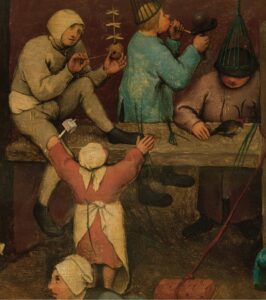

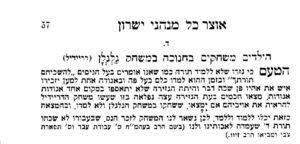

Special Italian Haftarah for the “Shabbat Kallah”

Special Italian Haftarah for the “Shabbat Kallah”[1]

By Eli Duker

Many communities in Europe and beyond had the practice of reciting a special haftarah from Isaiah 61–62 in honor of a groom on the Shabbat following the wedding.[2] Ashkenazi communities began the haftarah with 61:10 and read until 63:9,[3] which is also the 7th of the haftarot of consolation, which is which was read in most communities on the Sabbath before Rosh Hashanah, and in some others on the Shabbat between Yom Kippur and Sukkot in the event that there was one in a given year.[4]

As the practice to read the seven haftarot of consolation was universal outside in Italy in the late Medieval period, humashim and haftarah books had no reason to cite this practice, as the special haftarah for a groom was read during the calendrical cycle, and was in any event included in the humash for that purpose.

Italy is the exception. The practice in Italy was, and is, not to read special haftarot for the entire three-week period before Tisha B’Av or on the seven Shabbatot between Tisha B’Av and Rosh Hashanah.[5] Rather, a special haftarah is read on the Sabbath before Tisha B’Av and haftarot of consolation are read on the three remaining Sabbaths of the month of Av. The normal haftarah for Pinhas, a rarity in most communities, is read in Italy every year. Matot, Masei, Shoftim, Ki Tetze, Ki Tavo, and Nitzavim all have their own haftarot, which are found in the Cairo Geniza, Siddur R’ Shelomo B’Rabbi Nattan,[6] and in the list of haftarot in the Seder Tefillot of the Rambam.

The result is that in Italy, the haftarah from Isaiah is read only in honor of a groom. Out of the twenty-five Italian humashim and haftarah books in manuscript that I checked, the haftarah for the groom appears in twenty-three of them.[7] Out of the remaining two, one is missing pages at the end and likely had it in the original.

All twenty-three manuscripts have Isaiah 61:9 as the start of the haftarah. In all manuscripts besides one, the haftarah ends at 62:9, which is similar to the practice today in Italian communities, while in one manuscript it ends at 62:12.

One manuscript sticks out: Paris, National Library of France, Ms. hebr. 102. This is a book of haftarot and all of Ketuvim that was copied by Aryeh ben Eliezer Halfon for Rafael ben Yitzhak Malmassa of Voghera in northern Italy and completed on the 11th of Marheshvan 5242 (corresponding to October 4, 1481 in the Julian calendar).

The haftarot are similar to other manuscripts that follow the Italian rite (Jeremiah 1:1–19 for Shemot, Isaiah 18:7–19:24 for Bo, regular haftarot for the two weeks following the fast of 17 Tammuz and for the month of Elul, and the haftarah for the Sabbath of Hol Hamo’ed Sukkot is Ezekiel 38:1–23). There are slight differences concerning the haftarot for the parshiyot of Mishpatim,[8] Vayikra,[9] Tzav,[10] and Metzora.[11]

Interestingly, there is a note before the groom’s haftarah that reads, L’Shabbat Lifnei Hilula, indicating that the haftarah was read not during the “Sheva Brachot” week following the wedding, but before the wedding.[12]

What is unique is yet another nuptial haftarah. Afterward, a haftarah from Isaiah 60:1–19 appears, which is the same haftarah read in non-Italian communities on the sixth Sabbath of consolation, on the Sabbath of Parashat Ki Tavo. Beforehand there a note that reads “Lifnei HaKallah Koddem Hakiddushin.” Although there is no mention of the Sabbath here, the verse from Isaiah 47:4 appears at the end, which according to the practice in Italy was read after the reading of every haftarah. It is therefore clear that it is a haftarah, and highly unlikely that it was read on a weekday.

Evidently, two haftarot were read in honor of the nuptials, one before the “kiddushin” and the other before the “hilula,” as it is highly unlikely that the copyist here used two different phrases for the same event. Moreover, it does not seem likely that the marrying couple were in different synagogues on the Sabbath before the wedding, as towns generally had only one, and travel between different places took time.

The reason for the two haftarot has to do with yet another unique Italian practice. R’ Yosef Colon cites the practice of the native Italian Jews to perform an initial kiddushin privately in front of two witnesses “because they fear witchcraft.”[13] Later, at the nissuin, the kiddushin was performed again in the presence of a quorum of ten men.[14] This seems to be what the word hilula here means (the celebaration of the Nessuin along with the second Kiddushin) Presumably, the reason why Isaiah 60 was chosen to be read before the bride prior to the kiddushin is either that the haftarah addresses Jerusalem in the feminine form. Alternatively, we can suggest that the kiddushin, unlike nissuin, primarily affects the bride, as she is now forbidden as a married woman to all beside her betrothed husband while they would continue to live apart, with the mutual obligations of married life coming into place only after the nissuin, which was created by the “Hillula.

Bibliography

Genizah Fragments (All Cambridge TS B)

14.2, 14.65, 14.74 14.90, 14.105 14.119 16.5, 16.9, 20.1, 20.3, 20.4, 20.5, 20.6, 20.8, ,20.9 20.11

Manuscripts

Library of the Alliance Israélite Universelle, Paris, France Ms. 11

The Bodleian Libraries, University of Oxford, Oxford, England Ms. Can. Or. 75 Borja Library, Sant Cugat del Vallès, Spain Ms. C-I-1

Casanatense Library, Rome, Italy Ms. 2898

Casanatense Library, Rome, Italy Ms. 2919

The British Library, London, England Add. 4709

The British Library, London, England Harley 7621

The Jewish Theological Seminary of America, New York, NY, USA Ms. 571 The National Library of France, Paris, France Ms. hebr. 42

The National Library of France, Paris, France Ms. hebr. 50

The National Library of France, Paris, France Ms. hebr. 102

The National Library of France, Paris, France Ms. hebr. 104

The Palatina Library, Parma, Italy Cod. Parm. 1840

The Palatina Library, Parma, Italy Cod. Parm. 2015

The Palatina Library, Parma, Italy Cod. Parm. 2024

The Palatina Library, Parma, Italy Cod. Parm. 2127

The Palatina Library, Parma, Italy Cod. Parm. 2169

The Palatina Library, Parma, Italy Cod. Parm 2171

The Palatina Library, Parma, Italy Cod. Parm 2538

The Palatina Library, Parma, Italy Cod. Parm 2171

The Palatina Library, Parma, Italy Cod. Parm 2538

The Palatina Library, Parma, Italy Cod. Parm 2690

The Palatina Library, Parma, Italy Cod. Parm 2822

The Palatina Library, Parma, Italy Cod. Parm 2856

The Palatina Library, Parma, Italy Cod. Parm 2894

Trinity College Library, Cambridge, England Ms. F 12 107

Vatican Library, Vatican City, Vatican City State Ms. Ross. 478

Printed Books

(חמשה חומשי תורה. (תקב מנטובה

מהרי”ל. מנהגים (תשמ”ט ירושלים: מכון ירושלים)

משנה תורה לרמב”ם–יד החזקה. (תשל”ד ירושלים)

סידור רבינו שלמה ברבי נתן הסיג’ילמסי. ערוך ומתרגם מערבית. שמואל חגי. (תשנ”ה ירושלים)

פיוטי ר’ יהודה בירבי בנימן / יוצאים לאור בצירוף מבוא, חילופי נוסח וביאורים בידי שולמית אליצור. (תשמ”ט ירושלים: מקיצי נרדמים)

שו”ת מהרי”ק. (תש”ל ירושלים)

אנצקלופדיה תלמודית–כרך עשירי. (תשנ”ב ירושלים: מכון האנציקלופדיה התלמודית)

 ברית כהונה. משה הכהן. (תש”א ג’רבא)

נישואין נוסח איטליה: על יהודי איטליה בראשות העת החדשה. ויינשטיין, ר. (תשס”ז)

עולם כמנהגו נוהג: פרקים בתולדות המנהגים הלכותיהם וגלגוליהם. יצחק (אריק) זימר. (תשעט ירושלים: מרכז זלמן שזר לחקר תולדות העם היהודי)

(סדר קידושין אחרי חתימת התלמוד: מחקר היסטורי דוגמתי בתולדות ישראל. פרימן, א. (תשכ”הירושלים: מוסד הרב קוק

Weinstein, R. (2004) Marriage Rituals Italian Style: A Historical Anthropological Perspective on Early Modern Italian Jews. Leiden: Brill.

Notes

[1] This article is written in honor of the upcoming wedding of my niece Chana Duker to Aryeh Mateh and in order to show the boundless gratitude I have to Chana and the entire family of my brother and sister-in-law R. Yehoshua and Shayna Duker for the devotion and loving care of our beloved Bubby Selma A”H in her last year. I would like to further thank my brother R. Yehoshua for editing this article, as well as R. Elli Fischer, Dr. Gabriel Wasserman, R. Prof. Jeffrey Woolf, Dr. Ezra Chwat and the staff of the National Library of Israel for their assistance.
[2] See S. Elitzur’s introduction to “Piyyutei R’ Yehudah Biribi Binyamin” p. 60, regarding the haftarah apparently appearing in piyyut of R’ Yehudah, who (according to Elitzur pp. 72–77) lived in the east (most likely Bavel) sometime between the mid-9th century and the end of the 10th century. 3 For a discussion of the medieval Ashkenazi practices concerning this haftarah and its relative importance in Western vs Eastern Ashkenaz, see E. Zimmer “Society and Its Customs” (Hebrew) vol. 2. pp. 273–280. The haftarah was read, along with the various piyyutim recited, on the Sabbath following the wedding. This is more reasonable, as that is during the period of the celebration mandated by the Talmud, while beforehand is prior to the kiddushin (outside of Italy, as will be discussed later on), making liturgical changes unlikely. The manuscript presented here is a clear exception to this.

The reading of the groom’s haftarah on the Sabbath following the wedding is explicit in the Maharil (Minhagim: Four Parshiot 7, p. 417), where it is stated that if wedding takes place during the week of Shabbat Shirah, one reads the normal haftarah.
[4] See Talmudic Encyclopedia (Hebrew) Vol X., p. 22 and footnote 367–378א.
[5] Unlike the Nusah Hatefillah, where Italian Jewry retained more of the nusah of Eretz Yisrael, when it comes to haftarot they are more in line with the haftarot listed in the Babylonian Genizah fragments than any other community. Outside of the four special haftarot that they read between Devarim and Re’eh, the only non Babylonian Haftarah they read is for Shemot, when they read from Jeremiah, as opposed to the original Ezekiel 16.
[6] Pp. 201-202
[7] This haftarah, with the length according the standard Italian rite (Isaiah 61:9-62:10), is cited in the Mantua humash from 1742.
[8] The haftarah finishes at the end of Jeremiah 34, while in the standard Italian rite it continues until 35:11. The shorter haftarah also appears in Ms. Paris BN 42.
[9] The haftarah is Isaiah 43:6–44:23, similar to most other communities today. In other Mss. and printed humashim with the Italian rite, the haftarah ends at 44:6, which is the ending of the haftarah in most Genizah fragments I have seen, as well in the Seder HaTefillot that appears in the Rambam and is the practice in Yemenite communities. Talmudic Encyclopedia (vol.10, pp. 447–448) cites Brit Kehuna, which claims that the Djerban practice is to read this as well, but in Brit Kehuna (p. 33) the standard haftarah until 44:23 is brought.
[10] The main part of the haftarah concludes at 7:31 and then continues with 9:22–23. I have found this haftarah in eight Sephardic humashim in manuscript. It also appears in the Mahzor Vitry, and I have found it in over forty Ashkenazi humashim and haftarah books in manuscript. In other manuscripts and humashim with the Italian rite, the haftarah is from Jeremiah 7:21–28 and then continues at 10:6–7.
[11]
The haftarah begins at Kings II 7:1 (similar to other humashim and haftarah books in the Italian rite), and finishes at 8:2 (probably in order to avoid concluding with the death of the official at the conclusion of chapter 7). This haftarah appears in the Ashkenazi Ms. Parma 2005. The standard Italian haftarah (found in all other manuscripts I have seen) skips from the end of chapter 7 and ends with 13:23. This is the haftarah in the Seder HaTefillot in the Rambam and in most Geniza fragments that I have seen.
[12]
The earliest mention of a celebration on the Sabbath prior to the wedding is in Maharil (Hilchot Shiva Asar BeTammuz VeTisha B’Av), concerning the possible suspension of the practice to refrain from wearing Sabbath clothing on the Sabbath before Tisha B’Av for a groom and his father due to the “Shpinholz” celebration the Sabbath before the wedding.
[13] Translation from R. Weinstein, “Marriage Ritual Italian Style” p. 163. His translation of the following words are “I am told they then repeat the ceremony in the presence of ten people and in company, and then recite the engagement blessing [again]. I believe that the words “I am told” are part of the previous sentence (regarding the initial kiddushin) as Maharik, as a rabbi and rosh yeshiva in the French/Ashkenaz community, would not likely be a witness in an extremely private ceremony, as opposed to at the subsequent kiddushin where many would attend, and no reason why he would have to rely on hearsay. Moreover, as the vast majority of communities would have kiddushin together with the nissuin at every wedding, a kiddushin at a wedding is not the type of matter that he would mention as having heard from others, as opposed to a rather strange obscure practice in another community.

For an overview of the Italian kiddushin during the time of the copying of our humash and afterward see ibid. chapter 3. For a general overview of the combination of the kiddushin and nissuin acts in general, see A. Freiman, Seder Kiddushin Aharei Hatimat HaTalmud, pp. 28–31. See ibid. 127–131 concerning Italy in general, where the approach is that by the 16th century Italians had combined the kiddushin and nissuin (as opposed to Marriage Ritual, which claims that separating the two was quite normative through the 17th century). This is beyond the scope of this article, which addresses a late 15th century book. Therefore, Maharik’s testimony concerning the Italian practice suffices, and accords with the custom of the two wedding haftarot.
[14]
See Maharik for a justification of this presumably strange practice


Renewal of the Hakhel Ceremony in Jerusalem and New York

Renewal of the Hakhel Ceremony in Jerusalem and New York[1]

By Aaron R. Katz

A graduate of the University of Chicago Law School and a musmach of RIETS, Aaron is the Associate Director, Private Equity and M&A Finex at WTW Israel. He lives with his wife and four children in Mishkafayim, Ramat Bet Shemesh.

As we come to the final days of the Shmitah year, preparations will soon begin for the Zecher LeHakhel events that will occur starting with the new year of 5783 (2022), which is a Motzei Shmitah year (the year following the Shmitah year).

During Chol Hamoed Sukkot in 2015, a Zecher LeHakhel ceremony took place in the courtyard in front of the Kotel. As the corresponding Hebrew year of 5776 immediately followed a Shmitah year, the event was a commemoration of the biblically-ordained Hakhel ceremony[2] in which the entire nation would assemble during Sukkot[3] of every Motzei Shmitah year for a public reading by the king of certain parts of Deuteronomy.[4] Present at the event at the Kotel were numerous dignitaries, including the Ashkenazi and Sefardi Chief Rabbis, as well as President Reuven Rivlin.

 The current Hakhel ceremony traces its roots to R. Eliyahu David Rabinowitz-Teomim (1843-1905) (the “Aderet” and the father-in-law of R. Avraham Yitzchak Hacohen Kook), who discussed the establishment of a commemoration of Hakhel in his book Zecher LeMikdash in 1889 (the Hebrew year of 5649, which itself was a Shmitah year), a work that was anonymously published but has been conclusively determined to have been written by him.[5] The first modern-day ceremony took place in 1945, following the end of the 5705 Shmitah year, under the auspices of Ashkenazi Chief Rabbi Isaac Herzog. The ceremony began in the Yeshurun Synagogue and concluded at the Kotel. In 1952, following the 5712 Shmitah year, the Hakhel ceremony was held on Mt. Zion (as the Kotel was under Jordanian rule at the time) and was attended by both R. Herzog and Sefardi Chief Rabbi Ben-Zion Meir Hai Uziel. A book titled Zecher LeMitzvat Hakhel, edited by R. Mordechai Cohen, appeared shortly after the ceremony and contains a lengthy discussion of the Hakhel ceremony, as well as pictures and a description of the 1952 event. [6]

In the Nisan 5713 (March/April 1953) edition of Yeshiva University’s Talpioth journal includes two articles on Hakhel, including one by the journal’s editor R. Samuel K. Mirsky, under the title: “Renewal of Hakhel.[7] At the end of that same journal appears a Hebrew description of a Hakhel ceremony that took place in New York. The description was written by a certain צ.. (which most certainly refers to R. Zvi Tabory, who took part in the event as mentioned below). An English translation of this description from Talpioth appears below.[8]

Hakhel Gathering in New York

On Wednesday, the third day of Chol Hamoed Sukkot, a special gathering took place at the Commodore Hotel in New York to commemorate the Hakhel ceremony.

The gathering was organized by the Jewish Agency’s Department for Torah Education and Culture in the Diaspora to allow the Jews of the Diaspora the opportunity to identify with our brethren in the State of Israel who were assembling at the same time on the summit of Mt. Zion in Jerusalem to take part in a Hakhel ceremony organized by the Chief Rabbinate and the Ministry of Religion, the first such event since the establishment of the State.

The Rabbinical Council of America co-organized this gathering together with the Jewish Agency’s Department for Torah Education and Culture in the Diaspora (the “Department”), and this joint effort was extremely successful. A large celebratory crowd filled the hall, and hundreds of people were forced to go home for lack of space.

Dr. Yosef Burg, Israel’s Health Minister, inspired those assembled with his words on the responsibilities of a Jew, whoever he may be, to the State of Israel. R. Samuel K. Mirsky gave an instructive talk on the renewal of the practice of Hakhel in Israel. R. Zvi Tabory, Director of the Department in New York, opened the evening and pointed out the historic nature of the event, which comes on the heels of the revival of our nation in its land. He also delivered words of blessing on behalf of the Chief Rabbinate of Israel and the head of the Department, R. Zev Gold of Jerusalem. The participants enthusiastically accepted the blessing from Zion: “Just as you have merited to organize this event, so may you merit to perform the ritual properly according to all of its laws in the restored Temple in Jerusalem!” R. Israel Tabak of Baltimore, head of the Education Department of the Rabbinical Council of America, served as the master of ceremonies for the event and introduced R. Theodore Adams, the President of the Rabbinical Council of America, who discussed the concept of Jewish unity. Dr. Pinkhos Churgin, President of Mizrachi in America, delivered words of blessing on behalf of the Mizrachi organization, and R. Yissocher Levin, President of Hapoel HaMizrachi in America, delivered words of blessing from his organization.[9] Mr. Eliezer Doron, Israeli Consul General of New York, delivered words of blessing on behalf of the State of Israel.

A musical program was arranged by Cantor Shalom Katz from Washington, D.C., and Cantor Pinchas Jassinowsky from New York. Mrs. Jassinowsky accompanied them on the piano. 

R. Zvi Yehuda Meltzer, Av Bet Din of Rehovot and Rosh Yeshiva of Yeshivat Hadarom in Israel, recited a special prayer for world peace.

It is quite unfortunate that an event of this caliber only occurs once every seven years; however, we can hope that the inspiration and excitement felt on this occasion will sustain the Jewish community for the next seven years.

The organizers of the event did not want to limit its scope simply to New York; rather, they intended to extend it to outlying cities as well. In turning to rabbis across the United States to suggest that they arrange Hakhel commemoration events in their respective communities, they offered a sample program, attached materials on the topic of Hakhel, and provided copies of the thorough, instructive, powerfully impactful article on Hakhel written by R. Samuel K. Mirsky, an advanced edition of which had been published in honor of the celebration held on Chol Hamoed Sukkot.

In addition, the Department arranged a celebratory Hakhel event for upperclassmen from yeshiva day schools that took place in the large hall of the Rabbi Isaac Elchanan Theological Seminary. This event was also held during Chol Hamoed Sukkot, and 1,200 students from 20 different yeshiva day schools participated. Students from the Shulamith School for Girls put on a wonderful play about the draining of the Hula swamps. A choir of one hundred students from Yeshiva Rabbi Moshe Soloveichik and Yeshiva Rabbi Israel Salanter, conducted by Mr. S. Silbermintz, sung a number of pleasant tunes for the audience.

These young children also lit candles and prayed for world peace, and it is certain that this event left a lasting impact on the attendants.

Conclusion

This post focuses on the rebirth of the modern Hakhel ceremony in the years of 1945 and 1952. In a future post, I hope to examine the manner in which the ceremony was observed in later years in both Israel and the diaspora. Of particular interest is whether R. Mirsky’s push for widespread of observance of Hakhel in the diaspora made a lasting impact following the successful 1952 event.  

Notes:

[1] I wish to thank my dear friends Rabbi Shaul Seidler-Feller, Mr. Menachem Butler and Rabbi Dr. Eliezer Brodt for their assistance on this brief essay at the Seforim blog. The essay is dedicated to the memory of my beloved chavrusa Donny Ladell, דניאל שבתי בן אליעזר ז“ל, upon his thirteenth yahrtzeit.
[2] See Deuteronomy, ch. 31. Also see the recently published Parshas Ha’melech by R. Moshe Parness on pages 118-120 where he quotes the relevant sources that discuss that Hakhel is only a biblical commandment in force as long as the Beit Hamikdash is standing. There is also a sefer called Parshas Ha’melech by R. Shmuel Genut on Hakhel that was just published this summer as a third edition (with the earlier two editions having been published in the two previous Motzei Shmitah years, respectively) that discusses the mitzvah of Hakhel, online here.
[3] For an in-depth discussion on the exact day of when Hakhel would take place, see David Henshke, “When is the Time of Hakhel?” Tarbiz, vol. 61, no. 2 (1992): 177-194 (Hebrew), available here.
[4] See Rambam, Hilchot Chagigah, ch. 3. For a detailed analysis of the Rambam’s opinion and a description of the proper halachic manner in which to conduct a Zecher LeHakhel event, see Maran Ovadya Yosef, Chazon Ovadya: Hilchot Shmitat Ksafim uPruzbul (Jerusalem, 2015), 219-228 (Hebrew), as well as his responsum in She’elot u-Teshuvot Yabia Omer, Yoreh Deah, vol. 10, no. 22. Maran Ovadya Yosef was prominently involved in numerous “Zecher LeHakhel events” at the Kotel. I was privileged to see him in person in 2008 at the last Zecher LeHakhel he attended before his passing in 2013.
[5] See Yaakov S. Spiegel, Amudim be-Toldot ha-Sefer ha-Ivri / Chapters in the History of the Jewish Book, vol. 3: The Title Page (Jerusalem, 2014), 35-36 (Hebrew), regarding the anonymously published Zecher Lemikdash, which includes an approbation from Rabbi Eliyahu David Rabinowitz-Teomim, known as the Aderet, as well as comments that the Aderet himself wrote on the work, which Spiegel notes was purposely done by the Aderet in order to conceal that he himself authored the work.

Note that the Ahavat Shalom edition of all of the Aderet’s writings was published in 2004 and the Zecher Lemikdash volume contains the original Zecher Lemikdash that was anonymously published as well as additional writings from the Aderet that has not previously been published (see pages 22-24 and 82-85).

See also the recently-published volume of The Collected Writings of R. Moshe Reines, ed. Eliezer Brodt (Jerusalem, 2018), 604 (Hebrew), where R. Reines identifies the Aderet as the author of Zecher Lemikdash. For more on this work, see here. Also see Ari D. Kahn, “The Commandment of Hakhel,” Explorations (25 September 2015), notes 2-3, available here, regarding the authorship of Zecher Lemikdash. R. Parness in Parshas Ha’melech (see source 2 above) also quotes Zecher Lemikdash though he argues with one of the Aderet’s sources.
[6] This sefer is available online here.

In a recently published collection of writings of the Chazon Ish titled Sefer Chazon Ish: Shailos uTeshuvos v’Chiddushim, it is recorded in Siman 446 that on his copy of the Sefer Zecher LeMitzvat Hakhel, the Chazon Ish wrote that “assur la’asot ken” (it is forbidden to do so). Perhaps the Chazon Ish’s opinion may serve as one source for the general resistance of Ashkenazi haredi circles to joining in the event at the Kotel, which is more closely identified with the national religious movement (at least from the perspective of Ashkenazim). Notably, since the late Lubavitcher Rebbe, Rabbi Menachem Mendel Schneerson, was a proponent of Hakhel events (see, for example, the letter from R. Schneerson in the beginning of Zecher LeMitzvat Hakhel), the Chabad movement hosts numerous such events around the world throughout the entire year following Shmitah. For a synopsis of R. Schneerson’s views on Hakhel, see, for example, two articles by Shmuel Butman, “A Special Year: Hakhel Gatherings for Torah Inspiration,” The Jewish Press (23 September 1994): 19; and Shmuel Butman, “The Year of Hakhel,” The Jewish Press (21 October 1994): 36. See also the Likras Shabbos volume (volume 516, Parshas Veyelech, 5776) published by Or Hachasidus which contains many insights on Hakhel from R. Schneerson.
[7] Talpioth, vol. 6, no. 1-2 (March-April 1953): 92-118 (Hebrew).

Several months prior to the publication of his Talpioth article, R. Mirsky published two articles in English-language publications on Hakhel in Samuel K. Mirsky, “Hakhel,” The Jewish Forum, vol. 35, no. 9 (October 1952): 167-169; and Samuel K. Mirsky, “The Forgotten Mitzvah,” The Jewish Horizon, vol. 15, no. 2 (October 1952): 3-4. See also the article by R. Mirsky’s brother-in-law in Gersion Appel, “Renewing the Covenant: The Importance of Hakhel for the Jewish Faith and Its Implications for Today,” The Jewish Horizon, vol. 15, no. 6 (February 1953): 6-9.

Interestingly, R. Mirsky posited, based on R. Eliezer of Metz, that there are really two separate Mitzvot involved with Hakhel, one of which is a commandment directed to the entire nation and one of which aims at the individual. R. Mirsky wrote that the individual commandment had been transformed into the modern-day celebration of Simchat Torah, and that, with the establishment of a Jewish state, the national commandment can now be renewed, concluding that “only a Hakhel in which the national aspect is emphasized in fitting celebration can fill the demand of the hour.”

For an initial biographical tribute to R. Samuel K. Mirsky, see Yehudah Mirsky, “The New Heavens in the New World: The Religious Hebraism of Samuel K. Mirsky,” in Adam S. Ferziger and David Sperber, eds., Darkhei Daniel – The Paths of Daniel: Studies in Judaism and Jewish Culture in Honor of Rabbi Professor Daniel Sperber (Ramat-Gan: Bar-Ilan University Press, 2017), 101*-128*, available here.
[8] The JTA also has a write-up of the New York event. See online here:

“A parallel celebration of the revival for the first time in 2,000 years of “Hakhel,” the Biblical ceremony which was performed in ancient Israel at the end of every Sabbatical year, took place at the Hotel Commodore here tonight at a public service sponsored by the Jewish Agency and the Rabbinical Council of America. The service was a counterpart of a similar celebration held in Jerusalem earlier this week on Mount Zion under the auspices of the Chief Rabbinate of Israel. A message from Dr. Nahum Goldmann emphasizing that the furtherance of Jewish scholarship and culture in its various forms is of decisive importance for the survival of the Jewish people and of Judaism, was read at the service here. A “Hakhel” ceremony for children, attended by 1,200 pupils of 19 Hebrew day schools in New York, was held yesterday at the Yeshiva University.”

[9] Note that at this time, Mizrachi and Hapoel HaMizrachi were two Israeli political separate parties. These parties later combined for the 1955 Knesset elections and ultimately merged in 1956 to form the National Religious Party.