Stet in the Beit Yosef: Fish and Milk, from Typographical Error to Typological Exemplar
Stet in the Beit Yosef: Fish and Milk, from Typographical Error to Typological Exemplar
Aton M. Holzer
Rabbi Dr. Holzer is Director of the Mohs Surgery Clinic in the Department of Dermatology, Tel Aviv Sourasky Medical Center, and is an assistant editor of the recent RCA Siddur Avodat HaLev. ORCID ID: 0000-0001-9852-3958/ 28 Binyamin, Beit Shemesh, Israel 9952200/ Aton.holzer@gmail.com
A passage in the magnum opus of R. Joseph Karo (Maran, or the Mehaber, 1488-1575), the Beit Yosef (YD 87:5) tends to be reckoned among the more consequential scribal errors in Jewish legal texts.
[ה] ”דגים וחגבים מותר לאכלן בחלב“. ריש פרק כל הבשר (קג:) ”(כל הבשר) אסור לבשל בחלב, חוץ מבשר דגים וחגבים“. וכתב הר”ן דכיון דלבשלן שרי משמע דלאכלן בחלב נמי שרי, דאיסור בשר בחלב בלשון בישול אפקיה רחמנא, וכן כתב הרמב”ם והרשב”א דלאכלן בחלב נמי שרי. ומכל מקום אין לאכול דגים בחלב מפני הסכנה, כמו שנתבאר בספר אורח חיים סימן קע”ג.
“Fish and locusts, it is permitted to eat them in milk.” In the beginning of the chapter kol basar (bHullin 103b) [it is written]: “(all flesh) it is prohibited to cook in milk, except for the flesh of fish and locusts.” And R. Nissim wrote that since cooking them is permitted, it implies that to eat them in milk is also permitted, for the prohibition of meat in milk was set out by the Torah in the semantics of cooking, and likewise did Maimonides and R. Shlomo ibn Adret write, that to eat them in milk is also permitted. And in any event, one should not eat fish in milk because of the danger, similar to what was elucidated in Orah Hayyim 173.
In his 2014 “A Guide to the Complex,”[1] Shlomo Brody highlights this passage – which invokes a heretofore ostensibly unknown ‘danger’ regarding consumption of fish in milk, and which makes reference to a chapter that deals with measures that must be taken with regard to the ‘dangerous mixture’ of fish and meat[2] – as a banner example of the ‘impact of inaccurate texts on Jewish law.’ He adds that ‘Ancient manuscripts regularly suffered from poor penmanship, slipping of the eyes, and misunderstandings by unlearned or confused copyists.’ The first to make this sort of observation regarding this passage was none other than R. Karo’s younger contemporary and interlocutory commentator R. Moses Isserles (Rama, 1530-1572), who puts it humorously (Darkei Moshe, Tur YD 87:4):
.ולא ראיתי מימי נזהרין בזה וגם בא”ח סימן קע”ג אינו אלא שלא לאכלו בבשר משום סכנה אבל בחלב שרי ועי”ל סימן קי”ו ולכן נראה שנתערב להרב בשר בחלב
And in all my days I have never seen [anyone] take care with regard to this, and also in Orah Hayyim 173 there is not but not to eat [fish cooked] in meat because of danger, but in milk it is permitted, and see earlier in chapter 116, and therefore it appears that the Rabbi has confused (mixed) meat and milk.
As neat as this solution appears, there remain some problems. For one thing, in context, the Beit Yosef discusses the consumption of various forms of flesh – fish and locust – in milk, not meat; replacing the word ‘milk’ for ‘meat’ would render the ultimate sentence a nonsequitur with regard to the full passage.
For another, the idea of danger attendant to mixtures of fish and dairy is not entirely unprecedented. R. Bahye b. Asher (1255-1340), who hailed from R. Karo’s native Christian Spain two centuries earlier (but from Zaragoza, quite a ways from Toledo), seems to make reference to such a practice in his commentary to Exodus 23:19:
.וכן דעת הרופאים בתערובת דג וגבינה שנתבשלו כאחד שמוליד תכונה רעה וחולי הצרעת
And so is the view of the physicians regarding the mixture of fish and cheese that were cooked together, that they beget a bad character and the illness of tsara’at (biblical ‘leprosy’).
To be sure, this is a lone statement, found in a decidedly non-Halakhic work, at a distance of two centuries and one continent from R. Karo’s work, which was completed in Ottoman Safed.
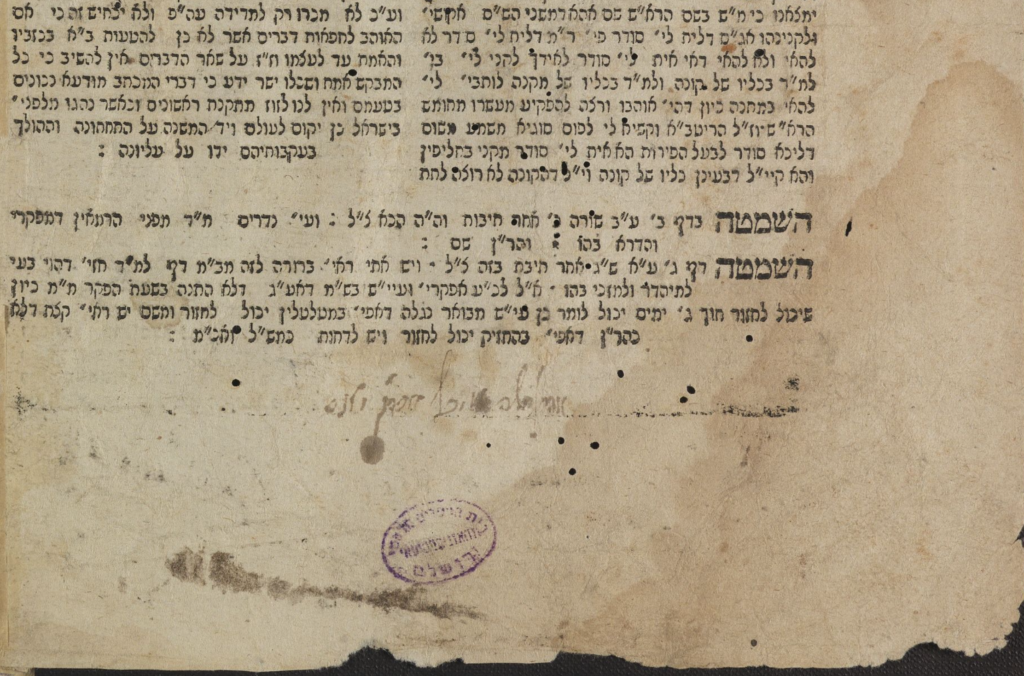
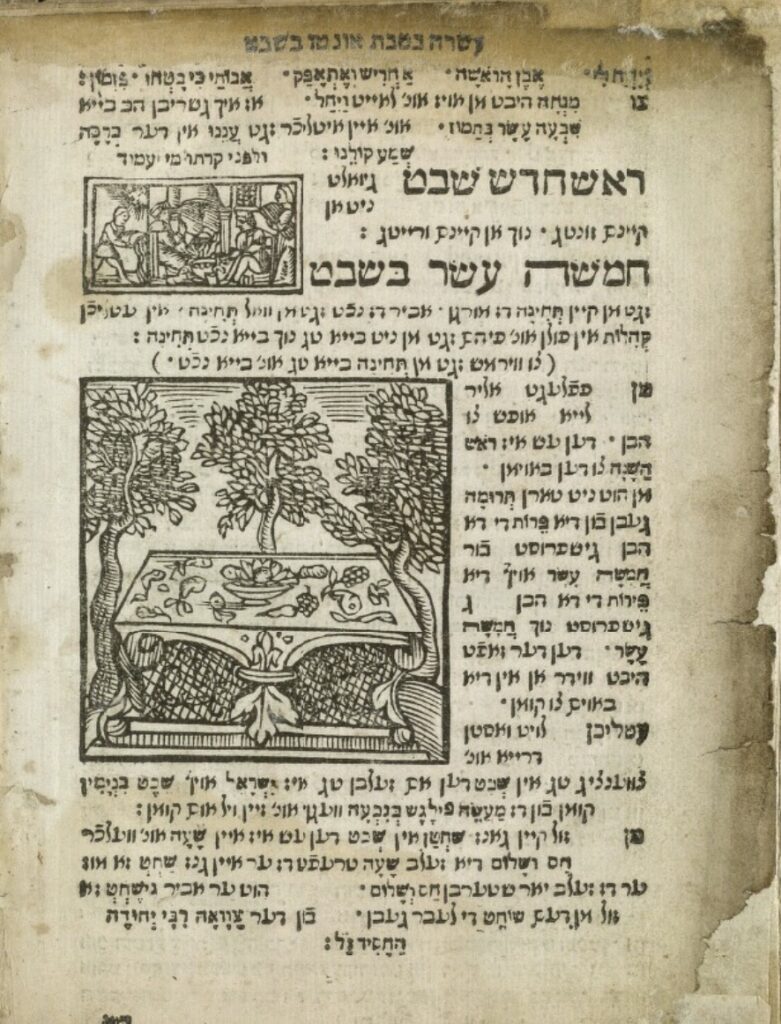
A third is that it is difficult to ascribe scribal error to the Mehaber’s project, if only because Beit Yosef was not transmitted in manuscript, and does not exist in manuscript – at least not beyond the author’s autograph. The four volumes of Tur with Beit Yosef were printed in different Italian publishing houses over the course of the 1550’s, in the author’s own lifetime, and he lived to see several printings of the Beit Yosef and Shulhan Arukh, the precis of the conclusions of halakhic discussions in the Beit Yosef. In fact, printing, and particularly choosing to do so in Renaissance Italy – where there was a Christian censor but superior presses to what was available in Ottoman Turkey, but more importantly, where (Jewish exile) cultures met and wide dissemination was guaranteed[3] – was central to R. Karo’s stated mission, a messianic objective of a piece with his participation in reconstituting the Sanhedrin to administer corporal punishment.[4] Taking a page from the messianic project of Sultan Suleiman, Kanuni or “the lawgiver,”[5] his project would complete Maimonides’ project[6] to unify the Jewish people under a uniform system of law in anticipation of redemption. And indeed, in his own lifetime, Beit Yosef and Shulhan Arukh enjoyed wide dissemination and readership, if not universal acceptance.[7]
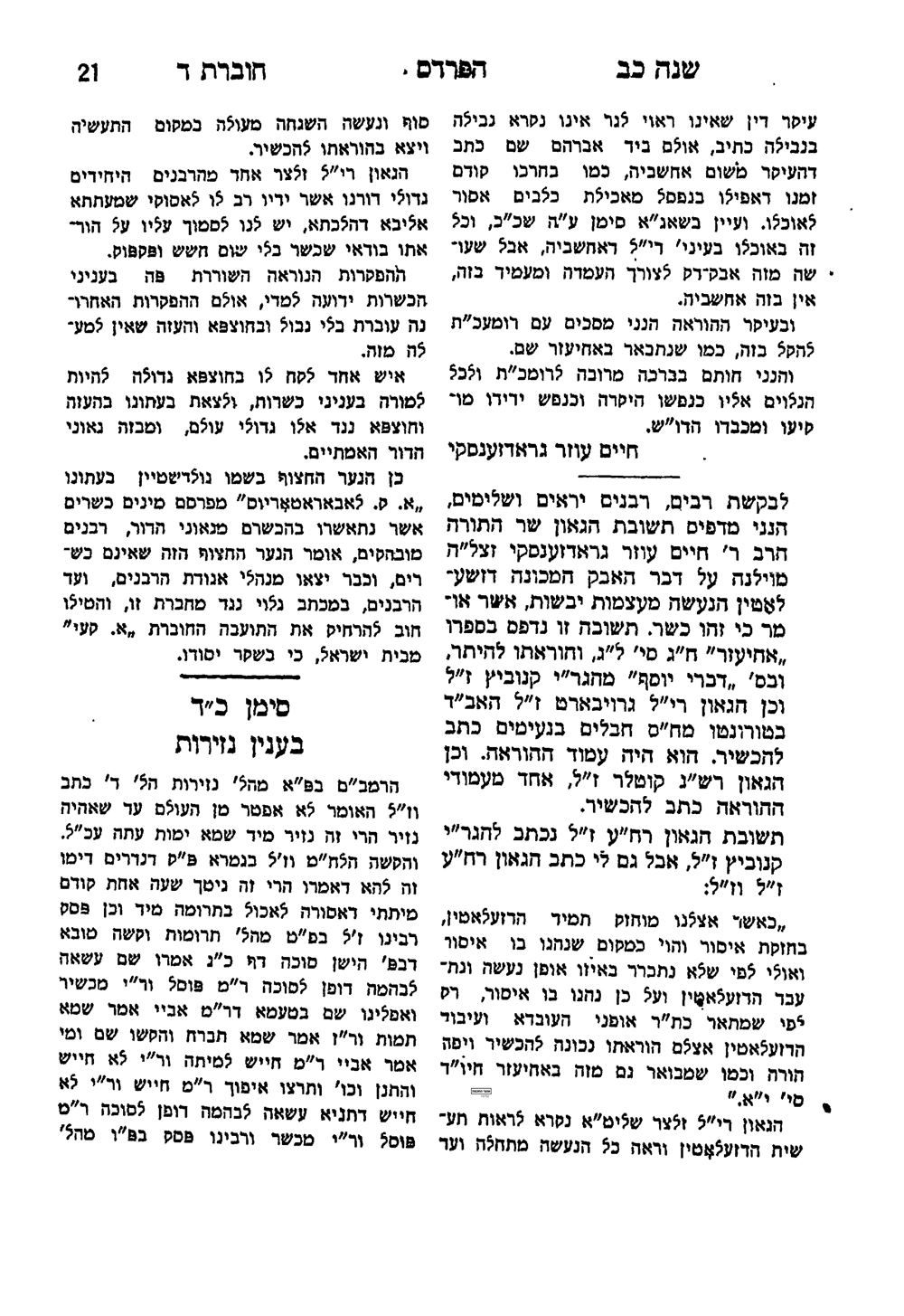
Figure 1: 87:5 in its first printing (Venice, 1551)
Given this, if “milk” is an error, it is much more likely typographical than scribal, and not the best example of the phenomenon R. Brody describes. But more importantly: given that the printed versions were available to the author, and were widely read and used, in his presence, for more than twenty years, the possibility that a typographical error of such consequence would go unnoticed by the author or his immediate milieu is at least somewhat diminished. The author himself issued a work called Bedek ha-Bayit with corrigenda and addenda, and there is a gloss on siman 86, but not 87.
—
Muhammad ‘Abd al-Ra’ūf al-Munāwī (1545-1621), a renowned scholar in Ottoman Cairo whose hadith commentary is still popular in Sunni Islam, also composed a compendium of fundamental, practical scholarly-spiritual knowledge related to a number of everyday issues[8] – a sort of Islamic Orah Hayyim, as it were – known as Tadhkirat ūlī al-albāb bi-maʻrifat al-ādāb. This work is significant as a snapshot of the cultural climate in Early Ottoman Cairo, and has traces of persistent Mamluk attitudes, reconfigured in light of Ottoman sensibilities and cutting-edge intellectual trends in his time in Cairo, which, under the Mamluks, had long been a hub of science and the occult (which, at the time, were also deemed ‘sciences’) in the Islamicate world.[9]
In his compendium,[10] there is a fascinating discussion of food mixtures, launching off a discussion of Galenic medicine and the inadvisability of combining food that relate to different humors/elements (moisture/water, dryness/air, coldness/earth and hotness/fire). In pertinent part:
يعسر علينا اثبات كثير من ذلك بالقياس فمن ذالك انه لا يجمع بين سمك و لبن فإنه يولد أمراضا مزمنة كالجدام والبرص والفالج
It is difficult for us to prove much of this by (syllogistic) reason. For example, that combining fish and milk causes chronic diseases such as leprosy, vitiligo, and paralysis.
Paulina Lewicka, a Polish scholar who studied foodways in Mamluk and Ottoman Cairo,[11] highlights this passage and notes that it represents a novelty on the Egyptian scene.
In fact, there seems to be no evidence that avoidance of mixing fish and milk products had been observed in Egypt of the Mamluk period, or in the medieval Middle East in general. This combination, which is considered unhealthy today, appeared in a number of old Arabic-Islamic recipes where fish and yoghurt were put together. Al-Munāwī’s remarks may have reflected, then, a new trend in medico-culinary thinking.[12]
Lewicka also notes in al-Munāwī’s treatment of Galenic medicine an interesting development: even though Galen’s theory of humors had formed the basis of Islamicate medicine for centuries, in the Muslim-Sufi environment of early Ottoman Cairo there was discomfort with use of pagan theories and concepts. Instead, al-Munāwī traces the theory of humors to Kitāb al-Tawrāt, the Torah,[13] where, according to him, Adam was created with dry soil, wet water, heat (nefesh/nafs) and cold (ru’ah/rūḥ).
—
R. Yosef Karo, living in the same territorial-ideological expanse as al-Munāwī – with frequent interchange between Safed and Cairo by figures no less than R. David abi ibn Zimra, R. Bezalel Ashkenazi, and R. Isaac Luria – had ample access to the developments in Cairene medicine that inspired the Tadhkirat passage.
His relationship with classical philosophy – the ostensible basis for Galenic (as opposed to prophetic) Cairene medicine – is complicated. In his mystical diary Maggid Meisharim (80a-b), he cites his angelic guide who allows that, pace the view of other Kabbalists of his day, Maimonides was not condemned to reincarnate as a worm because of his philosophical views – but only because he was saved from this fate by his Torah and good deeds, and thus was allowed to reincarnate in a usual way before ascending to join the souls of the righteous. However, there is evidence that he himself was more accepting and even dabbled in philosophy – but assigned it a decidedly secondary or tertiary position to the study of Talmud and Halakhah, either behind or on par with Kabbalah, which also took a backseat to Halakhic sources in terms of study and Halakhic decision/pesak.[14]
The case of milk and fish may serve as something of an acid test for medical science. R. Karo includes it in his Beit Yosef, but as an ayn le-ekhol – it should not be eaten – rather than ‘it is forbidden.’ Clearly R. Karo prohibits it, as perhaps a contemporary posek (if not for the Igrot Moshe) might prohibit smoking, but does not share al-Munāwī’s view that humoral medicine is a de’orayta. And while cutting edge Galenic knowledge merits mention in Beit Yosef, the Mehaber omits it from the Shulhan Arukh (87:3), the repository of pesak, regarding which, just as for Kabbalah,[15] the Talmudic sources – which explicitly permit such a mixture (kutah, e.g. Pesahim 76b) – trump all.
Thanks to Prof. Tzvi Langermann and Prof. Daniel Lasker for their erudite comments and corrections. Thanks to Prof. Markham Geller, R. Judah Kerbel, and R. Noam Horowitz for insights and source materials, and R. Jonathan Duker and R. Dr. Ari Zivotofsky for being a sounding board for these ideas.
[1] Shlomo Brody, A guide to the complex: contemporary halakhic debates (Maggid, 2014), 297-299. [2] The origin of the prohibition of consuming meat with fish is Pesahim 76b, where fish cooked with meat is said to pose a risk for ‘odor’ and “something else,” davar aher. Commentators uniformly understand the referent of the latter to be tzara’at, biblical leprosy, and thus the Talmudic statement is medical in nature. Fred Rosner notes that this danger is absent from Hippocratic or Galenic medicine – se his “Eating Fish and Meat Together: Is there a Danger?.” Tradition: A Journal of Orthodox Jewish Thought 35.2 (2001): 36-44. On the other hand, medical teachings in the Talmud often preserve ancient Babylonian medicine, a more empiricist approach than the Hellenistic humor theory that replaced it. Even so, Markham Geller, a specialist in Babylonian medicine, suggests that the Talmudic passage is not health-related at all but aesthetic, and the ‘davar aher’ is more properly understood as pig in its original context – to wit, perhaps, that fish-infused meat is forbidden because of its odor and its possible close resemblance to pork (personal communication). In any event, by R. Karo’s time, the medical understanding of fish-meat mixture prohibition was universal and in that regard it was a fitting analog to fish-milk mixtures. [3] Mor Altshuler, The Life of Rabbi Yoseph Karo (Tel Aviv University Press, 2016), 323. [4] Amnon Raz-Krakotzkin, “From Safed to Venice: the” Shulhan ‘Arukh” and the censor.” In Chanita Goodblatt and Howard Kreisel, eds., Tradition, Heterodoxy and Religious Culture: Judaism and Christianity in the Early Modern Period (Ben Gurion University, 2006), 91-115; Roni Weinstein, “Jewish Modern Law and Legalism in a Global Age: the Case of Rabbi Joseph Karo.” Modern Intellectual History 17:2 (2020), 561-578. [5] See Weinstein, ibid. [6] Israel Jacob Yuval, “Moses redivivus — Maimonides as a ‘Helper to the King’ Messiah” [Hebrew], Zion 72 (2007) 161-188. [7] Yaron Ben-Naeh, Hagai Pely and Moshe Idel, Rabbi Joseph Karo: History, Halakhah, Kabbalah (The Zalman Shazar Center, 2021), 234. [8] Paulina B. Lewicka, “Challenges of Daily Life in Early-Ottoman Cairo: a Learned Sufi’s Perspective. Preliminary Remarks on al-Munawı’s Memorandum on Decent Behavior,” in Stephan Conermann and Gül Şen, eds., The Mamluk-Ottoman Transition (V&R Academic, 2017): 59-85. [9] Matthew Melvin-Koushki, “Taḥqīq vs. Taqlīd in the renaissances of western early modernity.” Philological Encounters 3.1-2 (2018): 193-249. [10] Folio 14a in the Yale MS; it also exists in at least two other manuscripts in Cairo where the passage is identical (folios 22b and 16a, respectively). [11] Paulina Lewicka, Food and foodways of medieval Cairenes: Aspects of life in an Islamic metropolis of the eastern Mediterranean. (Brill, 2011). [12] Lewicka, “Challenges of Daily Life,” 71-72. [13] Or, more usually, collections of unusual hadiths that Islamic scholars mistook for the Torah. I am indebted to Prof. Langermann for this insight. [14] See Ben-Naeh et al., Rabbi Joseph Karo, 136-140. [15] Jacob Katz, “Post-Zoharic Relations between Halakhah and Kabbalah,” in Bernard Dov Cooperman, ed., Jewish Thought in the Sixteenth Century (Harvard University Center for Jewish Studies, 1980), 283-307.
R. Nathan Nata ben Reuben David Tebele Spira and his Works: Among them Ma’amar Yayin ha-Meshummar, on the Prohibition against Drinking Stam Yeinam (gentile wine), and Contemporary Books on that Subject
R. Nathan Nata ben Reuben David Tebele Spira and his Works: Among them Ma’amar Yayin ha-Meshummar, on the Prohibition against Drinking Stam Yeinam (gentile wine), and Contemporary Books on that Subject[1]
By Marvin J. Heller
Wine gladdens the hearts of men, to make the face shine from oil, and bread that sustains man’s life (Psalms 104:15).
The life and works of the seventeenth century rabbinic figure, R. Nathan Nata ben Reuben David Tebele Spira (Shapira), his books, among them Ma’amar Yayin ha-Meshummar, on the prohibition of stam (setam) yeinam (gentile wine), and other contemporary works by rabbis on that controversy are the subject of this multi-part article. Concerning the dispute over stam yeinam it should be noted, emphasized, that this article is not a halakhic study nor does it, in any way, intend to provide decisions in Jewish law. It is an overview, from the perspective of Hebrew bibliography, Jewish literature, and history, of an issue that does involve those subjects, but, again, from a literary and historical perspective, and that only.
I
R. Nathan Nata ben Reuben David Tebele Spira (d. 1666) was born in Cracow, where his father served as a dayyan. His grandfather, R. Nathan Nata ben Solomon Spira (Shapira, c. 1585-1633) after whom he is named, was the renowned kabbalist and author of Megalleh Amukkot (Cracow, 1637), two hundred fifty-two explanations of Moses’ prayer, at the beginning of parashat Va-Ethannan, to cross the Jordan and see Eretz Israel (Deuteronomy 3:23 ff.). Our Nathan Nata Spira served as rabbi in several cities in Poland, subsequently going up to Eretz Israel when already elderly. He became, in Jerusalem, the rabbi of the Ashkenaz community.
The Chmielnicki massacres of 1648-49 (tah-ve-tat) in Europe and the ensuing devastation resulted in a severe reduction in the financial aid provided by the Jews of Eastern Europe to the Jewish community of Jerusalem.[2] This necessitated Spira traveling to Europe as a communal representative to seek increased support for the needy Jews of Jerusalem.[3] His journey, begun in 1655, took him to Italy, Holland, and Germany. Among the communities Spira visited was Amsterdam, where his influence caused Menasseh Ben Israel to bring the plight of Polish Jewry to the attention of Oliver Cromwell. Although Spira returned to Jerusalem, the needs of his community necessitated his returning to Europe, where he passed away in Reggio, Italy in 1666. Parenthetically, two of his son-in-laws subsequently served in that city’s rabbinate.[4]
It was in Italy that Spira published his books, all at the Vendramin press.[5] That press, established by Giovanni Vendramin in 1630, broke the monopoly enjoyed until then by Alvise Bragadin. For the first ten years the press operated under the name of its founder, but after his death it became known by the names Commissaria Vendramina and Stamparia Vendramina. The press eventually joined with that of Bragadin, and the combined presses continued to operate well into the eighteenth century.[6] Spira had formed a close relationship with R. Moses Zacuto (c. 1620–1697), among the foremost contemporary exponents of Lurianic kabbalah in Italy, who encouraged and was instrumental in assisting Spira in both his agency and in printing his books. Spira also edited the writings of such kabbalists as R. Chaim Vital (1542-1620), the foremost disciple of R. Isaac Luria (ha-Ari ha-Kadosh, 1534-72), R. Moses Cordevero (Ramak, 1522-70), and R. Abraham Azulai, 1570-1643).
II
The first of Spira’s titles is Tuv ha-Aretz (Venice, 1655), a relatively small kabbalistic work (80: [4] 76 ff.), on the holiness of the land of Israel. The title page of Tuv ha-Aretz has an architectural frame and is dated “the holy הקדושה (415 = 1655) land” It describes the contents which include praise of Eretz Israel, segulot (formulaic remedies), Tikkun Hazot (midnight prayers recited in memory of the destruction of the Temple), tikkun for the night of Shavu’ot, and tikkun for Hoshana Rabbah. These tikkunim are according to the rite of the kabbalists in Eretz Israel. There is also a kinah (dirge) on the exile of the Shekhinah (Devine presence).
Zacuto, who encouraged Spira to print this work, wrote a versified preface, the initial letters of lines forming an acrostic of his name. This is followed by introductions from the author and from Zacuto, who was the editor, and who also added prefatory remarks to some of the tikkunim. Spira, in his introduction, writes that Tuv ha-Aretz is based on the writings of R. Isaac Luria (ha-Ari), R. Hayyim Vital (including the tikkun from his Etz Hayyim, with glosses from the author), R. Moses Cordovero (Remak), and R. Abraham Azulai, concerning the holiness of the land, the need to sustain its inhabitants, and rebuking those whose criticism results in reduced support. He concludes that those who hearken, “shall eat the good of the land (tuv ha-Aretz)” (Isaiah 1:19).
1655, Tuv ha-Aretz Courtesy of the Library of Agudas Chassidei Chabad Ohel Yosef Yitzhak
Tuv ha-Aretz is recorded in Shabbetai Bass’ (1641-1718) Siftei Yeshenim (Amsterdam, 1680), the first bibliography of Hebrew books by a Jewish author. His description of Tuv ha-Aretz states that it is “in praise of Eretz Israel and explains its ten levels of holiness. It also includes tikkun hatzot and tikkun for the night of Shavu’ot according to Kabbalah.”[7]
Tuv ha-Aretz has been republished several times. The first reported reprint is Constantinople (1706).[8]
In 1660, two additional works by Spira, Mazzat Shemurim and Ma’amar Yayin ha-Meshummar. were published. Mazzat Shemurim was published by Antonio Rezzin, Vendramin in quarto format (40: 8, [4], 9-12, 21-84 ff.). Its name notwithstanding, Mazzat Shemurim מצת שמורים, despite the allusion to Pesah (Passover) and mazzah in its’ title, the word mazzat מצת does not, as its name implies, have anything to do with the festival, but rather is a kabbalistic work on the laws of mezuzah מ, zizit צ, and tefillin ת, the initial letters spelling Mazzat מצת.
1660, Mazzat Shemurim Courtesy of the National Library of Israel
The text of the title page, which has an outer frame of florets and an inner border; comprised of verses on all four sides, primarily related to the subject matter, the bottom verse including the publication date, “You shall be blessed above all other peoples ברוך תהיה מכל העמים” ([5]420 = 1660)” (Deuteronomy 7:14). The text of the title-page states that it is:
Mazzah, “a commandment of men learned by rote” (Isaiah 29:13), kept with all honor, according to the arcanum of mezuzah, zizit, and tefillin. Also, the morning benedictions according to the order of service, most precious to all “men of stature” (Isaiah 45:14) and to “all delightful craftsmanship” (Isaiah 2:16). . . .
Be-mizvat ha-Sar ha-Gadol Morisini
in the year, “And this is the Torah of the sacrifice of peace offerings השלמים ([5]420 = 1660)” (Leviticus 7:11) from the creation.
There is a brief introduction, and below it prefatory remarks, of which each line begins with an acrostic from Vintorin ben David. The text follows, in two columns in rabbinic type, excepting headers and initial words, which are in square letters. It begins with Sha’ar ha-Berakhot, set in a decorative frame, the initial words being minhagei ha-Ari. Hilkhot Tefillin has illustrations as to the proper order of placing tefillin according to Spira. Mazzat Shemurim is also recorded by Bass, who writes “on the deep meanings of of mezuzah, zizit, and tefillin and the order of their writing, letter by letter, and all their rules, according to Kabbalah.[9]
Mazzat Shemurim was reprinted in Amsterdam (1776) and Zolkiew (1865).[10]
III
Our next Spira title is Ma’amar Yayin ha-Meshummar, on the prohibition against drinking Stam Yeinam (gentile wine). Before discussing Ma’amar Yayin ha-Meshummar an introduction to the issue of prohibitedwine and the dispute that occurred concerning that wine is necessary. Stam Yanim is defined by OU Kosher as:
Stam yainum refers to wine which might have been poured for an idolatrous service, but we did not see it happen. In the days of the Mishnah, there was a pagan ritual to pour off some wine from every bottle in honor of an idol. Because of the uncertainty, the rabbis decreed that wine that was produced by a nachri [non-Jew], or even kosher wine which was left unattended with a nachri, is forbidden for drinking and benefit because it may have been poured for idolatry. After the rabbinic decree was enacted we treat stam yainum as if we saw it being poured (Tur Y.D. 123).
Even if the nachri who touched the wine was a monotheist, and he would therefore certainly not serve an idol, the rabbis still forbade the wine, for another reason—because sharing wine can lead to intermarriage. However, in this case, it is only forbidden to drink the wine, but one may benefit from this wine in other ways (e.g., it may be bought and sold). (See Shulchan Aruch Y.D. 123:26 and Shach 123:51.)[11]
The Talmud and Shulhan Arukh address stam yeinam as follows:
R. Asi says in the name of R. Yoḥanan who says in the name of R. Yehuda ben Beseira: There are three kinds of prohibited wines: yein nesekh (libation wine) from which it is prohibited to derive any benefit from the wine and which imparts severe ritual impurity when it has the volume of an olive-bulk.
stam yeinam, the ordinary wine of a gentile which is prohibited for benefit which imparts the ritual impurity of liquids when it has the volume of one-quarter of a log.
With regard to the wine of one who deposits his wine with a gentile, one is prohibited from drinking it, but one is permitted to derive benefit from it.
And thirdly, if one deposits his wine with an idolater, for safekeeping it is prohibited from drinking, but permitted for benefit. (Avodah Zarah 30b-31a)
stam yeinam of gentiles, idol worshippers, is prohibited from benefit and similarly, our wine which is touched by them is prohibited. Hagah (Notations of Rema) Because of the decree of wine poured out as a libation for idols. In contemporary times we do not find that wine is poured out for a libation. There are those who say that wine touched by a gentile is not prohibited from benefit and therefore it is permissible to take gentile wine to fulfil an obligation (repayment of a debt) as it is saving (from a loss). That is also the case for other instances in which there would be a loss, for example, if one transgresses and purchases or sells. However, initially it is prohibited to acquire or to sell in order to profit (Shulhan Orah Y. D. 123:1)
Given the above, an unlikely dispute arose roiling Jewish communities in the late sixteenth and early seventeenth centuries. It involved rabbinic participants from Eretz Israel through Italy to Poland, and concerned stam yeinam, wine prohibited for consumption from Talmudic times. Among those who were lenient on the prohibition of stam yeinam was R. Samuel Judah Katzenellenbogen (1521-97). The son of R. Meïr of Padua (Maharam of Padua, 1482-1565), Samuel Katzenellenbogen served as rabbi in Venice and was highly regarded. His responsa are included in the responsa of several rabbis. According to Avraham Yaari, it was well known that Katzenellenbogen was lenient on the prohibition, as it concerned drinking with non-Jews which could lead to intermarriage. However, to acquire wine and drink it where weddings are not a concern, what does it matter?[12]
Also, as noted above, no less an authority than R. Moses Isserles (Rema, c. 1530-1572) the halakhic decisor for Ashkenazim, was apparently lenient on the prohibition of stam yeinam. He expressed a somewhat lenient view in his responsa, (no. 124) (Cracow, 1640), permitting Jews to do business with non-Jewish wine, vital to them to make a living. Rema noted that there was not a concern that it had been used for idolatrous purposes. Nevertheless, “what he has proposed is not in accord with settled halakhah and should not be relied upon.”
In that responsa, Rema permitted non-Jewish wine to be consumed by someone who was ill, not dangerously so, “and even those who while in perfect health drink such wine—as many did in the sixteenth century in France and as is now commonly done in nearly all countries—are not to be considered as neglecting any ritual requirement, and consequently are not to be suspected in regard to other commandments or are not to be considered as neglecting any ritual requirement, and consequently are not to be suspected in regard to other commandments or invalidated as witnesses.”[13]
Marc B. Shapiro informs that this was “quite shocking to later halakhists” who feared that this would weaken to consumption of such wine. Shapiro writes that as a result “it was too dangerous for publication. It was then censored out of the Amsterdam 1711 edition of Isserles’ responsa . . .” Shapiro relates that in contrast, R. Judah Loew of Prague (Maharal, 1525-1609) writes that in Moravia the masses and even rabbis did drink such wine. Maharal adopted a different and more severe approach, instituting “a special prayer (mi sheberakh) for those who abstained from such wine.” Lastly, Shapiro reports that more recently, R Sheftel Weiss of Nagysimonyi, Hungary (1866-1944) held that given a choice of eating pork or drinking non-Jewish wine, the former would be preferable.[14]
IV
We turn now to Ma’amar Yayin ha-Meshummar, Spiras’s work on the prohibition against drinking gentile wine (stam yeinam) as well as addressing the issue of shaving one’s beard. It too was published by the Vendramin press, this in quarto format (40: [8], 38 ff.). Spira’s approach is kabbalistic, as is that of many of the other contributors to Ma’amar Yayin ha-Meshummar.
1660, Ma’amar Yayin ha-Meshummar, Venice Courtesy of the Library of Agudas Chassidei Chabad Ohel Yosef Yitzhak
The title page has an attractive frame comprised of an outer border of florets belonging to the Vendramin press, although that printer’s name does not appear in the book. The inner frame is comprised of four lines of biblical verses between them on all four sides – all associated with wine, all from song of Songs:
“He brought me to the banquet room (lit. house of wine) and his banner of love was over me (Song of Songs 1:4) “Oh, give me of the kisses of your mouth, for your love is more delightful than wine” (1:2) “How much more delightful your love than wine, Your ointments more fragrant than any spice!” (Song of Songs 4:10). “The king has brought me to his chambers . . . Savoring it more than wine” (Song of Songs 1:4).
The text of the title-pages states that it is a comprehensive work on the grave prohibition of drinking stam yeinam (gentile wine) or destroying “the corner of their beard” (Leviticus 21:5), and that it was printed be-seder ve-zot Hukat ha-Torah in the year “the holy הקדושה (420 = 1660) land.”
R. Spira’s lengthy introduction follows, in which he recounts how “Fear of God” (Genesis 20:11, Nehemiah 5:15) has caused him to leave his place and go out as an emissary, traveling through many places, where they have changed their ways and drink in a manner not in accordance with halakhah, a situation he bemoans in strong language. He includes the “reproofs of instruction” (Proverbs 6:23) of other rabbis, some deceased נוחי עדן, who over a period of time have inveighed against these serious iniquities, some previously printed, others not, and included here.
The text is set in two columns in rabbinic type, excepting headers, introductory text, and initial words. Eminent rabbis whose works on these subjects are printed here for the first time from Salonika are R. Samuel de Medina (Maharashdam, 1506–1589), R. Jacob Taitazak, R. Solomon le-Bet ha-Levi (1532-1600), R. Solomon ha-Kohen, R. David ben Nahmias, R. Moses Garshon, R. David ibn Sasson, R. Hiyya de Boton; from Constantinople are R. Meir ben Shango, R. Hananiah ben Yakar, R. Shem Tov Atiah, R. Hayyim Bassan, R. Eliezer Nahmias, R. Samuel Jaffe, and R. Isaac Ashkenazi. A comparable number of rabbis whose writings were published previously are also included in Ma’amar Yayin ha-Meshummar.
Two brief examples of Spira’s approach, exemplified by his multi-faceted concern with wine, is the attribution (f. 5a) of the sin of Adam ha-Rishon and Eve (Genesis 3:6), where Spira writes that “the sin was that Eve squeezed grapes and gave it to him [Adam].” He continues attributing Leah taking the crown of Rachel with wine, relating that the numerical value of grapes ענבים (172) is equal to effect עקב (172), concluding that “The effect of humility is fear of the LORD” (Psalms 22:4), and that wine in grapes is the judgement resulting from this.
Further on (6b), he continues with the attribution of the prohibition on wine touched by a non-Jew to Adam and Eve, writing that Eve ate from the tree of knowledge for she added to the original command “thou shalt not touch it’ (Genesis 3:3) causing [the demonic angel) Samael to come and touch the tree and make it yayin nesekh (libation wine). Therefore, the sages enacted that the touch of a gentile makes it nesekh and prohibit benefit from it.
Contemporary Italian Jewry was considered lax in their observance of these mitzvot, stam yeinam, a rabbinic decree based on the Talmud, noted in detail above, the latter, a biblical decree, also codified in the Shulhan Arukh. Ma’amar Yayin ha-Meshummar has been reprinted several times.[15]
In addition to the above works, Spira also wrote Torat Natan, published posthumously (Lemberg, 1884). Torat Natan is an elucidation of passages in the Zohar, and Me’orot Natan, a large work in three parts on kavvanot in prayer and the order of festivals with glosses by Zacuto, R. Samuel David Ottelenghi, and others, still in manuscript.[16]
V
The prohibition of stam yeinam has been addressed in numerous rabbinic works in addition to Spira’s Ma’amar Yayin ha-Meshummar. It was not only Spira and those rabbis included in Ma’amar Yayin ha-Meshummar who expressed concern and disapproval over the slackness in observance of these mitzvot. Most of the sixteenth and seventeenth century volumes concerned with the subject of gentile wine did so as part of a considerably larger subject matter, including it as one of numerous topics in responsa. Ten works from that period addressing the proscription have been identified.[17] The majority are not primarily concerned with stam yeinam.
Several examples of those works, one primarily concerned with our subject, others noting stam yeinam as just one of numerous issues, are described below in a relatively concise manner. The subject of gentile wine, as noted above, is included in works comprised of a very wide and varied subject matter, as evident from the following works. The sole book described here that directly address the issue of stam yeinam is our first work, that is, Dimyon Aryeh.
Dimyon Aryeh – R. Judah Leib ben David Pisk (Pisek) of Nikolsburg’s (d. c. 1644) Dimyon Aryeh (1616, Prague) is a collection of responsa on the issue of leniency on setam yeinam (gentile wine). A small work, it was printed at the press of Moses ben Joseph Bezalel Katz in quarto format (40: [18] ff.).
Pisk’s censure of stam yeinam, the drinking of gentile wine, is such that he compares it to a Torah prohibition on yein nesekh (libation), even criticizing early prominent sages for not being sufficiently emphatic on the prohibition.
1616, Dimyon Aryeh, Judah Leib ben David Pisk, Prague Courtesy of the Valmadonna Trust Library
At the end of the book is an approbation from R. Moses ben David Levi and then the editor’s introduction, who writes that this book, small in size but of great value, came to hand. When he saw Pisk’s great erudition and sharpness in Talmud and poskim, he entitled it
Dimyon Aryeh, from the verse, “He is like a lion (dimyon aryeh) that is greedy [for its prey]” (Psalms 17:12), for as his name so he too is like a lion in the Torah, for his heart is as the heart of a lion. His intent is not to instruct in practical halakhah but rather his intent, which is pure, is to compare one case to another מילתא למילתא, one side to another, until at the end “selecting the food from the waste” (cf. Shabbat 74a) bringing to light the correct way, as the one who sees can see. . . .
Below the introduction is verse in praise of the author, in two columns, the initial letters in both columns forming an acrostic of Joseph Prague. The verso of that page lists the contents, consisting of eleven responsa, all erudite, none immediately evident that they are on the book’s subject matter. The responsa are from leading contemporary rabbis, among them R. Ephraim Luntshits, R. Isaiah Horowitz, and R. Yom Tov Lipmann Heller. Dimyon Aryeh concludes with three brief responsa on the subject from R. Mordecai Lipshitz, R. Phineas Horowitz, and R. Lippman Segal.
For example: 5) on the obligation to spend money in order to not transgress a negative or positive precept from the Torah and what that entails: 7) explaining for which transgressions one should die rather than violate [a commandment] and on which transgressions one should violate and not transgress. This last responsum deals with the sotah (errant wife), and, with great erudition, quoting several Talmudic tractates, it is connected to the prohibition on stam yeinam. Below the approbation of R. Moses ben David Levi ([17b]) is a crowned, two-tailed lion, passant, the symbol of Bohemia.[18]
Dimyon Aryeh has been reprinted once only (Monsey, NY, 2006).
Gevurot ha-Shem – An example of the former is the Maharal’s Gevurot ha-Shem (1581-82, Cracow); Maharal was among the preeminent rabbinic sages of the late sixteenth and early seventeenth centuries; his position on stam yeinam was noted above. Gevurot ha-Shem is on the Exodus, the Haggadah, Divine providence, exile and redemption, and consists of seventy-two chapters, fifty-one to sixty-five a commentary on the Haggadah. The volume concludes, with kizzur hilkhot Pesah and hilkhot yein nesekh ve-issuro, that is, the prohibition on gentile wine. At the beginning of that section Maharal refers to the prohibition due to socializing, noting that by drinking four cups of wine from yayin nesekh at the Passover seder sin one is adding to sin and is performing a mitzvah through a transgression. They are “The people who provoke My anger, continually, to My very face” (Isaiah 65:3).
Sefer ha-Zikhronot – Another example is R. Samuel ben Abraham Aboab’s (1610–94) Sefer ha-Zikhronot (1631-51, Prague). Born in Hamburg, Aboab was sent by his father at the age of thirteen to study with R. David Franco, whose daughter he married after the latter’s death. He initially served as rabbi in Verona, but in 1650 became rabbi in Venice, where he headed a yeshivah and rabbinic court. Aboab, who was known for his erudition, piety, and humility, fasted frequently.
c. 1631-51, Sefer ha-Zikhronot Courtesy of Virtual Judaica
Despite his reputation for halakhic stringencies, Aboab was widely turned to, receiving numerous inquiries on matters of Jewish law. Published as an anonymous work, the title page not giving the author’s name, date or place of publication, it is attributed to Aboab and placed by bibliographic sources between 1631-51 in Prague.
Sefer ha-Zikhronot is a halakhic work explicating enactments, customs, and laws on contemporary issues. Sefer ha-Zikhronot is divided into ten zikhronot which are further sub-divided into chapters. The zikhronot are ethical principles arranged according to positive and negative precepts, dealing with those commandments, the observance of which individuals are lax in or fail to observe properly. The third of the zikhronot, comprised of three chapters, is on the prohibition of stam yeinam.
She’elot u’Teshuvot – Again, stam yeinam is addressed but is not the subject of R. Moses ben Joseph di Trani’s (Mabit, 1500-1580) She’elot u’Teshuvot (1629, (Venice). This collection of responsa consists of eight hundred and six entries. There is an index; Examples of the headings include laws of festivals (10 entries), laws pertaining to women (7) with such subheadings as betrothal (19), divorce (21), yibbum (levirate marriage) and halizah (4) ketubbot (21), dowries (7), stipulations in the ketubbot (3), support (3), and rebellious wives (3). The heading issur ve-heter has ten subheadings, among them food that is not kosher and prohibited wine, usury, Sefer Torah and parapet (ma’akeh), excommunication, vows and nazirite oaths, dedicated things, sabbatical year, prozbul, and mourning.
Masat Binyamin – The subject of stam yeinam is also addressed in R. Benjamin Aaron ben Abraham Slonik’s Masat Binyamin (1632-33, Cracow). The author was rabbi in Silesia and Podhajce. Masat Binyamin, authoritative responsa and brief halakhic novellae was published by Slonik’s grandson, R. Israel Isaac ben Hayyim Menahem Man. The title is from “Benjamin’s portion” (masat Binyamin, Genesis 43:34).
The title page is followed by Israel Isaac’s introduction, comprised of six paragraphs, each beginning Benjamin. He remarks that he has so carefully edited the work that errata are unnecessary. Next is a summary index by subject of the 112 responsa, on such subjects as gittin and halizah (12 responsa); ketubbah and dowry (7); kiddushin (5); agunah (10); business issues (8); mourning (11); other (2); zizit, prayer, and synagogue (6); Sefer Torah and its reading (6); Shabbat and eruvin (3); hamez (5); shofar, lulav, Purim, and fast days (6); forbidden foods (19); yein nesekh and usury (4); hallah, firstling of animals, and charity (3); and niddah and ritual immersion (2).
1632-33, Masat Binyamin, Benjamin Aaron ben Abraham Slonik, Cracow Courtesy of Virtual Judaica
One responsa suggests a close relationship between Jews and their Christian neighbors. May a Jew loan clothing and jewelry to a non-Jew to wear to church on their holidays (86)? Slonik permits it as the clothes are worn for pleasure and prestige, not for religious purposes. On the sanctity of a printed Bible as opposed to a codex Bible, he rules that they have equal sanctity (99). May the margin of a Bible, trimmed when the printer binds the volume, be discarded (100)? Slonik writes that since all books are so bound it is as if the original intent was to do so and no sanctity adheres to the trimmings.
In an extensive responsa (29) Slonik deals with yein nesekh (gentile wine) where a Jew, Moses, entrusted sealed barrels of new wineto be delivered by non-Jewish waggoners under the supervision of Jews traveling on the wagon. The latter left the wagon, leaving the wine unsupervised. Moses found the wagon with the seals unbroken. Slonik writes that normally two seals are required as the seller will not see his wine again, not the case here. He permits the wine where great loss will occur with the caveat that if the wine bubbles through the tar sealing the barrel, as often happens with new wine, it is forbidden.
Davar she-bi-Kedushah – A popular kabbalistic work to arouse repentance is R. Abraham Reuben ben Hoeshke Katz (d. 1673) Davar she-bi-Kedushah. Katz is best known as the author of Yalkut Re’uveni and Oneg Shabbat. Davar she-bi-Kedushah was printed in Sulzbach (1684), at the press of Moses ben Uri Shraga Bloch. A small work, Davar she-bi-Kedushah was printed in octavo format (40: 12 ff.).
1684, Davar she-bi-Kedushah Courtesy of the Library of Agudas Chassidei Chabad Ohel Yosef Yitzhak
There is an introduction by Abraham Reuben, in which he informs that the work is entitled Davar she-bi-Kedushah because there are ten ma’amorot for each het (sin), which is a davar shel kedushah; the initial and final letters of the title spell derasha; and for “those who seek (dorshei) the Lord shall not lack any good thing” (Psalms 34:11). It concludes with a list of twenty-two categories of sins in alphabetic order expressed as the viddui (confession of sins) on Yom Kippur, that is, the al het (for the sins that we have sinned before you). These are sins people customarily transgress and should be confessed daily.
Each sin begins with a heading of the sin, repeated as the viddui, for example, א eating and drinking, “for the sin that we have sinned before you through eating and drinking,” and then ten paragraphs from a wide selection of kabbalistic, Midrashic, and aggadic sources on that entry, the subject matter including: ב birkat ha-mazon; ג pride; ד vows and oaths: ה thoughts; י wine and yein nesekh; כ honor of sages; לevil talk and slander; מ tithes and charity; נ netilat yadayim (hand washing); צ zizit, tefillin, and mezuzot; and ת Torat Moshe. Examples from wine (3, 7) are:
3. Also these erred with wine for in that they drank wine they “fashioned a calf” (Exodus 32:4) and said “These are your gods” (Exodus 32:4, 8) and these also erred with wine. (Tanhuma)
7. The wine that Isaac gave to Jacob to drink Michael brought from Gan Eden and one does not find such wine as this for blessing except by Abraham and Melchizedek. (Midrash)
VI
R. Nathan Nata ben Reuben David Tebele Spira was, in his time, a rabbi of repute, but like many other prominent individuals is not well remembered today. His works, albeit highly regarded, are not well recalled today. While that is the case for many early rabbis of import, in Spira’s case that might be attributed to the specialized and esoteric nature of his works, as well as their kabbalistic content. Moreover, what might be considered his most important work, Ma’amar Yayin ha-Meshummar, on the prohibition against drinking Stam Yeinam (gentile wine), is on a subject that is not as prominent, or sensitive today.
The subject of stam yeinam (gentile wine) was, as noted above, a topic of some discussion in Spira’s time. There were rabbis who permitted the consumption of gentile wine that was not designated for ritual use (libations), while others were adamant that there were no leniencies where stam yeinam was concerned. Spira was clearly on the stricter side of that dispute, as expressed in Yayin ha-Meshummar. That the dispute over the admissibility of such wine was widespread and of concern is clearly demonstrated by the number of works that address the issue.
Today, stam yeinam is no longer an issue, being clearly forbidden in strictly religious circles, and no longer a matter of concern among more liberal Jews. R. Nathan Nata Spira clearly expressed the strict negative opinion on the subject.
Again, his other works, which are not controversial, are most certainly of value. R. Nathan Nata ben Reuben David Tebele Spira was, in his time, a prominent rabbi who wrote significant kabbalistic works. In addition to Ma’amar Yayin ha-Meshummar, Tuv ha-Aretz on the holiness of the land of Israel and Mazzat Shemurim on the laws of mezuzah and tefillin are valuable works that deserve to be better remembered today.
[1] I would like to express my appreciation to Eli Genauer for his several comments and emendations. [2] The most well-known chronicle of the tribulations of tah-ve-tat is R. Nathan Nata ben Moses Hannover’s Yeven Metsulah. Concerning that work and Hannover’s other titles see Marvin J. Heller, “R. Nathan Nata ben Moses Hannover: The Life and Works of an Illustrious and Tragic Figure,” Seforim.blogspot.com, December 28, 2018, reprinted in Essays on the Making of the Early Hebrew Book (Brill, Leiden/Boston, 2021), pp. 256-72. [3] Aryeh LeibFrumkin (Toldot Hakhme Yerushalayim II (Jerusalem, 1927-30, reprint Jerusalem, 2002), p. 40 [Hebrew]) quotes Divrei Yimei Shemu’el informing that of seven hundred widows and indigent who dwelled in Jerusalem four hundred died of famine. [4] Hersh Goldwurm, ed. The Early Acharonim (Brooklyn, 1989), pp. 173-74; Frumkin, pp. 38-40; Mordechai Margalioth, ed., Encyclopedia of Great Men in Israel IV (Tel Aviv, 1986), cols. 1184-85 [Hebrew]; Avraham Yaari, Sheluhei Eretz Yisrael (Jerusalem, 1951, reprint Jerusalem, 1997), I p. 153 [Hebrew]. [5] The narrative of the following books is from Marvin J. Heller, The Seventeenth Century Hebrew Book: An Abridged Thesaurus, ( Leiden/Boston, 2011), var. cit. [6] David Amram, The Makers of Hebrew Books in Italy (Philadelphia, 1909, reprint London, 1963), p. 372; Joshua Bloch, “Venetian Printers of Hebrew Books,” in Hebrew Printing and Bibliography (New York, 1976), p. 86). [7] Shabbetai Bass, Siftei Yeshenim, (Amsterdam, 1680), p.26, tet 2. Concerning Shabbetai Bass see Marvin J. ller, “Bass, Shabbetai ben Joseph Meshorer,” The YIVO Encyclopedia of Jews in Eastern Europe, Gershon David Hundert, ed. I (New Haven & London, 2008), pp. 129-30. [8] Yeshayahu Vinograd, Thesaurus of the Hebrew Book. Part II Places of print sorted by Hebrew names of places where printed including author, subject, place, and year printed, name of printer, number of pages and format, with annotations and bibliographical references (Jerusalem, 1993), pp. 611 no.366. [9] Bass, p, 48, mem 293. [10] Menahem Mendel Slatkine, Shemot ha-Sefarim ha-Ivri’im: Lefi Sugeihem ha-Shonim, Tikhunatam u-Te’udatam (Neuchâtel-Tel Aviv, 1950-54), p. 143 [Hebrew]. [11] https://oukosher.org/halacha-yomis/yayin-nesech-stam-yainum-difference/ [12] Avraham Yaari, “An unknown document pertaining to the dispute in Rovigo,” in Studies in Hebrew Booklore (Jerusalem, 1958), p. 424 [Hebrew].
[13] Wilhelm BacherJacob Zallel Lauterbach, “Nesek,” Jewish Encyclopedia, IX (1901-06),pp. 227. [14] Marc B. Shapiro, Changing the Immutable: How Orthodox Judaism Rewrites Its History (Oxford: Portland, Oregon, 2015), pp.81-2, 95-98. For a more detailed discussion of the controversy over setam yeinam see Gershon Kohen, “On the History of the Controversy over Stam Yayin in Italy and its Sources,” Sinai 77 (Jerusalem, 1975), pp. 64-88. [15] Ch. B. Friedberg, Bet Eked Sepharim,(Israel, n.d), yod 542 records three additional editions after the above printing, Levon 1867, and Munkatch 1887 and 1902 records [Hebrew]. [16] Mordecai Samuel Ghirondi and Hananel Neppi, Toledot Gedolei Yisrael u-Ge’onei Italyahve-Hagahot al Sefer Zekher Tzadikim li-Berakhah (Trieste, 1853, reprint Brooklyn, 1993), p. 276 [Hebrew]. [17] Among the works noted for this period and the list is not necessarily comprehensive, are, in chronolofical order, R. Judah ben Bezalel Loew (Maharal), Gevurot ha-Shem (1581-82, Cracow); R. Mordecai ben Gershom ha-Kohen, She’ilot u-Teshuvot ha-Geonim (1590, Prague); R. Solomon ben Abraham ibn Adret (Rashba), Avodat ha-Kodesh (1601-02, Venice); R. Judah ben Moses Saltero of Fano: Mikveh Yisrael // Palgei Mayim Moses ben Jehiel ha-Kohen Porto-Rafa (Rapaport) Judah ben Moses Saltero of Fano: (1607-08, Venice); R. Judah Leib ben David Pisk, Dimyon Aryeh (1616, Prague); R. Moses ben Joseph di Trani (Mabit), She’elot u’Teshuvot (1629, Venice); R. Samuel ben Abraham Aboab, Sefer ha-Zikhronot (1631-51, Prague); R. Benjamin Aaron ben Abraham Slonik, Masat Binyamin (1632-33, Cracow); R. Abraham Reuben ben Hoeshke Katz Davar she-bi-Kedushah (1684, Sulzbach); and R. Yom Tov ben Moses Zahalon, She’elot u’Teshuvot Yom Tov Zahalon (1694, Venice). Concerning these titles see Marvin J. Heller Marvin J. Heller, The Sixteenth Century Hebrew Book: An Abridged Thesaurus (Leiden, 2004; and ibid. The Sixteenth Century Hebrew Book: An Abridged Thesaurus. Brill, Leiden, 2004, The Seventeenth Century Hebrew Book. op. cit. var. cit. [18] Concerning the widespread use of the lion image as a pressmark with Hebrew books see Marvin J. Heller “The Lion Motif on Early Hebrew Title-Pages and Pressmarks” Printing History, NS 22 (Syracuse, 2017), pp. 53-71, reprinted in Essays on the Making of the Early Hebrew Book. Brill, Leiden/Boston, 2021, pp. 30-61.
Kitniyot and Mechirat Chametz: Paradoxical Approaches to the Chametz Prohibition
“Contemporary Rabbis don’t bother to interrogate the sources of law and custom; instead, their purpose is to traffic in chumrot and create new prohibitions. They are unable to appreciate their hypocrisy … on the one hand, they roar like a lion against those who are open to change and the reformists, that one cannot alter an iota from what the kadmonim imposed, while on the other hand, casually discard the kadmonim whenever the achronim create new chumrot and they fight with all their might…to impose these new prohibitions.”
R. Yitzhak Shmuel Reggio, Yalkut YaShaR, Gorizia 1854.
Kitniyot and Mechirat Chametz: Paradoxical Approaches to the Chametz Prohibition
By Dan Rabinowitz
Some Pesach rituals trace their history for millennia. Others are of more recent vintage and continue to evolve significantly without any indication of stopping. Two in that category define the contours of chametz prohibition, one expanding and the other contracting its perimeters. Each’s creation was itself a radical departure from the status quo. In both instances, rabbis readily overcame established legal precedent. But their methodologies differ substantially and, at times, are contradictory. Yet, the intersection between the two, mechirat chametz and kitniyot, remains unexplored, and their conflicts unresolved.[1]
Mechirat Chametz
The present-day practice of “mechirat chametz” consists of the pre-Pesach transference of the title to the Jew’s chametz to a non-Jew, and upon the conclusion of Pesach, the chametz reverts to the Jew at no cost. The Torah prohibits any relationship between a Jew and their chametz on Pesach. Aside from the usual restrictions against eating or otherwise enjoying a prohibited item, here, the Torah proscribes even possession. One must destroy their chametz. The Mishna (Pesachim, 21a) and Talmud (Pesachim 13a) recognize that one can avoid liability if they sell their chametz to a non-Jew. But those transactions were permanent and irreversible, and the chametz never returned to the Jew. The first instance of a reversible transaction appears in the Tosefta (Pesachim 2:6).
ישראל ונכרי שהיו באין בספינה וחמץ ביד ישראל ה“ז מוכרו לנכרי ונותנו במתנה וחוזר ולוקח ממנו לאחר הפסח ובלבד שיתנו לו במתנה גמורה
A Jew and a non-Jew are boarding a ship on the eve of Pesach, and the Jew has chametz, he can gift it or sell it to the non-Jew and get it back afterward so long as it was an absolute gift.
The Jew is boarding a ship on Erev Pesach,[2] on a journey that will extend beyond the holiday. There is enough non-chametz for Pesach, but if he destroys his chametz now, he likely will not survive the remainder of the journey. Can one violate Pesach and keep the chametz? If the chametz is necessary to survive Pesach, he can keep it and even eat it on the holiday. But does a future pikuah nefesh issue justify violating the law now? According to the Tosefta, a reversible transaction will avoid liability for the chametz, so long as it is “matanah gemurah,” an unconditional gift, and not matanah ‘al meant le-hachzer. One can justify relying on pure legal formalism and comply with all the technical requirements of a transaction, even if the practical effect of this transaction is a nullity.
Another version of the Tosefta seems to envision an even more restrictive view of the transaction. In this version, in addition to the requirement that the transaction is a “matanah gemurah,” there is one more caveat, “u-belvad she-lo yarim,” “so long as it is not a trick.” [3]
According to Rav Amram Gaon (810-875) and Rishonim, “no trickery” codifies the implicit limitation of the Tosefta, that this solution is exceptional (expressed nautically) and can never become the norm. This approach remained the practice for hundreds of years, and there was no yearly mechirat chametz. The Rambam and the Rosh repeat the case described in the Tosefta, occurring on a ship, not in any other context. [4]
R. Yisrael Isserlein (1390-1460), in his collection Terumat HaDeshen, is the first recorded instance of a Jew seeking to avoid financial loss affirmatively engaging in the Tosefta’s solution. He discusses a case where someone owns a significant amount of chametz and would incur a loss if he destroys it. But there is a non-Jewish acquaintance that is willing to accept the chametz gift with the understanding that he will return it after Pesach. Isserlein permits this approach so long as it is a gift without explicit conditions. Isserlein does not limit the frequency of resorting to this approach.[5]
The immediate impact, and rate of adoption, of his decision, remains unclear. Indeed, some question the historicity of Isserlein’s responsa. They claim that the issues described are theoretical and are not in response to actual queries or events.
In the 16th century, R. Yosef Karo (1488-1575) discusses the legal issue of the retrievable sale in his commentary on the Tur, Bet Yosef,and records Isserlein’s ruling in Shulchan Orach but does not indicate whether it was commonplace. In his commentary on Shulchan Orach, R. Moshe Isserless (1530-1572) (Rema) is silent on this issue entirely and does not mention a yearly custom to sell chametz. The first to widely apply this technique and significantly lower the requirements was R. Yoel Sirkes (1561-1640).
With the introduction of propination laws in the 16th century and the rise of the arendtor, there was consolidation in the alcohol industry, shifting control from localized production by peasants to the ruling class. Many of those licenses were managed or leased to Jews. By the late 16th century, Jews in Poland and Lithuania were firmly entrenched in the alcohol industry. For many non-Jews, arendtor and Jew were synonymous. According to one account, Jews held a monopoly on the entire alcohol trade in Cracow. This created an issue for Pesach. While Isserlein and Karo, and many others accept that one can sell their chametz, they all explicitly require, like any standard transaction, that the non-Jew remove the chametz he bought. Karo, in Shulchan Orach, codifies the requirement that the chametz is “me-chutz le-bayit,” outside of the Jews’ control.The Jew’s house was chametz-free. But it was impractical to remove the distillers’ chametz from their property because of the substantial amounts and the fear that with alcohol, the non-Jew might not return it. [6]
Faced with these issues, Sirkes created a new approach to the sale. Mechirat chametz is not just chametz, he also counseled to sell the ground underneath the chametz. It effectively created non-Jewish property within the Jew’s home. The chametz was “me-chutz le-bayit,” but remained in situ.
Sirkes’ ingenious solution created another issue. When the sale was just for chametz (a transportable good), a monetary transaction, even a nominal one, sufficed. But a written contract is required to sell land to a non-Jew. Rather than change the process for the sale of chametz and mandate a written contract, Sirkes relaxed the contractual requirement. He reasoned that requiring a contract for mechirat chametz potentially created another economic issue. He explained that a written agreement might otherwise induce the non-Jew to think the Jew fully sold the chametz and might keep it! This would trigger significant losses, and Sirkes was willing to forego the contract entirely. He justifies both the sale and the diminution of its legal requirements because of potential economic harm.[7]
Sirkes’ solution generally relaxed the legal requirements, but he did add two new aspects to mechirat chametz. First, one must explicitly acknowledge the deficiency of the sale and announce that “I am selling you the room where the chametz is for money and even though I didn’t write a contract.” He explains that this formulation works according to Tur and R. Karo in Bet Yosef (Choshen Mishpat 194), even for a land sale. Left unmentioned is that Sirkes rejects that position in that same section.
Second, the Jew must give the non-Jew a key to the house. Without that, no external action signifies the chametz is not the Jews, and the sale is clearly a sham. By the early twentieth century, R. Yisrael Meir Kagan, in his Mishna Berurah, further eroded the key requirement and nullified the need for it entirely for all intents and purposes. Rather than a physical transfer of the key, the Mishna Berurah allows one merely to identify the key’s location. Like the chametz, the keys can remain in the Jew’s possession, on their regular hook, and in the Jew’s control. There is no independent source for this leniency. Instead, according to R. Kagan, it is “pashut.” [8]
The key requirement was not the only aspect of Sirkes’ formula that fell by the wayside. Almost immediately after Sirkes created his workaround, it was being degraded. Both R. Avraham Gombiner (1635-82), in his Magen Avraham, and R. David HaLevi Segal, in his Turei Zahav,hold that even giving a key is unnecessary. Simply setting aside a place for the chametz is enough. (Although it seems that the key’s association with mechirat chametz was so pervasive that people began to sell the key rather than the chametz.) [9]
Sirkes’ idea that one can include non-chametz items in the fictional sale was adopted in a different context, again because of the effect of the alcohol trade. At the time, most distilling occurred with rye. The process produced a significant amount of spent rye, while otherwise useless, could be turned into cattle feed. Jewish cattle farmers recognized that they needed to sell their animal feed, and they did so. But, without that feed, the animal’s health and well-being were affected, and it took them time to recover after Pesach. Thus, it became customary to sell not only the chametz but also the cow. Now the non-Jews could come and feed the now non-Jewish cattle their regular diet. While this was initially frowned upon by some, many ultimately accepted it. [10]
The Dispute in Jassy Regarding Modifications to the Process
Despite all of these changes, until the 19th century, one aspect of the sale remained consistent; the individual conducted it, and there was no public communal sale of everyone’s chametz. Yet, leaving it to the individual proved problematic. According to some, there were widespread issues of sales not conforming with the (then) acceptable formulations, inattention to the transaction details, and a general failure to consummate the sale. To accommodate those realities, another shift in the process occurred. The most conspicuous example of introducing the new approach occurred in Romania in the 1840s. R. Yosef Landau and R. Aaron Moshe Taub, two of the leading rabbis in the same city, Jassy, disagreed about the propriety of instituting this new method. Collectively, they published six titles and five books supporting their respective opinions.
Additionally, Landau asked one of the most well-known legal authorities in the region, R. Shlomo Kluger (1785-1869), to adjudicate the dispute. He wrote a lengthy teshuva siding with Landau’s approach. Yet, this remained unsettled in his mind, and some years later, he retracted his position and agreed with Tauber.
R. Yosef Landau (1791-1853) came from a rabbinic family and, in his youth, studied with R. Levi Yitzhak of Bardichiv. He married young, and when his first wife died at 18, he remarried. His father-in-law was wealthy and generously supported Landau, enabling him to study full-time. At 22, he accepted the position as Liytin’s rabbi. In 1834, at the suggestion of the Ruzhiner Rebbe, Landau took the position of chief rabbi of Jassy.
Jassy (Iași) is today located within northeastern Romania, near the border with Moldovia. In 1565, it became the capital of the former principality of Moldovia and today is the second-largest city in Romania. Jassy had long been the spiritual center for Jews throughout Romania/Moldovia. By the early 19th century, it became a hub for Chasidim. In 1808, R. Yehoshua Heschel Shor, the Apter Rebbe, settled in Jassy.
The early to mid-19th century was arguably the high point of Jewish life in Jassy. At the opening of the century, there were less than 2,000 Jews. By 1838, there were almost 30,000 Jews, accounting for over 40% of the total population. Concurrent with the influx of Jews into Jassy was a general improvement of its finances, especially after the Russian Turkish peace of Adrianople in 1829. Jews played a sizeable role in the city’s overall commerce. They held monopiles to several industries, cattle, cheese, cereals, and dominated in others, such as banking, and owned most commercial buildings in the center of town.
While progress had been good for Jassy, it came with challenges. The combination of the sprawling populace and robust commercial market created complexities that required a revision to the process. After Landau arrived in Jassy, he instituted a new form of mechirat chametz. He established a system where individuals would no longer transact directly with a non-Jew. A handful of select people would buy everyone else’s chametz, and those designated ones would execute the final sale to the non-Jew. Appointing a few knowledgeable people ensured consistency and greater compliance.
Sometime before 1842, Landau published the rationale for this decision. There are no extant copies of that book, Seyag le-Torah, and consequently, the publication date has confused some bibliographers. Friedberg, and after him, Vinograd, date Seyag le-Torah to 1846, which would place it at the tail end of the controversy, its final book, published after three years of silence. But Shmuel Ashkenazi demonstrated that Seyag le-Torah is the first book published regarding the communal mechirat chametz controversy in Jassy and was printed around 1842. The rest of our discussion follows Ashkenazi’s reconstruction of the dispute. [11]
By 1842 Landau could no longer lead the community alone. He requested for the Jewish community to hire a second rabbi. With Landau’s blessing, R. Aaron Moshe Tauber (1787-1852), originally from Lviv, was engaged. Tauber also came from a storied rabbinic family and was the grandson of R. Yoel Sirkes. He also married into a wealthy family in Przemysl, Poland, and studied there for a few years after marriage. He began a relationship with R. Yaakov Meshulum Orenstein (author of the Yeshuot Ya’akov), then rabbi in Jaroslaw, about ten miles from Przemysl. Tauber eventually left Przemysl and returned to Lviv. By this time, Orenstein was the chief rabbi of Lviv, and he and Tauber reconnected. Tauber also began regularly studying with R. Shlomo Kluger, then rabbi in Kulykiv, on the outskirts of Lviv. In 1817, Kluger would leave Kukykiv for Brody, but Tauber remained until 1820. When he was 32, he took a position in the hamlet of Snyatyn, Ukraine, over 150 miles south of Lviv. In 1831, he made an unsuccessful bid for the chief rabbi of Óbuda (one of the three towns that merged in 1873 to form Budapest). In 1842, after 24 years in Snyatyn, Tauber moved further south to Jassy as the new co-rabbi.
Soon after arriving, he learned of Landau’s mechirat chametz process and disapproved. In a public address, Tauber criticized the practice but declined to take any more concrete action against it because he deemed it an entrenched and accepted custom. Nonetheless, he counseled those “who have the fear and trembling of God in their heart” to execute a private sale. According to Tauber, Landau started a whisper campaign that all private sales of chametz are ineffective. Nonetheless, Tauber “remained silent” and held himself back from a direct conflict with Landau.
By Pesach of 1843, all the gloves were off. Tauber claimed that he identified additional issues with the new procedure that convinced him he must act; otherwise, all Jassy’s Jews risked liability. On the eve of Pesach 1843, he published Modo’ah Rabba (An Important Announcement), identifying issues with Landau’s approach to a communal mechirat chametz. Landau had his response ready and published Mishmeret Seyag le-Torah defending his position in Seyag le-Torah within a month. A second title, Bitul Modo’ah (A Nullification of the Announcement), specifically addressed the issues Tauber raised in Modo’ah Rabba appeared at the end of the book. While Landau was formulating and printing his response, Tauber was working to explain his position further.
A short time later, Tauber published Hagu Segim (Remove the Detritus, based upon Misheli 25:4), offering additional evidence against the new practice. But, he wrote this before seeing Landau’s Mishmeret Seyag le-Torah and did not discuss its arguments. To address that, soon after, Tauber published another pamphlet, Hareset Mishmeret (Destroying the Guardian), that attempted to rebut Landau’s rejoinder of Tauber’s rejoinder of Landau’s original defense.
Meshmeret Seyag Le-Torah, Jassy, 1842
A few copies of Landau’s Mishmeret le-Seyag with Bitul Mo’dah and Tauber’s Hareset Mishmeret survive. There are no extant copies of the other books. Mishmeret le-Seyag/Bittul Mo’dah and Hareset Mishmeret are now available online. But both digital versions are flawed. The National Library of Israel’s copy of Hareset Mishmeret is damaged, and some text is lost. But Tauber autographed the final page of that copy.
Final leaf from National Library of Israel copy with Tauber’s signature
The issue with the copy of Mishmeret le-Seyag le-Torah on Hebrewbooks.org is more significant. There is no title page, and the text begins on the first page. Typically, the verso of the title-page is blank or contains copyright information. This copy was originally reproduced by Copy Corner. In the pre-internet era, the Goldberg brothers photocopied rare and out of print books and bound them in a rudimentary hardcover and distributed them through Beigeleisen Books in Boro Park. Through their efforts thousands of seforim were accessible to the wider public at very reasonable prices. For those without access to libraries with significant seforim collections, Copy Corner’s catalog stepped in to address that gap. When Copy Corner photocopied the books they added their publication information to the verso of the title page. Normally not an issue, here it results in a blank page with just the Copy Corner legend substituted for the second page of the text of Mishmeret le-Seyag le-Torah.
Hareset Mishmeret was the last public missive, but the two sides remained at loggerheads privately. Communal leaders unsuccessfully pressed for a resolution but eventually, the two reconciled. Love instigated the cessation of hostilities.
In 1846, R. Landau’s son, Mattityahu, married Tauber’s daughter. But the marriage almost didn’t happen. Not because of the controversy over mechirat chametz. Instead, the bride’s and groom’s mothers shared the same name, Hindi. Some view such a match as taboo. But the Ruzhiner Rebbe, R. Yisrael Friedman, endorsed the match. He reasoned that there is no prohibition here because neither mother uses her given name. They both go by “Rebbetzin.” [12]
Sometime before the intermarriage of the two families, Landau requested R. Shlomo Kluger’s assistance to resolve the dispute and determine which approach to adopt. Kluger’s reply begins that he is personally unacquainted with R. Landau but that Tauber is a childhood friend. Despite that friendship, Kluger sides with Landau.
Tauber only recently arrived in Jassy, the largest city in Moldovia, and was unwise to the realities of a big city. Kluger attributes Tauber’s objections to his naivety. Tauber spent the last twenty-two as the rabbi of the small town of Sniatyn, where there were around 2,000 Jews compared to Jassy’s 30,000. The traditional practice of private transactions might work in a town the size of Sniatyn, where Tauber was able to supervise the process. Jassy was a different animal. Landau was responding to those realities when he restructured mechirat chametz. Kluger was the rabbi of Brody, a substantial city of an estimated 15,000 Jews, and saw first-hand the challenges of a large and more cosmopolitan community. Like Landau, Kluger adopted the revised mechirat chametz. Indeed, he had already done so six years earlier! Over the next seven printed double-column pages, Kluger justifies his and Landau’s mechirat chametz ritual, concludes that Landau’s approach is correct, and describes it as “takanah Gedolah,” a worthy edict. Kluger, however, notes that he finds the whole episode distasteful and that he doesn’t have time to engage in these sorts of controversies and communicates his mystification that such a vicious dispute could arise over a “davar katan” like this.
Despite Kluger’s comprehensive defense of the communal mechirat chametz ceremony, he ultimately regretted that position. Kluger included an addendum when this responsum went to press in 1851. After seeing the effects of the new approach, he explained that he was reversing his stance. With the consolidation of mechirat chametz into a communal sale, an industry arose. Profiteers saw an opportunity and began competing for people to sell them their chametz. With money as their only motive, they were incredibly sloppy with the sales. With the single points of failure, there was often no legally recognized transfer, leaving countless people owning chametz on Pesach. Kluger disavowed his lengthy defense. He ascribed it to alternative motives, preserving Landau’s honor. Kluger concluded with the recommendation that every individual execute their own contract with the non-Jew, i.e., Tauber’s position.[13]
During that same period, R. Moshe Sofer, in a very lengthy responsum, supports preserving the less than 100-year-old practice of selling chametz and rebuffing the many reasons it seemingly conflicts with established Jewish law. Despite his leading the rallying cry of “hadash assur min ha-Torah,” Sofer, who rejects new approaches because of their novelty, unqualifiedly approved of mechirat chametz.
R. Ephraim Zalman Margolis wrote to Sofer and raised issues with the current process as it was nothing more than “ha-aramah” and that certainly selling one’s animal is prohibited. Sofer began by noting that there are instances where ha-aramah is permitted. Hazal crafted those exceptions because they recognized that “אין כל המקומות והזמנים שוים.” Ultimately, he concluded that despite the sham nature of the modern procedure, it is a fully-realized transaction that discharges ownership for purposes of chametz and even permits the Jew to sell their cattle with the chametz. [14]
Sometime after the widespread adoption of communal mechirat chametz, there was another revision to the practice. Now, the individual no longer sells his chametz to the rabbi and the individual never directly executes a sale. Instead, the individual approaches the rabbi not to sell him the chametz but appoint him an agent to sell it on their behalf.[15]
The most recent shift in mechirat chametz is that it is no longer de facto but de jure. According to some, R. Shlomo Yosef Eliashiv among them, today, mechirat chametz is obligatory even if one destroyed their chametz. [16]
(Bardak, recently satirized the contemporary practice, with all its details, in an episode that imagined a very sophisticated purchaser that presses their rights, legal and political.)
Kitniyot
The historical approach to mechirat chametz and the willingness to adapt biblical law to the realities of modern society stands in sharp contrast to another chametz-related issue, kitniyot. There is no doubt that the biblical prohibition against chametz did not include kitniyot. The Mishna and Talmud agree that it is permissible. At best, it is an Ashkenazi custom and/or edict whose earliest record is the 13th century and was never universally adopted by all Jews. Consequently, many rabbis explicitly rejected the prohibition as either a “minhag ta’ot” or even a “minhag shetut.” Yet, according to some, kitniyot is such a powerful legal concept that even in instances of severe famine, kitniyot remains prohibited. Kitniyot is even more pervasive now than ever before, with new items added yearly to the list. [17]
There have been attempts to repeal kitniyot custom since the 18th century, without significant success. In the case of the nascent Reform Judaism movement, like many other laws and customs, it overturned kitniyot without any specific halakhic justification. But the other attempts came with substantial legal analysis that supported removing the prohibition. Many raised economic arguments to justify reversing kitniyot. In the case of mechirat chametz, the initial beneficiaries of the sale were well-to-do Jews who held large amounts of chametz. The kitniyot restrictions mainly affected the poor who could not afford expensive matza and for whom kitniyot’s low cost would provide a more economically feasible alternative to satisfy their daily caloric needs.
R. Tzvi Ashkenazi, Chakham Tzvi (1656-1718), one of the leading rabbis in Western Europe, first articulated this argument. Chakham Tzvi concluded that the economic harm justifies removing the restriction. Nonetheless, he declined to act alone, and without others joining his approach, the rule remained in effect even in the communities he served. Likewise, his son, R. Yaakov Emden (1697-1776), agreed with removing the restriction against kitniyot but required consensus among rabbis to make any practical change. [18]
Eventually, beginning at the turn of the 19th century, a handful of communities in Western Europe acted upon the approach of Hakham Tzvi (in addition to marshaling other arguments) and abolished the prohibition against kitniyot.[19] The first to do so was a community under French control, the Consistory of Kingdom of Westphalia, created by Napoleon in 1807, today located in the north-western corner of Germany. The argument for the repeal was initially only on behalf of garrisoned soldiers in the area. They did not have access to large amounts of matzo, and permitting kitniyot would alleviate their hunger. Ultimately, the kitniyot repeal applied to all Jews in the area. Perhaps the most well-known rabbi involved, R. Menahem Mendel Steinhardt, authored a lengthy defense of the dispensation and many other changes and sent it to his close friend R. Wolf Heidenheim (1757-1832). Although Steinhardt specifically told Heidenheim to keep the letter private, Heidenheim believed that the analysis was too compelling to hold back from the public. Heidenheim went ahead and published it without consent at his own expense. He also appended some of his notes to the book. The book, Divrei Iggeret, published in 1812, contains one of the most cogent published arguments for the abolition of kitniyot. Nonetheless, Steinhardt’s defense was rejected by many.
Despite those rejections, in addition to Heidenheim, others continued to support him, if not his kitniyot position. His former havruta, R. Betzalel of Ronsburg (1760-1820), who provided a haskamah to Steinhardt’s responsa work, DivreiMenahem, still held him in high esteem long after DivreiIggeret. He also secured two subsequent rabbinic positions in other Jewish communities. Others, however, cast him as a villain.
One recent book characterizes Steinhardt and others as “the wicked maskilim may their names be blotted out” and ascribes their motivations as solely driven “to disparage the kadmonim.” Rather than concern for the poor, according to the book, the true purpose of reversing the prohibition against kitniyot is to permit chametz on Pesach eventually.[20]
Heidenheim’s support troubled some because he is an accepted orthodox figure. One approach is to attribute Heideheim’s willingness to publish Divrei Iggeret as a favor to Steindhardt’s uncle, R. Yosef Steinhardt, with whom Heidenheim studied in his teens.[21] This explanation seems implausible. First, this approach ignores Heidenheim’s unreserved praise of the force of Menahem’s arguments. Heidenheim justified his decision to unilaterally publish Menahem’s letter so that “every honest, sensitive, and intelligent person will see that [Menahem’s] purpose is to teach Beni Yehuda avodat Hashem, to fear and love Him in the ways of truth and peace . . . and to respond to the detractors and support the poor and provide them as much food as possible.” Second, when Divrei Iggeret was published, Yosef Steinhardt had been dead thirty-six years, and when he passed, his nephew, Menachem, was only seven years old. Indeed, another author, Benyamin Shlomo Hamburger, highlights this lack of connection between uncle and nephew to diminish any family prestige that might inure to Menachem.
Likewise, Hamburger turns Menachem’s adoption of his uncle’s surname (and not the more traditional approach of using his birthplace, Hainesport, as the surname) into a liability. Hamburger sees this as a blatant example of carpetbagging, trading on his uncle’s reputation. Similarly, Hamburger delegitimates Menachem’s responsa work, Divrei Menachem, and describes it as entirely self-interested, simply “an attempt to get any rabbinic position.”
Although Steinhardt’s approach to kitniyot did not significantly alter the orthodox practice, he substantially changed Jewish liturgical practices despite attempts to marginalize him. Steinhardt’s Divrei Iggeret comprises ten letters, one of which is devoted to kitniyot. The other nine argued for changes to other Jewish practices. The seventh letter addresses the custom to recite the mourner’s Kaddish.
Until the 19th century, the accepted Ashkenazi custom was to have each mourner recite the Kaddish individually. Steinhardt argued for adopting the Sefardic tradition of all the mourners reciting Kaddish in unison. While some rejected that position as a change to the status quo, including R. Moshe Sofer, Steinhardt’s modification of the practice is today widely accepted. His opinion was first cited approvingly in the commentary to Shulchan Orach, Piskei Teshuva, with the instruction to review Divrei Iggeret for its compelling arguments. Many of those arguments mirror those Steinhardt relied upon for his repeal of kitniyot. Among those that kitniyot lacks Talmudic sources, the current restriction did more harm than good, the Sefardim already do it, and R. Emden theoretically permits its annulment.
Steinhardt first categorizes the entire kaddish ritual as a custom that “has absolutely no root or foundation.” He challenges any attempt to find early sources that support incorporating Kaddish into the standard prayers. Neither the Bavli nor Yerushalmi nor the “Rishonim” incorporate the practice. Steinhardt dismisses midrashic sources, presumably the Zohar Hadash (Achrei Mot, 112), as irrelevant to determining practice. Second, the current custom of assigning only one mourner to right to lead Kaddish is detrimental because it leads to fighting for priority and a general lack of decorum. Third, the modification is the standard practice amongst Sefardim. Fourth, in theory, R. Yaakov Emden’s willingness to overturn the Ashkenazi custom in favor of the Sefardic one. Fourth, he cites R. Moshe Hagiz’s that implies reciting kaddish unison is permitted. He concludes that despite canceling the historical practice, his position is also ancient.[23]
Steinhardt’s change was embraced by conventional rabbis, explicitly citing the Divrei Iggeret and incorporating the change into their codifications. For example, Kitzur Shulchan Orach, Ta’amei Minhagim, Kol Bo’ al Avelut, and the more recent Peni Barukh associate the change with Divrei Iggeret. R. Gavriel Zinner, in his work on the laws of mourning, Neta Gavriel, didn’t just cite the Divrei Iggeret; he reproduces the entire letter from “ha-Gaon Rebbi Mendel Steinhardt.”[24]
Hamburger is again troubled by the seeming approval of Menahem’s modification of Kaddish and asks, “how is it possible that Divrei Iggeret received such a positive reception that he became the source of this [new] law?” The answer: Steinhardt hoodwinked the Eastern European rabbis. They thought that the change occurred with the consent of all the German rabbis and was unaware that Menahem acted alone and his true purpose was radical reform. Left unexplained is why many of the same Eastern European rabbis were aware of his actual intentions when it came to kitniyot.[25]
Likewise, many of those same personalities that vigorously defended the retention and extension of the leniency of mechirat chametz refused to budge on the custom of kitniyot. Despite the lack of supporting evidence, R. Moshe Sofer held that repealing the kitniyot restriction is impossible because it is a universally accepted formal edict. Nonetheless, among his arguments in defense of mechirat chametz was that “any restriction that the Talmud does not explicitly mention we cannot decree that is prohibited.” [26]
R. Tzvi Hirsh Chajes defends the practice of mechirat chametz. He accepted that the justification for mechirat chametz is economic. Nonetheless, he rejects the elimination of kitniyot as a too substantial reformation of Jewish practice to allow, even though it too caused significant financial hardship. According to him, because the Reform movement abolished kitniyot, any other attempt is tainted and assumed to be driven by the same anti-Orthodox sentiments and must be rejected to maintain the status quo. Even though the first major successful attempt to remove kitniyot was not a Reform congregation but an Orthodox one, headed by notable Orthodox rabbis, who based their decision on the law. [27]
The practice of mechirat chametz significantly altered the landscape of Pesach compliance. Each stage of its evolution required creative solutions to contemporary issues as they arose. Rather than invoking the general rule that chametz demands a strict reading of the law, leniencies were repeatedly devised and were near-universally adopted. Indeed, R. Isserlein, in his responsum permitting mechirat chametz, rejects that principle’s applicability to mechirat chametz. With limited exception, until the 17th century, Jews complied with the straightforward reading of the Biblical restriction, “chametz shall not be found in your houses.” The changing economics of the 17th century forced the rabbis to confront a new reality where it was no longer financially possible to physically remove one’s chametz. One rabbi’s solution was universally adopted, altering the mechirat “chametz” to include a second sale, that of the land. In less than a century, his formulation proved insufficient to deal with the continuing changing reality. Other Rabbis instituted additional modifications to the process. Now there is no direct sale of chametz, and the mechirat chametz ritual consists of appointing an agent. Each of these changes required reliance on leniencies, and in nearly every instance, the modifications themselves created ancillary issues. Ultimately, rabbis overcame all the objections, and the mechirat chametz ceremony remains in full effect.[28]
Paradoxically, kitniyot, despite the many reasons marshaled against retaining the practice, each of these is ruled insufficient to justify repealing kitniyot. Instead, the principle of “the severity of the prohibition of chametz (leavened food) mandates rejecting leniencies” was applied to kitniyot (non-leavening foods) to justify its endless expansion and ignored for mechirat “chametz.” As of now, mechirat chametz does not apply to kitniyot, and the two practices remain isolated from one another, just as they have in their development and legal approach. Both, however, remain examples of the dynamic nature of Jewish practice even within Orthodoxy.
NOTES
[1] This article is not intended to provide a comprehensive survey of all the literature regarding mechirat chametz and kitniyot. The focus of the article is the historical modifications to the practices. For a general discussion regarding the history and application of mechirat chametz, see Shmuel Eliezer Stern, Mechirat Hametz ke-Hilkhato (Bene Brak: 1989); R. Shlomo Yosef Zevin, Ha-Mo’adim be-Halakha, vol. 2 (Jerusalem: Talmud HaYisraeli HaShalem, 1980), 294-304; Tuvia Friend, Mo’adim le-Simha, vol. 4 (Jerusalem: Otzar haPoskim, 2004), 151-223.
For a comprehensive discussion regarding kitniyot, see the recently published book by Yosef Ben Lulu, Kitniyot be-Pesach: Gilgulo ve-Hetatputhoto ha-Halakhtit ve-Historiyt shel Minhag Zeh be-Adat Yisrael ’ad Yamenu (Be’er Sheva: Dani Sefarim, 2021); see also our discussion, “Kitniyot and Stimulants: Coffee and Marijuana on Passover,” Seforim blog, March 9, 2010. [2] The scenario of boarding on the eve of Pesach is problematic. The Tosefta prohibits boarding a ship within three days of Shabbat. Tosefta Shabbat 13:13. He is already in breach of one prohibition confirms that this is an extraordinary case. [3] This is an alternative text and not a later interpolation. See Leiberman, Tosefta ke-Peshuto, Seder Mo’ad, vol. 4 (New York: JTS, 2002), 495-96. But R. Yosef Karo mistook this just to be the commentary of the BaHaG and not part of the text because otherwise, it would prohibit the then-current form of mechirat chametz. Karo dismissed “shelo yarim” as an independent requirement and treated it as simply a reiteration of the prohibition against an explicitly conditional gift. See R. Shlomo Yosef Zevin, Ha-Mo’adim be-Halakha, vol. 2 (Jerusalem: Talmud HaYisraeli HaShalem, 1980), 295. [4] See Lieberman, id. at 496, collecting sources. [5] See R. Israel Isserlein, Shmuel Avitan ed., Terumat ha-Deshen (Jerusalem: 1991), no. 120, 93. Of note is that Isserlein does explicitly cite the Tosefta as his source. Indeed, his “rayah” “prooftext” is a passage from Talmud Bavli (Gitten 20b). He argues that the Talmudic source generally recognizes a transaction even when the parties’ intent is for the recipient to return it. It is possible that he held the Tosfeta alone is insufficient justification for the broad applicability of a reversible gift. Instead, he needed to prove the general efficacy of this type of transaction. [6] Gershon Hundert, Jews in Poland-Lithuania in the Eighteenth Century (Berkley: University of California Press, 2004), 14-15, 36-37; see generally, YIVO Encyclopedia, Tavernkeepers; Glenn Dynner, Yankel’s Tavern: Jews, Liquor, & Life in the Kingdom of Poland (Cambridge: Oxford University Press, 2013). Jews’ association with the liquor trade persists today in Poland. Since the 1980s, Kosher and “Jewish style” vodka has become popular with Poles. These vodkas are considered premium brands, allegedly so pure as to stave off any ill effects the next morning. See Andrew Ingall, “Making a Tsimes, Distilling a Performance: Vodka and Jewish Culture in Poland Today,” Gastronomica, 3 (1), (2003), 22-27. [7] Sirkes assumes that a written contract is unnecessary. The contemporary practice of executing a written agreement occurred later. See Mechirat Chametz ke-Helkhato, 68-9. [8] For a survey of sources requiring giving the key, see Mechirat Chametz ke-Hilkhato, 13n18. Mishna Berurah, 448:12 & Sha’arei Tzyion, id. He asserts that this position is alluded to in the Hemed Moshe. But the Hemed Moshe (448:6) discusses an instance where the non-Jew decides to return the keys to the Jew unilaterally. In that instance, the Jew does not violate the law. But this scenario still contemplates the Jew physically transferring the key to the non-Jew. There is no indication that the Jew can forego the entire transaction by simply referencing the existence of a key.
R. Yechiel Epstein (Arukh ha-Shulchan 448) also rules that the mere identification of the key’s location is sufficient to avoid liability. He also holds that he need not go alone if the non-Jew uses the key to access the room, not for chametz but to get something else. The Jew is permitted to accompany him to ensure the integrity of the goods. [9] See Mechirat Chametz Ke-Hilkahto, 13. [10] For an exhaustive collection of sources, see R. Yitzhak Eliezer Jacob’s 2003 book, Tevu’at be-Ko’ah Shor, devoted to the topic; see also Mehirat Hametz ke-Hilkhato, 30-31. [11] See Yisrael Landau’s son, Mattityahu Landau, wrote a biography of his father. Toldot Yosef, (Bardichiv, 1908), 13-16; Shmuel Ashkenazi, “Ha-Mahloket bein Rabanei Yus be-Shenat 1843,” Ali Sefer, 4 (June 1977),174-77. Iasi, Yivo Encyclopedia; Iasi, Pinkas Kehilot Romania.
For biographical information for Tauber, see Hayyim Nasson Dembitzer, Kelilat Yofei (Cracow, 1888), 151n1. [12] Landau, Toldot Yosef, 15. [13] Shlomo Kluger, Shu” T meha-Gaon Mofes ha-Dor R. Shlomo Kluger, inDavid Shlomo Eibsheuctz, Na’ot Desha (Lemberg: 1851) 3a-6b (at the back of the book). Avraham Binyamin Kluger, Shlomo Kluger’s son, published the book.
A few years later, another Pesach controversy, machine-made matza, also involved R. Shlomo Kluger. He was against using the new technology for Pesach. See Meir Hildesheimer and Yehoshua Lieberman, “The Controversy Surrounding Machine-made Matzot: Halakhic, Social, and Economic Repercussions,” Hebrew Union College Annual 75 (2004), 193-26. [14] Shu’T Hatam Sofer, OH, 62. [15] Like the other solutions, using an agent created its issues. But none were significant enough to undermine the efficacy or acceptance of the practice. See Mechirat Chametz ke-Hilkhato, 5-6, 110-19. [16] See Mechirat Chametz ke-Hilkhato, 7. The legitimacy of the sale is of such force that even if someone completely ignores it and continues to eat and use their chametz, the sale is still effective for anything that remains. See R. Moshe Feinstein, Iggerot Moshe, Orach Hayim 1 (New York: 1959), 203 (no. 149). [17] Ben Lulu, Kitniyot, 31-93. [18] Yaakov Emden, Mor u-Ketiah, 453. [19] Another early attempt to rescind kitniyot was the inclusion of a responsum in Besamim Rosh that alleges kitniyot source is from the Karaites. There is no basis for this assertion. On the contrary, the extant evidence demonstrates that Karaites affirmatively rejected any prohibition against kitniyot. See Ben Lulu, Kitniyot,173-75. See here for our previous discussions regarding the Besamim Rosh. [20] Moadim LeSimcha 241-42 [21] See R. Nosson David Rabinowich, “Be-Mabat le-Ahor: Kamma he-Orot be-Inyan “Heter” Achilat Kitniyot be-Pesach,” Kovetz Etz Chaim 15(2011), pp. 345–348. [22] Binyamin Shlomo Hamberger, Ha-Yeshiva ha-Ramah be-Feyorda: Ir Torah be-Dorom Germaniyah ve-Geon’eha (Bene Brak: Machon Moreshet Ashkenaz, 2010), 398-422. [23] See Divrei Iggeret, no. 7, 10b-11a; Tzvi Hirsch Eisenstadt, Piskei Teshuva, Yoreh De’ah, 376:6. [24] Gavriel Zinner, Neta Gavriel: Helkhot Avelut (Jerusalem: Congregation Nitei Gavriel, 2001), 344n2. [25] Hamburger, Ha-Yeshiva, 412-417. [26] For a discussion of R. Moshe Sofer’s position regarding kitniyot and his involvement in the controversy, see Ben Lulu, Kitniyot, 185-88. [27] See Darkei ha-Hora’ah, chap. 2, Kol Kitvei MaHaRiTz, vol. 1, 223-225; Minhat Kenot, Kol Kitvei MaHaRiTz Hiyut, vol. 2, 975-1031. [28] Some refrain from selling certain forms of chametz out of an abundance of caution, but the custom of the vast majority of Jews is to sell all types of chametz. See Mehirat Chametz, 5-6.
Gelatin, Abraham Goldstein, R. Moses Isserles, and More, Part 2
Gelatin, Abraham Goldstein, R. Moses Isserles, and More
Among the matters I discussed in the previous post were gelatin and consumption of the human body as part of a medical cure. Believe it or not, consumption of human parts not in the context of medicine is mentioned in a short responsum of R. Joseph Kafih. R. Kafih was asked if it permissible to drink various non-Jewish milk products and also gelatin produced from non-kosher animals. He is strict when it comes to milk—and apparently unaware of the widespread rabbinic approval in the United States for regular milk—but lenient regarding gelatin.[1] Incredibly, he assumes that some gelatin comes from human bones, and he believes that it is halakhically preferable to consume this instead of gelatin from animals (although the latter is kosher as well).
Here is an image of the letter sent to R. Kafih and his reply, followed by a transcription of the relevant sections.
חלב גוים נאסר במנין, ואין להתירו. אמנם רבני אמעריקא התירו אבקת חלב בשעתו, והרבנות כאן סמכה על כך בזמנו, אך אין להתיר חלב גוי על סמך התר זה. חמאת גוים מותרת כמ“ש הרמב“ם מפני שכבר הלכו צחצוחי חלב שבה. ”ג”לטין‟ לדעתי אין להחמיר בו, בפרט העשוי מעצמות אדם. כי בשר האדם עצמו בעשה להרמב“ם, ולאחרים אפלו מצות ”פרוש‟ אין בו. וכל שכן עצמותיו.
In the comments to the last post, two people referred to the responsa of R. Nahum Zvi Kornmehl as a source regarding gelatin. In the first part of R. Kornmehl’s Tiferet Tzvi, vol. 1, there is a long discussion about gelatin, and it is here that R. Aharon Kotler’s responsum on the topic first appeared. R. Kotler’s letter and other letters found in the sefer also deal with a “kosher gelatin” that was produced by Barton’s candy. R. Kornmehl was the mashgiach of Barton’s so it makes sense that he would be involved in this halakhic issue. What many people might not realize is that R. Kornmehl’s brother-in-law was Stephen Klein, the owner of Barton’s. (Everyone over 50 can certainly remember Barton’s, especially on Passover. Many children, myself included, went house to house taking Barton’s Passover orders. Depending on how much you sold, there were all sorts of great prizes.)
While it was obviously perfectly acceptable for R. Kornmehl to involve himself in the halakhic research regarding Barton’s gelatin, would any of our rabbis today accept a situation where the mashgiach of a factory is a close relative of the owner? I think they would say that this defeats the entire purpose of a mashgiach, whose job is to ensure that kashrut standards are at the highest level, and he is therefore not supposed to have any close personal connections with the owner.
Here is a picture of R. Kornmehl at the Barton’s factory, from Rabbi A. Leib Scheinbaum, The World that Was America 1900-1945 (Brooklyn, 2004), p. 415.
Returning to Abraham Goldstein, one can imagine what he would have said had he been told about R. Moses Isserles’ responsum, no. 54. Here R. Isserles states that there is no halakhic problem consuming olive oil that was stored in containers in which they used pig lard to smooth the surface. (He later notes that there is even stronger support for this ruling if there is only a suspicion, but no certainty, that they used lard on a particular barrel). This ruling by R. Isserles is the exact sort of thing that today we would be told is absolutely forbidden, and Goldstein certainly would have attacked any hashgachah that followed the Rama in this matter.
Interestingly, R. Hanokh Henoch Meyer of Sassov could not accept that the Rama would allow us to eat something that might have pork residue, and he therefore adopted the old approach when confronted with “problematic” texts, namely, asserting that this responsum was not written by R. Isserles. Rather, some student must have been responsible for it, as it is impossible for R. Meyer to believe that R. Isserles would write something that in his mind is so obviously incorrect.[2] R. Judah Leib Landau, in his well-known work Yad Yehudah, Yoreh Deah 103:20 (Perush ha-Arokh), also has his doubts that R. Isserles could have written the responsum:
ובאמת הדבר הוא לפלא מאוד אם יצאו כלל דברים אלו מפי קדשו של הרמ“א ז“ל
This is the exact approach that was adopted by some in explaining another responsum of R. Isserles, where he justified those in his day who drank non-Jewish wine.[3] There is also another difficult and controversial responsum of R. Moses Isserles—see the discussion on the Seforim Blog here—and in this case R. Yitzhak Hutner also denies that the responsum was written by R. Isserles.[4]
R. Isserles’ opinion in responsum no. 54 is based on the fact that any pork residue would be less than 60, and also that the pork taste is to be regarded as something detrimental to the dish (noten ta’am lifgam). This is indeed a difficult point to understand, as why should pork be noten ta’am lifgam? You can look around and see that lots of people enjoy it. R. Shimon Grunfeld goes so far as to say that it was only because of R. Isserles’ great holiness, which caused him to view pork with such disgust, that he could make the error of seeing pork as noten ta’am lifgam.[5]
עוד דבר אחד חידוש פלא שכתב ששומן חזיר הוא פוגם בכל דבר כמו נבלה מוסרחת עיין שם, והיא תמיה גדולה שהרי אנו רואין כל העכו“ם וכל השרים אוכלים אותו והוא עולה על שלחן מלכים. הן אמת שנפש איש ישראל קצה באכילת חזיר אבל הוא רק משום איסורי של תוה“ק שאסרה אותו ולכן כל איש ישראל כשרואה חזיר הוא מואס אותו אבל בשביל זה לא חשוב נטלפ“ג דנטלפ“ג היינו שמצד עצם הדבר הוא פוגם . . . ופשוט דאין לסמוך בזה על התשו‘ הנ“ל, ובודאי שומן חזיר אוסר עד ס‘ או יותר כפי הרגשת הטעם, והרמ“א ז“ל ברוב קדושתו מחמת איסור התורה על בשר חזיר הי‘ קצה ממנו כ“כ עד שפלטה קולמסו לכתוב שאינו אוסר משום שהוא פוגם
In his discussion about how pork is noten ta’am lifgam, R. Isserles also says something which I found strange. He writes:
דשאני חזיר דדבר מאוס הוא ביותר מכל שרצים שבעולם, עד שאמרו לא יאמר אדם אי אפשי בבשר חזיר וכו‘ ולא אמרו שאר שרצים, ש“מ דזה גרע טפי
R. Isserles cites a passage from Sifra, Kedoshim 9:10, which is quoted in Rashi, Leviticus 20:26, that one should not say that he is repulsed by pork, and that is why he doesn’t eat it, but rather he doesn’t eat it because of the Torah’s command. (Rashi’s version is different than what is found in our versions of the Sifra, and also what is quoted by R. Isserles, but the point is the same.) R. Isserles sees it as significant that of all the non-kosher foods that could have been cited, it is pork that is used as an example, which he believes shows that it is the most repulsive of the non-kosher foods.
The reason I find R. Isserles’ point strange is that R. Isserles’ understanding is the exact opposite of how the passages in Sifra and Rashi are usually understood. The common way of understanding, and I don’t know of anyone who has a different approach, is that you should not say that you are disgusted by pork, and that is why you are not eating it. On the contrary, there is nothing wrong with pork and it is undoubtedly quite tasty. However, we do not eat it because God commanded us not to. This reading appears explicitly in both the Sifra and Rashi, Here is what Rashi states:
רבי אלעזר בן עזריה אומר מנין שלא יאמר אדם נפשי קצה בבשר חזיר, אי אפשי ללבוש כלאים, אבל יאמר אפשי, ומה אעשה ואבי שבשמים גזר עלי
This is very different than R. Isserles’ understanding that the rabbinic teaching reinforces the point that we should have a natural aversion to pork, even though the reason for abstaining from it is due to God’s command.
After mentioning how we don’t eat pork, the passage continues in Rashi (and this is also how it is quoted in the Rambam, Shemonah Perakim, ch. 6, but not in our version of the Sifra) that the same lesson is applied to the wearing of sha’atnez. We shouldn’t say that we have no desire to wear it, but on the contrary, we should feel that it would be nice to wear it but we cannot because of the divine command. The Sifra also adds the same point about sexual relations, that we do not avoid it because we are repulsed. Rather, we would enjoy this but abstain because of the divine command. Since the passage cites both pork, sha’atnez, and forbidden sexual relations to teach the same lesson, and there is no natural aversion to sha’atnez and sexual relations, it is clear that just as we might wish to wear sha’atnez and have forbidden relations but avoid them because of the mitzvah, so too one should assume that eating pork would be enjoyable. However, we avoid it because of the mitzvah.
The Rambam elaborates on this point in Shemonah Perakim, ch. 6, and he specifically cites the rabbinic passage we have been discussing. He goes so far as to say “that a man needs to let his soul remain attracted to them [pork, sexual relations, etc.] and not place any obstacle before them other than the Law.” What this means in practice is next time you see lobster in the supermarket, don’t be repulsed by it and think it is disgusting. The Rambam, following the Sages, is telling us that we should say “wow, that looks good. I would really enjoy eating it but the Torah says I can’t.” Easier said than done, I realize, but that is what the Sages and the Rambam have told us.
Returning to R. Moses Isserles, the Taz, Yoreh Deah 108:4, quotes another ruling of his that today would not be regarded as acceptable. R. Isserles testifies that the practice was to buy certain food items cooked by non-Jews in their non-kosher pots (Torat ha-Hatat 35:1):[6]
המנהג להקל לקנות מן הגוים דברים המבושלים בכליהם שאין בהם משום בישול גוים (הוא) [הואיל] וסתם כליהם אינן בני יומן, ואע“פ דנותן טעם לפגם אסור לכתחלה, מכל מקום לא חשבינן הקנייה לכתחלה, לכן נוהגים היתר פה קראקא לקנות האגוזים של מים שמבשלים הגוים, או שאר דברים
Regarding other leniencies of R. Isserles, R. Zerach Eidlitz[7] is quoted as saying that it would have been OK for R. Isserles to have omitted all the humrot he records if he also omitted two particular kulot: non-glatt meat (Yoreh Deah 39:13) and that it is permitted to eat worms found in cheese (Yoreh Deah 84:16):
נוהגים בתולעים של גבינה לאכלן אע“פ שקופצין הנה והנה על הגבינה אבל אם פירשו לגמרי אוסרין אותן
Returning to Goldstein, he would have been outraged by other halakhic leniencies mentioned by outstanding poskim, but again, he approached matters using logic and intuitive feelings, while the halakhic rules do not always fall into line with this. For example, R. David Ibn Zimra, She’elot u-Teshuvot ha-Radbaz, no. 1032, defends eating meat together with sugar that was cooked with milk. He states that this is permissible because the milk is batel. R. Hayyim Vital testifies that R. Isaac Luria would himself eat such sugar with meat.[8] Not only would Goldstein have protested against this leniency, but to my knowledge there is no kashrut agency today that would give a hashgachah to a meat product that includes sugar cooked with milk.
Another famous responsum which Goldstein would not have been able to accept—and I know that many Orthodox Jews today also would not be able to accept it—is Noda bi-Yehudah, Yoreh Deah, tinyana,[9] no. 56. Here R. Yehezkel Landau permits a drink produced by non-Jews that included a small amount of non-kosher meat (assuming the meat is 1/60 or less). The meat did not add a taste, and R. Landau ruled that it was batel, meaning that the drink was kosher. I could go on with other such examples but I think you get the point, which is that when it comes to kashrut, great halakhic authorities have come to conclusions that are far from what the average Orthodox Jew would regard as acceptable.
The phenomenon of the masses sometimes having stricter views than the rabbis is an old story. In fact, I once spoke to R. Aharon Felder about kitniyot. At the time, R. Felder was the halakhic authority for the KOF-K. As is well known, kitniyot is batel be-rov (see e.g., Mishnah Berurah 453:9), so I asked him why the KOF-K does not put a hashgachah on products with corn syrup since it is batel. He replied: “The people don’t want it.” In other words, the people will not accept that something with kitniyot can be kosher for Passover, even if it is batel be-rov.[10]
R. Felder also told me that if he was asked he would tell people that there is no problem eating a product with kitniyot if it is batel be-rov. According to this approach, one is permitted to drink regular Coke on Passover, and this is indeed the pesak of R. Yitzhak Abadi. (The other issue that comes up with regular Coke is whether kitniyot derivatives are forbidden on Passover.) I realize that if you extrapolate the “halakhot” of kitniyot from Yoreh Deah halakhic principles about when bitul can be applied, there are sources that would be strict in dealing with kitniyot (as the kitniyot is put in as part of production, rather than accidentally falling in). But what is interesting, I think, is that pretty much all the rabbis I have asked about this have replied in the same way. Rather than explain why we don’t follow the principle that kitniyot is batel be-rov, they have stated simply that when it comes to Passover we are extra strict. (R. Hershel Schachter is an exception, and he told me that kitniyot intentionally put in the product is not to be regarded as batel.)
This issue was raised by R. Alfred Cohen a number of years ago:
With this in mind, we should take another look at the furor which in the past few years has arisen concerning chocolate and candy manufactured in Israel under the supervision of the Rabbinate. Many candies contain corn syrup as the sweetener: Should this be considered a problem for Ashkenazic Jews? Based on the principle that if kitniyot are less than half of the total the food may be eaten, many people see no reason why such candy should be avoided.[11]
Returning to the gelatin issue, we saw in the previous post that R. Yehuda Gershuni was one of the rabbis who gave the hashgachah on Jello. This is noteworthy, as in 1952 he wrote a lengthy article in support of the position of his father-in-law, R. Eliezer Silver, that gelatin is forbidden.[12] Either he later changed his mind or perhaps he never really thought gelatin was forbidden, but it was only out of respect for his father-in-law that wrote his lengthy article. It seems that only after his father-in-law died in 1968 did R. Gershuni publicly express his lenient opinion about gelatin. In addition to his hashgachah on Jello, R. Gershuni also gave the hashgachah to Hormel gelatin.[13]
Incidentally, I found another example where R. Gershuni significantly changed his position. In Ha-Pardes, June and August, 1957, R. Gershuni discusses Yom ha-Atzmaut. Surprisingly, knowing how Zionist he was, in these articles he is not very positive about Yom ha-Atzmaut. He even says that according to Nahmanides establishing this holiday is a violation of bal tosif. As for saying Hallel on Yom ha-Atzmaut, R. Gershuni brings a variety of sources according to which this is improper. Yet in 1961 he published an article with the exact opposite perspective, in which he writes of the great significance of Yom ha-Atzmaut and that Hallel should be recited on this day.[14]
Those who wish to see a video of R. Gershuni can view it here. As far as I can tell, this is the only video of him available online. It is from the 1990 Yom Yerushalayim celebration at Merkaz ha-Rav. You can also see R. Shlomo Fisher in attendance.
In addition to gelatin, my previous post dealt with some of the history of hashgachot in America in the 1930s. In those days, no one could have imagined all the different hashgachot we currently have, as well as the various products that are under kosher supervision. In previous posts here I already mentioned how you can now get toilet bowl cleaner with a hashgachah. Here is an American hashgachah.
And for those who live in Israel, here is one with an Israeli hashgachah (thanks to Stanley Emerson for the picture).
I also noted how in Israel you can buy lettuce with no less than six different hashgachot. See here. But it gets even better, as Shimon Steinmetz sent me this image which shows that you can now get romaine lettuce with seven different hashgachot. Do I hear eight . . . ?
Yet I don’t think Israel has what we have, namely, ant and roach killer under hashgachah. (It is pareve.)
(For those who are wondering, the date on upper right of the OU letters is the date that you view the document, not when the contract was signed.)
You can even get enzyme replacement injections under OU supervision. See here.
According to the OU, when they are “approached by companies whose products would not inherently need a hechsher, the OU tells them that certification is not necessary. But some companies request kosher certification because that will make Orthodox Jews more likely to buy them.”[15]
Interestingly, since today we take it for granted that all sorts of unnecessary hashgachot are found on various non-food items, in previous years this was seen in a very different light. In 1896 the New York newspaper Ha-Ivri, in an attack on the rabbinical board headed by R. Bernard Drachman, noted how the board had given hashgachot to salt, soap for washing clothes, and stove polish.[16] This scandalous charge was denied by R. Drachman, who noted that these hashgachot were given by a private individual, not his organization. R. Drachman writes as follows, and look how he describes the unnecessary hashgachot:[17]
ההכשרים המוזרים והמעוררים שחוק אשר רמזת עליהם לא מעשי הועד המה כי אם מעשי ידי איש יחיד
While we are on the subject of hashgachot, I think readers will find it of interest that the OU did not accept all the products certified by R. Soloveitchik in Boston, as his hashgachah did not always meet OU standards which had been established by R. Alexander Rosenberg. R. Berel Wein, who succeeded R. Rosenberg as rabbinic administrator of OU Kashrut, reports that he was constantly criticized for this as people thought it very disrespectful to the Rav that the OU did not accept his hashgachah in all matters. R. Wein, however, explains as follow:
In all my meetings with the Rav. I never discussed this sensitive matter with him. However, he once said to me, “As the rabbi of Boston, it is my duty to grant kashrut certification to products that are kosher, even if they don’t necessarily reach the highest standards of kashrut. I know you have to operate under a different set of rules. Don’t be troubled that the OU doesn’t use certain products I certify. I’m not troubled by it.” I never revealed that conversation to the Kashrut Committee, nor did I change OU policy.[18]
However, my question would be, how is the role of OU kashrut different than what the Rav was trying to do? Isn’t the goal of the OU also to ensure kashrut for all types of Jews? How is the role of a communal rabbi in giving a hashgachah for his community different than that of the OU, which is a nonprofit organization that exists to serve the larger Jewish community?
Since part 1 of this post discussed the OK hashgachah, it should be noted that at one time there were actually two hashgachot identified with the OK symbol. Here is an early OK symbol used by R. Harold Sharfman’s Kosher Overseers Association of America. (A different looking OK symbol was actually first used by his father, R. Hyman Sharfman, in 1927.)[19]
It later developed into what was called the Half-Moon K, surrounded by a circle.
This led to a lawsuit by the OK in the 1990s, with the result that the Half Moon K had to appear without the circle.[20] (I don’t know why, as we have seen on other occasions as well, a dispute between Orthodox rabbis was decided in a secular court instead of in a beit din.) After Rabbi Sharfman’s death, the Half-Moon K was taken over by the OU and its symbol was retired.
Sharfman authored a few interesting works focusing on American Jewish history. He also wrote the book, Global Guide to Kosher Foods and Restaurants (Malibu, 1990), from which the above pictures of the OK symbol were taken. The book’s title is not going to interest many, although the subtitle is more intriguing: “An Illustrated History of Kashruth in 20th Century United States.” This is a very rare book and I recently was able to acquire a copy. I was surprised to find that it is really a fascinating work with some great pictures. Because it is so rare I have made a PDF of the book which you can see here.
When it comes to kashrut supervision in the United States, Roger Horowitz mentions an interesting point that in the 1950s there were rabbis who opposed supermarkets selling kosher meat as they claimed that it was forbidden for the meat to be sold on Shabbat.[21] The real reason for the opposition was presumably to protect the kosher butchers from competition, but the argument was not framed in this fashion. I think most will be surprised by such a stringent approach. After all, we don’t want Sabbath violators to also consume non-kosher meat, so why prevent them from buying kosher if they are in the supermarket on Saturday? Yet when asked by R. Yitzhak Zilberstein, R. Elyashiv ruled that if people are going on a trip on Shabbat, and want to order kosher food from a caterer for the trip, that the caterer should not provide them with the food even though this means they will eat non-kosher.[22]
Another surprising development in the kashrut world is that the OU has recently refused to give a hashgachah to a vegetarian product called Impossible Pork. See the Yeshiva World article here, and see also the WallStreet Journal article here. As the Yeshiva World reports, “[Rabbi Menachem] Genack clarified that although [the] OU certifies items related to pork such as Trader Joe’s ‘spicy porkless plant-based snack rinds,’ the agency decided that certifying a product called ‘pork’ was a red line they aren’t willing to cross right now.”
In the Wall Street Journal article Rabbi Genack is quoted as follows: “The decision was based on the emotional reaction some kosher eaters have had to kosher-certified pork-related products in the past that also had no actual pork in them.” So now company kashrut decisions are based on people’s emotional reactions? Sounds crazy to me. The article continues: “Rabbi Genack of OU Kosher says he suspects that doubters might one day come around and allow faux pork to be certified as kosher.” I don’t understand this at all. Since when does the OU have to get approval from “doubters” to put a hashgachah on a product? Furthermore, I must note, there are already OU certified products that have the name “bacon” in them and are said to taste like the real thing. This includes Bacos (see here), Bacon Flavored Bits (see here), and even a product called Bacon Bits Milk Chocolate (see here). And of course, the Talmud, Hullin 109b, talks about the shibuta fish whose brain tastes like pork.[23]
Since we have been speaking about kashrut in America, let me make one final point about this. Many people are under the impression that it was Jewish emigration to America that led people to give up kashrut, I must therefore call attention to a fascinating article by Asaf Kaniel that shows that in the years 1937-1939 only one third of the Jews of Warsaw bought kosher meat. Granted, this was a very difficult period for the Jews of Warsaw, and had economic circumstances been different I have no doubt that most of these people would have been buying kosher. However, from the large number who abandoned kashrut, we can get a sense as to how tenuous their attachment to this mitzvah was, as it is always the case that during difficult times the ones who are not so attached to something are the first to give it up.[24] (Kaniel also has another valuable article that shows the growth of irreligiosity in Vilna in the early twentieth century.[25])
I know people will be shocked by hearing this, about Warsaw of all places. So let me note that in a 1937 interview given when he was in the United States, R. Elhanan Wasserman stated that religious life in Poland was worse than in America.[26]
2. In my last post I cited something from R. Shmaryahu Shulman who unfortunately recently passed away. In 1951 R. Shulman published his Be’er Sarim which contains hiddushim on the Talmud.
In R. Yitzhak Ruderman’s approbation he states that this is the first book of hiddushim on Shas published by an American-born author. Is this true? I am not aware of anything earlier. As far as I know, the first traditional rabbinic sefer (not hiddushim on Shas) published by an American-born author is R. Eliezer Zvi Revel’s Otzar ha-Sotah (New York, 1941).
R. Eliezer Zvi was the son of R. Bernard Revel.
Is there an even earlier sefer published by an American-born author? There is another sefer that I am aware of, but as it is not an original sefer, I gave Revel the honors. The other sefer was published by R. Bernard Drachman, who was born in New York in 1861. In 1907 he published an edition of Divrei ha-Rivot by R. Zerahiah ha-Levi and R. Abraham ben David, together with his commentary.
Who was the first American-born author to publish a book in Hebrew? This would appear to be Reuven Grossman (1905-1974; he later took the last name Avinoam). Born in Chicago, Grossman spoke Hebrew as his first language. His first book, Mi-Pi Olel (New York, 1915), containing essays, poetry, and the beginnings of a commentary on the Torah, appeared when he was ten years old. As far as I know, this makes him the youngest published Jewish author in history. One of the essays in the book was earlier published in a newspaper when Grossman was only eight years old. (I wonder how much help he had from his father who was a Hebraist.) You can find Mi-Pi Olel here.
The book contains a picture of the young author .
His next book, Ibim (New York, 1918), appeared when Grossman was thirteen years old. You can find it here.
Ibim also includes a picture of Grossman.
You can learn more about Grossman here and here, and in Yosef Goldman, Hebrew Printing in America (Brooklyn, 2006), p. 325.
3. In my last post, I gave a link to my Torah in Motion classes on Saul Lieberman. I also did a 53-part series on the sefer I published, Iggerot Malkhei Rabbanan. You can see it here. My four-part series on the escape of the Mir Yeshiva can be viewed here. My class on Torah study on Christmas eve is here; my class on kitniyot is here; my discussion of the Hazon Ish and R. Zvi Yehuda is here.
4. I can’t end the post without calling attention to an important new publication by Seforim Blog contributor, R. Bezalel Naor. Navigating Worlds is a collection of Naor’s essays that appeared from 2006-2020, including those that appeared on the Seforim Blog. As is to be expected, there are essays on R. Kook, further solidifying Naor’s standing as the leading expositor of R. Kook’s thought in English. There are also essays on a wide range of other topics including Maimonides, Kabbalah, and Hasidism, as well as discussions of passages in the Torah and Talmud, and book reviews.
In addition to the broad themes discussed, Navigating Worlds is full of individual items of historical and bibliographical interest. To mention just one of the many things I learned from the book, on p. 554 Naor cites a report from R. Uri Moinester in the name of R. Joseph Alexander, that R. Hayyim Soloveitchik told the latter that it had taken him two years to study Maimonides’ Guide.[27] This source should be added to what I mentioned in a previous post here about R. Hayyim’s study of the Guide.[28]
* * * * * *
[1] In reply to a question from Tamir Ratzon, R. Kafih said that one should only eat a product with gelatin if there was no non-gelatin alternative. See Teshuvot ha-Rav Yosef Kafih le-Talmido Tamir Ratzon, ed. Itamar Cohen (Kiryat Ono, 2019) p. 306. This reply is more stringent than R. Kafih’s letter published in this post. [2] Yad Hanokh, no. 23. [3] See my Changing the Immutable, pp. 80ff., 95. [4] See Sefer ha-Zikaron le-Maran Ba’al “Pahad Yitzhak,” p. 334. [5] She’elot u-Teshuvot Maharshag, vol. 1, Yoreh Deah, no. 68. This source and the two prior sources I mentioned, Yad Hanokh and Yad Yehudah, are noted by R. Yaakov Hayyim Sofer, Zikhron Moshe, vol. 3, no. 38. [6] See R. Hayyim Oberlander’s article in Or Yisrael 56 (Tamuz 5769), pp. 58-59. [7] See Literaturblatt des Orients, August 12, 1848 (no. 33), p. 525. [8] Sha’ar ha-Mitzvot, parashat Mishpatim (end). [9] In this context, where it means “second,” the word תנינא is pronounced tinyana. See Daniel 7:5 where the word appears. In the Talmud, the word appears as תניינא so the pronunciation is obvious. Onkelos, Gen. 1:8, has תנין, and all the editions I checked vocalize it correctly as tinyan. Yet if you google “Orah Hayyim Tanina” or “Yoreh Deah Tanina” you will find lots of examples where the word תנינא is written as “tanina”. Yet this is an error as tanina is a completely different word and means serpent or sea monster. [10] I heard a shiur from R. Asher Weiss, and in explaining why things became so strict with kitniyot, he quoted R. Shlomo Zalman Auerbach who once gave a heter that the people did not want to accept. R. Auerbach joked that it was a kula she-ein ha-tzibbur yakhol la’amod bah. In speaking about the standards of the Triangle K hashgachah, Timothy D. Lytton quotes one kashrut professional as follows: “It’s permissible under Jewish law, but it’s a standard that many people are not willing to accept.” Kosher: Private Regulation in the Age of Industrial Food (Cambridge, MA, 2013), p. 83. In speaking of how the Jewish masses will not listen to the greatest rabbis if they tell them to stop observing even a small custom, R. Reuven Katz refers to the German expression that the rabbi is a rabbi, but the regular Jew is a chief rabbi (Oberrabbiner, lit. “above the rabbi”). “Der Rabbiner ist ein Rabbiner, aber der Jude ist ein Oberrabbiner.” Dudaei Reuven, vol. 1, p. 32a, and see also R. Katz’s letter published in R. Avraham Yudelevitz, Hiddushei Beit Av (New York-Jerusalem, 2012), pp. 18-19. [11] “Kitniyot,” Journal of Halacha and Contemporary Society 6 (Fall 1983), p. 71. [12] See his article in Kerem, Tishrei 5713, pp. 9ff. [13] In my prior post I published a responsum on gelatin by R. David Telsner. As Menachem pointed out in his comment to the post, this responsum (with some changes at the end) was mistakenly included in R. Gershuni’s Hokhmat Gershon, pp. 405ff., as if it were written by R. Gershuni. As the editor notes in the preface, because of R. Gershuni’s ill health he was not able to review the book before publication, and this explains how the Telsner responsum could end up in the book (a phenomenon we also know from other books of responsa). [14] “She’elat Yom ha-Atzmaut,” in R. Shimon Federbush, ed., Torah u-Melukhah (Jerusalem, 1961), pp. 180-192. [15] Kenneth Lasson, Sacred Cows, Holy Wars (Durham, 2017), pp. 135-136. Lasson also writes (p. 113): “The OU requires that at a minimum all of its mashgichim have Orthodox ordination (semicha) from a recognized rabbinic individual or institution and pray only in Orthodox synagogues.” Yet I know of people in out of the way places who have checked on factories for the OU and they are not rabbis. [16] See Ha-Ivri, Sep. 11, 1896, p. 1; Harold Gastwirt, Fraud, Corruption and Holiness (Port Washington, N.Y., 1974), pp. 82-83. I once had a rebbetzin insist to me that laundry detergent requires a hashgachah as we put tablecloths in the wash. [17] Ha-Ivri, Oct. 23, 1896, p. 1. [18] Wein, Teach Them Dilgently (New Milford, CT, 2014), pp. 97-98. R. Wein also mentions that R. Moshe Feinstein sometimes favored the immigrant rabbis who offered private hashgachot—which was an important source of income for them—over the OU’s more “practical and progressive directions in kashrut” (p. 99).
In earlier years, there were Agudas ha-Rabbonim rabbis who criticized the OU’s hashgachah because there were many synagogues in the OU that did not have mehitzot. These rabbis claimed that you cannot trust an organization that allows non-mehitzah shuls to be part of it. In the 1930s the Agudas ha-Rabbonim rejected the kashrut reliability of the OU after it agreed to work with representatives of the Conservative movement in establishing reliable kashrut in America. See Gastwirt, Fraud, Corruption, and Holiness, pp. 166-167. As for Agudas ha-Rabbonim rabbis, there were those who gave hashgachot—this was how they made a living— but they personally did not eat from all the food under their hashgachah. (Growing up there was a rabbi in my town who told my father not to buy from a certain butcher, even though this butcher was under his hashgachah. The rabbi’s attitude was that the butcher was good enough for non-Orthodox Jews, but Orthodox Jews should not shop there, as he was not able to visit the store as much as he would have liked.) R. Nachum Eliezer Rabinovitch, Siah Nahum, p. 171, completely rejects such an approach.
ברור שאם הרב אינו אוכל מן המאכלים שהוא אמור להשגיח עליהם, דבר זה יגרום לזלזול וחילול השם ח“ו
[19] See Harold Sharfman, Global Guide to Kosher Foods and Restaurants (Malibu, 1990), p. 68. [20] For the lawsuit, see here. Another example of the OK involved in controversy was when it put in a bid to control the proposed “dot-kosher” suffix for Web addresses. The OU, Star K, CRC, and KOF-K opposed the OK’s bid, with the OU stating: “We think that if the term kosher, which has important meaning in the Jewish religion, is commercialized, it will do a disservice to how religion in general should be treated and will harm the kosher public specifically.” See here, and Lasson, Sacred Cows, Holy Wars, pp. 146-147. [21] Kosher USA (New York, 2016), pp. 190-191. [22] Zilberstein, Avnei Esh, pp. 892-893. [23] See here for Ari Zivotofsky and Zohar Amar’s attempt to identify this fish. [24] Kaniel, “Bein Hilonim Mesorati’im ve-Ortodoksim: Shemirat Mitzvot bi-Re’i ha-Hitmodedut im Gezerat ha-Kashrut,” Gal Ed 22 (2010), pp. 75-106. [25] “Al Milhamah u-Shemirat ha-Mitzvot: Vilna 1914-1922,” Gal Ed 24 (2015), pp. 37-74. Regarding Kashrut in Vilna, Kaniel notes that due to the difficult economic circumstances, there were occasions when the rabbis permitted butchers to sell non-kosher meat to non-Jews, as long as they were careful to keep the kosher meat separate from that which was non-kosher. See ibid., p. 61. [26] See R. Wasserman’s Morgen Zhurnal interview included in Mi-Pihem shel Rabbotenu (Bnei Brak, 2008), p. 345. [27] Moinster, Karnei Re’em (New York, 1951), p. 104 n. 1. [28] Another source that should be added is Shulamith Soloveitchik Meiselman, The Soloveitchik Heritage: A Daughter’s Memoir (Hoboken, 1995), pp. 109-110, where in addition to discussing R. Hayyim’s interest in the Guide, she also mentions that he had R. Moses Soloveitchik promise never to read this work. “Even years later, when his children were attending the university and the book was part of the family library, Father never touched it. Father always kept a promise” (p. 110).
Gelatin, Supposed Retractions, and Abraham Goldstein, Part 1
Gelatin, Supposed Retractions, and Abraham Goldstein, Part 1
Marc B. Shapiro
In my last post I quoted something from Mesorat Moshe and wondered whether R. Moshe Feinstein could have actually said that which is attributed to him. While the Mesorat Moshe series is quite valuable, whenever one deals with “table talk” there is always going to be the issue of how much authority do you give to such reports, especially compared with written texts of R. Moshe. Here is an example of what I am talking about.
In the new Mesorat Moshe, vol. 4, p. 191-192, R. Moshe Feinstein is asked why gelatin is forbidden, and he replies that it is because gelatin tastes good. Unfortunately, R. Moshe was given false information, as gelatin has no taste whatsoever. If this was all we had, then I think we could assume that R. Moshe should not be regarded as strict in this matter (since the strict ruling was based on an error). Yet in R. Moshe’s responsum forbidding gelatin, Iggerot Moshe, Yoreh Deah 2, no. 23, there is no mention of gelatin having a taste, so clearly this was not an important consideration for him in coming to a stringent decision. In other words, one whose only source of information in this matter comes from Mesorat Moshe will be misled. (In Iggerot Moshe, Yoreh Deah 2, no. 27, we see that R. Moshe did not know if gelatin has a taste.)
The gelatin issue has long been an interest of mine, both the halakhic and also the sociological angles. Those interested in how the gelatin controversy played out in the United States should examine Roger Horowitz’s wonderful book, Kosher USA. Chapter 3 is titled “The Great Jell-O Controversy”. The hashgachah on Jell-O was first given by Rabbis Samuel Baskin and Shimon Winograd. They later removed the hashgachah after being pressured by R. Eliezer Silver and other members of Agudas ha-Rabbonim. See R. Baskin and R. Winograd’s public statement here.
By the 1960s R. David Telsner was giving the hashgachah, and he was later joined by R. Yehuda Gershuni. (Incidentally, R. Telsner was the one who translated R. Soloveitchik’s Hamesh Derashot into Hebrew.) Here is a letter from 1975 in which these rabbis affirm that Jell-O is kosher.
Here is R. Telsner’s responsum permitting gelatin. This was printed by R. Telsner and distributed to those who wanted to know the basis for his permission. As far as I know, this responsum never appeared in any publication and it is not found on the internet.
When it comes to gelatin, there were great rabbis on both sides of the issue, and those who permitted it were able to point to the lenient position of R. Hayyim Ozer Grodzenski. Even among those rabbis who were lenient, there were disputes as to whether all gelatin is OK, including from pigskins, or only gelatin made from bones or hides of kosher animals. Not so well known is the report that R. Kook permitted gelatin.[1] Also of note is that in 1952 R. Simhah Elberg testified to the wide acceptance of gelatin in the Orthodox community:[2]
שכבר נתפשט היתר והותר ע”י גדולי וגאוני ארץ
R. Noah Sheinkopf has prepared the following list of poskim who permitted bovine gelatin. (I have not checked the sources.)
21) Rabbi Yitzchak Glickman, Kol Torah, Shana 13, Choveret 4
22) Rabbi Yosef Shalom Elyashiv, Kovetz Teshuvos, #73, sec. 3 (In terms of practical halakhah, for R. Elyashiv the crucial point is if some taste remains, but as long as it is rendered completely tasteless, then he identifies with the R. Hayyim Ozer Grodzenski’s lenient decision.)
33) Rabbi Moshe Dan Sheinkopf, a Vice President of the Agudas HaRabbonim, who certified Kojel until the late 1970s.
To this list from R. Sheinkopf, we can add R. Yaakov Ariel, Be-Oholah shel Torah, vol. 5, pp. 76-77, R. Eliezer Melamed, Peninei Halakhah: Likutim 3, pp. 352-353, R. Shlomo Aviner (see here) and R. Yitzhak Abadi (as seen on learn.oheltorah.com and prior to this on the old site, kashrut.org). R. Abadi’s view is particularly interesting as his teacher, R. Aharon Kotler, was one of the major forces behind the general rejection of gelatin in the United States. It is also noteworthy that for a short time in the 1950s the OU also approved of gelatin.[3] R. Avraham Vilner, in an earlier post at the Seforim Blog here, provides evidence that the Hazon Ish felt that one could rely on R. Hayyim Ozer Grodzenski’s heter for gelatin.
כשאמרתי למו”ר [הרב שמריה שולמאן] שראיתי הרבה חולקים על פסקו של רבי חיים עוזר בענין הג’אלאטין, וגם אלו שבדרך כלל לא היו פוסקים נגדו כמו הרב אליעזר סיבלר, בזה פסקו אחרית ממנו, אמר לי שהראש ישיבה הרב רודערמאן זצ”ל אמר לו, שהחזון איש אמר שעל כל פסקי רבי חיים עוזר אפשר לסמוך בלי שום פקפוק, חוץ ממה שהתיר לשמש במוך היכא שהסיבה לשימוש במוך הוא מצד האיש, שבזה א”א לסמוך
Ironically, it was Conservative Rabbi Louis Ginzberg who was mahmir, writing with great certainty:
I am convinced that no rabbinical scholar who is in a position to comprehend a problem in chemistry would ever permit the use of gelatin. . . . The late Rabbi Chaim Ozer Grodzinski was well known to me personally; as a matter of fact, his wife was a close relation to me, and I would certainly attach great weight to any decision by him on Jewish Law, but not in a case for which some knowledge of chemistry or physiology is necessary.[4]
On the other hand, Conservative Rabbi Isaac Klein, who was one of only three people to receive private semikhah from Ginzberg—the other two being Louis Finkelstein and Boaz Cohen—permitted gelatin.[5]
Returning to Mesorat Moshe and the problems with oral reports, I saw something relevant in R. Yehuda Spitz’s comprehensive new book, Food: A Halachic Analysis. The matter under discussion is whether one can use the same dishwasher for meat and milk utensils. R. Moshe has a number of responsa where he says that this is permissible as long as you have separate dish racks. His first responsum on the topic appears in Iggerot Moshe, Orah Hayyim 1, no. 104, and is from early 1957. It is the second part of one of his famous responsa on bat mitzvah, and was sent to R. Baruch Aharon Poupka of Pittsburgh. (For some reason, the heading of the responsum only mentions bat mitzvah, not the dishwasher question). R. Moshe’s answer is short and to the point:
ובדבר הכלי החדשה [!] לרחץ את הכלים שנקרא בשם “דיש וואשער” אם יכולין לרחוץ שם כלי בשר וכלי חלב זה אחר זה. הנה צריך שמה שבתוכו שהוא על מה שמניחין הכלים, שיהיה לכלי בשר אחרים ולכלי חלב אחרים, ועצם הדיש וואשער שמשימין בתוכו הדבר שמניחין עליו הכלים שהוא רק הדפנות שסביבותם יכולין להשתמש בו לשניהם בזה אחר זה
This is a very simple reply, and it is not possible to misunderstand what R. Moshe is saying. R. Moshe later sent two other responsa where he explains his reason for requiring separate dish racks (Iggerot Moshe, Yoreh Deah 2, nos. 28, 29). In the latter responsum, he mentions that different water should be used for the milk and meat washings. (In the earliest dishwashers you could use the same water more than once.) He states that he did not mention this point in the original responsum because in any event those who have a dishwasher change the water between cycles. He specifically tells us that he is referring to householders, not that anyone would have any doubt about this.
ובפרט שזמן גדול בהרבה שעות יש לכל בעה“ב מרחיצת כלי חלב עד רחיצת כלי בשר ולא ישאירו שם המים סרוחין זמן כזה
In this responsum, R. Moshe also recommends running an empty rinse cycle between milk and meat dishes. R. Moshe repeats his basic position in a couple of other responsa,[6] and a simple internet source will reveal that lots of people have discussed R. Moshe’s view and there is no room for misunderstanding.
R. Spitz, Food: A Halachic Analysis, p. 70, quotes someone who spoke to R. Moshe about his “dishwasher leniency.” According to this person, R. Moshe explained that everyone misunderstood what he wrote, and his view that one can use the same dishwasher with separate racks was only stated regardingcommercial dishwashers. However, when it comes to the home, one cannot use the same dishwasher, even with separate racks. Based on this report, R. Spitz writes, “If so, there is ample reason to be stringent, certainly lechatchilla, regarding using the same dishwasher for both milk and meat dishes.”
I have to say that testimony such as this has absolutely no halakhic significance. There is indeed reason to be stringent, based on the views of other poskim (and most people do not seem to follow R. Moshe’s heter of two dish racks). However, if all we had was this report, it would not lead us to ignore R. Moshe’s explicit position in his responsa.
We have many examples of such statements, where a posek supposedly said something privately that completely contradicts what he said in print. In such cases, one cannot rely on these supposed retractions or statements of clarification, except in very rare cases where the author makes his opinion widely known or the person reporting the retraction is a universally recognized Torah scholar[7](although even in the latter case we cannot always rely on the scholar reporting the supposed retraction).[8] I have no way of knowing what the man R. Spitz quotes was told by R. Moshe. It could be that he completely misunderstood what R. Moshe said. It could also be that R. Moshe had a reason for telling this person what he did, as perhaps R. Moshe thought that this man should hold to a higher level. But it is simply incorrect to suggest that R. Moshe was not referring to a home dishwasher when all can see that he certainly was. R. Spitz himself, p. 71 n. 23, recognizes that R. Moshe was referring to home dishwashers. He also cites R. Baruch Moskowitz, Ve-Dibarta Bam, vol. 2, no. 244, that R. Dovid Feinstein also explained his father’s position as referring to home dishwashers. You can also listen to R. Shmuel Fuerst, a leading student of R. Moshe, explain the matter here.
Quite apart from my point just mentioned, that reports of private conversations that contradict a posek’s written opinion do not have halakhic significance, I must again stress the larger problem raised by books like Mesorat Moshe which is how much significance we should give to works that report oral teachings of great rabbis. Since we have so many examples of contradictory reports and incorrect statements in such texts, I think it is obvious that even such a wonderful work as Mesorat Moshe has to be used carefully, and in no way can it be seen as rising to the level of authority of what R. Moshe himself wrote.
Returning to the gelatin issue, Horowitz tells the story of Abraham Goldstein (1861-1944), who really should be given the title of originator of industrial hashgachot in the United States. Here is his picture.[9]
It was Goldstein who was behind the OU’s kosher certification program and who established the agreements with the early companies. He was also the OU’s “chemical expert,” yet as Horowitz notes, he has been completely erased from the OU’s institutional memory.[10]
In 1935 he broke with the OU and founded the OK Laboratories. This would be sold in 1969 to Rabbi Berel Levy, and would then become a universally recognized hashgachah. However, this was not the case when Goldstein was in charge, and it is when Goldstein founded the OK that the controversial period of his life begins. This was because Goldstein, who was not a rabbi and had no expertise in Jewish law, set out to determine what was kosher and what was not. He made it clear that in determining what was kosher, chemists (such as himself) were a more reliable source than rabbis, as the latter did not understand food technology and were mistakenly giving approval to non-kosher food items. Goldstein had a very simple approach to the matter: If a product had any non-kosher element in it, it was treif and forbidden to be eaten. The notions of bitul or that the non-kosher food had so changed its form were not considerations he paid any attention to.[11] He also did not rely on rabbis whom he felt were not careful in such matters. Thus, he refused to accept the hashgachot issued on Coke by R. Samuel Pardes, editor of Ha-Pardes, and later by R. Tuvia Geffen.[12]
As Horowitz notes, R. Geffen was not happy with R. Pardes’ hashgachah on Coke because the drink included 0.09 percent glycerin from a non-kosher source. This is a very tiny amount—less than 1 in 1000—which according to halakhah is batel, and thus of no halakhic significance. Yet there are some fundamental questions involved here. One is if the tiny amount of non-kosher is put in as part of production, rather than accidentally falling in, do we still say that it is batel? Most authorities assume yes, so from this angle R. Pardes would have been on firm ground to declare the drink kosher. However, there is another issue, and that is can you officially give a hashgachah to an item relying on bitul, especially when the company will then be advertising the product as kosher? This can certainly be seen as distasteful and perhaps even bringing us to a situation of ein mevatelin issur lekhathilah (as the kashrut organization is now involved with the company).
R. Geffen believed that Coke should not be given a hashgachah as long as the non-kosher glycerin was not replaced with a kosher alternative. In fact, as far as I can see, R. Pardes himself never argued that it is acceptable to rely on bitul in issuing a hashgachah, since he flatly declared—mistakenly it turns out—that there were no non-kosher ingredients in Coke (that is, he was not saying that the non-kosher ingredients were of no halakhic significance).[13]
Goldstein had nothing but contempt for the way the old-time rabbis went about issuing hashgachot, and R. Pardes’ hashgachah on Coke was just another illustration of this. In speaking of R. Pardes, Goldstein wrote that “such men undermine the very foundation of our religion” and “there is no room for such scoundrels in decent company.” To reiterate, this was not a dispute between two rabbis but rather a layperson with no yeshiva training declaring that a learned rabbi did not understand the basic laws of kashrut. As far as the rabbis were concerned, the chutzpah here was unbelievable, and this was doubled by the fact that Goldstein’s Kosher Food Guide, which included all sorts of important information about kosher food together with Goldstein’s attacks on various rabbis, had a circulation of 150,000.[14] Significantly, Goldstein refused the OU’s demand that his publication be reviewed by rabbinic scholars.[15] Goldstein believed that when it came to modern food technology, he should be the one telling the rabbis what was kosher, not the reverse.
As Horowitz describes, Goldstein ratcheted up his attacks on R. Pardes after the latter gave a hashgachah to Junket, a product that was used to make a custardlike desert but which contained rennet that came from calves that were not ritually slaughtered. R. Pardes also received the backing of the OU for both his Junket hashgachah and his hashgachah on gelatin. (In 1952, after R. Eliezer Silver’s expressed a stringent opinion regarding gelatin, the OU removed its endorsement.[16])
Here is an ad from Ha-Pardes, April 1938, for Junket, with R. Pardes’ hashgachah.
Here is an ad from Ha-Pardes, April 1943, for Carmel gelatin, with R. Pardes’ hashgachah.
Here is an ad from Ha-Pardes, April 1943, for Kojel gelatin, with R. Judah Leib Seltzer’s hashgachah.
In Goldstein’s opinion, the fact that the OU would support R. Pardes when it came to Junket—he was no longer alive when the OU approved of gelatin—only showed how low his former organization had fallen and how little it understood of food technology. For Goldstein, it was not only a sign of ignorance on the part of R. Pardes and the OU, as he also wondered if there was financial corruption involved. Addressing R. Pardes, Goldstein asked, “How much money has been paid for this false Hekhsher.” Turning to the OU, he asked if any them “participated in the division of this money.”[17] When it came to the issue of gelatin—which had great rabbis on both sides of the issue—Goldstein expressed his ire over Jello-O advertisements in the Jewish press, stating that these advertisements “are not only deplorable from a Jewish religious standpoint,” but were “an outrageous attempt to smuggle an absolutely trefa article into Jewish homes.”[18] He later repeated his warning regarding other brands of gelatin: “Neither Carmel, Emes, or Kojel gelatines can be used in Orthodox homes. They are trefa gelatines, despite the Rabbinical Heckshers.”[19] So here we have a layperson declaring that a product endorsed by leading American rabbis was “absolutely trefa.”
It was one thing for a rabbi who opposed the kashrut of gelatin to say such a thing, but to have a halakhically unlearned layperson setting himself up as the arbiter of what is, and is not, kosher was too much for the rabbinic leadership in the United States. Now it was no longer a question about the kashrut of Junket and gelatin—both of which R. Eliezer Silver himself would later reject—but respect due to talmidei hakhamim. As far as the rabbis were concerned, it simply was unacceptable for a layperson to establish himself as an authority when it came to kashrut. The most that he could do was supply information to the rabbis so they could make the proper halakhic decisions, but to publicly challenge the rabbis about their scientific facts and halakhic interpretations went over the line, and it was time for the rabbis to put Goldstein in his place. Here is the public statement issued by Agudas ha-Rabbonim and the Rabbinical Board of Greater N.Y.[20]
This is the English translation of the following Hebrew proclamation that appeared in Ha-Pardes, August 1939, p. 16.[21]
Almost ten years later it was Goldstein’s son, George, who was running the OK after the death of his father. He too was causing problems for R. Pardes. In Ha-Pardes, January 1948, p. 21, R. Pardes attacked the younger Goldstein, referring to him as הנער החצוף.
Despite the virtual herem on Abraham Goldstein, I agree with Horowitz[22] that at least to some extent Goldstein was posthumously vindicated. While the notion that a layperson could challenge learned rabbis in halakhic matters was never countenanced (and this is presumably the reason why Goldstein is completely absent from the OU’s institutional memory), Goldstein’s other point, that knowledge of chemistry and food technology is vital for kosher supervisors, has been accepted by all the mainstream hashgachot. Furthermore, despite the opposition of the rabbis to Goldstein’s OK, it remained a popular hashgachah with a wide following. In fact, until the mid-1950s, the OK supervised more products than the OU.[23]
One can only imagine Goldstein’s reaction had he heard of a pesak of the famed R. Ishmael ha-Kohen of Modena (1723-1811) in his Zera Emet, vol. 2, no. 48. The question is as follows:
נשאלתי מהו ליתן רפואה לחולה שאין בו סכנה חתיכות עגולים קטנים שקורין בוקונ”י בלע”ז מרוקחים בהרבה מינים ובכללם יש ג”כ עצם גולגלות אדם שרוף וכתות
R. Ishmael was asked about using a medicine for someone who was sick but not in serious danger. The issue was that the medicine contained pieces of a ground up human skull. This is what has been called “powdered skull,” and was a common medicine in the eighteenth century.[24] R. Ishmael permits one to consume this “medicine”.
A few centuries earlier, R. David Ibn Zimra was also asked about medicine that was made from flesh of non-Jewish dead bodies (מומ”יא — mummies).[25] R. Ibn Zimra focuses his responsum on the issue of benefiting from a dead body, since when it comes to eating the flesh, he sees no problem at all in this, as its form has been entirely changed:
איסור אכילה לא הוצרכת לשאול דודאי מותר באכילה שהרי נשתנה צורתו וחזר להיות עפר בעלמא וכ”ש ע”י סמים שהרי המומי”א היא בשר החנוטין שחונטין אותם בכמה מיני סמים כדי להעמיד צורתו וגופו וחזר להיות כעין זפת ואין בו איסור אכילה
For those interested in learning more about the subject of “corpse medicine”—which included much more than the skull—and if your stomach can handle it, I recommend Richard Sugg, Mummies, Cannibals and Vampires: The History of Corpse Medicine from the Renaissance to the Victorians (London and New York, 2016). What passed for medical cures in pre-modern times is shocking, and often downright disgusting.
As late as 1907, the Adeni Rabbi Samuel Yeshuah[26] discusses sick people who consume “mummy medicine,” what he refers to as
רפואת ההבל שנתפשט בין העם . . . באמת המומיא הזו לא יועיל ולא יציל והיה כלא היה
I assume many readers will be shocked to learn that great poskim permitted what I have just described. Today, of course, it would turn our stomachs to even think about consuming part of a corpse, much like Goldstein was outraged that anyone could think that it is permissible to consume something from a non-kosher animal, even from a pig no less. Yet this revulsion does not arise from halakhah. Speaking personally, I can’t imagine that anyone I know would eat a piece of meat from a pile if he knew that a non-kosher piece had fallen into the group of kosher pieces, despite what the halakhah says; all the more so if a piece of pork fell into a kosher dish even if it was nullified by 60. Again, our revulsion has its origin in feelings that have little to do with pure halakhah. In fact, some authorities feel that to be strict in such cases is akin to heresy, as it is in practice (but not in theory) a denial of the halakhic principle of bitul.[27]
If I could have spoken to Goldstein, I would have tried to explain to him that the halakhic system does not work in accord with what has been called “da’at baalei batim,” and those who forbid gelatin also acknowledge that not everything from a non-kosher animal is forbidden. The gelatin dispute concerns the role of gelatin in the finished food product, not with the existence of non-kosher per se. Thus, even one who is strict in the matter of gelatin would not start screaming if he saw his son standing in right field chewing on his non-shechted leather baseball mitt.
To be continued
*************
My Torah in Motion trips are starting again. I am leading a group to Morocco in January, and there is a full line-up for next summer. You can see details here.
*************
I am currently doing a series of classes for Torah in Motion on R. Saul Lieberman. You can see them here on YouTube. Here are some pictures that were taken at the Jewish Theological Seminary minyan in Unterberg Auditorium on Hoshana Rabba 1971. (At this minyan there was separate seating but no mechitzah.) The pictures were taken by Joel Mandelbaum, son of R. Bernard Mandelbaum who held many positions at the Seminary, including serving as president from 1966-1973 under Chancellor Louis Finkelstein.
Here is Lieberman.
Here is Lieberman and Louis Finkelstein. Abraham Joshua Heschel is standing between them and Bernard Mandelbaum is on the far right.
In front of Lieberman, leading the procession, is Moshe Zucker. Behind Lieberman is Simon Greenberg.
*************
[1] See Ha-Pardes, August 1942, p. 19. It also states here that R. Shlomo Natan Kotler permitted gelatin.
[2] Ha-Pardes, October 1952, p. 31.
[3] See Horowitz, Kosher USA (New York, 2016), pp. 59-60.
[4] The Responsa of Professor Louis Ginzberg, ed. David Golinkin (New York and Jerusalem, 1996), p. 152.
[5] Responsa and Halakhic Studies (n.p., 1975), ch. 7.
[6] Iggerot Moshe, Yoreh Deah 3, nos. 10, 11.
[7] For example, the Shulhan Arukh, Yoreh Deah 201:75, famously forbids heated mikvaot. (R. Karo cites the stringent view as יש מי שאוסר and he does not offer a lenient alternative). However, R. Eliezer ben Arha of Hebron (died 1691) reported that R. Karo abandoned this stringency and permitted the heating of a mikveh.
ואפילו בזמן הרב מוהרי”ק זלה”ה עשה מעשה נגד מה שפסק שחשש וכתב סברת האוסר, כי רבים מבני עליה הם המתירין, ועלייהו קא סמכינן
See She’elot u-Teshuvot Rabbenu Eliezer ben Arha (Jerusalem, 1978), no. 18, and see note 1 for the impact of this reported change in R. Karo’s position.
Another interesting phenomenon, which I will not discuss in this post, is when a posek refuses to put a leniency into writing. How authoritative is this posek’s oral ruling? A classic example of this is R. Moshe Feinstein’s opinion about turning off the flame of a gas stove on Yom Tov. In Iggerot Moshe, Orah Hayyim I, no. 128, R. Moshe writes that he doesn’t wish to put his opinion in writing, but it is known that he permitted this.
[8] See e.g., here where I discuss the false claim that R. Ezekiel Landau retracted his view that sturgeon is kosher. For the claim that R. Joseph Hayyim retracted his permission to ride a bicycle on Shabbat where there is an eruv (Rav Pealim, vol. 1, Orah Hayyim, no. 25), see R. Ovadiah Hadaya, Yaskil Avdi, vol. 3, Orah Hayim, no. 12:5:4, vol. 5, Orah Hayyim, no. 40. For a rejection of this claim, see R. Ovadiah Yosef, Yabia Omer, vol. 9, Orah Hayyim, no. 108:189. See also here where R. Doniel Neustadt writes: “Several sources report that the Chafetz Chayim eventually changed his ruling and exempted cooked fruits served for dessert from a blessing; see Orchos Rabbeinu 66 and Vezos ha-Berachah, pg. 78. Others dispute that the Chafetz Chayim changed his ruling.” The forger Chaim Bloch, Ha-Maor, Dec. 1951, p. 7, who was himself opposed to the gelatin heter, claims to have discussed the matter with R. Hayyim Ozer Grodzenski. Not surprisingly, Bloch records that R. Grodzenski told him that he never actually gave a ruling on the question of gelatin. Rather, he was only stating that his opinion inclined in this direction. For a rejection of Bloch’s false testimony, see R. Samuel Baskin and R. Shimon Winograd in Ha-Maor, Aug. 1952, pp. 7-8. Here is some of what they write:
אם הגאון רח”ע באמת חזר מתשובתו ומהיתרו על תוצרת הנ”ל, איך לא הודיע זאת ברבים, כדי שלא יכשלו ח”ו ויסמכו על פסקו ותשובתו בשו”ת אחיעזר, ויעשו מעשה לכתחילה בדבר שלא נתן הגאון הנ”ל היתר מוחלט, ועוד אם הגאון רח”ע ז”ל דיבר עם הרב ח”ב בשנת תרצ”ה כאשר כותב בהירחון “המאור”, איך כתב הרב הגאון רח”ע ז”ל להרב הגאון ר’ יוסף קאנוויץ ז”ל בחודש אייר שנת תרצ”ו שנה או יותר לאחר שיחתו עם הרב ח”ב, שמסכים עמו על היתרו בדבר הכשר הז’לטין
[9] The picture is found here and comes from the Ezra and Monica Friedman collection.
[10] Kosher USA, p. 26.
[11] See Spitz, Food: A Halachic Analysis, p. 459: “Dr. Goldstein . . . publicly maintained that any food item whose origins lie in a non-kosher source may not be considered kosher, no matter how “changed” it may currently appear.”
[12] Horowitz, Kosher USA, pp. 33ff.
[13] See Adam Mintz, “Is Coca-Cola Kosher?” in Rafael Medoff, ed., Rav Chesed: Essays in Honor of Rabbi Dr. Haskel Lookstein (Jersey City, 2009), vol. 2, p. 80; Horowitz, Kosher USA, p. 36.
[14] Horowitz, Kosher USA, pp. 29, 37.
[15] Horowitz, Kosher USA, p. 41.
[16] Horowitz, Kosher USA, p. 64.
[17] Horowitz, Kosher USA, pp. 38, 41.
[18] Horowitz, Kosher USA, p. 50.
[19] Horowitz, Kosher USA, pp. 54-55. Kojel is no longer is made with problematic gelatin and is currently under the OU hashgachah.
[21] This proclamation was reprinted in Ha-Pardes, October 1939, p. 29. For other attacks on Goldstein see Ha-Pardes, August 1942, p. 17; Ha-Mesilah, Adar 5702, p. 20, sections ב, ה.
Is there a rotten apple in the Tu-BeShevat Fruit Basket?
Is there a rotten apple in the Tu-BeShevat Fruit Basket?
By Dan Rabinowitz and Eliezer Brodt
[This post is heavily updated from an earlier Seforim Blog post – here]
Some claim that the origins of the custom to celebrate Tu-beShevat as a holiday that includes eating fruits and other rituals, is Sabbatean. In the main, this assertion is based upon identifying the work Hemdat Yamim as the source for Tu-beShevat as a holiday and eating fruit and other rituals. Thus, an article in Ha’aretz trumpets, “The New Year for the Trees, Isn’t it for Sabbatai Zvi.” And the National Library of Israel’s blog includes a post “The Holiday of Tu-beShevat is an Auspicious Time to Pray for the Only (?!) Jewish False Messiah.” They even include this photoshopped image.
However, a closer look at the history reveals, that although some of the customs on Tu-beShevat can be traced to Hemdat Yamim the actual celebration dates much earlier. Contrary to the popular song, Tu-beShevat hegihu hag ha-ilannot, the 15th of Shevat was not a “chag” of the trees. Instead, the earliest discussions regarding Tu-beShevat do not mention any holiday associated with the day. The first Mishna in Rosh Hashana, identifies the 15th of Shevat as the new year for trees. This designation merely defines how to calculate annualized tithes and is otherwise silent as to the significance of the date. One can’t tithe fruits from one year using a different year’s fruits. Thus the 15th of Shevat is the cut-off point. [For other contemporaneous examples see Safrai, Mishnat Erets Yisrael, Mesekhet Rosh HaShana (Jerusalem: Mehlelet Lifshitz, 2011), 305-06]. It was not until R. Gershom’s time that there were any of the traditional holiday markers, but only that fasting is prohibited.
The first mention of the custom to eat fruit and other holiday rituals appears in 16th century Machzor, published between 1548 and 1550.
That Machzor follows the Ashkenazi rite and includes a discussion of customs according to that rite and the commentary of R. Benyamin ha-Levi Ashkenazi, Ma’aglei Tzedek. He was the rabbi of the Ashkenazi community in Saloniki (of contemporary interest is that he records the death of four of his sons during a plague). This source, however, was not well-known, and, historically, a different, later, source is identified. For example, Avraham Ya’ari in his otherwise comprehensive article claims that R. Issachar ibn Susan (c. 1510-1580) is the first mention. Susan, in his Ibur Shanim, published in 1578, provides that “the Ashkenazim have the custom [on Tu-beShevat] to eat many fruits in honor of the day,” confirming the custom recorded in the Machzor. 1578 was the first authorized printing of R. Susan’s work but not the first time this custom is associated with him. In 1564, Shlomo Rie published Susan’s Tikkun Yissachar. (Ibur Shanim 48b and Tikkun Yissachar 62a). Susan, in Ibur Shanim, accuses Rie of publishing an unauthorized edition, one that contains errors and unacknowledged additions by Rie. Ibur Shanim includes a corrected and otherwise only slightly modified version of Tikkun Yissachar. [See Susan’s introduction; see also Yaakov Shmuel Spiegal, Amudim be-Tolodot Sefer ha-Ivri: Hadar Mechaber (Jerusalem, 2018), 321-22.]
Mention of this custom also appeared in a Judeo-German Minhagim book first published in 1590. “The custom is to eat many fruits as it is the New Year of the trees.”
Venice, 1593 edition
In the community of Worms, there was a rather interesting variation of the custom. As R. Jousep Schammes (1604-1678) in his custom-book states:
On Purim and the 15 of Av and Shevat these were vacation days for the Rabbis, . . . [on the 15th of Shevat] one says tehina even during the morning prayer. It is a vacation day for the students and the teachers, especially the younger students, it is a day of feasting and joy for or the teachers and their students. The custom is for the teachers to distribute whiskey to the students and make merry with them.” Minhagei [de-Kehilah Kedosha] Vermisai le-Rebi Joszpa Shamesh (Jerusalem: Machon Yerushalim, 1988), 249-50, no. 211.
The first mention of Tu-beShevat in a Sefardic source appears in R. Hayyim Benveniste’s (1603-1673) Kenneset ha-Gedolah, first published in Livorno in 1658, where he quotes Susan from the Tikkun Yissachar. Although Benveniste would later be associated with the Sabbatian movement, his inclusion of this custom in 1658, long pre-dates the movement. Benveniste’s source does not include a seder, nor does it testify to any adoption amongst Sefardim.
Kabbalah first enters the picture in 1728 with a somewhat obscure source. In 1728, Eliyahu Malhlenov published, Birkat Eliyahu, his commentary on the Talmud. Amongst his papers,, he had a few pages of materials from R. Moshe Hagiz and appended those to Birkat Eliyahu. These materials include responsa and discussions regarding customs. Hagiz records a custom from his grandfather, R. Moshe Galante. R. Galante was also Hagiz’s teacher as his father died when Hagiz was a boy. According to Hagiz, his grandfather had “the custom that on the 15th of Shevat he would eat many fruits that required many blessings and prayed to God that he should decree for us and them a good year. He ate the following 15 fruits, and on each one would recite … a chapter of Mishna…” Hagiz then provides the order to eat the fruits.
Hagiz might technically be the first to describe a specific ceremony associated with eating fruits, but the source that popularized Tu-beShevat amongst Sefardim, and that incorporated a seder is Hemdat Yamim. Hemdat Yamim, first published in 1732 anonymously has the entire seder for Tu-beShevat. This includes passages from the Bible as well as specific foods. This in turn was popularized to a greater degree when it was included in the book Pri Etz Hadar first published in 1753 and republished an additional 29 times by 1959, and now digitized on Sefaria.
The author of Hemdat Yamim concedes that this is not a custom that originated with the Ari or his students. Nonetheless, the author provides his own kabbalistic ideas and wrote his own kabbalistic prayers for the occasion, and a specific order to the ceremony. According to many scholars, Hemdat Yamim is not reflective of the kabbalah of the Ari but that of Sabbatai Tzvi and his disciples. Indeed, Boaz Huss has identified specific prayers in the Hemdat Yamim Tu-beShevat liturgy that allude to Sabbatai Tzvi. Whether or not this assertion is correct, because we can trace this custom, that of eating fruits, to over 100 years prior to the Sabbatian movement as already a pre-existing custom, it is likely unrelated to Sabbatian theology or custom.
Plagiarism
Avraham Ya’ari, the noted bibliographer, wrote a comprehensive article tracing the history of Tu-beShevat. That article appeared in Machanim and is available at Daat. This article, at times entire paragraphs, are reprinted verbatim, without any attribution, in a recent book ostensibly authored by Tuvia Freund, Moadim le-Simchah. Published in six volumes between 1998-2010, this work is replete with such examples of plagiarism. Here, however, Freund did something arguably even more egregious. In the pages of materials he steals, Freund cites Yaari and his article by name. Not for the fact that all the above material comes from there but a small tangential item, the number of times a book was printed. Indeed, Freund is so unwilling to give Yaari any credit in a paragraph lifted word for word from Yaari, the work Hemdet Yamim is discussed. Freund provides in a footnote, “see the long discussion regarding this work in Sefer Talmumot Sefer page 134 and on.” Freund doesn’t reveal the author of Talmumot Sefer, who is none other than Yaari. Freund doubly removed Yaari from the picture.
Magen Avraham
The Magen Avraham cites the Tikkun Yissachar as the earliest source for the custom to eat fruits on the 15th of Shevat. This, despite the fact that he had accessed, and indeed quotes on many occasions, the Machzor with the Maageli Tzedek commentary. See, e.g.,
While he had access to the Machzor, he did not have access to the Tikkun Yissachar. The Magen Avraham quotes the Tikkun Yissachar on a few occasions, but always via a secondary source. See Brodt Halachic Commentaries to the Shulchan Aruch on Orach Chayim from Ashkenaz and Poland in the Seventeenth Century (PHD Bar Ilan 2015), pp. 68-69. The Mekor Chaim in O.C. 686:1 is the first to point to the Machzor for this minhag.
The halachot in the Machzor were collected by Yitzhak Hershkowitz ed., Maglei Tzedek (Jerusalem, 2000), pp. 156-157. Regarding R. Benyamin see Y.S. Emmanuel, Matsavos Saloniki, vol. 1 (Jerusalem, 1973), 36, 68-69; Meir Benayahu, “Rebi Shmuel Yaffa Ashkenazi,” in Tarbiz, 42 (1973), 423-24 and note 37; M.S. Molcho, Matsevot Bet ha-Olamin she Yehudi Saloniki (Tel Aviv, 1975), 59-60; Yitzhak Rivkin, “Dikdukei Soferim,” in Kiryat Sefer 4 (1927), 278 no. 32; Daniel Goldschmidt, Mehkerei Tefillah u-Piyyut, 252-65, Meir Benayahu, Defus ha-Ivri be-Kremonah (Jerusalem, 1971), 141-78. About Knesset Hagedolah and being a Sabbatean see Brodt, Halachic Commentaries to the Shulchan Aruch on Orach Chayim from Ashkenaz and Poland in the Seventeenth Century, pp. 56; Brodt, Yeshurun 35 ( 2016 )p. 775; See also the recent work, R. Shmuel Ashkenazi, Igrot Shmuel (2021)-, 1, pp. 4-5.
R. Shmuel Ashkenazi
As the Seforim Blog just published Iggrot Shmuel from R. Shmuel Ashkenazi (see here and here) we reprint two letters from his collection, one discussing the origins of the holiday of the 15th of Shevat and the other Hemdat Yamim.
Notes:
Additional sources discussing the 15th of Shevat, see Meir Rafeld, Netivi Meir, (2013), 185-189; R Mandelbaum, Tehilah Ledovid (Jerusalem, 1993); Guttman, Otzar TuBeshvat.
Tikkun Yissachar was republished in 1988 with an excellent introduction from R. Betzalel Landau. Most recently, in 2019, it was reprinted and re-typeset, with additional notes. This edition also includes R Landau’s introduction and another introduction of material about the work. See also Elisheva Carlebach, Palaces of Time: Jewish Calendar and Culture in Early Modern Europe (London: Belknap, 2011), 51-58; יוסף הקר, ‘יששכר אבן סוסאן עליית כוהנים לתורה בשמחת חתנים’, בתוך: ‘מנחה למנחם’, קובץ מאמרים לכבוד ר’ מנחם כהן, בעריכת חנה עמית, אביעד כהן וחיים באר, ירושלים תשס”ח, עמ’ 79-97
Regarding Hagiz, see Elisheva Carlebach, The Pursuit of Heresy (New York: Columbia University Press, 1990).
After the Birkat Eliyahu was published it was attacked by some rabbis. See Meir Benayahu, “Sefarim she-Hiburum R. Moshe Hagiz she-Hotsyim le-Or,” in Ali Sefer 4 (1977), 143, 150-52; see also Shlomo Yaakovovitch, “Sefer Shehitot u-Bedikot le-R’ Yaakov Weil,” in Tsefunot 4 (1989), 112; Carlebach, Pursuit of Heresy, 247-49. Regarding R. Eliyahu see Y. Halpern, Pinkas Vaad Arba Arotsot (Jerusalem, 1990) 362; Tzvi Horowitz, Le-Tolodot ha-Kehilot be-Polin (Jerusalem, 1989), 1.
The literature on Hemdat Yamim is substantial and we hope to return to the work in an upcoming post. For the most recent discussion see Y. Goldhaber, “Le-Birur Zehuto shel Mehaber Hemdat Yamim,” in Sefer Zikhoron le-Professor Meir Benayahu, vol. 2 (Jerusalem: Karmel, 2019), 873-908.
Huss’s article appears as Boaz Huss, “Ha-Ets ha-Nehmad ben Yishi Hayi al ha-Adama: al Mekoro ha-Sabbatai shel Seder 15 Shevat,” in Sefer Zikhoron le-Professor Meir Benayahu, vol. 2 (Jerusalem: Karmel, 2019), 909-20.