1

Yom Tov Sheni and the Customs With Regard to Travelers

Yom Tov Sheni and the Customs With Regard to Travelers
By J. Jean Ajdler
J. Jean Ajdler of Brussels, Belgium, is a civil and structural engineer. He has published articles about medieval Jewish astronomy, the history of the Jewish calendar, and Talmudic metrology, and is the author of Hilkhot Kiddush ha-Hodesh al-pi ha-Rambam (Jerusalem: Sifriati, 1996).
This is his first contribution to the Seforim blog.
Abstract: In ancient times the customs of the communities were extremely variable the one from the other. Each community had its own customs and it was very jealous of them. Therefore very precise rules ensured the equilibrium between them at the level of the travelers between these communities. The introduction of the printing with the publication of the Shulhan Arukh in the sixteenth century constituted the globalization of the Jewish society and contributed to the standardization of the Jewish rules and customs and the progressive disappearing of the local minhagim. However one great difference between Israel and the Diaspora survived; Israel keeps only one festival day while the Diaspora keeps two festival days. It is today the greatest difference of custom still extant and the dramatic increase of travel has given more acuteness to the problem. The aim of this article is the examination of the rules of priority of the customs in general, and that of the second festival day in particular, at the level of the travelers. We first examine the general problem of the minhagim: we examine the Talmudic sources and their understanding and the consecutive rulings. We acknowledge a great confusion in the understanding of the reference texts and a great diversity in the rulings.
Afterwards we examine the problem of the second festival days with regard to the travelers. In the case of the travelers from Israel to the Diaspora the divergences remain restricted. The Israelis traveling abroad do not keep two festival days but they may not distinguish themselves from the local Jews. The problems still today under discussion are whether the Israelis traveling abroad are allowed to perform work secretly, how they should behave outside a Jewish settlement, how long and under which conditions they can take advantage of their quality of Israelis. As for the travelers from the Diaspora to Israel, It seems even likely that the problem was not grappled with in the Talmud. There is a great confusion among the rulers: the overwhelming majority ruled that the travelers behave completely like in the Diaspora, some ruled that the travelers behave completely like Israelis and some ruled that they should adopt the severity of the two first opinions. We show that the first opinion has also weak points and is not better justified than the two others so that the problem remains theoretically open.
I. Introduction.
Yom Tov sheni shel Galluyyot was definitively instituted in about 325 when the Palestinian rabbis, probably under the leadership of Rabbi Yosi, began to send to Egypt and Babylonia, in advance, the data of the coming year. But at the same time, they invited them to go on keeping two festival days, in order to be able to react in the case of a disruption of the communication of the calendar data. There is much discussion in the rabbinic literature about the status of the second festival day. According to one opinion, the second festival day has the status of a minhag i.e. a custom. It is even an important minhag;[1] the violator of the second festival day is punished by beating or excommunication by contrast with the violator of a plain minhag.
The institution of the second festival day is characterized by the recitation of the Hallel and of all the benedictions, including the Sheheheyanu, exactly as on the first festival day, although one does generally not recite a benediction on a minhag.[2]
According to a second opinion the observance of the second festival day is the result of a takana obliging us to go on keeping the second festival day as if we were still doubting, as it was the case when the Babylonians did not yet know the fixing of the month.
However the application and extension clauses of the second festival day seem to work like a minhag.
If we paraphrase R’ Solomon Meiri, we can say that yom tov sheni shel galluyyot is a
מנהג דרך תקנה, it is a minhag which was introduced through a formal takana, in other words it is a minhag which was upgraded to the status of a takana. The takana is thus to go on keeping the former minhag.
The difficulty of giving a precise juridical status to the second festival day is probably the origin of the great confusion existing in the application of the rules of the second festival day by the travelers between Israel and the Diaspora and vice versa.
This confusion is still increased by the divergences between the rulers about the laws of the observance of the minhag by the travelers. If it were a pure takana to keep a second festival day outside of Israel, then the observance of this second day would depend only on the geographical localization of the person. As mentioned above the rules of yom tov sheni work also like a minhag and its obligations, as for a minhag, seem more to be “personal obligations” or חובת גברא which follow the travelers in their travels through the customs.
A third element could interfere with the issue. The takana instituting the second festival day was sent to Babylonia and was accompanied by a justificatory message. Indeed we find in the next quotation from B. Beitsah 4b:
והשתא דידעינן בקביע דירחא מאי טעמא עבדינן תרי יומי, דשלחו מתם, הזהרו במנהג אבותיכם בידכם, זמנין דגזרו המלכות גזירה ואתי לאקלקולי.
And now, when we know the fixing of the moon, why are we observing two festival days? Because they sent from Palestine the following order: be careful to maintain the practice of your late parents. It could once happen that the authority enacts [unfair] laws [again the Jews] and you could be wrong [if you observe only one day].
It is thus possible that this message was intended for people living abroad exclusively while people traveling from Babylonia to Israel were perhaps excluded from the beginning on. Indeed there was no danger of disruption of the communications and the information about the calendar for people traveling in Israel. It is thus not certain at all that the takana instituting the second festival day was intended for those people traveling to Israel and staying temporarily during the festival.[3]
Finally it must be noted that the rabbinic thought was much influences by the position of Maimonides’ ruling that the obligation of keeping two festival days does not depend on the distance from Jerusalem nor from the position of the place in Israel or abroad but it depends only on the exact situation which prevailed at the examined place at the time of the messengers, whether the messengers came along at this place or not. According to Maimonides and some other authorities, in most modern settlements in Israel one should keep two festival days. Therefore, according to these authorities, the obligation of keeping two festival days is not restricted to the Diaspora.
We know also from R’ Estori ha-Farhi (Kaftor va-Ferah chap. 51) that during the fourteenth century the rule was according to Maimonides and therefore they kept two festival days in Ramla but in the neighboring Lod they kept only one festival day.
In B. Pesahim 51b the travel of Rav Safra from Israel to Babylonia was detailed directly after the study of the problem of the traveler between two places having different minhagim. Visibly the Talmud considers that there is a profound analogy between keeping the second festival when traveling from Israel to Babylonia and traveling from a town where they do work on the morning of the 14th of Nissan to a place where they don’t. By contrast we don’t find in the Talmud any evidence about the converse situation of a traveler coming from abroad to Israel. However the overwhelming majority of the rulers considered that the problem of the keeping of the second festival day by the travelers between Israel and the Diaspora and vice versa must be deduced from the rules applicable to the travelers between two towns with different positions about the minhag of working on the morning of the 14th of Nissan. Therefore, in a first stage we will examine thoroughly how the traveler must behave with regard of the minhag during his travels.
II. The Minhag and the Travelers.
A. Talmudic references.
The problem of the minhag and the travelers is raised in many quotations in the Talmud.
1. Mishna Pesahim IV: 1.
Where it is the custom to do work on the eve of Passover until midday [like in the Province of Judah], one may do [work]; where it is the custom not to do [work, like in the Province of Galil], one may not do [work]. He who goes from a place where they work to a place where they do not work, or from a place where they do not work to a place where they do work, we lay upon him the restrictions of the place from where he departed and the restrictions of the place where he has gone; and a man must not act differently [from local custom] on account of the quarrels [which would ensue]
2. B. Pesahim 51a.
When Rabbah bar Bar Hannah came [from Palestine to Babylonia] he ate of the stomach fat. Now Rav Awira the Elder and Rabbah son of Rav Huna visited him; as soon as he saw them he covered it [the fat] from them. When they narrated it to Abaye he said to them “he has treated you as Cutheans.” But does not Rabbah bar Bar Hannah agree with what we learned: “we lay upon him the restrictions of the place from where he departed and the restrictions of the place where he has gone”?
Said Abaye: That is only [when he goes] from [one town] in Babylonia to [another] in Babylonia, or from [a town] in Palestine to [another in] Palestine, or from [a town in Babylonia to [another in] Palestine; but not [when he goes] from a place in Palestine to [another] in Babylonia, [for] since we submit to them [and accept their jurisdiction] we do as they. Rav Ashi said: you may even say [that this holds good when a man goes] from Palestine to Babylonia; this is however where it is not his intention to return, but Rabbah bar Bar Hannah had the intention of returning.
3. B. Pesahim 51b.
Rav Safra said to Rabbi Abba: for instance I, who know the fixing of the month, in inhabitated places I do not work [when I happen to be in Babylonia] because it is a change [which would lead to] strife. How is it in the wilderness? – Said he to him: thus did Rabbi Ammi say: in inhabited regions [of Babylonia] it is forbidden; in the desert it is permitted.[4]
4. B. Hulin 18b.
When Rabbi Zeira went up [to Palestine] he ate there an animal [which was slaughtered in that part of the throat] which was regarded as a deflection by Rav and Samuel.
But does not Rabbi Zeira accept the rule: [when a person arrives in a town] he must adopt the restrictions of the place which he has left and also the restrictions of the place he has entered? – This rule applies only when one travels from town to town in Babylonia or from town to town in the land of Israel, or from the land of Israel to Babylonia; but when one travels from Babylonia to the land of Israel, inasmuch as we are subject to their authority, we must adopt their customs. Rav Ashi said: you may even hold that the rule applies when one travels from Babylonia to the land of Israel, but only when this person intends to return. Rabbi Zera, however, had no intention to return to Babylonia.
5. B. Hulin 110a.
Rami bar Tamri, also known as Rami bar Dikuli, of Pumbeditha, once happened to be in Sura on the eve of the Day of Atonement. When the townspeople took all the udders [of the animals] and threw them away, he immediately went and collected them and ate them. He was then brought before Rav Hisda who said to him: why did you do it? He replied, “I come from the place of Rav Judah who permits it to be eaten.” Said Rav Hisda to him,” But do you not accept the rule: [when a person arrives in a town] he must adopt the restrictions of the town he has left and also the restrictions of the town he has entered.” He replied, “I ate them outside the [city’s] boundary.”
B. The Exegesis of the Mishna.
At the first glance the meaning of the Mishna is evident. There is however a great confusion in the understanding of this Mishna. The great difficulty results from the existence in the Mishna of divergent impositions: laying upon the traveler the restrictions of the place from where he departed and the restrictions of the place where he has gone.
The problem is to decide whether these two impositions must be considered separately, in different situations, whether the one or the other, but not both together or if they must be considered together because they play simultaneously. In this last contingency, we must find genuine situations where both impositions can work together.
1. The understanding of Maimonides (Rambam Hilkhot Yom Tov VIII: 20),[5] R’ Nissim Gerondi (Ran) (Rif Pesahim 17a: .רבה בר בר חנה), R’ Ovadiah of Bertinoro (commentary on Mishna Pesahim IV: 1) and R’ Isaac bar Sheshet Perfet (Ribash no. 44).
The Mishna speaks about a traveler who does not intend to settle and who will go back to his place of origin. We lay upon the traveler the restrictions of his place of origin when he goes from a place where they do not work to a place where they work. Conversely we lay upon the traveler the restrictions of the place where he has gone when he goes from a place where they do work to a place where they don’t. By contrast if the traveler intends to settle at the new place he adopts the customs of the new place whether these customs are more restrictive or less restrictive. As for the consideration about the necessity that a man must not act differently than the local customs, Abaye considers that this consideration is related to the first case, when the traveler goes from a place where they do work to a place where they do not in order to avoid disputes. By contrast when the traveler goes from a place where they do not work to a place where they do, he really singularizes himself by not working. Rava said that this consideration can also apply to the second case, when the traveler walks from a place where they do not work to a place where they work. Indeed when a tourist walks and does not work and even if the countrymen walk and do not work it is not a singularity.[6] According to this explanation the two contradictory impositions do not work together, they work separately in different situations.
2. The understanding of Tossafot (B. Pesahim 51a רבה בר בר חנה and B. Hulin 18b הני מילי.), Tur (Orah Hayim 468:4) and R’ Jonathan ha-Kohen of Lunel (Rashba I:337).
The Mishna must be considered as taught in different cases:[7]
n When the traveler does not intend to settle and will go back home, we lay upon him the restrictions of the place from where he departed.
n When the traveler intends to settle at the new place, we lay upon him the restrictions of the place where he has gone.
3. The Provencal understanding (Meiri [Beit ha-Bekhira on B. Hulin 18b and on B. Pesahim 51a and b], Kolbo [end of the laws of Hamets and Matsah] and Orhot Hayim) or the introduction of an intermediate case.
n When the traveler intends to settle at the new place, we lay upon him the restrictions of the place where he has gone.
n When the traveler intends to go back home immediately,[8] he behaves according to the customs of the place from where he departed. But he is not allowed to behave according to the less restrictive customs of the place from where he departed before people who are not scholars.
n When the traveler intends to go back home later,[9] then he must behave according to the restrictions of both places; the place from where he departed and the place where he is now staying temporarily.
Meiri writes that this is his opinion and this was also the ruling of his teachers. He found afterwards that Rabad referred to this explanation. He writes also that there are other explanations and even reasoning that the right mind cannot endure.
Thus the Mishna, which speaks of both the restrictions of the place from where the traveler departed and the place where the travelers stays provisory, corresponds to the case of a traveler who intends to go back home after a certain delay (according to Meiri: thirty days). This explanation allows solving the apparent contradiction between Rav Ashi in the quotations 2 and 4. In quotation 2, Rav Ashi understands that the Mishna refers to a case when the traveler does not intend to return home. In quotation 4, Rav Ashi understands that the Mishna refers to a case when the traveler does intend to return home. In fact in both cases the traveler intends to go back home later, after a delay (of more than thirty days). In quotation 2 this situation is considered as if he does not intend to go back home with regard of going back home immediately. In quotation 4, the same situation, going back home after thirty days, is considered as intending to go back home with regard of settling in the new place.
4. There are other explanations of the Mishna but these explanations consider particular situations like going from a place in Babylonia to a place in Palestine or vice versa. These solutions seem farfetched because the Mishna seems to be general and not restricted to very special cases.[10]
C. The ruling of Maimonides (Hilkhot Yom Tov VIII: 20).
The ruling of Maimonides has been at the origin of many discussions about its true meaning.
He who goes from a place where they work to a place where they do not work should not work in a Jewish settlement because of the fear of quarrels but he is allowed to work in the desert. He who goes from a place where they do not work to a place where they do work should not work. We lay upon him the restrictions of the place from where he departed and the restrictions of the place where he has gone. However he should not appear in front of them as if he is idle because of the interdiction to work. A man must never act differently [from local custom] on account of the quarrels [which would ensue].
And similarly he who intends to come back to his place of departure, behaves according to the customs of his place, whether they are more or less severe than the local customs, yet at the condition that he does not do it in front of the local people on account of the quarrels.
This passage is constituted by two different parts. The first part is the transcription of the Mishna Pesahim IV:1[11] slightly adapted by the introduction of the concepts of settlement and desert which correspond to the influence of the passage about the query of Rav Safra in B. Pesahim. The second part seems similar but it presents differences. The two parts are connected by a coordination conjunction וכן מי that we translated by “and similarly.” The challenge is to explain these two passages and their coordination in the respect of all the Talmudic quotations.
This coordination conjunction means at the first glance “and similarly he who…” But its meaning was fiercely disputed. The use of a computer program shows that Maimonides used this conjunctionוכן מי 62 times in the Hibbur. It is used to connect two passages when the second corresponds to a case leading to a similar, but not necessarily identical, conclusion as in the first passage. He used also וכן כל מי three times but the first passage begins one time also by כל. Anyhow the two expressions seem to have the same signification. When there is no similitude but a real opposition between the two cases Maimonides uses the conjunction אבל מי (36 times in the Hibbur). Therefore the plain explanation of this quotation is to consider that both passages are parallel and deal with the case of the traveler who intends coming back home and not settling in the new place.
1. The Plain Understanding:
In the first passage we deal with working on the morning of the 14th of Nissan. Apparently working is a special activity that cannot be performed discretely and therefore it is absolutely forbidden. The second passage deals with other customs in general which can be hidden and performed discretely. The difficulty is that Maimonides must choose between the two contradictory statements of Rav Ashi; he accepts the statement of Rav Ashi in B. Hulin 18b that the Mishna refers to a traveler who wants to go back to the place from where he came and, although he rules like Rabba bar Bar Hanna he must reject the statement of Rav Ashi in B. Pesahim 51a; this remains also a difficulty. (Maimonides rules like Rabba bar Bar Hanna but rejecting the answer of Rav Ashi, he has no answer to the objection of the Talmud.) The great commentator R’ Nissim on Rif (Rif 17b entry רבה), and R’ Isaac bar Sheshet (Teshuvot, no. 44) understood the Talmudic passages according to this understanding, giving precedence to the statement of Rav Ashi in Hulin 18b. Among later authorities Magen Avraham, Ba’er Heitev, Be’er ha-Gola and Mishna Berura adopted the same understanding of this quotation of Maimonides, recopied in Shulhan Arukh, Orah Hayim 468:4.
2. The Second Understanding:
A second understanding, at the first glance surprising, is to consider that the first passage and, necessarily, the Mishna deals with someone who will settle in the new place and not come back. By contrast the second passage deals with a traveler who will come back to the place from where he came. The consequences of this understanding are surprising and moreover not accepted by the halakha. Indeed, according to the first passage people settling in a new place must behold the customs of their place of origin all their life.[12] A consequence of this ruling would be that people coming from the Diaspora and settling in Israel would be obliged to go on keeping two festival days all their life. Conversely people coming from Israel with the intention to settle abroad would be allowed to perform work on the second festival day before reaching a Jewish settlement.[13]
This understanding was first championed by the Maggid Mishneh who considered that the first passage correspond to the case when the traveler wants to settle without the intention to come back. He must give the precedence to the statement of Rav Ashi in Pesahim 51a and reject the statement of Rav Ashi in Hulin 18b. This position was followed by Gra, Hok Yakov, Shakh (on Yoreh Deah 214) and Peri Hadash in their commentaries of Maimonides’ quotation in Shulhan Arukh Orah Hayim 468:4.
D. The ruling of Meiri, Orhot Hayim and Kolbo.
Their ruling is consistent with the Provencal understanding explained above, introducing a third intermediate case. It is important because it was influential. R’ David ibn Abi Zimra ruled according to this opinion in a responsum (Radvaz IV: 73 also called no. 1145) about the travelers from Palestine to Egypt.[14] It was for him the only manner to solve the contradiction between the two statements of Rav Ashi in B. Hulin 18b and B. Pesahim 51a.
In this responsum Radvaz distinguished three cases:
n Going back immediately.
n Going back later.
n Settling definitively.
R’ Joseh Karo copied this ruling of Orhot Hayim in Beit Yoseph (Tur Orah Hayim 496) and abridged it Shulhan Arukh, Orah Hayim 496:3.
E. The Ruling of Tur.
His ruling is consistent with the ruling of Maimonides according to its plain understanding (opinion 1).
F. The Ruling of R’ Yoseph Karo in Shulhan Arukh.
Shulhan Arukh raised the issue at four different places.[15] Of special interest is the ruling of Orah Hayim 468:4, where he recopied the text of Maimonides (Hilkhot Yom Tov VIII:20, mentioned above), which seems to contradict the other rulings and more specifically Orah Hayim 496:3. It is accepted that the ruling of O.H. 468:4 is an abridged version of the original text of Orhot Hayim. We are dealing in this chapter with working on the morning of the 14th of Nisan and therefore the abridgment of the text of Orhot Hayim makes sense because it is forbidden to perform work whether the travelers comes back immediately or later. Therefore the text mentions only two cases, settling in the new place or going back to the first place without making the difference between going back immediately or later. But finally he never mentioned clearly in Shulhan Arukh the existence of three cases so that the doubt subsists about his definitive ruling; does he rule like Orhot Hayim, which he copied in Beit Yoseph O.H. 496 or does he rule like Tur and Maimonides (opinion 1)? Similarly the commentators differed about the meaning of the ruling of Orah Hayim 468:4 where he copied Maimonides.[16]
Anyhow the position of R’ Karo in Shulhan Arukh is problematic because he quoted two contradictory passages of two different authors.[17]
III. The Second Festival Day and the Traveler Going from Palestine to the Babylonia:
The quotation in B. Pesahim 51a about Rav Safra is generally considered as referring to his travel from Palestine to Babylonia. This is indeed the only plausible manner to understand how Rav Safra knew the fixing of the month before undertaking his travel.[18] Furthermore he asked his query to Rabbi Abba, a Palestinian Amora; this could only be before his undertaking of a travel to Babylonia.
There is a great unanimity between the rulers that in the direction Palestine-Diaspora, the obligation of keeping the second festival day is a personal obligation. Therefore Palestinians traveling to the Diaspora are not subjected to the obligation of the second festival day. However they are forbidden to perform work[19] on the second festival day when they are in a Jewish settlement. Outside of the techum around the town of this Jewish settlement they are allowed to perform work.[20]
Nowadays the dramatic increase of the travels is the cause of new responsa about the behavior of Israelis abroad. Because of the modern social conditions, with Israelis on mission abroad for one or even many years can prevail themselves of their status of Israelis, the tendency is to lengthen the delay allowing to prevail of the status of Israelis and even to be lenient about the interdiction of performing work discretely. However the rulers do not put at all the emphasis on the absolute necessity for Israelis abroad to behave officially as if they kept two festival days, as it is strictly required by the halakha. In weak communities, where a part of the attendance of the festival office is composed by Israelis (teachers and member of the Israeli mission), their absence at the offices on the second festival day is a very detrimental singularity. The danger is not anymore a possibility of dispute; it is the whole institution of Yom Tov Sheni which they endanger.
IV. The Second Day Festival and the Traveler Going from Babylonia to Palestine:
It is generally considered that this case was not considered in the Talmud and therefore we have not a model case which could allow solving the problem from the first source. However two important Rishonim have understood that the passage about the travel of Rav Safra in B. Pesahim 51a refers to a travel from Babylonia to Palestine.[21]
A. Foreigners Traveling to Israel Behave as in the Diaspora and keep two festival days.
The overwhelming majority of the rabbis compared the problem of the second festival day by the visitors of the Diaspora traveling in Israel to that of the observance of divergent minhagim between two different places. In responsa Yabi’a Omer VI: 40, we find an exhaustive enumeration of the main rulers championing this opinion. This approach considers that the foreigners keep two festival days abroad while Israelis keep one festival day in Israel. The case of the foreigners on a visit to Israel is solved according to the rules of the precedence of the minhagim. In other words, it seems that this particular problem had not been solved by the order sent from Israel to the Diaspora to go on keeping two festival days. In fact this comparison is strange because the status of the second festival day is certainly higher than a minhag like working on the morning of the 14th of Nissan, it seems more comparable to working on the same day after noon. Furthermore, if the behavior of the foreigners on a visit in Israel is regulated by the rule of the precedence of the minhagim, of rabbinic order, we can object that the positive obligation of tefilin of Torah order should have the precedence on this rule of rabbinic order.[22]
Therefore the responsum written on this issue by R’ Moses Feinstein shows originality and distinguishes itself from the others. He accepts the principle that during the period of the observation calendar, a foreigner visiting in Palestine had no doubt any more in the whole Diaspora about the true festival day and kept only one festival day. Now he says, after the institution of the second festival day, we have no more any doubt about the true festival day and we must however keep the second festival day although we know that it is a weekday. This obligation is personal and not territorial, there is no difference whether the foreigner is abroad or on a visit in Israel. As today we know all the fixing of the month, there is no more difference between Israel and abroad as it was the case before the institution of the second festival day.
In other words, according to this responsum, the obligation for the foreigner visiting in Israel, to keep two festival days derives directly from the order sent to the Diaspora, to go on keeping the customs of their elders and observing two festival days. Therefore the obligation is of the same nature than that of the foreigners living abroad and this explains why there are exempted from tefilin on this second festival day. The consequence of this special situation, as noted by R’ Moses Feinstein in his responsum, is that the condition of the foreigner visiting in Israel appears to be more sever today than at the epoch of the observation calendar.
However:
n Where does he know from that the obligation of keeping two festival days is personal and has not a territorial aspect?
n It seems that this responsum is based on the generally accepted explanation that the fear of forgetting the Thora and the rules of the calendar, which was the justification of the institution of the second festival day, exists not only abroad but also in Israel and therefore the order sent to the Diaspora is still valid in Israel. The only difference is that this order was not addressed to the Israelis. Now, as soon as we explain that in reality the fear was about the disruption between Israel and the Diaspora, it no more evident that the order was applicable upon the foreigners visiting in Israel.
n The fact that the conditions of the foreigner on visit in Israel would be more severe today than at the time of the messengers is problematic. Indeed Maimonides had met a similar situation about the late Eruv and he was objected by all the commentators, beginning with R’ Abraham ben David.[23] The argument was that the situation could never be more severe after the Takana than before. This principle was accepted by all the rulers and the Shulkhan Arukh did not follow Maimonides. Therefore the argumentation of R’ Moses Feinstein remains problematic.[24]
B. Foreigners traveling to Israel behave as Israelis and keep one festival day.
It is important to examine the commentaries of R’ Hananel and Ravan. Indeed these two authorities are generally considered as belonging to the supporters of the first opinion. Or analysis will show that they are supporters of the second opinion.
1. R’ Hananel.
R’ Hananel explains the passage as follows:
“In my situation, when I know the fixing of the month and the people of my place keep two festival days, when I want to come up from Babylonia, where we observe two festival days, to Palestine, where they observe only one festival day, in a settlement [in Palestine] I don’t observe the second festival day,[25] but in the desert [of Palestine where I am alone without other Jews, and I know for sure that the second festival day is a weekday] how should I behave?[26] Am I submitted to the strictness of the place from where I came? Rabbi Abba answered him: this was the ruling of Rabbi Ami. Among a Jewish settlement [in Palestine] it is forbidden [to observe the second festival day] but in the desert of Palestine it is allowed.[27]
Critical examination of this interpretation.
n Just before the passage about the query of Rav Safra occurs in the Mishna the passage: “the one who goes from a place where they do (“osin”) to a place where they do not perform (“ein osin”) work. The verb “osin” means to perform work and does not mean to observe the second festival day.
However the following references support the interpretation of R’ Hananel:
Kiddushin 31a: “avidna yoma tava le-rabanan.”
Kiddushin 39b: “de-avdin lei yom tov.”[28]
n Second, Rav Safra, in a settlement in Palestine does not observe the second festival day, why? Even if one is not allowed to distinguish oneself because of the fear of dispute, why should one not be allowed to respect discretely the second festival day according to the opinion of Rava? Rava has indeed said that the fact of walking idly (as opposed to walking with a purpose) is not to be considered as a singularity because there are always people in the streets and the market walking idly.
However R’ Hananel does not seem to have the reading “because of the fear of dispute” as in our Talmudic text. It is also likely that the reason why Rav Safra keeps only one festival day in a settlement in Palestine is because the messengers come along at this place and the people know the fixing of the month. He keeps only one festival day because otherwise it would appear as “mossif.” In the desert of Palestine, where the messengers don’t come along, keeping two festival days does not seem as “mossif.”
n Third the interpretation given for “be-yishuv assur, be-midbar mutar” is difficult.
In the desert, one is not allowed to observe the second festival day. One is either obliged or forbidden to observe a second day, but certainly one is not merely allowed.
However “mutar” could be the formal opposite of “assur”; but it would not mean
that he is allowed but he is obliged to keep two festival days in the desert.
Another possible explanation of the passage of Rav Safra could be the following:
Rav Safra says that he is not performing any work on the second festival day in a [Jewish] settlement [in Babylonia,[29] although he knows the fixing of the month]. He doubted however, when he is in the desert [of Palestine, i.e. when he has already reached Palestine but did not yet reach a settlement] whether he is forbidden to perform any work because of the severity of the place from where he came, or if he is allowed to perform work in the desert [of Palestine because he knows the fixing of the month]. Rabbi Abba answered: this was the ruling of Rabbi Ami, in a settlement in Babylonia it is forbidden to perform work; in the desert of Israel it is allowed.
We could then conclude that in a settlement in Palestine, where the messengers came along and all the population knew the fixing of the month, Rav Safra was, a fortiori, allowed to perform work on the second festival day and was not submitted to the severity of the place whence he came from.
This second interpretation is also acceptable; it solves the difficulties of the first interpretation but it introduces new difficulties:
n Why must Rav Safra mention that in a settlement in Babylonia he is not allowed to perform work on the second festival day?
In fact Rav Safra knows the fixing of the month and he could have imagined performing work discretely.
n Why is Rav Safra allowed to perform work in the desert of Israel and is he not submitted to the severity of the place from where he came as he is a traveler and intends to go back home?
Apparently in the desert of Israel, by contrast with Babylonia, the fact that he knows the fixing of the month is sufficient to allow him working on the second festival day.
The difference between these two interpretations is the status of Rav Safra in the desert of Israel: according to the first interpretation he keeps two festival days in the desert, according to the second interpretation he keeps only one festival day in the desert.
We will however see that the text of Ravan, although very similar to that of R’ Hananel, must necessarily be understood according to this second interpretation of the commentary of R’ Hananel.
2. R’ Abraham bar Nathan (Ravan).
Ravan often follows the commentary of R’ Hananel; this is also the case here. However, we note some minor, at the first glance, differences. They have a decisive influence of the interpretation.
Ravan writes: “I, who know the fixing of the moon and the people of my place hold two festival days, when I travel to Palestine, where they hold only one day, in a [Jewish] settlement in [Babylonia][30] I do not perform work [on the second festival day] because of the strictness of the place where I am.[31] In the desert of Palestine, am I allowed to perform any work during the second festival day, which I know is a weekday because of the severity of the place from where I came or not? Rabbi Abba answered: this was the ruling of Rabbi Ami. In a [Jewish] settlement [in Babylonia] it is forbidden to perform any work, in the desert [of Palestine] it is allowed. As Rav Safra[32] asked him about the desert in Palestine, we can conclude that in all the places of his land [Babylonia] it is forbidden [to perform work on the second festival day].”[33]
Thus in the desert of Israel and a fortiori in any settlement in Israel, Rav Safra was allowed to perform work on the second day of the festival.
In the case of a normal person who did not know the fixing of the month it is likely that in the desert of Israel he would not be allowed to work on the second festival day but in a settlement in Israel he was certainly allowed.
3. Conclusion.
The conclusion is clear: R’ Hananel and Ravan agree that Rav Safra was allowed to perform work on the second festival day when he was staying in a settlement in Palestine[34] during one of his travels from Babylonia to Palestine.[35] However in the desert of Israel the situation is less clear: according to Ravan he was allowed[36] but as for R’ Hananel the answer depends on the interpretation adopted.[37]
However all the other authorities[38] wanted to conclude that R’ Hananel and Ravan impose the keeping of two festival days by the travelers in Israel.
4. The responsum of Hakham Tsevi.[39]
You asked me about people of the Diaspora traveling to Israel; how should they behave during the festivals, like Israelis or like foreigners?
According to my humble view they must observe the festivals like Israeli people and this [matter] must not be considered as a severity of the place from where they came.
Not only this is the case for prayers, benedictions and Torah reading which are in fact no severities of the place from where he came; indeed if someone wants to adopt a more severe conduct and pray the prayer of the festival when it is not the time of this festival, he commits a transgression. But even on the level of the performance of work on the second festival day during their stay in Israel they are allowed. Indeed if all the inhabitants of the traveler’s place would settle in Israel they would certainly be forbidden to keep two festival days in the same way as someone who sleeps eight day in the sukkah is beaten. The same rule is valid for Pesah and Shavuot: if someone keeps an additional day he transgresses the interdiction of “bal tossif”. The rule that they gave “we lay upon him the severity of the place from where he came” is only valid in the case when the people living in the place of the severity are allowed to observe their more severe behavior even if they settle in the place of the leniency. But if they are forbidden to observe their more severe behavior in the place of the leniency, we do not impose this rule. Even the original statement [which represents the basis of the modern institution of Yom Tov Sheni] that they sent from Israel: be careful to maintain the practice of your late parents. It could happen that the authorities enact [unfair] laws [against the Jews] and you could be wrong [if you observe only one day] is only valid abroad. The possibility to be wrong because of the disruption of the communication of the calendar] exists only in their country outside of Israel but when the traveler is in Israel he cannot be wrong!
Now in Israel it is forbidden to add a festival day and Israeli people cannot add one day with regard of what is written in the Torah, they are forbidden to adopt a more severe attitude [than prescribed]. Therefore people traveling to Israel are forbidden to keep two festival days during their stay, even a provisory stay because the obligation to keep one festival day is dictated by the place where they are [Israel] and the rule about the severity of the place from where they came does not play in this case. And I wrote what seemed to me [correct]. Tsevi Askenazi s”t.[40]
5. Critical Analysis of this Responsum.
The responsum is based on the following arguments:
n Generally we compare this problem with the rule of the minhagim. But praying the prayer of the festival cannot be considered as a severity with regard of the prayer of a weekday.
n Forbidding the performance of work during the second festival day is certainly a severity but the rule of the severity of the minhagim does not play in our case. Indeed if a foreigner settles in Israel he will be forbidden to observe to festival days because of the order of “bal tossif”. In such a situation we cannot oblige a traveler to keep two festival days.[41] Thus in such a situation when the settler is forbidden to keep the second festival day, we cannot oblige the traveler to keep the second festival day and forbid him performing any work.
n The takana instituting the second festival day was introduced out of fear that the Jews of the foreign counties would lose the contact with Israel and would not keep the right festival day. Such a fear does not exist when these foreigners are on visit in Israel. The takana was not intended for them.
The responsum would perhaps have been more persuasive if it had been articulated as follows:
n From the motivation of the takana instituting the second festival day it appears that it was not addressed to the foreigners during their provisory stay in Israel because at this particular moment they could have no doubt about the Jewish calendar.[42]
n We must still examine the problem at the light of the rules of the priority of the minhagim. But the rule of the priority of the minhagim does not play in our case. Indeed if a foreigner settles in Israel he will be forbidden to observe to festival days because of the order of “bal tossif”. In such a situation we cannot oblige the traveler to keep two festival days.
n Even if one does not accept this reasoning we must still observe that as for the positive obligations of the second festival day (prayer, benedictions and Thorah reading) we cannot consider them as more severe customs.
n I would even add the following point. Yom Tov Sheni includes three points: first the positive obligations of the festival second the interdiction of performing work and third the suppression of the obligation of wearing tefilin.[43] But as soon as we are outside of the takana there is an obligation of tefilin and the rule of the priority of the minhagim must at least abide by this obligation.
6. The refutation of this Responsum by R’ Jacob Emden.
It is generally accepted that R’ Jacob Emden, the son of Hakham Tsevi refuted his father’s argumentation in responsa She’elat Yabets I, no. 168. The supporters of the first opinion have generally used the argument of the refutation of Hakham Tsevi by his son in order to eliminate the second opinion.[44] Let us examine this refutation and its main arguments.
n R’ Jacob Emden follows the theory of Rambam Hilkhot Kiddush ha-Hodesh III according which we keep today one festival day only in the places where we know that the messengers arrived and the people kept one festival day at the time of the calendar of observation. Therefore one must keep two festival days in all the new places. Therefore he argues, there is no interdiction, in principle, to keep two festival days in Israel.
n R’ Jacob Emden seems to understand Rambam, Hilkhot Yom Tov VIII: 20 according to the understanding of Maggid Mishneh that the traveler, even when he settles in a new place, must go on keeping the customs of his former place. Therefore he thinks that the Jews settling in Israel must go on keeping discreetly two festival days.
n R’ Jacob Emden ascertains that when there are two communities in a town with different customs or ruling there is no danger of dispute and of separation.[45] Therefore, he says, as soon as the number of foreigners, settling in Israel, is sufficient to have an independent quorum, they are allowed to celebrate publicly the second festival day. They should go on and keep the two festival days publicly.
n The message and order instituting the second festival day because of the fear of unfair laws against the Jews and the fear that they forget the Torah was not sent only to the Diaspora but it concerned also the inhabitants of Israel. Today there is no difference between Israel and the Diaspora; they know all the fixing of the month. The reason of the institution of the second festival day applies to all the Jews without distinction. If he did not fear [to introduce new habits] he would say that all the inhabitants of Israel must keep two festival days.
It appears that the responsum is based on very problematic early beginnings; first that one keeps two festival days in Israel in places which did not exist during the time of the Mishna and the Talmud (third century) and had not a Jewish population, second that one beholds always, after settling in a new place, the customs of the former place. These two principles are not accepted by the halakha. Further he ascertains that communities can go on and keep two festival days and former customs officially after settling in Israel.
This responsum accounts for the exalted and exaggerated positions adopted sometimes by R’ Jacob Emden. In any case it cannot be considered as a serious refutation of his father responsum. On the contrary this responsum is a model of logic, rigor, concision and originality.
7. Other authorities supporting the second opinion.
Only a little number of authorities supported the opinion of Hakham Tsevi. However, as we established above, Hakham Tsevi was probably preceded by R’ Hananel and Ravan who championed the opinion that foreigners visiting in Israel, keep only one day. Among these other authorities we can distinguish R’ Saul Nathansohn who adopted a similar position, at least in theory (Sho’el u Meshiv, 3rd edition no. 28). R’ Shneur Zalman of Liady in Shulhan Arukh ha-Rav ruled also that foreigners, on a visit to Israel, keep only one festival day.[46] He notes however that there are opponents.[47]
We must further notice that the problem of the foreigners visiting Israel was apparently not raised nor in the Talmud nor in the Rishonim. This could be considered as an indication that their status does not pose a problem and is identical with that of the Israelis. A similar consideration could be expressed about R’ Joseph Karo who did not raise the issue in Shulkhan Arukh. However he had raised the issue and followed the opinion 1 in his responsa Avkat Rokhel 26 and one should admit that he changed his mind.[48] When going from the Diaspora to Israel, the obligation of Yom Tov Sheni would be a territorial obligation and not a personal obligation.[49]
C. Foreigners traveling in Israel do not keep two festival days, they wear tefilin on the second day but they do not perform work on this day.[50]
This position was adopted by R’ Shmuel Salant, longtime chief rabbi of Jerusalem during the second part of the nineteenth-century. R’ Yehiel Mihel Tikochinsky, his pupil wrote in his book Ir ha-Kodesh ve ha Miqdash that R’ Salant was inclined to rule according to the ruling of Hakham Tsevi. R’ Salant considered as certain that during the period of the empirical calendar by vision and messengers, when they kept the second festival day out of doubt, foreigners on visit in Palestine had no doubt and kept only one festival day. Therefore, he argued, today the rule cannot be more severe than at that epoch. As he dared not ruling as Hakham Tsevi because his teacher R’ Israel of Shklov had ruled according to the opinion 1 (Pe’at ha-Shulkhan, Hilkhot Erets Israel, chap 2, $ 15), he adopted an intermediate position considering the most severe aspects of both opinions. Therefore he advised not to keep the second festival day and to wear tefilin but to refrain on the second festival day from any work, normally forbidden on the second festival day.
The contemporary posek R’ Nahum Eliezer Rabinovitch of Maale Adumim has a similar position and he considers that one must behave according to the ruling of R’ Shmuel Salant. R. Rabinovitch finds in the text of Maimonides an allusion to the status of the foreigner visiting in Israel and the Israeli visiting abroad. The Israelis keep two festival days even when they travel abroad and the foreigners keep only one festival day when they are in Israel (Yad Peshutah, Hilkhot Talmud Torah VI: 14, 11, p. 477-478).
In Yabia Omer VI: 40, R. Ovadiah Yosef mentions that R’ Abraham Isaac Kook ruled that one should adopt the severe points of the responsum of Hakham Tsevi, thus to behave like the severe aspects of both opinions.
It is interesting to note that the problem is still with us and new responsa are still written on this issue. Even the champions of the majority opinion are sensitive to the new situations. In many instances, a specific element like the ownership of a house in Israel or the regular celebration of the three festivals in Israel or even the rental of an apartment in Israel on annual basis are generally considered by the champions of the opinion 1, as a sufficient element allowing keeping the festivals as the Israelis.
V. General conclusion.
The aim of the present article was analyzing the complex problem of the priority of the minhagim and explaining the evolution from the Talmudic references until the halakha in Shulkhan Arukh. Today the general problem has lost its acuteness and has more a historical interest. The difficulty of the problem results from the difficulty to understand clearly the Talmudic sources and their apparent contradictions. We have seen that these difficulties were at the origin of a great number of interpretations.
We examined also the problem of Yom Tov Sheni shel Galuyyot with respect to the travelers between Israel and the Diaspora and vice-versa. It appears that the case of the travelers from Israel to the Diaspora is examined in the Talmud; the traveler in his quality of Israeli is dispensed from keeping the second festival day and therefore his conduct during this day is determined by the rules of the priority of the minhagim, in the respect of the susceptibility of the local population. The converse situation, the case of the traveler from the Diaspora to Israel was not considered in the Talmud (this is at least the general understanding, but there are opposed opinions) and Shulhan Arukh did not raise the issue. Therefore there is much uncertainty in the treatment of the problem. The general opinion was to treat the problem on the same way as the symmetrical problem and to assimilate it to a problem of priority of minhagim. Others considered that we are out of the scope of application of this rule and there was never a problem at all so that the issue depends only on the localization of the traveler. A foreigner keeps two festival days abroad but only one day in Israel. The absence of true evidence leads to the rare situation that the three possible attitudes have their champions. We show that the majority opinion has also its weak points and the minority opinion is theoretically much stronger that one could imagine.
[1] This expression is from R’ Zerahia ha-Levi on the Rif on B. Pesahim, p. 17a.
[2] See “Yom Tov Sheni Shel Galuyyot: The True Signification of the Second Day Festival,” the Seforim blog (forthcoming).
[3] Even today the overwhelming majority of the Rabbis believe that the reason invoked for the institution of the second festival day was the fear of unfair laws against the Jews causing to forget the Torah and the Jewish calendar. Such a fear exists everywhere, Israel included. Therefore the foreigners visiting in Israel are still subject to this danger and therefore they are submitted to the obligation of the second festival day. The Israelis should also fear the same danger but the takana instituting Yom Tov Sheni was not addressed to them.
[4] The translation is here according to the generally accepted understanding that Rav Safra was traveling from Palestine to Babylonia. Although he knew the fixing of the month, he did not perform work on the second festival day when he was in a Jewish settlement in Babylonia because of the fear of dispute. This reason did not exist in the wilderness and therefore Rabbi Ammi allowed him working on the second festival day because he knew the fixing of the month.
[5] In fact there are two different understandings of the meaning of Maimonides. We have adopted here what seems the genuine understanding. This problem will be examined later.
[6] See Novellae of R’ Samuel Strashun (Rashash) ad locum.
[7] .לצדדין
[8] Meiri writes: before thirty days.
[9] Meiri writes: after a delay of more than thirty days.
[10] Such special situations to which the Mishna must be reduced in order to satisfy both impositions, can be found in responsum I: 337 of Rabbi Solomon ben Adret (Rashbah) and in the novellae of R’ Hezekiah da Silva on Shulhan Arukh, Orah Hayim 468:4.
[11] See quotation 1 above.
[12] We will see later that R’ Jacob Emden in responsa Yabets, no. 168, championed such an opinion and understood Maimonides according to this second opinion.
[13] This is the opinion of R’ Zerahia ha-Levi, see ha-Maor ha-Katan on the Rif on Pesahim. Rabad ad locum opposed vehemently this opinion.
[14] As for the definition of going back immediately he gives the examples of people coming to Egypt to buy merchandise or people going to Israel to visit tombs. As for going back later he proposes the examples of people coming to Egypt for an enterprise or trade or people going to Israel for learning.
[15] Shulhan Arukh: Orah Hayim 468:4 (about working on the morning of Nisan 14th), 496:3 (about Yom Tov Sheni and the travelers from Israel to the Diaspora), 574:1-2 (about fasting for travelers between two places having different fast days) and Yoreh Deah 214:2 (about the rules of the communities and the travelers).
[16] See above the two interpretations of the ruling of Maimonides Hilkhot Yom Tov VIII: 20.
[17] Even if we consider that R’ Yoseph Karo changed his mind and considered only two cases in O.H. 468:4 and if we consider that O.H. 496:3 must be understood according to the first and plain understanding, there remains even though a contradiction. Indeed in 496:3 (according to the text of Orhot Hayim) he writes that the traveler is allowed to work on the second festival day as long as he is outside a Jewish settlement, even if he intends to settle there. In O.H. 468:4 (according to the text of Maimonides) he writes that the traveler is allowed to perform work in the desert (outside the settlement) if he intends to come back and apparently not if he intends to settle.
[18] For a plausible explanation of his knowledge of the fixing of the month, see J. Jean Ajdler, “Rav Safra and the Second Festival Day: Lessons About the Evolution of the Jewish Calendar,” Tradition 38:4 (Winter 2004): 3-28.
[19] Even discretely. According to Tosafot it is impossible to perform work discretely.
[20] According to R’ Zerahia ha-Levi, even someone who wants to settle outside of Israel is allowed to perform work outside the tchum of the Jewish settlement as long as he did not reach the Jewish settlement. Ritva agrees with this ruling. R’ Nissim rules that the one who wants to settle is already forbidden to perform work in the desert of Israel. Rabad seems to rule that as soon as the Palestinian leaves the boundaries and enters the Diaspora, he is forbidden of performing any work on the second festival day.
[21] R’ Abraham Bornstein of Sochaczew asked himself (responsa Avnei Nezer Vol 1, no. 354; 43) why the great rulers did not rule the story of Rav Safra. In fact Maimonides certainly refers to this story in Hilkhot Yom Tov VIII: 20 when he writes .לא יעשה בישוב אבל עושה הוא במדבר From the same responsum n° 354; 50, it appears that he understood the ruling of Maimonides like Maggid Mishneh, i.e. the first part referring to the case that the traveler does not intend to come back.
[22] One could make the same objection for Yom Tov Sheni in the Diaspora. But here the answer is that the Rabbis have the power, when they make enactments, to suppress an order of the Torah, see response of R’ Solomon ben Aderet I:61. By contrast, for the foreigners visiting in Israel, if their obligation of keeping Yom Tov Sheni does not derive from the original takana but from a general rabbinic rule of priority of minhagim, then the positive order of the torah should have the precedence.
[23] Hilkhot Yom Tov VI: 14.
[24] I have already heard the following argumentation. Even at the time of the observation calendar, the foreigners on pilgrimage in Israel were keeping the second festival day according to the rule of the priority of the minhagim. Therefore, today, we must still behave according to their custom. In fact this argumentation seems rather a Yeshiva argumentation but it is not likely that this was really the conduct of the pilgrims. Now even if this were the case, it is certain that the pilgrims wore the tefilin on the second festival day during their stay in Palestine because it is a positive law of the Torah with precedence on a minhag. Therefore it is likely that either the pilgrims wore the tefilin and did not keep the second festival day because of its contradictory character or they abstained from performing work on this day. Anyhow this argumentation could sustain the opinions 2 or 3 but certainly not the opinion 1, according which the foreigners traveling in Israel keep two festival days.
[25] R’ Hananel does not mention in his text “because of the fear of dispute” as in our Talmudic text. It is not certain whether he had the same reading as us. Nevertheless from Nahmanides’ Milhamot Hashem on the Rif on B. Pesahim 17a, we see that this was indeed the Spanish reading.
[26] Whether I should not keep two festival days because I know the fixing of the month or I should because I am still submitted to the place whence I came from.
[27] This exegesis is in accordance with the ruling of R’ Tsevi Ashkenazi in response Hakham Tsevi no. 167. R’ Meir Don Plotski from Ostrow understood R’ Hananel on the same way. See Even Shelema on Ravan, who does not accept this interpretation.
[28] Furthermore R’ Hananel writes in the beginning of his commentary “and people of my place hold (“osin”) two festival days.”
[29] We cannot explain that he means a settlement in Palestine. Indeed, in a Jewish settlement in Palestine the messengers come along and the population knows the fixing of the month. If, despite these circumstances, Rav Safra does not perform work in this settlement, why would he be allowed to perform work in the desert of Palestine where there are not messengers coming along. Or conversely if Rav Safra is allowed to perform work in the desert of Israel, a fortiori he must be allowed to perform work in a settlement of Israel.
[30] R’ Moses Sofer in his Novellae on Pesahim and R’ Ehrenreich in Even Shelemah on Ravan understood that it speaks about a settlement in Israel. R’ Ovadia Yoseph in Yehaveh Da’at VI: 40 recopied their arguments. According to their explanations, Rav Safra was forbidden to perform work in a settlement in Israel, likely because of the strictness of the place from where he came. But why was he allowed to perform work in the desert of Israel? Rabbi Moses Sofer writes that in the settlement working is forbidden on the second festival day because of מנהג אבותינו בידינו . But in the desert there is no status, there is no tradition of the elders and the obligation of Yom Tov Sheni depends on the geographical localization but it is not a personal obligation. I could not, unfortunately, understand him. If Rav Safra is allowed to work in the desert where there is no tradition and no status, no messengers coming along, a fortiori that he is allowed to work in a settlement in Israel where there is a tradition, were the messengers come along, were the population knows the fixing of the month and where there is thus a status of holding only one day. Conversely, if Rav Safra, in a settlement in Israel, is still submitted to the strictness of the place from where he came, a fortiori in the desert, where the messengers do not come along, he should be forbidden to work on the second festival day.
[31] Those Rabbis who understand that we speak here about a settlement in Israel must correct the text and instead of שם they must correct into משם. By contrast the text of Ravan fits perfectly our interpretation.
[32] The reading of Ravan is Rav Hisda but we maintained Rav Safra in order not to complicate things.
[33] The reasoning of Ravan works only with our interpretation. Rav Safra does not perform work in a settlement in Babylonia but he asked whether he was allowed to perform work in the desert of Israel. Ravan concludes that it was clear for him that it was forbidden to perform work in the desert of Babylonia. But if we consider that Rav Safra began with the statement that he does not perform work in a settlement in Israel and he asked afterwards whether he was allowed to perform work in the desert of Israel, how can Ravan conclude that it was clear for him that he was forbidden to perform work in the desert of Babylonia?
This reasoning has no basis. Why was it more evident that it is forbidden in the desert of Babylonia than in the desert of Israel?
[34] R’ Shneur Zalman of Liady in his Shulhan Arukh, Orah Hayim 496:11 ruled that a foreigner traveling in Israel observes one festival days but he added that there are authorities which oppose this ruling. Apparently he refers his ruling to Ravan; this is also the opinion of R’ Tsevi Pesah Frank in Mikra’e Kodesh, Pesah 2, p. 195 note 1. However all the other authorities wanted to conclude that R’ Hananel and Ravan impose the keeping of two festival days by the travelers in Israel.
[35] It is interesting to note that all the later commentaries did not follow this approach of a travel from Babylonia to Palestine but they considered a travel from Palestine to Babylonia. I had attributed this change to the difficulties of the exegesis of the commentaries following the first approach. But finally at the end of the study of the commentaries of R’ Hananel and Ravan, it seems that these commentaries are genuine and well argumentative. The change of approach could be justified by the fact that Rav Safra consulted Rabbi Abba, an eminent Palestinian Amora (born and educated in Babylonia). This could be only before a travel from Palestine to Babylonia.
[36] But it is likely that it was the case because he knew the fixing of the month.
[37] According to the first interpretation he was forbidden and according to the second interpretation he was allowed.
[38] R’ Moses Sofer in his Novellae on Pesahim, Commentary Even Shelemah on Sefer Ravan ad locum, R’ Ovadia Yoseph in Yabi’a Omer VI: 40.
[39] Responsum no. 167.
[40] Hakham Tsevi and later his son R’ Jacob Emden signed by Tsevi Ashkenazi s”t and Yabets S’t.Hakham Tsevi had learned under R’ Elijah Covo in Salonika, he assumed the Sephardi tittle hakham and adopted even Sephardi customs and the name Ashkenazi. S”t may be the common abbreviation of ספרדי טהור used by his teacher orסופו טוב or still סימן טוב.
[41] Imagine that in the middle of the second festival day he decides to settle in Israel. He would suddenly in the middle of Yom Tov Sheni, pass from the regime of “obliged to keep two festival days” to the regime of “forbidden to keep two festival days.”
[42] Hakham Tsevi understood thus correctly that the fear of the Palestinians leaders was that the disruption of the communication between Palestine and the Diaspora would endanger the calendar of the Diaspora. It is the first time that we meet an explanation of the reason of the institution of the second festival day different than that of Rashi in B. Beitsa 4b.This approach is very original. The incorrect understanding of the exact fear of the Palestinian Rabbis who sent the order of the second festival day to the Diaspora is at the origin of a great confusion, at such a point that R’ Jacob Emden thought that people settling in Israel should go on and keep two festival days in Israel.
[43] Those who consider that Yom Tov Sheni is a minhag and not a takana, cannot explain why we are exempted from the Tefilin. Only a takana, and certainly not a minhag, and the power of the sages to give to their enactments the same power as a Torah order, can explain that the order of keeping the two festival days includes the exemption and even the interdiction of wearing the tefilin. See response of R’ Solomon ben Aderet I: 61.
[44] This is indeed what we read in responsa Yabi’a Omer VI: 40.
[45] According to the principle: לא תתגודדו. This principle is generally accepted.
[46] In note 18 of the Shulkhan Arukh ha-Rav it refers to Ravan. However according to the commentary Even Shelema on Ravan (B. Pesahim 51b) the author, R’ Schneur Zalman refers to Hakham Tsevi. But in Miqra’e Kodesh, Pesah vol.2 p. 195 note 1, R’ Tsevi Pesah Frank refers to Ravan. In the new edition (New York 2007) of the Shulhan Arukh ha-Rav with new references, R’ Levine refers to R’ Hananel, Ravan and Hakham Tsevi. I thank R’ Samuel Pinson of Brussels who showed me this last edition.
[47] In note 19 of the Shulkhan Arukh ha-Rav it refers to Ravan. Of course it is impossible to have the same reference in both note 18 and note 19.
[48] A similar argumentation was proposed to explain the apparent contradiction about the time of the beginning of Bein ha-Shemashot between O.H. 261 and Yoreh Deah 266.
[49] In contradiction with the situation of the traveler going from Israel to the Diaspora where the obligation is a personal obligation and not a territorial obligation.
[50] We speak of those specific works that are normally forbidden on the second day.


Hadaran: Who is going down to the pit of destruction?

Hadaran: Who is going down to the pit of destruction?
by Leor Jacobi
A siyum of a masechet of gemorah is truly a joyous occasion, usually the culmination of many weeks of rigorous group study; challenging, edifying, and uplifting. The centerpiece of the siyum is undoubtedly the customary recitation of the unique kaddish and special additional prayers framing the accomplishment as an integral link in the chain of dissemination of Torah – from the tannaim and amoraim whose divine words we ponder, to the great rishonim and ahronim who guide us in revealing their talmudic treasures and infusing them into the modern world.
Fortunate is our lot! Our gratitude is expressed in the prayer of Rabbi Nehunia Ben HaKana[1]:
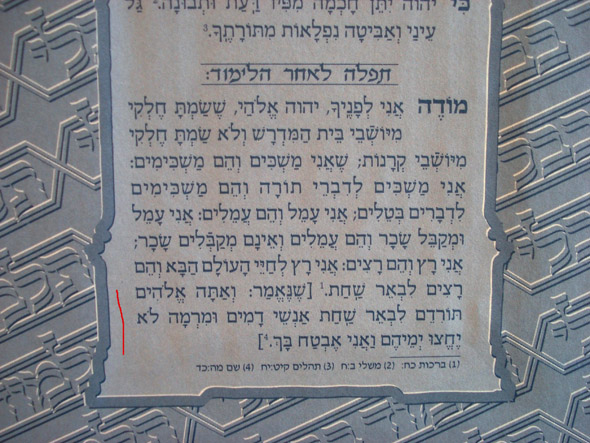
מודים אנחנו לפניך ה’ אלהי ששמת חלקינו מיושבי בית המדרש ולא שמת חלקינו מיושבי קרנות שאנו משכימים והם משכימים אנו משכימים לדברי תורה והם משכימים לדברים בטלים אנו עמלים והם עמלים אנו עמלים ומקבלים שכר והם עמלים ואינם מקבלים שכר אנו רצים והם רצים אנו רצים לחיי העולם הבא והם רצים לבאר שחת שנאמר וְאַתָּה אֱלֹהִים תּוֹרִדֵם לִבְאֵר שַׁחַת אַנְשֵׁי דָמִים וּמִרְמָה לֹא יֶחֱצוּ יְמֵיהֶם וַאֲנִי אֶבְטַח בָּךְ
Our exalted state can only be fully appreciated when contrasted with that of those not fortunate enough to join us in the beis hamidrash. The Yoshvei Kranos, identified by Rashi as idle shopkeepers who waste their time in frivolous conversation, are deprived of the rich rewards of Torah study, both in this world and in the next. They are to be pitied and even disdained for their boorish lack of concern for lofty matters.
The prayer proceeds a step further, however, in the concluding verse from Tehillim 55:24, cursing the ignorant with early death, destruction, and perhaps even damnation! And you, HaShem, lower them into the pit of destruction, murderous swindlers, may they not live out even half their expected lifespan. Are they really so wicked? At our joyous simcha, shouldn’t we rather be resolving to help inspire and mekarev these poor folk?
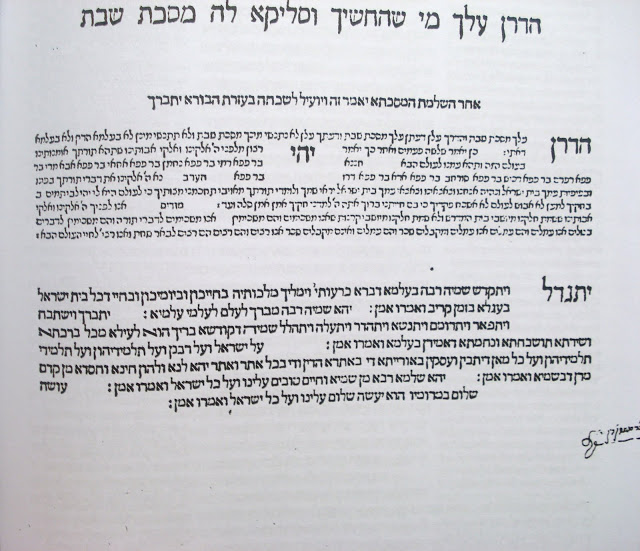
Did the creator of this prayer, Rabbi Nehunia Ben HaKana, or anyone from Hazal recite this verse? (If so, there would certainly be a a good reason for it.) A survey of the sources reveals a resounding: no. Not only does it not appear in Gemara Brachos 28b, but it does not appear in any of the known manuscripts, Rambam[2], or any of the many poskim rishonim that quote the prayer. Early versions of the Hadaran prayer do not include the verse either! See the attached photo of the early Venice and Soncino editions of the Talmud.[3] Nowhere. Gornisht.


In his Sefer Divrei Torah (Mahadura 5)the Munkasczer rebbe, an avid bibliophile, indicates that the verse should be omitted.

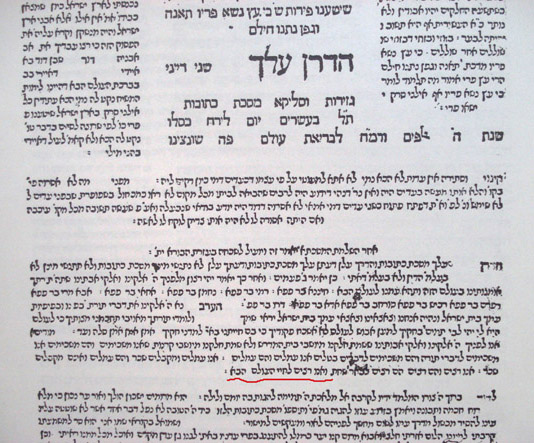
The verse only appears in one known halachic source: Halachot of Rif (Rabbi Yitzhak Alfasi). See below (1st edition, Constantinople 1509):

Why would Rif add this verse? He is usually involved with editing away verses from the Gemorrah, not adding them! Does it reflect an ancient custom of his? Why didn’t any of the great Rishonim who studied Rif cite this verse?[4] Ra’ah in his commentary on Rif quotes the entire prayer without mentioning the verse! None of the many known manuscript versions of Rif mention the verse![5] Its earliest known appearance in this prayer is in the first printed edition of Rif (published almost exactly 500 years ago, רס”ט, in Constantinople). Why did the publishers include the verse?
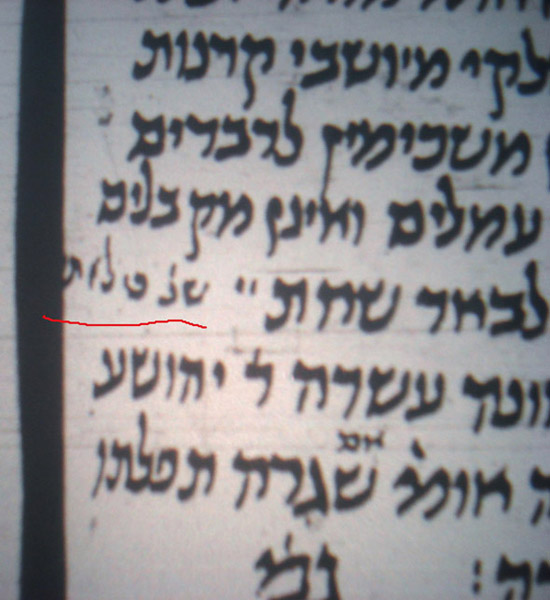
The answer may lie in a marginal gloss of one lone manuscript version of Rif[6].


In the left hand side of the manuscript, one can see that a later scribe added a citation to a verse. Only a few letters are visible in the microfilm: שנ’ כי לא ת
This is clearly referring to a different verse! Without a doubt, it is the same verse cited at the end of the version of the prayer found in the Talmud Yerushalmi:
כִּי לֹא תַעֲזֹב נַפְשִׁי לִשְׁאוֹל לֹא תִתֵּן חֲסִידְךָ לִרְאוֹת שָׁחַת[7]
“For you will not abandon my soul to the grave, you will not allow your pious one to see (his) destruction.”
This verse is most fitting and proper here as a conclusion of the prayer. It lacks all of the problematic vitriol of the commonly found verse. This scribal addition undoubtedly represents an ancient custom[8], which the printers of Constantinople may have been unfamiliar with.[9] The verse they substituted, however, was certainly most familiar to them in a different context:
משנה מסכת אבות פרק ה
אבל תלמידיו של בלעם הרשע יורשין גיהנם ויורדין לבאר שחת שנאמר (תהלים נ”ה) ואתה אלהים תורידם לבאר שחת אנשי דמים ומרמה לא יחצו ימיהם ואני אבטח בך:
The students of Bilaam are certainly deserving of such a curse, for they are involved in sorcery, treachery, and other wickedness – if only they would be idle as the shopkeepers, that would be a tremendous improvement!
The custom of reciting Pirkei Avos on Shabbos afternoon dates back to time immemorial, and as a result of the regular study, many have mastered its teachings literally by heart. It doesn’t seem at all far-fetched to assume that the printing of this verse in Rif was a simple oversight. Eventually the verse entered into the hadaran prayer as we know it.
The prayer of Nehunia Ben HaKana is also found in many printed prayer-books in its original form, to be recited upon leaving the Beis HaMidrash. It is usually located just after shaharith.[10] Many of these contain the verse, such as the prayerbook printed by Rav Ya’akov Emden on his private press[11]. But many do not contain the verse.[12]
Rambam ruled that upon entering and exiting it is obligatory to recite the prayer of Nehunia Ben HaKana[13]. The Shulhan Aruch also follows his psak. In order to further facilitate the fulfilment of this duty, printers have recently begun printing the prayer in the inside front covers of their gemorrahs and mishnayos, including the verse. The editors of Artscroll are the most democratically accommodating – they include the verse in parenthesis. You can decide whether to say say it or not.

It’s well worth noting that a precedent to this custom of the printers is found in the Pesicha to the famous Tosafos Yom Tov commentary on the mishna by Rav Yom Tov Lipman Heller. He writes that since the recitation of these prayers is obligatory, and since many are unfamiliar with them, as they do not appear in the siddur (of his time), that he is printing them, according to the nusach of the RIF. And his nusach follows the printed version of RIF. He does not explain why he chose the RIF’s version over that of the Talmud, but it seems clear that he did not have access to manuscripts of RIF, and, unfortunately, relied on corrupted printed versions. It’s also unclear as to whether his concerns for proper nusach were with the concluding prayer at all, or with the prayer recited upon entering the House of Study, whose wording is much more varied between different manuscripts and printed versions. It could be that this “endorsement” of the Tosafos Yom Tov to the printed version of RIF contributed to the eventual inclusion of the verse in later printings of the Hadaran prayer at the end of tractates and later, in prayer-books.
Hopefully, our good friends, the “yoshvei kranos” will be taking part in a daf yomi shiur and joining us at the next siyum, reciting the Hadaran along with us, and meriting Olam HaBa!
Appendix
Theaters and circuses, the Talmud Yerushalmi (and Rav Kook)
(By a happy coincidence, David Segal recently posted at the Seforim Blog on this very topic!)

We are not the first ones to find the prayer in the hadaran to be overly contentious. No less an illuminary than Rav Avraham Yitzchak Kook, OBM, the first chief Rabbi of Israel, was deeply disturbed by this prayer’s tone. Yoshvei Kranos are today’s ba’alei batim. They keep mitzvos and give tsdakah. The takanah to read the torah on Monday and Thursday is for them, so they should not go too long without hearing words of torah. It goes completely against the grain of Hazal to curse them! In fact, even without the verse, why should they be punished at all?
Rav Kook proposed a truly fantastic solution. A corruption occurred in the text: the yoshvei קרנות of the Talnud Bavli are really yoshvei קרו”ת, roshei teivos for קרקסיות andתרטיות , those who patron theaters and circuses, which in fact, is the exact nusach of the version of the prayer found in the baraisa of the Talmud Yerushalmi!
What exactly goes on in these theaters and circuses? The gemarah in Avodah Zara 18b states that they are essentially a moshav leitzim, foolish and irreverent. Another opinion cited there is that these were much more nefarious centers of Avodah Zara and Shfichus Damim, gladiator sports, public executions and like. Historically, both of these opinions seem correct – theaters and circuses where occasionally more pernicious activities took place. All in all, they don’t seem to be much too different than the modern versions of popular “entertainment”[14].
The curse of Rav Nehunia’s prayer is directed against these insidious people who waste away their free time in such sordid foreign entertainments, as opposed to the Torah-true who spend their free time immersed in learning in the beis hamidrash or in prayer in the beis kneses, even if during the work-day they are but simple “idle” shopkeepers. In this context, even the dubious additional verse is somewhat appropriate[15].
Rav Kook went so far as to call for “correcting” the nusach of the prayer and adopting the version of the Talmud Yerushalmi! That proposition certainly has merit, but is it really the true intention of the Talmud Bavli itself?[16] Perhaps this is not the only suggestion of his that, in retrospect, seems a bit far-fetched.[17] However, it seems that his insight into the tradition of the Talmud Yerushalmi and its stark opposition to “theaters and circuses” teaches a lesson which is especially pertinent today, and can deepen our appreciation of the importance of this truly enigmatic prayer.

Here are Rav Kook’s words (you may click this image to read a larger copy):

The original version of the prayer appears to be found in the Talmud Yerushalmi, produced under the glare of Greco-Roman culture with its ubiquitous theaters and circuses. In Sasanian Babylon, these cultural expressions were unheard of, hence they were restated as the more familiar yoshvei kranos. In contrast, our modern secular culture of entertainment is, for the most part, a western one, and hence the version of the Talmud Yerushalmi takes on crucial added significance today.

Many thanks to Moshe Bloi, Ezra Chwat and Shamma Friedman. All errors are, of course, mine.

Note: This article is based on one which originally ran in Kolmos of Mishpacha magazine and they take no responsibility for the content here. You can read the original article here.

UPDATE 8/18/2011: A song has recently been composed as a result of this article and discussions surrounding it’s Hebrew and English versions. The song lyrics consist of only the two verses and highlights the contrast between them musically.

Here the composer explains the composition in Hebrew and provides a link to the previous Hebrew discussion which inspired it:

[1] Brachos 28b. The Hadaran prayer has been adapted to the inclusive plural form, מודים אנו, rather than the original singular מודה אני
[2] See attached photo of the Tefillah in Commentary on the Mishna, that Rambam himself copied by his own hand!


[3] Note that the order in the prayer is switched around, probably in order to end on an upbeat, good note.
[4] In the back of the new Oz V’Hadar gemarras, the Magid Ta’alumos is cited, who explains that the verse is included in order to end the prayer on a positive note (!), v’ani evtah boch, insead of be’er shachas. The same explanation is offered by the Dinover rebbe, the the author of the classic Bnei Yesoschar, in his Maggid Ta’alumah (פרעמישלא תרל”ו) in his commentary v’Heye Bracha, referring to the inclusion of the verse by the Tosafot Yom Tov in the introduction to his monumental commentary on the Mishna. He makes no reference to the Rif. Perhaps he thought that the verse was added to the Rif according to the Tosafos Yom Tov? It’s worth noting that both the Maggid Ta’alumos and the Maggid Ta’alumah have the same observation on the inclusion of this verse, independently!
[5] Thanks to Dr. Ezra Chwat, of the Israel National Library Manuscript Department, who is preparing a new critical edition of Rif (scheduled to be used in the upcoming edition of Shas Lublin), for allowing me to utilize his forthcoming work. Further, he guided me to four additional “less reliable” manuscripts which are not utilized centrally in preparing his new edition. None of them contain the verse either.
[6] Oxford Huntington 135:
[7] תהלים פרק טז, י
[8] A fascinating new Teshuva by Rav Yitzhak Ratsaby of Benei Brak has been published (Ma’ayan Nissan 5770) on the exact question addressed in this article, the inclusion of the concluding verse in the prayer of Rav Nehunia ben Hakana (link). There, Rav Ratsaby cites Yemenite prayer-books and Teshuvot which demonstrate that the custom of reciting the verse from the Talmud Yerushalmi (like the scribe of the RIF manuscript) continued among certain Yemenite kehillot until almost the present day. Unfortunately, Rav Ratsaby did not check manuscript versions of RIF, and thus understands that the talmud of the RIF himself contained the problematic verse, leading him to propose far-fetched justifications for the custom. Here is my response (Ma’ayan Tammuz 5770).
[9] Although it seems quite doubtful that the printers had this exact manuscript in front of them, it seems likely that they had a similar manuscript. Dr. Ezra Chwat doubts that the Oxford Huntington manuscript was used by the printers as there are many discrepancies between it and the printed version of Rif. It serves as the primary manuscript for Dr. Chwat’s new edition of RIF. According to Dr. Chwat, the manuscripts can be used to resolve many seeming contradictions between RIF and RAMBAM!
[10] So that one may go מחיל אל חיל, from the beis hakneses to the beis hamidrash.
[11] Rav Yitzhak Ratsaby, in his recent tshuva (see note above) argues that the custom in Rav Emden’s siddur was only to recite part of the verse, but it seems more likely that this was simply a printer’s abbreviation. The reliability of the wordings found in this siddur are quite questionable, based on Rav Ya’akov Emden’s own testimony in the introduction that many texts were simply copied from other prayer-books.
[12] Among current prayer-books: the accurate Tefillas Yosef and Ezor Eliahu do not include the verse. Siddur Vilna, on the other hand, does contain the verse.
[13] Commentary on the Mishna. See Levush and Aroch HaShulhan (Orach Haim 110) for explanations as to why many do not recite the prayers.
[14] Internet anyone?
[15] This fact was noted independently in the recent Responsa of Rav Yitzhak Ratsaby, Ma’ayan Nisan 5770
[16] The Aderes in Tefilas Dovid, p.12, states that yoshvei kranos are also engaged in nefarious activities, as seen in the Talmud Yerushalmi. He claims that yoshvei kranos here doesn’t follow its normal meaning, going against Rashi. Rav Kook was the Aderes’ son-in-law so its not surprising that they both have the same approach in understanding the Bavli according the the Yerushalmi. Rav Kook probably favored Rashi’s interpretation of yoshvei kranos, and hence, was forced to actually alter the text of the Bavli.
[17] Rav Kasher, in Torah Shleima, Vol 15 page 140, dismisses Rav Kook’s theory entirely, claiming that the version of the Talmud Bavli is the original one! His proof is the fact that a parallel to the bavli appears in Pirkei Avot d’Rebi Nathan A. However, that collection is widely recognized to post-date the Bavli itself, which it widely quotes from.


Shaul Magid – ‘Uman, Uman Rosh ha-Shana’: R. Nahman’s Grave as Erez Yisrael

“‘Uman, Uman Rosh ha-Shana’: R. Nahman’s Grave as Erez Yisrael” Shaul Magid Indiana University/Bloomington Professor Shaul Magid is the Jay and Jeannie Schottenstein Chair of Jewish Studies at Indiana University. This text below was originally a talk delivered in Winnipeg, Canada, in commemoration of the 200th yahrzeit of R. Nahman of Bratslav. A revised and expanded version will hopefully be included in Interpreting Hasidism: Essays in Hasidic Textuality from The Baal Shem Tov to the Present. Special thanks to the editors (and readers) of the Seforim blog for their gracious consideration of this essay. His published volumes include Hasidism on the Margin: Reconciliation, Antinomianism, and Messianism in Izbica/Radzin Hasidism (Madison: University of Wisconsin Press, 2003), From Metaphysics to Midrash: Myth, History, and the Interpretation of Scripture in Lurianic Kabbala (Bloomington: Indiana University Press, 2008), and a volume tentatively entitled Interpreting Hasidism: Essays in Hasidic Textuality from The Baal Shem Tov to the Present.

There is a Talmudic adage that teaches: “evil-doers are dead even when they are alive; righteous individuals are alive even when they are dead.” Setting aside the obvious metaphoric intent of this comment, in the case of Rabbi Nahman of Bratslav who left this world on the intermediate days of Sukkot 200 years ago, this teaching has a more literal flavor. Nahman was one the few zaddikim who meticulously planned his death – suffering for years with tuberculosis – advising his disciples how to behave after his passing and urging them that if they visit his grave he will “pull them up from the netherworld by their sidelocks.” Almost immediately after his untimely death at the age of 39 and burial in Uman in the Ukraine, his gravesite became a place of pilgrimage for Bratslaver Hasidim, often under harsh weather conditions, vehement and often violent harassment by other Hasidic sects, and later harsher political realities. There were times when there was barely a minyan at his gravesite on Rosh ha-Shana, the most auspicious days of pilgrimage. Today there are close to 20,000 souls, religious, secular, men, women and children who flock to Uman on Rosh ha-Shana to pray at the grave of this enigmatic Hasidic master. The Ukrainian government recently refurbished an old military airstrip in Uman to accommodate the jumbo jets that arrive from Israel, Europe, and the US, and the city magistrate built hotels to accommodate pilgrims just for this two-day festival. Tonight I want to explore this seemingly odd phenomenon of Nahman’s grave, paying close attention to the strange but not unprecedented notion that this gravesite is considered, for Bratslaver Hasidim, not only a holy place but “Erez Yisrael.” Grave veneration and its significance in the larger schema of devotional life is shared by many religious traditions including Judaism. The Torah, beginning with the descriptions and the importance of the gravesites of the biblical characters in Genesis, culminating with the ambivalence about knowing the site of Moses’ grave at the end of Deuteronomy, emphasizes the sanctity of the grave as sacred space. The importance of the gravesite was not adopted by post-biblical Judaism as merely a theoretical notion but had practical implications as well. Rabbinic tradition understood the graveyard as a place of meeting between the living and the dead, thus serving as a place imbued with a highly charged spiritual energy where penitential prayers could more easily be efficacious. The rabbis believed both in the sacredness of the place (i.e., the graveyard) coupled with the more general notion (not limited to the space of the graveyard) that the righteous in heaven could serve as intermediaries and petition the celestial court for mercy. Maimonides codifies as law that if one wishes to ask forgiveness before Yom Kippur from someone who has died he or she should visit their grave and ask forgiveness there. The medieval kabbalistic tradition, from the Zohar through Lurianic Kabbalah in the sixteenth century, developed this rabbinic notion of the graveyard as a highly charged spiritual place to a holy site for pilgrimage, whereby the journey to the grave of the righteous was viewed as a holy ascent (e.g. Zohar). The graves of the righteous became the place where one could actually absorb the spiritual energy of the departed Zaddik by means of prostrating oneself on the grave. The Lurianic contribution to the development of this idea suggests that the grave of the righteous is a place of transparency between this world and the next whereby the living are transformed and purified by embodying the souls of the dead through bodily prostration on the grave. The earlier rabbinic and zoharic notion that the grave is the place where the dead interact with the living and prayers are more readily heard via the mediation of the parted one becomes, for Luria, something far more profound. The grave becomes the place where the worshipper is purified through contact with the dead/living Zaddik and transformed by embodying the soul of the Zaddik which hovers above the grave itself, freed from its corporeality of the physical body. This phenomenon of “soul hovering” is limited to the righteous ones who, having achieved otherworldliness in this life, are able to maintain a connection to this world after death. (This may be his reading of the talmudic passage cited above that the righteous are alive even after death.) The transparency model of the grave initially suggested by the rabbis becomes, for Luria, the place where the dead, as it were, embody the living and thus purify the living soul from sin and impurity. The pilgrimage model of the Zohar coupled with the transformative model in Luria serve as the foundation for R. Nahman of Bratslav’s theory of his grave as the transparent creative center, the place which holds the power of creation and the place from which redemption will ensue. Although grave veneration had already taken on a devotional component in the Zohar and more prominently in Luria’s re-construction of Judaism, the Bratslav tradition is unique in that its entire Hasidic ideology is centered around the grave of their venerated master Nahman of Bratslav. Although this idea only bears fruit in post-Nahman Bratslav literature, beginning with the first Rosh Ha-Shana after his death, it’s importance begins years before, soon after Nahman’s return from his journey to Erez Yisrael in 1798-99. It was only then that he began to speak simultaneously about his impending death and the importance of visiting his grave, all within the larger schema of the transformative experience of his journey to the Holy Land. His death, place of burial and the unique character of his grave become increasingly prominent in his teachings as his tuberculosis worsened and his death drew near. One familiar with zoharic literature will immediately notice that Nahman’s pre-occupation with the importance of his own death reflects the discourse of the Idrot, the opaque yet highly influential sections of the Zohar which focus on R. Shimon bar Yohai’s death at the hands of the Romans. It is somewhat surprising that post-Nahman Bratslav literature never makes mention of this highly charged and seemingly obvious connection. Perhaps it is due in part to the Bratslav position, inspired by Nahman himself, that he is an unprecedented figure in Jewish history, one who owes allegiance to no one. This is exhibited by the almost complete absence of any reference in his collected teachings, Likkutei MoHaRan, to any other Hasidic master, including his great-grandfather, the Baal Shem Tov. In any event, the connection between Nahman’s pre-occupation with his death and the discourse of the death of R. Shimon bar Yohai in the Zohar should not be underestimated precisely because the messianic impulse of the Zohar (Idrot), a phenomenon already documented by Yehudah Liebes, is alive in Nahman’s discussion as well. It is therefore curious that Liebes who does draw our attention to the messianic underpinnings of Nahman’s Tikkun Ha-Kelali (the Ten Psalms Nahman directed his students to recite daily as a tikun for sin) and its connection to Sabbateanism, never develops the extent to which the recitation of the prescribed Psalms which comprise Tikkun Ha-Kelali are meant to be recited at Nahman’s grave as part of the ritual of purification in conjunction with visiting his burial place (known as his “zion”). In my view this is of utmost importance in the Bratslav tradition precisely because Nahman’s grave represents a manifestation of the Holy Land, a place even more transparent than the land itself, which is quite peculiar and serves as a the basis of his messianic vision. My claim here is that Nahman’s grave as the centerpiece of the Bratslaver’s devotion life and Erez Yisrael as the center of Nahman’s spiritual life are inextricably intertwined. Although the correlation between his trip to Erez Yisrael in his development as a Zaddik has received close scholarly attention – a more nuanced understanding of Nahman’s relationship to Erez Yisrael, his vocation as an unprecedented Zaddik coupled with his messianic strivings, cannot be achieved without understanding the significance of his grave in his own mind as well as in the larger trajectory of Bratslav Hasidism. In fact, it is my belief that the significance of his grave as Erez Yisrael serves as the cornerstone of his entire ideational edifice and contribution to Jewish thought. As I mentioned above, earlier kabbalistic sources (rooted in more opaque rabbinic comments on the matter) present the grave as the transparent space between this world and the next, the place where one can embody the soul of the dead precisely because the soul is no longer confined by the physicality of the body. Nahman universalizes this idea by suggesting that the grave of the Zaddik as a transparent place also holds the potential to draw unmitigated mercy into the world, thus bridging the distance between exile and redemption. This is based on his utilization of the kabbalistic mapping of the emanation of divine effluence into the world as it relates to the death of a righteousness individual. His assumption is that death is the liberation from the confines of the Intellect or worldliness, and entry into the realm of Pure Spirit. Yet the deaths of all individuals are not identical. It is only the Zaddik who can draw this realm of Pure Spirit into the world, because the Zaddik, by means of what he has achieved in this world, easily traverses between this world and the next, even during his life. The transparency of the gravesite of the Zaddik is already forged by the devotion of the Zaddik during his life. Although others may benefit from the glory of the next world, their knowledge of and communication with this world ceases once they pass through the opaque and final barrier of death. But Nahman maintained that life and death for the Zaddik are not mutually exclusive categories. This attitude is exhibited in Nahman’s sarcastic remarks about the simpletons who he witnessed visiting the graves of their ancestors in Uman, crying and begging for mercy as if their ancestors could hear them. Only the Zaddik can hear prayer from the world beyond, Nahman comments, because the Zaddik has achieved the next world while still alive in this world. Hence, he describes his journey from life to death as “going from one room to the next.” This transparent space which is embodied in the grave of the Zaddik is also the creation point, the place where the finite and the infinite meet. (Likkutei MoHaRan 48). He develops this midrashic idea by taking the infinite-finite modality of creation and presenting it within the framework of creation and redemption. The sacredness of space, which is determined by its transparency, is simultaneously the place of creation and redemption because it is the place where Wisdom (Hokhma) is overcome by the higher dimension of Spirit (Keter), a movement whereby the finite is overcome by the infinite. This movement is only achieved and maintained by the true Zaddik (only Nahman!) who embodies this pure spirit during his lifetime. Nahman claimed to have achieved this state of purity as the result of his trip to Erez Yisrael in 1798. Thus, upon his return from Erez Yisrael he describes his experience as one of achieving “expanded consciousness’ (mohin d’gadlut), which is defined sometimes as “utter simplicity” (p’shitut) and complete loss (read: overcoming) of knowledge. This dimension of “not-knowing” always holds a higher and more refined status than “knowing” in Nahman’s highly anti-rationalist orientation. This new level of consciousness achieved during his brief but cathartic encounter with the Holy Land resulted in his utter abandonment of anything he had taught prior to his trip, which he determined was the product of Hokhma, or knowledge, as opposed to Keter, or Pure Spirit. Most of his teachings collected in Likkutei MoHaRan were delivered in the decade after his return from Erez Yisrael in 1799 until his death in 1810 (he remarked to his disciple R. Nathan that all his teaching from before his journey to the Holy land are null and void). The elevation of the Intellect to Spirit, which is nothing less than the overcoming of humanness and exile, was thus achieved by Nahman, in his own estimation, during the last decade of his life. This transformative experience is not attained merely by his presence in the Land, although the physical Land does play a central role. (e.g. Shivhei Ha-Ran where he stresses the literalness what he means by the Holy Land, “the houses” etc.). Such an achievement is the result, rather, of absorbing the Land (not merely encountering it), of becoming a human embodiment of Erez Yisrael thus enabling him to transport its sanctity beyond its physical boarders. This transference of sanctity from the Land to an individual is only true of the Zaddik who, as a pure vessel, can receive, be transformed and integrate that sanctity into his life. Much has been made of Nahman’s distinction between the physical Land of Israel and the “aspect” (behina) of Erez Yisrael, a spiritualized idea which may be related to but not identical with the Land itself. Discussions by Martin Buber and Eliezer Schweid about Nahman as a proto-Zionist rest on these slippery distinctions in his writings. I would suggest that these two formulations in Nahman’s writings are hinged together by means of the Zaddik in general and the Zaddik’s grave in particular. That is, the aspect of Erez Yisrael (behinat Erez Yisrael) arises when the Zaddik visits the physical Land, absorbs it, and transports its spiritual essence outside its borders. His teaching becomes the transmission of Keter (Spirit) rather than Hokhma (Knowledge), the result of his embodiment of Pure Spirit drawn from the Holy Land thus overcoming the more human and exilic dimension of Hokhma. However, this “new” Torah (his teachings after he returns from Erez Yisrael), which for Nahman is the true Torat Erez Yisrael – an idea originating in rabbinic literature but completely transformed in Nahman’s imagination, uprooted from any territorial limitations – is a necessary but not sufficient condition to complete the (redemptive) process from Erez Yisrael to behinat Erez Yisrael. His torah only prepares his listeners for what is to come. The completion of this transformative messianic process occurs via the death and burial of the unique Zaddik in the earth of Huz l’Aretz and the encounter of his disciples with the grave whereby they too absorb elements of this sanctity. His death and burial sanctifies the land outside of Erez Yisrael, widening the boarders of sanctity from the sacred place of Erez Yisrael to the new transparent place, which is the grave of the Zaddik. The spiritualization of the land (behinat Erez Yisrael) carries messianic implications which lie at the heart of Nahman’s discussion about his grave, accompanied by the liturgical formula of the Ten Psalms (Tikkun Ha-Kelali) which were initially given to be recited at his gravesite. (Liebes) There is an important distinction implicit in Nahman’s teaching between the Land itself and the aspect of the Land (behinat Erez Yisrael) which arises via the Zaddik’s interaction with it. When the true Zaddik visits Erez Yisrael, absorbs it and gives rise to the spiritualized aspect of Erez Yisrael (behinat Erez Yisrael) activating a spatial transparency, which the Land itself cannot produce without the aid of the Zaddik’s visit. In some sense, his visit to Erez Yisrael and his subsequent return to Huz l’Aretz (a component of great significance which we will see below) transforms not only the Diaspora, via his grave, but transforms the Land itself by released the spiritualized energy contained within it. The Land itself is thus brought to life, as it were, by the Zaddik’s visit, and it is the Zaddik who takes the sanctity of the Land beyond its borders. The notion that in the messianic era the entire world will become Erez Yisrael has precedent in medieval kabbalistic literature (e.g. Avraham bar Hiyya’s Megilat ha-Megaleh). Another important component in his journey to Erez Yisrael and subsequent return to the Ukraine is his acquisition of “Torat Erez Yisrael” which serves as the arc between his visit to the Land and his subsequent death and burial. In various places Nahman is said to have made the provocative statement that he had achieved Torat Avot, (lit. the Torah of the Patriarchs) a curious term which he never explains. Various accounts reflecting his new achievement resulting from his trip, one of which takes place on a Turkish warship just before Passover on which he and a disciple were traveling from Acre to Turkey. Being erev Pesah, Nahman was unsure whether they would reach port in time for the holiday and thus unsure whether they would be able to fulfill the mitzvah of eating matza. Nahman asserted that he was now (in the wake of his trip to Erez Yisrael), if necessary, able to fulfill mitzvot in a purely spiritual manner, that is, without physically performing the mitzvah itself. Although we are told they did arrive in time for the festival, this assertion may illuminate his opaque statements about achieving Torat Avot. Commenting on the talmudic claim that the Patriarch’s fulfilled the entire Torah, even erev tavshilin, a rabbinic decree utilizing a legalistic loophole permitting one to cook on Yom Tov for the upcoming Shabbat, many Hasidic texts speak of the a spiritualized Torah before Sinai whereby the biblical characters in Genesis (specifically Abraham) were able to fulfill the entire Torah because they were evolved enough to intuit divine will without the commandments. It is my feeling that this was the ideational foundation of Nahman’s statement on the Turkish warship mentioned above. His assertion about Torat Avot is a formulation of his more developed notion of Torat Erez Yisrael. He held that his becoming Erez Yisrael via his journey resulted in the acquisition of Torat Erez Yisrael which is the pre-Sinaitic Pure Spirit of Torat Avot, an embodiment of the sephirah Keter. The fact that (1) the Patriarchs largely dwelled in Erez Yisrael, (2) revelation was in Huz l’Arez, resulting in the suggestive dichotomy between Sinai and Zion, and (3) Moshe, the arbiter of Torah, never entered the Land of Israel, all play an important role in Nahman’s imaginative thinking. Torat Moshe or revelation as the Torah of Hokhma verses Torat Elohim, or Torat Erez Yisrael, which is the Torah of Spirit, is an idea implicit in R. Nahman’s discourse developed in a different manner by his great grandfather the Baal Shem Tov and later in Polish Hasidism, which was significantly influenced by Nahman’s Likkutei MoHaRan. His suggestion that his encounter with Erez Yisrael unlocked the spiritualized Torat Avot, which itself may be yet another layer of his more ambiguous behinat Erez Yisrael, is an idea which had far reaching influence. We find similar ideas in Zionist thinkers such as Abraham Isaac Ha-Kohen Kook and Aaron David Gordon, both of whom were influenced by the teachings of Nahman. Yet I maintain that these readers of Nahman mis-read his idea of Erez Yisrael precisely because they are not cognizant of the fact that this “new” component of sanctity whereby the Zaddik becomes the Land, necessitates returning to Huz l’Aretz to complete the messianic process. Hence his journey home, his subsequent teaching and his death and burial all congeal to push the impending messianic era toward fruition. Nahman’s view of himself as the true Zaddik, one who has no authoritative spiritual lineage precisely because he is sui generis, lies at the foundation of his thought. This claim was not only true of how he viewed himself vis-à-vis his contemporaries but more importantly his position as a figure in widest span of Jewish history. His uniqueness becomes manifest through his unprecedented journey to the Holy Land, a trip which he held introduced a new dimension into the exilic world. What I am about to suggest has no source in Bratslav literature and thus may be construed as speculative or, at best, midrashic in nature. However, it illuminates the extent to which his grave became the centerpiece of his entire life, the culmination of his journey, and the prism through which his messianic vocation must be seen. Nahman makes various comments throughout his writings about what he determined as his spiritual lineage, beginning with Moses, R. Shimon bar Yohai, R. Isaac Luria ending with his grandfather, the Baal Shem Tov. Yet Nahman maintains in subtle and not-so-subtle ways that he transcends them all, including Moses. Moses’ grave is unknown and will remain so. R. Shimon bar Yohai and Luria’s graves are both in Erez Yisrael. The grave of the Baal Shem Tov is in Hutz l’Aretz and, as opposed to Moses’ grave, became a shrine which Nahman visited many times in his youth. Although the graves of these masters were held in high esteem by Jewish pilgrims, according to the Bratslav tradition, none contained the sanctity and redemptive quality of Nahman’s grave in Uman. The reason for this, I believe, lies in Nahman’s journey to Erez Yisrael, the completion of which was his return and subsequent death in Huz l’Aretz. Moshe is born and dies in Huz l’Aretz, never entering the Land. R. Shimon bar Yohai resides in Erez Yisrael his entire life and is buried there. Luria is born in Erez Yisrael, spends most of his life in Egypt and returns to Erez Yisrael where he dies and is buried in 1570. The Baal Shem Tov is born in Hutz l’Aretz and attempts unsuccessfully to reach Erez Yisrael, dying in Mezybuzh. Of the four, only R. Nahman is raised in Hutz l’Aretz, reaches Erez Yisrael and successfully returns to Hutz l’Atretz to spread Torat Erez Yisrael and is subsequently buried in Uman. This cycle of immigration and emigration (aliya and yerida) is the focal point of Nahman’s life and, in my mind, is the foundation of his messianism. His journey is reminiscent of Rabbi Akiba’s to Pardes, to experience the sanctity of God’s glory and emerge unscathed. In Nahman’s mind, however, his return carries far greater weight. Whereas we are not told of any significant change in R. Akiba’s torah after his ascent into Pardes, Nahman’s journey resulted in the acquisition of Torat Erez Yisrael, an apprehension of the pre-Sinaitic Torat Avot, the rise of the spiritualized nature of Erez Yisrael s behinat Erez Yisrael and began the widening of the boarders of Erez Yisrael in the sanctification of his burial place in Uman. In the Bratslav tradition, conventional notions of grave veneration have been transformed, making the grave the transparent place where new light brightens the world, new Torah descends from behind the curtain of Sinai and the Zaddik as axis mundi absorbs and transforms the sanctity of the Land. In sum, I would suggest that the Bratslav pilgrimage tradition has at least three components that are unique to the phenomena of religious pilgrimage in general. First, the devotee’s pilgrimage to Nahman’s grave is predicated on Nahman’s own pilgrimage to Erez Yisrael. That is, one could ask, given Nahman’s insinuation that his trip gave rise to the importance of visiting his grave, why isn’t a trip to Erez Yisrael proper preferred to a pilgrimage to his grave. A preliminary answer may be that Nahman held that one who is not a Zaddik cannot achieve in Erez Yisrael what he achieved. A true journey to Erez Yisrael, one which could in some sense replicate Nahman’s journey, can only be accomplished by visiting the Erez Yisrael of his grave, the source of behinat Erez Yisrael. In fact, Nahman was adamant about not being buried in Erez Yisrael, fearing that his disciples wouldn’t visit his grave and thus the efficacy of his journey and return would be for naught. For him, the pilgrimage to his grave in Hutz L’Aretz is more important than the pilgrimage to the Land itself. His journey to the Land, resulting in his absorption and embodiment of Erez Yisrael, had at least two consequences that make his grave more prominent than the Land itself. First, it widened the boundaries of the Holy Land, a redemptive sign born out of previous kabbalistic literature that the messianic age will result in widening the boundaries of Erez Yisrael. Second, it activated the source of the sanctity of Erez Yisrael, behinat Erez Yisrael, a spiritualization of the Land which enabled the Land itself to fulfill its holy destiny. Finally, his grave became a representation of his messianic vocation. As both Art Green and Yehudah Liebes have noted, Nahman’s messianic vision was not centered on being the Messiah but, closer to the model of R. Shimon bar Yohai in the Zohar (Idrot), as forging the path toward revealing the Messiah. Just as the Zohar was viewed as the doctrine that unlocked the esoteric nature of Torah, Nahman’s grave was envisioned by him and then his disciples as unlocking the esoteric power of Erez Yisrael. Finally, his journey and subsequent teaching enabled the Land to speak, as it were, as his teachings reflected the true Torat Erez Yisrael, the Torah rooted in the Pure Spirit of Keter which is revives the pre-Sinai Torah of the Patriarchs. It may seem odd today that thousands of Bratslaver Hasidim leave their families behind and travel from Israel to the small city of Uman in the Ukraine to celebrate Rosh Ha-Shana. One would think Israel and not the Diaspora should be the spiritual destination of Jews during this time of year. But when asked about his impending trip from Israel to Uman for Rosh ha-Shana, the Jerusalemite Bratslav manhig Schmuel Shapiro obliquely responded, “From Erez Yisrael to Erez Yisrael.” I have tried here to shed some light on those five words.


מנהג אכילת ה’סימנים’ בליל ראש השנה וטעמיו

מנהג אכילת ה’סימנים’ בליל ראש השנה וטעמיו*
מאת אליעזר בראדט
מנהג אכילת ה’סימנים’ בליל ראש השנה נפוץ ומוכר בכל קהילות ישראל[1]. וכבר נתנו בו רבותינו הראשונים כמלאכים טעמים:
בעלי התוספות מסבירים: “ראש השנה, מפני שהוא תחילת השנה, מרבים בסעודה לעשות סימן יפה, וכמה ענינים עושים בו לסימן יפה, כדאמרינן במסכת הוריות וכריתות”[2]. ומהפנייתם למסכתות הוריות וכריתות ברור, שכוונתם לתת טעם למנהג ה’סימנים’.
אולם גם לאחר דבריהם עדיין לא מובן מדוע ראיית ירקות וזרעונים מסויימים או אכילתם מביא ‘סימן יפה’ לכל השנה; כיצד זה מתבצע?
לפיכך הוסיפו רבותינו האחרונים להמתיק המנהג בהוספת יסודו המפורסם של הרמב”ן בפירושו על התורה:
ודע, כי כל גזירת עירין כאשר תצא מכח גזירה אל פועל דמיון, תהיה הגזירה מתקיימת על כל פנים. ולכן יעשו הנביאים מעשה בנבואות, כמאמר ירמיהו שצוה לברוך: ‘והיה ככלותך לקרוא את דברי הספר הזה, תקשור עליו אבן, והשלכתו אל תוך פרת, ואמרת: ככה תשקע בבל’ וגו’ (ירמיה נא סג-סד). וכן ענין אלישע בהניחו זרועו על הקשת (מל”ב יג טז-יז): ‘ויאמר אלישע: יְרֵה וַיּוֹר, ויאמר: חץ תשועה לה’, וחץ תשועה בארם…’[3].
כלומר, כל ‘גזירת עירין’, גזירת שמים, הן טובה והן להפך, אין בהכרח שתצא לפועל, שיתכן שכביכול הקב”ה ינחם על הרעה או הטובה שגזר[4]. אולם אם הנביא היודע מאותה גזירה עושה כדוגמת אותה גזירה, כמו שהטביע אבן לנהר כסימן לטביעתה ושקיעתה של בבל, בוודאי ‘תהיה הגזירה מתקיימת על כל פנים’. לפיכך, כך ביארו האחרונים, בקיום מנהג ה’סימנים’ בליל ראש-השנה עושה האדם כדוגמא לגזירות טובות, זאת בתקווה שנגזרו עליו גזירות טובות ועשייה כדוגמתן תכריח ש’תהיה הגזירה מתקיימת על-כל-פנים’, שלא יגרמו העוונות שיתבטלו חלילה.
כך ביאר ר’ אברהם דאנציג בספרו חיי אדם: “וכיון שהוא תחילת השנה… נוהגים לעשות, לסימן טוב, לאכול דברים הרמוזים לזה. והטעם לזה עיין ברמב”ן, דכתב: ודע, כי כל הגזירות עירין כאשר תצא מכח גזירה אל פועל דמיון, תהיה הגזירה מתקיימת על כל פנים[5]. וזה נראה לי ברור, שהוא הטעם שאמרו רז”ל[6]: השתא דאמרת סימנא מילתא”[7].
כאמור, אחרונים רבים ביארו את מנהג ה’סימנים’ לפי יסודו של הרמב”ן[8]; שאין ציטוט דברי ר’ אברהם דאנציג אלא דוגמא מייצגת. ברם, קדם לכולם ר’ יהודה ליווא ב”ר בצלאל מפראג, ‘מהר”ל’, אשר בחיבורו באר הגולה דן באריכות בענין שלפנינו:
אמר אביי, השתא דאמרת סימנא מילתא היא, יהא רגיל למיכל בריש שתא קרא[9]… גם דבר זה מצאתי שהם תמהים, מפני שנראה להם שהם ניחוש, ודבר זה אינו, שאם כן יהיה מעשה אלישע ומעשה ירמיה ענין ניחוש…[10] ולא היה ענין אלישע וירמיה ניחוש. והנה, דבר זה סימן ואות להיות נגמר הדבר. ודבר זה ביאר הרב הגדול הרמב”ן ז”ל, אשר אליו לבד נגלו תעלומות חכמה וסודי התורה, וכתב בפרשת ‘לך לך’, וזה לשונו: ודע, כל גזירת עליונים, כאשר תצא מכח הגזירה אל פועל דמיון, תהיה הגזירה מתקיימת על כל פנים. ולכך יעשו הנביאים מעשה בנבואתם, כמאמר ירמיה לברוך… וכן אלישע… עד כאן לשונו. ודברים אלו ברורים, ומעתה תדע להבין דברים אלו, כי הדבר הזה הוא חכמה נפלאה, לעשות לגזירה עליונה דמיון וסימן למטה, כדי שתצא לפועל הטוב ותהיה מקויימת הגזירה לטוב. לכך ראוי לעשות סימן ודמיון, כמו שתמצא שעשו הנביאים. וזה ענין הדמיון ל’מכלא בריש-שתא’ דברים שיש בהם סימן טוב, כדי שתצא הגזירה לפועל, ואז תהיה הגזירה הטובה מתקיימת. ואין בזה ניחוש, רק הוא הכנה שתצא הגזירה לטובה. והיינו דאמר ‘השתא דאמרת סימנא מילתא‘, כי הוא מילתא לענין זה שעל-ידי סימן תצא הגזירה לפועל הטוב. ודברים אלו נעימים ויקרים מפז, וכל חפצים לא ישוו בהם[11].
אגב, הסיבה שמהר”ל מפראג נתן דעתו ועטו לבאר מנהג זה היא מפני לעגם של אנשי הכמורה הנוצריים לפיסקת התלמוד “השתא דאמרת סימנא מילתא…”, שהם כללו אותה בתוך רשימת הקטעים ה’מוזרים’ לטענתם-טעותם. כבר העיר, בצדק, מ’ ברויאר[12], כי למרות האגדות הרבות סביב חיי המהר”ל הרחוקות מן האמת ההיסטורית, בלשון המעטה[13], שאחת מהן מספרת על ניהול ויכוח דתי עם שלש-מאות כמרים במשך שלושים יום, אגדה שאין ידוע על נכונותה, העיון בספר ‘באר הגולה’ מוכיח שאחת המטרות שרצה מחברו להשיג היא ביאור ותרוץ האגדות התמוהות בעיני הנצרות ונושאי דגלה. פרט זה מוכח מכך, שלכל אחד מקטעי התלמוד התמוהים בעיני הנוצרים – שנאספו לחבורים מיוחדים[14] – הקדיש לו המהר”ל מקום בספרו ‘באר הגולה’ ועמל לבארו בטוב טעם ודעת.
* * * *
רבי משה ב”ר נחמן, הרמב”ן, ירה אבן יסוד ונבנה עליו בנין גדול ורחב. על-פי יסודו של הרמב”ן נתפרשו בידי חכמים מאוחרים דברי אגדה ומנהגים רבים, למרות שלא תמיד ידעו המפרשים המאוחרים מבטן מי יצא יסוד זה; עד כדי כך התפשט היסוד שטבע הרמב”ן.
לדוגמא בעלמא, אציין מספר מנהגים שהוסברו בידי חכמים לפי הכלל שקבע הרמב”ן[15]:
1. ר’ אלכסנדר משה לפידות מבאר שהתפילה בעת חיבוט הערבות בהושענא רבה מעלתה גדולה, מפני “שתפילה פועל יותר בצירוף מעשה בפועל בעת רצון”[16]. ברור, אפוא, שרעיונו מושתת על יסוד הרמב”ן.
2. ר’ יוסף חיים מבגדאד, בעל ‘בן איש חי’ כותב: “המנהג פה עירינו יע”א, כשאומרים פסוק ‘פותח’ הנזכר[17], פּוֹרְשִׂים כפיהם לעיני השמים. והוא מנהג יפה, לעשות בזה פועל דמיוני לקבלת מזלם את השפע מלמעלה[18]. והסכים עמו ר’ אליעזר פאפו בספרו דמשק אליעזר: “טעם נכון למה שנוהגים כמה בני אדם כשאומרים ‘פותח את ידיך’, בתפילה ובברכת המזון, זוקפין ידיהם למעלה בפישוט ידים. וכוונתם הפשוטה, שהשם יתברך גופיה יפתח ידו ואוצרו הטוב להשביע לכל חי רצון, ואין מקום לבני אדם לפשוט ידיו. אלא האי טעמא שפותחין ידיהם, כדי לקבל השפע מאת השם, כמו שאומרים ב’ברך עלינו’: ‘ומלא ידינו מברכותיך’ וכו’. ואין לתמוה על מנהגן של ישראל, דיש להם סמך”[19].
3. את המנהג לקדש על היין בבית הכנסת בכל ליל שבת, הסבירו הגאונים שהוא משום סגולה לרפואה[20], ור’ יעקב שור ביאר דבריהם לפי יסודו של הרמב”ן: “ואף כי עיקר סגולת כל מצוה היא בקיומה, בכל זאת תפעול יותר כאשר תצא אל הפועל באיזו פעולה דמיונית המורה על חיבוביה ועל חוזק האמונה בתועלותה… [כ]אכילת מינים שונים בריש שתא… וכדברים הללו כתב הרמב”ן על התורה, פרשת ‘לך לך'”[21].
עד כאן רשימת מנהגים קצרה שכל אחד מהם הוסבר על-פי יסודו של הרמב”ן[22]. אך נתתי דעתי, שכיון שניתנה הרשות לחכמים לבאר, אוסיף – מדעתי – להמתיק בכך עוד מנהג:
ר’ יצחק ווייס, אב”ד ווערבוי, מספר: “ראיתי בילדותי, בהיותי ‘בעל מקרא’ דקהילה קדושה פרעשבורג, שכל בני בית-הכנסת עלו ועמדו על הבימה… משום שרצו להיות מכוין נגד פני הכהנים[23]. הוא מוצא לכך מקור מ’ספר וְהִזְהִיר’, מתקופת הגאונים, הכותב: “והכהנים כשמברכין את ישראל, צריכין כל העם לנוד ממקומן ולהתקרב אל הברכה[24]. אולם מקור למנהג עדיין לא הופך להיות טעמו, שעדיין יש להבין: מדוע יש להתקרב אל כהנים ככל האפשר? אלא שליסודו של הרמב”ן המנהג מתיישב על הלב, כי המתברכים רצו לעשות פעולה המשקפת את רצונם לזכות בברכה, ובכך אכן תחול הברכה עליהם.
הרמב”ן קבע את כללו על ‘עשה’ ולא ב’לא-תעשה’. כלומר, עשיית פעולה הדומה לגזירה גורמת ש’תהיה הגזירה מתקיימת על-כל-פנים’. אמנם יתכן, שכלל זה נאמר גם ב’לא-תעשה’, היינו, אי-עשיית פעולה כלשהי – נגד רצונו, לפעמים – מביאה שדבר הדומה לו לא ייעשה. לפיכך ניתן להמתיק את אי-השינה בראש-השנה, כי בכך לא יישן דבר הדומה לאדם, הוא מזלו.

[1] נוסד על-פי הוריות יב ע”א; כריתות ה ע”ב. ונפסק להלכה בשו”ע, או”ח, סי’ תקפג, סעיף א.
[2] תוס’ ד”ה ‘ערב יום טוב’, עבודה זרה ה ע”ב.
[3] פירוש רמב”ן על התורה, בראשית יב ו.
וכך ביאר את הפסוק (בראשית מח כב): “ואני נתתי לכם שכם אחד על אחיך, אשר לקחתי מיד האמורי בחרבי ובקשתי”, וזה לשונו על אתר: “…שעשה יעקב כדרך שיעשו הנביאים – נטה ידו בחרב כנגד ארץ האמורי וזרק שם חצים להיותה נכבשת לבניו, כענין שעשה אלישע: ‘וישם ידיו על ידי המלך, ויאמר אלישע: יְרֵה וַיּוֹר’ (מל”ב יג טז)… ויתכן שזה טעם אמרו ‘לקחתי’, כי מאז לוקחה הארץ לבניו”.
עוד בענין יסודו של הרמב”ן, ראה: מ’ הלברטל, על דרך האמת: הרמב”ן ויצירתה של מסורת, ירושלים תשסו, עמ’ 224-224.
[4] ראה, לדוגמא, ירמיה יח י: “ועשה הרע בעיני… ונחמתי על הטובה אשר אמרתי להיטיב אותו”.
[5] עד כאן תורף דברי רמב”ן, שם. ומכאן ביאורו של ר’ אברהם דאנציג למנהג ה’סימנים’.
[6] הוריות שם:
[7] חיי אדם, כלל קלט, דין ו.
[8] ראה, לדוגמא: ר’ חיים ב”ר אברהם הכהן מארם צובה, טור ברקת, סי’ תקפג, סעיף א; ר’ אברהם חמוי, מחזור בית דין, עמ’ כח אות ב; ר’ שלמה שיק, ספר תקנות ותפילות, מונקאטש תרנ, דף סה ; ר’ חיים צבי עהרענרייך, קצה המטה (על ספר מטה אפרים), סי’ תקפג, סעיף ט; ר’ משולם פינקלשטיין, אלף המגן (על ספר ‘מטה אפרים’), סי’ תקפג, ס”ק קטז; ר’ ראובן מרגליות, נפש חיה, סי’ תקפג, סעיף א; הרב עובדיה יוסף, חזון עובדיה, חלק ימים נוראים, ירושלים תשסה, עמ’ צח-צט.
[9] עד כאן הוא ציטוט מהוריות שם.
[10] כאן הביא את מעשה ירמיה (בהשלכת האבן לנהר) ומעשה אלישע (בהנחת זרועו על הקשת), ראה לעיל במצוטט מפירוש הרמב”ן.
[11] באר הגולה, באר השני, ירושלים תשלב, עמ’ לג-לד. ור’ יאיר בכרך, מקור חיים, ר”ס תקפג, ציין לו, עיי”ש.
בביאורו לאגדות התלמוד, הוריות שם, כפל מהר”ל את הדברים, יותר בקיצור אך בעקימת לשון חשובה, ולפיכך אצטטו: “שאין יותר חבור אל דבר כמו האכילה, ואין זה דבר קטן, כי כבר האריך הרמב”ן בפרשת ‘לך לך’, כי גם נביאים היו עושים סימנים שיהיה הסימן לטוב להם… לכך יסתם פיהם של דוברי שקר המדברים על צדיקים עתק, שחושבים דבר זה כמו ניחוש, ואין הדבר כן! רק שהוא סימן טוב בשעה שראוי על זה, וכמו שאמרו ז”ל: סימנא מילתא היא” (חידושי אגדות מהר”ל, הוריות יב ע”א).
[12] מ’ ברויאר, ‘ויכוחו של מהר”ל מפראג עם הנוצרים’, אסיף מפרי העט והעת, ירושלים תשנט, עמ’ 129-137.
[13] חלק גדול באשמת יהודה יודל רוזנברג, שזייף את הספר ‘נפלאות מהר”ל’ (דפוס ראשון: וארשא תרסט), בו התיימר לספר את “האותות והמופתים… מאת… מהר”ל מפראג… אשר הפליא לעשות… על ידי הגולם אשר ברא” (לשון שער הספר, במהדורה הנ”ל). על זיופו של הספר עמדו חכמים וחוקרים רבים, ראה, לדוגמא: רמ”מ אקשטיין, ספר יצירה, סיגט תרע (מלשון שער הספר: “כולל… הענין בריאה על-ידי ספר יצירה, ולברר אי אמתת הספר נפלאות מהר”ל הנדפס כעת…”); ג’ שלום, פרקי יסוד בהבנת הקבלה וסמליה, ירושלים תשלו, עמ’ 409, הערה 72; מ’ בר-אילן, ‘נפלאות ר’ יהודה יודיל רוזנברג’, עלי ספר, יט (תשסא), עמ’ 184-173, וש”נ הפניות נוספות.
[14] ראה: ח’ מרחביה, ‘קונטרוס נגד התלמוד מימי שריפת התלמוד באיטליה’, תרביץ, לז (תשכח), עמ’ 78-96; הנ”ל, עמ’ 191-207 ובמיוחד בעמ’ 204.
[15] על דברי אגדה ושאר רעיונות שאינם מנהגים שנתפרשו לפי יסוד הרמב”ן, ראה, לדוגמא: ר’ יעקב לורברבוים מליסא, בעל ‘נתיבות המשפט’, הגדה של פסח עם פירוש מעשה נסים, ד”ה ‘פרעה לא גזר אלא על הזכרים’, ד”ה ‘ובאותות זה המטה’, ד”ה ‘ואילו הוציאנו’, ד”ה ‘על אחת כמה וכמה’ בסופו [בטופס שלפני אין ספרור עמודים, לפיכך ציינתי לפי ד”ה]; הנ”ל, מגילת סתרים, אסתר ג ט, וראה עוד: ר’ יוסף פאצאנובסקי, פרדס יוסף, בראשית יב ו, ובכל הנסמן שם.
[16] הביאו ר’ אברהם הרשוביץ, מנהגי ישרון, וילנא תרצט, עמ’ מו. וראה, עתה: הרב נ’ גרינבוים (מהדיר), תורת הגאון רבי אלכסנדר משה, ליקוואוד תשסו, עמ’ תל.
[17] כוונתו לפסוק (תהלים קמה טז): “פותח את ידך, ומשביע לכל רצון”.
[18] ר’ יוסף חיים מבגדאד, בן איש חי, שנה א, פרשת ויגש, אות יב.
[19] ר’ אליעזר פאפו, דמשק אליעזר, סי’ ט, סעיף א.
לאור מקורות אלו תמיהני על הרב י’ גולדהבר, מנהגי הקהילות, א, עמ’ קט: “בעת אמירת הפסוק ‘פותח את ידיך’, הצמידו את כפות הידים יחד, ובתנועה זו הרימו אותם כלפי מעלה מול הראש”. ובהערה 2, שם: “לא מצאתי כזאת בקהילות אחרות”. הרי לך העלם דבר! וכבר הערתי על כך במאמרי ‘ציונים ומילואים לספר “מנהגי הקהילות”‘ ירושתינו, ספר ב (תשסח), עמ’ ר.
עוד על מנהג פרישת הידים כלפי השמים באמירת ‘פותח את ידיך’, ראה: י’ זימר, עולם כמנהגו נוהג, ירושלים תשנו, עמ’ 83, הערה 67; מ’ חלמיש, הקבלה, רמת גן תשס, עמ’ 310, הערות 150-151; ד’ שפבר, מנהגי ישראל, א, ירושלים תשנ, עמ’ רכז.
[20] ראה י’ ברודי (מהדיר), תשובות רב נטרונאי גאון, א, או”ח, סי’ עו: “הכי אמר רב נטרונאי ריש מתיבתא: מקדשין ומבדילין בבתי כנסיות אף על פי שאין אורחים אוכלין שם… מפני שהטעמת יין של קידוש שבת רפואה היא – וזה שטועם כל הצבור כולו, לא שחובה היא לטעום אלא שחובה לשמוע קדוש בלבד, וכיון ששמע קדוש יצא ידי חובתו ואין צריך לטעום. וזה שמקדש ומטעים לצבור, משום רפואה מקדש ונותן להם, כדי ליתן ממנו על עיניהם… זמנין דאיכא מן הצבור דלית ליה יין ומקדש אריפתא, ותקנו חכמים לקדש בבית הכנסת על היין, משום רפואה“. וראה שם בהערה, למקורות המביאים תשובה זו.
[21] יהודה בן ברזילי מברצלונה, ספר העתים, פירוש ‘עתים לבינה’ לר’ יעקב שור, ירושלים תשמד, עמ’ 179, הערה לג.
[22] היו שביארו לפי יסודו של הרמב”ן ענייני השקפה מחשבה ואגדה שונים, ראה, לדוגמא: ר’ שמואל אביגדור, הגדת תנא תוספאה, ירושלים תשנג, עמ’ כה; הגדה לליל שמורים, עם ביאור ‘אור ישרים’ לר’ יחיאל העליר, קעניגסבערג תריז, עמ’ ו’; ר’ שלמה זלמן אב”ד ניישטאדט, [נכד בעל מעלת התורה] בית אבות, אבות [פרק א משנה י], ברלין תרמט, עמ’ 60; ר’ שלמה שיק, סידור רשב”ן, וינה תרנד, כד ע”ב; ר’ ראובן מרגליות, נפש חיה, סי’ תרה, סעיף א.
[23] ר’ יצחק ווייס, אלף כתב, א, בני-ברק תשנו, עמ’ קנג.
[24] י”מ פריימאן (מהדיר), ספר והזהיר, ב, פרשת נשא, ווארשא תרמ, עמ’ קמג.


New Sefer Announcement

New Sefer Announcement
by: Eliezer Brodt
I just printed a small sefer, Likutei Eliezer, it is 120 pages and paperback. The sefer consists of four chapters each with many parts. Although portions of each chapter appeared on the blog, each has been significantly expanded – over double the amount of new material – as well as corrections and updates. All the pieces are in Hebrew. The first chapter starts out with a discussion of various possible sources regarding the well-known custom of saying Ledovid during Elul and Tishrei. This leads in to a few different historical discussions of various people who were possibly the earlier sources for it being said. After proving (partially based on an earlier post of Dan’s) that the earliest known sources to us today for this custom is from R. Binyomin Benish Bal Shem I have a in-depth discussion of Balei Shem and others our history. I deal a bit with the topic of practicing Kabbalah Ma’asit (Practical Kabbalah) in this chapter.

I should mention that in the latest issue of Kovetz Eitz Chaim there appears an article under my name about Ledovid in Elul. [The version in this new sefer of mine has more than double the material than the article]. I was asked by an editor of this journal for this article. I was happy to give it to them although they have their methods of what to include and what not to include as has been demonstrated in the past on this Blog. However I was very disappointed to see that the besides omitting some of the sources and names they have changed my article with a completely different outcome than that I had written.

The second chapter deals with Efer Parah (ashes of the Red Heifer) and when exactly did we lose it. A version of this chapter appeared in my sefer Bein Kesseh Le-assur (of which copies are still available for purchase) and on the blog. In this new sefer many additions were added. Among topics discussed in this chapter are lengthy discussion of the famous Berita De-mesctas Niddah and if R. Eliezer Kaliar was a Tanna.

The third chapter revolves around the Sefer Hapeulot of R. Chaim Vital. This chapter has twenty sub-chapters based in part on my post on the blog but full of new material. Amongst the topics dealt with are Alchemy, Shelios Chalom, Goralos, automatic writing, ghosts and much much more.
The fourth chapter is about the Maggid of the Beis Yosef. This chapter consists of seven sub chapters focusing on the Poskim and how they viewed this work. I begin with as an example the words of the Maggid to the Beis Yosef (“BY”) not to eat meat on Rosh Hashana (“RH”). I deal with how the Maggid could have forgotten a Mishna which says one is supposed to eat meat on RH and a gereal discussion how a Maggid works in this regard. I have a section dealing with the various sources about eating meat on RH. Another section deals with who was the Maggid talking to just the BY or to everyone. The BY never quotes the Maggid but other poskim do bring him. I deal with the topic of Torah lav ba-shmayim in regard to this. Another section deals with the Rambam forgetting sources. The last section deals with the famous words which the Maggid told the BY many times that he would die Al Kidush Hashem via burning and we know he did not.

This sefer is available for purchase in the US by Biegliesin in NY, in Lakewood at Judaica Plaza and in Mosey at Tuvias’s. In Jerusalem it is available at Girsa, Otzar Haseforim and next to the Mir. It is also available for purchase from the author and can be shipped worldwide. A PDF of the table of contents and index are available, for more information contact me at eliezerbrodt@gmail.com.


Some More Assorted Comments, part 1

Some More Assorted Comments, part 1
by: Marc B. Shapiro
1. Following my last post, a number of people have corresponded with me about the issue of anti-Semitism and how it it sometimes self-inflicted because of Jewish actions that cause a hillul ha-Shem, meaning that we can’t always claim ידינו לא שפכו את הדם הזה. As many readers know, R. Jehiel Jacob Weinberg already pointed out that some anti-Semitism arises for precisely this reason. He was not the first. R. Israel Moses Hazan (Kerakh shel Romi, p. 4a), speaks of the bad impression given non-Jews by Jewish texts (and obviously also Jewish behavior):
שאנחנו מצד אמונתנו אנחנו מחוייבים להיות משחיתים הקיבוץ המדיני
See also the words of R. Solomon Alami, Iggeret ha-Mussar, ed. Haberman (Jerusalem, 1946), pp. 11-12:
עם היותנו עבדים נכבשים להם התלנו בם וחיללנו שם קודש א-להינו בקרבם כי הלכנו אתם באונאה ובמרמה וקבענו אותם בחוקים לא טובים בערמה עד אשר מאסונו והחזיקונו כגנבים ורמאים מנאפים עצרת בוגדים.
See also Maharsha to Ketubot 67a, which so accurately describes what we often face[1]:
ורבים בדור הזה שמקבצין עושר שלהם שלא באמונה ובחילול השם כגזילת עכו”ם ואח”כ מתנדבים מאותו ממון להיות להם כבוד בכל שנה ולתת להם ברכת מי שברך להיות להם שם ותפארת, ואין זה אלא מצוה הבאה בעבירה, ואין לעושר הזה מלח וקיום
(To understand the last words, see Ketubot 66b: מלח ממון חסר)
But there are limits to what we can do, and even if we were all complete tzadikim, it would not mean the end of anti-Semitism. Yet listen to a youthful passage recorded by Gershom Scholem in his diary in 1913. It is certainly an exaggeration, but in speaking of Jews living in the modern world (as opposed to the Shtetl) there is also some truth to it: “If Judaism were as Samson Raphael Hirsch thinks it should be, there wouldn’t be any such thing as anti-Semitism.”[2] As Hirsch taught, it is incumbent on us to show that we are a great benefit to society, and we cannot behave as if the rules, and the consequences of violating these rules, only apply to everyone else. ודי בזה.
2.  In my review of Gurock’s book (see here)  I referred to Aish HaTorah honoring intermarried people at its events. In fact, they were not the first Orthodox organization to do so, as one can see from R. Avraham Weinfeld’s Lev Avraham, no. 134, which dates from the early 1970’s.

If anyone knows which institution he is referring to, please share it. For some earlier comments of mine with regard to Orthodox views of intermarriage, see here.
In general, there have been some real changes in how Orthodoxy deals with the non-Orthodox, and Adam Ferziger has recently published a valuable article on the topic.[3] In reading the article, I was surprised to learn how even  haredi Orthodoxy has begun to expand the boundaries in dealing with non-Orthodox movements and institutions. It appears that the Reinman-Hirsch book was only one aspect of this change. Here is some of what Ferziger reports:
ASK [Atlanta Scholars Kollel], however, has demonstrated a willingness to meet its constituency on its own terms by running a biweekly introductory prayer service in one of Atlanta’s largest Reform houses of worship, Temple Sinai of Sandy Springs. To be sure, the meetings take place in a social hall rather than in the synagogue sanctuary, but this is a clear departure from the guidelines set down by Feinstein. Similarly, members of the Phoenix Community Kollel have taught classes at the community sponsored Hebrew High that is housed at the Reform Temple Chai. . . . [T]he head of Pittsburgh’s Kollel Jewish Learning Center, Rabbi Aaron Kagan, meets on a regular basis with his local rabbinic colleagues from Reform and Conservative synagogues to study Torah together. . . . Based in Palo Alto, California, the Jewish Study Network—one of the most dynamic and rapidly expanding of these kiruv kollels—does not limit its interdenominational contacts to private study. Its fellows work together with Conservative and Reform representatives to create new Jewish learning initiatives throughout the Bay Area and to offer their own programming in non-Orthodox synagogues. Rabbi Joey Felsen, head of the Jewish Study Network and a veteran of five years of full-time Torah study at Jerusalem’s venerable Mir yeshivah, made clear that he was not opposed to presenting Torah lectures in a non-Orthodox synagogue sanctuary, although he preferred to teach in the social hall. Indeed, according to Rabbi Yerachmiel Fried, leader of the highly successful Dallas Area Torah Association (DATA) Kollel and a well-respected halakhist, insofar as Jewish religious institutions were concerned the only boundary that remained hermetically sealed was his unwillingness to teach in a gay synagogue. . . . 
3. Here is the link to my recent article in Milin Havivin in which I published R. Eliezer Berkovits’ responsum permitting one to enter churches.[4] (R. Jeremy Rosen agrees with Berkovits. See here.)

In addition to the figures I mentioned who are known to have entered churches, the young scholar Chaim Landerer called my attention to the famed bibliophile, Judah David Eisenstein, who in his autobiography, Otzar Zikhronotai, testifies to entering churches on a few different occasions. These are mentioned by R. David Zvi Hillman in his article in the most recent Yerushatenu 4 (2010) as part of his effort to delegitimize Eisenstein, both from a scholarly as well as from a religious standpoint.[5] The article is actually twenty pages of excerpts from Eisenstein’s writings designed to accomplish this objective.
There is no question that Hillman accomplishes at least one of his goals, which is to show that Eisenstein often misinterpreted rabbinic texts. Yet for the life of me I can’t figure out what possible objection Hillman could find in some of what he records. For example, what is wrong with Eisenstein mentioning, in his autobiography, that as a young man he served on a jury (בית דין של שנים עשר), learnt to play the piano, to ride a horse, to swim [!], to sail, to fence and to play billiards? What does Hillman expect, that Eisenstein is supposed to say that his entire life was spent in a beit midrash, never once venturing out to enjoy what the world has to offer? Hillman also finds objectionable that Eisenstein mentions that he played chess on Shabbat and Yom Tov and that in general he liked sports as they strengthened his body. Hillman even notes that Eisenstein tells the reader how much he weighed at various times of his life, and here too, I can’t figure out what the sin. In my opinion, the craziest of Hillman’s criticisms focuses on the following passage in Eisenstein’s autobiography:
בשנת 1886 הייתי בין הראשונים שעלו במדרגות לראש פסל החרות ובשנת 1928 עליתי שם ע”י המכונה נושאת אנשים עד הראש ועד מאתים מדרגות עד הלפיד של החשמל שהוא גדול בכמות רבבות אלפים נרות.
Is it possible that Hillman has never heard of the Statue of Liberty and instead thinks that Eisenstein made a pilgrimage to some pagan temple?
Here is another of the passages Hillman strangely cites in order to criticize Eisenstein:
תרפ”ב ברלין. ציר ארה”ב ואשתו הושיטו ידם לי לברכני
But if you really want to see Hillman’s extremism, look at the following passage which he finds objectionable:
עין חרוד בעמק והוא מקום הטומאה לחיי המשפחה . . . שאכלו חמץ בפסח להכעיס . . . אנחנו מקוים כי גם החלוצים יטיבו את דרכם במשך הזמן ובפרט כי הורגלו לדבר עברית ויש בכח הלשון הקדש ובמאור שבה לבדה להחזירם תחת כנפי השכינה
There is no question that Eisenstein was naive in his hope that the Hebrew language would help bring people back to religion, but does this make him a bad person? Citing this passage to disqualify Eisenstein says more about Hillman than it does about Eisenstein. (I will return to Hillman in a future post.)
Here is another of Hillman’s criticisms, but this time of a scholarly nature:
“חוה”מ נקרא מועד קטן”. היש לזה מקור הוא [!] שהוא סברת כרסו של בעל האוצר?
We all know that Tractate Moed Katan deals with Hol ha-Moed. The reason the tractate is called such is presumably to distinguish it from the Order Moed. In fact, there is evidence that the original name of the tractate was Moed “and throughout this tractate the intermediate days are referred to as Mo’ed and not as hol ha-mo’ed.”[6]  It is because of this that Hillman is so dismissive of Eisenstein’s suggestion that Moed Katan can be understood as the “lesser holiday” and refer to hol ha-moed.
Yet Hillman spoke too fast in this case, because the great R. Aryeh Zvi Frommer, Eretz Zvi (Bnei Brak, 1988), pp 351ff, also assumes that hol ha-moed is referred to as Moed Katan. Here are two pages from his derashah.


Here is an article in R. Eliyahu Schlesinger’s Areshet Sefatenu (Jerusalem, 2005), vol. 1, pp. 16-17.


It is obvious that Schlesinger’s piece is taken from Frommer. In the introduction to Areshet Sefatenu, he tells the reader that he is going to be quoting ideas found in other sources, and that he is careful to acknowledge them, but if on occasion he forgets to do so we should excuse him. This doesn’t sit well with me. How can one copy another person’s words, include them in his book, and then forget to mention where he got it from? We are not talking about a source or two that someone saw in another’s book (and about which we can debate if one needs to cite the book that led him to these sources). Here we are talking about copying another rav’s hiddush.[7]
Returning to Eisenstein, he mentions how he was a member of the Freemasons. Hillman, of course, points to this as another of Eisenstein’s religious defects. Yet the issue of Freemasonry and traditional Judaism needs to be examined carefully to see if there is any conflict between the two. (To this day, the Church forbids all Catholics from becoming Masons.)  Interestingly, Chief Rabbi Israel Brodie of the United Kingdom was a well-known Mason (as was an unnamed nineteenth-century Orthodox rabbi in New York, who was even head of a lodge[8]). Rabbi Louis Jacobs told me about the time Brodie visited Manchester, where Jacobs was then the young rabbi of the city’s Central Synagogue. Jacobs and some of the other rabbis decided to play some mischief on Brodie. They told Rabbi Isaac Jacob Weiss, who was then serving as a dayan in Manchester (later he headed the Edah ha-Haredit), all about the strange practices of the Masons that Brodie took part in. Weiss was understandably shocked, and Jacobs told me how they later watched Weiss quiz Brodie about this, and how Brodie was put on the defensive and forced to explain how all the various Masonic practices were symbolic and had nothing to do with Avodah Zarah.
There is actually a responsum about Freemasonry in R. Isaac Akrish, Kiryat Arba (Jerusalem, 1876), no. 14. He only has negative things to say about it and sees it as “complete idolatry.” He also believes that the special terms used by the Masons are משמות הטומאה מהסט”א.
Akrish himself was quite an interesting character. Although we are not used to seeing real religious fanaticism in the Sephardic world, he was an exception. When someone in Constantinople opened a school that also had secular studies, Akrish burst into his house and, accompanied by shofar blasts, placed the man under herem. Understandably, this created enormous controversy, and led to the chief rabbi R. Chaim Palache placing Akrish in herem. This forced Akrish to leave the city and travel to the Land of Israel.[9]
If people today were aware of this story, I think it could help defuse the current controversy taking place in Israel. As I am sure all are aware, we have a situation where some Ashkenazic haredi schools are reluctant to accept Sephardim.[10] But the case of Akrish shows that there is no need for this discrimination, as we see from here that Sephardim can also be extreme and intolerant. If these schools would allow the Sephardim to enter, and if they are given the proper education, one can assume that they too can be properly molded. Many of them would even become real Sephardic Uncle Toms (to use the expression coined by one of my friends). You know the type, the ones who are so embarrassed by their heritage that they that can’t wait to speak Yiddish with Moroccan accents and to change their last names, the ones who instruct their sons not to wear a tallit until they are married, the ones who insist on having a yichud room at their wedding, and the list goes on. They have been recently referred to as “anusei Sefarad shel yameinu.”[11]
The truth is, and anyone who examines the writings of young Sephardic rabbis can testify to this, that there already is a great deal of extremism out there. For every R. Hayyim Amsalem, who tries to preserve the old Sephardic approach,[12] there are rabbis who write as if they are part of the Edah Haredit. To give just one example of many, here is the title page of a recent responsa volume by R. Eleazar Raz, Mi-Tziyon Orah (Jerusalem, 2007).

In Even-ha-Ezer no. 2, Raz discusses if a woman is permitted to attend parents’ night at her son’s school. In case people are wondering why she would have any interest in doing so, well, she is a mother and normally mothers want to know how their children are doing. The problem, of course, is that by attending she would be forcing the teacher to look at her, and unlike other poskim, Rabbi Raz holds that
דמצד עיקר ההלכה הסתכלות אסורה אפילו שאין מתכוין להנות ואין לו שום הרהור
In other words, only a quick glance at a woman is permitted, but not actually looking at her.[13] But Raz is even uncomfortable with this heter:
מיהו אעפ”כ אין ראוי לאדם לראות פני אשה “כלל”. והמחמיר במקום שאפשר ולא מקל אפילו בראיה בעלמא, “קדוש” יאמר לו. ובפרט שלדעת איזה פוסקים אסור אף ראיה בדרך העברה
With this type of attitude, there isn’t much hope that he will permit a mother to come to parents’ night. Here is his conclusion:
זאת תורת העולה, שנכון מאוד למנוע הנשים שלא תבאנה ל”אסיפת הורים”. וכבר יפה עשו ויפה נהגו בכמה ת”ת וביה”ס, ששירטו וביקשו: ש”לא יבואו אלא האבות”
Raz’s book was added to hebrewbooks.org in a recent update. Coincidentally, another of the books added at this time was Livyat Hen by Rabanit [14] Hena Kossowski. Here is the title page.
  

This book records her Torah thoughts. What interests me at present is the preface which mentions how she spoke before a large gathering in Volozhin at the establishment of a girl’s school. We are told that she was congratulated after her talk by one of the rabbis. In other words, she was not only speaking before the women. The preface also records that R. Joseph Kahaneman, Rosh Yeshiva of Ponovezh, liked to talk Torah with her. He even said “that he enjoys speaking with her in Torah matters more than with many well-known rabbis.”
I find this all very interesting: Raz doesn’t think that a mother is permitted to briefly speak to her son’s teacher to see how he is doing in school, while R. Kahaneman enjoyed his many conversations with Rabanit Kossowski. Haredi Orthodoxy has two directions in front of it when it comes to how women will be treated. Which way will it go?[15]
In reading Raz I wondered why he doesn’t suggest a simple solution, namely, to allow the mother to have a telephone conference.[16] Perhaps he also views this as forbidden. If so, he could have cited one of my favorite commentators, Joseph Ibn Caspi. (Are there any Twersky students who didn’t fall in love with Ibn Caspi?) In Mishneh Kesef, part 2, p. 55 (to Gen. 18:13), Ibn Caspi raises the question why the verse says that God spoke to Abraham and not to Sarah. He replies: “It is not proper for one who is exalted and holy to speak to women.” Perhaps we can identify a little medieval misogyny here, but what I find most fascinating about this passage is what comes directly after this: “And therefore, I have guarded myself from this all my life.”
Before anyone starts associating Ibn Caspi with the Vaad le-Tzeniut, let me disabuse you of this notion. Ibn Caspi avoiding women has nothing to do with halakhic humrot, but with a desire to remove himself from the “matter” that women represent, so that he can concentrate on the spiritual realm. As I have often explained, there is a reason why the Torah had to command procreation. Some people find this a strange commandment because certainly people would have done so without a specific mitzvah. Yet this commandment was not given for the average person but for those like Ibn Caspi, and I daresay Maimonides. Had it not been for the commandment then Judaism would also have developed an elitist class that thought, much like in Christianity and Buddhism, that avoidance of physical pleasures and the burden of parenthood is the way to get close to God. The philosophy of Ibn Caspi (and Maimonides) leads directly to at least the first assumption, and perhaps also the second. Therefore, by making procreation a commandment, the Torah ensures that even those who would choose to remove themselves from physicality so as to be bound to the spiritual, they too are still forced to be part of the physical world. The Torah is making sure that there is no spiritual caste system in Judaism, between those who succumb to the weakness of the flesh and marry, and those who are more “holy” and devote themselves only to spiritual things. For us, the spiritual can only be found together with the physical.
Nevertheless, where there is a will, there is a way, and Jews have a lot of ingenuity. Judaism therefore saw the development of its own form of asceticism which acknowledged that procreation had to be fulfilled, yet once the husband had fathered children the door was left open for real asceticism.[17] And if you are wondering, well doesn’t the husband have to satisfy his wife sexually? The answer given is that this is not applicable if the woman is agreeable to ending sexual life, in part or even in whole. As you can imagine, this opened up the door for all sorts of ascetic practices (think of Gerrer hasidim) on the assumption that the wives don’t mind, and when they married they agreed to this. Those who have read Gandhi’s autobiography will find this all familiar, and as with Gandhi’s wife, I can’t imagine that the wife of one of these Jewish men who chooses to live an ascetic life really has much of a say in the matter. After all, are they supposed to complain and by doing so show how selfish and lustful they are, while their husbands are trying to reach great spiritual heights?[18] The pressure on them to support their husbands in their spiritual path is enormous. It is precisely because of this that the Steipler had to write his famous letter on this matter, as he saw the contemporary ascetics as completely undermining Jewish sexual values and selfishly seeking to raise themselves in holiness at the expense of their wives.[19]

R. Yitzhak Abadi’s new sefer, Or Yitzhak vol. 2, has just appeared, and he too deals with this issue. (For those who know Abadi’s brilliance and originality, they will not be disappointed. I think the most radical responsum in the book is Orah Hayyim no. 166, where he permits one who forgot to turn off the refrigerator light before Shabbat to open and close it throughout Shabbat without doing anything special, not even a shinui.) Abadi is hardly a liberal when it comes to relations between the sexes. He does not even believe it is permitted to kiss an adopted child of the opposite sex (Or Yitzhak, vol. 1 Even ha-Ezer no. 4). In this responsum he also says that one can’t make a yeshiva dinner in which there will be mixed seating and you also cannot go to someone’s house for Shabbat if the wife and daughters sing zemirot. In his new volume, p. 250, he states that it is not permitted for a male photographer to take pictures of the women dancing at a wedding, and you must make sure to have a women photographer do that. He also tells us, vol. 2 p. 253, that he asked the Hazon Ish about shaking a woman’s hand. The Hazon Ish told him that it is yehareg ve-al ya’avor, and this is the viewpoint Abadi adopts.

Yet Abadi is also sensitive to the problems of intimacy for modern people. As he states, this was the motivating factor for his famous and controversial responsum in which he declares that today very few newlyweds need concern themselves with the issue of dam betulim (Or Yitzhak, vol. 1, Yoreh Deah no. 33. Abadi’s conclusion is rejected by R. Yehudah Herzl Henkin, Bnei Vanim, vol. 4 no. 14, in a responsum addressed to a חוקר אחד). So it is not surprising to see him deal with this in his new volume, Orah Hayyim no. 95. Here he shows that he is opposed to any sort of asceticism in marriage and asks why the modern day ascetics have to be more pious than the rabbis of the Talmud. As he states elsewhere in this responsum: איפה היא שמחת העונה. Most fascinating is the end of the responsum where he rejects the common view that the reason for washing one’s hands after sex is to get rid of the ruah ra’ah. Such a conception, which itself leads to a negative view of sex, is, as Abadi shows, a fairly recent development.

Despite Abadi’s efforts, we must admit that asceticism has a long tradition in Judaism. In a future post I will cite many more examples of it, as well as examples from the non-ascetic tradition. One that falls into the latter category is the story told in R. Shlomo of Karlin, Shema Shlomo (Jerusalem, 1956), no. 58 (p. 96). Here we read of a pious young hasidic man who as part of his conditions for marriage tells the woman suggested to him by the Maggid of Koznitz that he needed to have sex every day:

שהוא צריך תמיד בכל יום לאשה ואינו פרוש להמתין משבת לשבת

Needless to say, the woman was shocked, and all who are interested can consult the book to see how the Maggid convinced her that despite the man’s unusual demand, she should nevertheless agree to the match.
  
3. JOFA recently published Women and Men in Communal Prayer. This contains a complete translation of Daniel Sperber’s book on the subject, as well as the famous article of  Mendel Shapiro and the responses of Eliav Shochetman and Shlomo Riskin. On p. 322, Shochetman writes:
Among other sources R. M. Shapiro finds a basis for permitting women’s aliyyot outside the synagogue in an anonymous opinion quoted in Sefer ha-Batim. . . . Indeed, here we find a clear statement that one opinion considers women’s aliyyot problematic only in the context of public reading in a synagogue, whereas when a group prays at home, women may receive aliyyot.
In fact, there is also another source that permits women’s aliyot if done in a private minyan, yet none of the scholars who have dealt with the issue have mentioned it. Here is what the sixteenth-century R. Samuel Portaleone writes (Asupot 3, p. 199-200):
ולא נהגו היתר בינינו באשה כלל משום כבוד הצבור והצניעות, דלא אכשור דרי עכשו כבתחילה. ונערה שאין מקפידין להביאה לב”ה של אנשים, מותר להעלותה לס”ת ולהפטיר, אלא שלא נהגו כן. נפקא מינא בב”ה של יחידים שמותר. ואולי גם בזה לא נהגו משום שעכשו הנשים אינן נזהרות בכל מילי דצניעותא שהיה להן ליזהר, ומרבות שיחה עם האנשים, וסייג יש בדבר. לכן המקל יהיה מן המתמיהין.
Despite his final words, he leaves no doubt that women are permitted to receive an aliyah and read the haftarah.
I was happy to write a blurb for this book, but it was not included in its entirety. So here it is.
The proper role of women in the synagogue is an issue that Modern Orthodoxy has been struggling with for over forty years. While everyone agrees that halakhah has to guide all changes in synagogue practice, women’s changing self-perception and religious sentiment must be central to any discussion of synagogue life. In recent decades many avenues for Modern Orthodox women have been opened, and have achieved widespread communal support. Yet when it comes to a fuller participation in public prayer and reading of the Torah great conflict has ensued. In this provocative book, Rabbi Prof. Daniel Sperber, using his characteristic erudition, makes the case that in the twenty-first century it is time for women to be given their halakhic right, and be permitted to read from the Torah. Together with the responses of Rabbi Shlomo Riskin and Prof. Eliav Schochetman, this book is Torah study on the highest level, by scholars who thankfully choose to be engaged in an important issue affecting the Modern Orthodox world.[20]
4. In a previous post I quoted from the recently published writings of R. Kook. In the next post (or maybe the one after that), I will deal with more of these writings, and also discuss in detail R. Kook’s Li-Nevokhei ha-Dor. A number of people were curious as to how much from R. Kook still remains in manuscript. That is a great question, and I don’t have any definitive answer. Some years ago R. Avraham Shapiro spoke of 200,000 pages that hadn’t appeared in print. I am certain that this was a great exaggeration on R. Shapiro’s part, but hopefully not. For a long time the people who were in charge of R. Kook’s writings were able to stop publication of some of the most provocative material, as they held the position of the Gaon R. Yaakov Ben-Nichol that the people couldn’t handle the truth.[21] Thankfully, in recent years the embargo has been broken.
In the next post on R. Kook  I hope to also respond to some comments I was sent about R. Kook and sacrifices. For now, however, let me just say that when it comes to R. Kook’s ideas on vegetable sacrifices and vegetarianism in general, some of the most opposed to R. Kook’s views expressed themselves very similarly to the Daas Torah of R. Avraham Bunker.[22] I am sure this will make them very happy.
For those for whom every word from R. Kook is precious, you must get a hold of R. Moshe Tsuriel’s recently published Peninei ha-Rav, especially as it contains excerpts from an unpublished book of the Rav (which is how R. Kook is referred to in Israel). Tsuriel’s book is almost 800 pages long and is full of important material, in particular his hundreds of pages of articles (and there are also great pictures). I know I am going out on a limb to say this, and some might object and offer the name of Rabbi X or Professor Y, but I don’t think that there is anyone else in the world who knows the works of R. Kook as well as Tsuriel. I am not commenting here on his interpretations of R. Kook and comparing him in this regard to other scholars. I am only speaking of sheer mastery of the Rav’s works.  Tsuriel  has also published more of R. Kook’s writings than anyone else in our time. If that was all that Rav Tsuriel worked on, it would be an incredible achievement, but there is so much more. His other writings will, however, have to wait for a future post.
5. In a previous post (see here), I dealt with the “inflation” that is often seen in rabbinic titles. Among the sources I mentioned in this regard, I neglected to call attention to R. Yehudah Herzl Henkin’s Bnei Vanim, vol. 2, no. 35. While there are many sources that discuss the phenomenon, Henkin’s responsum is noteworthy for it has a practical aspect that concerns Jewish books, the focus of this blog. But before getting to that, Henkin points out that there is a distinction between הג”ר and הרה”ג in that the former is reserved for someone whose essence is that of a gaon, while the latter is for one whose essence is that of a rav. In other words, everyone gets הרה”ג but only a few get הג”ר. While not actually adhered to by all authors, if you pay attention you will find that this is indeed a common practice. In fact, I first noticed this years ago in the responsa of R. Ovadiah Yosef. When R. Ovadiah gives someone the title הרה”ג, it is a sign that he does not regard him as one of the outstanding authorities. R. Yitzhak Ratsaby also picked up on this. In Ner Yom Tov, p. 76, he writes:
ותמהני טובא נמי על הרב הטוען שליט”א, שכתב על בעל שושנת המלך הרב הגאון מלא, ועל מהרי”ץ בראשי תיבות הרה”ג, ואין ספק בעיני המבין והיודע, שאין זה במקרה. וכי יציבא בארעא וגיורא בשמי שמיא.
Returning to Rabbi Henkin’s responsum, he says that while it is understandable in writing to someone to use all sorts of exalted descriptions, even if undeserved, writing this way for publication is improper and causes people to regard someone as much greater than he really is. Henkin even states that this sort of exaggeration sometimes causes financial loss, since if a rabbi is described as a great gaon people will be led to buy his books. [23] In other words, this is false advertising, no different than if Toyota would tell the world that they make the safest cars. If I go out and buy a book because I am told that the author is a great scholar, and then I find out that the book is nothing special, who is going to reimburse me for the wasted money? It will certainly not be the person who passed out the high praise, and obviously not the publisher (as we saw when Rav Tzair tried to return a flawed book, see here).
In fact, long before Rav Tzair tried this, we are told that R. Eizel Harif (died 1873) stated that after he died he was going to take R. Ezekiel Landau to a heavenly beit din for causing him  monetary loss. It turns out that in his responsa(Noda bi-Yehudah, Even ha-Ezer, I, no. 74) R. Ezekiel gives all sorts of exalted titles to R. Isaac ben David of Constantinople, the author of a work entitled Divrei Emet. Here is its title page.

Upon reading what the Noda bi-Yehudah wrote, R. Eizel bought the book. Yet after examining it a bit, he realized that he had wasted his money, as there was nothing of value in this work. R. Hayyim Soloveitchik, however, pointed out that in one responsum the author made a valuable point, and that R. Eizel therefore had no case against R. Ezekiel.[24] This reminds me of something said by Jacob Neusner, when he was responding to attacks that he published too much and that in some of his books there was nothing of value. He replied that in every one of his books there was at least one significant thought. There might not be more than that, but there was at least one. In other words, if you learn even one thing from a book it has some value. Rare indeed are the books from which there is literally nothing to be learnt (but sometimes we come across these books also).
6. In a previous post, see here, I discussed the way some in the haredi world try to cover up R. Yerucham Gorelik’s association with YU, where he was a Rosh Yeshiva for so many years.[25] We recently saw another example of this. R. Yerucham’s son unfortunately passed away recently, and here is the way his death was reported on the haredi website Matzav.
It is with great sadness that we report the petirah of Rav Tzvi Abba Gorelick zt”l, rosh yeshiva of Yeshiva Gedolah Zichron Moshe of South Fallsburg, NY. Rav Gorelick’s most noted accomplishment was his leadership of Yeshiva Gedolah Zichron Moshe of South Fallsburg, where thousands of bochurim and yungeleit have grown in Torah and yiras Shomayim. The yeshiva was founded in 1969 in the Bronx and later relocated to South Fallsburg. Rav Gorelick was a son of Rav Yeruchom Gorelick zt”l, a talmid of the Brisker Rov zt”l who founded an elementary boys school and later a girls school, Bais Miriam, in the Bronx, and combined had an enrollment of over 800 students. The boys’ school was named Zichron Moshe after Moshe Alexander Gross z”l, a young man who was drafted into the Navy during World War II and whose ship sank during the D-Day invasion in 1944. As the neighborhood began to decline, Rav Gorelick looked for other places to move. The Laurel Park Hotel in South Fallsburg, NY, was available and Rav Gorelick decided to buy the property with money that he had from the yeshiva. In 1970, Rav Elya Ber Wachtfogel, a friend of Rav Gorelick, joined the hanhalla as rosh yeshiva. The rest is history, as the yeshiva grew and grew, becoming one of the most respected yeshivos in the world. To this day, bochurim from across the globe come to learn at Yeshiva Zichron Moshe. The yeshiva’s mosdos, under the direction of Rav Gorelick, burgeoned and currently consist of the yeshiva gedolah and mesivta, a premier kollel, as well as a cheder and Bais Yaakov elementary school. The passing of Rav Gorelick is a blow to the entire South Fallsburg Torah community and the greater Olam Hatorah. The levaya will be held tomorrow at 11 a.m. at Yeshiva Gedolah Zichron Moshe, located at 84 Laurel Park Road in South Fallsburg, NY. The aron will leave South Fallsburg at approximately 1:30 p.m. to JFK Airport, where the levaya will continue (exact time to be determined). Kevurah will take place in Eretz Yisroel.
In omitting any mention of R. Yerucham’s primary activity throughout his life, that of Rosh Yeshiva at RIETS, we have another example of the Big Lie seen so often in the haredi press. As with all such lies, if you repeat it enough times, eventually some people will begin to accept it. Unfortunately, there are many examples that can be brought to show that the Big Lie has been quite successful in the creation and popularization of numerous haredi myths, especially when it comes to issues relating to Zionism, the State of Israel, and especially R. Kook.

Here is a picture of R. Yerucham from his youth. It has appeared in a number of places. (I also thank David Eisen for sending me a copy of it.) The rabbi in the middle is R. Baruch Ber Leibowitz and the one on the right is R. Hanoch Eiges, the Marheshet.

[1] These last two sources are cited in H. Z. Reines, “Yahas ha-Yehudim le-Nokhrim,” Sura 4 (1964), p. 197.
[2] Lamentations of Youth (Cambridge, 2007), p. 25. See the index to locate other positive references to Hirsch. In later years Scholem had a much more negative view of Hirsch’s philosophy, referring to it as a “ghastly accomodation theology.” See The Messianic Idea in Judaism (New York, 1971), p. 329.
[3] “From Demonic Deviant to Drowning Brother: Reform Judaism in the Eyes of American Orthodoxy,” Jewish Social Studies 15 (Spring/Summer 2009), pp. 56–88.
[4] For my article from this journal on pilagshim, see here. For my article on the Frankfurt rabbinical dispute, see here.
[5] I will deal with R. Chaim Kanievsky’s criticisms of Eisenstein in the next post.
[6] Encyclopedia Judaica, s.v. Moed Katan.
[7] In a future post I will deal extensively with the phenomenon of plagiarism in seforim, an issue that goes back to medieval times. In the meantime, see this hilarious example of plagiarism from the internet age (called to my attention by David Assaf).
[8] See Yosef Goldman, Hebrew Printing, no. 1115. The book referred to by Goldman is David Moses Hermalin, Ha-Yehudim ve-ha-Bonim ha-Hofshim (New York, 1899).
[9] The story is briefly recounted in Shmuel Glick, Kuntres ha-Teshuvot he-Hadash (Jerusalem, 2007), vol. 2, no. 3482, who also provides references. This is not the only time that Palache came to the aid of one who was persecuted by extremists. After the rabbis of Aleppo burnt R. Elijah Benamozegh’s commentary on the Torah, Palache wrote to Benamozegh offering his support. See Ha-Levanon, July 3, 1872, p. 351. Interestingly, on this page in Ha-Levanon, Benamozegh states that according to Ibn Ezra there are post-Mosaic additions to the Torah, and he strongly rejects this viewpoint. I mention this because every now and then I get an e-mail from someone citing his rosh yeshiva or some other talmid chacham that it is impossible, and even laughable, to assert that Ibn Ezra believed this. For some of them, even to suggest this approaches heresy. If these people would simply disagree with the widespread assumption that Ibn Ezra held these radical views, that is fine, and I would very much like to hear their arguments. But generally, the people claiming as such have no idea what the issue is and make it seem like only an idiot (or a heretic) could accuse the great Rabbi Ibn Ezra of such an assumption. I already discussed how this is R. Yosef Reinman’s tactic. See here.

At the risk of being repetitive, let me say again that to assert that no one with any Torah knowledge could conclude that Ibn Ezra had these “critical” views not only shows an ignorance of the relevant literature, but also degrades numerous great Torah scholars. In Limits of Orthodox Theology I cite 26 rishonim and aharonim who understand Ibn Ezra as advocating a “critical” position, and we can now add Benamozegh to the list. There can also be little doubt R. Ezra of Gerona is referring to Ibn Ezra when he writes (Kitvei Ramban, p. 548):
והנה השמר על נפשך להיות מין, לאמור כי עזרא הסופר הוסיף בה בלבו [מלבו] בהעתקתו כמו והכנעני אז בארץ, והנה ערשו ערש ברזל כי זו היא כפירה גמורה
This passage was brought to my attention by Bezalel Naor, Ma’amar al Yishmael (Spring, Valley, 2008), p. 26. Another source that can be added to the list is R. Judah Halawa (fourteenth century), for he too identifies Ibn Ezra as holiding critical views. See his Imrei Shefer, ed. Hershler (Jerusalem, 1993), p. 335. Halawa doesn’t agree with Ibn Ezra in this matter, and writes:
וזה הדעת רחוק מדעת רבותינו שדעתם שכל התורה כלה מפי הש”י למשה
See also R. Solomon Judah Rapoport, Iggerot Shir (Przemysl, 1885), pp. 25-26.
While on the topic of Benamozegh, and since a recent post of mine dealt with Maimonides’ view of sacrifices, readers might find the way Benamozegh characterizes Maimonides’ approach interesting (Eimat Mafgia, vol. 1, p. 11a):
והטעם המדומה והמגונה לעבודת הקרבנות
[10] R. Yaakov Yosef was at the forefront of this issue, and encouraged the Sephardi parents to take their case to the secular courts. For a relevant video, see here
See also here for a video taken on June 23, 2010, which shows R. Yaakov’s supporters. At this event, one of the Sephardic rabbis from Emanuel appeared together with R. Yaakov. He attacked the Slonimer hasidim and said that there was no choice but to take the case to the Supreme court. According to one source, see here, he even stated that the Slonimers are worse than the Nazis! R. Yaakov how now (June 25, 2010) given his first radio interview explaining his position. See here.
[11] See Ha-Absurd: Al ha-Absurd ha-Gadol she-be-Yahasei Sefaradim ve-Ashkenazim u-Mah she-Beinehem  (Ashkelon, n.d.), p. 16.
[12] For Amsalem’s latest “bombshell,”, this time in opposition to “Torah only” as a lifestyle choice, see here.
In R. Meir Mazuz’ just published Arim Nisi: Gittin, p. 109 (first pagination), we see that he agrees with his student Amsalem.

כן מ”ש הרמב”ם שצריך להיות לת”ח מלאכה המפרנסת, אילו שמעו בקולו כמה צער היה נחסך לאברכים בזמננו, המצפים בכל חודש למילגה עלובה של נערי האוצר

It was only a matter of time before the haredi gedolim attacked Amsalem, and this has now come. Here is the placard that went up against him, and relates to his new book Zera Yisrael which argues for a more liberal approach to the concept of kabbalat mitzvot in conversion.

See here for the report in Yated Neeman, which even removes the title “rabbi” from Amsalem. See here where R Binyamin Lau argues that if R. Ovadiah Yosef sacks Amsalem, it will be the end of the Shas party and R. Ovadiah’s Sephardic revolution. For Amsalem’s website, see here.

Zera Yisrael appeared with haskamot from, among others, Rabbis Meir Mazuz (whom I regard as the gadol ha-dor), Zalman Nehemiah Goldberg, Shlomo Dichovsky, Shear Yashuv Cohen, Dov Lior, Yaakov Ariel, and Nachum Eliezer Rabinovitch. I am certain that the rabbis who condemned Amsalem have never seen his book, the second volume of which contains numerous responsa from great sages who, according to the placard, have the status of eino bar hora’ah. Unfortunately, the attack on Amsalem is just the latest example of haredi verbal assaults—others will call it bullying—on those who don’t “toe the line.” These attacks have become very popular in recent years, and the list of those targeted is already quite long. Since, to mention only Sephardic gedolim, R. Mazuz, R. Amar, R. Bakshi-Doron and even R. Ovadiah have been subjected to this, the attack on Amsalem was certainly not unexpected.
[13] Regarding looking at women, I think most people will be surprised by what Maimonides writes in his Commentary to Sanhedrin 7:4
ואשה שאינה נשואה מותר למי שאינה ערוה עליו ליהנות בהסתכלות בצורתה, ואין איסור בכך אלא בדרך הצניעות והפרישות מן המותר כדי שלא יכשל באסור
[14] This is how she is described on the title page. Incidentally, R. Hayyim Joseph David Azulai has an entry for “rabbanit” in his Shem ha-Gedolim. He lists there a few learned women. When Azulai uses the term rabbanit, it does not mean “rebbetzin” but “female rabbi”. I am sure that there are those who would object to Hida that these women were never “ordained”. Yet Hida also includes many others who were not ordained, but I don’t think anyone would take the title of “rabbi” away from them. One such figure was Moses ben Maimon.
I know that some in the Modern Orthodox world do not like the modern title “rabbanit” or “rebbetzin.” It bothers them that rebbetzins have a title which comes to them only by virtue of whom they married, and yet learned women who are not married to rabbis are not given any title. However, the practice of calling a woman by her husband’s title actually has biblical precedent. See Isaiah 8:3: “And I was intimate with the prophetess and she conceived.” Here Isaiah is speaking about his wife. As Radak and Ibn Ezra point out, the wife of a prophet is called a prophetess even if she herself never received prophecy. (Rashi, Is. 7:14, disagrees, but I think the peshat is in accord with Radak and Ibn Ezra.) Also, let us not forget the notion that אשת חבר כחבר, which in modern times I assume works in reverse as well. (As to why there is no obligation to stand up for a rebbetzin, as is done with her husband, see R. Yitzhak Yosef’s recent Shulhan ha-Maarekhet, vol. 2, p. 248, ma’arekhet heh no. 17. Here R. Yosef states that all agree that standing up for an אשת חבר is only midat hasidut and that there is no halakhic obligation. He also quotes that Hida that after the death of a rebbetzin’s husband, it might not even rise to midat hasidut. Yet in his Kitzur Shulhan Arukh 242:19, R. Yosef states the exact opposite: מצוה לקום מפני אשת חבר, ואפילו אחר מות בעלה מצוה לקום מפניה)
Would it be so hard for Modern Orthodoxy to come up with a title recognizing those women who are talmidot hakhamim? I am not referring to a title that has anything to do with the practicing rabbinate, as we have seen how divisive that is, but simply a way to acknowledge achievement (which would also bring the recipients certain practical benefits).
The RCA has recently reaffirmed its support for women’s Torah study: “In light of the opportunity created by advanced women’s learning, the Rabbinical Council of America encourages a diversity of halakhically and communally appropriate professional opportunities for learned, committed women, in the service of our collective mission to preserve and transmit our heritage.”
I am curious as to how this will work in the real world. Before this statement was issued, I was told by a learned woman that a Modern Orthodox high school refused to hire her to teach Talmud. They told her that they thought these positions should only be held by men. I wonder, would the typical Modern Orthodox high school, where girls are taught Talmud and halakhah by men, ever hire a woman to do this as well? And if yes, would she ever be allowed to teach these subjects to boys or to a co-ed class? If the answer is no, I think that this should be made very clear. It is not fair to encourage all these women to study advanced Talmud and halakhah if at the end of their studies they find that there is a glass ceiling. If it is true that there will be no jobs for them, then they should be told this up front.
The RCA should also explain what positions are “communally appropriate”. Is it ever appropriate for a woman to give a shiur in Humash to the community (men and women)? If yes, what about a shiur in Talmud or halakhah? If yes, can such a woman answer halakhic questions? The purpose of the advanced Talmud study programs for women at Stern and elsewhere should also be explained. Are they only Torah li-Shemah, or is there some expectation that these women will be given the opportunity to make use of their knowledge in the Jewish community? (For R. Nachum Eliezer Rabinovitch’s recent defense of the Yoatzot Halakah, see his Siah Nahum, no. 60. He even has no problem with the Yoatzot actually “poskining” she’elot)
Basically, Modern Orthodoxy opened up a can of worms when it sanctioned advanced Jewish education for women. It has not yet found the way to make this work without creating controversy on the one side and dashing expectations on the other.
               
[15] For sources on the permissibility of hearing a woman lecture, see the outstanding young scholar R. Yonatan Rosman’s Taher Libenu (Staten Island, 2009), pp. 138-139. Hardal Orthodoxy has many of the same issues as the haredim. I was surprised to see that R. Shmuel Eliyahu, Chief Rabbi of Safed and one of the leaders of the hardalim, who is extremely stringent in matters of tzeniut (to the extent that he holds that women’s pictures should not be published), actually sang before hundreds of young women. He did this during sefirah no less. Even though the event took place on Rosh Hodesh Iyar, since when does Rosh Hodesh affect the sefirah restrictions? Presumably, the heter was for kiruv purposes. See his performance here.
[16] He also doesn’t deal with Moed Katan 3:9, which shows that in Mishnaic days a woman led the wailing: “The woman speaks up and all respond after her.” Along these lines, it is very interesting to see how haredi and hardal authors deal with Ta’anit 4:8, which describes how young women in search of husbands would dance in front of the young men. (In a future post I will discuss whether they did so also on Yom Kippur or only on the 15th of Av.) Many assume that this didn’t raise any tzeniut problems, because in the days of the Second Temple the young men were at a much higher level than today. They could be trusted not to set their eyes on beauty but on spiritual traits, which were somehow best conveyed through the women’s dancing . . .
According to R. Shimon Schwab, in ancient days the women danced in circles, which was more modest than what occurs today. It was therefore permitted for the men to gaze upon them. See R. Yitzhak Abadi, Or Yitzhak, vol. 2, p. 251. You can be sure that today, no matter how modest the dancing, it would be regarded as a violation of tzeniut for the men to watch the women.
[17] To give just one example, see R. Hayyim Eleazar Wachs, Shem ve-She’erit le-Nefesh Hayah, no. 13, who discusses a “holy man” who was completely celibate with his wife for the last fifteen years of her life.
[18] Regarding how women were viewed as lustful, the Shulhan Arukh, Even ha-Ezer 22:18, states:
אלמנה אסורה לגדל כלב מפני החשד
Rashi, Avodah Zarah 22b s.v. lo,  explains the underlying Talmudic passage: שמא תתאוה ותרביענו עליה
This is, to put it mildly, not a very sympathetic view of woman’s nature, and I daresay that of the mentally deranged people who are into this stuff, a much higher percentage are men (as seems to be the case with all such perversions). Tosafot, Bava Metzia 71a s.v. lo, completely disregards Rashi’s reason, and assumes that there is no actual prohibition. According to Tosafot, there is a concern not with what the woman will actually do, but what people will say about her. From our perspective, this too is strange. We assume, with good reason, that when it comes to matters of sexual morality, the generations have declined, and yet today no one would ever dream of insinuating anything improper about someone who has a dog, even if the person is regarded as completely dissolute. I also can’t imagine any rabbi suggesting to a widow that she get rid of her dog, because what woman wouldn’t be insulted by such a request? Hundreds of years ago, R. Yitzhak Lampronte already noted that this law of the Shulhan Arukh was ignored. See Pahad Yitzhak, s.v. almanah, p. 73a:
והאידנא לא ראיתי מוחים באלמנה מלגדל כלב, אולי דעתה לא נחשדו ישראל על כך
Yet see R. Haggai Levy, Ginat ha-Egoz, no. 79, who rejects Lampronte, and states that even a female divorcee is forbidden to have a dog. I am curious, however, why there is no distinction made between owning a male or female dog.
[19] The letter is found in Orhot Rabbenu, vol. 5 pp. 29-31. Portions of it first appeared in print in R. Nathan Drazin’s 1989 book, Zivug min ha-Shamayim, pp. 110-111. Since Drazin is trying to present what he regards as a healthy attitude towards sex, it is understandable that he quotes the Steipler’s letter. Yet Drazin’s discussion is not entirely accurate. For example, in dealing with the somewhat ascetic approach of the Kitzur Shulhan Arukh, Drazin states that is directed towards
גדולי תורה אשר הגיעו לדרגה גבוהה ויכולים למצוא את סיפוקם במישור הרוחני, וכל זה בהסמכתה המלאה של האשה ובמחילה בלב שלם אך לא לאנשים בינוניים.
When confronted with the approach of the Kitzur Shulhan Arukh, the proper answer by Drazin should have been that this work represents a tradition that is not suitable for modern people, or that other gedolim disagree. But to state that something in the Kitzur Shulhan Arukh is directed towards gedolei Torah and not the masses is simply a distortion. The Kitzur Shulhan Arukh is the halakhic work for the masses par excellence, and has been printed hundreds of times in various languages. If there is any work which is not directed towards the gedolim, it is the Kitzur Shulhan Arukh.
With regard to the Kitzur, we can see a reflection of the decline in Jewish learning in that abridgements of the Abridged Shulhan Arukh were published. One such example is R. Israel Kanovitz, Hayyei ha-Yehudi (New York, 1929. This book describes itself as:  תמצית הס’ קצור ש”ע מהר”ש גנצפריד
In fact, this book was itself abridged. See Ve-Hai ba-Hem (Montevideo, 1956).
[20] Since it is a shame for anything written to go to waste, here is what I wrote in 2003 for the website hebrewbooks.org when it was still in its infancy. In those days the site only focused on American rabbis. Shortly after writing the letter, the focus of the website changed, meaning  my piece was no longer suitable. I publish it here for the sake of posterity
The history of Orthodox Judaism in the United States in the years before World War II still awaits careful study. Many, in fact, are under the misconception that until the 1930’s the United States lacked great Torah scholars. The truth is that already at the turn of the twentieth century, there were many outstanding Torah scholars who had settled here. Had they remained in Europe it is likely that some of them would now be well known in the Torah world. 
For a variety of reasons these rabbis were forced to leave Russia and Europe and travel to a new land. They ended up in communities throughout the country. Although it is hard to imagine it today, there were world-renowned scholars in such places as Omaha, Nebraska, Burlington, Vermont, and Hoboken, New Jersey. These were men who lived in the wrong place at the wrong time, and their communities did not appreciate the greatness that dwelled within them. The challenges of the new land were indeed difficult and unfortunately, many of these rabbis’ children did not follow the path of their fathers. 
The works of these rabbis, in addition to being major contributions to Torah literature, are also priceless historical documents. They reflect a time, unlike today, when Orthodoxy was on the defensive, appearing to many to be on its way out. After their deaths, these rabbis were forgotten as were their books. Thanks to the miracles of modern technology, and the indefatigable efforts of Chaim Rosenberg, this situation is being rectified. The Torah writings of these forgotten American rabbis are now being made available. Those who peruse these works will see the learning and dedication of our American sages. They will see how these rabbis grappled with challenging halakhic problems, and how they attempted to offer religious inspiration to their congregants. It is they, the “Gedolei America,” who laid the groundwork for Orthodoxy in the United States, and for this we are all grateful.
[21] See here.
[22] See here.
[23] For R. Yuval Sherlo’s recent pesak (which should have been obvious to anyone) that it is not regarded as lashon hara to negatively review a book, see here.
[24] See R. Zvi Schachter, Nefesh ha-Rav, pp. 234-235.
[25] In this post I quoted R. Mark Urkowitz’ recollection of how R. Gorelik viewed the importance of YU. Subsequently, Urkowitz wrote to me that he recalls just about verbatim the language of Gorelik. R. Yerucham prefaced the remark with something to the effect that he always makes negative comments about YU. He then added:
אבער איר זאלט וויסען אז דאס איז די איין אונד איין איינזיגער מקום תורה אין אמריקא ווייל נאר פון דא גייען די בחורים ארוים צו זעהן אז עס זאל בלייבען ידישקייט אין די לאנד