1

מנהג אמירת ‘שלש-עשרה מידות’ בהוצאת ספר תורה בימים נוראים ובשלש רגלים ובפרט כשחל בשבת

מנהג אמירת ‘שלש-עשרה מידות’ בהוצאת ספר תורה בימים
נוראים ובשלש רגלים ובפרט כשחל בשבת
מאת: אליעזר יהודה בראדט
אתחיל בעדות
אישית[1].
בליל יום הכיפורים תשס”ה, שבאותה שנה חל בשבת, שמעתי באזני מפי הגרי”ש
אלישיב זצוק”ל, שענה לשואל אחד שאין לאמרם בשבת, אע”פ שהשואל הסתייע
מלוח ארץ ישראל לרי”מ טוקצ’ינסקי שיש לאומרם. אחר כך סיפר השואל לנוכחים
שמפרסמים פסקים בשם הרב שאינם נכונים כלל וכלל.
לשאלת השואל היה המשך מעניין:
ויהי ערב ויהי בוקר. בתפילת שחרית
לא נכח הגרי”ש בבית הכנסת, ובהוצאת ספר תורה פתח החזן באמירת ‘שלש-עשרה
מידות’. קם אחד המתפללים וגער בו בקול: ‘אתמול קבע הרב שליט”א שאין לאומרם
בשבת!’ נעמד לעומתו נאמנו של הגרי”ש ר’ יוסף אפרתי, וסיפר כי אמש לאחר שאלת
השואל, ישב הרב בביתו על המדוכה בדק ומצא כי בספר ‘מטה אפרים’ פסק לאומרו, וסמך
עליו. ולפיכך יש לאומרו גם ביומא הדין שחל בשבת.
כך יצא שאותו שואל שהתרעם על כך
שמפרסמים פסקי-שווא בשם הרב לא נכח שם, וגם הוא לא זכה לשמוע משנה אחרונה של הרב
בענין זה.
מתוך כך התעניינתי בנושא וזה מה
שהעליתי במצודתי:
מקור אמירת י”ג מידות
ב’חמדת ימים’, קושטא
תצ”ה, חלק ימים נוראים, פרק א עמ’ ט, נאמר: “והרב זצ”ל כתב שכל המתענה
בחדש
הזה שיאמר ביום שמוציאים בו ספר תורה בעת פתיחת ההיכל הי”ג
מידות ג’ פעמים”[2].
כל דברי ספר זה לקוחים
ממקורות שונים ואין לו מדיליה כמעט כלום. דברי האריז”ל מופיעים כבר ב’שלחן
ערוך של האריז”ל’, שנדפס לראשונה בקרקא ת”ך[3]. ומשם
העתיק זאת ר’ יחיאל מיכל עפשטיין לספרו ‘קיצור של”ה’, שנדפס לראשונה בשנת
תמ”א[4]
[דפוס ווארשא תרל”ט, דף עה ע”א]. וכ”כ ר’ בנימין בעל שם, בספרו ‘שם
טוב קטן’ שנדפס לראשונה בשנת תס”ו[5], וגם
בספרו ‘אמתחת בנימין’ שנדפס לראשונה בשנת תע”ו[6]. כל
החיבורים הללו נדפסו קודם ‘חמדת ימים’.
גם בחיבור ‘נגיד ומצוה’
לר’ יעקב צמח, שנדפס לראשונה באמשטרדם שנת תע”ב[7], מצינו:
“מצאתי כתוב בסידור של מורי ז”ל בדפוס כמנהג האשכנזים, והיה כתוב בו אחר
ר”ח אלול מכתיבת מורי ז”ל: שכשהאדם עושה תענית, שישאל מן השי”ת
שיתן לו כפרה וחיים ובנים לעבודתו יתברך, וזהו בהוצאת ס”ת, ויאמר אז
הי”ג מדות רחמים שלש פעמים, ואני תפלתי שלשה פעמים…”. ר’ יעקב צמח
הוסיף שם: “יש סמך לזה בזוהר יתרו קכו וגם בעין יעקב ר”ה סי’ יג
בפירושו”[8].
ומשם הועתק בקיצור אצל ר’
אליהו שפירא ב’אליה רבה’ (סי’ תקפא ס”ק א) שנדפס לראשונה לאחר פטירתו בשנת
תקי”ז בשם ר’ יעקב צמח[9].
ממקורות אלו עולה כי רק
מי שמתענה בחודש אלול ראוי שיאמר י”ג מידות בשעת הוצאת ס”ת[10].
ר’ נתן נטע הנובר כתב
בחיבורו הידוע ‘שערי ציון’ (נדפס לראשונה בפראג תכ”ב ובשנית באמשטרדם
תל”א): “בראש השנה וביוה”כ בשעת הוצאת ס”ת יאמר י”ג מדות
ג”פ, ואח”כ יאמר זאת התפילה, רבונו של עולם מלא משאלותי לטובה…”[11].
ב’שער הכוונות’ מצינו: “וביום
שבועות יקרא ג’ פעמים י”ג מדות ואח”כ יאמר תפלה זו רבש”ע מלא כל
משאלתי…”. העתיקו ר’ בנימין בעל שם בספרו ‘אמתחת בנימין’ שנדפס לראשונה
בשנת תע”ו.
בחיבור ‘מדרש תלפיות’ לר’
אליהו הכהן שנפטר בשנת תפ”ט כתב שיש לומר בר”ה, ביו”כ, בסוכות
ובשבועות, י”ג מידות ג”פ ואחר כך יאמר רבש”ע[12].
אבל יש לציין שחיבור זה נדפס לראשונה בשנת תצ”ז באיזמיר.
ר’ יצחק בער כתב בסידורו:
“שלש עשרה מדות ורבון העולם לי”ט ור”ה וי”כ אינם בשום סדור
כ”י ולא בדפוסים ישנים אבל הם נעתקות אל הסדורים החדשים מס’ שערי ציון שער
ג”[13]. וכ”כ בסידור אזור
אליהו עי”ש[14].
ומכאן למנהג הגר”א.
ר’ ישכר בער כתב בספר ‘מעשה רב’, אות קסד: “בשעת הוצאת ס”ת אין
אומרים רק בריך שמיה ולא שום רבש”ע וי”ג מידות[15].
ונכפל באות רו, בהלכות ימים נוראים: “וכן אין אומרים י”ג מדות בהוצאת
ס”ת”. בין בשבת בין בחול.
אבל בשאר מקומות בליטא
כנראה נהגו לאמרו, וכמו שכתב ר’ יעקב כהנא: “לי”ג מדות… והנה חזינן…
ויש מקומות אשר כל ימי אלול עד אחר יו”כ אומרים אותו בכל יום, ויש מקומות
שאומרים אותו בכל יום ב’ וה’ ויש מקומות שאומרים אותו בכל יום כל השנה ולא משגחו
וטעמא מיהא בעי…”[16].
מקור אמירת י”ג מידות שלוש פעמים
כתב ר’ זלמן גייגר, ב’דברי
קהלת’: “והוא מנהג שלא מצאתיו בפוסקים ואין נכון בעיני לאמר י”ג מדות
בראש השנה, כי לא תיקנו לאמרן בתפילות ר”ה ולא בפיוטיו, אך יעב”ץ כתב המנהג
על פי האר”י ואין משיבין את הארי, אבל לא כתב דבר שיאמר ג’ פעמים כי הוא נגד
הדין לדעתי כי פסוקי שבחים גדולים כי”ג מדות אסור לכפלם”[17].
ר’ יעקב אטלינגר מביא בספרו
‘שו”ת בנין ציון’ שאלה שנשאל: “לא ידעתי על מה נסמך המנהג לומר בראש
השנה ויוה”כ וי”ט בשעת הוצאת הס”ת ג’ פעמים י”ג מדות וג’
פעמים ואני תפלתי, הרי לפי פירוש רש”י בהא דאמרינן האומר שמע שמע הרי זה
מגונה דזה באמר מלה וכופלו אבל בשכופל הפסוק משתקין אותו, ולפי’ רב אלפס עכ”פ
הרי זה מגונה ובשניהם דהיינו בי”ג מדות וגם באני תפלתי לא שייך הטעם שכתב
רש”י בסוכה (דף ל”ח) שכופלין בהלל מאודך ולמטה כיון דכל ההלל כפול וגם
לא טעם הרשב”ם בפסחים בזה משום דאמרו ישי ודוד ושמואל ואולי רק בשמע ומודים
הוי מגונה או משתקינן מטעם דנראה כב’ רשויות אבל הכפלת שאר פסוקים שרי…”.
לאחר שהוא מאריך בסוגיה זו הוא
משיב לשאלת השואל: “נראה לי לחלק דדוקא באומר שני דברים שווים דרך תחנה ובקשה
או דרך שבח ותהלה שייך החשד דב’ רשויות, לא כן בקורא פסוקי תורה וכתובים. וראי’
לזה שהרי מצוה לחזור הפרשה שניים מקרא, וע”פ האר”י יש לכפול כל פסוק
ופסוק וקורין הפסוק שמע ישראל ב’ פעמים זה אחר זה, ואין קפידא. וכיון דמה שמזכירין
י”ג מידות אין זה דרך תחנה, דא”כ יהי’ אסור לאומרם ביום טוב אלא ע”כ
לא אומרים רק כקורא פסוק בתורה וכן בואני תפלתי, ע”כ אין בזה משום קורא שמע
וכופלו. כנלענ”ד”[18].
ר’ ישראל איסערלין מו”ץ בעיר
וילנא, כתב בספרו ‘פתחי תשובה’ ליישב קושיית השואל בדרך אחרת: “ולולא
דמסתפינא ליכנס בענינים העומדים ברומו של עולם הייתי אומר דבי”ג מדות לא שייך
כלל החשד דב’ רשיות כמו בשמע, דהענין שהיו אומרים אחד פועל טוב ואחד רע וכי”ב
מהבליהם והי”ג מדות גופיה הוא סתירה לדבריהם, דבו נכלל כל המדות והנהגות
העולם והכל ביחיד, כידוע ליודעי חן”[19].
ויש לציין לדבריו של ר’ יוסף חיים
מבבל שכתב בשו”ת תורה לשמה[20], שהתעורר
לאותה שאלה:
שאלה. מצינו כתוב
בסידורים שיאמר אדם בר”ה וימים טובים בעת הוצאת ס”ת ג”פ י”ג
מדות ואח”כ יאמר בקשתו. ונסתפקנו איך יוכל לכפול הפסוק של י”ג מדות שיש
לחוש בזה כאשר חששו רז”ל כאומר שמע שמע ומודים ומודים. יורינו המורה לצדקה
ושכמ”ה.
תשובה. אין לחוש חששות
אלו מדעתנו אלא רק במקום שחששו בו חז”ל שהוא בפסוק שמע ישראל ובמודים, והראיה
דכופלים כל יום פסוק ה’ מלך וכו’ וכן בעשרת ימי תשובה שמוסיפים לומר ה’ הוא האלהים
ג”כ כופלים אותו. ואין לומר התם שאני שעניית הציבור מפסקת בין קריאת החזן וכן
קריאת החזן מפסקת בין עניית הציבור, דזהו אינו, דהא אפילו היחיד כאשר מתפלל ביחיד
ג”כ כופל פסוקים ואומרם בזא”ז ועוד אעיקרא פסוק ה’ הוא האלהים הוא בעצמו
כפול שאומר ה’ הוא האלהים ה’ הוא האלהים, ונמצא דאין כאן חשש שחששו בשמע ומודים, וא”כ
ה”ה בפסוק זה של ה’ ה’ אל רחום וחנון אם יכפול ליכא חשש. והיה זה שלום ואל
שדי ה’ צבאות יעזור לי. כ”ד הקטן יחזקאל כחלי נר”ו[21].
אמירת י”ג מידות בשבת
ר’ נחמן כהנא מספינקא
הביא בספרו ‘ארחות חיים’ בשם שו”ת בשמים רא”ש (סימן עא) בשם רב האי
גאון, שלא לומר י”ג מידות בשבת[22]. אך
ר’ אפרים זלמן מרגליות מבראדי, בספרו ‘מטה אפרים’ (סי’ תריט, סעיף יח), הכריע
שלמרות זאת כדאי לאמרו
. וכפל דבריו בספרו ‘שערי אפרים’ (שער י, סעיף ה)[23].
 ר’ חיים עהרענרייך בפירושו ‘קצה המטה’ (שם,
סעיף סד) כתב עליו: “אבל המעיין יראה שאין לסמוך על דברי הבשמים רא”ש
הנ”ל ולאו הרא”ש חתום עלה”[24].
וראה דברי ר’ יעקב עמדין בסידורו (ירושלים תשנ”ג, חלק
ב, עמ’ רמ בהוספות מכ”י): “כשחל בשבת אין לאמרה”. וכ”כ ר’
חיים אלעזר שפירא[25];
ר’ שבתי ליפשיץ[26];
ר’ חיים צבי עהרענרייך[27]; ר’
ישראל הלוי ראטטענבערג בעל אור מלא[28], ר’
יוסף אליהו הענקין[29] ורי”י
קניבסקי בעל ‘קהילות יעקב’[30].
מנהג ווירצבורג לומר י”ג
מידות, מלבד אם חל בשבת[31]. וכן
הוא מנהג ק”ק באניהאד[32] ומנהג
ברלין[33].
אמנם ר’ אברהם פפויפר מביא
בספרו ‘אשי ישראל’ בשם הגרש”ז אויערבאך, שטוב לומר פסוקים אלו גם בשבת[34].
מקור קדום לאמירת י”ג מידות
בשעת הוצאת ספר תורה ואפילו אם חל בשבת מצינו במנהגי בית הכנסת הגדול בק”ק
אוסטרהא: “בעת הוצאת ספר תורה בר”ה ויה”כ אומרים י”ג מדות
אפילו אם חלו בשבת…”[35].
בספרו ‘עובר אורח’ מתעד האדר”ת:
“סיפר לי מה שראה בבית הכנסת שמה גיליון הגדול ממה שהנהיג מרן המהרש”א שם
ומהם זוכר שני דברים…”[36]. שני
הדברים שהוא מביא מופיעים ברשימת המנהגים הנ”ל, ומכאן שמייחסים מנהגים אלו למהרש”א.
לפי זה, כבר בזמן המהרש”א קיים מנהג זה של אמירת י”ג מידות בשעת הוצאת
ספר תורה. מהרש”א נפטר בשנת שצ”ב[37].
אמנם יש לציין לדברי ר’ מנחם
מענדיל ביבער, שעל פיהם אין להביא ראיה שכך עשו בזמן המהרש”א:
“של נעלי החומר
מעליך כי המקום הזה קדוש הוא, במקום הזה התפללו אבות העולם גאונים וצדיקים…
המהרש”ל זצ”ל ותלמידיו, השל”ה הקדוש ז”ל המהרש”א
ז”ל ועוד גאונים וצדיקים… המנהגים אשר הנהיגו בה הגאונים הראשונים נשארו
קודש עד היום הזה ומי האיש אשר ירהב עוז בנפשו לשנות מהמנהגים אף כחוט השערה ונקה?
ולמען לא ישכחו את המנהגים ברבות הימים כתבו כל המנהגים וסדר התפילות לחול ולשבת
וליום טוב דבר יום ביומו על לוח גדול של קלף והוא תלוי שם על אחד מן העמודים אשר
הבית נשען עליהם. הזמן אשר בו נבנתה וידי מי יסדו אותה ערפל חתולתו, ואם כי בעירנו
קוראים אותה זה זמן כביר בשם בית הכנסת של המהרש”א ולכן יאמינו רבים כי
המהרש”א בנה אותה בימיו אבל באמת לא כנים הדברים…”[38].
לאור דברים אלו אין להביא ראיה מרשימת
המנהגים דבית הכנסת הגדול בק”ק אוסטרהא שמנהג אמירת י”ג מידות היה קיים
כבר בזמן המהרש”א. אמנם רואים שנהגו לאמרו גם בר”ה ויו”כ שחל בשבת.
גם בשבע קהילות ובראשן ק”ק
מטרסדורף מצינו שנהגו לומר י”ג מדות בשעת הוצאת ספר תורה אף כשחל בשבת[39].
ר’ שריה דבליצקי מביא בחיבורו
קיצור הלכות המועדים‘ את שני
המנהגים[40],
אבל למעשה כתב שבר”ה שחל בשבת אין אומרים אותו ורק ביוה”כ שחל בשבת
אומרים י”ג מידות[41].
וכן כתב רב”ש
המבורגר ב’לוח מנהגי בית הכנסת לבני אשכנז’ המסונף לשנתון ‘ירושתנו’ ספר שביעי
(תשע”ד), עמ’ תז: “בהוצאת ספר תורה אומרים י”ג מידות ותפילת ‘רבון
העולם’ אף כשחל בשבת”, ואילו לגבי ר”ה שחל בשבת הוא כותב שאין אומרים י”ג
מידות ותחינת רבונו של עולם[42].
 כנראה שהחשש מלומר י”ג מידות בשבת הוא
משום איסור שאלת צרכיו בשבת, כפי שהעיר ר’ יששכר תמר על המנהג המובא בשערי ציון לומר
י”ג מדות בשבת[43]. ענין
זה רחב ומסועף, ואחזור לזה בעז”ה במקום אחר, אך יש להביא חלק מדברי
הנצי”ב בזה:
לענין מש”כ
המג”א שם בס”ק ע’ שאין לומר הרבון של ב”כ בשבת, ולכאורה מ”ש
שבת מיו”ט בזה… והטעם להנ”מ בין יום טוב לשבת יש בזה ב’ טעמים, הא’
משום דכבוד שבת חמיר מכבוד יום טוב, או משום שביו”ט יום הדין שהוא רה”ש
כידוע, ונ”מ ביום טוב שחל בשבת דלהטעם משום דכבוד שבת חמיר א”כ יום טוב
שחל בשבת אין לאומרו, אבל להטעם משום דיו”ט של ר”ה שהוא יום הדין יש לאומרו,
א”כ אפילו חל יום טוב בשבת ג”כ צריך לאמרו, והרמב”ם שכתב דתחינות
ליתא בשבת חוה”מ, דוקא בשבת חוה”מ, אבל יום טוב שחל בשבת יש לאומרו,
וכיון דשרי תחינות אומרים נמי הרבון, ומעתה אזדי כל הראיות שהביא המ”א
מתשובות הגאונים דא”א הרבון בשבת, דהמה מיירי בשבת לפי מנהגם שנ”כ בכל
יום, וקאי על שבת שבכל השנה. משא”כ במדינתנו שאין נו”כ אלא ביום טוב,
ולא משכחת אלא בשבת שחל ביום טוב, ויוכל להיות שבכה”ג אומרין גם בשבת, וכן
באמת המנהג פ”ק וולאזין לומר הרבון בשבת שחל ביום טוב
… איברא הראיה
שהביא המ”א מאבינו מלכנו, שאין אומרים בשבת שחל בר”ה, ראיה חזקה היא,
אבל לפי טעם הלבוש שהביא המג”א (סי’ תרפ”ד) שהוא משום שנתיסד כנגד תפלת
שמונה עשרה ניחא הא דאין אומרים אבינו מלכנו, אבל תחינות מותר לאמרן, ובאמת הלבוש
הביא טעם הר”ן והריב”ש משום שאין מתריעין בתחינות בשבת, ודחה דשאני
ר”ה ויוהכ”פ, וממילא ה”ה כל יום טוב שהוא יומא דדינא, והראיה
שג”כ מרבים בתחנת גשם וטל, מותר לאמר גם הרבון לדעתי[44].
אמנם ר’ יעקב הלל האריך
להוכיח על פי קבלה שאין לומר י”ג מידות בראש השנה ויום כיפור אפילו כשאינו חל
בשבת, וכל המנהג בטעות יסדו
, ושזה אינו מהאר”י הקדוש לאחר שקיבל מאליהו
הנביא. עיי”ש באריכות הוכחותיו[45]. ומעניין
שר’ עובדיה יוסף קיבל דבריו וגם לדעתו אין לומר י”ג מדות ביום טוב[46].
ואלה דברי ר’ אליהו
סלימאן מני: “ובשעת הוצאת ספר תורה… בבית אל… אומרים י”ג מדות ואני
לא נהגתי לומר, ואפילו שהזכירה בשער הכוונות, דאיתא זכירה דיש מי שפקפק בזה מטעם
שאין אומרים י”ג מדות ביו”ט, וגם אתיא זכירה בחמדת ישראל שפקפק בזה,
ואמר כמדומה לי שכתב כן [האר”י ז”ל] בתחלת למודו. ולכן לא הנהגתי
לאומרו…”[47].
יש לסיים בדבריו החשובים של ר’ חיים מפרידברג אחי מהר”ל
מפראג בספרו הנפלא ספר החיים:
אף על גב ששלש עשרה מדות
הן שמותיו של הקדוש ברוך הוא וכמו ששמו קיים לעד ולנצח כך הזכרת מדותיו אינו חוזר
ריקם, מכל מקום אינו אומר שיהיו נזכרים, רק כסדר הזה יהיו עושין לפני לפי שהעשיה
הוא עיקר, שצריך האדם לדבוק באותן המדות ולעשותם, ובעשרה אפשר שיהיו נעשים, שזה
רחום וזה חנון, וזה ארך אפים וכן כולם, שעיקר המדות הללו הם עשר. ולפי שבדורותינו
זה יהיו נזכרים ולא נעשים, על כן אין אנו נענים בעונותינו הרבים[48].
והוא כיון לדברי ר’ אברהם סבע בחיבורו צרור המור:
והנה בכאן למדו סדר שלשה
עשר מדות שבם מרחם ומכפר לחוטאים וזאת היא תשובת שאלת הראני נא את כבודך, ולכן אמר
ויעבור ה’ על פניו, ללמדו היאך יסדר אלו הי”ג מדות הוא והנמשכים אחריו לביטול
הגזרות ולכפרת העונות, כאומרם ז”ל אלמלא מקרא כתיב אי אפשר לאומרו, כביכול
נתעטף בטליתו ואמר לו כ”ז שישראל עושים כסדר הזה אינן חוזרות ריקם, שנא’ הנה
אנכי כורת ברית. ופירושו ידוע, שהרי אנו רואים הרבה פעמים בעונותינו שאנו מעוטפים
בטלית ואין אנו נענין, אבל הרצון כל זמן שישראל עושים כסדר הזה שאני עושה, לרחם
לחנן דלים ולהאריך אפים ולעשות חסד אלו עם אלו, ולעבור על מדותיהן כאומרם כל
המעביר על מדותיו וכו’, אז הם מובטחים שאינן חוזרות ריקם. אבל אם הם אכזרים ועושי
רשעה, כל שכן שבהזכרת י”ג מדות הם נתפסין. וזהו וחנותי את אשר אחון, מי שראוי
לחול ולרחם עליו. ולכן הוצרך לומר ויעבור ה’, כאילו הוא מעצמו עבר לפניו ללמדו
כיצד יעשה וכיצד יקרא. כמו שהש”י קרא ואמר ה’ ה'”[49].

[1]  מאמר זה הוא נוסח מעובד ורחב
מההערה שכתבתי במאמרי ‘ציונים ומילואים לספר “מנהגי הקהילות”‘, ירושתנו,
ב (תשס”ח), עמ’ ריב-ריד. בעז”ה אכתוב על כך באריכות בספרי ‘עורו ישנים
משנתכם’.
עוד
בענין אמירת י”ג מידות ראה: שדי חמד מערכת יום כיפור סימן ב אות כא; ר’ ישראל
חיים פרידמאן, ליקוטי מהרי”ח, ג, ירושלים תשס”ג, עמ’ כז; ר’ שמואל מונק,
קונטרס תורת אמך (בסוף שו”ת פאת שדך או”ח, ח”ב), אות קד והערה
91; ר’ אברהם ראזען, שו”ת איתן אריה, סי’ קכ; י’ מונדשיין, אוצר מנהגי
חב”ד, ירושלים תשנ”ה, עמ’ קג; ר’ יהודה טשזנר, שערי הימים הנוראים,
תשע”א, עמ’ תשד-תשו.
[2]  ראה מש”כ אברהם ברלינר,
כתבים נבחרים, א, ירושלים תשכ”ט, עמ’ 44-45; וראה מה שהעיר מ”ד צ’צ’יק,
‘עוד על סידור הגר”א’, המעין, מז, גל’ ד (תמוז תשס”ז), עמ’ 84 מס’ 9.
[3]  על חיבור זה ראה: זאב גריס,
ספרות ההנהגות, ירושלים תש”ן, עמ’ 86 ואילך; יוסף אביב”י, קבלת
האר”י, ב, ירושלים תשס”ח, עמ’ 752-753.
[4]  ראה ר’ י”ש סופר, ‘לתלומת
ייחוס מנהג כיסוי השופר בשעת ברכות לב”ח ולשל”ה, ירושתנו ז
(תשע”ד), עמ’ שפא ואילך.
[5]  עמ’ כח במהדורת ירושלים
תשכ”ו.
[6]  עמ’ נז במהדורת ירושלים
תשכ”ו. על חיבורים אלו ראה מה שכתבתי בליקוטי אליעזר, ירושלים תש”ע, עמ’
יג ואילך.
[7]  וכן מצינו בחיבורו ‘לחם מן השמים’ שהוא נוסח
מורחב של החיבור (נדפס לראשונה רק בשנת תרס”ה), דף לה ע”ב.
על שני חיבורים אלו ראה: זאב גריס, ספרות ההנהגות, ירושלים
תש”ן, עמ’ 82 ואילך, 87 ואילך; יוסף אביב”י, קבלת האר”י, ב,
ירושלים תשס”ח, עמ’ 593-595, ועמ’ 670-671.
[8]  נגיד ומצוה, ירושלים תשע”ב,
עמ’ קפז.
[9]  ר’ ברוך יהודה בראנדייס, לשון
חכמים, פראג תקע”ה, דף סה ע”א.
[10]  על עצם הענין של תענית בחודש
אלול, הארכתי בספרי ‘עורו ישנים משנתכם’.
[11]  שערי ציון, מודיעין עילית
תשע”ב, עמ’ עח.
[12]  מדרש תלפיות, ווארשא תרל”ה,
עמ’ 98, ענף בקשה. עליו ראה: ג’ שלום, ‘ר’ אליהו הכהן האיתמרי והשבתאות’, ספר היובל לכבוד אלכסנדר מארכס, ניו יורק תש”י, עמ’ תנא-תע; וכן במבואו של ר”ש אשכנזי [לא על שמו] לשבט מוסר,
ירושלים תשכ”ג.
[13]  עבודת ישראל, תל אביב תשי”ז
(ד”צ), עמ’ 223.
[14]  אזור
אליהו, ירושלים תשס”ו, עמ’ סט. וראה מש”כ ר’ בנימין שלמה המבורגר,
ירושתנו ב (תשס”ח), עמ’ תמא.
[15]  וראה ר’ שריה דבליצקי, בינו שנות
דור ודור, עמ’ פ אות טז, שכך נהגו בית הכנסת הגר”א בתל אביב.
[16]  שו”ת תולדות יעקב, וילנא
תרס”ז, סי’ כט, דף לב ע”א. אי”ה אעסוק בחיבור זה בהזדמנות אחרת.
[17]  דברי קהלת, פרנקפורט תרכ”ב,
עמ’ 178.
[18] שו”ת בנין ציון, סי’ לו.
[19]  פתחי תשובה, ווילנא, תרל”ה,
סי’ תקפד ס”ק א.
[20]  על חיבור זה ראה המבוא המקיף של
המהדורה שי”ל ע”י אהבת שלום בתשע”ג.
[21]  שו”ת תורה לשמה, ירושלים תשע”ג, סי’
מה.
[22]  ארחות חיים, סי’ תקסה אות ג וכ”כ בדעת
תורה שם.
[23]  וראה ר’ דוב בער רפימאן, שלחן
הקריאה, בערלין 1882, עמ’ 164.
[24]  על חיבור זה ראה מה שכתבתי
במאמרי ”ציונים ומילואים למדור נטעי סופרים – על הגאון ר’ רפאל
נתן נטע רבינוביץ זצ”ל בעל דקדוקי סופרים’,
ישורון כד (תש”ע), עמ’ תכה-תכז.
[25]  דרכי חיים ושלום, ירושלים תש”ל, עמ’ רנא.
[26]  שערי רחמים, ברוקלין תשס”ד, ס”ק ח.
[27]  ‘שערי חיים’ על שערי אפרים שם, ס”ק ז.
[28]  הליכות קודש, ברוקלין
תשס”ז, עמ’ קפה.
[29]  כתבי הרב הענקין, א, ניו יורק
תש”ס, עמ’ 126; שו”ת גבורות אליהו, ירושלים תשע”ג, עמ’ רעב. וראה
שם עמ’ רצב והערה 1150.
[30]  ר’ אברהם הלוי הורביץ, ארחות
רבינו, ב, בני ברק תשנ”ו, עמ’ רח.
[31]  ר’ נתן הלוי במברגר, ליקוטי
הלוי, ברלין תרס”ז, עמ’ 28.
[32]  ר’ יששכר דובער שווארץ, מנחת דבשי, אנטווערפען
תשס”ז, עמ’ רצ.
[33]  ר’ אליהו יוחנן גורארי’, חקרי מנהגים: מקורות, טעמים והשוואות במנהגי
ברלין, חולין תשס”ז, עמ’ 95.
[34]  אשי ישראל, ירושלים תשס”ד,
עמ’ תקפו, אות פא. וכ”כ בשם ר’ שלמה זלמן אויערבאך, הליכות שלמה, ירושלים
תשס”ד, הלכות יום כיפור, פרק ד הערה 14.
[35]  מנהגים אלו נדפסו בפעם הראשונה
במחזור כל בו, חלק ג, וילנא תרס”ה, עם הערות של ר’ אליהו דוד ראבינאוויץ
תאומים (האדר”ת) שנכתבו בשנת תר”ס. לאחרונה נדפסו מנהגים אלו בתוך ‘תפילת
דוד’, קרית ארבע תשס”ב, עמ’ קנז-קעז; ‘תפלת דוד’, ירושלים תשס”ד, עמ’
קלט-קנ. חלקם של המנהגים נדפסו על ידי ר’ יצחק ווייס, ‘אלף כתב’, ב, בני ברק
תשנ”ז, עמ’ ט-י. וראה: ר’ אליהו דוד ראבינאוויץ תאומים, סדר פרשיות, בראשית,
ירושלים תשס”ד, עמ’ שפד, אות 49.
[36]  עובר אורח, ירושלים תשס”ג,
עמ’ צא, אות סה.
[37]  ר’ מנחם מענדיל ביבער, מזכרת
לגדולי אוסטרהא, ברדיטשוב תרס”ז, עמ’ 42-46; ש’ הורדצקי, לקורות הרבנות,
וורשא תרע”א, עמ’ 183;  ר’ ראובן
מרגליות, תולדות אדם, לבוב תרע”ב, עמ’ יז ועמ’ צ-צא.
[38]  ר’ מנחם מענדיל ביבער, מזכרת לגדולי
אוסטרהא, ברדיטשוב תרס”ז, עמ’ 26-27.
[39]  ר’ יחיאל גולדהבר, מנהגי הקהילות,
ב, ירושלים תשס”ה, עמ’ נט.
[40]  ‘קיצור הלכות המועדים’, ירושלים תשס”ג,
עמ’ צא.
[41]  סכותה לראשי, בני ברק
תשס”ט, עמ’ יט-כ; וזרח השמש, עמ’ לח אות כ, ועמ’ מז אות יד. וראה ר’ יוסף
הענקין, שו”ת גבורות אליהו, ירושלים תשע”ג, עמ’ רצב והערה 1150.
[42]  ירושתנו א (תשס”ז), עמ’ שא.
וראה עוד מה שכתב בענין זה ב’נספח ללוח מנהגי בית הכנסת לבני אשכנז’, ירושתנו ב
(תשס”ח), עמ’ תמא. 
[43]  עלי תמר, אלון שבת תשנ”ב,
שבת, עמ’ קכד. וראה ר’ יעקב פישר, קונטרס בקשות בשבת, ירושלים תשס”ה, עמ’ לה;
ר’ יהושע כהן, אזור אליהו, ירושלים תשס”ו, עמ’ תרז-תריא.
[44] שו”ת
משיב דבר חלק א סימן מז.
[45]   שו”ת וישב הים, ב, ירושלים תש”ס,
סי’ יא. וראה דבריו בהקדמה ל’שער התפלה’, ירושלים תשס”ח, עמ’ 24. וראה ר’
דניאל רימר, תפילת חיים, ביתר תשס”ד, עמ’ רמו-רמח.
[46]  חזון עובדיה, ימים נוראים, ירושלים תשס”ה, עמ’
קט.
[47]  ר’
אליהו סלימאן מני, מנהגי ק”ק בית יעקב בחברון, ירושלים תשנ”א,  עמ’ לב, אות עא. וראה שם, עמ’ מא אות פג לענין
יו”כ.
[48]  ספר החיים, ירושלים תשנ”ו,
ספר סליחה ומחילה, פ”ח, עמ’ קפג.
[49]  צרור המור, בני ברק תש”ן,
א, עמ’ תפח [דודי ר’ שלום יוסף שפיץ הפנני למקור זה]. וראה מה שכתב ר’ דוד צבי רוטשטיין,
מידת סדום, ירושלים תשנ”א, עמ’ 138 ואילך.


The Kabbalat Shabbat Memorandum by Rabbi Prof. Daniel Sperber

The Kabbalat Shabbat Memorandum       Sivan 5773
by Rabbi Prof. Daniel Sperber
The recent rather
acrid debate on women leading the Kabbalat Shabbat service appeared, at first,
to be primarily a halachic one. But it soon overflowed into additional areas,
revealing it as a clearly political polemic. Indeed, I found the whole
discussion which appeared on a whole series of blogs, and a major published
article, most astonishing. We are not talking about women reading the Torah
and/or having aliyot. The criticisms raised against this practice I can well
appreciate, though I disagree with them and have sought to refute them.
But here we are
talking about a practice first established in the latter years of the 16th
cent., among a small group of people, disciples of the Ari ha-Kadosh in Safed,
which took place outside the confines of the synagogue looking over the hills
and watching the sunset, and reciting some psalms and piyyutim. It gradually
spread to other venues, first being practiced outside the synagogue in the
courtyard, and, later, when in the synagogue, recited at the bimah, rather
than the chazan’s lectern, clearly to emphasize its different status from the Maariv
service. In many communities there is no sheliah tzibbur leading the
service; rather the congregants sing the Psalms together. Indeed, in small
communities often the service begins even before there is a minyan of
ten men, and the congregation wait for the requisite number in order to say Barchu.
As to the argument that, as it is followed by Kaddish, it must
have the status of a tefillat tzibbur or teffilat rabbim, a
communal service which cannot be led by women, it should be noted that the Kaddish
Yatom
only comes after Mizmor Shir le-Yom ha-Shabbat, which is
already found in some Rishonim as part of the Maariv Shel Shabbat;
and therefore does not in any sense relate to the Kabbalists of Safed’s Kabbalat
Shabbat
. Furthermore, Kaddish Yatom itself may be recited by women,
as was ruled by R. Ahron Soloveitchik and others. But, in point of fact, this Kaddish
is not found in early sources, such as the Tur (Orah Hayyim 337).
 Indeed, the whole argument aimed to
give Kabbalat Shabbat this new status is far-fetched.
But the debate
about Kabbalat Shabbat was intended to have far broader implications,
for, by the same argument it would also disallow women to lead Pesukei
de-Zimra
, for example. Indeed, this tendentious aim is overtly revealed by
yet another argument put forward, namely that a Shaliah tzibbur must
have a full beard; something that obviously excludes women, (Shulhan
Aruch
53:6). The reason given is the dignity of the congregation, kevod
ha-tzibbur
, which is clearly irrelevant in present day society.  Both the Maharam Mi-Rotenberg and the Rashba
agree that the congregation can waive this requirement.  The original ruling applied only to
permanent shlichei tzibbur, not to occasional readers, and, on occasion,
even a thirteen-year old, who has reached maturity may lead the service.
Additionally, the Biur Halachah writes that this requirement may be
waived when there is no one else to fulfill this function. And finally, this
restriction referred to very specific prayers, such as Keriat Shema, on
fast-days in Eretz Yisrael because of drought, and The High Holidays. In any
case, nowadays hardly any synagogue requires its reader to be bearded; even
American Rabbis are often clean-shaven, because the plain meaning of that
ruling is that a service should be led by one who is mature, i.e.
post-bar-mitzvah. And a thirty-year old without a beard is fully eligible to
serve as a shaliah tzibbur. Indeed some of greatest hazzanim were
beardless, such as the Koussevitzky brothers, Mosheh, David, Jacob and Simhah,
Leibele Waldman, Leibele Glanz, Zavel Kwartin, Shmuel Malavsky, to list only a
few of the best-known names.
Two additional
arguments were put forward. Firstly, that for Kabbalat Shabbat, the Shaliah
Tzibbur
wears a tallit. This, of course, is in the case where there
is a Shaliah Tzibbur. Now according to the Magen Avraham (Orah
Hayyim
18:1) citing the Bayit Hadash (Bah) one really should
remove the tallit one is wearing when one says Barechu since it is night
and one does not wear tzitzit at night. And so many Aharonim
specifically rebuked those who wore a tallit at night. However, those
who did so, did so because of kabbalistic reasons related to Kevod Shabbat,
and not kevod ha-tzibbur. Indeed, there were even those who wore a
tallit for kiddush at home, and kiddush at home is hardly a tefillat
tzibbur
or rabbim, (see J. Levy, Minhag Yisrael Torah 1,
Brooklyn 1994, pp.87-88).
The second point
raised was, curiously enough, from R. David Sperber, my grandfather’s Teshuvot:
Afrakasta de-Anya
, (3rd ed, Israel 2002, vol.4, p.215). There he
says that if one cannot find a minyan, at least try to pray with two
other people, since this would constitute a tefillat rabbim, which is
more readily accepted by God. He derives this from a passage in Hayyei Adam
(Klal 68:11) who says that every mitzvah which can be done be-haburah
in a group, should be so done, and not as an individual, because “the
greater the number of people, the greater is the honour to the king.” If
three people give tzedakah, does that make it a rabbim? If three
people declaim Psalms together does that make it a tefillat rabbim?
Surely the term my grandfather zt”l used was not intended to give a
special status to the group of three, but merely to say that such a mitzvah
or prayer is more acceptable before the Holy One Blessed be He, than that of a
single individual. (His other reference to vol.2 p.211 is quite irrelevant to
this issue.)
(On a personal
note, I might add, that in order fully to understand my sainted grandfather’s
ruling, one has to appreciate his particular brand of hassidic piety, which was
a blend of halachah, kabbalah and a special brand of hassidut. See my father’s
introduction in his Michtam le-David on the Torah.

His belief in the
efficacy of prayers was all so evident to anyone who saw him in prayer.  I served him in his latter years and
received my semichah from him.)
Now my learned
colleagues knew all these facts, which are plainly evident to anyone who is
conversant with the relevant sources. Nonetheless, they chose to disregard
them, or to reinterpret them in a forced fashion.
So looking more
closely at the discussion, it becomes evident that rather than this being a
genuinely halachic debate, it is more a socio-political polemic, built on shaky
grounds and dressed in the somewhat misleading garb of halachic disquisition.
(And see now the
very significant comments of Prof. Marc B. Shapiro, (link), and Rabbi Zev Farber’s responses to Rabbi R. Freundel’s articles.)
Another note on
Women’s aliyot.
One of the
central points of controversy between those who permit women’s aliyot and those
who do not, is the understanding of the critical text in B. Megillah 23a which
states that “all are counted among the seven aliyot, even women and
children. But the Rabbis said: ‘A woman should not read the Torah because of
the dignity of the community’ “. It is this final section that is the main
source of the controversy. Some have claimed that “But the Rabbis said: A
woman should not read…” is an absolute decree that cannot be changed.
Others – myself included – have argued that this is advice, rather than a
decree, limited by the principle of “the dignity of the community”.
That is to say, if there is no such slight on the community, the advice becomes
irrelevant. I argued that most of the places where the phrase “But the
Rabbis said” may be understood as “advice” and not
“decree”. Recently Ephraim Bezalel Halivni sought to show that in
many instances “But the Rabbis said” should clearly be understood as
a “decree” formulation. However, he himself (Studies in Liturgy
and Reading The Torah
, Jerusalem 2012, p.160) agrees that there are examples
where this phrase can be understood as “advice”. Hence, even
according to his position, he will have to agree that it is possible
that in our Megillah text “But the Rabbis said” may be advice. In
other words there is an element of uncertainty (safek) as to the precise
interpretation of that text.
And even if we
were to interpret it, as have some, as a decree, it is a decree with a reason.
Now there exists a well-known controversy between Rambam and Raavad as to
whether when the reason for a decree is no longer relevant the decree is still
in force; Rambam says yes, and Raavad disagrees. It is true that in such
controversies we follow the Rambam; however, it is equally true that it is not certain
that he is correct.  Perhaps the
Raavad’s position is more correct. In other words, there still exists an
element of uncertainty (a safek) as to who is right. It is just that in
accordance with certain pragmatic rules of halachic adjudications (pesak),
we follow the ruling of Rambam.
Moreover, R.
Yosef Messas added a further consideration, arguing that even according to the
view of Rambam, this principle only applies where there is a fear that the
original reason could be relevant in the future. But in a case where there is
little or no reason to think that the reason will resurface, the original
prohibitions may be disregarded, (Otzar Michtavim 1, 454; cf. Marc B.
Shapiro, Conversations 7, 2010, p.101). Here too, we may be fairly
certain that in our modern society the dignity of the community will not be
impugned by a woman’s aliyah even in the future, in addition to which, we have
already pointed out that a community can, according to both the Maharam
Mi-Rotenburg and the Rashba, forgo their dignity should they so wish.
Now, I cannot say
that R. Messas’ interpretation is necessarily correct.  There exists a safek, in fact, a
triple sfek sfeka: (i) what is the correct interpretation of B.
Megillah’s phrase, (ii) whether to rule like Rambam or the Raavad, and (iii) even
if one follows Rambam, should we accept R. Messas’ interpretation that it
applies even when there is little or no reason to think that the reason will
resurface.
Without going
into all the details of the very complex kuntres sfek-sfeka, surely here
we should rule: sfek sfeka le-kula, most leniently, admitting the
permissibility of women’s aliyot, especially when added to all our other
arguments.
Final Note
And finally, a
somewhat pedagogical comment. The Beit Yosef, of R. Yosef Caro in Yoreh Deah
242 writes:

It is forbidden for a hacham to give a ruling permitting
something which looks strange, for the masses will see this as permitting the
forbidden.

He bases himself
on Hagahot Maimoniyot to Rambam Hilchot Talmud Torah chapter 5 sect.6.  Now almost all innovations look strange, and
can easily be understood as permitting the forbidden . And indeed this is the
ruling in Shulhan Aruch Yoreh Deah 242:10. (And see Beur ha-Gra ibid. sect. 21
for Talmudic sources.) But the Shach (Siftei-Chen) ad loc. sect.17 modifies
this statement as follows:

It would appear that this [refers to a case] where he permitted
[something] without any explanation [for his ruling] – setam – and
indeed so it appears from the proofs he brings from Hagahot Maimoniyot and B.
Sanhedrin 5ab… and B. Nidah 20a…, and the beginning of B. Berachot (3 b)…  But if he tells the questioner the reason
for his ruling, and explains to him his arguments (ומראה
לו פנים), or if he brings
evidence from the book, it is permitted.

And the Beer
Heiteiv brings this in abbreviated form. (See also note 8, ad loc. in Otzar
Mefarshim in the Machon Yerushalayim [Friedman] ed. of the Shulhan Aruch.)
This indicates to
us very clearly that all the changes that we are advocating must not only be
firmly based in our canonic sources, but also clearly presented to the general
public.


The Cup for the Visitor: What lies behind the Kos Shel Eliyahu?

The Cup for the Visitor: What lies behind the Kos Shel Eliyahu?
By: Eliezer Brodt
 
In this post I would like to deal with tracing the early sources for the Kos Shel Eliyahu. A version of this article was printed last year in Ami Magazine (# 65).  This post contains a few corrections and additions to that version. A much more expanded version of this article will appear in Hebrew shortly (IY”H).
One of the memorable parts of the seder night is during Shefoch Chamascha when we open the door for Eliyahu Hanavi to come inside and drink from the Kos Shel Eliyahu. Children all over the world look carefully to see if there is less wine in the cup after he leaves, while many adults ‘accidently’ shake the table to make sure that there is less wine. What are the sources of this custom? When do we pour the kos of wine and what should we do with the leftover wine from the kos—drink it, spill it out, or save it? In this article I hope to trace this custom to its  earliest known sources and to discuss some other aspects of the seder night related to this topic.[1]
I would like to point out that my intention in this article is not to collect all the sources and reasons on these specific topics but rather to focus on the earliest sources and how these various minhagim came about.[2]
To begin with, it is worth pointing out that as far as we know today, there is no mention of the concept of Kos Shel Eliyahu in all of the literature that we have from the Geonim and Rishonim. Neither is there mention of it in the Tur, Shulchan Orach, Rema, or other early commentators on the Shulchan Orach.
One of the earliest mentions of a Kos Shel Eliyahu can be found in Rabbi Yaakov Reischer’s (1660-1733) work, Chok Yaakov, on Hilchos Pesach, first printed in 1696, in Dessau. He wrote that in his area, people had the custom to pour an extra glass of wine and call it Kos Shel Eliyahu.[3] He does not mention a reason for this custom, or at what point during the seder it is done, nor does he connect it to the opening of the door during Shefoch Chamascha or the idea Eliyahu Hanavi comes to the Seder.
Rabbi Chaim Benveniste (1603-1673), famous for his work Knesses Hagedolah, in his work on Pesach called Pesach Meuvin, first printed in 1692, writes that he saw some Ashkenazi Jews that leave an empty glass in the middle of the table for the leftovers of each cup of wine, and they call it Kos Shel Eliyahu. He writes that he liked this minhag so much that he started doing it himself, and he drank this glass during the Meal.[4] Here too, there is no connection made between the Kos Shel Eliyahu and opening the
door during Shefoch Chamascha for Eliyahu Hanavi.
In 1728, Rabbi Moshe Chagiz (1671-1751), printed part of a work of his, on minhagim, in the back of Sefer Birchat Eliyahu[5]. He writes that he was asked about the custom of Ashkenazi Jews to pour a cup of wine at the beginning of the seder for Eliyahu Hanavi, and that after the seder the head of the household slept next to this full glass of wine. Rabbi Moshe Chagiz was asked if observing this custom was a problem of nichush [divination].
Rabbi Chagiz replied that it was not a problem of nichush at all. He explained that the reason for this custom was similar to the reason we prepare a special chair for Eliyahu Hanavi at a bris milah.[6] Eliyahu Hanavi witnesses that the bris is performed. So too, on Pesach, Eliyahu Hanavi is supposed to be a witness that the Korban Pesach is done properly. The Korban Pesach is dependent on milah, since the halacha is that only someone with a bris milah can eat the Korban Pesach.[7] However it is important to point out that according to this reasoning, Eliyahu Hanavi does come to the seder, but it would seem that this would apply only during the times when the Korban Pesach was eaten.


New early sources for Kos Shel Eliyahu
 
Until 1984 these were the three earliest sources that made any mention of Kos Shel Eliyahu. In 1984, Rabbi Binyomin Nuzetz printed parts of a manuscript of Rabbi Zeligman Benga on Pesachim. Rabbi Benga was a grandson of Rabbi Menachem Tzioni and a close talmid of the Maharil, and he died around 1471. Rabbi Benga writes that he noticed some people pour a special glass of wine and call it Kos Shel Eliyahu. He writes that a possible reason for this is that we pour wine for Eliyahu Hanavi, since we are expecting him to come and he will need wine for the Arba Kosos.[8] This source helps us date the Kos Shel Eliyahu a few hundred years earlier than previously thought. Previously, the earliest source was printed in1692. What is interesting about this source is that he was not sure where the minhag came from and, again, he mentions no connection to Shefoch Chamascha.
In 1988, the department in Machon Yerushalayim that prints early works of German Jewry printed two volumes from manuscript from Rabbi Yuzpeh Shamash (1604-1678) of Worms. Rabbi Yuzpeh Shamash writes that it was the custom in Worms at the beginning of the seder to pour one extra cup of wine. Just as we say in the Haggadah, “Kol dichfin yesev v’yachul,” we prepare a glass for the guest who might come. This glass is called Kos Shel Eliyahu since this is the guest we await. Rabbi Yuzpeh Shamash brings another reason why it is called Kos Shel Eliyahu:
because it is a segulah to say “Eliyahu” to get rid of mazikim [destructive forces], and we do various things on the seder night to chase away the mazikim.[9]
In 1985, a manuscript of Rav Yaakov Emden was printed in the Kovetz Kerem Shlomo of Bobov. This manuscript contained Rav Yaakov Emden’s notes on the Pesach Meuvin of Rabbi Chaim Benveniste. He says that there is a minhag to have a Kos Shel Eliyahu but not to pour leftover wine in a cup for him—that would not be an honor for him at all. He points out that the Chazal say not to drink from a cup that someone else drank from.[10]


Additional Reasons for Kos Shel Eliyahu
 
Rabbi Aron of Metz (1754-1836) suggested that the origin of the Kos Shel Eliyahu is that on Pesach the head of the household does not pour for everyone. Therefore, out of convenience, people would leave a big cup in the middle of the table for everyone to take from. Once the children started asking what the cup was for, they would tell them it was a cup for Eliyahu Hanavi.[11]
Rabbi Mordechai Gimpel Yaffe suggests an original possibility for the Kos Shel Eliyahu. The halacha is that when one makes a seudah he should leave over a little space empty as a zecher l’churban. He says that on Pesach, a glass of wine was left over as a zecher l’churban. It was called Kos Shel Eliyahu to represent the hope that Eliyahu Hanavi would come quickly to correct the Churban.[12]
Rabbi Shimon Falk asks the following question: The halacha is that one cannot bring a full loaf of bread to the table before bentching, since it looks like one is doing it for some form of idol worship. So why isn’t it a problem to prepare a glass of wine for
Eliyahu Hanavi? Rabbi Falk suggests that it this might the reason we do not find any mention of a Kos Shel Eliyahu in the Gemara, but today, when there is no one amongst the goyim who worship in this manner, it’s not a problem.[13]


Maharal Haggadah
 
In 1905, in Warsaw, Rabbi Yudel Rosenberg printed the Haggadah of the Maharal which he claimed was from a manuscript of the Maharal’s son in law. In this Haggadah there is a lengthy discussion of the number of glasses of wine one should drink at the seder. The Maharal concludes that one has to drink five cups of wine and that this fifth cup is the Kos Shel Eliyahu.[14] If this is correct we have an early source for Kos Shel Eliyahu, the Maharal, and based on his words we would have many more early sources, since various Rishonim listed by the Maharal mentions the fifth glass of wine.
However, it has been proven that, although Rabbi Rosenberg was a tremendous talmid chacham, he was also a forger. He may have possibly had good intentions behind his forgeries.[15] His most notable forgery was the story about the Maharal’s golem.[16]
Rabbi Avraham Benidict devoted two articles to proving that this Haggadah is a forgery.[17] One of the points he discusses relates to our topic. In 1582, the Mahral publised his work about Pesach and the seder titled Gevuros Hashem. In this work, the Maharal writes that one may drink a fifth cup, but he doesn’t connect the fifth cup to Kos Shel Eliyahu.


The Fifth Cup of Wine
 
However, whether or not the Maharal said that one has to drink a fifth cup, and whether or not he says that this is the Kos Shel Eliyahu, there are others that make a connection between the fifth cup and Kos Shel Eliyahu. A small introduction is needed. The Mishnah at the beginning of Arvei Pesachim says that even a poor person has to have four cups of wine at the seder. Later on, the Mishna and Gemara discuss exactly when the cups should be poured and drunk. The Gemara (119a) says that Reb Tarfon held that the fourth cup should be drunk after we say Hallel Hagadol. Many Geonim and Rishonim interpret this to be referring to a fifth cup of wine. In 1950 Rabbi Menachem Kasher printed a booklet collecting all the Geonim and Rishonim that deal with this issue and he showed that many held that one should, but does not have to, drink a fifth cup of wine.[18] It is worth noting that in Teiman[19] and in Italy,[20] many people drink a fifth cup of wine at the seder because of this. None of the sources that Rav Kasher collected tie this fifth cup to the Kos Shel Eliyahu.
Some bring in the name of the Gra,[21] others in the name of Rabbi Ephraim Zalman Margolis,[22] an interesting explanation for the development of the Kos Shel Eliyahu. There is an argument in the Gemara in Pesachim (119a) whether one needs to drink the fifth glass of wine. There is no final halacha given. Because we are not sure what to do, we prepare a cup of wine, but do not drink
it. The reason it is called Kos Shel Eliyahu is that Eliyahu is going to come and tell us what the din is.[23]
So according to this Gra, Kos Shel Eliyahu is not really a new concept. It always existed, as the numerous sources that Rav Kasher collected demonstrate, but it was not called Kos Shel Eliyahu.
Many times we have different versions of something said over in the name of the Gra. Sometimes that is because things were added to what he actually said. In this case, one version has the Gra saying this idea a bit differently, that the opinion in the Gemara that one should drink a fifth cup of wine was Reb Eliyahu, so the fifth cup is called Kos Shel Eliyahu after him. This version concludes that this reason was revealed to the Vilna Gaon because his name was Eliyahu, as well. The problem with this version is that as far as we know there was no Tanna or Amorah with the name Eliyahu and that the person who said to drink a fifth cup of wine was Reb Tarfon.[24]
Be that as it may, it is likely that there are early sources for a fifth cup of wine at the seder and at some point its name became Kos Shel Eliyahu. But none of these explanations (except for that of Rav Moshe Chagiz) tie the cup to Eliyahu coming to the seder.


The Custom of Opening the Door
 
There is a custom of many that before we begin saying Shefoch Chamascha someone opens the door. What is the source for this minhag? One of the earliest sources of keeping the door open the whole night of Pesach is found in the Geonim. Rav Nissim Gaon says that one should be careful to leave open the doors the whole night.[25] The Manhig explains that this is because the night of Pesach is Leil Shimurim and if Eliyahu will come the door will be open and we would be able to run and greet him.[26] The Rama writes in the Darchei Moshe that because of this we open the door when saying Shefoch Chamascha, to show that we believe in Hashem and that Moshiach should come.[27] So it is clear from this that there is some connection between Shefoch Chamascha and Moshiach coming, but there is no mention in the Geonim and Rishonim that Eliyahu comes when we open the door. Rather it is understood to be a preparation for his eventual coming. It is worth pointing out that not everyone said Shefoch Chamascha[28]
and that there are many different versions of what is said by Shefoch Chamascha.[29]
Rabbi Yosef Hann Norlingen (1570-1637) writes in Yosef Ometz (first printed in 1723) that in Frankfurt there was a custom that when the door was opened by the head of the house at Shefoch Chamascha someone would come in the door, to show our belief that Moshiach will come.[30]
However, Rabbi Yair Chaim Bachrach of Worms writes in Mekor Chaim that the minhag that some had to have the form of a person appear when the door was opened at Shefoch Chamascha was not proper.[31]


Woodcuts and Pictures From Early Haggadahs
 
Some have claimed that there is no basis for a connection between Shefoch Chamascha and Eliyahu coming to the seder. However, as I will demonstrate, this is not so. Some of the earliest Haggadahs printed include many woodcuts and pictures of various aspects of the seder. These Haggadahs are a great resource to help find early sources of how various things were done at the seder.[32] Regarding Eliyahu Hanavi coming to the seder, Professor Sperber noted[33] that in a few of these Haggadahs there are pictures by Shefoch Chamascha of a man on a donkey in some of them he is being led by someone, for example, in the Prague Haggadah printed by Gershon Cohen in 1527.[34] The pictures were updated in a Haggadah printed in Prague in 1560. Another early Haggadah that has such pictures by Shefoch Chamascha can be found in the Haggadah printed in Mantuvah in 1550.[35] Yosef Guttman collected fifteen illustrated Haggadah manuscripts from the fifteenth century which all show a man on a donkey by Shefoch Chamascha.[36] From all this evidence it is clear that already a few hundred years ago there
was a belief that when the door is opened by Shefoch Chamascha that there is a connection to Eliyahu Hanavi and Moshiach.
Mantua 1550:
Prague 1556:
Prague 1590:


Sleeping Near the Kos Shel Eliyahu
 
In 1958, Rabbi Yosef Avidah wrote a small work devoted to gathering all the known information about the Kos Shel Eliyahu. He makes the following interesting observation. Rabbi Moshe Chagiz writes that the custom was that the head of the house slept near the Kos Shel Eliyahu the whole night but he does not say why. He suggests that the reason for this was similar to the reason for sleeping with the door unlocked to show we eagerly await Eliyahu’s and Moshiach’s arrival. He goes further to show that there is an early source for this minhag. The Leket Yosher writes that his Rebbe, Reb Yisroel Isserlin, author of the Terumas Hadeshen,
used to sleep on Pesach on the bed that he leaned on during the meal and he does not know what his reason for this was.[37] Rabbi Avidah suggests that he was sleeping there to remind himself of the concept that on Pesach night we show that we eagerly await Moshiach.[38]
It is interesting to note that the Likutei Chaver from Rabbi Chaim Plaut, a talmid of the Chasam Sofer, writes that the Chasam Sofer would keep the cup the entire night and use it for Kiddush the next morning.[39] This would seem to have a connection to the same idea.
However it is worth pointing out that these don’t point to a connection between Kos Shel Eliyahu and Shefoch Chamascha.


Opening the Door and Zugos
 
Another nice possibility given to explain the opening of the door by Shefoch Chamascha is from the Bais Halevi. The Rama says we open the door to show that it’s Leil Shimurim. The Bais Halevi comments that according to this it would make more sense to open the door at the beginning of the seder not at the end specifically when we say Kol dichfin yesev v’yachul ?[40] He answers that the Gemara in Pesachim (109 b) asks how can there be a halacha to drink four cups of wine if there is a danger to eat or drink things in pairs—which is known as zugos. The Gemara answers since it is Leil Shimurim, there is no danger. So the Bais Halevi says that we specifically open the door when the fourth cup is drunk to explain to the person who would ask why isn’t there a problem of zugos. We show him that it’s not a problem because it is Leil Shimurim as we open the door.[41]


Additional Reasons for Opening the Door by Shefoch Chamascha
 
 A similar explanation for the opening of the door specifically by Shefoch Chamascha is suggested by Rabbi Yosef Zechariah Stern. He says the Gemara in Pesachim says another way that there is no problem of zugos is if one opens the door to the street. So that is why we open the door specifically at this point in the seder.[42]
Others suggest the reason for the opening of the door by Shefoch Chamascha was to show the gentile neighbors that the accusations against the Jews about using blood of Christians and the like are false.[43] Rabbi Shmule Ruzuvski suggested that the
possible reason why the door is opened by Shefoch Chamascha is that when we used to eat the Korban Pesach the halacha
is that one cannot take any of it out of the house so they used to lock the door. After bentching, they would go to the roof to say Hallel, so they opened the door.[44]
A Very Original Explanation for this Custom of Eliyahu Hanavi and the Seder
 
One possible explanation of why Eliyahu Hanavi is associated with the seder could be the following: Rabbi Yuzpeh Shamash writes[45] that on Pesach night we say Eliyahu and Moshiach will come because mazikin run away from a place where they recite Eliyahu’s name. He says that because of this some make a picture of Eliyahu and Moshiach for the children so that the children seeing it will say “Eliyahu,” causing the mazikin to disappear.[46] Interestingly enough he writes that this could also be the reason it is called Kos Shel Eliyahu to get rid of the mazikin.[47] According to all this, what lies behind saying Eliyahu’s name at the seder is simply a desire to get rid of mazikin.
Earlier I mentioned the Bais Halevi and others who say that the opening of the door at the seder by Shefoch Chamascha is to get rid of mazikin. According to Rabbi Yuzpeh Shamsash this was the also reason some used to draw pictures of Eliyahu and Moshiach.


Eliyahu Actually Comes
 
There are quite a number of stories concerning Eliyahu at the seder just to list some of them:
 The Yismach Moshe once sent some of his chassdim to eat the seder with the Chasam Sofer. When they returned they told him that \in the middle something strange happened. A farmer came in. He drank a cup of wine that the Chasam Sofer gave him and then the Chasam Sofer drank from the cup after him. The Yismach Moshe told them that this was Eliyahu Hanavi.[48]
The Chiddushei HaRim once was speaking about the greatness of the Nodeh B’Yehuda. He said that when the Noda B’Yehuda would say Shefoch Chamascha he would escort Eliyahu Hanavi all the way to the street. The Noda B’Yehuda said, “It’s not that I actually see him, but rather \that I believe so strongly that he does come to everyone, and this emunah is better than gilui Eliyahu![49]
Rabbi Yitchock Weiss writes that Rabbi Shneur Lublin, author of the Shut Toras Chesed, did not allow anyone to eat at his seder,
He also told said that Eliyahu or a messenger comes to every great person on the night of the seder.[50]
The Belzer Rebbe would great Eliyahu when he opened the door by Shefoch Chamascha.[51]
 
Rabbi Yitchock Weiss writes that Rabbi Chaim Gottlieb of Stropkov would be visited by Eliyahu Hanavi at the seder. Many
wanted to come to see this so they asked him permission to come. He answered, “Why not?” While they were there, they fell into a deep sleep until the seder was over.[52]


Conclusion
 
In conclusion there are definitely early sources that talk about a fifth cup of wine at the seder. According to some, this fifth cup at some point started being called Kos Shel Eliyahu. Starting from the late 1400s we find that people would pour a special kos, and call it Kos Shel Eliyahu.  I have shown that there are early sources for opening the door at Shefoch Chamascha that give various reasons. I also showed that there are many drawings by Shefoch Chamascha of a man on a donkey and Eliyahu found in the early manuscripts and printed illustrated Haggadahs. This would logically lead us to conclude that there was a belief that he did indeed come to visit when the door is opened and I offered another possible explanation for all this. May we be zocheh for Eliyahu to come with Moshiach this year at the Leil Haseder.

NOTES

[1] For sources on this topic that helped me prepare this article See Rabbi Yosef Zecharia Stern, Zecher Yehosef, pp. 39-40; Rabbi Moshe Weingarten, Seder Ha-Aruch 1 (1991), pp.576-582; Shmuel & Zev Safrai,Haggadas Chazal, (1998), pp.177-178; Rabbi Gedaliah Oberlander, Minhag Avosenu Beydenu, 2, pp. 392-409; Rabbi Tuviah Freund, Moadim Li-Simcha (Pesach), pp. 358-376; Pardes Eliezer, pp. 180-243. These collections of sources were useful but it is worth noting that much earlier than all these collections many of the sources on this topic were already collected by Rabbi Yosef Avidah in 1958, in a small work called Koso
Shel Eliyahu
. As I mentioned a few weeks ago I recently reprinted this work with additions from the author’s copy. Another earlier useful article on the topic is from Yehudah Rosenthal, Mechkarim 2, pp. 645- 651. For general useful collections of material related to Eliyahu Hanavi see the two volume work Romot Gilod from Rabbi Eliezer Veisfish, (2005) and the earlier work of Aharon Weiner, The Prophet Elijah in the Development of Judaism (1978). I would like to thank my good friend Yisroel Israel for help with the beautiful pictures to accompany this article.
[2] I hope to return to all this in my forthcoming article in Hebrew on this topic.
[3] Chok Yaakov, end of Siman 480.
[4] Pesach Meuvin (1997), p. 124, #182.
[5] See also the end of his Shut Shtei Lechem. Rabbi Freund (above note 1), p. 359 was apparently not aware of where this piece was printed first. This explanation is also brought in Rabbi Dovid Zecut, Zecher Dovid, Mamar Rishon, Chapter 26, pp. 174-175. See Elisheva Carlbach, The Pursuit of Heresy, (1990) esp. pp. 247-249.
[6] I hope to return to this topic in a future article.
[7] See Hagadat Baer Miriam of Rabbi Reven Margolis (2002), p. 90-91 where Rabbi Magolis brings a similar idea from the Toras Emes.
[8] Moriah, 13, (1984), n. 146-147, p. 17. See Chidushei MaHarz Binga, (1985), p.195.
[9] Minhaghim De-Kehal VerMeizah, (1988), p. 85-86.
[10] Kovetz Kerem Shlomo, 76 (1985) p. 7
[11] Meorei Or, Pesachim. On this work see the important article of Yakov Speigel, Yerushaseinu 3 (2009, pp. 269-309.
[12] Techeles Mordechaei in Keser Kehunah, (2004), p. 40. See also his Hagadas Mordechai, p. 75.
[13] Shut Shem Mishimon, (2003) 2, pp. 100-101.
[14] Hagdah Shel Pesach, Loshon Limudim , 1905, pp. 65-66.
[15] See Meir Bar Ilan, Alei Sefer 19 (2001), pp. 173-184.
[16] On all this see the excellent work from Dr. Shnayer Leiman, 2004, The Adventure of the Maharal of Prague in London. See also E. Yassif, Ha-golem Me-Prauge U- Massim Niflayim Acharyim, (1991).
[17] See Moriah 14 (1985) n. 3-4, pp. 102- 112; Moriah 16 (1989) n. 9-10, pp. 124- 130. See also Y. Yudolov, Otzar Hagadas, p. 171, #2299; Rabbi Shlomo Fischer, Tzefunot 3 (1989) p. 69.
[18] Kos Chemeshi, Later reprinted in the back of Haggadah Shelimah, pp. 161-177. See also Yosef Tabori, Pesach Dorot, (1996), pp. 325-341; Shmuel & Zev Safrai,Haggadas Chazal, (1998), pp. 40-41.
[19] See Rabbi Yosef Kapach, Ha-Liechos Teiman (1968), pp. 22-23. See also Rabbi Y. Ritzabi, Aggadata Depischa, (1996), pp. 388-390; Moshe Garba, Mechkarim BeSidurei Yeiman 1 (1989), pp. 139-141
[20] See Machzor Roma (1485), p. 73b [in the facsimile edition of this Machzar printed in 2012]. See also Sefer Ha-Tadir, (1992), p. 217.
[21] See the excellent article of Rabbi Y. Avidah in Hatzofeh (1958) which I
recently
reprinted in his Koso Shel Eliyahu pp. 53-57where he explains why he does not believe that the Gra actually said this idea.
[22] Hagdah Shel Pesach shel Haflah.
[23] See Likutei Tzvi, p. 28; Pineinim MeShulchan Ha-Gra, pp. 112-113; Hamoer Ha-godol, pp. 126-127. See also Rabbi Yeruchem Fishel Perlow in his notes to the Chidushel Dinim Mei-Hilchos Pesach, pp.29-30 who gives this explanation himself. See also A. Hopfer, Ha-Tzofeh Le-chochmas Yisroel, 11 (1927), pp. 211-21; Rabbi Shlomo Zalman Auerbach, Shalmei Moed, p. 404.
[24] This version appears in the beautiful Haggadah Beis Avrhom- Beis Aron (p.117b) where the author heard this from The Belzer Rebbe T”l in the name of the Gra. On all this see Yaakov Speigel, Yeshurun 7 (2000), p. 728-730. See also Shut Ber Sheva, end of siman 73; Rabbi Yosef Zecharia Stern, Mamar Tahaluchos HaAgdot, p. 26.
[25] Rav Nissim Goan, (Abramson) p. 278.
[26] Sefer Ha-Manhig, 2. p. 423-424. See Daniel Sperber, Minhagei Yisroel, 3, pp. 81-82.
[27] For a discussion of the opening of the door see Rabbi Yosef Avidah, Koso Shel Eliyahu, pp. 4-8. See also his work Bershis Be-mlitzah Ha-ivrit, (1938), pp. 40-43. For an early illustration of the opening of the door at Shefoch Chamascha see Therese and Mendel Metzger, Jewish Life in the Middle ages, (1982),p. 380.
[28] For example, in Italy they did not say it. See Machzor Roma (1485); Machzor Moscovitz, (2005), p.29. See Yitzchack Yudolov, Kovetz Mechkarim Al Machzor Ki-Minhag Bnei Roma (2012), pp. 17-18.
[29] See Daniel Goldshmidt, Haggadah Shel Pesach (1960), pp. 62-64; Haggadah Sheilmah, pp. 177-180. See also Yosef Tabori, Mechkarim Betoldos Halacha (forthcoming), pp. 370-389; Shmuel & Zev Safrai,Haggadas Chazal, (1998), pp.174-175.
[30] Yosef Ometz , p. 172, #786.
[31] Mekor Chaim, end of Siman 480.
[32] See Cecil Roth, Areshet 3 (1961, pp. 7-30, especially, pp. 14-1. See also Richard Cohen, Jewish Icons, (1998), pp. 90-100; U. Schubert, Emunos HAsefer HaYehudit (1993); Marc Epstein, The Medieval Haggadah: Art, Narrative, and Religious Imagination (2011), especially, pp. 80-84.
[33] Minhaghei Yisroel 4, pp. 168-170.
[34] On this haggadah see Y. Yudolov, Otzar Haggadas, p. 2, # 7-8. See also Rabbi Charles Wengrov, Haggadah and Woodcut, (1967), pp, 69-71; the introduction to the 1965 reprint of  his Haggadah; Yosef Yerushalmi, Haggadah and History, plate 13; See also Yosef Tabori, Mechkarim Betoldos Halacha (forthcoming), pp. 461-474.
[35] On this rare Haggadah see Y. Yudolov, Otzar Haggadas, p. 3, # 14.
[36] The Messiah at the Seder—A Fifteenth Century Motif in Jewish Art, pp. 29-38 printed in Sefer Rephael Mahaler (1974). See also his Hebrew manuscript Painting (1978), pp. 98-99. See also the Illustration of the Washington Haggadah 1478 in Betzalel Narkiss, Hebrew Illuminated manuscripts, pp. 140-141,34.
[37] Leket Yosher, p. 86.
[38] Koso Shel Eliyahu, pp. 12-13.
[39] Likutei Chaver Ben Chaim, 5 (1883), p. 110 b.
[40] The truth is as previously mentioned originally that was indeed the custom.
[41] Bais Ha-Levi, Parshas Bo, p. 15. The Chasam Sofer says this same idea in his notes to Shulchan Orach, 480.
[42] Rabbi Yosef Zecharia Stern, Zecher Yehosef, p. 39. See also Mishna Zicron (1923), p. 138; Rabbi Tzvi Farber, Kerem Hatzvi, p. 79. See the comments of the Dvar Yehoshuah on this printed in Hagadat Baer Miriam of Rabbi Reven Margolis (2002), p. 91.
[43] Likutei Tzvi, p. 29; Rabbi Shlomo Schick, Siddur Rashban, p. 32; Hagaddas Ha-Malbim (1883), p.50 (editor’s note).
[44] Mikrai Kodesh (Harri), p. 548.
[45] Rabbi Oberlander and Freund (above note 1) incorrectly thought that this comment is from the Chavos Yair.
[46] Minhaghim De-Kehal VerMeizah, (1988), p. 87. Rabbi Gedaliah Oberlander, Minhag Avosenu Beydenu, Rabbi Tuviah Freund, Moadim Li-Simcha, and Pardes Eliezer, all quote this piece of Rabbi Shamash But they did not realize what he was really saying.
[47] Minhaghim De-Kehal VerMeizah, p. 86.
[48] Orchos Hasofer, p. 115.
[49] Or Pnei Yitchak, p. 16.
[50] Elef Kesav, p. 21.
[51] Elef Kesav, p. 72.
[52] Elef Kesav, p. 97.


On some new seforim, Copernicus, saying Ledovid , Moses Mendelssohn and other random comments


On some new seforim, Copernicus, saying Ledovid , Moses Mendelssohn and other random comments
By Eliezer Brodt

Here is a list of recent seforim and books I have seen around in the past few months. This is not an attempt to list everything or even close to it; rather it’s just a list of seforim and books on many random topics, which I have seen while shopping for seforim. I enumerated a few titles which I have a Table of Contents for. Please feel free to e-mail me for them.

1.   רשב”ץ על מסכת ברכות, אהבת שלום, עם הערות של ר’ דוד צבי הילמן

In this work they claim to have double checked the manuscript, thereby fixing some mistakes in the earlier edition of Rav Hilman. They included all of Rav Hillman’s notes

2.    חידושי הריטב”א, מהדורא בתרא, על מסכת קידושין מוסד רב קוק
3.   מנחת יהודה פירוש לתורה לר’ יהודה בן אלעזר מבעלי התוסופת, מכתב יד, על ספר בראשית, מוסד רב קוק, מהדיר: פר’ חזוניאל טויטו, מבוא של 176 עמ’ ורכ עמודים טקסט
4.     אבן עזרא, קהלת, מוסד רב קוק
5.    ספר המחלוקות, ספר הפשוטים, ר’ יהושע בועז [בעל ה’שליטי גיבורים’] ג’ חלקים, נדפס לראשונה מכתב יד על הספר ראה כאן
6.    אגרות ותשובות רבינו חיים בן עטר, בעל האור החיים הקדוש מכתב יד, כולל תפילה, ליקוטי
שמועות, תשובות ופסקים, מכתבים, קינות, הספדים, רעה עמודים.

This volume is nicely done, and it contains many new pieces never before printed. One thing that I found strange is when citing the sources for the various pieces, he did not bother to mention that some of them were already printed many years ago by Binyomin Klar in various journals. Later on they were collected in a volume called Rabbi Chaim Ibn Attar, printed by Mossad Rav Kook in 1951. Oddly enough they do quote some of the original places where Klar had printed the pieces first

7.    עטרת ראש לר’ לוי מקאנדי, על מסכת ברכות.
8.   יין ישן בקנקן חדש, על מסכת ברכות, מכון הדרת חן, תתקצב עמודים, אסופות חיבורים עתיקים מגדולי האחרונים שהיהו גנוזים מעיני הלומדים, בעריכה חדשה בתוספות מראה מקומות מפתחות ותולדות, [עשרים ספרים]. בין הספרים, ולא עוד אלא, בכור שור, גפן פוריה, ויאמר שמואל, לווית חן, מלך שלם, מירא דכיא, גנזי יוסף, למנצח דוד, זרע יעקב, ארץ החיים, איי הים, רוב דגן, מעיל שמואל, קהלת יעקב, צרור החיים, לשמוע בלימודים, ברכת דוד, מכתב לחזקיהו, ילקוט הגרשוני.
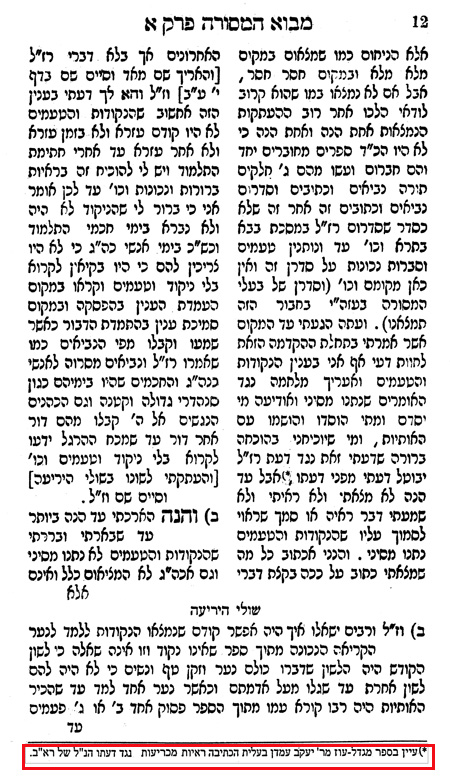
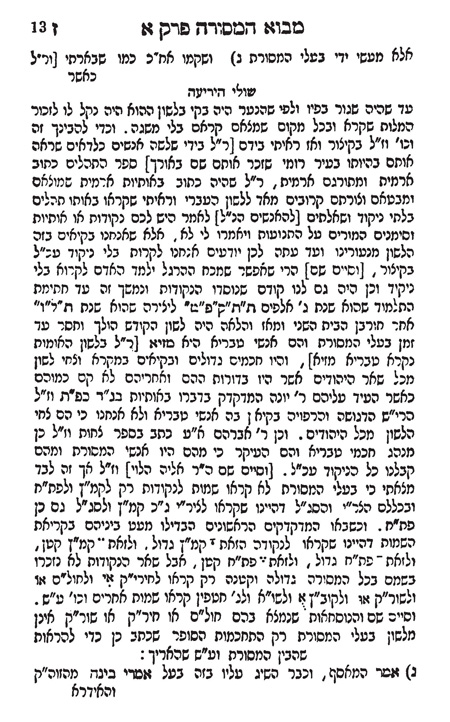
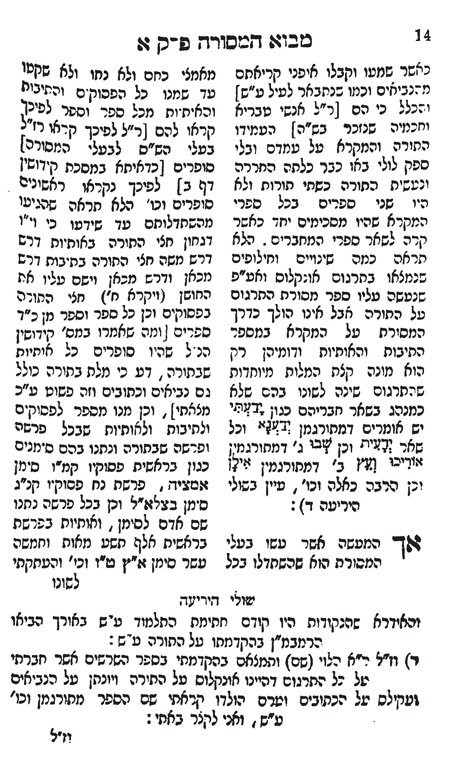
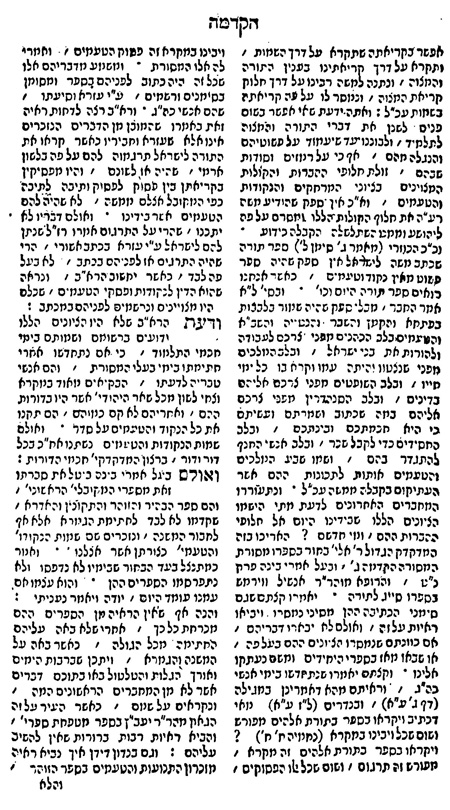
9.     מבוא המסורה, ר’ יוסף קלמן מקאסוויע, נדפס בווארשא תרמ”ט, 112 עמודים.

This work, first printed in 1862 and again in 1889 deals, with the subject of the Masorah by Rabbi Yosef Kalman. One of the points of interest to me about this work is that it received many different haskamot from gedolim of the time. This of interest because the first 15 pages of the work quotes many passages from R. Eliyahu Bachur’s classic work on the subject, including his controversial opinion about the post-Talmudic origin of the nekkudot. Now in the comments on the bottom of the page the author writes that this was already disproven (more on this shortly) but he had no problem to quote this controversial opinion in the main text of the work without arguing on it in the main body or censuring the Tishbi in any form. This is in sharp contrast to the work Nekudot Hakesef printed in 2001.

Now what is interesting is that the person who just printed this new work (someone from Bnei Brak) felt he had to add in one comment to this sefer, so right in the beginning of this long quote from R. Eliyahu Bachur he added in the following:

עיין בספר מגדל עוז מר’ יעקב עמדין בעלית הכתיבה ראיות מכריעות נגד דעת הנ”ל של רא”ב

What’s interesting is that on the next page the original author of the sefer writes:

אמר המאסף וכבר השיג עליו בזה בעל אמרי בינה מהזוה”ק והאידרא שהנקודות היו קודם חתימת התלמוד ע”ש באורך הביאו הרמבמ”ן בהקדמתו על התורה ע”ש

I am positive that the recent printer of this sefer did not realize who this was. The original author of this sefer is quoting the Meor Einayim from Rabbi Azariah Min Hadomim who is quoted by Moses Mendelssohn in the introduction to his Chumash, where Mendelssohn quotes him in regard to the origin of the Nekudot. Possibly we can see from this another piece of evidence that it was not considered so bad to quote from Mendelssohn at that time, and especially how well known Mendelssohn’s introduction was. Apparently the printer did not realize the initials הרמבמ”ן refers to Mendelssohn. For a recent case of someone not realizing what these initials are see he work on the Koheles falsely attributed to the Malbim by Oz Vehadar [See Yeshurun 25 pp. 724-735, (PDF available upon request)]

One more addition to all this, in 1870 Rabbi Yosef Kalman put out another sefer on the subject called Shaar Hamesorah which received haskamot from Litvish Superstars of the time. In the introduction he returns to the subject of the origin of nekkudot and again he quotes the Meor Einayim of Rabbi Azariah, who is quoted by Moses Mendelssohn. However here he makes a strange mistake of thinking that the Rabbi Azariah quoted by Mendelssohn was the Rama Mepano!

Returning to the work Mevo Hamesorah, one last discussion of his worth nothing is about Ibn Ezra and his opinion of the origin of Nekudot (pp. 104-105).
[For more on the subject of Nekudot see Dan Rabinowitz’s excellent article available here; Jordan Penkower, The Dates of Composition of the Zohar and the book Bahir (Heb.) Cherub Press; Rabbi Dovid Rothestein work available here. See also my Likutei Eliezer, pp. 71-72]

10. יד יהודה, ר’ יהודה לנדא, תשובות פסקים וכתבים, מכתב יד, קלו עמודים
11. חמודי דניאל עם פ’ רחבת ידים
12.  חמודי דניאל על הלכות נדה, נדפס לראשונה מכתב יד בתוך ספר מעין בינה על מסכת נדה
13. קשר תורה, [לקשר סוף התורה לתחילתה] נדפס פעם ראשונה ווילנא תרסז, ר’ יצחק מו”צ בעיר ריטווא, 112 עמודים.
14. קול חיים, סדרי לימוד ותפילות להגיע האדם לגיל שבעים שנה ואילך, ר’ חיים פאלאג’י, מכון אהבת שלום
15. הקללה לברכה, הלכות איסור קללה, ר’ מרדכי גרוס, קמה עמודים
16.  מנהג אבותינו בידינו, ר’ גדלי’ אבעלראנדר, ביאורים ובירורים במנהגי ישראל מקורותיהם ושרשי טעמיהם, שבת, נישואין שונות, תסד עמודים, ניתן לקבל תוכן העניינים.

This volume is a collection of Rabbi Oberlander’s articles originally printed in the journals Or Yisroel and Heichel HaBesht as well as other places. These essays are very organized and well written on a wide range of interesting topics, all based on a nice collection of sources. I highly recommend this work. Of course one can always add to such collections of material here but לא המלאכה עליך לגמור .

17. אני לדודי, שיחות מוסר וחיזוק לחודש אלול וימים נוראים, ר’ שריה דבליצקי, קעג עמודים
18. ישא יוסף, אורח חיים חלק ב, ר’ יוסף אפרתי, רכו עמודים
19. הטבילה בהלכה ואגדה, ר’ משה סופר, תסד עמודים
20. ביד נביאך, בעניני הפטרות ונביאים, כולל אסופות תשובות ומאמרים בהלכה ואגדה, פרקי הלכה בעיני הפטרה וכתיבת נביאים, כולל כת”י של האדר”ת  על נביאים וכתובים בשם ‘נביאים טובים’, הלכות הפטרה להגר”ש דבליצקי, וס’ סימנים על עניני הפטרה  ונביאים, תרב עמודים
21. שעות שוות בהלכה, כולל מחקר וסקירה על תולדות הפחתות מדידית הזמן לאורך הדורות, ר’ יצחק זילבער, שצ עמודים
22. שמות בארץ, שמות אנשים, ממשנתו של מרן ר’ חיים קניבסקי, דיני וענייני שמות  אנשים ונשים ובשווי שמות בשידוכין, וקו’ שמות נשים, ר’ צבי יברוב, קלט עמודים
23.  ברכת הלבנה, הלכות ומנהגים, ר’ יוסף אדלר, קב עמודים
24.  בים דרך, מאמרי עולם חלק א, ר’ מיכל זילבר, שסז עמודים
25. גם אני אודך על ענייני ברכת כהנים, ר’ גמליאל רבינוביץ, תרלב עמודים
26. ספר פת שחרית כהלכה, ר’ יששכר דוב הופמן, צו עמודים

This is another work from the author of the now-famous recent work all about sneezing in Jewish law..

27. מאורות הגר”א, חלק ב, ר’ רובין, שפ עמודים
28. ר’ ראובן פרידמן, כי עת לחננה, הליה וישיבה בארץ ישראל, 490 עמודים, מוסד רב קוק
29. ר’ ישראל גארפינקל, כיצד מרקדין, בענין ריקודין של מצוה מצוה טאנץ, רמח עמודים
30. חזון עובדיה, שבת חלק ה, ר’ עובדיה יוסף הל’ צובע, קושר ומתיר, תופר צד ממחק כותב ומוחק, השמעת קול, בונה, אוהל, מתקן מנה, תד עמודים
31.הלכה ברורה חלק יג, ר’ דוד יוסף, סי’ רמב-רנב, תקלו +צ+נד עמודים
32. זהב לבושה, איסור פאה נכרית, הלכה הגות מחשבה, שכד עמודים
33. לוח ההלכות והמנהגים לשנת תשע”ג, 372 עמודים
34. קוטנרס האינטרנט בהלכה, קב עמודים
35. ישועות כהן, ר’ יהושע אדלר, ביאור סוגית קוי התאריך, צג עמודים
36. ספר תהלים עם פירוש מפורש, כולל ביאורים על תרגום כתובים ר’ לייביש דיייטש, תק”ח עמודים
37. שערי חג הסוכות, הלכות סוכה, ד’ מינים הו”ר שמיני עצרת ושמחת תורה, ר’ יהודה טשזנר, תקל עמודים
38. קובץ תשובות חלק ד, ממרן ר’ אלישיב זצוק”ל,  שכט עמודים, כולל מפתחות על לארבע כרכי קובץ תשובות, 73 עמודים
39. הערות במסכת ברכות, מר’ אלישיב זצוק”ל, תקמא עמודים
40.  כתבי הגרי”ש, בהלכה ואגדה, מכתבי יד של ר’ אלישיב זצוק”ל, ימים נוראים וסוכות, קס עמודים
41.  אשרי האיש, פסקי מרן הגרי”ש אלישיב זצוק”ל, יורה דעה, ב’ חלקים נלקט ע”י ר’ יחזקאל פיינהנדלר
42.  רישא דגולתא הספדים על ר’ אלישיב זצ”ל
43. שו”ת פוע”ה מניעת הריון, קובץ שאלות רבני פוע”ה ותשובות של פוסקים, 141 עמודים
44.  באמונה שלימה, ר’ יוסף בלאך, תרם עמודים

This work is written by Rabbi Yosef Bloch, who is a well-known Talmid Chacham from Monsey. In this volume Rabbi Bloch deals with many “hot” issues related to Emunah, bringing many interesting discussions to the table. Just to list a few side points of his: he brings that some say that the Chazon Ish’s work Emunah Ubitachon was never supposed to be printed (pp. 69-70) as the Chazon Ish never wanted it printed. He also deals with a piece that was censored from later versions of the Emunah Ubitachon (p. 39). He brings numerous sources against the Ralbag (pp. 140-141). He has a radical statement about what chazal mean when they say “there is wisdom by the Gentiles” (pp. 301-302):

דכל חכמת הגוים הוא בדברים גשמיים דוקא וכגון מכוניות סעלפאון כלי השחתה למלחמה וכדומה, שם ורק שם יש להם חכמה,… ברוחניות אין להם שום מגע והבנה כלל, ותיקון העולם הוא עצמו איבוד חכמיהם וזה כלל גדול בהבנת ענין חכמת האומות בברזל ובעצים ואבנים ובאלקטריק יודעים קצת, בצומחים יודעים פחות מזה בגופות בעלי חיים יודעים הרבה פחות מזה, בגוף האדם עוד הרבה פחות מזה, בחכמת התכונה השמיימית עוד הרבה פחות בנפשיות האדם
יודעים משהו ממשהו ממש , בחכמה עליונה אפס מוחלט לא כלום!

He has a radical explanation for the famous Gemarah about killing lice on Shabbas (pp. 305-307). Another very interesting discussion of his is about the sugyah of Elu Ve-elu Divrei Elokim Chayim (pp. 308-323).

A few years ago I wrote a few comments (here) about Rabbi Bloch’s work against Copernicus. I recently revisited the topic in the last issue in Hakirah. In this new volume Rabbi Bloch includes his anti-CopernicanEssay but with various updates. If one reads the essay carefully one can see many of these updates he is referring to points in my article. Hopefully in the future I will deal with all the issues he raises but for now I would just like to mention two points at one point he writes (p. 358):

ולא מצאתי אחד מגדולי ישראל מכל הדורות שיחזיקו אפילו במקצת דמקצת כדעת התוכנים ומה שהעידו בשם קדוש ה’ המהרי”ל דיסקין זצוק”ל דהיהו סבר ככה, שקר העידו בו דלא כך היה מעשה אלא שענה שלואל דאין הכרח נכד
התוכנים מלשון הברכה כמדומה ממה שנקראת ברכת החמה אבל מעולם לא יצא מפיו הקדוש דנקט איהו כהתוכנים.

I honestly have no idea what he is talking about but as I brought in my article (p.29) the source says as follows:

“וכן אמר לי ידידי הרב וכו’ ר’ אבנר נ”י בעל המחבר סי’ ציר נאמן, בתורת עדות ששמע מפי רבנו הקדוש רשכבה”ג מהרי”ל דיסקין זצוק”ל שהשיטה החדשה אינה מופרכת. ושאל לו מן הכתוב בקהלת א’ וזרח השמש ובא השמש וכו’ הולך על דרום כו’ וענה לו שהכתוב אמר לפי ראות עיני האדם”.

I also explained there (p. 31) why this sources is very reliable. But what bothered me even more was what he writes there on pg. 359.

 ומה שכמה מהמשגיחים וראשי הישיבות מהדור הקודם נ”ע כתבו דרך אגב בין הדברים בספריהם… כשיטת קופעריקוס, אין מזה שום הוכחה כלל לדעת התורה בענין הזה, דלא באו אותם הגאונים זללה”ה ליקח עמדה בהדיון הזה, דלא היתה זו הסוגיא שלהם ולא ידעו שיש בזה סתירה להשקפת התורה שלא ניסו בכגון אלו ולא עיינו בה, ונסתמכו דכיון דככה אומרים הכל מסתמא הוכיחו התוכנים דהאמת כן הוא, ולא ירדו לסוף דעתם של התוכנים לידע שכוונתם עקירת האמת ואין מדבריהם ז”ל הוכחה של כלום, וכאילו לא אמרו כלום בנידון הזה

Now besides for the haughtiness of this statement the only Rosh HaYeshiva I quoted in my article that wrote an essay very pro Copernicus was Rabbi Yonah Mertzbach someone who had a college degree in these areas so I am not really sure what he is talking about.

One last source related to this topic of Copernicus was brought to my attention in a collection of things by Rabbi Zerach Shapiro who was close with the Chazon Ish (part of this booklet was printed in Yeshurun volume 26) where he asked the Chazon Ish about Copernicus:

בענין מה מסתובב השמש או כדור הארץ, אמר שאין הכרעה בדברי חז”ל.

One last point in regard to Rabbi Bloch’s book is he prints an unprinted essay of his father’s, extremely anti Zionistic and the Mizrachi from 1943 (p. 115-116). I think the reason why he is printed this letter here, while it may otherwise seem out of place, is rather simple. In the same issue of the Hakirah where my essay about Copernicus appeared he saw another article froms Elazar Muskin, When Unity Reigned Yom ha’azmaut 1954 which deals with Rabbi Bloch positive attitude to Yom ha’azmaut.

קבצים
1  המעין גליון 203, ניתן לקבל תוכן העניינים
2. אור ישראל גליון סה, שפג עמודים, ניתן לקבל תוכן העניינים
3.  היכל הבעל שם טוב, גליון לד, קצב עמודים
4.  מוריה גליון שעג-שעד
5.  ארזים, גליון א, גנוזות וחידושי תורה, מכון שובי נפשי, תקפח עמודים [כולל רס עמודים של כת”י על ענינים שונים]
6.    קובץ בית אהרן וישראל גליון קסב, ניתן לקבל תוכן העניינים.
This issue includes another attack on Rabbi Dovid Kamentsky (PDF available upon request].

7.  עץ חיים גליון יח, ניתן לקבל תוכן העניינים
8.   ישורון חלק כז,  תתקמ”ב עמודים, ניתן לקבל תוכן העניינים

One piece worth mentioning in this issue is the complete manuscript of the Meishiv Nefesh printed for the first time, edited by Rabbi Yehudah Hershkowitz (59 pp).

מחקר ועניינים שונים
1.  גאון ההוראה אחרי 50 שנה:  היסטוריה, הגות, ריאליה; קובץ מחקרים בעקבות יום העיון במכללת אפרתה על הרב צבי פסח פראנק / עורך – ישראל רוזנסון, קע עמודים, מכללת אפרתה.
2.  המסע האחרון, מאתיים שנה למסעו בעל התניא בעיצומה של מלחמת נפוליאון תקע”ב-תשע”ב, [לאור מסמכים ותעודות, חדשים גם ישנים, וגם סיפורים ושמועות דרושים ומאמרים], יהושע מונדשיין, 378 עמודים.
3.  נתיבי מאיר, אסופות מאמרים, מאיר רפלד, 456 עמודים ]ניתן לקבל תוכן העניינים]

This is a beautiful collection of Dr. Rafeld’s articles on a very wide range of topics. Some of the articles relate to Rishonim on Chumash and many others relate to the world of minhag and Tefilah. There is also a nice collection of important articles related to the Maharshal and his generation (one of Rafeld’s specialties). All these articles show a great breadth and depth in each of their perspective subjects.
4.  הרב פנחס הירשפרונג, מעמק הבכא הנאצי, זכורנות של פליט, 215 עמודים
5.  ר’ יחזקאל סופר, במאי קמיפלגי, הפולמוס המשיחי בתנועת חב”ד, 408 עמודים
6.  הלבוש היהודי באירופה במהלך הדורות, הלכה, מנהגים, גזירות מאבקים, תקנות, מנחם מקובר, ניתן לקבל תוכן העניינים.
7. אביר הרועים, קורות העתים הנהגתו ומשנתו של ר’ עובדיה יוסף, משנת תרפ”א-תשי”א,יעקב ששון, 320 עמודים
8.  רבן של ישראל, מראות קודש ממרן פוסק הדור הגרי”ש אלישיב זצוק”ל, 219 עמודים
9.  יש”א שלום, הערכתו של הגרי”ש אלישיב זצ”ל כלפי מרן הראי”ה קוק זצ”ל, 58 עמודים
10.  הדף היומי, ר’ דוד מנדלבוים
11.  רועה ישראל, על ר’ ישראל יעקב פישר, חלק ב
12. יהדות התורה והמדינה, ר’ אוריאל צימר, בירור רעיוני קצר בשאלת היחס לציונות ולמידנה עם קצת פרקי היסטוריה מן העבר הקרוב, 47 עמודים,
13.  מפיהם אני חיים, ר’ משה קנר, מאמרים על תלמוד בבלי וירושלמי, רב האי גאון, רבינו גרשום, רש”י בעל התוספות, מהר”ם מרוטנבורג וגדולי ספרד, 375 עמודים.
14.   משונצינו ועד וילנא, תולדות הדפסת התלמוד, ר’ יעקב לופיר, 310 עמודים,

I hope to review this book at length here shortly.

15.   משה אידל, שלמויות בולעות קבלה ופרשנות, ידיעות ספרים, 695 עמודים
16.   רשימת הפירסומים, יוסף דן, תשי”ח-תשע”ב, 205 עמודים
17.   יעקב לאטס, פנקס קהילות רומא, שע”ה-תנ”ה, כולל מבוא והערות, מכון יצחק בן צבי, 409 עמודים
18.   משנת ארץ ישראל, שמואל, זאב, וחנה ספראי, מסכת פאה
19.    משנת ארץ ישראל, שמואל, זאב, וחנה ספראי, מסכת כלאים

After recently completing Seder Moed they are now almost finished with Seder Zerayim.

20.  צדיק יסוד עולם, השליחות הסודית והחוויה המיסטית של הרב קוק, סמדר שרלו, 444 עמודים, אונברסיטה בר אילן
21.  דעת גליון 73
22.  מקראות גדולות – `הכתר`-שמות א`-מהדורה מוקטנת
23.  משה פלאי, עטרה ליושנה, המאבק ליצירת יהדות ההשכלה, 501 עמודים, קיבוץ המאוחד
24.  ללמוד את שפת המולדת, מאמריו של י”ל גורדון בשנים 1881-1882, [מאמרי ביקרות על ספרים ועוד], מוסד ביאליק, ספריית דורות, 367 עמודים
25.  כִּתַאבּ אַלנֻּתַף: פירושו הדקדוקי של ר’ יהודה חיוג’ לספרי נביאים בעיבוד עלי בן סלימן מאת אהרן ממן ואפרים בן-פורת, אקדמיה ללשון העברית
26.   פרקי עיון בעברית החדשה ובעשייה בה מאת משה בר-אשר, אקדמיה ללשון העברית  
27.  מקורות ומסורות, סדר ניזקין, דוד הלבני, מגנס
28.  ההלכה: הקשרים רעיוניים ואידאולוגיים גלויים וסמויים, מגנס
29.  סידור תפילות בלאדינו, סלוניקי, המאה השש עשרה, מכון יצחק בן צבי
30.  רעואל וחבריו פרשנים יהודיים מביזנטיון מסביבות המאה העשירית לספירה, גרשון ברין, אוניברסיטת תל-אביב
31.    רבי חיים בן עטר ופירושו אור החיים על התורה, אלעזר טויטו, 291 עמודים, מכללת אורות ישראל
32.  מחשבת ישראל ואמונת ישראל, בעריכת דניאל לסקר, אוניברסיטת בן גוריון, 293 עמודים בעברית, 186 עמודים באנגליש, ניתן לקבל תוכן העניינים.

This volume has many interesting articles. Worth mentioning is Marc Shapiro’s Is there a Pesak for Jewish Thought and  David Shatz ‘s article Nothing but the truth? Modern Orthodoxy and the Polemical uses of History. In the first footnote Shatz mentions Marc Shapiro’s posts on the Seforim Blog. Much can be added to this essay but of note is footnote 28 where he writes:

To be clear, academics, I find, generally shun blogs that are aimed at a popular audience because the comments are often, if not generally, uninformed (and nasty). A few academics do read such blogs, but do not look at the comments. One result of academics largely staying out of blog discussions is that non-experts become viewed as experts. Even when academics join the discussion, the democratic atmosphere of the blog world allows non-experts to think of themselves as experts and therefore as equals of the academicians. Some laypersons, though, as I said earlier, are indeed experts in certain areas of history.

33. חקרי קבלה ותפילה, משה חלמיש, אוניברסיטת בן גוריון, 458 עמודים ניתן לקבל תוכן העניינים

This work is a collection of twenty five articles by Professor Hallamish about tefilah and kabbalah. Some of these articles appeared in print in various journals, festschrifts and memorial volumes, others are supposed to appear soon, and some were written specially for this volume. They all share the common denominator that they are based on research of an incredible amount of manuscripts and rare volumes. I have no idea how he had patience to open up that many books! Based on these discoveries Hallamish shows the influence of Kabbalah on tefilah. One can also find wealth of information on nussach of Tefilah in these volumes. There is a lot to comment on different points on this volume.

Just to make one small comment as it relates to Elul and a subject I have written about. In chapter thirteen he deals with sources for the custom of saying Ledovid in Elul. He brings early sources for saying it all year around. He quotes the Siddur Shaarei Rachamim which brings this custom to say Ledovid. Now the importance of this find is that this siddur is based on R.Chaim Hacohen who was a Talmid of Rabbi Chaim Vital. If this source is reliable then we have an earlier source for this custom. The first person (not noted by Hallamish) to point to this siddur for an early source for saying Ledovid in Elul was Rabbi Yakov Rokeach in his work Shaarei Tefilah, first printed in 1870. Now it’s well known that the editor of this siddur, Chaim Abadi, added in lots from the Chemdas Yamim and other sources so it’s not so simple if one can consider this siddur a reliable source. However, recently Rabbi Goldhaber checked up the many manuscripts of the actual siddur of R. Chaim Hacohen and found that the custom of saying Ledovid does not appear anywhere in it. Recently part of this siddur was printed by Mechon Zichron Aharon and the custom of Ledovid does appear inside this siddur. So based on this new printed siddur Hallamish has a very early source for saying Ledovid.

First of all what is clear is this is not a source to say Ledovid specifically during Elul but rather an early source to say Ledovid the whole year around. Earlier in this siddur where R. Chaim Hacohen has various chapters of Tehilim to be said on special days he does not include Ledovid to be said during Elul. However at the end of davening Ledovid appears in this new siddur. But more importantly one has to be careful to read the fine print on the page as above where it is printed to say Ledovid in small print the editor adds in that saying Ledovid here does not appear in the original manuscript! Now all this is rather strange; why did he bother adding this in? This is not the place for it as it should be earlier in the siddur with the other chapters said on special days. Even more interesting is that the editor of this siddur says that they decided that four of the manuscripts are authentic but all others have parts added in so they are not going to print all added in pieces  so the question is why did they choose to add in Ledovid
and add nothing else in this printed version.

A few months back I mentioned that the new work by David Assaf Hazitz Unifgah appeared in print. I noted that a complete bibliography of the sources that were used for writing this book was printed in the recent volume of Mechkarei Yerushalayim 23 (2011) pp. 407-481. This was not included in this new work. Recently this bibliography appeared on line here.

English 

1. The Tent of Avraham, Gleanings from the David Cardozo Academy, edited by Nathan Cardozo, Urim Press. 232 pp.
2. Inside Stam, A complete buyers Guide, Rabbi Reuvain Mendlowitz, Israel bookshop, 440 pp.
3.Edward Fram, A Window on Their World: The Court Diaries of Rabbi Hayyim Gundersheim Frankfurt am Main, 1773-1794, Wayne State Univ Press, 653 pps.


The Book of Disputes between East and West

The Book of Disputes between East
and West
 
or 
A Treasury of Alternate Customs from the Land of Israel and from Babylon 
Translated and Annotated by Leor Jacobi 
Based primarily on the Margulies Edition
with additions from the Appendices of the Miller and Lewin Editions

Menahem Av, 5772
Jerusalem
After the translation of the text itself, various
additional items are added, some of them never before published. Also included
is a translated summary of major sections of Margaliot’s introduction, along
with comments and updates.
Round brackets reflect text found in only certain
Hebrew manuscripts as indicated by Margulies in his
Hebrew edition
.
Square brackets contain English insertions of this
translator.
1.                   
People of the East sit while reading the Sh’ma. The
residents of the Land of Israel stand.
2.                   
People of the East do not mourn for a baby [who has died]
unless he has reached 30 days [of life]. The residents of the Land of Israel
[mourn] even if he is only a day old. (He is like a fully-grown groom
[=man]) 
3.                   
People of the East will allow a nursing mother to marry within
twenty-four months of the death of her baby. Residents of the Land of Israel
require her to wait twenty-four months, lest she come to kill her son.
4.                   
People of the East redeem the
firstborn with twenty-eight (and a half) royal pieces of silver. Residents of
the Land of Israel use five shekels, which are equivalent to seven (and a
third) royal pieces of silver.
5.     
 People of the East exempt a mourner [from observing laws and
customs of mourning, if the relation expired just] before a festival, even a
moment [before]. Residents of the Land of Israel only exempt a mourner from the
decree of seven days [of mourning] if at least three days have elapsed before
the festival.
6.                   
People of the East forbid a bride
from [having relations with] her husband for the full seven [days] for she is
considered to be a menstruating as a result of the relations. The residents of
the Land of Israel (say) that since his removing of her hymen is painful [it is
an external wound and] she is permitted immediately.
7.                   
The marriage contract of the
People of the East consists of twenty-five pieces of silver (and their dowry).
The residents of the Land of Israel (say) that anyone who [obligates himself]
to less than two hundred for a maiden or one hundred for a widow, is effecting
a promiscuous relationship.
8.                   
People of the East permit [the
use of] an oven (during Passover), based on the source: “[We may] roll the
Passover [lamb] in the oven at sundown.” (Mishnah Shabbat 1:11) Residents of
the Land of Israel (say): “Disregard the Passover [lamb] since it is a
sacrifice, and we [even] desecrate the Sabbath on account of it.”
9.                   
People of the East do not wash [=
ritual immersion] after experiencing a seminal emission or after relations
(since they reason that “we are in an impure land”). Residents of the Land of
Israel (do wash after a seminal emission or relations, and) even on the Day of
Atonement (for they maintain that those who have seen emissions should wash in
secret on the Sabbath and on the Day of Atonement) as a matter of course,
[which they learn] from the example of Rabbi Yosi bar Halafta, who was seen
immersing himself on the Day of Atonement.
10.               
People of the East permit gentile
butter [alternatively: cheese], (saying) that it cannot become impure.
Residents of the Land of Israel forbid it on account of (three things: because
of) milk which was expressed by a gentile (without a Jew observing him, because
of gentile cooking) and because of impure fat (which it might be mixed
with).
11.               
People of the East say that a
menstruating woman may perform all types of household duties except for three
things: mixing drinks, making the bed, and washing his face, hands, and legs.
According to the residents of the land of Israel, she may not touch anything
moist or household utensils. Only reluctantly was she permitted to even nurse
her child.
12.               
People of the East do not say
recite eulogies [alternatively: the prayer “tsidduk ha-din”] in
the presence of the dead (during the in-between days of the festival).
Residents of the Land of Israel do recite these before him.
13.               
People of the East do not rip up
a divorce contract. Residents of the Land of Israel rip it up. [Acc. to Lewin,
this may have originally referred to whether a mourner rips his garment during
the intermediate days of a festival.]
14.               
People of the East have mourners
come to the synagogue each day. Residents of the Land of Israel do not allow
him to enter, with the sole exception of the Sabbath.
15.               
People of the East do not clean
their posteriors with water. Residents of the Land of Israel do cleanse
themselves [with water], (based on the source:) A generation which considers
itself pure … [but has not cleaned itself from its excrement.] (Proverbs
30:12)
16.               
People of the East [permit one
to] weigh meat on intermediate days of the festival. Residents of the Land of
Israel forbid hanging it on a scale, even just to keep it away from rodents,
(based on the source: “One may not operate a scale at all.” – Mishna Beitza 6,
3) 
17.               
People of the East circumcise
[babies] over water and then dab [the water] onto their faces, (from here: “and
I will wash you with water, [rinse your blood off of you, and anoint you with
oil]” – Ezekiel 16:9)  Residents of the
Land of Israel circumcise over dust, from here: “Also, due to the blood of your
covenant have I sent your prisoners free from a pit with no water in it.”
(Zechariah 9:11)
18.               
People of the East (only) check
the lungs. Residents of the Land of Israel (check) eighteen types of disqualifications.
19.               
People of the East only recite a
blessing [= grace
after meals] over [a cup of] diluted wine.
Residents of the Land of Israel (will recite a blessing) when it is fully
potent.
20.               
When thurmusin [beans] and
tree-fruit are served to People of the East simultaneously, they recite the
blessing for fruit of the tree and set aside the beans. Residents of the Land
of Israel recite a blessing on the thurmusin, since everything is
included in “[the fruits of] the earth.” 
21.               
On the Sabbath, people of the
East break bread on two loaves, for they expound: “a double portion of bread”
(Exodous 16:21) [which fell on the Eve of the Sabbath]. Residents of the Land
of Israel break bread exclusively on a single loaf, so that the [lesser] honor
of the Eve of the Sabbath will not intrude upon [the honor of] the Sabbath. 
22.               
People of the East spread their
hands [= recite the priestly blessing] during fasts and on the on the ninth of
Av as part of the evening benedictions. Residents of the Land of Israel only
spread their hands during the morning services, with the sole exception of the
Day of Atonement. 
23.               
People of the East will not
slaughter a newly-born animal until the eighth day. Residents of the Land of
Israel will slaughter even a newborn, for [they maintain that] the prohibition
of the eighth day applies only to sacrifices.
24.               
People of the East do mention the
word mazon [=nourishment] in the blessings of grace after dining.
Residents of the Land of Israel consider mazon to be [the] central
[component of the blessings] (for everything else is peripheral to mazon]. 
25.               
A ring does not sanctify marriage
according to people of the East. Residents of the Land of Israel consider it
[sufficient to] fully sanctify a marriage. 
26.               
People of the East individually
redeem the second tithe and the planting of the fourth year. Residents of the
Land of Israel only redeem them in [the presence of] three [men]. 
27.               
The divorce contracts of people
of the East contain two ten-letter words [‘dytyhwyyyn’ and ‘ditibyyyn’]. Those of the residents of the Land of Israel contain
three ten-letter words [the third is not known].
28.               
People of the East bless the
[bride and] groom with seven blessing. Residents of the Land of Israel recite
three [blessings, which have been forgotten].
29.               
According to people of the East,
the prayer leader recites the priestly blessing (before the congregation) [in
the absence of Kohanim]. Residents of the Land of Israel do not (allow the
prayer leader to recite the priestly blessing, for they expound [from the
verse]: “So they shall put my name” (Numbers 6:27) that it is strictly
forbidden for anyone to “put” the holy name), unless they are Kohanim. 
30.               
People of the East forbid bread
baked by a gentile, but will consume gentile bread if a Jew threw a piece of
wood into the fire. Residents of the Land of Israel forbid it (even with the
wood, for the wood neither forbids nor permits. When are they lenient? In cases
when there is nothing [else] to eat, and already a day or two have passed
without consuming anything. It was thus permitted to revive his soul so that
his soul should be maintained, but only from a [gentile] baker who has never
brought meat into his bakery, even though it considered a [separate] cooked
dish.) 
31.               
People of the East carry coins
from place to place on the Sabbath. Residents of the Land of Israel (say) that
it is forbidden to even touch them. Why? Because all types of work are done
with them.
32.               
People of the East recite: “meqadesh
ha-shabbat,”
[who sanctifies the Sabbath]. Residents of the Land of Israel
recite: “meqadesh Yisrael v’yom ha-shabbat” [who sanctifies Israel and
the Sabbath day].
33.               
Among people of the East, a
disciple does not greet his master with: “shalom”. Among residents of
the Land of Israel a disciple greets his master [by saying]: “shalom
unto you, rabbi.” 
34.               
According to People of the East,
if a yevama [=a woman automatically betrothed to the brother of her
deceased husband] should marry [another man] without halitza [=a legal
procedure which frees her from this betrothal] and her yavam [=the
brother] should return from overseas, he performs the halitza (to her)
and she remains with her (second) husband. Residents of the Land of Israel
remove [=forbid] her from both of them. 
35.               
People of the East exempt a yevama
from halitza [only] once the baby is thirty days old. According to
residents of the Land of Israel, even if only the head and most of the body
emerged alive, and even for only a moment (before the father died), she is
fully exempt from halitza and from yivum [and may remarry
freely], (for they expound: “If he has left seed, she is exempt.”) 
36.               
People of the East turn their
faces (towards the congregation) and their backs towards the aron
[=closet containing the Torah scroll]. Residents of the Land of Israel [are
positioned with] their faces towards the aron.
37.               
According to people of the East,
one [scribe] writes the divorce contract and another signs along with the
writer. Among residents of the Land of Israel, one writes and two [others]
sign.
38.               
People of the East marry the
[bride and] groom on Thursday. Residents of the Land of Israel [marry] on
Wednesday, (according to the law: “a maiden marries on Wednesday.” – Mishnah
Ketubot 1:1)
39.               
People of the East perform labors
on the intermediate days of the festivals. Residents of the Land of Israel do
not do them at all. Rather, they eat and drink and exert their [energies in
learning] Torah, (for the sages have taught that: “it is forbidden to perform
labors on the intermediate days of the festivals.”) 
40.               
People of the East begin [the
initial act of] intercourse with genital insertion in the natural manner.
Residents of the Land of Israel use a finger [to break the hymen and enable
conception through the first act of intercourse. Alternatively, to verify
virginity.] 
41.               
People of the East observe two
festival days. Residents of the Land of Israel observe one, (as per the
commandment of the Torah.) 
42.               
People of the East forbid the
Kohanim from blessing the congregation if they have long, unkempt hair.
[Alternatively: with their heads uncovered]. Among residents of the Land of
Israel Kohanim do () [in fact bless the congregation with long, unkempt hair.] 
43.               
People of the East whisper the
eighteen benedictions while praying. Residents of the Land of Israel [pray] out
loud, in order that people should become familiar with them. 
44.               
People of the East count the Omer
only at night. Residents of the Land of Israel count during the day and at
night. 
45.               
People of the East circumcise
with a razor. Residents of the Land of Israel use a knife. 
46.               
(People of the East mix a remedy
for circumcision from donkey dung and cumin. The residents of the Land of
Israel do not do this.) 
47.               
According to people of the East,
the prayer leader and the congregation read the weekly [Torah] portion [of the
annual cycle] together. Among residents of the Land of Israel, the congregation
reads the weekly portion and the prayer leader [reads] the weekly [triennial]
orders.
48.               
People of the East celebrate Simhat
Torah
[the festival of the completion of the Pentateuch] every year.
Residents of the Land of Israel celebrate it once every three-and-a-half years.
49.               
People of the East bless the
Torah while it is being [re-]inserted [into the Aron]. Residents of the
Land of Israel bless both while it is being inserted and while being removed,
(according to scripture and law, as per the verse: “and upon its opening the
entire nation stood.” – Nehemia 8:5)
50.               
(According to people of the East,
a Kohen may not bless the congregation until he has married. Residents of the
Land of Israel [allow him to] bless even before he has married a woman.)
51.               
People of the East do not carry a
palm branch [when the first day of the festival of Tabernacles falls] on the
Sabbath. Rather they take a myrtle branch. Residents of the Land of Israel
(carry both the palm and the myrtle on the first day of the festival which
falls on the Sabbath, according to the verse:) “And you should take for
yourselves” (Leviticus 23:40) [which is expounded to include:] “on the
Sabbath.” (Bavli Sukkah 43a) 
52.               
(Residents of the Land of Israel
permit the consumption of daytra fats. Residents of Babylon forbid it.) 
53.               
People of the East permit [the
consumption of] broad beans which a gentile has boiled, and also locusts.
Residents of the Land of Israel forbid it, (since they mix their boiled meat
with their boiled fruits [= produce].)
54.               
People of the East do not blow
sirens before the onset of the Sabbath. Residents of the Land of Israel sound
three sirens. 
55.               
According to people of the East,
Kohanim lift their hands [to bless the people] three times on the Day of
Atonement. Residents of the Land of Israel [bless] four times on that day: shaharit,
musaf, minha, and neila.
 
56.               
(*). Residents of Babylon permit
[the consumption of] milk [from a cow] which a gentile has milked, [even]
without a Jew having watched him, provided that there are no unclean animals in
his flock. Residents of the Land of Israel forbid its’ consumption. (This item
is found in only one manuscript. Thus, Margulies doubts whether it is included
in the original collection; however, he maintains that it is historically authentic
and thus included it in the commentary section.)
Margulies’ running commentary has not been translated.
[Translator’s note on additional items:
There are four different types of items and it is
important to distinguish between them.
A. Items which appear in multiple versions of the Geonic
list collections, the main body of the present work.
B. Items which appear to have been added to certain
manuscript versions of the list after its “publication,” during the Geonic
period or shortly thereafter. This includes items 46, 50, and 56, and possibly
others. Since they may actually be remnants of the original list and do appear
in the manuscripts, Margulies and Lewin did include them in attempting to
produce a critical version of this text itself. [Elkin’s 1998 Tarbiz article
hints that the original work may have been smaller than Margulies supposed and
hence more of the text translated above would fall into this category.]
C. Items which are culled from external Geonic literature
and provide direct testimonial evidence for the historical validity of these
distinctions. They could conceivably have been included in the original list,
but for one reason or another were not. This describes Lewin’s additions, and
the first section of Miller’s additions.
D. Items which were deduced from prior Talmudic
literature. Kaftor w’Ferah seems to have pioneered this field, picked up
and extended by Miller and others. It should be noted that these items should
all be evaluated separately, as they do not necessarily constitute testimonial
evidence and rather, in some cases, may be merely theoretical.]
Additional items collected by R. Yoel HaKohen Miller
(1878)
From
Masekhet Sofrim:
56.               
People of the East recite kaddish and borkhu
with ten men. People of the Land of Israel [recite] with seven (10:7)
57.               
 People of the East
respond “Steadfast are you” after the reading of the prophets while sitting.
Residents of the Land of Israel [respond] while standing. (13:10)
58.               
 People of the East
fast before Purim. People of the Land of Israel [fast] after Purim, based on
Nikanor. (17:4, from Tosefta)
59.               
People of the East recite Kedusha each day. People of
the Land of Israel only recite it on the Sabbath and Festival days. (Tosafot
Sanhedrin 37b ad. Loc. Mknp, citing Geonim
Compiled
by Miller from Kaftor w’Ferah of Rabbi Ashtori HaParḥi (Isaac HaKohen ben
Moses, 1280-1366), deduced from talmudic sources:
60.               
People of the East do not ordain judges. People of the Land of
Israel do ordain. (Sanhedrin Chapter 1)
61.               
People of the East conclude [the threefold benediction]: “for
the land and the fruit.” People of the Land of Israel [conclude]: “for the land
and its fruit” (Berakhot, 6th chapter)
62.               
People of the East first plow and then sow seeds. People of
the Land of Israel first sow and then plow. (Sabbath, 7th chapter)
63.               
People of the East do not chase after idol worship [in order
to destroy it]. People of the Land of Israel do chase after it. (Sifre Devarim
Re’eh 61)
64.               
People of the East do not collect fines. People of the Land of
Israel do collect in court. (end of Ketuvot ch. 3…)
65.               
People of the East permit a brown citron [for use among the
four species]. People of the Land of Israel forbid it. (Sukkah, ch. 3)
66.               
People of the East grind with a small mortar on a
festival day. People of the Land of Israel forbid it (Beitza, ch. 1)
67.               
People of the East [formally] begin the meal [and apply its laws]
once the belt has been released. People of the Land of Israel [begin] once the
hands have been washed. (Shabbat, ch. 1)
68.               
People of the East maintain that one who purchases a slave from a
gentile, who does not wish to become circumcised [immediately], may postpone
and continue deliberations up to twelve months. People of the Land of Israel do
not allow any delay lest sanctified food become defiled through contact with
him. (Yevamot 48b)
69.               
People of the East do not transfer bones of the dead from little
caves to small holes in caves [where presumably whole cadavers could not fit,]
in order to bury other dead. People of the Land of Israel do transfer [bones].
(Rav Hai Gaon, as cited by Ramban, in Torat
ha-adam
)
70.               
People of the East first marry and then learn Torah. People of the
Land of Israel learn Torah first and then marry. (Kiddushin 29b)
71.               
People of the East recite nineteen blessings. People of the Land
of Israel recite eighteen blessings. (Rabbenu Yeshaya ha-Zaqen,
RID
, in
his commentary to Ta’anit, cited here)
72.               
People of the East do not mention “dew” during the summer. People
of the Land of Israel do mention it. (PT Ta’anit ch. 1, Berakhot ch. 5)
73.               
People of the East are not concerned with “pairs.” People of the
Land of Israel are concerned. (Pesahim 110) [in all manuscript and printed
versions of the Talmud known to me it appears in reverse and was apparently
copied by mistake here.]
    I would now
like to present some very special additions of Rabbi Benjamin Wolf Singer
(1855-1930). R. Daniel Sperber published a
volume of his hiddushim/novella
. See his biography of the author
here and here. Much more about him later. I hope to devote a future
post to Rabbi Singer and his brother.
      These notes
have never before been published, and were found in the form of his handwritten
notes in the back of his personal copy of Miller’s edition of the work, now
housed in the Bar Ilan University central library. The notes follow the extra
hiluqim of Kaftor v’Ferah, ShIR, and Miller which we have just translated
above. Apparently, they inspired Rabbi Singer to continue their work on the
very same page! His notes look like this:
(Click for large, high-resolution images)
 

What follows is the best I
could do for a transcription. All of the main points are clear, but not all of
the references. Even this I couldn’t have done without a lot of assistance from
my friend R. Yehezkel Druk, who is responsible in no small part for the many
corrections and additions in Moreshet L’Hanhil’s volumes of the new Friedman
Shulhan Arukh.

Hopefully, some of the
readers viewing at home can decipher some more of this. If you can, please
comment! A translation and more follows.
תוספות חלופי מנהגים
של ר’ בנימין זאב זינגער
א. מחלמ”נ [=מחלפי
מנהגים?] דבבבל לא קפדו אטבילת קרי עיין ברכות כ”ב. ובא”י קפדו. ע’ ירושלמי
שם פ”ג ה”ב, תמן נהגין כו’ ע”ש.
ב. בבבל שובתין מתוך
מריעין, שבת לד: מנהג אבותיהן בידיהן. ע”ש.
ג. בבבל קרו הלל בר”ח
ובא”י לא. תענית כח: מנהג אבותיהן בידיהן. ע”ש.
ד. בבבל קרו פרסא עי’
(חולין) פסחים צג: וצ. ולהיפך בא”י קרו רק ד’ מילין. עי’ ירושלמי ברכות פ”א
ה”א ושם נסמן [וירושלמי שבת סוף פרק קמא עד ד’ מיל ועיין יומא כ:] ואותה ?הכחיי?
עצמה דרבי יהודה דאיתא בפסחים פרסא היא בירושלמי במילין. והא דבחולין קכב: עד ד’ מיל
דאמר בשם רבי ינאי ורשל”ק [ריש לקיש] בני ארץ ישראל. ועי’ ברכות טו ע”א [אבל
לאחוריה אפילו מיל אינו חוזר [ומינה] מיל הוא דאינו חוזר הא פחות ממיל חוזר] סוטה
מו: [וכמה א”ר ששת עד פרסה ולא אמרן אלא רבו שאינו מובהק אבל רבו מובהק שלשה
פרסאות] סנה’ ה: [ותניא תלמיד אל יורה הלכה במקום רבו אלא אם כן היה רחוק ממנו שלש
פרסאות כנגד מחנה ישראל] סוכה מד: [אמר אייבו משום רבי אלעזר בר צדוק אל יהלך אדם
בערבי שבתות יותר משלש פרסאות] ושם נראה דראב”ץ [=רבי אלעזר בר צדוק] בבלי
היה מדאמר בלשון פרסי ועי’ תו'[ספתא] ב”ק פ”ח מ”ט [אין פורסין
נשבין ליונין אלא אם כן היה רחוק מן היישוב שלשים ריס]  ל’ ריס (והיינו ד’ פרסי) ועי’ נדה כד: תניא אבא שאול אומר ואי תימא
רבי יוחנן כו’ ורצתי אחריו ג’ פרסאות
ה. לדעת בני א”י
ד’ מפתחות ביד הקב”ו ולדעת הבבלי ג’ עיין ריש תענית ומאיר עיני חכמים דף מב: וכיוצא
בזה ברכו’ ג’ ע”ב רבי אומר ד’ משמרות רבי נתן ג’ ונראה שבא”י קיימו מספר
ד’ ובבל ג’
ו. ירושלמי פ”ק
דראש השנה תמן חשן [תמן חשין לצומא רבה תרין יומין]  ? יומא רבה ב’ יומי’ ועי’ סה”ד [סוף הלכה ד’] שאבוה… בשמת ע”י
זה [פני משה מסכת ראש השנה פרק א: “תמן חשין לצומא רבא תרין יומין. בבבל היו
אנשים שחששו לעשות מספק ב’ ימים יה”כ ולהתענות ואמר להן רב חסדא למה לכם
להכניס עצמיכם למספק הזה שתוכלו להסתכן מחמת כך הלא חזקה היא שאין הב”ד
מתעצלין בו מלשלוח שלוחים להודיע לכל הגולה אם עיברו אלול ואם אין שלוחין באין
תסמכו על הרוב שאין אלול מעובר. ומייתי להאי עובדא דאבוה דר’ שמואל בר רב יצחק
והוא רב יצחק גופיה שחשש ע”ע וצם תרין יומין ואפסק כרוכה ודמיך. כשהפסיק מן
התענית ורצה לכרוך ולאכול נתחלש ונפטר. ועל שהכניס עצמו לסכנה מספק לא הזכירו שמו
להדיא ואמרו אבוה דר’ שמואל בר רב יצחק”.]
ז. ירושלמי ברכות פ”ב
ה”א כך אינון (בבלאי) נהגין גביהון זעירא לא שאל בשלמיה דרבה
ח. עי’ ירושלמי סוכה
פ”ד ה”א ושביעית פ”א ה”ז ועיין שם פ”ד ה”א או’ רבי
יוחנן לרבי חייה בר בא בבלייא תרין מילין סלקון בידיכון מפשיטותא דתעניתא וערובתא
דיומא שביעייא. ורבנן דקיסרין אמרין אף הדא מקזתה ועי’ בבלי סוכה מד. ??
ט. יוסף בבבלי יוסי
בירושלמי עי’ ?יבמות? קג ע”א
7. ברכות פ”ח ה”א
ירו’ אמר אר”י ב”ר נהיגין תמן במקום שאין יין ש”צ עובר לפני התיבה
ואומר ברכה אחת מעין שבע וחותם במקדש ישראל ואת יום השבת. ועי’ ?רא”ש? ?? י”ב
שלא מצאנו כן בבבלי
8. עיין ברכות נ. בבבל
נהגי כרבי ישמעאל ברכו א”ה המבורך – וירושלמי פ”ז דברכות ה”ד [נדצ”ל:
ה”ג] נראה דבא”י כר”ע

9. ירושלמי ברכות פ”ז
ה”ד [נדצ”ל: ה”ג] נראה דבא”י כשקראו כהן במקום לוי לא בירך
שנית ובבבל מברך. עיין שם. תוס’ גיטין נט: [ד”ה כי קאמרינן באותו כהן, והשווה
תוספת לוין סו’ י”ג וי”ד]
10. פסחים
נו: בענין ברוך שכמל”ו [שם כבוד מלכותו לעולם ועד] דבא”י אומרין אותו
בקול רם מפני המינין ובנהרדעא בחשאי שאין שם מינין מב.. לר.. גבי ר’ אבהו ב’. [אולי
הכוונה לצטט ויכוח של מין עם ר’ אבהו.]
Here is a loose translation without the references:
  1. In Babylon they were lax regarding the requirement
    for one who experienced seminal emissions [Ba’al Qeri] to immerse
    himself in a mikva. In the Land of Israel they were stringent.
  2. In Babylonia they commence the Sabbath in the midst
    of the blowing of the shofar teru’ah — They retain their fathers’
    practice. (Sabbath 35b)
  3. In Babylon, they read the hallel on the day of
    the New Moon. In the land of Israel they did not (Ta’anit 28b, “They
    retain their fathers’ practice”).
  4. In Babylon [a large unit of length] is referred to as
    a “parsa.” On the other hand, in the land of Israel, it is referred
    to as “four mil.” [miles]
  5. According to the understanding of the sages of the
    Land of Israel there are four keys in the hands of the holy one, blessed
    be he. According to the understanding of the sages of Babylon, there are
    three.
  6. In Babylon there were sages who fasted two Days of
    Atonement due to uncertainty as to on which day the new month begins.
  7. The Babylonians do not greet [rabbinic authorities],
    so Z’eira [respected their custom and] did not greet Rabbah when he
    visited.
  8. Rabbi Yohanan said to Rav Hiyya bar Bo: “The
    Babylonians have brought two [customs] up with them: full prostration on
    the fast days and the taking of the willow on the seventh day [of Sukkot].
    The Rabbis of Caesarea added bloodletting [to the list] as well.
  9. In the Babylonian Talmud we find: “Yosef.” In
    the Jerusalem Talmud: “Yosi.”
  10. (7) “There, in Babylon, when there is no wine, the
    prayer leader descends to the bima and recites the one blessing in
    place of seven and concludes with meqadesh Israel v’et yom hashabbat.”
    However, in the Babylonian Talmud we do not find this.
  11. (8) In Babylon the custom followed Rabbi Ishmael in
    reciting “borkhu et hashem hamevorakh.” It appears that in the Land
    of Israel they followed Rabbi Akiva [instead].
  12. (9) Is seems that in the Land of Israel, when a Kohen
    was called to the Torah reading in the absence of a Levite, he would not
    recite a second blessing. In Babylon he recites the benediction.
  13. (10) In the Land of Israel they recite “Barukh
    shem kavod malkhuto l’olam va’ed”
    out loud because of the heretics. In
    Nehardea they whisper it since there are no heretics there.
As you can see, the numbering switches from Hebrew to
Latin after tet. This is probably because the tet resembles a
six, so he followed it up with seven. Remember, these were just personal notes,
not intended for publication, obviously. Rabbi Singer’s mind was on more
important things, as the erudition of his notes speaks for itself. Anyway, who was Rabbi Singer? We’ll return to that at the end of
this post. Here in the middle of the work there is a citation apparently to a
Yalkut in Parshat VaYeshev, but I can’t make heads or tails of it.

Appendix to
Lewin’s edition. The articles originally appeared in Sinai 10 and 11.

Like
Zinger, Lewin also noted the additional Hiluqim in Miller’s volume and
decided to add more. Instead of adding exclusively from Talmudic sources, Lewin
leaned more on Geonic sources, of which he was the great master.  Some of these additions are quotations, and
some Lewin formulated himself.
1.                   
After completion [of the section from the public reading], the
reader blesses: “Blessed are you … ruler of the world, rock of ages, righteous
of all generations, the steadfast deity …” Then the congregation promptly
rise and say: “Steadfast are you, he, the Lord, our G-d, and steadfast is your
word. Steadfast, living, and lasting is your name and it’s utterance. Always
will you rule over us forever and ever.” This is one of the disputes between
the sons of the East and the sons of the West, for the sons of the East respond
while sitting whereas the sons of the West [respond] while standing.
2.                   
In Zoan, Egypt, which is called Fustat [today part of old
Cairo], there are two synagogues: one for the people of the Land of Israel, the
al-Shamiyin congregation [=the “Yerushalmi”, this name is
still used today to refer to a Jewish Yemenite branch] (It is named after
Elijah, of blessed memory [?, see below]). The other is the congregation of the
people of Babylon, the al-Iraqiyn congregation. They do not observe the
same customs. (Selections from Yosef Sambari, Seder HaHakhamim, Neubauer
I, p. 118. On page 137 it states that the congregational synagogue then still
in use was built before the destruction of the second temple in Jerusalem.)
One, (the people of the Land of Israel) stands during kedusha, while the
other, (that of the residents of Babylon) sit during kedusha. (Rabbi Avraham
ben HaGra, Maspiq l’ovdei hashem. In
the 1989 edition published by Nissim Dana, page 180,
the opinions appear in
reverse order)
3.                   
It is written in the responsa of the Geonim that the residents
of the Land of Israel recite kedusha only on the Sabbath, since it is written
[in Isaiah 6:2] that the Hayot have six wings. Each wing sings praises
corresponding to the days of the week. When the Sabbath arrives, the Hayot say
to the holy one, blessed be he: “We do not have another wing!” He replies to
them: “I have another wing which sings praises to me, as in (Isaiah 24:16):
“From the end [literally: wing] of the world we have heard song.” (Tosafot
Sanhedrin 37b, ad. loc. Mikanap, Miller 59)
4.                   
We do not recite kadish or borkhu with
any less than ten [men]. Our sages in the west recite it [in the presence] of
[even] seven [men]. They explain themselves according to the verse: “bifroa
p’raot …
” (Judges 5:2) according to the number of words [in the verse = seven.
See also verse 5:9.] Some recite it with even six [men] since [the word] borkhu
is the sixth [word in the verse]. (Some base this opinion on Psalms 68:27,
which contains six words – Avudraham)
5.                   
R.
Joseph said: How fine was the statement which was brought by R. Samuel b. Judah
when he reported that in the West [Israel] they say [in the evening], “Speak
unto the children of Israel and thou shalt say unto them, I am the Lord your
God, True.” (Berakhot 14b, Soncino translation). Still now, several cities [alternatively:
regions] in the Land of Israel observe this custon in the evening. They reason
that shema and v’haya im shamoa, [the first two paragraphs], are
observed both day and night, whereas va’yomer is only observed during
the day [as per Mishna Berakhot 2:2]. (Hilkhot Gedolot 1, Hilkhot Berakhot 2,
p. 37, second Hildesheimer edition)
6.                   
The
sages of the Land of Israel behave as follows: they recite the evening prayers
and later they read the Shema in its proper time. They are not concerned
about connecting [the blessing ending with] geula to the evening
prayers. (Sha’arei Teshuva 76, See Otzar HaGeonim for a list of numerous
rishonim and collections who cite this responsum.)
7.                   
Conserving
a festival which begins after the Sabbath, it is still maintained in the Land
of Israel that a fourth blessing is recited separately… but as for us, Rab
and Samuel instituted for us a precious pearl in Babylon: “Just judgements and
true Torah.” (attributed to Rav Hai Gaon, Otzar HaGeonim Berakhot, Perushim p.
46)
8.                   
On
the final day of the festival miṣwot
u’ḥuqim
and bekhor are read (Megilah 31a, acc. to mss.
Munich and rishonim). Rav Hai Gaon explains this passage as a mnemonic sign: 1.
There are those who read “for this miwa” (Deut. 30:11) and this is
still read in the Land of Israel. 2. There are those who read from “im be’ḥuqotai
until “qomemiut.” (Lev. 26:3-13) 3. There are those who read: “kol
ha’bekhor
” (Deut 15:19). We read “kol ha’bekhor.” (various
sources, Otzar HaGeonim Megillah, p. 62, no. 230)
9.                   
Upon
the conclusion of the Day of Atonement, residents of the Land of Israel blow qashraq
[=tashrat, a serious of various tones]. Residents of Babylon only
sound one plain blow in remembrance of the jubilee. [From here until the end,
Lewin composed most of the statements himself based on the sources he
provides.]
10.               
The
three fast days – Ta’anit Esther – are not observed consecutively, but
rather, separately: Monday, Thursday, and Monday. Our sages in the Land of
Israel were accustomed to fast after the days of Purim, on account of Nicanor
and his company. Also, we delay [unpleasant] payment and do not predicate it.
(Masekhet Sofrim 17)
11.               
Residents
of the Land of Israel would not actually fully prostrate themselves on fast
days. Residents of Babylon would actually fully prostrate themselves.
12.               
Residents
of the Land of Israel did not read Hallel at all on the day of the New
Moon. Residents of Babylon read it while skipping sections [an abbreviated
version].
13.               
Among
residents of the Land of Israel, the first reader from the Torah recites the
beginning blessing, and the last reader recites the final blessing. According
to the residents of Babylonian, each and every reader blesses before and after
the reading, since [members of the congregation may be] coming and going
[during the readings and thus miss one or the other].
14.               
In
the absence of a Levite, residents of the Land of Israel would call a second
Kohen to read from the Torah in his place. Residents of Babylon would call up
the very same Kohen again who just read the first portion.
15.               
Residents
of the Land of Israel permitted writing [Torah] scrolls on the skins of pure
animals even if they were not slaughtered according to specifications of
dietary laws. Residents of Babylon forbade this since they were not
slaughtered.
Translated summary of selected sections of Margaliot’s
introduction
Margulies’ Table of Contents
[The entire Table of Contents of Margulies has been
translated. However, only a summary of chapter 2 and the text of the original
work itself have been translated here.]
Chapter 1
Relations between Babylon and the Land of Israel from the
close of the Talmudic period until the close of the Geonic period
1.                   
The end of the Talmudic Period
2.                   
The Geonic period
3.                   
Attitudes towards divergent
customs until the Geonic period
4.                   
Attitudes of Babylonian Geonim to
the customs of the Land of Israel
Chapter 2
The Book of Disputes between East and West, the nature of
the work and its use by Rabbinic and Karaite Jews.
1.                   
The name of the work
2.                   
The author, his period, and
locale
3.                   
Purpose of the work
4.                   
Characteristics and scope of the
book
5.                   
Language and sources
6.                   
Legal sources and historical
development of the disputes
7.                   
Use of the book by Geonim
8.                   
Use of the book by Rabbinic legal
authorities
9.                   
Use of the book by Karaites
10.               
Scholars who have studied the
work
Chapter 3
Textual sources of
the Book of Disputes, Printed Editions and Manuscripts
1.                   
Text versions, families and
formation
2.                   
The first group
3.                   
The second group
4.                   
The third group
5.                   
This edition’s presentation and
stemmatic diagram of source       relationships
6.                   
The varying order of the disputes
in all of the versions
7.                   
The text
Presentation of the actual text with variant apparatus
Sources, History, and Development of the Disputes
[Systematic Commentary]
Chapter 1 is a general introduction to the context of the
work and is not translated at this time
Chapter 2 Summarized in translation
1.                   
The name of the work
The work appears in numerous manuscript versions and
cited by various Rishonim. Virtually every single one has a different title for
the work – all variations on the same descriptive theme. [Both the variation in
titles and the descriptive nature suggest that the work may have been not only
anonymous, but also untitled. It was simply a list drawn up by a sage, copied
and possibly added to.]
The majority of sources contain a variation of the root ḥlq
in the title, including the
first printed edition
(1616, starts at middle of page)
included at the end of Bava Kamma in Yam shel Shelomo, by the
great Ashkenazi sage Rabbi
Solomon Luria, better known as
Maharshal (1510-1573).

I don’t know who decided to include the work in
Maharshal’s edition, it led some to believe that the Maharshal himself
collected it, a point justly disputed by Rav Avraham ben HaGra [see below].
Margulies is perplexed as to why Miller chose a title
based on the root ḥlp, which only appears in a few secondary sources like
Ravya, Rosh, and Tur.
[Lewin also followed Miller on this point. It seems that
the selection of this root was designed to minimize the controversial nature of
the work. As Lewin stresses in his introduction, this is a work of divergent
customs, not disputes regarding actual Torah law. The reader can evaluate both
titles, which have themselves both been translated here as “alternates”. In
this writer’s opinion, both of the roots may be “alternate” variations of one
original word (probably from the root ḥlq) as the letters peh
and qof are graphically similar. A supporting example of variation
between these very same words is found in The Epistle of Rav Sherira Gaon in
the “French” manuscript branch. See Lewin’s
edition, page 22,
left column, note 19.  There you will find a manuscript with
precisely such an alternate reading.
Also of note is that certain Islamic literature which
records divergent legal opinions is referred to as kḥilaf. See
here
, beginning of intro. On the other hand, an 11th
century Karaite work is entitled Ḥilluq ha-qara’im we-ha-rabbanim]
2. The author, his period, and locale
The author is anonymous, and we have no clue as to his
identity.
The first serious recorded attempt to date the work is by
Rabbi
Abraham ben Elijah of Vilna
, the son of the famous GRA, in
his work Rav
P’alim, p. 126
. He was uncertain as to whether
the work was authored by amoraim or in a later period. [His chief concern here
is disproving the erroneous theory that the Maharshal himself collected
the work from various rabbinic sources.] Miller was able to hone in closer,
from the savoraim at the close of the Talmudic period to the beginning
of the Geonic period. Margulies provides considerable evidence that the work
was composed around the year 700. That is, after the Arab conquest and before Rav Yehudai Gaon.

According to Miller, our author was a native of the Land of Israel and familiar
with Babylonian customs through travel to Babylon. Western Aramaic and Western Hebrew forms abound. In fact, the very
composition in Hebrew suggests composition in the land of Israel, the language
of the “Minor”
Talmudic tractates
produced there during the Geonic
period, as well as Hebrew translations of Eastern Aramaic Babylonian Geonic works themselves. Margulies points out
that since Miller’s publication, new evidence has emerged from the Cairo geniza
which shows that after the Arab conquest, Babylonian Jews migrated to the Land
of Israel and formed their own separate congregations in Tiberias, Ramla, and Mivtzar Dan (Panias-Banias), with the most likely speculative location for our
author being Tiberias, which was a native Torah center that may have already
boasted a Babylonian community during the Talmudic period.
3. Purpose of the work
According to Miller, the work was designed to oppose the
Babylonian side in the dispute between the two great Torah centers. He points
out that many more explanations are offered in support of the
“Yerushalmi” side than the Babylonian. Later, Miller appears to
backtrack and seems to conclude that the work is simply meant to impartially
catalog the various discrepancies.

Margulies accepts the claims regarding the basic “Yerushalmi”
orientation, but understands the purpose more subtly. Rather than taking a
confrontational stance, the work merely seeks to explain and rationalize the
local customs and decisions to the new Babylonian immigrants who were not aware
or respectful of the locals. No attempt is made per se to reject the validity
of the Babylonian customs themselves and at times the author troubles himself
to explain them only.
          4. Characteristics and scope of
the book


The items in the work are haphazardly arranged with only occasional grouping according to topic. It is nowhere near complete
in cataloging all of the items of dispute. According to Miller, the complete
version of the work has not yet been transmitted to us. [This understanding may
underly many efforts to expand on this list, discussed in the Appendix.]
Margulies disagrees, on the basis of the numerous manuscript examples at his
disposal. According to him, the author never meant to compile an exhaustive
list.
          5. Language and sources
It has already been pointed out that the work was
composed in “Yerushalmi” Hebrew. A list of words and phrases is
provided by Margulies along with parallel examples from Talmudic and Geonic
“Yerushalmi” literature. He supposes that many more parallels would
be found in halakhic works from the period and region which are no longer
extant.
[This section is of
considerable philological interest especially regarding Geonic material in
Hebrew which may be of uncertain provenance.]
          6. Legal sources and historical
development of the disputes

          Most of the items can be
documented partially in other Talmudic and Geonic literature. As would be
expected, there is a high level of correspondence between the
“Yerushalmi” side and the Jerusalem Talmud; also, between the
Babylonian side and the Babylonian Talmud.
Most of the items appear to predate the collection and stem from the Talmudic period, many probably earlier, from the  Tannaitic period.
In some cases, a Tannaitic dispute may have been
transmitted unresolved to both regions and eventually decided differently in
each locale in a purely internal manner. Conversely, sometimes entirely
external factors may drive the discrepancies in later periods as well.
Of special interest is following the disputes from the
Geonic period until the end of the period of the Rishomin signified by the publication of the Shulhan Arukh. In
general, the Babylonian side prevailed as their hegemony increased, but in a
number of cases, the position native to the Land of Israel in fact dominated,
especially when it did not contradict any explicit statements in the Babylonian
Talmud. This tradition was especially strong in Tsarfat and Ashkenaz (France
and Germany) as opposed to Sepharad (Spain), which historically remained tied
to the Babylonian Geonim. The influence of the Land of Israel side is
especially noticed in the house of study of the great Rashi and his students (items 2, 3, 6, 7, 10, 13, 14, 18, 19, 25, and more).
The period following the publication of the Shulhan Arukh is not discussed systematically in Margulies’ commentary
since to a large extent geographic boundaries were erased by the free transfer
of books from one region to another and a great amount of cross-fertilization
occurred. Nevertheless, it is noted that a number of disputes remain with us to
this very day between Ashkenazi and Sepharadi communities.
          7. Use of the book by Geonim
In Babylonian Geonic responsa literature, a number of
disputes are addressed, but apparently not through direct exposure to the work.
It is more likely that the inquirers from the Land of Israel or North Africa
might have been motivated in their queries by exposure to concepts from the
work.
However, the later European collections of Geonic material did see fit to
gather material from this work into their nets. The collection known as Sha’are Tsedeq includes no fewer than eleven items culled from the
disputes.
In a few cases, items from the collection are attributed
to Babylonain Geonim themselves, but it is difficult to rely on any of these
attributions and most were clearly added by the later compiler.
          8. Use of the book
by Rabbinic legal authorities

Many of the great authorities were most probably unaware of the work as they
never cite it or it’s contents. Others who do cite it generally cite only
sections known to them through second or third-hand rabbinic sources.

Geographic location was clearly a major factor. In France and Provence use was
much more pronounced than in Spain. The work seems to have reached different
locations at different times. By the 14th century the work seems to
have been lost for the most part, as only citations from by previous
authorities are ever quoted.
One reason for the neglect of this work may have been
it’s brevity. [For example, the usual explanation for the grouping of the
twelve prophets in one scroll, and today in one volume, is so that the small
books would not become lost.] However, a more compelling reason appears to be
the negative impression that the work made on certain authorities, most
notably, Nahmanides, Ramban (Avodah Zara 35b). It was (correctly) perceived
that the work contains material which contradicts the Babylonian Talmud,
already considered supremely authoritative. Methods of study which stressed a
proper historical understanding of all legal points of view would become common
in rabbinic circles well before the modern period, but at the time they were
not yet developed. If an opinion could not be utilized for determining the
halakha, it was not deemed worthy of further inquiry. Nahmanides is the only
early Spanish sage who even mentions the work, so it is not at all surprising
that he considers it outside the pale of legal precedent.

Possibly, the Spanish Sages resisted the work as a result of the utility that
Karaites received from it and quoted from it. They may have suspected the work
of being a Karaite forgery.

In contrast, early Provencal authorities made ample use of the work. They
include: Rabbi Abraham ben Isaac of Narbonne (Eshkol), Rabbi Isaac ben
Abba Mari of Marseilles (Ittur), and Rabbi Abraham ben Nathan of Lunel (Manhig).
The textual versions cited by the Provencal sages are similar to those
found in the Geonic Responsa collections which appear to be most original.

Ashkenazi sages also utilized the work widely, but the stylized textual
citations indicate that they were generally quoting secondary and tertiary
rabbinic sources rather than the work directly. The sages include: Rabbi
Eliezer bar Nathan of Mainz (Ra’avan, Even Ha-Ezer), Ravya, Tosafot, Rabbi
Eliezer of Metz (Yereim), Sha’arei Dura, Machzor Vitry.

From the fourteenth century on mention and discussion of the work seems to
virtually disappear. A most notable exception is Rabbi Ashtori HaParḥi (Isaac
HaKohen ben Moses, 1280-1366) in his Kaftor w-Ferah, who traveled from
France to the Land of Israel, on which his work focuses. He cites the work
according to versions not attested to otherwise among French sages.
[Furthermore, he took an interest in expanding upon the principle of the work
as seen in the additions which Miller culled from it. See below after the main
body of the translation.]

Students of the Maharam of Rottenberg, such as Hagahot Maimoniot, Mordechai,
and Rabbenu Asher ben Yehiel (Rosh) mention the work haphazardly.
Other sages who cite the work include Rikanati, Tashbatz, Agur, Or Zarua, and
Shiltei Giborim. None of the early or later sages undertook an
elucidation of the entire work – they left this important work for us to do!
9. Use of the book by Karaites
Karaites took a much keener interest in the disputes than
Rabbanites. This is not at all surprising. The 
Rabbanites claimed to possess an
authoritative Talmudic tradition handed down from the earlier sages. Every
known dispute amongst the Talmudic sages themselves was utilized in order to
argue against these claims. From Beit Hillel and Beit Shammai to disputes
amongst the Babylonian Geonim themselves, the Karaites seized upon the disputes
between East and West eagerly.

The first Karaite sage to quote the work is Jacob Qirqisani (10th century). Since he cites the work in
an overtly apologetic manner (read: missionary), he was wont to exaggerate and
even forge sections of the work. Thus, it goes without saying that his work
cannot be utilized uncritically. Nevertheless, despite this cautionary note,
his early explanations can at times be very useful in understanding the nature
of the disputes themselves.
He explains his interest in the disputes very clearly.
According to him, the disputes between East and West were more extensive than
the disputes between the 
Rabbanites and the Karaites, but nevertheless, claims
of heresy were never leveled and a spirit of tolerance reigned between the
communities. So too, the Karaites should be accepted by the 
Rabbanites . This
stance led him to exaggerate at times the extent of the disputes which were
considered normative. Thus, even though the majority of the disputes concern
extra-legal customs, he would attempt to thrust them into the body of the legal
arena as exemplars of radical opinions. If at times he may have honestly
misunderstood the disputes, in some of them it appears that he was making a
cynical attempt misrepresent them and create confusion to advance his
rhetorical purposes.

One example which stands out is a dispute which Qirqisani appears to have
invented out of whole cloth, an out and our forgery not attested to in any
other versions of the work:
“People of Babylon do not permit one to betrothe a woman
with [the fruit of] the seventh year. People of the Land of Israel permit this.
Therefore, the betrothals of that year in the Land of Israel are not considered
by the Babylonians to effect marriage, and their children are not valid.”

[According to Mordekhai Akiva Friedman (Madaei HaYahadut 31), a maculation of taba’at
to shevi’it resulting from graphic similarity between the letters tet
and shin led item 25 to be misconstrued by Qirqisani in this manner. If
Lewin did not mention this possibility, at the very least, he noticed the
similarities and listed them together in his collection.]
From Qiqisani’s time on, Karaites have continued to
utilize the work in their own disputations with Rabbanites. As we saw earlier,
this may have led to the work’s falling out of favor among Rabbanites in
regions where Karaites were active.
          10. Scholars who have studied
the work

1.                   
Rabbi Abraham
ben Elijah of Vilna
, the son of the  GRA, in Rav
Pe’alim
2.     Dr. P. P. Frankl in Monatscrifft,
1871 (Heft 8), p. 352-363 (available through compactmemory)
3.                   
R. Yoel HaCohen
Miller, 1878
4.                   
A.
H. Weiss
, Dor
Dor v’Dorshav,
Additions to vol. 3, p.
285-
, 1883
5.                   
Rabbi Gershon Hanoch
Leiner, the Admor of Radzin
,
in his commentary to Orchot Hayyim, mentions that he has composed commentaries
on 50 disputes from the work. This has not been published and according to
Margulies may no longer be extant.
6.                   
R.
Yehudah Meshil HaKohen, Kneset
Hokhmei Israel 1, 60

and 91, 1893
7.                   
R.
Ezra Altshuler, Tosefta, 1899. According to Lewin and
Margulies, he plagiarized Miller (3 above) without mentioning him at all, even
copying his printing errors. Someone should do a study on this work and figure
out if the accusations are justified. Both Eliezer Brodt and I suspect that R.
Ezra did, in fact, add plenty of his own material and didn’t see anything wrong
with copying transcriptions from a previous edition. This version of the Hiluqim
has
been republished

with additional notes from the Aderes.
8.                   
R.
Hayyim Stahon, Eretz Hayyim, 1908
9.                   
R.
Ya’akov Shor, Ner
Ma’aravi  in HaMe’asef, 1910
[for a complete listing of
all issues containing this serial column, see Simha Emanuel’s index, entry 98]. These were
reprinted in כתבי וחדושי הגאון רבי יעקב שור זצ”ל.
10.               
R.
Dr. Benjamin Menashe Lewin, Otzar HaGeonim, [Otzar Hiluf Minhagim, 1942. Lewin’s edition was prepared
more or less simultaneously as Margulies’ edition. Forthcoming from R. Yosaif
Mordechai Dubovick

is a study on the various versions of Lewin’s publication.]
11.               
Dr.
Dov Revel, Horev
1,1
.
12.               
[After
over a Jubilee of reliance on the two critical editions of Marulies and Lewin,
without further critical study, Ze’ev Elkin re-opened the field with his
1997 Tarbiz article focusing on the earliest
manuscripts of the work, which are all of Karaite origin. He questioned several
of Margulies conjectures. Elkin later became a member of the Knesset.
13.               
R.
Dr. Uzi Fuchs, Netuim
2003
. An
examination of the Rothschild manuscript and its role in the development of the
various textual variants.]
Hillel Neuman in Ha-Ma’asim 2011 discusses several items from
this related work in passing. This is a new revised version of his 1987
master’s thesis

(Hebrew University).
Chapter 3          Textual
sources of the Book of Disputes, Printed Editions and Manuscripts
[This technical section has not been translated, except
for the last section, the text itself, found at the beginning of this article.
According to Elkin’s 1997 article the textual analysis may be in need of an
update and revision.]
Now that we are finished duscussing the Hiluqim, we can
return to the question about who Rabbi Benjamin Zev Singer was. Rabbi Singer
published Hamadrich, a Talmudic anthology, in collaboration with his brother, Rabbi Abraham Singer
of Varpalota in 1882 and Das Buch der Jubiläen (Die Leptogenesis) in 1898
as “Wilhelm Singer.” Also, Neue Lehrmethode
für den hebräischen Lese- und Sprachunerricht in der ersten Klas
in 1867, with an additional Hebrew subtitle, אור חדש. This is a slim German Sefer Mesores
for learning the Hebrew alphabet, davvening, handwriting, and selected phrases
in Judeo-German.Singer is identified as a hauptschullehrer, a
schoolteacher.
R. Daniel Sperber published a volume of Rabbi Singer’s
novella/hiddushim on Tractate Shabbat in 1986 and included a biography of him:
That biography is incorporated in a list
of his many unpublished Hebrew works
still in
manuscript which are housed in boxes at Bar Ilan. Apparently University of
Toronto houses manuscripts of his writing in German (maybe Hungarian, too, but
he wrote both of his books in German. I noticed that at least one of the items
Singer listed above (four mil) is apparently given fuller treatment in these
manuscripts. Given the sheer quantity of his output, I suspect that many more
items in the list are as well.
On the title page of the book, Singer lists a couple of
learned review articles in German of the Miller volume.  See it here:

One review appears in Graetz’s Monatsschrift,
1879, pp. 87-91 (Heinrich Graetz took over as editor after Zecharias Frankel);
the other is in Brüll’s Jahrbuecher,
vol. 4, pp. 169-173. (Both are available at www.compactmemory.de.)  A couple of
other articles are listed here as well, after the fact. At the top, the
aforementioned 1871 Monatsschrift article of Dr. P. P. Frankl (listed by
Marguleis), p. 357. At the bottom, an additional Brüll Jahrbuecher article
from the first volume of the series, p. 44, where Talmudic customs of the Galil
and Judah are discussed.

It is quite
interesting to see that the Rabbi Singer brothers, the authors of HaMadrich,
featuring haskamot of R. Yitzchak Elchanan Spector, the Netziv, and (over a
hundred!) gedolim, had an openness to modern scholarship which accommodated
Graetz and even Brüll, a reform rabbi who for a time headed the congregation in
Frankfurt opposite R. Shimshon Raphael Hirsch. This openness is also manifest
in the very existence of R. Singer’s volume on the book of Jubilees, Seforim
Hitzoni’im
.
Another point worth
mentioning is that HaMadrich is essentially a collection of chapters to
be learned by beginning and intermediate students all in one volume with an
eclectic running commentary. That work was briefly touched on in
this forum
previously, but it would be more
interesting to explore in greater detail exactly how eclectic it was once we
have a clearer picture of the depth of lomdus and of academic scholarship
displayed by the authors of this first “Artscroll.”
This “openness” of the Singer brothers did not appeal to
everyone. R.
Yehoshua Monsdhein’s article on HaMadrich
details the controversy surrounding the work. It is difficult
to piece together exactly to what extent the opposition was to any change
whatsoever in the education process, and to what extent it was towards
entrusting the enlightened Singer brothers to this task.
If it can be compared
were these haskamot procured (many of them probably after the controversy
already developed!) any more successful than the ones in Rabinowitz’s Dikdukei
Sofrim?
How many lomdim actually learned with HaMadrich? It was only
reprinted once and then again twenty years ago.
Back to the Hiluqim notes, It seems to me
that except for the first Monatsschrift 
review, the additional three references were added in pencil by
another hand, perhaps R. Singer’s brother R. Abraham, who worked closely with
him on HaMadrich.  But probably
not the other way around. I consulted with R.
Yechiel Goldhaber
– he thinks that these notes are
in the same style as the published hiddushim on Shabbat, and that seems quite
reasonable.
Thanks to Lucia
Raspe
for deciphering these journal references, and to Sara
Zfatman
for the assist.
Translator’s
note: Thanks to Avi Kessner for suggesting and sponsoring this project, also
for proofreading and valuable comments. I am indebted to Sander Kolatch and the
Kolatch Foundation for general assistance during the year. Eliezer Brodt
provided several useful references, without which this post would have been
much poorer. The Guetta, Jacobi, and Peled families who continue with their
unfailing support, especially my wife Dana, who makes it all possible. This translation
is dedicated to my father, Nathan ben Tzipporah, in the hope that he should
enjoy a complete and speedy recovery.


Taliban Women and More

Taliban Women and More

Marc B. Shapiro

1. In this post I am going to respond to a number of emails and requests to deal with certain topics. I can’t get to everything I was asked about, and will only touch on some topics, but here is a start.
Let’s begin with the common practice in the Israeli haredi world of ignoring what the Sages tell us in Kiddushin 29a and not teaching young men a trade so that instead they can devote themselves to Torah study.[1] People assume that this is a late twentieth-century phenomenon. While it is true that the numbers of people who currently follow this approach is much larger than ever before in history, it must be noted that even in previous years there were those who acted in the same fashion. We see this from R. Pinhas Horowitz’ strong words against this approach in his Sefer ha-Berit, vol. 2, ma’amar 12, ch. 10.
R. Meir Mazuz has recently suggested that this negative attitude towards work explains a passage in one of the most popular Shabbat zemirot.[2] The following lines appear in Mah Yedidot.

חפציך בו אסורים וגם לחשוב חשבונות, הרהורים מותרים ולשדך הבנות, ותינוק ללמדו ספר למנצח בנגינות
Artscroll, Family Zemiros, translates as follows:

Your mundane affairs are forbidden on it [Shabbat] and also to calculate accounts; Reflections are permitted and to arrange matches for maidens; To arrange for a child to be taught Scripture, to sing a song of praise.

(R. Jonathan Sacks, in his siddur, p. 388, translates the last words similarly: “singing songs of praise.”)
The first thing to note is that the translation is incorrect. The words למנצח בנגינות do not mean “to sing a song of praise”. The word למנצח is not an infinitive (that would be לנצח, patah under the nun). It is a noun with a prefix, and means “to the choirmaster” or something like that. Artscroll, in its Tanach (Ps. 6:1), translates למנצח בנגינות: “For the conductor, with the neginos.” The note tells us that neginos are a type of musical instrument.
I sympathize with Artscroll when confronted with the need to translate the words למנצח בנגינות in the song. It is obvious that the words make no sense. Until then the passage was speaking about what was permitted on the Sabbath and then you have למנצח בנגינות .
This is an old problem and while a couple of forced answers have been suggested, others have argued that what we have here a mistaken reading, and instead of למנצח בנגינות it should read וללמדו אומנות (perhaps even reading אומנות with a final holam in order to make it rhyme). The entire paragraph in Mah Yedidot is derived from Shabbat 150a, and there it states: משדכין על התינוקות ליארס בשבת ועל התינוק ללמדו ספר וללמדו אומנות. After seeing this, can anyone still have a doubt that the standard version is incorrect?

R. Mazuz is apparently unaware that others before him had already suggested that וללמדו אומנות was the original version,[3] but he is the only one to suggest why the text was changed. Although it strikes me as a bit far-fetched, he assumes that when people stopped teaching their sons a trade this verse became problematic, and therefore someone took it upon himself to alter the text.
After criticizing Artscroll’s translation (and in future posts I will have more such examples), let me now mention an instance where of all the translations I have consulted, only Artscroll gets it right.

Every Friday night we say the following (which is based on Isaiah 52:1):
התנערי מעפר קומי לבשי בגדי תפארתך עמי
Sacks translates: “Shake yourself off, arise from the dust! Put on your clothes of glory, My people.” All the translations I have consulted render along these lines. The problem, however, is obvious. If “My people” is being addressed, then why are the verbs and the suffix of תפארתך  feminine?
Artscroll recognized the problem and translates: “Shake off the dust – arise! Don your splendid clothes, My people.” The translation is explained in the note: “Jerusalem – your most splendid garment is Israel. Let the redemption come so that they may inhabit you in holiness once more.” In other words, Jerusalem is being addressed, not the people of Israel. “My people” is therefore identified metaphorically with “your splendid clothes.” The stanza thus needs to be read as a continuation of the prior stanza – מקדש מלך עיר מלוכה – which is also addressed to Jerusalem.
Furthermore, if you look at Isaiah 52:1, upon which the text is based, it reads: לבשי בגדי תפארתך ירושלים עיר הקודש  “Put on your beautiful garments, O Jerusalem, the holy city.” So we see that also in the original verse it is Jerusalem that is being addressed. Artscroll cites this interpretation in the name of Iyun Tefillah (found in Otzar ha-Tefilot) and refers to it as “novel”. This understanding (which is actually the peshat of the words) was also suggested by R. Kook[4] R. Baruch Epstein,[5] and R. David Hadad.[6] 
2. A long time ago I was asked to deal with the so-called Jewish Taliban women, who completely cover their faces when they go out. I know that everyone has downplayed their significance and referred to them as crazy. I think that this is too optimistic an assumption. Although I am not predicting it, I would not be surprised if this turned into a real phenomenon. All these women need is one somewhat respected Torah scholar to support them and they will then become just another faction in extremist Orthodoxy. You will then have groups that don’t allow women to drive (or smoke, or use a cellular phone, etc.), and another group that also requires that they cover their faces when they leave home. The real difference today is that while with the other groups we have men telling women how to behave for reasons of tzeniut, the Taliban group is completely female driven and led.

The truth of the matter is that the Taliban women make a certain amount of sense. They are part of a community that forbids women’s (and even little girl’s) pictures to appear in printed matter because seeing this might arouse sexual thoughts in men.[7] Even though these women never studied Talmud, we know that one doesn’t need to be talmid hakham to derive a basic kal va-homer. Even these uneducated women can conclude that if men’s souls can be destroyed by seeing a picture of a woman or a little girl, how much more so can they be driven to sexual frenzy by seeing a live woman or girl? As such, it makes perfect sense that when they go out on the street they are completely covered and only their husband and children are permitted see their faces.[8] It is their opponents in the haredi word who have to explain why it is permitted to see the faces of real live women but forbidden to see their pictures. It doesn’t make a lot of sense, as the Taliban women have rightly concluded.
I am sure that any rabbinic authorities that come to support the Taliban women will be able to find relevant sources to defend this lifestyle. I know this will surprise readers, especially as many rabbis have declared that the Taliban women are completely distorting Jewish rules of modesty. These rabbis have claimed that unlike Arabs, Jewish women have never dressed this way (unless they were forced to) as the face is not ervah. Therefore, these rabbis have asserted, Jewish tzeniut has never, has ve-shalom, seen it as a value for women to completely cover their faces.

Lines like this are good for applause in a Modern Orthodox (and even a haredi) shul, among people anxious to be reassured that these Taliban women couldn’t possibly have any sources in our tradition for their actions. The truth of the matter is that, whether we like it or not, there are sources that are strong supports for the Taliban women, and there is no reason to deny that they exist.[9] Sotah 10b is clearly praising Tamar when it mentions that she was so modest that she covered her face in her father-in-law’s house. R. Joseph Messas (Mayim Hayyim, vol. 2, Orah Hayyim no. 140) points out that Shabbat 6:6 refers to Arabian Jewish women going out veiled, which means that their entire face was covered except for their eyes. He also points to Shabbat 8:3: כחול כדי לכחול עין אחת, which as explained in the Talmud refers to those women who were so modest that they were completely veiled, with only one eye showing in order for them to see (see Rashi, ad loc. See also Rashi to Isaiah 3:19.) Messas tells us that in his youth he personally saw Jewish women who dressed like this: וכן ראינו בימי נעורנו. R. Meir Mazuz’s mother testified that brides in Djerba would only show one eye, also for reasons of modesty.[10]

Here we have evidence that the Taliban dress was actually a traditional Jewish dress, just the sort of material that can be used to support the new dress code. In fact, one doesn’t even need to look to Morocco or Djerba, or even to talmudic literature, to find sources that women dressed this way. It is found right in the Song of Songs 4:9. This verse states: “Thou has ravished my heart with one of thine eyes.” The Soncino translation explains: “It is customary for an Eastern woman to unveil one of her eyes when addressing someone.” In other words, normally, for reasons of modesty, the woman is entirely covered (although this covering would be see-through so she could walk properly), and only at certain times would she remove it to reveal one eye. I know some people are thinking that this is exactly the sort of explanation you can expect from Soncino, which loves to quote non-Orthodox and even non-Jewish commentators, and if you look at the various traditional commentaries they do indeed provide all sorts of allegorical meanings for this verse. Yet the Jerusalem Talmud, Shabbat 8:3, also understands the verse as giving an example of modest behavior on the part of the woman, that she only uncovers one eye. As explained by Korban ha-Edah:
מביא פסוק זה לראיה שדרך הצנועות לצאת באחת מעיניה מכוסה ואחת מגולה
(Korban ha-Edah and all the other traditional commentaries I have seen assume that the woman always goes with one eye uncovered, while Soncino explains that she only uncovers this one eye on special occasions.)
R. Baruch Epstein takes note of this passage in the Jerusalem Talmud in his commentary to Song of Songs, and adds.
לפנים בעת שהיו נוהגות הנשים ללכת עטופות היו מגלות רק עין אחת כדי לראות מהלכן, ומכאן רמז שמנהג כזה הוא מנהג כשר וצנוע, שהרי כן משבחה הכתוב שלבבתו בעין אחת.
If this practice is, as Epstein says, a מנהג כשר וצנוע, then I don’t think we should be surprised if some circles attempt to bring it back into style.
A few paragraphs above I quoted a responsum of R. Joseph Messas.[11] In this teshuvah he also explains why women can’t be given aliyotAs is well known, in earlier days this was permitted but the Sages later forbid it on account of kevod ha-tzibbur (Megillah 23a). There have been lots of interpretations of what kevod ha-tzibbur means, but Messas has a very original perspective. He claims that the reason women were banned from receiving aliyot is because this would lead to sexual arousal among the male congregants. Messas believes that this came from the actual experience of the Sages, who saw what happened when women received aliyot. He also assumes that these women would have been dressed in a Taliban-like fashion[12]: בהסתר פנים כמנהג נשים קדמוניות. But even such a woman, covered head to toe, still created problems with the sexually fixated men.[13]
ובדורות שאחריהם ראו שיש בזה מחשבת עריות, שהצבור היו שואלים זה לזה, מי זאת עולה . . . ואם היה קולה ערב מוסיף להבעיר אש היצר, ולכן עמדו ובטלו את הדבר.
Knowing how concerned the Sages were about avoiding situations that could lead to sexual thoughts, it makes sense that they would ban the practice if they thought that women’s aliyot would lead in this direction.[14] But Messas now has a problem, because the Talmud doesn’t give this as a reason for abolishing women’s aliyot. Instead, it states that they were abolished because of kevod ha-tzibbur. This leads Messas to offer one of the wonderfully original interpretations that can be found so often in his writings. He claims that because the Sages didn’t want to insult the (male) community by telling them the real reason why they abolished the aliyot, namely, that even during Torah reading men can’t control themselves from sexual thoughts, therefore they invented the concept of kevod ha-tzibbur! However, this is not the real reason, and therefore all attempts to explain the meaning of the term are irrelevant. The real reason is the male sexual desire which as Messas states, is always in need to being fenced in:[15]
וכדי שלא להראות את הצבור שחשדו אותם, תלו הטעם מפני כבוד הציבור, שלא תהא האשה הפטורה מן הדבר מתערבת עם האנשים המחוייבים בו וכן בכל דור היו גודרים גדרים בעריות
Based on this male weakness, Messas claims that the mehitzah has to be built in such a fashion that the men cannot see the women. He even has a most original way to explain to the women why they are placed in what amounts to a completely other room. Rather than being a sign of their insignificance, it is a sign of how important they are. The proof of this importance is that men are constantly drawn to look at them. Therefore, by building a high mehitzah we are able to save the men from themselves.
I haven’t yet mentioned the shawls that some women have started wearing (and which was the practice in the days of the Rambam; see Hilkhot Ishut 13:11) Most shawl-wearers are not so extreme as to completely cover their faces, and because of this the practice has been defended by some fairly mainstream people. According to R. Ovadiah Yosef’s son-in-law, R. Aharon Abutbol, and R. David Benizri, R. Ovadiah sees the practice in a positive light for those women who are able to take it on.[16] Among others who have spoken out in favor of the shawls are R. Yitzhak Ratsaby,[17] R. Avraham Baruch,[18] and R. Mendel Fuchs, a dayan for the Edah Haredit (who refers to the “heilige shawl”).[19] There is even a fairly recent book that discusses the matter in detail. It is Ahoti Kalah, by R. Avraham Arbel. Here is the title page.
Arbel is a great talmid hakham.[20] His book carries haskamot from mainstream figures, including R. Ovadiah, R. Neuwirth, and R. Nebenzahl. In the book, he explains the importance of the shawl, how women are not supposed to leave their home and if they must go out they should appear unattractive so that men are not drawn to them, and how it is absolutely forbidden for women to wear jewelry outside their home. (Recently, Arbel expanded the section of the book dealing with women’s tzeniut into a full-fledged book of its own.)

3. In the last post I quoted R. Kook’s comments about the holiness of the am ha’aretz. This is not a sentiment that has been widely shared among the rabbinic elite, and negative comments about the am ha’aretz abound in rabbinic literature from all eras. Most of these comments appear in non-halakhic contexts, but there are plenty that are found in classic halakhic works. See for example Shulhan Arukh, Yoreh Deah 198:48, where R. Moses Isserles states that if a woman coming home from the mikveh enounters a דבר טמא או גוי , if she is pious she will immerse again. This is obviously not so applicable today, as in any big city in the Diaspora, where people walk to the mikveh, it is impossible not to come across a non-Jew on the way home. The formulation of Rama was made in an era when Jews lived in their own quarters, and at night it wouldn’t be common to come into contact with non-Jews. On this halakhah, the Shakh quotes the Sha’arei Dura who expands the lists of things a woman hopes to avoid on the way home to include an am ha’aretz. (This formulation obviously troubled some, and Pithei Teshuvah quotes the opinion that only an am ha’aretz gamur is meant, i.e., one who doesn’t even recite keriat shema [due to his ignorance]. This definition of an am ha’aretz is found in Berakhot 47b and Sotah 22a. Examination of rabbinic literature shows that the term “am ha’aretz” has a variety of meaning, ranging from a simple ignoramus to one who is actually quite wicked and hates the Sages.)
Speaking of the am ha’aretz, here is something interesting, as it includes both a difficult comment of Rashi (actually, the commentary falsely attributed to Rashi) and what might be is an example of Artscroll purposely omitting mention of it because of how problematic it would be to explain. Nedarim 49a states: “Rav Judah said: The soft part of a pumpkin [should be eaten] with beet; the soft part of linseed is good with kutah. But this may not be told to the am ha’aretz.”
Why don’t we tell this to the am ha’aretz? Artscroll quotes the explanation of the Ran that if the boors knew about this, they would uproot the plants before they could be harvested. Tosafot claims that the ignoramuses won’t believe what we tell them and they will mock the teaching of the Sages. “Rashi” has a completely different explanation. He writes:
משום דדבר מעולה הוא לרפואה ואסור לומר להם שום דבר שיהנו ממנו
What this means is that we don’t let the am ha’aretz know about the medicinal property of this plant. In other words, we don’t want the am ha’aretz, even though he is another Jew, to benefit, and he is thus treated no differently than an idolater. (Tosafot cites this explanation and rejects it.) Even though “Rashi” is referring to a real am ha’aretz, as per the Talmud’s description in Berakhot 47b, it is still quite a shocking explanation. It is true that there is a passage in Pesahim 49b which states: “R. Eleazar said: An am ha’aretz, it is permitted to stab him [even] on the Day of Atonement which falls on the Sabbath . . . R. Samuel b. Nahmani said in R. Johanan’s name: One may tear an am ha’aretz like a fish.” Still, these passages are according to almost everyone not meant to be taken literally,[21] while “Rashi,” on the other hand, means exactly what he says.
[1] Many have discussed why Maimonides doesn’t explicitly record this halakhah in the Mishneh Torah. See the interesting approach of R. Hayyim Eleazar Shapira, Divrei Torah, Eighth Series, no. 18 (p. 974), which can be used to justify the Israeli haredi perspective.
[2] See Or Torah, Heshvan 5772, pp. 169-170. R. Mazuz’s own attitude towards yeshiva students preparing themselves to earn a living is seen in his haskamah to R. Hayyim Amsalem’s Gadol ha-Neheneh mi-Yegio. The book is available here.
Here is R. Mazuz’s haskamah.

Here is the letter of R. Mazuz that appears at the end of the volume.

There are numerous texts I could bring in opposition to the approach of Amsalem and Mazuz (which I believe is also the approach of the Sages). One noteworthy one is found in Ateret Menahem, p. 23a, where R. Menahem Mendel of Rimanov is quoted as follows:

אם א’ אומר לחתנו היושב ולומד תורה בהתמדה שיתחיל לעסוק במו”מ עבור כי איתא [אבות פ”ב מ”ב] יפה ת”ת עם דרך ארץ וכו’, זה הוא מערב רב חו”ש
[3] See e.g., Naftali ben Menahem, Zemirot shel Shabbat (Jerusalem, 1949), p. 134.
[4] See Zev Rabiner, Or Mufla, p. 92.
[5] Barukh She-Amar, p. 238.
[6] See R. Meir Mazuz, Darkhei ha-Iyun, pp. 127ff.
[7] Regarding not seeing women’s pictures, this position can also find sources to support it. R. Joseph Hayyim, Rav Berakhot, ma’arekhet tzadi (p. 137), writes quite strongly against women’s pictures, because men will come to look at them. Here is the page.

[8] For some, it is better if the women basically do not go out of the house at all at all. Such a position is held by R. Hayyim Rabbi, a mainstream Sephardic rabbi (who like all significant Sephardic rabbis, also has a website. See here).
Here is his haskamah to R. Hanan Aflalo’s, Asher Hanan, vol. 3, and see Aflalo’s response that a rabbi has to actually be part of a community and know its situation in order to properly decide matters for it.

While Aflalo’s reply is phrased very respectfully, his feeling that Rabbi is way off base comes through very clearly.

Rabbi’s position about a woman not leaving the house can find support in a variety of traditional texts (not least, the Rambam, Hilkhot Ishut 13:11). What makes it significant is that he offers this advice even today. While it is true that in the Islamic world Jewish women were more accustomed to stay inside than their co-religionists in Europe, we also find European rishonim who see this as something to strive for. See e.g.,, Radak to 2 Samuel 13:2: ודרך הבתולות בישראל להיות צנועות בבית ולא תצאנה החוצה. See also Rashi, Deut. 22:23: פרצה קוראה לגנב הא אלו ישבה בביתה לא אירע לה. For other relevant sources, see R. Mazuz’s comment in R. Raphael Kadir Tzaban, Nefesh Hayah, vol. 2, p. 267.
I was surprised to find that the Moroccan R. Raphael Ankawa, in the twentieth century, ruled that a husband could forbid his wife from leaving the house without his permission. If she didn’t listen, she would lose her ketubah. See Toafot Re’em, no. 3. In a letter of support for Ankawa by R. Shlomo Ibn Danan and R. Mattityahu Serero they go so far as to state that if the woman doesn’t go along with the husband’s command and take an oath binding herself in this matter, the husband can, if he wishes, refuse to divorce her and she will remain an “agunah” her entire life without any financial support from him! He, of course, will be given permission to remarry.
ואם לא ירצה לגרשה תשב עד שתלבין ראשה ונותנין לו רשות לישא אשה אחרת אחר ההתראות הראויות והיא אבדה כתוב’ ואין לה לא מזונות ולא פרנסה ולא שום תנאי מתנאי הכתובה.
(As late as 1965, another Moroccan posek, R. Yedidyah Monsenego, ruled that where the husband had reason to suspect his wife of being unfaithful, he could require her to never leave home without him, even to visit relatives, except when she had to go to work. See Peat ha-Yam, no. 24)
All I can say is that contemporary women should be thankful that the RCA beit din and many of the rabbinic courts in the State of Israel have realized that in modern times men and women must be treated equally in the divorce proceedings, and women can no longer be held prisoner in a dead marriage as was often the case in earlier times. With this in mind, let me remind people that in an earlier post, available here, I wrote as follows:
R. Hayyim Benveniste, Keneset ha-Gedolah, Even ha-Ezer 154, Hagahot Beit Yosef no. 59, in discussing when we can force a husband to give a divorce, writes:
ובעל משפט צדק ח”א סי’ נ”ט כתב דאפי’ רודף אחריה בסכין להכותה אין כופין אותו לגרש ואפי’ לו’ לו שחייב להוציא.
Can anyone imagine a posek, from even the most right-wing community, advocating such a viewpoint? I assume the logic behind this position is that even if the man is running after her with the knife, we don’t assume that he will actually kill her. He must just be doing it to scare her, and that is not enough of a reason to force him to divorce her. And if we are wrong, and he really does kill her? I guess the reply would be that this isn’t anything we could have anticipated even if we saw the knife in his hand, sort of like all those who have let pedophiles run loose in the yeshivot, presumably on the assumption that just because a man abused children in the past, that doesn’t mean that he will continue to do so.
(I will return to the issue of sexual abuse in a future post, because readers might recall that I expressed doubt that any rabbis would ever join the Agudah’s proposed rabbinic panel to determine if an accusation warranted going to the police. See here. The Agudah has just acknowledged that it was impossible to form such a panel precisely because of the legal jeopardy it would place the rabbis in. See here. Since it looks like all the public pressure will lead to clergy being made mandated reporters, it will be interesting to see what the Agudah response will then be. Will they instruct their followers to follow the law or expect them to go to jail in order to avoid mesirah?)
Regarding Aflalo’s point mentioned earlier in this note that a rabbi has to know the situation of a community, I recently found a very interesting comment by R. Levi Yitzhak of Berdichev, Kedushat Levi ha-Shalem (Jerusalem, 1958), Likutim, pp. 316-317. He asks why we say תשבי יתרץ קושיות ואבעיות, that in Messianic days Elijah will answer all problems. Since Moses will be resurrected, and he is the giver of the Torah, why don’t we say that he will provide the answers? R. Levi Yitzhak explains that only one who is living in this world knows what the situation is and how the halakhah should be decided. This is not the case with one who is dead and has lost his worldly connection. This explains why Elijah will provide all the answers, as he never died and was always part of the world. Therefore, unlike Moses, Elijah is the one qualified to decide matters affecting us. The lesson here is obvious, especially for those who think that every issue must be decided in Israel by authorities who really have really no conception of how American Jews live.

[9] I can’t tell you how often I have been with people (usually at Shabbat meals) who go on about how backwards the Muslims are, the proof being how they treat their women. This is usually contrasted to Judaism, which puts women on a pedestal. As an example of this “backwardness” people have pointed out that in Saudi Arabia (which is only one Muslim country, mind you), women are not even permitted to drive. I never have the heart to point out that there are hasidic sects, less than an hour away from where we are, that also don’t allow women to drive.
[10] See Ma’amar Esther, printed together with Va-Ya’an Shmuel (n.p., 2001), vol. 4, p. 19 (third numbering).
[11] Messas’ responsum is analyzed by Avinoam Rosenack, “Dignity of the Congregation” as a Defense Mechanism: A Halakhic Ruling by Rabbi Joseph Messas,” Nashim 13 (2007), pp. 183-206. On p. 201 n. 41, he provides references to scholarly literature that discusses medieval Jewish women’s adoption of Muslim modes of dress.
[12] Contrary to what Messas assumes, as far as I know there is absolutely no evidence that Jewish women generally dressed like this in the Rabbinic period. The fact that the Mishnah specifies the Arabian Jewish women shows that only one specific group dressed this way.
[13] Since he mentions women’s voices, let me return briefly to my second to last post which dealt with kol isha. I neglected to note the pesak of R. Abraham Yaffe-Schlesinger, Be’er Sarim, vol. 2, no. 54, who sees it as obvious that a woman is permitted to sing in front of non-Jews.
In the post, I mentioned three Modern Orthodox high schools that allow young women to sing solos. I was informed that the North Shore Hebrew Academy also has to be added to this list. See here.
My correspondent further wrote: “I wanted to let you know that the son of Rabbi _____ (former president of the RCA [name deleted by MS]) told me that his father used to go to see Broadway shows based on the Psak of the Rav, who felt that if you couldn’t totally make out the face of the female singer it would be permitted.”
One of the commenters on the post called attention to R. Yehudah Herzl Henkin, Bnei Vanim, vol. 4, no. 7. In this responsum, he says a couple of things very relevant to the post. To begin with, he writes that it is permitted to listen to the singing of a single woman if this is something that you are used it, and it will not be sexually arousing.
לע”ד מדינא מותר לשמוע קול שיר של בתולות אם רגיל בקולן שאז שמיעתן זהה לראיית שערן
This is the same viewpoint I quoted from R. Jacob Pardo, who distinguishes between married women, whose singing is always forbidden, and single women whose singing is only forbidden if it is sensual song. Also noteworthy is that R. Henkin rejects the viewpoint found in various aharonim that a post-pubescent female (i.e., niddah) has the same status as a married woman, and her singing is therefore forbidden:
וכיון שנהגו להקל בשערן של בתולות ולא חלקו בין נדות לטהורות הוא הדין בקולן, כל שהוא רגיל בו ואינו מהרהר.
He concludes his responsum by stating that if the song is not sensual, and the woman’s voice is heard on the radio or out of a loudspeaker, since this is not really “her” voice it is permissible to listen. What this apparently means is that any time a woman sings into a microphone, it is permissible to listen to her (assuming her very appearance is not arousing). This basically gets rid of the entire kol isha prohibition in our time (when the songs aren’t sensual), since today every event with a woman singer uses a microphone. Based on R. Henkin’s responsum, all Modern Orthodox high schools could once more return to having young women sing solos (even though I am certain that this is not his intention).. Here is his conclusion (emphasis added):
ולא מפני שאנו מדמים נעשה מעשה להתיר לכתחילה לשמוע קול אשה המזמרת לפננו לבדה, אבל בשירה ברדיו או דרך רמקול וכו’ שעל פי דין אינה קולה ממש ובצירוף עוד טעמים [ראה להלן מאמר כ’] ובתנאי שהשירה אינה של עגבים נראה פשוט להקל.
In Bnei Vanim, vol. 2, p. 211, he quotes his grandfather as even permitting watching a woman sing on the television, because again, the voice is not her actual voice. He also notes that his grandfather later expressed doubt on this point.
שמעתי מפיו הקדוש שקול אשה על הרדיו אינו נקרא קול אשה ומותר לשמעו [בפעם הראשונה ששאלתי אותו על זה אמר בפירוש שגם בטלביזיה אינו נקרא קול אשה ומותר לשמעו, אבל כשחזרתי ושאלתי אותו על זה אחרי זמן לא היה ברור אצלו – ואולי מפני חולשתו]

In vol. 4, p. 30, he refers to a woman singing the national anthem, which based on his argumentation would, I think, be quite easy to permit, even watching on television. As he notes, this is not the sort of song that arouses sexual thoughts:
ורבים מקילים לשמוע קול שיר של אשה ברדיו כשהיא אינה לפניהם, ואינה שרה שירי עגבים אלא שירי מולדת וכיוצא באלה ורחוק שיהרהרו בה ואינו תלוי באם מכירה או לא.
I would also like to share an email I received from Benny Hutman which relates to R. Moshe Feinstein’s opinion. In my post I called attention to a responsum of R. Moshe Feinstein which I claimed cast doubt on R. Mordechai Tendler’s assertion that according to R. Moshe kol isha is entirely situational and depends on whether or not someone is aroused.
Benny writes:

It seems to me that R’ Moshe must hold that the prohibition on Kol Isha depends on whether a person is used to hearing women sing. R’ Moshe holds like the Aruch Hashulchan that nowadays one can say Shema in front of a woman with uncovered hair because the reality is that we are constantly confronted with such hair and therefore it is no longer arousing. For this to make sense we need to understand the Gemara in Berachos when it says “sear b’isha erva” to mean that hair could be ervah, meaning I would have thought that ervah by definition could only refer to parts of her body, ka mashma lan that hair despite not being skin can be ervah. However it won’t actually be ervah unless it is normally covered. Since the language of the Gemara is exactly the same (as is the source) it follows that the gemara means that Kol Isha could be ervah despite not physically being attached to the body at all. However, just as R’Moshe says that our constant exposure to uncovered hair makes sear no longer be ervah, the same logic dictates that if someone has been listening to women sing all his life kol isha will not be ervah. Arguably it can also be situational so that if someone has been going to the opera all his life such singing will not be kol isha, but pop music will be. It seems to me that this heter should apply to almost all Modern Orthodox men. This would explain how Rabbi Tendler could say that R’ Moshe held that the prohibition is situational despite R’ Moshe’s tshuva apparently holding it is forbidden. It depends on who is asking the question and the time, place and manner of the singing.

Finally, R. Hayyim Amsalem, in his recently published Derekh Hayyim, p. 45, states that it is a well known fact that great Torah scholars and chief rabbis have in the past been present at various official events that included women singing, and they did not walk out. As he explains:
הם ידעו לחשב שכר “מצוה” כנגד הפסדה, ושגדול כבוד הבריות שדוחה לא תעשה שבתורה (ברכות דף יט ע”ב), שלא לדבר על העלבת פנים העלולה להגרם, והרי המלבין פני חברו ברבים אין לו חלק לעוה”ב (בבא מציעא דף נט ע”א), יתכן וכשהיו יכולים להשתמט מלהופיע בטקס כזה שידעו מראש שיכלול גם שירת נשים היו נמנעים מלהופיע, אבל היכן שההכרח אלצם להשתתף הרי שמעולם לא נשמע רינון אחריהם על השתתפותם, או על העלבת המעמד ביציאה פומבית.
[14] Rosenack writes (“Dignity”, p. 190): “Messas’s remarks allow the inference that he knew of an ancient tradition—either from the days of his own ancestors, or from the time of the talmudic sages—of women going up to the Torah, before the institution of the [talmudic] prohibition discussed here.” This is incorrect. What Messas is doing in this responsum is describing what he imagines the situation was like in the era that women received aliyot, and why this was later prohibited. There is not even the hint that he knew of any ancient tradition in this regard, and he certainly did not.
In terms of women’s aliyot, in my post here I called attention to R. Samuel Portaleone’s opinion that in theory it is permitted to give a woman an aliyah in a private synagogue. Without knowing of Portaleone’s view, R. Yehuda Herzl Henkin concluded that ”if done without fanfare, an occasional aliyyah by a woman in a private minyan of men held on Shabbat in a home and not in a synagogue sanctuary or hall can perhaps be countenanced or at least overlooked.” “Qeriat Ha-Torah by Women: Where We Stand Today,” Edah Journal 1:2 (5761), p. 6. (Henkin also assumes that women’s aliyot on Simhat Torah are permissible.) There is another source in this regard that has been overlooked by those arguing for women’s aliyot in so-called partnership minyanim (I hate this term!). R. Moses Salmon, Netiv Moshe (Vienna, 1899), p. 24 n. 112, sees no problem with women getting aliyot today. As mentioned already, women are denied aliyot because of kevod ha-tzibur. Yet according to Salmon, since today men who get aliyot no longer read from the Torah, kevod ha-tzibur is no longer a concern. This was all theoretical for Salmon, as no one in his Hungarian town was dreaming of calling women up to the Torah, but from the standpoint of pure halakhah, he saw no objection. He also claims that according to Maimonides, women can be counted in a minyan. See ibid., n. 111. Here is the page from Salmon.
[15] The same approach is adopted by R. Matzliah Mazuz, Ish Matzliah, vol. 1 no. 10. He writes:
לע”ד כבוד ציבור דהתם, אינו כפשוטו, אלא לישנא מעליא, ועיקר הכוונה כאותה ששנינו בסוכה דנ”א תיקון גדול

[16] See here and here.
[17] See here and here. See also his Shulhan Arukh ha-Mekutzar, vol. 6, pp. 246ff., and here for a placard signed by some leading Sephardic rabbis.
[18] See here. He thinks that a woman who refuses to say good morning to her male neighbor is demonstrating proper tzeniut.
[19] See here.
[20] Incidentally, in no. 328:2, he states that there is no longer a problem taking medicine on Shabbat, since people today do not grind their own medicine.

  • [21] See the numerous explanations of these passages in R. Moshe Zuriel, Leket Perushei Aggadah, ad loc. Tosafot, ad loc., quotes one opinion that does take the passage literally, but this opinion assumes that the am ha’aretz spoken of is a violent person suspected of murder