The Pew Report and the Orthodox Community (and Other Assorted Comments), part 1

The Pew Report and the Orthodox Community (and Other Assorted Comments), part 1
Marc B. Shapiro
1. Here is a short piece I wrote a right after the appearance of the Pew Report. (The endnote is not part of the original article.)
There has been a great deal of discussion in the wake of the recent release of the Pew Research Center’s “Portrait of Jewish Americans.” Some have focused on the report’s evidence of increasing intermarriage and lack of any Jewish connection of many in the younger generation. Others have zeroed in on some of the survey’s anomalies and results that are simply not correct. For example, the survey informs us that 1% of Ultra-Orthodox Jews had a Christmas tree last year. I would be willing to bet that in the entire world there isn’t even one Ultra-Orthodox Jew with a Christmas tree, and 1% means at least a few thousand Ultra Orthodox households have Christmas trees. After adding in the Modern Orthodox, we are told that 4% of Orthodox Jews have Christmas trees. Being that the survey places the Orthodox at 10% of the Jewish population, and also tells us that there are 5.3 million adult Jews (another one the survey’s surprises), this leads to the result that more than 21,000 adult Orthodox Jews have Christmas trees in their homes.Since these results are not just improbable, but impossible, it raises the general question of how reliable the survey is when it comes to the Orthodox. Can anyone believe the survey when it tells us that in the 18-29 age bracket the Modern Orthodox only account for 1% of the country’s Jews while the Ultra-Orthodox account for 9%, or that in the 30-49 age bracket, the Modern Orthodox are 3% and the Ultra Orthodox 10%. We are also are told that 24% of Ultra-Orthodox Jews handle money on Shabbat but only 19 percent of Modern Orthodox Jews do so. (Who was it that said the Ultra-Orthodox are frummer than the Modern Orthodox?!)

When you read results like these you can only wonder what went wrong, and I hope we get some explanation as to how such results were generated. (Professor Jonathan Sarna has written to me that all surveys have absurd results for various reasons, and “one is to look at broad trends and ignore absurdities.”) Perhaps there was confusion about the way the questions were asked. Such confusion is the only way I can explain that only 64% of the Ultra-Orthodox agree that a person can be Jewish if he works on the Sabbath. The truth is that every Ultra-Orthodox Jew knows that a person who works on the Sabbath is still Jewish (albeit a sinning Jew). I presume that those who answered “no” to the question understood it to be asking if one can be a “good Jew” and work on the Sabbath. (In case anyone has been wondering, I use the term “Ultra-Orthodox” since that is what the survey uses. I don’t know why no one told the survey directors that this term is no longer regarded as appropriate.)

The sort of anomalies I have mentioned appear to be confined to matters of religious life, and other areas seem more believable. For example, we are told that 37% of Modern Orthodox households have incomes in excess of $150,000, which places them in the top ten percent of Americans. This strikes me as on the mark and illustrates one of the great problems with Modern Orthodoxy in the United States. Anyone who has been to Israel knows that there are non-haredi Orthodox Jews in all areas of life. You see men with kippot who are bus drivers, security guards, and doing every other job imaginable. Yet in the United States, Modern Orthodoxy has become largely an upper middle class phenomenon. The cost of a Modern Orthodox lifestyle, which includes expensive schools and camps, is simply beyond most people’s reach. I believe that this cost is a major reason why the Modern Orthodox camp has not picked up much in the way of ba’alei teshuvah.[1]

I have no doubt that many of the non-Orthodox admire the Modern Orthodox lifestyle, and would be willing to try it out, before learning the cost. Many non-Orthodox would also be happy to send their kids to Modern Orthodox schools, but they are not going to sacrifice a middle class lifestyle for this. Those who grow up Modern Orthodox and remain in the community are prepared to make the financial sacrifices (as well as limiting how many children they have). But for those who are not part of the community, the entry fee is simply too high. Needless to say, there are also those among the Modern Orthodox who drift away because of the financial cost, and this drifting often begin when the first child is enrolled in public school. As I see it, the financial burden is the great Achilles’ heel of Modern Orthodoxy, and what prevents it from any real growth. By the same token, those of us in the Modern Orthodox world must recognize that one of the great strengths of the haredi community is that there is room in it for everyone, from the wealthy real estate developer to the blue-collar worker. If, as so many predict, the future of American Orthodoxy is with the haredim, money (or lack of it) will play an important role in this story.

* * * * * *
The Pew Report reported very high levels of intermarriage in the Jewish community.[2] Yet even among those who would never dream of intermarrying, we know that some engage in sexual relations with non-Jews. There is an interesting responsum in this regard by the late R. Moshe Stern, the Debrecener Rav, Be’er Moshe, vol. 4 no. 141.
R. Stern testifies to receiving numerous questions regarding this matter by the very people engaged in such behavior. For those who don’t know anything about R. Stern and who asked him questions, I can tell you that these were definitely not Modern Orthodox people or members of the Lithuanian yeshiva world.[3]
This volume of Be’er Moshe was reprinted in 1984 without any changes. However, sometime after that the volume was reprinted again. There is no indication of when this took place, as the title page is the same as the 1984 edition. (Presumably, the reprint was after R. Stern’s passing in the summer of 1997.)
Someone called my attention to how the responsum appears in this most recent reprint.
The censorship of this responsum can only have one purpose, namely, so that people don’t learn about how some members of R. Stern’s community were having sexual relations with non-Jewish women.
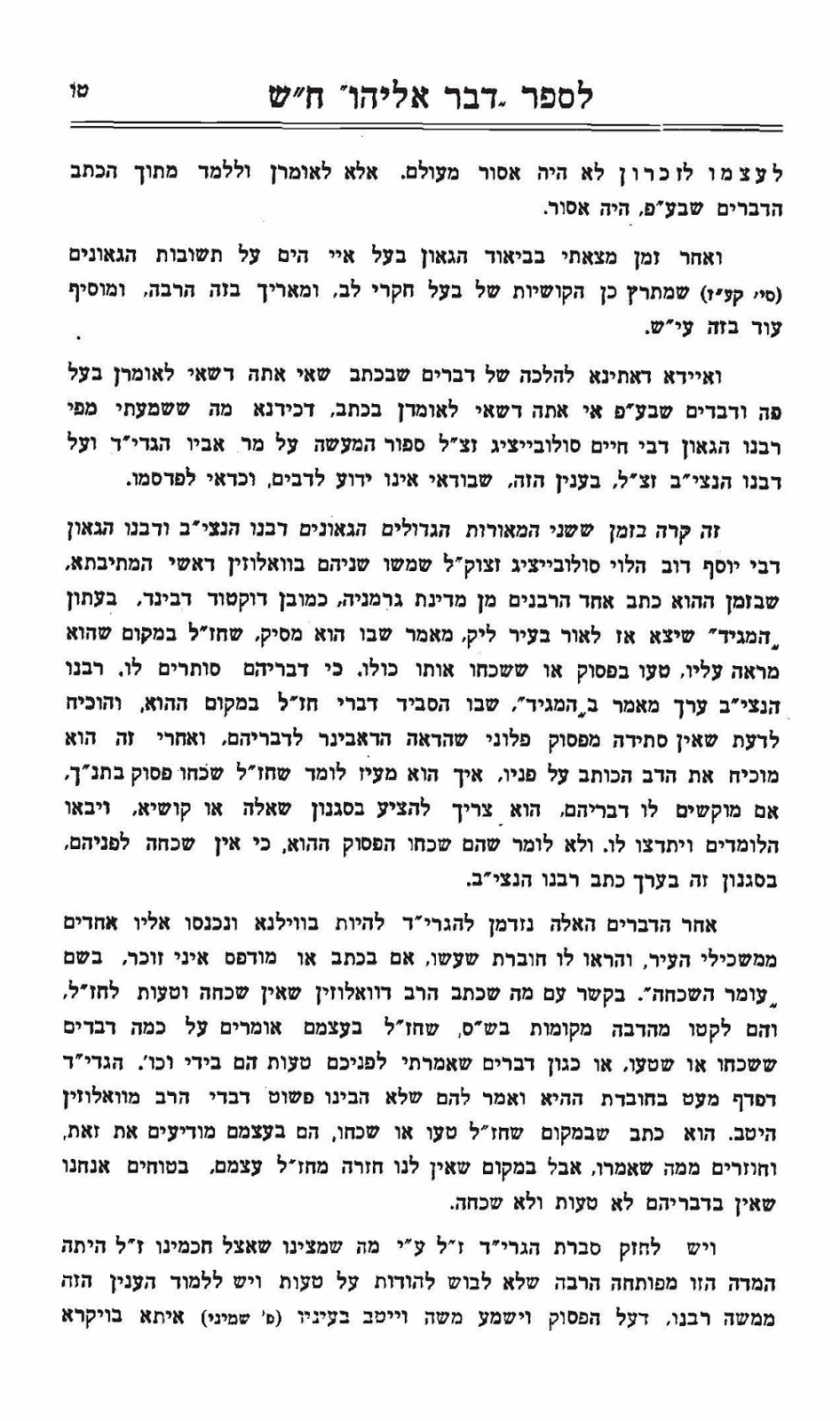
What is the remedy for these men who are intimate with non-Jewish women? Repentance, of course. Yet there is a very strange opinion as to how to go about this repentance. R. Solomon Ephraim Luntshitz, in his Keli Yekar[4] to Numbers 19:21, says something which is so “out of the box” that I am shocked that it has not yet been censored from the Mikraot Gedolot. (Yes, I realize that it is just a matter of time.)

R. Luntshitz is discussing the statement in Yoma 86b: “How is one proved a repentant sinner? Rav Judah said: If the object which caused his original transgression comes before him on two occasions, and he keeps away from it. Rav Judah indicated: With the same woman, at the same time, in the same place.” In context, this means only what it says, but not that someone should actually put himself in this situation. Yet this is exactly the lesson R. Luntshitz derives.
He refers to Berakhot 34b, “In the place where penitents stand even the wholly righteous cannot stand.” R. Luntschitz cites an opinion that the ba’al teshuvah (penitent) of a sexual sin has to put himself in the exact same situation as he was before, that is, to be alone with the very same woman and overcome his inclination. This is not permitted to one who is “wholly righteous” since he is forbidden to put himself in this situation. But the penitent needs to do this in order for his repentance to be complete, and this explains how a wholly righteous one cannot stand where the penitent stands, since the penitent has to put himself in a situation that would be forbidden for the righteous one. R. Luntshitz explains that the very act of repentance, i.e., being alone with the woman, “makes the pure [the tzaddik] impure and the impure [the sinner] pure.”
This is a strange passage for any number of reasons, not least of which that the action of being alone with the woman is itself sinful, even if it never leads to any sexual activity. Yet R. Luntshitz tells us that in this case we have an exception, and true repentance requires intentionally putting oneself in the exact same situation one was beforehand and this time overcoming one’s inclination. Of course, there is no guarantee that the person will emerge successfully from this self-imposed test. R. Israel Isserlein reports such an occurrence, where an individual put himself in this situation in order to achieve proper repentance, but ended up sinning again![5] Sefer Hasidim earlier warned against falling into precisely this trap.[6]
R. Luntschitz’s point is also found in his Olelot Ephraim, vol. 2, no. 228, showing that he was entirely convinced of his position.
R. Luntschitz was the rabbi of Prague, yet a later incumbent of this position, R. Ezekiel Landau, strongly rejects R. Luntschitz’s point. He acknowledges that many shared R. Luntschitz’s error, which I think is interesting since I can’t imagine anyone having such an opinion today.[7] R. Landau doesn’t tell us who else advocated R. Luntschitz’s view, but R. Mordechai Harris,[8] R. Dovid Yoel Weiss,[9] R. Yaakov Levi,[10] and Nahum Rakover[11] provide sources. Among these sources are R. Joseph ben Judah Loeb Jacob, Rav Yevi (Netanya, 2012), to Psalms 36:3, who quotes the Baal Shem Tov as offering the same approach as R. Luntschitz.
Jewish men getting together with non-Jewish women is, of course, not a new thing. The Talmud, Sanhedrin 82a, already refers to this possibility with regard to Torah scholars (!), concluding: “If he is a scholar, he shall have no awakening [i.e., teaching] among the sages and none responding among the disciples.”[12] Avodah Zarah 69b-70a deals with the status of kosher wine on the table when Jewish men are sitting together with a non-Jewish prostitute. Yom Tov Assis, in his article “Sexual Behaviour in Mediaeval Hispano-Jewish Society,”[13] discusses the situation in Spain where it was not uncommon for Jews to have non-Jewish mistresses.[14] Avraham Grossman also deals with this matter and his discussion includes other parts of medieval Europe as well.[15]
In R. Judah ben Asher’s responsa (Zikhron Yehudah, no. 91), we are told about the problem of Jews having sex with their non-Jewish slave girls (and also having impregnating them). A few centuries later, R. David Ibn Zimra testifies that there were men, learned in Torah, who even thought it was permissible for them to have sex with their slaves.[16]
The fact that the prohibition on occasional sexual relations (דרך זנות) with non-Jewish women is only rabbinic[17] no doubt contributed to many not taking it very seriously.[18] Maimonides, Hilkhot Issurei Biah 12:2, writes:
אבל הבא על הגויה דרך זנות מכין אותו מכת מרדות מדברי סופרים גזירה שמא יבוא להתחתן. ואם ייחדה לו בזנות חייב עליה משום נידה, ומשום שפחה, ומשום גויה, ומשום זונה. ואם לא ייחדה לו אלא נקרית מקרה אינו חייב אלא משום גויה. וכל חיובין אלו מדבריהן.
R. Moses Isserles [19] even mentions the view of the Tur that intermarriage itself (דרך אישות) is only a rabbinic prohibition.[20] The Bah explains the Tur’s view, Even ha-Ezer 16, as follows, leaving no doubt as to the matter:

אבל בשאר אומות . . . אין בהן איסור כלל מן התורה ואפילו בא עליהן דרך אישות אלא גזירה דרבנן.
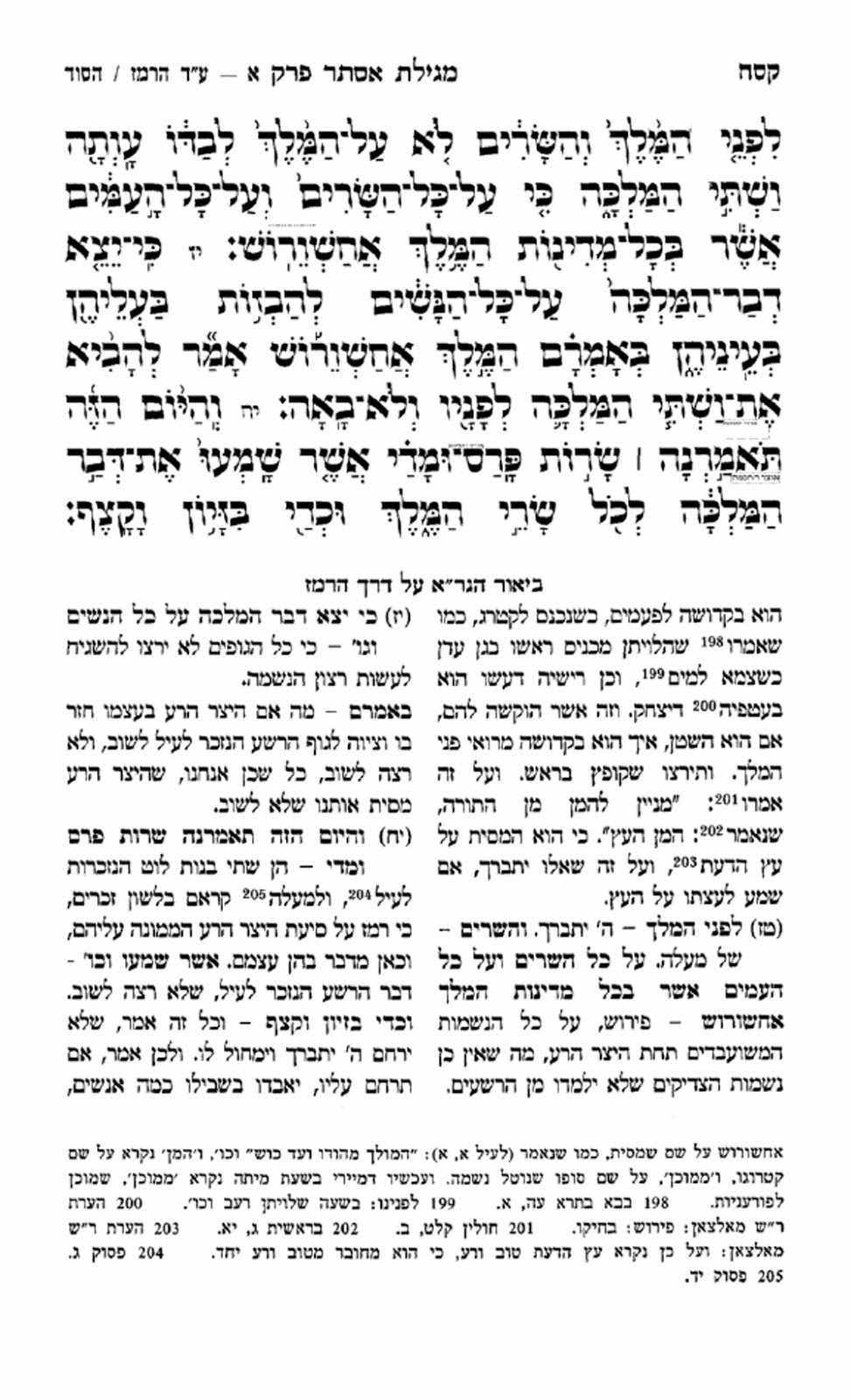
This approach, incidentally, could explain how Esther married Ahasuerus, as the prohibition on intermarriage was not yet established.
Maimonides disagrees with the Tur and assumes that there is a biblical prohibition to marry any non-Jew (דרך חתנות), not simply the seven Canaanite nations. Therefore, he claims that Solomon converted all the women he married.[21] However, R. Raphael Berdugo disagrees, and states that there was no halakhic problem with Solomon marrying these women without converting them.[22] This leads him to discuss the story of Pinhas killing Zimri and the whole concept of kana’in pog’in bo. R. Berdugo explains that kana’in pog’in bo only applies when dealing with sexual relations that are public, promiscuous, and the woman is an idolator.[23]
ולא אמרו קנאין פוגעין בו אלא דרך הפקר ועובדת ע”ז ובפרהסיא.
According to R. Berdugo, following the Tur, Jews who are married to non-Jews are only violating a rabbinic prohibition. I mention this since I recently met someone who thought that in messianic days intermarried Jews will be subject to kana’in pog’in bo. I originally thought that this was a clear error. If you look at Maimonides’ formulation, Hilkhot Issurei Biah 12:4, you find that contrary to R. Berdugo he indeed includes all non-Jews, not just idolators, as subject to kana’in pog’in bo. (And see his very strong words against Jewish-Gentile sexual relations in Hilkhot Issure Biah 12:6-7.) Yet he is just as explicit that the sexual intercourse has to be public, just like with Zimri.
כל הבועל גויה בין דרך חתנות בין דרך זנות אם בעלה בפרהסיא, והוא שיבעול לעיני עשרה מישראל.
Based on this, it was clear to me that according that according to Maimonides (following Avodah Zarah 36b) an intermarried Jew is not subject to kana’in pog’in bo, as living together is not the same thing as שיבעול לעיני עשרה. Even if one were to reject this point, in the very next halakhah Maimonides states:
ואין הקנאי רשאי לפגוע בהם אלא בשעת מעשה כזמרי . . . אבל אם פירש אין הורגין אותו.
This means that the act of zealotry must take place during the actual sexual act, or at least this is what I thought. But when I investigated a bit I learnt that while my understanding is shared by many, there are also many who assume otherwise. For example, the always interesting R. Shemariah Menasheh Adler states that an intermarried man is indeed subject to kana’in pog’in bo.[24] He claims that Maimonides’ statement just quoted only refers to one who is engaged in an act of promiscuous sex in public. With such a man he can only be killed in the act, but Maimonides is not referring here to a man who is publicly living with a non-Jew. In such a case, R. Adler claims, there is no need for the zealotry to be בשעת מעשה. As for Maimonides’ explicit words כל הבועל גויה בין דרך חתנות R. Adler claims that this only refers to the first act of marital sexual intercourse, and that it needs to be in public for kana’in pog’in bo to be applicable, but not once they have already established a home and are living together. R. Adler also quotes R. Solomon Kluger[25] as agreeing with his basic point, and I have found others as well.[26]
We have seen lots of strange stuff in recent years. Is it only a matter of time before someone disgusted with the high rate of intermarriage decides to act the part of kana’in pog’in bo?
It is also worth noting that most commentators and halakhists assume that kana’in pog’in bo only applies when there is a Jewish man and a non-Jewish woman, not the reverse. Despite this, we indeed have some examples in Jewish history of “honor killings”. For example, in 1311 a Jewish woman who married a Christian and became pregnant was killed by her brothers.[27]
In 1557 an Italian Jew killed his sister because her alleged sexual activity embarrassed the family. Elliot Horowitz, who mentions this case, adds: “Azariah Finzi, the girl’s father, saw fit to defend this action by his only son, asserting that it was ‘inappropriate for one calling himself a Jew, especially a member of one of the best families, to suffer a veil of shame upon his face, being mocked by all who see him for the blemish attached to his family’s reputation.’”[28]
In Teshuvot Hagahot Maimoniyot to Sefer Nashim, no. 25 (found in the standard printings of the Mishneh Torah), there is a responsum which describes how a woman cheated on her husband, apparently with a local non-Jew, and became pregnant. According to her father, she also killed her baby (“the mamzer”[29]) after it was born. Her father, worried that she would apostatize, asked, indeed pleaded with, the local rabbis to permit him to kill his daughter by drowning her in the river. The rabbis turned the request down.
בא אביה של שרה לפני שנים ממנו החתומים למטה ובא לימלך בנו להורות לו אם מותר להרוג בתו לטובעה בנהר ולאבדה מן העולם . . . [אמר אביה] אני מבקשכם בכל מיני תחינה שתתירו לי להורגה.
The case is actually quite sad since she was probably a teenager in over her head. The responsum describes how she would run away from home but her mother would convince her to come back. When her father rebuked her for her behavior, her reply was, “I am not the first woman who did something bad.”R. Asher Ben Jehiel, She’elot u-Teshuvot ha-Rosh 18:13, deals with a case of a woman who was intimate with a non-Jew and became pregnant from him. R. Asher affirms the local rabbi’s decision to cut off her nose. (See also R. Matityahu Strashun, Mivhar Ketavim [Jerusalem, 1969], p. 158 n. 3.)

Also relevant is a very strange story recorded in Ta’anit 24a. It begins by telling us that R. Yose ben Abin left his teacher, R. Yose of Yokeret. His reason was, “How could the man who showed no mercy to his son and daughter show mercy to me?” Let’s leave aside the story of R. Yose of Yokeret and his son. Here is what the Talmud records about him and his daughter.
He had a beautiful daughter. One day he saw a man boring a hole in the fence so that he might catch a glimpse of her. He said to the man, “What is [the meaning of] this?” The man answered: “Master, if I am not worthy enough to marry her, may I not at least be worthy to catch a glimpse of her?” Thereupon he exclaimed: “My daughter, you are a source of trouble to mankind, return to the dust so that men may not sin because of you.”
Although he did not physically kill his daughter, he did express the wish that she die (according to some it was an actual curse), and in the opinion of many commentators this is exactly what happened (see Hagahot ha-Bah, ad loc.). What makes this text so shocking is that the daughter was entirely innocent of any improper behavior. In other words, it was her very existence as a beautiful woman that created the problem, and as such it was better that she simply exit this world before any more men were led into sinful thoughts. I see no way that this story can be brought into line with mainstream rabbinic thought, despite many attempts to do so.[30] (At a future time I can present some lessons that contemporary moralists have derived from this story, which also are quite shocking.)
Returning to the matter of Jewish-Gentile sexual relations, while the Shulhan Arukh, Even ha-Ezer 16:1, following Maimonides, Hilkhot Issurei Biah 12:2, tells us that occasional sexual relations (i.e., no marital relationship) with a non-Jewish woman is only rabbinically prohibited,[31] R. Nissim of Gerona disagrees. Yet if we are indeed dealing with a Torah prohibition then what does the Talmud[32] mean when it states that the Hasmonean Beit Din decreed against sex with a non-Jewish woman? If it was already forbidden according to the Torah, there would be no need for such a decree.
R. Nissim suggests that the Hasmonean Beit Din’s decree was designed to add an additional penalty onto an already existing prohibition. It is not that occasional sex with a non-Jewish woman was banned by the Hasmonean Beit Din, but they merely added the penalty of lashes. The reason for this, R. Nissim points out, is that sometimes people are not concerned about heavenly punishments like karet, but they are concerned with an earthly punishment.[33]
Yet this is a minority view, and the standard approach is that there is no biblical prohibition on occasional private sex with a non-Jewish woman. Here is how the Encylopedia Talmudit sums up the matter[34]:
הבא על הגויה דרך זנות, איסורו מדברי סופרים, גזרה שמא יבוא להתחתן.
(In case people are wondering, I don’t think that this is the sort of information that should be spread among the masses, precisely because that some people might decide that violating a rabbinic prohibition is not such a big deal.)
I keep stressing Jewish men and non-Jewish women, since the situation of Jewish women and non-Jewish men has its own issues that should be postponed to another post. But with regard to Jewish women who are intermarried, let me note that according to R. Ovadiah Yosef, such a woman should be told to go to the mikveh. He also adds that she should not tell the mikveh lady about her situation (I assume because she might then be refused entry).[35]
To be continued.

* * * * * *


In an earlier post here I mentioned some of the shocking things said by R. Chaim Kanievsky about R. Shmuel Auerbach. Someone asked me if I could put together a list of the harshest things said by Torah scholars about their contemporaries. This would be an interesting project, and we can also find some very harsh things in this regard in talmudic and midrashic literature. I must stress, however, that often these shocking (to our ears) statements are not as harsh as they sound, since they were not meant to be taken literally. Some rabbis use figures of speech that everyone understands are simply part of a literary genre.
Here is one such example. R. Abba Mari of Lunel, in his attack against the Jewish rationalists, tells us that if he had the power he would do as follows to his opponent[36]:
אקרע סגור לבו להיות בדמו ממרס.
This means “I will cut open his heart so as to stir his blood.” I am sure people in medieval times would also be offended by such a statement. Yet its meaning then was far removed from what it would mean today, and if any of our contemporaries spoke like this we would assume he needed to be institutionalized.
After reading the post, some also wrote to me to express dissatisfaction with the rabbinic leadership in the haredi world. Contrary to what some think, this sort of feeling is not new, and in every generation people have been disappointed with the rabbinic greats. Here, for example, is what appears in the anonymous letter printed at the beginning of R. Mordechai Benet’s Parashat Mordechai.
ואף הגדולים וחכימי דרא לא משגיחים רק לעצמם בלחודוהי לזכות עצמם בלחוד אבל לא לזכות דרא לעורר תשובה בעלמא.
Finally, a couple of people corresponded with me regarding the stories of great rabbis who had totally sublimated their emotions. There are other stories that could be told of rabbis who were not even (at least outwardly) emotionally affected by the death of a child. This is sometimes held up as an example of piety and acceptance of God’s decree. Yet R. David Ibn Zimra (Radbaz) had an entirely different perspective.[37] Regarding one of the “gedolei ha-dor” who when his son died did not shed a tear, Radbaz was asked if this is a good characteristic or not. In his reply, Radbaz does not mince words about how wrong this is, seeing such “piety” as cruel, un-Jewish, and evidence of a psychological problem (to use a modern formulation):
זו מדה רעה מורה על קושי הלב ועל רוע תכונת הנפש והיא מדת אכזריות והוא דרך הפילוסופים האומרים כי זה העולם הכל הוא מעשה תעתועים
[1] Alan Brill has recently written as follows:
Centrism requires its members to live in the top six percent of U.S. income. The community is known for kitsch engagements and weddings, and other signs of conspicuous consumption in the name of religion. In the face of the recent economic downturn many will remain in the community and follow whatever guarantees survival in suburbia.
“The Emerging Popular Culture and the Centrist Community,” in Yehuda Sarna, ed., Developing a Jewish Perspective on Culture (New York, 2014), p. 30. As with everything else Brill writes, this essay is well worth reading. On this same page he refers to the fact, noted by others, that for most Centrist Orthodox Jews, their Orthodoxy has nothing to do with doctrine but is about lifestyle and family values.
Being Orthodox is about family on Shabbat, shiva calls, hospital visits, sharing simchas, and helping others. They consider the warmth of the community as their Orthodox Judaism, yet are oblivious to doctrine and practice demarcations. . . . Many define faith as “everyday morality” rather than institutional commitment or theological Orthodoxy.
I would add that not only is this not new, I believe it is how traditional Judaism has always functioned and is applicable to much of the haredi world as well. In other words, many in the Orthodox world would agree with the Reconstructionist saying, “Belonging is more important than believing.” See Mel Scult, The Radical American Judaism of Mordecai M. Kaplan (Bloomington, 2014), p. xiii.
From Brill’s article I learnt that Aish Hatorah put on a recent Purim megilah reading “that featured as emcee and guests of honor the non-Jewish Chris Noth, who played Mr. Big on Sex and the City, and Snooki, of the MTV show Jersey Shore.” See also here. Brill uses this example, and others, to show the influence of contemporary culture.
I am fascinated by how the haredi world tolerates this sort of thing in the name of kiruv. I personally am very turned off by this, but am apparently in the minority. When I told a couple of twenty-somethings that I think that the following Aish video, with almost three millions hits, makes a mockery of what Yom ha-Din is all about, they thought I was simply out of touch. Yet as I noted to them, contrary to the implication of the video, Rosh ha-Shanah is indeed about spending the day in synagogue in prayer, not about having fun and breakdancing to non-Jewish music.
[2] See my earlier discussions of intermarriage here and here.
Regarding another type of “intermarriage”, see Francesca Trivellato, The Familiarity of Strangers (New Haven, 2009), p. 94, that Sephardim in seventeenth-century Amsterdam were forbidden by their community to marry Ashkenazim. (Poor Sephardim were also given a higher charity subsidy than Ashkenazim.)
[3] See Be’er Moshe, vol. 4, no. 146:26-27, where R. Stern speaks very strongly against the practice in Boro Park and Willamsburg of  men and women going for walks on Shabbat on Yom Tov, as this leads to a mingling of the sexes.
[4] For some reason the title of this commentary is almost always written as Keli Yakar, yet the second word should be Yekar, as appears in Prov. 20:15.
[5] Leket Yosher, ed. Kinarti (Jerusalem, 2010), Hilkhot Yom ha-Kippurim, p. 304.
[6] Sefer Hasidim, ed. Margaliyot, no. 167. While preparing my Torah in Motion classes on R. Joseph Hayyim I found a strange passage in his Ben YehoyadaSotah 36b. Although the Talmud, ibid., records the view that Joseph intended to sin with Potiphar’s wife, R. Joseph Hayyim says that this is not to be taken literally. Rather, Joseph’s intention was to inflame his lust for her so that would then be able to overcome it which would be a great spiritual victory. He says the same thing about King David and Abigail. Although the simple meaning of the Talmud, Megillah 14b, is that David wished to have sex with her, R. Joseph Hayyim states that here, too, all David wished was to arouse his lust in order to then overcome it.
וכן היה הענין אצל דוד הע”ה, בענין אביגיל כשתבע אותה דודאי חלילה לנו לחשוב על אותו צדיק אשר לבו חלל בקרבו, שביקש לחטוא בא”א, אלא כוונתו היתה לעורר התאוה בקרבו, ולהעביר אש החשק בלבבו, כדי שבעת שיגיע לנקודת המעשה ינתק עבותות התאוה, ויכבה אש החשק כרגע, ויחדל ויפרוש מעשות רע
(R. Luntshitz, in the passage from Keli Yekar I cited, specifically states that only one who has already sinned in such a fashion and is engaged in repentance can put himself in this situation, but a tzaddik is absolutely forbidden to do so).
R. Joseph Hayyim’s comment reminds me of the notion that one who has not sinned, and thus has nothing to repent for, should purposely commit a sin. This will then allow him to fulfill the mitzvah of teshuvah, which he would otherwise not be able to do. In a future post I will discuss this.
Regarding King David, I found something quite strange in Etan Levine, Marital Relations in Ancient Judaism (Wiesbaden, 2009), p. 129. Levine writes: “And though the sages hardly regarded extramarital affairs as meritorious, their antipathy to divorce led some of them to opine that extra-marital relations with an unattached, sexually-permitted female was preferable to terminating a marriage.” This might be true, but no valid source is cited to support this idea.. In his note to the quoted passage, Levine writes: “King David’s case was interpreted as proof: it was to prevent his divorcing any of the 18 wives permitted to a king that he was allowed to sexually tryst (יחוד) with Abishag without marrying her (I Ki. 1:1f.). See the Babylonian-born Simeon bar Abba (d. ca. 310CE), a disciple of Rabbi Johanan whose homily he cites in Tb Sanhedrin 22a.” To begin with, R. Shaman (שמן) bar Abba is not quoting R. Johanan in Sanhedrin 22a. What he says is that the fact that David was permitted yihud with Abishag shows how much divorce was disapproved of, for otherwise he would have divorced one of his wives and married Abishag. But where does Levine get the notion that yihud means “sexually tryst.” The Bible itself (!) is explicit that David “knew her not.”
[7] Derushei ha-Tzelah (Warsaw, 1886), derush 1, no. 11.
[8] Yad Mordechai (Jerusalem, 1955), pp. 43-44.
[9] Megadim Hadashim: Berakhot (Jerusalem, 2008), pp. 360-361.
[10] Gan Naul (n.p., 2009), pp. 108ff.
[11] Takanat ha-Shavim (Jerusalem, 2007), pp. 588ff., 595ff.
[12] The Talmud’s teaching (quoted by Shulhan Arukh, Even ha-Ezer 16:2) is very clear, and events of recent years have shown us that even Torah scholars are not immune to such behavior. Yet I can’t say I was surprised to find that even these clear words are distorted. R. Gedalyah Axelrod, Migdal Tzofim, p. 148 (parashat Pinhas), states that the Talmud and Shulhan Arukh couldn’t really mean that a Torah scholar might have sexual relations with a non-Jew. Therefore, he explains that they really mean that the Torah scholar causes others to do so, by performing fraudulent conversions, and these “converted” women (who are still halakhically non-Jewish) then marry Jews. This is very nice darshanut, but how can anyone take this seriously as an actual explanation of the Talmud and Shulhan Arukh? The Maharal knew better, and in Derekh Hayyim 4:4 he gives the following example:
עשרה תלמידי חכמים יושבים ואחד נכנס לבית זונות ולא נודע איזה שזה מחלל שם שמים בסתר.
See also R. Hayyim Vital, Sefer ha-Hezyonot, ed. Eshkoli (Jerusalem, 1954), p. 33: 

ליל שבת שעברה שכב תלמיד חכם הנקרא בעדת הספרדים “חכם” עם גויה אחת

[13] In Ada Rapoport-Albert and Steven J. Zipperstein, ed., Jewish History: Essays in Honour of Chimen Abramsky (London, 1988), pp. 25-59.

[14] See Sefer Hasidim, ed. Margaliyot, no. 701, that the level of Jewish sexual morality will mirror what appears in society at large.
כמו שמנהג הנכרים כן מנהגי היהודים ברוב מקומות כגון אם הנכרים גדורים בעריות כך יהיו בני היהודים הנולדים באותה עיר.
See also R. Solomon Ben Adret, She’elot u-Teshuvot ha-Rashba, vol. 1, no. 1209:
ובנות ישראל צנועות הן אלא שהדור מנוולתן.
I was surprised to see Michael Satlow write: “There is no rabbinic law against intercourse with a prostitute.” Tasting the Dish: Rabbinic Rhetorics of Sexuality (Atlanta 1995), p. 166. This is incorrect, as Sanhedrin 82a explicitly states:
בית דינו של חשמונאי גזרו הבא על הכותית [ס”א הגויה] חייב עליה משום נדה שפחה וכו’
See also Geoffrey Alderman’s article, “It is Not a Sin to Visit a Prostitute,” in his The Communal Gadfly (Brighton, 2009), pp. 267-268. I don’t know how he can write such nonsense as the following:
As far as I am aware, there is no general halachic prohibition on Jewish men sleeping with prostitutes, unless the whore is herself Jewish. If not, then, according to the Talmud, a Jewish man who feels the need to visit a prostitute must simply take care to do so in a town in which he is not known – which strikes me as very sound advice.
If the whore is Jewish, however, we are faced with the certainty of multiple acts of adultery [!], all of which are prohibited. This is because intercourse is itself a form of marriage. So the first Jewish man a prostitute consorts with becomes her husband [!]; if she wishes to consort with anyone else, this first Jewish customer will have to give her a get [!]. So will the second, and so on. [!] (I am ignoring for my present purposes, considerations of mikveh, since I have yet to learn of any brothel that has one.)
It is actually a common kabbalistic view that one who has sex with a non-Jewish woman will be reincarnated as a Jewish prostitute. See e.g., R. David Ibn Zimra, Metzudat David, no. 612.
[15] Hasidot u-Mordot (Jerusalem, 2001), pp. 229ff.
[16] She’elot u-Teshuvot ha-Radbaz, vol. 1, no. 48.
[17] See Sanhedrin, 82a, Avodah Zarah 36b, Mishneh Torah, Hilkhot Issurei Biah 12:1-2; Shulhan Arukh, Even ha-Ezer 16:1, and the commentaries ad loc. R. Moses Isserles, Darkhei Moshe, Hoshen Mishpat 34:4, writes:
בא על הגויה לא מיפסל רק מדרבנן דהא אינו אלא מגזירת בית דין של חשמונאי.
R. Shlomo Goren, Mishnat ha-Medinah (Jerusalem, 1999), p. 142, points out that sex with a non-Jewish woman does not fall under the category of arayot, even rabbinically.
ועל אף חומר האיסור אין זה מגדרי איסור עריות אפי’ מדרבנן.
R. Joseph Kafih, commentary to Mishneh TorahIssurei Biah 12:2, raises a problem with the standard understanding of Maimonides that occasional sex with a non-Jewish woman is only a rabbinic prohibition. Even though Maimonides, Issurei Biah 12:2, writes ולא אסרה תורה אלא דרך חתנות, what is one to do with halakhah 9 [no. 8 in R. Kafih’s edition] which implies the opposite? R. Kafih writes
ומה יעשה בדברי רבנו לקמן הל’ ח שגויה הנבעלת לישראל תיהרג מפני שבאה תקלה לישראל על ידה, ולדבריו [דברי המעשה רקח] שאין אסור דאוריתא איזה תקלה באה על ידה?
Presumably, Maimonides in halakhah 9 is only referring to a public sexual act, which would be regarded as a biblical violation.
[18] After writing this sentence I found that R. Solomon Ibn Verga said the same thing. See Shevet Yehudah (Jerusalem, 1955), p. 134: 

כבר התחילו בספרד לתת עיניהם בבנות הארץ מרוב ההרגל וקצתם לקחו היתר לאמר כי אין בו אלא מלקות

I don’t mean to imply that there wasn’t sexual immorality involving Jewish men and Jewish women, as there was plenty of this as well. R. Asher ben Jehiel, Teshuvot ha-Rosh, nol. 37:1, even speaks about the practice of engaged couples living together (לדור ביחד) before marriage. He tells us that the women did not go to the mikveh since they were embarrassed to do so before marriage. But they weren’t embarrassed to live together before marriage.

[19] Even ha-Ezer 16:1.
[20] Since the consequences of intermarriage are so devastating, one must wonder why there is no explicit biblical prohibition. Be that as it may, in coming years watch for the Conservative movement to halakhically legitimize intermarriage by relying on the view that it is only rabbinically prohibited. As with other rabbinic prohibitions previously abolished by the Conservatives, they will argue that this too can be set aside for important societal concerns.
Maggid Mishneh, Hilkhot Ishut 1:4, recognizes that one cannot logically explain why certain sexual acts are biblically prohibited and others had to wait for the Sages to prohibit them.
ואל תתמה היאך תהיה הישראלית ביאתה בזנות בלאו והגויה מדברי סופרים לפי שאיסור העריות הוא בגזירה ודבר שאין לו טעם בכל פרטיו. והנה תראה שאם חמותו היא בסקילה [צ”ל בשריפה] ואם אמו מדברי סופרים בלבד ונדות בישראלית הוא מן התורה בכרת ובגויה אין נדות כלל אלא מדברי סופרים.
Regarding the Tur’s assertion that there is no biblical prohibition to marry women who are not of the Canaanite nations, this has been hard for many to accept. The Arukh ha-Shulhan, Even ha-Ezer 16:2, states that “it appears to me” that even according to this opinion, if the Jewish man and non-Jewish woman actually live together there is a Torah prohibition. How could the Arukh ha-Shulhan say this when the Tur, Even ha-Ezer 16, states explicitly that contrary to Maimonides, sexual relations דרך אישות with contemporary non-Jewish women does not incur a biblical penalty? Is there a real distinction between sexual relations דרך אישות and living together as husband and wife?. Here are the Arukh ha-Shulhan’s words (following which he cites a talmudic proof for his understanding):
ומ”מ יראה לי דאפילו להחולקים על הרמב”ם מ”מ אם היא בביתו ובועל אותה תמיד כדרך איש ואשתו חייב עלה מדאורייתא
For others who argue that despite the simple sense of his words, the Tur must hold that there is still a biblical prohibition for a Jew to marry a non-Jew, see Otzar ha-Poskim, Even ha-Ezer 16:1. See also R. J. David Bleich, Contemporary Halakhic Problems, vol. 2, p. 273.
Nevertheless, the severity of the stricture against intermarriage tends to indicate that, even according to the Tur, some form of biblical prohibition against intermarriage with non-Jews who are not members of the Seven Nations must exist. The question to be resolved is the nature of the biblical prohibition.
With reference to those who have argued that intermarriage (and even non-marital Jewish-Gentile sexual relations) violates Torah law, Shaye J. D. Cohen writes: “This may be good halakhah and good preventative medicine, but it is bad history and bad exegesis.” “From the Bible to the Talmud: The Prohibition of Intermarriage,” Hebrew Annual Review 7 (1983), p. 30.
[21] Hilkhot Issurei Biah 12:2, 13:14.
[22] Mesamhei Lev (Jerusalem, 1990), commentary to ch. 1 (p. 229).
[23] See Hilkhot Issurei Biah 12:5 that there is no kana’in pog’in bo when it comes to a ger toshav.
[24] See Geulat Yisrael (London, 1950), pp. 95ff.
[25] Commentary to Even ha-Ezer 16:2, in the standard eds.
[26] See also R. J. David Bleich, Contemporary Halakhic Problems, vol. 2, pp. 275ff., who argues that intermarriage is the equivalent of a public act of sexual intercourse, and thus biblically forbidden according to all.
[27] See Renée Levine Melammed, “The Jewish Woman in Medieval Iberia,” in Jonathan Ray, ed., The Jew in Medieval Iberia 1100-1500 (Boston, 2012), p. 272.
[28] “Jewish Confraternal Piety in Sixteenth-Century Ferrara: Continuity and Change,” in Nicholas Terpstra, ed., The Politics of Ritual Kinship (Cambridge, 2000), p. 159.
[29] Although her father called the baby ממזר מן הגוי, the term was only being used colloquially, since a child of a non-Jew is not halakhically a mamzer.
[30] R. Samuel Edels, Maharsha, ad loc., states explicitly that R. Yose of Yokeret was wrong in cursing her so that she die. )How many other examples do we have of commentators criticizing talmudic sages?) However, I don’t think Maharsha’s approach will make matters much easier for many readers, because he suggests that instead R. Yose should have cursed her that she become ugly!
ולא יפה עשה לקללה שתשוב לעפרה בשביל כך אלא כי אם לקללה שתשוב לשחרוריתה.
R. Mordechai Karvalho of Tunis, Meira Dakhya (Livorno, 1792), ad loc., also wonders why the daughter had to die. After all, “are we commanded to kill everyone who is beautiful?” He suggests that R. Yose should have kept her inside the house so no man would ever see her.
ובתו ג”כ היא לא עשתה שום עבירה וא”כ היל”ל להחביאה בחדרי חדרים שלא יראה אותה שום אדם ולא ימיתינה וכי מי שהוא יפה תאר מצווין אנו להמיתו
This idea, of keeping unmarried women off the street, is found in various Jewish sources. In his recently published Asaf ha-Mazkir, p. 61, R. Meir Mazuz refers to R. David Kimhi’s commentary to 2 Sam. 13:2: 

ודרך הבתולות בישראל להיות צנועות בבית ולא תצאנה החוצה
R. Mazuz also refers to R. Asher ben Jehiel, Piskei ha-Rosh, Ketubot 7:15, who says that in Spain the בנות, which I assume also means unmarried women, would only go to the bathhouse in the middle of the night, since they were accustomed not be seen outside. In order to show that this was the practice of the pious women of medieval Spain, R. Mazuz cites another source, Tikunei Zohar, no. 58:
צריכא ברתא דאיהי בתולה למהוי סגורה ומסוגרת בבית אביה

With reference to my question at the beginning of this note, R. Mazuz, Asaf ha-Mazkir, p. 128, cites the great R. Raphael Joseph Hazan, Hikrei Lev, vol. 1, Yoreh Deah, no. 26 (p. 29b), that R. Simeon ben Yohai was mistaken in thinking that animals are subject to individual providence:


דרשב”י לא ידע . . . אבל האמת אינו כן
R Mazuz cannot accept this sort of language when dealing with R. Simeon ben Yohai:
דמה כוחנו לחלוק על רשב”י בסברא בעלמא, ומה ידענו ולא ידע

Not noted by R. Mazuz is that R. Hayyim Palache cites R. Hazan without objection. See Amudei Hayyim (Izmir, 1875), p. 101a.
[31] In Hilkhot Issurei Biah, 12:6 (followed by Shulhan Arukh 16:2), Maimonides writes that if one who had sex with a non-Jewish woman is not killed by kana’im or given lashes by beit din עונשו מפורש בדברי קבלה שהוא בכרת. The context of this halakhah, and the previous ones, is an act of public sexual relations, the sort that is a Torah violation and subject to kana’in pog’im bo. Yet some understand Maimonides to be also referring to private sexual relations דרך זנות. See Beit Shmuel, Even ha-Ezer 16:4. This position is hard to understand, since as has been pointed out by others, how can there be karet on a rabbinic prohibition? A punishment of karet would seem to imply that we are dealing with a Torah violation, yet Maimonides is explicit that this is not the case with non-public and non-marital sexual relations with a non-Jewish woman. This problem leads R Yosef Rein, Penei Yosef: Sanhedrin (Bnei Brak, 2009), p. 648, to offer the original suggestion that Maimonides is talking about כרת מדרבנן. To complicate the matter even more, in Sefer ha-Mitzvot, neg. com. no. 52, Maimonides indeed states that there is karet for non-public sexual relations with a non-Jewish woman, which contradicts his position in the Mishneh Torah. R. Kafih, in his commentary on Sefer ha-Mitzvot, explains:

כלומר שעונשו חמור כחייבי כרתות
Needless to say, this is a very unlikely explanation, and if Maimonides wanted to say what R. Kafih writes, he could have easily done so instead of speaking of actual karet.
[32] Sanhedrin 82a, Avodah Zarah 36b.
[33] See Hiddushei ha-Ran, Sanhedrin 82a, and also R. Aryeh Leib Heller, Avnei Miluim, Even ha-Ezer 16:1:3. R. Simhah Lieberman, Bi-Shevilei ha-Amim, no. 14, has a very good discussion of the matter. See also the sources showing the seriousness of the offense in R. Michael Bacharach, Arugat ha-Bosem, Even ha-Ezer 16:2. R. Aviad Sar Shalom Basilea also argues against those who claim that occasional sexual relations with a non-Jewish woman is only rabbinically prohibited. See Emunat Hakhamim (Mantua, 1730), ch. 29. Among the points he makes is if occasional sex with a non-Jewish woman is only rabbinically forbidden, then what is the point of the yefat toar law? This is a special law that permitted what otherwise was already forbidden. He also quotes R. Judah Briel that sex with a non-Jewish woman is included as part the prohibition of wasting one’s seed. (It is not clear if R. Briel is speaking homiletically or halakhically. See also Torah Shelemah, Ex. 20, no. 334, for the midrashic statement that one who has sex with a non-Jewish woman violates fourteen [!] separate Torah prohibitions. Regarding this statement, see also Louis Epstein, Sex Laws and Customs in Judaism [New York, 1967], p. 176.)
R. Basilea’s point about yefat toar can easily be refuted. See e.g., Mizrachi to Deut. 21:11 who suggests that the entire point of the law is to permit sex with a married non-Jewish woman, something that otherwise would be forbidden. It implies nothing about occasional private sex with an unmarried non-Jewish woman, which was permitted in the days of the Torah.
כיון שבבית שהוא בצינעה בא עליה הביאה ראשונה למה לי קרא להתירה הא לא אסרה תורה אלא דרך חתנות אבל דרך זנות בביאה ראשונה שאינה אלא מפני יצרו הרע אין איסורה אלא מדברי סופרים ולמה לי קרא למשרייה ושמא יש לומר דמשום אשת איש איצטריך קרא להתירה וצ”ע . . . כל הפרשה הזאת לא נכתבה אלא באשת איש . . . מדאצטריך קרא להתירה בשעת שביה מכלל שבאשת איש דאסירא בעלמא קמיירי, דאי בפנויה [שריא] אפילו בעלמא, כ”ש בשעת שביה, וזהו הנכון אצלי
According to some, another novelty of the yefat toar law is that it also permits rape, which otherwise is forbidden.See also James Diamond, “The Deuteronomic ‘Pretty Woman’ Law: Prefiguring Feminism and Freud in Nahmanides,” Jewish Social Studies 14 (Winter 2008), pp. 61-85.

I previously discussed yefat toar here and here.
To the sources I cited, add R. Eliezer of Metz, Sefer Yereim, ed. Schiff, no. 20, who specifically states that a yefat toar cannot be raped ([called to my attention by R. Chaim Rapoport], and see Toafot Re’em, ad. loc., note 13, that this is already a talmudic dispute).
On the other hand, Maggid Mishneh, Hilkhot Ishut 14:17, states:
וענין יפת תואר חדוש הוא ולא התירה אותה תורה אלא כנגד יצר הרע . . . ובעלה בעל כרחה
R. Pinhas Horowitz, Ha-Makneh, Kiddushin 22a, understands Rashi to permit rape of a yefat toar (I haven’t seen others who agree with this).
מה שפירש”י ז”ל דקידושין תופסין בה אין לפרש שיכול לקדש אותה בע”כ דלא מצינו קידושין בע”כ כי אם ביבמה אלא דע”כ הכי קאמר קרא דלאח’ הגירות בת ליקוחין היא אם מתרצית להתקדש לו ואם לא מתרצת יבא עלי’ בע”כ דהיינו שהתירה התורה נגד היצה”ר
It is precisely with these sorts of passages in mind that, as I have quoted on a number of occasions, R. Jehiel Jacob Weinberg states that when there is a dispute among the early authorities, we should decide the halakhah in accord with contemporary sensibilities.
ואגלה להדר”ג [הגרא”י אונטרמן] מה שבלבי: שמקום שיש מחלוקת הראשונים צריכים הרבנים להכריע נגד אותה הדעה, שהיא רחוקה מדעת הבריות וגורמת לזלזול וללעג נגד תוה”ק (כתבי הגאון רבי יחיאל יעקב וויינברג, חלק א סי’ לב).
See also my post here.There are a number of laws in the Torah that are not in line with modern conceptions of morality (the one most in the news these days deals with homosexuality). But I think yefat toar is unique in that I have never seen an English language discussion of the law in an Orthodox publication that actually deals with its parameters in any detail, and cites what the rishonim say about the law. (Searching on the internet I found Jacob Bernstein, “Eshet Yefat To’ar: A New Look” here, but this too does not elaborate in sufficient detail on the morally difficult aspects of the matter.) Could it be that this law is more morally problematic for moderns than the laws dealing with homosexuality and slavery of which we have seen endless discussions? And if so, why?

Here is one final source regarding yefat toar. R. Reuven Katz, Duda’ei Reuven, vol. 2, p. 217, states explicitly that the heter of yefat toar is not proper or ethical, but nevertheless in necessary. While this is a quite provocative formulation, it really reflects the outlook of the Sages. Nevertheless, I don’t know if any contemporary halakhic authorities would write this way (emphasis added).
אמנם קיים בנסיבות מיוחדות היתר לדבר שאינו הגון ומוסרי, כיון שהתנאים אינם יכולים להתעלם מתופעה זה
Regarding rape, there is one other strange thing I would like to share. Maimonides, Hilkhot Ishut 15:17, forbids marital rape. In a case where a woman is in a situation of yibum, and she does not want the Levirate marriage, she is not forced and instead the man must take part in the halitzah ceremony (although according to Maimonides she is regarded as a moredet). See Hilkhot Yibum ve-Halitzah 1:2, 2:10. However, there is a special halakhah when it comes to yibum that even if the man forces her to have sex, it is still a valid yibum and she becomes his wife. (Hilkhot Ishut 2:3).
R. Isaiah of Trani (the Elder), Teshuvot ha-Rid, ed. Wertheimer (Jerusalem, 1987), no. 59, responds to an unnamed questioner who thought that it was permissible for a levir to force his sister-in-law to have sex with him (i.e., to rape her). R. Isaiah expresses his surprise that anyone could make such a mistake (although he acknowledges having heard of others who also erred in this way):
מה שכתבתה [!] למה אין כופין את היבמה להתייבם לא נכונו הדברים האלה לומר לאיש חכם, שלא עלתה על לב אדם שנכפה את היבמה להתייבם . . . אם היבמה אינה רוצה להתייבם והיבם רוצה שנכוף אותה לפניו לא היה ולא נברא
R. Isaiah then states that if the levir was chasing after the woman to rape her (in order to fulfill the mitzvah of yibum), we are commanded to save her from him, even if we have to kill him. (See R. Avraham Shapiro, Shiurei Maran Ha-Gaon Rabbi Avraham Shapiro: Yevamot, Gittin [Jerusalem, 1995] p. 170.)
So far we haven’t seen anything surprising. But in his note to R. Isaiah’s responsum, the editor, R. Avraham Yosef Wertheimer, writes as follows:
ומש”כ רבינו דמצוה להצילה מידו זה חידוש גדול דהא עכ”פ הוא מקיים מצות יבום ולמה עלינו למנוע ממנו אותה מצוה
Wertheimer doesn’t understand why R. Isaiah thinks it is necessary to stop the levir from raping the woman, since after all, he is intending to perform a mitzvah. How Wertheimer could write this after seeing what R. Isaiah explains in his responsum is beyond me.
In a future post I will discuss how the commentators deal with Maimonides, Hilkhot Melakhim 4:4, which appears to be saying that the king may take women as his wives and concubines even against their will.
[34] Vol. 5, s.v. goy, col. 297. See also vol. 3, s.v. boel aramit.
[35] Ma’yan Omer, vol. 7, p. 26. See, however, ibid., p. 294, that on another occasion R. Ovadiah saw no need to instruct intermarried women to go to the mivkeh (and see ibid. for the editor’s explanation of the different answers). See also R. Rafael Evers, Va-Shav va-Rafa, vol. 3, no. 147, for R. Yitzhak Shmuel Schechter’s responsum stating that an intermarried woman should go to the mikveh. This is a very practical question today. Pretty much every outreach minyan has attendees who are intermarried or living with non-Jews. I have also come across people in such circumstances in regular Modern Orthodox synagogues.
When it comes to sexually active single women, both R. Ovadiah and R. Moshe Sternbuch believe that they should be allowed to use the mikveh if they so desire. See Ma’yan Omer, vol. 7, pp. 234, Teshuvot ve-Hanhagot, vol. 1, no. 484. See also Ma’yan Omer, vol. 7, p. 261, that we should not advise women to do this (i.e., it is only if they come on their own that they should be allowed to use the mikveh).
[36] Teshuvot ha-Rashba, ed. Dimitrovsky, vol. 1, p. 639. See Neuman, The Jews in Spain (Philadelphia, 1944), vol. 2, p. 125.
[37] She’elot u-Teshuvot Ha-Radbaz, no. 985. See also R. Solomon Schueck, Torah Shelemah (Satmar, 1909), vol. 2, p. 114b-115a.


A Mild Case of Plagiarism: R. Abraham Kalmankes’ Ma’ayan Ha-Hokhmah

A Mild Case of Plagiarism:  R. Abraham Kalmankes’ Ma’ayan Ha-Hokhmah
by Shnayer Leiman
1.  The Accusation.

Rabbi Joseph Samuel ben R. Zvi (d. 1703) – more popularly known as ר’ שמואל ר’ חיים ר’ ישעיה’ס – served as a member of the rabbinic court in Cracow for some 26 years, after which he was appointed Chief Rabbi of Frankfurt in 1689.1 An avid collector of books and manuscripts, he made good use of them in listing in the margins of his copy of the Talmud variant readings, emendations, and annotations to the text of, and commentaries on, the Babylonian Talmud. These were published posthumously in the Amsterdam and Frankfurt editions of the Talmud, 1714-21. Today, they are incorporated in every edition of the Vilna Talmud, and every student of the Talmud benefits from the efforts of this great rabbinic scholar.2
One of the many tasks of the leading rabbis in the 17th and 18th centuries was to write letters of approbation on behalf of mostly young rabbinic scholars seeking to publish their manuscripts. R. Joseph Samuel wrote some 40 such letters of recommendation during his lifetime, not an insignificant number in those days.3 This, despite the fact that he looked askance at the recommendations that many of his colleagues were writing, and was less than impressed by the quantity and quality of books being published. Indeed, at one point he called for – and apparently instituted – a moratorium on the publication of rabbinic works in Germany, claiming that many of them were superfluous and some were even harmful.4
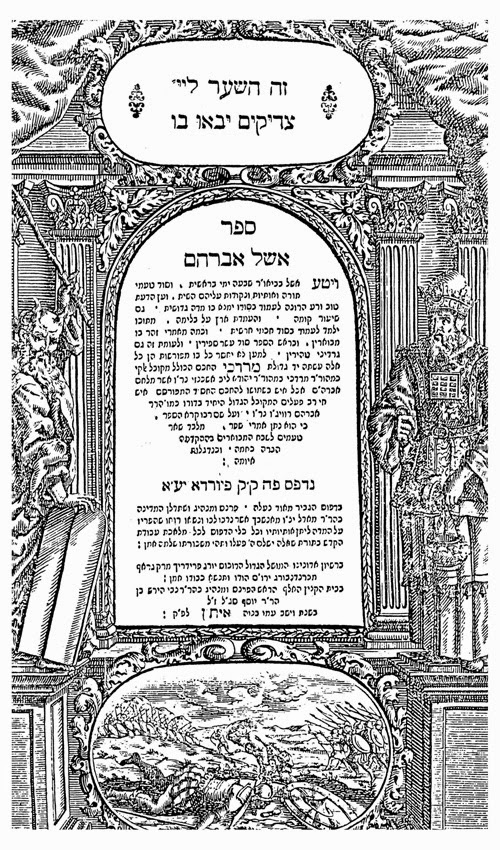
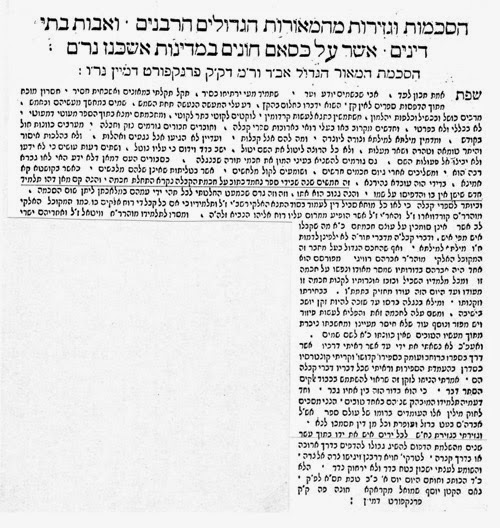
On January 2, 1701, R. Joseph Samuel wrote a letter of approbation for a kabbalistic work by R. Mordechai Ashkenazi, an otherwise unknown author (then) who was a protégé of the distinguished Italian rabbi and kabbalist, R. Abraham Rovigo (d. 1713).5 The book, entitled אשל אברהם, and the letter of approbation, were published later in 1701 in Fürth. After a lengthy critique of the proliferation of works on Kabbalah in the late 17th century, the letter reads, in part:6
They [the new authors of kabbalistic works] are guilty of two evils. First, they neither know nor understand the deeds of God. Second, they cause the common folk to slight the rabbis expert in the exoteric Torah. The common folk assume that rabbis not expert in Kabbalah are not true scholars. So they cast away their expert rabbis, listening instead to the enchanters, whose wisdom is borrowed from others. I can testify that this is true [i.e., that the enchanters’ wisdom is borrowed from others], for I was involved in such a case. I recall vividly how some fifty years ago I owned a copy of a delightful kabbalistic work entitled התחלת חכמה. Some upstart student, a novice with no knowledge based on accumulated learning, printed the book under his own name. He simply plagiarized the entire book.
2.  The Identity of the Plagiarized Book.
No book entitled התחלת חכמה has ever appeared in print. It therefore could not have been plagiarized by anyone. Moreover, R. Joseph Samuel did not reveal the name of the plagiarist and the title of the book in its plagiarized form. This literary riddle was first raised in print early in 1976 by the noted bibliophile, Abraham Schischa of London.7 The solution was not long in coming. That same year, R. Shmuel Ashkenazi, also a noted bibliophile, solved the riddle.8 He correctly identified התחלת חכמה as the title of a kabbalistic book in manuscript form, still available in a variety of contemporary libraries.9 In book form, it was entitled מעין החכמה and it first appeared in print in Amsterdam in 1652.10 The plagiarist who published מעין החכמה under his own name was R. Abraham Kalmankes of Lublin. Ashkenazi provided other useful information as well, but all that is important for our purposes is that he clearly identified R. Abraham Kalmankes as a plagiarist. As such, he agreed fully with R. Joseph Samuel’s characterization (in his letter of approbation) of the novice upstart student. The  late Professor Gershom Scholem also identified R. Abraham Kalmankes as a plagiarist. He would write:11
והוא [ר’ אברהם קלמנקס] הדפיס ס’ התחלת חכמה הגניבה [כך כתוב] על שמו,
וכבר יש רמז לדבר בהסכמת הרב מפרנקפורט לס’ אשל אברהם.

“He [R. Abraham Kalmankes] published the pirated book entitled Hathalat Hokhmah under his own name. The matter is alluded to in the letter of approbation by the rabbi of Frankfurt to the book entitled  Eshel Avraham.”

It is our contention that R. Abraham Kalmankes has received less than a fair hearing in the court of modern scholarship. If we reopen the investigation, it is because much of the evidence has either been misconstrued or overlooked. The reader will have to decide for himself whether or not Kalmankes was, in fact, a  plagiarist, and whether or not he should be better remembered for his seminal contribution to Jewish teaching and literature.
3. מעין החכמה.
            a) Claims of the Author/Editor
מעין החכמה, the first book to appear under R. Abraham Kalmankes’ name, is a short introduction to Lurianic Kabbalah. Indeed, it was among the earliest such works to appear in print. The title page of the quarto sized volume is followed by a one-and-a-half page introduction (pages 2-3). The introduction is followed by the text (pp. 4-22), which consists of 78 tightly-knit chapters (פרקים), perhaps more properly labeled today as paragraphs. Thus, several of the “chapters” consist of no more than15 lines of print (and, sometimes, even less). Scattered throughout the book are occasional comments in parentheses. These may reflect an educational tool used by the original author to clarify a difficult term by means of a gloss, creating — in effect — what we would call today a footnote. Or, as appears likely, these may reflect a second hand, i.e., material added to the base text by someone other than the author, e.g., a later editor of the original manuscript. Our immediate concern, however, will not be with the book’s content or structure, but rather with its authorship. What are the claims of the title page and the introduction? What do they tell us about the authorship of
מעין החכמה?
The title page basically announces the content of the book.12 It is a kabbalistic manual, we are informed, the likes of which has yet to appear in print. It provides the kabbalistic underpinning upon which all of R. Isaac Luria’s teachings rest. The title page then indicates that the book’s secret teachings are being  brought to press [ Hebrew:תעלומים  הוציא לאור] by “the exceedingly wise and young divine kabbalist, R. Abraham, son of the Gaon, Chief Rabbi and Head of the Yeshiva, R. Aryeh Leib, scion of the Kalmankes family of Lublin.” Note that the phrase “being brought to press by” is ambiguous. It is unclear from the title page whether R. Abraham Kalmankes is being presented as the author, editor, or publisher of מעין החכמה.
We perforce turn to the introduction, which – if read carefully – resolves much of the ambiguity of the title page.13The introduction, written and signed by R. Abraham Kalmankes, begins with a justification for the book’s publication. Briefly, Kalmankes, himself a victim and survivor of the Chmielnitzki massacres, informs the reader that he was puzzled by the seemingly endless exile of the Jews, with redemption nowhere in sight. After much reflection – and deeply influenced by kabbalistic teaching – Kalmankes concluded that it was faulty prayer that was prolonging the exile of the Jewish people. Jewish prayer was not piercing the heavens and reaching God on high. He compared the state of the Jewish people to a ship adrift at sea, with no one on board who knows how to steer the ship to safety. Nothing will change, argued Kalmankes, until kabbalistic teaching spreads throughout the Jewish communities. The seeds of redemption were planted by R. Isaac Luria, the master of proper kabbalistic prayer. Alas, he died before redemption set in, but he left a successor, R. Hayyim Vital, who in turn left “a basket full of manuscripts,” i.e. he reduced to writing the kabbalistic teachings of R. Isaac Luria, especially those relating to prayer. Once these teachings were mastered by Jews the world over, redemption would be at hand.
Unfortunately, “the basket full of manuscripts” was not being made available to the Jewish community at large. Kalmankes explains that those who horde the manuscripts refuse to publish them. This, for two reasons. First, for reasons of vanity. By retaining the manuscripts for themselves, they became the masters of esoteric teaching and the power brokers to whom all had to turn for guidance. Second, for reasons of profit. The owners of the manuscripts charged a hefty price for those who wished to view and copy them. Kalmankes decided to put an end to this scandalous state of affairs by acquiring and publishing one of the manuscripts that preserved some of the key esoteric teachings of R. Isaac Luria. Moreover, he “added a few comments of his own, in order to benefit the many readers,” almost certainly a reference to the comments in parentheses mention above. He gave the manuscript a new title, מעין החכמה [Wellspring  of Knowledge], for “just as a wellspring begins with a narrow opening that ultimately widens as it fills with water, so too this book begins with nuggets of wisdom that broaden and deepen as one grows in wisdom.” Kalmankes concludes the introduction with the following signature: “These are the words of the youngest
member of the group, Abraham, son of my father and teacher Rabbi Aryeh, son of the Gaon, our teacher and rabbi, the honorable R. Joseph Kalmankes Yaffe of Lublin.”
            b) Editions
Some of the confusion surrounding מעין החכמה relates to the multiplicity of published kabbalistic works with the title מעין החכמה, some of which have been mistakenly ascribed to Kalmankes in library catalogues throughout the world.
Confusion surrounding Kalmankes’ alleged plagiarism is also due, in part, to variant readings that appear in the later printed editions of מעין החכמה, for which Kalmankes can hardly be held responsible. After brief mention of some unrelated kabbalistic works with the title מעין החכמה, we will list and describe each of the printed editions of Kalmankes’ מעין החכמה.
An anonymous kabbalistic treatise entitledמעין חכמה  (ascribed in part to Moses) is included in the collection entitled ארזי לבנון (Venice, 1601).14 It is unrelated to Kalmankes’ מעין החכמה. The Ashkenazic printing house of the partners Judah Leib b. Mordecai Gimpel and Samuel b. Moses Ha-Levi published yet another anonymous kabbalistic treatise entitled מעין החכמה (Amsterdam, 1651).15 Frequently reprinted, it too is unrelated to Kalmankes’ מעין החכמה.
Four different editions of Kalmankes’ מעין החכמה have appeared in print. They are:
1. מעין החכמה, Amsterdam, 1652. Printed by the Immanuel Beneviste publishing house during the lifetime of its author/editor Abraham Kalmankes, it is the only reliable edition of Kalmankes’ מעין החכמה. As such, we will claim that Kalmankes can be judged only on the basis of this, and no other, edition of מעין החכמה. For a detailed description of the book, its title page, and introduction, see above.16
2. מעין חכמה, Koretz, 1784. This edition was printed by the Johann Anton Krieger publishing house which, in Koretz, was devoted to the publishing of kabbalistic and hasidic works.17 Although Kalmankes’ title of the book is retained, the title page ascribes the book to R. Isaac Luria and makes no mention of Abraham Kalmankes. More importantly, this edition omits Kalmankes’ introduction to the book. The text is a slightly revised and updated version of the Kalmankes edition. It incorporates most of Kalmankes’ parenthetical notes, with slight revision.18 The text was edited in its present form sometime between 1698 and 1784, i.e. well after Kalmankes’ death.19
3. מעיין חכמה, Polonnoye, 1791. Printed by the Samuel b. Yissokhor Baer Segal publishing house, this edition of מעין החכמה  appears at the end of a collection of kabbalistic works whose title page reads: ספר הר אדני.  מעיין חכמה is accorded no title page of its own. It begins with a skewed version of Kalmankes’ introduction, entitled: הקדמת המחבר ספר מעיין חכמה. No such title is applied to Kalmankes’ introduction in the first edition. We have already indicated (see above) that the introduction is omitted entirely from the second edition, so no such title appears there. The introduction to this, the third edition, closes with the name of the author:  אברהם בן מהו’ ארי’ בן הגאון מה’ משה יוסף קלמן מלובלין. In the first edition, however, Kalmankes’ grandfather’s name is given as: הגאון מורנו ורבנא כמוהר”ר יוסף קלמנקס ייפה מלובלין, with no mention of either משה or קלמן. The text that follows is entitled: התחלת החכמה האלהות כפי דרך האר”י אשכנזי ז”ל הנקרא ספר מעיין החכמה. It differs considerably from the text published in the first two editions. It  mostly lacks Kalmankes’ parenthetical comments strewn throughout the first two editions. It regularly omits readings that appear in the first two editions, and often adds material that is lacking in the first two editions. Indeed, it is a different manuscript version of the Lurianic digest that was first published by Kalmankes in 1652.20
4. מעין החכמה, Lvov, 1875. No publisher’s name is given. This is a hybrid version drawn from two earlier printed editions. Kalmankes’ introduction is drawn from the skewed version that accompanies the Polonnoye, 1791 edition. The text is drawn from the Koretz, 1784 edition.21 As such, this edition has no independent value and requires no further discussion.
            c) Relationship of the Published Editions to the Extant Manuscripts
No one has written more intelligently about the history of Lurianic kabbalistic manuscripts than Yosef Avivi.22 What follows is essentially a brief account of the relationship between the published editions of Kalmankes’מעין החכמה and the extant manuscripts, based largely (but not entirely) upon the results of Avivi’s investigations.
Numerous manuscripts copies of the kabbalistic treatise entitled התחלת החכמה, most of them dating to the 17th and 18th centuries, are extant in libraries throughout Europe, Israel, and the U.S. While they vary slightly from each other, they clearly reflect a single recension of an early 17th century kabbalistic treatise. The anonymous treatise, whose original title is unknown, was written by a disciple of Luria in Damsascus and then sent to Italy. There, the manuscript was copied and circulated under a variety of names such as קונטרס ההיכלות, כללי חכמת שיעור קומה, התחלת החכמה, and התחלת חכמה. It was precisely because a manuscript copy of התחלת חכמה came into the possession of R. Joseph Samuel b. R. Zvi of Cracow sometime prior to 1652, that he was so startled when he saw Kalmankes’ printed edition of מעין החכמה. Even after the printed edition made its debut in 1652, new manuscript copies of the kabbalistic treatise were written and circulated under a variety of titles, now including the title מעין החכמה.
Avivi has shown that the  התחלת החכמה manuscripts formed the first part of a larger Lurianic treatise that originally included a second part as well. Whereas the first part focused entirely on עולם האצילות, the second part focused  on עולם הבריאה — and is extant in manuscript form only. The two parts were separated from each other, and largely due to Kalmankes’ publication, the first part became an independent work entitled מעין החכמה. In sum, Kalmankes’ מעין החכמה is an accurate copy (with the addition of occasional glosses by Kalmankes) of an anonymous early 17th century Lurianic treatise that circulated widely under a variety of titles, including the title התחלת החכמה.
4. R. Abraham Kalmankes.
            a) Family History
The accusation of plagiarism leveled against R. Abraham Kalmankes by R. Joseph Samuel b. R. Zvi, and seconded by both R. Shmuel Ashkenazi and  Gershom Scholem, was not accompanied by any discussion of R. Abraham Kalmankes himself. When and where did he live? How did he make a living? What other books did he author? Was he an inveterate plagiarizer?23 Had such an investigation been conducted, we suspect that the accusation of plagiarism would not have been leveled at all.
In a brief biographical account of Kalmankes published in 1992, the author of the account bemoans the fact that so little is known about Kalmankes’ life history.24 Nonetheless, much more is known about him – and his family — than the meager snippets of information recorded in the 1992 biographical account or in the standard discussions of מעין החכמה. We will take as our point of departure the clear reference in Kalmankes’ introduction to מעין החכמה to his distinguished grandfather, “the Gaon, our Teacher and our Rabbi, R. Joseph Kalmankes Yaffe of Lublin.” For our purposes, what is most important about the grandfather is that after an illustrious rabbinic career in Lublin, he spent his last years in Prague, where he died, and remains buried to this day.25 The elaborate epitaph on his tombstone informs us that he died at the age of 56 on Sunday,13 Tishre, in the year 5397 (= October 12, 1636).26 The significance of this information will become apparent shortly, but first we need to turn elsewhere.
In 1678, at the family owned printing press in Lublin, R. Abraham Kalmankes published the only other work he would publish in his lifetime. Entitled ספר האשל, it is a masterful (and typical seventeenth century) rabbinic commentary on the book of Genesis.27It was the first installment of a planned commentary on the entire Torah, but apparently the rest of the commentary either never materialized or was never published.  The commentary is essentially a midrashic-halakhic work, replete with citations from the Midrash, Talmud, Codes (especially R. Joseph Karo’s שלחן ערוך), and kabbalistic literature. The volume itself is accompanied by a series of letters of recommendations by rabbis from Kremenitz, Lublin, Brisk, Pinsk, Grodno, Vilna,28 and more, all attesting to Kalmankes’ rabbinic scholarship. Once again, Kalmankes prefaced his work with an informative introduction. Kalmankes alludes to the many trials and tribulations that accompanied him through life, including hazardous trips to Egypt and the land of Israel. He was near death on several occasions during his travels, but managed to make his way back safely to Lublin.29 Upon his return, he undertook to publish two works in his lifetime. This, in order to fulfill the talmudic dictum: “Happy is he who arrives here [i.e., on High] with his talmudic teaching in hand.”30 Since according to biblical teaching, a matter is established by “two witnesses,” Kalmankes was determined to author two books and publish them, so that he would have them “in hand” when necessary. The first book, ספר האשל, intended for a more or less popular audience, took the form of a commentary on the book of Genesis. The second book, entitled ברכת אברהם, was intended for talmudic scholars only. Kalmankes informs us that the manuscript copy of ברכת אברהם was completed and that he looked forward to its publication. Sadly, it was never published. What  needs to be noted immediately is that Kalmankes never imagined that his earlier publication of מעין החכמה could count as one of his “two witnesses”! (And this was in 1687, long before R. Joseph Samuel b. R. Zvi leveled his accusation of plagiarism in 1701.) Indeed, מעין החכמה is not mentioned at all in Kalmankes’ introduction to ספר האשל. Clearly, he did not consider it a book that he had authored.
Elsewhere in the introduction, Kalmankes notes that he will make a special effort to cite דברי תורה from his grandfather, R. Joseph Kalmankes, who he describes as: “א”א זקני מ”ו הגאון מוהר”ר יוסף קלמנקס, זצ”ל, אשר מנוחתו כבוד בק”ק פראג.”  Kalmankes adds that upon his grandfather’s death in Prague, all of his writings were lost, and that he – Kalmankes – will therefore record his grandfather’s teachings as he heard them from his disciples. “For,” explains Kalmankes, “I merited to sit at his feet only until the age of ten. Thus, I was a child, and have no real knowledge of his novellae.” We, of course, cannot be certain whether Kalmankes sat at his grandfather’s feet in Lublin or Prague (or both). If only in Prague, and if Kalmankes was ten years old when his grandfather died, we have the latest possible date of birth for Kalmankes, namely 1626, for we have already established that Kalmankes’ grandfather died in 1636. Kalmankes, of course, could have been born earlier than 1626, and we have reason to believe that this was the case.
At the other end of the spectrum, it seems likely that R. Abraham Kalmankes died somewhere between 1678 and 1701. That he was still alive in 1678 is attested by the publication of ספר האשל in that year, and by several of the letters of recommendation dated 1678, all of which describe Kalmankes as alive and well. Since Kalmankes never responded to the devastating accusation of plagiarism made against him in 1701 by a leading rabbinic contemporary, it is probably safe to assume that he died before the accusation appeared in print. Though we cannot pinpoint the year of his death with precision, the most likely candidates are either 1692 or 1693. Kalmankes died in Lvov, where he served on its rabbinic court as דיין.31 The text of the epitaph on his tombstone was copied and published in 1863 and reads:32
שנת תתן אמת ליעקב
                          ביום טוב נהפך כי טוב פעמים ואבל ומספד ונהי בכפלים
ט”ו בחודש ניסן נגנז צנצנת המן המאיר באספקלריא המאירה
כבוד מורינו ורבנו ומאורנו נתבקש בישיבה של מעלה
הגאון האלוף עין הגולה מו”ה אשר יעקב אברהם בן הרב מוהר”ר אריה קלמנקש
צלל במים אדירים של תורה וחיבר ס’ אשל אברהם על שמו נקרא
ובשביל שזיכה את הרבים יבוא שלום וינוח על משכבו בשלום
תנצב”ה
Thus, Kalmankes died on 15 Nisan on a Tuesday.33 But in which year? The text states unequivocally that it was in the year whose numerical value was embedded in the biblical phrase תתן אמת ליעקב.34 But the copyist (in 1863) informed his readers that, due to an erasure, he could no longer determine which letters from the phrase were enlarged or highlighted on the original tombstone. This makes it difficult, but not impossible – as we shall see – to calculate Kalmankes’ approximate year of death. Since Kalmankes died on the first day of Passover which fell on a Tuesday, seven candidates (between the years 1678 and 1701) present themselves: 1679, 1686, 1689, 1692, 1693, 1696, and 1699. The Hebrew equivalents for these years are: [5]439, [5]446, [5]449, [5]452, [5]453, [5]456, and [5]459. Now the numerical value of a combination of letters from the phrase תתן אמת ליעקב must add up exactly to one or more of the above Hebrew dates. Only two solutions are possible: [5]45235 and [5]453.36 These are 1692 and 1693, respectively.37 In sum, if we had to give mostly approximate dates for the three generations of the Kalmankes family mentioned by R. Abraham Kalmankes in both of his publications, they would be:
R. Joseph Kalmankes:    1580-1636
R. Aryeh Kalmankes:      1600-167038
R. Abraham Kalmankes: 1620-169339
b) Citation from מעין החכמה in ספר האשל
Critical for our discussion is the fact that R. Abraham Kalmankes cites מעין החכמה in his ספר האשל!40 It is the only reference to מעין החכמה in ספר האשל.The passage reads:41
       או יאמר מאמר הר”י ז”ל באשר נקדים מאמר מהאר”י לור”י[א] הנזכר בספר מעיין החכמה
אשר הביאותיו לבית הדפוס בפ’ י”ד שבשעת הבריאה…
Or we can explain this by citing a passage from R. Isaac of blessed  memory, i.e., by first introducing a passage by R. Isaac Luria Ashkenazi — which is mentioned in chapter 14 of the book מעיין החכמה, which I brought to press [literally: to the publishing house] — which states that during the period of creation…
If one examines chapter 14 of מעין החכמה, the passage cited by Kalmankes in ספר האשל appears exactly as referenced, but Luria’s name appears nowhere in the text of chapter 14! This is precisely because מעין החכמה was a repository of Lurianic teaching which he – Kalmankes – brought to press. Kalmankes never claimed authorship of the book, and he tells us so in his own words in 1678, long before any accusation was leveled against him.
5. Conclusions.
Ultimately, whether or not Kalmankes is viewed as a plagiarist will depend largely on one’s definition of plagiarism.42 In terms of literary (as distinct from oral) plagiarism, a reasonable definition would seem to be:
Plagiarism is the act of appropriating in print another person’s ideas,          writings, or words, and passing them off as one’s own by not providing proper attribution to their original source.
Even aside from the definition itself, the moral opprobrium attached to any specific act of plagiarism will depend on a variety of factors. Thus, it seems to me, that the more literal and lengthy the borrowing, the more heinous the offense. Motive too will surely play a role in determining the severity of the offense. We turn to the specifics of the Kalmankes case.One can certainly sympathize with R. Joesph Samuel’s outrage when, in the 1650’s, he chanced upon a copy of the recently published מעין החכמה. He leafed through its pages and realized instantaneously that it was virtually word for word a printed copy of a manuscript he owned under the title התחלת חכמה. Worse yet, prominently displayed on the title page of the pirated book was the name of the “divine kabbalist,” R. Abraham Kalmankes, a name otherwise unknown to R.Joseph Samuel. He could only conclude that this was a blatant case of plagiarism that called for condemnation. Indeed, he was still upset about the matter some fifty years later!
But, as we have seen, the title page of מעין החכמה is somewhat ambiguous about Kalmankes’ role in its authorship and publication. It simply states that Kalmankes הוציא לאור the תעלומים, i.e., he published the secret or hidden digest of Lurianic teaching. One suspects that R. Joseph Samuel never examined Kalmankes’ introduction to מעין החכמה. Had he done so, he surely would have noticed that Kalmankes admits openly that he is publishing a manuscript that contains a digest of Lurianic teaching, authored by a disciple of Luria – and not by him. Kalmankes’ states unequivocally that his contribution to the volume is limited to the few comments he added (almost always in parentheses) and to the new title, מעין החכמה, he provided for it. It is only in the third edition of מעין החכמה, published in Polonnoye, 1791 – long after Kalmankes’ death – that a skewed version of Kalmankes’ introduction is labeled: הקדמת המחבר ספר מעיין חכמה, in effect suggesting that Kalmankes was the author of מעין החכמה. Anyone who reads this skewed version of Kalmankes’ introduction, and compares it to the original, will realize at once that it is was created in 1791 in order to harmonize its content with that of a different manuscript version of the Lurianic digest (one that lacked Kalmankes’ comments) that was being attached to it.43
 We have also the clear evidence from Kalmankes’ introduction to ספר האשל, published by him in 1678, that he sought to author and publish two books in his lifetime, so as not to be embarrassed when he was called “on High.” He provides the titles of both books, yet makes no mention of the fact that he had authored and published a book called מעין החכמה. He knew full well that this was a book written by others, which he had brought to press. Indeed, as we have seen, he cited מעין החכמה in his ספר האשל. When doing so, he stated openly that it was a Lurianic work that he had brought to press.
            There doesn’t seem to be much evidence here for plagiarism, as defined above. Kalmankes’ מעין החכמה was based upon a Lurianic manuscript that was anonymous and was circulating under a variety of titles. Kalmankes never claimed authorship of the manuscript, and indicated clearly that all he did was to provide the manuscript with a new title and some brief annotation. This he did for the best of motives, namely to bring about the ultimate redemption of the Jewish people. He did not pass off the work as his own (other than the title and the annotations, which were legitimately his own creation); he withheld no proper attribution.
On the other hand, three distinguished scholars, R. Joseph Samuel of the seventeenth century, and R. Shmuel Ashkenazi and the late Professor Gershom Scholem of the twentieth century, were persuaded that Kalmankes was a plagiarist. Perhaps they felt that the appearance of Kalmankes‘ name on the title page of מעין החכמה,  preceded by the words “אב בחכמה ורך בשנים המקובל האלוהי כמוהר”ר,” with no mention of any manuscript or attribution to others, was sufficiently misleading – and, perhaps, even deliberately intended – to create the impression that Kalmankes was the author of the book. If so, they would argue, he deserves to be listed among the plagiarizers. I am not persuaded that this is the case, but in deference to the three distinguished scholars mentioned above, I have allowed the title of this essay to read as it does. At best (or: worst), it is a mild case of plagiarism, if even that.44
NOTES
1 For biographical studies of R. Joseph Samuel b. R. Zvi, see H.N. Dembitzer,
כלילת יופי (Cracow, 1893), vol. 2, pp. 144b-152b; M. Horovitz, Frankfurter Rabbinen (Jerusalem, 1969), ed. J. Unna, pp. 94-97 and 296-297; and idem,
רבני פרנקפורט (Jerusalem, 1972), ed. J. Unna, pp. 67-69 and 212. For the epitaph on his tombstone, see idem, אבני זכרון (Frankfurt, 1901), p. 151. For legendary accounts of R. Joseph Samuel, see E. Sternhell, “,תולדות יצחק” p. 2b, in Y.I. Billitzer, באר יצחק (Paks, 1898); and Y.L. Maimon, שרי המאה (Jerusalem, 1955), vol. 1, pp. 231-233.
2 For an assessment of R. Joseph Samuel’s contribution to the printed text of the Talmud, see Y. S. Spiegel, עמודים בתולדות הספר העברי: הגהות ומגיהים (Ramat-Gan, 2005), second edition, pp. 404-407.
3 See L. Loewenstein, מפתח ההסכמות (Lakewood, 2008), ed. S. Eidelberg, pp. 99-100.
H.N. Dembitzer, op. cit., vol. 2, p. 150a.
See G. Scholem, חלומותיו של השבתאי ר’ מרדכי אשכנזי (Jerusalem, 1938); and Y. Tishby, נתיבי אמונה ומינות (Jerusalem, 1964), pp. 81-107. Cf. the historical vignette in Rabbi P. Katzenellinbogen, יש מנחילין (Jerusalem, 1986), ed. Y.D. Feld, pp. 74-75.
The original reads:
ושתים רעות עושים כי לא ידעו ולא יבינו אל פעולות השם,  גם גורמים להשניא  בעיני המון את חכמי תורה שבנגלה, כסבורים העם דמאן דלא ידע האי לאו גברא רבה הוא, ומשליכים אחרי גיום חכמים חרשים ושומעים לקול מלחשים, אשר בטליתות שאינן שלהם מלבשים, כאשר בקושטא קא אמינא בדידי הוה עובדא, נהירנא זה חמישים שנה שבידי ספר נחמד כתוב על חכמת הקבלה נקרא תחלת חכמה, והנה קם מאן דהו תלמיד חדש שישן אין בו והדפיסו על שמו, והנה גנוב הוא אתו.
A. Schischa, “שלושה ספרים נעלמים,” עלי ספר 2(1976), pp. 237-240.
S. Ashkenazi, “שתי הערות,” עלי ספר 3(1976), pp. 171-173. For an expanded version of Ashkenazi’s comments in עלי ספר, see his אסופה: ארבעה מאמרים מאוצרות הר”ש אשכנזי שליט”א (Jerusalem, 2014), pp. 49-53. Cf. S.Z. Havlin, “הערת העורך,” עלי ספר 11(1984), p. 134.
These include the National Library in Jerusalem, the Bodleian Library at Oxford, and a host of other libraries in Europe and the United States. For an early description of two such manuscripts in the National Library in Jerusalem, see G. Scholem, כתבי יד בקבלה (Jerusalem, 1930), p. 63, manuscript 2512, and p, 117, manuscript 47. The Bodleian Library lists some 10 manuscript copies of התחלת חכמה in its collection. See A. Neubauer, Catalogue of the Hebrew Manuscripts in the Bodleian Library and in the College Libraries of Oxford (Oxford, 1886), column 1001. Cf. the corrections to these listings in M. Beit-Arie and R.A. May, eds., Catalogue of the Hebrew Manuscript in the Bodleian Library: Supplement of Addenda and Corrigenda (Oxford, 1994), passim. A manuscript copy of התחלת חכמה was in the private library of R. Joseph Solomon Delmedigo in 1631. See his נובלות חכמה (Basel, 1631), p. 195a. The precise title of the book varies in the manuscripts, with the most common titles being התחלת חכמה  and
התחלת החכמה.
10 See L. Fuks and R.G. Fuks-Mansfeld, Hebrew Typography in the Northern Netherlands 1585-1815 (Leiden, 1984), vol. 1, pp. 176-177, entry 233.
11 See the undated loose page, in Scholem’s hand, appended to Scholem’s copy of מעין חכמה at the National Library in Jerusalem. Cf. ספריית גרשם שלום בתורת הסוד היהודית: קטלוג (Jerusalem, 1999), vol. 1, p. 312, entry 4188.

12 See the scan of the title page.
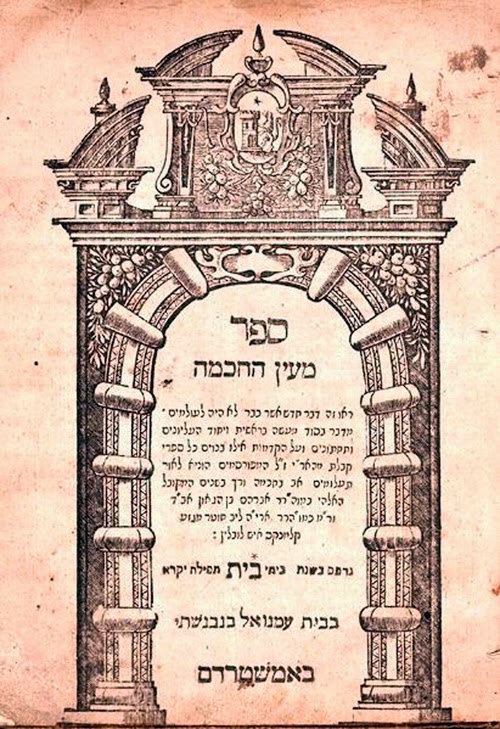
 

13 See the scan of the introduction.
14 The title is so listed on the pages of the treatise itself in ארזי הלבנון, pp. 46b-47a. On the title page of ארזי הלבנון, it is listed as מעיין החכמה. The frequent and easy interchange between the spellings מעין and מעיין and the spellings חכמה and החכמה characterizes virtually all the printed editions of the various books bearing these titles.
15 L. Fuks and R.G. Fuks-Mansfeld, op. cit., vol. 1, p. 195, entry 270,
16 Only a handful of copies are extant world wide. To the best of my knowledge, the first edition of Kalmankes’ מעין החכמה has not been photo-mechanically reproduced, and it is not available online (as of the date this note was recorded). Nor is it available on any of the standard electronic collections of rabbinic literature, such as HebrewBooks, אוצר החכמה, or אוצרות התורה. I am indebted to the National Library in Jerusalem and the Jewish Theological Seminary in New York for making their copies available to me. The scans of the title page and the introduction are reproduced here courtesy of the Bibliotheca Rosenthalia, now in the Special Collections of the University of Amsterdam (online catalogue: http://permalink.opc.uva.nl/item/001748453).
17 H. D. Friedberg, תולדות הדפוס העברי בפולניא (Antwerp, 1932), p. 61.
18 One key revision appears on p. 1, chapter 2, where ספר ויקהל משה is referenced. The book is not mentioned in the first edition of Kalmankes’ מעין החכמה, nor could it have been, since ספר ויקהל משה was not published until 1698. The reference is to R. Moshe Graf, ויקהל משה (Dessau, 1698). It does not appear likely that Kalmankes saw Graf’s work in manuscript form, since מעין החכמה was published in 1652 and Graf was born in 1650.
19 For the date of Kalmankes’ death, see below. The Koretz, 1784 edition was photo-mechanically reproduced in Jerusalem, 1970.
20 The Polonnoye, 1791 edition of מעיין חכמה was photo-mechanically reproduced in Jerusalem, n.d. (circa 1998), in a thin, dark blue, hardbound volume whose spine and outer cover read צדיק יסוד עולם, and whose title page reads הר אדני. (In other words, when seeking a copy in a bookshop of the reprint of the Polonnoye, 1791 edition of מעיין חכמה, whatever else you do, don’t ask for a copy of מעיין חכמה.)
21 As noted by S. Ashkenazi (see above, note 8), the title page of the Lvov edition indicates that its text is based upon the Koretz edition, and reproduces the very biblical phrase used by the Koretz edition for indicating its original date of publication in 1784. But by highlighting a different set of letters within the same biblical phrase, the Lvov edition announces to the reader that its date of publication is 1875.
22 Y. Avivi, קבלת האר”י (Jerusalem, 2008), 3 volumes, passim. See especially vol. 1, pp. 204-208, 443; and vol. 2, pp. 565-568, 840-841. See also, idem, “כתבי האר”י באיטליה עד שנת ש”פ”,” עלי ספר 11(1984), pp. 91-134; and “הערה,” עלי ספר 12(1986), p. 133.
23 “Plagiarism is something people may do for a variety of reasons but almost always something they do more than once.” So T. Mallon, Stolen Words: Forays into the Origins and Ravages of Plagiarism (New York, 1989), preface, p. xiii.
24 Rabbi M.Y.S. Goldenberg, “פתח דבר,” to the reissue of R. Abraham Kalmankes’ ספר האשל (Brooklyn, 1992).
25 On R. Joseph Kalmankes Yaffe of Lublin, see J. Kohen-Zedek, שבת אחים ( St. Petersburg, 1898), pp. 59-76; S. B. Nissenbaum,  לקורות היהודים בלובלין, (Lublin, 1920), second edition. pp. 36-37; S. Buber, אנשי שם (Cracow, 1895), p. 89, entry 217;  and S. Englard, “צפונות יוחסין (א), “ ישורון 3(1997), p. 680, note 6 and p. 694, note 36a.
26 See K. Lieben, גל עד (Prague, 1856), German section, p. 46; Hebrew section, pp. 34-35.
27 R. Abraham Kalmankes, ספר האשל (Lublin, 1678). Few copies have survived. For the copy at the Bodleian Library, see M. Steinschneider, Catalogus Librorum Hebraeorum in Bibliotheca Bodleiana (Berlin, 1860), vol. 1, column 752, entry 4458:1; and A.E. Cowley, A Concise Catalogue of the Hebrew Printed Books in the Bodleian Library (Oxford, 1929), p. 45. For the copy at the British Library, see J. Zedner, Catalogue of the Hebrew Books in the British Museum (London, 1867), p. 14. For the copy at Yeshiva University’s Mendel Gottesman Library, see B. Strauss, אהל ברוך (London, 1959), p. 31, entry 534. To the best of my knowledge, the first edition of Kalmankes’ ספר האשל has not been photo-mechanically reproduced, and is it not available online (as of the date this note was recorded). Nor is it available on any of the standard electronic collections of rabbinic literature, such as HebrewBooks, אוצר החכמה, or אוצרות התורה. A new edition of this exceedingly rare volume was made available by Rabbi M.Y.S. Goldenberg (Brooklyn, 1992) and we are indebted to him. Nonetheless, one needs to use this new edition with caution; the text has been “improved” for the modern reader. A comparison of the texts of the title page, as they appeared in 1678 and 1992, serves as an indicator of the occasional liberties taken with the text. A seemingly enigmatic woodcut (opposite the opening page of the commentary on Genesis) depicting a Jew (Kalmankes?) drawing water from a well (מעין החכמה?) – and framed in an elaborate frame marked by two angelic beings holding up a crown inscribed with the words כתר תורה – was not reproduced in the 1992 edition. See the attached scans:
 
28 The letter of recommendation from Vilna, dated 1673, was written by its Chief Rabbi, R. Moses b. David Kramer (d. 1687), the paternal great-great-grandfather of the Vilna Gaon.
29 These vicissitudes of life may account for the additional first names of Kalmankes, who in ספר האשל is identified as אשר יעקב אברהם קלמנקס. For the practice of changing names and/or adding additional first names when confronted by difficult circumstances, see R. Judah He-Hasid, ספר חסידים (Jerusalem, 1957), ed. R. Margulies, p. 214, paragraph 245 and notes. Cf. A. Teherani, כתר שם טוב (Jerusalem, 2000), vol. 1, pp. 293-315.
30 B. Pesahim 50a and parallels.
31 S. Buber, op. cit., p. 45, entry 101.
32 G. Suchestow, מצבת קודש (Lemberg, 1863), second edition, vol. 1, no pagination, entry 32.
33 The opening line ביום טוב נהפך כי טוב פעמים signals that Kalmankes died on a holiday that fell on the day when כי טוב was said twice. The next line identifies the holiday as 15 Nisan, i.e., the first day of Passover. The day כי טוב was said twice refers, of course, to the third day of creation, i.e. Tuesday. See Gen. 1:10 and 12.
34 Buber, loc. cit., writes with confidence that the highlighted letters are אמ”ת, which would indicate that Kalmankes died in [5]441 or 1681. But in 1681, the first day of Passover fell on a Thursday, not on a Tuesday. Suchestow was more circumspect, indicating it was no longer possible to determine which of the engraved letters were enlarged or highlighted. He left the problem unresolved. The usual practice for highlighting was the placement of a protruding dot over the engraved letters that were to be used for reckoning the year of death. The problem cannot be resolved by emending the second line to read ט”ז בחודש ניסן instead of ט”ו בחודש ניסן, since the second day of Passover can never fall on a Tuesday. See שלחן ערוך, אורח חיים, סימן תכח: א.
35 By highlighting the letters תתן אמ’ת’ לי’עקב’.
36 By highlighting the letters תתן א’מ’ת’  לי’עקב’.
37 These dates are based upon the assumption that the text of Kalmankes’ epitaph, as copied and published by Suchestow in 1863, is an accurate copy of the original. But this may not be the case. Suchestow’s מצבת קודש is marred by egregious errors. He sometimes copied and published as many as four different versions of the same epitaph! In another instance, he divided an epitaph into two parts, creating two dead persons when only one was called for. See the critiques of Suchestow in S. Buber, op. cit. (above, note 25)pp. vi-viii and in R. Margulies, “”,לתולדות אנשי שם  סיני 26(1949-50), p. 113 ( and throughout the later installments to this essay published in סיני between 1950 and 1952). Given that Kalmankes’ tombstone was close to 200 years old when it was copied in 1863, it is likely that the epitaph could be read only with great difficulty. While any attempt at emending the received text is speculative, a slight emendation of the first lines of the epitaph yields the following text:
שנת תתן אמ”ת ליעקב
ביום טוב נהפך טוב פעמים ואבל ומספד ונהי בכפלים
ט”ו בחודש ניסן נגנז צנצנת המן המאיר באספקלריא המאירה
The sense would be that Kalmankes died on 15 Nisan, on יום טוב, on a day when טוב was twice overturned. It was overturned first, because every day of the week of creation was described as  טוב(with the exception of the second and seventh days); and second, because it was יום טוב, a holiday. This would allow for 15 Nisan to fall on a Thursday, and indeed in 1681 (the numerical equivalent of אמ”ת), the first day of Passover fell on a Thursday. If so, Kalmankes may well have died in 1681.
38 These dates are an approximation. We know only that R. Aryeh Kalmankes died in 1671 or earlier, as his name appears with ברכת המתים in several letters of approbation dated 1671 and appended to ספר האשל.
39 These dates, as well, are an approximation. For possible evidence that R. Abraham Kalmankes died in 1681, see above, note 37. If Kalmankes was born in 1620, he would have been 32 years old when מעין החכמה was published in 1652. This fits well with his description on its title page as a רך בשנים. It also fits well with R. Joseph Samuel’s characterization of him (at the time) as an “upstart student.” It would also mean that he was nearing 60 years of age in 1678, when he published ספר האשל. This fits well with his bemoaning the fact – in the introduction to the volume – that the hair on his head and beard had turned gray and that old age was overtaking him.
40   It is astonishing that the author of the most comprehensive study of the Kalmankes family, J. Kohen-Zedek, שבת אחים (see above, note 25), concluded on pp. 67-68, that the authors of מעין החכמה and ספר האשל were two different people named Kalmankes (cousins, of course)! Among his proofs is the alleged fact that the author of ספר האשל was unaware of the existence of מעין החכמה. Alas, Kohen-Zedek overlooked the passage cited here. So too Gershom Scholem, who wrote: “המחבר [של ספר מעין החכמה] לא הזכיר את הספר בספריו הוא, כגון ספר האשל.” See the loose page in Scholem’s hand and the Scholem Library Catalogue, referred to above, note 11. Scholem, however, did not conclude with Kohen-Zedek that the authors of מעין החכמה and ספר האשל were two different people. Even more astonishing is the fact that the late bibliophile, R. Reuven Margulies, cited Kohen-Zedek’s conclusion approvingly. See R. Margulies, “לתולדות אנשי שם בלבוב,” סיני 26(1949-50), p. 219. It appears likely that Scholem (in part) and Margulies were misled by Kohen-Zedek.
41 ספר האשל (Lublin, 1678), p. 8b. We have printed the text as it appears
  in the first edition. In the 1992 edition, it appears on p. 29 as follows:
או יאמר באשר נקדים מאמר הר”י לוריא הנזכר בספר מעיין החכמה אשר הביאותיו לבית הדפוס בפ’ י”ד, שבשעת הבריאה…
 42 In general, see A. Lindey, Plagiarism and Originality (New York, 1952); T. Mallon, op. cit. (above, note 23); and J. Anderson, Plagiarism, Copyright Violation and Other Thefts of Intellectual Property: An Annotated Bibliography with a Lengthy Introduction (Jefferson, North Carolina, 1998).
43 Thus, in the introduction to the first edition of מעין החכמה, Kalmankes states:
וגם מעט מזער מדעתי הוספתי אך לזכות הרבים היא כוונתי (I added but a few comments of my own; my only intention is to benefit the many). In the Polonnoye, 1791 edition this was radically changed to: וגם מעט מזער מדעתי לא הוספתי אך לזכות הרבים היא כוונתי (I added not even the fewest of comments of my own; my only intention is to benefit the many). This change was made necessary because the kabbalistic manuscript now appended to Kalmankes’ introduction, and being published together with it for the first time, did not contain Kalmankes’ additional comments.   
44 I am deeply grateful to Rabbi Menachem Silber for reading and commenting on an earlier draft of this essay. The errors that remain are entirely mine.


The Netziv, Reading Newspapers on Shabbos, in general & Censorship (part one)*

 The Netziv, Reading Newspapers on Shabbos, in general & Censorship (part one)*
By: Eliezer Brodt
Previously, I have touched on the topic of the Netziv reading newspapers on weekdays and on Shabbos [here and here]. In this post I would like to revisit the subject, and also deal with some cases of censorship in the Netziv’s seforim.[1] I would like to stress at the outset that this is a work in progress[2] and not intended L’Halacha; each person should consult his own Rav.

In 1928, R’ Baruch Halevei Epstein described in his Mekor Baruch how on Shabbos his uncle, the Netziv, would read the Hebrew newspaper:

ואחר שקידש דודי על היין וטעמו מיני מאפה קלה, ואחר שקרא מעט בעתונים שנתקבלו מחדש… [מקור ברוך, חלק ד, עמ’ 1790].Further he adds:
וזוכר אני, כי “המגיד” הי’ דרכו להתקבל בכל ערב שבת לפנות ערב, ובלילה לא קרא אותו, מפני שליל שבת הי’ קודש לו לחזור בעל פה על המשניות ממסכתות שבת ועירובין… וקרא בו (בהמגיד) במשך היום.
וכאשר נקרה, שנתאחר “המגיד” לבא בזמנו בערב שבת, הי’ אומר, כי באותה השבת חש הוא כאלו חסר לו דבר מה, כמו שמרגיש “בשבת חזון”. זה הרגיל ללכת למרחץ בכל ערב שבת, ובערב שבת חזון נמנעים מזה; וכן הי’ אומר כי העתונים יחשבו לו כמביאי אליו ברכת שלום מכל העולם ועל כן יוקירם וייחל להם [מקור ברוך שם, עמ’ 1794].
 In 1988, Artscroll published part of this book in English called ‘My Uncle the Netziv‘. Lakewood Cheder distributed it as a fundraiser. A few months later, the Cheder sent out a letter apologizing for having sent the book and recommended not reading it. The Cheder explained that there were statements in the book which did not represent the Hashkofos of the Netziv. Jacob J. Schacter, in his frequently quoted article “Haskalah, Secular Studies and the Close of the Yeshiva in Volozhin in 1892,[3] speculates as to which aspects of the book this letter was referring; was it the author’s description of the Netziv reading of newspapers on Shabbos?
There have been many articles written in the past about the Mekor Baruch, alleging plagiarism and the errors he made in his historical narrative.[4] Some have shown that quotes in his father’s name about Chabad are unreliable. In the present article, I do not wish to add to that. It seems unlikely that that Rabbi Epstein would publish fabrications regarding his uncle’s practices that were common knowledge.[5] His work received a glowing haskamah from Rav Kook; had R. Epstein penned outright lies about the Netziv, Rav Kook’s rebbe, it is   doubtful that he would have given such an approbation.
This assumption aside, we may adduce more concrete evidence as to the veracity of R. Epstein’s report. In 1888, when Rav Kook he was 23 years old, he published the first issue of a periodical entitled ‘Ittur Sofrim’.[6] This sefer had many impressive Haskomot from Gedolei Yisroel, among them the Netziv. The volume included a Teshuvah from the Netziv, where he writes:
במכה”ע… ולי נראה דודאי לעיין מותר בפשיטות
 Here is a copy of the actual Teshuvah of the Netziv:


 Later on in the same year (1888) Rav Zev Turbavitz in a letter to the Aderet, writes:[7]
כאשר הגיע לידי סי’ עיטור סופרים חלק ראשון נבהלתי מראות הלכה הראשונה בראשית הפעלים לתורה מהרב הנצי”ב מוואלאזין שחולק על הש”ע שאוסר גם העיון בשטרי הדיוטות בשבת… והארכתי בזה ובודאי נחוץ הוא להדפיסה כי בודאי רבים יפלו על המציאה הגדולה הזאת, ויתלה עצמן באילן גדול ויתפארו בעצמן שכתורה יעשו…
 He also wrote a letter to Rav Kook, where he says:
עיטור סופרים… והנה בפתחי אותו ראיתי ראשית אומרים בד”ת פסק הג’ הנצי”ב מוואלאזין, ונשתוממתי מאד ושלח דברים ע”פ חוצות לחלוק על הש”ע וכן הראשונים והאחרונים בדברים של מה בכך, ובפרט להקל באיסורי שבת… והאמת אגיד לכת”ר כי אם לא היה שמו של הנצי”ב חתום על דבריו לא הייתי מאמין שיצאו דברים אלו מפי בן תורה ומה גם מפי גדול. ונפלאתי על כבודו שנתן להם מקום עוד בראש דבריו…”.
R’ Chaim Berlin writes this about his father’s Heter in 1893:[8]
ועל דבר לעיין בשבת בהרהורא בעלמא בלי קריאה בפה באגרות רשות ובמכתבי העתים לא הי’ כלל דעת מר אבא הגאון שליט”א, לקבוע מסמרים בהלכה זו ככל דבריו שבעטור סופרים, ולא בא אלא ליישב מנהג העולם שקוראים במכתבי העתים בשבת שסומכים בזה על משמעות תלמודא דידן עפ”י דעתם, שמפרשים דתלמודא דידן פליג בזה על תלמוד ירושלמי, אבל להלכה גם הוא יודה דקיי”ל כהירושלמי, וכה”ג מצינו בהרבה מקומות שכתבו הפוסקים ליישב מנהג העולם, שסומכים על דעה יחידית אף שלא כהלכה.

Without going into his reasoning, it seems clear that the Netziv, permitted reading newspapers on Shabbos.
In 1894, The Shut Bikurei Shlomo was printed (with a Haskamah of the Netziv). The first Teshuvah is a letter the author wrote to the Netziv in 1890, commenting on his Heter to read newspapers on Shabbos, which was printed in ‘Ittur Sofrim’. The second Teshuvah is the Netziv’s response clarifying his heter. He did not back down from it.[9] Even more interesting is that the letter of  Rabbi Chaim Berlin, previously mentioned, is also to the author of the Shut Bikurei Shlomo.

Worth pointing out is, in the Netziv’s Meromei Sadeh to Shabbos [116 b, p. 94] he writes exactly as he does in Ittur Sofrim, he just does not add in the words ‘newspapers’. This clearly shows that he understood that this was the correct way to learn the Sugyah.


R. Meir Bar-Ilan also writes that his father, the Netziv permitted reading newspapers on Shabbos (Me-Volozhin LeYerushalayim 1:138). Apparently he did not agree with his brother, R’ Chaim Berlin.

The Shut Meishiv Davar

R. Meir Bar-Ilan writes about his father’s Teshuvot:

ולא עלה על דעתו לפרסם חידושיו הרבים על הש”ס ותשובותיו שהגיעו לאלפים. רק בסוף ימיו, כאשר הפצירו בו מאות ואלפי תלמידיו שיפרסם את תשובותיו, הסכים בקושי גדול להדפיסן בשם ‘משיב דבר’, ומפני שלא היה בידו העתקות מתשובותיו, כשם שלא נשארו העתקות משאר מכתביו, מוכרחים היו לקבצם משואלים שונים ולאספם ממקומות רבים. מתוך כך התשובות שנדפסו במשיב דבר אינן אלא חלק קטן מאוד ממה שהשיב… [מוולוזין עד ירושלים, א, עמ’ 138][10].

It is interesting to note that these two Teshuvot [from Ittur Sofrim and Bikurei Shlomo] about reading newspapers were not printed in this 1894 collection.

In 1993, a new edition of the Shut Meishiv Davar was printed with a fifth section, which includes a collection of 109 Teshuvot and articles by Netziv from various places, including manuscripts. Noticeably absent are both of the Netziv’s Teshuvot regarding reading Newspapers, from the Ittur Sofrim and Bikurei Shlomo.

In 2004, Eyal Mishulash was printed on the subject of reading Shtarei Hedyotot on Shabbos. At the end of the work [p. 240], he quotes a response from Shut Bikurei Shlomo and dismisses the opinion, based upon a Mordechai. The author does not bother telling you exactly who he is dismissing, namely the Netziv, which I believe is a problematic way to present facts; at the very least, mention that the author of the Heter is the Netziv. I feel certain that if the Netziv had forbidden it, his Teshuvah would have been printed prominently in the book.

It is worth noting that none of the various compilations dealing with this topic mention the Netziv’s Teshuvot. Even Rabbi Ovadiah Yosef, who discusses reading newspapers on Shabbos in Chazon Ovadiah, 6:70-73 [one of the last things he wrote], does not quote these Teshuvot.

Reading newspapers during the week[11]

Rabbi Epstein writes:

כל מערכות העתונים העברים כמעט, מאלה אשר במדינה ואשר בחו”ל היו שולחים עליו את העתוניהם השבועיים והירחונים… חנם אין כסף, והיו מעתירים אליו כי יחוננם בספורתו מן איזה מין שהוא… והיו עתים ומקרים שנענה להם; ולקריאה תמידית וסדורית היו לו העתנוים “המגיד” ו”הלבנון”… [מקור ברוך, ד, עמ’ 1794].

R Meir Bar-Ilan also writes the same (Me-Volozhin LeYerushalayim 1:138[12]):

כשהתחילו הצפירה והמליץ לצאת בכל יום והדואר בוולוז’ין היה מתקבל פעמיים בשבוע, וכל פעם באה חבילה שלימה של עתונים, היה אבא ז”ל מקפיד על כך, שאיש לא יקח ממנו גליון עתון, קודם שעבר על הכל.

He repeats this in his work Raban Shel Yisroel (p. 112).

Micha Yosef Berdyczewski writes in an article first published in 1886:

נצי”ב… אוהב תורה וחכמה, ומכתבי העתים שלא יקצצו בנטיעות ימצאו מהלכים בביתו… [מיכה יוסף ברדיצ’בסקי, כתבים, א, עמ’ 72]
 Another student of Volozhin writes in his memoirs about the Netziv:

 היה חותם על כל מכתב עת עברי וקרא בהם כמו ה’מליץ’, ה’צפירה’, ‘היום’, ‘המגיד’ ‘הלבנון’ ועוד [פרקי זכרונות, עמ’ 127].
In his memoirs about the Netziv, yet another student of Volozhin writes:

הגר”הל [הגאון ר’ הירש ליב] כידוע לא היה קנאי, היה גם מקוראי המליץ ואף ליודעי חן היה ביתו פתוח לקרות אותו.[13]

Similarly, Rabbi Moshe Shmuel Shapiro writes:

הנצי”ב עצמו היה מקבל בכל יום את הצפירה והמליץ [ר’ משה שמואל ודורו, עמ’ 62].
Censorship in the Meishiv Davar

Shaul Stampfer writes in his excellent book ‘Lithuanian Yeshivas of the Nineteenth Century‘ (p. 163) “Both R. Berlin and R. Hayim Soloveitchik read newspapers”. 

In a footnote he records the following:

“Rabbi Boruch Oberlander pointed out that, in the latest edition of R. Berlin’s Responsa Meshiv Davar there is a curious omission. The original reads ‘as published in Hamelits, 137 in 5687′ but in the new edition reads simply ‘as published in 5687’ (… Meshiv Davar ii. [p.]71 (responsum 8). Despite the omission in the current edition, it is clear that R. Berlin read newspapers.”[14]

My good friend Mr. Israel, upon reading this passage, consulted a copy of the first edition of Meishiv Davar, printed in 1894, and confirmed what Rabbi Oberlander said is indeed correct, the words ‘Hameilits etc.’ appear. However, when he checked another copy of  Meishiv Davar, also printed in 1894, he saw that the words ‘Hameilits etc.’ had been removed! Thus proving that this censorship took place already in 1894!

It appears that the Meishiv Davar was printed twice in 1894 and already there are differences between the two editions.

 The Mifal Bibliography Haivrit notes:

קיימות הדפסות סטיריאוטיפיות אחדות של ספר זה, ובכולן התאריך תרנ”ד. יש השמטות אחדות שונות בין הדפסה להדפסה.

 However, they do not write what the differences are, exactly. It seems we have uncovered one of them.[15]


Shmuel Glick, in his first volume of Kuntres Hateshuvot Hachadoshot, s.v. Meishiv Davar [p. 686 # 2498], does not make any mention of there being two versions of the 1894 editionHowever, in volume three [p. 1505], Glick notes that there are different editions of Meishiv Davar and while he does mention one difference between the two editions, he does not note this particular discrepancy. [See the end of the post.]

The story does not end here. When Mr. Israel turned the page to the very next siman in the Meishiv Davar, he again noticed the same occurrence. In one edition of the 1894 Meishiv Davar [p. 73, responsum 9] it says ‘Hameliits etc.’ and in the other edition, also printed in 1894, the word ‘Hameilits‘ had been removed!


Even more interesting is that these two Teshuvot originally appeared as articles in the Hameilits newspaper!!

Additionally worth pointing out, is another mention of Hameilits newspaper in the same siman [no. 9], which was not edited out from either 1894 edition:

אבל אם בעל נפש הוא עליו לבקש תחלה מחילה ברבים באותו מקום הוא המליץ…

[Presumably, those responsible for censoring the edition mistook the word to mean ‘advocated’, not the title of the newspaper]

Images five
In 1968, the Meishiv Davar was reprinted based on the 1894 edition that included the words ‘Hameilits etc.’.

 In 2003, a volume called Igrot HaNetziv Me-Volozhin was printed in Bnei Brak, including some letters on this same controversy [pp. 168- 174] [without saying where they are from[16]] with the words ‘Hameilits etc.’

Netziv and his Emek Ha-Netziv

Surprisingly, the story does not end here.

In an article written in 1887 by Rav Kook about the Netziv[17], he writes:
ובהיותו בן עשרים ושלש שנים כבר ראה לבו הרבה חכמה ודעת בכל מקצועות תורה שבעל פה ואז החל לכתוב ספרו הגדול על הספרי חמדה גנוזה עמו עד היום… הננו מעוררים בזה את כבוד הגאון שליט”א לזכות את הרבים מתופשי התורה בהוצאת הספר היקר הזה לאור עולם ולהאיר עיני רבים ממבקשי הדעת [כנסת ישראל, בעריכת ש’ ראבינוויץ, ווארשא תרמ”ח, עמ’ 140(=מאמרי הראי”ה, עמ’ 124)].

However, the Netziv’s Pirush on Sifrei,[18] entitled Emek Ha-Netziv was first printed from manuscript only in 1959-1969. In the first volume the Netziv quotes the “Zofeh Le-hamagid Year ten, issue 28″. Gil Perl already notes that this is the edition of the Ha -Maggid printed on July 17, 1867.[19] Although Perl noted other cases of censorship in the Emek Ha-Netziv, this source was not censored.[20] We see here clearly that the Netziv read newspapers and even referenced them in his work.

Netziv and his Ha’amek Davar                   
          
In 1879, the Netziv printed his classic work on chumash, Ha’amek Davar,[21] based on the Shiurim he gave after Davening.[22] In his Pirush to Parshat Bereishis (2:9), he quotes a manuscript of R’ Maimon (father of the Rambam) which he had seen printed in Ha-Levonon.

In 1937, Rabbi Meir Bar-Ilan printed a collection of almost one thousand and five hundred addenda by the Netziv to his Ha’amek Davar[23] [available here]. On page seven, Netziv quotes the newspaper Ha-tzefirah. Furthermore, Gil Perl points to some additional passages in Ha’amek Davar that seem to be based on material from the newspapers of the time.[24] From all the above, we see him reading newspapers.[25]


Censorship and the Ha’amek Davar

In 1999, a new edition of the Ha’amek Davar was printed incorporating many more corrections.[26] They inserted the numerous addenda published by Rabbi Meir Bar-Ilan into their proper places in the chumash. However two pieces were censored out – both of the aforementioned quotes by the Netziv,[27] citing these newspapers!

In 2005, Rabbi Mordechai Cooperman reprinted the Ha’amek Davar; with annotations, his edition does contain both newspaper references.


More on the Netziv and newspapers

In 2003, a volume called Igrot HaNetziv Me-Volozhin was printed in Bnei Brak this volume is full of references and articles by the Netziv from different newspapers of the time.[28]

In Meishiv Davar 1:44 there is a piece titled: “Al Yamin vsmal’.[29] This siman was actually first printed in the newspaper Machzike Hadat[30] and as can be seen from the introductory paragraphs, it was a response to an earlier article that the Netziv had read in that newspaper.

Appendix: Some other Gedolim who read Newspapers

Yitzchak Wetzlar writes in the introduction to his Libes Briv (written in the early 1700’s) about his work: “think of it as a Newspaper. Nowadays the finest and most important people, scholars and Rabbis read them or have them read to them”.[31]
For other Poskim who were known to have read newspapers, see: Rabbi Yakov Emden[32]; Rabbi Yosef Zechariah Stern [as anyone familiar with his writings knows][33]; Yakov Mark, BeMechitzosom Shel Gedolei Hador, p. 34; Roni Beer Marx, ibid, pp. 40-41 [about the Malbim and others]; Rabbi Yitzchak Nissenbaum, Alei Cheldi,[34]; Jacob Katz, With My Own Eyes, pp. 30-31;  Pinchas Sirkis, Ish HaEmunah, 1979, p. 82, 86; Jacob J. Schacter, ‘Facing the Truths of History’, Torah U’maddah Journal, 8 (1998), p. 225, 263-264 [about Rav Moshe Feinstein Zatzal]; Benny Brown, Hachazon Ish, 2011, p. 21 [about the Chazon Ish; who even quotes Ha-Tzefirah in his work on Orach Chaim 141:9].

A student of the forgotten gaon,[34b] Rabbi Moshe Nechemia Kahanov (1817-1887) [Rosh Yeshiva of Eitz Chaim[34c]] writes:

 ר’ משה נחמיה כהנא או ה’רבה’ מחסלביץ, ראש הישיבה, ידע את נטיתי להשכלה וקרבני על כך, שכן אף הוא היה נוטה בצנעה להשכלה ולמשכילים. בימים ההם אסרו על ה’חבצלת’ לבוא בקהל והרב מחסלביץ היה מקבל אותה מדי שבת בשבת מידי אני. בכל שבת אחר הצהרים הייתי סר אל הישיבה כש’החבצלת’ טמונה בחיקי, מוסר אותה לידיו והוא פורש לחדר קטן הנשען אל הישיבה וקורא בה. כפעם בפעם היה מוסר על ידי שלום לרי”ד פרומקין ומביע לו את ידידותו והוקרתו על השקפתיו של העורך. אוסר אני בכבלים היה מצדיק את הדין על עצמו חולני אני ואין בכחי לעמוד בפני התקיפים ממני [אפרים כהן רייס, מזכרונות איש ירושלים, עמ’ 54].

Worth pointing out is Binyomin Goldberg’s claim that even Rabbi Chaim Soloveitchik secretly read the Hameilits.[35]
Rabbi Moshe Bernstein,[36] Son in law of Rabbi Baruch Ber Leibowitz records the following story about Reb Baruch Ber:
משביקר הגאון ר’ משה סולוביציק, שהיה אז ראש ישיבת תחכמוני בוילנה, כיבדו בהגדת שיעור בישיבה, תלמידי הישיבה שהיו ברובם קנאים התנגדו לזה בכל תקף ובאו לומר לרבם כי הם ילכו מהשיעור הזה, הוא אמר להם כדברים האלה, ת”ל חוננתי בכח מיוחד שלא להאמין בדבר שאינו רוצה, לדידי אין הדבר אמת כלל, ידיד נפשו הגאון ר’ משה אינו כלל בישיבת המזרחי תחכמוני[37], אינו קורא עתונים ואינו מאמין להם, וככה אני יועץ גם לכם, התלמידים שמעו לקולו והקשיבו אל השיעור בנחת ובשלוה [הגיונות, עמ’ עב].
Another Great Gaon who read newspapers was Rabbi Eliyahu Klatzkin. According to his son Yakov, he subscribed to and read several papers in different languages.[38] In an incredible Teshuva of his regarding Tzar Balei Chaim Rabbi Klatzkin quotes numerous medical works in different languages and even newspapers, including The London Times and others papers in Russian and Yiddish.[39]

While Rabbi Moshe Zeirah, Yeshurun 15 (2005), pp. 753-776, refers to the Teshuva on Tzar Balei Chaim and Rabbi Eliyahu Klatzkin’s expert knowledge of science, he does not mention this point.[40]

Another person who read newspapers was Rabbi Shneur Zalman Me’Lublin,[41] author of the Shut Toras Chessed:

רבי ישראל דוד פרומקין שהיה ממעריצי הרב שלח להרב בכל יום ששי העתון חבצלת שהוציא לאור. לקח הרב סכין וחתך למעלה, שיהא נוח לקרות, הביט שניה אחת על העמוד הראשון וכן על השני וכן להלן רק איזה שניות, אחר כך לקח את העתון ופרש על המפה שעל השלחן, ועליו היתה הרבנית מעמדת המנרות של שבת שלא יטפטף מן החלב על המפה. חשבתי שאינו קורא כל הכותב בעתון, המכיל 8 עמודים שלמים, רק מעט בצד זה ומעט מצד שני, וכן הלאה. פעם בין מנחה למעריב, כאשר שכב על מטתו ושמע חדשות (כשאר הבאתי לעיל), ספר אחד חדשות מענינות, אמר הרב זה מדפוס בעתון חבצלת של שבוע זה, ואמר לי להביא את העתון שהיה מונח על האיצטבא. מסרתי לו, ותוך כדי דיבר פתח העתון והראה בעמוד פלוני שורה פלונית כתוב זאת. נשתוממתי שבמהירות כל כך קורא את כל העתון ובשניה אחת הראה איפה מודפס [שלשה עולמות, ב, עמ’ קמז-קמח].
Another person who read newspapers was Rabbi Elchanon Wasserman. The following passage appears on Rabbi Aron Sorasky’s book Or Elchonon [1: 27-28 and the second passage appears in the same book pp. 282-283]. In the English version adaption of this book printed by Artscroll called Reb Elchonon both passage appear uncensored [pp. 28-29, 216] [Thanks to my friend Eli Markin for this source]. 


Another additional point in all this is there were great Gedolim who wrote articles in some of these newspapers[41b] such as Rabbi Alexander Moshe Lapidus,[42] Rabbi Tzvi Hirsch Kalisher,[43] Rabbi Eliyahu Gutmacher,[44] Rabbi Shmuel Moholiver, [45]Rabbi Mordechai Eliasberg[46] and Rabbi Yechiel Yakov Weinberg.[47]
Just to conclude with one last story related to reading newspaper:

*Special thanks goes to my good friend Yisroel Israel for all his time and help in preparing this article. I would also like to thank my friend Rabbi Yosaif M. Dubovick for editing this article. 
[1] For general sources on censorship in Shut [Responsa] Literature see S. Glick, Kuntres Hateshuvot Hachadoshot, vol. 1,  introduction, pp. 58-67; ibid, E-Shnev leSafrut HaTeshuvot, pp. 259-290.
[2]  In the future, I hope to return to exploring other Heterim for reading newspapers on Shabbos. For now see: Herman Pollack, Jewish Folkways in Germanic lands (1648-1806), Cambridge 1971, pp. 168-169, 235, Daniel Sperber, Darka Shel Halacha, pp. 238-241. I also hope to return to the Netziv and his writings in a special series of articles devoted to him. It must be noted that “newspapers” in this context do not only refer to newspapers like the New York Times. The periodical literature read by the Netziv was not the Times and was not Hamodia. These were in many cases ideologically maskilic papers, and while they contained typical Torah articles, they *also* contained editorials and “academic Jewish” type stuff, and this is what the Netziv read and these are what he is talking about, quoting, etc.
[3] Torah u-Madda Journal 2 (1990), pp. 76-133
[4] See Rabbi Kirshbaum, HY”d, Zion Le-Menachem, New York 1965, pp. 251-265.
[5]  Many years ago I discussed the work Mekor Baruch with my Rosh Yeshiva, Rabbi Zelig Epstein Zatzal. He told me he that he had no problem believing this story by Rabbi Epstein or others that people had issues with. He mentioned that when he was learning in the Mir in Europe, he chipped in together with a few friends to purchase a set of Mekor Baruch. When I asked him specifically about this passage of the Netziv reading newspapers on Shabbos, he reiterated that he had no problem accepting its truth. He then told me that he once spent a Shabbos at Rav Dovid Tevil Dynovsky’s home whose daughter would read to him from a Yiddish newspaper. See Rabbi Nosson Kamenetsky, Making of a Godol, 2, p. 1178 who quotes the same anecdote regarding Rav Dynovsky, citing Rabbi Zelig Epstein.

Rav Dynovsky’s anonymously published sefer, Maamar Likrat Tzamei,[which is an attack on Zionism, Hertzl and the Mizrachi movement], is full of quotes from the various Hebrew and Yiddish newspapers of the time [see for example pp. 5, 6, 20, 26, 29, 30, 31, 35, 37, 40, 45, 46 49, 50]. 

Saul Leiberman considered Rav Dynovsky his main Rebbe [Making of a Godol, 2, p. 1189, based on an interview with Shraga Abramson]. Shraga Abramson who also learnt by Rav Dynovsky writes about Leiberman and Rav Dynovsky the following:

לא רחוק מעיירת מולדתו, מוטלה, היתה ישיבה קטנה שידועה היתה בשעתה, לפני מלחמת העולם הראשונה, זו ישיבת מאלטש, בראשה עמד אדם מיוחד: רב העיירה וראש הישיבה ר’ דוד טעבל דיינובסקי, הי”ד, מבעלי ההגיון שבלימוד התלמוד ומבעלי המוסר מן יסד ר’ ישראל סאלאנטר. היסוד שהונח לו לליברמן בישיבה זאת היינו, לימוד התורה ולימוד המוסר נשאר אצלו חזק בכל ימי חייו. וליברמן ידע את ההשפעה שהושפע בישיבה זאת, וזכר לה חסד נעוריו כל ימיו [לזכרו של שואל ליברמן, האקדמיה הלאומית הישראלית למדעים, ירושלים תשמ”ד, עמ’ 24-25].

For more information on this unknown Gaon see Rabbi Nosson Kamenetsky, Making of a Godol, 2, pp. 1174-1181.

Of course, it bears mentioning (as already noted On the Main Line [here]), Chief Rabbi Herzog’s words, The Jewish Chronicle, February 25, 1927: “On Sabbath morning, while turning the pages of my copy of the Jewish Chronicle, my eye caught under the caption Obituary notices the name of Rabbi Meir Simcha of Dvinsk…”.

See also Rabbi Yechiel Yaakov Weinberg, Kisvei Hagaon Rabbi Yechiel Yaakov Weinberg, 2, p. 396:

אחד מבני המשפחה הזאת הלעיז על הרב שהוא קורא עתונים בשבת.
[6]  I hope to return to this journal in a future article. Meanwhile, see Yehudah Mirsky, An Intellectual and Spiritual Biography of Rabbi Avraham Yitzhaq Ha-Cohen Kook from 1865-1904, PhD dissertation, Harvard University 2007, pp. 85-99. I am not sure why this volume [as far as I can see] did not make it to the Kuntres Hateshuvot Hachadoshot of Shmuel Glick.
[7] These letters were printed from manuscript in Moriah 23 (3-4) (1999), pp. 54-60 and more recently in a new edition of the ‘Ittur Sofrim’ printed in 2011, pp. 97-102.
[8]  Otzar R’ Chaim Berlin, Shut Nishmat Chaim, 4, (2008), p. 114; Shut Nishmat Chaim, Siman 24.
[9]   Rav Kook already commented about this Heter at the end of the first issue of the Ittur Sofrim. See also Shut Bikurei Shlomo siman, 3-4 for more on this topic. The Chasdei Dovid, 2, Jerusalem 1994, p. 149, on the related passage in Tosefta, is extremely important for this topic.
[10] See also Rabbi Shlomo Yosef Zevin, Ishim Veshitos, (2007), pp. 17-18;  Rabbi Moshe Shmuel Shapiro, R. Moshe Shmuel Ve-doro, p. 54.
[11] Of course, there were many Poskim who were against reading newspapers even during the week. See, for example, the Chofetz Chaim’s son, who writes:

מר אבא לא קרא עיתונים מעולם אף באותם שלא היה בהם מינות, ועגבים וליצנות ולא היה ניחא דעתו מקריאתי אני והיה אומר מה תמצא בעתונים רק צרות וצרות מבלי שאין בידינו להושיע, וידע אנכי זאת גם מבלעדי העתונים כי אין העולם הזה מקום של נחת וקורת רוח וכמו שאמר הכתוב… [דוגמא מדרכי אבי זצ”ל, עמ’ מג.]

See also the Michtavei Chofetz Chaim #42:

See also this passage:

And this passage:

           
See most recently: Divrei Chachomim, Bnei Brak 1975; Rabbi Kalman Krohn, Harchek Mei’aleha Darcheka, Lakewood 2012. See Rabbi Fuerst, Ir Hagoleh, 1, p. 476. See also Mi’pihem, p. 375.
[12] This passage appears in the original Yiddish version of the book Fun Volozhin Biz Yerushalayim, Chapter 12. See also Me-Volozhin LeYerushalayim p. 163.
[13]  Moshe Yuft, Reshumot V’zichronot, 1924, p. 10. This memoir is not found in Pirkei Zichronot, nor was it used by S. Stampfer in Lithuanian Yeshivas of the Nineteenth Century.
[14] This passage appears on page 179 of the Hebrew edition of Stampfer’s book.
[15]  See also Rabbi S. Gershuni, Hama’yan, 52:4 [202] (2012), p. 54 note, 22 who mentions this censorship about the Hameilits, but not that there were two editions of the 1894 printing.
[16]  It appears that there are additional letters about this same subject. See ibid, pp.163-168. For more on the controversy related to these Teshuvot, see Y. Mondshine, Zechor L’Avraham, (1999) pp. 374- 444 [also available here]. See also Igrot R. Yitzchak Elchanan, 1 (2004), pp. 266-267. See also S. Glick, E-Shnev leSafrut HaTeshuvot, pp.150-154.
[17] On this essay see Yehudah Mirsky, An Intellectual and Spiritual Biography of Rabbi Avraham Yitzhaq Ha-Cohen Kook from 1865-1904, PhD dissertation, Harvard University 2007, pp. 84-85. See also Rabbi Yitzchak Nissenbaum who wrote about this essay:
את… רבי אברהם יצחק הכהן קוק שמעתי זה כבר. בעודני צעיר קראתי את מאמרו ב’כנסת ישראל’ לשפ”ר על הנצי”ב מוואלוזין, וכתלמיד הישיבה, המחבב את רבו הזקן, נהניתי מאד מדבריו [עלי חלדי, עמ’ 188].
[18]  I hope to return to this incredible work in the future for now see the beautiful book of Gil Perl, The Pillar of Volozhin, Boston 2012.
[19] Gil Perl, The Pillar of Volozhin, Boston 2012, p. 32.
[20]  Ibid, and see here.
[21]  On this work see: Jay Harris, How Do We Know This?, pp. 239-244; Channah Katz, Mishnat Hanetziv, pp. 93-98; idem, Machanayim 4 (1993), pp. 380-387; Nissim Eliakim, Haamek Davar la-Netziv, Moreshet Yaakov 2003; Gil Perl, The Pillar of Volozhin, pp. 168-237; Rabbi Dov Leor, Aloni Mamrei, 121 (2008), pp. 73-85. For the dating of this work see: Gil Perl, ibid, pp. 169-171; Rabbi S. Gershuni, Hama’yan, 52:4 [202]. (2012), pp. 50-56.

On the Ha’amek Davar, see the article (quoted above) written in 1887 by Rav Kook about the Netziv where he writes:

בעת ההיא כתב גם כן ביאורו על התורה, אשר גם בו היתה לו האמת לקו והבקרת הנאמנה למשקלת יישר דברי חז”ל עפ”י הדקדוק בסגנון מליצת הכתוב…

In a letter to Dr. Eliyahu Harkavi the Netziv writes [I will hopefully return to the nature of their relationship in the future]:

וידעתי כי איני כדאי והגון להדפסה רחבה כזו, ומה אני ומה כחי להוציא לאור ביאור פרוס על חמשה חומשי תורה, וגם בפעלת ההדפסה רבה אשר הגיע עד חמשת אלפים רו”כ, ובחיי ראשי כי לא הי’ מכן בידי גם מאה רו”כ, אך יד ה’ והשגחתו הפרטית הי’ עמדי בזכות הישיבה הק’ שאני מוסר נפשי עליה, והטה דעת המדפסים להדפיס בהקפה יותר משלש אלפים רו”כ… [שנות דור ודור, ב, עמ’ קפג-קפד (=אגרות הנצי”ב, עמ’ לא)].

See also Igrot HaNetziv Me-Volozhin, p. 214.
[22]  The subject of these shiurim was not dealt with in the excellent book of S. Stampfer, Lithuanian Yeshivas of the Nineteenth Century or in the volume Toldot Beis Hashem B’Volozhin,.

On these shiurim See the Netziv who writes:
וזכות הרבים עמדה לי שפירשתי בכל יום הפרשה לפני היושבים לפני ה’ בית התלמוד עץ החיים אשר נטע אביר הרועים הגאון מהור”ח זצ”ל [קדמת העמק, אות ה].
In the article (quoted above) written in 1887, by Rav Kook about the Netziv he writes:

בהנהגת הישיבה… גם הרגיל אותם לשנן פרשה אחת בכל יום מפרשת השבוע ויער אזנם למוסר לדעת איך ללכת נגד החיים…”.

See also Pinchas Turberg’s picturesque description of the scene when at age fourteen he first walked in to the Volzhiner Yeshiva on a Friday morning:

בבוקר,… השכמתי לקום וברוח סוערת מהרים לבית הישיבה., הרושם שעשה עלי הבית הגדול… כל זה אי אפשר לתאר באומר ודברים. הרגשתי את עצמי כאלו נכנסתי לתוך עולם אחר… ביחוד משך אליו את העין איש זקן בעל פנים מאירות ועינים טובות ומלטפות, שישב מעוטף בטלית ומעוטר בתפלין ולמד לפני תלמידים פרשת השבוע. הזקן הזה היה ראש הישיבה, הנצי”ב שלמד את שעוריו בחומש לאחרי תפלת שחרית [כתבי פינחס טורברג, ניו יורק תשי”ג, עמ’ קלא (= פרקי זכרונות, עמ’ 195)].
Rabbi Yitzchak Nissenbaum writes in his beautiful memoirs:

זמן מה הייתי שומע גם את שעורי הנצי”ב בחומש, שהיה מטיף אחרי תפילת השחרית [עלי חלדי, עמ’ 45 (=פרקי זכרונות, עמ’ 103].
In an article comparing the Netziv and Rabbi Chaim Soloveitchik, Rabbi Yitzchak Nissenbaum writes a bit more:

הסבא יושב בכל יום ויום אחר התפילה ומטיף לפני התלמידים פרשה בתורה מסדר השבוע, וכה הוא לומד ומלמד במשך השנה את כל חמשת חומשי תורה, עד שנולד לו באורו הידוע ‘העמק דבר’. והנכד חושב כי תורה שבכתב ניתנה רק לתינקות של בית רבן טרם שהגיע זמנם ללוד את תורה שבעל פה” [הצפירה, ו’ תשרי תרע”ט גלי’ 37 עמוד 9].

 Micha Yosef Berdyczewski writes:

תפילת שחרית בציבור בשעה 8 בבוקר… ורבים יישארו לשמוע פרשת השבוע מבוארת מפי הרב הגאון ר’ נצי”ב שליט”א על פי דרכו ביאורו הנפלא, הנוטע בקרב לב השומעים רגשות יקרות ואהבת אלקים ואדם. [מיכה יוסף ברדיצ’בסקי, כתבים, א, עמ’ 73 וראה שם, עמ’ 71, 196]

See also Rabbi Meir Bar-Ilan, Me-Volozhin LeYerushalayim pp. 112-113; Pirkei Zichronot, p. 127, 172; Rabbi Moshe Neryah, Toldot HaNetziv, pp. 13-14; Rabbi Moshe Shmuel Shapiro, R. Moshe Shmuel Ve-doro, p. 41, 72; Moshe Tzinovitz, Etz Chaim, p. 235. See also Binyomin Goldberg’s peculiar claim that the general consensus towards the Netziv’s Chumash Shiur was indifference, at best. This passage can be found in Zichron LeAchronim, 1924, p. 21. This book is extremely rare and there is no copy of it in Jewish National Library. Special thanks to Professor Shaul Stampfer for providing me with a photo-copy.
Chumash was learned in Volozhin in the times of Rabbi Chaim Volozhiner and Reb Itzeleh Volozhiner. See: Rabbi Yechiel Yaakov Weinberg, Kisvei Hagaon Rabbi Yechiel Yaakov Weinberg Zal, 2, p. 217; Dov Eliach, Avi Hayeshivot, 2012, pp. 460-462; S. Stampfer, Lithuanian Yeshivas of the Nineteenth Century, p. 42; Toldot Beis Hashem B’Volozhin, p. 63;M. Breuer, Ohalei Torah, pp. 122-123; Shlomo Tikochinski, Darchei Halimud Beyeshivot Lita Bimeah Hatesha Esreh, MA Thesis (Hebrew University, Jerusalem, 2004), p. 34.

In Pirkei Zichronot [p.84] we find a claim from Shmuel Zitron that R. Yehoshua Levin gave a chumash shiur using Mendelsohn’s Biur. However, S. Stampfer [ibid, p. 68] already notes that Zitron’s memoirs are not always accurate.

On Chumash being part of curricula in Yeshivot, see M. Breuer, Ohalei Torah, pp. 118-123. I hope to return to this subject in the future.
[23] The Netziv was always working on adding to this work, In a letter, he writes:
ויאמין לי מעלתו כי נכספתי מאוד לשוב ולהדפיס החומשים עם העמק דבר, כי רבים מבקשים אותם ממני, וגם יש לי הוספות הרבה, אבל אין לי עצה להשיג הוצאות הדפסה… [פרשגן, תרנ”ט ראש הספר].

This letter is also printed in Igrot HaNetziv Me-Volozhin (p. 41) without citing its source.

See also the following interesting letter from the Netziv to Rabbi Eliezer Lipman Prins:

ובכלל אענה על תרעומת מע”כ שקצרתי בלשוני כ”כ כי טוב הוא להתחוקק בראש למי שחפץ להבין ולהשכיל. ובכ”ז מודה אני שיש מקומות שקצרתי יותר מהנדרש וכשאר יזכני ה’ ברחמיו לשוב ולהדפיס החומשים עם באור העמק דבר אי”ה אראה לתקן הלשון באיזה מקומות. לבד אשר אשית נוספות הרבה אשר זכני ד’ לדקדק בלשון המקרא. אך עתה קצרה ידי לשוב ולהדפיס משום חוסר מעות. [פרנס לדורו, עמ’ 208-209].

Worth noting is that the 1999 edition quotes this letter in the beginning of their edition, without giving the source. They also print the whole letter in the back of the volume of Ha’amek Davar on Shemos (p. 21), without referencing the source. This letter is also printed in Igrot HaNetziv Me-Volozhin  (pp. 34-35) without citing its source.
The Aderet writes when he first met the Netziv:

העירותיו כמה דברים בביאורו על התורה שהיה מגיהו אז להדפיסו מחדש (סדר אליהו, עמ’ 85).

See also Rabbi Eliezer Lipman Prins’ notes on the Ha’amek Davar, printed in his Parnas Ledoro, pp.241-256.
[24] Gil Perl, ibid, p.81, 176-177. Rabbi S. Gershuni, Hama’yan, 52:4 [202], (2012), p. 54 points to further evidence in the Ha’amek Davar that the Netziv read newspapers.
[25] On this work see the excellent introduction by Rabbi Meir Bar-Ilan [of course it’s not included in the newer editions]; Rabbi Shlomo Yosef Zevin, Ishim Veshitos, (2007), pp. 23-26.
[26]   See what they write in the back of the first volume of Ha’amek Davar.

מהדורה מתוקנת המופיעה לראשונה, אשר בו אלפי תיקונים והוספות שהגיהם והוסיפם מרן הגהמ”ח זיע”א בכתב יד קדשו על גליוני החומש עם פירוש העמק דבר שהו”ל בחייו בשנות תרל”ט תר”מ. חלק גדול מההספות כבר נדפס בשנת תרח”ץ בסוף החומש, ועתה זכינו בס”ד להשלים את כל ההוספות וההגהות שנמצאו על גליוני החומש בכתי”ק, וכן לעוד הרבה תוספות מהעתקה אחרת שנערכה גם על מנת לשלב את ההוספות והתיקונים להפירוש.
I just started to compare the editions and noticed many new pieces. For example in the Introduction of the Netziv to the Ha’amek Davar called Kadmus Ha’amek there are over 20 new lines of text added in different places. In the famous introduction of Netziv to Chumash Bereishis over 6 new lines of text were added. I will hopefully return to all this in the future.
My problem with this edition is that although it’s amazing to have all these new pieces it would have been helpful for one to be able to see what’s new and what’s old. I would have suggested that they use different fonts, one for the original work, one for the 1500 additions from Rabbi Meir Bar Ilan and one for the new material that they added. Similar to the style found in the Eshkol edition of the Siddur of Rabbi Yakov Emden which allows the reader to see easily what is being added. For a different criticism see what Rabbi Mordechai Cooperman writes in the introduction to his edition of the Ha’amek Davar.

For an interesting discussion relating to this edition, see the back and forth which took place in some recent editions of the journal Hamay’an: Rabbi Avraham Glanzer, Hama’yan, 52:3 [201], (2012), pp. 94-95; Rabbi S. Gershuni, Hama’yan, 52:4 [202], (2012), pp. 50-56; Rabbi Dovid Shapiro, Hama’yan, 52:4 [203]. (2013), p. 103, Although, Rabbi Shapiro deals with an issue of the editing of the new Ha’amek Davar, he does not talk about the censorship of the Netziv’s newspaper reading. 

[27]  Rabbi S. Gershuni, Hama’yan, 52:4 [202]. (2012), p. 53 also points to the censorship.
[28] Hacarmel: p. 21; Ha’maggid: p. 54, 198; Hameilits: p. 60, 113, 114, 140, 147, 168, 170; Ha-Tzefirah: p. 112, 120, 133, 134, 140,141. See also Mekor Baruch, 4, pp.1795-1796 what he brings from the Netziv about the fighting between the Ha’maggid and  Ha-Levanon.

However in regard to the Newspaper Ha’Shachar he writes to Dr. Eliyahu Harkavi:

עוד בקשתי.. וכן ראיתי באיזה עלה עת שמעכ”ה מעריך דברים בעלה השחר, מבוקשי אם אפשר לשלחם לי כל היוצא, בלי עלה השחר, המשחיר את כבוד התורה וכל קדושיה עמה, וכי יבוא דברי מע”כ אלי וכבדתים להביט בדבריו [שנות דור ודור, ב, עמ’ קפד (=אגרות הנצי”ב, עמ’ לב)].

On these newspapers in general see: E.R. Malachi, Mineged Tir’eh, pp. 17-121; Gideon Kouts, Chadushot V’korot HaYamim, Tel Aviv 2013; Dovid Tal, Yehuda Leib Kantor, Tel Aviv 2011, pp. 367-370; Roni Beer Marx, Between Seclusion and Adaption; The Newspaper Halevanon and East European Orthodox Society’s Facing Up to Modern Challenges,(Heb.)PhD. Dissertation, Hebrew University, 2011.
[29]  On this essay see Y. Rivkin, HaNetziv Viyichuso L’Chibbat Tzion, 1919, pp. 7-9; Rabbi Moshe Shmuel Shapiro, R. Moshe Shmuel Ve-doro, p. 63; Moshe Tzinovitz, Etz Chaim, p. 236; Gil Perl, ‘No Two Minds are Alike: Tolerance and Pluralism in the Work of Netziv’, Torah U-Maddah Journal, vol. 12, pp. 74-98.
[30]  On this newspaper see: Joseph Margoshes, A world apart, A memoir of Jewish Life in Nineteenth Century Galicia, p. 14, 25-27; Rachel Manekin, The Growth and Development of Jewish orthodoxy in Galicia, The “machsike hadas” Society 1867-1883, PHD, Hebrew University 2000.
[31] [(English translation of Yiddish) The Libes Briv of Isaac Wetzlar, edited and translated by Morris Faierstein, p.43 (see also p. 13)].

For some sources of regular people reading Newspapers see Yakov Mark, BeMechitzosom Shel Gedolei Hador, p. 28; Pirkei Zichronot, p. 256 [In Telz]; Joseph Margoshes, A world apart, A memoir of Jewish Life in Nineteenth Century Galicia, p. 45, 47; Mah Shera’Iti [Zichronotav shel Yechezkel Kotik], p. 184, 297; Chaim Hamberger, Sheloshah Olamot, 2, pp. 40-41; Mi’pihem, p.273. See also M. Zalkin, Be’alot Hashachar, pp. 255-261.
[32] Rabbi J.J. Schachter, Rabbi Jacob Emden: Life and Major Works, PhD. Dissertation, Harvard University, 1988, p. 614; Maoz Kahana, ‘An Esoteric path to Modernity Rabbi Jacob Emden’s Alchemical Quest’, Journal of Modern Jewish Study (2013) 12:2, p. 271 note 70.
[33] See also Rabbi Zev Rabiner, Harav Yosef Zechariah Stern, 1943, p. 24.
[34]  pp. 56, 73-74, 76, 78, 87, 128, 132, 137, 165, 167, 196, 318.
[34b] The Mishna Berurah quotes his work Netivot Sholom numerous times in Hilchot BishulSharei Tzion (318: 55, 57, 58, 61, 62).
[34c] About him see Avraham Lunz, Netivot Zion VeYerushlayim, pp. 208-209 [who was a talmid of his]; Rabbi Betzalel Landau, in the back of Sifsei Yeshai​nyim, pp. 35-58; Pinchas Gr​ie​vsky, Zichron Lechovvim Harishonim, 8, pp. 391-413; Rabbi Yechiel Michel Tycosinski, Luach Eretz Yisroel, 1, pp. 163-167 [=Chatzer Churvos Rebbe Yehudah Hachassid, pp. 48-53] Yosef Salamon, ‘The Etz Chaim Yeshiva in Jerusalem at the time of Moshe Nechemiah Cahaniu (1866-1887)’,  Yeshivot Ubatei Midroshot, pp.187-197. I will hopefully return to this Gaon in the second part of this post.
[35] See his work Zichron LeAchronim, 1924, p. 6. This passage is quoted in Shaul Stampfer ‘Lithuanian Yeshivas of the Nineteenth Century‘, p. 163. See also Rabbi Nosson Kamenetsky, Making of a Godol, 1, p.459 & vol. 2, p. 917 for a possible explanation as to why Rabbi Soloveitchik read the paper.
[36]  About him see Li’frakim, pp. 156-157.
[37]  However see Rabbi Yitzchak Nissenbaum who was one of the people who ran this Yeshiva who writes:
תכחמוני… כאשר נמנה אחר כך הרב רבי משה סולוביייציק לדירקטור הערכה כבר תכנית ללמוד גפ”ת ובתוכם כבר הובא איזה סדר… [עלי חלדי, עמ’ 344] [וראה: אגרות הרב ניסנבוים, עמ’ 243].
[38] Notrei Morshet, pp.157-169, for a more complete version of this article see Yaakov Klatzkin, Kesavim, pp. 304-320.
[39]Imrei Shefer, Siman 34, pp. 72-73. See also Shnayer Z. Leiman, Rabbinic Responses to Modernity, Judaic Studies 5, 2007 pp. 116-118.
[40] For more on Rabbi Eliyahu Klatzkin, see Rabbi Amram Blau, Heichal Habesht 34, (2013), pp. 159-160.
[41] About him see: Chaim Hamberger, Sheloshah Olamot, 2, pp. 141-158; Yitzchak Shirion, Zichronot , pp. 43-45; Chachmei Polin, pp. 350-353; Igrot Baal Ha’Toras Chesed edited by Y. Mondshine; Y. Chananel,  Ha’Gaon Me’Lublin.
[41b] See: Yakov Lipshitz, Zichron Yakov, 2, pp. 15-19, 99-116; Roni Beer Marx, Between Seclusion and Adaption; The Newspaper Halevanon and East European Orthodox Society’s Facing Up to Modern Challenges,(Heb.)PhD. Dissertation, Hebrew University, 2011; Marc Shapiro, Between the Yeshiva World and Modern Orthodoxy, pp. 38-41.
[42]  See Toras Ha’Goan Rebbe Alexander Moshe, pp. 583-592. See also Yakov Lipshitz, Zichron Yakov, 2, p. 99.
[43]  Many of them are collected in Y. Klausner, Ketavim Tzioni’im, Jerusalem 1947.
[44]  Many of them are collected in Succos Shalom, Jerusalem 1990; see for example pp. 31-33, 43, 49, 60, 61, 65, 75, 91, 95, 96, 101, 151, 159, 168, 172. 
[45] Yakov Mark, BeMechitzosom Shel Gedolei Hador, pp. 197-198
[46]  Shevl Ha’zahav, p. 17; Yakov Mark, BeMechitzosom Shel Gedolei Hador, p. 141, 146; Rabbi Bezalel Naor, The limit of Intellectual freedom, the Letters of Rav Kook, pp. 179-180.
[47] See Marc Shapiro, Between the Yeshiva World and Modern Orthodoxy, pp. 23-26.


The Vilna Gaon, part 3 (Review of Eliyahu Stern, The Genius) by Marc B. Shapiro

The Vilna Gaon, part 3 (Review of Eliyahu Stern, The Genius)
by Marc B. Shapiro
In honor of Sean Penn and Mark Wahlberg, who understand what pidyon shevuyim is all about.
Continued from here.Returning to R. Sternbuch’s Ta’am ve-Da’at, vol. 1, earlier in this book, p. 88, we find the following passage.
שמעתי ממרן הגריז”ס זצ”ל (הגאב”ד דבריסק) שאברהם אבינו לא היה עצבני וחושש ומפחד שהולך לשחוט בנו יחידו, אלא היה לו הלילה שלפני העקדה ככל הלילות, ולא נתרגש מצווי זה וקם בבוקר לקיים המצוה כשם שמקיימים כל מצוה, והשכים כזריזין שמקדימים למצוות, ושש ושמח לקיים מצות בוראו
According to R. Velvel Soloveitchik, Abraham was not emotionally affected by the command  to sacrifice Isaac, and on the night before he was to go to Mt. Moriah he slept as well as on any other night. He approached this commandment like any other commandment, and was ready to do it with joy. It is hardly an accident that the Abraham described by R. Velvel very much resembles R. Velvel himself. See also my earlier post here. [1]

Yet doesn’t R. Velvel’s understanding conflict with the notion that the Akedah was a test or trial? What kind of test was it if Abraham related to this command just like any other?


The Gaon is quoted as having a different perspective on the Akedah.[2] According to him, since Abraham was engaged in acts of loving kindness all the time, this commandment was designed to develop in him the attribute of cruelty, which is also required at times.
וז”ש כאן בעקידה עתה ידעתי כי ירא אלקים אתה, לפי שקודם לכן לא היה אלא רחמן מאד שהיה מכניס אורחים וגומל חסדים. אבל המדה של אכזריות ולכוף א”ע ולקיים מצות הבורא ית’ עדיין לא היה ניכר בו והיו יכולים לומר שאברהם איננו צדיק גמור ח”ו. אבל בעקידה שעשה ג”כ מדת אכזריות שרצה בכל אות נפשו לקיים מצות הבורא ולשחוט את בנו יחידו אשר בו תלוי כל חיותו א”כ עתה נשלם וניכר שהוא צדיק גמור
The Gaon connects this to the commandment to send away the mother bird before taking the eggs. In the Guide 3:48, Maimonides understands this as designed to avoid cruelty to the mother bird. However, the Gaon has the exact opposite interpretation. He assumes that sending away the mother is very cruel, and that is the entire point of the commandment. He points out that in only two commandments does the Torah promise long life. One is respect for parents, which is about compassion. The other is sending away the mother bird, which is about cruelty, The complete personality, i.e., the tzaddik, needs to have both of these characteristics.
לפי שאין השלימות ניכר באדם אלא כשיש לו מדות הפוכות, כגון מדת רחמנות ואכזרות

As the Gaon explains, if someone had only one of these characteristics, you could say that this was just his nature. However, when you see in the same person the opposite characteristics of compassion and currently, applied at different times, this shows that the person is a tzaddik. This also explains why God gave commandments that are characterized by compassion as well as commandments that cause one to act with cruelty.(R. Moses Cordovero writes that “kindness is not valued in an individual who is naturally kind, only in a person who overcomes his inclination to act contrary [to the dictates of kindness].” See Or YakarHayyei Sarah, p. 110, translation in Paul B. Fenton, “The Banished Brother: Islam in Jewish Thought and Faith,” in Alon-Goshen-Gottstein and Eugene Korn, eds. Jewish Theology and World Religions [Oxford, 2012], p. 251.)

Directly before this explanation in Divrei Eliyahu, the Gaon discusses God’s commandment to Abraham to circumcise himself and every newborn boy. According to the Gaon, Abraham was in doubt whether he should fulfill the commandment, since the requirement of such a practice would discourage the pagans from conversion. He thought that perhaps it would be better for him to disobey God’s command, and give up his heavenly reward, in order to increase believers in the world.
נתיירא אאע”ה שמא עי”ז לא ימשכו אחריו הבאים להתגייר ונוח היה לו להפסיד לעצמו משכרו הטוב ורק לקבץ מאמינים בעולם
Not knowing what to do, Abraham consulted with Aner, Eshkol, and Mamre, and the first two advised not doing the circumcision, but Mamre advised him to listen to God and that is what he did.
This is a development of an older theme that appears in a number of midrashim and is alluded to in Rashi, Genesis 18:1. According to these sources, Abraham was indeed unsure whether to listen to God, but none of the midrashim offer a reason for Abraham’s hesitation. [3] The midrashic notion that Abraham hesitated over following God’s command is quite startling, and many commentators deal with it in all sorts of creative ways.[4] The Gaon softens the difficulty somewhat by explaining that Abraham was not in doubt regarding whether to follow God’s command because he was afraid of the procedure, but his motivation was much more exalted. Yet the Gaon’s explanation is somewhat difficult because the midrashim have Mamre convincing Abraham to do the procedure by reminding him how God saved him from the fiery furnace or how in general God has always watched over him, and there is thus no justification for ignoring His command. This implies that Abraham’s reason for hesitation was fear over the operation rather than concern that his proselytizing efforts would suffer.
I would love to know what R. Velvel would say about these midrashim, which show Abraham in a very different light than the way he describes the Patriarch.
Finally, let me mention a story famous in Habad and recorded by the Lubavitcher Rebbe in various places. It shows an attitude entirely at odds with the sort of piety we saw in the last post. Here is a selection from the Rebbe’s letter in Iggerot Kodesh, vol. 22, no. 8558 (p. 366). The translation is taken from here.
The Alter Rebbe shared his house with his oldest married son, Rabbi Dov Ber (who later succeeded him as the Mitteler Rebbe). Rabbi Dov Ber was known for his unusual power of concentration. Once, when Rabbi Dov Ber was engrossed in learning, his baby, sleeping in its cradle nearby, fell out and began to cry. The infant’s father did not hear the baby’s cries. But the infant’s grandfather, the Alter Rebbe, also engrossed in his studies in his room on the upper floor at the time, most certainly did. He interrupted his studies, went downstairs, picked the baby up, soothed it and replaced it in its cradle. Through all this Rabbi Dov Ber remained quite oblivious.
Subsequently, the Alter Rebbe admonished his son: “No matter how engrossed one may be in the loftiest occupation, one must never remain insensitive to the cry of a child.”[5]

In the last post I showed examples of removing material from the English translation of a Hebrew book, so as not to scandalize the English reader. Here is another example. The Hebrew text comes from Shimon Yosef Meller’s biography of R. Velvel Soloveitchik, Ha-Rav mi-Brisk (Jerusalem, 2006), vol. 2, pp. 546-547. I previously mentioned this passage here.

Here is the relevant page in the translation, The Brisker Rav (Jerusalem, 2009), vol. 2, p. 573, and you can see that the story I am referring to has been removed.


For another story about vomiting, see the following passage which comes from the introduction of the Gaon’s sons to his commentary on the Shulhan Arukh.


Here is a similar story recorded about R. Yisrael Salanter.[6]

Whether these stories actually happened is not important. What is important is that they were regarded as examples of piety in those days, while today if someone would act this way people would feel revulsion. In fact, since people had such a different response years ago, there is no need to assume that the stories did not happen simply because today the stories seem impossible. When it comes to what people regard as appropriate, one sees enormous changes between generations and cultures. An obvious example is the matter of homosexuality. While a century ago this was pretty much universally regarded as repulsive, among today’s younger generation of college educated people you would be hard pressed to find anyone to say this (as I can attest from interactions with hundreds of college-age students). Even among the halakhically observant, i.e., those who accept the prohibition on homosexuality, many do not regard it as inherently repulsive.

When it comes to The Brisker Rav, I have to confess that I was also certain that another passage would be removed, and it was not. I have in mind vol. 3, p. 428 n. 19 (the last paragraph).[7]

P. 140: Stern cites a comment that appears on every other page in R. Israel Salanter’s journal Tevunah:
All laws concerning monetary transactions have absolutely no practical authority. For we follow the law of the land. And this is the meaning of the great principle of “the law of the land is final.” We study, analyze, and debate monetary topics in the same way in which we study the laws of donations to the temple, tithes, sacrifices and purities, which are not practiced today. They are discussed only in terms of fulfilling our duty to study the Torah.
Upon this, Stern remarks, “While one cannot discount the pressures of governmental censorship that may have contributed to this position, still it marks an important development in rabbinic history. As Elchanan Reiner correctly notes, ‘Diverting attention from the actual ruling to the text itself, namely to the very practice of interpretation, constitutes a dramatic shift in the history of knowledge.’”
I don’t accept this at all. There is no question that the words quoted from Tevunah were directed towards non-Jewish governmental authorities, if not in Germany (where the journal was published), certainly in Russia, where the journal would find its major readership. How is this an important development, and how does it relate to Reiner’s point (made in an entirely different context) when every Jew who read these words understood that that they were not to be taken seriously, any more than the passages on the second page of many rabbinic books stating that all references to non-Jews only refer to pagans in places like China and India?
Let me make just a few more comments about the Gaon. Some people refer to him as Rabbi Elijah Kramer. When I first saw this name a number of years ago, I didn’t know who was being referred to since I had never heard of any Elijah Kramer. The first reference in print to Elijah Kramer (or Kremer) that I have been able to discover is Maurice Samuel’s 1963 book, Little Did I Know, p. 257. (If anyone is aware of an earlier reference, please let me know) The name was later made popular after appearing in the title of Yaacov Dovid Shulman’s 1994 book, The Vilna Gaon: The Story of Rabbi Eliyahu Kramer.[8]

If this post does nothing else, I hope it puts an end to this mistaken practice. The Vilna Gaon was not named Kramer! He was descended from someone named R. Moses Kramer (his great-great grandfather), but the Gaon never used this name and no one ever used it about him, so it is a mistake to call him this.[9] See also note 1 in S.’s post here.
The mistake of referring to the Gaon as Kramer appears in a 2012 book by Rabbis Berel Wein and Warren Goldstein, The Legacy: Teachings for Life from the Great Lithuanian Rabbis, p. 130. The particular chapter I refer to was written by Wein, and on the same page that he mentions Kramer he refers to the Gaon’s foremost student as “Rabbi Chaim Rabinowitz”. As far as I know, this is the first time R. Chaim of Volozhin has been given the last name Rabinowitz, and I have no idea what led Wein to write this. Perhaps there was some confusion between R. Chaim of Volozhin and R. Chaim Rabinowitz of Telz.
This book (which I do recommend) has an approbation by R. Shmuel Kamenetsky in which he writes that “everything in it is true.” I am inclined to think that R. Kamenetsky was only referring to the larger issues discussed in the book rather than attesting to the accuracy of every fact. There is an old saying
כשם שאין בר בלא תבן כך אין ספר ללא טעויות
We can update this saying by adding the word “blog post” after the word “sefer”.
Bezalel Naor has published the following letter he wrote to Elliot Wolfson.
Have you read the new book by Eliyahu Stern, The Genius: Elijah of Vilna and the Making of Modern Judaism (New Haven: Yale University Press, 2013)? In a lengthy endnote on pp. 196-198 (note 19), Stern polemicizes against your reading of the Vilna Gaon’s interpretation of “sefer ve-sefer ve-sippur” (Sefer Yetsirah 1:1). Stern refers to your essay “From Sealed Book to Open Text: Time, Memory, and Narrativity in Kabbalistic Hermeneutics,” Interpreting Judaism in a Postmodern Age, ed. Steven Kepnes (New York: New York University Press, 1996), pp. 145-178, especially footnote 14.
Not wishing to rely on memory alone, I consulted the beginning of the Bi’ur ha-GRA le-Sifra di-Tseni’uta:

Sifra–A book (sefer) is the revelation of the thought, for the thought is closed within man and is revealed only by his speech or by his writing. And so En Sof was revealed, and created the world for [the purpose of] revelation and to make Himself known, as it says in the Zohar, and so the tikkunim that are explained in the continuation [of Sifra di-Tseni’uta] also [come about] through these two things, as it says in Sefer Yetsirah (The Book of Creation), “and [He] created His world with book, book and narrative (sefer ve-sefer ve-sippur). The matter of the two books and [single] narrative is due to the fact that in speech, at one stroke his thought is revealed, whereas in a book it takes two times: once when he writes and his thought is revealed in the world, but the book is yet closed; and a second time when the book is read and then revealed. But in speech, both are included at one time.” (Elijah of Vilna, Bi’ur ha-GRA le-Sifra di-Tseni’uta, ed. Bezalel Naor [Jerusalem, 1997], 1a)Elliot, your understanding of the passage is sound. On the other hand, Stern’s translation of the first term ”sefer” (which he is forced to revocalize “sefar”) as “mathematics,” would appear to be without foundation. As for the revocalization from sefer to sefar, Stern has drawn on Yosef Avivi, whom he cites. (See Yosef Avivi, Kabbalat ha-GRA [Jerusalem: Kerem Eliyahu, 1993], pp. 32-35.) Yet even Avivi did not have the audacity to inject into the Gaon’s commentary the concept of “mathematics.” This mathematicization of Elijah’s worldview awaited Leibniz.

I am not qualified to express an opinion on the merit of Stern’s opinion vs. that of Wolfson when it comes to understanding what the Gaon says. However, when it comes to the Sefer Yetzirah text, we should not assume that Yosef Avivi and Stern are the first ones to revocalize ספר as sefar. This passage in Sefer Yetzirah appears in R. Judah Halevi, Kuzari 4:25, and Hartwig Hirschfeld, in his translation, writes “S’far Sefer, and Sippur.” Also, here is a page from the edition of the Kuzari with the commentary of R. David Cohen, the Nazir (Jerusalem, 2002), p. 227, and you can see this vocalization. (On the previous page, he, like Hirschfeld, vocalizes the word sefar in the text of the Kuzari).

R. Joseph Kafih also vocalizes the word as “sefar” in his edition of the Kuzari.Naor is mistaken when he states that understanding sefar as referring to “mathematics” is without foundation. While it is true that contrary to the implication of Stern, p. 196 n. 19, Avivi does not say anything about mathematics, there are others who do. Returning again to R. Judah Halevi, Kuzari 4:25, here is Hirschfeld’s translation:

As to sefar, it means the calculation and weight of the created bodies. The calculation which is required for the harmonious and advantageous arrangement of a body is based on a numerical figure. Expansion, measure, weight, relation of movements, and musical harmony, all these are based on the number expressed by the word sefar.

See also the page from R. David Cohen above, where he quotes R. Judah Barceloni who states: וספר – זה חשבון והוא המספרHere is another text woth noting. It is from R. Joseph Kimhi’s Sefer ha-Galui (Berlin, 1887) p. 3.

Kimhi tells us that he is going to let us into the secret of this text, which hasn’t yet been explained, and he writes: ספר חשבון ומניין. He then explains that this is one of the wisdoms that only humans are privy to. See also the anonymous commentary on Sefer Yetzirah, published by Israel Weinstock (Jerusalem, 1984), which explains ספר ספר וספור as follows:
לעיין תמיד בספרים, ולספור דרכי המספרים, ולחשוב בם תמיד
There are other sources that can be cited, but I think this suffices to show that Stern’s reading has to be taken seriously.
Let me conclude by mentioning something already well known, that the Gaon’s writings are full of original views. Stern deals with some of them, and there are many others. In The Limits of Orthodox Theology, p. 14 n. 55, I already note that the Gaon apparently believed that of the Thirteen Principles, only the first and second were real dogmas (in the Maimonidean sense).
Needless to say, each of the views I will now mention could have a detailed post of its own. There are obviously many other unique views of the Gaon, but for now I think these few will be of interest to readers as they are not that well known.
1. The Gaon did not wear R. Tam tefillin. We are told that he didn’t want to be without tefillin for even a small amount of time. Since the halakhah is in accordance with Rashi, the time spent wearing R. Tam tefillin would be regarded as bitul mitzvat tefillin.[10] R. Elijah Rabinowitz-Teomim writes[11]:
מתחרט אני כל פעם בלבי, על שהנהגתי בתפלין של רבנו תם, בראותי דעת רבינו הגר”א זצ”ל בזה, ככתוב בס’ שערי רחמים משמו, אך אי אפשר לי שלא להניח עוד
2. According to the Gaon, non-Jews in the Land of Israel have to observe all the mitzvot. I know this will be hard for people to believe, so here is the text to see with your own eyes. It comes from the first edition of Aderet Eliyahu (Halberstadt, 1859-1860), Deut. 32:9.This is a very unusual position, and I don’t know of any precedent for it.[12] It is so unusual, in fact, that the next printing, Warsaw 1887, simply cut this section out. Here is how the page looks in the Warsaw edition.

Raphael Shuchat notes that in a manuscript version of the Aderet Eliyahu text there is an important addition, which I have underlined:[13]

ואפילו הגוים הדרים בא”י צריכים לקיים כל המצוות, לפי שכל המצוות תלויים בארץ ישראל
But even with this addition the text is still very difficult, and no one has been able to find a source for the notion that Gentiles have to observe all the mitzvot in the Land of Israel, meaning that the idea is probably original to the Gaon. Shuchat offers two suggestions neither of which really fit with the Gaon’s words. One is that the Gaon means to say that since today there is no longer a law of ger toshav, any non-Jew who wishes to live in the Land of Israel has to convert. According to Shuchat, that is what he means when he says that non-Jews in the Land of Israel have to observe all the mitzvot. His other suggestion is that while there is no halakhic obligation for non-Jews to observe the mitzvot, by not doing so they are not respecting the sanctity of the Land.
שנכרי אינו חייב מצד ההלכה במצוות בארץ, אך מצד קדושת א”י הוא פוגם אם לא יקיים את המצוות בארץ
R. Eliezer Waldenberg also takes note of the passage in Aderet Eliyahu, and seeing no way to explain it assumes that the text is a mistake – מפי שמועה לא נכונה.[14]

Yet R. Waldenberg was unaware that in Aderet Eliyahu, Deut. 1:5, the Gaon says the exact same thing, namely, that in the Land of Israel non-Jews are obligated in all the mitzvot.[15]
ולכן נענשו אפי’ נכרים מפני שלא שמרו את התורה בארץ כמ”ש (מ”ב י”ז) לא ידעו את משפט א-להי הארץ, שישראל מצווה על כל התורה בח”ל ובארץ מצווה אפי’ נכרי
This text appears in full even in the second edition of Aderet Eliyahu, which is the edition that censored the comment to Deut. 32:9. R. Elijah Dessler used the censored Aderet Eliyahu so he didn’t know the Gaon’s comment to Deut. 32:9, but he noted the comment to Deut. 1:5 and expressed his great surprise.[16]
וזה דבר פלא לאמר דע”פ דין תורה כל נכרי הדר בא”י יהי’ מחוייב בכל המצוות כל זמן שבחפצו לדור בה, ותו מה יהי’ בדבר שמירת שבת, שהרי הגוי אסור בשמירתה, ומה יהי’ באכילת קרבן פסח, וכדומה.
While I don’t know of any talmudic or midrashic sources to support the Gaon’s position that a non-Jew in the Land of Israel has to observe all mitzvot,. there are some earlier texts that place additional obligations on non-Jews than what we normally assume.
Midrash Tanhuma (ed. Buber), Metzora 13, states that non-Jews are punished with karet if they violate the laws of Niddah.[17]

Ibn Ezra, Ex. 13:7, 20:8, Lev. 17:13-14, 20:25, states that a non-Jew living in the Land of Israel (i.e., a ger toshav) is obligated to observe Shabbat. He is also not to work on Yom Kippur, to refrain from eating hametz on Passover, and to only eat kosher food. This is Ibn Ezra’s understanding of the peshat of the Torah, but the Talmud records no such laws.The most significant of the sources I can cite, and the one closest to the Gaon’s position, is found in Avodah Zarah 64b. Here the Talmud quotes אחרים as saying that a ger toshav has to observe all the mitzvot with the exception of ritually slaughtered meat. The Hazon Ish, Yoreh Deah 65:6 wonders about this position, since does it mean that a non-Jew must wear tefillin and eat in a sukkah? He assumes that the talmudic passage means that non-Jews in the Land of Israel are only obligated in the negative commandments, and this is required so that Jews not be negatively influenced by their non-Jewish neighbors. See also R. Asher Weiss, Minhat Asher, Bereishit, p. 19.

Subsequent to the Gaon, the Hatam Sofer claims, based on a comment of Tosafot,[18] that when the Torah forbids something for Jews, it is praiseworthy for non-Jews to also abstain from this. See Hatam Sofer al ha-Torah, ed. Stern, vol. 1, p. 216:
דמה שהוא מדינא אסור לנו, נכנס עכ”פ בגדר החסידות גבי ב”נ
*******


1. If, after all I have written, people are still not motivated to read Stern’s book, or they simply don’t have the time, you can watch him discuss the topic here.

Quite apart from Stern’s work on the Gaon, Shlomo Pick wrote the following in his just published article, “Al Prof. Shaul Lieberman ve-ha-Makhon ha-Gavoah[19] le-Torah she-Al Yad Universitat Bar-Ilan – Perek me-Hashkafato,” Badad 28 (Kislev, 5744), p. 10 n. 10.


2. On a recent trip to Toronto I had the pleasure meeting the indefatigable Yehuda Azoulay. Anyone who is interested in the history of great Sephardic rabbis should check out his books here.
3. In the previous post I wrote about the title of the newspaper Yated Ne’eman, and how yated is actually a feminine noun. All that I wrote in that section was tongue in cheek, as I think readers realized, but by mistake I didn’t include a footnote that was supposed to go in. In that note I pointed out that despite what the grammarians might say about the word yated, there are plenty of sources, from long before the newspaper came into existence, that use yated as a masculine noun. The following passage, which has both masculine and feminine,[20] appears in Teshuvot ha-Rashba, ed. Dimitrovsky, vol. 2, p. 529:
ובמלאת הימים האלה יהיה היתד הנאמן תקועה בלבם יתד לא תמוט
4. In the last post I referred to R. Mordechai Agasi’s Asurei ha-Melekh, a recent book dealing with the halakhot of being in prison. One of the commenters noted that this is an example of “life imitating art”, and he referred to a parody of Artscroll available here here where you can see the imaginary new English sefer The Laws of Incarceration. (I recommend also clicking on the links at the bottom of phony Artscroll website.)
Yet what we see from Asurei ha-Melekh is that this is anything but a joke. The parody has as one of the questions answered by the fake Artscroll book, “What are the requirements for conducting Bedikas Chometz in one’s cell?” In Asurei ha-Melekh, vol. 1, pp. 161-162, Agasi, discusses this very case. (All references to Asurei Melekh will be to vol. 1 unless otherwise mentioned).
Believe me when I tell you that pretty much all the possible halakhic problems a prisoner can think of are dealt with in the book. He even deals with some very far-fetched cases. For example, on p. 17 he discusses how one is to put on tallit and tefillin if his hands are in chains. His answer is that a non-Jew can put them on the prisoner, and the prisoner can still make the blessing.
I know that many people have made a joke of Asurei ha-Melekh. But this is a very serious book that serves a real purpose. It also comes with a letter of approbation from R. Shalom Lipskar. He heads the Aleph Institute, one of whose purposes is to reach out to Jews in prison. With the great increase in haredi prisoners, it is important for them to be given halakhic guidance, and the way to do this is with a sefer. (The Modern Orthodox will need an English language book.) Just because someone makes a mistake and has to go to prison doesn’t mean that he should make matters worse and give up Torah observance. There are also new halakhic problems that have to be dealt with. For example, Agasi, p. 123, discusses the case of one who is under house arrest but is permitted to go to synagogue. To enforce the house arrest, the man has to wear an electronic monitor. Is one permitted to go to synagogue on the Sabbath with the electronic monitor since as soon as he leaves his house it starts to record his movements and causes various LED lights to go on? Agasi’s answer is that the man must not leave his house on the Sabbath.
The federal government has made matters easier for observant prisoners by turning Otisville Federal Penitentiary into the place where many non-violent haredim (and other Orthodox Jews) are sent if they are convicted of a federal crime. It has a full-time Jewish chaplain and kosher kitchen.[21] The prison commissary list of food[22] helpfully notes those that are kosher (regular hashgachah) and also those that are “super-kosher” under the hashgachah of the CRC (Central Rabbinical Congress, i.e., Satmar).
Returning to Agasi’s book, while it has certain value, as I indicated, it also has great problems. Let me begin, however, by noting something positive. On p. 42 he states in no uncertain terms that one must follow the Law of the Land, and this includes taxes, traffic, and building laws. He states that violation of the Law of the Land is a Torah prohibition.
Yet I must also state that the book is biased against the American justice system, which he thinks is putting away too many haredim. He tells us that Jewish law, unlike secular law, does not sentence people to prison as a punishment (p. 11). Historically this has been true, but that is because the Jewish communities didn’t have real prisons. At most they had small jails to keep people for limited periods of time. (See R. Ephraim ha-Cohen, Sha’ar Ephraim, no. 83, who discusses if the communal jail needs a mezuzah.) If they were dealing with a real criminal who had to be stopped, they turned him over to the non-Jewish authorities or they dealt with him through physical punishments. Jewish courts in Spain would deal very harshly with those they wanted to punish. They even cut off tongues and  noses as forms of punishment. Considering the alternative, one would think that Agasi would be happy that we have progressed to prisons, which seem much more humane than how medieval Jews dealt with troublemakers. Yet from Agasi’s standpoint, long prison sentences are what he regards as cruel and unusual punishment.
מאסר למשך זמן רב הינו עונש עינוי אכזרי מתמשך ביותר
He also states that prison is not a deterrent. But his real problem with prison is that the Jewish prisoner, once he is incarcerated, can’t fulfill his appropriate spiritual tasks (p. 12).
המאסר שולל ממנו את החירות הדרושה לו כדי למלא את תפקידו הרוחני בעולם הזה, וכיון שכך, הינו מעכב את טובתו
Agasi contrasts the moral bankruptcy of prison with the Jewish approach, which doesn’t sentence a thief to jail but forces him to become a slave. And when someone kills accidentally, he is not sent to jail but instead has to live in a City of Refuge.[23] Agasi tells those unfortunate enough to be sentenced to prison that they should reflect on the fact that this is not the Torah way (p. 23):
אם חלילה נגזר עלינו לשהות בו תקופה ממושכת, בגין כל סיבה שרק תהיה, יש לנו להתבונן בהבדל המשמעותי שבין תורת ישראל לבין חוקי כל עם ולשון, בבחינת “ראו מה בין בני לבן חמי.”
In order that the prisoner not feel alone in his predicament, Agasi includes a long list of stories so the prisoner can read about how others had also been improperly incarcerated. Among the figures to read about include Joseph, Samson, R. Meir of Rothenburg, R. Yom Tov Lippman Heller, R. Shneur Zalman of Lyady, R. Yehezkel Abramsky, and many others.
At the beginning of vol. 2, pp. 1-2, he notes that many of those sitting in prison are wondering what they are doing there when lots of non-Jews who did worse are free. Agasi’s response is to blame anti-Semitism. The non-Jews have it in for the haredim and that is why they are putting them in jail.
מאז ומקדם היו אומות העולם שונאים לבני יעקב. . . . נהנים ומתענגים לראות את בני ישראל שבורים ברוחם ורצוצים בגופם
His reply to the anti-Semites is that while they can imprison the Jew’s body, they can’t destroy his soul  (p. 4):
עם ישראל לכל אורך הדורות תמיד ידע דבר אחד: אפשר לכלוא את גופם בתא מאסר, אפשר להצר את רגליהם מלכת, אפשר לאסור באזיקים את ידיהם, אפשר להשליכם אל צינוק חסר אוויר, אך, אי אפשר לכלוא את רוחם ונשמתם של בני מלכים הדבוקה בחי העולמים, אי אפשר להגיע אל נקודתם הפנימית המקושרת תמיד בבורא כל עולמים.
On p. 43 he states that according to Jewish law you can’t punish someone without two witnesses, even if you have clear proofs: הוכחות אפילו ברורות ביותר
Since the U.S. government is not obligated to operate according to Jewish law, I don’t know why this is relevant (unless he assumes that lacking witnesses the government only has the right to charge non-Jews). I have said it before, and let me now say it again. The Torah obligation for two witnesses was never how Jewish society operated. As has been pointed out by many, it is impossible to run a society that would require two male witnesses – not to mention the requirement of warning a perpetrator – in order to punish criminals, as such a system would not be able to convict anyone and thus would not have any power of deterrence. (Why the Torah has rules and procedures for criminals that can’t be implemented in the pre-Messianic world is a topic for a future post.) Jewish courts always did what they thought was necessary in order to secure order, and halakhah gives them this authority. To say otherwise is itself a hillul ha-shem because it means that when it comes to dealing with crime Jewish law is unworkable, while the truth is that Jewish law can deal with every possible situation.
Here is what the Rashba says on this issue  (Teshuvot vol. 3, no. 393), and his words have been quoted again and again. Note expecially his strong language that insisting on Torah requirements will “destroy the world”.
ורואה אני שאם העדים נאמנים אצל הברורים רשאים הן לקנוס קנס ממון או עונש גוף, הכל כפי מה שיראה להם, וזה מקיום העולם, שאם אתם מעמידין הכל על הדינין הקצובים בתורה ושלא לענוש אלא כמו שענשה התורה בחבלות וכיוצא בזה נמצא העולם חרב, שהיינו צריכים עדים והתראה, וכמו שאמרו ז”ל לא חרבה ירושלים אלא שהעמידו דיניהם על דין תורה, וכ”ש בחוצה לארץ שאין דנין בה דיני קנסות ונמצאו קלי דעת פורצין גדרו של עולם ונמצא העולם שמם

See also R. Hayyim Ozer Grodzinski, Iggerot R. Hayyim Ozer, vol. 2 nos. 833, 837.On p. 58, Agasi writes:

הנוגע בנכרי ובכל חפץ של עבודה זרה או הנוגע בישראל מומר יש להחמיר ליטול ידיו
Something tells me that this is not exactly the type of “humra” to be adopted when one goes to prison. Heaven help the Jewish prisoner if the non-Jew or non-observant Jew figures out what’s going on. To put it another way, I wouldn’t want to be in the prison yard when the good ol’ boys hear that Yankel has a problem shaking their hands.
I also wonder how smart it is for Agasi to tell the haredi prisoner the following:
אוכל נבילות להכעיס הרי הוא אפיקורס, והאפיקורס או ישראל המחלל שבת בפרהסיא אסור להחזיר להם אבידה, כעובד כוכבים.
Agasi does add that there are times when the lost object should be returned, but still, why even create the possibility that someone might want to be mahmir? Again, I wouldn’t want to be there when the non-Jew or non-observant Jew figures out who has taken their lost property.
I also don’t know how practical the following halakhah is, since prisoners don’t get to choose who their cellmate is (p. 58).
לא יתייחד ישראל עם נכרי, מפני שחשודים על שפיכות דמים
Finally, on p. 184 he gives us the following halakhah:
 אסיר שברח מבית הסוהר, מברך ברכת הגומל, שאף אם ייתפס וייאסר פעם נוספת אין זה המשך המאסר הקודם אלא מאסר חדש, ואין לומר דכיון שיש חשש שמא ייתפס עדיין לא מקרי שישתחרר לגמרי.
When I told a friend this halakhah, he assumed that I was pulling his leg, just like the story of the man who had to be unburied since his tachrichin were made of sha’atnez, which was around the same time as the sha’atnez in the baseball gloves.

[1] Among the stories I record in this post is that when one of R. Velvel Soloveitchik’s sons died shortly after birth, and the family was crying, R. Velvel insisted that they stop their tears, since there is no avelut before thirty days. This sort of response can also be found in medieval times. In thirteenth-century England, R. Moses the Pious’s son hanged himself before Shavuot. R. Moses “did not leave his room nor did he shed a tear, but studied in his library as if no evil had befallen him, asserting that his son had caused his own death.” See Elliot Horowitz, Reckless Rites (Princeton, 2006), p. 154.
[2] See Divrei Eliyahu (Israel, n.d.), parashat Va-Yera. The two passages I quote also appear in Kol Eliyahu (Petrokov, 1905)
[3] See Torah Shelemah, Genesis, chs. 14 no. 56, 17 no. 173, 18 no. 17.
[4] For one creative solution, see R. David Halevi (the Taz), Divrei David to Gen. 18:1, that Abraham was never actually commanded to circumcise himself!
אין מצוה זו לאברהם דרך צווי כשאר מצות, אלא נתן לאברהם הברירה אם חפץ הוא שיתקיים העולם ימול, ואם לאו שאינו חפץ לימול לא יתקיים העולם, וא”כ אין הכרח שימול עצמו, לזה ביקש עצה מג’ אוהביו מה יבחר לו
R. Judah Kahana (died 1819), Terumat ha-Kari (Jerusalem, 1997), Introduction, claims that Abraham never had any doubt that he would follow God’s command. However, he wanted his companions to attempt to convince him not to circumcise himself, as his fulfillment of the commandment in the face of such arguments would therefore be a higher level of service of God, as the Sages tell us: לפום צערא אגרא. This is a strange position, since when is one supposed to purposely test oneself in such a way? Just as strange is R. Yisrael Yaakov Fisher, Even Yisrael al ha-Torah (Jerusalem, 2007), pp. 19-20. He argues in a similar fashion as R. Kahana and claims that just as Maimonides in Shemonah Perakim, ch. 6, tells us that the highest level is one who desires to commit (certain) sins but overcomes his inclination, so too one should feel a desire not to observe positive commandments and nevertheless overcome this desire. Since Abraham had no evil inclination, and was obviously going to observe God’s command, he wished to create the equivalent of an evil inclination by having his colleagues argue against circumcision.
מעתה מבואר היטב הא דנטל אברהם אבינו עצה על המילה, דהרי אמרו חז”ל בב”ב (יז ע”א) שלשה לא שלט בהן יצה”ר אברהם יצחק ויעקב, וא”כ כשנצטוה על המילה לא היה לו יצה”ר להסיתו שלא יעשה ויהיה כוסף שלא לעשות, ואח”כ יעשה, כי הוא המעולה והמשובח כמש”כ הרמב”ם, ולכן הלך אצל ג’ אוהביו כדי שהם יסיתוהו שלא יעשה ואח”כ יעשה כי הוא המשובח והמעולה.
Try to imagine going through life thinking that the positive commandments you do (wearing tzitzit, eating matzah, taking a lulav, etc.) you really don’t want to do but only do so because you are commanded. This is not exactly a recipe for making Judaism appealing, however much it might please Yeshayahu Leibowitz.
[5] One day during the forced evacuation of Amona, R. Avraham Shapiro was unable to deliver his shiur. He told the story of R. Shneur Zalman and his son and concluded, “I too cannot teach at a time when children in Israel are crying from the cruel blows delivered by their brothers.” Yitzhak Dadon, Rosh Devarkha, p. 160. See also Daniel Sperber, On the Relationship of Mitzvot Between Man and His Neighbor and Man and His Maker (Jerusalem, 2014), pp. 57-58.
[6] The story appears in R. Ephraim Zaitchik, Ha-Meorot ha-Gedolim (Jerusalem, 1969), p. 38 (no. 108).

[7] This last paragraph brings up an issue that I have discussed quite a bit on this blog. Recently, the news was awash with the great kiddush ha-shem performed by Rabbi Noah Muroff when he returned a bag containing nearly $100,000 to its rightful owner. I then listened to his talk at the Agudah convention here.

I am curious if anyone else had my reaction. While his return of the money was definitely a kiddush ha-shem, I think that his speech has the potential to be a hillul ha-shem, nullifying the kiddush ha-shem. First of all, he lets the world know that there are those who told him that it was forbidden (!) to return this money. He then tells the audience that his justification of returning the money was in order to make a kiddush ha-shem. This approach, which received applause at the convention (but not from those on the dais!), is not what he explained in a prior interview with the Los Angeles Times that his reason was “to do what is right, and thinking about the feelings of others. It’s looking out for one’s fellow man, and not just for one’s self.” (I assume this is how he really feels, not how he expressed himself at the convention.)

Let’s leave aside the point that as best as I can determine, according to secular law one is indeed obligated to return lost property of this sort. I understand that for those who don’t accept the Meiri, the halakhah Muroff is discussing can be quite a challenge in modern times. But I wonder what is going through the heads of the Agudah leadership. Do they really want the entire world to know that their approach in this matter has nothing to do with helping one’s fellow man, but is about doing what will make Jews look good in people’s eyes? Isn’t this the sort of thing that would be best not spoken about in public?
[8] R. Nathan Kamenetsky, Making of a Godol, vol. 2, p. 1261, refers to R. Eliyahu “Kremmer”.
[9] A great nephew of the Gaon was named Elijah Kramer. See R. Avraham Benedikt, “Ha-Gaon Rabbi Yaakov Zvi Neiman,” Moriah 10 (Heshvan 5742), p. 82.
[10] See R. Asher ha-Kohen, Keter Rosh (Jerusalem, 2012), no. 13. See the discussion of the Gaon’s opinion in R. Hayyim Eleazar Shapira, Divrei Torah, vol. 7, p. 865, and in Ot Hayyim ve-Shalom 34:2.
[11] Nefesh David, p. 123, published with Seder Eliyahu (Jerusalem, 1983).
[12] For Karaites who held this position, see David Sklare, “Are the Gentiles Obligated to Observe the Torah,” in Jay M. Harris, ed., Be’erot Yitzhak (Cambridge, MA, 2005), pp. 311-346.
[13] “Eretz Yisrael be-Mishnat ha-Gra,” Ha-Ma’ayan (Tamuz 5758), p. 16.
[14] Tzitz Eliezer, vol. 16, no. 60. (In Hilkhot Medinah, vol. 3, p. 6, R. Waldenberg quotes this text of the Gaon and doesn’t raise any questions about its authenticity.)
This is the exact sort of approach that R. Waldenberg criticized R. Moshe Feinstein for adopting when confronted with a difficult Tosafot. R. Moshe argued that the text should be emended. R. Waldenberg responded forcefully (Tzitz Eliezer, vol. 14, no. 100):
והנה עם כל הכבוד, לא אדוני, לא זו הדרך, וחיים אנו עפ”ד גאוני הדורות, והמה טרחו כל אחד ואחד לפי דרכו לבאר ולהעמיד כוונת דברי התוס’ בנדה וליישבם, ואף אחד מהם לא עלה על דעתו הדרך הקלה והפשוטה ביותר לומר שיש ט”ס בדברי התוס’ ובמקום מותר צריך להיות אסור.
I have earlier commented on how on a number of occasions R. Moshe discarded sources that did not fit in with his understanding. See The Limits of Orthodox Theology, p. 101 n. 73. See also R. Yehoshua Mondshine’s discussion in Beit Aharon ve-Yisrael 21 (Tishrei-Heshvan 5766), pp. 150-151. Mondshine discusses a text of R. Jacob Emden that R. Moshe declared inauthentic, yet we have the text in question in Emden’s own handwriting.
New information on R. Moshe’s outlook can be found in the recently published Mesorat Moshe (Jerusalem, 2013). Not only was R. Moshe’s approach in this area not scientific, but it is quite untraditional, even radical. See ibid., pp. 506, 507, 508, 520, 522, 525, 590, where R. Moshe rejects the authenticity of comments of Rashbam, “Rashi” on Chronicles, Ramban, and Sforno. Regarding the Ramban, he thought that real heresy had maliciously been inserted into the commentary, a view that as far as I know has never before been suggested. In other cases where he rejected the authenticity of comments of Rashbam and Or ha-Hayyim, he only retracted his view when he saw that there was midrashic support for these comments.
After seeing all this, I think it is impossible to take seriously R. Betzalel Deblitsky’s assumption that when R. Moshe referred to a text as inauthentic, it is likely that he didn’t mean this literally but was merely adopting a respectful way of disagreeing with an earlier authority. See Deblitsky, Beit Aharon ve-Yisrael 21 (Kislev-Tevet 5766), p. 170:
והכל יודעים שברוב המקומות אין לשון זו אמורה אלא כלפי דברים הדחוים מחמת עצמם אם מסברא ואם ממשנה. ולשון כבוד הוא, כאומר שאין לתלות האשמה במחבר עצמו ובודאי תלמיד טועה כתבו. הנסיון לאמת קביעה זו של “תלמוד טועה כתבו” בבדיקה בכת”י, משול כמעט למי שילקט לשונות “כי ניים ושכיב אמרה”, ויברר ע”פ מקורות נאמנים כי אותו חכם אשר עליו נאמר לשון זה, אמר לההיא שמעתתא בשעת צילותא ולא כמתנמנם.

See also the discussion here.Finally, R. Hillel Goldberg called my attention to the Gaon’s commentary to Yoreh Deah 201:1 where he writes: וכתבו בספרי הטבע. This is further evidence that the Gaon read scientific works. Goldberg also called my attention to the Hazon Ish, Mikvaot 7:4 (first series) who refers to the Gaon’s commentary ad loc., and writes: ונראה שאין זה ממשנת הגר”א ז”ל. Yet this is incorrect as the Gaon’s commentary was printed from his manuscript without any changes being inserted. Goldberg discusses the Hazon Ish’s comment in his Hallel ha-Gadol (Denver, 2008), p. 20. See also Betzalel Landau, Ha-Gaon he-Hasid mi-Vilna (Jerusalem, 1978), p. 220, who cites a hasidic author, R. Abraham Joshua Freund, who stated that this passage was not written by the Gaon, “but some mistaken student wrote it in his name.”

[15] For earlier statements regarding Aderet Eliyahu, and the assumption that certain passages were actually authored by his son R. Avraham and others, see Dovid Kamenetsky, “Kitvei ha-Gra bi-Defus u-vi-Khetav Yad,” Yeshurun 24 (2011), pp. 940-951. R. Avraham denied the accusation that his words are included in the commentary. See Yeshurun 4 (1998), pp. 2-3. Regarding the general issue of citations of the Gaon in later works, including their reliability, see Yaakov Shmuel Spiegel, “Kuntres Amar Eliyahu,” Yeshurun 6 (1999), pp. 734-762, ibid., 7 (2000), pp. 707-734. (Here is good place to note that many writers use Spiegel’s research without acknowledgment.)
[16] Sefer ha-Zikaron le-Ba’al Mikhtav me-Eliyahu (Bnei Brak, 2004), vol. 1, p. 45. R. Dessler mentions which edition of Aderet Eliyahu he used.
[17] See R. Yaakov Hayyim Sofer, Kerem Yaakov (Jerusalem, 1989), pp. 92-93.
[18] Ta’anit 11a s.v.אסור
[19] According to some, including the Gaon, this is how the word גבוה is pronounced. See the Gaon’s Dikdukei Eliyahu (Lodz, 1939), p. 22. Others think it should be pronounced “gavowah”. See R. Ben Zion Cohen, Sefat Emet (Jerusalem, 1987), p. 59. It is a mistake to pronounce it “govoha” (as in the official name of the Lakewood yeshiva, Beth Medrash Govoha).
[20] It is corrected to all masculine in one of the manuscripts. See Dimitrovsky’s note, ad loc.
[21] See here.
[22] See here here.
[23] R. Yissocher Frand has a similar approach to that of Agassi. See his essay here where he writes:
Torah justice differs significantly from today’s legal systems. Modern justice attempts to go beyond the actual crime, into the mind of the criminal, to determine why he committed the crime. Was he abused as a youngster? Perhaps the discrimination suffered by people of his race caused him to commit the crime? Was he fully coherent when he committed the crime? Maybe he was insane at the time… Hundreds of criminals are freed each year because the jury or judge trying their case felt that they were able to evaluate the motives of the criminal, and based on their evaluation, the criminal should not be punished for his crime.
Truthfully, however, we mortals have no way of determining most people’s motives. In the Torah justice system, the dayanim (judges) are required to rule cases based on cool, calculated examination of the evidence, with absolutely no leniency for what they might consider to be extenuating circumstances.
This is a complete distortion of how Jewish courts operated. There was a reason why it was so rare that the courts executed someone. It was precisely because they did not rule cases “based on cool, calculated examination of the evidence.” Based on what I have quoted, it appears that Frand believes that Jewish courts are supposed to execute someone even if he was not fully coherent. Some people assume that the reason the Sages set up so many roadblocks in the way of executing someone was because they wanted to prevent possible execution of an innocent man. Yet Gerald Blidstein suggests that it might be because they didn’t want to execute a guilty man. See his “Capital Punishment – The Classic Jewish Discussion,” in Menachem Kellner, ed., Contemporary Jewish Ethics (New York, 1978), p. 316.


Some Notes on Censorship of Hebrew Books

Some Notes on Censorship of Hebrew Books

by Norman Roth

Habent sua fata libelli (Books have their fate)

One of the tragedies of the Inquisition and the Expulsions – both from Spain and Portugal– which has received very little attention is the destruction and loss of Hebrew manuscripts and books. Since the printing of Hebrew books in Spain began many years before the Expulsion, this loss involved printed books as well as manuscripts. Indeed, due to these losses, since only fragments survive of some of the earliest examples of Hebrew printing in Spain it may be impossible to ever know with certainty when this printing actually began. [1]

The edict of Expulsion (1492) caught the Jews of Spain completely by surprise. Even though extensions were granted, it was not always possible to arrange for the transport of books, perhaps especially for the several thousand Jews of northern Castile who had to make their way on foot across the border into Portugal. [2] Many of the Jewish exiles of 1492 returned from Portugal and North Africa in that year and in 1493, as well as later years, to be baptized and live again in Spain. Fernando and Isabel permitted these conversos to keep Hebrew and Arabic books as long as they were not about the Jewish law or glosses and commentaries to the Bible, or, specifically mentioned, the Talmud or prayer books. A Jew of Borja who returned after the Expulsion and converted to Christianity reported that a Jewish cofradía (religious brotherhood) of that town had left 55 books valued at 4,000 jaqueses, but he wanted no part of the books because he had converted.[3]

Portugal

Isaac Ibn Faraj, one of the exiles from Portugal, reported that the king had ordered that all the books which the Jews had brought with them from Spain were to be collected and burned. Nonetheless, not all books were, in fact, burned. Another source reveals that long after the Jews were expelled from Portugal, the king of Morocco sent Jewish delegates there, one of whom was a qabalist who asked permission to see a famous biblical manuscript brought by the Jews from Spain, and this manuscript was among the books seized by the king and kept in a “synagogue filled with books.”[4]

Levi Ibn Shem Tov and his two brothers, apparently the great-grandsons of the Spanish qabalist Shem Tov b. Joseph (not, as usually stated, Shem Tov b. Shem Tov), advised King Manoel to seize all the Jewish books. Their intention had also been to burn the Sefer ha-emunot of their great-grandfather, because of his criticism of Maimonides, but they became afraid because of an order of the king not to burn any Jewish books, and therefore they hid the book in a synagogue in Lisbon. When the Jews were expelled from Portugal, those Jews who had been appointed by the king to search out and seize all books discovered this hidden manuscript and brought it, along with portions of the yet-unpublished Zohar, to Turkey (these men were Moses Zarco, Isaac Barjilun, Moses Mindeh [?], and apparently Solomon Ibn Verga, author of the semi-fictitious chronicle Shevet Yehudah). This undeniably accurate testimony appears to contradict the eyewitness account of Ibn Faraj mentioned earlier. Either he was confused, or else the king issued contradictory orders at different times.[5]

Italy

In 1533 the Talmud was, once again, condemned to the flames in Italy, and with it also legal codes or summaries derived from the Talmud. As in Spain and Portugal, censorship of all Jewish books was under the jurisdiction of the Inquisition. In 1568 a second, more sweeping, destruction of Hebrew books was carried out. Not only Jews, but even Christians, who dared to print such prohibited Hebrew books were subject to punishment, such as exile in the case of Jews, or loss of license in the case of Christians. Rabbi Judah Lerma, perhaps the first Sefardic author who so declared himself, proudly, on the title page of his book, published his Lehem Yehudah, a commentary on Avot, in Sabionetta (1554).

In his introduction to the work, printed by Tuviah Foa, he states he had already had it printed in the previous year, but the decree consigning to the flames the Talmud and Jacob Ibn Habib’s famous anthology of the talmudic agadah had also caught his work, as well as the laws of Isaac al-Fasi, and the entire edition of 1500 copies of his book (a very large printing for the time) was burned. (Later he was able to purchase, at great cost, one copy which had been saved by Gentiles; if that copy had survived until today it would certainly be the rarest Hebrew book in the world.)

David Conforte (1618-1685) also briefly cited this introduction, noting that his maternal grandfather Yequtiel Azuz, a grammarian and qabalist who lived in Italy, lost his own copy of the Talmud in the burning which took place in the same year. Ironically, a later Judah Lerma, a rabbi in Belgrade, an apparent descendant of Judah Lerma, also lost most of the edition of his own responsa in a fire in that city (ca.1650), but at least that was a natural disaster. [6]

Shortly after the burning of the Talmud, Rabbi Samuel de Medina of Salonica, who already had news of the event, wrote that because of this, and the general religious persecution taking place in Italy, any Jew who remains there “without doubt shows no fear for his soul or his Torah,” for were it not so how would a Jew dare remain there? Furthermore, he wrote, it is impossible even to study Torah (Talmud) in Italy. Therefore, all Italian Jews should come to the Ottoman empire to live, since “the soul and body and also possessions are immeasurably safer in this kingdom.”[7]

Marranos and Censorship

In addition to this loss of manuscripts and books, the invention of printing brought with it a new fear, that of censorship. Much has been written about the censorship of Hebrew books at the hands of Christians, but less known is the “internal” censorship practiced particularly by “Marranos,” or descendants of those who converted to Christianity and then decided to become Jews. They often brought with them the inherited Catholic condemnation of people (excommunication, as in the case of Spinoza) and of books which they judged to be offensive.

Amsterdam. Some descendants of Portuguese Jews who had converted to Christianity eventually fled to Italy, where they decided to go to Amsterdam and convert to Judaism. One of the most famous of these was Miguel (Daniel Levi) de Barrios (1635-1701), who was one of the greatest literary figures of the time. He was publicly condemned for visiting “a land of idolatry” (Spain, or Portugal?) and for public profanation of the Sabbath. The publication of his allegorical masterpiece Coro de las musas (1672) was immediately condemned by the Mahamad (official council of the Jewish community). Even more serious was the reaction to his next work, Harmonia del mundo (1674), which was prohibited altogether and was denounced by the famous Rabbi Jacob Sasportas (who led the campaign against Shabetai Sevi) as “converting our Torah into a profane book, making of it a poetic version.” In 1690 his Arbol de vidas [sic; the error is perhaps due to an unconscious influence of the Hebrew plural hayim, “life”) appeared and was also immediately condemned, or more specifically the “conclusions” he appended to it were condemned. The Mahamad prohibited anyone possessing, selling or giving a copy of it to any other Jew on pain of excommunication. Finally, in 1697 he was again condemned for writing a letter to the magistrate of Hamburg which the Mahamad considered potentially injurious to the “Nation” (the community). Thus did the “Nation” honor one of its greatest writers. [8]

Germany. Already in the latter part of the sixteenth century we find mention of some few Portuguese “new Christian” merchants in Germany. One of the most important cities where these “Marranos” settled was Hamburg. In 1612 a five-year contract was made by the Senate of Hamburg with the “Portuguese Nation” (the Marranos) granting them freedom of trade and residence, but stipulating that no synagogue was to be maintained nor were they to “offend” the Christian religion. They could bury their dead in Altona or wherever they chose. The population was not to exceed 150 individuals. In 1617 the original contract with the Senate was renewed for another five years, in return for a payment of 2,000 marks, and again in 1623.[9]

Having grown up and been educated in such an atmosphere of fear and intimidation in Portugal, it is perhaps not surprising that Marranos, new converts to Judaism, applied hardly less intolerant measures of censorship within their own communities. For example, the “offensive” books of Manuel de Pina (a Jew) were ordered burned by the Sefardic communities of Amsterdam and of Hamburg (1656). In 1666 the Mahamad of Hamburg ordered copies of Moses Gideon Abudiente’s book Fin de los dias (“End of days”) sealed and locked in the community safe “until the time for which we hope arrives;” i.e., until the “end of days”! Furthermore, it was decided to impose a fine on any member of the community who kept a book which did not have the “Imprimatur” (!) of the Mahamad.[10]

England. In 1664 the Saar Asamaim (Sha ar ha-Shamayim) synagogue enacted the Escamot or Acuerdos adapted from those of Amsterdam. In turn, these ordinances were adopted by the communities of Recife (Brazil), Curaçao and New Amsterdam (New York). These enactments included a prohibition on the printing of books in Hebrew, Ladino, or any other language without the approval of the Mahamad.[11]

Italy. Fear of the Inquisition and of general problems which could be caused by negative references to Spain led to Jewish censorship even of the liturgy. Thus, the Sefardic mahzor printed in Venice in 1519 (second edition in 1524) already omitted the Spanish Hebrew lamentations referring to the attacks on the Jewish communities in 1391;[12] nor was any reference to the Expulsion permitted. In a prayer book, Imrey Naim, published probably by Menasseh b. Israel (Amsterdam, 1628-30), appeared a poem which seems to be a general lamentation on Jewish suffering, but which Bernstein has shown is found in its original form in the prayer book for fasts, Arbaah Ta’aniyot, printed in Venice in 1671, when there was no longer fear of an Inquisition. There, in fact, the prayer is a lamentation on the Expulsion.[13]

No doubt there are other examples of Jewish “self-censorship” in this period, but it is hoped that this brief introduction will serve to arouse interest in the topic.

Notes

[1] For information on early printing, and fragments of talmudic tractates, in Spain and Portugal, see my Dictionary of Iberian Jewish and Converso Authors (Madrid, Salamanca, 2007), pp. 39-40 (Nos. 35-37), pp. 56-58 (Nos. 86-101. The second edition of the Torah commentary of Moses b. Nahman (“Nahmanides”) was also printed at Lisbon, 1489.
[2] On censorship of Hebrew books in Spain already before the Inquisition, books owned by conversos, etc., see my Conversos, Inquisition, and the Expulsion of the Jews from Spain (Madison, University of Wisconsin Press, 1995; revised and updated paper ed., 2002), index; seeespecially p. 103, Jews called upon to examine Heb. books owned by conversos, and p. 242.
[3] Miguel Angel Motis Dolader, Expulsión de los judíos del reino de Aragón (Zaragoza, 1990), vol. 2, pp. 338-39.
[4] Elijah Capsali, Seder Eliyahu zuta, ed. Aryeh Shmuelevitz, Shlomo Simonsohn, and MeirBenayahu (Jerusalem, 1975-83), vol.1, p. 238.
[5] Text edited from Ms. by Meir Benayahu in Sefunot 11 [1971-78]: 261, and cf. there p. 234 onLevi Ibn Shem Tov, and p. 246 on Isaac Barjilun, or Barceloni. He and Moses Zarco may have been the important tailors in Portugal, the former the court tailor of João II, mentioned in Maria Jose Pimenta Ferres Tavares, Os judeus em Portugal no século XV (Lisbon,1982-84) vol. 1, pp. 156, 252, 361 and 301. On the Jewish official Judas Barceloni at that time, see ibid. vol. 2, p. 669.
[6] See Abraham Yaari, Meqahrei sefer (Jerusalem, 1958), p. 360, citing the full introduction of Judah Lerma’s commentary; Conforte, Qore ha-dorot (Berlin, 1846; photo rpt. Jerusalem, 1969), pp. 40b and 51b. As have virtually all scholars, Yaari ignored Conforte, and therefore did not mention the second Judah Lerma in his own discussion of books lost in fires (p. 47 ff.).
[7] She’elot u-teshuvot, hoshen mishpat (Salonica, 1595), No. 303; cited in Meir Benayahu, ha-Yahasim she-vein yehudei Yavan le-yehudei Italiah (Tel-Aviv, 1980), pp. 93-94 (my translation);see there also for other important material relating to this and to censorship, pp. 95-97.
[8] See the excerpt of Arbol de la vida in Barrios, Poesía religiosa, ed. Kenneth R. Scholberg (Madrid [Ohio State University Press], s.a. [1962]), p. 99.
[9] Alfredo Cassuto, “Contribução para a história dos judeus portugueses em Hamburg,” Biblos (Coimbra University) 9 (1933): 661; see also Hermann Kellenbenz, Sephardim an der unteren Elbe (Wiesbaden, 1958 [ Vierteljahrschrift für Sozial- und Wirtsschaftsgeschichte No. 40] ), pp. 31-32.
[10] “Protocols” (of the Sefardic of Hamburg); summarized in Jahrbuch der jüdisch- literarischen Gesellschaft 6 (1909); 7 (1909); 10 (1915); 11 (1916); see 7: 183; 11: 27-28.
[11] Miriam Bodian, “The Escamot of the Spanish-Portuguese Jewish Community of London, 1664,” Michael 9 (1985): 23-24, No. 30 (text; in [barbaric] Spanish). Earlier editions and studies are Lionel Barnett, ed., El libro de acuerdos (Oxford, 1931), and N. Laski, The Laws and Charities of the Spanish and Portuguese JewsCongregation of London (1952).
[12] For these, see the translations in the journal Iberia Judaica 3 (2011): 77-113.
[13] Simon Bernstein, ed. #Al naharot Sefarad (Tel-Aviv, 1956), pp. 23, 25, 26-28.


The Vilna Gaon, part 2 (Review of Eliyahu Stern, The Genius)

The Vilna Gaon, part 2 (Review of Eliyahu Stern, The Genius)
by Marc B. Shapiro
Continued from here.
Another reference by the Gaon to the Guide – in this case it is only attributed to him – is found in his comment to Bava Kamma 92b (commenting on (בירא דשתית מיניה לא תשדי בי קלא, which has been published in a number of different sources, most conveniently in the commentary Anaf Yosef to Ein YaakovBava Kamma 92b. The Gaon quoted the Guide as saying that if you find one good thing in a book you shouldn’t deride it for any other nonsense in it.[1]

This must refer to Maimonides’ comment in the Introduction to the Guide where he writes: “All into whose hands it [the Guide] fall should consider it well, and if it slakes his thirst, though it be only one point from among the many that are obscure, he should thank God and be content with what he has understood.”
When it comes to the Guide and the Vilna Gaon, there is also a reference in the Gaon’s commentary to Esther 1:18. Here are the pages from the Mossad ha-Rav Kook edition.

As R. Meir Mazuz pointed out,[2] the Gaon is referring to Guide 1:54. However, as you can see, the editor didn’t know this and thus didn’t provide the source.[3]
Here is another example where a learned editor did not know a source in the Guide. In R. Abraham Sofer’s edition of Meiri, Hibbur ha-Teshuvah, p. 170, the Meiri quotes Maimonides, and as you can see in note 4, Sofer comments, “I don’t know where.” Maimonides words are not in any of his halakhic writings, which is why Sofer didn’t know about them, but they do appear in Guide 3:8.

Returning to the Gaon and Maimonides, when it comes to sex the Gaon’s view parallels that of Maimonides in the Guide, although I don’t know if we can speak of influence. Maimonides famously spoke of the sense of touch as being a “disgrace to us.”[4] The Gaon actually had the same opinion in that he regarded sex as something to be loathed and a necessary evil. Only with regard to the spiritual elites did he see something intrinsically positive in it.[5]

שדברי העולם הזה בעצם מאוסים, כמו האכילה, שנוטל מאכל ועושה פרש ורעי וכן המשגל, אבל התכלית, מה שבא מזה הוא טוב, כמו תכלית האכילה שיהא חזק ללמוד תורה, ותכלית המשגל להיות בנים צדיקים וטובים, וזהו תכלית ופעולה. וז”ש בהצדיקים לא מיבעי שהתכלית מזה אצלם טוב, אלא אפילו הפעולה עצמה הוא לחיים, שהן מכוונין בזה ואכילתן כקרבן ממש. וכן בכל דבר.

Yet even when dealing with the righteous, one can only imagine how the Gaon would have reacted if he had seen the following text, from R. Solomon of Karlin, Shema Shelomo (Jerusalem, 1956), p. 96 (sippurim no. 59), in which we see how an unnamed hasidic figure said that he needed sex every day, a statement that shocked his bride to be.[6]


Here is another example where the Gaon’s has the same view as Maimonides in the GuideTamid 1:1 states: “The priests kept watch [throughout the night] at three places in the Temple.” Why? In the Mishneh Torah, Hilkhot Beit-ha-Behirah 8:1, Maimonides says that this is just a matter of showing respect to the Temple, since there is no fear that anything will be stolen. In his commentary to Tamid 1:1 (found in the Vilna ed.), the Gaon explains that the guards were there to prevent unauthorized entry. In Guide 3:45 Maimonides also offers this explanation (in addition to mentioning that the watch was for glory and honor).

Regarding Meiri’s Hibbur ha-Teshuvah, mentioned above, in Saul Lieberman and the Orthodox I mentioned the notes at the end of this volume by Louis Ginzberg, notes that have not yet been removed from newer printings. I neglected to mention this dedication to Ginzberg at the beginning of the volume.

As for Ginzberg’s notes at the end of Hibbur ha-Teshuvah, A reader sent me the following, which shows how Yeshivat Ner Israel’s beit midrash copy of the book is “decorated”.


Regarding Sofer’s edition of Hibbur ha-Teshuvah, there is one other important point I must mention. The volume first appeared in 1950 and was subsequently reprinted by Sofer, with no changes to the text of the Meiri or the pagination. This reprint is what appears in the multivolume Beit ha-Behirah that everyone purchases. However, this is unfortunate, because the 1950 edition is far superior. Here is the title page of the first edition, which was published by Yeshiva University.

This edition contains a lengthy and valuable introduction by R. Samuel Mirsky, which deals with various aspects of the Meiri. Furthermore, Mirsky included thirty pages of important notes, many of them textual, that are vital for anyone who studies the Hibbur ha-Teshuvah. (Mirsky also calls attention to the passage in Guide 3:8, which as I noted above, Sofer did not know about.[7]) Quite apart from the 1950 edition, in Talpiot 4 (5710), pp. 417ff., Mirsky published a number of chapters from Hibbur ha-Teshuvah and his notes often call attention to things not mentioned by Sofer. It would therefore be helpful if a new edition of Hibbur ha-Teshuvah was published and included the notes of both Sofer and Mirsky. This new edition should also include the many pages of notes by Yehudah Preis-Horeb and R. Dov Berish Zuckerman that appeared in Talpiot 5 (5712), pp. 880ff., which are also quite valuable.

I can’t explain why Sofer did not include at least Mirsky’s notes when he republished the book. Fortunately, the first edition is available on hebrewbooks.org.

Finally, here is an example where the Gaon’s position is not merely similar to that of Maimonides in the Guide, but is clearly influenced by the latter.[8] In Yahel Or the Gaon states:[9]

כי כל השמות אינן רק משותפין ומושאלין מפעולותיו . . . רק שם הוי”ה . . . והוא שם העצם שאינו מושאל מפעולה רק (מורה) על הויותו תמיד והיותו מעצמו

Here is what Maimonides writes in Guide 1:61 (Ibn Tibbon translation). It is obvious that the Gaon was influenced in this matter by Maimonides’ words.

כל שמותיו יתעלה הנמצאים בספרים כולם נגזרים מן הפעולות, וזה מה שאין העלם בו, אלא שם אחד, והוא יו”ד ה”א וא”ו ה”א, שהוא שם המיוחד לו יתעלה, ולזה נקרא שם המפורש, ענינו, שהוא יורה על עצמו יתעלה הוראה מבוארת אין השתתפות בה . . . להיותו מורה על עצמו יתעלה, מאשר לא ישתתף אחד מן הברואים בהוראה ההיא

P. 109. Stern mentions the report that after the Gaon’s death on Sukkot, when the hasidim continued to celebrate, three hasidim were killed by mitnagdim. It is hard to know whether there is any truth to this story, or to the report of hasidim killing a mitnaged.[10] Unfortunately, in our day we have seen haredi Judaism in Israel descend to a level unimaginable even ten years ago.[11] Harsh rhetoric, which on occasion has led to real violence, is now routine, and the rabbis who use the harsh, and often hateful, speech are never called to account for their actions.[12] It is only a matter of time before we see a religiously motivated murder, and we have already had close calls, including a stabbing at Ponovezh.

Seeing what has occurred in recent months, we can understand why some people might conclude that R. Akiva was right on target when he told his son, “Do not dwell in a town whose leaders are talmidei hakhamim” (Pesahim 112a). In a previous post I already quoted Yeshayahu Leibowitz’s comment that we know the Sages had a sense of humor since they stated תלמידי חכמים מרבים שלום בעולם. Along these lines, many decades ago an unnamed rabbi explained why the blessing reads

הפורש סוכת שלום עלינו ועל כל עמו ישראל ועל ירושלים

The problem with this formulation is that there is no need for Jerusalem to be singled out after mentioning the entire people of Israel. The explanation given is that since Jerusalem has more disputes than anywhere else (and today we could add Bnei Brak) it therefore needs a special mention when asking God to spread over us his shelter of peace.[13]

R. Kook actually claims that the Jewish people are more apt to be involved in internal disputes than any other people. In Kevatzim mi-Ketav Yad Kodsho (Jerusalem, 2006), p. 43, he writes:

ישראל הם עלולים יותר לפירוד ומחלוקת מכל אומה, מפני שריבוי הצביונים שמתחלקים בעמים רבים, כלולים בישראל ביחוד.

I am writing these words not long after a man attacked R. Aharon Leib Steinman, which could easily have caused R. Steinman’s death. So as not to put all the blame on one side, does anyone have any doubt that if Degel ha-Torah was running the show that R. Shmuel Auerbach would right now be under house arrest or sitting in jail? I say this only because I assume that the rhetoric directed against him is hyperbole, because if is not hyperbole, then we should assume that if Degel ha-Torah was in charge he would have been executed by now. Can the rabbis who use this sort of rhetoric really claim that they are innocent when an individual decides to take their words literally and kill someone, even a great Torah scholar? Didn’t these rabbis learn the lesson of the Rabin assassination, that if you call someone a rodef (and thus hayav mitah), someone might very well take you up on this? As for throwing people out of kollels because they didn’t vote for Degel ha-Torah, any kollel that does so should be ineligible for Israeli government money.

Most disappointing in this matter is R. Chaim Kanievsky who seems to think that Torah Judaism has the equivalent of a papacy, and he can thus declare that all are obligated to follow R. Steinman, meaning that there is only one Torah path.[14] This approach first surfaced when R. Elyashiv was ill and R. Kanievsky declared that the torch of leadership had passed to R. Steinman whose word was now law. See here. Have we ever had such a thing in the Lithuanian Torah world where a sage’s unquestioned leadership is formally proclaimed in this manner, as if he were a hasidic rebbe taking over for his deceased father? In the non-hasidic world the people have always chosen their spiritual leaders, as the Sages tell us: עשה לך רב. Never have they been imposed on us from above.

In the booklet Kuntres Tikun Haderah, which is an attack on R. Yehoshua Ehrenberg, the Rosh Yeshiva of the Haderah yeshiva, one of R. Ehrenberg’s great sins is that he declared that “the” gadol ha-dor is not something that can be proclaimed in papal fashion. Here are two of his statements that strike me as entirely reasonable, but which for the followers of R. Kanievsky are enough to turn him into an enemy of Torah Judaism.

ר’ חיים החליט שהרב שטיינמן הוא הגדול. גדול זה לא דבר שאפשר להחליט עליו

לדעתי המושג ,הנהגה, הוא מי שהציבור בפועל שומע בקולו. כמה אחוזים צריך? ר’ חיים חושב שמספיק מה שיש לרב שטיינמן. אולי לא

And here is another statement from R. Ehrenberg, which for his opponents is the height of chutzpah simply because he doesn’t believe that there is currently one authority whose decisions bind everyone.

עוד התבטא בחוצפה עזה: “מאז שהרב אלישיב נפטר אין מנהיג אחד בעם ישראל. אין כזה מושג הנהגה. היום זה התבטל אין אחד שחייבים לשמוע לו

No one is saying that R. Kanievsky shouldn’t express his opinion that his approach is the proper one. But that is very different than what he and his followers have been doing. Declaring that supporters of R. Auerbach are behemot, invalid as witnesses, and should not be given aliyot is just the beginning. אחרי אלף גלגולי מחילות, some believe that R. Kanievsky’s language has unintentionally even verged on incitement to murder. He has followers who will do anything he says, and he has declared that R. Auerbach is a zaken mamre and deserving of sekilah (the death penalty of stoning) for not accepting the leadership of R. Steinman.[15] (Say what you will about R. Auerbach’s politics, he is certainly enough of a Torah scholar to have his own opinion on matters.) R. Kanievsky has also, playing on the word עץ which is how the Bnai Torah party is often referred to, said that its followers should be “hung on a tree”. I assume that this comment was said in a non-serious manner, but as a leader he needs to be aware that there are people who might not see it this way, and take it into their hands to fulfill his words. Was it this sort of language that led followers of Beit Shammai to kill followers of Beit Hillel, a fact attested to by the Jerusalem Talmud?[16] When vitriolic language was used in New Square, we saw how someone decided to take matters into his own hands, and his solution was to burn down a house which would have killed all the inhabitants. Unfortunately, it would no longer be a surprise if one of R. Kanievsky’s followers decided to use violence as part of this milhemet mitzvah.

Considering the shocking things R. Kanievsky has recently said, is it possible that he doesn’t really know the situation, and the people who are meeting with him and getting him to speak about certain matters are really manipulating him? R. Kanievsky has been meeting with people and providing advice for decades and until the last couple of months he never spoke like this. Is there any other explanation for his sudden change of tone? Here is the recording of R. Kanievsky referring to R. Auerbach as deserving sekilah and also referring to him as a zaken mamre and his followers as behemot. I ask the readers, does it sound like R. Kanievsky really understands what is going on? Do we have any idea what sort of information against R. Auerbach various askanim have provided him with?[17]

Let me take you back to an earlier era when we heard the type of rhetoric you can now hear. This is from the front page of the newspaper Davar, Nov. 29, 1972, and came after R. Shlomo Goren was subjected to death threats.

Should we be surprised if what R. Goren was subjected to is soon repeated with R. Auerbach? And even if it doesn’t reach this extreme, we have already seen how much damage can be caused by what the Lithuanian haredim call “השקפה”, to which one can reply:[18]

אין “השקפה” אלא לרעה (ראה רש”י בראשית יח, טז)

Now is as good a time as ever to note that the falsehoods of Yated Ne’eman begin right with the title of this newspaper. The title is derived from Isaiah 22:23 which reads

ותקעתיו יתד במקום נאמן

This means, “And I will fasten him as a peg in a sure place.”

Yet if you look two verses later (Is 22:25) you find the following words

תמוש היתד התקועה במקום נאמן

We see from this is that the word יתד is feminine.[19] Furthermore, throughout rabbinic literature יתד is feminine and it is also feminine in modern Hebrew, meaning that the title of the newspaper should be Yated Ne’emanah.[20] I say this even though there is one biblical verse, Ez. 15:3, where the word is masculine, since I don’t think the newspaper was intending to adopt the usage of one verse in contradiction to the general “Masorah” (as we know how important Masorah is to them).

יתד is a feminine word along the same model – kametz followed by tzeireh – as the following words that are also feminine[21]: חצר, גדר, ירך, כתף


While I think that the newspaper’s title is probably just a simple error, I know some of you conspiracy theorists are thinking about how the people who run Yated don’t like to give the females among us their due, and won’t even publish their pictures, so maybe they see it as disgraceful to have something feminine in the title . . .[22]

Pp. 160-161: Stern records a few of the famous, and from a contemporary perspective, shocking stories about how the Gaon related to his children. “His children divulge that Elijah never once wrote a letter to any of them. Nor when he saw them, once every year or two, did he ever ask about their work or their well-being.” Stern refers to these stories as “painful memories.” I don’t think this is accurate. If they were painful memories, his children would not have recorded them. It might be painful for us to read the stories, but we have to be careful not to project our sense of how parents and grandparents should behave onto a different culture.[23[

Aryeh Morgenstern refers to R. Hayyim of Volozhin’s comment in the introduction to Sifra di-Tzeniuta that the Gaon never asked about how his children were doing and never wrote them letters or read letters from them. According to Morgenstern, this should be seen as a veiled criticism of the Gaon by R. Hayyim, since if he wanted to show people how great the Gaon’s ascetic attachment to Torah was, he didn’t need to bring an example illustrating how the Gaon related to his family.[24] I completely disagree. To suggest that R. Hayyim intended to criticize the Gaon regarding this matter, especially in the introduction to one of the Gaon’s books, is in my mind impossible. While moderns such as Morgenstern might find the description of the Gaon problematic, it was not viewed as such by R. Hayyim, nor by those of our contemporaries who continue to cite this description (and similar ones about other great Torah scholars.)[25]

In an earlier post, available here I noted that David Singer and Moshe Sokol advance the radical view that the Rav’s descriptions of his family members is actually designed to show his opposition to their hyper-intellectualism and pan-halakhism. They write

[T]here is something strange about Soloveitchik’s tales of the Litvaks. The behavior he describes is so radical, so extreme, as to make his presumed heroes seem grotesque. Who, for example, wishing to portray Litvak intellectualism in a positive light, would boast that his father and grandfather set aside all human sentiment and refused ever to enter a cemetery, because a stark encounter with death would have distracted them from the contemplation of the law. Or again, who would tell with pride the following macabre story about his maternal grandfather [referring to the story of R. Elya and his dying daughter]. . . . Stories like this, while ostensibly presented in order to glorify the Litvak, cannot help but evoke strong disapproval in the reader. And this disapproval, it seems safe to assume, is shared in part by Soloveitchik himself, specifically by that part of him which rebels against the Litvak tradition’s spurning of the emotions. The vein of anger that runs through the anecdotal material in “Halakhic Man” is not to be missed.[26]

Again, I find it impossible to accept that the Rav was actually criticizing his father and grandfathers. I say this not because of any pieties, but simply because the Rav’s connection to these people was not merely one of admiration but idolization. It is obvious that Singer and Sokol have a different vantage point than the Rav and traditional Lithuanian Jewish society in general. But why do they assume that what they see as “grotesque” must be shared by the Rav? All one needs to do is peruse haredi hagiographies to find lots of descriptions of what, when it comes to intellect triumphing over emotion, one can call rabbinic counterparts to Mr. Spock.

Returning to Stern, he  also quotes Aliyot Eliyahu’s comment that “to love the path of God and His Torah . . . he [Elijah] had to fight against his human instincts, pause, and let go of his own love for his own children.” Stern notes Solomon Schechter’s comment that Aliyot Eliyahu was “incapable of marking the line between monster and hero,” which again reflects a modern sentiment.

Incidentally, I am sure Schechter’s comment was influenced by what appears in Aliyot Eliyahu, note 51, which is not mentioned by Stern (perhaps because it refers to a segulah?):

סיפר לי גיסי המופלג מ’ זלמן ז”ל נכד הגאון ז”ל, שאמו בת בגר”א היו בני’ מתים כשהם קטנים ר”ל, וכשהיתה מעוברת ממנו [גיסי הנ”ל]., נסעה מביתה [מק’ דיסנא], אל אביה הגר”א שיבקש רחמים שיהיה הולד של קיימא. ובבואה לפניו אמר לה במילים קצרים סגולה לקיום בנים . . . ויותר מזה לא רצה לבטל לדבר עמה.

R. Ephraim Kirschenbaum takes note of this passage and some similar ones and raises the question – which itself I find surprising in a haredi publication – is this proper Torah behavior?[27]

הנה מתיאורים הללו, מגדולים אנשי שם, מצטייר לנו הגר”א כאלו איש אשר מרוב השתקעותו בתורה דוכא כליל כל רגש כלפי ילדיו. האם האדם השלם אמור כך להיות?

The answer his gives, not surprisingly, is that there is a different standard for saintly figures than for the masses.
האמת היא שהגדולים הנ”ל בהלכות ביטול תורה וחומרתו קעסקי, ואין מדבריהם סתירה לפן נוסף.

Stern (p. 161) aptly quotes the Gaon’s suggestion[28]

that one should follow the Babylonian Talmud’s injunction (tractate Eruvin 22a) to “blacken” oneself toward one’s children as a “raven” does to her fledglings. The “raven” the Gaon explains, is “an allegory for the scholar who becomes cruel to his children [so that] he can spend all of his time studying the Torah.”

I would just add to this the quote from the Gaon in R. Samuel Maltzan’s Even Shlomo, ch. 3:4 (emphasis added):

שני מיני גבורה נמצא בעובדי ה’, ונקראים גבורים ואנשי חיל. גבור הוא הכובש את יצרו בעת שבאה העברה לידו, ואנשי חיל הם אבירי הלב בשלמות הבטחון להגות בתורה יום ולילה ושלא להשגיח על בניו ובני ביתו הצועקים ללחם, וכמו שאמרו (עירובין כב ע”א) שחורות כעורב שמשים עצמו אכזרי על בניו כעורב. ומה עושה לו הקב”ה? מזמין לו אדם להחזיקו כיששכר וזבולון.

R. Yitzhak Zilberstein quotes the story found in the introduction to the Gaon’s commentary to Shulhan Arukh according to which the Gaon was so involved in his learning that he forgot about his ill son. Rather than conclude that this is something only for spiritual elites, he seems to regard this as something everyone should strive for. He writes:[29]

וזהו דרגת חשקת התורה, שהוא למעלה מדרגת אהבת התורה, שהחושק בתורה שוכח כל אהבותיו, אפילו ממה שטבע הקב”ה בבריאה, כדוגמת אהבת אב לבן, ויתכן שזה הכונה בגמרא בעירובין (דף כב ע”א) שהתורה מתקיימת במי שמשים עצמו אכזרי על בניו ועל בני ביתו כעורב. דהיינו שחושק בתורה, עד שמשכח כל אהבה אחרת

The removal of what moderns regard as a basic emotional connection to one’s children[30] is also seen the anonymous hagiography of R. Elyashiv, Ha-Shakdan.[31]

I, for one, was quite surprised that this was included in the hagiography, as it runs so much against how people today think about such matters. I also have to say that I find some of what appears in the book very difficult to believe. R. Elyashiv probably knew the entire Talmud by heart, so how are we supposed to believe that he didn’t even know the names of his children?[32]

When Ha-Shakdan appeared I went out on a limb stating that I was sure that this sort of material would never appear in English because of the shocked reaction it would create even among haredi readers in the U.S. It is always dangerous to make predictions about the future, which is why we historians usually stick to the past, but in this case it turns out that I was correct.

In February 2013 Artscroll published an English translation (“adapted and expanded”) of Ha-Shakdan.[33] Without discussing the book or the translation in any detail, let me just call your attention to some of the material that, not surprisingly, was deleted. Here is p. 69 of Ha-Shakdan and p. 123 of the translation.


Notice how in the translation most of the paragraph beginning with the words מעבר לזה have been deleted. I think the reason is obvious, as mentioned already. But is Israeli haredi society really so different when it comes to this sort of thing than American haredi society? That is, won’t Israeli readers be saddened to see sentences such as לא היו לו דיבורים עם הבנות and כשהם באים אצלו בביקורים או בתורנות, אין להם שיחה משותפת בכלל

Here is Ha-Shakdan, pp 62-63, and the translation pp. 105-106.


Notice how the first two paragraphs on p. 62 are not translated and also the first full paragraph on p. 63. Also, in the translation on p. 106, the second paragraph (“Rav Elyashiv’s lack of involvement . . .”) does not appear in the original. The translator obviously thought that this clarification was important for the English-speaking audience.

Here are two other passages from Ha-Shakdan, pp. 96 n. 69 and 251-252, that also don’t appear in the English translation.


Regarding the story on p. 98 n. 69, this should be contrasted with how it is told that R. Avraham Shapiro took up smoking as a way of dealing with the emotional strain of some of the cases he was confronted with as a dayan.

In general, when it comes to the stories reported in Ha-Shakdan, I have to say that I don’t accept the basic message the author is trying to get across. His point is that the stories he tells of R. Elyashiv regarding his indifference to people and events are a result of his complete absorption in Torah study. Yet it should be clear to anyone who reads the book, and knows something about R. Elyashiv, that all we have in these stories are an aspect of R. Elyashiv’s personality that really has nothing to do with absorption in Torah study. There have been plenty of great Torah scholars who were people-persons and conversationalists.

It is obvious that someone who by nature is extremely introverted, as R. Elyashiv was, will be more inclined to find his place among the books than an extrovert. But to describe R. Elyashiv’s personality as a complete outgrowth of Torah study is a distortion and shows a basic ignorance of human psychology. We didn’t need R. Nathan Kamenetsky’s Making of a Godol to realize that great Torah scholars encompass all sorts of personalities and one sort is not any more “authentic” than another. All we can say is that people, including gedolim, are different.[34] While haredim who are knowledgeable about the history of Torah figures love to talk about their different personalities, it is also the case that it is harder in that world to publish something that seriously analyzes a Torah sage’s personality. Yet without such an attempt, you will never get a real biography, only hagiographies.

Here are some quotations from Ha-Shakdan, vol. 2, pp. 246, 248, and plenty more could be added:

הגרי”ש לא מתייחס לכל אחד, וכאשר הוא כן מתייחס למשהו, הוא בוחן בעין משלו כל נושא. הכרעותיו בנושאים רגישים ביותר – ענייניות וחסרות רגש. גם עם צאצאיו, ואפילו הקרובים שביניהם, נוהג הוא באותה ידה של איפוק ואדישות.

כאשר ביום השלישי למלחמה פשטה השמועה שהצבא כבש את העיר העתיקה, והכותל המערבי בידי היהודים, הדבר עורר התרגשות גדולה מאוד. בשלב זה כבר לא עצר בעצמו בעל המעשה, וניגש לרגע לפינתו של רבינו לספר לו כי הצבא כבש כבר את כל מזרח העיר מידי הירדנים! הגרי”ש פסק מהלימוד והקשיב לו עד שכילה לדבר, ולא הגיב כלל. המספר המשיך בהתלהבות: והכותל המערבי גם כן משוחרר! רבינו שמע אותו עד הסוף באדיבות ותשומת לב כדרכו, ובלא שום זיק של התרגשות שב להתנועע ולהחזיר את עיניו בחזרה לגמרא הגדולה להמשיך מהמילה שפסק בה.

There are lot of further examples I can cite from other great rabbis. Here is how the Hafetz Hayyim is described by his son:

Father had no personal friendships with anyone all the days of his life, even though he loved every Jew and especially men learned in the Torah, whom he loved as his very self. Many times did I hear him tell how the daughter of the Vilna Gaon, who lived in another town, once paid a visit to her father. The Gaon inquired after her health and that of her husband and children and then immediately returned to his studies. The daughter began to weep at her father’s apparent indifference, but he declared, “I do not have the time” [in Yiddish, nitoh kein zeit]. So it is not surprising that father, of blessed memory, had no material friendships with anyone . . . . I once heard him explain the verse “And thou shalt love the Lord thy God with all they heart” (Deuteronomy 6:5) to mean that the heart should be so filled with the love of God as to leave no room in it for any other loves.[35]

R. Joseph David Epstein, who cites this passage, hastens to add that this sort of behavior is only intended for the spiritual elites.[36] הדברים האמורים לעיל, על הסתייגות מאהבה משפחה, ועל העלמת עין מצרכי בית, הרי אך לבעלי מדרגה וקדושי עלינו המה

What is one to make of the following story, found in Meir Einei Yisrael (Bnei Brak, 2004), vol. 1, p. 274?:

שמועה התהלכה בינינו שרבי משה לנדינסקי למד שמונה שנים עם חבר בוולוז’ין ולא ידע מה שמו של הבחור. הסיפור הקטן הזה מדגיש את אישיותו העצומה, שהיה בכל הוויתו רק מתמיד, ומעבר ללימוד לא נחשב אצלו שום דבר.

Quite apart from the fact that I don’t believe such a story is possible, I wonder why this is quoted as praise. Is this supposed to be a characteristic of a Torah personality, that you can learn with someone for eight years and never even take the trouble to learn the person’s name? I can’t imagine that the Hafetz Hayyim – R. Londinsky was the rosh yeshiva in Radin – or any of the mussar teachers would think that this is appropriate bein adam le-havero behavior.

Here is another story, found in R. Moshe Sternbuch, Ta’am ve-Da’at, vol. 1, pp. 244-245.


I don’t believe such a story is even remotely possible. R. Akiva Eger was a real person, with real feelings, and he loved his daughter. The idea that he could be at her house for an entire Shabbat, after not having seen her for years, and be so engrossed in learning that he didn’t even notice that a different woman had taken her place is simply not believable. Yet it is significant that the story is told as an example of praise, and R. Sternbuch concludes by pointing to it as an example of how gedolim so involved in Torah study forget everything else in the world.  If you would repeat such a story before a Modern Orthodox crowd they would be horrified. What would the haredi masses think of such a story? Would they be inspired by the commitment to learning above all else, or would they share the Modern Orthodox negative reaction?

R. Yonason Rosman called my attention to the following passage in R. Yitzhak Zilberstein’s Tuvkha Yabiu, vol. 1, p. 38, which describes how a yeshiva student was so involved in his learning that he named a newborn daughter with the same name as one of his other daughters, forgetting he already had a child with that name!

אחד האברכים המצויינים בבני ברק, העמל ויגע בתורה, קרא לבתו שנולדה לו בשם פלוני ורק לאחר מכן נזכר שאחת מבנותיו נקראת כבר בשם זה… המדובר במשפחה ברוכה ילדים עד כדי כך שהאב הספיק לשכוח שכבר נעשה שימוש בשם זה. והוא פלא!

Whether the story ever happened is not important. What is important is that it is being told on the assumption that people will be impressed with the yeshiva student’s total absorption in his studies

To be continued

* * * *

1. In recent years, books have appeared on every possible halakhic topic. This genre keeps expanding and here is the title page of a new book, Asurei ha-Melekh by R. Mordechai Agasi of Boro Park.[37]

I thought nothing could surprise me anymore, but this book certainly did. It is a large two volume set, and the first half of volume one deals with the halakhot relevant to one who is serving time in prison (or as I told a friend, “the halakhot of being in jail”). The rest of the book contains words of inspiration, stories, prayers, etc. all of importance for the prisoner. As the author explains in his introduction, the book is needed because of the increase of haredim in the prisons.

התרבתה, לדאבונינו, האוכלוסייה החרדית בבית הסוהר, וגדלה פי כמה.

It really is incredible when one thinks about this, since not too long ago it would have been simply unimaginable that such a sefer would have been needed.

2. Many people are interested in the Rogochover, R. Joseph Rozin. There is no question that he had a fascinating personality and there are many interesting stories about him. Yet very few people actually study his works because they are so difficult. Until now, nothing of significance has appeared in English on his halakhic thought. Therefore, I am happy to recommend R. Dovber Schwartz’s new book, The Rogochover Gaon, for those seeking to learn about this significant figure.

[1] R. Abba Mari of Lunel, Minhat Kenaot, ed. Dimitrovsky (Jerusalem, 199), p. 317 (ch. 23) wrote:
ואני לא על המחזיק בספרי היונים אני כועס ולא אחשבנו ככופר לא כמחליף חק ולא כעוזב ברית ומפר ואם נמצא בהם דבר טוב אפי’ בדף אחד, מציל על כל הספר
See also R. Jacob Lorberbaum, Ma’aseh Nissim (Jerusalem, 2011), Introduction:
וכבר אמרו וידוע כי בדברי תורה אף אם ימצא דבר אחד טוב מציל על כל הספר כולו
In his Torat Gittin (Jerusalem, 2003), Introduction, he writes:
ואמר החכם כי דבר אחד טוב יציל על כל הספר כולו
See also R. Yissachar Tamar, Alei Tamar (Jerusalem, 1979), Zeraim, vol. 1, Introduction, p. 14.
[2] Or Torah, Iyar 5772, p. 741.
[3] R. Mazuz has more to say about the Mossad ha-Rav Kook edition of this commentary, which I will perhaps return to in a future post..
[4] See The Limits of Orthodox Theology, pp. 15-16.
[5] The quote that follows come from the Oxford ms. of the Gaon’s commentary to Prov. 10:16. See the Mossad ha-Rav Kook edition, p. 110, n. 56.
[6] The story originally appeared in R. Zvi Ezekiel Michaelson’s Pinot ha-Bayit, p. 78.
[7] R. Ovadiah Yosef, Yehaveh Da’at, vol. 5, no. 35, also provides the source that eluded Sofer.
[8] Credit for this example goes to R. Eliyahu Tziyon Sofer, Tziyon Eliyahu (Jerusalem, 2008), p. 273.
[9] (Vilna, 1982 ), vol. 2, p. 19a.
[10] See Mordechai Wilensky, Hasidim u-Mitnagdim (Jerusalem, 1970), vol. 2, p. 178. This report, contained in the early anti-hasidic text Shever Posh’im, includes names and places and was written not long after the event described. Nevertheless, I would not accept the story as historically accurate without confirmation from other sources, which as far as I know has not been found. See also S.’s post here which discusses another alleged murder by Hasidim. In Sippurei Niflaot mi-Gedolei Yisrael (Tel Aviv, 1969), p. 279, it reports that R. Menahem Mendel of Kotzk thought that R. Shmelke of Nikolsburg made a mistake when he forced his “enlightened” opponents to leave the city. What he should have done, according to the Kotzker, is have them killed.
[11] One positive recent development is that at least some people in Bnei Brak have woken up to the sexual abuse problem. See here where parents are advised not to send children outside by themselves. In the letter it refers to incidents related to “kedushat and taharat Yisrael”. What exactly does this mean? The English translation speaks of kedushat Yisrael being “compromised” by certain “terrible incidents”. Does this mean that the kedushat Yisrael of the victims has been compromised? If so, this is an unbelievably offensive statement, since how can the kedushat Yisrael of a victim, who did no wrong, be compromised based on the evil actions of someone else?
[12] R. Zvi Yehudah Kook wrote (Sihot ha-Rav Zvi Yehudah: Bereshit [Jerusalem, 1993], p. 242):
ר’ שלמה זלמן זצ”ל זקני היה אומר על סוג מסוים של קנאים: “הם חיות קדושות, חיות טורפות שקשה לסבול, אבל בסגנון של קדושה.” אמנם קדושים הם, אבל בגלל שנאתם לישראל, מתעכבת אהבת ד’ אליהם, כדברי הגר”א. ביחס לאף לא אחד מגדולי ישראל, לא מצאנו שבח שהיה שונא ישראל. נכון שלפעמים יש צורך במלחמה מעשית, אבל לא בשנאה, שהיא קטנות.
When R. Zvi Yehudah refers to the Gaon he has in mind the Gaon’s comment to Tikunei Zohar, 57b s.v. דבגינייהו where he writes:
דהש”י שונא מקטרג על בניו אף הקדושים
Elsewhere, R. Zvi Yehudah elaborates (Or li-Netivati [Jerusalem, 1989], p. 307:
חטא גדול הוא לקטרג על ישראל ובהרבה ספרים הוא מוזכר. הגר”א אומר :”ד’ יתברך שונא את המקטרגים על בניו – אף הקדושים,” הגר”א משתמש במילה נוראה זו “שונא” – אפילו על קדושים וצדיקים, אם הם מקטרגים על ישראל ח”ו.
See also R. Shlomo Aviner’s commentary to R. Kook, Orot ha-Tehiyah (Beit El, 2009), vol. 2, p. 175.
[13]> Moshe Aharon Perlman, ed., Mi-Pi Dodi (Jerusalem, 1935), p. 22.
[14] In opposition to this, see the continuation of the passage quoted above from Kevatzim mi-Ketav Yad Kodsho, p. 43:
שינויי דעות בכמה ענינים רוחניים וחומריים אינו מעכב, ואדרבא מועיל, מכל הטפוסים יצא הדבר הטוב הכללי. אלא שהכל צריכים להתאחד בנוגע לכללות קיומה של תורה
[15] See here where Chaim Shaulson asks why R. Auerbach as a zaken mamre is hayav sekilah. According to Sanhedrin 11:1 a zaken mamre is to be strangled (henek).
[16] JShabbat 1:4. See Tosafot, Gittin 36b s.v. אלא.
[17] In general, R. Kanievsky, whose unique greatness in Torah knowledge must be acknowledged by everyone, has made a number of astounding statements over the years. (A few years ago the internet was abuzz with his statement that Jews have a different number of teeth than non-Jews, and more recently we all heard about what he said regarding people who have iPhones.) These sorts of statements can charitably be explained by the fact that since his entire world is Torah he relies on intermediaries for knowledge about the wider world. But this raises the question of why he should be the address for questions relating to political matters.
To give an example of the problem I am referring to, here are two pages from R. Shmuel Baruch Genut, Iggeret ha-Melekh (Elad, 2013), pp. 3-4..


R. Kanievsky declares that there is no medical danger from smoking and the doctors don’t know what they are talking about. Despite his unquestioned Torah brilliance, such as answer shows a complete disregard of reality and encourages unhealthy living. I ask those readers from the haredi world, doesn’t this show that perhaps R. Kanievsky is not the best person to ask when it comes to matters outside of “pure” Torah? I don’t ask this to be disrespectful. I would really like to hear from people who follow R. Kanievsky how they see the matter.

Finally, let me say a word about askanim, since I referred to them. While in the case of the incomprehensible attacks on R. Auerbach I raise the possibility that the askanim have poisoned R. Kanievsky’s view of R. Auerbach, I am not one of those who blaime everything on the “evil askanim” The first time I ever really heard the askanim blamed in a major way was when Making of a Godol was banned. In the first few days after the ban appeared, I remember seeing various people on the internet saying that it couldn’t be true, that it was just the askanim, etc. In the last decade there have been numerous other statements and bans that upset many people, especially in the American haredi world, and we have heard over and over again that gadol x couldn’t have said that which was attributed to him, and that it was a creation of the askanim. Yet in almost every case we have seen that American haredi apologists were wrong and the gadol indeed said that which was attributed to him. 

[18] This comment was originally made by R. Yehudah Naki in his note to R. Ovadiah Yosef, Ma’yan Omer, vol. 12, p. 145.
[19] See also Deut. 23:14: ויתד תהיה לך על אזנך.
[20] This was pointed out to me years ago by R. Nathan Kamenetsky.
[21] See Yitzhak Avinery, Heikhal Rashi (Tel Aviv, 1960), vol. 4, p. 436.
[22] When I pointed out the grammatical problem of Yated Ne’eman’s title to R. Meir Mazuz, he responded:
אבל הם כותבים ביום ששי מדור “יתד חָדָה”. ולפי דעתם שהוא לשון זכר צ”ל יתד חָד (כמו קם, שב, רץ, מנחי ע”ו) אא”כ סוברים שהוא אנדרוגינוס, פעם זכר ופעם נקבה
 A few years ago it was reported that R. Mazuz was going to burn pages from Yated Ne’eman as part of the Purim festivities. See  here.
[23] Stern writes:
           
In one startling vignette, they recount that as their father was preparing to leave on a journey of self-reflection, his favorite child, Shlomo Zalman, fell gravely ill. Elijah refused to change his plans. Only after a month away “not thinking about his family or his children” did the Gaon find himself on the toilet one day wondering about the boy’s well-being (for one is not supposed to think thoughts of Torah then.) He immediately returned home.
This story comes from the Gaon’s sons’ introduction to his commentary on Shulhan Arukh, and Stern has accurately reported what appears there with one exception. According to the text, the Gaon was in the בית הרחיצה  when he recalled his son. While today people use the term “washroom” synonymously with “lavatory”, in this text the meaning is “bathhouse” not “toilet”.
The story recorded with the Gaon might also have a connection to Maimonides’ Guide, as Maimonides writes, Guide 3:51, that the time to focus on worldy things is “while you eat or drink or bathe” (emphasis added). This connection was noted by R. Meir Mazuz, Darkhei ha-Iyun (Bnei Brak, 2012), p. 194.
[24] Mistikah u-Meshihiyut me-Aliyat ha-Ramhal ad ha-Gaon mi-Vilna (Jerusalem, 1999), pp. 258-259.
[25] See ibid., where Morgenstern shows that a statement about the Gaon by his grandson was omitted from the introduction to a book. Although this statement refers to how the Gaon expressed no interest in his grandson or his family, I do not believe it was omitted because of a fear that others would regard this as criticism of the Gaon, but rather due to a general concern of how the Gaon would appear in readers’ eyes.
[26] David Singer and Moshe Sokol, “Joseph Soloveitchik: Lonely Man of Faith,” Modern Judaism 2:3 (October 1982), p. 259.
[27] “Peninim be-Mishnat ha-Gra,” Yeshurun 18 (2006), p. 890.
[28] The Gaon’s comment is in Peirush al Kamah Aggadot (Vilna, 1800), pp. 3b-4a (Stern mistakenly gives the reference as pp. 5-6.)
[29] Hashukei Hemed: Sanhedrin, Introduction, pp. 6-7.
[30] R. Yaakov Moshe Harlap describes R. Kook as having such concern for the kelal that his own relationship with his family was not in any way special to him, and he mentions an episode with R. Zvi Yehudah that illustrated this. See his letter in Me-Avnei ha-Makom 11 (2000), pp. 51-53 (part of the letter is found here):
ואף גם בצער קרובי משפחתו לא היה מרגיש בהם יותר ממה שהרגיש באחרים, שכן בכל מבטו ובחוג ידיעתו לא היה נמצא מושג של פרטים כי אם כללים, ומאי נפקא מיניה בינם לבין אחרים

R. Harlap’s description of R. Kook stands at odds with so much else we know about the special relationship between R. Kook and R. Zvi Yehudah.
[31] 3 vols. (Jerusalem, 2010-2013). All references in this post are to volume 1 unless otherwise noted.
[32] See Yeshurun 28 (5773), pp. 349ff., for three letters from the 1950s from R. Elyashiv to R. Chaim Kanievsky. In the greeting at the beginning of these letters he is careful to mention not only his daughter but also his granddaughter.
[33] The English title is Rav Elyashiv: A Life of Diligence and Halachic Leadership. This translation is also noteworthy, in that as far as I know, it is the only time that Artscroll has allowed material explicitly degrading Torah scholars to appear in its books. One does not find this in the works of Jonathan Rosenblum, Aharon Sorasky, or any of the other writers published by Artscroll. While the following sentence is typical of haredi works published in Israel, it is quite shocking that Artscroll included it, while at the same time deleting other parts of the book. P. 176 n. 5: “Rav Yoel Kluft, av beis din of Haifa, once remarked to his students, ‘If I would be offered a job today as a plumber, I would leave dayanus.’ This sharp statement expressed the bitter feelings of Torah-true dayanim toward the establishment that employed them.” So I guess the many dayanim who didn’t (and don’t) feel this way about being part of the Israeli government-funded batei din are not to be regarded as Torah-true.
[34] Yechezkel Moskowitz was kind enough to send me the booklet “עניני השקפה: Notes of a תלמיד” which appeared in 2004 and records various teachings from R. Henoch Leibowitz. The following is relevant to the matter we are discussing (nos. 5 and 24 from the booklet).

No שיחת חולין? We can’t live like that, so לשם שמים we need to keep our שמחת החיים. Some גדולים of the previous דור were able to be serious, but that may have been because of their personality. חפץ חיים did make some jokes occasionally. [RH (Rosh ha-Yeshiva) told us R. Chaim Ozer joked a lot but R. Elchonon rarely ever.] 

As a young man, R’ דוד [R. Dovid Leibowitz] was by the חפץ חיים when a man came in and began complaining to the ח”ח about a certain גדול that he felt had hurt him in a certain way. R’ דוד was sure the ח”ח would reprimand the man for speaking such about a גדול! But the ח”ח just said “Nu, that’s the גדולים of our דור!” R’ דוד learned 2 things. 1) It’s שייך for גדולים to do something wrong. 2) He’s still a גדול! The ח”ח said “that’s the גדולים of our times” meaning he’s still a גדול but he has more faults. In our youth, we think a גדול is by definition perfect — and if he’s not then he’s not a גדול. It’s not so.

See also R. Yitzhak Dadon, ed., Rosh Devarkha (Jerusalem, 2010), p. 548, where R. Avraham Shapiro is quoted about a certain Torah scholar (not R. Elyashiv, so I have been informed by the source of the story). Yet the message is also applicable with regard to Ha-Shakdan and R. Elyashiv, i.e., there isn’t just one path, and devotion to Torah study doesn’t create one identical personality.

בשיחה שהיתה לכמה תלמידים עם רבינו זצ”ל, הוזכר רב פלוני מרבני דורנו, ואחד הנוכחים הוסיף ואמר באזני הנוכחים: הוא צדיק גדול! רבינו ששמע זאת, פנה אל זה ששיבח ושאל בסקרנות: איך אתה יודע? אותו תלמיד השיב: הוא תמיד בכובד ראש, עם פנים רציניות, אף פעם לא ראיתי אותו צוחק . . . מיד דיבר [הגר”א שפירא] בשבח אותו תלמיד חכם מצדדים אחרים שהכיר בו, והוסיף באזני התלמידים ואמר: שלא תחשבו ש”צדיק” זה דוקא מי שלא יודע לחייך, לזה יש לפעמים סיבות אחרות שאינו יודע לחייך, ואפשר להיות צדיק אמיתי עם מצב רוח טוב.

[35] Mikhtevei ha-Rav Hafetz Hayyim (New York, n.d.), Dugma mi-Darkhei Avi, no. 68 (p. 37), translation in Louis Jacobs, Holy Living: Saints and Saintliness in Judaism (Northvale, 1990), p. 51.
[36] Mitzvot ha-Bayit (New York, 1972), vol. 1, p. 138. 
[37] I wonder about the title of the book, which is derived from Gen. 39:20. אסורי is the ketiv, but אסירי is the keri, so why isn’t the title Asirei ha-Melekh?