1

New Writings from R. Kook and Assorted Comments, part 3

New Writings from R. Kook and Assorted Comments, part 3

Marc B. Shapiro

Continued from here.
As I have dealt in this post with Maimonides and the Genesis story, it is as good a time as any to mention what I believe it to be an error that is repeated very often. I saw it most recently in Nathan Aviezer’s article “When Torah and Science Collide” (Tradition, Fall 2009). He writes as follows:

Did God create the universe? Seemingly a simple question, with the answer given in the very first verse of the Torah. Not so, writes Rambam (Guide 2:25), asserting that Torah hashkafa does not require one to believe that God created the universe. But what about the first chapter of Bereshit, which clearly states that God did create the universe? Rambam writes that one may interpret this chapter metaphorically, as an allegory that never happened, because “the paths of interpretation are not closed to us.”

What Maimonides actually says in Guide 2:25 is that it is a religious requirement to believe that God created the universe. He goes so far as to say that if it could somehow be proven that God did not create the universe, this would give the lie to miracles and Torah itself. In Maimonides’ words: “If the philosophers would succeed in demonstrating eternity as Aristotle understands it, the Law as a whole would become void.” In other words, Torah Judaism stands or falls on this issue, for acceptance of Aristotle’s view means the end of miracles, prophecy, and Torah. Fortunately for Rambam, he believes that eternity of the universe cannot be proven, because if it could be proven, that would be the end of Torah Judaism.[1]

What else does Maimonides say in this chapter? He says two things. 1. If Plato’s view, that the world was created from eternal matter,[2] were to be proven, then this would not destroy the Torah, and in fact the Torah could be interpreted in accordance with this.[3] 2. Even Aristotelian eternity of the world could be reinterpreted in accordance with the biblical verses, just as the verses that speak of God’s corporeality are reinterpreted. This is the context in which Maimonides says that “the paths of interpretation are not closed to us.” Maimonides then explains that because of this, we do not reject eternity of the world because of the simple meaning of the biblical verses (which could be reinterpreted). Rather, we reject it because 1. It has not been proven (and indeed Maimonides does not think that it can be proven). 2. Eternity of the world destroys the foundation of the Torah.

In truth, Aviezer’s understanding is not unique to him but is shared by many. They all assume that if Aristotelian eternity was proven, Maimonides would then reinterpret the Torah in accordance with this, for he says that he is indeed able to do so. This viewpoint is held by some of the top Maimonides scholars alive today. From greats of previous years who hold this position, I can add R. Elijah Benamozegh:[4]

ומה מאד הפריז על המדה הרמב”ם שכתב במורה (ח”ב פרק כה) שאלו נתבאר הקדמות במופת הגיוני היינו מחויבים לפרש הכתובים באופן שלא יכחישו המופת
Centuries earlier, Ralbag advanced the same (what I believe to be incorrect) viewpoint.[5] See Milhamot ha-Shem 6:2:1:
גם כן אמר שאם היה מתבאר חיוב קדמות העולם מדרך העיון שכבר יוכרח לפרש מה שבא בתורה שיראה חולק עם זה הדעת באופן שיאות אל העיון.
As I mentioned, all Maimonides says is that if eternity is proven, the words of the Torah could be reinterpreted to accord with eternity. But according to Maimonides, there would be no reason for doing so. This is so for if eternity could somehow be proven, that would be the end of Judaism, as it would be the end of both miracles and divine providence and thus no possibility of a revelation of the Torah. Thankfully, Maimonides believes that eternity cannot be proven.

I don’t understand why so many scholars—whose knowledge of Maimonides is much greater than mine— interpret this chapter to mean that Maimonides would accept Aristotelian eternity when he says specifically that he wouldn’t. (Again, I am speaking of the exoteric meaning of Maimonides’ words, not about any esoteric interpretation of Maimonides.) When I challenged a number of these scholars on this point, they all acknowledged that Maimonides doesn’t actually say that he would accept eternity. However, in defense of what they wrote they stated that if eternity really was proven, what choice then would Maimonides have? He would have to reinterpret the Torah to agree with eternity since we can never imagine him rejecting the Torah. In this, I agree with them. Faced with the reality that eternity has been proven, and despite what he says in Guide 2:25, he would be forced to reinterpret the Torah. Of this, I have no doubt, simply because Maimonides was a very religious man and I can’t imagine him living without the Torah. Yet my point is that he does not say this in the Guide. In fact, he says the exact opposite, that the Torah cannot co-exist with eternity.[6]
Since I have mentioned Aviezer’s article, let me discuss some other things he says. Aviezer writes:

[Stephen J.] Gould was preceded in this approach by Galileo, who is credited with the famous aphorism: “The Bible teaches us how to go to heaven, whereas science teaches us how the heavens go.” (I can’t believe that Galileo really said these words because, while snappy in English, they make no sense in Latin or Italian.)
I don’t know on what basis Aviezer insists that these words don’t make sense in Latin or Italian. If someone said them in Latin or Italian, why shouldn’t they make sense? In fact, the original text is Italian, and is found in Galileo’s “Letter to Grand Duchess Christina.” In it, Galileo writes:

I would say here something that was heard from an ecclesiastic of the most eminent degree [Cardinal Baronius]: ‘That the intention of the Holy Ghost is to teach us how one goes to heaven, not how heaven goes.’”[7]

Here is the original Italian, and one can indeed see that the words are snappy:

“Io qui direi che quello che intesi da persona ecclesiastica, costituita in eminentissimo grado, ciò è l’intenzione delle Spirito Santo essere d’insegnarci come si vadia al cielo, e non come vadia il cielo.”

Even Pope John Paul II adapted this saying, in a passage that looks like it could have been written by R. Hirsch,[8] R. Kook, or R Natan Slifkin:

The Bible itself speaks to us of the origin of the universe and its make-up, not in order to provide us with a scientific treatise, but in order to state the correct relationships of man with God and with the universe. Sacred scripture wishes simply to declare that the world was created by God, and in order to teach this truth it expresses itself in the terms of the cosmology in use at the time of the writer. The Sacred Book likewise wishes to tell men that the world was not created as the seat of the gods, as was taught by other cosmogonies and cosmologies, but was rather created for the service of man and the glory of God. Any other teaching about the origin and make-up of the universe is alien to the intentions of the Bible, which does not wish to teach how heaven was made but how one goes to heaven.[9]

Chief Rabbi Jonathan Sacks, whose prolific writing continues to astound, has recently said the same thing: “There is a difference between science and religion. Science is about explanation. Religion is about interpretation. The Bible simply isn’t interested in how the universe came into being.”[10] R. Chaim Navon put the matter as follow[11]:

התורה אינה מתעניינת במידע מדעי, אלא בערכים רוחניים. לא כך כך אכפת לתורה מנוסחאות מדעיות; אכפת לה הרבה יותר מדרכי התנהגותו של האדם, מאורחות חייו ובעיקר מעבודתו של האדם את בוראו. משום כך, לא כל כך חשוב לדעת האם האדם היה שייך פעם לעולם החיות; מה שחשוב באמת הוא האם האדם הצליח להיחלץ משם.

In other words, the Torah has nothing to tell us when it comes to science. Therefore, there can be no such thing as a conflict between Torah and science.[12] With such an approach, all of the reconciliations between science and the Book of Genesis (e.g., a “day” is really an eon, the dinosaurs are from prior worlds, etc.), which for awhile were popular in Orthodoxy, are really missing the point. The old apologetics assumed that the Torah was in accord with science, and was even teaching scientific truths. It was just that we had to read the text differently than it had been read until now. Yet as with R. Kook, from Sacks’ and Navon’s perspective the creation story is a myth, namely, a tale designed to impart cosmic truths.[13] Although this position has been argued most forcefully by Slifkin, and has found a very receptive audience at synagogues (as I can attest, having tag-teamed with Slifkin as scholars-in-residence), are there any high schools that teach the Creation story in this fashion?

Returning to Aviezer, he writes:

But what about the geocentric theory of the solar system? Wasn’t that scientific theory universally believed for nearly 1500 years, until finally shown by Copernicus and Galileo to be wrong and then replaced by the very different heliocentric theory? The answer is “no!” The geocentric theory was not a scientific theory at all; it was pure theology, unsupported by any scientific evidence. The theory was universally accepted for over a millennium on religious grounds alone. The beliefs of the Church demanded that man’s place must be at the center of the universe.

This is completely incorrect. First of all, the Ptolemaic system of geocentrism was as much science as the Copernican system, and had nothing to do with theology.[14] Secondly, geocentrism long predates the second-century Ptolemy. Aristotle himself was a geocentrist, and in Aristotle’s view, the most important part of the world is not the center! “For the medieval mind, under the influence of Aristotle, the earth as the center of the world was not a position of honor. On the contrary, as Prof. Lovejoy put it, it was ‘the place farthest removed from the Empyrean, the bottom of creation, to which its dregs and baser elements sank. The actual center, indeed, was Hell; in the spatial sense, the medieval world was literally diabolocentric.’”[15]

Aviezer “blames” geocentrism on the Church, and yet Maimonides (and every other Jewish and Islamic thinker of his day) was a geocentrist. Maimonides also had a strong anti-anthropocentric view, as he did not regard man as the central purpose of the universe. This view of Maimonides was an important source for Norman Lamm in his famous article “The Religious Implications of Extraterrestrial Life.” [16] Only those who are convinced that they are the center of the universe would be troubled by the discovery of other inhabited worlds, and that is why Maimonides’ outlook came in so handy for Lamm.

Returning to Maimonides and creation, I want to call attention to a very interesting article by R Meir Triebitz. It appears in Reshimu, vol. 1 no. 2 (2008), the journal of the so-called Hashkafa Circle. See here.

As explained in the preface to the first volume, this “Circle” aims to fill a gap in haredi yeshiva education by focusing on the classics of medieval Jewish philosophy which are pretty much ignored in contemporary haredi society. We thus have a situation where great talmudists and halakhists ignore major themes of Jewish philosophy, which were dealt with at length by the medieval sages. When there are theological discussions in haredi literature, they invariably reflect a very conservative position, often at variance with the major rishonim. I already touched on this issue in my conclusion to The Limits of Orthodox Theology, and if Triebitz and his group are successful this situation could be reversed.

However, they won’t be successful for the simple reason that the outlook of the medieval Jewish philosophers is opposed in so many ways to haredi ideology that it will never become part of the haredi curriculum. In fact, I don’t think it is possible to be a serious student of medieval Jewish philosophy and at the same time identify with any of the regnant haredi worldviews. (You might dress the part and send your children to haredi schools, but that is not the same thing as identifying with a worldview.) This is so for many reasons, primary of which is that medieval Jewish philosophy is about the search for truth. The papal model of haredi society, where the quest for truth is subordinated to the dictates of the religious authority figure, is diametrically opposed to what our great medieval philosophers taught.

Furthermore, the haredi notion that contemporary gedolim can sit in judgment of the views of the Rambam and other greats, and determine that their views are no longer “acceptable”, will be rejected out of hand by all followers of the philosophic tradition. It is therefore not surprising that when Artscroll was presented with a plan to publish Maimonides’ Guide in English, the response was a resounding no, with the explanation given that the Guide should not be found in a haredi home.[17]

Until now, three issues of Reshimu have been published, all available on its website, and it is refreshing to see haredi writers grappling with important philosophical problems. While in many cases the writers are unaware of basic academic studies in these areas, and the journals could be edited in a better fashion (eliminating typos and stylistic problems), there is a great deal to learn from some of the essays. This is especially the case for Rabbi Triebitz, who because of his wide-ranging knowledge and keen insight deserves to be better known. I encourage all to read his articles and those who have time can also watch numerous videos of his shiurim here.

In his article referred to above, Triebitz offers a commentary on Guide 2:13, where Maimonides discusses the various views of creation. It is a very challenging essay which, unless I have overlooked an academic article, presents a new perspective, not an easy task in Maimonidean scholarship. In this essay Triebitz takes his place with the esoteric readers of Maimonides. He concludes that Maimonides does not really believe in creation ex nihilo, since for Maimonides this is a mental concept, not a scientific fact. From a scientific perspective, Maimonides adopts Aristotle’s view of the eternity of the world, but this is not something that could be communicated to the non-sophisticated reader. However, those who grasp what Maimonides is saying will realize that “Creation ex nihilo is not a contending theory of creation . . . but rather a product of man’s thought which introduces a dimension other than the objective physical world pictured by Aristotelian physics.” (p. 145)

Needless to say, this approach of Triebitz also turns Maimonides’ fourth principle, which insists on creation ex nihilo (including the creation of time), into a “necessary belief.” Here is another selection from the essay:

Rambam is therefore intimating that in order to posit God’s complete incorporeality it is necessary to extend the physical world ad infinitum. Since physical infinity is impossible, it is time which must be infinite. Monotheism demands eternity. Law and ethics, however, are based upon Divine free will and Divine free will in turn demands creation ex nihilo. Since creation ex nihilo, as Rambam has already pointed out, cannot have taken place at any time, it cannot be a theory of creation. The antinomy between eternity theories, particularly Aristotle’s, and the irreducible creation ex nihilo is in fact no other than the dichotomy between ontology and ethics (p. 161).

Triebitz returns to Maimonides and creation in Reshimu vol. 1 no. 3 (2009) and once again explains that in his opinion Maimonides doesn’t really believe in creation ex nihilo.

As a consequence, while Rambam’s discussion of creation begins by asserting that the opinion of Torat Moshe is that the world was created by God ex nihilo, by the time that discussion concludes eighteen chapters later (II. 30), he makes the subtle point, casually dropped as if merely incidental, that one of the terms referring to creation in the Torah (qinyan, qeil qoneh) itself “tends toward the road of the belief in . . . eternity” (71b/358). To the astute ear honed to his method of paradoxical exposition, the underlying thrust is clear: He begins with the assertion he believes to be obvious and most fundamental—namely, creatio ex nihilo—after which, following long diversions, he introduces the contrary premise—creatio continua aeterna—by which time the less aware, less initiated reader will likely not notice the subtle discrepancy and the controversial nuance therein entailed: that creation ex nihilo is not creation in time, chiddush nifla. (p. 82)[18]

I now want to return to the Creation story, and how some have argued that it should not be taken literally. I dealt with this in my previous posts and received some e-mails by people referring to other sources that say so, including R. Gedaliah Nadel. I am grateful for all the e-mails, but the reason I didn’t mention these sources, including R. Nadel, is because all of these sources are well known. Since I was not trying to write a comprehensive study of approaches to creation, I didn’t see any need to cite them. In general, my posts here are not like my articles or books, in that I am trying to call attention to interesting ideas and texts, rather than producing complete studies of any topic.

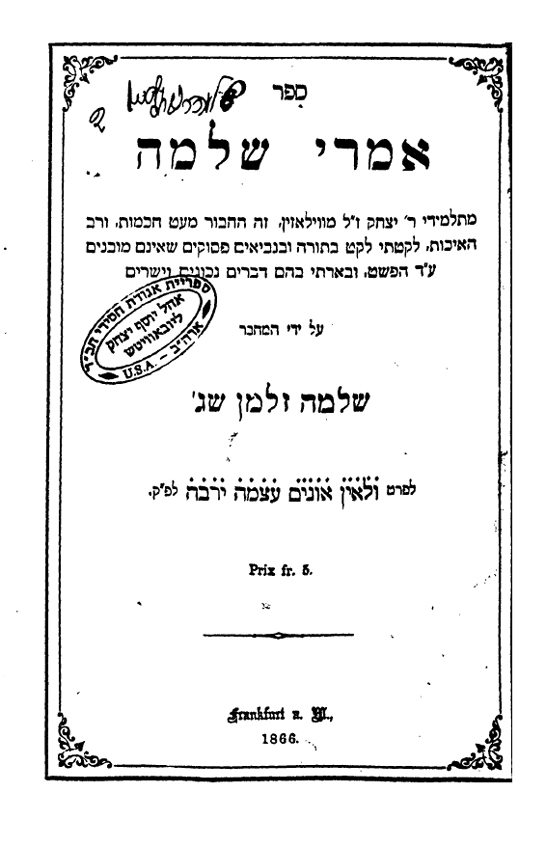
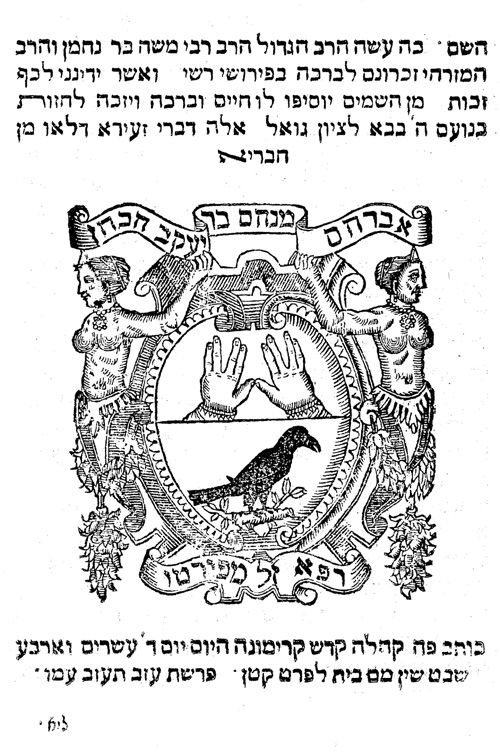
Yet since people are obviously interested in this topic, and took the time to send me the sources, let me thank you by citing a source that has never been referred to in all of the discussions of creation and biblical literalism. It is R. Shlomo Zalman Shag’s Imrei Shlomo, published in Frankfurt in 1866. (I have transliterated his last name as “Shag”, since that is how the Harvard catalog has it.) Here is the title page, where you can see that he identifies himself as a student of R. Isaac of Volozhin.

Worthy of note is that among the subscribers one finds, right next to each other on the list, R. Marcus Lehmann, Abraham Geiger, and Ludwig Philipson.

On p. 5 Shag refers to the trees in the Garden of Eden and the snake and says that it is obvious that none of this can be taken literally:

ואם נקח הפרשה הזאת במאזני השכל, ונפלס את הדברים נראה בעליל שהוא רק דברי רמז וחידה, וכפשוטו לא יכנסו כלל בגדר השכל.

On page 10 he explains how the snake represents the evil inclination, an identification pretty standard among the medievals, and he beautifully explains the connection between the two:

והנחש הוא היצר הרע והתאוה . . . היצה”ר נמשל לנחש מה הנחש כשהולך להזיק אינו ברעש ובהלה רק זוחל על הארץ בלחש ומזיק כן הוא היצר הוא בא לאדם בעצה ותחבולה ומראה עצמו כאוהב עד שיפתה, ואח”כ רובץ על צווארי בני אדם כנחש הסובב על הדבר מכל צדדיו.

On p. 21 he even understands the Tower of Babel in non-literal fashion:

ונאמר לראות את העיר ואת המגדל. את העיר זו יושבי העיר כמו העיר ננוה, העיר שושן, הכונה הוא על יושביה, והמגדל הוא המעשים שעשו, נגד רצון השי”ת, כי הם היו מתגאים לעשות להם שם בארץ. והשי”ת שונא גאים ומשפיל אותם, לכן ויפץ ה’ אותם משם על פני כל הארץ.

There have been many understandings of the Tower of Babel, and I don’t want to go into that now, but let me at least mention one of the strangest interpretations out there. R. Menachem Tziyoni (fifteenth century), in his commentary on the episode, claims that the Tower was actually a flying object[19]:

והמגדל הוא הפורח באויר אשר ראו בשמים

At least this is how Tziyoni is usually understood. Yet it is possible that it is not to be taken literally, and I found a post that says precisely this. See here.

Pre-modern man had many stories of those who were able to rise above the ground, either by flying or being transported by God. We find this in Jewish literature as well. See, for example, Bereishit Rabbah 44:8 which focuses on the words in Gen. 15:5 ויוצא אותו החוצה. What does it mean that God brought Abraham outside? The Midrash first quotes R. Joshua in the name of R. Levi:”Did he then lead him forth outside of the world . . . It means, however, that He showed him the streets of heaven.” In response to this R. Judah b. R. Simeon said in the name of R. Johanan: “He lifted him up above the vault of heaven.” Seen in context, as a response to R. Joshua’s explanation, it seems to me that R. Judah b. R. Simeon’s statement must be understood literally. In other words, Abraham was literally transported into the Heavens. See Etz Yosef ad loc: ס”ל דהחוצה כמשמעו שהוא ממש חוץ לעולם

The most famous example of human flight in Jewish literature is that of Jesus. As described in Toledot Yeshu, Jesus was able to use God’s holy name in order to fly, and was brought down by Judas Iscariot who could also fly and defiled Jesus (which caused Jesus to lose his special powers). According to one tradition, he defiled Jesus by urinating on him, but another version has him engaging in homosexual sex while in the air, which in context certainly means rape.

וטנפו במשכב זכור . . . שטנפו במשכב זכור וכיון שטנפו ונפל הזרע על יש”ו הרשע נטמאו שניהם ונפלו לארץ שניהם כאחד

Incidentally, according to Toldot Yeshu this explains why Judas Iscariot is so hated in Christianity:

וכל חכמי הגוים יודעים סוד זה וכופרין אותו ומקללים ומחרימים יהודה אסקריוטו

See Samuel Krauss, Das Leben Jesu nach Juedischen Quellen (Berlin, 1902), pp. 48, 74.

As Morris Goldstein has noted, the second century Acts of Peter describes how Simon Magus flew over Rome, astounding all the onlookers. But Peter, through his prayer to God, was able to force Simon down, a crash landing that caused him to break his leg.[20]

Samael (Satan) can also fly, at least so we are told in the Targum to Job 28:7: סמאל דפרח היך עופא

This should not surprising as according to Isaiah 6:2 the Seraphim fly (with wings), and Hagigah 16a tells us that both angels and demons fly (also with wings).

Midrashic texts speak of two Egyptian magicians who created wings for themselves that enabled them to fly.[21] Rabbinic sources also tell us that Balaam knew how to fly.[22]

With reference to Jesus, it is interesting to note that many Jews actually believed that he performed wonders. However, they attributed it to his knowledge of God’s holy name. Why didn’t they simply assume that all the stories about him were fiction, as modern Jews do? I think the answer is that since all of their neighbors believed the stories, and the miracles Jesus performed are said to have been done before crowds of people, many Jews therefore assumed that these tales must be historically accurate.

In general, it is a common pre-modern assumption that if a group of people, even a group from generations ago, claimed to have witnessed something, that this is a sign that it indeed took place. Today, however, we know how false this argument is. We can cite many examples of mass delusion, not to mention the fact that stories of what people in previous generations witnessed are not actually examples of many people testifying to something, but of one person, the writer, claiming as much.

The stories of Jesus that are found in Toldot Yeshu do not appear in the Talmud, but there are other stories of him found there. However, these stories place Jesus a good 150 years before he actually lived. I say this because the Talmud identifies Jesus as a student of R. Joshua ben Perahyah, who lived circa 120 BCE. In Nahmanides’ disputation, paragraphs 22, 57, he points out that the Christians are wrong on their dates. (R. Judah Halevi, Kuzari 3:65 mentions that Jesus was the student of R. Joshua ben Perahyah and says nothing about the chronological problem. The standard Hebrew edition of the Kuzari is censored [self-censored?], but the reference to Jesus can be seen in the original Arabic published in Kafih’s edition, and also in Hirschfeld’s English translation.)

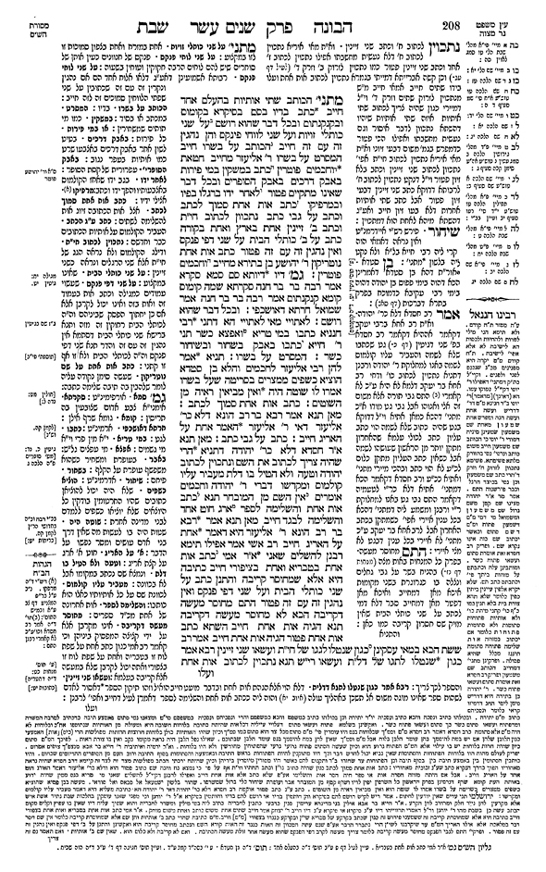
Others, such as R. Jehiel of Paris in his debate, used the chronological discrepancy to argue not that the Christians are wrong on their dates, but that the Jesus of the Talmud is not Jesus of Nazareth. I used to think that no one actually believed this, but resorted to this argument because it was a good way to deflect the Christian attacks that the Talmud defamed Jesus. However, I recently saw that Tosafot ha-Rosh, Sotah 47a, in a completely non-apologetic comment, assumes that the Talmud refers to two different men named Jesus. See also Meiri, Seder ha-Kabbalah, ed. Havlin (Jerusalem-Cleveland, 1992), pp. 69-70, and especially Havlin’s lengthy note. This was also Rabbenu Tam’s opinion, although it has been censored out of our Talmud. Take a look at Shabbat 104b, Tosafot s.v. Ben Stada in the Bomberg Venice 1520 edition, and compare to the standard Vilna edition.


Why does the Babylonian Talmud identify Jesus as a student of R. Joshua ben Perahyah if Jesus lived more than a century later? I think the answer is obvious, namely, that the Talmud had very little knowledge of who Jesus was, and thus did not know when to date him.[23] In fact, the famous story of R. Joshua ben Perahyah pushing Jesus away (Sanhedrin 107b, found in the Soncino translation) is actually a later development of an earlier story that is found in the Jerusalem Talmud. The Jerusalem Talmud’s version does not mention Jesus.[24]

This raises the question of the Talmud as a source of history, which is too large to go into here. But I do want to call attention to what R. Hershel Schachter states in a recent shiur, which I am sure will be surprising to many. The shiur (“Jewish Heritage Tour of Italy, part 2) can be found here.

Beginning at minute 66 R. Schachter acknowledges that the Talmud can err in matters of history. In support of this viewpoint, he cites R. Zerahyah ha-Levi (the Baal ha-Maor) at the beginning of Rosh ha-Shanah and R. Solomon Luria to Sanhedrin 52b. Here is an excerpt:

Today you have people [who] are considered Orthodox and they say [that] the Gemara made a mistake in history. There are a lot of people like that. . . . This is an ongoing debate. Just seventy years ago, before the Second World War, some of the rabbanim in Europe wrote in their seforim [that] it’s a well known fact that the bayit sheni was much more than 420 years. There is 150 years missing there. . . . We are used to this already. When Rabbenu Azariah min ha-Edomim (De Rossi) came out with his sefer Meor Einayim . . . and he said that maybe the chachmei ha-Gemara were wrong in history . . . many rabbanim were so upset they wanted to make a herem against him. I think they did make a herem; I am not sure. . . . Today, everybody is used to this. We assume that the Gemara is not necessarily expert on history, The Gemara can make mistakes in history. Today it’s not assumed to be apikorsus to say [this]. . . . If Azariah De Rossi would have printed his sefer today, no one would have been so excited about it.

For a hasidic perspective on this matter, which is very much in line with modern approaches to Aggadah, see R. Shlomo of Radomsk, Niflaot ha-Tiferet Shlomo (Petrokov, 1923), nos. 73-74. R. Shlomo stresses that when the Talmud tells a story, it does not matter if the facts are contradicted by other talmudic stories, because what is important is not the story itself, which need not be historically accurate, but rather the lesson to be instilled.

ובזה יש ליישב פליאה גדולה אשר יש לשאול, מה זה שמצאנו בכל הש”ס ומדרשים מסופרים מעשיות ומופתים מתנאים ואמוראים בשינוי נוסחאות מאד, זה יאמר כן היה המעשה, וזה יאמר כן . . . דאין אנו דנין על החומר, רק על הצורה, ולפי הצורה המוכנת בענין הזה, באופן זה מספרים חז”ל את המעשה והסיפור, וממ”נ אם להלל ולשבח ולפאר את התנא, או בהיפוך לגנות הרשע, הלא הצורה מוכנת לכ”א . . . ואם להשיג מטרת ותכלית ענין הנרצה בהסיפור הזה לעורר רושם ורעיון להשומע להבין דברי תורה ולעורר אמונת השגחה וכחן וגבורתן של הצדיקים, ג”כ האיכא, ומאי איכפת לן אם החומר מונע, החומר בטל לגבי הצורה, לכן אין נ”מ בין אופן זה לנוסחא אחרת כי הכל תורת אמת.

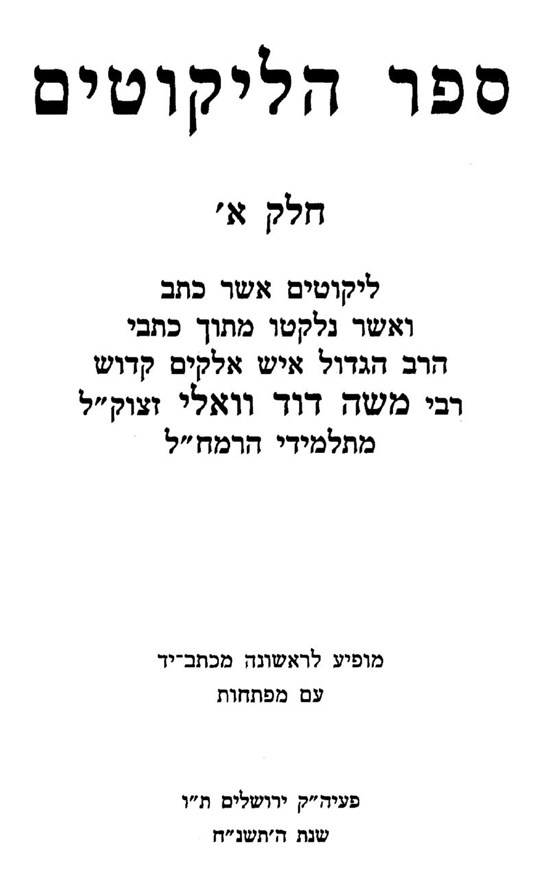
Returning to the subject of Jesus and R. Joshua ben Perahyah, I think readers might find another text interesting. It is by the kabbalist R. Moses Valle, who was an older colleague of R. Moses Hayyim Luzzatto in Padua. (Although Luzzatto was the leader of their circle, and Valle was thus subservient to him, I don’t know if it correct for the title page to describe Valle as a “student” of Ramhal. I grant that even Italian texts describe Valle as such. See R. Mordechai Samuel Ghirondi, Toledot Gedolei Yisrael [Trieste, 1853], p. 230.)

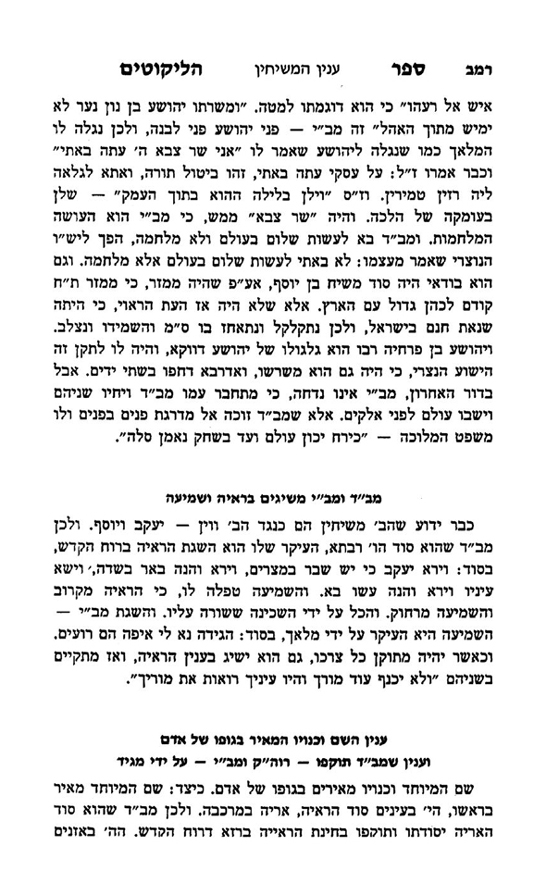
Without seeing the actual text, I don’t think people will believe me if I tell them what he writes, so here is the relevant page from Sefer ha-Likutim p. 242.

According to Valle, Jesus was meant to be Mashiach ben Joseph, but the needless hatred of the Jewish people prevented him from assuming this role. This is such a strange passage that I am impressed that the editor did not censor it prior to publication. For discussion of it, see here.

Interestingly, R. Abraham Abulafia appears to also have identified Jesus as Messiah ben Joseph. See Moshe Idel, Studies in Ecstatic Kabbalah (Albany, 1988), p. 53.

To be continued.


[1] I have explained Rambam according to the exoteric meaning, which is the level that Aviezer is arguing on. Aviezer makes no reference to a possible esoteric teaching.
[2] In the recently published The Rav Thinking Aloud on the Parsha: Sefer Bereishis, p. 8, the Rav misspoke and referred to this conception as the Aristotelian theory.
[3] Thus, I believe that both Rabad in his hassagah to Hilkhot Teshuvah 3:7 and also Kafih in his commentary ad loc., are mistaken in thinking that Maimonides, in listing different types of heretics, is referring here to one who believes in creation from eternal matter. When Maimonides writes about one who does not believe that God is ראשון וצור לכל he is not referring to time but causation. In fact, this formulation of Maimonides is also in accord with Aristotle’s view (that is, how Aristotle was understood by the medievals) that the world is both eternal and ontologically dependant on God. Nowhere in the Mishneh Torah does Maimonides affirm creation, ex nihilo or otherwise. This was recognized by R. Jacob Emden who sees the Mishneh Torah as more radical in this regard than the Guide. See Mitpahat Sefarim (Lvov, 1870) pp. 64-65 (where he also accuses Ibn Ezra of believing in eternity). See also Emden, Otzar ha-Tov (in Birat Migdal Oz [Zhitomir, 1874], p. 22a, who writes, regarding Maimonides’ use in the Mishneh Torah of a proof that assumes the world’s eternity:

לו ידעו הרבנים התלמודיים בפלוסופיא לא היה [!] שותקים לו בכאן

The Maharal, Netivot Olam,p. 224, writes:

והנה בנה עיקר ראייתו על התנועה הנצחית וזהו הפך האמונה שאין אנו מודים בזאת ההנחה. וא”כ כבר נפל הבנין בכללו

That the Guide is actually a theologically more conservative work than the Mishneh Torah has recently been argued by Charles Manekin, “Possible Sources of Maimonides’ Theological Conservatism in His Later Writings,” in Jay M. Harris, Maimonides After 800 Years (Cambridge, 2007), pp. 207-230. One should not forget that the Maimonidean controversy was precipitated by the Mishneh Torah, in particular Sefer ha-Mada, not the Guide.

[4] See the passage quoted from him in Yitzhak Shouraqui, Masoret be-Idan ha-Moderni (Tel Aviv, 2009), p. 34. On p. 44, Benamozegh writes that Ralbag, R. Hasdai Crescas, and R. Nissim did not believe in creation. What he means is that Ralbag did not believe in creation ex nihilo. Crescas did not really believe in creation at all, seeing the universe as eternal, that is, eternally created by God. This means eternal ontological dependence of all existence on the Creator. However, Crescas does believe that our world, as opposed to the universe as a whole, was created at a certain instant. See Warren Zev Harvey, Physics and Metaphysics in Hasdai Crescas (Amsterdam, 1998), pp. 18-19. As I pointed out in Limits, both Ralbag and Crescas stand in opposition to Maimonides’ Fourth Principle. Yet I am unaware of R. Nissim expressing a radical view regarding creation. Does anyone know what he is referring to?
[5] R. Judah Alfakhar also seems to make this error. See Kovetz Teshuvot ha-Rambam ve-Iggerotav (Leipzig, 1859), vol. 3, p. 1b.
[6] I thank Lawrence Kaplan for discussing this matter with me, although this should not imply that he agrees with what I have written.
[7] See here.
[8] Here is what Hirsch writes in Collected Writings, vol. 7, p. 57 (cited by Slifkin, here):

Jewish scholarship has never regarded the Bible as a textbook for physical or even abstract doctrines. In its view the main emphasis of the Bible is always on the ethical and social structure and development of life on earth; that is, on the observance of laws through which the momentous events of our nation’s history are converted from abstract truths into concrete convictions. That is why Jewish scholarship regards the Bible as speaking consistently in “human language;” the Bible does not describe things in terms of objective truths known only to God, but in terms of human understanding, which is, after all, the basis for human language and expression
[9] See here.
[10] See here.
[11] See here.
[12] On this issue, I find mid-twentieth-century Orthodox reconciliations of Torah and science very interesting in that the authors do not seem to be looking over their shoulders, worried about the reaction of the more literalist segment of Orthodoxy. R. Joseph Hertz’s essays following the book of Genesis in his edition of the Pentateuch are a good example of this. Another is R. Samuel Rosenblatt, Our Heritage (New York, 1940), pp. 174-181, in essays entitled “How the World Came Into Being” and “The Garden of Eden, Fact or Fiction.” You can see the essays here, or below.


While reading Rosenblatt’s essays, ask yourself if they could be published in an Orthodox newspaper or shul bulletin today. Note in particular Rosenblatt’s assumption that the Torah makes use of “theories about the nature of the physical world and the details of its generation that were current at the time the Bible was written.” Also relevant to the general issue are his essays on Noah and the Flood, and the Tower of Babel.
[13] For more on “myth”, see my earlier post.

There I wrote:

While in the popular mind myth often is identical with fairy tale, this is not how scholars understand myths. For them, myths communicate cosmic truths in non-historical story form, and they are not synonymous with legends. My dictionary explains myth as “a usually traditional story of ostensibly historical events that serves to unfold part of the world view of a people or explain a practice, belief, or natural phenomenon.”

S. of On the Main Line called my attention to Shadal’s letter in Iggerot Shadal, p. 661, where he speaks about the religious value of “illusions,” that is, matters that are not factual, but nevertheless have great religious value. In this letter we see Shadal, the great opponent of Maimonides, nevertheless adopting his own version of “necessary truths.”

שאין הריליגיאון חביבה לא-ל בשביל אמתתה, רק בשביל תועלתה בתקון המדות, ועל כן אין צורך שיהיו כל דבריה אמתיים, ושאין לנו עכ”ז להרחיק א-להיותה, ושאין להרחיק מהא-ל הגדת דברים בלתי אמתיים כי להגיד כח מעשה בראשית לבשר ודם א”א, ולא יתכן קיום החברה והצלחת האדם בידיעת האמת, אלא באיללוזיון, כי כן הטבע (אשר הוא בלא ספק רצון הא-ל) מרמה אותנו בענינים הרבה.

[14] Rather than refer to any number of books on the history of astronomy, here is what the Wikipedia entry on “Geocentric Model” has to say:

Adherence to the geocentric model stemmed largely from several important observations. First of all, if the Earth did move, then one ought to be able to observe the shifting of the fixed stars due to stellar parallax. In short, if the earth was moving the shapes of the constellations should change considerably over the course of a year. If they did not appear to move, the stars are either much further away than the Sun and the planets than previously conceived, making their motion undetectable, or in reality they are not moving at all. Because the stars were actually much further away than Greek astronomers postulated (making movement extremely subtle), stellar parallax was not detected until the 19th century. Therefore, the Greeks chose the simpler of the two explanations. The lack of any observable parallax was considered a fatal flaw of any non-geocentric theory. Another observation used in favor of the geocentric model at the time was the apparent consistency of Venus’ luminosity, thus implying that it is usually about the same distance from Earth, which is more consistent with geocentrism than heliocentrism. In reality, that is because the loss of light caused by its phases compensates for the increase in apparent size caused by its varying distance from Earth. Once again, Aristotle’s objections of heliocentrism utilized his ideas concerning the natural tendency of earth-like objects. The natural state of heavy earth-like objects is to tend towards the center of the earth and to not move unless forced by an outside object. It was also believed by some that if the Earth rotated on its axis, the air and objects in it (such as birds or clouds) would be left behind.

[15] Norman Lamm, “The Religious Implications of Extraterrestrial Life,” Tradition 7 (Winter 1965) pp. 27-28.
[16] A more academic version of this article appeared in JQR 55 (Jan. 1965), and some points in it were subjected to strong criticism by Harry Wolfson, ibid., 56 (Jan. 1966). Lamm told me that he felt it was a great honor for a young scholar like himself to be criticized by Wolfson. Similar sentiments have been expressed by students who were criticized in class by the Rav and Saul Lieberman.
[17] See here and here (note how the mention of R. [David] Feinstein has been removed from the first source).
[18] One reader asked me if there are traditional sources that speak of God creating things in the world after the initial creation. As a matter of fact, Isaiah 65:17 reads: “For, behold, I create new heavens and a new earth; and the former things shall not be remembered, nor come into mind.” A midrash quoted in R. Kasher’s Torah Shelemah, vol. 1, p. 123, reads as follows:

באותה שעה [כשעברו את הים] ברא להם הקב”ה ארץ חדשה כמו בבריאת העולם בששת ימי בראשית.

These two sources are cited by R. Judah Leib Zlotnick, “Bereishit” bi-Melitzah ha-Ivrit (Jerusalem, 1938), p. 27.

[19] Interestingly, R. Jonathan Eybschuetz, Tiferet Yehonatan, parashat Noah (p. 11a in the standard edition), claims that the builders of the tower were trying to make it so high that they could then launch a spaceship from it that would reach the moon (or perhaps I should say “the sphere of the moon”). This would then become their new home!

וזה היה כונת דור הפלגה ג”כ שבקשו לקבוע מושבם בכדור ירחי ששם יהיו נצולים ממבול וחשבו לעשות ע”י ספינה הנ”ל אפס כיצד יגביהו אותו הספינה למעלה מאויר העכור ולזה חשבו לבנות מגדל גבוה כל כך עד למעלה האויר ההוא ומשם יוכלו להשתמש בספינה הנ”ל לשוט באויר עד כדור הירחי.

[20] See Goldstein, Jesus in the Jewish Tradition (New York, 1950), p. 302 n. 34.

[21] See Louis Ginzberg, Legends of the Jews, vol. 3, p. 28.
[22] See Targum Ps.-Jonathan, Numbers 31:8, Zohar, vol. 3, pp. 194a-194b, Ginzberg, Legends, vol. 6, p. 144.
[23] For more on R. Joshua and Jesus, see Markham Judah Geller, “Joshua B. Perahyah and Jesus of Nazareth: Two Rabbinic Magicians” (unpublished doctoral dissertation, Brandeis University, 1974).
[24] See Peter Schäfer, Jesus in the Talmud (Princeton, 2007), ch. 3. Some readers might also enjoy Herb Basser’s lecture, “How Reliable are the Talmudic Teachings on Jesus,” available here.

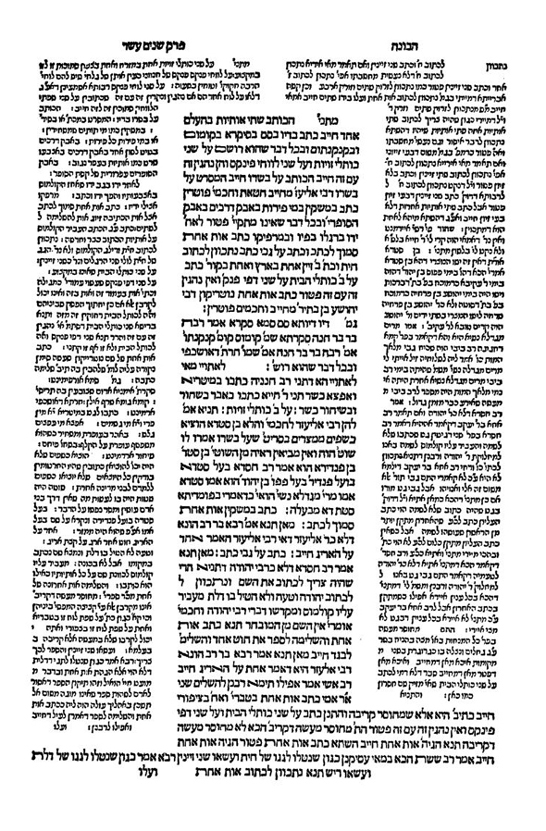
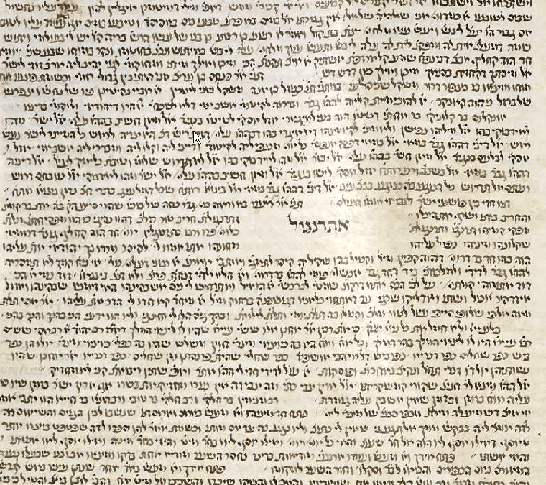
The original version of Sanhedrin, which mentions Jesus, is not found in the Artscroll edition. In other words, the Artscroll Talmud, including the Hebrew version, is still a censored, and thus defective, edition. I find this quite amazing. Is there a valid reason why Artscroll has not returned the Talmud to its pristine text? Speaking of internal censorship, here is another amazing example. Gittin 57a has a reference to Jesus, and this is preserved in the Munich manuscript and other uncensored mss. (and recorded in the Soncino translation). Here is a copy of the Munich manuscript. Look three lines above the large word אתרנגול

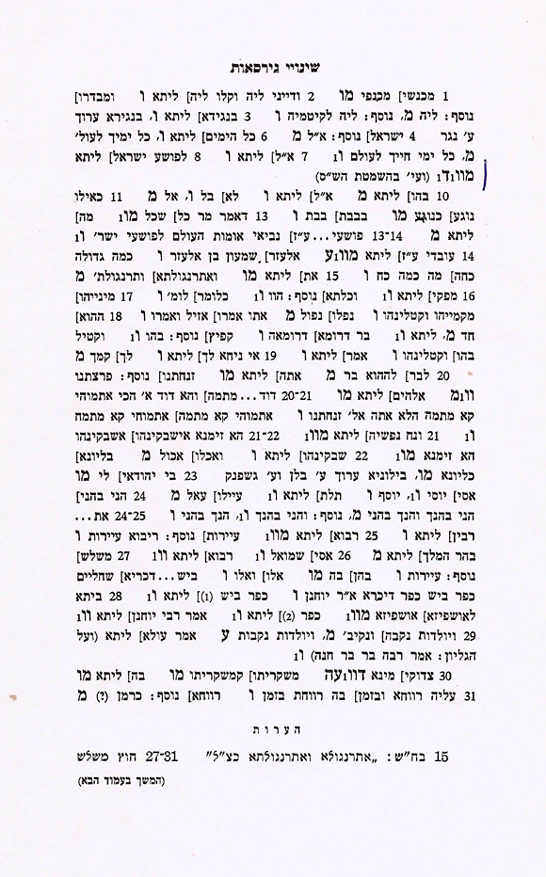
It states that Jesus was raised from the dead through incantations: אסקי’ לישו בנגיד’. In the standard text this has been altered to read, instead of Jesus, לפושעי ישראל. Now here is a copy of Meir S. Feldblum’s Dikdukei Soferim on Gittin. See how he wouldn’t even record what the Munich edition stated, and instead advises the reader to examine Hashmatot ha-Shas!


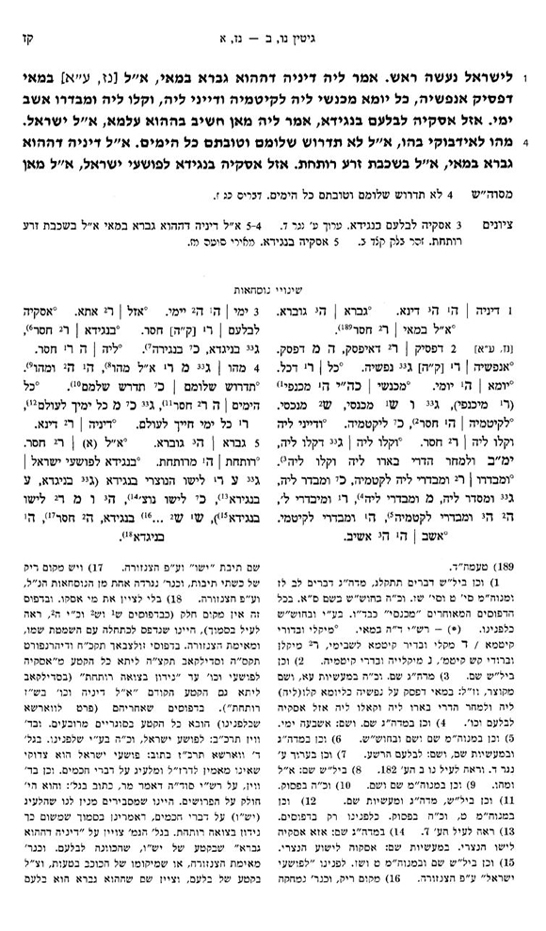
This book was published in 1966 and he was afraid to give us the reading in the Munich ms., yet Rabbinovicz in nineteenth-century Germany has no problem giving us the correct reading in the earlier mentioned story from Sanhedrin (as well as in the other talmudic passages where Jesus is mentioned). Does Feldblum’s action make any sense? I wonder if some future historian will be led to mistakenly conclude that anti-Semitism was more of a problem in 1966 America than nineteenth-century Germany. Fortunately, last year a new edition of Dikdukei Soferim on Gittin was published. Here is the relevant page where we are told what the Munich ms. really says.


תורת הצורה והחומר וההעדר: ספרים המדברים בהשמטות הרמב”ם ובכללים להסבירם

מאת עזרא בראנד
ידוע הוא לכל יודע ספר המשנה תורה שאחת מהמידות שהמשנה תורה נדרש בה היא ההשמטה ממנו. כמעט כל מפרשי הרמב”ם הניחו כיסוד שהרמב”ם כוון לכלול בספרו כל התורה שבעל פה (כמו שהזכיר הרמב”ם בהקדמתו למשנה תורה), ואם יש דין חסר ממנו יש דברים בגו[1]. אמנם גם לאחר שהוכרה ההשמטה בהרבה מקרים קשה לדעת מה ללמוד מזה; אם להחמיר או להקל, לטמא או לטהר, לפסול או להכשיר (ולעתים קרובות נחלקו בזה המפרשים), אבל הכל מודים שניתן ללמוד מכל השמטה.
א. ספרים העוסקים בהשמטות הרמב”ם
ישנם כמה וכמה ספרים שמרבים לדון בהשמטות מהמשנה תורה לרמב”ם, ומעירים על הרבה מהם, כגון מגיד משנה, כסף משנה, לחם משנה, מעשה רקח (כל אלו פירושים על הרמב”ם), בית יוסף על הטור, ביאור הגר”א על השלחן ערוך, ספר צל”ח על הש”ס ושו”ת נודע ביהודה להר’ יחזקאל לנדאו, וספר ראשון לציון על הש”ס (מבעל ‘אור החיים’ על התורה).
וכן יש ספרים שתכליתם המוצהרת להעיר וללקט השמטות הרמב”ם. הרב ישעיה פיק בספרו ‘אומר השכחה’[2] ליקט הרבה מההשמטות של הרי”ף, הרמב”ם, הסמ”ג, הרא”ש, הטור, והשו”ע. כנראה, ספר זה לא הוכן לדפוס ע”י המחבר[3]. הוא מעיר על מאה וששים השמטות, מהן מאה עשרים ותשע הן השמטות הרמב”ם[4]. וברור שרשימה זו היא אך מעט מן המעט מן המנין השלם[5]. פעמים שהמחבר מאריך לתרץ את ההשמטה[6], או מציין לספר אחר בו יישבה[7], אבל ע”פ רוב הוא מסתפק להעיר עליה, ולהניחה בקושייה. הר’ פיק כותב כמה פעמים שהקשה השמטות אלו לגדולים שונים, ושהתשובות מובאות בספרי שאלות ותשובות שלהם[8]. וגם הביא השמטות שהקשו לו אחרים (אולי היה מפורסם בהתעניינותו בענין זה!)[9].
כידוע, הרב ישעיה פיק כתב השלמות לציוני ‘מסורת הש”ס’ הנדפסים בגליון הגמרא (מאת הרב יהושע בועז). הוא גם כתב השלמות לציוני ‘עין משפט’ שבצד הגמרא המציינים למקום המובא אותו דין במשנה תורה לרמב”ם, בשלחן ערוך, ובסמ”ג (גם ציונים אלה חיברם הרב יהושע בועז), והשלמותיו נדפסים ב’עין משפט’ בסוגריים[10]. בהשלמות אלו העיר לפעמים על השמטות הרמב”ם[11].
וכן הרב יצחק אריאלי בספרו עינים למשפט העיר על הרבה השמטות מספר משנה תורה, גם במהדורה הקצרה וגם בארוכה של הספר[12]. בהקדמה למהדורה הקצרה כתב ש”ממטרות ספר זה להבליט ולהטעים את ההשמטות”, אבל כנראה גם הוא לא השלים את העבודה כראוי, והשמיט לציין כמה מההשמטות. אולם, במהדורתו הארוכה נראה שהשלים את המלאכה ובאמת העיר על כל השמטה של הרמב”ם (אבל לא בדקתי באופן יסודי), אבל לא כתבו אלא על שש מסכתות.
הרב יעקב ליב מוינעשטער העיר על הרבה השמטות הרמב”ם במסכת ביצה בסוף מהדורתו של מסכת ביצה (נדפס בשנת תרצ”ד בניו יורק). הוא מרבה להביא קושיות בענין השמטות מה’ראשון לציון’ (מבעל ‘אור החיים’) ואחרים, ומביא את תירוציהם, וגם משתדל להסבירם בעמצמו. וגם הוא, כמו הרב ישעיה פיק, הקשה לאחרים על אודות השמטות שמצא, ומביא תשובותיהם. ותשובותיהם ג”כ נדפסו בשאלות ותשובות שלהם.
הרב רחמים יוסף אג’ייני, רבה של עיר צפרו במרוקו, ונפטר בשנת תרנ”ג, ג”כ ליקט השמטות הרמב”ם. צאצאיו הדפיסו את רשימה זאת על סדר הרמב”ם בירושלים תשל”ד. היא מובאת במאסף תורני ‘הר המלך’, (נחלת הר חב”ד תשמ”ז), עמ’ לז-צב, על שם ‘קונטרס השמטות’.
הרב יהודה צארום ליקט הרבה השמטות הרמב”ם ממסכת שבת בספרו ‘משנת יהודה’ על מסכת שבת. הוא מביא הסברים שונים—בין של עצמו בין של אחרים–להסביר כל השמטה. הוא בכונה אינו משתמש בכללים שהביא במבואו כתירוץ לקושיא מדוע השמיט דין פלוני, כמו שכותב בסוף המבוא (עמ’ כ).
גם ב’ספר המפתח’ על הרמב”ם מהדורת פרנקל ליקטו הרבה השמטות על סדר המשנה תורה. כנראה הם ליקטו הכמות היותר גדולה של השמטות מכל המלקטים דלעיל. אבל דא עקא שסדר ה”מפתח” הוא על סדר הרמב”ם, ובהרבה מקרים קשה לדעת איפה הסעיף בספר המפתח המעיר על איזושהיא השמטת הרמב”ם, כיון שנשמט הדין מהרמב”ם! ובשלמא בדין שהיה שייך להרמב”ם להביאו רק במקום אחד לבד, ניחא לציין על סדר הרמב”ם, אבל כשהדין מענינם של כמה הלכות או פרקים, או שיכול לבוא באחד מכמה מקומות שונים, קשה לדעת איפה למצוא את הציון בספר המפתח. ויש להמליץ שיעשו מפתח השמטות על סדר הש”ס.
ויש להעיר שבהרבה מקומות העירו המפרשים על דינים שהושמטו מהרמב”ם, ובאמת הם נמצאים ברמב”ם[13]. וכתבו המפרשים סיבות שונות לתופעה זאת. המגיד משנה בסוף הקדמתו לפירושו לספר זמנים כתב שאירע הדבר כשהרמב”ם הביא סוגיא אחת בשני מקומות שונים משום שכך התאים יותר ע”פ סדר הדינים:
“מהפלגת רבינו (=הרמב”ם) בשמירת הסדר היה לשנות בקצת מקומות קצת דינים להיות לכל אחד מהן מבוא בענינים חלוקים כפי החלוקה הישרה שנחלקו מאמריו ונסדרו, ולפיכך ראוי למעיין להתבונן בזה. וכבר ראיתי למי שהיה בקי בספריו (=בספרי הרמב”ם) שלא הרגיש בנמשך אחרי זה, רצוני לומר שבהיות לדין אחד מבוא בשני ענינים יבאר רבינו חלק אחד במקומו הראוי לו והחלק השני במקומו האחר ויעיין המעיין בדין ההוא וימצאהו במקום אחד מבלתי שלמות חלקיו ויתמה על זה”[14].
המאירי בהקדמתו ל’בית הבחירה’[15] כתב טעם אחר, משום שלפעמים הרמב”ם כתב דין במקום שבאמת אינו ראוי לו ע”פ סדר הדברים, אלא שבא שם אגב דין אחר: “והוא שיקרה זה לפעמים תפול המחשבה על דבר אחד היותו במקום אחד, ואחר החפוש תמצא במקום אחר לא עלה על לב המעיין היותה שם, אלא שבאה שם על ידי גלגול איזה ענין…”[16].
וכתב העינים למשפט בהקדמתו לקידושין דמסתבר להניח לגבי טעיות האחרונים אחר הופעת ציוני ה’עין משפט’ שפעמים מכיון שלא היה מצויין בספר עין משפט בגליון הגמרא סברו האחרונים שאינו ברמב”ם, ובאמת הוא ברמב”ם אלא שנשמט מהעין משפט[17].
ב. כללי השמטות הרמב”ם
מפרשי הרמב”ם למשך כל הדורות חידשו כללים המתארים אילו דינים המופיעים בגמרא השמיט הרמב”ם ממשנה תורה. נראה לחלקם לשני סוגים: יש מהכללים שהם אינטרינסיים (INTRINSIC), זאת אומרת שהם אומרים שאין הרמב”ם מביא דינים שהם מסוג מסויים. לדוגמא, הרבה כותבים שהרמב”ם אינו מביא הדינים שהם נובעים מחשש רוח רעה. ויש כללים שהם אקסטרינסיים (EXTRINSIC), דהיינו שהרמב”ם אינו מביא דינים מטעם חיצוני כלשהו. דוגמא לזה הוא מה שכתבו אילו מפרשים שאין הרמב”ם מביא דין שיש בו מחלוקת בגמרא ואינו יודע כיצד להכריע.
הרב יצחק אריאלי, בהקדמתו למסכת קידושין–המסכתה הראשונה שנדפסה בסדרת ספריו ‘עינים למשפט’ (במהדורה הארוכה[18]), כתב שבעה כללים להסביר אילו דינים הושמטו. בהצגת כל כלל וכלל בפני הקורא, מביא הר’ אריאלי כמה דוגמאות לדינים שעל פי הכלל ההוא הושמטו מהמשנה תורה, וכן לכל אורך ספרו מרבה להשתמש באותם הכללים להסביר השמטות רבות[19].
הרב יהודה צארום בסוף ספרו ‘משנת יהודה’ על מסכת שבת כולל מאמר שקרא בשם ‘מבוא להשמטות הרמב”ם’, והאריך בו הרבה באיסוף כללים רבים שחודשו על ידי המפרשים לבאר וליישב השמטות הרמב”ם. אולם, אין הכללים מסודרים כ”כ, והם מעורבים בתוך פלפולים ארוכים. הר’ צארום עוסק שם בענין זה לאורך כעשרים עמודים, וכמעט שלא הניח מקום לאחרים להתגדר בנושא זה.
מחבר נוסף שדן בענין כללי השמטות הוא הרב יעקב חיים סופר, שליקט כמה כללים בתוך ספר ‘מעט מים’ (עמ’ יח), ומציין שם מקומות שונים בספריו שליקט מראה מקומות על כללים אלו. וישנם עוד ספרים ומאמרים שליקטו כללים מלבד אלו.
נחוץ להעיר שישנם הרבה דינים שעל פי כללי המחברים לא היה לרמב”ם להביאם במשנה תורה ואף על פי כן מופיעים שם. אכן, מטרת המחברים היתה רק לתאר ולקטלג את הדינים שלא הביאם הרמב”ם. לפיכך, אין לנו לומר שהרמב”ם לא הביא כלל דינים מסוג זה או אחר, אלא רק שהרמב”ם לא הרגיש צורך מוחלט להביא כל דין ודין מאותו הסוג.


[1] אולם, עי’ חזון איש, ‘קובץ איגרות’ חלק ב (בני ברק תש”נ), איגרת כא שכתב שאין לדייק מהשמטה אלא אם כן משמיט פרט אחד מדין שלם. ולפי”ז לכאורה יוצא שאין לדייק מרוב השמטות הרמב”ם. ושמעתי שנחלקו תלמידי החזון איש בטעמו. יש אומרים שכוונת החזון איש היתה ששייך שהרמב”ם למד את הסוגיא באופן שמעולם לא עלה על דעתינו, ולו היינו לומדים כמותו, היינו נוכחים לדעת שהדין העולה מן הסוגיא באמת כלול במה שפסק או שאי אפשר לו לפסוק כן משום שישנה סוגיא אחרת הסותרת את הדין הזה . ויש אומרים שסבר שאין לדייק משום ששייך שהרמב”ם שכח להביא את הדין. וכהבנה זאת מבואר מדברי הרב יהודה לפקוביץ, ‘דרכי חיים’ חלק ב (בני ברק תשס”ז), עמ’ קעט-קפ, שהאריך בענין “לכל נברא יש גבול עד היכן יכול להשיג בתורה” (כן היא כותרת הקטע), ובסוף כתב: “ויסוד הדברים שמעתי ממרן ‘החזון איש’ זצ”ל שדיבר בארוכה כדברים אלו לענין השמטות הרמב”ם”. ועל כל פנים שיטה זאת מחודשת היא מאוד, ולא מצאתי לה חבר. ולכאורה כל המפרשים שהקשו על הרמב”ם למה השמיט דין מסויים סוברים שלא כחזון איש בזה.
[2] נדפס לראשונה בשנת תר”כ בקניגסבורג.
[3] עי’ ‘אומר השכחה’ דף ג ע”א לפסחים מ ע”א: “ועמ”ש קונ’ שה”ם (=שטרי המאוחרין) עירובין יז: ישוב הגון וראוי להעתיקו לכאן בעת הפנאי“. וכן משמע מהא שמצינו שעד דף ה ע”ב מדפי הספר הההשמטות נסדרות על סדר הש”ס, ומשם והלאה אין להן סדר.
[4] ויש שליקטו עוד השמטות והוסיפו על אלו של הרב ישעיה פיק, הרי הם הרב גרשון ליינער ובנו הרב ירוחם ליינער (אדמו”רים מראדזין), נדפסים בסוף ‘אומר השכחה’ הוצאת מנורה (ניו יורק תשי”ט).
[5] כמו שיראה לכל המעיין בספר המפתח על הרמב”ם מהדורת שבתי פרנקל. להשערתי, יש בממוצע יותר מהשמטה אחת—דהיינו השמטה שמעירים עליה המפרשים או שהיה ראוי למפרשים להעיר עליה–בכל דף גמרא שעוסק בהלכה (בניגוד לדפים העוסקים באגדתא, שאין להוציא מהם כ”כ הרבה הלכות, וגם אינו ברור שהרמב”ם קיבל על עצמו לפסוק את כל הדינים המשתמעים מסוגיות אגדתא כמו בסוגיות העוסקות בהלכה). ועי’ הרב משה צוריאל, ‘אוצרות המוסר’ (ירושלים תשס”ג) חלק א, עמ’ 208, שהביא מנין השמטות הרמב”ם שבספר אומר השכחה (הוא כתב שהמנין שמונים ושבע, והוא טעות), וכתב שהוא פלא שהשמיט כ”כ מעט. ובאמת השמיט הרבה יותר מזה, כנ”ל. והאומר השכחה העיר רק על השמטות אחדות בהרבה מסכתות, ובודאי שיש להקשות על הרבה יותר מזה. ושאלתי את הרב משה צוריאל את זה והודה לי, ואמר שכתב כן לפני שהכיר שיש כ”כ הרבה השמטות.
[6] עי’ דף ב ע”ב לפסחים לד ע”א; דף ז ע”ב לסנהדרין קיב ע”א.
[7] כגון דף א ע”ב לשבת קט ע”א: “ובהפלאה שבערכין ערך שרק הארכתי בס”ד”; דף ג ע”ב לביצה כ ע”א: “עיין אריכות בזה בקונטרס קשות מיושב”; דף ד ע”א ליומא פג ע”א: “ועמ”ש בס”ד בחיבורי יש סדר למשנה”; דף ד ע”ב לבבא קמא נט ע”א: “ועמ”ש קונ’ שה”ם סוטה י”א”; דף ו ע”א לערכין יא ע”א: “והארכתי בתקוני כ”ש (=כלי שרת)…”; דף ו ע”ב לתוספתא פרק ראשית הגז: “ועמ”ש בראש כרך הרמב”ם חלק ד’ “; דף יא ע”א לקידושין נח ע”א: “וכמו שהארכתי במקצת בשאילת שלום אות קל”ב קחנו משם”.
[8] כגון בדף א ע”ב לעירובין דף צב ע”ב שהביא תשובה מבעל ‘שו”ת זכרון יוסף’ (חיברו הרב יוסף משטיינהרט, שנשא בזווג שני את אחותו של הרב ישעיה פיק. כן כתוב בהקדמת המו”ל ב’שו”ת זכרון יוסף’ מהדורת ירושלים תשס”ה) לקושייתו אליו. ובדף יב ע”ב לשבת עה ע”ב: “והארכתי בס”ד בענין זה בתשובתי להרב מו”ה איצק פאלצבורג חתן גיסי הגאון בעל זכרון יוסף”. ויותר מפורסם הוא התכתבותו עם הרב יחזקאל לנדאו, וכמה תשובות בספרו של הרב יחזקאל, ‘שו”ת נודע ביהודה’, נכתבו להשיב לקושיותיו של הרב ישעיה פיק אליו. והרבה מקושיות אלו היו בענין השמטות הרמב”ם והפוסקים. עי’ נודע ביהודה מהדורא תנינא או”ח סי’ סט שנשאל אודות השמטה הנזכרת באומר השכחה דף ב ע”ב לפסחים כח ע”ב (נדפס משום מה לפני הקטע השייך לפסחים ו ע”א); נודע ביודה מהדורא תנינא יו”ד סי’ קמד שנשאל אודות השמטת דין בפסחים ב ע”א (ומעניין שבצל”ח בפסחים שם ג”כ דיבר בעל הנודע ביהודה בזה); נודע ביהודה מהדורא תנינא או”ח סי’ צד אודות השמטה הנזכרת בדף ב ע”ב לפסחים ח ע”ב; נודע ביהודה שם אודות השמטה הנזכרת בדף ג ע”ב לראש השנה טז ע”ב; נודע ביהודה מהדורא תנינא יו”ד סי’ קסג אודות השמטה הנזכרת ב’קשות מיושב’ (חיברו הרב ישעיה פיק, קניגסברג תרכ”ה) דף א ע”ב. וכמה פעמים הזכיר הרב ישעיה פיק שהאריך בענין השמטה זאת או שהביא תשובה מגדול אחד “בחיבור כנסת חכמי ישראל” (כגון דף ב ע”ב לפסחים כח ע”ב (נדפס משום מה לפני הפסקה לפסחים ו ע”א), דף ג ע”ב לראש השנה טז ע”ב, דף ד ע”ב לבבא קמא קי ע”א, דף ה ע”א לעבודה זרה לב ע”א, דף ה ע”א לתמורה לג ע”ב), ולא ידעתי מה הוא.
[9] כגון דף ד ע”ב לנזיר לב ע”ב: “הרב הגאב”ד דכאן נר”ו הקשה חידוש דנשמט דבר זה ברמב”ם שלא הזכירו”; דף ה ע”א לזבחים פז ע”א: “נשאלתי מהגאון המפורסם אב”ד דכאן נר”ו למה השמיט הרמב”ם הך מילתא דבשמיני…”; דף ז ע”ב לסנהדרין קיב ע”א: “…ונשאלתי בזה מהרב הגאון מו”ה עקיבא אייגר מליסא נר”ו”; דף יב ע”ב לחולין ד ע”א: “שאלני ידידי האברך הרבני השלם מו”ה בירך…”; שם לפסחים קכא ע”א: “נשאלתי מחכם אחד…”; דף יד ע”ב ליומא מא ע”א: “וכן הערני בעל המחבר בנן יהושיע נר”ו”.
[10] וע’ הרב יהודה ליב מימון, ‘תולדות הגר”א’ (ירושלים תשט”ו), עמ’ קיג בהערה, שהקשה על הרב ישעיה פיק ב’אומר השכחה’ ליומא כב ע”ב דכתב “לא מצאתי בפוסקים, רק המגן אברהם ריש סי’ קנו הביאו”, והפליא עליו הרב מימון “ושכח כי הרמב”ם הביא הלכה זו בפ”ד מהל’ תמידין ה”ד, וכמו שמצויין גם בעין משפט בגמרא שם”, ע”ש שהאריך להפליא איך שייך שהרב ישעיה פיק ישכח שהלכה זו מובאת ברמב”ם. וכן העיר הרב ירוחם ליינער בהערותיו על ‘אומר השכחה’ (הוצאת מנורה). ונראה לי שקושיא זו בטעות יסודה, דהנה באומר השכחה שם כתב “לא מצאתי בפוסקים, רק המגן אברהם ריש סי’ קנו הביאו, אבל בסמ”ג וברי”ף והרא”ש וטור ושו”ע לא מצאתי ראיתי”, ולא הזכיר שהרמב”ם השמיטו. ועל כרחך כשכתב “לא מצאתי בפוסקים” כוונתו לשאר פוסקים מלבד הרמב”ם.
ומעניין שב’שו”ת פני מבין’ יו”ד סי’ שכט באמת טעה והקשה אודות השמטה זאת, וכתב ליישבו ע”פ כלל ?. וכן תמה עליו הרב עובדיה יוסף ב’שו”ת יביע אומר’ חלק ב חלק יו”ד סי’ טז אות ט. ואולי הטעתו מה שהקשו המפרשים למה לא מנו מוני המצוות איסור זה למנות יהודים, עי’ בספר המפתח להל’ תמידין פ”ד ה”ד. ועוד נראה לי אפשרות גדולה שרהיטת הלשון של ספר ‘אומר השכחה’ הנ”ל הטעה את מחבר ה’פני מבין’, שכן ‘פני מבין’ נדפס בשנת תרע”ג, מ”ח שנים אחר ש’אומר השכחה’ יצא לאור בשנת תרכ”ה, ומסתבר שהספר היה לפניו. וכן קצת משמע ממה שציין ב’פני מבין’ שם: “ועי’ מג”א סי’ רלא” (הוא טעות וצ”ל “מגן אברהם סי’ קנו“), וכן ציין ב’אומר השכחה’ שם שהוא הפוסק היחידי שהביא את הדין. וכן קצת משמע מהראיה האחרת שהביא ה’פני מבין’ שם להוכיח את הכלל הנ”ל, והיא הגמרא בברכות יג ע”א “כל הקורא לאברהם אברם עובר בעשה…”, שהשמיטו הפוסקים. וזוהי ההשמטה הראשונה שהקשה עליה ב’אומר השכחה’.
[11] כגון סוטה מח ע”א אות ב; שבת קמט ע”א אות ח.
[12] הרב יצחק אריאלי חיבר שתי מהדורות של סדרת ‘עינים למשפט’, כל אחת של שלשה כרכים. במהדורה שאני קורא “הארוכה” (נדפס בירושלים משנות תרצ”ו-תשל”א) הוא משלים ומתקן את ציוני ‘עין משפט’ והעיר על השמטות הרמב”ם, וגם מאריך בליקוט הראשונים והפוסקים. בדרך זאת פירש רק שש מסכתות בלבד (ברכות, נדרים, קידושין, בבא בתרא, סנהדרין, ומכות). ובמהדורה שאני קורא “הקצרה” (ירושלים תשכ”ג-תשכ”ו) הוא משלים ומתקן את ציוני ‘עין משפט’ והעיר על קצת השמטות הרמב”ם, וסדרה זו כוללת כל מסכתות הש”ס וגם ירושלמי ומסכתות קטנות. הרב יצחק אריאלי התמנה ע”י הרב קוק להיות הראש הישיבה הראשון בישיבת מרכז הרב בירושלים. הרב למד בצוותא עם רב קוק כל יום, ובלימודם התרכזו לעסוקי שמעתתא אליבא דהילכתא. הרב קוק עצמו הקדיש הרבה זמן לכתוב “הלכה ברורה”, שהוא מהדורה של הגמרא עם ליקוט כל פיסקי הרמב”ם המשתייכים לאותו עמוד בתחתית העמוד. בישיבת מרכז הרב ממשיכים את הפרויקט.
[13] עי’ לקמן הערה 15, והערה 18. ועי’ ‘עינים למשפט’ בהקדמה למהדורתו הקצרה עמ’ 6-7 עוד דוגמאות לזה (וכתב שהן “דוגמאות אחדות ממאות רבות”). ועי’ רב צארום עמ’ יט עוד שתי דוגמאות. וע’ אמרי בינה דיני יו”ט סי’ יח שהשמיט הרמב”ם הא דאיתא בביצה לד ע”א “אבל מפצעין את האגוז במטלית ואין חוששין שמא תקרע”. ובאמת הביאו הרמב”ם בהל’ שבת פכ”ב הכ”ד. וע’ ערוך השלחן סי’ מט אות ג שהשמיט הרמב”ם הא דאיתא בגיטין ס ע”ב “דברים שבכתב אי אתה רשאי לאומרן על פה”. ובאמת הביאו הרמב”ם בהל’ תפלה פי”ב ה”ח. וע’ ‘אבן שלמה’ על הראב”ן (ירושלים תשל”ה) סי’ מב עמוד לא ע”ב ד”ה “נלע”ד” שהשמיט הרמב”ם הא דאיתא בגיטין שם “דברים שבעל פה אי אתה רשאי לאומרן בכתב”. ובאמת הביאו הרמב”ם בהל’ תפלה פי”ב ה”י.
[14] ע”ש שהביא מקרה שהרשב”א טעה בזה. ועי’ כסף משנה בהל’ שבת פ”ו ה”ד שהעיר על הרמ”ך שטעה בזה.
[15] נדפס בראש ‘בית הבחירה’ למסכת ברכות (ירושלים תשכ”ה), עמ’ כז.
[16] עי’ שם שהביא המאירי דוגמאות של דינים שלא ברור מאיליו היכן למצואן ברמב”ם, משום שהדין בא ב”גלגול” במקום אחר. ועי’ עוד דוגמאות בIsadore Twersky, Introduction to the Code of Maimonides, New Haven 1980, pg. 293-294 . אגב, יש להעיר על פרט אחד במאירי שם בדוגמתו הראשונה: “כמו שתאמר על דרך משל מה שאמרו בחכם שכור שלא יורה אפילו אכל תמרים או חלב ונתבלבלה דעתו. והנה יחשוב המעיין למצאה בהלכות דעות לפי הענינים הנכללים שם, והנה ימצאוה בספר עבודה…”. ולכאורה מה שכתב “בהלכות דעות” אינו מובן כ”כ, דפשטות כוונתו ל לפרק ה שם שמדבר בו הרמב”ם איך ינהוג תלמיד חכם. אבל שם מדבר במידות טובות שינהוג בהם תלמיד חכם, ולהורות כשהוא שיכור הוא איסור. ולולי דמסתפינא הייתי אומר שהמקום הראוי להלכה זאת הוא בהלכות סנהדרין, ואולי יש ט”ס במאירי.
עוד הערה דרך אגב: עי’ שם במאירי בהקדמה שהאריך (החל מעמוד כו ד”ה “כאשר”) לומר שמי שירצה ללמוד גמרא עם פסקי הרמב”ם יצטרך לחפש הרבה במשנה תורה כשבא לסוגיא שאינו מעין שאר המסכתא. ושלכן כתב את ספרו ‘בית הבחירה’ שהוא פסקים על סדר הגמרא. ולכאורה, עכשיו שיש לנו ציוני ‘עין משפט’ בצד הגמרא, באמת יכולים ללמוד גמרא על פי המהלך המעודף על המאירי. והרב קוק כיוון למהלך זה בתוכנתו של ‘הלכה ברורה’.
[17] עי’ שם בהערה ה שהביא שש עשרה מקומות בקידושין בלבד ששייך שטעו האחרונים בזה.
[18] ראה מה שכתבתי על אודות מהדורות ‘עינים למשפט’ לעיל הערה 12.
[19] ועי’ בהקדמה לעינים למשפט על מסכת קידושין (בסדרו הארוך) עמ’ ח שכתב בסוגריים “יחדתי לזה מקום במבוא ל”ספר המקורים להרמב”ם” אשר אקוה לסדרו בקרוב אי”ה”, וכנראה שלא הספיק להדפיסו.


New Writings from R. Kook and Assorted Comments, part 2

New Writings from R. Kook and Assorted Comments, part 2
Marc B. Shapiro
Continued from here.
I must now deal with R. Joseph Ibn Caspi, who is often described as holding a view similar to what we have seen already, but more radical in that he saw it as a general principle of interpretation. I refer to the notion that the Torah incorporates all sorts of untruths because these were what people believed at the time. It is said that this is how Ibn Caspi understands the rabbinic phrase “The Torah speaks in the language of men.” Here is a lengthy quotation from the late Isadore Twersky taken from his classic article on Ibn Caspi.[1]
Kaspi frequently operates with the following exegetical premise: not every Scriptural statement is true in the absolute sense. A statement may be purposely erroneous, reflecting an erroneous view of the masses. We are not dealing merely with an unsophisticated or unrationalized view, but an intentionally, patently false view espoused by the masses and enshrined in Scripture. The view or statement need not be allegorized, merely recognized from what it is. . . . Many scriptural statements, covered by this plastic rubric, are seen as errors, superstitions, popular conceptions, local mores, folk beliefs, and customs (minhag bene adam), statements which reflect the assumptions or projections or behavioral patterns of the people involved rather than an abstract truth. In its Kaspian adaptation, the rabbinic dictum may then be paraphrased as follows: “The Torah expressed things as they were believed or perceived or practiced by the multitude and not as they were in actuality.” Leshon bene adam is not just a carefully calculated concession to certain shortcomings of the masses, that is, their inability to think abstractly, but a wholesale adoption of mass views and local customs. . . . The Torah did not endorse or validate these views; it merely recorded them and a proper philosophic sensibility will recognize them.
Many people have understood Twersky to be saying that the Torah includes within it all kinds of superstitions and folk beliefs that were shared by the masses. (According to Ibn Caspi, the Torah does contain “necessary beliefs” that are not true, but these are of a different sort, as they relate to the masses’ inability to grasp philosophical truths.) While it is true that according to Ibn Caspi these beliefs are included in the Torah, they are not advocated by the Torah, but are to be understood as mistaken beliefs of the masses. In other words, Ibn Caspi does not say that the Torah itself, that is, when it is God speaking to Moses or in general narrative sections, should be regarded in this fashion.
So, for example, in the story of Rachel, Leah and the mandrakes (Gen. 30: 14-17), Ibn Capsi suggests that Rachel and Leah shared a common superstition that these mandrakes would help one conceive, and the story in the Torah is from these women’s perspective.[2] Yet the Torah itself never states that the mandrakes have magical properties. That is, the Torah does not incorporate a superstition because this is what people believed, but rather records a superstition that was believed in by some. Another example is that the Torah mentions that God told the Israelites (Ex. 12:13) to put blood on their doorposts. Ibn Caspi explains that this was due to the ancient superstition that blood had magical qualities.[3] The Torah thus commanded an action that took into account the masses’ superstition, but it was not the Torah itself advocating the superstition.
I am unaware of any place in his writings where Ibn Caspi states that the Torah itself is expressing a superstitious belief, that is, where it affirms the efficacy of a superstition or a folk belief because it is reflecting the views of the masses.
Readers will recall that in part 1 I quoted examples where the Bible, including the Torah, includes incorrect scientific information because this was what was believed at the time. Someone who wishes to remain anonymous called my attention to Samuel David Luzzatto’s commentary to Gen. 1:6. Shadal offers another example of what he thinks is the Torah using incorrect science because of what was the common ancient belief, and he includes this example under the rubric of “the Torah speaking in the language of men”. The Torah speaks of a rakia, and describes it as standing between the waters, that is, the water on earth and the water in the heavens. Shadal explains, and brings other biblical verses to show that this conception of water being found in the heavens was later rejected.
Because the term rakia was based on the belief in higher waters, “the waters that are above the heavens” (Ps. 148:4) and which the rakia supported, and because this belief became obsolete and forgotten, the term rakia itself became obsolete. . . . Hence the Torah spoke on a human level and according to human belief when it said, “let there be a rakia.” However, its intended message remains true and settled: God set the waters in nature to be lifted up and then to fall to earth.[4]
R. Samuel Moses Rubenstein offers another example of what he thinks is the Torah using language that is not accurate but reflects the mistaken beliefs of the masses.[5] He refers to the fact that the Torah speaks of God in a way that implies that there are also other gods in existence, a phenomenon scholars refer to as “monolatry”. This means belief in many gods but worship of only one.
Monolatry was clearly the belief of much of Israel throughout the biblical period. When Israelites worshipped the Baal or other gods, it is not that they rejected the existence or power of the God of Israel. It is just that they were hedging their bets, and if they were in need of rain it made sense to them to also worship Baal, the storm god. The question is, does the Bible itself assume a monolatrous world? Traditional commentators assert no, while many academic scholars believe that it does. (Yechezkel Kaufmann was a notable exception.)
The academic biblical scholars argue that the Bible takes the existence of other gods for granted, and cite many biblical verses in support of this assumption. For example, Ex. 15:11: “Who is like thee, O Lord, among the gods.” See also Deut 4:19: “And lest though lift up thine eyes unto heaven, and when thou seest the sun and the moon and the stars, even all the host of heaven, thou be drawn away and worship them, and serve them which the Lord thy God hath allotted unto all the peoples under the whole heaven.”
As mentioned, traditional commentators offer alternative interpretations of verses such as these. Yet Rubenstein concluded that the Bible reflects the mistaken monolatrous views of the masses. In Kadmoniyot ha-Halakhah (Kovno, 1926), pp. 44-45, he writes:
מקומות אין מספר בכתה”ק מתארי ה’: “הא-ל הגדול הגבור והנורא”, א-להי האלהים”, “ה’ א-ל רחום וחנון” ודומיהם המראים שה’ א-להי ישראל לא היה גם אצל ישראל לא-לוה יחידי מוחלט לכל העמים והארצות רק לא-להי ישראל והארץ ובעל תארים נכבדים שאין כמוהם לאלהים אחרים.
He is careful to point out—contrary to critical biblical scholars— that this was not the belief of Moses or of the wise men of Israel. Yet he also insists that the peshat of the Torah and other parts of the Bible indeed reflects the mistaken views of the masses (ibid., pp. 44-45, n. 1):
אין מספר להמקומות המתבארים ומובנים על אמתתם בכתה”ק על פי זה. אבל יש לדעת כי אמונה זו היתה רק אמונת ההמון. והגדולים וגם המחוקק בעצמו הוכרחו לדבר לפי רוח ההמון ואמונתם. אבל אין לחשוב בשום אופן כי כן היה גם אמונת ראשי העם והגדולים. ולזה א”א שתמצא חוק בתורה שתחזק אמונה זו.
The notion that the Torah records things that are incorrect actually goes back to Maimonides. In Limits of Orthodox Theology, pp. 68-69, I noted how according to Maimonides the corporeal descriptions of God were intended to be taken literally by the masses. This was the way to educate then about God’s existence. Only after His existence was certain in their minds were they able to move beyond the corporeal conception of the Deity.
There is also Maimonides’ famous conception of “necessary truths” in Guide 3:28. For example, the Torah describes God as expressing anger. Yet God has no emotions, so why does the Torah describe Him this way? Maimonides says that this is a “necessary belief” and as explained by Efodi, Shem Tov and many others, this means that even though the belief is not true, the Torah teaches it so that the masses will be led to obedience of God. Only the elites can be expected to understand that God doesn’t have emotions and thus interpret the verses figuratively. However, and this is the novelty of Maimonides (as explained by many of his interpreters), the Torah intended for the masses to adopt an untruth that the Torah itself taught. In other words, according to this interpretation, not everything in the Torah is “true”, that is, factually true. However, these untruths are contained in the Torah because they accomplish an important goal. Here are Shem Tov’s words:
ועוד צותה התורה להאמין קצת אמונות שאמונתם הכרחית בתקון עניני המדינה כמו שצוה להאמין שהשם חר אפו ויכעס על עוברי רצונו, וזאת האמונה אינה אמתית כי הוא לא יתפעל ולא יחר אפו כמו שאמר אני ה’ לא שניתי, וצריך שיאמין זאת האמונה האיש המוני שהוא יתפעל ואף שהוא שקר הוא הכרחי בקיום המדינה ולכן נקראו אלו אמונות הכרחיות ולא אמתיות, והחכם יבין כי זה נאמר בלשון דברה תורה כלשון בני אדם.
While on the subject of “necessary beliefs,” I want to call attention to an error that was very common for decades. In Guide 3:28 Maimonides gives as one of the necessary beliefs the notion that God responds immediately to the prayer of someone wronged or deceived. (He obviously means one whose prayer is expressed in a proper fashion.) Now I don’t think that any of the masses today really believe this, though you can correct me if I am wrong. I think that even the masses today are sophisticated enough to realize that you can pray all you want, with the best kavvanah, and you still might not be answered. For example, if it is your time to die, then all the prayer in the world will not prevent this.
Maimonides, however, saw this as a “necessary belief”, something that it was important for the masses to accept. In other words, it was vital to their spirituality to think that if they only prayed better, they would be spared whatever bad thing was upon them. As mentioned already, I have never met people who think like this. However, it could be that even today there are those who are convinced that if only he or she would have prayed with more kavvanah then the evil decree would have certainly been averted. Yet anyone with some degree of sophistication knows that this isn’t always the case. Even complete believers in divine providence are aware that sometimes, when God has made a decision (such as to destroy Sodom and Gomorrah), nothing you do can change this.
With this in mind, which appears obvious from so many Jewish sources, I was surprised to find that the Tur, Orah Hayyim 98, has a different perspective. He writes, after describing how one should pray: ואחר שיעשה כל זה מובטח לו שתתקבל תפלתו
R. Joseph Karo must have also found this formulation strange, because in his comment in the Beit Yosef he writes: הם דברי עצמו. In other words, there is no rabbinic source for the Tur’s notion, which Maimonides sees as a primitive belief, namely, that proper prayer will automatically bring about a good result.
Returning to Maimonides in Guide 3:28, I have often seen articles where people write that in Maimonides’ opinion it is a “necessary belief” that God responds to prayer. In fact, within the last year I read a manuscript from a contemporary scholar who made the same comment. My reply to him was that Maimonides nowhere says that God does not respond to prayer. If you want to argue that this is his esoteric teaching, and the only reading that makes sense when speaking of an unchanging God, that is one thing. But to say that Maimonides regards the notion that God responds to prayer as suitable only for the unsophisticated, and to give as a source Guide 3:28, is incorrect. As mentioned already, all Maimonides says in this chapter is that the “necessary belief” is that God responds immediately to prayer. Yet he says nothing about God responding to prayer per se.
It always bothered me that so many people, including scholars, had made such an error. I never knew what to make of it, since anyone who looks in the Guide can see clearly what Maimonides is talking about. Just a few months ago I stumbled across the answer to my problem. If you look at Michael Friedlaender’s translation of the Guide, which is found online and was the standard English translation for some seventy years, this is how he translates the end of Guide 3:28: “[I]n other cases, that truth is only the means of securing the removal of injustice, or the acquisition of good morals; such is the belief . . . that God hears the crying of the oppressed and vexed, to deliver them out of the hands of the oppressor and tyrant.” In other words, according to Friedlaender’s rendering, which is in opposition to all the other translations, Maimonides is denying that God ever responds to prayer. It is based on this translation that so many were led astray.
Returning to R. Kook’s Li-Nevokhei ha-Dor, in chapter 5 he tells us that there comes a point when the events at the beginning of Genesis move from a general story of humanity’s development to the actual historical tale of one man, whom he refers to as .האדם ההיסטורי This is the one of whom the Torah lists his descendants in precise detail. R. Kook is not prepared to read the genealogies given in Genesis in a non-literal fashion.
The genealogy beginning with Cain in Gen. 4, as well as the detailed genealogy of Seth’s descendants in Gen. 5, are obviously a difficulty for those who want to read more than the first few chapters in a non-literal fashion. In fact, it was the children that Eve is said to have bore (and for two of these children there follows genealogical lists) that convinced Gersonides that both Eve and Adam of Gen. 2-3 were real people.[6] His comment is directed against Maimonides, whom he identifies by name,[7] for he understands Maimonides to regard Eve as an allegory. Gersonides cannot accept this approach, for what then are we to do with the genealogy beginning with Eve that the Torah provides? While Gersonides asserts that the story with the snake must be understood allegorically,[8] he is equally certain that Adam and Eve are historical.[9]
The same question about genealogy that Ralbag asks with regard to Maimonides can also be asked of Ibn Caspi, who explains Maimonides as saying that the Torah does not speak of a historical Adam.[10] According to this reading, the “Adam” described in the opening chapters of Genesis is really speaking of Moses who is the first “man,” that is, the first human to reach the heights of intellectual perfection.[11] As Lawrence Kaplan has further pointed out,[12] Ibn Caspi states that according to Maimonides the account of creation continues through Gen. 6:8. This means that the detailed genealogy of Gen. ch. 5 is also not to be regarded as historical, and the first real genealogy we get is in ch. 10, with the descendants of Noah..[13]
Returning to ch. 5 of Li-Nevokhei ha-Dor, there is one other point that is noteworthy. R. Kook describes how life would have continued in Paradise, had it not been for human sin. There would have been the potential for all sorts of things, including space travel and settlement in outer space!
כי ברב ההשתלמות ההדרגית יתגלו עוד בנקל דרכים להתיישב בכוכבים רבים ועולמות אין מספר.
* * * *
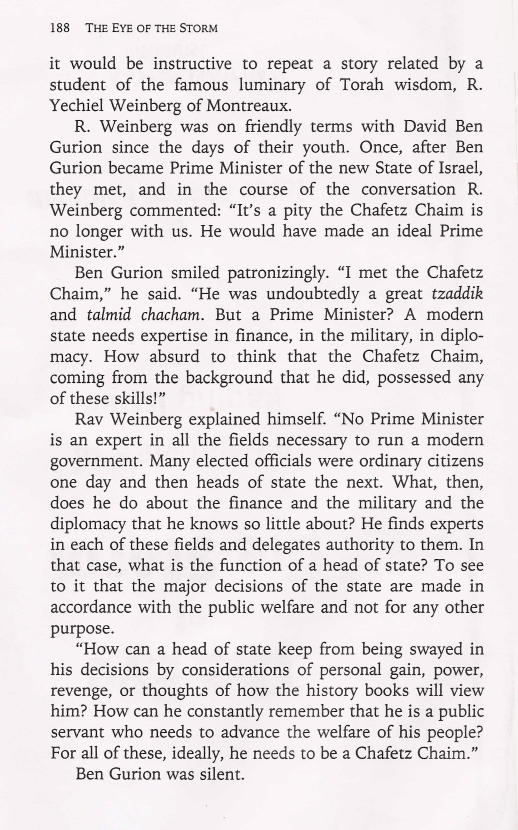
1. Someone sent me the following page from R. Aharon Feldman’s new book, The Eye of the Storm.

My correspondent asked me if there is any truth to this story. I have to say that it is a complete fiction. R. Weinberg did not know Ben Gurion from his youth, and he never met him after he became Prime Minister. I am also certain that the Ben-Gurion never met the Chafetz Chaim.
2. With all that has been in the news recently, I am sure that I am not the only one looking at the writings from the Spinka dynasty. I recently found a passage that I don’t understand. I understand the words, but I don’t understand how the Rebbe could have said it, and if anyone can explain the passage I will be grateful. It appears in Hekel Yitzhak, parashat Toldot, p. 30b:
ושמעתי מאאמו”ר זצוק”ל שמקובל מרבותינו שמעולם לא נתגייר גר מישמעאל כי הוא כולו ערלה ר”ל . . . אבל מעשו נתגייר כמה גרים כדאי’ בדחז”ל, ולעת”ל כולם יתגיירו משום דשרשם בקדושה כדאי’ בהארי ז”ל.
My concern is not with the notion that Esau and his progeny are superior to that of Ishmael. Rather, how could he possibly state that there have never been Arab converts?
To be continued
[1] “Joseph Ibn Kaspi: Portrait of a Medieval Jewish Intellectual,” in Twersky, ed., Studies in Medieval Jewish History and Literature (Cambridge, 1979), pp. 239-241.
[2] Matzref Kesef, p. 74. The same approach is adopted by Radak in his commentary to Gen. 30:14. This is only one possible answer given by Ibn Caspi, and he also suggests that perhaps mandrakes do indeed have special properties that help a woman to conceive.
[3] See Matzref Kesef, p. 137. Based on this Ibn Caspi explains why Tziporah circumcised her son (Ex. 4:25):
ותקח צפורה וכ’. אין עלינו עכ”פ לתת טעם הכרחי מה זאת הרפואה לחולי משה, כי לא כתבה התורה שציוה לה משה שתעשה כן, ואיך שהוא, מבואר כי בימים ההם היה דעת פשוט בהמון העם, כי הדם יש לו סגולה לכל חרדה והתגעשות, ולכן צוה השם שישימו דם על המשקוף ועל המזוזות בבתי ישראל, בחרדתם והתגעשם על צעקת כל מצרים . . . לכן ותקח צורה צור ותכרות את ערלת בנה.

The example of the mandrakes and Tziporah circumcising her son are cited by Isaiah Dimant, “Exegesis, Philosophy and Language in the Writing of Joseph Ibn Caspi” (unpublished doctoral dissertation, UCLA, 1979), pp. 55-56
[4] Translation in Daniel A. Klein, The Book of Genesis: A Commentary by Shadal (Northvale, 1998).
[5] Rubenstein began as a traditional rabbi, as can be seen from his Avnei Shoham (Warsaw, 1902), which includes correspondence between him and R. Joseph Zechariah Stern. However, he later adopted an approach that today we would term “academic”. There is a great deal that can be written about Rubenstein, but as of yet only one article has appeared: Hanan Gafni, “R. Shmuel Moshe Rubenstein, ha-Hoker ha-Rabani mi-Shavli (1870-1943),” Moreshet Yisrael 5 (2008), pp. 139-158. To give an example, not mentioned by Gafni, of how Rubenstein’s later thought broke with tradition, see his Ha-Rambam ve-ha-Aggadah (Kovno, 1937), p. 103, where he claims that the story of the miracle of Hanukkah is almost certainly a late aggadic creation, and like many other miracle stories in aggadic literature was not originally intended to be understood as historical reality:
ספק הוא אם הנס של “פך השמן” הוא אפילו הגדה עממית קדומה, קרוב שהוא יצירה אגדית חדשה מבעל הברייתא עצמו או מאחד מבעלי האגדה, ונסים אגדיים כאלו רבים הם בברייתות וגמרא ומדרשים ע”ד ההפלגה כדרכה של האגדה. ולבסוף הובן נס זה למעשה שהיה. עיין שבת כ”ג א’. [טעם ברייתא זו הובא גם במגילת תענית (פ”ט) אבל כמו שנראה היא הוספה מאוחרת, ועיין (שם) ובפסיקתא רבתי (פיסקא דחנוכה) עוד טעם להדלקת נרות חנוכה].
During the most recent Hanukkah I was using R. Joseph Hertz’ siddur, the Authorized Daily Prayer Book. Based upon how he describes the holiday and the lighting of the menorah, omitting any mention of the miracle of the lights (pp. 946-947), I assume that he also didn’t accept it literally. Note how he states that the lights were kindled during the eight-day Dedication festival, and this is the reason for the eight days of Hanukkah, rather than offering the traditional reason that the eight days of Hanukkah commemorate the eight days that the menorah miraculously burnt.
Three years to the day on which the Temple was profaned by the blaspheming foe, Kislev the 25th 165, Judah Maccabeus and his brethren triumphantly entered the Holy City. They purified the Temple, and their kindling of the lights during the eight-day festival of Dedication—Chanukah—is a telling reminder, year by year, of the rekindling of the Lamp of True Religion in their time.
There is no mention of this passage in Benjamin J. Elton’s recent wonderful discussion of Hertz’s theology and religious policy. See Britain’s Chief Rabbis and the Religious Character of Anglo-Jewry, 1880-1970 (Manchester, 2009), chs. 7-8. (He also doesn’t mention Hertz’s comment that those Jewish commentators who understand aggadah literally are “fools.” See Hertz’s Foreward to the Soncino Talmud, printed at the beginning of tractate Berakhot.)
[6] Commentary to Gen. 3 (end of chapter).
[7] Lawrence Kaplan, ”Rationalism and Rabbinic Culture in Sixteenth Century Eastern Europe: Rabbi Mordecai Jaffe’s Levush Pinat Yikrat” (unpublished doctoral dissertation, Harvard University, 1975), p. 246 n. 139, comments that when Ralbag later in this passage criticizes those who understand Cain, Abel and Seth allegorically, he has Maimonides in mind, but avoids mentioning him out of respect.
[8] Regarding Eve and the serpent, R. Chaim Hirschensohn speaks of רעיוני ההתפתחות במליצי המיטלאגי
In other words, he sees the Torah as using mythological language in the Creation story. See Penei Hamah, p. 6, which is part 2 of Hirschensohn’s Musagei Shav ve-Emet (Jerusalem, 1932). Dov Schwartz has recently discussed this passage. See his “Maimonides in Religious-Zionist Philosophy,” in James T. Robinson, ed., The Cultures of Maimonideanism (Leiden, 2009), p. 399:
Hirschensohn assumes as self-evident that the Bible had been influenced by mythological language. The author of the Creation story “couches the ideas of development in mythological metaphors.” How did Hirschensohn explain these mythological stories? He separated paganism from the “original” mythology. In his view, the mythological stories had been, from the start, a description of a class struggle for which the narrators resorted to symbolic language, just as the Bible refers to the sons of God and the daughters of men (Gen. 6:2). Only later, then, did their deference and their fear of their ancestors lead Greeks to literal interpretations of their mythology: “But before philosophy became dominant there, the later Greeks had mistakenly revered their ancestors and thought of them as gods” [Penei Hamah, p. 36]. The Bible, then, uses a mythological style but its messages are social and ideological.
[9] When one sees how Ralbag describes Eve, I think many readers would wish that he had interpreted her allegorically. Here is his comment earlier in Gen. 3 (p. 110 in the Birkat Moshe edition):
והנה קרא האדם שם אשתו “חוה”, כאשר השיג בחולשת שכלה, רוצה לומר שלא עלתה מדרגתה על שאר הבעלי חיים עילוי רב, ואם היא בעלת שכל, כי רוב השתמשותה אמנם הוכן לה בדברים הגופיים, לחולשת שכלה ולהיותה לעבודת האדם, ולזה הוא רחוק שיגיע לה שלמות השכל.
Ralbag’s view of Eve was also transferred to women in general. One of my teachers once referred to him as the first advocate of the kollel philosophy, for as Ralbag explains in a number of places, the role of women is to enable men to reach their intellectual perfection. That is, their essence is entirely utilitarian. All the relevant references can be found in Menachem Kellner’s essay comparing Ralbag’s and Maimonides’ view of women, which has now appeared in English in his just published Torah in the Observatory. (This book was published by Academic Studies Press, which in the last few years has published a number of important volumes by top scholars including José Faur, David Berger, David Shatz, and Zvi Mark.)
Take a look at this passage referring to women and tzitzit, from towards the end of Ralbag’s commentary on Shelah (p. 188a in the old edition):
למדנו שאין הנשי’ חייבות בציצית וראוי היה להיות כן כי הענין אשר העיר עליו זאת המצוה הוא רב העומק ולא יתכן שיגיע אליו שכל הנשים לקלות דעתן
I wonder, if a haredi spokesman quoted this Ralbag as part of his attack on Orthodox feminism, would he take any flak in his own community? Would the haredi women protest? I have another question and I am curious to hear readers’ responses. (I have my own view, but also want to hear from others.). Do leaders of the haredi world believe in separate but equal when it comes to men and women? This is what is often claimed, but I wonder, do they really hold a Ralbag-like position?
The same question I asked at the beginning of the previous paragaph with regard to Ralbag can also be asked about Radak. Here is what he writes in his commentary to Gen. 3:1:
ואמר אל האשה ולא אמר לאדם, האשה קרובה להתפתות יותר מן האיש, כי דעתה קלה
If this explanation appeared in say the English Yated, independently offered by a contemporary rabbi with no mention of Radak, would haredi women be offended?
And would women be offended if the following passage, from R. Zvi Travis’ Pirkei Hanhagat Bayit, ch. 2 (which I am told used to be a popular sefer), appeared in an English newspaper (called to my attention by Dr. Yitzhak Hershkowitz; emphasis added):
אף אחר בריאת האשה אין כאן שותפות. אלא, וטול כלל זה בידך, תכלית הבריאה היא האיש, והקדוש ברוך הוא נתן לאיש מתנה שתעזור לו, והיא האשה.
Another good example is found in R. Avraham Blumenkrantz’ Gefen Poriah, p. 352, where he quotes approvingly another rabbi who states as follows (emphasis added):
Her tears are ever ready to flow at the most miniscule suggestion of being dealt with as a maidservant. She will concede you the service of והוא ימשל בך. She will consent to call you בעלי, but don’t accent the דגש in the בית too heavily. She must constantly be reassured that there is honor and dignity in her subservience. Honor her more than you honor yourself. She must be compensated for her subjugation, and be made to feel that she has a genuine share in the dignity of the throne.
Do haredi women really feel that they are subservient or subjugated? Do haredi men feel this way about their wives? Haven’t the masses in haredi society (American haredi society at least) also accepted the notion of separate but equal when it comes to men and women?
[10] Commentary to Guide 1:2:
רמז המורה על קצת נסתר במעשה בראשית כי האדם הנזכר שם לא היה אחד רמוז לבד אבל על הכלל
[11] Commentary to Guide 1:14.
[12] “Rationalism,” p. 251 n. 150.
[13] In his commentary to Guide 2:30, Ibn Caspi also discusses the creation story, and records what was apparently a popular saying in his day. For those of you who sometimes get frustrated with some of your co-religionists, it is worth bearing in mind: אלמלא המשתגעים יהיה העולם חרב. Regarding the saying, see also R. Judah Leib Zlotnick, Midrash ha-Melitzah ha-Ivrit (Jerusalem, 1938), p. 57. The saying is also found in Maimonides’ introduction to Nezikin.

ftn


Modesty and Piety: Improving on the Past

Modesty and Piety: Improving on the Past
by: Michael K. Silber
The Hebrew University of Jerusalem
The well known “coat of arms” of the priestly Rapaport family first appeared as a colophon at the end of Avraham Menachem Rapa of Porto’s Mincha Belulah (Verona, 1594), fol. 207b, readily at HebrewBooks.org (here). Instead of a motto, a banner proclaimed the author’s name above and below the shield which featured a pair of hands raised in priestly benediction in the upper half, while below was depicted a crow (Rabe in German) on a branch, a reference to the author’s family name. The shield is flanked by two heraldic supporters, and this is what interests us here.
The supporters feature two female torsos rampant facing away from the shield. They are nude from the waist up.

It was by no means rare to encounter nude women in Hebrew books between the sixteenth and the early eighteenth centuries, even prominently displayed on the covers (Adam accompanied at times by a buxom Eve is a ready example). But no doubt such nudity proves unsettling to the Orthodox public nowadays.
Benjamin Shlomo Hamburger’s recently published magisterial three volume history, Ha-Yeshiva ha-Rama bi-Fiorda (Bnei Brak, 5770) is a rich, learned study by one who has dedicated many scholarly books to the heritage of German Jewry. The volumes are noteworthy also for their rich illustrations, but one in particular catches the eye.
A chapter dedicated to Baruch Kahana Rapaport who served for many years as rabbi of Fürth (1711-1746), reproduces, as many a study on the Rapaports, the “coat of arms” from Mincha Belulah (volume 1, page 390).  
But the supporters here have been modestly transgendered and piously rendered with beards! 

Several studies by Jacob J. Schacter and others have noted the tendency to “verbessern” the past in Orthodox historiography. This then is a modest (but not very pious) contribution to the topic from the perspective of visual evidence of the past.
Addendum:
Dan Rabinowitz
the Seforim blog
It is indeed import to note as Dr. Michael K. Silber has, that we have yet another example of doctoring history to conform with today’s anachronistic views.  But, we should note that this is not the first time the Rapoport coat of arms has undergone a change.  Before turning to this early example, we need to a make a few points.
As Dr. Silber notes, this coat of arms appears at the end of the first edition of Mincha Belulah, Verona, 1594. Rapoport created this herald and the herald contains allusions to his name – Rapoport.  Hida, R. Hayyim Yosef David Azulai, no Reform rabbi, includes an entry on Rapoport in Hida’s Shem HaGedolim (Machret Seforim, Mem, sub. Mincha Belula).  Importantly, although the herald appears at the back of Mincha Belulah, Hida calls attention to this herald. Hida notes that “Rapoport” is spelled differently on the herald than on the title page.  But, no where does Hida question the inclusion of the bare-breasted women on this rabbinic herald. Moreover, Hida doesn’t alert that reader that if one looks up the herald there are these “offensive” images.  Hida’s silence is remarkable but only if one ignores the prevalence of such imagery in Hebrew books.  That is, Mincha Belula is not the only work to include such imagery.  For example, as we have previously discussed, other works include similar imagery (see herehere, here, here, for examples of nudes, and here for examples of mythological images).
We also note that this was not the first time the herald from the Mincha Belulah has been modified. In the 1989 Beni Brak reprint of Mincha Belulah, the images are also altered.  While they haven’t been turned into men, the women are more modestly clothed.  The image below is taken from this edition.


Review of Shaul Stampfer, Families, Rabbis & Education

Review of Shaul Stampfer, Families, Rabbis and Education: Traditional Jewish Society in Nineteenth-Century Eastern Europe
by Marc B. Shapiro
The continuation of my last post will be ready soon, but in the meantime I am posting my short review of Shaul Stampfer’s new book. It appeared on the H-Judaic listserv, but since most readers of Seforim Blog probably did not see it, I am posting it here as well.
For many years, Shaul Stampfer has been recognized as an authority in all things dealing with nineteenth-century Jewish Eastern Europe. In his newest book, we have a collection of numerous essays representing more than twenty years of his scholarship, including one essay published for the first time (“The Missing Rabbis of Eastern Europe”). Stampfer’s focus is not on the purely intellectual debates between rabbinic elites. He is more interested in social history, how average people and in particular women lived. Even his discussions of rabbis emphasize such matters as inheritance of rabbinic positions and the rabbi’s role in communal life. His sources are quite broad: traditional rabbinic works as well as Hebrew, Yiddish, and Russian texts and newspapers.
I could write extensively about every essay, each of which taught me a great deal. (And I never imagined that an entire essay could be written on the pushke and its development.) Yet to remain within the word limit for this review, let me just mention some of Stampfer’s most important points, the major theses of the book.
People have generally assumed that marriages in Jewish Eastern Europe were very stable, with divorce being quite rare. Stampfer, however, provides evidence to demonstrate that divorce was common and not shameful. Based on his evidence, he is fundamentally correct. In addition to citing statistics, Stampfer also refers to memoir literature that mentions divorce. Yet I also think that Stampfer (and ChaeRan Y. Freeze before him) exaggerates the frequency of divorce. For example, one of his statistics of marriage and divorce is from the 1860s in the city of Berdichev where for every three to four marriages, there was one divorce. He cites similar statistics for Odessa (p. 46). Stampfer goes so far as to claim that “it may well be the case that there were thirty divorces for every hundred weddings in the nineteenth century” (p. 128). However, these numbers are certainly skewed for the simple reason that while marriages took place in every town, to obtain a divorce couples had to travel to a larger city where there was a beit din and scribe. Thus, divorces from any one city do not reveal a ratio of marriage to divorce. The situation is identical to what happens today. Couples get married anywhere they want, but must come to a central location for their divorce.

Stampfer also argues that contrary to another popular stereotype, early teenage marriage was not at all common in traditional Jewish society. While it occurred among the economic and intellectual elite, and is immortalized in memoirs of the latter, early teenage marriage does not reflect the life experience of the average young Jew. Similarly, the lower class, which encompassed most Jews, did not have much use for matchmaker services, and indeed, romance was a factor in their marriages.

Tied to the points made so far is the place of women in society. Many of us are accustomed to think of traditional society as one in which men had all the power and made all the decisions, and in which the husband went out to work while the wife served as a homemaker. Yet Stampfer shows that while this perception fits in very well with contemporary “family values,” it is not how East European Jewish society functioned. Women generally worked, were involved in business ventures, and were thus “out of the home.” Unlike today, the stay-at-home wife and mother was not necessarily an ideal. Stampfer also notes that many Jewish names were created from women’s names, which he thinks “reflects a reality in which both men and women could be in the centre” (p. 133).

Adding to these arguments, Stampfer includes the following suggestive comment: “Another indication of the place of women in Jewish society can be found in the aesthetics of Jews in Eastern Europe. Males were regarded as attractive if they were thin, had white hands, and wore glasses. These were all reflections of lives devoted to study and perhaps to asceticism. On the other hand, attractive women had full bodies and were strong and active. Their appearance promised work and support. Different ideals are expressed here, but the image of the ideal woman is not one of weakness” (p. 133). In short, East European Jewish society was not what we would regard as a patriarchy. Conservative views on the importance of women staying in the home to raise children might be sound social policy, yet we should not assume that this is how East European Jews ever actually lived.

Another fact noted by Stampfer, which will no doubt be surprising to readers, is the existence of coed heders. This is certainly not the image that people have of this institution. Yet while the coed aspect is interesting, especially, as Stampfer states, “given the contemporary concern (or obsession) in certain very Orthodox Jewish circles regarding co-educational education even in elementary grades,” even more significant is what this says about education for girls (p. 169 n. 11; see also p. 32). Contrary to what many think, there were East European Jewish girls who were educated just like their brothers, and Stampfer thinks that the ratio of girls to boys in heder was approximately one to eight (p. 170).

As for education in general, while some people like to imagine Eastern Europe as a placenwhere Torah study always thrived, Stampfer notes that “one can safely conclude that by the mid-1930s there were far more young Jewish males in secondary schools than in yeshivas” (p. 272). Also worthy of note is Stampfer’s point that the kollel (a school of rabbinic studies for married men) system developed because there were no longer many rich fathers-in-law willing to support a son-in-law who was studying. In addition, he argues that the shrinking of the job market for rabbis also had a share in the development of the kollel.

Let me conclude with some minor comments and corrections. On page 69, note 39, the proper reference in  Pithei Teshuvah  is  Even ha-Ezer 9:5, and the rabbi cited should be R. David Ibn Zimra (Radbaz), not R. Jacob Willowski (Ridbaz).On page 181, Stampfer discusses the famous description by R. Barukh Epstein of his aunt, Rayna Batya, the wife of R. Naphtali Zvi Judah Berlin. While acknowledging that some have doubted the veracity of Epstein’s story, Stampfer states that “the account seems plausible.” Here I must disagree. While there can be no doubt that Batya was an unusual woman, Epstein’s account of his conversations with her, as with much else in his autobiography, cannot be relied on. I have discussed this at length elsewhere, and readers can examine my arguments at the Seforim Blog here.

On page 285, Stampfer refers to the Moscow crown rabbi Jacob Mazeh (1859-1924) as having been martyred. Yet this is incorrect as Mazeh died a natural death. On page 326, note 6, regarding the Vilna Gaon’s attitude toward R. Jonathan Eibeschuetz, see Sid Z. Leiman, “When a Rabbi Is Accused of Heresy: The Stance of the Gaon of Vilna in the Emden-Eibeschuetz Controversy,” in Ezra Flescher, et al, eds., Meah Shearim (2001). Finally, on page 327, Stampfer offers evidence of criticism of the Vilna Gaon during his lifetime. In my September 12, 2009, post at the Seforim Blog, available here, I offer another example of such criticism. This is reported by R. Hayyim Dov Ber Gulevsky who heard it from his grandfather, R. Simhah Zelig Rieger, the dayan of Brisk. (Incidentally, Gulevsky is quoted by Stampfer on page 353.)

As mentioned at the beginning of this review, there is much more that can be said about Stampfer’s careful scholarship, which is a treat for all readers. I know that many share my wish to soon see in print the English edition of his classic work on the Lithuanian yeshivot.
* * *
Let me now add a few additional comments especially for the benefit of those who had already read the review before I posted it here.
1. Stampfer’s book is published by my favorite press, Littman Library. I want to call readers’ attention to another recent and wonderful book published by Littman: Sharon Flatto, The Kabbalistic Culture of Eighteenth-Century Prague. Interestingly, two dissertations were written at the same time on the Noda bi-Yehudah. The other was by David Katz, which bears the interesting title “A Case Study in the Formation of a Super-Rabbi: The Early Years of Rabbi Ezekiel Landau, 1713-1754 (University of Maryland, 2004). Although Katz’ dissertation has not yet appeared in print, there is definitely room for the two as they focus on different areas and are both works of great learning. (Yet I hope that when Katz publishes his book, he changes the title. It is bad enough that today we have people writing about how they “consulted Daas Torah” as if there is such an individual so named. The only thing worse would be to hear people recount how “I asked the Super-Rabbi his opinion” or to have Yated tell how how “The Super-Rabbi has issued his Daas Torah.” That will surely leave the religious Zionists reaching for their kryptonite.)

Regarding how Landau was indeed a “Super-Rabbi,” to use Katz’ expression, I found interesting testimony in R. Shraga Feivish Shneebalg, Shraga ha-Meir, vol. 2, no. 76. He states that he heard from R. Dov Berish Wiedenfeld, who heard from R. Meir Arik, that the Noda bi-Yehudah was the posek ha-dor. Assuming there is such a position, I don’t know of anyone more qualified for it than Landau. I must admit, however, that this is an Ashkenazic-centered perspective, because it is unimaginable that a Sephardic scholar would ever come into consideration by most of those who like to speak of the gadol ha-dor. Thus when people refer to R. Yitzhak Elhanan Spektor, R. Hayyim Ozer Grodzinski, etc. as the gadol ha-dor. they never wonder if perhaps there was a great sage in the Sephardic world who fit the bill. When people speak about the gadol or posek ha-dor, it really means the gadol or posek of their world.

Returning to Arik, he said that after the Noda bi-Yehudah the Hatam Sofer held that role. Here again, I don’t think there will be much argument. But the names he gives after this show how Arik, a Galician scholar, sees matters differently than a Lithuanian. He claimed that R. Solomon Drimer was the next posek ha-dor, yet I don’t think most people reading this post have even heard of him. For the next period, he gave the Hungarian posek R. Solomon Leib Tabak of Sighet (died 1908), author of Erekh Shai. Again, I don’t think most people reading this post have ever heard of Tabak. Yet Arik regarded him as the posek ha-dor. As a Galician, not a Lithuanian, Arik had a different perspective on who the great poskim were.[1] Yet a Lithuanian hearing this would laugh. If you asked him who the posek ha-dor was for the period of Tabak, he could give all sorts of names: R. Yitzhak Elhanan Spektor, R. Naftali Zvi Judah Berlin, R. Jehiel Michel Epstein, R. Joseph Zechariah Stern, and the list goes on, but Tabak wouildn’t even make it to the top twenty.

This different perspective was recognized by R. Jehiel Jacob Weinberg. In one responsum (Kitvei R. Weinberg, vol. 1, no. 11), after quoting a position of a Hungarian posek, Weinberg writes:

ודאי שרבני ליטא ופולין ילעגו על דברים אלה ואולם המחבר הנ”ל הי’ גאון וצדיק מפורסם וחלילה לבטל דבריו בתנופת יד גרידא. כתבתי כל הנ”ל כדי להוכיחו שצריך הוא להיות זהיר ומתון ולא להמשך אחרי הקולות של רבני ליטא ופולין שהם גדולים וחכמים בהלכה אבל בהוראה למעשה עולה עליהם רבני אונגארן וגאליציען ומובחרי השו”ת בהוראה למעשה שיצאו בזמן האחרון נתחברו על ידם.
Earlier in this responsum Weinberg writes:
כבר רמזתי לכת”ר שבעינים כאלו יש לסמוך יותר על רבני אונגארן הקרובה לאשכנז ויודעים מצב הדברים באשכנז יותר מרבני פולין וליטא. ובכלל נוטה אני מדעת חברי ורבותי רבני פולין וליטא שאינם משגיחים הרבה ברבני אונגארן. גם אני הייתי סבור כן קודם בואי לכאן, אבל אח”כ ראיתי כי בעניני הוראה עולים הם על רבני פולין וליטא, כי יש להם חוש מיוחד להוראה מעשית וכמעט כולם נתחנכו בבית מדרשו של רבינו שבגולה החת”ס ז”ל שהוא הי’ עמוד ההוראה כידוע ומפורסם.
These words are amazing because Weinberg is admitting that before he came to Germany, he too shared the feeling of superiority that he describes here. Before then it was unimaginable to him that a posek outside of Lithuania or Poland would have had much of value to add.
2. In a previous post, available here, I wrote about rabbis who began writing books at a very young age. I was asked if there are additional examples of this. There are indeed a number, and in a future post I will discuss one in more detail. For now, here is the title page of R. Aaron Friedlander’s Avrekh, where it tells us that part of the book was written when the author was nine years old! See also the approbations to this volume.

Here is the title page of R. Hezekiah David Abulafia’s Ben Zekunim. If you read the introduction you will see that the first part of this book was written when the author was thirteen years old.

R. Yitzhak Arieli reported being told by R. Kook that the latter authored a book on Song of Songs when he was only eleven years old. You can find Arieli’s testimony here.
As I am writing this people are once again outraged by something R. Ovadiah Yosef said, in that he attributed the fires in Israel to lack of Sabbath observance. Obviously, this is not the sort of comment that appeals to those with a modern temperament, but in traditional societies it is an expectation of the people that the leading rabbis will find some spiritual reason to explain tragedies. So why I am mentioning this now? Because in the document from Arieli, no. 38, he quotes R. Kook as saying something that people will find even more shocking than anything R. Ovadiah has ever said. (I don’t think you will find the students of R. Kook ever repeating it.) R. Kook wondered if the 1929 pogrom in Hebron was perhaps due to the fact that the Hebron Yeshiva brought in their “modern” ways to Israel, by which he means their way of dressing, hair style and beardless faces.
בהפרעות (בשנת תרפ”ט) בחברון מצאתיו ביום ראשון יושב ובוכה והבליט מפיו שמא מפני שהכניסו תלבושת והנהגה חדשה בארץ (היה מתנגד לגלוח הזקן (כמובן במכונה או בסם) ובלורית ואולי גם בגדים קצרים, ובישיבה העיר כ”פ ע”ז ( אבל קשה היה לשנות ההרגלים שבחו”ל).
I agree that this sounds shocking and offensive to modern ears, especially to those who lost family members in this event. I mean, can you imagine telling someone whose child was killed that it was because certain yeshiva students were dressing in a modern fashion? But again, the traditional mind works differently than the modern mind. I say this not to recommend that we all reprogram our minds so that these sorts of explanations are once again appealing, any more than I would wish that, as with Jews in medieval Germany, we once again believe that demons are all around us causing all sorts of problems. I mention it only to add some context and help explain how the most influential rabbinic mind of the twentieth century could say something which to modern ears sounds outrageous. Just as it wrong to judge pre-modern science negatively because it didn’t have access to modern technology, so too we must be careful about being prejudiced against traditionalist explanations because we might no longer share the same assumptions as our predecessors
3. With regard to R. Baruch Epstein’s discussions about his uncle the Netziv in Mekor Barukh, the irony is that the Netziv thought that there was no good purpose in reading the biographies of great Torah sages. He thought that this was nothing less than bitul Torah. See the letter from R. Hayyim Berlin printed at the beginning of his father’s Meromei Sadeh.
The Netziv’s concern with bitul Torah was such that when his wife (I presume his first wife, Rayna Batya) had to have an operation and the students wanted to say Tehillim for her, the Netziv refused to stop the learning for this. After the students continued to push, he agreed to allow five minutes of tehillim. This was reported by R. Zvi Yehudah Kook, who must have heard it from his father. See R. Hayyim Avihu Schwartz, Be-Tokh ha-Torah ha-Goelet (Beit El, 2006), p. 201.
In an e-mail discussion with one reader, he contrasted the Netziv to R. Chaim Soloveitchik and R. Velvel ,saying that the Netziv was so “normal”. I don’t want to use words like that, and while R. Chaim had many unique qualities, I don’t think the stories told about him are any more unusual than those told of other gedolim. Most of these stories are, in fact, quite inspiring. The stories about R. Velvel are, I admit, of a different flavor. I mentioned two such examples here.

Yet lest one thing that these type of stories are unique to R. Velvel, let me mention a story about the Aderet “brought down” (to use the yeshiva lingo) in the book I just referred to, Be-Tokh ha-Torah ha-Goelet, p. 324. R. Zvi Yehudah told how one of the Aderet’s sons died right after birth, just as Shabbat was starting . The Aderet told his wife that she should perpare the Shalom Zakhor as if everything was normal, for there is no avelut on Shabbat and the community does not need to know that anything is wrong. When the Rebbetzin began to cry the Aderet replied to her that she is acting this way because she doesn’t study Talmud. If she studied Talmud she would know that there are often times when we are left with questions, and the same is true in life.

4. Stampfer’s point about the frequency, and lack of shame, of divorce in Eastern Europe was an eye-opener to me. In Between the Yeshiva World and Modern Orthodoxy, p. 22, I mention that divorce was very uncommon in traditional Lithuanian Jewish society, and almost unheard of among the rabbinate. I now see that I was mistaken in this assumption (which was based on my general impressions, not on the sort of evidence Stampfer makes use of). For examples of rabbinic figures who got divorced, see here.
5. I referred to Daas Torah above, and since someone asked me if I could write up what I said about it in a recent lecture, I will do so now. In this lecture I quoted what appears in R. Yitzhak Dadon’s new book, Rosh Devarkha. This is the follow-up to his earlier book, Imrei Shefer, both of which record the teachings of R. Avraham Shapiro, Rosh Yeshiva of Merkaz ha-Rav. On p. 10 one finds R. Avraham’s very harsh comments against Daas Torah. He would refer to it as Ziyuf ha-Torah. Here are some of his words:

האם התורה עוברת רק דרך אדם אחד?! בחו”ל לא היה כדבר הזה! זה אמר כך, וגדול פלוני חלק עליו וחשב אחרת, מישהוא אמר שהפלוני הזה הוא נגד “דעת תורה”?! מהיכן הביאו את הדבר הזה? אם ה”חפץ חיים” סבר כך ורבי מאיר שמחה אחרת ופלוני גדול אחר
חלק עליהם, יש מי מהם שהוא נגד “דעת תורה”? איזו הנהגה היא זו? זו השתלטות על דעת הרבנים, ולא היה כזאת בעם ישראל.

As for the practice of declaring what the Daas Torah is through the newspaper or through placards, without any sources to support this, here are R. Avraham’s strong words (and apologies if any wives are offended):

כלפי רבנים המוצאים חוות-דעת ותלמידיהם מפרסמים זאת תחת הכותרת: “דעת תורה”, בלי שום אסמכתאות ומקורות נאמנים היה מרן זצ”ל אומר: “איזו מין דעת תורה היא זו? כשאדם אומר “דעת תורה” בלי שום מקורות, אז הכוונה היא כזאת: זה קצת מבוסס על מה שהוא למד, והרוב זה מה שאשתו אמרה לו, זה הפירוש דעת תורה.

Anyone who is honest will admit that the current practice of Daas Torah is completely phony. My proof of this is very simple. If tomorrow R. Elyashiv would declare that everyone has to say hallel on Yom ha-Atzmaut, would the Lithuanian yeshiva world listen to his Daas Torah? Of course not. They would simply replace him with another gadol whose Daas Torah is more palatable to them. In other words, the gadol only has Daas Torah because the masses, or the askanim, let him have it, and only when they like what he says. (I am curious. Has R. Elyashiv’s ruling that fashionable sheitls are forbidden had any effect on his supposed followers?).

Try to imagine what would happen if someone in the haredi world discovered a letter from the Hazon Ish, the ultimate Daas Torah authority, in which he said that only the best and the brightest in the State of Israel should devote themselves to Torah study. However, everyone else should go to work. Does anyone think that this letter would ever see the light of day? Of course not! We all know what would happen. The letter would be kept hidden, and if by chance some rebel did publish it, the haredi world would find a way to justify why they don’t accept the Hazon Ish’s viewpoint.

6. In this post I referred to a mistaken point by R. Ezriel Tauber in his recent book Pirkei Mahashavah al Yud Gimel Ikarim le-ha-Rambam. I was asked if my negative comment relates to the entire book, or just the one point I referred to. My answer is that I wasn’t referring to the entire book, and I am sure that people will find things that are valuable in it. Yet I have to say that I don’t find it helpful when an author like Tauber asserts, p. 428, that people who claim to be atheists are really not. Rather, they just don’t want to believe, but deep down they know the truth.

Contrary to Tauber (and he is not the only one to express himself this way), the only intellectually honest position is to take people like Christopher Hitchens at their word and deal with it. Claiming that the atheist really believes is no better than the atheist saying that the believer really knows the truth that there is no God.
Furthermore, from my perspective I can’t take an author seriously when he says things like how in the Far East there are people who have the power to use black magic, and their knowledge is part of a tradition that goes back to Abraham. P. 133:
ואכן במזרח הרחוק יודעים שמות של טומאה, ויש להניח ששורש הידיעה היא מאברהם אבינו. ואף על פי שהם כוחות אמיתיים, אסור לנו להשתמש בהם.
*  *  *
I want to take this opportunity to invite all Seforim Blog readers on what I know will be an amazing Jewish heritage tour to Central Europe this summer. Details can be found here. They are still working on the price, and it will be posted soon. Those who want further details are invited to contact me.
With Christmas Eve almost upon us, I also invite readers to watch, or listen to, my lecture “Torah Study (or Lack of It) On Christmas Eve: The History of a Very Strange Practice.” It is available here. The few dollars (Canadian) that it costs go to support a very worthy organization, Torah in Motion.
Notes


[1] Wiedenfeld, who is the source for the information from Arik, actually had a special place in the eyes of the Lithuanian yeshiva  world. Haym Soloveitchik writes (TUMJ 7 [1997],  p. 144):

Intellectually, the Lithuanian approach to talmudic study (derekh ha-limmud) has triumphed. One could scarcely imagine a Hungarian rosh yeshiva being considered as a candidate to head a Lithuanian yeshiva. Nor is it accidental that with one early, minor exception (the Tchebiner Rav [Wiedenfeld]), all the embodiments of da’at Torah, both in America and Israel, have been Lithuanian.


New Writings from R Kook Part 1 by Marc B. Shapiro

New Writings from R Kook and Assorted Comments, part 1
by Marc B. Shapiro
20 Marheshvan,[1] 5771
I now want to return to R. Kook and discuss some of his writings that have recently appeared. This is the first of what will be a five part post. It will be followed by at least one other multi-part post also dealing with R. Kook’s new writings.
For those who have never read R. Kook and don’t understand why there is such excitement every time a new collection is published, I suggest you do the following: Take one of the volumes and sit with it for an hour, just going through it, page after page. Odds are that you will be hooked. The originality that you find, and the power of his writing, is just breathtaking. It is impossible not to sense the power of his spirit, and it draws you in.
Books will be written on R. Kook, focusing on the insights found in the recently published volumes. They will analyze what is original in these works and the evolution of his thought. My purpose is more limited as I just want to call attention to some passages that caught my attention and which I think are significant, not just in the context of R. Kook’s writings, but also for anyone interested in Jewish thought.
In 2006 R Kook’s Kevatzim mi-Ketav Yad Kodsho appeared, and we can thank Boaz Ofen for this. Included in this volume is what is referred to as the last notebook from Bausk, which was where R. Kook served as rabbi from 1901 until his aliyah in 1904. On pp. 66-67 we find what I think is R. Kook’s first discussion of evolution. Unlike his other writings, here R. Kook mentions that he is relying on Maimonides on how to deal to deal with it. He mentions that Maimonides assumes the eternity of the world when he seeks to prove the existence, unity, and incorporeality of God. Maimonides adopts this model so that his proof will be acceptable to everyone. R. Kook states that this is also how we should deal with the issue of evolution. In other words, even if we don’t accept it, we should, for the sake of argument, assume that evolution is correct and explain the Torah based upon this. This will mean that even people who accept evolution will see the truth of Torah. By rejecting evolution, and declaring that it is in opposition to the Torah, right from the start you are stating that Judaism has no place for those people who accept one of the major conclusions of modern science. It is noteworthy that this text does not have any of R. Kook’s later thought, which speaks of the theory of evolution as being in accord with kabbalistic truth.

Another early statement of his with regard to evolution is found in Shemonah Kevatzim 1:594. Here he says that it is very praiseworthy to attempt to reconcile the Creation story with the latest scientific discoveries. He says that there is no objection to explaining the Creation, described as six days in the Bible, to mean a much longer period. He also states that we can speak of an era of millions of years from the creation of man until he came to the realization that he is separate from the animals. This in turn led to the beginning of family life, in other words, “civilization”.
What R. Kook is saying is that the entire story of the creation of Adam and Eve is not to be viewed as historical. Rather, it is a tale that puts in simple form a long development of man’s intellectual and spiritual nature.[2] He doesn’t see this development as random, for he says that at the end of the long period it was a vision, or perhaps we should call it an epiphany, that offered man the perception that it was time to establish family life. It is, I think, obvious that the אדם referred to by R. Kook as beginning civilized life is not an actual historical man (i.e., Adam), but rather humanity as a whole.[3]

אין מעצור לפרש פרשת אלה תולדות השמים והארץ, שהיא מקפלת בקרבה עולמים של שנות מליונים, עד שבא אדם לידי קצת הכרה שהוא נבדל כבר מכל בעלי החיים, ועל ידי איזה חזיון נדמה לו שצריך הוא לקבע חיי משפחה בקביעות ואצילות רוח.
R. Kook also explains that the deep sleep God placed Adam in (Gen. 2:21) can be understood as representing the length of time it took for humanity to come to the awareness of the idea of “bone of my bones and flesh of my flesh”. In other words, R. Kook sees the opening chapters of Genesis as representing a long period of development of the most important ideas of civilization, that of the dignity of man and the importance of family and the bond of marriage. Nothing here is as it appears, and literalism is out of the question.
We find in R. Kook’s most recently published book, Li-Nevokhei ha-Dor, more passages that relate to what I have been discussing.[4] This is an early work which was being prepared for publication and was released on the internet against the wishes of the editor. It has now been widely distributed and there is no reason not to cite it. R. Kook saw this book as a modern day Guide for the Perplexed, so obviously there is a great deal we can learn from it. Shortly after the work was “released,” another edition of the book was published by the folks at Merkaz ha-Rav. They called it Pinkesei ha-Reiyah, vol. 2, and like everything else produced by these people, it is heavily censored.[5] (Parts of Pinkesei ha-Reiyah have been included in the new Humash ha-Reiyah that was just published. Here is a sample.

Although it would have been better had the editors used Li-Nevokhei ha-Dor, this new Humash is still a wonderful book to take to shul. You can find out more about it here.)

Li-Nevokhei ha-Dor begins (ch. 2) by arguing that it is the “obligation of the true sages of the generation” to follow in the path of the medieval greats who were always concerned about those suffering religious confusion. While the contemporary spiritual leaders must respond to the concerns of modern Jews, R. Kook points out that since the issues confronting people today are so different than those of the medieval period, the works of the rishonim are of only limited value in confronting the current problems.

In ch. 3 R. Kook states that the medieval approach of trying to “prove” religion will not work in our day, and that in place of this, religious leaders should stress justice and righteousness, i.e., the humane values of Judaism.[6] He recognizes that the real problem for modern Jews is not the scientific or philosophical challenges to Torah, but the ethical ones, and that Torah scholars must explain those concepts that appear to stand in contradiction to modern ethical values. He sees this task as just like what the medievals did in dealing with the physical descriptions of God in the Bible, which contradicted the philosophical notion that God has no form. These sages showed the way out of this problem and in the end the truth of the Torah was understood. R. Kook says that contemporary sages must do the same thing with regard to ethical challenges. If not, people will reject the Torah because they view its message as contradicting what they know to be ethical, that which R. Kook refers to as “the laws of natural morality” (חקי המוסר הטבעיים).
With this in mind, let me quote an amazing passage of R. Kook that I have referred to before. It appears in Shemonah Kevatzim 1:75 and the translation is by David Guttmann.[7]

Yir’at Shamayim—fear of heaven—may not supplant the natural sense of morality of a person, for in that case it is not a pure Yir’at Shamayim. The signpost for a pure Yir’at Shamayim is when the natural sense of morality (המוסר הטבעי) that is extant in the straightforward nature of man is improved and elevated by it more than it would have been without it. But if one were to imagine a kind of Yir’at Shamayim that without its input, life would tend to do well and bring to fruition things that benefit the community and the individual, and furthermore, under its influence less of those things would come to fruition, such a Yir’at Shamayim is wrong.

The upshot of this passage is that some (much?) of what passes for piety today is really nothing more than a corrupted religiosity.

This natural morality that R. Kook spoke of was not only in nature, but also in people. This led R. Kook to a unique understanding of the relationship between scholars and masses. Anyone who has studied in a yeshiva knows that it inculcates a certain amount of condescension for the masses. For what could the masses, the typical am ha-aretz, possibly have to offer the scholar? Yet R. Kook saw matters differently, and recognized that there was an element of natural Jewish morality in the masses that was no longer to be found among the scholars, and the scholars ignored this to their own detriment. And let us not forget that the masses that R. Kook was referring to were not like many of our masses who go to day school, yeshiva in Israel, and attend daf yomi before going to work. The East European Jewish masses never opened a Talmud after leaving heder. They were pious and recited Psalms and came to a shiur in Ein Yaakov or Mishnayot, but without having studied in yeshiva, and lacking an Artscroll, the Talmud was closed to them. Incidentally, the rabbis had no problem with this arrangement, unlike today when Talmud study has become a mass movement.

Had the masses in R. Kook’s day had any serious learning, then he couldn’t have said what he did, because his point is precisely that learning “spoils” some of the Jew’s natural morality. Here are R. Kook’s words in Shemonah Kevatzim 1:463:

האנשים הטבעיים שאינם מלומדים, יש להם יתרון בהרבה דברים על המלומדים, בזה שלא נתטשטש אצלם השכל הטבעי והמוסר העצמי על ידי השגיאות העולות מהלימודים, ועל ידי חלישות הכחות וההתקצפות הבאה על ידי העול הלימודי.
This is a an anti-intellectual passage, in which we see R. Kook favoring the natural morality and religiosity of the simple Jew over that of his learned co-religionist. (It was precisely this sort of sentiment that was expressed by Haym Soloveitchik at the end of “Rupture and Reconstruction.”) Can anyone be surprised that this passage was not published by R. Zvi Yehudah? He recognized all too well the implications of these words, which I am only touching on here.

R. Kook continues by saying that the masses need the guidance of the learned ones when it comes to the halakhic details of life. That we can understand, since the masses can’t be expected to know, say, the details of hilkhot Shabbat. But in a passage quite subversive to the intellectual elite’s self-image, R. Kook adds that the learned ones also have a lot to learn from the masses. In fact, if you compare what each side takes from the other, I don’t think there is any question that what the masses give the learned is more substantial than the reverse.
והמלומדים צריכים תמיד לסגל לעצמם כפי האפשרי להם את הכשרון הטבעי של עמי הארץ, בין בהשקפת החיים, בין בהכרת המוסר מצד טעביותו, ואז יתעלו הם בפיתוח שכלם יותר ויותר
In ch. 4 of Li-Nevokhei ha-Dor, R. Kook comes to evolution and here he speaks of the billions of years of history identified by modern science. He says that this is a problem for the קטני דעה who think that evolution is a rejection of God, but those who hold such a position are making a great error. The true believer will be led to even greater wonder at the ways of God when he sees how long it has taken for species to evolve. As for the Creation story, R. Kook begins ch. 5 by telling us that it is not to be understood literally, as Maimonides had already taught. Knowing that some might nevertheless be tied to a literal reading of the opening chapters of Genesis, R. Kook insists that this is not one of the principles of the Torah. (Until a few years ago this was not a principle in the haredi mind either.)
In ch. 5 we see R. Kook’s preference for the evolutionary scheme over the traditional story of creation at one time, and he sees this understanding as bringing us closer to God. Just as we are amazed by the growth of a baby inside the womb, so too we will be in awe at the development of the physical world. He is absolutely clear that the creation story is not a scientific description but is directed towards a moral end:
ויסוד הדבר, שלא דברה תורה כי אם במה שנוגע לכדור ארצינו, וגם זה רק לפי התוכן שיובן הצד המוסרי שנוגע להישרת דרכי האדם הליכותיו החיצוניות ורגשותיו הפנימיים יפה יפה
This is a strong rejection of the neo-fundamentalist hermeneutical acrobatics of people like Gerald Schroeder (and to a lesser extent Nathan Aviezer).[8] They start with the assumption that the Torah’s Creation story is indeed describing scientific reality, yet until they explained it, no one in history had understood the meaning of the verses. From R. Kook’s perspective, this is a great misinterpretation of what the Creation story is telling us. As for the “young earthers’” objection (which I admit to having never understood) that Shabbat depends on seven 24 hour days of creation, R. Kook disposes of that without much ado:
אין כל מניעה בזה לא מצד הכתובים, ולא מצד חובת קדושת השבת שמכוונת כפי הציור הפנימי של האדם
He continues by saying that other parts of the Creation story can also be explained in a non-literal fashion:
ואפילו אם נפרש עוד יותר על פי משל את הסידור של בריאת האדם, שימתו בגן עדן, קריאת השמות, בנין הצלע, אין דבר מתנגד ליסודי התורה . . . ואין קפידא אם נצייר הנחש כולו ציורי, וכן עץ הדעת על התגלות הנטיה לצאת ממצב המנוחה והתמימיות העדינה
Crucial for R. Kook’s understanding is that that there came a point in human development when man was able to recognize the Divine. Only then could he be described as created in the image of God.
Even before the recent publications, these thoughts of R. Kook were not unknown. Here is what he writes in Iggerot ha-Reiyah, no. 134:
אין לנו שום נפ”מ אם באמת היה בעולם המציאות תור של זהב [=גן עדן], שהתענג אז האדם על רב טובה גשמית ורוחנית, או שהוחלה המציאות שבפועל מלמטה למעלה מתחתית מדרגת ההויה עד רומה, וכך היא הולכת ומתעלה
The last part of this quotation refers to the evolutionary understanding, in that existence works its way “from the bottom up”.
Returning to Li-Nevokhei ha-Dor, ch. 5, as an example of how the allegory works, R. Kook refers to Eve being taken from Adam’s rib, which cannot be understood literally if we are dealing with an evolutionary scheme. He sees this as a vision, designed to show that family life can only succeed if both husband and wife join together. The wife cannot be a helpmate alone, but has to be joined with her husband. A surface read of this passage might lead one to think that according to R. Kook this “vision” was an actual event that occurred with the historical “first man”, which would means that this first man had a relationship with God. Yet from Shemonah Kevatzim 1:594, which is a parallel passage to the one in Li-Nevokhei ha-Dor, we see that this is not the case.
להשוות סיפור מעשה בראשית עם החקירות האחרונות הוא דבר נכבד. אין מעצור לפרש פרשת אלה תולדות השמים והארץ, שהיא מקפלת בקרבה עולמים של שנות מליונים, עד שבא אדם לידי קצת הכרה שהוא נבדל כבר מכל בעלי החיים, ועל ידי איזה חזיון נדמה לו שצריך הוא לקבע חיי משפחה בקביעות ואצילות רוח, על ידי יחוד אשה שתתקשר אליו יותר מאביו ואמו, בעלי המשפחה הטבעיים. התרדמה תוכל להיות חזיונית, וגם היא תקפל איזה תקופה, עד בישול הרעיון של עצם מעצמי ובשר מבשרי. והודיע הכתוב שקדושת המשפחה קדם להבושה הנימוסית בזמן, וכן במעלה, שאחר ההתעוררות מהתרדמה הוחלט דבר זאת הפעם, ומכל מקום היו שניהם ערומים ולא יתבוששו.
According to R. Kook’s portrayal of humanity’s development in the direction of a stable family unit, there is only one word to describe the story told in Gen. 2, and that is “myth.” While in the popular mind myth often is identical with fairy tale, this is not how scholars understand myths. For them, myths communicate cosmic truths in non-historical story form, and they are not synonymous with legends. My dictionary explains myth as “a usually traditional story of ostensibly historical events that serves to unfold part of the world view of a people or explain a practice, belief, or natural phenomenon.” This explanation is a perfect description of what R. Kook writes in the passage just quoted from Shemonah Kevatzim.
The problem is, where do you draw the line? Is it only the stories at the beginning of Genesis that can be interpreted in a non-historical fashion, or has the door been opened to other sections of the Torah as well? R. Kook already confronted this issue in one of his classic letters to his student, Moshe Seidel (Iggerot ha-Re’iyah, vol. 2, no. 478), whom he had encouraged to study Semitic languages.[9] R. Kook admitted that there was no clear dividing line, but that the Jewish people as a whole would come to a proper insight.
ואם אין כל יחיד יכול להציב גבול מדויק בין מה שהוא בדרך משל בתורה ובין מה שהוא ממשי – בא החוש הבהיר של האומה בכללה ומוצא לו את נתיבותיו לא בראיות בודדות כי אם בטביעות עין כללית.
Following this, R. Kook raises the issue of what to do if it can be proven that the Torah’s description of matters is not entirely accurate. Often when R. Kook spoke about these matters, he was referring to the Torah’s description of creation vs. what science tells us. Yet I don’t think that this is what he is referring to in this letter. To begin with, he doesn’t speak about issues of science here. He is talking generally about matters described in the Torah that conflict with research (hakirah). These would also include historical descriptions found in the Torah. We must remember that the letter is to Seidel, who was involved in academic Bible study and was struggling with this. I think it is pretty clear that his concern was not with science and creation but with the larger issue of what the Torah recorded vs. what the critical scholars were saying. (Unfortunately, I am informed that Seidel’s letter to R. Kook, which R. Kook is in turn responding to, is not found in the R. Kook archive.)
R. Kook tells Seidel that even if the Torah’s descriptions (“the commonly accepted description”) are not accurate, there must be an important and sacred purpose for these matters to have been presented in this way, rather than being described in an exact fashion. In order to show that this is a proper approach, R. Kook brings two amazing parallels. The first one is the law of yefat toar. In my earlier post dealing with developing morality, available here, I quoted R. Kook’s other recently published comments about yefat toar. Here is making a different point. He refers to the Talmud in Kiddushin 21b which states that this entire law is a concession to human passions, but it is not proper. The proper thing would be for a Jewish soldier never to do this, but since in the real world this sort of thing will happen, the Torah provides a context for it to be done in a more civilized manner.[10] The parallel R. Kook sees is that just like the morality described in the law of yefat toar is not perfect, but rather a concession to human weakness, so too descriptions of various things in the Torah need not be “perfect”, that is, historically accurate. There are times when for its own purposes the Torah needs to describe matters in ways that will accomplish certain goals, even if the descriptions are not “true,” i.e., historically true.
The next parallel he offers is Ex. 18:19, which describes Mt. Sinai at the time of the Revelation and states that “its smoke ascended like the smoke of the lime pit.” Rashi, based on the Mekhilta, comments that this reference to the smoke being like a lime pit was “to explain to the ear that which it can understand (לשבר את האזן).” In other words, it wasn’t really like a lime pit but this description is used to accomplish a larger goal. R. Kook develops this concept, and refers to this Rashi. Here is the passage in full:
ואם נמצא בתורה כמה דברים, שחושבים אחרים שהם לפי המפורסם מאז, שאינו מתאים עם החקירה של עכשו, הלא אין אנו יודעים כלל אם יש אמת מוחלטת בחקירה הזמנית, ואם יש בה אמת, ודאי יש גם מטרה חשובה וקדושה שלצרכה הוצרכו הדברים לבא בתיאור המפורסם ולא המדויק, כמו שהוא פשוט במושגים הרוחנים ובכמה יסודי מעשה, ש”דבר תורה כנגד יצה”ר” או “לשבר את האזן.”
Elsewhere, in Eder ha-Yekar, pp. 37-38, R. Kook explains that the Torah can describe events in a way not in accord with the astronomical or geological (i.e., historical) truth. This is done in order for the Torah to accomplish its goal, which is not focused on such matters but rather on
ידיעת האלהות והמוסר וענפיהם בחיים ובפועל, בחיי הפרט, האומה והעולם
In words very similar to those in his letter to Seidel, R. Kook writes there:
כבר מפורסם למדי שהנבואה לוקחת את המשלים להדרכה האנושית, לפי המפורסם אז בלשון בני אדם באותו זמן, לסבר את האוזן מה שהיא יכולה לשמוע בהוה, “ועת ומשפט ידע לב חכם”, וכדעת הרמב”ם וביאור הרש”ט במורה נבוכים סוף פרק ז’ משלישי, ופשטם של דברי הירושלמי שלהי תענית לענין קלקול חשבונות של תשעה בתמוז.
What R. Kook is saying here is that prophecy uses what is “widely accepted”, even if mistaken, as well as the forms of speech current among contemporary listeners.[11] With this conception, one can’t be disturbed if the Torah or other prophets describe matters not in accord with the facts as we know them today, because the immediate audience of the prophet did think that these were the facts. So, for example, the Torah does not describe a universe billions of years old because that was not part of the mental conception of the ancient Israelites. What is new in this passage is R. Kook’s reference to Maimonides and Shem Tov’s commentary.
He doesn’t explain what he has in mind when he refers to Maimonides, but by examining Shem Tov’s commentary to Guide 3:7, which R. Kook also refers to, all is revealed. Here Shem Tov is discussing Maimonides’ view of Ezekiel and a scientific error the prophet made. Shem Tov concludes his discussion with the following revealing words:
ידבר הנביא בענינים העיוניים במשפט החכם ולא ידבר בהם כמו נביא אם שאמרם הנביא
What this means is that when the prophet is speaking about philosophical or scientific matters, he is speaking from his own wisdom, not prophetic insight. Shem Tov’s point is that the prophet will assimilate his prophetic message to his own words, and the latter, based as they are on his own life experience and knowledge, could also contain error.
This is all based on what Maimonides himself writes in Guide 2:8. Here he explains that there is a dispute if the heavenly spheres emit sounds. The Sages believe they do, and Aristotle rejects this. Maimonides adopts Aristotle’s view and explains that the Sages were mistaken. In Guide 3:3 Maimonides identifies the wheels (ofanim) in Ezekiel’s vision with the spheres, and if you examine Ezekiel 1:24 and 10:5 you find that the prophet describes the wheels (=spheres) as producing sounds. The upshot of this is that according to Maimonides Ezekiel’s prophecy incorporated a mistaken scientific view, a view which he points out was later shared by the Sages of Israel. This explanation of Maimonides, quoted from Narboni, is recorded by Shem Tov in his commentary to Guide 3:7.[12] As mentioned, this is what R. Kook refers the reader to.
Ralbag, commentary to Gen. 15:4 and to Job, end of ch. 39, also refers to Maimonides’ view that the prophets could be in error about scientific matters. He refers in particular to Ezekiel’s scientific error, and expresses his agreement with Maimonides’ position. In his commentary to Job he explains:
ספר זה עם ספורו שאר הדברים הנעלמים להיות זה נעלם לאיוב כי בנבואה יבואו כמו אלו הענינים לפי המקבל . . . שכבר יגיע לנביא דבר כוזב בעת הנבואה, במה שאין לו מצד שהוא נביא מצד הדעות אשר לו בענינים ההם.
In other words, prophetic books might record mistaken ideas because that is what the prophet thought. Ralbag gives another example of this. In Gen. 15 Abraham was told to look at the sky and just as he could not count the stars of heaven so too his children will be so numerous. According to Ralbag, this is an example of a prophet receiving false information in accord with his mistaken conception. Since Abraham falsely believed that there are many stars, his prophecy contained this false conception, while in reality according to Ralbag there are actually a limited number of stars.
Ralbag further explains his view of the stars in Milhamot ha-Shem 5:1:52, which has not yet been published and is quoted from manuscript in the Birkat Moshe edition of Ralbag on Genesis, pp. 222-223. Here Ralbag rejects the view of those who thought that there were many unseen stars and asserts that the only stars are those that can be seen. (Maimonides, Guide 1:31, states that the number of the stars is unknown.) He mentions that others had assumed that there were unseen stars because otherwise the prophecy of Abraham would not make sense. If you look up at the stars there aren’t so many of them, and therefore, what type of promise is it that Abraham’s descendants will be as many as the stars?
Unlike in his commentary to Genesis, here Ralbag does not claim that Abraham’s prophecy was incorrect when it came to the number of stars. Instead, he states that the meaning of the verse is not that Abraham’s descendants will be so many that they can’t be counted. Rather, just like it is difficult to count the stars, so too it will be difficult to count the descendants of Abraham because they will be so many. His proof for this contention is Moses’ words to Israel, Deut 1:10: “The Lord your God hath multiplied you, and, behold, ye are this day as the stars of heaven for multitude.” Moses says this even though he had already counted the Children of Israel. Yet because they were so many that it was difficult to count them, he refers to them as “the stars of heaven”. According to Ralbag, this proves that the comparison with the stars does not mean “too many to count”, but only “difficult to count”.
Ralbag also cites a talmudic passage (Berakhot 32b) which speaks of an enormous number of stars (three hundred and sixty five thousand myriads). This contradicts his own view that the number of stars are quite limited. Yet Ralbag is not troubled and declares, in words that would get him banned today:
שבכמו אלו הדברים לא נרחיק שיהיו לקצת חכמינו אז דעות בלתי צודקות, כמו שיזכרו שחכמי ישראל היו אומרים שהגלגל קבוע ומזלות חוזרים ומה שדומה לזה.
In his commentary to Genesis 15:4 he writes:
לא יחוייב שיהיו אצל הנביא כל הדעות האמיתיות בענין סודות המציאות
Obviously, if you are prepared to say that great prophets such as Abraham and Ezekiel were wrong in scientific matters, it is only natural to assume the same thing when it comes to the Sages.
Of course, we know today how wrong Ralbag was. In fact, it is only in modern times that one can really appreciate Abraham’s prophecy. Later, in Gen. 22:17, he is told that his descendants will be as numerous as the sand and as the stars in the heaven. Centuries ago I think many people must have wondered about this verse. They could understand the promise that his descendants would be like the sand since the sand is so numerous it can’t be counted. Yet how is this comparable to the stars, since anyone can look up at the sky and see that there aren’t that many stars at all? Thus, pre-modern man should have been troubled since the two parts of the verse don’t correspond, even though they are supposed to. It is only with the invention of telescopes that people could see that the two parts of this verse, the sand and the stars, are really saying the same thing. Scientists now believe that the amount of stars runs into the sextillions and that there are more stars than grains of sand on the earth!

Returning to R. Kook’s letter to Seidel, he also refers to the end of Taanit in the Jerusalem Talmud. What is this about? According to Jeremiah 39:2 the Jerusalem city walls were breached on the ninth day of Tamuz. Yet JTaanit 4:5 states that this occurred on the seventeenth of Tamuz. How to make sense of this contradiction? The Jerusalem Talmud answers as follows:
קלקול חשבונות יש כאן

Korban Edah explains:
מרוב הצרות טעו בחשבונות ולא רצה המקרא לשנות ממה שסמכו הם לומר כביכול אנכי עמו בצרה
In other words, the book of Jeremiah records mistaken information, but that is because it chooses to reflect the mistaken view of the people, rather than record the accurate facts. As the final words of Korban Edah explain, there are more important considerations for the prophet than to be accurate in such matters. R. Kook sees the lesson of this talmudic passage as applicable to elsewhere in the Bible, namely, that absolute accuracy in its descriptions (both scientific and historical) is not vital and can therefore be sacrificed in order to inculcate the Bible’s higher truths. R. Kook does not tell us how far to take this principle, and no doubt he himself was not sure.[13] The only thing he could say was that these matters would be settled by, as mentioned already, החוש הבהיר של האומה
Another example of a biblical book containing incorrect information is found in Nehemiah 7:7, as explained by the medieval commentary attributed to Rashi. After noting that the numbers given in Nehemiah ch. 7 are not always the same as those mentioned in the book of Ezra, “Rashi” states:
ולא דקדק המקרא בחשבונות כל כך אבל הכלל שוה . . . ועל זה הכלל סמך כותב הספר ולא דקדק בחשבון הפרטיות כל כך.
What this means is that the author of the book of Nehemiah was not careful in the details he recorded, as long as the big picture—in this case, the total number of people—was correct. How many other places in the Bible can we apply this insight to?
The fourteenth-century R. Eleazar Ashkenazi ben Nathan ha-Bavli has an even more radical approach, as he believes that there are inaccuracies in the Torah itself.[14] It is true that at times he is quite conservative. For example, he rejects Ibn Ezra’s assumption that there are post-Mosaic elements verses in the Pentateuch.[15] He also strongly rejects the aggadah that the Land of Israel was not included in the Flood,[16] because the verse tells us that all life on earth was destroyed: ואין לחוש על דבר משמכחיש גופי התורה
Yet his more “liberal” side is seen many other places. For example, he assumes that the extremely long lifespans found at the beginning of Genesis are not to be taken literally (p. 29).
וימי חייהם אז היו כימי חיי אנשי דורנו לא פחות ולא יותר כי לא היו אז מזהירים כשמש ולא חזקים כנחושה, אבל היו מבשר ודם ומזרע אשה ומדם נדותה ככל אשר אנחנו עושים פה היום
If people never lived so long, why were these number included in the Torah? R. Eleazar claims that Maimonides’ approach is to regard the lengthy lifespans as simple figures of speech, not meant to be taken literally any more than the statement that the Land of Israel was flowing with milk and honey or that the cities in Canaan were “fortified up to Heaven” (Deut. 1:28).[17]

He also offers another explanation for the lengthy lifespans, namely, that the Torah recorded what the popular belief was, no matter how exaggerated, and Moses was not concerned about these sorts of things. In other words, just like today people say that the Torah is not interested in a scientific presentation of how the world was created, R. Eleazar’s position is that the Torah is not interested in a historically accurate presentation. In his mind, this has nothing to do with the Torah’s goals, and therefore there was no reason for the Torah not to present matters as they were believed at the time, even if these perceptions were inaccurate. The important thing, he says, is that the people would know that from the creation of the world until Israel stood at Sinai was close to three thousand years. This would help solidify belief in creation. The records of lifespans are just a means to illustrate this information.[18] He adds that when it came to events closer to Moses’ time, Moses was careful in preserving a more accurate accounting, while leaving the stories of the distant past cloaked in legend.
There are other ways rationalists have dealt with the lengthy lifespans. For example, R. Nissim of Marseilles regards these years not as indicating an individual life, but rather the “lifespan” of the way of life (i.e., laws, customs) instituted by the figure in question, or the time until another one like him arose. He also assumes that when the Torah says that someone bore a son, it doesn’t have to mean a literal son. Here is what he writes in Maaseh Nissim, p. 274:
יש מי שפירש שהכונה בחיים ההם קיום נמוסיו והנהגותיו הזמן [בזמן] הנזכר, בין בחייו בין אחר מותו. כי אלו, אפשר שהיו אנשי שם, מחקים חוקים ונימוסים, ומנהגים במידותיהם, גם במאכלם ומשתיהם ובמלבושיהם, ואחר הזמן ההוא אפשר שנשתכח הכל ובחרו דרך אחרת. או תאמר, שלא קם כמוהו עד זה הסך מן השנים במעלת ידיעת ההנהגה לבני דורו. ובזמן ההוא קם כמוהו במעלה, נמשך לדעתו וכונתו, ונחה רוחו עליו כאשר נחה רוח אליהו על אלישע. ואם לא ראה הראשון זה שקם אחריו ולא היה בזמנו, אפשר למד מספריו או התבונן בדבריו המקובלים, ועל זה כתוב: “ויולד” שהוליד בדמותו במעלה, כאלו הוא הוליד האיש ההוא מאשר הוא בעל הדעת ההוא שלמדוהו.
In support of this approach, he refers to Va-Yikra Rabbah 21:9 which cites an opinion that Scripture intimated to Aaron that he would live 410 years. Although the Torah tells us that he only lived to 123 (Num. 33:39), the Midrash says that the righteous High Priests in the First Temple are called by Aaron’s name. In other words, they represent the spirit of Aaron, so in that sense it can be said that he lived so many hundreds of years. So too, R. Nissim thinks, when Scripture speaks of other people living so many hundreds of years it is to be understood in this fashion.
Another approach was suggested by R. Moses Ibn Tibbon, who is quoted by R. Levi ben Hayyim.[19] According to Ibn Tibbon, the years given for people’s lives are actually the years of the dynasties they established.[20] (His other suggestion is the same as that of R. Nissim, mentioned above.):
והחכם ר’ משה פירש, כי כל אחד מאלו היה מלך או הניח נימוס, וכל זמן התמדת מלכותו ומלכות זרעו, או כל ימי המשכות נימוסו, קרא דור אחד, כאלו היה המלך או מניח הנימוס חי, וטעם “ויולד בנים ובנות” כי לאורך הזמן רבו ועצמו בני מלכותו או אנשי דתו, ושלחו קצתם אל ארץ אחרת.
R. Levi ben Hayyim offers basically the same approach (p. 326):
ונראה לי כי הדורות הנזכרים היו ראשי אבות, וזרע כל אחד נקרא בשמו כפי מספר השנים ההם. כי כל אחד, כמו שנאמר, הוליד בנים ובנות, כמו שנראה היום, עד שנשקע השם מהדורות הבאים אחריו, וקח מאתו זרע איש אחד מפורסם, וקראו בני זרעו ומשפחתו על שמו זמן מה, וכן התמיד עד שנתחדש דור אחר, נקרא [!] בניו ובני בניו על שמו [צ”ל שם] חדש. והורה ספור הדורות ההם מאדם ועד זמן משה על חדוש העולם.
To be continued
* * *
The new semester of Torah in Motion has just begun. The first figure I am dealing with is R. Elijah Benamozegh. You can sign up to participate in the classes here.
You can also sign up for the classes of Moshe Shoshan, Abe Katz, R. Daniel Feldman, and William Gewirtz. Dr. Gewirtz, who has published on the Seforim blog, will be giving three FREE special classes dealing with various aspects of time in Jewish law. This is a topic that few have been able to master and the classes promise to be a treat.
Even if you can’t watch the classes live, videos and audio are sent to you so that you can watch or listen at your convenience.

Also from Torah in Motion, information will soon be coming about the July trip to Central Europe that I will be leading.
[1] For the proper explanation of the etymology of Marheshvan, see Ari Zivotfsky’s article in Jewish Action, Fall 2000, available here. See also Abraham Epstein, Mi-Kadmoniyot ha-Yehudim (Vienna, 1887), pp. 23ff. Zivotofsky does not offer any sources for the mistaken etymology that Heshvan is bitter (mar) because it has no holidays in it. I don’t know the first appearance of this notion, but it already is found in R. David Meldola, Moed David (Amsterdam, 1740), p. 64a.
[2] Among rishonim, Ibn Caspi had already stated that Adam was not the first man. See Matzref ha-Kesef, pp. 16-17 (contained in Mishneh Kesef, vol. 2). In order to understand what Ibn Caspi is saying in this passage, one needs to be attuned to his elusive style. See also his commentary to Guide 1:14, where he understands Maimonides to be saying that the Adam of Genesis is really referring to Moses.
[3] Rishonim already proposed that the word האדם in Gen. ch. 2 refers to humanity, rather than an individual person. See e.g., Ibn Ezra to Gen. 2:8, who states that this interpretation is a secret, i.e., not designed for the masses. See also his commentary to Ex. 3:15. R. David Kimhi also felt that this “truth” should be kept from the masses, who should instead be taught a different “truth”, namely, the Adam and Eve story in a literal fashion. See his esoteric commentary to Genesis, printed in Louis Finkelstein, ed., The Commentary of David Kimhi on Isaiah (New York, 1926), p. LIV:

עתה אשוב לפרש הנסתר אשר מפסוק וייצר ה’ א-להים את האדם (בראשית ב, ז) עד זה ספר תולדות אדם (בראשית ה, א) ותחלה אומר כי האדם הנזכר מפסוק זה עד זה ספר תולדות אדם הנגלה הוא על אדם הראשון והנסתר הוא על שם המין ושניהם אמת אך הנגלה הוא להמון והנסתר הוא ליחידים שהם סגולת ההמון.

Here is how he understands the Garden of Eden (ibid.):

עדן הוא משל לשכל הפועל הוא העדן האמתי הרוחני והא-ל נטע בו גן מקדם בראש בריותיו כשברא השכלים הנבדלים.
[4] You can find the book here
[5] See Eitam Henkin’s post here. For another post by Henkin on this book, see here. English readers are probably unaware of Henkin, the son of R. Yehudah Herzl Henkin. In the last few years he has really created a reputation for himself as he has authored a number of important articles which show an incredible amount of knowledge on the history of Torah Judaism in modern times. He has also written a sefer, soon to be published, which deals with the halakhot of bugs in food. Unlike the rage today, he rejects the extreme positions, one of which is that due to bug infestation, strawberries are no longer permitted to be eaten. See e.g., here. Henkin’s book will carry the following haskamah of R. Meir Mazuz.

[6] R. Jehiel Jacob Weinberg would later argue against trying to “prove” Judaism in the medieval fashion. In the post-Hume and post-Kantian world I thought that this was pretty much agreed upon by everyone. How wrong I was can be attested to all who attended my lecture on Maimonides at the 2008 New York Limmud conference and recall the dispute that took place afterwards. An individual who is involved in kiruv adamantly insisted that the major doctrines of Judaism can be proven to the same degree of certainty as a mathematical proof, and that these truths can thus be proven to non-Jews (who if they don’t accept the proofs are being intellectually dishonest). In this conception, there is no longer room for “belief” or “faith”; since the religion has been “proven” we can only speak of “knowledge”. The notion that Judaism could not be proven in this fashion was, I think, regarded by him as akin to heresy. I have had a lot of contact with “kiruv professionals” and had never come across such an approach. Yes, I know that people speak about the Kuzari proof for the giving of the Torah. However, I always understood this to be more in the way of a strong argument rather that an absolute proof, with the upshot of the latter being that one who denies the proof is regarded as intellectually dishonest or as a slave to his passions. I also know R. Elchanan Wasserman’s strong argument in favor of the viewpoint expressed by my interlocutor (see Kovetz Ma’amarim ve-Iggerot, pp. 1ff.), but before then had never actually found anyone who advocated this position, lock, stock and barrel. So the question to my learned readers is, is there a kiruv “school” today which does outreach based on the “Judaism can be proven” perspective?
[7] See here.
[8] In his latest book, God According to God, Schroeder—who according to his website teaches at Aish ha-Torah— “goes off the haredi reservation” in a much more serious way than Slifkin. Here is how his website describes the book: “In God According to God, Schroeder presents a compelling case for the true God, a dynamic God who is still learning how to relate to creation.” See here. I daresay that one would be hard-pressed to find even a Modern Orthodox rabbi who would not regard this view of an imperfect God as a heretical position.

In a future installment I will deal with Aviezer who unlike Schroeder, has real Judaic learning. Unfortunately, despite his scientific expertise, Schroeder makes numerous errors when he deals with the Jewish side of things. From what I see on the internet, it appears that a majority of his readers are non-Jewish, so these errors will not be noticed by them. Yet they are bound to be annoying to educated Jewish readers. Let me give just a few examples from his new book, God According to God.

P. 11: “The Hebrew word for ‘slave’ is ‘worker’ with all the connotations that differentiate the modern concept of slave from that of a worker.” He then apologetically describes the laws of slavery without distinguishing between the Hebrew slave and the Canaanite slave, and apparently without realizing that the latter was indeed a real slave. See Shulhan Arukh, Yoreh Deah 158:1, where R. Moses Isserles writes:


מותר היה לנסות רפואה בעבד כנעני אם תועיל
P. 11: “Returning an escaped slave to the master was absolutely forbidden (Deut. 23:15-16).” Yet we are not Karaites and a glance at Rashi will show that this is not as “liberal” a law as he makes it out to be.

P. 22: [T]he ancient biblical commentators, those whose writings predate by many centuries the discoveries of modern science (writers of the Talmud, ca. 400; Rashi, ca. 1090; Maimonides, ca. 1190; Nahmanides, ca. 1250), learned from the detailed wording of Genesis that the universe is young and old simultaneously. These ancient commentators actually discuss what science has only recently discovered, that the flow of time is flexible.”

P. 23: “Moses Maimondes refers to a madah teva, the science of nature.”

P. 195: “The [biblical] Hebrew word le’olam has three root meanings: “forever,” “hidden” and “in the universe”.

Nothing I have said should be taken to imply that Schroeder does not have what to offer. However, before he publishes anything it should be reviewed by a Torah scholar, much as I would expect a talmid chacham writing on science to have his writing reviewed by a professional scientist.
[9] See Iggerot la-Re’iyah, vol. 1, no. 108. Seidel would later teach at Yeshiva College where some of the Roshei Yeshiva were upset with his views. See Ari Shvat, “Hahlatato shel ha-Rav Kook le-Tzamtzem et Hazono le-Limud Mehkari-Madai bi-Yeshivat Merkaz ha-Rav,” Talelei Orot 15 (2009), pp. 149-174.
[10] In a recent issue of Iturei Yerushalayim (Sivan 5769, pp. 9-10), R. Shlomo Aviner responds to a soldier who in all seriousness wanted to apply the law of yefat toar today with regard to Palestinian women. The soldier had in mind the understanding that rape of a yefat toar is permitted during battle.
Complete details can be found in the Encyclopedia Talmudit entry for yefat toar. There is a lot in this entry which will distress any reader, and according to the Sages, that is the way people should feel, for the entire law was a concession to human weakness. That is, it was a necessary evil, not something that people should strive for or feel proud of. This is how the entry in the Encylopedia Talmudit begins:

היוצא למלחמה וראה בשביה אשה נכרית וחשק בה, מותר לו לבא עליה – על כרחה.

In other words, it is permitted to rape a captive woman, and it was based on this understanding that R. Aviner was asked the question. Yet it is probably also the case that this view is not held by all. I say this since the Encyclopedia Talmudit entry itself records that there are those who require the woman to be converted before sex, and there are also those who state that the woman cannot be converted against her will. Although I haven’t compared all the positions, it is likely that there is some overlap here, i.e., authorities who require the woman to be converted and also hold that the conversion has to be an act of her free will.

Yet it is also the case that plenty of authorities do permit rape of a yefat toar (including a married woman), either on the battlefield or later. In his commentary to Gen. 34:1, Nahmanides writes:

כל ביאה באונסה תקרא ענוי, וכן לא תתעמר בה תחת אשר עניתה.

I have no doubt that today, when everyone would be horrified by this behavior, and it is forbidden in all civilized societies (and even uncivilized ones), such an action would not be permitted even as a concession to human weakness. I can’t imagine that anyone in our day would condone rape, no matter what the circumstances, and certainly no one would defend the following opinion quoted in the Encyclopedia Talmudit:

היתה השבויה קטנה, כתבו אחרונים שביאה ראשונה – לסוברים שהיא לפני גירות – מותרת אף בקטנותה.

From R. Aviner’s reply we see that he doesn’t believe that the yefat toar law has any applicability today:

בוודאי שאין דין יפת תואר נוהג בימינו, ואני תמה על השאלה הזאת שהנך שואל למעשה, שכידוע לא דיברה תורה אלא כנגד יצר הרע, והרי אדם צריך להלחם ביצר הרע ולא לחפש היתרים ליצר הרע. וכבר כתב רבי יהודה החסיד בספר חסידים [סי’ שעח] שיש דברים שהתורה התירה אבל אם יעשה אותם האדם הוא יבוא לדין עליהם שהרי התורה רק התירה בגלל יצר הרע. ואם אדם נותן שחרור ליצר הרע, הוא ייתן את הדין . . . לגופו של עניין, כל הדין הזה הוא בשביה, ולא שאדם ילך לבתים של אויבים ויעשה שם נבלות, והרי נשים אינן שבויות צה”ל, וגם אם יש שבויה, בוודא שצה”ל לא ירשה כזו נבלה . . . בסיכום, זה לא שייך כלל וכלל. הרחק ממחשבות אלו, אלא אדרבה למד הרבה בספר מסילת ישרים.

In this, R. Aviner is following the approach of R. Kook who speaks of the need to rise above the law of yefat toar. In my previous post dealing with developing morality, referred to in the text, I quoted R. Kook as follows:

כל לב יבין על נקלה כי רק לאומה שלא באה לתכלית חינוך האנושי, או יחידים מהם, יהיה הכרח לדבר כנגד יצר הרע ע”י לקיחת יפת תואר בשביה באופן המדובר. ומזה נלמד שכשם שעלינו להתרומם מדין יפת תואר, כן נזכה להתרומם מעיקר החינוך של מלחמת רשות.

Note that R. Kook speaks of תכלית חינוך האנושי and not Torah education.

We have recently seen the publication of Torat ha-Melekh (which I will discuss in a future installment of this post). When I told a friend about the question of the soldier to R. Aviner, he commented, only half-jokingly, that we will probably soon see a book on how Israeli soldiers can institute the law of yefat toar in modern times.

Finally, I would be remiss in not mentioning that R. Meir Simhah of Dvinsk basically turns the entire law of yefat toar into something completely theoretical, much like ben sorer u-moreh. I say this because R. Meir Simhah assumes that the law is not applicable in a war where the enemy could be holding Jewish prisoners, which in the real world is always the case. Here are his words in Meshekh Hokhmah, Deut. 21:10:

נראה דהוא תנאי בהיתר יפת תואר, שדוקא אם ה’ נותן האויב ביד ישראל. אבל כדרך המלחמות שאלו שובים מהם, והאויב שובה מהם, והדרך כשעושים שלום או בתוך המלחמה, מחליפים שבויים שאינם ניאותים עוד למלחמה. אם כן יתכן כי עבור היפת תואר שמגיירה ונושאה לאשה בעל כרחה, יעכבו ישראל חשוב ונכבד, על זה לא הותר היפת תואר.

[11] The exact same point is made by the Gaon R. Shlomo Fisher, Beit Yishai (Jerusalem, 2004), p. 361:
. . . העיקר גדול שהשרישו לנו הקדמונים שדברה תורה כלשון בני אדם. והכונה היא לאותו לשון שדברו בו בני אדם באותו הדור שבו נאמרו הדברים.

Fisher uses this insight to explain Zechariah 4:10: שבעת אלה עיני ה’ המה משוטטים בכל הארץ

According to Fisher—and this is an incredible insight for a traditional interpreter (although it is already noted in the International Critical Commentary)— this verse alludes to the שבעה כוכבי לכת. These are the seven heavenly bodies identified already by ancient Babylonian astronomers: Mercury, Venus, Mars, Jupiter, Saturn, moon, and sun. Yet with the invention of the telescope we now know that there are more planets, meaning that Zechariah’s prophecy was based on a scientific error. But as Fisher explains, this is not a problem because as mentioned, prophecy is given in accord with the knowledge of the generation. Fisher adds that prophecy is also given in accord with the knowledge of the prophet, which in this case as with Ezekiel was based on a scientific error.
כי הנבואה תבא לו לנביא לפי תמונת העולם שבלבו

As an aside, I wonder why no one has tried to put Fisher’s book under a ban. While Slifkin stated that the Sages didn’t know everything about science, Fisher goes further and says that even the prophets didn’t know it all. He adopts the same approach to explain why classic Kabbalistic texts are based on outmoded scientific assumptions:

שחכמת הקבלה מיוסדת על תמונת העולם וחוקי הטבע שלפי חכמי יון, כגון, מציאות הגלגלים, ז’ כוכבי לכת, וד’ יסודות, וחומר וצורה. וההנחה שכל דבר נמשך למקורו.

Since I deal with R. Eleazar Ashkenazi ben Nathan ha-Bavli in this post, it is worth calling attention to his original understanding of the word שבועה. He sees it as related to the word seven, meaning that one who breaks an oath sins against God who controls the seven heavenly spheres. See Tzafnat Paneah, ed. Rappaport (Johannesburg, 1965), p. 69 (I think he means the seven spheres each of which contains a heavenly body, as opposed to the eighth sphere which contains the so-called כוכבי שבת, or fixed stars):

כי שם נשבעו בשבועת האלה. כי מי שיעבור על הברית ירבצו בו אלות מכח השבעה הגלגלים וזה סוד שם שבועה כי חלל שם ה’ המנהיג השבעה הגלגלים.
[12] Fisher, Beit Yishai, p. 361, accepts this interpretation of Maimonides. Ibn Caspi, Commentary to Guide 2:8, does not believe that Ezekiel’s actual prophecy could contain error. Rather, the error came during a dream of Ezekiel, not an actual prophecy. He also distinguishes between Sages who can err, as they are using their wisdom, and prophets who during actual prophecy do not err. However, when they are not prophesying they are susceptible to error like anyone else.
[13] Shalom Carmy took note of R. Kook’s comments and raised the following questions, without offering any answers:
It seems obvious that Rabbi Kook doesn’t advocate wholesale rejection of biblical statements. To do so would render Tanakh useless as a source of history. Under what circumstances would he countenance “deconstruction” of the text? Only where biblical texts contradict each other or rabbinic statements? Whenever the text appears to contradict well-attested Near Eastern documents? When the exact historicity is immaterial in the judgment of the exegete, to the import of the text? When the exegete detects rhetorical elements in the biblical text itself that point toward such interpretation?
See “A Room With a View, but a Room of Our Own,” in idem, ed., Modern Scholarship in the Study of Torah (Northvale, 1996), pp. 23-24.
[14] As Epstein, Mi-Kadmoniyot ha-Yehudim, pp. 125ff., has shown, Abarbanel used R. Eleazar’s commentary, even though he does not mention him by name (a characteristic that Abarbanel shows at other times as well).
[15] Tzafnat Paneah, p. 46.
[16] Ibid., p. 36. I think one can call this a conservative position with regard to biblical interpretation, but the language he uses to reject the aggadic view, הבל הוא, is quite provocative.
[17] In Guide 2:47 Maimonides says that the people mentioned in the Bible who lived so long were exceptional in this respect, either because of their diet, mode of living, or due to a miracle. R. Eleazar obviously does not see this as reflecting Maimonides’ true view.
[18] He writes (p. 30):

ואל תתמה על זה ואל יקל בעיניך זאת התחבולה הנכבדת שנתכוון אליה כדי לאמץ האמנת החדוש . . . ולזה הוצרך ע”ה לספר לנו חשבון השנים שעברו מזמן חדוש העולם עד זמננו, וזה היה עיקר גדול וצורך נפלא.
[19] Livyat Hen, ed. Kreisel (Beer Sheva, 2004), pp. 324ff. Here is the place to congratulate Howard Kreisel on the publication of the two volumes of Livyat Hen as well as R. Nissim of Marseilles’ Maaseh Nissim. As long as people study Jewish philosophy, they will use these editions. R. Joseph Kafih spent the last night of his life studying Ma’aseh Nissim. See Avivit Levi, Holekh Tamim (n.p., 2003), p. 226.
[20] R. Eleazar Ashkenazi, Tzafnat Paneah, p. 29, cites this approach in the name of Ibn Ezra, but he does not tell us where it is to be found in Ibn Ezra’s Torah commentary or other works.
אבל המשמע מדברי החכם ראב”ע ז”ל שהזקנים היו ראשי האבות לא שחיו המה כל כך.