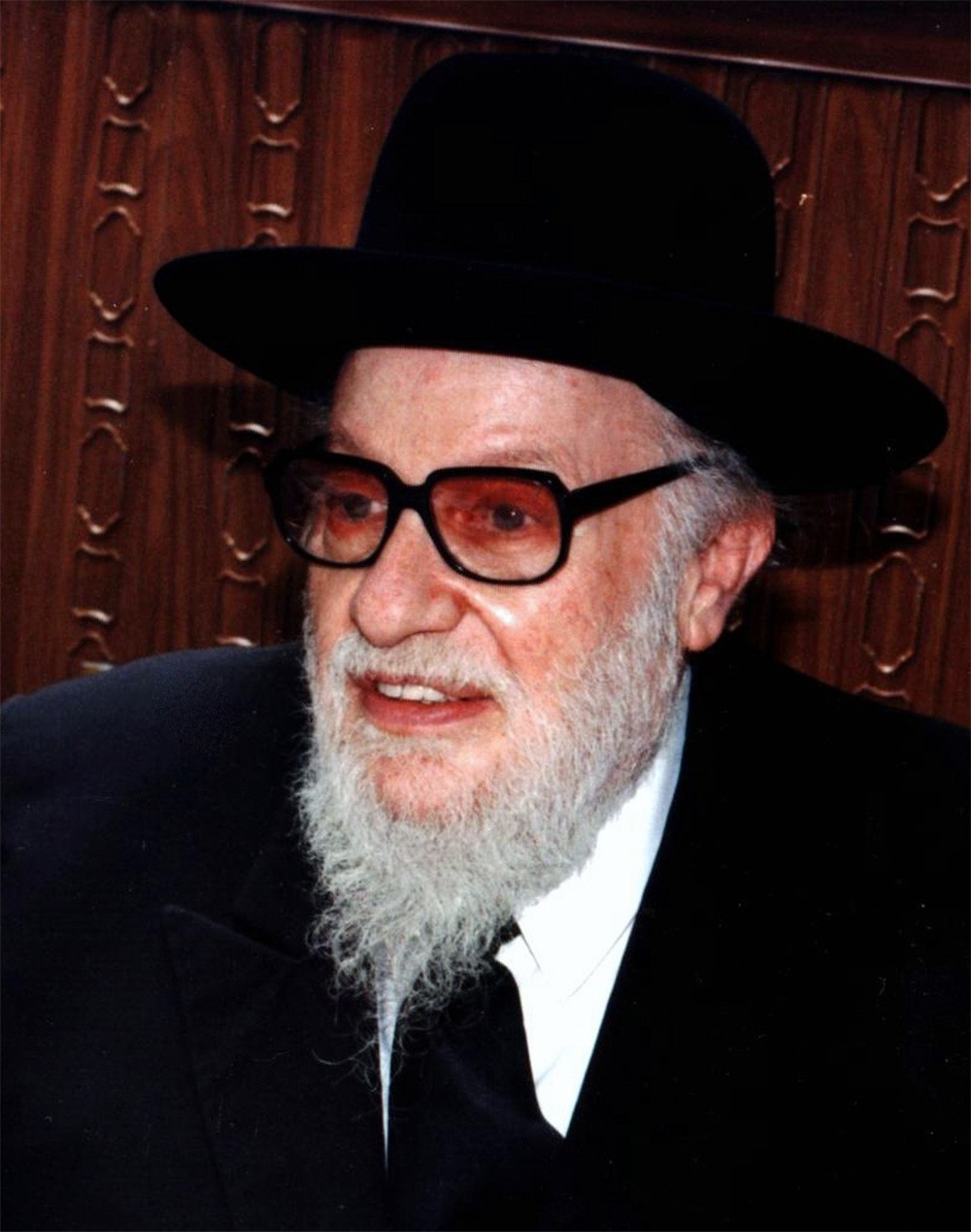
1

The Vilna Gaon, Part 1: How Modern Was He?

The Vilna Gaon, Part 1 How Modern Was He?
by Marc B. Shapiro
Eliyahu Stern, The Genius: Elijah of Vilna and the Making of Modern Judaism (New Haven, 2013)
Eliyahu Stern has set for himself a daunting task and argues his case with conviction. He intends to correct a widespread assumption shared not only by the general public, but by the scholarly community as well. According to this narrative, the Vilna Gaon (hereafter the Gaon) should not be seen as a traditionalist defender of the past, but actually a modern Jew and one who helped usher in the modern era in Jewish history. In Stern’s words, “I [have] come to believe that [Jacob] Katz’s and [Michael K.] Silber’s notion of tradition and traditionalism fails to explain the experience of the overwhelming majority of eighteenth- and nineteenth-century eastern European Jews who did not spend their days either combating the Western European secular pursuit of science, philosophy and mathematics or holding onto the same political and social structures of their sixteenth- and seventeenth-century ancestors. Katz and Silber might have been right about [R. Moses] Sofer. . . . But figures such as the Gaon of Vilna or Hayyim of Volozhin (the Gaon’s student and Sofer’s contemporary), who did not express hostility toward modernity, elude their grasp” (p. 7).
This is quite a claim, and it would be a major revision of the historical picture if Stern could prove the point. Stern also argues that the Gaon’s notes to the sixteenth-century legal code Shulhan Arukh were influential in Jews moving away from a “code-based learning culture supported by the kehilah” (p. 11).[1]

By focusing on Talmud study for its own sake rather than for the sake of determining the halakhah, a paradigm shift occurred in which commentary replaced code. This occurred at the very time that the yeshiva took the place of the kehilah, as seen in the establishment of the Volozhin yeshiva by the Gaon’s disciple, R. Hayyim. Thus, the hierarchy of religious authority was restructured, which leads to what Stern refers to as “religious privatization” (p. 11). As he sees it, “The Volozhin yeshiva was founded not in opposition to the cultural and intellectual upheavals of the nineteenth century. It was itself built on the most modern of assumptions, the separation of public and private spheres” (p. 141). Stern even makes the bold claim that in certain respects the Gaon was more modern than Mendelssohn, arguing that “it was the Gaon’s hermeneutic idealism that called into question the canons of rabbinic authority, while Mendelssohn tirelessly defended the historical legitimacy of the rabbinic tradition to German-speaking audiences” (p. 64). In seeking to turn the Gaon into a more modern Jew, one who is not, as standard scholarship assumes, an opponent of philosophy, Stern even argues that the Gaon did not believe in “demons, magic, [and] charms” (p. 129).[2]
After mentioning that the Gaon is embodied in the Jewish residents of Tel Aviv and New York, who live as though they are majorities, Stern concludes his book with this striking assertion: “From the birth of the State of Israel, to the Jews’ involvement in radical anti-statist modern political movements, to the creation of a robust vibrant Jewish life in the United States, Jewish modernity derives much of its intellectual dynamism, social confidence, and political assertiveness from an astonishing source: the brilliant writings and untamed personality of Elijah ben Solomon” (p. 171).
As with all revisionist theses there is bound to be reluctance to accept a new paradigm. The successful revisionist thesis is the one able to withstand the initial skepticism. Does Stern’s thesis fall into this category? Despite his enthusiastic and tempting arguments, I am not convinced. Reading the book, I could not help wonder if, for example, drawing contrasts with the thought of Leibniz offers any real insight into the thought of the Gaon. We know that the Gaon was fearless in emending rabbinic texts, but for Stern, “Elijah’s emendation project addresses the charge that Leibnizian idealism leaves no room for the possibility of progress, redemption, and critique. . . .  Elijah embroidered the theological concept of evil around the idea of textual error” (p. 61). Isn’t this reading too much into what the Gaon had in mind? Why does the approach of the Gaon have to be given such theological weight that Stern can conclude that “emendation is the path toward redemption and a restored original harmony” (p. 62)?[3]

In another example of his revisionist approach, Stern argues that the Gaon did not oppose philosophy. Rather, “Elijah’s problem with Maimonides revolves around issues of linguistics, interpretation, and hermeneutics and not whether it is permissible to read secular philosophy” (p. 130). As noted already, Stern also assumes that the Gaon did not really believe in “demons, magic, charms and other irrational objects” (p. 129). There is no question in my mind that Stern is in error here. Because the Gaon was a traditional Jew, whose approach to the classical rabbinic texts was not influenced by rationalist philosophy, this is precisely why he believed in demons, magic, and charms. The only reason to reject these things, as did Maimonides, is because one is influenced by rationalist thought.
I see no evidence that the Gaon was influenced in any substantial way by such knowledge, and his occasional use of Aristotelian terminology does not by itself indicate real influence. Furthermore, everything in his writings leads one to believe that when it came to the occult his mental universe was no different than the great rabbis of his time and subsequent to him, for whom demons did indeed exist. In his famous attack on Maimonides, found in his comment to Shulhan Arukh, Yoreh Deah 179:13, he specifically mentioned the efficacy of magic, and contrary to Stern this is to be taken literally.[4]

In fact, a few notes later, 179:26-28, which are not mentioned by Stern, the Gaon again wrote about demons, mentioned that one is permitted to consult with them if it is not the Sabbath, and cited talmudic and midrashic texts that show humans interacting with demons.[5] The Gaon’s position in this matter does not need to be explained. Pretty much every traditional Jew in his day believed in demons, and he did as well. It is Maimonides’ opinion that is not traditional.
Stern leaves it as an open question whether the Vilna Gaon called philosophy “accursed” (p. 245). This is obviously an important issue, since if Stern is correct that the Gaon was not really opposed to philosophy, one would not expect him to use the word “accursed.” Yet there is no doubt that the Gaon did indeed use this word. It appears in the first printing of the Gaon’s commentary to the Shulhan Arukh, and its authenticity was attested to by R. Samuel Luria who examined that actual manuscript. Only later was the word removed by the publisher. Contrary to what Stern states, Samuel Joseph Fuenn, Matisyahu Strashun, and Hillel-Noah Maggid Steinschneider do not claim that later editors put in this phrase. The one to make this assertion was R. Zvi Hirsch Katzenellenbogen, and he was hardly a neutral observer.[6]

Several other issues emerge in the book. Stern quotes Aliyot Eliyahu as stating that before the age of thirteen the Gaon was “studying books on engineering for half an hour a day” (p. 38). I am not sure why Stern mentions anything about “thirteen,” as the text is explicit that he was around eight years old. Furthermore, the text says nothing about “engineering.” Rather, it states that the Gaon studied astronomy (tekhunah).

Stern writes that the Gaon “rejected outright” the Shulhan Arukh (p. 60). This is a strange statement being that the Gaon wrote a commentary on the Shulhan Arukh. Furthermore, this commentary was designed to show the earlier rabbinic sources upon which the Shulhan Arukh‘s laws were based. It is true that there are many times when the Gaon disagreed with the Shulhan Arukh. However, what is significant with the Gaon is precisely that he accepted the Shulhan Arukh. He had the stature to reject it had he chosen, and to write his own code, yet he did the exact opposite. By attaching his notes to the Shulhan Arukh he was affirming the work. He personally did not need the Shulhan Arukh and would decide halakhah from the Talmud and rishonim. But when the Shulhan Arukh decided the halakhah correctly, he was content to show the sources for the law, meaning that the work had value and that is why he affirmed it.[7]

Contrary to Stern (pp. 77-78), there is no evidence that the Gaon was influenced by Elijah Levita and the Gaon never mentioned him. When the Gaon wrote that the Masorah disagreed with the Talmud, he was referring to how to spell certain words, and this formulation comes from the Tosafists. He was not in any way identifying with Levita’s notion that the Hebrew vowels originated in post-talmudic times, and was certainly not addressing “the veracity of the cantillations of the Bible” (p. 78). When the Gaon’s son cited Levita, he was also not referring to his view of the vowels, only of the spelling of words.
I do not know what Stern means by “following Nachmanides, the Gaon argues that the book of Deuteronomy was written later than the other four books of the Bible” (p. 80). Quite apart from Nahmanides, this position is found in Gittin 60a, where one view is that the Torah was given “scroll by scroll.” Also on p. 80, Stern states that “the Gaon, in contrast, builds on the historical position laid down by Ibn Ezra that the last verses, though inspired by Moses, were actually ‘arranged’ by Joshua.” This has nothing to do with Ibn Ezra as the Talmud already contains the view that the last verses were written by Joshua (saying nothing about being “inspired” by Moses. [Ibn Ezra also says nothing about the last verses being “inspired” by Moses])
On page 133, Stern quotes a passage from the introduction to R. Judah Epstein’s Minhat Yehudah (Warsaw, 1877) where he writes of “thousands who came to study and the miracle it would take for one to emerge with any teaching ability.” In the Hebrew the final words are “yatza le-hora’ah.” This has nothing to do with teaching but refers to the ability to decide halakhic questions. The expression originates in Kohelet Rabbah 7:49.
Finally, he writes that “when the Volozhin yeshiva opened its doors in 1802, it was the first time that young men from all economic and social backgrounds were afforded the opportunity to study” (p. 150, see also p. 162). I know of no evidence to support this assertion. Both before the Volozhin yeshiva’s opening and after, opportunities for study were limited to those who could afford to support a child away from home, and give up the income he would bring in for the family.
Even though I am not convinced by Stern’s thesis, there is no doubt that this book is filled with learning and insight and has understandably created a good deal of excitement. To appreciate Stern’s efforts and ingenuity, one must read very carefully, and this reading will be rewarded in many ways.
******
The review you have just read (with the exception of notes 1-5, 7, and one sentence in brackets) appeared on the H-Judaic listserv on July 19, 2013. In the review I was limited in terms of space and I also could not use Hebrew. So let me now add some additional points and corrections that could not be included in the original. Before doing so I want to stress that I enjoyed Stern’s book a great deal, and I also learnt much from it. The Gaon’s scholarship is so wide-ranging that anyone who attempts such a daunting task as to write on him must be commended.[8]

Stern should also feel gratified that so many people have chosen to use their precious time to write about his book, even if they disagree with him.
Stern’s first chapter, which puts the Gaon and Vilna in historical perspective, was particularly interesting to me. How many people, for instance, are aware of the following (p. 70): “The roughly 5,500 Jews in and around Vilna (Wojewoda) made up nearly 30 percent of the population, and the 3,500 to 4,000 Jews living within Vilna proper formed an overwhelming majority of the local population.”
I strongly recommend that people read the book, if only to see how the talented author attempts to create a completely new perspective on the Gaon. Almost every page of Stern’s book raises issues that I can comment on, and I could easily have written a hundred page post. I agree with much in the book, and can cite sources in support of a number of points Stern makes. Yet this does not change the fact that I was not convinced by his major arguments. Rather than cite all the things I agree with, let me offer some more comments correcting errors, or offering different interpretations, as well as some tangential observations.
P. 14. Stern tells us that the Gaon’s mother was from Slutzk, and on p. 181 he cites a source that supposedly claims that the Gaon was also born in Slutzk. Yet this is incorrect. The town referred to is not Slutzk but סעלץ. This is the shtetl Selets (or Selcz) around 150 kilometers south-east of Brisk.[9]

This information is also found in the Encyclopaedia Judaica entry on the Gaon. There is another Selets in Belorussia, some eight hundred kilometers away,[10] but this is not the town associated with the Gaon. There is no actual proof that the Gaon was born in Selets, but that was the tradition of the town.[11]
P. 15. Stern records how the Gaon wanted to study medicine but was discouraged by his father who wanted his son to devote himself to Torah study. I don’t know if this has any relationship to the Gaon’s unusual (but not unique) view in opposition to using doctors as opposed to turning to God. According to one report, the Gaon only had this view when it came to internal medical problems, but not external ones (e.g., a burn).[12]
P. 17. Stern mentions the report by R. Samuel Luria that the Gaon travelled throughout Europe to find rabbinic manuscripts. Among the legends of these travels is one recorded in the name of R. Joseph Hayyim Sonnenfeld, quoting R. Joshua Leib Diskin, that when the Gaon visited the Munich library and saw the famous manuscript of the Talmud, he said that he would give all the money in the world in order to put it in genizah, because this Talmud was only R. Ashi’s first version (and thus of no authority). This story appears in Menahem Mendel Gerlitz’s Mara de-Ar’a Yisrael (Jerusalem, 1969), vol. 1, p. 57 n. 49. I can’t say whether or not R. Sonnenfeld ever made this comment (and Gerlitz’s book in general is quite unreliable). What I can say is that the story never happened as described for the simple reason that the manuscript only arrived in Munich in 1806, as noted by R. Raphael Rabbinovicz in the introduction to Dikdukei Soferim, vol. 1, p. 35.[13]
P. 44. “He [the Gaon] and his students reinterpreted a strand of kabbalah developed by Abraham Abulafia. . . . Elijah’s circle borrowed heavily from his ideas regarding the mathematical underpinnings of the world.” Unfortunately, this influence is never sufficiently explained and there is confusion about an important text. Thus, Stern writes:
As Menachem Mendel of Shklov wrote, “The word cheshbon [calculus] comes from the word machshava [thought] and this [calculus] is the first form that emerges from the essence of thought.”[14]
To begin with, I don’t know why cheshbon should be translated as “calculus.” I assume it means mathematics.[15]  But that is a minor point, as the general meaning of the passage is clear and R. Menahem Mendel of Shklov tells us that this approach was shared by the Gaon. The more important point, however, is that the sentence quoted as having been stated by R. Menahem Mendel was not stated by him at all. R. Menahem Mendel tells us explicitly that the sentence comes from an early book, one that predates R. Isaac Luria. What we learn from Moshe Idel is that this is actually a quotation from Abulafia.[16] Yet this information does not appear in Stern’s book, even though it would have strengthened his case.
Stern also states: “Elijah’s son Avraham approvingly cites the much-maligned Abulafia, and bestows the honorific “z”l” (the Hebrew acronym for “may his memory be blessed”) on the controversial medieval thinker.”
Here is the page in R. Avraham’s Rav Pealim.

Unfortunately, Stern must have read too quickly and instead of וז”ל [= וזה לשונו] he read the abbreviation as ז”ל, or perhaps he mistakenly connected the ז”ל on the previous line to ר’ אברהם הרואה
Pp. 44ff. Stern argues that according to the Gaon, matter existed eternally and the world was created from this eternal matter. If this was the case, it would be quite significant. Yet I believe that Stern misunderstands what the Gaon is saying. Stern himself quotes the Gaon as explaining that creation means “created from that which exists above.” As I see it, what this means is that matter “found” in the Divine was brought into the world, e.g., through emanation. But this is not the same as speaking of eternal matter, even eternal matter that is lacking form, as these exist apart from God.
With regard to the Gaon and creation, see also R. David Luria’s commentary to Pirkei de-Rabbi Eliezer, ch. 51 n. 17, where he cites a manuscript comment of the Gaon that the world is eternally created. This same viewpoint is shared by R. Hayyim of Volozhin, Nefesh ha-Hayyim ch. 13. I don’t see how this can be reconciled with the Gaon’s comment at the beginning of Aderet Eliyahu that time itself is a creation, and he further speaks of an actual moment of the world’s creation:
בראשית: ב’ הוא ב’ הזמניי. כמו ביום. מפני שהזמן עצמו נברא והב’ מורה על עת הבריאה שהיה בחלק הראשון מהזמן הנברא
If matter is eternal, as Stern claims, or even eternally created, then time is also eternal. But this is clearly not what the Gaon says in the text just quoted.
P. 80. Stern notes that the Gaon’s interpretation of the Mishnah was not bound to how the Talmud explained matters. This is correct, and many people have written on the matter. I mention this only to call attention to the comments of the great genius, R. Meshulam Roth, in his Kol Mevasser, vol. 2, pp. 120-121, 128-129, who felt constrained to argue against this notion. I think it will be obvious to readers that R. Roth’s interpretations of the Gaon are based on his own dogmatic assumption, which he states explicitly, that it is unacceptable to interpret the Mishnah in a way that diverges from the talmudic interpretation.

P. 97. Stern writes:

Contrast Elijah’s vision with the picture of intimacy expressed by Rabbi Pinchas of Korzec (1726-1791): “Prayer is like intercourse with the Divine Presence. At the beginning of intercourse there are motions. Similarly, there is a need for motion in prayer. One should move when beginning to pray. Later on, one can stand without moving, attached to the Divine Presence with a powerful bond. As a result of the motions alone one can attain dvekut.”
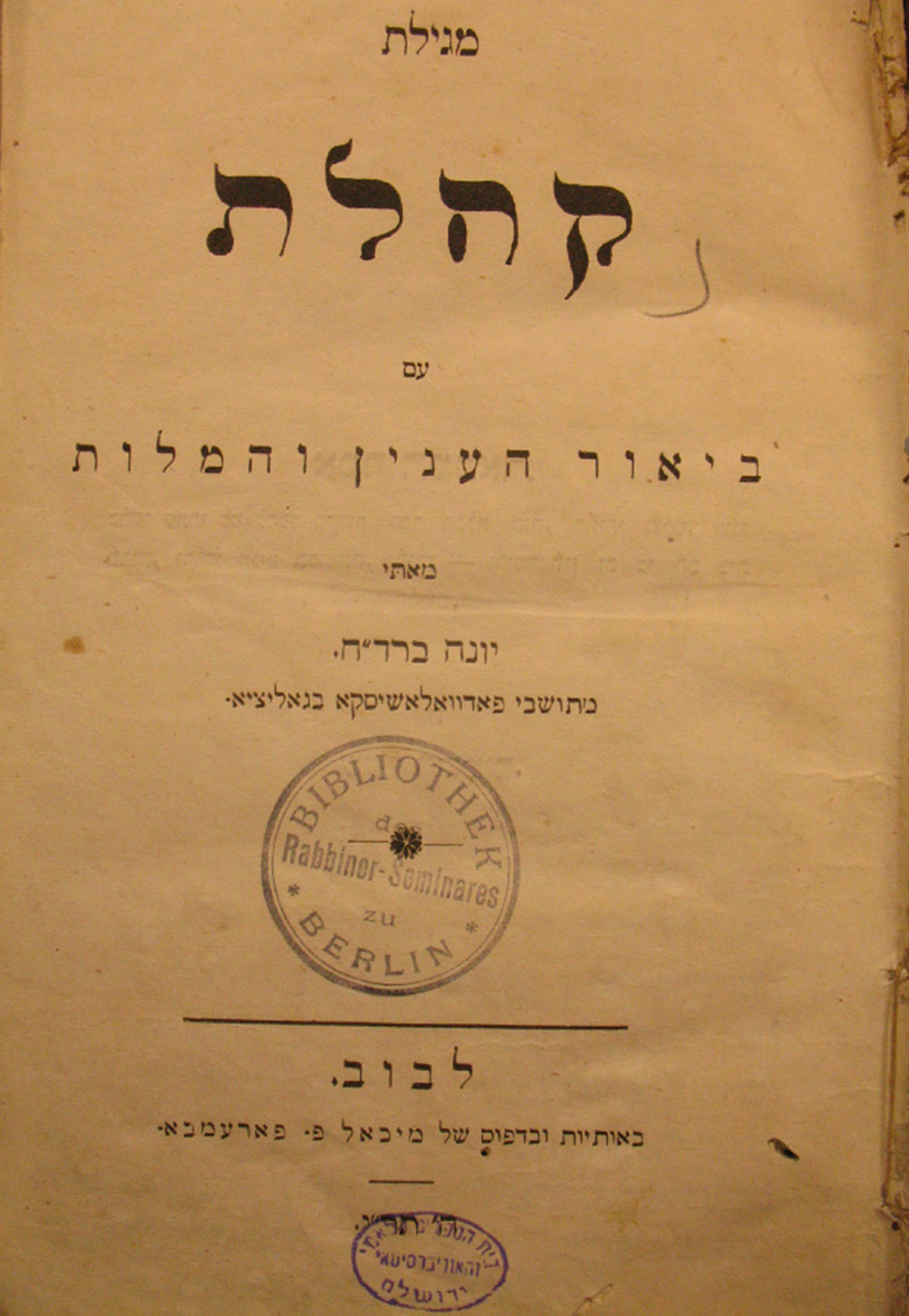
In the note the source for this quotation is given as Likutim Yekarim, 18, and the bibliography tells us that the edition used is Lemberg, 1792 (the first edition). Yet there is some confusion here. R. Pinchas of Koretz indeed wrote a book entitled Likutim Yekarim, but the book where the passage cited comes from is another Likutim Yekarim, one that records the teachings of other early Hasidic teachers. Here is the title page.

Furthermore, the reader looking at page 18 in the first edition of (the correct) Likutim Yekarim will not find anything, as the text is on page 1a. In the 1974 edition the text is found in section 18, but as far as I can tell, these sections were only added in this edition.[17]
Here is the relevant page from the first edition, and the comment referred to is in the last paragraph. The last sentence of the translation quoted above (“As a result . . .”) is not an accurate rendering of the Hebrew sentence that begins מכח מה שמנענע

P. 102: “While it is doubtful that Elijah endorsed or defended Eibeschuetz’s or Luzzatto’s Sabbatian tendencies, he never publicly condemned their works.” Instead of the word “doubtful,” which leaves some room for question, the sentence should say that “it is certain that Elijah never endorsed or defended . . .” I leave aside for now the question of why Stern is so certain that Luzzatto had Sabbatian tendencies, and simply note that the Gaon would have rejected such an assumption in the strongest terms. The Eibeschuetz case is more complicated,[18] but I don’t understand how “Eibeschuetz’s Sabbatian proclivities were revealed when his son Wolff was unmasked as a closet Sabbatian” (p. 99). Since when do the actions of a son determine the stance of a father?
Let us now return to the issue of the Gaon’s view of philosophy, which was mentioned earlier in this post, and when I refer to philosophy I have in mind rationalism. Stern, p. 129, argues that the Gaon was not opposed to philosophy and as evidence for this proposition notes that the Gaon uses Aristotelian terms, cites the Guide once in his Aderet Eliyahu, and procured a copy of Aristotle’s Ethics. He then writes, “This evidence has led some to suggest that Elijah objected to a materialistic or epicurean lifestyle often associated with philosophy, but not to philosophy’s heuristic value.”
While I think that Stern is indeed correct that the Gaon saw heuristic value in philosophy, I was still quite surprised when I read this sentence, since I had never heard of anyone who argued that the Gaon’s only concern with philosophy was the materialistic lifestyle associated with it. When I looked in Stern’s note (p. 246 n. 55) it didn’t help. This is what appears in the note:
See Moshe Philip, ed., Sefer Mishlei im Biur ha-Gra (Petach Tikvah: 2001), 441 and Eliyahu Stern, “Philosophy and Dissimulation in Elijah of Vilna’s Writings and Legacy,” Revue Internationale de Philosophie (forthcoming). On Elijah reading Aristotle, see his letter to Rabbi Shaul of Amsterdam recorded in Tzvi ha-Levi Horowitz, Kitvei ha-Geonim (Warsaw: 1938 [should be 1928]), 3-10.
I don’t know what is intended by the first reference, as there is a typo since the volume does not contain 441 pages. Stern’s forthcoming article can only be discussed when it appears in print, but the book under review does not give any reference to others who argued that the Gaon had no substantive opposition to philosophy. Also, contrary to what Stern states here, the Gaon did not write to R. Saul of Amsterdam asking him to send him the Ethics. The letter Stern refers to was actually written by the Gaon’s brother, R. Yissakhar Ber.[19]

See Kitvei ha-Geonim, p. 4a. On p. 44, Stern states that the letter was written by both the Gaon and his brother. This, I think, is closer to the truth. I say this because the Gaon’s brother requested לקנות בשבילנו ולשלוח לנו, although this could also just be the writing style he used. However, there are lots of reasons why people read books, and this alone does not mean that one is positively inclined to a subject. The greatest of all Jewish philosophers, Maimonides, tells us that he read all the works of Sabian idolatry that he could get his hands on (Guide 3:29). It would also be more significant if instead of the Ethics, the book requested of R. Saul of Amsterdam was Aristotle’s Metaphysics. But I don’t want to make too much of this, since I am convinced by Stern that the Gaon saw some value with philosophy. But contrary to Stern, I would add that the Gaon also saw great dangers in philosophy.
In the note directly following the one just referred to, Stern concludes based upon the introduction of R. Menahem Mendel of Shklov to the Gaon’s commentary to Avot and R. Israel of Shklov’s introduction to his Peat ha-Shulhan that “Elijah was secretly positively inclined to the study of philosophy.” He again refers to his forthcoming article where he develops this point. As mentioned already, discussion of this article must wait until it appears in print. In the meantime, however, it is difficult to accept this point without a clear articulation of what exactly Stern means by “study of philosophy”, since in R. Israel of Shklov’s introduction to Peat ha-Shulhan he writes as follows:
ועל חכמת הפילוסופי’ אמר [הגר”א] שלמד אותה לתכליתה ולא הוציא ממנה רק ב’ דברים טובים . . . והשאר צריך להשליכה החוצה.
R. Israel of Shklov also notes that the Gaon knew חכמת הכישוף which contradicts Stern’s statement that according to the Gaon “references to demons, magic, charms, and other irrational objects and ideas cannot be ignored—though not per se because he thinks they actually exist.” (p. 129).
See also Ma’aseh Rav (Jerusalem, 1906), Siah Eliyahu, p. 21b (no. 61(, which states that the Gaon would not study R. Bahya Ibn Paquda’s philosophically based Sha’ar ha-Yihud (in the Hovot ha-Levavot):
והי’ מחבב הגר”א ז”ל ס’ מנורת המאור וס’ חובת הלבבות זולת שער היחוד ובמקום שער היחוד הי’ אומר שילמדו בס’ הכוזרי הראשון שהוא קדוש וטהור ועיקרי אמונת ישראל ותורה תלוין בו.
There is another passage that is relevant, but as far as I know has not been cited in any of the scholarly discussions about the Gaon and philosophy. R. Hillel Rivlin, Kol ha-Tor (Bnei Brak, 1969), ch. 5:2, quotes the Gaon as saying the following about philosophy, and you can’t get any clearer than this:
את חכמת הפילוסיפיה למדה לתכליתה ולא מצא בה כי אם דברים אחדים שמקורם לוקח מחז”ל ועל השאר אמר, שאין בה לא הגיון ולא צדק ומיוסדת על אפיקורסות אווילית.

As mentioned, you can’t get any clearer than this, but I realize that this is not the Gaon speaking but rather a student, so it is possible to argue that he, and also R. Israel of Shklov, didn’t properly portray their teacher.
The passage that creates so many problems for Stern’s thesis is found in the Gaon’s commentary to Yoreh Deah 179:13. In this text, the Gaon famously attacks Maimonides for being led astray by “accursed philosophy.”

Stern argues that the Gaon does not oppose the study of (even rationalist) philosophy per se. Rather, his opposition is directed at how “a philosophical approach may ignore linguistic nuance” (p. 129). I think this is very unlikely, and it appears to me that Stern is trying to force his interpretation into the words of the Gaon when the more likely, and natural, interpretation is that the Gaon indeed opposes the study of (rationalist) philosophy.[20] (On p. 130 Stern claims that the Gaon was not opposed to the study of “secular philosophy” which is an even more far-reaching claim.) Beyond what the Gaon writes in his comment on the Shulhan Arukh, there is the way he writes it, which unfortunately is not reflected in Stern’s translation. Here is how Stern renders the first part of the text:

All those who came after Maimonides differed [because they did not use his rational allegorical interpretive technique]. For many times we find magical incantations mentioned in the Talmud. Maimonides and philosophers claimed that such magical writings and incantations, and devils, are all false. However, he [Maimonides] was already reprimanded for such an interpretation. For we have found many accounts in the Talmud about magical incantations and writings. . . . Philosophy is mistaken in a majority of cases when it interprets the Talmud in a superficial manner and destroys the sensus literalis of the text. But one should not think that I in any way, Heaven forbid, actually believe in them or in what they stand for.
In this comment the Gaon writes:

והוא נמשך אחר הפלוסופיא הארורה         .
This means that Maimonides “followed after the accursed philosophy.” However, Stern mistakenly translates these words: “Maimonides and philosophers claimed.”
Later in his comment the Gaon writes:

והפלסופיא הטתו ברוב לקחה לפרש הגמרא הכל בדרך הלציי
Stern translates this as “Philosophy is mistaken in a majority of cases when it interprets the Talmud in a superficial manner.” This too is a incorrect translation. What the Gaon is saying is that philosophy misled Maimonides to falsely explain the Talmud. So again, we see the great dangers of philosophy, and how it was able to lead astray even Maimonides. (There is nothing in the Gaon’s comment about “a majority of cases”). The final words quoted from the Gaon, בדרך הלציי, do not mean “superficial manner.” They mean “in a figurative sense.”
What can we say about the Gaon and Maimonides’ Guide? Although I hadn’t investigated the matter properly, for awhile I thought that the Gaon didn’t study the Guide in a serious manner. Anyone who reads Stern will see that this is incorrect. In fact, the Guide was even studied in Vilna during the Gaon’s time. The following passage from Aliyot Eliyahu (Vilna, 1892), p. 13a, should have been cited in the text by Stern as exhibit no. 1, as it is a strong piece of evidence in support of his position. For some reason, it is only summarized in a note (p. 246 n. 58):
וסיפר לי הרב כו’ הישיש מ’ ישראל גארדאן רב בווילנא (אשר היה מכיר היטב את הגאון נ”ע ודירתו היה בחומת אביו וקודם פטירתו היה דר הגאון בחצר בהכנ”ס) אשר היה נכנס ויוצא כפעם בפעם בבית הגאון נ”ע ושמע פ”א אשר בא הרב ר’ טרייטיל ז”ל לפני הגאון והרעיש על אשר ראו עיניו שאנשים קבעו למודם בבהמ”ד בספר מורה נבוכים וביקש שהגאון ימחה בידם והגאון השיבו בחרי אף ואמר ומי יעיז לדבר נגד כבוד הרמב”ם וספרו אשר מי יתנני ואהיה עמו במחיצתו בגן עדן.
There is no question that this report complicates the picture and shows that the Gaon’s view of the Guide was more complex than often portrayed. We see from it that unlike others, the Gaon, despite his strong criticism of Maimonides and general opposition to rationalist philosophy, nevertheless believed that the Guide had value and qualified scholars should not be prevented from studying it. 
After quoting this passage in Aliyot Eliyahu, R. Shlomo Korah adds, “There is a story about someone who asked his rebbe if it is permitted to study the Guide. He replied, ‘The Rambam permits it —הרמב”ם מתיר ”.[21]
Alan Brill has also made the case that the Gaon saw value in philosophy and calls attention to the fact that in a text attributed to the Gaon, there is a summary of a section of the Guide. See his “Auxiliary to Hokhmah: The Writings of the Vilna Gaon and Philosophical Terminology, in Moshe Hallamish, et al., eds., Ha-Gra u-Veit Midrasho (Ramat Gan, 2003), p. 10. This shows that philosophy has value, as I too acknowledge, but this has nothing to do with rationalism, which the Gaon strongly opposed.

It is also worth noting that R. Shneur Zalman of Lyady, in responding to the reported theological objections that the Gaon expressed about early hasidut, wrote as follows[22]:

ומי יתן ידעתיו ואנחהו ואערכה לפניו משפטינו להסיר מעלינו כל תלונותיו וטענותיו הפילוסיפיות אשר הלך בעקבותיהם, לפי דברי תלמידיו הנ”ל, לחקור אלקות בשכל אנושי
In other words, and this is really ironic, R. Shneur Zalman assumes that Gaon was led astray by philosophy and that explains his objections![23]

The reason I had my mistaken assumption that the Gaon didn’t study the Guide in any significant way was because the Gaon didn’t refer to it in his commentary to the Shulhan Arukh, even when he had the opportunity, such as in his note to Yoreh Deah 179:13. Another place where he could have referred to the Guide is in the very first halakhah in Orah Hayyim. R. Moses Isserles is quoting from Maimonides’ Guide, and rather than refer the reader to this, the Gaon offers sources for the Rama’s formulation from rabbinic literature. Yet even before reading Stern’s book I should have seen that the Rama in Darkhei Moshe tells us that he is quoting the Guide, and one should assume that the Gaon saw this text.
This is how R. Isserles begins the Darkhei Moshe (and he begins the Shulhan Arukh similarly):
כתב הרמב”ם בספר מורה הנבוכים חלק ג’ פרק נב שמיד שאדם ניעור משנתו בבוקר מיד יחשוב בלבו לפני מי הוא שוכב וידע שהמלך מלכי המלכים הקב”ה יתעלה חופף עליו שנאמר (ישעיה ו, ג) ) מלא כל הארץ כבודו.
R. Isserles quotes Maimonides as saying that as soon as you wake up in the morning you should think about God. Yet if you look at Guide 3:52 that he is quoting you find something interesting. Here is the passage in Ibn Tibbon’s translation (which is what the Rama used).
מי שיבחר בשלמות האנושי ושיהיה איש הא-להים באמת יעור משינתו וידע שהמלך הגדול המחופף עליו והדבק עמו תמיד הוא גדול מכל מלך בשר ודם ואילו היה דוד ושלמה, והמלך ההוא הדבק המחופף הוא השכל השופע עלינו שהוא הדבוק אשר בינינו ובין הש”י . . . וכבר ידעת הזהירם מלכת בקומה זקופה, משום מלא כל הארץ כבודו.
Where does the Rama get his formulation that as soon as one awakes – מיד שאדם ניעור משנתו – he should think of God? It comes from Maimonides’ words we just read: יעור משינתו. As pointed out by Raphael Speyer,[24] it seems that the Rama simply misunderstood what Maimonides (in Ibn Tibbon’s translation) was saying. The words יעיר משינתו have nothing to do with awakening from sleep in any literal sense. Rather, the expression simply refers to people who are figuratively awakening from their slumber and can now recognize God’s presence. Therefore, there was no need for the Rama in seeking to make his point to include anything about getting up in the morning.
In the Datche’s editor’s response to Speyer, he pointed out another problem with the Rama’s formulation. While the Rama writes of  מלך מלכי המלכים הקב”ה יתעלה חופף עליו, this is not what Maimonides says. According to Maimonides, “this king who cleaves to him and accompanies him is the intellect that overflows toward us and is the bond between us and Him, may He be exalted.” In other words, Maimonides is speaking about the Active Intellect yet the Rama turns this into God Himself. It is because of things like this that Yeshayahu Leibowitz was led to declare that the Rama “didn’t understand philosophy and didn’t understand the Guide of the Perplexed.” He also referred to the Rama’s Torat ha-Olah as a work of “pseudo-philosophy.”[25]

This might seem like an unfair statement, and I am sure that Yonah Ben Sasson would reject it,[26] but consider the following. No one could be regarded as a rabbinic scholar if all he studied was the Mishneh Torah, without examining the talmudic passages upon which the Mishneh Torah is based. In fact, I think all would agree that one can’t really understand the Mishneh Torah without knowing the talmudic sources. By the same token, one can’t really understand the Guide without knowing the Aristotelian sources upon which so much of Maimonides’ words are based. Yet the Rama tells us, in his famous letter to R. Solomon Luria,[27] that he never actually studied Aristotle and his only knowledge of him comes from Maimonides’ Guide and other Jewish sources.
כי אף שהבאתי מקצת דברי אריסטו מעידני עלי שמים וארץ שכל ימי לא עסקתי בשום ספר מספריו רק מה שעסקתי בספר המורה שיגעתי בו ומצאתי ת”ל [תהלה לא-ל] ושאר ספרי הטבע כשער השמים וכדומיהין, שחברו חז”ל ומהם כתבתי מה שכתבתי מדברי אריסטו.
Interestingly, I found one place, Torat ha-Olah 3:47, where the Rama speaks very disrespectfully of Maimonides’ philosophical knowledge, referring to it as foolishness.

ואין לך סכלות חכמתו גדולה מזה
Nevertheless, the Gaon placed the Rama together with Maimonides in his other sharp criticism of the latter[28]:

אבל לא ראו את הפרדס, לא הוא [הרמ”א] ולא הרמב”ם


To be continued
* * * *

Information about my summer trips to Spain, Central Europe, and Italy will be available soon. Anyone interested should check out the Torah in Motion website. Marc Glickman, one of the participants on last year’s tour to Central Europe, described it as follows: “It was great to meet Marc and he was a fantastic guide. The trip was like a living Seforim Blog post (I follow his posts religiously).” Thank you Marc!

Also for those interested, I will be speaking on R. Ovadiah Yosef at Ohab Zedek in NYC on December 17 at 8:15pm. 

[1] Regarding how influential the Gaon was on Lithuanian rabbinic scholarship, see Gil Perl, The Pillar of Volozhin: Rabbi Naftali Zvi Yehuda Berlin and the World of Nineteenth-Century Lithuanian Torah Scholarship (Boston, 2012), pp. 127ff. Perl disputes with Immanuel Etkes and Shaul Stampfer who have argued that the Gaon’s influence has been exaggerated. In terms of the Gaon’s influence on Jewish practice, R. Yaakov Kamenetsky claimed that there were only two places in Lithuania that followed the Gaon’s minhagim, and one of these places was the Gaon’s beit midrash/synagogue (kloiz) in Vilna. See R. Yehoshua Geldzahler, Kodshei Yehoshua (Jerusalem, 1999), vol. 5, p. 1758 (Geldzahler forgot the second place mentioned by R. Kamenetsky.) See also Nathan Kamenetsky, Making of a Godol (Jerusalem, 2002), vol. 1, p. 655.
[2] “In Elijah’s view, references to demons, magic, charms, and other irrational objects and ideas cannot be ignored—though not per se because he thinks they actually exist. (Elijah’s admirer Menashe Illya [1767-1831] recalled ‘that according to his memory,’ Elijah actually ‘criticized those who interpreted Midrash according its [!] literal sense when the Midrash went against reason.’) Elijah’s criticism against Maimonides was based on the belief that one cannot simply deny or gloss over the anti-rational elements that consistently appear in rabbinic literature. Either they belong in the text or they do not; if they do belong, they must be explained. By not including or explaining them, Elijah contends, Maimonides and ‘philosophers’ fail to take seriously the very words and signs that make up the rabbinic tradition.”
[3] In R. Isaac Herzog’s letter about the authority of the Zohar, published by me in Milin Havivin 5 (2010-2011), he quotes R. Abba Werner as saying the following about the Gaon (p. 16):
שהגר”א בבאורו על הזוהר הוא המבקר היותר קשה על הטקסט של הזוהר
R. Mordechai Friedman called my attention to R. Hanokh Ehrentreu, Iyunim be-Divrei Hazal u-ve-Leshonam (Jerusalem, 1978), pp. 184ff., where Ehrentreu prefers a textual emendation of R. Wolf Heidenheim over the emendation suggested by the Gaon. Since I will be dealing with R. Chaim Kanievsky in the next installment, let me mention that he has a tradition that R. Hayyim of Volozhin stated that one of the Gaon’s emendations was mistaken: הגר”א טעה. See R. Hayyim Shalom Segal, Berurei Hayyim (Bnei Brak, 2004), vol. 3, p. 924.
[4] In Aderet Eliyahu to Nahum 3:4, the Gaon writes:
בשלשה דברים ישחית איש את רעהו  . . .  בכשפים: במיני קטורת ממשיכים כחות העליונות אשר מקושרים בלבות בני אדם
[5] See also Aderet Eliyahu to Numbers 23:22 and Hosea 2:20 for other discussions of demons. In Yahel Or (Vilna, 1882), p. 38b (second numbering), the Gaon writes:
 ואמרו כי אמן של שדים נעמי [צ”ל נעמה] הולידה אותן מהנפילים לכן חציין מצד אביהן דומה למלה”ש ומצד אמן לב”א

[6] See Samuel Joseph Fuenn, Kiryah Ne’emanah  (Vilna, 1860), p. 160. In Stern’s book the page number is mistakenly given as p. 169.
[7] Regarding the Gaon and the Shulhan Arukh, see R. Yaakov Hayyim Sofer, Menuhat Shalom (Jerusalem, 2003), vol. 11, pp. 51-52, who shows that because the Gaon did not have access to the early editions of the work, he mistakenly assumed that a word stated by R. Joseph Karo really belonged to R. Moses Isserles. Although there is no question that Sofer is correct, since we are dealing with the Gaon, here is how Sofer prefaces his correction (which also includes the claim that a reference offered by the Gaon is incorrect).
אמנם עם שאיני כדאי כלל וכלל, עפר יעקב, אומר אני אחר נטילת הרשות, שדברי קדשו של רבינו הגדול הגר”א ז”ל, שגבו ממני, ובאפיסותי לא זכיתי להבין דברות קדשו של הגר”א ז”ל.

[8] Regarding the Gaon, many interesting articles appear in Yeshurun 5 (1999) and 6 (1999). R. Dovid Yitzchaki’s contribution, “Havanat Divrei ha-Gra al Da’at Omram,” Yeshurun 5, pp. 502-537, is of particular value. Jacob Israel Dienstag’s bibliography of writings by and about the Gaon is still worth consulting. See Talpiot 4 (1949), pp. 269-356.
[9] See here.
[10] See here.
[11] See Ha-Levanon, Sep. 18, 1872, p. 26.
[12] See R. Moshe Zuriel, Otzrot ha-Gra (Bnei Brak, 2000),  pp. 242f.
[13] See R. Yaakov Wreschner, Seder Yaakov (Jerusalem, 2010), vol. 1, p. 35 (first pagination).
[14] Derekh ha-Kodesh (Jerusalem, 1999), p. 4.
[15] Stern himself translates it as “math” on p. 198 n. 19. Regarding mathematics, in the next post (or maybe the one after) I will defend Stern’s reading of a passage in opposition to the critique of Bezalel Naor here.
[16] See Idel, “Bein ha-Kabbalah ha-Nevuit le-Kabalat R. Menahem Mendel mi-Shklov,” in Moshe Halamish, et  al., eds., Ha-Gra u-Veit Midrasho (Ramat Gan, 2003), p. 174-175.
[17] The text were are discussing is also found in Tzava’at ha-Rivash (Brooklyn, 1998), p. 28 no. 68.
[18] See Sid Z. Leiman, “When a Rabbi is Accused of Heresy: The Stance of the Vilna Gaon in the Emden-Eibschuetz Controversy,” in Ezra Fleischer, et al., eds. Meah Shearim: Studies in Medieval Jewish Spiritual Life in Memory of Isadore Twersky (Jerusalem, 2001), pp. 251-263.
[19] The Gaon had five brothers. See Chaim Freedman, Eliyahu’s Branches (Teaneck, 1997), p. 12.
[20] Let us not forget that the Gaon claimed to have had visions of Jacob and Elijah. This comes from a text written by the Gaon and recorded by R. Hayyim of Volozhin in his introduction to the Gaon’s commentary to Sifre de-Tzeniuta. R. Hayyim also reports that the Gaon said that before he was thirteen years old he started to make a golem, before he concluded that Heaven did not want him to continue. The Gaon further told R. Hayyim that he was visited by R. Shimon Ben Yohai and R. Isaac Luria. All of these things are not characteristic of one with a positive attitude towards philosophy.
[21] Sefat Melekh, vol. 1 (commentary to Mishneh Torah, Sefer ha-Mada [Bnei Brak, 1998], p. 53. R. Korah, Sephardic Chief Rabbi of Bnei Brak, is one of the few Yemenites (are there any others?) who studied under R. Aaron Kotler. See his recollections at the beginning of his Haggadah shel Pesah (2003).
[22] David Zvi Hillman, ed., Iggerot Ba’al ha-Tanya u-Venei Doro (Jerusalem, 1953), p. 97.
[23] See R. Matisyahu Strashun, Mivhar Ketavim (Jerusalem, 1969), p. 125 n. 1.
[24] Datche 55 (17 Av 5769), p. 6.
[25] See his Sihot al Pirkei Ta’amei ha-Mitzvot (Jerusalem, 2003), pp. 723-724.
[26] See his Mishnato ha-Iyunit shel Ha-Rama (Jerusalem, 1984).
[27] She’elot u-Teshuvot ha-Rama, ed. Siev (Jerusalem, 1971), no. 7.
[28] Shulhan Arukh, Yoreh Deah 246:18.


R. Shlomo Yosef Zevin and the Army, and Joe DiMaggio

R. Shlomo Yosef Zevin and the Army, and Joe DiMaggio
by Marc B. Shapiro

1. There is a lot of talk these days about haredim serving in the army. Understandably, the famous essay of R. Shlomo Yosef Zevin has been cited. In this essay, R. Zevin rejects the notion that yeshiva students shouldn’t have to serve.[1] The essay used to be found at http://www.hebrewbooks.org/32904 but it was removed, together with other “problematic” books. (You can see evidence of it having been on hebrewbooks by this archive.org snapshot of the page.)
Here is the essay in its entirety.[2]


You can find an English translation here.
In my series of classes on R. Zevin at Torah in Motion, I discussed this essay and stated that while the sentiments expressed in it are wonderful, I am aware of no evidence that R. Zevin actually wrote it. People say he wrote it but that is not evidence. I also stated that it is not even accurate to say that everyone assumes he wrote it, since his family denies his authorship. That, at least, was the impression I was under.
David Eisen participated in the classes (which were from 4-5am Israel time!), and after hearing what I said decided to pursue the issue further. I am grateful for his research. Here is the first email he sent to me on the topic.

I surfed the web a bit and came across the following website created by Hanan Zevin, R. Zevin’s great-grandson dedicated to R. Zevin and that includes many of his writings: http://ezevin.com/. As the site made no reference to the article from 1948, I contacted Hanan via the e-mail address on the site (see attached).
I just received a phone call from Hanan’s father, [R.?] Yaakov Zevin, who told me that Hanan had forwarded my e-mail to him to respond to me. I subsequently saw that Yaakov also has a website with his own hiddushim on parashat hashavua and the holidays (http://jzevin.com – the cell phone on the website is the same number that called me; interestingly, Yom HaAtzmaut and Yom Yerushalayim are included in the list of holidays and the divrei Torah are quite cynical). He called to tell me that he did not wish to respond in writing as this indeed is a very sensitive matter to the extended family, yet he felt a need to not simply ignore my e-mail. In short, he would not outright confirm that his grandfather indeed wrote the article and repeatedly told me that “if ‘ahad harabbanim’ decided not to disclose his name, he must have had very good reason to do so, yet the authorship of the article is apparent to anyone who is sensitive to the ‘signon’ of the writing in the article.” In other words, he led me to believe that R. Zevin indeed wrote the article but wished to state that “whoever” wrote it had very good reason to have written it anonymously.
I proceeded to ask him if indeed his grandfather ever addressed the question of the article’s authorship, yet he evaded that question. I also told him that the catalog of the Israel National Library attributes his grandfather as the author (see here) and he simply said that indeed this is what is widely accepted but the family does not confirm this. I told him that I heard that his brother, R. Nahum, denies that his grandfather wrote the article, yet he wished to say that he simply does not confirm that their grandfather wrote the piece. I mentioned the Hapardes article that R. Zevin wrote in 1973 (attached is the journal) where he sharply attacked the Mafdal party for supporting the draft of yeshiva students as if to ask if this contradicted the 1948 article, and he simply responded by saying that his grandfather’s views were relevant for each context in which they were made. Personally, I do not see a contradiction either as the war of 1948 was indeed an existential battle for Israel’s survival and its extremely limited and untrained military as opposed to the radically improved situation that existed 25 years later, post-67.
I suggested that Eisen call R. Nahum Zevin, the grandson of R. Shlomo Yosef, and here is the lengthy email he sent me. It is an important document and deserves to be placed in the public sphere.
I just had a lengthy call with R. Nahum Zevin; though we never spoke with one another before, I was very pleased with his accessibility and willingness to speak to a complete stranger on the phone (he answered the phone himself), and above all, I was most impressed by his honesty and candor, which he seems to have inherited from his grandfather.
He wished to clarify that neither he nor anyone else in his family denies that his grandfather wrote the 1948 pamphlet לשאלת הגיוס של בני הישיבות; I did not mention your name, but simply told him that it recently became known to me that the family denies the attribution to him and that this flies in the face of what I grew up upon as a product of Religious Zionist yeshivot and my great admiration for R. Zevin’s writings. He simply said that the family had absolutely no indication that he wrote the pamphlet and proceeded to present the following facts:
1. Of all the grandchildren, he was the closest with R. Zevin, and he went through all of his grandfather’s writings and had a major role in publishing R. Zevin’s posthumous works. He says that he meticulously went through his grandfather’s study and never found a copy or any draft of this pamphlet among the many manuscripts he found in the house.
2. The attribution of this pamphlet to his grandfather was made only years after his grandfather’s petira in 1978. The first time he had heard about this attribution was during the early 1980s from R. Menahem Hacohen when he was still an MK in the Labor party. As such, no one in the family had the opportunity to discuss it with his grandfather. He said that if anyone would have known about his grandfather’s authorship of the article it would have been his father, R. Shlomo Zevin’s only son, yet he told him that he also first heard about this attribution only after his father passed away.
3. He referred to the article entitled אל תגעו במשיחי that was published in 1973 on the heels of the Mafdal’s decision to support drafting yeshiva students. I told him that I am very familiar with that article published in the Iyar 5733 (47:8) edition of Hapardes[3] he told me that he just happened to have a copy of that article on his desk as we spoke yet was unaware of its publication in Hapardes as it was first published on the 12 Adar 5733 edition of Hatzofe and that he (R. Nahum) was the one who personally delivered the text of the article to the editorial staff of Hatzofe. He said that this article created a veritable earthquake in the Dati Leumi camp, and R. Zevin was greatly attacked on the pages of Hatzofe and other related media over the proceeding weeks and months, yet despite the voluminous criticism no one mentioned the pamphlet as if to show that R. Zevin had radically changed his views. I responded that I, too, had the very same question yet nonetheless did not see these two articles as contradicting one another given the existential threat facing the nascent State of Israel as sharply opposed to the hubris-filled post-6 Day War era and preceding the sobering aftermath of the Yom Kippur War that took place half a year later. He agreed with the distinction, yet [to my mind, correctly] noted that had it been known that R. Zevin wrote the 1948 pamphlet it is impossible to think that this connection would not have been made by the numerous pundits.
Apropos the article that originally appeared in Hatzofe and R. Menahem Hacohen’s assertion that his grandfather wrote the pamphlet, R. Nahum told me that there was a good deal of criticism against his grandfather’s article against drafting yeshiva students in the Dati Leumi magazine Panim el Panim. R. Nahum said that he contacted R. Menahem Hacohen after he attributed the pamphlet to his grandfather and reiterated the point that none of the critiques in Panim el Panim mentioned the apparent about-face from 1948, and noted that the editors of Panim el Panim were none other than his brothers, R. Shmuel Avidor Hacohen and R. Pinhas Peli. That said, I probably misunderstood the reference R. Nahum made to Panim el Panim as according to Wikipedia, the magazine was discontinued in 1970, three years before the publication of R. Zevin’s article against drafting yeshiva students.[4]
4. Beyond all of the above points, R. Nahum said that what makes the attribution puzzling is the fact that his grandfather was never reserved about his beliefs, and that it makes no sense to him that he would have published that pamphlet anonymously. After all, his highly positive views on the State of Israel and annual celebrations of Yom HaAtzmaut were well known. He told me that he was so closely linked with the Mizrahi party that he remembers up to the 60’s that R. Zevin would affix his signature along with R. Meshulam Roth and R. Zvi Yehuda Kook on endorsements prior to elections to vote for the Mafdal party (and its Mizrahi and Hapoel Hamizrahi precursors). He also mentioned the parenthetical phrase of “ואשרנו שזכינו לכך” in Moadim B’Halakha with respect to the establishment of the State of Israel and the suggestion that one is no longer required to perform qeriah on Arei Yehuda, and that when it was removed from the English translation (and perhaps a subsequent Hebrew edition).[5] This was used to claim that he no longer held these positive feelings towards the Medina, but R. Nahum utterly rejected this assertion as wholly false and that he never changed his views in this regard.
5. That said, and similar to what his brother Yaakov told me, he said that one cannot avoid comparing the writing style of the pamphlet with R. Zevin’s unique and eclectic writing style; moreover, he said the substance and analysis of the Torah reasoning in the pamphlet is indeed very similar to his grandfather’s Torah writings and very good Torah indeed. R. Nahum clearly has no agenda and was completely honest in saying that this could very well have been written by his grandfather though there is no proof to this effect, and he acknowledged that לא ראינו אינו ראיה so the fact that the family has not found the existence of any manuscripts showing that he wrote the kuntres certainly does not constitute cogent evidence that he did not write it. 
I must agree that if indeed no attribution to R. Zevin was made until after he passed away, then this is a major hurdle to address, and while I appreciate his cautious approach in refusing to conclude one way or the other, it seemed to me a bit naive on R. Nahum’s part to think that it was implausible for him to have written this piece anonymously; I remind you of what his brother, Yaakov Zevin, told me that there is no doubt as to the similar writing styles and that if the author felt a need to write it under the pen name of “אחד הרבנים” he must have had very good reason to do so (shiddukhim, etc.?).
As R. Nahum claims that he first heard the attribution from R. Menahem Hacohen who is alive and well, I guess the next step in delving deeper into this investigation would be to contact R. Hacohen himself. What do you think? If I had the time, which I certainly do not, then I would think that it would make sense to find the first time the pamphlet became attributed to R. Zevin in Israeli newspapers and other writings and track down the paper trail.
Some time later I received the following email from Eisen, which only thickened the plot.
I just came back from the Bat Mitzva party of Naama Rosenbaum, Prof. Zvi Yehuda’s granddaughter, whose daughter, Talli, is a very good friend in my Bet Shemesh neighborhood (unfortunately her father was unable to make the trip to Israel from Florida due to an extended illness). The paternal grandfather of the bat mitzvah girl is Irving Rosenbaum Z”L, the founder of Davka Software and who was very friendly with R. Menahem Hacohen, who attended the party this evening. I seized the opportunity to ask him about the attribution of the 1948 essay to R. Zevin. I actually began the conversation by asking him if he is familiar with you, and his eyes lit up and he said, “Yes, he e-mailed me twice in the past few years… though I forget what it was he contacted me about.” When I then mentioned that R. Nahum Zevin claims that R. Hacohen is the one who attributed the essay to his father only after R. Shlomo Zevin passed away, he then confirmed that it was precisely on this issue that you had approached him.
He quickly got to the heart of the matter and said that he had held in his hands an original copy of the essay and said that there was no question that R. Zevin was the author, though he said that he has misplaced the copy and had no proof to substantiate his assertion. He did say that R. Nahum is incorrect in saying that the attribution to his grandfather was made only after his grandfather passed away and that he had already seen the letter in the early 70’s when he was working alongside R. Goren; and that he believes that R. Zevin himself was asked to confirm that he indeed wrote the letter. In R. Hacohen’s words, R. Zevin neither denied nor confirmed that he wrote the letter inasmuch as R. Nahum essentially says the same thing, yet R. Hacohen added that R. Nahum at the time had (as he still has today) an agenda to disassociate himself from the position taken in the 1948 essay as he is well ensconced in the haredi rabbinate. That said, I told him that R. Nahum’s “proof” by omission that in all the criticism levied against his grandfather’s “Al Tig’u BiM’shihai” by religious Zionists, the fact, as he claims, that no one had noted the seemingly about-face that he had made from the essay he supposedly penned 25 years earlier, was pretty compelling to me. He responded by reiterating that R. Nahum’s allegiances render him unable to confirm what R. Hacohen maintains is the simple truth and that he unfortunately does not have any documented proof regarding R. Zevin’s authorship. He also rebuffed the claim that R. Nahum knows everything that his grandfather had written and preferred Yaakov Zevin’s nebulous formulation that the person who wrote that essay must have had good reason to have done so anonymously. With that, we parted.
So, it seems to me that in order to forge ahead on this issue, it remains vital to read the reactions to the Panim el Panim article along with those generated from R. Hacohen’s assertion made when he was a Labor MK.
Here is Eisen’s fourth email to me, which I believe also raises questions about the attribution of the essay to R. Zevin. At the very least, it discounts the notion that this attribution was widely known, which raises the problem as to when and why people started attributing the essay to R. Zevin.
I have additional information that I have been meaning to write to you after spending a number of hours at the National Library going through the 1972-1973 issues of Panim el Panim and the lengthy articles that appeared in the secular (Yediot, Maariv, Haaretz and Davar) and religious newspapers (Hatzofe, Yated and Hamodia) during the 30 month period following his [R. Zevin’s] passing between February to March 1978. In short, I found NO reference to this article in any of the many articles in which his position against drafting the haredi yeshiva students was discussed following his fiery speech delivered before the members of the Chief Rabbinate Council on the heels of the Mafdal’s support of legislation to draft yeshiva students. . . . I then spoke with one of the chief librarians at the National Library asking what is the basis for its attribution of this article to R. Zevin and when was it made. He made an inquiry and said that the attribution indeed was made many years ago (he believe it goes back to the 60’s though he had no documentation to substantiate this).
In his fifth email, Eisen wrote as follows:
            On the R. Zevin authorship controversy, I had some meaningful conversations on Friday with Prof. [David] Henschke, who put me in touch with his hevruta at Yeshivat Hakotel, R. Yossi Leichter, who is a senior librarian at the National Library, who in turn put me in touch with R. Yitzhak Yudlow, the now retired head of מפעל הביבליוגרפיה הלאומית that was likely the body that attributed the article back in the 60’s to R. Zevin, and he put me in touch with R. Nahum Neria who said he is quite certain that his father [R. Moshe Zvi Neria] told him that R. Zevin indeed was the author and that he would look through his papers and asked that I follow up with him this week. R. Neria also suggested that I contact R. Shear Yashuv Cohen, which I intend to do tomorrow. In short, none of them had any solid information. David Henschke looked into the matter out of curiosity many years ago and concluded that the attribution made by the National Library was made years before R. Zevin passed away and reliable. . . . It seems that that the first time the article was reprinted with the R. Zevin attribution was back in 1980 in a thin booklet of articles compiled by Dr. Yehezkel Cohen, the founder of נאמני תורה ועבודה. Unfortunately, he passed away this past Sukkot, and as someone who devoted a great deal of research on the topic of military exemptions for yeshiva students and actively worked to stem this tide, he is someone who would have been a vital source. I may call his wife for any leads, especially since he was attacked by R. Mordechai Neugorschel in his polemic haredi work entitled “למה הם שונים” for making this attribution when he claims that there was no way that R. Zevin could have written the article given his impassioned speech delivered in 1973 and the fact that no one noted the change in his position from 1948 as noted by R. Nahum Zevin. When Tradition translated the article into English in 1985, they credited נאמני תורה ועבודה as being the original source for attributing the article to R. Zevin in 1980, see here. Truth be told, when Yehezkel Cohen reprinted the 1948 article, he made a point to also include a photocopy of the National Library’s catalog entry as if to show that he was preceded by the National Library in making this attribution.
Here is Eisen’s final email to me on the topic.:

           I just got off the phone with Eliyahu Zevin, 60, the youngest brother of Yaakov and R. Nachum (their father, Aharon, had 3 sons and he passed away in 2006; R. Zevin also had 1 daughter, Shoshana, but I have not been able to track down her family), who is an attorney in Tel Aviv. I believe he is religous-Zionist. He told me that he is certain that his grandfather was not the author of the 1948 article, again, based on his clearly-stated position in 1973, though, he then greed with me that 1948 was an entirely separate matter relating to an existential threat upon the state and the thrust of the article relates only to sugyot of pikuah nefesh and whether or not talmidei hakhamim require protection, without addressing the separate question of whether or not full time yeshiva students should receive an exemption of a military draft. He had no idea what was the source of the attribution to his grandfather and simply said that the similar “signon” of the writing is likely what caused this attribution to be made. I did not discuss with him the fact that I spoke with his other 2 brothers and specifically did not tell him that his oldest brother, Yaakov, led me to believe that his grandfather indeed wrote the article yet had “good reasons” to publish it anonymously.

Regarding the essay and its attribution to R. Zevin, R. Chaim Rapoport has commented to me that since the essay has two references to Shulhan Arukh ha-Rav, this too would seem to point to R. Zevin’s authorship. There is little doubt that in this sort of essay only a Habad author would refer to Shulhan Arukh ha-Rav.

In his research, Eisen discovered this interesting interview with R. Zevin and his son and grandsons that appeared in Maariv, July 31, 1970. 


I thought that I found proof for R. Zevin’s authorship in the Torah journal Yagdil Torah, the last Torah journal  published in the Soviet Union. The first issue of this journal appeared in 1927 edited by R. Yehezkel Abramsky. The second and last issue appeared in 1928 edited by R. Zevin. In the table of contents there are some contributions by אחד הרבנים. Could this be proof that R. Zevin used this pseudonym already in the 1920s? It turns out, however, that אחד הרבנים in this issue of Yagdil Torah is actually R. Abramsky, and this information has been inserted in the reprint of the journal that is found on Otzar ha-Hokhmah.


Surprisingly, however, the person who inserted this information apparently did not know what to make of the pseudonym ב”מ-ו עזפמט. It doesn’t take much imagination to see that in atbash this equals ש”י-ף זעוין. See Aharon Sorasky, Melekh be-Yafyo ((Jerusalem, 2004), pp. 188-189. See also ibid., p. 241 n. 12, for another time when R. Abramsky signed an article אחד הרבנים.


Finally, here is something very nice put together by Yisrael Kashkin. Most of the great rabbis included were what we can call card-carrying Religious Zionists, and the remaining few were positively inclined to the movement. Not surprisingly, R. Zevin’s picture is found here. Kashkin informs me that anyone interested can order framed 8.5 x 14″ and laminated 8.5 x 14″ copies. The former are meant for a wall and the latter for a Succah. He can prepare and ship the frames for $25 and the laminated for $10. You can contact him at yisrael@email.com. I recommend that every Modern Orthodox school order an enlarged copy in order to hang it in the hallway.
2. Many people wanted to hear more from R. Mordechai Elefant, late Rosh Yeshiva of the ITRI yeshiva, but first, here is his picture.

And now, R. Elefant speaks:
I called Sholom Spitz in Queens the other day. I gave him the phone number of Joe DiMaggio’s secretary, Nick Nicolozzi, and I asked him to wish Joe DiMaggio well from me. Five minutes later he called me back to say that they announced on the radio that he died.
Joe and I were very good friends. I met him through a man from Miami named Kovins, a wealthy man, big in the construction business. He met DiMaggio through Nicolozzi, who had worked in a Sheraton hotel he owned in New Jersey. To make a long story short, I became a partner in the Sheraton. It was a 520-room hotel. Joe, Kovins, and I each had a third. I didn’t buy it. I had made a deal and got it as an agent’s fee. There were halachic problems involved concerning the operation of the hotel on Shabbos, so I wanted to unload it, and I talked Joe into it.
Joe DiMaggio had a suite on the fifth floor of that hotel called ”The Joe DiMaggio Suite.” Rav Zelig Epstein, one of the great Talmudists of our day, came to see me when I happened to be staying on the fifth floor of that hotel. We’re walking along the corridor when out steps Joe. So I introduced Rav Zelig Epstein to Joe DiMaggio. He knew who DiMaggio was. He’s a very intelligent man.
Two years ago when I was sick in bed I got a letter from Joe. There was a picture of him in the paper with a big yarmulke. He sent the accompanying article. Mel Allen died, so he went to the memorial service in the synagogue. Joe writes me, “I did it for you, Rabbi.” He wore the yarmulke just for me.
Joe was from the old days. He was born in America, but had a European sensibility. He never went to school but he had style and he was smart. He wasn’t good looking, but he had great charm. He gave me an autographed copy of his autobiography. He hated the Kennedys. He claimed they killed Marilyn Monroe. It wasn’t a normal husband and wife relationship between them. He was like Marilyn’s patriarch.
They didn’t make big money in baseball in his day, but he would do a lot of advertisements. Joe loved a dime because it wasn’t a nickel. He’s from a place called Hackensack [not true – MS] and he came up the hard way.
I saw the respect people would give. It was like they give Rav Shach (one of the most esteemed rabbis in Israel). I said to him, “You’re nothing but a little wop. I’m the chief rabbi of Bethlehem. They don’t give me the kind of respect you get. And they pay you fifteen or twenty thousand dollars just to come to a party.” It was said in a spirit of good humor. Joe wasn’t offended. He said,  “One day I’ll explain it to you.”
Once I was at the hotel in New Jersey, and he said to me, “Rabbi, I have to go to the Super Bowl. Come along.” I didn’t know what Super Bowl meant at the time. Naturally, I paid for his ticket. He loved that. He took me into a fancy hotel on Wilshire Boulevard, into a big ballroom. All the chairmen of the big companies were there. Carl Icahn was there. They had come in for the Super Bowl. Joe was paid to just be there. He walks in, and they all stand up for him, just like for Rav Shach. I can’t imagine what went through their minds when they saw me together with Joe. He said to me, “You see, I’m not just a little wop.”
One Sunday morning he comes into my hotel room – it’s right across from his – and says, “Rabbi, turn on the TV at 2:00 today.” I asked him what’s going to be on. He says, “You’ll see.” He went to Washington on the shuttle. He was invited to meet Gorbachev by President Reagan. Reagan had been a baseball announcer and he was a great fan of DiMaggio’s. Reagan asked him to sign a ball for Gorbachev. Joe tells him, “No problem, Mr. President, but let’s make that three baseballs, one for each of us, and all three of us will sign them.” This is all on TV.
He comes back at night and shows me the ball. I said, “Joe, give it to me.” He said, “Are you crazy, You know what that’s worth?” He did give me ten balls with his autograph. I gave them to children of friends. They would go wild over them.
When Joe was on that trip to Washington, he was on the White House lawn. Everybody gathered around Joe and left Reagan standing alone. I saw it on television. But Joe was so smart. He stepped back and stood next to Reagan. He didn’t want to show that he’s above Reagan. He was humble.
I would sit with him in the lobby of a hotel and people would stand in line to get his autograph. He was really an aristocrat. He was a pleasure to be with.

3. In case anyone is interested, for some reason Amazon is now selling my book Between the Yeshiva World and Modern Orthodoxy for the low price of $16.63. This is a 33% discount.. 
           
Notes
       
[1] I don’t want to go into the matter in too much detail in this post, but I think there has been a lot of confusion in recent months regarding the issue. While the current controversy is often portrayed as the haredim insisting that yeshiva students not be required to serve in the army, my sense is that this is a distortion. It appears to me that the mainstream haredi position in Israel is that no haredi should have to serve, even if he is not in yeshiva and even if his service would be in a haredi unit. In this mindset (which appears to be slowly changing), the rest of the population’s primary purpose is to monetarily support and protect (and if necessary die for) haredi society, while haredi society has no reciprocal obligations and for those in yeshivot not even any financial obligation to support their own children, as this obligation falls upon the population at large which provides the money for welfare payments. (The existence of haredi hesed organizations that also assist non-haredim does not affect my assumption, as I am speaking here about obligations.)

R. Samson Raphael Hirsch wrote (Collected Writings, vol. 7, p. 270): “Judaism believes that a truly viable state cannot be founded solely on collective power or individual need; it must be based on a sense of duty shared by all and on a universal respect for human rights.” (emphasis added) As for the obligation of fathers to support their children, the Shulhan Arukh, Even ha-Ezer 71:1 writes:
חייב אדם לזון בניו ובנותיו עד שיהיו בני שש אפילו יש להם נכסים שנפלו להם מבית אבי אמם ומשם ואילך זנן בתקנת חכמים עד שיגדלו
Seeing the terrible mess Israeli haredi society has created for itself, in which the leadership purposely keep the masses poor and unskilled in the name of ideological conformity (of course, the Knesset members pushing this agenda make a very nice salary, and see this unbelievably sad story about the forced shut-down of a part-time kollel for those who were also working), I thought of R. Samson Raphael Hirsch’s words in a letter he wrote in 1849 while he was rabbi in Nikolsburg (see Ha-Rav Shimshon Raphael Hirsch: Mishnato ve-Shitato [Jerusalem, 1962], p. 337). What he says is neither complicated nor profound, but its value is that it reminds people of what happens when you ignore and even reject the clear teaching of our Sages, who always assumed that not everyone is suited for only Torah study:
ואם שבר בת ציון תעלה על לבך, וראית כי אחת היא מחלתינו ובאחת תעלה ארוכתינו, היא עזיבתנו תורת חכז”ל הצוחת ועומדת מימי קדם: יפה תלמוד תורה עם דרך ארץ ואם אין תורה אין דרך ארץ, ואם אין דרך ארץ אין תורה, ומאז מאסנו לשמוע דברי חכז”ל האלה באמת דרך ארץ שלנו חסר יראת ה’, ואנשי התורה יכשלו רגליהם במעגלי דרך הארץ. והנה רק יגיעת שניהם משכחת עון ויבור רוח הטומאה מבינינו, ופרידתם השכיחה שניהם הדרך ארץ והתורה מבני דורנו
See also my post here where I quoted R. Aharon Leib Steinman’s advocacy, and idealization, of haredi poverty (which by definition means that the welfare state [which in some ways is even worse than the nanny state] will have to provide financial support, which in turn means higher taxes for what is nothing less than enforced charity on behalf of able-bodied people).
In the future, I think people will look back and realize what terrible mistakes the haredi leadership made. Just a few years ago it was obvious that changes were needed and rather than take the bull by the horns and institute these changes and thereby control the direction, the leadership did nothing, meaning that when changes came it was the non-haredim who were in charge. Haredi Judaism, like its pre-haredi predecessors, is completely reactive, never proactive and thinking ahead. It was this trait that led Isaac Breuer to become so disillusioned with Agudat Israel, as he describes in his autobiography. It was also this lack of proactivity that in the early nineteenth century let Reform grow in Germany and in later years allowed secularism to grow in Eastern Europe. Just think about how many young women left traditional Judaism before Beis Yaakov was established, and then consider how many could have been saved if instead of creating Beis Yaakov as a reaction to the widespread defections, it had actually been created thirty years prior by people thinking ahead and acting proactively (traits that while found among German rabbis and R. Israel Salanter, are very hard to find in a traditional conservative society).
My own opinion is that the haredi community has no one to blame but itself for the situation it is in. Much of the ill-will could have been avoided by taking appropriate steps years ago. For example, the haredi community in Israel is the recipient of an enormous amount of what in the U.S. we call “entitlements” (a crazy term if there ever was one). Yet they have never shown any appreciation for this. They are protected by the Israeli army, and yet they refuse to express any thanks for this or say a prayer for the soldiers. Think how public opinion would have been different if the haredim in Israel had acted like American haredim. Just think how people in Israel would view the haredi community if, when the rockets started falling in certain places, instead of yeshivot leaving, young men came to these cities precisely in order to learn Torah. Imagine how people would have reacted if great yeshivot devoted days of Torah study specifically in the merit of the soldiers, or if yeshiva students en masse attended funerals of soldiers, or visited wounded soldiers in the hospital, or paid shiva calls to grieving families to let them know how much they value the sacrifice of those in uniform. Just think how much better the haredi situation would be at present if in past years the haredi community as a whole had simply shown that it cared about what was going on in the rest of the country. One would have thought that this approach would have been followed if only from a purely utilitarian perspective, but again, as Isaac Breuer pointed out, being proactive in meeting challenges has never been a strong point of this community.
A number of years ago I asked someone in Merkaz ha-Rav how his yeshiva differed from the haredi yeshivot, since in both yeshivot one could find people learning instead of going to the army. He replied that there is a great difference since in Merkaz those learning are doing so for the sake of the nation, while in the haredi yeshivot those learning are doing so for themselves. I can’t say how true this statement is, but I mention it to show the sentiment that existed even twenty years ago.

Since I mention Merkaz, let me also note two little known facts that would be unimaginable today. For a long time there was a special shiur given by R. Zvi Yehudah Kook in his home for students and graduates of the Chevron yeshiva. Also, for one winter “zeman” R. Shlomo Zalman Auerbach gave a shiur for students of the highest class at Kol Torah together with students of Merkaz (and it was the Merkaz students who took the initiative in organizing the shiur). See R. Yitzhak Sheilat, “Mi-Seridei Dor ha-Nefilim” in Itamar Warhaftig, ed., Afikei Yehudah (Jerusalem, 2005), p. 18.

Two more points about haredim and the army: (1) There have been some incidents of violence directed against haredi soldiers from extremist haredim. This is not unexpected and one can expect more of this in the future, and it also has historical precdent. See e.g., Degel Mahaneh Ephraim (Elitzur Memorial Volume; Bnei Brak [2012]), p. 304, regarding how a group of Ponovezh students beat up one of their co-students who joined the Irgun. This led to the beaten student entirely abandoning religious life. (2) I might have missed it, but in all the haredi attacks on efforts to draft haredim, I haven’t seen anyone cite Nedarim 32a which states that Abraham was punished and his descendants doomed to Egyptian slavery “because he pressed scholars into his service, as it is written, He armed his dedicated servants born in his own house (Gen. 14:14).”

Regarding the haredi stress on Torah study above all else (and certainly army service) a reader called my attention to R. Hayyim Kanievsky, Derekh Sihah, vol. 2, p. 300, who explains why at a circumcision we speak of raising a boy  to “Torah, huppah, and ma’asim tovim.” Shouldn’t “ma’asim tovim” come before “huppah“? R. Kanievsky explains that before marriage the young man should only be focused on Torah, nothingelse. Ma’asim tovim, i.e., hesed, can come after marriage, but should not interfere with a young man’s intensive Torah study..  

[2] In the original publication, the author was identified as אחד הרבנים. Saul Chajes, Otzar Beduyei ha-Shem (Vienna, 1933), p. 20, identifies this pseudonym as belonging to R. Isser Zalman Meltzer, and refers to its use in Yagdil Torah, the journal published by R. Meltzer and R. Moses Benjamin Tomashoff. Chajes does not offer any source for this identification. If correct, it would be tempting to see R. Meltzer as the author of the essay we are discussing. He was part of the circle of R. Kook, and later R. Herzog, and his positive attitude towards Zionism is well known.
With regard to R. Herzog, there is a good deal that could be cited about their close relationship. R. Meltzer’s admiration of R. Herzog entered the halakhic realm as well. See e.g., his 1939 responsum in R. Hananyah Gavriel, Minhat ha-Hag, vol. 1, Even ha-Ezer no. 8, where R. Meltzer makes his ruling dependant on the concurrence of R. Zvi Pesah Frank and ידידי הגאון הגדול מוה’ יצחק אייזיק הלוי הרצוג שליט”א הרב הראשי לאה”ק
Nevertheless, any identification of R. Meltzer as the author of the essay attributed to R. Zevin would be incorrect for the simple reason that Chajes was mistaken in stating that אחד הרבנים was R. Meltzer. In Yagdil Torah 9 (1917), p. 136, R. Tomashoff reveals that אחד הרבנים was R. Isaac Jacob Rabinowitz of Ponovezh.
Let me make a few more comments on R. Meltzer: According to an unpublished collection of Brisker stories in my possession, R. Hayyim Ozer Grodzinski opposed R. Meltzer’s selection to the Agudah Moetzet Gedolei ha-Torah since אינו תוקף בדעת, פעם אומר כך ופעם כך
Moshe Tzinovitz, “Gadlut ve-Amkut,” in Pinkas Kletzk (Tel Aviv, 1959), p. 46, claims that R. Meltzer was a member of Nes Tziyonah, the secret Hovevei Tziyon society in the Volozhin yeshiva. Tzinovitz was an expert on the Lithuanian yeshivot and presumably his information is accurate. However, I can find no reference to R. Meltzer in Yisrael Klausner, Toldot ha-Agudah Nes Tziyonah be-Volozhin (Jerusalem, 1954) or in Yedael Meltzer, Be-Derekh Etz ha-Hayyim (n.p., 2006)..
R. Meltzer’s outlook when it came to Zionism was obviously much different than that of his son-in-law, R. Aaron Kotler. In his memoir, Slutzk, Johannesburg, Jerusalem (Pittsburgh, n.d.), Moshe Chigier writes (pp. 41, 42):

I began to think about Palestine. My imagination played strongly and emphatically upon my mind, so that at last I decided to try. I went to Rabbi Meltzer and told him that I would like to go to Palestine with him. At first he hardly realized what I was driving at, but when I unfolded my plan that I would like to go to Rabbi Kook’s Yeshiva, he immediately agreed, possibly because he himself was zionistically inclined and he liked the plan. I immediately wrote  a letter to Rabi Kook to which Rabbi Meltzer added a few words of praise about me. . . . 

When it became known that I intended to go to Palestine, Rabbi Kottler [!] became furious. He called me and strongly scolded me for my venture. When he saw that I was adamant, he reminded me of my first act of disobedience and rebellion. He simply told me that I had no place in his Yeshiva anymore. This was a hard blow to me. Where could I go? How could I find food to eat? But the Almighty had not forsaken me. When Rabbi Meltzer heard of this situation, he offered me to come to stay in his house until I could go to Eretz Israel. . . . Now that I was provided with board and lodgings, I could manage without the allowance which Rabbi Kottler had withheld from me, and I could continue planning on how to get to Israel.  

(I thank David Eisen for providing me with a copy of the memoir.)
[3] Here is the article.


The letter of R. Moshe Feinstein on the first page is directed against R. Emanuel Rackman. He was also the subject of the following attack which appeared in the Nisan 5733 issue of Ha-Pardes.


[4] This is incorrect. Contrary to what it says in the Hebrew Wikipedia. Panim el Panim was still published in 1973 (it stopped sometime that year) See the JNUL catalog (MS)

[5] I am unaware of any removal of this phrase from a Hebrew edition. I will deal with the Artscroll censorship of R. Zevin in my next post (MS).


What is wrong with Artscroll?

What is wrong with Artscroll?
by Eliezer Miller
A better question would be is what is right?
The latest work produced by Artscroll in the Milstein Series is Isaiah[1]. Written by Rabbi Nosson Scherman, the general editor of Artsrtscroll himself, it is the inaugural volume of the interpretation of the Later Prophets.
Firstly, one must praise Artscroll for a completely new typesetting of the Rashi, Radak, Metzuadas David and Metzudas Zion. But to what purpose?  If was to give us a clear text, has not a clearly superior work of this kind has been done by Keter? They, at least, addition, edited these works using ancient manuscripts.  If, then, they are printed in this series is to help us with the translation and commentary – is that not the very purpose of Artscroll’s English translation and commentary? Perhaps, then, they are included to keep the tradition of Mikraos Gedolos?  If so why are many other parts of Mikraos Gedolos commentators like Gr’a and Toldos Aharon missing?  The space taken by these commentaries could have surely been used for a lengthier, more comprehensive, English commentary.
Secondly, one can understand why the editors ignored the extensive archeological work that has been done in the past few years. Archeology in the City of David and Samaria shed much light on the realia that is part of the prophecy[2].
The discovery of the Dead Sea scrolls has changed the whole of the study of Isaiah.  The Isaiah scrolls are the only complete text of a sefer in Tanach from that time. They have revealed multiple variants and commentaries.
However, to include these studies in the sefer would have negated the principles on which “Mesorah” publication stands, that of strict adherence to the received tradition.
Similarly, the incredible amount that has been learnt from etymological studies by Semitic language scholars is hard to ignore. Because non-traditional scholars do this work, they are ignored by Rabbi Scherman – to his, and to his readers, loss.
Thirdly, one could also understand the “bowlderisation”[3] involved in the translation.  The great poetic masterpiece that was achieved by the Revised Authorized Version has inspired myriads of readers; the majestic language gave, at least faint echoes of Isaiah’s monumental use of his imagery and metaphors.  That translation surely has Christological inferences and counter-Halachic tendencies.[4] Their exclusion is understandable.
On the other hand, Artscroll’s awkward phraseology, mistranslations, and incorrect insertions make one, literally, cringe.  Their translation has managed to change one the worlds greatest literary work into a children’s eighth-grade reader, unworthy of the text.
Lastly, one must feel that Rabbi Scherman is forced to ignore the obvious parallels to the rebuilding of Zion in our days. The Return to Israel, the re-establishment of the State of Israel and the foretold “footsteps of the Messiah” are apparent to any reader of the prophecy. This omission is so enormous, that it is difficult for the modern reader to swallow.  Has the orthodox world been so influenced by the rejectionist in the Satmar- Neture Karta – Brisk axis, that they have accepted the absurd notion that that the State of Israel has no theological significance?
Given all the above critiques, and understanding the reasons, the real problem is internal. The real problem of this work is that it contradicts the very basis of the credo of Mesorah Publications.
There are a number of examples as how Mesorah publications has disregarded their mandate.
1) The Prophecy of Isaiah was a focal point in the Talmud and Midrash.  There is hardly a Pasuk that is not quoted and explicated in the classical sources.  One would venture to say, that percentage wise, in the Talmud and Medrash, many more pasukim from Isaiah are mentioned than pasukim from Chumash[5].  Indeed works that cite these sources are widely available.[6] Yet these citations are few and far between in the commentary[7].  When they are cited, the accompanying commentaries by the Rishonim are rarely mentioned.
This lacuna is distressing.  Did Rabbi Scherman not make an effort to use them, or was he oblivious to their existence?
A few random examples:
I) 42:5 ….Who gives a soul to the people upon it, and a spirit to those who walk upon it Artscroll pg.323: He gives a soul equally to all the people on earth (Radak) A spirit of sanctity (or prophecy- Abarbanel) to those who walk in his ways.
Yet: Yerushalmi[8]: Rashbal in the name of Bar Kapra:  The land on which I placed life first, will be the first for the coming of the Messiah.  What is the reason “He gives a soul to the people upon it.   Thus the Rabbis of Babylon have lost.  Rabbi Simai said:  The Almighty makes the land slippery in front of them and thus they slide like bottles.  When they reach the land of Israel their souls are with them….
ii) 27:13 ….It shall be on that day a great shofar will be blown… Artscroll pg. 209: On that great day of ingathering, all the exiles will be gathered together (as if –Radak) by the blast of a great shofar Abarbanel, R’ Hirsch
Yet: Talmud[9]:  The ten tribes have no place in the world to come… these are the words of Rabbi Akiva.  …Rabbi Simon said: if their actions are (still) like today, they will not return.  If not, they will return.  Rebbi said: They will come to the world to come as it said “On that day a great shofar will be sounded”.
(One feels that these random examples, among many, are teaching fundamentals of Jewish thought. Why were they not mentioned?  In their place Artscroll quotes two Chassidic Vortlach!)
2) There are comparatively few extant works by the Rishonim on Isaiah.  One would suppose that the Christian censors either cut them severely[10] or discouraged their publication. However, a few such works have been found and published.[11]  In these sefarim are important ideas that have not found their way into Artscroll, once again to its, and our loss.
A few random examples;
I) On that day (people) will sing about (Israel), “A vineyard of fine wine”. I am Hashem who guards it: I water it frequently, lest it be held account against it, night and day I will guard it.
Artscroll pg.203: From the cup of punishment I shall pour on them only a little at a time, because if I were to deliver the full of retribution all at once, they would not survive it. (Rashi)
Yet: Ibn Ganach:  It comes to tell us that Israel will not be included in the punishment, that is to say; I will revisit their sins on the nations, but I will not revisit (Israel’s) sin
ii) 52:2 Formerly he grew like a sapling ….
Artscroll (pg. 401): Before the redemption raises Israel to its new eminence, the nations will regard it with contempt…
Yet: Rambam: The quality of the ascent (of the Messiah) is that not that we will know at all before his ascent whether he is or not the Messiah, even if it is said of him that he is the son of so-and-so from so-and-so’s family.   Rather an unknown man shall rise before his identity is revealed, with signs and miracles, which we will see that it is he that performs them.  This will prove the truth of his claims and the truth of his patrimony.
(Again One feels that these are basic to our beliefs, and are puzzled by their omission)
3) The truth that even a casual reader will note that there are at least two different styles of commentaries of Isaiah in this work.  The first 40 or so chapters were written in one style, and the last chapters by a different commentator.  (Perhaps the same author wrote them at different times of his life.)
The first Chapters are basically a summary of the classical commentators.  These summaries are widely available[12], albeit in Hebrew[13]. If he wished to improve on these works, one wonders why Rabbi Scherman ignored Rav Eliezer MiBalgantzi, Rabbi Yishaya Mitrani, Ibn Kaspi and Ayin Hamesorah (published from manuscripts in Keter).
Remarkably, the style of commentaries in the second part of the Sefer are completely different.  No longer only the classical commentaries are mentioned. Mari K’ra, Orchos Chaim, Shem Shmuel, Artscroll’s own edition of Rav Schwab, and many other commentaries suddenly make an appearance.  Rabinowitz masterful Daas Sofrim[14] and Hirsch’s Essays are mentioned.
One, however, wonders how Rabbi Scherman chose whom to exclude.  Rav Schwab’s, somewhat idiocentric ideas are often quoted while Sorotzkin’s Rinat Yitchak[15], Rav Dovid Cohen’s many works [16]are ignored.  One understands (but does not condone) the omission of Mossad Harav Kook’s Daas Mikra[17] because of its “modern” leaning, but what could be wrong with Hatorah Hatemimah[18]? Emek Hanetziv is Kosher (pg. 385) but the G’ra does not make the cut[19]!  Additionally there are many commentaries of the Haftorahs, which are similarly ignored
A few random examples:
I) 41:2 Who inspired (the one) from the East, at whose  (every) footstep righteousness attended….
Artscroll pg.311: This is a reference to Abraham, who came from Aram, which is east of Eretz Israel…
Yet: Rinat Yitzchak[20] explains this verse as the dispute between Rashi and the Gr’a.  In Shabbat 156a uses this verse to prove that there is no Mazal (Astrology) for Israel. Rashi explains that prayer and repentance can change the mazal.  The G’ra explains that Mazal only applies to the nations, whereas Israel is above the stars and independent of Mazal.
ii) 28:7 …the kohen and the (false) prophet have erred because of liquor and corrupted by wine, they have strayed because of liquor, erred in vision.
Artscroll pg. 211: Rather than refer to the drunkenness and hedonism of the people, Isaiah refers to the drunkenness and the hedonism of the leadership, the Kohen and the prophet.
Yet: Rabinowiz[21]: To claim that this refers to the kohanim in the beis hamikdash and to the prophets, contradicts all accepted opinions.
…. Nowhere does Isaiah mention false prophets, for no one would dare to call himself a prophet in the days of Isaiah…. It is unlikely that Isaiah would refer to the priests of Baal as Kohanim.  It is certain that Isaiah was referring to himself.  He was not able to communicate with people that were immersed in wealth and success, indulging in feasts and parties.  It is unlikely that he speaks of gross drunkenness.
4) Perhaps the most important criticism is that, as in many of Artscrolls biblical works, there is the tendency to trivialize Judaism.  In the Schottensten Talmud, (especially the Jerusalem Talmud) Artscroll has shown that they are able to do extensive research, and to explicate almost all fundamentals[22]. Not so in the Artscroll Tanach series. There is little attempt to explain the fundamental concepts of Judaism.
Instead we are fed homilies, “Vortlach”, Hassidic Meiselach and childish moralisms.  We miss the scholarly discussions, the Machlokes and textual variations that are so beautifully presented in the Schottenstein Talmud.
Yishayahu speaks to the generations.  To portray him as a medieval sermonizer is, to sat the least, disrespectful and trite.  The Milstein Series could, and must, do a better job.  They owe this to modern reader.
Artscroll’s job is to sell books.  Apparently, in their eyes, the public is not interested in serious scholarship, nor keen to hear Isaiah’s biting criticism of the hypocrisies of institutions. They perhaps feel that to try to sell a sefer that practically tells the buyer that Hashem does not support these institutions would make no sense.  One hopes that this is not true.
But at least let Rabbi Sherman fulfill his mandate by presenting us with a traditional comprehensive commentary equal to the Schottensten scholarly commentaries on the Talmuds.


[1]
The Later Prophets: Isaiah, Mesorah Publications 2013
[2]
We can see the upper pool and the lower pool, etc.
[3]
To modify by abridging, simplifying, or distorting in style or content
[4]
“Unto us a child is given.”Etc.
[5]
In an unscientific count in Ayn Hamesorah, about 30% of Chumash pasukim are cited compared to 98% of Isaiah’s pasukim.
[6]
Stern, Menachem: Torah SheB’al Peh, Jerusalem 2001. Neusner, Jacob: Isaiah in The Babylonian Talmud and Medrash, , NY 2007.
[7]
A cursory reading counts only a few dozen citations.
[8]
Kesubos 12:3
[9]
San: 110b
[10]
See Neubauer’s edition of the  ‘hine yaskil avdi”
[11]
Kovetz Perushim Lesefer Yishayahu, Jerusalem 5731.  Tafsir Saadia Gaon, S. Ratzabi Bnei Brak 2004
Laniado Shlomo: Keli Paz, , 1637, Reprinted Jerusalem 5731
[13]
An adequate work by Rosenberg, A. J.: Mikraos Gedolos, The Judaica Press, 1992 has long been available
[14]
Rabinowitz, Chaim Dov, Daas Sofrim, Jerusalem 1980
[15]
Rinat Yitzchak, Yitzchak Sorotzkin, Wikliff 1998
[16]
Cohen, David: Ohel David,  1998 –
[17]
Chacham, Amos: Daat Mikra, Jerusalem 1988
[18]
Stern, Yechiel Michal: Hatorah Hatemimah, Jerusalem 5732
[19]
Katzenelenbogen, S.:Biur Hagr’a Neviim, Jerusalem 2002
[20]
ibid pg. 144
[21]
Ibid
[22]
See however: Our Torah, your Torah and their Torah: An evaluation of the Artscroll phenomenon by B. Barry Levy and Tradition 19(1)(Spring 1981): 89-95 and an exchange of letters in Tradition 1982;20:370-375.


Plagiarism, Halakhic Paradox, and the Malbim on Kohelet

Plagiarism, Halakhic Paradox, and the Malbim on Kohelet
by
Marc B. Shapiro
1. A story recently appeared alleging plagiarism in the writings of R. Yonah Metzger.[1] Such accusations are nothing new and the topic of plagiarism in rabbinic history is of great interest to me. Many of the scholars of Jewish bibliography have also written about the phenomenon,[2] and a good deal on the topic has appeared on the Seforim Blog.[3] Suffice it to say that every generation has had problems in this regard, and we see even see apparent instances of it in the Talmud.[4] The examples range from taking another’s ideas (including one’s teacher[5]), to copying sections of another work, to reprinting an entire book and changing the title page.[6] It is interesting that R. Moses Sofer, unlike others, is reported not to have been troubled by people plagiarizing from him. As he put it, he doesn’t mind if they attach his hiddushim to their names, as long as they don’t attribute their own hiddushim to him.[7]
R. Isaac Sternhell, in the introduction to his Kokhvei Yitzhak, vol. 1, gives a good illustration of how widespread the problem of plagiarism has been in explaining why R. Joseph Karo and R. Moses Isserles don’t mention anything in the Shulhan Arukh about the obligation to repeat a Torah teaching in the name of one who said it (itself of great importance, not to mention the geneivat da’at involved if one doesn’t give proper credit [8]). R. Sternhell states that that since so many people plagiarize, including תלמידי חכמים שיראתם קודמת לחכמתם, therefore, just like it is a mitzvah to say that which people will listen to, so too it is best to be quiet about something they won’t pay attention to [9]. R. Sternhell reports that this reason was actually given by R. Yissachar Dov Rokeah of Belz in explanation of why there is nothing in the Shulhan Arukh about the prohibition of leshon hara.[10]
והם מתוך שחששו מלהביא קטרוג על כלל ישראל התעלמו מדינים אלה בפסקי הלכה והשמיטום. ובכך קיימו דברי הנביא עמוס (ה’ ג’) והמשכיל בעת ההיא ידום
R. Sternhell then lists a few books that plagiarized, and the books from which they stole. The problem is that he only identifies the plagiarizing books by their initials, which makes identifying them quite hard.
Today we have Otzar ha-Hokhmah which makes spotting plagiarism easier. Let me share with you one example. I am a long time reader of the journal Or Torah, which is where so many of R. Meir Mazuz’s writings have been published. In Tamuz 5758 an article appeared by a certain R. Daniel Weitzman. Here are the first two pages. On the second page there is something suspicious, which I don’t know if anyone other than me would take notice of. He cites R. Weinberg’s famous responsum on abortion but instead of citing it from Seridei Esh, he refers to an earlier appearance in Ha-Pardes. This sort of thing immediately sets off bells for me, since how would a rabbi in Israel in the pre-hebrewbooks.org and pre-Otzar ha-Hokhmah era have access to a thirty-year-old issue of Ha-Pardes? How would he ever come to that? In fact, if you look at the article, it seems that he doesn’t even know what Ha-Pardes is, referring to it as Pardes. The title he gives to R. Weinberg’s article is also not correct and is taken from the source he plagiarized from.


Now compare what Weitzman wrote with what appears in R. Shmuel Hayyim Katz’s Devar Shmuel (Los Angeles, 1986).


Weitzman has not just plagiarized, but he has copied word for word from Katz. Needless to say, I was quite distressed when I saw this. Since it is rare that someone plagiarizes only once, I decided to check Weitzman’s other articles that appeared in Or Torah.

Here is an article from Tamuz 5757 (first page, but here is a link to the complete article).

This article is also plagiarized from R. Katz’s Devar Shmuel.

And here Weitzman’s article from Or Torah, Av 5758, and it too is plagiarized from R. Katz’s Devar Shmuel.


Here are the pages from Devar Shmuel:

With the aid of Otzar ha-Hokhmah I was able to find the following. Here is the first page of Weitzman’s article that appears in Or Torah, Heshvan 5761.

It is taken almost word for word from R. Mordechai Friedman’s Pores Mapah (Brooklyn, 1997).


Pores Mapah is not a well-known book (although it has much to recommend it), and having been published in the U.S. was probably hard to come by in Israel. This is the perfect sort of book for an Israeli to plagiarize from, and years ago it would have been virtually impossible for anyone to realize what had happened. Yet with Otzar ha-Hokhmah I was able to locate the plagiarism in a matter of seconds.
I think the explanation for plagiarisms like this is simply because people are greedy. They not only want that which they can achieve, but want to take from others as well. To once again cite the Gaon R. Mizrach-Etz, “a man’s got to know his limitations.”
Yet I must also note are cases of men who plagiarized in their early years but later became great Torah scholars, showing that a youthful error need not determine the course of one’s subsequent development.[11]
Sometimes, what appears to be a plagiarism has a much simpler explanation.[12] Here is a page from R. Moses Teitlebaum’s Heshiv Moshe, no. 87.

Compare this responsum with what appears in R. Abraham Bornstein, Avnei NezerHoshen MishpatLikutei Teshuvot no. 101. The responsa are basically identical except for the dates and addressee.

What is going on here? I think it is obvious that R. Bornstein had a handwritten copy of the responsum, which he presumably copied out of Heshiv Moshe, a work published in 1866. After his death the one who put together his responsa did not realize that this was a responsum of R. Moses Teitelbaum, so he published it adding Bornstein’s signature and a new date. He also assumed that when the original responsum referred to the questioner as ש”נ it meant שינאווי when in fact it means שיאיר נרו or שיחיה נצח. Furthermore, in the original responsum it states דבר זה מתורת משה ילמדני which is an allusion to the one being asked the question, R. Moses Teitelbaum. Yet this was overlooked when the responsum was included in the Avnei Nezer.

Here is another example of what has been alleged to be plagiarism.[13] It is a passage from the Beur Halakhah, 494, s.v. מבחודש השלישי.


Now look at the Shulhan Arukh ha-Rav, 494:8-11, and you can see that it has been copied word for word, even though at the end of the Beur Halakhah it states: זהו תמצית דברי האחרונים


What to make of this? One of the commenters on the site that calls attention to this text sees here an indication that the Hafetz Hayyim’s son was also involved in the writing of the Mishnah Berurah (as he claimed), since the Hafetz Hayyim himself would not do such a thing. Yet matters are more complicated than this, as there are also other places where the Mishnah Berurah copies word for word from the Shulhan Arukh ha-Rav (and presumably from others sources as well).[14] Are we to assume that these were all inserted by his son?

It appears that the Hafetz Hayyim’s conception of what was proper in using earlier sources differed from what is accepted today, much like standards were also different in medieval times. Furthermore, since the Hafetz Hayyim writes זהו תמצית דברי האחרונים, even from a contemporary perspective we are not dealing with plagiarism. But the question is – and I don’t have the answer – why in some places the Hafetz Hayyim did not indicate when he was taking material from the Shulhan Arukh ha-Rav. He does mention in the introduction that the Shulhan Arukh ha-Rav is one of the sources from which his own commentary derives its material, and he constantly refers to it, so why in this case is there no indication of his source? Maybe one of the readers can answer if the Shulhan Arukh ha-Rav is unusual in this regard, or if this is done with other sources as well. As far as I know, we don’t yet have an edition of the Mishnah Berurah that provides all the sources used in the text.
2. In Ha-Ma’ayan, Tishrei 5771 and Tevet 5771 there are articles on the idea of “Halakhic Paradox” by R. Michael Avraham and R. Meir Bareli. You can see Ha-Ma’ayan online here.
Here is another halakhic paradox that I found in the journal Ohel Yitzhak, Sivan 5668, p. 4b. Take a look at R. Menahem Ratner’s second question. I tried to actually put what he is asking into English but was unsuccessful as my mind kept going in circles. As with all such cases, and one immediately thinks of Zeno’s paradoxes, the problem is to determine if we are indeed dealing with a real paradox or if the paradox is only apparent. So I ask those readers who want to try to get their head around what Ratner is saying, is this a real paradox or is he missing something?

3. In the past few years there were many topics I wanted to get to, but simply didn’t have the time. These matters are not much in the news now so I won’t discuss them in detail as I had originally hoped to. However, I will make a few comments as I think readers will still find the topics of interest.
Let’s start with the commentary of the Malbim on Kohelet that was published in 2008. Here is the title page.

Understandably, there was much excitement when this book appeared since it is quite an event when an unknown commentary of such a major figure is discovered. However, the excitement was short-lived, as it soon became known that the commentary was not by the Malbim but by a nineteenth-century maskil, Jonah Bardah. Even more embarrassing for the publisher, Machon Oz ve-Hadar, is that Bardah’s commentary even appeared in print in 1850. Here are the title pages.


This would be bad no matter who the publisher was, but the fact that Machon Oz ve-Hadar is from New Square, which is as far removed from Haskalah imaginable, makes the mistake drip with irony.
How did such a blunder happen? Today, it seems that everyone is looking for unknown material to publish. There are a number of journals that devote a good deal of space to this, and I often wonder what will happen when we run out of unpublished documents. With this mindset you can imagine how excited the publisher was when he was informed that someone had located a previously unknown commentary by the Malbim. The assumption that this was the Malbim’s text was due to the similarity between the method of commentary in the newly discovered work and other commentaries of the Malbim. Without careful examination, the Kohelet commentary was published and this would in turn lead to great embarrassment, not to mention a lot of wasted time and money.
The story of this mistake is found in a document entitled Sheker Soferim. Here is the title page.

(A softened version of this article appeared in Yeshurun 25 [2011], pp. 724ff., and there the author’s name is revealed: R. Avraham Yeshaya Zecharish.[15]) This is really a damning document as it shows that the publisher had already been told that the handwriting of the commentary was not that of Malbim. I am not going to say that the publisher knowingly printed a fraud in order to profit by the Malbim’s name. But I think it is obvious that that the publisher’s great desire to publish the work caused him ignore what he had been told and to instead rely on his own “experts.” Whoever edited the work also showed his (their?) ignorance, since when the commentary referred to רמבמ”ן , not knowing that this referred to Mendelssohn the text was “corrected” to read רמב”ן!
Despite my sense that there was no intentional fraudulence in this publication, I don’t entirely discount the possibility that the publisher knew the commentary was not by Malbim but printed it anyway. I say this because as shown in Sheker Soferim there is one passage in the commentary where the “Malbim” claims that there is a mistake in the biblical text. The editors censored this passage, and this to be expected as from a haredi perspective such a comment is heretical. But if so, could the publisher actually believe that the Malbim wrote that which was censored?
Lest people think that things like this don’t have real effects in the world, let me just note that, as pointed out by Eliezer Brodt, an entire chapter of a doctoral dissertation is devoted to the false Malbim commentary on Kohelet.[16] Just think of how many hours were devoted to this dissertation chapter, all of which were wasted.
While Zecharish points to various “problematic” elements of the commentary that the publisher should have been aware of, he misses one right on the first page.

The notes at the bottom of the page are found in the original manuscript and publication. Here is the page.

In the commentary to the first verse the “Malbim” explains how the beginning of biblical books, where the author is introduced, is written by a later person.
.ואדמה כי לא יטעה כל משכיל לחשוב אשר המחבר בעצמו דיבר אלה הדברים
In the note the “Malbim” adds:
.עיין בהראב”ע בהתחלת ספר דברים
The beginning of Deuteronomy states: “These are the words which Moses spoke unto all Israel beyond the Jordan.” Upon these words Ibn Ezra introduces his “secret of the twelve” which focuses on post-Mosaic additions to the Torah. It is incredible that while the “Malbim’s” intention is crystal clear, namely, that the beginning of Deuteronomy was written after Moses, the editors didn’t catch this and see anything problematic in the comment, a comment that would never have been made by the Malbim.[17]
——

[1] See here. For former French Chief Rabbi Gilles Bernheim’s plagiarism, see the statement in First Things available here.
I think this sentence, from the article, is particularly apt:

One of the perversions of our era is to make a god of intellectual property. Most commentators described Bernheim as “stealing” words and sentences. This is wrongheaded. Plagiarism is a sin against truth, not property. It’s first and foremost a kind of lying, not a kind of stealing. He violated our trust by speaking in a voice that was not his own, which is why in this and other cases of plagiarism the writer loses intellectual and moral authority broadly.

The importance of our spiritual leaders speaking the truth cannot be stressed enough. R. Kook writes about how forces of heresy were strengthened when people saw unethical behavior among בעלי תורה ואמונה. See Eder ha-Yekar, p. 43.
R. Joseph Ibn Caspi explains at length how a prophet, who models himself on God who is called א-ל האמת, always speaks the truth, even when speaking to his wife and children (!). See Shulhan ha-Kesef, ed. Kasher (Jerusalem, 1996), pp. 146, 163. This is so important to Ibn Caspi that he deals with a number of biblical examples where it appears that a prophet did not speak truthfully, and he argues that the meaning is not what appears at first glance. The one case where he acknowledges that we are dealing with a lie is Jacob telling Isaac, “I am Esau your firstborn” (Gen 27:19). Yet this does not affect Ibn Caspi’s thesis because he claims, p. 150, that when Jacob told this lie he was not yet a prophet.
.הנה כחש אבל עדין לא הגיע למדרגת הנבואה עד היותו בדרך חרן וראה הסולם
After his discussion about prophets and how they were always truthful, Ibn Caspi concludes, p. 163, that this is also how a חכם should behave. Our rabbis now stand in place of the prophets of old, thus they too much be paragons of truth.
With regard to Ibn Caspi’s Shulhan ha-Kesef, I would like to make one further point. In a previous post, see here, I discussed how, according to Ibn Caspi, the Torah contains statements that are not actually true, but were believed as such by the ancients. We see another example of this in Shulhan Kesef, p. 147, where he writes, in seeking to explain an example where it appears a prophet lied:
.כי הנביא שם משותף וכבר הרחיב הכתוב ואמר “חנניה הנביא” בסתם
What Ibn Caspi is saying is that even though the Bible refers to someone as a prophet, this doesn’t mean he was really a prophet. It could be that he is referred to as such because this is what the people believed, even though the people were incorrect. In other words, the Bible incorporates the incorrect view of the people in its narrative. The proof he brings is from Jeremiah 28 where Hananiah is referred to as a prophet but in reality he was a fraud.
[2] See most recently Shmuel Ashkenazi, “Ha-Gonev min ha-Sefer,” Yeshurun 25 (2011), pp. 675-690.
[3] See here.
[4] See e.g., Bekhorot 31b, Menahot 93b; R. Moses Zweig, Ohel Moshe, vol. 1, no. 41. The fact that the Sages had this problem in their own day is probably also why they stressed the importance of proper attribution. This is pointed out by R. Nathan Neta Olevski, Hayei Olam Nata (Jerusalem,1995), p. 241:
מזה נראה כי גם בימיהם כבר פשתה המספחת להתגדר בגנבי גנובי את תורת אחרים ולכן ראו חז”ל להגדיל ערך המשתמר מזה ולחשוב דבר זה בין המ”ח דברים שהתורה נקנית בהן
[5] See e.g., R. Yekutiel Yehudah Greenwald, Mekorot le-Korot Yisrael (n.p., 1934), p. 48.
[6] See e.g., Nahum Rakover, Zekhut ha-Yotzrim bi-Mekorot ha-Yehudi’im (Jerusalem, 1991), pp. 38ff.
[7] Otzrot ha-Sofer 14 (5764), p. 91:
.זה אני מוחל לכם אם אתם אומרים חידושיי בשמכם, אבל אם אתם אומרים חידושים שלכם בשמי זה אינני מוחל לכם
For a communal rabbi, who was expected to prepare his own derashot, it was unacceptable to inform his listeners that he was using material from others. However, R. Asher Anshel Yehudah Miller, Olamo shel Abba (Jerusalem, 1984), p. 187, reported one tongue-in-cheek justification of this practice if due to circumstances beyond his control the rabbi was unable to properly prepare for his Shabbat ha-Gadol derashah. Since the Talmud, Pesahim 6a, states שואלין ודורשין בהלכות פסח, one can derive from this that מותר “לשאול” מאחרים בשעת הדחק ולדרוש בהלכות פסח
[8] I mention geneivat da’at, yet according to some one who plagiarizes actually violates the prohibition against actual geneivah. See R. Yaakov Avraham Cohen, Emek ha-Mishpat, vol. 4, nos. 2, 24; R. Yaakov Hayyim Sofer, Hadar Yaakov, vol. 5, no. 38. R. Isaiah Horowitz, Shenei Luhot ha-BeritMasekhet Shevuot, no. 71, writes about plagiarism:  יותר גזילה מגזילת ממון
R. Eleazar Kalir states that the plagiarizer violates a positive commandment. See Havot Yair (Vilna, 1912; printed as the second part of the Malbim’s Eretz Hemdah), p. 26a:
ואומרים חידושי תורה מה שלא עמלו בו רק מפי השמועה שמעו ואומרים משמיה דנפשם ועוברים על עשה . . . שכך אמרו כל האומר דבר בשם אומרו מביא גאולה לעולם
See also the very harsh comments of R. Joseph Hayyim David Azulai in his Berit Olam to Sefer Hasidim, no. 224, which should be enough to scare away at least some of the plagiarizers:
אם כותב ספר וגנב תורת אחרים . . . בחצי ימיו יעזבנו ואחריתו יבא בגלגול אחר ויהיה נבל ויהיה מזולזל כי נבל הוא ונבלה עמו. רחמנא ליצלן
[9] Robert Klein called my attention to the final part of R. Solomon Ephraim Luntshitz’s introduction to his Keli Yekar, where he suspects that some of the commentators who preceded him were guilty of plagiarism. See also his Olelot Ephraim, at the end of the introduction, where he claims that all the plagiarisms are delaying the arrival of the Messiah. He plays on the verse עשות ספרים הרבה אין קץ  and explains that since so many new books are full of plagiarisms, עשיית ספרים הרבה גורם איחור קץ הימים.
R. Solomon Alkabetz, Manot ha-Levi (Lvov, 1911), p. 91b, also refers to the plagiarizers of his day. I called attention to R. Eliyahu Schlesinger’s plagiarism in my review of Avi Sagi’s and Zvi Zohar’s book on conversion, available here. See p. 9 n. 29. See also my post from June 25, 2010, available here, where I cite another case of plagiarism from Schlesinger. I found these examples by chance, and I am sure that if I were to carefully examine the latter’s writings I would come up with more. Yet there doesn’t seem to be much point in doing so, since in the haredi world there simply is no accountability in matters like this.
A number of scholars have discussed plagiarism with regard to Abarbanel, and I hope to return to this. For now, let me just note the following. In his introduction to Trei Asar, p. 13, Abarbanel explicitly denies that he plagiarized, while at the same time accusing R. David Kimhi of doing so.
שהמובחרים והטובים מהפירושים שזכר רבי דוד קמחי מדבר [!] הראב”ע לקחה [!], עם היות שלא זכרם בשמו ואני איחס כל דבר לאומרו פן אהיה ממגנבי דברים
At the end of his commentary to Amos, he repeats the accusation:
ומה שפירש עוד בהלא כבני כושיים בשם אביו הנה הוא לקוח מדברי הרב רבי אברהם בן עזרא ומה לו לגנוב דברים
See R. Dovberish Tursch, Moznei Tzedek (Warsaw, 1905), p. 195; Abraham Lipshitz, Pirkei Iyun be-Mishnat Rabbi Avraham Ibn Ezra (Jerusalem, 1982), p. 131.
[10] It is hard to take this explanation seriously. Talking during the repetition of the Amidah has always been common, yet rather than omit mention of this matter, the Shulhan ArukhOrah Hayyim 124:6, writes:
לא ישיח שיחת חולין בשעה שש”צ חוזר התפלה ואם שח הוא חוטא וגדול עונו מנשוא וגוערים בו
R. Zvi Yehudah Kook reported that his grandfather, R. Shlomo Zalman Kook, once strongly rebuked someone for talking during the repetition of the Amidah. When it was pointed out to him that דברי חכמים בנחת נשמעים, he replied that the Shulhan Arukh uses the word גוערים and that does not mean a gentle suggestion but a sharp rebuke. See R. Yair Uriel, Be-Shipulei ha-Gelimah (n.p., 2012), p. 32. (The story immediately following this one is also of interest. It records that R. Zvi Yehudah opposed the common practice [at least in America] of singing אשמנו בגדנו:
יש לומר את הדברים ברצינות, בצער ובכאב, ולא מתאימה לזה שירה 
It seems that R. Abraham Isaac Kook followed in the path of his father. See ibid., pp. 58-59, for the famous story of how R. Kook, while rav in Bausk, once slapped a “macher” in the face when he insulted R. Zelig Reuven Bengis. (The story is told in great detail in R. Moshe Zvi Neriyah, Sihot ha-Re’iyah [Tel Aviv, 1979], ch. 22.) R. Kook later explained that he did not slap the man in a fit of anger, but was of completely sound mind and did it in order to follow the Sages’ prescription of how to respond to one who degrades a Torah scholar:
“וכך אמר: “דינא הכי, מי ששומע זילותא של צורבא מרבנן צריך למחות
All I would say is that one must be careful with who one slaps. R. Yekutiel Yehudah Greenwald, Li-Felagot Yisrael be-Ungaryah (Deva, 1929), p. 25, records a story from mid-eighteenth-century Hungary where in the synagogue and in front of the congregation the head of the community slapped the rabbi in the face. This was the last straw for the rabbi (who was really a phony), and he, his wife, and children converted to Christianity.
R. Naphtali Zvi Judah Berlin would occasionally slap a student in the face. On one occasion it even led to a noisy protest by the students. Because the students refused to back down, the Netziv unable able to deliver his shiur. This led to him making a public apology to the students, which they happily accepted. See M. Eisenstadt, “Revolutzyah bi-‘Yeshivah,’” Ha-Tzefirah, June 2, 1916, pp. 1-2 (referred to by Shaul Stampfer, Lithuanian Yeshivas of the Ninteenth Century [Oxford, 2012], p. 113).
Since we are on the subject of slapping in the face, and since I mentioned R. Yitzhak Zilberstein in my last post, here is something else from his Hashukei Hemed on Bava Kamma, pp. 492-493.


I think it is quite interesting that he takes it as a given that policemen in Israel will beat thieves until they confess. Is there any truth to this at all? He himself thinks it is good that thieves be given a good slap in the face.

There are many more examples I could cite of people being slapped in the face, including by rabbis. One thing that is clear is that face-slapping has gone out of style.. It is like fainting, which was common in old movies. But when was the last time you saw a woman faint? It just doesn’t happen anymore.
Returning to R. Bengis, it is noteworthy that he and R. Kook were great friends from their days in Volozhin.  See the booklet Or Reuven (Jerusalem, 2011), which is devoted to their relationship R. Bengis’ letters to R. Kook in Iggerot la-Rei’yah show that he regarded R. Kook as rav of Jerusalem and chief rabbi of the Land of Israel. Only after R. Kook’s death did R. Bengis become Rosh Av Beit Din of the Edah Haredit in Jerusalem. His life-long admiration for R. Kook, even in his new position with the Edah Haredit, is, of course, not usually mentioned in haredi discussions of him. Since in the past I have criticized Yeshurun for its conscious distortions (all in the service of the haredi cause), let me now praise it for including the following in vol. 12 (2003), p. 156 n. 35.

Rabbi Nathan Kamenetsky, Making of a Godol, pp. 305-306, reports in the name of R. Yosef Buxbaum that R. Bengis knew the poetry of Pushkin. (He also quotes a report that R. Bengis did not know Russian and when tested by a government official to ensure that secular studies were being taught in Volozhin, he just repeated the page of Pushkin from memory which he had prepared ahead of time by having another student read it for him. This strikes me as an apologetic attempt to “kasher” R. Bengis, as followers of the Edah Haredit will not take kindly to the knowledge that R. Bengis knew Russian poetry.)
For a recent discussion of R. Bengis and his brother, who went by the name of “Ben Da’at”, see here.
According to an unpublished collection of Brisker stories in my possession, R. Velvel Soloveitchik said about R. Bengis that just because one is a great talmid hakham does not mean that he is also a leader. Perhaps R. Velvel had this view of R. Bengis because the latter’s extremist credentials left something to be desired.
[11] Marvin J. Heller, Studies in the Making of the Early Hebrew Book (Leiden and Boston, 2008), p. 204, writes as follows about R. David Lida: “I would suggest, and this is highly speculative and certainly not a justification, that Lida’s acts of literary piracy were youthful improprieties, albeit of a most serious nature. A young man, inexperienced, perhaps immature, from whom much was expected, hoping to impress others and to further a burgeoning career, erred and claimed authorship of works he had not written, but rather discovered in manuscript.”
[12] The following example, with some of the explanations I give, is found here.
[13] This too was noted here.
[14] In a comment to my last post, someone wrote:

“The part about Anshei Keneset ha-Gedolah requiring the Amidah to be recited twice a day and that women are also obligated in this is not from Nahmanides. This is the Mishnah Berurah speaking.”

Actually, these are the words of the Shulchan Aruch HaRav (או”ח קו,ב), quoted here verbatim.

This practice of the MB citing whole paragraphs from the SAH – without attributing the author – is common throughout the his work, in leads many times to run-on sentences and disambiguation such as the one at hand.

[15] See also the online discussion here.
[16] “Ha-Sinonomyah bi-Leshon ha-Mikra al Pi Shitat Malbim,” (unpublished doctoral dissertation, Bar Ilan University, 2009).
[17] See here where I mention how R. Yosef Reinman also didn’t know anything about Ibn Ezra’s “critical” views. In the post I also discuss the controversy regarding Reinman co-authoring a book with a Reform rabbi. In the introduction to his Avir Yosef (Lakewood, 2008), Reinman defends himself.


Torah mi-Sinai and More

Torah mi-Sinai and More
by Marc B. Shapiro
1. Some people have requested that I do more posts on theological matters, as I have done in the past. So let me begin with what I think will be a three-part series on Torah mi-Sinai.
In a previous post, available here, I mentioned R. Shlomo Fisher’s rejection of R. Moshe Feinstein’s view that R. Yehudah he-Hasid’s “biblical criticism” was not authentic. As R. Fisher put it, R. Moshe assumed that even in the past everyone had to accept Maimonides’ principles, but that was not the case, and when it came to Mosaic authorship R. Yehudah he-Hasid disagreed with Maimonides. R. Uri Sharki has apparently also discussed this with R. Fisher, as he cites the latter as claiming that the issue of whether post-Mosaic additions are religiously objectionable is a dispute between the medieval Ashkenazic and Sephardic sages. See here
What this means is that in medieval Ashkenaz it was not regarded as heretical to posit post-Mosaic additions, while the opposite was the case in the Sephardic world (and this would explain why Ibn Ezra could only hint to his view). I am skeptical of this point, particularly because Ibn Ezra’s secrets are, in fact, explained openly by people who lived in the Sephardic world.[1] Yet Haym Soloveitchik has also recently made same point, and pointed to differences between Jews living in the Christian and Muslim worlds. His argument is that since medieval Ashkenazic Jews were not confronted with a theological challenge of the sort Jews dealt with in the Islamic world, where Jews were accused of altering the text of the Pentateuch, there was no assumption in medieval Europe that belief in what we know as Maimonides’ Eighth Principle was a binding doctrine of faith.
Here is some of what Soloveitchik wrote (the emphasis does not appear in the original):
One tanna had stated, simply and with no ado, that the last eight verses were of Divine origin but not of Mosaic authorship, and R. Yehudah he-Hasid added that there were several more verses that were not penned by Moses. Was such a position seen as being thoroughly mistaken? Most probably. Was it viewed as odd and non-conformist? Undoubtedly; though hardly more eccentric than R. Yehudah’s view that King David, to flesh out his book of Psalms, lifted from the text of the “original” Pentateuch many anonymous “psalms” that Moses had penned! Were these strange and misguided views, however, perceived as being in any way heretical or even dangerous? At that time and place, certainly not. They contained no concession to the surrounding culture, opened no Pandora’s Box of questions. Indeed, one can take the religious temperature of R. Yehudah he-Hasid’s explanation by the matter of fact way European medieval commentators (rishonim) treated the passages in Menahot and Bava Batra where the tannaitic dictum of Joshua’s authorship is brought.[2] In their world, these words did not abut any slippery slope of a “documentary hypothesis” or of “Jewish forgery”. No need, therefore, to reinterpret this passage or to forfend any untoward implications. What concerned R. Yehudah he-Hasid’s contemporaries, the Tosafists, in this statement were its practical halakhic implications for the Sabbath Torah readings, not its theological or dogmatic ones, for to them, as to R. Yehudah, there were none.[3]
Sharki, who is a leading kiruv figure in the Religious Zionist world, adds something quite amazing. From the standpoint of Ibn Ezra and R. Yehudah he-Hasid, which he sees as an acceptable approach, he writes that what is important is the belief that the Torah is true and from God.
 עיקר האמונה הוא להאמין שכל דברי התורה אמת ושהם מפי ה’
In other words, Mosaic authorship is not something people need to put such a focus on.
Sharki goes even further, stating that according to the Kuzari, post-Mosaic prophets could add to and delete material in the Torah. As support for this viewpoint, he cites an article by R. Yosef Kellner in Tzohar 22. (Kellner is a leading interpreter of R. Kook from the hardali camp.) I looked at Kellner’s article and found nothing that says this explicitly. However, I did find an interesting statement in Kellner’s article, and presumably this is what Sharki was referring to (although it still doesn’t say what Sharki claims it does):
אך לכוזרי, כמו לבה”ג, לא כל התרי”ג מצוות התגלו בסיני ההיסתורי, אם כי כולם דברי קבלה ממשה בסיני-הפנימי-נשמתי
This could be a very radical statement, depending on how it is interpreted. On the one hand, it could mean that some mitzvot in the Torah were actually established in a post-Mosaic era, but that is OK since these mitzvot arose from the spiritual wellsprings of Sinai. This is how Sharki must understand the passage. But I think it is obvious that Kellner doesn’t mean this at all, and the reference to the Halakhot Gedolot is the give-away. As is well known, the Halakhot Gedolot counts among the 613 commandments certain rabbinic laws. What the logic of this position is is not our concern at present. For our purposes what is important is that the Behag, and Kuzari, never say that  there are mitzvot in the Torah that are post-Mosaic, only that post-Mosaic mitzvot can be counted as part of the 613. There is an enormous difference between this understanding and the following, which is Sharki’s formulation:
לפי שיטת הכוזרי שגם הנביאים יכולים להוסיף או לגרוע בתורה, בניגוד לדעת הרמב”ם
David Halivni, Breaking the Tablets: Jewish Theology After the Shoah, p. 99 (called to my attention by Cemmie Green), states that according to R. Saadiah Gaon, “certain areas of the Law were originally more complete and more explicit in the Torah given by Moses to the people.” Here is the text he bases this statement on, found in Lewin’s introduction to Iggeret R. Sherira Gaon, p. X:
שבתורת משה אנו מוצאים הרבה ענינים הכתובים באריכות כמו למשל מעשה משכן, פרשת מלואים, פקודי ישראל וחנוכת המזבח. ובנגוד לזה כתובים בקצור נמרץ חוקי הזיבות, וחוקי עבור השנה נכללים רק במלת “אביב” גרידא, מה שהוא תמוה מאד אם לא נניח, שגם החוקים הללו היו כתובים באר היטיב אלא שאינם אצלינו בכתב אלא מסורים בעל פה.
It certainly does seem as if R. Saadiah is saying that some laws were removed from the Torah. Yet I also see how someone can argue that, contrary to Halivni, it does not say anything about these laws originally appearing in the Torah. It could be that he is only telling us that part of the “Oral Law” was written down in Moses’ day.
Assuming the latter explanation is what R. Saadiah means, there is good reason to assume that he was not being frank here. At a lecture at the University of Scranton, Prof. Daniel Lasker memorably stated that “all is fair in love and polemics.” If R. Saadiah issaying that part of the Oral Law was written down in Moses’ day, I believe he was twisting the truth as part of his battle with the Karaites. The Karaites were arguing that the Oral Law was not authentic, and R. Saadiah replied that not only was it authentic, but at least some of it was even written down in Moses’ day, thus precluding the sorts of errors that would arise from an oral tradition. R. Saadiah’s approach here would thus be no different than his claim that the calendar was the original way to determine the new moon, with sighting a later innovation. Already Maimonides declared that R. Saadiah did not really believe this, but found it useful to argue this way in the midst of a polemic against the Karaites.[4]
R. Yuval Sherlo was recently asked if it is acceptable to posit post-Mosaic authorship of passages of the Torah, following in the paths of R. Judah he-Hasid and Ibn Ezra.[5] Rather than reject the latter viewpoint, he claims that it is important to stress the ikkar ha-ikkarim, namely, that the authority of the Torah does not depend on who wrote it. What is crucial is that it was given by God. Even if there are verses that were written by someone else other than Moses, as was held by R. Judah he-Hasid and Ibn Ezra, this is not heresy, unless one assumes that these portions were not written through Divine Inspiration. Sherlo himself acknowledges that there is a good deal of evidence apparently pointing to the fact that some verses are post-Mosaic.
ישנם סימנים רבים בתורה שלכאורה מעידים על כך שחלק מפסוקי התורה נכתבו לאחר משה רבינו
 He concludes:
על כן, בשעה שמאמינים במוצא העליון המוחלט של כל פסוקי התורה אין איסור להרחיב את מה שאמרו חכמינו על הפסוקים האחרונים בתורה לעוד מקומות בתורה, בשל העיקרון הבסיסי הקיים בדברים אלה – התורה היא מוצא “פיו” המוחלט של ריבונו של עולם.
Needless to say, this is in direct contradiction to Maimonides’ Eighth Principle, and is an opening for Higher Biblical Criticism to enter the Orthodox world. For those who don’t read Hebrew, what Sherlo is saying is that Mosaic authorship does not matter, as long as one accepts that the Torah is divine. This is a huge theological step (a “game changer”), which for those who accept it entirely alters the playing field. This is such a break with the standard Orthodox view that I don’t know why Sherlo’s position has not received any publicity. Let me say it again, in case people haven’t been paying close attention: Sherlo’s argument permits Higher Criticism, as long as one asserts that the entire Torah is divinely inspired.
Sherlo is not some fringe figure. He is Rosh Yeshiva of the Hesder Yeshiva in Petah Tikva and a major personality in religious Zionism. (In the next installment of this series I will present further evidence that in some parts of the Modern Orthodox world the old taboo against Higher Criticism has begun to fade.)
Not surprisingly, Sherlo’s position was challenged by some commenters and he in turn defended what he wrote. Interestingly, one of the commenters writes about Ezra editing the Torah, and Sherlo does not reject this. Instead, he asserts that whoever arranged the Torah did it with prophecy that was the equal of Moses’ prophecy.
מי שסידר את התורה אף הוא עשה זאת בנבואה [!] התורה ולא בנבואה שהיא פחות מנבואת משה רבינו
In other words, Sherlo has adopted Rosenzweig’s point that “R”, instead of standing for “Redactor”, really means “Rabbenu.”[6]
When this formulation was challenged, since how could there be prophets of the level of Moses as this would contradict the Seventh Principle, Sherlo was unperturbed.
[שאלה] מה פירוש נביא שסדר את התורה עשה זאת בנבואת משה רבינו. האם היו עוד נביאים כמשה? הלא מעיקרי הדת שלא היו.
[תשובה] לפי הרמב“ם אלו עיקרי הדת. ברם, אפילו אמוראים סברו אחרת לגבי הפסוקים האחרונים בתורה
In other words, since there are amoraim who disagree with Maimonides’ Principle, it is not binding.[7]
In speaking of the Torah, Sherlo uses this provocative formulation (emphasis added):
ניסוח התורה הוא ניסוח שאנו מתייחסים אליו כולו כאילו כולו יצא מרבונו של עולם בדרגת “תורה” ולא בדרגה נמוכה ממנה.
One of the commenters asks as follows (and both of the possibilities he suggests are far from traditional):
הרב כותב כי “ניסוח התורה הוא ניסוח שאנו מתייחסים אליו כולו כאילו כולו יצא מריבונו של עולם”. האם זהו רק יחס שלנו, והיינו שיש לכתוב סמכות של תורה, או שבאמת אלוקים דיבר וסיעתו של עזרא כתבה?
Sherlo replies that he simply does not know, and that we don’t know what the Torah looked like in the years after it was given (until the days when the Torah she-ba’al peh was written down, and quotations of the Torah are found there). In other words, it might be significantly different than the Torah we have today:
אנחנו לא יודעים. יש חור שחור בתולדות מסירת התורה, כי אין לנו בדיוק מושג מה היה באלף השנים שבין מתן תורה לבין כתיבת התורה שבעל פה. לכן התנסחתי בנוסח זה.
In a previous post I already called attention to a comment by the great R. Solomon David Sassoon, who wrote as follows (Natan Hokhmah li-Shelomo, p. 106 [emphasis in original; I learnt of this passage from  R. Moshe Shamah]):

אבל אם יאמר פסוקים אלה נביא אחר כתב אותם מפי הגבורה ומודה שקטע זה הוא מן השמים ומפי הגבורה, אדם שאומר כך אינו נקרא אפיקורוס, מה שהגדיר אותו כאפיקורוס אינו זה שאמר שלא משה כתב את הקטע אלא בזה שהוא אומר שדבר שזה מדעתו ומפי עצמו אמרו ושאין זה מן השמים

This too can provide a religious justification for Biblical Criticism.

Let me make one more comment relating to Biblical Criticism. (There is, of course, more to say, but this can wait until the next installment.) Those who have read my posts know that I find it very interesting when Orthodox figures attack a position as foolish or heretical not knowing that this very position was stated by a great sage. If one was dealing with a detached academic, obviously heresy wouldn’t be a concern. And as for regarding a position as foolish, even if it is pointed out to the detached academic that, for example, Aristotle held this view, he would not retract from his statement that the position he criticized was foolish. It would just be an example where the great Aristotle adopted a foolish position. But in the Torah world, this sort of attitude is improper, so people are in a bind when they learn that the position they thought was foolish was actually held by a great sage.[8] In many cases I assume the people cannot change the way they think. They still think the position is foolish, but they can’t say this publicly anymore. Let me given an example of this relating to Biblical Criticism.

As is well-known, one of the arguments of early Biblical Criticism was that the “Book of the Law”, found by Hilkiah and given to Josiah (see 2 Kings 22 and 2 Chronicles 34), was actually the book of Deuteronomy, which the Critics assume to be the latest of the books of the Pentateuch.[9] They regard it as a pseudepigraphical document, attributed to Moses. In other words, it was a pious fraud created to provide the basis for Josiah’s reform. Readers can correct me if I’m wrong, but I don’t think that this theory has many advocates in recent scholarship. In any event, what concerns me here is that when rabbis and polemicists argue against Biblical Criticism, they often tear part the claim that Deuteronomy is the subject of the Josiah story. One can find lectures online where the speaker will mention this notion, and then reject it with great contempt. The attitude expressed is that anyone with any understanding of the Torah, or even of simple peshat of the relevant verses, would realize that Josiah story must be dealing with a complete Torah, not one book of the Pentateuch. Some go so far as to make it seem that only an idiot could conclude that Josiah is dealing with the book of Deuteronomy. For a traditionalist, this would appear to make perfect sense, since who ever heard of dividing the Torah into separate scrolls?[10]         
Yet if the people arguing so strongly against the Josiah-Deuteronomy connection would look at the version of the story in 2 Chron. 34, they would find something that would shock them. While verses 14 and 15 speak of finding ספר תורת ה’ ביד משה  and ספר התורה, the commentary attributed to Rashi understands this to mean משנה תורה, i.e., the book of Deuteronomy! In other words, the position of the Bible Critics as to which book was “found”,[11] and the position attacked so mercilessly by the opponents of the Biblical Critics, is in fact held by a rishon! I am not saying that this rishon is a proto-Biblical Critic, or that he denies the Mosaic authorship of Deuteronomy. But he does say that the book found, and which was read to Josiah and so affected him, was not the Torah itself, but only the book of Deuteronomy. I grant that this is an unusual position, but now that we have seen what this rishon holds, does this mean that this viewpoint now has to be treated with more respect, as opposed to the current treatment it gets at the hands of Orthodox polemicists?[12]
This notion, that the book Hilkiah found was Deuteronomy, is also advocated by R. Elijah Benamozegh. [13] Benamozegh states that if this viewpoint is correct, it means that from early on there was a practice to write the book of Deuteronomy separately from the rest of the Pentateuch. He also cites a rabbinic view that the Torah that the king carried was only the book of Deuteronomy.[14] Based upon this, he explains why the book found was brought to the king, since it was precisely this book that the king was obligated to write and carry with himself. Benamozegh concludes:
סוף דבר קרוב ונראה שהיו מעתיקים ס’ מ”ת בפ”ע כמו שנוכיח להבא בע”ה כי ספר תורת משה נכתבה בימי קדם חלקים ונתחים כל א’ בפ”ע, ובראש כל אתוון מה שהעידו רבותינו באומרם: תורה מגלה מגלה נתנה
2. Since in the previous section I referred to Ibn Ezra’s view on post-Mosaic additions to the Torah, let me say a little bit more about this. At the beginning of his commentary to Deuteronomy chapter 34, Ibn Ezra states that the last twelve verses of the Pentateuch were written by Joshua. The Talmud only offers this possibility concerning the last eight verses. The Kol Bo, Seder Tefillat ha-Moadot (ed. Avraham [Jerusalem, 1992), vol. 3, p. 220) writes:
ושמנה פסוקים אשר בזאת הברכה שהם מויעל משה עד ויהושע בן נון, יחיד קורא אותם.
The problem with this formulation is that there are twelve verses from ויעל משה (Deut. 34:1), not eight. I presume that instead of ויעל משה  the text should read וימת משה (Deut. 34:5), which is the eighth verse from the end and what the Talmud refers to. It is also possible that instead of stating “eight verses” it should read “twelve verses,” and the Kol Bo would then be agreeing with Ibn Ezra.[15]
In The Limits of Orthodox Theology I referred to Avat Nefesh, an anonymous medieval commentary on Ibn Ezra, as one of those who understood the latter as positing post-Mosaic additions. I had access to the Genesis portion of the commentary which appeared in William Gartig’s 1994 Hebrew Union College doctoral dissertation. A typescript of the complete commentary is now available on Otzar ha-Hokhmah, and this typescript pre-dates 1994. (In the preface to the typescript, the transcriber presents evidence that the author is R. Yedayah ha-Penini [ca. 1270-1340].)[16] In his commentary to Gen. 12:6, Avat Nefesh states that according to Ibn Ezra “many verses” in the Torah were only added after Moses’ death. He also notes that this is the focus of most of Ibn Ezra’s “secrets”.
כי כונתו שזה לא כתב משה אך נכתב אחר שנכבשה הארץ וכן דעתו בהרבה פסוקים ורוב סודותיו סובבים בזה כאשר אמר בראש אלה הדברים.
With the complete commentary we can also see what he says in Deut. 1:1. Here again he explains Ibn Ezra’s secret to be referring to post-Mosaic verses. Yet he also expresses his disagreement with Ibn Ezra and defends Mosaic authorship, although it is not clear if he is disagreeing in general or only with regard to the example he is discussing, where he explains why the expression בעבר הירדן is not an anachronism.
The principle by which Ibn Ezra determined that certain verses are post-Mosaic is if they contain what he regarded as clear anachronisms. All of the examples he gives in his commentary to Deut. 1:1 fall into this category. R. Joseph Bonfils famously argues that while Ibn Ezra acknowledged post-Mosaic additions of individual words and verses, which function as explanatory glosses, Ibn Ezra did not believe that there could be entire sections that are post-Mosaic. This is how Bonfils explains why Ibn Ezra, in his commentary to Gen. 36:31, responded so sharply to Yitzhaki’s suggestion that Gen. 36:31-39 is post-Mosaic:
וחלילה חלילה שהדבר עמו . . . וספרו ראוי להשרף
The problem with these verses is that they begin with the following: “And these are the kings that reigned in the land of Edom, before there reigned any king over the children of Israel.” Some viewed it is an anachronism to speak of the Israelite monarchy when still in the desert. As mentioned in The Limits of Orthodox Theology, R. Judah he-Hasid, R. Avigdor Katz, and according to one Tosafist collection also Rashbam identified these verses as post-Mosaic. As far as I can tell, there is no evidence to support Bonfil’s supposition that Ibn Ezra, for dogmatic reasons, denied that there could be post-Mosaic additions of entire sections. In the case of Gen. 36:31-39, there are internal reasons why Ibn Ezra would not see it as problematic, as he explains in his commentary.
Returning to Avat Nefesh, there is something else noteworthy in the commentary. He mentions that Ibn Ezra believes that “many verses” are post-Mosaic. Although Ibn Ezra himself doesn’t supply us with that many verses, once we assume that Ibn Ezra was guided by what he viewed as anachronisms in pointing to post-Mosaic additions, there is no reason to conclude that the examples he gives in his commentary to Deut. 1:1 exhaust the list. In support of Avat Nefesh’s point, let me mention the following: Ibn Ezra lists Gen. 12:6, “And the Canaanite was then in the land,” as one of the post-Mosaic additions. Understood according to their simple sense, these words can be seen as anachronistic as the Canaanites were still in the Land of Israel in the days of Moses. In other words, the words are written from the perspective of one living in a generation when there were no longer Canaanites in the Land of Israel. If these words are post-Mosaic, then the second half of Gen. 13:7 must also be post-Mosaic, as it says, “And the Canaanite and the Perizzite dwelt then in the land.” Just as Ibn Ezra didn’t feel it was necessary to spell out his view with regard to Gen. 13:7, so too, Avat Nefesh believes, there are other similar cases.
Avat Nefesh provides an example of this in his commentary to Num. 13:24, where he writes that according to Ibn Ezra (see his commentary, ibid.) at least some of what appears in this verse was written in the days of the Judges.
ר”ל שוירדוף עד דן נכתב לפי דעתו בימי השופטים שאז נקרא שם העיר דן כשם דן אביהם, כן כוונתו בנחל אשכול שנכתב אחרי כן בשמו שקראו הקורא
3. Let us now return to R. Shlomo Fisher, with whom we began this post. Despite coming from a very haredi background, he has close ties with the religious Zionist world. You can see many of his shiurim on www.yeshiva.org.il and here is his picture.
It is because of his ties with religious Zionists that R. Shach criticized him in conversation with R. Mordechai Elefant, late Rosh Yeshiva of the ITRI yeshiva, presumably as a way of pressuring R. Elefant to fire R. Fisher.

Here is how R. Elefant told the story, in his own words:

Rav Shlomo Fisher is a member of my faculty and one of the most brilliant talmudists of this generation. He was born and raised in the heart of Meah Shearim, but he has connections with religious Zionist institutions. I once came into Rav Shach, and he started calling Rav Shlomo a kalyekker [someone not firmly devoted to the purest Torah ideals]. I was annoyed, but I didn’t say anything. This happened a second time. I said to myself then, “If this happens again, I have to do something about it.” It happened again. So I went into Rav Shlomo’s room here in the yeshiva, and I took out a letter written by the Steipler in which he calls Rav Shlomo “pe’er ha-dor” (glory of the generation). Next time I went to Rav Shach, he said again that Rav Shlomo is a kalyekker. I said, “Rav Shach, listen to me. The Steipler is also a kalyekker.” He looked at me like I was crazy, but then I showed him the letter. I never heard any more complaints about Rav Shlomo. I told this to Rav Shlomo and it didn’t mean a thing to him. The only thing he cares about is understanding the Torah.
R. Elefant continued with the following story:
Then there was a time when a member of my own staff came to me with similar objections. He wanted me to get rid of Rav Shlomo. He quotes Bialik, Nietzsche, and all sorts of other things that are generally unacceptable in yeshivot.[17] I told him, “You’re right, but I’ve got one problem. You and me, we can teach these boys here how to understand Talmud. But there’s a lot more to education than that. Who’s going to teach these kids about purity, humility, and integrity? You? Me? That’s what we need Rav Shlomo for.” The guy chuckled and agreed with me.
I have previously mentioned that R. Fisher is, to my knowledge, the only gadol be-Yisrael who is also an expert in medieval Jewish philosophy. Many are disappointed that he does not take a public profile and express his views on issues of the day. If you are part of the group that studies with him every week, then you are fortunate to hear his views (which sometimes filter out). But what about the rest of the world?
A couple more stories R. Elefant told of his relationship with R. Shach are worth repeating. The two of them were close friends for decades, from before the time when R. Shach was recognized as the leader of the Lithuanian Torah world. That is why R. Elefant was able to speak to him in a way that others would never have dared.
Once R. Elefant was in Bnei Brak to give a shiur, and he went to visit R. Shach.
I went into Rav Shach’s room. He greeted me and asked what my lecture was about. I said, “Rav Shach, let’s be frank with each other. You don’t want to know what I lectured about, and I don’t want to know what you lectured about. I came here because you want to shoot the breeze.” His laugh was worth a million bucks to me.

The other story relates to a conflict between R. Shach and R. Yehudah Zev Segal of Manchester. R. Shach was upset with R. Segal because the latter didn’t accept R. Shach’s views which were creating great conflict between the yeshiva world and the hasidim.

Rav Shach heard that I was a friend of Rabbi Segal’s, so he told me he wanted to talk with me about him next time I was in Bnei Brak. It wasn’t too long before I was there, and Rav Shach asked me what I knew about Rabbi Segal. I told him, “I’ll tell you the truth. Rav Shach, you are the most powerful man in this world. You build governments, you break governments. What you say goes. People say about you “kocho ug’vuraso molei olam.” But Rabbi Segal is different. His opinion counts over there in the other world.Rav Shach’s attendants were dumbstruck. They couldn’t believe I had the nerve to say that to his face. But I didn’t meant to insult Rav Shach and he wasn’t fazed. He asked, “Do you really mean that?” I said I did, and after that he left Rabbi Segal alone.
Here is some of what R. Elefant said about Saul Lieberman.

When Lieberman came to Israel, the Brisker Rav acted like he was his best friend. They asked him why, and he had a one-word explanation, “mishpochoh.” They were cousins.

One of the Rav’s sons, I think it was Meir, got engaged to a girl from a family called Benedikt. I was invited to the engagement party. The Brisker Rav was sitting next to Saul Lieberman. I saw it. On Lieberman’s other side was the Mir Rosh Yeshiva, Reb Leizer Yehudah Finkel. That time Lieberman was persona non grata.
Here is another story from R. Elefant.
Lieberman was good friends with Rav Hutner. They were both students of Rav Kook, and they palled around in New York back in the fifties. They both used to go to the 42nd Street Library because there were lots of seforim there. Rav Hutner had a beard as black as coal back then. He wore a short jacket. Lieberman was once standing there in the library and who should come in but his friend, Rav Hutner. Lieberman says in Yiddish, “Here comes God’s dog.” Rav Hutner retorted, “Better to be a dog of God than to be a god to dogs.” Rav Hutner told me that one himself.
4. In a recent post on his blog, R. Daniel Eidensohn refers to my comment in this post where I suggested that the lenient attitude towards pedophilia in much of right wing Orthodoxy is due to the fact that the real trauma of sexual abuse is not something that one can learn about in traditional Jewish sources but comes to us from psychology, and as such is suspect in those circles that see psychology as a “non-Jewish” discipline. Let me offer another example that illustrates how today we take sexual abuse much more seriously than in previous years. Here is a responsum no. 378 from R. Joseph Hayyim’s Torah li-Shemah.

As you can see, the sexual abuse of a child under nine years old was not regarded by him as an earth-shattering violation (certainly not at the level of violating Shabbat or eating non-kosher food). While we regard child sexual abuse as one of the worst things imaginable, it is easy to see how someone whose only exposure to these matters would have been through traditional sources would not see it as such a terrible offense, namely, an offense that would require one turn the person into the police. In another responsum, Torah li-Shemah no. 441, R. Joseph Hayyim writes as follows regarding one who has sex with a child under nine years old:
והרי זה הבועל כמי שמשחית זרעו ע”ג עצם ואבנים
In other words, he sees this as an issue of wasting seed, without any cognizance of the terrible damage done to the child.[18] Responsa like this are important in showing how, with increased knowledge, attitudes have changed. What our generation regards as the most vile behavior was often seen in a very different light in previous generations. This is the only limud zekhut for those who in past years did not take sexual abuse seriously.
R. Ysoscher Katz also called my attention to a relevant discussion on a Yiddish site. See here. One of the matters discussed is a responsum of R. Yair Hayyim Bacharach, Havot Yair no. 108.

I think any modern person reading it will be surprised to see that there is no emotion shown, no reflection on the difficult circumstances of the girl. Everything is examined from a halakhic standpoint. But this again shows how differently we approach these sorts of matters than was the case years ago.
If sexual abuse is treated just like another sexual transgression, then the lenient approach some rabbis have adopted towards it makes sense. After all, shouldn’t a rabbi want to give a sinner the opportunity to repent? Sexual sins have always been regarded differently than kashrut or Shabbat violations. If a rebbe was seen eating a hamburger in McDonalds or driving on Shabbat he would immediately be fired, without any opportunity to repent. But more leeway is given when it comes to sexual sins, the reason being, no doubt, that everyone understands the power of the evil inclination in this area. A good illustration of my point is seen in R. Aaron Walkin, Zekan Aharon, vol. 2, no. 30.

The responsum deals with a shochet who was seen entering the home of a “loose” woman. R. Zalman Sorotzkin didn’t know what do about it and wrote to R. Walkin. R. Walkin refuses to disqualify the shochet, and tells R. Sorotzkin that even if there were two witnesses testifying to the matter it would not change his mind, since this would only turn the shochet into a mumar le-davar ehad! It is true that not all rabbis would have been as lenient as R. Walkin,[19] but the fact that this great posek ruled the way he did is quite significant.[20]

Finally, I am curious to hear what some of the lawyers reading this post have to say about the following: Some time ago, I was contacted by a man who wanted to talk to me about being an expert witness for the defense in the appeal of a sexual abuse conviction. The case is actually one of the worst we have seen. I was told that my role would only be to answer questions about sexual mores in the hasidic world, in particular, how they understand tzeniut. While I am far from an expert on this, not being from that world, the defense team wanted an academic on the stand. (Needless to say, there are academics who would also be much better choices than me.) .

Nothing came of this discussion, and I myself decided that I would have nothing to do with the case after learning the particulars, which are indeed sickening. My question is as follows: We know that defense lawyers are not personally tainted even if they represent horrible people. We recognize that this is their job. My sense is that people would not give the same leeway to an expert witness, and he would be viewed very negatively, as one who was helping to free a sexual abuser. Yet I would like to get some feedback from the lawyers. If I would have agreed to be called to the stand to answer general questions about halakhah and tzeniut, does the fact that I was part of the defense team’s strategy mean that I would be “helping” the defense? It was made clear to me that my role would be to simply to answer general questions and I would have nothing to do with the defendant per se. Another way of framing the question is, would it have been immoral for me to agree to this role if, after having examined the evidence, I was convinced that the defendant committed terrible crimes and  should remain in jail?  

5. For the runoff quiz I asked the following:

A. What is the first volume of responsa published in the lifetime of its author?
B. There is a verse in the book of Exodus which has a very strange vocalization of a word, found nowhere else in Tanach. (The word itself is also spelled in an unusual fashion, found only one other time in Tanach). The purpose of this vocalization is apparently in order to make a rhyme. What am I referring to?
Some got the answer to the first question, and others got the answer to the second question. But only one person, Peretz Mochkin, got the answers to both.
The answer to the first question is the responsa volume Binyamin Ze’ev (Venice, 1539), by R. Benjamin Ze’ev of Arta.
The answer to the second question is the word אתכה in Ex. 29:35. It is spelled and vocalized the way it is in order to rhyme with the word ככה that appears earlier in the sentence.
וְעָשִׂיתָ לְאַהֲרֹן וּלְבָנָיו, כָּכָה, כְּכֹל אֲשֶׁר-צִוִּיתִי, אֹתָכָה
One of the sources that refers to this text is Zev Grossman, Darkhei ha-Melitzah be-Sefer Tehillim. This is a very interesting book on aspects of grammar in Tanach. Here is the title page, with an approbation of sorts from William Chomsky. I don’t know of any other book that puts the approbation on the title page, and in this case the approbation is in English. (William Chomsky, incidentally, is the father of Noam Chomsky.)

One of the things Grossman points out in his book is that there are many examples of verses where we find words in non-grammatical forms in order that they rhyme. Here is just one example, from Psalms 5:8:
וַאֲנִי–בְּרֹב חַסְדְּךָ, אָבוֹא בֵיתֶךָ;    אֶשְׁתַּחֲוֶה אֶל-הֵיכַל-קָדְשְׁךָ, בְּיִרְאָתֶךָ
In context, the final word, ביראתך, means “in fear of you”, even though this is not grammatically correct. This form is used to make the rhyme, because if one were applying grammatical rules it would not be spelled this way.
At the end of the Hebrew section of the book, Grossman has a page listing his published books.

As you can see, he also produced a set of gedolim cards. When I was young, in the 1970s, there were gedolim cards. I know this because I collected them.[21] But I never imagined that they existed already in the early 1950s.
6. In my post of January 13, 2013, I wrote: “R. Meir Schiff (Maharam Schiff) is unique in believing that one without arms should put the tefillin shel yad on the head, together with the tefillin shel rosh. This is the upshot of his comment to Gittin 58a.” I saw this comment of Maharam Schiff many years ago, and unfortunately did not examine it carefully before adding this note. As R. Ezra Bick has correctly pointed out, Maharam Schiff is not speaking about wearing tefillin shel yad on the head to fulfill the mitzvah, but only stating that this is a respectful way to carry the tefillin shel yad if you have to remove it from your arm. This has no relevance to what I wrote about someone without arms (unless he has to carry the tefillin shel yad).

[1] In The Limits of Orthodox Theology I listed numerous rishonim and aharonim who understood Ibn Ezra’s hints to mean that there are post-Mosaic additions the Torah. I have added to this list in various blog posts, and we are now up to around thirty-five different sources. Yet until now I overlooked an important text, namely, a comment by Tosafot. See Tosafot ha-Shalem, ed. Gellis, to Gen. 12:6 (p. 14):
זהו אמרו ואם איננו כן יש לו סוד, כי כוונתו שזה לא כתבו משה אך נכתב אחר שנכבשה, וכן דעתו בהרבה פסוקים
Tosafot rejects this opinion, stating:
 ואנחנו לא ניאות בזה הדעת שכל התורה כתבה משה מפי ה’ בלא חילוק ושנוי.
It is significant that Tosafot does not refer to Ibn Ezra’s interpretation as heretical. For another source that assumes that Ibn Ezra believes that there are post-Mosaic additions in the Torah, see R. Aharon Friedman, Be-Har ha-Shem Yeraeh (Kerem be-Yavneh, 2009), p. 30.
[2] I am aware of no evidence that the rishonim in the Islamic world interpreted these passages in a fundamentally different way than the Ashkenazic rishonim. As noted in The Limits of Orthodox Theology, R. Joseph Ibn Migash openly accepted the viewpoint that Joshua wrote the last eight verses of the Torah.
[3] “Two Notes on the Commentary on the Torah of R. Yehudah he-Hasid,” in Michael A. Shmidman, ed. Turim (New York, 2008), pp. 245-246. In his just published The Intellectual History and Rabbinic Culture of Medieval Ashkenaz (Detroit, 2013), p. 32, Ephraim Kanarfogel writes: “The availability of this kind of interpretational freedom and variety also allowed Hasidei Ashkenaz to be comfortable with Ibn Ezra’s stipulation of verses that may have been added to the Torah after the revelation at Sinai.” 
[4] I deal with this in my forthcoming book, where the relevant citations will be found.
[5] See here
http://www.moreshet.co.il/web/shut/shut2.asp?id=68707
[6] Rosenzweig wrote: “We, however, take this R to stand not for Redactor but for rabbenu [our rabbi]. For whoever he was, and whatever text lay before him, he is our teacher, and his theology is our teaching.” See Dan Avnon, Martin Buber: The Hidden Dialogue (Lanham, 1998), p. 50.
[7] Sherlo’s answer is not clear. He was asked about the Seventh Principle, that Moses’ prophecy is superior to all others. Rather than replying to this, he answers that there were amoraim who did not think that Moses wrote the last verses of the Torah. This, however, relates to the Eighth Principle, not the Seventh. None of the amoraim who thought that Joshua wrote the last verses assumed that he was on Moses’ prophetic level, so Sherlo’s answer is really a non-sequitur.
[8] In recent years I have seen many examples of this. Some extreme statement or ban is attributed to a haredi gadol, and commenters on haredi news sites declare that Gadol X could never have made such a hurtful and counterproductive statement. These commenters argue that it must be the “askanim” who are responsible for this. (I specifically remember such arguments in the first few days after the ban on Making of a Godol was announced.) When a few days later it becomes clear that the statement is accurate, and was indeed made by the gadol, what then are these people to do, people who just a few days prior were so adamant in rejecting the position? 

People convincing themselves that their leaders could not really mean what they say is obviously not merely a haredi issue. Here is what Paul Veyne writes: “Under France’s Old Regime, people believed and wanted to believe in the king’s kindness and that the entire problem was the fault of his ministers. If this were not the case, all was lost, since one could not hope to expel the king the way one could remove a mere minister.” See Did the Greeks Believe in Their Myths (Chicago, 1988), p. 91.

[9] Regarding the Sefer Torah found by Hilkiah, R. Jacob Emden, Birat Migdal Oz (Zhitomir, 1874), p. 152a, claims that Josiah was unable to read the old Hebrew script in this Torah, and that is why it had to be read to him. For a rejection of this view, see R. Jacob Bachrach, Ha-Yahas la-Ketav Ashuri u-le-Toldotav (Warsaw, 1854), pp. 47-48.
[10] The division of the Pentateuch into different books is itself quite ancient. See R. Hayyim Hirschensohn, Seder la-Mikra (Jerusalem, 1933), vol. 1, p. 52.
[11] As mentioned already, the Bible Critics of whom I speak don’t really believe that it was “found”.
[12] There is another unusual tradition that appears in Yemenite texts according to which the entire Torah (and also the rest of the Bible) was forgotten by the Jews during the First Exile, and Ezra later reconstituted it from memory. See R. Saadiah ben David, Midrash ha-Beur, ed. Kafih, vol. 2, p. 676. See also here.
[13] Mavo le-Torah she-Baal Peh, ed. Zini (Jerusalem, 2002), pp. 25-26.
[14] See also Bezalel Naor, The Limit of Intellectual Freedom (Spring Valley, 2011), pp. 77, 253. In Deut. 17:18 it says about the king: וְהָיָה כְשִׁבְתּוֹ, עַל כִּסֵּא מַמְלַכְתּוֹ–וְכָתַב לוֹ אֶת-מִשְׁנֵה הַתּוֹרָה הַזֹּאת
For a rejection of the view that the words “Mishneh Torah” refer to Deuteronomy, see Bachrach, Ha-Yahas la-Ketav Ashuri u-le-Toldotav, p. 70.
I have often heard the notion expressed, in line with Ibn Ezra to Deut. 4:14, Nahmanides to Lev. 8:38 and in his introduction toDeuteronomy, and Abarbanel in his introduction to Deuteronomy, that all of the mitzvot were given at Sinai or soon after. I don’t think this is the simple meaning of the Torah. After all, there are loads of mitzvot in the book of Deuteronomy, and this was years after the revelation at Sinai. Apparently, Nahmanides’ viewpoint was motivated by his dogmatic assumption. R. Bahya ben Asher, Commentary to Gen. 24:22, and Radbaz did not share Nahmanides’ outlook, with Radbaz writing: ודברי [הרמב”ן] תימה הם בעיני. See She’elot u-Teshuvot ha-Radbaz, no. 2143. Radbaz has a very provocative formulation in this responsum, and I am not sure what to make of it.
אין הכי נמי שצוה במצוות רבות בערבות מואב וכמה מצוות מצינו שאמרן משה לישראל ולא נאמר בהם צו את בני ישראל או דבר אל בני ישראל אלא משה יושב ודורש והכל יודעין שהכל מפי הגבורה
The words משה יושב ודורש are found in Bava Batra 119b where it means that Moses was expounding on a certain biblical law. As these words are used here, however, they appear to mean that Moses generated new mitzvot by means his יושב ודורש. This is not the same as God directly informing Moses of these new commandments, and I don’t know any earlier source that portrays mitzvot as originating in this fashion. It is also contradicted by how Maimonides describes the revelation of the Torah in his Eighth Principle.
               
Yet I am not certain about this, since the passage immediately following the one quoted above seems to offer a different perspective: 
וכל המצוות המחודשות אשר במשנה תורה הקב”ה אמר למשה בערבות מואב ומשה אמרן לישראל בכלל שבאר להם המצוות אשר כבר נאמרו וכל מה שנתחדש בהם מפי הקב”ה הוא ומשה לא דרש דבר מדעתו.
[15] See R. Eliah Shapiro, Eliah Rabbah 669:17.
[16] Avat Nefesh is discussed here.
[17] One student told me that he would often cite Kierkegaard.
[18] Both of these responsa, and others as well, are analyzed by Dr. Yitzhak Hershkowitz in a forthcoming article. I thank him for sharing his article with me prior to publication.
[19] For more stringent rulings, see R. Yekutiel Yehudah Greenwald, Ha-Shohet ve-ha-Shehitah ve-Sifrut ha-Rabbanut (New York, 1955), pp. 86ff.
[20] In Between the Yeshiva World and Modern Orthodoxy, p. 211 n. 172, I refer to R. Walkin as R. Jehiel Jacob Weinberg’s “short lived successor to the rabbinate of Pilwishki.” Some have wondered how I know this information, and indeed there is nothing about this in Eliezer Katzman’s articles on R. Walkin in Yeshurun vols. 11 and 12. That R. Walkin was rav of Pilwishki is found in R. Weinberg’s article about the town in Kitvei R. Weinberg, vol. 2, p. 390. In a letter to R. Kook, R. Walkin asks his advice on whether he should accept the rabbinate of Pilwishki. See Iggerot la-Reiyah (Jerusalem, 1990), no. 151. The date given in R. Walkin’s letter to R. Kook is Heshvan 5684 (1923), but this can’t be correct, as by this time R. Walkin was the rav of Pinsk. The original must say תרפ”ב not  תרפ”ג.
[21] A few readers might remember my bar mitzvah party, where some of these gedolim pictures were turned into posters. Also, smaller blow-ups were placed on each table as the table identifier. While most of the posters were thrown out, I saved one. When I attended JEC in Elizabeth for high school, I brought in the poster made from this picture of R. Elchanan Wasserman, and hung it on my classroom wall..

Everyone in the class thought this was very nice. One day I came to school and the poster was gone. Someone told me that R. Pinchas Teitz had taken it down. I couldn’t for the life of me understand why he would do that. I didn’t know then what I know now, about how many people strongly opposed R. Elchanan’s viewpoints (e.g., R. Zvi Yehudah Kook wouldn’t allow R. Elchanan’s Kovetz Ma’amarim in Merkaz ha-Rav’s library. See Hilah Wolberstein, Mashmia Yeshuah [Or Etzion, 2010], pp. 192-193, 404). But even if I knew that, this would not have been a reason for R. Teitz to take down the poster. I went to see him, first to get my poster back, and also to understand why he took it down. He explained that since we had a minyan in the classroom, it was improper to have a picture of a man on the wall, even if this man was R. Elchanan.


German Orthodoxy, Hakirah, and More

German Orthodoxy, Hakirah, and More
Marc B. Shapiro
1. I recently published a translation of Hirsch’s famous lecture on Schiller. You can see it here.
At first I thought that this lecture remained untranslated into English for so long because of ideological concerns. (I still think that this is the reason it was never translated into Hebrew.) Yet before the article appeared, I was informed that the reason it did not appear in the English translation of the Collected Writings of Hirsch was not due to ideological censorship, but censorship of a different sort (see the article, note 2). I will let readers decide if this was a smart choice or not. I plan on publishing another translation from Hirsch which has also never appeared in English or Hebrew, and which many people will regard as not “religiously correct” for the twenty-first century.
With regard to the Schiller lecture, I thank Elan Rieser who called my attention to the following: Hirsch quoted Schiller as saying about a plant, “What it [the plant] unwittingly is, be thou of thine own free will.” It so happens that this very thought also appears in the Nineteen Letters, Elias translation, p. 56: “The law to which all forces submit instinctively and involuntarily—to this law you, too, are to subordinate yourself, but consciously and of your own free will.” This shows that even in his earliest work, Hirsch was influenced by Schiller.
While on the topic of non-Jewish writers influencing German rabbis, here is another example which might lead some to wonder if we have crossed the line from influence into plagiarism. (I do not think so, as I will explain.) Rabbi Marcus Lehmann (1831-1890) was a well-known German Orthodox rabbi. He served as rabbi of Mainz and was founder and editor of the Orthodox newspaper Der Israelit. Apart from his scholarly endeavors, he published a series of children’s books, and is best known for that. These were very important as they gave young Orthodox Jews a literature that reflected traditional Jewish values and did not have the Christian themes and references common in secular literature. Yet despite their value for the German Orthodox, R. Israel Salanter was upset when one of Lehmann’s stories (Süss Oppenheimer) was translated into Hebrew and published in the Orthodox paper Ha-Levanon. Although R. Israel recognized that Lehmann’s intentions were pure and that his writings could be of great service to the German Orthodox, it was improper for the East European youth to read Lehmann’s story because there were elements of romantic love in it. This is reported by R. Isaac Jacob Reines, Shnei ha-MeorotMa’amar Zikaron ba-Sefer, part 1, p. 46. Here is the relevant passage:
והנה ברור הדבר בעיני כי הרה”צ רמ”ל כיון בהספור הזה לש”ש, ויכול היות כי יפעל מה בספורו זה על האשכנזים בכ”ז לא נאה לפני רב ממדינתינו להעתיק ספור כזה שסוף סוף יש בו מענייני אהבה.
This passage is followed by another, which was made famous by R. Jehiel Jacob Weinberg in Seridei Esh, vol. 2 no. 8. This is Weinberg’s well-known responsum on co-ed groups. He describes how R. Israel Salanter visited R. Esriel Hildesheimer and saw him giving a shiur in Tanakh and Shulhan Arukh before young women. R. Israel commented that if a rabbi from Lithuania would institute such a practice in his community they would throw him out of his position, and rightfully so. Yet he only hoped that he would be worthy enough to share a place in the World to Come with Hildesheimer: הלואי שיהי’ חלקי בג”ע עם הגה”צ ר”ע הילדסהיימר.
Weinberg doesn’t say where he learnt of this story, but it comes from Reines, who heard it directly from R. Israel Salanter. Yet Weinberg’s recollection was not exact. Before World War II, Weinberg had access to Shnei ha-Meorot, and he refers to it in his essay on Reines (Seridei Esh, vol. 4, p. 355, originally published before the War). After the War he no longer had access to this book, and thus was not able to check R. Israel Salanter’s exact words. Although, based on Weinberg, people often repeat Salanter’s comment that he hopes for a share of the World to Come together with Hildesheimer, he never actually said this. Here are his words, as recorded by the only witness, Reines, and I hope that from now on the great R. Israel Salanter will be quoted accurately. (The passage in the parenthesis is a comment from Reines himself.)
הלכתי לבקר גם את ביה”ס אשר לבנות, ששמעתי שגם שם מגיד הרה”ג הנ”ל [הילדסהיימר] איזה שעור, ומצאתי שבחדר גדול ורחב ידים עומד באמצע שולחן גדול וסביב השולחן יושבות נערות גדולות, והרה”ג הנ”ל בראש השלחן מגיד לפניהם שעור בשו”ע (הוא אמר לי אז גם באיזה הלכה שאמר להם אבל שכחתי) והוסיף לומר בזה”ל “ברור הדבר בעיני כי כוונת הרב היא לש”ש, וגם נעלה הדבר בעיני מכל ספק, כי כל התלמידות האלה השומעות לקח מפיו תהיינה לנשים כשירות, תמלאנה כל המצות שהנשים חייבות בהן, תחנכנה ילדיהן על דרכי התורה והאמונה, באופן שיש לומר בוודאות גמורה ומוחלטת כי הרה”ג הנ”ל עושה בזה דבר גדול באין ערוך, בכ”ז ינסה נא רב במדינתינו לעשות ב”ס כזה, הלא יקראו אחריו מלא ומן גיוו יגרשוהו; ואין ספק כי יהי’ מוכרח לנער את חצני’ מן הרבנות כי לא תהלמו עוד”, כל הדברים האלה דבר הרה”ג הצדיק הנ”ל בהתרגשות מיוחדה והתלהבות יתירה
Returning to Lehmann, one of his short stories is titled Ithamar. Eliezer Abrahamson called my attention to the fact that chapter 17 tells the same story as is found in Lew Wallace’s classic American novel, Ben-Hur, Book 3, chs. 2-3. I prefer to call this “borrowing”, rather than plagiarism, since Ben-Hur was a worldwide sensation and Lehmann was not trying to hide his borrowing. At that time, any adult reading Lehmann’s book would know what he was basing the chapter on, and that he was providing a Jewish version of certain episodes. In fact, the name of the main character of Lehmann’s book, Ithamar (not a very common name), is also the name of the father of the main character of Ben-Hur (Judah ben Ithamar ben Hur). By naming his character Ithamar, Lehmann was signaling his debt to Wallace.[1]
Regarding Lehmann’s stories, in the 1990s they also appeared in a censored haredi version. Ha-Modia actually published an article attacking this “reworking”. Here it is, followed by the response. (You can right-click to open larger images, or download it as a pdf here.)

I found these on my computer and don’t remember anymore how I got them (and unfortunately, there is no date visible on the articles). Click them to enlarge.

2. Not too long ago Hakirah 13 (2012) appeared, and as with the previous issues, it is a great collection of articles. The other Orthodox journals have to ask themselves why Hakirah has been so successful in overshadowing them. I think the answer is obvious. Hakirah is not afraid to take risks in what they publish. They don’t mind rocking the boat a bit, and dealing with controversial matters. I want to respond to two articles in the issue. The first is R. Elazar Muskin’s piece in which he discusses a 1954 Yom ha-Atzmaut event in Cleveland, which featured R. Elijah Meir Bloch, the Rosh Yeshiva of the Telz yeshiva. From the article one sees that Bloch had a positive attitude towards the State of Israel. Before reading further, I suggest people look over Muskin’s article again, so you can best appreciate that which will follow. You can find the article here.
Muskin notes that Bloch’s letter justifying his appearance at the Yom ha-Atzmaut event was published in R. Joseph Epstein’s 1969 book Mitzvot ha-Shalom. Although there have been many books that express a positive, or tolerant, view towards Zionism, anti-Zionist extremists chose to focus on this volume. Muskin quotes Gerald Parkoff who wrote as follows in a letter published in the Torah u-Madda Journal 9 (2000), p. 279:

When the first edition of the Mizvot ha-Shalom was published, the unsold inventory, which represented most of the extant copies, was kept in Rabbi Epstein’s garage. As it turned out, the sefer came to the attention of some misguided people[2] who were particularly upset with Rabbi Epstein’s association of Rabbi Eliyahu Meir Bloch with Yom ha-Azmaut. They proceeded to burn the first edition of Mizvot ha-Shalom in Rabbi Epstein’s garage. Subsequently, the perpetrators of this dastardly act were found and brought to a Satmar Bet Din. Financial restitution was then made to Rabbi Epstein.

As Parkoff notes, when the next edition of the work was published, Epstein took out Bloch’s letter, so as not to have another confrontation with the extremists. Yet something doesn’t make sense. Why would Satmar (or Satmar-like) extremists care about a letter from Bloch in Epstein’s book? What does this have to do with them? The extremists certainly had no interest in defending the honor of an Agudist whose ideology is rejected by them just as they reject the Mizrachi position. So why would they care about Epstein’s book at all?
If you compare the first edition of Mitzvot ha-Shalom to the second edition, the answer is, I think, obvious, and it has nothing to do with the Bloch letter. Pages 605-624 from the first edition are omitted in the second edition. The first few pages of this is Bloch’s letter, but beginning on p. 612 there is a section titled “Al ha-Geulah ve-al ha-Teshuvah.” This section is a rejection of R. Joel Teitelbaum’s views (in which, by the way, Epstein refers to the writings of R. Zvi Hirsch Kalischer, R. Yissachar Shlomo Teichtal, and R. Menachem M. Kasher). The very title of the section is an allusion to the Satmar Rav’s book, Al ha-Geulah ve-al ha-Temurah. While Epstein’s views are expressed respectfully, it is easy to see why the extremists would have gone after him, as a means of upholding the honor of their Rebbe. They presumably also saw the following passage, p. 611, as directed against the Satmar Rav, and even if it wasn’t directed against him personally, it is certainly directed against his followers.
אמנם השטן מרקד בין תלמידי חכמים על תלמי הפירוד והפילוג בישראל להטיל קטטיגוריא ביניהם, עד כדי השמצת שמות אהלי תורה ויראה, ועד כדי הורדת כבוד גדולים ארצה בכתבי פלסתר והוצאת דיבה, ללא חשש הלבנת פנים, וחטא מבזה תלמיד חכם, ונמצאים נכשלים בחטאים יותר חמורים מאלה שבאו לצעוק עליהם.
On p. 615 he writes as follows (even referring to the Satmar Rav’s views as “has ve-shalom”):
עיני גדולי וצדיקי הדור רואים נסים ונפלאות (ראה לעיל מבוא, מ”מ 32) – קול דודי דופק – אם אתחלתא דגאולה, אם רק פקידה, אם רק רמז רמיזה “מן החרכים” מאבינו שבשמים לריצוי, לפיוס – בהדי כבשי דרחמנא למה לן – איתערותא דלעילא הקוראת לאיתערותא דלתתא – וכי כל זה אך אור מתעה הוא חו”ש? (ראה “על הגאולה ועל התמורה עמ’ כ’ . . . )

I found a relevant “open letter” in the R. Leo Jung archives, File 2/1, at Yeshiva University. I thank the Yeshiva University Archives for permission to reproduce the letter here.

From this letter we see again that the issue had nothing to do with Bloch. Yet since there were other people attacking the Satmar Rav’s views during this time, I still think we need an explanation as to why these crazies decided to focus on Epstein. From the “open letter” it would appear that this was just another way to attack R. Moshe Feinstein, who wrote a haskamah for Epstein. In the “open letter” it states that if R. Moshe does not retract his haskamah then those behind the letter will take action. This action no doubt includes the burning of Epstein’s sefer.[3]

Here is how these wicked people expressed themselves, sounding just like mobsters:
משה’לע תדע שזה היא האזהרה האחרונה שאם לא תתחרט ברבים על ההסכמה שכתבת להספר הנ”ל לא נבוא עוד בכתב רק בידים נעשה מעשים נבהלים שתסמר שערות ראשך שתבוש להראות פרצופך הטמא.
Regarding R. Elijah Meir Bloch, he was a real Agudist, even serving on the U.S. Moetzet Gedolei ha-Torah. Yet his positive view of the establishment of the State of Israel is not unexpected. I say this because his father, R. Joseph Leib Bloch, Rosh Yeshiva of Telz and also rav of the city – the combination of rosh yeshiva and city rav was not so common [4] – appeared to be inclined to a type of Religious Zionism. Here is his letter to R. Zvi Yehudah Kook, published in the latter’s Li-Netivot Yisrael (Beit El, 2001), vol. 1.
 

I realize that R. Joseph Leib Bloch is usually portrayed as a strong anti-Zionist. This needs further investigation, but it could be that his opposition was only against secular Zionism and what he regarded as the Mizrachi’s compromises with the secular Zionists. From his letter, we see that he had a much different view of R. Kook’s Degel Yerushalayim.[5]
The letter above that of R. Joseph Leib Bloch is from R. Avraham Shapiro, the Kovno Rav, who unlike many other Lithuanian gedolim was a real opponent of Agudat Israel. (Another noteworthy opponent was R. Moses Soloveitchik.) Here is R. Shapiro’s picture.

R. Shapiro also was a supporter of Religious Zionism and a great admirer of R. Kook. Unfortunately, we don’t yet have a biography of his life. Those who want to know a little more about his attitude towards Zionism can see his 1919 letter to R. Kook in Iggerot la-Re’iyah, no. 94. Here he writes as follows:

החלטנו שבהמעשים הפוליטיים להשגת חפצנו באה”ק, כלומר העבודה לפני אסיפת השלו’, נלך ביחד עם הציונים שלא בהתפוררות כבאי כח מפלגה ומפלגה, כי אם כבאי כח כל העם העברים בסתם. למטרה זו נבחרה קומיסיה פוליטית לבוא בדברים עם הציונים, וכבר נעשה הצעדים הדרושים לזה. מקוה אני שתמצא הדרך להתאחדות הפעולות.
We see very clearly from this letter that the Kovno Rav supported working with the non-Orthodox Zionists in order to achieve the Zionist objective, which became a real possibility after the defeat of the Ottoman Empire in World War 1.
In a 1921 letter to R. Zvi Yehudah Kook, Iggerot la-Re’iyah, p. 557, the Kovno Rav refers to the Agudah paper Ha-Derekh in a mocking tone: כפי שראיתי מ”הדרך” לא-דרך. In this letter he tells R. Zvi Yehudah that it is important for the Orthodox in Palestine to be involved in the political process that was set up by the British Mandatory authorities. Yet instead of doing that, he claims that the Orthodox have turned a large portion of the women against them, alluding towards the Eretz Yisrael rabbis’ ruling forbidding women’s suffrage, a ruling which R. Avraham Yitzhak Kook was at the forefront of. Look at these words and remember that the one writing them was one of the greatest poskim of his time, the great rav of Kovno, not some minor Mizrachi figure:
האומנם חושבים הם את השתתפות הנשים לאיסור גמור המפורש בתורה שאין אומרים בו מוטב יהיו שוגגים כו’? לדעתי הסכילו עשה.
This opposition to women voting in Israeli elections has disappeared from the haredi world, for obvious political reasons. Yet examination of haredi writings leads to the conclusion that female suffrage is only a hora’at sha’ah, and that if the haredim ever became a majority the right to vote would be removed from women. But I think that this is more theory than reality, as I can’t imagine that even a haredi society would take this step as the backlash from women would be quite significant. As for the followers of R. Kook, do they also think that female suffrage is hora’at sha’ah and hope for a day when the vote will be taken away from women, for all the reasons R. Kook offered? Based on a recent statement by R. Aviner, it appears that for some of them the answer to this question is yes.
The Kovno Rav ends his letter to R. Zvi Yehudah with these strong words against Agudat Israel:
כנראה אסע אי”ה בקרוב בשביל צרכי צבור ללונדון. כמובן לא בשביל אגודת-ישראל. כנראה אחר כ’ את האספה בפ”ב. מה דעתו עליה? אנכי בכוונה לא נטלתי חלק בה, לפי שכל מעשיהם עד עכשיו אינם רצוים בעיני ואינם בדרך האמת. הדו”ח של רוזנהיים לא הי’ אמת. הקומיסא הפוליטית איננה יודעת מאום מאשר עשו ולכה”פ אנכי איני מסכים על כל דרכיהם שהזיקו רק להאורטודקכסיא ולא לאחרים. אני אומר זאת לכל מפורש מבלי התחבא בהשקפתי.
I mention the Kovno Rav’s opposition to Agudat Yisrael not only for its historical significance, but also because it brings us back to a time when Agudat Israel actually did something other than put on a big Daf Yomi celebration every seven years.[6] There was a time when Agudat Israel tried to accomplish great things, so there was reason to oppose it by those who thought that it was moving in the wrong direction. Today, however, what is Agudat Israel? There was a time when it was a movement, and today it is a lobbying organization, pure and simple, and without much influence at that. I guess that’s what happens when you don’t even have a website or a journal. You sink into oblivion, only to be remembered in another seven years at the next Siyum ha-Shas.
In a 1931 letter to R. Kook, Iggerot la-Re’iyah, no. 273, the Kovno Rav asks R. Kook if he agrees with him that a world congress of rabbis should be convened – אספת רבנים עולמית . I mention this only because in later years it became almost an article of faith in the haredi world that such rabbinic gatherings were absolutely forbidden. The fear was that the gatherings would make decisions at odds with the haredi Daas Torah. The only way to make sure that their followers would not attend these gatherings, where they might actually hear different viewpoints, was for the haredi leaders to ban these gatherings.[7] This is as good an example of any of how the haredi leadership uses its rabbinic “muscle” for political goals. If someone were to ask on what basis can one state that it is forbidden for rabbis with different viewpoints to gather to discuss issues, the answer is obviously not going to be that the Talmud or Shulhan Arukh says it is forbidden. It is forbidden because the gedolim say it is forbidden, i.e., Daas Torah.
R. Jehiel Jacob Weinberg writes as follows about the Kovno Rav (Kitvei ha-Rav Weinberg, vol. 2, p. 234):
ועלי להעיר כי הגאון דקאוונא שליט”א הוא אחד מגדולי הדור בזמננו, אחד המוחות היותר טובים שבתוכנו. ואעפ”י שאנשים ידועים משתדלים להשפילו ולהמעיט את ערכו, מ”מ אי אפשר להחשיך את אור תורתו וחכמתו.
What does Weinberg mean when he speaks of those who oppose the Kovno Rav and try to minimize his importance? Who are these people and what led them to this judgment of the great Kovno Rav? Let me thicken the plot. The late R. Tovia Lasdun wrote to me as follows: “Kovner Rav was a great person, but his views did not always meet the views of the Orthodoxy [!]”[8] By “Orthodoxy” he meant Lithuanian yeshiva world Orthodoxy. From what we have seen already, namely, his anti-Agudah stand and the other points I noted, one can begin to understand why there would be opposition to the Kovno Rav from yeshiva circles.

R. Jeffrey Woolf recorded the following story about the Kovno Rav. He heard it from an eyewitness and it is very illuminating.[9]

The pre-war Jewish community of Kovno (Kaunas, today) Lithuania was divided into different components, divided by the Neris River. On the one side was the general community, which was made up of every type of contemporary Jewish religious and cultural population. Indeed, the community was a bit notorious for a lackadaisical form of religiosity. On the other side of the Williampol bridge, was the famous Slabodka Yeshiva, a flagship of the Mussar Movement. As might be expected, relations between the two sectors were often tense. There was a saying attributed to the Alter of Slabodka, R. Nosson Zvi Finkel זצ”ל, that the bridge from Kovno to Slabodko only went one way.

Coping with the myriad of challenges, modernization and secularization in Kovno was its illustrious rabbi, R. Avraham Dov-Bear Kahana-Shapira זצוק”ל, author of the classic collection of responsa and Talmudic essays דבר אברהם, and known more popularly as the ‘Kovner Rov.’ One central concern of his was the alienation of young Kovner Jews from the synagogue. Thus, when the administration of the Choral Synagogue came to him with an intriguing approach to the problem, he jumped at it.

The idea was to have the synagogue’s cantor, the internationally renowned tenor Misha Alexandrovich, offer public concerts that would feature classical חזנות alongside renditions of serene Italian bel canto compositions. The hope was that this type of cultural evening would draw modernizing young Jewish men and women to the synagogue, where they would socialize and (perhaps) find mates. 

The first concert was a smashing success and more were planned. Everyone was thrilled, except for the heads of the Slabodka Yeshiva. They turned angrily to the Kovner Rov and demanded that he intervene to stop the concerts. They were indecent, the Rashe Yeshiva objected. The led to fraternization between men and women, and in the synagogue. Worse still, they might corrupt yeshiva students.

The Kovner Rav listened quietly, and then firmly rejected the Yeshiva’s objection. “You are responsible only for your yeshiva,” he asserted. “I am responsible for the spiritual welfare of all of the Jews of Kovno.” The concerts, he declared, would continue.

Returning to R. Elijah Meir Bloch, there is another relevant source and that is found in Chaim Bloch’s Dovev Siftei Yeshenim. (There was no familial relationship between the two Blochs.) As we have discussed numerous times, one can’t believe anything that Bloch wrote, and all of the letters of gedolim he published must be assumed to be forgeries. However, this only applies to the letters he published of deceased individuals, but the letters he published of living figures are indeed authentic. In vol. 1 (1959), p. 392, he published a letter he received in December 1944 from Jacob Rosenheim, the president of World Agudat Israel, then living in New York. Chaim Bloch had written to him asking on what basis the Agudah was now supporting the establishment of a Jewish state. Rosenheim replied that this policy was based on the decision of the “gedolei ha-Torah.” He also mentioned that this support was dependent on two important points. (1) The State had to be run according to Torah, and (2) that the new State would be accepted peacefully by the Arabs. He states that if the Arabs and the world governments agree to the establishment of the State, then there is no prohibition of שלא ימרדו באומות. He also adds that there is no prohibition to establish a state without a Temple, i.e., a State before the coming of the Messiah.
Chaim Bloch strongly rejects Rosenheim’s words, and declares that based upon what Rosenheim writes, there is now no difference between the Agudah and the Mizrachi. This was exactly the claim of the Edah Haredit in Jerusalem, and eventually it and the Agudah would go their separate ways.
The end of Rosenheim’s letter is of interest to us, because after stating that he personally doesn’t believe that in the current (end of 1944) circumstances there is any chance of a Torah state, he adds that R. Eliezer Silver and R. Elijah Meir Bloch do think such a Torah state is possible. I don’t know what this says about the political acumen of Silver[10] and R. Elijah Meir Bloch, but it shows that R. Bloch had a very optimistic view of the religious development of the future State.
Rosenheim concludes his letter by stating that, unlike Silver and R. Elijah Meir Bloch, “we” (by which he must mean the rest of the Agudah leadership) regard the creation of a State as a real catastrophe. Rosenheim and the others assumed (correctly) that the non-religious would be the majority and that this would create a very difficult circumstance for Orthodox Jews. Their preference was that the land remain under British control, with religious freedom given to all. Rosenheim’s comments today appear surprising, but we must remember that from the perspective of most Agudists, nothing was worse than having a secular “Hebrew State”. Many of them assumed that Zionist control of the Land of Israel would lead to anti-religious measures (which turned out to be correct in some instances). Others might even have believed that the Zionists were to be suspected of wanting to kill the Orthodox![11]
Regarding R. Elijah Meir Bloch, let me call attention to one more interesting source. In the volume Yahadut Lita, vol. 2, pp. 234-235, Bloch contributed an article on Agudat Israel, in which, as mentioned, he was very involved. In this article he says the following, which fits in very well with what we learn from Muskin’s essay (I have added the emphasis).
“אגודת ישראל” בליטא, כמו מרכז “יבנה”, התענינו גם בהפצת הדיבור העברית והשתמשו בטקסיהם בדגל הכחול-לבן, שכן סיסמתה של ה”אגודה” בליטא היתה ללחום רק נגד הדברים שהם בניגוד להשקפתה, אבל לא נגד דברים נכונים כשלעצמם, אף שאחרים דוגלים בהם בדרך מנוגדת להשקפת העולם החרדית. סיסמתנו היתה שכל דבר טוב שייך לנו, אף שאחרים הרימוהו על נס, ונקבל את האמת ממי שאמרו. אדרבה, בזה יכולנו לרכוש את דעת-הקהל לצדנו בהיות מאבקנו רק נגד הדברים שהם בניגוד למסורת.
As Bloch says, the approach of the Lithuanian Agudah was not to oppose something just because it was supported by the non-Orthodox. Just because the non-Orthodox spoke in Hebrew in their schools and used the blue and white flag didn’t mean that the Orthodox had to avoid these things. (I have to admit that for Agudah members to use the blue and white flag strikes me as very strange, as from its beginning this was a Zionist flag, not a flag for the Jewish people as a whole.)
In his article, Bloch describes how in the 1930s two hundred Agudah halutzim went on aliyah, after hakhsharah at Tzeirei Agudah kibbutzim in Lithuania. Sounding very Zionistic, he notes that among them were those who took part in defense of the yishuv against Arab attacks: ופעלו במסירות למען בנין הארץ.[12]
* * * *
In a previous post I asked two quiz questions. No one was able to answer no. 1, which means that the prize will remain for the winner of a future quiz. These were the questions.
1. Tell me the only place in the Shulhan Arukh where R. Joseph Karo mentions a kabbalistic concept? I am referring to an actual concept e.g., Adam Kadmon, Ein Sof, etc.
2. If more than one person answers the above question correctly, the one who answers the following (not related to seforim) will win: Which is the only United States embassy that has a kosher kitchen?
Nachum Lamm and Ari Zivotofsky both got the answer right for no. 2. The embassy is in Prague and the ambassador is Norman L. Eisen. I had the pleasure of davening with him every morning on my trip to Prague last summer. You can read about him here.
Now let’s turn to the question no. 1. The first thing to note is that there are many halakhot in the Shulhan Arukh. If R. Joseph Karo was a mystic, as in the title of Werblowsky’s book on him,[13] one would expect to see evidence of this in the Shulhan Arukh, and also in the Beit Yosef. Yet we don’t have this, and references to the Zohar and even basing halakhot on the Zohar have nothing to do with whether one should be thought of as a mystic. By the 16th century the Zohar was a canonical text, so referring to it says nothing about whether one is a mystic, neither then nor today.
However, we know that R. Joseph Karo was a mystic because of his book Magid Meisharim, which recounts his visions of a heavenly figure, who taught him over many decades.[14] Interestingly, R. Leopold Greenwald denied that Karo wrote this book. He attributes it to an anonymous לץ.[15] This reminds me of something I noted in an earlier post. See here where I mention how Abraham Samuel Judah Gestetner denies that R. Jacob Emden wrote Megilat Sefer, his autobiography. Gestetner claims that it could only have been written by a degenerate maskil! (There is no doubt whatsoever that Emden wrote the work.)
Despite the fact that the Shulhan Arukh does not generally mention kabbalistic ideas, there is one place, and only one place, where he indeed does so. It is in Orah Hayyim 24:5, where he states that the two tzitzit in front have ten knots, which is an allusion to the ten Sefirot:
כשמסתכל בציצית מסתכל בשני ציציות שלפניו שיש בהם עשרה קשרים רמז להויות

* * *

I am happy to report that this summer, God willing, I will once again be leading Jewish history-focused tours to Central Europe and Italy. (A trip to Spain is being planned, but will not be ready by the summer.) For information about the trip to Central Europe, please see here.
Complete information about the Italy trip will will soon be available on the Torah in Motion website.

To be continued

[1] With regard to Ben-Hur, there are at least eight different Hebrew translations, and they all censor Christian themes in the novel. See Nitsa Ben-Ari, “The Double Conversion of Ben-Hur: A Case of Manipulative Translation,” Target 12 (2002), pp. 263-302.
[2] Why such lashon nekiyah? I can think of many more appropriate ways to refer to such criminals.
[3] In the introduction to Iggerot Moshe, vol. 8, p. 27 (written by the sons and son-in-law), it states that some Satmar hasidim would come to R. Moshe for advice and to receive blessings. But on p. 26 it also records as follows:
בגלל עמדת האגודה לגבי ארץ ישראל וההתנגדות החריפה של חסידות סטאמר לעמדה זו, הוחלט אצלם לתקוף את רבנו ופסקיו (כך ספרו לרבנו אנשי נטורי קרתא בירושלים כאשר היה שם בשנת תשכ”ד). כמטרה להתקפה זו נבחרו תשובותיו בעניין הזרעה מלאכותית ושיעור מחיצה של עזרת נשים. מחלוקת זו שלא היתה לאמיתה של תורה גרמה לרבנו עגמת נפש מרובה. התקפות אלה לא היו רק באמצעות מאמרים ותשובות, אלא גם בהתקפות אישיות חירופים וגידופים, מעשי אלימות, איומי פצצות, הטרדות טלפוניות ושריפת ספריו.
[4] His father-in-law, R. Eliezer Gordon, also held both positions, as did his son, R. Avraham Yitzhak Bloch (who was martyred in the Holocaust). Although in the U.S. the Telz yeshiva adopted a very anti-secular studies perspective, this was not the case in Europe. R. Joseph Leib Bloch was very involved with the Yavneh day school system in Lithuania, which incorporated secular studies (and also Tanakh), and in the context of Eastern Europe can be regarded as a form of Modern Orthodox education. It is also significant that in Yavneh schools Hebrew was the language of instruction for all subjects. The preparatory school (mekhinah) of the Telz yeshiva also contained secular studies (which the government insisted on if students wanted to be exempted from the draft).
The graduates of Yavneh attended universities, in particular the University of Kovno, and they had an Orthodox student group named Moriah. By the 1930s, Lithuania had begun to produce an academically trained Orthodox population. Had the Holocaust not intervened, much of Lithuanian Orthodoxy would have come to resemble German Orthodoxy. This is important to realize since people often assume that Bnei Brak and Lakewood are the only authentic continuation of Lithuania, when nothing could be further from the truth. What R. Ruderman attempted to establish in Baltimore was, speaking historically, the true successor of the pre-War Lithuanian Orthodox society’s dominant ethos. (I am speaking of Orthodox society as a whole, not the very small yeshiva population.)
In speaking of R. Joseph Leib Bloch, Dr. Yitzhak Raphael ha-Halevi Etzion, the head of the Yavneh Teacher’s Institute in Telz, writes as follows:
בדברי על הגימנסיה העברית לבנות “יבנה” בטאלז ובהזכרי על החינוך בעיר בכלל אינני יכול שלא להזכיר את דמותו המופלאה והדגולה של הרב ר’ יוסף ליב בלוך זצ”ל, רבה של טאלז וראש ישיבתה. אחד הרבנים הגדולים והקנאים ביותר של ליטא – היה הראשון שהבין את הנחיצות של חינוך עברי דתי-מודרני לבנות ולבנים.
See “Ha-Zerem ha-Hinukhi ‘Yavneh’ be-Lita,” Yahadut Lita, vol. 2, pp. 160-165.
R. Shlomo Carlebach wrote as follows, after describing the creation of the Kovno Gymnasium, a Torah im Derekh Eretz school established by R. Joseph Zvi Carlebach (Ish Yehudi: The Life and the Legacy of a Torah Great, Rav Joseph Tzvi Carlebach (Brooklyn, 2008), pp. 74, 76):

The Kovno Gymnasium left a deep impression upon the Lithuanian Torah leaders, who could not help but notice the enthusiastic response to the Torah im Derech Eretz educational approach on the part of students and parents. They realized that this approach caused no compromise in Yirat Shamayim. The enormous upheaval in the political and social structure of Jewish society throughout the land, in the aftermath of war, threatened the stability and loyalty of Jewish youth. Under those circumstances, these Torah leaders felt an urgent need to introduce a similar educational program, on a broad scale, by reorganizing existing schools and establishing new ones, where subjects in Derech Eretz would be taught alongside Limuday Kodesh.

At the behest of the Telzer Rav, Rav Joseph Leib Bloch, a world-renowned gaon and Rosh Yeshivah of the equally renowned Telzer Yeshivah, Dr. [Leo] Deutschlaender, director and guiding spirit of the Keren Hatorah Central Office in Vienna, was summoned to Kovno to organize, in consultation with the Rav [Joseph Zvi Carlebach] such an educational system, to be called Yavneh. . . . At its conclusion, he published a summary of the “Yavneh educational project” in the “Israelit”. He reported that separate teachers’ seminaries for men and women had been established in Kovno, in addition to “gymnasium-style high schools in Telz, Kovno, and Ponevesh, and approximately 100 elementary schools spread throughout the land.”

It is interesting that when the late, unlamented, Jewish Observer published a review of this book by R. Yosef Gavriel Bechhofer, the editor felt constrained to insert the following “clarification,” knowing that its readers would be shocked to learn that Lithuanian Torah Jewry was not an enlarged version of Lakewood.

The best part of this “clarification” is the final sentence. I wonder, why does such a careful scholar and talmid hakham as Rabbi Carlebach need to have his book vetted by “gedolei Torah and roshei yeshivos”, who for all their talmudic learning are not known as experts in historical matters? Since the Agudah gedolei Torah and roshei yeshivot are prepared to cover up historical truths (as seen in their signing on to the ban of Making of a Godol), why in this case did they agree to allow the masses to learn what really was going on in Lithuania? Is it because they too feel the need to change the direction of American haredi Orthodoxy to a more secular studies friendly perspective, and this could help set the stage for this?

Returning to Telz, the question remains why Telz in Cleveland adopted such an extremely negative outlook regarding secular studies? Maybe a reader can offer some insight. R. Rakeffet has reported that R. Samuel Volk of YU, who was himself an old Telzer, commented that Telz in Cleveland distorted what Telz in Europe was about.

An interesting story about the Cleveland Telz was told to me by Rabbi M.C., a Cleveland native (and YU musmach). He was at the Telz high school and upon graduating decided to go to YU. R. Mordechai Gifter summoned M.C.’s mother and told her that if her son goes to YU, within a few months he will no longer be religious. She then angrily demanded that R. Gifter return to her all the years of tuition she had paid. She said: “If you tell me that after all the years my son has studied here, it will only take a few months at YU before he becomes non-religious, then the education you offer must be pretty lousy, and I want my money back!”
R. Dov Lior recalls that R. Zvi Yehudah Kook had a similar reaction when at a meeting of roshei reshiva with Minister of Defense Shimon Peres a haredi rosh yeshiva claimed that putting yeshiva students in the army could lead to them becoming non-religious (Hilah Wolberstein, Mashmia Yeshuah [Merkaz Shapira, 2010], p. 296):
הרכין הרב צבי יהודה את ראשו כולו בוש ונכלם. הרי צבא ישראל, צבאנו הוא, ולא צבא הפריץ הנוכרי, ולכן חובה עלינו להשתתף בו. זאת ועוד, האם המטען שהבחורים קיבלו בישיבות אינו חזק דיו שיש לחשוש כל כך לקלקולם?
[5] See his Shiurei Da’at (Tel Aviv, 1956), vol. 3, p. 65 (in his shiur “Dor Haflagah”), where we see that he was also opposed to messianic Zionism, so it appears that he didn’t really understand R. Kook’s ideology.
הגאולה אי אפשר להביא על ידי תחבולות בני אדם ואי אפשר לדעת אותן, נעלה ונעלם הוא ענין הגאולה, ולכן תבא בהיסח הדעת, כי לא ידעו בני אדם אל נכון איזה מצב הוא הראוי לגאולה.

[6] In all the discussions recently about the success of Daf Yomi, I didn’t see anyone note that one of the reasons this success is so surprising is that the whole notion of Daf Yomi goes against what for many years was the outlook of the rabbinic elite. The Shakh, Yoreh Deah 246:5, quoting the Derishah, states that laypeople should not only study Talmud but also halakhah, which he thinks should be their major focus as practical halakhah is שורש ועיקר לתורתינו. It is not hard to understand the point that since a layperson’s time is limited, he will get more out of his learning by focusing on practical material. If, for example, one has an hour a day to learn, what makes more sense: to go through hilkhot Shabbat or to study Talmud? While people today prefer Talmud, the Shakh prefers halakhah, and I don’t know of any rabbinic figures in years past who disagreed with the Shakh. This Shakh is also mentioned in the introduction to the Mishnah Berurah. While it is obvious that one who has time to learn both Talmud and practical halakhah is in the ideal circumstance, how did we get to the situation where those whose time is limited are now encouraged to focus on Talmud? The credit (or blame, depending on your outlook) for this development can, I think, be laid at Artscroll’s door, for Artscroll made learning Talmud exciting for the masses, in a way that halakhah is not, and maybe can never be.
Daf Yomi is so revolutionary precisely due to its democratic ethos, that everyone is welcome to study that which used to be the preserve of only the elites. Much like American universities opened up higher learning to the masses, and created a situation where for the first time in history texts such as Plato and Aristotle were now taught (or spoon-fed) to all, so too, for he first time in history, Daf Yomi allowed Talmud to become a product of mass consumption.
[7] See e.g.. R. Eleazar Shakh, Mikhtavim u-Ma’amarim, vols. 1-2, no. 111.
[8] Rabbi Rakeffet has reported the following story that he was told by R. Bernard Revel’s widow, Sarah. When the Kovno Rav was in New York he was at some gathering with Revel. Revel told him that he had to excuse himself as he had yahrzeit and had to go recite kaddish at a minyan, The Kovno Rav replied: “You also believe in that?” The implication was that the notion of saying kaddish on a yahrzeit was folk religion, not something that Torah scholars take seriously. Mrs. Revel was shocked when she heard the comment, but Rakeffet is probably correct that this was an example of Lithuanian rabbinic humor.
[9] See here.
[10] I heard from a Holocaust survivor that in 1946 Silver came to Kielce. Dressed in a military uniform, he gave a speech telling the people to remain in Poland in order to rebuild Jewish life there. The man who told me this thought that Silver’s speech was directed against the Mizrachi. (Silver was in Poland on July 4, 1946, the date of the infamous Kielce pogrom, yet I don’t know if his visit to Kielce was before or after the pogrom.) Silver was not a chaplain, but rather an emissary of Agudat ha-Rabbanim and Vaad Hatzalah. “The American government agreed to Silver’s wearing an Army uniform so its insignias would add to his protection in areas where anti-Semitism was still rife.”Aaron Rakeffet-Rothkoff, The Silver Era (Jerusalem/New York, 2000), p. 228.
[11] It has been reported that R. Moshe Sternbuch claims that he was told by R. Velvel Soloveitchik that his father, R. Hayyim, once expressed fear of not being left alone with a religious Zionist. He was worried that the latter would kill him, since the Zionists are suspected of shefihut damim. See Mishkenot ha-Ro’im, vol.1, p. 271, quoting Om Ani Homah, Sivan 5732. (I don’t know if Sternbuch is being quoted accurately, but I can’t imagine that R. Hayyim would ever have said this about a religious Zionist. A number of his own students and relatives were religious Zionists!). The exact same fear was, according to Moshe Blau, expressed by R. Joseph Rozin, the Rogochover:
הלא הם [הציונים] חשודים על הכל, הם חשודים גם על שפיכות דמים
See Yair Borochov, Ha-Rogochovi p. 70. (After the killing of Jacob de Haan, this viewpoint was given some basis.) See ibid., where Blau also quotes the Rogochover as saying that the reason he stopped publicizing his anti-Zionist views was because he was asked to do so by his daughter, who was married to R. Yisrael Abba Citron, the rav of Petah Tikvah. Citron was a Mizrachi supporter and it was creating problems for him that his father-in-law was attacking the Zionist movement. Regarding Citron, see the fascinating book-length biography of him that appears at the beginning of his volume of hiddushim, published in 2010.
[12] As Eliezer Brodt noted in his last post, Bloch’s son, R. Yosef Zalman Bloch, Be-Emunah Shelemah (Monsey, 2012), pp. 115-116, quotes a strongly anti-Zionist and anti-Mizrachi letter of the elder Bloch, attempting to leave the impression that when it came to this issue his father had a completely negative attitude. However, as we have seen, the truth is more complicated. In general, Y.Z. Bloch’s book is quite a strange mix of wide learning combined with unbelievable nonsense, a point alluded to much more gently by Brodt. On the very page that he quotes his father’s view of Zionism, he tells us that one who does not believe that God’s individual providence encompasses everything in the world, even the animals, insects, falling leaves, etc. הרי הוא כופר בעיקר, ואין לו חלק לעוה”ב. He says that the sages in earlier times who didn’t have this perspective were tzadikim and they are at present in Olam ha-Ba, but today, after the matter has been “decided” by the Masorah, holding such a position is heretical. Leaving aside the question as to why he feels he is a prophet and can in bombastic fashion declare who has lost his share in the World to Come (something he is fond of doing in this book), does he not realize how many great Torah scholars from even recent generations he has (inadvertently?) condemned as heretics?
This is all so obvious to me that I don’t see any need to cite “authorities.” But for those who want this, let me offer the following. A few years ago, an author writing in Mishpahah asserted that one who believes that animals are not subject to individual providence, it is like he is “eating fowl with milk” (which is a lot less severe than Bloch’s judgment that such a person is a heretic with no share in the World to Come). R. Meir Mazuz, Or Torah, Tamuz 5769, pp. 867-868, responded to this strange assertion by citing many authorities who indeed held this position, and he mentions nothing about it being “rejected by the Masorah.” He concludes:
אבל אטו מי שסובר כדעת הרמב”ם והרמב”ן והרד”ק ורבינו בחיי וספר החינוך ומהרש”א והרמ”ק ומהר”י אירגאס והגר”א נקרא אוכל בשר עוף בחלב?
A large section of Bloch’s book is designed to show that the only acceptable Torah belief is that the sun, planets, and stars revolve around the earth. As for Copernicus, he refers to him as קופירניקוס הרשע שר”י (p. 351 n. 36).
Among his nuggets of wisdom is that astronomy is the most heretical, and anti-Jewish, of all the sciences. P. 387 n. 1:
וצריכה למודעי, דספרי חכמת התכונה גרעי טובא יותר מכל שאר ספרי חכמתם, שמלאים אפיקורסות ושנאת הקב”ה ר”ל, שנאת דת יהודית, ושנאת האמת, שטויות ושגעונות, עד שיש להתפלא מה טעם יהיו “חכמיהם” וספריהם האלו כל כך מטופשים ומלאי ארס הכפירה יותר מכל שאר ספרי חכמיהם.
Since, as he states, these scientists are not only heretics but also stupid fools, one can only wonder how they were able to figure out how to put a man on the moon.
On p. 331 he refers to the view of R. Jacob Kamenetsky (without mentioning him by name) that the first four chapters of Hilkhot Yesodei ha-Torah are not to be regarded as Torah but as פילוסופיא בעלמא. See Emet le-Yaakov (New York, 1998), pp. 15-16. Bloch sees this as absolute heresy, and he quotes R. Yehudah Segal of Manchester as saying that even if the Hatam Sofer or the Noda bi-Yehudah said this, we would not accept what they said, and would be forced to reinterpret their words. Bloch quotes this approvingly, and this illustrates the problem. He is so locked into his dogmatic assumptions that his mind is closed and doesn’t want to be confused with the facts.. If most people were shown an explicit text of the Hatam Sofer or Noda bi-Yehudah that diverges from their dogmatic assumption, they would conclude that their assumption of what is “acceptable” needs to be revised. But Bloch refuses to even acknowledge the possibility that people greater than him might have a different perspective on what constitute the fundamentals of faith.
Bloch advocates this approach even when it comes to the rishonim (p. 117):
ואפילו מה שכתבו עמודי העולם הראשונים ז”ל, אם אינו מתאים עם האמונה הפשוטה הברורה שבה”אני מאמין”, וכפי שנמסרה לנו ה”אני מאמין” מאבותינו ואמותינו הצדיקים והצדקניות, הַניחו אותה בקרן זוית.
On p. 336 Bloch goes further than merely rejecting the Copernican outlook that earth revolves around the sun. He also denies that the earth rotates on its axis. According to him, it is a Torah truth that the earth stands still: שהארץ עומדת על עמדה ואינה זזה כלל.
The absolute craziest thing he says, in a book filled with absurdities, is that the sun, moon, and all the stars [!] revolve around the earth every twenty-four hours!:
שהשמש והירח וכל הכוכבי-לכת וכל הכוכבים וכל צבא השמים סובבים יחד את כדור הארץ בכל עשרים וארבע שעות.
I  guess it is a neat trick that stars so many light years away (i.e., trillions of miles away) are able to circle earth each day. (Our galaxy alone has hundreds of billions of stars.) But seriously, is one supposed to laugh or cry when reading this? How should one relate to a rabbi who so dishonors the Torah by claiming that this is Torah truth, and a required belief of any religious Jew?
On p. 289 Bloch writes:
והא דמצינו לפעמים שאחד מרבותינו הראשונים או אחד מגדולי האחרונים ז”ל אשר מימיהם אנו שותים, אמרו על איזה אגדתא שזה גוזמא, תדע לנכון דלא משום שח”ו לא הרכינו ראשם לכל הנאמר בגמרא, וחשבו שמה שרחוק מהמציאות שלעינינו בהכרח יתפרש רק כגוזמא, אלא דכך היתה קבלתם דזה המאמר המובא בתלמוד לא נאמרה מעיקרא כפשוטה אלא כגוזמא.
Everything in this sentence is incorrect, and is contradicted by numerous explicit statements in rishonim and aharonim.
[13] Joseph Karo: Lawyer and Mystic (Oxford, 1962)
[14] Regarding why R. Joseph Karo doesn’t mention the maggid in his halakhic writings, see Eliezer Brodt, Likutei Eliezer (Jerusalem, 2010), pp. 106ff. As usual, Brodt shows incredible erudition.
[15] Kol Bo al Avelut (Brooklyn, 1951), vol. 2, p. 31, in the note. Greenwald elaborates on this position in Ha-Rav R. Yosef Karo (New York, 1953), ch. 8.