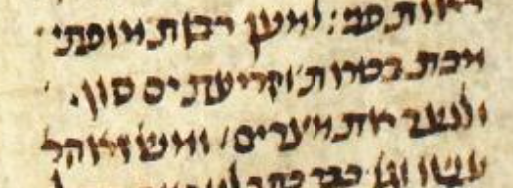
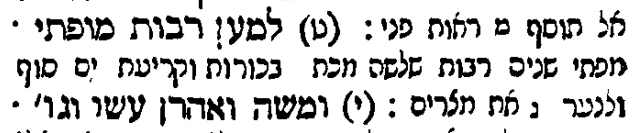
Rashi BaMidbar 22:9- “Taut Sofrim” or “Agadot Chalukot?”

Rashi BaMidbar 22:9- “Taut Sofrim” or “Agadot Chalukot?”

By Eli Genauer

Summary: Here we find polar opposite approaches to a Stirah in Rashi’s commentary to the Torah. One approach maintains that Rashi used two different Midrashic sources for his contradictory comments, and the other solves the Stirah by saying that one of the comments attributed to Rashi is actually a Taut Sofrim.

There is a very perplexing verse towards the beginning of Parshat Balak:

ט:וַיָּבֹא אֱלֹקים אֶל-בִּלְעָם וַיֹּאמֶר מִי הָאֲנָשִׁים הָאֵלֶּה עִמָּךְ:

Balak sent messengers to Bilaam asking him to curse the Jewish people. Bilaam retired for the night and Hashem approached him at that time. “Who are these men with you?”, Hashem asked. Certainly, the Omniscient One knew the answer to that question. We look to Rashi to explain the motivation for G-d’s question and surprisingly we find it all the way back in Parshat Breishit (Breishit 3:9). Adam and Chava had just disobeyed Hashem by eating the forbidden food and they heard Hashem walking in the Garden. Hashem asked Adam “where are you?”( איכה), the answer to which Hashem already knew. Rashi comments as follows:

“איכה“. יוֹדֵעַ הָיָה הֵיכָן הוּא אֶלָּא לִכָּנֵס עִמּוֹ בִּדְבָרִים, שֶׁלֹּא יְהֵא נִבְהָל לְהָשִׁיב אִם יַעֲנִישֵׁהוּ פִּתְאוֹם (בראשית רבה),[1] וְכֵן בְּקַיִן אָמַר לוֹ אֵי הֶבֶל אָחִיךָ (בראשית ד), וְכֵן בְּבִלְעָם מִי הָאֲנָשִׁים הָאֵלֶּה עִמָּךְ (במדבר כ“ב), לִכָּנֵס עִמָּהֶם בִּדְבָרִים, וְכֵן בְּחִזְקִיָּה בִּשְׁלוּחֵי מְרֹאדַךְ בַּלְאֲדָן:

Hashem knew where Adam was, but He asked this in order to open up a conversation with him that he should not become confused in his reply, if He were to pronounce punishment against him all of a sudden……..Similarly with Bilaam, “who are these men with you?” — to open up a conversation with them.

Rashi in Breishis emphasizes that the reason Hashem asked Bilaam “who are these men with you” was to draw him into a conversation, thereby making him more comfortable in speaking to Him.

However in Parshas Balak (BaMidbar 22:9) Rashi seems to have a different take[2] on why Hashem asked “Who are these men with you?”

מי האנשים האלה עמך. לְהַטְעוֹתוֹ בָא, אָמַר פְּעָמִים שֶׁאֵין הַכֹּל גָּלוּי לְפָנָיו, אֵין דַּעְתּוֹ שָׁוָה עָלָיו, אַף אֲנִי אֶרְאֶה עֵת שֶׁאוּכַל לְקַלֵּל וְלֹא יָבִין (תנחומא):

“Who are these men with you?” G-d’s question led Bilaam to conclude “Sometimes, not everything is revealed before Him, for He is not always omniscient. I will find a time when I am able to curse, and He will not realize it.” The words “ לְהַטְעוֹתוֹ בָא” with which Rashi begins, seem to indicate that Hashem was trying to mislead Bilaam into thinking that He was not all knowing, and not to draw him into a conversation . Here are a few attempts to translate לְהַטְעוֹתוֹ בָא.

  1. To cause him to err did He come” – Linear Translation of Rashi – S.S. and R Publishing Company Brooklyn, NY 1949
  2. It came to delude him“ – Chabad website for Parshat HaShavua based on translation of Rabbi A.J Rosenberg for Judaica Press
  3. He intended to delude him (1) – Chumash with Rashi of A.M. Silbermann and M. Rosenbaum, Jerusalem 1934

The Silbermann Chumash directs you to a footnote which reflects the approach of many of the Meforshai Rashi on the contradiction between the two comments of Rashi. “Rashi on Genesis 3:9 has already pointed out that sometimes G-d puts a seemingly superfluous question to a person to open a conversation. One of the instances he cites there is Bilaam. The heathen soothsayer did not understand the purpose of this question, and it suggested to him that G-d was not omniscient at all times”

The Artscroll Sapirstein Rashi does a much better job in encapsulating this approach by replacing “cause him to err” with “gave him room to err”.[3] Artscroll adds a footnote summarizing the approach of Gur Aryeh by saying that Hashem intended to gently open the conversation with Bilaam, but worded the question in an ambiguous way. Bilaam could have understood the question as Hashem’s way of entering into a conversation with him, but he instead chose to interpret it to indicate that Hashem was not always aware of all the details of a situation.

Professor Yeshayahu Maori Z”L in his book “Sugyot B’Nusach HaMikrah U’B’Parshnato”[4] advances the idea that the Stirah stems from the fact that Rashi accessed two different Midrashic sources, one for his comment in Breishit and one for his comment in BaMidbar.[5] This is based on the idea which was advanced by Rav Eliyahu Mizrachi that sometimes Rashi used “Agadot Chalukot”.[6] The author of “Tzaidah L’Derech” (Prague 1623) sees this case as one where Rashi used “Agadot Chalukot” and that is why Rashi’s comment on “מי האנשים האלה עמךis different in Breishit and BaMidbar.[7] Here are the words of Rav Yissachar Ber Eilenburg (1570-1623) author of “Tzaideh L’Derech”

אלא מאי אית לך למימר שאגדות חלוקות הן ורש״י רגיל לפרש פעמים אחר אגדה אחת ופּעמים אחר אגדה אחרת כמו שכתב הרא״ם ז״ל בהרבה מקומות אין מספר

“But what can you say but that Rashi used different Aggadot here. Rashi is accustomed to explaining matters by using one Aggadah here and another Aggadah there as Rav Eliyah Mizrachi has stated in many places”[8]

Rav Yosef Ben Yissachar Miklish (1580-1654) is one who is very bothered by the fact that this comment in Rashi seemingly contradicts what he wrote in his commentary on Hashem’s question of “where are you?” to Adam ( Breishit 3:9).[9] He addresses this Stirah in a completely different manner. He maintains that he had a manuscript which was 315 years old in which the words “לְהַטְעוֹתוֹ בָאdid not exist, nor did it contain the words that followed. Rather, it had a completely different Girsa in this Rashi. The website Alhatorah.org attributes a very similar Girsa to a manuscript called Berlin 1221[10] along with material from other manuscripts.[11] It also notes that Wolf Heidenheim attributed the comment to Rav Yosef Kara.

היידנהיים ייחס את התוספת לר׳ יוסף בר׳ שמעון ז״ל,[12] ואפשר שכך היה כתוב בכ״י שלפניו, אך בכל עדי הנוסח שבידינו, אין ייחוס מפורש לר״י קרא. והשווה רש״י בראשית ג׳:ט׳.[13]

The comment attributed to Rashi in this manuscript in general matches the words quoted by Yosef Daat for “his” version of Rashi. The main thrust is that Hashem addressed Bilaam in a way to engage him in the way one addresses someone to make them feel comfortable כשיבוא לתפוס את האדם מתוך דבריו, and not to delude him (ְלהַטְעוֹתוֹ)

Berlin 1221

https://digital.staatsbibliothek-berlin.de/werkansicht?PPN=PPN666097542&PHYSID=PHYS_0160&DMDID=DMDLOG_0001

Yosef Daat

The author of Yosef Daat even speculates that the words “לְהַטְעוֹתוֹ בָאare a Taut Sofrim inserted by printers “to cause people to err” as Rashi himself would never have written such a comment.

כי גירסת “לְהַטְעוֹתוֹ בָא” היא גירסא בא בדפוס להטות את הבריות

However, the overwhelming majority of manuscripts contain the wording of Rashi as we have it today, something which the author of Yosef Daat would not have known.[14] Here is the important manuscript known as Leipzig 1.[15]

The three Defusim Rishonim (Rome, Alkabetz and Reggio di Callabrio) do not contain the Girsa cited by Yosef Daat. There is no indication in any early printed edition from the 1400’s and 1500’s that any other Girsa existed.

Avraham Berliner (Berlin 1867) normally notes the Girsaot of Yosef Daat but here completely ignores it.[16]

There was another approach taken a bit over 400 years ago in trying to explain what Rashi meant when he wrote לְהַטְעוֹתוֹ בָא and that is to insert an explanatory remark in parentheses embedded into the text of Rashi. The first time I could find it in a printed edition was in one printed in Hanau 1611-1614. This is how it looks:

“ל ישרים דרכי ה‘ צדיקים ילכו בם ופושעים יכשלו בם כוונת הש“י שאמר מי האנשים היתה לטובה ליכנס עמו בדברים כמ“ש רש“י בפ‘ בראשית בתיבה איכה אך בא לבלעם לטעות כי הוא טעה)

This portion in the parentheses is clearly not part of Rashi and it makes no attempt to hide it as it states clearly כמ“ש רש“י בפ‘ בראשית בתיבה איכה. It tries to explain what Rashi means by first quoting a Pasuk, (ישרים דרכי ה׳… ) something Rashi could have done himself if he so desired.

The Hanau edition contained many other comments like this. The Bibliography of the Hebrew Book notes that this was an edition which featured additions to Rashi from some of the Meforshai Rashi.

ככל אשר נדפס בויניציאה [ש”ן-שנ”א] -מעבר לשער הקדמה קצרה (“אל עין הקורא”) ובה רשימת “כמה מעלות” שבהוצאה הנוכחית. בין השאר נאמר שהחומש והתרגום ובפרט פירוש רש”י הוגהו “מתוך חומש של … רּ ישעיה הלוי” (הורוויץ, בעל השל”ה).

After the Hanau edition, the embedded comment in parentheses had a very strong run. I consulted my personal collection of Chumashim from the 1700’s and 1800’s and, beginning with a Chumash printed in Amsterdam in 1729 to one printed in Pressburg in 1868, 13 have the comment and 6 do not. The comment also appears in practically all the Chumashim from the 1900’s that I looked at. This might be because many of them are photo offset of what is known as the Netter Mikraot Gedolot of Vienna of 1859 which served as the model for many editions that followed.[17]

Vilna Netter 1859

It is included on the Chabad website for the portion of the week, but only on the English side!

However, many new editions such as Oz Vehadar, Mosad HaRav Kook and HaMaor (2005) do not include this parenthetical comment, a practice which returns this Rashi to its original form.[18]


[1] בראשית רבה י״ט: י״א

וַיֹּאמֶר הָאָדָם וגוּ (בראשית ג, יב), אַרְבָּעָה הֵן שֶׁהֵקִישׁ הַקָּדוֹשׁ בָּרוּךְ הוּא עַל קַנְקַנָּן וּמְצָאָן קַנְקַנִּין שֶׁל מֵימֵי רַגְלַיִם, וְאֵלּוּ הֵן, אָדָם, וְקַיִן, וּבִלְעָם, וְחִזְקִיָּהוּ. אָדָם שֶׁנֶּאֱמַר: וַיֹּאמֶר הָאָדָם הָאִשָּׁה. קַיִן(בראשית ד, ט): וַיֹּאמֶר ה׳ אֶל קַיִן אֵי הֶבֶל וגוּ וַיֹּאמֶר לֹא יָדַעְתִּי. בִּלְעָם הָרָשָׁע, שֶׁנֶּאֱמַר (במדבר כב, ט י): מִי הָאֲנָשִׁים הָאֵלֶּה עִמָּךְ, וַיֹּאמֶר בִּלְעָם אֶל הָאֱלֹהִים וגוּ. חִזְקִיָּהוּ (מלכים ב ך, יד) (ישעיה לט, ג): מָה אָמְרוּ הָאֲנָשִׁים הָאֵלֶּה וגוּ.


[2] Medrash Tanchuma Parshat Balak Siman 5 (also BaMidbar Rabah 20:9)

The text of Medrash Tanchuma is as follows

כֵּיוָן שֶׁאָמַר לוֹ: מִי הָאֲנָשִׁים הָאֵלֶּה. אָמַר הָרָשָׁע, אֵינוֹ יוֹדֵעַ בָּהֶם. כִּמְדֻמֶּה אֲנִי, יֵשׁ עִתִּים שֶׁאֵינוֹ יוֹדֵעַ, וְאַף אֲנִי אֶעֱשֶׂה בְּבָנָיו כָּל מַה שֶּׁאֲנִי רוֹצֶה לַעֲשׂוֹת. לְכָךְ אָמַר לוֹ: מִי הָאֲנָשִׁים הָאֵלֶּה עִמָּךְ, לְהַטְעוֹתוֹ.


[3]Artscroll Sapirstein Rashi, Brooklyn, NY, 2018, p.275.

[4] Yeshayahu Maori, Shaanan, Kiryat Shmuel-Haifa, 2020

[5] Ibid pages 137-139.

[6] Rav Eliyahu Mizrachi did not use the approach here rather he tried to address the Stirah in the following manner

מזרחי במדבר כ״ב: ט

מי האנשים האלה עמך? להטעותו בא שיאמר פעמים שאין הכל גלוי לפניו אין דעתו שוה עליו אף אני אראה עת שאוכל לקלל ולא יבין. אבל בפסוק איכה פירש יודע היה היכן הוא אלא ליכנס עמו בדברים שלא יהא נבהל להשיב אם יענישהו פתאום וכן בקין אמר לו אי הבל אחיך וכן בבלעם מי האנשים האלה עמך ליכנס עמהם בדברים ושמא י”ל דה”נ כדי להכנס עמו בדברים הוא כדפירש התם אלא ששם לא פירש הטעם למה נכנס עמו בדבור ופה פירש הטעם ואמר כדי להטעותו וכוּ וכן פירש שם גבי איכה ואי הבל אחיך שנכנס עמהם בדברים כדי שלא יהיו נבהלים מלהשיב חטאתי כדי שימחול להם שאם היה מתחיל להענישם פתאום מבלתי שאלת איכה ושאלת אי הבל אחיך היו נבהלים מלהשיב חטאתי והשם ברחמיו רוצה בתשובת הרשעים ואינו חפץ במיתתן:


[7] As mentioned before, the basis of the comment in BaMidbar is Medrash Tanchuma. The basis for the comment in Breishit 3:9 according to Mizrachi is Breishit Rabah.

בב”ר פי’ שאם היה מענישו פתאום בלתי שאלת איכה היה נבהל מלהשיב לו חטאתו


[8] This approach is noted in Rashi HaShalem – Mechon Ariel- Jerusalem 1986.

[9] Yosef Daat was printed in Prague in 1609- The author יוסף בן יששכר ‬מיקליש writes that he wrote this book….

“לתקן המעוות והטעת[!] שנפלו מהמדפיסים … בפירוש … רש”י ז”ל על חמשה חומשי התורה”….”מאסף לכל הגירסות והנוסחאות שבכל החומשיּ חדשים גם ישנים בכלל, ובפרט רש”י קלף ישן נושן”

The Bibliography of the Hebrew Book writes as follows:

.המחבר כותב בהקדמה שמצא בלובלין “רש”י קלף נושן לערך שלש מאות שנה ויותר” וכן השתמש “בחומשים הישנים דפוס לובלין ודפוס פראג” להיגה בהם את פירש רש”י. המקורות להגהות מצויינים בגליון, בשולי העמודים


[10] State Library of Berlin, Berlin, Germany Ms. Or. fol. 1221 – 13th century – Ashkenazic script.

[11]  Al Hatorah notes as follows:


.עם השלמות ותיקונים ע״פ כ״י וינה 24 וכ״י המובא בהבנת המקרא (היידנהיים), ועיין גם כ״י פיזרו 16. נוסח מקוצר בכ״י ברסלאו 11 (סרוול 5) ובגיליון בכ״י ברסלאו 102 (סרוול 12)


[12] Rav Yosef bar Shimon was ר׳ יוסף קרא . This is from the website Daat which speaks about the possible intermingling of his comments with those of Rashi.

[13] This is the beginning of the way it appears in הבנת המקרא by Wolf Heidenheim, Roedelheim 1860 – במדבר עם תרגום אונקלוס מדויק ע”פ כ”י לוונשטין, ליפמן הירש-  היידנהיים, בנימין וולף בן שמשון.

[14] The comment of לְהַטְעוֹתוֹ בָא is found in the following 13 th century manuscripts:
Oxford UCC 165,
Munich 5,
Hamburg 13,
Oxford-Bodley Opp.34(Neubauer186),
London 26917 (Neubauer 168),
Casanatense 2848,
Paris 154,
Vatican Urbanati 1,
Parma 2708

The Nusach of Berlin 1221 is found in Hamburg 32:

But on top of the page is found the standard text:

[15] The website Alhatorah.org notes this about the importance of the Leipzig 1 manuscript: “the importance of the Leipzig 1 (Universitätsbibliothek Leipzig, B.H.1) manuscript of Rashi can hardly be overstated. This manuscript was written in the 13th century by R. Makhir b. Karshavyah, who states that he produced it from a copy of the commentary transcribed and annotated by Rashi’s own secretary, R. Shemayah. MS Leipzig 1 is, thus, an extremely valuable textual witness which comes tantalizingly close to the original source.”

[16] The Bibliography of the Hebrew Book includes this information from the book.

[17]  בשנת תרי”ט (1859) החלו להדפיס בוינה מהדורה חדשה של חמשה חומשי תורה עם תרגום אונקלוס, תרגום ירושלמי ותרגום יונתן, פירוש רש”י, אבן עזרא, רשב”ם, רמב”ן ועוד. מהדורה זו שנתפרסמה בהידורה וביופייה, הובאה לדפוס על יד שלמה (זלמן) נעטטער מירושלים

[18] Chumash Rashi HaMevuar 2015 (Oz Vehadar) cites Yosef Daat but without his comment that perhaps the normal Girsa is a Taut. In that same Chumash at the back of the Chumash they have a section called Nuschaot Shonot and they cite the Girsa of Yosef Daat but add that the Defusim Rishonim have it the way we do. Yosef Hallel (Brooklyn, 1987) records the words of Yosef Daat and adds that he found a similar Lashon in a manuscript.


Rosh Hashana 23b – The Missing Map – Were We Deprived of a Map Drawn by Rashi?

Rosh Hashana 23b – The Missing Map – Were We Deprived of a Map Drawn by Rashi?

Eli Genauer

The Mishnah on Rosh Hashana 22b discusses the signal fires which were lit to inform the residents of Bavel of the Kiddush HaChodesh in Yerushalayim.

מַתְנִי׳: בָּרִאשׁוֹנָה הָיוּ מַשִּׂיאִין מַשּׂוּאוֹת…..

MISHNAH: Initially, after the court sanctified the new month they would light torches on the mountaintops, from one peak to another, to signal to the community in Babylonia that the month had been sanctified.[1]

The Mishnah continues

וּמֵאַיִן הָיוּ מַשִּׂיאִין מַשּׂוּאוֹת?

And from which mountains would they light the torches?

מֵֵהַר הַמִּשְׁחָה לְסַרְטְבָא וּמִסַּרְטְבָא לִגְרוֹפִינָא וּמִגְּרוֹפִינָא לְחַוְורָן וּמֵחַוְורָן לְבֵית בִּלְתִּיןִ..…

The Daf Yomi Advancement Forum provides us details of the places mentioned.[2]

From HAR HA’MISHCHAH- the Mount of Olives (to the east of the Old City of Yerushalayim)

To SARTAVA- a mountain in the Jordan valley

To GEROFINA- most probably a tower or rise heightened by Agrippa II near Ceasarea Philippi (modern-day Banias in northern Eretz Yisrael)

To CHAVRAN- Auran, a mountain located in the area of Aurantis east of the Jordan River

To Bait Baltin, which will be discussed on 23a and b. It is identified as BIRAM, a city on the border of Eretz Yisrael and Bavel

The Gemara 23a (on the bottom) and 23b (on the top) continues (Davidson Talmud):

וּמֵאַיִן הָיוּ מַשִּׂיאִין מַשּׂוּאוֹת כוּ׳ וּמִבֵּית בִּלְתִּין, מַאי בֵּית בִּלְתִּין? אָמַר רַב זוֹ בֵּירָם

What is this place called Beit Baltin? Rav said: This is the town called Biram.

The Gemara continues

תַּנְיָא רַבִּי שִׁמְעוֹן בֶּן אֶלְעָזָר אוֹמֵר אַף חָרִים וּכְיָיר וּגְדֹר וְחַבְרוֹתֶיהָ אִיכָּא דְּאָמְרִי בֵּינֵי וּבֵינֵי הֲווֹ קָיְימִי אִיכָּא דְּאָמְרִי לְהָךְ גִּיסָא דְּאֶרֶץ יִשְׂרָאֵל הֲווֹ קָיְימִי מָר חָשֵׁיב דְּהַאי גִּיסָא וּמָר חָשֵׁיב דְּהַאי גִּיסָא

It is taught in a Baraita that Rabbi Shimon ben Elazar says: Torches were also lit at Ḥarim, and Kayar and Geder, and its neighboring places. There are those who say that the places added by Rabbi Shimon ben Elazar are located between the places mentioned in the Mishnah, whereas there are those who say that they are located on the other side of Eretz Yisrael, on the side nearer Babylonia. The Sage in the Mishnah enumerates the places found on one side of Eretz Yisrael, whereas the Sage in the Baraita enumerates the places found on the other side.

Rashi comments on the relationship of Eretz Yisroel to Bavel[3]

באידך גיסא של אי לצד בבל, שני צדדים של אי נמשכין לצד בבל:

On one side – of Eretz Yisroel towards Bavel. There are two sides of Eretz Yisroel which extend to Bavel

The language of Rashi is a bit unclear. It would be helpful if he included a map so we could visualize it better. As you can see, there is no map included in the authoritative text of the Vilna Shas.

A missing map of Eretz Yisroel and Bavel

The first printed edition of Massechet Rosh Hashana was done by the Soncino family in Pesaro, Italy circa 1511.

It shows the two sides of Eretz Yisroel as it extends towards Bavel, with the places in the Mishnah listed in order on the top side, and the places listed in the Baraita on the bottom side. The map most correctly should have been placed underneath the Rashi which begins with the words באידך גיסא.

https://digitalcollections.jtsa.edu/islandora/object/jts%3A395714#page/59/mode/1up

What the map shows is the stretch of land which extended all the way from Eretz Yisroel to Bavel, and that there were two routes to get there.[4] The places named are different because the Tanna of the Mishna discusses the route on one side of Eretz Yisroel, and the Tanna of the Baraita discusses another route. Please note that even though it seems on the map that Bavel is to the west of Eretz Yisroel, this is only a convention of modern maps.[5] Clearly Rashi knew that Bavel was to the east as Eretz Yisroel was known as Ma’arava.

The first complete edition of the Talmud printed by Daniel Bomberg in Venice (c.1520-1523) retained the space for the diagram but left it blank.[6] This was carried through in his later printing of Rosh HaShana.

https://www.hebrewbooks.org/pdfpager.aspx?req=21208&st=&pgnum=47

The Giustiani edition (Venice 1548) also left a blank space

The space disappeared from the next printed edition, that of Basel 1579.

https://www.e-rara.ch/bau_1/content/zoom/22850827


It reappeared in an edition printed in Cracow in 1603, and it was now in the right place.

The next complete edition of the Talmud was printed in Amsterdam by Immanuel Benveniste (c.1644-1648). It did not contain a space, this despite its claim that it was patterned after the Giustiani edition of 1548.

The map (or an empty space) did not appear in the influential Amsterdam edition of 1717 and that most likely doomed it to oblivion in the printed Gemarot which followed[7].

Dr. Aharon Ahrend (“Rashi’s Commentary on Tractate Rosh Hashana: A Critical Edition,” Bialik Institute Jerusalem 2014) lists a number of manuscripts as his sources (3 complete, many partial) and does not indicate that this map is in any of them.[8]  The Pesaro edition is the only one with this map. (p.218, last line”, במקור ״מ״ נוסף followed by a reproduction of the map- מקור ״מ״ is Pesaro).

The conclusion one might reach is that since no other manuscript contained this map, the manuscript on which the Pesaro edition was based had this map added by someone after Rashi’s time, perhaps in the margin to help the reader understand Rashi.

Is The Pesaro Edition of Masechet Rosh HaShana the Only Source For This Map?

Let us turn to the commentary of the Malechet Shlomo on Rosh Hashana. This commentary was first introduced in a new edition of Mishnayot printed by the Romm printers in Vilna. The Romm printers explain how they were able to access this heretofore unpublished manuscript which was found among the papers of the Chida.

The author of the Malechet Shlomo was Rav Shlomo HaAdani (1567, Saana, Yemen-1625 Chevron, Eretz Yisroel) who wrote this commentary while he was in Chevron. He states that his two main teachers were Rav Betzalel Ashkenazi (the author of Shita Mekubetzet) and Rav Chaim Vital.

In this first printed edition of his commentary on our Mishna in Rosh Hashana we find a map very similar to the one in the Pesaro edition, only it is missing the cities on the top listed in the Mishna.[9] (Possibly because his “Kazeh” applies only to the cities on the other side of Eretz Yisroel and not the ones mentioned in the Mishnah).

This is the Ktav Yad of Rav Shlomo HaAdani from his commentary on Rosh Hashana:

Library of the Emanuel Ringelblum Jewish Historical Institute Warsaw Poland Ms. 267

We mentioned that Rav Shlomo HaAdani was a Talmid of Rav Betzalel Ashkenazi. In his own copy of Rosh Hashana ( Bomberg Venice 1521) Rav Betzalel added many notes. Here is what 23b looks like in his Gemara:

The Russian State Library, Moscow, Russia Ms. Guenzburg 816

https://web.nli.org.il/sites/NLI/English/digitallibrary/pages/viewer.aspx?&presentorid=MANUSCRIPTS&docid=PNX_MANUSCRIPTS990001466800205171-1#|FL77457080

You can see that he drew in some sort of map in the empty space.

On the top of that same page, we find another map which he drew. The words on the top left are כל זה בספר יד.i[10] The Vilna Shas in its Acharit Davar says that he would do that quite often.

The Bach also drew in his Gemara, a Bomberg Rosh Hashana of 1531. The National Library of Israel owns a Gemara which was copied from the personal copy of the Bach.

The National Library of Israel, Jerusalem, Israel Ms. Heb. 24°174

Paleographic Note

אין זה אוטוגרף המחבר, ככל הנראה הועתק מהשס שלו

Here is how it looks

https://web.nli.org.il/sites/NLI/English/digitallibrary/pages/viewer.aspx?&presentorid=MANUSCRIPTS&docid=PNX_MANUSCRIPTS990044116070205171-1#|FL78289377=

There seems to have been a concerted attempt in the 1500’s and 1600’s to retain some sort of map in the Rashi. Whether it appeared in the “original Rashi” we will likely never know.

[1] Sefaria, the William Davidson Talmud, English translation of Rav Steinsaltz, here.
[2] There are many other opinions as to where these places were.
[3] The Girsa in the Dibur HaMatchil in Rashi is slightly different than in the text of our Gemara.
[4] Rashi seems to indicate that Pumpedita (alternatively Nehardea) could be seen from the border of Eretz Yisroel whereas the Meiri indicates that once the fires got to the Israel/Bavel border, they were relayed from mountain to mountain in Bavel until Pumpedita.
[5] Please see Marc Shapiro’s article on map orientation which recently ran on the Seforim Blog here.

I specifically refer to footnote 4 at this website https://www.geographyrealm.com/map-orientation/, which states “Maps with south oriented towards the top of the map are known as south-up or reverse maps, since the map appears upside down to those used to a map orientation towards the north. In these maps, South is oriented the top of the map, east is towards the left of the map and west towards the right.”
[6]  Dr. Edward Fram writes that “A blank space was left on the page suitable for adding a woodcut, but, whether for financial or technical reasons, the diagrams were not included until later printings” Edward Fram, “In the Margins of the Text, Changes in the Page of the Talmud,” in Printing the Talmud: From Bomberg to Scottenstein, ed. Sharon Lieberman Mintz et.al., Yeshiva Univ. Museum, New York: 2005, p. 91, n.4.
[7] My own research has shown this to be the case.
[8] Here is an example of a manuscript which does not contain the map:

The Palatina Library, Parma, Italy Cod. Parm. 2244

https://web.nli.org.il/sites/NLI/English/digitallibrary/pages/viewer.aspx?presentorid=MANUSCRIPTS&docid=PNX_MANUSCRIPTS990000752410205171-1#|FL14863954
[9] This is taken from Mishnayot Zecher Chanoch (Jerusalem 1999) which is based on the Romm Vilna Mishnayot which were printed from 1887-1908.
[10] My thanks to Aharon for deciphering this and for all his other insightful comments.


Which Direction is North?, Geographical Mistakes, and our Woke Universities

Which Direction is North?, Geographical Mistakes, and our Woke Universities

Marc B. Shapiro

1. Numbers 34:15 states: “Two and a half tribes have taken their inheritance on the side of the Jordan by Jericho, to the front, eastward.”

Rashi comments:

קדמה מזרחהאל פני העולם שהם במזרחשרוח מזרחית קרויה פנים ומערביות קרויה אחור לפיכך דרום לימין וצפון לשמאל

This passage is translated as follows in ArtScroll’s Sapirstein edition:

To the Front, Eastward: This means to the front of the world, which is in the east, for the eastern direction is called “face” and the western direction is called “back.” This is why the south is to the right and the north is to the left.

What does the “front of the world” mean? Furthermore, how could Rashi say that south is to the right? Anyone who looks at a map can see that south is not to the right and north is not to the left. Rather east is to the right and west is to the left.

ArtScroll begins its explanation by referring to Psalms 89:13: צָפוֹן וְיָמִין אַתָּה בְרָאתָם

The north and the south [right], Thou hast created them.” What we see from this verse is that “right” is used synonymously with “south”, which means that “north” also signifies “left”. But what does this mean, that “south” is “right” and “north” is “left”?

See also Genesis 13:9: אִםהַשְּׂמֹאל וְאֵימִנָה וְאִםהַיָּמִין וְאַשְׂמְאִילָה

Onkelos and Ps.-Jonathan translate: אם את לצפונא אנא לדרומא ואם את לדרומא אנא לצפונה

As you can see, the Targumim also understand “right” to mean south and “left” to mean north.

Genesis 14:15 states: וַיִּרְדְּפֵם עַדחוֹבָה אֲשֶׁר מִשְּׂמֹאל לְדַמָּשֶׂק

Old JPS translates: “[He] pursued them unto Hobah, which is on the left hand of Damascus.” But this is incorrect. The word משמאל here means “to the north”, and this is how it appears in the new JPS (and also in ArtScroll). See also Ezekiel 16:46 where again the words “right” and “left” refer to south and north.[1]

In its commentary to Rashi, Numbers 34:15, ArtScroll provides examples of other places where Rashi explains “south” to mean “right”. For example, Ezekiel 10:3 states: וְהַכְּרֻבִים עֹמְדִים מִימִין לַבַּיִת בְּבֹאוֹ הָאִישׁ. “Now the cherubim stood on the right side of the house, when the man went in.” Rashi comments:

מימין לביתבדרום

On the right side of the house: In the south [of the Temple].

ArtScroll does not mention Rashi, Genesis 35:18, where he explains the name בנימין as meaning “of the south”, that is, the only son who was born in the south.

Returning to Rashi’s comment in Numbers 34:15, where he says that south is to the right and north is to the left, ArtScroll explains as follows: “When one faces east, his right is to the south, his left is to the north, and his back is to the west.” This explanation is earlier found in the Silbermann translation of Rashi, Exodus, p. 261: “In reality these terms describe the points of the compass relative to one who is facing the place of sun-rise (מזרח) so that ימין, the right, is the South and שמאל, the left, is the North.” Neither ArtScroll nor Silbermann mention that this explanation is already found in Nahmanides, Exodus 26:18.

Now let us look at two passages in Maimonides. In Mishneh Torah, Hilkhot Terumot 1:9, Maimonides states:

איזו היא סוריהמארץ ישראל ולמטה כנגד ארם נהריים וארם צובה כל יד פרת עד בבל כגון דמשק ואחלב וחרן ומגבת וכיוצא בהן עד שנער וצהר הרי היא כסוריה

What constitutes Syria? From Eretz Yisrael and below parallel to Aram Naharaim and Aram Tzovah, the entire region of the Euphrates until Babylonia, e.g., Damascus, Achalev, Charan, Minbag, and the like until Shinar and Tzahar. These are considered like Syria.

I have underlined the problematic word. How can Maimonides say that Aram Naharaim etc. are below the Land of Israel? As R. Mordechai Emanuel notes, the Rambam is placing Damascus south of the Land of Israel which is clearly mistaken.[2] Here is the map, and if we inserted all the places places Maimonides mentions we would find them north of Israel.

R. Isaac Klein writes as follows in his translation in the Yale Judaica Series (p. 436):

Outward” – literally “below.” The term is due to the belief that the Land of Israel was situated higher than all other lands, hence all other countries were considered below it. In modern Hebrew he who immigrates into Israel is termed oleh, “he who has ascended,” while he who leaves Israel is called yored, “he who has descended.

The Touger edition of the Mishneh Torah comments:

The term “below” in this context is problematic. It does not mean “south,” because significant portions of Syria are more northerly than Eretz Yisrael. Some commentaries understand it as meaning in height, because as Kiddushin 69b states, Eretz Yisrael is higher than other lands.

Rambam le-Am states that the word “below” should be understood as meaning “outside of”, which is how Klein also translated the passage:

כלומרמחוצה להוכתב למטה” לפי שארץ ישראל גבוהה מכל הארצות – קידושין סט:

Yet this doesn’t make much sense. Maimonides is giving the borders of Syria so saying מארץ ישראל ולמטה cannot possibly mean “outside Eretz Yisrael”. The fact that Eretz Yisrael is higher than the surrounding lands is also not relevant. In other words, the three editions of the Mishneh Torah we have just mentioned don’t have a clue as to why Maimonides writes למטה, when anyone looking at a map would conclude that he should have written למעלה.

The same problem can be seen in Hilkhot Kiddush ha-Hodesh 11:17 where Maimonides states that Jerusalem is found below the equator.

מתחת הקו השוה המסבב באמצע העולם

Both Solomon Gandz in the Yale Judaica Series and the Touger edition translate this as “north of the equator” without explaining how מתחת can mean north. Again, anyone can look at a map and see that Jerusalem is above the equator, so what is going on here?

The answer to the questions I have asked is that maps in the Islamic world were generally oriented with south at the top. I can do no better than cite Jerry Brotton’s wonderful bookת A History of the World in Twelve Maps (London, 2012), pp. 58-59:

Most of the communities who converted to Islam in its early phase of rapid international expansion in the seventh and eighth centuries lived directly north of Mecca, leading them to regard the qibla as due south. As a result, most Muslim world maps, including al-Idrisi’s, were oriented with south at the top. This also neatly established continuity with the tradition of the recently conquered Zoroastrian communities in Persia, which regarded south as sacred.

This orientation would have appeared on the maps that Maimonides was familiar with, and thus it makes sense for him to describe Aram Naharaim, etc. as below Israel, or Jerusalem as below the equator, as that is what he saw when he looked at a map.[3] Here is an example of such a map by the famed twelfth-century cartographer Muhammad al-Idrisi. This map is known as Tabula Rogeriana as it was made for King Roger II of Sicily.[4]

As you can see, Saudi Arabia is on top. Here is a twentieth-century map which also puts south on the top.[5]

We have other examples of maps in Jewish sources that show the directions differently than what we are used to. For example, here is Gittin 7b and the maps in Rashi show west on top.

We also have maps in medieval manuscripts of Rashi’s commentaries that show east on top, as well as north on top.[6]

Here is Maharsha, Gittin 7b, which shows west on top. Below this you can see the map in R. Meir of Lublin’s commentary that has east on top.

Here is Maharsha, Berakhot 61b, and east is on top.

Here is a page from R. Jonathan ben Joseph’s Yeshuah be-Yisrael, a 1720 commentary on Maimonides’ Hilkhot Kiddush ha-Hodesh (ch. 10), and you can see again that east is on top.
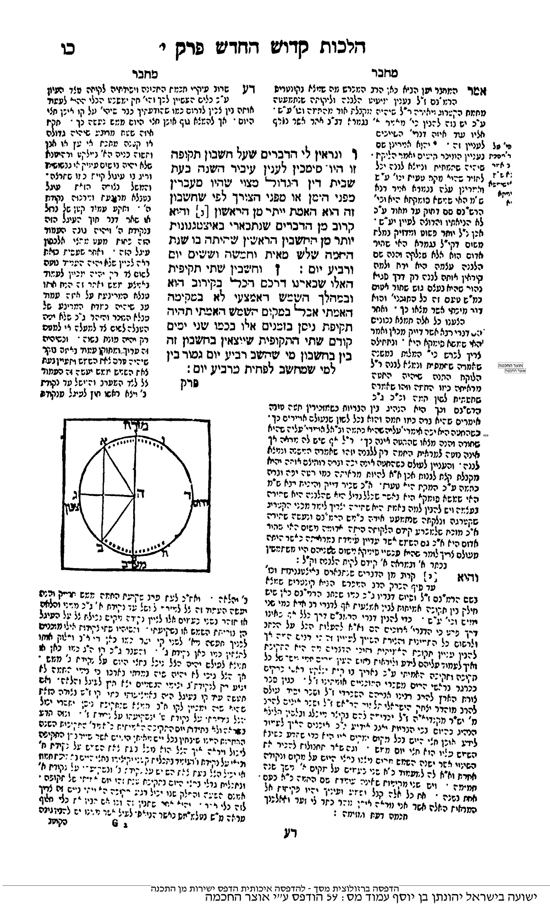
Many people probably assume that what we have seen are printers’ mistakes, but that is not the case. European cartographers regularly put east on top, as Jerusalem was in the east relative to Europe, and the top was often regarded as the most important place on a map.[7] We also have examples from Europe with the west on top, although this is much rarer.[8] The important point is that our current maps that have north on top are not any more correct than these other maps. It is simply a matter of convention which direction should be on top, and interested readers are referred to Brotton’s book mentioned already.

As we have been discussing maps, here are some examples of what appear to be geographical mistakes in rabbinic literature, in no particular order. (In a future post I will deal with rabbinic views about whether the earth is round or flat, and why they thought there was no human habitation in the southern hemisphere.)

Rashi, Shabbat 65b, s.v סהדא, and Kiddushin 71b s.v. עד נהר, states that the Euphrates flows from the Land of Israel to Babylonia.[9] The Talmud, Shabbat 65b, quotes Rav that when the water rises in the Euphrates this is a sign that there has been rain in the Holy Land.[10] I believe the simple explanation of this passage, contrary to Rashi, is that there was an assumption that if there was significant rain in Babylonia then there was also rain in Eretz Yisrael. Presumably, this is also the meaning of pseudo-Rashi to Nedarim 40a s.v. סהדא (this commentary is not by Rashi):

כשנהר פרת גדול הוי עדות לגשמים שיורדין לאי דאי גבוה מכל הארצות ובאין גשמים ונופלין בפרת ומתגדל מהן

Rashi, however, had a different approach, and believed that the Euphrates flows all the way from the Land of Israel to Babylonia, so when the level of the Euphrates is raised this is proof that in the Land Israel it rained. Yet this is incorrect as the Euphrates does not flow from the Land of Israel to Babylonia. See also Tosafot, Shabbat 65b s.v. סהדא, who also think that the Euphrates is found in the Land of Israel, but reject Rashi’s understanding since Tosafot claims that rivers only flow from east to west (so the Euphrates must flow from Babylonia to the Land of Israel).[11]

However, R. Samuel Strashun, note to Shabbat 65b, tells us that he looked at a map and saw that the Euphrates indeed flows from west to east. He further notes that the Danube River also flows from west to east, meaning that Tosafot’s reason for rejecting Rashi is incorrect. We know that the Tosafot on different tractates do not necessarily come from the same school, and Tosafot, Bekhorot 44a, s. v. לא, and 55b, s.v. מיטרא, mention Rashi’s idea that the Euphrates flows from the Land of Israel to Babylonia.

Returning to Rashi, many have wondered how Rashi could describe the Euphrates as flowing from the Land of Israel, although I don’t see what is so difficult, since without accurate maps how could one expect Rashi to have perfect knowledge of the geography of the Middle East?[12] Nahmanides famously records in his commentary to Genesis 35:16 that only when he came to the Land of Israel and could see the geography did he realize that an explanation he had offered was incorrect. Interestingly, Nahmanides never updated his commentary to Genesis 35:18 where he criticizes Rashi for his supposed geographic error regarding Aram Naharaim. Yet most would say that it is Ramban who is mistaken when he writes that “Aram is southeast of the Land of Israel, and the Land of Israel is to its north.”[13]

R. Strashun calls attention to what he thinks is another geographical mistake in Rashi. In his note to Sukkah 36a he mentions that Rashi is mistaken (היפך המציאות) about where Kush is located, as R. Strashun tells us that Kush is Ethiopia. However, as R. Yaakov Hayyim Sofer has noted, Rashi routinely explains Kush as being identical with הינדואה, not Ethiopia. Presumably, Rashi understands הינדואה as India, which means that Hodu, mentioned in Esther 1:1, is a different place. While most people have understood Esther 1:1 to mean “from India[14] unto Ethiopia,” Rashi on Esther 1:1 tells us that Kush and Hodu are next to each other (which is one talmudic opinion in Megillah 11a).

Leaving aside Rashi’s identification of Kush as הינדואה, the real problem is Rashi’s understanding of הינדואה as a different place than Hodu. Interested readers can examine my earlier post here where I discuss this issue and explain why הדו has a dagesh in the dalet.[15] As for Kush, there is no uniformity of opinion as to what it refers to, and it is possible that the different biblical references do not all refer to the same place.[16] In agreement with Rashi, Tosafot, Bava Batra 84a s.v. בצפרא, mention that the Midrash places Kush in the east. R. Jacob Emden, who knew his geography, states that in addition to Ethiopia there was another land near India that was called Kush.[17] No less a figure than R. Abraham Maimonides confesses that he does not know where the Kush mentioned in Genesis 2:13 is to be found.[18]

There is actually a long mountain range called Hindu Kush that passes through Pakistan, which until the second half of the twentieth century was included in the territory called India.[19] Since the term “Hindu Kush” has been in existence for over a thousand years, it was obviously not incorrect for medieval writers to speak of a Kush near India. In my earlier post I also cited P. S. Alexander who writes: “It was a common view in ancient geography, shared by Ptolemy and probably also the author of the book of Jubilees . . . that Ethiopia was joined to India in the east. It is this idea that lies behind the [talmudic] statement that Cush and Hodu are adjacent.”[20] He also notes that the Indians’ dark skin was a reason for the identification. Furthermore, Alexander tell us, there was an ancient belief that there was a land connection between Ethiopia and India south of the Indian Ocean.

Speaking of geographical inaccuracies, Rabbi Natan Slifkin writes as follows in his new book Rationalism vs. Mysticism, p. 517:

The Zohar makes many statements about places in the Land of Israel which are incorrect, but which would be perfectly understandable if they were authored by someone living in Spain. For example, in multiple places the Kinneret is described as being in the territory of Zevulun, and as being the source of the chilazon that produces techelet, even though it was actually derived from the Mediterranean. Lod is described as being situated in the Galilee, and Cappadocia is described as a village near Sepphoris rather than as a province in Asia Minor.[21]

Avraham Korman called attention to a passage in Yalkut Shimoni, Joshua, remez 15.[22] The Midrash is commenting on the verse in Joshua 3:16:

וַיַּעַמְדוּ הַמַּיִם הַיֹּרְדִים מִלְמַעְלָה קָמוּ נֵדאֶחָדהַרְחֵק מְאֹד באדם (מֵאָדָםהָעִיר אֲשֶׁר מִצַּד צָרְתָן

The waters which came down from above stood, and rose up in one heap, a great way off from Adam, the city that is beside Zarethan

The Midrash states:

שמעת מימיך עיר נקראת אדםאלא על אברהם נאמר והאדם הגדול בעקים” (יהושע ידטו)

Korman believes this Midrash was authored by someone who did not know the Land of Israel, and thus could not believe that there was actually a city named Adam. Therefore, the sage offered a midrashic understanding of “Adam”. Yet there was indeed such a city, and it is mentioned in Yerushalmi, Sotah 7:5. It was later called Damiyeh by the Arabs.[23] However, Korman’s notion that the author of the Midrash did not know any of this, and the passage should be read as a denial of the literal existence of the city of Adam, strikes me as complete nonsense.

R. Ovadiah Bartenura in his commentary to Genesis 12:6 strangely does not realize that Hebron is in the south of biblical Eretz Yisrael.[24] R. Ovadiah would eventually journey to the Land of Israel, so this comment must have been made before his arrival there.

R. Moses Sofer, She’elot u-Teshuvot Hatam Sofer, Even ha-Ezer II no. 49, cites Deuteronomy 11:24, which refers to the boundaries of “Greater Israel.”

כָּלהַמָּקוֹם אֲשֶׁר תִּדְרֹךְ כַּףרַגְלְכֶם בּוֹ לָכֶם יִהְיֶה מִןהַמִּדְבָּר וְהַלְּבָנוֹן מִןהַנָּהָר נְהַרפְּרָתוְעַד הַיָּם הָאַחֲרוֹן יִהְיֶהגְּבֻלְכֶם

Every place whereon the sole of your foot shall tread shall be yours: from the wilderness, and Lebanon, from the river, the river Euphrates, even unto the Western Sea shall be your border.”

R. Sofer wonders about the words מן המדבר והלבנון, as these are both in the south, so how could this establish borders when what the verse should have is a site in the north together with a site in the south?

ויש לי מקום עיון בלשון הקרא . . . שלכאורה אין לו שחר כי המדבר והלבנון הוא גבול דרומית לאי שבין צפון ים סוף לדרום אי

This passage is surprising, to say the least, as how could R. Sofer say that Lebanon is in the south of Israel? Ever since this passage appeared in print it has mystified readers and many have simply thrown up their hands without any explanation, as it is impossible to imagine that R. Sofer did not know that Lebanon is located to the north of Israel. R. Sofer was attacked on this point by Leopold Loew in his Hungarian periodical Ben Chananja.[25] R. Joseph Natonek in a German booklet offered an explanation of R. Sofer, but I confess to not understanding his point. Here is how R. Natonek’s position is summarized by Shmuel Weingarten.[26]

הרב נטונק מוכיח איפוא שהאתנחתא” בדברי החתס צריכה להיות אחרי המלים שבין צפון” והוו של והלבנון אינה ו‘ החבור (konjunktiv) אלא ו‘ הפרוד (disjunktiv) . . . דברי החתס ברורים איפוא: “כי המדבר והלבנון הוא גבול דרומית לאי שבין צפון” מן המדבר שבדרום עד הלבנון שבצפון וכו

R. Sofer made his comment regarding Deuteronomy 11:24, and he sees the words מן המדבר והלבנון as indicating that the wilderness and Lebanon are in the same place. The same words are found in Joshua 1:4:

מהמדבר והלבנון הזה ועד הנהר הגדול נהר פרת

From the wilderness, and this Lebanon, even unto the great river, the river Euphrates.”

Here, too, if we didn’t already know where Lebanon is we would assume that the wilderness and Lebanon are together, as that is the simplest way to read the text. It is so obvious, in fact, that Metzudat Tziyon is forced to explain “Lebanon” as referring to the name of a forest. The Vilna Gaon, in his commentary printed in the Mikraot Gedolot, also does not regard this “Lebanon” as referring to the Lebanon we know but a different Lebanon in the southeast of Israel.[27] So we see that R. Sofer was not alone in his understanding.

Avraham Moshe Luntz, who wrote much about the geography of the Land of Israel, also argues that the “Lebanon” referred to here is not the Lebanon we know.[28] He thinks the verse is referring to the borders of a future Greater Israel and the Lebanon mentioned is actually Wadi al-Abyad in the south, in the Land of Edom. (Abyad=white, which is also the root of the word Lebanon.) However, I don’t know which place he is referring to, as while there is a Wadi al-Abyad in Jordan it is not in the south but on the east of Jerusalem.

Here is how Luntz connects what he says with the Vilna Gaon’s comment (p. 83):

והנה כל הדברים האלה אף כי חדשים הם לא שערום הראשונים בכל זאת הרגיש בהם הגרא זל מטעם סוד ה‘ ליראיו אם כי לא שמע מעולם מן ועדאלאביאט ורק מרוח הקודש אשר הופיע בבית מדרשו כתב בבאורו על הגבולין דיהושע והלבנון זה מזרחו של ארץ ישראל הקרוב לצד דרום ולכן אמר הזה” ששם היו עומדים והרב בעל תבואות הארץ כתב עליו נפלאים בעיני דבריו“. אמנםלא נפלאים ולא רחוקים המהרק נפלאת היא בעניניו רוח קדשו של הגרא זל אשר מאת ה‘ נתנה לו.

In Mesorat Moshe, vol. 2, pp. 158-159, R. Moshe Feinstein discusses Venice and Shushan Purim.[29] In the note the following appears:

ואחר כך הזכיר רבינו שונציה שנזכר בפיוטים הוא חלק מרוסיהפעם היה שם רב אליהו פרושנעראבל אפשר שונציה שמוזכר בשער דף של ספריםלמקום הדפוסמכוין ל-Venice [ונציה], שמוצאים זה על ספרים עתיקותבשנים שברוסיה וכו‘ לא היו בתי דפוסואפשר שבאיטליה כן היה.

R. Moshe says that the Venice that is mentioned in piyutim is not Venice, Italy, but a place in Russia. He must have had in mind the town of Vinnitsa – וויניצא – which you can read about here. He also says that R. Elijah Feinstein (of Pruzhan) was there, which appears to mean that he served as a rabbi in Vinnitsa (although this appears to be inaccurate). As for the first point about Venice being mentioned in piyutim, I have never heard of this and if it is the case, it could only refer to Venice, Italy. Perhaps R. Moshe was referring to something like this book of Yotzrot which on the title page says it was published in Venice, and refers to Venice, Italy.

The note in Mesorat Moshe continues that R. Moshe was aware of the name Venice on the title page of seforim, and thought it is “possible” that this refers to Venice, Italy. This is all very strange, and despite what the note says I find it impossible to believe that R. Moshe did not know that Venice was a center for Jewish printing, even if he did not know the extent of this printing. (Venice was where the first Mikraot Gedolot[30] Bible, as well as the first complete Babylonian and Jerusalem Talmuds were printed.) I am inclined to assume that this note does not accurately inform us of what R. Moshe’s point was.

Regarding Venice, Rashi has an interesting passage in his commentary to Isaiah 42:10:

ומלואוהקבועים בים ולא באיים אלא בתוך המים שופכים עפר כל אחד ואחד כדי בית והולכים מבית לבית בספינה כגון עיר ווניצייא

[Those who go down to the sea and] those therein: Those whose permanent residence is in the sea and not in the islands, but in the midst of the water they spill earth, each one of them, enough for a house, and go from house to house by boat, like the city of Venice.


Rashi mistakenly thought that the islands of Venice–of which there are 118—were man-made. He also seems to have thought that there was only one house on each island and you travel from house to house by boat. Incidentally, as Yitzhak Baer has noted, other than Venice the only other contemporary (European) city Rashi mentions by name is Rome.[31] For the reference to Rome, Baer refers to Rashi’s commentary to Isaiah 33:23, but he neglects to note that Rashi also mentions Rome in his commentary to Micah 7:8. Furthermore, in Bomberg’s 1525 Venice Mikraot Gedolot, Rashi to Zechariah 13:7 reads: את מלך רומי הרשעה. Yet in the standard Mikraot Gedolot the following appears: את מלך בבל.

Manfred Lehmann[32] thought that there was something else related to Venice in Rashi’s commentary to Nehemiah 7:3 where in manuscripts, but not in the Mikraot Gedolot printed version, Rashi explains the word משמרות (watches) as: גיטא בלעז. Lehmann states that this is the first time the word “Ghetto” appears in Jewish literature, and that the word originates in Venice. Lehmann then states that he doubts that there was already a ghetto in Venice in the days of Rashi. I don’t understand this at all, because if Lehmann (correctly) doubts that there was a ghetto in medieval Venice, then how could he not realize that the word גיטא cannot refer to “ghetto”. (The Venice ghetto was established in 1516.) This is quite apart from the fact that the word “ghetto” would not make sense in the verse. If you want to know what גיטא means, the place to look is Moshe Katan, Otzar Loazei Rashi (Jerusalem, 1990), p. 88, where he provides the Hebrew translation of the old French word: תצפיותמארבים. I must also note that the commentary to Nehemiah attributed to Rashi was not actually written by him.[33]

In the first draft of this post I wrote that I didn’t understand how R. Hayyim Joseph David Azulai, Shem ha-Gedolimma’arekhet gedolim, s.v. ע no. 2, could write that R. Ovadiah of Bertinoro came from a town in “Romania.” R. Azulai refers to Romania in Shem ha-Gedolimma’arekhet gedolim, s.v. א no. 169, and ma’arekhet seforim, s.v. ח no. 15, and it means  Byzantium. I didn’t think it was possible that R. Azulai was unaware that Bertinoro is a town in Italy, some 200 miles from his home in Livorno. Furthermore, I have no doubt that every Torah scholar who lived in Italy in R. Azulai’s day would have known and been proud of the fact that R. Ovadiah came from Italy. So I didn’t know what to make of R. Azulai’s comment. Shimon Steinmetz enlightened me that when R. Azulai refers to Bertinoro as being in Romania, he actually has in mind the Italian historical region called Romagna. In an era before there was a country named Italy, it makes sense that R. Azulai would refer to the region that R. Ovadiah of Bertinoro came from.

Let me offer one final example where the mistake is not made by the medieval authority, in this case Maimonides, but by his critic, R. Jacob Emden. In the Mishneh Torah, Hilkhot Tzitzit 2:2, Maimonides writes about how tekhelet is produced: “A chilazon is a fish whose color is like the color of the sea and whose blood is black like ink. It is found in the ים המלח.” We all know that ים המלח means the Dead Sea, and the Dead Sea is referred to as such numerous times in the Bible. R. Jacob Emden is shocked that Maimonides makes the error of thinking that fish could live in the Dead Sea.[3] He ends his comment with the strong words: לכן שיבוש גמור הוא זה לרמ זל. A number of later commentators also call attention to Maimonides’ “problematic” words, and some refer to R. Emden’s comment.

Yet the mistake here is not by Maimonides but by R. Emden, who didn’t realize that when Maimonides referred to the “salt sea” he meant the Mediterranean.[35] Maimonides was just translating into Hebrew the Arabic term used to designate the Mediterranean[36]אלבחר אלמאלח. At the end of his Commentary on the Mishnah, Maimonides mentions that he wrote this work while on אלבחר אלמאלח, and in his commentary to Kelim 15:1 he speaks of ships that that go from the Land of Israel to Alexandria by way of אלבחר אלמאלח. In the Mishneh Torah, Hilkhot Arakhim ve-Haramim 8:8, the best texts have: ישליכן לים הגדול ים המלח כדי לאבדן, thus explicitly identifying what he means by “salt sea”. When Maimonides refers to the Dead Sea in Mishneh Torah, Hilkhot Shabbat 21:29, he calls it ים סדום [37]. This is not his own term as Bava Batra 74b refers to ימה של סדום. Yerushalmi, Shabbat 14:3 refers to the Dead Sea as מי סדום. Interestingly, Yerushalmi, Kil’ayim 9:3 refers to it as ימא דמילחא [38]

2. In a number of posts I have documented how material from an archive at Bar-Ilan University ended up in various auctions. I was quite surprised that no one in any position of authority at Bar-Ilan seemed to care at all about what I had discovered. R. Elli Fischer recently discovered something similar, but with a much more expensive manuscript from the Jewish Theological Seminary. The story in this case is that the manuscript was sold by JTS. See the report hereMaybe the story with the archive from Bar-Ilan is similar to what happened with JTS, and it was actually Bar-Ilan which sold the archive. This would explain why they expressed no interest in finding out how the archive ended up at auction.

* * * * * * * *

Some years ago Rabbi Jonathan Sacks told me that in addition to writing scholarship I should also write for the larger world. He specifically mentioned that I should write for the Wall Street Journal. I finally took up his suggestion a few months ago and submitted an opinion piece to the Journal. They get hundreds of submissions a day, so I was not very surprised when they turned it down. Maybe the message in this is that I should stick to what I do best instead of involving myself in the culture wars. Rather than having the piece go to waste, I present it to you here.

Is it all Bad News at Our Universities?

For many people, the campus seems like a scary place these days. One can read about social justice warriors running roughshod over anyone who crosses the latest woke standards. Professors have been raked over the coals, and worse, for even mildly crossing the new woke thought police. We have also been treated to the spectacle of professors confessing their sins and promising to do better in the future, in scenes that look like they came out of Chinese Cultural Revolution re-education camps.

While I don’t wish to downplay any of this, and there have indeed been shocking violations of free speech at some of the top universities, I think that many Americans are getting a warped sense of what takes place at the typical university. I am sometimes asked by people if my university is anything like what they have been reading about, to which I can happily reply that no, I have never had the misfortune to experience that. To begin with, the various excesses are almost always centered in a few departments in the humanities. As one who teaches in a Theology/Religious Studies Department at a Catholic university—which, it bears noting, had in-person classes this academic year unlike so many other institutions—it is hard to see how the woke mentality and cancel culture would play out. Are we to remove the Bible, Augustine, and Aquinas because passages in these works are not in line with twenty-first century woke values?

This clearly is a non-starter, but just as important is that there has never been a push for this from students, who often are the ones behind the most damaging of campus controversies. I daresay that my experience is no different than my colleagues at hundreds of other colleges and universities in the country, institutions that are not what is commonly called “elite” institutions of learning, but which do a wonderful job in educating a student body that reflects middle-class America. Yes, we have liberal and even progressive students, but what we don’t have in any numbers—or at least I have not come across them—are students who speak woke and know all the Marxist lingo, who can go on and on about intersectionality, white supremacist capitalism, and America as the center of evil in the world, and who get outraged (or pretend to be outraged) at things that even a couple of years ago no one would have batted an eye at.

It is certainly possible that things will change in the future, and the wokeness and cancel culture currently infecting the “elite” universities, as well as so many other aspects of elite society, will filter down to the rest of the country including my university. If this happens, it might be a good time to think of retirement, as I wonder—to give an example from one of my courses—how I could teach about ethics under a woke regime. Could we actually have a unit on Affirmative Action where together with Ronald Dworkin’s spirited defense of racial preferences we also read those who see any discrimination on the basis of race, even if it is called “equity,” as deeply immoral? Could we do the unit on capital punishment where we examine whether our criminal justice system is “systemically racist,” instead of assuming that as a given? Could we focus on abortion, where we examine if women really do have a “right” to choose to terminate a pregnancy? Then there are the student presentations where all subjects are open for discussion, including such hot-button matters as immigration, war, sexual ethics, and transgender issues. Never once has a student tried to shut down the freewheeling class debate or complained that another’s point of view makes them feel “unsafe.” That is the way it should be, and I am confident that is how matters will remain in the vast majority of our colleges and universities. For those who are worried that higher education is leading us into the abyss, I can only say that from where I am standing, it is actually higher education that is succeeding where the “elite” universities have often failed.

* * * * * * * *

[1] Rashi, quoting Midrash Tanhuma, identifies Hobah with Dan. Yet as R. Meir Mazuz notes, it is hard to know what to make of this, as Hobah is described as north of Damascus which is not where the territory of Dan was. See Bayit Ne’eman: Bereshit 14:15.

[2] “Gevulot Eretz Yisrael (2),” Ha-Ma’yan 33 (Tevet 5753), p. 15.

[3] This is noted by R. Yisrael Ariel, Otzar Eretz Yisrael (Jerusalem, 2012), vol. 4, p. 13. I have checked numerous editions of the Mishneh Torah and the only one to explain this point is the Makbili edition, Terumot 1:9. Here is the relevant page which also includes a map found in manuscripts which also has south on top.


[4] See here from where I took the map.

[5] This map is found here.

[6] See Portraying the Land: Hebrew Maps of the Land of Israel from Rashi to the Early 20th Century (Berlin, 2018), ch. 1, available here.

[7] They also placed Jerusalem in the center of the known world. There is a commentary attributed to Maimonides on Tractate Rosh ha-Shanah. According to this commentary, the Land of Israel is to be regarded as on the western part of the world. Where then is Europe to be placed? 

 
Here is “Maimonides” comment, Hiddushei ha-Rambam le-Talmud, ed. Zaks (Jerusalem, 1963), p. 79:

צריך אתה לידע שארץ ישראל סמוכה למערבו של עולם הרבה מכל הארצות

[8] See here. See also here. How pre-modern people imagined the world, which was based on the maps they saw, has relevance to the question of where to place the halakhic dateline. See e.g., the important articles, complete with historical maps in color, by R. Dovid Yitzchoki and R. Efraim Buckwold in Tevunot 2 (2018), pp. 969-1095.

[9] See also Rashi, Shabbat 145b s.v. הני. In the Soncino translation to Shabbat 65b the following note appears: “Obermeyer, p. 45 and n. 2 rejects this [Rashi’s opinion] on hydrographical grounds, and explains that in most cases the rains in northern Mesopotamia in the Taurus range, where the Euphrates has its source, are the precursors of rain in Palestine.” The book by Jacob Obermeyer referred to is Die Landschaft Babylonien im Zeitalter des Talmuds und des Gaonats: Geographie und Geschichte nach talmudischen, arabischen und andern Quellen (Frankfurt, 1929).

[10] The term “Holy Land” with reference to the Land of Israel is actually not mentioned in the Bible, the Talmud, or the geonic writings. According to Hayyim Asher Berman, who has investigated the matter, the term in its Hebrew version first appears in the medieval period. Berman also notes that the Zohar uses the term ארעא קדישא hundreds of times. Berman claims that it is actually due to the Zohar’s use of this term that the Hebrew version became so popular. See Ha-Ma’yan 61 (Tevet 5781), pp. 102-103. (Understandably, others will see this as another sign that the Zohar was written in the medieval period.) Berman’s investigation was spurred by R. Shaul Yisraeli’s rejection of the term “Holy Land,” which he saw as a Christian invention in opposition to the term “Land of Israel.” R. Yisraeli noted that unlike ארץ הקודש, the term אדמת קודש is a Jewish expression and relates to the many mitzvot relevant to the Land of Israel. See R. Meir Schlesinger, “Hirhurim al Hibat ha-Aretz,” Ha-Ma’yan 60 (Tamuz 5780), p. 50. R. Yisraeli was obviously aware that the term“Holy Land” was often used by Jews for the last thousand years. However, I believe his intention was about the present, not the past. Today you can find Christians who speak of visiting the Holy Land and are careful to never actually mention the name “Israel.” This has to be seen for what it is, an anti-Zionist delegitimization of the existence of the State of Israel.

[11] See also Tosafot, Kiddushin 71b. s.v. עד.

[12] See R. Jacob Emden’s note to Arakhin 15a where he criticizes Tosafot for a geographical mistake that was also due to not having a reliable map:

ואמנם כל מש תוס‘ כאן אינו נכון גם ציור הארצות והים הוא מתנגד למציאות

To this I would add R. Meir Mazuz’s melitzahאין אחר המציאות כלום (The expression is based on Bava Batra 152b [end]: אין אחר קנין כלום)

[13] See e.g., R. Elijah Mizrahi, Commentary to Genesis 32:2. In his super-commentary to Nahmanides, Gen. 38:18, R. Menahem Zvi Eisenstadt writes:

הדברים קשים להולמם, שהרי צדקו דברי רש”י שא”י בדרום ארם היא, והדבר ידוע

[14] The Soncino translation says as follows: “The Hebrew Hoddu is really ‘Indus,” and refers to the north-western portion of the Indian peninsula which was drained by the Indus. This territory was added to the Persian Empire by Darius.”

[15] To the sources listed there, see also Tosafot Yom Tov, Yoma 3:7, who does not make the connection between the נ in הינדואה and the dagesh in the ד of הדו.

[16] See Avodah Berurah, Sukkah, vol. 2, p. 128.

[17] See his note to Megillah 11a.

[18] Perush ha-Torah le-Rabbenu Avraham ben ha-Rambam, ed. Moshe Maimon, vol. 1, p. 150.

[19] See here.

[20] “Toponomy of the Targumim,” (unpublished doctoral dissertation, Oxford University, 1974), p. 134.

[21] The issue of the Zohar’s knowledge of the Land of Israel has been discussed for a long time. Gershom Scholem, in his article on the Zohar in the Encyclopaedia Judaica, writes as follows:

The Palestinian setting of the book is also fictional, and, in the main, has no basis in fact. The Zohar relies on geographical and topographical ideas about Palestine taken from older literature. Sometimes the author did not understand his sources, and created places which never existed, e.g., Kapotkeya, as the name of a village near Sepphoris, on the basis of a statement in the Jerusalem Talmud (Shev. 9:5), which he combined with another statement in the Tosefta, Yevamot 4. He produces a village in Galilee by the name of Kefar Tarshi, which he identifies with Mata Meḥasya, and tells in this connection of the rite of circumcision which is based on material quoted in geonic literature with regard to Mata Meḥasya in Babylonia. Occasionally a place-name is based on a corrupt text in a medieval manuscript of the Talmud, e.g., Migdal Ẓor at the beginning of Sava de-Mishpatim. In the matter of scene and characters there are very close links between the main body of the Zohar and the stratum of the Midrash ha-Ne’lam, which follows the same path of mentioning places which do not actually exist. In this section Simeon b. Yoḥai and his companions already constitute a most important community of mystics, but other groups are mentioned as well, and particularly later amoraim or scholars with fictitious names who do not reappear in the Zohar. In recent times, several attempts have been made to explain the geographical difficulties, and to give a non-literal interpretation of statements in the Talmud and the Midrashim in order to make them fit the Zohar, but they have not been convincing.

Scholem’s point about Kapotkeya is rejected by R. Reuven Margaliyot, Peninim u-Margaliyot (Jerusalem, 2006), pp. 212ff.

[22] Ha-Adam ve-Tiv’o be-Mada u-ve-Yahadut (Tel Aviv, no date), p. 28.

[23] See Encylopaedia Judaica , s.v. Adam.

[24] See his commentary printed in Ba’alei ha-Tosafot al Hamishah Humshei Torah (Warsaw, 1876), p. 10b. This example is noted by R. Avraham ha-Kohen, Kiryat Arba, p. 237.

[25] See Shmuel Weingarten, Ha-Rav Yosef Natonek (Jerusalem, 1943), pp. 18ff. For another Haskalah attack on R. Sofer, see the anonymous author in Kerem Hemed 9 (1856), Letter 14. In a mocking fashion, the author deals with a number of matters, one of which is that in She’elot u-Teshuvot Hatam Sofer, Orah Hayyim, no. 16, R. Sofer states that R. Amram Gaon is buried in Mainz and he saw the grave. R. Sofer also mentions this in She’elot u-Teshuvot Hatam Sofer ha-Hadashot (Jerusalem, 1989), no. 11. This cannot be correct, and one can only assume that R. Sofer was shown the grave of someone else named R. Amram and given the false information that this R. Amram was R. Amram Gaon. For a possible identification of the R. Amram whose grave R. Sofer saw, see R. Naftali Yaakov ha-Kohen, Otzar ha-Gedolim, vol. 7, p. 332, and the sources cited in R. Nosson David Rabinowich, Safra ve-Saifa (Jerusalem, 2013), pp. 280ff.

[26] Ibid., p. 22 n. 17.

[27] See here for the suggestion that the Vilna Gaon’s comment is a printer’s error and it really should say “north” instead of “south.”

[28] Yerushalayim 7 (1907), pp. 81ff. It has recently been suggested that there are actually two separate biblical places named “Eilat”. See R. Yehudah Berakhah, Birkat Yehudah (Jerusalem, 2021), vol. 8, p. 417.

[29] We refer to the day as Shushan Purim due to the influence of Yiddish. In Hebrew—and this is how Sephardic writers refer to the day—it is called Purim Shushan. R. Elijah Feinstein, who R. Moshe refers to, was actually the shadkhan of R. David Feinstein, R. Moshe’s father. See Iggerot Moshe, vol. 8, Introduction, p. 6. Contrary to what many people think, even though they shared a last name, R. Moshe Feinstein’s family was not related to R. Elijah Feinstein (R. Moshe was a yisrael and R. Elijah was a levi). R. Moshe’s mother was the one who was related to R. Elijah, as she was his sister-in-law. See ibid.

[30] The word מקרא is masculine so it should be Mikraot GedolimMikraot Gedolot” is a mistake invented by printers which soon became an accepted form. See R. Yehudah Ben Lavi, Shevet mi-Yehudah, vol. 2, p. 226.

[31] See Baer, “Rashi ve-ha-Metziut ha-Historit shel Zemano,” in Yehudah Leib Maimon, ed., Sefer Rashi (Jerusalem, 1956), p. 501.

[32] “Iyunim be-Ferush Rashi al ha-Tanakh,” Sinai 107 (5751), p. 84.

[33] See Mayer Gruber, Rashi’s Commentary on Psalms (Philadelphia, 2007), pp. 69ff.

[34] Mitphahat Sefarim, ch. 4, p. 29 in the Jerusalem, 1995 edition.

[35] See e.g., R. Baruch Epstein, Torah Temimah, Numbers ch. 15, n. 118, which, as noted by R. Yaakov Hayyim Sofer, is taken from an earlier writer’s comment. See Sofer in Beit Aharon ve-Yisrael 97 (2002), p. 131.

[36] See R. Kafih’s commentary to Hilkhot Tzitzit 2:2.

[37] See R. Yaakov Hayyim Sofer in Beit Aharon ve-Yisrael 97 (2002), p. 131.

[38] See R. Solomon Judah Rapoport, Ha-Magid, Nov. 26, 1873, p. 421. The word is pronounced kil’ayim and not kilayim, as there is a sheva under the ל. People sometimes mispronounce it as kilaim, as if there is a hirik under the א of כלאים. This reminds me of another common mistake. If you google you will find that many refer to the concept of “shomer pesaim (petaim).” Yet this is a mistake. The verse in Psalms 116:6 reads: שֹׁמֵר פְּתָאיִם. The second word is pronounced pesayim (petayim), as the א is silent. Another example where the א is silent and many people make a mistake is with the name דניאל. Even people who have this name often pronounce it in Hebrew as Doniel (or Doniellah for women). Yet the name is properly pronounced Doniyel: דָּנִיֵּאל. This is unlike the name אריאל where the tzere is under the א and the word is pronounced Ariel.


A Comment of Rashi Found Only in “Defusim Me’Ucharim”

A Comment of Rashi Found Only in “Defusim Me’Ucharim”

On Shemot 31:15 

By Eli Genauer

Summary:

We find a lengthy comment attributed to Rashi which is only found in what is termed “Defusim Me’Ucharim”. The comment first appears in the Sefer Yosef Da’at (Prague 1609) who attributes it to a D’fus Yashan and a Klaf Yashan Noshan. I did not find it in any of the over 60 manuscripts I checked nor in any early printed edition.[1] It was incorporated into subsequent printed editions on a very uneven basis from the 1600’s to 1800’s but now seems to be part of the mainstream text of Rashi.

שמות לא

(טו) שֵׁ֣שֶׁת יָמִים֮ יֵעָשֶׂ֣ה מְלָאכָה֒ וּבַיּ֣וֹם הַשְּׁבִיעִ֗י שַׁבַּ֧ת שַׁבָּת֛וֹן קֹ֖דֶשׁ לַה’ כׇּל־הָעֹשֶׂ֧ה מְלָאכָ֛ה בְּי֥וֹם הַשַּׁבָּ֖ת מ֥וֹת יוּמָֽת׃

רשי: From Al Hatorah based on Leipzig 1

שבת שבתון – היא מנוחת מרגוע ולא מנוחת עראי. קדש לה’ – שמירת קדושתה לשמי ובמצותיי.

Leipzig 1

Munich 5 has the same text

Rashi HaMevuar (Oz Vehadar 2017, also included in all Oz VeHadar editions) has an extra comment (starting from a second Dibur HaMatchil of שַׁבַּ֧ת שַׁבָּת֛וֹן ) in parentheses.[2] The footnotes do not explain what the source was.

Rashi HaMevuar then states in their section of Chilufai Girsaot that it is not in any early printed edition.[3]

Rashi Hashalem ( Mechon Ariel, Shemot Volume 4, 2005) says that it is included in some later editions (Defusim Me’Ucharim) but does not comment on it source or authenticity.[4]

Torah Shlaimah of Rav Menachem Kasher, Jerusalem 1959, uses similar language by saying that this additional comment of Rashi can be found in Defusim Achronim.

Avraham Berliner (Zechor L’Avraham Berlin 1867) attributes this comment only to Yosef Da’at and puts it below the line. In the 1905 Frankfurt am Main edition it is not included.

This is how it is presented in Yosef Da’at:


גירסת דפ״ס (דפוס ?) ישן

והוא סוף הדבור בספרים אחרים ואחר כך הדבור קדש לה׳ כו׳ כך מצאתי ברש״׳ קלף ישן נושן

There seems to be three sources, a D’fus Yashan, Sefarim Achairim, and a Klaf Yashan Noshan.

Although there is some speculation that the Rashi Yashan Noshan is the manuscript known as Hebrew Union College Library, Cincinnati, OH, USA Ms. JCF 1, it does not appear there.

https://web.nli.org.il/sites/NLI/English/digitallibrary/pages/viewer.aspx?&presentorid=MANUSCRIPTS&docid=PNX_MANUSCRIPTS990000621880205171-1#|FL150557494

Question: Is Yosef Da’at the first source for later editions which include this comment and if so, when was the comment added to printed editions?

Despite Yosef Da’at statement that this comment was found in a Dfus Noshan, I did not find any printed editions which include this comment until after the printing of Yosef Da’at.[5] One might have expected to see it in an edition of Chumash printed immediately following Yosef Da’at in 1609, and that would be in the Hanau edition of 1611-1614. That edition had the כללים לשימוש רשי בתרגום which were first printed in Yosef Da’at and was identified as one of the more important ones in setting the text of Rashi in subsequent editions.[6] But the comment is not included there.

The first time I could find this extended comment in print was in an edition of Rashi printed in Amsterdam in 1669

אמשטרדם : דפוס דוד די קאשטרו תארטס

It includes the כללים לשימוש רשי בתרגום which we find in Yosef Da’at indicating that the editor was most likely familiar with this edition.

Amsterdam 1669 Yosef Da’at

None of the early Meforshai Rashi, such as Mizrachi and Gur Aryeh, comment on this statement.[7] Additionally, although Yosef Da’at attributes the comment to Klaf Yoshan Noshan, I did not find it in any of the manuscripts I checked.[8]

Manuscripts aside from Leipzig 1, HUC JCF 1, Munich 5 (see above) and Berlin 121(see footnote vi) which don’t have it

Access to links for these manuscripts through Al HaTorah[9]:

https://alhatorah.org/Commentators:Online_Rashi_Manuscripts

12th Century (?):

Oxford CCC 165 (Neubauer 2440)

13th Century:

Hamburg 13 (1265), Hamburg 32 (Steinschneider 37), Oxford-Bodley Opp. 34 (Neubauer 186)

London 26917 (Neubauer 168) (1272), Berlin 1221, Berlin Qu 514 (1289) , Florence Plut.III.03 (1291)

Vatican Urbinati 1 (1294), Paris 155, Parma 2708, Parma 2868, Parma 3081

13th-14th Century:

Parma 3204 (De Rossi 181), Weimar 651, Berlin 1222, Berlin 121, Paris 156, Paris 157

British Library Harley 1861 (Margoliouth 169), British Library Harley 5709 (Margoliouth 170)

British Library Harley 5708 (Margoliouth 171), Vienna Cod. Hebr. 220 (Schwarz 23)

14th Century:

Parma 3115 (1305), Parma 3256 (1312), Frankfurt 19 (1340), Paris 48, Paris 37, Vienna Cod. Hebr. 3 (Schwarz 24)

London 19665 (Margoliouth 174) London 26924 (Margoliouth 175), London 26878 (Margoliouth 177)

London 22122 (Margoliouth 178), Oxford-Bodley Mich. 384 (Neubauer 187) (1399)

14th-15th Century:

British Library Harley 5655 (Margoliouth 180), Paris 159, Breslau 11 (Saraval 5)

15th Century:

Oxford-Bodley Opp. 35 (Neubauer 188) (1408), Breslau 102 (Saraval 12) (1421)

Breslau 10 (Saraval 7) (1449), Frankfurt 152, Paris 158, London 19653 (Margoliouth 181)

Conclusion

Aside from the Klaf Yashan Noshan cited by Yosef Da’at, this extended comment most likely was in a small minority of manuscripts. The fact that it made it into mainstream study of Rashi seems tied to its inclusion in Yosef Da’at.

[1] All manuscripts were accessed through Al HaTorah and KTIV. All books were accessed through hebrewbooks.org, Otzar HaChochmah and using the search engine of Merhav at the National Library of Israel.

[2] Artscroll Stone Edition of Chumash, Sapirsten edition of Rashi and all other Artscroll editions also have the comment in parentheses. The Sapirstein Rashi gives no explanation for why this is so. The comment also appears in Chumash HaMizrachi Petach Tikvah 1993, Mikraot Gedolot Meorot, Jerusalem 1995, (without parentheses) Ateret Rashi Jerusalem 1998, Ohr HaChama Jerusalem 2003, Chumash HaBahir Jerusalem 2005, Ha’amaek Davar, Jerusalem 2007, and Mikraot Gedolot HaChut HaMeshulash Jerusalem 2013

The comment is not found in Torat Chaim of Mosad HaRav Kook, Jerusalem, 1993

[3] I checked Rome 1470, Dfus Rishon (Reggio di Calabrio) 1475, Alkabetz, Guadalajara 1476, Bologna 1482, Soncino 1487, Ixar 1490, Lisbon 1491, Zamora 1497. I also checked the following representative editions printed from 1500 until 1609 and did not find the addition in them. Bomberg Venice 1518, Bomberg Venice 1548, Rashi Sabionetta 1557, Riva Di Trento 1561, Cracow 1587, and Basel 1606

[4] Similarly, Be’er Yakov Jerusalem 2008 (below the line) writes that this comment is a Hosafa B’Dfusim Achronim.

[5]

It is not in Hanau 1611-14, Amsterdam (Menashe ben Yisrael) 1635, Kushta 1639, Amsterdam Rashi 1644, Amsterdam 1680 (first edition of Siftei Chachamim), Amsterdam 1682, Berlin 1705, Frankfurt/Oder 1728, Venice 1740, Frankfurt/Oder 1784, Vienna 1794, Dubrovna 1804, Vienna 1831, Fuerth 1841, Livorno 1854, and Lemberg 1864

It also does not appear in Vienna 1859 or Warsaw 1861, both of which were considered important editions of Mikraot Gedolot

The following is a list of those editions I checked from the 1600’s onwards which do include this comment.

Wilhemsdorf 1680 ווילהרמרשדארף : דפוס יצחק בן יהודה יודלש

But not in Wilhemsdorf 1713 ווילהרמרשדארף : דפוס יצחק בן יהודה יודלש, despite it being the same printer.

It is in Amsterdam 1749, 1755 and 1757, Hamburg 1787, Amsterdam Proops 1797 Tikun Sofrim, Amsterdam 1827 (Gavriel ben Itzchak Polak), Rashi Al HaTorah Prague 1838 (M.I. Landau), Roedelheim 1860, Warsaw 1873, Malbim Warsaw 1880, Lemberg 1909, Torat Gavriel Jerusalem 1910 (without parentheses), New York 1953, Rav Peninim, Jerusalem 1959, New York 1971.

[6]  This article https://www.machonso.org/hamaayan/?gilayon=30&id=1035 by הרב דוד סיגל speaks about the famous כללים לשימוש רש”י בתרגום which first appeared in print in Yosef Da’at. It mentions that the Hanau edition served as a basis for the text of Rashi in many editions which followed:

 בחלק מן החומשים החדשים במהדורת עוז והדר צוין שהכללים האלו נדפסו בחומשים לראשונה באמשטרדם שנת ת”ד (במהדורה שהדפיס רבי מנשה בן ישראל), אבל במהדורות מאוחרות הם תקנו זאת וציינו שהחומשים הראשונים שבהם נעתקו הכללים נדפסו עוד שלושים שנה קודם בהנאו שע”א-שע”ד (הרב ישראל רוזנשטרוך ממכון עוז והדר העיר שיתכן מאוד שמהדורת הנאו זו היא מהדורת הבסיס לפירוש רש”י הנדפס ברוב החומשים עד ימינו, ואכמ”ל). ה

[7]  It is not commented on in Mincha Belulah Verona 1594, Minchat Yehuda Lublin 1609, Tzaidah L’Derech Prague 1623, or in Nachalat Yaakov Amsterdam 1642.

[8] Berlin 121 is very different from all the other manuscripts. State Library of Berlin, Berlin, Germany Ms. Or. fol. 121 (13 th -14 th century), skips שַׁבַּ֧ת שַׁבָּת֛וֹן completely.

https://web.nli.org.il/sites/NLIS/en/ManuScript/Pages/Item.aspx?ItemID=PNX_MANUSCRIPTS990001750300205171&SearchTxt=berlin%20121


[9] Aside from the links of Al HaTorah, I accessed these manuscripts through KTIV. None of them had the extra comment in Rashi.

1. Vatican Library, Vatican City, Vatican City State Ms. ebr. 608
2. Rostock University Library, Rostock, Germany Ms. Or. 31
3. The National Library of Russia, St. Petersburg, Russia Ms. EVR I 1
4. University of Toronto Ms FR 5- 005

5. Parma 2523
6. Casanatense Library, Rome, Ms 2848
7. British Library Add. 11566
8. Laurentian Library, Florence Ms. Plut III 08
9. Vatican ebr. 480
10. Vatican ebr. 4
11. Vatican ebr. 94
12. Parma 2865
13. Budapest Kaufmann A 17
14. British Library Or. 9927


What if the Maharal of Prague Had Access to Leipzig 1 and Other Manuscripts?

“What if the Maharal of Prague Had Access to Leipzig 1 and Other Manuscripts?”

On Shemos 23:19 – Rashi on ראשית בכורי אדמתך

By Eli Genauer

Summary: There is a statement in Rashi which appears in the overwhelming majority of early Rashi manuscripts, and in early printed editions. But because Gur Aryeh and others did not have access to these manuscripts, and because they felt that what Rashi said was incorrect, they ascribed the statement to a טעות סופר. Knowing that Rashi really did write these words might have changed their approach to this Pasuk.

שמות כג

(יט) רֵאשִׁ֗ית בִּכּוּרֵי֙ אַדְמָ֣תְךָ֔ תָּבִ֕יא בֵּ֖ית ה’ אֱלֹקיךָ לֹֽא־תְבַשֵּׁ֥ל גְּדִ֖י בַּחֲלֵ֥ב אִמּֽוֹ

Rashi in Al HaTorah based on Leipzig 1:

ראשית בכורי אדמתך – אף השביעית חייבת בביכורים, לכך נאמרה אף כאן

Sefaria records it the same except it adds בִּכּוּרֵי אַדְמָתְךָ at the end.

ראשית בכורי אדמתך. אַף הַשְּׁבִיעִית חַיֶּבֶת בְּבִכּוּרִים, לְכָךְ נֶאֱמַר אַף כָּאן בִּכּוּרֵי אַדְמָתְךָ.

Oz VeHadar Rashi HaMevuar records it as above without parentheses but comments that there are some who do not include this comment because one is not Chayav in Bikurim during Shemittah.

The discussion in their Miluim section records many opinions on this matter. It concludes by saying that this statement of Rashi contradicts a statement of his in Yevamot, thereby leaving the impression that the statement in Shemot 23:19 is questionable.

Artscroll Rashi Sapirstein Edition (1994) records these words in parentheses to indicate that there is a true doubt whether Rashi wrote them.[1]

Artscroll notes that “Mizrachi and Gur Aryeh argue that it cannot be Rashi’s work”, but that Nachalat Yaakov defends this version of Rashi.[2]

Chumash Ateret Rashi (Jerusalem 1998) records the words without parentheses but only cites Gur Aryeh who say that Rashi did not write them and Mizrachi who says that there are Seforim which don’t have them.

The position of Mizrachi and Gur Aryeh is based on the fact that they feel that the Halacha is that during the Shemitah year one is not obligated to bring Bikurim. Mizrachi cites some “Nuschaot” which do not have this comment and Gur Aryeh writes that this comment is בודאי טעות סופר

Mizrachi:

ראשית בכורי אדמתך אף השביעית חייבת בבכורים לכך נאמר אף כאן בכורי אדמתך. ברוב הספרים כתיב אף השביעית חייבת בבכורים. ונראה לי שאשר הביאם לזה הוא מפני שראו של גבי וביום השביעי תשבות פירש אף בשנה שביעית לא תעקר שבת ממקומה שלא תאמר כוּ ולגבי שלשה פעמים בשנה פירש גכ לפי שהעניין מדבר בשביעית הוצרך ללמד שלא יסתרסו ג’ רגלים ממקומן חשבו שלגבי בכורים נמי שלא יהיו הבכורים נדחין ממקומן ולכך אמרו אף השביעית חייבת בבכורים ואין הדבר כן שהרי במכילתא שנו גבי וביום השביעי תשבות נאמר כאן שבת בראשית לעניין שביעית שלא תסתרס עניין שבת בראשית ממקומה ולגבי ג’ פעמים בשנה שנו נאמר שלשה רגלים בשביעית שלא יסתרסו ג’ רגלים ממקומן ואלו לגבי ראשית בכורי אדמתך שנו למה נאמרה פרשה זו לפי שנאמר ולקחת מראשית כל פרי האדמה אין לי אלא פירות משקין מניין תל תביא בית ייּ אלהיך

ממ אבל בקצת נוסחאוּ אינו כתוב אלא בכורי אדמחך אדם נכנס לתוך שדהו כוּ

Gur Aryeh:

אף השביעית חייב בבכורים. בודאי טעות סופר הוא, דאיך שייך דיהיה השביעית חייב בביכורים, שאיך קורא אני כאן ועתה הבאתי ראשית פרי האדמה אשר נתת לי” (דברים כו, י), דהא לא לו נתן, ואיך שייך שחייב בביכורים:

Yosef Da’at writes that these words are in some sefarim and not in other sefarim, (בספרים אחרים אינו ), and that “מהר״ל(גור אריה) מוחק ורא״ם(ר׳ אליהו מזרחי) מיישב״

Berliner in Zechor L’Avraham (Berlin 1867) lists only Erfurt #2 (which is now known as Berlin 1222) as a manuscript which doesn’t have these words (“ליתא בכתב יד ערפערט ב׳“). He also cites Mizrachi, Divrei Dovid and Gur Aryeh as saying these words are a ta’us sofer.[3]

Here is Berlin 1222 (13th-14th century) which doesn’t have the comment:

Berliner cites[4] Divrei Dovid דיהרנפורט 1689:

What needs to be determined is whether Rashi wrote these words or not. If he in fact did, one would then need to understand the background to Rashi’s comment but one would not be able to argue that it is a טעות סופר or put forth arguments against this Girsa “MiSevara”.

Gur Aryeh does not cite any books or manuscripts without these words, only that it was בודאי טעות סופר . Berliner cites only one manuscript without this Nusach. Divrei Dovid cites קצת ספרים which do not have it as does Yosef Da’at. Mizrachi says that ברוב הספרים כתיב אף השביעית חייבת בבכורים …… אבל בקצת נוסחאות אינו כתוב אלא בכורי…. Mizrachi does not say if those נוסחאות were books or manuscripts.

We started by citing Leipzig 1 which has this statement in Rashi. To claim that it was a טעות סופר would mean that this mistake ended up involving either Rav Shemayah or Rabbeinu Makhir. v These words are in 13 manuscripts from the 13th century I checked aside from Berlin 1222.[6] I feel it is easier to explain why these words were not included in one manuscript, (possibly for the reasons cited by Gur Aryeh and Mizrachi) than to argue that the words were not written by Rashi and were added by Sofrim later on.

[1] This comment is in parentheses in all Artscroll Chumashim, including the Stone Chumash. While the Artscroll series on Chumash is one of the only modern editions which has this comment in parentheses, it has enjoyed unparalleled distribution. According to its website, the Stone Chumash alone has been printed over a million times. “The Stone Edition of the Chumash, — with 1.5 million copies in print, is the Chumash of choice in the English-speaking world. Its flowing, inspiring translation and commentary speak to today’s Jews.”
[2] This is how it is presented in Yosef Hallel.
[3] It is unclear to me whether Mizrachi says that it is a טעות סופר. Yosef Da’at writes that ורא״ם(ר׳ אליהו מזרחי) מיישב while Berliner lists Mizrachi as one who says that the words are a טעות סופר. Artscroll seems to put Gur Aryeh and Mizrachi together in opinion.
[4] This is how it appears in Berliner 1905 (Frankfurt am Main).
[5] This manuscript was written in the 13th century by R. Makhir b. Karshavyah, who states that he produced it from a copy of the commentary transcribed and annotated by Rashi’s own secretary, R. Shemayah. R. Makhir not only copied Rashi’s base commentary from R. Shemayah’s manuscript, but he also reproduced many of the marginal glosses contained in R. Shemayah’s text, a good number of which R. Shemayah explicitly attributes to Rashi himself. (From Al HaTorah)
[6] Here is a group of manuscripts, aside from Leipzig 1 shown above, available through Al HaTorah “Selected Online Rashi Manuscripts-13th Century:”

https://alhatorah.org/Commentators:Online_Rashi_Manuscripts

Oxford CCC165 (Neubauer 2440) (This one is from the 12th century):

Munich 5:


Hamburg 32 ( Steinschneider 37):

 Hamburg 13 adds שלא תאמר הואל ופטורה מן המעשר תהא פטורה אף מבכורים״:

Berlin 1221:


Parma 3081:


Oxford Bodley Opp. 34 (Neubauer 186):

London 26917 (Neubauer 168) – same as Hamburg 13 with “שלא תאמר”:

Berlin Qu 514:

Florence Plut III 03:

Vatican Urbanati 1:

Paris 155:

Parma 2708:

Parma 2868 is the only manuscript in this group which doesn’t have these words of Rashi embedded in the text, but rather has them written on the side:


Four Perplexing Words in Rashi

Four Perplexing Words in Rashi

By Eli Genauer

Shemot Perek 11, Pasuk 9:

(ט) וַיֹּאמֶר יְהוָה אֶל-מֹשֶׁה, לֹא-יִשְׁמַע אֲלֵיכֶם פַּרְעֹה–לְמַעַן רְבוֹת מוֹפְתַי, בְּאֶרֶץ מִצְרָיִם׃

Al HaTorah (based on the manuscript Leipzig 1) records Rashi’s comment on למען רבות מופתי as follows:

רשי: למען רבות מופתי – מכת בכורות, וקריעת ים סוף, ולנער את מצרים.

Here is Leipzig 1:

Artscroll Sapirstein edition (Brooklyn 1994) adds the words “מופתי שנים, רבות שלשה” in brackets at the beginning.

The words appear without any type of parentheses in Mikraot Gedolot HaBahir 2005. Oz Vehadar HaMevuar also has the words without parentheses. [1][2] 

It seems then that in some newer editions, the words מופתי שנים, רבות שלשה are an integral part of Rashi’s comments. Oz Vehadar explains those words as follows:

But there is a perplexing issue with the presentation of Oz Vehadar. It explains the words “מופתי שנים רבות שלשה” based on Rav Ovadiah MiBartenura, in the sefer attributed him called עמר נקא. I expected to see the words “מופתי שנים רבות שלשה” in the portion quoted in עמר נקא but we don’t find them at all in the quotation from Rashi, rather it appears like this:

It is clear that those words were not in Rav Ovadiah’s text of Rashi.

It is also odd that Oz Vehadar Rashi HaMevuar would have those words as an integral part of Rashi because it acknowledges that those words are missing from the defusim rishonim and from the critical editions of Avraham Berliner: In Rome (רומא), Dfus Rishon (דפוס ראשון Reggio di Callabria) and Avraham Berliner (רא״ב Zechor L’Avraham Frankfurt a/M 1905) the (four)words are missing.”

Aside from the early editions just mentioned, the words “מופתי שנים רבות שלשה” are not found in Soncino 1487, Zamora 1487, Lisbon 1491 or Napoli 1492.[3]

Here is Zamora:

Rashi HaShalem ( Mechon Ariel, 4th Volume 1992)doesn’t have it or even comment on it.

Rav Eliyahu Mizrachi ( Sefer Mizrachi Venice 1527) has a long comment on Rashi but does not include those words in his citing of what Rashi said:

למען רבות מופתי מכת בכורות וקריעת ים סוף ולנער את מצרים.

Avraham Berliner who was cited above (Berlin 1867 and Frankfurt am Main 1905) does not have “מופתי שנים רבות שלשה” either:

Most importantly, the words “מופתי שנים רבות שלשה” do not appear in any Rashi manuscript from the 40 I examined from 12th to the 15th century. As shown above, Leipzig 1 does not contain those words.[4]  Here is another example of an early manuscript without the words “מופתי שנים רבות שלשה”:

Berlin 1221

Based on not finding those words in any manuscript I examined, and the fact that the words were not recorded in any early printed edition, nor were they included by Berliner, nor do they appear in the Vienna 1859 Mikraot Gedolot of Shlomo Zalman Netter, nor mentioned in any way by Rashi HaShalem, I feel comfortable saying that the words“מופתי שנים רבות שלשה” most likely were not written by Rashi. So where did they come from and how did they get to be included in such prominent editions such as Artscroll (where they appear in brackets) and Oz VeHadar Rashi HaMevuar?

As mentioned, the words are not in any manuscript nor in any early printed edition of Rashi. Going forward in the history of printing, they don’t appear in any edition of Rashi all through the 1500’s and 1600’s including the important Bomberg Venice 1518 and 1526 Mikarot Gedolot, Rashi and Chizkuni Venice 1524, Venice 1538, and Sabionetta 1638.

Here is the important Rashi edition of Sabionetta 1557 where the four words are missing:

The first time that I found the extra words included in print is in Yosef Da’at (Prague 1609) Though ordinarily the author Rav Yosef ben Yissachar cites a source for his additions, here he does not.

He just says כן נראה לי –כנ״ל. It is unclear to me whether he had a manuscript which had the words “מופתי שנים רבות שלשה” or it was just his opinion that they be added to explain the words of Rashi which followed.

It does not appear in an edition of Rashi printed soon after Yosef Da’at, that of Amsterdam 1644:

Nor in the first edition of Siftei Chachamim of Amsterdam 1680 ( which often includes the edits of Yosef Da’at) or the Amsterdam Chumash of 1682.

It is not in Dhyenfurth 1693 nor in Berlin 1705 or Frankfurt an der Oder in 1728 and even later there in 1784. It is not in Fuerth 1841 or Vienna 1831 or Vienna 1859 (Netter) nor Warsaw 1861.

The first edition after the Yosef Da’at in which I found it was in Amsterdam 1749:

It is also in Amsterdam 1757:

Amsterdam 1797 has it also with no parentheses,

The words are included in the highly regarded edition of Zhitomir 1870:

It is also in Bait Dovid Lemberg 1909 w/o parentheses.

I find this case to be quite unusual. There are words that most likely were not written by Rashi which have made it into mainstream editions today. They appear because of a comment made by Yosef Da’at where it is not even clear if he meant them to be included in the text of Rashi. Normally when Yosef Da’at introduces some words, they are included in the first edition of Siftai Chachamim in 1680 but here they don’t show up until the mid-1700’s. They appear from then onwards in some editions and some do not have them. The very influential Mikraot Gedolot of Vienna and Warsaw do not have them. Those editions usually set the standard for those that followed but here that is not the case.

[1] Accessed through Otzar HaHochma which now temporarily has open access

[2] Oz VeHadar on page 2 of their forward to Breishit (2018) states that they used the Frankfurt AM edition of 1905 as their base text and to avoid confusion, they did not include parentheses. But they also say that they had Defusim Kedumim which they used to further edit the text. I believe that this is one case where they might have considered doing so as these words do not appear in any Defusim Kedumim nor in Avraham Berliner’s book of 1905 which they cite in this case.


[3] It differentiates Alkabetz (signified by באל׳) from Rome, Dfus Rishon and Berliner, but I found that portion the same there.


[4] The manuscripts are available through the Al HaTorah website at https://alhatorah.org/Commentators:Online_Rashi_Manuscripts. Here are a few more: 

Oxford CCC 165 (Neubauer 2440)- 12th century

Munich 5

Bodelian Library MS Oppenheim 34

Paris 155