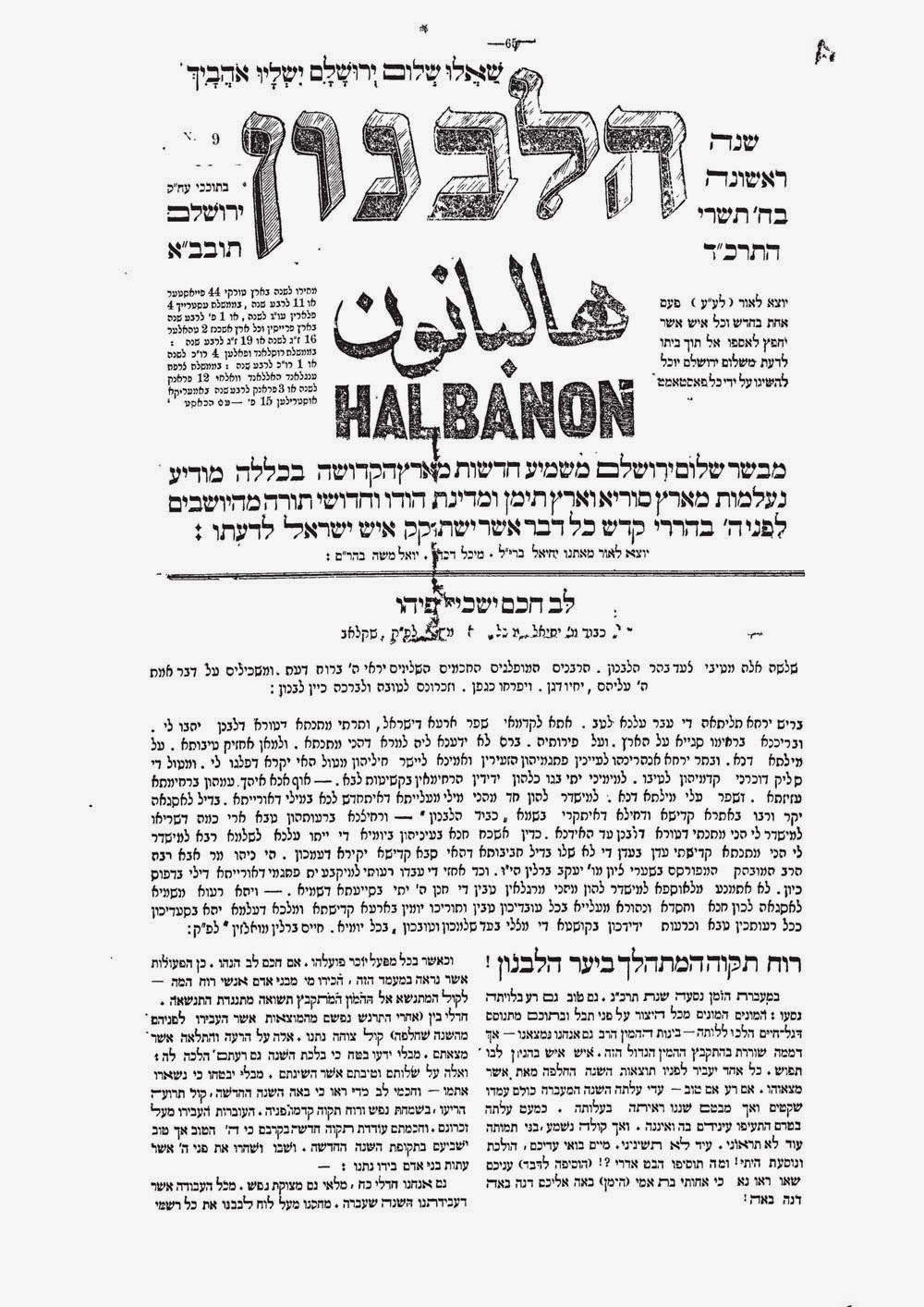
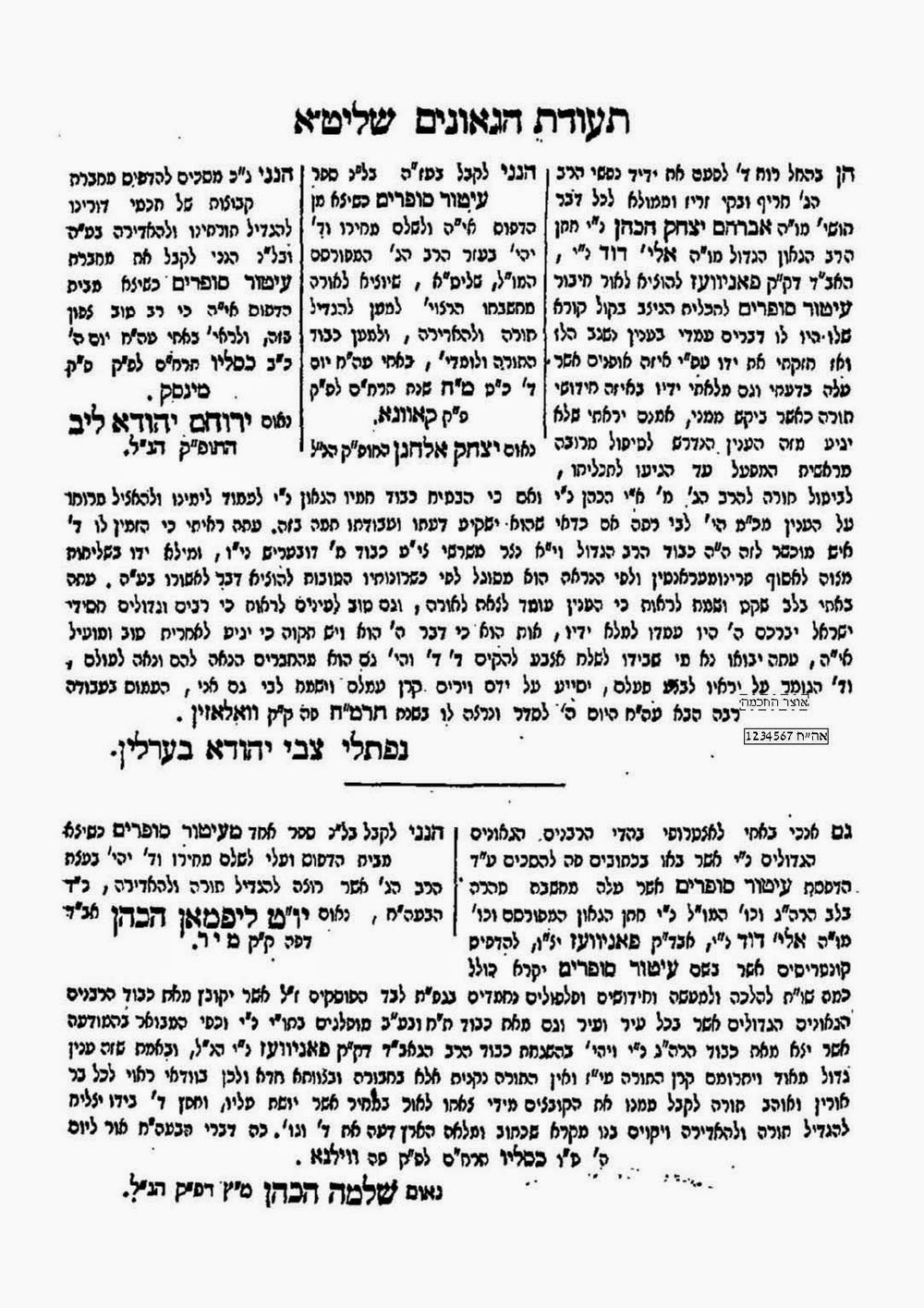
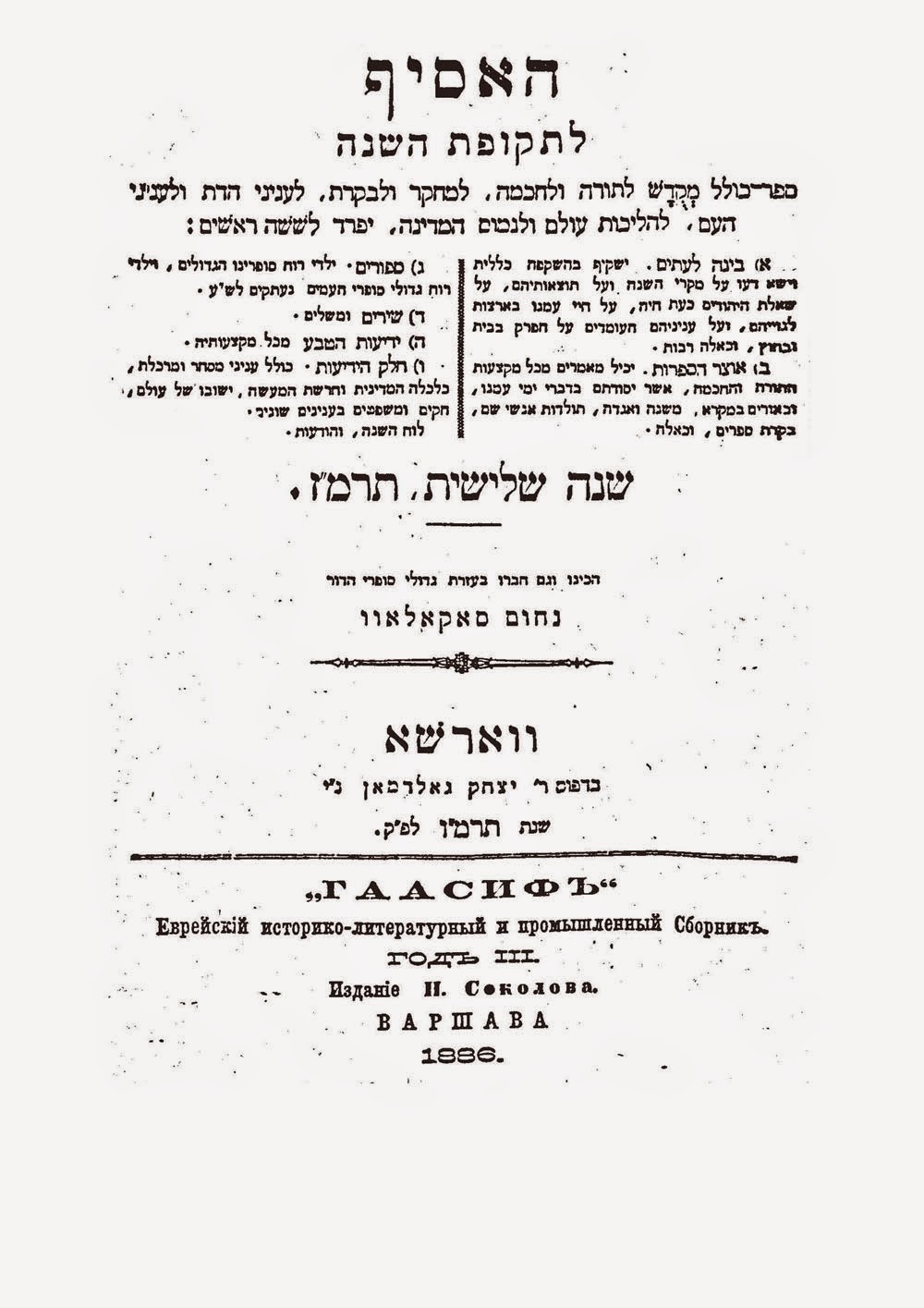
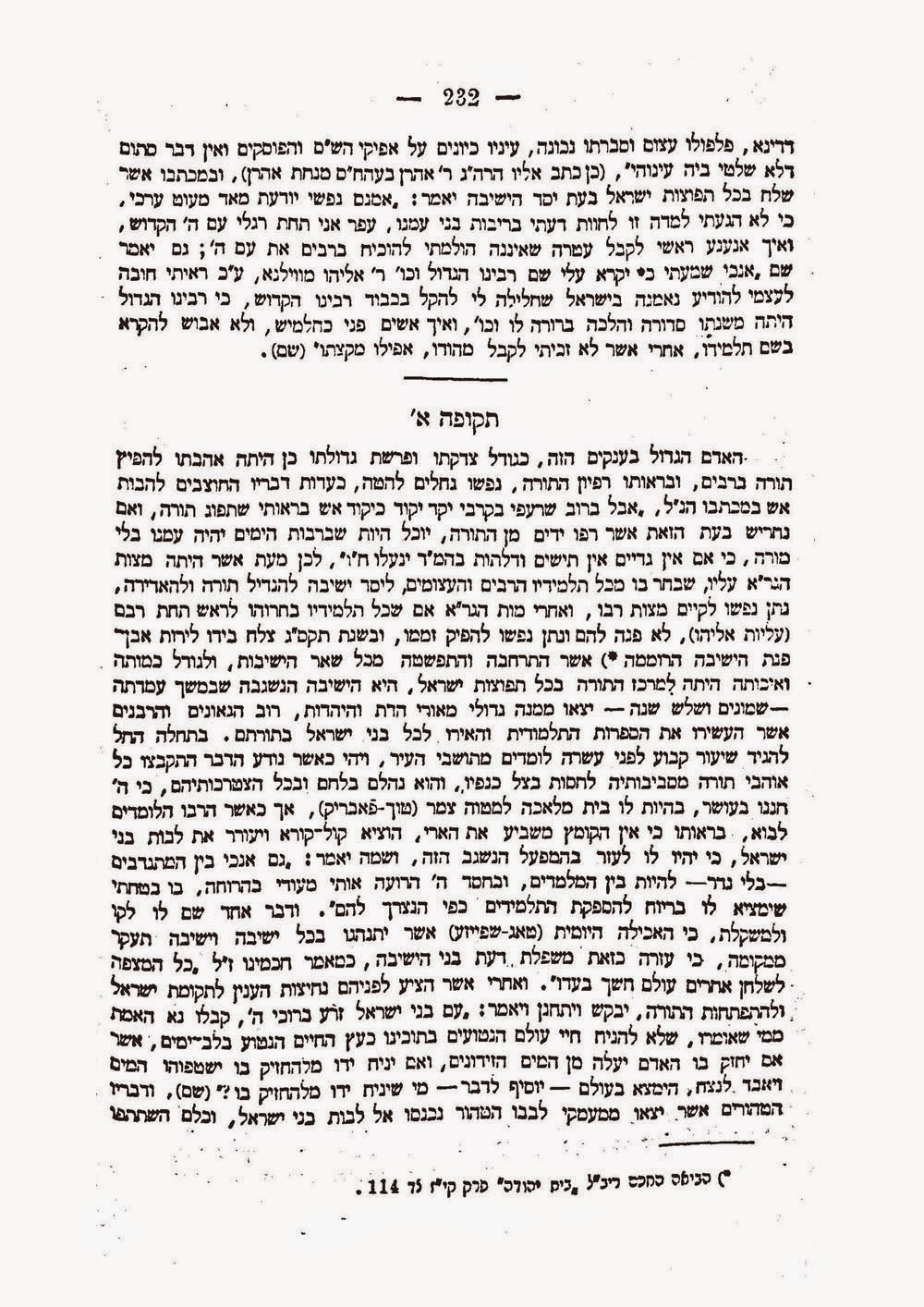
“Be-Esek Atevata”: A Contextual Interpretation of an Elusive Phrase in Akdamut Millin

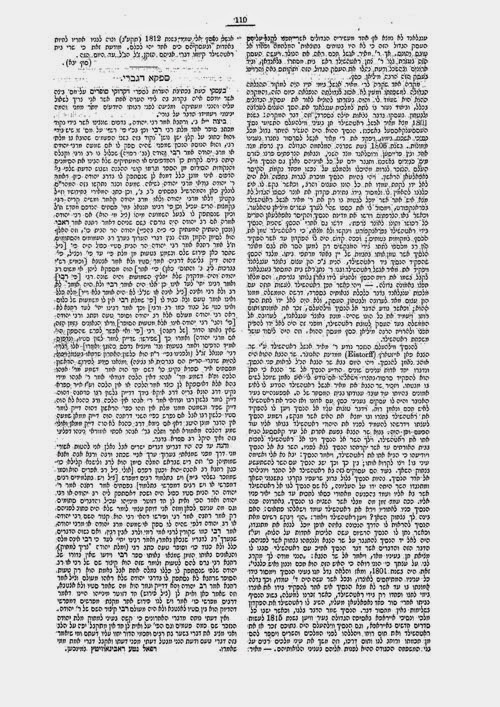
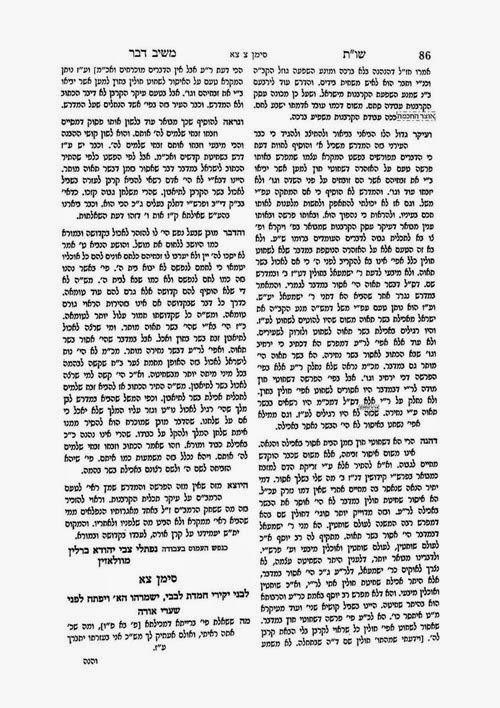
“Be-Esek Atevata”: A Contextual Interpretation of an Elusive Phrase in Akdamut Millin
by David S. Zinberg
A centerpiece of the Ashkenazic liturgy for Shavuot, Akdamut Millin is an artistically sophisticated, epically dramatic, and emotionally charged piyyut.  After nearly a millennium, the liturgical-narrative masterpiece of R. Meir ben Yitzhak Sheliah Tzibbur continues to intrigue and to inspire.[1] 
Towards the middle of the poem, the poet abruptly changes scenes.  Speaking in his own voice, he announces that he will now praise God “before empires”:

שְׁבַח ריבון עַלְמָא, אֲמִירָא דַכְוָתָא:
שְׁפַר עֲלֵיהּ לְחַווּיֵהּ, בְּאַפֵּי מַלְכְּוָתָא:
What follows, without warning, is a confrontation – almost a poetic disputation – between the gentile nations and Israel. 

Intended, perhaps, to evoke the insecurity of the Jewish experience, the narrative turn is unexpected and jarring.  Following a meditation on the heavenly realms and the superiority of Israel over the angels, the poet imagines a coalition of nations gathering, “like waves,” to confront the Jewish community. 
Their tone first seems benign, even sympathetic.  They are impressed by the Jews and their steadfast religious devotion.  But their assimilationist agenda, backed by a hint of violence – “Join us, it’s for your own good, you know” — comes to the surface before long.
In these six lines, the nations appear and present their argument:

1          תָּאִין וּמִתְכַּנְשִׁין, כְּחֵיזוּ אַדְוָתָא:
2          תְּמֵהִין וְשַׁיְילִין לֵיהּ, בְּעֵסֶק אַתְוָתָא:
3          מְנָן וּמָאן הוּא רְחִימָךְ, שַׁפִּירָא בְּרֵיוָתָא:
4          אֲרוּם בְּגִינֵהּ סָפִית, מְדוֹר אַרְיְוָתָא:
5          יְקָרָא וְיָאָה אַתְּ אִין תַּעַרְבִי לְמַרְוָתָא:
6          רְעוּתֵךְ נַעֲבֵיד לִיךְ, בְּכָל אַתְרְוָתָא:

My translation:

1          They approach, gathering like waves
2          Amazed, question one another about her signs
3          “From where and who is your Beloved, most beautiful,
4          For whose sake you perish in the lions’ den?
5          You are so dear and so lovely!  If you join the hegemony,
6          We will grant you whatever you desire, everywhere”

This finely crafted passage is woven from a set of midrashim revolving around a dialogue in the Song of Songs (5:8-6:2) between the רַעְיָה, the beloved woman, and בְּנוֹת יְרוּשָׁלָיִם, the daughters of Jerusalem.
Below is the text separated by speaker:

הָרַעְיָה:
הִשְׁבַּעְתִּי אֶתְכֶם בְּנוֹת יְרוּשָׁלִָם אִם תִּמְצְאוּ אֶת דּוֹדִי מַה תַּגִּידוּ לוֹ שֶׁחוֹלַת אַהֲבָה אָנִי:

בְּנוֹת יְרוּשָׁלָיִם:
מַה דּוֹדֵךְ מִדּוֹד הַיָּפָה בַּנָּשִׁים מַה דּוֹדֵךְ מִדּוֹד שֶׁכָּכָה הִשְׁבַּעְתָּנוּ:

הָרַעְיָה:
דּוֹדִי צַח וְאָדוֹם דָּגוּל מֵרְבָבָה:
רֹאשׁוֹ כֶּתֶם פָּז קְוֻצּוֹתָיו תַּלְתַּלִּים שְׁחֹרוֹת כָּעוֹרֵב:
עֵינָיו כְּיוֹנִים עַל אֲפִיקֵי מָיִם רֹחֲצוֹת בֶּחָלָב יֹשְׁבוֹת עַל מִלֵּאת:
לְחָיָו כַּעֲרוּגַת הַבֹּשֶׂם מִגְדְּלוֹת מֶרְקָחִים שִׂפְתוֹתָיו שׁוֹשַׁנִּים נֹטְפוֹת מוֹר עֹבֵר:
יָדָיו גְּלִילֵי זָהָב מְמֻלָּאִים בַּתַּרְשִׁישׁ מֵעָיו עֶשֶׁת שֵׁן מְעֻלֶּפֶת סַפִּירִים:
שׁוֹקָיו עַמּוּדֵי שֵׁשׁ מְיֻסָּדִים עַל אַדְנֵי פָז מַרְאֵהוּ כַּלְּבָנוֹן בָּחוּר כָּאֲרָזִים:
חִכּוֹ מַמְתַקִּים וְכֻלּוֹ מַחֲמַדִּים זֶה דוֹדִי וְזֶה רֵעִי בְּנוֹת יְרוּשָׁלִָם:

בְּנוֹת יְרוּשָׁלָיִם:
אָנָה הָלַךְ דּוֹדֵךְ הַיָּפָה בַּנָּשִׁים אָנָה פָּנָה דוֹדֵךְ וּנְבַקְשֶׁנּוּ עִמָּךְ:

הָרַעְיָה:
דּוֹדִי יָרַד לְגַנּוֹ לַעֲרוּגוֹת הַבֹּשֶׂם לִרְעוֹת בַּגַּנִּים וְלִלְקֹט שׁוֹשַׁנִּים:
אֲנִי לְדוֹדִי וְדוֹדִי לִי הָרֹעֶה בַּשּׁוֹשַׁנִּים:

The רַעְיָה begs the Jerusalemite girls to find her love and to tell him of her longing.  They first ask, מַה דּוֹדֵךְ מִדּוֹד – how will we identify him?  In response, she provides detailed signs, in seven lines of verse, of his beauty and charm.  Their next question follows naturally:
אָנָה הָלַךְ דּוֹדֵךְ הַיָּפָה בַּנָּשִׁים אָנָה פָּנָה דוֹדֵךְ וּנְבַקְשֶׁנּוּ עִמָּךְ — now that we know something about your beloved, where did he go?  Tell us, and we will help you search for him. 
In the allegorical reading of the Song – and in the poet’s imagination – the רַעְיָה is Israel, the דּוֹד is God, and the daughters of Jerusalem represent the nations. 
Below are excerpts from the midrashic sources relevant to our passage (language which inspired the poet is highlighted in bold):

מכילתא דרבי ישמעאל בשלח – מסכתא דשירה ג
זה אלי . . . ר’ עקיבא אומר אדבר בנאותיו ובשבחיו של מי שאמר והיה העולם בפני כל אומות העולם. שהרי אומות העולם שואלין את ישראל לומר מה דודך מדוד שככה השבעתנו (שיר השירים ה) שכך אתם מתים עליו וכך אתם נהרגין עליו שנ’ על כן עלמות אהבוך (שם א) אהבוך עד מות, וכתיב כי עליך הורגנו כל היום (תהלים מד). הרי אתם נאים, הרי אתם גבורים, בואו והתערבו עמנו. וישראל אומרים להם לאומות העולם, מכירין אתם אותו [2]נאמר לכם מקצת שבחו: דודי צח ואדום דגול מרבבה (שיר השירים ה). כיון ששומעין שכך שבחו אומרים לישראל נלכה עמכם שנ’ אנה הולך דודך היפה בנשים אנה פנה דודך ונבקשנו עמך (שם ו) וישראל אומרים להם אין לכם חלק בו אלא דודי לי ואני לו וגו’ (שם ב) אני לדודי ודודי לי הרועה בשושנים (שם ו).
במדבר רבה ב:ד

אִישׁ עַל-דִּגְלוֹ בְאֹתֹת (במדבר ב): הה”ד (שיר השירים ו) מי זאת הנשקפה כמו שחר יפה כלבנה ברה כחמה אימה כנדגלות.  קדושים וגדולים היו ישראל בדגליהם וכל האומות מסתכלין בהם ותמהין ואומרים מי זאת הנשקפה וגו’ אומרים להם האומות שובי שובי השולמית (שיר השירים ז) הדבקו לנו בואו אצלנו ואנו עושין אתכם שלטונים הגמונים דוכסין אפרכין אסטרטליטין, שובי שובי ונחזה בך ואין נחזה אלא שררה שכן אמר יתרו למשה (שמות יט) ואתה תחזה וגו’ שובי שובי ונחזה בך
במדבר רבה ב:טז

ד”א והיה במקום וגו’ הה”ד (שיר השירים ח) מים רבים לא יוכלו לכבות את האהבה וגו’ ואומר אם יתן איש את וגו’ אמר רבי שמואל בר נחמן בשתי אהבות הכתוב הזה מדבר. ראשו מדבר באהבתו של ישראל. שאם יתכנסו כל אומות העולם ליטול את האהבה שבינו לבין ישראל אינן יכולין, שנאמר מים רבים לא יוכלו לכבות את האהבה ואין מים רבים אלא אומות העולם שנאמר (ישעיה יז) הוי המון עמים רבים וגו’.
שמות רבה כג:ה
מראש שניר (שיר השירים ד), בזכות יצחק, וחרמון, בזכות יעקב, ממעונות אריות, גלות בבל ומדי, מהררי נמרים, זו אדום
Below, we match each line or half-line from our Akdamut passage to its associated biblical or midrashic expression.  Note how each phrase either quotes directly from or alludes to imagery in the Song and its related midrashim.  For now, we will leave line 2 aside.  This line will be addressed separately.
1          תָּאִין וּמִתְכַּנְשִׁין כְּחֵיזוּ אַדְוָתָא
מים רבים לא יוכלו לכבות את האהבה וגו’ . . .  שאם יתכנסו כל אומות העולם ליטול את האהבה שבינו לבין ישראל אינן יכולין . . .ואין מים רבים אלא אומות העולם . ) . . במדבר רבה ב:טז(
 
3          מְנָן וּמָאן הוּא רְחִימָךְ, שַׁפִּירָא בְּרֵיוָתָא
שהרי אומות העולם שואלין את ישראל לומר מַה דּוֹדֵךְ מִדּוֹד שֶׁכָּכָה הִשְׁבַּעְתָּנוּ )מכילתא דרבי ישמעאל בשלח – מסכתא דשירה ג(
1.      מְנָן (“from where”) — אָנָה הָלַךְ דּוֹדֵךְ הַיָּפָה בַּנָּשִׁים אָנָה פָּנָה דוֹדֵךְ
2.      וּמָאן  — (“and who”)מַה דּוֹדֵךְ מִדּוֹד הַיָּפָה בַּנָּשִׁים

4a        אֲרוּם בְּגִינֵהּ סָפִית
שכך אתם מתים עליו וכך אתם נהרגין עליו[3])  מכילתא דר”י שם(
4b        מְדוֹר אַרְיְוָתָא
ממעונות אריות, גלות בבל ומדי, מהררי נמרים, זו אדום (שמות רבה כג:ה)  
         יְקָרָא וְיָאָה אַתְּ, אִין תַּעַרְבִי לְמַרְוָתָא
הרי אתם נאים, הרי אתם גבורים, בואו והתערבו עמנו) מכילתא דר”י שם(
         רְעוּתֵךְ נַעֲבֵיד לִיךְ, בְּכָל אַתְרְוָתָא
הדבקו לנו בואו אצלנו ואנו עושין אתכם שלטונים הגמונים דוכסין אפרכין אסטרטליטין) מכילתא דר”י שם(
Line 2 of this Akdamut passage – תְּמֵהִין וְשַׁיְילִין לֵיהּ, בְּעֵסֶק אַתְוָתָא – is particularly challenging.  What does the poet mean by בְּעֵסֶק אַתְוָתָא?  To which “signs” (אַתְוָתָא = אותות) does he refer?
Several translators and commentators on Akdamut interpret אַתְוָתָא as “miracles.”[4]  But that rendering is completely unsatisfactory, as this section of the poem does not address miracles.  Furthermore, in all the source-midrashim from which the nations’ argument is derived, there is no reference to miracles.  Indeed, had it referred to “miracles,” this line would be an aberration, as every other phrase in these six lines echoes specific language in the sources cited.

Taking a completely different approach, the ArtScroll Machzor renders אַתְוָתָא as “proofs”; i.e., in light of Israel’s endless suffering in exile, the nations demand proof that God still watches over Israel and plans to send the Messiah to redeem her.[5]

This interpretation has some merit, since it links line 2 to the nations’ adjacent observation regarding Israel’s persecution, i.e., אֲרוּם בְּגִינֵהּ סָפִית, מְדוֹר אַרְיְוָתָא (line 4).  Still, “proofs” is forced and unsupported by the biblical and midrashic sources.

I believe, instead, that the correct translation of בְּעֵסֶק אַתְוָתָא is “about her signs,” i.e., Israel’s signs.  This phrase was clearly borrowed from the Bemidbar Rabba passage (2:4) cited above, a discourse on the banners or “signs” (אֹתוֹת) of the tribes, as described in Numbers 2:2.  Note the association in Bemidbar Rabba 2:4 between עַל-דִּגְלוֹ בְאֹתֹת of Numbers and אימה כנדגלות of Song 6:10.  The Sages read the latter as a reference by the nations to Israel’s impressive banners (נדגלות = דגלים). 

Also note how the poet’s תְּמֵהִין וְשַׁיְילִין לֵיהּ is taken nearly verbatim from the expression וכל האומות מסתכלין בהם ותמהין ואומרים of Bemidbar Rabba, which is used in the context of the flags.   

Of course, the biblical אֹתוֹת often connotes an extraordinary, miraculous phenomenon.  For example:
וְהָיָה אִם-לֹא יַאֲמִינוּ גַּם לִשְׁנֵי הָאֹתוֹת הָאֵלֶּה וְלֹא יִשְׁמְעוּן לְקֹלֶךָ וְלָקַחְתָּ מִמֵּימֵי הַיְאֹר וְשָׁפַכְתָּ הַיַּבָּשָׁה וְהָיוּ הַמַּיִם אֲשֶׁר תִּקַּח מִן-הַיְאֹר וְהָיוּ לְדָם בַּיַּבָּשֶׁת  (שמות ד:ט)
וַיּוֹצִאֵנוּ ה’ מִמִּצְרַיִם בְּיָד חֲזָקָה וּבִזְרֹעַ נְטוּיָה וּבְמֹרָא גָּדֹל וּבְאֹתוֹת וּבְמֹפְתִים  (דברים כו:ח)
However, it appears certain – based on Bemidbar Rabba 2:4 – that the “signs” to which line 2 refers are Israel’s flags, rather than God’s miracles. Here, then, is the final midrashic source for our Akdamut passage:  
2          תְּמֵהִין וְשַׁיְילִין לֵיהּ, בְּעֵסֶק אַתְוָתָא
איש על דגלו באותות – הה”ד מי זאת הנשקפה וגו’ קדושים וגדולים היו ישראל בדגליהם וכל האומות מסתכלין בהם ותמהין ואומרים מי זאת הנשקפה וגו’)  במדבר רבה ב:ד(
What may have motivated the interpretation of אַתְוָתָא as “miracles” was a presumed link between two distinct reactions of the nations: תְּמֵהִין וְשַׁיְילִין לֵיה of line 2 andמְנָן וּמָאן הוּא רְחִימָך of line 3.
The nations’ focus in line 3 is, of course, on God (רְחִימָךְ – your Beloved).  The phrase מְנָן וּמָאן הוּא רְחִימָך is a conflation of אָנָה הָלַךְ דּוֹדֵךְ and מַה דּוֹדֵךְ מִדּוֹד, whose referent is God.  But in line 1 — תָּאִין וּמִתְכַּנְשִׁין — they accost Israel and, in line 2 — תְּמֵהִין וְשַׁיְילִין לֵיה — express wonder among themselves about Israel.  Their response in line 2 is to Israel, rather than to God.  They shift their inquiries to God only in line 3.

[1] On R. Meir ben Yitzhak, see Eliezer Landshut, Amudei Ha-Avoda (Berlin, 1862), pp. 162ff; Avraham Grossman, Hakhmei Ashkenaz Ha-Rishonim (Jerusalem, 1981), pp. 292ff.
[2] The variant text in Mekhilta De-Rabbi Shimon Bar Yohai – אי אתם מכירין אותו – is more readable.
[3] See also Shir Ha-Shirim Rabba 7:1:
אומות העולם אומרות לישראל עד מתי אתם מתים על אלהיכם ומשלמין לו . . .  ועד מתי אתם נהרגין עליו . . .  ועד מתי אתם גומלין טובות עליו ולו לעצמו, והוא גומל לכם רעות
[4] E.g., Mahzor Le-Hag Ha-Shavuot, ed. Wolf Heidenheim (Rodelheim, 1805 and reprints); Mahzor Shavuot, ed. Yonah Fraenkel (Jerusalem, 2000), p. 390, n. 22; and, most recently, Jeffrey Hoffman, “Akdamut: History, Folklore, and Meaning,” The Jewish Quarterly Review, 99:2 (Spring 2009), p. 178.
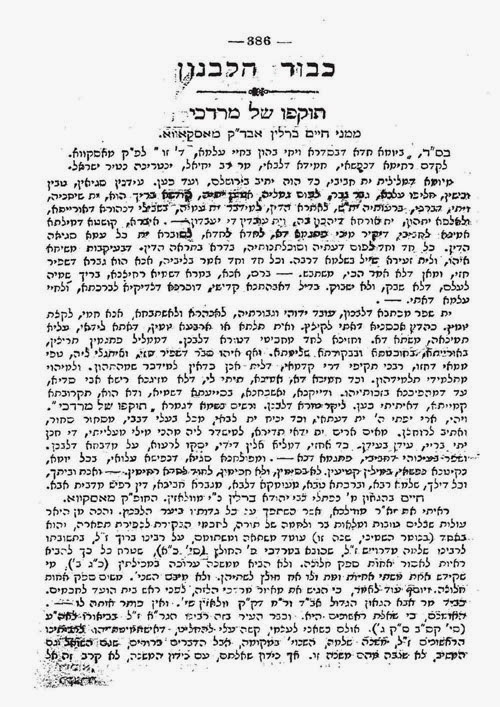
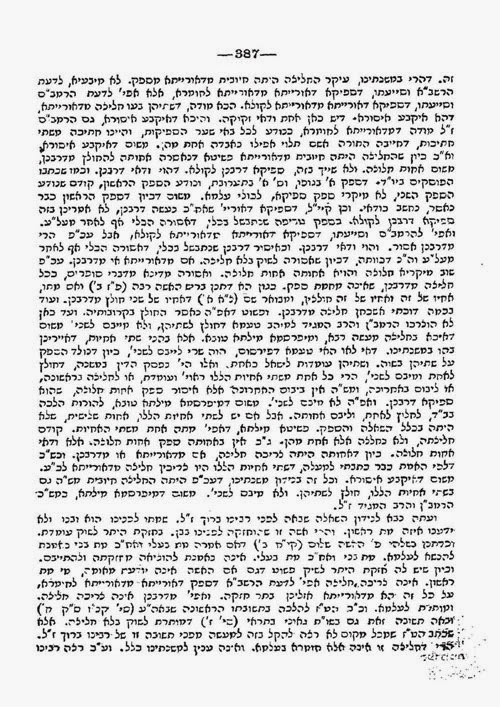
[5] The Complete ArtScroll Machzor – Shavuos (Brooklyn, 1995), p. 269.  The note on p. 269 attributes this idea to Mevo Ha-Shir by Shmuel Hayyim Yellin (Pietrokow, 1926).  However, “proofs” was already proposed by Aharon ben Yehiel Mikhel Ha-Levi in his Mahzor commentary Mateh Levi.  Yellin renders בְּעֵסֶק אַתְוָתָא as “on the matter of the arrival (of the Messiah),” based on an erroneous association of אַתְוָתָא with ואתא, Aramaic for  ויבא (“he arrived”).  The comments of Mateh Levi and Mevo Ha-Shir can both be viewed here.


Megilat Rut: The night of Boaz and Rut Revisited

Megilat Rut[1]:
The night of Boaz and Rut Revisited
 By Chaim Sunitsky
In a well known story of Megilat
Rut, Naomi tells Ruth to bathe herself, put on her [best] clothes and go down
at night to where Boaz is sleeping. Boaz then will “tell her” what to do. The
simple implication of this story is that Ruth would be sent to make a marriage
proposal to Boaz who could simply consummate the marriage immediately.[2]
It has been already noted[3]
that the story of Boaz and Ruth contains many elements of “yibum” procedure and
therefore it was concluded that at that time “yibum” was practiced by other
close relatives, not just the brother of the deceased.[4]
In theory Boaz could have relations with Ruth and thus do yibum immediately
that night, but since there was a closer kin[5]
he did not touch Ruth but waited until the morning. When in the presence of the
elders Boaz offered the closer relative to redeem the fields left for Ruth, he
was willing to do this, but when Boaz stipulated that he would have to marry
Ruth as well he refused saying: פֶּן אַשְׁחִית אֶת נַחֲלָתִי (lest I destroy
my “inheritance”). Hazal[6]
understand him to argue with Boaz’s opinion that a female from Moav is
permitted to “enter the congregation of Israel” i.e. marry a regular Jew. The
word “inheritance” is thus taken to mean descendants who will not be kosher
Jews and won’t be able to marry others in the Jewish nation[7]. 
Before we go on it’s important to
understand a related issue: in the laws of yibum, what is the meaning of
(Devarim 25:6): “The first child born shall stand up in memory of the deceased
brother.” Hazal understand this not to mean the actual name of the person but
rather to be talking about inheritance belonging to the deceased brother.
However they explain[8]
that this inheritance is transferred to the brother that did the yibum.
According to Shadal[9] this
explanation was needed in order to encourage[10]
the brother to want to do yibum, but the original meaning of the Torah was
actually that yibum caused financial loss to the brother doing it as he would
not partake of the inheritance[11]
as it would all belong to the son born[12].
Another important point we need
to discuss before we continue is the issue of “kri” and “ketiv”: “written” and
“read” forms of words. It is well known that certain words in Tanach are not
read the same way as they are written. The Talmud[13]
assumes that this is part of “halacha leMoshe miSinai[14]”
– part of oral traditions stemming from Moshe who received them at Mt. Sinai.
The difficulty with this is that many of these “kri” and “ketiv” forms are in
Neviim and Ketuvim – prophetic works written long after Moshe. R. Reuven
Margolies therefore concludes[15]  that the expression “halacha leMoshe
miSinai” can mean a decision in some generation by the Great Sanhedrin[16].
Another explanation of “kri” and “ketiv” is offered by Radak[17]
and others: the two are preserved in some of the cases when different
manuscripts[18] had
different version of the word(s). Another possibility[19]
is that “kri” can be a kind of correction to the “ketiv” that the “Men of Great
Assembly” made for various reasons. Many of the “kri” and “ketiv” cases in fact
support this last opinion[20].
Some of the “kri” and “ketiv” differ only in that one of them reads as two
words what the other reads as one word. For example, the “ketiv” in “Devarim
39:2 is “Eshadot” but the “kri” is “Esh” “Dat” – fire of religion. Shadal[21]
writes that Dat is a Persian word and therefore the original meaning must have
been according to the “ketiv[22]”.
Coming back to the story of Ruth,
the key verse (4:5) has a “written” and “read” form:
 וַיֹּאמֶר בֹּעַז בְּיוֹם קְנוֹתְךָ הַשָּׂדֶה מִיַּד נָעֳמִי
וּמֵאֵת רוּת הַמּוֹאֲבִיָּה אֵשֶׁת הַמֵּת קָנִיתָה לְהָקִים שֵׁם הַמֵּת
עַל נַחֲלָתוֹ
The key word is written קניתי but is read as קָנִיתָה. It has been noted by modern scholarship[23]
that according to the ketiv (the written form) an opposite[24]
from traditional understanding immerges. According to “ketiv” Boaz did
consummate the marriage and when talking to the kinsman he says that Ruth is
already his wife. If he will later have a child from Ruth, the child will
inherit her husband’s property and the money the other relative paid to redeem
the field will go to waste.[25]
This then is the meaning of the other relative’s rejection of the offer (4:6):
לֹא אוּכַל
<לגאול> לִגְאָל לִי פֶּן אַשְׁחִית אֶת נַחֲלָתִי גְּאַל לְךָ אַתָּה אֶת
גְּאֻלָּתִי כִּי לֹא אוּכַל לִגְאֹל:
“I will not redeem lest I harm my inheritance”, literally
meaning he would lose the field he would purchase.
[1] Many reasons are offered as to why we read Megilat
Ruth on Shavuot, the simplest being that the main action takes place when
gathering barley and wheat crop, around the time of Shavuot.
[2] While most commentators try to avoid this obvious
interpretation, this is implied by Rut Rabbah 7:4. See also Taz, Yore Deah
192:1 who assumes this and discusses why the gezeira of seven days due to “dam
chimud” did not apply.
[3] See for instance Malbim (Ruth 3:4), see also Ramban,
Devarim 25:6.
[4] Boaz was a cousin of Ruth’s husband Machlon (Baba
Batra 91a).
[5] Referred to as “ploni almoni”, he was Machlon’s
uncle.
[6] Ruth Rabbah 7:7.
[7] The simple meaning may be that he did not want to
marry Ruth since he already had another wife (see Targum ad loc) or so that his
older children won’t have to split the inheritance with his children from her
(see similarly Rema, Even Haezer 1:8).
[8] Rashi in the name of Yevamot 40a.
[9] Ad loc.
[10] Similarly later when Ashkenazi Jews encouraged
halitzah, a financial incentive was used for this too, see Rema, Even Haezer
163:2.
[11] Maybe this is the reason Yehudah’s son Onan did not
want Tamar to have children.
[12] The Ramban hints that this son will have the soul of
the deceased thus the inheritance coming back to the original owner.
[13] Nedarim 37b although it might be this is not the only
opinion in this sugia, see also Orach Chaim 141:8.
[14] Presumably this implies that both kri and ketiv have
meaning. Various propositions have been offered regarding the relationship
between the two.
[15] Yesod Hamishna Vearichata, chapter 2 in
berurim (page 36).
[16] The Rishonim already noticed that at least some of
“halacha leMoshe miSinai” statements should not be taken literally see for
instance Rosh in the beginning of Mikvaot, see also Pesachim 110b.
[17] See his introduction to the prophets; see also R.
Marc Shapiro, Limits of Orthodox Theology, page 101 who brings other
Rishonim that follow the same opinion. In one place in his commentary Radak
goes a step further and notices that Targum Yonatan seems to have a reading
where a letter is moved from the beginning of the word to the end of previous
word (Melachim 1:20:33, see also our next note).
[18] We know that there were variant manuscripts of Tanach
in the times of Second Temple and probably before that as well. There are many
examples of this, see for instance Tosafot s.v. Maavirim and R. Akiva
Eiger, Shabbat 55b. One of the famous examples seems to be the well known
drasha in the Agada that criticizes the “wicked” son for excluding himself from
other participants: “lachem velo lo”. The obvious difficulty is that the wise son
also says: “etchem” (to you). Now we know that in some manuscripts the verse in
Devarim 6:20 indeed uses the expression “otanu” (us), see also Yerushalmi
Pesachim 10:4 (70b), Mechilta, end of Bo (chapter 18 in some editions,
paragraph 125 in others). Note also that many of the variants can be learned by
studying the old Torah translations, for instance Septuagint. It seems that
some of “deliberate changes” mentioned in Megila 9a-b were actually based on
variant manuscripts. In case of “naarei bnei yisrael”, we actually learn from
Masechet Sofrim 6:4 and parallel sources that there were variant manuscripts.
Additional examples can include “hamor” – “hemed” and “bekirba” – “bekroveah”,
where the words are very similar. R. Reuven Margolies in his “Hamikra Vahamesora”,
chapter 17 brings some interesting examples of translations that were based on
variant manuscripts. Without knowing this we can’t understand some words of
Hazal correctly. Just to bring two examples here, the question of how to read
“dodecha” in Shir Hashirim 1:2 (see Avoda Zara 29b) can be understood in light
of Septuagint translation as “breasts” (from the word “dad”; this also explains
why this particular question was asked when discussing the prohibition of
non-Jewish cheese; the verses describe that the Jewish nation’s wine, oil, and
breasts, i.e. milk are the best, and we should not use any of these products
made by non-Jews). In this example the difference with Masoretic text is only
in the vowels that are not written in the scrolls (see another example in
Mishley 12:28 that has in our Masoretic text “al mavet” – “not death” but
according to the Aramaic Targum the verse seems to read “el mavet” – “towards
death”). Another example with a real textual difference in consonants is in the
verse of Bereshit 26:32. The Bereshit Rabbah (end of 64) seems to at first not
be sure whether they found water or not. R. Reuven Margolies claims that the
uncertainty was whether the correct reading is “we did NOT find water” (based
on Septuagint translation) or “we found water” (as it is in our Masoretic
text). The difference is whether the word “Lo” should be with “Vav” (they said
to him) or with Aleph (they said: “we didn’t”, see however Rashash ad loc who
thinks that even according to the Masoretic text there is a possibility to
understand Lo with Vav as “not”).
[19] A similar idea is brought in Abarbanel’s introduction
to Yirmiyahu. This may be related to a similar question of what is “tikun
sofrim
”, see R. Marc Shapiro, Limits of Orthodox Theology, starting
with page 98 and R. Saul Lieberman “Hellenism in Jewish Palestine
starting with page 28.  Indeed in
Midrash Tanchuma (Beshalach 16) the tradition is brought that tikun
sofrim is an actual change made by Anshey Kneset Hagedola.
[20] This might be especially true when the “kri” is a
synonym of “ketiv” but the expression used is a softer form, when the “ketiv”
is too crude, see Devarim 28:27 and 28:30, see also Talmud Bavli Megilah 25b.
[21] Ad loc.
[22] In general some of the commentators sometimes follow
the “ketiv” but most explain the meaning of verses according to the “kri”.
[23] Professor Cyrus Gordon “Forgotten Scripts
1982, page 171. He additionally writes based on discoveries in Ebla that ומאת is to be
understood not as “and from” but rather “but”. For Hazal’s understanding of
this “kri” and “ketiv” see Ruth Rabbah 7:10.
[24] It’s actually quite unusual that kri and ketiv would
offer the exact opposite understanding.
[25] Apparently this is the field that Ruth was selling.
It seems that according to the practice of the time a widow of a person was
able to enjoy some of the rights to his property or possibly make decision as
to which of the relatives takes possession of it.


An (almost) Unknown Halakhic Work by Rabbi Shneur Zalman of Liadi and an attempt to answer the question: who punctuated the first edition of the Shulhan Arukh?

An (almost) Unknown Halakhic Work by Rabbi Shneur Zalman of
Liadi and an attempt to answer the question: who punctuated the first edition
of the Shulhan Arukh?

 by Chaim Katz

Chaim Katz is a
database computer programmer in Montreal Quebec. He graduated from McGill
University and studied in Lubavitch Yeshivoth in Israel and New York.

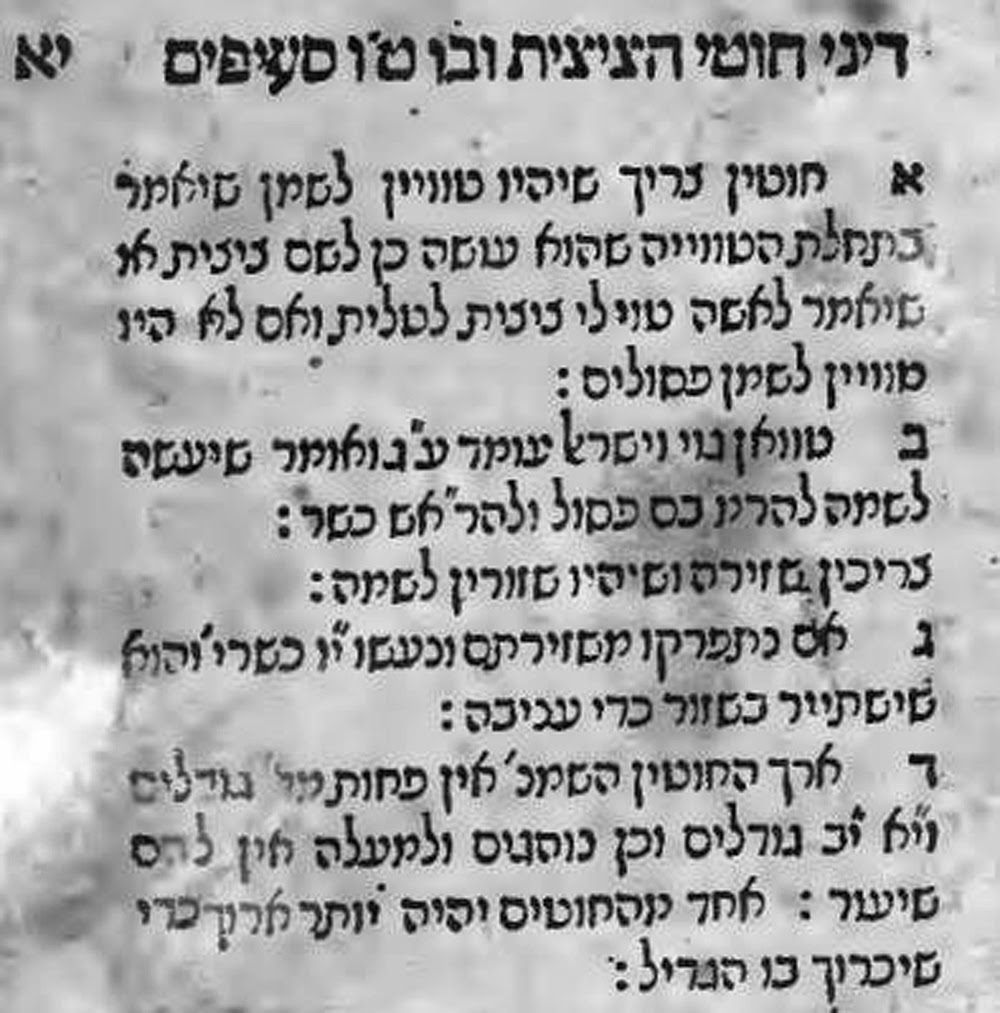
In 1980, the late Rabbi Yehoshua Mondshine
published a manuscript, which was a list of chapters and paragraphs (halakhot  and se’fim), selected by Rabbi Shneur
Zalman of Liadi (RSZ), from the Shulhan Arukh (SA) of Rabbi Yosef Karo.[1]
(RYK)

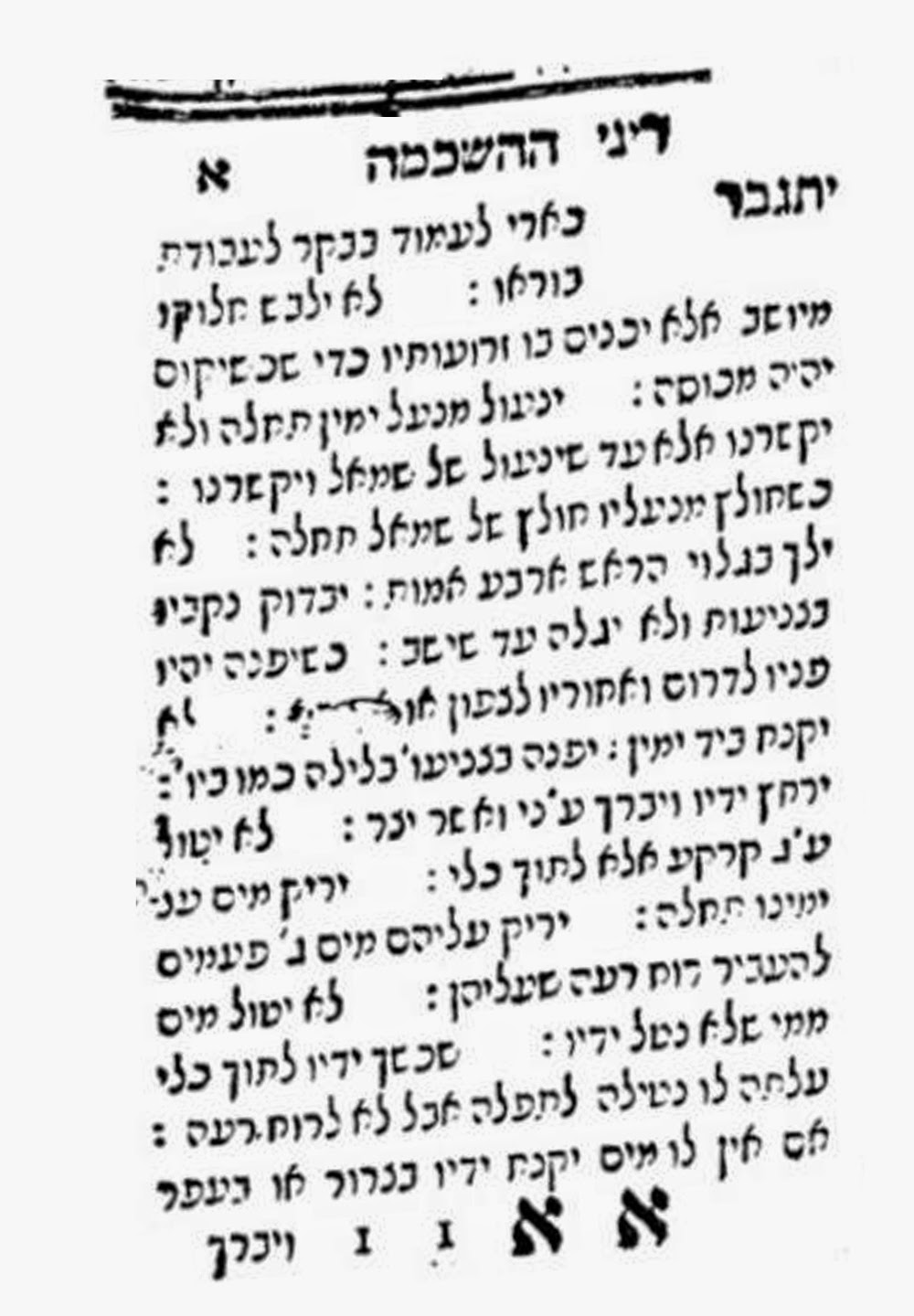
Figure 1: Part of the list of halakhot prepared by Rabbi
Shneur Zalman and the preliminary and concluding notes written by R. Isakhar
Ber.
R.
Isakhar Ber, who copied the original manuscript, explained the purpose of the
list in a preliminary remark:

A concise study method
of essential laws from the beginning of Shulhan Arukh  Orah Hayim until the end of the Shabbat laws – to know them
fluently  by heart, from Admur  (our master, teacher and Rebbe), our teacher
Zalman of Liozna.
R.
Isakhar also added an epilogue:
I copied all of the
above, from the beginning until the laws of Pesah, but I didn’t check it
completely to verify that I copied everything correctly and G-d willing when
there’s time I will check it. Prepared and researched by the Rabbi and Gaon,
the great light, the G-dly and holy, our teacher, Shneur Zalman, may his lamp
be bright and shine, to know it clearly and concisely, even for those people who
are occupied in business. Therefore I thought I won’t withhold good from the
good.  Isakhar Ber, son of my father and
master … Katz, may his lamp be bright, of the holy community of Shumilina and
currently in Beshankovichy.
The
manuscript was probably composed (or at least copied), between the years
1790-1801, when RSZ lived in Liozna. The existence of this list isn’t
acknowledged in any source that Rabbi Mondshine was aware of, and obviously the
list was never published in book form, either because RSZ
decided not to publicize it or because the list was simply put aside and
forgotten.
RSZ
wasn’t the first who envisioned a popular digest of the SA. Rabbi Yehuda Leib
Maimon lists four works that preceded the famous Kitzur Shulhan Arukh.[2]
They preceded RSZ’s work as well and are all quite similar although they also
have their differences.


Figure 2: First edition of Shulhan Tahor by Rabbi Joseph Pardo (from
Hebrewbooks.org). The page summarizes three and a half chapters of the original
Shulhan arukh. Note how the author sometimes combines the words of RYK with the
words of Rema (line 11).
Shulhan Tahor covers Orakh Hayim and Yore Deah.
Others have a narrower scope and cover only Orah Hayim. RSZ covers even less.
Some collections are abbreviated extensively; others include more details.[3]
There are variations in the language and content; some quote opinions of later
authorities, some quote Kabbalah, some re-cast the language of the SA and some
retain the language as much as possible.


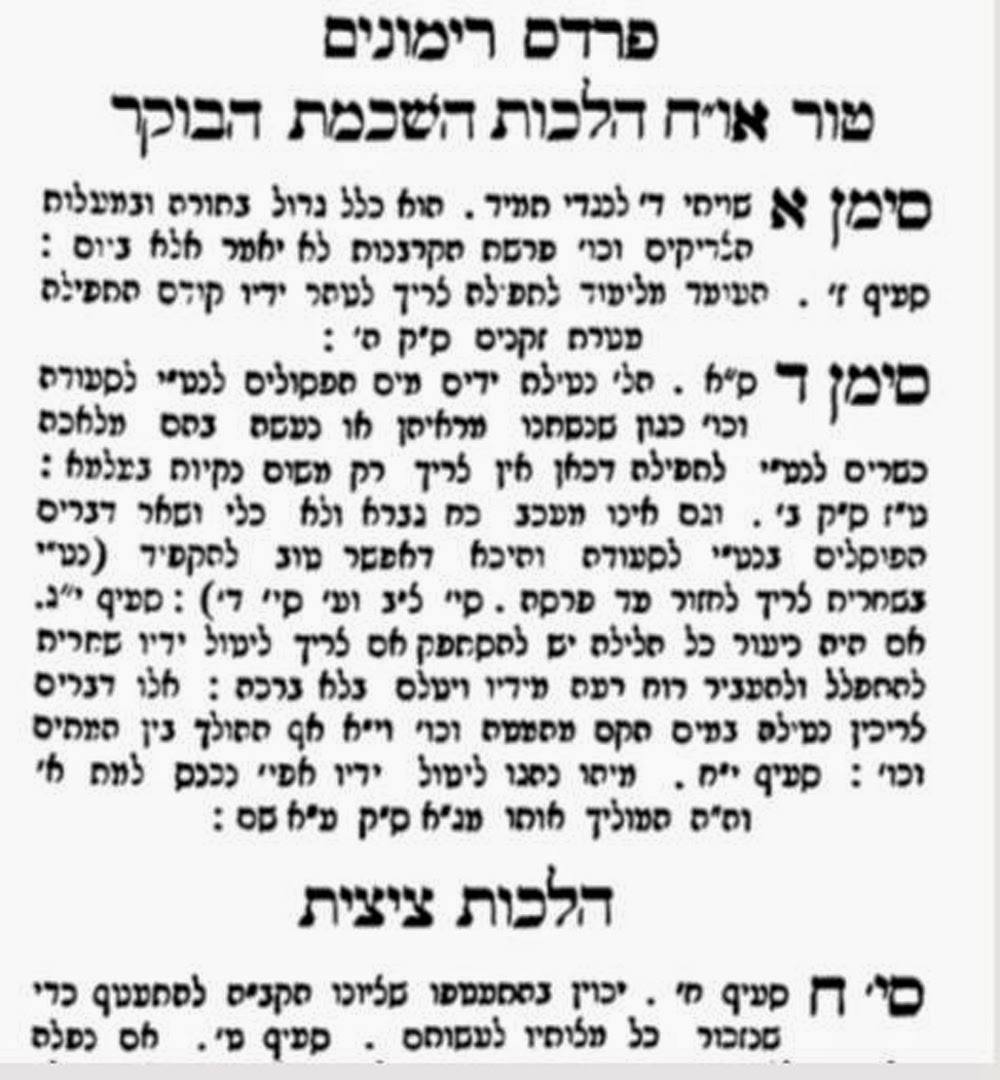
Figure 3: Pardes Rimonim by Rabbi Yehudah Yudil Berlin, (from
Hebrewbooks.org), composed in 1784. Note the author quotes Ateret Zekenim, (R.
MM Auerbach, published in 1702). The additions in parenthesis are by the
publisher of the 1879 edition.
The authors of each of these works possibly had
two goals in mind. One of the goals was to make the basic rules and practices
of the SA more accessible. To this end, certain subjects or details were left
out because they were too technical for the chosen audience. Other rules were
omitted because the situations to which they applied happened only infrequently
(בדיעבד). Many regulations
were left out because daily life and its circumstances had changed so much
since the sixteenth century.

The other goal,
and arguably the primary goal, was to provide a text of law that could be
memorized. In the introduction to Shulhan Tahor, the author’s son writes:
“every man will be familiar and fluent in these laws (שגורים בפי כל האדם)”. Likewise, the
author of Pardes Rimonim defines the purpose of his work: “so that the reader
will be fluent in these rules (שגורים
בפיו)
and will review them each month”.  In
the introduction to the Shulhan Shlomo, the author writes: “Put these words to
your heart and you won’t forget them”, and the motive of R. Shneur Zalman’s
work is:  “to know [these laws] fluently by heart”.

Figure 4: Introduction of Rabbi Yosef Karo – from the first edition
of the Shulhan Arukh, published in Venice in 1565 where memorization is
emphasized (from the scanned books at the website of the National Library of
Israel, (formerly the Jewish National and University Library.)
The
tradition of memorizing practical laws goes back to RYK himself, and probably
goes back even earlier.[4]
RYK writes in the introduction to his Shulhan Arukh:
I thought in my heart
that it is fitting to gather the flowers of the gems of the discussions [of the
Beit Yosef] in a shorter way, in a clear comprehensive pretty and pleasant
style, so that the perfect Torah of G-d will be recited fluently by each man of
Israel. When a scholar is queried about a law, he won’t answer vaguely.
Instead, he will answer:  “say to wisdom
you are my sister”. As he knows his sister is forbidden to him, so he knows the
practical resolution of every legal question that he is asked because he is
fluent in this book…  Moreover, the
young (rabbinical?) students will occupy themselves with it constantly and
recite its text by heart…
I’m
working on a phone version of RSZ’s work using the first print of
RYK’s SA for that portion of the text. However, (aside from the difficulty of
text justification in an EPUB), there is one typesetting decision that I’m
wondering about.  The first edition of
the SA is punctuated with elevated periods and colons.  The colons always separate each halakha, but
infrequently colons appear in the middle of a halakha. Sometimes followed by a
new line and sometimes not. The periods may appear in the middle of a halakha,
sometimes followed by horizontal white space and sometimes not.
Hebrew printing (of holy books) hasn’t changed all that
much in the past 450 years; the colons at the end of each paragraph are present
in most current editions of the Shulan Arukh, but the periods, colons and white
space in the middle of the paragraphs have largely been ignored in subsequent
prints.[5]
Do I try and duplicate this punctuation or not? Here are two examples where I
replaced the elevated period and colons with modern periods, but tried to keep
the original layout.

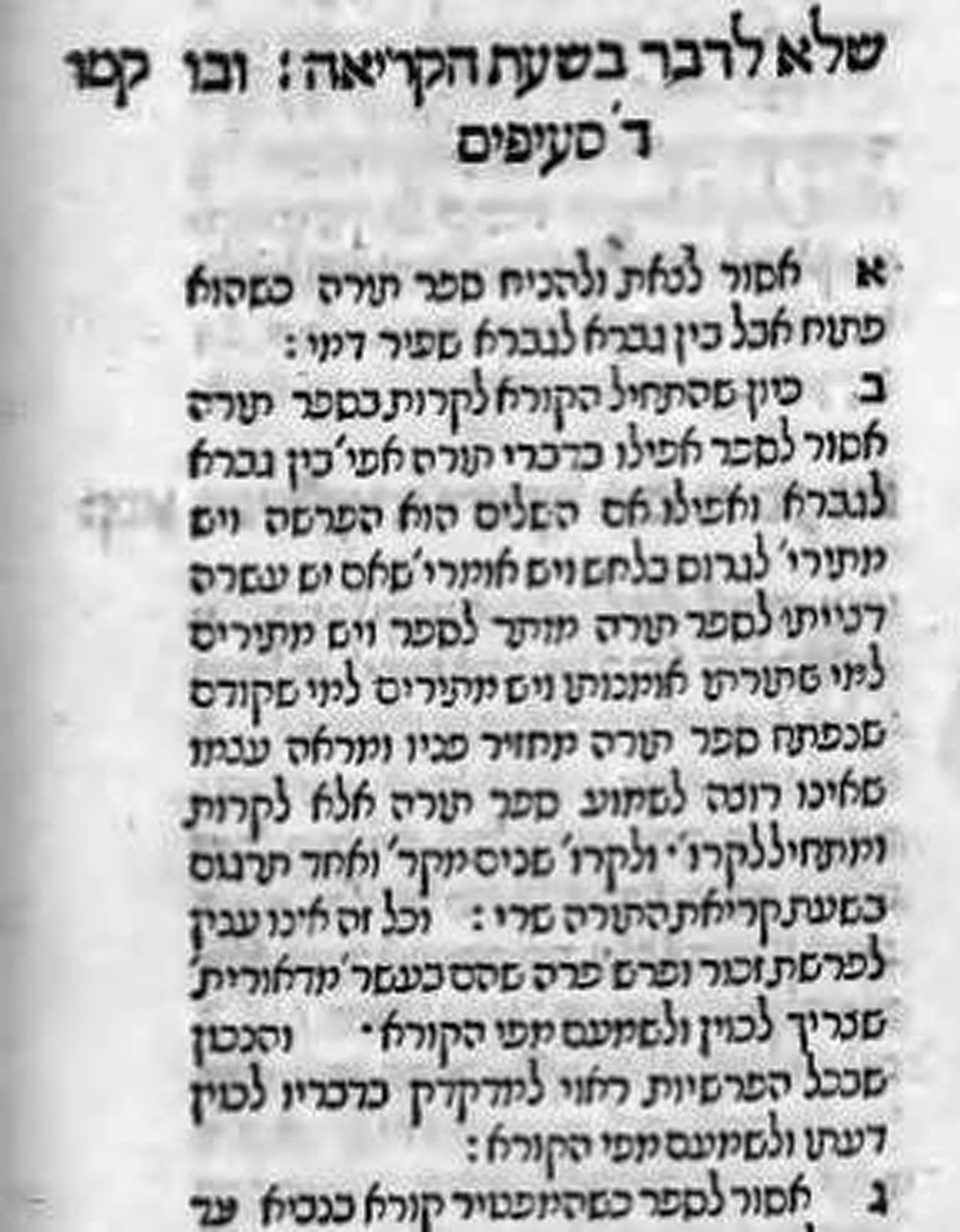
Figure 5: Note the raised periods and colons in the first print
(from the National Library of Israel web site).

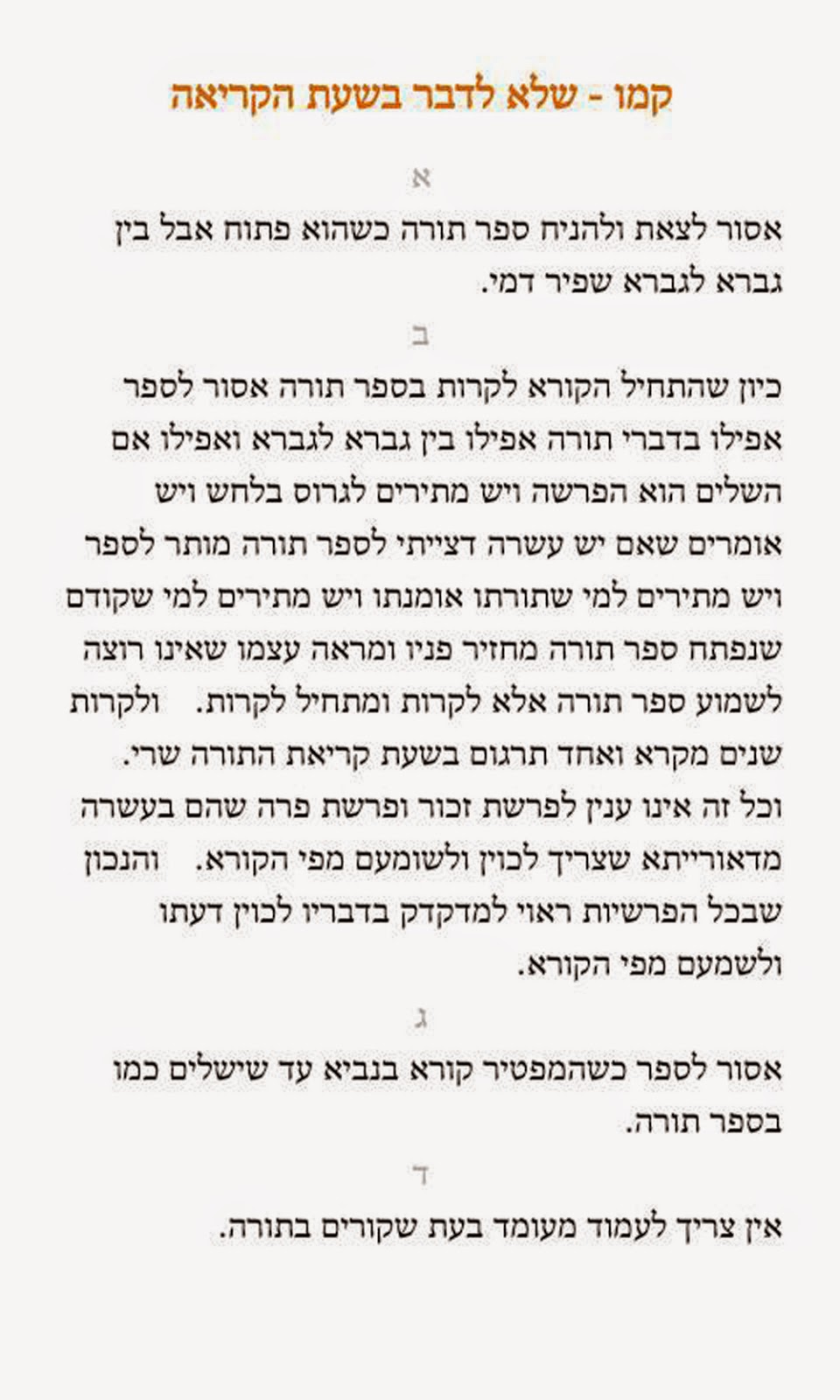
Figure 6: Screenshot of a digital version of R. Shneur Zalman’s
composition. Note periods and line feeds.

Figure 7: Facsimile of the first print of Shulhan Arukh – beginning
of chapter 11. See the colons in in the fourth halakha.

Figure 8: Screenshot of my smart phone version of R. Shneur Zalman’s
list – chapter 11

I think it’s possible that
the punctuation of the first edition of the SA was copied from RYK’s manuscript. Prof.
Raz-Krakozkin writes: He (Karo) insisted on personally supervising its
publication and made sure that the editors followed his instructions[6]. On
the other hand, I can’t explain why the punctuation marks occur so rarely.

To help decide if RYK
punctuated his manuscript before sending it to the printers, we can compare
other manuscripts that were printed then. For example, the Yerushalmi was first
printed in Venice (1523) from a manuscript, which is still extant today.

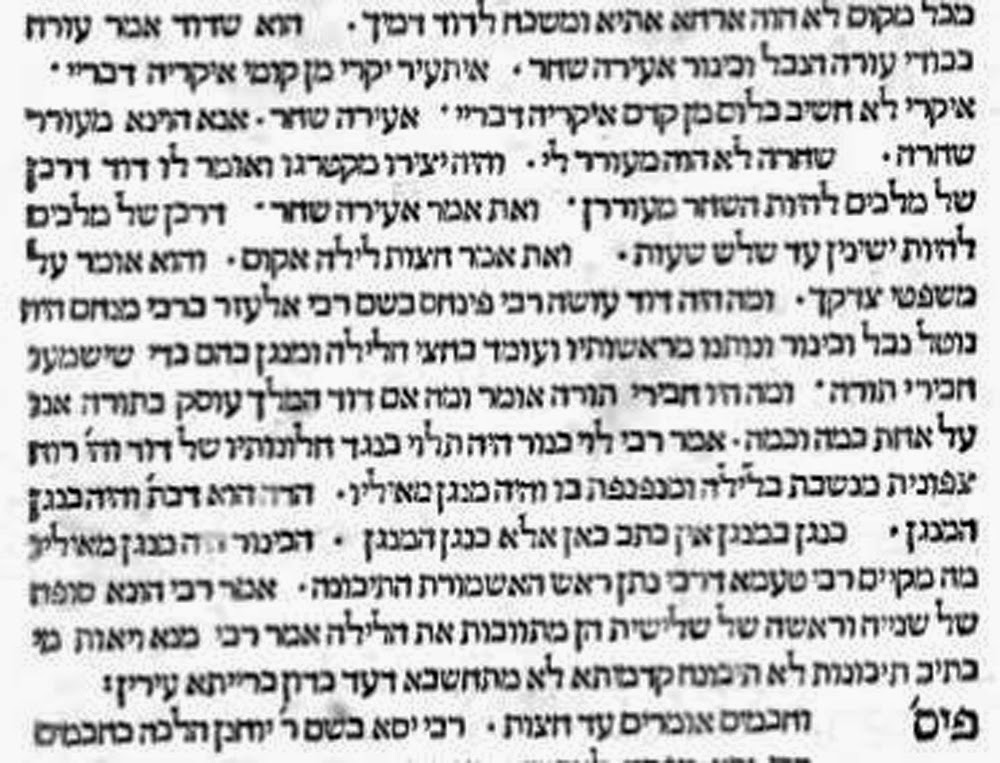
Figure 9: Facsimile of the first print of the Jerusalem Talmud
(Berakhot 1:1), with raised periods to separate word groups from the scanned
books at the website of the National Library of Israel, (formerly the Jewish
National and University Library.)

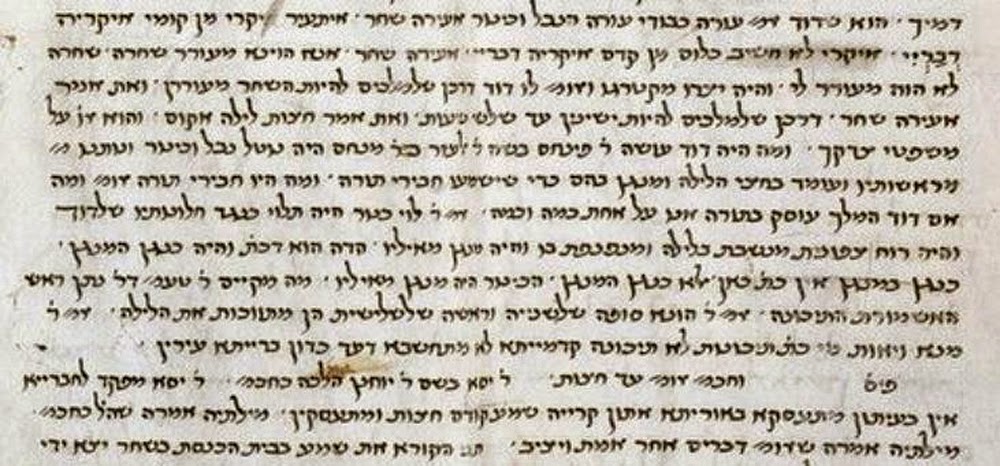
The printed version of the
Yerushalmi has elevated periods that delineate groups of words. These markings
are already found in the source manuscript in the exact same places.

Figure 10: Facsimile of Leiden manuscript of the Jerusalem Talmud
(1289 CE), Brakhot 1:1 from the Rabbinic Manuscripts on line at the National
Library of Israel web site, (formerly the Jewish National and University
Library).

Prof. Yaakov Sussmann[7]
speaks of two possibilities concerning the origin of the
Talmud Yerushalmi’s punctuation. The punctuation may be relatively recent – the
scribe punctuated the text or the punctuation existed in the manuscript that
the scribe copied from.  Alternatively,
the punctuation might be a reduction or simplification of cantillation marks
that were common in much older rabbinic manuscripts. Either way, the printers
didn’t invent the punctuation.

Our editions of the Gemara (the Babylonian Talmud) have colons (“two
dots”) in strategic places.[8]
These colons already exist in one of the first Talmud editions – the Bomberg
Talmud (Venice 1523).

Figure 11: Facsimile of a page of Bomberg Talmud (Betza 21a) showing
colons. (The horizontal lines near the colons are either blemishes, or markings
by hand.) Note the horizontal white space after the colons.

Most volumes of the Bomberg
edition were not printed from manuscript, but were copied from the Talmud
printed by Joshua Moses Soncino in 1484[9].
In the Soncino Talmud, we find separators in the exact places as the colons of
the Bomberg edition. The Soncino Talmud had two types of
punctuation: a top comma (or single quote mark) that marks off groups of words
(like the Yerushalmi has) and a double top comma (double quote mark). When
Bomberg printed his edition (40 years later), his printers replaced the double
commas with colons (and dropped the single commas).

Figure 12: The bottom of a page in Soncino, coresponding to the same
page (21a) in Betza. Note the two elevated commas, where we have a colon and
the subsequent horizontal white space. (The Soncino Talmud does not have the
same pagination as us). From the National Library of Israel web site.

Figure 13: Top of the next page in the Soncino edition, corresponding
to our Betza 21a. Note again 2 commas where we have a colon.

It would be difficult to trace the origins of the colons much further.
We don’t know which manuscripts were used by the printers of the Babylonian
Talmud, and in any case the many Talmud burnings in the 1550’s in Italy
destroyed most of the manuscripts that were there. Nevertheless, there is at
least one old manuscript that has punctuation marks similar to what we find in
the Soncino Talmud.

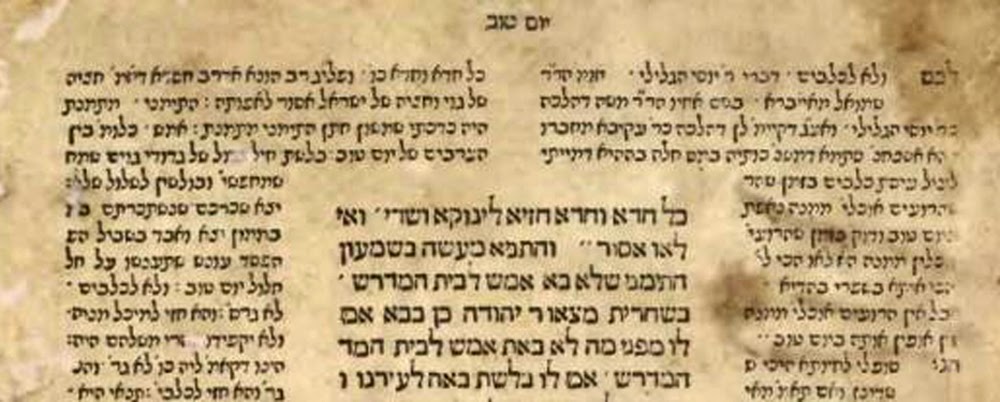
Figure 14: Snippet from Gottingen University Library Talmud
manuscript showing the upper double comma separator for the same page – Betza
21a (From the Rabbinic Manuscripts on line at the National Library of Israel
web site, (formerly the Jewish National and University Library).)

The Gottingen manuscript is a Spanish
manuscript from the early thirteenth century[10] – almost three hundred years older than the Talmud printed
in Soncino. It doesn’t have the upper single commas that Soncino edition has,
but it does have the same double comma in the same places that the Soncino
print has.  Just to repeat: the pauses
represented by colons, that we see in our Talmud are at least 800 years old!
It’s at least possible (likely?) that RYK’s own SA manuscript was
punctuated just as the Talmudic manuscripts that he studied from were.
Summary
I introduced RSZ’s
abbreviated (Kitzur) SA, and discussed it in the context of other similar
works. I mentioned that the authors aimed at producing collections of relevant laws
that could be memorized. I noted that the first edition of the SA was punctuated
differently from following versions. I suggested (based on comparisons with
early printed Talmuds) that the punctuation was probably the work of RYK and
not the work of the printers.

[1] Mondshine, Y. (Ed.).
(1984).  Migdal Oz (Hebrew), Kfar Habad:  Machon Lubavitch , pp.  419-421. Dedicated to the memory of Rabbi
Azriel Zelig Slonim ob”m. Essays on Torah and Hassidut by our holy Rabbis, the
leaders of Habad and their students, collected from manuscripts and authentic
sources and assembled with the help of the Almighty.
[2] Maimon, Rabbi Yehuda
Leib, The history of the Kitzur Shulhan Arukh (Hebrew), published in Rabbi Shlomo
Ganzfried, Kitzur Shulhan Arukh, Mossad Harav Kook Jerusalem Israel 1949. The
earlier works mentioned are: Shulan Tahor by R. Joseph Pardo,edited/financed by
his son David Pardo, Amsterdam 1686. Shulan Arukh of R. Eliezer Hakatan  by Eliezer Laizer Revitz printed by his
son-in-law R. Menahem Azaria Katz, Furth 
1697. Shulhan Shlomo by Rabbi Shlomo Zalman Mirkes printed in Frankfort
(Oder) 1771. Pardes Rimonim by R. Yehuda Yidel Berlin, composed in 1784 and
printed for the first time in Lemberg (Leviv) 1879. 
[3] RSZ’s digest from the
beginning until the end of chapter 156 contains 18,000 words while the same
portion of the big Shulhan Arukh contains approximately 40,000 words. A word is
loosely defined as a group of characters separated by a space or by spaces.
[4] In the introduction to
the Mishne Torah, Maimonides writes: “I divided this composition into legal
areas by subject, and divided the legal areas into chapters, and divided each
chapter into smaller legal paragraphs so that all of it can be memorized.”  See: Studies in the Mishne Torah, Book of
Knowledge Mossad Harav Kook, Jerusalem (Heb.) by Rabbi José Faur for a
discussion and explanation of the study methods of Middle Eastern Jews (page 46
and following pages, especially footnote 60).
[5] The National Library of
Israel, (formerly the Jewish National and University Library) has the edition
of the Shulhan Arukh printed in Krakow in 1580. This is the second version with
the notes of the Rema (which was first printed in 1570) and it doesn’t have the
original punctuation marks.
[6]  “From Safed
to Venice: The Shulhan ‘Arukh and the Censor” (in: Chanita Goldblatt, Howard
Kreisel (eds.), Tradition, Heterodoxy and Religious Culture, Ben
Gurion University of the Negev  (2007)
91-115). 
A.M. Haberman, The First Editions of the Shulhan Arukh
(Heb.) on the daat.ac.il web
site, (from the journal Mahanaim # 97 1965 p 31-34.) suggests that the
editor/corrector of the first edition, Menahem Porto Hacohen
Ashenazi created its table of contents.
See also the discussion about who created the chapter headings, (a
pre-requisite for the table of contents), in Gates in Halakha (Heb.), Rabbi
Moshe Shlita, Jerusalem 1983, page 100. He argues that the chapter headings of
the Shulhan Arukh could not be the work of Rav Yosef Karo. 
[7] Talmud Yerushalmi
According to Ms Or 4720 of the Leiden University Library, Academy of the Hebrew
Language Jerusalem 2001 Introduction by Yaakov Sussmann.
[8] Cf. Rashi in the
beginning of Leviticus “What is the purpose of the horizontal white-space (in
the text of the Torah)? It gives Moshe some space to contemplate between a
section and the next section, between a topic and the next topic.  (Rashi Lev. 1:1 s.v. vayikra el Moshe (2nd)
from the Sifra.
[9] Raphael Nathan Nata
Rabbinovicz. Essay on the printing of the Talmud  (Hebrew).
[10]  M. Krupp in The Literature of the Sages,
Oral Torah, Halakha, Mishna, Tosefta, Talmud, External Tractates (Compendia
Rerum Iudaicarum Ad Novum Testamentum)
 Fortress Pr; 1987 Part 1 Shmuel Safarai ed,  p 352. 


The Princess and I: Academic Kabbalists/Kabbalist Academics

ב”ה
The Princess and I[1]
Academic
Kabbalists/Kabbalist Academics
לכב’ יומא דהילולא דרשב”י ל”ג בעומר
by Josh Rosenfeld
Josh Rosenfeld is the
Assistant Rabbi at Lincoln Square Synagogue and on the Judaic Studies Faculty
at SAR High School.
This is his second
contribution to the Seforim blog. His
first essay, on “The Nazir in New York,” is available (here).
The last few decades
have witnessed the veritable explosion of “new perspectives” and
horizons in the academic study of Kabbalah and Jewish Mysticism. From the
pioneering work of the late Professor Gershom Scholem, and the establishment of
the study of Jewish Mysticism as a legitimate scholarly pursuit, we witness a
scene nowadays populated by men and women, Jews and non-Jews, who have
challenged, (re)constructed, and expanded upon Scholem’s work.[2]
 These men and women themselves have been
variously praised and criticized themselves for sometimes blurring the lines
between academician and practitioner of Kabbalah and mysticism.[3]
Professor Boaz Huss of the Ben-Gurion University of the Negev has done
extensive work in this area.[4]
One of the most impressive examples of this fusion of identities is Professor
Yehuda Liebes (Jerusalem, 1947-) of Hebrew University, who completed his
doctoral studies under Scholem, and rose to prominence himself by challenging
scholarly orthodoxies established by his mentor.
On a personal note, the
initial encounter between so-called ‘traditional’ notions of Kabbalah and
academic scholarship was a jarring one, calling into question aspects of faith
and fealty to long-held beliefs.[5]
In a moment of presumption, I would imagine that this same process is part and
parcel of many peoples’ paths to a more mature and nuanced conception of Torah
and tradition, having undergone the same experience. The discovery of
scholar/practitioners like Prof. Liebes, and the fusion of mysticism and
scholarship in their constructive (rather than de-constructive) work has served
to help transcend and erase the tired dichotomies and conflicts that previously
wracked the traditional readers’ mind.[6]
It is in this sense, and
in honor of the 33rd of the ‘Omer
the Rosh ha-Shana of The Zohar and
Jewish Mysticism that I present here an expanded and annotated translation of
Rabbi Menachem Hai Shalom Froman’s poem and pean to his teacher, Professor
Yehuda Liebes.[7]
Study of the unprecedented relationship between the two, and other
traditional/academic academic/traditional Torah relationships remains a
scholarly/traditional desideratum.[8]
Rabbi Menachem Froman
was born in 1945, in Kfar Hasidim, Israel, 
and served as the town rabbi of Teko’a in the West Bank of Israel.
During his military service, served as an IDF paratrooper and was one of the
first to reach the Western Wall.. He was a student of R. Zvi Yehuda Kook at
Yeshivat Merkaz ha-Rav and also studied Jewish Thought at the Hebrew University
of Jerusalem. A founder of Gush Emunim, R. Froman was the founder of Erets Shalom and advocate of
interfaith-based peace negotiation and reconciliation with Muslim Arabs. As a
result of his long-developed personal friendships, R. Froman served as a
negotiator with leaders from both the PLO and Hamas. He has been called a
“maverick Rabbi,” likened to an “Old Testament seer,”[9]
and summed him up as “a very esoteric kind of guy.”[10]
Others have pointed to R. Froman’s expansive and sophisticated religious
imagination; at the same time conveying impressions of ‘madness’ that some of
R. Froman’s outward appearances, mannerisms, and public activities may have
engendered amongst some observers.[11] He passed
away in 2013.
R. Froman was not known
for his written output, although recently a volume collecting some of his
programmatic and public writing has appeared, Sahaki ‘Aretz (Jerusalem: Yediot and Ruben Mass Publishers: 2014).[12]
I hope to treat the book and its fascinating material in a future post at the Seforim blog. [13]
The Princess and I
Menachem Froman
Translated and Annotated
by Josh Rosenfeld
II Samuel 6:12-23
And she saw him, dancing
and leaping[14]
amongst lambs and goats
it troubled her[15]
and she despised
him in her heart that
had opened to love
she had com/passion
and she sought from her
father to be his wife[16]
And she saw him, dancing
and leaping
with her in the ways of
men amidst the longing of doves[17]
 it troubled her
and she despised
him in her heart at the
moment of intimacy
she had com/passion
upon him like the
embrace of parting moment[18]
And she saw him, dancing
and leaping
amongst foreign matrons
 it troubled her
and she despised
him in her heart that he
had left her in pain
and she resorted to the
honor of her father and the garb of royals
He saw her, and he leapt
and he danced
in the presence of the
glory of his God
he was troubled
and he despised
in his heart conceiving
the troubles in hers
he had com/passion
yet still returned
to his flocks and his
herds
to the dancing and
leaping he loved
______
            It is through this poem, written many years ago, that I
wish to join with those who are honoring my teacher and Rebbe Muvhak [ =longtime teacher] Professor Yehuda Liebes, shlit”a [ =may he merit long life]
(or, as my own students in the Yeshiva are used to hearing during my lectures, Rebbe u’Mori ‘Yudele’ who disguises himself
as Professor Liebes
…).
This poem (at least
according to its authorial intent), describes the ambivalent relationship
between two poles; between Mikhal, the daughter of Saul, who is connected to
the world of kingship and royalty, organized and honorable – and David, the
wild shepherd, a Judean ‘Hilltop Youth’ [ =no’ar
gev’aot
]. Why did I find (and it pleases me to add: with the advice of my
wife) that the description of the complex relationship between Mikhal, who
comes from a yekkishe family, and
David, who comes from a Polish hasidishe  family, is connected to [Prof.] Yehuda
[Liebes]? (By the way, Yehuda’s family on his father’s side comes from a city
which is of doubtful Polish or German sovereignty). Because it may be proper,
to attempt to reveal the secret of Yehuda – how it is possible to bifurcate his
creativity into the following two ingredients: the responsible, circumspect (medu-yekke)
scientific foundation, and the basic value of lightness and freedom.
Seriousness and mirth
(as he analyzes with intensity in his essay “Zohar and Eros”[19]),
formality and excess (as he explains in his book, “The Doctrine of
Creation according to Sefer Yetsirah“[20]),
contraction and expansion, saying and the unsaid, straightness ( =shura)
and song ( =shira). Words that stumble in the dark, seek in the murky mist,
for there lies the divine secret. Maimonides favors the words: wisdom and will;
and in the Zohar, Yehuda’s book, coupling and pairs are of course, quite
central: left as opposed to right, might ( =gevura)
as opposed to lovingkindness ( =hesed),
and also masculinity as opposed to the feminine amongst others. I too, will
also try: the foundation of intellectualism and the foundation of sensualism
found by Yehuda.
Do these two fundamental
aspects of Yehuda’s creativity mesh together to form a unity? This poem, which
I have dedicated to Yehuda, follows in the simple meaning of the biblical story
of the love between Mikhal and David, and it does not have a ‘happy ending’;
they separate from each other – and their love does not bear fruit. Here is
also the fitting place to point out that our Yehuda also merited much criticism
from within the academic community, and not all find in his oeuvre a unified
whole or scientific coherence of value. But perhaps this is to be instead found
by his students! I am used to suggesting in my lectures my own interpretation
of ‘esotericism’/secret: that which is impossible to [fully] understand, that
which is ultimately not logically or rationally acceptable.
I will conclude with a
story ‘in praise of Liebes’ (Yehuda explained to me that he assumes the meaning
of his family name is: one who is related to a woman named Liba or, in the changing of a name, one who is related to an Ahuva/loved one). As is well known, in
the past few years, Yehuda has the custom of ascending ( =‘aliya le-regel)[21]
on La”g b’Omer to the
celebration ( =hilula) of
RaShb”I[22]
in Meron. Is there anyone who can comprehend – including Yehuda himself – how a
university professor, whose entire study of Zohar is permeated with the notion
that the Zohar is a book from the thirteenth- century (and himself composed an
entire monograph: “How the Zohar Was Written?”[23]), can be
emotionally invested along with the masses of the Jewish people from all walks
of life, in the celebration of RaShb”I, the author of the Holy Zohar?
Four years ago, Yehuda
asked me to join him on this pilgrimage to Meron, and I responded to him with
the following point: when I stay put, I deliver a long lecture on the Zohar to
many students on La”g b’Omer,
and perhaps this is more than going to the grave of RaShb”I.[24]
Yehuda bested me, and roared like a lion: “All year long – Zohar, but on La”g b’Omer – RaShb”I!”
            God’s secret is with/in those who fear him, and his
covenant makes it known.[25]


[1] I wish to thank yedidi R’ Menachem Butler for his patient guidance and assistance in the preparation of this short essay. His expertise and erudition is something worthy of true admiration. Thanks, as well, is also due to the other editors at the Seforim Blog for their consideration of this piece, and for providing such a remarkable, long-running platform for the dissemination, discussion, and study of Jewish culture and thought
[2] It is no understatement to say that there is a vast literature on the late Professor Gershom Scholem and for an important guide, see Daniel Abrams, Kabbalistic Manuscripts and Textual Theory: Methodologies of Textual Scholarship and Editorial Practice in the Study of Jewish Mysticism, second edition (Jerusalem: Magnes Press, 2014). See also Gershom Scholem’s Major Trends in Jewish Mysticism 50 Years After: Proceedings of the Sixth International Conference on the History of Jewish Mysticism, eds. Joseph Dan and Peter Schafer (Tübingen: Mohr Siebeck, 1993), 1-15 (“Introduction by the Editors”); Essential Papers on Kabbalah, ed. Lawrence Fine (New York: NYU Press, 1995); Mysticism, Magic, and Kabbalah in Ashkenazi Judaism, eds. Karl Erich Grozinger and Joseph Dan (Berlin: De Gruyter, 1995); Kabbalah and Modernity: Interpretations, Transformations, Adaptations, eds. Boaz Huss, Marco Pasi and Kocku von Stuckrad (Leiden: Brill, 2010), among other fine works of academic scholarship.

For a unique example of a non-apologetic traditional engagement with Scholem’s work, see R. Shimon Gershon Rosenberg (ShaGaR), Nehalekh be-Regesh (Efrat: Mahon Kitve ha-Rav Shagar, 2010), 75-97, especially 77-78 (Hebrew), which I hope to explore in a future essay at the Seforim blog.

[3] While representing a
range of academic approaches, these scholars can be said to have typified a
distinct phenomenological approach to the academic study of Kabbalah and what
is called “Jewish Mysticism.” See Boaz Huss, “The Mystification
of Kabbalah and the Myth of Jewish Mysticism,” Peamim 110 (2007): 9-30 (Hebrew), which has been shortened into
English adaptations in Boaz Huss, “The Mystification of the Kabbalah and
the Modern Construction of Jewish Mysticism,” BGU Review 2 (2008), available online (here);
and Boaz Huss, “Jewish Mysticism in the University: Academic Study or
Theological Practice?” Zeek (December 2006), available online (here).

[4] See Boaz Huss,
“Spirituality: The Emergence of a New Cultural Category and its Challenge
to the Religious and the Secular,” Journal
of Contemporary Religion
29:1 (January 2014): 47-60; see further in Boaz
Huss, “The Theologies of Kabbalah Research,” Modern Judaism 34:1 (February 2014): 3-26; and Boaz Huss,
“Authorized Guardians: The Polemics Of Academic Scholars Of Jewish Mysticism
Against Kabbalah Practitioners,” in Olav Hammer and Kocku von Stuckrad,
eds., Polemical Encounters: Esoteric
Discourse and Its Others
(Leiden: Brill, 2007), 85-104. On the difficulty
of pinning down just what is meant by the word ‘mysticism’ here, see Ron
Margolin, “Jewish Mysticism in the 20th Century: Between Scholarship and
Thought,” in Haviva Pedaya and Ephraim Meir, eds., Judaism: Topics, Fragments, Facets, and Identities – Sefer Rivkah
(=Rivka Horwitz Jubilee Volume) (Be’er Sheva: Ben Gurion University, 2007;
Hebrew), 225-276; see also the introduction to Peter Schäfer, The Origins of Jewish Mysticism
(Tübingen: Mohr Siebeck, 2009), 1-31, especially 10-19, where Schäfer attempts
to give a precis of the field and the various definitions of what he terms
“a provocative title.”  See
Boaz Huss, “Spirituality: The Emergence of a New Cultural Category and its
Challenge to the Religious and the Secular,” Journal of Contemporary
Religion 29:1 (January 2014): 47-60; see further in Boaz Huss, “The
Theologies of Kabbalah Research,” Modern Judaism 34:1 (February 2014):
3-26; and Boaz Huss, “Authorized Guardians: The Polemics Of Academic
Scholars Of Jewish Mysticism Against Kabbalah Practitioners,” in Olav
Hammer and Kocku von Stuckrad, eds., Polemical Encounters: Esoteric Discourse
and Its Others (Leiden: Brill, 2007), 85-104.
On the difficulty of
pinning down just what is meant by the word ‘mysticism’ here, see Ron Margolin,
“Jewish Mysticism in the 20th Century: Between Scholarship and
Thought,” in Haviva Pedaya and Ephraim Meir, eds., Judaism: Topics,
Fragments, Facets, and Identities – Sefer Rivkah (=Rivka Horwitz Jubilee
Volume) (Be’er Sheva: Ben Gurion University, 2007; Hebrew), 225-276; see also
the introduction to Peter Schäfer, The
Origins of Jewish Mysticism
(Tübingen: Mohr Siebeck, 2009), 1-31,
especially 10-19, where Schäfer attempts to give a precis of the field and the
various definitions of what he terms “a provocative title,” as well
earlier in Peter Schäfer, Gershom Scholem
Reconsidered: The Aim and Purpose of Early Jewish Mysticism
(Oxford, U.K.:
Oxford Centre for Postgraduate Hebrew Studies, 1986).
[5] For an example of the
sometimes fraught encounter and oppositional traditional stance regarding the
academic study of Kabbalah, see Jonatan Meir, “The Boundaries of the
Kabbalah: R. Yaakov Moshe Hillel and the Kabbalah in Jerusalem,” in Boaz
Huss, ed., Kabbalah and Contemporary
Spiritual Revival
(Be’er Sheva: Ben Gurion University Press, 2011),
176-177. Inter alia, Meir discusses
the adoption of publishing houses like R. Hillel’s Hevrat Ahavat Shalom of “safe” academic practices such as
examining Ms. for textual accuracy when printing traditional Kabbalistic works.
See also R. Yaakov Hillel, “Understanding Kabbalah,” in Ascending Jacob’s Ladder (Brooklyn:
Ahavat Shalom Publications, 2007), 213-240; and the broader discussion in
Daniel Abrams, “Textual Fixity and Textual Fluidity: Kabbalistic
Textuality and the Hypertexualism of Kabbalah Scholarship,” in Kabbalistic Manuscripts and Textual Theory:
Methodologies of Textual Scholarship and Editorial Practice in the Study of
Jewish Mysticism
, second edition (Jerusalem: Magnes Press, 2014), 664-722.
[6] For a scholarly
overview of Liebes’ work, see Jonathan Garb, “Yehuda Liebes’ Way in the
Study of the Jewish Religion,” in Maren R. Niehoff, Ronit Meroz, and
Jonathan Garb, eds., ve-Zot le-Yehuda –
And This Is For Yehuda: Yehuda Liebes Jubilee Volume
(Jerusalem: Mosad
Bialik, 2012), 11-17 (Hebrew); and for an example of a popular treatment of
Liebes, see Dahlia Karpel, “Lonely Scholar,” Ha’aretz (12 March 2009), available online here
(http://www.haaretz.com/lonely-scholar-1.271914).
[7] The poem and essay were
first published in Menachem Froman, “The King’s Daughter and I,” in
Maren R. Niehoff, Ronit Meroz, and Jonathan Garb, eds., ve-Zot le-Yehuda – And This Is For Yehuda: Yehuda Liebes Jubilee Volume
(Jerusalem: Mosad Bialik, 2012), 34-35 (Hebrew). The translation and
annotation of this essay at the Seforim
blog
has been prepared by Josh Rosenfeld.

[8] For
a sketch of the (non)interactions of traditional and academic scholarship in
the case of Gershom Scholem, see Boaz Huss, “Ask No Questions: Gershom
Scholem and the Study of Contemporary Jewish Mysticism,” Modern Judaism 25:2 (May 2005) 141-158. See also Shaul Magid, “Mysticism,
History, and a ‘New’ Kabbalah: Gershom Scholem and the Contemporary
Scene,” Jewish Quarterly Review
101:4 (Fall 2011): 511-525; and Shaul Magid, “‘The King Is Dead [and has
been for three decades], Long Live the King’: Contemporary Kabbalah and
Scholem’s Shadow,” Jewish Quarterly
Review
102:1 (Winter 2012): 131-153.

[9] See
the obituary in Douglas Martin, “Menachem Froman, Rabbi Seeking Peace,
Dies at 68,” The New York Times (9 March 2013), available online  (here).
Speaking to a member of the Israeli media at R. Froman’s funeral, the author
and journalist Yossi Klein Halevi described “Rav Menachem” as
“somebody who, as a Jew, loved his people, loved his land, loved humanity
– without making distinctions, he was a man of the messianic age, he saw
something of the redemption and tried to bring it into an unredeemed
reality,” available online here (here).

[10] R. Froman’s mystical
political theology permeated his own personal existence. Even on what was to
become his deathbed, he related in interviews how he conceived of his illness
in terms of his political vision: “How do you feel?” “You are
coming to me after a very difficult night, there were great miracles. It is
forbidden to fight with these pains, we must flow with them, otherwise the pain
just grows and overcomes us. This is what there is, this is the reality that we
must live with. Such is the political
reality, and so too with the disease
.” (Interview with Yehoshua
Breiner, Walla! News Org.; 3/4/13, emphasis mine)

[11] See, for example, the
short, incisive treatment of Noah Feldman, “Is a Jew Meshuga for Wanting
to Live in Palestine?” Bloomberg
News
(7 March 2013), available online (here),
who concisely presents the obvious paradox of “The Settler Rabbi” who
nevertheless advocates for a Palestinian State, and outlines the central
challenges to R. Froman’s “peace theology” from practical security
concerns for Jews living in such a state to the challenges of unrealistic
idealism in R. Froman’s thought.

[12] A presentation of some
of the first translations of some of Sahaki
‘Aretz’
fascinating material, can be seen online (here).
[13] A preliminary scholarly
overview of R. Froman’s literary output and sui generis personality is the
forthcoming essay by Professor Shaul Magid, “(Re)­Thinking American Jewish
Zionist Identity: A Case for Post­Zionism in the Diaspora.” To the best of
my knowledge, Professor Magid’s currently unpublished essay is the first
scholarly treatment of R. Froman’s writings in Sahaki ‘Aretz, although see the brief review by Ariel Seri-Levi,
“The Vision of the Prophet Menachem, Rebbe Menachem Froman,” Ha’aretz Literary Supplement (9 February
2015; Hebrew). I would like to thank Menachem Butler for introducing me to
Professor Magid.
[14] King David is at times
referred to as the badhana d’malka,
or “Jester of the King” (see Zohar, II:107a); Liebes treats the
subject at length in Yehuda Liebes, “The Book of Zohar and Eros,” Alpayim 9 (1994): 67-119 (Hebrew).
[15] Gen. 41:8
[16] For an outlining of the
parallel, sometimes oppositional, and rarely unified relationships between the
two royal lineages of Joseph and Judah, see the remarkable presentation of R.
Mordechai Yosef Leiner of Izbica (1801-1854), Mei ha-Shiloah, vol. 1, pp. 47-48, 54-56. On these passages, see
Shaul Magid, Hasidism on the Margin:
Reconciliation, Antinomianism, and Messianism in Izbica/Radzin Hasidism

(Madison: University of Wisconsin Press, 2003), 120, 147, 154, et al. The
marriage of David to Mikhal, daughter of Saul, represented an attempted
mystical fusion of the two houses and their perhaps complementary spiritual
roots, as R. Froman alludes to later in his essay.
[17] Song of Songs 2:14,
5:2. See, most recently, Michael Fishbane, The
JPS Bible Commentary: Song of Songs
(Philadelphia: Jewish Publication
Society, 2015), 75-76, 133-135.
[18] 1 Kings 7:36, see also
b. Yoma 54b with commentary of Rashi.
[19] Yehuda Liebes,
“The Book of Zohar and Eros,” Alpayim
9 (1994): 67-119 (Hebrew)
[20] Yehuda Liebes, Ars
Poetica in Sefer Yetzirah
(Jerusalem:
Schocken, 2000; Hebrew) and see the important review by Elliot R. Wolfson, “Text,
Context, and Pretext: Review Essay of Yehuda Liebes’s Ars Poetica in Sefer Yetsira,” Studia Philonica Annual 16 (2004): 218-228.
[21] See the start of this
essay, where we defined Lag ba-Omer in
the sense of the Kabbalistic/Mystical Rosh ha-Shana. For an overview of Lag ba-Omer and it’s unique connection
to the study of the Zohar, see Naftali Toker, “Lag ba-Omer: A Small Holiday of Great Meaning and Deep
Secrets,” Shana beShana (2003):
57-78 (Hebrew), available online (here).
[22] See Boaz Huss,
“Holy Place, Holy Time, Holy Book: The Influence of the Zohar on
Pilgrimage Rituals to Meron and the Lag ba-Omer Festival,” Kabbalah 7 (2002): 237-256 (Hebrew).
[23] Yehuda Liebes,
“How the Zohar Was Written,” in Studies
in the Zohar
(Albany: SUNY Press, 1993), 85-139. For an exhaustive survey
of all of the scholarship on the authorship of the Zohar, see Daniel Abrams,
“The Invention of the Zohar as a Book” in Kabbalistic Manuscripts and Textual Theory: Methodologies of Textual
Scholarship and Editorial Practice in the Study of Jewish Mysticism
, second
edition (Jerusalem: Magnes Press, 2014), 224-438.
[24] Towards the end of his
life, R. Froman delivered extended meditations/learning of Zohar and works of
the Hasidic masters in a caravan at the edge of the Teko’a settlement in Gush
Etzion. These ‘arvei shirah ve-Torah
were usually joined by famous Israeli musicians, such as the Banai family and
Barry Sakharov. One particular evening was graced with Professor Liebes’
presence, whereupon Liebes and Froman proceeded to jointly teach from the
Zohar. It is available online (here).
[25] Ps. 25:14; See Tikkunei Zohar 17b, 65a; For the
connection of this verse with the 33rd of the ‘Omer, see R. Elimelekh of Dinov, B’nei Yissachar: Ma’amarei
Hodesh Iyyar
, 3:2. For an exhaustive discussion of the 33rd day of the
‘Omer and its connection with Rashbi, see R. Asher Zelig Margaliot (1893-1969),
Hilula d’Rashbi (Jerusalem: 1941),
available online (here), On R. Asher
Zelig Margaliot, see Paul B. Fenton, “Asher Zelig Margaliot, An Ultra
Orthodox Fundamentalist,” in Raphael Patai and Emanuel S. Goldsmith, eds.,
Thinkers and Teachers of Modern Judaism (New York: Paragon House, 1994), 17-25;
and see also Yehuda Liebes, “The Ultra-Orthodox Community and the Dead Sea
Scrolls,” Jerusalem Studies in
Jewish Thought
3 (1982): 137-152 (Hebrew), cited in Adiel Schremer,
“‘[T]he[y] Did Not Read in the Sealed Book’: Qumran Halakhic Revolution
and the Emergence of Torah Study in Second Temple Judaism,” in David
Goodblatt, Avital Pinnick, and Daniel R. Schwartz, eds., Historical Perspectives from the Hasmoneans to Bar Kokhba in Light of
the Dead Sea Scrolls
(Leiden: Brill, 2001), 105-126. R. Asher Zelig
Margaliot’s Hilula d’Rashbi is
printed in an abridged form in the back of Eshkol Publishing’s edition of R.
Avraham Yitzhak Sperling’s Ta’amei
ha-Minhagim u’Mekorei ha-Dinim
and for sources and translations relating to
the connection of RaShb”I and the pilgrimage (yoma d’pagra) to his grave in Meron, see (here).


The Netziv, Reading Newspapers on Shabbos & Censorship (Part Two)

The Netziv, Reading Newspapers on Shabbos & Censorship (Part Two)*.
By Eliezer Brodt
  Updates and clarifications

This post is devoted to discuss some of the various comments I have received from many different people regarding part one (here). I will also add in some of the material which I had forgotten to quote for part one [some of which I was reminded of by readers] along with additional material that I have recently uncovered. I apologize for the delay in posting this.  From the outset, I would like to thank all those people who sent in comments regarding the post. I hope to publish the next two parts to this article in the near future.
My email address is eliezerbrodt@gmail.com; feel free to send comments.
Firstly, on the general topic of censorship and especially related to this post, I forgot to mention Professor S. Stampfer’s remarks to me when I discussed with him the general idea of this post: “Those who impose censorship presumably assume that they are wiser than the author whose text they wish to suppress“. [See also his work Lithuanian Yeshivas of the Nineteenth Century, p. 11].[1]
 In the beginning of the first part of this post [and in note two], I wrote that that this is a work in progress. In the future, I hope to write an in-depth article exploring other Heterim for reading newspapers on Shabbos. I forgot to mention Rabbi Eitam Henkin’s article on the subject available here. Rabbi Henkin deals with the Netziv Heter in note 24. [Thanks to J. for reminding me about this source].
Rabbi Henkin shows 1 the similarity of between the Pesak by R’ Moshe Feinstein to that of the Netziv’s.
ושוב שאלתיו איך לנהוג בטילטול איגרת שלום.
תשובה: כיוון דמותר לקראות איגרת שלום בשבת, מותר לטלטלו. דהטעם שאסרו איגרת שלום בטילטול, הוא משום שמא ימחוק (רמב”ם שבת פכ”ג הי”ט, ועי’ או”ח סי’ ש”ז ט”ז ס”ק י”א), וכיוון דאנו נחשבים לגבי האי דינא כחשובים, אין לחשוש שמא ימחוק, כמו דלא חיישינן בחשובים לשמא יטה (סימן ער”ה סעיף ד’). דבאיסור קריאת איגרת נאמרו שני טעמים, אחד משום שמא ימחוק, והשני משום ודבר דבר. ואיסור ודבר דבר הוא רק באופן שקורא בפה, אבל עיון וקריאה שלא בפה מותר. ואיסור קריאה בדרך עיון בעלמא הוא רק משום שמא ימחוק, ועל טעם זה יש בו היתר דאנו נחשבים כחשובים [שו”ת אגרות משה, או”ח, ה, סי’ כב אות ד].
This Teshuvah was purportedly written to Rabbi Y.P. Bodner. However, a check in Rabbi Bodner’s work, The Halachos of Muktza, pp. 7-8, where he publishes the Teshuvot that he received from R’ Moshe Feinstein, nothing of the sort appears regarding this issue. On the other hand, it bears note that in the introduction to this Teshuvah in Igrot Moshe (#21), the editors write that R’ Moshe Feinstein had later added to them comments and corrections. [Thanks to Moshe Kaufman for this source].
In note five I deal with relying on R’ Baruch Halevei Epstein’s Mekor Baruch. I predicted (to myself) that CFP would comment about this [as he has in the past]. Others, as well, have complained to me about relying on this work. I am not going to get into the whole subject at this time; it has been dealt with in the past by many and will probably be dealt with in the future by many more. I plan to write my own thoughts on the topic in the future, B”N. For now, I will quote something related to this [and to some of the other sources I used in this post] from Professor Stampfer’s introduction to his work Lithuanian Yeshivas of the Nineteenth Century, (p. 11) related to all this:

The sources I have used in this book… and memoirs are worthy of note. The last category is the most important, and like every other source it has both advantages and disadvantages. Memoirs sometimes provide a more detailed picture than official documents, but most were written many years after the events described and more than likely in consequence to suffer from only partial recall; they also reflect their authors attitudes at the time of writing rather than at the time of the events they describe. In most cases I have assumed that, although what was written may only be part of the truth, the authors would not have deliberately lied. Moreover, almost all my conclusions are based on several sources, so that if one source proves unreliable it does not usually affect my general conclusions.

In the case of the Netziv reading newspapers, I have provided enough ancillary evidence. As for his having permitted reading them on Shabbas and himself having done so, I believe I have provided enough sources for that as well.
CFP commented:

“I don’t know why you assume that the MB’s fabrications – to the extent that they were such – were “common knowledge”. How would the Netziv’s activities, in the privacy of his house on Shabbos, be “common knowledge”? As an insider, RBE had free reign to claim whatever he wanted. The same applies also to R’ Kook. He may not have known what his rebbe did Shabbos morning in his house. But even if he did, there’s no reason to assume that R’ Kook read the entire MB before giving a haskama on it. When assessing the validity of historical evidence, it can be useful to imagine that we’re assessing this same evidence today. Do insiders make claims about great rabbis’ practices that are of dubious veracity? Do people give haskamos on things that they’ve not read in full? It was probably no different then.”

The reason why I assume it was common knowledge is this: Volozhin itself was a small town. Almost whatever the Netziv did was noted by the hundreds of Bochurim who learnt there; other than learning there was almost nothing else to talk about. In present-day Yeshivas, one of the hot topics which Yeshivah Bochurim enjoy discussing is what their Rebbe said or did; I believe this was no different in those days. The simplest way for everyone knew that the Netziv received newspapers was that they noticed his incoming mail. As for their knowledge of what went on in his house, many bochurim ate in his house on Shabbas and Yom Tov, as is clear from the various memoir literature. Thus, I do not think that R’ Epstein had free reign to claim whatever he wanted about the goings on inside the Netziv’s home.
I agree that I cannot prove that R Kook read the whole work in its entirety; I assume it is reasonable that he read all the parts about his Rebbe. Anyone familiar with how much the Netziv meant to him should be able to understand why I believe this. Conversely, I fully agree that people give haskomos to works they do not read, however that specific point has no direct bearing on my conclusions.
One of the memoir sources I quoted a few times in part one was from the various articles written by Micha Yosef Berdyczewski. Micha came from a chassidic home, learned in Volozhin for a short time, and ended up becoming a famous non-religious writer and thinker.[2] Thus, it begs the question how one could rely on such a source.
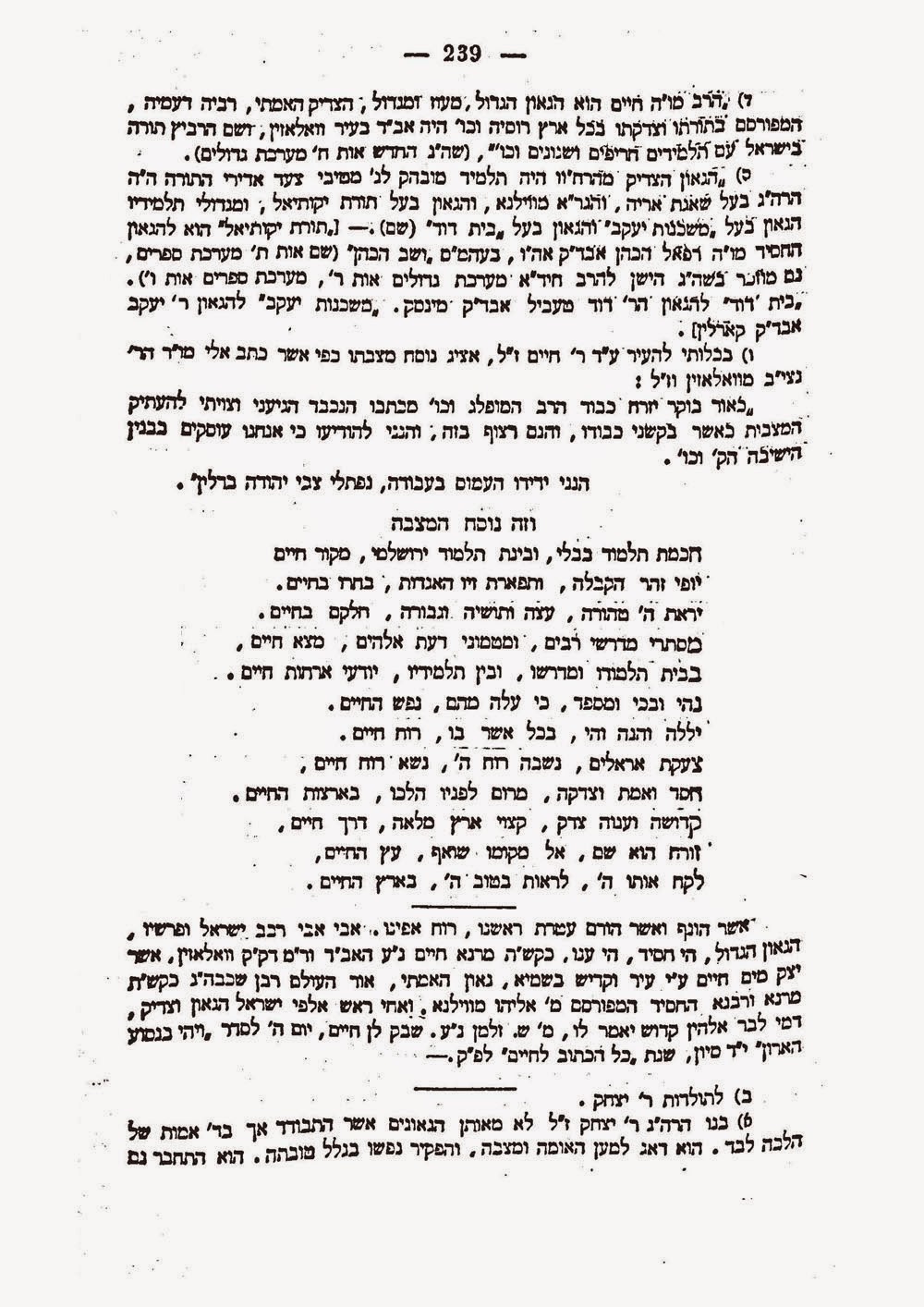
Berdyczewski wrote a lengthy article about Volozhin in Volume three of HaAssif (1886), pp. 231-242. This article was recently reprinted in his collected writings volume one (pp. 65-75) However, they did not reprint the five page appendix to the article. See the end of this post for the complete article.
The article is well written and appears to be a very accurate portrayal of Volozhin.[3] Many who wrote on Volozhin used it.
Reading the appendix we find that the Netziv helped Berdyczewski, providing him with some information for this article. Berdyczewski quotes two pieces from the Netziv (p. 239, 240).
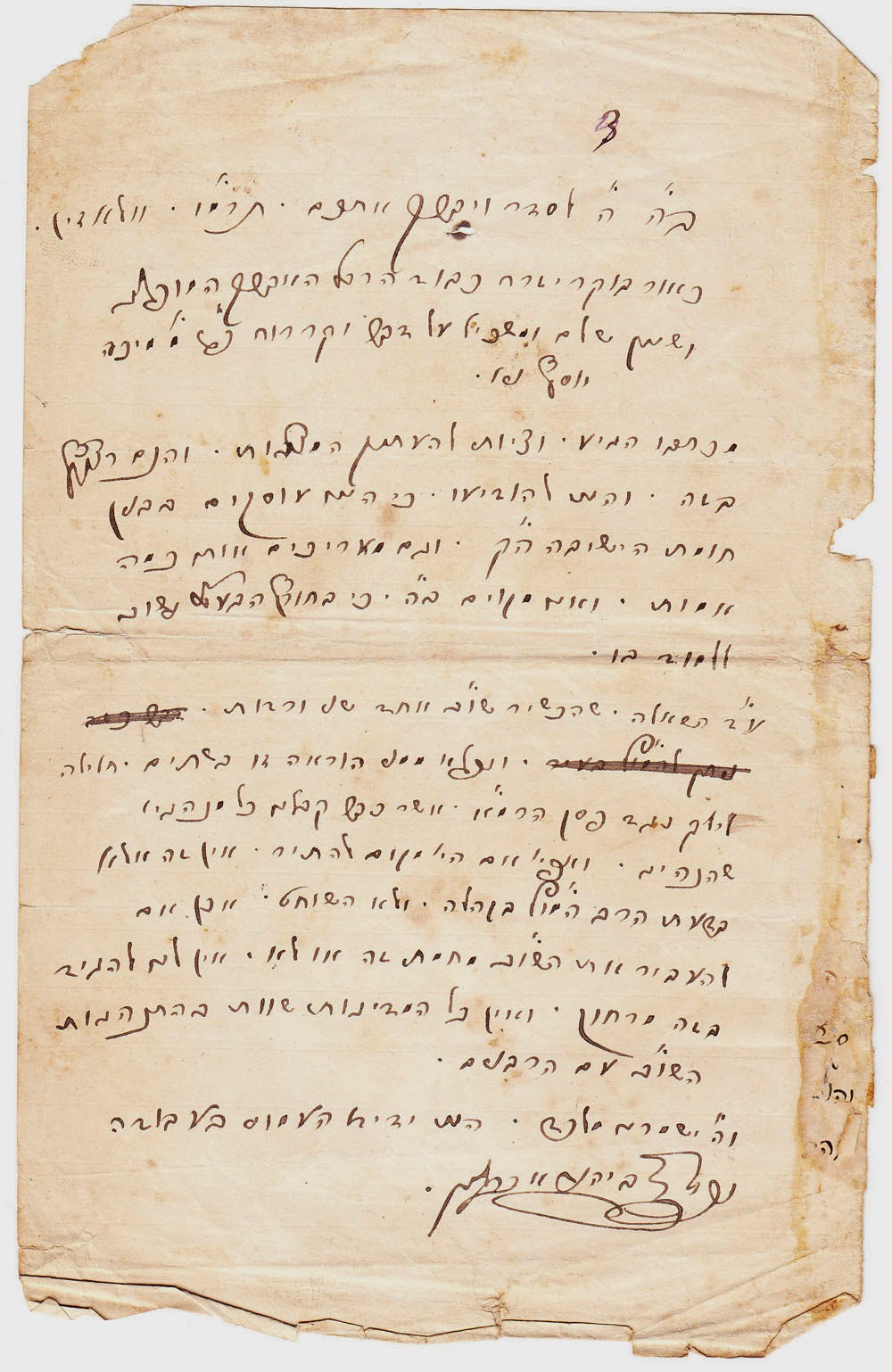
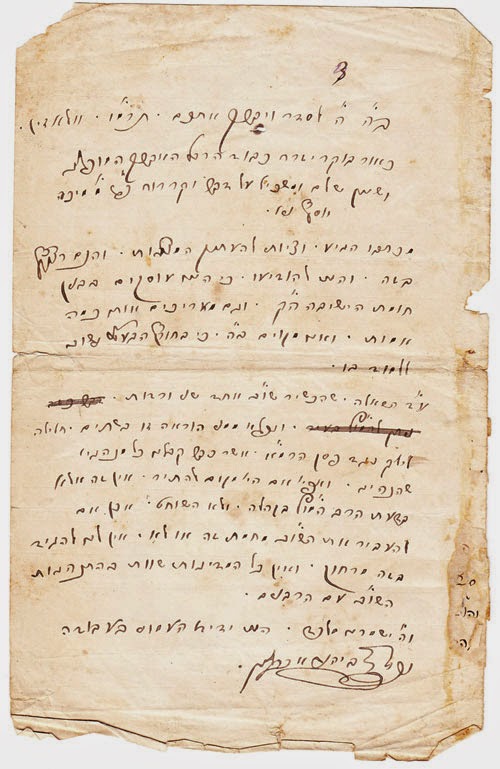
I contacted the world-renowned expert on Berdyczewski, Professor Holtzman, to inquire if this letter is still around. He was kind enough to send me a scan of the letter and another letter of the Netziv to Berdyczewski. To the best of my knowledge, these letters have never been printed.[4] Follows are the aforementioned letters, with Professor Holtzman’s kind permission, followed by my transcription.

Letter 1
Letter 2
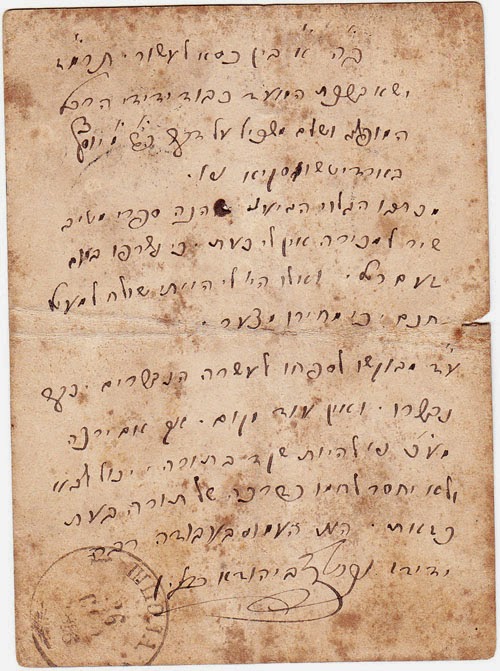
מכתב א

ב”ה ה’ לסדר ויברך אתכם. תרמ”ו. וולאזין.
כאור בוקר יזרח כבוד הר”ר האברך המופלג ושנון שלם ומשכיל על דבר יקר רוח כ”ש מ’ מיכה יוסף ני”ו.
מכתבו הגיע וציו[י]תי להעתיק המצבות. והנם רצוף בזה. והנני להודיעו. כי היינו עוסקים בבנין חומת הישיבה ה”ק. וגם מאריכים אותו כמה אמות. ואנו מקוים ב”ה, כי בחורף הבעל”ט נשוב ללמוד בו.
ע”ד השאלה שהכשיר שו”ב אחד שני ורדות.[5] ונפלא ממני הוראה זו בשתים. חלילה לילך נגד פסק הרמ”א, אשר כבר קבלנו כל מנהגיו שהנהיג. ואפי’ אם הי’ מקום להתיר, אין זה אלא בדעת הרב המו”ץ בקהלה, ולא השוחט. אכן אם להעביר את השו”ב מחמת זה או לא, אין לנו להגיד בזה מרחוק. ואין כל המדינות שוות בהתנהגות השו”ב עם הרבנים.
וה’ ישמרנו מלכד. הנני ידידו העמוס בעבודה
נפתלי צבי הודא ברלין.
מכתב ב

ב”ה א’ בין כסא לעשור תרמ”ז
ישא ברכת המועד כבוד ידידי החכם המופלג ושלם משכיל על דבר כ”ש מ’ יוסף בארדיטשווסקיא ני”ו
מכתבו הגלוי הגיעני [ו]הנה ספרי מטיב שיר[6] למכירה אין לי כעת כי נשרפו ביום זעם ר”ל. ואלו הי’ לי הייתי שולחו למעל[ת]ו חנם כי מחירו מצער.
ע”ד מבוקשו לספחו לעשרה הנבררים[7] כבר נבררו. ואין עוד מקום. אך אם ירצה מע”כ נ”י להיות שקד בתורה, יכול לבא ולא יחסר לחמו כדרכה של תורה בעת הזאת.
הנני העמוס בעבודה רבה
ידידו נפתלי צביהודא ברלין
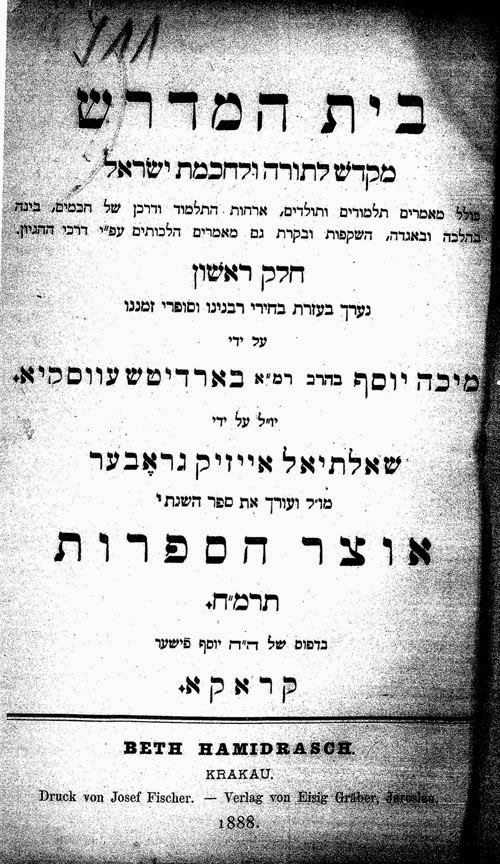
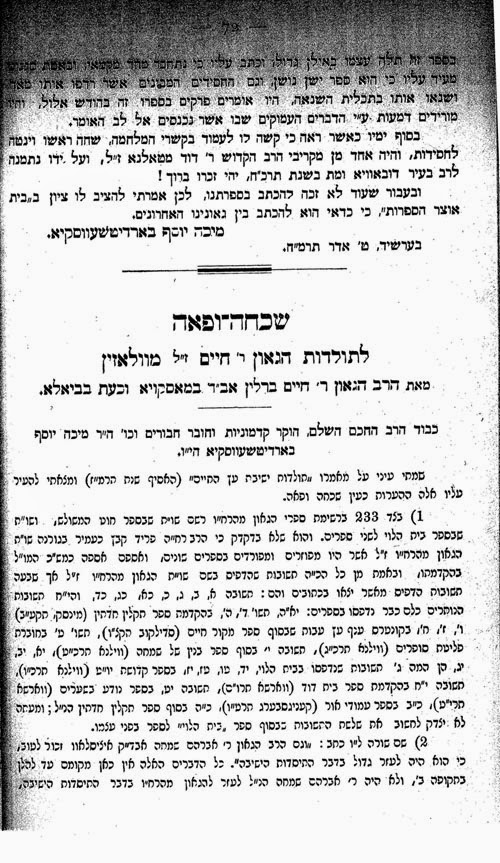
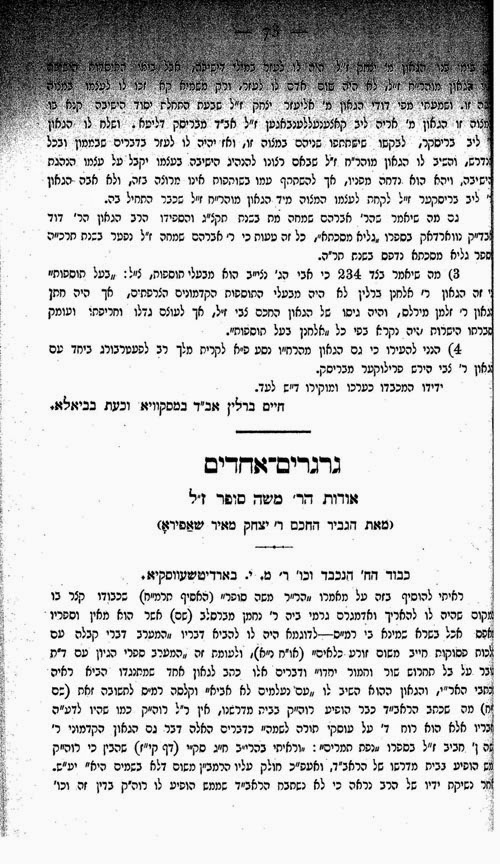
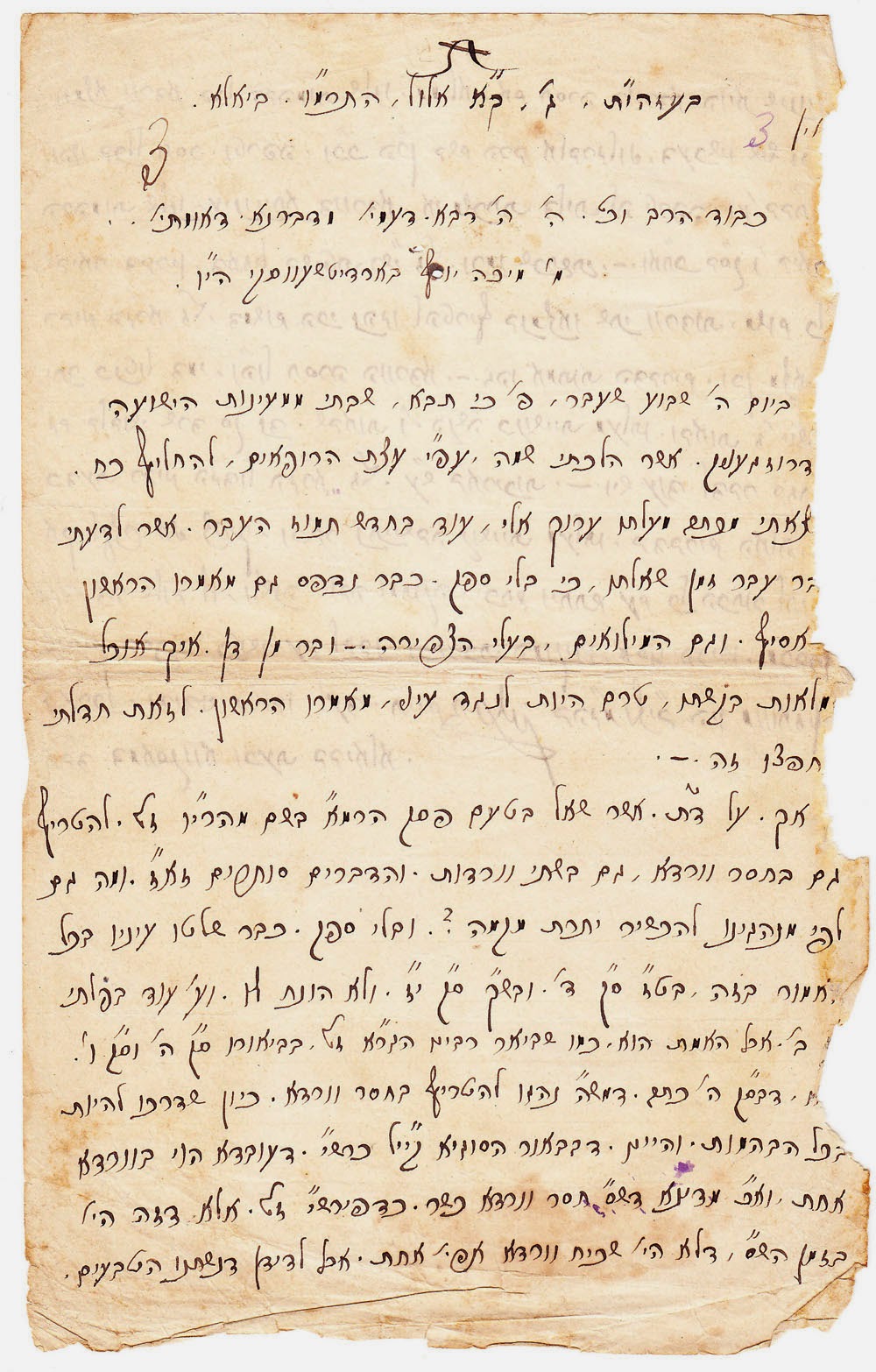
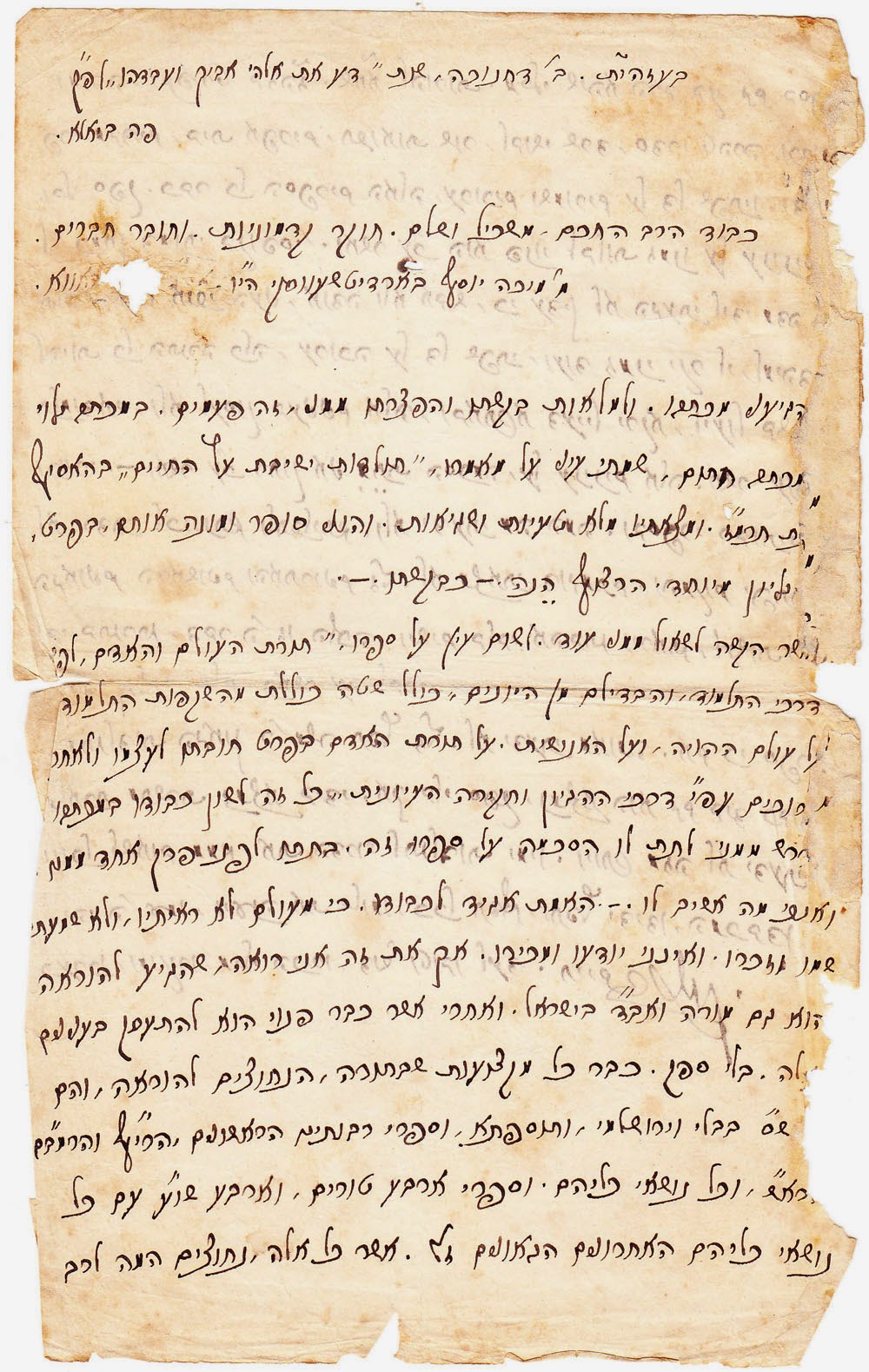
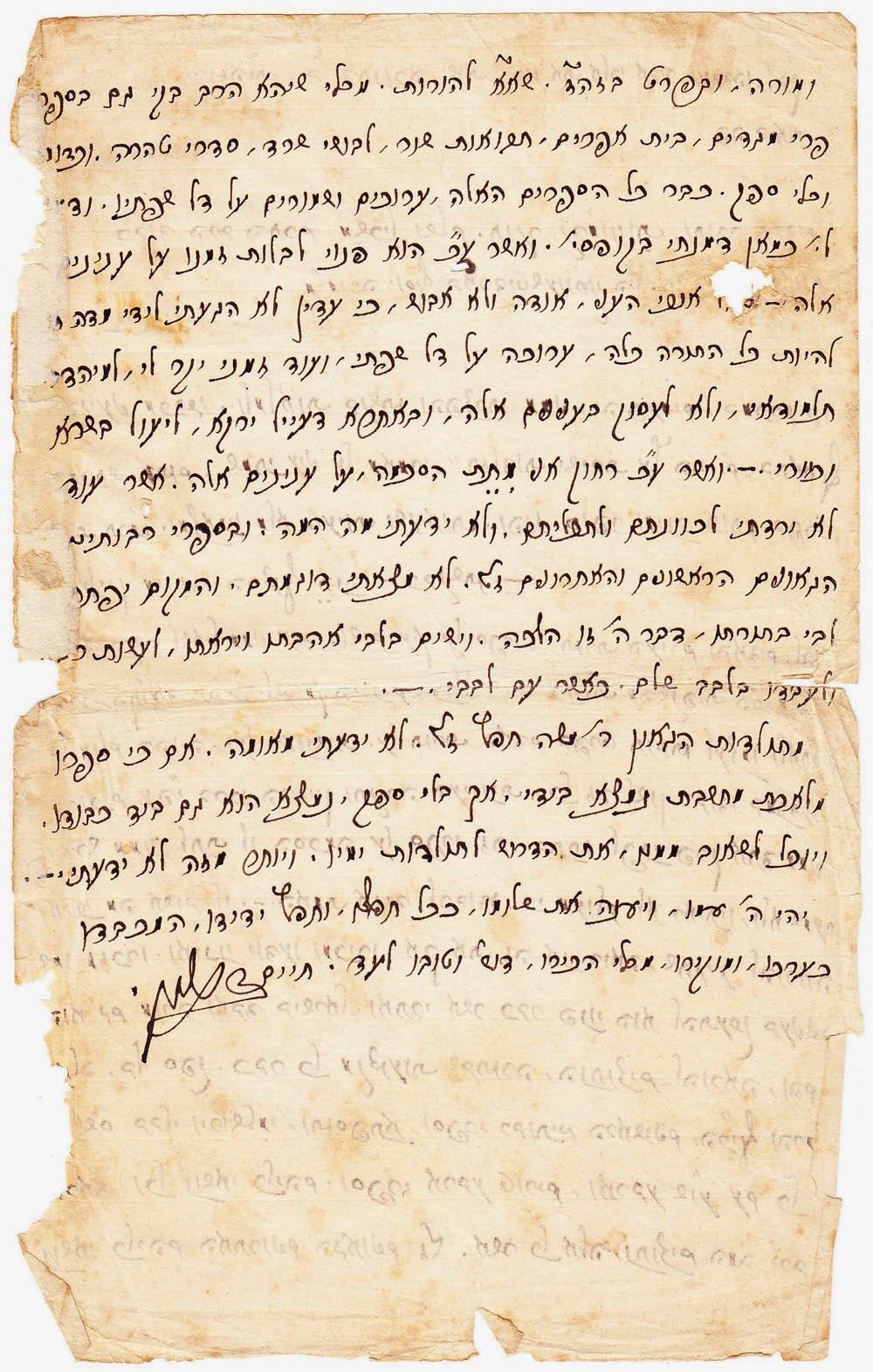
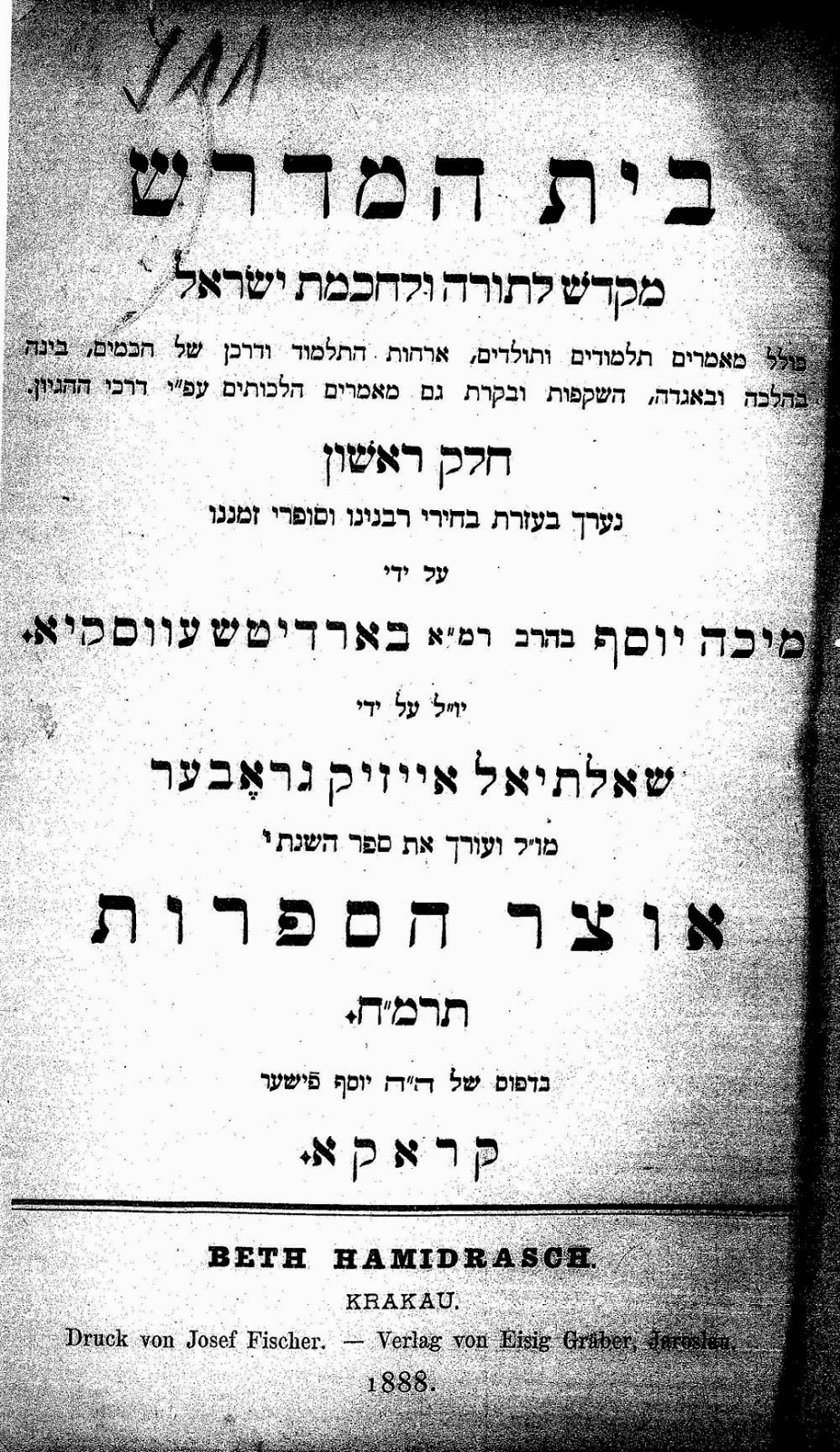
In 1888 Berdyczewski printed a journal called Beis Hamedrash which included an article from Rabbi Chaim Berlin [!] where Reb Chaim corrects and adds some important information to Berdyczewski famous article about the History of Yeshivat Volozhin. In this article, which it is obvious Reb Chaim Berlin read, Berdyczewski mentions the Netziv’s reading newspapers and a listing of the many newspapers the Bochurim of Volozhin read in his time.
Rabbi Chaim Berlin’s article was recently reprinted in the Nishmat Hayyim, Mamorim u’Mechtavim, (pp. 329-331) but the name of the person this letter was addressed to, Micha Yosef Berdyczewski, was edited out. [It appears that the commenters on this forum were not aware of this]. See the end of the post for the original article of Rabbi Chaim Berlin.
Professor Holtzman sent me the original letter of Rabbi Chaim Berlin to Berdyczewski and an additional letter of Rabbi Chaim Berlin to him. These letters were not printed before to the best of my knowledge.

Letter 1

Letter 2


מכתב א

בעזהי”ת. ג’, ך”א אלול, התרמ”ו. ביאלא.
כבוד הרב וכו’ ה’ ה’ רבא דעמי’ מדברנא דאומתי’
מ’ מיכה יוסף בארדיטשעווסקי הי”ו
ביום ה’ שבוע שעבר, פ’ כי תבא, שבתי ממעינות הישועה דרוזגעניק. אשר הלכתי שמה, עפ”י עצת הרופאים, להחליף כח [מ]צאתי מכתב מעלתו ערוך אלי, עוד בחדש תמוז העבר. אשר לדעתי [כ]בר עבר זמן שאלתו, כי בלי ספק כבר נדפס גם מאמרו הראשון [בה]אסיף. וגם המילואים, בעלי הצפירה. – ובר מן דן, אין אוכל [ל]מלאות בקשתו, טרם היות לנגד עיני, מאמרו הראשון. לזאת חדלתי [מ]חפצו זה.
אך. על ד”ת. אשר שאל בטעם פסק הרמ”א בשם מהרי”ו ז”ל. להטריף גם בחסר וורדא, גם בשתי וורדות. והדברים סותרים זא”ז. ומה גם לפי מנהגינו להכשיר יתרת מקמה?. ובלי ספק. כבר שלטו עיניו בכל [ה]אמור בזה, בט”ז ס”ק ד’. ובש”ך ס”ק י”ז. ולא הונח לו. וע’ עוד בפלתי [ס”ק] ב’. אבל האמת הוא, כמו שביאר רבינו הגר”א ז”ל, בביאורו ס”ק ה’ וס”ק ו’. [?] דבס”ק ה’ כתב. דמש”ה נהגו להטריף בחסר וורדא. כיון שדרכו להיות בכל הבהמות. והיינו. דבבאור הסוגיא קיי”ל כרש”י. דעובדא הוי בוורדא אחת. וא”כ מדינא דש”ס חסר וורדא כשר. כדפירש”י ז”ל. אלא דזה הי’ בזמן הש”ס, דלא הי’ שכיח וורדא אפי’ אחת. אבל לדידן דנשתנו הטבעים. ונמצא וורדא בכל הבהמות שלנו, ממילא, אם חסרה הוורדא, הויא שינוי והוי בכלל חסר. וטרפה. וכ”כ הר”ן בשם הרב אלברגלוני, דעכשיו שיש [לכל] הבהמות שלנו, עינוניתא דוורדא, אי משכחת דלית לה טרפה. וע’ בב”ח שביאר דבריו, דאזיל בשיטת רש”י ז”ל. וכמו שכתבתי.-. ואח”כ בס”ק ו’ ביאר רבינו הגר”א ז”ל, דמשום הכי נהגו להטריף בנמצאו שתי וורדות. משום כל יתר כנטול דמי, והו”ל חסרה הוורדא.-. זהו אמתות הדברים. וכן מצא[תי] גם בלבושי שרד ס”ק נ”ד. שבאות ו’. הקשה כקושיית מעלתו. ובאות ז’ יישב כדעת רבינו הגדול הגר”א ז”ל. ע”ש באריכות.-. ויש עוד לדבר בזה אך לעצר אני צריך. וכבר נתיישבה קושיית מעלתו, בדברים האלה. והי’ זה שלום לו, ולשנה טובה ומתוקה, יכתב ויחתם עם כל הכתוב לחי[ים] טובים בספר. כאשר עם לבבו. וכברכת המוקירו, מבלי הכירו, ומכבדו כערכו, ידידו”ש וטובו לעד. חיים ברלין בהג”מ נצי”ב הי”ו מוולאזין אב”ד דמאסקווא וכעת בביאלא.
מכתב ב

בעזהי”ת. ב’ דחנוכה, שנת “דע את אלהי אביך ועבדהו” לפ”ק
פה ביאלא.
כבוד הרב החכם, משכיל ושלם. חוקר קדמוניות. וחובר חברים.
מ’ מיכה יוסף באדיטשעווסקי הי”ו [??]
הגיעני מכתבו. ולמלאות בקשתו והפצרתו ממני, זה פעמים. במכתב גלוי [וב]מכתב חתום, שמתי עיני על מאמרו, “תולדות ישיבת עץ החיים” בהאסיף [שנ]ת תרמ”ז. ומצאתיו מלא טעויות ושגיאות. והנני סופר ומונה אותם, בפרט, [ב]גליון מיוחד, הרצוף הֵנה – כבקשתו.-.
ואשר הקשה לשאול ממני עוד. לשום עין על ספרו, “תורת העולם והאדם, לפי דרכי התלמוד, והבדילם מן היונים, כולל שטה כוללת מהשקפות התלמוד על עולם ההויה, ועל האנושות. על תורת האדם בפרט חובתו לעצמו ולאחר [ע]רוכים עפ”י דרכי ההגיון וחקירה העיונית”, כל זה לשון כבודו במכתבו [ש]דרש ממני לתת לו הסכמה על ספרו זה. בתתו לפני מפרק אחד ממנו. ואנכי מה אשיב לו. – האמת אגיד לכבודו. כי מעולם לא ראיתיו, ולא שמתי שמו וזכרו. ואינני יודעו ומכירו. אך את זה אני רואה שהגיע להוראה [ו]הוא גם מורה ואב”ד בישראל. ואחרי אשר כבר פנוי הוא להתעסק בענינים [א]לה. בלי ספק. כבר כל מקצועות שבתורה, הנחוצים להוראה, והם ש”ס בבלי וירושלמי, ותוספתא, וספרי רבותינו הראשונים, הרי”ף והרמב”ם [וה]רא”ש, וכל נושאי כליהם. וספרי ארבע טורים, וארבע שו”ע עם כל נושאי כליהם האחרונים הגאונים ז”ל. אשר כל אלה, נחוצים המה לרב ומורה, ובפרט בזה”ז. שא”א להורות. מבלי שיהא הרב בקי גם בספר פרי מגדים, בית אפרים, תבואות שור, לבושי שרד, סדרי טהרה, וכדו[מה.] ובלי ספק. כבר כל הספרים האלה, ערוכים ושמורים על דל שפתיו וד[מי] לי’ כמאן דמנחי בקופסי’. ואשר ע”כ הוא פנוי לבלות זמנו על ענינים אלה – [אבל] אנכי העני, אודה ולא אבוש, כי עדין לא הגעתי לידי מדה זו להיות כל התורה כלה, ערוכה על דל שפתי, ועוד זמני יקר לי, למיהדר תלמודא, ולא לעסוק בענינים אלה, ובאתרא דעייל ירקא, ליעול בשרא וכוורי.-. ואשר ע”כ רחוק אני מִתֵת הסכמה, על ענינים אלה. אשר עוד לא ירדתי לכוונתם ולתכליתם. ולא ידעתי מה המה. ובספרי רבותינו הגאונים הראשונים והאחרונים ז”ל. לא מצאתי דוגמתם. והמקום יפתח לבי בתורתו, דבר ה’ זו הלכה. וישים בלבי אהבתו ויראתו, לעשות [רצונו] ולעבדו בלבב שלם. כאשר עם לבבי.-.
מתולדות הגאון ר’ משה חפץ ז”ל. לא ידעתי מאומה. אם כי ספרו מלאכת מחשבת נמצא בידי. אך בלי ספק. נמצא הוא גם ביד כבודו. ויוכל לשאוב ממנו, את הדרוש לתולדות ימיו. ויותר מזה לא ידעתי.-.
יהי ה’ עמו, ויענה את שלומו, ככל חפצו, וחפץ ידידו, המכבדו כערכו, ומוקירו, מבלי הכירו, דו”ש וטובו לעד. חיים ברלין
A short time later Berdyczewski published several more articles related to Volozhin, one of which was a five chapter piece about the Yeshivah, titled Olam Ha-Atzeilus, printed in Hakerem in 1888. While this article does contain valuable information, it’s written in a different style than his earlier article. It was reprinted in the excellent collection Yeshivot Lita (pp. 132-151) and in the small Booklet Pirkei Volozhin (1984).
Another series of articles about Volozhin, written at the same time, was called Tzror Mechtavim Me-Eis Bar Be Rav and caused a great commotion. The series was printed in Ha-Melitz, starting from January 1888 and onwards. The series was written under a pen name, and only in the last issue did Berdyczewski sign his name.
In a memoir from someone who learnt in Volozhin at the time Berdyczewski’s articles were printed we find:
בעת ההיא הופיע בהמליץ פיליטון שנתן לדפוס ע”י בערדיצעוסקי… במאמר ההוא ציר הסופר בציורים נאמנים את חייהם של בני הישיבה את ענים ומרודם ואת לחציהם ובשבט עברתו הכה על ימין ועל שמאל את מנהלי הישיבה את חקיהם ומשפטיהם וכמעביר צאנו תחת שבטו כן העביר תחת שבט הבקורת את כל המנהגים מן ראש הישיבה עד השמש. המאמר ההוא עשה רושם גדול על מנהלי הישיבה וביחוד על ראשי הישיבה. בני הישיבה התיחסו אל המאמר ההוא בכובד ראש והעריצו את הסופר… [יהושע ליב ראדוס, זכרונות, עמ’ 68].
Radus continues in his autobiography that they had suspected someone specific in the Yeshiva for having authored these articles and that although Berdyczewski was involved in their writing, he was not the author. Radus writes that while this person was thrown out of Volozhin, he eventually became a renowned Rav. Unfortunately he does not name the person.
Regarding the Mekor Baruch, I wrote: “His work received a glowing haskamah from Rav Kook”.
In volume four of Mekor Baruch, at the end of the volume (pp. 14-15) R’ Epstein prints a letter from Rav Kook about the sefer but he does not print the whole letter. Rav Kook writes:
אבל יחד עם סדרי הזכרונות… וחותם האמת הטבוע עליהן…
For recent discussion about this letter see Eitam Henkin and Shmaria Gershuni, Alonei Mamreih 122 (2009)  (p.186).
Another comment regarding Mekor Baruch’s report was sent to me from Moshe Maimon:

R. Mazuz in his Mekor Ne’eman references the Mekor Baruch’s report twice. On p. 95 he relies on it to be Matir reading newspapers on shabbos and on p. 254 in a letter to Moshe Chavusha he quotes it to defend himself for citing R. Ovadia’s practice of listening to the radio every day.

More on the Netziv and reading newspapers:

In 1881, Rabbi Baruch Epstein wrote an article in Hamelitz about Volozhin defending it from various attacks in the newspapers. He describes Volozhin and the Netziv in depth:
מה אומר ומה אדבר על תכונת נפש נעלה של האיש הדגול מרבבה הגאון הנאור ר’ נצי”ב הי”ו… רוב מכ”ע לב”י ואחד בשפת רוססיא נמצאים בביתו, והוא אחד מן הזריזים הקודמים לקנות ספר חדש היוצא בעברית, יהיה מאיזה רוח ושיטה שהוא…”. [המליץ, יז, יום ב אדר תרמ”א (1881), גליון 3, עמ’ 54].
I am doubtful he would write something like this in a public forum, during the Netziv’s lifetime, if it was not true.
More on the Netziv and reading newspapers

In Shut Meishiv Davar we find a few more times that the Netziv refers to articles he read in newspapers.
ראיתי בכבוד הלבנון (משיב דבר, ב, סי’ קח)

ע”ד מאמר הגירושין בצרפת, הגיע לפה עלה הצפירה נו’ 44 וראיתי מאמר ותרגז בטני… (משיב דבר,ג, סי’ מט).
This last Teshuvah was actually printed in the Ha-Tzefirah before it was printed in the Meishiv Davar. Here is the original article:
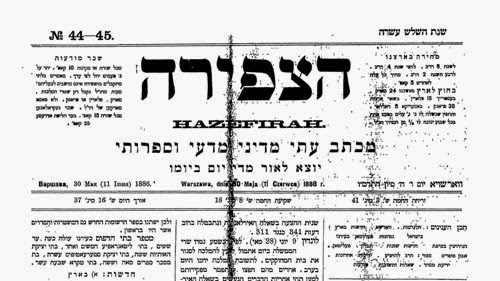
But elsewhere in Meishiv Davar we find the Netziv writes:
 ראיתי שהמופלג ומדקדק הר’ אברהם לאנדמאן שי’ דקדק אחרי מש”כ בהעמק דבר… [משיב דבר, ב, סי’ קט].
In Igrot HaNetziv Me-Volozhin (p. 60) this teshuvah was printed with a few more words:
ראיתי בהמליץ נו’ 120 אשר המפולג ומדקדק הר’ אברהם לאנדמאן שי’ דקדק אחרי מש”כ בהעמק דבר…
Even more interesting is this letter was originally printed in the Hameilits. Here is the original:

Rabbi Chanoch Taubes writes about R’ Epstein’s claims of the Netziv Reading newspapers:
‘המגיד’ בטאונם של חוגי ההשכלה. בהעדר חלופה מתאימה היה נכנס גם לבתים כשרים. אם נכונה היא עדותו של ר’ ברוך עפשטיין בזכרונותיו עמ’ 1974 הרי שהמגיד היה דרכו להתקבל בביתו של הנצי”ב מוולוז’ין זצ”ל בכל ערב שבת לפנות ערב, ובלילה לא קרא אותו [הנצי”ב], מפני שליל שבת היה קדוש לו לחזור בעל פה על המשניות ממסכתות שבת… כותב הטורים כשלעצמו, חושד שמפאת נטיותיו המשכיליות של ר’ ברוך עפשטיין ביקש להכשיר את השרץ בעובדות שאינן מדויקות… חיזק להשערה זו תמצא בעמוד שאחריו ביחסו הלעגניי והעוקצני לשבועון המתחרה הלבנון. גם את חיצי הלעג ירה על בסיס עובדות לא מדויקות, בלשון המעטה. הלבנון עיתון כשר היה אשר ביוזמתו של רבי ישראל סלנטר, מחולל תנועת המוסר, קיבל על עצמו רבי מאיר להמן זצ”ל אב”ד מיינץ את מלאכת עריכתו… [סופה וסערה, א, בני ברק תשע”ה, עמ’ 77-78 [=סופה וסערה, א, בני ברק תשס”ח, עמ’ 63-64].
However, it is apparent that based upon further evidence, Rabbi Taubies claim has no basis.
In part one of this article I cited a remarkable story from R’ Eliyahu Milikovsky about a Response that the Netziv wrote to an article in the HaMaggid. One might say that R’ Milikovsky’s memory failed him and he recalled the wrong newspaper. However here is the newspaper article written by the Netziv in the HaMaggid, referred to in this story. [Quoted in Igrot HaNetziv Me-Volozhin, pp. 54-56]

The Netziv was responding to this article.


That aside, as we have shown in part one of this article, the Netziv quotes HaMaggid in his seforim. These quotes and their subsequent censorings were discussed there as well.
Here are some additional articles by the Netziv published in HaMaggid


This is reprinted in Igrot HaNetziv Me-Volozhin, (pp.198-199)

There are more pieces of the Netziv in HaMaggid which will be discussed in a later post.
It bears mention that many other Gedolim also read and wrote in HaMaggid; see for example this piece of the Dikdukei Sofrim (one of many).
R’ Chaim Berlin (more on this shortly) also read the HaMaggid.
New evidence about the Netziv reading newspapers on Shabbas (and Censorship):

At the end of the January 7, 1869 issue of the Ha-Levonon newspaper there appeared an announcement regarding a new sefer that was to be printed soon for the first time from manuscript, namely The Ritva’s work on Nidah and his Sefer Ha-ZechronSefer Ha-Zechron is a defense of the Rambam from the Ramban’s various critiques in his Pirish Al Hatorah. After the announcement, Zalman Stern wrote a comment dealing with the subject of the Rambam’s reasoning for Korbonos.[8]

Less than a month later, in the February 11th issue of the Ha-Levonon newspaper, the Netziv wrote a lengthy response to Stern’s comment. The article is a beautiful essay by the Netziv, related to the reasoning for Korbonos.[9]

The Netziv begins his article with the following sentences:

הגיעני מווילנא על ש”ק שני עלי לבנון משנת ששית. וקראתי לשבת עונג מפרשת העלים ומדברי מע”כ שי’ המפקידים חן ודעת שכל טוב. ובהגיעי לנו 2 בבשורת סי’ הזכרון להריטב”א ז”ל נרגשתי במה שהעיר חכם א’ מעצמו וגם בשם האברבנאל ז”ל השגה…

Here we have, in black and white, the Netziv writing about himself that he read the newspaper on Shabbas![10]


In 1993, this article was reprinted in the previously mentioned new edition of the Meishiv Davar  (5:90). While they do cite that the source of this article is from the Ha-Levonon (but not an exact location) the first three lines I just quoted are missing and the piece begins with the words נרגשתי במה שהעיר חכם א’
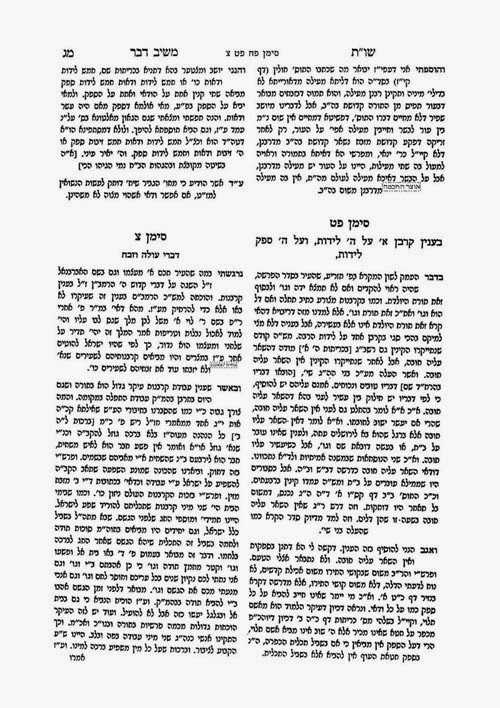
Rabbi Chaim Berlin and Reading Newspapers in general:

In a letter[11] to Avraham Eliyhau Harkavy he writes:

האמנם כי מתענג אנכי לעתים, למצוא את דברי חכמת, המאירים כספירים, על דלתי מכה”ע השונים, וגם בספרים מיוחדים, יקרים מפנינים, אבל משנה שמחה הי’ לי הפעם, בשלח ידידי את הספר, לי לשמי, וארא, כי כמוני כמוהו, עודנו זוכרים איש את רעהו, וכי נאמנו דברי המלך החכם, כי כמים הפנים, כן הלבב, ואהבה טהרה ונאמנה לעולם עומדת [שנות דור ודור, א, עמ’ קצט (=נשמת חיים, מאמרים ומכתבים, עמ’ שלט)].

Elsewhere he writes:

הן ראיתי את הרב מי’ שאול הכהן קאצענעלינזאהן, עומד על המצפה, בצופה נומר 30… [אוצר רבי חיים ברלין, נשמת חיים, א, סי’ רח].

הנני להודיע לכבודו את הרשום אצלי… אשר זה מקרוב גמגמו מהבנת לשונו גדולים חקרי לב העומדים על המצפה בצופה להמגיד שנה זו… [נשמת חיים, סי’ קצט].
Although Rabbi Chaim Berlin read newspapers he writes:

את העלה ממכתב העתי ההולאנדי הגיעני, ואם כי עלי להודות לו כי חובב הוא את דברי לפרסמם ברבים בשמי, בכל זה האמת אגיד לו, כי אין דעתי נוחה כל כך מהדפסת דברי תורה במכתב עתי, מטעם המבואר בפ”ק דרה”ש יח ב’ שבטלו חכמים להזכיר שם שמים בשטרות שלמחר נמצא שטר מוטל באשפה. ומי לא ידע, שמכתבי העתים מסוגלים לזה, שלוקחים אותם בחניות לכרוך בהם כל מיני סחורות וכדומה ולמחר מוטלים באשפה ח”ו על כן לא ירד בני בזה [אור המזרח, לה:א (תשמ”ו), עמ’ 44-45 (=ר’ אליעזר ליפמן פרינץ, פרנס לדורו, ירושלים תשנ”ב, עמ’ 326-327 ; נשמת חיים, מאמרים ומכתבים, עמ’ קסט)][12].

The Netziv writes about printing newspaper articles in Torah:

טרם אענה אני אומר, שאין הדבר נוח לי לפלפל בד”ת בעלי עתים, וכבר אמרו חז”ל חמוקי ירכיך נמשלו ד”ת לירך מה ירך בסתר אף ד”ת בסתר, ורק בראותי דבר מפליא שהיה אפשר להרבות ממזרים בישראל ח”ו, ראיתי חובה להודעי במקום רבים כי אין זה הוראה אלא טעות… (אגרות הנצי”ב ממלאזין, עמ’ נז).

Newspaper articles by Rabbi Chaim Berlin:

Although it appears from the above quoted letter that Rabbi Cham Berlin was against writing newspaper articles, we do find that he did write some. For example:

In the June 24, 1868 issue of Ha-Levonon we find an article of Rabbi Chaim Berlin.[13]

A few months later in the August 26, 1868 issue Ha-Levonon we find another article of Rabbi Chaim Berlin.[14]
It could be that he wrote those two articles as they were important issues but in general he did not write articles of Random Torah.

However, in 1863, the Newspaper Ha-Levonon‘s first year, in the ninth issue we find a nice long article from Rabbi Chaim Berlin related to Sefirat Ha’omer. Rabbi Berlin comes to the conclusion if one forgot to count Sefirah one night so although the next night he cannot count the days with a Beracha he may count number of the weeks with a Beracha!  

In the 1993 edition of the Shut Meishiv Davar, after reprinting this piece by Rabbi Chaim Berlin, they print a letter that the Netziv wrote to him on the subject.

בבואי ראיתי ביד חתן גיסי… שי’ עלה לבנון… מכתבך בראש הלבנון עולה על שלחן מלכי רבנן… הוספתי גיל לראות כי מצא בני מחמדי שליט”א להפיץ תורה בישראל, אף כי להגיד בראש הלבנון הוראה למעשה, יוסיף ה’ לאמץ חילך ולבבך בני להגדיל תורה בלי לב ולב עקוב את המאושרה, ואז תעש חיל וגבורה.
אמנם בני שמתי עין העיון בדבריך האוהבים… אחר כל זה תשכיל כי שגגתם בהוראה… ולא יפול לבבך על זה בני יקירי. וכבר אמרו ז”ל והמכשלה הזאת תחת ידך כו’ כידוע… והנני מוסיף בזה דבר… אם אתה נכשל בהוראה אזי הוא תחת ידיך להתבגר על התשוקה לקיימה ולהחזיקה ולעשות סניגורין, אלא אתה מודה על האמת דברים שאמרתי טעות הן בידי או אז ודאי ראוי להוראה בישראל. [משיב דבר, ה, סי’ טז].
Rabbi Rafael Shapiro, brother in law of R’ Chaim,[15] also argues on this Pesak and begins his Teshuvah as follows:

הן הגיעני זה כשתי שבועות עלי הלבנון נו’ ט’ שם ראיתי את חידושיו… ולדעתי לא כן ידמה…

R’ Chaim’s great-uncle, Rabbi Meir Berlin, also has a Teshuvah on the subject. He takes issue with R’ Chaim’s Pesak, begining his teshuva stating:

הובא לפני עלה א’ מלבנון… [אוצר רבי חיים ברלין, שו”ת נשמת חיים, א, עמ’ שיב-שיד].

In his memoirs about Volozhin, a student writes:
בנו הרב הגא’ ר’ חיים ברלין שנתמנה אחר זמן לרב במסקבה היה כותב במ”ע מאמרים על דרך השכלה והיה סופר מצוין בכתב ולשון ארמית שכתב בה מאמרים על טהרת לשונה… [משה יאפעט, רשומות וזכרונת, קובנה תרפ”ד, עמ’ 10]

Rabbi Chaim Berlin and Reading Newspapers on Shabbas:

Printed in Igrot HaNetziv Me-Volozhin is a letter by Rabbi Chaim Berlin, dated Sunday 1892.[16] In the letter he writes as follows:

בשבת אתמול בסעודת ש”ק [=שבת קודש] בחברת מרעים כבדים, אהובים וידידים, רבנים מצוינים, וגבירים אדירים, עלה לפנינו עלה מכה”ע [=מכתב עת] המליץ, מיום ג’ העבר, נו’ 139, ושם נאמר…

Here is an image of the Newspaper that they were reading:


Additions to note six about the Journal ‘Ittur Sofrim’: I should have mentioned that the Netziv was not happy about it at first, as he thought it would take away too much time from Rav Kook’s learning.[17] 

Worth pointing to is Berdyczewski’s quote from the Netziv when he was asked about starting a Torah Journal for the Bochurim to print some of their ideas

דכירנא כד הוינא בהישיבה, התעוררו הרבה תורנים משכילים ליסד מכתב עתי תורני, אשר בו יבואו חידושים כתובים ברוח הגיון, כללים הנמצאים בש”ס, מאמרים העוסקים בחכמת ישראל וספרותו, וכשאר באו להנצי”ב לבקש כי ישתדל בעדם רשיון הממשלה על זה אז גער בהם פן… התעדו קוראים נכבדים מה הוא הפן הזה? לא דבר אשר יכול להורס חלילה את מוסדי הישיבה מהשקידה הגשמית, על ידי עסקם בכתיבה… [הכרם תרמ”ח (=כתבי מיכה יוסף ברדיצ’בסקי, א, עמ’ 97]

As one can see from the Netziv’s Haskamah to Ittur Sofrim here:
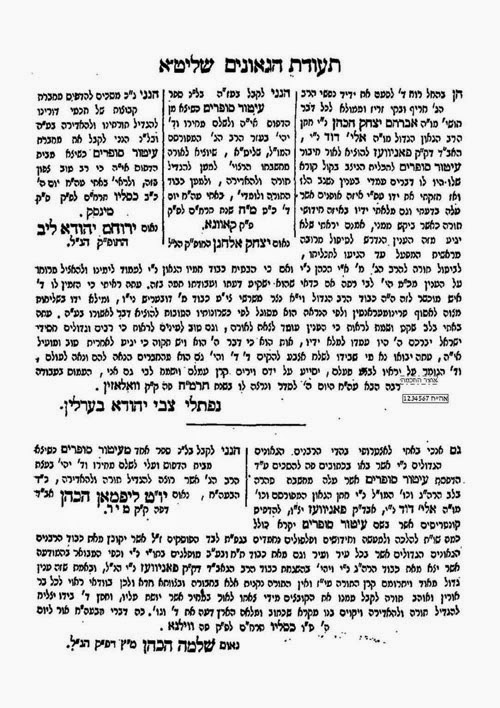

Rabbi Aaron Felder writes that he once asked Rav Moshe Feinstein about Rav Kook, to which Rav Moshe responded:

שבצעירותו היה הרב קוק אורך של ירחון תורני, והיו טוענים מכיריו שאין ראוי לאדם גדול שכמותו להיות אורך ירחון ומבחינת שאינו לפי כבודו [רשומי אהרן, א, עמ’ כח].

 Moshe Reines wrote in an article in the journal Beis Hamedrash printed in 1888:

גם חסרון ספ”ע מקדש לתורה ולהגיון לחקירה ולבקרת הוא חסרון מורגש בספרותנו, אולם החסרון הזה ימנה כנראה בקרוב, כי הנה הרה”ג ר’ אברהם יצחק הכהן קוק רב בעיר זימעל… אומר לה”ל מכ”ע חדשים כזה בשם עיטור סופרים, המקדש לתורה ולתועדה, וכבר נתנה החברת הראשונה בדפוס נחכה נא ונראה היצליח ד’ את דרכו אם לא [בית המדרש 1888, עמ’ 86].

See also R. Shmuel Alexandrov, Michtavei Meckar Ubikurut, 1, Vilna 1907, p. 7; R’ Mordechai Gimpel Yoffe’s letter to Rav Kook in Igrot LiRaayah, p. 17; R’ Kluger’s letter Ibid, pp. 26-27; Y. Mirsky, Rav Kook, Mystic in a time of Revolution, pp. 20-21.

Addition to note seven: The new version of ‘Ittur Sofrim’ does not say where their copy of Rav Zev Turbavitz’s letter about the Heter of the Netziv is from.

Rabbi Baruch Oberlander sent me a reference to Rav Zev Turbavitz’s Shut Tifres Ziv (1896), pp. 51-55 where he has a lengthy Teshuvah about reading newspapers on Shabbas in the beginning he writes:

 אמנם כעת יצא לאור ספר אחד ראיתי בו מכתב מאחד מגדולי הזמן שהביא….

In this Teshuvah he does not write the Netziv’s name nor the journal’s name nor does he write as sharply as he does in the letters I quoted from him to the Aderet and Rav Kook. But he does take strong issue with the Netziv’s Heter, going through the Sugyah at great length.

Addition to note eight: Both editions of Rabbi Chaim Berlin’s Teshuvot fail to mention the source of this Teshuvah; it’s printed in the back of the Shut Bikurei Shlomo (1:321). See also Shut Nishmat Chaim, p. 343, where he mentions he printed the Teshuvot found in Shut Bikurei Shlomo but he does not say where he did so.
Addition to note nine: The reference Shut Bikurei Shlomo siman, 3-4 includes a Letter of Rabbi Yehosef Zechariah Stern on this topic. In the new edition of the Shut Zecher Yehosef printed by Mechon Yerushalyim (2014), they reprinted this Teshuvah with many additions (2, pp. 437-440) from the notes of R’ Stern which he wrote on the side of his copy of Shut Bikurei Shlomo.

Who censored the 1894 edition of the Meishiv Davar?
In the Shar of the Sefer of both editions it says it was printed:
בהוצאת אשת הגאון זצלה”ה ובניה
I am not sure how much the sons Meir and Yakov had to do with the printing. Meir was fourteen years old at the time and Yakov was about seventeen[18].

R’ Chaim Berlin wrote to Rabbi Eliezer Lipman Prins:

מכ”י מר אבא הגאון החסיד זצלה”ה נדפס אחר פטירתו, שו”ת משיב דבר ע”י אלמנתו, הדרה בוורשא, ואך ממנה יכול רום מעלתו להשיגו, על פי האדרססא שארשום בשולי מכתבי, ובידי לא נמצא כי אם ספר אחד למעני [אור המזרח, לה:א (תשמ”ו), עמ’ 44-45 (=ר’ אליעזר ליפמן פרינץ, פרנס לדורו, ירושלים תשנ”ב, עמ’ 324; נשמת חיים, מאמרים, עמ’ עח)].

I would say the Netziv’s wife had much more to do with the printing than her sons, however I do not think that Batyah Mirel Berlin[19] was the type to censor such a thing. According to her granddaughter’s description of her:

בשעות הפנאי המעטות שלה עיינה סבתא בעיתונים ובספרי הקודש בחומש ובנביאים, בהם הייתה בקיאה למדי [טובה ברלין פפיש, ספר וולוז’ין, עמ’ 481 (= צלילים שלא נשכחו, עמ’ 55)].

Furthermore her father the author of the Aruch Hashulchan writes:

נ”ל דכתבי העיתים אינם בכלל זה ומותר בחול לקרותן שהרי הם מודיעים מה שנעשה עתה וזה נצרך להרבה בני אדם לדעת הן במה שנוגע לעסק והן במה שנוגע לשארי עניינים אבל עניינים שכבר עברו מן העולם מה לנו לדעת אותם וכן כל דברי הבלים שיש בהם שחוק וקלות ראש וק”ו דברי עגבים עון גדול הוא ובעוה”ר נתפשטו עתה בדפוסים ואין ביכולת למחות בידם  (ערוך השלחן, סי’ שז ס”ק ט).

Here is an advertisement published shortly after the Netziv died, asking for financial assistance for completing the printing of the Meishiv Davar.


Appendix One:


Appendix Two:

*Special thanks goes to my good friend Yisroel Israel for all his time and help in preparing this article. I would also like to thank my friend Rabbi Yosaif M. Dubovick for editing this article.
[1]  See Hama’yan 202 (2012) pp. 41-46, regarding the question if there exists a Heter to censor another’s works.
[2] On Berdyczewski see: Rabbi Yechiel Yaakov Weinberg, Kisvei Hagaon Rabbi Yechiel Yaakov Weinberg, 2, pp. 270-282; Marc Shapiro, Between the Yeshiva World and Modern Orthodoxy, p.74; Avner Holtzman, Micha Yosef Berdyczewski 2011; Avner Holtzman, El Hakerah Sheblev (1995).
[3]  See S. Stampfer’s Lithuanian Yeshivas of the Nineteenth Century, (p. 159) who cites Bialik that everything Berdyczewski wrote in HaAsif about Haskalah was false. However this is a major issue with relying solely upon autobiographical information; each person is referring to the time he was in the Yeshivah.
[4] A facsimile of one of the Netziv’s letter to him was reprinted in volume one of the collection of Berdyczewski writings, Kesavim 1,(1996) p.64.
[5] כאן משפט מחוק: “דיש כ[ת]ב ניתן להמו”ץ בעיר”
[6] Berdyczewski wrote a very positive review of this work. See his collected writings volume one pp. 196-197.
[7] כנראה לכולל ברודסקי. לתקנות הכולל ראה: ר”מ רבינוביץ, ‘תעודות לתולדות הישיבה בוולוזי’ן’, קבץ על יד (תשי”א), עמ’ רלא; ת’ פראנק, תולדות בית ה’ בוואלאזין, ירושלים תשס”א, עמ’ 118 ואילך. על פי התקנות, בכל תקופה נבחרו עשרה אנשים לכולל. שם, עמ’ 121, פורסמה רשימת הנבררים משנת תרמ”ז ואילך, ושם מבואר שכבר היה עשרה אנשים בהכולל [הערת ידידי ר’ שלמה הופמן].
[8] I hope to return to this topic in the future. For now, see: Rabbi Kalman Kahana, Cheker Viyun, 2, pp. 66-78
[9] See also the Netziv’s work on Shir Hashirim (1:8).
[10] After patting myself on the back for this discovery, I found this source, in the name of Dr. Leiman, buried in a footnote in Jacob J. Schacter’s classic article “Haskalah, Secular Studies and the Close of the Yeshiva in Volozhin in 1892“, Torah u-Madda Journal 2 (1990), on page 126, footnote 105. However they do not note the censorship from the 1993 edition of Meishiv Davar, as this article was printed in 1990. 
[11]  I will return to this letter in part four B”n.
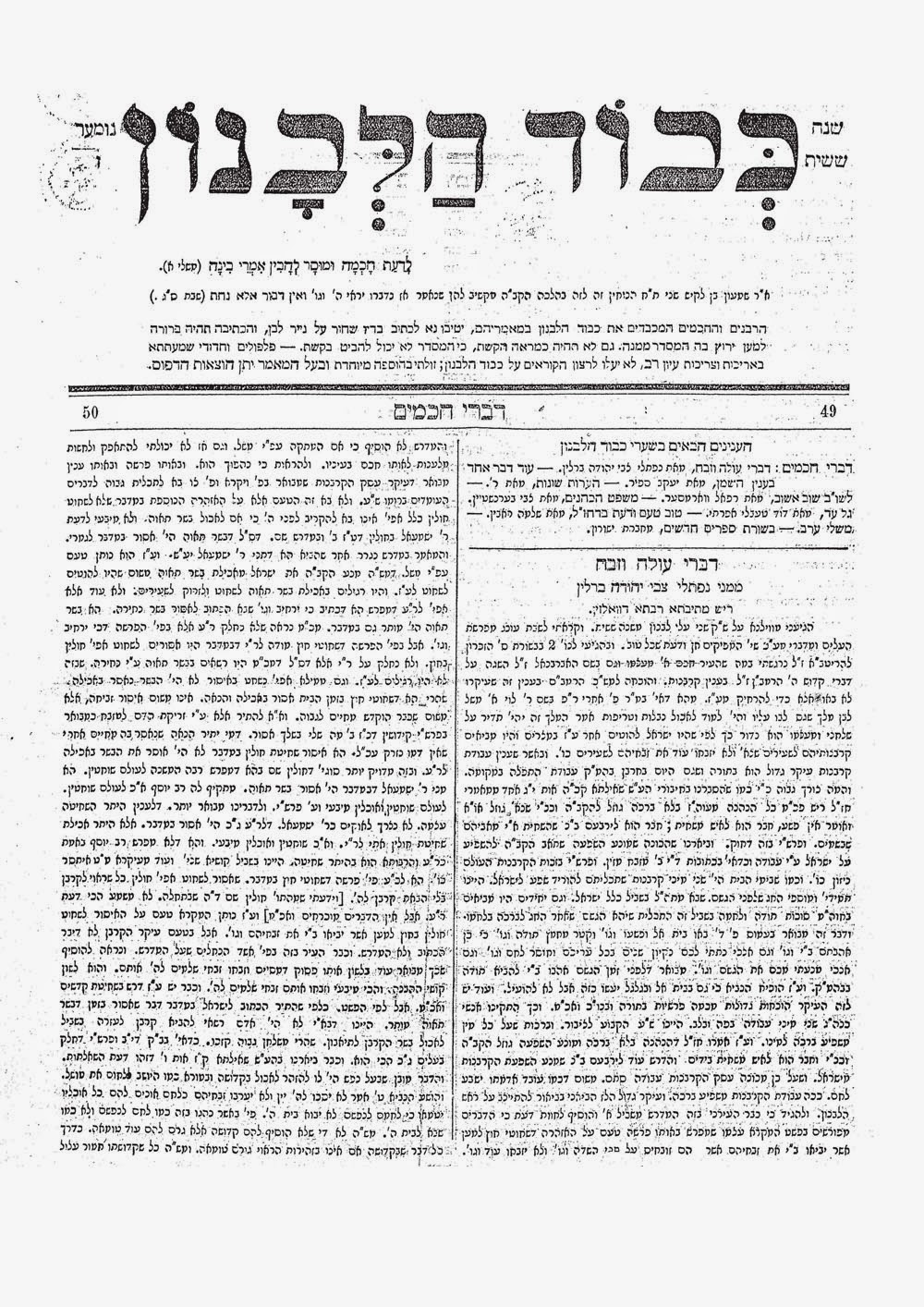
[12]  The Chazon Ish wrote a similar thing to Rav Zevin:
הרב זוין שליט”א… לא אמנע מלהעיר כי הערות של בקרת של הרב הנ”ל שיחי’ מקומן הנכבד בחוברת מיחדה מזמן לזמן אבל אין מקומן יפה להן במקום שהוא נותנן והתורה בבחינת שבויה, מלבר שסופן ליעשות תכריך לחמאה.
This letter was first printed without Rav Zevin’s name in Kovetz Igrot Chazon Ish (1:183) and more recently with his name on it in Hashakdan (1:117), including a facsimile of the original letter.
[13] Shut Nishmat Hayyim (2002), pp. 231-233; Otzar Rabbi Chaim BerlinShut Nishmat Hayyim, 3, pp. 375-377.
[14] Shut Nishmat Hayyim (2002), pp. 149-151; Otzar Rabbi Chaim BerlinShut Nishmat Hayyim, 2, pp. 135-136. See also the 1993 edition of the Meishiv Davar where this Teshuvah is printed. All three of these places include an additional teshuvah on the topic of the Netziv which begins with the words:
הגיעני עלה מהלבנון באו בו דבריך…
[15] Torat Refael, 3:37; Otzar Rabbi Chaim BerlinShut Nishmat Hayyim,1, p. 312. The 2002 edition of Shut Nishmat Hayyim (pp. 99-103) only prints Rabbi Chaim Berlin’s piece on the subject and not the Netziv’s letter to him, despite their norm to print the related letters by the Netziv about the subject being discussed.
See R’ Yosef Zecariah Stern, Shut Zecher Yehosef, (#194):
וכבר שמעתי בשם  הרצה”ל ברלין מוואלאזין שחקר לענין ספירת העומר אם לא ספר יומי דמ”מ כשמגיע כלות  השבוע מברך כיון דהוה תרי מצות למימני יומי ושבועי… ומ”מ לא מסתבר לי…”.
Although RYZ”S possessed a phenomenal memory, apparently he confused the Netziv with his son R’ Chaim.
[16]Igrot HaNetziv Me-Volozhin, pp. 148-150; Sefer Nishmat Hayyim, Mamorim u’Mechtavim, p. 119. See Shaul Stampfer, Lithuanian Yeshivas of the Nineteenth Century, p. 231.
[17] Mirsky [Rav Kook, Mystic in a time of Revolution, p. 20] mistakenly attributes this fear to R’ Yitzchak Elchanan.
[18]  For the dating of Yakov Berlin’s birth, see the Netziv’s letter to R’ Shmuel Salant in Igrot HaNetziv Me-Volozhin,p. 207. For more information about R’ Yakov Berlin, see his daughter Tova Papish’s autobiography Tselilim Shel Nishkehu, pp. 58-62. [Thanks to Mr. Y. Israel for pointing me to this book].
[19]  See also what her son Rabbi Meir Bar Ilan writes in Me-Volozhin LeYerushalim, 1, 118-122. 


Mikva Revisited – Understanding Shabbat 13a-b in light of Parshat Metzora

Mikva Revisited –
Understanding
Shabbat 13a-b in light of Parshat Metzora
by Chaim Sunitsky
(with some additional comments by Marc B. Shapiro)
It is well known that when
describing the purification of niddah and zava the Torah does not explicitly
mention that immersion is required.[1]
The present article will briefly examine the proofs given for such an immersion
and show a novel understanding of a story brought in the Talmud (Shabbat
13a-b).
There are 5 most commonly brought
proofs for mikva immersion. Three are brought in Tosafot (Hagiga 11a
s.v. lo nitzrecha, Yevamot 47b s.v. bimakom and Yoma
78a mikan), one in Rambam (Isurey Biah 4:3), one in Ramban (Shabbat
13b s.v. bimey and in his Chumash commentary Vayikra 15:11). One of
Tosafot’s proofs is in the Gemara itself (Shabbat 64b): “and she shall
remain in her niddah status”. The earlier sages used to understand this to mean
that a woman during her menstruation should not use makeup or wear nice clothes[2]
until R. Akiva came and said that this way he will divorce her[3]
and explained rather that she shall be niddah until she immerses. Needless to
say, there is no direct proof of immersion in this statement.[4]
Tosafot (ibid) bring an
additional proof from newly obtained vessels after the war with Midian, where
according to Hazal’s understanding they required immersion as the Torah states
(Bamidbar 31:23): “the waters of niddah”, seemingly implying that niddah needs
an immersion too.[5] The simple
meaning of the Torah in this verse is that water with ashes of “red cow” had to
be sprinkled on these vessels.[6]
Indeed there is an understanding based on Rambam[7]
that immersing new vessels is not Deoraita at all.
The third proof of the Tosafot in
the name of a Gaon[8] is from the
fact that even those that touched a bed of niddah need to immerse to become
pure, how much more so niddah herself. However, this would only at best prove
that a niddah needs to immerse in order not to cause ritual impurity to spread
on the objects[9].
Ramban’s proof that immersion is
required is based on the case of a male zav.[10]
The problem with this is that zav requires immersion in “mayim chaim” (a
natural source of water) whereas a niddah can immerse even in regular mikva
made from snow or rain water.[11]
Rambam’s proof is that all purifications require immersion so it must be that
niddah does too,[12] though the
verse he uses as a proof is also talking about ritual purity and not
necessarily implying any marital prohibition.[13]
After we see that there is no
conclusive proof that the immersion of niddah is a Biblical law, we may gain a
better understanding of a story in the Talmud (Shabbat 13a-b, Avot
Derabbi Natan
, 2). It tells us that a certain rabbinical student used to
sleep in one bed[14] with his
wife after her seven days of niddah were over until she counted the “seven
clean days” and went to the mikva. The implication seems to be that after the
Biblical period of seven days the prohibition is only Rabbinical.[15]
The Rishonim are quite surprised at this as there is absolutely no relaxation[16]
of the prohibition for a woman who is niddah after the seven days are over as
she remains biblically prohibited to her husband until she immerses in the
mikva. Some Rishonim therefore suppose that the minhag at that time was for a
woman to go to the mikva twice, once in the end of the seven days of niddah and
one at the end of “seven clean days”. However according to what we wrote it is
possible that this student thought that the entire immersion in the mikva is
also rabbinical in nature and therefore was more lenient once the Biblical
seven days were over.[17]
* * *
I sent this post to Marc Shapiro
and here are his comments:
See Shem Tov’s
commentary on Maimonides, Guide 3:47, where he has a radical view that
according to Maimonides immersion of a niddah is only rabbinic. R. Kafih, in
his commentary on the Guide, ibid., is outraged by Shem Tov’s comment:
ראה
שם טוב ששאל “ומה יאמר הרב בטבילת זבה ונדה במים קרים בסתיו”, והמשיך
בדברי הבל שאסור לשמען שכאלו דעת רבנו שטבילת נדה וזבה מדרבנן. וחלילה חלילה.
R. Kafih continues by explaining why Shem Tov is
mistaken and concludes:
והארכתי מפני שכבר הטעה את קלי
הדעת
In his commentary on the Mishneh Torah, Sefer
Kedushah
, vol. 1, p. 184, R. Kafih returns to this matter:
והבל
יפצה פיהו של בעל שם טוב מפרש המורה, בח”ג פרק מז שכאלו סובר רבנו שטבילת נדה
דרבנן, וענה גם כאן שקר ברבנו ותלה בו מה שלא אמר ולא עלתה על לבו חלילה
The matter you discuss in your post also concerned
R. Solomon Zvi Schueck. In his Torah Shelemah, vol. 2, p. 129b, he
prefaces his discussion as follows:
ורבים
מגדולי הראשונים והאחרונים (עיי’ תורה תמימה במקומו) עמדו להקשות וכי עיקר גדול
כטבילת נדה שקדושת ישראל תלוי בה לא תמצא בתורה רק ברמז דק וקל. ועוד מקשים, כפי
משמעות הגמרא בשבת הנ”ל דרשו זקנים הראשונים מן והדוה בנדתה רק שלא תכחול ולא
תתקשט הנדה בימי נדותה, אכן לא שנלמוד טבילת נדה במי מקוה, עד שבא רע”ק ולימד
בנדתה תהא עד שתבא במים, וכי עד רבי עקיבה לא טבלו?
See R. Schueck’s extended discussion as it is
quite interesting, even though it is complete speculation.
You cite Halakhot Gedolot, Hilkhot Niddah,
no. 41 (p. 439 in the Machon Yerushalayim edition), that the law of immersion
for a niddah is rabbinic:
זב וזבה טבילתן מדאוריתא, נדה
מדרבנן היא
This is a well-known passage that has been
discussed. Let me just make three comments.
1. See Teshuvot u-Fesakim me’et Hakhmei
Ashkenaz ve-Tzarfat
, ed. Kupfer (Jerusalem, 1973), no. 158, p. 246 which
states:
ובהלכות גדולות פוסק טבילת
נידה דרבנן ושרא להו מרייהו
2. R. David Zvi Rotstein points out that the
Karaites were very stringent regarding niddah, and therefore it is possible
that the Behag’s comment, that the law of immersion for a niddah is only
rabbinic, does not reflect is true viewpoint but was only directed against the
Karaites. See Ohel Sarah Leah (Jerusalem, 1999), p. 638 in the note. As
far as I am concerned, this makes absolutely no sense. If something is a
rabbinic prohibition, and the Karaites were arguing that it is unnecessary,
then I can understand a rabbinic figure (falsely) stating that the matter in
question is a Torah law, in order to shore up observance. (I discuss this in my
new book.) But what sense does it make to do this in the reverse, i.e.,
declaring that something is only rabbinic because the Karaites took it as a
Torah law?
3. This view of Halakhot Gedolot is
mentioned in Besamim Rosh, no. 175. Here it is attributed to R. Yehudai
Gaon. As Saul Berlin explains in Kasa de-Harsana, some rishonim assumed
that R. Yehudai authored Halakhot Gedolot.
The case in Besamim Rosh deals with a man who
would publicly hug and kiss his wife even though she was a niddah. The rabbi
who wrote to “R. Asher” did not place the man in herem, and one of his reasons
was that the law of immersion of a niddah is only rabbinic, and therefore since
the man was not violating a Torah prohibition “better an unwitting sinner than
a willful sinner.” “R. Asher” rejects this position and thus on the surface
this responsum might appear quite pious. But as with a number of other responsa
in Besamim Rosh, what the forger Saul Berlin has done is put the radical
view in the public eye, even if in the end “R. Asher” rejects it. From this
responsum people will see that there is an argument to be made for not being
strict with the laws of niddah, since after all, they are only rabbinic. In his
reply “R. Asher” also mentions that many am ha’aratzim are more stringent when
it comes to the laws of niddah than the scholars. I see this too as an attempt
by Berlin to subvert traditional Judaism by making it seem as if the common
practices regarding the laws of niddah are based on ignorance.
[1]
Usually what is taken by Hazal as immersion in the mikva is a statement: “and
he/she shall wash his/her flesh in water”. No such statement is given in
regards to niddah or zava’s purification.
[2]
Based on the word “niddah” implying excommunication of sorts.
[3]
It has been noted by Yerushalmi (end of Gitin) that R. Akiva may be
following his general shita that a man can very easily divorce his wife if he
finds someone “better”.
[4]
In addition, there is a question as to whether this proof was even used before
R. Akiva came.
[5]
A similar proof is also brought in Yoma 78a based on a posuk in Nach
(Zecharia 13:1) and similar arguments against this proof can be used.
[6]
See for instance Targum Onkelos and Rashbam on this verse, see also Or Zarua
359.
[7]
Ma’akhalot Assurot, 17:5, see Magid Mishna, Hilchot Yom Tov 4:18,
see also Ramban, Avoda Zara 75b s.v. Gemora.
[8]
In some versions they are quoting Bahag (Hilchot Gedolot) but in our
versions this does not appear. Others quote this argument in the name of R. Hai
Gaon (see Semag, negative commandment 111).
[9]
See Tosafot, Hagigah 11a s.v. lo nitzrecha. We do find many other
laws of niddah that apply only for purity purposes but not applicable regarding
permitting her to her husband (see Tosafot ibid, see also GR”A, Yoreh Deah
196:31). In addition, sometimes the impurity of a person can go away
automatically without immersion. For example a woman who gave birth within her
yemey tahara days” spreads some level of impurity on what she touches
but later she automatically becomes pure without additional immersions (Niddah
71b).
[10]
There are many differences between male zav and female zava but Ramban seems to
understand that since the passage of zava follows that of zav, the laws must be
similar.
[11]
According to many opinions even regular water drawn by people on Biblical level
can be used for niddah (see Tosafot, Bava Batra 66b s.v. yehe).
[12]
Rambam uses the verse (Vayikra 15:18) that after relations both the man and the
woman need to “wash themselves” (meaning immerse) and be unclean until the
evening. This particular Binyan Av is not found in our sources in Hazal but the
Magid Mishna (ibid) implies it was in some version of Sifra.
[13]
The very fact that each opinion rejects that of others seems to imply that
there was no clear proof that immersion of niddah is a Biblical command. In
fact Bahag (siman 41, p. 439 in the Machon Yerushalayim edition) seems to
consider niddah immersion as Rabbinical in origin but immersion of zava as Biblical. However, Or Zarua 359 says there is a
mistake in that version of Bahag.
[14]
There are other versions of the same story where he even slept naked next to
his wife after the seven days of niddah were over.
[15]
Ramban (ibid) however also brings a different interpretation.
[16]
However see Rama, Yoreh Deah 195:14.
[17]
Ramban and Rashba (ibid) specifically write that it’s impossible that this
student did not know that a niddah had to immerse. However, according to what
we wrote it is possible that the student thought that this immersion is a
Rabbinical command and that the drasha of R. Akiva is an asmachta (similarly to
the shita that holds that the immersion of vessels is only Rabbinical in
origin).