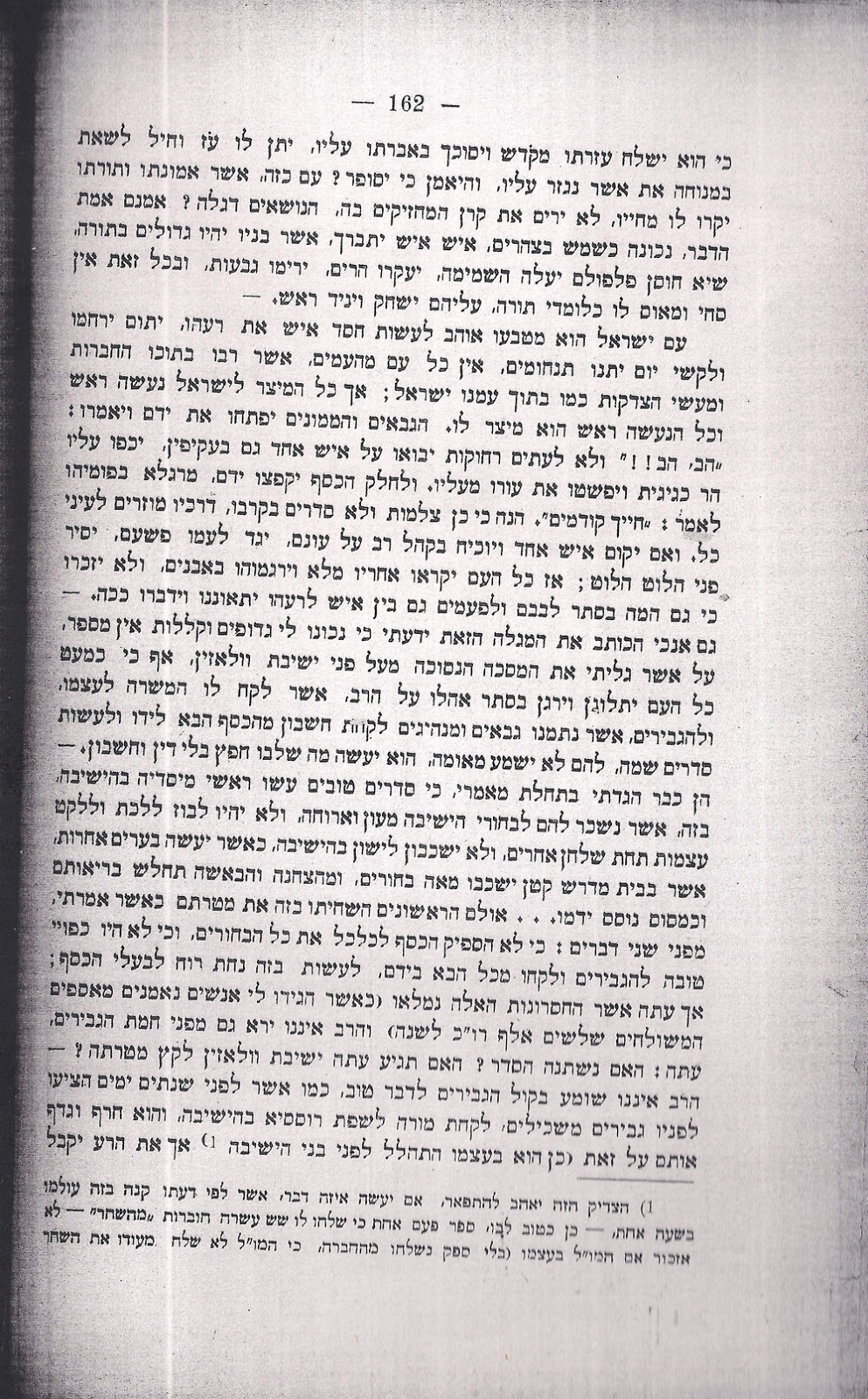
The Netziv, Reading Newspapers on Shabbos in General & Censorship (Part Three)

The Netziv, Reading Newspapers on Shabbos in General & Censorship (Part Three)
By Eliezer Brodt

This post is devoted to discussing comments received regarding parts one (here) and two (here).  I will also add in some of the material which I had forgotten to quote [some of which I was reminded of by readers] along with additional material that I have recently uncovered. From the outset, I would like to thank all those people who sent in comments regarding the post. My email address is eliezerbrodt@gmail.com; feel free to send comments.
Censorship

To begin, a few people commented in the comments section and others wrote to me disagreeing with Professor S. Stampfer’s “rule” I quoted on the general topic of censorship: “Those who impose censorship presumably assume that they are wiser than the author whose text they wish to suppress”.
In the case of the Netziv, in all of the issues I have mentioned in the past two articles and in the many others I hope to write about, I feel this rule is one hundred percent true. Is there ever a case that censorship is “permitted”? I am sure there is. I will leave all this to discussions about Marc Shapiro’s new book. My concern here is, for example a sefer or other writings which the author himself printed in his own lifetime, quoted newspapers and never as far as we know wrote to take those quotes out. For us to tamper with the authors work that is wrong and thus I invoke Stampfer’s maxim.
In general, on the subject of censorship which relates to educating children and more, it would be apropos to quote an important passage from the Netziv himself:
ואמרתם אלהם. כבר נתבאר בריש הספר לשון ואמרת אליהם שהוא הלכות המקובלות בפרשה, והנה לא מצינו בכל פרשיות שבתורה זה הלשון ואמרתם אליהם, רק דברו אל בני ישראל לאמר, שביאורו שגם אהרן ידבר אותו הפרשה בעל פה בזה הלשון שאמר משה, אבל ואמרתם אליהם, שהוא הלכות ומשניות אינו מן הצורך לכתוב שילמוד אהרן עם ישראל, שהרי כל המשניות ותורה שב”פ חובה על כל רב ללמוד עם תלמידיו, וא”כ למאי כתיב בזו הפרשה ואמרתם אליהם, אלא כלפי שקשה לדבר בעניני זיבה וקרי שהוא באברי הזרע שמתפעלים במחשבה, והיינו סבורים שיותר טוב למעט הדיבור והלמוד בהם, ורק משה הוא מוכרח ללמד לישראל הקבלות שיש לו בע”פ, שלא יאבדו מישראל, אבל אחר שכבר למדם שוב אין המצוה להגות בהם כמצות ת”ת שהמה למצוה אפילו בלי תועלת למעשה ולזכירה, מש”ה כתיב בפרשה זו ואמרתם אליהם, שגם אהרן ילמוד עם ישראל אחר שכבר למד משה בסדר המשנה כמנהגו, וה”ה כל רב לתלמידיו, ומשום שבאמת בלמוד התורה אין יוצא רע והיא אילת אהבים ויעלת חן. [העמק דבר, מצורע, טו:ב]
This passage would possibly also explain why in Volozhin, Moed Kotton was learnt even though it was not learned in some other Yeshivot.[1]
Relying on Berdyczewski & Bialik in Volozhin

Cyril Fotheringay-Phipps has a very valid comment when he wrote:

I find it odd that this blog post describes MYB’s article as “well  written and appears to be a very accurate portrayal of Volozhin” when the post goes on to quote RCB’s letter in which he writes about that same article that he “found it to be full of errors and mistakes”.

This touches upon a few issues.

In the letter I printed from manuscript R’ Chaim Berlin it says:

במכתב גלוי [וב]מכתב חתום, שמתי עיני על מאמרו, “תולדות ישיבת עץ החיים” בהאסיף [שנ]ת תרמ”ז. ומצאתיו מלא טעויות ושגיאות. והנני סופר ומונה אותם, בפרט, [ב]גליון מיוחד, הרצוף הֵנה – כבקשתו.

A translation of this line would be that this article is full of errors and mistakes. However to be fair to Berdyczewski, we have this part of the letter- I printed it at the end of part two. In all there are only four corrections; even more importantly all those corrections relate to side issues – but nothing about daily life in the yeshiva, which is what I am “relying” on in my article.  I would hardly call that a faulty article. Of course it is possible that Berdyczewski did not print the whole letter, However at that time Berdyczewski was not “off the derech” and I doubt he would print publicly an article while R’ Chaim Berlin was alive which could easily be printed elsewhere. [I am sure others will argue for the sake of arguing].

However in a footnote I wrote:

See S. Stampfer’s Lithuanian Yeshivas of the Nineteenth Century, (p. 159) who cites Bialik that everything Berdyczewski wrote in HaAsif about Haskalah was false. However this is a major issue with relying solely upon autobiographical information; each person is referring to the time he was in the Yeshivah and his experience.

Originally I was not planning on going into this topic, but as it relates to all this, I feel clarification is justified.

On Berdyczewski in Volozhin, a fellow student writes:

הוא הסופר העברי העתידי הד”ר מיכה יוסף ברדיצבסקי ז”ל. זה האברך הקטן הצנום, בידו האחת היה מחזיק את הגמרא, ובשניה הוא ומסלסל בפאותיו הקטנות, הולך וחושב מחשבותיו (בודאי מחשבות ומעשים שלו העתידים) [ישיבות ליטא, פרקי זכרונות, עמ’ 124].
Shmuel Mirsky writes:

זכורני, כשמת מיכה יוסף ברדיצ’בסקי הספידוהו ד”ר הוגו ברגמן ור’ אלתר דרויאנוב. הראשון דיבר על ברדיצ’בסקי שהיה חי בשני עולמות, והשני אמר שהוא הכירו בשני העולמות גם יחד, והוסיף שכשלמד בוולאזין היה יושב מעוטף בטלית ומוכתר בתפילין ולומד, ואעפי”כ הכיר בו הנצי”ב שהוא מעולם אחר, והוא צדק [מוסדות תורה באירופה, עמ’ 61]
In a memoir written by a student of Volozhin we find that he writes about the article of Berdyczewski:
הנה התגלגל לידי האסיף לשנת התרמ”ז ובהחומר הנאסף שם במאמר מיוחד על ידי מר מיכה יוסף ברדיטשבסקי לתולדות ישיבת ולזין נאמר… החמר נאסף ממקרות ראשונים ומדויקים ויש לו ערך היסטורי שלם בלא שום פקפוק [ישיבות ליטא, פרקי זכרונות, עמ’ 71].[2]
Bialik writes in a letter written while he was learning in Volozhin about Berdyczewski’s essay:

וכל מה שכתוב ברדיטשבסקי להאסיף, לא מניה ולא מקצתיה… [אגרות חיים נחמן ביאליק, א, תרצח, עמ’ כא-כב].
In an autobiographical essay Bialik writes a bit more:

תחלה לוולאזין ואח”כ לברלין. ולמה וואלאזין מפני שכפי השמועה לומדים שם בוואלאזין, יחד אם התלמוד גם שבע חכמות ושבעים לשון, בגליו או בסתר… תקותי לא באה. בוואלאזין אין זכר לשבע חכמות ולשבעים לשון, אבל יש שם בחורים כמוני, וטובים או רעים ממני, שיושבים ולמודים גמרא, גמרא, גמרא… [ספר ביאליק, תל-אביב תרצד, עמ’ 80-81].
Menachem Zlotkin, another student of Volozhin writes about this essay:

 שכל אלו שכתבו על בניה הישיבה בוולוז’ין ונתנו לנו את תמונתם, התמונות והציורים האלה אינם אלא של חלק קטן מתלמידי הישיבה, של הבחורים והאברכים הידועים להם מקרוב, ולא של הרוב הגדול של תלמידי הישיבה. בכתיבת ציורים כאלה הצטיין ביחוד הסופר מיכה יוסף ברדיטשבסקי, שנתן בהאסיף, ובהכרם תמונות של תלמידי הישיבה, שלא התאימו כלל למה שהיו באמת כפי שכתב ביאליק מוולוז’ן… על פי הציורים האלה היה מקבל הקורא את הרושם כאילו היתה ישיבת וולוז’ין, באותה תקופה, משתלה של משכילים, וכל הבא לוולוז’ין התמשכל מיד ונעשה חכם בשבע חכמות. קריאת ציורים כאלה היתה בודאי גורמת צער לראשי הישיבה ולתלמידי הישיבה שהיו רחוקים מרחק רב מהשכלה ומלימודי חול, ולא באו לוולוז’ין אלא כדי להשתלם בלימוד התלמוד ולא יותר… [פרקי זכרונות, עמ’ 183-184].
It appears from Zlotkin and Bialik that at least one aspect of Berdyczewski’s essay was not correct.
I would venture to disagree, as anyone who learned in any particular Yeshivah and left and decides to follow up a few years later about life in said Yeshiva will usually find that some things change – different crowds bring different habits and the like. It’s very possible when Berdyczewski was in Yeshiva, Haskalah was being learnt in Volozin and when Bialik got there, there was not.
 Furthermore another student of Volozhin who learned there at the same time as Bialik writes:

חדר הכרמלית שלהם נעשה רשות הרבים שבני הישיבה היו מצויים בו תמיד, מקום כינוס לתמימי דעים, בית ועד לאנשי שלומנו, מעין מרכז לעסקנות ולהשכלה. מכאן נשלחו בשם הישיבה מכתבי תנחומים למשפחות הנפטרים: רש”י פין צ”ה גרץ ול’ פינסקר מכאן יצאה ההתעוררות לאסוף כסף בתוך הישיבה לתמיכתו של יעקב רייפמן לעת זקנתו, פה נאגדו אגודות למינוי על עתונים, ולהפצת ספרי אגורה של בן אביגדור שהתחילו להופיע בשנה ההיא. בכל יום ויום היו בחורים מתכנסים לשם, ודנים ומתוכחים על דברי קודש וחול, על עניני הישיבה ועל עניני האומה, על עניני הכלל ועל עניני הפרט. חומר לשיחות שימשו מאמרים ראשיים, ושאר מאמרים ודברי סופרים שבעתונים ובמאספים ובספרים… [פרקי זכרונות, עמ’ 165]
Even more strange is Zlotkin in the aforementioned  account, a mere few pages later also mentions a few times (pp. 187-188)[3] that there was haskalah being learned in Bialik’s time, so I am not sure what exactly the issue with Berdyczewski was – maybe it was he made it out to be even more.  As far as Haskalah being learned in Volzohin, there is no need to deal with it as it has been dealt with properly by Jacob J. Schacter in his frequently quoted article “Haskalah, Secular Studies and the Close of the Yeshiva in Volozhin in 1892“, Torah u-Madda Journal 2 (1990), pp. 76-133 and S. Stampfer, Lithuanian Yeshivas of the Nineteenth Century.
Bochurim knowing what went on in the Netziv’s home

Cyril Fotheringay-Phipps wrote regarding a further issue:

I continue to disagree with your assumptions about what people knew or didn’t know about what the Netziv did in his house. I don’t think there was nothing to talk about in Volhozhin besides what the Netziv did, but even if there was, that wouldn’t apply to things that they wouldn’t have a basis to know about and didn’t impact them. And even if they did know certain things of this sort, that doesn’t mean that they were in a position to rule out the Netziv engaging in some activity if an insider claimed he had done so. (Especially since the MB was published decades after Volhozhin closed.)
First, here is an account of a fellow student of Volozhin who read the accounts of R’ Epstein:
חבל מאד שגדולינו אדירי התורה והחכמה שקבלו חינוכם בישיבת וואלוזין לא העניקו לנו מזכרונתיהם על הישיבה הזאת, שבודאי ערכם רב לתולדות ישראל, ואלה החיים ב”ה אתנו, כדאי היה שיתקנו וימלאו את חובתם זו. עד היום לא נמצא איש שיאסף את כל החומר לתולדות ישיבת וולאוזין, אם כי אמנם חומר רב יש בספר הגאוני מקור ברוך לר’ ברוך הלוי אפשטיין, גיסו וקרובו של הנצי”ב. אבל לא די החומר הזה, ואולי עוד יוסיף תת לנו החכם הנ”ל ספר מיוחד לתולדות הישיבה [ישיבות ליטא, פרקי זכרונות, עמ’ 126]

As I have written in the past, relying on this work is a topic that much has been written about and perhaps I will return to one day.

However, in regard to what I wrote about the Bochurim watching every move of the Netziv, one talmid of Volozhin writes in his memoirs:

מנהגים קלים של כפרות ושל תשליך, שרבים מגדולי ישראל קוראים להם מנהגים של שטות, היו מדקדקים בהם בכל זאת כבחמורות, וקראו עבריין למי שעבר עליהם ולא נזהר בהם. ובולוז’ין העמידו התלמידים משמרות על בית הרב בערב יום הכיפורים ובראש השנה, כדי לאמת את השמועה שאין נוהגים בו מנהג של כפרות ושל תשליך… [פרקי זכרונות, עמ’ 174].

It could be you (CFP) personally did not do so when you were in yeshivah, but from what I hear it’s still done by many bochurim.

Why did the Netziv read newspapers?

Another commenter wrote:

What’s the big deal if the Netziv read “newspapers” such as HaLevanon or HaMaggid? It’s not like we’re talking about The NY Post or The Seattle Times. I’d consider them to be closer to something like a blend of the Me’asef and The Jerusalem Report which, apparently, the Netziv didn’t feel was a problem.

To be fair I did not say it’s a big deal if the Netziv read newspapers, merely that some appear to feel it was a big deal and decided to cover it up. This gives me an excuse to talk about the Netziv! I would also like to emphasize something I have not yet done. The Netziv was one of the greatest gedolim of the past 200 hundred years. In the future I will elaborate at length about this subject. One of the most impressive attributes that everyone who knew him writes about was his tremendous Hasmadah, how he did not waste any time. For over forty years, he ran the largest Yeshivah in Europe, dealing with most of its daily issues, traveling often to defend the Yeshivah and at the same time giving shiur a few times a week and a daily Chumash Shiur. He also penned dozens of letters daily, was a world renowned posek and wrote and published numerous works. All this, making him one of (if not the most) prolific litvish author(s). It bears noting his concluding remark he signed most of his letters with:
העמוס בעבודה.

One student relates:

אף בלכתו מביתו להישיבה שהיה מהלך של חמשים רגל, היה מחזיק בידו את התנ”ך הקטן, או המשניות בפורמאט קטן ומעיין בו [פרקי זכרונות, עמ’ 125].[4]
Yet he found time to read and comment in newspapers. He obviously felt it was very important, as it gave him a window to the world which he needed to understand. His son R’ Meir Bar Ilan writes:
קריאת העתונים היתה לו לא בילוי זמן, אלא כפי הנראה צורך פנימי להיות קרוב לכל מה שמתרחש בעולם הגדול. מטבעו לא היה זר לעולם, לכל דבר שאירע כל עוד לא מצא בזה סתירה לאהבת התורה [מוולוזין עד ירושלים, א, עמ’ 138].
If one wishes to understand what newspapers were like in those days, one need go no further than to peruse the thousands of issues that are currently on-line. Perhaps at a later date I will elaborate on this subject, for now see Roni Beer Marx, Between Seclusion and Adaption; The Newspaper Halevanon and East European Orthodox Society’s Facing Up to Modern Challenges,(Heb.)PhD. Dissertation, Hebrew University, 2011. After reading this dissertation, one can understand much more the types of newspapers, importance of newspapers and why the gedolim needed to read them.
To be clear, I never said these newspapers were similar to the NY Post or the like.
Did the Netziv read other parts of the Newspapers besides for the Torah sections?

Cyril Fotheringay-Phipps writes further:

Regarding the Netziv and RCB reading newspapers on Shabbos, it would appear that these newspapers contained a section of Torah writing and all examples of the Netziv referencing them apparently refer to those sections (unless I’ve missed something). It’s worth bearing this in mind before conjuring up images of the Netziv reading something like the NYT on Shabbos.

Once again I must disagree. It is clear that the Netziv read these newspapers cover to cover and not just the Torah sections. If one looks at the some of the articles the Netziv wrote in the Papers, collected in Igrot HaNetziv Me-Volozhin, one will see he comments on different things he read in different parts of the various papers.[5]

I would like to point to a few places in his work on Chumash that the information he is using is from the non-Torah parts of these papers. Many of these papers had sections dealing with science, nature and other worldly issues.[6] Of course, it is very possible that some of this information he could [or did] have gotten from other sources.

See for example the following passages[7]:

א. ויברא וגו’ למינהם. הודיע הכתוב דאע”ג דבשעת מאמר הקב”ה. יצאו כמה מיני בריות במים ובעוף. מ”מ גם אח”כ הוסיף הקב”ה לברוא מאלו אשר יצאו כבר במאמר כמה מינים. כגון תרנגול שיצא במאמר ברא בו ה’ כמה מינים באותו תכונה של תרנגול וכולם מין א’ לענין הרכבה כידוע. וכן בכל הנזכרים בזה המקרא הוא כן [העמק דבר, בראשית א:כא]
ב. עפר מן האדמה. קיבץ מכל חלקי האדמה עפר מזה המקום מעט ומזה מעט. ולא ככל בהמה וחיה. וכדאי’ בסנהדרין דל”ח א’ אדם הראשון מכל העולם כולו והצבר עפרו. וטעמו של דבר שמשונה טבע האדם מכל בהמה וחיה שאינם יכולים לחיות אלא באקלים של כל בריה לפי טבעו. ובאותו אקלים הוא נוצר (וע’ מ”ש להלן ו’ י”ב) משא”כ האדם נוצר באופן שיהא יכול לחיות בכל העולם בין במקום היותר קר בין במקום שיותר חם וניזונים בכל אופן שהמקום גורם… [העמק דבר בראשית, ב:ז]
ג. והנה נשחתה כי השחית וגו’. הכי מיבעי וירא אלהים כי השחית כל בשר. אלא ה”פ שראה כי גם אדמת הארץ נשחתה מטבעה שהטביע הבורא ית’ להספיק מזון לכל הברואים והנה אבדה כחה. ופי’ הטעם משום שהשחית כל בשר את דרכו וטבעו. כי כל בריה יש לה טבע מיוחדת במזונותיה ואויר הראוי לה. וכך טבע האדמה אשר הם עליה וכמש”כ לעיל ב’ ז’ י”ט. אבל כאשר השחיתו בדור הלז כל המינין ע”י הרכבות זרות את טבעון ודרכן על הארץ ממילא נשחתה האדמה לפניהם. וע”ע מש”כ לעיל ה’ כ”ט [העמק דבר, נח, ו:יב]
ד. וימח את כל היקום. נמחו הגופות ודייק הכתוב אשר על פני האדמה דוקא אלו שהיו מונחים על פני האדמה. אבל נשתיירו כמה גופות שנפל עליהם עפר הרבה ע”י שטף המים ונשארו הגופות קיימין. והן הנה עצמות שמוצאין חופרי ארץ ומוצאין עצמות מבריות שלא נמצא עתה בעולם. ומזה שפטו הרבה שהי’ לפני בריאה זו עולם אחר ואז היו בריות אחרות… ומה שמוצאין בריות משונות הוא ממה שהרכיבו שני מינים שונים ונולד ע”י זה בריות משונות כמו הפרד היוצא מהרכבת סוס וגמל… [העמק דבר, נח, ז:כג]
ה. ובכה ובעמך ובכל עבדיך יעלו הצפרדעים. גם בהיותם בבתיך שמה יוסיפו לעלות. היינו שיולידו שם הרבה כמותם. וכדכתיב בתהלים (ק”ה) שרץ ארצם צפרדעים בחדרי מלכיהם. היינו בחדרי מלכיהם שרצו. וכאן כתיב ובעמך בשו”א היינו עם מיוחד שומרי ראש פרעה. ומש”ה כתיב בזה המקרא קודם לבכל עבדיך. משום דחשיבי יותר. וזה המכה היתירה לא שלטה בכל עמי פרעה אלא בו תחלה ובשומרי ראשו ובעבדיו המה שרי יועציו. והנה ידוע דעות שונות בין מפרשים ראשונים ז”ל אם היו הצפרדעים מין הידוע המשחית הנמצא עוד היום ביאור ונקרא (קראקאדיל) או הוא מין הנמצא ברובי הנהרות וצועקים ומכרכרים… [העמק דבר, וארא, ז:כט][8].
 ו. לא תקיפו וגו’ ולא תשחית וגו’. מנהגם היה להשמר בשערות הראש והזקן כמו שעוד היום מנהג בני ישמעאל כך ומי שהוא איש המעלה משמר ביותר שלא יגע באיזה שערות הפאות והזקן לרעה… [העמק דבר, קדושים, יט: כז]
ז. את חקתי תשמורו. כפי’ חז”ל ברבה ר”פ אם בחקתי חוקותי שחקקתי שמים וארץ. כך הפי’ כאן כמבואר ברבה החקים שחקקתי עולמי בטבע כל אחד. והמערב מין בשא”מ ה”ז משחית טבעם כמש”כ ר”פ נח עה”פ את הארץ והנה נשחתה כי השחית כל בשר את דרכו עה”א. וכן לבישת שעטנז משחית סגולת חוטי צמר ופשתים וממה שהיה בפ”ע. והוא מסתרי הטבע וידועים לחכמי הטבע…. [העמק דבר, קדושים, יט:יט]

In the additions to the HD the Netziv adds to the last sentence:

שהקושר חוט שזור של צמר ופשתים יחד על חוט הברזל של הטעלעגראף מפסיק המשכת הדיבור שנדבר ממרחק, הרי הוא משנה טבע הברזל וחקי הטבע שבברזל, ומכ”מ אינו אסור…
ח. ושרט לנפש לא תתנו בבשרכם. מנהג האוה”ע לעשות הוספת צער למת שריטות על הבשר של אדם חי. וגם לעשות זכרון ע”י כתב קעקע שם המת. ומי שלא רצה לעשות על בשרו היה שוכר אדם אחר עני לעשות על בשרו ומשלם לו כמו שעוד היום הנהג שם לשכור מקוננות ומתופפות על הלב… [העמק דבר, קדושים, יט: כח]
ט. ונתנה הארץ יבולה. לא כתיב פריה כמו לעיל כ”ה י”ט. דפרי הארץ אחר עבודת הארץ אינו שכר מצוין שהרי כך דרך העולם אלא יבולה משמעו הולכה ממקום למקום כמש”כ לעיל בפי’ יובל. ונכלל בזה פירות שאין באים ע”י הזריעה וגידול במקומו אלא ממציאים כחות הארץ מרחוק ומעומק עד שנעשו הפירות גדלים מהרגלן וכמו שידוע שיש לזה המצאות מאומנים במלאכת גידולי הארץ… [העמק דבר, בחוקתי, פרק כו:ד].
יא. הוא משל על אוהל אנשי יעקב. והנה משונה גידולי גנה לשדה. דשדה אינו נזרע אלא מין א’ או שנים משא”כ זרעוני גינה המה רבים. מכ”מ כל גן יש בו מין א’ שהוא העיקר אלא שסביביו נזרע עוד הרבה מינים מעט מעט… והיינו שהמשיל כל א’ מאנשי יעקב כגנה שיש בה מין מיוחד ומכ”מ מלאה מינים רבים. אמנם גנה שאינה על הנהר ממהרת לשנות צורתה. ועלי ירקות נובלים מהר ונראים כמושים. אבל שעל הנהר בכל בוקר מתחדש ומתחזק ביופי גידול כל ירק… והנה כבר המשיל הכתוב בפרשת שופטים כי האדם עץ השדה אמנם יש ד’ מיני עצים. א’ הוא קוץ מונד אשר לא ביד יקחו שאין בהם תועלת. ולא נבראו אלא כדי להזיק לאחרים ולהיות כברזל ועץ חנית. היינו מזיקים בעצמם או משמשים למזיקים. או לשרוף אותם להחם בם בימי שבת היינו בעת מנוחה… ב’ עץ האטד. שחסים בצל ענפיו ועליו וכדומה לו… ג’ עץ פרי… אבל אין נהנים מגוף האילן בקיומו. ד’ ארז שנהנים מגוף האילן בבנין וכדומה…. ויש ארז טוב לתורן עלי מים…[העמק דבר, בלק, כד:ו]
יב. יזל מים וגו’. אחר שהראהו הקב”ה שבחן של בניו. הראהו שבחי הדורות משעה שנכנסו לארץ עד ימי משיח שיבא ב”ב. ולא ראה ימי הרעה רק ימי הטובה כדי לנקר את עיניו ונגמר זה הענין בפעם הרביעית. ואמר על דור השופטים שהיה להם מלחמות וגלו הרבה בקרב אוה”ע. ואנו לא ידענו ועוד היום יש מקומות שנמצאים ישראל שאומרים שהן מזמן פילגש בגבעה…[9] [העמק דבר, בלק, כד:ז]
יג. וחכמים התרים את התבל מעידים שיש עוד היום במדבר סלע מוציא מים אלא שלא בשפע כ”כ… [העמק דבר, חקת,  כ: ח]
יד. כי תצא למלחמה על אויביך. בפרשה הקודמת למדנו שני אופני מלחמות. א’ במלחמת תנופה שיוצאים במחנה מול מחנה. ובזה כתיב כי תצא למלחמה על אויבך וראית סוס וגו’. ב’ שמצירים על עיר ובזה כתיב כי תצור על עיר. ומדכתיב כאן כי תצא למלחמה על אויבך. מבואר דמיירי באופן הראשון. ולא כמש”כ הראב”ע. מעתה יש להבין דלפי הנראה ענין פרשה זו שייך יותר במלחמת מצור על עיר מלאה אנשים ונשים וכשנפתחה והרי רואה אשה יפ”ת. משא”כ כשיוצאים במלחמה בשדה מה לנשים בשם. אבל כבר ביארנו בס’ בראשית י”ד ט”ז שדרכם היה באוה”ע. בעת שיוצאים בחורים למלחמה יוצאות ג”כ נשים יפות מקושטות ועומדות לינשא. ומי בחור שמזדרז במלחמה ורוח גבורה נוססה בו. קופצות עליו נשים היפות. ועפ”י זה מתחרים הבחורים בעוז. והיינו דכתיב שמלת שביה. ומשמעות שמלה בכ”מ בגד חשוב כמו ושמת שמלותיך עליך. ומשום שהיו מתקשטות וכשלוקחים אותן בשביה נמצאות בקישוטן. משא”כ במלחמת מצור ואין הבחורים עושים מלחמה ודבר גבורה ומה להנשים להתקשט אז בשעת השבי [העמק דבר, כי תצא, כא:י]
More additions and comments related to part one:
Additions to note six about the Journal ‘Ittur Sofrim’
Here are parts of the fourth part of the journal which was never published.
Addition to note ten:

About the Netziv’s letters see; Mekor Baruch, 4, pp. 2000-2010.
Moshe Tzinovitz writes:

בקשר לכתיבת מכתביו יש לציין, כי בכל מכתב ומכתב היה כותב פרט מיוחד מפרשת השבוע, כשהוא מתאים תמיד לתוכנו המכתב ולאיש שאליו נערך המכתב [עץ חיים, עמ’ 238].
Rabbi Chaim Berlin writes in his Hesped on the Netziv:

אבל תלמיד חכם יחיד בדורו… הרי שמו הולך מסוף העולם עד סופו, הוא השליט בכל דבר הוראה, בתשובותיו לכל אפסי ארץ… לכולם היה רב מובהק… [דרשות הנצי”ב, עמ’ קמה].
לכתוב כל הלילה חידושי תורה ותשובות, ומכתבים לחזק הישיבה… וכמה מכתבים פיזר בענין ישוב ארץ ישראל… [דרשות הנצי”ב, עמ’ קמו].[10]
 Rabbi Meir Bar Ilan writes:

בין עשרות המכתבים, ממש עשרות שאבא ז”ל היה כותב כמעט בכל יום בעצם ידו… היו רבים לא תשובות בדברי הלכה, גם לא בעניני הישיבה, אלא תשובות לשאלות בענינים מסויימים של כלל ישראל או בעניני הקהילה בערים שונות… לצערנו לא היה אז המנהג להעתיק את המכתבים, וכל אלפי המכתבים שהיו יכולים לשמש מקור לחקר החיים התרבותיים במשך שני דורות אבדו…
דעתו היתה שונה ממחשבותים של רוב רבנים… מדפסים שו”ת שלהם, וכמה מהם קנו שם בעולם רק על ידי התשובות. אבא ז”ל לא התייחס לזה בחיבה יתירה הוא היה אומר כשפונים בשאלה יש להשיב, ואם יש דברים שאינם פשוטים מן הראוי כמובן לברר את ההלכה על פי המקורות, אבל לעשות מתשובה או שאלה חיבר שלם עם ענפים או סניפים כמו שהיו מחברים גדולים ידועים נוהגים לעשות אז הרי זה קצת יותר מדי… דבר זה מוכיח, כי אין הכוונה להשיב על השאלה אלא לחבר ספרים ולהראות גדולה… נוסף לזה לא היה אבא ז”ל מחשיב הרבה כתיבת חיבורים והדפסתם רק לשם פירסום והיה אומר מה ערך יש לזה כשכל אחד יפרסם בדפוס כל מה שהוא כותב ומוצא חן בעיניו, הרי על זה נאמר עשות ספרים הרבה אין קץ… [מוולוז’ין עד ירושלים, א, עמ’ 137-138][11].
Elsewhere Rabbi Meir Bar Ilan writes:

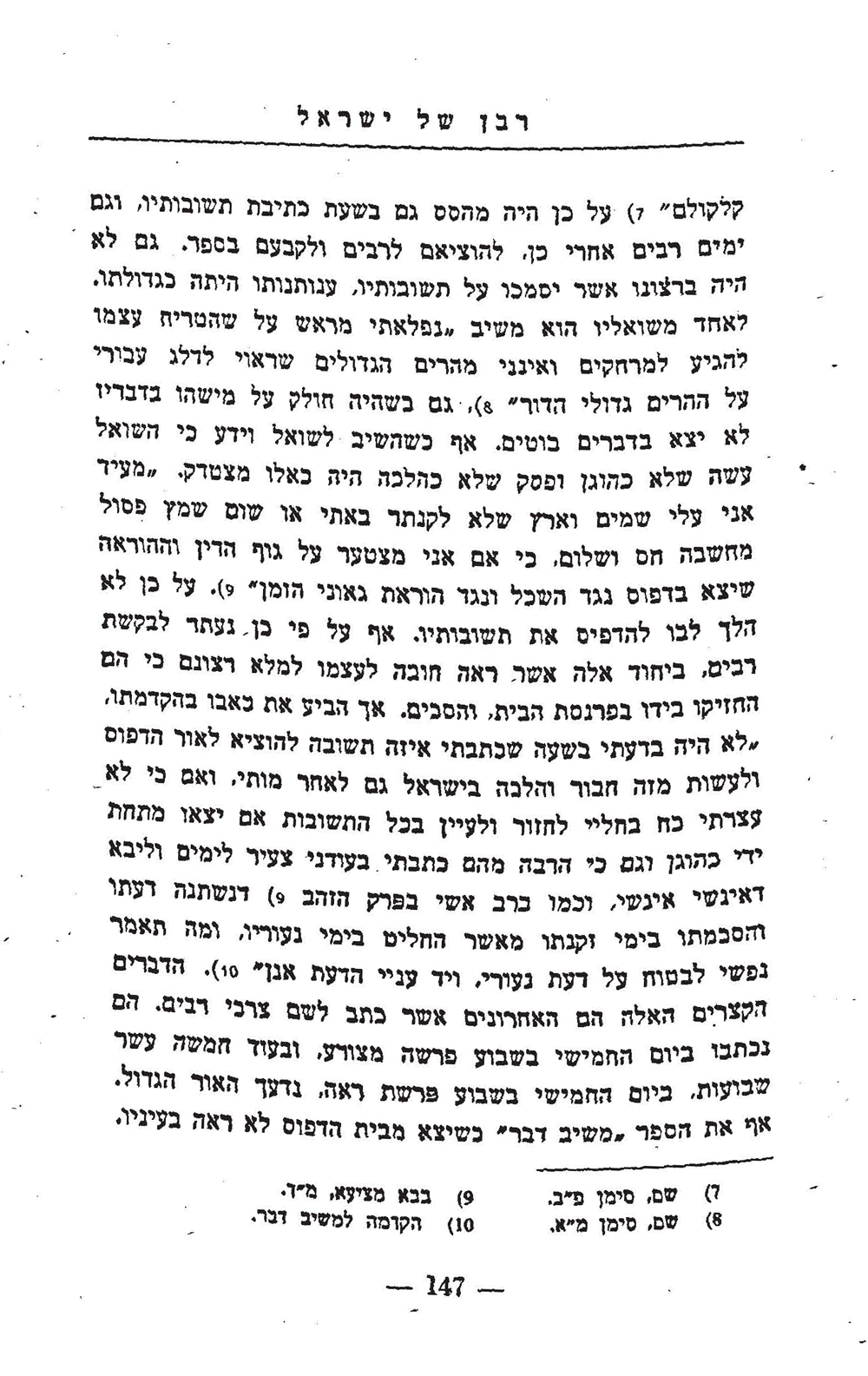
Addition for note 22: In regard to Chumash being learnt in Volozhin

Reb Itzeleh Volozhiner writes in his introduction to Nefesh Ha-Chaim about his father Reb Chaim Volozhiner:

לא הניח ידו מלהגיד לבני עירו אחר תפלת השחר פרשה מסדרא דשבוע יום יום. וכל הנכנסין לביהמ”ד יצאו מלא דבר כשאר כ”א קלט לפי דרכו. אוהבי הפשט קלטו עומק פשוטו במקרא. ודורשי הרשומים דרוש דרשו ממה שלקחה אזנם. מה שנזרקה מפיו מדי דברו בקצרה. וכל השומעים שמחו במתק שפתיו אשר ברור מללו כקורא הפרשה לפני תשב”ר.

A student of Reb Itzeleh Volozhiner writes:

ומדי דברי בה אזכור ימי נעורי ועד היום לא אשכח את רגשי העונג, עת אשר בכל יום ויום ראיתי אה הגאון הגדול הקדוש… הנעלה על כל בני דורו מו”ה יצחק זצל”ה מוואלאזין יורה לנו בבקר בבקר הפרשה חומש מפרשת השבוע עפ”י פשוטו של מקרא הממשיך את הלב, מי שלא ראה את פני הגאון הנ”ל אשר תואר פנים כפני מלאך אלקים, ומי שלא שמע מדברותיו המרעיפים כטל וכמטר לקחו לא יכול לצייר עונג הנפש ורחשי לב טהור שברא לנו אלקים… [המליץ, שנה יז, יום כג אדר, גליון ו, תרמ”א, עמ’ 119].
Another talmid writes:

דרכו של הגאון מהרי”ץ הי’ להתפלל ביום השבת בבהמ”ד של הקהל ואחר התפלה הי’ מגיד פרשה אחת מן הסדר של יום והיו כל בני הישיבה הולכים לבהמ”ד לשמוע הדרוש [ר’ אליהו לעווינזאהן, מכתב מאליהו, עמ’ 47].
R’ Simcha Edelman (father of the Marcheshes) writes:
נהירנא כד הוינא בר שיתסר למדתי בקיץ תקצז בישיבת וולאזין והרב הגאון האב”ד מ’ יצחק ז”ל הגיד לפני התלמידים יום יום אחר תפלת השחר פרשה בתורה מסדר השבוע ושמעתי מפיו… [התירוש, ג, עמ’ 155].
Additions to the sources in note 22 about the Netziv’s Chumash shiur:

הוא זכה ללמד תורה ברבים בישיבת עץ החיים אשר באוואלאזין כיובל שנים והעמיד לאלפים בישראל ומורים, הוא הגיד יום יום אחר תפלת השחר, לפני בני הישיבה, פרשה בתורה ויפרשנה כדרכו בקדש, בהלך נפש בפשט ודרוש, עד להפליא… [הספד של תלמידו,[12] ר’ ישראל בנימין פייוולזאהן, צרור החיים, ווארשא 1914, עמ’ טו (= ר’ זאב רבינר, מרן הרב קוק זצ”ל, עמ’ רכה)].
יש אשר בבוקר לאחר התפלה, אך ישב הנצי”ב אל מקומו בראש השלחן והתחיל מבאר לתלמידי הישיבה את פרשת השבוע [פרקי זכרונות, עמ’ 88].
הדבר הי’ באחד הימים… אחר תפלת שחרית, ואחר שהגיד שעור פרשה חמש מסדר פרשיות השבוע, כדרכו יום יום, [מקור ברוך, ד, עמ’ 1978].
ראש הישיבה הראשי היה הרב הגאון נפתלי צבי הירש בערלין ז”ל… ראש הישיבה הטיף פרשה מחומש בכל יום בבוקר אחרי תפילה… [יהושע ליב ראדוס, זכרונות, עמ’ 65].
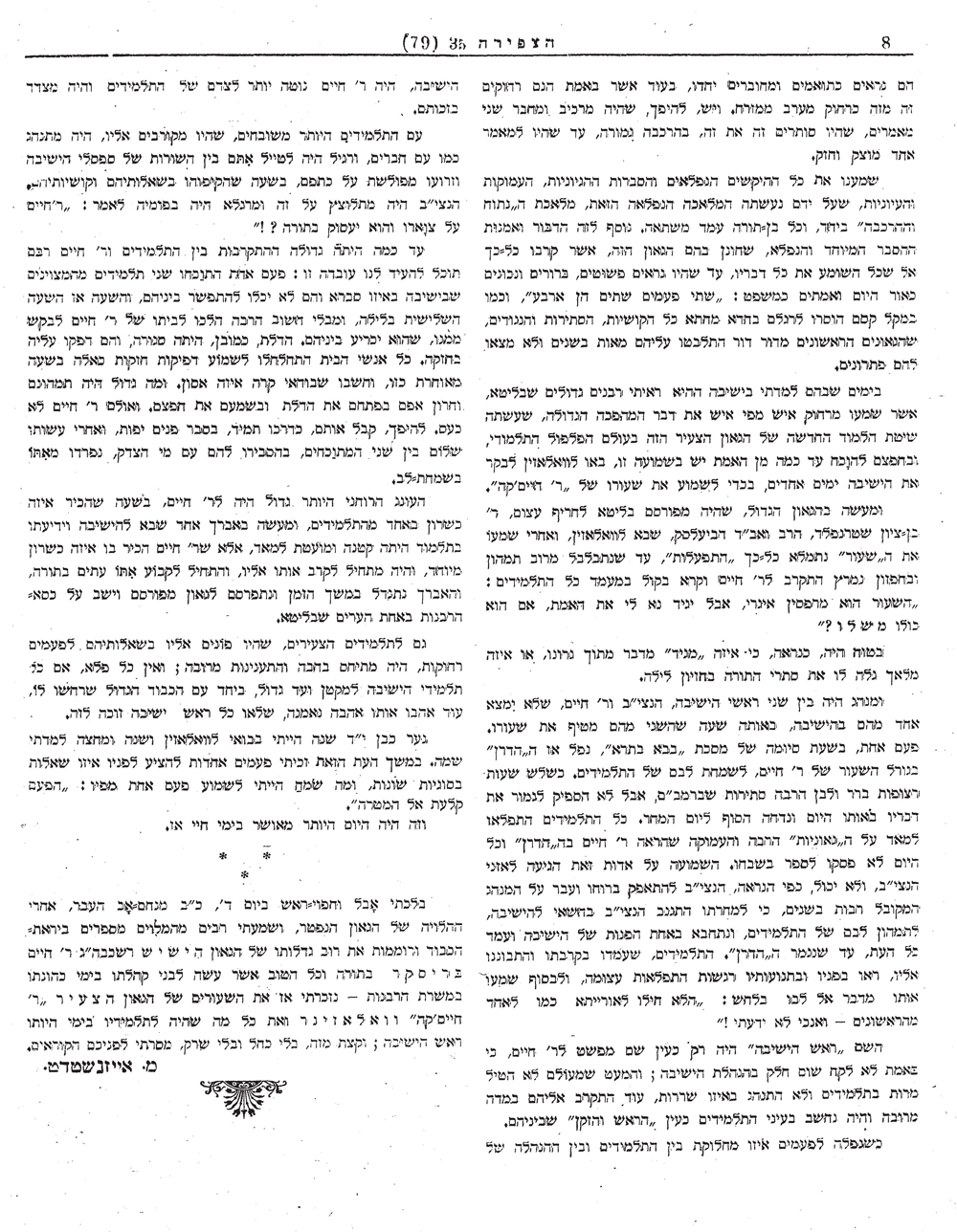
בעלות השחר קמתי… התפללתי בלי כונה, שמעתי את הפרשה של חומש מפי’ הנצי”ב אשר הטיף כדרכו, בכל יום ויום לאחר התפלה, והדברים לא נכנסו לאזני… [מ’ אייזנשטדט, הצפירה, תרע”ח, מספר 35].[13]
 In 1881 Rabbi Baruch Epstein wrote an article in Hamelitz about Volozhin, defending it from attacks in the newspapers [See Appendix one]. He describes the daily routine in Volozhin:

סדר היום והלמודים בשעה 8 בבוקר אחר תפילת שחרי, יורה הגרנצי”ב נ”י פרשה חומש מפרשת השבוע וכולל בה פשטי המקראות על פי יסודי טובי המבארים משולבים עם דברי חז”ל (וזה לא כביר הוציא לאור ביאורו הנאור עה”ת בשם ‘העמק דבר’ וראוהו חכמי ישראל בארצנו וחו”ל ויפזרו לו מלא חפנים תהלות ותשבחות וזה לא כביר הגיע לו מכתב תודה והלל מהד”ר א. א. הרכבי), עוד יוסיף דברי אהבה וחן, לטעת בלבות התלמידים מוסר ומדות והנהגות ישרות וצניעות בין אדם למקום ובין אדם לחבירו וחובות היהודי לעמו ולארצו ולמלכו, וירחיב דרושו עד ערך שעה ויותר…” [המליץ, יז, ב’ אדר, תרמ”א (1881), גליון 3, עמ’ 54[.
Another student who learned in Volozhin in the years 1873-1876 describes in his Yiddish Memoirs:

דער נציב פלעגט זאגען אלע טאג נאכ’ן דאוונען א פרשה חומש פון דער וואך. דער חומר איז אפגעדרוקט געווארען [תרגום: הנצי”ב היה רגיל לומר בכל יום לאחר התפילה פרשה בחומש מתוך פרשת השבוע. החומר נדפס] [אלכנסדר זיסקינד הורוויץ, זכרונות פון צוויי דורות, עמ’ 226-227].
One more description of the Netziv’s Chumash Shiur worth quoting, although not based on an eye witness account but rather interviews,[14] is from Fischel Schneersohn’s classic work Chaim Gravitzer:
לאחר התפילה עמד ר’ הירש לייב מעוטף בטלית ותפילין, וכמנהגו בכל יום אמר פרשה של חומש מן הסדרה של השבוע. ואותה שעה נדלק בעיניו הניצוץ הקסום, המתחדש בכל רגע ורגע, ובקלסתר פניו מאירה בת צחוק של איש מלהב בעמלו ואינו מתייגע אלא מתבסם וההולך ביגיעתו, יגיעת הקודש וכלל שהוא נלהב ומשוקע, כן יישא ביתר עוז ויתר שלווה ובטחה בעול עמלו המושך כל כך את הלב. הפרשה של החומש נמשכת כמחצית השעה… [חיים גראביצר, עמ’ 377].
Rabbi Chaim Berlin writes in his Hesped on the Netziv:

אבל תלמיד חכם יחיד בדורו… הרי שמו הולך מסוף העולם עד סופו, הוא השליט בכל דבר הוראה, בתשובותיו לכל אפסי ארץ… לכולם היה רב מובהק וכולם היו תלמידיו… ואף מי שלא היה שמה הלא קבל תורה מספריו… וזה מהעמק דבר… [דרשות הנצי”ב, עמ’ קמה].
Addition to the end of note 22: I wrote in part one: “In Pirkei Zichronot [p.84] we find a claim from Shmuel Zitron that R. Yehoshua Levin gave a chumash shiur using Mendelsohn’s Biur. However, S. Stampfer [ibid, p. 68] already notes that Zitron’s memoirs are not always accurate.”
Add to this: Max Lilienthal records in his memoirs about his visit to Yeshivat Volozhin his discussion with Reb Itzeleh Volozhiner where Reb Itzeleh told him the following:
We have prayers in the morning… After the Service I explain to them some chapters of the Sidrah of the week and the Haphtarah with the commentary of Rashi, adding some free explanations of my own, into which I interweave some remarks from the commentary of Moshe Dessau (Mendelssohn) [David Philipson, Max Lilienthal, American Rabbi Life and Writings, New York 1915, p. 348]. [Thanks to Zevi Fried, for sending me this reference].

 However it’s worth stressing that while many of the parts of Lilienthal’s account appear to be true, not all of them are.[15]
Another connection between Mendelssohn and Reb Itzeleh Volozhiner can be found in a Haskamah that Reb Itzeleh Volozhiner gave to a 1852 edition of the Biur. However it’s pretty clear that Reb Itzeleh Volozhiner was required to do so by the government.[16]
There is, however, a connection between Mendelssohn’s Biur and the Netziv. Dr. Nissim Eliakim in his work Haamek Davar la-Netziv, [Moreshet Yaakov 2003, pp. 45-48] notes a few places in the Netziv’s writings where there are similarities.
Gil Perl comments on this (p. 175): “As of a result of a few striking similarities between the work of the Netziv and that of Moses Mendelsohn, Eliakim (45-48) perceptively states that “with great care I would guess that Mendelssohn’s Biur did not escape the sight of the Netziv.” Again, Netziv’s commentary on Sifre furnishes the evidence which Eliakim lacks.” Gil Perl points to two passages in the work on Sifre where the Biur is quoted.[17]

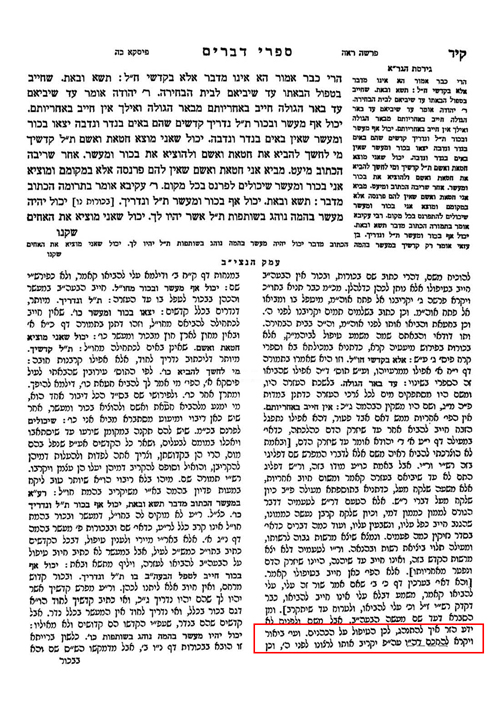
During the Volozhin Yeshiva’s long existence, both the government and the Maskilim tried several times to close it down. One such instance was in 1858, when, amidst the dealings with the government, a document was written describing the curriculum of the Yeshiva. In the document it states that students were learning chumash with Rashi and the Biur.[18]

Addition to note 26: For more on the censorship and the new version of the Ha’amek Davar see hereherehere and here
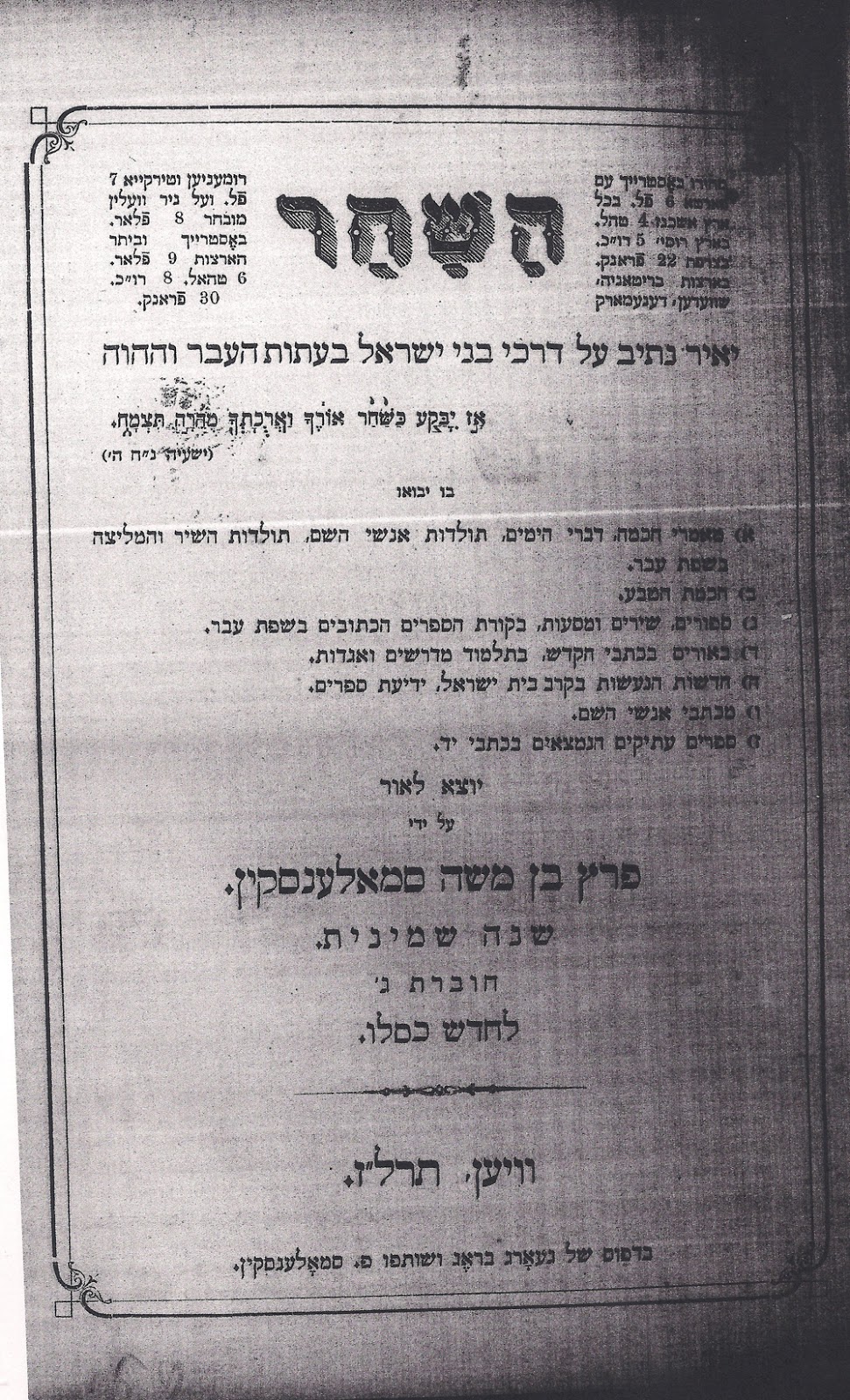
Addition for note 28: the cite for what the Netziv wrote about the Newspaper Ha’Shachar to Dr. Eliyahu Harkavi should be:
 שנות דור ודור, א, עמ’ קפד (= תולדות בית ה’ בוואלאז’ין, עמ’ 86-88; אגרות הנצי”ב, עמ’ לב).

On the Reading of the Ha’Shachar in Volozhin see Pirkei Zichronot, p. 73; Shaul Stampfer, Lithuanian Yeshivas of the Nineteenth Century, (p. 157); Jacob J. Schacter, Haskalah… p. 86.

Appendix one:
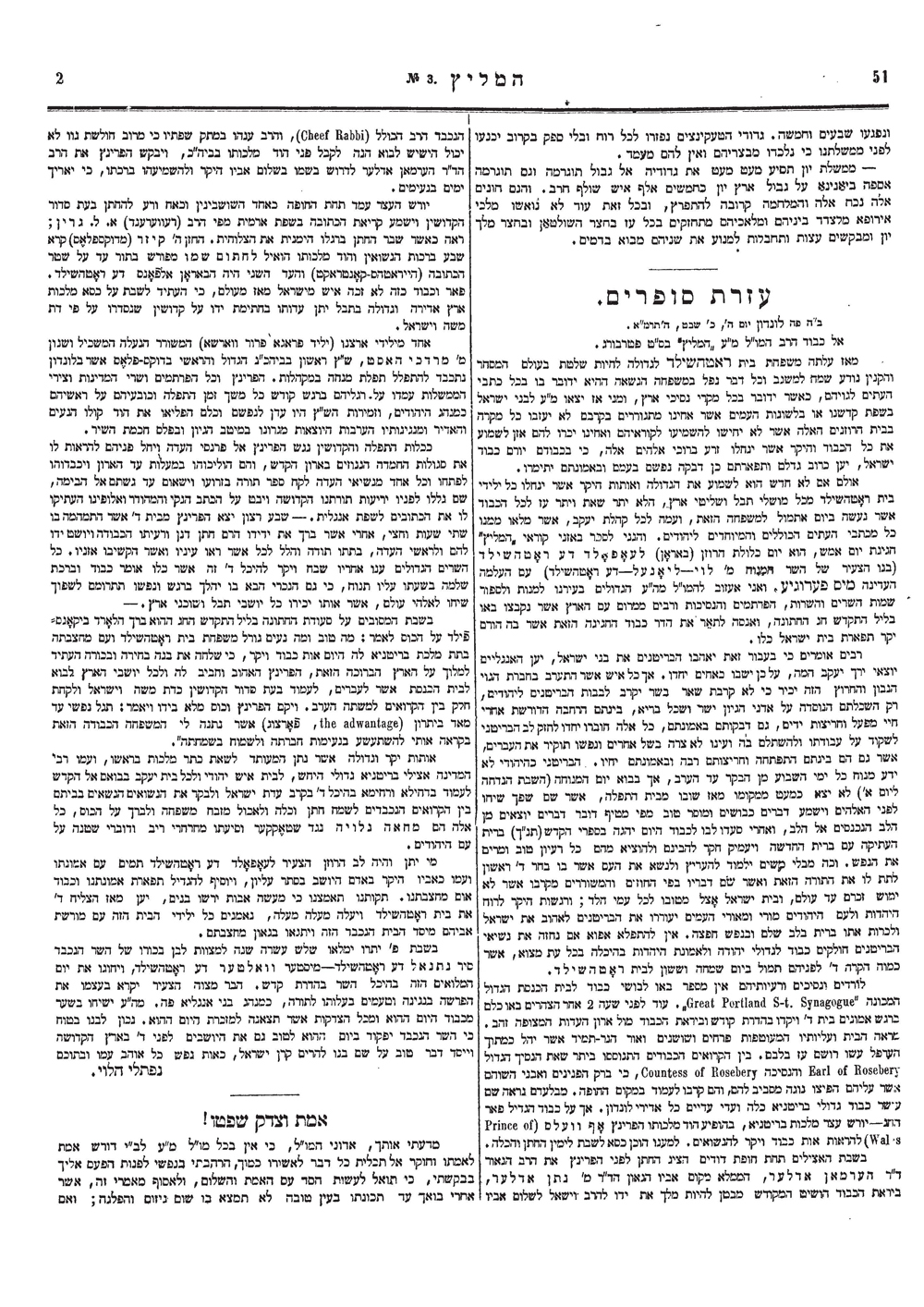
Appendix two:

Appendix three:


[1]  See Pirkei Zichronot, p. 154. For sources on this see my Likutei Eliezer, p. 85 note 228. Add to that: R’ Y. Avidah, Kos Shel Eliyahu, pp. 26-27; M. Breuer, Ohalei Torah, p. 506; R’ Teichtel, Mishnat Zachir Al Hatorah, introduction, p. 11; R Yair Chaim Bachrach, Mekor Chaim, Introduction.
[2]  See also what Y. Rivkind writes:
מאיר ברלין איז ניט דער היסטאריקער פון וואלאזינער ישיבה… נאך מעהר, די תקופה, די לעצטע, וואס מאיר ברלין באשרייבט, פון דער גרויסער שרפה… איז מעהר אדער וועניגער באשריבען געווארען. האט דאף עפעס אין דער תקופה געלערענט אין וואלאזין די גרויסע ווארט-פיהרער און ליטעראטורמיסטער פון אונזער דור, בערדיטשעווסקי, דרויאנאוו, יהואש, ליעסין, ביאליק און פיל פיפ אנדערע. איבערהויפט האט בערדיטשעווסקי אין זיין לערן-צייט פיל געשריבען איבער דער ישיבה און איהרע פראבלעמען און פון איהר אינערליכען לעבען (אין הכרם, המליץ און האסיף)…
 תרגום חפשי: עוד יותר, התקופה האחרונה, שמאיר ברלין כותב [עליה] – מהשריפה הגדולה בשנת 1886 עד לסגירת הישיבה ע”י הצאר הרוסי ב1892 – פחות או יותר נכתב אודותיה. הלא בתקופה זו למדו בוולוז’ין מנהיגי-הכתיבה ואמני-הספרות של דורנו, ברדיטשבסקי, דרוינוב, יהואש, ליעסין, ביאליק, והרבה אחרים. מעבר לכך, ברדיטשבסקי בתקופת כתיבתו כתב הרבה אודות הישיבה ובעיותיה וחייה הפנימיים. [די צוקוונפט, ז (1933), עמ’ 670-671, וראה שם, עמ’ 673].
[3]  Shaul Stampfer, Lithuanian Yeshivas of the Nineteenth Century, p. 159 also makes a similar point. See also the introduction to Pirkei Zichronot, pp. 31-40. For more about Bialik in Volozhin, see Pirkei Zichronot, pp. 78, 157, 180, 182, 195. See also Menachem Zlotkin, ‘HaChevrah HaChashayit Netzach Yisrael’, Molad 5:27 (1950) pp. 181- 185; Rabbi Nosson Kamenetsky, Making of a Godol, vol. 1, pp. 445-446, vol. 2, p. 893, pp. 896-902.
[4]  See the letter of R’ Gifter, Mili Di-Igrot, (2015), pp. 51-52.
[5]  See also the piece I quote in note 9.
[6] See Y. Shavit and Y. Reinharz, The Scientific G-d (heb.), 2011; Roni Beer Marx, Between Seclusion and Adaption; The Newspaper Halevanon and East European Orthodox Society’s Facing Up to Modern Challenges,(Heb.)PhD. Dissertation, Hebrew University, 2011, pp. 116-205.
[7]  Gil Perl, The Pillar of Volozhin, pp 176-178, points to some of these pieces.
[8]  See Rabbi S. Gershuni, Hama’yan, 52:4 [202] (2012), p. 54 note, 21.
[9]  On this see Igrot HaNetziv Me-Volozhin, pp. 162-163 where he wrote  a letter to R’ Yosef Charny, [author of Sefer Ha-Masot]:
לשמחת לבבי שמעה אזני כי רגלי מע”כ שיחי’ מועדות ללכת שנית לקהלות דאגעסטאן… שע”י מעל’ שיחי’ נזכה לדעת משלום אחינו הנדחים שמה ולחקור ולהתחקות על מעשיהם והליכות עולמם… וכאשר ראיתי בעלי המגיד ושאר מכה”ע לב”י, שמו לב אני סגולה לדעת כמה פרטים אשר צמאה גם נפשי לדעתם. ואני הנני להוסיף שאלה איך היה סדר מנהגם בפתחי נדות? וכן.. סכין שחיטה…”.
[10]  This is repeated in the various Hespedim that Reb Chaim gave on his father; see Drashos HaNetziv, p. 147, 148. The reason why Reb Chaim gave several Hespedim on his father can be found in Drashos HaNetziv, p. 153. 
[11]  About this work see Appendix three.
[12] On him, see: Moshe Tzinovitz, Etz Chaim, p. 409.
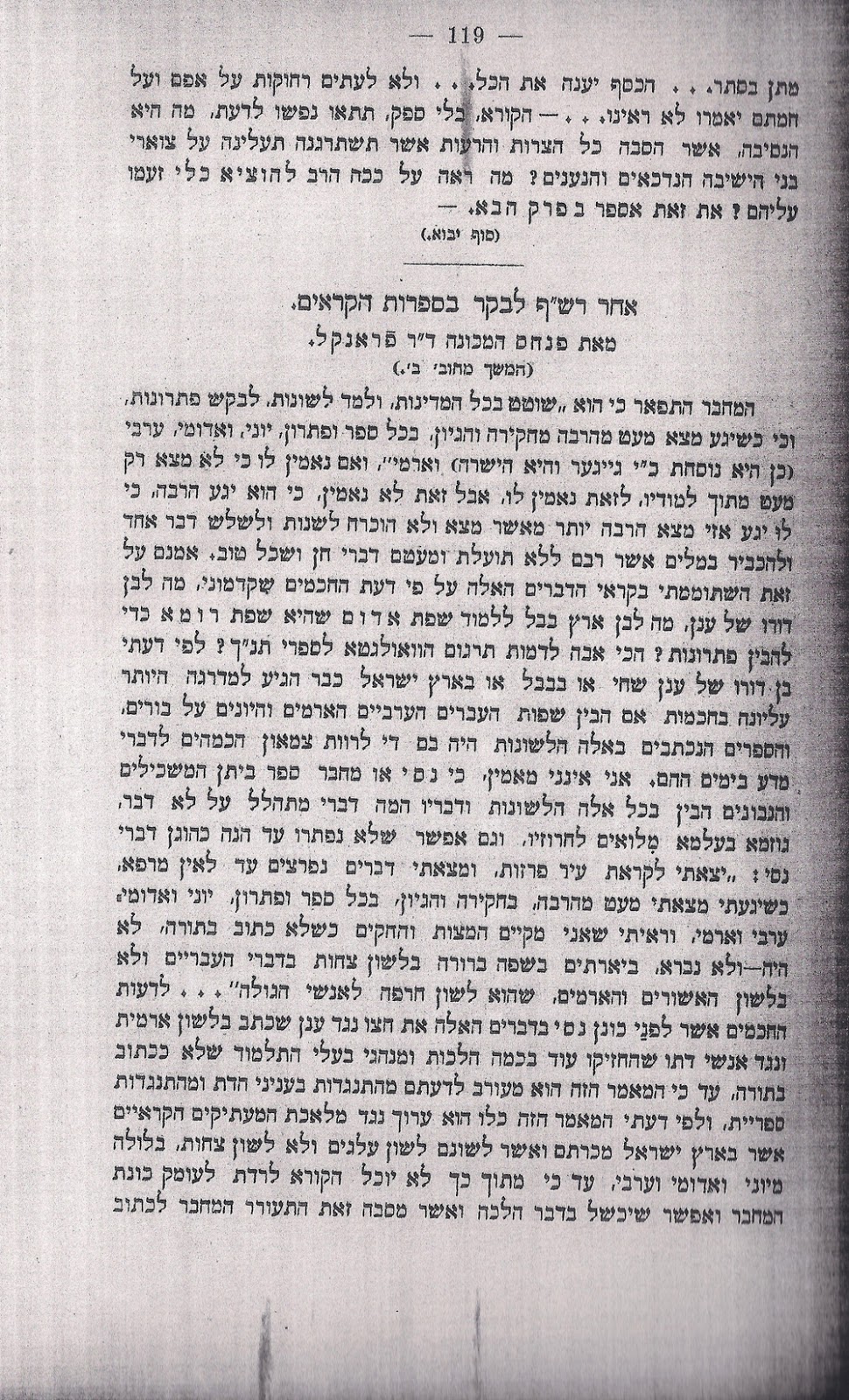
[13]  In Shimon Meller’s recent book Rabon Shel Kol Bnei Hagoleh, on R’ Chaim Soloveitchik, he quotes various passages from memoirs of Rabbi Menachem Tzvi Eisenstadt, (for example on pp. 286, 288,289, 306-308). This passage appears on p. 308. On page 289 Meller cites the source for this memoir, an article in the Newspaper Dos Vort. On page 288 and 306 he has pictures of Rabbi Menachem Tzvi Eisenstadt. However, I was unable to locate such a piece, nor could I find a Rabbi Menachem Tzvi Eisenstadt who learned in Volozhin. There was a Rabbi Menachem Tzvi Eisenstadt, who was close to R’ Chaim but he was born in 1901, from whom a nice collection of his material was printed in 2003 called Minchat Tzvi. Obviously, he could not be writing memoirs about the Netziv. There was a R’ Michal Eisenstadt, who was a close talmid of the Netziv and his comments on the Haemek Shealah were included inside. The Netziv even thanks him at the end of the introduction to his Haemek Shealah. But as far as I could locate, he never printed memoirs about Volozhin. His Torah novellea were collected and printed as Yad Malachi. [The Netziv also quotes him in his Hamek Davar, Vayirah [25:47], (Harchev Davar). There was a Moshe Elozer Eisenstadt who learned in Volzhin and wrote memoirs about Volozhin. These memoirs were translated from Russian and printed in Pirkei Zichronot (pp. 105-119). The passages which Meller printed did not appear in this chapter. After much searching eventually I found some other articles of Moshe Elozer Eisenstadt; one of them was this article in Ha-Zefirah (some were quoted by Stampfer but not this one). See Appendix two.
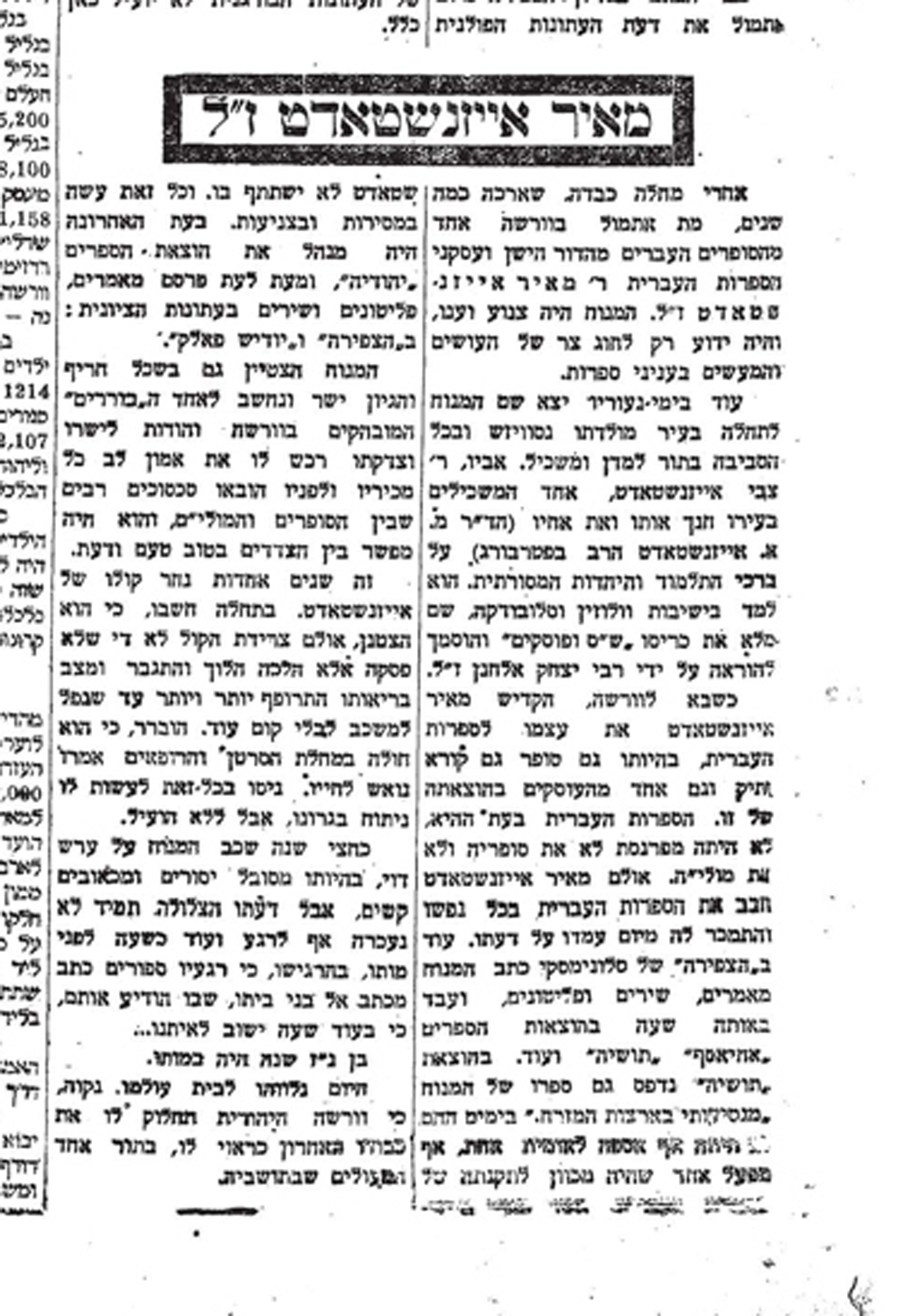
[14]  About this see:
בשמו של אברהם צארט קשור ביקורו של פר’ פישל שניאורסון, שבא לוולוז’ין כדי לאסוף חומר לשם כתיבת הכרך השני של ספרו חיים גראוויצער המוקדש כולו לוולוז’ין [ספר וולוז’ין, עמ’ 497].
Thanks to Shlomo Hoffman for this source. I will return to this book in one of the next parts of this series.
[15]  On this visit see: R’ Dovid Soloveichik, Shiurei Rabbenu Meshulam Dovid HaLevi, (2014), pp. 566-569; R’ Moshe Tzvi Neryeh, Pirkei Volozhin, pp. 28-30;  Jacob J. Schacter, “Haskalah, Secular Studies and the Close of the Yeshiva in Volozhin in 1892“, Torah u-Madda Journal 2 (1990), p. 124-125; Shaul Stampfer, Lithuanian Yeshivas of the Nineteenth Century, pp. 58-59; Moshe Tzinovitz, Etz Chaim, pp. 185-191; Rabbi Nosson Kamenetsky, Making of a Godol, 1, pp. 198-255.
Rabbi Moshe Shmuel Shapiro, R. Moshe Shmuel Vidoro, pp. 46-48 translated part of these memoirs of Lilienthal into Hebrew but not this passage. This was already noted by Jacob J. Schacter, ibid, p. 124 note 85. See Shevil Ha’zahav, pp. 8-9 about Rabbi Mordechai Eliasberg’s meeting with Lilienthal. For a general account of the impact of Lilienthal’s visit see Pauline Wengeroff, Memoirs of a Grandmother, 2010, pp. 174-186.
For more on Reb Itzeleh’s shiurim, see: Rabbi Moshe Shmuel Shapiro, R. Moshe Shmuel Ve-doro, p. 41
On Reb Itzeleh Volozhiner, see: R’ Moshe Tzvi Neryeh, Pirkei Volozhint, pp.26-36.
[16] See Berdyczewski’s article about Volozhin in Volume three of HaAssif (1886), p. 240 where he mentions the haskamah. Interestingly enough, R’ Chaim Berlin in his article in Beis Hamedrash (see part two), containing his corrections to Berdyczewski’s article, does not comment about this.
See also see Pirkei Zichronot, p. 84; P. Sandler, Habiur Letorah, p. 180; see also Jacob J. Schacter, “Haskalah, Secular Studies and the Close of the Yeshiva in Volozhin in 1892“, Torah u-Madda Journal 2 (1990), pp. 123-124; R’ Eliach, HaGoan, 3, p. 1307.
[17]  See also Gil Perl, The Pillar of Volozhin, p. 37, 89.
[18] See S. Stampfer, Lithuanian Yeshivas of the Nineteenth Century, p.195Toldot Beis Hashem B’Volozhin (p. 236) briefly mentions this “closing” but does not mention the curriculum.


“שוק באשה ערוה”, לאיזה אבר התכוונו חז”ל?

                                          “שוק באשה ערוה”, לאיזה אבר התכוונו חז”ל?
                                                        מאת זאב וגנר
מאמר
זה לקוח מהספר “אוצר רש”י” (בערך “שוק”), העומד לצאת בע”ה
בקרוב והוא מילון אנציקלופדי המכיל כעשרת אלפים ערכים, הכוללים את הגדרותיו
הלשוניות של רש”י במקרא ובתלמוד.
 הנושא הנידון הוא בירור מיקום אבר השוק באדם
(שוק היא לשון נקבה, אך לא נקפיד בכך בהרצאת הדברים), כיצד נוצר הספק בדבר מיקומו
וכן כיצד “מטפלים” במשנה ברורה “סורר” הפוסק שזה החלק העליון
של הרגל בניגוד לדעת רוב שאר הפוסקים.
במילון
אבן שושן מגדיר שוק “חלק הרגל הנמצא בין הברך ובין כף הרגל” וזו המשמעות
המקובלת בשפה העברית המדוברת. לעומת זאת, בעולם התורני ישנה מחלוקת עתיקה בענין זה
והיא, האם שוק הוא החלק התחתון של הרגל (וזו הדעה העיקרית)? או האם זה חלק הרגל
העליון (הנקרא ירך בשפה המדוברת) הנמשך מהברך ועד המותן? עצם העובדה שיש בכלל
מחלוקת הלכתית בענין אומר דרשני וכמדומה אין עוד שום אבר אחר באדם שיש לגביו ספק
בדבר מיקומו (נסו לבקש מאנשים להצביע על שוקם ותווכחו).
ערב
אחד שמעתי הרצאה מאחת הרבניות המרצות בעניני צניעות (שהוא הנושא החביב עליהן),
ובין יתר הדברים אמרה את המשפט הבא: “ישנו אבר אחד באדם והוא השוק, שהוא  החלק התחתון של הרגל, מן הברך ועד הקרסול
(שהוא העצם הבולט ברגל במקום חבור פסת הרגל אל השוק) שאין שום מחלוקת בדבר זהותו
והנחשב ערוה לכל השיטות והדעות ולכן צריך לכסותו כדי שלא יראה אפילו במקצת.
קביעה
זו שהשוק היא ערוה אכן נכונה, כיון שיש גמרא מפורשת האומרת זאת (בברכות כד
ע”א וכפי שנרחיב להלן), אך בדבר המיקום, נראה שההפך הוא הנכון וזהו האבר
היחיד שיש לגביו מחלוקת. רוב המפרשים והפוסקים אכן סוברים ששוק הוא החלק התחתון של
הרגל, וכך ג”כ ניתן להבין מדברי המחבר בשו”ע יו”ד קצה ס”י:
נחתך הולד במעיה (של היולדת) ויצא אבר אבר, בין שיצא על סדר האברים, כגון שיצא
הרגל, ואחריה השוק ואחריה הירך… מכאן רואים בבירור שלדעת הבית יוסף סדר האיברים
הוא שוק ומעליו ירך.
בפירוש
הבועז (מבעל התפארת ישראל) לאהלות פ”א מ”ח אות י”ד מסביר שיש חילוק
בדבר משמעות השוק בין לשון המקרא ללשון התלמוד וכותב כך: וכבר ידוע דלשון תורה
לחוד ולשון חכמים לחוד, דהרי בלשון תורה שוק הניתן משלמים לכהן הן ב’ עצמות ארוכות
של יד הבהמה (כחולין קלב ע”ב), וכן בכל דוכתא שנזכר שם שוק בקרא בין ביד או
ברגל משמעותו ב’ העצמות העליונות שבכל אחד. אבל הכא הרי מוכח שהשוק הוא רק העצם
הארוך התחתון של רגל למטה מהברך, עכ”ד.
כדי
להבין במה מדובר ראוי לפרט את איברי הרגל באדם ובבהמה כפי שרגיל בפי הבריות. הרגל
מתחברת לגוף האדם בכף הירך, החלק הארוך מתחתיו והנמשך עד הברך נקרא ירך. הברך (או
פיקת הברך) מחברת בין הירך והשוק הנמשך מתחתיה 
עד הקרסול ומשם מתחיל כף הרגל ולבסוף האצבעות. (ישנם עוד איברים אך הם אינם
מעניננו). בבהמה לעומת זאת מבנה הרגל שונה. המקום בו מתחברת רגל הבהמה לגוף נקרא
בוקא דאטמא שממנו יורדת הקולית (או הירך, שהוא האבר הארוך הראשון של הרגל הקרוב
לגוף הבהמה) עד עצם הערקוב (שהוא מקביל לברך באדם), מהערקוב יורד השוק עד הערקום
(וזה נחשב האבר השני או האמצעי), האבר המקביל לקרסול בבהמה הוא עצם האיסתווירא
ומשם יורד עצם הרגל (המקביל לכף הרגל באדם והוא האבר השלישי) הנמשך עד הטלפים (שהם
מקבילים לאצבעות כף הרגל).
כאשר
נשווה בין מבנה רגל האדם לרגל הבהמה, ניתן מיד להבחין שלאדם יש שני איברים ארוכים
עומדים המחוברים ע”י הברך, ואילו לבהמה יש שני איברים ארוכים עומדים ואחד
הקצר יותר. מכאן נובע מקור הבעיה כאשר מנסים להשוות ביניהם, כיוון שהחלק השלישי
בבהמה (הסמוך לקרקע) מקביל לכף הרגל באדם אלא שהוא מאונך בניגוד לכף הרגל באדם
שהוא מאוזן ונראה כמעט בוודאות שזה שרש הבעיה מדוע מחליפים בין שוק לירך ולפי הסבר
זה אין ספק שהשוק הוא החלק התחתון של רגל האדם.
לפני
שאנו ניגשים לחלק היותר עסיסי של המאמר, נביא מספר מקורות הדנים במיקום השוק ולמי
שאין בכך ענין יכול לדלג על הדברים. המקור לכך ששוק באשה ערוה הוא בברכות כד
ע”א ולמדים זאת בגמרא מהפסוק בישע’ מז ב-ג “חשפי שבל גלי שוק עברי נהרות
תגל ערותך גם תראה חרפתך”. תלמיד רש”י, המהר”י קרא מפרש על אתר:
שוק – הוא הירך העליון וכך ג”כ מבאר בשו”ת בני בנים (יהודה הרצל הנקין)
ח”ד סימן ט’. מפירושי רש”י השונים, וביחוד לפי המובא בערך איסתוירא
(מנחות לג ע”א ) שהוא מקום חיבור השוק וכף הרגל, נראה לכאורה שהוא סובר ששוק
הוא החלק התחתון של רגל האדם וכן נראה מסנה’ צו ע”ב ד”ה גלי – תגלי
(אצ”ל תגלו) קלעי ראשיכם ושוקיכם ותלכו בגלות. נראה שמדובר בגילוי החלק
התחתון שכן לא מסתבר שיגלו את החלק מעל הברך שלכל הדעות הוא מקום ערוה.
בברכות
סא ע”א מובא: כל העובר אחורי אשה בנהר אין לו חלק לעולם הבא, וברש”י
ד”ה אחורי אשה בנהר – אחורי אשת איש, (כיון ש)מגבהת בגדיה מפני המים… וכן
בב”ב נז ע”ב ד”ה לפי שאין דרכן… להתבזות – שצריכות לעמוד שם
יחיפות לגלות שוק לעמוד בנהר. מהפסוקים האלה, המדברים בהרמת השמלה בשביל שלא תרטב,
קשה להחליט האם מדובר בגילוי החלק התחתון או גם העליון.
בערובין
ד ע”א, רש”י ד”ה ואינו מטמא באהל – שום עצם בלא בשר עד שיהא שם
שדרה שלימה או גולגולת או רוב בנינו, שתי שוקיים וירך אחת. מכאן נראה שמדובר בחלק
העליון, כיון שיותר מסתבר שהחלק החסר הוא היותר תחתון שברגל. באופן דומה מובא
בבכורות מה ע”א ד”ה הואיל, ושם מפרש דשני שוקיים וירך אחד הוי רוב גובה
הגוף, אך מתוס’ יבמות קג ע”א ד”ה “מאן דמסגי” וברש”י
ד”ה “על ליחתא” נראה שמדובר בחלק התחתון.
בספר
שערים המצויינים בהלכה (מגילה יד ע”ב ד”ה שגילתה שוקה), מציין לתשובות
הרדב”ז (סוף חלק ז’, תקנות עגונות סימן כ”ט) הדן בקושיית התוס’ (שם
ד”ה שגלתה) היאך גילתה אביגיל את שוקה (כמובא בש”א כה כ) והלך דוד לאורה
ג’ פרסאות? ומפרש שהיא לא גילתה שוקה (מעצמה), אלא בזמן שהיתה יורדת בסתר ההר נשב
הרוח ונתגלה שוקה והיא לא ידעה מזה… ואפשר שצ”ל “שנתגלה” מעצמו.
עכ”ל. לסיכום, עדיין לא ברור מעל לכל ספק מכל הנ”ל מהו השוק, כיון שיש
צדדים לכאן ולכאן וכפי שמאריך החזון איש באו”ח סט”ז אות ח בענין השוק
ומביא ראיות לכל צד ומסיים “דקשה להכריע בדבר” (אך בסידורים של הוצאת
ארטסקרול באנגלית כן הכריעו בדבר ותרגמו את הפסוק בתהלים קמז י: “לא בשוקי
האיש ירצה” במשמעות ירך (thigh)
שבאנגלית משמעו החלק העליון של הרגל).
כאמור,
השוק נחשב ערווה כפי שקובעת הגמרא ולכן וצריך לכסותו כדי שלא יראה, כדין כל אבר
באשה הנחשב ערווה. לאותם פוסקים 
(המ”ב ועוד) הסוברים שזהו החלק העליון מספיק שהשמלה תגיע עד קמצת מתחת
לברך (ועוד קצת כדי שלא יתגלה בשעת הישיבה) והשאר אינו צריך כיסוי כלל. ולאותם
פוסקים הסוברים שזה החלק התחתון (והיא דעת רוב הפוסקים), צריך ללבוש שמלה המגיעה
עד הקרסול כדי שלא יראה טפח מהשוק (ולהיותר מחמירים כגון בגילוי השער אפילו טפח
אסור יהיה לגלות) ועל אחת כמה וכמה שלא ניתן יהיה לראות את צורת השוק כפי שאסור
הדבר בחלק הגוף העליון של האשה, כדי שלא יראה חיטוב האיברים.
כעת
ניתן לגשת לעיקר הנושא והוא הבעיה ההלכתית שנוצרה עקב השינוי שחל בסגנון לבוש
הנשים בדורות האחרונים. עד שנות העשרים של המאה הקודמת בעולם המערבי לבשו הנשים
שמלות ארוכות עד הקרסול ומאז החלו הנשים אט אט לקצר את אורך השמלות. באותה עת החלה
רוח הציונות לנשב ועמה רעיון שיבת א”י, רעיון שנתפס אליו נוער רב. נוער זה
בניגוד לאופנה המשתנה לבש שמלות ארוכות. כידוע בעניני צניעות כולל מלבושי נשים
המגמה היא להחמיר יותר ויותר, ואילו כאן למרבה הפלא החלו הנשים היהודיות לקצר את
שמלותיהם ולא נשמע קול מחאה. ניתן להניח (וזו השערה בלבד ויתכן שישנן עוד סיבות
שאיני מודע להם) שגורמים כלשהם עודדו תופעה זו כדי להרחיק מסימן ההיכר של הנוער
הציוני. אפילו היום בבתי ספר היותר חרדיים ישנן תקנות  שאוסרות על התלמידות ללבוש חצאית או שמלה ארוכה ומזהירים את ההורים
שישגיחו על לבוש בתם, כיון שכל בת שתתפס בלבוש כזה, אחת דתה להיזרק מבית הספר.
כאמור
הנשים בלי יוצא מן הכלל לבשו שמלות ארוכות שהסתירו את כל הרגל, וכעת נוצר מצב
הפוך, שהנשים החלו  לקצר את שמלותיהם
(בגלל סיבה זו או אחרת תהיה אשר תהיה), וכעת ניתן לראות חלק מהשוק שחז”ל
קוראים לו ערוה והעלול לגרום להרהורים ולבעיות אחרות בעניני צניעות שאין כאן המקום
לפרטן ולמרבה הפלא לא נשמע קול מחאה. בשאלה זו דן בשו”ת אשר חנן (אפללו, חלק
ו-ז אה”ע סימן פ”ח, וכן בחלק ח סימן קס”ב): האם אפשר לאשה ללכת
מחוץ לביתה בשמלה ארוכה עד הקרסול, כיון שיש הסוברים שזה לבוש בלתי צנוע ורחובי?
ועונה שאין שום מקור לכך, וכמו שאסור ללבוש חולצה הדוקה, אין היתר ללבוש גרב הדוק
כדי לכסות את חלק הרגל התחתון. (וכך מובא ג”כ בספר אחותי כלה מאת ר’ אברהם
ארבל, תשס”ז עמ’ קל”ט, בקונטרס באתי לגני סימן י”א, וראה עוד
לקמן).
רוב
הפוסקים כאמור הסיקו הלכה למעשה ששוק הוא החלק התחתון, אך למרבה הפלא,
“הפוסק” שספרו נתקבל כספר היסוד של ההלכה בימינו, החפץ חיים בספרו משנה
ברורה (סימן ע”ה סעיף א סק”ב) הולך בעקבות הפרי מגדים (משבצות זהב סימן
ע”ה סק”א) הקובע ששוק זה מן הברך ולמעלה, (ולפעמים נקרא ירך) וכותב כך:
“אבל פניה וידיה כפי המנהג שדרך להיות מגולה באותו מקום, בפרסות רגל עד השוק
(והוא עד המקום שנקרא קני”א בלשון אשכנז)”. כלומר מדברי המ”ב ברור
מעל לכל ספק שסובר שהשוק הוא החלק העליון (מעל ה”קניא” שהוא ברך בלשון
לעז). בשו”ת מגידות מהפמ”ג (שנדפס מכ”י בברוקלין תשע”ג
ח”א סימן כ”ד וכן כ”ו), דן בענין ומסיים “וצריך עיון בכל
זה”.
דברי
המ”ב הנ”ל גורמים מבוכה לאלה הנוטים להחמיר בעניני צניעות לבוש הנשים,
ולכן מנסים להקהות ולטשטש את דבריו ונביא מספר דוגמאות. בספר הליכות בת ישראל
(יצחק יעקב פוקס, ירושלים תשד”מ) פ”ד ס”ט סוף הערה כ”ח כותב:
הרש”ז אויערבאך שליט”א “כתב לי” שמן הדין אפשר להקל לאשה
הנמצאת בביתה במשך היום ואינה יוצאת לרחוב, שאינה חייבת לגרוב גרביים (גם בנוכחות
אחרים), וכן שאשה בשעת נידתה אינה צריכה לגרוב גרביים בפני בעלה… עיי”ש.
לעומת זאת במהדורה האנגלית שיצאה שנה אח”כ עמ’ 37, משמיט את רוב הדברים וכותב
בקיצור: הגאון רש”ז אויערבאך “כותב” (ולא “כתב לי”) שלפי
הדין אשה אינה צריכה ללבוש גרביים בנוכחות בעלה… (דבר פשוט ומובן ומובן מאליו
ולא קשור כלל לנושא המדובר). היוצא מדבריו שהדברים שכתב במהדורה העברית כנראה גררו
תגובות שרצוי להשמיט דברים אלו, כיון שמעתה כל בנות ישראל יפסיקו לגרוב גרביונים.
בספר
הלבוש כהלכתו (החסר כל פרט מזהה), פט”ו סימן א’ מסרס ומשמיט את דברי
המ”ב על מיקום השוק ומשלבם יחד עם דברי החיי אדם (הקובע ששוק הוא החלק
התחתון), והרי לשונו בדיוק: כתב המשנה ברורה, כל גופה של אשה, מה שדרכה להיות
מכוסה, נקרא ערוה. אבל פניה וידיה, במקום שאין דרכה להיות מכוסה, לא נקרא ערוה,
כיון שרגילים בזה אין כאן הרהור, וכן פרסות רגליה במקום שהדרך לילך יחף, מותר. אבל
זרועותיה ושוקה, אפילו רגילין בכך כדרך הפרוצות, אסור (משנה ברורה עה, ב חיי אדם
ד, ב). במהדורה השביעית (טבת תשע”ה עמ’ 131 הערה ז)  נוספה הארה ארוכה הדנה בנושא ובין השאר כותב
המחבר עלום השם: ולגודל וחומר הקושיות (על המ”ב) נראה לומר שלפי המצב בדורו,
שחלה הידרדרות בקיום התורה בכלל ובעניני הצניעות בפרט (כמבואר בספרו גדר עולם), לא
רצה לכתוב בבירור אלא מה שאין בו שום צד היתר, והעתיק את שתי הדיעות במשפט אחד
וסמך על המעיין שידקדק היטב בדבריו (ומסיים: הנלע”ד כתבתי). לפי דבריו,
המ”ב הסתיר את כוונתו וסמך על בינתו של הלומד להבין את עומק דבריו, שהוא בעצם
סובר שהשוק היא האבר התחתון. כלומר עשה את ספר המ”ב כספר קבלה שרק  יחידי סגולה יודעי סוד יכולים להבינו ולרדת
לעומק דעתו (ומכאן תשובה לאלו השואלים האם החפץ חיים עסק בקבלה).
בספר
בגדי תפארתך מר’ י”א רוזנבוים (ביתר תשע”ד עמ’ 23) מובאת דרך מקורית
נוספת והיא שינוי סדר המילים במ”ב: פרסות הרגל עד השוק [ו(השוק) הוא עד מקום
שנקרא קניא (ברך) בל”א] במקום שדרכן לילך יחף (ואז האזור שמפרסות הרגל עד
השוק מגולה) מותר לקרות כנגדו (היינו כנגד האזור הנ”ל, אבל למעלה מכפות
הרגלים חשיב שוק ואסור לגלותו או לקרות כנגדו, ואינו תלוי במנהג המקומות). כלומר
הוא משכתב מחדש את דברי המ”ב (ולפי השיכתוב מסתבר שהמ”ב סובר שהשוק היא
החלק התחתון) ואח”כ מסביר במפורש “שזה מה שבאמת הח”ח רצה
לכתוב” (אך קרה מה שקרה ובאה יד המלאך ודחפה את ידו של הח”ח ובמקום
לכתוב את הנ”ל כתב מה שכתב ואין להתייחס לדבריו). בדרך זו ניתן לשכתב את כל
התורה כולה כי הלא אנו יודעים יותר מכותבי הדברים מה באמת היתה כוונתם.
בדרך
גאונית דומה נוקט בקונטרס “שוקיו עמודי שש” (חש”מ, ירושלים
תשע”ב) המסביר שהמ”ב בא להגן על כבודו של הפמ”ג, ולכן משנה את
דבריו וכותב בצורה נסתרת (שרק בעלי סוד יכולים להבין) את כוונתו והיא שבאמת השוק
הוא החלק התחתון. בקונטרס התנהגות בין אנשים לנשים עפ”י הלכה (ר’ יוסף יצחק
ראזענפעלד, מאנסי תשס”א) עמ’ ע”ב כותב: “יש אומרים שדברי המ”ב
האלו, לא הוא כתבם”. גם זו שיטה מקורית ביותר. מהיום והלאה כל מה שלא נראה
למאן דהוא בספר כלשהוא יכתוב בצידי הספר “לא הוא כתבם” ושלום על ישראל
(ולקמן מובא סיפור משעשע בנושא לא הוא כתבם).
בספר
הצניעות בהלכה מר’ שמואל הלוי שישא מסביר שיש חוסר הבנה במבנה רגל האדם ביחס לרגל
הבהמה ואם נשוה אותם נגלה שבשניהם השוק הוא החלק התחתון ומסביר שהפ”מ
“טעה” (פשוטו כמשמעו) וחזר בו (בשו”ת מגידות) והמ”ב נגרר
אחריו ולא ידע שהפ”מ חזר בו. יוצא מדבריו שגם הפמ”ג וגם המ”ב טעו
ואין להם הבנה במבנה רגל הבהמה ורגל האדם (וכנראה אינו דורש את הפסוק בקהלת ג יט
“ומותר האדם מן הבהמה, אין”). כלומר, לדבריו אין יותר בעיה לחלוק על
הראשונים, אלא כל דבר שלא נראה למאן דהוא יכתוב שטעה המחבר כיון שלא ידע ונפטרה
הבעיה.
בירחון
ישורון (גליון ל”א עמ’ תתל”ד, מאמר “לדרכי פסיקת המ”ב
והחזו”א”) מר’ יהושע ענבל, כותב שבנושא יסודי אחד מיקל המ”ב, והרבה
פוסקים תמהו על קולתו, ומ”מ המנהג הוא כמו פשרה. לדעת המ”ב שוק הוא החלק
העליון של הרגל, ואין לחלק התחתון דין ערוה. אמנם הוא תמוה… ולכן אנן פוסקים
שצריך לכסות, אבל מקילים שהכיסוי (של חלק “התחתון” של השוק) יהיה
ע”י גרב בצורת הרגל ובצבע הרגל… כלומר מדבריו יוצא הסבר מקורי ביותר, ששני
חלקי הרגל נקראים שוק, אלא יש שוק עליון ושוק תחתון ואנו מקילים בשוק התחתון לגרוב
גרביונים, כלומר הוא ביטל במחי יד את אבר הירך וקורא לו שוק עליון (ולדבריו נראה
שמספיק שאורך השמלה תהיה עד הברך ותו לא).
מומלץ
לכל אחד לעיין בספרים אלא ולא להסתמך על המובא כאן, לכולם יש מכנה אחד משותף והוא,
שהם קובעים בצורה החלטית שהמ”ב והפ”מ טעו בצורה זו או אחרת בדבר מיקום
השוק ולכן אין לקבל את דבריהם להלכה. כותב כך במפורש בספר אחותי כלה (ר’ אברהם
ארבל, תשס”ז עמ’ קל”ח סימן יא) שאין שום ספק שהמ”ב טעה (ובלשונו:
נדחה) וצריך לקיים מצוות לא תגורו מפני איש… ואין נושאים פנים בהלכה וכו’,
ובהמשך דבריו מביא את דברי ר’ שלמה אבינר בספר גן נעול (בענין כח ההכרעה של המ”ב),
המצטט את ר”ח גורדזינסקי בשו”ת אחיעזר, פרקי חיים תר”ע “לאחר
שיביע הח”ח את דעתו, מצווים אנו לא לחלוק על דבריו כנאמר לא תחלוק על
רב”. וכן דברי ר’ אלחנן וסרמן בתולדות הח”ח עמ’ תע”ח “דברי
הח”ח הם כדברי הראשונים שאין לאל ידי האחרונים ואפילו הגדולים לחלוק
עליהם”, ומסיים (א”א הנ”ל, שלמרות דבריהם, הוא) לא מאמין שיצאו
דברים אלו מפי הגדולים הנ”ל, אלא תלמיד טועה כתבם… (ועיין באגרות משה מר’
משה פיינשטיין, יו”ד ח”ג סימן קט”ו, בדבר ספר פירושי התורה לר’
יהודה החסיד וספר “הציוני” על התורה, שמביאים דברים זרים ויש לאסרם…
וע”ז עונה בשו”ת משנה הלכות מר’ מנשה קליין, חי”ב סימן רי”ד
שאינו מאמין שדברים אלו יצאו מפי הגרמ”פ, אלא נראה לפי עניות דעתו שאיזה
תלמיד טועה כתב את התשובה והכניסה בין כתביו לאחר פטירתו… ולא ר”מ
פיינשטיין כתבה).
אפילו
נניח שיש במ”ב איזו שהיא שגגה או ט”ס, המ”ב חוזר על דבריו בסימן
קכ”ח ס”ק ט”ז “בתי שוקים (מה שאנו קוראים מגפיים) – הוא
מנעלים ארֻכים המגיעים עד ארכובות הרגל, היינו סמוך לשוק…” לא מסתבר
שהמ”ב יחזור על אותה שגגה בדבר מיקום השוק פעמיים. במהדורת המ”ב עם
הערות ביצחק יקרא מר’ אביגדור הלוי נבנצל (ירושלים תשס”ד), בהשלמות בסוף
ח”א כותב “שמעתי מאדמו”ר זללה”ה (הכוונה לר’ שלמה זלמן
אויערבאך שהיה פוסק הדור ורבו המובהק) להקל כמשנ”ב, אבל לא רצה להורות לקולא
למי ששאל אותו” (ועיין באגרות משה אה”ע ח”ד סימן ק’ אות ד).
דברים
אלו (של א”א הנ”ל) חמורים ביותר ובעלי השלכות מרחיקות לכת. ראשית הוא
כותב בהחלטיות שהמ”ב טועה ואין לערער בדבר. שנית, קובע שאיזה תלמיד טועה שם
דברי שקר בפי האחיעזר ור’ אלחנן וסרמן. א”כ לדבריו, איבדנו את אמונת החכמים
ואת האמון בכל מה שמובא בספר כלשהוא, ויכול כל אחד לבנות במה לעצמו ולומר לא נראים
הדברים, תלמיד טועה כתבם וכו’ וכו’, ועוד לפי מסקנת דבריו יוצא שמבטל במחי יד את
כל נאמנות מסירת התורה שבכתב ובע”פ ועל זה נאמר “חכמים הזהרו
בדבריכם”.
ידוע
במדע האקולוגיה שכאשר משנים דבר ידוע וקבוע עלולים להתקל בתוצאות בלתי רצויות
וצפויות מראש. לדוגמא נהר הנילוס זרם במשך אלפי שנים וגרם לאדמת מצרים סביבותיו
להיות פוריה ביותר בשל המשקעים שנשא עמו (כמובא בסוף ספר בראשית ותחילת ספר שמות).
כאשר בנו את סכר אסואן, במטרה שתהיה אספקת מים סדירה, הוא חסם את המשקעים ופריון
האדמה ירד בצורה חדה ועמו כמות היבול שהניבה ומעתה היו צריכים לספק זבלים לחקלאים
דבר שהעלה את עלות הגידולים. באופן דומה, בשל הרצון להתרחק מהמלבוש הציוני
והרחובי, שינו את לבוש הנשים שהיה נהוג במשך אלפי שנים, ועקב כך נוצר מצב שאבר
שהיה תמיד מכוסה (ללא קשר שמו), כעת תמיד מגולה לשליש לחצי או לרביע. וכדי לחפות
על הדבר, במקום לחזור למנהג המקורי של לבישת שמלות ארוכות דורשים מהנשים שילבשו
גרביונים יותר ויותר עבים, דבר המאוד לא נוח ביחוד בימי הקיץ הלוהטים, ומסבירים
להם זאת שזו מסירות הנפש שלהם (משהוא בדומה למסירות הנפש של הצפרדעים במצרים שקפצו
לתנורים).
לסיכום
נביא מקצת דברי שבח שנאמרו על המ”ב. בספר שיעורי משמר הלוי על מסכת ערכין,
(משה מרדכי שולזינגר, ב”ב, תשע”ב עמ’ רכ”ב) כותב: יש לדעת, אין כזה
דבר טעות במ”ב… וסיפר שפעם נפגשה בת מבית יעקב עם בחור ישיבה, והבחור אמר
לה שלפעמים מוצאים טעויות במ”ב. הלך אבי הבת אל הרב שך זצ”ל וסיפר לו
דברים כהווייתן, נזדעזע מרן זצ”ל ואמר לו נחרצות, מיד תלך ותנתק את השידוך…
כי לדבר כך זה גובל באפיקורסות.
במ”ב
המבואר ברכת אשר מר’ אפרים פאדאווער (ברוקלין, תש”ע) עמ’ 62, כללי הפסק בנוגע
להמ”ב והבה”ל כותב ששמע בע”פ מהגאון ר’ חיים קנייבסקי… שאלתי את
הגר”ח אם אמת הוא מה שאומרים שכשנדמה שיש סתירה בין דברי המ”ב במקום אחד
לדבריו במקום אחר, שאפשר לתרץ ולומר שאחד מהם נכתב ע”י הח”ח בעצמו והאחר
ע”י בנו או חתנו ושהם כתבו דינם ע”פ מקורות אחרים? והשיב לי רבינו
שליט”א (ר”ח קנייבסקי) שאינו אמת כלל, ובשום אופן א”א לתרץ כן…
והוסיף לי… שאף שאמת הוא שיש סימנים במ”ב שעיקרם נכתבו ע”י בנו או
חתנו זצ”ל, מ”מ הח”ח עבר עליהם בעצמו והסכים עליהם. ונמצא שבסופו
של דבר כל המ”ב יצא מתחת ידו של מרן הח”ח זצ”ל בעצמו…
בחוברת
יחלק שלל, גליון ה’ עמ’ כ”ו סימן ד’, מהליכותיו בתפילה של ר’ הלל זקס מובא
שנזף במי שאמר שהחפץ חיים היה בעצמו לא נוהג בכמה דברים להלכה כפי שכתב
במ”ב… והקפיד על כך מאוד ואמר שזהו דבר שאסור לאומרו… ונסיים בדברי החזון
אי”ש הידועים בקובץ אגרות ח”ב אגרת מ”א: סוף דבר ההוראה המקובלת
מפי רבותינו אשר מפיהם אנו חיים, כמו הב”י ומ”א והמ”ב… היא הוראה
מקוימת כמו מפי סנהדרין בלשכת הגזית…


Rabboni Jesus – Confirmation from the Talmud?

Rabboni Jesus – Confirmation from the Talmud?
David M. Goldenberg*
The exchange one year ago between Pope Francis and Prime Minister Netanyahu over the language spoken by Jesus overshadowed any other news of the pope’s visit to Israel. The pope was right, of course, Jesus spoke Aramaic, not Hebrew, although Netanyahu could have offered a better rejoinder than his weak “But he knew Hebrew.” He could have said: “But he prayed in Hebrew.”
Among the proofs that Aramaic was the spoken language of Jesus’ time and place is the evidence of the New Testament, which no doubt informed the pope’s comment. Of the Aramaic words and phrases recorded in this text, perhaps the most cited is the word rabbouni (ραββουνι) or rabboni (ραββωνι), which is how Jesus is referred to by the blind man in Mark 10:51 and by Mary Magdalene in John 20:16. The text in John glosses the word by adding: “which means teacher.”
Years ago the spelling of this word caused confusion, since Jewish Aramaic and Hebrew texts traditionally vocalize the first letter with a ḥiriq (as in ribbono shel  ‘olam). But then the pataḥ vocalization was discovered in Palestinian Targum fragments from the geniza and in Targum Neofiti, as also in Samaritan Aramaic texts.  Some time later it was also found in Hebrew manuscripts.  Where the Mishna in Ta’anit 3.8 records Ḥoni ha-Ma’agal’s reference to God as ribbono shel olam, both MS Kaufmann and MS Parma vocalize the first word with pataḥ (Kaufmann as rabbuno; Parma as rabbono). Then geniza liturgical fragments of birkhot ha-shaḥar (Palestinian rite) turned up with the phrase רבון כל העולמים vocalized with a pataḥ under the resh.[1]
MSS Kaufmann and Parma have another point in common: as opposed to the printed editions of the Mishna, the original text of the manuscripts does not have the words של עולם; Kaufmann has them added above the line, and Parma in the margin (in both cases as clitics, written as one word). As scholars have noted, this indicates that the original was רבוני alone but a later hand added של עולם and extended the yod of רבוני (which is grammatically required and graphically obvious) to make it into a vav, thus producing עולם של רבונו.
The first person possessive suffix recalls the New Testament reference to Jesus as rabbouni /rabboni. In addition to the New Testament, the word with the first person suffix (‘my teacher’) is commonly found in several of the Aramaic texts mentioned above.  In regard to Hebrew texts, besides MSS Kaufmann and Parma, רבוני is commonly found in geniza manuscripts of Hebrew midrashic works. A search of the word on the Friedberg Genizah database (genizah.org) results in 23 hits of רבוני, all but one in Hebrew texts, and that figure does not even take into account cases where the reading is obvious but not certain and the search results did not therefore include it.[2]
An interesting example of רבוני in a Hebrew context is found in a reconstructed text of Bavli, ’Avoda Zara 17a. Here we find the story of R. Eliezer’s arrest for heresy. R. Eliezer, who lived in the second half of the first century and the beginning of the second century, explained his heresy to R. Akiva as follows (additions in curly brackets follow the uncensored Munich 95 and Paris 1337 manuscripts):

פעם אחת הייתי מהלך בשוק העליון של ציפורי ומצאתי אחד {מתלמידי יש”ו הנוצרי} ויעקב איש כפר סכניא שמו אמר לי כתוב בתורתכם (דברים כג) לא תביא אתנן זונה [וגו’] מהו לעשות הימנו בהכ”ס לכ”ג ולא אמרתי לו כלום אמר לי כך לימדני {יש”ו הנוצרי} (מיכה א) [כי] מאתנן זונה קבצה ועד אתנן זונה ישובו ממקום הטנופת באו למקום הטנופת ילכו. 

Translation: I was once walking in the upper market of Sepphoris when I came across one of the disciples of Jesus the Nazarene, Jacob of Kefar Sekhania by name, who said to me: “It is written in your Torah, You shall not bring the hire of a harlot . . . into the house of the Lord your  God (Deut. 23:19). May such money be used to build a toilet for the High Priest? I didn’t answer him. He said to me: “Thus Jesus the Nazarene taught me: For of the hire of a harlot has she gathered them and to the hire of a harlot shall they return (Micah 1:7) – They came from a place of filth, let them go to a place of filth.”

In place of אמר לי כך לימדני {יש”ו הנוצרי} [כי] מאתנן זונה קבצה…., the superior Marx-Abramson manuscript (JTS Rab 15) of ’Avoda Zara reads:  אמ’ לי כך למדו ישו רבו כי מאתנן זונה קבצה …. with an inserted ש over the כ of כך, and a notation mark inserted above the line between רבו and כי, as seen below.

In the printed edition, as well as MSS Paris and Munich, R. Eliezer recounts the disciple’s comments in direct discourse: “He said to me: ‘It is written in your Torah ….’” and “He said to me: ‘Thus Jesus the Nazarene taught me/us ….’” MS JTS, however, presents the first phrase in direct discourse, but the second in indirect discourse, as indicated by the third person pronominal suffixes in למדו and רבו (“Thus Jesus his teacher taught him”). Thus,[3]
Ed.:                 אמר לי כך לימדני [כי] אמר לי כתוב בתורתכם /
Paris:               אמ’ לי כתו’ בתורת’ / אמ’ לי כך למדנו ישו הנוצרי כי
Munich:  א’ לי כתו’ בתורתכ’ / א’ לי כך למדני ישו הנוצרי כי
JTS:           אמ’ לי כתוב כתורתכם / אמ’ לי [ש]כך למדו ישו רבו כי
The change to indirect discourse was, no doubt, what caused the scribe to insert the ש above כך. But clearly direct discourse is called for as indicated by the preceding direct discourse in אמר לי כתוב in MS JTS, and in the lack of ש in ישו כך לימדני/למדנו אמר לי in the other witnesses. What would have caused the (confusing) change to indirect discourse in the MS JTS?  
The notation mark above the line between רבו and כי gives a clue. That mark points to a marginal notation. Such notations in this manuscript often refer to another reading of the indicated text. Unfortunately, whatever the scribe wrote in the left margin has been covered by a strip of paper glued to the page to strengthen it and prevent its separation from the codex. But I wouldn’t be surprised if the marginal comment presented the reading רבוני, like that found in the Kaufmann and Parma manuscripts of the Mishna Ta’anit.  Perhaps an indication that רבוני was the original reading is the directly following quote from Micah 1:7, which begins with the word כי (כי מאתנן זונה קבצה ועד אתנן זונה ישובו). The anomalous reading of  רבוin MS JTS may well have derived from an original רבוני, which became רבו כי due to the graphic similarity of kaf and nun, and the fact that the verse in Micah began with כי. Once רבוני became רבו כי, other changes were required to conform to the third person suffix of רבו and the resulting indirect discourse of the text, and so לימדני was changed to למדו and a ש was inserted to turn כך into שכך. The missing כי in the printed edition may also derive from this confusion.
If this reconstruction is correct, not only do we have another case of the Hebrew word רבון with a first person pronominal suffix (רבוני ), but the word is used to refer to Jesus just as it is in the New Testament. So in addition to the blind man and Mary Magdalene, we have another who called Jesus רבוני – Jacob of Kefar Sekhania, the disciple of Jesus, who taught R. Eliezer an interpretation of a biblical verse.
The Gospel of John glosses the word רבוני as ‘teacher.’ Shouldn’t the possessive suffix (רבוני) require a translation ‘my teacher,’ just as the Aramaic and Hebrew uses of the word clearly indicate a translation ‘my teacher’?[4] Not necessarily. A translation without the possessive would be similar to the term רבי/Rabbi, in which the suffix lost its possessive meaning (‘my’) and the word, as a frozen term, came to mean ‘teacher’ or ‘master.’ Support for this may be found, although from a later period, in Arabic literature. The Qur’an (5:47, 66) preserves the word رباني (rabbānī), which, as the Kisters (father and son) showed, derives from רבוני.[5] But the word cannot mean ‘my teacher’ because in the Qur’anic context it appears in the absolute plural: ربانيون (rabbānīyuna) i.e., ‘teachers.’ In other words, the final vowel in רבוני did not function as a pronominal suffix, as the Kisters noted. The word, rather, evolved as a frozen term from an original meaning ‘my teacher’ into the meaning ‘teacher,’ just as John glossed rabbouni as ‘teacher,’ and just as רבי evolved in meaning from ‘my teacher/master’ to ‘teacher/master’ (Rabbi), which, incidentally, is how John elsewhere (1:38) translates rabbi (ραββι). Y. Kutscher explained the word רבן (as in רבן גמליאל) the same way, comparing it with the French monsignor.[6] In the final analysis, not only was the pope right that Jesus spoke Aramaic, but the evidence of Jesus’ speech in the New Testament records precisely the pronunciation and meaning of the Aramaic of his time and place.

* See David M. Goldenberg’s other articles on his website at http://sites.sas.upenn.edu/dmg2 or at https://upenn.academia.edu/DavidGoldenberg.

[1] See Ḥ. Yalon in Leshonenu 24 (1960) 162; Y. Kutscher, “Leshon ḥazal,” in Sefer anok Yalon (Jerusalem, 1963), pp. 268-271 (reprinted in Kutscher, Meḥqarim be-Ivrit uve-Aramit, Jerusalem, 1977, pp. צה-צח); Z. Ben-Ḥayyim. ’Ivrit we-Aramit nusaḥ Shomron 3.2 (Jerusalem, 1967), pp. 37-38. Targum Neofit references are in Michael Sokoloff, A Dictionary of Jewish Palestinian Aramaic of the Byzantine Period (Ramat-Gan/Baltimore, 1990, 2003), s.v. רבון. In addition to the references in these articles, note that a Syriac version of the original Greek Transitus beatae Mariae virginis has Mary refer to Jesus as “Rabbuli, the messiah” which W. Wright takes as “Rabbuni, the messiah” (W. Wright, trans. and notes, Contributions to the Apocryphal Literature of the New Testament, collected and edited from Syriac Manuscripts in the British Museum, London, 1865), pp. 19, trans.; 28 text; 60 note.  The liturgical fragments: Naftali Wieder, “Ha-ṣura rabbun bi-mqorot ’Ivriim,” Leshonenu 27-28 (1963-64) 214-217.
[2] With two exceptions (a piyyu‹ and a medieval letter), all are midrashic texts.
[3] The readings from MSS Paris and Munich are taken fromשאול ליברמן  מאגר עדי הנוסח של התלמוד הבבלי ע”ש = Sol and Evelyn Henkind Talmud Text Databank.
[4] Of the 23 instances recorded in the Friedberg database, all but one are petitions to God as רבוני, usually made by Moses. One (T-S Misc. 36.198 2v, lines 14 and 16) parallel רבוני and מרי, ’my master.’ In Aramaic, e.g., Targum Neofiti translates אדוני אברהם in Gen. 24:27 as רבוני אברהם.
[5] M.Y. and Menaḥem Kister, “Al Yehudei Arav — he’arot,” Tarbiẓ 48 (1979), pp. 233-234.
[6] Y. Kutscher, “Ha-Aramit shel ha-Shomronim,” in his Meḥqarim be-Ivrit uve-Aramit, Jerusalem, 1977, pp. רסג-רסב.


An Honest Account of a Contemporary Jewish Publishing Odyssey

In Your Anger, Please Mercifully Publish My Work:
An Honest Account of a Contemporary Jewish Publishing
Odyssey
by Dovid Bashevkin[1]
My recently published
sefer, “Berogez Racheim Tizkor” (trans: “In your anger, you shall remember to
have mercy”), whose title is based on the verse in Habbakuk 3:2 and
traditionally recited each morning during Tahanun, really began as a tweet. In
March 2014, I tweeted, “Considering writing a sefer entitled “Aveiros
K’Hilchisa.”

The tweet was originally
intended as a satire of the many seforim that have been published as halakhic
digests of obscure practical issues in Judaism.  If there could be an Ittush be-Halakhah (trans: “Sneezing in
Jewish Law,” – an actual pamphlet shown to me by my dear friend and devoted
consigliere Reb Menachem Butler), why not an “Aveiros K’Hilchisa”?[2]

However, as often
happens, what began as satire became a very real project.  Following the
passing of my Zaide, Mr. William Bashevkin, and last living grandparent, I
thought it would be a fitting tribute to their memory to publish a work of
Torah.  Additionally, coupling sorrow with joy, my marriage this past
year to Tova (née Flancbaum) gave me the inspiration to begin
my relationship with a project of Torah scholarship.  The sefer,
which is a small collection of essays discussing halakhic issues related to sin
and the path towards teshuva, is based upon shiurim I have had the opportunity
to deliver periodically at the Young Israel of Lawrence
Cedarhurst.  With special appreciation to Mr. Joel Mael, who originally invited
me and has been a continual source of guidance and counsel, the
chevra who have participated in the shiurim are really my partners in this
effort – without them, none of this would have been possible.
Nonetheless, publishing a sefer has historically, and
remains, an exercise marked with rabbinic ambivalence. As I note in the pesicha many great rabbinic figures
looked suspiciously at the growing trend of publication. The Chatam Sofer in
his Responsa Orach Chaim #208 famously considered those who publish works for
their own self-promotion to be in violation of the prohibition of writing down
Torah sh’Baal Peh, which, in his view, was only permissible if the work was
truly written with pure intention.[3]
Indeed, in a different response (vol. 6, #61), The Chatam Sofer laments the
overwhelming increase in seforim being published.
Why, then, publish a sefer?
This question, I believe, has added import in contemporary
society when the inclination for self-promotion and aggrandizement has
seemingly never been stronger. So, then, is the publication of a sefer just an
exercise in intellectual, albeit spiritual, vanity? This question has been
addressed by many, including on the pages on the Seforim blog, most notably by
Yaakov Rosenes in his post “Publish and Perish or Digital Death” (link).
What follows are my experiences and brief thoughts on the issue of seforim
publication.
Firstly, as Rabbi Yaakov Levitz, a noted seforim distributor
in Brooklyn, mentioned to me, the only thing that sells is “Soloveitchik,
stories and pictures.”[4]
No one should publish a sefer as a venture to make money. Aside from the
questionable motive, it just won’t work. The only works that have a faint
chance are those that will be purchased for Bar Mitzvah gifts. Other works that
deal with more scholarly or intricate Talmudic issues will have a hard time
even recouping the cost of publication.[5]
Financial investments aside, I published this work for three
reasons:
Firstly, as I mentioned earlier, the sefer is dedicated to
the memory of my grandparents and in honor of my marriage. Admittedly, these
reasons are rather self-centered. I do, however, think they are relatively
justifiable. While I grant that there are certainly less narcissistic ways of
memorializing or honoring loved ones, I do think that sharing Torah, when
possible, is appropriate. As Rabbi Hershel Schachter notes in the generous michtav bracha that he wrote to my
sefer, the greatest honor one can accord their ancestors is sharing Torah.
While the quality of the Torah may be questionable, I hope the honor it brings
to their memory is just the same.
Secondly, throughout the sefer, the works of Reb Zadok of
Lublin, who I had the opportunity to study under Professor Yaakov Elman at
Yeshiva University’s Bernard Revel Graduate School of Jewish Studies, and those
of Rav Yitzchok Hutner both feature prominently.[6]  I was
first introduced to the works of Reb Zadok of Lublin by Rabbi Dr. Ari Bergmann
of Lawrence, NY, and the door to Rav Yitzchok Hutner was kindly opened to me by
Rabbi Ari Waxman of Yeshivat Shaalvim. Those familiar with these thinkers
understand their relevance to the modern reader. Unfortunately, particularly
Reb Zadok and the larger school of his rebbe, Rabbi Mordechai Leiner of Izbica,
are often misunderstood and frequently misinterpreted.[7] My hope was
to develop my own creative ideas within their school of thought, while still
remaining loyal to the type of avodas
hashem
I think they hoped to engender. I don’t know if I was successful,
but I hope the sefer continues to bring the much needed attention these
thinkers deserve in contemporary times.
Lastly, the Kotzker Rebbe famously remarked, “All that is
thought should not be said, all that is said should not be written, all that is
written should not be published, and all that is published should not be read.”[8]
Undoubtedly, not everything in this work, or nearly any work, should have been
published. In some ways I am comforted by the saying of Reb Chaim Brisker that
even one valuable chiddush within an otherwise subpar work, can redeem an
entire sefer, as Rav Hershel Schachter observes in Nefesh Harav (1994), page 334. Parenthetically, in Rabbi
Schachter’s introduction to his later work, Ginat
Egoz
(2006), he shared a wonderful anecdote that after mentioning the
aforementioned saying of Reb Chaim during a shiur at Yeshivat Shaalvim, the
Rosh Yeshiva approached him and (jokingly?) said that his entire shiur was
worth hearing just because of that one story from Reb Chaim.
No one will like, enjoy, or appreciate everything in a
sefer, but I think the one insight that illuminates, explains or inspires
another makes the entire work worth it. And, as often happens in the course of
writing, the one who is inspired is the author himself. Rav Yaakov Yisrael
Kanievsky, The Steipler Gaon, often advised writing personal Torah ideas as a
means of cultivating a stronger relationship with Torah (for example, see his
collected letters, Karyana de-Igarta #41).
In fact, Yeshivat Chachmei Lublin had a special seder at the end of the day (at
10PM following a half-hour seder set to review the Rif) for students to write
and develop their own chiddushei Torah.[9] We are
willing to take risks in the pursuit of so many other goals, why not jeopardize
our precision and flawlessness by sharing more published Torah? While I admire
the Brisker allegiance to publishing perfection, I think many students have
missed the opportunity to kindle an excitement for Torah in others and
themselves by dwelling too much on their unworthiness in the endeavor. It only
takes one chiddush or one idea to make it worthwhile.
I knowingly may sound a bit too optimistic and/or forgiving
when it comes to seforim publication and am glad to be guilty of such. In fact,
it is the theme of my sefer. As I mentioned the title, Berogez Racheim Tizkor
is said during Tachanun. In Tachanun this line is followed by the verse in
Tehillim 123:3 which begins “Ki Hu Yada Yitzreinu.” Together these verses form
a meaningful plea – that though we invoke God’s anger, we request his mercy for
God knows our inner nature. Much of the work elaborates on that request.
Namely, how the limitations of our free-will relate to our shortfalls and
failures. The work discusses the halakhic and theological implications of sin
and the often inevitability of failure. The underlying message, I hope, is one
of comfort and optimism.
Here are some of the topics discussed in the sefer:
● The status of apostates
in Jewish law and thought;
● Do we always have the
free will to avoid sin? And, assuming they do exist, is repentance required for
such sins?;
● What should you wear to
a sin?;[10]
● If spiritual struggle is
redemptive, is it permissible to seek out situations of spiritual challenge?;
● The desultory
appearances of the mysterious personality “Geniva” in Tractate Gittin;
● A contextual analysis of
the Talmudic statement “A man doesn’t stand on words of Torah unless he fails
in them,” (Gittin 43a);
● The halakhic import of
granting someone forgiveness verbally, while internally still harboring
internal resentment;
● An analysis of issues
surrounding the concept of Averah Lishmah in contemporary times;
Additionally, the sefer is book-ended by two essays related
to Torah study in general, respectively considering the relationship between
Blessings on the Study of Torah HaTorah and the Blessing of the Kohanim, and
the role of Converts and Kohanim in the development of the Oral Law. Copies of
Berogez Racheim Tizkor are available for purchase at Biegeleisen in Boro Park,
and is currently available online here.
I hope Berogez Racheim Tizkor is read with the same measure
of mercy which, especially nowadays, is required of any sefer to be written.

[1] David Bashevkin is the
Director of Education at NCSY. He studied at Yeshivat Shaalvim, the Ner Israel
Rabbinical College and at Yeshiva University, where he completed a Master’s
degree in Polish Hassidut, focusing on the thought of Reb Zadok ha-Kohen of
Lublin, under the guidance of Professor Yaakov Elman. He is currently pursuing
a doctorate in Public Policy at the Milano School of International Affairs.
[2] Ittush be-Halakhah has previously been reviewed by David Assaf, “On
Sneezing in Jewish Law,” Oneg Shabbes (1
July 2012), available here;
and a mention in the infamous thirteenth footnote to Marc B. Shapiro,
“Concerning the Zohar and Other Matters,” the
Seforim blog
(29 August 2012), available here.
[3] As I also note, this is
in accordance with the more restrictive view of his Rebbe, R. Nathan Adler who
understood that the prohibition of writing down the Oral Law was not completely
abrogated and, in certain instances, remains in place even in contemporary
time; see Sdei Chemed, ma’arechet 4,
no. 22, for a longer halakhic discussion of his views. For an interesting
parallel, see Ignaz Goldziher, “The Writing Down of the Hadith,” in Muslim Studies, vol. 2 (London: George
Allen, 1971), 181-187.
[4] Rabbi Levitz’ most
(in)famous sefer that he distributed was, of course, Rabbi Nathan Kamenetsky’s
quite-celebrated and much-talked-about Making
of a Godol
in 2002. Though an improved edition of this work was published
in 2004 — with its “List of Improvements” detailed in volume two, pages
1427-1429 — Rabbi Levitz was not the distributor for the second volume.
[5] In terms of the cost of
publication there are two major expenditures: editing and printing. Editing
costs vary. For some is just gentle linguistic touch-ups and proofing, for
others the editor functions more as a ghost writer. I had the opportunity to
work with a brilliant editor, Rabbi Avshalom Gershi, who has worked on some of
the recent seforim of Rav Soloveitchik, most recently the first volume of his chiddushim on Gittin. Aside from his fair price, actually writing the sefer
yourself is a major cost-cutting initiative I would urge thrifty authors to
take. In terms of printing the price varies in terms of the amount of copies
published, the length of the work, and the quality of the page and cover. Since
my sefer is quite small and short and I eschewed editing that even bordered on
ghostwriting my costs were well under five thousand dollars. For others who
have larger works and print more than the industry minimum of five hundred
copies, the costs can rise into the tens of thousands. Hence, the rapid rise in
dedication pages.
[6] For Professor Elman’s
articles on Reb Zadok ha-Kohen of Lublin written over the past three decades,
see Yaakov Elman, “R. Zadok Hakohen on the History of Halakah,” Tradition 21:4 (Fall 1985): 1-26; Yaakov
Elman, “Reb Zadok Hakohen of Lublin on Prophecy in the Halakhic Process,” Jewish Law Association Studies 1 (1985):
1-16; Yaakov Elman, “The History of Gentile Wisdom According to R. Zadok
ha-Kohen of Lublin,” Journal of Jewish
Thought & Philosophy
3:1 (1993): 153-187; Yaakov Elman, “Progressive
Derash and Retrospective Peshat: Nonhalakhic Considerations in Talmud Torah,”
in Shalom Carmy, ed., Modern Scholarship
in the Study of Torah: Contributions and Limitations
(Northvale, NJ: Jason
Aronson, 1996), 227-87; and Yaakov Elman, “The Rebirth of Omnisignificant
Biblical Exegesis in the Nineteenth and Twentieth Centuries,” Jewish Studies Internet Journal 2
(2003): 199-249; and Yaakov Elman, “Autonomy and its Discontents: A Meditation
on Pahad Yitshak,” Tradition 47:2
(Summer 2014): 7-40. For recent latest scholarship Rav Yitzchok Hutner, see
Shlomo Kasirer, “Repentance in the Thought of R. Isaac Hutner,” (PhD
dissertation, Bar-Ilan University, 2009; Hebrew).
On the occasion of the 110th yahrzeit of Reb Zadok ha-Kohen
of Lublin zy”a five years ago, I published a 5,000 word essay in Dovid
Bashevkin, “Perpetual Prophecy: An Intellectual Tribute to Reb Zadok ha-Kohen
of Lublin on his 110th Yahrzeit,” (with an appendix entitled: “The World as a
Book: Religious Polemic, Hasidei Ashkenaz, and the Thought of Reb Zadok,”), the Seforim blog (18 August 2010),
available here.
[7] I will be elaborating
on this theme in a forthcoming essay.
[8] On The Kotzker Rebbe’s
proverbs, see Yaakov Levinger, “The Authentic Sayings of Rabbi Menahem Mendel
of Kotzk,” Tarbiz 56:1 (1986):
109-135 (Hebrew); and Yaakov Levinger, “The Teachings of the Kotzker Rebbe
According to his Grandson R. Samuel Bernstein of Sochotchow,” Tarbiz 55:4 (1986): 413-431 (Hebrew).
[9] See Dovid Abraham
Mandelbaum, ed., Iggerot ve-Toledot
Rabbeinu Maharam Shapira mi-Lublin
(Bnei Brak, 2010), 125 (Hebrew), which
reproduces in full the daily schedule from Yeshivas Chachmei Lublin. For an
earlier scholarly essay, see Hillel Seidman, “Yeshiva Chachmei Lublin,” in
Samuel K. Mirsky, ed., Mosedot Torah
be-Europa: Jewish Institutions of Higher Learning in Europe
(New York,
1956), 393-413 (Hebrew).
[10] This chapter is an
expanded Hebrew version of Dovid Bashevkin, “What to Wear to a Sin,” Torah Musings (21 July 2013), available
here.


Running on the Inclined Plane of the Altar in the Second Temple

Running
on the Inclined Plane of the Altar in the Second Temple

by Chaim Katz
בראשונה … 
רצין ועולים בכבש, וכל הקודם את חברו לתוך ארבע אמות זכה
 We read in the Mishna:
[The priests used to
compete for the honor of separating and removing ashes from the altar] by
sprinting up the ramp. Whoever was the first to reach the top four cubits was
entitled to remove the ashes.  Mishna
Yoma 2:1
One
of the first authorities to question the practice described in this mishna was
Eliezer ben Samuel of Metz who lived in the 12th century. He was a Tosafist and
a student of Rabbenu Tam. In his Sefer Yereim 
(Negative 311), he compared the description given in this mishna with a
conflicting description given in the Mekilta DeRabbi Yishmael: (Masechta
d’bhodesh parsha 11):
  מה ת״ל אשר לא
תגלה ערותך עליו שלא יפסיע פסיעה גסה אלא עקב בצד גודל וגודל בצד עקב
What do you learn from
the verse “don’t go up to my altar by stairs so that your nakedness isn’t
revealed near it” (Ex. 20:23) [1] – that one doesn’t take large strides when
stepping up to the altar, rather heel-next-to-toe and toe-next-to-heel.
Apparently,
the Mekilta DeRabbi Yishmael forbids not only running on the ramp, but even
forbids regular, normal, walking on the ramp.
Another
Tosafist, R. Moshe of Coucey (13th century) in his Tosafot Yeshanim on Yoma 22b
re-raised the problem. Over the years and centuries, many others suggested ways
of resolving this difficulty. [2]
A
solution occurred to me based on the idea that maybe the priests who sprinted
to the top of the ramp were acting improperly and not following the teaching of
the sages. Our sources report a number of temple practices that were initiated
by groups who followed their own teachings. For example: the practice of
lighting incense outside the kodesh ha kedoshim on Yom Kippur (Yoma 19b), the
practice of not offering the water libation on the altar on sukkot  (Yoma 26b), the practice of following a
different calendar and bringing the omer offering on Sunday (Menahot 65). [3]
Although
I don’t have a proof that the races on the ramp were improper, the Talmud
itself encourages this perception (Yoma 23a):
ת”ר מעשה
בשני כהנים שהיו שניהן שוין ורצין ועולין בכבש קדם אחד מהן לתוך ארבע אמות של
חבירו נטל סכין ותקע לו בלבו עמד רבי צדוק על מעלות האולם ואמר אחינו בית ישראל שמעו … געו כל העם בבכיה בא
אביו של תינוק ומצאו כשהוא מפרפר אמר הרי הוא כפרתכם ועדיין בני מפרפר ולא נטמאה סכין
We read in a baraita. It
once happened that two priests were racing up the ramp … when  one got close to the other and stabbed him …
R. Zadok stood on the steps of the temple and eulogized the slain priest:
Listen my brothers the house of Israel … All the people burst into tears. The
father of the young priest had meanwhile found his slain son in his death
throes, “The knife is still ritually clean”
The
obvious contrast between the father who “cared more about the purity of the
temple vessels than about the murder” and the people who were present listening
to R. Zadok and weeping, demonstrates that the priest (the father) didn’t see
himself as part of the community who was present in the temple nor did he share
the priorities of the rabbis. [4]
If
so, there really is nothing to reconcile: a priest is never allowed to run on
the ramp. Historically, there was a time when the rabbis had little control
over what the priests did. The Mishna is describing one of those times.
However, when the circumstances changed and the rabbis had the opportunity,
they stopped the racing and substituted the lottery in its place. [5]

Standing
in Prayer

The
Mekilta’s teaching is not quoted in the Babli, but is quoted in the Yerushalmi,
albeit in a different context. We read in the Yerushalmi (Talmud Berakot 1:1):
זהו שעומד ומתפלל צריך להשוות את רגליו.  תרין אמורין רבי לוי ורבי סימון חד אמר
כמלאכים וחד אמר ככהנים.  מאן דאמר ככהנים
לא תעלה במעלות על מזבחי שהיו מהלכים עקב בצד גודל וגודל אצל עקב.  ומאן דאמר כמלאכים  ורגליהם רגל ישרה.
One who stands up to
pray must hold his feet together. Two teachers: R. Levi and R. Simon. One of
them says: like angels. The other one says: like priests. The one who refers to
priests quotes:  “Don’t go up to my
altar by stairs” (Ex. 20:23).  They walked
with heel-next-to-toe and toe-next-to-heel. The one who refers to angels quotes:
“Their legs were as one straight leg” (Ez. 1:7)
It
isn’t very clear how to visualize that the kohen walking on the ramp towards
the altar, serves as a source and paradigm for the custom of standing with
one’s feet together during the amidah prayer. Many commentaries therefore,
found a practical difference between these two opinions: if we compare
ourselves to angels, then we stand with our feet together and parallel to each
other; however if we compare ourselves to priests, then we stand in prayer with
one foot in front of the other. [6]
The
Oxford manuscript of the Mekilta has a slightly different description of the
way the priest walked up the ramp. Based on the manuscript and a careful
reading of the rest of the passage in the standard editions, the comparison
between walking on the ramp and standing with our feet together in prayer is
much more straightforward: 
אלא גודל בצד
עקב ועקב בצד עקב ועקב בצד גודל
Rather toe-next-to-heel
and heel-next-to-heel and heel-next-to-toe
According to the
manuscript, the priest stood with his feet together before taking every step.
Instead of taking a full step (moving his heel about 20 inches) he took half
steps (moving his heel about 10 inches each time). [7]
In
addition, when the Mekilta teaches that the priest walked heel next to (בצד)
toe,  it doesn’t mean that he moved one
foot completely ahead of the other, with the back of the heel of one foot
touching or parallel to the top of the toe of the other foot. Rather the priest
took even smaller steps so that the length of the big toe of one foot was “next
to” or parallel to the heel and lower instep of his other foot. I experimented
and found for me, at each step my heel only moved forward  about 6 inches.  At this pace the legs are hardly parted.
This
is all to say that if you were present in the courtyard of the Israelites
(about 50 feet away from the priest walking up the ramp), you would see the
priest standing with his legs held together heel to heel 50% of the time
(assuming all steps took an equal length of time). Even when he was “walking”,
he moved his legs so slightly apart that he would appear to be standing still.
The long robe he wore that reached down to his ankles also helped to conceal
his movement. Picture the priest walking up the ramp as someone standing still
on a slowly moving sidewalk or some similar example. He looks almost
motionless, as he inches forward smoothly towards the top of the altar.  (I did a test on level ground.  Walking this way, it took me a little more
than three minutes to cover about 32 cubits).
It’s likely that both
amoraim in the Yerushalmi agree that we pray with feet held together parallel
to each other. They each  cite a
different pasuk, but they’re expressing the same idea.[8]
On the level of the aggadah,
there may be a different lesson from each teaching. We’re fortunate to have R.
Kook’s aggadic interpretation on the meaning behind aligning one’s feet
together in prayer like the angels: [9] 
המתפלל צריך שיכוין רגליו, שנאמר ורגליהם רגל
ישרה. הרגלים משמשים פעולת ההליכה ופעולתהעמידה. לפעולת ההליכה עיקר שימושם הוא
במה שהם נפרדים, בפעולת העמידה עיקר שימושם הואבמה שהם מתאחדים. במהלך שלמות האדם
יש הליכה, להוסיף לקנות שכליות ומעלות מדותיות. וישעמידה, היינו שהדברים שקנה יהי’
קנינם חזק בנפשו, לא יפסידם איזה שינוי וגירעון במצבו…
ובזההאדם
מתדמה לפי יכולתו לשכלים העליונים, שקניני שלמותם חזקים במציאותם, בהיות ג”כ
עיקרתעודתם לעמוד בשלימותם ולא להוסיף עליו.ובזה ג”כ
נכללת השתדלות האדם בתפילה שתהיינה מעלותיו קנויות אצלו ומוטבעות
Legs are used for
walking and standing. In the activity of walking, the legs’ usefulness consists
in their being parted; in standing, in being held together. To advance towards
perfection, to progress in virtuous conduct and intelligence, man must move. To
entrench in his personality what he has already acquired, man must stand still.
He must not allow any change for the worse in his circumstances to let him lose
what he possesses…Torah is essentially designed to increase man’s perfection
and exaltation. It is referred to as ‘a path’… Tefillah impresses virtues
already acquired making them stable and enduring. Here man is likened, to the
extent that he is capable, to the supreme intelligences whose perfection is
firmly ingrained in their selves – their intrinsic function being to preserve
their perfection, not to add to it [10]
I’m
not capable of extrapolating a similar lesson from the comparison with priests
walking up the ramp. However, I feel that we have a enough  key words to associate the way the priests
walk up to the altar with ideas like refinement, growth and free choice on one
hand, and ideas like slow change on the other. 
With this in mind we can at least get a fuzzy feeling for the difference
between standing with our feet together in prayer like angels and standing with
our feet together like priests walking up the ramp.
__________________________________________________
[1] I notice that in some humashim the pasuk is numbered 22 instead of 23. I was looking in some modern editions of Moreh Nebukhim, and saw two editions that reference this pasuk as 26 (following non-Jewish chapter and verse (?)).
[2] The common approach to synchronizing the two taanaitic sources is a compromise.  Kohanim may run or walk quickly on the ramp but must take smaller than normal strides. Another approach claims that the mekilta’s opinion is rejected and priests may run normally on the ramp.  Some present an opposite view and understand the mishna as a description of priests running towards the ramp, but not running on the ramp. And some interpret the mekilta to be talking about the altar itself – the kohanim may run on the ramp but may not take big strides when walking on the top of the altar.  I’m sure there are more solutions.
[3] Racing or competing seems very Hellenistic. Megillat Taanit lists a number of semi-holidays that were established when the rabbis prevailed over the temple priests. 
[4] Maybe this obsession with purity in the
temple identifies these priests as Sadducees as in the Mishna Para 3:6 “they
would touch the kohen who was about to prepare the ashes of the red heifer
because the Sadducees believed…”. But even if the priests weren’t Sadducees or
Boethusians, they might still have been ignorant of the teaching of the Rabbis.
The Mishna mentions high-priests who were illiterate. The Sifra mentions
priests who had to rely on the sages to tell them if a leprous mark was clean
or unclean.
[5] The Talmud explains that running up the ramp
was discontinued because it was too dangerous. It doesn’t say that the race was
improper on unlawful.  However, R. Saul
Lieberman discusses something similar in Hellenism in Jewish Palestine page 139
in the chapter about The Three Abrogations of Johanan the High Priest. He
writes that “the Rabbis were sometimes reluctant to reveal the reasons which
moved them to enact a new law. Moreover, in order to make the people accept a
new ordinance the Rabbis occasionally substituted some formal legalistic
grounds for the real motive.” He’s speaking there, (in one of the examples),
about the knockers who stunned the animal by hitting it on the head before
slaughtering it. The Talmud says the reason this practice was abolished,
because it made the animal treif, but the Tosefta gives a different reason for
abolishing the practice – because it mimicked what was done in the heathen
temples. 
[6] One of the first to present this
interpretation is the Talmidey Rabbenu Yona page 5a of the Rif on Berakhot .
Many commentators of the Yerushalmi have given the same explanation.
[7] This variant is quoted in the Mekilta, Horowitz-Rabin
edition, (end of Yitro) p. 245 (line 2) and is visible online here.   R. E.Z. Melamed in Essays in Talmudic
Literature (Heb.)  Iyunim b’Sifrut
HaTalmud) published in Jerusalem by Magnes press in 1986, (the original article
was published in Tarbitz in 1935), demonstrates that the Oxford manuscript is
much more accurate and authentic than the early print of the Mekilta that
Horowitz reproduced as the main text of his edition. On the other hand, the two
other manuscripts of the Mekilta, which are displayed on the web site mentioned
above, are identical to the printed version with respect to this sentence.
According to the Oxford Mekilta manuscript the
Kohen walked this way on the ramp: stand with your left foot ahead of your
right foot. Take a small step forward with your right foot until your two feet
are aligned.  Move your right foot
forward again so that it is ahead of your left foot. Now move your left food
forward until your two feet are aligned. 
Move your left foot forward again. Note that you’re moving the same foot
two times in a row.
[8] compare (for example):
Zeiri of Dihavet said to Rabhina, “You derive that idea from that pasuk and we
derive the same idea from this pasuk.” – Taanit 7b
[9] The Babli, Berakot
10b, has the comparison to angels but not the comparison to priests. R. Kook’s
comment is printed in the Siddur Olat Ray”h , (in the anthology portion)
just before the Amidah.  This section was
probably taken from his Ayn Ay”h commentary on Babli Berakot #153. I don’t
have access to the printed Ayn Ay”h. The online version (without the editor’s
notes) is here.

[10] This paragraph is
the work of Rabbi Leonard Oschry, in his English translation of Netiv Binah
called Meditations on the Siddur by B.S. Jacobson, published by Sinai
Publishing, Tel Aviv, Israel 1966. There is also an English translation of R.
Kook’s explanation by Rabbi Chanan Morrison here.


Reminder: Book Sale #2

There are 24 hours left to the book sale. Please see this post for a link to the book list. A portion of the proceeds will be used to support the Seforim Blog.
Email inquiries to eliezerbrodt @ gmail.com