A Final Note Regarding Rav Simcha Zelig Reguer’s Position on Opening a Refrigerator on Shabbat

A Final Note
Regarding Rav Simcha Zelig Reguer’s Position on Opening a Refrigerator on
Shabbat
 By Yaacov Sasson
The purpose of this note is to
establish conclusively that Rav Simcha Zelig Reguer, the Dayan of Brisk,
never permitted opening a refrigerator on Shabbat when the light inside will go
on. I was deeply disappointed to read Rabbi Michael Broyde’s response[1] to
my “Note Regarding Rav Simcha Zelig Reguer’s Position on Opening a Refrigerator
on Shabbat.”[2] In
short, R. Broyde has incorrectly asserted that Rav Simcha Zelig permitted
opening a refrigerator on Shabbat when the light inside will go on. In truth,
Rav Simcha Zelig permitted opening a refrigerator when the motor will go on; he never addressed the refrigerator light at all. Rather than admit to this
simple mistake, R. Broyde has chosen to reiterate his basic error and compound
it with further errors. Furthermore, R. Broyde has entirely ignored the crux of
my own argument, specifically that the articles to which Rav Simcha Zelig was
responding were about triggering the refrigerator motor by allowing warm
air to enter. Those articles do not mention refrigerator lights at all. It is
therefore untenable to claim that Rav Simcha Zelig permitted opening a
refrigerator on Shabbat when the light inside will go on.
Let us proceed to examine how
each argument advanced by R. Broyde is incorrect. Below are direct quotations
from R. Broyde’s response (in bold), followed by my own comments.
“The relevant paragraph of the
teshuva by Dayan Rieger reads simply:
ובדבר התבת
קרח מלאכותי נראה כיון דכשפותח את דלת התיבה הוא כדי לקבל משם איזו דבר ואינו
מכוין להדליק את העלעקטרי הוי פסיק רישיה דלא איכפת ליה אפילו להדליק אם הוא באופן
שהוא פסיק רישיה.
And in the matter of the artificial [electric]
icebox it appears that since when one opens the door of the box to get
something from there and does not intend to ignite (light) the electricity it
is a psik resha that he does not care about, even to light in way that
is a psik resha.”
R. Broyde’s citation has omitted the first several words of the paragraph,
which read as follows[3]:
הגיעני השלשה
כרכים הפרדס ובדבר התבת קרח מלאכותי…
“I received the three issues of Hapardes and in the
matter of the artificial [electric] icebox…”

This omission is significant, because these words make clear that Rav
Simcha Zelig was addressing the refrigerator question raised in earlier issues
of Hapardes. (See Hapardes 1931 num. 2 page 3, and Hapardes
1931 num. 3 page 7.) The question under discussion in those previous volumes was
the triggering of the refrigerator motor, and not the light, as noted.
Also of note, is that at the end of his teshuva[4],
Rav Simcha Zelig addressed Rav Moshe Levin’s question regarding the
permissibility of making ice on Shabbat. Rav Simcha Zelig cited this question
specifically in the name of Rav Levin. This is significant because the ice question
appeared in the name of Rav Levin in Hapardes 1931 num. 3 page 7, in
an article about triggering the refrigerator motors.[5] See
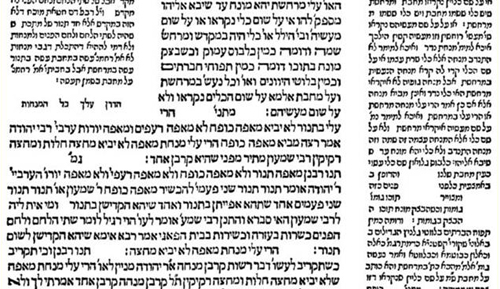
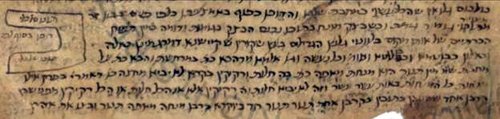
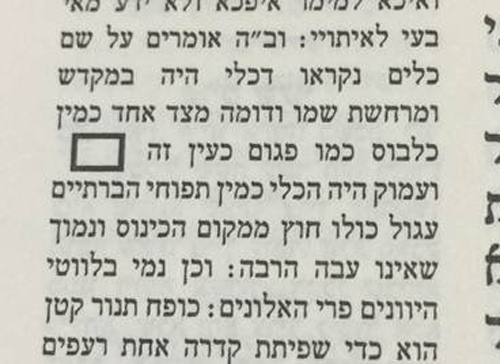
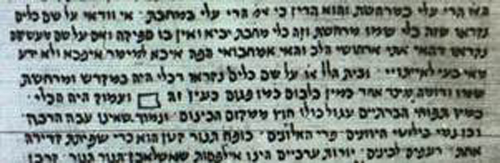
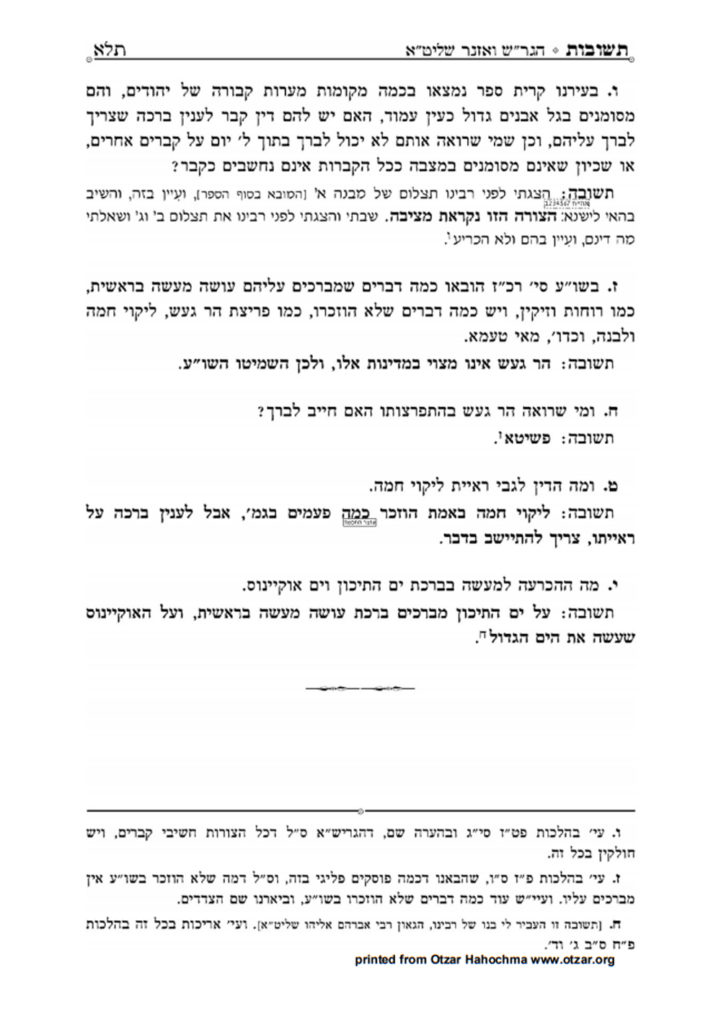
the final paragraph of the article titled “Frigidaire” in the image below:

So it is clear that Rav Simcha Zelig introduced his teshuva with a reference to the prior issues of Hapardes. And
it is also clear that he closed his teshuva by addressing Rav Moshe
Levin’s ice question from Hapardes (which appeared in the article
entitled “Frigidaire”, shown above, about the refrigerator motors.) R. Broyde
apparently contends that in between, Rav Simcha Zelig veered off to address an
unrelated question which never appeared in Hapardes (that of the
refrigerator light), without ever addressing the question of the
refrigerator motor itself. And he did this while directly addressing the
ice question from the article entitled “Frigidaire”, but never addressed the
main substance of that article, the refrigerator motor. The absurdity of this
position is self-evident.    
Also of note is the introductory paragraph to Rav Simcha Zelig’s teshuva,
presumably written by the editor, Rav Shmuel Pardes, which reads as follows[6]:
תשובה זו מוסב על
השאלה הנדפסת בהפרדס, אם מותר לפתוח תבת קרח מלאכותי בשבת, או לשום מים בתיבה
לעשות קרח בשבת.
This teshuva addresses the question that
was printed in Hapardes, whether it is permitted to open a refrigerator
on Shabbat, or to put water inside the refrigerator (freezer) to make ice on
Shabbat.
Rav Pardes clearly understood and presented Rav Simcha Zelig’s teshuva
to be addressing the question of triggering the motor, which had been raised in
earlier issues of Hapardes.
Furthermore, R. Broyde’s translation of Rav Simcha Zelig’s words is inaccurate,
and the effect of this mistranslation permeates his entire response. The
closing words of Rav Simcha Zelig in the paragraph cited by R. Broyde are:
הוי
פסיק רישיה דלא איכפת ליה אפילו להדליק אם הוא באופן שהוא פסיק רישיה.
R. Broyde has translated these words as:
“…it is a psik resha that he does not care
about, even to light in way that is a psik resha.”
The astute reader will notice that the bolded words in the Hebrew citation
are left untranslated by R. Broyde, essentially ignored, as if they do not
exist. The closing words of this sentence are correctly translated as follows: even
to light IF IT IS in a way that is a psik reisha. Most of R. Broyde’s
response revolves around the incorrect assertion that since Rav Simcha Zelig
referenced a psik reisha, he must have been referring to igniting the
light, which is a psik reisha, and not the motor, which is not a psik
reisha
. However, correctly translated, Rav Simcha Zelig says that opening
the refrigerator is permitted EVEN IF there is a psik reisha involved.
Such conditional language is entirely out of place when referring to a light,
which is certainly a psik reisha. This conditional language is only applicable
to the refrigerator motor, because there are times when, unbeknownst to the
person, the opening of the refrigerator door will immediately trigger the motor
to go on because of the already heightened initial air temperature inside the
refrigerator. (Such a situation is known in the language of the Poskim
as a “Safek psik resha”, as noted in Hapardes 1931 num. 3 page 6
regarding the refrigerator motor. It is the subject of dispute whether such an
action is permissible, similar to a Davar Sheaino Mitkavein, or
prohibited like a psik reisha.) Rav Simcha Zelig’s qualification that it
is permitted to open the refrigerator door even IF the situation is one of psik
reisha
makes clear that he is referring to the refrigerator motor, contrary
to R. Broyde’s misreading.[7]
“A careful reader of the first sentence, and indeed of the entire teshuva,
can sense that there is some ambiguity here about the electrical object
referred to, since Dayan Rieger does not specify the source or consequence of
igniting the electricity.”
There is no ambiguity to anyone who has seen the previous issues of Hapardes
which deal with the question of the refrigerator motor. There can only be
ambiguity if one reads Rav Simcha Zelig’s teshuva
entirely out of context, without looking at the articles to which he was
responding.
“Particularly in the Yiddish spoken culture of that time, the term
“electric” seems to have meant “lights” and not electricity or motor.”
R. Broyde’s assertion that “electri[c]” did not mean electricity or motor is
incorrect. See for example, the language in Rav Shlomo Heiman’s letter (dated
Erev Sukkot 5697/1936), printed in Chosen Yosef[8], and
reprinted in later editions of Chiddushei Rav Shlomo:
פקפק כת”ר
שליט”א בענין פתיחת הפרידזידעיר על העלעקטרי דע”י פתיחתו הוא
מבעיר העלעקטרי ורוצים להתיר על פי שטת הערוך דהוי פס”ר דלנ”ל
דיותר נוח לו שלא יכנס שם אויר קר, ולא יעלו לו הוצאות העלעקטרי
In this short excerpt, Rav Shlomo Heiman uses “elektri” to refer to
both the refrigerator motor and to electricity. Rav Heiman was clearly discussing
the permissibility of opening the door and triggering the refrigerator motor,
and refers to triggering the motor as kindling the “elektri”, the same
exact term used by Rav Simcha Zelig. Rav Heiman further notes that this is
considered “lo nicha lei” because the person would prefer to save the
additional expense of “elektri”, i.e. electricity.
See also the words of Rav Chaim Fishel Epstein, in Teshuva Shleima
vol. 2 – Orach Chaim, beginning of Siman
6[9]:
נשאלתי בדבר
המכונה המקררת בכח חשמל שקורין ריפרידזשיאטר, שבעת שפותחים הדלת נכנס אויר חם ואז
נתעורר כח החשמל (עלעקטריק בלע”ז) והמכונה מתחלת להניע ולעבוד כדי להוסיף
קרירות…
Here, Rav Epstein synonymizes koach chashmal, or electricity, with “עלעקטריק”.
See also Hapardes 1931, num. 2 page 3, where zerem hachashmali, or
electric current, is synonymized with
“עלעקטריק”. R. Broyde’s contention that “electri[c]”
did not mean electricity or motor is simply false.
“Elektri, according to
my colleague at Emory, Professor Nick Block, more likely means the light than
anything else in 1930s Yiddish.”
One need not be a Professor of German Studies to
recognize that within a discussion of
refrigerator motors, it is more than likely that “Elektri” means a
refrigerator motor, the subject under discussion, or its associated electricity.
This was true even in 1930s Yiddish spoken culture; see Rav Shlomo Heiman’s
1936 letter cited above.
Additionally, as mentioned above, Rav Pardes (editor of Hapardes)
clearly understood Rav Simcha Zelig’s teshuva to be addressing the
question of triggering the motor, which had been raised in earlier issues of Hapardes.
Rav Pardes’ knowledge of 1930s Yiddish was certainly robust.
“Second, and much more importantly, the halachic analysis presented by
Dayan Rieger addresses a direct action, while everyone else who discusses the
motor speaks about an indirect action…opening the door usually leads to an
increase of air temperature inside the refrigerator, which eventually directs
the motor to go on…many times when the refrigerator is opened, the motor does
not go on at all…But Dayan Rieger makes no mention of this…he assumes that when
the refrigerator door is opened the electrical object under discussion is always
ignited, and it does so immediately and directly, thus causing a melacha.
This is the formulation of psik resha, which inexorably causes melacha
each and every time…”
This section is entirely wrong, and is predicated on R. Broyde’s
misreading/mistranslation of Rav Simcha Zelig’s words, as noted above. That Rav
Simcha Zelig added the qualification of “IF IT IS” a psik reisha renders R. Broyde’s words here to be entirely
irrelevant and incorrect. Rav Simcha Zelig’s language of “IF IT IS” a psik
reisha makes clear that he is assuming that the motor is not always
ignited by opening the door, but at times it might be ignited in a manner of psik
reisha,
due to the heightened initial air temperature inside the
refrigerator. (Again, such a situation is known as “safek psik reisha”
in Rabbinic parlance, as the air temperature inside the refrigerator is not
known to the opener.) Contrary to R. Broyde’s assertions, Rav Simcha Zelig’s
language here is a clear proof that Rav Simcha Zelig’s teshuva was in reference to the refrigerator motor and not the
light.
“Professor Sara Reguer noted by email to me that “my grandfather conferred
with scientists and specialists in electricity before giving his response,” and
given this fact it is extremely unlikely that he missed such a basic point that
anyone who repeatedly opened and closed a refrigerator would have noticed.”
This argument is also incorrect, and is again predicated on R. Broyde’s
mistranslation of Rav Simcha Zelig’s words. Also significant is R. Broyde’s
citation of Dr. Reguer (in his footnote 8) that “she is certain that this teshuva
is referring to the thermostat or motor and not the light.”
“First, the other substantive halachic logic employed by Dayan Rieger which
analogizes elektri to sparks seems to me to be a closer analogy to a light than
to a motor which is hardly fire at all; sparks like incandescent lights, are
fire according to halacha.”
R. Broyde is wrong again. In fact, several poskim have noted that
ignition of the refrigerator motor also generates sparks.[10] See
the words of Rav Chaim Bick[11],
describing the problem of the refrigerator motor in Hamesila (2:1)[12]:
וע”י הגלגל
נושב רוח ומוליד הקר לחלק השני של התבה, אשר שמה נמצאים כל צרכי אכל ומשקה. הגלגל
בשעה שמתחיל מרוצתו יוצא ממנו נצוץ-אשי
And by way of the wheel,
the wind (i.e. air) blows and creates the cold in the other section of the box
(refrigerator), where all the food and drink are located. The wheel, when it
begins to run, emits fire-sparks
See also the words of Rav Chaim Dovid Regensburg,
describing the problem of the refrigerator motor, in Mishmeret Chaim, siman
3[13]:
ומה שלפעמים ניצוצות ניתזים, ברגע של מגע החוטים
החשמליים אחד בשני, אין זו הבערה, כי מלאכת מבעיר ביחס לשבת לא חשובה אלא אם האש
נאחזת באיזה דבר, וכן כתב הפרי מגדים סי תקב… 
And that sometimes sparks
fly off
,
at the moment that the electrical wires touch each other, this is not havara,
because melechet havara with respect to Shabbat is only considered when
the fire takes hold to something, and so wrote the Pri Megadim…
See also the words of Rav Shlomo Zalman Auerbach, within a discussion of
the ignition of the refrigerator motor in Minchat Shlomo (Kama), Siman
10, Anaf 2 Ot 4[14]:
אולם יש טוענים
דיש לחשוש לזה, שבכל פעם שמתחדש מעגל חשמלי יוצא במקום החבור ניצוץ קטן של אש
ונמצא שבפתיחתו הוא גורם למלאכת מבעיר…
However, some claim that one should be careful
about this, that every time that an electric circuit is completes, a small
spark of fire
comes out of the place of connection, and thus through his
opening [of the refrigerator door] he is causing the melacha of mav’ir…
Thus, contrary to R. Broyde’s assertion, Rav Simcha Zelig’s mention of
sparks is in fact directly analogous to the ignition of the refrigerator motor,
which actually involved creation of sparks.[15]
“Secondly, there has been a regular subset of poskim (as shown by Rabbi
Abadi’s most recent teshuva, Ohr Yitzchak 2:166) who adopt the exact analysis
and view of Dayan Rieger and view the light as lo ichpat since one does
not want it and a light is on already.”
To refer to a single teshuva, published in the 21st
century by a lone posek, as “a regular subset of poskim” would seem to
be somewhat of an exaggeration.
“On the other hand, there is a good and natural impulse to read halachic
literature conservatively and to press for interpretations that align gedolim
with one another and not leave outliers with halachic novelty.”
My original note and my comments here in no way reflect any impulse to read
halachic literature conservatively. They reflect my impulse to read halachic
literature correctly.
“Furthermore, I do recognize that many halachic authorities who have cited
Dayan Rieger’s teshuva have quoted it in the context of the motor and not the
light…”
More accurately, all halachic authorities who have cited Rav Simcha
Zelig’s teshuva have quoted it in the
context of the motor and not the light.
“But, I think these citations are less than dispositive for the following
important reason: Those who quote Dayan Rieger’s view as something to consider
about the motor note that his analysis is halachically wrong…Poskim generally
spend less time and ink explicating the views of authorities whom they believe
to have reached inapt or incorrect conclusions of fact or law compared with
those whom they cite in whole or in part to bolster their own analysis.”
It is unclear to me whether R. Broyde means that all of these Poskim
have misunderstood Rav Simcha Zelig’s position, or that they have
misrepresented it. Either way, the assertion is bizarre. I will leave it to the
readers to judge whether such an assertion is tenable.
The following is a partial list of Poskim and scholars who have
cited Rav Simcha Zelig as having permitted opening a refrigerator on Shabbat
when the motor will go on, and not
in the context of the refrigerator light[16]:
1)     
Rav Ovadya
Yosef (Yabia Omer, Orach Chaim Chelek 1, Siman 21, Ot 7)
2)    Rav Yehoshua
Neuwirth (Shemirat Shabbat Kehilchata, Perek 10 Footnote 33 in
the 1979 edition. This appears in Footnote 37 in the 2010 edition.)
3)     
Rav J. David
Bleich (Tradition, Spring 2017, pages
57-58)[17]
4)     
Rav Chaim
Bick (Hamesila 2:1)[18]
5)     
Rav Gedalia
Felder (Yesodei Yesurun, vol. 3 page 293)[19]
6)     
Rav Shlomo
Tanavizki (Birkat Shlomo, end of siman 2)[20]
7)     
Rav Moshe
Shternbuch (Teshuvot Vehanhagot vol. 1 Siman 220)[21]
8)     
Rav Chaim
Fishel Epstein (Teshuva Shleima vol. 2, end of Siman 6)[22]
9)     
Rav Chaim
Dovid Regensburg (Mishmeret Chaim, Siman 3, page 27) [23]
10) 
Rav Chaim
Druck (Noam Vol. 1 page 281)[24]
11) 
Rav Shmuel
Aharon Yudelevitz (Hachashmal Leor Hahalacha, page 130)[25]
12) 
Rav Yosef
Schwartzman (Shaashuei Torah, Chelek 3 – Shabbat,  pages 391-392)
13) 
Rav Shlomo
Pick (Who is Halakhic Man?, in Review of Rabbinic Judaism 12:2, page
260)[26]
In conclusion, it is clear that Rav Simcha Zelig’s teshuva about
opening refrigerators on Shabbat addressed the problem of the motor turning on
when the door is opened. Every argument put forth by R. Broyde is wrong. Rav
Simcha Zelig’s position was that it is permitted to open a refrigerator when
the motor will go on, as triggering the motor is classified as a psik
reisha d’lo ichpat lei
, which is equivalent to lo nicha lei. Rav
Simcha Zelig never addressed opening a refrigerator when the light will
go on.
Postscript:
Regarding R. Broyde’s admonition of my tone, that “we certainly could use
more light and less heat”, I could not disagree more. I will simply quote the
words of Rav Yosef Dov Soloveichik in his remarkable speech at the 1956 Chinuch
Atzmai Dinner, in appreciation of Rav Aharon Kotler[27]:
קאלטע תורה, ווי
קאלטע ליכט, איז גארנישט. עס דארף זיין הייס ליכט, א’מיר’זך
אפ’בריען ווען מ’קומט’מן צו אים…
Cold Torah, like cold light, is worthless. It must
be heated light so that one burns himself in its proximity…


[7] See Rav J. David Bleich’s typically thorough
treatment of the topic of refrigerators in Tradition
(Spring 2017, pages 57-59 and 64-65) for a discussion of why triggering the
refrigerator motor would be considered lo
nicha lei
.
[10] Rav J. David Bleich in Tradition (Spring 2017, page 72) has noted that while a number of
earlier poskim dealt with the issue
of sparking in refrigerators, sparking has now been eliminated in most
modern-day appliances.
[11] For biographical information on Rav Chaim Bick, see
here.
[15] While Rav Regensburg assumed that the creation of
sparks would happen only sometimes, it appears that Rav Bick and Rav Shlomo
Zalman assumed that the creation of sparks happened every time the motor was
triggered, and thus would be included in the category of safek psik reisha.
[16] My thanks to Dr. Marc Shapiro for bringing to my
attention the references to Rav Felder, Rav Shternbuch, Rav Druck and Rav
Schwartzman.
[17] My thanks to Rabbi Yitzchok Segal for bringing this
reference to my attention.
[27] Watch here at approximately 28:00. See also Making of a
Gadol, Second Edition, page 1019, for specific examples of Rav Aharon Kotler’s
heated remarks in defense of his Torah positions. 


The Babylonian Geonim’s Attitude to the Talmudic Text

The Attitude of the Babylonian Geonim to the
Talmudic text
By Dr. Uzy Fuchs
A few weeks ago
we mentioned here
that the Seventeenth World Congress
of Jewish Studies
took
place at the Mount Scopus Campus of the Hebrew University of Jerusalem.
Over the next few months we will be
posting written transcriptions of some of the various presentations
(we hope to receive additional ones).
The first in this series is from Dr. Uzy Fuchs dealing with the
Babylonian Geonim’s attitude to the Talmudic text, the subject of his recently
released excellent book.  To purchase
this work contact me at
Eliezerbrodt-at-gmail.com. Part of
the proceeds will be used to support the efforts of the Seforim Blog.
Here is the cover:
יחסם של גאוני בבל לטקסט התלמודי
הרצאה בקונגרס השבע-עשרה למדעי היהדות, ירושלים, אב
תשע”ז
מאת: עוזיאל פוקס
(קטעים מתוך המצגת משולבים בתוך לשון ההרצאה)
שאלת
יחסם של גאוני בבל לעניינים טקסטואליים במשנה ובתלמוד הבבלי היא שאלה רחבה
ומורכבת, מכיוון שמדובר על תקופה של למעלה משלוש מאות שנה, שפעלו בה חכמים שונים
בכמה מרכזים.
אפתח
בכמה נתונים מספריים שיאפשרו לנו למקד את הדיון.
בידינו
השתמרו בערך 260 התייחסויות של הגאונים לעניינים טקסטואליים במשנה ובתלמוד. חלקם
ארוכים ומפורטים וחלקם כוללים הערה קצרה; מהם שהגיעו בשלימות ומהם מקוטעים וקשים
לפיענוח; הרבה מהם נכתבו כמענה לשאלות טקסטואליות אך לא מעט נכתבו ביוזמתם של
הגאונים עצמם.
בנקודה
אחת הממצאים חד משמעיים – המקום המרכזי של רש”ג ורה”ג בתחום הטקסטואלי.
מניתוח
של המקורות שבהם רב שרירא גאון ורב האיי גאון עסקו בעניינים טקסטואליים אנו למדים
על המניעים שלהם לעסוק בגרסאות התלמוד. הרבה מהם נכתבו כתשובות לשואלים, בין
בעניינים טקסטואליים ובין בתשובות הלכתיות ופרשניות. באופן מיוחד מעניינות אותן
התשובות שבהן העניין הטקסטואלי הוא שולי, ואין הוא חיוני כלל ועיקר כדי לענות
לשאלה שנשאלו הגאונים, ואף על פי כן טרחו הגאונים להוסיף הערה ארוכה או קצרה
בעניין גרסאות התלמוד.
חשיבות
מיוחדת יש לכמה עשרות דיונים טקסטואליים שנכתבו בחיבורי הגאונים ולא בתשובותיהם.
במיוחד
מעניין פירושי רב האי גאון למסכתות ברכות ושבת, שבשרידים הלא רבים שהגיעו אלינו יש
עשרים וארבעה דיונים טקסטואליים. חלקם ארוכים, מורכבים ומפורטים. דיונים אלה
מלמדים אותנו שבעיני גאוני בבל האחרונים – רש”ג ובעיקר רה”ג – העיסוק
בגרסאות התלמוד הפך להיות חלק בלתי נפרד מסדר יומו של לומד ומפרש התלמוד.
מכל
מקום, העיסוק הטקסטואלי האינטנסיבי המרובה של שני גאוני פומבדיתא המאוחרים – רב
שרירא ורב האי רב שרירא – מלמד שאת כותרת ההרצאה ‘יחסם של גאוני בבל לטקסט
התלמודי’ יש לסייג הרבה. על שאר הגאונים אנחנו יודעים מעט מאוד, ועל יחסם של רוב
רובם של גאוני בבל לעניינים טקסטואליים אי אפשר לומר מאומה.
אפשר
להאריך במחשבות ובהשערות בעניין זה – מה המשמעות של מיעוט הדיונים הטקסטואליים של
רוב הגאונים: האם מדובר על עניין מקרי – הדיונים שלהם לא הגיעו לידינו, או שמא
באמת עסקו פחות בעניינים טקסטואליים. אך בשל קוצר הזמן לא אכנס לכך. 
*
הישג
בולט של אחרוני הגאונים הוא יצירת הגדרות או שימוש ב’כלי עבודה’ כדי לדון בגרסאות
השונות. לא רק קביעות בסגנון של ‘גרסה נכונה’ או ‘גרסה לא נכונה’ אלא ניסיון ליצור
קני מידה על מנת לשקול בין הגרסאות השונות, ולהכריע איזו מהן נכונה יותר. כמו כן,
הגאונים המאוחרים תייגו גרסאות שונות באיפיונים: מדוייק, לא מדוייק.
איפיונים
אלה חשובים עד מאוד, והם מלמדים הרבה על החשיבה הביקורתית של אחרוני הגאונים, על
השימוש שלהם בכלים שהיינו מכנים ‘מחקריים’ או ‘ביקורתיים’. אף על פי כן, יש להדגיש
כי קני המידה והאפיונים השונים באים בראש ובראשונה בשירות הפרשנות.
אדגים
את הקביעה הזו בשתי דוגמאות הבאות בדברי הגאונים רב שרירא ורב האיי.
אחת
השאיפות של חקר מסורות בכלל וחקר גרסאות התלמוד בפרט היא מציאת המסורות והגרסאות
המדויקות והמהימנות. ואכן, אחרוני הגאונים קבעו לגבי לא מעט גרסאות שהן מדויקות,
או שהן של חכמים דייקנים.
וכאן
יש לברר – מה הופך חכמים אלה להיות חכמים דייקנים בעיניהם של אחרוני הגאונים? האם
המסורות שעליהם הסתמכו או שמא דרך כזו או אחרת שבה הצליחו לשמר את גרסאות התלמוד?
ושמא היה להם קריטריון אחר?
בשתי
תשובות אנו מוצאים רמז לעניין, ושתיהן נוגעות לסוגיה הטעונה של הפער שבין נוסחי
הפסוקים שבמקראות לבין נוסחם בגרסאות התלמוד.
וכך
כתב רב האיי גאון:
‘וודאי
אילו היה הפסוק כטעותם… אלא שאינו כן, דרבנן דווקני ומי שמעיינין בשמועה
ואינן גורסין והולכין שיטפא בעלמא…’.
בתשובה
זו כרך רה”ג כרך את הדיוק של אותם ‘רבנן דווקני’ ב’מי שמעיינין בשמועה’,
כלומר, הם אינם גרסנים מכניים, אלא הם מבינים את המתרחש בסוגיה. ה’דיוק’ של המסורת
קשור ל’עיון בסוגיה’, להבנתה ולהתאמתה למסורת ה’נכונה’ במרכאות, כלומר זו שאינה
יוצרת קשיים פרשניים. ה’דיוק’ מוגדר ככזה בזמן שהוא משרת את הפרשנות הנכונה.
נשוב
לעניין החכמים הדייקנים עוד מעט. ונעבור לפני כן לקנה מידה אחר לבחינת גרסאות
התלמוד.
בכמה
תשובות הגאונים – שוב רב שרירא ורב האיי גאון – קבעו שגרסה מסוימת היא גרסת ‘כל
החכמים’. הקביעה הזו, המסתמכת על ‘כל החכמים’ היא בוודאי שיקול נכבד בעד גרסה
מסוימת. רה”ג השתמש בקביעה הזו גם בתשובתו הידועה בעניין מנהגי תקיעת שופר
בראש השנה: ‘והלכה הולכת ופשוטה היא בכל ישראל… ודברי הרבים הוא המוכיח
על כל משנה ועל כל גמרא, ויותר מכל ראיה מזה פוק חזי מה עמא דבר, זה העיקר והסמך’.
התפיסה הזו, או כפי שכונתה בערבית ‘אג’מאע’ היא גם אחד מארבעת היסודות של פסיקה
ההלכה המוסלמית. כאמור, קביעות כעין אלה באו כשיקול טקסטואלי בדברי הגאונים. ברוב
הפעמים הקביעה שגרסה היא ‘גרסת כל החכמים’ באה להכריע כמו גרסת הגאונים בתלמוד
הבבלי בניגוד למקור אחר – גרסה בתוספתא, גרסת ספרי משנה וגרסה הבאה בהלכות פסוקות
והלכות גדולות.
גם
בתשובה בעניין נוסח פסוק בספר דברי הימים, המובא בגרסה שונה בסוגיה בתחילת מסכת
ברכות, קבעו רב שרירא ורב האיי גאון באופן נחרץ: ‘וחס ושלום דהאוי שיבוש בקראיי,
דכולהון ישראל קריין להון פה אחד והאכין גארסין רבנן כולהון בלא שיבושא
ובלא פלוגתא ובלא חילופא
‘.
בסופה
של אותה תשובה הוא גם הזהיר לתקן גרסה זו, וגם כאן הזהיר את כל החכמים – ‘ואזהר
לתיקוני לנוסחי… ולאיומי על כולהו רבנן ותלמידי למגרס הכי דלא תהוי חס
ושלום תקלה במילתא’. קביעות נחרצות אלה הן מאוד חד משמעיות – יש גרסה אחת ויחידה
בתלמוד שהיא גרסת כל החכמים, והיא מתאימה לנוסח הפסוק בדברי ימים. אלא שהמציאות
אינה כל כך חד משמעית, ובמהלכה של אותה תשובה ציין רב האיי גאון לנוסח נוסף בסוגיה
– וכאן אנחנו חוזרים גם להגדרת ‘דוקאני’ שעליה עמדנו לעיל:
‘ורבנן דוקאני הכין גרסין וכן
הוא אומ'[ר] באֿבֿיֿוֿ בלישנֿאֿ רויחאֿ, ומאןֿ [ד]גֿאריס לישאנא קיטא
ולא דאייק למיגרס וכן הוא אומר באביו
הכין מפריש דגאמרֿין מן אבא לברא אבל קרא
כולי עלמא פה אחד קארו ליה וגרסין ליה וכיון דהכין היא שמעתא איסתלק ליה
<ספיקא>’. כלומר, על אף שבעיקרו של דבר הגאונים לא נסוגו מן הקביעה שכל
החכמים גורסים את הפסוק בסוגיה כמו נוסחו בספר דברי הימים – כלומר ‘יהוידע בן
בניהו’, הרי שהוא מוסיף שיש הגורסים גרסה מרווחת יותר, שבה נוספה לשון פירוש ‘וכן
הוא אומר באביו’ המבהירה שהפסוק בעניין ‘יהוידע בן בניהו’ מתייחסת לאביו של ‘בניהו
בן יהוידע’ המוזכר בהקשר אחר בסוגיה.
זאת
אומרת, שהקביעה שגרסת הסוגיה היא גרסת ‘כל החכמים’ אינה קביעה מוחלטת. היא מתייחסת
לנושא המרכזי בעיני הגאון – נוסח הפסוקים המצוטט בסוגיה – אך בעניין אחר הוא מבהיר
שיש גרסה יותר מדויקת של ‘רבנן דוקאני’ הגורסים ‘לישנא רויחא’ ובה הסבר נוסף
המסביר באופן מוצלח יותר את הסוגיה, ומדגישה ‘וכן הוא אומר באביו’, וכך אפשר להבין
את רצף הפסוקים המלמדים על בניהו בן יהוידע מפסוק העוסק ב’יהוידע בן בניהו’.
נמצאנו
למדים ששלושת הקריטריונים – אזכור ‘רבנן דוקאני’, הקביעה שגרסה היא גרסת כלל
החכמים, וההבחנה בין ‘לישנא קיטא’ ל’לישנא רויחא’ – מובאים על מנת לפרש את הסוגיה,
ולצנן את ‘תפוח האדמה הלוהט’ שעליו העמידו השואלים. הדיון איננו דיון טקסטואלי
טהור, אלא דיון טקסטואלי שנועד לפתור בעיה פרשנית – במקרה זה אי ההתאמה בין
המקורות.
קביעה
זו מצטרפת לעובדה שגם במקומות אחרים קנה המידה המרכזי של גאוני בבל לדיון בגרסאות
התלמוד הוא ההתאמה לפרשנות ולעניין.
בלשון
מעט מופרזת אפשר לקבוע שדרכם של אחרוני הגאונים הפוכה מסדר הפעולות הפילולוגי
שעליו המליץ פרופ’ אליעזר שמשון רוזנטל המנוח. בעוד שהוא קבע ש’על שלושה דברים כל
פרשנות פילולוגית-היסטורית עומדת: ‘על הנוסח, על הלשון, על הקונטקסט הספרותי
וההיסטורי-ריאלי כאחד… ובסדר הזה דווקא’, הרי שרב שרירא ורב האיי העדיפו דווקא
את הפרשנות, את העניין, ואת הקונטקסט הספרותי על פני הגרסה והנוסח.
למשמעותה
של קביעה זו נשוב לקראת סוף הדברים.
*
ממה
נובע העיסוק המרובה של גאוני בבל בגרסאות התלמוד? מה גרם לגאוני בסוף המאה העשירית
ותחילת המאה האחרת עשרה להקדיש מאמץ לימודי ליצירת הגדרות וקני מידה לדיון בגרסאות
הללו?
ההסבר
הסביר, שכבר הובא בספרות המחקר, הוא ריבוי הגרסאות בסוף התקופה. סביר להניח
שהגרסאות הללו באו מתוך שתי ישיבות הגאונים, אולי מחוגים אחרים בבבל, ואולי אף
גרסאות שהגיעו אליהם מן התפוצות.
ואכן,
לא פעם הדיון של הגאונים מתייחס במפורש לגרסאות של חכמי התפוצת שפנו אליהם
בשאלותיהם.
אדגים
כאן דוגמה אחת לדיון ייחודי של אחד הגאונים בתגובה לגרסה שהגיעה אליו מן התפוצות,
או ליתר דיוק לתגובה של הגאון להצעה להגיה גרסה של סוגיה ביבמות.
וסיימת
להקשות ואמרתה
אלא סופה דקאתני עמד אחד מן האחין וקדשה אין לה עליו כלום היכי
מתריץ לה רב אשי עמד אחד בין מן הילודין בין מן הנולדין וקדשה אין לה עליו כלום
והלא ר’ שמ'[עון] לא היה חלוק אלא בנולדין בלבד אבל הילודין לא היה צריך להזכיר
אותם בכלל, ואמרת כי עלה על לבבך לשנות עמד אחד מן הילודין שכבר נולדו
וקידשה אין לה עליו כלום ולעקור מן האמצע… אבל אמרת כי לא מלאך לבך לסמוך על
דעתך
[…] שקיימתה […]                        הספרים
אשר בֿמק[ו]מ[כם כ]אשר אמרת […]מתחילה ועד סוף, כי זה שאתם שנים כתוב גם
עדיכם עמד אחיו בין מן הילודין וֿבין מן ה[נו]לדים
[…] אין לה עליו כלום, כך
אנו שונין…
על
הצעות הגהה של אחרוני הגאונים שמענו, ולרה”ג יש מעט הצעות להגיה גרסאות של
התלמוד, אך זו הדוגמה היחידה הידועה לי שבה השואלים הציעו בפני הגאון להגיה
את סוגיית התלמוד.
דוגמה
יחידה זו מצטרפת לשאלות של חכמי התפוצות מן הגאונים. בעוד שהרבה מן השאלות
בעניינים טקסטואליים הן שאלות מאוד פשוטות, חלק מן השאלות לאחרוני הגאונים הן
שאלות מורכבות ובהם קושיות מפורטות על גרסאות התלמוד, והן כוללות השוואה בין
מקורות שונים. שאלות אלה נשאלו על ידי גדולי החכמים בתפוצות: ר’ משולם בר’
קלונימוס, רב יעקב מקיירואן, ור’ שמריה בר’ אלחנן במצרים.
אפשר
שריבוי הגרסאות בישיבות, והאתגר שהשואלים, חכמי התפוצות, הציבו לגאוני בבל – חידדו
את הצורך שלהם להתמודד עם הגרסאות השונות, להפוך אותם לחלק מסדר היום הלימודי
שלהם, וליצור קני מידה לדיון והכרעה בין גרסאות וכן אפיונים שבהם כינו את הגרסאות
השונות. אפשרות זו היא השערה סבירה, אך היא נותרת בגדר השערה.
*
ריבוי
הגרסאות לא היה רק מניע משוער לפעילותם של הגאונים בעניינים טקסטואליים. הוא הפך
להיות חלק מן הדיון עצמו. אבהיר את הדברים – אך אאלץ לומר בעניין דבר והיפוכו.
כלומר הגאונים כתבו דברים בגנות ריבוי הגרסאות, אבל הם גם השתמשו באותו ריבוי
גרסאות – גם לעניינים פרשניים והלכתיים. 
וזה
ביאור הדברים.
בכמה
מקורות, אחרוני הגאונים טענו שגרסה מסוימת היא ‘שיבוש’ אך ברור שאין הכוונה לכך
שהגרסה מוטעית או לא נכונה, אלא לכך שיש לסוגיה כמה גרסאות.
<מצגת> הדוגמה הבולטת
ביותר באה בתשובה של רב האיי גאון, שבה התבקש לפרש בהרחבה סוגיה במסכת סוטה:
והא
דתנו רבנן… לרוח לן גאון בפירושיה

ולא זה מקום הספק אלא הספק בשינוי לשונות
דאמ'[ר] רב
משרשיא איכא ביניהו עראבא ועראבא דעראבא. ושינוי לשונות דגראסי הוא שבוש וכולן
טעם אחד הן. יש שונין כך
…….
ויש
שגורסין
מדברי
רב האיי ברור שאין מדובר על שיבוש במובן של טעות שהרי ‘כולן טעם אחד הן’ ומכיוון
שבהמשך דבריו הוא מבאר את שתי הגרסאות – אלא שעצם העובדה שיש ‘שינוי לשונות
דגראסי’ הוא הוא השיבוש. בדומה לכך, יש עוד כמה מקורות שכאלה, ומהם אנו למדים על
אי הנחת של אחרונים הגאונים מריבוי הגרסאות.
מצד
שני, יש מקומות שבהם הגאונים ציינו כמה גרסאות ונראה שהדבר לא נראה מוזר או קשה
בעיניהם. במקומות שבהם מדובר על עניין פרשני או לשוני גרידא אין בכך כל תמיהה. אך
הגאונים אך השתמשו לעתים בגרסאות כאילו הן דעה הלכתית לגיטימית.
הדוגמה
הבולטת ביותר היא תשובה אנונימית, <מצגת< שבה השואלים והגאון המשיב
ציינו שיש לסוגיה שתי גרסאות, וכיוון שאי אפשר להכריע מתייחסים לכך כאל ‘תיקו’
תלמודי:
ונשאל
גאון, דאיכא נו<סח>י דכתיב בהו מבני חרי ואיכא דכתיב בהו ממשעבדי.
והשיב:
חייכון אחינו שגם אצלינו כך הוא, איכא דגרסי מבני חרי ואיכא דגרסי ממשעבדי. מיהו
רובא דרבנן דעליהון סמכא דגרסי מפום רבוותא דעליהון סמכא דשמעתא גרסי ומגבי ביה
ממשעבדי,

ואעפ”כ <כיון> דאיפליגו בהא גרסאי דהוו מעיקרא, ליכא כח בהא
מילת'[א] <למיזל> בתר רובה ולקולא עבדינן ולא מגבינן ביה ממשעבדי.
ברור
שלגאון הייתה גרסה שהוא העדיף אותה – זו של רובא דרבנן – ואף על פי כן התייחס
לגרסה השנייה כאל אופציה ממשית, המשפיעה על פסיקת ההלכה בסוגיה.
אציין
דוגמה נוספת בתחום שאינו הלכתי. כאשר רש”ג ביקש באיגרתו להבהיר שגם בתקופת
קדומות היה ‘תלמוד’ הוא הגדיר:
ותלמוד
הוא חכמה דראשונים,
וסברין <ביה> טעמי משנה דתנו רבנן
רבו לא רבו שלימדו משנה ולא רבו <שלימדו> מקרא אלא רבו שלימדו תלמוד.
ואיכא דתאני שלימדו חכמה ותרויהו חד טעמא אינון
דברי ר’ מאיר, ר’ יהודה אומר
כל שרוב חכמתו ממנו…
ברור
שגרסתו בתלמוד היתה ‘רבו שלימדו תלמוד’ אך רב שרירא ‘ניצל’ את הגרסה האחרת, והשתמש
בגרסה ‘רבו שלימדו חכמה’ כדי ללמדנו ששתי הגרסאות מקבילות, ושאין ‘תלמוד’ אלא
חכמה, חכמת הראשונים.
נמצאנו
למדים – כפי שכבר אמרתי לעיל – שביחס לריבוי הגרסאות אנו מוצאים שימוש בשתי גישות
הפוכות. רצון למצוא גרסה אחת ויחידה, ואי נחת מריבוי הגרסאות והגדרתן כ’שיבוש’
מזה, אך גם הצגת כמה גרסאות, ואף שימוש פרשני והלכתי בגרסאות האלטרנטיביות מזה.
תופעה
זו לא ללמד על עצמה יצאה.    גם בנקודות
אחרות אפשר להראות שהגאונים השתמשו בגישה טקסטואלית אחת, אך גם בגישה ההפוכה. כך
למשל בנוגע להגהת התלמוד.
רב
האיי גאון קבע במילים נרגשות:
ודאי
ששמועה זו למשמע אוזן נוח מן הראשון אלא שלא כך גרסתנו ולא כך גרסו הראשונים, ואין
לנו לתקן את המשניות ואת התלמוד בעבור קושיא שקשה לנו
.
אך
במקום אחר הציע לשנות את גרסת הסוגיה בשל קושי פרשני:
וטובא
עייננא בהדין [גירסא] ולא סליק ליה פירושא אליבא דפש[אטא דהי]לכתא.
…וכל
אימת דאתית לשוויה להא מותיבי להאי שמעתא לר’ יוחנן ולמימר הוא מפריק לא קא
סלקא שמעתא לדילנא כל עיקר
.
וכד
משוית ליה לקושיא ולפירוקא לרב הונא סליקא ליה שמעתא ולא קאיים בה מידעם.
והכין
חזינא דמבעי למגרס:
בשלמא ללישנא קמא רב הונא כר’ מאיר ור’
יוחנן כר’ יהודה.
העובדה
שאותו חכם אומר דבר והיפוכו באותו עניין ובהקשרים שונים אינה מפתיעה כל מי שמצוי
בספרות הרבנית, אך היא מבלבלת את החוקר שמנסה לעשות סדר, ולהטיל שיטה בדברי
הקדמונים.
.
סוף
דבר. בהרצאה זו ביקשתי לטעון שלוש טענות. ביקשתי לטעון שבסוף תקופת הגאונים הפך
הדיון בגרסות התלמוד להיות חלק אינטגרלי מאופן הלימוד והכתיבה של הגאונים – הם
עסקו בגרסאות התלמוד פעמים רבות, הן כאשר השיבו לשואליהם הן בשעה שכתבו את
פירושיהם. לא זו בלבד – וזו הנקודה השנייה – הם אף יצרו כללים והבחנות חשובות
הנוגעות להיבטים הטקסטואליים של ספרות חז”ל.
אף
על פי כן – וזו הטענה השלישית – ביקשתי לטעון שבמידה רבה כלים פילולוגיים אלה היו
משועבדים בראש ובראשונה לפרשנות התלמוד. כיוון שכך הם היו עשויים להתמקד בפרשנות
סוגיה מסוימת או בפסיקת הלכה בעניין מסוים, תוך שימוש בכלים טקסטואליים שונים או
הפוכים מאלה שהם קבעו בהקשרים אחרים.
מאות
הפעמים שבהם גאוני בבל עסקו בטקסט התלמודי – לעתים תוך רגישות טקסטואלית והבנה
יוצאת מן הכלל של דרכי המסירה ותהליכי שיבוש ושינוי בטקסטים הנמסרים בעל פה או
בכתב – אינה הופכת את פעולתם לשיטה או למדע במובן המודרני, וכאמור, הבנה זו מאפשרת
לנו להבין סתירות בדרך שימושם של הגאונים בקני המידה שקבעו.
אם
לחזור לכותרת ההרצאה: ‘יחסם של גאוני בבל לגרסאות התלמוד’ – הרי שיחס זה היה
משועבד בראש ובראשונה לשימור המסורת שלהם, לפרשנות של סוגיות התלמוד ולפסיקת הלכה,
ולא כל כך לקביעת כללים ועקרונות מוצקים.
אני
מקווה שלא אפגע בפרופ’ רמי ריינר שנתן למושב את הכותרת היפה שלו – ‘ראשונים
כחוקרים’ – אם אטען שהראשונים – לפחות בתחום שבו עסקתי  – לא היו באמת חוקרים. הם ידעו שיש בתלמוד
גרסאות קצרות ולשונות פירוש, הם ידעו לקבוע שגרסה השתבשה כתוצאה מגיליון שחדר
לפנים הטקסט, הם הבינו כיצד גרסאות השתבשו כתוצאה מן ההגייה השגויה של מילים. אך
הם היו בראש ובראשונה לומדי תורה, מפרשי תלמוד ופוסקי הלכה.


Review of My Father’s Journey by Sara Reguer

Review of My Father’s Journey by Sara Reguer (Academic Studies Press, 2015)
 
By Moshe Maimon
About a year ago, Seforim Blog readers were informed by Prof. Marc Shapiro of the publication of Sara Reguer’s book My Father’s Journey, and they were further advised that this book would be of great value to anyone interested in the history of the yeshiva movement and Eastern European orthodoxy (see here). The following review illustrates the contribution the book indeed makes to these fields of study.
This basis of this memoir is essentially a diary which affords readers a very intimate view into the mind of a Lithuanian yeshiva student in the period between the two World Wars. Interspersed between the pages of this fascinating document is a fair amount of interesting yeshiva lore, including little-known facts about prominent Torah personalities contemporaneous with the author’s father. In highlighting some of these passages, I hope to give the reader a sense of the value of this work, while also calling attention to certain historical facts that might enhance the reader’s understanding.
The book, based on a Hebrew memoir by Dr. Moshe Aharon Reguer, son of the famed Brisker dayan, R. Simcha Zelig Rieger,[1] is translated and supplemented with additional material culled from interviews conducted with Dr. Regeur by his daughter, Prof. Sara Reguer, and from family lore she preserved. Additionally, it is bolstered by her insightful comments filling in detail and providing background. To avoid confusion, different fonts have been employed to represent the different sources. The translated text of the memoir appears in italics, the interviews in plain script, and Prof. Reguer’s comments in bold typeface.
This arrangement is helpful in distinguishing between the actual memoir, written by Moshe Aharon Reguer as a young adult in 1926, and the remaining material that relates to a later period in his life. Dr. Reguer wrote his memoir from the perspective of a young man poised at an important crossroads in life. As the narrative moves into his later years, the story takes on a nostalgic, backward-looking tinge.  Prof. Reguer deftly weaves the diverse sources that capture these epochs into a beautifully coherent story.
Here I might suggest that care should have been taken to more clearly distinguish the places where the written memoir “pauses” to include later reminiscences by the author obviously not part of the original document. One example is the references to dates and events after 1926,[2] the year of the composition of the original memoir. There is no documentation for these comments which are printed together with the text of the original memoir. In some instances these secondary sources recount events already recorded in the memoir with occasional variations; to arrive at a clear understanding of what actually happened, the reader would benefit by being able to differentiate between the various sources. Take for example Moshe Aharon’s account of his farher (matriculation exam) in the Slutzker yeshiva.
First, from p. 65:
So I went to Slutzk and the Slutzker Rav Isser Zalman with Rav Aharon Kotler, his son in law, hired
a teacher for me: Rav Shach (who is now famous in Ponovezh), who was then known
as the Vabulniker”. We stayed together in an inn and he learned with me, and
after a short time he went to Rav Aharon and Rav Isser Zalman and told them “I
don’t wan’t to take any money – he doesn’t need a teacher!” So Rav Aharon said:
“so, he doesn’t need any help and can learn alone?” and he took out a gemara,
Bava Kamma 76, where there are two lines of gemara and a huge tosfot, and he
told me to prepare it alone. I did it in a few hours, and I knew it, and he
said: “you do not need a teacher!” at eleven years old!
The editor has already pointed out that the author came to Slutzk only after his bar mitzvah; consequently he was actually thirteen years old at the time, not eleven.[3] As we will soon see, the above-mentioned scenario is fraught with additional chronological inconsistencies. Compare it with the following incident on p. 84 which seems to be referring to an event that took place the following winter, more than a year later that the author’s given date:
Until mid-winter, I studied with the student Babulnikai, but one day the son in law
of Rav Isser Zalman, Rav Aharon Pines, the ilui of Sabislovitz, called
me and on his own assigned me a “kri’a” – a group of gemara with all the
commentaries, which I was to read and then be tested on. I remember that the
“sugya” was in Baba Kama, p. 10. He set a deadline at which point I came to be
tested. I knew the entire sugya backwards and forwards, and on the test I
performed so well in both breadth and depth that Rav Aharon Pines ordered that
I should study alone. This announcement made a strong impression on the
yeshiva, especially on the younger students, because it was a tradition that
even the best students were never told at such a young age – fifteen – to study
alone without help or supervision.
The core of the story is the same: young Moshe Aharon learned under the tutelage of an older, more advanced student (R. Shach)[4] until such time as a thorough test, administered by R. Aharon Kotler (Pines),[5] revealed that he was adept at independent study, and was encouraged thereafter to learn on his own. Yet other important details are different, including the identities of the parties. In the first version R. Shach initiates the test, while in the second version R. Aharon takes the initiative “on his own”. In the first version, the subject matter is an extremely difficult passage comprising one of the longest Tosfos in Shas, while in the second; it entails the knowledge of a complex but more conventional sugya. The most glaring discrepancy is the timing of this event: while the first version portrays this as having occurred within a short while after his arrival in yeshiva, the second version has it more than a year later – when the author was already fifteen years old. Which version is the true version?
The clue to unraveling the many discrepancies lies in the author’s parenthetical remark on p. 65 identifying R. Shach as the rosh yeshiva “who is now famous in Ponovezh.” This comment belies the fact that the passage was not included in the original document written in 1926 (when the young R. Shach was entirely unknown), but rather dates to a later time period, at least 30 years later, and likely some 40 some odd years after the events they describe.
Taking this into account it is not difficult to surmise that the later version is actually the original version and likely the more authoritative one inasmuch as it was written closer to the events they describe. The events were quite possibly conflated in the author’s mind when he recounted tales of his youth later in life, and that would likely account for the discrepancies in the details. People do not necessarily intend to set down the historical record in their reminiscences, and the mind has a way of selectively remembering events without explicit attention to historical accuracy – particularly when aided by the haze of nostalgia. Certainly there can be no blame in that; it is the job of the editor to point out what material was penned for the record and that which was recounted later in other contexts.
Here is another interesting tidbit recounted by the author that has likely been blurred by nostalgic reminiscence, and should not be taken as historically accurate. Regarding the closing of the Volozhin yeshiva in 1892, in the course of an interview (pp. 29-30) the author recounts an original version of the events leading up to it:
In those days the yeshiva was closed because one of the students massered (informed) and
wrote a letter signing the name of the Netziv, and in a second letter he wrote
that the Netziv is a spy and all the students are spies in Volozhin, and the
reason why he sent this is because – father told me – when he came in on Yom Kippur,
the Netziv recognized that he had eaten, which was true, and he came over and
gave him a slap in the face in the presence of everybody. And this he couldn’t
stand and he massered on the yeshiva, and they sent soldiers from Vilna
and they surrounded the yeshiva and they asked, “where is the Netziv?” and they
showed the Netziv the letter, and asked if it was his signature, and he said,
“yes it is my signature”. But at the trial in Vilna he recognized that this was
a forgery because in all of his letters, after he wrote “Netziv”, he never made
a dot and this was with a dot. And they believed him and he was free, but they officially
closed the yeshiva.
The editor concedes that there are other versions to the story, and refers the reader to the attendant literature, but grants that this is another variant. However, it is readily apparent that here too, two different episodes – the story of the informant and the story of the closing of the yeshiva – have been inadvertently blended. In reality, they had nothing to do with each other.
The story of the informant has been supplied by the son of the Netziv, R. Meir Bar-Ilan, in his classic memoir מוואלאזין עד ירושלים,[6] as well as in the biography he wrote on his father, רבן של ישראל.[7] There we are told that the episode occurred a few years before the Great Fire; a catastrophe which struck Volozhin in the summer of 1886. The closing of the Yeshiva, on the other hand, didn’t occur until 1892. It is also apparent that some of the details of the episode are more reliably preserved in R. Bar-Ilan’s recounting, who also preserves the identity of the addressee in the forged letter, one R. Yaakov Reinowitz of London. In his account the charge brought against the Netziv was not that of espionage, but rather that of dealing in counterfeit currency, and unlike in Dr. Reguer’s version, the clever detection of the forgery was brought to light with the evidence that the Netziv signed his name נפתלי צביהודה by using the last letter of צבי as the first letter of יהודה,[8] a detail which the forger was not scrupulous in copying.[9]
Additional information has come to light in the discovery of other letters written by the Netziv to this very R.
Yaakov Reinowitz.[10] R. Reinowitz, who served as a dayyan on London’s beit din, was close to the Netziv and would assist him with the raising of finances for the yeshiva.[11]  Apparently the forger was aware of this individual’s connection with the Netziv, as well as his financial involvement with the yeshiva, and therefore chose to address the letter to R. Reinowitz to make it seem more authentic. Among R. Reinowitz’ papers are some 40 letters from the Netziv, including two which have been described thus:
In 1879 Rabbi Berlin informed Reinowitz that officials of the Russian government
had searched the documents and correspondence of the yeshiva and taken away
‘all my correspondence with you’ – the reason being that ‘a vile person forged
a letter of a secret nature which I am supposed to have sent to you’. In his
next letter Rabbi Berlin said that the correspondence was returned after a few
hours and that nothing untoward happened except that they had a big fright.[12]
When seen together it is clear the Netziv is referring here to the aforementioned episode. These letters indicate that the event happened in 1879, a fact now conclusively proven with the availability of the Russian government’s file on the episode,[13] and in fact had no direct effect on the subsequent closure of the Volozhin yeshiva some thirteen years later (although the involvement of the government in the yeshivas internal affairs almost certainly did contribute in the long run).”
Here is a photo of Rabbi Reinowitz:
As to the identity of the culprit, R. Meir Bar-Ilan indicates that it was never proven conclusively. He cites several theories; including a report not unlike the one cited by our author in the name of R. Simcha Zelig, namely that it was the student who had been chastised for his Yom-Kippur indiscretions. This seems to have been the predominant theory; in R. Bar-Ilan’s recounting of the episode in his aforementioned biography, this is the only version presented. This is also the version recorded by R. Moshe Shmuel Shmukler-Shapiro in his ר’ משה שמואל ודורו,[14] where he even identifies the student who was chastised, and the year when the event occurred (1878). (Interestingly, according to R. Shmukler-Shapiro’s version, this student didn’t perpetrate the forgery himself, although his humiliation at the hands (or better, hand) of the Netziv was the catalyst for the subsequent act of revenge).
Further, in the above account, R. Simcha Zelig’s report has the student eating on Yom Kippur. According to R. Bar-Ilan, however, the nature of the student’s sin was appearing late to the prayers after having evidently bathed and combed his hair on the day of Yom-Kippur. Also noteworthy is the fact that R. Bar-Ilan mentions only that his father had angrily chastised the errant student but does not reveal, as does R. Simcha Zelig, that he had done so with a public and humiliating slap to the face. In this regard, R. Simcha Zelig’s version is also confirmed by R. Moshe Shmuel Shmukler-Shapiro in his ר’ משה שמואל ודורו,[15] although the student’s sin is described therein in accordance with R. Bar-Ilan’s version. It seems reasonable to me to assume that R. Bar-Ilan, out of concern for his father’s honor, knowingly softened the story and omitted mention of the slap in order to cushion the Netziv’s reputation in the eyes of the modern and westernized reader.
Another bit of family lore, recounted by Prof. Reguer on pp. 30-31, includes the legendary tale of R. Simch Zelig’s sagacious advice to the townspeople of Brisk, saying that in order to spare themselves from the damaging exploits of a wild first-born goat, it would be providential if the animal were to come to injury and thereafter be permitted for slaughter. The townspeople then organized a chase which resulted in the goat injuring its shoulder while attempting to escape, rendering it unfit for ritual sacrifice and henceforth permitted for slaughter.
This episode sounds too similar to an episode recounted by Dr. Reguer himself in 1973 in a letter to the editor of
the journal הדרום[16] to dismiss as a coincidence. The incident referred to there was a cause célèbre in Volzhin and was the source of a halakhic dispute between the two Rosh Yeshivas at the time, the Beis Halevi and the Netziv. Dr. Reguer writes:
את הדברים כפשוטם שמעתי
בילדותי מפי
אבי מורי זצ”ל הרב הגאון ר’ שמחה זעליג, הראב”ד בבריסק דליטא,
וכך היו הדברים: ליהודי אחד בוולוז’ין היה בכור תיש,
ומכיון לאחר שגדל דרכו היה להזיק, מסר יהודי זה את התיש לרשות הכהן, כדי שיוכל
להנות מן התיש. הכהן העניק לילדים מעדנים והם רדפו אחרי התיש וערכו לו ציד בבית הקברות
הנמצא במורד העיר. כאשר קפץ התיש מעל גדר התיל של בית הקברות
נפצע
ונמצא
מסורס.
ואז פרצה
המחלוקת
מכיון
שהכהן
היה
הגורם למעשה
סירוס
זה.
This version is also not without its ambiguities,[17] but unless we are to assume that these are two separate incidents, it is clear that the episode in question happened in Volozhin, and not in Brisk, and it is equally clear that R. Simcha Zelig was just the source for the story, but was not actually an active participant in this episode.
As mentioned, there are a number of valuable first-hand accounts of important pre-war Torah figures, most prominent among them: father of the memoirist and famed dayan of Brisk, R. Simcha Zelig Rieger, who was renowned as one of Lithuania’s foremost halakhic authorities until his tragic martyrdom in the Holocaust. In a manner characteristic of biographies written by close family members who make no attempt to portray their subjects as larger-than-life,[18] Moshe Aharon’s memoir, particularly the correspondence and photographs he includes, provides us with a close-up glimpse into this scholar’s saintly life.[19]
The book opens a window on the terrible hardships he had to endure throughout his life, and we can surmise the tremendous spiritual fortitude and determination he must have possessed in order to cope with his hard lot. Poverty and illness, compounded by having a married daughter living with her family in his home were part of R. Simcha Zelig’s daily tribulations, yet this saintly man utters no word of complaint. Even after suffering the humiliating experience of having his beard forcibly removed by the Soviets at the beginning of the Second World War, in a most harrowing encounter from which he only narrowly escaped with his life, R. Simcha Zelig had just this to say to his son: “we are all well” (p. 227).
Nothing deterred R. Simcha Zelig from his unfailing dedication to his life’s ideal of learning and teaching – not even the tragedy of losing children to illness, nor the intense pain of watching the defection of most of his adult children from their religious upbringing to a life of communism and socialism. In the face of it all, this humble genius continued unfailingly on his path, giving of himself unselfishly to anyone who needed him. While many biographies of gedolim tend to omit any references to wayward children, the correspondence included in this memoir, and especially the attendant analysis thereof, introduces the reader to the whole Reguer family. One can readily appreciate the extent to which R. Simcha Zelig went to maintain fatherly relations with all of his children – to the point of addressing his letters to every child and spouse, and even their infant children, by name.
Prof. Reguer highlights this tendency in her comments (p. 191), and further makes the astute observation that in these instances R. Simcha Zelig is careful to append the customary salutation שיחיה or שתחיה only to the names of the religious relatives; however, no explanation is given for this interesting behavior. Since this appendage is merely a blessing for long life, and is not indicative of one’s social or religious standing, it therefore strikes me as somewhat odd that R. Simcha Zelig, who went out of his way to show fatherly care and affection to these children, would omit this blessing in connection with them. Perhaps R. Simcha Zelig was only being sensitive to the irreligious outlook of those of his children who having broken with tradition would not appreciate this customary, religiously inspired, prayer on their behalf.
The family background is also instrumental in helping us understand how R. Simcha Zelig was able to countenance Moshe Aharon’s transition from the traditional Lithuanian yeshivas to the modern and Zionistic Tachkemoni yeshivas of Bialystock and Warsaw. Although the Talmudic departments in these yeshivas were headed by Brisker protégés of R. Simcha Zelig, namely the Iluy of Meicheit, R. Shlomo Polatchek, and R. Moshe Soloveitchik, they were by and large considered to be beyond the pale in the traditional Lithuanian yeshiva world.[20] In fact, according to Dr. Reguer (p. 147), R. Chaim of Brisk had actually sought R. Simcha Zelig’s help in dissuading R. Moshe Soloveitchik from accepting a position at Tachkemoni.
This transition eventually saw Moshe Aharon pursue an academic career first in Palestine[21] and later in America (a move which was to eventually spare him from the ravages of the Holocaust). While a letter from Moshe Aharon’s brother in law (p. 232) indicates that R. Simcha Zelig was unaware as to the secular nature of these studies, there can be no doubt that the author is correct in surmising (p. 145) that R. Simcha Zelig’s acquiescence to Moshe Aharon’s desire to pursue secular studies was a direct result of the outcome his earlier chinuch approach had had on Moshe Aharon’s older brothers.
Besides for his grandfather, the author was also privileged to study under various other great Torah personalities including the Alter of Slabodka (R. Nosson Tzvi Finkel), R. Shlomo Heiman, R. Aharon Kotler, R. Isser Zalman Meltzer and the dynamic young Rosh Mesivta of Karilov, R. Yechezkel of Trestina.
The latter was later to become famous in his capacity as Rosh Yeshiva in the preparatory mesivta in Slabodka and his well known by the title of his work Divrei Yechezkel, a classic work of lomdus in the yeshiva world. Yet, precious little is known about the Karilov chapter in his life,[22] and this memoir, with its focus on the Karilov yeshiva, provides a valuable contribution to his biography.
Special attention may be drawn to the lauditory description of his personality, as well as the unique relationship he shared with his students. Of particular interest is the depiction of the inspirational late-night hashkafa sessions he often held with his students (pp. 111-114).[23] Inasmuch as most people today know him only as R. Yechezkel Berstein,[24] or, as mentioned, by the title of his work Divrei Yechezkel, it would be beneficial to have that had the connection drawn out in the book.
The book contains various other tidbits concerning many of these personalities which readers will certainly find interesting. However, it is worth pointing out the difficulty involved in identifying them as sometimes various colloquialism are used in referring to these people. The difficulty is often exacerbated by the different spellings employed for some of these names. We have already seen that R. Shach has alternately been referred to as ‘the Vabulniker’ and ‘the student Babulnikai’. Apparently, in the Hebrew original, the author had spelled וואבולניקי – which he pronounced orally as ‘Vabulniki’ – as באבולניקאי which was transliterated as ‘Babulnikai’. Similarly R. Aharon Kotler has been called R. Aharon Pines, ‘R. Aharon of Svislovitzch’ and ‘the Iluy of Sabislovitch’. R. Shlomo Heiman too, is alternately referred to as ‘Rav
Shlomo Heiman Ha-pritizi’ or ‘Rav Shlomo of Poritz’.
Compounding the problem is the fact that each name is listed separately in the index, and instances where only the colloquialism is used without a last name are often not included. Perhaps this is because the index was produced with electronic search engines according to spelling and therefore did not combine various entries for one person when the spelling was different. Yet, what this gains in expedience and convenience is offset by the frustration one encounters when trying to search for references using a last name which doesn’t appear in all the occurrences. (I might add that it also makes for the inclusion of some unorthodox entries, such as ‘Sha’agat, Arye’).
If this book is republished it may be prudent for the sake of uniformity to streamline the names and titles used throughout the book. Similarly, care should be taken in the phonetic spelling of other Hebraic phrases such as רב דמתא (meaning the rabbi of the city) which has been spelled as ‘Rav Damta’ on p. 105, and thus appears to be someone’s name.
The author’s acquaintance with the Alter of Slabodka began when Moshe Aharon first joined the Slabodka yeshiva, which was then in Kremenchug during its exile during the First Word War. At the time, young Moshe Aharon was duly impressed by the Alter’s sagacious personality, but later this perception is tarnished somewhat, and at the end of the memoir he blames the Alter’s high-handed (und unfair) method in dealing with those whom he suspected of having secular leanings for his ultimate decision to leave the mussar world cultivated by the Slabodka yeshiva. One can’t help but wonder if this perception of the Alter wasn’t colored by the author’s own negative experience, fresh at the time of the writing. Perhaps with the the passage of time and the benefit of hindsight, as well as nostalgia, Moshe Aharon may have come to see things differently.
One thing that stands out about his description of the Alter is that he calls him ‘a great scholar’ (p. 95).
In Slabodka’s heyday at the turn of the century, owing largely to the Alter’s secretive ways and mysterious habits, this facet of his personality was not common knowledge and different students had different reads on it. R. Yaakov Kamenetzky was convinced that the Alter was indeed a great lamdan and scholar, while in a recent blog post Professor Marc Shapiro has quoted R. Yehiel Ya’akov Weinberg’s opinion to the contrary.[25] It seems that about 15 years later, with the passage of time, the Alter’s reputation as a superior talmid chacham had firmly taken root.
One personality that is conspicuously under-represented in the book is the Brisker Rav, R. Yitzchak Zev Soloveitchik (as well as, to a lesser extent, his brother R. Moshe). The Rieger and Soloveitchik family lived under the same roof in a multi-family dwelling owned by the Kehilla, and R. Simcha Zelig was exceptionally close with his own rebbe, R. Chaim of Brisk, as well as R. Chaim’s sons, R. Moshe and R. Yitzchak Zev. In fact, from a reference in a letter from R. Simcha Zelig to the author, printed at the end of the book (p. 197), it seems R. Simcha Zelig would exchange annual Rosh Hashana greetings with R. Moshe, as well as his son R. Joseph Ber – that is, the famed Rabbi J.B. Soloveitchik of Yeshiva University – long after the two had emigrated from Europe to America. The relevant portion of the letter reads:
I wrote a Rosh Hashana greeting to R. Moshe Azaliion [?] as I write every year and I wrote to
R. Moshe’s son a Rosh Hashana greeting and nothing came back to me as usually
did each year. Perhaps I don’t have their correct updated address. Perhaps they
moved.
Careful examination of the facsimile of the original letter, reproduced on p. 198, reveals that Azaliion is a mistaken transcription of the Yiddish ‘אזויא’ (meaning ‘just like’) and is not part of R. Moshe’s name. This leads me to believe that R. Simcha Zelig is referring to R. Moshe Soloveitchik, as well as his son R. Joseph Ber who also enjoyed a relationship with R. Simcha Zelig, having received from him a personal smicha, as well as various halakhic traditions. In a passage interpolated into the memoir on p. 45, Moshe Aharon acknowledges this fact and mentions that he asked the Rav’s son (I assume this means R. Joseph Ber’s son, Prof. Haym Soloveitchik) for a transcript of these traditions.[26]
Perhaps Moshe Aharon did not enjoy the same relationship with the Brisker Rav as did his father, possibly on account of the Brisker Rav’s rebbetzin, whom Moshe Aharon considered a difficult woman (p. 67). Later in the book, R. Simcha Zelig’s correspondence with his son reveals that Moshe Aharon also had some sort of altercation with R. Chaim’s older son, R. Moshe (p. 223). The editor surmises that this was on account of R. Moshe having left the Tachkemoni yeshiva, where Moshe Aharon was studying, before the latter could receive smicha from R. Moshe. This seems like somewhat of a stretch, and although we may never know the real reason behind it, to me the ambiguous phrase that R. Simcha Zelig writes in an effort to persuade his son to drop the fight: “you do not know a family without opportunities” (p. 220), lends itself to the interpretation that at stake was some sort of position for which Moshe Aharon may have been jockeying for at the time when both found themselves employed by Yeshiva College.
On a final note: as mentioned before, the original memoir was written in Hebrew and the published edition is an English translation of the original. While the translation on a whole is an excellent one, and results in a fluid compelling read, there are also readers who might enjoy reading the original and would appreciate the biblical and talmudical prose the author sometimes employs. One example of this is when the author refers to the land of Israel as “the land of the deer” (p. 138), which was certainly ארץ הצבי in the original. The biblical expression for Israel as ארץ הצבי appears in Daniel 11:16, and according to most commentaries is based on the verse in Ezekiel 20:6, where the context shows that צבי is not a reference to ‘deer’ (the animal) but rather ‘dear’ (as in ‘desired’).
From the facsimiles of the pages of the manuscript included in the book, one can get a sense of the rich expressive language the memoir was written in, and it is hoped that perhaps it will be printed in the original one day. For the time being we must be content with the artful and masterful work produced by Prof. Reguer, and even as it is we certainly owe her much gratitude for preserving for us this rich and valuable memoir.


[1]
Rieger or Riger are the common spellings, although a facsimile of a letter
containing the mailing address of Moshe Aharon Reguer (seemingly in R. Simcha
Zelig’s own hand) indicates that Reguer is indeed the correct spelling.
[2]
Such as this remark on p. 55: ‘many years ago I found out that he had moved to
Boro Park, I met him there but he did not understand what I was saying’.
[3] I
can’t help but wonder as to the nature of this mistake. Could it be that the
author was induced to believe his own fictitious birth date, postdating him by
two years, as described in the book on p. 23?
[4]The
reference to “the student Babulnikai” in the preceding paragraph should read
Vabolnika’i, meaning ‘hailing from Vabolnik’, a reference to R. Shach’s
hometown. See also p. 75 where he mentions his studies “with a student from
Bubolnik who lived with me”.  I will
address this example when discussing the pitfalls of phonetic transliterations
later.
[5] The
editor, who is seemingly unaware that this is the same episode as the above, also
does not indicate that she is aware that R. Aharon Kotler and R. Aharon Pines are
one and the same (Pinnes was the family name; R. Aharon later took on the name
Kotler to help him evade the draft, see Making of a Godol, second ed.,
p. 295). Adding to the confusion, the index too has separate entries for each
name, but more on that later.
[6] תל אביב, תשל”ט, עמ’ 85-87
[7] ניו יורק, תש”ג, עמ’ 115-116
[8]
This can even be seen today in the facsimiles of the Netziv’s surviving letters,
such as the one addressed to our very same R. Reinowitz, in Reuven Dessler’s שנות דור ודור,
vol. 4 (Jerusalem 2013), p. 497. Whether the Netziv’s used this unusual format
merely to give his signature an individualized flourish, or whether his intent
was to avoid spelling out יהודה – in keeping with the pious custom of
avoiding the written combination ofיו”ד  and ה”א which
form a divine name, it is significant to note that his signature was altered in
the posthumous publication of his writings by his family. There, at the
conclusion of each responsum, the Netziv’s name appears in its conventional
spelling. (In his
Making of a Godol, second ed., p. 887, R. Nathan Kamenetzky points to
another example of a famous rabbinic personality who signed his name with an
ellipsis; R. (Yisroel Eliyahu) Yehoshua Trenk of Kutna who signed his name as ישראליהושע).
[9] See
also the report of this episode by a student in Volozhin from that era, R.
Eliyahu Mileikowsky, in his שו”ת אהלי אהרן, תל אביב
תרצ”ו, עמ’ ריח-רכ.
Eliezer Brodt has further called my attention to the translation of this memoir,
with additional references, in an article by Genrich Agranovsky and Sid Z.
Leiman: Three Lists of Students, in Turim: Studies in Jewish History
and Literature
, Vol. 1 (N.Y. 2008, pp. 3-6 fn. 7).
[10] See
Eugene Newman, The Responsa of Dayan Jacob Reinowitz, 1818—1893, in Transactions
& Miscellanies (Jewish Historical Society of England),
Vol. 23
(1969-1970), pp. 22-33.
[11] I
have already referred in a previous note to another letter to him from the
Netziv in Reuven Dessler’s שנות דור ודור. See also a responsum addressed to him in
the Netziv’s משיב דבר, vol 2, #17. According to Eugene Newman, ibid, pp. 26-27,
responsa #23 and #25 in vol. 4 were also addressed to R. Reinowitz. His
signature on a ruling from the London beit din is also confirmed by the
Netziv in responsa #56 in the same volume.
[12] See
Eugene Newman, ibid, p. 31. Note that according to this account the Netziv’s
documents were returned to him after a few hours, whereas in R. Mileikowsky’s
account they were only returned to him many months later after the case against
him was officially dropped. A further discrepancy, though by no means a
contradiction, concerns the lingering danger and prolonged fear and anxiety in
R. Mileikowsky’s account, missing in the Netziv’s own telling.
[13] See
Agranovsky and Leiman, ibid, p. 2-3.
[14] ניו יורק, תשכ”ג, עמ’ 59-60
[15] See
also R. Nathan Kamenetsky’s study of similar episodes in his Making of a
Godol
, second ed., pp. 889-890.
[16] גליון לז, עמ’ 264
[17] See
R. Chaim Karlinsky’s response to this letter in the subsequent volume of הדרום, גליון לח, עמ’ 187.
[18] I
think it is this sort of attitude at play in an interview on p. 27 in which he
said that he was unable to even approximate his father’s age. Here the editor
notes that research shows that it was likely around 1863. I don’t know what
research she had in mind, but just by using material supplied in the book it is
easy to demonstrate the accuracy of the year 1864 that is often given as the
year of his birth (for example see his grandson Chaim Ber Gulevsky’s שבת שבתון p.
365 where his birthday is listed as 20 Adar 1864). On p. 236, the author’s
sister, Esther, writes in a letter to him that their mother was 77 at the time
of her passing in 1938. Earlier on p. 27 the author himself states that his
mother was 3 years older than his father. Now, had R. Simcha Zelig been born in
1863 he would have been 75 in the summer of 1938 and his wife would then have
to be at least 78.
[19]
Perhaps the editor takes this too far in constantly referring to R. Simcha
Zelig without the honorary ‘R.’ before his name. Noteworthy in this context; some
critics look askance at biographies of this sort, as the approach they take may
strike a somewhat presumptuous, all-knowing note, and their tone is often less
deferential to their subject. See R. Yisroel Miller In Search of Torah Wisdom
(Mosaica Press, 2012), pp. 59-60, who makes this point in the name of R.
Avigdor Miller concerning the biography of the Chafetz Chaim that was penned by
his son R. Leib (Consistent with this approach is R. Miller’s own account of
his repelling of his great urge to read up on R. Yisrael Salanter’s life out of
concern lest his reverence for R. Yisroel be diminished, see R. Y. Hamburger’s
biography Rav Avigdor Miller (Judaica Press 2016), p. 22). However,
often times the authentic human portrait painted by a son is unmatched in its
accuracy and detail, and by extension that much more evocative in its
portrayal. See also מגד גבעות עולם vol. 1 p. 48-49 where it is reported in the name of R. Mendel Zaks that
he preferred the Chafetz Chaim biography written by his student R. M.M. Yoshor
over that of his son R. Leib, because the former doesn’t attempt to explain the
Chafetz Chaim’s actions as does his son R. Leib. Presumably this is just
another way of expressing the sentiment quoted before in the name of R. Avigdor
Miller. Conversely, in the Artscroll biography of the late Rosh Yeshiva of
Torah V’daath, R. Avrohom Yaakov Pam (Rav Pam, Brooklyn, 2003, p. 13),
it is reported that he was fluent in R. Leib’s biography of the Chafetz Chaim
and would often quote from it. (Also worth noting is the fact that R. Yoshor
himself, in his introduction, relates with pride the fact that his work had
found favor even with the usually critical R. Leib). Ultimately, this harks
back to the age-old question of whether a hagiography is preferable to a
biography. See the excellent discussion on the topic that forms the
introduction to R. Nathan Kamenetsky’s Making of a Godol.
[20] It
is worth noting in this context a story I heard from the Rosh Yeshiva of the
Kaminetz yeshiva in Jerusalem, R. Yitzchak Sheiner, concerning a student who
aspired to join the Yeshiva in Radin. This student was disappointed to find out
that he failed his entrance examination with the Chafetz Chaim, and was told to
seek other arrangements. On his way out he chanced upon the Rosh Yeshiva of
Radin, R. Moshe Landinsky, who noticed his dejected look and asked what had
transpired. After hearing the story, R. Moshe advised him to return to the
Chafetz Chaim and ask to borrow money for the train fare from Radin to Lida.
Knowing of the Chafetz Chaim’s aversion to the modern yeshiva founded in Lida
by R. Yitzhak Yaakov Reines, this move was guaranteed to make the Chafetz Chaim
reconsider his rejection of this bachur. Sure enough, that is exactly
what happened, and the bachur was thereupon accepted to the Radin
yeshiva.
[21] As
an interesting aside, Prof. Reguer recounts on p. 157 how Moshe Aharon was
involved in the physical construction of Hebrew University’s Mount Scopus
campus, and even provides (among the unpaginated illustrations [corresponding
to p. 153]) a photograph of him posing with fellow students at the site. It
seems that many students in those days involved themselves in such activities,
and this is likely what Prof. Avigdor Aptovitzer had in mind when he wrote to
Shalom Spiegel after arriving in Palestine in 1939: “וגם נוכחתי שכמעט אי אפשר למצוא
תלמידים מסייעים שכל התלמידים במלאכה, מלאכה ולא חכמה, ונתקיים בהם אל תקרא בניך
אלא בוניך, בוניך ממש מלאכת הבנין והסעת אבנים” (Tarbitz, vol. 81, p. 463).
[22] See
R. Betzalel Devlitzky’s biography of him in ישורון, vol. 28, pp. 871-899. The Karilov
chapter is mentioned there on p. 876. This article was later expanded and
included in a recent edition of דברי יחזקאל (הוצאת מישור, בני ברק, תשע”ג).
[23]
This section has been summarized in Hebrew here.
[24] In
some sources the last name appears as Berenstein. It is likely that at some
point he altered his name in an attempt at avoiding the dreaded draft to the
Polish army.
[25] See
here.
See also R. Nathan Kamenetzky’s discussion on the topic in his Making of a
Godol,
second ed., pp. 775-778, where conflicting opinions are cited in the
name of various students.
[26] He
also received (through R. Simcha Zelig) various traditions from R. Chaim, and
he would sometimes relay these very traditions, as can be evidenced by
following the references indexed under his name in Aharon Rakeffet’s The Rav.


Some New books

Some New books
By
Eliezer Brodt

This week is the Seventeenth World Congress of Jewish Studies at the Mount
Scopus Campus of the Hebrew University of Jerusalem.
Here is a link to all the lectures that are taking place. 

In
honor of this Congress many academic publishers have released various titles in
the past few weeks. T
here is also a
small book fair at the congress where the books are being sold at reduced
prices.
Here is a list of some of the newer titles. For some of the
titles I have provided the Table of contents.

As in the past I am
offering a service, for a small fee to help one purchase these titles
(or other titles). For more information about this email me at
Eliezerbrodt-at-gmail.com. Part of the proceeds will be used to support the
efforts of the the Seforim Blog.

יד בן צבי
1.      בין יוספוס לחז”ל, כרך א – האגדות האבודות של ימי הבית שני; כרך ב – אגדות
החורבן, טל אילן ורד נעם, בשיתוף מאיר בן שחר, דפנה ברץ ויעל פיש, 951 עמודים
2.      גנזי קדם,
כרך יג [
ניתן לקבל תוכן].
3.     
הסיפור הזוהרי, שני חלקים, בעריכת יהודה ליבס, יונתן בן הראש מלילה הלנר-אשד
האוניברסיטה הפתוחה
יהודי פרובנס: רנסנס בצל הכנסייה, רם בן שלום, 853 עמודים

האקדמיה ללשון העברית
1.     
המשנה לפי כתב יד קאופמן, זרעים-מועד 221 עמודים
2.     
אלכסיי אליהו יודיצקי, דקדוק העברית של תעתיקי אוריגנס, 344 עמודים
מכללת הרצוג
1.     
עוזיאל פוקס, תלמודם של גאונים: יחסם של גאוני בבל
לנוסח התלמוד בבלי, 562 עמודים

2.     
 פירוש מדרש חכמים על התורה, מהדורת ביקורתית בצירוף מבוא, [מכ”י, שמות,
במדבר דברים], בעריכת יואב ברזלי, 392 עמודים
3.     
הראל גורדין, הרב משה פיינשיטיין: הנהגה הלכתית
בעולם משתנה, 562 עמודים [לתוכן העניינים ראה כאן].
מאגנס
1.     
יהונתן יעקבס, בכור שור הדר לו, ר’ יוסף בכור שור
בין המשכיות לחידוש, 362 עמודים

2.     
מרדכי זלקין, מרא דאתרא? רב וקהילה בתחום המושב, 332
עמודים

3.     
קובץ על יד,
כה, לזכר עזרא פליישר, 512 עמודים


הוצאת אוניברסיטת בר-אילן
1.     
עלי ספר כו-כז, 400 עמודים [ניתן לקבל תוכן].
2.     
דבר תקווה (מסורת הפיוט ה-ו), מחקרים בשירה ובפיוט מוגשים לפרופ’ בנימין בר תקוה, בעריכת
אפרים חזן, 484 עמודים
3.     
רון בר לב, אמונה רדיקלית, אוונגרד האמונה של רבי
נחמן מברסלב, 284 עמודים
4.     
ביטי רואי, אהבת השכינה, מיסטיקה ופואטיקה בתיקוני
הזוהר, 514 עמודים
5.     
יהודה פרידלנדר, בכבשונו של פולמוס, פרקים בספרות
הפולמוס בין רבנים למשכילים בליטא במאה התשע-עשרה, 332 עמודים [רוב הספר הוא
מאמרים מתוך של הגאון ר’ יוסף זכריה שטרן מתוך העיתונים
].


מוסד ביאליק
1.     
חמישה קדמוני מפרשי ר’ אברהם אבן עזרא, עורך ראשי חיים קרייסל, 894 עמודים [ניתן לקבל תוכן].
2.     
יהושע בלאו, בלשנות ערבית,
הוצאת כרמל
איריס
פרוש, החוטאים בכתיבה, מהפכת הכתיבה בחברה היהודית במזרח אירופה במאה
התשע-עשרה, 478 עמודים [להתוכן העניינים ראה כאן].
הוצאת קיבוץ המאוחד
המשכיל
בעת הזאת
, ספר היובל למשה
פלאי, בעריכת זאב גרבר, לב חקק, ושמואל כץ, 
333+98 עמודים [ניתן לקבל תוכן].
מכון הישראלי לדמוקרטיה, ועם
עובד
בנימין
בראון, מדריך לחברה החרדית, אמונות וזרמים, 451 עמודים


ידיעות ספרים

הבעל
שם טוב- האיש שבא מן היער
,
בעריכת רועי הורן, 504 עמודים


On R’ Aron Zelig Halevi Epstein Ztz”l

R’ Aron Zelig Halevi Epstein Ztz”l

By Eliezer
Brodt

On
יג
מנחם אב תשס”ט I and thousands of others suffered a great loss. Our great Rosh
Yeshivah, R’ Aron Zelig Halevi Epstein of Yeshiva Shar Hatorah, was niftar.
During the years 2004-2006, through the efforts of My dear friend
Meir Kahn, I had the special Zechus to have many interesting conversations with
the Rosh Yeshivah Ztz”l. The following is a selection of pieces from those
conversations. This article originally appeared in the Hebrew Newspaper Mishpacha,
in the Kulmos section for Succos. Thanks to them for allowing it to be
reprinted here.
משיחתו של רבי זליג
מאת אליעזר יהודה בראדט
דמותו הזוהרת של הגאון רבי אהרן זליג הלוי
עפשטיין זצ”ל, ראש ישיבת “תורה ודעת” ו”שער התורה”, אינה
מוכרת דייה לבני התורה בארץ ישראל / משך למעלה מחמישים שנה הרביץ ר’ זליג תורה
באלפי תלמידיו, והיה תל-תלפיות שהכל פנו אליו לעצה ותושיה / תלמיד העלה על הכתב
שיחות מאלפות שזכה לשמוע מפי ר’ זליג, דברי חכמה ואורחות מוסר וזכרונות נעימים
מעולמן של ישיבות ליטא
אחר מטתו של הגאון רבי יעקב קמנצקי זצ”ל,
בקיץ שנת תשמ”ו, הספידו מו”ר הגאון רבי אהרן זליג הלוי אפשטיין
זצ”ל בקהל עם רב במחנה אור שרגא, ובין דבריו הנרגשים דיבר על מעלת השהייה
במחיצתו של אדם גדול. מו”ר זצ”ל סיפר מעשה בבעל ה”ישועות
יעקב” מלבוב שטרח פעם אחת לילך אל דרשה שנשא המגיד מדובנה, ומיד כשפתח המגיד
את דבריו פרץ ה”ישועות יעקב” בבכי והלך. ביאור הדבר, הסביר מו”ר זצ”ל,
כי בעבור ה”ישועות יעקב”, עצם העמידה במחיצתו של המגיד כבר עשתה בו רושם
ועוררה אותו לבכי. כך, אמר ר’ זליג, היא התחושה בשהייה במחיצת אדם גדול. גם אם אי
אפשר לתארה במילים ולהעביר את החווייה לאחרים, מכל מקום היא עמוקה ובעלת רושם כביר
על נפש האדם.
דומני כי כל אדם שעמד במחיצתו של מו”ר
זצ”ל יכול להעיד על כך: גם אם לא ניתן לתאר כיאות את טיבה של החווייה, הייתה
זו אמנם תחושה עמוקה ומיוחדת של עמידה במחיצתו של אדם גדול.
אך גם אם לא ניתן לתאר את החוויה כמו שהיא, עם
זאת אנסה לזכות לאחרים בשיחות נעימות ומעשירות שזכיתי לשמוע מפי מו”ר
זצ”ל. מדי פעם היה מו”ר נהנה לספר על גאוני ליטא ועולם ישיבותיה שלפני
המלחמה, ואף פירסם מאמר חשוב על ישיבת גרודנה (“ישיבת שער תורה
דגרודנה”, בתוך: מוסדות תורה באירופה בבנינם ובחורבנם, הוצ’ עוגן, ניו-יורק
תשט”ז, עמ’ 291-305). בין השנים תשס”ד-תשס”ו זכיתי לשמוע לקח מפי
ראש הישיבה, הגאון רבי זליג אפשטיין זצ”ל, ואף לשוחח עימו על עניינים שונים ובפרט
בענייני ספרים וגאוני הדורות. הדברים להלן מבוססים על מה ששמעתי בעצמי או מפי
מקורות נאמנים.
ר’ זליג אהב לספר ולדבר על גדולים מדור שעבר. חביב
במיוחד היה עליו הספר “הגדול ממינסק” על הגאון רבי ירוחם יהודה לייב
פרלמן זצ”ל ממינסק מאת ר’ מאיר היילפרין, ואף היה מרבה לצטט ממנו. ייחודו של
הספר הוא בתיאור השיחות הישירות של מחבר הספר עם נשוא הספר, הגדול ממינסק
זצ”ל. משיחות אלו של תלמידי חכמים ניתן ללמוד רבות, דברי תורה וחכמה, אורחות
חיים ודעת זקנים.
זכיתי ללמוד מספר שנים בישיבת “שער התורה”
ובמחנה-הקיץ “אור שרגא”, לשמוע מפי ראש הישיבה זצ”ל שיעורים ושיחות
מוסר רבים ואף לשאול אותו שאלות מן הסוג שאנשים אוהבים לשאול אנשים גדולים. אך משך
כל תקופת לימודיי ב”שער התורה” לא היה לי קשר אישי מיוחד עם ר’ זליג. רק
בתקופה מאוחרת יותר, כאשר הלכתי ללמוד בישיבת ליקווד, בתיווכו של ידידי ר’ מאיר קאהן
שזכה לשמש את ראש הישיבה זצ”ל שנים רבות, התקרבתי יותר אל מו”ר והייתי
בא מדי פעם לבקר אותו בביתו ולשוחח איתו בעניינים שונים.
לפעמים הייתי שואל על רב או על נושא מסויים, ולפעמים
הבאתי לו ספר חדש שיצא לאור ובכך זוכה לשמוע את דבריו בעניינים שונים. פעמים
הצטרפתי לנסיעתו מביתו בפלטבוש אל הישיבה בקווינס, ואף שם היה משוחח בדברי חכמה.
לצערי, לא רשמתי כל מה ששמעתי בשיחות נפלאות אלו, ורק בחלקן ניתנה בי הדעת למהר
להעלותן על הכתב עם חזרתי אל ביתי.
כתב העת התורני “ישורון” הדפיסו כרך
המוקדש לזכרו ולתורתו, כרך לב, שיצא לאור בשנת תשע”ה. בשורות הבאות אנסה לתאר
מקצת מן השיחות המאלפות שזכיתי לשמוע מפי רבי זליג זצ”ל.
על לימודיו בישיבות ליטא
ראש הישיבה, הגאון רבי זליג אפשטיין זצ”ל,
נולד בי’ בתמוז תרע”ד בעיר סלונים, ונפטר בי”ג באב תשס”ט. למעלה
מחמישים שנה כיהן כראש ישיבה בישיבות “תורה ודעת” ו”שער
התורה” וזכה ללמד מאות ואלפי תלמידים.
בילדותו למד בישיבה קטנה בעיר סלונים בראשותו
של הגאון רבי שבתי יגל זצ”ל, עד קיץ שנת תרפ”ט. כשלמדתי אני הכותב מסכת
גיטין בישיבה שמעתי ממו”ר רבי עקיבא וויינר שהביא ראייה משמו של ר’ זליג,
שאותה אמר בגיל צעיר בפני רבי שבתי יגל. לימים, כאשר שאלתי את ר’ זליג על כך,
הוסיף שסופו של הסיפור היה שר’ שבתי נהנה כל כך מן הראייה שהביא התלמיד הצעיר, עד
ששלח שליח לקנות בקבוק בירה ולעשות לחיים לכבוד החידוש היפה… עוד אמר לו ר’ שבתי
שזכה לכוין בראייתו לדברי ה”ישועות יעקב”.
בשנת תרפ”ט נשלח ר’ זליג על ידי ר’ שבתי
יגל ללמוד בישיבת מיר, שם למד כעשר שנה, עד שנת תרצ”ט. במיר זכה לשמוע שיחות
ממרן המשגיח רבי ירוחם ליבוביץ זצ”ל והתקרב אליו מאד. ר’ זליג סיפר שהוא זוכר
כל דקה ורגע שהוא שהה לצד המשגיח, וכל מילה שאמר עדיין חקוקה במוחו!
בשבתו במיר היה כותב את מאמריו של ר’ ירוחם
לבקשת רבו, והספר “”חבר מאמרים” שיצא לאור בווילנא תרצ”ט
מבוסס בחלקו על דברים ממחברותיו של ר’ זליג באותה תקופה. כאשר החיבור נדפס שוב
בתפזורת בין כרכי ספר “דעת חכמה ומוסר”, נכתב בהקדמת בנו של רבי ירוחם: “כל
מאמרים הם… ועוד אחד שליט”א אשר בקש להעלים שמו על כי בסתר חפצו”.
פעם כשדיברנו על ישיבת מיר הוא סיפר, שמנהגם של
תלמידי הישיבה במיר היה ללמוד כל ליל שישי, ולהמשיך את תלמודם אף ביום שישי בבוקר,
אך בערב שבת קודש בצהריים לא היו רבים בבית המדרש. בזמן זה היה כל אחד נפנה
לטרדותיו ולטיפול בעניינים שנדחו מפני הלימוד בכל השבוע, כגון תפירת ותיקון בגדים
וכדו’. עד כדי כך, סיפר ר’ זליג, שדרשן אחד היה אומר בדרשתו כי איש אחד עלה אל
עולם האמת ונשאל “עסקת בתורה” כמשפט, והשיב “לא, הייתי חייט ועסקתי
בתפירת כפתורים, כמו הבחורים במיר בערב שבת שתופרים כפתורים ואינם לומדים, גם אני
לא יכולתי ללמוד בגלל שעסקתי בתפירת בגדים”…
בשנת ת”ש למד ר’ זליג כחצי שנה בקלם
והתקרב לרבי דניאל מובשוביץ הי”ד. שם, בין השאר, עסק גם בעריכת כתבי הסבא,
וחלק נכבד מן הספר “חכמה ומוסר” הוא מן השיחות שערך באותה תקופה. ר’
זליג סיפר שהוא עשה שלוש העתקות לעבודתו, ואחת מהן נועדה לעצמו. כאשר עמד לעזוב את
קלם ורצה לקחת את העותק שיועד לעצמו, מנע רבי גרשון מידניק הי”ד בעדו וטען
שאין לו רשות לקחת. ר’ זליג טען לעומתו שמלכתחילה לא עסק במלאכת הכתיבה והעריכה
אלא על דעת שיוכל בכך לקחת עותק לעצמו, ורבי דניאל הביא ראיה שהצדק עימו. רבי
גרשון הי”ד שמע את דבריו וביטל את דעתו.
בסוף שנת תש”א הצליח ר’ זליג בדרך נס להגיע
אל העיר מונטריאול שבקנדה. שם התקרב אל הגאון רבי יעקב קמנצקי זצ”ל, אליו
נשאר קשור עד סוף ימיו. בשנת תש”ד התחתן עם בתו של הגאון ר’ משה שקופ, בנו של
הגאון רבי שמעון שקופ זצ”ל. החתונה התקיימה בביתו של רבי יעקב קמנצקי.
התמדתו המופלאה של ר’ זליג
זמן קצר לאחר מכן הגיע ר’ זליג לארצות-הברית
והחל למסור שיעורים בישיבת “תורה ודעת”. משך עשרות שנים כיהן כראש ישיבה
ב”תורה ודעת”, ובשנת תש”מ הוזמן על ידי בנו הגאון ר’ קלמן
שליט”א ועמיתו הגאון ר’ שלום יוסף שפיץ שליט”א, למסור שיעורים בישיבת
“שער התורה”. משך יותר מעשרים שנה היה מגיע כמעט בכל יום מביתו בפלטבוש
אל בנין הישיבה בקווינס, נסיעה של כחצי שעה.
התמדתו של ר’ זליג הייתה מופלאה. שמעתי מדודי
הגאון ר’ שלום שפיץ, שזכה להכיר את ר’ זליג קרוב לארבעים שנה, שהיה לומד כמה ימים
ברציפות כמעט ללא שינה. ר’ זליג זכה ללמוד את כל הש”ס בעיון וכתב חידושי תורה
בכל חלקי התורה (ואף היה כותבם במכונת כתיבה). אף נתן שיעורים בעיון על רוב חלקי
הש”ס, ועל תחומים רבים אחרים. על “ספר המצוות” לרמב”ם מסר משך
כמה שנים סידרת שיעורים בעיון, על השורשים ועל המצוות. לאחרונה הקימה ישיבת
“שער התורה” אתר מסודר שממנו ניתן להוריד חינם הקלטות מאלפים רבים של
שיעוריו על מאות נושאים.
עובדה אחת אציין על התמדתו של ר’ זליג. באחד
ההספדים שנשא עליו, סיפר דודי הגאון ר’ שלום שפיץ כי פעם אחת, לפני כ-40 שנה, כאשר
הוא והגאון ר’ קלמן (בנו של ר’ זליג) למדו יחד בישיבת ליקווד, סיימו את לימודם
בשעת לילה מאוחרת מאוד, אחר השעה 2 לפנות בוקר, והנה הוא רואה שהגאון ר’ קלמן הלך
להתקשר אל אביו לשוחח איתו בלימוד. לאחר שהדבר חזר ונשנה, חשש ר’ שלום שמא נמצא
חולה בבית או כל סיבה אחרת שבגינה אפשר להתקשר בשעה מאוחרת כל כך אל אביו, ושאל על
כך את הגאון ר’ קלמן. ר’ קלמן השיב לו בפשטות שדווקא זמן זה הוא הטוב ביותר לשוחח
ברוגע עם אביו, כיון שהוא יושב בביתו ולומד באין-מפריע כמעט עד אור הבוקר!
אף אני זכור כיצד במחנה-הקיץ “אור
שרגא” היה ר’ זליג נראה לעתים כשהוא נכנס אל בית המדרש בשעה אחת בלילה, בודק
דבר מה בספר ויוצא. היה זה כאשר גילו היה למעלה מ-85!
על הספר “התורה המשמחת”
פעם אחת השאלתי לו את הספר “התורה
המשמחת” שכתב ר’ יוסף אליהו על הגאון רבי שלמה זלמן אויערבך זצ”ל. כאשר
החזיר לי את הספר אמר לי שזכה להכיר אנשים גדולים רבים, אבל חבל מאוד שלא זכה
להכיר באופן אישי את ר’ שלמה זלמן. העזתי לשאול את ר’ זליג איזה סיפור אהב במיוחד
בספר, ואמר לי: “את הסיפור על האוטובוס הציבורי”. כוונתו הייתה למעשה
המסופר שם שפעם אחת עלה ר’ שלמה זלמן לאוטובוס ובתחנה שלאחר מכן עלתה אשה בלבוש
בלתי-צנוע והתיישבה על ידו. ר’ שלמה זלמן צלצל בפעמון וירד בתחנה הבאה, שם המתין
לאוטובוס אחר. היה מי שראה את הנהגתו ותמה על כך. השיבו ר’ שלמה זלמן: היו בפניי
שלוש אפשרויות. להמשיך את הנסיעה ולהתעלם מן היושבת לצדי, אלא שאין זה נעים ואף
עשוי לגרום חילול שם שמים מצד הרואים; לקום ולעבור למקום אחר באוטובוס, אלא שבכך
הייתי עשוי לפגוע בכבודה של האשה, וכי מפני שאינה לבושה בצניעות הותר לי לפגוע בה?
בחרתי אפוא באפשרות השלישית… (“התורה המשמחת”, עמ’ 289). אחר כך סיפר
לי שאף קרא את הספר הזה פעמיים, דבר שכמעט לא עשה אף פעם.
על הספר “מקור ברוך”
בשיחה אחרת דיברנו באריכות על הספר הידוע “מקור
ברוך” מאת רבי ברוך הלוי עפשטיין, בעל ה”תורה תמימה”. בשנת
תשמ”ח תרגמה הוצ’ ארטסקרול חלקים מן הספר והוציאתם לאור תחת השם “הדוד
שלי: הנצי”ב”. תלמוד-תורה ליקווד שלח את הספר כמחווה לתורמים, אלא
שחודשים ספורים לאחר מכן שלחה הנהלת הת”ת מכתב התנצלות, בו היא ממליצה שלא
לעיין בספר בשל דברים המופיעים בו שאינם מתאימים להשקפותיו של הנצי”ב.
בין הדברים שהוצגו כבעייתיים בספר, הוא המסופר
בו, שהנצי”ב נהג לקרוא עיתונים בשבת. שאלתי את ר’ זליג מה דעתו על כך. תחילה
אמר ר’ זליג שה”תורה תמימה” היה ירא-שמים, ושהוא מוצא את רוב הדברים
שמביא ה”תורה תמימה” בשם ועל הנצי”ב כמתאימים מאוד לנצי”ב
וניכרים דברי אמת (אגב, ר’ זליג היה ‘חסיד’ גדול של הנצי”ב, וכפי שסיפר לי
בשיחה אחרת – עוד גדלה הערצתו לנצי”ב לאחר שלמד בעיון את “קדמת
העמק” שבראש חיבורו הגדול של הנצי”ב “העמק שאלה”).
ר’ זליג סיפר שהספר “מקור ברוך” יצא
לאור לראשונה כאשר למד בישיבת מיר, ומספר חברים התארגנו יחד לקנות את הספר במשותף.
ר’ זליג הוסיף שהספר יצא לאור בימיו של ר’ חיים עוזר, ואילו הייתה טענה של ממש על
אמינות הספר מן הסתם היה ר’ חיים עוזר נזקק לזה.
בספר
“מקור ברוך” מספר ר’ ברוך עפשטיין על דודו הנצי”ב: “ואחר
שקידש דודי על היין וטעמו מיני מאפה קלה, ואחר שקרא מעט בעתונים שנתקבלו מחדש…”
(מקור ברוך, חלק ד, עמ’ 1790), ושוב: “זוכר אני, כי “המגיד” היה
דרכו להתקבל בכל ערב שבת לפנות ערב, ובלילה לא קרא אותו, מפני שליל שבת היה קודש
לו לחזור בעל פה על המשניות ממסכתות שבת ועירובין… וקרא בו (=בהמגיד) במשך היום…
וכאשר נקרה, שנתאחר “המגיד” לבא בזמנו בערב שבת, היה אומר, כי באותה
השבת חש הוא כאילו חסר לו דבר מה, כמו שמרגיש “בשבת חזון” זה הרגיל ללכת
למרחץ בכל ערב שבת, ובערב שבת חזון נמנעים מזה; וכן היה אומר כי העתונים יחשבו לו
כמביאים אליו ברכת שלום מכל העולם ועל כן יוקירם וייחל להם (מקור ברוך שם, עמ’
1794).
שאלתי
את ר’ זליג באופן נקודתי על דברים אלו, ור’ זליג חזר עוד פעם על כך שאין לו כלל בעיה
להאמין לדברים אלו. אז סיפר שזכה פעם אחת לשבות אצל אדם גדול שגם היה נחשב לצדיק,
בשם רבי דוד טעבל דיינובסקי הי”ד, ובתו הייתה יושבת וקוראת לפניו מעיתון
ביידיש. מעניין שהספר שהדפיס ר’ דוד דיינובסקי בעילום שם, בשם ‘מאמר לקראת צמא’ (פיעטרקוב
תר”צ) שהוא מלחמה כנגד הציונים, הרצל ותנועת המזרחי, עמוס בציטוטים מן
העיתונות (ראה למשל עמ’ 5-6, 20, 26, 29-31, 35, 37, 40, 45-46, 49-50). נראה שהיה
טורח לקרוא בהם כדי לדעת מה לכתוב עליהם.
אגב,
מן הראוי לציין את דבריו של ר’ שרגא אברמסון בדבר השפעתו של ר’ דוד דיינובסקי על
החוקר ר’ שאול ליברמן: “לא רחוק מעיירת מולדתו, מוטלה, היתה ישיבה קטנה
שידועה היתה בשעתה, לפני מלחמת העולם הראשונה, זו ישיבת מאלטש, בראשה עמד אדם
מיוחד: רב העיירה וראש הישיבה ר’ דוד טעבל דיינובסקי, הי”ד, מבעלי ההגיון
שבלימוד התלמוד ומבעלי המוסר מיסודו של ר’ ישראל סאלאנטר. היסוד שהונח לו לליברמן
בישיבה זו, היינו, לימוד התורה ולימוד המוסר, נשאר אצלו חזק בכל ימי חייו, וליברמן
הכיר בהשפעה שהושפע בישיבה זו וזכר לה חסד נעוריו כל ימיו” (לזכרו של ש’
ליברמן, האקדמיה הלאומית הישראלית למדעים, ירושלים תשמ”ד, עמ’ 24-25).
על ה”מסילת ישרים”
הספר
“מסילת ישרים” לרבנו הרמח”ל היה חביב מאוד על ר’ זליג. לפני מספר
שנים ראיתי בחנות-הספרים ספר עב-כרס בשם “בית דין מכין ועונשין”, הוצאת
מגנס, ובפתיחתו ראיתי שהמחבר, פרופ’ אהרן קירשנבוים, מקדיש את הספר “לכבוד
רבותי, ר’ יעקב קמנצקי, ר’ זליג עפשטיין ושאול ליברמן”. באופן טבעי התעניינתי
מאוד להכיר את המחבר, שרבותיו הם שני גאוני דורנו לצד החוקר המפורסם במדעי היהדות…
זמן
מה לאחר מכן, ידידי פרופ’ לייב מוסקוביץ שאלני אם ראיתי את ספר זכרונותיו של פרופ’
אהרן קירשנבוים, “בין ישן וחדש”. נזכרתי שזהו החכם שרבותיו הם ר’ יעקב
ור’ זליג, וגברה התעניינותי להכיר את האיש. לאחר שהתברר לי כי ספר זכרונותיו אינו
נמכר בחנויות ויש לפנות אל המחבר בעצמו, קבעתי עימו פגישה שבה נתן לי עותק אחד
מספרו. הספר הנדיר הזה מומלץ מאוד באפן כללי, אך מעבר לכך עניינה אותי במיוחד
כתיבתו על אודות ר’ זליג. בין היתר הוא כותב עליו: “הוא היה תלמיד חכם מן
המדרגה ראשונה, איש אשכולות… אם אני נחשב היום יהודי אורודוקסי הרי זה בזכותו”.
פרופ’
קירשנבוים מספר על השיחה הראשונה שהייתה לו עם ר’ זליג, בה עלה שמו של רבנו
הרמח”ל: “כן”, אמרתי בקול יומרני של “משכיל” יודע כול, “הלא
בספר תולדות הספרות העברית החדשה, מייחד לחובר את הפרק ראשון ללוצאטו, בזכות
מחזותיו, משום היותו היורש של ההומניסטים העבריים של המאות הט”ז והי”ז
של איטליה, ובהתחשב בפתיחותו לרעיונות חילוניים של סופרים לא יהודים”. “זהו
הרמח”ל שלכם”, השיב ר’ זליג ביידיש בקול שקט (הוא השתמש במילה
“איהר” הנימוסית ולא במילה “דו” הבלתי-פורמלית). “לנו
בני תורה יש רמח”ל אחר”, ונתן הרצאה צלולה, מאירת עיניים, בת שבע-שמונה
דקות על מסילת ישרים. עומק ההסבר השאיר אותי, ללא ידיעתו, מבויש בזוכרי שבמחברתי
הוקדשה הערת שוליים נידחת אחת על ספר זה שכעת התברר לי שהוא מן החשובים ביותר
בתולדות ספרות המוסר” (שם, עמ’ 68).
עבודתו באנציקלופדיה התלמודית
בהזדמנות
אחת סיפרתי לו שהשגתי עותק של הספר המעניין “נצח ישראל” מאת הגאון רבי
אליהו מאיר פייבלזון זצ”ל. ר’ זליג סיפר לי על ספר אחר שחיבר הרב פייבלזון,
“פיקוח נפש” ואמר שהוא ספר מצוין וכשעסק בכתיבת הערך “פיקוח
נפש” בעבור האנציקלופדיה התלמודית נעזר בו וציטט ממנו רבות.
באותה
שיחה סיפר לי שלפני שנים רבות עסק הרבה בכתיבה לאנציקלופדיה, וגייס בעקבותיו
תלמידי חכמים נוספים כדוגמת הגאון רבי אליהו חזן זצ”ל, ראש ישיבת תורה ודעת.
כן סיפר לי שכתב את הערכים “צער בעלי חיים” ו”היזק שאינו
ניכר” ועוד. ר’ זליג החזיק מאוד ממפעל האנציקלופדיה וסבר שיש לו תועלת חשובה,
אך הפסיק לכתוב בעבורה מפאת הזמן הרב שהדבר לקח ממנו.
על תרגום הש”ס לאנגלית
בפתח
שיחה אחת פנה אליי ר’ זליג ואמר: “נו, אליעזר, מה יצא לאחרונה מעניין?”.
השבתי לו שזה עתה הייתי בחנות הספרים הידועה “ביגלאייזן”, וקניתי חוברת
חדשה שיצאה לאור על ידי חכם אחד מחסידי סאטמר, המוקדשת כולה לדברי ביקורת ומחאה
נגד תרגום הש”ס לאנגלית, שהופיע באותם ימים על ידי הוצאת ארטסקרול (ש”ס
שוטנשטיין).
ר’
זליג שאל אותי מה הטענות הכתובות בחוברת? אמרתי שלטענתם התרגום גורם לחסרון ביגיעת
התורה. ר’ זליג הפטיר “טענה ישנה, וכבר רֶ’בּ שך (=הגרא”מ שך זצ”ל)
טען כך אבל עניתי לו על זה”. שאלתיו מה כוונתו בזה, וסיפר לי שכאשר החלו לצאת
לאור כרכי הש”ס המתורגמים לאנגלית סבר הגרא”מ שך לפרסם שיש להחרים את
התרגום, והוא – ר’ זליג – שוחח עם הגרא”מ שך שיחה ארוכה שבסופה השתכנע הרב
שלא לצאת כנגד התרגום.
שאלתי
את ר’ זליג מה היה הדיון בשיחה עם הגרא”מ, אך ר’ זליג אמר שהבטיח לרב שך שלא
יפרסם את תוכן השיחה. עם זאת סיפר ר’ זליג שבין הדברים הם דנו על הסכמת ה”חתם
סופר” לתרגום הש”ס שנעשה בימיו על ידי החכם פיינר, שבתחילה החת”ס
נתן לו הסכמה אך סמוך לאחר מכן חזר בו והתחרט על מכתבו. הגרא”מ שך סבר שיש
להוכיח מכך שה”חתם סופר” התנגד לעצם המלאכת התרגום לשפת עם לועז, ואילו
ר’ זליג השיב לו שחרטתו של ה”חתם סופר” הייתה בשל דברים בעייתיים שנמצאו
בחכם שעסק בתרגום (לסקירה רחבה על הסכמת ה”חתם סופר” לש”ס המתורגם וחזרתו
בו, ראו מאמרו של ידידי ר’ יחיאל גולדהבר, “הסכמה על הדפסת התלמוד בגרמנית
שנגנזה”, ירושתנו, ספר שלישי ה’תשס”ט, עמ’ שי-שלז).
ר’
זליג המשיך וסיפר שכמה שנים לאחר מכן החלו בהוצאת ארטסקרול לעסוק בתרגום הש”ס
לעברית, והיו בארץ ישראל אנשים שביקשו לפעול לפרסום חרם כנגד הש”ס החדש. אחד
מגדולי ירושלים, שידע על קיומה של השיחה בין ר’ זליג ובין הגרא”מ שך, פנה אל
ר’ זליג בעניין והוא שיכנע אותו שאף הפעם יש להימנע מקול מחאה על תרגום הש”ס.
בכך, למעשה, “הציל” ר’ זליג את הדפסתו ותפוצתו של הש”ס המבואר!
באותה
שיחה שאלתי את ר’ זליג, שהלא יש לחשוש שאכן יגיע זמן שבו הש”ס המתורגם יגרום
לחוסר יגיעה, כיון שהלומדים יסמכו מיד על התרגום. ר’ זליג ענה לי שאין בעיה בזה.
בשעת מעשה לא הבנתי את תשובתו והוטרדתי מכך שהיא לא הניחה את דעתי. רק שנים לאחר
מכן נראה לי שירדתי לסוף דעתו, וזאת בעקבות שיחה אחרת עימו.
פעם
אחת שוחחתי עימו על השיעורים שהוא מוסר. משך שנים רבות היה מגיע בכל יום ראשון
בבוקר אל הישיבה ומוסר שיעור לבעלי בתים במסכת שבת, ולפני החגים בענייני המועדים.
חברי, שהיה שותף לשיחה זו עם ראש הישיבה, אמר לר’ זליג שהוא נהנה פחות משיעורים
אלו מפני שבעלי-הבתים שואלים יותר מדי שאלות… ר’ זליג ענה לו שיש אמנם שני סוגי
שואלים בשיעורים מסוג זה – אלו ששואלים כהלכה ואלו שאין להם כלל מושג במה שמדברים,
אבל – הוסיף ר’ זליג מיד – זה לא העיקר! “העיקר הוא שרבונו של עולם רואה אנשים
“טומאלט אין לערנן” (=מתאבקים בלימוד התורה)”, “העיקר אינו
שישמעו ‘שטיק’ל-תורה שלי'”.
אף
באותה שיחה לא הבנתי מיד את עומק דבריו של ר’ זליג, כפי הידוע שאורך זמן רב עד
שאדם עומד על דעת רבו. רק לימים הבנתי את כוונת מו”ר בשתי שיחות אלו. ר’ זליג
אכן ידע שתרגום הש”ס עשוי לגרום לבני-ישיבות לחסרון ביגיעת התורה, אבל מנגד –
כמה אלפים ורבבות יהודים זכו לפתוח דף גמרא בסיוע הש”ס המתורגם! ובסופו של
דבר, עיקר העיקרים הוא ריבוי העוסקים בלימוד התורה, העובדה שאנשים מכל קצווי תבל
ובעלי מלאכות שונות, כולם מוצאים את עצמם עוסקים בלימוד התורה, זהו הדבר החשוב
יותר מכל.
באותה
שיחה סיפר לי ר’ זליג שהוא נוהג להביא הרבה מדברי רבי צבי הירש חיות זצ”ל
בשיעוריו על “ספר המצוות”, אף שכמעט תמיד חולק עליו, מפני שזו דרך
להיכנס אל עומק הנושא. שאלתי אותו מה דעתו עליו, לפי שעוררו עליו שהיה ‘משכיל’. ר’
זליג ענה לי שאמנם היה אדם גדול ובקי גדול, אך לא היה למדן, אלא שלא היה ‘אשם’ בזה
כיון שלא זכה ללמוד בישיבות על דרך הלימוד הליטאית.
בהזדמנות
אחרת שוחחתי עימו על הגאון האדר”ת זצ”ל וספריו, בעקבות הוצאתו לאור של
ספר נוסף מכתב ידו, אותו הגשתי לו במתנה. ר’ זליג אמר לי שאינו מצליח להבין כיצד
היה לאדר”ת זמן לכתוב כל כך הרבה, והוסיף שאמנם לדעתו לא היה ראוי להדפיס את
כל מה שכתב, כי לא כל דבר ראוי לדפוס.
בשיחה
אחרת שנסובה על פולמוס המוסר בזמן הגאון רבי ישראל סלנטר זצ”ל, סיפר ר’ זליג
סיפור נפלא. בעיצומו של הפולמוס ערך הגאון רבי יצחק אלחנן ספקטור זצ”ל חתונה
לבנו, רבי צבי הירש. אנשים ממתנגדי המוסר שיכנעו את השמש שהופקד על חלוקת ההזמנות
לחתונה שלא להזמין את רבי ישראל סלנטר. אך רבי ישראל שמע מאליו שעומדת להיערך
החופה, והיה נבוך בדעתו אם להשתתף בה אם לאו, כי מצד אחד היה מיודד עם רבי יצחק אלחנן,
אך מנגד – הרי לא הוזמן בה ואולי יש בזה משום חשש גזילה. לבסוף הכריע רבי ישראל
שעליו להשתתף בחתונה, כדי שלא תגרום היעדרותו ממנה להתלקחות נוספת בפולמוס. כאשר
הגיע לחתונה ראה שרבי יצחק אלחנן ממתין לו כדי לכבדו.

ר’
זליג סיים את הסיפור והוסיף שעל פי זה יש לבאר בדרך דרוש, מדוע נקרא חורבן
בית-המקדש על שם “קמצא ובר-קמצא” ומה אשמתו של קמצא הידיד שלא הוזמן?
אלא שכיון שהיה חבר קרוב של בעל הסעודה, היה עליו לבוא אל השמחה גם מבלי שהוזמן…


New book announcement: Yeshurun volume 36

New book announcement: Yeshurun volume 36
By Eliezer Brodt
This past Wednesday the thirty sixth volume of the Torah journal Yeshurun was released. As I am on the editorial board of this journal, I normally do not write a review of new volumes for fear of being biased, or the appearance thereof. In keeping with my stance, I will not write a review below, but rather just highlight some of the topics in the volume. Normally, Yeshurun is a bi-annual, with a new volume published before Rosh Hashanah and Pesach. This issue is an additional volume to the two regular ones. In general, each volume has a few sections: a section devoted to manuscripts which usually features material from geonim, rishonim or achronim. Then it follows that with a sort of sefer sikaron of a gadol or two that (usually) recently died, featuring an essay about him and a sampling of his Torah and machshavah from the particular gadol. The next section that usually follows are pieces of Torah from different people, some related to halacha. Following this is a section devoted to machshavah and last is Kulmos which generally features pieces related to history or minhag.
The main focus of this issue was to print a volume almost completely devoted to various modern halachic issues (as a result, shrinking the manuscript and Kulmos sections).  A few issues back there was a volume devoted almost entirely to halacha (vol. 31).  In my opinion and from what I heard from others that volume was not considered as interesting as other volumes.  This is the second attempt to issue such a volume and I think this time it is a success. It’s a nice combination of material.
Our volume has a few sections: The first section deals with bein hamitzarim: the Three Weeks, Nine Nine, etc. and begins with the publication of a nice manuscript by an anonymous author from the generation of the Rambam’s father edited by Professor Tzvi Langermann (this is the third chapter he has issued from this work, see here). It also features a collection of material on this time period culled from the various members of the Brisker Dynasty.
The next section, which in my opinion is fascinating and excellent, relates to the Mishna Berurah. The first part of the section contains an essay from Rabbi Trevitz (this is the third installment in the series) related to the numerous contradictions in the Mishnah Berurah and the role of his son R’ Aryeh Leib in writing the MB. There is also an interesting back and forth between Rabbi Trevitz and Rabbi Bergman (another young expert on the MB who has authored four works on the MB) about issues related to this subject. This section also contains some manuscripts of the MB and some new letters by the Chafetz Chaim.
The next section is devoted to R’ Refael Shmulevitz ztz”l. Having seen and heard him up close many times while learning in the Mir, I was always very impressed by this special gaon. The section is a nice tribute to him. It also features some letters related to his role as chief editor of the Encyclopedia Talmudit.  In one of them he writes:

 ואמרתי בפגישה עם ת”ח בעלי יכולת, שההא”ת מיועדת לכל, הן לבעלי בתים הרוצים לדעת את הענינים מ’למעלה’ והן לת”ח, טעין לי אחד מהם, שהוא אישית אינו מוצא תועלת בא”ת, שכן לפני שהוא לומד את הסוגיא אינו רוצה לעיין בה, ולאחר שהוא גמר את לימודו אינו מוצא בה תועלת. ענינתי לו שאף בענין שהוא לומד אותו בעיון, כדאי מאוד שלאחר שגמר ומיצה אותו ככל יכולתו, שישלים את עיונו בערך המתאים, שכן הא”ת היא עבודת צוות חשוב, וקשה מאוד לאדם יחיד להגיע למה שהצוות מגיע, ואז יתגלו לו עולמות חדשים בסוגיא שהוא למדה כבר… [עמ’ תקח].

The next section is devoted to modern halachic issues featuring pieces from various prominent rabbonim. See below for the Table of Contents.
The last section is dedicated to one of the editors and founders of Yeshurun, my dear friend Dr. Shlomo Sprecher, who was niftar a few months ago. This section includes a hesped for him and a reissued version of his excellent piece written together with his special friend Rabbi Menachem Silber on the topic of הפולמוס על אמרית מכניסי רחמים ותשובות רבי שמשון ב”ר רפאל הירש זצ”ל. This piece contains over twice the volume of footnotes.