Tracing the History of Shavuos Night Learning

Tracing the History of Shavuos Night Learning
By Eliezer Brodt
This article will trace some of the earliest sources for the Minhag observed by many to stay up learning Torah throughout the entire night of Shavuos.[1] At the outset I would like to note that the focus of this article will be not be about the exact seder that was learned i.e. Tikun Lel Shavuos.[2]
Different versions of this article originally appeared in the Kulmos Supplement of Mishpacha in 2014 and then in English in 2015. I returned to all this in my doctorate Halachic Commentaries to the Shulchan Aruch on Orach Chayim from Ashkenaz and Poland in the Seventeenth Century.[3] This post contains important additions to some of the earlier versions. One day I hope to update it properly.
That the minhag of staying up on Shavuos night to learn was observed widely in recent history is very clear. For example, the author of a nineteenth-century Lithuanian memoir describes how her brothers would stay up the entire night.[4]
In a memoir about Yeshivas Lomza, the author writes in passing “after staying up the whole night, the whole yeshiva would take part in a milchig kiddush at the Rosh Yeshiva’s house”.[5]
Chaim Grade writes: “On the First night of Shavuoth, the lamps in the Beth Medrash and the candelabra were still lit well past midnight. The benches were packed with men from the courtyard and from the neighboring streets who, as the custom on this night, came to study until dawn.”[6] Grade’s books are fiction, but his descriptions are based on life in Vilna.
A bochur describing Shavous in the Mir to his parents in 1938, writes in passing that the bnei hayeshiva had stayed up the whole night learning.[7]
Rav Chaim Stein, Rosh Yeshivah of Telz wrote an incredible World War II diary chronicling his great Mesiras Nefesh for whatever mitzvos he was able to do during that time. He also describes staying up the entire night learning.[8]
Earliest sources
But what are the earliest sources for this practice? It is not mentioned by either R. Yosef Caro or the Rama in Shulchan Aruch’s discussion of the halachos of Shavuos.
One of the earliest printed sources for this custom is a work entitled Sefer Ha-Mussar, authored by Rav Yehudah Kalatz and first printed in 1537, which states that there was a custom to stay up throughout both nights of Shavuos to learn various parts of Tanach and Kabbalah.[9] Today we know that the prior written source for this piece is Rav Dovid ben Rav Yehudah Hachassid.[10] This piece is also printed in the Mateh Moshe of Rav Moshe Meis (1591) without citing its source.[11] In 1558, the Zohar was printed for the first time, and in it we find that “righteous ones” would learn Torah during the entire night of Shavuos.[12] These words of the Zohar are already quoted in two early and important collections of material culled from the Zohar, the Mareh Cohen of Rav Yisachar Katz,[13] first printed in 1588 and in the Yesh Sachir of Rav Yisachar M’Karmintz,[14] first printed in 1609. It is also brought down in important works such as Rav Moshe Makir’s classic Seder HaYom [first printed in 1599],[15] Tikunei Shabbos (1613),[16] Tur Barekes (1650),[17] Heichal Hakodesh (1653)[18] and Sha’arei Tzion (1662).[19]
Who followed this minhag in earlier times?
From the Zohar it appears that this practice is limited to yechidei segulah, select spiritually exalted individuals. This is also how it appears that some sources that quote this Zohar, such as the Heichal Hakodesh, Magen Avraham,[20] Eliyah Rabba[21] and Me’orei Or,[22] understood it.
A number of gedolei Torah themselves wrote of having stayed up learning the whole night of Shavuos. In his Sefer Chizyonos, R’ Chaim Vital writes that he stayed up the whole night of Shavuos learning with the Arizal.[23] The Chida writes in the account of his travels[24] and in his autobiographical cheshbon hanefesh of having done so,[25] as does the Aderes.[26]
But other sources seem to have understood that this is a custom to be followed by all. Rav Moshe Makir in his Seder HaYom writes so clearly, and indeed, in a letter he wrote circa 1610 to Poland, Rav Shlumiel of Tzefas describes how everyone stayed up to learn on Shavuos night in keeping with the Seder HaYom.[27] The Shelah Hakadosh also describes how everyone stayed up learning, as did Rav Moshe Prague in a letter written in 1650 describing the scene in Yerushalayim.[28]
Thus, we see that what was originally a minhag only for the very learned evolved in a few decades into a practice observed by the broad masses. One may conjecture that the spread of the minhag occurred due to the fact that some of the seforim that mentioned it were very popular and widely read.
The promise of the Arizal
Another possible catalyst for the popular adoption of this minhag was the promise of the Arizal that “he who stays up the whole night learning will survive the year and not suffer any harm during the entire year.” This guarantee first appeared in a work called Shulchan Aruch Shel Ha-Arizal printed in 1650,[29] and was later reprinted in numerous widely-read works such as Sha’arei Tzion and Sefer Zechirah.[30]
Relatedly, R. Yosef Kapach, discussing the observance of this minhag in Teiman, writes that this night is a special time during which the gates of Heaven are open for the acceptance of tefillos. He cites a legend of a woman who was looking outside a window and she asked for her head to be made bigger. When that occurred, she could not get her head back inside through the window. It thus became necessary to feed her for the duration of the Yom Tov by means of a ladder, and it was only after Yom Tov, when the window could be broken, that she was finally extricated.[30]
The Visit of the Magid on Shavous night
Yet another reason this minhag may have become so widespread relates to the Maggid, the Heavenly emissary that would regularly visit the Beis Yosef to teach him Torah. The Shelah Hakadosh quotes from a lengthy letter that Rav Shlomo Alkabetz wrote describing the events of one particular Shavuos.[32]
Rav Shlomo Alkabetz writes that he and Rav Yosef Caro along with some others in their circle decided to stay up the whole night of Shavuos learning a specific seder limud from Tanach and Mishnayos. At about midnight, a voice was heard emanating from the throat of Rav Yosef Caro praising them for staying up to learn Torah and advising them that it would be even more praiseworthy if they were to do so with a minyan. And, indeed, the next night, the scene was repeated, this time with a minyan present.
This letter was first printed in 1646 in the introduction to the first edition of the Magid Meisharim, which records the teachings that the Magid conveyed through the Beis Yosef. It was then reprinted by the Shelah Hakadosh in 1648[33] and in the very popular and somewhat controversial anonymous work Chemdas Yomim in 1731.[34]These last two sources contributed to widespread knowledge of the story of the Magid of the Beis Yosef, which, in turn, enabled the minhag of learning throughout Shavuos night to become even more popular.
Why doesn’t Rav Yosef Caro mention this minhag?
In order to consider some possible reasons for the Rav Yosef Caro’s omission of this minhag from both his Shulchan Aruch and his commentary on the Tur, despite the fact that he was personally told by the Magid about the great importance of remaining awake throughout Shavuos night to learn Torah, it is important to first discuss some issues related to the Magid Meisharim.
Many Gedolim merited visits from Magidim who taught them secrets of Torah, but the most famous person to have been so visited was Rav Yosef Caro. Magid Meisharim, the work that emerged from those visits, is comprised mostly of Kabbalistic teachings, although there is some Halachic discussion there as well. Was that work intended only for Rav Yosef Caro or for the general Jewish populace as well? When there is a contradiction between this work and the Shulchan Aruch, according to which of these works are we to rule?
From the fact that numerous Poskim quote from the Magid Meisharim in their halachic works, it would seem that that at least some of the material was intended for everyone. One famous example concerns eating meat on Rosh Hashanah, which the Magid told Rav Yosef Caro not to do.[35] The Magen Avraham and other poskim bring this down, implying that they felt the halachic material in this work is applicable to the masses.[36] Many other examples this are collected in a series of articles written by Rav Klieres in the Torah journal Tzefunot.[37] However, the Munkatcher Rebbe held that the Magid Meisharim was intended for Rav Yosef Caro alone.[38]
A careful examination of the sefer shows that it also contains many hanhagos, practices that are not mandated by Halacha per se, but are recommended for a righteous person to adopt. Some feel that these pieces were meant for the masses, whereas others are of the opinion that these too were meant only for Rav Yosef Caro to follow.[39] Staying up on Shavuos night could be an example of such an hanhaga.[40] There is no halachic obligation to do so, but, as we have seen, it was widely practiced by righteous people, and sometimes the masses adopt such practices.
However, Rav Yaakov Emden brings from his father, the Chacham Tzvi, that the Magid Meisharim did not influence his halachic rulings in any way.[41] In his siddur, Rav Yaakov Emden writes that it is well-known that the Beis Yosef and Rav Shlomo Alkabetz stayed up Shavuos night and were visited by the voice of the Magid, but that this does not obligate the masses to follow suit.[42]
Based on the above, it becomes understandable why R. Yosef Caro did not cite the custom to stay up on Shavuos night in his halachic works despite knowing very well its importance from his Shavuos night experience with the Magid. As important a practice as it is, in his opinion it was not intended for the broader community.
The principle of Lo BaShamayim Hi and the Magid
In truth, there may well be more to the story of why Rav Yosef Caro did not bring this custom down in his halachic works. The Gemarah in Bava Metzia (59b) sets forth is the principle of “Lo BaShamayim Hi“, meaning that the halachic process is not influenced by other-worldly revelations such as a Heavenly voice telling us what to do, or the like.[43] Rav Akiva Yosef Schlesinger uses this axiom to explain why we do not find Rav Yosef Caro bringing anything he learned from the Magid in his Beis Yosef or Shulchan Aruch.[44] This general approach is found by numerous Achronim to dismiss material found in such ‘heavenly’ works to reach halachic conclusions. To list some: R. Alexander Moshe Lapidus,[45] R. Aron Mi-Pinsk,[46] R’ Yitzchack Issac Chaver,[47] and R. Yaakov Emden.[48]
However, the question remains as to why the principle Lo BaShamayim Hi did not prevent various poskim from citing works like that of the Magid in halachic discussions. For example, numerous poskim quote rulings from the Sh’ailos v’Teshuvos Min Hashamayim, in which a rishon collected the responses he received from Heaven in his dreams to questions he had posed before going to sleep.[49]
One possible explanation as to why some poskim cite these works is based on an idea found in the work Seder Mishnah by Rav Zev Wolf Boskovitz.[50] Rav Boskovitz writes that one can rely on such works when their conclusions are not contradicted by anything in Shas.
Other achronim, however, hold that the principle of Lo BaShamayim Hi is applicable under all circumstances and thus, we are not to rely on works like the Magid Meisharim and Sh’ailos v’Teshuvos Min Hashamayim for practical guidancePerhaps, then, Rav Yosef Caro held a similar position as these achronim and for this reason never quotes the Magid in his halachic works.
The Magen Avraham and the Shavuos night minhag
One final point: According to most of the early sources for this Minhag, it is based on Kabbala and was originally intended only for the most learned of the community, but eventually became the minhag of the masses too. However, it is interesting that the Magan Avraham, after quoting the Zohar as the earliest source for this minhag, gives his own reason for it.
He writes, based on the Midrash, that at Har Sinai, the Jews slept during the night before the giving of the Torah, and Hashem had to awaken them. As a form of teshuvah for our ancestors’ lack of zeal and appreciation for the Torah at Har Sinai, we stay up the entire night learning.[51]The Magen Avraham thus turned a Kabbalastically based custom into one with a basis in the revealed Torah.
Moreover, while most of the sources deal with the special seder of learning one is supposed to follow on Shavuos night, the Magan Avraham does not mention such a seder limud, choosing instead to address various halachic questions that arise for those who stay awake through the night, such as the halachos relating to Netilas YadyimBirchas Hatorah, the bracha on the Talis and Kriyas Shema Al Hamitah, thereby further giving a halachic focus to this Kabbalistically rooted minhag. In so doing, the Magen Avraham, a preeminent work on Orach Chaim, may have helped ensure the widespread adoption of the minhag of learning throughout Shavuos night.
[1] There are many collections of material on this subject. The most in depth treatment is that of R. Binyomin Hamberger, Shorshei Minhag Ashkenaz, 3, pp. 268-364. For additional useful material see : Yosef Yahlom, Alei Eyin, pp. 125-146; R’ Mordechai Spielman, Tiferes Tzvi, pp. 74-79; Meir Bar-Ilan, Mechkarei Hachag 8 (1997), pp. 28-48; Moshe Chalamish, HaKabbalah Betefilah Uminhag, pp. 595-612; R’ Yakov Hillel, Shut Shorshei Hayam, 2:12; Pardes Eliezer, pp. 70-171; Moadim L’simcha 6, pp. 420-448; Rabbi Yitzchak Tessler, P’ninei Minhag, pp. 120-166. See also Herman Pollack, Jewish Folkways in Germanic Lands (1648-1806), pp. 191-192. For a very interesting article connecting this minhag to the availability of coffeesee Elliott Horowitz, ‘Coffee, Coffeehouses, and the Nocturnal Rituals of Early Modern Jewry,’ AJS Review 14:1 (Spring 1989), pp. 17-46 and Assaf Nabarro, Tikkun from Lurianic Kabbalah to Popular Culture, PhD dissertation, Ben Gurion University 2006, pp. 87.
[2] For this see the sources in note one. See also most recently this article from Eli Stern.
[3] Eliezer Brodt, Halachic Commentaries to the Shulchan Aruch on Orach Chayim from Ashkenaz and Poland in the Seventeenth Century, PhD, Bar Ian University) July 2015, pp.354-360.
[4] Pauline Wengeroff, Memoirs of a Grandmother, 2010, p.150.
[5] See Pirkei Zichronos, (2004), p. 359
[6] Rabbis and Wives, p. 159.
[7] Letters from the Mir, p. 145
[8] Mi-Telz Ad Telz, p.212, 362.
[9] Sefer Hamusar, p. 59a. For information about this work see the introduction to the facsimile edition printed in Jerusalem 1973.
[10] Or Zarua, p. 233, first printed in its entirety from manuscript in 2009. See Chalamish (above, note 1), pp. 596-597; Eliezer Brodt, Halachic Commentaries to the Shulchan Aruch on Orach Chayim from Ashkenaz and Poland in the Seventeenth Century, pp. 355, fn. 117.
[11] Mateh Moshe 3:694.
[12] ZoharEmor p. 88a
[13] Mareh Cohen, p. 117, 280. On this work see Zev Gries, Safrut Hanhaghot, pp. 41-42, 71-75.
[14] Yesh Sachir, p. 33b.
[15] Seder HaYom, p. 183.
[16] About this work see Eliezer Brodt, Halachic Commentaries to the Shulchan Aruch on Orach Chayim from Ashkenaz and Poland in the Seventeenth Century, PhD dissertation, Bar Ian University, pp. 264-278
[17] Siman 494.
[18] Heichal Hakodesh, p. 60a.
[19] About this work see the appendix to this earlier post here.
[20] Magen Avraham, 494: introduction.
[21] Ibid.
[22] Od LaMoed, p. 33a.
[23] Sefer Chizyonos, 4:17 (end).
[24] Ma’agel Tov, p. 66, 154. See my article in Yeshurun 26 (2012), pp. 853-874 for more about this work.
[25] Sefer HaChida, 2, pp. 534, 538,539,540, 544.
[26] See his Nefesh Dovid, p. 129 [printed in the back of Seder Eliyhau]. In his work Har Hamoriah, he describes a time when he was ill on Erev Shavuos but that evening felt well enough to stay up and learn [first printed in Shnos Dor Vedor, 1. p.125 and then in Har Hamoriah, p. 59].
[27] First printed by Simcha Assaf, Kovetz Al Yad 3, p. 131.
[28] Masos Eretz Yisroel, p.300.
[29] See Eliezer Brodt, Halachic Commentaries to the Shulchan Aruch on Orach Chayim from Ashkenaz and Poland in the Seventeenth Century, PhD dissertation, Bar Ian University, pp.191-198
[30] Sefer Zechirah, p. 258. On this work, see my Likutei Eliezer, pp. 13-25.
[31] Halichos Teiman, p. 32
[32] Shelah, Shavuos, pp. 29b-30a. About this letter see: Rabbi Leopold Greenwald, Harav R’ Yosef Caro Uz’mano, pp. 197-199; Tzvi Werblowsky, Joseph Karo, Lawyer and Mystic, pp. 19-21, 108-114; A. Ya’ari, Ta’alumot Sefer, p. 106; Y. Tishbi, Chikrei Kabalah UShlucoseha, 2, pp. 391-393; Dovid Tamar, Mechkarim Betoldot Hayehudim B’Eretz Yisroel, pp.195-196; R’ Blau, Kulmos, 100 (2011), p.14,29.
[33] See Chalamish (above note 1), p. 599.
[34] On this work, see my Likutei Eliezer, p. 2.
[35-36]] On this subject see my Likutei Eliezer, pp. 90-100. For a new approach to all this see most recently Eliezer Brodt, “The Relationship of the Magen Avraham to the Work Magid MeisharimYeshurun 35 (2016), pp. 738-787. Also see Eliezer Brodt, Halachic Commentaries to the Shulchan Aruch on Orach Chayim from Ashkenaz and Poland in the Seventeenth Century, PhD dissertation, Bar Ian University, pp. 284-290.
[37] Tzefunot 6 (1990), pp. 79-86; 8 (1990), pp. 23-31; 9 (1991), pp. 25-33.
[38] Nimukei Orach Chaim, 426:1.
[39] See Meir Benayahu, Yosef Bechiri, pp. 396-401; Tzvi Werblowsky, Joseph Karo, Lawyer and MysticSee also Likutei Eliezer, pp. 100-103.
[40] This is not found in the Magid Meisharim that we have today. But the Chida has already written that the sefer that is extant today is only a small part of the original work.
[41] Torat Hakanaot, p. 48a.
[42] Siddur Rav Yaakov Emden, 2, p. 159.
[43] For a very useful summary of material about this, see Encyclopedia Talmudis, 33, pp. 869-882. M. Goldstein, The Assistance of Celestial Bodies in Halachic Decisions, (heb.), PhD dissertation, Bar Ilan University 2004.
[44] Beis Yosef Hachadash, p. 424.
[45] Toras HaGaon R’ Alexander Moshe, p. 328.
[46] Tosfos Aron, p. 42a.
[47] Magan Vtzinah, pp. 27b-28a.
[48] Torat Hakanot, p. 48a.
[49] About this work, see Rav Aron Marcus’ and Rav Reuven Margolios introductions to their respective editions of Sh’ailos v’Teshuvos Min Hashamayim. See also E. Kanarfogel, “For its not in Heaven: Dreams as a Determinant of Jewish Law and Practice in Northern Europe During the High Middle Ages,” Studies in Medieval Jewish Intellectual and Social History (2012) pp. 111-143; Unpublished lecture of Pinchas Roth, “Questions and Answers from Heaven: Halakhic Diversity in a Medieval Community”; Pinchas Roth, “Responsa from Heaven: Fragments of a New Manuscript of “She’elot u-Teshuvot min ha-Shamayim” from Gerona,” Materia Giudaica 15-16 (2010-2011) pp. 555-564; Likutei Eliezer, pp.59-63.
[50] Seder Mishnah, Madah, pp. 113-114.
[51] See the Radal’s notes to Pirkei D’Rabi Eliezer, Perek 41: 41-42.


Augsburg and its Printers

Augsburg and its Printers: Printer of the Tur in Ashkenaz: Fragments Censored at the Beinecke’s Augsburg Mahzor
By Chaim Meiselman

Chaim Meiselman catalogs rare books for the Joseph Meyerhoff Collection, originally at Baltimore Hebrew Institute, now at Towson University. He is a bibliophile and intermittently a book dealer. This is his first contribution to the Seforim Blog.

Last summer, I was at Yale University for a conference. Those who have spent time at Yale University will know that their libraries are separated by major subject, and therefore are situated in different buildings. While I was spending a good amount of the time at the Beinecke Rare Book & Manuscript Library for material covering manuscripts, I was able to use downtime for perusing their Rare Book Collection.
This library is a breathtaking edifice erected for books. For those who haven’t had the opportunity to visit it, I highly recommend going, even for a non-research purpose. The reason why I recommend it is because one can see a modern-day example of something which used to be more common during the previous centuries – a temple dedicated to literary craft. As is with many commercial buildings built during the last century, libraries have evolved into storage containers of some kind; this building is built exhibiting manuscripts and books in rich light. Six of the seven stories of volumes are visible from the balcony, where they exhibit items and one can tour the inside.
Here is a picture of the vantage from the inside.
Among their collection of hebrew books is a copy of the very rare imprint of the Machzor ke-seder ha-Ashkenazim, the volume of Machzor printed in Augsburg in 1536 by Haim “ha-mehokek” b. David Shahor (see here). This is a rare and revolutionary title for a number of reasons, some of which I’ll write here.
While I own a facsimile of the Shahor volume, I’ve never before held it in hand. It is about the size of a large size Mechon Yerushalayim Tur, thinner though. The pages were darkened by light exposure but the type was still fresh. More below on his imprint of Tefillos.
The first question (which is relevent to what discovery i will share here) is – who is Haim Shahor. Hayyim b. David Shahor was among the earliest printers of Hebrew books north of the Alps; born in the late 15th century, likely in Ashkenaz, he was involved earlier in Hebrew print than Bomberg and Giustiani, and earlier than Bak, Prosstitz, and Jaffe in ‘Ashkenaz’. He is documented as having printed in tiny hamlets earlier than 1535 – Heddernheim, Oels (Schliesen), yet more famously Augsburg.
Augsburg was where Shahor printed his Siddur, his Machzor, and his Turim. Comparably few copies were created; for every Augsburg volume, Moritz Steinschneider (CLHB) writes “fol. Rara” or “ed. Rara”. Libraries which contain volumes of Hebrew Incunabula often don’t contain a print of Shahor, certainly not an Augsburg volume – they are extremely scarce.
There have been claims that Shahor may have been a Christian printer disguising himself as a Jew. These are very unlikely, and probably aren’t true; in one of the Augsburg printings, a long Tefillah and colophon puts this claim in doubt.
I am pasting copies of the one scanned on Hebrewbooks.org. However, this scan is extremely low resolution, even for HB. If there is a high resolution scan done of the volume, one will be able to see the precise and sharp magnificence of this font, almost like that of Ketav Ashurit. This is an adaptation of the Ashkenazic script from manuscripts centuries older, and it carries that appearance somewhat.

As I see it, it is highly unlikely that this was a Christian family printing – Yosef b. Yakar writes to his brother in law, Ya’akov b. Baruch that he has emended the printing format of the Luach ha-Simanim (in which the Mare’h ha-Mekomot are brief and added are a longer Luach preceding each of the Seder ha-Turim). Many of the examples of the “Luach Gadol” in this Tur no longer exist, making full examples of these even more rare – but they were written in heavy “Rashi script” – and if they aren’t the first tables of contents in printed Hebrew Books, they are almost certainly are the most lengthy and encompassing.
Briefly referenced is a disagreement (regarding this format) with Avraham of Prague, who is a noted editor on the other Augsburg volumes (and selected other Shahor printings).
I will quote a passage from this here: אמנם ראה ידידי … כי לא שמעתי לקולך להדפיס בספר הזה כל אותם ההגהות הארוכים אשר חידש בהם הרב הנ”ל … וכמעט אומר שרוב ההוגותיו “מכלכלים” (מקלקלים) על התלמידים בו … וכן הסכימו עמי. Below, he details exactly what the differences were, and he immediately offers words of thanks for being able to put out this edition, the first Tur to be printed in Ashkenaz, but one which is “without defects”: על כל שבח תהלה והוראה. שהחיינו וקיימנו לזאת השעה. להשלים הטורים ארבעה. אשר אין בו מאומה רעה. It is clear that the novelty of the printed Turim is paramount in the thought of the printers, however what is mentioned and repeated is לחדד התלמידים, כדי שלא יקלקלו התלמידים, and such scripts on the idea of studying the Tur and teaching it to students. This theme isn’t one of Christian influence, especially being that there already was a debate on the proper methods of studying Halacha raging at the time – this language feeds to this writing. Although it was at this time of a smaller scale (because of the not-yet published Bet Yosef and Shulchan Arukh and the later writings on the subject of Rama, Maharal, Maharshal, and R. Yoel Sirkis), the statement completing the enormous printing process was like the one above is directly showing a Rabbinic influence, not a Christian one.
After the letter of Yosef b. Yakar, Shahor writes a “Shevach Tehilla” for finishing the volume. He repeats this theme: בחור תראה | הן תשתאה | ספר נאה | בהדורים |רבה הון מה | לך תתהמה | פן יהיו מה | הד נמכרים … ישמח יסגא | כל בם הוגה | כי ממשגה | הם נשמרים | קונים מהם | יהגו בהם | הם ובניהם | עד דוד דודים | As before, I see it that this is related to the theme of the debate of the proper methods to learn Halacha, and not to neglect the study of Gemara (as it had been in Ashkenaz at the time, according to some accounts.)
Another reason it is highly doubtful that Shahor was a crypto-christian was that his granddaughter married the printer Kalonymus Jaffe, famously as printer (including the printing of the Shas and the Turim) in Lublin. He was the first cousin to R. Mordechai Yaffe, known as the Ba’al ha-Levush; his father Mordechai printed the first copies of the Levushim. This is another hint that Shahor was from a learned Jewish background, not that of a Christian printer. As is documented, from Shahor’s family descended generations of printers in Prague, Krakow, and other centers of printing in Central Europe. See Marvin J. Heller, Studies in the Making of the Early Hebrew Book, pg. 149-151.
In the entry for the Encyclopedia of Hebrew Language and Linguistics (Brill, 2013) title “Hebrew Printing” by Brad Sabin-Hill, it is recorded that Shahor was working among presses owned by Christian humanists; this is likely, in the light of what I will record below.
Leaf 7, the opening leaf of the text of the Tur, is supposedly illustrated by Hans Holbein the Younger (1497-1543), an important late-Renaissance artist originally from Augsburg. I’m not certain where this information is from. Here is the catalog entry from the Selected Catalog of the Valmadonna Trust Selections, which sold at Kestenbaum’s on November 9th.
Back to the Mahzor. Among the differences this Mahzor has with the other editions, one that should be noticeable (as relating to the editor and printer) is the self-censorship of a Piyyut. For the Yom Kippur Piyyutim recited during Shacharit, a Piyyut is supplicated in after אדיר אדירנו. Even though in the Mahzor it is recorded after ובכן יתקדש … ועל מכונך והיכלך, it follows the heading האדיר, and opens another acrostic lines into the Piyyut מי אדיר אפסיך – perhaps this is because of the re-use of the text block for the repeating paragraphs of Rosh Hashanah and Yom Kippur davening.
This is how it appears:
For the Piyyut headed by האדיר, an acrostic begins using Jer. 10:7, מי לא ייראך מלך הגויים, כי לך יאתה: כי בכל-חכמי הגויים ובכל-מלכותם, מאין כמוך. In that Piyyut, there is a portion which was censored in virtually every text. However, the Augsburg Mahzor self-censors three blocks, which would’ve likely been offensive in the eyes of the Church. Although it is possible that he did it out of consideration not to offend the Humanists who had granted him the rights to print (if it is true that this was the case for this printing), it is entirely plausible that he wanted the text to be supplemented by a scribe and didn’t want the internal work of a censor to be involved (both at the time of print and the future viewers).
This is how they look:

Back to the copy at Yale. In the copy I was holding, I saw that it was inscribed with the missing pieces.
There was a scribe who wrote in the margins, crossed through printing mistakes, and marked pieces which would be relevant to a Shaliach Tsibbur. Examples of פזמון, קהל, בניגון, and a type of cantillation abound in the volume by his hand. At the end, he signs his name as ‘Shelomoh b. Ya’akov halevi’ .
The script appears to me to be from the time the volume was printed. It utilizes flourishes and specific criteria of script that I recognize from the hands of (and from the time of) R. Yoel Sirkis, R. David Halevi (Ta”z), and other handwriting of the era.
The themes of the Piyyutim with the inscription additions are now complete, as you can see with my writing below. The paragraphs, especially the second one, are very harsh in their ‘attack’.
First, I will paste photos of the pages:

The writing has faded, and is difficult to make out in some areas. However, I transcribed what was there.

Edited to add: Marc Shapiro pointed out that variants of these paragraphs are in the Goldschmidt Mahzor. I will paste here the my transcription of the written paragraphs in text and Goldschmidt (where he differs strongly) in bold type.

Paragraph one:
הגוים

אפס ותהו נגדך חשובים: בחוניך בדודים לעם לא נחשבים: הגוים גדילים מעשיהו תעתוע והבלים

דבקיך בדולים מסגרי מסגודי לעץ בולים: הגוים הכין פסל מבקשים חרשים: ותיקיך בשהכים והערב [ייחודיך
פורשים: הגוים זהבם לאפדת מסכה מכינים: חרדי דבריך לעבדיך ליראה מוכנים: הגוים]
[שועגים טוענים בכתף יתר כליתם: ידועיך כורעים לך בפיקוק חליותם: הגוים כסף מצפים עץ  מסגריהם]– פסלם
לקחיך בחביון עזך ישימו כסלם: בגוים מכנים קדשתך לעול הזימה: נשואיך משקצים ייחוס ע[רוה]-
וזמה אשת הזמה : הגוים סמל תמונת נאלח מאליהים: עמך מעידים אדנותך אלהי האלהים: הגוים
פגר מובס בחנות פחזות תכליתם צבאך קדוש אתה יושב תהלותם: הגוים קוראים ללא מושיע ומוע—יל
רעך נשענים בך מלמד להועיל : הגוים שקר נכסם לא אמון תמימיך אומן אמונתיך בועד(ם)
ינעמון

ובכן מי לא ייראך מלך הגוים וכו

Paragraph two:

יאתה כי בכל חכמי הגוים הגוים-אמים (זמזומים)
קדר לאדומים. ואדומים
בלעם קלעים גמומים דמומים. הגוים גומר ומגוג אשכנז ורומים. דכאם הכאם זעומים
למוחרמים הגוים הגרים כעורים טורים קטורים לודים ואראמיים. ייכחם וכחם שכחם מתחת רמים. הגוים
זרם נחת מקיצים מזים ושמים. חמסם כרסמם שימם שוממים. הגוים טבח ליתר ראומים. ייסרם
סדם הסירם מהיות אומים. הגוים כפתורים כסלוחים כפלתחים לטושים לאומים . לפתם כפתם
צערם סעורים רעועים. הגוים מבשם ואדבאל משמעים ודומים. נפצם הפילם הפיצם שיתם
הדווחים הדמים. הגוים סבא וחבילה סבתכא ורעמים. ישרם עקרם קרקרם דומים דוויים נמומים. הגוים
פלשת אמון אשור בין אשור לעילמים
צמתם המיתם תנם ייתם למהלומים
—– (לירדם)
קיר ומואב לודים וענמים רטשם נטשם דקים צנומים
שישך ומדי כמים ולב-קמים תעבם העיבם לאין תקומים
זקשם —- לדמים. חכים ששך למדי כיתים ולב רשעים. תבעם תעיבם לאין

מן המים: ובכן מי לא ייראך מלך הגוים…. וכוליה

Paragraph three:
ובכן מי לא יראך מלך הגוים כי לך יאתה
כי ככל חכמי הגוים ובכל מלכותם
מלכותם באבדך עבדי ניטנים פסילי נסכים: תוכן מלכותם תיכון מלכותך מלך מלכי המלכים
מלכותם [בבלעך] בוטחי הבל תעתועים: שמים לארך שבחך יהוי אביעים
מלכותם בצרעך בגדעך מקימי אשירים לחמנים: רומותיך יקראו בגרון המונים המונים
מלכותם בדכאך דורשי קטב תהו ובעלים: קדושה ועוז תיסד כמפי עוללים?
מלכותם בהרסך המתהללים באללילים : צדקתך באיים יגידו באיים אל אלים
מלכותם בווכיך המטהרים והמקדישים: פאר מלוכה ינחלו ככוכבי נטעי כנת קדושים
מלכותם בזעמך שטי כזב פוני אל רהבים: גלו עלוי כבוד שמך יתנו כל באהבים
מלכותם כחסדך בחשפך סוגרי מעשה חדשים: סיפור מעשיך ברינה יפצחו מארישים
מלכותם בטחטאח שועגי טועני עצבים עשוים ברקים ברקים פרקים : וינעם דינו דע יראתך יתממון יתמאלון זורקים
מלכותם בידך כורעי נסבל אשא לעייפה: משתחוים כל בשר לפניך עושה שחר עיפה
מלכותם בכעותך בכלותיך  לנער רשעים מארץ: לכן יכוממו במלכו רשמי —-
ישמחו השמים ותגל הארץ
ובכן מי לא יראך וגומר
I wrote down the notes in my facsimile copy of the Mahzor with a fountain pen using these transcriptions. This part of the Piyyut will survive.

I saw that the Artscroll Mahzor published a heavily censored element of the first paragraph in the back of the book, with the remaining Piyyutim (which avoids translating it into English, although it had been censored far too much to have posed a problem for them.) It appears truncated, because the other paragraphs of the Piyyut are consistently as long as the above quoted. For example, they write for stanza Daled : דבקיך דבוקים באלהים חיים, which poses grammatical and stylistic problems (eg. no other stanza is four words, it should’ve written דבוקיך, etc.) The stanza above reads: הגוים גדילים מעשיהו תעתוע דבקיך בדולים מסגרי לעץ בולים, which follows the ebb-and-flow, הגוים, and מי לא ייראך.
I also saw in the recently printed Mahzor h-Gra the same few stanzas as Artscroll are published, but also with confusions and clearly censored items.
Finally, this Mahzor contains an interesting addition to another Piyyut, that of היום תאמצינו. In this Mahzor, another stanza is added: היום תדרש דם עבדיך השפוך.
I conclude that among the treasures that have been found, that we find (or are waiting to be discovered) the history awaits in the elements that were in the full view of the public (Jewish and Christian alike) and the censored items, which wait to be discovered and to live new life.


New Book Announcement: Some New Works by Professor Yaakov Shmuel Spiegel

New Book Announcement: Some New Works by Professor Yaakov Shmuel Spiegel
By Eliezer Brodt
עמודים בתולדות הספר העברי, הדר המחבר, 521 עמודים וישמע קולי, 385 עמודים
I am very happy to announce the recent publication of an important work, which will be of great interest to readers of the Seforim blog. The forth volume of, Amudim be-Toldot ha-Sefer ha-Ivri by Professor Yaakov Shmuel Spiegel, of Bar-Ilan University’s Talmud department.
As I have written in the past, Professor Spiegel is one of the most prolific writers in the Jewish academic scene, authoring of over 160 articles and 18 books (16 of those are publications for the first time of works which remained in manuscript).  Many suspect that he possesses Hashbot Hakulmos (automatic writing) (about which see here).
His articles cover an incredibly wide range of subjects related to many areas of Jewish Studies, including history of Rishonim, piyutim authored by Rishonim, bibliography and minhaghim, to name but a few. His uniqueness lies not only in the topics but also that his work has appeared in all types of publications running the gamut from academic journals such as Kiryat SeferTarbizSidraAlei Sefer, Assufot, TeudahKovetz Al Yad and also in many prominent Charedi rabbinic journals such a YeshurunYerushasenuMoriah, Sinai and Or Yisroel. It is hard to define his area of expertise, as in every area he writes about he appears to be an expert!
He has edited and printed from manuscript many works of Rishonim and Achronim on Massekhes Avos and the Haggadah Shel Pesach. He is of the opinion, contrary to that of some other academics, that there is nothing non-academic about printing critical editions of important manuscript texts. Although there is a known “belief” in the academic world, “publish or perish,” which some claim is the cause of weak articles and books, at times, Spiegel’s prolific output does nothing to damper the quality of his works. Another point unique to Speigel’s writings, besides his familiarity with all the academic sources, he shows great familiarity with all the classic sources from Chazal, Geonim, Rishonim and Achronim, to even the most recent discussions in Charedi literature – this bekius (breadth) was apparent well before the advent of search engines of Hebrew books and Otzar Ha-hochmah. Alongside all this is his penetrating analysis and ability to raise interesting points.
Some of these articles were collected into a volume called Pischei Tefilah u-Mo’ad, which was reviewed a few years back here on the seforim blog. This volume is currently out of print.
One of Professor Spiegel’s main areas of interest has been the History of the Jewish Book. He has written numerous articles on the subject and even published two books on this topic in a series called Amudim be-Toldot ha-Sefer ha-Ivri.  Volume one was first printed in 1996 and is called Amudim be-Toldot ha-Sefer ha-IvriHaghot u-Maghim. It was reprinted with numerous additions in 2005 (copies are still available). It was reviewed by Dan Rabinowitz and me, a few years back here on the Seforim Blog.
The second volume is called Amudim be-Toldot ha-Sefer ha-Ivri; Kesivah Vehatakah. This volume is currently out of print and will hopeful be the subject of a book review by Dan Rabinowitz and myself in the near future.
The third volume is called Amudim be-Toldot ha-Sefer ha-Ivri;Bisharei Hadefus
I think that anyone who has an interest in the Jewish Book will enjoy this work immensely.
In the near future I hope to review this work in depth.
I am selling copies of this work. Copies are also available at Biegeleisen. For more information about purchasing this work, or for some sample pages, feel free to contact me at Eliezerbrodt@gmail.com
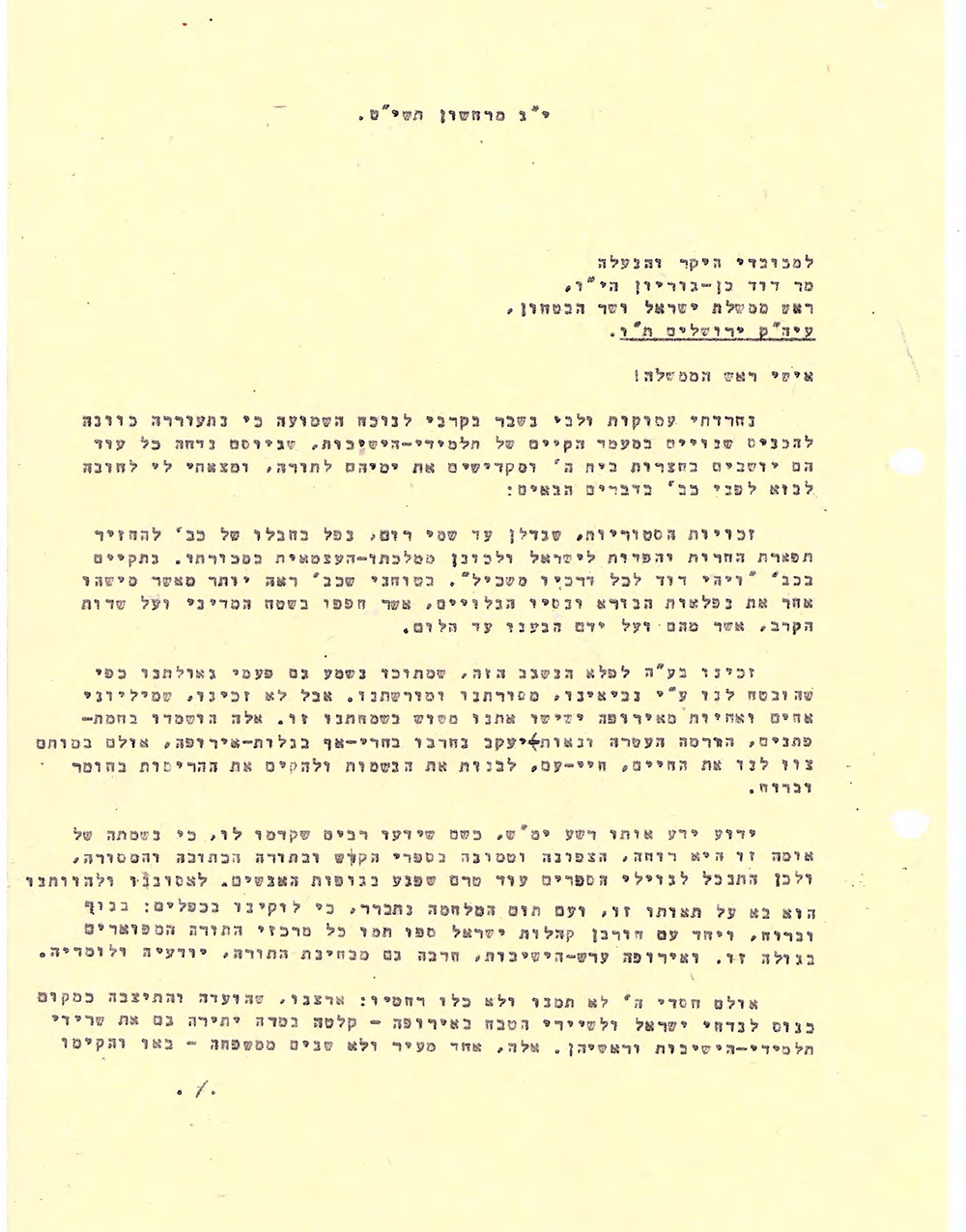
To get a sense of what exactly this new book is about, I am posting the Table of Contents here:


Also, worth mentioning is about ten months ago Professor Spiegel printed a book from manuscript called וישמע קולי.
Here is the description and Table of contents of the book.


For more information about purchasing this work, or for sample pages of the introduction to this work contact me at Eliezerbrodt@gmail.com


The Not-So-Humble Artichoke in Ancient Jewish Sources

The
Not-So-Humble Artichoke in Ancient Jewish Sources
Susan
Weingarten

Susan
Weingarten is an archaeologist and food historian living in
Jerusalem. This is an adapted extract from her paper The
Rabbi and the Emperors: Artichokes and Cucumbers as Symbols of Status
in Talmudic Literature,’
in
When
West met East: the Encounter of Greece and Rome with the Jews,
Egyptians and Others: Studies presented to Ranon Katzoff on his 75th

Birthday.
Edited
by
D.
Schaps, U. Yiftach and D. Dueck.
(Trieste,
2016).

There
has been a lot of discussion of artichokes recently in the wake of
the ruling by the Israeli Rabbinate that they are not kosher. A
recent post on Seforim Blog traced their ancestry as a Jewish food
back to the 14th
century.
But we can go back further, to the talmudic literature, where
artichokes appear as qinras.
We
can identify many Greek (and fewer Latin) food-names in the Aramaic
and Hebrew of the written texts of the talmudic literature. The
rabbis sometimes use Greek terminology to explain food names. Thus,
for example, biblical regulations on agriculture include a ban on
growing two different kinds of crops together. Mishnah Kilayim
tells
us that thistles (qotzim)
are allowed in a vineyard, i.e. they are seen as wild growths, but
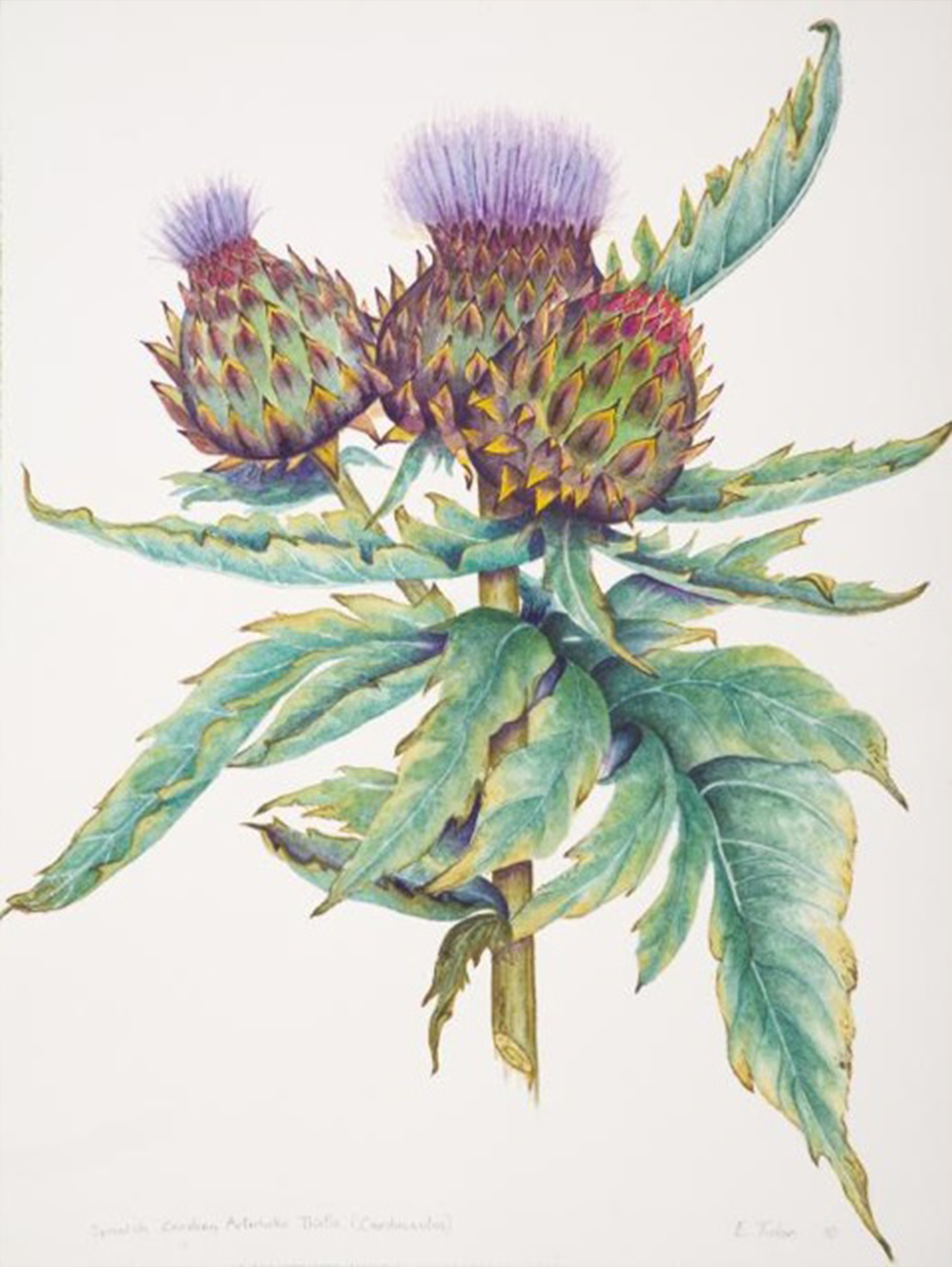
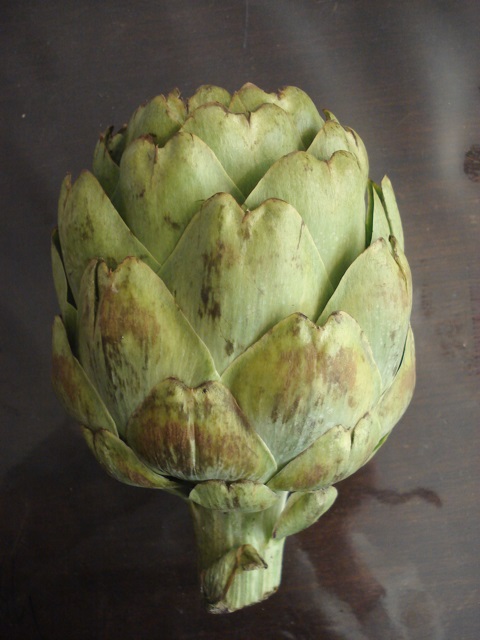
artichokes (qinras)
are not allowed, so that it is clear that artichokes are seen as
cultivated rather than wild growths.[1] Qotz,
the wild thistle, is a biblical Hebrew term, while the Aramaic qinras
appears
to be derived from the Greek for artichoke,
kinara

or
kynara.
Artichokes
were carefully cultivated in the Graeco-Roman world; presumably their
name came with the agricultural methods which turned wild thistles
into cultivated artichokes. It is still difficult to know whether the
artichoke proper is meant here, or rather the closely related
cardoon.[2] It is clear, however, that there were a number of edible
thistles which grew wild, and that the artichoke is a cultivated
variety. The medical writer Galen describes the artichoke as
‘overvalued.’[3] This was partly because of its negative health
properties, for he saw it as unwholesome, sometimes hard and woody,
with bitter juice. So he recommends boiling artichokes and adding
coriander if eating them with oil and garum;[4]
or frying them in a pan.
But
Galen’s objections to artichokes may not be merely medical. They
may also be an echo of the attitude we find in Pliny,[5] who tells us
that artichokes were exceptionally prized by the gourmets of Rome,
and that there was a roaring trade in them. Pliny disapproved:

‘There
still remains an extremely profitable article of trade which must be
mentioned, not without a feeling of shame. The fact is that it is
well-known that at Carthage, and particularly at Cordoba, crops of
carduos,
artichokes,
yield
a return of 6000 sesterces from small plots – since we turn even
the monstrosities of the earth to purposes of gluttony … they are
conserved in honey-vinegar with silphium and cumin, so that there
should be no day without thistles for dinner.[6]

Pliny,
writing in the first century, uses all the tricks of rhetoric to put
over his disapproval of this ridiculous fad of over-valuing
artichokes, and eating them out of season: note the alliteration and
assonance of carduos
with
Cartago and Corduba, which he presumably despised as far-away
provincial cities.[7] He is also indignant about the enormous prices
charged for them, satirising the rich who eat the artichokes as being
lower than the animals who despise them.[8] His diatribe does not
seem to have been generally successful. Artichokes were still clearly
prized in the Roman world of the third and fourth centuries: a mosaic
from the so-called ‘House of the Buffet Supper’ in Antioch shows
them on a silver tray as a first course for dinner.[9] And in a
Palestinian context, another mosaic with what look like two purplish
artichoke heads and a silver bowl, dated to the third century, has
been found recently in excavations of ancient Jerusalem – or rather
Aelia
Capitolina
.[10]
The
classical picture of artichokes as food for the rich and upper
classes is confirmed by the talmudic literature. For example, Midrash
Esther Rabbah, writes:

‘Bar
Yohania made a feast for the notables of Rome … What was missing?
Only the qinras
(=artichoke).’[11]

S.
Klein in his article ‘Bar-Yohannis from Sepphoris at Rome,’
suggested
that this may be the first reference to the famous Roman Jewish
artichoke dish carciofi
alla giudia
.[12]
(For a recipe see E. Servi Machlin The
Classic Cuisine of the Italian Jews

[NY,1981,
1993] p. 180-1). Unfortunately there is no proof to confirm Klein’s
charming suggestion, since, as we have seen, artichokes seem to have
been famously popular among the Roman pagan nobility.[3] One of the
reasons for the perceived desirability of artichokes as food may also
have been the effort needed to prepare them – an effort usually
only available to the rich through their slaves – the poor would
have had little time for this. But one time when the poorer Jews
would have had time would be on a festival, when ordinary work was
not allowed, but food-preparation was permitted, as it contributed to
the enjoyment of the festival. The Tosefta specifically states that
while cutting vegetables was generally not allowed on a festival (in
case people actually went and cut them down in the fields), trimming
artichokes and ‘akavit/‘aqubit,
a wild thorny plant, was allowed, as this was part of the preparation
needed for cooking these prickly vegetables, which was allowed on a
festival:

‘[On
a festival] they do not cut vegetables with shears but they do trim
the qinras,
artichoke,
and the‘akavit/‘aqubit.’[14]

Whether
poorer people actually ate artichokes as special festival food, or
rather only ate the wild ‘akavit/‘aqubit
is
unclear from this source. It is also unclear what the reason for
trimming was: to remove the thorny stems or to cut off the upper part
of the leaves and remove the inedible inner part known as the
‘choke’?
The
Babylonian Talmud records that artichokes were sent over long
distances to be eaten by Rabbi Judah haNasi. A rich man called Bonias
‘sent Rabbi a measure of artichokes from Nawsah, and Rabbi
estimated it at two hundred and seventeen eggs.’[15] The eggs here
are a measure of volume: clearly there were quite a lot of
artichokes. ‘Nawsah’ may refer to a settlement on an island in
the Euphrates River outside Babylonia.[16] It was a long way from
Galilee where Rabbi lived, and only the rich could afford to pay for
the transport of these luxuries. Some way of preserving the
artichokes, like keeping them in honey-vinegar as described by Pliny
above, must have been used.
Unlike
the classical sources, there is no moral condemnation here of
artichokes as symbols of conspicuous consumption, and tampering with
nature. The rabbis of the Talmudim are generally presented as
appreciative of good food, and as seeing feasting as desirable,
rather than to be condemned.[17] Eating good food, for example, is
one of the recommended ways of celebrating or ‘honouring’ Sabbath
and festival.[18] Indeed, Rabbi himself, when looking back
nostalgically to the time when the Temple still stood, represented
his longing for it in terms of desire for the wonderful foods that
would have been available in that now legendary time.[19]
How
did Rabbi eat his cucumbers and artichokes? Unfortunately the
talmudic literature does not tell us, but there are details in some
Roman authors which may give us some idea of the possibilities.
Athenaeus tells us artichokes must be well-seasoned, or they will be
inedible. The fourth-century Roman cookery book attributed to Apicius
recommends serving artichokes with liquamen
and
oil, and either chopped boiled egg; or cumin and pepper; or pounded
green herbs with pepper and honey.[20] We have already cited Rabbi’s
contemporary, the medical writer Galen, who visited Syria and other
parts of the Near East. He sometimes describes methods of cooking
similar to those found in the talmudic literature.[21] We saw that
Galen recommends eating artichokes boiled with the addition of
coriander, garum
and
oil. He also mentions frying them. Was this the origin of carciofi
alla giudia
?

[1]
Mishnah Kilayim v 8.
[2]
The identification of the Latin term cardui
with
artichokes, rather than cardoons, has recently been questioned:C.A.
Wright ‘Did the ancients know the artichoke?’
Gastronomica
9/4
(2009) 21-27.
[3]
Galen On
the powers of foods
ii.
[4]
Garum
was
the famous Graeco-Roman salty fermented fish-sauce, called liquamen
by
Apicius, used widely as a condiment. R.I. Curtis Garum
and salsamenta: production and commerce in materia medica
(Leiden,
1991); M. Grant Roman
Cookery

(London,
1999); S. Grainger, C.Grocock Apicius:
a critical edition
,
(Totnes, 2006)373-387:
Appendix
4: Excursus on garum and liquamen
.
It is found in the talmudic literature under the name of muries:
S. Weingarten ‘Mouldy bread and rotten fish: delicacies in the
ancient world,’ Food
and History

3
(2005) 61-72. Sauces combined with garum are mentioned in eg Tos
Betsah ii, 16 and in BTYoma76a, but it is not clear that Babylonian
Jews were using this term to mean the same foodstuffs as were used by
the Jews of the Land of Israel.
[5]
Pliny : NH
19,
152f.
[6]
Pliny NH
19,
152-3: certum
est quippe carduos apud Carthaginem magnam Cordubamque praecipue
sestertium sena milia e parvis redderareis, quoniam portent quoque
terrarium in ganeam vertimus, serimusque etiam ea quae refugiunt
cunctae quadrupedes …condiuntur quoque aceto melle diluto addita
laseris radice et cumino, ne quis dies sine carduo sit.
[7]
On Pliny’s distrust of the ‘foreign’ taking over the Roman, an
old Roman literary trope, see T. Murphy Pliny
the Elder’s
Natural
History:
the empire in the encyclopedia
(Oxford,
2004) 68ff.
[8]
On Pliny’s hostility to luxury, a traditional theme of Latin
poetry: Murphy (above n.35) 71. See also M. Beagon Roman
Nature: the thought of Pliny the Elder

(Oxford,
1992)  190: ‘moral condemnation of luxuria
is
more than a commonplace to Pliny.’
[9]
F. Cimok (ed.) Antioch
Mosaics

 (Istanbul,
1995) 44-47.
[10]
The mosaic was excavated by Shlomit Wexler-Bdollach and has been
published by Rina Talgam Mosaics
of Faith
(Jerusalem/Pennsylvania,
2014) p. 48 fig 70. I am grateful to both for allowing me to see
their pictures and text prior to publication.
[11]
The question of whether the midrash is to be seen as referring to a
Persian situation is beyond the scope of this paper.
[12]
BJPES
7
(1940) 47-51 (in Hebrew)
[13]
See also
I.
Löw Die
Flora
der Juden

vol
I, (Wien, 1924, repr Hildesheim, 1967) p.409.
[14]
Tosefta Beitzah [Yom Tov] iii,19 and cf BTBeitzah 34a. ‘Akavit/
‘aqubit

has
been identified with tumbleweed, Gundelia
Tourneforti
,
which is a wild edible thistle still eaten in Galilee and Lebanon,
and known by its Arabic name, ‘aqub.
See
A. Shmida Mapa’s
dictionary of plants and flowers in Israel
(Tel
Aviv, 2005, in Hebrew) 236; A. Helou ‘An edible wild thistle from
the Lebanese mountains’ in Susan Friedman (ed.) Vegetables:
proceedings of the Oxford Symposium on Food and Cookery 2008
(Totnes,
2009) 83-4. ‘Aqub
can
still be bought in the present-day market in Tiberias in the spring,
its price depending on whether the vendor has removed the thorns or
left that pleasure to the buyer. Its taste when cooked is not unlike
artichoke.  
[15]
BT Eruvin 83a (my translation).
[16]
For the identification of Nawsah see A. Oppenheimer, Babylonia
Judaica in the Talmudic Period

(Wiesbaden,
1983) pp.266-7.
[17]
This point about the generally positive attitude of the rabbis (in
this case the Babylonian rabbis) to the good things in life is made
by I.M. Gafni The
Jews of Babylonia in the talmudic era: a social and cultural history

(Jerusalem,
1990) 130 citing M. Beer Amoraei
Bavel  – peraqim be-hayei ha-kalkalah

(Ramat
Gan תשל”ה
).
But having made his point, Gafni hedges here, warning against taking
a series of anecdotes from different periods as evidence. However, we
should note that this picture is consistent over both Palestinian and
Babylonian sources, and if we compare it to, say, the attitudes of
early Christian writers or Philo, we see that this trend is absent
there. See my paper ‘Magiros,
nahtom
and
women at home: cooks in the Talmud’ Journal
of Jewish Studies
56
(2005)
285-297.
[18]
For a discussion of the rabbinical requirement in both  Bavli
and Yerushalmi to honour the Sabbath by eating good food, see S.J.D.
Cohen,’Dancing, clapping, meditating: Jewish and Christian observance
of the Sabbath in pseudo-Ignatius’ in B. Isaac, Y. Shahar (eds)
Judaea-Palaestina,
Babylon and Rome: Jews in Antiquity

(Tübingen,
2012) 33-38.
[19]
Midrash Lamentations Rabbah iii, 6/17.  
[20]
Apicius
3.6.
[21]
See e.g.  S. Weingarten ‘Eggs in the Talmud’ in R. Hosking
(ed.) Eggs
in Cookery: Proceedings of the Oxford Symposium on Food and Cookery,
2006

(Totnes,
2007) 274-276.


The Humble Artichoke

The New York Times recently discussed a novel ruling of the Israeli Chief Rabbinate.  The Rabbanut held that artichokes fall into the category of prohibited foods.  This is not because they are listed as such in the Torah. Rather the expansion of the biblical category is because of a secondary concern, the presence of insects.  Those insects may reside in the heart which without opening the tight leaves that comprise the vegetable one is unable to determine if insects are present, thus, eating artichokes whole risks also ingesting insects.

Jews in Italy, however, took issue with this ruling. They pointed to a long-standing tradition of eating artichokes whole after deep frying.  That tradition places the creation of the dish sometime in the 16th century in the Jewish ghetto in Rome. Indeed, their preparation is so intertwined with Jews, in Italian it is called Jewish-style artichoke—Carciofo alla giudia.  Today many travel books include this delicacy among those to try in Italy listing various kosher restaurants that offer the Jewish Artichoke.  The Rabbi of Rome refused to reform the practice of Italian Jews and continues to eat and provide his hechsher to restaurants which serve this vegetable prepared in the traditional manner.[1]  

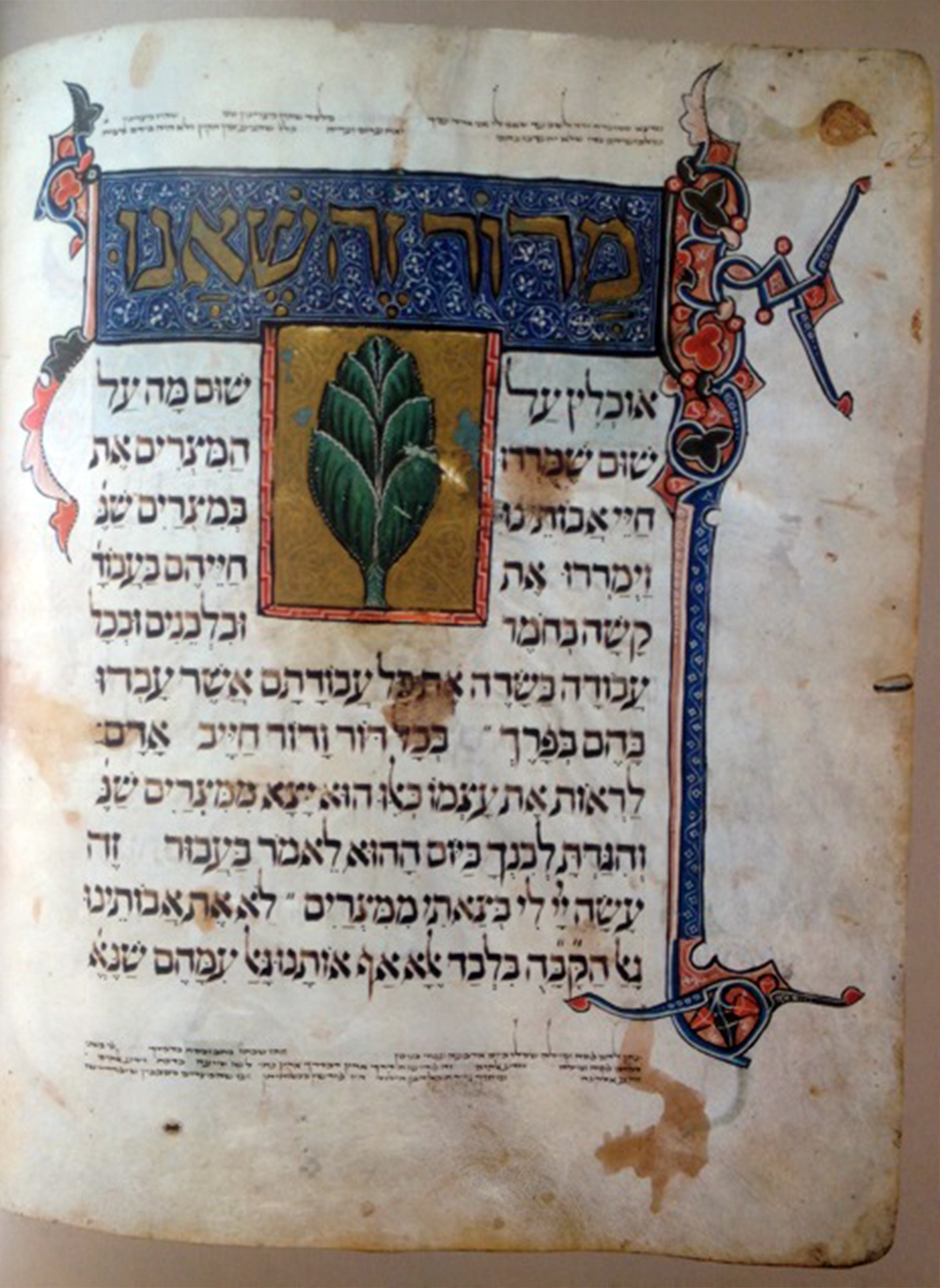
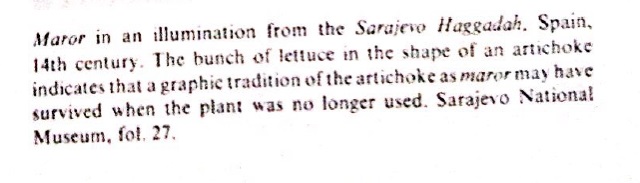
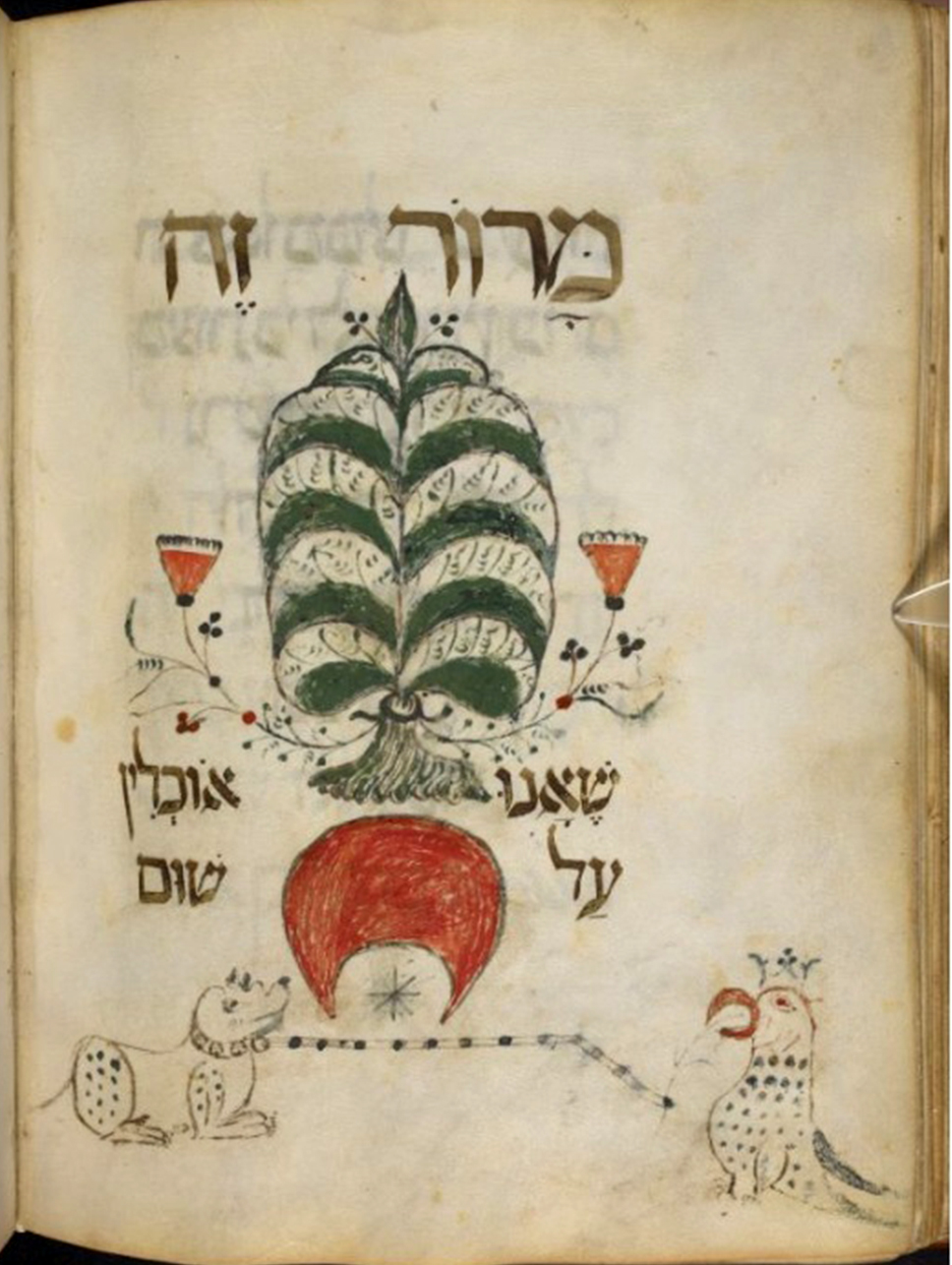
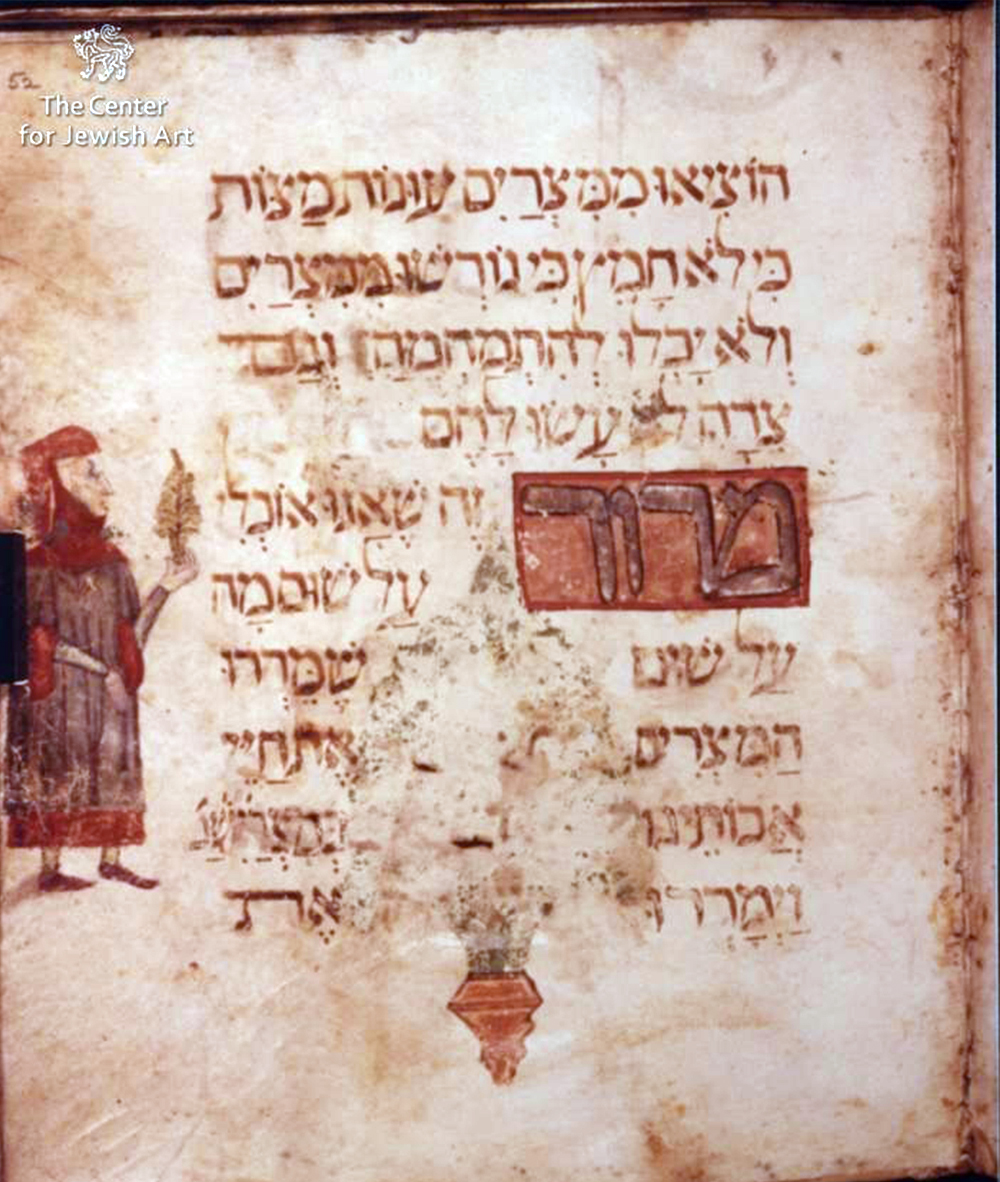
The history of how the fried artichoke became associated with Jews is somewhat murky but likely dates at least to the 16th century.  But we have even earlier manuscript evidence that artichokes were eaten by Jews.  Indeed they were eaten at a time when Jews were especially punctilious regarding food, Pesach.  A number of medieval haggadot contain illustrations of marror, most include a leafy green of some type.  Two haggadot, the Rylands and the Brother, composed in the mid/late-14th century depict marror as an artichoke. [2]  

[1] Regarding the autonomy of the local rabbinate see Teshuvot haRosh, Klal 21, 8-4, 9-2, and generally the sources collected in HaMahkloket beHalakha,  Hanina Ben-Menahem, Neil Hecht, Shai Wosner, eds., vol. 2 (Boston:  Institute of Jewish Law Boston University School of Law, 1993), 753-820. 
Students of history will recall that this is not the first time that the norms and traditions of the Italian Jews came into conflict with the different prevailing norms among other groups of Jews. In the controversy engendered by the publication of the pamphlet Divrei Shalom ve-Emet by Naftali Herz Wessely in the aftermath of Emperor Joseph II’s Edict of Toleration, which called for educational reform among his Central European subjects. After his pamphlet was found objectionable and insulting by leading rabbis, Wessely wrote to rabbis in Italy, believing that many of the ideas he was advocating, like a graded curriculum, a non-exclusive emphasis on Talmud, and use of the general vernacular, were well within the norms of their tradition. In fact, with the exception of only one of the Italian rabbis, R. Ishmael Ha-kohen of Modena, all the others agreed and supported him and helped the controversy die out. These aspects of the Wessely affair are discussed in Lois C. Dubin, “Trieste and Berlin: The Italian Role in the Cultural Politics of the Haskalah,” chapter 8 in Jacob Kats, ed., “Towards Modernity: the European Jewish Model” (New York, 1987) and the series of articles by Yisrael Natan Heschel in Kovetz Beit Aharon ve-Yisrael 8 (1993) titled “דעתם של גדולי הדור במלחמתם נגד המשכיל נפתלי הירץ וויזל.”
[2] The Rylands Haggadah manuscript is discussed in Katrin Kogman-Appel, Illuminated Haggadot from Medieval Spain: Biblical Imagery and the Passover Holiday (University Park:  Penn State University Press, 2006) 91-97.  The Brother manuscript has recently been reprinted in full with an excellent introduction by Marc Michael Epstein in addition to other relevant articles.  The Brother Haggadah:  A Medieval Sephardi Masterpiece in Facsimile (New York:  Thames and Hudson, 2016).  For a discussion of the identification of marror see Zohar Amar, Merrorim: Hameshet Minei haMarror sheAdam Yotseh Bahem Yedei Hovato bePesach (Modiin [], 2008). 


China and the Answer to the Last Quiz

China and the Answer to the Last Quiz
Marc B. Shapiro
I recently returned from China and one of my friends asked me if during my time there I found anything of relevance to the Seforim Blog. He did not mean the comment seriously, but in fact I did find something. Whenever I am in synagogues I make a point of examining their collection of books, as you never know what you might come across. In Beijing I was at the fabulous Chabad House and I found something that will be of interest to Seforim Blog readers. Before getting to that I need to mention that my time in Beijing was made doubly special as I was able to spend Shabbat with Rabbi Dr. Dror Fixler. In addition to being an outstanding award-winning scientist, he is also a fine Judaic scholar. Among his important publications are new translations from the Arabic of Maimonides’ commentary on the Mishnah to tractates Berakhot, Peah, and Avodah Zarah. Each volume is accompanied by Fixler’s learned notes. Fixler has also published numerous articles on various Torah themes, including on practical halakhic matters. See here.
Fixler is a student of R. Nachum Eliezer Rabinovitch, and I used some of the time we were together to clarify the details of R. Rabinovitch’s position that there is no halakhic prohibition in using an electronic key card on Shabbat,[1] or in walking through a door that opens electronically, or even using an electronic faucet where the water comes out when you put your hand under it. Without getting into the halakhic details, I think one thing is sure, namely, that the future will bring more such lenient decisions in this area. The changing circumstances of modern life will create enormous pressure for lenient decisions, as modern technology which helps us in so many ways also creates many problems regarding Shabbat. For example, how long until it will be impossible to access an apartment building in New York and other big cities without using a key card? The day is probably coming when private apartment doors will also use key cards, not to mention numerous other such Shabbat-problematic technological advances that will be unavoidable aspects of life in the future. Therefore, I believe that some future poskim will return to R. Shlomo Zalman Auerbach’s position that if there is no creation of heat or light, then technically there is no violation of Shabbat.
Getting back to the matter of seforim, while looking through the books at the Chabad House I saw Birkat Yadi by R. Joseph Judah Dana.
I had never before seen this book and it is not found on Otzar ha-Chochmah. Pasted on the inside cover is the following. (Unfortunately, the pictures I took came out blue on my phone.)
The book the editor, Prof. Joseph Dana, is referring to is Tzofeh Penei Damesek. Here is the title page.
Without getting into the accusation of plagiarism, there is something that is noteworthy about Tzofeh Penei Damesek, namely, that included among the approbations from great rabbis is a lengthy letter from Professor José Faur.
Let me share one other interesting thing about my recent trip to Beijing. It isn’t related to seforim but was of great interest to my colleagues at the University of Scranton, which is a Jesuit university.  The Friday night before arriving in Beijing I was in Hong Kong and learned that one of the people I was talking to at dinner shared my interest in Matteo Ricci (1552-1610), the famous Jesuit missionary to China. This man told me that years before he had visited Ricci’s grave and that it was worthwhile for me go see it. There is actually a Jewish connection here, for Ricci was asked if he would take over the position of rabbi of the Kaifeng Jewish community, but on the condition that he give up eating pork.[2] (Obviously the Jews of Kaifeng were not the most learned.)
I checked online and saw that Ricci’s grave, which is found in the first Christian cemetery in China, was indeed a site that some tourists had written about. However, in recent years it had become much harder to visit without being part of an organized group and arranging the visit ahead of time. The fact that the small cemetery is found on the grounds of a Communist party school is no doubt the reason for this. I was thus unsure whether they would allow me in, but my guide was able to convince them that I was harmless. If it were only so easy to get into some of the old Jewish cemeteries I have attempted to visit.
Here is the grave and the plaque put up nearby.
Concerning China there is a lot more I have to say, and I hope to publish a manuscript from a few hundred years ago regarding the Jews of China. For now, let me just note the following which will be of particular interest to Seforim Blog readers: There are two works of responsa that were published by rabbis who served in China. (I am not including Hong Kong which I will return to in a future post.) The first is R. Elijah Hazan’s Yedei Eliyahu. Here is the title page of volume 1.
R. Hazan published three volumes in total. What makes his responsa very unusual, if not unique, is that the text is published complete with vowels. I don’t think I have ever seen another responsa collection published with vowels. Here is a sample page.
As R. Hazan explains in the introduction, he was the hazan in the Ohel Leah Synagogue in Hong Kong for fourteen years. Following this, for ten years he served as hazan at the Ohel Rachel Synagogue in Shanghai. Both of these synagogues still exist, but Ohel Rachel is now part of the Shanghai Educational Ministry and tourists are not permitted entry.
The second work of responsa by a rabbi in China is R. Aaron Moses Kiseleff’s Mishberei Yam. Here is the title page.
This book is significant not only because the author lived in China, but also because the book itself was printed in China in 1926, in the city of Harbin. Because of its proximity to Russia, Harbin attracted many Russian Jews and they were the ones who brought R. Kiseleff there. In the 1920s the Jewish population of Harbin was over 20,000.[3] As late as the 1940s there still was a Jewish day school in Harbin.[4]
Not long ago I saw that R. Gedaliah Felder, Yesodei Yeshurun: Shabbat, vol. 2, p. 216, refers to R. Kiseleff’s Mishberei Yam, and in a footnote writes:[5]
הספר הזה חשוב מאד כי זה הספר היחידי של הלכה שנדפס ברוסיא אחרי המהפכה, נדפס בשנת תרפ”ו.
No doubt because he saw the Russian writing on the title page of Mishberei Yam, R. Felder mistakenly assumed that Harbin is in Russia. He thus concluded falsely that Mishberei Yam is the only book on halakhah published in the Soviet Union. While this is incorrect, had he known the truth he could have kept the footnote but changed it to say that Mishberei Yam is important since it is the only original book on halakhah published in China.
R. Kiseleff served as rabbi in Harbin from 1913 until his death in 1949. After his death, his widow moved to Israel and published R. Kiseleff’s derashot, Imrei Shefer. Here is the title page which refers to R. Kiseleff as the chief rabbi of the Far East.
As explained in the introduction, R. Kiseleff was actually given this title in 1937 at a gathering of Far East Jewish communities.[6]
Herman Dicker writes as follows:[7]
Rabbi Kiseleff was a great Talmudic scholar who first came to Harbin when he was in his forties. He was born in Sores, Russia, in 1866 and as a child excelled in Jewish studies. He soon became known as the Vietker Ilui (wonder child), taking his name from the Yeshiva he attended as a youth. At sixteen, he transferred to the Yeshiva of Minsk, and, two years later, moved over to the Talmudic Center of Volozhin, where he studied with the famed Rabbi Chaim Soloveitchik. . . . Rabbi Kiseleff was ordained by Rabbi Chaim Ozer Grodzenski and then served as the rabbi of Borisoff from 1900-1913. In his final year at Borisoff, in 1913, Rabbi Kiseleff was called to Harbin and he accepted the post as spiritual head there at the gentle urging of the Lubavitcher Rebbe.
Within a short period of time, Rabbi Kiseleff won the love and admiration of the entire community and achieved a great deal in raising the spiritual level of this remote Jewish congregation. It was, therefore, fitting that in 1937 he was elected, unanimously, as Chief Rabbi by the General Conference of the Far Eastern Jewish Communities. . . .
In 1931, he published Nationalism and Judaism, a Russian-language volume of sermons and lectures on the significance of Judaism. . . . Rabbi Kiseleff enjoyed the friendship of all the religious and intellectual leaders of Manchuria, without regard to their nationality or faith, for they all admired him as a person and respected his vast knowledge in various areas of academic learning. At one time, he debated the “Merchant of Venice” and the image of Shylock with three university professors and to this day scores of men and women remember his brilliance and eloquence on that occasion.
There is a good deal of interesting material in R. Kiseleff’s Mishberei Yam, and let me call attention to just a few things. In no. 15, R. Kiseleff rules that if there is a non-Jew who wants to convert but the doctors tell him that it is dangerous for him to be circumcised, he still cannot be converted without a circumcision. In this responsum, R. Kiseleff also writes about how rabbis should avoid converting people who are not serious about being good Jews (although he assumes, as most rabbis did until recent years, that a conversion with such people would still be valid ex post facto).
ובכלל עלינו להתרחק בכל האפשר לקבל גרים כאלו שידוע שרוב הגרים הבאים להתגייר בימינו לא משום אהבתם לדת ישראל באמת רק על הרוב סבות אחרות בדבר משום אשה או דומה לזה ואף שמלמדים אותם לומר בפני ב”ד שאוהבים את דת ישראל ומטעמים ידועים אין אנו דוחים אותם שהרי בדיעבד גם בכה”ג הוי גר, אבל גרים כאלו יותר נוח לנו שאם נמצא אמתלא שלא לקבלם מהראוי להתרחק מזה, דאם בגרים אמתים אמרו חז”ל שקשים לישראל כספחת מה נענה לגרים גרורים כאלו שאין לבם לשמים כלל.
In no. 19 he discusses if a married woman becomes insane and has a child with someone other than her husband, if the child is a mamzer.
In no. 28 he responds to a rabbi in a Far East Russian community in which there were no Sabbath observant people other than the rabbi’s family. This created problems when it came to writing a get as one needs kosher witnesses and also the sofer cannot be a Sabbath violator. R. Kiseleff argues that since everyone in the town violates Shabbat, these people are not included under the halakhic definition of a “public Sabbath violator,” which means that one violates Shabbat in front of ten observant Jews. Therefore, none of the many gittin arranged by the questioning rabbi’s predecessor are to be regarded as pasul. At the end of his responsum, R. Kiseleff notes that in Siberia there is a big problem when it comes to gittin, as many places have no rabbi and the local shochet arranges the get. Needless to say, these shochetim were often not learned at all in this matter, and this could create major halakhic complications. R. Kiseleff therefore suggested that no one should be authorized to slaughter in Siberia until he learns the laws of gittin and is given an authorization to arrange gittin.
In nos. 29-30 he deals with a case of a man who gave a get and afterwards claimed that he was forced to do so, as he was beaten and the people beating him said that if he doesn’t give the get they will kill him. R. Kiseleff writes that the get is valid as the man would not have taken the threat seriously. In support of his assumption, he cites R. Moses Isserles who states with reference to a different case that Jews who threaten to kill another Jew are only trying to scare him, “as Jews are not murderers.”[8] R. Kiseleff sent his responsum to R. Meir Simhah of Dvinsk, and the latter disagreed with R. Kiseleff. R. Meir Simhah argued that contemporary “wild” young Jews are indeed capable of killing someone, and thus when threatened by them the man being pressured to authorize the get certainly would have taken this seriously.
דבחורי ישראל הפרוצים בזמנינו חשידי גם אשפ”ד
Here is another story about Harbin told by R. David Abraham Mandelbaum. In 1943 his father and his friend, both yeshiva students in Shanghai, came to Harbin where they visited the university. While there, and presumably in the library, they found on one of the tables a Sefat Emet on Kodashim. The two students were very surprised, since how did this book end up in such a far-away place? They grabbed the book and quickly exited.[9]
פתאום צדו עינים ספר קודש, המונח על אחד השולחנות. הבחורים המופתעים ניגשו ופתחו וגילו להפתעתם, שזהו הספר הק’ “שפת אמת” על סדר קדשים. התדהמה היתה עצומה, איך הגיע ספר קדוש זה למקום נידח, בעיר חארבין שבסין הרחוקה?! אפס, הם לא חשבו הרבה, שמו את הספר באמתחתם, והסתלקו חיש מהר מן המקום כמוצאי שלל רב.
The story as told is quite shocking to me and I am surprised that it was reported, for how was this not thievery? Presumably, the university acquired the book from one of the local Jews who donated it. Or perhaps at the time the yeshiva students were visiting the man who was studying the book had gone out to the restroom or he had left the book there from a previous visit. If such was the case, when the man returned he would have been very upset to find that his book was taken. It appears that the two yeshiva students simply felt that they had a right to take the book, as it did not belong in a Chinese institution.
This reminds me of how many years ago I walked into the library of the Jewish Theological Seminary and saw that they had installed an anti-theft system to prevent anyone from removing a book without it being checked out. Upon inquiring I was told that this was necessary as some people thought it was OK to take books from the library, as they felt that they were “liberating” the books from the clutches of those who had no right to them, that is, the Conservatives. I never took that claim seriously and always assumed that a thief is a thief, and the people stealing the books – no matter how big their kippot or how long their beards – did not have any religious justification worked out. Subsequent experiences have shown me that these sorts of thieves will steal from anyone if given the chance, even if it means pretending to be kollel students. (I won’t elaborate further, but some European readers will know what I am referring to). But in the case from Harbin, it seems obvious that the reason for taking the book was precisely because the yeshiva students felt that there was no reason for the Sefat Emet to be in a Chinese institution. As mentioned already, I do not see how this can be justified halakhically, as we are not talking about a Jewish book that was, for example, confiscated by the government for anti-Semitic reasons.[10]
After the yeshiva students returned to Shanghai with the Sefat Emet, it was then reprinted there. Here is the title page.
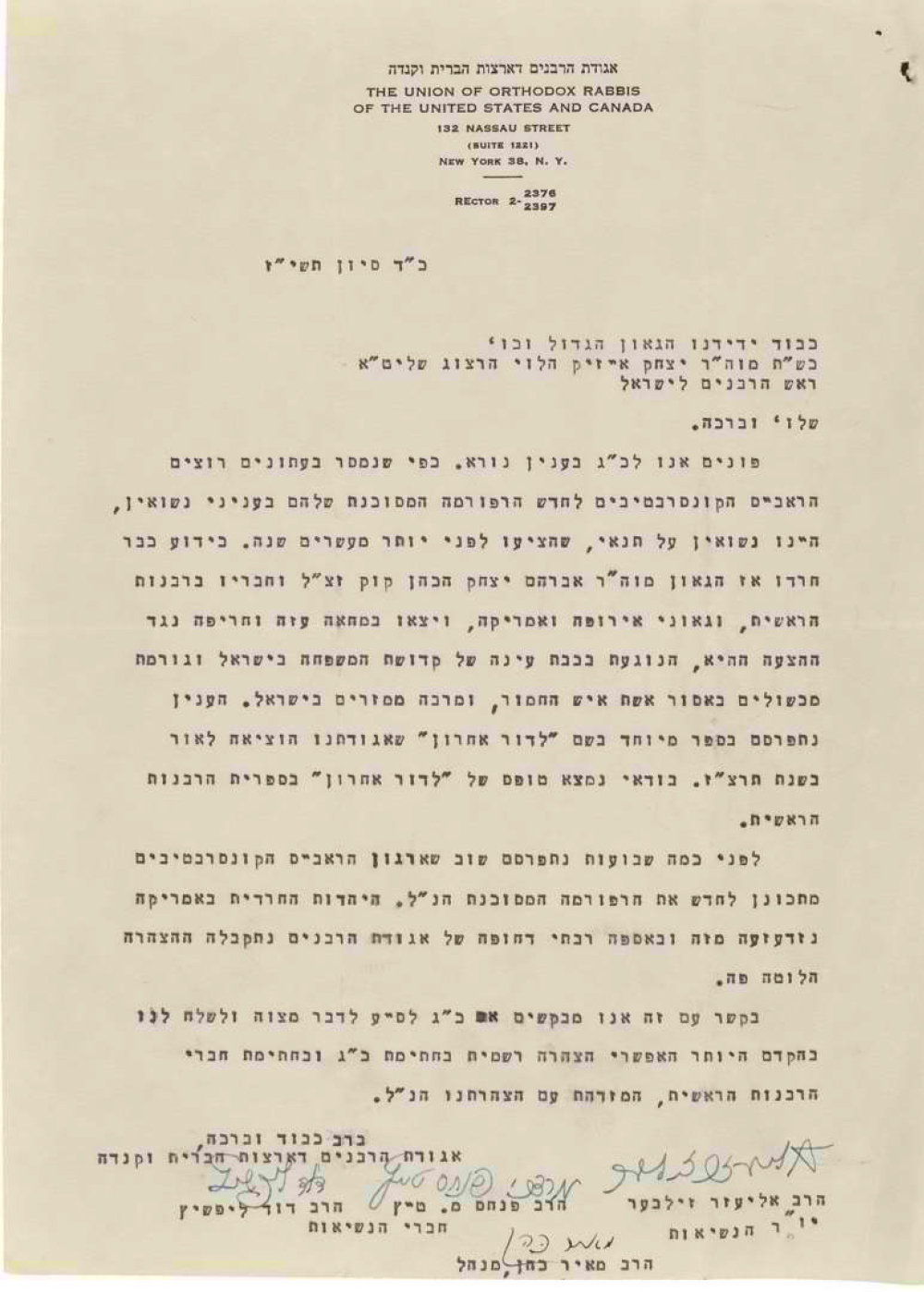
They also sent a copy of the book to R. Kiseleff, and here is the letter that accompanied the book.[11]
Interestingly, the copy of Sefat Emet that they used to reprint the book was missing some words. They therefore added by hand what they thought were the missing words. The following appears in R. David Abraham Mandelbaum, Giborei ha-Hayil, vol. 2, p. 107.
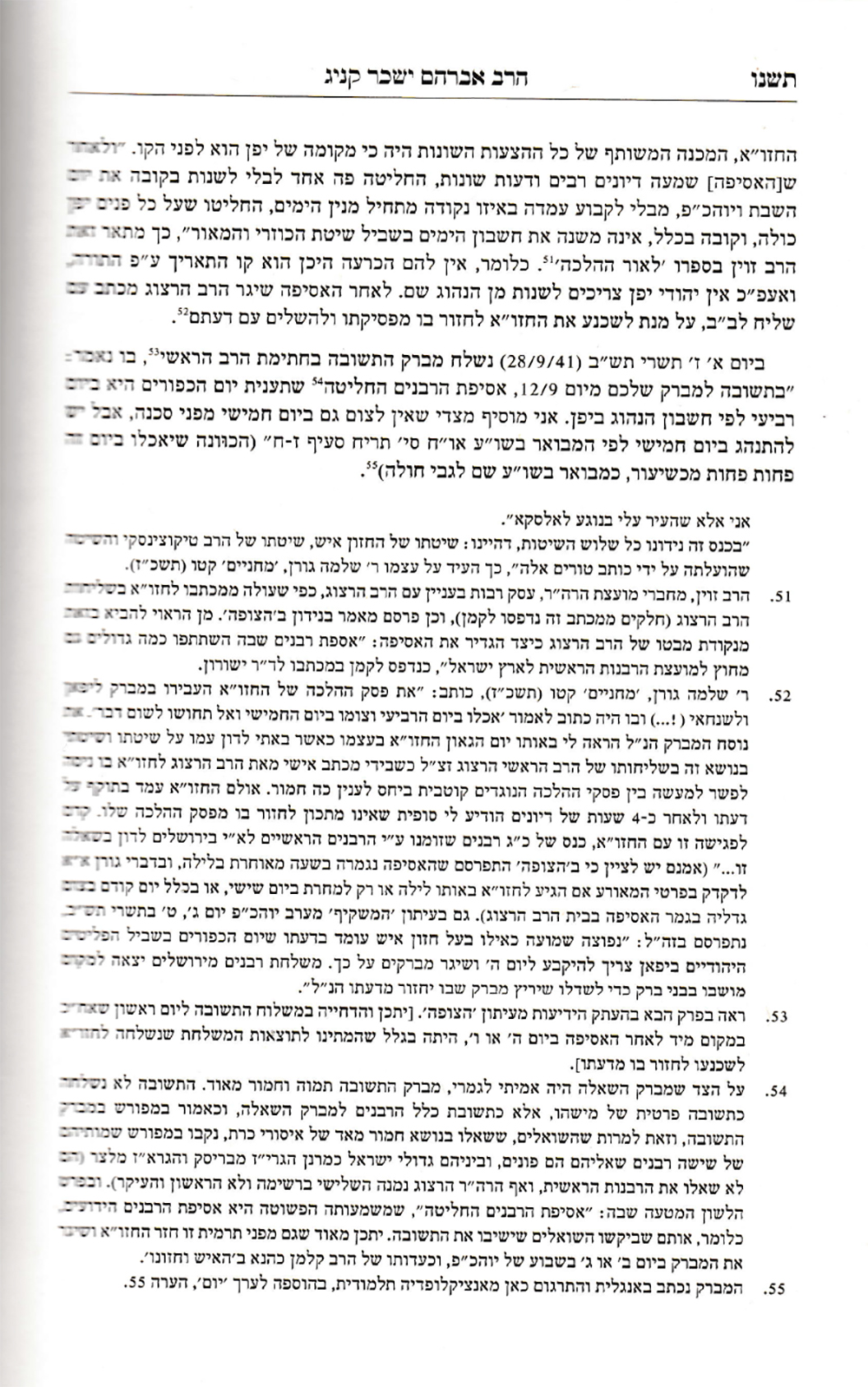
As is well known, when the Mir yeshiva reached Japan there was a lot of confusion about when to observe Shabbat and especially the upcoming Yom Kippur. Although there was already a local community there that observed Shabbat on Saturday, the Hazon Ish had informed the yeshiva that they must observe Shabbat on Sunday. R. Yehezkel Levenstein, the mashgiach of the Mir yeshiva, wrote to R. Kiseleff asking him specifically what to do about Yom Kippur, and he included a copy of the Hazon Ish’s letter explaining his reasoning. It is interesting that even after receiving the Hazon Ish’s letter R. Levenstein felt the need to consult with R Kiseleff, who was, as we have seen, regarded as the mara de-atra of the Far East.[12]
R. Kiseleff did not accept the Hazon Ish’s position. He told R. Levenstein that the question of Yom Kippur is no different than Shabbat, and they should keep the day that is currently being kept. R. Kiseleff was particularly worried that moving the Shabbat to Sunday, when it had previously been observed on Saturday, could lead to a lessening of Shabbat observance among the general Jewish population:
ורע עלי המעשה ששמעתי שמקצת מן הפליטים בקאבע קראו בתורה ביום א’ והתפללו תפלת שבת, ביחוד היא דרושה זהירות מרובה בענין זה בתבל כו’. ועתה כאשר נמצאו חרדים לדבר ד’ דוחים את השבת ליום א’ חג הנוצרים, יקל ענין שבת בעיניהם לגמרי, ויאמרו התירו פרושים את הדבר, ויצא מזה מכשול גדול אשר קשה יהי’ לתקן. לכן נלך מדרך זה חדש כזה אסור מן התורה בכל מקום . . . וכל המשנה ידו על התחתונה.
R. Aryeh Leib Malin also wrote to R. Kiseleff, and R. Kiseleff replied to him saying the same thing and sharply rejecting the Hazon Ish’s opinion.
בערב ש”ק העבר הרציתי מכתב להרב ר’ יחזקאל לעווינשטיין שליט”א בתשובה על מכתב הרב חזון איש, בו הודעתי טעמי ונימוקי שלא אסכים לפסק דינו על דבר דחיית יום השבת ביאפאן ליום א’ . . . כי דבריו בנוים על יסוד רעוע ובלתי ברור ומוסכם . . . ובלי ספק יגרום חלול שבת ותשתכח תורת שבת לגמרי . . . והריני מורה שיהודי יאפאן ישמרו שבת ומועדים ככל היהודים [במזרח הרחוק].
One wonders how R. Kiseleff would have reacted had he known that according to R. Simhah Zelig Rieger even in Harbin Jews should avoid Torah prohibitions on Sunday.[13] 

והרי הישראלים בחארבין שהיא מארץ חינא אינם מתנהגים כבעל המאור, נראה שלענין התפילה שהוא ענין דרבנן לא נשנה ממנהג הישראלים היושבים שם. ולענין איסור דאורייתא יש לחוש לדעת בעל המאור שהשבת מאוחרה לשל ירושלים

I earlier mentioned R. Kiseleff’s book of derashotImrei Shefer. In addition to the typical derashot one would expect in such a volume, it also includes eulogies for the Hafetz Hayyim and R. Kook. Regarding R. Kook, R. Kiseleff tells us that they were at the Volozhin yeshiva together and R. Kook was regarded then as one of the yeshiva’s outstanding students. He also records a talmudic question that R. Kook asked that R. Kiseleff tells us became the talk of all the students. Also included in the book are speeches R. Kiseleff gave on the twentieth and twenty-fifth anniversaries of Herzl’s death. He describes how thanks to Herzl many Jews who were entirely removed from Jewish life and ready to assimilate began to feel pride in their heritage and reconnect to their people.

Also included in the book are speeches he gave in honor of the Balfour Declaration and in memory of Nahum Sokolow and the victims of the 1929 massacres in the Land of Israel. Especially noteworthy is the speech found on p. 97, which celebrates the opening of the Hebrew University.
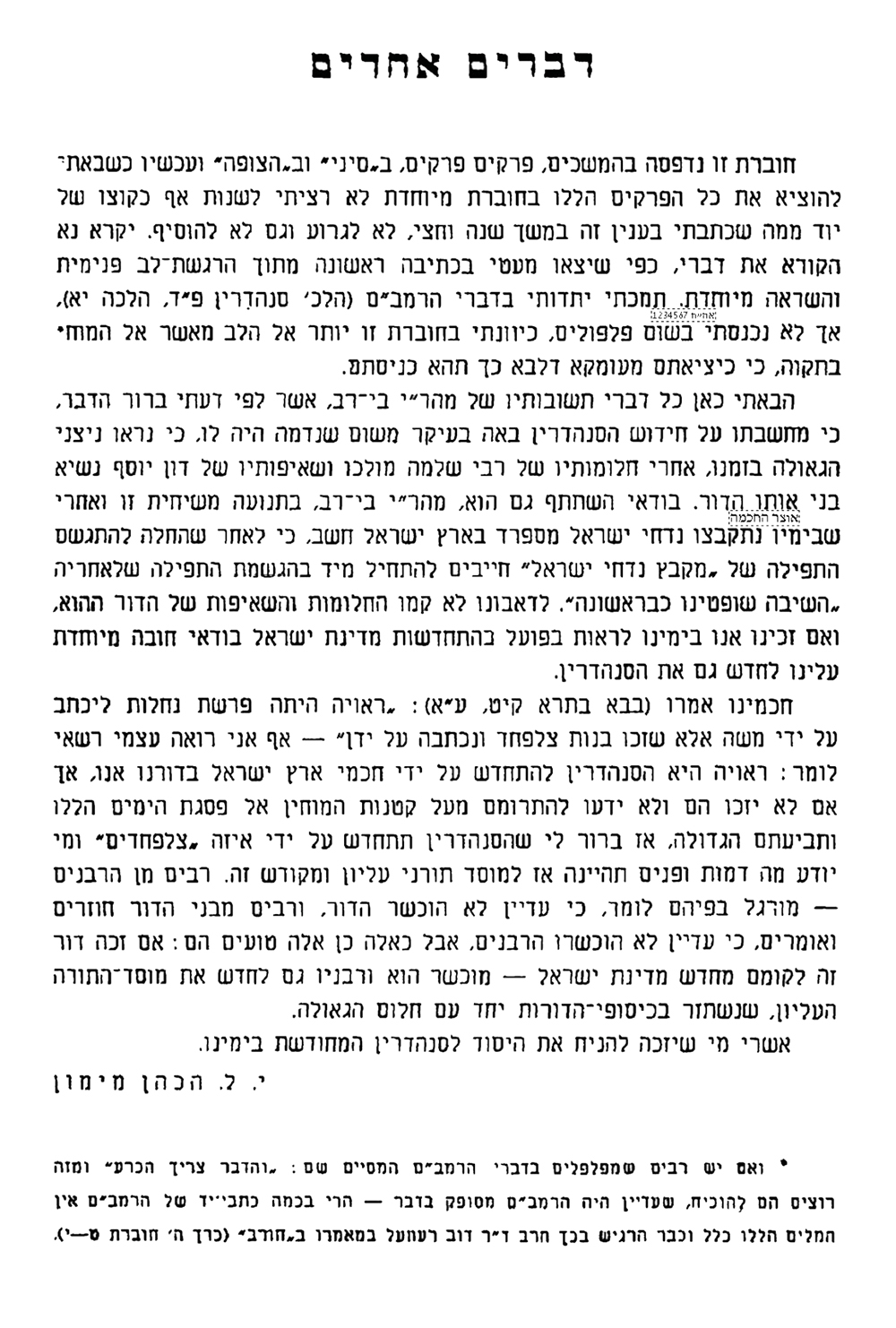
Many readers know about R. Kook’s speech on this occasion, and how he was attacked for supposedly applying to the university the verse, “For Torah shall forth from Zion, and the word of the Lord from Jerusalem” (Isaiah 2:3, Micah 4:2).[14] While R. Kook never used this verse with reference to the Hebrew University, R. Kiseleff did, as you can see from the above text.
* * * * *
In my post here I wrote:
It has been a while since I had a quiz, so here goes. In the current post I mentioned the prohibition of Torah study on Tisha be-Av. This is an example where the halakhah of Tisha be-Av is stricter than that of Yom Kippur. Many authorities rule that there is also something else that is forbidden on Tisha be-Av but permitted on Yom Kippur. Answers should be sent to me.
Many wrote to me that it is forbidden to greet someone on Tisha be-Av but not on Yom Kippur. Greeting is forbidden on Tisha be-Av due to the halakhot of mourning. However, this is forbidden according to everyone, and in the question I asked for an example of something that according to “many authorities” is forbidden on Tisha be-Av but permitted on Yom Kippur. If you pointed to something that is forbidden by “all” authorities (i.e., standard undisputed halakhah), this is not the correct answer.
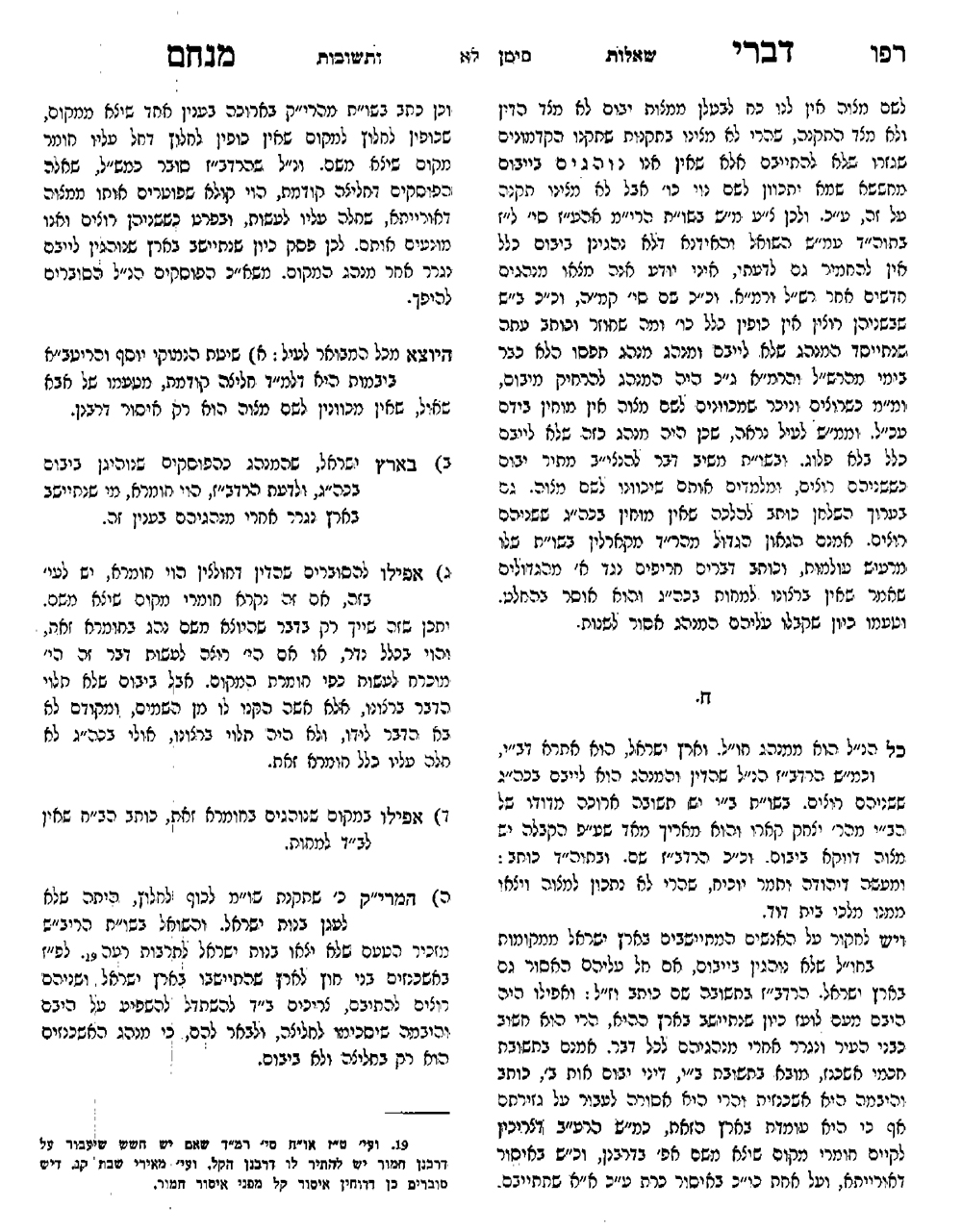
A number of people also wrote to me that on Tisha be-Av one does not sit in a regular chair, unlike on Yom Kippur. Yet contrary to popular belief – and based on the emails I have received, it is indeed a quite popular belief – there is no halakhah that one must sit on the ground on Tisha be-Av. Rather, this is a minhag, not a law, and because it is a minhag we do not sit on the ground the entire day.[15]
The correct answer, which was sent to me by Brian Schwartz and Abe Lederer, is that many authorities hold that it forbidden to smell spices on Tisha be-Av, but this is not the case on Yom Kippur. In fact, smelling spices is recommended on Yom Kippur as a way to increase the number of blessings recited on this day, so that one can reach one hundred.[16]
While this is the answer I had in mind, Peretz Mochkin sent me another answer. If one has a seminal discharge on Yom Kippur, most poskim, including the Shulhan Arukh, Orah Hayyim 613:11, hold that he cannot go to the mikveh on this day. However, there are a number of significant authorities who hold that he may do so. When it comes to Tisha be-Av, there is agreement among halakhic authorities that it is forbidden to go to the mikveh after a seminal discharge.[17] However, this does not really answer the quiz question, since the question spoke of something that is permitted on Yom Kippur but forbidden on Tisha be-Av, and as noted, most poskim, at least in recent generations, forbid going to the mikveh on Yom Kippur in the case of a seminal discharge.[18]
________________________________
[1] I am aware of another posek who permits using an electronic key card on Shabbat, but requires covering up the green LED light. He explained to me that people feel good when they see the green light go on, and thus it cannot be regarded as a פסיק רישא דלא ניחא ליה. I wonder though, would other poskim agree that the feeling of satisfaction that the key works really be regarded as the sort of benefit that is considered as ניחא ליה? I think we usually assume that ניחא ליה is some sort of tangible benefit, like a light that goes on and allows you to see. In any event, the LED light is not a concern for R. Rabinovitch, and he does not require covering it up. R. Yitzhak Abadi only permits using an electronic key card on Yom Tov, and he too does not require covering up the LED light.
[2] See Donald Daniel Leslie, The Survival of the Chinese Jews: The Jewish Community of Kaifeng (Leiden, 1972), pp. 33-34; Jonathan D. Spence, The Memory Palace of Matteo Ricci (New York, 1983), p. 121.
[3] See Patrick Fuliang Shan, “‘A Proud and Creative Jewish Community’: The Harbin Diaspora, Jewish Memory and Sino-Israel Relations,” American Review of China Studies 9 (Fall 2008), p. 7. See also Joshua Fogel, “The Japanese and the Jews: A Comparative Analysis of Their Communities in Harbin, 1898-1930,” in Robert Bickers and Christian Henriot, eds., New Frontiers: Imperialism’s New Communities in East Asia, 1842-1935(Manchester, 2000), pp. 88-109
[4] See Zorah Warhaftig, Refugee and Survivor (Jerusalem, 19880, p. 208.
[5] Yesodei Yeshurun: Shabbat, vol. 2, p. 216.
[6] For the political background of these gatherings, see Herman Dicker, Wanderers and Settlers in the Far East (New York, 1962), pp. 45ff.; David Kranzler, Japanese, Nazis and Jews: The Jewish Refugee Comunity of Shanghai, 1938-1945 (Hoboken, 1988), pp. 220ff.
[7] Ibid., pp. 25-26. Much of what Dicker writes is taken word for word from the introduction to Imrei Shefer.
[8] Shulhan Arukh, Hoshen Mishpat, 236:1.
[9] David Avraham Mandelbaum, Giborei ha-Hayil (Bnei Brak, 2010), vol. 2, p. 105.
[10] The Hebrew manuscripts in the Vatican was an issue in the late 1980s, when the late Manfred Lehmann led a group, the Committee for the Recovery of Jewish Manuscripts, which insisted that the manuscripts be returned to the Jewish people by being donated to the National Library of Israel. See Lehmann, “The Story of the Hebrew Manuscripts in the Vatican Library,” available here. Nothing came of this venture and it does not seem like anyone at present has any interest in making an issue of the matter.
[11] From Mandelbaum, Giborei ha-Hayil, vol. 2, p. 109.
[12] See R. Yohanan ha-Kohen Schwadron, “Be-Inyan Kav ha-Ta’arikh,” Beit Aharon ve-Yisrael, Shevat-Adar 5770, p. 118. The complete letters of R. Kiseleff to R. Levenstein and R. Aryeh Leib Malin (mentioned later in the post) are found in R. Menahem Kasher, Kav ha-Taarikh ha-Yisraeli (Jerusalem, 1977), pp. 241-242.
[13] See his letter published in Talpiot 2 (1945), pp. 177-178.
[14] See my Changing the Immutable, pp. 143, 151.
[15] See e.g., here.
[16] See R. Yitzhak Yosef, Yalkut Yosef, Orah Hayyim 612:3. R. Yosef does cite a few sources that forbid smelling spices on Yom Kippur, but this viewpoint has never been accepted. I don’t think readers will be surprised to learn that there is an entire sefer devoted to the laws of smelling. The anonymously published 224-page Birkat ha-Reiahappeared in 2004. Here is the title page.
On pp. 196ff. he discusses the case of someone who has no sense of smell. The question is, can he make the blessing on besamim? The Shulhan Arukh, Orah Hayyim 297:5, rules that such a person can make the blessing on behalf of one who does not know how to make the blessing himself. This ruling was disputed by others, yet R. Jacob Reischer, Shevut Ya’akov, vol. 3, no. 20, defends the Shulhan Arukh, but as he says, not for R. Joseph Karo’s reason. R. Reischer argues that even though one without the sense of smell does not get any physical benefit from smelling something, his soul benefits. R. Reischer mentions that although the doctors reject the notion that the soul gets any benefit from this, their viewpoint can be disregarded because their scientific knowledge comes from “Aristotle and his companions.” R. Reischer died in 1733 and it is amazing that this is how he regarded the state of the study of medicine. Even more amazing, however, is that as he continues to attack modern science, R. Reischer adds that the non-Jewish scientists’ knowledge is based on the assumption that the earth is round, which contradicts the talmudic understanding and is thus to be rejected. How is it possible that in the eighteenth century R. Reischer believed that the earth was flat? 

The Vilna Gaon is also recorded as having held this opinion. See R. Joshua Heschel Levin, Aliyot Eliyahu (Jerusalem, 1989), p. 98 n. 82. This also appears to be what the Vilna Gaon is saying in his commentary to Tikunei Zohar (Vilna, 1867), p. 158a:

והוא יסוד הארץ שהיא רבועא כמ”ש מארבע כנפות הארץ ואמר בספרי הכנף לאפוקי עגול’ [עגולה]
See also R. Reuven Margaliyot’s note to Zohar, Vayikra, p. 10a, n. 10 (he mistakenly cites the Vilna Gaon’s comment as appearing in his commentary to Tikunei Zohar, p. 5b).
Did R. Zvi Elimelekh of Dinov, the Bnei Yisaskhar, think the earth was flat? Here is what he writes in his Devarim Nehmadim to Avot 5:1:
אין לחקור על היוצר כל למה ברא את העולם [בי’ מאמרות וגם] אין לחקור למה ברא את השמי’ כדוריי והארץ שטחיית וכיוצ’.
See here for a contemporary rabbi and author of seforim who believes the earth is flat.
[17] The only exceptions to this I have found are two unknown sources mentioned by R. Simhah Rabinowitz, Piskei Teshuvot, Orah Hayyim 554 note 58. These two sources are (תורת חיים (פעסט and קונטרס קודש ישראל 
[18] R. Joseph Hayyim, Rav Pealim, vol. 2, Orah Hayyim no. 61, states that among the medieval authorities, most held that it is permissible to to go to the mikveh on Yom Kippur after a seminal discharge: 

דהמתירים לטבול הם רוב מנין ורוב בנין