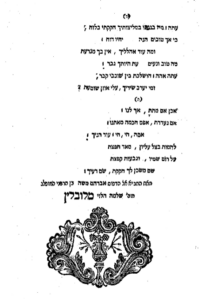
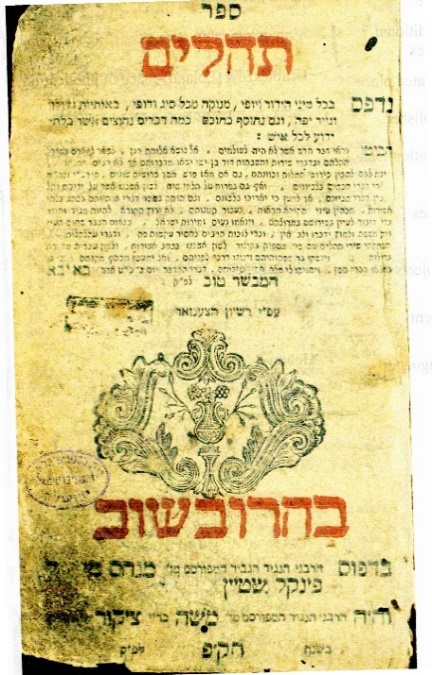
A humorous tale published by the teenage S.Y. Agnon, using the penname “Mazal Tov,” appeared in a Purim supplement to a Kraków newspaper in 1908 but was not later included in his collected works — translated for the first time from Hebrew by Jeffrey Saks.
“Those Who Err All Their Days, and One Man Who Erred Not At All”—A Tale in Honor of Purim
They were both mistaken in a matter of halakhah.
Such is the way of the world: shrewd men commonly have ugly wives, while the wives of fools are fair. When the husband looked at his wife and saw how repulsive a creature she was—how ugly her countenance, how displeasing her face—he said in his heart: this proves that there is no wiser man in the world than I. And when his wife looked at him and saw what a fool he was, she supposed that there was none more lovely than herself. Through error they raised daughters instead of sons, and in error they married off one of those daughters.
They imagined that the young man they had chosen for her was truly a great gem, the like of which does not exist: a prodigious scholar, God‑fearing, and possessed of many other virtues. But they looked into it and soon found that he had nothing in this world but his folly. He read heretical books, burying his head in them all day long, and his heresy preceded his fear of Heaven. Not only this, but he was a coarse and lustful fellow—may the Merciful One save us—running after temptation and indulging in crass talk. And they found proof for their estimation when they saw erotic poetry falling from his lap.
When they realized this, it would have better suited them had he never been born rather than see what had come of him. He could forgo a few drops of his blood, but not these drops of ink with which his poems had been written. How beautiful this poem was in his eyes! How excellent it was! How he delighted in it! Each time he recited it he sounded the rhymes into his own ears with real feeling:
Oy! Oy! Oy! Hadassah!
So beautiful, so very fair.
My love for you has not ceased,
Entangled in the thicket’s snare.
Great is my love for you,
Hadassah—forever and a day.
For your sake even my lawfully married wife,
I shall divorce at once and without delay…
The words were still upon his lips when his wife flung herself upon him. All ten of her fingernails were sunk into him, raking the skin of his face. She struck him, and a voice burst forth from her throat, crying: “Just who do you say you’ll divorce? Take care lest I ‘divorce’ your soul from your body, you sinful scoundrel! Who is this whose heart drives him to chase foreign women? First I’ll bash in your skull—and the skull of your beauty as well!” Nor did her fury subside until she seized the page on which the poem was written, bundled it together with his pile of other papers lying before her, tore them to bits, and treated them with every manner of disgrace.
In vain did the husband seek to argue in his own defense: that he never chased after women, that he had no connection whatsoever with another, and that it was not his intention—God forbid—to divorce his wife. Rather, this poem spoke of none other than Queen Esther—she who is called Hadassah.
He then began telling her how much labor he had invested in this work, and how he had nearly completed a stage-play for the Yiddish theater, in which the beautiful tale would be told: how a certain man fell in love with Esther before King Ahasuerus had taken her to wife, but she, in her modesty, paid the man no heed. On account of his great heartbreak the man cast himself into the sea, where a great fish happened by and swallowed him whole. And for the banquet that King Ahasuerus made on the day he married Esther, fishermen hooked this great fish and hauled it up. As King Ahasuerus sat with his new queen, making merry together, a dish full of fish was set before them. When Esther stabbed her fork into one of them, a heavenly voice rang out, and a man leapt forth—the very man who had drowned himself in the sea because Esther had not yielded to him. A scandal ensued, and here began those fine and fascinating matters.
In the end, the poet’s wife was appeased. When she saw that her husband was innocent, she regretted her earlier deeds. She had been a fool, and she had erred in thinking that this Hadassah over whom her husband strayed in thought was an actual woman of flesh and blood.
But the husband could not be consoled. It pained him to see his hard work go down the drain. Had he produced his play for the Yiddish stage, his renown would have gone out into the world and his name would have been sung in praise. This, indeed, is a matter in which there is no error…
—Mazal Tov
Afterword by Jeffrey Saks
Shmuel Yosef Czaczkes (1887–1970)—later, Nobel laureate S.Y. Agnon—began his literary career in the newspapers of his native Galicia. Starting in 1904, dozens of short stories, poems, and even brief journalistic reports on events in his town of Buczacz flowed from his adolescent pen in Yiddish and Hebrew. Agnon signed his writings under various literary names: “One of the Townsmen,” “A Galician,” “A Zionist,” at times with initials: Sh. Y. Cz., or—as in the story presented here—“Mazal Tov.” Almost none of these writings were later anthologized in editions of Agnon’s collected works. The mature author apparently regarded them as “unripe fruit” and did not attempt to refine or restore them in his later writings.
This story appeared in the Kraków Hebrew newspaper, HaMitzpeh (March 13, 1908), pp. 4–5, in a special Purim parody supplement playfully titled HaChutzpah. It bears several features characteristic of Purim‑spiel literature: the element of turn-about and reversal, double identity and mistaken recognition, and fish (of the Pisces season at that time of year)—here in a variation upon the Book of Jonah and the well‑known Talmudic legend of “Joseph Who Honors the Sabbath” (Shabbat 119a). This early tale also shows Agnon’s penchant for intertextuality, weaving in allusions to the biblical and rabbinic texts. In keeping with the Purim genre, there is also a light whiff of provocation—bold, playful, and faintly erotic. Is Hadassah the husband’s lover? Or is Hadassah in fact his fictional stand-in for the biblical Queen Esther?
Beyond the glimpse it affords of the raw talent of a tyro artist, the significance of this story lies in the fact that it was the last to be published while Agnon still dwelled in Europe. A few weeks after Purim 1908, the young Galician Czaczkes left his land, his birthplace, and his town, and set sail upon the heart of the seas on his way to become “Agnon” in the Land of Israel.
Rabbi Jeffrey Saks, Director of ATID and its WebYeshiva.org program, is Director of Research at Agnon House in Jerusalem and editor of the journal Tradition.
S.Y. Agnon, né Czaczkes, around 1908.
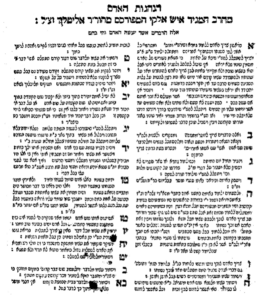
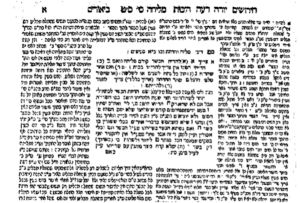
Purim supplement to HaMitzpeh newspaper (Kraków, March 13, 1908): Agnon’s story begins at bottom.
Beyond the Masthead of the Beys Yaakov Journal, 1923-1980 – Part 2: ‘Abomination’ or Scandal? Mistranslation, Journalism, and the Halivni Controversy
Beyond the Masthead of the Beys Yaakov Journal, 1923-1980 – Part 2:
‘Abomination’ or Scandal? Mistranslation, Journalism, and the Halivni Controversy
By Dan Rabinowitz and Menachem Butler
In Part 1 of this study, it was argued[1] that the Beys Yaakov Journal cannot be understood simply as an ideological mouthpiece of Agudath Israel, nor as an instrument of Orthodox withdrawal. Across decades, its editors repeatedly confronted intellectual challenges in public, publishing voices and materials that lay beyond the formal boundaries of Agudah authority and resisting the impulse toward protective silence. That does not mean it adopted liberal positions; rather, its conclusions fit squarely within the traditions of Ultra-Orthodox theology. The journal’s Orthodox commitments were genuine, but they were not understood to require insulation from controversy or the suppression of methodological dispute. In this second installment of “Beyond the Masthead of the Beys Yaakov Journal, 1923-1980,” the controversy surrounding Rabbi Professor David Weiss Halivni serves as an especially revealing test case for these dynamics.
Rabbi Professor David Weiss Halivni passed away on June 28, 2022. On July 17, the New York Times published a lengthy obituary under the headline and subheadline:
“David Weiss Halivni, Controversial Talmudic Scholar, Dies at 94. He was considered too radical by many Orthodox rabbis and too regressive by many Conservative Jewish leaders. But his work was widely praised.”[2]
NY Times July 17, 2022 Obituary
The framing is revealing. Halivni is positioned between two opposing camps, too radical for one and too regressive for the other. This symmetrical construction reduces a complex methodological dispute to a narrative of ideological extremity and obscures the substantive nature of Orthodox objections. The obituary further characterized Halivni’s scholarship as grounded in the “controversial idea” that the Talmud is “riddled with inconsistencies and incongruities” resulting from the vulnerabilities of largely oral transmission, “subject to the flaws resulting from fallible memories.” It reproduced Agudath Israel’s denunciation of his work as an “abomination,” accusing him of daring “to enter the domain of the holy” and to suggest that the transmitters of the Talmud altered the text unknowingly. At the same time, Halivni was quoted defending his position: “divine origin does not preclude critical study, since critical study seeks to purge the text of human error.”
Beyond this polemical exchange, the obituary devoted substantial attention to Halivni’s innovative approach to Talmudic study, illustrating it through an extended discussion of a sugya in Mo’ed Katan. What was “pioneering” about Halivni’s work, the obituary explained, was his effort to “burrow[…] deeply into the history of how the Talmud … came to be compiled,” and to argue that its transmission, “for generations, largely oral,” was inevitably “subject to the flaws resulting from fallible memories.” Halivni therefore sought to “restore the pristine state of the Talmud,” in one student’s formulation, by identifying “incorrect editorial surmises” and exposing moments in which later transmitters resorted to “forced readings” in order to reconcile contradictions. As the obituary emphasized, Halivni’s method aimed to “iron out the inconsistencies and gaps and restore logical coherence” by tracing a concept’s provenance and, where necessary, reconstructing earlier textual strata. This methodological claim entailed a far-reaching reassessment of traditional assumptions about the formation and internal coherence of the Talmud.[3]
David Weiss Halivni (1927-2022) was born in Poljana Kobilecka in interwar Czechoslovakia and received rabbinic ordination in Sighet at the age of fifteen. Deported to Auschwitz in 1944, he survived the camps as the sole remaining member of his family.[4] After immigrating to the United States in 1947, he combined advanced yeshiva learning with formal academic study, ultimately joining the faculty of the Jewish Theological Seminary and later Columbia University.[5] In his later years he made aliyah and taught at Bar-Ilan University. Beginning in 1969, he published the first volume of his monumental Mekorot u-Mesorot,[6] which developed a sustained program of source-critical Talmudic interpretation,[7] aimed at distinguishing between tannaitic dicta and later amoraic and editorial strata.[8] It was this methodological ambition, more than questions of biography or institutional affiliation, that made Halivni a focal point of Orthodox critique.
Such sustained engagement with technical Talmudic scholarship is unusual for The New York Times. Yet this was not the paper’s first encounter with Halivni’s work. On the eve of Rosh Hashanah in 1977, The New York Times Magazine published a lengthy profile of Halivni by Israel Shenker under the title “A Life in the Talmud.”[9] There, Shenker described Halivni as “a respected public enemy at the pinnacle of modern scholarship” and reported that “The ultra-Orthodox Israeli political party Agudath Israel called it an ‘abomination,’” citing an editorial in Beys Yaakov Journal. The juxtaposition of scholarly daring and religious denunciation supplied the dramatic architecture that the 2022 obituary would later reprise.
The New York Times narrative, however, is fundamentally flawed. It misidentifies the institutional character and editorial posture of the Beys Yaakov Journal, misconstrues the nature of its engagement with contested scholarship, and rests on a tendentious, if not deliberate, mistranslation of a pivotal passage. More importantly, it mislocates the center of Orthodox resistance to Halivni’s work. The critique in that article in Beys Yaakov Journal, and the journalistic distortions surrounding it, should not be mistaken for the principal arena of Orthodox opposition. The more consequential controversy unfolded within the American Modern Orthodox world, particularly at Yeshiva University and among its associated intellectual networks, circles far more familiar to the Times readership and far more central to the internal struggles of American Judaism during the period under review. As we will demonstrate in a subsequent installment of this series, it was there, rather than in Israeli party politics, that the most sustained and institutionally significant resistance to Halivni took shape.
Israel Shenker: A Scholar “Trapped in a Newsman’s Body”
To grasp the significance of Israel Shenker’s mischaracterization of the Beys Yaakov Journal, one must first understand Shenker himself. He was no ignorant sensationalist, no journalist stumbling blindly into a world he did not understand. On the contrary, he was widely (and aptly) described as “a scholar trapped in a newsman’s body.”[10] Fluent in Hebrew and Yiddish and possessed of formidable erudition, Shenker moved comfortably among texts, languages, and learned worlds that lay beyond the reach of most reporters.
That independence was visible early. While enrolled at the University of Pennsylvania, Shenker reportedly completed his degree without attending classes, preferring to work alone in the library and appearing only for examinations. As his niece later recalled, he “did not attend classes because he did not need to,” a habit that remained a defining feature of his intellectual life: self-directed, book-centered, and impatient with institutional mediation.[11]
Across several decades at The New York Times, Shenker profiled an extraordinary range of cultural and intellectual figures. Yet the range was not random. He gravitated toward individuals who combined mastery with eccentricity, authority with paradox: Groucho Marx,[12] whose comic persona masked a sharp literary intelligence; Jorge Luis Borges,[13] blind yet hyper-lucid; Noam Chomsky,[14] the dissident linguist who destabilized both politics and grammar; Vladimir Nabokov,[15] the aristocratic stylist and relentless classifier; Pablo Picasso,[16] whose genius lay in permanent disruption. Alongside them appeared scientists and system-builders such as Isaac Asimov, polymaths of prodigious output and explanatory ambition.[17]
Shenker brought the same sensibility to Jewish intellectual life. He wrote about scholars such as Uriel Simon,[18] Salo Wittmayer Baron,[19] and Solomon Zeitlin,[20] figures whose authority derived not from popular appeal but from textual mastery and historical depth. He became one of the Times’ principal correspondents on Jewish culture, though with telling selectivity: the Jewish Theological Seminary consistently dominated his institutional coverage,[21] while nearly every other yeshiva or rabbinical seminary in New York went largely unremarked[22]; the Second Avenue Deli became his emblem of Jewish urban life,[23] while nearly every other Jewish restaurant remained invisible.[24] Shenker’s choices reveal a consistent pattern: he favored sites and figures that condensed Jewish meaning into legible symbols.[25]
Much of his Jewish writing was light in tone but not trivial. He reported on a snobbish kosher hotel in England[26]; obscure and declining Jewish communities[27]; the phenomenon of “miraculous” pareve cheesecake[28]; the Twerski rabbinic dynasty[29] and other Hasidic groups[30]; itinerant soferim repairing pesul Torah scrolls[31]; Hebrew book publishing[32]; dreydl manufacturers[33]; the economics of yarmulkes and skullcaps[34]; the professional culture of kosher certification and supervision[35]; and prayer groups on El Al flights so numerous they gathered at the rear of the plane and disrupted its altitude.[36] These were not throwaway curiosities. They were chosen because they dramatized ingenuity, adaptation, and excess.
Other pieces were more substantial. Shenker produced one of the most comprehensive journalistic profiles of Isaac Bashevis Singer,[37] wrote with open admiration about Harry Austryn Wolfson, the legendary Harvard scholar of Jewish philosophy,[38] and reported sympathetically on the Lubavitcher Rebbe’s public call for kindness on the occasion of his seventieth birthday.[39] He covered Holocaust conferences, theological debates, Jewish cultural institutions, and scholarly gatherings with genuine seriousness.[40] Many of these essays were later revised and collected in his 1985 volume Coat of Many Colors, a book that stands as the fullest expression of his intellectual commitments.[41]
Shenker’s first sustained engagement with talmudic scholarship came in 1971, with a profile of Rabbi Adin Steinsaltz,[42] then deeply immersed in producing a new edition of the Talmud.[43] The article was largely respectful, yet it included a pointed dismissal attributed to Rabbi Louis Finkelstein, chancellor of the Jewish Theological Seminary, belittling Steinsaltz’s achievement.[44] The move is revealing. Even where admiration was warranted, Shenker could not resist inserting institutional tension, foregrounding controversy where extended methodological explanation might have sufficed.
That instinct became even more pronounced in Shenker’s 1975 feature, “Responsa: The Law as Seen by Rabbis for 1,000 Years,” based on interviews with Rabbi Moshe and Rabbi Solomon B. Freehof.[45] The pairing itself was astute, recognizing responsa as a transdenominational genre spanning Orthodox and Reform authority. Yet the article in The New York Times was framed by a prominent callout box – “A Responsum Sampler” – that juxtaposed grave contemporary questions, such as homosexuality and women wearing pants, with deliberately quirky cases,[46] including ritual slaughter under hypnosis[47] and a woman who swallowed a fly.[48] Responsa appeared less as a discipline of burdened responsibility than as a theater of ingenuity and oddity. The irony is that Rabbi Feinstein explicitly rejected such a portrayal. “You can’t wake up in the morning and decide you’re an expert on answers,” he insisted, stressing that authority emerges only through long recognition of sound judgment. More pointedly, he framed pesak as religious accountability: “A rabbi who replies to people’s questions works harder than a doctor dealing with a case of life and death. The doctor is responsible only to his patient, but the rabbi is responsible to God.” This ethic of burdened responsibility, articulated in the interview itself, stands in tension with the broader journalistic framing. Rabbi Feinstein articulated the same conception programmatically in the introduction to the first volume of Iggerot Moshe,[49] where he repeatedly describes his rulings not as demonstrations of mastery but as obligations imposed by circumstance. His responsa, he writes, emerge from “darkness,” composed only because he felt compelled to give instruction; the decisor must rule according to “what his eyes see and what appears true to him,” even amid doubt and fear of error. Authority, in this account, lies not in brilliance or certainty but in the willingness to assume responsibility for guidance. This was an ethic that closely parallels his insistence in the Times interview that “the rabbi is responsible to God,” not to ingenuity or acclaim. [50]
Shenker was plainly fascinated by the genre; he devoted nearly thirty pages to responsa literature in Coat of Many Colors. Whether the emphasis on eccentricity reflected his own priorities or editorial intervention is difficult to determine. Shenker’s own reflections offer some guidance. In a 1986 profile, he described himself as writing “as a reporter more than anything else,” insisting that he was “not interested in arguing any ideas of [his] own.”[51] Baruch Halpern’s account is especially suggestive. A leading scholar of the Hebrew Bible and ancient Israel, he explains that when Shenker worked for Time in postwar Europe, managing its Paris bureau, Shenker deliberately forwent by-lines out of a “corporatist sense of mission,” valuing collective authorship over individual credit.[52] Only later, at The New York Times, did Shenker embrace what Halpern memorably termed “that sacred by-line,” situating his career within a broader shift toward intellectual individuation.[53]
Shenker openly admired religious intellect even while identifying as a nonbeliever. He spoke candidly of his fascination with rabbinic literature – not for its piety, but for what he called “the determination to find excuses for impossible things.” Talmud and responsa were, in his words, “endlessly fascinating.” This posture, respectful yet detached, drawn to paradox rather than normativity, helps explain both his genuine engagement with Jewish learning and his recurrent tendency to foreground eccentricity or scandal at the expense of internal meaning.[54]
That stance was reflected not only in Shenker’s writing but also in the manner in which he chose to live. In his later years he withdrew from institutional journalism altogether and settled in rural Scotland, where his wife Mary, born into the Sagman family of Glasgow, had familial roots. There he described himself as a solitary reader moving from library to library, drawn to places that functioned as what he called “intellectual hospices.”[55] Writing in 1985 about a residential library in Wales founded by William Gladstone, Shenker offered an implicit self-portrait: a scholar without a pulpit, a journalist without a platform, committed less to intervention than to observation, and to books rather than communities. From that deliberately marginal and proudly nonconfessional vantage point, Judaism appeared not as a living system governed by internal norms, but as a repository of endlessly fascinating textual ingenuity. This orientation is also visible in Shenker’s books. Beyond Coat of Many Colors, Shenker published a series of substantial monographs that further attest to the breadth and seriousness of his intellectual interests, including studies of lexicography and the history of language,[56] literary travel[57] and eighteenth-century intellectual culture,[58] and contemporary Jewish and Israeli public life.[59]
Seen against this background, Shenker’s treatment of David Weiss Halivni cannot plausibly be dismissed as a product of ignorance or linguistic incapacity. He possessed the philological competence to read the Hebrew of the Beys Yaakov Journal accurately and the cultural literacy to recognize the specifically Orthodox stakes of Halivni’s project. The resulting mischaracterization was therefore interpretive rather than inadvertent: a reframing of a bounded intramural methodological dispute in the idiom of public scandal. In this instance, Shenker’s erudition did not guard against distortion but conferred authority upon it.
To see why this reframing proved so consequential requires closer attention to the article itself and to the broader Orthodox debate over the academic study of the Talmud in which it intervened. Only within that broader context does the inadequacy of the binary framework later imposed upon Halivni come into focus. In a subsequent installment of this series, we will examine specific episodes in his life, consider his distinctive approach to Talmudic study, and then turn to the controversy it provoked. His trajectory across worlds often presumed to be mutually exclusive, including the traditional yeshiva culture of Eastern Europe, the postwar Orthodox institutions of America, and the emerging academic study of rabbinic literature, forms an essential backdrop to that debate.
The 1969 Beys Yaakov Journal Article: Engaging the Challenge
In early 1969, the Beys Yaakov Journal published “A Cry of Alarm Concerning the New School of ‘Talmud Critics’!”[60] by “Harav Yitzhak M. Shmueli” (almost certainly a pseudonym).[61] The article appeared in issue no. 116, shortly after the publication of the first volume of Halivni’s Mekorot u-Mesorot (1969).[62] It was not a reflexive polemic or an immediate rebuttal, but a considered response to a scholarly methodology that had already begun to exert influence within academic and semi-academic Jewish discourse.[63] Shmueli’s article reflects the Journal’s longstanding editorial posture: the intellectual challenges of modernity, particularly those circulating in print and academic venues, cannot be met with silence or denial. Rather than ignoring them, the Beys Yaakov Journal insisted on direct and public engagement.[64]
The article offers a sweeping critique of the Jewish Theological Seminary (JTS) and its Talmudic scholarship, with Halivni serving as the central exemplar. After briefly dismissing academic biblical criticism as a spent and methodologically compromised enterprise, Shmueli turns to what he presents as a more urgent danger: the emergence of academic Talmudic criticism within the Jewish Theological Seminary. He notes that Mekorot u-Mesorot bears the subtitle Biʾurim Talmudiyim and explicitly links this nomenclature to the Biʾur associated with Moses Mendelssohn, whom he identifies, in conventional Orthodox polemic, as a progenitor of German Reform Judaism.[65] The terminological parallel is presented as symptomatic rather than incidental.
Shmueli’s extended polemic against biblical criticism should be read less as his operative argument than as a genealogical warning. By tracing “Ḥokhmat Yisrael” back to German biblical criticism and Wissenschaft des Judentums, he establishes a historical cautionary tale rather than mounting a detailed refutation.[66] Once the discussion turns to Talmud, however, the tone shifts markedly: denunciatory generalizations give way to named books, cited introductions, concrete methodological claims, and extended quotation of traditional authorities. The rhetorical genealogy sets the stage; the argument itself unfolds as a focused dispute over the limits of legitimate Talmudic method.
Beyond an Internal Scholarly Debate
Shmueli’s concern, however, was not confined to an intramural scholarly dispute that might otherwise have remained limited to a narrow academic readership. The urgency, he argued, arose from Halivni’s entry into the broader intellectual public. In 1963, Halivni authored the Encyclopaedia Britannica entry “Source Criticism,” appended to the encyclopedia’s discussion of the “Talmud.” There he did not merely note philological problems in passing, but presented “source criticism” as a discrete scholarly method whose central task was to distinguish between the original statements of rabbinic authorities and the forms those statements assumed through oral transmission. A paragraph from that Britannica entry was later reprinted on the inside cover of Mekorot u-Mesorot: Seder Nashim (1969) under the heading, “From the author’s statement in the Encyclopaedia Britannica.” It reads:
“Source criticism seeks to differentiate between the original statements as they were enunciated by their authors and the forms they took as a consequence of being orally transmitted; that is, between the sources and their later traditions. It is not to be confused with the kind of analysis – frequently carried out by the rabbis or the Talmud – which merely traces the historical sources of a given passage without judging whether or not the passage faithfully reflects these sources. Source criticism claims that the transmission of the Talmud was not, and perhaps could not have been, verbatim, and that the text became altered in transmission, with the result that many statements in the Talmud have not come down in their original form. Instead, what survives is the form assumed in the last phase of transmissional development. While such a study is pertinent to most ancient texts, it is particularly relevant to the Talmud, which primarily consists of quotations and their interpretations.”[67]
On Halivni’s account, talmudic transmission “was not, and perhaps could not have been, verbatim,” with the result that many passages survive only in the form assumed in the final phase of transmissional development. The Talmud, he argued in that encyclopedia entry, is therefore particularly susceptible to such analysis, since it largely consists of quotations and interpretive strata. By articulating this claim in the idiom of general textual criticism and situating it within a major English-language reference work addressed to a broad, non-confessional readership, Halivni effectively relocated questions of talmudic authority from the internal norms of the beit midrash to the evaluative jurisdiction of modern academic scholarship. What might otherwise have remained an internal scholarly controversy was thus recast as a public representation of the Talmud within a wider intellectual culture.
It is precisely this public and methodological self-positioning that made the volume contentious. By placing the critical premise at the threshold of the book, Halivni indicated that the issue at stake was not merely philological refinement but the conceptual framework within which the Talmud itself would be understood. The decision to reproduce this paragraph prominently on the inside cover of Mekorot u-Mesorot was therefore more than bibliographic notice. It framed the book from the outset as an intervention in the academic discourse of textual criticism and positioned its central thesis as a methodological claim rather than an incidental observation. Before encountering Halivni’s detailed readings, the reader is confronted with a declaration about the nature of talmudic transmission and the legitimacy of critical reconstruction. In this sense, the reprinted Britannica passage functions as a programmatic preface, signaling that the project’s claims about the Talmud’s layered development are not ancillary but foundational.
This concern about public legitimation was not new. Long before the appearance of Halivni’s Mekorot u-Mesorot, Orthodox critics had already accused JTS, particularly under Finkelstein, of attempting to translate rabbinic tradition into a civic idiom aimed at American elites, a trajectory that would later culminate in highly visible episodes such as the Seminary’s 1957 convocation attended by Chief Justice Earl Warren.[68] This dynamic can already be seen by the early 1930s, such critiques had evolved from responses to discrete initiatives into a sustained indictment of Finkelstein’s leadership. In a widely circulated Yiddish pamphlet responding to the accumulated controversy surrounding the Seminary,[69] Dr. Aaron Rosmarin retrospectively gathered earlier charges, first voiced in The Jewish Forum,[70] Der Tog,[71] and The Jewish Spectator ,[72] into a comprehensive critique of what he presented as a coherent institutional strategy: the deliberate public repositioning of JTS through interfaith initiatives and universalist ethical rhetoric, designed to render Judaism intelligible and respectable to Christian and civic authorities while eroding the internal boundaries of rabbinic tradition.[73] Read in this longer perspective, the anxieties later articulated by Shmueli in the late 1960s appear not as episodic reactions to a single event, but as the continuation of an established polemical grammar through which the Seminary had long been contested within Haredi and Orthodox circles.
Yet the controversy did not unfold solely in the register of political denunciation or institutional suspicion. It also took the form of an internal methodological dispute over the norms of Talmudic scholarship.
Substantive Scholarship, Not Political Condemnation
Shmueli did not confine his critique to rhetorical denunciation. The article prominently featured, in a separate callout box at the top center of the page, the complete four-paragraph letter of the Ḥazon Ish addressing the use of manuscripts and textual emendation in Talmudic interpretation.[74] Given the Ḥazon Ish’s stature as one of the most authoritative scholars of his generation, his methodological positions were widely regarded as normative and were adopted, explicitly or implicitly, by many traditional Orthodox rabbis and scholars. Crucially, the Ḥazon Ish does not reject manuscript evidence as such; rather, he rejects its elevation into a corrective authority over the received text as transmitted and interpreted through the classical rabbinic canon. By foregrounding the Ḥazon Ish’s objections instead of invoking partisan rhetoric or institutional polemic, Shmueli cast the controversy as a serious methodological dispute internal to the discipline of Talmud study.
The letter reads in full:
“To interpret a sugya and to emend the Gemara on the basis of the ‘Munich’ manuscript – does this mean that all the sages of the generation, from the time of the Rishonim until now, all failed to apprehend the truth, because a single scribe erred and added material to the Gemara of his own accord, thereby causing all the sages to stumble?
I am not of them nor of their multitude. The manuscripts that were in the hands of the early authorities of blessed memory – they gave their lives for them, and the providence of the Blessed One, that the Torah not be forgotten from Israel, hovered over them. And when they began to print the Gemara, the sages of the generation gave their lives for its refinement and correction. And even if, at times, one may benefit from manuscripts to cleanse corruptions that arise over the course of time, with regard to a matter that issued from the hands of all our masters without any hesitation – Heaven forbid to disturb it.
Consider this yourself. When there are three manuscripts before us and two agree, we follow the two and set aside the one. And who can say to us that the ‘Munich’ manuscript is not from that one that was nullified by the majority in its own time? And who can say that it was not known to those lacking precision? In any case, it is null and void, like a broken potsherd, in the face of the received version.
And because a scribe erred and omitted a few words, as scribes are wont to err – shall we build towers? Perhaps indeed it is so, that the scribe omitted them and it is not from the sages, but when we rely on the tradition, the Torah of Rashi and Tosafot and all the sages – certainly this is the Torah. And I have almost never seen any benefit in arriving at the truth through variant readings uncovered from the genizot. Rather, they are all a benefit for distorting judgment and perverting the truth. It would have been fitting to consign them to burial, for the loss outweighs the gain.”
By reproducing this letter in full, Shmueli makes clear that his opposition to Halivni’s methodology rests on principled epistemological and methodological grounds rather than on ideological reflex. The Ḥazon Ish’s critique does not deny the existence of manuscript variation or the occasional value of textual witnesses; rather, it rejects the privileging of isolated manuscripts over the cumulative authority of the received tradition as transmitted and interpreted through generations of rabbinic scholarship.[75]
Crucially, Shmueli explicitly acknowledges that multiplicity, difficulty, and textual variation are intrinsic features of Torah she-baʿal peʿh. He concedes that variant readings and unresolved tensions have always belonged to the tradition, and he invokes major figures such as the Ḥatam Sofer and R. Israel Salanter to underscore that truth in Torah does not reside in surface simplicity. This concession sharply distinguishes his position from any naïve textual absolutism. What he rejects is not complexity itself, but the elevation of conjectural reconstruction into a corrective authority over the received text and its interpretive canon. In this way, Shmueli situates his argument squarely within a substantive Talmudic debate. He contends that even academically rigorous methods, supported by extensive philological evidence, remain subject to serious internal critique from within the Orthodox scholarly tradition itself. The article therefore represents intellectual engagement rather than political denunciation or fundamentalist rejection.
A full reading of Shmueli’s article makes clear that his deepest concern is not the existence of critical hypotheses as such, but their translation into public authority. Again and again, the danger he identifies lies in institutional legitimation: a book published by a major Israeli press, authored by a faculty member of the Jewish Theological Seminary, and disseminated to a broad readership through venues such as the Encyclopaedia Britannica. For Shmueli, the methodological question becomes urgent precisely at the point where speculative reconstruction threatens to become normative representation. The issue, in other words, is not academic experimentation behind closed doors, but the public pedagogy of Judaism to Jews and non-Jews alike.
Acknowledging Lieberman’s Authenticity
One of the most revealing features of Shmueli’s polemic is his careful distinction between Halivni and Saul Lieberman. Despite the breadth and intensity of his critique of the JTS approach, he is markedly restrained in his treatment of Lieberman. This restraint is deliberate. Lieberman’s Orthodox credentials were exceptionally strong and widely recognized across multiple sectors of the Orthodox world.[76] Upon his arrival in Palestine in 1928, he was appointed director of Machon Harry Fischel, a flagship Orthodox research institute devoted to advanced talmudic and halakhic scholarship, an appointment facilitated by leading rabbinic figures, including R. Isser Zalman Meltzer and R. Avraham Yitzhak Hacohen Kook.[77] At the same time, Lieberman pursued rigorous academic training at the Hebrew University under Prof. Jacob Nahum Epstein, the foremost architect of modern academic Talmud. Far from disqualifying him, this dual formation reflects the still-open willingness of segments of the Orthodox rabbinic elite in the interwar period to recognize exceptional Torah mastery even when pursued through unconventional scholarly frameworks.[78]
This standing remained intact even as Lieberman later contemplated accepting a position at the Jewish Theological Seminary. Before doing so, he consulted major Orthodox authorities, among them R. Isser Zalman Meltzer and R. Yaakov Moshe Charlap. Their responses ranged from principled refusal to issue a ruling to cautious, conditional acquiescence, but none denied Lieberman’s stature as a preeminent talmid ḥakham.[79] As Marc B. Shapiro has shown, Lieberman’s move to JTS did not erase his reputation within elite Orthodox circles; rather, it exposed unresolved tensions within Orthodoxy itself concerning the boundaries between institutional affiliation, scholarly method, and personal halakhic authority.[80] Lieberman thus occupied a liminal position: fully embedded in the Lithuanian rabbinic elite, deeply shaped by its intellectual ethos, yet operating at the outer limits of what Orthodoxy could comfortably accommodate.
It is precisely this status that explains Shmueli’s careful tone. To indict Lieberman directly would have required confronting not a marginal figure but a scholar whose legitimacy had been affirmed – explicitly or tacitly – by many of Orthodoxy’s leading authorities. Shmueli’s restraint therefore reflects less an endorsement of Lieberman’s methodology than an acknowledgment of the exceptional difficulty of dislodging a figure whose authority derived not from institutional politics alone, but from recognized and formidable Torah greatness. Shmueli’s own rhetoric reflects this distinction with care. He refers to Lieberman explicitly as a “renowned scholar, erudite in Torah she-baʿal peh,” even as he directs his most sustained and forceful criticism toward Halivni and the methodological program embodied in Mekorot u-Mesorot. This differentiation is significant. It underscores the Beys Yaakov Journal’s capacity for discriminating judgment rather than indiscriminate rejection of academic scholarship.
This, despite the fact that Lieberman’s earliest major work, Al ha-Yerushalmi, had already exemplified a disciplined form of textual criticism, drawing on manuscripts, parallel traditions, and internal philological analysis to clarify and correct the text of the Jerusalem Talmud. This could easily have provided fodder for Shmueli, yet he remained silent regarding Lieberman’s method. Recently published letters show that even the Ḥazon Ish engaged Lieberman seriously on these questions. Their correspondence reveals a principled disagreement over method, particularly regarding emendations grounded in manuscript evidence, while also demonstrating that such philological argumentation could be treated as a legitimate subject of rabbinic dispute rather than dismissed outright as heresy. Of course, since this correspondence had not yet been published, it cannot explain Shmueli’s silence on Lieberman’s approach.[81]
Copy of Al ha-Yerushalmi Gifted to R. I.Z. Meltzer from Lieberman
This nuance is essential for understanding the Beys Yaakov article’s invocation of the Ḥazon Ish. Lieberman is not cast as a theological threat or ideological provocateur, but as a formidable talmid ḥakham whose methods, though troubling to some, remained bounded within an elite scholarly discourse. Halivni, by contrast, is portrayed as extending those methods in a more expansive and publicly consequential direction, one that, in Shmueli’s view, exceeded the implicit safeguards that had contained earlier forms of academic intervention. The result is a portrait of Orthodox engagement with academic Talmud that is internally differentiated, historically self-aware, and intellectually serious, far removed from caricatures of reflexive or indiscriminate rejection.
That differentiation, however, depended upon the boundaries of scholarly containment. It held only so long as the debate remained internal to a learned community. Nowhere does Shmueli’s anxiety emerge more sharply than in his discussion of Halivni’s contribution to the Encyclopaedia Britannica.[82] Written in English for a general readership unfamiliar with the internal conventions of Talmudic study, Halivni’s article marks, in Shmueli’s view, the point at which an intramural scholarly debate enters the public register. At that point, silence becomes irresponsible. What is at stake is no longer a disputed method within a learned guild, but the public representation of the Talmud itself: its authority, coherence, and standing before a wider audience.
Yet the subsequent reception of the controversy would hinge less on Shmueli’s carefully drawn distinctions than on the interpretation of a single line in the Beys Yaakov article itself.
The Mistranslation That Changed Everything
After developing its substantive critique, the Beys Yaakov article closes with a pointed rhetorical question:
!?האפשר לשתוק נוכח שערוריה נוראה מעין זו
The phrase is best rendered: “Is it possible to remain silent in the face of such a terrible scandal?”
Here we arrive at Shenker’s most consequential error. Shenker isolated the noun שערוריה (sha’aruriyah) and translated it as “abomination.” This was not a neutral lexical choice, but a serious mistranslation with far-reaching interpretive consequences.
In classical and rabbinic Hebrew, as well as in modern Hebrew, שערוריה denotes a scandal or public outrage, an event or claim that provokes alarm, indignation, and moral disquiet. Rooted in the semantic field of סער and סערה, it evokes turbulence and upheaval, suggesting commotion and protest rather than ritual pollution or theological deviance.[83] The term therefore belongs to the register of public scandal and polemical critique, not to the technical vocabulary of halakhic or theological condemnation. It conveys gravity, even urgency, but it does not imply that the object in question lies beyond the bounds of religious legitimacy. By contrast, Biblical and rabbinic Hebrew possess precise and well-established terms for “abomination,” most prominently תועבה (toʿevah) and the ש־ק־ץ family (שקץ, sheqets; שיקץ, shiqets). These terms function as technical markers of religious repugnance and exclusion.[84] תועבה denotes what is abhorrent before God, a term reserved for practices that are religiously intolerable, most prominently idolatry and acts explicitly proscribed as violations of the divine order. שקץ, by contrast, marks what is ritually defiling and categorically repugnant, designating objects or acts that are not merely objectionable but intrinsically contaminating within the cultic and halakhic system. In such usage, these terms do not merely register protest or indignation. They function as categorical markers of religious illegitimacy, designating acts or objects as intrinsically defiling and wholly intolerable within the normative order of divine law.
An Orthodox polemicist seeking to convey that level of categorical condemnation would almost certainly have employed one of these terms. Shmueli does not. His diction is emphatic but restrained, signaling moral alarm and scholarly urgency rather than theological excommunication. Translating שערוריה as “abomination” imputes to the article a category of judgment absent from the Hebrew. The difference is not rhetorical but semantic: the mistranslation shifts the text from protest to proscription, from scandal to heresy. One is reminded of the rabbinic topos of qotzo shel yod, the barely perceptible stroke of the yod (understood by Rashi as its right leg and by Rabbeinu Tam as its curved crown) whose alteration can overturn an entire halakhic construction.[85] Shenker’s substitution performed precisely such a transformation. There is no plausible pathway by which the language of “abomination” could have entered the public narrative surrounding Halivni other than through this mistranslation. In doing so, it recast an argument urging engagement with a grave scholarly challenge as a declaration of religious intolerance and obscured the article’s actual posture, which was not to brand Halivni’s work as heretical but to insist that a development of profound intellectual and communal consequence cannot responsibly be met with silence.
The consequences of this lexical substitution extended far beyond Shenker’s 1977 profile. Once “abomination” entered the New York Times archive as the purported Orthodox verdict on Halivni, it became available for repetition as journalistic fact. Thus, when the Times published its 2022 obituary of Halivni, it reproduced Shenker’s framing and relied on the same source. The obituary’s headline, casting Halivni as a “controversial” scholar rejected by “many Orthodox rabbis,” thus rested in part on a mistranslation that had already transformed a bounded Hebrew critique of scholarly method into a sweeping theological denunciation. In this way, a single erroneous word became the pivot of a durable public narrative.
The Effect of Sensationalism
Israel Shenker’s mistranslation did not merely distort a phrase; it altered the character of the intellectual activity in which the Beys Yaakov Journal was engaged. The original article undertook a demanding and careful task: it presented a sophisticated academic methodology to an Orthodox readership, explained why that methodology posed serious difficulties within the traditional epistemology of Talmudic study, marshaled substantive scholarly objections, above all the position of the Ḥazon Ish, acknowledged internal differentiation within Orthodoxy, and articulated strong disagreement grounded in textual and methodological analysis. By rendering the article’s culminating language as invoking an “abomination,” Shenker recast sustained scholarly critique as fundamentalist denunciation, collapsing methodological dispute into theological outrage and substituting caricature for argument.
This inversion is especially consequential in light of the documented record of the Beys Yaakov Journal of reflective engagement with modernity, both in its prewar Polish incarnation[86] and in its postwar Israeli continuation.[87] Beys Yaakov was not a polemical broadsheet but an educational and intellectual forum that repeatedly confronted modern scholarship rather than retreating from it. Shenker’s portrayal effaced that history and compounded the distortion by mischaracterizing the journal as “an official publication” of Agudath Israel. It was not. Published by the “Central Beys Yaakov of Israel” and later by the “Bais Yaakov Women’s College,” the journal functioned as an educational organ aligned with Agudah but not as a party instrument. The distinction is substantive. Educational journals cultivate explanation and debate; party organs enforce discipline.
The encounter with Rabbi Professor David Weiss Halivni was therefore neither a reflexive ban nor an eruption of obscurantism, but a serious internal reckoning with a scholarly development understood to carry public and pedagogical consequences. The episode demonstrates how readily Orthodox intellectual life in the mid-twentieth century has been recast through external narratives that confuse methodological dispute with theological denunciation. To understand the controversy properly requires moving beyond journalistic distortion to the jurisprudential problem Halivni’s scholarship forced into view. The debate was not about temperament or piety, but about first principles: whether historical reconstruction can be insulated from normativity; whether halakhic authority rests on procedural continuity or on claims of historical transparency; and whether Orthodox institutions possess mechanisms capable of absorbing critical candor without destabilizing the structures of authority they seek to preserve. It is to that institutional and conceptual terrain that we now turn.
[to be continued…]
Appendix 1: Yitzhak M. Shmueli, “A Cry of Alarm Concerning the New School of ‘Talmud Critics’!” Beys Yaakov, vol. 10, no. 4 [#116] (1969): 4-5 (Hebrew), available here:
Yitzhak M. Shmueli,
“A Cry of Alarm Concerning the New School of “Talmud Critics”!
“Ḥokhmat Yisrael” – that enterprise which was founded and ardently desired at the initiative of the various exponents of “Reform,” in all its forms – there is no falsehood and distortion more dreadful than it. This “root that bears gall and wormwood” – its earliest growth began in Germany, and there it affixed to itself the flattering yet deceptive name: “Wissenschaft des Judentums” (“the Science of Judaism,” in a literal translation from German). Within the bosom of this poisoned “science” arose all the movements of assimilation and derision away from Judaism. Generations of upright Jews fell into this trap. Many – far, far too many – this very “Ḥokhmat Yisrael” led all the way to the gates of apostasy, Heaven forfend.
All the venomous “wisdom” of the founders and disseminators of this “science” concerning “Judaism” in fact drew its sustenance from the sources of malice inherent in German, gentile “Biblical Criticism.” There were German scholars who regarded themselves as immense experts in the knowledge of the “East” (“Orientalistics,” in the foreign tongue), and, being afflicted with hatred of Israel, jealousy and the impulse of enmity toward the Book of Books burned within them. From this was born their aspiration “to criticize the Bible” in the most bizarre forms. And the matter is well known to the discerning. Several of the Christian researchers in Germany, foremost among them the orientalist Wellhausen – notorious for his attacks and his arrogant “discoveries” against the integrity and originality of the Bible – in fact founded the modern school of “Biblical Criticism.” And to our shame, even a few scholars from among our brethren, the Children of Israel, adhered to this path, taking hold of the seeds of self-directed malice, and lent their hand and their strength to the expansion and dissemination of this poisonous “science,” whose very point of departure was permeated with hatred of Israel.
This is neither the place nor the proper hour to display publicly all the falsehoods and malicious distortions that have accumulated around this discipline of “Biblical Criticism,” which, from the moment Jews too began to engage in it, cloaked itself in the new guise of “Ḥokhmat Yisrael.”
The historical truth is that this entire “science” known as “Biblical Criticism” has long since been exposed as false – and of all the mountains of nonsense and all the towers of lies that were heaped up and constructed by the celebrated “Biblical critics,” there remains no longer one stone upon another, one brick upon another, most evidently so. Indeed, it is precisely the scientific discoveries of the most recent period – and first and foremost the discovery of the “hidden scrolls” – that have decisively demolished the foundations of this deceptive “science.”
From time to time, modern Israeli archaeologists burst forth in cries of astonishment: Behold and see, to what degree everything found in the Holy Scriptures is precise!
And the historical truth is being clarified from every perspective. For these “Biblical critics,” not a few of whom are in fact complete ignoramuses regarding the Torah of Israel as a Torah of life and as the Torah of eternity, are accustomed to “correcting” the books of the Bible in accordance with whatever arises from their most confused and wildly unrestrained imagination. And suddenly, from ancient caves, hidden scrolls are found dating from nearly two thousand years ago, and everything written within those original and authentic scrolls – which renowned scholars examine and scrutinize – contradicts and refutes those sophistic vapidities and heaps of nonsense that were crowned with the title “Biblical science.”
And beyond this, the archaeologists engaged in excavations at historical sites in the Land also have something to say. And they demonstrate – as, for example, the Israeli archaeologist Dr. Moshe Kochavi recently demonstrated, who organized and directed the excavations in the Negev and in the Judean Mountains:
“The geographical record in Scripture has been proven by the discoveries in our excavations to be an exceptionally precise and reliable measure! In the Book of Joshua, chapter 15, there is found a detailed delineation of the boundaries of the tribe of the sons of Judah, their cities and their settlements, and all the discoveries made by our archaeological unit, which encompassed approximately twenty-five sites from the period of the kings of Judah, definitively confirmed that the entire division into districts – in the wilderness, in the hill-country, in the lowland, and in the Negev – is completely accurate; it accords with the standards demanded by every rigorous modern geographer!”
Ḥazal already said: “Yehudah ve-‘od la-qera” – that is, is there any further need whatsoever to confirm what is written in the Torah? In this generation, therefore, the whole-hearted faithful of Israel – loyal to the Torah and continuers of the heritage of Judaism – can, for their part, dispense with all those “authoritative confirmations” as well as the “scientific corroborations” of those “rigorous modern geographers.” But those great “sages” of Biblical Criticism – what answer can they possibly offer in the face of all the archaeological discoveries?
II.
And behold, there has emerged the newest fashion of “Talmud Criticism,” as a link integrated into the chain of distortions of “Ḥokhmat Yisrael” – which contains no “wisdom,” and whose association with “Israel” is exceedingly dubious.
It is a sacred obligation to raise a mighty voice of protest against the new “school” of the pretentious “Talmud critics,” who are liable to mislead pure souls among the Children of Israel. It is a double obligation to sound the alarm and to warn, since the dangerous initiative to harm – Heaven forbid – the foundational sources of the Oral Torah has now issued forth from a group of scholars concentrated around the “Schechter Seminary” in New York, whose official name is the “Jewish Theological Seminary,” and which is known as the “spiritual center” of the Conservative (“traditionalist”) movement in America.
As the first swallow heralding the emergence of the new method, there has now appeared, published by “Dvir” in Tel Aviv, a book entitled Sources and Traditions – Explanations in the Talmud. Its author, David Halivni, presents himself as an “expert in Talmudic research” who grew up within the walls of the “Schechter Seminary” in New York, in the company of Professor Louis Finkelstein, head of the Seminary, and Professor Saul Lieberman, the Seminary’s chief scholarly authority.
A public alarm must be sounded regarding the dangerous and destructive tendency of these “Talmudic explanations,” for of itself there surfaces the characteristic comparison with that famous “commentary” on the Torah by Moses Mendelssohn, the founding father of Reform in Germany! And if one extends this historical comparison further, the author of this “Talmudic research” likewise employs an innocent formulation and continually lifts his eyes heavenward…
“‘Blessed is the Omnipresent’ – thus opens the book’s ‘Preface’ – ‘who has merited me to see in print my explanations… May it be His will that just as He has merited me to see in print my explanations on the Order of Nashim, so may He merit me to see in print my explanations on the other orders and other books.’”
As it appears, the destructive hand is raised openly, and the plan is rather broad: to attack all the orders of the Shas and the other sources of Ḥazal, by means of that rusted and poison-saturated weapon called “Sources and Traditions”…
In the author’s scientific idiom this is called “textual truth,” since he strives to demonstrate that the Talmud is supposedly filled and replete with “inaccuracies,” “changes in sources,” “deviations from the simple interpretation,” and the like – claims and arguments that were habitual upon the tongues of all the “Biblical critics.”
From the words of the “Introduction” it is plainly evident that the author knows the truth, and merely intends to rebel against it! He himself writes that variations in textual versions, together with the difficulties bound up with them, have long since become part of the traditions… and indeed, one who has grown accustomed to this – precisely in this he perceives the distinctiveness of the Torah, and that its very diversity is its superior virtue…
The author even knows how to cite the words and opinions of the great Torah authorities, the giants of spirit of the later generations, such as the Ḥatam Sofer or Rabbi Israel Salanter, who explained that the essence of the distinctiveness of the Oral Torah lies precisely in this: that not everything appears revealed and simple at first glance…
This was the considered view of the author of the Ḥatam Sofer (in his novellae to tractate Ketubbot):
“The forced explanations (the resolutions offered to account for the difficulties arising in the comparison of the words of Ḥazal) – most of them are true… however, the rationalizations and inventions – most of them are false, and they are what cover over the face of truth.”
And Rabbi Israel Salanter, founder of the Mussar movement, stated this explicitly (in the introduction to his work Tevunah):
“What is truth? Truth does not live by simplicity alone, for simplicity is but one branch among the ways of proof; and for the most part the cherished difficulties stand ready to wage war against simplicity and to dislodge it…”
And despite all this, the arrogant audacity of a young scholar such as he has not been satisfied – a man who presents himself as a survivor of the Holocaust and as a remnant of the Auschwitz camp – to the point that he dared to approach the holy and to voice such a venomous and destructive notion, as though “the tannaim who transmitted the baraitot and dicta” altered much and did not even sense the alterations… whereas this “new star” from the Talmudic factory of the “Schechter Seminary” knows how to decipher “the truth in its truest sense” and to “correct” very many passages in the Talmud, by inserting “corruptions” and “errors” into the accepted and sanctified text!
Is it possible to remain silent in the face of such a terrible scandal?
III.
The source of a great danger has been exposed – one that is public-spiritual in character, and not merely literary-scholarly. We have no dispute with the author of this “collection of explanations,” who, notwithstanding everything, is himself compelled to concede that this is in essence not a new invention of his own, and that there have already been such researchers within the domain of “Ḥokhmat Yisrael” who attempted to “explicate” the sugyot of the Shas by a textual “critical method”…
The gravity of the danger is inherent in this fact: that it is an “official product” of the “Schechter Seminary,” and consequently it will be recognized and accepted as a “scientific discovery,” and perhaps even as a “scientific challenge” on the part of the Conservative movement in America.
Several years ago, the heads of the “Schechter Seminary” in America made numerous efforts to confer upon themselves a name and standing as a “Talmudic” research institution. Above all, they relied upon the personality of Professor Saul Lieberman, a renowned scholar and master of knowledge in the disciplines of the Oral Torah. It was not difficult to grasp that the spiritual leadership of the Conservative movement could not remain indifferent to the mighty historical phenomenon that became apparent in America with the establishment and flourishing of several advanced yeshivot for Torah study and rabbinic instruction. The “rabbis” of the Conservatives were truly alarmed by the rise of the power and influence of Haredi Judaism (Orthodox Judaism) in America, and they sought to demonstrate that among them too a “spiritual revival” was taking place, and that they too intended to return and to revivify the connection with the heritage of Judaism.
In accordance with the manner of the Conservatives and of all varieties of Reform, who are oriented primarily outward and whose chief concern is to find favor in the eyes of the gentiles, so they then arranged (some years ago) a grand celebration “in honor of the Talmud,” to which the Chief Justice of the Supreme Federal Court in Washington, Earl Warren, was invited. And the great surprise of the celebration was that the Chief Justice of the highest judges in America delivered an enthusiastic address concerning “the ethics of the Talmud,” and set forth several of the principles of Talmudic ethics as a model and exemplar of justice and uprightness!
The speech of the Chief Justice was not an isolated occurrence in America, where in recent times interest in the sources of Judaism has grown. Thanks to authoritative English translations, Christian scholars obtained some access to the treasures of the Talmud. One scholar, an expert in international law, a gentile from birth, published in the pages of an important scholarly journal a special study on the “spirit of true democracy” which he discovered in the Talmud.
And it is an interesting matter that the scholar paid attention there to that foundational principle in halakhic clarification in the Talmud: that “these and those are the words of the Living God.” The expert in international law translated this into his own terms, as an expression of democracy and freedom of expression – that one does not silence the “minority opinion” and does not disregard the rational arguments of the “opposing side,” but rather grants (as is done in the Talmud!) full right even to the minority opinion to explain its outlook. Even after the ruling has been decided on the basis of the majority view – which precisely accords with formal democracy – the “Talmudic sage” continues to voice and present his opinion upon the pages of the Talmud!
In various forms and through various channels, some of the perspectives of the Talmud began to penetrate American society. The growth in the number of yeshiva students in America – many of whom are regarded as authoritative experts in the domains of modern science – transmitted many of the moral principles of the Oral Torah into the broader world.
Until there arose a young “Talmudic researcher,” among the trainees of the “Schechter Seminary,” and proclaimed from every possible platform that fidelity to the text of the Talmud is doubtful, and that one must begin “Talmudic criticism”…
This matter did not suffice with the preparation of the anthology of “Sources and Traditions,” whose entire purpose is to obscure the sources and to undermine the traditions, but he even offered his “merchandise” (apparently upon the recommendation of the heads of the “Schechter Seminary”) to the editorial board of the world-renowned Encyclopaedia Britannica.
From his pen emerged the article “Source Criticism,” appended to the entry “Talmud” in volume 21 of the Encyclopaedia Britannica. What is the entire tendency of this article – particularly when it appears in English and is directed to the general public and to scholars for whom both the sources of the Talmud and the spirit of the Talmud are foreign – what can it lead to? Destructive views such as these: “that one should not lose one’s reason because of the analyses of the sages of the Talmud, who were not precise in the historical sources.” Both absolute ignorance is embedded in them, and an evil spirit of slander and self-degradation drips from them!
IV.
This figure did not emerge merely to testify concerning himself; rather, he also serves to testify concerning the entire “Schechter Seminary.” And the matter exceeds the limited framework of “literary activity” in the domain of “Talmud Criticism.” The “Schechter Seminary” embodies the “fortress of spirit” of the Conservative movement in America – and not only in America.
In recent years, the “Conservative” leaders have revealed an aspiration for “conquest,” and they seek precisely to transform themselves into a “global spiritual movement.” Concurrently, part of their leadership issues “public declarations,” as though their entire purpose is “to preserve and to draw from the sources of Judaism.”
It is indeed true that the great Torah authorities in America, foremost among them the Gaon Rabbi Aharon Kotler, of blessed memory, related from the outset with great suspicion to all “signs of rapprochement” on the part of the Conservatives, since, according to da‘at Torah, even their “tendencies” bear a pronounced character of Reform. The great Torah authorities in America therefore warned that rabbinic organizations in the United States should not blur the “dividing line” between the Jewish communities and the Conservative associations. A fierce spiritual campaign was waged on this matter in the public consciousness of American Jewry. And now one sees plainly what may be expected even from the learned “masters of sources” within the Schechter Seminary.
Appendix 2: Menashe Unger, “A Survivor of Auschwitz Creates a New Method in Talmudic Interpretation,” Der Tog (10 March 1969): 5-8 (Yiddish)
Menashe Unger,
“A Survivor of Auschwitz Creates a New Method in Talmudic Interpretation”
Der Tog (10 March 1969): 5-8 (Yiddish)
Dr. David Halivni Weiss, a survivor of the Nazi extermination camp at Auschwitz, has developed a new method in the study of the Talmud, a method that has aroused wide and serious interest.
In an earlier article we described how the fifteen-year-old Eliyahu David Weiss Halivni was sent to the death camp at Auschwitz already possessing rabbinic ordination; how, under conditions of mortal danger, he studied Gemara together with fellow Jews in Auschwitz and in other death camps; and how, after liberation, he arrived in America. At the age of eighteen he began studying at the Rabbi Chaim Berlin Yeshiva, where he again received rabbinic ordination, this time from Rabbi Moshe Binyamin Tomashov. He later pursued studies at New York University and at the Jewish Theological Seminary, under the guidance of the eminent scholar Rabbi Professor Saul Lieberman. He ultimately became professor of Talmud at the Jewish Theological Seminary and at Columbia University.
His book has now appeared: Mekorot u-Mesorot: Biʾurim ba-Talmud (Sources and Traditions: Explanations in the Talmud), on the Order Nashim, published by Dvir in Tel Aviv. The volume comprises 728 pages, with an introduction of nineteen pages. The book has made a powerful impression in the world of Talmudic scholarship.
What constitutes the new method of Rabbi David Halivni Weiss?
Rabbi Halivni Weiss first emphasizes that more than four hundred Tannaim and more than three thousand Amoraim lived under widely differing historical and social conditions over a period of approximately six hundred years. It is therefore understandable that at times an Amora did not fully comprehend a teaching of a Tanna transmitted to him. There were Tannaim who possessed extraordinary memories and transmitted the teachings of earlier authorities in the academies. Yet even when their memory was exceptional, they were not always able to convey the precise wording exactly as the original Tanna had formulated it. As a result, discrepancies arose, and the Amoraim were compelled to discuss these matters in the academies in order to reconcile the transmitted teachings.
The Amoraim even leveled accusations against such Tannaim, declaring: “The Tannaim are destroyers of the world” (Sotah 22a), because they failed to transmit the halakhah of the Mishnah exactly as the earliest Tanna had stated it. Accordingly, one must strive to return to the original formulation of the halakhah, or to the original statement of the earliest Tanna.
How is this accomplished? By making systematic use of variant manuscripts of the Talmud, Midrash Halakhah, the Tosefta, and the interpretations of many early authorities that have been discovered in recent times in various libraries. We know that Rabbi Judah the Prince, the redactor of the Mishnah, himself sometimes transmitted a halakhah according to his own conceptual framework, and not exactly as the Tanna had originally stated it, in order to render it more intelligible.
To clarify this approach, we will offer one example, drawn from the first Mishnah in Tractate Berakhot. The Mishnah opens: “From when does one recite the Shema in the evening?” It states that from the time the priests enter to eat their terumah one may recite the Shema until the end of the first watch, according to Rabbi Eliezer. The Sages say until midnight, and Rabban Gamliel says “until the rise of dawn.” However, in Avot de-Rabbi Natan it is stated that Rabban Gamliel says “until the rooster crows.”
This raises a difficulty: why did Rabbi, the redactor of the Mishnah, transmit Rabban Gamliel’s opinion as “until the rise of dawn,” whereas Avot de-Rabbi Natan reports it as “until the rooster crows”? One might assume that these refer to the same point in time, that the crowing of the rooster coincides with the appearance of the morning star. Yet from the Tosefta in Tractate Taʿanit (1:6) we see that these two temporal markers are not identical.
The discussion there concerns a fast that begins in the morning, as distinct from fasts such as the Ninth of Av, which begin in the evening. A dispute is recorded between Rabbi and Rabbi Eliezer ben Rabbi Shimon. Rabbi maintains that one may eat “until the rise of dawn,” meaning until the appearance of the morning star, which is still considered night, whereas Rabbi Eliezer ben Rabbi Shimon rules “until the rooster crows.” From this it is evident that the two times are not the same.
Rabbi Halivni Weiss therefore concludes that Rabban Gamliel originally stated only that one may recite the Shema “throughout the entire night,” without specifying any precise endpoint. The later Tannaim then debated how long the measure of “the entire night” extended. Since Rabbi held that night ends with the rise of dawn, and since Avot de-Rabbi Natan indicates that he indeed held this position, Rabbi incorporated into the Mishnah the formulation that Rabban Gamliel says “until the rise of dawn.” In Avot de-Rabbi Natan, however, both views were preserved: Rabbi’s position, “until the rise of dawn,” and that of Rabbi Eliezer ben Rabbi Shimon, “until the rooster crows,” because the redactor of Avot de-Rabbi Natan apparently accepted the latter view and therefore recorded both.
A similar phenomenon appears in the text of the Passover Haggadah, where it states: “They would recount the exodus from Egypt all that night,” without specifying an endpoint. By contrast, the Tosefta at the end of Tractate Pesahim states: “They recount the exodus from Egypt until the rooster crows.”
Rabbi David Halivni Weiss has thus developed a method that may be described, in a certain sense, as Talmudic textual criticism, but in a positive and constructive manner. Already the Netziv writes in his Haʿamek Sheʾelah (Sheʾiltah 136, section 1) that “it is the way of the Talmud to reinterpret the Mishnah so as not to uproot the halakhic ruling.” That is, the Sages did not wish the accepted halakhah to stand in contradiction to an explicit Mishnah, and where necessary they even corrected the wording of the Mishnah so that it would conform to the accepted halakhah.
Rabbi Halivni Weiss presents a striking illustration from Tractate Taʿanit (26b). The Mishnah there states that on three occasions during the year the priests raise their hands in blessing four times a day, and it enumerates Shaharit, Musaf, Minhah, and the closing of the Temple gates. These occasions are fast days, Maʿamadot, and Yom Kippur. The Gemara asks: is there a Musaf prayer on a fast day? It answers: “Something is missing, and this is how it should read: On three occasions during the year the priests raise their hands whenever they pray.” We thus see that the Gemara itself emended the Mishnah.
Why did the Amoraim do this? Rabbi Halivni Weiss explains that Musaf was recited only on a communal fast. In Babylonia there was never a communal fast, as the Gemara itself notes, because only the Nasi could proclaim such a fast, and Babylonia lacked a Nasi, unlike the Land of Israel. In the Land of Israel, communal fasts did exist, but after the abolition of the Nasiate in the year 425 they ceased there as well. In the Mishnaic period, however, Rabbi correctly included Musaf among the prayers recited on such days.
Later Amoraim, who lived in Babylonia and knew no communal fasts even in the Land of Israel, were perplexed by the Mishnah’s implication that Musaf was recited on a fast day. In order to harmonize the Mishnah with the accepted halakhah, they therefore emended its wording and inserted the phrase “whenever they pray.”
Rabbi David Halivni Weiss places primary emphasis on the textual foundations of the Mishnah and the Gemara. He demonstrates, on the basis of early sources, that there existed variant versions of the Mishnah, such as the Mishnah of Rabbi Meir and the Mishnah of Rabbi Akiva, which differed in wording.
As an example, he points to the opening Mishnah in Tractate Kiddushin: “A woman is acquired in three ways: by money, by document, and by intercourse.” The Gemara in Kiddushin (9a) asks: “By document, how?” and answers that if a man writes, “You are betrothed to me,” the woman is betrothed. Rabbi Halivni Weiss asks how the formulation “your daughter” enters the discussion, when the Mishnah speaks of a woman. He explains that this baraita originally referred not to Kiddushin but to Ketubbot, chapter four, where the Mishnah states that a father has rights over his daughter’s betrothal by money or by document. The redactor of the Gemara in Kiddushin apparently possessed such a version and connected the baraita to the Mishnah in Kiddushin because it was the closest relevant context.
This, then, is the path of study of Professor David Halivni Weiss. He proceeds through all the tractates of the Order Nashim, Yevamot, Ketubbot, Nedarim, Nazir, Sotah, Gittin, and Kiddushin, offering on every folio his elucidations and explanations, thereby clarifying many passages that have long remained obscure. At times a single incisive observation resolves a complex Talmudic difficulty and causes an entire accumulation of questions, which scholars had struggled to answer, to fall away.
Rabbi David Halivni Weiss is an outstanding disciple of the eminent Rabbi Professor Saul Lieberman, who takes great pride in his student. Professor Rabbi David Halivni Weiss is the youngest professor of Talmud at the Jewish Theological Seminary. He is engaged in a monumental scholarly undertaking that will be appreciated by all the leading Torah scholars of the generation. Having published his major work on the Order Nashim, he is already preparing a commentary on the Order Moʿed, with the aim of completing a comprehensive work on the entire Talmud.
Rabbi David Halivni Weiss emerged from the valley of death as a fragile child, a living remnant who endured the years of torment in the death camps while preserving his Jewish identity. He has remained a deeply observant Jew, meticulous in every detail of halakhic observance. Through his new method he has conferred a great benefit upon the world of Torah scholarship with his work Mekorot u-Mesorot, which will surely be highly esteemed by all students of Torah throughout the world.
Appendix 3: The 1957 Warren Convocation and the Circulation of Talmudic Self-Incrimination Discourse
Shmueli notes in his article in the Beys Yaakov Journal the wider efforts of JTS to translate talmudic discourse into a public idiom of modern legal and ethical relevance, and specifically a visit by Chief Justice Earl Warren.[88] During the 1950s, under the leadership of JTS Chancellor Louis Finkelstein, the Seminary promoted what it termed an “ethics of the Talmud,” presented as a normative program rather than antiquarian scholarship. Finkelstein described this enterprise as a kind of “fifth Shulḥan Arukh,” positioning the Talmud as a source of authoritative guidance for contemporary life.
The scope and aims of this project are documented in a substantial exchange between Finkelstein and Saul Lieberman in the mid-1950s.[89] In a detailed letter dated July 22, 1955, Finkelstein outlined his ambition to develop what he explicitly termed a “fifth Shulḥan Arukh,” by which he meant a systematic exposition of rabbinic ethics derived from the talmudic corpus. The letter makes clear that the two had discussed the matter repeatedly and that Finkelstein regarded Lieberman as indispensable to its realization. He credited Lieberman not only for scholarly guidance but for shaping his understanding of the ethical dimensions of rabbinic literature, remarking that he sought to render “Professor Lieberman as an institution” into a durable intellectual framework. Lieberman’s reply articulates a distinctive conception of legal-ethical obligation. Jewish law, he argued, establishes only the minimal standards necessary for social existence; genuine ethical responsibility begins beyond that threshold. Ethical expectations vary according to intellectual and moral stature. Conduct that might be considered blameless in an ordinary individual could be ethically culpable in a scholar. Rabbinic literature, he maintained, preserves numerous episodes illustrating such graduated responsibility, and only a sustained analytical study of the entire corpus could yield a systematic code of rabbinic ethics. He wrote:
“I might have stated to you my position on Jewish law and legal ethics. I believe that they are only the minimum without which no society can exist. The real legal ethics begin beyond this minimum. Each individual is legally bound by an ethical system conditioned to his individual character, temperament and general stature. A certain behavior on the part of an ordinary man may rightly be considered blameless under the circumstances, but the same behavior on the part of a learned man should be considered ethically criminal. In between the ignorant small man and the learned great man there are numerous gradations of ethical principles which correspondingly should guide the individual according to his status. Rabbinic literature abounds in episodes which highly illuminate the particular ethical principles with which we are concerned. The general idea is that none is exempt from the moral duty to aspire for perfection, thus raising the standards of the ethical principles required by the law for the particular individual.”[90]
This initiative took institutional form in September 1957 with the inauguration of the Lehman Institute of Ethics,[91] marked by a scholarly convocation on “Law as a Moral Force,”[92] attended by Chief Justice Earl Warren and described by one speaker as graced by the presence of “the most beloved citizen of our land.”[93]
Contemporary coverage makes clear that the convocation was designed not only as an internal scholarly gathering but as a publicized civic event. Reporting on the occasion, The New York Times noted that Warren had “enrolled” at the Seminary for a three-day convocation held over the weekend of September 13-14, 1957, devoted to Jewish law and its relevance to contemporary legal problems, and described both his participation in scholarly discussions and his attendance at Sabbath eve services. Finkelstein was quoted as framing the event as a gesture of civic-cultural deference: the Seminary, he declared, sought to honor Warren by sharing with him “our most treasured possession – the Talmud and its teaching.”[94] The report further translated rabbinic jurisprudence into American legal idiom, describing the Mishnah’s interpretive authority as “analogous to a Supreme Court decision,” and noting that Saul Lieberman’s Friday night lecture addressed procedural doctrines, especially self-incrimination and double jeopardy, that resonated directly with American constitutional discourse.[95] A contemporaneous Jewish Telegraphic Agency report similarly quoted Warren as remarking that several American constitutional safeguards, including those against self-incrimination and double jeopardy, appeared to derive from talmudic law. While noting that protection against self-incrimination was “perhaps not as sacred now as in ancient times,” Warren nonetheless affirmed its continuing place within American jurisprudence.[96] The episode illustrates the dynamic that Shmueli sought to resist: talmudic law presented as a moral-jurisprudential resource whose public legitimacy is ratified through elite American recognition.
According to Louis Finkelstein’s later recollection, Warren was so struck by Lieberman’s lecture that, despite an understanding that he would not speak publicly, he insisted on addressing the assembled audience. Warren reportedly expressed astonishment that such teachings were “almost a secret,” asking how it was that “nobody knows about it.” Public attention followed quickly. Finkelstein recalled that former President Harry S. Truman, then visiting New York, read the New York Times account of the event and declared, “If it is good enough for him, it is good enough for me,” before arriving at the Seminary together with Judge Samuel Rosenman, himself not merely a jurist but a leading Democratic insider and former presidential adviser closely associated with Roosevelt and Truman. Shmueli’s polemic thus draws upon a real and widely publicized episode in which the Talmud was presented to prominent representatives of the American political and legal establishment as a jurisprudential and ethical resource.[97]
Although the text of Lieberman’s lecture, “Law as a Moral Force in Rabbinic Literature,”[98] has not been preserved (and no recording was made, as it was delivered on the Sabbath eve), the intellectual aims of the convocation inaugurating the Herbert H. Lehman Institute of Ethics are articulated with unusual clarity in the published preface to Professor Shalom Spiegel’s address, Amos versus Amaziah.[99]
The conclave was explicitly convened to explore the moral dimensions of law as articulated in ancient Hebrew sources and to assess their relevance to contemporary legal and civic problems. Chief Justice Earl Warren and former President Harry S. Truman were among the featured participants, and Warren was quoted as remarking on the “sense of humility” that follows from recognizing that “most of the good things that we find in our law and in our own institutions come from the wisdom of men of other ages.” Spiegel’s address, identified in the prefatory material as one of the principal lectures of the weekend, framed prophetic confrontation and biblical justice through the idiom of constitutional adjudication and judicial review; Truman reportedly described it as “one of the best [lectures] I have ever heard in my life.”[100] In this respect, Spiegel’s published address offers a reliable index of the conceptual register within which Lieberman’s now-lost lecture was heard.
The episode circulated widely beyond the English-language press. Coverage in the Yiddish press highlighted the unusual image of the Chief Justice of the United States Supreme Court sitting in the Seminary, wearing a yarmulke and studying Talmud together with Finkelstein and Lieberman.[101] It was largely through this reportage that the episode entered the retrospective memory of circles associated with Yeshiva University. Decades later, Rabbi Hershel Schachter recalled in writing that R. Joseph B. Soloveitchik reacted sharply to Yiddish newspaper accounts of Lieberman’s talmudic exposition, particularly the suggestion that repentance could nullify liability to punishment in an earthly court, a claim difficult to reconcile with Makkot 13b. He reportedly dismissed such reports as devarim betelim (‘idle talk’) and invoked the Ra’avad’s critique of Maimonides.[102]
Samuel J. Levine has recently suggested that Chief Justice Warren’s later invocation of Jewish law in Miranda v. Arizona (1966) may be traced to his widely reported 1957 visit to the Jewish Theological Seminary. According to Levine, the JTS encounter helped prepare the conceptual ground for Miranda, as contemporary accounts of the visit already portrayed Jewish law as an antecedent to Anglo-American constitutional protections, particularly in the area of self-incrimination.[103] That framework, however, was already in circulation at least a year earlier and cannot be attributed solely to the 1957 Seminary visit.
Newly available correspondence complicates any linear account of influence running from Warren’s 1957 visit to the Seminary to Miranda (1966). In early 1956, Rabbi Norman Lamm, then a pulpit rabbi in Springfield, Massachusetts, published in Judaism a substantial essay written at the height of public controversy over the Fifth Amendment, explicitly framing ein adam mesim atzmo rasha (“no man can render himself legally wicked”) as the halakhic analogue of the constitutional privilege against self-incrimination.[104] Far from offering a casual comparison, Lamm argued that halakhah went beyond the Fifth Amendment by rendering all criminal confessions inadmissible, even if voluntarily offered.[105] This was the argument Warren would later cite in his majority opinion.
On March 19, 1956, more than a year before Warren’s appearance at the Seminary, Justice William O. Douglas wrote to Lamm that he had read the essay and found it “uncommonly suggestive,” praising its “penetrating analysis.”[106] The letter demonstrates that Lamm’s comparative formulation had already circulated within the Court at the moment of its publication, independently of the later public staging of the JTS symposium. Although the precise circumstances under which Warren first encountered the essay remain unknown, Douglas’s correspondence establishes that the argument had entered the Court’s intellectual orbit well before the 1957 visit.[107]
Contemporary Jewish press coverage of Miranda indicates that Warren’s footnote was promptly read in genealogical terms. An editorial in the Wisconsin Jewish Chronicle, titled “Grandpappy of the Fifth Amendment,” presented the decision as evidence that “the ancient Talmudic law” lay at the root of modern constitutional protections. Citing Lamm’s formulation of ein adam mesim atzmo rasha, it described the Talmud as the “great, great, great grandpappy” of the Fifth Amendment and treated the Court’s ruling as a contemporary reaffirmation of an ancient legal principle.[108] Similarly, the St. Louis Jewish Light interpreted Warren’s reference to “ancient times” as an acknowledgment of Lamm’s 1956 formulation, stressing that halakhah not only anticipated but surpassed the Fifth Amendment in stringency.[109] In both instances, a comparative footnote was taken as evidence of a historical lineage linking Jewish jurisprudence to American constitutional doctrine.
The JTS episode should therefore be understood not as the origin of Warren’s engagement with Jewish law, but as a conspicuous public moment that consolidated and legitimated a line of juridical reflection already underway.
This pattern of influence and circulation is also visible, albeit indirectly, in the later secondary literature produced within the Seminary’s own intellectual milieu. Aaron Kirschenbaum, whose Self-Incrimination in Jewish Law emerged from the JTS faculty orbit,[110] neither mentions Warren’s widely publicized 1957 visit to the Seminary nor notes Warren’s later reliance on Norman Lamm’s 1956 essay in his majority opinion in Miranda v. Arizona. He does, however, call attention to Warren’s use of other secondary legal scholarship.[111] The omission is striking, since Enker and Elsen themselves cite Lamm’s essay on the halakhic analogue to the Fifth Amendment,[112] thereby situating Lamm’s argument squarely within the very body of legal literature on which Warren drew.
Indeed, Kirschenbaum explicitly situates his own engagement with self-incrimination in the political and legal climate of the early 1950s. Reflecting on his years at JTS, he recalls how he and his fellow students felt an almost compulsive need to render Moses, Hazal, and Maimonides “relevant,” reading classical sources through the selective lens of modern rights discourse. Under the pressures of the McCarthy era, he writes, congressional investigations and compelled testimony rendered the constitutional privilege of silence a matter of urgent moral significance. The formula “I refuse to answer… because my response would constitute self-incrimination” became, for him, not merely a legalism but a moral idiom. It was precisely this Fifth Amendment protection, he explains, that “captivated” him and first drew him into the surrounding legal literature.[113]
Whatever the precise channels through which Jewish legal analogies entered American constitutional discourse, the Lehman Institute convocation represented a highly visible attempt to stage talmudic law as a public moral resource within elite American civic culture, and it was precisely this institutional posture that drew Orthodox critique. Yet the controversy surrounding the Lehman Institute and the 1957 Warren convocation was not without precedent. From the mid-1930s onward, Louis Finkelstein’s efforts to reposition the Jewish Theological Seminary as a locus of public moral and cultural authority had already provoked sustained criticism from Orthodox and right-wing observers, who viewed such initiatives as compromising rabbinic integrity in pursuit of external validation. Programs aimed at engaging Christian intellectuals or framing Judaism in universal ethical terms were repeatedly denounced in the Orthodox and Yiddish press as apologetic accommodation, and at times as missionary entanglement. Figures such as Aaron Rosmarin cast these projects as oriented less toward the cultivation of internal rabbinic tradition than toward securing legitimacy before non-Jewish audiences and American cultural elites.
Notes
Throughout this article, individuals are occasionally referred to by surname alone, in keeping with established scholarly convention. This practice is adopted solely for stylistic consistency and carries no implication of disrespect. ↑
Joseph Berger, “Rabbi David Weiss Halivni, Scholar Devoted to the Talmud, Dies at 94,” The New York Times (18 July 2022): A17. ↑
See David Weiss Halivni, The Book and The Sword: A Life of Learning In The Shadow of Destruction (New York: Farrar Straus and Giroux, 1996); and Netiʻot Ledavid: Jubilee Volume for David Weiss Halivni, eds. Yaakov Elman, Ephraim Bezalel Halivni, and Zvi Arie Steinfeld (Jerusalem: Orhot Press, 2004). ↑
For the fullest methodological exposition of his theory of Talmudic redaction, see David Weiss Halivni, The Formation of the Babylonian Talmud, trans. Jeffrey L. Rubenstein (Oxford: Oxford University Press, 2013). See also H.A. Alexander, “David Halivni and Shamma Friedman: Conflicting Trends in Talmud Criticism,” Conservative Judaism, vol. 39, no. 3 (Spring 1987): 45-57; Ari Bergmann, Halevy, Halivni and the Oral Formation of the Babylonian Talmud (PhD diss., Columbia University, 2014) and Ari Bergmann, The Formation of the Talmud: Scholarship and Politics in Yitzhak Isaac Halevy’s Dorot Harishonim (Berlin: de Gruyter, 2021); and earlier in Irwin H. Haut, The Talmud as Law or Literature: An Analysis of David W. Halivni’s ‘Mekorot Umasorot’ (New York, Bet Sha’ar Press, 1982). A fuller treatment of Halivni’s method and its reception will be presented in subsequent essays in this series. ↑
For the subsequent editions in this series, see David Weiss Halivni, Mekorot u-Masorot: Seder Nashim (Tel-Aviv: Devir, 1969; Hebrew); David Weiss Halivni, Mekorot u-Masorot: Seder Moed, from Yoma to Hagiga (Jerusalem: Jewish Theological Seminary, 1975; Hebrew); David Weiss Halivni, Mekorot u-Masorot: Shabbat (Jerusalem: Jewish Theological Seminary, 1982; Hebrew); David Weiss Halivni, Mekorot u-Masorot: Eruvin-Pesahim (Jerusalem: Jewish Theological Seminary, 1982; Hebrew); David Weiss Halivni, Mekorot u-Masorot: Seder Nashim, second edition (Toronto: Otsereinu, 1992; Hebrew); David Weiss Halivni, Mekorot u-Masorot: Bava Kamma (Toronto: Otsereinu, 1993; Hebrew); David Weiss Halivni, Mekorot u-Masorot: Bava Metzia (Jerusalem: Magnes, 2002; Hebrew); David Weiss Halivni, Introduction to ‘Mekorot u-Masorot’, first edition (Jerusalem: Magnes Press, 2009; Hebrew); David Weiss Halivni, Introduction to ‘Mekorot u-Masorot’, second edition (Jerusalem: Magnes Press, 2012; Hebrew); David Weiss Halivni, Mekorot u-Masorot: Sanhedrin, Shavu’ot, Makot, Avodah Zarah, Horayot (Jerusalem: Magnes, 2012; Hebrew); David Weiss Halivni, Mekorot u-Masorot: Zevahim-Menahot (Jerusalem: Magnes Press, 2023; Hebrew); and see David Weiss Halivni, The Formation of the Babylonian Talmud, ed. and trans. Jeffrey L. Rubenstein (Oxford: Oxford University Press, 2013). ↑
A comprehensive bibliographical listing of Halivni’s writings, including digitized scans, is available on the Academia.edu page (here) curated by Menachem Butler in collaboration with Professor Halivni’s family. ↑
Israel Shenker, “A Life in the Talmud,” The New York Times Magazine (11 September 1977): 44-45, 74-82, available here. ↑
Margalit Fox, “Israel Shenker, 82, a Reporter With the Instincts of a Scholar,” The New York Times (17 June 2007): 23. ↑
Israel Shenker, “Groucho, at 81, Discusses Favorite Topic- Women,” The New York Times (4 May 1972): 50; Israel Shenker, “Groucho Marx Uses Room Service to Press Suit,” The New York Times (5 June 1975): 40. ↑
Israel Shenker, “Borges, a Blind Writer With Insight,” The New York Times (6 April 1971): 48. ↑
Israel Shenker, “Former Chomsky Disciples Hurl Harsh Words at the Master,” The New York Times (10 September 1972): 70. ↑
Israel Shenker, “The Old Magician at Home,” The New York Times Book Review (9 January 1972): 2. ↑
Israel Shenker, “Picasso, 90 Today, Assayed By Critic, Curator, 3 Artists,” The New York Times (25 October 1971): 42. ↑
Israel Shenker, “Asimov, ‘on Fire to Explain,’ Writes 100th Book – About Himself,” The New York Times (18 October 1969): 35; Israel Shenker, “I.B. Singer As Traveler,” The New York Times (13 March 1983): 66-70. ↑
Israel Shenker, “A Religious Zionist Urges Compromise on Occupied Lands,” The New York Times (15 June 1978): 12. For contemporaneous coverage of the Oz V’Shalom movement – founded in response to Gush Emunim – see “Orthodox Group in Israel Forming Peace Movement to Oppose Gush Emunim,” The Jewish Week (11 June 1978): 24. ↑
Israel Shenker, “Professor, 80, Looks to Volume 18 of Jewish History,” The New York Times (26 May 1975): 31. ↑
Israel Shenker, “Solomon Zeitlin, Long a Professor of History and Rabbinics, Dies,” The New York Times (30 December 1976): 26. ↑
Israel Shenker, “Shabuoth Group Sifts Gossamer Threads of Torah, Particularly the Ten Commandments,” The New York Times (24 May 1969): 25; Israel Shenker, “Rabbi Gives Views on Birth Control: Cites Jewish Law and Bible on Marital Ethics,” The New York Times (30 November 1969): 50; Israel Shenker, “Rabbi Finkelstein to Retire; Joy of Study Undiminished,” The New York Times (28 September 1971): 41; Israel Shenker, “Two Are Named as Heads of the Jewish Theological Seminary,” The New York Times (28 October 1971): 43; Israel Shenker, “Rabbi to Give Nixon a Kingly Blessing,” The New York Times (19 January 1973): 16; Israel Shenker, “Adele Ginzberg, at 90, Says, ‘So What?’,” The New York Times (16 May 1976): 50; Israel Shenker, “Japanese Christian Is Awarded A Doctorate by Jewish Seminary,” The New York Times (31 May 1977): 33. ↑
See also Shenker’s profile of Rabbi Benjamin Kamenetzky, son of the renowned Torah scholar Rabbi Yaakov Kamenetsky, who fielded religious inquiries through a public telephone ‘Hot Line to the Rabbi’, in Israel Shenker, “On Wednesday, the Rabbis Answered the Phones,” The New York Times (19 May 1978): B1. ↑
See also Israel Shenker, “Deli Waiters Turn Polite for the 4th,” The New York Times (5 July 1969): 38; Israel Shenker, “Delicatessen Puts Clock Back 20 Years,” The New York Times (12 March 1974): 41; Israel Shenker, “For Customers Over 65, The Food Is Half-Price,” The New York Times (25 September 1974): 46; and Israel Shenker, “In Delis, 2d Ave. Is a Palace,” The New York Times (22 April 1977): C19. ↑
There were, of course, rare exceptions. See, for example, Israel Shenker, “Knishes and Latkes, Yes! But Chicken Wellington?” The New York Times (10 March 1971): 45; Israel Shenker, “Taste for Business Builds Brooklyn Knish Empire,” The New York Times (9 May 1971): 80; and Israel Shenker, “They Sing in Praise of Matzoh Brei,” The New York Times (19 November 1973): 44. ↑
Including, for example, Israel Shenker, “Ideological Labels Changing Along With the Label-Makers,” The New York Times (12 November 1970): 45,48; Israel Shenker, “Man and Machine Match Minds at M.I.T.: 5th Conference on Artificial Intelligence Seeks Ways to Smarter Computers,” The New York Times (27 August 1977): 8; Israel Shenker, “Lowell’s Sacco-Vanzetti Papers Are Opened After 50 Years,” The New York Times (10 December 1977): 12; Israel Shenker, “Freiheit Editor’s 75th Birthday Party Is in a Class by Itself: ‘Preserving the Language’,” The New York Times (12 February 1978), 48; Israel Shenker, “Webster, Noah (1758-1843): A Clearly Defined Reputation,” The New York Times (14 April 1978): B1, B5. ↑
Israel Shenker, “Behind the Scenes at the Savoy,” The New York Times (23 June 1985): 19, 36. ↑
Israel Shenker, “Lonely Sea Gate’s Streets Still Belong to Its People,” The New York Times (2 January 1972): A6; Israel Shenker, “Despair Fills Lower East Side Synagogues,” The New York Times (19 March 1974): 4; Israel Shenker, “What’s Nu? Bagel-and-Bus Tours of Jewish New York,” The New York Times (5 May 1976): 89. ↑
Israel Shenker, “The Miraculous Cheeseless Cheesecake: The Cheesecake Without Cheese,” The New York Times (5 July 1978): C1, C7. ↑
Israel Shenker, “The Twerski Tradition: 10 Generations of Rabbis in the Family,” The New York Times (23 July 1978): 38. See also Edward Reichman and Menachem Butler, “The Medical Training and Yet Another (Previously Unknown) Legacy of Rabbi Dr. Abraham J. Twerski, zt”l,” The Seforim Blog (2 February 2021), available here. ↑
Israel Shenker, “Hasidic Group Marks Its 100th Year,” The New York Times (2 June 1971): 46; Israel Shenker, “Hasidic Feat: Simple as Aleph, Beth, Gimel,” The New York Times (3 November 1977): A18. ↑
Israel Shenker, “Brooklyn Brothers Use Scribes’ Ancient Art in Torah Repairs,” The New York Times (27 July 1977): B1. ↑
Israel Shenker, “It’s Onward and Uptown For Hebrew Publishing,” The New York Times (1 August 1976): 40. ↑
Israel Shenker, “Dreydl Makers in City Preparing for What’s a Dreydl? You Shouldn’t Ask,” The New York Times (28 September 1970): 45; and Israel Shenker, “C.C.N.Y’s President Loses Dreydl Crown in Spin-Off,” The New York Times (7 December 1972): 106. ↑
Israel Shenker, “Brides and Bar Mitzvahs Bring a Rush on Yarmulkes,” The New York Times (20 June 1977): 31 ↑
Israel Shenker, “The Day the Waldorf Went Kosher,” The New York Times (23 Dec 1977); 20; and Israel Shenker, “With Them, It’s Always Strictly Kosher,” The New York Times (15 April 1979): 32-33, 36-38, 40, 42. ↑
Israel Shenker, “On El Al, They’d Rather Walk: It’s Up and Down the Aisles, Even at Meal Times,” The New York Times (15 November 1968): 93. ↑
Israel Shenker, “Isaac Singer’s Perspective on God and Man,” The New York Times (23 October 1968): 49, 94; Israel Shenker, “A Bit of Reality by I.B. Singer and Son,” The New York Times (17 April 1970): 44; and Israel Shenker, “The Man Who Talked Back to God: Isaac Bashevis Singer, 1904-91,” The New York Times Book Review (11 August 1991): 11. ↑
Israel Shenker, “Harvard’s Resident Sage Marks 85th Birthday Today,” The New York Times (2 November 1972): 45, 86, available here. He later wrote Wolfson’s obituary in Israel Shenker, “Harry Wolfson, 86, Philosopher of Religion at Harvard, is Dead,” TheNew York Times (21 September 1974): 32, available here. For another contemporaneous tribute, see Mark Jay Mirsky, “Our Greatest Sage: Elegy for Harry Wolfson,” The Village Voice (13 January 1975): 39-41, available here. ↑
Israel Shenker, “Lubavitch Rabbi Marks His 70th Year With Call for ‘Kindness’,” The New York Times (27 March 1972): 39. ↑
Israel Shenker, “Israeli Historian Denies Jews Yielded to the Nazis ‘Like Sheep’,” The New York Times (6 May 1970): 2; Israel Shenker, “How Yiddish Survives At 2 New York Schools,” The New York Times (16 January 1974): 68; Israel Shenker, “An Awesome Reliving of Auschwitz Unfolds at St. John’s,” The New York Times (4 June 1974): 39; Israel Shenker, “The Holocaust: Did God Want It?” The New York Times (6 June 1974): 38; Israel Shenker, “The Holocaust Was ‘Radical Counter-Testimony’ to Religion,” The New York Times (9 June 1974): E5; Israel Shenker, “Scholars at Holocaust Conference Here Seek Answers to the Unanswerable,” The New York Times (4 March 1975): 13; Israel Shenker, “Jewish Cultural Arts: The Big Debate,” The New York Times (13 January 1976): 42; Israel Shenker, “Diverse Views Given on U.S. Jewish Experience,” The New York Times (22 March 1976): 55; and Israel Shenker, “Conference Ponders Who’s a Jew and Why,” The New York Times (26 May 1976): 18; ↑
Israel Shenker, Coat of Many Colors: Pages from Jewish Life (Garden City, NY: Doubleday, 1985). ↑
Israel Shenker, “Israeli Scholar Preparing New Edition of Talmud,” The New York Times (19 September 1971): 78. ↑
And on the controversy two decades later on Rabbi Adin Steinsaltz’ edition of the Talmud, see Haim Shapiro, “Talmudist Continues Down Path of Peace,” The Jewish Week (25 August 1989): 2, 31; Leon Wieseltier, “Unlocking the Rabbis’ Secrets: Review of ‘The Talmud’, by Adin Steinsaltz,” The New York Times Book Review (17 December 1989): 3, 31; Haim Shapiro, “Moving Up The Charts: Rabbi Adin Steinsaltz’s English Translation of the Talmud is Becoming A Surprisingly Hot Seller Abroad,” The Jerusalem Post Magazine (9 March 1990): 7-8; Jonathan Sacks, “Steinsaltz the Polymath,” The London Jewish Chronicle (2 March 1990): 27; Jacob Neusner, “Letter – Steinsaltz’s Say-So,” The Forward (7 December 1990): 6; Jacob Neusner, “Along with the Sizzle, Plenty of Beef: Review of ‘The Talmud: The Steinsaltz Edition, vol. 1: Tractate Bava Metzia. Part 1’, by Adin Steinsaltz,” in Jacob Neusner, ed., Approaches to Ancient Judaism: New Series, vol. 2 (Atlanta: Scholars Press, 1990), 57-65; Emanuel Rackman, “Carved in Stone: Some Powerful Rabbis Won’t Accept New Talmud Interpretations,” The Jewish Week (22 February 1991): 31; and Chaim Rapoport, “On Publishing the Talmud in Translation and With New Commentaries,” Ohr Yisroel, vol. 13, no. 2 (December 2007): 53-88 (Hebrew). ↑
Israel Shenker, “Israeli Scholar Preparing New Edition of Talmud,” TheNew York Times (19 September 1971): 78. Professor Louis Finkelstein held a very different view on another aid to Talmudic study, a concordance of the Talmud. In that instance, he praised the work describing it as “important as the Dead Sea Scrolls,” because “except for the rare scholar” it was nearly impossible to identify parallel, and potentially related, Talmudic terms. Perhaps JTS sponsorship of the concordance may account for the different treatments of the two works. See Harry Gilroy, “Index to Talmud is Reported Half Finished,” TheNew York Times (1 April 1968): 42. As well, JTS was involved in the publication of the El Am Talmud. See Moses Eskolosky, “New Key to Talmud’s Treasure Trove,” The United Synagogue Review, vol. 18, no. 1 (July 1965): 14-17; and Elie Wiesel, “A Proposal on How to Learn Talmud with Children,” Forverts (22 September 1967): 2, 5 (Yiddish). ↑
Israel Shenker, “Responsa: The Law as Seen by Rabbis for 1,000 Years,” The New York Times (5 May 1975): 33, 61. ↑
Israel Shenker, “Hats Are Off to Kremlinologists, an Endangered Species in Era of Détente,” The New York Times (20 September 1974): 41, 77. ↑
Israel Shenker, “When a Patient’s Dreams Put Him to Sleep, He May Defy Analysis,” The New York Times (17 December 1976): 29. ↑
Israel Shenker, Coat of Many Colors: Pages from Jewish Life (Garden City, NY: Doubleday, 1985), 74. ↑
Moshe Feinstein, “Introduction,” in Iggerot Moshe, vol. 1 (New York: New York: Noble Book Press Corp., 1959), 3-4 (Hebrew).↑
See also Tovia Preschel, “Profile of Rav Moshe Feinstein,” The Jewish Press (27 July 1962): 3; Emanuel Rackman, “Halachic Progress: Rabbi Moshe Feinstein’s Igrot Moshe on Even ha-Ezer,” Judaism: A Quarterly Journal, vol. 13, no. 3 (Summer 1964): 365-373; Aaron Kirschenbaum, “Rabbi Moshe Feinstein’s Responsa: A Major Halachic Event,” Judaism: A Quarterly Journal, vol. 15, no. 3 (Summer 1966): 364-373, available here; “Orthodox Jewish Leader Points To A Remedy For Today’s Many Problems,” The American Examiner (16 April 1970): 1-2; Marvin Schick, “Rabbi Moshe Feinstein: A Genius in Learning, Service and Loving Kindness,” The Long Island Jewish World (17 April 1986): 6-7; Harel Gordin, “Torah Sage of America: Rabbi Moses Feinstein,” in Benjamin Brown and Nissim Leon, eds., The Gedolim: Leaders Who Shaped the Israeli Haredi Jewry (Jerusalem: Magnes Press, 2017), 430-455 (Hebrew); and Aviad Hacohen, “Everything Is according to the American Custom: A New Custom for a New Country,” in Joseph Isaac Lifshitz, Naomi Feuchtwanger-Sarig, Simha Goldin, Jean Baumgarten, and Hasia Diner, eds., Minhagim: Custom and Practice in Jewish Life (Berlin: de Gruyter, 2019), 235-324, available here. ↑
Ira Wolfman, “Israel Shenker, A Jewish Writer, Sweet and Sour,” The Long Island Jewish World (24 July 1986): 16. ↑
Baruch Halpern, From Gods to God: The Dynamics of Iron Age Cosmologies (Tübingen: Mohr Siebeck, 2009), 7. ↑
Margalit Fox, “Israel Shenker, 82, a Reporter With the Instincts of a Scholar,” The New York Times (17 June 2007): 23. ↑
Ira Wolfman, “Israel Shenker, A Jewish Writer, Sweet and Sour,” The Long Island Jewish World (24 July 1986): 16. ↑
Israel Shenker, “In Wales, A Bookworm’s Holiday,” The New York Times (2 June 1985): 32. ↑
Israel Shenker, Words and Their Masters (Garden City, NY: Doubleday, 1974); Israel Shenker, Harmless Drudges: Wizards of Language: Ancient, Medieval, and Modern (Bronxville: Barnhardt, 1979). ↑
Israel Shenker, Following Tocqueville through Joyce’s Dublin (New York: Random House, 1972). ↑
Israel Shenker, In the Footsteps of Johnson and Boswell (Boston: Houghton Mifflin, 1984). ↑
Israel Shenker and Mary Shenker, As Good as Golda: The Warmth and Wisdom of Israel’s Prime Minister (New York: Random House, 1970). ↑
Yitzhak M. Shmueli, “A Cry of Alarm Concerning the New School of ‘Talmud Critics’!” Beys Yaakov, vol. 10, no. 4 [#116] (1969): 4-5 (Hebrew), available here, with translation in Appendix 1 below. ↑
See Shmuel Ashkenazi, Iggeret Shmuel, vol. 1 (Jerusalem, 2021), 404 (Hebrew), who subjects another article by “Rabbi Yitzhak M. Shmueli” to sustained critique, describing it as a conspiratorial construction lacking evidentiary support. Through close examination of manuscripts, historical context, and philological detail, Ashkenazi argues that Shmueli’s claim of deliberate textual manipulation for anti-Hasidic purposes is unsupported and rests on conjecture rather than demonstrable proof; see ibid., 401–404. The episode is instructive insofar as it illustrates a broader feature of Shmueli’s polemical style. Apart from this case, Shmueli published only a small number of additional essays on the same figure, most of which are similarly rhetorical and accusatory in tone rather than analytically substantiated; see Beys Yaakov, nos. 113–114 (September 1968): 28-30, 36 (Hebrew); and Beys Yaakov, nos. 160–161 (May 1973): 4-6 (Hebrew). ↑
Yitzhak M. Shmueli’s article against Halivni in Beys Yaakov constitutes an explicit counter-intervention to the laudatory presentation of David Weiss Halivni’s work published days earlier in Menashe Unger, “A Survivor of Auschwitz Creates a New Method in Talmudic Interpretation,” Der Tog (10 March 1969): 5-8 (Yiddish), translated below in Appendix 2. Unger’s review introduced Mekorot u-Mesorot to a broad Yiddish-reading public, highlighting Halivni’s Holocaust biography, his punctilious Orthodox observance, and, above all, his standing as a distinguished disciple of Professor Saul Lieberman. Framed in these terms, the article suggested that Halivni’s method warranted acceptance within Orthodox circles, treating Lieberman’s imprimatur and Halivni’s personal piety as sufficient markers of legitimacy. It is precisely this public strategy of legitimation, rather than the mere circulation of a scholarly monograph, that the Beys Yaakov article appears designed to contest. ↑
See, for example, the Dan Rabinowitz, “Between Authority and Inquiry: Beyond the Masthead of the Beys Yaakov Journal, 1923-1980 – Part 1,” The Seforim Blog (22 December 2025), available here. ↑
On this motif, see Zev Eleff and Menachem Butler, “Moses Mendelssohn and the Orthodox Mind,” The Lehrhaus (9 January 2017), available here; see, now, Yoav Schaefer, “Haskalah in Berlin: Moses Mendelssohn, Immanuel Kant, and the Foundations of Reform Judaism,” in Stanley M. Davids and Leah Hochman, eds., Re-forming Judaism: Moments of Disruption in Jewish Thought (New York: CCAR Press, 2023), 147-164. ↑
For a more differentiated historical account of Wissenschaft des Judentums and its complex relationship to modern biblical criticism, see Edward Breuer and Hanan Gafni, “Jewish Biblical Scholarship between Tradition and Innovation,” in Magne Sæbø, ed., Hebrew Bible-Old Testament, The History of Its Interpretation, vol. 3: From Modernism to Post-Modernism (The Nineteenth and Twentieth Centuries) (Göttingen: Vandenhoeck & Ruprecht, 2013), 262-303.These studies present a more differentiated genealogy than the schematic lineage invoked by Shmueli. ↑
David Weiss Halivni, “Talmud: Source Criticism,” Encyclopedia Britannica, vol. 21 (1963): 645, available here. ↑
For documentation of the 1957 Lehman Institute convocation inaugurating the Lehman Institute of Ethics, including Chief Justice Warren’s participation, contemporaneous press coverage, later recollections, and the subsequent circulation of talmudic self-incrimination discourse within Supreme Court circles, see Appendix 3 (“The 1957 Warren Convocation and the Circulation of Talmudic Self-Incrimination Discourse”). ↑
Aaron Rosmarin, An Answer (To the Polemic surrounding the Jewish Theological Seminary) (New York: 1943; Yiddish). ↑
Aaron Rosmarin, “Whither the Jewish Theological Seminary?” The Jewish Forum, vol. 17, no. 8 (September 1934): 239-246; Aaron Rosmarin, “Whither the Jewish Theological Seminary?” The Jewish Forum, vol. 17, no. 10 (November 1934): 315-319; Aaron Rosmarin, “Whither the Jewish Theological Seminary?” The Jewish Forum, vol. 18, no. 1 (January 1935): 6-8. ↑
Aaron Rosmarin, “‘Hold-up’ on Sukkot,” Der Tog (28 September 1934): 9 (Yiddish). ↑
Aaron Rosmarin, “American Jewry Awake,” The Jewish Spectator, vol. 4, no. 1 (November 1938): 18-21; Aaron Rosmarin, “Editorial: Missionaries in a Rabbinical Seminary,” The Jewish Spectator, vol. 7, no. 2 (December 1941): 4-5; Aaron Rosmarin, “Is The Jewish Theological Seminary of America Becoming A Den of Missionaries?” The Jewish Spectator, vol. 7, no. 3 (January 1942): 13-16; Aaron Rosmarin, “Editorial: ‘Honors’ for Dr. Finkelstein,” The Jewish Spectator, vol. 13, no. 2 (December 1947): 5; Louis Feinberg and Aaron Rosmarin, “Post-Scripts to the Finkelstein Controversy,” The Jewish Spectator, vol. 13, no. 4 (February 1948): 29-30. ↑
Dr. Aaron Rosmarin’s polemical posture is further complicated by the later fact that he refused to grant his wife a gett, a biographical episode that bears directly on the themes of halakhic coercion and moral accountability that animate his broader critique of rabbinic authority. See Marc B. Shapiro, “Saul Lieberman and his Ketubah, Driving on Shabbat, an Unusual Marriage Practice, Girls born on Friday, and More,” The Seforim Blog (28 January 2026), available here, and the forthcoming essay by Aviad Hacohen and Menachem Butler, “Trude Weiss-Rosmarin as a Philosopher of Halakhic Accountability: The Agunah Crisis and the Lieberman Clause in Postwar America,” which situates Weiss-Rosmarin’s polemic against rabbinic institutional impotence within the longer history of Orthodox–Conservative conflict over authority, jurisdiction, and moral responsibility in Jewish divorce law. Although Rosmarin’s anti-JTS campaign spanned more than a decade and generated a substantial polemical corpus across Yiddish and English venues, it has not yet been reconstructed systematically as an object of intellectual or institutional history; a full study of his sustained polemic against the Seminary remains a scholarly desideratum. ↑
For extended discussion of the Ḥazon Ish’s approach to manuscripts and textual emendation, see Moshe Bleich, “The Role of Manuscripts in Halakhic Decision-Making: Hazon Ish, His Precursors and Contemporaries,” Tradition: A Journal of Orthodox Jewish Thought, vol. 27, no. 2 (Winter 1993): 22-55; Benjamin Brown, “The Method of Study of the Ḥazon Ish in Contrast to the Approach of Critical Scholarship,” in The Ḥazon Ish: Halakhist, Believer and Leader of the Haredi Revolution (Jerusalem: Magnes Press, 2011), 384-397 (Hebrew); and Hannah Kehat, “Fortifying the Status of Torah in the Thought of the Ḥazon Ish,” in Aviad Hacohen, Yitzchak Avi Roness, and Menachem Butler, eds., Milḥemet Mitzvah, vol. 2: Religious Leadership and Halakhic Responsibility in the Military Service Debate (Cambridge, MA: The Institute for Jewish Research and Publications, 2025), 157-241. ↑
The Ḥazon Ish’s position will be analyzed in greater detail in our forthcoming article at The Seforim Blog. ↑
See David Golinkin, “Was Professor Saul Lieberman ‘Orthodox’ or ‘Conservative’?” The Seforim Blog (2 December 2014), available here; and Tuvia Preschel, “R. Saul Lieberman and His Scholarly Work,” in Ma’amarei Tuvia: Reshimot u-Ma’amarim, vol. 2 (Jerusalem: Mossad HaRav Kook, 2017), 155-56. Preschel’s study remains, to date, the most reliable biographical treatment of Lieberman, albeit partial. By contrast, Elijah J. Schochet and Solomon J. Spiro, Saul Lieberman: The Man and His Work (New York: Jewish Theological Seminary of America, 2005), authored by two of Lieberman’s students, fails to do justice to either the man or his scholarship. Despite its publication by an academic press, the volume is largely hagiographic in character, relying heavily on unverified anecdotes and making little effort to reconcile these with the historical record. The authors’ uncritical devotion to Lieberman results in significant apologetic distortion, aimed at rehabilitating his standing among his students and within segments of the Orthodox world. For a more balanced and methodologically rigorous analysis of Lieberman’s complex relationship with Orthodox Judaism, see Marc B. Shapiro, Saul Lieberman and the Orthodox (Scranton: University of Scranton Press, 2007).A comprehensive critical biography of Lieberman and a full assessment of his scholarly legacy remain a desideratum. For now, see the Festschriften for Saul Lieberman in ha-Doar, vol. 43, no. 23 (5 April 1963; Hebrew); Researches in Talmudic Literature in Honor of the Eightieth Birthday of Saul Lieberman (Jerusalem: Israel Academy of Sciences and Humanities, 1983), (Hebrew); Saul Lieberman Memorial Volume (Jerusalem: Israel Academy of Sciences, 1983; Hebrew); Saul Lieberman Memorial Volume, ed. Shamma Friedman (New York and Jerusalem: The Jewish Theological Seminary of America, 2005; Hebrew); Saul Lieberman (1898-1983): Talmudic Scholar, ed. Meir Lubetski (Lewiston: The Edwin Mellen Press, 2002), and see also Elijah J. Schochet and Solomon Spiro, Saul Lieberman: The Man and His Work (New York: The Jewish Theological Seminary of America, 2005), and Marc B. Shapiro, Saul Lieberman and the Orthodox (Scranton: University of Scranton Press, 2007).Professor Aviad Hacohen is at work on a biography of Professor Saul Lieberman; for now, see Aviad Hacohen, “Two Scholars Who Were in Our City: Correspondence between Saul Lieberman and Jacob David Abramsky,” ha-Tsofeh Literary Supplement (21 April 1984): 5 (Hebrew), available here; Aviad Hacohen, “Schlemiel, Schlimazel, and Nebbich: Letters from Saul Lieberman to Gershom and Fania Scholem,” Haaretz Literary Supplement (25 April 2000): H1 (Hebrew) , available here; Aviad Hacohen, “The Tannah from New York: A Selection of Professor Saul Lieberman’s Letters,” Jewish Studies, no. 42 (2003): 289-301 (Hebrew), available here; Aviad Hacohen, “Six Days and Seven Gates: Between Israeli President Izhak Navon and Professor Rabbi Saul Lieberman,” Oneg Shabbat (9 June 2023), available here; Aviad Hacohen, “Lieberman Kifshuto: Personal Letters Revealing the Sensitive and Playful Side of a Talmudic Genius, On the 40th Yahrzeit of Professor Saul Lieberman,” Makor Rishon, Sabbath Supplement, no. 1338: Parashat Tzav (31 March 2023): 8-11 (Hebrew), available here; Aviad Hacohen, “The Generation Did Not Appropriately and Duly Appreciate Mr. Schocken [Eulogy by Rabbi Prof. Saul Lieberman for Shlomo Zalman Schocken, March 1960],” Haaretz Literary Supplement (28 April 2024): 1 (Hebrew), available here; Aviad Hacohen, “The Story of the Rabbi Who Rejected the Maxim: ‘Torah Scholars Increase Peace in the World’,” Haaretz Literary Supplement (25 May 2023): 8 (Hebrew), available here; and Aviad Hacohen, “‘A Lithuanian Mind in Its Lithuanian Essence, From Volozhin to Jerusalem’: R. Shaul Lieberman’s Intellectual Kinship with the Legacy of Lithuanian Torah & Its Bearers,” in Martin S. Cohen, ed., Essays in Jewish Studies in Honor of Rabbi Prof. David Golinkin (Jerusalem: Schechter, 2025), 101-139 (Hebrew), available here. ↑
See Ari (Yitzchak) Chwat, “‘Hokhmat Yisrael in Its Holiness’: Rav Kook’s Vision for True Critical-Scientific Study,” Talelei Orot, vol. 13 (2007): 943-976 (Hebrew); and Ari (Yitzchak) Chwat, “Rabbi Kook’s Connections with Prof. Rabbi Saul Lieberman as a Model for His Attitude Towards Critical Torah Research,” Tzohar, vol. 35 (2009): 59-66 (Hebrew), among other sources. ↑
Aviad Hacohen, “‘A Lithuanian Mind in Its Lithuanian Essence, From Volozhin to Jerusalem’: Rabbi Shaul Lieberman’s Intellectual Kinship with the Legacy of Lithuanian Torah and Its Bearers,” in Martin S. Cohen, ed., Shir Ha-Ma’alot L’David: Essays in Jewish Studies in Honor of Rabbi Prof. David Golinkin (Jerusalem: Machon Schechter, 2025), 101-139, available here. ↑
Saul Lieberman, “Letter to S.A. HaLevi and the editors of ha-Pardes,” in Jehiel Jacob Weinberg, Kitvei ha-Gaon Rabbi Yehiel Ya’akov Weinberg, vol. 2, ed. Marc B. Shapiro (Scranton: University of Scranton Press, 2003), 449-450 (Hebrew). ↑
Marc B. Shapiro, Saul Lieberman and the Orthodox (Scranton: University of Scranton Press, 2006), esp. chs. 2-4. ↑
See Shmuel Glick and Menachem Katz, “‘A Threefold Cord’: On Saul Lieberman and His Relationship with the Hazon Ish and Jacob Nahum Epstein,” in Shmuel Glick, Evelyn M. Cohen, Angelo M. Piattelli, et al., eds., Meḥevah le-Menaḥem: Studies in Honor of Menahem Hayyim Schmelzer (Jerusalem: Schocken, 2019), 269-289 (Hebrew). ↑
David Weiss Halivni, “Talmud: Source Criticism,” Encyclopedia Britannica, vol. 21 (1963): 645, available here. ↑
See Ludwig Koehler and Walter Baumgartner, The Hebrew and Aramaic Lexicon of the Old Testament (Leiden: Brill, 1994), s.v. סער, סערה; cf. modern Hebrew dictionaries, s.v. שערוריה, which define the term as scandal, public outrage, or moral tumult. ↑
Koehler and Baumgartner, Hebrew and Aramaic Lexicon, s.v. תועבה (denoting what is religiously abhorrent, especially in contexts of idolatry or forbidden practice); s.v. שקץ (a detestable or ritually impure object, frequently in cultic contexts). ↑
See b. Menahot 29a, Rashi and Tosafot ad loc., s.v. Qotzo shel yod. For the modern afterlife of this rabbinic proverb, see Ben-Ami Feingold, “Kotzo Shel Yod: The Anatomy of a Satire,” Jerusalem Studies in Hebrew Literature, vol. 2 (1983): 73-103 (Hebrew); and Michael Stanislawski, For Whom Do I Toil? Judah Leib Gordon and the Crisis of Russian Jewry (New York: Oxford University Press, 1988), 125-128. ↑
See Yossef Fund, A Banner for Youngsters: The Agudat Israel Children’s Press (Jerusalem: Carmel, 2021), 67-71 (Hebrew). ↑
See Yossef Fund, Separation or Participation? Agudat Israel Confronting Zionism and the State of Israel (Jerusalem: Magnes, 2009; Hebrew); and Yossef Fund, Assemble Youngsters of Yehuda!: The Youth Movements of Agudat Israel (Jerusalem: Carmel, 2023; Hebrew). ↑
For a foundational analysis of the internal intellectual dialectic at JTS, between an elite philological-textual tradition and a more publicly engaged mode of scholarship oriented toward translating rabbinic learning into contemporary civic and ethical discourse, and for an account that explicitly situates Finkelstein’s mid-century initiatives within that institutional tension, see Jonathan D. Sarna, “Two Traditions of Seminary Scholarship,” in Jack Wertheimer, ed., Tradition Renewed: A History of the Jewish Theological Seminary, vol. 2: Beyond the Academy (New York: Jewish Theological Seminary of America, 1997), 54-80. ↑
See Elijah J. Schochet and Solomon Spiro, Saul Lieberman: The Man and His Work (New York: The Jewish Theological Seminary of America, 2005), 197-199. ↑
Harvey E. Goldberg, “Becoming History: Perspectives on the Seminary Faculty at Mid‑Century,” in Jack Wertheimer, ed., Tradition Renewed: A History of the Jewish Theological Seminary, vol. 1: The Making of an Institution of Jewish Higher Learning (New York: The Jewish Theological Seminary of America, 1997), 355-437, esp. 371. ↑
Louis Finkelstein, “Earl Warren’s Inquiry into Talmudic Law,” in Earl Warren: The Chief Justiceship (Berkeley: The Regents of the University of California, 1977), 1-24, esp. 4-5, recalling Warren’s weekend at JTS and describing Saul Lieberman’s lecture on the talmudic prohibition of self-incrimination and its relevance to Anglo-American constitutional protections. ↑
For the address delivered by the event’s principal patron, emphasizing the civic and moral framing of the convocation, see Simon H. Rifkind, “The Law as a Moral Force,” The Reconstructionist, vol. 23, no. 13 (1 November 1957): 8-12; reprinted in full, including the complete opening remarks, in Simon H. Rifkind, One Man’s Word: Selected Works of Simon H. Rifkind, vol. 1, eds. Adam Bellow and William Keens (New York: Keens Co., 1986), 367-374. Rifkind opened: “The annual convocations of this institution of higher learning are always grand occasions. To this convocation, however, I should like to attribute special virtues. First, because it is graced by the presence of the Chief Justice of the United States, who is also the most beloved citizen of our land. Second, because of its theme, since it is dedicated to the concept of the ‘law as a moral force.’ I feel obliged to recite the traditional prayer of gratitude. She-heḥeyanu ve-kiyyemanu ve-higgiʿanu la-zeman ha-zeh.” ↑
Richard Amper, “Warren Studies Talmudic Law Here,” The New York Times (14 September 1957): 1, 10, reporting that Chief Justice Earl Warren “enrolled” at the Jewish Theological Seminary for a three-day program on Jewish law and its contemporary relevance, including lectures by Louis Finkelstein and Saul Lieberman and Warren’s attendance at Sabbath services. ↑
Ibid.; and see Harvey E. Goldberg, “Becoming History: Perspectives on the Seminary Faculty at Mid‑Century,” in Jack Wertheimer, ed., Tradition Renewed: A History of the Jewish Theological Seminary, vol. 1: The Making of an Institution of Jewish Higher Learning (New York: The Jewish Theological Seminary of America, 1997), 355-437, esp. 371-372. ↑
For contextual discussion of the Warren-JTS episode as part of a broader mid-century encounter between American legal culture and Jewish studies, see Shira Billet, “Harry S. Truman’s Bible and Earl Warren’s Talmud: A Forgotten Story in the Encounter between American Law and Jewish Studies,” Dine Israel, vol. 38 (2024): 11*-36*, available here. ↑
The title of this lecture was noted in “To Discuss Moral Force,” New Jersey Jewish News (13 September 1957): 2, available here. ↑
Shalom Spiegel, Amos versus Amaziah: Address Delivered at the Jewish Theological Seminary of America Weekend Convocation on “Law as a Moral Force,” September 14, 1957 (New York: Jewish Theological Seminary of America, 1957). ↑
See also Harry S. Truman’s letter to Louis Finkelstein, Sept. 17, 1957, as found in the Library of the Jewish Theological Seminary of America, in which Truman wrote that he had long known Amos 7 “word for word” and added: “I wish you would tell that able and distinguished rabbi [Shalom Spiegel] that I have never had a more pleasant experience than listening to his lecture.” This letter is quoted in Shira Billet, “Harry S. Truman’s Bible and Earl Warren’s Talmud: A Forgotten Story in the Encounter between American Law and Jewish Studies,” Dine Israel, vol. 38 (2024): 11*-36*, esp. 12*n9, available here. ↑
“Earl Warren, Chief Justice of the Supreme Court, Studies Gemara at the Jewish Theological Seminary,” Der Tog (15 September 1957): 1-2 (Yiddish). ↑
See Hershel Schachter, MiPninei HaRav (Jerusalem: Flatbush Beth Hamedrosh, 2001), 223 (Hebrew), and then further in Hershel Schachter, “In a Court of Law, a Person Cannot Render Himself an Evildoer,” in Eretz ha-Tzvi (New York: The Michael Scharf Publication Trust of Yeshiva University Press, 1992), 237-240 (Hebrew). In an essay at The Seforim Blog, Yaacov Sasson notes that Lieberman’s reported explanation is difficult to square with Makkot 13b, which states explicitly that repentance does not absolve one from liability to capital punishment administered by an earthly court. He suggests a possible distinction between repentance prior to gmar din and repentance after sentencing, but stresses that such a harmonization is strained, departs from the plain sense of the sugya, and sits uneasily with the dominant trajectory of later halakhic interpretation. See Yaacov Sasson, “Gems from Rav Herzog’s Archive (Part 1 of 2): Giyus, Professor Lieberman and More,” The Seforim Blog (23 May 2018), available here. ↑
Newton M. Roemer, “Chief Justice Warren Studies Talmud,” New Jersey State Bar Journal, vol. 1, no. 1 (Fall 1957): 15. ↑
Norman Lamm, “The Fifth Amendment and Its Equivalent in the Halakha,” Judaism: A Quarterly Journal, vol. 5, no. 1 (Winter 1956): 53-59. ↑
Rabbi Norman Lamm’s engagement with Fifth Amendment discourse predates his 1956 essay and can already be traced in his public sermonic rhetoric during the height of McCarthy-era investigations. In 1954, the Springfield Union reported on a Sabbath sermon delivered by Lamm on the occasion of Albert Einstein’s seventy-fifth birthday, in which he praised Einstein’s resistance to Senator Joseph McCarthy and explicitly invoked the Fifth Amendment as a constitutional idiom of principled restraint under political pressure. The report describes Lamm’s interpretation of Einstein’s guarded response to congressional inquiry (“probably he was wrong”) as a lesson in the moral and civic meaning of the privilege against self-incrimination. See “Einstein’s Courage in Challenge to ‘Demagogue’ McCarthy Hailed,” Springfield Union (13 March 1954): 23. ↑
William O. Douglas to Norman Lamm, “Letter from Justice Douglas about Article on the Fifth Amendment and Halacha,” (19 March 1956), The Lamm Legacy, available here. ↑
Alan M. Dershowitz, Chutzpah (Boston: Little, Brown, 1991), 365 n.4, points that both Miranda v. Arizona, 86 S. Ct. 1602, 1619 n.27 (1966), and Garrity v. New Jersey, 87 S. Ct. 616, 627 n.5 (1967), cited Rabbi Norman Lamm’s article. In each instance the reference appears in a comparative-law footnote and serves an illustrative rather than doctrinal function. The citations demonstrate that Lamm’s argument was known to members of the Court and regarded as jurisprudentially suggestive, but they do not, standing alone, establish that halakhic doctrine exerted a determinative influence on the Court’s constitutional analysis. ↑
“Editorial: Grandpappy of the Fifth Amendment,” Wisconsin Jewish Chronicle (5 August 1966): 6. ↑
“Editorial: Jewish Law Revisited,” St. Louis Jewish Light (3 August 1966): 4. ↑
Aaron Kirschenbaum, Self-Incrimination in Jewish Law (New York: The Burning Bush Press, 1970). ↑
Specifically, to Arnold N. Enker and Sheldon H. Elsen, “Counsel for the Suspect: Massiah v. United States and Escobedo v. Illinois,” Minnesota Law Review, vol. 49, no. 1 (November 1964): 47-91. ↑
Ibid., 67n66, they cite Norman Lamm, “The Fifth Amendment and Its Equivalent in the Halakha,” Judaism: A Quarterly Journal, vol. 5, no. 1 (Winter 1956): 53-59. See the retrospective in Samuel J. Levine, “Rabbi Lamm, the Fifth Amendment, and Comparative Jewish Law,” Tradition: A Journal of Orthodox Jewish Thought, vol. 53, no. 3 (Summer 2021): 146-154. ↑
Yet his autobiographical account of those same years, when he was at JTS, makes no reference to Earl Warren’s 1957 visit, an omission that bears directly on the interpretive frame through which his work might otherwise plausibly be read. Aaron Kirschenbaum, Self-Incrimination in Jewish Law (New York: The Burning Bush Press, 1970), which emerged from the Seminary’s intellectual orbit, could easily be situated within the narrative of Warren’s celebrated encounter with rabbinic jurisprudence. Kirschenbaum himself, however, locates the origins of his interest elsewhere: in the political and legal pressures of the McCarthy era and in the contemporaneous moral salience of the Fifth Amendment privilege against self-incrimination. See Aaron Kirschenbaum, Autobiography (Tel Aviv: Olam Hadash, 2014), esp. 92 (Hebrew). ↑
Disenchantment with Zionism? Leon Roth and Yeshayahu Leibowitz on the Qibyā Raid
Disenchantment with Zionism?
Leon Roth and Yeshayahu Leibowitz on the Qibyā Raid
The infamous Qibyā reprisal raid (peʿulat tagmul), led by Major Ariel Sharon, later to become Israel’s Prime Minister, was the first military operation for which the young State of Israel was severely condemned by the UN, major nations, and the world Jewish community. It was carried out on the night of October 14, 1953, in response to many terror attacks by Arab fidāʾiyūn who had infiltrated Israel from Jordan, from the vicinity of the village of Qibyā. In particular, the raid was carried out in response to an attack on the town of Yehud, in which Sultana (Suzanne) Kanias, her three-year-old daughter Shoshana, and her one-and-a-half-year-old son Benny were murdered. Her thirteen-year-old son, Yitzhak, was seriously wounded, and died three years later. The raid was officially named “Operation Shoshana.”
When they saw the Israeli soldiers approaching, most of the men of Qibyā fled, and the village was conquered easily. The Israelis blew up more than 40 buildings, killing 69 residents, mostly women and children.
In the wake of the Qibyā raid, many leading Jewish personages in both Israel and the Diaspora wrote responses to it, probing its ethical and political dimensions.[2]
Among those responding were two of the foremost Maimonidean philosophers of the 20th century, Leon Roth (1896-1963) and Yeshayahu Leibowitz (1903-1994), both renowned professors at the Hebrew University of Jerusalem.
Roth’s response (“The Moral Issue”) appeared as a Letter to the Editor in The Jewish Chronicle (London) on 4 December 1953.[3] Leibowitz’s response (“After Qibyā”) appeared in the Israeli biweekly Beterem on 15 December 1953 and 15 January 1954. Roth’s intervention came near the close of a sustained Anglo-Jewish debate (October 23 – December 11, 1953), initiated by The Jewish Chronicle’s editorial “Right Is Might.”[4] Participants in this debate included Norman Bentwich (twice),[5] Selig Brodetsky, Abraham Cohen (twice), Albert Montefiore Hyamson, Harry Samuels, Ernst Akiba Simon,[6] Sefton David Temkin, and Robert Weltsch. Leibowitz’s response, by contrast, inaugurated a long Israeli debate (December 15 – March 15), whose participants included Rabbi Benjamin (Yehoshua Radler-Feldman / Hatalmi), Yuval Elitzur (twice), Amitai Etzioni, Pepita Haezraḥi (twice), Eliezer Schweid, and Ernst Akiba Simon (twice).
Leon Roth, known in Hebrew as Ḥayyim Yehudah Roth (ח״י רות, Ḥerut = Freedom), was born in London and educated at Oxford.[7] He was the older brother of the historian Cecil Roth.[8] During World War I, he served as a lieutenant in the Jewish Legion of the British Army. He co-founded the Department of Philosophy at the Hebrew University of Jerusalem in 1928 together with Samuel Hugo Bergmann, and became its first Aḥad Haʿam Professor.[9] He later served as Rector of the University (1940-1945) and Dean of Humanities (1949-1951). He was the author of many lucidly argued works in English and Hebrew on Greek, medieval, and modern philosophy, including Spinoza, Descartes, and Maimonides (1924) and Judaism: A Portrait (1960).[10] In July 1951, at the age of fifty-five, he resigned his chair at the Hebrew University of Jerusalem and returned to England,[11] despite efforts by the University and senior figures in the Israeli government to persuade him to remain.[12] He died suddenly of a heart attack on 2 April 1963 while visiting Wellington, New Zealand, where he is buried.[13]
Yeshayahu Leibowitz was born in Riga and studied chemistry and medicine at Berlin and Basle. He was the older brother of the Bible scholar, Neḥamah Leibowitz. He moved to Jerusalem in 1935, and taught biochemistry, organic chemistry, and neurophysiology at the Hebrew University. During Israel’s War of Independence, he served as a platoon commander in the Haganah. A selection of his trenchant Hebrew essays on Jewish philosophy appeared in English translation under the title, Judaism, Human Values, and the Jewish State (1992). He was fifty years old when he wrote his response to the Qibyā raid, an intervention that marked the beginning of his long and influential engagement with the tensions between political sovereignty, religious commitment, and moral responsibility.
In his response to the raid, Roth asked two main questions: (1) Do we as Jews today have an obligation to traditional Jewish values? (2) What manner of human beings could have carried out the Qibyā raid? In his response to the raid, Leibowitz, in effect, engaged with Roth’s two questions, and gave thought-provoking replies. Although Leibowitz did not mention Roth, it seems clear that he had read his response and was in conversation with it – at least with regard to the second installment (January 15), if not also with regard to the first one (December 15).
Roth’s Response
Whereas the debate in the Jewish Chronicle had focused on whether Diaspora Jews should publicly criticize the Israelis, Leon Roth was interested in a different question. His concern, rather, was Judaism itself. “The problem,” he wrote, “is whether…Judaism…can acquiesce in this incident.” The Qibyā raid, he continued, “is the type of action which we have been accustomed to say that Judaism taught the world to condemn and from which Jewry itself has so often suffered.” If we do not censure the Israeli raid, we hypocritically deny our own sacred values and our own past. Roth asked: “Shall we still be able to say that we demand one law for all and that we do not do to others what we do not wish others to do to us? That the lex talionis is not Jewish; that we abhor the spilling of blood, even of animals; that we are commanded in the Pentateuch to care for the non-Jew (‘love the stranger’), as was noted by the rabbis of another day, thirty-six times?… Dare we repeat the old commonplace of which we were once so proud that Jewish courts were so careful to avoid the shedding of blood that they disallowed all circumstantial evidence and in practice all but abolished the death penalty?” In other words, if we abandon our Jewish values, can we still consider ourselves Jews?
This was Roth’s first question. Do we as Jews today have an obligation to traditional Jewish values? However, he also had a second question, namely: What manner of human beings could have carried out the Qibyā raid?
Roth phrased his second question as follows: “The real tragedy is…for the Israelis… What manner of men are these who could contrive this action, or what persons could carry it out? And what manner of men are those who, arrogantly dismissing the moral issue, bemuse themselves and us with their Realpolitik?” If the conduct of the Israelis was not Jewish, then what was it?
Roth left his two questions unanswered. It was up to Leibowitz to answer them.
Leibowitz’s Response
Like Roth, Leibowitz begins his response to the Qibyā raid by raising the question of our relationship today as Jews to our traditional values. However, he does not speak simply about “Jews,” but Jews in the State of Israel. The “true religious and moral significance” of our Jewish political independence, he argued, is that it is “a test” or “a trial” (Hebrew: nissayon, like the nisyonot of Abraham) of our traditional values. In the Diaspora, Leibowitz explained with wry irony, we enjoyed “spiritual benefits from conditions of exile, foreign rule, and political impotence.” We spoke well about morality, but our morality “was never tested.” Diaspora existence (Hebrew: galut) “was a form of escapism.” True, we did not engage in mass murder, but we did not have an army to do so. We did not have the power to be moral. We could suffer for our values, but could not act on their behalf. “Now we are being tested.”
The notion that morality presupposes power is of course Nietzschean. But not only Nietzschean. The distinguished Israeli philosopher of education, Ernst Akiba Simon, who was the only personage who participated in the debates on Qibyā in both the Jewish Chronicle and Beterem, called Leibowitz’s attention to a relevant passage in Rabbi Judah Halevi’s philosophic dialogue, The Kuzari, I, 113-114.[14] In that passage, Halevi’s rabbinic protagonist boasts to the King of the Khazars that the Christians and the Muslims are engaged in terrible wars, but we Jews are virtuous, meek, and do not kill anyone. The King immediately retorts: “Your humility is not by choice! As soon as you have a moment of triumph, you’ll kill too [idhā aṣabtum ẓafra, qataltum]!”[15]
Again like Roth, Leibowitz distinguishes between our traditional values and Realpolitik. It is possible to find a moral justification for the Qibyā raid, but “we shouldn’t try to do so,” because it was an atrocity (zevaʿah). He compared the Qibyā raid to the raid on the city of Shechem by Jacob’s sons (Genesis 34).[16] The sons gave a moral justification for their act, saying: “Should one deal with our sister as with a harlot?!” (ibid., v. 31). Nonetheless, Jacob cursed the act, saying: “Simeon and Levi…weapons of violence their kinship… Cursed be their anger… I will scatter them” (ibid., 49:5-7). There are acts, insisted Leibowitz, that may be morally or politically justifiable, but are accursed. He concluded his response to the Qibyā raid with the chilling words: “We may find ourselves erecting our Third Commonwealth upon the curse of Jacob our Father.”
Leibowitz also engaged with Roth’s second question, “What manner of men are these who could contrive this action,” carry it out, or defend it?[17] In his own response, Leibowitz asks: “From where have these youths come who felt no inhibition…to perform the atrocity?” Leibowitz, unlike Roth, gives an explicit answer. He replies: “They were nurtured on the values of a Zionist education… Their conduct is among the consequences of applying the religious category of holiness [Hebrew: qedushah] to social, national, and political interests… The concept of holiness – which is absolute and beyond all categories of human thought and evaluation – is transferred to the profane. From a religious standpoint only God is holy, and only His imperative is absolute. All human values…are profane… Country, state, and nation… are never holy… They are always subject to criticism.” The moment secular Zionist education transformed the old religious categories, like “holiness,” into social, national, or political categories, it created a generation of Israelis who did not have the ability to criticize their government. They held the State and its policies to be sacred. The secularization of religious concepts is accordingly dangerous and can be fatal. Leibowitz never tired of preaching: Only God and His commandments are “holy” or absolute. The orders of David Ben-Gurion or Ariel Sharon should always be subject to criticism. It was, according to Leibowitz, the secularizing Zionist education that made possible the atrocity of Qibyā.
Disenchantment with Zionism?
Both Roth and Leibowitz devoted decades to the creation of a renewed Hebrew culture in Zion. In the years before the proclamation of the State of Israel, both lectured and wrote extensively on questions of government, citizenship, and education with an eye to preparing Palestinian Jews for independence. Yet both were controversial personalities, who were at times accused of anti-Zionism and even treason. When in 1947 Roth advocated the extension of the British Mandate in Palestine, he was widely denounced as a traitor.[18] Roth had argued that the required conditions for Jewish independence had not yet been achieved, and the premature proclamation of the Jewish State would necessarily lead to a bloody war with the Arabs whose end could not be foreseen. Similarly, when in the 1980s Leibowitz advised young Israeli soldiers to refuse to serve in the occupied territories,[19] he was widely denounced as a traitor.
Did Roth or Leibowitz ever become disenchanted with Zionism?
Roth left Israel in the summer of 1951. His abrupt departure (Hebrew: yeridah) was related to his disappointment with the nationalistic policies of the newly proclaimed State, in particular the discrimination against its Arab citizens. However, he never stated that he was disenchanted with cultural Zionism.
After his departure from Israel, Roth lectured throughout the world on the subject of Judaism, emphasizing its ethical and universalist dimensions. In his classic 1960 book, Judaism: A Portrait, he does not discuss Zionism at all. He avoids the subject entirely.[20] However, he does discuss the Land of Israel. Although he criticizes Rabbi Judah Halevi’s version of Judaism, which he characterizes as “a mystical and geographical nationalism,”[21] he stresses that when Halevi himself, like the rabbinic protagonist of his Kuzari, ascended to the Land of Israel, he did so ultimately because of a “moral ideal,” that is, “he journeyed to the Holy Land in order to live the life of holiness.”[22] Roth himself, while rejecting “mystical,” “geographical,” and Realpolitikal Zionism, remained faithful to the Zionism of his youth, a Zionism based on moral idealism and holiness. The Land of Israel, he wrote, “is the land where Judaism was begotten and flourished, and where its holy men, under the influence of the divine spirit, lived the life of holiness.”[23] Nonetheless, he chose to conclude his Judaism: A Portrait with a paean to Jewish universalism: “As God is found everywhere, so man can live everywhere. He can survive even in the inside of a whale. And just as God can put man there, so from there can man seek for God, and so too can God find man [Jonah 2:1-11]. ‘Lord, Thou hast been our dwelling place in all generations’ [Psalms 90:1].”[24] Not Jerusalem, not London, but the Lord is our dwelling place.
As for Leibowitz, he was very often asked if he had become disappointed with Zionism, and he always gave the same answer. No, he replied, all his expectations for Zionism have been fulfilled. He never expected Zionism to solve our moral or religious problems. Zionism, for him, was simply a program to achieve Jewish political independence in the Land of Israel.[25] “We were fed up being ruled by the gentiles,” he used to say. Zionism, as he understood it, was intended to provide a political arena in which individual Jews could struggle for their own diverse values and aspirations. It was intended to provide only the arena, not the values and aspirations.
Leibowitz may never have become disappointed in Zionism, but there were, I believe, three times when he became disappointed in Israelis.
The first disappointment came right at the beginning of the State. In the years preceding its proclamation, Leibowitz had called upon the Palestinian rabbinic authorities to prepare Jewish law for the governance of a modern state (hilkhot medinah). He entreated them to enact bold halakhic rulings concerning government, technology, and economics, subjects which had understandably been neglected in the Diaspora. However, after the establishment of the State, it became quite clear that neither the rabbis nor the religious public were desirous of enacting such rulings. This lack of a will for halakhic initiative on the part of religious Israelis profoundly disappointed him.
The second disappointment was the Qibyā raid. Leibowitz became disappointed in the secular (or secularizing) Zionist education, but still believed that those Israeli youth who were educated in the religious Zionist schools were immune to the distorted nationalism that he had perceived among the perpetrators of the Qibyā raid.
The third disappointment came after the Six-Day War with the radicalization of the Religious Zionist public. This was surely Leibowitz’s greatest disappointment. The religious Zionist youth, reared on torah u-mitzvot, who he had thought should be immune to aberrant nationalism, had now become the most nationalistic and least critical of all sectors in Israeli society. This was a hard blow that left Leibowitz staggered and reeling for the rest of his life.
Qibyā and Us
Written more than seventy years ago, the responses of Leon Roth and Yeshayahu Leibowitz to the Qibyā raid confront difficult existential questions which remain pertinent in today’s Israel and for today’s Zionism. The admonitions of those two maverick Maimonideans have not lost their relevance. Far from it, they have become more urgent.
Appendix 1
Reproduced here is the original page featuring Leon Roth’s Letter to the Editor (“Professor Roth on the Moral Issue”), The Jewish Chronicle (December 4, 1953): 21.
Appendix 2:
Reproduced here is the full exchange of correspondence between Leon Roth and Sir Leon Simon following Roth’s public remarks in the United States in June 1947 opposing the proposed partition of Palestine. The documents include Simon’s letter conveying the protest of the American Zionist Emergency Council, Roth’s reply rejecting the accusations, and related communications. The texts are reproduced here in full, without alteration, from Jan Katzew, “Leon Roth – His Life and Thought: The Place of Ethics in Jewish Education” (PhD dissertation, Hebrew University of Jerusalem, 1997), Appendix, pp. 355-358.
Appendix 3
Reproduced here is Leibowitz’s original article “After Qibyā,” Beterem, no. 189 (15 December 1953): 7 (Hebrew).
Appendix 4
Reproduced here is Leibowitz’s follow-up article, “Letter – Commentaries on Qibyā,” Beterem, no. 191 (15 January 54): 21 (Hebrew).[26]
Appendix 5:
Reproduced here is the Hebrew text of “After Qibyā” as it appears in Yeshayahu Leibowitz’s 1954 book Torah u-Mitzvot ba-Zeman ha-Zeh. Passages reproduced from the original Beterem article of 15 December 1953 (see above, Appendix 3) are printed in plain font. Material drawn from the follow-up article in Beterem of 15 January 1954 (see above, Appendix 4), written in reply to Pepita Haezraḥi, appears in bold. Material first added in Torah u-Mitzvot ba-Zeman ha-Zeh is underlined.
The original December 15 text was copied in Torah u-Mitzvot ba-Zeman ha-Zeh with only minor changes; e.g., “emet, lefanim nahagnu” instead of “emet, anaḥnu nahagnu”; or “maʿaseh zevaʿah shel hereg” instead of “maʿaseh yeʾush shel hereg.”
The material deriving from the January 15 article was incorporated in it with many stylistic changes; e.g. “ha-problematikah ha-musarit ha-maḥridah” instead of “ha-problematikah ha-musarit ha-gedolah”; or the placement of “ha-hadgamah, etc.,” before “maʿaseh Shekhem, etc.,” instead of vice versa. It will be noted that Leibowitz’s well-known criticism of the secularization of religious concepts seems to have had its origin in his reply to Pepita Haezraḥi. His remarks about “tzur yisraʾel” repeat an urban legend. In point of fact, the dictum mentioning tzur yisraʾel was included already in the early draft of the Declaration of Independence by Mordecai Beham and Harry Davidowitz, written around April 22, 1948.[27]
The controversial paragraph on the Jerusalem “tzaddiqim,” added in Torah u-Mitzvot ba-Zeman ha-Zeh, illustrates the chasm in those days between Leibowitz and the Hebrew University “peace camp,” which consisted of famed professors like Samuel Hugo Bergmann, Martin Buber, Judah Leon Magnes, Gershom Scholem, Ernst Akiba Simon.” Roth also was not usually considered to be one of the members of that camp. See Bergmann’s article cited above, note 7.
The final sentence originally read: “al naqim et beytenu,” etc., which is stronger, simpler, and less preachy than the revised version.
After Qibyā
קיביה וכל הכרוך בה – מה שהביא למעשה זה והמעשה עצמו – שייכים לנסיון הגדול שבו הועמדנו ע”י השיחרור הלאומי, העצמאות המדינית והכוח הממלכתי – כאומה, חברה ותרבות שזכו במשך דורות ליהנות הנאה רוחנית ונפשית מן הגלות, שלטון-הזרים וחוסר-האונים העצמי. מבחינה מוסרית ומצפונית התקיימנו במשך דורות בחממה מלאכותית, שבה יכולנו לגדל ולטפח ערכים ותכני-תודעה שלא הועמדו במבחן המציאות. מוחזקים היינו בעיני עצמנו, ובמידה מסויימת אף בעיני זולתנו, ככובשי אחד היצרים האיומים האורבים לנפש האדם וכסולדים מפני גילויי-זוועותיו השכיחים של חברה אנושית : יצר שפיכות-הדמים הבין-קיבוצית. בהחזיקנו טובה לעצמנו על כך, התעלמנו – או השתדלנו להתעלם – מן העובדה, שבסיטואציה ההיסטורית שלנו לא היתה שפיכת-דמים זו מן האמצעים שבהם יכול היה קיבוצנו להשתמש לשם הגנה על קיומו ולשם סיפוקם של צרכיו ומאווייו. מבחינת התפקיד המוסרי, כמבחינת ההגשמה הדתית, היתה במציאות הגלותית משום השתמטות מן המבחן המכריע, ואין כל ספק בדבר שהדבקות בגלות וההתנגדות לגאולה המדינית-היסטורית בפועל בין רבים מטובי נציגיה של היהדות נבעה במידה לא מעטה מן הפחד הבלתי-מודע מפני מבחן זה ( escapism בלע”ז) – הפחד מפני הפסדה של עליונות דתית-מוסרית, שקל לקיים אותה כשאין סיכון נשקף לה וקל לאבד אותה בתנאים אחרים.
אולם ערכים אינם בעלי ערך ומשקל אלא במידה שהם קשים להשגה ונוחים לאיבוד. וזוהי המשמעות הדתית והמוסרית האמיתית של תקומתנו המדינית והחזרת האפשרות של שימוש בכוח לידינו : עתה אנו נבחנים, אם אנו מסוגלים לא רק לסבול למען ערכים שדגלנו בהם, אלא אף לפעול על פיהם. קל לסבול למען ערכים סבל פיזי וחמרי, ואפילו להקריב את קרבן-החיים : דבר זה אינו דורש אלא גבורה פיזית, והיא מצוייה במידה מפליאה בכל קיבוצי בני-אדם. קשה לסבול למען ערכים, כשסבל זה משמעותו ויתור על דברים שגם הם נחשבים ערכים מבחינת היצר הטוב ; הבעייה המוסרית מתעוררת בכל חריפותה בהתנגשות בין היצר הטוב והיצר הטוב ; הדברת היצר הרע ע”י היצר הטוב היא קשה, אך לא פרובלמטית.
נוחה מאד – ולכן גם זולה ועלובה מאד – היא מוסריות המסתייגת ממעשי אלימות ושפיכות-דמים מבלי שתהא בצידה של מוסריות זו גם האחריות לעניינים ולערכים שלמענם או בשמם נעשים מעשים אלה ונשפך דם זה. לפני הקמת מדינתנו היינו עדים במחננו לבעלי מוסריות צרופה, שהם עצמם עלו לא”י נגד רצונם של הערבים וחיו ופעלו בה בחסותם של הכידונים הבריטיים והאקדחים של ההגנה, אולם את זכות עלייתם של יהודים אחרים התנו בהסכמתם של הערבים, ואת העליה בכוח – שלא בהסכמת הערבים – פסלו כלא-מוסרית ; הם לא התנגדו להקמתו ולקיומו של המרכז התרבותי-לאומי היהודי באל-קודס (ירושלים) על אפם ועל חמתם של הערבים – כי המוסד הזה היה יקר בעיניהם -, אך הם הרשו לעצמם לגנות את פעולתם של מוסדותינו שהיו אחראים להעלאת יהודים וליישובם על הקרקע כשהללו עשו את המוטל עליהם על אפם ועל חמתם של הערבים. ואף אחר הקמת מדינתנו שרק לה אנו אחראים, ורק בה יש בידנו סיפק לעשות, פנו אנשי-רוח בקרבנו, שנתעטפו באיצטלת תורת החסד והרחמים של היהדות, אל שליטה של מדינה אחרת ודרשו ממנו לחון מרגלים שהתנכלו לבטחונה של המדינה ההיא(הזוג יוליוס ואתל רוזנברג בארה”ב, שנמצאו אשמים בריגול לטובת ברה”מ לשם השג מידע סודי על החימוש הגרעיני; הם נידונו למיתה והוצאו להורג ב-19.6.1953). ולא חלו ולא הרגישו צדיקים אלה בירושלים, שמאחר שאין הם האחראים לבטחונה של ארצות-הברית ושמעשיהם ותגובותיהם אינם משפיעים על בטחון זה לא לטובה ולא לרעה – קל ונוח להם להיות “צדיקים” ; ואילו בידו ובאחריותו של נשיא ארצות-הברית הופקדו שלומם ובטחונם של 180 מליון מבני-עמו, ומידת-הדין או מידת-הרחמים שבה הוא נוקט עלולה להשפיע על סיכון קיומם מחמת הפצצה האטומית. ולא הבינו צדיקי- ירושלים שאין הם רשאים לדון את נשיא ארצות-הברית עד שיגיעו למקומו.
המבחן הממשי של המוסריות אינו אלא בהכרעתו של מי שסיפק בידו לעשות והאחריות לעשיה או לאי-עשיה עליו. הנסיון המוסרי שלנו הגיע כשנעשינו אנו – נושאי המוסר המתעב שפיכת דם נקי – בעלי-יכולת ואחראים לעניני הגנה ובטחון, ענינים שבעיותיהם נראות לפעמים כניתנות לפתרון ע”י שפיכת דם נקי.
בעייה מוסרית זו לא קמה ע”י עצם המלחמה שניהלנו לשיחרורנו ולתקומתנו. אמת, לפנים נהגנו לראות במלחמה את “אומנותו של עשו”, אך פסול היה בה רק במידה שנעשתה לפרינציפ של החיים, ל”אומנות” בחינת “על חרבך תחיה”, ולא בשעה שהיתה אחד הגילויים של המציאות החברתית האנושית, שהם בלתי נפרדים ממציאות זו כל זמן שלא תקבל את תיקונה המשיחי, כשם שאנו מקבלים כפונקציה טבעית – ללא התלהבות והתפעלות, אך גם ללא מרירות ומחאה – גילויים מכוערים רבים של המציאות הביולוגית האנושית כל זמן שלא תחול בה מוטציה. בהכריזנו על רצוננו לחיות חיי עם היסטורי וריאלי – לא מטאהיסטורי ומטפיזי – כבר קיבלנו על עצמנו פונקציות וגילויים של חיים אלה, שמהם סלדנו כשהיינו פטורים מתפקידים וחובות של עם. מלחמת-שיחרורנו היתה תוצאה הכרחית, מחוייבת ההגיון ההיסטורי וההערכה המוסרית, מעובדת אלפיים שנות גלותנו ; רק מי שהיה מוכן ומסוגל להצדיק הצדקה היסטורית, דתית או מוסרית, את המשכת חרפת-הגלות, רשאי היה לסרב לקבל על עצמו את האחריות המוסרית לשימוש בחרב, שהחזירה לנו את חרותנו.
לפיכך, בחשבון-הנפש הדתי-המוסרי שלנו אין אנו מצדיקים ואין אנו מתנצלים על שפיכות-הדמים של המלחמה כשלעצמה (שבה נשפך דמנו לא פחות מזה של אויבינו). הבעייה הגדולה מתעוררת בקשר לאופן ניהול המלחמה, הנמשכת והולכת עד היום, ולמה שאחרי מלחמה זו. הבעייה גדולה וקשה מאד : מאחר שניתנה רשות ל”אומנותו של עשו”, נעשתה ההבדלה בין המותר ואסור, בין המוצדק והפסול, דקה מאד – ממש כאותו “טפח שבין גן-עדן וגיהנום” (פסיק’ ב’), ואנו חייבים בבדיקה ובבחינה אם פרצנו מחיצה זו או לאו.
יש ויש בידינו להצדיק את פעולתנו בפני “העולם”. דובריו ודבריו של “עולם” זה מגנים אותנו על שנקטנו בשיטות “תגמול” – הענשה אכזרית והמונית של חפים-מפשע על מעשי-פשע של אחרים מתוך מגמה למנוע הישנות מעשים אלה, בשיטות שנפסלו והורשעו על-ידי מצפון העולם. אנו נוכל לטעון, שלא נהגנו אחרת מאשר האומה האמריקנית, בהסכמת האומה הבריטית, בפרשת הפצצה האטומית : כשראתה אמריקה את עצמה בשנה הרביעית של המלחמה, שלא היא פתחה בה ולא היא גרמה לה, ואחרי אבדן רבע-מיליון מטובי בניה בפני הפרספקטיבה של המשך מלחמה זו בסיגנון איבו-ג’ימה ואוקינאוה למשך זמן שאין לראותו מראש – הביאה האימה לידי מעשה-הזוועה של הרג 100,000 אזרחים שקטים, רובם נשים וילדים, ביום אחד לשם סיומו המהיר של סיוט זה. אף אנו נמצאים היום בשנה הששית של מלחמה שנכפתה עלינו ושנהפכה סיוט מתמיד של אימת שוד ורצח, עד שנטרפה דעתם של תושבי הגבול ושל האחראים לבטחונם וחייהם והם החזירו מכת הרג ואבדן אכזרית.
יש ויש למצוא הצדקה למעשה זה, אך אל נשתדל למצאה, ונכיר במועקה שהיא מטילה עלינו. יש תקדים לקיביה, וממנו נלמד : מעשה שכם ודינה. לא מרשעות והפקרות עשו בני-יעקב מה שעשו : טענה ניצחת היתה להם : “הכזונה יעשה את אחותנו” ? ! ואף התורה המספרת את מעשה שמעון ולוי בשכם מוסיפה על תיאור הזוועה שלוש מלים – שלוש מלים בלבד – שבהן לכאורה ניתנת ההערכה המוסרית של הדבר : “…ויבואו אל העיר בטח ויהרגו כל זכר, ואת חמור ואת שכם בנו הרגו לפי חרב.. בני יעקב באו על החללים ויבוזו העיר, אשר טימאו אחותם…”. ואעפ”כ נתקללו שני שבטים בישראל לדורות בגלל מעשה זה ע”י יעקב אביהם – הוא ישראל.
אפשר ואפשר לנמק ולבסס, להסביר ולהצדיק את מעשה שכם-קיביה מבחינת כל עקרונות המוסר הניתנים לשיקול ולחישוב ראציונלי. אולם קיים גם פוסטולט מוסרי, שאינו כלל בגדר שיקול וחישוב, ושממנו נובעת קללה על כל השיקולים והחישובים המוצדקים והנכונים הללו.מעשה-שכם וקללת יעקב אבינו, בשעה שחזה לבניו את ואחרית-הימים – זוהי דוגמה לפרובלימטיקה המוסרית המחרידה, שייתכן מעשה שהוא מוסבר ומנומק, ואפילו מוצדק (!) – ואעפ”כ הוא מקולל.
ההדגמה מן התורה – אין משמעותה האמונה בייחודו המוסרי של ישראל או בייחודו של “מוסר-היהדות”. אין משמעותה שלנו כיהודים אסור לעשות מעשה זה ; אלא זוהי הדגמה שאסור לעשות מעשה זה. “מוסר-היהדות” הוא מן המושגים המפוקפקים ביותר – ולא רק משום שאין המוסר סובל שם-תואר מצמצם ואינו יכול להיות “יהודי” או “לא-יהודי” : עצם המושג “מוסר-היהדות” הוא סתירה מיניה וביה בשביל כל מי שאינו מתעלם בכוונה מן התוכן ומן המשמעות הדתיים של היהדות – ז. א. בשביל מישאינו מזייף את היהדות. המוסר כהכוונת רצייתו של האדם כלפי מה שהוא רואה כחובתו (“אין במציאות בעולם – ואף לא ניתן להיתפס במחשבה מחוץ לעולם – שום דבר הראוי להיקרא טוב ללא הסתייגות, אלא הרצייה [או הכוונה] הטובה בלבד” : קאנט !) או כלפי מה שהוא מבין בטבע המציאות (הסטואה; שפינוזה) – המוסר הוא קטיגוריה אנתרופוצנטרית-אתיאיסטית, שאינה מתיישבת עם ההכרה הדתית או עם ההרגשה הדתית ;זו אינה מכירה אלא את “הטוב והישר בעיני ה’ “ – לא את ”הטוב והישר”! ואינה מעריכה את “החכם בחכמתו” אלא את “המשכיל ויודע את ה’ “. עובדה היסטורית- אמפירית היא – במחילת עצמותיהם של שד”ל, אחה”ע והרמן כהן – שהיהדות לא הפיקה תורת-מידות ספציפית ומעולם לא התגלמה במוסר ולא דגלה בו. תורת-המידות של היהדות אינה אלא הקיום הקפדני של תורה ומצוות שמשמעותן המוסרית ניתנת לאינטרפרטציות שונות.
יש, אמנם, צד יהודי ספציפי בפרשת קיביה, אך הוא אינו בעייה מוסרית אלא בעיה דתית מובהקת. אנו חייבים לשאול את עצמנו : מאין בא לנו הנוער הזה, שלא חש מעצור ומניעה נפשית לבצע בידיו את הזוועה, כשניתן לו הדחף הפנימי או החיצוני למעשה-תגמול ? והרי נוער זה לא היה אספסוף, אלא הנוער שגדל ונתחנך בערכי חינוכו הציוני, במושגי ערכי האדם והחברה. דבר זה הוא מן התוצאות של השימוש בקטיגוריה הדתית של קדושה לענינים ולערכים חברתיים, לאומיים ומדיניים שימוש שהוא רווח אצלנו בחינוך הנוער ובהסברה ציבורית : מושגי קדושה – ז. א. מושגי המוחלט שמעבר לכל הקטגוריות של החשיבה וההערכה האנושית – מועברים על החולין, מבחינה דתית רק האל הוא קדוש ורק צוויו הוא מוחלט, ואילו כל ערכיו של האדם וכל החובות והתפקידים הנובעים מהם – חולין הם ואינם בעלי משמעות מוחלטת. מולדת, מדינה, עם – חובות ותפקידים נעלים הם, המחייבים לפרקים אף למעשים קשים מאד, אך לעולם אין הם נעשים קודש, ז. א.לעולם הם עומדים למבחן ונתונים לביקורת של משהו הגבוה מהם.על דברים שבקדושה – ואולי רק עליהם – מסוגל האדם לפעול ללא כל מעצור. אנו עוקרים את הקטגוריה של קדושה ממקומה ומעביריםאותה על דברים שלא להם נועדה, עם כל הסיכון הכרוך בשימוש מסולף זה.החטא הקדמון הזה של חינוכנו כבר משתקף במגילת עצמאותנו – ב”צור ישראל” המופיע בסיומה כביטוי לקנוניה בין שני זרמים ציבוריים, קנוניה שאינה מוסיפה כבוד לאף אחד מהם : העם והמדינה החילוניים, שהוציאו מושג זה ממשמעותו, נתנו את המונח כשוחד למיעוט הדתי, וזה לא נמנע מלקבלו, אעפ”י שידע את הדו-פרצופיות הגלומה בשימוש זה בכינוי הקדוש. ו”צור ישראל” של דוד המלך, של ישעיהו הנביא, של הברכה שאחרי קריאת-שמע של שחרית – אינו בישראל אלא מעבר לישראל ומעבר לכל הערכים, הגורמים והגילויים האנושיים – האישיים והקולקטיביים כאחד. “צור ישראל” של מגילת העצמאות הוא בישראל עצמו – הוא עצמותו ועוצמתו האנושיים של ישראל : ישראל שנתגלה בהיסטוריה. אולם השימוש במונח של התנ”ך והסידור לגבי ערכי תודעתנו והרגשתנו האנושיים ולגבי הכוחות המניעים של פעולתנו הלאומית-מדינית – שימוש זה גורם שגם האסוציאציות של קדושה – ז.א. של תוקף מוחלט – הכרוכות בכינוי זה מועברות על ערכים אלה. אם העם ושלומו והמולדת ובטחונה הם קודש, ואם החרב היא-היא “צור ישראל” – אז גם קיביה אפשרית ומותרת…
זהו העונש האיום של העבירה על האיסור החמור של “לא תשא את שם אלהיך לשוא”.
מתוך עבירה על איסור זה אנו עלולים להקים את ביתנו השלישי על קללתו של יעקב אבינו.
The text was also translated by the philosopher Eliezer Goldman on the basis of later versions, while taking into consideration the earlier ones, as published in Yeshayahu Leibowitz, Judaism, Human Values, and the Jewish State (Cambridge, MA: Harvard University Press, 1992), 185-190, 277.
Appendix 6
Halakhic Engagements with the Qibyā Raid and the Renewal of the Laws of War
By Menachem Butler
The present appendix situates the halakhic discussion of the Qibyā raid within the context of recent scholarly efforts to recover, contextualize, and critically assess Jewish legal discourse on sovereignty, military service, and war in the State of Israel. It does not seek to adjudicate the halakhic permissibility of Qibyā, but rather to map the emergence, structure, and internal tensions of the halakhic discourse the episode generated.
Among the more recent of these scholarly efforts is the Milḥemet Mitzvah series, edited by Aviad Hacohen, Yitzchak Avi Roness, and myself. This multi-volume project is devoted to the halakhic, historical, and ideological foundations of military obligation in modern Israel, bringing together newly translated primary sources alongside contemporary scholarship in order to reconstruct the formative debates through which categories such as milḥemet mitzvah, collective obligation, and the relationship between Torah study and national defense were rearticulated under conditions of Jewish statehood.[28] A forthcoming volume in the Milḥemet Mitzvah series will extend this inquiry to the Qibyā raid and its halakhic aftermath, situating the episode within the longer arc of post-1948 Jewish legal reflection on war, retaliation, and civilian harm. Whereas the volumes published to date focus primarily on the War of Independence and its immediate halakhic reverberations, the events of October 1953 mark a subsequent – and in many respects decisive – moment in the development of modern halakhic thought on warfare. The halakhic debates of 1948 were largely oriented toward questions of obligation, authority, and participation in collective defense; Qibyā, by contrast, compelled a direct confrontation with issues that had previously remained largely implicit, including the legitimacy of retaliatory violence, the halakhic status of civilian populations, and the reconciliation of inherited legal norms with the operational realities of modern warfare.
At the center of the halakhic discourse on Qibyā stands Rabbi Shaul Yisraeli’s extended responsum, which quickly became the unavoidable point of reference for subsequent Religious Zionist engagement with the episode and, more broadly, with questions of war, responsibility, and state violence.[29] Written in close proximity to the events of 1953, it constitutes one of the earliest systematic attempts to evaluate Qibyā through halakhic reasoning rather than through moral intuition or political necessity. Its enduring influence lies not only in its substantive conclusions, but in the methodological seriousness with which it applies classical legal sources to a modern military operation involving civilian casualties. As the literature surveyed here demonstrates, the responsum quickly assumed a canonical role, shaping subsequent Religious Zionist halakhic treatments of military force and the limits of legitimate violence under conditions of Jewish sovereignty.
Beyond ethical, philosophical, or political reactions, Qibyā also generated a sustained halakhic discourse that sought to situate the events within inherited legal categories while testing their elasticity in the face of modern military power. This body of writing reflects neither straightforward apologetics nor wholesale repudiation, but a concerted effort to articulate norms of legitimacy and restraint within a legal tradition long shaped by political powerlessness. Rabbi Yisraeli’s responsum first appeared in Ha-Torah ve-ha-Medinah, a journal founded in the early years of the State of Israel by leading figures within the Religious Zionist movement to confront, in a systematic halakhic register, the unprecedented challenges posed by Jewish sovereignty.[30] Conceived as a forum for the renewal of hilkhot medinah – of the laws of statehood – the journal brought together senior rabbinic authorities from Israel and the Diaspora to deliberate questions of governance, security, agriculture, economics, and public authority that had long remained underdeveloped in the absence of Jewish sovereignty. Under Rabbi Yisraeli’s editorial leadership, Ha-Torah ve-ha-Medinah rejected both apologetics and abstract theorization, insisting instead on rigorous engagement with concrete realities and on the integration of classical halakhic mastery with intimate knowledge of contemporary conditions.
The programmatic ambitions of Ha-Torah ve-ha-Medinah were articulated with unusual clarity by Rabbi Yisraeli himself in a contemporaneous interview reflecting on the aims and methods of the forum he edited.[31] From the outset, he rejected the assumption – prevalent even among committed religious thinkers – that “the laws of state and society do not exist at all within the Torah,” insisting instead that Jewish law is capable of sustaining “ordinary political life” without recourse to miracles or messianic suspension. Against both those who regarded the state as a theological aberration and those who treated halakhah as relevant only to the private sphere, Rabbi Yisraeli framed the task of the forum as reconstructive rather than apologetic: to recover areas of halakhah long relegated to the category of “law for the messianic era” and to clarify them through sustained engagement with classical sources and contemporary realities alike. It was precisely this commitment – to determining positions “not on the basis of moral agitation or political excitement alone, but on the basis of solid halakhic sources” – that governed the inclusion of the Qibyā raid among the journal’s most urgent and controversial subjects. Read against this backdrop, Rabbi Yisraeli’s responsum on Qibyā emerges not as an exceptional intervention prompted by political pressure, but as a paradigmatic test case within the programmatic framework of Ha-Torah ve-ha-Medinah, oriented toward collective responsibility and the exercise of coercive power by a Jewish state. Published as “The Qibyā Incident in Light of Halakhah,”[32] the responsum exemplifies the journal’s ambition to subject even the most morally fraught acts of state violence to sustained halakhic scrutiny rather than rhetorical evasion. In this capacity, it functions as the foundational text for the halakhic discussion of Qibyā and as a formative intervention in the development of Religious Zionist legal thought on war and sovereignty.
A crucial caveat is therefore in order. The halakhic engagement with Qibyā examined here unfolded largely in advance of, and largely independent from, the broader moral reckoning with the operation in Israeli public discourse. As Efrat Seckbach has shown, Qibyā was framed for decades within Israeli collective memory as a tragic, defensive, or even necessary act, and only much later came to be stabilized as a paradigmatic moral transgression.[33] The early rabbinic and halakhic discussions surveyed in this appendix thus did not emerge in response to sustained public condemnation, nor were they shaped by a settled moral consensus regarding the operation’s illegitimacy. Rather, they developed within a discursive environment in which the moral meaning of Qibyā remained fluid, contested, and largely underdetermined in the public sphere. This temporal and discursive disjunction is analytically significant: it cautions against retrojecting later ethical judgments onto early halakhic reasoning and underscores that these responsa were formulated in a context where halakhic analysis functioned not as post hoc legitimation, but as an initial site of normative articulation under conditions of unresolved moral uncertainty.
Unlike Professor Leon Roth’s moral indictment or Professor Yeshayahu Leibowitz’s theological warning, Rabbi Shaul Yisraeli’s intervention is deliberately juridical: it insists that Qibyā be evaluated as a matter of halakhic classification rather than moral expression or prophetic protest. He opens his analysis by sharply delimiting the scope of halakhic categories traditionally invoked to justify violence outside the context of war. He examines, and ultimately rejects, the applicability of rodef, judicial punishment, and collective liability, emphasizing that none can justify the foreseeable killing of non-combatants, especially children. This refusal to rely on expansive constructions of culpability constitutes an important boundary-setting move and signals resistance to dissolving halakhic distinctions under the pressure of political exigency.
Having rejected these alternatives, Rabbi Yisraeli treats milḥamah as the sole halakhic category within which the events of Qibyā can be assessed. War, in his account, is governed by norms distinct from those that regulate interpersonal violence or judicial punishment: it is structured by collective agency and strategic necessity rather than individualized culpability. On the basis of classical discussions of siege warfare and national defense, he argues that halakhah does not require absolute differentiation between combatants and civilians where such distinctions cannot be operationally maintained. Yet this claim is narrowly framed. Civilian harm is neither trivialized nor treated as halakhically neutral, and Qibyā is not presented as unproblematic. Instead, the operation is situated within ezrat Yisrael miyad tzar – assistance to Israel against an enemy threat – understood as a form of defensive war oriented toward deterrence and protection. This classification permits halakhic authorization of the operation while leaving intact a residue of moral unease that resists full juridical resolution.
The most consequential element of the responsum lies in Rabbi Yisraeli’s treatment of milḥemet mitzvah. He rejects the claim that defensive war is obligatory solely by virtue of pikuaḥ nefesh, noting that halakhah does not, as a rule, require one to endanger one’s life for the sake of others. To address this problem, he recasts defensive war as a binding collective obligation, grounded not in emergency rescue but in biblical models of national preservation and reprisal. In doing so, he relocates the normative basis of military action from individual ethical calculus to communal responsibility, thereby providing a conceptual structure that would prove influential for later halakhic discussions of warfare. Yet the responsum does not resolve its own tensions. Rabbi Yisraeli repeatedly signals unease and declines to subsume Qibyā under familiar categories of punishment or self-defense. The argument moves between legal authorization and acknowledged moral disquiet, registering the pressure placed on inherited halakhic frameworks by the conditions of modern, state-sponsored violence.
Subsequent halakhic and scholarly treatments of Qibyā have largely proceeded from Rabbi Yisraeli’s responsum.[34] These later authors have extended, modified, or even contest his conclusions, but they all have done so within the conceptual framework he set in place.[35] The responsum thus operates less as a conclusive ruling than as a point of orientation, shaping the terms in which questions of halakhic authorization and the moral burdens of sovereignty would thereafter be posed.
The reception of Rabbi Yisraeli’s responsum has been mapped most systematically by Professor Gerald J. Blidstein,[36] who reconstructs the emergence of a post-Qibyā discourse in which Rabbi Yisraeli’s analysis furnished later decisors with a conceptual grammar for addressing civilian harm within the logic of war. By relocating the discussion from individualized self-defense to the framework of collective warfare, the responsum made it possible to engage questions of civilian casualties without negating civilian status – a shift that both constrained and expanded the scope of permissible violence. Blidstein devotes particular attention to the post-Qibyā expansion of rodef. Whereas classical halakhah construes the rodef narrowly, later writers increasingly attribute derivative responsibility to civilian populations through functional analogies that blur the distinction between combatants and non-combatants. What concerns Blidstein is not merely the expansion itself, but the manner in which it proceeds: descriptive claims about the realities of modern warfare are allowed to perform normative work without explicit halakhic argument. This slippage between descriptive realism and legal authorization constitutes the central ethical risk identified in Blidstein’s essay. Modern warfare undoubtedly challenges classical distinctions, but difficulty alone does not license their abandonment. When empirical claims dictate legal conclusions, halakhah risks mirroring military practice rather than governing it; Qibyā thus becomes emblematic of the moral hazards confronting halakhic reasoning under conditions of sovereignty.[37]
A wider historical and jurisprudential framing is offered by Professor Arye Edrei, who situates Qibyā within a longue durée narrative of halakhic reactivation. In his account, Jewish law entered modernity with the laws of war largely dormant, and the advent of sovereignty transformed war from an abstract category into an unavoidable halakhic reality.[38] Within this framework, Qibyā marks a shift from questions of the obligation to wage war (jus ad bellum) to questions of how war is to be conducted (jus in bello).[39] Rabbi Yisraeli’s responsum exemplifies this shift through its methodological boldness: classical categories are not merely applied but reconfigured in order to address deterrence, civilian entanglement, and asymmetric warfare. Edrei emphasizes the ambivalence of this renewal – necessary for halakhic relevance yet destabilizing long-standing assumptions about civilian immunity and proportionality. He further traces the interpretive trajectory from Qibyā to later conflicts, particularly Lebanon, showing how early interpretive decisions acquired precedential force. While acknowledging internal pluralism and critique, Edrei argues that sovereignty established a shared framework in which war became central to halakhic self-understanding, thereby exposing halakhic discourse to the pressures inherent in regulating state violence.
The internal complexity of Rabbi Yisraeli’s position is examined by his disciple, Rav Prof. Neria Guttel, who situates the Qibyā responsum within Rabbi Yisraeli’s broader intellectual biography and his sustained involvement in the institutions of Religious Zionism.[40] Rav Guttel opens with a polemical claim: Rabbi Yisraeli has been remembered within the movement through what he describes as a “rather flat, highly plastic, and one-dimensional image,” whereas his actual halakhic posture was “far more complex.” This mischaracterization, Rav Guttel argues, obscures the disciplined character of Rabbi Yisraeli’s legal reasoning.[41] In the case of Qibyā, his refusal to extend the categories of rodef or collective punishment is presented not as moral hesitation but as fidelity to halakhic boundaries that resist ideological inflation. At the same time, Rabbi Yisraeli’s decision to legitimate the operation within the framework of war reflects his acceptance of what Rav Guttel elsewhere describes as the inescapable responsibilities generated by sovereignty and institutional participation. For Rav Guttel, this combination of legal authorization and acknowledged discomfort belongs to a broader pattern of rebuke issued from within loyalty rather than from withdrawal. The responsum thus exemplifies a mode of halakhic engagement that neither sanctifies state violence nor dissociates itself from it, and Rav Guttel cautions that later readings which extract permissive conclusions while neglecting this internal tension risk reproducing precisely the flattening of Rabbi Yisraeli’s thought that his essay seeks to correct.[42]
A more narrowly focused doctrinal analysis is offered by Yitzchak Avi Roness, who examines Rabbi Yisraeli’s reconceptualization of milḥemet mitzvah. Challenging the grounding of defensive war in pikuaḥ nefesh, Roness argues that Rabbi Yisraeli instead relocates it within a theory of collective obligation rooted in national preservation.[43] This move expands the halakhic space for legitimating military action while simultaneously exposing the ideological dimensions of interpretive choice. Roness further shows how this reconceptualization is operationalized in Qibyā, where retaliatory action is legitimated as part of an ongoing defensive war rather than as an immediate act of rescue; while enhancing doctrinal coherence and halakhic relevance, the shift weakens the internal tools available for critique, increasing reliance on strategic judgment and assessments of national interest.
Taken together, this body of halakhic literature demonstrates that the moral and political unease elicited by Qibyā was neither external to Jewish legal thought nor resolved outside it, but was internalized, debated, and reformulated within halakhic categories themselves. Far from functioning merely as a vehicle of retrospective legitimation, halakhic discourse became a sustained arena of normative contestation, in which inherited legal frameworks were pressed to account for the realities of sovereign violence, retaliation, and civilian harm. Readers approaching Qibyā primarily through ethical theory or political critique may therefore profit from attending to these halakhic engagements, not as exercises in doctrinal closure, but as serious and often unsettled attempts to articulate responsibility, restraint, and moral remainder within a legal tradition newly compelled to confront the burdens of political power.
Appendix 7
Ariel Sharon on the Qibyā Operation:
A Contemporaneous Record of the 1965 Eshkol-Sharon Meeting
By Menachem Butler
The following is an annotated English translation of an Historical Document from the 1965 meeting between Levi Eshkol and Ariel Sharon, as recorded contemporaneously by Eshkol and published by Arnon Lamfrom and Ze’ev Elron.[44]
A revealing retrospective window onto the logic of Qibyā is provided by this document. Speaking twelve years after the operation, amid a bitter intra-Zionist political struggle, Sharon rejected the claim that Qibyā marked a departure from prior practice, maintaining instead that most earlier reprisal actions had likewise targeted civilians and that the later distinction between military and civilian objects was largely retrospective. The novelty of Qibyā, in his account, lay not in intent but in its successful outcome: the seizure of an entire village, the large-scale demolition of houses, and the operation’s deterrent impact on the Arab population, its achievement of security, and its “restoration of honor to the IDF. Civilian deaths are acknowledged but minimized: he was aware of no more than a dozen men killed in the conquest of the village, but unaware of the deaths of the many women, children, and others who were hiding silently in the houses. Read against the contemporaneous responses of Leon Roth and Yeshayahu Leibowitz, this document does not resolve the moral problem of Qibyā so much as confirm its depth, exemplifying – without euphemism – the subordination of ethical language to state power, deterrence, and prestige that Roth feared Judaism could not survive and that Leibowitz denounced as the sacralization of the profane.
Historical Document
Ariel Sharon came on the initiative and with the knowledge of the Chief of Staff [Yitzhak Rabin].
He wishes to set matters on their factual truth. Ben-Gurion’s declaration concerning Qibyā motivates him.
I [Sharon] carried out the act and reported it. This group [Rafi] is capable of anything. The tendency is not a matter concerning Pinhas Lavon. The matter is directed against civilian objects, to bind the government’s hands from action. On the other hand, there is a feeling that we are not responding [today] sufficiently and adequately. The public expects action. Ben-Gurion’s intention is [on the one hand] to bind [the government], and [on the other hand] in order to cause the government to fail.
At a house gathering in Nazareth, [Shimon] Peres said that the army and the paratroopers [–]. He spoke of their contributions [operations?] and also related many military secrets. This is not fair.
And now to the matter of Qibyā. Ben-Gurion says that in his time operations were carried out against military objects, and that Pinhas Lavon is responsible for the operation against civilian objects. He [Sharon] examined and found that this is not correct and not true. Moshe Dayan also scoffs. It is true that in that period [before the establishment of Unit 101 in the summer of 1953] these operations simply did not succeed. There was an operation against Sharafat [Sharfaṭ] near Jerusalem, 7.2.1951. The mukhtar’s house and additional houses were blown up. On 8.2.1951, in Dir Bṭut [Balut], an attack on civilians that did not succeed.
25.9.1951, an attack on a-Ṣafi – Dead Sea, did not succeed, although five civilians were killed.
6.1.1952, three attacks: I. Beit Jala, II. Beit Furiq, III. Idna – Beit Govrin.
23.1.1953, two attacks on Falama near Qalqilya.
18.5.1953 [19.5.1953], operations against the village of Husan near the approaches [Mavo] of Beitar. An operation against Far‘un near Tulkarm. An operation near Midya near Ben Shemen. And against Bedouin civilians in the south along the Beersheba–Hebron road.
Almost all the operations were not carried out properly. Most of the operations in those days were carried out against civilians. Both Tawfiq [1960] and Nuqeib [1962] were also operations against civilians.
Precisely against military objects did operations begin in the days of Pinhas Lavon: the raid on the Legion camp at ‘Azzun – [east of] Qalqilya, after the murder of a Jew in Ra‘anana, end of June 1954. The aggressive operation against an Egyptian position near Kissufim.
Ariel [Sharon] was wounded there.
A third operation – the kidnapping of Legion personnel at Beit ‘Ur al-Tahta, Lower Beit Horon, near Latrun. Another operation against the police station at Tzurif in January 1955 was not carried out; we were turned back en route because of new information. In the days of Pinhas Lavon there was strict insistence on meticulous execution. He himself received reprimands for deviation. There was a severe prohibition on using fire in houses prior to inspection with flashlights.
And now Qibyā.
He, Ariel, planned and was responsible for the execution. He was on site. He led the men. He checked the houses, gave instructions what to blow up. There were [?] five names there. The order was no different from other orders: to blow up the maximum number of houses and to strike men, exactly as in all orders for previous operations. The difference was that this time the operation succeeded, and incidentally it had a first-degree impact on the Arabs, as well as on the IDF – which had almost previously lost its prestige – and also on the Arabs. The Arabs were not accustomed to large and successful operations on our part. They had become accustomed to the IDF coming and blowing up some house at the edge of the village. This time the IDF came, took control of the village. There was a deathly silence in the village. There were 10–12 fatalities, all during the occupation and penetration action. This was reported already in the morning [after the operation].
But 40–50 [people] were blown up in houses. Apparently some of the inhabitants hid in the houses; we did not see them. In one case, an explosives officer heard the crying of a child after he had already ignited the fuse. He endangered himself, jumped into the house, and took the girl out. After that, no people were seen.
I was summoned to Ben-Gurion three or four days later in Jerusalem. I reported on the operation. He was satisfied with the operation and said: “It is not important what the world will say. What is important is what the Arabs in the region will think.” The conversation ended.
A month before he resigned – his final resignation – he summoned me and asked whether perhaps I remember who gave the order in the Qibyā operation. I answered that I do not remember who gave the order; I remember to whom I reported the operation. He, Ben-Gurion, said: “I was ashamed of that operation.” And Ariel said: “I do not know what your view of it is today. I will remind you of what you said to me then.” I repeated his words and explained to him how the operation was carried out. Ben-Gurion did not retract his words and said that he had been ashamed at the time.
In any event, Ben-Gurion knows the truth and heard the description from me, and the things that he, Ben-Gurion, said then [thus!], 1963. He was also angered to hear my words.
And further: all along, the situation and the manner of searching for a way against Pinhas Lavon influenced me [Sharon]. Moshe Dayan also mocks the way and the method of theirs [of the Rafi people] to seek means to blacken Pinhas Lavon.
This article is based on a talk given at the Limmud Festival, Birmingham UK, December 2025. A Hebrew version appeared in Yashar, 21 January 2026, available here. See also my more extensive discussion: Warren Zev Harvey, “After Qibyā: Yeshayahu Leibowitz, Leon Roth, and Neḥamah Leibowitz,” in Aviezer Ravitzky, ed., Yeshayahu Leibowitz, Between Conservatism and Radicalism: Reflections on His Philosophy (Jerusalem: Van Leer Institute, 2007), 354-365 (Hebrew), available here. I thank Mr. Menachem Butler for providing links to various relevant materials, adding much historical and bibliographical information to the notes, and authoring the important Appendices 6 and 7. ↑
See Efrat Seckbach, “The Qibyā Operation in Israeli Public Memory, 1953-1985,” Iyunim Bitkumat Israel, no. 27 (2017): 274-301 (Hebrew), available here, who documents that the dominant Israeli public opinion initially tended to see the operation as justified, minimized civilian casualties, and avoided moral evaluation, but from the mid-1970s onward, in the wake of the Yom Kippur and Lebanon Wars, Qibyā came to be remembered as a paradigmatic moral transgression.On the halakhic dimensions of the Qibyā raid, including contemporary rabbinic responses and their later reception, see Appendix 6, by Menachem Butler, “Halakhic Engagements with the Qibyā Raid and the Renewal of the Laws of War.” ↑
Leon Roth, “Letter – Professor Roth on the Moral Issue,” The Jewish Chronicle (4 December 1953): 21, reprinted in Raphael Loewe, “Note,” in Leon Roth, Is There a Jewish Philosophy? Rethinking Fundamentals (Oxford: The Littman Library of Jewish Civilization, 1999), xviii-xx, available here. See also below, Appendix 1. The British discussion of the Qibyā raid was exacerbated by the intervention of Dr. Cyril Garbett, Archbishop of York: “Archbishop Accuses Israel: ‘Cruel Massacre’ of Arab Villagers,” The Jewish Chronicle (13 November 1953). The Board of Deputies of British Jews issued an immediate reply, rejecting his censure as “provocative and one-sided” (ibid.). ↑
“Right Is Might,” The Jewish Chronicle (October 23, 1953): 16. David F. Kessler was the Chronicle’s managing director and John Maurice Shaftesley its editor. On the editorial’s contemporary reception, see David Cesarani, The Jewish Chronicle and Anglo-Jewry, 1841–1991 (Cambridge: Cambridge University Press, 1994), 206, who shows it was widely regarded as an important moral statement. It was praised by Ernst Akiba Simon and Selig Brodetsky, and endorsed by Rabbi Leo Baeck who personally congratulated Kessler. It was sharply criticized by the Israeli Embassy in London, although Ambassador Eliahu Elath later conceded to Kessler that the criticism had been warranted. ↑
In his first intervention (“Israel Border Conflict – The Deputies’ Statement, 23 October 1953), Bentwich repudiated an apologetic statement issued by the Board of Deputies in response to the Foreign Office’s censure of Israel, and he criticized the Qibyā action as “a shocking indefensible act which violates the fundamental ethic of Judaism.” In his second intervention (“Professor Bentwich’s Reply,” 27 November 1953), he responded directly to Rabbi Abraham Cohen, President of the Board of Deputies. He rejected his claim (20 November 1953) that condemnation of the reprisal raid was permissible only for those who could swear they themselves would not retaliate in a similar situation, and he insisted that he himself would oppose the Qibyā action “in any circumstances.” Roth’s December 4 letter continued Bentwich’s criticism of Cohen’s opinion that although the Qibyā action was morally wrong, Jews should not hasten to condemn it. ↑
Simon, Professor of Education at the Hebrew University of Jerusalem, was in England in October 1953 on a lecture tour under the auspices of the Leeds Zionist Association and the Zionist Federation. In his lectures Simon emphasized the tension between Jewish moral consciousness and political existence, warning that “Israel will not solve your educational problem – you must solve it yourself,” and calling for “a new equilibrium between Jewish consciousness and Jewish existence.” See “Needs of Jewish Education: Professor Simon’s Lectures,” The Jewish Chronicle (October 9, 1953): 5. ↑
See Raphael Loewe, “Memoir about Leon Roth,” in Raphael Loewe, ed., Studies in Rationalism, Judaism and Universalism – In Memory of Leon Roth (London: Routledge & Kegan Paul, 1966), 1-11, available here. ↑
See Irene Roth, Cecil Roth, Historian Without Tears: A Memoir (New York: Sepher-Hermon Press, 1982), 114, for an anecdote from Irene and Cecil Roth’s 1935 visit to Palestine. When in Safed, Cecil Roth mentioned to “an elderly man clad in a long silk caftan” that he had a brother in Jerusalem named Leon: “[T]he man grew excited. ‘Do you mean Professor Leon Roth, the philosopher?’ he said in surprise. ‘How is it possible that you did not say so at once? To have such an eminent scholar in one’s family and not to proclaim it from the housetops – this I cannot understand.’ Then he continued, ‘I, too, am something of a philosopher. I have published a number of pamphlets on the subject.’ Cecil had never heard of these pamphlets, but he was amazed at the fact that their author, a complete stranger and seemingly far removed from western Jewish thought, should know of his family.” See also Cecil Roth, “Types Seen in Palestine,” Opinion: A Journal of Jewish Life and Letters 5, no. 12 (October 1935): 13-15; and idem, “Jerusalem, Paradise of Ethnologist,” The Palestine Post (30 April 1935), reporting a visit to his brother in Jerusalem. ↑
See Samuel Hugo Bergmann, “On the Figure of Prof. H. Y. Roth,” HaaretzLiterary Supplement (12 April 1963): 3 (Hebrew); and Neve Gordon and Gabriel Motzkin, “Between Universalism and Particularism: The Origins of the Philosophy Department at the Hebrew University and the Zionist Project,” Jewish Social Studies 9 (2003): 99-122; and see also Tal Meir Giladi, “Jerusalem Divided: The Hebrew University’s Philosophy Department Between Rotenstreich and Bar-Hillel,” in Yfaat Weiss and Uzi Rebhun, eds., The History of the Hebrew University of Jerusalem: The Nation-State and Higher Education (Jerusalem: Magnes, 2024), 767-798 (Hebrew). See soon Niv Perelsztejn, “The Genesis of Israeli Philosophy, 1917-1967: Cross-cultural Dialogue or Academic Isolation” (Ph.D. dissertation, Haifa University, to be submitted in Spring 2026). ↑
For a list of his publications, see Raphael Loewe, “Bibliography of the Writings of Leon (Hebraice Hayyim Yehudah) Roth,” in Raphael Loewe, ed., Studies in Rationalism, Judaism and Universalism – In Memory of Leon Roth (London: Routledge & Kegan Paul, 1966), 523-536, available here. ↑
The Israeli press framed Roth’s departure as an expression of disillusionment with the policies of the State and the University. See, e.g. “Prof. Roth Returns – Disillusioned – to England,” Maariv (15 March 1951): 4 (Hebrew), available here. ↑
Loewe reports that Roth’s resignation was met with resistance not only by the University but also by senior figures in the Israeli establishment, who regarded him as a major national asset and sought to retain him through offers of high office. Proposals were made that he assume the presidency of the University or, alternatively, enter the government as Minister of Education; but “he was not to be dissuaded,” and in July 1951 he returned to England. See Loewe, “Memoir about Leon Roth,” 1-11, esp. 5, available here. ↑
A photograph of his tombstone, taken by Mr. Menachem Butler during an Aseret Yemei Teshuvah visit to Karori Cemetery in Wellington, New Zealand, on Sunday, 23 September 2012, as part of his High Holiday tour of New Zealand, has been published in David Assaf, “A Book Dedication: ‘I Will Go and Return to My First Husband’ – A Farewell Gift from Ḥayyim Yehudah Roth,” The OnegShabbat Blog (11 March 2012), available here. (Note: the post was originally published in March 2012 and has been updated periodically in subsequent years, including the addition of the tombstone photograph.) ↑
Ernst Akiba Simon, “Letter – After Qibyā and Rabbi Judah Halevi,” Beterem, no. 190 (1 January 1954): 21 (Hebrew). ↑
Warren Zev Harvey, “Judah Halevi on War and Morality,” in Aviad Hacohen and Menachem Butler, eds., Praying for the Defenders of Our Destiny: The Mi Sheberach for IDF Soldiers (Cambridge, MA: The Institute for Jewish Research and Publications, 2023), 317-318, available here. ↑
See Elliott Horowitz, “Genesis 34 and the Legacies of Biblical Violence,” in Andrew R. Murphy, ed., The Blackwell Companion to Religion and Violence (Blackwell Publishing, 2011), 163-182, available here. ↑
The discussion of Roth’s second question does not appear in Leibowitz’s original article of 15 December 1953, but was introduced only in his follow-up piece of 15 January 1954, and was written in explicit response to Pepita Haezraḥi, “Thoughts on Humilitas,” Beterem, no. 190 (1 January 1954): 9-11 (Hebrew); see below, Appendix 4. Since Leibowitz’s discussion appeared a full six weeks after Roth’s letter in the Jewish Chronicle, there is no reason to doubt that he was influenced by it. The length and thoughtfulness of Leibowitz’s reply to Dr. Haezraḥi reveals the great respect he had for the independent-minded young philosopher, then 32. ↑
Nearly three decades ago, my student Rabbi Dr. Jan Katzew documented the controversy that erupted in 1947 around Leon Roth’s public opposition to the proposed partition of Palestine. While on a visit to the United States on behalf of the Hebrew University of Jerusalem, Roth was quoted in “Professor Gives Some Opinions on Palestine,” Los Angeles Times (3 June 1947): 4, arguing that partition was impracticable and warning that it would leave “two sore spots that will eventually lead to violence.” His remarks, made less than six months before the United Nations vote on partition, provoked heated reactions from American Zionist leaders, who accused him of anti-Zionist agitation. In a letter of protest, Sir Leon (Arie) Simon, then Chair of the University’s Executive Council and later its President, cited a telegram from the American Zionist Emergency Council charging that “Professor Leon Roth of Hebrew University is now in America … making political statements gravely prejudicial to the Jewish cause.” Roth rejected the accusation as “untrue to fact, slanderous and damaging,” insisting on his right, “after twenty years’ fruitful work in Jerusalem,” to criticize prevailing policies. See Jan Katzew, “Leon Roth – His Life and Thought: The Place of Ethics in Jewish Education” (PhD dissertation, Hebrew University of Jerusalem, 1997), 72-74; the full exchange between Roth and Simon is reproduced below in Appendix 2 (from Katzew’s appendix, pp. 355-358). ↑
See Yeshayahu Leibowitz, Judaism, Human Values, and the Jewish State (Cambridge, MA: Harvard University Press, 1992), 241-248. ↑
When taken to task by Shubert Spero for omitting reference to the State of Israel and Zionism, Roth responded: “I fancy that the reviewer has fallen into the conventional confusion between the ‘Land of Israel’ and the ‘State of Israel.’ The State of Israel has worries which neither I nor your reviewer can, or has the right to try to, solve; but are they, all or in part, connected with Judaism? In any case would it not be wiser for us to try and make up our minds first what Judaism is and only afterwards…what our attitude to the new State is to be?” See Leon Roth, “Communications – Are There Authoritative Beliefs?” [Response to Shubert Spero], Tradition: A Journal of Orthodox Jewish Thought 5, no. 1 (Fall 1962), 123-124, available here. After forsaking the State of Israel in 1951, Roth devoted his final years to trying to clarify what Judaism is. ↑
Leon Roth, Judaism: A Portrait (New York: Viking Press, 1960), 104. ↑
See, Judaism, Human Values, and the Jewish State, pp. 191-192. ↑
In this article, Leibowitz responded to Pepita Haezraḥi, “Thoughts on Humilitas,” Beterem, no. 190 (1 January 1954): 9-11 (Hebrew); and Rabbi Benjamin, “The Plain Sense Is Not Sufficient…,” ibid., 11 (Hebrew). ↑
See Warren Zev Harvey, “Theopolitical Notes on Israel’s Declaration of Independence,” Journal of Ecumenical Studies 56 (2021): 338-346, available here. ↑
Milhemet Mitzvah, vol. 1: Halakhic Foundations, Religious Authority, and Military Service in Israel’s War of Independence, eds. Aviad Hacohen, Yitzchak Avi Roness, and Menachem Butler (Cambridge, MA: The Institute for Jewish Research and Publications, 2025), available here; and Milhemet Mitzvah, vol. 2: Religious Leadership and Halakhic Responsibility in the Military Service Debate, eds. Aviad Hacohen, Yitzchak Avi Roness, and Menachem Butler (Cambridge, MA: The Institute for Jewish Research and Publications, 2025), available here. ↑
See Neria Guttel, “Missing from the Book – Review of War in Light of Halakhah,” in Aviad Hacohen, Yitzchak Avi Roness, and Menachem Butler, eds., Milhemet Mitzvah, vol. 2: Religious Leadership and Halakhic Responsibility in the Military Service Debate (Cambridge, MA: The Institute for Jewish Research and Publications, 2025), 318-328, who offers a detailed analysis of the systematic marginalization of Religious Zionist halakhic treatments of war in the Encyclopedia Talmudit and the editors’ deliberate preference for citing ḥaredi authorities while excluding Religious Zionist halakhic thinkers. ↑
See Aharon Kampinsky, “Torah Publications,” in Rabbinism and Politics in Religious Zionism (Boston: Academic Studies Press, 2024), 37-52, on the establishment of Ha-Torah ve-ha-Medinah as a halakhic forum for questions of sovereignty, governance, security, and agriculture in the early years of the State of Israel; see also Asher Cohen and Aharon Kampinsky, “Religious Leadership in Israel’s Religious Zionism: The Case of the Board of Rabbis,” Jewish Political Studies Review 18, nos. 3-4 (Autumn 2006): 119-140. ↑
“Creators on Their Works – Rabbi Shaul Yisraeli: Editor and Reviewer,” ha-Tsofeh Literary Supplement (7 January 1955): 5-6 (Hebrew), available here. ↑
Shaul Yisraeli, “The Qibyā Incident in Light of Halakhah,” Ha-Torah ve-ha-Medinah, nos. 5-6 (1953-1954): 71-113 (Hebrew), available here, and later revised and expanded as “Military Actions for the Protection of the State,” in ʿAmud ha-Yemini (Tel-Aviv-Jaffa: Moreshet, 1966), 162-199 (Hebrew). ↑
See Efrat Seckbach, “The Qibyā Operation in Israeli Public Memory, 1953-1985” (cited above, n. 2). Her otherwise comprehensive study does not engage the contemporaneous halakhic discussions of Qibyā, treating them neither as part of Israeli public discourse nor as relevant to the formation of public memory. This omission accords with her focus on secular political, cultural, and media arenas, but it also underscores the extent to which halakhic discourse operated in a largely parallel register, marginal to the sites in which Israeli collective memory of Qibyā was shaped. The absence of halakhic material from this historiography thus reinforces the claim that early rabbinic and halakhic engagements with Qibyā unfolded independently of the later moral reckoning traced here. ↑
See Michael J. Broyde, “Just Wars, Just Battles, and Just Conduct in Jewish Law: Jewish Law Is Not a Suicide Pact!,” in Lawrence H. Schiffman and Joel B. Wolowelsky, eds., War and Peace in the Jewish Tradition (New York: Yeshiva University Press, 2004), 1-43, available here, who treats Rabbi Shaul Yisraeli’s responsum on the Qibyā incident as the earliest sustained modern halakhic engagement with civilian harm in asymmetric warfare and traces its subsequent elaboration in the pages of Teḥumin. In his reading, Rabbi Yisraeli’s argument is taken to permit the targeting of civilians who materially assist hostile operations through a widened application of the rodef doctrine, extending even to indirect or expressive forms of support. This analysis reflects a later stage in the reception of Yisraeli’s responsum, in which its categories are preserved but pressed beyond the narrower limits they bear in the original text. ↑
See also Aviad Hacohen, “Ethics and War: A Select Bibliography,” in Eli Bloom, ed., Arakhim be-Mivhan Milhamah: Values in the Test of War – A Symposium in Memory of Ram Mizrachi (Jerusalem: Moreshet, 1985), 252-256 (Hebrew), available here. ↑
Gerald J. Blidstein, “The Treatment of Hostile Civilian Populations: The Contemporary Halakhic Discussion in Israel,” Israel Studies 1, no. 2 (Fall 1996): 27-45, available here; and Gerald J. Blidstein, “The Ethical and Legal Status of Hostile Civilian Populations in Contemporary Halakhic Thought,” State, Government, and International Relations, vols. 41-42 (1997): 155-170 (Hebrew), available here. ↑
See also his related articles in Gerald J. Blidstein, “The Massacre at Shechem, Collective Punishment, and Contemporary Halakhic Thought,” Et Ha-Da’at 1 (1997): 48-55 (Hebrew), available here; Gerald J. Blidstein, “The Ethics of Warfare Revisited,” Me’orot Journal 6, no. 2 (2008): 2-5, available here; and Gerald J. Blidstein, “The Case of Shechem: Maimonides’ Normative Reading,” in Daphne Barak-Erez and Gidon Sapir, eds., Essays in Honour of Izhak Englard (Ramat-Gan: Bar-Ilan University Press, 2010), 375-387 (Hebrew), available here. ↑
Arye Edrei, “From Qibyā to Beirut: The Renewal of the Jewish Laws of War in the State of Israel,” in Yossi Goldstein, ed., Yosef Daʿat: Studies in Modern Jewish History in Honor of Yosef Salmon (Beer Sheva: Ben-Gurion University of the Negev, 2010), 95-127 (Hebrew). An earlier version appeared in Arye Edrei, “Law, Interpretation, and Ideology: The Renewal of the Jewish Laws of War in the State of Israel,” Cardozo Law Review 28, no. 1 (October 2006): 187-227, available here. ↑
See Suzanne Last Stone, “The Jewish Law of War: The Turn to International Law and Ethics,” in Sohail H. Hashmi, eds., Just Wars, Holy Wars, and Jihads: Christian, Jewish, and Muslim Encounters and Exchanges (New York: Oxford University Press, 2012), 342-363. ↑
See Neria Guttel, “‘He Whom One Loves, He Rebukes’: The Complexity of Rav Shaul Yisraeli’s Attitude toward the Personalities, Institutions, and Philosophy of Religious Zionism,” in Yishai Arnon, Yehuda Friedlander, and Dov Schwartz, eds., Studies in Religious Zionism: Developments and Changes (Ramat-Gan: Bar-Ilan University Press, 2012), 145-167 (Hebrew), available here. ↑
See also Neria Guttel, “The Rabbinate and the State,” ha-Tsofeh Literary Supplement (22 June 2001): 11-12 (Hebrew). ↑
See further Neria Guttel, “Combat in an Area Dense with Civilian Population,” Teḥumin, no. 23 (2003): 18-31 (Hebrew), expanded and published in Neria Guttel, “Combat in an Area Dense with Civilian Population,” in Eyal Karim, ed., Ha-Milhamah ba-Terror (Kiryat Arba: ha-Makhon le-Rabanei Yishuvim, 2006), 43-105 (Hebrew), available here. Although not concerned with the Qibyā responsum as such, the article addresses the same operational problems that first emerged there and illustrates how later halakhic discussion of civilian harm can press earlier categories toward more permissive conclusions while leaving aside the hesitations and limits that shape Rabbi Yisraeli’s original analysis. ↑
Yitzchak Avi Roness, “Halakhah, Ideology and Interpretation: Rabbi Shaul Yisraeli on the Status of Defensive War,” Jewish Law Association 10 (2010): 184-195, available here. ↑
Arnon Lamfrom and Ze’ev Elron, “Historical Document: Meeting of Levi Eshkol and Ariel Sharon Concerning the Qibyā Operation – Jerusalem, 3 September 1965,” Yesodot, no. 6 (2024): 269-282 (Hebrew), available here; and see also Ariel Sharon, “The Operation That Restored the IDF’s Honor,” Yediot Ahronoth (18 October 1992): 8-9, 11 (Hebrew), available here, which retrospectively casts the operation as a necessary assertion of deterrence that successfully restored the IDF’s military standing, but gives little attention to the operation’s legal or moral ambiguity. ↑
Do you recall Hrubieszow? Hrubieszow, Home to an Active Early Nineteenth Century Hebrew Press
Do you recall Hrubieszow?
Hrubieszow, Home to an Active Early Nineteenth Century Hebrew Press[1]
Marvin J. Heller
A barely remembered Hebrew press, one credited with as many as forty books, although that number is uncertain, was active in Hrubieszow (Hrubyesho), Lublin district, in southeastern, Poland from 1816 to1821 and then intermittently until 1827. The variance in the number of titles printed may be attributed to the manner in which books are recorded, some titles being a composite of three works. In some instances, the town or the printers’ names are omitted from the title-page due to censorship or book tariff payment. The books published by the press are relatively small varied books, designed to meet the community’s needs and interests. The first works printed include several Yiddish titles. Most of the books are small format, ranging from duodecimo (120) through quarto (40) formats. The article describes a small portion of the Hrubieszow imprints to give a sense of the press’s publications, their variety, indicative of the community and how, through their books, the press served it. The selected works are generally of a scholarly and specialized nature, primarily Hasidic works on the weekly parasha (Torah reading), ethical, and halachic tomes, although varied within each category. These works reflect both the composition and interests of the community.
A barely remembered Hebrew press, one that is credited by the Thesaurus of the Hebrew Book with as many as forty books in the early nineteenth century, was active in Hrubieszow (Hrubyesho), Lublin district, in southeastern, Poland.[2] Jewish presence in Hrubieszow dates to the first half of the fifteenth century, Jews being recorded there as tax farmers and merchants, doing business in such diverse areas as Walachia, Turkey, the Crimea, and Kiev.
In the 10th century, the Hrubieszow district had been part of the Polish state. In 981, however, it was seized by the Kievan Rus’, subsequently changing hands several times, even falling to the Mongol Empire in the mid-13th century. Even earlier, the founding of Hrubieszow dates to the early Middle Ages when there was a defensive ‘gord’ (a medieval Slavonic fortified settlement) on the Huczwa river island. Hrubieszow is mentioned as early as 1254, as a hunting settlement amid forests. In 1366, Hrubieszow, then known as Rubieszów, was recaptured by King Casimir III the Great, again becoming part of the Kingdom of Poland (see banner of early Polish monarchy, right). In about 1400, the town received a charter from Polish king, Władysław II Jagiełło. Hrubieszow (Rubieszów) was destroyed several times by Crimean Tatars, who raided the area in the 15th, 16th and 17th centuries, and by rebellious Cossacks.
In 1772, After the First Partition of Poland, Hrubieszow was annexed by Austria. In 1800, Stanisław Staszic founded the Hrubieszow Agricultural Society, the first cooperative organization in Europe, which existed until 1945. In 1802, the name Rubieszów was changed to Hrubieszow, the name by which it is known today. Seven years later, in 1809, after the Austro-Polish War, Hrubieszow became part of the short-lived Polish Duchy of Warsaw, subsequently becoming, in 1815, by the Congress of Vienna ,part of the Russian-controlled Congress Poland, within the Lublin Governorate.[3]
As noted above, Jews were active in Hrubieszow from the first half of the fifteenth century. At some point in that century, Jews in Hrubieszow received several privileges for wine trade and management of the town tax chamber. By 1551, thirteen Jewish residents occupied four houses, that number rising to 40 Jews living in 5 houses by 1560. That number continued to increase, so that from the 18th century until the beginning of the 20th century Jews comprised a considerable majority of Hrubieszow’s population, controlling trade, industry, and craft. In 1578, King Stephen Bahory granted the Jews in Hrubieszów extensive rights. Less than a century afterwards, during tah-ve-tat (the Chmielnicki massacres of 1648-49), the Jewish community was almost entirely destroyed. Soon afterwards, however, the Jewish community was reestablished – a yeshivah was opened, headed by R. Isaac ben Judah Charif. Hrubieszow would subsequently be home to a number of prominent rabbis and became influential in the Arba’ah Artzot (Council of the Four Lands).[4] In the 18th century the Hasidic movement became active in Hrubieszow, the city becoming a center of Berdichev Hasidism. Among its leaders was R. Joseph ben Mordecai Katzenelboigen (R. Mordechai of Neszhchiz), who relocated there in the 1790s.[5]
We now turn to our subject, Hebrew printing in Hrubieszow. As noted above, the Hrubieszow press is credited by the Thesaurus with as many as forty titles, although that number may be uncertain; in contrast, Avraham Yaari records only thirty-four titles for Hrubieszow.[6] Those works are relatively small varied books, designed to meet the community’s needs and interests, published from 1816 to1821 and then intermittently until 1827. This article will describe a small portion of those works, to give a sense of the press’s publications, their variety, indicative of the community and how, through their books, the press served it. To address a greater number would be tedious for both the reader and the writer.
Dr. N. M. Gelber and Avraham Yaari inform that attempts to establish a Hebrew press in Hrubieszow were made from 1792 through 1804, in the Austrian period, but that the matter was delayed, the privilege to do so not granted. In late 1816, a Hebrew press was established in Hrubieszow, now part of Congress Poland. The founder of the press was R. Menahem Mendel Finkelstein (Finkel Stein). He had partners, namely R. Moses Tzikor and R. Saul Moss Goldstein of Łaszczów. Finkelstein provided the financing, the latter two the necessary skills, being experienced printers, having been partners in the Hebrew press in Łaszczów. Management of the press changed in the following years. Goldstein left the press in 1819, returning to Łaszczów, Finkelstein left the press in 1821, leaving Tzikor in charge. Tzikor then took Solomon ben David as a partner. Eight master printers were employed by the press as compositors and press operators, namely Daniel Ze’ev ben Segal, Baruch Abraham ben David, both from Hrubieszow, Isaac ben David from Łaszczów, Hayyim ben Eliezer from Zhovkva, Israel ben Raphael, Menachem Mendel ben Baruch, Pesach Joseph from Łęczno, and Eliezer Segal, perchance from Hrubieszow.[7]
Printing began shortly after the privilege was granted, the first works being published, including several Yiddish titles. Vinograd records ten titles for 1816-17, beginning with Shir ha-Shirim (1816), Orhot Zaddikim, Gedolus David u-Malchus Shaul, Haggadah shel Pesah, Sefer Hasidim, Lekah Tov, a siddur Tefillas Nehora, Noam Elimelekh, Shivhei ha-Ba’al Shem Tov, and Tanna de-vei-Eliyahu. These are all small format books, ranging from duodecimo (120) through quarto (40) formats. These works are indicative of the variety of the Hrubieszow imprints and the community the press served. For example, R. Judah ben Samuel he-Hasid’s (c. 1150-1217) Sefer Hasidim, an ethical, mystical, and halakhic work; Tanna de-be-Eliyahu is an aggadic midrash attributed to Elijah the prophet as dictated to the third century amora Anan bar Rav: Noam Elimelekh by R. Elimelech of Lizhensk; Shivhei ha-Ba’al Shem Tov, collection of Hasidic tales about the founder of Hasidim, and in contrast to the prior works, Joseph ha-Efrati’s Gedolus David u-Malchus Shaul, a maskilic (enlightened) drama.[8]
Noam Elimelekh – We begin with R. Elimelech ben Eliezer Lippman (Lippa) of Lizhensk’s (1717-87) Noam Elimelekh, a classic and primary Hasidic work, representative of the press’s output and the communities’ interests. R. Elimelech was a student of R. Samuel Smelke Horowitz (Rebbe Reb Shmelke, 1726-78), and afterwards a disciple of R. Dov Baer the Maggid of Mezhirech (1704–72), as well as meeting by the latter R. Levi Yitzhak of Berdichev (c. 1740-1809). After the Maggid’s passing, Elimelech became the acknowledged head of the Hasidic movement and is considered the theoretician and creator of “practical zaddikism.”[9] Noam Elimelekh was published as a 23 cm. work ([1], 94 ff.) The title-page begins with honorifics of Elimelech of Lizhensk and informs that in order that there should not be blank paper at the beginning of the book and for benefit of the public, they have published the testament of the author (see below), and at the end of the volume is R. Joseph Gikatilla’s Tamei Ha-Mitzvot. Not noted but also at the end of the volume are Likkutei Shoshana and Iggeret ha-Kodesh. The title page is dated with the chronogram “[for he said] the God of my father’s [house] was my help כי אמר אלקי אבי בעזרי (577 = 1817)” (cf. Exodus 18:4). Elimelech’s testament, entitled conduct (הנהגות) of a man is on the verso of the title-page and consists of twenty-one admonitions for a person.
The title-page states that Noam Elimelekh was published at the press of Menahem Mendel Finkelstein. According to Ch. B. Friedberg the references to the publisher on the title-page varies between books. He notes that initially references to the printer stated Menahem Mendel Finkel Stein and associates. Afterwards, however, he does mention the names of his partners.[10]
1817, Noam Elimelekh
The text, a hasidic Torah commentary on the weekly Torah portion, follows. It emphasizes the role of the zaddik in worship and divine service. At the end of the concluding section of the book are two decorative tail-pieces. These tail-pieces, particularly the one on the left, appear on title-pages of several Hrubieszow books.
Noam Elimelekh is a classic Hasidic work. First printed by his son after his death in Lvov 1788, Noam Elimelekh has proven to be an immensely popular work. This, the Hrubieszow printing, is the sixth edition. It is reported that more than 50 editions of Noam Elimelekh have been printed.[11]
Sefer Hasidim – R. Judah ben Samuel he-Hasid’s (c. 1150–1217) Sefer Hasidim, a different but computable work is, as noted above, an ethical, mystical, and halakhic work. Judah was a disciple of his father, R. Samuel (ben Kalonymous) he-Hasid (c. 1120-75) an eminent kabbalist and ascetic; portions of Sefer Hasidim are attributed to Samuel he-Hasid. They are among the most renowned members and leaders of the Hasidei Ashkenaz, the influential Jewish pietist movement in medieval Germany.
It is reported that when Judah’s mother was pregnant with him, she was walking along a path by a bet medrash (Torah study hall) when a wagon came bearing down upon her, with no place to turn, neither to the right nor to the left. Just as she was about to be crushed by the horses’ hoofs, the walls of the bet medrash opened saving her and her son. It is also told that Samuel he-Hasid witnessed the heavens opening; asked what kind of son he wanted, he replied, one of exemplary piety. Judah reputedly hosted the prophet Elijah, was able to revive the dead, and performed miracles, particularly saving Jews from oppressors. He practiced an ascetic form of mysticism, fasting two days for Yom Kippur, throughout the week, eating at night only, and often fasted on Shabbat, claiming that the change would cause him pain, detracting from his pleasure in Shabbat. It was said by a contemporary that if Judah had lived in the times of the prophets he would have been a prophet.
1817, Sefer Hasidim
The title-page of Sefer Hasidim, published is octavo format (80: [64] pp.) is in Yiddish, excepting the names of the printers and the publication date. All of the printers are cited here in bold letters, that is, Menahem Mendel Finkel Stein, Moses Tzikor and Saul Moss Gold Stein. The date in the chronogram, “Let the faithful exult in glory;
let them sing joyously upon their beds יעלזו בכבוד ירננו על משכבותם )577 = 1817).” (Psalms 149:5)
Sefer Hasidim is foremost an ethical manual, practical rather than theoretical, encompassing all aspects of life, including the minutiae of personal, family, and business matters. Numerous examples are cited, containing, considerable information about contemporary Jewish life. Advice is detailed and pragmatic, with the goal of achieving strict adherence to an ethical and pious life. These instructions, often based on kabbalistic teachings, have been influential because of the author’s great piety. Sefer Hasidim is also a mystical work, explaining biblical and talmudic passages.[12]
Gedolus David u-Malchus Shaul – A very different work is Joseph Ha-Efrati of Tropplowitz’s (c. 1770–1804) Gedolus David u-Malchus Shaul, a drama in Yiddish. Among the smallest Hrubieszow imprints, it was printed in duodecimo format (120) 29 ff.
1817, Gedolus David u-Malchus Shaul
The author, born in Tropplowitz, Silesia, was a Hebrew poet, dramatist, and tutor. While working in the last capacity he wrote the first acts of the drama Melukhat Sha’ul from Melukhat Sha’ul completed in Prague in 1793. Gedolus David u-Malchus Shaul is a Yiddish translation, retitled. This version, that is the Yiddish translation, has been described as “part of the traditional Purimshpil (“Purim play”) in many Lithuanian and Polish towns . . . the first modern Hebrew drama of the Haskalah period, is noteworthy for its new egalitarian and humanistic ideas.” In writing Melukhat Sha’ul Ha-Efrati was reputedly influenced by Shakespeare, Goethe, Schiller, and von Haller, as well as M. H. Luzzatto. The primary characters, Saul. David, Jonathan, and Michal reputedly signify abstract ideas rather than lifelike characters, representing “the pathos of a suffering hero, ridden with envy and guilt, torn by fears and loneliness, and not merely a proud and jealous king.”[13]
The title-page is misdated, the date, given in a straightforward manner, is תקלז (= 1777). Depending on when the misdating was caught, it may have been corrected with a stop-press correction, that is, when an error was found the press would be stopped, the error would be quickly corrected and printing resumed. As one copy only of Gedolus David u-Malchus Shaul was seen it not known if that was done or if this is the sole uncorrected title-page for that work.[14] Friedberg writes that he has seen several of the press’s books that are misdated[15] For other examples, see below.
The text is in Yiddish excepting paragraph headers and, similarly, except here vocalized, the names of the participants in the drama on the verso of the title-page. This is the third edition of Gedolus David, the first having been printed in Lvov in 1801; It is a popular work, as many as fourteen editions are recorded for Gedolus David in the Bet Eked Sefarim and only twelve editions for Melukhat Sha’ul.[16]
The following year, 1818, saw the publication of five titles, primarily Hasidic works, among them such classics titles as R. Menahem Nahum Twersky of Chernobyl’s Me’or Einayim, homilies on the weekly Torah portions; R. Samuel ben Nathan Ha-Levi Loew Kolin’s Maḥaẓit ha-Shekel on the Shulḥan Arukh Oraḥ Ḥayyim and Yoreh De’ah; R. Jacob ben Solomon Habib’s Ein Ya’akov, collection of aggadah in the Talmud; R. Levi Yitzhak of Berdichev’s Hasidic classic Kedushat Levi discourses on the weekly Torah readings, and, in Vinograd’s listing, a second Hrubieszow edition of Noam Elimelekh.
Kedushat Levi – R. Levi Yitzhak of Berdichev’s Kedushat Levi, a classic Hasidic work of weekly discourses. was published in quarto format (40: [1], 78, 27, 15 ff.) in the year “Isaac pleaded [with the Lord] ויעתר יצחק (571= 1818)” (Genesis 25:21). R. Levi Yitzhak of Berdichev, who defended Hasidus against its opponents, settled in Berdichev, in 1785, residing there for the rest of his life. When he passed away, it seemed, to R. Nahman of Bratslav that “the light of the world had been extinguished.” Levi Yitzhak was held in the highest regard and affection by Jews. An example of his sensitivity, even to transgressors, is the following incident,
When he happened to meet “a young man eating in public on the fast of Tisha B’Av (the anniversary of the day on which both the first and second Temples were destroyed) the rabbi asked him mildly, “Have you forgotten that today is the Ninth of Av? Or are you perhaps unaware that it is forbidden to eat on the Ninth of Av?” “I have not forgotten what day it is and I am well aware of the prohibition,” answered the young man. “Possibly, my son, you are not in good health and have been advised by your doctor to eat?” the rabbi of Berdichev inquired further. No, I am in excellent health,” was the reply. “See, O Lord,” exclaimed the sage with joy, “how admirable Your children are! Even when they transgress Your Commandments, they do not stoop to falsehood.” [17]
Levi Yitzhak’s first published work, also entitled Kedushat Levi, is discourses on Hanukkah and Purim, printed in Slavuta in 1798. It was subsequently included in later editions of Kedushat Levi on the weekly Torah readings.
1818, Kedushat Levi
The title-page of this edition of Kedushat Levi begins with honorifics for R. Levi and then informs that it also includes additional material on various subjects. On the verso of the title pages is an approbation from four rabbis from Berdichev; R. David Shalit, R. Aaron Isaac ha-Kohen, R. Nathan Aryeh Davir, and R. Mordecai באאימו son of my lord, my father, teacher, and rabbi David Shalit. Below the approbation is the standard disclaimer that the people among whom the Jews reside today are not like those in the time of the Talmud, immoral idol worshippers, but today show respect for Torah and do justice and righteousness in their lands, The text follows, primarily on the weekly parsha, but also addressing other biblical books, festivals, and concluding with a final section addressing various subjects, including Pirke Avot. Kedushat Levi.
First published in Berdichev in 1811, this, the Hrubieszow edition, is the third printing of Kedushat Levi. A popular work, it has frequently been republished.
Sefer ha-Yashar – Among the books published in 1819 is R. Zerahiah ha-Yevani’s (13th or 14th century) popular ethical work Sefer ha-Yashar (Book of Righteousness). The title-page attributes the work to R. Jacob ben Meir Tam (Rabbenu Tam, c. 1100-1171), a not infrequent error, as well as it being attributed to R. Jonah Gerondi (13th century). The former did author a Sefer ha-Yashar (Vienna, 1811), but that is another work, consisting of responsa and novellae, while the style of the latter, who wrote ethical works, differs from this book. A number of manuscripts, however, name Zerahi ha-Yevani’s as the author. While many now accept him as the author, that attribution is not definite. Little is known about Zerahiah, except that he was a resident of the Byzantine Empire and that he is credited with Sefer ha-Yashar.
Sefer ha-Yashar was published in octavo format (80: [2], 40 ff.). The title-page begins that it is “the path of life and moral reproof, to go on a straight path. It is dated “it is [very] indeed upright וישר הוא מאוד (579 = 1819)” (cf. Deutronomy 32:4; Psalms 21:29). The printers names are given on the title-page as Menahem Mendel F. Sh. and Moses Tzikor,
1819, Sefer ha-Yashar
There is an introduction, in which Zerahiah brings proof for the Torah and its precepts from both reason and from the prophets, and bemoans the pursuit of pleasure, wealth, and honor in his time, rather than religion and morality. Sefer ha-Yashar, with the purpose of directing one’s soul towards the correct worship of God, piety, and ethical content, is written in an easy style so that it will influence others to right conduct. Sefer ha-Yashar is comprised of material from earlier ethical works, although they are not mentioned in the text by name nor directly quoted. It is evident, from the book, that he was familiar with Jewish philosophic works. The most significant of the prior works, acknowledged in the introduction, is Bahya ibn Paquda’s Hovot ha-Levavot, studied by Zerahiah, but too long and complex for the average reader. It provides, in summary, the essence of several chapters. Another important influence, evident in the text, is Maimonides.
The text, divided into eighteen chapters which address, beginning with the creation of the world, worship, repentance, knowledge of God, the will of God, the world to come, complete repentance, the significance of the righteous, accountability of a person, remembrance of the day of death, and the distinction between the righteous and the wicked. Zerahiah’s primary subjects are the need to imitate God, conditions of proper prayer, both theoretical and practical; correct conduct and obstacles to be overcome to achieve it; and repentance.[18]
A popular work Sefer ha-Yashar was first printed in Constantinople (1540); this is the twenty-second edition, of slightly more than fifty recorded by the Bet Eked.Sefarim.[19] Levushe Serad – Another different work, also published in 1819, is R. David Solomon Eybeschuetz’s (Eibenschutz) halachic Levushe Serad on the Shulhan Arukh Yoreh Deah, particularly on the laws pertaining to shechita (ritual slaughter). Printed as a folio (20: [2], 2-102 ff,) in the year “attired as thin beast לבושי השרד בהמה דקה (561 = 1801).” This date is certainly incorrect, a bet ב at the head of the word בהמה (beast) which make the verse meaningful but gives a date in error, as opposed to a kafכ which would read כהמה and would give the correct value of (579 = 1819) but be meaningless. I would suggest, and this is entirely speculative, that the printer wanted the meaning of beast even if that threw the date off. Support for this conjecture can be found in the correct date, immediately below the Hebrew date, in Arabic numerals, that is, 1819. This is the only title-page seen among the Hrubieszow imprints with an Arabic numeral date.
The author, R. David Solomon ben Yerachmiel Eybeschuetz, was born in Russia and studied under R. Moses Ẓevi Heller. He served as rabbi in several locations, among them Buzhanow, Soroki (Volhynia), and Jassy, (Rumania). Eybeschuetz made aliyah, that is, he went up to Eretz Israel, residing in Safed, where he died in 1812. Eybeschuetz was also a kabbalist as well as a Talmudist. His other works include responsa, Ne’ot Deshe (part one, Lvov, 1861), part two and manuscripts, including a commentary on the Torah and discourses.[20]
The title-page describes Levushe Serad as being comprised of three parts, the first explaining the laws pertaining to laws of falling and broken bones in cattle and fowl; the second, laws applying to lungs; and the third, applying to Yoreh De’ah. The printers are given here as Menahem Mendel Finkel Stein. and Moses Tzikor.
The verso of the title-page has an approbation from R. David Shalit. The text is comprised of the commentary in two columns. The text of this volume on Yoreh Deah varies from the previous volume on Orah Haim. Chaim Tchernowitz describes this volume as following R. Alexander Sender Shor’s (d. 1737) influential Simla Hadasha, also on shechita; Levushe Serad being described as the most important commentary on that work [21] It does not include the text of Yoreh De’ah, on which Levushe Serad comments and elucidates.
1819, Levushe Serad
Levushe Serad on Orah Haim was first published in Mohilev (1805). This volume, on Yoreh Deah is the third edition, it too having been printed previously in Mohilev (1812).[22]
Havvat Da’at – Among the books printed in 1820 was another work on Shulhan Arukh Yoreh Deah, but considerably different from Levushe Serad, that is, R. Jacob ben Jacob Moses Lorbeerbaum of Lissa’s (c. 1760–1832) Havvat Da’at. It was published as a folio (20: [1], 37 [should say 36], [34] ff.) in the year “Day to day makes utterance, night to night speaks out יום ליום יביע אומר ולילה ללילה יחוה דעת (470 = 1805)” 19:3), This chronogram is also misdated, as is noted by the NLI catalogue, which records it as a circa 1820 imprint; which also states that the printer, who is not identified on the title-page, is unknown.
1820, Havvat Da’at
Jacob Lorbeerbaum of Lissa was a distinguished rabbi, who served in several communities, writing, in addition to Havvat Da’at other valued works. [23] However, his early days were difficult and troubled. His father, rabbi of Zborow, passed away prior to Lorbeerbaum’s birth; he was raised by R. Joseph Te’omim (Pri Megadim, 1727–1792), a relative. He initially combined learning and business, being a partner in a brewery but, when that failed, Lorbeerbaum became rabbi in Monasterzyska, founding a yeshivah there. He subsequently became rabbi of Kałusz writing many of his earliest works there, including Havvat Da’at which, reflecting his great humility, was originally published anonymously. When his authorship was subsequently identified ,Havvat Da’at became the name by which he is known.[24]
In 1809, Lorbeerbaum became rabbi of Lissa. Lorbeerbaum was an opponent of the Haskalah movement, their influence resulting in his leaving Lissa in 1822 and returning to Kalisz. Disputes there forced him, in 1830, to again relocate again finally settling in Stryj, serving there as rabbi until his death.
The title-page of Havvat Da’at states that it is on Shulhan Arukh Yoreh Deah, which is a tree of knowledge “desirable as a source of wisdom” (Genesis 3:6), for the pure and the impure. It continues that it is comprised of two parts, Biurim, explanations in depth based on prior commentaries and Hiddushim, novellae, interpretative explanations of statutes and critical analysis. On both sides of the pressmark is the standard disclaimer that the contemporary peoples among whom the Jews dwell today are not immoral idol worshippers as in the past.
The commentary, as described on the title-page, is in two parts, about the text of the Shulhan Arukh. Chaim Tchernowitz describes the subject matter of Havvat Da’at as being on such subjects as salting of meat, meat and milk, mixtures, interest, niddah, and other halakhot dealing with prohibitions such as Stam Yeinam (gentile wine), and treifus. He concludes that according to Havvat Da’at even with laws dealing with permitted and prohibited foods there is room for critical and analytical critique.[25]
Given the title-page variations of this edition, described above, it is not surprising that Avraham Yaari questions, concisely, whether Havvat Da’at is a Hrubieszow imprint. He suggests that it was published elsewhere, writing “one more book that is listed as having been published in Hrubieszow was actually published in Polonne. This is Chavat Da’at by Ya’akov of Lissa.”[26] While we have noted a number of variations in Havvat Da’at, such as the dating error in the chronogram, albeit not that unusual for Hrubieszow publications, the absence of the printers’ names, and a pressmark that is not common to Hrubieszow title-pages, there is also the fact, in contrast to these varoiances, that the place of printing is clearly given on the title-page as Hrubieszow. Furthermore, other bibliographic sources, such as Friedberg’s Bet Eked Sefarim and Vinograd’s Thesaurus record Havvat Da’at as a Hrubieszow imprint. An examination of a sample of Polonne and Sudylkow (also suggested) title-pages did not show any like images. The question of whether Havvat Da’at was a Hrubieszow imprint or was published elsewhere is a teku (u nresolved).
Another Hrubieszow imprint by Jacob Lorbeerbaum of Lissa is a folio edition of Beit Ya’akov, novellae and commentary on Shulchan Aruch, Even Ha–Ezer and tractate Ketubot. The printers are given as Moses Tzikor, of Laszczow, and Solomon, ben David Lev, of Laszczow, Menahem Mendel Finkel Stein having already left the press.
This is the fourth printing of Havvat Da’at. The first edition was published in Lvov (1799).
Avodat ha-Kodesh – Among the books printed in Hrubieszow in 1820 is Avodat ha-Kodesh by R. Ḥayyim Joseph David ben Isaac Zerachia Azulai (Hida, 1724-1807), a prominent kabbalist, rabbinic scholar, bibliophile, and prolific author. More than eighty works are attributed to him, sixty in print, on a wide variety of subjects on Torah, halachah, aggadah, and kabbalah.[27]Avodat ha-Kodesh, an 18 cm. octavo(80: 40 ff.) is comprised of three related works, Vinograd records each independently, that is, Avodat ha-Kodesh, Moreh be-Etzba, and Ziporin Shamir as separate entires. All three titles, kabbalistic explanations of customs, are in octavo format (80) and relatively small works. Shimon Vanunu, describes Avodat ha-Kodesh as a compilation of several of Hida’s prior works.[28]
Hida was born in Jerusalem to a prominent Sephardic family, descendant from exiles from Spain, and his great-grandfather was the kabbalist R. Abraham Azulai (c. 1570–1643, Hesed le-Avraham), originally from Fez, Morrocco and on his maternal side from R. Joseph Bialer, a German scholar. He was educated by leading rabbinic figures, among them R. Isaac ha-Kohen Rapoport, R. Shalom Sharabi, and R. Haim ibn Attar (Ohr ha-Haim). He served as rabbi in several communities and beginning in 1755, served as an emissary from Eretz Israel to Jewish communities in Europe.
1820, Avodat ha-Kodesh
The title-page has the heading Avodat ha-Kodesh in large bold type and below notes the other two works, and then that the book was brought to press by R. Jacob ben Naphtali Hertz of Brod and that it had been printed previously in Livorno. The title-page is dated in a straightforward manner as (תק”פ = 1820). The verso of the title-page has the disclaimer that the non-Jews among
whom the Jews noted above that contemporary nations are unlike the earlier nations who were immoral idol worshippers, but today show respect for Torah and do justice and righteousness in their lands. It is followed by the tailpiece noted above that appears on the title-pages of several books. Examples of the text are:
147: all who say shirat ha-yam (Exodus 14:30 – 15:19) with joy as if he himself had been delivered from the sea, Pharoh, and his army, when they drowned in the sea, and says Shira with great feeling is forgiven his iniquities.
148: all who weep and mourn for a person who was kosher is forgiven his iniquiites.
149: all who pray erev Shabbat and say [the prayer] ויכלו “the heavens and earth were completed” (Genesis 2:1), two angles say to him turn your eyes and your sins will be atoned for.
The pressmark appears at the end of the book as a tail-piece.
Tomer Devorah – Another work published in 1820 is R. Moses ben Jacob Cordovero’s (Ramak, 1522-1570) popular and much reprinted Tomer Devorah. A small kabbalistic, ethical, and inspirational treatise, it was published as a 19 cm. octavo (14 ff).
Moses ben Jacob Cordovero was the first to describe the dialectical process through which the Sefirot pass in their development and to interpret the various stages of their emanation as manifestations of the Divine mind.[29] Based on his name, Cordovero appears to have been descended from Jewish exiles from the city of Cordova. It has been suggested, but this is uncertain, that he was born in Safed. Cordovero was a student of R. Joseph Caro (1488-1575) in nigleh (revealed, literal Torah) and, after heeding a heavenly voice that urged him to study Kabbalah, of his brother-in-law, R. Solomon Alkabez (Lekhah Dodi) in nistar (esoteric Torah, Kabbalah). Cordovero became a leader of the ascetic mystical community of Safed, preparing for it a list of rules of conduct, primarily instructions and commands. He served as a dayyan in Safed and founded a yeshivah there in about 1550, which he headed until his death in 1570.
Among Cordovero’s students were R. Elijah de Vidas (Reshit Hokhmah), R. Abraham Galante (ha-Kadosh), R. Samuel Gallico (Asis Rimmonim, an abridgement of Pardes Rimmonim), R. Hayyim Vital, and R. Isaac Luria (ha-Ari). Although Luria was Cordovero’s student for a short while only, and his system of Kabbalah would supplant that of Cordovero, Luria refers to Cordovero as his master and teacher, testifying that Cordovero was completely free of sin, that both the sages of the Mishnah and Elijah the Prophet appeared to him, and that at Cordovero’s funeral a pillar of fire preceded his coffin. Others, such as R. Menahem Azariah da Fano, although in Italy, considered themselves disciples of Cordovero. A prolific writer, he is responsible for several of the classics of Kabbalah.[30]
Tomer Devorah is entitled from “And she sat under the palm tree of Deborah (Tomer Devorah) between Ramah and Beth‑El in Mount Ephraim” (Judges 4:5). The title-page urges man to follow a straight path, to end his isolation and reflect on his ways, to cleave to the order of the sephirot. The printers are given as Menahem Mendel Finkel Stein and Moses Tzikor of Łaszczów, their names preceded by honorifics. The title-page is dated with the chronogram in the year “This is the Teaching that Moses placed before the children of Israel זאת התורה אשר שם משה לפני בני ישראל (580 = 1820)” (Deuteronomy 4:44).
1820, Tomer Devorah
The text is comprised of ten chapters describing Divine qualities and how man should strive to emulate them. They are, 1) the Supernal Crown (Keter) and the thirteen attributes of higher mercy which belong to it; 2) the qualities of the crown, such as humility and kindness, eradicating pride from the heart; 3) wisdom (Hokhmah), love and care for all creatures; 4) understanding (Binah) and repentance; 5) on mercy (Hesed), the methods of performing mercy and assisting the Sefirot to function harmoniously; 6) power (Gevurah), utilizing the evil inclination to serve God; 7) beauty (Tiferet), the study of Torah and behavior appropriate to a scholar; 8) Endurance, Majesty and Foundation (Netzach, Hod and Yesod), support of Torah students and purity of life; 9) Sovereignty (Malkut), sacrifices for Torah and performing marital duties with holiness; 10) Man’s conduct so that he is never separated from the world of the Sefirot. An example of the text, from Keter, is:
Keter – Some major activities that are the main governance: Further for a person to resemble his Creator from the secret of the trait of the Crown (Keter), he must [do] some major activities – which are the main governance. The first: The trait of humility – which includes everything – because it is dependent on the Crown. As behold, It is a trait over all of the Traits, but it does not raise itself and become proud above [the others]. Indeed, It goes down and always looks downwards. And that is from two reasons: The one is that It is embarrassed to look at Its Cause, rather Its Emanator always looks down upon It to benefit It; and It looks down to the lower ones. So [too,] must a person be embarrassed from staring upwards, to be proud. Rather, he must always stare downwards, to diminish himself all that he can.[31]
The title page is followed by a brief introduction from R. Moses Basola, with the pressmark. He found the manuscript of Tomer Devorah in the library of R. Menahem Azriah, who gave it to Basola, in order to bring it to press to merit Israel.
Tomer Devorah is replete with allusions from Talmudic and kabbalistic sources, systemizing and vividly presenting abstruse concepts. It has been frequently republished and translated into other languages, among them English. Tomer Devorah was first published in Venice (1588); this the Hrubieszow edition, is the fourteenth. The Bet Eked Sefarim records thirty-two editions, several with annotations, and not recording translations.[32]
Ayyelet Ahavim – A rhetorical and poetic treatise on the Akedah (sacrifice of Isaac) by R. Solomon de Oliveyra (1633-1708). Ayyelet Ahavim was printed as a 19 cm. octavo (80: [4], 20, [1] ff.). It is dated in a straightforward manner as תקפ”א,ה ([5]581 = 1821).
R. Solomon de Oliveyra is accounted among the Sephardic sages of Amsterdam.[33] Oliveyra’s place of birth, whether Lisbon or Amsterdam, is uncertain. Albert Van Der Heide suggests that as Oliveyra’s parents were fugitive co1nversos, as documented in Amsterdam in 1628, he must have been born in the latter location. Also, based on the marriage certificate issued by the city of Amsterdam, Oliveyra married Rached Dias in 1660, when twenty-seven years old, again attesting to Amsterdam as his place of birth.[34] Oliveyra served as rabbi (hakham) and teacher in the Talmud Torah Etz Haim of the Keter Torah association of the Amsterdam Portuguese community, of which he later became president. He was a member of the rabbinical council, over which he presided after the death of R. Jacob Sasportas (c. 1610-98). In addition to these rabbinic positions, Oliveyra worked as a corrector in the printing-house of Uri Phoebus.[35] Oliveyra was the author of a number of varied multi-lingual works on grammar, lexicography, other philological subjects, poetry, and riddles. Van Der Heide has described Oliveyra as “the preeminent and omnipresent Hebrew poet of Jewish Amsterdam.” Oliveyra became, for a time, an adherent of Shabbetai Zevi, composing liturgical verse in his behalf as well as writing approbations
The primary publisher of Oliveyra’s books was David de Castro Tartas (c. 1625–c. 1700), active from 1662 to 1698 in Amsterdam. Their relationship began in 1665, when our subject work, Ayyelet Ahavim ws published. The title-page begins that it is Igeret: words of truth, “to understand a proverb, and a figure” (Proverbs 1:6). It is entitled Ayyelet Ahavim for it was “a precious vessel” (Hosea 13:15, Nahum 2:10, II Chronicles 32:27), “To receive the instruction of wisdom” (Proverbs 1:3), “He established it and searched it out” (Job 28:27), by the rav, the Sephardic sage SOLOMON ben DAVID Oliveyra, in the month of Ziv in the year תי”ז (1657, printed in Amsterdam in the year תכ”ה (1665). It adds that it has now been brought to press by R. Abraham Moses ben Solomon ha-Levi of Lublin: with the permission of the censor in Hrubieszow at the press of Moses ben Tzikor of Łaszczów.
1821, Ayyelet Ahavim
Oliveyra’s introduction follows (2a-b) in which he states that he does not wish to delve into deep explanations nor to go up to the heights of discourse, but rather his heart wishes to speak of the greatness of that “righteous man, who quarried the fetters of love, of that which he formed יצורו for the love of the One Who formed him יוצרו.” Oliveyra’s intent is to investigate this holy and wondrous deed. Among the several reasons that he entitled this work Ayyelet Ahavim is that it is on the love of Abraham and his soul for God “As the hart longs for water streams” (cf. Psalms 42:2). The wide-ranging text is comprised of numerous aggadot, and including riddles and parables. In one section the alternating paragraphs of verse are between father and son. The prose text is accompanied by infrequent marginal references.
First printed in Amsterdam (1665) this is the third and last published edition Of Ayyelet Ahavim.[36]
Summation – Ten books have been described. The selected books give an insight to the type of works published by the Hrubieszow press. They are generally of a scholarly and specialized nature, primarily Hasidic works on the weekly parasha (Torah reading), ethical, and halachic tomes, although varied within each category. These works reflect both the composition and interests of the community. One book, Gedolus David u-Malchus Shaul, stands out, being of a contrary nature, that is, it has maskilic overtones. The provenance of one other work, Havvat Da’at, has been questioned. Also published were two editions of Shir ha-Shirim (1816, 1827), the former not seen, the latter (1820) with the commentaries of R. Eliezer ben Judah (Rokeah) and R. Moes ben Nachman (Ramban).
A lacuna in the press’s publications is the absence of Mishnaic and Talmudic volumes, attesting to the press’s emphases on small books, perchance the nature of its’ operations, a small publisher catering to and meeting a small market’s needs. It did, however, print an Ein Ya’acov, on the aggadot in the Talmud, this with the commentary Kotnot Or. The emphasis on small works does not in any way detract from the value of the press’s publications. Indeed, the books were well printed and attractive. Yaari, however, while approving of their appearance is not so positive as to the titles printed, writing “The books printed in Hrubieszow were elegant in appearance, but not of significant content. Most had been printed previously by other presses. These books were in great demand, such as popular Yiddish books.”
As noted above, the Thesaurus credits the Hrubieszow press with as many as forty titles, although that number appears uncertain, or perhaps exaggerated; Avraham Ya’ari recorded thirty-four titles only. Perchance, the difference in number can be attributed to the manner in which books are recorded. Avodat ha-Kodesh, for example, is a composite of three works, each listed independently in the Thesaurus but one entry only in Yaari’s listing. Summerly, there are three entries in the Thesaurus for Siddur Tefillat Nehora, a two-part prayer book designed so that it can be used for both Ashkenaz ads Sephardic rites. There is one listing only by Yaari, but more detailed. The entries in the Thesaurus for Tefillat Nehora are several years apart (1817, 1821, [1824]). To complicate matters, Yaari has several entries for Kotnot Or but the Thesaurus has one entry only for the Ein Ya’acov. The exact number of publications must remain then a teku (unresolved).
We have noted misdates and censors’ remarks. Yaari comments on this writing:
The names of the town or the printers are omitted from the title pages of several of the books printed in Hrubieszow. This is probably due to censorship, or book tariff payment. Sometimes the printers mentioned their names in some copies but not in others; sometimes they even inserted the name of a different town or stated a different year, to deceive the censor or the tariff–collector
No books omitting Hrubieszow were seen or noted.[37] Why then, printing with the censors’ approval they would omit their names is unclear. Indeed, the books described above, all, with the exceptions of Havvat Da’at all have the printers’ names. In conclusion, as already noted, the Hrubieszow press published small varied books covering a variety of subjects. The books served communal needs, were works of value, and attractively printed. A press only active for a brief period, it served the Hrubieszow community well. It deserves, should be remembered, in addition entries in bibliographic and historical records.
I would like to express my appreciation to Eli Genauer for reading the article and his corrective comments, and Eli Amsel for his additional insights. All the title and text page images are courtesy of the National Library of Israel. The Polish monarchy banner is a public domain image. ↑
Vinograd, Yeshayahu. Thesaurus of the Hebrew Book. place, and year printed, name of printer, number of pages and format, with annotations and bibliographical references II (Jerusalem, 1993-95), p. 167 [Hebrew]. ↑
The Encyclopedia of Jewish life Before and During the Holocaust, editor in chief, Shmuel Spector; consulting editor, Geoffrey Wigoder; foreword by Elie Wiesel I (New York, 2001), pp. 532-34; Polin: Virtual Shtetl https://sztetl.org.pl/en/towns/h/266-hrubieszow/99-history/137366-history-of-community; Dr. N. M. Gelber, Notes on the History of the Jews of Hrubieszow, tr. Yael Chaver, https://www.jewishgen.org/yizkor/Hrubieszow/hru021.html. ↑
Ch. B. Friedberg, History of Hebrew Typography in Poland from the bginning of the year 1534, and its development up to our days . . . Second Edition, Enlarged, improved and revised from the sources (Tel Aviv, 1950), pp.150-52 [Hebrew]. ↑
Mordechai, Margalioth, ed., Encyclopedia of Great Men in Israel I (Tel Aviv, 1986), cols. 179-80 [Hebrew].Tzvi M. Rabinowicz, The Encyclopedia of Hasidism (Northvale, 1996), pp.111-12. ↑
Ch. B. Friedberg, History of Hebrew Typography in Poland, op. cit. ↑
Arnold Green, “Elimelekh of Lizhensk, “The Yivo Encyclopedia of Jews in Eastern Europe, Gershon David Hundert, ed. I (New Haven & London, 2008), p. 467; Rabinowicz, op. cit. ↑
Marvin J. Heller, The Sixteenth Century Hebrew Book: An Abridged Thesaurus II (Leiden, 2004) p. 697: Simcha Kogut, “The Language of Sefer Hasidim, Its Linguistic Background and Methods of Research,” in Studies in Medieval Jewish History and Literature, ed. Isadore Twersky, II (Cambridge, 1984), pp. 95-108; Reuben Margaliot, ed., Sefer Hasidim (Jerusalem, 1973), pp. 3-9 [Hebrew]. ↑
To replace a sheet with a single error would necessitate replacing several pages, the number depending on the book format. The normal practice, therefore, was to retain the original defective sheet and use both it and the corrected sheet in copies of the book. Due to cost factors, both of paper and labor, the sheet with the error would be replaced only if the error was substantial or substantive. It is therefore possible for books to consist of non-uniform copies, having several sheets with variant readings. For examples of such errors see Marvin J. Heller, “Who can discern his errors? Misdates, Errors, and Deceptions, in and about Hebrew Books, Intentional and Otherwise” Hakirah: The Flatbush Journal of Jewish Law and Thought 12 (2011), pp. 269-91, reprinted in Further Studies in the Making of the Early Hebrew Book, (Brill, Leiden/Boston, 2013), pp. 395-420. ↑
Friedberg, History of Hebrew Typography in Poland, p, 151 n. 1. ↑
Ch. Friedberg, Bet Eked Sefarim, (Israel n.d.), gimmel 128, mem 1922 [Hebrew]. ↑
Louis Ginzberhg, N. T. London, “Eibenschutz, David Solomon,” Jewish Encyclopedia V (1New York, 901-06), pp. 75-78. ↑
Itzhak Alfassi “Schor, Alexander Sender ben Ephraim Zalman” v. 18 Encyclopedia Judaica (Jerusalem, 2007), p. 161; Chaim Tchernowitz, Toledoth ha-Poskim, III (New York, 1946), pp. 206-08 [Hebrew]. ↑
Lorbeerbaum’s other published works are Ma’aseh Nissim (Zolkiew, 1801), on the Passover Haggadah; Mekor Ḥayyim (ibid., 1807), novellae and expositions of the laws of Passover in the Shulḥan Arukh together with the glosses of R. David ben Samuel ha-Levi and Abraham Abele Gombiner on Oraḥ Ḥyyim and novellae to tractate Keritot; Netivot ha-Mishpat (ibid., 1809–16), on Ḥoshen Mishpat; Torat Gittin (Frankfurt on the Oder, 1813), the laws of divorce and novellae on tractate Gittin; Kehillat Ya’akov (1831), on Even ha-Ezer and sections of Oraḥ Ḥayyim; Derekh ha-Ḥayyim, an anthology of liturgical laws, first published with the prayer book (1828) and then separately (1860 or 1870); Naḥalat Ya’akov (1849), expositions of the Pentateuch; Emet le-Ya’akov (1865), expositions of talmudic aggadot; Imrei Yosher, commentaries on the five megillot, each published independently; his ethical will (1875); and Millei de-Aggadeta (1904), sermons and responsa (EJ, op. cit.). In a private correspondence Eli Amsel noted other such works, writing “Another Hrubieszow imprint by Jacob Lorbeerbaum of Lissa is a folio edition of Beit Ya’akov, novellae and commentary on Shulchan Aruch, Even Ha–Ezer and tractate Ketubot.” ↑
Haim Gertner, “Lorbeerbaum, Ya‘akov ben Ya‘akov Mosheh of Lissa, Yivo Encyclopedia, I pp. 1087-88; Ephraim Kupfer, “Lorbeerbaum, Jacob ben Jacob Moses of Lissa” Encyclopedia Judaica XIII pp. 191-92. ↑
The Polonne (Polonnoye) press was active from 1789 to approximately 1830, publishing as many as130 titles. Among them three editions of Havvat Da’at. An accompanying note in the Polonnoye entry references it as a Sudylkow imprint (Vinograd, p. 502). Two [1834] editions of Havvat Da’at are listed for that location. ↑
Yaakov Amsalem and Yisrael A. Groweiss, “The Hida’s Riddle,” Mishpaha, March 22, 2022.↑
Shimon Vanunu, Encyclopedia Arzei ha-Levanon. Encyclopedia le-Toldot Geonei ve-Hakhmei Yahadut Sefarad ve-ha-Mizrah II 649-(Jerusalem, 2006), pp. 649-69 [Hebrew]. The works noted by Vanunu are Moreh be-Etzba, Ziporin Shamir, Kesher Gadol, Kaf Ahas, Yosef be_Seder, Sensen le-Ir, and Shomir Yisrael. ↑
Heller, The Sixteenth Century Hebrew Book, var. cit. ; Gershom S. Scholem, Major Trends in Jewish Mysticism (New York, 1960). Pp. 252-53. ↑
Concerning other works by Moses Cordovero see Marvin J. Heller, “His Hand did not Leave Hers Until he was Grown: Two Little Known Works from Moses Cordovero (Ramak)” Los Muestros no. 44 (Brussels, 2001), pp. 44-46, reprinted in Studies in the Making of the Early Hebrew Book (Leiden/Boston, 2008), pp. 278-83. ↑
Concerning see Marvin J, Heller, ” Solomon de Oliveyra:
A Seventeenth Century Sephardic Sage,” Sephardic Horizons (v. 13: 1-2 Winter-Spring 2023), https://www.sephardichorizons.org/. ↑
Albert Van Der Heide, “Poetry in the Margin: The Literary Career of Haham Selomoh d’Oliveyra (1633-1708),” Studia Rosenthaliana 40 (2007-08), pp. 14. ↑
L. Fuks and R. G. Fuks-Mansfeld, Hebrew Typography in the Northern Netherlands 1585-1815 2 (Leiden, 1987), p. 247; Margalioth, col. 1264 [Hebrew]. ↑
While I did not see any such works, Eli Amsel also wrote “I have several in my collection, only TWO without the city mentioned in title, Bet Ya’akov, cityless; Pri Etz Chaim, with koretz as the city in very small font!!!” ↑
A Footnote on What the Chasam Sofer Did Not Say
A Footnote on What the Chasam Sofer Did Not Say
By Shnayer Leiman
The Problem. I’m the proud owner of a copy of Rabbi Shimon Finkelman’s Rav Pam: The Life and Ideals of Rabbi Avrohom Yaakov HaKohen Pam (second edition, seventh impression, June 2023, ArtScroll History Series, Mesorah Publications, Rahway, N.J.). It is a magnificently written and produced biography of Rav Pam, a close friend of my father, who like Rav Pam was a disciple of both Rav Shraga Feivel Mendlowitz and Rav Dovid Leibowitz. The biography captures Rav Pam as our family knew him. Indeed, it is the definitive model of how a biography of a גדול בישראל should be written. It informs and inspires as it tells the truth.
As we shall see, a minor error made its way into the volume, and no one can really be faulted for the error. Nonetheless, I am confident that Rav Pam being the איש אמת that he was, will surely not fault me (in עולם האמת) for making the correction.
The reader, at p. 336, is informed that at the 1991 Torah Vodaath dinner at which Rav Pam was the Guest of Honor, he thanked the one thousand guests for coming, and then said:
Often, I think to myself that I go around with a “false pass,” for people think I am that which I am not. But I take comfort in a comment of the Chasam Sofer. Rema is of the opinion that if a stranger enters a shul and claims to be a Kohen, we may rely on his word and call him to the Torah for the Kohen’s aliyah, for even if he is, in fact, not a Kohen, calling him to the Torah would not involve a biblical transgression. Asks the Chasam Sofer: Why would calling up a non-Kohen not be a transgression of “Vekidashto” (And you shall sanctify him),[1] the requirement that we accord honor to those who truly are Kohanim? He answers that this mitzvah is fulfilled when we show honor for the Kehunah (the exalted status of the family of Kohanim). Therefore, even if the person whom we honor is, in fact, not a Kohen, we are fulfilling the mitzvah of “Vekidashto” if we honor someone whom we think is a Kohen.
Therefore, even though, in fact, I am not deserving of honor, if people honor me thinking that I deserve it, then they are considered as having shown k’vod HaTorah (honor for the Torah).
This is truly an inspiring דבר תורה – worthy of the Chasam Sofer – and appropriately selected by Rav Pam, a Kohen, for the occasion. Alas, it was not said by the Chasam Sofer.
A Brief Survey of the Chasam Sofer’s Attitude Toward the Publication of His Writings.
Much has been written about the Chasam Sofer (1762-1839), and much more remains to be written. He was a remarkable גדול הדור and פוסק הדור. He lived in a world without radio, TV, telegraph, telephone, or digital communication, yet was recognized during his lifetime as גדול הדור and פוסק הדור. What makes this even more remarkable is the simple fact that he refused to publish any of his Torah insights or halakhic rulings during his lifetime. Of course, the fact that he served as Chief Rabbi of Pressburg (today: Bratislava) and simultaneously as Rosh ha-Yeshiva of the Pressburg Yeshiva – with thousands of disciples during his long reign (1806-1839) – spread his fame throughout the Jewish world. And while he refused to publish his Torah insights, he had a gifted pen and wrote thousands of Jewish legal responsa which he sent to all who asked. All of Torah Jewry knew who the Chasam Sofer was and what he could do.
It is worth examining what the Chasam Sofer had to say about publishing one’s Torah insights. In 1841, his son R. Shimon Sofer, who would later serve as Chief Rabbi of Krakow, published for the first time a personal letter of the Chasam Sofer dated 1829, where he addressed the issue.[2] It reads in part:
Regarding the rumor that you heard that I published a particular volume, and you requested that I send you a copy,[3] I never considered such a matter; it has not even entered my mind, at least until the present time. For the majority of the [Torah] world, that are greater and better than I am – or, at the very least, at the same level that I am – they have no need for me. For the minority of a minority that are less learned than I am, why should I weary myself for a minority? And if, perhaps, it were true that the majority of the [Torah] world needs me – heaven forbid – I am unaware that I would have the obligation to publish my Torah insights and distribute them to the public. So long as G-d grants me life and strength, I am prepared to study [Torah] with all who are interested in learning with me. I will neither pause nor rest – as the L-rd my G-d has commanded me “Just as I teach without charge, so you shall teach without charge”[4] – in responding, as far as my hand and mind reach, to all who ask, at no charge. It is my practice to record in writing whatever Torah insights G-d has graced me with, whether in Halakhah or Aggadah. These writings are freely available. Whoever wishes to copy them is welcome to do so. Such was the practice before the invention of the printing press. More I am not obligated to do. If, heaven forbid, one publishes in order to increase his fame, I worry about the curse of our Sages, of blessed memory: “He who seeks fame will lose his name.”[5] Indeed, such has been the fate of most authors of seforim. How much more so is it prohibited for an author to publish his seferfor financial gain! For these reasons, it never entered my mind to publish a sefer.
Only once did several of the Chasam Sofer’s Responsa and Torah insights appear in print during his lifetime. A disciple of the Chasam Sofer who had access to manuscript copies of his writings, published an edition of חידושים על מסכת שבועות מאת רבינו יוסף הלוי אבן מיגש (Prague, 1826), and appended some 14 large folios of Chasam Sofer’s Responsa and Torah insights to the volume. The Chasam Sofer was livid when he learned about this unauthorized publication of his writings, but ultimately granted his approval. Towards the end of his life, and at the constant urging of members of his family, he agreed to publish some materials, including a review of R. Zvi Hirsch Chajes’ תורת נביאים . The project fell through, perhaps due to the illness and subsequent death of the Chasam Sofer, but not before he addressed an important note to Rav Zvi Hirsch Chajes, which sheds light on his view of the publication of Torah insights in general, and on his sensitivity to the effect his writings could have on others. The letter was written in 1837, when the Chasam Sofer was 75 years old, and at the height of his fame. Rav Chajes, was 32 years old, still at the start of a brilliant career.[6]
I keep the L-rd before me always. Pressburg, the evening preceding Monday, 27 Marchechvan, 598 according to the short account.
Greetings and blessings for all that is good to my friend and dear Rabbi, the great Rabbi and Gaon, master of Torah, discerning in study and expert in mastery of texts, whose many words are beautifully expressed, the honorable teacher and rabbi Zvi Hirsch, may his light glow, Chief Rabbi and Head of the Yeshiva of Zolkiev, may G-d watch over it.
Dear Friend,
I have a request to make of you. It has never entered my mind to publish a sefer. However, several years ago, some pages of my Responsaand Torah insights were published by a certain rabbi, R. Mordechai Schlank, who set out to publish Ramban’s commentary on Kiddushin and R. Yosef Ibn Migash’s commentary on Shavuot. He had copies of some of my writings with him and published them in the back of the books mentioned. This was done initially against my will, but ultimately with my permission, for he was not with me here [in Pressburg], but was rather in Prague.
Now the following has occurred. A worthy individual from Brody, R. Mordechai Bisliches,[7] a printer who publishes the works of the Rishonim, has managed to get copies of 3 or 4 of my Responsaand copies of some of my Torah insights. He plans to append them to one of the above publications of the Rishonim. Initially, this was done against my will and protest, but my family forced me to acquiesce and remain silent. (For all my Torah insights and writings are freely available for anyone to copy them. I do not discourage anyone from doing so, for nothing I wrote was intended as a secret.) The above mentioned printer is already engaged in the process of publishing my material. These include two responsa that I addressed to you, one on whether a physician who is also a Kohen can administer to a dying or already dead patient,[8] and the other regarding my comments on your sefer, ToratNevi’im.[9] Now I said: “I can do as I please regarding my property; but I cannot do as I please regarding someone else’s property.” Perhaps you don’t want your name, and the name of your community, mentioned regarding that matter. Or, perhaps you will find some passage that, heaven forbid, is a slight to your honor. For those reasons, I implore you to review my comments and let me know what you think. In my humble opinion, there is nothing in my responsa that in any way slights you, heaven forbid. Quite the opposite, they are sources for you of glory and praise. And if, when engaged in halakhic discourse, I criticized something you said, it means nothing. Such are the ways of Torah discourse. Perhaps you will publish yet another sefer and you will be able to defend yourself against any and all criticism. But heaven forbid that I should allow my pen to record anything that would dishonor you! Should you feel that anything I wrote [about you] is improper, I will erase those words, or if necessary, I will neither mention your name or the title of the book. I hope this won’t be the case, and anxiously await your quick reply, before the volume goes to press. I sign with all the usual blessings, the one who loves your soul,
Moshe ha-Katan Sofer of Frankfurt-am-Main
We have included this brief survey of the Chasam Sofer’s attitude toward the publication of his writings, in order to bring home the message that, with one or two exceptions, the Chasam Sofer did not edit, or prepare for publication, any of his writings during his lifetime. He left a vast literature, literally thousands of manuscripts, ranging over a wide variety of topics (such as Responsa, Lectures on the Talmud, Sermons, Commentaries on the Torah, Notes on the Shulchan Arukh, Poetry, personal letters, and more), all still being published – and always in better editions – to this very day.
The Solution. What remains to be addressed is:
1. Why did Rav Pam ascribe the passage (that justifies why a stranger who claims that he is Kohen is allowed to get an aliyahto the Torah as a Kohen, even though we have no evidence other than his say-so) to the Chasam Sofer?
2. How do I know that it wasn’t said by the Chasam Sofer?
3. Who did contribute the insightful justification that ultimately was misattributed to the Chasam Sofer?
Rabbi Finkelman provides a helpful footnote, in an attempt to identify the source of the alleged Chasam Sofer comment.[10] He sends the reader to Toras Moshe on Vayikra21:8. Alas, in all of the recent editions of Toras Moshe published under the auspices of Makhon Chasam Sofer, the official collection of all of the genuine Chasam Sofer commentaries on the Torah published in the various editions of Toras Moshe(as distinct from his sermons [דרשות] or other collections of Torah commentary that never appeared under the name Toras Moshe), no such passage appears. See, e.g., the massive six-volume edition of Toras Moshe ha-Shalem veha-Mefoar (Jerusalem, 2021), vol. 3, p. 255, to Vayikra 21:8. There is a comment on Vekiddashto, but not a word about the fact that a stranger who claims that he is a Kohen is allowed to get an aliyah to the Torah as a Kohen, even though we have no evidence other than his say-so.
Almost certainly, neither Rav Pam in 1991, nor Rabbi Finkelman in later years, had access to a Makhon Chasam Sofer edition of Toras Moshe. But they certainly had access to earlier editions of Toras Moshe, which is what led them astray. It’s best to begin our examination with one of the earliest editions of Toras Moshe – and little more needs to be said.
Like almost all the writings of the Chasam Sofer, his Toras Moshe was published posthumously. It first appeared in print in a three-volume set published in Pressburg between 1879 and 1893. The editor of the three-volume set was an אדם גדול, a grandson of the Chasam Sofer, Rav Shimon Sofer (1850-1944). He was the son of Rav Avraham Shmuel Binyamin Sofer (1815-1871), the כתב סופר, who succeeded the Chasam Sofer as Chief Rabbi and Rosh ha-Yeshiva of Pressburg. Rav Shimon Sofer, a distinguished rabbinic scholar in his own right, served as Chief Rabbi of Erlau and was the founder of the Erlauer Chasidic dynasty. In 1893, he published for the first time the third and final volume of Toras Moshe, the volume with the Chasam Sofer’s comments on Vayikra-Devorim. Later editions were usually printed in 2 to 5 volume sets.
Here is what Rav Pam saw and quoted (almost certainly from one of the many later photo-mechanical reprints of the 1893 volume that appeared throughout the 20thcentury).
He may have owned a copy of a reprinted edition, and if not, he surely would have had access to a copy at the famed Torah Vodaath Library, curated for many years by the late R. Yitzchok Meir Traube and catalogued by the late R. Shlomo Biegeleisen. It is a library I remember well that (in my day) was just-off to the side of the main Bais Medrash at the South Third Street campus in Williamsburg.
No one could really fault Rav Pam for citing a passage – and with great precision – in the name of the Chasam Sofer, when that very passage appears in a sefer entitled Toras Moshe, and whose title page clearly identifies the author of its content as being none other than the Chasam Sofer! Moreover, the sefer was edited by the grandson of the Chasam Sofer, who surely wouldn’t misrepresent what his grandfather wrote!
But it is clearly a case of אליה וקוץ בה. If one examines carefully the text that Rav Pam cited (as seen in the scan above), one notices a coded abbreviation at the end of the paragraph that reads in parentheses: (מש“מ). (Other passages on the page are coded with an asterisk at the start of each paragraph; they need not concern us.) No dictionary of Hebrew abbreviations will solve the strange abbreviation מש“מ. But what will solve the problem for us is the editor’s full introduction to his edition of Toras Moshe.
It appears only, as one might expect, at the start of the volume on Bereshis. Here is the key passage, which appears at the very end of the lengthy introduction.
Translated it reads: “I also had in my hands a handwritten book, named Shir Ma’on. The author’s name is not recorded in it. But I felt comfortable taking some of its fruits and inserting them into the present text, for there is a proper time for everything, a fixed time for every desirable matter.”
Incredibly, there are many passages, marked with the code מש“מ strewn throughout the Toras Moshevolume! What the editor was really telling us is that he had access to a handwritten notebook with no personal name recorded in it. Of course no personal name was recorded in it; it was his private notebook! The Hebrew title Shir Ma’onclearly alludes to the name “R. Shimon.” And מש“מ is surely an abbreviation for מספר שיר מעון. As a gifted rabbinic scholar, and as the grandson of the author of most of the passages in Toras Moshe, he felt comfortable adding appropriate passages to the volume. But being scrupulously honest, he knew that he could not do so without informing readers of what he was doing, and clearly identifying which passages belonged to his grandfather, and which passages belonged to him.
It is all to the credit of the editors of the latest editions of Toras Moshethat they now publish two separate sections of the book, each with its own title page, and both with notes and commentary. One section is called Toras Moshe and prints only what the Chasam Sofer wrote, and the other section is called Shir Ma’onand prints only what R. Shimon Sofer wrote.
In sum, Rav Pam resonated to a beautiful דבר תורה he saw in an early edition (or reprint) of Toras Moshe, and cited it in the name of the Chasam Sofer at a Torah Vodaath dinner held in his honor. Opening to a page in Sefer Vayikra of the multi-volume set of Toras Moshe, there was no obvious reason for him to assume that it was not a Torah insight of the Chasam Sofer. In fact, it was a Torah insight of the Chasam Sofer’s grandson, R. Shimon Sofer, who served with great distinction as Rabbi and Rosh ha-Yeshiva of Erlau in Hungary for over 50 years, and authored the multi-volume שו“ת התעוררות תשובה(printed mostly in Budapest, 1923-1944), and died a martyr’s death in Auschwitz at age 94.
Notes
[1] The reference is to Vayikra 21:8. See b. Gittin 59b, where the verse is understood as a general obligation to honor all Kohanim.
[2] R. Shimon Sofer, “פתוחי חותם,” introduction to R. Moses Sofer, ספר חתם סופר חלק יורה דעה (Pressburg, 1841). It is reissued in שו“ת חתם סופר, חלק יו“ד, vol. 1 (Jerusalem, 2000), introductory pages, p. 15.
[3] The reference is to the unauthorized publication in 1826 of several of the Chasam Sofer’s responsa and Torah insights, for which see below.
[4] See b. Bechorot 29a.
[5] M. Avot 1:13. Cf. שו“ת חתם סופר, או“ח, סימן ר“ח.
[6] The letter is included R. Yisrael Stern’s anthology, לקוטי תשובות חתם סופר (London, 1965), pp. 92-93.It was first published in 1842 by the recipient of the letter himself, R. Zvi Hirsch Chajes. See presently: כל ספרי מהר“ץ חיות (Jerusalem, 1958), vol. 1, p. 206. For a comprehensive study of the relationship between the Chasam Sofer and R. Zvi Hirsch Chajes, see Mayer Herskovics, מהר“ץ חיות: תולדות רבי צבי הירש חיות ומשנתו – מהדורה מתוקנת (Jerusalem, 2007), pp. 143-189.
[7] Mordechai Leib Bisliches (1756-1851) was a bibliophile, dealer in manuscripts, and printer. He printed books that were published in Carlsruhe, Lvov, Prague, and Pressburg. At least two of his printed books carried הסכמות from the Chasam Sofer (אוצר נחמד: חדושי הרמב“ן על מסכת שבת , Pressburg, 1837; and מנחת קנאות מהרב הגדול אבא מרי ב“ר משה מחכמי לוניל , Pressburg,1837). In 1846, Bisliches and his partner S.G. Stern sold 111 manuscripts in 102 volumes to the archduchess Marie Louise of Parma, which were added to the de Rossi Collection in the Biblioteca Palatina. See the entry “Bisliches” in Encyclopaedia Judaica and cf. N.M. Gelber’s תולדות יהודי ברודי (Jerusalem, 1955), p. 204.
[8]In the standard printed editions, this responsum appears in שו“ת חתם סופר, יו“ד, סימן של“ח.
[9]In the standard printed editions, this responsum appears inשו“ת חתם סופר, או“ח, סימן ר“ח .
[10] Rav Pam: The Life and Ideals of Rabbi Avrohom Yaakov HaKohen Pam, p.336, note 9.
Lecture at Young Israel Beth El of Borough Park featuring Rabbi Dr. Eliezer Brodt
Lecture at Young Israel Beth El of Borough Park featuring Rabbi Dr. Eliezer Brodt
The event details are:
Topic: “The Vilna Gaon in Fact and Fiction: Kol HaTor and Beyond.”
Date: Wednesday, February 4.
Time: 8:00 PM (doors open at 7:30 PM).
Location: Downstairs in the social hall, 4802 15th Avenue, Brooklyn, NY 11219.
Entry: Men use the front door; women use the rear door.
Program: Lecture followed by Maariv.
Contact: 718-435-9020 | yibethel.org. (sign up for future events)
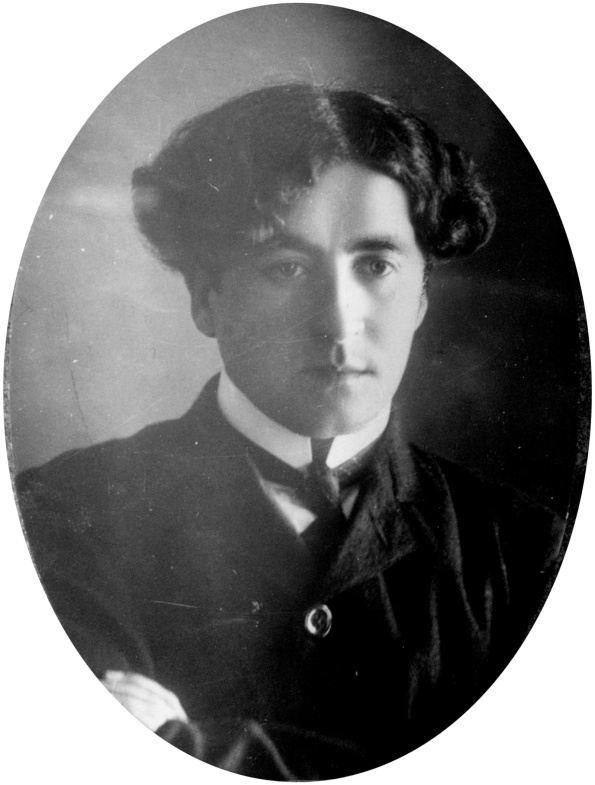
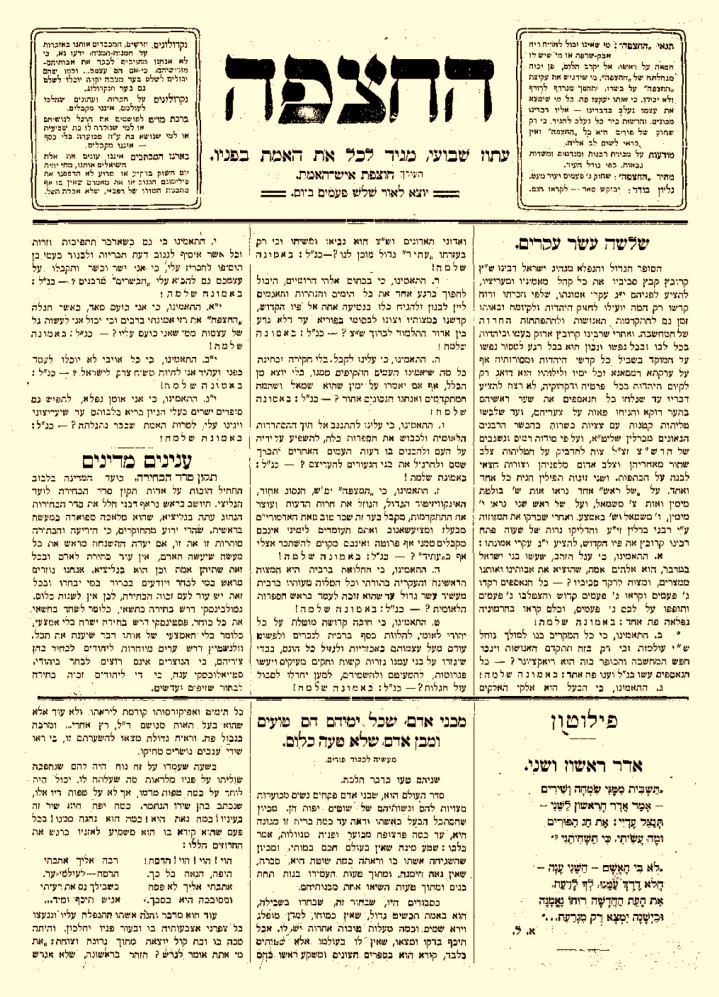
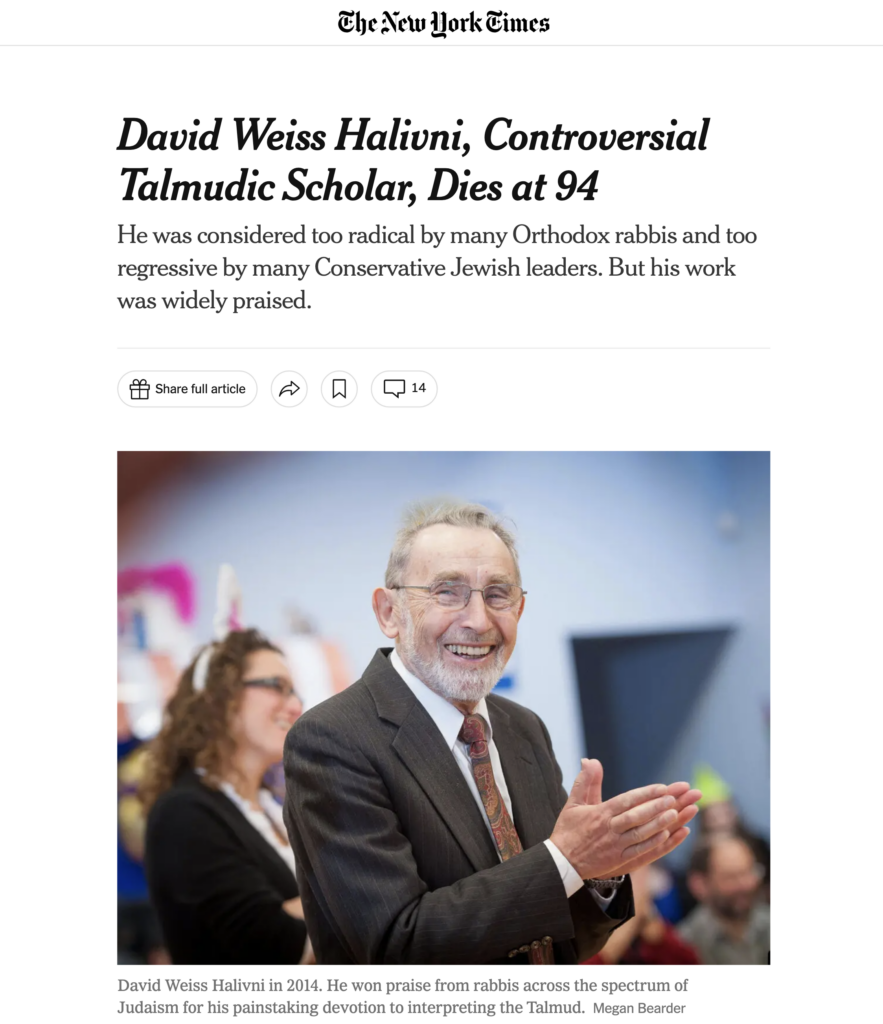
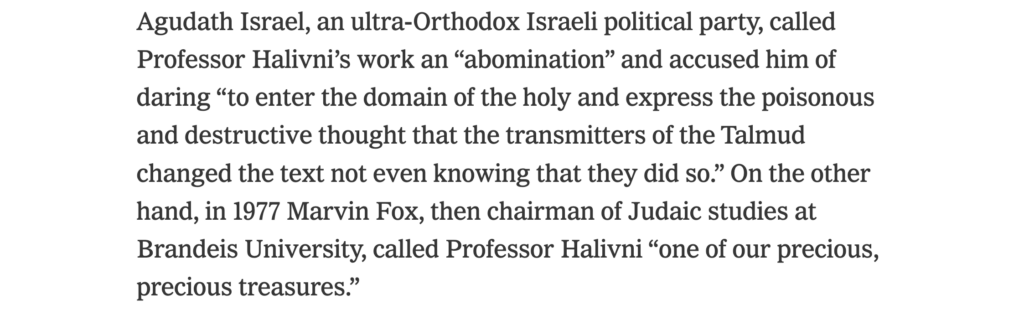
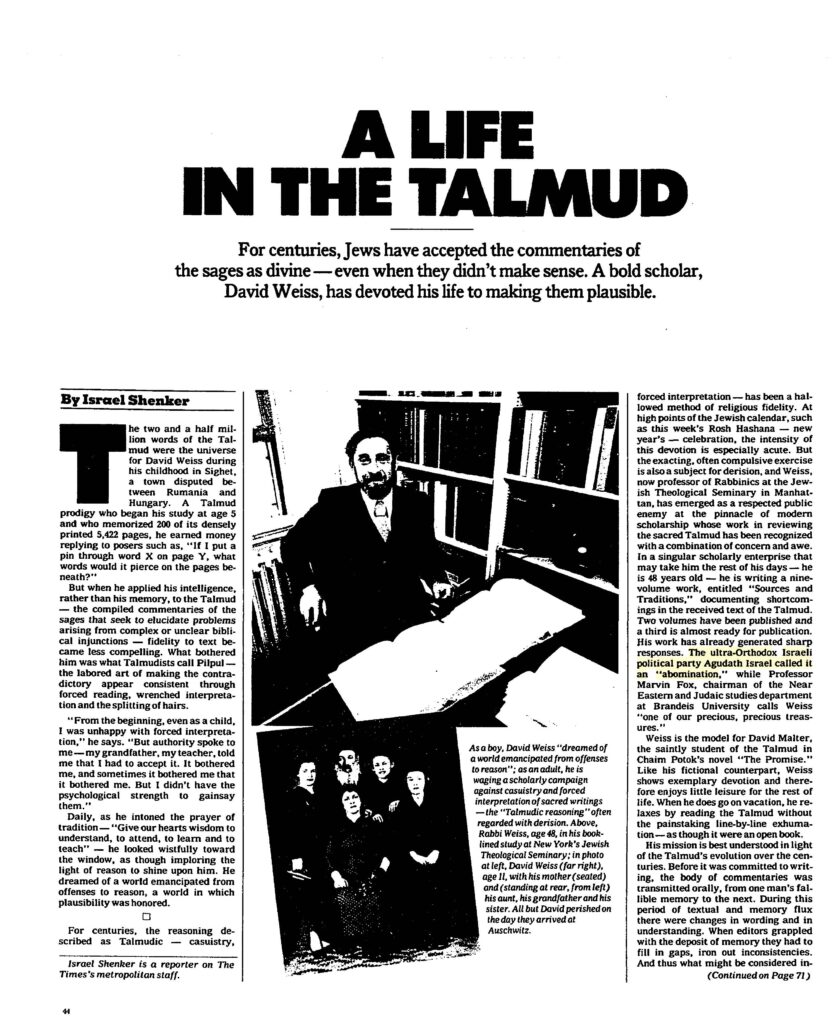
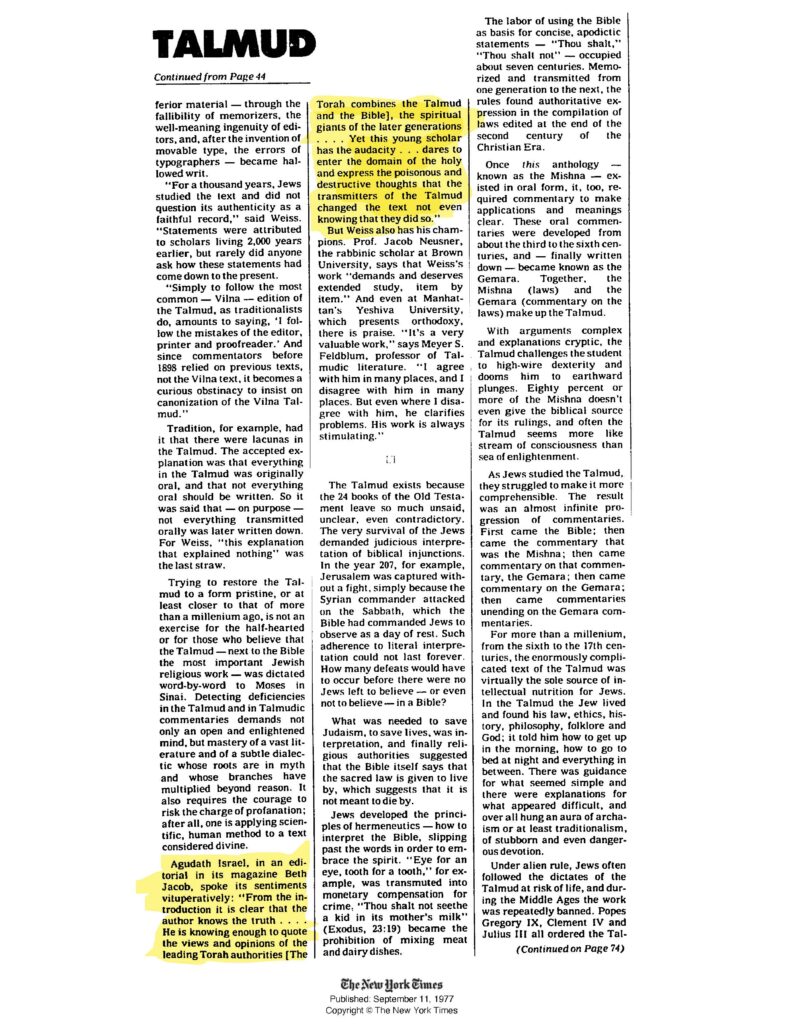
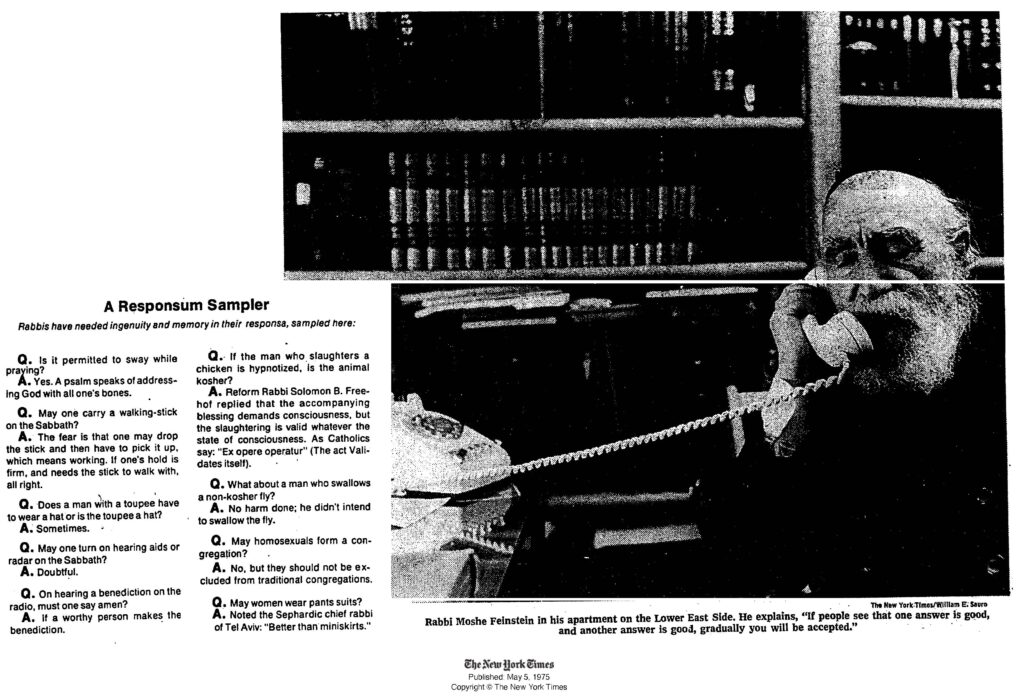
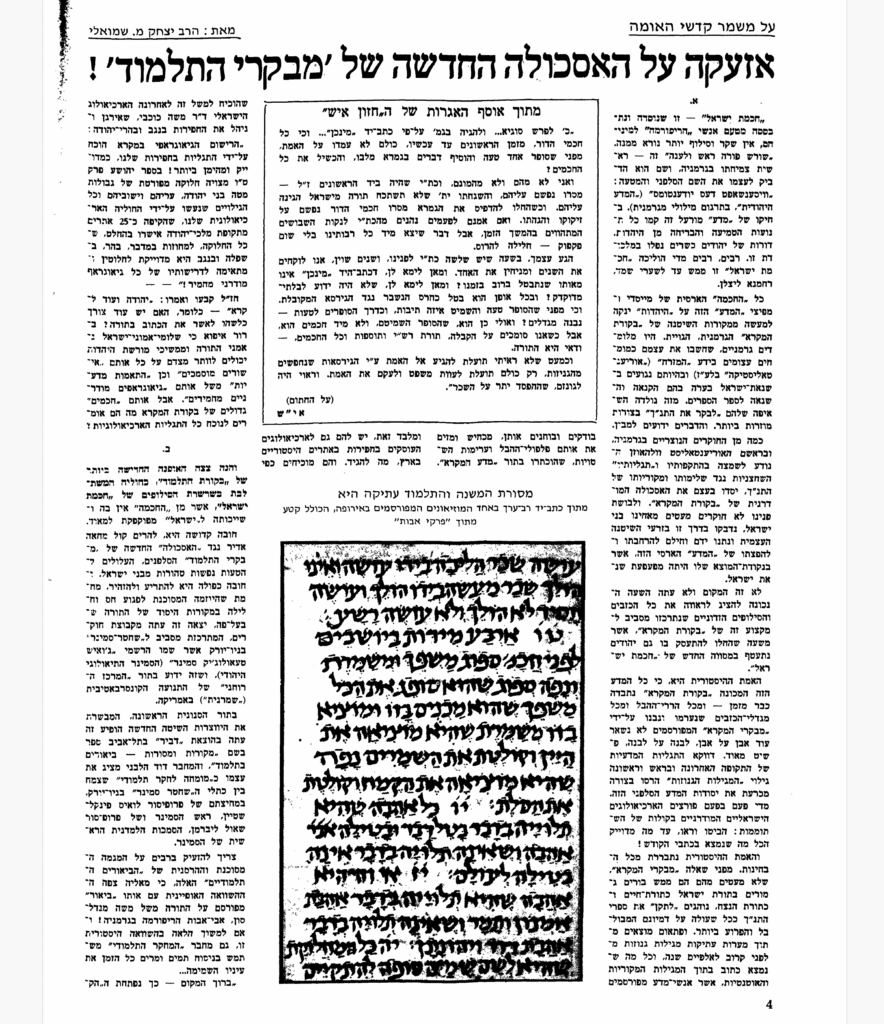
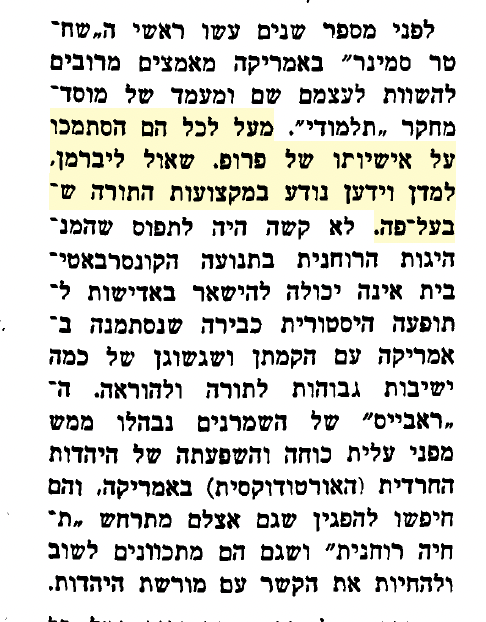 This, despite the fact that Lieberman’s earliest major work, Al ha-Yerushalmi, had already exemplified a disciplined form of textual criticism, drawing on manuscripts, parallel traditions, and internal philological analysis to clarify and correct the text of the Jerusalem Talmud. This could easily have provided fodder for Shmueli, yet he remained silent regarding Lieberman’s method. Recently published letters show that even the Ḥazon Ish engaged Lieberman seriously on these questions. Their correspondence reveals a principled disagreement over method, particularly regarding emendations grounded in manuscript evidence, while also demonstrating that such philological argumentation could be treated as a legitimate subject of rabbinic dispute rather than dismissed outright as heresy. Of course, since this correspondence had not yet been published, it cannot explain Shmueli’s silence on Lieberman’s approach.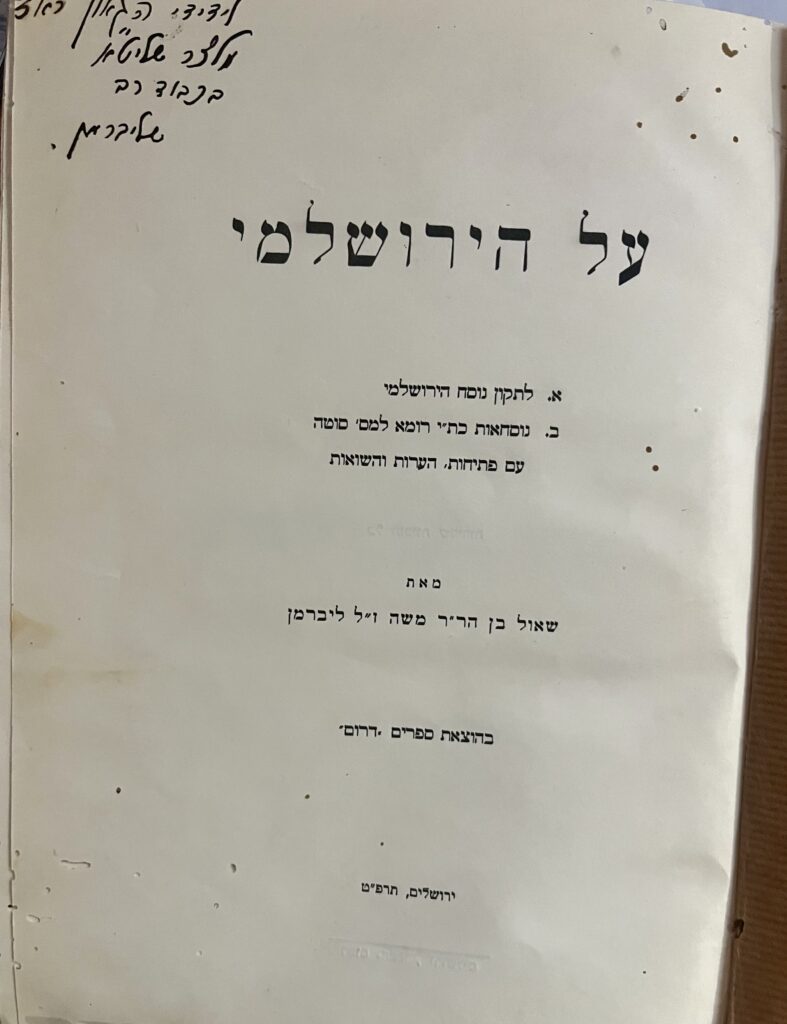
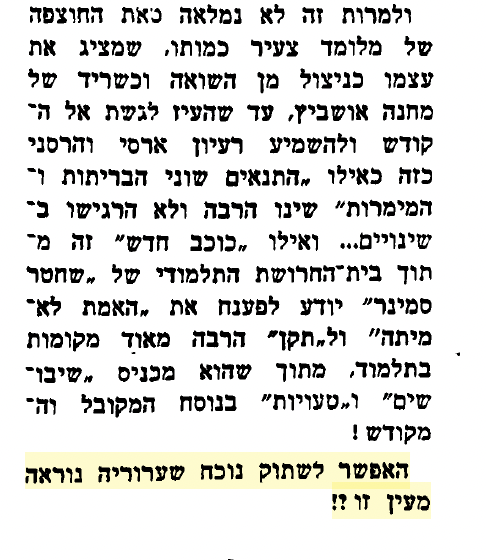
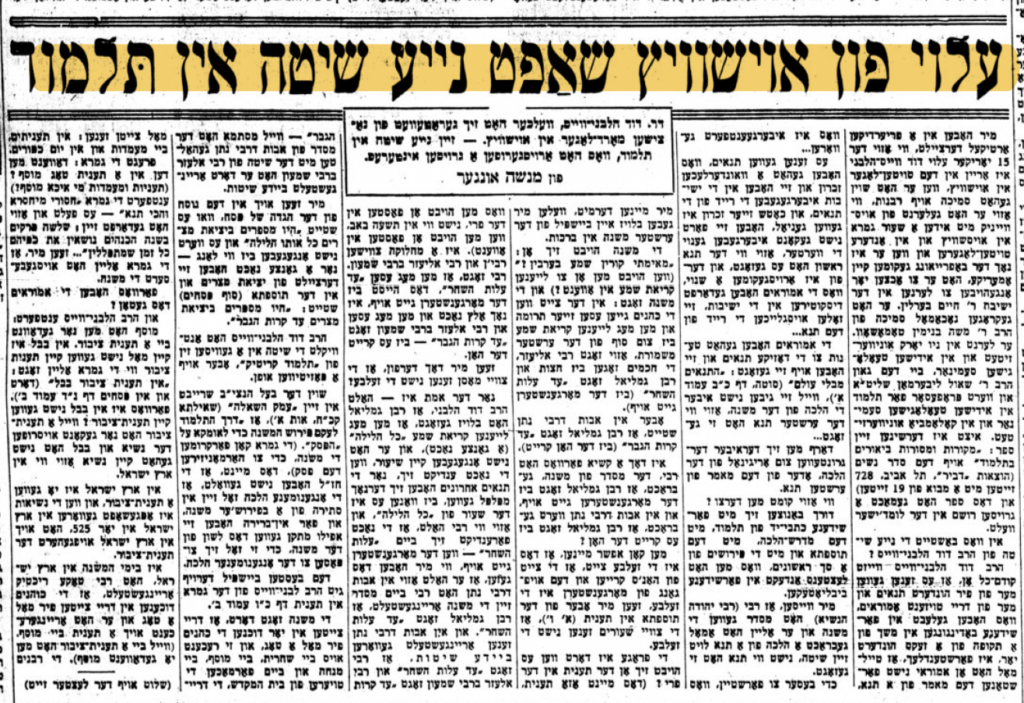
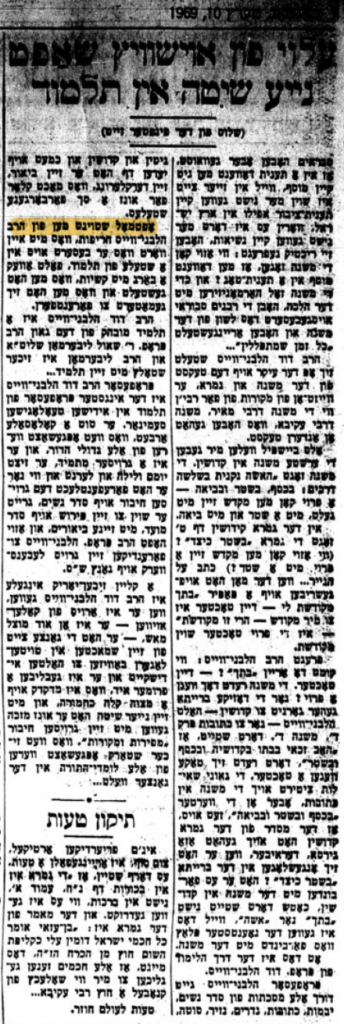
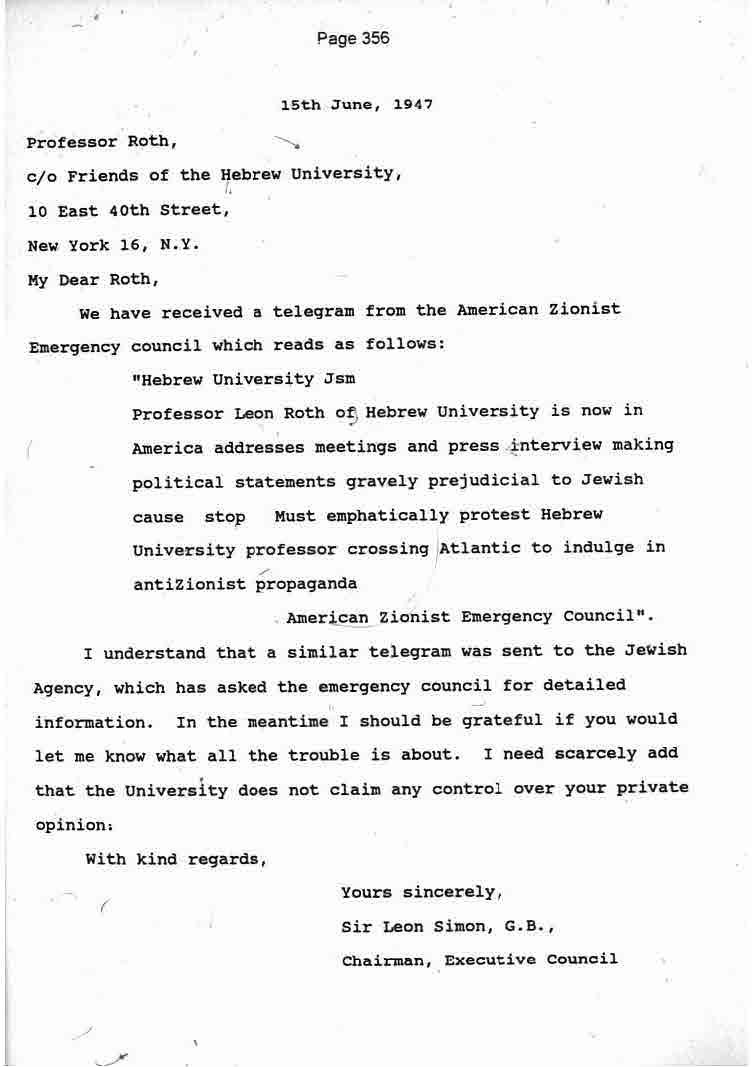
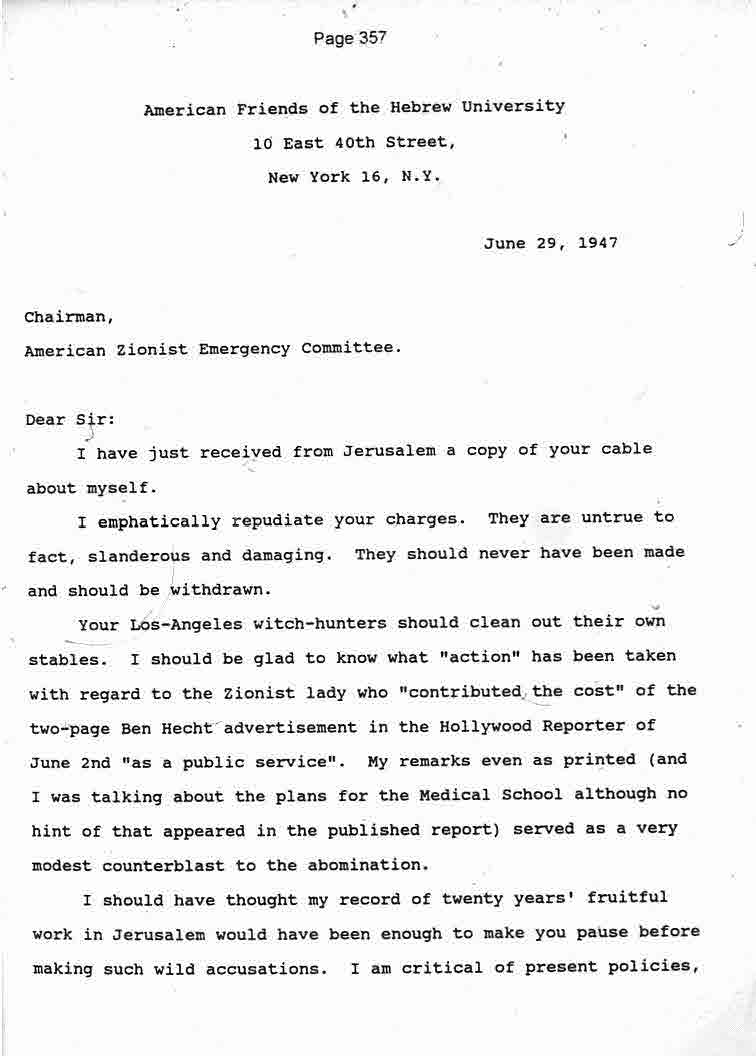
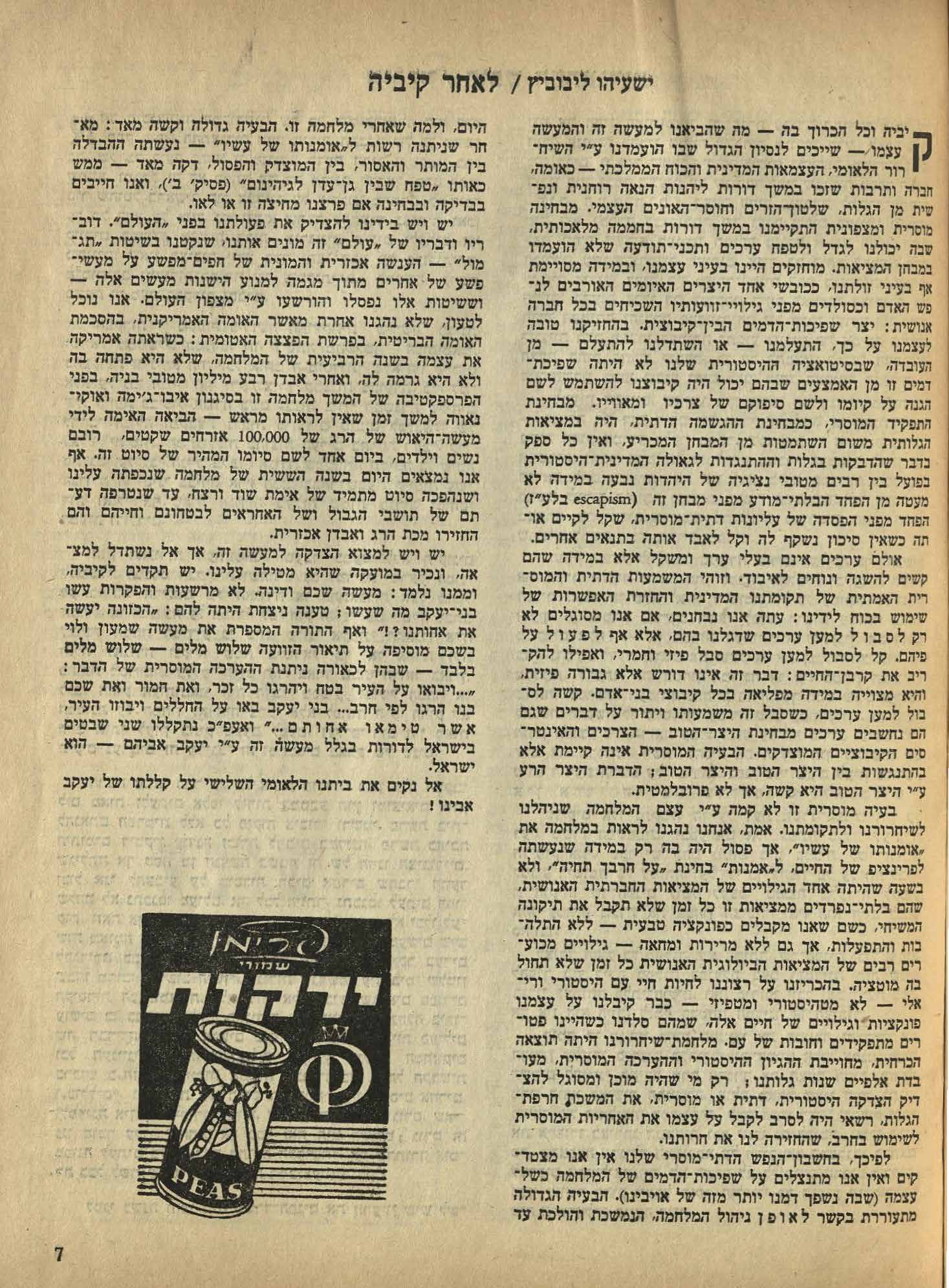
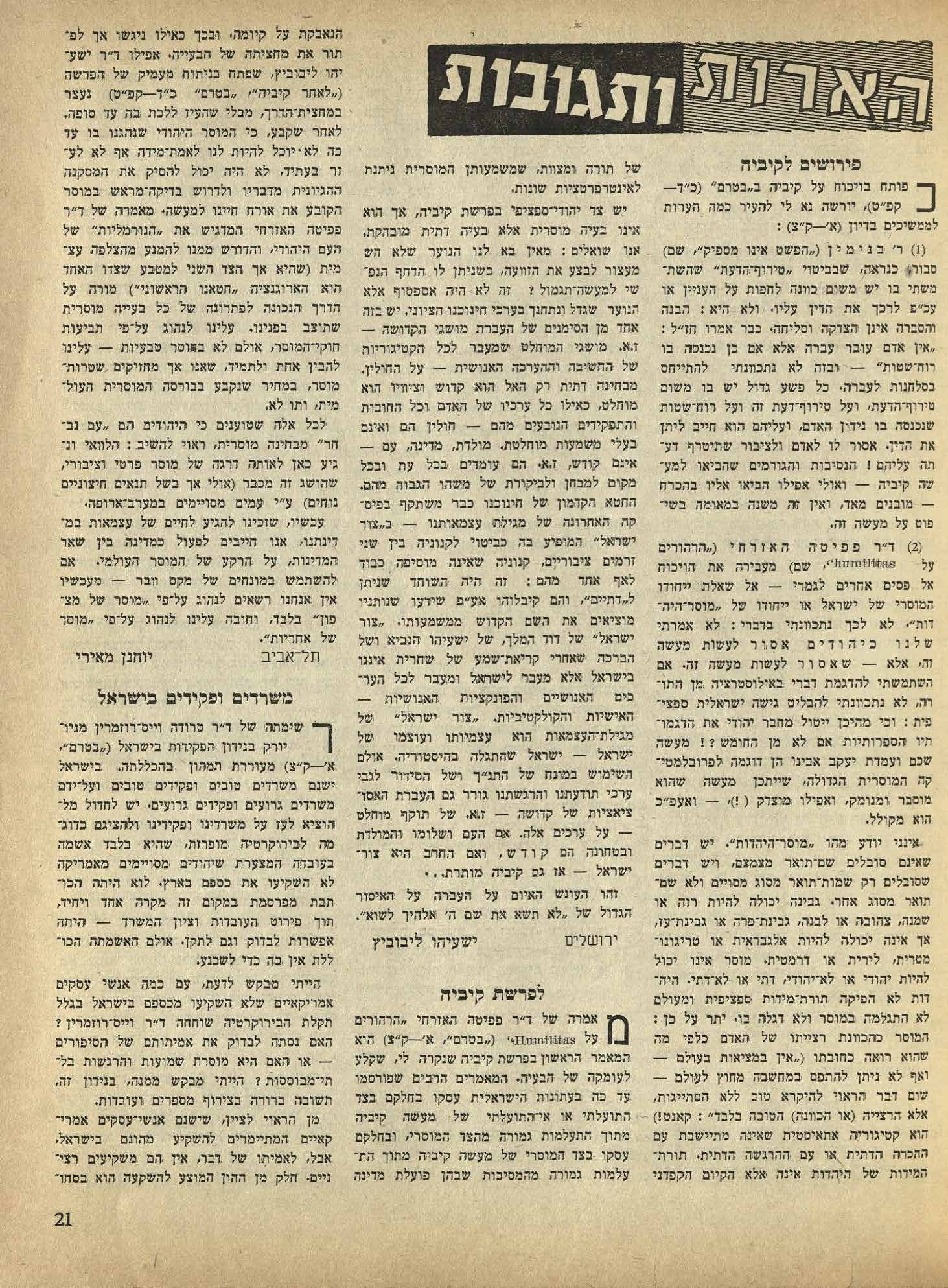
 the Great, again becoming part of the Kingdom of Poland (see banner of early Polish monarchy, right). In about 1400, the town received a charter from Polish king, Władysław II Jagiełło. Hrubieszow (Rubieszów) was destroyed several times by Crimean Tatars, who raided the area in the 15th, 16th and 17th centuries, and by rebellious Cossacks.