1

Satmar From As Seen By An Insider: A Review of the New English Biography of Rabbi Yoel Teitelbaum, the Satmar Rebbe

Satmar From As Seen By An Insider: A Review of the New English Biography of Rabbi Yoel Teitelbaum, the Satmar Rebbe
by Ezra Brand

I recently bought the new biography of the Satmar Rebbe, called “The Rebbe. The Extraordinary Life & Worldview of Rabbeinu Yoel Teitelbaum. The Satmar Rebbe זי”ע”, by Rabbi Dovid Meisels (Canada 2011, distributed by Israel Book Shop). Rabbi Meisels is related to Rabbi Teitelbaum, and a staunch Satmar chossid, so you can be sure that the views espoused in the book are Satmar’s true opinions. I also recently bought Solomon Poll’s classic study if chassidim in Williamsburg in the 1950’s, during which Rabbi Meisel’s book is also mostly set. It was interesting comparing the two very different views–that of a Satmar chossid looking back at those times, and that of a contemporary secular scholar like Poll. (See also an interesting review, and comments on it, here.)
The book discusses many opinions of the Rebbe. Besides for his famous anti-Zionist opinion, the book discusses such sundry topics as the required height of the mechitza in shul, metzitza b’peh, television, derech halimud, mikvaos,tznius (married women wearing sheitels, married women shaving their hair, women required to wear thick stockings—at least 90 denier), and the times for beginning and end of shabbos. It is somewhat surprising that the book doesn’t mention the Rebbe’s famous opinion that a boy and a girl shouldn’t meet more than two or three times before getting engaged. On pg. 364 the book does mention the Rebbe’s opposition to “the chosson spend[ing] time with the kallah before and after the engagement,” but no mention is made of how many times the Rebbe held the boy and girl should meet. There is a famous story told, that Reb Moshe Bick, a prominent chassidishe posek in the Bronx, decided that boys and girls should meet at least ten times before getting married. He felt that America was different than Europe, and too many divorces were happening because of improper matches. The Rebbe was strongly opposed to this. Reb Moshe Bick explained that the difference of opinion stemmed from the fact that he was a mesader gittin, while the Rebbe was a mesader kiddushin!
Almost no sources other than Satmar publications are listed as sources. These Satmar sources are listed at the end of the book in the “Bibliography;” there are about thirty or so. The only non-Satmar sources I found were “A Concise History of Agudath Israel” (pg. 97), “Uvdos Vehanhagos Leveis Brisk” (pg. 137) (basically Satmar!), “Hamodia” (pg. 220), and “Rav Shach Speaks” (pg. 528). However, it is a breath of fresh air to see at least some sources listed; most heimishe publication until now have opted to leave them out.
The book is notable in that it is very politically incorrect. It doesn’t beat around the bush when it confronts Reb Yoel’s opinion on Zionism. Reb Yoel was famously extremely anti-Zionist—as are both camps of Satmar today—and Rabbi Meisels emotively explains the basis of his opinion. Of course, there are a lot of polemics, such as the story on page 313, where Rabbi Meisels writes:
Indeed, one measure of the impact of Vayoel Moshe is that whatever books the Zionists have since published purporting to refute it (notably Hatekufah Hagedolah and Nefesh Adah) have not been taken seriously in the general Torah world. To this day, no serious mainstream work has been written to refute Vayoel Moshe. Even those rabbis who continue to advocate voting in the Zionist elections use the terms “eis laasos” and “aveirah lishmah,” indicating that at least in theory they agree with the central concepts of Vayoel Moshe.

Notice that the all-inclusive term “Zionists” is used, without even using the word “rabbis,” even though the authors of the “Zionist books” cited were undoubtedly great Talmidei Chachomim. This pattern of not giving those who hold of Zionism any titles of respect holds true throughout the book. For example, on page 294, Rabbi Yehuda Leib Maimon, the founder of Mossad Harav Kook, is referred to as “Yehuda Leib Maimon.” It is therefore somewhat surprising that on page 317, the Minister of Religious Affairs is referred to as “Rabbi Yaakov Moshe Toledano.” Maybe only Sefardim are allowed to be Zionists!
On pg. 178, the book says about the Satmar newspaper, Der Yid: “The policy of Der Yid was that whenever the State of Israel (Medinas Yisroel) was mentioned, the word “Yisroel” was placed in quotation marks to show that Torah Jewry, the true Israel, did not recognize the Zionists’ right to use their name.” (Notice “Torah Jewry,” not just Satmar.) This is followed by Rabbi Meisels himself, such as on pg. 249 (“…State of “Israel.” “). Usually, just the term “Zionist state” is used (e.g., on pg. 247). It is surprising that on pg. 523 the book mention “[t]he Israeli authorities.” I am sure this oversight will be corrected in future editions.
Throughout the book, the author hints to the Satmar opinion that kiruv rechokim is problematic. On page 13 he writes: “One of the secrets of the Rebbe’s success is that he never tried to perfect all of American Jewry and bring it into his fold. Instead, he worked hard to keep himself and his own community, which was mostly made up of post-War immigrants, unscathed.” Satmar is famous for disagreeing with Lubavitch on this point, however this disagreement is never stated explicitly. Rather, the author says that this is why Rabbonim before the War were not successful in planting Yiddishkeit in America (page 150): “A certain writer wrote that he heard from the Rebbe in 1955, ‘Why was I more successful in planting Torah in America than all the other gedolim who tried? Because they took in too much, they wanted to make the whole America good. In order to reach people, they had to make compromises. But I realized that Yiddishkeit can only grow if you plant perfect seeds. It doesn’t grow from compromises.” This completely ignores the fact that the Satmar Rebbe was working with people who had relatively recently been forcibly plucked from their homes in Hungary, straight into Williamsburg. On the other hand, earlier Rabbonim were dealing with people who had willingly left their very religious hometowns in Eastern Europe to go to America, a much more secular country. In addition, some of the American Jews had been in America for decades, and had gotten used to the freedom of acting how they pleased, without operating within the very strict confines of the Chassidic community. On pg. 515, the book discusses the Rebbe’s opposition to Lubavitcher chassidim putting tefillin on secular Israeli soldiers, based on halachic problems. Impressively, the book quotes the Lubavitchers answer back, albeit with a rejoinder.
For some reason, the Rebbe did not like the chassidim in Borough Park. This is despite the fact that there were also Satmar chassidim in Borough Park. On pg. 400 and pg. 429 derogatory remarks said about Borough Park by the Rebbe are recounted.
Very harsh words are quoted from the Rebbe about the Lithuanian derech halimud. On pg. 457, he is quoted to have said, in response to why bochurim in Litvish yeshivas “undeniably” learn with more enthusiasm and hasmadah than the Satmar bochurim: “…Here too, there is no truth in the ‘belly logic’ (boich svaros) used in these yeshivas. It’s all their own made up ideas, and it’s fun for them to think about ideas that they themselves made up.” And again: “Their style is not more than three generations old. They created it in order to save the younger generation from the Haskalah. It’s a totally new derech. We see that not one halachic authority came out from them. There is one of them who paskens shailos, and he wreaks terrible destruction. It’s a totally new derech, and it’s not Toras Emes.” The Rebbe isn’t exactly the open-minded or “eilu ve’eilu divrei elokim chaim” type. I’m curious to know which specific posek he was referring to that he feels “wreaks terrible destruction.” It shouldn’t be too hard to figure out, because he is the only Lithuanian who paskens! I’m assuming he meant Reb Moshe Feinstein, with whom the Rebbe had many halachic/ ideological disputes.
An interesting story is told on pg. 474. One of the founding parents of “Bais Ruchel”– the Satmar girls’ school—came to the Rebbe with a complaint. “He [had] discovered that the teacher had instructed the girls to write the Hebrew words “Ani ohev es habeged (I love the garment) as writing practice.” Now, you might think the parent had a complaint that the sentence is grammatically incorrect. A girl writing this sentence should write “ani oheves es habeged.” Or, he complained that his daughter shouldn’t be taught to love her clothing, but rather Hashem. But no. His complaint is: “The Rebbe founded a girls’ school to raise a new generation of girls like our mothers and grandmothers in Europe. Now I see that my daughter brought home a notebook in which she wrote ‘Ani ohev es habeged.’ The Rebbetzin argues that the girls can’t be so ignorant; they are allowed to understand what they are saying when they daven. I had a grandmother who passed away at 103, and she knew the entire Tehillim and Maamados by heart. But she didn’t understand what she was saying. That’s how our children should grow up as well.” The Rebbe said to his rebbetzin: “ ‘He’s right!’ “ In other words, this man’s grandmother had lived to such a ripe old age because she didn’t know the words she was saying! Rather, they should be some magical formula not to be understood.
The book discusses at relative length the process of founding “Kiryas Yoel.” On pg. 528, we read that “[a] Yekke from Washington Heights, who agreed with the Rebbe’s views on many issues, wanted to move to the new town. The Rebbe invited him, ‘Bring another nine Ashkenazim with you, and you can start your own minyan in Kiryas Yoel.” I wonder who this “Yekke” was., and how long he would have lasted among the thousands of chassidim in Kiryas Yoel!
On pg. 45, R’ Meisels bring the famous myth that the town “Satmar” in Hungary is named after St. Mary. He writes: “The Rebbe never pronounced the name Satmar, since it is the name of avodah zarah. Instead he would say ‘Sakmar.’ This pronunciation was also customary in Tzanz.” Throughout the book, when the Rebbe himself mentions the name “Satmar,” “Sakmar” is used instead. In truth, “Satmar” is a combination of the Latin word “Sattu,” meaning village, and the Romanian word “Mare,” meaning large. (See the beginning of the Wikipedia article on Satmar here.)
Something that I felt was lacking was any sign of Yiddish whatsoever. The Satmar Rebbe was known as a smart person, and the book brings a nice amount of stories that contain the Rebbe’s witticisms. I enjoy seeing the actual expression used, and since the Rebbe only spoke Yiddish, as the book says on pg. 26, the Rebbe obviously said whatever he said in Yiddish. Most such biographies quote the exact expression, and then translate. Possibly, Rabbi Meisels didn’t use any English lehavdil bein kodesh lechol. I’ll explain. On pg. 13, R’ Meisels writes that he really shouldn’t be writing the book in English, since the Rebbe was against the use of English “as a medium of speaking and reading within the Jewish community.” But since there were many outside of Satmar who were interested in the life of the Rebbe, the decision was reached to write a book in English. On pg. 488, R’ Meisels writes with pride that in the Satmar summer camps, for two months the campers “did not even hear a single English word.” I guess once the decision was reached not to use Yiddish, Yiddish could never be used!
Some surprising stories are told about talmidei chachamim, which seem to be against halacha:
1) On pg. 144, R’ Meisels talks about how after the Rebbe came to America from Israel in 1946, R’ Michoel Ber Weissmandel (Rosh Yeshiva of Nitra Yeshiva in Mount Kisco) wanted to make sure he wouldn’t return to Israel. He therefore took the Rebbe’s passport and ripped it up. What is the heter to destroy someone else’s passport just because you think he shouldn’t continue travelling?
2) The book speaks about how the Rebbe was “very particular not to use tainted or impure money” (pg. 187). It goes on to write that “[m]any times, they also witnessed him taking undesirable money and flushing it down the toilet.” Similarly, on pg. 190-191, it is told that after accepting a ten-dollar bill from “a man who was not properly observant,” the Rebbe “took that ten-dollar bill, rolled it up and began to use it to scratch his ears. Soon he tore off a piece, and continued to scratch his ears with the remainder. He tore off another piece, until the entire bill was gone.” First of all, didn’t all those people who gave the money give it to support charitable causes? Didn’t they want the zchus of their money being put to good use? If the Rebbe was planning on destroying the money, he should not have accepted the money in the first place. In addition, according to American law, it is illegal to destroy money. What happened to dina d’malchusa dina? However, it is possible that the Rebbe wasn’t aware that this was illegal.
3) On pg. 193-194, the book tells how the a man gave money to the Rebbe to pay his debts: “…As soon as the old man heard this, he brought the Rebbe 20,000 crowns. ‘Now you can go and pay your debts.’ “ Soon after, the Rebbe gave the money to a poor girl for her dowry. When the person who gave money to the Rebbe found out, he protested: “ ‘But I gave you the money only on condition that you would use it to pay your debts, not for tzedaka!’ the old chassid protested. The Rebbe replied: ‘The yetzer hara has already been arguing with me for quite some time, trying to convince me to stop giving tzedaka. And now you are arguing with me as well. Don’t worry, I will soon give you back your money.’ “ Here ends the story. The problem is, the halacha clearly states that if a person gives tzedaka with intentions that the money should be used for a specific purpose, the money cannot be used for any other purpose. See Rama; Yoreh De’ah 256:4; Shach ibid. s”k 10; Shulchan Aruch, Choshen Mishpat 125:1; ibid. se’if 5; ibid. se’if 6; ibid. se’if 7; Shach ibid. s”k 25. However, it is possible that the Rebbe thought that the donor wouldn’t mind. But if so, the book should speak that out.
On pg. 268, the book describes the tricks Neturei Karta used to make sure they would win control of the Eidah Hachareidis: “Shortly before the election, the Neturei Karta divided their candidates into two parties, Neturei Karta, under Reb Amram, and Mesores Vene’emanus, under Rabbi Eliyahu Nachum Porush. In the second party they placed candidates who were not so well-known. The goal was that some voters who did not support Neturei Karta would vote for this party and thus take away votes from Agudah.” This kind of book obviously doesn’t bring any stories about its allies which they feel were done wrongly. It is therefore surprising that the book describes these devious schemes were used to rig the election.
All in all, the book tells many interesting stories about the Satmar Rebbe. It also provides a good overview of the growth of Satmar in America from after the War until the 1970’s. However, some of the stories and views are a little extreme for the litvishe palette, and the book is very polemical in nature. However, this biography will be treasured for giving over a truly unique viewpoint of a gadol, a biography so different than other “heimeshe”, biographies.

Hadaran: Who is going down to the pit of destruction?

Hadaran: Who is going down to the pit of destruction?
by Leor Jacobi
A siyum of a masechet of gemorah is truly a joyous occasion, usually the culmination of many weeks of rigorous group study; challenging, edifying, and uplifting. The centerpiece of the siyum is undoubtedly the customary recitation of the unique kaddish and special additional prayers framing the accomplishment as an integral link in the chain of dissemination of Torah – from the tannaim and amoraim whose divine words we ponder, to the great rishonim and ahronim who guide us in revealing their talmudic treasures and infusing them into the modern world.
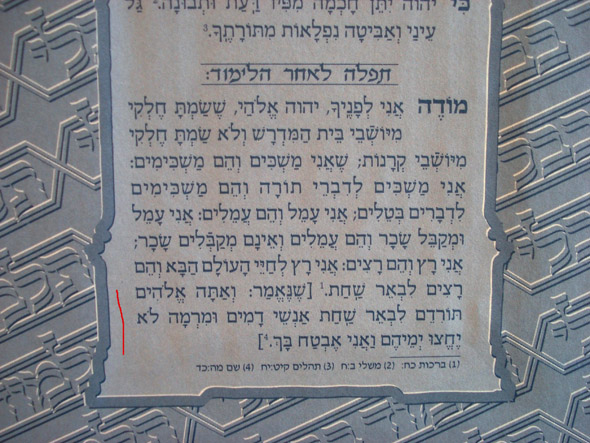
Fortunate is our lot! Our gratitude is expressed in the prayer of Rabbi Nehunia Ben HaKana[1]:
מודים אנחנו לפניך ה’ אלהי ששמת חלקינו מיושבי בית המדרש ולא שמת חלקינו מיושבי קרנות שאנו משכימים והם משכימים אנו משכימים לדברי תורה והם משכימים לדברים בטלים אנו עמלים והם עמלים אנו עמלים ומקבלים שכר והם עמלים ואינם מקבלים שכר אנו רצים והם רצים אנו רצים לחיי העולם הבא והם רצים לבאר שחת שנאמר וְאַתָּה אֱלֹהִים תּוֹרִדֵם לִבְאֵר שַׁחַת אַנְשֵׁי דָמִים וּמִרְמָה לֹא יֶחֱצוּ יְמֵיהֶם וַאֲנִי אֶבְטַח בָּךְ
Our exalted state can only be fully appreciated when contrasted with that of those not fortunate enough to join us in the beis hamidrash. The Yoshvei Kranos, identified by Rashi as idle shopkeepers who waste their time in frivolous conversation, are deprived of the rich rewards of Torah study, both in this world and in the next. They are to be pitied and even disdained for their boorish lack of concern for lofty matters.
The prayer proceeds a step further, however, in the concluding verse from Tehillim 55:24, cursing the ignorant with early death, destruction, and perhaps even damnation! And you, HaShem, lower them into the pit of destruction, murderous swindlers, may they not live out even half their expected lifespan. Are they really so wicked? At our joyous simcha, shouldn’t we rather be resolving to help inspire and mekarev these poor folk?
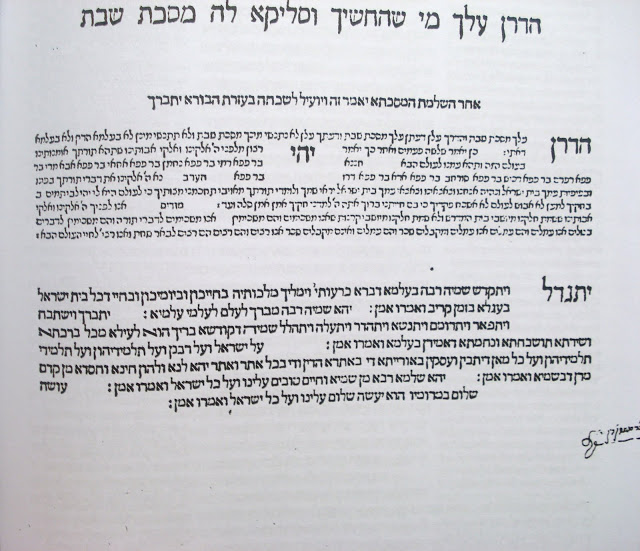
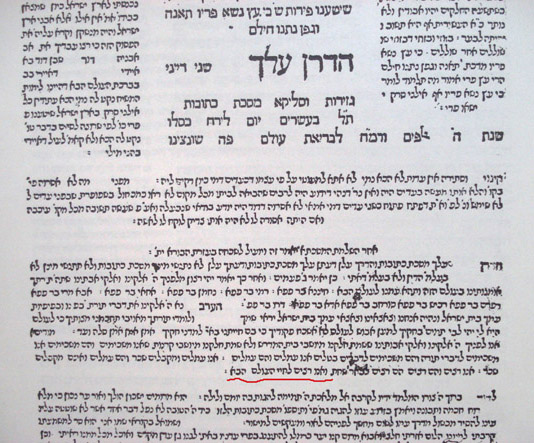
Did the creator of this prayer, Rabbi Nehunia Ben HaKana, or anyone from Hazal recite this verse? (If so, there would certainly be a a good reason for it.) A survey of the sources reveals a resounding: no. Not only does it not appear in Gemara Brachos 28b, but it does not appear in any of the known manuscripts, Rambam[2], or any of the many poskim rishonim that quote the prayer. Early versions of the Hadaran prayer do not include the verse either! See the attached photo of the early Venice and Soncino editions of the Talmud.[3] Nowhere. Gornisht.


In his Sefer Divrei Torah (Mahadura 5)the Munkasczer rebbe, an avid bibliophile, indicates that the verse should be omitted.

The verse only appears in one known halachic source: Halachot of Rif (Rabbi Yitzhak Alfasi). See below (1st edition, Constantinople 1509):

Why would Rif add this verse? He is usually involved with editing away verses from the Gemorrah, not adding them! Does it reflect an ancient custom of his? Why didn’t any of the great Rishonim who studied Rif cite this verse?[4] Ra’ah in his commentary on Rif quotes the entire prayer without mentioning the verse! None of the many known manuscript versions of Rif mention the verse![5] Its earliest known appearance in this prayer is in the first printed edition of Rif (published almost exactly 500 years ago, רס”ט, in Constantinople). Why did the publishers include the verse?
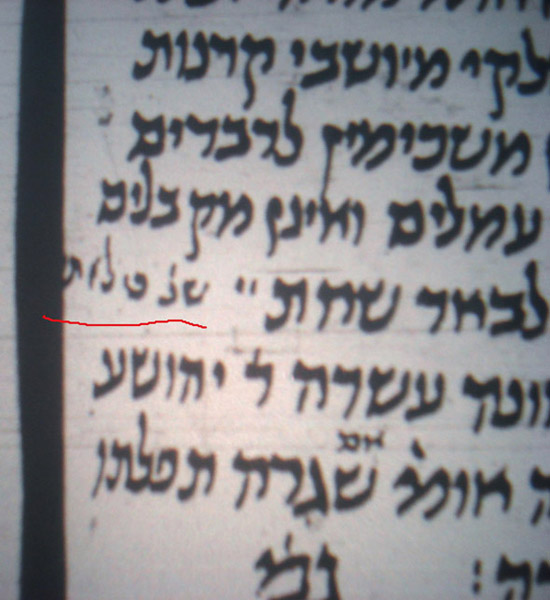
The answer may lie in a marginal gloss of one lone manuscript version of Rif[6].


In the left hand side of the manuscript, one can see that a later scribe added a citation to a verse. Only a few letters are visible in the microfilm: שנ’ כי לא ת
This is clearly referring to a different verse! Without a doubt, it is the same verse cited at the end of the version of the prayer found in the Talmud Yerushalmi:
כִּי לֹא תַעֲזֹב נַפְשִׁי לִשְׁאוֹל לֹא תִתֵּן חֲסִידְךָ לִרְאוֹת שָׁחַת[7]
“For you will not abandon my soul to the grave, you will not allow your pious one to see (his) destruction.”
This verse is most fitting and proper here as a conclusion of the prayer. It lacks all of the problematic vitriol of the commonly found verse. This scribal addition undoubtedly represents an ancient custom[8], which the printers of Constantinople may have been unfamiliar with.[9] The verse they substituted, however, was certainly most familiar to them in a different context:
משנה מסכת אבות פרק ה
אבל תלמידיו של בלעם הרשע יורשין גיהנם ויורדין לבאר שחת שנאמר (תהלים נ”ה) ואתה אלהים תורידם לבאר שחת אנשי דמים ומרמה לא יחצו ימיהם ואני אבטח בך:
The students of Bilaam are certainly deserving of such a curse, for they are involved in sorcery, treachery, and other wickedness – if only they would be idle as the shopkeepers, that would be a tremendous improvement!
The custom of reciting Pirkei Avos on Shabbos afternoon dates back to time immemorial, and as a result of the regular study, many have mastered its teachings literally by heart. It doesn’t seem at all far-fetched to assume that the printing of this verse in Rif was a simple oversight. Eventually the verse entered into the hadaran prayer as we know it.
The prayer of Nehunia Ben HaKana is also found in many printed prayer-books in its original form, to be recited upon leaving the Beis HaMidrash. It is usually located just after shaharith.[10] Many of these contain the verse, such as the prayerbook printed by Rav Ya’akov Emden on his private press[11]. But many do not contain the verse.[12]
Rambam ruled that upon entering and exiting it is obligatory to recite the prayer of Nehunia Ben HaKana[13]. The Shulhan Aruch also follows his psak. In order to further facilitate the fulfilment of this duty, printers have recently begun printing the prayer in the inside front covers of their gemorrahs and mishnayos, including the verse. The editors of Artscroll are the most democratically accommodating – they include the verse in parenthesis. You can decide whether to say say it or not.

It’s well worth noting that a precedent to this custom of the printers is found in the Pesicha to the famous Tosafos Yom Tov commentary on the mishna by Rav Yom Tov Lipman Heller. He writes that since the recitation of these prayers is obligatory, and since many are unfamiliar with them, as they do not appear in the siddur (of his time), that he is printing them, according to the nusach of the RIF. And his nusach follows the printed version of RIF. He does not explain why he chose the RIF’s version over that of the Talmud, but it seems clear that he did not have access to manuscripts of RIF, and, unfortunately, relied on corrupted printed versions. It’s also unclear as to whether his concerns for proper nusach were with the concluding prayer at all, or with the prayer recited upon entering the House of Study, whose wording is much more varied between different manuscripts and printed versions. It could be that this “endorsement” of the Tosafos Yom Tov to the printed version of RIF contributed to the eventual inclusion of the verse in later printings of the Hadaran prayer at the end of tractates and later, in prayer-books.
Hopefully, our good friends, the “yoshvei kranos” will be taking part in a daf yomi shiur and joining us at the next siyum, reciting the Hadaran along with us, and meriting Olam HaBa!
Appendix
Theaters and circuses, the Talmud Yerushalmi (and Rav Kook)
(By a happy coincidence, David Segal recently posted at the Seforim Blog on this very topic!)

We are not the first ones to find the prayer in the hadaran to be overly contentious. No less an illuminary than Rav Avraham Yitzchak Kook, OBM, the first chief Rabbi of Israel, was deeply disturbed by this prayer’s tone. Yoshvei Kranos are today’s ba’alei batim. They keep mitzvos and give tsdakah. The takanah to read the torah on Monday and Thursday is for them, so they should not go too long without hearing words of torah. It goes completely against the grain of Hazal to curse them! In fact, even without the verse, why should they be punished at all?
Rav Kook proposed a truly fantastic solution. A corruption occurred in the text: the yoshvei קרנות of the Talnud Bavli are really yoshvei קרו”ת, roshei teivos for קרקסיות andתרטיות , those who patron theaters and circuses, which in fact, is the exact nusach of the version of the prayer found in the baraisa of the Talmud Yerushalmi!
What exactly goes on in these theaters and circuses? The gemarah in Avodah Zara 18b states that they are essentially a moshav leitzim, foolish and irreverent. Another opinion cited there is that these were much more nefarious centers of Avodah Zara and Shfichus Damim, gladiator sports, public executions and like. Historically, both of these opinions seem correct – theaters and circuses where occasionally more pernicious activities took place. All in all, they don’t seem to be much too different than the modern versions of popular “entertainment”[14].
The curse of Rav Nehunia’s prayer is directed against these insidious people who waste away their free time in such sordid foreign entertainments, as opposed to the Torah-true who spend their free time immersed in learning in the beis hamidrash or in prayer in the beis kneses, even if during the work-day they are but simple “idle” shopkeepers. In this context, even the dubious additional verse is somewhat appropriate[15].
Rav Kook went so far as to call for “correcting” the nusach of the prayer and adopting the version of the Talmud Yerushalmi! That proposition certainly has merit, but is it really the true intention of the Talmud Bavli itself?[16] Perhaps this is not the only suggestion of his that, in retrospect, seems a bit far-fetched.[17] However, it seems that his insight into the tradition of the Talmud Yerushalmi and its stark opposition to “theaters and circuses” teaches a lesson which is especially pertinent today, and can deepen our appreciation of the importance of this truly enigmatic prayer.

Here are Rav Kook’s words (you may click this image to read a larger copy):

The original version of the prayer appears to be found in the Talmud Yerushalmi, produced under the glare of Greco-Roman culture with its ubiquitous theaters and circuses. In Sasanian Babylon, these cultural expressions were unheard of, hence they were restated as the more familiar yoshvei kranos. In contrast, our modern secular culture of entertainment is, for the most part, a western one, and hence the version of the Talmud Yerushalmi takes on crucial added significance today.

Many thanks to Moshe Bloi, Ezra Chwat and Shamma Friedman. All errors are, of course, mine.

Note: This article is based on one which originally ran in Kolmos of Mishpacha magazine and they take no responsibility for the content here. You can read the original article here.

UPDATE 8/18/2011: A song has recently been composed as a result of this article and discussions surrounding it’s Hebrew and English versions. The song lyrics consist of only the two verses and highlights the contrast between them musically.

Here the composer explains the composition in Hebrew and provides a link to the previous Hebrew discussion which inspired it:

[1] Brachos 28b. The Hadaran prayer has been adapted to the inclusive plural form, מודים אנו, rather than the original singular מודה אני
[2] See attached photo of the Tefillah in Commentary on the Mishna, that Rambam himself copied by his own hand!


[3] Note that the order in the prayer is switched around, probably in order to end on an upbeat, good note.
[4] In the back of the new Oz V’Hadar gemarras, the Magid Ta’alumos is cited, who explains that the verse is included in order to end the prayer on a positive note (!), v’ani evtah boch, insead of be’er shachas. The same explanation is offered by the Dinover rebbe, the the author of the classic Bnei Yesoschar, in his Maggid Ta’alumah (פרעמישלא תרל”ו) in his commentary v’Heye Bracha, referring to the inclusion of the verse by the Tosafot Yom Tov in the introduction to his monumental commentary on the Mishna. He makes no reference to the Rif. Perhaps he thought that the verse was added to the Rif according to the Tosafos Yom Tov? It’s worth noting that both the Maggid Ta’alumos and the Maggid Ta’alumah have the same observation on the inclusion of this verse, independently!
[5] Thanks to Dr. Ezra Chwat, of the Israel National Library Manuscript Department, who is preparing a new critical edition of Rif (scheduled to be used in the upcoming edition of Shas Lublin), for allowing me to utilize his forthcoming work. Further, he guided me to four additional “less reliable” manuscripts which are not utilized centrally in preparing his new edition. None of them contain the verse either.
[6] Oxford Huntington 135:
[7] תהלים פרק טז, י
[8] A fascinating new Teshuva by Rav Yitzhak Ratsaby of Benei Brak has been published (Ma’ayan Nissan 5770) on the exact question addressed in this article, the inclusion of the concluding verse in the prayer of Rav Nehunia ben Hakana (link). There, Rav Ratsaby cites Yemenite prayer-books and Teshuvot which demonstrate that the custom of reciting the verse from the Talmud Yerushalmi (like the scribe of the RIF manuscript) continued among certain Yemenite kehillot until almost the present day. Unfortunately, Rav Ratsaby did not check manuscript versions of RIF, and thus understands that the talmud of the RIF himself contained the problematic verse, leading him to propose far-fetched justifications for the custom. Here is my response (Ma’ayan Tammuz 5770).
[9] Although it seems quite doubtful that the printers had this exact manuscript in front of them, it seems likely that they had a similar manuscript. Dr. Ezra Chwat doubts that the Oxford Huntington manuscript was used by the printers as there are many discrepancies between it and the printed version of Rif. It serves as the primary manuscript for Dr. Chwat’s new edition of RIF. According to Dr. Chwat, the manuscripts can be used to resolve many seeming contradictions between RIF and RAMBAM!
[10] So that one may go מחיל אל חיל, from the beis hakneses to the beis hamidrash.
[11] Rav Yitzhak Ratsaby, in his recent tshuva (see note above) argues that the custom in Rav Emden’s siddur was only to recite part of the verse, but it seems more likely that this was simply a printer’s abbreviation. The reliability of the wordings found in this siddur are quite questionable, based on Rav Ya’akov Emden’s own testimony in the introduction that many texts were simply copied from other prayer-books.
[12] Among current prayer-books: the accurate Tefillas Yosef and Ezor Eliahu do not include the verse. Siddur Vilna, on the other hand, does contain the verse.
[13] Commentary on the Mishna. See Levush and Aroch HaShulhan (Orach Haim 110) for explanations as to why many do not recite the prayers.
[14] Internet anyone?
[15] This fact was noted independently in the recent Responsa of Rav Yitzhak Ratsaby, Ma’ayan Nisan 5770
[16] The Aderes in Tefilas Dovid, p.12, states that yoshvei kranos are also engaged in nefarious activities, as seen in the Talmud Yerushalmi. He claims that yoshvei kranos here doesn’t follow its normal meaning, going against Rashi. Rav Kook was the Aderes’ son-in-law so its not surprising that they both have the same approach in understanding the Bavli according the the Yerushalmi. Rav Kook probably favored Rashi’s interpretation of yoshvei kranos, and hence, was forced to actually alter the text of the Bavli.
[17] Rav Kasher, in Torah Shleima, Vol 15 page 140, dismisses Rav Kook’s theory entirely, claiming that the version of the Talmud Bavli is the original one! His proof is the fact that a parallel to the bavli appears in Pirkei Avot d’Rebi Nathan A. However, that collection is widely recognized to post-date the Bavli itself, which it widely quotes from.


Seforim Sale

by Eliezer Brodt While hunting for seforim and books I recently came across the following excellent titles for sale, from an old library. Most of these titles are very hard to find. Some of the prices are better than others, but all in all I think they are fair. Almost all the books are in great shape. The sale prices are only for the next three days. After that they might not be available. There is only one copy of most of these titles so it’s being sold on a first come first serve basis. Shipping is not included in the price; that depends on the order and size, ranging between 5-9 dollars a book. Feel free to ask for details about any specific book on the list. All questions should be sent to me at eliezerbrodt@gmail.com thank you and enjoy. ספרים 1. שושנים לדוד על משניות ב’ חלקים 2. ר’ דוד צבי הופמן על ויקרא ב’ חלקים מוסד רב קוק 40$ 3. שלחן עצי שיטים על ל”ט מלאכות לבעל מרכבת המשנה 26$ 4. מאמר יום טוב פ’ על אבן עזרא לבעל תוספות יום טוב 22$ 5. נפש הגר, ב’ חלקים על תרגום אונקלוס 40$ 6. שבעה תמרים ביאור על צוואת רבינו יהודה החסיד 17$ 7. השגות הרמ”ך על הרמב”ם –עם הערות ש’ אטלס 16$ 8. שם אפרים על התורה לר’ אפרים זלמן מרגליות 16$ 9. שו”ת מלמד להועיל (השלם) 32$ 10. קומץ המנחה לר’ חנוך ארונטרוי 13$ 11. ספר הכריתות – מהודורת ר’ סופר 23$ 12. שו”ת ביכורי שלמה ב’ חלקים 40$ 13. מושב זקנים על התורה (דפוס ראשון) 33$ 14. קסת הסופר על התורה ר’ אהרן מרכוס (בעל הספר ה’חסידות’) 20$ 15. מלאכת חרש 15$ 16. ספר המקנה ר’ יוסף רוסהיים (מקיצי נרדמים תשל) 19$ 17. מסכת כלה עם פי’ הראב”ן הירחי 17$ 18. עטרת רבקה ארבע ספרי תחינות נשים וספר המוסר מינקת רבקה – מ’ וונדר ירושלים תשנ”ב 14$ 19. שו”ת ר’ יהודה אריה מודניה זקני יהודה מוסד רב קוק 36$ 20. מלות ההגיון ספרית מקורות מוסד רב קוק 17$ 21. בעלי התוסופת על התורה (פרשת שופטים וכי תצא) ש’ אברמסון, ירושלים תשל”ה, 94 עמודים 16$ 22. משיבת נפש ר’ יעקב פעלדמאן על ספר תורה תמימה 550 עמודים 35$ 23. שו”ת ציון לנפש חיה 24$ לר’ לייטר 24. תהלוכות היבשה 14$ 25. זמירות של שבת נפתלי בן מנחם ירושלים תשט 30$ 26. תפילה לדוד על דיני מאה ברכות בכל יום 16$ 27. מלמד התלמידים דפוס צילום של מקור 40$ 28. שו”ת פתחי שערים 20$ 29. ישראל והאנושות ר’ אליהו בן אמוזג 30. בשבילי מוסר ר’ אליהו בן אמוזג 31. תכלת מרדכי ר’ מרדכי גימפל יפה –פי’ על רמב”ן על התורה 17$ 32. תל תלפיות י’ בלויא (הלכות ומנהגים הנוגעים לעיר יהודה וירושלים מקום המקדש והוכתל מערבי) רלד עמודים ירושלים תשנט- 12$ 33. דרכי חיים – לר’ חיים נפתלי ומווארשא (חיבור חשוב ומאוד מעניין) 108 עמודים 13$ 34. רבינו אברהם פריצול על מסכת אבות 18$ 35. ר’ יצחק מטולידו על אבות 18$ 36. רבינו יוסף בן ששון על אבות 18$ 37. סידור עבודת הלבבות ספר מקור הברכות- ז’ יעבץ 21$ 38. י”ש חסידה רב האי גאון רשיות לפרשות התורה 16$ מחקר 1. תולדות תנאים ואמוראים אהרן הימן ג’ חלקים 55$ 2. דברי תלמוד ב’ חלקים ר’ אברהם אליהו קפלן מוסד רב קוק 35$ 3. באהלי יעקב ש’ אסף מוסד רב קוק 22$ 4. שערי ספר, מוסד רב קוק, נפתלי בן מנחם 15$ 5. ספר היובל לכבוד חנוך אלבק 25$ 6. חקר ועיון חלק ג לר’ קלמן כהנא 13$ 7. טמרין חלק א מוסד רב קוק 18$ 8. ספר הזכרון לר’ ראובן מרגליות 19$ 9. קובץ ר’ יוסף קארו מוסד רב קוק 28$ 10. ר’ יוסף קארו – ר’ יקותיאל גרינוואלד 24$ 11. לתולדות הסנהדרין בישראל ר’ יקותיאל גרינוואלד 13$ (כריכה רכה) 12. המר”ם שיק וזמנו ר’ יקותיאל גרינוואלד 15$ כריכה רכה 13. שלשלת הקבלה 22$ 14. תולדות האגודה נס ציונה בוולוזין י’ קלוזינר מוסד רב קוק תשי”ד (ספריית מקורות) 17$ 15. הכהנים ועבודתם א’ ביכלר 16$ מוסד רב קוק 16. שיר היחוד והכבוד – הרבמן21$ מוסד רב קוק 17. עניינות בספרות הגאונים שרגא אברמסון 35$ מוסד רב קוק 480 עמודים 18. סדר קידושין ונישואין א’ פריימן מוסד רב קוק ‎33‏$ 19. אבות עטרה לבנים אריה לישפיץ 17$ 20. מבחר כתבים ר’ מתתיהו שטראשון 22$ 21. מגילת אחימעץ בנימן קלאר (ירושלים תשלד) 40$ 22. במעגלי הנגלה והנסתר ישראל וינשטוק מוסד רב קוק 28$ 23. תרגום אונקלוס דב רפל (כריכה רכה) 219 עמודים 21$ 24. תקופת הסבוראים וספרותה יעקב אפרתי 19$ 25. תולדות שלשת הרועים – ג’ ספרים א-עטרת הלוים על השל”ה פ’ מדובנא 80 עמודים ב) כתר כהונה על הש”ך- ח’ פרידבערג 37 עמודים ג’ שלשלת זהב על ר’ נפתלי כץ 92 עמודים – 21$ 26. הסכמה ורשות בדפוסי ויניציאה מאיר בניהו 30$ 27. הדפוס העברי בקרימונה מאיר בניהו 26$ 28. השליחות והרשאה במשפט העברי נחום רקובר מוסד רב קוק 34$ 29. המקרא ברמב”ם יוסף קאפח 14$ 30. עניני אבן עזרא – נפתלי בן מנחם 32$ 31. הסימנים השלם ר’ כהן 17$ 32. אוצר הביאורים והפירושים ר’ כהן 21$ 33. ר’ יצחק בר ששת – הריב”ש מוסד רב קוק תשטז- 20$ 34. ארשת חלק ב מוסד רב קוק 9$ 35. אבולוציה ויהדות אברהם קורמן 15$ 36. ר’ עקיבא שליזנגר מוסד רב קוק (שרגאי) 14$ 37. על היצירה הספרותית של האמוראים, א’ וויס – 18$ 38. הראשונים לציון :תולדותיהם ופעולתם, א’ אלמאליח 24$ 39. עיונים בביאור על התורה לרבינו בחיי בן אשר – א’ ליפשיץ- 9$


A review of some Recent Torah Journals

A review of some Recent Torah Journals

By: Eliezer Brodt


In this post I would like to focus on some recent Torah Journals that have come out in the past few weeks. In the future I hope to return to this topic of these Journals with a more in-depth look at their goals and the history of early Journals in general in relationship to this.

As many of these journals have only been distributed this week I am just offering some quick remarks on them. In general different people like different journals depending on tastes, interests and what they are expecting from them. If one wants to see some heated and sometimes comical discussions in Hebrew on these journals, one should visit the Otzar Hachochma forums.

1) מקבציאל גליון לז – ישיבת אהבת שלום

Mechon Ahavat Sholom began putting out this journal many years ago. Originally the volumes were very thin and did not come out frequently; over time they started getting thicker and thicker and coming out more often. This volume is the first (as far as I recall) to being printed in hardcover. This Journal focuses on many different areas related to Halacha. A section found in this journal not found in others is devoted to Kabbalah. They usually have a few pieces related to manuscripts that they are working on. However, the time from when they print these sample pieces to the time that the seforim are actually printed takes a long time. Usually the manuscripts and seforim they print are related to Sefaradim. There have been a few exceptions of this of late, namely manuscripts of the Litvish Goan the Aderes. To date they have printed eight volumes of his seforim. (I hope to return to these seforim in a future post). This new Journal has many letters between the Aderes and the famous Maskil R. Yaakov Reifman. Another very interesting section usually found in this journal are a few articles devoted to History. In this volume they have a fascinating manuscript from R. Betzalel Askenazi, famed for his Shita Mikubetzes related to the topic of learning pilpul. This is based on manuscripts (79 pages) on the topic never printed before with a sharp correspondence on the topic with R. Moshe Galante. The letters are preceded with a nice historical overview of the topic.

2) קובץ עץ חיים באבוב- חלק יד, שסה עמודים.

This journal usually focuses on a wide range of topics ranging from manuscripts, to halacha, minhag and even a some history. In general one interested in articles on these topics will not be disappointed, although I must say that some volumes are much better than others. In the past we have pointed out censorships from the editors. The previous issue had a nice piece from R. Goldhaber on the topic of whether there were two people with the name Jesus. However a careful reading of the footnotes will show comical censorships. Besides for this piece, the last volume was rather disappointing compared to their previous volumes. But this recent volume was a bit better. In general it’s a matter of taste what one expects in a journal; I am just expressing my feelings which many could argue on.

3) היכל הבעש”ט גליון לא, רכ”ד עמודים.

This Journal is devoted to Chassidus. Originally it came out four times a year, but now it’s down to two issues a year. There are pieces from manuscripts (of Torah and letters), minhaghim, history and in-depth pieces of Chassidic Torah. Anyone interested in Chassidus will find valuable material in every issue. On page 223 my recent work Likutei Eliezer was quoted – but the author misquotes me on the topic.

4) אור ישראל גליון סב, שנב עמודים.

This Journal has been getting thicker and thicker as time goes on. Originally it came out quarterly, but now it’s down to two issues a year. The main focus is on Minhag and Halacha but there are often some pieces related to seforim or history. There is often a nice piece on a particular Minhag related either to Shabbos or Yom Tov from R. Oberlander; unfortunately this issues does not have such a piece. Some interesting pieces in this issue that I enjoyed were the overview of the controversy in regard to the Turbot Fish, including new manuscripts (this topic has been dealt with in Kovetz Eitz Chaim volume eleven). Another piece of interest was from R. Y. Spitz on the topic of which cheeses one has to wait between eating them and meat. There is a piece on the same topic, though not nearly as thorough, in the current issue of Eitz Chaim. Another piece I enjoyed was from R. Dandorovitz on הא לחמא עניא. This piece has a point of bibliographic information in regard to Yakov Reifman. Reifman had written about the Hagaddah which was collected and reprinted in 1969 by Naftoli Ben Menachem and again in 2001 by S. Sprecher. However neither of them were aware of an additional piece of his printed after his death in Lunz’s periodical Yerushalayim. Another piece worth mentioning was from R. A Meisels on sources of over one hundred pisgamim. It’s unfortunate that he was not aware of R. S. Askenazi’s work on these topics. Another piece worth mentioning is a collection of sources about the famous gemarah of כל מה שיאמר לך בעל הבית עשה חוץ מצא. In the recently printed work of R. S. Askenazi one can find some more information on this topic. Another piece worth mentioning is the sharp piece against Nobel Laureate Professor Yisroel Robert Aumann’s article printed in Moriah a few years ago explaining a gemarah in Kesuvot based on Game Theory. There have been other discussions about this article of Professor Aumann’s in different journals such as Beis Aron Veyisroel and Hamaayan.

5) מוריה שנה שלושים ואחת, ניסן תשע”א (שס”ד-שס”ו), רעא עמודים.

This journal from Mechon Yerushlayim has been coming out for years and it has had its ups and downs. This recent issue has many nice pieces, including a long one from a manuscript of a Talmid of the Rosh on Hilchos Pesach (22 pages). This was published by Professor Yakov Spiegel. There are few other pieces from manuscript and many on Halacha and minhag. When reading this journal one finds news of future works to be released. In this volume we are treated to another section of R. Kinarti’s forthcoming critical edition of the Yosef Ometz. There is a nice piece about the fast of the Bechorim on Erev Peasch (a topic I hope to deal with at length in a forthcoming article). We also learn that after years of waiting Mechon Yerushlayim is about to print their Minchas Chinuch with notes (much more voluminous than the current editions). Amongst other titles they plan on releasing shortly is another volume of the Shu”t Tashbatz, תשב”ץ קטן and a sefer כללי הרש”ש which sounds interesting.

6) המעין, כרך נא גליון ג.

This Journal, although smaller in size than many of the other journals, is always full of excellent content on wide-ranging subjects. The issues usually go up on the web for free download shortly after publication. This issue has a letter on Eretz Yisroel from the Chazon Ish with a part previously unpublished. Another letter printed here for the first time is from R. Aryeh Levine to his future brother-in-law. One can get a glimpse of this special Tzadik from this letter. There is a nice short article from R. Peles on illustrations found in old Haggadas, particularly one than has become famous in recent years of the husband pointing to the wife when he says מרור זה. Another nice piece is from Professor Zohar Amar and Aryeh Cohen on the making of the Lechem Hapanim. Some other pieces of interest to me were the short articles with more information on the great Gaon from Tavrik R. Avraham Aharon Burstein, and the short review on the new edition of Shmirat Shabbat Kehilchata. A very interesting debate can be found in here about a very critical review of the recent edition of Sefer Haterumah printed by Mechon Yerushlayim. The first review was printed in the previous issue. In this issue someone attempts to defend the new edition, but in my opinion does not do a good job. One of my favorite parts of this journal is the last part. In this section, the editor R. Yoel Catane reviews recent Torah works, and he always has interesting points to make.

7) ירושתנו ספר חמישי תשע”א, תמח עמודים , מכון מורשת אשכנז.

This volume, like the previous volumes, has not let us down. The long wait so for it was very worthwhile. As in previous volumes its main focus is on Ashkenaz including sections on manuscripts, Halacha, Minhag history and book reviews. It also has a calendar for all year around of Minhag Ashkenaz. Amongst the pieces of manuscripts there are notes of R. Yeruchem Fischel Perlow on the Shu”t Chasam Sofer and notes of R. Dovid Tzvi Hoffman to Massches Nazir. Some of the pieces are on a much higher level than others. There is a very nice piece on saying Nishmas during the week from R. Y. Stal. Another good piece was from R. E. Blumenthal with new information about the Sefer Haterumah. Some other good pieces worth highlighting is one on Sefer Hatagin, on the Maharam Mi-rutenberg in jail, the Choir and Chazan of R. Hirsch and the early years of London’s Askenazi Community (this last piece is in English). Another piece of great interest is from R. Y. Prager on the topic of the Takkanot against מותרות in Frankfurt. This is a critical edition of the Takkanot printed by Schudt in 1716 with pictures. In the bibliography R. Prager mentions a soon to be printed work on this topic from Professor Rakover.

Another piece worth mentioning is R. Y. Meir on the pilpul method of learning called “Regensburg.” This is R. Meir second article on the topic of pilpul. The first appeared in his father-in-law R. B.S. Hamburger’s book Ha-Yeshiva ha-Rama be-Fuerth and focused on the Nuerenberg method. Both pieces were very good, but they would have benefited from using the academic literature on the topic. One very important but non-academic source on the topic which he also did not use is R. Nachman Shlomo Greenspan’s excellent work Melekhet Machshevet. A great job on this topic can be found in P. Meth, From Pilpul to Lomdut: A chapter in the Development of Derekh Halimmud, Yeshiva University 2008.

One piece which in my opinion is simply incredible was from R. Goldhaver. The gemarah relates that Hillel obligated all poor people to learn – after reading this R. Goldhaver’s piece I think that he will obligate all people who work on researching minhagim to new levels. The topic of the article was about the well known minhag to cover the Shofar during the berachos. I also have a piece in this volume about various things people did to help their memories, including an updated version of what I have written here about Baladhur (link).

8) ישורון כד תשע”א, תתקעד עמודים.

This volume continues in the path set of previous volumes giving readers of all kinds of interests first rate material on a wide range of topics from manuscripts of Rishonim and Achronim, Halacha pieces of famous gedolim of previous generations, pieces of Torah from our times and articles on historical and bibliographical topics. Usually the volumes focus on a few themes. This volume continues with that and focuses on a few topics among them the Haflaah and R. Nosson Adler. There are many new pieces of the Haflaah’s works on Torah never before printed. Besides for this there is an excellent (and long) piece from R. Dovid Kamentsky on the Pinkas of Frankfurt, which includes a lot of new halachah and history material which relates to both the Haflaah and R. Nosson Adler.

Another section of great interest to me is on R. R.N.N. Rabinowich, author of Dikdukei Soferim. This section continues with the project started in the previous volume of Yeshurun. Two more letters of his were printed, including a rare work of his on the gedolim of Cracow. There are two articles in this section from me so I cannot comment on their quality! One article is about the acceptance of the Dikdukei Sofrim. I also deal with other works of R. Rabinowich and his incredible collection of seforim. A second article is comments on the previous volume of Yeshurun where the notes of the Dikdukei Sofrim on the Hida’s Shem Hgedolim were printed.

Other sections deal with R. Eliyahu Weintraub and R. Baruch Solomon. There is a great section devoted to R. Dovid Tzvi Hillman (hopefully in future volumes more material from him will be printed). Besides for all this there are many great articles on random topics. Originally when the journal Yeshurun began they were planning to come out three times a year. But that plan never materialized and instead they came out twice yearly. But over time they went down to one issue a year; this year they printed two issues, just like in the early years. At one point people were saying that they would not be able to continue with being able to put out such top quality and quantity articles. However the past two volumes show that they are still at the top of their game and can still produce top quality volumes. One hopes that they are able to continue with this level in the future.

Table of contents of some of the journals are available upon request. Email me at eliezerbrodt@gmail.com.


Seforim Blog Pesach Roundup

Here’s a roundup of Pesach and Haggadah-themed posts at the Seforim Blog.
I. Racy Title Pages Update II 12.01.2005.
Discusses the title page of the Prague Haggadah of 1526. This particular Haggadah used an illustration of a nude woman in the Haggadah’s quotation of Ezekiel 16:7 (“I cause you to increase, even as the growth of the field. And you did increase and grow up, and you became beautiful: you breasts grew, and your hair has grown; yet you were naked and bare”). This is contrasted with the Venice 1603 Haggadah which not only used an almost identical illustration, but even included a note alterting the reader that this is a picture of a man!
II. Eliyahu Drinking from the Cup 3.29.2006.
Discusses various beliefs about Elijah in connection with the Seder, illuminated from Haggadah illustrations.
III. Prague 1526 Haggadah 3.30.2006.
Discusses this first fully illustrated Haggadah. Since according to rabbinic tradition Abraham was called an Ivri because he came from “the other side” of the river, he is depicted in a row boat. In the Mantua 160 Haggadah a similar idea is shown, only Abraham rides in a gondola!
IV. Separate Beds More on Illustrated Haggadot 4.04.2006.
Discusses the bedroom illustration in the Venice 1629 Haggadah. The Haggadah interprets “our pain” (Deut. 26:7) as referring to the separation of husbands and wives. This is illustrated with husband and wife sleeping in separate beds and a lit lamp.
V. Haggadah, First Hebrew Map, and Forgery 4.10.2006.
Discusses the Amsterdam 1695 Haggadah. This Haggadah innovated by using copper plates rather than woodcuts, making its illustrations – by the convert Abraham b”r Ya’akov mi-mishpahto shel Avraham avinu – exceptionally intricate and pleasing. Includes one of the earliest Hebrew maps of the land of Israel.
VI. Old Haggadot for Free 4.10.2006.
A notice that many important and old Haggadot are available online.
VII. Pesach Journals, Had Gadyah, Plagiarism & Bibliographical Errors 3.27.2007.
Discusses Yeshurun’s special Pesach issue. The author of one of the article’s method of essentially repackaging scholarly journal articles for frum Torah journals is exposed.
VIII. Haggadah and the Mingling of the Sexes 3.27.2007.
The Mantua 1560 edition of the Haggadah shows men and women working together to bake matzot. The editors even included a verse from Psalms 148:12, highlighting old and young, bachelor and virgin, seeing matzah production as a fulfillment of this verse. By contrast, in the 1609 Prague Haggadah although a similar illustration is used there is no woman working the matzah oven. The interpretation of verses appearing to sanction the mingling of young boys and girls is also discussed.
IX. Rabbi Eliezer Brodt on Haggadah shel Pesach: Reflections on the Past and Present 3.27.2007.
Discusses the interesting Haggadah of R. Yedidiah Thia Weil (Rav Korban Nesanel’s son). Among other things of note, the author mentions that he heard that Jews have one more tooth than non-Jews.
X. Pesach Drasha of the Rokeach by Eliezer Brodt, 4.02.2007.
Discusses a newly published derasha of R. Eleazer Rokeach’s Pesach , which mentions his personal Pesach customs, and of which confirms something long recorded in his name, but never known from his own words.
XI. Initial Bibliography of Important Haggadah Literature by Eliezer Brodt, 4.16.2008.
Discusses Haggadot which discuss the historical development of the Haggadah, such as R. Menachem Kasher’s Haggadah Shelemah and Prof. Y. H. Yerushalmi’s Haggadah and History, as well as many others.
XII. The Date of the Exodus: A Guide to the Orthodox Perplexed by Mitchell First, 4.03.2011.
Discusses possible ways of identifying the specific Pharaoh of the Torah and therefore the date of the enslavement and exodus from Egypt.
Chag kasher ve-sameach!


New Writings from R. Kook and Assorted Comments, part 4

New Writings from R. Kook and Assorted Comments, part 4
Marc B. Shapiro
Continued from here.
Returning to the issue of creation, I found an interesting comment in R. Hayyim Hirschensohn’s commentary on Rashi, Nimukei Rashi. For those who are unaware of this commentary, I recommend that you examine it. You can order a bound copy (even soft-cover) very cheaply at hebrewbooks.org. I think that this is one of Hirschenson’s greatest works.[1]
In his comment to Gen. 1:13 Hirschensohn writes that belief in eternity (which here apparently means eternal matter in the Platonic sense, not an eternal universe in the Aristotelian sense) is not heretical, just foolish. He explains that something foolish by definition cannot be heretical, and gives an example: If you say that 2+2=5 this is false, but it is not heretical. It would be interesting to develop this theme further, and to see to what conclusions it takes you.
Also regarding creation, see his comment to Gen. 2:6 where he explains how evolution fits in with Torah, and where he differs with Darwin.[2] He sees support for his view in Rashi, although he acknowledges that Rashi himself didn’t have evolution in mind. Rather, one can explain Rashi in accord with modern views even though Rashi himself had no knowledge of modern science. Here is an example where a book, in this case Rashi’s commentary, is explained with no concern given to original intent, the notion being that a book has a life of its own and is not bound to the interpretations of its author. I cited material on this theme in Studies in Maimonides, and there is a good deal more I can add from traditional Jewish writings. (In my Hakirah response to Buchman, I promised to explore this issue in a future Hakirah article).
Here is Hirschensohn’s passage:
אל יחשוב הקורא שדעתי שרש”י ז”ל ידע מענין ההתפתחות והי’ לו שיטה מצוינה מיוחד בזה, שאהי’ בזה לצחוק לכל שומע, אמנם דעתי שרוח הקודש הופיע בבית מדרשו ופירושו בהפסוקים מתאימים לפרש על ידיהם שיטות פילוסופיות וטבעיות לפי אמתתם
Quite apart from his main point, I find Hirschensohn’s opening words here fascinating. We get a sense of whom he felt he was writing for when he says that if he were to claim that Rashi knew of the most advanced scientific thought, that it would be regarded as laughable. I think that even today if someone were to attribute prophetic-like scientific knowledge to Rashi, there are some circles where this would not occasion laughter, but great respect, on the assumption that as with Hazal, Rashi’s knowledge in these matters is all-encompassing.
I could have an entire post on the provocative material in Nimukei Rashi, but let me just give a couple of more examples. In his commentary to Gen. 4:16, Hirschensohn says that prophets can make mistakes, just like the rest of the people of their time. He says that they can even make such errors when it comes to principles of faith:
כי לא כל הנביאים ידעו הפילוסופיא האלקות האמתית . . . יכולים לטעות בטעותים אשר בני אדם בדורם טועים
He applies this insight to prophets who lived before the giving of the Torah. However, those prophets who lived after the Revelation at Sinai and were able to study Torah in a proper philosophical fashion were spared these types of errors.
ורק נביאי ישראל אשר למדו תורת ה’ עמדו מן התורה ומן החכמה ודעת על אמתת הפילוסופיא האלקות . . . כי הנבואה לא בא להודיע רק את הדבר אשר הודיעה מפורש ובשאר דברים יכול האדם להשאר בטעותיו הקדומים ורק התורה עם החכמה והדעת המה מודיעים את האמתית [!] ועקרי האמונה והפילוסופיא . . . כי הקב”ה חפץ שהאדם יהי’ דורש למצא את האמת לא ליתן לו את האמת בנבואה בלתי דרישה וחקירה.
In a previous installment of this series I dealt with Maimonides’ view that prophets can make errors, with the proof being how Ezekiel’s prophecy was based on incorrect science. I also noted Ralbag’s claim that one of Abraham’s prophecies contained an error. In other words, Hirschensohn’s basic point has an honored precedent.
However, as far as I know, no one prior to Hirschensohn claimed that prophets could make errors in basic theological points. Yet Hirschensohn’s argument is very strong, for his proof is from Cain. Cain must be regarded as a prophet, as God spoke to him. Yet Cain also erred in a basic theological point, as he didn’t think that God’s knowledge was all-encompassing. This incidentally illustrates why according to Maimonides the entire Cain and Abel story cannot be understood as historical. While Hirschensohn is able to say that “not all prophets knew the true divine philosophy,” for Maimonides this is the basis of prophecy and the only way it comes about. The notion that Cain, or Adam for that matter, could have developed his mind philosophically in order to achieve prophecy is obviously not a serious proposition. Therefore, according to Maimonides, it is clear that God never spoke to Cain. In other words, from Maimonides’ perspective the story never actually happened, and must be understood as a philosophical or moral tale.
This interpretation of Maimonides is nothing new. Lawrence Kaplan has already noted that the standard commentaries on Maimonides’ Guide—Efodi, Shem Tov, Falaquera, Ibn Caspi, and Narboni—leave little doubt that in their mind Maimonides’ position is that the births of Cain, Abel, and Seth are to be understood allegorically.[3] When it comes to the Cain story I think the matter is fairly clear-cut, for if a brute like Cain can be regarded as a prophet this would contradict Maimonides’ entire philosophical understanding of what prophecy is.
R. Hananel Sari makes an interesting point that is relevant to what we are discussing.[4] He calls attention to the fact that matters which Maimonides does not regard as having been real historical events are treated as such, for educational or spiritual purposes, in the Mishneh Torah. Maimonides himself writes about how this was the practice of ancient courts in dealing with the Wayward Woman (Hilkhot Sotah 3:2):
ומגידין לה מעשה יהודה ותמר כלתו, ומעשה ראובן בפילגש אביו על פשטו
Sari offers two examples of this phenomenon in Maimonides’ writing. One is the story of the angels coming to visit Abraham, which Maimonides famously understands to have taken place in a dream. Yet from Hilkhot Evel 14:2 the reader would assume that Maimonides understood this event to have actually occurred. The second example Sari offers relates to Cain and Abel. According to the standard medieval commentators to Guide 2:30, Maimonides understands the Cain and Abel episode allegorically. Yet as Sari points out, in Beit ha-Behirah 2:2 Maimonides treats the Cain and Abel story as historical: והוא המזבח שהקריב עליו קין והבל
In fact, it is not only in the Mishneh Torah that we find the phenomenon Sari discusses, but in the Guide as well. Thus, while in Guide 2:42 Maimonides tells us that the entire story of Balaam and the donkey happened in a vision, in Guide 2:6 he speaks of the movements of the donkey as if this was an actual event.[5]
With regard to the story of Cain and Abel, Shalom Rosenberg has explained how Maimonides understood it allegorically:
Cain and Abel embody two types of life which epitomize the fullest development of human potential in man before he has reached his rational level. Maimonides refers here to the legend which says that before Adam begat his third son, Seth, his children for 130 years were demons.[6] For Maimonides, there is no doubt that the demons mentioned in this legend are none but Cain and Abel. Both Cain and Abel stand, for Maimonides, as symbols of types of life which have not reached their full perfection. This is the meaning of demons. For what, after all, is a demon? A demon is created when reason and thought, which are devised for protecting man’s perfection, are exploited by all sorts of devices which produce evil consequences. Thus, Maimonides sees the existence of demons as the most widespread sort of existence, the existence of human beings who are endowed with reason, but use their reason for evil purposes. Thus, a demonic existence is that of Abel, who—as one of Maimonides’ commentators remarks—stands for the fool, or for foolishness. But Cain, too, stands for man who had arrived at many technological achievements, but the purpose of these achievements is evil. When this evil predominates, it becomes the source of murder and war. These are the devices of human reason when used for evil purposes.[7]
Herbert A. Davidson writes:
Maimonides had hinted that the scriptural story of the creation of adam has in view the bringing forth of the entire human species, in other words, mankind in general; that in the rabbinic account of the formation of Eve out of Adam’s side, the male aspect of the original Adam symbolizes the human intellect, and the female aspect, man’s nonintellectual nature; that the serpent’s temptation of Eve and Eve’s temptation of Adam are an allegory for the deflection of the human intellect by the lower faculties of the human soul; that the names of Adam’s first sons, Cain and Abel, have allegorical significance, and that there is significance in Seth’s being the son of Adam from whom the entire species is descended.[8]
In 2000 R. Nissim of Marseilles’ commentary on the Torah, Ma’aseh Nissim, ed. Kreisel, was published, and it too deals with Cain and Abel. R. Nissim states explicitly (p. 271):
וכן שלשה בני אדם: קין והבל ושת – משל. או אם נמצאו ונולדו לאדם, יש בקריאת שמותם רמז והערה לשלש שלמויות האדם.
I think everyone who reads R. Nissim’s commentary will conclude that his preference is for the first possibility, namely, the non-historicity of Adam’s three children.
* * *
1. In this post I referred to what I termed an anti-intellectual comment from R. Kook’s Shemonah Kevatzim. I noted the radical nature of this comment, as it places the Jewish masses, and their natural morality, on a higher plane than the talmudic scholars.[9] I also noted that it is not surprising that R. Zvi Yehudah, recognizing the subversive nature of the comment, did not publish it.
R. Ari Chwat called my attention to the fact that, unlike R. Zvi Yehudah, the Nazir actually published the same sort of comment in Orot ha-Kodesh, vol. 2, pp. 364-365 (=Shemonah Kevatzim 1:140). While here too R. Kook speaks of how the masses need the Torah scholars, again we see that it is actually the Torah scholars who have more to learn from the masses then the reverse. Note how R. Kook privileges the masses, not only when it comes to natural morality, but in a whole host of areas. We see here how R. Kook felt that excessive book learning, with all of its details, had a negative effect on the pure Jewish soul.
הצד הבריא של היושר מצוי הוא באנשים גסים יותר ויותר ממה שהוא מצוי במלומדים ומוסריים, בעלי מחשבה. יותר מובהקים הם המלומדים בדברים הפרטיים של המוסר, בחוקיו ודקדוקיו, אבל עצם הרגשתו זאת היא מצויה באנשים בריאים טבעיים, שהם הם המון, עם הארץ. ולאו דוקא בהרגשת המוסר השרשית עולה הוא ההמון על אנשי הסגולה. גם בהרגשת האמונה, הגדלות האלהית, היופי, החושיות, הכל אשר לחיים בדרך ישרה, בלתי מסוננת על ידי הציורות המלאים שכר אגמי נפש של הדעה והחכמה הוא יותר בריא וטהור בההמון
Again I ask, is this not incredibly subversive? Since the writings of the early hasidic masters, have any of our great sages written anything that so undermines the status of the rabbinic elite? I will have more to say about this, with additional citations in R. Kook’s writings, in future installments to this series.
While not going to the extreme of R. Kook, let me mention a couple of other non-hasidic examples where book learning is “put in its place”, as it were. The late R. Mordechai Elefant told the following story: R. Chaim Ozer Grodzinski once asked R. Elijah Hayyim Meisels, the rav of Lodz, why a man of his stature didn’t publish a book. R. Elijah got up, went into the other room, and came back with ledgers full of lists of widows and orphans whom he had helped. He told R. Chaim Ozer, “This is my sefer. All my life I was like you. I thought the important thing was to write a sefer on the Rambam. But as I got older, I realized this sefer is more important.”[10]
R. Hayyim Haikel Greenberg[11] recorded the same lesson in the name of another sage:
שבעת שהיה צעיר חשב שכל העולם זהו ספרים – ועכשיו לעת זקנותו העלפען א ארימע אלמנה אוף שבת און אאידען, וויכטיקער ווי אלע ספרים.
Greenberg mentions that after publishing this he was criticized by many important rabbis, but R. Jehiel Jacob Weinberg supported him:
מי כמוני שאוהב ספרים ומחברים וכל העולם שלי זהו רק ספרים – ואני אומר בפה מלא ובלב שלם יישר כח שהדפיס והעתיק זאת.
In speaking of opposition to book learning, here is a text that is simply unbelievable, and which I have never seen mentioned in the scholarly literature.
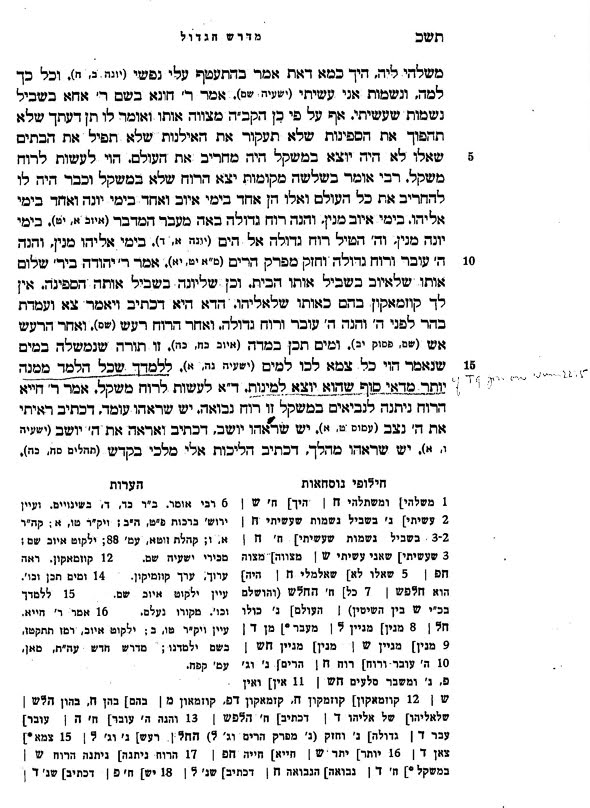
It is from Midrash ha-Gadol on Genesis (Mossad ha-Rav Kook edition). I don’t understand how the lesson is derived from the verse, but the lesson itself is clear enough: too much Torah study will lead to heresy. This is the sort of thing that one might expect to see in a medieval Catholic source, in justification of keeping the laity ignorant. Yet here we find the same attitude in a Jewish source. There are examples in rabbinic literature where we see that Torah study can have a negative result,[12] but I don’t know of any other text that is so blatant in its opposition to “excessive” Torah study. In the highly unlikely event that there are any high school students reading this who have been slacking off in Torah study, and have been challenged by their rebbe or parents to explain their inaction, see what happens if you pull out this text to explain matters.
I had seen this text a few years ago, and wanting to include it in the post I ordered the volume from interlibrary loan. The copy sent to me was from the University of Pennsylvania, and was originally found in the personal library of the late Dr. Judah Goldin. On the page we are looking at, Goldin underlined the strange passage (and also noted it on the first page of the book). On the side he added a reference to Targum Ps. Jonathan, Num. 22:5. Here it says that Balaam (who is identified with Laban) acted foolishly “from the greatness of his wisdom.” In other words, it was Balaam’s great wisdom that led to his thinking that he could curse the Israelites. Yet this passage only refers to Balaam’s general wisdom. It says nothing of Torah knowledge leading him astray.
With regard to R. Kook’s comments about the natural morality of the simple Jew, Joel Rich sent me chapter 4 of R. Soloveitchik’s Reflections of the Rav, ed. Besdin. The chapter is entitled “The Profundity of Jewish Folk Wisdom,” and is well worth reading. Yet you don’t find in R. Soloveitchik the notion expressed by R. Kook, that the natural morality of the simple Jew is superior to that of the scholar. For R. Kook, the simple Jew has something that the scholar does not have, and the scholar has that which the simple Jew lacks (halakhic knowledge). In this way, each can learn, and indeed is dependant, on the other. In dialectical fashion, the result of this will be a new type of Jew who combines in himself the best of both the scholar and the simple Jew. This is parallel to R. Kook’s discussion of the role of the non-religious. In the creation of the new Eretz Yisrael Jew the non-religious have that which is lacking among the religious, namely, the attachment to the physical world and the strength which Jews used to have when they lived on the Land, but which was forgotten during the long Exile. So the non-religious will bring that to the table, and the religious Jew will obviously bring Torah and spirituality. The result with be a synthesis of the two and the creation of an Eretz Yisrael Jew who, while being both Torah observant and spiritually enlightened will also be strong physically, able to build roads and fight wars. This is how Jews lived in days of old and how they are supposed to live when they return to the Land of Israel.
While R. Soloveitchik might have been attracted to dialectical-type thinking, there was no way that he would see the masses as having anything to give the halakhic scholar. The most the Rav speaks of in this essay is that the common man, even in his speech, reflects Torah values, but not that he is superior in any way to the learned ones.[13]
In this essay the Rav offers a beautiful interpretation of the aggadah in Niddah 30b that before birth a fetus learns all of the Torah and then forgets it when he is born:
Rabbi Simlai is apparently saying that every Jew comes into the world with a natural responsiveness to Torah teaching. Every Jew begins with a share in Torah was vested him before his birth, and, though he is made to forget it, it is preserved in the deep recesses of his soul, waiting to be awakened by study and a favorable environment. Scholars, of course, convert this latent knowledge into actual living knowledge; but the simple Jew also has a share. Some members of the Massorah[!][14] community are scholars whose knowledge is well formulated and codified, while others, though unlearned, may be endowed with inspired and intuitive Torah wisdom . . . [W]hen a Jew studies Torah, he finds it native to his spiritual personality and he responds to it readily.
R. Shalom Messas[15] also offers an interpretation of this Aggadah. According to him, it means that before birth God planted in the fetus the ability to study all of the Torah. The angel, who causes him to forget, represents the yetzer hara which distracts people from studying Torah[16]:
אלא האמת דאין כאן לא מלאך ולא שו”ד, והכל רמז ומשל בעלמא, והכוונה היא כמו שאמרנו, שבשעה שיצר השי”ת את העובר, נתן בו כחות עצומים באופן שיכול לעתיד ללמוד כל התורה אם ירצה . . . ויש בכחו ללמוד את כולה, וכשיוצא לאור העולם בא מלאך הוא הטבע, שכאשר מתחיל לצמוח מתערב עמו היצה”ר ומראה לו יופי הטבע והבריאה ונמשך אחריהם, ומעכבים עליו מללמוד תורה
This, too, is a beautiful perspective. I think people will therefore be surprised to learn that R. Messas was actually criticized by two separate authors, each of whom thought that his allegorical understanding of the Talmud was incorrect. In their opinions the Talmud should be taken literally, that the child really does know all of the Torah. Both of these authors refer to a “yeshivishe story” (with minor discrepancies between them) about how a certain baby was born knowing all the Torah, and from the moment of his birth began “talking Torah.”
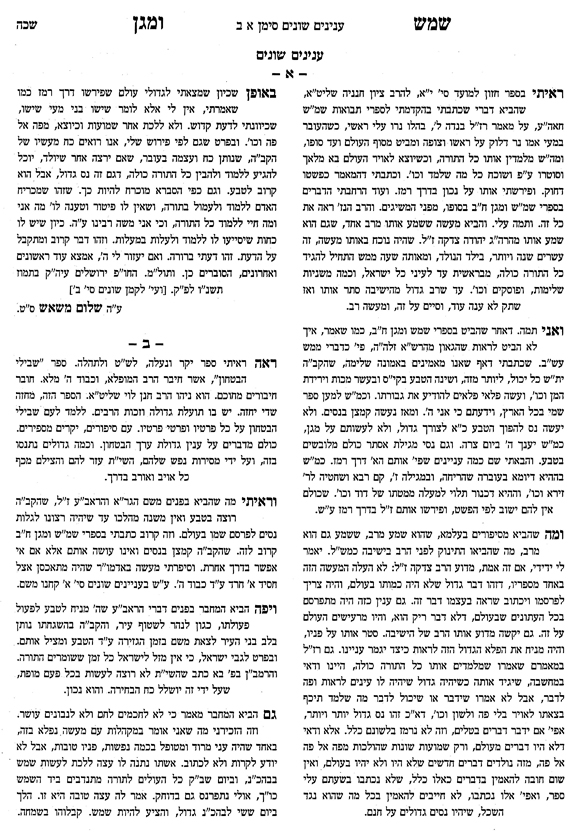
I always wonder when I hear Torah knowledgeable Jews repeat such nonsense as this yeshivishe story. What does this say about the Torah they learnt that they can be so gullible? I think the best we can say is that there is a difference between having book knowledge and being wise, and it is the latter that appears to be in such short supply. R. Messas replied to one of the authors in Shemesh u-Magen, vol. 2 pp. 322ff, and here is his reply to the second one, from Shemesh u-Magen vol. 3, p. 325.
I think R. Messas deserves a lot of credit for responding in such a polite fashion. Yet I have no doubt that if you spoke to him privately about this, his words would be much harsher in reflecting on how Torah students can be so foolish in believing such nonsensical stories.[17]
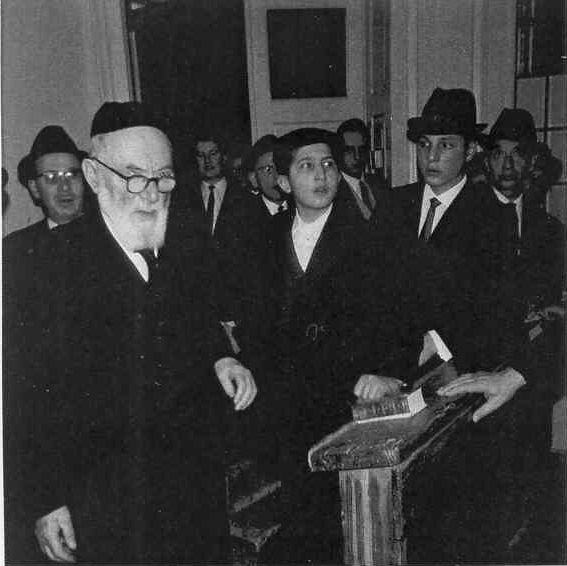
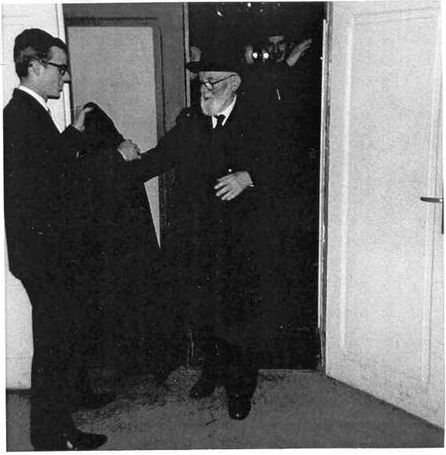
2. I have often been asked if I have pictures of R. Jehiel Jacob Weinberg. As a matter of fact I do, and here are two that I was given by Moshe Weisz of Zurich, who in the 1960’s was a student in the Montreux yeshiva. In the second picture, Weisz is the one handing Weinberg his coat.
There is actually an amazing picture of Weinberg from his time in the prisoner of war camp. I would have loved to include this in my book, but the person who showed it to me refused to allow me to do so. He didn’t think it was respectful to a great Torah sage for people see him in this state. Yet why is this disrespectful? How was Weinberg supposed to look in such circumstances? Was he supposed to have a black suit and hat? Obviously, Jews did not look their normal selves during the years of the Holocaust. Here, for instance, is a picture of the Belzer Rebbe, R. Aharon Rokeach, with R. Herzog. It appears in Shaul Maizlish, Rabanut be-Sa’arat ha-Yamim, p. 61.
The Belzer Rebbe was one of those rebbes who, for religious reasons, did not like to have pictures taken of himself. Yet because R. Herzog exerted so much effort in order to secure permission for the Rebbe to enter the Land of Israel, he agreed to have his picture taken when R. Herzog requested this. (Or Yisrael 21 [5761]. p. 257). This last source also records the following great story, told by R. Aharon about his father, the previous Rebbe R. Yissachar Dov.
פ”א דיבר מרן מוהר”א מענין זה בשם אביו זצ”ל שאמר שבספר יערות דבש כתוב דברים חריפים אודות עשיית תמונה, אבל היות שכל היהודים אינם מקפידים ע”ז אין ברצוני להיות פרוש מהם, שכלם יהיו בגיהנום ואני יחידי יהיה בגן עדן, טוב לי להיות עם כלל ישראל ביחד
(Yes, I know that someone will point out the irony of R. Yissachar Dov saying that he would rather be in gehinnom with the Jewish people when his son chose precisely the opposite course, and left the gehinnom of Europe. Here is not the place to go into this story. Suffice it to say that I find Monday morning quarterbacking very distasteful. In this case it is even worse, as R. Aharon’s children and grandchildren were all murdered.)
Here is a picture of R. Jacob Avigdor, whom I believe was a Belzer, from those difficult days (together with happier pictures).[18] Does anyone think this reduces him by showing how he looked during the Nazi years?
Incidentally, Moshe Weisz also told me about how in November 1965 Weinberg gave a hesped for four recently deceased rabbis, among them R. Yerucham Warhaftig and R. Eliezer Yehudah Finkel. These latter two were good friends of Weinberg, and Weinberg’s friendship with Finkel went back to their youth. After the eulogy Weinberg asked everyone in the room to stand up. They stood silently for around ten seconds and then he asked them to sit down. I presume this was intended as a show of respect rather than as a moment of silence, since the latter could be done sitting down.
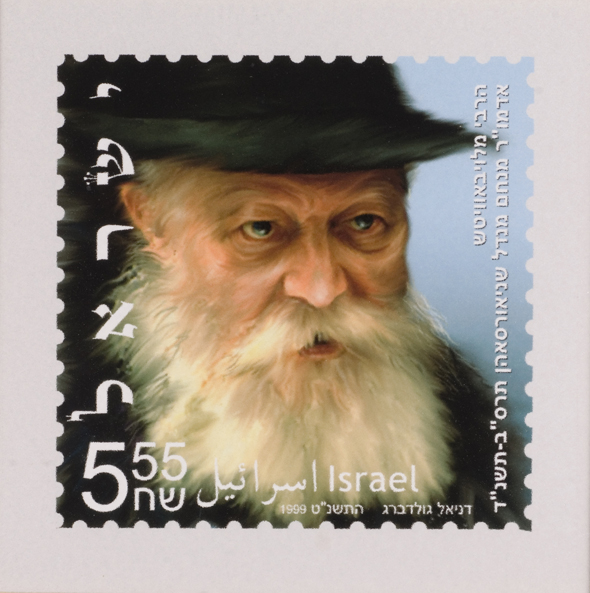
Since I have spoken about pictures in this post, let me also include this picture of the Lubavitcher Rebbe. It appears courtesy of the Library of the Jewish Theological Seminary, and I thank Rabbi Jerry Schwarzbard who first showed it to me a few years ago.
As you can see, it is an Israeli stamp from 1999, and it can now be added to Shnayer Leiman’s collection of stamps of rabbis.[19] Yet for some reason the stamp was never put into circulation. I have been unable to find the reason for this, and there is no mention of the stamp in Maya Balakirsky Katz’s recently published The Visual Culture of Chabad (Cambridge, 2010). There are many Lubavitchers who read the Seforim Blog. Perhaps one of you knows the story of this stamp and why it was never released.
As for Balakirsky Katz’s book, I urge Lubavitchers to read it, without preconceptions, and offer their opinions. It appears, to me at least, to be a quite interesting book. I stress the need for no preconceptions since Balakirsky Katz has now been placed by Lubavitchers in the “enemy camp”, along with other contemporary authors such as R. David Zvi Hillman z”l, David Kamenetsky, David Berger, Bryan Mark Rigg, David Assaf, Menachem Friedman, and Samuel Heilman. Balakirsky Katz angered Chabad with her recent article in the AJS Review 34 (2010; “An Occupational Neurosis: A Psychoanalytic Case History of a Rabbi”), and this article is summarized in the new book (but is only a very small part of the book). She argued that the Rebbe R. Shalom Dov Baer Schneersohn (Rashab) was the rabbi who visited the psychoanalyst Wilhelm Stekel in 1903. In those meetings the rabbi spoke about being sexually molested from his youth until his marriage. He also told about his sexual dreams and how he masturbated,[20] and described how his own brother carried on an improper relationship with his (i.e., the rabbi’s) wife (although it does not appear to have led to actual adultery).
I understand that Lubavitchers will regard Balakirsky Katz’s argument as beneath contempt. They will also regard as scandalous the fact that her essay was published in such a prestigious journal as AJS Review. I would not even ask them to dignify the argument with a response, any more than a non-Lubavitcher should be asked to respond to such claims about a close family member; for a hasid, the feelings for a Rebbe are just like those of a close relative. Yet there is a lot more to the book than the few pages dealing with the rabbi and Stekel, and I wonder how Habad insiders will appraise the rest of what she says.
Appendix
It is common to hear among YU figures the expression “hakhmei ha-mesorah,” referring to authoritative rabbinic spokesmen. Readers can correct me if I am mistaken, but I don’t think that this expression, with the meaning currently applied to it, is part of the traditional rabbinic vocabulary. I also don’t recall ever seeing it in haredi writing. (When the words appear in rabbinic literature they refer to Masoretes.) The first mention of it that I know of appears in R. Soloveitchik’s famous attack on R. Emanuel Rackman regarding nullification of marriage. Needless to say, the expression makes an appearance in R. Schachter’s new book, Divrei ha-Rav. See e.g., p. 233.
This latter reference is part of an article that R. Schachter earlier published in Beit Yitzhak 38 (2006). The reprint in Divrei ha-Rav has two changes from the original. On p. 237 a sentence is added, according to which the Rav stated that in Europe he never heard the expression “Daas Torah.” The second change is that one entire paragraph, on pages 5-6, has been removed. Here is the paragraph.
From this paragraph we see that the Rav’s strong personal opposition to prayer in a synagogue without a mechitzah was not shared by all other rabbis, and that the Rav was willing to show some flexibility in this matter. The case discussed here was not like the other times that the Rav gave permission for a rabbi to take a position at a synagogue without a mechitzah. In those cases the heter was for a rabbinic appointment designed to be for a few years, and during that time the rabbi was supposed to try to convince the synagogue to install a mechitzah. The issue discussed in the Beit Yitzhak article was simply a High Holiday position at a non-mechitzah synagogue in order to make some money.
This paragraph provides important testimony that can balance some of the Rav’s more strident statements in this matter. If anyone can get a straight answer from R. Schachter as to why the paragraph has been removed, please share it with us. I would hate to think that we have here an example of revisionism—in other words, R. Schachter decided to delete the paragraph because he concluded that it is best that people not know this information, or he was responding to others who criticized him for including the paragraph.
With regard to the larger issue of how R. Schachter presents the Rav, Lawrence Kaplan has already noted that there are revisionist aspects of R. Schachter’s presentation of the Rav’s legacy. See his “Revisionism and the Rav,” Judaism, summer 1999, available here.
One aspect of this revisionism that Kaplan does not mention is that while Nefesh ha-Rav has an entire chapter on the State of Israel, there is no mention of the Rav’s view—which was expressed on a number of occasions, as well as publicly before hundreds of people—that there is no halakhic prohibition for Israel to return land to the Arabs.
It certainly says something about the transformation of American Orthodoxy in the last generation that R. Schachter became the one to carry on the Rav’s legacy. Unlike the Rav, R. Schachter is a talmudist and posek, and has no involvement with the broader philosophical and cultural issues of Western Civilization. Yet despite this, he is, by far, the most important and influential rabbi in Modern and Centrist Orthodoxy. When it comes to matters of halakhah, I wonder if there is anyone in the American haredi world who can compare to his wide-ranging knowledge. I have heard him in person and on tape many times, and I continue to be amazed at how he can speak for long periods, without notes, on literally any topic of halakhah. I have never seen anything like it. It is all at his fingertips, and he presents it in a fashion that keeps the audience’s attention. As for the liberal Orthodox, who oppose R. Schachter because of his strong stand against feminist innovations, even they must applaud his leading role in dealing with husbands who refuse to give their wives gittin. This has earned him the opprobrium of the Orthodox lunatic fringe, and one member of this group, Abraham Samuel Judah Gestetner, who styles himself a dayan, has even placed R. Schachter in herem (together with two well-known California rabbis). See here.
Gestetner is also the author of the ridiculous book Megilat Plaster, which attempts to show that R. Jacob Emden’s Megilat Sefer is a forgery perpetrated by the evil maskilim. Here is the title page.
His argument is completely demolished by R. Menachem Mendel Goldstein in Etz Hayyim (Bobov), no. 8(Shevat 5769), pp. 239-266. (Goldstein resides in that bastion of Haskalah known as Kiryas Yoel.). On the very first page of his article, Goldstein complains that the various publishers of Emden’s Megilat Sefer did not consult with gedolei Yisrael in order to determine what should have been censored. In other words, he takes it as a given that the masses need to be protected from what Emden has to say.
הספר מגילת ספר נדפס על ידי אינשי דלא מעלי שאין רוח חכמים נוחה מהם, ולא נתיעצו בגדולי חכמי ורבני דור דור האיך ומה להדפיס ומה להשמיט
To be continued.
[1] There is still a good deal more I plan to say about the whole Garden of Eden story. For now, let me respond to one question. We have seen the medieval philosophical approach that the episode with the snake is to be understood allegorically, and the snake represents the evil inclination. A few people want to know if we can find such an approach in Hazal. I actually think we can. In Pirkei de-Rabbi Eliezer, ch. 13 (referred to by Maimonides in Guide 2:30), it mentions that the serpent had a rider, Samael (Satan). Since at least some of the Sages identify Satan with the evil inclination, this opens the possibility that the snake in our story is also to be understood this way. Yet I think that most of the Sages probably understood the passage literally. For one example, see Bereishit Rabbah 19:1, where R. Hoshaya states that the snake stood up like a reed, and that he had feet. Whereas the medieval philosophers were reluctant to take literally a text that spoke of a talking snake (and donkey), this did not seem to bother the talmudic Sages.
[2] A fuller discussion of Hirschensohn’s view of evolution will appear in a future post. In the meantime, see his Seder la-Mikra, vol. 1, pp. 76-77:
אין השיטה הדארוונית מתנגדת כלל להתורה בדבר הבריאה בששה ימים, כי הימים בעצמם כל אחד הוא יום שכלו אורך תקופה שלמה . . . כי עדיין לא הי’ עוד השמש לאור יומם לראשון השני והשלישי ובכל זאת נקראים ימים וגם אחרי בריאת המאורות לא ידענו כמה לקח זמן התפתחותם לאותות למועדים לימים ושנים שלנו, ואריכת ימי בראשית לא נדע לנו שכל יום הוא תקופה שלמה
In another twenty years, I wonder if the younger generation will believe us when we tell them that Hirschensohn’s position was accepted throughout the haredi world, and was standard fare in the kiruv movement and in “science vs. Torah” discussions. There was a time when I, and so many others, would never have believed that “young earth” fundamentalism could ever become a binding principle of faith in the wider haredi world, precisely because it would mean rejecting a position that had been so central to the haredi Torah-science reconciliation.
[3] Link”Rationalism and Rabbinic Culture,” pp. 240ff.
[4] Mesorah le-Yosef 4 (2005), p. 183.
[5] This point was noted by Kaplan, Link”Rationalism,” p. 300 n. 225.
[6] See Studies in Maimonides and His Interpreters, p. 111.
[7] Good and Evil in Jewish Thought (Tel Aviv, 1989), p. 63.
[8] Moses Maimonides (Oxford, 2005), p. 407.
[9] See also my post here where I noted R. Itzele of Ponevezh’s statement that how the Jewish masses feel is more important than what the rabbis think: וכלל ישראל הוא גבוה ונעלה מגדולי התורה . This is obviously diametrically opposed to the haredi conception of Da’as Torah. In my Torah in Motion lectures I discussed how R. Itzele’s conception parallels the Catholic notion of “sense of the faithful.”
In addition to the passages of R. Kook referred to in my earlier post, there are many other sources that one could quote. One that comes immediately to mind is Haym Soloveitchik’s understanding of medieval Jews committing suicide. He sees this as an example of the “sense of the faithful” which was not in line with established halakhah, but which ex post facto had to be justified. Even the murder of one’s children to prevent them from being forcibly apostatized could not be judged according to halakhic texts, or else people regarded as kedoshim would lose this status, an untenable possibility under the circumstances of medieval Jewish life. See ‘Religious Law and Change: The Medieval Ashkenazic Example,’ AJS Review 12 (1987), pp. 205-221. Soloveitchik writes (p. 209):
The magnitude of this halakhic breach is enormous. Whether one is permitted to suffer voluntary martyrdom is highly questionable; suicide is forbidden beyond question, and the permissibility of murder needs no discussion. Thus, if the law were to be followed, the scholars of these communities would have had to rule that all the martyrs—qedoshim, or “holy ones,” as they were called—were not only not “holy,” but they were “self-killers,” and murderers; that not only should they not be buried with honor, but perhaps they should even be denied burial, or at best be buried in the far end of the cemetery where the most vile criminals are interred. Such a conclusion, needless to say, was an emotional impossibility.
After speaking of the “sense of the faithful,”—or what Jacob Katz and Soloveitchik describe as “ritual instinct,” “religious intuition,” and “religious sense”—this article concludes with a couple of paragraphs that I think readers will find very interesting:
I remember my own shock when, after studying Yoreh Deah, I realized that there is no need for separate milk and meat dishtowels, separate dishracks or cabinets, and that if food is served cold, there is no need for separate dishware altogether. Again, there is all the difference in the world between not having hamets in the house (בל יראה ובל ימצא) and the house being what we call pesahdiq.
The simple truth is that the traditional Jewish kitchen and pre-Passover preparations have little to do with halakhic dictates. They have been immeasurably and unrecognizably amplified by popular religious intuition. We all know this, but our religious sense, our religious experience belies this knowledge, and our instincts reject this fact out of hand. To serve cold cuts on a “dairy” dish is treif—everything in Yoreh Deah to the contrary notwithstanding.
The prevalent has not here expanded the normative, it is the normative, and anything less is inconceivable.
Upon hearing one of my TIM lectures, R. Yonasan Rosman sent me a nice example of how the “sense of the faithful” operates independently of, and sometimes even in opposition to, halakhic particulars. It comes from Making of a Godol, p. 1188:
My father also was fond of quoting an interpretation of the Mozhirer Maggid, R. Shmuel Rabinowitz, of the gemara in Massekheth Brakhoth that
כנור היה תלוי למעלה ממטתו של דוד וכו’ ומנגן מאליו
(a fiddle hung above the bed of King David, etc., and it played on its own) to mean that Jewry senses what policy is vital for its existence and does not probe whether the course of action (or inaction) is halakhically sound or not. One of the several examples he gave was by asking rhetorically, “Who gave the Slabodka Yeshiva bahurim the halakhic permission [היתר] to marry at so late an age?” and in answer, he paraphrased the gemara (which he translated into Yiddish), “און דער פידעלע שפילט פון זיך אליין (and the little fiddle plays on its own.”) He was out to prove that when some position is of crucial importance to Jewry—such as increasing the number of intelligent Jews getting in more years of Torah study before going off into their occupations—halakhic minutiae are set aside.
It is precisely sources like this, and the others I have quoted, that are crucial for anyone wishing to challenge the pan-halakhic understanding of Judaism that has taken root in Centrism.
(Regarding yeshiva students marrying later, see R. Shlomo Sofer, Hut ha-Meshulash [Munkacs, 1894], p. 7b, that in late eighteenth-century Frankfurt, yeshiva students would sometimes wait until age thirty to marry.)
[10] For R. Jehiel Jacob Weinberg’s essay on Meisels, see Seridei Esh, vol. 4, pp. 345-352.
[11] See Ahiezer: Kovetz Rabani-Torani, vol. 4 (1969), p. 17.
[12] Sotah 21b states: “R. Eliezer says: Whoever teaches his daughter Torah teaches her obscenity. . . . Read, rather: as though he had taught her obscenity” Rashi explains: שמתוכה היא מבינה ערמומית ועושה דבריה בהצנע
Meiri, Sotah 20a explains (and as with the Ralbag quoted in a prior post, apologies to the women reading): שמתוך הבנתה ביתר מגדרה היא קונה ערמימות מעט, ואין שכלה מספיק להבנה הראויה והיא סבורה שהשיגה ומקשקשת בפעמון להראות את חכמתה לכל
[13] There are, of course, many other differences between R. Soloveitchik and R. Kook. From the excerpt printed in The Rav Thinking Aloud, pp. 155-156, we see that the Rav regarded R. Kook as a saintly figure, but not as an intellectual great. Yet this impression was derived from one short conversation. All the gedolim who knew R. Kook had the exact opposite impression. They correctly saw that R. Kook was a master of the entire Torah, in all of its facets. I think you have to go back to Maharal, or perhaps even Nahmanides, to find such a wide-ranging Torah scholar as R. Kook.
Experts on the Rav’s writings can correct me, but the only place I recall where he mentions R. Kook is in On Repentance, p. 161 (and this was not actually published by the Rav himself, but by Pinchas Peli). See incidentally, ibid., p. 224, where the Rav states, referring to the State of Israel: “Bondage to the State can also become idolatry.” When this appeared in 1975, in the original Hebrew edition Al ha-Teshuvah, R. Zvi Yehudah Kook responded with a very sharp statement (later reprinted in Le-Hilkhot Tzibbur):
The Rav in turn said about R. Zvi Yehudah: “If you follow the philosophy of Tzvi Hirsch [!] Kook a Jew outside of Eretz Yisrael is a non-Jew. And this is exactly against the passuk of כי לי כל הארץ. A Jew outside of Eretz Yisrael can be a perfect Jew. Where you accomplish more is up to the individual. . . . Kook comes out with the Ramban [who says that mitzvah observance in the Diaspora is not at the same level as in the Land of Israel] as if he is the only one to whom the Ramban has entrusted the text.” The Rav Thinking Aloud, pp. 225, 229. See also, ibid., p. 154, where he says that R. Zvi Yehudah “has an aura of kedushah about him.”
[14] See Appendix.
[15] Introduction to his Tevuot Shemesh, Even ha-Ezer, and Shemesh u-Magen, vol. 2, p. 321.
[16] See also Maharsha, Niddah 30b.
[17] With regard to what else fetuses are said to be doing in the womb (aside from learning Torah), there is a very strange passage in Otzar ha-Geonim, Berakhot 28b (p. 71). I hesitate to elaborate on it lest this post be blocked by internet filters:
כשאדם כורע במודים צריך לו לכרוע עד ברכיו לפי שהילד בעודו במעי אמו ראשו מונח בין שתי יריכיו והמילה שלו בתוך פיו ובעבור זה צריך לשוח עד ברכיו.
[18] The picture comes from Esther Farbstein’s Be-Seter Ra’am (Jerusalem, 2002).
[19] See here.
[20] With regard to masturbation, R. Simcha Ross called my attention to the responsum printed here by an unnamed talmid hakham. He argues that masturbation is permissible. When Rabbi Ross first alerted me to this (and also expressed his disagreement with the arguments of the author), I thought this was some sort of Purim Torah. But then I examined the responsum, and other responsa on the site, and I could see pretty quickly that this was a serious man, whose arguments were carefully thought out. There are so many books published today that simply repeat what others have said, without offering anything new, that it is a pleasure to see original thinking, Based on his permission to masturbate, he also concludes that homosexual activity is permissible, as long as there is no mishkav zakhur. See here.
(This anonymous author has also placed on his website his commentary on R. Baruch Ber Leibowitz’s Birkat Shmuel, and also many posts discussing talmudic sugyot.)
I showed this responsum to someone. Yet instead of examining the arguments, all he was interested in was the identity of the author, who, as can be seen from various responsa on the site, is clearly from the haredi world. Maybe some readers know who he is, but I think that someone like this has to be in “deep cover.” We all know how the powers that be would destroy anyone who argued that masturbation is permissible. Since this involves a halakhic matter, I am certain the response would be even more severe than how they dealt with Slifkin and Kamenetsky. This talmid hakham would be branded not merely a heretic and a Reformer, but also a sexually dissolute degenerate. So yes, I understand why the author chooses to remain anonymous. My request to readers is as follows: The argument permitting masturbation is so far removed from anything I have ever seen that I would like those with more halakhic learning than myself to examine his teshuvah and let us know if you think there is anything to his argument.
Also, please look at other material on his site. Is it possible that instead of a “progressive” talmid hakham we are dealing here with a Trojan Horse? That is, someone who aims to undermine traditional Judaism from within, much like Saul Berlin attempted to do.